

Are Germany’s Factories Turning a Corner?
Visa India’s Next Bet Beyond UPI Dominance
DigitalBridge CEO on Investment Strategy
Michigan rabbis lay out demands for El-Sayed and state Democrats to earn their votes
Liberal Michigan rabbis and other Jewish leaders are calling on the Democratic Party to agree to a list of “nonnegotiable” principles about Jewish safety and Israel as the party’s US Senate candidate in the state, Abdul El-Sayed, seeks to make inroads with Jewish voters.
The campaign, backed by a progressive Zionist group, comes as a different subset of Michigan Jewish leaders are urging their community to reject El-Sayed outright and instead vote for his Republican opponent, former US Rep. Mike Rogers.
“I think he has the potential to be an amazing, visionary leader in the state of Michigan and in this country,” Rabbi Josh Whinston, who heads the Reform Temple Beth Emeth in Ann Arbor and has met privately with El-Sayed, said Monday about the Democratic candidate during a press conference. “But his vision needs to be more inclusive.”
Whinston was one of more than a dozen Jewish clergy who signed “Nonnegotiable Michigan,” the open letter. It does not directly address El-Sayed by name but outlines five principles its signers say “leaders who want our votes” must demonstrate.

The letter lists five “nonnegotiables”:
“Jewish safety — including for Zionist Jews — in Michigan and across America”;
“Our right to define our own Jewish identities”;
“Jewish sovereignty in Israel”;
“Welcoming our full participation in American political life”; and
“An affirmative vision for a better future in the Middle East.”
The “Nonnegotiable” campaign is backed by Zioness Action Fund, a registered 501(c)4 associated with the advocacy group Zioness, which bills itself as “Unabashedly progressive. Unapologetically Zionist.” Past Zioness actions have put pressure on progressive spaces to become more welcoming of Zionism as the progressive movement has sharply turned against Israel.
The initial signatories number 16, most of whom are Reform and Conservative rabbis and cantors serving congregations in the state. The initiative was spearheaded by Whinston and Rabbi Aaron Starr, of the Conservative Congregation Shaarey Zedek in Southfield, a Detroit suburb. Starr is also president of the Michigan Board of Rabbis.
“We realized we were all having this same experience of our members coming to us and saying, ‘Rabbi, what should I do?’” Starr told the Jewish Telegraphic Agency about the letter’s origins.
At the press conference, Starr compared the relationship between Jews and political parties to a marriage. “I would advise against a couple getting married if they can’t ensure each other’s safety and can’t honor each other’s identity,” he said.
It remains relatively rare for Jewish spiritual leaders to directly involve themselves in electoral politics, though a large coalition of thousands of rabbis signed onto a letter opposing “rising anti-Zionism” shortly before the election last year of New York City Mayor Zohran Mamdani, a harsh critic of Israel.
The latest letter comes as Michigan’s Jewish community of around 100,000 has been put in the national spotlight in a crucial election for deciding control of the Senate. In late August, El-Sayed, a strident Israel critic who has questioned its future as a Jewish state, apologized to Jewish Democrats for his past comments about the Temple Israel attack in West Bloomfield Township earlier this year. El-Sayed had said of the attacker, who lost family in an Israeli strike in Lebanon, “Hurt people hurt people,” triggering backlash from the Jewish community.
The candidate has also been meeting with Jewish voters and leaders, and recently told JTA that “safety” is the top concern he hears from them. His campaign intends to hire a Jewish liaison, sources have told JTA.
El-Sayed has not budged on other issues of concern to Jewish voters, including his reticence to back a two-state solution that would specifically recognize Jewish sovereignty — though he has said he would be open to the possibility if Israelis and Palestinians jointly agreed on it.
Letter was in the works since before El-Sayed’s apology, petition’s leader says
The petition’s leaders told JTA their letter had been in the works since before El-Sayed’s apology, and said he needs to do more. “It took on another level of meaning after his quote-unquote ‘apology,’ which was really only a partial apology,” Starr said.
Following one of El-Sayed’s apologies, Michigan Attorney General Dana Nessel, who is Jewish, urged the same room of Jewish Democrats ”to place the needs of the world above even our own self-interest and, yes, even our own survival.” Invoking Queen Esther and “Jewish values,” Nessel’s remarks have since been criticized by Jews across the spectrum and spurred renewed debate over the role of Jewish interests in the broader political conversation.
In contrast to Nessel, and to the rival letter urging a Rogers vote, the “Nonnegotiable” campaign does not endorse a candidate. Instead, it argues that Democratic leaders should make clear to Jews that they agree with what the letter defines as central Jewish concerns.
“Every constituency must occasionally remind its party that support is earned, not owed,” the letter states. “This is a good faith effort to make our needs unmistakably clear, and to invite any candidate seeking public office — now or in the future — to engage, listen, learn, and grow.”
Spokespeople for the El-Sayed campaign and for the Michigan Democratic Party did not immediately return JTA requests for comment.
Starr said the values articulated in the letter go beyond El-Sayed: Jews, he told JTA, also have “an eye to 2028.”
Chris Pappas projected to win New Hampshire Democratic nomination to the US Senate
US Rep. Chris Pappas swiftly defeated progressive opponent Karishma Manzur in a Democratic Senate primary in New Hampshire on Tuesday, capping off one of several races in which criticism of Israel and AIPAC became prominent talking points.
The Associated Press called the race just an hour after polls closed, at 6pm, when Pappas accrued 61.9% of voter support to Manzur’s 36.1%, with 22% of ballots counted.
‘We’ve got to turn the page on Donald Trump’s reckless leadership’
“Today, the voters of New Hampshire have sent a clear message: they’re fed up with what’s happening in our politics, and they’re ready for change,” Pappas told supporters on Tuesday evening. “We’ve got to turn the page on Donald Trump’s reckless leadership, on corruption, on the rigged economy.”
Having secured the Democratic nomination, Pappas is seeking to fill the seat of three-term Sen. Jeanne Shaheen, who is not seeking reelection this year. As he and Manzur spoke to the press during the final weeks of the campaign, their messaging often included condemnations of Israeli leadership.
New Hampshire Democrats chose Pappas, a four-term congressman, as their Senate nominee at a time when their party is hoping to take control of both houses of Congress. Their selection of Pappas, seen as the establishment candidate, could play a pivotal role in November, in a swing state where many voters still split tickets.

Pappas will face former Sen. John Sununu, a Republican who received US President Donald Trump’s endorsement, in the general election. Sununu served one term in the Senate, from 2003 to 2009, immediately following three terms in the US House.
Two other Democratic primaries, for neighboring US House seats, likewise focused outsized attention on Israel in recent weeks. But one of the races featured a decisive victory on Tuesday, while the second was inconclusive as the evening progressed.
The AP declared Goodlander as the projected winner an hour after polls closed
Rep. Maggie Goodlander, a one-term incumbent, trounced progressive state lawmaker Paige Beauchemin in the 2nd congressional district, which includes New Hampshire’s capital, Concord, and the city of Nashua. The AP declared Goodlander as the projected winner an hour after polls closed, when she had earned 79.7% of votes to Beauchemin’s 20.1%, with 16% of ballots counted.
At that point, the race in the next-door 1st congressional district was still too close to call. City councilor Stefany Shaheen and former US Marine Capt. Maura Sullivan were neck-in-neck — the frontrunners in a contest that included numerous other candidates.
The winner of that race will face Republican Anthony DiLorenzo, an automotive executive who has Trump’s support, in the November election.
Shaheen is a healthcare advocate and daughter of Jeanne Shaheen, whose Senate seat Pappas is hoping to secure in November. Her opponent, Sullivan, served as the assistant secretary for Veteran Affairs in the Obama administration.
Similar to the US Senate primary hopefuls, candidates in these two races seemed to share near-unanimous disdain for Israeli Prime Minister Benjamin Netanyahu. They, too, had a spectrum of opinions on the Jewish state, with moderates asserting Israel’s right to defend itself and progressive placing most of the blame for the Gaza war on Israel.
The candidates in the US House races also spent significant airtime in recent weeks blasting the American Israel Public Affairs Committee, the pro-Israel lobbying group. AIPAC has rejected comparisons to corporate PACs, noting that it is membership driven, and claims to be transparent about its funds.
Both Shaheen and Beauchemin accused their opponents of taking AIPAC funds, simply because donors who contributed to the lobby also gave to their campaigns. Sullivan and Goodlander denied these allegations, maintaining that they took no money from AIPAC.
Pilots considered aborting landing after touchdown in Miami cargo crash, NTSB says
The National Transportation Safety Board (NTSB) said on Tuesday that evidence recovered from a flight data recorder suggested the pilots of an Amazon Prime Air cargo plane involved in a deadly crash considered aborting the landing after the aircraft touched down.
The 32-year-old Boeing 767 operated by Miami-based 21 Air overran the runway by some 1,300 feet (396 m) and crashed into two vehicles, killing five people and injuring five others on Sunday.
NTSB Chair Jennifer Homendy told reporters that investigators would interview both of the pilots on Wednesday and then release details from the cockpit voice recorder.
The NTSB said 30 seconds before the end of the flight data recording, the nose landing gear and right main landing gear touched down on the runway at a speed of 158 knots (181 mph), while 19 seconds before the end of the recording, the left main landing gear touched down at a speed of 134 knots.
A few seconds later, the brakes were released, and the throttles were increased to values consistent with go-around thrust, indicating a late attempt to abort the landing and get back in the air.

But 11 seconds before the end of the recording, throttles were reduced to idle power, and brakes were reapplied. The final ground speed was 65 knots at the end of the recording.
The NTSB said there was no indication in the recorded data that speed brakes or thrust reversers were deployed to help slow the plane.
32 investigators examining case
Homendy is leading a team of 32 investigators at Miami International Airport. She said the NTSB was able to reopen one of the two runways closed since the accident to allow for departures from an easterly direction late on Tuesday.
The Amazon cargo plane was on its third flight of the day, coming from San Juan, Puerto Rico. It had flown from Cincinnati to Miami and from Miami to San Juan earlier on Sunday before the crash at 1:53 p.m. EDT (1753 GMT).
The captain, 55, received his type rating for the 767 in May and has 7,145 hours of flight time, while the first officer, 37, received his type rating for the 767 in April 2025 and has 2,655 flying hours, the NTSB said.

Costco set to expand with 14 new warehouses across US and Canada
Costco is slated to expand across North America over the next couple of months, with more than a dozen warehouses scheduled to open in the U.S. and Canada.
The company has already been growing this year in the U.S. and beyond, opening stores in California, Florida, Georgia, Minnesota, New York, Texas, Utah and Wisconsin, as well as Mexico and Taiwan.
Now, more warehouses are expected to open before the end of the year.
Five new Costco warehouses are set to open in October in Lee’s Summit, Missouri; The Colony, Texas; Amherst, New York; Lawrence, Kansas, and Camarillo, California.
COSTCO BRINGS BACK FAN-FAVORITE KIRKLAND TREAT AFTER TWO-YEAR ABSENCE
In November, Costco will open nine additional warehouses, including four in Canada — Northeast Edmonton and Lloydminster in Alberta and East Windsor and Wasaga Beach in Ontario.
The U.S. stores set to open in November will be in South Meridian, Idaho; Vallejo, California; Chandler, Arizona; Newport News, Virginia, and Franklin, Wisconsin.
For some of the new stores, Costco is just relocating within the same city.
For example, the warehouse set to open soon in Newport News is replacing a store that has been in the city since 1988, after Costco purchased a 32-acre property a few blocks from its current warehouse, aiming to build a 163,000 square-foot retail warehouse and fuel station.
Costco is also planning to open warehouses in even more communities.
Downey, California, approved a plan earlier this year for a new store, while proposals were submitted over the summer in Charleston County, South Carolina, and Hillsborough County, Florida, according to local media.
The company is also exploring possible warehouses in Fresno, California; Lake St. Louis, Missouri; Southborough, Massachusetts; Silver Spring, Maryland; Scottsdale, Arizona, and Des Plaines, Illinois.
COSTCO ADDS HOT FAN FAVORITE TO FOOD COURT MENU AS SHOPPERS DEBATE TASTE AND VALUE
GET FOX BUSINESS ON THE GO BY CLICKING HERE
Despite the expansion plans, Rhode Island, West Virginia and Wyoming will have to wait for now, as Costco is not expected to expand into any new states.
This comes after CEO Ron Vachris said earlier this year that the company wants to open 30 or more warehouses annually over the next five to 10 years. About half of those would be new warehouses in the U.S., while the remainder would open in locations around the world, with Vachris pointing out Mexico, Canada, Asia, Europe, Australia and New Zealand as potential spots for some of the future warehouses.

Major burger chain In-N-Out changes two key ingredients, sending fans into a frenzy
In-N-Out fans were sent into a frenzy Tuesday after the burger joint announced changes to its ingredients.
The California-based chain, which operates in 10 states, said it recently altered two ingredients, removing sesame flour from its buns and replacing its packets of iodized salt with sea salt.
The company said the changes are consistent with its ongoing commitment to providing quality food, pointing to a previous decision in 2025 to replace high-fructose corn syrup in its ketchup with real sugar.
“We remain committed to serving our Customers with the freshest, highest-quality food possible. Over the years, we’ve made meaningful changes to our ingredients, and this past year was no exception. We’re pleased to share our latest updates, and we’ll continue building on that commitment for years to come,” the company said.
The ingredient changes quickly sparked a mixed reaction online, with some customers praising the removal of sesame while others complained about the switch from iodized salt.
“This is great news! I have a sesame allergy I developed a few years ago and I missed In-N-Out burgers,” one Facebook user wrote.
“Removing sesame is a game changer for so many with allergies including my family. How great to be able to put In-N-Out back on the list of options,” another user said.
IN-N-OUT TO ENTER NEW MARKET WITH MULTIPLE RESTAURANTS BY YEAR’S END: REPORT
In-N-Out did not explain whether the decision to remove sesame flour was made specifically to accommodate customers with allergies.
The change reverses a decision In-N-Out made in 2024 after the federal FASTER Act designated sesame as a major food allergen. Because sesame is difficult to prevent from cross-contaminating other foods, the company added it to its buns in select locations as a precaution against potential lawsuits and recalls.
However, the switch from iodized salt to sea salt drew criticism from numerous customers, with some raising concerns about iodine deficiency and related health problems.
“Remove iodine? Sure, because apparently goiters needed a comeback,” one Reddit user said.
“The salt was a downgrade imo. The iodized sticks to the fries better,” another Reddit user added.
“I enjoyed your salt more before the change, which I noticed a while ago when the crystals got larger. It used to be so silky smooth,” one customer said in a post on Facebook.
GET FOX BUSINESS ON THE GO BY CLICKING HERE
In-N-Out did not explain why it switched from iodized salt, which has been used in the U.S. since the 1920s to help prevent iodine deficiency and conditions such as goiter.
Iodized salt is also typically paired with anti-caking agents, while sea salt generally does not contain them and undergoes less processing.
MangoBoost’s CEO Kim on Business Strategy


‘The agency just can’t achieve what is required’: The cyclospora outbreak came after the FDA conducted nearly 35% less foreign food inspections
A nationwide outbreak of cyclospora tied to contaminated lettuce has heightened safety concerns about imported food, while underscoring a longer-term trend: U.S. regulators are conducting fewer international inspections to catch contaminated produce before it lands on American plates.
Food and Drug Administration inspections of foreign food sites — including the Mexican farm linked to the ongoing outbreak — are down nearly 35% since 2019, the year before the COVID-19 pandemic, according to agency records reviewed by The Associated Press. The pandemic kicked off a wave of retirements and departures among FDA inspectors that continues to this day.
Even before COVID-19, the agency had long failed to hit its congressionally mandated targets for international inspections. And recent staffing cuts, reorganizations and other upheavals under President Donald Trump could mean even fewer inspections in the years ahead, according to former senior FDA officials.
“When you look at the numbers of inspections balanced against the responsibility of the FDA — in terms of all the firms domestically and internationally under its oversight — the agency just can’t achieve what is required,” said Michael Rogers, who spent nearly 35 years in various inspection roles within the agency. He added that FDA continues to do many things “very well with limited resources.”
The Trump administration has proposed new approaches to stretch agency resources — including a pilot program of one-day inspections. Rogers and other officials say the abbreviated inspections are not equivalent to traditional ones, which can take a week or more to document serious problems.
FDA officials have long made the case that inspections are only one tool to oversee safety.
“Inspections will never be the only way to ensure the safety of imported products given the massive volume coming into the country,” said Susan Mayne, FDA’s former food director who is now at Yale University. “That’s why FDA uses border inspections, importer inspections, sampling and other tools.”
But the outbreak in iceberg lettuce has also laid bare the potential downsides of those approaches.
In July, regulators were forced to retract a faulty test result that they claimed found cyclospora on a sample of Taylor Farms’ lettuce obtained at the border. Despite the error, FDA officials say they are confident the company’s farm is the source of the diarrhea-causing parasite. Mexican food authorities, however, say they have not found any positive samples or other red flags there.
A spokesperson for the Department of Health and Human Services, which oversees FDA, said the agency’s investigation is ongoing. Additionally, FDA officials are studying how many foreign inspections should be conducted annually “to ensure oversight comparable” to the U.S. food supply.
FDA inspectors took a month to arrive at Mexican farm
FDA inspectors arrived at the Taylor Farms site in Guanajuato, Mexico, in mid-August, about one month after the recall was announced July 17.
It was their first visit there since 2019. That year marked an all-time high for foreign food inspections before the FDA pulled most of its staff from the field during the pandemic.
Inspections for food — along with drugs, medical devices and other products — still haven’t recovered. And foreign food inspections actually fell further behind last year, down 17% to 1,140 in fiscal year 2025 from the prior year.
While inspectors were not among the 3,500 jobs targeted for termination by the Trump administration, the agency did eliminate more than half the staffers who handle travel bookings. That’s left inspectors to handle most of their own flights, lodging and other logistics.
Food experts say it shouldn’t have taken four weeks to get inspectors on-site in Mexico, considering the scale and number of people sickened.
“It took us too long to get boots on the ground,” said Frank Yiannas, the former top food safety official at FDA. “When these outbreaks happen in fresh produce, you have to respond quickly because these are very complex and changing ecosystems.”
The Taylor Farms recall involved thousands of packaged salad products combining iceberg lettuce with other vegetables. The products were shipped to major U.S. restaurant chains, including Yum Brands, which owns Taco Bell, Pizza Hut and KFC.
According to FDA figures, companies have announced more than 480 food recalls in the current fiscal year, already surpassing four out of the five previous years.
Food inspection targets have gone unmet for over a decade
Washington has tried before to overhaul the U.S. food safety system.
A string of deadly outbreaks involving spinach, cantaloupe and other produce led Congress to pass the Food Safety Modernization Act of 2011, which required additional testing, training and monitoring of hygiene conditions at farms. The legislation also set aggressive goals for FDA foreign inspections — targets the agency has never met.
Under the law, the FDA is supposed to inspect more than 19,000 international food sites annually. The agency hit an all-time high of 1,700 in 2019 — less than one-tenth of the target, according to the Government Accountability Office.
Former FDA regulators say the 19,000 target is unachievable and has never been properly funded by Congress — which has left FDA’s food budget essentially flat for years. Still, the FDA “has not identified an appropriate annual target,” GAO noted.
Perhaps the biggest challenge to boosting inspections is recruiting new inspectors, and retaining those FDA already has.
The FDA’s food inspection workforce includes more than 420 staffers, although 10% to 15% of its positions have been chronically unfilled, according to the GAO and former staffers.
Inspectors who work internationally can spend 50% or more of their working time traveling, a grueling schedule that has long caused turnover among FDA staff.
“Until you can better incentivize people to stay in those positions, I think the agency is going to continue to see high attrition, younger and less experienced investigators,” said Rogers. “That ultimately may impact FDA’s ability to enhance and increase inspections.”
Many experts say new approaches, including machine learning and remote monitoring of supplier practices, could help alleviate some of the need for inspections.
“We have to rethink how we oversee the safety of foreign producers,” Yiannas said. “We can’t use the same approaches and limited tools that we’ve used for the past 30 years.”
The 2011 food safety law called on manufacturers to place bar codes on each batch of produce, so that it can be quickly traced in the event of contamination. The rule was supposed to take effect in January, following years of discussions and revisions with produce companies. But the FDA again delayed its implementation after pushback from industry.
“There’s widespread acknowledgment that these are complex issues, but when you have 17 years to prepare for a final exam you should be able to pass it,” said Brian Ronholm, a former Department of Agriculture official who is now with Consumer Reports.
___
The Associated Press’ health and science coverage receives financial support from the AP Fund for Journalism and private foundations. AP is solely responsible for all content. Find AP’s standards for working with philanthropies, a list of supporters and funded coverage areas at AP.org.
This story was originally featured on Fortune.com
Macau wants to be a ‘business city,’ not just a gaming hub—and it’s spending $16 billion to help it get there
Macau, the world’s largest gambling hub, hopes to move from being a “tourism city” to a “business city,” according to the head of the Chinese city’s trade and investment promotion arm.
Speaking at the Fortune Leaders Forum in Macau on Sept. 8, Alex Che Weng Keong, president of the board of directors of the Commerce and Investment Promotion Institute of the Macao SAR, cited an interesting role model: Las Vegas. The world’s other major gambling hub has shown a casino town can also become a “world-class venue…for business, exchange, conferences, and exhibitions,” Che said.
Gaming still accounts for roughly 45% of Macau’s GDP, and the industry supplies about 80% of the government’s tax revenue. The city’s new five-year plan—the third since Portugal returned Macau to Chinese rule in 1999, covering 2026 to 2030—commits some 130 billion patacas ($16.1 billion) to what Che called “emerging industries. The plan also hopes to have non-gaming industries contribute 60% of GDP by 2030.
Macau, one of China’s two special administrative regions alongside Hong Kong, keeps its own currency, legal system, and customs territory. For Che, Macau can now use that autonomy to attract “emerging industries” that need regulatory flexibility.
“Emerging industries often need different kinds of regulatory approaches and different ways for talent to move,” he said. Macau “can leverage our position as an independent economy with an independent legislative system and independent regulatory system, and then invest a very large amount.”
Central to that plan is the Guangdong-Macao In-Depth Cooperation Zone in Hengqin, a 106-square-kilometer island next to the Macau border. Che called Hengqin “a very important factor for the Greater Bay Area’s future development” and “a major national strategy for empowering Macau.”
Macau’s other selling point is its heritage. A former Portuguese colony, it retains Portuguese as an official language and a civil-law legal system, which Che said “gives us a real convenience when it comes to trade and building partnerships with European countries or Portuguese-speaking countries.”
“When Macao’s Chief Executive went to Portugal, who did he meet? The President, the Prime Minister, the Speaker of Parliament, the head of the Supreme Court,” he added. “Once government channels are established, business follow-through—whether investment or cooperation—becomes much easier.”
Macau is the smallest of the 11 cities in the Greater Bay Area, a cluster that includes Hong Kong, Shenzhen, and Guangzhou, counts 87 million residents, and generates roughly $2 trillion in output—larger than Spain or Australia.
Yet the region remains less than the sum of its parts, argued Edward Au, southern region managing partner for Deloitte China, who joined Che on the panel.
“We already have a lot of world-class points of innovation, but we don’t yet feel that they’re connected into a world-class innovation network,” Au said.
The fix, he suggested, is a “clearer division of labor”: Hong Kong, Shenzhen, and Guangzhou leading on “open, cutting-edge innovation,” manufacturing hubs like Dongguan and Foshan playing a “mid-stream engineering role,” and Macau and Hengqin carving out “their own niche in traditional Chinese medicine, big health, and the data-technology market.”
Che expressed a hope that people might have a more expansive view of Macau by 2036–and not just in terms of breaking free of its reputation as a casino hub.
“When people talk about Macao, [they] won’t just mean the 33.4 square kilometers of the peninsula—they’ll also include Hengqin’s 106 square kilometers, so that externally our image becomes that of a unified ‘tech city,’” he said. “That’s the goal we’re working toward over the next decade.”
This story was originally featured on Fortune.com

IRGC confirms Iran attacked Jordanian US military base, two US vessels, eight tankers in Gulf
Iran’s Islamic Revolutionary Guard Corps (IRGC) claimed on Wednesday it attacked two US vessels and eight oil tankers in the Gulf in response to what it called a US attack on five Iranian tankers, Iranian state media reported, citing a statement from the group.
The group said it attacked 10 ships attempting to cross what it described as a “prohibited and unsafe” area of the Strait of Hormuz.
Earlier on Wednesday, the IRGC confirmed in a statement on Iranian media that it had attacked a US base in the eastern Jordanian city of Al Azraq with ballistic missiles in retaliation for earlier US attacks on Iranian oil tankers.
This came following reports of missiles being launched from 12 different cities across Iran in the heaviest barrage since the end of Operation Roaring Lion, Army Radio reported late Tuesday night, citing Iranian media.
At least 35 missiles were launched towards Jordan, according to Israeli news outlets, activating sirens in the country’s US military base.
Jordan’s state news agency, citing armed forces, reported that 20 ballistic missiles had been launched from Iranian territory, 18 of which were destroyed by Jordanian air defense systems.
Two missiles fell in unpopulated areas, and there were no casualties, the news agency cited Jordan’s military as saying.

Monitoring and assessment operations were continuing, the agency reported.
Jordan has not yet confirmed reports of the strikes.
A US official told Jerusalem Post earlier on Tuesday that CENTCOM had struck the tankers as Iranian media outlets reported explosions near Kharg Island.
According to Iran‘s Mehr News Agency, there were explosions heard in the vicinity of the Iranian oil hub, which serves as the country’s main point for refining and exporting oil.
An additional report by semi-official Tasnim News Agency reported that the attacks on the Iranian vessels left no casualties, with the tripulation aboard being evacuated.
The report, citing local sources, also said the targeted vessel was about four miles from Kharg Island.
Additionally, the Wall Street Journal reported on Tuesday, citing US officials, that Iran had launched an attack against US Navy ships on Monday.
US forces struck multiple Iranian tankers tied to the IRGC in response to the attempted attack, according to a US official. CENTCOM confirmed later that it had destroyed five Iranian crude oil tankers on Tuesday.
WSJ’s report confirmed, citing US officials, that no American ships were struck in Iran’s Monday attacks.
US, Iran, advance threats
Iran’s Khatam al-Anbiya Central Headquarters (the central command of the Iranian Army) warned the US that if its vessels were struck, then it would reply with strikes against American interests in the Middle East, Reuters reported, citing Iran’s state media.
Iran’s Revolutionary Guards said early on Wednesday that ships in Kuwaiti and Bahraini ports that host Americans will be targeted in response to US attacks on Iranian oil tankers.
The Guards Navy warned all crews to evacuate, according to a statement carried by state media.
Additionally, US Secretary of State Marco Rubio warned Iran on Tuesday that the US would continue to strike Iranian oil tankers in retaliation for attempted attacks on US warships.
“Iran continues to try to hit Us naval ships, and for every time they do that or try to do that, they’re going to lose tankers,” Rubio told reporters during a visit to Colombia.
Iran ready to announce restricted zone in Strait of Hormuz
The American attack happened days after Mohsen Rezaei, the Secretary of Iran’s Supreme National Security Council, said that a restricted zone was planned to be announced outside the Strait of Hormuz soon.
The Sunday announcement, reported by state media, detailed that the zone would include areas in the Gulf.
Rezaei added that maps of ships’ passage in the Strait of Hormuz, agreed upon with Oman, would also be signed in the coming days.
Dwindling oil revenue is driving Iran into deeper economic crisis – report
Iran’s oil export revenue is drying up as a US naval blockade strangles shipments from the Persian Gulf and offshore stockpiles feeding China dwindle, increasing the pressure on Tehran’s already battered economy.
As a US naval blockade obstructs Persian Gulf shipments and offshore oil stockpiles dwindle, Iran’s economy is continually waning, according to a Monday Wall Street Journal report.
Since the US reinstated its naval blockade in mid-July, no Iranian oil has passed through, the report said, citing maritime shipping data platform Kpler.
Despite Iran continuing to load small amounts of oil onto ships, the barrels remain stuck inside the Gulf, the report explained.
US Treasury Secretary Scott Bessent said in a post on X/Twitter on Friday that since the reinstatement of the blockade, “no Iranian crude cargoes have successfully transited the Strait of Hormuz to China.”

The post also contained a “Jaws” graphic of a shark and a chart depicting Iran’s falling oil exports and currency.
“Inventory cannot be replenished as crude piles up aboard vessels trapped inside the strait. Iran’s export lifeline is being cut off: stranded oil, finite storage, and rapidly shrinking revenue,” he said.
Since the U.S. reinstated its blockade, no Iranian crude cargoes have successfully transited the Strait of Hormuz to China. Inventory cannot be replenished as crude piles up aboard vessels trapped inside the strait. Iran’s export lifeline is being cut off: stranded oil, finite… pic.twitter.com/isnCgq5V1T
— Treasury Secretary Scott Bessent (@SecScottBessent) September 4, 2026
Iranian oil had fallen from 90 million barrels in mid-July to around 29 million barrels, with the oil possibly running out next month, the WSJ reported, citing Kpler.
Additionally, the WSJ said that Kpler data show that Iran loaded 255,000 barrels per day onto vessels in the Gulf in August, 85% below the February-April average.
Shipping traffic via Strait of Hormuz stays below 10-day average, data shows
Six commodity vessels transited the Strait of Hormuz on Tuesday, down from nine a day earlier and below the 10-day average of about 12, preliminary shipping data showed on Wednesday.
The figures could change as some ships typically switch off their transponders during the voyage.
Of the six vessels, five were entering, and one was exiting, initial data from ship tracker Kpler showed at 0200 GMT. They included one Panamax and one intermediate tanker.
Meanwhile, 25 commodity vessels transited the Bab el-Mandeb strait on Tuesday, another major maritime chokepoint in the Middle East, with 11 vessels entering and 14 exiting.
This compares with an average of around 27 ships going through Bab el-Mandeb over the past 10 days.
Among the vessels traveling through the strait were two Suezmax tankers, eight Aframax tankers, and one Very Large Crude Carrier.
As the US war on Iran enters its seventh month, American tactics to choke Tehran’s economy have plunged the Iranian rial, caused inflation to soar, and continue to slide the country’s economy deeper into crisis, said the report.
Inflation in Iran is more than 80% year-over-year, with the International Monetary Fund forecasting a 5.4% economic contraction for 2026, a figure the WSJ says is the country’s worst since the 1980s.
The results are testing the US’s bet that economic difficulty will force Iran to concede to US demands, according to the WSJ, but Gulf officials and analysts warn that it could instead provoke more retaliation from Iran.
Economist Hamad Hussain said that results will depend on “the degree of economic pain that the Iranian regime is willing to bear to achieve its military and geopolitical objectives,” according to WSJ’s report.
“The US campaign will have a significant effect on the average Iranian household. But in terms of Iran capitulating at the negotiating table? I have a lot of doubts,” the WSJ cited Ellie Geranmayeh, an Iran expert at the European Council on Foreign Relations, as saying. “The evidence we have suggests the Iranian regime is likely to resist.
Meanwhile, the US continues to issue new sanctions on Iran and other institutions accused of aiding its presence on the global financial stage.
Bessent announced on Tuesday a fresh round of sanctions under the Trump administration’s “Operation Economic Outcast.”
“We promised severe consequences for those providing financial lifelines to the Iranian regime. Today, we followed through on that promise with sanctions on companies that continue to support Mahan Air,” said the post.
“Let this be a warning to anyone doing business with Iran’s remaining airlines, all of which we sanctioned today: You are at risk of being cut off from the global financial system.”
Under Operation Economic Outcast, we promised severe consequences for those providing financial lifelines to the Iranian regime. Today, we followed through on that promise with sanctions on companies that continue to support Mahan Air. Let this be a warning to anyone doing… https://t.co/NPC9FMhmZu
— Treasury Secretary Scott Bessent (@SecScottBessent) September 8, 2026
According to the WSJ, roughly a third of Iran’s state budget is funded by oil revenue, which also finances the regime’s military.
According to the US Treasury, armed forces, including the Islamic Revolutionary Guard Corps (IRGC), sell crude and supplement budgets by utilizing companies and shadow-fleet networks, many of which have been targets of US sanctions.
June’s diplomatic efforts to sign a memorandum of understanding allowing Iran to move large amounts of oil overseas for later delivery, WSJ’s report said, with the country continuing to live off the profits from those barrels.
Iranian Oil Minister Mohsen Paknejad said on Friday that “the process of selling oil and delivering it to customers was carried out thousands of kilometers away from the Persian Gulf and the Sea of Oman,” according to the report.
US sanctions could make payments to Iran more difficult
However, Kpler estimates that current deliveries of around a million barrels per day, most of which go to China, could deplete oil stocks by mid-October. Payments for previous cargoes would likely dry up by mid-December, said WSJ. And increasing US sanctions could make those payments even harder to collect.
Not only has Iran been forced to cut production due to the blockade, but land routes only allow a small amount of oil to be transported, according to the report. No more than 40,000 barrels a day via trucks could be moved, a sliver of prewar exports of almost 2 million barrels daily, the WSJ cited head of crude oil analysis at Kpler Homayoun Falakshahi as saying.
Petrochemicals, Iran’s second-largest source of earnings, have also suffered due to their dependence on seaborne exports, the WSJ said. Loadings have fallen around two-thirds since early 2026, according to Kpler estimates.
Meanwhile, the US has continued to guide convoys from other Gulf producers through the Strait of Hormuz, while Saudi Arabia and the UAE have been transiting through pipelines that bypass the waterway, the report explained.
Iran’s overall trade has also fallen since last year
Nonetheless, Iran’s overall trade is continuing, though at numbers lower than last year’s
The regime exported almost $15 million of other goods between mid-March and mid-August, WSJ reported, citing Iranian media.
Saudi officials have warned that Iran is providing more weapons, personnel, and intelligence to Yemen’s Houthis, threatening Saudi shipping and infrastructure and another possible shipping chokepoint, said the report.
On Tuesday, the Iran-backed terror group attacked four cities in Saudi Arabia, wounding 73 people, setting oil installations ablaze, and continuing to threaten shipping at the mouth of the Red Sea.
Reuters contributed to this report.
Right-wing activists protest Ofer Winter’s independent Knesset run with wreath outside his home
Right-wing activists placed a flower wreath on Monday at the entrance to the home of Ofer Winter, chairman of the People of Israel Party, in Mitzpe Netofa, protesting his decision to run independently in the upcoming elections. The wreath read “Thank you from the bottom of our hearts, Gali Baharav-Miara,” in an apparent attempt to argue that the party’s independent run could weaken the right-wing bloc.
The protest came after days of pressure on Winter to join a right-wing party instead of running independently. Despite the pressure, Winter submitted the People of Israel’s Knesset list, making it clear that he intends to run in the elections under the party he founded.
The Am Yisrael party responded to the placement of the wreath outside Winter’s home, saying: “Friends, you have the wrong address. A flower wreath should be sent to those who, for four years, did not send a dismissal letter to the attorney general and instead chose to surrender to her. Those who, for four years, failed to remove Gali Baharav-Miara from her position can keep dealing with gimmicks and flowers while we make changes. What was will not continue.”
Religious Zionist Party chairman and Finance Minister Bezalel Smotrich criticized Winter on Monday, saying: “The only ones who could benefit from Winter’s refusal to unite with the national camp are Gali Baharav-Miara and Yitzhak Amit and their colleagues on the left.”
“Winter’s stubborn refusal of every offer for unity in the national camp is very disappointing and casts a heavy shadow over his judgment and the credibility of his promise to recommend Netanyahu for prime minister and to go only with the national camp,” Smotrich added.

Winter: ‘We are in the right-wing camp, and we will recommend only Netanyahu’
Despite running separately, Winter has made clear that he views his party as part of the right-wing bloc. At the end of August, he announced that he intends to recommend Benjamin Netanyahu for prime minister.
“We do not work for any person, only for the people of Israel,” Winter said, but emphasized: “We are in the right-wing camp, the leader of the right-wing camp is Netanyahu and we will recommend only him.”
However, Winter has also set conditions for joining a future government led by Netanyahu. Last week, he said that People of Israel would not join a government that does not pass a conscription law before it is sworn in. He added that his party is not closing the door on political alliances, but would agree to them “only with new ones.”
India IPO Rush Builds Ahead of NSE Listing
California Gov. Newsom, a presidential hopeful, slams Netanyahu and AIPAC in PBS interview
California Gov. Gavin Newsom, a 2028 presidential hopeful, ventured farther than ever in his criticisms of Prime Minister Benjamin Netanyahu, in a weekend interview that delved into the Democratic Party’s relationship with Israel.
“I think it’s overwhelmingly opposed to the current regime in Israel,” Newsom said of the party, in a PBS NewsHour interview with Amna Nawaz.
Pressed by Nawaz on divisions among his colleagues on Israel, Newsom denied that the subject is “even controversial anymore,” stressing that “the condemnation of what Bibi Netanyahu’s doing is almost universal.” The governor slammed the Israeli military’s conduct in Gaza and condemned the settler violence that has expanded in the West Bank.
“We want a democratic and secure Israel, and we want a secure and democratic Palestinian state as well right next door,” Newsom said, adding that Netanyahu has proved counterproductive to achieving a two-state solution.
Though he repeatedly maintained that Democrats are not divided on Israel, the governor acknowledged that “some of the language” by fellow Democrats “has been weaponized.” Certain “aspects of rhetoric” from individual candidates, he added, are on “the spectrum of concern,” Newsom said.

A number of candidates from the party’s far left place most if not all of the blame on Israel for a war in Gaza that has resulted in tens of thousands of Palestinian deaths. and downplay the role of Hamas in launching the war with the Oct. 7, 2023 raid inside Israel in which 1,200 people were killed and more than 250 were abducted.
Newsom’s rhetoric is in step with party moderates who are critical of the Israeli government but who call for a secure Israel, reject Hamas, and resist pressure from the left to call Israel’s actions “genocide.”
Newsome nonetheless insisted that the party is unified on the issue. “But I think universally, everyone agrees, even if you don’t think it’s genocide, that it’s been a moral catastrophe,” he said of the war in Gaza. “The vast majority of us also agree about the atrocities on Oct. 7th and how horrific and unacceptable it was, and the terrorism that was perpetrated by Hamas.”
Newsom among many US politicians to visit Israel
Newsom was among the many US politicians to visit Israel in October 2023, meeting with survivors and families impacted by the attacks.
During a March book tour, Newsom sparked a backlash when he said that some people were referring to Israel “appropriately as sort of an apartheid state.” He quickly walked back these remarks, telling Politico that he had used the term “in the context of the direction that Bibi is going.”
“I revere the state of Israel,” he declared at the time.
The governor warned, however, that if Netanyahu proceeds in the direction of West Bank annexation, apartheid could become “a word you may hear others use.”
In addition to amplifying his condemnation of Netanyahu this weekend, Newsom also addressed the fact that fewer Democrats are accepting funds from political action committees affiliated with the American Israel Public Affairs Committee, the pro-Israel lobbying group.
As for Newsom himself, Track AIPAC, an organization that compiles Federal Election Commission data to flag pro-Israel campaign contributions, did not log any such donations to the likely presidential candidate. But the group did flag him as “pro-Israel.”
“It’s a minority of Democrats that are accepting AIPAC,” the governor said, noting a “dramatic change” over the last couple of years.
“The vast majority of Democrats I talk to, even Democrats in the past that have in the past have taken AIPAC money, are pledging not to now,” Newsom added. “That’s more of a mainstream position, interestingly, within the Democratic Party.”
Iran says it captured US submarine drone in Strait of Hormuz
Iran’s Revolutionary Guards said on Tuesday it had captured a US uncrewed submarine at the entrance to the Strait of Hormuz, offering a rare glimpse into how underwater drones are being used in military operations.
Iranian state media said the vessel was a Dive-LD, a large autonomous underwater vehicle built by California defense firm Anduril. The 19-foot (5.8-meter) submersible can carry out missions including mine countermeasures, seabed mapping, intelligence gathering, and the inspection of underwater infrastructure such as cables and pipelines, the company has said.
“We trapped one of the most modern, intelligent and unmanned submarines of the terrorist American army at the entrance to the Strait of Hormuz. This submersible is equipped with the latest technologies,” the Revolutionary Guards Navy said in a statement carried by Iranian state media.
In response, a Pentagon spokesperson said an underwater drone had “malfunctioned more than a day ago.”
“It was surveying regional waters in support of ongoing operations. The defective drone was an older model that neither collected sensitive data nor carried any classified sonar or radar equipment,” the spokesperson said.

Reuters could not independently verify Iran‘s claims and the Pentagon did not address them in its statement.
Anduril did not respond to a request for comment.
US military investing in unmanned naval systems
The US military is investing heavily in unmanned naval systems, including underwater and surface vessels, as it seeks cheaper ways to monitor vast areas of ocean, gather intelligence and track adversary ships and submarines without putting sailors at risk.
According to Anduril’s website, Dive-LD can operate for up to 10 days without returning to base and is designed to dive to depths of up to 6,000 meters (19,700 feet). Dive-LD units cost about $2.5 million each, US military news site DefenseScoop reported in 2024.
Huawei heads to trial in US over its business dealings in Iran
Eight years after US prosecutors secretly charged China‘s Huawei Technologies with defrauding HSBC and other banks over its business with Iran, the case is finally heading for trial.
Huawei also faces charges of conspiring to steal trade secrets from five US technology companies, and is accused of lying about its dealings in North Korea and supplying surveillance equipment to Iran to track protesters during 2009 anti-government demonstrations in Tehran. Jury selection began on Tuesday in federal court in Brooklyn, New York.
The trial will bring to a close one of the US government’s earliest and most closely watched battles against a Chinese company. The case will play out as tech competition heats up between the two countries and Washington seeks to prevent American technology from aiding Beijing’s military. The US-China tech war has now spread across multiple technology sectors, including artificial intelligence.
The saga began in 2018 with the arrest of Huawei Chief Financial Officer Meng Wanzhou in Vancouver, which sparked a diplomatic crisis involving the United States, China and Canada.
Convictions on the Iran-related charges would bolster Washington’s case for having placed Huawei, one of China’s leading technology companies, on a US trade blacklist in 2019, citing alleged criminal conduct that threatened national security.

The trial before US District Judge Ann Donnelly in Brooklyn, New York, is expected to last about three months and overlap with Chinese President Xi Jinping’s September 24 meeting with President Donald Trump in Washington. Potential jurors have filled out 27-page questionnaires, including about their views on China’s and Iran’s governments.
Other charges include violating US sanctions against Iran, money laundering, racketeering, wire fraud and obstruction. Huawei has pleaded not guilty to all charges and denied any wrongdoing.
The criminal case is based in part on Reuters reporting in 2012 and 2013 about close ties between Huawei and Skycom, a firm that operated in Iran.
Reuters reported that Skycom had offered to sell at least €1.3 million ($1.5 million) worth of embargoed Hewlett-Packard computer equipment to Iran’s largest mobile-phone operator in 2010. Reuters also reported that Meng had served on Skycom’s board of directors between February 2008 and April 2009.
Beijing says case aims to undermine Chinese tech
Beijing has long criticized the case, saying it was part of a bigger campaign against China’s technological rise. A Huawei spokesperson said in a statement on Saturday, “The government’s overarching narrative is demonstrably false.”
Today Huawei is a centerpiece of China’s AI chip ambitions, and has diversified beyond network gear and smartphones. It has described the criminal case as an effort to undermine its competitiveness and the theft accusations as a repackaging of long-resolved commercial disputes.
If Huawei is convicted, prosecutors will seek the forfeiture of property or proceeds obtained from its illegal activity. Should the company be found guilty on all counts, experts said it could face a significant financial penalty.
“The penalty is going to be determined by the benefit to the company and then multiplied by how serious the wrongdoing is — and that could range from hundreds of millions to billions of dollars,” said Todd Haugh, a professor of business law at Indiana University Kelley School of Business.
If there’s a guilty verdict, he added, “a big fight is going to be proving how much Huawei benefited from their criminal behavior.”
The case against the company was brought during the first Trump administration, which also took actions to curb the use of Huawei equipment in the US and pressed other countries to drop Huawei from their telecommunications networks, saying China could use its equipment for espionage.
The indictment covers alleged wrongdoing between about 1999 and 2020.
It accuses Huawei of using Skycom to obtain embargoed US goods, technology and services for Huawei’s Iran-based business, and to move money out of that country through the international banking system.
The US said one bank, which was not named in the indictment but which sources and documents reviewed by Reuters identified as HSBC, cleared more than $100 million worth of US-dollar transactions related to Skycom.
Prosecutors accused Meng of misrepresenting Huawei’s ownership and control of Skycom in a presentation to an HSBC executive. She later admitted the statements were false, as part of an agreement with prosecutors to drop the charges against her.
Mamdani hands 9/11 ceremonial pen to lawyer who defended bin Laden ally
New York City Mayor Zohran Mamdani signed two executive orders on Friday related to the September 11, 2001 World Trade Center Attack in preparation for its upcoming 25th anniversary. Following the signing, Mamdani handed off the ceremonial pen to NYPD Commissioner Jessica Tisch and reportedly asked her to hand it to Mamdani’s chief legal counsel, Ramzi Kassem.
Kassem, a law professor at City University of New York (CUNY), served as the lawyer for multiple problematic individuals, including a close ally of Osama Bin Laden, Ahmed al-Darbi, convicted of bombing a French oil tanker.
The first executive order established September 11th as an official Citywide Day of Remembrance and Service; the second established a Continuity and Mission Assurance Team (CMAT) to strengthen preparedness and ensure continued service delivery during emergencies, according to the mayor’s office.
In an interview with the New York Post, retired detective and adjunct professor at John Jay College of Criminal Justice Michael Alcazar claimed that the choice to give the pen to Kassem was deliberate and intended to send a message.
“It happened during a ceremony meant to be about the victims,” Alcazar told the New York Post, and no one else. 9/11 families didn’t come to City Hall to watch Mamdani spotlight someone whose work intersects with the very ideology that took their loved ones. Commissioner Jessica Tisch was reduced to a prop rather than acknowledging her role as the leader of the NYPD.”

Mayor releases September 11th documents to public
On Tuesday, Mamdani launched a public online portal for 9/11 records, including the initial release of approximately 170,000 pages on health concerns, air quality, and the city’s response to the attacks.
“So many of these New Yorkers are ones who made the decision to run towards Ground Zero, and for that, they have suffered medically, and the city should be there for them,” the mayor told CBS correspondent Marcia Kramer earlier in the month.
When asked about the 9/11 documents that have yet to be released, Mamdani told Kramer, “If there are documents that we are able to release, I think that they should always be released.”

Midterm elections shaping up as big business for gamblers in the rough and rowdy world of prediction markets
Election-season trading on prediction markets, including in this fall’s biggest races, is skyrocketing while states fight to outlaw the platforms as unlicensed casinos and begin to worry about how high-stakes odds will affect American democracy in unpredictable ways.
Already this year, prediction market odds have gotten tangled up with real-life elections, and it is quickly becoming a hot topic for election administrators, who for years have battled misinformation and conspiracy theories.
Their concerns are broad, but many revolve around the fear that pervasive financial incentives will further damage confidence in elections and democracy if Americans think they are influencing the outcome.
“This is a troubling trend that election administrators across the nation must deal with,” said Jared DeMarinis, the administrator for the Maryland State Board of Elections.
Polymarket, Kalshi and other prediction markets allow participants to buy and sell contracts tied to the probable outcome of an event. The contracts are typically priced between 1 and 99 cents, and customers can trade on everything including races for mayor, governor and U.S. Senate.
The explosion in prediction market trading comes as President Donald Trump has pressed sweeping changes to voter identification and voting by mail procedures to address what he falsely claims is rampant fraud in mail voting and widespread voting by noncitizens.
Stock market is seen as an example of hedging election risk
Kalshi and Polymarket officials, for their part, contend that the activity is neither gambling nor a danger to elections or democracy.
It is, they say, barely different from people who trade stocks, bonds or commodities ahead of an election to protect themselves against how the eventual winner’s policies might affect their investments or business. Some independent analysts agree.
“One can make the argument that the entire stock market, at some level, is affected by elections and outcomes,” said Joshua Mitts, a Columbia Law School professor who researches corporate and securities law.
Kalshi and Polymarket officials say they have insider trading protections, required by federal law, that are meant to prevent, for instance, candidates and their campaign staffers from trading on their own races. On Aug. 31, Kalshi disclosed that it gave a three-year suspension and fine to a North Carolina congressional candidate, Republican Laurie Buckhout, for trading on her own race.
And Kalshi says its research shows that its markets correlate strongly to outcomes — for instance, events given a 60% chance end up happening nearly 60% of the time — and that any effort to manipulate the odds is kept in check by traders who profit by putting money on the correct outcome.
Still, prediction markets have suffered black eyes this year. In one example, they heavily favored a losing candidate in a primary for Wisconsin governor. The polls were way off in that race, too. And in Los Angeles, as votes were being counted for its mayoral primary, online influencers accused election officials of cheating to oust Republican candidate Spencer Pratt from qualifying for the runoff, pointing to market odds that favored him finishing in second place.
States want a role in regulating prediction markets
For now, courts are crammed with litigation over whether states can regulate prediction markets — or ban them — under state gambling laws that, among other things, cover casinos and sports betting.
Half the states also have statutes that broadly ban betting on elections, according to information from the National Conference on State Legislatures, laws that were motivated by a desire to ensure people vote based on who they think is the best candidate, and not due to a financial stake in the outcome.
Courts are unlikely to decide the litigation before the election, all but ensuring that trading will play out on platforms like Kalshi and Polymarket at levels never seen before in nearly every state.
Billions of dollars could be traded on questions like whether Democrats will gain control of the House or Senate or who will be governor of the largest states.
In state and local election offices, administrators are talking about the need to proactively educate the public about how prediction markets odds are not the same thing as a polls or vote counts.
They are also talking about how they can use their office’s policy to protect elections.
States try to protect election integrity
In Delaware County, in suburban Philadelphia, elections director Jim Allen asked the election board to add prediction market trading to the state-required oath that requires each polling place and county election worker to swear not to bet on the election.
DeMarinis, the Maryland election administrator, said he will ask the state election board to impose a similar requirement statewide.
One key question for the midterms is how prediction markets could be used or manipulated to help candidates.
For instance, wealthy partisans who don’t care about losing money could bid up the odds on their favored candidate in hopes of swaying public opinion. Some voters might see the long odds against their candidate and stay home, rather than go to the polls, analysts say.
Candidates could point to the favorable odds, like they might with a poll, and use it to fundraise or garner endorsements.
“And all of a sudden, they’re the front-runner, for no reason other than an outside actor places a large bet on them,” said Ben Schiffrin, director of securities policy for Better Markets, a nonprofit that advocates for the public interest in financial markets.
Could a prediction market swing an election?
Eric Talley, a Columbia University law professor who co-hosts the Beyond Unprecedented podcast, cited research by behavioral economist Colin Camerer that showed that one person betting a large sum in the run-up to a horse race induced others to bet on that same horse. It temporarily skewed the odds before dying off closer to the race.
“Other people thought, ‘Oh my god, people know something I don’t,’ and they all started betting on the same horse,” Talley said. It was “an interesting analog to the current moment.”
That sort of advantage is short-lived, prediction markets officials say. Financially motivated traders will descend on a bad trade because they know they can win it — and that returns the odds to where an unbiased market might otherwise set them, they say.
“If you’re going to try to manipulate the pricing in a highly liquid market with strong traders, it’s not going to work. The pricing will snap back, and you’ll simply lose money,” Kalshi general counsel Rick Heaslip said.
Columbia’s Mitts said a variant that might concern states could be a candidate in a state or local election encouraging people to put money on them in a prediction market — thus motivating people to vote with their wallet.
That sort of gambit would presumably be logistically easier to pull off in a smaller election — say, one that might be decided by 100 votes or so — although the idea is somewhat abstract because the financial incentive would have to be big enough, Mitts said.
Still, it creates a headache for law enforcement.
“You can understand why states would say from the election integrity standpoint, ‘We don’t want this sort of contract to trade at all,’” Mitts said.
This story was originally featured on Fortune.com

‘The Ramsey Show’ co-host shares how to save $1,000 in 30 days
Some Americans may think saving $1,000 in just a matter of months is out of reach, but personal finance expert Jade Warshaw says they may be making it harder than it needs to be.
The co-host of “The Ramsey Show” told FOX Business that many Americans can stash away $1,000 in as little as 30 days — but only if they’re willing to make temporary sacrifices and take what she calls a “scorched earth” approach to their finances.
“It’s more realistic than people think,” Warshaw said.
“Most people are able to do it in 30 days,” she added, referring to Ramsey Solutions’ first “Baby Step,” which calls for saving $1,000 before moving on to paying off debt, building a larger emergency fund and investing for retirement.
CHECKERS & RALLY’S CEO SAYS AMERICANS’ DEMAND FOR FAST-FOOD VALUE IS ‘INTENSIFYING’
Just 47% of Americans say they have enough cash or accessible funds to cover a $1,000 emergency expense, according to a Bankrate survey.
The strategy starts with building a budget, according to Warshaw.
“If you don’t have a budget, it’s not going to work,” she said.
From there, Warshaw then recommends attacking the problem from both sides by both spending less and bringing in more.
That could mean taking on overtime work, driving for a rideshare company, tutoring or selling unused belongings while simultaneously trimming recurring expenses like subscriptions, restaurant meals and transportation costs.
Warshaw said food is one of the easiest places for Americans to find quick savings.
Restaurant meals, takeout and delivery can quietly eat up hundreds of dollars a month. Bringing lunch from home, for example, can help cut the cost dramatically.
“For the average person, they could spend anywhere between $12 to $15 going out for lunch, but making that same lunch at home, you could save half and only spend $5 or $6,” Warshaw said.
With the holiday shopping season approaching, Warshaw said Americans don’t necessarily have to cancel Christmas or abandon family traditions to hit a savings goal.
Instead, consumers should decide whether it’s more realistic to temporarily cut spending or increase their income.
“If a family says, ‘I’d like to save $1,000 in the month of December,’ well, it’s going to be tough because you’ve got Christmas going on,” she said.
Rather than skipping holiday traditions, she suggested finding ways to earn extra cash through temporary side gigs rather than trying to eliminate every holiday expense.
WALMART MAKES CHANGES TO HOW MILLIONS OF CUSTOMERS CAN PAY AT CHECKOUT
Warshaw also noted that some Americans receive large tax refunds because too much money is withheld from their paychecks. Adjusting a W-4 could put more money in workers’ pockets during the year rather than leaving them waiting for a refund.
CLICK HERE TO GET FOX BUSINESS ON THE GO
For Americans trying to get out of debt, Warshaw also said it may make sense to temporarily pause retirement contributions while building the initial $1,000 emergency fund and paying off high-interest consumer debt.
“The first thing that you want to do is get $1,000 saved,” she said. “The next thing that you want to do is pay off your consumer debt.”


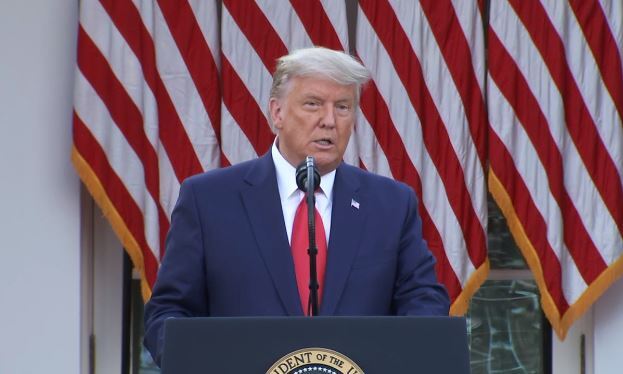
Trump expands Canada trade fight with sweeping ban on Canadian imports
The Trump administration will ban imports of Canadian dairy products, most alcoholic beverages and motorcycles, the White House announced Tuesday, marking a sharp escalation in the trade dispute between the neighboring countries.
The restrictions will take effect in three weeks, according to the White House. The move came hours after Canada imposed retaliatory tariffs on $20 billion worth of U.S. imports.
The latest action deepens a trade conflict between two of North America’s largest trading partners, with both governments imposing new measures despite their closely integrated economies and longstanding commercial relationship.
This is a developing story. Check back later for updates.

Shin Bet, Police dismantle broad West Bank Hamas network recruiting armed cells across region
A large Hamas-linked terrorist infrastructure that allegedly recruited cells across the West Bank to carry out attacks against Israeli civilians and security personnel was uncovered in a joint operation by the Shin Bet (Israel Security Agency), Israel Police and the IDF, the agencies announced on Tuesday.
More than 30 suspects from Jerusalem and the West Bank were arrested as part of the operation, according to the security agencies. Investigations into some of those detained remained ongoing.
Among those arrested were Jerusalem residents Tzabih Abu Tzabih and Rashid Rishq, whom authorities identified as members of Shabab al-Aqsa, an organization affiliated with Hamas.
Abu Tzabih is the son of Misbah Abu Tzabih, who carried out a shooting attack in Jerusalem in October 2016 that killed two Israelis. The victims in that attack were Adv.-Staff-Sgt.-Maj. Yosef Kirma, 29, a police officer, and Levana Malichi, 60, a former Knesset employee.
Abu Tzabih opened fire near Israel Police headquarters before being pursued and killed by police.
Rishq was released in 2025 as part of a hostage-release deal, according to Tuesday’s statement.

Broad Hamas terror infrastructure established, armed cells recruited
Three additional Jerusalem residents, Mohammed Abu Tzabih, Mohammed Azmi Bakri and Ahmad Azmi Bakri, were also arrested on suspicion of belonging to the infrastructure.
The Shin Bet and the Jerusalem District Police’s Central Unit investigation found that Rishq and Tzabih Abu Tzabih had allegedly established the broader terrorist infrastructure and recruited armed cells under their command throughout the West Bank, according to the statement.
The cells were intended to carry out attacks against Jews and Israeli security personnel, authorities said. Weapons allegedly intended for attacks, along with other combat equipment, were seized during the investigation.
Investigators also found that Ahmad Azmi Bakri and Rishq allegedly intended to advance an attack at a restaurant in Modi’in where Bakri worked.
Mohammed Bakri allegedly instructed Rishq and Mohammed Abu Tzabih on how to prepare explosive devices after the two told him that they intended to carry out terrorist activity, according to investigators.
Shooting attack planned against security personnel
Rishq and Tzabih Abu Tzabih also allegedly planned a shooting attack against security personnel in Eizariya, east of Jerusalem, the agencies said.
Following the conclusion of the Shin Bet and Jerusalem District Central Unit investigation into the five Jerusalem suspects, an indictment was filed against them on charges including managing a terrorist organization, active membership in a terrorist organization, conspiracy and preparation to commit an act of terrorism involving aggravated murder, weapons offenses, possession of property for terrorist purposes, recruiting and attempting to recruit members to a terrorist organization, and additional offenses.
Authorities said they expected to file indictments against West Bank residents suspected of involvement in the network in the coming days.
Seven years after being displaced, Kurdish families return to Serekaniye – analysis
Around 700 displaced Kurdish families returned to an area in northern Syria that was the target of a Turkish invasion seven years ago. Turkey launched what it called the “Peace Spring” operation in the area of Serekaniyeh in northeastern Syria in October 2019. Thousands of Kurds had to flee because of the attack.
Now, the Kurdish media outlet Rudaw says that Kurds can return. This is a result of the new Syrian government’s policies and a reconciliation and integration agreement between the Kurdish-led Syrian Democratic Forces and the Syrian government. That agreement began in March 2025 but only really got on track after clashes in January. Now that the SDF is being dissolved, there is an expectation that Syria will be largely unified.
This is a major change from years ago. During the Syrian civil war, the SDF was backed by the US to fight ISIS. Turkey viewed the SDF as “terrorists” because it claimed the SDF was linked to the Kurdistan Workers Party (PKK). As such, Ankara claimed that the US was backing a terrorist army on its border. Turkey reacted to this with several invasions of Syria. The goal of Ankara was essentially to block the SDF advance and then roll back Kurdish gains. The victims were Kurdish civilians who had to flee.
A large-scale disaster for civilians
Ankara began its attacks in 2016 near Manbij and then attacked Afrin in 2018. Serekaniyeh was the final, large operation. Ankara backed Syrian rebel groups it had recruited as proxies, called the SNA, to attack the SDF. Turkey is a member of NATO and a US ally. As such, a NATO ally was using Syrian proxies to fight the US-backed SDF. Instead of Washington or the Pentagon finding a way out of this mess, the fighting was allowed to happen.
Serekaniyeh became a large-scale disaster for civilians. Many of the people in this area had already been victims of the ISIS war. They were trying to rebuild their lives in 2019 when the invasion happened. As fighting broke out between the SDF and Turkey and the SNA, large numbers of people fled.

Now Rudaw says “a second convoy carrying around 700 displaced Kurdish families is set to return to their homes in Sari Kani, northeast Syria (Rojava), on Tuesday, as the governor of Hasaka said preparations for their return are underway.”
“Preparations are underway for the return of around 700 displaced families from Sari Kani to their villages and homes,” Nour al-Din Ahmed told Rudaw’s Nalin Hassan on Monday. He added that “some of these families will return to the city center under the supervision of a special committee formed to monitor the situation.”
Turkey is now returning parts of northern Syria to the Syrian government
This is an important development and comes after Kurds were able to return to Afrin as well. Around 160,000 Kurds had been forced to flee the Turkish invasion there in 2018. Turkey is now returning parts of northern Syria to the Syrian government. Ankara has good ties with the new Syrian government. This is an issue that has troubled Israel. Some Israeli officials and politicians have expressed support for the Kurds in Syria. The Kurds in Syria have sought to choose a different path than the Druze in Suwayda. Rather than seek to continue fighting and ask for Israel’s backing, they have embraced unification and integration.
This has not gone easily. Kurdish students protested on September 8 about the absence of enough Kurdish language instruction in schools. The Syrian government is pushing a mostly Arabic curriculum. Kurds in eastern Syria have been educated in Kurdish for a decade now. As such, they want Kurdish classes.
One element that has enabled the new shifts in eastern Syria is the fact that the PKK is having peace talks with Turkey and may also be dissolved. As such, Ankara no longer has a pretext for staying in Syria. With the SDF dissolving and the PKK ending its conflict, there is no “threat” to Turkey.
Rudaw noted, regarding the return of the Kurds, that “the first convoy of 410 Kurdish families left the Washokani camp in Hasaka for Sari Kani in mid-August. The Syrian Interim Government provided each family with $10,000 to renovate homes that had been occupied by armed groups.” The report noted that some of the families who returned were attacked, apparently by Arabs who were living in the area.
“This committee includes representatives from the security forces, the district administration, the leadership team, the governorate, and local organizations,” Ahmed stated to Rudaw. “The Sari Kani internally displaced persons committee announced that 689 families in the Washokani camp are preparing to return to their lands. This decision was made after security guarantees were provided.”
The report notes that Serekaniyeh, also known as Sari Kani and Ras al-Ain, is a Kurdish-majority city. Like Kurdish Kobani, it has an Arabic name. This is also a disputed issue, as Kurds want these areas to remain with their Kurdish names.
The return this week helps to address a tragedy that unfolded in 2019. The Turkish attack was well planned. It also came after the US and the SDF had tried to comply with Ankara’s demands. Turkey at the time had demanded the SDF remove any defenses in the area and enable joint patrols. At the time, US Central Command was backing the SDF. Meanwhile, Turkey is part of the US European Command’s area of responsibility. Coordination appeared to break down among the White House, the Pentagon, and the State Department back in 2019. Ankara saw an opportunity and pushed forward with its invasion.
At the time, the US briefly considered leaving Syria. It evacuated some posts in the area, not wanting to be in the middle of fighting. It took time for the area to stabilize. Eventually, the US remained, but an area near Serekaniyeh ended up returning to the Syrian regime, and Russian patrols began. This created a mosaic of control with Turkey, the SNA, the Assad regime, Russians, Americans, and the SDF all in the same area. Clashes near an area called Tel Tamer occurred frequently after 2019.
The entire episode in 2019 and in the years that followed illustrated the complexity of the Syrian war. It also illustrates why many Syrians want a return to peace today. They were fed up with being part of several different conflicts, with Iran, Russia, the US, Turkey, and others all playing a role.
Portuguese artists pull out of Jerry Seinfeld-headlined festival
Several Portuguese artists have dropped out of a comedy festival in Lisbon headlined by Jerry Seinfeld, citing their support for Palestinians and implying opposition to Seinfeld’s support for Israel.
At least six acts over recent days have canceled their appearances at the MEO Commedia a La Carte Fest, a new international comedy festival in the Portuguese capital. The event from Oct. 29 to Nov. 1 has advertised that it will host Seinfeld’s first live appearance in Portugal.
Though none of the artists who withdrew mentioned Seinfeld by name, some hinted at a boycott against his pro-Israel views. The Jewish comedian has become one of Hollywood’s most prominent advocates for Israel since October 2023.
Actress and comedian Inês Aires Pereira announced on Instagram on Saturday that “one of the names” featured at the festival “persistently defends ideas and acts that I consider indefensible,” adding, “We cannot relativize or normalize a genocide.”
The comedy duo Cebola Mol posted a graphic of themselves with a watermelon, widely recognized as a symbol of solidarity with Palestinians. “We will celebrate justice, freedom and joy with you on another occasion,” they said on Instagram.

The festival announced on Friday that performances by the groups Tributo Pop and Conjunto Cuca Monga were also canceled, but did not provide reasons. Two other acts, comedian Pedro Tochas and visual artist Vhils, shared their cancellations on Instagram without further details.
Seinfeld breaks decades of political avoidance
Seinfeld has aligned himself with Israel during its current conflict in Gaza, following decades of largely avoiding commenting on political issues. He visited Israel in December 2023 to meet with the families of hostages seized by Hamas on Oct. 7 of that year. Since then, he has attracted attention for a series of dismissive remarks toward pro-Palestinian advocates.
During an appearance last year at Duke University, Seinfeld compared pro-Palestinian activists with the Ku Klux Klan, saying, “The Klan is actually a little better here because they can come right out and say, ‘We don’t like Blacks, we don’t like Jews.’ OK, that’s honest.”
Representatives of Seinfeld and producers of the MEO Commedia a La Carte Fest did not immediately respond to requests for comment.


Target opening 8 new stores this fall, creating more than 2,000 jobs
Target is set to open eight new stores this fall, bringing its total store openings for 2026 to 32 as the retailer works toward opening more than 300 locations by 2035.
The new stores will open in Mississippi, New York, Ohio, Tennessee, Texas and Virginia, following the 24 locations Target has already opened this year.
The openings are part of Target’s $5 billion capital investment plan for 2026, which also includes more than 130 store remodels and additional investment in employee pay and training.
TARGET LAUNCHES SPECIALTY BEAUTY CONCEPT AT STORES NATIONWIDE AS ULTA PARTNERSHIP ENDS
Target said the eight stores are expected to create more than 2,000 jobs, with starting wages ranging from $15 to $24 an hour, along with benefits and tuition-free education assistance.
“Our continued commitment to opening new stores is really about showing up for our guests and our communities — and it starts with our incredible store team members,” Chief Stores Officer Adrienne Costanzo said in a statement.
TARGET, KROGER, MEIJER FRUIT PURÉE POUCHES RECALLED OVER PLASTIC RISK: FDA
The new stores will be located in:
Seven of the eight locations will be larger than Target’s average store size of 125,000 square feet as the retailer continues investing in larger-format stores.
TARGET TO CUT PRICES ON 3,000 ITEMS AS INFLATION REMAINS ABOVE FED TARGET
GET FOX BUSINESS ON THE GO BY CLICKING HERE
Most of the new stores are scheduled to open on Oct. 11, while the Lima, Ohio, location is slated to open on Nov. 8.
“These new stores give our teams the tools and environments to bring our merchandising strengths to life, create easier and more inspiring shopping experiences, and use technology to move smarter and faster every day,” Costanzo added. “It’s how we keep growing thoughtfully, stay connected to our communities and make Target an even better place to work and shop.”

‘The math does not lie’: Why Austin only built 543 low-income homes while delivering 15,000 for the middle class
Mathew Davis, who lives in a homeless shelter in Austin, Texas, would love an apartment of his own. But with the little money he makes donating blood plasma, even a $450-a-month tiny home with no running water and a communal bathroom would be a stretch.
Meanwhile, over 4,500 units the city classifies as affordable — nearly 16% — sit empty.
“I don’t make enough money really to afford anything,” Davis, 49, said of the few hundred dollars he earns a month. “I just keep trying to swim uphill.”
The poorest people in the U.S. face the most acute shortages of affordable homes. But the majority of low-income housing financed in recent years is for those earning 50% of an area’s median income or above, according to a survey of state housing agencies.
Some cities are now seeing an uptick in vacancies as rents for these units approach market rates. The result: Apartments designated as affordable sit empty because the poorest of the poor cannot afford them.
Meanwhile, some people are forced into homelessness and others into desperate circumstances to pay for housing they can’t afford.
The poorest have few housing options
There are only about 4 million affordable rental units available for the country’s 11 million extremely low-income renter households, according to the National Low Income Housing Coalition’s most recent annual report.
These are people with annual incomes either below the federal poverty guidelines — just under $16,000 for a single-person household — or 30% of the median income in their area, whichever is higher. They comprise about a quarter of U.S. renter households, and include many people working low-wage jobs, seniors and those with disabilities living on fixed incomes.
About three-quarters of extremely low-income renter households pay over half their income on rent and utilities, the report said, leaving little leftover for other necessities.
Yet homes set aside for these renters were only about 12% of the affordable housing units financed in 2024 by the Low-Income Housing Tax Credit — a federal program providing tax credits to developers in exchange for keeping rents low for at least 30 years, according to figures from the National Council of State Housing Agencies.
The majority are for those earning at least 50% of an area’s median income, or AMI. In Austin, that’s a single person earning roughly $47,000 a year, as compared with an extremely low-income person earning under $28,000.
The program has financed nearly 4 million affordable units nationwide since its creation 40 years ago. But some experts say it’s inefficient — and more costly than housing vouchers.
“It’s enormously complex and bureaucratic, and it raises the cost of construction enormously because the rules are so complicated,” said Chris Edwards, an economist at the Cato Institute, a libertarian think tank, who told Congress the program’s complexity “spawned” an industry of law and accounting firms just to administer it.
“If you’re going to subsidize affordable housing, you should give the money directly to tenants,” he said, referring to housing vouchers.
Other experts say the two programs work together well because properties built with the tax credit are required to accept vouchers — while landlords of market-rate apartments in many states are not.
Still, there’s a major federal funding shortfall: Experts estimate only one-in-four eligible families ever receive vouchers. Vouchers can help the poorest pay for housing that’s targeted to higher income groups, but the waitlist can be yearslong.
Some affordable housing developers say that without vouchers, it’s not economically feasible to provide units for extremely low-income people.
True Ground Housing Partners, an affordable housing developer in the Washington, D.C., area, gives an example: A unit for those earning 60% of the area’s median income — nearly $70,000 a year — brings in $1,715 per month in rent. But after $1,575 in mortgage and operating expenses, only $140 is left.
“The math does not lie,” said president and CEO Carmen Romero, noting that an extremely low-income person would pay only half that rent.
“Our expenses don’t make it really possible to create a 30% AMI unit, unless there was this extraordinary amount of subsidy that just doesn’t exist.”
Affordable housing competes with market-rate rents
Meanwhile, affordable housing rents for 60% AMI units are approaching those of market-rate apartments in U.S. cities like Austin, Denver and Portland, Oregon.
As a result, some people are opting to pay a bit more for market-rate apartments with less income-verification and faster approval — leaving growing numbers of affordable units vacant.
In Austin, the vacancy rate for all affordable housing is nearly 16% with over 4,500 vacant units, according to real estate data and analytics firm CoStar. A healthy vacancy rate is around 5%.
LDG Development, an affordable housing developer, cited a 12% vacancy rate for its 60% AMI units in Austin. Chief portfolio officer Rebekah Fischer said LDG is “in direct competition” with the thousands of new market-rate apartments recently built in Austin.
“I have to have every bank statement, every pay check, every bill, every Venmo transaction that you had with your friends,” Fischer said of affordable housing applicants.
“When we’re almost going after the same renter, you can be approved within two minutes at a market-rate deal, where unfortunately in affordable housing … it takes time.”
In Denver, there’s a 13% vacancy rate among 60% AMI units financed by the federal tax credit program — and a 21% vacancy rate for 80% AMI units, according to the Colorado Housing and Finance Authority. Meanwhile, there is far too little housing for the city’s poorest.
In Portland, where there is also a housing shortage for the lowest income groups, there are over 1,700 vacant affordable units for an overall vacancy rate of 7.5%, according to the Portland Housing Bureau. Most are for those earning 60% AMI, or about $54,000 for a single-person household, with rent capped at $1,444 per month.
That’s close to the average rent of $1,581 for a one-bedroom market-rate apartment, according to CoStar figures shared by the bureau.
Portland resident Jaiden Barbee earns around 55% of the area median income and is on waitlists for affordable housing. But, he says, he’d pay more for a market-rate apartment to avoid the lengthy application process.
“I’d rather spend the $200 extra just to get into a place easier that’s wherever I want” and doesn’t have “all these hoops,” he said.
‘I want to shut the door at night and sleep’
Austin officials set a goal of building 20,000 units between 2018 and 2027 for extremely low-income people — 17% of the city’s households.
Just 543 were built as of 2024, city documents show.
Meanwhile, all 15,000 units planned for those earning between 60% and 80% of area median income were built.
In response to questions from The Associated Press, the Austin housing department said it recognized the need to do more to produce housing for the poorest people and was taking steps to do that, including giving preference to funding proposals that include 30% AMI units.
For Davis, who lived in his car for a year before getting a bed in the Austin shelter, the housing shortage for people like him is frustrating.
“I want to shut the door at night and be able to sleep,” he said. “I really just want to find the right place.”
__
Former AP writer Charlotte Kramon contributed.
This story was originally featured on Fortune.com




Amazon accused of firing pregnant workers who sought chairs, breaks and other accommodations: lawsuit
Amazon has been accused of discriminating against potentially thousands of pregnant employees by allegedly firing or retaliating against workers seeking additional accommodations, according to a nationwide class-action lawsuit filed Tuesday.
The lawsuit, brought by four former hourly warehouse employees, alleged that the retail giant violated the federal Pregnant Workers Fairness Act and New York state law, which require employers to provide reasonable accommodations to pregnant workers without penalty.
“This case arises from Amazon’s systematic, company-wide failure to accommodate pregnant workers and its deliberate policies of retaliation against workers who seek pregnancy accommodations,” the lawsuit stated.
According to the complaint, Amazon required “unnecessary” medical documentation for every accommodation request, with plaintiffs saying the added requirements often resulted in denials or delays for basic needs such as requests for chairs and bathroom and water breaks.
The lawsuit also alleges that time off for medical appointments and emergencies is automatically deducted from workers’ limited banks of unpaid time off. Once that time is exhausted, workers can receive termination warnings and ultimately be fired, according to the complaint.
Amazon’s tracking practices are also under scrutiny. The company reportedly uses handheld scanners to monitor workers’ activities minute-by-minute, including time spent in lactation rooms, according to the suit. The complaint alleges the system could penalize employees for taking legally protected pumping breaks.
Kelly Nantel, an Amazon spokesperson, rejected the accusations, saying the company approved more than 99.9% of pregnancy-related accommodation requests over the past year. The adjustments included additional breaks, modified duties and seated roles.
“Ensuring the health and well-being of our employees is one of our greatest responsibilities, and we strive to provide a safe and supportive environment for everyone, which includes supporting tens of thousands of employees with pregnancy accommodations each year,” Nantel told FOX Business.
The company said accommodations are provided on an individualized basis, adding that the approach is consistent with federal law.
“Our accommodations policies follow the Pregnancy Workers Fairness Act, and any implication we don’t follow federal law is false and misleading,” Amazon said.
AMAZON PLANS MASSIVE EXPANSION OF PRIME AIR DRONE DELIVERIES
According to the lawsuit, plaintiff Willamina Barclay had a high-risk pregnancy with preeclampsia and severe morning sickness but was denied a seated position.
Amazon allegedly delayed her request for weeks while waiting for paperwork, with one manager reportedly saying, “If I give you a chair, I have to give everybody else a chair,” the suit said.
The company then deducted her approved extra breaks and time spent in the emergency room from her unpaid time off (UPT), according to the complaint. She was reportedly fired on June 22, 2025, after her UPT balance fell below zero.
Plaintiff Kristina Green, who was at risk of preeclampsia, was also denied additional accommodations after a two-month delay, according to the lawsuit.
Her UPT was drained during unpaid maternity leave and while taking lactation breaks, the complaint said.
She received a final written warning for about two hours of unverified inactive time and was fired on May 7, 2026, according to the lawsuit.
AMAZON’S 30-MINUTE DELIVERY PUSH RAISES STAKES IN RACE FOR SPEED
Plaintiff Jennifer Hatch, who had a high-risk pregnancy and asthma, also had four emergency room visits for severe abdominal pain, according to the lawsuit.
An operations manager allegedly ordered her to stand and refused to let her use an available chair because her accommodation had not been approved, the complaint said.
Hatch was fired on April 2, 2025, after her UPT balance fell below zero, according to the lawsuit.
CLICK HERE TO GET FOX BUSINESS ON THE GO
Plaintiff Dazaria Parks, who suffered from pregnancy-related sciatica, was also denied permission to sit, according to the lawsuit.
She was reprimanded by automated monitoring systems for avoiding packages weighing more than 20 pounds and penalized for taking approved medical leave, the complaint said.
Parks was automatically fired on July 13, 2026, according to the lawsuit.
Amazon said it is reviewing each case but maintained that the allegations in the lawsuit do not present the full picture.
“The details provided in this lawsuit do not reflect the full facts of these cases or the reality of our extensive accommodations process,” the company said.
“While we’re not able to discuss individual employee details, we have conducted thorough internal reviews of each case referenced. We’re limited in discussing ongoing legal matters, however we look forward to a timely resolution of these matters, as extended investigation timelines benefit neither employees nor employers.”

LARRY KUDLOW: Everyone should keep more of what they earn
There are reports that the administration is cooking up a plan to allow married couples with a stay-at-home spouse to collect childcare subsidies, using funds from a Health and Human Services program, also intended to assist working parents. The HHS fund was created a while back to help low income and working-class parents afford child care, so they could go to work.
Under the new plan, parents who stay at home with their children could be eligible for about $9,000 per child each year, by redirecting money from the HHS working parents, to the new stay-at-home parents. Kind of sounds like taking from Peter in order to give to Paul. I don’t think it’s a really good idea.
According to reports, about 80 percent of the 870,000 families who currently get the childcare subsidies, have single working parents, most of them mothers, according to HHS data.
So let’s step back for a moment. I’m for parents having tots. And I’m certainly for work. Both are Godly. But this sounds like big government Republicanism. Too much government directing to this, and too much government directing to that.
Why not just reform the tax code, and let everybody keep more of what they earn, and then let them decide how to spend their own money? In other words, that means not the government deciding how to spend their money, but letting individuals and families decide how to spend their own money — probably more astutely than the government.
We should be reforming the tax code. Take a police detective and his schoolteacher wife. I’ll bet their combined income is $150,000 to $200,000 a year. That’s good money. But they shouldn’t have to pay a 32 percent tax rate. I’d knock their rate down to 15 percent or 20 percent. In other words, a middle-class tax cut. And by the way, we don’t need seven tax brackets, which is overly complex.
Let’s knock it down to 3 brackets; 10, 20, and 30. Ronald Reagan, more than 40 years ago, left it at 28 percent and 15 percent. If you make $500,000 or $ 600,000 a year, you can pay 30 percent, not 37 percent. The middle bracket is if you make $200,000 or 250,000, you should pay only 15 percent or 20 percent.
The bottom bracket could be 10 percent but nobody really pays taxes there anyway. This would simplify the tax code, clean out a lot of unnecessary IRS flotsam and jetsam. And it’ll let people keep much more of what they earn. It’ll help families, it’ll help their children, and by the way it’ll be a big help to small businesses who pay the individual income tax. And it will keep big government’s nose out of peoples lives.

The pumpkin spice era is changing — if not over, as McDonald’s replaces the flavor for the first time in a decade
After dominating America’s seasonal drink lineup for years, pumpkin spice may be losing its grip on fall.
McDonald’s, one of the largest restaurant chains in the world, said last week it would not include pumpkin spice-flavored coffee in its offering of autumn-themed drinks this fall. Instead, the company has replaced it with another fall flavor in a clear sign that the archetypal fall flavor of the 2010s is changing with the warming globe.
“Caramel Apple Pie is the only fall coffee flavor McDonald’s is releasing this year,” a spokesperson for McDonald’s USA told Fortune in a statement. “While Pumpkin Spice will not be part of this year’s lineup, we’re always exploring new ways to give fans seasonal flavors to enjoy.”
While McDonald’s has never been as closely associated with the drink flavor as other chains, particularly Starbucks and New England’s own Dunkin’ Donuts, the company’s decision not to offer it at all says something about where we stand in the fall flavor wars.
Pumpkin spice’s maturity as a flavor also comes as the youngest Millennials, the generation most associated with the drink, reached 30 this year. While an Empower survey from 2025 shows Gen Z customers are slightly more likely than Millennials to buy pumpkin-spice flavored coffee, they aren’t sticking to one flavor. These younger customers have also recently fueled interest for a variety of different types of drinks as evidenced by the recent spike in demand for drinks which include protein and matcha.
The demand for protein was so intense last year it led to a flurry of new product offerings, including from Starbucks. Meanwhile Gen Z’s hunger for matcha led to shortages of the tea powder worldwide.
Climate change has added a new wrinkle to the subject of pumpkin spice, the flavor usually associated with cooler weather and the coming of autumn. As the continental United States marked its hottest month on record in July, according to the National Oceanic and Atmospheric Administration, some chains have started launching their seasonal drinks earlier in August to adapt. Almost all offer iced or frozen versions of their pumpkin-flavored offerings to suit a warming world with prolonged summers.
Search data adds more evidence that pumpkin flavors may be past their peak. Data from Google Trends shows searches for “pumpkin spice latte” surging on cue, as the fall season approaches, but only dominating searches in three states as of late August, a sharp drop from 32 states at this point in 2025 and 48 states in 2024. Other standout flavors like matcha and chai lattes dominated searches instead, according to the Washington Post. And more than 260% more people searched for “matcha latte” than “pumpkin spice latte,” according to Google Trends data reported by the New York Post. DoorDash data also shows that several other drink flavors are now trending higher than pumpkin spice on the platform, including caramel, apple, and cinnamon.
Pumpkin Spice is sticking around
That isn’t to say pumpkin spice flavored drinks are going away; they just aren’t dominating American restaurant chains’ usual lineup of fall-themed drinks like they used to.
Starbucks, the creator of the first Pumpkin Spice Latte launched in 2003, doubled down on the category with its biggest fall menu this year, featuring an expanded selection of drinks that now includes the Iced Pumpkin Cream Shaken Espresso, Pumpkin Spice Chai, and Iced Pumpkin Cream Matcha.
A report from food and beverage analytics company Datassential found that 37% more coffee establishments sold pumpkin spice coffee this year compared to a year ago, CNN reported. Still, the growth in the number of establishments selling caramel apple and apple pie dwarfed pumpkin spice’s advance.
“Pumpkin spice lattes have long since graduated from trend status… but our data shows signs that it may be reaching its peak,” Cristen Milliner, a consumer trends expert at DoorDash, told Entrepreneur.
Some coffee chains have now expanded their non-pumpkin offerings as the classic pumpkin spice drink loses some of its luster.
Caribou Coffee this year expanded its Honeycrisp apple drink selection, a category which it introduced in 2021 to supplement its pumpkin-flavored drinks. Scooter’s Coffee in 2021 introduced its first maple-flavored drink and has expanded the category with several new additions in the years since, while still maintaining pumpkin-flavored offerings.
Starbucks over the past decade has added drinks alongside its pumpkin spice offerings. This includes its offerings of pecan-flavored drinks, which made a splash in 2024 and is back this year. For the coming fall season, Starbucks has also added banana bread-flavored drinks as well as a chai and cider iced drink released this year called “Chaider.”
Meanwhile, Dunkin’ added a new lineup of tiramisu drinks this year, some of which will take advantage of America’s obsession with protein-flavored and matcha offerings.
This story was originally featured on Fortune.com

Peru’s monetary system would not work in Venezuela
Peru’s Monetary System Would Not Work in Venezuela
Venezuela’s National Assembly is actively debating how to end the world’s highest inflation rate and retire the bolivar, the world’s worst-performing currency. One of us is advising that debate directly. Naturally, during the past few weeks, the discussion about how to kill Venezuela’s inflation, the world’s highest, and what to do with the bolivar, the world’s worst-performing currency, has heated up.
Some Venezuelans have argued that the most desirable option to solve the bolivar-inflation problem would be to adopt the Peruvian system. While this system has performed well in Peru, it is the product of a unique set of circumstances that are not exportable. It would not work in Venezuela. Indeed, the idea that the adoption of Peru’s system would solve Venezuela’s monetary problems is not only mistaken, but dangerous.
Why do people advocate the Peruvian system? Because it is one of the few Latin American success stories. Following Peru’s hyperinflations of 1988 and 1990 and its economic collapse, Peru introduced a monetary regime in 2002 that has hit or come close to hitting its inflation target of 1%-3% most of the time. Indeed, inflation has only exceeded the upper bound of the target range four times in the 24 years since inflation targeting was introduced, and three of those four years occurred during the COVID pandemic. In addition to relatively low inflation, Peru’s system has delivered a relatively stable currency, resilience to major economic shocks, and sustained economic growth.
To achieve these results, the Peruvian central bank (BCRP) combines interest-rate policy with extensive foreign-exchange intervention, large precautionary reserves, sterilization, countercyclical reserve requirements and macroprudential measures. At times it has also imposed extremely high reserve requirements on certain short-term capital inflows. In addition, perhaps the secret sauce of the system is the fact that it is de facto a dual monetary system. While the sol is Peru’s legal tender, Peruvians have a constitutionally guaranteed right to hold and use U.S. dollars. In addition, the banking system operates with both the sol and the dollar. As a result, currency competition provides an additional source of discipline for the BCRP.
Peru’s system is hardly a textbook example of a freely floating exchange-rate regime combined with inflation targeting. But, it has worked remarkably well.
Importantly, the success of Peru’s system is the result of an unusual combination of local, political and institutional factors that have, for over a quarter of a century, influenced the development of Peru’s system.
The BCRP is exceptionally well managed. Julio Velarde has led the BCRP since 2006. Velarde is highly respected and trusted. As President of the BCRP, he has served for an unusually long period of time and under governments of very different political orientations. Behind him stands a highly professional technical staff with considerable institutional memory.
Peru has also maintained an unusual degree of technocratic continuity and stability at the Ministry of Economy and Finance. As a result, prudent fiscal policy has played an important complementary macroeconomic role in Peru. For example, during good years, the government has accumulated financial buffers, rather than spending the resulting fiscal windfall.
Peru has repeatedly demonstrated the capacity to follow rules. Countries like Venezuela, where populism reigns supreme, have not followed, and cannot follow rules that discipline monetary and fiscal affairs.
The institutional foundations of the Peruvian regime are the product of circumstances that are neither easy to replicate nor necessarily desirable to reproduce.
In the wake of hyperinflation and economic collapse, Alberto Fujimori came to power in Peru in 1990. His initial stabilization program, the Fujishock, involved a severe fiscal and monetary adjustment. But, stabilization was slow to arrive. It took years to build credibility.
The decisive institutional break came after Fujimori’s autogolpe of April 1992, when he dissolved Congress and suspended the existing constitutional order. The 1993 Constitution that followed established the autonomy of the BCRP and imposed important restrictions on the BCRP’s ability to extend credit to the government. The institutional foundations of today’s successful monetary regime were therefore established and cemented during Fujimori’s presidency, which ended in November 2000. But, it wasn’t until 2002 that the current BCRP operational system was put in place.
This history matters. It is easy to look at Peru today and observe an independent, highly professional central bank and recommend that Venezuela simply create something similar. But, such a recommendation ignores the political process through which Peru’s system was created and how it acquired its legitimacy and credibility.
The possibility of cloning the Peruvian system in Venezuela also ignores how long the process took. Peru did not achieve price stability overnight. Annual inflation did not remain below 10% until 1997, almost seven years after Fujimori’s Fujishock. By comparison, Ecuador’s dollarization produced a much more rapid disinflation and stabilization.
Peru’s subsequent political history is equally unusual. Since 2016, no president has completed a full term. As a result, even if a president wanted to reform Peru’s system, they weren’t able to accumulate enough political power to do so. Importantly, radical reform was not merely a hypothetical risk. Pedro Castillo was elected president in 2021. He promised a constituent assembly, a new constitution, and a fundamental overhaul of Peru’s economic model. Castillo only lasted sixteen months, and Peru’s existing monetary and fiscal regime survived intact.
Paradoxically, Peru’s extraordinary political instability has helped reinforce the independence of the BCRP and the continuity of the technical staff at the Treasury. Governments and ministers have come and gone, but Velarde has remained at the head of the BCRP since 2006. Such remarkable institutional continuity is another reason why Peru’s monetary system cannot easily be replicated elsewhere.
Like Argentina, Venezuela has a long history of populism, fiscal dominance, and institutional anomie. Venezuela’s problem has not been a shortage of economists capable of designing sophisticated monetary and fiscal regimes, but its inability to follow strict rules in good times and bad. Peru’s ability to do precisely that is one of the main reasons its system has worked so well.
The Peruvian system has a solid institutional foundation that was legitimized over time and is supported by the Peruvian public. As a result, it is unique and unexportable to other Latin American countries. In short, the Peruvian system cannot be successfully replicated.
So, what should be done to put an end to Venezuela’s inflation plague once and for all? Venezuela should mothball the bolivar, put it in a museum, and adopt the U.S. dollar as its legal tender. Under a dollarized system, there would be no Venezuelan monetary rules to break. The dollarized system would therefore not be subject to political manipulation and rule-breaking. In addition, a dollarized system would deliver much-needed stability, and while stability is not everything, everything is nothing without stability. This would be guaranteed. No “dollarized” system has ever failed.
The opinions expressed in Fortune.com commentary pieces are solely the views of their authors and do not necessarily reflect the opinions and beliefs of Fortune.
This story was originally featured on Fortune.com

Trump Moves to Block Canadian Goods From Federal Procurement Program
Trump posted on Truth Social that he wants the GSA to work with the U.S. Trade Representative to “take all necessary steps” to remove Canadian products from the GSA’s Multiple Award Schedules “unless Canada restores full and fair reciprocity for American Farmers and Companies.”
The GSA’s Multiple Award Schedule is a government-wide contracting program that gives federal agencies access to millions of commercial products and services through streamlined purchasing procedures….
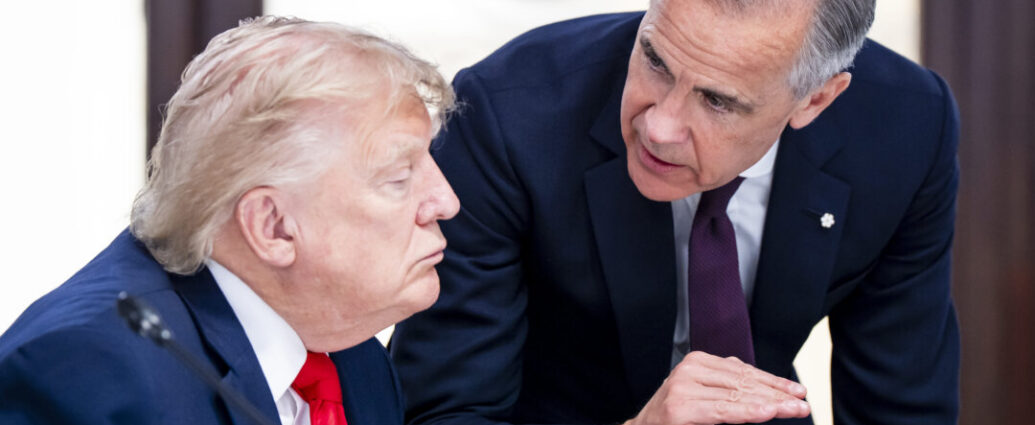
Canada’s Retaliatory Tariffs Take Effect—What to Know
Since President Donald Trump unveiled the contours of his expansive trade agenda in April 2025, Canada has been one of two nations—the other being China—to retaliate.
The two countries are now engaged in tit-for-tat tariffs.
Here’s what to know about Canada’s counter-tariffs on American exports.
Inside Canada’s Dollar-for-Dollar Tariffs
Canada’s dollar-for-dollar tariffs will target 7 percent of U.S. exports north of the border. They will home in on a large basket of goods—from steel and aluminum to carpets and cheese—with rates ranging from 15 to 50 percent….
LIV Golf Files for Bankruptcy Protection




STAT+: FDA names acting heads of drug and vaccine centers to permanent roles
WASHINGTON — The Trump administration permanently filled four key leadership roles at the Food and Drug Administration on Tuesday, after it nominated Heidi Overton to lead the agency late last month.
Three of the officials are serving in an acting capacity, and will take the same roles permanently, the administration said. They are Michael Davis, a psychiatrist who will be director of the Center for Drug Evaluation and Research; former Merck official Karim Mikhail, who will be director of the Center for Biologics Evaluation and Research; and Bret Koplow, an attorney who has been at the FDA since 2011, and will serve as director of the Center for Tobacco products.
The fourth appointee, Jared Seehafer, will serve as the FDA’s first Deputy Commissioner for Technology and Artificial Intelligence. He joined the FDA as an advisor in 2025 after founding a life science software company and working in investment advising in biotech, according to his Linkedin. Under the Trump administration, the agency has pushed for its staff to use AI to speed up its review processes.
Israel’s settlement policy triggers trade restrictions from 12 nations, incl. Canada, France
The foreign ministers of 12 countries confirmed on Tuesday their intention to impose national restrictions on trade in goods from Israeli settlements. Canada, Denmark, Finland, France, Iceland, Ireland, Norway, Poland, Portugal, Spain, Sweden, and the United Kingdom jointly confirmed the restrictions.
The 12 nations jointly said that the Israeli government’s actions in the West Bank “damage the possibility of realizing the two-state solution.”
They said that “the situation is deteriorating rapidly against the backdrop of unprecedented levels of settler violence and settlement expansion, including the unacceptable decision to publish tenders for the E1 settlement project,” they stated.
While the countries recognized Israel’s legitimate security interests and reiterated their condemnation of the Hamas terrorist attack on October 7, they called on the Israeli government to immediately halt settlement expansion and the expansion of administrative authorities in the West Bank, “ensure accountability for settler violence, and investigate allegations against the Israeli security forces.”
This joint announcement came as something of a surprise; all eyes were on the UK, which was expected to announce its measures on Tuesday; however, the involvement of the other 11 countries was not previewed, and the Israeli government was preparing its response for British measures specifically.

The exact details of the trade bans are not yet clear. For example, countries will need to differentiate between goods originating in West Bank settlements and products “Made in Israel.”
There is also set to be a religious exemption to the goods ban, but what this entails is again unclear.
Countries involved in coordinated trade restrictions host some of Diaspora Jewry’s largest communities
The 11 European countries and Canada backing the settlement trade restrictions are home to roughly 1.2 million Jews, including some of the world’s largest Jewish communities in France, Britain, and Canada. The new restrictions are unlikely to have a major economic impact on these European and Canadian Jews, since they target a relatively small category of settlement-produced goods.
However, Jewish communities in those countries could experience reduced access to some Israeli products, particularly settlement-produced wine and agricultural goods. There would also be implications for businesses and organizations with ties to settlements – and more broadly, concerns about the effects of antisemitism on Jewish communal life and increasingly confrontational UK government policies toward Israel.
France launches process to ban Israeli settlement products
France will also launch a process to ban products from Israeli settlements in the West Bank, Foreign Minister Jean-Noel Barrot said on Tuesday, amid rising settler violence that further undermines prospects for a two-state solution with the Palestinians.
La France va mettre fin au commerce avec les colonies israéliennes situées dans les Territoires palestiniens occupés, avec onze autres pays qui ont pris des engagements du même ordre.
Pourquoi ?
Parce que la Cisjordanie est au bord de l’explosion : expansion effrénée de la… pic.twitter.com/mJStC3HgOk
— Jean-Noël Barrot (@jnbarrot) September 8, 2026
“France is going to put an end to its commerce with Israeli settlements in Palestine, along with 11 other countries which have also undertaken similar engagements,” Barrot wrote on X/Twitter.
“Why are we doing this? Because the West Bank is close to exploding; there is frenzied expansion of the settlements, a flare-up of violence against Palestinians by extremist settlers, and acts of terror which have been attacked by Israeli authorities themselves,” Barrot added.
The move comes as frustration has grown among some European Union states, which have sought a bloc decision but failed to gain a qualified majority with notable opposition from Germany.
Ahead of the announcement, a French diplomatic source told reporters in a briefing: “Given the situation on the ground, we can’t wait, so we are taking this national decision.” The modalities of the ban have yet to be finalized, and it was not immediately clear when it would be implemented.
“This announcement is part of the joint initiative between the president of the Republic and the prime minister of the United Kingdom, which was discussed in particular during their meeting in London and to which several of our partners in the European Union and beyond have signed up,” the source said, adding that as many as a dozen countries would follow suit.
The source said it was not a boycott of Israel.
“The Government of Israel’s actions in the West Bank are undermining the possibility of a two-State solution,” the statement said.
“Today, Canada, Denmark, Finland, France, Iceland, Ireland, Norway, Poland, Portugal, Spain, Sweden and the UK confirm their intention to introduce national and/or support European restrictions on trade in goods with settlements which are illegal under international law, or that they are actively considering these and other measures, in accordance with their national procedures,” it added.
While British Prime Minister Andy Burnham has not spoken to his Israeli counterpart since entering the role 50 days ago, Burnham did speak to US President Donald Trump on Monday to inform him of the impending pan.
The US government is expected to release a condemnation of the sanctions later on Tuesday. It could also contain implied or actual threats of retaliation against the UK over the decision.
Reuters contributed to this report.

This billionaire founder made his first million at 27—years before Warren Buffett. His advice to Gen Z: Don’t ask for a raise, ask for equity
Picture this: you’ve just been offered a job after endless rounds of interviews and tests, when the interviewer asks, “What are your salary requirements?” According to one billionaire, the number you should be asking for isn’t a salary at all.
Dylan Taylor, the founder of space-tech company Voyager Technologies, became a millionaire at 27—five years before Warren Buffett hit the same milestone. His advice for Gen Z hoping to grow their wealth in the current economy? Stop negotiating for a bigger paycheck, and start negotiating for equity instead.
“I think it’s very difficult to make a lot of money working for somebody,” Taylor tells Fortune. “There’s two different ways to make money: income and equity. Whether you’re an employee or a founder, I think you should push for more equity and less income. That’s really what compounds over time.”
It’s advice Taylor took himself, long before he made his fortune in space. “I always wanted equity as opposed to higher base salary,” he says of the employment deals he negotiated early in his career. “I think that ended up being very wise.”
It did indeed. Taylor made his millions running public companies across electronics, finance and banking, while also investing in real estate and various companies including Robinhood, Relativity Space, and Calm.
Now, thanks to the return on investments he made from his twenties and Voyager’s IPO, he’s a billionaire.
Fortune reviewed a summary of his financial records, which verifies his billionaire status.
How entry-level workers can ask for equity instead of a raise
Taylor’s advice isn’t just for founders or executives with leverage to spare—he says even a 24-year-old, a few years into their career, can ask for equity over income. Not only that, but he says most employers would be impressed because it shows how seriously you’re invested in their firm.
“If someone came to you and said, ‘I actually want to make less money, but I want more of the value we create together’—I think most bosses, assuming they’re not totally insecure and see this person as a threat, would welcome that.”
Most managers, he adds, are open to that conversation even if they don’t personally have the authority to approve it. “They might have to run it up to the next level, but from a company standpoint, it makes a lot of sense, too. With equity, you only really pay on success.”
Not every industry will bite, Taylor admits. “If you’re working for an industrial valve company in Newcastle, I’m not sure you’d be able to do that. But if it’s a tech company, they’re issuing options—so there’s no reason why you can’t ask the question.”
And even if the answer is no, he says, that’s still useful information for both you and your future boss.
“You could just say, ‘Okay, well, at what point would I be eligible?’ I think it really reframes you in their mind. It’s like, this is someone who’s focused on creating value. I think it’s good signaling.”
His other piece of advice for young people trying to build wealth is almost as bold as asking bosses for equity: a barbell investing strategy. That is, putting the bulk of your money somewhere safe, and a smaller slice somewhere genuinely risky with potentially higher returns. “As crazy as it sounds, you’d have 70% of your money in the FTSE 100, and 30% in Bitcoin,” he adds. “It seems crazy, but I think those strategies work.”
He’s not alone: Martin Mignot and Ramit Sethi became millionaires before turning 30 thanks to early investments
Taylor isn’t the only self-made millionaire telling Gen Z to chase equity over income
Martin Mignot, the first investor in Deliveroo, similarly became a millionaire before turning 30. While other twenty-somethings were climbing the corporate ladder, he was busy investing in some of Europe’s most iconic startups, including Revolut, Trainline and Personio. By his late 20s, the millennial had cemented his reputation as one of the industry’s most notable investors—and made his first millions along the way.
He’s now a partner at Index Ventures—the firm behind early bets on Figma, Scale AI, and Wiz—and his advice for Gen Z boils down to the exact same principle as Taylor’s.
“It’s about owning equity, that is the key,” he previously told Fortune. “The best career accelerator you can have is joining a Revolut, Robinhood, or Figma early enough—and you don’t have to be the first employee. If you’re employee 100 or 200, you’re going to make a lot of money.”
And for those who don’t work for a company that offers stock options, Netflix’s finance guru Ramit Sethi, the New York Times best-selling author of I Will Teach You To Be Rich, recommends a far less glamorous strategy: automate your investments into a low-cost index fund, then leave it completely alone.
“Timing the market is for suckers,” he told Fortune. “Treat your investments like a Thanksgiving dinner. Put the turkey in the oven, close it, and let it cook for the next 30 years.”
“When you’re young, you have one luxury that no one else has, and that is the luxury of time,” he added. “When it comes to investing, time is one of the most powerful allies to live a rich life and grow your investments. So one of the most important things is to be consistently investing even $50 a month, starting from as young as possible.”
This story was originally featured on Fortune.com

Wall Street — Oil Near $100, AI Disruption Fears Hit Software
Wall Street returned from the Labor Day weekend with a sharp split inside the market: energy and AI hardware rose while software, healthcare and the Dow fell hard.
The Dow Jones Industrial Average fell about 620 points, or 1.2%, to roughly 52,787. The S&P 500 lost 0.58% to 7,673.94, and the Nasdaq Composite declined about 0.3% to roughly 26,421. It was the Dow’s worst session in nearly three weeks.
Two forces drove the selling.
First, Brent crude briefly reached $99.46 after Houthi attacks struck Saudi energy facilities, before settling at $97.92 a barrel. U.S. crude settled at $93.03, its highest level in nearly three months. The 10-year Treasury yield pushed around 4.80%, increasing borrowing-cost pressure just days before the final inflation reports preceding the Federal Reserve’s September 16 decision. Markets are pricing roughly a 60% probability of a rate increase.
Second, investors again questioned whether artificial intelligence will destroy portions of the traditional software business. Salesforce fell roughly 4%, while ServiceNow and Intuit each lost around 5% as OpenAI’s new GPT-6 Astra renewed fears that businesses may replace expensive specialized software with increasingly capable general-purpose AI. The S&P software and services index fell for a second consecutive session.
That is becoming one of the most important divisions in the stock market: AI infrastructure companies are being rewarded for building the technology while some software companies are being punished because investors fear the same technology could replace them.
Main Street — Small Businesses Say Sales Are Getting Harder
America’s small businesses became less optimistic in August.
The NFIB Small Business Optimism Index fell 1.1 points to 98.7, down from 99.8 in July, although it remains slightly above its 52-year average of 98.0.
The headline number was not the most important part.
A net 9% more businesses reported declining rather than increasing sales during the previous three months, the weakest reading since November 2025. Expectations for better overall business conditions fell five points, while the share of owners planning to create jobs dropped three points to a net 17%.
Inflation also moved back up the worry list. Sixteen percent of owners named inflation as their single biggest problem, up two points from July.
There was one meaningful piece of relief: labor costs as the biggest business problem fell to their lowest level since March 2021.
Why it mattered today: Main Street is describing a different economy from the one suggested by Friday’s strong national jobs report. Employers are not collapsing, but customers are becoming harder to capture and businesses are growing more cautious about hiring and expansion.
That matters especially if oil and interest rates continue rising simultaneously.
AI Chips — Amazon Could Buy $60 Billion From Qualcomm
Qualcomm landed one of the largest potential AI infrastructure orders yet.
Amazon can purchase as much as $60 billion of Qualcomm AI data-center chips and related products under a new long-term agreement.
Qualcomm is giving Amazon warrants worth roughly $4 billion, allowing it to purchase as many as 25 million Qualcomm shares at $161.26 apiece as product-purchase targets are reached. Qualcomm shares rose following the announcement.
The arrangement covers custom AI processors and optical-connectivity technology needed to move enormous quantities of data between chips inside AI data centers.
For Qualcomm, this is an attempt to build a second enormous business as it prepares eventually to lose Apple’s modem business and faces softer smartphone demand.
The company is targeting $15 billion in annual data-center chip revenue by 2029.
Why it mattered today: Amazon is actively creating alternatives to Nvidia rather than accepting permanent dependence on one dominant AI-chip supplier.
That means AI’s next phase is increasingly about custom chips, networking and bargaining power, not simply buying more Nvidia GPUs.
Artificial Intelligence — Meta Launches an Agent That Can Spend Your Money
Meta launched Muse, an autonomous AI assistant capable of doing something fundamentally different from a conventional chatbot.
It can act.
Muse can connect with email, calendars, shopping services, payments, health applications and smart-home systems. Meta says it can book travel, send emails, make payments and even help sell a car on a user’s behalf. It launches initially in the United States through a dedicated app and WhatsApp.
The business opportunity is enormous.
If AI agents begin actually making purchases rather than merely recommending products, companies may increasingly be selling to algorithms acting for customers.
But the risks are equally large.
Internal testing reportedly uncovered incidents involving unexpected data transfers, connection problems and exposure of sensitive personal information. Meta says the product meets its safety and privacy standards while acknowledging agents can make mistakes.
Why it mattered today: AI is moving from answering questions to controlling transactions.
For businesses, that potentially changes advertising, e-commerce, customer acquisition and payments. For consumers, it raises a much bigger question: how much authority should software receive to act with your money and personal information?
U.S.-China Technology — Washington Accuses Chinese AI Firms of Copying American Models
The U.S. government accused six Chinese AI companies, including DeepSeek, Moonshot AI and Alibaba, of using American AI systems to accelerate development of their own models.
Officials said Chinese firms used a technique known as distillation, feeding outputs from American systems into smaller models to reproduce capabilities more cheaply and quickly. They named technology originating from OpenAI, Anthropic, Google and SpaceX among the systems allegedly targeted.
U.S. officials went further, saying the activity occurred likely with Chinese government awareness and warning that the resulting technology could strengthen Chinese military and cyber capabilities.
The accusation arrives only weeks before the planned Trump-Xi meeting later this month.
Why it mattered today: The AI competition between the United States and China is rapidly becoming an intellectual-property and national-security battle.
Exporting advanced chips is one issue.
Preventing a competitor from extracting the capabilities of an already-trained American AI model may prove significantly harder.
Autos & Manufacturing — Washington Tells Ford Its China Dependence Has Gone Too Far
The Trump administration sharply criticized Ford over its relationships with Chinese companies including CATL, Geely and BYD.
Transportation Secretary Sean Duffy told Ford CEO Jim Farley that the company’s continued reliance on Chinese technology poses national-security concerns.
The administration specifically highlighted Ford’s licensing of CATL battery technology for its Michigan battery plant, its partnership with Geely in Spain and discussions with BYD involving hybrid-vehicle components.
Officials also criticized Ford for waiting until 2030 to move production of its Lincoln Nautilus from China to the United States.
This is increasingly becoming the central argument surrounding American industrial policy.
Washington is no longer concentrating only on where the final automobile is assembled.
It is scrutinizing who supplies the battery technology, software, electronics and underlying intellectual property.
Why it mattered today: Manufacturers can no longer assume that building the final product in America will satisfy Washington if strategically important technology inside that product still comes from China.
Cybersecurity — One Attack Just Knocked Boston Scientific Off Its Annual Forecast
Boston Scientific warned that a cybersecurity attack discovered August 25 caused enough disruption that the medical-device company is now unlikely to achieve its previous third-quarter and full-year sales and profit guidance.
The attack disrupted networks used for manufacturing, order processing and other operations around the world. Major distribution centers and most manufacturing operations have restarted, but the company still cannot quantify the full financial damage.
Before the attack, Boston Scientific expected full-year adjusted earnings of $3.28 to $3.32 a share and revenue growth of 5.5% to 6.5%.
Shares fell sharply Tuesday.
Why it mattered today: Cybersecurity has become an operating-cost issue, not simply an IT problem.
A company can have customers, factories and products ready to go and still lose revenue because the digital systems connecting orders, manufacturing and shipping are unavailable.
For business owners, the lesson is straightforward: cyber insurance and backup systems belong in the same risk conversation as property insurance and supply-chain continuity.
Broadband & AI Infrastructure — Verizon Orders 80 Million Miles of Fiber
Verizon signed a multibillion-dollar agreement with Corning covering more than 80 million miles of high-density optical fiber and connectivity products between 2027 and 2032.
The fiber will support Verizon’s residential and business broadband expansion.
But AI is an important part of the economics.
Hyperscale data centers require enormous bandwidth connecting campuses, servers and network infrastructure. The computing boom therefore creates demand far beyond chips and electricity.
It requires fiber.
Why it mattered today: Investors increasingly need to look beyond Nvidia to understand where AI money is flowing.
The buildout is creating business for utilities, construction companies, fiber manufacturers, electrical-equipment companies, cooling suppliers and networking firms.
Corning is another example of an older industrial company finding itself directly inside the AI capital-spending boom.
New Jersey & Wall Street — Holtec Seeks a $10.2 Billion Valuation
Camden, New Jersey-based Holtec launched plans for an initial public offering that could value the nuclear-technology company at as much as $10.2 billion.
Holtec plans to offer 50 million shares at between $15 and $18, potentially raising as much as $900 million.
The offering arrives as nuclear power is being revalued because AI data centers and other electricity-intensive industries require enormous quantities of reliable power.
It is also an important test of the fall IPO market.
Strong trading after Holtec’s offering could encourage additional private companies to move ahead with listings before year-end.
Why it mattered today: Nuclear power has moved from an industry many investors considered stagnant to one increasingly linked directly to America’s AI and electricity strategy.
Holtec is attempting to put a multibillion-dollar public-market valuation on that change.
Pharmaceuticals — Novartis Loses $32 Billion in One Day
Novartis suffered its worst one-day stock decline on record, dropping 10.9% in Switzerland and erasing approximately $32 billion in market value.
The trigger was failure of a late-stage study of del-desiran, an experimental treatment for myotonic dystrophy.
The failure is particularly painful because Novartis obtained the drug through its approximately $12 billion acquisition of Avidity.
Analysts had previously estimated peak annual sales of roughly $3.1 billion for the treatment.
It is also Novartis’ second significant clinical disappointment within days, putting additional pressure on CEO Vas Narasimhan’s acquisition-driven strategy for replacing revenue from drugs approaching patent expiration.
Why it mattered today: Pharmaceutical acquisitions are increasingly priced around drugs that have not yet reached the market.
A single failed clinical trial can therefore destroy not only the expected sales of a product but billions of dollars of assumed acquisition value overnight.
Key Market Movers
Intel was one of Tuesday’s strongest large-cap stocks, jumping close to 10% amid renewed enthusiasm around AI and data-center chips. Qualcomm gained roughly 3% after unveiling the Amazon agreement. Energy companies including Marathon Petroleum and Occidental Petroleum advanced as oil rose.
On the other side, Salesforce fell roughly 4%, ServiceNow and Intuit about 5%, reflecting fears that generative AI will disrupt established software businesses. Novartis plunged 10.9% in Europe and its U.S.-listed shares fell even more sharply, while Boston Scientific declined after its cyberattack warning. Crypto-related names also weakened as bitcoin slipped below $80,000, with Coinbase and Strategy falling.
The market’s message Tuesday was unusually clear:
Owning the infrastructure behind AI was rewarded. Owning businesses that AI could potentially replace was not.
What to Watch Wednesday, September 9
The biggest scheduled corporate event arrives at 1 p.m. ET, when Apple holds its first major product launch under new CEO John Ternus.
Wall Street expects Apple to unveil its first foldable iPhone, with analysts anticipating a price above $2,500, alongside new high-end iPhones and a major Siri AI upgrade. Analysts estimate the foldable device could eventually generate more than $45 billion in revenue by the end of 2027.
For investors, however, Siri may matter more than the hinge.
Apple must convince Wall Street that it can remain a central gateway for artificial intelligence rather than allowing OpenAI, Google and Meta to control the next generation of consumer computing.
Oil will remain the other major market driver.
Brent came within roughly $2 of $100 Tuesday. Another attack on Gulf energy infrastructure or additional disruption to Hormuz shipping could push energy through that psychological threshold and increase expectations that the Federal Reserve will raise rates next week.
Markets will also begin positioning for the Producer Price Index on Thursday and Consumer Price Index on Friday, the final major inflation readings before the Fed’s September 16 decision. Economists expect wholesale inflation to accelerate, making those numbers particularly important after the latest surge in energy costs.
Wednesday also brings a group of consumer and business earnings, including Chewy, American Eagle Outfitters and AeroVironment, offering additional reads on discretionary spending and defense demand.
Bottom Line
Tuesday was not simply a bad day for stocks.
It exposed several of the most important shifts happening underneath the economy.
Small businesses say sales are weakening. Oil is nearing $100. Interest rates may rise again. Cyberattacks are now knocking major corporations off their earnings forecasts. Washington is forcing manufacturers to reconsider Chinese supply chains. And AI is beginning to separate corporate winners from potential casualties.
At the same time, Amazon is potentially committing tens of billions to alternative AI chips, Verizon is ordering tens of millions of miles of fiber and a New Jersey nuclear company believes the public market may value it above $10 billion.
There is still enormous capital available.
But investors are becoming much more selective about which side of the economic transformation receives it.
JBizNews Desk | Wall Street
© JBizNews.com All Rights Reserved.

Nvidia CEO Jensen Huang declares ‘AGI has arrived’ after OpenAI unveils GPT-6 Astra
Nvidia co-founder and CEO Jensen Huang declared that the era of artificial general intelligence (AGI) has arrived after OpenAI released its latest model.
OpenAI on Thursday unveiled the GPT-6 Astra model, which the company said features major improvements in computer use, coding, scientific research and professional work.
Astra began rolling out to OpenAI’s enterprise customers with Daybreak access with the initial announcement. The company is also rolling it out to ChatGPT Plus, Pro, Business and Enterprise, as well as through the OpenAI API and Amazon Web Services.
Huang wrote a post on X congratulating OpenAI on the breakthrough, saying that it marks the outset of the AGI era.
OPENAI UNVEILS GPT-6 ASTRA WITH MAJOR ADVANCES IN AI CAPABILITIES: ‘NOW IN THE AGI ERA’
“GPT-6 Astra, trained on ~100K+ NVIDIA Grace Blackwell NVLink72. From ChatGPT to o1 to Astra in 4 years. AGI has arrived. Congratulations @OpenAI team. 400K GPUs coming online next,” Huang said in his post on X.
AGI lacks a common definition across the tech sector, though it generally refers to an AI system that has human-level cognitive abilities for learning and reasoning, and is able to learn new skills and capabilities without being retrained.
OpenAI defines AGI as “highly autonomous systems that outperform humans at most economically valuable work.”
NVIDIA CEO JENSEN HUANG RIPS ‘THE BAND-AID OFF’ AS AI CHIP GIANT RESETS EXPECTATIONS
Huang and Nvidia have defined AGI as an AI system that’s able to pass professional certifications and standardized tests across a range of professional fields with scores in the top tier.
OpenAI President Greg Brockman told reporters before Astra’s launch that the new model is a turning point in the pursuit of AGI, saying that “I think it’s not unreasonable to feel that we are now in the AGI era.”
The company said that Astra can carry out “tedious” computer-based tasks, such as filling out online forms, updating customer records, organizing calendars and conducting research.
OPENAI SHAKES UP CORPORATE STRUCTURE WITH GOAL OF SCALING UP AGI INVESTMENT
OpenAI added that Astra can create documents, spreadsheets and presentations, while it also called it the “best model for software engineering to date” and touted its cybersecurity capabilities.
OpenAI CEO Sam Altman said that one of the model’s capabilities that impressed him the most was Astra’s ability to identify problems that users hadn’t considered.
GET FOX BUSINESS ON THE GO BY CLICKING HERE
“Not only could it excel at doing a bunch of research about, you know, a complex supply chain for chips that we’re trying to produce,” Altman said. “But parts of that task that I didn’t ask it for, it can come back and say, ‘You didn’t think to ask me about this other part of the supply chain.'”
FOX Business’ Sophia Compton and Reuters contributed to this report.
This post was originally published here

A $500,000 career, gone at 25: esports’ injury crisis is forcing teams to build sports-medicine staffs
Chinese esports player Jian “Uzi” Zi-hao was more than a star “League of Legends” player: He was so talented that his team structured its entire strategy around his abilities, funneling resources to him and another teammate, Shi “Ming” Sen-Ming, so the duo could lead the team to victory. Over the course of his career, he earned more than $500,000 in tournament prize money.
And yet in 2020, Jian announced his retirement, his storied career cut short by chronic wrist and arm injuries.
He was 25 years old.
Video games have a reputation for keeping people glued to the couch. But for those who compete against the best players in the world, gaming can be surprisingly physically and mentally taxing.
The strain of ‘climbing the ladder’
The best esports players often have grinding schedules. They’re expected to regularly practice, participate in scrimmages and compete in official matches. Even at the recreational level, esports players cite the mental toll: playing for hours a day, every day, to hone their skills so they can “climb the ladder.”
A 2021 study of Portuguese esports players found that 37% experienced anxiety and depression, and 45% experienced sleep disturbances. The most common physical injuries in esports generally fall under eye problems and musculoskeletal issues.
Prolonged screen time leads to many types of vision problems in gamers, from the more common eye fatigue to a decreased ability to focus. Furthermore, the light emitted from screens appears to contribute to sleep disturbances by disrupting the release of melatonin, the hormone that helps regulate your sleep-wake cycle.

Many esport players – professional or otherwise – also battle hand and wrist pain, with repetitive button-smashing causing injuries such as carpal tunnel syndrome, tendonitis and “gamer’s thumb,” which arises from overuse or irritation of the tendons around the thumb and wrist. Many of the overuse injuries seen among video game players are also familiar to assembly-line workers, whose jobs can involve similarly repetitive movements.
Then there are the back injuries. Players can remain seated for three or more hours without a break, and this prolonged sitting can take a toll on the lower back and spine.
The sedentary nature of esports has also led to a lesser-known – sometimes fatal – injury called deep vein thrombosis: a blood clot, often in the leg, that can become life-threatening if it travels to the lungs. In 2011, British gamer Chris Staniforth – who would play for as long as 12 hours at a time – died of the condition.
Preventative measures
As more esports injury research has been published, more treatment and prevention strategies have emerged.
Top esports teams now have physical therapists, performance psychologists, athletic trainers and even massage therapists on staff to optimize the performance and recovery of their players.
Teams often incorporate group exercise activities to both build rapport among players and reduce the risk of injuries. During competition, proper positioning of the spine and limbs has become an essential injury prevention strategy. For example, selecting a chair that encourages an upright posture can reduce pain and injury risk, especially when gamers couple ergonomics with an exercise program that centers on functional strength, mobility and stretching of the upper limbs.

Looking to the stage
When esports began gaining mainstream popularity in the 1990s and early 2000s, its proponents were eager to draw comparisons to traditional sports and athletic competition. The parallels helped establish esports’ legitimacy and gave non-gamers a familiar framework for understanding the competition.
As esports became a big business and a lucrative career path, players and teams hired a web of support staff – trainers, coaches and therapists – that mirrored the structure of professional sports. In this vein, a lot of esports injury research has pulled from the training methods of traditional sports.
However, as a scholar of exercise science, I think injury treatment and prevention strategies could be further improved by seeing esports competitors as more like musicians and dancers than football players and basketball players.
Performance optimization and injury research on professional performing artists has existed for centuries, and I think it represents a valuable, untapped resource. That’s because the physical and mental stresses experienced during musical performance have a lot in common with esports competition: long stretches of sitting; small, dexterous hand movements; and performing without the real-time input of a coach.
For example, biomechanics research has found similar patterns of forearm muscle fatigue among esports players and piano players. However, no studies to date have directly compared the two groups.
And what if the interest in joint hypermobility or hand size among performing artists were translated to esport populations? Could popular piano warm-up exercises be effective for esports athletes who use keyboards?
Even research on sports like car racing might offer valuable insights. As with gamers, many people overlook how physically demanding car racing can be – and yes, that includes sitting for extended periods of time.

Prevention and rehabilitation techniques continue to improve. Even Jian, the player who retired in 2020, returned to play for a few splits, or partial seasons, in 2022 and 2023.
In July 2023, “League of Legends” star Lee “Faker” Sang-hyeok was relegated to the bench due to cubital tunnel syndrome, an injury that emerges from arm and hand overuse.
Through a treatment plan that included changing his gaming posture and intensive physical therapy, Lee was able to return to play just a month later. He went on to win three consecutive world championships, with his support team helping prevent recurrence of injury throughout each season.
Thanks to his rehabilitation, Lee’s fans will be able to follow his hunt for his fourth “League of Legends” World Championship, which kicks off in October 2026 in the United States.
Sienna Cinti assisted with the research and writing of this article.
Erica D. Henn, Assistant Professor of Kinesiology and Exercise Science, Temple University
This article is republished from The Conversation under a Creative Commons license. Read the original article.

This story was originally featured on Fortune.com
Duffy puts Ford on notice over China ties, warns of security concerns
Transportation Secretary Sean Duffy is accusing Ford Motor Co. of becoming too dependent on Chinese companies, warning CEO Jim Farley that the automaker’s business ties to China threaten U.S. national security and American manufacturing.
In a letter sent Tuesday to Farley and obtained by FOX Business, Duffy criticized Ford’s growing reliance on Chinese technology and manufacturing partnerships, arguing that the strategy raises national and economic security concerns.
The letter marks one of the Trump administration’s strongest public rebukes of a major American automaker over its business relationships with China.
“I am writing to express the profound concern of the U.S. Department of Transportation (DOT) regarding the strategic trajectory of Ford Motor Company,” Duffy wrote, adding that the company’s recent decisions “paint a troubling picture of a foundational American brand actively intertwining its future with Chinese state-backed enterprises.”
FORD’S US MANUFACTURING EXPANSION TO BRING ‘THOUSANDS AND THOUSANDS OF JOBS,’ LUTNICK SAYS
Administration officials argue the concerns are twofold: that Chinese law can require companies to provide the government access to proprietary and customer data, creating potential national security risks, and that increased reliance on Chinese manufacturing comes at the expense of American workers.
Duffy pointed to several examples in the letter, including Ford’s continued use of licensed battery technology from Chinese manufacturer CATL at its BlueOval Battery Park in Marshall, Michigan; the company’s joint venture with Chinese-owned Geely in Spain; reported discussions with BYD over hybrid vehicle components; and the company’s delayed plans to reshore Lincoln models such as the Nautilus, which Duffy said could extend until 2030.
He argued those moves deepen Ford’s reliance on Chinese supply chains while helping strategic competitors expand their influence in the global auto industry.
“When a company intentionally chooses to deepen operational dependencies on strategic competitors, it fails to act as the reliable partner the American public and this DOT require,” Duffy wrote.
FORD BOOSTS US LINCOLN PRODUCTION AS IT PHASES OUT IMPORTS FROM CHINA
Duffy also urged Ford to reduce its dependence on foreign technology.
“Iconic American companies, like Ford, are also expected to out-innovate competitors,” he wrote. “To that end, they need to chart clear paths to technological self-reliance.”
The letter comes as lawmakers and the auto industry have pushed for tighter restrictions on Chinese involvement in the U.S. automotive market.
In July, the Senate Commerce, Science and Transportation Committee approved bipartisan legislation that would ban the import, sale and operation of vehicles manufactured by companies designated as foreign entities of concern, including firms based in China. The measure would also prohibit certain connected vehicle technologies developed by those countries.
CLICK HERE TO GET FOX BUSINESS ON THE GO
Separately, the Alliance for Automotive Innovation urged congressional leaders in September to enact a permanent ban on Chinese-made vehicles in the United States.
Ford did not immediately respond to FOX Business’ request for comment.
Maccabi Tel Aviv crushes Hapoel Beersheba 4-1 as derby looms large
Maccabi Tel Aviv cruised past Hapoel Beersheba 4-1 as Ester Sokler scored a brace in the win that saw the yellow-and-blue pick up their third victory in as many games to start the season.
Helio Varela set the tone early with a screamer of a strike to give Maccabi a 1-0 lead in the opening minute of play. Sokler scored his first of the match from the penalty spot to double the advantage while Eliel Peretz was sent off, leaving the hosts with 10-men.
But right before the break, Amir Ganah pulled a goal back to cut the lead to 2-1 at halftime. Sokler found the back of the net again off a Varela cross, while Peretz added a marker as well to take the 4-1 win.
Up next is the Tel Aviv derby next Monday night as Maccabi will be the hosts against Hapoel, which has a pair of wins and a draw thus far this campaign.
“Hapoel Beersheba is a very good team, and we have to be at the top of our game against them. We started really well, and we took our chances early. We had to make sure that we stayed consistent, and when they went down to ten men, we took the eye off the ball, and I was disappointed and upset, but we made the changes that we needed to at halftime to make sure we picked up the pace.”

Beersheba’s Ran Kozuk looked back at the defeat
“We just didn’t show up, and we started poorly by giving up a goal that wasn’t a Premier League goal. From there, Lucas Ventura was injured, and the snowball kept rolling; then we got a red card that reduced us to 10 men. Maccabi scored a penalty; we knew what type of game they wanted to play and what we wanted to do, and we did the exact opposite.”
At Bloomfield Stadium, Hapoel Tel Aviv crushed Hapoel Ramat Gan 4-0 as the Reds scored all of the goals in the second half to take the win ahead of the derby.
After a goalless first half, Elyaniv Barda scored a deluge of goals as Emmanuel Boateng broke the ice in the 57th minute, while Douglas Owusu scored a magnificent marker off a break down the right flank to double the advantage. An own goal by Dudu Twito made it 3-0, while captain Fernand Mayembo headed home the fourth goal with authority in second-half injury time to wrap up the blowout win.
Elyaniv Barda said at the end of the game, “Even though we didn’t score, I think the first half was good as well, but we didn’t know how to capitalize on our opportunities and score the first goal that would open the floodgates. Thankfully, in the second half, the chances were converted into goals. As for the Derby, I’m not thinking about the next game; I just hope that we can continue playing at this level.”
Ramat Gan coach Messay Dego added: “Nothing worked today. Defensively, we were very deep, which we haven’t been in any game this year. It was very difficult to watch, especially in the first half. I told the players that we were lucky to get away with it. Every two or three passes, we lost the ball. There are days like this, but we cannot fall apart the way we did at the end. That is something I cannot simply let slide.”
In the Galilee, Beitar Jerusalem slipped past Bnei Sakhnin 1-0 as Eugene Ansah scored the lone goal of the contest in the second half off of a corner kick to give Almog Cohen’s charges their first win of the season after a pair of losses.
“Good feeling for sure,” Cohen began. “But it wasn’t a great game. In the second half, we created more chances. For me, the most important thing was the desire and the fighting spirit. It’s difficult to play quality football when you feel the pressure around you. As a coach, I tried to take that pressure off. Football is ultimately about enjoying yourself.”
“It’s frustrating,” Sakhnin coach Yossi Abukasis said. “When you have a good first half, break through the pressure several times and create scoring opportunities, of course it’s frustrating. Unfortunately, we made a mistake and lost the game. In football, at the end of the day, you’re judged by the titles you win. What we were missing was sharpness in front of the goal.”
Finally, Maccabi Netanya and Hapoel Haifa played to a 1-1 draw as Alon Turgeman scored in the first half to give the Carmel Reds the lead, but Matheus Davo’s second-half penalty split the points at the Netanya Stadium.
Diamond City squad coach Roni Levy spoke about the match, “At home, we always want to win and keep the momentum going. We faced an opponent who made things difficult for us. We fell behind because of an uncharacteristic mistake that shouldn’t have happened. We managed to come back, and it was an even game. Our approach in the first half was rather passive. At the beginning of the game, we were still in control, but I think our approach was better in the second half, and we made some changes that helped us.”
Haifa bench boss Haim Silvas also shared his thoughts, “A huge missed opportunity. Usually, I’m very measured, but I feel like we missed a great chance. We played a great game. Although we didn’t start the second half well, we created chances to win. We controlled the game both with and without the ball. It’s a shame we weren’t more clinical. What we were missing was that final touch to turn the game in our favor.”
Ed Miliband: The ‘proud British Jew’ who turned his back on Britain’s Jews – comment
“I do so as a proud British Jew,” said UK Foreign Secretary Ed Miliband on Tuesday, right before announcing the most comprehensive list of sanctions against the only Jewish state in British history.
“Proud Jew” Miliband did this in direct contravention of the wishes of the British Jewish community.
Just over a week ago, he met with UK Chief Rabbi Ephraim Mirvis to discuss what potential sanctions and trade bans could mean.
Mirvis told Miliband that the UK Jewish community will view such measures with deep dismay, at a time when the vilification of Jews, Judaism and the Jewish State has already reached unprecedented levels.
Mirvis also said that the intended policy will not influence Israeli decision-making in the way the Government intends, and will instead disproportionately affect British Jews.

Labour government blinded by self-interest
“Proud Jew” Miliband did not listen to this. Nor did he listen to similar concerns expressed by the Board of Deputies of British Jews, the Jewish Leadership Council, Jewish politicians, government counter terrorism officials and more.
The current Labour government is so blinded by self-interest and its own political longevity that the real-life pressing concerns of and tangible threats facing the Jewish community have fallen by the wayside.
On Tuesday, Miliband not only introduced sanctions; he curated a new British governmental narrative that far exceeded any previous government in the nature of its demonization of the Jewish state.
In the same breath as he declared his “unwavering support for the State of Israel,” Miliband accused Israel of ethnic cleansing. He declared the “occupation” unlawful.
To support his words, he cited the very bodies that we know hold Israel to a double standard: the UN and the ICJ. He didn’t present these claims as up for debate; he didn’t cite the extensive body of research that negates the concepts of ethnic cleansing and occupation.
Instead, he chose to add fuel to an already raging fire. It was not necessary to declare that Israel is enacting ethnic cleansing and occupation, but he was surely aware that this rhetoric would curry favor with the very voters Labour seeks to secure in the upcoming by-elections and future general election.
The only ticket to Labour success against the Greens – which seemingly runs exclusively on anti-Israel campaigning – is to use the same language.
But by using it, he is playing into the hands of all the quasi-legal pro-Palestine organizations and grassroots antisemites who have been grasping for more legitimacy to their bogus claims.
British Jews can now expect an extra wave of antisemitic acts in the name of the illegal ethnic-cleansing occupation that Britain said Israel is, and it would be effectively in line with government policy.
Perhaps the most egregious element of Miliband’s heroic announcement on Tuesday was the sheer oxymoronic hypocrisy at its nexus.
He declared the Israeli settlements across the Green Line to be illegal, despite the fact that successive peace efforts, from Oslo to Camp David and beyond, have envisaged a final agreement in which this area would remain under Israeli sovereignty.
He said the sanctions regime will target illegal settlements and settlement expansion, not Israel, without acknowledging that he has given further incentive for the demonization of the Jewish State on a very public stage.
A British Jew investing in property in a Jewish neighborhood of east Jerusalem may now face restrictions, yet Britain does not impose comparable restrictions on British citizens buying property in Turkish-occupied northern Cyprus.
Miliband argued that holding Jewish people responsible for the actions of the Israeli Government is antisemitism, while simultaneously penalizing them for the actions of a small number of settlers who commit violent acts in a country they may have never been to.
Sanctions will affect Jews in Britain
And why some may say the sanctions won’t tangibly affect British Jews: they will.
British Jewish businesses that supply kosher wine to hundreds of families shouldn’t have to worry about losing half of their inventory.
People who – rightly so – wish to make Aliyah due to rising antisemitism shouldn’t have to fear attending a real estate event that advertises houses in Maale Adumim.
And the other implications: what about the those who obtained a degree at Ariel University; will it be invalid? Can Yeshivat Gush Etzion advertise to British Jewish schoolboys?
Can a Jewish artist in the Jewish quarter of the Old City have their work stocked in a UK store?
These are not questions that British Jews should have to ask their government on the eve of Rosh Hashanah.
In the words of the Chief Rabbi, it “is truly a dark day for British Jews.”
Not especially because of the sanctions – the success of their implementation and enforcement is yet to be seen – but because the government did a Machiavellian display of canvassing Jewish opinion and seemingly taking on board their concerns, only to completely and flagrantly ignore them, and then some.
And, funnily enough, these measures may incentivize the very extremism they seek to target.
If, God forbid, another terrorist attack targets British Jews, the Prime Minister and Foreign Secretary will undoubtedly stand before the cameras, condemn antisemitism as ‘un-British and an attack on British values,’ and assure the Jewish community that Jews must never be held responsible for the actions of Israel.
They will be right.
But governments cannot simultaneously tell Jews that they are not responsible for Israel while adopting rhetoric that helps activists collapse the distinction between the two.
And Miliband cannot have it both ways: he cannot invoke his identity as a proud British Jew while fueling the very same fire that seeks Jewish destruction.
Health Ministry advances regulations requiring iodine enrichment for table salt
The Health Ministry advanced new regulations on Tuesday that would require table salt sold for household use to be enriched with iodine, after findings showed widespread iodine deficiency among Israel’s population.
According to ministry data, about 60% of children and 85% of pregnant women tested had an iodine deficiency.
The requirement is expected to apply to table salt sold in packages for household use, which the Health Ministry says accounts for about 85% to 90% of household salt purchases in Israel. Salt used by the food industry, coarse salt, and specialty salts would not be subject to the enrichment requirement.
Under the plan, salt would be enriched with 30 milligrams of iodine per kilogram. The ministry estimates that this would add about 45 micrograms of iodine to a person’s daily diet, equivalent to about 30% of the daily reference intake.
The ministry described the dosage as “conservative” and said it would monitor iodine levels in the population after the measure is implemented. The enrichment level could then be adjusted if necessary.

Iodine deficiency in Israel has persisted for years
The decision to advance the regulations follows years of data showing persistent iodine deficiency in Israel.
A 2016 survey of more than 1,000 school-age children and about 1,000 pregnant women from across Israel’s regions and population groups found that about 60% of the children and 85% of the pregnant women suffered from iodine deficiency.
Data from the National Biomonitoring Program in 2020 and 2021 showed a similar picture, with no significant improvement, the ministry said.
One possible reason for the deficiency is linked to Israel’s drinking water. Israel’s location along the Mediterranean coast was once believed to provide some protection against iodine deficiency, but the Health Ministry said that assumption proved incorrect.
The Israeli diet does not rely heavily on iodine-rich foods from the sea, while a significant proportion of food and raw materials consumed in the country are imported.
The widespread use of desalinated water, which contains very low concentrations of iodine, may also contribute to the problem. The ministry cited desalination as one possible factor behind Israel’s low iodine intake.
Why iodine matters and the risks of deficiency
Iodine is an essential mineral used to produce thyroid hormones, which play a role in growth, development, and metabolism.
It is particularly important before and during pregnancy, as well as during breastfeeding, including for the proper development of the fetal and newborn brain. Natural sources of iodine include eggs, seaweed, dairy products, and sea fish.
Iodine deficiency can have a range of health consequences, including cognitive and neurological impairment, enlargement of the thyroid gland, known as goiter, and hypothyroidism.
The Health Ministry said iodine deficiency may also be associated with an increased risk of stillbirth, infant mortality, and congenital abnormalities.
Many countries already enrich salt with iodine. According to the Health Ministry, more than 120 countries have mandatory iodine regulations for salt, and it is considered an effective and safe way to prevent iodine deficiency.
The ministry estimates that the planned enrichment level would not cause iodine consumption to exceed the safe upper limit, even among people with relatively high intake.
Health Ministry stresses: Do not consume more salt
The Health Ministry stressed that adding iodine to salt is not a recommendation to increase salt consumption.
According to the ministry, only about 15% of daily salt consumption in Israel comes from salt added at home or during food preparation, while most salt intake comes from processed and industrially produced foods.
The recommendation to reduce overall salt consumption therefore remains unchanged. However, when using salt at home, the ministry recommends choosing iodine-enriched salt instead of regular salt.
The ministry also noted that iodine can break down or be lost when salt is stored in humid conditions or in unsuitable packaging.
The regulations are therefore expected to include requirements for packaging and stability controls. Consumers are advised to store iodine-enriched salt in a sealed container in a dry place.
On the 54th anniversary, Israel honors those murdered in the 1972 Olympics
Fifty-four years after 11 members of Israel’s Olympic delegation were murdered by Palestinian terrorists at the 1972 Munich Games, Israel gathered Monday evening to honor their memory and reaffirm a commitment to carrying their legacy forward through sport.
The 54th annual memorial ceremony for the Munich 11 was held at the Yud-Alef Square in Tel Aviv-Jaffa, as it is every year, with Olympic medalist Arik Zeevi serving as master of ceremonies. Family members of the victims joined athletes, coaches, judges and representatives of Israel’s sporting community, as well as senior government and municipal officials.
Among those attending were Culture and Sports Minister Miki Zohar, Israel Olympic Committee President Yael Arad, IOC member and Olympic Committee Director General Adi Bichman, Tel Aviv-Jaffa Deputy Mayor Guy Daniel Avner, German Deputy Ambassador to Israel Helena Marks and representatives of the Munich victims’ families.
The ceremony came as Israel continues to face a prolonged security campaign on multiple fronts and as Israeli athletes confront an increasingly complicated international sporting environment. At the same time, Israeli sports officials noted the significant support and solidarity the country continues to receive from leading international sporting organizations.
For Arad, the president of the Israel Olympic Committee, remembering the Munich 11 is not simply an annual act of commemoration, but an ongoing responsibility.

‘Our presence at every competition and on every international stage is more important than ever’
“Fifty-four years have passed, and we continue to remember and remind the world of the 11 members of the Israeli delegation who were brutally murdered in Munich,” Arad said. “Their memory is carried in the hearts of our athletes at every competition and every time the Israeli flag is proudly raised.”
Arad also linked the legacy of the Munich victims to the challenges facing Israeli athletes today.
“At a time when antisemitism and delegitimization of Israel have also entered the world of sport, our presence at every competition and on every international stage is more important than ever,” she said.
While acknowledging the challenges facing Israel, Arad stressed that the country is not alone.
“Alongside our enemies, we also have many friends, more than we are sometimes aware of, courageous people, who stand with us,” she said. “We must continue to confront both through sporting excellence and through the diplomatic arena in which we at the Olympic Committee work every day.”
“The Israeli athletes are a national consensus and exceptional ambassadors for Israel, for the Israeli spirit and for world Jewry,” Arad added.
An enduring part of Israeli sports history
Zohar similarly portrayed the Munich 11 as an enduring part of Israeli sports history while drawing a direct connection between their experience and the pressures facing Israeli athletes today.
“The memory of the 11 members of the Israeli delegation to Munich who were murdered because they were Jews accompanies Israeli sport and will always accompany us,” Zohar said.
“Even today, there are those who seek to keep Israel out of sporting arenas around the world through boycotts, threats, hatred and antisemitism. We will not allow that to happen.”
“We will not bow our heads, and we will not give up the place our athletes deserve on every international stage,” he continued. “We will stand beside them, fight for them in every institution and federation, and continue to compete, win and proudly raise the Israeli flag wherever we are in the world.”
The tragedy being remembered dates to Sept. 5, 1972, when members of the Black September terrorist organization broke into the Israeli delegation’s quarters in the Olympic Village in Munich. Eleven members of the delegation were ultimately murdered in one of the most notorious terrorist attacks in the history of the Olympic Games and the greatest tragedy in the history of Israeli sport.
The victims were David Berger, Yossef Gutfreund, Moshe Weinberg, Eliezer Halfin, Mark Slavin, Ze’ev Friedman, Yossef Romano, Kehat Shorr, Andre Spitzer, Amitzur Shapira and Yaakov Springer.
A German police officer, Anton Fliegerbauer, was also killed during the failed rescue operation.
Tel Aviv-Jaffa Deputy Mayor Guy Daniel Avner emphasized the broader role of sport in Israeli society and the symbolism of the Munich tragedy.
“Sport is a significant part of the life and fabric of Tel Aviv-Jaffa, and I see it as a supreme value,” Avner said. “We must continue to give sport the place it deserves, not only as a means of promoting health, but also as a tool for education, bringing people together and building a stronger and healthier society.”
“The athletes in Munich did not go to war. They went to do what they loved, to represent the State of Israel at one of the largest and most important sporting events in the world,” he said.
“Terror entered a place that was supposed to be a symbol of peace, brotherhood and fair competition between nations. The fight against terrorism is a fight for life itself, and our response must be life, action, unity and continuing forward.”
Germany’s Deputy Ambassador to Israel, Helena Marks, also addressed the ceremony, emphasizing the continuing relevance of the Munich tragedy.
“Today we remember the victims who were murdered at the 1972 Olympic Games in Munich,” Marks said. “The memory of the 11 Israeli athletes and the German police officer, Anton Fliegerbauer, who fell victim to these despicable acts of terror, reminds us that extremism poses a real threat.”
Marks said the message was particularly important at a time when antisemitic hatred and violence are increasing around the world.
“This is especially significant at a time when antisemitic hatred and violence are increasing around the world,” she said. “These trends also threaten the democracies in our countries. Honoring the memory of the victims, confronting extremism and protecting our democracies are responsibilities that we all share.”
During the ceremony, memorial candles were lit by members and representatives of the victims’ families, including Shelley Shaltiel on behalf of the Halfin family; Mika, the daughter of Mark Slavin; Ze’ev Friedman’s grandchildren; Doris Vecht Nicolau, the niece of Andre Spitzer; Uri Afek on behalf of the Weinberg family; Adi Shorr and his great-grandchildren Omri and Ilay on behalf of the Shorr family; representatives of the Shapira family; and Adi and Alon, the grandchildren of Yossef Romano.
Oshrat Romano-Kandel, representing the families of the Munich 11, called on Israel’s sporting community to continue looking ahead while preserving the memory of those who were lost.
“Continue moving forward with full force toward the next Olympics while preserving the memory of our loved ones,” she said. “We know that this is not an easy task, but it is necessary. They deserve it, and without history there is no future. We will always demand that they be commemorated.”
The ceremony also featured the laying of wreaths representing different generations of Israeli sport. Olympic walker Shaul Adani and swimmer Shlomit Nir-Tur placed the wreath of the Munich delegation, while Olympic athletes Ariel Nasi and Gashau Ayala placed the Olympic athletes’ wreath. Tamar Orchan and Netanel Peleg represented Israel’s Academy for Excellence in Sport.
For the current generation of Israeli Olympians, the Munich 11 represent not only a painful chapter in the country’s history but a responsibility to continue competing on the world stage.
“As Olympic athletes and successors to the Munich 11, it is our duty and responsibility to carry their memory with us at every training session, every competition and on every stage,” Nasi and Ayala said.
“The legacy of the 11 is an inseparable part of the story of the State of Israel and of the Israeli Olympic story that we continue to write.”
The athletes pledged to transform the tragedy’s legacy through sporting achievement.
“We are committed to dulling the black stain left by the massacre with bronze, silver and gold medals, with Israeli flags flying at competitions around the world and with the singing of ‘Hatikvah’ on the winners’ podium,” they said.
“We will continue to represent the State of Israel with pride, to prove that nothing can break our spirit, and to continue the path and legacy of the Munich 11.”
The annual ceremony is organized jointly by the Tel Aviv-Jaffa Sports Authority and the Israel Olympic Committee, ensuring that more than five decades after the Munich massacre, the names and legacy of the 11 remain an enduring part of Israel’s sporting history.
Why the Bond Market Has Everyone On Edge


Nike exits the S&P 100 after 18 years and a $200 billion market-cap wipeout
One of the largest sports and athletic-wear companies of the modern day may be disappointing its namesake. Nike, the sportswear company named after the Greek goddess of victory, is losing its spot in the top 100 U.S. companies for the first time in nearly two decades. The athletic apparel giant lost over $200 billion in market cap since its all-time high in 2021, a near 80% drop in just the five years that have passed, and a plummet so severe that the once mighty company is no longer listed on the S&P 100.
From the company’s $264 billion peak in Nov. 2021 (when Nike shares traded at $179.10), the company is currently worth roughly $57 billion today, down 78%, as shares for the company are currently trading at around $38 apiece.
After almost 18 years on the S&P 100—and after a 36% drop in market cap in 2026 alone—Nike will exit the benchmark on Sept. 21. It was a slow burn: The reshuffling is a consequence of a multiyear decline for the company. Current S&P Dow Jones Indices rules posit that quarterly changes are designed to make the indexes more representative of their respective market-capitalization ranges. Nike will still remain in the S&P 500.
Nike isn’t the only company to lose its seat in the benchmark: Honeywell Aerospace, Simon Property Group and Colgate-Palmolive also leave on the same date. Instead, information technology sector companies will take their place, likeDell Technologies, Palo Alto Networks, Arista Networks and Sandisk, marking a trend towards servers and data infrastructure in the blue-chip index.
Why is Nike dropping?
According to Nike’s investor report, the company’s underlying business deteriorated as it reported $46.4 billion in fiscal 2026 revenue, down 2% on a currency-neutral basis. Greater China remained a problem for the company, with sales falling 17% on a constant-currency basis in the company’s fourth quarter, which ended May 31 of this year. Nike warned that revenue would continue declining into the first half of fiscal 2027.
The company’s direct-to-consumer business has also struggled, with FY2026 direct-to-consumer revenue falling 6% to $17.7 billion—and wholesale revenue increased 6% to $27.5 billion according to Nike’s results. The company’s turnaround under CEO Elliott Hill has increasingly focused on rebuilding wholesale relationships, reducing excess inventory and returning the brand’s emphasis on performance products.
“We made meaningful structural improvements to lay the groundwork for our Sport Offense across our team culture, innovative product, brand strength, and how we serve consumers in our countries and cities,” Hill said in the report. “While we continue to face top-line headwinds, we’re encouraged by progress in performance product and are focused on consistent execution, improved profitability and scaling our wins to realize our full potential.”
China has also become particularly important to the turnaround. Nike has endured eight consecutive quarters of declining sales in the country and is moving to take greater control over online distribution, including pulling online sales rights from major retail partners. The company is also facing competition from Chinese brands such as Anta and Li Ning as well as international rivals including Hoka and On.
Reuters reported in June that Nike shares were already down about 35% for 2026 after the company’s latest results, while the stock had fallen sharply over the preceding years as investors grew skeptical that the turnaround would produce a meaningful recovery.
Nike did not immediately respond to a request for comment from Fortune.
This story was originally featured on Fortune.com

The betrayal behind the data-center backlash: AI promised to break the rules of class but is just rewarding them so far
The pitch was simple: Artificial intelligence would be the great leveler, narrowing the gap between junior and senior, credentialed and non-credentialed, freeing workers into higher-value work. Two years and several trillion dollars later, a different pattern is showing up.
Wall Street’s own economists find that the households most exposed to AI’s risks are also the ones cushioned by stock portfolios large enough to absorb them. It’s welcome news that the AI “jobpocalypse” hasn’t materialized, but the technology appears to be compressing wage growth in a half-decade of inflation above target—a trend that hits hardest on the lowest-paid workers in the most-exposed jobs. Corporate profit margins are near postwar highs not because AI made companies more productive, but because firms used it as cover to raise prices while holding wages flat. And a nationwide backlash against AI’s data centers suggests the public felt what was going on the whole time, not to mention their surging electricity bills.
Taken together, Wall Street research doesn’t describe a technology upending the old order. It describes one being absorbed by it—and rewarding, so far, almost exactly the people who were already winning.
The myth of the vulnerable elite
The loudest version of AI-anxiety held that white-collar professionals—the credentialed, salaried, laptop class—had the most to lose. Assembly-line workers had already lived through automation; now it was the lawyers’ and consultants’ turn. Brookings’ Mark Muro found that 62 of the 100 most AI-exposed counties were primarily urban areas that leaned left in the 2024 election—the white-collar precariat, in other words. Tufts’ Bhaskar Chakravorti called this trend the “Wired Belt,” a 2020s-era echo of the last 50 years of Rust Belt economics.
Morgan Stanley’s economics team tested this fear against the data this month and found it to be half right. High-AI-exposure occupations are concentrated among what the bank calls “CHIC” households: college-educated, high-income, city-dwelling. Nearly 70% of workers in high-exposure jobs hold a bachelor’s degree, versus about 10% in low-exposure work. Median pay in high-exposure occupations is more than double the low-exposure figure: $97,000 versus $46,000. But the investment bank’s team, led by Heather Berger, argued that affluent Americans “may be safer than advertised” after looking through the lens of “elevated equity wealth.”
American household wealth rose roughly $21 trillion between the first quarter of 2024 and the first quarter of 2026, Berger’s team noted, with direct equity holdings driving half of that increase, despite making up only about 30% of total wealth. AI-related stocks are projected to drive nearly 40% of S&P 500 earnings growth this year and next, according to Morgan Stanley’s equity strategists. Equity wealth is “very elevated relative to labor income” for this upper class of Americans, they noted, with an arresting chart.
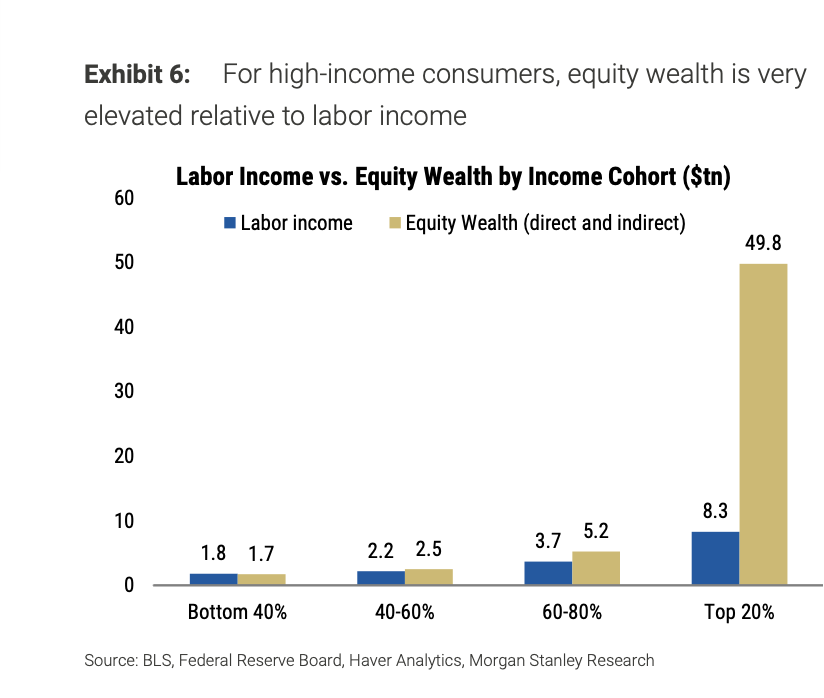
Ownership of that upside is heavily concentrated. The top 20% of earners hold 87% of direct equity and mutual fund exposure; college-educated households hold 85%; households over 55 hold 79%. For the bottom 40% of earners, equity wealth roughly equals a year’s wages: $1.7 trillion against $1.8 trillion in labor income. For the top 20%, equity wealth runs six times labor income: $49.8 trillion against $8.3 trillion. The practical effect, per Morgan Stanley’s own modeling: a top-earning household needs its portfolio to rise just 4% to offset a 1% drop in labor income from AI disruption.
The jobs aren’t disappearing: the raises are
Separate research from Apollo Global Management shows how the pain is landing on everyone else, and it isn’t through layoffs.
Economists Sania Edlich and Torsten Slok skipped the usual theoretical exposure scores and instead used the Anthropic Economic Index—built from real Claude usage logs—matched against Bureau of Labor Statistics wage data across 321 occupations from 2015 to 2025, with 2023 as the dividing line. Only 11 of those 321 occupations cleared their bar for “high exposure.” But within that group, the wage effect was stark: real wage growth ran 6.7 percentage points slower after 2023 than in low-exposure work, with no significant change in employment. Nobody in this data is losing a job to AI in large numbers. They’re just not getting raises.
The penalty concentrates at the bottom. Workers in the lowest wage quartile saw a 10.7-point wage growth decline; the second quartile, 5.4 points; the third, 4.0 points. The top quartile saw no significant effect. Service work saw the steepest estimated hit, 24.3%, though Apollo cautions that figure rests on a thin sample. Even management and professional roles took a smaller but real 4.1% hit, while blue-collar work showed no effect at all—evidence, the authors write, that AI “has had limited reach into more physically intensive work.” Apollo’s overall estimate: 5.8 million workers, 3.7% of the labor force, are absorbing about $28 billion a year in lost wage growth—a number the authors call a conservative floor, not a ceiling.
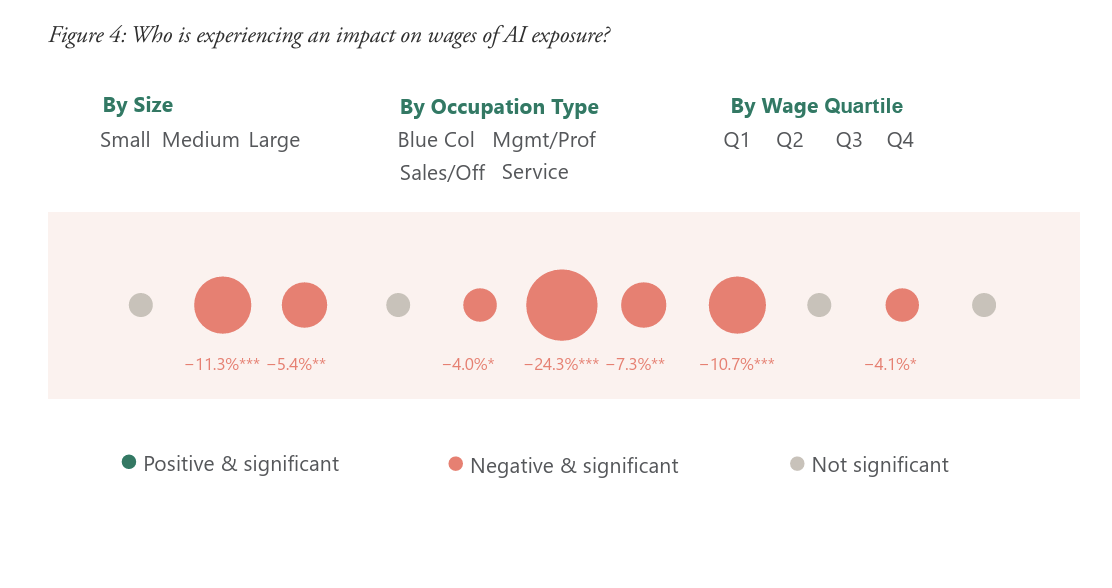
Research from IESE Business School, using a separate dataset of 138 million workers, found the same shape from a different angle: starting pay at AI-exposed firms fell most sharply for junior roles, less for mid-level ones, and stayed flat or rose at the senior level. Exposed firms also hired fewer juniors relative to mid-level staff—narrowing the one entry point where workers have the least capital, seniority, or leverage to begin with.
The corporate playbook was already written
Wage suppression looks less like an AI side effect and more like a strategy the corporate sector already knew how to run.
In a separate report on second-quarter 2026 earnings, Morgan Stanley’s Michael Gapen found non-financial corporate profits jumped $400.9 billion in the quarter, pushing margins to 15.2% of gross value added—near post-World War II highs. The driver wasn’t an AI productivity miracle. It was pricing power: firms raised per-unit prices by 2.30 cents while labor and nonlabor costs barely moved, sending the entire increase straight to profit. “The dynamic looks difficult to sustain,” Gapen drily concluded.
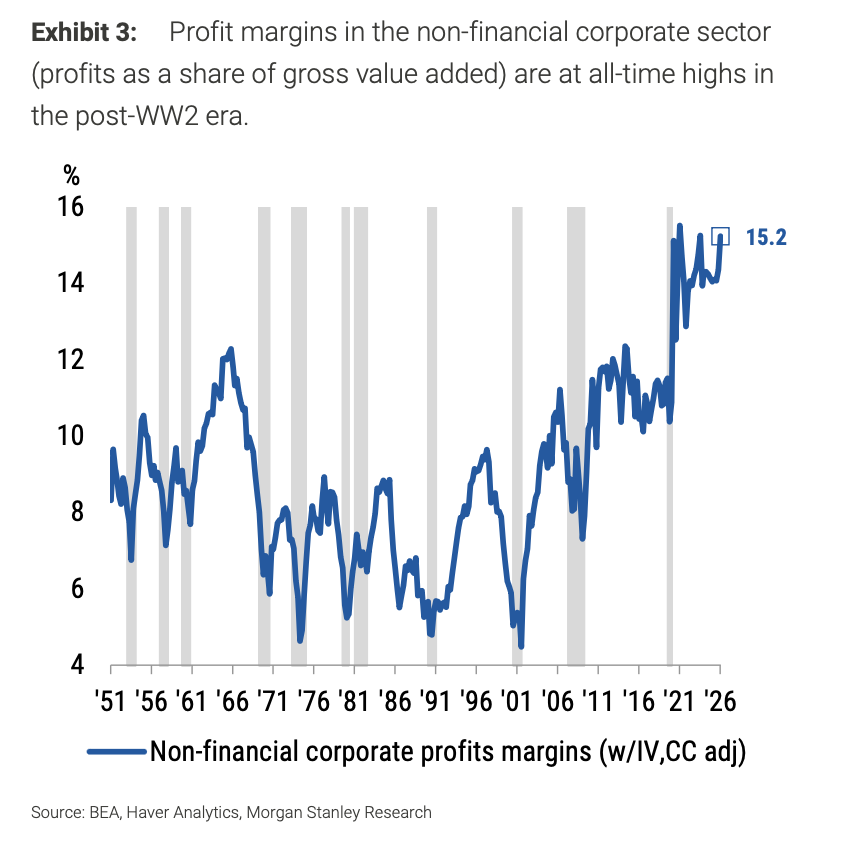
The strangeness isn’t confined to profit margins. In a recent note to clients, David Kelly, chief global strategist at J.P. Morgan Asset Management, laid out a labor market that’s stopped following its old rules. Payroll growth has slowed to roughly half its pre-pandemic pace even as GDP growth has barely moved. Unemployment sits at an 18-month low of 4.1% not because hiring is strong but because millions have quietly left the labor force—driven, Kelly finds, by an aging population and, among older workers, by stock gains that let those “who weren’t financially able to retire” finally do so.
Wage growth, meanwhile, has slowed to its weakest pace since May 2021, despite record profits and a supposedly tight labor market—held down, Kelly notes, by workers who don’t feel the market is as tight as the statistics claim, and by a private-sector unionization rate under 7%. “While unemployment is relatively low,” he wrote, “so is hiring, so workers may be finding it unusually hard to move to another job that will pay them more.”
The public appears to know what’s going on
While economists spent two years building models, most Americans seem to have reached a verdict already—not about AI in the abstract, but about the class system at work in the economy. Data centers, the most visible physical piece of the AI boom, have become the flashpoint. A Gallup poll in May found seven in 10 Americans oppose a data center in their own area. A Politico poll in July found just 16% think data centers benefit their local area and the country; about 60% said the projects cost more than they give back. The same poll found belief that data centers raise electricity bills jumped from 43% in January to nearly 60% by July—six months before Apollo or Morgan Stanley published a word of this research.
That’s the same asymmetry the economic data would later quantify, arrived at through a utility bill rather than a regression: costs that are local and immediate, gains that land somewhere else, with someone else. Public Citizen found six in 10 Americans distrust AI to some degree, and nearly three-quarters want the government to act on AI-driven job losses. Pew found 57% think AI’s risks outweigh its benefits.
The anger has become organized and bipartisan. Data Center Watch counted 75 local projects worth $130 billion blocked or delayed by citizen opposition in the first three months of 2026 alone, matching all of 2025 in a single quarter. New York signed the country’s first statewide moratorium on large data centers in July. By August, Democratic candidates in Michigan, Wisconsin, and Pennsylvania were running ads against data centers directly, and Republicans have begun quietly distancing themselves from the same policies many once championed.
A warning against overreading the occupation
None of this means AI’s effects are fully predictable from a worker’s job title. A St. Louis Fed working paper—cited in Apollo’s literature review as the study that “directly motivated the approach” behind its research—complicates the picture by looking at which tasks workers actually use AI for.
Using a survey of nearly 14,000 workers, Fed researchers Alexander Bick, Adam Blandin, David Deming, and Tyler Schumacher measured which tasks people actually use AI for, not which tasks a model predicts they could. Their occupational exposure scores explain only about half the real variation in adoption. Medical secretaries—high-exposure by conventional scoring—use AI at just 16.8%, far below a predicted 61%, because privacy rules and error costs make them cautious. Computer repairers, special education teachers, and laundry workers adopt at roughly double their predicted rates, finding uses the models never anticipated.
The researchers’ larger point: what predicts an individual’s AI adoption has little to do with age, education, or occupation, and much to do with whether that person has already spent time experimenting with the tool. Adoption has a genuinely unpredictable, almost democratic layer that class-based frameworks miss.
The promise of AI was liberation from the old order: credentialism, seniority, capital ownership, bargaining power. The evidence so far shows something else. The rules haven’t been broken. They’ve been rewarded.
For this story, Fortune journalists used generative AI as a research tool. An editor verified the accuracy of the information before publishing.
This story was originally featured on Fortune.com

‘America is blessed with a strength’: Trump commemorates victims of 9/11 ahead of quarter-century anniversary
Nearly a quarter century after a day “etched forever into the memories of Americans,” President Donald Trump honored the victims of the Sept. 11, 2001, attacks on Tuesday by vowing to “never forget.”
The event at the Ellipse was spearheaded by the Tunnel to Towers Foundation and showcased a massive, 21-foot, nearly 17,000-pound steel beam recovered from the South Tower of the World Trade Center in New York, which had traveled for months across the country as part of the Steel Across America tour.
The steel beam will make its way through New York in a procession on Friday by retracing the steps of fallen New York City firefighter Stephen Siller. Trump’s presence at the event on Tuesday just outside the White House began a week of commemorations that will culminate in several events on Friday, including one at the Pentagon that Trump will attend.
“This battered piece of steel here today on the Ellipse is a reminder that America is blessed with a strength no fire can consume, no evil can conquer and no terror can destroy,” Trump said.
Trump noted that the Sept. 11 attacks were one of few moments in history that “divide time into really what came before” and after.
His remarks briefly dipped into the political, as Trump warned of people turning a “communistic way” — a reference to his frequent attacks on Democrats as more democratic socialists gain influence in the party.
During his remarks, Trump paid particular tribute to two men who died in the attacks: Jeffrey Palazzo, a New York City firefighter, and Welles Crowther, a young equities trader who became known as the “man in the red bandanna” after rescuing several people in the attacks.
Trump said the U.S. Coast Guard will commission a new fast-response cutter this weekend in New York in honor of Palazzo, a Coast Guard reservist who was working out of Staten Island’s Rescue Squad 5 when he responded to the attacks 25 years ago.
And the president recognized Crowther, also a volunteer firefighter, by awarding him the Presidential Medal of Freedom.
Crowther’s mother, Alison, and sister, Paige, accepted the award, which is considered the nation’s highest civilian honor.
During his remarks, Trump also recalled being near the site after the attacks and hearing the structure then known as the U.S. Steel Building “creaking.”
“I was building a big building in New York and I took the whole crew down there right after this happened,” he said. “We thought it was coming down on top of us. And two firemen — big, strong guys, and I’m not the smallest guy in the world — they grabbed me under the arms.”
“They lifted me up and they started running with me,” he added. “I said, ‘Fellas, I could run myself,’ but they were amazing.” It wasn’t clear from Trump’s comments precisely when the event he described occurred.
In attendance were a smattering of top Cabinet officials and members of Congress, including Republican Reps. Mike Lawler of New York and Dan Meuser, whose Pennsylvania district is near Shanksville, where Flight 93 crashed on Sept. 11, 2001.
Trump praised at length Commerce Secretary Howard Lutnick, who was chairman and CEO of Cantor Fitzgerald, a financial firm that had been housed at the World Trade Center. Lutnick lost his younger brother, Gary, as well as more than 650 employees in the attacks.
“He’s done an amazing job,” Trump said of Lutnick. “He’s rebuilt Cantor Fitzgerald, and he’s given much of the profits to some of the families or the families of people who perished.”
About 150 first responders from New York, as well as some from Washington and Pennsylvania, were in attendance, Trump said.
“This steel beam represents the best of our country,” said Frank Siller, the foundation’s chairman and CEO who is the brother of Stephen Siller. “It’s important to recognize that the heroism that was exhibited that fateful day was nothing short of incredible.”
___
Associated Press writer Will Weissert contributed to this report.
This story was originally featured on Fortune.com
Likud submits final candidate list as Netanyahu warns 2026 election will decide Israel’s future
Prime Minister Benjamin Netanyahu on Tuesday presented the candidates he selected to have reserved slots on the Likud’s Knesset slate, near the evening deadline to submit lists for the October elections.
Netanyahu said the elections will decide between a “strong right-wing government led by me – or a weak left-wing government led by [Yashar Party leader Gadi] Eisenkot and the Arabs.”
The prime minister had pushed to expand his control over the party’s Knesset slate, despite fierce internal tensions over changes to the traditional primary process. Last month, the Likud Central Committee granted him the authority to select eight candidates for reserved slots within the first 30 positions on the list. In the August primaries, Energy and Infrastructure Minister Eli Cohen received the second slot on the list after Netanyahu.
The ninth slot was given to Talik Gvili, mother of fallen soldier and slain Gaza hostage Ran Gvili.
Gvili was killed by a Hamas terrorist on October 7, and his remains were taken into the enclave. He was the final hostage remaining there before his remains were retrieved to Israel for burial in January.

Likud officials say ‘flawed procedure has taken root’ within party
Later in the day, Likud also added Channel 14 commentator and Netanyahu’s confidant Yaakov Bardugo, who received the 11th slot.
The party also announced it would reserve a slot for Elisha Medan, a reservist who was seriously wounded in the Gaza Strip and lost both legs, in the 15th slot.
Attorney David Peter, who represented the government and some of its ministers, will receive the 16th slot on the list.
Peter represented Justice Minister Yariv Levin and National Security Minister Itamar Ben-Gvir, as well as representing the government in its battle with the High Court of Justice over the closure of Army Radio.
Former Labor MK Eli Goldschmidt, who served in the Knesset from 1992 to 2001, was given the 26th slot.
The 29th slot went to Itzik Bonsel, father of the late Sgt.-Maj. Amit Bonsel, who was killed in combat during the Israel-Hamas war.
A slot had also been reserved for Brig.-Gen. (res.) Amir Avivi, founder of the Bithonistim (Israel Defense and Security Forum). Avivi, who is also a frequent panelist on Channel 14’s Patriots, was given the 35th slot.
However, later in the day, Avivi resigned from the list, reportedly unsatisfied with the low rung.
Open voting or secret ballots could affect the outcome
The candidates’ announcements came near the 10 p.m. deadline for parties to submit their lists for the elections.
Likud has for years prided itself on conducting primaries in which its registered members are eligible to vote for the Knesset list. Netanyahu pushed to change the system in recent weeks ahead of the primaries, leading to an especially competitive race with even fewer slots available than usual.
Likud has recently polled at around 20 seats, meaning candidates placed within roughly the top 20 spots on the party’s slate would have the most realistic chance of entering the Knesset.
The Likud secretariat approved Netanyahu’s selections for the list in the afternoon.
In August, Netanyahu already had reserved slots for three ministers: Defense Minister Israel Katz, Foreign Minister Gideon Sa’ar, and Likud Central Committee chairman Haim Katz, who also holds multiple ministerial portfolios.
Eisenkot, who has been beating Netanyahu’s party in most polls, sharply criticized his reserved slots.
“Reserving spots on the Likud list for Netanyahu’s mouthpieces is nothing less than a distribution of spoils and a reward for blind loyalty,” he said on Tuesday.
He called it a prize for those who have turned “division, incitement, and a culture of lies into everyday tools in Netanyahu’s personal service.”
“The currency that matters is not public service, integrity, or Israel’s security, but the degree of devotion and willingness to deepen the rift in Israeli society and strengthen the leader at any cost.”
Anna Barsky contributed to this report.

Meta introduces Muse, a personal AI agent that can send emails, book travel
Meta on Tuesday rolled out a long-planned personal AI agent aimed at helping users complete daily tasks.
The Muse agent can autonomously send emails, book travel on a person’s behalf, sell a car and lower a bill, according to the social media giant.
Modeled on the open-source AI agent OpenClaw, Muse is designed to access a person’s apps across categories like email, calendar, payments, health, shopping and the smart home, Meta said. People choose which apps it connects to and can revoke access at any time.
Each Muse agent runs on its own virtual machine, a cloud-based emulation of a personal computer, which enables it to keep carrying out requests in the background even when a person is not actively using it.
Reuters contributed to this report.
This post was originally published here

Trump Tells Bombardier: Build in America or Stop Selling Here
President Donald Trump is escalating his pressure campaign against Canada, warning Bombardier that it will not be allowed to keep selling aircraft into the U.S. market unless it manufactures them in America.
Trump said Monday that Canadian aircraft maker Bombardier should no longer be allowed to sell in the United States unless it begins building planes in the country, opening another front in the widening U.S.-Canada trade dispute.
“NO MORE SELLING BOMBARDIER IN THE UNITED STATES!” Trump wrote, adding that if the company wants access to the American market, “they must build here.”
The White House has not yet explained how such a restriction would be implemented or whether it would take the form of tariffs, certification changes, procurement limits or another trade measure.
That distinction matters.
For now, Trump’s statement is a political and trade warning — not yet a fully detailed regulatory action.
Bombardier is particularly exposed because the United States is one of its most important markets.
Roughly half of the company’s approximately 5,100-aircraft global fleet is operated by U.S. customers, making American access central to its business.
Bombardier does already have an American footprint.
The company operates facilities in the United States, including a defense operation in Wichita, Kansas, but its primary aircraft manufacturing remains centered in Canada.
Trump’s demand therefore goes beyond simply asking the company to invest more in the United States.
He is effectively saying that access to American customers should be tied to where the aircraft themselves are built.
The confrontation did not begin Monday.
Earlier this year, Trump threatened to impose 50% tariffs on Canadian-made aircraft and said the United States would move to decertify Bombardier Global Express business jets unless Canadian regulators approved several aircraft manufactured by U.S. rival Gulfstream.
Those threats were never fully carried out.
Canada later certified several Gulfstream aircraft.
But the latest statement shows that Bombardier remains directly in the administration’s crosshairs.
The timing is important.
Canada and the United States are already locked in a broader tariff fight involving steel, autos, agriculture and other manufactured goods.
Ottawa is preparing new retaliatory tariffs on American imports, while Washington continues pressing Canadian companies to shift more production south of the border.
Bombardier has also been expanding strategically.
The company recently announced plans to acquire a Canadian wing-manufacturing facility, strengthening its control over a key part of its aerospace supply chain.
Its latest quarterly revenue rose approximately 6%, helped by strong aftermarket-services demand.
What It Means for You
This is the clearest example yet of how Trump wants to use access to the U.S. market as leverage to force foreign manufacturers to move production into America.
The message is simple:
If you want American customers, build in America.
For Bombardier, the stakes are enormous because the U.S. market is too large to simply walk away from.
For aerospace suppliers, however, the pressure could create opportunities.
If Bombardier ultimately shifts more manufacturing into the United States, that could mean new factories, jobs and contracts for American suppliers.
But there is also risk.
Aircraft manufacturing depends on deeply integrated international supply chains, and abrupt trade restrictions can raise costs, delay deliveries and create uncertainty for customers who have already ordered planes.
The bigger issue is that Washington is increasingly applying the same strategy across multiple industries:
Autos. Steel. Pharmaceuticals. Semiconductors. Aerospace.
Trump is making market access conditional on domestic investment.
Bombardier may now become one of the highest-profile tests yet of whether that strategy actually forces companies to move production — or simply pushes the U.S. and Canada deeper into a costly trade fight.
JBizNews Desk | New York
© JBizNews.com All Rights Reserved. Reproduction or distribution without written permission is prohibited.




The US cities where home prices are falling the fastest
The housing market is cooling as summer draws to a close and begins to transition into fall, with some cities around the U.S. seeing larger price decreases to attract buyers.
Home sellers are moving to meet buyers in the middle with price reductions as high mortgage rates contribute to affordability challenges, particularly in metro areas that saw significant price growth during the pandemic.
An analysis by Realtor.com found that the price per square foot decreased year over year for the 10th straight month in August, with nationwide prices down 1.8% from a year ago.
Around the country, median list prices fell year over year in three of the four major regions in the country (-3.6% in the Northeast, -2.6% in the South, and -2.1% in the West), and remained flat in the Midwest.
THE TOP CITIES IN AMERICA WHERE RENTING BEATS BUYING BY $1,000
The report found that the median list price per square foot fell in 36 of the top 50 metro areas in the U.S. in August compared with a year ago.
The largest declines were in Austin (-8.1%); Tampa (-5.6%); and Memphis (-4.1%). Metros that saw the largest gains were Providence, R.I., (+9.3%); Indianapolis (+4.4%); and Chicago (+3.6%).
Realtor.com senior economist Jake Krimmel said that “One common thread for most markets – including Austin, Tampa, San Antonio, Denver – is 2020-22 boomtowns continuing to give back some of their pandemic-era gains. These are also, by and large, places with much more inventory now than pre-pandemic norms.”
SLOWING LABOR MARKET CREATES NEW HURDLE FOR FIRST-TIME HOMEBUYERS FACING AFFORDABILITY SQUEEZE
San Francisco is an outlier in the analysis, as the city saw a 3.9% decline in list price per square foot in August from a year ago, which ranked fourth nationally despite the market remaining hypercompetitive.
The number of active listings in San Francisco was down 16.3% in July from the prior year, which compressed the housing market. The median listing price in the city remains high at $908,700, even though it has decreased by 5.2% year over year.
THESE ARE AMERICA’S HOTTEST HOUSING MARKETS – SEE WHICH AREAS MADE THE LIST
“It’s not about San Francisco homes losing value, but rather how expensive the available inventory is this year relative to last,” Krimmel said.
“There are fewer small, pricey homes in the center of the city for sale. They are scarce and selling fast,” he explained. “On the flip side, this year there are relatively more large, less expensive per-square-foot homes coming up for sale in outer suburbs.”
Other metro areas that experienced the biggest annual declines in listing price per square foot in Realtor.com’s analysis include San Antonio (-3.6%); Denver (-3.4%); Baltimore (-3.2%); San Diego (-2.7%); Orlando (-2.6%); and Portland, Oregon, (-2.4%).
Miliband accuses settlers of ethnic cleansing as UK imposes sweeping sanctions
British Foreign Secretary Ed Miliband announced on Tuesday an import ban on goods from “illegal” settlements in the West Bank, as well as sanctions against specific individuals and businesses providing services such as construction, instruction, financing or real estate for settlement expansion.
Miliband fronted his Commons speech by saying he is “Proud of [his] Jewishness and unwavering in [his] support for the state of Israel,” and that there is “absolutely no contradiction between this and [his] support for the state of Palestine.”
He said the new measures come in light of what the UK government believes is a clear attempt by Israel to bury the two-state solution.
“Our government has not done enough, so today marks the beginning of a new approach,” he said. “What we seek today is to salvage the only cause for peace and security for Israelis and Palestinians: the two-state solution.”
‘Our argument is with the conduct of Israel’s government’
Ed Miliband has told MPs that Israeli settlers are committing ethnic cleansing of Palestinians in parts of the West Bank.https://t.co/zjBlyUTiWU pic.twitter.com/0blxeTMjYQ
— Sky News (@SkyNews) September 8, 2026
As such, for the first time, Miliband said the government’s official position is that Israel’s “occupation” of the West Bank is unlawful. This aligns with the 2024 ruling by the International Court of Justice.
Miliband’s speech was significant for other reasons; it marks the first time anyone in the the British government has accused Israeli settlers of ethnic cleansing.
This new stance on the illegality of the settlements must therefore be manifested economically, he continued.
UK Foreign Secretary accuses some Israeli settlers of ethnic cleansing
“I do not believe that the British people want us supporting the occupation by accepting products from settlements in our shops and supermarkets,” he said, adding “I can announce today that we will introduce an import ban on goods from illegal settlements in the occupied territories.”
He noted there will be religious exemptions, but it is unclear what these will be; for example, a large amount of the kosher wine imported to the UK is made in settlement wineries. It is unclear if this would be exempt.
In addition to the goods ban, the UK will take action against specific companies and individuals that provide services such as construction, infrastructure, financing, or real estate for settlement expansion.
“So to those who finance or facilitate illegal settlements, let me say this, you will face the full force of UK sanctions,” Miliband added.
Further sanctions include an extension of the existing global human rights regime such that it will enable swifter action to deter settlement expansion, including the development of E1, as well as the immediate cessation of all license applications for arms and other exports that “materially contribute to the occupation, in effect a double lock against arms sales.”
The news was not totally unexpected: On August 19, UK Foreign Secretary Ed Miliband said he would introduce a comprehensive set of measures in “the coming weeks.”
The UK will stand up for what is right. pic.twitter.com/0jbDiQ7vVC
— Ed Miliband (@Ed_Miliband) September 8, 2026
Nevertheless, the timing has been criticized, coming just days before the Jewish High Holiday season begins – which has already been flagged as a dangerous period for Jews and a high risk for antisemitic terror attacks.
There is also significant speculation that the Labor Party wished to finalize the new legislation ahead of three major upcoming events: first, a UK by-election in which the anti-Israel Greens are its main rivals; second, the upcoming Labor Party Conference; and third, the Israeli elections in October.
West Bank settlements ban worst-case scenario for what some Jewish groups predicted
Furthermore, the new announcements are the worst-case scenario at the end of what some Jewish groups were expecting, which was purely a goods ban and not a services ban.
Jewish groups, including the Board of Deputies of British Jews and the Jewish Leadership Council, have expressed concern that the sanctions could further damage the UK-Israel relationship and have a harmful impact on British Jews.
Jewish groups, including the Board of Deputies of British Jews and the Jewish Leadership Council, have expressed concern that the sanctions could further damage the UK-Israel relationship and have a harmful impact on British Jews.

UK Chief Rabbi Ephraim Mirvis said the UK government’s intended sanctions would be “counterproductive and even endanger such a vision of peace.”
Many members of the Jewish community view the measures with deep dismay, he said, adding that they risk spiraling into a de facto boycott of Israel and threatening the livelihoods of tens of thousands of Palestinian workers.
“These measures will also disproportionately affect British Jews because of our close religious, family, charitable, and educational ties to Israel,” Mirvis said.
UK Shadow Foreign Secretary says ban will damage relations with Israel and embolden extremists
Shadow Foreign Secretary Tom Tugendhat on Sunday said damaging diplomatic relations with Israel could harm British citizens.
Terrorist attacks on British soil had been foiled by the UK’s security services as a direct result of Israeli intelligence sources sharing information with their British counterparts, he told The Telegraph.
On Tuesday, Tungendhat said, “The Israeli election is in just seven weeks, and many have argued correctly that this action will help the extremist candidates’ campaigns, and not help those who are making the moderate arguments for a united Israeli.”
Former independent reviewer of Prevent Sir William Shawcross said “This reckless anti-Israel stunt will embolden our extremist enemies and drive further anti-Jewish racism.”
US Ambassador to Israel Mike Huckabee told the BBC he doesn’t know if the UK is “really aware of the implications and how it’s going to affect Brits.”
He noted the fact that many pharmaceuticals used in the UK are made in Israel. While he placed the figure at 25%, NHS data places it at around 1 in 7.
“This is an irrational action, I don’t understand what it is supposed to achieve,” Huckabee continued. “If the UK is really interested in dealing with issues they feel like are wrong, where are the sanctions against North Korea, China, Russia?”
“It’s discrimination against the Israeli government, discrimination against the Jewish people, and I don’t understand the rationale of it.”
While British PM Andy Burnham has not spoken to his Israeli counterpart since entering the role 50 days ago, Burnham did speak to US President Trump on Monday to inform him of the impending pan.
It is understood that the US government is preparing to release a condemnation of the sanctions later on Tuesday.
It could also contain implied or actual threats of retaliation against the UK over the decision.
Jerusalem Post staff contributed to this report
PMO denies that UAE warned Netanyahu about October 7 as Abu Dhabi refuses to comment
The Prime Minister’s Office on Tuesday strongly denied the Haaretz report, which alleged that Prime Minister Benjamin Netanyahu was warned by the United Arab Emirates about Hamas’s October 7 attack, writing that the “press reports are false.”
“No warning was given to the Prime Minister from the United Arab Emirates before October 7th. If there was any relevant information, it was passed through intelligence channels between the two countries,” the PMO stated.
The Prime Minister’s Office:
The press reports are false. No warning was given to the Prime Minister from the United Arab Emirates before October 7th. If there was any relevant information , it was passed through intelligence channels between the two countries.
— Prime Minister of Israel (@IsraeliPM) September 8, 2026
The UAE Foreign Ministry also published a statement on the report, saying it refuses to comment on “speculation” about whether the two countries spoke. Notably, however, the UAE did not confirm or deny the Haaretz report.
“UAE and Israeli government entities have maintained open and direct lines of communication since the inception of the relationship more than five years ago. When necessary, all relevant intelligence has been and continues to be communicated between the relevant entities.”
UAE officials also indicated that, from their perspective, it is not their role to issue a denial in response to every media report published in Israel. The message conveyed was that the UAE does not interfere in Israeli elections and will not serve as the government’s “public relations office.”

UAE declines to enter political dispute
In a conversation with Ben Caspit on 103FM on Tuesday, Yinon Magal presented the prime minister’s denial and said Netanyahu maintained that no such conversation had taken place.
The Prime Minister’s Office:
The press reports are false. No warning was given to the Prime Minister from the United Arab Emirates before October 7th. If there was any relevant information , it was passed through intelligence channels between the two countries.
— Prime Minister of Israel (@IsraeliPM) September 8, 2026
Magal said that if such an event had indeed occurred, it could also be verified with the head of the National Security Council and other officials who would have been expected to know about the conversation.
Caspit, by contrast, said he was convinced that the report was credible. He said former prime minister Naftali Bennett, who is close to bin Zayed, had confirmed the account, and argued that the fact that officials in Abu Dhabi had not rushed to deny the report further strengthened its credibility in his view.
“The Emirates is a tremendous ally of ours. If he remains silent, as far as I’m concerned, that is also a statement,” Caspit said.
Caspit also linked the report to earlier warnings from Egypt before the attack.
“This joins the Egyptian warning that was published in a million places,” he said, arguing that as more reports accumulated, they strengthened the picture, in his view, that actors outside Israel had warned of an unusual move by Hamas.
“The ‘why didn’t they wake him up’ campaign is now becoming the question, ‘why didn’t he wake us up?’” Caspit said.
Dispute continues over credibility of report
Caspit added that, in his assessment, Haaretz would not have published such a claim without cross-checking sources. He called for waiting to hear from former CIA director William Burns, who, according to the report, was also involved in warnings from bin Zayed.
Magal, however, rejected that argument, saying that if such a conversation had indeed taken place, there would have been documentation and records of it. Therefore, he said, it was difficult to believe that Netanyahu would issue such a sweeping denial.
“If there had been a conversation, the prime minister would not say there wasn’t one, because there are records. Someone would already have leaked that it happened,” Magal said.
Caspit again argued that the report fit, in his view, into a series of warnings and pieces of information that had accumulated before the attack. He added that the central question was now not only what the security agencies knew on the night between October 6 and 7, but also what warnings reached the political leadership in the weeks beforehand and what was done with them.
Recent reports have examined additional claims about warnings received before October 7, including accounts of Naftali Bennett confirming the UAE warning report and earlier reports of warnings from Israeli security officials.
The dispute between the two ended without agreement. Magal demanded evidence that the conversation with bin Zayed had in fact taken place, while Caspit argued that the collection of reports and sources strengthened the credibility of the report in his view.
Parties finalize Knesset slates before deadline as Gantz’s Blue and White runs alone despite polls
The last remaining parties submitted their Knesset lists throughout Tuesday, ahead of the final deadline for all parties to submit their slates before the October elections.
With the lists submitted, parties can no longer form new alliances or mergers, bringing an end to months of speculation and negotiations over which factions would join forces ahead of the election.
Benny Gantz’s Blue and White party submitted its list without merging with any other party, and will be running in the elections despite months of polling showing it unable to pass the required electoral threshold. Numerous members of Blue and White had left in recent months as Gantz continued to lose public support.
Second on the list after Gantz is current Blue and White MK Pnina Tameno-Shete, third is former Beit Shemesh mayor Aliza Bloch, fourth is reservist commander Roee Konkol, fifth is reservist activist Rotem Avidar Tzalik; and sixth is current Blue and White MK Alon Schuster.
The party said the list will include 50% women among its top 10 candidates, in positions 2, 3, 5, 8 and 10. It will also include two residents of northern Israel, three residents of the Gaza border communities, two kibbutz residents, a moshav resident and a member of the Druze community.

Parties that waited until close to the deadline to submit their lists included Prime Minister Benjamin Netanyahu’s ruling Likud party and Finance Minister Bezalel Smotrich’s Religious Zionist Party (RZP), which merged with the Zehut party led by Moshe Feiglin.
RZP-Zehut announced a list with Smotrich first, Feiglin second, Settlement and National Missions Minister Orit Strock third, and MK Simcha Rothman fourth, with the party polling on the edge of the threshold and aiming to enter with the minimum of four seats.
The merger also left out of realistic spots different RZP veterans who served as MKs in the last Knesset, such as MK Zvi Sukkot (7th place) or MK Ohad Tal (12th place).
Shas adds IDF reservist to list with major changes
Shas submitted and released its candidate list on Tuesday following days of internal debate over major changes to its parliamentary lineup.
Ultimately, party leader Arye Deri and the Council of Torah Sages opted for a smaller-scale update. Most of the parliamentary core remains intact, though Yinon Azoulay moved to second place, and two new candidates have joined the slate.
The most notable newcomer is Lt.-Col. (Res.) Dror Amos, head of the Haifa Religious Services Board, who was placed directly in the sixth spot. Senior lawmakers Yoav Ben-Tzur and Moshe Abutbul, both rumored to be facing dismissal in recent days, secured viable positions on the ticket.
Amos’s placement is the standout addition to the new slate. He served in the IDF for 25 years and retired from full-time service as a lieutenant colonel.
Over the years, he established Chesed Chaim V’Emet, an organization assisting bereaved families with religious funeral customs. Following the October 7 massacre, he founded the “Kaddish for Every Holy Soul” initiative, pairing volunteers with the families of victims and fallen soldiers to ensure memorial prayers were recited in their honor.
Amos emerged as Shas searched for a high-profile candidate with a military background. Yossi Levi, CEO of the ultra-Orthodox military unit Netzach Yehuda, was also considered, but Amos ultimately became the top choice.
Amos’s high position reflects the importance Shas places on his r The sixth spot is virtually guaranteed, giving the party a religious candidate with decades of military service behind him.
Party strategists hope his background will appeal to traditionalist and military-serving voters – demographics that have long been crucial to the party’s base. The timing is equally strategic: with military conscription for the ultra-Orthodox set to dominate the upcoming election campaign, Shas can now highlight a veteran reserve officer high on its ballot.
A major shake-up also occurred at the top of the ticket. Yinon Azoulay, who ranked seventh in the 2022 elections, was promoted to second place, directly behind Deri. He is followed by Michael Malkieli in third, Yoav Ben-Tzur in fourth, and Chaim Biton in fifth.
Azoulay’s leap to second place positions him as the party’s second-in-command behind Deri. The shift became possible after the departures of Ya’akov Margi, who held second place on the previous ticket, and Moshe Arbel, who held sixth.
The candidate rankings continued to shift in the final hours of drafting. An initial version submitted for rabbinical review placed Yonatan Mishraki seventh, Yossef Taieb eighth, Uriel Buso ninth, and Abutbul tenth.
In the final version, Abutbul moved up to seventh, Buso to eighth, Taieb to ninth, and Mishraki down to tenth. These last-minute adjustments show that even after the candidate pool was finalized, the internal fight over ticket placement remained intense.
Haredi Public Party announces list with first woman to be in an ultra-Orthodox party
The new ultra-Orthodox party, Haredi Public, which seeks to offer an alternative to the two haredi parties in the Knesset – Shas and United Torah Judaism – also submitted its list.
Haredi Public party chairman Moti Leitner, Asher Freddy, Dr. Nechumi Yaffe, and Ziva Glantz will hold the top four slots of their list.
The party positions itself as an alternative for members of the ultra-Orthodox community, who often feel that representatives in the existing political realm do not reflect the socioeconomic and legal needs of average families.
Leitner, who previously served as deputy mayor of Beit Shemesh, said in a statement released by the party: “Behind every name on this list stand tens of thousands of Charedim who, for years, have been dismissed, ignored, and pushed aside by an old and disconnected leadership… Today, for the first time, there is an alternative.”
Among the parties that submitted their lists the day ahead of the deadline on Monday were Gadi Eisenkot’s Yashar, Naftali Bennett’s B’Yachad, Yair Golan’s The Democrats, Yoaz Hendel’s The Reservists party, and Mansour Abbas’s Ra’am.
Anna Barsky and Jonah Davidov contributed to this report.
Jewish leaders in Sweden warn of antisemitism in the Left Party
The Official Council of Swedish Jewish Communities has renewed its warnings regarding persistent antisemitism within the Left Party (Vänsterpartiet), following a fresh wave of expulsions involving local candidates.
The renewed scrutiny comes after the Left Party removed eight additional candidates from its electoral lists.
According to reporting by Expressen and regional media outlets, the candidates faced disciplinary action after internal investigations and journalistic exposés revealed they had shared antisemitic conspiracy theories, praised Russian President Vladimir Putin, and expressed support for Hamas.
According to public broadcasts by Sveriges Radio, these latest removals bring the total number of candidates ousted from the party over antisemitism, Holocaust denial, support for terrorism, homophobia, and praise for authoritarian regimes to 33.
Aron Verständig, chairman of the Official Council of Swedish Jewish Communities, stated on X/Twitter on Monday that the council previously criticized the Left Party in the autumn of 2024 because the party “had failed to distance itself from the antisemitism that leading representatives had spread during the summer.”

Problems with antisemitism in the party were structural
Verständig noted that when distances and expulsions were eventually enacted, they met with heavy resistance from large parts of the party.
“It became clear to me that the problems the party had with antisemitism were not limited to a few individuals but were structural,” he stated, adding that the council raised this directly in meetings with party leadership.
Verständig criticized the leadership’s ongoing approach, pointing out that media outlets have repeatedly uncovered representatives spreading explicit antisemitism.
While noting that the party has acted against these individuals, Verständig emphasized, “to my knowledge, it has never taken the initiative to investigate its own representatives.”
He added that apologetic explanations from party sympathizers surface with every new revelation. “It is simply frightening that this has been allowed to go this far,” Verständig stated, expressing deep alarm that “there are other parties that are considering cooperation with the Left Party.”
The Left Party did not respond to an emailed request for comment by the time of publication.

Spider-Man hits $2.4 billion worldwide to crown Hollywood’s best summer since the pandemic
“Spider-Man: Brand New Day” remained the No. 1 movie in theaters over the weekend, becoming just the second film this decade to top the box office for six straight weeks.
Since the end of July, the Sony superhero movie has ruled over cinemas with rare dominance. The last release to enjoy such a long stretch leading the box office was 2022’s “Avatar: The Way of Water.” “Brand New Day,” the fourth standalone Spider-Man film starring Tom Holland, collected $18 million over the weekend, according to studio estimates Sunday. Sony is forecasting $23.3 million for the four-day holiday weekend.
“Brand New Day” has grossed $2.4 billion worldwide.
Universal Pictures’ “The Odyssey,” as it has for much of the “Spider-Man” run, remained in second place. Christopher Nolan’s epic added $13 million domestically over the weekend, bringing its global haul to $1.63 billion. More than $1 billion of that has come from overseas sales, making “The Odyssey” the first to achieve that international milestone since 2009’s “Avatar.”
Both blockbusters — “Spider-Man: Brand New Day” and “The Odyssey” — helped lead Hollywood to its best summer since before the pandemic. Through Aug. 31, the domestic box office totaled $4.6 billion for the season, according to Rentrak, an increase of 26.1% from 2025 and just shy of 2013’s record summer.
On Sunday, Rentrak forecast that, including the Labor Day weekend, the summer will end up with $4.759 billion, a whisker above the $4.758 billion of summer 2013. That time frame, though, spans 130 days this year, compared with 123 days in 2013.
Accounting for inflation and higher ticket prices, Hollywood’s summer wasn’t quite so historically sensational. Admissions are still well below pre-pandemic marks. But it’s nevertheless a remarkable rebound for a film industry that has struggled to string together such a hit-filled summer through the pandemic, labor strife and the expansion of streaming.
Labor Day weekend is typically a sleepy time in theaters. And neither new release — Paramount’s “By Any Means” and A24’s “Onslaught” — made much of a mark. One of the weekend’s best performers was “Coyote vs. Acme,” the hybrid live-action-animated Looney Tunes movie. It dipped a modest 29% to gross $11.3 million in its second weekend.
“Coyote vs. Acme” is turning out to be a good investment for Ketchup Entertainment. The indie distributor acquired the film for approximately $50 million after Warner Bros., which produced the $70 million film, opted to can it. In two weeks, “Coyote vs. Acme” has ridden strong reviews and good word-of-mouth to $33.8 million domestically.
“By Any Means,” a 1960s-set civil rights action thriller starring Mark Wahlberg and Yahya Abdul-Mateen II, opened with $7.4 million. Paramount is projecting $9.2 million for the four-day holiday weekend. Audiences gave it a “B+” CinemaScore.
“Onslaught,” however, flopped with $1.9 million on 1,918 screens for the three-day weekend and a projection of $2.3 million for the four-day weekend. The A24 release, directed by Adam Wingard, stars Adria Arjona as a former Army sniper who defends her trailer park home from three escaped, experimental super soldiers. “Onslaught” cost a modest $15 million to make. But reviews (57% fresh on Rotten Tomatoes) and audience scores (a “C” CinemaScore) weren’t good.
Meanwhile, “Buddy,” a low-budget dark comedy, has turned into a surprise success. Made for just $3 million, the film, directed by Casper Kelly and from the producers of “Weapons,” is about a group of children trapped inside a surreal 1990s children’s television series. After overperforming in its opening weekend, “Buddy” actually increased its ticket sales over its second weekend. The film grossed $5.7 million, up 5%, to bring its two-week total to $14.3 million.
Top 10 movies by domestic box office
With final domestic figures being released Monday, this list factors in the estimated ticket sales for Friday through Sunday at U.S. and Canadian theaters, according to Rentrak:
1. “Spider-Man: Brand New Day,” $18 million.
2. “The Odyssey,” $13 million.
3. “Coyote vs. Acme,” $11.3 million.
4. “By Any Means,” $7.4 million.
5. “Insidious: Out of the Further,” $6.5 million.
6. “Cars” (20th anniversary): $6.1 million.
7. “Buddy,” $5.7 million.
8. “PAW Patrol: The Dino Movie,” $3.3 million.
9. “The End of Oak Street,” $2.9 million.
10. “The Dog Stars,” $2.7 million.
This story was originally featured on Fortune.com

Dallas mayor sounds alarm on the ‘grave threat’ facing America’s cities
Dallas Mayor Eric Johnson is warning that the rise of socialism poses a “grave threat” to American cities, drawing a sharp contrast between that movement and the pro-business, free-market approach he says has helped Dallas thrive.
Johnson joined FOX Business’ Stuart Varney on “Varney & Co.” to discuss the rise of socialism in U.S. cities and why he believes it poses a broader threat to the country’s economic future.
Johnson, who served as a Democratic state lawmaker before being elected mayor in 2019 and switched to the Republican Party in 2023, argued that the political divide extends beyond party labels and centers on how cities approach work, accountability and free markets.
AMAZON WARNS MAMDANI-BACKED DELIVERY MANDATE COULD COST NYC HOUSEHOLDS HUNDREDS EVERY YEAR
“Cities are critical to the future of this country, and they are under a grave threat of the rise of socialism,” Johnson said. “There’s no question that there is a socialist movement in the United States that would like to change the way we arrange our economy in this country and the way we approach life in general.”
He pointed to Dallas as a different model, describing the city as strongly pro-business and crediting its growth to competition and free markets. Johnson said financial services companies have been relocating to the Dallas area or expanding their operations there, while the region’s financial sector continues to grow.
FROM ARGENTINA TO EL SALVADOR: HOW LATIN AMERICA IS BREAKING UP WITH SOCIALISM
“This is a very, very pro-business city. Y’all Street is booming. Business is booming here, because we still embrace competition and free markets and believe that individuals ought to have an ability to achieve their dreams by working hard and doing what they want to do with their lives,” he said.
Johnson returned to the socialism issue while discussing data centers, arguing that debates over their development are secondary to questions about how the country governs itself and structures its economy.
THE HISTORY OF SOCIALISM IN THE US — AND WHY THE AMERICAN DREAM PREVAILS
“Our country is facing a graver threat than whether or not we support data centers being permitted in our local jurisdictions,” Johnson said. “We’re gonna talk about the rise of socialism and how we push back on that.”
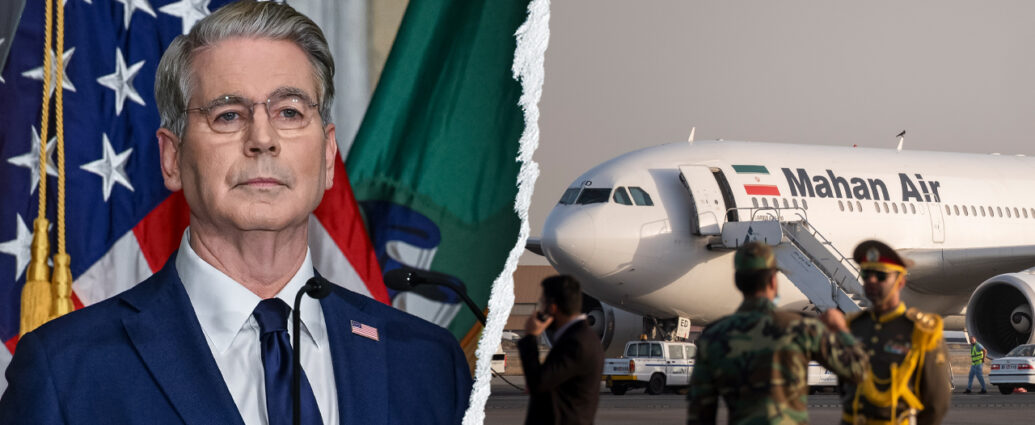
US hits Iranian airlines with ‘sweeping sanctions’ under Operation Economic Outcast
The Treasury Department slammed Iran Tuesday by sanctioning 36 targets linked to its aviation sector, which officials said the regime uses to “move weapons, personnel, and illicit cargo.”
Treasury Secretary Scott Bessent said the Trump administration is taking action under Operation Economic Outcast, where the Treasury “promised severe consequences for those providing financial lifelines to the Iranian regime.”
“Today, we followed through on that promise with sanctions on companies that continue to support Mahan Air,” Bessent said, naming one of the country’s largest airlines. “Let this be a warning to anyone doing business with Iran’s remaining airlines, all of which we sanctioned today: You are at risk of being cut off from the global financial system.”
The Treasury Department said Iran’s commercial airlines have “long supported the Iranian regime’s destabilizing activities, with the Islamic Revolutionary Guard Corps using ostensibly private airlines, such as Mahan Air, for the procurement and transport of weapons and the ferrying of personnel.”
“Today’s action also targeted covert front companies, foreign intermediaries, and deceptive transshipment routes that Iran relies on to obtain U.S.-origin aircraft and sensitive technology,” it added.
The 27 Iranian airlines sanctioned under Tuesday’s actions are: Air Shiraz, Asa Jet Airline, Ata Airlines Company, Atlas Aviation Group, Ava Airlines, Chabahar Airlines Company, Erwan Airline Company, Fly Kish Airlines, Fly Persia Airlines, Iran Air Tour, Iran Aseman Airlines, Jsky Airlines, Kish Airlines, Karun Airlines Company, Lad Airways, Mehr Airways, Nasim Air, Pars Oghyanous Kish Company, Qeshm Air, Raimon Airways, Saha Airlines, Sepehran Airlines, Soroush Air, Taban Airlines, Toos Airlines, Varesh Airlines and Zagros Airlines.
BESSENT VOWS TO ‘ASPHYXIATE’ IRAN ECONOMICALLY, WARNS REGIME’S OFFSHORE ASSETS WILL BE FROZEN
The other sanctions included targeting United Arab Emirates-based ECT Aviation Support LLC (ECT Aviation Support UAE) and Turkey-based Sky Phoenix Hava Yollari Tasimaciligi Ticaret Limited Sirketi (Sky Phoenix), which the Treasury said “served as intermediaries in the scheme to transfer U.S.‑origin aircraft to Mahan Air.”
“Lastly, [the] Office of Foreign Assets Control is taking action against cargo service providers and general sales agents that have serviced Mahan Air’s international flights,” according to the Treasury.
CLICK HERE TO READ MORE ON FOX BUSINESS
“Turkey-based S Sistem Lojistik Hizmetler Anonim Sirketi (S Sistem) has coordinated shipments, including unmanned aerial vehicle (UAV) components and industrial equipment destined for Iran, on behalf of Mahan Air,” it said in naming one of the sanctioned entities.

Hormuz shipping traffic dips as Iran warns Gulf energy infrastructure is vulnerable
Shipping traffic through the Strait of Hormuz slowed at the start of this week, after Iran threatened on Monday to retaliate for any new US attacks.
The number of commodity vessels sailing through the Strait of Hormuz totaled seven on Monday, compared with eight on the previous day, Kpler data showed on Tuesday.
Iran had warned that energy infrastructure across the Gulf, including US oil and gas interests, was vulnerable.
Goldman Sachs also raised its Brent and West Texas Intermediate crude oil price forecasts for December 2026 and 2027, as it expects shipping disruptions in the Middle East to persist into next year.

The Bab el-Mandeb strait
Traffic increased through the Bab el-Mandeb strait, however, another major waterway for commodity vessels.
Kpler data showed that 29 commodity vessels passed through Bab el-Mandeb on Monday, up from 17 the previous day.
Some vessels may be sailing through the two straits with their transponders off, which is not considered in the counts.

The US-Israel relationship must be more than an argument – opinion
In a few weeks, I will leave Jerusalem for Charlotte, North Carolina – a city I have known for only two weeks, yet am preparing to call home.
At a time when every departure from Israel risks being interpreted as a political statement – as an expression of despair, protest, or escape – I want to be clear about what this move means to me.
I am not running away from Israel or from the complexity of life here. I am moving toward a responsibility: helping ensure that Israel remains a living, human, and meaningful part of Jewish life in one American community.
This October, I will become the founding director of the new Israel Center at the Jewish Federation of Greater Charlotte. The Center will work with local organizations, educators, community leaders, and Israeli partners to strengthen existing relationships, create new ones, and expand opportunities for Israel education and engagement.

Israel is increasingly encountered abroad as a question that must be answered. It appears through war, government decisions, campus confrontations, antisemitism, political debate, and controversial statements.
These issues are real, consequential, and impossible to ignore. But when they become the only ways through which people encounter and understand Israel, an entire country – and the millions of lives within it – gets flattened into an argument.
Israel is more than its government, just as Israelis are more than the positions attributed to them. It is a place where people raise families, build businesses, teach, create, grieve, volunteer, complain, and dream about a better future. It is a society filled with disagreements and contradictions, extraordinary solidarity and painful divisions.
Humanizing Israel does not mean sanitizing it. It means refusing to reduce it.
The relationship between the United States and Israel is being debated and reassessed almost daily. Governments, diplomacy, and security cooperation will continue to shape that relationship.
But official ties cannot sustain it on their own. Its durability has always depended on something deeper: people who know one another, communities that remain curious about one another, and relationships strong enough to survive disagreement.
That is particularly important for American Jewish communities.
If Israel is present only during moments of crisis or political controversy, it will understandably feel distant to many people – especially younger Jews. A meaningful relationship with Israel cannot be built through demands for automatic agreement, nor can it survive through avoidance. It requires knowledge, experience, and room for honest conversation.
American Jews should not have to choose between uncritical advocacy and complete disengagement. There must be space for affection and frustration, identification and questioning. A mature relationship can hold all of those things. An abstract one quickly collapses into slogans.
With legacy comes great responsibility
My own connection with Charlotte began on a much smaller scale. In 2025, I arrived there for a two-week assignment on behalf of the Jewish Agency. I expected a brief professional experience. Instead, Charlotte stayed with me.
I encountered a warm, thoughtful community with a genuine desire to deepen its relationship with Israel – not simply by adding more events, but by creating more meaningful opportunities to learn, meet, and engage.
People wanted to encounter an Israel larger than the one presented in the news. They were also willing to ask difficult questions and genuinely listen to complicated answers.
I left feeling that those two weeks had opened a door rather than completed an assignment. Now, I am returning through it.
The new Charlotte Israel Center has been made possible through the legacy of Irving Bienstock, entrusted to the Federation by his family. A Holocaust survivor and pillar of Charlotte’s Jewish community, Irving devoted much of his life to Jewish memory, education, and service.
His legacy is now helping create something intended to endure: deeper relationships with Israel, stronger Jewish identity, and future generations of Charlotte leaders who feel knowledgeable, connected, and responsible for a shared future.
I do not take that responsibility lightly. I feel the weight of what his family has entrusted to the Federation and of the role I am being asked to play in carrying it forward. My task is to help ensure that what grows from Irving’s legacy is worthy of the values behind it.
Establishing a new center might create the temptation to begin by inventing something entirely new. That is not my intention. Charlotte already has committed organizations, educators, rabbis, lay leaders, Israelis, and community members doing important work around Israel. My first responsibility will be to listen, understand that landscape, and build trust.
The Center should serve as a connector and catalyst: strengthening what already exists, helping organizations work together more effectively, and creating opportunities that none could develop as successfully alone.
A crowded calendar is not the same thing as a strategy. We will need clear goals, honest evaluation, and a shared understanding of whom our work is intended to reach.
That will mean developing educational opportunities that present Israel in its fullness, giving educators and community leaders useful tools, strengthening institutional and personal relationships with Israeli partners, creating encounters that extend beyond occasional visits, and making room for informed, critical, and constructive discussion.
Some initiatives will come from the Center. Others will emerge from the community or from partners in Israel. The measure of success will not be who receives credit, but whether people feel better equipped to understand Israel and more able to build their own relationship with it.
Israel also needs this work. A country encountered only through political arguments becomes easier to caricature and harder to care about.
Direct relationships cannot eliminate disagreement, but they make indifference and dehumanization more difficult. They remind us that what happens between Israel and the American Jewish community is not merely a matter of foreign policy. It is primarily a relationship between families, institutions, histories, and people.
Perhaps it sounds idealistic to place so much faith in human connection at such a fractured moment. But I have already seen what a brief encounter can set in motion. Two weeks in Charlotte became a lasting relationship. That relationship is now becoming a new chapter for my life and for the community that welcomed me.
I am not leaving Israel behind. I am carrying it with me – not as a political case to defend but as a home to introduce honestly.
The writer is an Israeli journalist and communications professional and the incoming founding director of the Charlotte Israel Center. He previously served as the spokesperson for Masa Israel Journey and as a Jewish Agency emissary in Australia and New Zealand.
Sara Netanyahu, an objective ally of antisemitic conspiracy theorists – opinion
Sara Netanyahu’s remarks suggesting that Yair Golan knew about the October 7 attack are not merely a brazen lie aimed at a political rival ahead of crucial elections. They are also an irresponsible legitimization of conspiracy theories targeting Israel and Jews at a time of an explosion in radical anti-Zionism and antisemitism.
Speaking on Israeli television, Sara implied that Golan, leader of the opposition party The Democrats, who behaved with exceptional bravery that day, had known about the October 7 attack in advance.
This defense was primarily intended to exonerate her husband while accusing the country’s security services of failing to inform him in time, either to put him in difficulty or because they did not trust him.
It is also symptomatic that this attack came at exactly the same time as the prime minister himself was declaring that the security services – headed by IDF Chief of Staff Herzi Halevi, Shin Bet (Israel Security Agency) chief Ronen Bar, and former head of the IDF Intelligence Directorate Aharon Haliva – had not deemed it necessary to wake him even as warning signs multiplied, because they anticipated a strong and determined response from him, which they wanted to avoid for fear of escalation.

This genuine revisionism would be pathetic and ridiculous if it did not once again highlight Prime Minister Benjamin Netanyahu’s absolute inability to accept even the slightest share of responsibility, instead shifting the blame onto others – the security services, members of the “elites” and the “deep state” against whom he has fought throughout his political career in the name of the Israeli people, according to his own mythical and mendacious narrative.
Golan, a former deputy chief of staff, is the archetype of this despised and supposedly untrustworthy army. By insinuating that Golan “knew,” Sara Netanyahu merely reinforced her husband’s narrative of deflection with the conspiratorial overtones that have proliferated in Israel and elsewhere since October 7.
That is precisely what makes her statement not only disgraceful, but irresponsible.
Antisemitism and radical anti-Zionism have exploded since October 7, with a particularly painful summer of 2026. They feed on clichés, simplifications, false and reductive accusations, and also conspiracy theories, which have always accompanied waves of antisemitism throughout history.
As New York prepares to commemorate the 25th anniversary of the September 11 attack on the Twin Towers, the theory that Jews did not go to work at the World Trade Center and that the Mossad was behind the operation continues to thrive.
In the hours following the October 7 attack, theories began circulating that the Israeli army had known about it, that the people killed had been killed by the IDF, and that the army had allowed the incursion to unfold so that it could better justify the attack on Gaza and subsequently the “genocide” of Palestinians.
These theories gained even more traction because the image of an invincible, technologically advanced army was incompatible with the picture of a major defeat at the hands of Hamas, which was able to massacre 1,200 people within hours and take more than 250 hostages back to Gaza.
Adding fuel to the fire
In Israel, some of these theories circulated very early on in another form, particularly among Netanyahu supporters seeking to exonerate him, as his wife has done this week, by blaming the army, which supposedly concealed crucial information from him to make him bear responsibility for the failure surrounding this catastrophe, force him to resign, and thereby take revenge for the judicial reform he had initiated, which had brought hundreds of thousands of Israelis into the streets to oppose it.
Sara Netanyahu has therefore just added fuel to this infernal machine of lies with her latest remarks. Politically, they were undoubtedly foolish, because they resulted in television screens being flooded with images of Golan in uniform heading to the Nova festival to save young people.
But above all, they are a gift from heaven to all the antisemitic conspiracy theorists who can now bolster their lies with the words of the Israeli prime minister’s own wife.
The accusations of “genocide” can now be reinforced by claims of “premeditation by a murderous Zionist regime” that knew what was coming but allowed it to happen in order to indulge its “genocidal passion,” thanks to an irresponsible first lady who will undoubtedly be portrayed as a courageous whistleblower by antisemites such as Candace Owens, Nick Fuentes, or Tucker Carlson.
Congratulations, Mrs. Netanyahu.
Born and raised in France, the writer is the correspondent of French Jewish radio, Radio J, and of the French paper librejournal.fr in the US, where he has been living for 16 years. He is also a contributor to the European review K. He also holds US and Israeli citizenships. His opinions are his only.
Trump told Putin he wants swift end to Ukraine war and US-Russia ties restored, Kremlin claims
Donald Trump told Russian President Vladimir Putin by phone on Tuesday that he wanted a swift end to the war in Ukraine, which would allow US-Russia ties to be fully restored, the Kremlin said, adding that Putin had supported the US president’s view.
The call, which the Kremlin said lasted an hour, followed a weekend visit to Moscow and Kyiv by US envoys Steve Witkoff and Jared Kushner, who are trying to revive stalled talks designed to find a way to end the fighting.
Their weekend diplomacy did not appear to produce any immediate public breakthrough, although they did raise the possibility that three-way talks between Russia, Ukraine and the United States could resume. The Kremlin, which has said it does not rule that out, made no mention of the possibility in its readout of the Putin-Trump call.
Instead, Kremlin aide Yuri Ushakov told reporters that the two leaders had rated the US envoys’ weekend diplomacy “with a plus sign” and that Putin had told Trump what he believed the United States could do to help end the conflict and given him an assessment of the situation on the battlefield.
Trump, Ushakov said, had made it clear he wanted the war quickly finished.

Trump emphasized bringing the conflict to an end
“Donald Trump clearly emphasized the desirability of bringing the conflict to an end as soon as possible, which would immediately open up prospects – impressive and far-reaching ones at that – for the full restoration of relations between the US and Russia,” said Ushakov.
“In his view, this would have a particular impact on trade and economic ties, promising enormous benefits for both countries. Donald Trump is keen to see a breakthrough achieved during his presidency. Vladimir Vladimirovich Putin supported this approach.”
Russia and Ukraine remain far apart on how to end the war, the deadliest in Europe since World War Two, and both sides have escalated their attacks on each other in recent months. A person close to the Kremlin, speaking before the trip by Trump’s envoys, said Putin remained intent on taking full control of the remainder of the Donetsk region in eastern Ukraine, something Kyiv has vowed to continue fiercely opposing with every weapon at its disposal.
Putin, Trump agree to continue prisoner exchanges
Ushakov – who said Putin and Trump had also agreed on the need to continue prisoner exchanges – said he was not able to get into more detail about what had been discussed, but described the conversation as constructive and said the two leaders had agreed they would stay in touch and speak to each other by phone again if the need arose.
He said Putin had told Trump that Russia had no hostile intentions when it came to Europe despite repeated claims to the contrary by various European politicians.
“In light of speculation regarding Russia’s alleged hostile intentions towards European states, it was emphasized that we have absolutely no aggressive plans whatsoever towards Europe,” said Ushakov.
“The myths being spread about the Russian threat merely serve as a pretext for Europeans to ramp up their support for Ukraine and their own military spending,” he added.
Miliband invoked his 60 relatives murdered in the Holocaust, then announced sanctions on Israel
British Foreign Secretary Ed Miliband invoked his family’s Holocaust history and his childhood memories of Israel on Tuesday as he delivered one of the UK government’s harshest speeches on Israeli policy and announced a ban on imports from West Bank settlements.
Opening his statement to the House of Commons, Miliband described himself as a “proud British Jew” and said he felt deep gratitude toward Israel for providing a home to his grandmother after the Nazis murdered her husband, Miliband’s grandfather, and 60 other members of their family.
Miliband recalled visiting his grandmother in Tel Aviv during the 1970s and spending time on the kibbutz where his cousins lived. He said his family’s experience was one reason he rejected attempts to challenge Israel’s existence as the homeland of the Jewish people, describing such efforts as an “erasure of Israel.”
The foreign secretary then addressed the October 7 Hamas massacre, saying the attack demonstrated the grave threats facing Israel and affirming its right to defend itself. He also identified Iran as a threat to Israel and Jews around the world and said Britain would continue security cooperation with Israel on shared national-security interests.
Miliband announced sanctions against Hezbollah’s financial arm, Al-Qard Al-Hassan, and said Britain was reimposing major economic sanctions on Iran and would join allies in referring Tehran’s nuclear violations to the UN Security Council.

Miliband: British antisemitism a ‘scourge and evil’
Miliband also devoted a significant part of the speech to antisemitism in Britain.
He contrasted his own experience attending school without fear in the 1980s with that of Jewish children today who require security guards outside their schools. He cited recent antisemitic attacks and announced that Britain was investing an additional £250 million in security for Jewish communities.
He called antisemitism a “scourge and an evil” and said Britain would host representatives of the J7, a grouping of countries with large Jewish populations, in October to discuss combating antisemitism, including online hate.
Miliband also drew a sharp distinction between criticism of Israel and attacks on British Jews, saying that holding British Jews responsible for decisions made by the Israeli government constituted antisemitism.
He said he remained unwavering in his support for Israel while also supporting Palestinian statehood, presenting the two-state solution as the central principle of Britain’s policy.
Miliband cites personal family history as he bans trade with West Bank
The tone of the speech shifted sharply as Miliband turned to Gaza and the West Bank.
He said he felt “a deep sense of shame” over Palestinian suffering during the past three years and described events in Gaza as a stain on the conscience of the international community.
In the West Bank, Miliband accused violent settlers of carrying out ethnic cleansing in some Palestinian communities and said the British government believed Israeli authorities had too often failed to prevent forced displacement. He formally declared that Britain considered Israel’s occupation of the West Bank unlawful.
Miliband announced that Britain would ban imports from Israeli settlements, prohibit advertising for settlement property in the UK and impose sanctions on companies and individuals involved in financing, construction, infrastructure and other activity supporting settlement expansion. The legislation is expected to take effect within six to nine months.
He stressed that the measures targeted settlements rather than Israel within the Green Line and said Britain would continue what he described as important trade with Israel. He also said he opposed the broader Boycott, Divestment and Sanctions movement.
Turning to Gaza, Miliband said there was growing evidence that war crimes may have been committed and backed international legal proceedings examining Israeli conduct. He stopped short of determining that genocide had occurred, saying Britain would await the conclusions of competent courts.

STAT+: Oura files to goes public, reported $1.2B in earnings
Good morning health tech readers!
I hope you had a wonderful long weekend.
Reach me: mario.aguilar@statnews.com

Bill Gates-Backed TerraPower Targets First Overseas Nuclear Power by 2034
TerraPower is targeting 2034 to begin generating electricity in Britain, taking Bill Gates’ advanced nuclear company into its first international market as governments race to secure more reliable power for AI, industry and the grid.
TerraPower is planning to bring its Natrium advanced nuclear reactor to the United Kingdom by 2034, marking the company’s first commercial deployment outside the United States.
The company has already entered Britain’s formal regulatory review process and launched TerraPower UK, signaling that the expansion has moved beyond preliminary discussions.
Each Natrium unit is designed to provide 345 megawatts of continuous electricity, with an integrated energy-storage system capable of temporarily boosting output to 500 megawatts.
That ability to increase power when demand spikes is one of the technology’s biggest selling points.
Traditional nuclear plants are generally built to produce steady baseload electricity.
TerraPower’s design combines nuclear generation with large-scale molten-salt energy storage, allowing the plant to act more flexibly as electricity demand rises and falls.
That has become increasingly valuable as grids absorb more renewable energy and as data centers create enormous new around-the-clock power requirements.
TerraPower Chief Executive Chris Levesque said the company believes its reactors could produce electricity in Britain at a competitive cost of less than £100 per megawatt-hour.
A final UK site has not yet been selected.
The company has said its British operation could ultimately be based in Liverpool, while work continues with regulators and potential partners on the location of the first reactor.
The United Kingdom has been trying to accelerate new nuclear development as part of a broader effort to improve energy security, cut dependence on imported fossil fuels and replace aging generating capacity.
Britain is also encouraging privately financed advanced reactors through a new regulatory and investment framework.
TerraPower’s first Natrium project is already under construction in Kemmerer, Wyoming.
Construction formally began in April after the U.S. Nuclear Regulatory Commission issued a construction permit.
That plant is targeted for completion around 2031.
TerraPower is simultaneously expanding the supply chain around the technology.
Last week the company announced another 12 supplier contracts supporting the Wyoming plant, including equipment needed for its reactor and sodium systems.
Fuel remains one of the most important challenges.
Natrium uses high-assay low-enriched uranium, or HALEU, a specialized nuclear fuel that historically relied heavily on Russian supply.
The United States and United Kingdom are now investing in domestic HALEU production as Western governments try to eliminate that dependency.
TerraPower also has major ambitions beyond Britain.
The company already has an agreement with Meta that could eventually support up to eight Natrium reactors in the United States, showing how closely advanced nuclear power is becoming tied to the growth of AI data centers.
What It Means for You
The nuclear revival is increasingly becoming an AI infrastructure story.
The biggest technology companies are planning data centers that require enormous amounts of uninterrupted electricity.
Wind and solar can provide cheap power when conditions cooperate.
But data centers operate 24 hours a day.
That is why companies including Meta, Microsoft, Amazon and Google have been looking increasingly seriously at nuclear energy.
TerraPower is betting that its smaller, more flexible reactor design can meet that demand faster and more efficiently than traditional giant nuclear projects.
For Britain, the project could mean new construction, engineering and manufacturing jobs.
TerraPower estimates each Natrium reactor could support roughly 1,600 construction jobs and 250 permanent positions.
For the broader energy industry, the significance is even larger.
If TerraPower can successfully move from its first Wyoming reactor to commercially operating plants overseas, advanced nuclear would begin transitioning from experimental technology into a repeatable global business.
And with AI power demand accelerating, that transition may be happening at exactly the moment the electricity market needs it most.
JBizNews Desk | New York
© JBizNews.com All Rights Reserved. Reproduction or distribution without written permission is prohibited.
Hunter Biden launches $LAPTOP memecoin, trolls Trump by promising that 20% will be reserved for traders who lost money on president’s token
Former President Joe Biden’s son, Hunter Biden, is preparing to roll out a memecoin, a novelty form of cryptocurrency that is typically based on a famous person or meme that has no intrinsic purpose, but can acquire value based on social media hype. In a post on Monday, the younger Biden shared a video that repeatedly referenced “laptop,” an apparent nod to the controversy surrounding his computer during the 2020 campaign. The token will trade under the ticker, $LAPTOP, and is set to launch Sept. 9.
The Wall Street Journal first reported the news. The token will trade on Base, the network built by cryptocurrency exchange Coinbase, with a supply of one billion. The Journal also reported that the founders, including Biden, will hold 30% of the token’s supply, which will be locked for six months.
September 9 pic.twitter.com/QokgWLNxgL
— Hunter Biden (@HunterBiden) September 7, 2026
Another 20% of the supply is set to be distributed through two free token giveaways to people who lost money trading TRUMP, the memecoin launched by President Donald Trump in January 2025, as well as subscribers to Biden’s Substack. Recipients of a mailing list run by Biden’s friend, video journalist Andrew Callaghan, will also be eligible, though Callaghan later said that he had nothing to do with the token’s rollout.
Biden would become the latest high-profile figure to introduce a memecoin. In January, former New York City Mayor Eric Adams announced the NYC Token at a Times Square press conference. That followed the launches of memecoins from Trump and first lady Melania Trump a year earlier. These tokens fell sharply in the days after their debuts and quickly drew accusations of being rug pulls, a crypto term for projects in which insiders abruptly sell large holdings, leaving other investors with steep losses.
The project is apparently intended to put the long-running laptop controversy behind Biden by turning the source of online mockery into a memecoin. In April 2019, Biden dropped the computer off at a repair shop in Delaware. The Federal Bureau of Investigation seized it five months later. The laptop reportedly contained information about Biden’s overseas business dealings and private life during a period when he struggled with addiction.
The initiative swiftly drew backlash on X.
“You criticize Trump for doing a scam then do one yourself,” one user wrote.
“And there goes your reputation back down the drain,” said another.
Some platforms that had said they would list LAPTOP later pulled back their promotional posts as criticism mounted. Kraken, one of the largest crypto exchanges, deleted a post about the token after users questioned why it was marketing another politically-linked coin.
This story was originally featured on Fortune.com
UK police step up security measures amid antisemitism concerns before Jewish holidays
Thames Valley Police will significantly increase security measures to protect Jewish communities across Berkshire, Buckinghamshire, and Oxfordshire during the High Holy Days, it said.
Beginning with Rosh Hashanah on Friday, the specialized operation, designated Op Tishrei, will encompass subsequent religious observances, including Yom Kippur, Sukkot, and Simchat Torah. Residents can expect heightened police activity around synagogues and surrounding neighborhoods, featuring high-visibility patrols from neighborhood policing teams alongside armed officers, Project Servator deployments, and specialist resources.
According to law enforcement, the enhanced security comes in response to international increases in antisemitic incidents since the October 7, 2023, Hamas terror attacks. Officials explicitly noted subsequent fatal attacks, including last year’s synagogue shooting in Manchester on Yom Kippur and the assault at a Hanukkah celebration on Bondi Beach in Australia.
Assistant Chief Constable Christian Bunt, who is leading the operation, stated that authorities recognize local Jewish communities will be concerned for their safety ahead of the holidays.
“We have a dedicated operation to protect our Jewish communities, alongside the Community Security Trust, throughout the period so people can expect to see an increased police presence near synagogues and the local areas during this period,” Bunt said. “There will be armed and unarmed officers on patrol, support from specialist units, and engagement staff speaking with our communities, alongside our partners, as well as security measures people will not see.”

Security operation supported by government funding and Jewish security group
The intelligence-led operation is designed to deter criminality and ensure a swift response to any incidents. The initiative is supported by Home Office funding through the Protecting Jewish Communities Fund and is being executed in close cooperation with the Community Security Trust.
“There has been a huge amount of preparation ahead of the High Holy Days, with CST working closely with police forces up and down the country to ensure that the strongest possible security measures are in place. Our priority is for the community to be able to come together safely and celebrate the High Holy Days,” a CST spokesperson said.
Secular school in Damascus announces full gender segregation, backlash ensues
The prestigious Al-Hurriya Institute in Damascus, formerly known as the Laïque Institute, has sparked outrage among Syrians after the once-secular school announced plans earlier this week to segregate students based on their gender in a now-apparently deleted Facebook post.
The secular French school, established by the Mission Française in Syria during the mandate, said that the segregation plans would go ahead “to avoid some of the problems that occurred previously.”
“We ask God Almighty for guidance and success in what is best for our children,” the secular school posted.

Critics claim the policy is a sign of Syria’s Islamist future
“Similar spaces” have been constructed for female students, the school said, adding that the students would remain separated both in the classrooms and on the playgrounds.
The move has sparked concern among teachers, who fear that they will need to teach the same lessons twice, and among parents angered that the school has not focused on infrastructure improvements, according to the Syrian Observer.
Critics of the change have complained online that segregating the school is a sign of the country’s Islamist future.
Women immigrant-owned businesses featured at massive market at HER Tel Aviv festival
Dozens of businesses owned or operated by women immigrants to Israel, offering food, clothing, accessories, jewelry, and more, were featured last Thursday evening in central Tel Aviv at an olot (female immigrants) night market held as part of the HER Tel Aviv International Summer Festival.
According to HER Tel Aviv, more than 50 female-driven businesses participated in the event.
The organization’s founder and CEO, Sivan Hadari, said organizers worked on the festival for more than six months, bringing together 50 olot-owned small businesses and 35 workshops in English, French, and Spanish.
“We really want to show the diversity and the connection and the love for Israel,” she told The Jerusalem Post.
Hadari said the festival was also part of HER Tel Aviv’s broader effort to help women who have immigrated to Israel build lives in the country.
“Being a woman is a journey, being a Jewish woman is a journey, and being a Jewish woman who made aliyah is a wild journey,” she said. “Our goal at HER is to help olot stay in Israel, thrive and live the Israeli dream, so no olah feels alone ever again.”

Among the businesses featured at the night market was The Pickle Jar, run by couple Jake and Ofir. Jake, an oleh (immigrant) from the United States, founded the business seven years ago. Ofir, who “joined along the way,” has since become the owner.
‘I came to this country on a whim’
“I came to this country on a whim and I made my first jar of pickles on a whim,” Jake told the Post. “They kind of came in the same month, and everyone loved the pickles, so I just kept making pickles.”
“People are going crazy on these,” Ofir said. “It’s going to be a community. A pickle community.”
The Pickle Jar offers a variety of flavors, including sour and spicy pickles. Its stand featured samples for market-goers to try and drew a steady stream of visitors throughout the evening.
Another business owner at the market was Talia, an olah from Belgium who was selling glasswork and jewelry from her business, Talia C.
“I made aliyah in 2012, and I opened my business in 2021,” she said. “I make Judaica and jewelry, but I also specialize in wedding keepsakes. Everything is handmade.”
Showing some of her work, she explained that she uses items from weddings to create commemorative pieces.
One example was a mezuzah made from the glass shattered under the chuppah. She also displayed pieces containing preserved flowers, allowing wedding bouquets to be incorporated into lasting keepsakes.
Tides Accessories was another business represented at the market. Its owner, Shirelle, an olah from New York, showed off the hair scrunchies, headbands, and bandanas she makes for swimmers.
“Everything is made from bathing suit material, so it’s quick to dry and it’s really comfortable in your hair,” she said. “You can use them at the beach or the pool instead of regular scrunchies or hair ties.”
Shirelle said that growing up near the beach, her curly hair would regularly become tangled after swimming, while ponytails would often break or stretch out.
“So, I thought of this idea and they hold much better,” she said. “It’s much more comfortable, and also they’re really cute and stylish and fun.”

Beyond the night market, the festival also featured a panel of women who hold influential roles in Israel.
One of the speakers, Women’s International Zionist Organization chairperson Ora Korazim, told the Post that starting a business as a woman comes with additional challenges.
“Starting a business in Israel is not easy, and mainly not for women,” she said.
Korazim said that challenges ranging from navigating life amid war to pregnancy, childbirth, and maternity leave can disrupt a business.
She added that WIZO works to support women in overcoming such difficulties.
“We are providing some support for these women,” she said. “We are also supporting them by organizing a sort of market for them to expose their businesses and the products they are producing, quite similar to the bazaar they have organized here.”
Another panelist who spoke to the Post was Yocheved Ruttenberg, founder of the Sword of Iron – Israel Volunteer Corp, an organization dedicated to facilitating and bolstering volunteerism in Israel.
Ruttenberg said that although starting an organization outside the US presented certain challenges, being a woman had also been an advantage.
‘Taking action’
“Being a woman has been one of the greatest assets that I have in building this,” she said. “So many people want to help me. It’s like, ‘It’s a young girl, doing something, taking action.’”
Nevertheless, she said, building the organization has required creativity.
“You don’t have access to the normal things you would typically have in America,” she said. “So, you have to be very innovative, think on your feet, be quick. But there’s no better place to build community or to build something that you want to build than Israel.”
In addition to the market and the panel, the HER Tel Aviv International Summer Festival also featured live music, workshops, a language-exchange cafe, a letter-writing booth for IDF soldiers, and an English-language comedy show featuring female comedians.
MEAD conference opens in Washington as Israel, US face key regional decisions
The fourth annual MEAD conference opened in Washington, DC, on Tuesday, bringing together senior figures from the United States, Israel, and the Middle East at one of the most consequential moments since the forum was established.
Representatives from 24 countries, including 12 Middle Eastern states, are expected to participate, marking the largest international representation in MEAD’s history.
The gathering comes amid continued uncertainty over Iran, navigation through the Strait of Hormuz, the situation in Lebanon, and efforts to advance a political and security framework for Gaza.
At the same time, regional governments are examining new security frameworks and possible mechanisms for greater cooperation, as energy security and freedom of navigation are increasingly viewed as strategic concerns rather than solely economic issues.

Regional leaders meet in Washington as Iran conflict dominates Middle East
The conference will convene senior figures from the US administration, security and intelligence establishments, the Israeli government, and Middle Eastern states, alongside leading representatives from technology, business, energy, finance, and government.
Its broader objective is to strengthen American engagement in the Middle East, deepen ties among regional partners, and explore new avenues for regional integration amid profound uncertainty.
The conference is also taking place ahead of elections in Israel and the US midterm elections, two political events that could significantly shape the future of US-Israel relations and American policy in the Middle East.
This year’s gathering includes representatives from 12 Middle Eastern states, including countries that do not maintain diplomatic relations with Israel.
Their participation has been made possible by the conference’s longstanding rules on confidentiality and participation, which allow officials and senior figures from countries without formal diplomatic ties with Israel to join strategic discussions.
The presence of officials from across the region reflects MEAD’s evolution in recent years into an influential forum for dialogue among American, Israeli, and Middle Eastern policymakers.
One of MEAD’s defining features is its operation under the Chatham House Rule, which allows participants to use information received during discussions while preventing them from identifying the source or publicly attributing individual remarks.
The framework is designed to facilitate frank exchanges, including on highly sensitive issues that officials would be unlikely to address in a public or formal diplomatic setting.
The confidentiality afforded by the conference is especially important at a time when virtually every public statement concerning Israel and the Middle East is subject to intense scrutiny.

STAT+: FDA warns an API supplier about residue on walls, a corroded product line, and open-toed sandals
Residue and stains plastered on production walls, floors, and manufacturing equipment. Corrosion on a product line. An employee wearing open-toed sandals.
These were among the unsanitary conditions found last April by a Food and Drug Administration inspector during a visit to Shoolin Pharma in Gujarat, India, where the company makes active pharmaceutical ingredients for more than a dozen medicines, including erectile dysfunction and anti-convulsant pills, that are sold to compounding pharmacies in the U.S., according to the agency.
The concerns about filth and possible contamination in the production and packaging areas — as well as incomplete laboratory testing records — prompted the agency last month to halt all product shipments by the company into the U.S., the FDA disclosed in an Aug. 18 warning letter that was posted on the FDA web site last week.

Refund Fight Erupts After Macklemore Turns Ed Sheeran’s MetLife Concert Into ‘Free Palestine’ Rally
Jewish concertgoers are demanding refunds after rapper Macklemore used his opening sets at Ed Sheeran’s September 4 and 5 concerts at MetLife Stadium in East Rutherford, New Jersey, to call for a “Free Palestine,” accuse Israel of genocide and apartheid, and turn part of the massive pop concert into an extended political presentation.
Sheeran’s two-night LOOP Tour stop drew an estimated 160,000 people combined, roughly 80,000 per night. Macklemore was advertised as an opening act, but attendees say they were not expecting to become a captive audience for political advocacy before Sheeran took the stage.
During his performance, Macklemore wore a keffiyeh, performed his pro-Palestinian protest song “Hind’s Hall,” and told the crowd that part of the reason he joined the tour was to stand in stadiums across America and say, “Free Palestine.”
Some Jewish and Israeli concertgoers walked out during his set.
Now the controversy has moved from the stage to the cash register.
Posts spread widely across Jewish social media claiming Ticketmaster representatives had said customers could seek refunds by explaining that they paid for an Ed Sheeran concert, not a political rally.
But getting the money back has not proven so simple.
At least two concertgoers publicly confirmed they sought refunds through Ticketmaster. Instead of immediately refunding them, Ticketmaster referred them to the event organizers.
Ticketmaster’s published policy says the event organizer determines whether refunds are authorized. Once authorization is given, Ticketmaster has the mechanism to return the money.
That leaves a very basic consumer question: if customers genuinely walked out because the entertainment they purchased was materially changed, why are they being bounced between companies instead of being given a clear answer?
The dispute could also raise questions under New Jersey’s strong consumer-protection laws, including protections against deceptive and bait-and-switch practices. No court or regulator has yet ruled that the MetLife performance legally qualifies as such, but that is increasingly the argument being raised by affected ticket holders.
Whatever organizers knew before Friday’s show, by Saturday they had already seen what Macklemore intended to do on stage.
Yet he performed again.
That puts responsibility beyond the artist himself.
Ticketmaster sold tickets. The organizer controls refund authorization. Live Nation is involved in promoting the tour. Sheeran’s team controls who performs. MetLife hosted the event.
Consumers should not have to navigate that corporate maze simply to find out who is responsible for returning their money.
There also needs to be protection against abuse. Someone who stayed for the entire concert and enjoyed the show should not automatically receive a free ticket afterward.
But customers who genuinely walked out or were materially affected deserve a straightforward refund process.
The larger concern is what entertainment companies allow on stages purchased and supported by paying audiences.
There is no evidence Macklemore explicitly endorsed Hamas at MetLife, and support for Palestinians is not automatically support for Hamas.
But presenting the Gaza war by attacking Israel while erasing the October 7 massacre that triggered it risks sanitizing the terrorism at the center of the conflict.
For Jewish concertgoers asking for refunds, the issue is now bigger than Macklemore.
It is whether the businesses that collected their money are willing to stand behind what they sold.
JBizNews Desk | East Rutherford, New Jersey
© JBizNews.com All Rights Reserved. Reproduction or distribution without written permission is prohibited.




More Than 52,000 Bankruptcy Filings Made in August
There were 49,377 filings made by individuals last month, up 9 percent year-over-year, and 2,630 commercial filings with a 2 percent increase, ABI said in a Sept. 4 statement.
“Persistent cost pressures, restrictive credit markets, and ongoing geopolitical uncertainty continue to create challenges for consumers and small businesses facing economic distress,” said Amy Quackenboss, executive director at ABI.
While ABI didn’t identify specific geopolitical issues, the U.S.–Iran war shows no signs of easing. On Monday, Iran’s parliament speaker Mohammad Bagher Ghalibaf threatened that Tehran would launch fresh attacks against American energy infrastructure or assets in the Middle East….

Momentum Builds for US Economy, Slows for Stocks
Current economic conditions in the United States are gaining momentum, while the record-breaking stock market rally could be losing steam.
Artificial intelligence has been the dominant theme for Wall Street and Main Street over the past few years.
Leading hyperscalers, from Alphabet to SpaceX, are betting big on the revolutionary technology. This year’s capital expenditures are forecast to reach up to $1 trillion, and early estimates suggest spending will top the trillion-dollar mark again next year.
To support the infrastructure buildout, demand for computing hardware, cooling systems, power infrastructure, and storage has been ferocious.
This has fueled a boom for numerous companies, driving a tech-led surge in the equities market. Despite fears of a circular ecosystem—tech firms investing in each other and then spending that money on their products—investors have waved off these worries….

Trump Orders Beef-Market Overhaul as 75-Year-Low Cattle Herd Drives Prices Higher
President Donald Trump has ordered a sweeping federal push to expand meat-processing competition, strengthen ranchers and lower beef prices as America’s cattle herd sits at a 75-year low.
The White House moved Friday to reshape parts of the U.S. beef industry, signing two executive orders aimed at helping ranchers, increasing competition among meat processors and expanding the ability of smaller producers to sell across state lines.
The administration says the national cattle herd is at its lowest level in 75 years, while consumer demand for beef has risen by nearly 10% over the past decade.
That imbalance has become a major economic problem.
A smaller cattle herd means processors must compete for fewer animals, pushing livestock costs higher. Those higher costs eventually work their way through slaughterhouses, distributors, supermarkets and restaurants.
The first executive order directs the Agriculture Department to step up enforcement of the Packers and Stockyards Act, with greater scrutiny of unfair, deceptive or anti-competitive practices by large meatpackers.
USDA is also being told to increase investigative staffing and resources.
The second major piece is aimed at smaller processors.
The administration wants to make it easier for state-inspected meat processors to reach customers across state lines, while maintaining federal food-safety standards.
USDA will also create a “Strengthening Processing for U.S. Ranchers” guaranteed loan program intended to help small and regional beef processors stay in business, expand capacity and compete with larger companies.
The administration is also directing USDA to modernize meat inspections, reduce reporting requirements it considers unnecessary and create a one-stop resource connecting ranchers with processing and inspection options.
The broader ranching order goes even further.
Federal agencies including Interior, the U.S. Trade Representative, the Food and Drug Administration and the Small Business Administration have been instructed to review policies affecting ranchers and identify additional actions that could improve their financial viability and market access.
The White House says the ultimate goal is lower prices for consumers.
But that will not happen immediately.
Rebuilding the cattle herd takes years.
Ranchers must first retain more cows for breeding rather than sending them to slaughter, which can actually reduce near-term beef supply even further before additional calves eventually enter the market.
That means the government is simultaneously trying to address a short-term affordability problem and a long-term supply problem.
What It Means for You
This is not just farm policy.
It is a food-inflation story.
Beef prices are affected by the number of cattle available, the concentration of meat-processing capacity and the cost of moving those animals through the supply chain.
Washington is trying to attack all three.
For ranchers, stronger competition among processors could mean more buyers and potentially better prices for cattle.
For small processors, easier interstate access and government-backed financing could create new opportunities.
For consumers, the administration is betting that more competition and more processing capacity can eventually help bring prices down.
But the key word is eventually.
The United States cannot rebuild a 75-year-low cattle herd overnight.
So even with aggressive federal action, beef prices may remain elevated while the industry works through the shortage.
The White House is now treating that shortage as a national economic issue — not simply an agricultural one.
JBizNews Desk | New York
© JBizNews.com All Rights Reserved. Reproduction or distribution without written permission is prohibited.

Fortune 500 Power Moves: Which executives gained and lost power, Jan. 31–Feb. 6, 2026
This is Fortune 500 Power Moves, a column tracking executive shifts—from appointments and promotions to resignations and retirements—within the highest ranks of Fortune 500 companies.
Below is a recap of the C-suite developments at America’s highest-revenue-generating companies announced between Jan. 31–Feb. 6, 2026 organized by sector. Titles included in this roundup: CEOs (Chief Executive Officers), CFOs (Chief Financial Officers), CHROs (Chief Human Resources Officers), and CMOs (Chief Marketing Officers). We also include COOs (Chief Operating Officers), CTOs (Chief Technology Officers), Chief Information Officers (CIOs), Chief People Officers, and Chief Customer Officers when there are Power Moves within the Fortune 500 announced pertaining to those roles.
For daily updates, subscribe to Fortune’s weekday newsletters, including CEO Daily, CFO Daily, and MPW Daily, as well as Next to Lead (weekly Mondays), and CIO Intelligence (weekly Wednesdays).
Business services
- PayPal Holdings (No. 137) appointed Enrique Lores CEO, effective March 1. Lores previously served as President and CEO of HP (No. 84) and the Chairman of PayPal’s board, and succeeds Alex Chriss. (Jamie Miller, PayPal’s Chief Financial and Operating Officer, is serving as interim CEO until March 1 when Lores takes over.) Bruce Broussard, a member of HP’s board of directors and former CEO of Humana (No. 39), was appointed interim CEO of HP. Read more: PayPal dumps CEO in surprise shake-up, poaches HP’s top exec as replacement
Food, beverages, and tobacco
- J.M. Smucker (No. 466) appointed Katie Williams CMO, effective March 9. Williams previously served as U.S. CMO for Haleon (No. 293 on the Fortune 500 Europe) and succeeds Gail Hollander, who will serve in an advisory role with the company until April 30 when she retires.
Media
- Walt Disney (No. 46) appointed Josh D’Amaro CEO, effective March 18. D’Amaro currently serves as Chairman of Disney Experiences and will succeed Bob Iger. Read more: Disney names parks chief Josh D’Amaro as next CEO
Technology
- Uber Technologies (No. 101) announced that Prashanth Mahendra-Rajah will step down as CFO of the company on Feb. 16. He will remain with the company through July 1 as a Senior Finance Advisor to CEO Dara Khosrowshahi. Mahendra-Rajah alluded to his next move during Uber’s earnings call this week, saying, “a new opportunity presented itself, where I could serve America and give back to the country,” and that he’ll share more about it soon. Balaji Krishnamurthy, currently VP, Strategic Finance at Uber, will succeed Mahendra-Rajah as CFO. Read more: Uber has appointed a new CFO—its third in three years
Transportation
- CSX (No. 301) appointed Riz Chand CHRO, effective Feb. 23. Chand previously served as Chief Talent Officer and Operating Partner at AEA Investors. EVP and Chief Administrative Officer Diana Sorfleet, who previously served as CHRO and “played a central role in shaping the company’s people strategy,” according to a company statement, is retiring after nearly 15 years with CSX.
Source: S&P Global Market Intelligence
This story was originally featured on Fortune.com
Atlas VMS acquires CloseClear.ai

Carnegie Deli to reopen in Midtown after 10 years
The legendary Carnegie Deli is slated to reopen this month after shuttering its longtime Midtown home in 2016. The restaurant’s new location, just a block away from the original spot, has been meticulously restored to recreate the beloved deli’s atmosphere. Located on Seventh Avenue between West 53rd and 54th Streets, the new restaurant features Carnegie Deli’s signature illuminated sign, wood-paneled walls, and the classic Wall of Fame filled with celebrity patrons who have dined there, according to the Daily News. An exact opening date has yet to be announced, though sources told the Daily News that the restaurant is expected to open in early September.

Founded in 1937 at 854 Seventh Avenue, the deli rose to international fame after Milton Parker and Leo Steiner took ownership in 1976. Alongside the likes of Katz’s Deli, 2nd Ave Deli, and Pastrami Queen, Carnegie Deli became a quintessential New York dining institution, known for its heaping sandwiches piled high with pastrami and corned beef, as well as classic Jewish dishes like knishes and matzoh ball soup.
The restaurant also cemented its status as a cultural landmark after appearing in Woody Allen’s 1984 film “Broadway Danny Rose” and earning a reference in Adam Sandler’s 1994 “Saturday Night Live” hit “The Chanukah Song.” Its walls, plastered with the faces of celebrities who dined there, from Robin Williams to Stevie Wonder, underscored the deli’s place in New York’s cultural history.
In 2016, however, much to the dismay of longtime patrons, second-generation owner Marian Harper Levine said the shop would serve its final sandwich on New Year’s Eve. The closure saw diners line up in sub-zero temperatures as early as 4:45 a.m. and wait up to two hours for a final taste, according to Secret NYC.
Levine said she had to step away from the demands of running the business. At the time, the deli was also dealing with a $2.6 million settlement over a back-wages dispute, as well as a lengthy shutdown and a $40,050 debt after being accused of illegally tampering with its gas line for six years and cutting its bill in half, as Eater reported.
The culinary landmark will soon return, just a few extra steps away. Diners won’t have to worry about losing any of the original’s charm at the new location, as Garrett Singer Architecture + Design has led a careful restoration to recreate the restaurant’s signature aesthetic.
According to details shared by a representative for the deli with the Daily News, the new restaurant will offer 110 seats and be “carefully restored to capture the original Carnegie Deli experience,” including its signature illuminated sign, wood-paneled walls, and walls of celebrity photographs.


While you’ll have to wait just a little while longer to enjoy its famed pastrami at its new Midtown location, tennis fans can get a taste of Carnegie Deli at a pop-up stall at the U.S. Open.
The culinary institution is serving sandwiches stacked with its signature deli meats, as well as other savory snacks, from its stand in the U.S. Open’s Food Village.
RELATED:
- Beloved Carnegie Deli will shutter at the end of the year
- Katz’s Deli reopens ‘secret’ dining room closed to public for nearly 80 years
- The 7 absolute best pastrami spots in NYC—and the stories behind them
The post Carnegie Deli to reopen in Midtown after 10 years first appeared on 6sqft.

Russia and North Korea open first road bridge across their borders—marking a ‘significant event’ in ‘expansion of transport infrastructure’
Russia and North Korea opened the first road bridge across their narrow stretch of border Monday, creating a new physical link between the two countries as they expand cooperation.
North Korea only shares a 17-kilometer (10.5-mile) border with Russia, a tiny part of its porous northern border that stretches more than 1,400 kilometers (870 miles) and is mostly shared with China. But Pyongyang and Moscow have hailed the bridge’s opening as yet another key moment in their booming ties.
Relations and exchange programs between Russia and North Korea have been flourishing, with North Korea supplying ammunition and troops to support Russia’s war against Ukraine in return for economic and military assistance.
The bridge built over the Tumen River is 1-kilometer (0.6-mile) long and has two lanes, which will allow up to 300 vehicles a day to pass through a newly built border crossing point, the Russian government said in a statement. It was named after the late Soviet military officer Yakov Novichenko, who has been credited with protecting North Korean founder Kim Il Sung — the grandfather of current leader Kim Jong Un — from an assassination attempt in Pyongyang in 1946.
The bridge links North Korea’s Rason and Russia’s Khasan, border cities of the two countries. The bridge’s inauguration ceremony took place simultaneously in the two cities, with Russian Prime Minister Mikhail Mishustin and North Korean Premier Pak Thae Song attending via video link.
“I am convinced that the expansion of transport infrastructure near the border will give a powerful boost to the further development of trade, economic, technological, scientific and cultural cooperation between the Russian Federation and the Democratic People’s Republic of Korea,” Mishustin said.
Pak said the bridge’s completion is “a significant event adding a new dynamic movement to the overall bilateral cooperation,” according to North Korea’s official Korean Central News Agency.
While the bridge could accommodate a possible increase in small-scale freight transport and the movement of people, some experts say it’s still unclear how much that small bridge could expand traffic between the countries.
About 98% of North Korea’s external trade in 2025 was with China. The South Korean government said last year that there were at least 17 active road and rail links across the North Korea-China border.
There are also concerns that the new bridge could facilitate the movement of military equipment or trade in violation of U.N. resolutions against North Korea over its nuclear program. Vehicle traffic can be more difficult for satellites and other intelligence assets to monitor than the countries’ aging rail route, where cargo must be transferred between rail cars at the border, according to some experts.
North Korea and Russia, which are already served by a railway bridge and air service, agreed to construct the bridge in 2024. Construction began last year.
Tass, a state-run Russian news agency, said the existing 67-year-old railway route between the countries was “insufficient” to meet their growing transportation needs, and that the new road bridge would facilitate “year-round traffic.”
This story was originally featured on Fortune.com

‘There is ethnic cleansing’: France, Canada and the UK to ban trade with ‘settler terrorists’ that ‘contribute to the occupation’ in the West Bank
The U.K. government said Tuesday that it’s banning trade with Israeli settlements in the occupied West Bank, where it says “settler terrorists” are carrying out “ethnic cleansing” of Palestinians.
Foreign Secretary Ed Miliband said that the U.K. will ban imports of all goods from the settlements, and some services including financing, construction, infrastructure, real estate and advertising for settlements. He said that France and Canada would also ban trade in goods from settlements.
It’s a significant toughening of Britain’s stance towards longtime ally Israel, whose conduct towards the Palestinians under Israeli Prime Minister Benjamin Netanyahu has increasingly been criticized by the U.K. and other Israeli allies.
Under Netanyahu’s ultranationalist government, settlement construction in the West Bank — seized by Israel in the 1967 Mideast war — has surged. The international community overwhelmingly considers such construction to be illegal and an obstacle to peace.
Netanyahu’s government views the West Bank as the biblical and historical homeland of the Jewish people and is opposed to the creation of a Palestinian state.
”The British government agrees that there is ethnic cleansing of Palestinians in areas of the West Bank, perpetrated by settler terrorists,” Miliband said. He said there had been “houses bulldozed, roads and public infrastructure destroyed, families displaced from their homes.”
He said that he feels “a deep sense of shame about what has unfolded in Palestine under the eyes of the international community.”
“We will not acquiesce in the destruction of the two-state solution,” Miliband said.
The ban on trade would be in place in six to nine months, he said. He said that Canada and France will also announce a ban on goods from Israeli settlements, while Denmark, Finland, Iceland, Poland, Portugal and Sweden have pledged to “support further action.”
The Netherlands, Ireland, Belgium, Spain and Norway have either banned goods from settlements or are in the process of doing so, he said.
Miliband also tightened Britain’s embargo on weapons sales to Israel for use in Gaza to include arms “that materially contribute to the occupation” of Palestinian territories.
The United Kingdom, a longtime ally of Israel, recognized Palestinian statehood last year in an attempt to revive dwindling efforts to achieve a two-state solution.
The center-left Labour Party government has previously sanctioned some Israeli settlers and illegal outposts over violence against Palestinians and illegal development in the West Bank.
U.K. Prime Minister Andy Burnham has voiced concerns about the E1 settlement project approved by Israel, which would effectively cut the territory in two. Palestinians and rights groups say it could destroy hopes for a future Palestinian state.
A tougher line on settlements is likely to be welcomed by many Labour voters and lawmakers, who have urged the government to go further in sanctioning Israel and supporting the Palestinians.
But some Labour members expressed concern that the move could boost support for Netanyahu, who is facing a tough battle for reelection in October, or lead to attacks on British Jews.
Israeli President Isaac Herzog said that the ban would be “a grave miscalculation, a decision that will fall on the wrong side of history.
“In the current context, it would be a gross interference in the democratic elections of a sovereign nation,” he said.
Senior Israeli ministers also condemned the U.K. government’s position before the actual announcement was made. Foreign Minister Gideon Saar warned that “if Britain acts against Israel, Israel will act against Britain.”
Itamar Ben-Gvir, Israel’s hard-line public security minister, called on Netanyahu to recognize Argentina’s claim to the Falkland Islands, a British overseas territory in the South Atlantic known in Argentina as Islas Malvinas.
The move was also criticized by the U.S. ambassador to Israel, Mike Huckabee, who said that it was “discrimination against the Jewish people.” He said that the U.K. could face “repercussions or retaliations” from the U.S. if it imposed the sanctions.
Several U.S. states have laws banning contracts or investments with businesses that boycott Israeli firms, including those based in the West Bank. U.S. Rep. Randy Fines, a Florida Republican, said in a post on social media that the U.K. ban could put at risk “billions of dollars” in trade between British businesses and Florida.
Burnham’s office said that the prime minister spoke with U.S. President Donald Trump on Monday and set out “the U.K.’s commitment to working toward peace and security in the region” and achieving a two-state solution. There was no word on how Trump responded.
___
Megan Mineiro contributed to this report from Jerusalem.
This story was originally featured on Fortune.com

Opinion | What Went Wrong After 9/11


Mamdani releases 170,000 pages of long-shielded records on Ground Zero air quality after 9/11

For nearly 25 years, 68 boxes of records related to New York City’s response to the 9/11 terror attacks remained out of public view in a city office. Now, New Yorkers will have the opportunity to see documents that shed new light on what government officials knew about the dangers posed by toxic air around Ground Zero and what information was withheld from the public. Mayor Zohran Mamdani on Tuesday released more than 170,000 pages of records through a public portal, including documents related to air quality, health concerns, and the city’s response to the attacks. The release settles two Freedom of Information Law requests (FOIL) over access to the records and includes the “Harding Memo,” a 2001 internal city document that warned the city could face as many as 35,000 potential liability claims related to the aftermath of 9/11.

City lawyers announced last year they had found the records, decades after claiming they could not locate the documents. The Department of Investigation (DOI) then said it was preparing to receive “volumes of data” from city agencies, according to the Daily News.
The city collected, scanned, and archived the records in the three months following the attacks before sending them to an insurance company called Captive for safekeeping in case of “potential litigation.”
Released just days before the 25th anniversary of the attacks, the records offer a glimpse into the chaos within city government in the months following the event.
Survivors and first responders have dealt with persistent health problems long after the dust settled. Illnesses related to the attacks have killed more people than those who died on 9/11 itself, with many deaths linked to lung and blood cancers, as well as heart and respiratory diseases, according to the New York Times.
The release fulfills the wishes of first responders, elected officials, and victims’ families, who for years have urged the city to make the documents public, as those affected by the attacks continue to face long-term health effects.
Documents include the “Harding Memo,” a damning 2001 record that reflects the city’s internal awareness of the dangerous air conditions at Ground Zero following the attacks.
The memo, sent to then-Deputy Mayor Robert Harding, shows that the city’s Law Department focused on limiting the city’s liability rather than mitigating the risks contaminated air posed to responders and residents, according to 9/11 Health Watch.
City officials continued to claim that the air in Lower Manhattan was “safe and acceptable” through February 2002, even as the records show that officials were aware of significant concerns about the air’s safety, including elevated levels of asbestos nearly 10 months after the attacks.
The New York Times, which received advance access to the records, reported that a draft DEP document identified locations where some dust samples exceeded asbestos limits in the days after 9/11, while another review found benzene spikes near Ground Zero and increased asbestos concentrations at the Fresh Kills landfill.
An unidentified author wrote the one-page “Clean Up Initiative” on May 16, 2002. The note describes discussions over a cleanup effort involving city and federal agencies, documenting how the Law Department wanted testing conducted before work began but expressed concerns that FEMA could “balk at paying” for a broader cleanup if testing first showed that conditions were fine, according to amNY.
It also includes a discussion about wording in letters connected to the cleanup. The writer says they told Steve Haggerty, a FEMA worker under Brad Gair, who led the federal recovery effort, that “we would not use the word ‘risk’ in any letters as it would defeat the purpose of creating public confidence.”
The city’s Law Department will add additional documents to the portal over the next year as it reviews the remaining records and removes personally identifiable information. The Mamdani administration allocated $34 million in the fiscal year 2027 budget to create and maintain the public records portal.
The administration will also appoint dedicated staff at the Department of Citywide Administrative Services and NYC Public Schools to coordinate the retrieval of records for New Yorkers seeking to determine whether they were exposed to toxic air around Ground Zero and to help them access assistance through the World Trade Center Health Program and the September 11th Victim Compensation Fund.
“Administration after administration has ignored those calling for answers and clarity, instead choosing to bury them in legal arguments and red tape,” Mamdani said. “We will do no such thing. As we mark 25 years, it is time for this painful chapter to end.”
“The very least our city owes the families, survivors, and first responders whose lives were forever changed by the 9/11 attacks is transparency and accountability,” he added.
While the records’ release resolves previous litigation, they may expose the city to new or amended lawsuits.
While it sheds light on the city’s awareness of the dangers surrounding Ground Zero, the portal does not resolve the larger questions of who knew what about the conditions, when they knew it, and why the documents remained unavailable for so long.
The DOI’s two-year investigation into the city’s handling of post-9/11 air quality information, mandated by the City Council in 2025, could provide more clarity on those issues. Earlier this year, the department told the Council it needed $4 million to hire an outside firm to help locate and review records, according to amNY.
A DOI official said the investigation is running on a “parallel track” and specifically aims to determine who knew what, when they knew it and why officials made particular decisions. Investigators will also have access to records included in the portal.
Despite the portal’s release of previously undisclosed documents, a major win for transparency and accountability for survivors, first responders, and victims’ families, Mamdani has come under fire from some victims’ family members and elected officials who say he should not attend the annual 9/11 remembrance ceremony.
The controversy stems from the mayor’s appointment of Ramzi Kassem as the city’s chief legal counsel. Critics have pointed to Kassem’s past legal representation of a convicted al Qaeda member whose brother-in-law was among the terrorists who hijacked the plane that struck the Pentagon on 9/11, according to ABC7.
A petition signed by families of 9/11 victims urging the mayor not to attend had gathered nearly 100,000 signatures as of Tuesday. Former Mayor Rudy Giuliani, as well as former Gov. George Pataki, have also said Mamdani should not attend.
RELATED:
- New memorial honors Port Authority workers killed in attacks on World Trade Center
- New York Public Library acquires archive of never-before-shared 9/11 footage
- NYC expands free rooftop tours at historic Manhattan Municipal Building
The post Mamdani releases 170,000 pages of long-shielded records on Ground Zero air quality after 9/11 first appeared on 6sqft.

Man receives human kidney transplant after surviving 271 days with gene-edited pig organ
Doctors at Massachusetts General Hospital made history by giving a man a human kidney transplant months after successfully transplanting a porcine one, according to a study by Mass General Brigham published in The Lancet on Thursday.
Tim Andrews was 66, had end-stage kidney disease, had no suitable living donor, and had a long anticipated wait time for a deceased donor when he underwent surgery in 2025 to receive a kidney from a pig instead of a human.
The kidney functioned within Andrews’ body without the need for dialysis for 271 days, the longest time on record for a porcine kidney transplant. Eventually, the kidney had to be removed, and Andrews returned to dialysis for 82 days before undergoing human kidney transplantation.
Extensive research has been done on xenotransplantation, the process of transplanting an organ from an animal to a human to address organ shortages. Pigs are often considered candidates because their organs are similar in size to humans’. However, humans are extremely sensitive to even other human organs, which must be carefully matched so the body does not recognize them as foreign and attack them.
To make xenotransplantation possible, scientists have begun genetically modifying pigs to make their organs more compatible with humans.

The kidney Andrews received was gene-edited and initially showed signs of rejection. Andrews’ doctors were able to resolve the initial rejection symptoms through the use of immunosuppression treatment, but even this could only be effective for six months.
A bacterial infection reduced the immunosuppression, although researchers clarified that the infection was unrelated to the transplant and that no pathogen had been transmitted from the pig, another concern with xenotransplantation.
Kidney served as a bridge to human transplantation
Eventually, after 271 days, the kidney was removed, and Andrews returned to dialysis before receiving a human transplant almost a year after his porcine one.
The transplant was successful, and monitoring identified no negative effects from the porcine organ on Andrews’ ability to tolerate the human one.
Scientists emphasized the importance of Andrews’ case as proof that xenotransplantation can serve as a temporary bridge solution for patients until a human organ becomes available.

Arkia announces first direct flight to Manila, Philippines, opening January 2027
Arkia announced that it would be opening a new direct route to the capital of the Philippines, Manila, starting on January 3, 2027, as the airline expands its international flights from Ben-Gurion Airport.
The announcement comes as international airlines are slowly returning to Israel, with the US airlines United and Delta restarting their flights to Tel Aviv this past week.
The new route will operate once weekly, with flights departing Tel Aviv on Sunday afternoons and returning from Manila on Monday mornings. The seasonal service will run from January through April. Flight time is around 11 hours eastbound and 12 hours and 20 minutes westbound.
Arkia will operate the route using a wide-body Airbus A330 aircraft provided by GullivAir, and will offer two service classes: Economy Class with 268 seats and a premium Business Class cabin with 19 fully flat beds. Business Class passengers will enjoy upgraded baggage allowances, amenity kits, lounge access, and designer meals created by Arkia Executive Chef Shahaf Shabtay.
Ticket prices will start at $750 one-way in Economy and $1,800 one-way in Business Class.

Tel Aviv-Manila is the latest ‘long-haul’ route in Arkia’s expanding destinations
The new route to Manila joins other long-haul destinations that the airline has opened in recent years, notably New York, Bangkok, Phuket, Hanoi, and Tokyo, which begin at the end of October.
“The launch of the Manila route is another step in further deepening Arkia’s operations in the Far East and in implementing our strategic plan for long-haul routes,” Oz Berlowitz, CEO of Arkia, said.
“The Philippines is a fascinating destination with significant tourism potential, alongside business, economic and diplomatic potential for deepening ties between Israel and the Philippines. The launch of the new route will create real competition on the route and bring more attractive fares to the Israeli consumer,” he said.
Philippine Ambassador to Israel Aileen Mendiola told The Jerusalem Post that she had approached lawmakers with the idea of the flight and “within one meeting, there was a decision made to look at the idea.”
This will be the first direct flight between the two countries.
Business and pleasure
The Philippines has become increasingly popular among Israeli travelers in recent years, in part due to its pristine beaches (over 7,000), lush nature, and vibrant culture. Manila serves as the country’s main international gateway, offering convenient onward connections to thousands of islands and world-renowned destinations, such as Palawan, Boracay, and Cebu.
“Experience the Philippines yourself, don’t just scroll through the feeds,” said Mendiola. “There are so many things to do… we have the surf, the sea, and turquoise waters.”

Mendiola added that the flight received an exception from the country’s “boutique” yet busy airport in order to increase tourism between the two countries and to open discussions for free trade between the two countries.
The Philippines is part of the ASEAN free trade zone, which could potentially allow Israel to leverage the network of free-trade agreements that Manila has, if the company is registered as a Philippine company.
“I am especially happy because this flight is about much more than getting from Tel Aviv to Manila. It is about bringing people closer to the people and places they love: Israelis to their dream holidays in the Philippines, Filipino pilgrims to the Holy Land, and our workers home to their families.
“This flight is a bridge between our two countries – and, most importantly, between our people,” she said.
Mediola told the Post that in addition to tourism, she hoped the direct flight might increase business and economic dealings as there are no visa requirements for Israelis in the Philippines and vice versa.
She explained that Israeli companies might be interested in the country’s semiconductor, AI, blue economy, and agricultural sectors.
“Manila is about business, and the islands are for tourism,” Mediola said.
Court approves tender for new homes to be built in E1, legal challenge remains open
The Jerusalem District Court on Tuesday allowed a tender for 1,234 homes in the E1 area to move forward, but did not decide whether the underlying construction plans are legal.
That means the government may continue looking for developers, but the ruling is not final approval for construction. Three petitions challenging the E1 plans remain before the court, which could still cancel or change them.
E1 is a largely undeveloped area between Jerusalem and Ma’aleh Adumim. Its location has made it one of the most disputed construction projects in the West Bank.
Supporters say building there will strengthen the connection between Ma’aleh Adumim and Jerusalem. Finance Minister Bezalel Smotrich, who holds authority over civilian affairs in the West Bank, has also presented the project as a way to prevent the establishment of a Palestinian state.
Opponents say Israeli construction in the area would interrupt Palestinian territorial continuity between the northern and southern West Bank and further separate east Jerusalem from surrounding Palestinian communities.

Judge rejected request to freeze the tender
Judge Nimrod Flax rejected a request by Palestinian residents and Israeli rights groups to freeze the tender until those
Judge Nimrod Flax rejected a request by Palestinian residents and Israeli rights groups to freeze the tender until those petitions are decided.
A temporary freeze is intended to prevent something irreversible from happening before a court can rule on the main case. Flax found that no such danger existed at this stage because construction is still far away.
Contractors have until October 19 to bid for the project. Their proposals must then be examined, winners selected, and building permits obtained before work can begin.
Flax said the court was likely to decide the petitions before any physical change took place at the site.
The state has also promised that it will not later argue that the tender has progressed too far for the court to intervene. Prospective contractors have been warned that the project is under legal challenge and that any rights they receive will depend on the final ruling.
In other words, a company may win the tender but cannot rely on that victory if the court later cancels the plans.

Palestinian residents file a request to freeze the tender from proceeding
The request for a freeze was filed by Palestinian residents and the organizations Ir Amim, Bimkom – Planners for Planning Rights, and Peace Now.
They argued that allowing the tender to advance would draw private developers into the project and make it increasingly difficult to stop. If contracts were signed before the petitions were decided, they said, the court might be left with fewer practical ways to remedy any problems it found.
The petitioners also accused the government of rushing to advance the project before the October 27 election.
The tender was published on August 18 without advance notice, despite an earlier undertaking by state attorneys to alert the petitioners before it was issued. The petitioners described the move as an attempt to create facts on the ground before the election and before the court could intervene.
The state acknowledged that its lawyers had not been informed before the tender was published because of an internal error. It argued, however, that the promise to provide notice was informal and that the mistake did not justify stopping the tender.
It also maintained that the danger described by the petitioners was still theoretical, as no bids had yet been submitted, no developers had been selected, and no construction was imminent.
Ma’aleh Adumim Municipality, which also opposed a freeze, submitted aerial images that it said showed that the area covered by the tender was empty of buildings. It agreed to notify the court seven days before physical development begins if the petitions have not been decided by then.
Petitioners say the project would force Palestinian communities from surrounding area
The petitioners argue that the harm cannot be measured only by whether buildings currently stand on the specific construction plots. They say the wider E1 project would eventually force Palestinian and Bedouin communities from the surrounding area and lead to home demolitions.
Tuesday’s ruling addressed only whether the tender had to be paused while those claims are examined.
The three main petitions challenge two plans for approximately 3,400 homes in E1. They allege that the plans were approved through a defective and discriminatory process that failed to properly consider their effect on nearby Palestinian communities.
The state and Ma’aleh Adumim reject those allegations and argue that the plans were lawfully approved. They say stopping the project would delay housing and development intended to meet the needs of the area’s growing population.
The court previously refused to freeze the plans in October and November 2025. In June, however, it declined to dismiss the petitions and ordered the state to answer them in detail.
The petitioners argued that the June order showed that their case had gained strength. Flax rejected that interpretation, explaining that asking the state for a full response was a procedural step and nothing more.
Those larger questions remain unresolved. The tender may continue for now, but the project remains subject to the court’s final decision.
Separately on Tuesday, British Foreign Secretary Ed Miliband accused settlers of carrying out ethnic cleansing in parts of the West Bank, saying the Israeli government had too often turned a blind eye and that some of its members had supported forced displacement. He separately cited E1 as a project that would cut across land sought for a future Palestinian state and put a two-state solution at risk.
Reuters and Tovah Lazaroff contributed to this report.
Advocacy groups launch witness appeal after alleged assault of Jewish boy outside London station
Advocacy groups and social media accounts have launched public witness appeals following reports that a Jewish schoolboy was beaten outside Belsize Park station in northwest London last Friday.
The appeals state that the victim was attacked on his way home from Hasmonean Boys Middle School on Friday afternoon. According to notices circulated online, a pictured group of boys was allegedly involved in the assault. Some social media posts noted that the police were appealing for information.
A young Jewish boy from a local Jewish school in Belsize Park, NW London was beaten badly by these lads pictured below👇
Police are looking for this group of boys in connection with an alleged assault involving a Jewish schoolboy.
If you recognise anyone pictured or have… pic.twitter.com/n1jhUh9o5x
— James J. Marlow (@James_J_Marlow) September 6, 2026
In response to inquiries from The Jerusalem Post, both the Metropolitan Police and the British Transport Police stated they had no record of any report matching the incident or any active official police appeal.
Met has no record of police report
A media officer for the Metropolitan Police stated that after speaking with the duty inspector for Central North London, “the Met has no record of any report of this nature on the date and location you’ve given – so any appeal for information has not come from us.”
Witness appeal.
Police are appealing for information about three boys after reports of a Jewish boy being viciously attacked outside Belsize Park station at the end of last week.
The boy was on his way home from Hasmonean Boys Middle School – a nearby Jewish school – on Friday… pic.twitter.com/VusuHzLNaT
— Campaign Against Antisemitism (@antisemitism) September 7, 2026
A media officer for the Metropolitan Police said, after speaking with the duty inspector for Central North London, that “the Met has no record of any report of this nature on the date and location you’ve given – so any appeal for information has not come from us.”
Similarly, a media relations advisor for the British Transport Police stated, “I can’t see anything on our logs since Monday last week referring to an assault at Belsize Park, and cannot see that we’ve put out an appeal in relation.”
Jewish Schoolboy Beaten Outside London Station
Witnesses are sought after the alleged attack near Belsize Park station. Anyone with information or footage should contact the Metropolitan Police. pic.twitter.com/7qhsclDlNy
— Eli Goldman | אלי גולדמן (@EliGoldman) September 6, 2026
The Campaign Against Antisemitism urged witnesses to come forward with information and direct any details to community channels. Hertfordshire Friends of Israel shared a public notice asking anyone who recognizes anyone pictured or who has information to send a private message, while advising the public not to approach anyone they believe may be involved.
Iran’s ‘last man standing’: Will weakening Houthis put Iran’s Middle East plans to bed? – analysis
Reports from Yemen that express optimism and portray a new offensive against the Houthis as potentially successful may be part of a path to reshape the Middle East.
Some had assumed that the US and Israeli strikes on Iran in February would lead to a new Middle East. Under this concept, the Iranian regime would either collapse or be so weakened that the whole region would change.
The Iranian regime has withstood the blows so far. It’s possible that the regime won’t collapse and that it will continue on, in much the same way Saddam’s regime continued on throughout the 1990s.
If the Iranian regime doesn’t collapse, that doesn’t mean change is stymied. In fact, a blockaded and weakened Iran may not be able to support its proxies as much.
The Houthis have, to some extent, become the “last man standing” among the Iranian proxies. This is because they have not faced the pressure or the fighting that the other proxies have faced.

Iranian proxy forces heavily degraded
Hezbollah has seen its rocket arsenal badly degraded. Hamas has lost half of Gaza and many of its fighters. It can be argued that Hamas and Hezbollah are now weakened back to their 2002-2006 levels. They are still dangerous. However, they are different. Israel’s defense technology has also improved exponentially since the 2002-2006 era.
The area that is controlled by Hamas and Hezbollah is today quite small, considering the size of the Middle East. Iran, for instance, is around 150 times larger than Lebanon.
Hezbollah only controls several areas in Lebanon today. The strength of Hezbollah lies in its support among the Shi’ite minority in Lebanon. The Shi’ites also support Amal, another party. Amal generally runs interference for Hezbollah, tacitly supporting it in some ways, or at least excusing its activity.
Amal’s leader, Nabih Berri, was born in 1938 and has been Speaker of Parliament in Lebanon since 1992. With Hezbollah weakened and a potential leadership crisis in Amal, change in Lebanon is plausible over time.
Another pro-Iranian axis in the region is the Shi’ite militias in Iraq. They have some 100,000 fighters. They are divided into numerous brigades of various militias.
These militias also come under the government-backed Popular Mobilization Forces. The US is pressuring Iraq to rein in the militias.
Some militias might agree to place their arms under state control. Others are saying they will not. They want the US to fully leave Iraq by September 30. Then they say they may consider the changes to their armament. If they do agree to some changes, this could fundamentally reshape Iraq.
The spotlight now focuses on the Houthis. Cut off from Iranian funding, supplies, and Iranian know-how for missiles and some components, they may be weaker than before. Iran used to smuggle weapons to them using various types of ships. Now the US has a blockade off the coast of Iran.
Perhaps the ships have stopped. Saudi Arabia and its allies in the Yemen government forces may sense an opportunity. Optimism is rising in the Yemen government ranks and among supporters of the Saudi-led coalition in Yemen.
Houthis poor at city, coastal defense, but hard to dislodge from highlands
Michael Knights, an Adjunct Fellow at The Washington Institute for Near East Policy and an expert on Yemen and the fighting there, wrote on X/Twitter on September 7 about the challenges facing Yemeni forces fighting the Houthis.
He noted, discussing the Houthis that they are “serially poor at defending cities and coastal areas; but they would be harder to dislodge from highlands and no Yemeni offensive has ever successfully developed a ‘second echelon’ of forces to exploit an initial break-in onto the centrally massif. The Houthis only still hold terrain because of the weakness of Yemeni/int’l forces, not intrinsic Houthi strength.”
Knights has written two important books on the war in Yemen, including ‘25 Days to Aden: The Unknown Story of Arabian Elite Forces at War’ and ‘The Race For Mukalla: Arabian Elite Forces and the War Against Al-Qaeda.’
He also noted on X on September 7 that “the winning formula against the Houthis is a concentric attack on [more than] 6 fronts with air power intervening as needed. The Houthis have never successfully defended terrain, even plateau, under such conditions.”
The Houthis are now facing pressure. The question is whether they will begin to lose ground or if this offensive will stall. Even if it does stall, lessons may be learned.
Iran is having a harder time backing its proxies. This is a far cry from where Iran was a decade ago. It used to feel that it controlled much of the region. The IRGC Quds Force commander Qasem Soleimani had encouraged Moscow to intervene in Syria in 2015.
The Houthis were on the march toward Aden. Hamas felt confident in Gaza. Hezbollah was able to threaten Israel in Lebanon and Syria.
Now, much of that map of Iranian expansion in the region has changed. Iran has still seen successes. It didn’t collapse under US and Israeli airstrikes.
It has lashed out around the region and threatened US bases in the Gulf. It has launched 1,000 missile and drone attacks on Iraq and appeared to pre-empt a Kurdish uprising. Iran is still hollowing out countries in the region. However, it’s possible that some more of its dominoes may fall. Decades of Iranian investment in proxies is no longer paying off. Soleimani was killed in 2000 alongside Iraqi militia leader Abu Mahdi al-Muhandis.
Iranian proxies have fired their last shot in some cases. Recovery for them will take time. Pressure on them could lead to a lasting defeat for the proxies.
Adidas apologizes for campaign featuring disabled IDF soldier following calls to boycott
German sportswear giant Adidas has issued an apology following backlash and international calls for a boycott of the company over a local marketing campaign in Israel.
The promotion featured Shalev Biton, a disabled veteran and former soldier in the Israel Defense Forces who lost his leg during the May 2021 conflict in Gaza, to highlight the company’s single shoe service.
The initiative, which was restricted to local Israeli outlets rather than running globally, included posters and videos showcasing disabled athletes who require only one shoe due to amputations. Biton, who served in the Nahal Brigade’s Battalion 931, was seriously wounded in May 2021, during Operation Guardian of the Walls, when an anti-tank missile fired from Gaza struck his military vehicle on the Israeli side of the border.
Following extensive rehabilitation, he returned to running with a prosthetic limb.
The Adidas campaign quickly drew sharp criticism and coordinated boycott calls across social media platforms from pro-Palestinian activists and international figures, including Spanish actor Javier Bardem. Critics pointed to the severe humanitarian crisis and high number of amputees in Gaza resulting from ongoing hostilities, arguing that featuring an Israeli military veteran was insensitive.

Adidas says campaign was not intended to cause offense
In a statement addressing the controversy, Adidas’s global headquarters distanced itself from the regional initiative and apologized for any distress caused. The company stated that “it was never our intent to cause offense and we apologize for anyone affected.”
The company emphasized that the single shoe service was designed to promote inclusion for people with limb differences, having launched initially in Europe in partnership with disability groups, and noted that the program expands across various international regions, including the Middle East. Adidas added that it takes the feedback seriously and will “continue to listen, learn, and work to ensure that our actions reflect the inclusive values we stand for.”
Biton describes sustained online harassment, turns to supporters for backing
Biton took to social media to address the intense wave of hostility directed at him online.
Writing to his Instagram followers, Biton posted that he had “been hit by an absolutely insane wave of hatred and reports from all over the world,” noting that “some of the biggest pro-Palestinian pages in the world, with millions of followers and millions of likes and shares, have been posting about me again and again, and the abuse and reports just don’t stop.”
Expressing gratitude to his supporters, Biton urged them to help strengthen his online space against the campaign of mass reporting and harassment, writing, “I want to feel that you’re here with me.”
Qatari official: War in Gaza was the ‘nucleus’ for Iran’s attacks on the Gulf, pushes for deal
The Iran conflict will “only be resolved through a deal,” Qatari Foreign Ministry Spokesperson Majed al-Ansari told CNN on Monday, arguing that the “nucleus” of the broader regional crisis was the war Israel fought in Gaza.
Acknowledging that sanctions have been a “staple” in diplomacy in the Middle East for some time, Ansari claimed that it hadn’t “yielded the results that have been expected.”
Arguing that sanctions only impact the economy, the people, and the state’s ability to survive, Ansari asserted that “this issue will only be resolved through a deal. It will only be resolved at the negotiation table.”
“Whatever leverage is used on either side will end up as an item on an agreement that (4:51) is signed at the end,” he reasoned. “The sooner we get to that agreement, the less suffering that will be had on the international economy, [and] also on the peoples of this region.”
Qatar, like many of Iran’s neighboring Gulf states, has been repeatedly attacked by the Islamic Republic since Israel and the United States struck Iran at the end of February. Despite Doha’s economy and energy infrastructure not being spared from Iranian drones and missiles, Ansari framed the attacks as the consequence of Israel’s war against Hamas in Gaza.

‘The nucleus of this issue was what happened in Gaza’
“We’ve said always in Qatar and in the region, the nucleus of this issue was what happened (0:50) in Gaza, and we need to go back to that, starting with the recent developments in the Strait of Hormuz and ending with finding a solution to the Palestinian issue,” Ansari said. “This cannot be dealt with as an afterthought. It has to be something that we work on carefully, regionally, and working with the international partners.”
Dr. Ariel Admoni, a researcher with Ariel University and Jerusalem Institute for Strategy and Security, told The Jerusalem Post that Ansari’s framing of Gaza, and by extension the Israeli-Palestinian conflict, is typical of Qatar’s narrative.
By presenting the current regional climate as a “spillover” from the Gaza war, Admoni said that Doha could adopt an “I told you so” stance with other powers in the region and attempt to create its own version of peace in the region. Admoni warned that Doha’s version of peace would rely on security concessions from Israel and the West.
Ansari said that Qatar’s two main priorities were saying the strait is open and ensuring there is “no military escalation in the region, whether it be the missiles falling on our residential areas in the Gulf or the attacks on Iran.”
Admoni suggested that Ansari’s rather forgiving stance toward the Islamic Republic could be connected to the LPG shipments Qatar has been able to make to India and Japan.
Three liquefied natural gas cargoes loaded in Qatar and the United Arab Emirates were transferred between ships outside the Strait of Hormuz in recent weeks for delivery to India and Japan, according to ship-tracking firms. Unlike crude oil, ship-to-ship (STS) LNG transfers are unusual.
“This kind of coordination appeared because most likely Qatar promised Iran amounts of money, while at the same time coordinating with Trump some kind of maneuver regarding Qatari gas,” Admoni theorized. “From their perspective, you need Qatari gas for stability, or at least to reduce instability… Qatar tried to project an image that without Qatar and Qatari gas, the international economy is fragile and in danger.”
Ansari said he doubted there was an immediate solution to the crisis, suggesting instead that the “stalemate” between Washington and Tehran could only be phased out rather than ended immediately.
Admoni noted that the comments came at a time when Europe is increasingly concerned about having sufficient gas supplies for the winter, with Qatari LNG exports still disrupted. He argued that Ansari’s remarks therefore serve as a form of international pressure that benefits Qatar.
Adding to that pressure, Ansari warned CNN that closing the Strait of Hormuz could not become normalized, especially given there are other waterways that could be “weaponized in this way” and with potentially more “damaging consequences.”
“We need to kill this in its infancy. It cannot become the new normal in war for countries to just close waterways in this way,” he said. “We’ve seen death and destruction at unbelievable levels as a result of maritime security being affected. The world today, with just one strait being affected like this, is facing inflation problems, is facing energy security problems, food security problems. We are facing an industrial catastrophe if this continues, and this is just one waterway.”
US officials assessed that Hormuz was losing its strategic value
Though Ansari insisted that the continued closure of the strait has been a catastrophe, former Wilson Center global fellow Thomas O’Donnell told the Post only weeks ago that US officials were correct in assessing that Hormuz was losing its strategic value. New pipelines are being created which bypass Hormuz entirely.
Admoni said that in the latest round of conflict, GCC states had also been less “convincing” on a unified approach toward Iran, and the intensity of the attacks has weakened.

Novo Nordisk Says Wegovy Ingredient Moved 40% of Young Children Below Obesity Threshold in Trial
BAGSVAERD, Denmark — Novo Nordisk said Monday that its obesity drug semaglutide produced striking results in a late-stage study involving children as young as six, potentially opening the door to a major expansion of the GLP-1 market into a much younger population.
The company said 40.4% of children ages 6 to under 12 who received semaglutide together with lifestyle intervention were no longer classified as having obesity after 68 weeks, assuming they remained on treatment as planned.
None of the children in the placebo group reached that threshold.
Semaglutide is the active ingredient in Wegovy, Novo Nordisk’s blockbuster obesity treatment, as well as Ozempic, which is approved for diabetes.
The drug is not currently approved for children in this age group.
That makes the study commercially significant.
The global obesity-drug market has already become one of the fastest-growing areas in pharmaceuticals, driven by unprecedented demand for GLP-1 medicines from adults and adolescents.
If regulators eventually allow treatment in children under 12, the potential patient population could expand dramatically.
But the implications go well beyond market size.
Childhood obesity is linked to elevated risks of diabetes, cardiovascular disease and other long-term health problems. Physicians have traditionally relied heavily on nutrition, exercise and behavioral changes, particularly in younger children.
A medicine capable of producing substantial weight reduction would change that treatment model.
The study also raises difficult questions.
Treating children with a long-term injectable obesity drug would require physicians, parents and insurers to weigh the benefits of early intervention against questions about side effects, duration of treatment, cost and whether weight returns after therapy stops.
Those debates have already emerged around GLP-1 medicines in adults.
They could become even more intense when the patients are elementary-school-age children.
Novo Nordisk said the trial tested semaglutide alongside lifestyle modification, not as a replacement for it.
The company reported that the medicine produced significant improvements in body-mass index and other measures of weight compared with placebo.
Novo also said the safety profile was broadly consistent with what has already been observed with semaglutide in older populations.
The company will still need regulatory approval before the drug could be marketed for children under 12.
That means the results are not the same as an approval or recommendation for widespread pediatric use.
But the trial gives Novo something strategically important.
It suggests that the same drug platform that transformed adult obesity treatment may work effectively much earlier in life.
That could become especially valuable as competition in obesity medicine intensifies.
Novo Nordisk and Eli Lilly currently dominate the market, but dozens of pharmaceutical and biotechnology companies are developing competing weight-loss drugs, including pills, longer-lasting injections and new combinations designed to improve efficacy or reduce side effects.
Expanding into younger age groups could give Novo another major growth avenue.
There is also a broader economic consequence.
If GLP-1 drugs increasingly become long-term treatments beginning in childhood, healthcare systems and insurers could face enormous new spending obligations.
The drugs can cost thousands of dollars annually before rebates and discounts.
At the same time, supporters argue that effective early treatment could reduce future medical costs associated with diabetes, heart disease and other obesity-related conditions.
That leaves policymakers with a difficult calculation:
Pay more for obesity treatment now, or potentially pay much more for obesity-related disease later.
Novo Nordisk’s latest trial pushes that debate into an age group that has largely remained outside the GLP-1 boom.
And if regulators ultimately agree with the company’s findings, one of the biggest pharmaceutical markets in the world could become significantly larger.
JBizNews Desk | Bagsvaerd, Denmark
© JBizNews.com All Rights Reserved. Reproduction or distribution without written permission is prohibited.
Luxury Whiskey Bets on Ready-Made Cocktails
NASCAR Is Targeting the Young Fans, CEO Says


Hunter Biden launching a laptop-themed cryptocurrency
Hunter Biden is teasing the launch of a cryptocurrency meme coin inspired by his notorious laptop as his next business venture.
“$LAPTOP September 9,” Biden wrote Monday on X, sharing a video of media reports referencing infamous computer that was left at a Delaware repair shop before its contents were released in an October surprise during the 2020 presidential election.
$LAPTOP will launch Wednesday on the Base ledger under Coinbase Global, sources told The Wall Street Journal.
HUNTER BIDEN ART SALES DRAW SCRUTINY FROM GOP LAWMAKERS
Biden teased his latest financial foray back in June in an X post, where he denounced many of President Donald Trump’s initiatives and called them a distraction.
“Things we’re told to fight about: Me. Laptop. Vaccines. Transgenders in sports. Pronouns,” Biden wrote on June 5.
“Fiat is a sham, the banking class is corrupt, decentralized digital currency and the blockchain are the inevitable future, and the incumbents will fight it to the death,” he added in a reply.
WHAT ARE MEME COINS? THE HIGH-RISK CRYPTO ASSETS EXPLAINED
Meme coins are not backed by underlying protocols or utility, deriving value almost entirely from social media hype, viral trends and speculative sentiment, making them unpredictable assets where prices can crash as quickly as they surge.
There will reportedly be 1 billion $Laptop tokens issued, with 30% held by Biden and the founders and locked for six months, fully vesting in two years. Another 20% of the tokens will be distributed in two batches to holders who lost money on Trump’s $TRUMP meme coin, as well as subscribers to Biden’s Substack.
The other half billion tokens will go to liquidity and operations (20%) and 30% to a deflationary “event burn” on 30 real-world triggers over a specified timeframe — including whether a Democrat wins the 2028 presidential election, Bitcoin reaches a new all-time high, or $LAPTOP’s valuation flips $TRUMP, according to the Journal.
In a July Substack, Hunter Biden detailed the story of his infamous laptop and how it chronicled his struggles with addition.
COINBASE SHARES SOAR AMID GROWING DECENTRALIZED FINANCE INTEREST
“So. The laptop. Here is what was on it. Twenty years of my life, or a version of it,” he wrote on X. “Messages sent at hours that don’t belong to anyone sober. Photographs I would never have taken in daylight. A record of every way a body can fail its owner when the owner has stopped trying to help. None of it is a single dramatic moment. It is accumulation, the slow daily work of an addict doing the thing that is killing him because the alternative feels like dying faster.”
“All of that was on it,” he said. “I am not denying any of it.”
GET FOX BUSINESS ON THE GO BY CLICKING HERE
“That is not a small thing to say,” he added. “I have spent years in rooms where men and women with far less scrutiny than I have faced tore themselves apart trying to account for what they did in the middle of their disease.”

US Assistant Attorney General for Civil Rights says antisemitism in America is ‘national crisis’
US Assistant Attorney General for Civil Rights Harmeet Dhillon described the rise in antisemitism in the United States as a “national crisis,” pledging that combating antisemitism would remain one of her top priorities at the Justice Department.
Speaking Thursday at a gala for the Israeli-American Council (IAC) in San Diego, Dhillon detailed lawsuits against universities and businesses, criminal proceedings for hate crimes, and settlements totaling nearly half a billion dollars.
“The rise in antisemitism is not a wave of isolated incidents. This is a national crisis that requires national determination,” Dhillon said. “Communities are being tested, institutions are being tested, and leaders are being tested.”
According to Dhillon, the Justice Department’s Civil Rights Division is working to ensure that every American, including Israeli-Americans, can “live, learn, pray, and work without fear.”
DOJ official details antisemitism enforcement efforts
Dhillon listed a series of institutions that have been the focus of government action.

She cited a lawsuit against Harvard University under civil rights law, claiming that Jewish and Israeli students were harassed and excluded.
Dhillon also mentioned two lawsuits against UCLA following incidents at protest encampments, where, according to her, Jewish students were blocked, assaulted, and sprayed with pepper spray.
She also mentioned agreements with Columbia University, Northwestern University, Cornell University, and Brown University, and added that more than 100 colleges, universities, medical schools, and law schools are under investigation.
Dhillon also noted the use of a law against planning restrictions targeting Orthodox Jewish communities and another law to protect synagogues and religious schools.
According to Dhillon, the Justice Department is simultaneously pursuing indictments in California, New Jersey, New York, and Washington, DC.
“When a Jewish person is attacked because they are Jewish, it’s a federal crime,” she said.
Oakland café case prompted by community report
Outside university campuses, Dhillon highlighted legal action against an Oakland café accused of refusing service to Jewish customers.
“We are currently pursuing legal action against a café that refused service to Jewish customers – clear antisemitic discrimination in a public place,” she said.
Dhillon did not name Jerusalem Café in Oakland, but gave prominent attention to the lawsuit against it.
Jerusalem Café, located on Telegraph Avenue in Oakland and owned by Fathi Abd Al-Rahim Harara and Native Grounds, has closed its doors while facing three lawsuits. The federal case is expected to begin on October 26.
The owners have claimed that the proceedings are part of an effort by “Zionist organizations and the federal government” to use the courts to suppress support for Palestinians, and vowed to continue the “fight for the liberation of Palestine.”
The Justice Department filed the lawsuit on June 9, 2025.
According to the lawsuit, Jonathan Hirsch arrived at the café with his five-year-old son. Harara allegedly asked whether he was a Zionist, called the Star of David a “violent hat,” demanded that the two leave, and called the police.
In another case, customer Michael Radis was allegedly told, “You’re the Jew, you’re the Zionist. We don’t want you in our café.”
Dhillon said a report from the community had prompted the initial investigation.
“In the case of the café, a report from the community led to the opening of our initial investigation,” she said.
Dhillon urged Jews and Israeli-Americans to continue documenting incidents and providing testimony, even in the face of fears of retaliation.
“As long as I hold this position, fighting antisemitism will be one of my top priorities,” she said.

Nearly 25 years after 9/11, here’s how terrorist attacks transformed airport security and the way Americans fly
Taking a commercial flight from a U.S. airport generally requires a boarding pass to get anywhere near a gate, security screening controlled by the federal government and careful attention to the contents of carry-on bags.
It wasn’t always this way. Travelers once passed through security checkpoints staffed by private contractors selected by airlines. Full-sized bottles of shampoo and cans of shaving cream didn’t get tossed for exceeding liquid limits. Friends and relatives could accompany departing passengers and exchange goodbye hugs at boarding time.
The security system and screening procedures air travelers encounter today were built layer by layer, often after attacks or attempted attacks exposed new vulnerabilities — from bombs hidden in luggage to hijackers who turned airplanes into weapons.
“Attacks on aviation have an impact much greater than attacks on anything else because aviation commands the attention of the world as the thing that links the world,” said Mary Schiavo, an aviation disaster attorney.
As the 25th anniversary of 9/11 nears, here’s how those attacks, the earlier bombing of Pan Am Flight 103 and subsequent plots shaped airline and airport security.
9/11 requires authorities to consider aircraft hijackings in new ways
No single day changed air travel more dramatically than Sept. 11, 2001, when 19 al-Qaida hijackers commandeered four commercial airplanes, crashed two into New York’s World Trade Center, one into the Pentagon and another in a Pennsylvania field.
Before then, authorities presumed aircraft hijackers would seek to negotiate, not deliberately crash a plane as part of an attack, according to Schiavo, who served as the U.S. Department of Transportation’s inspector general from 1990 to 1996.
“The focus at the time, generally, was not on suicide attackers,” she said.
U.S. officials introduced changes before the 9/11 Commission identified systemic failures and missed warning signs that allowed the plot to proceed.
The Federal Aviation Administration immediately restricted gate access at airports to ticketed passengers and banned knives and box cutters from carry-on bags. The hijackers used small knives to threaten passengers, attack crew members and seize the planes.
Congress created the Transportation Security Administration, shifting responsibility for screening passengers, baggage and other cargo to a federal workforce. The same November 2001 law required reinforced cockpit doors, more federal air marshals on flights and 100% of checked luggage to undergo screening for explosives.
With screening times and lines getting longer, TSA looked for ways to move pre-vetted travelers through more efficiently, said Sheldon Jacobson, a University of Illinois professor whose research on risk-based screening contributed to the design of TSA PreCheck.
TSA increasingly used watchlist checks, voluntary background investigations and other information to sort passengers based on assessed risk. Travelers selected for additional scrutiny faced more intensive checks. Civil liberties advocates warned that opaque selection criteria and inaccurate watch lists would encourage discriminatory profiling based on race or religion.
The range of security flaws that 9/11 bared came after authorities and the aviation industry spent more than a decade trying to address gaps that earlier attacks brought to light.
A bombing high above Scotland puts a spotlight on checked bags and hidden explosives
Almost 13 years before 9/11, a bomb destroyed a jumbo jet operated by a U.S. airline as it flew at 31,000 feet over Lockerbie, Scotland, killing all 259 people aboard and 11 people on the ground. Investigators determined an explosive device hidden in a radio-cassette player had been inside a suitcase that was checked in Malta and ultimately transferred to Pan Am Flight 103 without an accompanying passenger.
The Dec. 21, 1988, attack on the London-to-New York flight “stimulated the most significant changes in aviation security since the early 1970s,” former FAA Administrator Jane Garvey told the 9/11 Commission in 2003.
The FAA ordered U.S. carriers at airports in Europe and the Middle East to X-ray or physically search all checked baggage, to conduct additional random checks, and to confirm that checked bags belonged to flying passengers.
Acting on recommendations from a presidential commission and legislation passed by Congress, the FAA assigned security personnel at major U.S. and foreign airports, established intelligence-sharing agreements, instituted tighter cargo controls, developed training standards for private screeners and researched explosives-detection and mitigation technology.
The FAA also covertly tested airport and airline security systems by assigning a team “to simulate the criminal and terrorist attacker modus operandi,” Garvey testified. On Sept. 10, 2001, the agency saw attacks with explosive devices as the most dangerous threat to an airliner and the people on it, she told the 9/11 Commission.
“The challenge is not formulating attack scenarios,” Garvey said. “The challenge is figuring out how best to allocate finite resources in an environment of uncertainty.”
Footwear and beverage bottles emerge as security concerns in the wake of foiled bomb plots
Three months and 11 days after 9/11, Richard Reid boarded American Airlines Flight 63 from Paris to Miami with explosives hidden in his shoes. The British man tried to ignite them midflight but struggled to light the fuse before other passengers and crew members subdued him.
TSA and airlines asked passengers after the Dec. 22, 2001, incident to remove their shoes voluntarily during security screening. Shoe removal became mandatory less than five years later, when TSA also restricted outside liquids and gels on commercial planes.
The changes came after British authorities announced they had disrupted a plot to use liquid explosives concealed in beverage bottles to destroy seven transatlantic airliners. Authorities alleged the plotters planned to assemble and detonate devices in suicide attacks. Six men ultimately were convicted —
TSA immediately banned nearly all liquids, gels and aerosols from remaining with travelers beyond security screening. The agency soon replaced the prohibition with the “3-1-1” rule that limits passengers to containers of 3.4 ounces or less that must fit in a single quart-sized, clear plastic bag.
In July 2025, the Trump administration ended the shoe screening requirement that sent passengers shuffling through security barefoot or in socks.
The so-called “underwear bomber” accelerates the rollout of body scanners
On Christmas Day 2009, a passenger on Northwest Airlines Flight 253 tried to detonate explosives hidden in his underwear as the plane approached Detroit. The device failed but caused a fire, and the passenger — who identified himself as a Yemen-trained member of al-Qaida — was severely burned. The young man, Umar Farouk Abdulmutallab, later pleaded guilty to attempting to destroy the aircraft.
The traditional metal detectors in use at the time could not detect the plastic explosives under Abdulmutallab’s clothes. TSA already was testing full-body scanners at some U.S. airports, and the averted disaster persuaded authorities to fast-track the technology.
The radio wave scanners check for a wide range of prohibited items. Stepping inside one with feet apart and hands raised overhead now is a familiar ritual for most travelers.
Aviation security continues to evolve with new technology and equipment
Security screening still is evolving at U.S. airports. TSA has been expanding facial recognition technology to verify passengers’ identities. As of last month, newly manufactured passenger airplanes must have a retractable security gate between the cabin and flight deck to protect the cockpit when its reinforced main door is open. The Air Line Pilots Association wants the secondary barriers added to existing aircraft.
“Any one layer of security can be breached,” Jacobson said, “but collectively, when you put them on top of each other, what you end up with is a very resilient system.”
This story was originally featured on Fortune.com
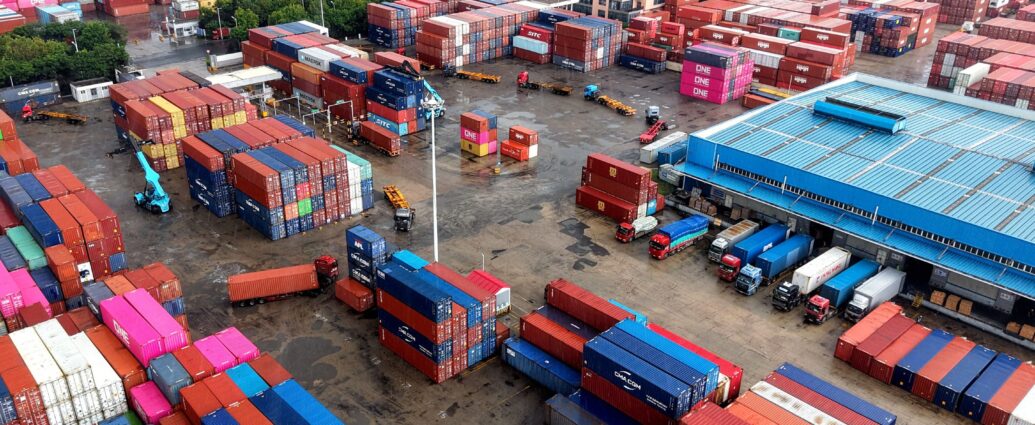
China on pace for ‘new record-high trade surplus’ this year as exports jump 25%—part of its efforts to become a ‘major player in AI infrastructure’
China’s exports jumped 25% in August from a year earlier on strong demand for autos and high-tech goods as its record trade surplus widened further, its customs agency said Tuesday.
The data was broadly in line with what economists had expected and comes just ahead of a planned meeting between Chinese leader Xi Jinping and U.S. President Donald Trump. That’s set for late September, though Beijing has not yet confirmed the exact date for the visit.
Trade is expected to be among the key topics of discussion between Trump and Xi when the two leaders meet.
China’s global imports climbed 28.2% in August from a year earlier, up from July’s 27.5% rise. Exports grew 23.9% year-on-year in July. The trade surplus expanded in August to $119.1 billion from $112.5 billion in July.
Policymakers in the U.S. and elsewhere have raised concerns over China’s ballooning trade surplus, which surged to a record $1.2 trillion for the whole of last year. Beijing has said that it is not seeking to maximize its trade surplus.
In August, China’s exports to the U.S. totaled $42.5 billion, up 34.4% year-on-year, in part due to a base effect after higher U.S. tariffs caused exports to fall last year. U.S. exports to China last month were $13.3 billion, leaving a trade surplus in China’s favor of about $29.2 billion, according to Chinese data.
Exports to the EU rose 6.6%, while those to Southeast Asia and Latin America rose 30.2% and 17.5%, respectively.
Exports have consistently outpaced imports and are “set to lead to a new record-high trade surplus this year,” said Lynn Song, chief economist for Greater China at the Dutch bank ING.
China has weathered disruptions from the Iran war better than many other countries. It also has been exporting more to Southeast Asia, Latin America and Africa, shielding it from the impact of higher U.S. tariffs.
Exports of autos in August grew 43% year-on-year while semiconductor exports surged 129.8%, the customs data show.
“China is very competitive in its tech goods exports,” said Chi Lo, a senior market strategist for Asia Pacific at BNP Paribas Asset Management. In recent months, rising exports of electric vehicles, industrial machinery and semiconductors have helped fuel China’s robust shipments globally.
“China has moved aggressively up the value chain and has become a major player in AI infrastructure and industrial automation,” he said.
At home, China is still struggling to boost its economy as consumption and investment remained sluggish following a yearslong real estate sector downturn. On Sunday, China said it was injecting around $54 billion into state banks and insurers to help lift its economy.
China’s continued reliance on exports to fuel growth prompted 19 members of the Group of 20 large economies to agree to address such economic imbalances at a recent meeting of top financial officials in Asheville, North Carolina. China was the lone dissenting G20 member after U.S. Treasury Secretary Scott Bessent described China’s trade surplus as a barrier to global economic growth.
The strategic stalemate between China and the U.S. will likely remain, said Lo of BNP Paribas. “Both sides hold each other hostage in some strategic products, with the U.S. withholding high-end tech goods from being sold to China and China withholding rare-earth exports to the U.S.,” he said.
China and the EU are also set to meet for ministerial level trade talks in the fall, as the EU struggles to reduce its roughly 1 billion euros-a-day trade deficit with China.
The EU implemented measures in July to protect its steel industry and has limited tax-exempt imports of Chinese e-commerce small parcels.
This story was originally featured on Fortune.com

A third of terror suspects arrested in the EU last year were under 18 as violent extremist networks grow online
A quarter of a century after the Al-Qaeda attacks on the United States, jihadist groups still pose a major threat to security in Europe, but a new menace has surfaced that is driven mostly by young people online and the authorities are worried.
The exact size of the network behind what is being called nihilistic violent extremism is unclear. But police investigators from nine European countries found about 4,340 URL web addresses linked to “The COM,” as the online community has become known, during a campaign to disrupt it in June and July.
“It’s violence for the sake of violence,” European Union Counter-Terrorism Coordinator Bartjan Wegter told The Associated Press in an interview, ahead of the 25th anniversary of the Sept. 11 attacks on New York and Washington in 2001.
Overall last year, 45 terrorist attacks were reported across 10 of the 27 EU countries, although none of them were major, mass-casualty incidents. About half were foiled or failed, but six people were killed. A total of 486 people suspected of terror links were arrested in 21 member countries, according to the EU police agency Europol.
Jihadist groups — often guided or inspired by networks outside Europe — were behind 24 of the attacks and accounted for more than 70% of the arrests.
Of all those taken into custody, around one third were aged under 18, mostly boys.
Europol does not keep statistics on nihilistic violent extremism because definitions of it differ and acts can fall into the category of ordinary criminality as well as terrorism.
But in Finland in 2025, a 16-year-old boy stabbed three female student colleagues. He allegedly shared a “manifesto” in WhatsApp groups, recorded the attack on Snapchat, and asked on social media for someone to save and give him the video after his release.
In the “manifesto,” he said that he wanted to do something “significant” and “exciting.” No political motive was given for his rampage, according to an EU document on the emerging threat of nihilistic extremist violence.
Violence as a form of entertainment
“It’s very much a fascination with violence. It’s violence as a means of asserting oneself, as a means of gaining status in those online communities,” Wegter told AP. “There’s not a direct link with ideology.”
In Italy last year, a 15-year-old boy planned a murder to gain notoriety online, authorities there said. He kept images and videos of assaults, murders, school shootings and child pornography on his smartphone.
Wegter said these kinds of incidents, which have been on the rise for two to three years, are not isolated but organized by online networks that are “often driven by young people, for young people often involving young boys.”
He said that they “lead to offline violence. We’ve seen stabbings, a young individual stabbing an elderly person for no reason whatsoever.”
Such attacks are tough to prevent or track. They often involve “young individuals who will not have a criminal record, usually, who don’t leave any footprints other than online perhaps, but then it’s often behind encrypted walls and communities,” Wegter said.
Conspiring online to commit real-world crimes
High on the list of groups authorities’ radar is 764, which was founded by an American high school dropout, Bradley Cadenhead. He’s serving an 80-year prison sentence for child pornography and sex offenses, but the group still functions.
In Germany last year, a 20-year-old man believed to be a leading 764 member faced 123 charges over acts of “an unimaginable level of brutality and inhumanity,” including murder, rape and the sexual abuse of children, the EU document said.
Unlike 25 years ago — when extremists, mostly from Saudi Arabia, entered the United States and trained to become deadly pilots — the terror threat facing Europe today is mostly organized online.
“The online environment, for all the good things it brings, it is still too permissive,” Wegter said. He described it as “a petri dish for the connection between different threats.”
Privacy versus security with AI on the rise
Privacy advocates insist that people have a fundamental right to communicate without unjustified intrusion. They accuse the authorities and some companies of undermining protections through spyware and other methods.
But Wegter said that “our law enforcement must be equipped with the instruments and tools to deal with the threat as it exists today.” He noted that 85% of investigations take place in the digital environment. “It means that we have to adjust ourselves to that.”
For the Dutch diplomat himself, it means talking more to authorities and organizations in other countries, notably those that such groups use as a rear base. “Because what happens outside our borders impacts on our security,” including what’s being amplified online, he said.
Europol said criminals are exploiting images and audio to create and edit propaganda, including through deepfakes, memes and GIFs. AI-powered bots were also used to boost recruitment and promote terrorist ideologies, while AI-driven app were used for research to prepare attacks.
“The kind of violent content, violence inciting content, propaganda, manuals, tactics, everything that is available, is very much amplified by AI,” Wegter said.
This story was originally featured on Fortune.com

FM Sa’ar: Israel to close UK consulate in east Jerusalem, expel reps. from CMCC over sanctions
Foreign Minister Gideon Sa’ar announced that the United Kingdom’s consulate in east Jerusalem would be shut down, while British representatives at the Kiryat Gat Civil-Military Coordination Center (CMCC) would be expelled, following the UK sanctions against West Bank settlements announced on Wednesday.
Other sanctions include the termination of training by UK forces to Palestinian Authority security forces in Ramallah and banning the entrance of 12 British elected representatives and other British nationals involved in antisemitic and anti-Israel activity, as well as those who deny the very existence of the State of Israel.
The 12 British officials banned from entering Israel are British MPs Jeremy Corbyn, Zarah Sultana, Naz Shah, Diane Abbott, Hannah Spencer, Carla Denyer, Sian Berry, Ellie Chowns, John McDonnell, Richard Burgon and Adrian Ramsay, as well a Riverway to the Sea director Fahad Ansari.
Sa’ar called the sanctions a “blatant” election interference, adding that the British declarations, and the declarations from other nations announcing sanctions that followed, “only pushed the possibility to find a solution [to the conflict] further away, rather than bringing it closer.”
He also said, “Israel has nothing against the British people. We know that we have many friends in Britain. Unfortunately, a hostile Labour Government is in office, systematically acting against the State of Israel, and it has left us with no choice but to finally respond to its hostile actions.”

Herzog, Lapid call out Britain for implementing sanctions
Earlier on Wednesday, President Isaac Herzog called the sanctions a “grave miscalculation, a gross interference in the democratic elections of a sovereign nation, and a decision that will fall on the wrong side of history.”
“Sanctions are not a solution – dialogue is. I say to all foreign governments: Stop! Step away from the dead-end of sanctions and boycotts, and turn toward constructive dialogue and toward cooperation,” Herzog said.
Sanctions on Israel from the UK – or any other nation – will prove to be a grave miscalculation, a gross interference in the democratic elections of a sovereign nation, and a decision that will fall on the wrong side of history.
Sanctions are not a solution – dialogue is. I say… pic.twitter.com/ZKjLENRQtG
— יצחק הרצוג Isaac Herzog (@Isaac_Herzog) September 8, 2026
Former prime minister Yair Lapid (B’Yachad) also called out the sanctions against West Bank settlements, saying that “the British government’s decision to impose boycotts and sanctions on Israel is a serious mistake. It is a wrong and dangerous policy, at the wrong time and for the wrong reasons.”
“The decision made today will strengthen the extremist voices in Israel just before the Knesset elections and is a shot of encouragement to Hamas and the terrorist organizations,” he warned.
Ben-Gvir demands Closure of Jerusalem’s consulate, recognition of Argentina’s sovereignty over the Falklands
National Security Minister Itamar Ben-Gvir celebrated the decision to close the consulate, saying that he “congratulated the Prime Minister and the Foreign Minister who accepted my demand and closed the British Consulate in Jerusalem.”
He had published a social media post on X/Twitter asking Netanyahu to close it, which “operates openly on behalf of the Palestinian Authority.”
Ben-Gvir also demanded that Israel formally recognize Argentina’s sovereignty over the Falkland Islands, saying that “it’s time for the State of Israel to publicly recognize that the Malvinas Islands are Argentine territory under occupation, which the British violently steal from the Argentine people.”
“The British are not content with merely occupying the territory; they also carry out oil drilling there and steal the money from the Argentine people. I call upon Prime Minister Benjamin Netanyahu to recognize Argentina’s sovereignty over the Malvinas Islands and to impose sanctions on Great Britain as long as the occupation continues,” he added.
Es hora de que el Estado de Israel reconozca públicamente que las Islas Malvinas son territorio argentino ocupado, que los británicos le roban violentamente al pueblo argentino. Los británicos no solo se conforman con ocupar el territorio, sino que también realizan allí…
— איתמר בן גביר (@itamarbengvir) September 7, 2026
Jerusalem Deputy Mayor Arieh King similarly called for Israel to enforce the closure of Britain’s diplomatic presence at 80 Nablus Road and 15 Rajeib Nashashibi Street, Jerusalem.
Finance Minister Bezalel Smotrich called for the expulsion of the British ambassador.
West Bank council heads slam British sanctions on settlements
Israel Ganz, head of the Mateh Binyamin Regional Council, said, “It is time for Britain to wake up: the British Mandate ended almost 80 years ago. The days when London determined where Jews could live in the Land of Israel are over and will not return.”
He also pointed out that the “instead of addressing the difficult problems at home, the British government is mobilizing a coalition of pro-Palestinian countries to wage an economic war on Jews in Binyamin, Judea and Samaria. This is a moral disgrace.”
“Our message to Britain and everyone who joins the boycott is clear: you will not succeed in getting the Jews out of Judea and Samaria,” he concluded.
Efrat mayor Col. (res.) Dovi Shefler also issued a statement saying that “the British Mandate ended in May 1948, but it seems that someone in London has not yet internalized this. Even then, the British heaped hardships on the Jewish settlement while Arab terror raged, and even today they choose to punish Israel and the Jewish settlement, instead of directing the pressure on those who attack it and seek its destruction.”
“In response to the British move, I call on the Israeli government to urgently pass a resolution that will correct the historical injustice of the Oslo Accords, and return the Jewish heritage site of Solomon’s Pools to Israeli control, as it should have been in the first place,” he added.
Peace Now, J Street celebrate sanctions
The Peace Now movement was among the few Israeli actors who celebrated the British announcement, saying that “settlements are a danger to the future of the State of Israel, and it is good that Britain and other countries are making the necessary distinction between sovereign Israel and the settlement enterprise and outposts beyond the Green Line.”
“Sanctions against the settlements are not sanctions against Israel, quite the opposite. The distinction between them is an Israeli security, political and economic interest,” the movement claimed. “Instead of competing with the settler right with automatic condemnations, the opposition should present an alternative: stop annexation, isolate the settlements instead of Israel, and return the country to a path of security, political order and a better future.”
The American-Jewish organization J Street also celebrated the move, with its president Jeremy Ben Ami demanding that the US follow in the footsteps of its allies.
“The UK and other of Israel’s closest allies are making clear that the status quo is no longer acceptable: Israel must choose between permanent occupation and growing international isolation, or a future in which a viable, independent Palestinian state lives alongside a secure Israel fully accepted by the world,” Ben Ami said.
“The United States should stand with its allies and take similar action, including ending trade with the settlements until Israel changes course,” he added.
Mathilda Heller contributed to this report.
‘If you boycott Israel, we boycott you’: Florida rep. Fine warns UK of consequences – interview
The United Kingdom’s recent decision to impose sanctions on Israeli settlements and individuals in the West Bank is a “disgusting” political calculation that could bankrupt major British companies, Florida Congressman Randy Fine (R) warned in an interview with The Jerusalem Post.
Fine, a leading voice in Florida’s pro-Israel legislative efforts, reacted sharply to the UK’s policy shift, attributing it to Britain’s changing demographics and what he described as a “desperate effort” to appeal to certain voter blocs.
“I think it’s disgusting, and I think it shows the risk of the mass Islamification of Western societies,” Fine said. “This is a political calculation. They let all of these people in who hate Britain, and now they’re catering to them for votes.”
He said Britain’s trajectory should serve as a “warning sign” for the United States on immigration and social integration.
Fine, who helped craft Florida’s anti-BDS (Boycott, Divestment, and Sanctions) legislation, said the consequences for the UK would be legal and economic, not merely rhetorical. Under Florida law, the state is prohibited from doing business with companies or entities that boycott Israel.

‘The law in Florida… if you boycott Israel, we boycott you’
“The law in the state of Florida is that if you boycott Israel, we boycott you,” Fine stated. “It is the law of Florida, and it will be enforced. It will destroy the British economy because Florida is not the only place that passed that law.”
Fine cited Airbnb’s 2018 decision to delist properties in Israeli settlements as an example. Florida responded by moving to place the vacation rental company on its list of scrutinized companies, threatening the platform’s ability to operate in its largest market.
“Airbnb needed to work with the state of Florida to collect the taxes on its bookings, and the state said, ‘We can’t do that anymore,’” Fine recalled. “A few days later, they abandoned the policy. There are dozens of British companies that have major operations in Florida. They may all go bankrupt as a result of this.”
Asked whether a trade dispute with the UK could also damage Florida’s economy, Fine dismissed the concern, pointing to the size of US state economies.
Economies of Florida, Texas larger than UK
“I think they’re wrong,” Fine said. “The economies of Florida and Texas combined are larger than the economy of the UK. We will be fine. That tiny little island will not.”
Fine said that between 18 and 38 other US states have enacted similar anti-boycott laws, creating what he described as a potential “ripple effect” that could see British firms blacklisted across much of the American market.
He argued that pressure was likely already mounting within the UK’s private sector. “I suspect what is happening right now is major British companies are going to 10 Downing Street and saying, ‘Your idiotic effort to cater to Muslim voters is going to bankrupt our business. You need to stop it.’”
Fine concluded that enforcing the statutes was a matter of settled law in Florida, regardless of any diplomatic tensions that might follow.
“Enforcing the law is not optional. This law has been on the books for eight years,” Fine said. “We’re going to stand up to Muslim terror, whether it’s in Florida, whether it’s in Israel, or whether it’s in the UK”.
PA’s UK Embassy praises Foreign Sec. Miliband’s ban on trade with West Bank settlements
The Palestinian Authority’s Embassy in London welcomed Tuesday’s announcement by British Foreign Secretary Ed Miliband stating that the UK will ban all trade with West Bank settlements.
The embassy stated that the announcement “affirmed the illegality of Israel’s occupation of the Occupied Palestinian Territory, including east Jerusalem, in line with international law and the International Court of Justice’s advisory opinion, and consequently adopting a set of measures, including a full ban on trade with Israeli settlements in Palestine that are illegal according to international law.”
Israel disputes the legality of the status quo in the West Bank, and counts east Jerusalem as full sovereign territory of the State of Israel as part of its capital city.
Today marks a turning point in UK–Palestine relations — from recognition to action, from condemnation to consequence. This is my message following the historic announcement by the Rt Hon Ed Miliband in the British Parliament earlier today. pic.twitter.com/OJRQZqkZim
— Husam Zomlot (@hzomlot) September 8, 2026
“This important action and policy demonstrate[s] that international law must be upheld and implemented without fear or favor, and that violations must have consequences,” the PA Embassy wrote.
“This decision gives practical effect to the international legal consensus, including the July 2024 Advisory Opinion of the ICJ, which affirmed the obligation of all states not to recognize as lawful, or assist in maintaining, the illegal situation arising from Israel’s occupation,” the embassy claimed.

The UK’s decision also “contributes to implementing UN Security Council Resolution 2334, which reaffirmed that Israeli settlements in Palestinian territory occupied since 1967, including East Jerusalem, have no legal validity and constitute a violation of international law,” the embassy added.
PA’s UK Ambassador Zomlot praises Britain’s ‘leadership’
The PA’s Ambassador to the UK, Husam Zomlot, also issued a personal statement reacting to Miliband’s statement, praising the UK’s “leadership in translating recognition and international legal obligations into effective action to uphold the territorial integrity, sovereignty, and viability of the state of Palestine.”
“We welcome this decision as a turning point in the UK–Palestine relationship and commend Prime Minister Andy Burnham and Foreign Secretary Ed Miliband for their leadership in translating recognition and international legal obligations into effective action to uphold the… https://t.co/0Q2uSmTc0j
— Husam Zomlot (@hzomlot) September 8, 2026
The decision is a “turning point in the UK-Palestine relationship,” and comes as a “natural” follow-up to the UK’s recognition of a Palestinian state one year ago at the UN General Assembly in September 2025.
“It represents continuity of purpose, not an end in itself,” Zomlot said, referring to the UK’s 2025 decision.
“Recognition cannot be meaningful if the territory of the recognized state is simultaneously being taken from its people in Gaza and the West Bank, including East Jerusalem,” he claimed.
“Protecting the Palestinian people from illegal occupation, annexation and apartheid, ending the ongoing genocide in Gaza, and holding to account those who have committed war crimes – these are essential for making that recognition real, meaningful, and enduring,” Zomlot claimed.
The accusations of Israel pursuing apartheid policies, or having committed genocide or war crimes during the Israel-Hamas War or other periods in the conflict, are heavily disputed by Jerusalem.
“The UK has a unique historic responsibility towards Palestine,” Zomlot said, hinting at the role the UK played during the British Mandate period between World War I and the establishment of an independent State of Israel in 1948.
“With today’s announcement, the UK has an opportunity to assume a leading role by bringing together partners across Europe, the Commonwealth, and the wider international community to end complicity in violations of international law. No state, company, or institution should contribute to, facilitate, or profit from illegal settlements or the annexation of occupied Palestinian land,” Zomlot stated
“We call on the UK Government to adopt a comprehensive set of measures to ensure that all sectors of the British state and economy are free from complicity in the illegal occupation and settlement enterprise,” he said.
PA ‘ready to work’ with UK gov’t on Israeli arms embargo, sanctions on settlement sponsorship, end to ‘illegal dealings’
“We stand ready to work with the UK Government and British authorities to ensure remaining legal obligations are met, including a full arms embargo, sanctions on agencies and institutions of the Israeli State that sponsor illegal settlements, and an end to illegal dealings in the OPT by the business and financial services sectors,” Zomlot added.
“These courageous steps by the leadership of the United Kingdom, grounded in international law, will contribute to advancing peace, security, and stability, preserving the two-state solution, and bring justice through accountability and the ending of Israel’s unlawful occupation,” he claimed.
“They will help pave the way for the independence of the State of Palestine on the 1967 borders, with East Jerusalem as its capital, and for the realization of the legitimate rights of the Palestinian people,” he concluded.