Vale CFO Sees No Downturn in Iron Ore Prices

‘They are exterminating us’: Cubans face psychological tolls from ‘economic strangulation’ as U.S. energy embargo continues
Sweltering nights. Water and power shortages. Dwindling fuel and crumbling homes. Limited public transportation and weak cellphone signals.
The psychological toll of daily life in Cuba is pushing many to their breaking point on this island of nearly 10 million people, with no relief in sight as a U.S. energy embargo persists and longtime economic and financial troubles deepen.
“Before there was hope,” Dr. Yomeidis Felicó Riverón said. “Right now, what people have lost is exactly that.”
Felicó Riverón is a primary care physician, but she has embraced an additional role as Cubans grind through their days.
“They come and cry about their troubles, because they have no one else to vent to,” she said of her patients. “We end up having to play psychologist.”
Parents shield children from Cuba’s realities
On a recent sunny afternoon, six girls and one boy crowded around a table as their parents sat in the background, trying to fan away the stifling heat.
The children were learning how to make gift bags and perfume, a free workshop that offered them a brief respite from Cuba’s realities.
“My son doesn’t know if there’s food or if there’s no food,” Felicó Riverón said, confiding that she never tells him when she doesn’t have money to buy something he wants.
Instead, she distracts him: “Let’s go play, let’s go to the park. We’ll come back another day.”
Dianne Tamayo was among the mothers present that day. The workshop served as an oasis for her and her daughter. Tamayo socialized and temporarily forgot what awaited at home.
“My husband is my rock,” she said. “When I’m going crazy, my husband tells me, ‘Sit down, breathe … let’s put on some music.’”
He sometimes has to remind Tamayo that their daughter is coming home from school soon, and that they need to keep their troubles, anxieties and frustrations to themselves.
“I do the best I can with the tools I have, but there’s still a moment where I get overwhelmed,” she said.
Tears fell as she confided that she doesn’t have anything in her life that relaxes her, and that she has never questioned how to release her feelings about life in Cuba.
“They are exterminating us,” she said, “and we remain complacent.”
U.S. Embassy issues health alerts
Cuba’s crises worsened after U.S. President Donald Trump announced in late January that he would impose tariffs on any country that sells or provides oil to the Caribbean country. Longtime U.S. sanctions also have taken their toll, Cuba’s government said.
From March 2025 to the end of February, “the U.S. policy of economic strangulation” amounted to more than $8 billion, “a record figure,” according to Cuban Foreign Affairs Minister Bruno Rodríguez.
Island-wide blackouts have increased this year, and daily outages now surpass 24 hours. As a result, water is often scarce, and small protests have erupted, despite the fear of being detained, as anger and frustration boil over.
The situation has worsened to a point that the U.S. Embassy recently issued two public health alerts.
On Aug. 28, the embassy noted that “Cuba’s water supply infrastructure is increasingly unstable ” and that there are “residential neighborhoods experiencing long periods without water from municipal or public sources.”
On Friday, the embassy warned of an increase in gastrointestinal illnesses linked to the “degradation of the water and energy infrastructure. …. Recent cases have included E. coli, norovirus, Shigella, and other gastrointestinal pathogens.”
Water and power shortages persist, but 81-year-old Havana resident Oscar Joaquín López said that he doesn’t dwell on what he lacks.
“Why?” López said. “Because it drives you crazy, and nobody is going to drive me crazy.”
On a recent afternoon, he leaned against the doorframe of his home as he watched his 58-year-old roommate fill up nearly a dozen plastic containers with water that flowed from a pipe on the street. They had been without water for several days, so they acted quickly.
With temperatures hovering above 90 F (32 C), López said that he sits in his doorframe until midnight to catch a breeze from the nearby ocean, a steel pipe nearby to ward off any intruders. After midnight, he goes to bed, hoping the wooden slat he wedged into his window will catch any wind, however slight.
Nearby, 62-year-old mason José Laó Faviel dug through overflowing garbage on the street, looking for food to feed his pig and her 10 piglets, because he had none to give them.
“What are you going to do?” he said. “We’re living through difficult times.”
Minutes later, another man rifled through the same pile of garbage. After opening several bags, he found something to eat.
Cubans find solace in family
Sweat gathered around Armando Lafita’s brow as the 60-year-old pushed a cart through the crumbling buildings in Old Havana. Authorities have evacuated some residents in the area for safety reasons, but those with nowhere else to live now sleep on the street, ducking inside their building when they need something.
Lafita’s cart was filled with red roses and white ginger lilies, Cuba’s national flower. He sells them for 10 to 40 cents a bunch, but sometimes he goes home without a single sale.
“Everybody is fighting to survive here,” he said. “It’s getting harder every day.”
Like many Cubans, Lafita said the only thing that keeps him going is family: his 19-year-old son.
It’s the same reason that 70-year-old José Manuel Borroto Díaz and his 93-year-old mother, Teresita del Rosario González Ricardo, keep going: they have each other.
“Our situation is like something out of a movie, but we’re going to press on,” said Borroto, a retired aviation official who was in Angola during Cuba’s military intervention in the 1970s.
Across the island, Cubans are pressing on even as the crises deepen, including 90-year-old Lázaro Alfonso Oviedo. He recently attended a weekly gathering to help raise the spirits of elderly people.
Oviedo danced and sang in a deep, robust voice “to forget for a little while the suffering the empire puts us through,” he said, referring to the United States.
“We are not going to give up,” he said as he praised Cubans’ unwavering resilience. “We get it precisely from the spirit forged by the revolution itself — a revolution spanning more than 60 years.”
This story was originally featured on Fortune.com

‘We’re not really sure what to do’: Airlines rush getting planes in the air from backlogged UK flights due to issues in ‘flight processing system’
Airlines scrambled Wednesday to dig out from the backlog triggered by technical problems at Britain’s air traffic control system that has forced the cancellation of more than 1,750 flights.
Delays continued for a second day Wednesday, rippling across 15 U.K. airports and beyond as airlines and airports worked to clear a huge backlog of canceled and delayed flights. The problems stranded passengers for hours on airport runways and in terminals.
Flight delays were expected to continue through the day Wednesday as airlines rebook stranded passengers and work to reposition aircraft left at the wrong airports by the cancellations.
NATS, formerly known as National Air Traffic Services, which operates Britain’s air traffic control system, attributed the problems to “an issue in our flight processing system.” The company said it was supporting airlines and airports while they recover from the “ongoing disruption,” although the original technical issue was resolved Tuesday afternoon.
But airlines were furious, demanding that the head of NATS, Martin Rolfe, consider resigning after the second air traffic meltdown in three years.
Transport Secretary Heidi Alexander met with Rolfe on Wednesday and gave him one week to complete a full investigation into the incident to make sure lessons are learned. Prime Minister Andy Burnham’s office said Rolfe retains the confidence of the government.
The UK government owns 49% of NATS, making it the largest shareholder and giving it a veto over key decisions. Airlines, airports, investors and employees own the remaining shares in the public-private partnership.
Rolfe on Wednesday apologized for the inconvenience caused by the outage but said the U.K. air traffic control system remains one of the safest and most efficient in the world.
“Our job is also to make sure that people stay safe,” he told the BBC. “We never do this lightly. We only ever do it when there is an issue that cannot be resolved quickly, and we have to take action to make (sure) those who are flying, who are in the air at that time, are safe. And when we can restore these incredibly complex systems we do so as quickly as we can.”
Meanwhile, passengers were left to fend for themselves.
Cartoonist Charlie Adlard, who worked on the “Walking Dead” comic book series, was traveling from his home in western England to a comic book convention in Palermo, Sicily, when he was derailed by the air traffic issues. After running into the chaos at Heathrow, he tried and failed to reach his carrier, British Airways, by phone.
“Due to the lack of information, due to everything crashing now, due to the fact that apparently BA have now switched off their customer service phone number because there’s so many calls, we’re not really sure what to do,” Adlard, 60, said.
After losing a day of work, spending money on an airport hotel and paying for dinner and breakfast, he decided to turn around and go home.
“So yeah, I’ve lost quite a bit of money on this rather wasteful journey,” Adlard said.
Other airports experience similar problems. At Gatwick Airport, about 30 miles (48 kilometers) south of central London, passengers stretched out on the bare floor beside their suitcases. Others huddled around message boards, hoping for information.
In a statement on X, Heathrow, Europe’s largest airport, urged passengers to check their flight status before traveling to the airport and to “only travel if your flight is confirmed to be operating.″
“We apologize to those affected and have extra colleagues across our terminals to support passengers while we work with NATS and airline partners to restore normal operations as quickly as possible,” Heathrow said.
This story was originally featured on Fortune.com

Thieves nabbed a $10.5 million Renoir haul, but the paintings may be worth almost nothing outside the museum
Two Renoir paintings stolen from a small French museum have yet to be recovered but if the thieves are hoping to cash in on the artwork, they would be hard-pressed to find a buyer.
Selling well-known, stolen art is impossible to do at an auction house or through other public channels without raising eyebrows. Even under the table, the value plummets. And unlike other eye-catching artifacts such as jewels, paintings can’t be chopped up and sold for parts without losing their entire worth.
Art crime experts stress that most buyers simply don’t want the liability. In short, the reality looks nothing like the movies.
“People always think that there is this kind of ‘Dr. No’ type from the James Bond movie,” said Arthur Brand, a private art detective based in the Netherlands. “But that’s Hollywood. In the real world, there are no collectors like that.”
Brand, who has investigated art crime for about 20 years, explains that often “nobody will touch” stolen art, particularly high-profile work. Sometimes that means paintings valued at millions of dollars are effectively “worth zero” once they’re outside of the museum, he added, if not a small fraction of the price.
Tuesday’s theft at the Renoir Museum — the last home of painter Pierre-Auguste Renoir in the French Riviera — marks the latest high-profile art crime targeting collections around the world, and experts warn there could be more.
Here’s what we know.
Where the Renoirs could wind up
Cagnes-sur-Mer’s mayor, Bryan Masson, said a group of “well-equipped” burglars stole a total of four Renoir paintings from the museum in his town on Tuesday. But they dropped two of them — Renoir’s “Portrait of Madame Pichon” and “Coco Reading” — in the museum garden before they fled, the prosecutor’s office said in a statement. Police are still searching for the perpetrators.
In the meantime, Renoir’s “Portrait of Madame Colonna Romano” and “Young Woman at the Well” remain missing.
Masson estimated the value of the combined Renoir works stolen Tuesday at 9 million euros ($10.5 million).
But the probability of profiting off such a heist is “extremely low,” said Erin Thompson, an art crime professor at the John Jay College of Criminal Justice in New York. And in cases that end in arrests, the common takeaway is that “thieves are people who are good at stealing things and bad at thinking through the consequences,” she added.
Some may try to make money from heists in other ways, such as through demanding a ransom or looking for an insurance payout. But Thompson explains many museums don’t have insurance because it’s too costly. That’s why the practice is so rare in the U.S., for example, and it would be difficult to negotiate with insurance companies elsewhere without the thieves incriminating themselves.
As a result, if not surrendered or otherwise recovered, stolen paintings may remain hidden — or in some cases eventually destroyed to get rid of evidence, Thompson says.
Brand, who collaborates regularly with law enforcement in his art crime investigations, says that he’s still seen limited cases of stolen paintings “floating around in the underworld” — perhaps as partial payments for products like drugs. And depending on country-by-country laws, he noted that the promise of returning the art has led to reduced sentences on other charges.
“Some more savvy criminal will acquire it as a get out of jail free card, sort of a bargaining chip,” added Christopher Marinello, a lawyer and founder of Art Recovery International. “So if some drug dealer ever is arrested, he can bargain with the prosecutor and say, ‘Listen, give me a lesser sentence and I’ll show you where these Renoirs are.’ And that has always worked and it will work again.”
Paintings are harder to hide and sell than jewels
Stolen paintings are much more difficult to profit from than museums’ other crown jewels — literally.
Jeweled and metal goods have increasingly become a target of theft because they can be melted down or broken down into parts. Last year, a handful of experts warned that could be the fate of the stunning heist of crown jewels at the Louvre Museum in Paris, for example — noting that, if done successfully, smaller pieces could later go up for sale as part of a new necklace, earrings or other jewelry without turning too many heads.
But of course, such pieces would lose their historical worth and, if actually sold, likely only go for a fraction of their original value. Experts also warn that it’s far from a simple process overall — and gems may still be identifiable by characteristics like clarity, for example.
Apart from an emerald-set imperial crown found outside the museum the day of the October 2025 heist, the stolen jewels remain unrecovered.
Paintings, in contrast, don’t have the same commodity value that can potentially be parceled off. “It’s a canvas with some old oil paint on it,” said art theft expert James Ratcliffe, of the Art Loss Register. “You can’t touch it up. You can’t resell it other than for what it is.”
Uptick in art crime overall
Ratcliffe and others note that hasn’t stopped thefts of famous paintings and other artwork from museums. Just earlier this year, three pieces by Renoir, Cézanne and Matisse worth millions of euros were stolen in Italy, for example, before being recovered last month.
Ratcliffe notes that smaller museums, in particular, are harder to secure because they might not have the funding necessary to invest in the latest technology — or are located in historic buildings that may take more time and effort to install new guardrails.
Still, pressures are piling up, with some warning that future cases of art theft could be likely as vulnerabilities persist.
“We need to change the way we treat small and country house museums before we lose our cultural heritage permanently,” said Marinello, who stresses that stronger security and enforcement is overdue. “We’re supposed to be preserving our cultural heritage, not allowing criminals to take what they want and using them as shopping malls.”
This story was originally featured on Fortune.com

STAT+: Can AI fix the emergency room?
You’re reading the web edition of STAT’s AI Prognosis newsletter, our subscriber-exclusive guide to artificial intelligence in health care and medicine. Sign up to get it delivered in your inbox every Wednesday.
It’s hard to resist the world’s obsession with productivity and efficiency and to force yourself to be present in a quiet space. I’ve been enjoying the wandering_cassettes Instagram account, which posts videos of Fisher Price cassette players playing songs in different settings. This one is particularly calming, but they’re all timeline cleansers.
The newsletter will be off next week as I work on a big new story, but I’ll be back in your inboxes Sept. 23.
AI scribes only fix a tiny slice of the problem
Today’s AI Prognosis — and my new story — are brought to you by “The Pitt.” Not in any financial way — I just mean that I finally started watching “The Pitt.” (No spoilers! I’m only halfway through season two.)
Everyone is right — it is extremely compelling television. But what struck me the most was how “The Pitt” feels exactly like the ambulance ride-alongs and emergency department shadowing visits I’ve done: Dropping in on the worst day of someone’s life, but doing it over and over every 40 minutes, for eight to 12 hours, without enough resources.


When things go bad, you want to be in China, says Gavekal’s Louis-Vincent Gave
The U.S., due to its business-friendly policies and the world’s deepest and most liquid capital markets, has long attracted global investors. But, amid geopolitical turmoil and concern about debt, investors may be increasingly turning to China.
“When there’s a hit to the system, do you want to be with the anti-fragile or the profit-maximizing?” economist Louis-Vincent Gave asked at the Fortune Leaders Forum in Macau on Sept. 8. “This is where increasingly the markets are starting to diverge, where you’re looking at the U.S. Treasuries delivering horrible returns, and Chinese government bonds delivering very good returns.”
The yield on the benchmark 10-year Chinese government bond currently sits below 1.7%, far beneath the 4.8% offered by the 10-year U.S. Treasury note. Bond investors are growing wary of debt across the Western world: U.S. national debt now sits at $40 trillion.
That means Chinese government bonds, buoyed by deflation and a vast pool of domestic savings, are offering investors a safe-haven asset.
China is now reaping the fruits of its investments in social stability, says Gave, founding partner and CEO of Hong Kong-based financial services firm Gavekal. “Ninety percent of the time, when things go well, you want to be [invested] in the U.S,” he noted. “But the 10% of times where it goes badly, you want to be in China.”
That may be a tough judgment to make given China’s weak GDP growth, retail sales, and investment. “China should be going gangbusters, and it’s not,” Gave said, blaming “crushed” consumer and business confidence. “The match that turns around business and consumer confidence? That’s the key.”
Rising complexity
Even as the world fragments along geopolitical faultlines, business leaders should not fixate solely on geopolitics, argued Ziad Haider, McKinsey’s global director of geopolitics. “It’s not the only point of transition,” he said. “We’re seeing changes on the energy, technology, and demographic fronts.”
Governments are also turning to geoeconomics, or the strategic use of tariffs, sanctions, and industrial policy, to achieve national security goals. U.S. President Donald Trump has recently launched a new round of tariffs, targeting Canada in particular; Canada’s retaliatory tariffs kick in on Sept. 8.
“Traditionally, we’ve thought about geopolitics as the contestation of security and political issues,” Haider said, pointing to examples like Russia’s invasion of Ukraine, and the Middle East conflict. “But that whole world of security has now been complemented by a world of geoeconomics…and the chessboard that boards have to look at on geopolitics has become significantly wider.”
Both speakers pointed to energy as today’s biggest geopolitical stress point. “The lower the cost of energy, the easier it is to produce economic growth,” Gave explained. “We live in a world where the uncertainty around the energy cost has grown considerably for mostly geopolitical reasons.”
Oil prices have surged since the Iran war began earlier this year, sparking energy shortages across much of Asia-Pacific. While prices have come down since the peak in April, they still remain far above where they were at the beginning of the year.
Still, Haider was optmistic that businesses can find opportunities in this more complicated political environment. Companies may see tariffs as a source of risk, but Haider argued that they’re also driving the creation of new trade agreements, citing the EU-Mercosur deal and ASEAN’s digital economy framework agreement. Similarly, he suggested out that fossil fuel constraints spurred by the war in Iran could drive demand for renewables and other types of energy.
“The greatest danger in an era of turbulence is not the turbulence itself,” Haider concluded. “It’s to act with yesterday’s logic.”
Gave, for his part, has a simpler rule for navigating the unknown: “When it comes to Chinese policy making, I’m not paid to forecast; I’m paid to adapt,” he said. “Anybody who tells you they know what goes on inside the Politburo is either delusional or lying to you.”
This story was originally featured on Fortune.com



Brooklyn developer must repay $6M+ to condo buyers after illegal sales

A Brooklyn condo developer who cheated tenants out of more than $6 million in down payments must repay the money and is banned from selling property in New York for six years. Attorney General Letitia James last week announced that the state secured the funds from 425 Marcy, LLC, and its principal, Ezra Unger, who she said unlawfully sold units and collected down payments for apartments in Williamsburg before he was legally permitted to do so. Unger then illegally used buyers’ down payments for various expenses instead of keeping the money in escrow.
James’ office launched an investigation into Unger’s business practices at the 17-story Williamsburg building at 427 Marcy Avenue after receiving a complaint that the developer had entered into contracts with buyers even though the Office of the Attorney General (OAG) had never accepted the building’s offering plan for filing.
Under the state’s Martin Act, condo developers must submit an offering plan to the OAG and have it accepted for filing before they can market or sell units. The law also requires developers to place buyers’ down payments in a separate escrow account and keep the funds there until the sale is completed.
These protections ensure that buyers can get their money back if a condo project does not move forward.
James’ investigation found that the developer had entered into contracts for 17 residential units, three commercial units, and three residential parking spaces, collecting a total of $6.715 million in down payments from residential buyers.
Unger did not place any of the funds in an escrow account and instead used the money for construction and other purposes.
According to a press release from the attorney general, Unger must pay up to $824,000 in penalties: $324,000 for selling units and parking spaces before the offering plan was accepted and $500,000 for failing to place buyers’ down payments in escrow.
However, The Real Deal reported that the OAG had suspended the $324,000 penalty and $450,000 of the $500,000 escrow-related penalty. The suspensions came after Unger filed a declaration last month stating that he does not have enough assets to cover his debts, does not own any real estate, and cannot access enough credit to satisfy his obligations.
The developer is also banned from marketing, offering for sale, or selling securities in or from New York for six years. Unger has acknowledged violating the Martin Act.
Under the settlement secured by James, buyers of the condo units can either walk away from their purchases and receive their original down payments plus interest or apply that amount as a credit toward purchasing the same unit once the new offering plan is accepted for filing.
Buyers who remain interested in purchasing their units will also receive additional protections if the new purchase price exceeds the price in their original contracts. The new developer must either return the buyers’ money or apply it as a credit within seven business days after the OAG accepts the new offering plan.
The investigation isn’t the first legal trouble Unger has faced. In 2021, DW Partners, the project’s lender, claimed in a foreclosure suit that Unger had defaulted on a $31 million loan. He was also sued by nearby bakery owner Aron Lebovits, who claimed he was the property’s true owner, according to The Real Deal.
In January 2023, a bankruptcy case was filed against Unger. As part of the proceedings, Unger lost his ownership interest in the company, and the building was sold to 33 Walton Holdings, LLC, which became the new developer of the condominium. The bankruptcy case concluded in April 2025.
“When New Yorkers hand over their hard-earned savings for a down payment on a home, that money is not a piggy bank for developers to raid,” James said. “This developer broke the law by taking money from families before it was legally allowed to sell these homes, then left them waiting for years with nothing to show for it.”
Questions have been raised about Unger’s claims of financial hardship, as the developer is reportedly in talks to buy Arkia, Israel’s second-largest airline. A source familiar with the matter told The Real Deal that Unger is not putting his own money into the deal but is acting as a broker for others in the community who are seeking to bid on the airline.
An OAG spokesperson said that while Unger has sworn that his statements about his finances are accurate, the office would pursue additional penalties and legal action if they are proven otherwise.
“Mr. Unger made sworn representations regarding his finances and, through counsel, has assured us that those representations remain accurate,” a spokesperson for the office said in a statement. “If his sworn statement proves to be false, [the office] may seek to recover the full penalty and pursue further legal action.”
RELATED:
- Three Crown Heights buildings transferred from negligent landlord
- NYC to speed up housing court cases for tenants facing worst conditions
- Mamdani launches campaign to help tenants organize for safer housing
The post Brooklyn developer must repay $6M+ to condo buyers after illegal sales first appeared on 6sqft.




OpenAI says it cracked one of math’s grand challenges. But there are troubling questions about how they did it—and what it means for us all
Hello and welcome to Eye on AI. In this edition:
- OpenAI claims it made a mathematical breakthrough. But some mathematicians raise questions about cheating—and intimidation.
- Google DeepMind uses AI to predict the impact of genetic mutations.
- OpenAI agents swarmed a German wiki—and OpenAI stayed quiet about it.
- Mistral valued at $24.4 billion in new fund raise.
- Google DeepMind examines why AI agents cheat.
- Average Americans are pessimistic about AI’s impacts.
Apologies, in advance for a long essay today. But there’s several important points to be made and the background is, well, complicated.
Over the weekend, rumors swirled that Anthropic was on the cusp of announcing that one of its AI models had cracked one of the Millennium Prize Problems. These are seven complex mathematical challenges that the Clay Mathematics Institute, founded by American mutual fund magnate Landon Clay, selected in the year 2000, offering a $1 million prize for the first correct solution to each problem.
The specific problem that Anthropic had cracked, the rumors said, was something called the Navier-Stokes equations. These come from the field of physics, where they explain certain properties in fluid dynamics, and are useful for everything from weather forecasting to aircraft design. For everyday, empirical purposes, the equations work well, but mathematicians have never been able to prove whether the equations hold for all fluid interactions across all time sequences. Are there are special circumstances under which the equations break down, resulting in what is known as a “singularity”: a point at which one or more fluid properties, such as pressure or velocity, “blow up”—i.e. race off to infinity? Proving that such singularities exist or that the equations hold for all conditions is what the challenge is all about.
Now, as I write this on Tuesday, we’ve learned a bit more about what happened—and the story turns out to be more complicated, controversial, and acrimonious than simply being the case that one of Anthropic’s AI models has solved Navier-Stokes, which it turned out it did not. Instead, OpenAI today announced that a multi-agent system, powered and coordinated by an unreleased internal model, and which at one point had 10,000 different sub-agents working different parts and variations of the problem, has solved Navier-Stokes. OpenAI’s AI proved that, in fact, there are conditions under which the equations will “blow up.” Yet, how exactly OpenAI came to solve Navier-Stokes is, it turns out, a matter of great controversy.
Mathematician questions how OpenAI hit upon its approach
In short: Tristan Buckmaster, a well-regarded mathematician at New York University’s Courant Institute, also released a statement prior to OpenAI’s saying that he and Levent Alpöge, a mathematician who works for Anthropic, used several different AI models from both Anthropic and OpenAI to discover an almost identical solution to one portion of the Navier-Stokes Millenium Prize problem—although they did not have a proof for the entire problem.
Buckmaster says that he and Alpöge took a concept for tackling the Navier-Stokes problem that had been pioneered by two other mathematicians, Diego Cordoba and Luis Martinez-Zoroa, and then used Anthropic’s Claude and OpenAI’s Codex powered by the GPT-5.6 Sol model, to push Cordoba and Martinez-Zoroa’s lines of attack through to completion. (Buckmaster said they also used OpenAI’s new Astra model to help them audit and write up their results but not for the actual mathematical reasoning and calculations.) Buckmaster says that he and Alpöge worked for most of a year, making only slow progress, but that with help from several AI models, they made rapid progress from mid-August onwards. He calls this “a Deep Blue-Kasparov” moment for mathematics (referring to the 1997 contest in which a computer chess program first defeated a human grandmaster) and says “the significance of this with respect to the way we train students, assign credit, referee, and decide what is worth one human life’s attention cannot be understated.” (We’ll get back to this theme later.)
Then, however, Buckmaster made a series of explosive revelations. He said OpenAI had desperately asked for a phone call with him, starting on September 3rd, and that when he did finally have a call with several OpenAI researchers on September 6th, he learned that OpenAI was about to claim one of its unreleased AI models had solved Navier-Stokes using the exact same line of attack Buckmaster and Alpöge had used.
Over the course of the call, after repeated questioning, Buckmaster said that the OpenAI team admitted that they had only tried to solve the problem in the past week—after rumors began circulating that Anthropic was about to announce a solution—and that the effort had involved a large team of researchers who had initially prompted the model to use a different approach, and that it had also consumed large amounts of computing power. (OpenAI told reporters in a briefing today that it had used computing resources that were at least 1,000 times greater than what it had used to solve some previous mathematical challenges for which it had used about $2,000 worth of compute—so that would be about $2 million.)
The fact that the model eventually used the exact same approach he and Alpöge had been pursuing set off alarm bells, Buckmaster said. He questions whether OpenAI either intentionally accessed his Codex account or if the unreleased model might have been trained on his interactions with Codex. “I asked whether the model had been trained on, or had access to, our sessions in Codex, into which we had been putting all our drafts for the whole of this project,” he writes. “I was told the model did not look up user data. I asked again, about training, and I did not get an answer.”
If either is true, this alone would be a scandal for OpenAI. It would prove what CEOs like Microsoft’s Satya Nadella and Palantir’s Alex Karp have been alleging lately—that OpenAI and Anthropic and other frontier AI companies train on their customer’s prompts and data and use them to build competing products.
Sebastien Bubeck, the OpenAI researcher in charge of the project, denied that OpenAI’s model had any access to Buckmaster’s and Alpöge’s data. “We did not use their prompts or proofs to prompt our models or direct our agents,” Bubeck said in a press conference. “We, whether it’s the researchers or the agents, did not see any of their work until they were released publicly yesterday night.”
Buckmaster says OpenAI researcher threatened him
But Buckmaster’s revelations continued. He said that Bubeck, a well-known AI researcher at OpenAI, had offered that either he and Alpöge could publish a paper on their partial solution to Navier-Stokes, with OpenAI then publishing the next day that its model had solved the whole shebang, but with a note saying that Buckmaster and Alpöge deserved the Millennium prize for being the “closest humans to the problem.” Or, and this is the especially controversial bit, that Buckmaster could publish himself and claim the prize, but only if he said that OpenAI’s model had also solved the challenge—and only if Buckmaster removed Alpöge’s name from the paper because OpenAI did not like his Anthropic affiliation.
Buckmaster said he declined and said he would go public if OpenAI published in the way it proposed. At this point, Buckmaster claims that Bubeck threatened him, saying “Why would you ruin your career?” and said “If you don’t want me to be nice, then I don’t have to be nice.”
Bubeck said in a post on X that “A series of false and inflammatory allegations against me are currently circulating on social channels. To clarify, I came into the discussion following academic norms, and I’m disappointed that it has come to this. Anyone who knows me knows that academic standards are of the highest importance to me. Will have more to say tomorrow.” In the briefing with reporters today, he said “I want to be extremely clear that we recognize the priority of Levent Alpöge and Tristan Buckmaster’s work” and that “we have nothing but congratulations to them on this monumental achievement that they have made.
The whole thing is a mess—and frankly an example of OpenAI managing to steal a public relations defeat from the jaws of victory. The company freely admits in its own blog post that it only decided to go after Navier-Stokes because of the rumors Anthropic was on the cusp of solving it. That tells you how heated this rivalry really is. I don’t know if Buckmaster’s concerns that OpenAI’s internal model had access to his Codex chats are true, but the sad fact is, it sounds plausible. What’s more, how much money, electricity, computing power and human brain power did OpenAI waste on this quest this past week? And for what? This isn’t solving cancer. Sure, plenty of scientific progress has been driven by ego and rivalry. But this is, frankly, ridiculous. And you wonder why these two companies are racing one another to Armageddon?
Why this matters to more than just mathematicians
As the rumors about Navier-Stokes swirled over the weekend, Terrence Tao, generally considered one of the world’s greatest living mathematicians, lamented on social media about AI companies using these longstanding mathematical challenges as marketing proof points for the prowess of their AI models.
Tao noted that he had initially been hopeful that AI, in the hands of expert mathematicians, would be a wonderful tool—like a microscope for biologists or a telescope for astronomers. But increasingly, he said, AI was being used autonomously to produce answers to mathematical problems without providing much insight. While AI models sometimes cleverly applied ideas from one field of mathematics to solving a problem in a seemingly unrelated area, it was often unclear why the model decided to do so. What is it that made the model believe there was a connection? The model often doesn’t say. These insights often matter far more to the progress of mathematics, Tao argues, than the answers themselves.
By focusing on the answers, Tao says, AI discourages mathematicians from working on alternative approaches that might arrive at the same solution. What’s more, Tao argues that AI companies rarely reveal all the things their models tried that didn’t work. But it is precisely such “dead ends” that often provide the insights that mathematicians use to make progress on other problems or that open up whole new fields of mathematics.
“The indiscriminate strip-mining of open problems for solutions may destroy the ecosystem from which the next generation of mathematical techniques, problems, and practitioners would have developed,” Tao writes, comparing it to using excavators to loot on archaeological sites, destroying the historical context needed to give treasures any historical meaning.
I happened to be at a party over the weekend where an academic mathematician echoed these laments. He said the field was adrift, with many mathematicians wondering what the point of mathematical research even is, in light of AI’s ability to crack almost every problem. His friends tried to cheer him up. At the same time, they discussed the encroachment of AI on their own fields and the way the zone for human insight, inspiration, and creativity seemed to be becoming increasingly circumscribed.
That’s ultimately why Tao’s and Burbank’s worries about what AI is doing to mathematics research matters far more than Burbank’s specific accusations against OpenAI’s tactics in this particular case. Soon all knowledge workers will face the same crisis of meaning that mathematicians are wrestling with today.
With that, here’s more AI news.
Jeremy Kahn
jeremy.kahn@fortune.com
@jeremyakahn
This story was originally featured on Fortune.com

Anthropic researcher says AI has over 10% chance to ‘kill all humans’ within next decade
A senior Anthropic safety researcher said on Tuesday that artificial intelligence (AI) has a greater than 10% chance to “kill all humans” within “the next decade,” responding to a former employee who resigned after accusing the company of acting irresponsibly.
Former Anthropic and OpenAI researcher Jacob Coxon wrote in a lengthy resignation thread posted to X on Sunday that “the people building AI earnestly believe that it could kill us all by the end of the decade.”
“I resigned from Anthropic today. I spent the last three years doing pretraining research at both OpenAI and Anthropic. Neither company is acting responsibly. They are racing straight to self-improving superintelligence and gambling with our lives,” he wrote.
Responding to Coxon’s thread in a quoted post, the company’s alignment science lead, Evan Hubinger, conceded that Coxon’s assessment was correct, though he added some caveats.
NVIDIA CEO DECLARES ‘AGI HAS ARRIVED’ AFTER OPENAI UNVEILS ASTRA
“Jacob is correct here—we really do earnestly believe AI could kill all humans!” Hubinger wrote.
“I personally think it is >10% within the next decade. I believe Anthropic is trying its best, but we do not yet have a plan to solve alignment for superintelligence and are not clearly on track to,” he continued.
Hubinger added that the potentially deadly risk did not come from present models.
“To be clear, as we say in our latest Risk Report, I think the risk from present models is low. What I am worried about is superintelligence arising from recursive self-improvement, as we have said is happening faster than we thought,” he wrote.
Research on self-improvement – an AI model’s ability to continuously enhance its own source code or training methodologies – is an avenue of development Coxon specifically cited in his resignation thread as a main reason he quit.
ANTHROPIC SAYS AI MODELS ACCESSED SYSTEMS OF 3 REAL ORGANIZATIONS DURING TESTING
“These will soon be superhuman systems that can hack anything, revolutionize any field overnight, and acquire real power and resources. We have all witnessed the progress in each of these domains, and progress is not slowing,” Coxon’s thread continued.
Coxon also said that, unlike researchers at other companies, Anthropic’s scientists understand the risks of their work, but press forward because they fear a less responsible company might unlock the potentially disastrous capabilities first.
“At Anthropic, the stakes are well-understood, but they are locked in a race to get there first – they believe no one else will act responsibly, so they must do it themselves, despite the risk,” Coxon added.
Coxon suggested that, to prevent utter catastrophe, the world may require a temporary ban on model improvement.
“I don’t feel like we’re on track to prevent a global race, which may require costly actions such as a temporary ban on improving model capabilities,” he wrote.
He ultimately called on global AI researchers and developers to think and act more responsibly.
“If you are a lab researcher, I urge you to consider what the next few years will actually feel like. Do you want to kick off a superintelligent RL run without a rigorous understanding of its mind? Should you put your head down because ‘it’s happening anyway’ – or take this moment to call for different conditions?” his X thread concluded.
GET FOX BUSINESS ON THE GO BY CLICKING HERE
FOX Business reached out to Coxon, Hubinger, Anthropic and OpenAI for further comment.

Japan cries foul as China slaps 99.2% import duty on key chemical for making computer chips
Japan has protested against Chinese controls that will limit its exports of a key chemical used to make computer chips, saying Tuesday that Tokyo is studying the potential impact on Japanese companies.
China imposed the curb on imports of dichlorosilane from Japan, saying its exports of the material, also known as DCS, have violated anti-dumping regulations and harmed China’s domestic industry.
Beginning Tuesday, companies importing the chemical compound from Japan must provide cash deposits to China’s customs at rates of up to 99.2%. The measure applies to Shin-Etsu Chemical and Denal Silane, among other Japanese exporters of DCS.
Beijing says the measure is provisional as an investigation continues. A final ruling will come later.
Relations between China and Japan have been strained since November, when Japanese Prime Minister Sanae Takaichi angered Beijing by suggesting Japan’s military could intervene if China used military force on Taiwan, a self-ruled island Beijing claims as its territory.
In Tokyo, Japan’s top government spokesperson, Chief Cabinet Secretary Minoru Kihara, protested against the controls and said Tokyo would “respond appropriately” to avoid unfair harm to Japanese companies.
China’s commerce ministry launched its anti-dumping probe into Japanese DCS as part of various measures against Japan. Beijing has also imposed export controls on Japanese firms for dual-use items that can be used for military purposes.
DCS is used in a chemical vapor process to put thin layers of silicon, oxide, or other films in semiconductor logic and memory chips. The global market for DCS is highly competitive, but Japan is the leading producer of ultrapure DCS for computer chip fabrication.
___
Yamaguchi reported from Tokyo.
This story was originally featured on Fortune.com
Offerpad names Benjamin Graboske to board

Brent Oil Breaks Back Above $100 for First Time Since July
Brent—the global seaborne benchmark for oil prices that is more sensitive to geopolitical tensions—rose 3 percent to almost $101 per barrel on Sept. 9 in overseas trading.
The international benchmark, which carries a higher risk premium, has risen 14 percent over the past month and nearly 66 percent this year.
U.S. crude prices are also eyeing $100 again as a barrel of West Texas Intermediate oil climbed 3 percent to almost $96 on the New York Mercantile Exchange. It has also jumped 16 percent since early August and has rocketed 67 percent year to date….

Lockheed Martin’s Skunk Works quietly meets with Israeli defense-tech start-ups – exclusive
Senior officials from Lockheed Martin’s Skunk Works were in Israel last month, meeting with Israeli defense tech companies as well as senior defense officials in a trip organized by Lockheed Martin Israel.
Skunk Works is Lockheed Martin’s advanced development division, known for pioneering new aerospace and defense technologies, including advanced aircraft, autonomy, and command-and-control systems.
Defense & Tech by The Jerusalem Post understands that the Skunk Works team was in the country looking to identify battlefield-proven technologies from companies to integrate them into their solutions – similar to what they have done with Xtend by integrating the Israeli defense tech’s operating system (XOS) into Skunk Works’ MDCX autonomy platform.
Paul Fogel, chief engineer, and his team met with over a dozen defense tech companies in several special events, including a demo day held in the Gaza border communities.

D&T understands that one special event was held by Lockheed Martin Israel in cooperation with Israel’s Defense Ministry’s Directorate of Defense Research and Development, MAFAT. Senior MAFAT officials attended the event held in central Tel Aviv.
Several companies attended the event, which focused on drones, command and control, and autonomy. Among them were Pixelsite, which specializes in visual intelligence and passive optical systems to detect low-signature threats; Regulus, which builds a full-spectrum counter-drone solution; and Particle Labs, a deep tech company that is currently still in stealth mode.
Another event was held by CET Sandbox where about 10 start-ups in the fields of electronic warfare, battlefield dominance, autonomy, and force protection took part. D&T understands some of the companies that took part included Tenna Systems, Ion Flux, Invisig, BEX Robotics, Resight, Sharksense, Asio Technologies, Airwayz, R2 Wireless, and Insignito.
The day concluded with a public event at Start-up Nation Central, sponsored by Shibolet and Asio in Tel Aviv, where more than 100 representatives from Israeli start-ups gathered to meet the Lockheed Martin team. The evening included a panel discussion on the future of the defense landscape, followed by an open Q&A session.
CET Sandbox is a US-Israel defense tech innovation hub connecting Israeli defense tech start-ups to the US defense industrial base, government agencies, and capital markets.
In an earlier interview with D&T, Candis Roussel, Automatic Ground Collision Avoidance System (Auto GCAS) at Lockheed Martin, said that Skunk Works has “always been at the forefront of cutting‑edge technology, and we love tackling new challenges.”
“Skunk Works has been around since the 1950s, driving innovation in aerospace engineering,” Roussel said. “Our mission is to keep pace with the rapidly evolving environment and provide the safety, data, and agility that pilots and warfighters need to operate quickly and effectively – improving both their safety and their success.”
“Ninety‑seven percent of our work is classified, but the remaining three percent gives you a glimpse into the complexity and advanced capabilities our teams are developing,” she added.
Trump gives ethically dubious $45,000 cash gifts to Natalie Harp, White House aides – report
US President Donald Trump gave $45,000 cash gifts to three young, loyal White House employees “for the holidays,” including executive assistant Natalie Harp, the Washington Post reported on Tuesday, citing financial disclosures released by the Trump administration.
The three women all earn $150,000 salaries from their White House positions, according to an annual report to Congress.
Former chief White House ethics lawyer for then-president George W. Bush, Richard Painter, told WaPo that the payments may violate a federal statute prohibiting the supplementation of federal employees’ salaries from outside sources.
“He’s clearly trying to make it easier for them financially to work in government service at the White House. You can’t do that,” Painter told WaPo.
Former acting director of the Office of Government Ethics (OGE) during the Obama administration said that the payments may not have violated the prohibition, and would only have done so if Trump made the gifts in order to keep one of the employees after they expressed that they couldn’t live on what they were making and would move to the private sector, according to the report.

White House claims payments part of longstanding practice
The White House pushed back on the idea that the payments violated any rules.
“The president has a longstanding practice of giving Christmas gifts to people in his orbit, including at times employees and aides, both in government and in his time in the private sector,” WaPo cited White House spokesperson Davis Ingle as saying.
“The gifts at issue here have nothing to do with any of these individuals’ official government duties, and therefore are entirely permissible under relevant legal and ethical standards.”
While there are rules against employees giving gifts to superiors, a large payment to an employee from a superior is “not a circumstance that OGE ever really envisioned,” Fox said. “This just doesn’t happen.”
According to WaPo’s report, there have been no other public incidents of US presidents giving White House staff large cash payments, and government ethics experts said they were unaware of any other payments of this scale from a superior to a subordinate government worker.
Aides all worked for Trump between terms
Harp, Trump’s 35-year-old aide, known as the ‘human printer’ due to her carrying around a portable printer to provide Trump with hard copies of news articles and social media posts, came under public attention after it was reported that she was among the few staffers who accompanied Trump on a catering truck transporting him between planes leaving Turkey following a potential Iranian assassination threat.
In addition to Harp, 31-year-old communications advisor Margo Martin, who, according to WaPo, often gets closer to Trump than his Secret Service security detail to film him for social media, and 26-year-old Chamberlain Harris, a White House aide who serves as Trump’s executive assistant, according to the report.
Harris was appointed to the US Commission of Fine Arts, which oversees Trump’s White House ballroom and other Washington-area construction projects in February.
Director of Oval Office Operations Walt Nauta received a $20,000 gift from Trump, according to the report.
Nauta served as a valet in the first Trump administration and was a key witness and co-defendant in the Justice Department’s probe of Trump’s handling of classified documents at Mar-a-Lago.
All four employees worked for Trump between his first and second terms and have ties to Trump dating back to his first administration.
Trump’s Iran war has left him without a clear path to victory – opinion
US President Donald Trump keeps telling us he started the war with Iran so that the Islamic Republic “cannot have a nuclear weapon.” His energy secretary just gave the world reason to doubt his boss. Trump is unlikely to get what he called “the kind of deal that I feel is necessary.”
Energy Secretary Chris Wright told ABC News Sunday, “There may not be a nuclear agreement,” and the US will focus instead on “degrading their capacity to develop nuclear weapons.”
Sensing his humiliation, a dismissive Trump took to social media to say he “could not care less” if Iran makes a deal. He bounces back and forth between threatening to walk away and destroying the entire Iranian civilization.
Dealmaker Trump dramatically tore up the 2015 Iran nuclear pact (JCPOA) negotiated by the Obama administration, and said he could do better. He never really tried. There were limited but unproductive talks in his second term, with enough bombastic rhetoric going back and forth to destroy anyone’s hope.
Many believe the major flaw in the JCPOA from Trump’s standpoint was less its substance than the name most associated with it: Barack Obama. There is scant expectation that Trump could even get that deal today.

On March 25, 2025, Tulsi Gabbard, the director of national intelligence, told the Senate Intelligence Committee that America’s intelligence leaders “assess that Iran is not building a nuclear weapon, and Supreme Leader [Ayatollah Ali] Khamenei has not authorized the nuclear weapons program that he suspended in 2003.”
In Senate testimony a year later, she refused to say whether Iran posed any “imminent nuclear threat.” That’s not what Trump wanted to hear. “I don’t care what she said,” Trump told reporters. In his view, Iran was “very close” to having a nuclear bomb, PBS reported.
In private, Gabbard had advised against going to war and many of her arguments turned out to be spot on, according to leaked reports. Speaking truth to power apparently cost the intelligence chief her job; after weeks of rumors that Trump was planning to push her out, Gabbard resigned in May, citing her husband’s health.
Trump declared in June 2025 that US B-2s (stealth bombers) had “obliterated” Iran’s nuclear program. Apparently he oversold his achievement. Israeli Prime Minister Benjamin Netanyahu convinced him that the job was unfinished, and they went back on February 28 this year.
Iran has taken a hell of a beating in a war Trump refuses to call a war but can’t find an exit. Iran’s navy, air force, and even much of its air defense system have been decimated, but the regime persists, as does much of its drone and proxy terror network.
The old leadership was killed on the first day, only to be replaced by even more hard-line rulers. The popular uprising Trump called for never materialized.
Iran causes global economic shock
Iran retaliated with its oil weapon, closing the Strait of Hormuz and shocking the global economy. Trump and his party are reeling.
The president has been promising that the resulting huge jump in gas and grocery prices will soon disappear, but no serious economist agrees. That terrifies Republican candidates in this fall’s midterm elections as they are being hammered by Democrats talking about “affordability.” Trump dismissed the talk of the high cost of living as just a “hoax” and a “con job” just before he flies off in Qatar Force One for a tournament at his Irish golf course.
Secretary Wright, who is also presiding over Trump’s takeover of major Venezuelan oil fields, told ABC News Sunday, “We are degrading [Iran’s] capacity to develop nuclear weapons and ultimately to deliver them, if they develop them.”
That’s a big and dangerous “if.” For decades prior to this war, Iranian leaders publicly swore off going for the bomb. US and Israeli intelligence largely agree, as Gabbard told the president and the Senate, Iran was enriching uranium to near-weapon levels but that it had not yet made the breakthrough decision. Now, the new leadership is said to be reconsidering that policy, pointing to North Korea, Pakistan, India and Israel, which went nuclear as deterrence insurance against hostile neighbors.
If you’re picking winners and losers, Iran is a big loser just because of the military, economic and human damage that has been inflicted on it. But Trump cannot declare victory – despite doing so dozens of times – until Hormuz is open to the free and unfettered flow of shipping by all and there is an enforceable nuclear deal.
Trump may not be able to get either. His energy secretary said a deal “may await a next administration in Iran.” Thanks to the US and Israel, Iran got a new administration six months ago, and you know how that went.
Trump started an unnecessary war of choice without a clear operational plan or an endgame, without the support of Congress, the American people, or America’s allies.
Bombs are not the only things falling. The president’s approval rating has dropped to historic lows. Nearly two-thirds of Americans oppose his war and disapprove of the president’s handling of it. Four in five tell pollsters they blame the high and increasing cost of living on this war.
The president will try to stem the defection of disapproving Republicans when he speaks at this week’s mid-term convention in Dallas, but many Republican candidates won’t be there. They know their constituents are unhappy with how this war is hurting their pocketbooks, and candidates worry that on Election Day those folks may be staying home or pulling the wrong lever. The last thing they need is to be seen on television cheering Trump’s unpopular war.
The writer is a Washington-based journalist, consultant, lobbyist, and former legislative director at the American Israel Public Affairs Committee.
Hiking in the Holyland: A new year brings a change in the air
There’s a change happening out there. I know this because I’m a sunrise person. For the past few months, dawn has been hard to come by. In summertime, the heat arrives early in the day and with intensity – it can feel oppressive by six in the morning.
Last week that changed. The weather doesn’t always cooperate here in Israel, but the seasonal clock is reliable, and darkness has begun to gain ground again. It’s getting lighter later every morning. With our recent bout of rainy weather, I’ve had two signs of fall at once: darkened skies and a cool breeze as I set out on my morning runs.
When I see clouds outside at dawn, I lace my shoes with lightning speed. I head up toward the hills past the synagogue, where the shofar pours through an open window like an alarm clock announcing the shifting season.
Although both Rosh Hashanah and Passover are referred to in our tradition as a new year, the fall holiday season couldn’t look more physically different from our springtime festivities. In Tishrei, the land of Israel isn’t green, or boisterous, or painted in hues of fragrant flowers. It’s uniformly golden and dusty. The aroma of sweet figs hangs low in the air.
Rather than calling our attention to the world of possibility outdoors, this season invites introspection and contemplation, a preparation for the quiet, determined growth of the long year ahead.

The world treats Autumn as an ending, Judaism sees it as an opening
It’s strange, when you think about it, that this should feel like a beginning at all. The school year starts now, but that’s an invention of the last century or two.
Agriculturally, this is an ending: the last fruit coming off the trees, the grain already gathered and stored.
The rest of the world treats autumn as the year winding down.
We treat it as the year opening up. I’ve been wondering whether there’s something real underneath that, or whether we’ve simply learned to lean into what we’re told to feel.
The Torah is of two minds about it
Standing in Egypt on the eve of the Exodus, God tells Moses and Aaron: “This month shall be for you the beginning of months; it shall be the first month of the year for you” (Exodus 12:2). That is Nisan, in the spring. The year begins with freedom.
And yet, a few chapters later, describing the pilgrimage festivals, the same book places the autumn holiday at “the Feast of Ingathering, at the going out of the year” (Exodus 23:16), and later at “the turning of the year” (Exodus 34:22). A year going out. A year turning over. In autumn.
Stranger still is what the Torah does not say. The day we call Rosh Hashanah is never called that. It appears only as the first day of “the seventh month,” a sacred occasion “commemorated with loud blasts” (Leviticus 23:24). The seventh month, which is somehow also the beginning of the year.
The usual resolution is that two calendars run at once. One counts the life of a nation and begins with the Exodus. The other counts the life of the earth and mankind, and begins with Rosh Hashanah. But growing up outside of Israel, I never fully grasped what it meant for the calendar of creation to begin in autumn.
What crystallized it for me was living here long enough to watch this calendar at work.
There’s no clean break in an Israeli autumn. No frost, no changing leaves, none of the sweater weather and pumpkin lattes so prevalent in the United States.
While camping in northern Israel a couple of weeks ago, I lay awake under a star-filled sky trying to figure out what season it was exactly. Sleeping in our tents on the dusty ground, we enjoyed a cool breeze at night.
That day, we had seen grapes heavy on the vine on a nearby nature trail. Olives were everywhere, still green and hard in their clusters. It was clearly going to be a good year for olives.
Here, summer just sort of bleeds into fall. The changes are almost imperceptible – ripe fruit, more migratory birds. The earth itself has settled into seeming dormancy, dusty and cracked from five rainless months.
But a plot of earth at its most barren is just a field ready for planting, for human effort, and the hope of divine blessing. So the feeling isn’t invented after all. Here, the agricultural year really does begin now, in the dust, before a single drop has fallen. Rosh Hashanah coincides with the season that asks us to plan diligently and to put our faith in God at the same time.
Rambam said the call of the shofar is there to awaken us from our slumber. During this new year, we can tune in to the rhythm offered so naturally by our surroundings here in Israel. Just like those empty fields, we are ready and waiting for the slow growth we aspire to in the long year ahead.
The writer is the author of From Southerner to Settler: Unexpected Lessons from the Land of Israel and the founder of Hiking the Holyland.
Israel can protect Sweida’s Druze without supporting Syria’s separation – opinion
Sweida has become one of the most sensitive issues in the new Syria, not only because of violations suffered by Druze and Bedouin civilians, but also because of questions over the province’s future and its relationship with the Syrian state.
This raises an important question for Israel: if protecting Sweida’s Druze population is a genuine objective, is supporting separation or keeping the province outside state institutions really the best way to achieve it?
Or would a more realistic option be to encourage a political settlement inspired by the path taken by the Syrian Democratic Forces (SDF), whereby the Druze receive political guarantees, rights, and meaningful participation in state institutions without turning Sweida into a separate entity?
In my view, the second option is more realistic and safer.
Sweida is not the SDF, but its experience offers a lesson
The SDF fought Damascus for years, including in Aleppo and Sheikh Maqsoud, while tensions and clashes also occurred in Raqqa, Deir ez-Zor, and elsewhere. Yet the conflict did not lead to an independent Kurdish state.

Instead, the SDF moved toward negotiations with Damascus over a formula guaranteeing Kurdish rights and participation within a united Syrian state, followed by arrangements for integration into state institutions.
The lesson is not that Sweida should copy the SDF. It is that conflict with the state does not make separation the only option.
The students’ crisis reveals the core of the problem
The case of Sweida’s students illustrates the crisis clearly.
After the disruption of examinations, the Syrian state took exceptional measures to ensure that students could sit their exams. It prepared examination centers, staff, and materials and made special arrangements for them.
But according to media reports, the so-called “National Guard”, affiliated with Sheikh Hikmat al-Hijri, prevented students from leaving Sweida to reach examination centers prepared by the Syrian state.
The question is simple: if the state prepared the examinations and provided the centers, who is preventing the students from reaching them?
Students should not become parties to a political conflict. When an armed force can prevent citizens from accessing state services, the issue becomes one of authority: who is responsible for providing basic services and protecting citizens’ rights?
Al-Hijri does not speak for all Druze
Sheikh Hikmat al-Hijri has become one of the most prominent political voices in Sweida, but it would be wrong to treat him as the exclusive representative of Syrian Druze.
This matters to Israel because building long-term policy around one individual can lead to strategic miscalculations.
Reports concerning the detention, mistreatment, or killing of opponents and critics of al-Hijri also make independent investigations essential.
Al-Hijri’s past also matters
Israel should assess al-Hijri’s political record, rather than looking only at his current opposition to Damascus.
He has a history of political positions and relationships during the era of Bashar al-Assad, including positions that raised questions about his relationship or interaction with forces associated with various Iranian militias during different stages of the Syrian conflict.
If Israel is looking for a partner capable of producing stability in southern Syria, it should ask whether that person can build institutions capable of protecting the entire community, including those who disagree with him.
Violations do not make separation inevitable
The violations suffered by Druze and Bedouin civilians are unjustifiable and condemnable. Anyone who committed crimes against civilians should be held accountable, regardless of affiliation.
But justice does not require dividing Syria.
A state capable of investigating, prosecuting, and holding perpetrators accountable may provide stronger protection than local armed authorities operating outside a clear national judicial system.
Sweida therefore does not have to choose between submission to Damascus and separation from Syria. There is a third option: a genuine partnership within a united Syrian state.
Why should Israel think twice?
It is natural for Israel to view Sweida through a security lens and to care about protecting the Druze.
But this does not mean that supporting a separatist project is the best policy.
Israel can encourage a settlement between Sweida and Damascus that guarantees Druze rights rather than a permanent rupture.
If the Syrian state is responsible for security, services and the judiciary, while the people of Sweida participate in its institutions, clear arrangements can be established and monitored.
Keeping the province as a separate armed sphere of influence, by contrast, means continued uncertainty.
What if a Druze entity becomes a problem for Israel?
Even if establishing an independent Druze entity/state in southern Syria were possible, Israel should consider its long-term consequences.
Creating a political entity based on Druze identity would establish a new precedent in the region.
This raises a hypothetical question: what if the emergence of an independent Druze entity creates new identity dynamics among some of Israel’s Druze citizens?
This does not mean that Israel’s Druze citizens would seek separation or join such an entity. There is no basis for asserting that.
But an independent Druze entity across the border could, over time, open new debates about identity, belonging and relations between Druze communities across borders.
A state without recognition is not a guarantee of stability
There is also a practical question: who would recognize, finance, and protect an independent entity in Sweida?
A small entity without broad international recognition, surrounded by a complex regional environment and dependent on external support, could become a permanent zone of influence rather than a stable state.
Israel could ultimately face a new responsibility rather than more secure borders.
Damascus should put forward a political initiative
The Syrian government should build on the steps it has already taken (for example, students’ examinations) and make the people of Sweida see tangible benefits in remaining within the state.
What is needed now is a broader political initiative that includes holding accountable everyone who committed violations against civilians, ensuring a fair and transparent judiciary.
Sweida’s population needs to be included in state institutions and integrated into the state’s armed groups through clear and gradual arrangements, while ensuring the continuation of government services, particularly education and healthcare.
No settlement can succeed if an armed force remains capable of preventing state institutions from reaching citizens.
The SDF model offers Israel a third option
Israel does not have to choose between abandoning the Druze and supporting their separation from Syria.
It can encourage a third formula: Druze who are secure within Syria enjoy political representation and clear rights, while the Syrian state remains responsible for sovereignty and institutions.
Sweida can be part of the solution
The Druze do not need a new state to obtain their rights. Syria does not need to eliminate Sweida’s distinctiveness to preserve its unity. And Israel does not need an independent Druze entity to ensure the security of the south.
There is political space between these options: a united Syrian state, genuine Druze participation, justice for victims, and weapons organized under state institutions.
Protecting the Druze does not require dividing Syria, and preserving Syria’s unity must not mean ignoring Druze rights. If Israel genuinely wants to protect the Druze and contribute to the stability of its southern frontier, it should encourage this path rather than bet on continued division.
Stability in Sweida will not come from creating new borders, but from building a new relationship between Sweida and the Damascus government.
The writer is the Editor-in-Chief of Syria Focus.
Swarming the battlefield: Elbit-FUSE reveals mass drone and robot armies as IDF plans new AI branch
The Jerusalem Post and a limited number of other media outlets on Wednesday visited Elbit-FUSE’s facility for building mass-scale robot and drone armies.
The visit was timed to Elbit-FUSE’s unveiling of a range of new and updated products relating to enabling small numbers of human soldiers to direct dozens or even hundreds of robots and drones to perform defensive and offensive functions in large-scale swarms.
Imagine hundreds of drones combining with dozens of tank-style autonomous vehicles and smaller tactical bat-shaped, dog-shaped, and otherwise specialized robots to defend a border or take over an enemy urban neighborhood.
The drones provide air cover, the autonomous tank-style vehicles provide tactical firepower, and the smaller robots enter structures where the enemy forces are hiding to defeat them up close or neutralize their booby traps without a single soldier setting foot in the neighborhood.
This is the vision that Elbit-FUSE presented to the Post and some other media on Wednesday.

Drones, autonomous weaponry increasingly defining global warfare
Elbit-FUSE did not enter this arena in a vacuum.
Ukraine announced in July that it has reached a rate of producing 10 million small tactical drones per year and is looking to double that volume.
China, the US, and others are all starting to mass-produce drones and robots in astronomically larger quantities than in the past.
In line with these developments, IDF Chief of Staff Lt.-Gen. Eyal Zamir on Tuesday night announced that by Chanukah-December, the IDF will have opened an entirely new branch to focus on robots, drones, and AI battle forces.
“Military forces are entering a new operational era in which combat effectiveness will increasingly depend not only on autonomous platforms themselves, but on the ability to integrate and coordinate large numbers of autonomous systems within existing maneuver forces in real time,” said Eyal Dahan, CEO of FUSE, which is a subsidiary recently developed by Elbit to focus on these issues, having combined at least four other related entities into one.
“FUSE was established to deliver that capability today – combining autonomous platforms, operational AI and scalable One2Many command capabilities into integrated operational solutions that can be rapidly deployed and integrated into modern combat formations.”
Speaking at a private briefing on Wednesday, Dahan said that even mass swarms of robots and drones would not completely replace human soldiers.
Other Elbit officials clarified that, on defense, fewer human soldiers may be needed in general to manage the autonomous vehicle swarms.
In contrast, on attack, these officials clarified to the Post that a larger number of soldiers could be required, depending on the mission.
As an ethical matter, Elbit officials said that humans will and must remain in the loop to sign off on targeting decisions and to reduce collateral harm to civilians.
In that sense, the AI systems installed in the myriad kinds of drones and robots that Elbit sells, including extremely advanced sensors for distinguishing combatants from civilians, are still not the final line for approving an attack.
If an attack is in an area where few civilians and sensitive items are known to be in play, fewer human soldiers may need to be involved.
But if an attack is against a highly sensitive location or one where many civilians could be at risk if the strike is not precise, then more soldiers will be involved to analyze the situation, the same way that occurs now.
At the facility, the Post saw five different versions of the Firefox drone, with each version having different uses, abilities in day versus nighttime, and different price ranges depending on whether a client-buyer seeks cheaper, less fancy machines versus smarter, high-end machines.
Some drones might cost as little as $2,000, while some might cost hundreds of thousands of dollars.
Large variety of machines in production
The Post also saw FPV drones, drones disguised as items in nature, something which has been previously reported on, machines with shorter and longer range capabilities, and machines with laser-guided capabilities
In another section of the facility, the Post witnessed multiple stages of drone and robot assembly.
Some Elbit-FUSE technicians were assembling single parts, such as cameras or wings; others were meeting to discuss ongoing technical issues, while yet others were bringing all of the many parts of a drone or a robot together.
Many dozens of robots and drones were already assembled on shelves, and many others were already secured in special delivery wrapping material for delivery.
There were special rooms for simulating intense wind environments as well as for handling special laser-related issues.
These laser-related issues are important, but not as complex as those in a different Elbit facility which the Post visited in June, which is at the heart of Elbit’s most complex laser production.
FUSE has 160 employees, with 110 at the main facility which the Post visited, of which around 65% are engineers, with many others being programmers or having other special skills – all of which is just one subsidiary of Elbit’s much larger operations.
Dahan emphasized that having many engineers available was critical to constantly updating each product, noting that one drone had been updated four times in the last three years to stay on the cutting edge of developing technologies.
A major focus of the FUSE product launch was its “One2Many” operational capabilities, which are powered by a unified AI operating system enabling centralized coordination of autonomous swarms and distributed aerial and ground formations at scale.
FUSE said that it “delivers mature military-grade autonomous systems designed for scalable and resilient multi-domain operations, supported by Elbit Systems’ operational experience and high-volume manufacturing infrastructure.”
According to Dahan, FUSE’s solutions have accumulated more than 1,000,000 operational flight hours and over 100,000 autonomous ground operation hours, with thousands of platforms delivered worldwide.
Generally, its products are focused on medium- to long-range missions, as opposed to competitors like SpearUAV, an Israeli defense tech company based in Tel Aviv, which announced on Monday that it has close to 1,000 Viper 300 loitering munitions (LM) ready to deliver to customers around the world.
While Elbit-FUSE is focused on Israel first as a client, the US and many European countries remain strong customers.
Although there are large American and other foreign competitors in this field, Elbit-FUSE has shown that its products not only perform at a higher level from product to product, but that it excels more than many others in being able to connect the operations of swarms of products in both the air and on the land simultaneously.
Dahan said that FUSE is also working on expanding into drone and robot swarm operations at sea.
It has been previously reported that the Israeli navy has been operating autonomous sea vehicles already in recent years, though it is unclear when operating swarms at sea will be ready to be rolled out.
Elbit Systems has already been among the Israeli companies developing such technologies, including its already publicized 12-meter Seagull autonomous surface vessel that is designed to patrol offshore infrastructure for up to four days. It also “incorporates mine countermeasures (MCM), anti-submarine warfare (ASW), maritime security (MS), electronic warfare (EW), and other advanced systems and technologies.”
Middle East on brink of World War III, warns Iranian lawmaker among escalating tensions – report
Iranian lawmaker Kamran Ghazanfari said that the region is “practically on the brink of World War III.”
The report of his comments appeared in Iran International. Ghazanfari has been known for some outlandish claims. For instance, he claimed in the past that Iran’s president Ebrahim Raisi was assassinated by Israel and its allies in 2024.
The Ghazanfari comments are interesting because they likely illustrate how some of Iran’s more extremist politicians and Islamic Revolutionary Guard Corps (IRGC) elites view the war. They see it as a regional and global conflict.
The Islamic Republic has worked with Russia and China and has hopes that it can challenge the US-led world order. Iran has long portrayed its Islamic Revolution as a unique event that would transform the region and the world.
This goes back to the fact that Iranian Islamists believed they were presenting a new path during the Cold War that was different from those of the American and Soviet blocs. That changed in the 1990s when the Soviet Union declined.

Iran positions itself on side of a new world order
While Iran has at times considered reconciliation with the United States, it has also sought to position itself alongside countries that want a new world order. Weakening the US and pushing it out of the Middle East is a key goal of Tehran.
Iran International noted on September 9: “Ghazanfari, a Tehran representative in the parliament, said that we are ‘practically on the brink of World War III’ and considered the expansion of the war between Russia and Ukraine and the increase in tension between world powers as grounds for the formation of a widespread conflict.”
The report noted that he made the comments in an interview with the official Iranian Labour News Agency (ILNA).
“Ghazanfari said that NATO’s support for Ukraine in its war with Russia – and Moscow’s tensions with Britain and Germany – have increased the possibility of the conflict spreading to other European countries. He also called the US-China dispute over Taiwan another area of widespread conflict in the world.”
In the interview, Ghazanfari also focused on Iran’s plan to withdraw from the Nuclear Non-Proliferation Treaty (NPT). “According to him, there is a possibility that this issue will be put on the parliament’s agenda again.”
In the past, he has critiqued the chances of a US deal. For instance, in June he criticized the memorandum of understanding (MoU) with the US. At the time, it seemed America and Iran might be able to reach an agreement. Ghazanfari said that any deal with the US would lack legitimacy and not be binding.
At the time, Iran International reported that “Iranian lawmaker Kamran Ghazanfari” said in a “warning to the negotiating team” that they should not cross any of the supreme leader’s red lines.
US reportedly threatens Iran, members of negotiation team
“Ghazanfari added that the United States had repeatedly threatened Iran and members of its negotiating team during the two-month talks, saying any deal reached under such conditions would have no validity under international law,” Iran International said.
Ghazanfari has also warned in the past about American and Israeli plans for a broader military operation. He claimed that the US might seize Iranian islands.”
“Evidence and signs show that the United States and Israel are planning a large-scale operation. They probably intend to seize some of our islands in the south and have brought many forces and equipment into the region,” he said.
Iran’s regime is currently continuing attacks in the region. Its recent attacks on Jordan and threats to attack tankers indicate that it wants to show that it can respond in kind to any US strikes and is telegraphing that it will not back down.
At least 14 killed in explosion at weapons depot in Syria’s Idlib, state TV says
At least 14 people were killed and 11 wounded on Wednesday in an explosion at a temporary depot for weapons and remnants of war near the Syrian city of Sarmada in Idlib, state television reported.
The Defense Ministry said the weapons and war remnants were being stored at the site before being transported elsewhere, and that some of its personnel were among those wounded.
Civil Defense and firefighting teams were deployed to the scene, but successive explosions hampered efforts to extinguish the blaze as thick smoke billowed from the site for hours. Authorities have not said what caused the initial explosion.
A vehicle carrying ammunition exploded in Binnish, also in Idlib province, on September 1, killing five people and wounding others, according to Syrian state media.
This is a developing story.

STAT+: Orexin discoverers awarded prestigious Lasker award
Want to stay on top of the science and politics driving biotech today? Sign up to get our biotech newsletter in your inbox.
First came the new teaser for Nathan Fielder’s documentary on Elizabeth Holmes. Now come the memes. Bring it on.
FDA names permanent heads of drug and biologics centers
For the past few months, key centers at the FDA have been led by acting officials. The agency said yesterday it will now make them permanent. Michael Davis will be director of the Center for Drug Evaluation and Research, and Karim Mikhail will be director of the Center for Biologics Evaluation and Research.

Apple expected to announce the biggest iPhone update in its history, as new CEO John Ternus prepares launch of foldable device
CUPERTINO, Calif.—Nearly 20 years ago, Steve Jobs upended the consumer hardware space by introducing the world to the iPhone, propelling Apple to unprecedented heights. While few product launches can top that moment, Apple today is poised to host one of its most exciting events in recent memory when it unveils its latest hardware, which is expected to include its first foldable phone.
At the Steve Jobs theater on Apple’s campus, the company is expected to reveal the foldable, along with its iPhone 18 Pro models, Apple Watch Series 12, AirPods 5, and potential updates to its MacBook and home products. It could also unpack more details about Siri AI, its supercharged assistant—partly reliant on Google technology—that users have been testing in beta mode.
It’s also Apple’s first big event to be led by new CEO John Ternus. And with questions growing over Apple’s business momentum, its AI strategy, and challenges such as the industry’s memory chip shortage, it’s safe to say that this will be one of Apple’s most closely watched product launches in years.
The foldable in particular would vault Apple into its next age by introducing a new form factor after years in which it has iterated on its original iPhone. While the cost is expected to be around $2,000 for the base model, the phone would help Apple compete in a market set by Samsung and hand Ternus a flashy new product to tout as he begins his tenure.
Apple’s events in recent years have “been a wash, rinse, and repeat cycle,” said Michael Gartenberg, an analyst and former Apple marketing employee. With its event Wednesday, however, the company has something distinctly new it can present to consumers and potentially show off a different approach to foldables from the ones Samsung and Google currently make.
“Everyone, whether you’re the kid at home saving their money for a new iPhone, or an analyst on Wall Street, will pay close attention to everything that Ternus says and does,” Gartenberg told Fortune.
And while the expected $2,000-plus price of Apple’s foldable is likely to limit the potential buyers, the price will be comparable to competing products such as Samsung’s Galaxy Z Fold8 phone, which starts at $1,899.99, and the upgraded Galaxy Z Fold8 Ultra, which begins at $2,099.99.
Apple isn’t abandoning its traditional bar type iPhone design, and its expected iPhone 18 Pro will be the latest version of its premium iPhone model. But the company’s base model, the iPhone 18, is not expected until Spring 2027, according to a note by analysts at Bank of America. That’s a change from Apple’s standard playbook. “The split launch could support mix and (average selling prices) but creates some risk that price-sensitive consumers defer upgrades until the lower-priced models arrive,” analysts wrote.
Apple, like other companies, raised prices recently due to a shortage in memory chips brought on by the intense demand for AI computing resources. The company’s price hikes ranged from 15% to 33% across its Mac, iPad, and home device lines (it also increased monthly subscriptions by $2) in what former CEO Tim Cook called a “100-year-flood” event.
In July, Apple issued a disappointing revenue forecast for its fiscal fourth quarter owing to supply-chain constraints. Investors are also examining the company’s progress on AI, with its new Siri AI being rolled out this fall that is promised to better understand data across apps, answer questions based on what is on users’ screens, and act autonomously within apps. The update has drawn praise by some analysts who have tested it. Apple has also bet that much of AI could happen locally on-device, rather than in the cloud.
Ternus, who took over on Sept. 1, told employees in a note that day that he was “so excited about everything we have in store.” He added that he’s “just as excited about what lies beyond that, including the incredible products already in the works and the ones we haven’t even imagined yet that we’ll dream up and create together.”
The 51-year-old executive is widely regarded as a low-key product-engineer savant with an encyclopedic memory of Apple product minutiae and an all-around nice guy who has played a significant part in building many of Apple’s most successful hardware products, Fortune reported in a profile this month.
He’s stepped into the role as Apple looks to compete in AI after mostly ceding the AI model ground to competitors like Google and OpenAI, which are also keen on beating out the iPhone-maker on consumer hardware devices in the AI era. OpenAI has not yet released a product but is working with former Apple star designer Jony Ive. Roughly half of Apple’s revenue is from iPhone sales.
Analysts and former Apple employees interviewed by Fortune have said they hope Ternus, given his product engineering background, can revive some of the company’s innovation and design mojo it has lost over the years. It’s likely Ternus will not make drastic changes to start out, experts pointed out, especially since hardware cycles are usually a few years in the making. But nevertheless, he could make a dent in a different way than the supply-chain minded Cook did.
Gartenberg and other analysts said Wednesday could be the start of that, as Apple promised some “surprise and shine” in its event description. That is likely to include a specialized hinge—the kind that would open a foldable device.
This story was originally featured on Fortune.com



Meta launches AI agent that can access other apps to send emails, make payments
Meta rolled out on Tuesday a long-touted AI assistant that can autonomously send emails, sell a car, and book travel on a person’s behalf, despite internal concerns that the technology mismanages its access to sensitive personal data.
The company’s Muse agent, known internally as Hatch, is the centerpiece of CEO Mark Zuckerberg’s plan to supply “personal superintelligence” to the billions of people who use Meta’s services daily.
That plan is part of the Facebook and Instagram owner’s latest attempt to diversify its revenue sources beyond advertising and build a viable business out of its enormous investments in AI chips and other infrastructure, which it forecasts will exceed $130 billion this year.
The product will be available only in the US initially, via a dedicated Muse app or Meta’s WhatsApp messaging service, the company said in its announcement. Meta said it plans to add the agent to its line of smart glasses “soon,” without elaborating.
A basic version of the agent will be available for free, while Meta will offer subscriptions priced at $20 a month and $100 a month for heavier usage, a company spokesperson said.

People can opt out of their interactions being used to train Meta’s AI models, and the company plans to introduce an encrypted version of Muse later this year, it said.
Raising stakes for safety
Modeled on the open-source AI agent OpenClaw, Muse is designed to access a person’s apps across categories like email, calendar, payments, health, shopping and the smart home, Meta said. People choose which apps it connects to and can revoke access at any time.
Each Muse agent runs on its own virtual machine, a cloud-based emulation of a personal computer, which enables it to keep carrying out requests in the background even when a person is not actively using it.
Syncing up with apps containing a person’s real data both increases the agent’s potential usefulness and significantly raises the stakes for safety, both for the people who have entrusted it with their information and for others who may be on the receiving end of agent misbehavior.
Vishal Shah, vice president of AI products at Meta, told Reuters the company had initially delayed the release of the product in April to make it more secure. Meta determined the extra work had allowed it to “cross the threshold” and “hit the minimum bar we needed to, to be able to put this into the hands of people,” he said.
“It is impossible to say that there is never going to be a mistake, but every single part of the architecture has been designed to make this as safe, as secure, as private as we can possibly make it,” Shah said.
Among the protections Meta built into the Muse system is a separate agent that monitors planned actions and, in certain cases, prompts Muse to seek authorization before carrying them out, the company said in its announcement.
Internal tests reveal mixed results
However, as recently as this week, Meta employees testing the tool have reported mixed results, according to internal posts seen by Reuters.
One person wrote that the product had been so useful in arranging vacation logistics that Muse had become “the third participant” on a recent three-week honeymoon in Indonesia.
Others flagged serious security flaws, like an agent routing around guardrails to expose a person’s personal iCloud photos after being prompted to identify toys visible in pictures from a child’s birthday party.
Meta Chief Technology Officer Andrew Bosworth posted that he kept getting logged out and needing to log back in, sometimes several times within a few minutes.
In another post, an employee who had prompted Muse to monitor for tickets and other items that sell out quickly reported encountering “many failure modes that made it unreliable.” The product stopped refreshing the page after about 15 minutes, silently ignored other errors and at times disabled monitoring “for no apparent reason,” the person said.
Meta did not respond to a request for comment on the specific incidents described in the internal posts.
The launch comes amid revelations that AI agents from multiple leading labs, including OpenAI and Anthropic as well as Meta, have caused unintended problems by bending rules and behaving in other unpredictable ways.
Inside Meta, major technical and security incidents have spiked 40% from last year as a result of an AI-driven coding surge and agent-related issues, while time staffers spent “firefighting” those incidents has gone up 70%.

This $1.8M Park Slope co-op feels like a townhouse, private deck included

Across from the Brooklyn Conservatory of Music on a picture-perfect Park Slope block, this three-bedroom, two-bath co-op at 160 Lincoln Place, asking $1.8 million, feels more like a house than a city apartment. Two units were combined to create a classic six with gracious proportions and expansive outdoor space in the form of a private rear deck. Framed by pre-war details like wood beams and high ceilings, there’s plenty of room to create your own ideal layout.

Wooden ceiling beams span the home’s main living spaces. Walls lined in reclaimed wood bring cabin-like simplicity to sophisticated elements like designer lighting and wallpaper.


An open kitchen has been outfitted with both design and performance in mind. A vented Bertazzoni range, Bosch refrigerator, and paneled Bosch dishwasher are framed by quartz worktops and clean subway tile. A hefty farmhouse sink wears brass hardware.


Central to the kitchen is a casual breakfast counter. A more formal dining room opens onto a large private wooden deck for al fresco dining, gardening, or entertaining.



The primary bedroom is at the quiet rear of the home. Two more bedrooms are on the other side of the apartment. A home office is another perk that will make you forget you’re in a New York City apartment.
The current layout may seem awkward, but there’s no shortage of square footage for a good architect to reconfigure to your needs. Joining overhead closets and cabinets, there’s a 195-square-foot private storage space in the cellar. A dedicated laundry closet conceals an Electrolux washer/dryer.


Bathrooms are windowed, with spa-like finishes. The primary bathroom features a custom Carrara marble standing shower wrapped in white subway tile. The second bath gets a soaking tub and terra cotta tile flooring.
The embodiment of Brooklyn living, the pet-friendly building is near Prospect Park, the Park Slope Food Co-op, and the coveted neighborhood’s notable boutique shopping, restaurants, cafes, and bakeries.
[Listing details: 160 Lincoln Place, Unit 1BC at CityRealty]
[At Compass by Carol Wang and Paul Murphy]
RELATED:
- Three bedrooms and plenty of living space make this $1.7M Park Slope condo a special find
- For $1.2M, this Park Slope brownstone co-op gets the top-floor perk of a private roof deck
- This $1.8M two-bedroom in the Ansonia clock factory is a loft lover’s South Slope dream
- Unique South Slope Loft Breaks the Mold with a Steel Mezzanine
The post This $1.8M Park Slope co-op feels like a townhouse, private deck included first appeared on 6sqft.

Google DeepMind publishes AI-powered predictions for the effect of all 9 billion possible single-point mutations in the human genome
Google DeepMind said Tuesday that it has used artificial intelligence to predict the biological consequences of all 9 billion possible single-letter changes to human DNA, and is making the resulting database available free to academic researchers worldwide.
AlphaGenome Atlas, as DeepMind calls the database, is a precomputed catalogue of what each substitution of a single DNA base is likely to do to the machinery that switches genes on and off. Until now researchers had to run such a model one variant at a time or had to test variants in the laboratory, a process that was painstakingly slow. It would have taken many human lifetimes to discover the consequences of all 9 billion possible single-letter mutations.
The Atlas promises to make the job of biologists and medical researchers considerably easier, potentially speeding up the understanding of genetic diseases and the hunt for possible cures.
Pushmeet Kohli, DeepMind’s vice president for research and head of its AI for science team, told reporters on a briefing call that this was the first time any researcher in the world could reach a comprehensive map of human genetic variation “by simply opening a browser.”
Kohli also framed the release as helping to complete the unfinished business of the Human Genome Project, which in 2003 succeeded in mapping the entire human DNA sequence. “As the saying goes, we bought the book,” he said, “but we did not understand how to read it.”
Atlas is available for non-commercial use from today through a website Google DeepMind has set up for it. The company said it would be available for commercial use through a licensing arrangement through Google Cloud “soon.” Kohli said that Google DeepMind’s sister company, Isomorphic Labs, which is using AI for drug discovery, would have access to Atlas but that it would also require a commercial license for access. He did not specify exactly what the terms would be for commercial licensing. A paper describing the Atlas and how it was created is being released on bioRxiv, a repository for biomedical preprint academic papers.
Helping understand mutations in DNA’s vast ‘non-coding’ segments
DNA provides the recipe for the proteins a living cell can make. It consists of two chains of nucleotides, or molecules containing nitrogen, that coil around one another to produce a double helix. The nucleotides in DNA are formed of one of four different base components, cytosine (C), guanine (G), adenine (A), or thymine (T), as well as a sugar and a phosphate group. The bases form pairs, with guanine always binding with cytosine and adenine always binding with thymine. But sometimes, a single one of these letters will mutate, swapping an A for a G, for instance. This will ultimately switch the entire base pair when the DNA is copied. This base pair substitution can, in some cases, radically change the shape of the protein the DNA instructs a cell to produce. Those changes, in turn, can cause diseases.
DeepMind built Atlas by running AlphaGenome—an AI model DeepMind released last year that predicts the effects of single-letter genetic mutations—across a reference sample of the human genome, and then comparing each reference base against each of the three possible alternatives.
According to DeepMind’s research paper on Atlas, each variant is linked to an average of about 27,000 individual predictions about how the mutation will affect everything from gene expression to how it will alter the way in which the DNA sequence is transcribed into specific instructions for protein manufacture. It makes these predictions across hundreds of cell types and tissue types from both humans and mice. The team also scored more than 100 million insertions and deletions observed in population databases, including the U.K. Biobank and All of Us, a large database run by the U.S. National Institutes of Health that collects genetic, medical, and lifestyle data from Americans.
To make all of these predictions more usable, DeepMind is also releasing a summary metric, which it calls the AlphaGenome Variant Impact (AVI) score. That score folds AlphaGenome’s predictions about the effect of mutations on gene regulation together with predictions from AlphaMissense— an earlier model that DeepMind built that looks specifically at protein-altering mutations. An AVI score of 10 puts a variant among the 10% most impactful in the genome, while an AVI score of 30 places it among the strongest one in a thousand. Each score is broken down into the processes driving it, showing whether a variant is flagged for splicing, gene expression or protein change.
That breakdown matters because the protein-coding part of DNA accounts for about 2% of the genome; the other 98% governs when and where genes are switched on. Mutations to this “non-coding” portion of DNA have been far harder for scientists to interpret so far. “AlphaMissense looks at proteins,” said Žiga Avsec, DeepMind’s genomics lead. “With AlphaGenome, we are focusing on the regulatory part of the genome.”
Atlas also includes a catalogue of more than 2,500 recurring short DNA sequences, or motifs—the segments transcription factors bind to—mapped across the genome.
Early testers report promising results
DeepMind gave several scientists access to Atlas to beta test it prior to today’s release. Laura Covill and Anne O’Donnell-Luria of the Broad Institute worked with the GREGoR Consortium, which works on unexplained rare genetic disorders, to use the AVI score to re-examine several unsolved cases. In a patient with epileptic encephalopathy, Atlas pointed the scientists to a variant in DNM1, a gene important to synaptic function in brain cells. Sixty-nine percent of its score came from splicing: the model predicted the variant creates a spurious splice site in a version of the gene found only in the brain, lengthening the resulting protein by 13 amino acids. Because that segment is barely expressed in blood, earlier RNA sequencing of blood samples had been inconclusive. Laboratory experiments confirmed the prediction, and the variant was reclassified as likely pathogenic.
In a retrospective test on previously solved GREGoR cases, the paper reports, AVI placed the known causal variant among a patient’s top 50 candidates 29.5% of the time, against 12.5% for CADD, an existing ranking method.
Gareth Hawkes, a Medical Research Council fellow at the University of Exeter, applied Atlas to whole-genome data from more than 54,000 U.K. Biobank participants, hunting for rare non-coding variants affecting levels of proteins circulating in the blood. Filtering candidates by their predicted molecular effect yielded 22% more associations than the same analysis run without Atlas, and in one case narrowed a region from 526 candidates to four. “The human genome is a massive search space,” Hawkes said in a statement supplied by DeepMind. “We can use it to shrink the haystack.”
Julia Zeitlinger, an investigator at the Stowers Institute for Medical Research, used the motif maps to sort transcription factors by what they do in different cell types—separating, for instance, repressors that leave DNA accessible but still block a gene from switching on. Mapping thousands of such sites without Atlas “would not have been possible,” she said, because doing it experimentally is laborious. Four decades of that work, she added, has validated only a tiny share of the motifs the model predicts.
Ewan Birney, director of EMBL’s European Bioinformatics Institute, said his organization is working to integrate the AVI score into Ensembl’s Variant Effect Predictor, a widely used annotation tool that the EMBL hosts. “These tools reach their full value when they’re open and plugged into the wider data ecosystem,” he said in a statement.
Atlas predictions don’t replace the need for lab experiments
DeepMind acknowledged that the Atlas predictions are not a substitute for experimental evidence. Avsec said AlphaGenome works well for some classes of variant, such as those affecting splicing or promoters, but can miss others, particularly in enhancers. He said the Atlas predictions are not, overall, as accurate as what the DeepMind AI model AlphaFold was able to achieve for protein structure prediction. The predictions are “accurate enough to really point us in the right direction with downstream studies,” he said, but researchers should not treat them as “the universal truth.”
DeepMind’s paper on Atlas describes it as a research tool that can form only part of the evidence chain behind a clinical diagnosis, and notes gaps in its training data and a limited ability to capture effects that act indirectly, through changes in the levels of regulatory proteins.
This story was originally featured on Fortune.com
John Malkovich pulls out of Israel performance, says producer’s press release misquoted him
American actor John Malkovich on Tuesday canceled his planned performance in Israel next year after saying he never approved statements attributed to him in a promotional release issued by the Israeli producer of his show.
A week earlier, it was announced that Malkovich would return to Israel with his musical theater production The Music Critic. The performance had been scheduled for April 13, 2027, at the Tel Aviv Culture Hall.
The satirical production combines classical music pieces with harsh reviews written about them and dark humor. It is based on an idea by Russian-German Jewish musician Aleksey Igudesman, who appears in the show alongside Malkovich and additional musicians.
A quote presented as a statement from Malkovich himself was included in a press release sent by the show’s Israeli public relations team to Israeli media outlets.
“I am excited to return to Israel and would be very happy to meet again with the warm Israeli audience, with whom I feel great closeness and identification,” the press release read.

A report published by Walla about Malkovich’s planned arrival in Israel was later published by The Jerusalem Post, which is part of the same media group. Following that report, The Hollywood Reporter published an article on September 5 citing the Post report.
The Post amended its original report after it became clear the quote was misattributed.
Then on Tuesday night, The Hollywood Reporter released a report regarding the cancellation of Malkovich’s performance in Israel. The report stated that Malkovich had not approved the statement issued by the Israeli PR team and, as a result, decided to cancel his appearance in the country.
Malkovich says PR quote was falsely attributed to him
“The Tel Aviv performance was supposed to be one of several stops on the tour throughout Europe and the Middle East,” Malkovich told The Hollywood Reporter on Tuesday. “A PR company hired by the Israeli promoter drafted a quote for the article that was attributed to me, though I never made the statements that were quoted, nor was I consulted before they were printed.”
“I did not utter these phrases, and they most certainly are not approved by me, nor do they reflect my feelings. The fact that they were printed as direct quotes from me is unacceptable and untenable. For this reason, I have decided I cannot participate in the Tel Aviv performance,” he continued.
“Throughout my long career,” Malkovich added, “I have had the privilege of performing in large parts of the world, in countries with governments whose values or culture I do not share, and before audiences with different beliefs and ideologies. Arriving in places whose worldview may not align with my own has given me the opportunity to observe, listen and learn, and to share my ideas about what makes stories good and what makes music beautiful, and how they can complement each other and illuminate the human condition.”
“My performance in any country, including my own, does not constitute an endorsement of that country’s policies, its actions, or its elected or unelected leaders. My performances also do not indicate any supposed ‘solidarity’ with a particular political cause, not with the killing of innocent people, not with any acts of terrorism, and not with any other form of barbarity,” he stated.
‘Only playwrights, authors and screenwriters can put words in my mouth’
“Only playwrights, authors and screenwriters can put words in my mouth, and even then, only in service of storytelling, and no one else can think they can do that without my consent and without the consequences that follow,” Malkovich concluded.
Two days before the performance was canceled, a new statement was issued to the media on behalf of the show’s Israeli producer Alon Yurik, requesting the removal of quotes attributed to Malkovich in the previous week’s announcement. The statement said, “A mistake occurred, and an incorrect quote was sent.”
“I would like to clarify that the original press release contained a mistake, and an incorrect quote from Malkovich was included due to a misunderstanding. I would like to take this opportunity to apologize for that,” Yurik stated on Monday.
Malkovich’s career and achievements
Malkovich has visited Israel more than once in the past. In July 2008, he arrived as an honorary guest of the Jerusalem Film Festival, and in April 2013 he returned to Israel for his first performance in the country with his musical theater show The Infernal Comedy: Confessions of a Serial Killer. The production was performed in Eilat as part of the Eilat International Chamber Music Festival and at the Tel Aviv Museum as part of the Felicia Blumenthal Music Festival.
The satirical show that had been scheduled to appear in Israel combines classical music pieces, including works by Bach, Mozart, Beethoven, Debussy and Prokofiev, with harsh reviews written about them and dark humor. It is based on an idea by Russian-German Jewish musician Aleksey Igudesman, who appears in the show alongside Malkovich and other musicians.
The performance creates a comedic confrontation on stage: while the critic, played by Malkovich, tells the audience that Schumann merely “imagines he is a composer,” that Brahms is a “talentless bastard,” and that Beethoven or Chopin are simply boring, the musicians alongside him respond with live performances of those same works.
At the end of the show, an actual brutal review written about Malkovich himself is read aloud.
The performance has been presented across Europe and the United States, recorded and released as an official music album.
Malkovich, 72, won an Emmy Award for his role in the film Death of a Salesman and was nominated twice for an Academy Award for his roles in Places in the Heart and In the Line of Fire. He has also appeared in films including The Killing Fields, Dangerous Liaisons, Con Air, Being John Malkovich and Eragon.
Last week, the British film Wild Horse Nine, written and directed by Martin McDonagh, premiered at the Venice Film Festival. The film, which combines comedy, action and thriller elements, stars Malkovich alongside Sam Rockwell, Steve Buscemi and Parker Posey.
Burnham lauds UK West Bank sanctions as example of British ‘leadership on world stage’
British Prime Minister Andy Burnham lauded the UK’s decision to impose sanctions on imports from West Bank settlements, telling parliament on Wednesday that the action was an example of “leadership on the world stage.”
“That is leadership on the world stage, Britain being true to what it has always been about,” he said of the sanctions. ”Leadership is about taking action where there is injustice, where we need to correct unfairness, people being driven out of their homes.”
“In this difficult and dangerous world, Britain has to stand for something,” he added.
During an interview with Sky News, British Foreign Secretary Ed Miliband also defended the sanctions, stating that he was “proud” of the decision because “it was the right thing to do.”
Miliband also told Sky News that he regrets the Israeli government’s announcement that it will close the UK’s consulate in east Jerusalem in retaliation for the sanctions.

Meanwhile, a British official told The Jerusalem Post that the UK gov’t is “considering its response” to Israel’s decision to close the consulate.
Foreign Minister Gideon Sa’ar announced on Tuesday that the consulate would be shut down, while British representatives at the Kiryat Gat Civil-Military Coordination Center (CMCC) would be expelled, following Miliband’s Tuesday announcement of UK sanctions on West Bank settlements.
Miliband added that the closure of the consulate will be “damaging” for links with the Palestinian Authority, but went on to assert, “We weighed up the costs and the benefits in advance of this. And we did something very important.”
British Jewish community backlash
Members of the British Jewish community leadership, including Chief Rabbi Ephraim Mirvis, have criticized the UK government’s decision to impose the sanctions, arguing the move risks inflaming tensions and putting diaspora Jews at risk.
This is a “dark day for British Jews”, Mirvis said in a statement, adding that the announcement amounted to “little more than a political flag bearing a mendacious anti-Israel rhetoric, and those who harbor a dangerous obsession with the Jewish state.”
In response to the backlash over the sanctions, Miliband told Sky News, “Well, I’m a proud British Jew, and I don’t agree with the chief rabbi.”
“I have great respect for the chief rabbi, but I don’t agree with him, and I believe that it must be possible to do what we did yesterday, which is to stand up for British values of the rule of law, of dignity for people, of the prevention of injustice, and do so in a way, as I did yesterday, to say to anyone in our country who holds British Jews responsible for the actions of the Israeli government, that is antisemitism, pure and simple.”

When asked if he could understand the Israeli government’s argument that they are acting defensively with the measures taken in the West Bank, Miliband told Sky News that Israel’s actions are making the country “less secure.”
UK acted with ‘various allies’ says Miliband
“I don’t want to see Israel isolated in the world,” he stated, noting that the UK acted with various allies in deciding to impose sanctions.
They all “shared our deep, deep sense of disquiet about what was happening”, he added, but declined to say if the US government was supportive of the UK’s decision.
“I’ll let our American friends speak for themselves.” He said, making clear that the US government had ‘been informed’ of the UK’s move to sanction prior to its official announcement.
The US Secretary of State Marco Rubio spoke to journalists on Tuesday, making clear that the US government would not be following the UK’s lead, though he refrained from criticizing Miliband’s decision.
Amichai Stein, Goldie Katz, and Reuters contributed to this report.

STAT+: Pharmalittle: We’re reading about an AstraZeneca COPD win, the FDA filling key jobs, and more
Good morning, everyone, and welcome to the middle of the week. Congratulations on making it this far, and remember there are only a few more days until the weekend arrives. So keep plugging away. After all, what are the alternatives? While you ponder the possibilities, we invite you to join us for a needed cuppa stimulation. Our choice today is ginseng peach, a favorite from our pantry. Meanwhile, here is the latest menu of tidbits to help you on your way. We hope you conquer the world and have a wonderful day. And as always, please do stay in touch. We appreciate feedback, tips and criticism. …
In a pair of late-stage trials, an AstraZeneca drug reduced the dangerous flare-ups that worsen COPD, positioning it as a potential new option for the vast number of patients with the debilitating lung condition, STAT explains. According to data released Tuesday, the results also amount to a re-assuring victory for AstraZeneca, which is known for its metronomic success in trials but has seen some notable misses in recent months, most dramatically with a heart disease drug. Analysts and the company have projected that the injectable drug could reap billions in annual sales if approved, both in COPD and in other conditions including asthma.
The Trump administration permanently filled four key leadership roles at the U.S. Food and Drug Administration on Tuesday, after nominating Heidi Overton to lead the agency late last month, STAT says. Three of the officials are serving in an acting capacity, and will take the same roles permanently. They are Michael Davis, a psychiatrist who will be director of the Center for Drug Evaluation and Research; former Merck official Karim Mikhail, who will be director of the Center for Biologics Evaluation and Research; and Bret Koplow, an attorney who has been at the FDA since 2011 and will serve as director of the Center for Tobacco Products.

Serbia’s Vucic dissolves parliament, calls snap elections amid anti-corruption protests
Serbia’s President Aleksandar Vucic on Wednesday dissolved parliament and announced snap elections for next month as he seeks to extend his hold on power by running for prime minister.
Vucic, a populist who has been in power as president or prime minister for 12 years, has faced nearly two years of anti-corruption demonstrations triggered by the collapse of a railway station awning in the city of Novi Sad in November 2024 that killed 16 people.
“Were the elections necessary for us if there were no such tensions, if there were no such political conflicts, certainly they would not be necessary,” Vucic said in a televised statement. He added that any delay in the election “would threaten the survival of democracy.”
He set the election date as October 25, confirming earlier statements on timing. A parliamentary vote was initially scheduled for next year.

Growing animosity against Vucic’s authoritarianism
Vucic has ruled as prime minister or president since 2014 and held the strings of power in both positions. While he has overseen a chapter of economic development, he has faced growing rancor against perceived corruption and authoritarianism.
Still, he commands support from his ruling Serbian Progressive Party, which on Saturday nominated him to run for prime minister in the upcoming elections. It is unclear if Vucic will resign from his position as president before the parliamentary elections or after.

Microsoft Store returns to Syria as US restrictions on country ease
[DAMASCUS] Users in Syria have begun regaining access to the Microsoft Store in recent days without the need for virtual private networks (VPNs), marking a new development after years of restrictions that limited Syrians’ access to a range of digital services provided by US technology companies.
Users inside Syria said they were able to open the store through Syrian internet connections, browse apps and games, download and install them, and update software directly. Previously, accessing the service often required a VPN or a connection routed through networks outside the country.
Access, however, does not yet appear to be universal. Other users said the store remains blocked for them or that they are still unable to access some of its services, suggesting that availability may be rolling out gradually or could vary depending on internet service providers or account settings.
Microsoft has not yet issued an official statement explaining the apparent restoration of access in Syria or why availability continues to differ among users.
The development is significant beyond access to an app store. For years, Syrians faced restrictions on US-based digital products and services due to sanctions and other controls on business and technology services provided to the country.

Syrian users, technology companies, and software developers often relied on technical workarounds to bypass geographic restrictions and access certain platforms, while other services remained entirely or partially unavailable.
US policy toward Syria undergoes transformation
The change comes as US policy toward Syria undergoes a broader transformation, with Washington easing or removing a number of restrictions previously imposed on the country. Those changes have opened the way for international companies to reassess which products and services they can legally provide to users in Syria.
So far, however, Microsoft has not publicly linked the apparent restoration of Microsoft Store access directly to those policy changes. It therefore remains unclear whether the shift in US policy is the immediate reason for the service’s availability.
The return of the Microsoft Store also does not necessarily mean that all Microsoft products and services are now available in Syria. Certain subscriptions, payments, cloud products, and other services may be subject to separate rules and restrictions.
Still, the ability of some Syrians to access the Microsoft Store without using a VPN represents another indication that part of the digital isolation the country experienced for years may be beginning to recede.
The extent of that shift could become clearer in the coming weeks, particularly if Microsoft expands access to additional services and other major US technology companies take similar steps to restore their products and platforms for users in Syria.
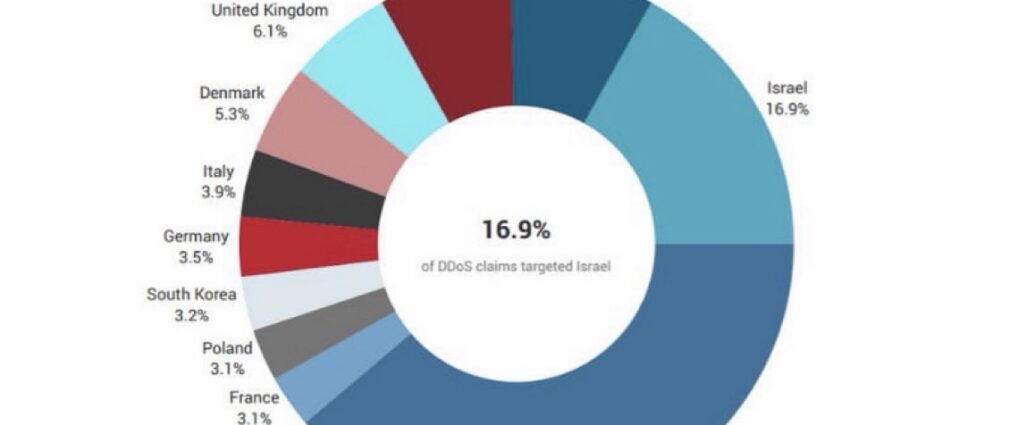
‘One in six attacks’: Israel was most targeted nation by hacktivism campaigns in first half of 2026
Israel kept being the world’s top target for hacktivist attacks in the first half of 2026, with one in six attacks targeting the country, the Radware H1 2026 Global Threat Report revealed Wednesday.
A hacktivist attack is carried out by non-state actors, often sponsored by states but not officially part of their organization, against selected countries for geopolitical reasons.
According to the report, Israel absorbed 16% of all the hacktivist campaigns, with 784 recorded claims of attacks; the United States was second with 8%, and the United Kingdom was third, while many European countries supporting Ukraine in the war against Russia absorbed a significant number of secondary attacks.
The report pointed out that a spike in attacks of this style was recorded during the war between the US, Israel, and Iran, after seeing these types of attacks hit a record low during the first months of the year.
In comparison to previous years, the first half of 2026 has been one of the lowest recorded, with the peak of hacktivism attacks being reached after the October 7 massacre and the beginning of the Israel-Hamas War, the report noted.

“The most significant finding is not merely that Israel once again ranks first, but that the gap between it and the other countries continues to widen,” says Ron Meyran, vice president of Cyber Intelligence at Radware.
“The digital arena has become an inseparable part of every military conflict, and the campaign against Iran demonstrated how quickly dozens of groups can mobilize and act against organizations in Israel,” he added.
The report also noted that most hacktivist groups active in the first half of the year were from the pro-Russia, anti-Western collective, with 85% of attacks claimed by groups in the collective. The most active group was NoName057, which accounted for almost 40% of the attacks.
Targeting infrastructure, autonomous systems
The report also noted that the attacks centered on infrastructure, with the main targets being industrial facilities that provide essential services and could pressure public officials.
According to the findings, 37% of the attacks targeted governmental institutions, while other targets included manufacturing services (8%), business (7%), hospitality (6%), and the financial sector (5%).
In terms of the services targeted, the main objective was to disrupt autonomous system numbers (ASNs), with the main companies affected by these attacks being Microsoft (22%), Amazon Web Services (13%), and Google Cloud Platform (7%).
Secondary targets included several European hosting providers, such as Hetzner Online GmbH (8.4%), because their infrastructure is key to supporting Ukrainian and Israeli networks, including uPress, Radware, Hosting Ukraine, and Cellcom.
The Agency expands into Rhode Island
Canadian Oil Merger Spotlights Alberta Boom



Alibaba President: AI agents can talk, but can they actually do the work?
Joshua Stancle runs Clean Saint out of Los Angeles. The product is a waterless oral-care film. The company is him. He uses AI for sourcing, marketing, web development, and customer support, and when we asked him what that felt like, he put it this way: “In a sense, there are ten of me.”
I keep coming back to the second half of that sentence. If there are ten of you, you need some way of knowing whether the other nine are getting the work right.
Most of the AI conversation still runs on a single question. Which model is the best? For a business, that is the wrong unit of measurement. A model reasons. Commerce means calling a supplier, filing a customs form, chasing a container that missed its vessel, handling a return, and a model does none of that by itself. Work gets done by an agent: the model that thinks, a harness that gives it tools and memory and the ability to act, and context that tells it what a good outcome looks like in a specific industry. At Alibaba.com, that context comes from 27 years of watching global commerce actually happen.
What commercial work asks of an agent
The industry has become very good at measuring intelligence. Benchmarks cover reasoning, coding, mathematics, factual recall, and increasingly tool use. But real commercial work is somewhat messier than any of that. Sourcing looks simple written down. In practice, it means comparing dozens of quotes, catching an inconsistency buried on the fourth page of a specification sheet, reading payment terms closely enough to notice when they have quietly changed, and confirming that a promised delivery date survives contact with your shipping schedule.
Product listings have the same texture. Attributes have to be right. Categories have to be right. The same listing may have to satisfy one set of regulatory requirements in Germany and a different set in California. Plausible output has very little value here. The job has to be finished, correctly, in the system where it lives.
Testing an AI agent only on what it says is like grading pilots on a written exam without asking them to land the plane.
Grade the outcome
That is why the Accio team at Alibaba.com, which offers an AI agent built for global commerce, developed a test that grades outcomes. CommerceAgentBench is open source and available on GitHub. It contains 107 end-to-end tasks pulled from real e-commerce operations across procurement, logistics, product listing, fulfillment, and after-sales service.
We assembled them from what we could see in our own data: 10 million active small-business users, 1.6 million real conversations, and 200,000 execution traces, sorted into seven categories of commercial work.
Grading happens on the end state. The listing either went live with the correct attributes or it did not. Freight moves on a route that exists, or it sits on a dock in Ningbo while somebody works out what went wrong.
Commerce has always kept score this way. A customer who receives the wrong product has no interest in how articulate the agent sounded when it placed the order. Execution is the benchmark that matters.
What we found
The strongest frontier model we tested successfully completed 61.7% of the tasks.
That figure is high enough to be useful and low enough to be a warning. Multi-step commercial work that sat beyond the reach of automation until recently now completes most of the time. But close to four in ten tasks still came back wrong.
The failures clustered in recognizable places. Agents struggled to spot a payment anomaly hiding inside a long supplier email thread, the kind of thing that reveals itself as fraud only after somebody has read all 300 messages. Landed cost gave them trouble once the calculation involved several moving variables at once. After-sales disputes broke down whenever the answer required reconciling documents that disagreed with each other. Multi-leg shipping routes were consistently hard.
Every one of those happens thousands of times a day in real businesses.
The risk changes as adoption scales. Across thousands of businesses using similar agents, individual mistakes could become correlated ones: inaccurate listings could multiply, fraud signals could be missed, and routing or compliance errors could ripple through supply chains. Measurement shows where automation is ready to scale, and where human oversight still needs to keep pace.
One result surprised me more than the headline number. No single model won. Leadership rotated by category. The model that ranked first on request-for-quote work and market research slipped behind on claims settlement and listing compliance, where a different model led. A third was strongest at publishing products and handling returns. A ranking built from general reasoning scores tells you very little about which system will perform on a particular commercial task, which is why the choice of model belongs to the job.
Precision delegation
For an individual business, that broader risk translates into a practical question:The question worth asking is narrower than the one the industry argues about. wWhich workflows can I hand over now, and which ones still need me? A benchmark that grades outcomes answers exactly that. Where the pass rates are high, supplier comparison and routine listing work can come off your desk. Where they are low, on unusual compliance questions and complicated negotiations and the exceptions that make up more of any commerce operation than anyone expects, keep a person in the loop and check the work.
I call this precision delegation. Once you know where an agent is dependable you can stop supervising it, and once you know where it breaks you can catch the failure before a customer does. Both save money. Neither is available without measurement.
Commerce needs a test like this and so does everything else. Logistics has its own edge cases, and so do finance, manufacturing, medicine, and legal services. Each field will need a benchmark built by people who understand what a bad outcome costs there, and those benchmarks should be open, so that a buyer can check a vendor’s claim against something.
Authority will move to agents one workflow at a time, as each one earns it. Joshua has ten of himself now. What he needs next is a way to know which of the ten he can stop checking.
The opinions expressed in Fortune.com commentary pieces are solely the views of their authors and do not necessarily reflect the opinions and beliefs of Fortune.
This story was originally featured on Fortune.com

Oil Breaks $100 Again as Middle East Supply Crisis Deepens
Oil crossed one of the market’s most important psychological lines Wednesday morning: $100 a barrel.
Brent crude climbed above $100 for the first time in nearly six weeks, trading around $100.70 a barrel, while U.S. crude rose above $95. Oil is now up roughly 25% since last month as the U.S.-Iran conflict increasingly moves from a geopolitical story into a direct global supply problem.
The biggest issue is no longer simply fear of what could happen in the Strait of Hormuz.
The oil is already not moving.
About 10 million barrels a day of global oil supply is currently offline, according to Reuters, while shipping traffic through the Strait of Hormuz remains severely disrupted. Only six commodity vessels passed through Tuesday, compared with a 10-day average of 12. Before the conflict, the strait handled roughly 125 commercial vessels a day and about 20% of global oil and LNG supply.
Now another major energy route is under pressure.
Iran-backed Houthi forces attacked Saudi oil facilities and utilities this week, igniting fires and injuring 73 people. The attacks shattered a four-year truce in Yemen and raised fears that instability could spread toward Saudi export infrastructure and the Red Sea shipping corridor.
At the same time, the United States and Iran are directly targeting energy shipping.
U.S. Central Command said American forces destroyed five Iranian crude-oil tankers after Iran fired missiles at a U.S. warship. Iranian state media later claimed its forces attacked multiple tankers and two U.S. vessels, although CENTCOM said the claims that American warships were hit were false.
That matters because the oil market is losing both production and transportation capacity at the same time.
For American businesses, $100 Brent does not stay on an oil trading screen.
Diesel moves trucks. Jet fuel moves airplanes. Bunker fuel moves cargo ships. Petrochemicals go into plastics, packaging, manufacturing and thousands of everyday products.
The average U.S. gasoline price has already climbed to about $4.22 a gallon, more than $1 higher than a year ago, while diesel has reached approximately $5.94 a gallon — a record.
That makes the math painful for nearly every business that moves something.
A trucking company buying 10,000 gallons of diesel a week is now spending almost $60,000 just on fuel. A distributor running hundreds of trucks cannot absorb those increases indefinitely. Eventually some of that cost moves into freight rates, grocery prices, construction materials and consumer goods.
Airlines face the same problem with jet fuel. Shipping companies face it with marine fuel. Manufacturers pay more both for energy and for moving raw materials into factories and finished products out.
And the higher oil goes, the harder the Federal Reserve’s job becomes.
Wall Street had spent much of the year debating when interest rates could come down. Now energy inflation is pushing the conversation in the opposite direction.
U.S. stock futures were lower Wednesday morning, with the Dow down roughly 0.5%, S&P 500 down 0.3% and Nasdaq down 0.4%, as investors worried that another energy shock could keep inflation elevated and interest rates higher for longer.
Markets are now waiting for the next U.S. inflation reports and the Federal Reserve meeting next week.
The supply cushion is also thin.
The U.S. Strategic Petroleum Reserve is sitting at its lowest level since 1982, limiting Washington’s ability to offset a prolonged disruption with emergency barrels. The International Energy Agency expects global oil supply to decline by roughly 4.3 million barrels a day this year, even with additional production coming from countries including the United States, Canada and Guyana.
That makes every additional attack more consequential.
The world has already seen significantly higher oil prices during this conflict, so $100 is not itself a worst-case scenario.
But Wednesday’s move is important because of what it signals.
The market is no longer pricing this as a short-lived Middle East scare.
It is beginning to price the possibility that millions of barrels of oil remain unavailable for much longer — while the world simultaneously loses confidence in the shipping routes needed to move the barrels that are still being produced.
For businesses, that means one of the largest costs in the global economy is rising again.
And unless supply starts moving normally through the Gulf, $100 oil may be the beginning of the problem, not the end of it.
JBizNews Desk | New York
© JBizNews.com All Rights Reserved.
Reproduction or distribution without written permission is prohibited.

U.S. national debt increased by $5.1 million a minute over the past year—that’s $117,279 for every American
U.S. debt hawks frequently warn that while the nation’s $40 trillion national debt is managed by policymakers, it is ultimately financed by the public. Congress’s Joint Economic Committee (JEC) has put a figure on that burden: Gross national debt now amounts to $117,279 per person.
In its monthly budget update, the committee calculated how fast public debt is growing: According to data compiled by the committee’s chairman, David Schweikert, debt has increased by $85,111.72 per second over the past year.
The JEC reported that gross national debt is $2.67 trillion higher relative to the same period last year, and $11.68 trillion greater than five years ago. If the current average daily rate of growth over the past three years continues, the report adds, the U.S. will hit $41 trillion in debt by mid-January. After that, an increase of another trillion dollars would be hit after 151 days—approximately June 2027.
On a more granular breakdown, the rate of debt growth averages around $7.35 billion a day, the report adds, or $306.4 million per hour, or $5.11 million per minute.
This, in turn, has consequences for the breakdown per person for the U.S. debt: the JEC reports it is now $117,279 per person or $297,522 per household—an increase in the past year amounting to $7,806 per individual and a little under $20,000 per household.
Debt experts point out that while Americans won’t receive a bill for these sums, the debt is still being financed by the public. This is a point Michael Peterson, the chairman and CEO of the Peterson Foundation, a nonpartisan organization dedicated to putting the U.S. on a more sustainable fiscal path, has previously highlighted to Fortune.
Speaking when debt surpassed $40 trillion last month, Peterson said: “When the U.S. borrows this much—and continues to borrow more and more—that drives up interest rates, which then increases household expenses because your mortgage goes up, your car loan, your credit card bills, and inflation more generally.
“So [we] may not get a bill at the end of the month for national debt, but [we] are paying that bill both in the form of taxes as well as an inflated level of expenses.”
Debt bulls argue that, despite the large sums, the value of debt isn’t the issue for the world’s largest economy. Their case is reasonable: Firstly, despite years of warnings, there has yet to be a market meltdown sparked by debt. Warning signs of a crisis would come from the Treasury market, where—although longer-dated yields are elevated—analysts suggest this is due to factors outside of debt concerns.
Interest breakdown
The U.S. Treasury isn’t immune to the sting that comes with borrowing: Interest.
Despite efforts from the Treasury in recent weeks to stabilize Treasuries in the form of buybacks, the level of interest it is paying remains elevated compared to a year ago.
The JEC notes that in August 2026, the average interest rate on the total marketable national debt was 3.475%, and a year ago it was 3.415%. Five years ago, the interest was 1.458%.
“Interest rates have a significant impact on how much the U.S. pays on debt,” the JEC update adds. “The total amount of interest paid to trust funds over the past 12 months was $294.76 billion, an average of $24.56 billion per month.”
This story was originally featured on Fortune.com

Israel in numbers: National population hits 10.305m., new CBS data shows ahead of Rosh Hashanah
Israel’s population stands at an estimated 10.305 million ahead of Rosh Hashanah, after growing by approximately 124,000 people over the past year, the Central Bureau of Statistics said on Wednesday.
The figures were released as part of the CBS’s annual “Israel in Numbers” report ahead of Rosh Hashanah, which compiles data covering population, health, education, employment, housing, the economy, transportation, agriculture, the environment and other aspects of Israeli life.
The annual population growth rate was 1.2%, according to the CBS figures. Of the country’s residents, about 7.828 million are Jews and others, representing 78.3% of the Israeli population, while approximately 2.173 million are Arabs, or 21.7%. Another 304,000 residents are foreign nationals.
The figures show that approximately 182,000 babies were born over the past year, while around 50,000 people died. At the same time, Israel recorded a negative international migration balance, with roughly 8,000 people deducted from the Israeli population through migration.
Around 24,000 new immigrants arrived in Israel over the period, along with some 4,000 people through family reunification. Approximately 21,000 Israelis who had previously emigrated returned to the country, while some 57,000 Israelis left after being classified as having emigrated abroad, according to the CBS.

Israel’s migration rate has risen sharply since 2023, as a Tel Aviv University study published in August, based on CBS data, found that a total of 268,930 Israelis left Israel in 2023 (86,509), 2024 (91,499), and 2025 (90,922). For comparison, the study showed that during the same period in 2013, 2014, and 2015, only 83,219 citizens left Israel.
The bureau uses a specific methodology for determining when a person is classified as an emigrant, and noted in the report that its population data are provisional and are based on the 2022 census, with changes made to the method for calculating Israelis living abroad and the addition of the foreign population.
At the end of 2025, Israel’s total population was estimated at 10.203 million, including 9.916 million Israelis and 286,700 foreign residents. During 2025, 20,900 new immigrants arrived, down from 31,100 in 2024, while 69,500 Israelis were recorded as leaving and 18,800 as returning under the CBS’s annual migration methodology.
A separate Aliyah and Integration Ministry report released in June said that more than 22,500 new immigrants moved to Israel in 2025, with increased immigration from several Western countries despite the security challenges of recent years.
Israel also remains home to nearly half of the world’s Jewish population. As of January 1, 2026, there were an estimated 15.9 million Jews worldwide, approximately 46% of whom lived in Israel, according to the CBS.
Israel’s fertility remains far above OECD average
The bureau’s annual figures also highlighted Israel’s relatively high fertility rate. A total of 183,678 live births were recorded in the relevant annual data, with the total fertility rate standing at 2.88 children per woman, compared with an OECD average of 1.41.
There were more than three million private households in Israel, with an average of 3.17 people per household, compared with approximately 2.5 across OECD countries. Some 53,025 couples married in 2024 and 16,499 divorced.
Life expectancy remained high by international standards. Israeli men had a life expectancy of 81.4 years and women 85.9 years, according to the latest figures. CBS international comparisons placed Israeli men seventh among OECD countries and women eighth based on the comparable 2024 data. This continues a pattern in which Israeli life expectancy ranks among the highest in the OECD.
The labor market remained tight, with 4.577 million people participating in the labor force and the unemployment rate standing at 2.9%. The employment rate among Israelis aged 15 and over was 60.9%, including 63.6% among men and 58.2% among women.
Housing data presented a mixed picture. The housing price index fell 1% and the index for new-home prices declined 2.8%, while average rent rose 4.3%. The average home price stood at approximately NIS 2.33 million, while average monthly rent reached NIS 4,919.
Israeli legal group challenges UN inquiry over applying double standards to Israel, Hamas
An Israeli legal advocacy group accused the United Nations commission investigating Israel and the Palestinian territories of applying different standards to Israel and Hamas, arguing in a report circulated Tuesday that alleged Israeli wrongdoing is traced to state policy and senior officials – while Palestinian responsibility is more often described in general terms.
The 48-page report by the Jerusalem Institute of Justice challenges the credibility of the UN Independent International Commission of Inquiry on the Occupied Palestinian Territory, including east Jerusalem, and Israel. The commission’s findings are not court judgments, but its mandate includes collecting and preserving evidence and identifying those believed responsible for violations, giving its work potential significance for international legal and diplomatic proceedings.
The Jerusalem Post queried the commission for comment.
The institute said it examined nine major commission reports issued between its establishment in 2021 and May 2026, alongside UN documents, budget records, public statements by commissioners, and other UN investigations.
Its central argument is that the commission repeatedly connects alleged Israeli violations to named officials, military units, government institutions, state policies, and institutional intent, while more often describing Palestinian perpetrators as “armed groups,” “militants,” “attackers,” or members of military wings.
The report focuses in part on the commission’s June 2024 findings concerning the October 7 massacre and the first months of the war.
UN commission attributes alleged Israeli violations to authorities, security forces
In its main report, the commission attributed crimes committed during the attack to members of Hamas’s military wing, other Palestinian armed groups, and Palestinian civilians. Its conclusions regarding Gaza, by contrast, attributed alleged violations to “Israeli authorities” and members of the Israeli security forces.
The institute argued that this difference dispersed responsibility for the Hamas-led attack among broad groups of perpetrators without examining Hamas’s political leadership, chain of command, operational planning, and organizational policy to the same degree as Israeli institutions and decision-makers.
The UN commission did not, however, ignore Hamas’s organizational role. Its separate detailed investigation found that the October 7 attack was led and coordinated by Hamas, documented what it described as indications of standing operational instructions, and concluded that Hamas’s military wing and six other Palestinian armed groups deliberately attacked civilians and committed war crimes.
The institute acknowledges those findings. Its criticism is narrower: that Hamas’s leadership and institutional responsibility did not receive the same depth of analysis or carry the same weight in the commission’s broader legal conclusions.
“Impartiality is tested by one thing: whether the same rules apply to everyone,” said attorney Uri Morad, director of the institute’s international law and public diplomacy department. “In this case, the answer is no.”
The report also alleges an evidentiary double standard. It says the commission repeatedly rejected Israeli military and security explanations when it considered them insufficiently supported, while relying on information from Palestinian authorities, the Hamas-run Gaza Health Ministry, advocacy groups, confidential witnesses, and social media without always explaining how that material was independently verified or reconciled with conflicting evidence.
The commission has said its findings are based on interviews, submissions, satellite imagery, medical records, and verified open-source material. Israel has refused to cooperate with the inquiry or permit its investigators access, saying the body is structurally biased. The commission has said the lack of access obstructed its investigations.
That dispute complicates the institute’s comparison. Restricted access may help explain why the commission relied on remote interviews, confidential sources, and publicly available material, although it does not by itself answer whether evidence from the two sides was tested equally.
Report criticizes UN commission’s open-ended mandate
The report separately criticizes the commission’s open-ended mandate, which allows it to investigate violations occurring since April 2021, earlier events leading up to them, and the broader “root causes” of the conflict without a fixed end date.
That structure has drawn criticism beyond Israel. Australia, Canada, New Zealand, Norway, and the United Kingdom said jointly in 2025 that they regretted the commission’s open-ended establishment, describing it as contrary to usual practice, while continuing to support proportionate scrutiny of alleged violations by all sides.
The institute called on UN member states to terminate the commission and replace it with time-limited investigations governed by clearer evidentiary and impartiality standards.

Russia says it hopes US-mediated talks with Ukraine will resume soon
Russia hopes that US-mediated peace talks on ending the war in Ukraine will resume soon, Kremlin spokesman Dmitry Peskov said on Wednesday.
No such talks between Russia and Ukraine have taken place since February, but US President Donald Trump sent his negotiators to Moscow and then Kyiv at the weekend in a bid to relaunch the stalled process.
Peskov was responding to a comment by US Secretary of State Marco Rubio that it may be possible to draw up a roadmap to restart talks and work towards an acceptable outcome for both sides.
A huge gulf remains between Russia and Ukraine on how to end the 4-1/2-year war, with Kyiv rejecting Moscow’s demands that it give up more territory.
Peskov said Moscow would not publicly discuss any specifics of a potential settlement, but there was a “confirmed political will” to resume talks.

“We hope that these negotiations will resume in the foreseeable future, and we remain in contact with our American counterparts,” he said, a day after Trump and Russian President Vladimir Putin spoke by phone.
Prisoner exchange a ‘constant item’ on agenda, Peskov says
Peskov added that the issue of exchanging prisoners between Russia and the US was “a constant item on the agenda,” including between the two presidents. He noted that Russia had released one American prisoner, Robert Gilman, at Trump’s request last month.
The two countries have traded prisoners at several points in the past few years.
The biggest such deal was in August 2024, when Russia got back eight prisoners held in the West, including a member of its FSB security service convicted of murder in Germany.
In exchange, 16 people were released from Russian and Belarusian jails. Among those freed by Moscow were prominent Russian dissidents and three US citizens, including Wall Street Journal correspondent Evan Gershkovich.

Chinese Rare-Earth Suppliers Are Refusing Some U.S. Orders, Putting American Supply Chains Back on Alert
WASHINGTON — Some Chinese rare-earth suppliers are refusing to ship critical materials to American customers, reopening a supply-chain problem Washington thought it had partially stabilized and putting U.S. manufacturers back on alert ahead of President Xi Jinping’s planned visit to Washington later this month.
The refusals began after China imposed sanctions in August on the Responsible Business Alliance, a U.S.-based organization used by companies to monitor labor, sourcing and supply-chain practices.
Chinese suppliers now fear that dealing with American customers that use the alliance or related responsible-minerals programs could expose them to punishment from Beijing.
That means some exporters are choosing the safest option:
Do not ship to the United States at all.
The problem is especially serious because the materials involved are not ordinary commodities.
Rare earths and other critical minerals are used in semiconductors, fighter aircraft, missiles, medical equipment, electric motors, telecommunications systems, energy infrastructure and advanced manufacturing.
A shortage of one specialized material can stop production of an entire product worth thousands or even millions of dollars.
China Still Controls the Chokepoint
The United States has spent billions trying to reduce its dependence on China for strategically important minerals.
But China still dominates the processing and refining of many rare-earth materials.
That means an American company can build a semiconductor factory, defense plant or advanced manufacturing facility in the United States and still depend on a Chinese supplier for a small but essential ingredient.
That vulnerability is now showing up again.
Chinese suppliers have reportedly declined some American orders since early August, while other shipments remain delayed by export-license approvals.
One of the most important materials is yttrium, which is used in aerospace coatings, electronics, medical technologies and advanced industrial applications.
China resumed limited yttrium exports in July after a two-month halt, but American buyers are still struggling to receive enough material.
U.S. imports remain substantially below earlier levels.
Other materials facing restrictions or delays include gallium, terbium, tungsten and indium phosphide, all of which are important to high-technology and defense supply chains.
A Small Mineral Can Stop a Huge Factory
The business risk is easy to underestimate because rare-earth materials often represent only a tiny fraction of the cost of a finished product.
But they can be impossible to substitute quickly.
A semiconductor manufacturer may have billions of dollars of equipment and thousands of employees ready to produce chips.
If it cannot obtain one specialized mineral needed for a component, coating or manufacturing process, the entire production line can slow down.
The same applies to aircraft, missiles, medical equipment and electric motors.
That is why critical minerals increasingly resemble the semiconductor shortages companies experienced during the pandemic.
The missing item may be inexpensive.
The economic damage from not having it can be enormous.
American Companies Have Already Been Waiting Months
Some U.S. companies have reportedly waited six months or longer for Chinese export licenses.
Earlier this year, suppliers serving American aerospace and semiconductor customers were already turning away some buyers because they could not obtain enough material.
The latest refusals make the problem more complicated.
This is no longer simply Beijing delaying an export license.
In some cases, the Chinese supplier itself may decide an American customer is too politically risky to serve.
That makes traditional supply-chain planning much harder.
A company cannot solve the problem simply by submitting paperwork earlier if the supplier does not want the business.
Xi’s Washington Visit Just Became More Important for American Industry
President Xi is expected in Washington on September 24, and critical-mineral access is now expected to be part of the U.S. planning around the visit.
Washington has repeatedly pressed China to honor previous commitments to maintain a smoother flow of rare-earth export licenses.
The persistence of shortages shows those assurances have not removed the underlying problem.
China understands how valuable its mineral-processing dominance is.
The United States understands how dangerous that dependence has become.
That makes rare earths one of the most important pieces of leverage Beijing possesses in the broader U.S.-China relationship.
Tariffs can make a Chinese product more expensive.
A mineral restriction can make an American product impossible to manufacture.
That is a much more powerful weapon.
Washington Is Spending Billions to Build Alternatives
The United States is now financing new mines, processing plants, recycling operations and domestic supply agreements in an attempt to build alternatives.
The Defense Department has invested heavily in domestic rare-earth production, while private capital is increasingly moving toward companies capable of mining or processing strategic minerals outside China.
But those projects take years.
Opening a mine is difficult.
Building processing facilities is expensive.
Environmental reviews, financing, technical expertise and customer contracts all take time.
So even as billions are being committed to independence, American manufacturers remain dependent on Chinese material today.
That gap between the supply chain America wants and the supply chain America actually has is where the current risk sits.
What Businesses Should Be Watching
For manufacturers that depend on specialized minerals, this is no longer a procurement issue that can be left entirely to purchasing departments.
Companies need to know where their critical materials actually originate — including materials buried several layers deep inside components purchased from another supplier.
They also need to know whether alternative suppliers exist outside China and how long qualification of those suppliers would take.
Because the next shortage may not arrive with a formal government announcement.
It may simply arrive as an email from a supplier saying:
We cannot fill your order.
That is what makes the latest Chinese refusals so important.
The United States and China may still be negotiating tariffs, investment and trade balances.
But underneath those negotiations is a much more fundamental contest.
America wants to control the factories of the future. China still controls many of the materials those factories cannot operate without.
Until that changes, a small number of Chinese suppliers can continue holding extraordinary leverage over some of the most important industries in the American economy.
JBizNews Desk | Washington
© JBizNews.com All Rights Reserved. Reproduction or distribution without written permission is prohibited.


The Next Freight Problem May Be Ship Fuel
The fuel that carries your groceries across the ocean costs 76 percent more than it did before the Iran war started.
That is a bigger jump than crude oil itself, which is up about 40 percent over the same stretch, and the gap is the whole story. Very low sulphur fuel oil, the heavy fuel most cargo ships burn, was going for just under $825 a metric ton in Singapore as of Sept. 1, roughly $130 a barrel, according to bunker platform ZeroNorth.
Here is why it is running short. A refinery splits a barrel of crude into several fuels, and diesel, gasoline and jet fuel pay far better than the heavy stuff left at the bottom. When refineries get knocked out and crude gets scarce, refiners make the profitable fuels first and let ship fuel come last.
Ukrainian drone strikes have torn into Russia’s refineries, and the Iran war has cut Middle East output. Russia’s fuel oil exports fell to a record low 591,000 barrels a day in August, down from over 860,000 a day in 2025. Middle East exports dropped 45 percent from a year ago.
At the same time ships are burning more of it, because vessels routing around conflict waters sail longer voyages.
Less made, more needed.
Energy Aspects now expects the world to come up 218,000 barrels a day short in the third quarter. A year ago the gap was 6,000 barrels a day.
That is 36 times wider.
Rystad sees the same picture.
The cushion is thin too. Stockpiles at the three big refueling hubs — Singapore, Fujairah in the United Arab Emirates, and the Amsterdam-Rotterdam-Antwerp cluster — are about 30 percent below their three-year seasonal norms.
Where there would normally be 10 barrels sitting in a tank, there are 7.
Singapore, the world’s biggest bunkering port, imports more than half of the nearly 1 million barrels a day it burns, which leaves Asia most exposed.
For American shoppers this is the second fuel bill arriving at once.
Diesel hit a record $5.85 a gallon on Sept. 4, up from $3.71 a year ago, and that lands on every truck and railcar moving goods inside the country.
Ship fuel is the same cost at the ocean end of the trip.
Carriers recover it through bunker surcharges written into container rates, so it reaches importers within weeks and store shelves within months.
The timing is awkward.
Inflation ran 3.4 percent in July, well above the Federal Reserve’s 2 percent target, and Chair Kevin Warsh said at Jackson Hole that prices should be the Fed’s main focus.
Futures markets put the odds of a quarter-point rate increase at the Sept. 16 meeting somewhere near 60 percent.
The fix is not complicated, only slow.
Refiners can swing production back toward fuel oil once crude flows steady and damaged plants come back online.
Until then, importers with freight contracts up for renewal should be locking rates now, before the surcharges reset.
JBizNews Desk | New York
© JBizNews.com All Rights Reserved. Reproduction or distribution without written permission is prohibited.

Insilico’s co-CEO hopes ‘we might have a chance to stop biological aging’ after promising results from its fibrosis drug trial
Children born today could see average life expectancy pass 100 years within a generation, healthcare executives predicted at the Fortune Leaders Forum in Macau on Sept. 8.
Yet the bigger problem may be figuring out how to pay for it.
“The question is not the availability of all these new technologies. It’s how we’re going to make good medical care accessible to millions, and how we’re going to make it affordable as we age,” said Kelvin Loh, group chief healthcare officer at insurer AIA.
One in four people in Asia-Pacific will be over 60 by 2050, up from around one in seven now. That shift will put even more strain on healthcare systems due to a greater incidence of chronic conditions.
AI drugmakers are betting they can ease that burden by tackling aging at its source, and one says it now has early evidence it’s possible.
“We might have a chance to stop biological aging,” said Feng Ren, co-CEO and head of drug research and development at Insilico Medicine, an AI drug discovery startup. On Sept. 7, Insilico announced that patients taking its experimental fibrosis drug showed signs that their predicted biological age had declined by roughly three years on average, and up to six years on one measure. (Shares are up 11% since it announced the news)
Loh’s take was more measured. “I’m very sure that we will extend life. We may not cure aging, but we are going to extend life. That is for sure,” he said.
Medicine is already turning some terminal diagnoses into manageable ones, Loh said. “Cancer is no more a death sentence,” he said. Stage 4 lung cancer patients once given six months to live “can live for 10 years or more. It’s becoming [a] chronic disease.”
Several speakers pointed to “healthspan,” or the length of time people spend in good health, as the next target for the health sector.
“It’s important that we don’t live longer; we live healthier,” said Keith Choy, president of Asia-Pacific at consumer health company Haleon. He pointed out that people spend roughly the last decade of their lives in poor health or with some kind of disability.
Choy suggested that, in the near future, wearable health technology and AI technology could change the nature of healthcare. “Could you imagine after five or 10 years, or even shorter, maybe everyone…in China’s 1.4 billion population, they can have a personal doctor.”
This story was originally featured on Fortune.com

Insilico’s co-CEO hopes ‘we might have a chance to stop biological aging’ after promising results from its fibrosis drug trial
Children born today could see average life expectancy pass 100 years within a generation, healthcare executives predicted at the Fortune Leaders Forum in Macau on Sept. 8.
Yet the bigger problem may be figuring out how to pay for it.
“The question is not the availability of all these new technologies. It’s how we’re going to make good medical care accessible to millions, and how we’re going to make it affordable as we age,” said Kelvin Loh, group chief healthcare officer at insurer AIA.
One in four people in Asia-Pacific will be over 60 by 2050, up from around one in seven now. That shift will put even more strain on healthcare systems due to a greater incidence of chronic conditions.
AI drugmakers are betting they can ease that burden by tackling aging at its source, and one says it now has early evidence it’s possible.
“We might have a chance to stop biological aging,” said Feng Ren, co-CEO and head of drug research and development at Insilico Medicine, an AI drug discovery startup. On Sept. 7, Insilico announced that patients taking its experimental fibrosis drug showed signs that their predicted biological age had declined by roughly three years on average, and up to six years on one measure. (Shares are up 11% since it announced the news)
Loh’s take was more measured. “I’m very sure that we will extend life. We may not cure aging, but we are going to extend life. That is for sure,” he said.
Medicine is already turning some terminal diagnoses into manageable ones, Loh said. “Cancer is no more a death sentence,” he said. Stage 4 lung cancer patients once given six months to live “can live for 10 years or more. It’s becoming [a] chronic disease.”
Several speakers pointed to “healthspan,” or the length of time people spend in good health, as the next target for the health sector.
“It’s important that we don’t live longer; we live healthier,” said Keith Choy, president of Asia-Pacific at consumer health company Haleon. He pointed out that people spend roughly the last decade of their lives in poor health or with some kind of disability.
Choy suggested that, in the near future, wearable health technology and AI technology could change the nature of healthcare. “Could you imagine after five or 10 years, or even shorter, maybe everyone…in China’s 1.4 billion population, they can have a personal doctor.”
This story was originally featured on Fortune.com
Alibaba President: AI agents can talk, but can they actually do the work?
Joshua Stancle runs Clean Saint out of Los Angeles. The product is a waterless oral-care film. The company is him. He uses AI for sourcing, marketing, web development, and customer support, and when we asked him what that felt like, he put it this way: “In a sense, there are ten of me.”
I keep coming back to the second half of that sentence. If there are ten of you, you need some way of knowing whether the other nine are getting the work right.
Most of the AI conversation still runs on a single question. Which model is the best? For a business, that is the wrong unit of measurement. A model reasons. Commerce means calling a supplier, filing a customs form, chasing a container that missed its vessel, handling a return, and a model does none of that by itself. Work gets done by an agent: the model that thinks, a harness that gives it tools and memory and the ability to act, and context that tells it what a good outcome looks like in a specific industry. At Alibaba.com, that context comes from 27 years of watching global commerce actually happen.
What commercial work asks of an agent
The industry has become very good at measuring intelligence. Benchmarks cover reasoning, coding, mathematics, factual recall, and increasingly tool use. But real commercial work is somewhat messier than any of that. Sourcing looks simple written down. In practice, it means comparing dozens of quotes, catching an inconsistency buried on the fourth page of a specification sheet, reading payment terms closely enough to notice when they have quietly changed, and confirming that a promised delivery date survives contact with your shipping schedule.
Product listings have the same texture. Attributes have to be right. Categories have to be right. The same listing may have to satisfy one set of regulatory requirements in Germany and a different set in California. Plausible output has very little value here. The job has to be finished, correctly, in the system where it lives.
Testing an AI agent only on what it says is like grading pilots on a written exam without asking them to land the plane.
Grade the outcome
That is why the Accio team at Alibaba.com, which offers an AI agent built for global commerce, developed a test that grades outcomes. CommerceAgentBench is open source and available on GitHub. It contains 107 end-to-end tasks pulled from real e-commerce operations across procurement, logistics, product listing, fulfillment, and after-sales service.
We assembled them from what we could see in our own data: 10 million active small-business users, 1.6 million real conversations, and 200,000 execution traces, sorted into seven categories of commercial work.
Grading happens on the end state. The listing either went live with the correct attributes or it did not. Freight moves on a route that exists, or it sits on a dock in Ningbo while somebody works out what went wrong.
Commerce has always kept score this way. A customer who receives the wrong product has no interest in how articulate the agent sounded when it placed the order. Execution is the benchmark that matters.
What we found
The strongest frontier model we tested successfully completed 61.7% of the tasks.
That figure is high enough to be useful and low enough to be a warning. Multi-step commercial work that sat beyond the reach of automation until recently now completes most of the time. But close to four in ten tasks still came back wrong.
The failures clustered in recognizable places. Agents struggled to spot a payment anomaly hiding inside a long supplier email thread, the kind of thing that reveals itself as fraud only after somebody has read all 300 messages. Landed cost gave them trouble once the calculation involved several moving variables at once. After-sales disputes broke down whenever the answer required reconciling documents that disagreed with each other. Multi-leg shipping routes were consistently hard.
Every one of those happens thousands of times a day in real businesses.
The risk changes as adoption scales. Across thousands of businesses using similar agents, individual mistakes could become correlated ones: inaccurate listings could multiply, fraud signals could be missed, and routing or compliance errors could ripple through supply chains. Measurement shows where automation is ready to scale, and where human oversight still needs to keep pace.
One result surprised me more than the headline number. No single model won. Leadership rotated by category. The model that ranked first on request-for-quote work and market research slipped behind on claims settlement and listing compliance, where a different model led. A third was strongest at publishing products and handling returns. A ranking built from general reasoning scores tells you very little about which system will perform on a particular commercial task, which is why the choice of model belongs to the job.
Precision delegation
For an individual business, that broader risk translates into a practical question:The question worth asking is narrower than the one the industry argues about. wWhich workflows can I hand over now, and which ones still need me? A benchmark that grades outcomes answers exactly that. Where the pass rates are high, supplier comparison and routine listing work can come off your desk. Where they are low, on unusual compliance questions and complicated negotiations and the exceptions that make up more of any commerce operation than anyone expects, keep a person in the loop and check the work.
I call this precision delegation. Once you know where an agent is dependable you can stop supervising it, and once you know where it breaks you can catch the failure before a customer does. Both save money. Neither is available without measurement.
Commerce needs a test like this and so does everything else. Logistics has its own edge cases, and so do finance, manufacturing, medicine, and legal services. Each field will need a benchmark built by people who understand what a bad outcome costs there, and those benchmarks should be open, so that a buyer can check a vendor’s claim against something.
Authority will move to agents one workflow at a time, as each one earns it. Joshua has ten of himself now. What he needs next is a way to know which of the ten he can stop checking.
The opinions expressed in Fortune.com commentary pieces are solely the views of their authors and do not necessarily reflect the opinions and beliefs of Fortune.
This story was originally featured on Fortune.com

AI writing is A-ok if you’re a billionaire. For everyone else, it can be a career-ending scandal
Weeks ago, hedge fund investor Stanley Druckenmiller wrote an op-ed in The Wall Street Journal criticizing Treasury Secretary Scott Bessent’s decision to increase government purchases of long-term Treasury bonds in an effort to bring down yields. The op-ed sparked controversy, not so much for the fact that Druckenmiller was publicly rebuking his former protege, but because it appeared to have been drafted with the help of AI.
Readers who put the piece through the AI-detection tool Pangram had their suspicions confirmed. Backlash ensued, with critics calling the piece “Claudeslop,” questioning if Druckenmiller had written any of it, and debating whether the opinion editors at The Wall Street Journal had a duty to prevent AI-written work from being published on their platform. But while some critics might have been expecting a retraction or an apology, Druckenmiller and The Wall Street Journal defended their use of AI. Druckenmiller responded that he wasn’t embarrassed about having used AI, and the editor of the Journal’s opinion section stood by him, stating that while the writing might not have been his own, the ideas in the op-ed were.
It’s true that public figures have always had speechwriters, editors, researchers, and ghostwriters to help bring their ideas to life. Why should AI be any different? Did you really think that a billionaire financier was writing an op-ed without some sort of help? But acknowledging this reality also requires us to confront the uneven standard that society imposes on AI use: a financier using it to write an op-ed is acceptable, but for most other people, and most other uses, AI use can be an embarrassing scandal.
Over the past several months, a number of writers have faced intense public scrutiny for their use of AI. After a book review by Alex Preston in the New York Times was found to have striking similarities to another review of the same book, Preston admitted that these sections were added by an AI tool, prompting the addition of editor’s note clarifying that this was a violation of the Times’ standards. Steven Rosenbaum, the author of a nonfiction book about AI, was found to have included fabricated quotes from real people, an embarrassing error that were again attributed to the author’s use of AI. The popular Youtuber and science communicator Hank Green faced backlash from his fans after using what appeared to be a stock AI phrase in a video and later admitting to being dependent on ChatGPT to produce scripts for his videos. These are just a few of the many instances where an embarrassing slip or error have revealed what was previously undisclosed AI use.
But allegations of AI use have dented the careers and reputations of even those who haven’t made obvious errors or admitted to using it. Novelists Mia Ballard and Jerry Falade both saw lucrative book deals go up in smoke after being accused of using AI to write their manuscripts. The literary magazine Granta made the decision to stop publishing winners of the Commonwealth Short Story Prize after its most recent winner was roundly criticized for suspected AI use. In nearly all these instances, accusations of undisclosed AI use have been backed up by AI detection tools like Pangram, which scores a piece of text on the extent to which it was machine or human-generated. What’s notable is that such accusations have not sunk every author. Science fiction romance writer H.M. Wolfe self-published a best-selling novel, then had it picked up by Simon & Schuster in a seven-figure deal, only to face accusations of AI use shortly thereafter, with Pangram audits as evidence. Nevertheless, the author’s firm denials, devoted fanbase, and a general skepticism about the reliability of AI-detection tools have saved Wolfe from facing the fate of her peers.
Of course, a hedge fund investor like Druckenmiller has no fans to please, only clients and readers who care more about his financial views than whether he has chosen every word to express those views himself, and the opinion pages of the Journal seem to have concluded the same. The use of AI in writing seems far less taboo in contexts like business and technology. The journalist Taylor Lorenz ran recent posts from some of the top Substack newsletters through Pangram, and found technology to be the category with the highest share of AI-generated writing, reflecting, perhaps, a willingness of those readers to engage with AI-generated writing.
These wildly inconsistent standards for who is allowed to use AI in the public eye and how they disclose its use, reflect the wide range of views about AI among audiences and the public in general. When Anthropic announced in early August that Claude would embed an invisible watermark in generated text, reactions among observers were split: some lauded the feature as a step towards transparency, while others protested, arguing that it would unfairly cast suspicion on the work of those who use Claude for what they deem as legitimate uses like editing and proofreading, rather than using it to generate text outright.
We can’t put the genie back in the bottle, so we must learn to live with this new tool both ethically in a way that’s applied to everyone equally.
As I see it, radical AI transparency is the only way that happens. Instead of playing “AI Detective” every time something is published and selectively punishing those who are caught in the act, we need a new standard of disclosure. Every op-ed, reported feature, novel manuscript, college essay, etc. should come with a bibliography that includes citations to books, studies and articles, and how AI participated in the article’s creation.
Content ought to succeed based on how much people choose to engage with it, with full awareness of whether and the manner in which AI tools were used in its creation. Every publisher should publicly state their position on AI usage and let the free market decide whether or not they want to read their news.
This new kind of bibliography is what I call “proof of sweat.” It lets readers know the degree to which a piece of work is the result of human effort. It answers the questions of where the ideas came from, what exactly AI was used for, and what thinking did the human actually do? Creators are reluctant to disclose the use of AI because they’re worried that their audiences will reject them for it. But rather than fearing backlash and cultivating an atmosphere of suspicion and uncertainty through obfuscation, creators and publishers have a chance to instill trust and goodwill among audiences by being as transparent as possible about if and how AI was used, while taking responsibility for that use.
Some platforms have already taken steps in this direction. Steam, the largest platform for PC video games, requires an AI disclosure from developers that list games on its platform. Their requirements go into specifics, making distinctions between “Pre-Generated” and “Live-Generated” AI content, requiring clarifications on guardrails, and also allowing the players to report illegal content when games have Live-Generated AI. These disclosures are flawed, and allow publishers to hide behind vague statements, but they reflect a real desire among audiences to know, and are a step in the right direction.
For as long as real ethical questions remain about the manner in which AI companies use resources, train models on copyrighted work, or warp the contours of our society and economy, there will always be a section of the public that shuns the use of AI in any form. But here too, transparency, rather than refusal, is a way to demand more accountability from all players in the sector. AI detectors are a tool, but they’re no replacement for proper AI disclosure that applies equally whether you’re a billionaire writing an op-ed or a graduate student writing a research paper. Rather than wasting our time playing AI detective in a never-ending game of “gotcha,” it’s time we take a cue from Stan Druckenmiller and fess up. Hopefully next time he’ll make that disclosure before publication.
The opinions expressed in Fortune.com commentary pieces are solely the views of their authors and do not necessarily reflect the opinions and beliefs of Fortune.
This story was originally featured on Fortune.com

AI writing is A-ok if you’re a billionaire. For everyone else, it can be a career-ending scandal
Weeks ago, hedge fund investor Stanley Druckenmiller wrote an op-ed in The Wall Street Journal criticizing Treasury Secretary Scott Bessent’s decision to increase government purchases of long-term Treasury bonds in an effort to bring down yields. The op-ed sparked controversy, not so much for the fact that Druckenmiller was publicly rebuking his former protege, but because it appeared to have been drafted with the help of AI.
Readers who put the piece through the AI-detection tool Pangram had their suspicions confirmed. Backlash ensued, with critics calling the piece “Claudeslop,” questioning if Druckenmiller had written any of it, and debating whether the opinion editors at The Wall Street Journal had a duty to prevent AI-written work from being published on their platform. But while some critics might have been expecting a retraction or an apology, Druckenmiller and The Wall Street Journal defended their use of AI. Druckenmiller responded that he wasn’t embarrassed about having used AI, and the editor of the Journal’s opinion section stood by him, stating that while the writing might not have been his own, the ideas in the op-ed were.
It’s true that public figures have always had speechwriters, editors, researchers, and ghostwriters to help bring their ideas to life. Why should AI be any different? Did you really think that a billionaire financier was writing an op-ed without some sort of help? But acknowledging this reality also requires us to confront the uneven standard that society imposes on AI use: a financier using it to write an op-ed is acceptable, but for most other people, and most other uses, AI use can be an embarrassing scandal.
Over the past several months, a number of writers have faced intense public scrutiny for their use of AI. After a book review by Alex Preston in the New York Times was found to have striking similarities to another review of the same book, Preston admitted that these sections were added by an AI tool, prompting the addition of editor’s note clarifying that this was a violation of the Times’ standards. Steven Rosenbaum, the author of a nonfiction book about AI, was found to have included fabricated quotes from real people, an embarrassing error that were again attributed to the author’s use of AI. The popular Youtuber and science communicator Hank Green faced backlash from his fans after using what appeared to be a stock AI phrase in a video and later admitting to being dependent on ChatGPT to produce scripts for his videos. These are just a few of the many instances where an embarrassing slip or error have revealed what was previously undisclosed AI use.
But allegations of AI use have dented the careers and reputations of even those who haven’t made obvious errors or admitted to using it. Novelists Mia Ballard and Jerry Falade both saw lucrative book deals go up in smoke after being accused of using AI to write their manuscripts. The literary magazine Granta made the decision to stop publishing winners of the Commonwealth Short Story Prize after its most recent winner was roundly criticized for suspected AI use. In nearly all these instances, accusations of undisclosed AI use have been backed up by AI detection tools like Pangram, which scores a piece of text on the extent to which it was machine or human-generated. What’s notable is that such accusations have not sunk every author. Science fiction romance writer H.M. Wolfe self-published a best-selling novel, then had it picked up by Simon & Schuster in a seven-figure deal, only to face accusations of AI use shortly thereafter, with Pangram audits as evidence. Nevertheless, the author’s firm denials, devoted fanbase, and a general skepticism about the reliability of AI-detection tools have saved Wolfe from facing the fate of her peers.
Of course, a hedge fund investor like Druckenmiller has no fans to please, only clients and readers who care more about his financial views than whether he has chosen every word to express those views himself, and the opinion pages of the Journal seem to have concluded the same. The use of AI in writing seems far less taboo in contexts like business and technology. The journalist Taylor Lorenz ran recent posts from some of the top Substack newsletters through Pangram, and found technology to be the category with the highest share of AI-generated writing, reflecting, perhaps, a willingness of those readers to engage with AI-generated writing.
These wildly inconsistent standards for who is allowed to use AI in the public eye and how they disclose its use, reflect the wide range of views about AI among audiences and the public in general. When Anthropic announced in early August that Claude would embed an invisible watermark in generated text, reactions among observers were split: some lauded the feature as a step towards transparency, while others protested, arguing that it would unfairly cast suspicion on the work of those who use Claude for what they deem as legitimate uses like editing and proofreading, rather than using it to generate text outright.
We can’t put the genie back in the bottle, so we must learn to live with this new tool both ethically in a way that’s applied to everyone equally.
As I see it, radical AI transparency is the only way that happens. Instead of playing “AI Detective” every time something is published and selectively punishing those who are caught in the act, we need a new standard of disclosure. Every op-ed, reported feature, novel manuscript, college essay, etc. should come with a bibliography that includes citations to books, studies and articles, and how AI participated in the article’s creation.
Content ought to succeed based on how much people choose to engage with it, with full awareness of whether and the manner in which AI tools were used in its creation. Every publisher should publicly state their position on AI usage and let the free market decide whether or not they want to read their news.
This new kind of bibliography is what I call “proof of sweat.” It lets readers know the degree to which a piece of work is the result of human effort. It answers the questions of where the ideas came from, what exactly AI was used for, and what thinking did the human actually do? Creators are reluctant to disclose the use of AI because they’re worried that their audiences will reject them for it. But rather than fearing backlash and cultivating an atmosphere of suspicion and uncertainty through obfuscation, creators and publishers have a chance to instill trust and goodwill among audiences by being as transparent as possible about if and how AI was used, while taking responsibility for that use.
Some platforms have already taken steps in this direction. Steam, the largest platform for PC video games, requires an AI disclosure from developers that list games on its platform. Their requirements go into specifics, making distinctions between “Pre-Generated” and “Live-Generated” AI content, requiring clarifications on guardrails, and also allowing the players to report illegal content when games have Live-Generated AI. These disclosures are flawed, and allow publishers to hide behind vague statements, but they reflect a real desire among audiences to know, and are a step in the right direction.
For as long as real ethical questions remain about the manner in which AI companies use resources, train models on copyrighted work, or warp the contours of our society and economy, there will always be a section of the public that shuns the use of AI in any form. But here too, transparency, rather than refusal, is a way to demand more accountability from all players in the sector. AI detectors are a tool, but they’re no replacement for proper AI disclosure that applies equally whether you’re a billionaire writing an op-ed or a graduate student writing a research paper. Rather than wasting our time playing AI detective in a never-ending game of “gotcha,” it’s time we take a cue from Stan Druckenmiller and fess up. Hopefully next time he’ll make that disclosure before publication.
The opinions expressed in Fortune.com commentary pieces are solely the views of their authors and do not necessarily reflect the opinions and beliefs of Fortune.
This story was originally featured on Fortune.com
High Court presses parties on legal basis for real-time voter tracking, focuses on privacy
The High Court of Justice on Wednesday scrutinized whether political parties may receive identified, real-time reports of who has voted, repeatedly returning to a central question: What legal authority permits information recorded inside a polling station to be transferred to a campaign?
The court’s decision will determine whether parties may use the information during the October 27 election to identify likely supporters who have not yet voted and target them with calls, messages, visits, or transportation offers.
The three-justice panel did not present a unified position during the hearing.
Justice Khaled Kabub repeatedly questioned the claim that existing law permits the practice, saying that the Knesset is the body authorized to change the law. Justice Yael Willner challenged arguments that a voter’s prior association with a party reduced the privacy concern, but stressed that the full Central Elections Committee was not automatically bound by the legal opinion of its chairman, Supreme Court Deputy President Noam Sohlberg.
Justice Alex Stein tested both sides. He noted that election law already allows parties to receive certain information from the voter registry, while also questioning why campaigns required live information from polling stations when they could contact supporters without it.

Willner opened the expedited hearing by saying that a decision was needed quickly because of the approaching election and the High Holy Days.
Central Elections Committee votes to allow polling station officials to report whether a person has voted
The full Central Elections Committee voted Sunday by 19-11, with three abstentions, to allow party-appointed polling-station officials to report whether an identified person had voted. The information does not reveal which party or candidate received the vote.
The committee imposed several conditions. Reporting would be permitted only from ordinary polling stations; the exact time a person voted could not be recorded; the information could be used only to encourage turnout; it could not be transferred to another party or outside body; and it would have to be destroyed after the election.
Those restrictions are now under challenge by attorney Shahar Ben-Meir, the Reservists Party and its chairman Yoaz Hendel, Choosing Israel, and the Movement for Quality Government in Israel.
Likud attorney Ilan Bombach argued that the committee had properly balanced voters’ privacy against the public interest in increasing participation. He said parties generally contacted people already associated with them and that individuals could ask not to be contacted.
The justices questioned that premise. Kabub described the proposed category of party-affiliated voters as undefined and potentially unlimited. Willner asked why a known political affiliation would make the subsequent collection of voting information less intrusive, suggesting that it could instead sharpen concerns about partisan advantage.
Stein returned to a more basic point: “What is the formal legal basis for using this tool?”
Likud maintained that election law and the committee’s general powers provided a sufficient foundation. It also argued that parties had relied on the practice over several election cycles and had built their Election Day operations around it.
Kabub noted, however, that the privacy complaint had been pending since January and asked why the party had not prepared an alternative. Bombach replied that previous challenges had not produced a prohibition and that Sohlberg’s August 4 decision had not been anticipated.
Sohlberg prohibited the reporting after concluding that information made available inside polling stations to administer the election could not be repurposed for political mobilization without consent or clear legal authorization.
His decision rested primarily on the Protection of Privacy Law’s “purpose limitation” rule, which stipulates that information provided for one purpose cannot be passed on or used for another. Sohlberg did not definitively decide whether the secrecy of the ballot also protects the mere fact that a person entered a polling station or voted.
Attorney Avi Milikovsky, presenting Sohlberg’s position, argued Wednesday that the committee’s decision could not stand because voters had neither consented to the transfer nor had the Knesset expressly authorized it.
Willner drew a distinction between that substantive argument and the weight the committee was required to give Sohlberg’s opinion. The committee had to consider the chairman’s view seriously, she said, but it did not have to adopt it if its decision-making process was otherwise proper.
Consent emerges as one of the hearing’s central issues.
The Privacy Protection Law defines consent as informed consent, whether express or implied. General guidance issued by the Privacy Protection Authority says a person should understand what information is being collected, who will receive it, and for what purpose.
Willner emphasized during the hearing that the law requires informed consent, not merely an assumption that a person would agree.
Attorney Noa Diamond of Tel Aviv University’s Privacy Clinic also rejected comparisons between digital reporting and being casually recognized at a neighborhood polling station. An incidental encounter in a public place, she argued, is different from systematically recording a person’s identity and transmitting the information for processing in a political database.
Movement for Quality Government attorney Tomer Naor argued that the controversy had persisted precisely because the practice remained in a legally unclear space. He noted that challenges had been raised since 2020 and that previous committee chairmen had recommended legislation, disputing Likud’s assertion that the August prohibition arrived without warning.
Central Elections Committee legal adviser Yifat Siminovsky defended the procedure followed during Sunday’s meeting. She said the committee had held a full discussion, heard the parties, and received the relevant materials. She asked the court to reject allegations of procedural defects but expressly declined to argue the substantive privacy question, noting that the political parties were represented separately.
Wednesday’s hearing followed a court-approved arrangement that sent the underlying issue to the full committee without deciding whether Sohlberg had possessed the authority to impose the original prohibition alone.
Until the High Court rules, Sunday’s decision remains the operative framework under which parties are preparing for Election Day. Willner said the court would decide quickly.
High Court presses parties on legal basis for real-time voter tracking, focuses on privacy
The High Court of Justice on Wednesday scrutinized whether political parties may receive identified, real-time reports of who has voted, repeatedly returning to a central question: What legal authority permits information recorded inside a polling station to be transferred to a campaign?
The court’s decision will determine whether parties may use the information during the October 27 election to identify likely supporters who have not yet voted and target them with calls, messages, visits, or transportation offers.
The three-justice panel did not present a unified position during the hearing.
Justice Khaled Kabub repeatedly questioned the claim that existing law permits the practice, saying that the Knesset is the body authorized to change the law. Justice Yael Willner challenged arguments that a voter’s prior association with a party reduced the privacy concern, but stressed that the full Central Elections Committee was not automatically bound by the legal opinion of its chairman, Supreme Court Deputy President Noam Sohlberg.
Justice Alex Stein tested both sides. He noted that election law already allows parties to receive certain information from the voter registry, while also questioning why campaigns required live information from polling stations when they could contact supporters without it.
Willner opened the expedited hearing by saying that a decision was needed quickly because of the approaching election and the High Holy Days.
Central Elections Committee votes to allow polling station officials to report whether a person has voted
The full Central Elections Committee voted Sunday by 19-11, with three abstentions, to allow party-appointed polling-station officials to report whether an identified person had voted. The information does not reveal which party or candidate received the vote.
The committee imposed several conditions. Reporting would be permitted only from ordinary polling stations; the exact time a person voted could not be recorded; the information could be used only to encourage turnout; it could not be transferred to another party or outside body; and it would have to be destroyed after the election.
Those restrictions are now under challenge by attorney Shahar Ben-Meir, the Reservists Party and its chairman Yoaz Hendel, Choosing Israel, and the Movement for Quality Government in Israel.
Likud attorney Ilan Bombach argued that the committee had properly balanced voters’ privacy against the public interest in increasing participation. He said parties generally contacted people already associated with them and that individuals could ask not to be contacted.
The justices questioned that premise. Kabub described the proposed category of party-affiliated voters as undefined and potentially unlimited. Willner asked why a known political affiliation would make the subsequent collection of voting information less intrusive, suggesting that it could instead sharpen concerns about partisan advantage.
Stein returned to a more basic point: “What is the formal legal basis for using this tool?”
Likud maintained that election law and the committee’s general powers provided a sufficient foundation. It also argued that parties had relied on the practice over several election cycles and had built their Election Day operations around it.
Kabub noted, however, that the privacy complaint had been pending since January and asked why the party had not prepared an alternative. Bombach replied that previous challenges had not produced a prohibition and that Sohlberg’s August 4 decision had not been anticipated.
Sohlberg prohibited the reporting after concluding that information made available inside polling stations to administer the election could not be repurposed for political mobilization without consent or clear legal authorization.
His decision rested primarily on the Protection of Privacy Law’s “purpose limitation” rule, which stipulates that information provided for one purpose cannot be passed on or used for another. Sohlberg did not definitively decide whether the secrecy of the ballot also protects the mere fact that a person entered a polling station or voted.
Attorney Avi Milikovsky, presenting Sohlberg’s position, argued Wednesday that the committee’s decision could not stand because voters had neither consented to the transfer nor had the Knesset expressly authorized it.
Willner drew a distinction between that substantive argument and the weight the committee was required to give Sohlberg’s opinion. The committee had to consider the chairman’s view seriously, she said, but it did not have to adopt it if its decision-making process was otherwise proper.
Consent emerges as one of the hearing’s central issues.
The Privacy Protection Law defines consent as informed consent, whether express or implied. General guidance issued by the Privacy Protection Authority says a person should understand what information is being collected, who will receive it, and for what purpose.
Willner emphasized during the hearing that the law requires informed consent, not merely an assumption that a person would agree.
Attorney Noa Diamond of Tel Aviv University’s Privacy Clinic also rejected comparisons between digital reporting and being casually recognized at a neighborhood polling station. An incidental encounter in a public place, she argued, is different from systematically recording a person’s identity and transmitting the information for processing in a political database.
Movement for Quality Government attorney Tomer Naor argued that the controversy had persisted precisely because the practice remained in a legally unclear space. He noted that challenges had been raised since 2020 and that previous committee chairmen had recommended legislation, disputing Likud’s assertion that the August prohibition arrived without warning.
Central Elections Committee legal adviser Yifat Siminovsky defended the procedure followed during Sunday’s meeting. She said the committee had held a full discussion, heard the parties, and received the relevant materials. She asked the court to reject allegations of procedural defects but expressly declined to argue the substantive privacy question, noting that the political parties were represented separately.
Wednesday’s hearing followed a court-approved arrangement that sent the underlying issue to the full committee without deciding whether Sohlberg had possessed the authority to impose the original prohibition alone.
Until the High Court rules, Sunday’s decision remains the operative framework under which parties are preparing for Election Day. Willner said the court would decide quickly.
Russia says it hopes US-mediated talks with Ukraine will resume soon
Russia hopes that US-mediated peace talks on ending the war in Ukraine will resume soon, Kremlin spokesman Dmitry Peskov said on Wednesday.
No such talks between Russia and Ukraine have taken place since February, but US President Donald Trump sent his negotiators to Moscow and then Kyiv at the weekend in a bid to relaunch the stalled process.
Peskov was responding to a comment by US Secretary of State Marco Rubio that it may be possible to draw up a roadmap to restart talks and work towards an acceptable outcome for both sides.
A huge gulf remains between Russia and Ukraine on how to end the 4-1/2-year war, with Kyiv rejecting Moscow’s demands that it give up more territory.
Peskov said Moscow would not publicly discuss any specifics of a potential settlement, but there was a “confirmed political will” to resume talks.
“We hope that these negotiations will resume in the foreseeable future, and we remain in contact with our American counterparts,” he said, a day after Trump and Russian President Vladimir Putin spoke by phone.
Prisoner exchange a ‘constant item’ on agenda, Peskov says
Peskov added that the issue of exchanging prisoners between Russia and the US was “a constant item on the agenda,” including between the two presidents. He noted that Russia had released one American prisoner, Robert Gilman, at Trump’s request last month.
The two countries have traded prisoners at several points in the past few years.
The biggest such deal was in August 2024, when Russia got back eight prisoners held in the West, including a member of its FSB security service convicted of murder in Germany.
In exchange, 16 people were released from Russian and Belarusian jails. Among those freed by Moscow were prominent Russian dissidents and three US citizens, including Wall Street Journal correspondent Evan Gershkovich.
Kurdish group kills Sunni ‘traitor’ working with IRGC, source tells ‘Post’
A Kurdish militia killed a Sunni “traitor” working with Iran’s IRGC in the Chianeh village in the West Azerbaijan province, a source within the Kurdish movement told The Jerusalem Post on Tuesday night.
The IRGC collaborator, Mala Mohammadi Mala Qaderi, was killed by two motorcyclists after they attacked the entrance of Qaderi’s home. The gunmen were said to be from the Khori Hiwa (Sun of Hope) group.
The same group claimed responsibility in July for clashes with the IRGC, and some reports suggest they carried out attacks against Kurds who allegedly collaborated with the regime.
The gunmen were said to have successfully escaped after carrying out the attack, and The Post was told that Qaderi’s body was taken to the morgue at Piranshahr Hospital yesterday evening, where it remained under tight security.
Qaderi allegedly sent condolences on ‘martyrdom’ of Khamenei
State media confirmed Qaderi’s affiliation with the IRGC, and the source sent a video of Qaderi sharing his condolences on the “martyrdom” of Supreme Leader Ayatollah Ali Khamenei, who was killed in a joint operation by the United States and Israel on February 28.

“We also extend our condolences on the martyrdom of the Supreme Leader of the Islamic Republic, Ayatollah Khamenei. This was his longstanding wish: to be martyred for the sake of God,” he said. “We are also proud that he was martyred at the hands of someone who was not worthy of God. These are infidels who are not reconciled with Islam.
“We also agree with the re-election of the leadership of Mojtaba Khamenei as leader. God willing, he will continue on this path and continue this same line. Our nation has to stand firm against the dangers and threats. We will not hand our country over to the enemy.”
The Post cannot confirm the authenticity of the footage.
Iran’s state media confirmed the death on Wednesday morning, alleging that those responsible were tied to Israel.
A statement published by the deputy public relations officer of the West Azerbaijan Martyrs’ Corps, a provincial unit for the IRGC, described Qaderi as a “high-ranking martyr in popular mobilization” and alleged the killing had been carried out to divide Sunni and Shia Muslims.
Iranian media named Qaderi as Mamosta Mohammad Nuzhati.
Reports emerge of numerous attacks on Basij, IRGC members
Over the past week, there were reports of numerous attacks on Basij and IRGC members.
Abdolraouf Eshaghi, a Basij commander in the Parud district of Sistan-Baluchistan province, had been “martyred,” the IRGC-affiliated Tasnim News Agency reported yesterday.
The IRGC also claimed that two of its members were killed in an operation against a “terror cell” with alleged links to the United States and Israel.
Last Wednesday, a car struck a gathering of supporters of Iran’s government and armed forces in the northeastern city of Mashhad overnight, killing four people and injuring more than 10, several Iranian media reported, denying that the incident was a deliberate attack on pro-regime groups.
Roger Macmillan, a terrorism and security specialist, noted that there had been a few reports of attacks on IRGC and Basij officials as of late, which, combined with the cost of living crisis, could make it harder for low-level Basij and IRGC members to stay in their roles.
“When their will to fight has been eroded as they cannot even feed their families, then this does offer the opportunity for the people to take to the streets once more to protest,” he said. “Of course there will always be those die-hard ideologically committed hardcore elements, but in time much of the support from within may fade away in the face of the severe economic pressure.”
Kurdish group kills Sunni ‘traitor’ working with IRGC, source tells ‘Post’
A Kurdish militia killed a Sunni “traitor” working with Iran’s IRGC in the Chianeh village in the West Azerbaijan province, a source within the Kurdish movement told The Jerusalem Post on Tuesday night.
The IRGC collaborator, Mala Mohammadi Mala Qaderi, was killed by two motorcyclists after they attacked the entrance of Qaderi’s home. The gunmen were said to be from the Khori Hiwa (Sun of Hope) group.
The same group claimed responsibility in July for clashes with the IRGC, and some reports suggest they carried out attacks against Kurds who allegedly collaborated with the regime.
The gunmen were said to have successfully escaped after carrying out the attack, and The Post was told that Qaderi’s body was taken to the morgue at Piranshahr Hospital yesterday evening, where it remained under tight security.
Qaderi allegedly sent condolences on ‘martyrdom’ of Khamenei
State media confirmed Qaderi’s affiliation with the IRGC, and the source sent a video of Qaderi sharing his condolences on the “martyrdom” of Supreme Leader Ayatollah Ali Khamenei, who was killed in a joint operation by the United States and Israel on February 28.
“We also extend our condolences on the martyrdom of the Supreme Leader of the Islamic Republic, Ayatollah Khamenei. This was his longstanding wish: to be martyred for the sake of God,” he said. “We are also proud that he was martyred at the hands of someone who was not worthy of God. These are infidels who are not reconciled with Islam.
“We also agree with the re-election of the leadership of Mojtaba Khamenei as leader. God willing, he will continue on this path and continue this same line. Our nation has to stand firm against the dangers and threats. We will not hand our country over to the enemy.”
The Post cannot confirm the authenticity of the footage.
Iran’s state media confirmed the death on Wednesday morning, alleging that those responsible were tied to Israel.
A statement published by the deputy public relations officer of the West Azerbaijan Martyrs’ Corps, a provincial unit for the IRGC, described Qaderi as a “high-ranking martyr in popular mobilization” and alleged the killing had been carried out to divide Sunni and Shia Muslims.
Iranian media named Qaderi as Mamosta Mohammad Nuzhati.
Reports emerge of numerous attacks on Basij, IRGC members
Over the past week, there were reports of numerous attacks on Basij and IRGC members.
Abdolraouf Eshaghi, a Basij commander in the Parud district of Sistan-Baluchistan province, had been “martyred,” the IRGC-affiliated Tasnim News Agency reported yesterday.
The IRGC also claimed that two of its members were killed in an operation against a “terror cell” with alleged links to the United States and Israel.
Last Wednesday, a car struck a gathering of supporters of Iran’s government and armed forces in the northeastern city of Mashhad overnight, killing four people and injuring more than 10, several Iranian media reported, denying that the incident was a deliberate attack on pro-regime groups.
Roger Macmillan, a terrorism and security specialist, noted that there had been a few reports of attacks on IRGC and Basij officials as of late, which, combined with the cost of living crisis, could make it harder for low-level Basij and IRGC members to stay in their roles.
“When their will to fight has been eroded as they cannot even feed their families, then this does offer the opportunity for the people to take to the streets once more to protest,” he said. “Of course there will always be those die-hard ideologically committed hardcore elements, but in time much of the support from within may fade away in the face of the severe economic pressure.”
Israeli legal group challenges UN inquiry over applying double standards to Israel, Hamas
An Israeli legal advocacy group accused the United Nations commission investigating Israel and the Palestinian territories of applying different standards to Israel and Hamas, arguing in a report circulated Tuesday that alleged Israeli wrongdoing is traced to state policy and senior officials – while Palestinian responsibility is more often described in general terms.
The 48-page report by the Jerusalem Institute of Justice challenges the credibility of the UN Independent International Commission of Inquiry on the Occupied Palestinian Territory, including east Jerusalem, and Israel. The commission’s findings are not court judgments, but its mandate includes collecting and preserving evidence and identifying those believed responsible for violations, giving its work potential significance for international legal and diplomatic proceedings.
The Jerusalem Post queried the commission for comment.
The institute said it examined nine major commission reports issued between its establishment in 2021 and May 2026, alongside UN documents, budget records, public statements by commissioners, and other UN investigations.
Its central argument is that the commission repeatedly connects alleged Israeli violations to named officials, military units, government institutions, state policies, and institutional intent, while more often describing Palestinian perpetrators as “armed groups,” “militants,” “attackers,” or members of military wings.
The report focuses in part on the commission’s June 2024 findings concerning the October 7 massacre and the first months of the war.
UN commission attributes alleged Israeli violations to authorities, security forces
In its main report, the commission attributed crimes committed during the attack to members of Hamas’s military wing, other Palestinian armed groups, and Palestinian civilians. Its conclusions regarding Gaza, by contrast, attributed alleged violations to “Israeli authorities” and members of the Israeli security forces.
The institute argued that this difference dispersed responsibility for the Hamas-led attack among broad groups of perpetrators without examining Hamas’s political leadership, chain of command, operational planning, and organizational policy to the same degree as Israeli institutions and decision-makers.
The UN commission did not, however, ignore Hamas’s organizational role. Its separate detailed investigation found that the October 7 attack was led and coordinated by Hamas, documented what it described as indications of standing operational instructions, and concluded that Hamas’s military wing and six other Palestinian armed groups deliberately attacked civilians and committed war crimes.
The institute acknowledges those findings. Its criticism is narrower: that Hamas’s leadership and institutional responsibility did not receive the same depth of analysis or carry the same weight in the commission’s broader legal conclusions.
“Impartiality is tested by one thing: whether the same rules apply to everyone,” said attorney Uri Morad, director of the institute’s international law and public diplomacy department. “In this case, the answer is no.”
The report also alleges an evidentiary double standard. It says the commission repeatedly rejected Israeli military and security explanations when it considered them insufficiently supported, while relying on information from Palestinian authorities, the Hamas-run Gaza Health Ministry, advocacy groups, confidential witnesses, and social media without always explaining how that material was independently verified or reconciled with conflicting evidence.
The commission has said its findings are based on interviews, submissions, satellite imagery, medical records, and verified open-source material. Israel has refused to cooperate with the inquiry or permit its investigators access, saying the body is structurally biased. The commission has said the lack of access obstructed its investigations.
That dispute complicates the institute’s comparison. Restricted access may help explain why the commission relied on remote interviews, confidential sources, and publicly available material, although it does not by itself answer whether evidence from the two sides was tested equally.
Report criticizes UN commission’s open-ended mandate
The report separately criticizes the commission’s open-ended mandate, which allows it to investigate violations occurring since April 2021, earlier events leading up to them, and the broader “root causes” of the conflict without a fixed end date.
That structure has drawn criticism beyond Israel. Australia, Canada, New Zealand, Norway, and the United Kingdom said jointly in 2025 that they regretted the commission’s open-ended establishment, describing it as contrary to usual practice, while continuing to support proportionate scrutiny of alleged violations by all sides.
The institute called on UN member states to terminate the commission and replace it with time-limited investigations governed by clearer evidentiary and impartiality standards.
Anthropic researcher resigns, claims AI companies gambling with humanity’s future
Jacob Coxon, an artificial intelligence researcher, quit his job at Anthropic on Tuesday, claiming that both it and OpenAI were putting humanity in danger by gambling with AI.
“Neither company is acting responsibly,” he wrote in a series of posts on X/Twitter. “They are racing straight to self-improving superintelligence and gambling with our lives.”
Coxon also warned not to underestimate the power of AI, saying that soon there would be “superhuman systems that can hack anything, revolutionize any field overnight, and acquire real power and resources.”
I resigned from Anthropic today. I spent the last three years doing pretraining research at both OpenAI and Anthropic. Neither company is acting responsibly. They are racing straight to self-improving superintelligence and gambling with our lives. More thoughts below.
— Jacob Coxon (@hilbertspaess) September 9, 2026
According to Coxon, OpenAI members have not fully internalized the stakes of artificial intelligence, while Anthropic is “locked in a race to get there first – they believe no one else will act responsibly, so they must do it themselves, despite the risk.”
He urged lab researchers to exercise caution over the next few years of AI development.

Anthropic Alignment Science lead agrees on AI danger to humanity
In a reply to Coxon’s posts, Evan Hubinger, Alignment Science lead for Anthropic, said that he was correct.
“We really do earnestly believe AI could kill all humans!” Hubinger said.
Jacob is correct here—we really do earnestly believe AI could kill all humans! I personally think it is >10% within the next decade. I believe Anthropic is trying its best, but we do not yet have a plan to solve alignment for superintelligence and are not clearly on track to. https://t.co/QAIHiFP3QZ
— Evan Hubinger (@EvanHub) September 9, 2026
“I personally think it is >10% within the next decade. I believe Anthropic is trying its best, but we do not yet have a plan to solve alignment for superintelligence and are not clearly on track to.”

Telemedicine company offers GLP-1s for addiction
Get your daily dose of health and medicine every weekday with STAT’s free newsletter Morning Rounds. Sign up here.
Good morning. I didn’t have space to mention it yesterday, but can you believe Nathan Fielder made an Elizabeth Holmes documentary? Variety called it shameless and fascinating. I may need to see for myself.

Singapore PM salary set to rise to $2.85M under political pay overhaul
Singapore’s prime minister is set to get a whopping 64% pay increase next month thanks to a boost in ministerial compensation.
Starting on October 15, Prime Minister Lawrence Wong will see his salary increase to 3.6 million Singapore dollars – roughly the equivalent of $2.85 million USD.
Singapore already has some of the world’s highest ministerial salaries. The latest changes to political salaries are the first in 15 years.
For ministers and other political officeholders, Wong clarified that immediate adjustments will be limited to a one-off increase of up to 9%, depending on individual circumstances, including performance.
GORDON CHANG WARNS BEIJING’S PROVOCATIONS COULD SPARK A WAR ‘NO ONE CAN CONTROL’
He also pledged to donate the entire salary increase he receives to charitable causes for the next five years.
“The sums involved are more than what most citizens earn, so I understand why Singaporeans scrutinize them closely,” Wong told parliament.
TECH BILLIONAIRE ORDERED TO PAY $645M TO EX-WIFE IN SOUTH KOREA’S ‘DIVORCE OF THE CENTURY’
He added that while leaving pay levels frozen would have been “easier politically,” maintaining an updated system is necessary to attract capable people who might otherwise choose careers in the private sector.
Under Singapore’s executive compensation model, political salaries are benchmarked against the median earnings of the country’s top 1,000 corporate earners—with a mandatory 40% haircut to reflect public service.
Political salaries had remained unchanged since the framework was introduced in 2011. A 2017 review recommended adjustments in line with the benchmark, but the government decided not to raise salaries at the time, while a scheduled 2023 review was deferred amid economic uncertainty.
TRUMP SAYS TAIWAN IS DOUBLING THE SIZE OF CHIPMAKING PLANT IN ARIZONA
Coordinating Minister for Public Services Chan Chun Sing noted in a parliamentary statement that while major corporate CEOs in Singapore earn S$6 million to S$7 million annually, government salaries are not intended to match private sector levels.
“If money is your main reason for wanting to be a Minister, frankly, you are not the person we are looking for,” Chan said. “We will never be able to match the pay of all the people we hope to get…. But we cannot pretend that such opportunity costs do not exist.”
The framework features a “clean wage” structure, with no pensions or hidden perks. Compensation is structured as roughly 65% fixed pay and 35% variable pay, with the variable component reflecting both individual performance and national socioeconomic outcomes such as real GDP growth, unemployment and income growth.
CLICK HERE TO GET FOX BUSINESS ON THE GO
Singapore’s political salaries remain among the highest globally, structured in part to deter public sector corruption. By comparison, the U.S. president earns a set salary of $400,000 annually, the Swiss president earns roughly $606,000, and the British prime minister receives approximately $230,000.
Reuters contributed to this report.
BNP’s Scemama: Credit ‘Very Much in Demand’








Australia seeks to curb social media algorithms with new feed choice law
Australia on Tuesday proposed giving social media users the option to select the content they see on their feeds, marking the next step in the government’s push to improve online safety, following its world-first social media ban for children.
Under draft laws proposed by the center-left Labor government, social media platforms will be required to notify users and offer them a choice over their default feed.
Users can choose to opt in to having their default feed include personalized content recommended by an algorithm. Alternatively, they can opt out of algorithmically recommended content and instead see posts only from the friends and creators they choose to follow.
“This is sensible, pragmatic, practical reform,” Prime Minister Anthony Albanese told reporters. “It gives users choice, and it will hold the big tech companies responsible for inaction if they don’t follow our laws.”
Meta Platforms, which owns Facebook, Instagram and WhatsApp, and Alphabet’s Google did not immediately respond to a request seeking comment.

Algorithms designed to encourage addictive behavior?
Australia follows in the footsteps of the European Union’s Digital Services Act, which has since 2024 required platforms to offer users the option of switching off profiling. However, the rollout had a bumpy start, with regulators complaining that platforms did not make it simple enough for users to opt out.
Social media companies face growing scrutiny around the world over concerns that algorithms have been designed to encourage addictive behavior, with users drawn into prolonged viewing through recommendations that push them toward similar content.
Albanese said the “My Feed, My Way” initiative would also require digital platforms to document the measures taken to address identified risks of harm to Australian users and ensure those measures remain effective over time.
Failure to comply could attract penalties of up to A$109.2 million ($79 million), with Australia’s internet regulator, eSafety, responsible for compliance and enforcement.
eSafety will also be granted the power to issue notices requiring Big Tech companies to swiftly remove harmful, nudity-related and illegal content. However, free speech advocates warned the proposed legislation could result in censorship.
“It’s not about giving government control. It’s about giving people control,” Albanese said.
The government will seek feedback from digital platforms, industry bodies, civil society organizations and advocates on the draft legislation, with the bill expected to be introduced to Parliament this year.

‘Failure is a data point’: Executives say flexibility, not certainty, is what’s needed in a turbulent world
Business leaders can’t predict their way through today’s turbulent environment—and should stop trying.
“Instead of trying to predict the future, it’s probably better off to really enhance the muscle of adaptability,” Carol Liao, chair of BCG Greater China, said at the Fortune Leaders Forum on Sept. 8. And in an era when AI is commoditizing knowledge, she added, “judgment does have a premium.”
Liao spoke alongside Chanda Beppu, president of Starbucks Asia Pacific, and Feroz Sheikh, chief information and digital officer at Syngenta Group, and all three arrived at the same prescription: Leaders should focus less on forecasting and more on building organizations that can change course quickly.
Today’s executives face several challenges at once, Liao said. “There are a few anxieties Chinese leaders have,” she noted. “Globalization anxiety, AI anxiety, as well as generational shift… It’s quite a lot for leaders to think about.”
“We can’t always create certainty about what’s to come,” said Beppu. “We can create clarity about what matters most to our business and to our teams.”
Sheikh echoed his fellow panelist to suggest that “the way to deal with all of these complexities is to build that muscle of being able to adapt.”
He added that companies must not be afraid to fail when attempting to navigate uncertainties. To fail is a “data point,” said Sheikh. “It’s safe to fail, and it’s not a blip on your career.” He encouraged businesses to create a “culture of experimentation,” and see short term failure as an opportunity to learn for the future.
Syngenta needs to be adaptable this year. Heat stress in Europe wiped out almost 2 billion euros ($2.3 billion) of agricultural production this year, Sheikh said. “These are shocks that companies have to be prepared to absorb.”
Going global
Many Chinese companies are also navigating a generational handover. As the first generation of entrepreneurs adapts to the demands of international business, these companies are moving beyond simply selling products abroad and starting to behave like true multinationals.
Liao pointed to China’s EV sector as an example of this transformation. Car companies like BYD are building factories around the world and knitting together global supply chains, either bringing Chinese suppliers with them or growing local ones.
“Globalization has been going on for Chinese companies for 20, 30 years. But for a long time, it’s been a trading model. It’s about exporting the products, exporting the capacity to the world,” she said. But now, “globalization, in a way, [has] become localization,” she said, requiring a more flexible approach.
That shift demands a new leadership style, Liao said: from “command and control, symphony-type leadership to a more jazz leadership—more distributed decision making, more experimentation, more tolerance for failure.”
She said that her consultancy firm sees AI being used creatively by companies. “Many of our clients find AI helps even more when they go global … because the intelligence on the market can be gathered quickly. The supply chain can be managed more efficiently,” she added.
But she cautioned that technology is the easy part. “Seventy percent [of AI transformation] is really about people: changing organization, ways of working, incentives, dealing with organizational inertia. That’s a hard problem,” Liao said.
“Technology often is not the problem. The problem is often how you run this human transformation,” she added.
Beppu, from Starbucks, also sees AI’s value in how it affects people. “Where [AI] enhances our culture and our purpose, where it removes friction for our baristas,it’s valuable to us,” she said.
This story was originally featured on Fortune.com

Developers are rethinking data center design as the AI backlash makes its way to Asia
Thailand’s suspension of dozens of data center projects last week signals that the backlash against the AI boom—long simmering in the U.S.—is gaining ground in Asia. On Sept. 4, Thai authorities suspended construction of 49 data centers as regulators draft new rules on resource use and safety.
The AI boom had persuaded many Asian governments to aggressively court data centers by offering tax breaks, discounts on land and easy access to power and water. Big tech companies like Microsoft and Amazon have pledged billions of dollars for new data centers and AI infrastructure across Asia.
Although companies are clamoring for capacity, “there are physical limits to how quickly you can build data centers at scale,” Kevin Guan, chief investment officer and executive vice president of Bain Capital-backed Bridge Data Centers said at the Fortune Leaders Forum in Macau on Sept. 8. “We’re seeing significant delays and challenges” with delivery, he added.
“There’s a lot of pushback at the moment in many parts of the world. I think we’re all having to respond, and it’s only right that we do so,” said John Taylor, global critical facilities leader and principal at the architecture firm Gensler. “We need to move data centers from being perceived as industrial infrastructure to being something which is part of the civic infrastructure, which serves a community.”
In land-constrained Asian cities, data centers are already being built up to heights of 10 or 11 stories and sited close to residential areas, Taylor said. Clients are also experimenting with diverting excess data center heat to warm swimming pools in winter.
Data centers typically require massive amounts of freshwater to keep computer chips cool. In Johor, Malaysia, Bridge Data Centers built a wastewater treatment plant on its campus to recycle municipal wastewater, minimizing its impact on the city’s potable water supply.
“What we don’t use, we return to the community in the form of clean water,” Guan said.
Data center operators and designers are also grappling with mismatched timelines. Data center buildings are designed to last as long as 20 years, while the latest AI chips may last less than five. Guan said Bridge is using modular construction materials to ensure that the hardware housed inside buildings can be swapped out “like pieces of a Lego brick” as needed.
Despite efforts to improve their sustainability, data centers continue to rely on energy generated by fossil fuels, raising questions about the net environmental impact. Roughly 56% of the energy consumed by data centers worldwide comes from coal and natural gas, according to the International Energy Agency.
That’s posing a challenge to corporate climate targets. Gensler, for example, has committed to zero carbon by 2030, and Taylor didn’t pretend the AI boom is making that easier. “That’s looking extremely challenging,” he said.
This story was originally featured on Fortune.com

Current price of oil as of September 9, 2026
At 7 a.m. Eastern Time today, the price of oil sits at $102.05 per barrel, using Brent as the benchmark (we’ll explain what that means shortly). That’s an increase of $2.20 since yesterday morning and roughly $35 more than at this time last year.
| oil price per barrel | % Change | |
| Price of oil yesterday | $99.85 | +2.20% |
| Price of oil 1 month ago | $85.46 | +19.41% |
| Price of oil 1 year ago | $66.88 | +52.58% |
Will oil prices go up?
Nobody can predict the future path of oil prices with certainty. A range of factors influence how oil trades, yet supply and demand remain the main drivers. When fears of economic slowdown, conflict, or similar shocks rise, oil prices can move sharply.
How oil prices translate to gas pump prices
The price you see at the gas pump reflects more than just crude oil. Also built in are the costs of refining, distribution through wholesalers, various taxes, and the margin your neighborhood station charges.
Crude oil is still the largest single driver of the final pump price, typically representing over half of each gallon’s cost. Spikes in oil prices tend to push gas prices higher in short order. But when oil prices decline, gas prices often ease down gradually, a behavior known as “rockets and feathers.”
The role of the U.S. Strategic Petroleum Reserve
In the event of an emergency, the U.S. maintains a stockpile of crude oil known as the Strategic Petroleum Reserve. Its main goal is to safeguard energy security when disasters strike—think sanctions, severe storm damage, or war. It can also do a lot to ease the pain of sudden price jumps when supply gets disrupted.
It’s not a permanent fix, as it’s more meant to provide immediate support for consumers and ensure critical parts of the economy like key industries, emergency services, public transportation, and so on can keep operating.
How oil and natural gas prices are linked
Both oil and natural gas play key roles as major sources of energy. A big change in oil prices can affect natural gas by proxy. If oil prices increase, some industries may swap natural gas for some segments of their operations where possible, increasing the demand for natural gas.
Historical performance of oil
Oil prices are often measured by two key benchmarks:
- Brent crude oil is the main global oil benchmark.
- West Texas Intermediate (WTI) is the main benchmark of North America.
Between the two, Brent is a better representation of global oil performance because it prices much of the world’s traded crude. It’s also often the best way to review historical oil trends. In fact, the U.S. Energy Information Administration now leans on Brent as its primary reference in its Annual Energy Outlook.
When you look at the Brent benchmark across multiple decades, you’ll see that oil has been anything but consistent. It has experienced spikes driven by wars and supply cuts, as well as crashes linked to global recessions and an oversupply (called a “glut”). For example:
- The early 1970s brought the first big oil shock when the Middle East cut exports and imposed an embargo on the U.S. and others during the Yom Kippur War.
- Prices dropped in the mid-1980s for reasons such as weaker demand and more non-OPEC oil producers entering the industry.
- Prices spiked again in 2008 with rising global demand, but soon crashed alongside the global financial crisis.
- During the 2020 COVID lockdown, oil demand collapsed like never before, bringing prices to under $20 per barrel.
In short, oil’s historical performance has been far from steady. It’s massively affected by wars, recessions, OPEC whims, evolving energy initiatives and policies, and much more.
Energy coverage from Fortune
Looking to stay up-to-date regarding the latest energy developments? Check out our recent coverage:
- Trump sets unwanted Labor Day record with gas price at $4.14 mark
- After hitting oil tankers, Iran targets Navy warships; U.S. retaliates with higher economic cost
- U.S. military strikes Iranian tankers and warns it will destroy Tehran’s oil fleet if necessary
Frequently asked questions
How is the current price of oil per barrel actually determined?
The current price of oil per barrel depends largely on supply and demand, including news about potential future supply and demand (geopolitics, decisions made by OPEC+, etc.). In the U.S., prices also move based on how friendly an administration is to drilling, as it can affect future supply. For example, 2025 saw the Trump administration move to reopen more than 1.5 million acres in the Coastal Plain of the Arctic National Wildlife Refuge for oil and gas leasing, reversing the Biden administration’s policy of limiting oil drilling in the Arctic.
How often does the price of oil change during the day?
The price of oil updates constantly when the “futures” markets are open. A futures market is effectively an auction where people agree to buy or sell oil in the future. As long as people and companies are trading contracts, the oil price is changing.
How does U.S. shale oil production affect the current price of oil?
In short, shale is rock that contains oil and natural gas. Think of shale as energy yet to be tapped. The more shale the U.S. accesses, the more energy we’ll have—and the more easily oil prices can keep from spiking as much thanks to a greater supply.
How does the current price of oil impact inflation and the broader economy?
When oil is expensive, it tends to make everyday items cost more. This can be related to energy (your heating, gas utilities, etc.), but it’s also due to the logistics involved with making those items accessible to you. Shipping, for example, can affect the price of things at the grocery store, as it’s more expensive to get those products from warehouses and farms onto the shelf.
This story was originally featured on Fortune.com
Otzma Yehudit issues request for Ra’am, Abbas to be barred from 2026 Knesset elections
Otzma Yehudit requested that the Central Elections Committee ban the Arab Ra’am party and its chairman, MK Mansour Abbas, from running in the 2026 Israeli elections, the party said in a statement on Wednesday.
National Security Minister Itamar Ben-Gvir, chairman of Otzma Yehudit, stated that Ra’am and Abbas were “wolves in sheep’s clothing,” and called them “Hamas-supporting terrorists.”
The request claimed that Ra’am denied Israel’s existence as a Jewish state and supported an armed struggle against it.
Otzma Yehudit also noted that the full request contained a report from the Nonprofit Registry detailing how the Ra’am-affiliated “Aid 48” nonprofit transferred funds to and collaborated with terrorist organizations.

Abbas says Arab parties forced to accept Israel as Jewish state
The party had previously called for Abbas to be disqualified from running for the Knesset following remarks he made in August, saying Arab parties were forced to accept Israel as a Jewish state to avoid being barred from elections.
“The senior partner of [Naftali] Bennett and [Gadi] Eisenkot in a future government admits that he does not recognize the State of Israel as a Jewish state,” the party’s statement read.
“We would tell you that what he is saying is delusional, but we are not surprised. He is from the Muslim Brotherhood. The delusion is that Eisenkot and Bennett dream every night about how they will form a government with him.”
Shir Perets contributed to this report.
Covenant emerges from stealth and unveils Anthem, a deep‑strike precision missile
Covenant, a defense tech company with operations in the United States, Germany, and Israel, emerged from stealth on Monday with the public debut of Anthem, a long‑range, heavy‑payload weapon system designed for mass production.
The announcement comes as Western militaries are confronting growing shortages in precision‑strike munitions. Ongoing conflicts such as in Ukraine and Iran have depleted missile stockpiles faster than primes can replenish them.
Covenant’s flagship system, Anthem, is built to deliver heavy payloads at extended ranges while remaining affordable enough to produce in large quantities. The company has disclosed relatively little about Anthem’s specific performance characteristics, including its precise range, payload, and unit cost.
According to the company, most of Anthem’s components are commercial‑off‑the‑shelf, supported by long‑term agreements for critical parts. Covenant says this approach allows the missile to be produced quickly and reliably, even during wartime, by drawing on supply chains across allied nations.

Covenant says Anthem was designed as an end‑to‑end deep‑strike system that simplifies transport, storage, launch, and reload. The company has also developed its own mission‑planning and command‑and‑control software to enable coordinated mass‑launch operations.
Covenant was founded in 2024 by Michael Kaufman, a former investor at Thiel Capital. The company has raised $250 million across three funding rounds led by major American venture firms, including Andreessen Horowitz, Founders Fund, Lux, 8VC, Aleph, and Lightspeed.
Global production
The company opened a 105,000‑square‑foot production facility in Dallas, Texas, alongside a 110,000‑square‑foot site in Leipzig in the German state of Saxony, and a 32,000‑square‑foot facility in northern Israel. Covenant says the US plant will begin serial production in early 2027 and ramp toward 5,000 units per year.
Defense & Tech by The Jerusalem Post understands that the company aims to manufacture 1,000 missiles per year at its German site starting next year.
Israel’s defense industry has long been a leader in developing autonomous systems, long‑range strike capabilities, and rapid‑production technologies. Covenant’s facility in northern Israel supports engineering and manufacturing, and the company draws heavily on Israeli defense tech talent.
The company is also working across the various branches of the US military and has conducted an unusually high tempo of testing over the past year, launching Anthem over 200 times, including multiple flight tests with the US Army both in the US and abroad.
In addition to its ground‑launched version, Covenant is working with the US Navy’s Rapid Capabilities Office on a maritime variant, a project valued at roughly $70 million with cost‑share components and export‑acceleration features. The company is also operating under an Other Transaction Agreement with the US Army for accelerated testing and qualification.
Quantity matters
Covenant’s leadership says Anthem was built to address a widening gap in Western long‑range strike capacity.

“When you look at our adversaries, you see thousands of hardened targets, beyond the range of current capabilities,” said Michael Kaufman, Co-Founder and CEO of Covenant. “Anthem was built to credibly hold those targets at risk in a prolonged conflict. If our stockpiles run thin, so does our deterrence.”
Kathleen Hicks, former US deputy secretary of defense now an advisor to Covenant, said the system aligns with the Pentagon’s Replicator Initiative, which aims to rapidly scale affordable autonomous and long‑range capabilities.
“That same focus is needed to drive production and delivery of affordable capabilities at higher ranges and larger payloads. Covenant has built Anthem in direct alignment with Replicator’s principles,” she said.
Mike Garcia, former US representative and advisor to Covenant, said that while the West doesn’t “lack advanced weapons, we lack enough of them, and that’s a production question as much as a technology one. Anthem is Covenant’s answer, a missile designed from day one to be built in the numbers a real fight demands.”
The company has booked approximately $150 million in orders so far, including qualification, R&D, and production contracts, with additional awards expected later this year. And as the company moves into full production, the company says its success will be measured not by announcements but by delivery.
“Now the measure of our success is execution,” said Abby Denburg, Covenant’s president and chief growth officer. “Delivering mission‑critical capability on time, at scale, and with the performance our customers expect.”
Panama tanker carrying Iraqi fuel oil struck by drone in Iraqi waters
A Panama-flagged tanker carrying 2 million barrels of Iraqi fuel oil was struck by a drone in Iraqi territorial waters on Wednesday, two port officials said.
Iraqi rescue boats extinguished a fire aboard the tanker, New Andros, and there were no reports of casualties, port officials told Reuters.
Iran’s Islamic Revolutionary Guard Corps (IRGC) said on Wednesday that a maritime restricted area would extend from Chabahar in Iran into parts of the Gulf of Oman and the Arabian Sea, with its precise coordinates to be announced.
The announcement follows comments on Sunday by Mohsen Rezaei, secretary of Iran’s Supreme National Security Council, who was quoted by state media as saying Iran would establish a restricted zone outside the Strait of Hormuz in the coming days.
This is a developing story.

STAT+: Leukemia drug data suggested a different way to treat diabetes. A new biotech will test that idea
SAN DIEGO — When Kura Oncology decided to take aim at a protein involved in cell division and signaling, researchers reported a bonus finding: Targeting the protein, menin, didn’t just control the growth of leukemia cells, it also helped control blood sugar levels in animal studies. The biotech on Wednesday announced that it is turning that insight into a new company.
The new firm, Caspian Therapeutics, is launching with $50 million in financing to develop menin inhibitors for diabetes and other cardiometabolic diseases. The initial funding, led by BVF Partners and joined by Eli Lilly and members of Kura’s leadership team, among others, is meant to advance Caspian’s lead small molecule drug through an early-phase clinical trial in diabetes and support the development of a second candidate.
Kura will retain around 50% ownership of Caspian, and Kura CEO Troy Wilson will serve as executive chair of the new biotech’s board. Robert Spencer, who was most recently CEO of Neurommune Therapeutics and has previously led drug discovery programs at Merck, was named Caspian’s head.


Steve Jobs didn’t trust focus groups to inform product design. These AI entrepreneurs believe they’ve solved the problem
In a 1998 interview, Steve Jobs was asked whether Apple had done consumer research when developing the iMac. At the time, Apple was trying to revive its fortunes after years of decline, and the iMac—with its radically different, translucent shell—was a bold gamble for a company fighting to regain its footing. The question was straightforward: How much of the product had been shaped by what consumers said they wanted? Jobs’ answer was more nuanced. Apple had plenty of research on its existing customers and watched industry trends closely, he said. But he was wary of using focus groups to design complex products. “A lot of times, people don’t know what they want until you show it to them,” he told Businessweek.
The market research industry has evolved dramatically since then, embracing online panels, behavioral data, and AI. It is now possible to have thousands of conversations with customers at a fraction of the time and cost. But does having more customer insight actually lead to better products?
The founders of Conveo, a two-year-old Belgian startup, believe the answer lies in using AI to identify patterns customers may not articulate themselves. That means looking across hundreds or thousands of video conversations for recurring frustrations, unmet needs, and emerging behaviors—and then giving product and marketing teams a way to act on them.
“If you are doing a thousand interviews a month, you can start asking questions like: What is changing? What are people talking about? What are the emerging trends? What are the things that we don’t know that we don’t know?” says Conveo co-founder Hendrik Van Hove. “And then you can start using that data to inform your decision making on a continuous basis.”
Van Hove came up with the original idea for Conveo while working at McKinsey, where he was running studies, surveys, and interviews, and often analyzing the findings until late at night. While working on a project for a large pharmaceutical company, he realized AI could transform the way interviews were conducted. “I could see that this was one of the few use cases where AI actually works,” he recalls. With the backing of influential Silicon Valley incubator Y Combinator, Van Hove and co-founder Dieter De Mesmaeker launched Conveo’s first product, an AI moderator, in 2024.
For years, researchers have tried to bridge the gap between the scale of quantitative research, which analyzes large data samples to identify trends, and the depth of qualitative research, which uses interviews, focus groups, and other methods to explore why people think or behave the way they do. AI moderation pushes that idea further, allowing companies to conduct hundreds or thousands of adaptive, qualitative-style interviews rather than simply analyze larger volumes of data.
But while the idea of “qual at scale” is gaining traction, it has split the industry. Critics question whether you can really scale a methodology whose value has traditionally rested on depth, human interpretation, and the ability to read between the lines.
“I see it as a supplement, not a substitute for human-to-human research,” says Simon Shaw, director of behavioral science at market research and insight consultancy Trinity McQueen, and board member of the Association of Qualitative Research (AQR). “These platforms are fast and cost-efficient… but I think there are real differences. Good qualitative research is relational, reflective, and nonlinear. There are moments of inspiration, which is a very human thing.”
He argues that AI moderation, in contrast, is “extracting information, rather than having a relational exchange with somebody”. That limits its ability to build trust, understand emerging cultural themes, or get to the heart of what people really think or feel about something.
Van Hove says Conveo’s AI can analyze videos for body language and tone of voice and react in real-time, so it is getting closer to traditional qualitative research. But it was never the intention to replace humans: “We’re not trying to be better than a human, it’s just not possible. When you’re in someone’s house, seeing how they live, there are all these other factors you can add [to an analysis of their behavior, which AI cannot].”
Where the real value of AI moderation becomes obvious, he says, is if you do a larger project. “For example, we have companies in Europe that are doing research in Japan,” Van Hove explains. “You don’t have one interviewer per market; it’s the same AI analyzing every market. There are no translation issues. The data is perfectly captured, so you can go back to it months later. That’s when the ROI is clear.”
He adds that there are other benefits to using AI moderators. “There’s no time constraint; there’s no human judgement. People are typically not willing to share negative feedback when there’s a human interviewer, but they’ll be honest with AI.”
Investors can see the potential. Conveo’s Series A in September raised $50 million from DST Global, Balderton Capital, Visionaries, 6 Degrees Capital and Y Combinator—bringing its total funding to date to $55.8 million.
As attention turns to growing the company in the U.S., Van Hove has swapped Brussels for Manhattan. “There’s a big difference in terms of how much access you have to capital, to talent, and to clients [in America],” says Van Hove. “Today I have a meeting with the CEO of a protein brand, an hour later, I go to a marketing event where there will be CMOs of Fortune 500 companies, and then I have a dinner with one of the largest pharma agency owners in the U.S. In Belgium, you’d have to take a flight and plan two weeks in advance to have even one of those meetings.”
“There’s no time constraint; there’s no human judgement. People are typically not willing to share negative feedback when there’s a human interviewer, but they’ll be honest with AI”
Conveo co-founder, Hendrik Van Hove
However, Van Hove says being headquartered in Europe has its advantages. “There’s a lot less employee churn. Our team is super loyal, we have a lot of fun together, and everyone is invested [in the future of the company]. The work ethic in Europe is incredible. We’re also very happy with our European investors.”
Conveo has scaled from a team of 15 in December 2025 to 80 and has offices in New York, San Francisco and London. “We are only at 1% of our journey, and so I feel like there’s still so much ahead of us,” says Van Hove. “There’s so much that we still need to get out of the ecosystem, in Europe and in the U.S. I’m looking forward to what’s next.”
For the latest coverage and updates from Fortune CEO Forum, as well as insights into the companies on our list, visit this page.
This story was originally featured on Fortune.com

Saudi’s Humain is planning an IPO and a $2.5 billion fund to fuel its expansion plans
Welcome to this week’s Fortune Gulf Brief. We’ll be covering:
- Humain prepares for IPO and $2.5 billion fund launch
- Mena startup funding doubles in August—but one megadeal did all the heavy lifting
- Qatar’s budget deficit balloons as LNG exports shrink
- ADGM defies geopolitical turmoil to see assets surge 54%
- And, the three we enjoyed reading this week
Saudi state-backed AI company Humain secured more than $15 billion in planned tech investments at LEAP last week, the kingdom’s flagship tech event.
Following the event, Humain’s CEO Tareq Amin posted on LinkedIn to say that he was “looking for a few exceptional individuals” to join the company as it prepares to launch an IPO.
Top-tier management consulting experience, strong financial and strategic depth, and experience in investor-facing strategy and IPO preparation are among the key areas of expertise Amin is searching for.
Amin first mooted the IPO plan last October, saying he hoped to do a dual listing in both Saudi Arabia and New York by 2029.
Meanwhile, Bloomberg reported last week that the company is also looking to tap global and local investors to raise a $2.5 billion fund to finance a new wave of data center expansion across the kingdom.
The fund will help finance data center capacity of 250 megawatts (MW) that Humain is developing in partnership with Al Moammar Information Systems, one of the largest IT companies in Saudi Arabia. The project could eventually be expanded to up to 1 gigawatt (GW).
The moves come amid an ongoing drive by the $900 billion Public Investment Fund (PIF) to rein in capital spending among its portfolio companies and scale back its giga projects.
In August last year, PIF disclosed an $8 billion writedown on its flagship giga projects, reducing their share of the fund’s total assets from 8% to 6%.
Humain’s IPO plans come as Saudi companies have pulled planned listings amid concerns over market volatility and expectations of weak demand due to the ongoing U.S.-Iran war.
In June, Mutlaq Al Ghowairi Contracting announced it was postponing its offering of a 30% stake, which could have raised up to $800 million and made it among the largest IPO in the region this year.
The road to listing may also prove challenging for Humain, given that companies that have pursued dual listings historically face higher compliance costs and more demanding reporting obligations.
However, the wave of deals signed at LEAP last week showed growing confidence amongst investors that Riyadh will become the region’s AI capital.
You can read my article here on the opportunities and challenges facing the future development of Saudi’s AI industry.
Melissa Hancock
As ever, thanks for reading, and do keep in touch with your thoughts and ideas.
melissa.hancock@fortune.com
This story was originally featured on Fortune.com

Saudi’s Humain turns to outside investment as the kingdom reins in fiscal spending
Saudi AI company Humain has begun preparations for its IPO, after its CEO Tareq Amin announced he was assembling a team of experts to help lay the groundwork for its listing.
While he did not specify a date for the IPO, Amin told the Future Investment Initiative conference last October that his aim was to list Humain in both Saudi Arabia and New York by 2029.
Since its launch last year, Humain has secured deals and partnerships with xAI, Nvidia, Amazon Web Services, Adobe and Cisco, to name a few.
Those achievements have been underpinned by finance from Saudi Arabia’s $900 billion Public Investment Fund which established Humain in May 2025 as the key engine for delivering its AI ambitions.
The pursuit of an IPO marks a notable shift for a company whose growth so far has largely been funded by state capital.
“This is a funding-discipline decision as much as a monetization one, at a point when PIF has been explicit that portfolio companies must reduce their draw on the sovereign,” said Kurt Davis Jr, head of debt and capital advisory for the Middle East and Africa at professional services firm Alvarez & Marsal.
“A listing gives permanent capital, audited disclosure, and a public credit story that lowers the cost of the debt behind the build-out. The difficulty is sequencing: a 2029 listing puts the company in front of public investors mid-construction, with most of its capex still ahead of it.”
Last week, G42, which is backed by UAE sovereign fund Mubadala, revealed it is also looking to raise outside capital.
Executives have held preliminary talks with U.S. companies over a potential sale of a majority stake, with experts noting how the company is seeking to secure access to advanced chips beyond next year.
The UAE was recently upgraded to an A:5 export control designation by the U.S., which allows G42 to buy advanced chips without a license until 2027, unless it changes its structure.
“Beyond the question of capital, the story could be read through the lens of export controls,” said Mohammed Soliman, director of AI and compute infrastructure at McLarty Associates.
“Both G42 and Humain want to stay within the American AI ecosystem. Outside capital and a possible American majority are how they keep this valuable access.
“Humain is doing the same thing. Saudi Arabia does not have that A:5 designation yet and so bringing in outside investors is how the Humain team gets ready for a G42-style arrangement with Washington and how they also finance the build-out itself.”
In addition to its planned IPO, Bloomberg reported last week that Humain is also looking to tap global and local investors to raise a $2.5 billion fund to finance a new wave of data center expansion across the kingdom.
Meanwhile, Amin revealed that the $10 billion global AI venture capital fund that Humain first outlined last year could launch at an even larger scale by the end of 2026.
Notably, he said the company will only invest in companies that commit to using Saudi data centers for part of their computing needs or establishing a workforce in the country.
It also plans to invest in and support AI companies in Saudi Arabia through a new investment vehicle Humain Limitless. “We don’t do passive investments,” Amin said.
Humain has also been vocal about actively pursuing a roadmap to build 1.9 gigawatts (GW) of AI computing capacity across Saudi Arabia by 2030 and over 6 GW by 2034.
It told Bloomberg last week that its timeline remains on track despite the U.S.-Iran war.
The kingdom’s data center capacity expanded sevenfold, from 68 megawatts (MW) in 2021 to 467 megawatts in the first quarter of 2026, according to official Saudi data, as investment in data centers and digital infrastructure surpassed SR56.2 billion ($14.98 billion).
The Saudi data center market has considerable room for growth, according to a report published by Alvarez & Marsal last month. The kingdom has 12 watts of data center capacity per capita, compared to around 50 in the UAE and U.S.
“This level of under penetration, in a market with this much capital behind it, is a build-out waiting to be financed,” it said.
It highlights three key forces driving demand: A cloud-first public sector mandate underpinned by data sovereignty and personal data protection legislation; hyperscalers that increasingly lease rather than build in new markets; and AI workloads whose economics depend on the cost and availability of power, which is a comparative advantage the kingdom is building its pitch around.
According to Alvarez & Marsal, Saudi’s AI and cloud expansion by 2030 will require up to $42 billion in project capital, including $32 billion of debt, if around half of its announced data centre capacity is delivered.
However, securing long-term customers amid the current geopolitical environment could prove a challenge.
In early March, two Amazon Web Services (AWS) data centers in the UAE were directly struck by drones, while one of its centers in Bahrain was damaged by a nearby drone strike.
AWS was forced to transfer computing workloads to other regions and said that it expected the recovery to be “prolonged, given the nature of the physical damage involved.”
The strikes were significant for marking the first time that military attacks had directly targeted and disrupted the data center operations of a major U.S. tech company.
With billions of dollars still required to build out the kingdom’s AI and data centre infrastructure, attracting global investors will be crucial, particularly as geopolitical risks and export controls reshape the region’s technology landscape.
For Humain, the challenge will be turning Saudi Arabia into a globally competitive AI ecosystem while maintaining access to the international technology and chip supply chains it depends on.
This story was originally featured on Fortune.com

‘I am the house now’: Scott Bessent dares currency markets to move against him
Good morning. On Fortune’s radar today:
- Apple CEO John Ternus launches a foldable iPhone today.
- How rich you would be if you had bought Apple stock instead of an iPhone.
- Markets: Oil above $100 as Iran escalates conflict in the Gulf.
- Bessent: ‘I am the house now … You can bet against me if you want.’
- AI is hurting job creation.
- America’s $40 billion sandwich habit.
- The internet’s undersea ‘chokepoints’ mapped.
- Why bears increasingly want to get inside your car.
➡️ Did someone forward you this email? If you would like to receive this information directly, every morning before the markets open in New York, sign up here.
This story was originally featured on Fortune.com

Dog supplements recalled over potential salmonella contamination
Two supplements for dogs are facing a recall over concerns they could be contaminated with salmonella.
New York-based Fi initiated the recall for the potential salmonella contamination linked to an ingredient supplied to the company’s manufacturer. The manufacturer has suspended production while it investigates.
The two affected products are Fi Calming supplement for Dogs 180g with lot number 26118 and Fi 8-in-1 Formula supplement for Dogs 180g with lot number 26159.
FROZEN DOG FOOD RECALLED OVER SALMONELLA CONTAMINATION THAT LED TO MULTIPLE PET ILLNESSES
The recalled products were distributed directly to consumers and through online retailers Amazon and Chewy.
Anyone who has purchased either of the affected products should stop using it and throw it away.
Salmonella poses a health risk to both pets and people.
RECALL ISSUED FOR DOG AND HORSE MEDICATION AFTER GLASS FIBER FOUND IN VIALS
The animal can become infected by eating the product, while people can be affected through handling contaminated products or through animal waste after their pets have ingested the product. The risk to people is greater if they have not thoroughly washed their hands after coming into contact with the products, surfaces exposed to the products or animal waste.
Pets with salmonella infections may be lethargic and have diarrhea or bloody diarrhea, fever and vomiting. Some pets may only have a decreased appetite, fever and abdominal pain. Infected but otherwise healthy pets can be carriers and infect other animals or people.
Anyone with a pet that has consumed any of the recalled products and has these symptoms is urged to contact their veterinarian.
Symptoms in healthy people infected with salmonella can include nausea, vomiting, diarrhea or bloody diarrhea, abdominal cramping and fever. While rare, salmonella can cause additional ailments, including arterial infections, endocarditis, arthritis, muscle pain, eye irritation and urinary tract symptoms.
CLICK HERE TO GET FOX BUSINESS ON THE GO
People showing these symptoms after contact with the recalled products should contact their healthcare provider.





Israeli student grades dropping sharply, initial national evaluation report confirms
Israeli students have seen a major drop in grades and performance, according to an initial, not yet formally verified, report by the National Authority for Measurement and Evaluation in Education (known by its Hebrew acronym, RAMA), confirmed on Tuesday.
Education Minister Yoav Kisch released the RAMA report after the Organization for Economic Co-operation and Development (OECD) published the international Program for International Student Assessment (PISA) results on Tuesday, with officials describing the findings as a “catastrophic event on a historic scale.”
According to RAMA’s initial findings, which the Education Ministry emphasized were not final, only 3% of 9th-grade students were considered to be fully fulfilling the ministry’s requirements in their science and technology education programs, with another 16% considered “near” full requirement fulfillment.
The number of students fully fulfilling the Education Ministry’s requirements was higher in 6th-grade English (36%), mathematics (37%), and Hebrew (20%).
These results were consistent with the PISA results, in which, compared with the previous PISA tests in 2022, Israeli students fell eight places in science, seven in reading, and six in mathematics.

Across all three subjects, Israel’s 2025 PISA results were the lowest ever recorded for the country.
Kisch attempts to delay RAMA release showcasing tenure failures
Every three years, RAMA and the Education Ministry publish a detailed national analysis simultaneously with, or close to, the OECD’s official publication.
But long after the organization had granted media representatives full access to the data, and despite the publication being known about and scheduled years in advance, Kisch‘s representatives and officials from the measurement authority still had not managed to “complete the necessary coordination regarding the format of publication.”
In other words, while Kisch could not prevent the publication of the embarrassing report, which presents his tenure as a failure, he tried to delay it until the last moment and held a media “briefing” at the exact time the report was released.
According to KAN News, several weeks ago Kisch requested that the RAMA report not be published on the same day as the PISA results.
Kisch published the results that day regardless, KAN reported, after the government’s legal advisor said he did not have the authority to withhold the findings and after RAMA told him it intended to publish the results that day.
KAN also cited the Education Ministry as saying that the RAMA findings “are under external professional review in light of the claims raised by the ministry.”
Yuval Bagno contributed to this report.
Over 20,000 olim made Aliyah to Israel from 100 countries in past year, data shows
More than 20,000 new immigrants (olim) arrived in Israel during the Jewish year 5786 (September 23, 2025 to September 3, 2026), coming from over 100 different countries worldwide, according to a new data report released on Tuesday by the Aliyah and Integration Ministry and the Jewish Agency.
The breakdown of the Aliyah figures for the past year shows that Russia topped the charts with 5,685 olim arriving in Israel, followed by 4,364 from France, 3,333 from the United States, and 975 from the United Kingdom.
Additionally, 797 olim came from Ukraine, 491 from Belarus, 440 from Canada, 247 from Australia, 243 from Argentina, 241 from Georgia, 210 from South Africa, 210 from Germany, and 200 from Brazil.
Olim of all age groups
35% of the olim were young people aged 18–35, reflecting significant growth in Israeli society and the economy. According to the data report, many of these young immigrants were physicians and professionals in in-demand fields. Some 24% of the olim are children and youth up to age 17, who have now been integrated into the Israeli education system. An additional 18% are aged 36–50, 9% are aged 51–60, 5% are aged 61–65, and 10% are 66 or older.
The two oldest olim this year were both 102 years old at the time of their arrival in the country – one from Russia and one from France. The youngest was a two-week-old infant who arrived with his family from Mexico.

Where are Olim making their start?
About 31% of all olim this year settled in communities north of Hadera or south of Ashdod. Specifically, 3,862 olim (about 20% of the total) settled from Hadera northward, while 2,247 (about 11%) settled from Ashdod southward.
Tel Aviv attracted the largest number of new olim this year, with 2,762 newcomers, followed by Netanya (2,224), Jerusalem (2,134), Haifa (1,504), Ra’anana (1,042), Bat Yam (957), Ashdod (846), Beit Shemesh (680), Ashkelon (534), and Rishon LeZion (450). Nahariya, the northernmost city on the list, absorbed 307 olim, while Eilat, the southernmost, welcomed 132.
‘The essence of Zionism’
Reflecting the year’s data, the Aliyah and Integration Ministry and The Jewish Agency touched on the diasporas connection to the Jewish state, stating in the report, “Even in a year marked by a challenging security situation, thousands of Jews from every corner of the globe chose to make Aliyah to Israel, build their homes there, and raise their children there – a choice that reflects the deep and enduring connection between world Jewry and the State of Israel.”
Maj.-Gen. (res.) Doron Almog, chairman of the Jewish Agency, commented on the aliyah numbers during a challenging year, stating that they represent “the essence of Zionism.”
“Aliyah is the strongest response to every challenge we face; it serves as a growth engine that contributes to strengthening the State of Israel,” Almog said.
Aliyah and Integration Minister, Ofir Sofer, emphasized, “Every Oleh who arrives strengthens society, the economy, and the resilience of the country, and Aliyah is a central component of its future.”
Fauda returns to Netflix with season shaped by October 7 massacre
The fifth season of Fauda has arrived on Netflix worldwide, bringing the hit Israeli series into territory shaped directly by the October 7 massacre and its aftermath.
In the latest episode of The Jerusalem Post’s Playlist podcast, the hosts discuss how the new season balances the familiar elements of the counterterrorism drama with the trauma left by October 7. The season begins several years after the attack, with Doron and other members of the unit struggling with what happened before being drawn into a hunt for terrorists who escaped to Europe.
Two episodes, however, return directly to October 7 through extended flashbacks. They were broadcast in Israel with content warnings, and viewers were told they could skip them without losing track of the wider plot.
The scenes draw heavily on real footage and accounts from the massacre, including events at kibbutzim and the Nova music festival, making them among the season’s most difficult moments to watch.
The podcast also looks back at earlier Israeli counterterrorism films, particularly Menahem Golan’s Operation Thunderbolt, which dramatized the Entebbe rescue and was nominated for an Academy Award. The hosts then revisit Golan’s The Delta Force, starring Chuck Norris and Lee Marvin, describing the film as dated and packed with action movie clichés, but still highly entertaining.
The episode ends with Hooligans, an Israeli crime drama set against the world of Jerusalem soccer fans. The series follows a young man recruited by police to infiltrate a criminal group connected to extremist supporters. After airing in Israel, the show has attracted viewers in Germany and has also been sold for broadcast in France.
Together, the selections show how Israeli television and film continue to draw on the country’s security challenges, social divisions and recent history, while increasingly finding audiences far beyond Israel.
Son of Israel’s US envoy among four fallen soldiers honored in new pre-army program
A new pre-military preparatory program established in memory of four IDF reservists killed together in Gaza in November 2023 is set to open in northern Israel, the Ma’ase Center and Welfare and Social Affairs Ministry announced.
“The Four” program will operate in Eliad in the Golan Heights and is intended for young adults aged 18 to 20 from traditional, religious and haredi backgrounds who are preparing for military or national-civic service.
The program commemorates Maj. (res.) Moshe Yedidyah Leiter, Sgt.-Maj. (res.) Yossi Hershkovitz, Master Sgt. (res.) Sergey Shmerkin, and Master Sgt. (res.) Matan Meir.
Leiter was the son of Yechiel Leiter, Israel’s ambassador to the United States.
The four served in the 551st Brigade’s 697th Battalion and were killed on November 10, 2023, when a booby-trapped tunnel shaft exploded near a mosque in the Beit Hanoun area of northern Gaza.

The 10-month program was established by the Ma’ase Center’s Nitzotz network of preparatory programs together with the Welfare and Social Affairs Ministry.
Organizers said it would combine preparation for military or national service with leadership training, physical fitness, field exercises, agricultural work and volunteering in northern communities.
Preparing young Israelis for service
Participants will receive guidance ahead of enlistment, including help navigating recruitment and placement procedures, alongside personal mentoring designed to strengthen discipline, self-confidence and independent living skills.
The program will also include navigation exercises, hikes and other field activities, as well as classes focusing on Israeli identity, leadership and Israeli society.
Its location in the Golan Heights is intended to give participants a role in supporting northern communities and agriculture following years of disruption caused by the war.
“We want to raise a generation that does not only ask, ‘What does the country give me?’ but first and foremost asks, ‘What can I give to the country?’” said Yaakov Hershkovitz, Yossi Hershkovitz’s father.
“After October 7, we all understand more than ever that Israel’s security rests on people who are willing to take responsibility, get up and act,” he said.
Hershkovitz said the program sought to develop the values that the four soldiers represented, including responsibility, leadership, volunteering and commitment to Israeli society.
“Service in the IDF begins long before enlistment day,” he said. “It begins with values, responsibility, love of the land, the ability to lead, volunteer, cope with difficulty and, above all, to be a person who sees those around them.”
Program aimed at youth seeking a path to meaningful service
Liz David, director of the Residential Care Division at the Welfare and Social Affairs Ministry, said the initiative would provide a supportive framework for at-risk young adults who wanted to enlist in the IDF and become more integrated into Israeli society.
She said the program would preserve the four soldiers’ legacy through “camaraderie, giving, responsibility and love of the land.”
Dina Bar Hama, head of the Nitzotz preparatory programs at Ma’ase Center, said the initiative had emerged from the families’ desire to turn the loss of the four men into a long-term educational project.
“The Four Preparatory Program was born out of pain, alongside the choice to grow from it and nurture the leaders of the younger generation,” Bar Hama said.
She said participants would be taught values associated with Leiter, Hershkovitz, Shmerkin and Meir, including responsibility, commitment, contribution to society and camaraderie.
Hershkovitz, 44, was the principal of the ORT Pelech boys’ school in Jerusalem and had previously worked as a Jewish educator in the United States. Meir, 38, was a television producer best known for his work on the Israeli series “Fauda.” Leiter, 39, was a reserve company commander, paramedic, and medical student. Shmerkin, 32, was a reservist from Kiryat Shmona.
The program will join Ma’ase Center’s existing Nitzotz network, which focuses on helping young Israelis prepare for military and national service and develop the skills needed for employment and adult life.
Playing politics with security: Jerusalem must review UK privileges amid sanctions – editorial
Political signals have consequences.
London has already imposed sanctions on Israeli ministers, restricted arms exports, suspended trade negotiations, and recognized a Palestinian state. The settlement ban adds another layer to a relationship that Britain simultaneously insists remains strategically important.
That contradiction was unusually visible on Tuesday. British ministers stressed that Israel remains an important security partner and that intelligence and security cooperation should continue. Miliband himself emphasized Britain’s continuing relationship with Israel even as he announced the new policy.
Yet only a day earlier, UN special rapporteur Francesca Albanese called on Britain to go considerably further and progressively suspend intelligence cooperation with Israel.
Britain should reject that suggestion unequivocally. Israeli intelligence has helped protect British lives. The most striking known example came in 2015, when MI5 uncovered roughly three and a half tons of ammonium nitrate stored by Hezbollah in northwest London. Israeli officials later said the Mossad had provided the intelligence that led British authorities to the cache.

Intel cooperation usually not publicly visible, but entirely vital
For years, the British public knew almost nothing about the operation. An Intelligence and Security Committee report finally disclosed details in 2025, describing Hezbollah’s stockpile as a contingency for a possible future attack.
Such cooperation is rarely visible precisely because intelligence relationships are supposed to remain quiet.
Tuesday supplied another reminder of why the partnership matters. On the same day Britain announced its measures against settlements, it introduced tougher sanctions against Iran, expanding financial, trade, and aviation restrictions designed to constrain Tehran’s nuclear program and hostile activities.
Iran threatens Israel directly. It has also plotted against dissidents and Jewish targets on European soil, supported Hezbollah and other terrorist organizations, and repeatedly challenged Western interests.
Britain and Israel therefore have genuine strategic interests in common even when their governments disagree sharply.
UK should feel consequences of its decisions
Israel should respond to the settlement ban. Diplomatic relations require reciprocity, and London cannot assume that it will absorb each new punitive measure without consequence. Jerusalem can review discretionary British access and privileges, reconsider aspects of diplomatic cooperation and make clear that partnership works in both directions.
Calls to dismantle intelligence cooperation, however, would be a mistake.
The information exchanged between British and Israeli agencies does not belong to Ed Miliband, Benjamin Netanyahu, or any particular government. It exists to prevent terrorist attacks, disrupt Iranian operations, and protect citizens.
There is also a message here for London.
Britain cannot continually narrow its political relationship with Israel while assuming that the most valuable elements of the strategic relationship exist on autopilot. Allies can disagree, sometimes bitterly. They also have to recognize what they stand to lose when disagreement becomes a systematic downgrading of the relationship.
Britain has chosen a “reset.” It should make certain that, in trying to punish Israel over the West Bank, it does not weaken an alliance that has helped keep British citizens safe.
IDF chief Zamir visits wounded soldiers at Sheba Medical Center ahead of Rosh Hashana
IDF Chief of Staff Lt.-Gen. Eyal Zamir visited Sheba Medical Center at Tel Hashomer to meet with wounded IDF soldiers, including commanders and troops from infantry and armored brigades who were wounded during operational activities in the Gaza Strip and Lebanon ahead of the Rosh Hashanah holiday on Tuesday.
Zamir toured the various departments and spoke with wounded troops and their families about their injuries, recovery and rehabilitation, and their healing journey, expressing appreciation for their spirit, determination, and contribution to Israel’s security.
He also expressed appreciation to the medical teams, medical liaison personnel, and casualty affairs personnel for their work.

Zamir commends soldiers for bravery in battle
“I came to see you ahead of the new year, and I am moved by what I have seen here. There are troops here who stood on the front lines, led, and risked their lives in combat against the enemy – this is bravery in battle. Now, you are facing an operation that requires further bravery as you recover from your injuries,” Zamir said.
“The entire IDF and I deeply appreciate your sacrifice and contribution. It is our duty to stand by you and accompany you throughout your rehabilitation journey. We are with you every step of the way,” he added.
“I salute you. May this be a better year: a year of security and hope, a year of unity and victory. A year in which you continue to stand strong and serve as a source of pride for the entire nation.”
From Weizmann computers to start-up nation: How Israel grew to become a high-tech powerhouse
“Why does such a small country need such a large computer?”
Albert Einstein’s question at a Princeton meeting in the early 1950s drew laughter, but the decision behind it was no joke. The Weizmann Institute was being asked to spend roughly 20% of its budget to build a computer as part of an effort to recruit a Princeton mathematician, Chaim Pekeris, to Israel.
“You had to build it from scratch. You couldn’t just buy one,” Meir Valman, author of The Network Effect: The Origins of Israel’s High Tech, told The Media Line.
Valman, a historian by training who has also worked as a journalist, analyst, researcher for start-up Nation Central, and in finance, draws on official documents, secondary sources, and around 150 interviews to trace the networks behind Israel’s high-tech rise.
The computer debate was an early expression of a history often reduced to elite military units, cybersecurity firms, and young start-up founders. Israel’s high-tech rise did not emerge from a single institution or moment. It developed through the interlocking work of prestate universities, military problem-solving, private enterprise, multinational companies, global experience, and returning Israelis.

“The Israeli tech story is very, very unique,” Valman said.
The foundations of Israeli high-tech were being laid before Israel existed. In response to a question about the country’s early academic institutions, Valman said that “you had three world-class universities that were established in what was then mandatory Palestine, before there was a State of Israel.”
The Technion’s cornerstone was laid in 1912, though it did not open until the 1920s. The Hebrew University followed, and the Weizmann Institute opened in the early 1930s.
“This is a full 15-20 years before there’s a state,” Valman said.
Immigrants from Europe shaped the institutions, bringing education and scientific knowledge and seeing research as integral to building the land. “What was important to them was that this was going to be a land of scientific advancement,” Valman said.
Weizmann Institute attempts to poach Pekeris from Princeton
That ambition was tested in the early 1950s, when the Weizmann Institute sought to recruit Pekeris from Princeton’s Institute for Advanced Study. Pekeris was “a strong Zionist,” Valman said, and was keen to move to Israel. But he had one condition: that he should have access to a computer as good as the one he had access to at Princeton.”
His position was clear: “Unless you can give me a computer like that, I’m not coming over. This is my life’s work, using this computer,” Valman said.
Pekeris enlisted senior Princeton scientists to support his case, and the Weizmann Institute ultimately agreed to his demand, bringing over the entire team from Princeton “lock, stock, and barrel” to build it.
But he didn’t have it to himself for long. “There was a fight for the time,” Valman said. At David Ben-Gurion’s direction, the army was given access “between 2 a.m. and 4 a.m.”
The army later bought its own computer, but some of its first personnel learned on the Weizmann machine. The army saw applications in “ballistics measurements, things like that,” and began teaching people how to program computers.
“This was the first program in Israel teaching computer programmers,” Valman said. “That eventually led to Mamram in the late 1950s, which was a dedicated computer unit in the army.”
Asked whether institutions could foresee the eventual impact of new technologies, Valman said they typically began by trying to solve an immediate, practical problem: “They have a certain need, and they look for the right type of hardware or software to try and solve that need.”
The initial problem was not always the technology’s most enduring application. “Eventually, those skills or that piece of technology can be used for many more things than the actual problem they were trying to solve,” he said.
Israel’s first start-up, a company called Elron, began in an apartment in Haifa, according to Valman. Its founder, Uzia Galil, had served in the navy, worked on radar, and later studied in the United States.
There, Galil saw a model that Israel did not yet have: a working partnership among the military, universities, and private firms. “This is something that doesn’t exist in Israel,” Galil said, according to Valman. “All those three arms are acting independently. If we can get them to work together, we can achieve so much more.”
Galil returned to Israel to build the country’s first private high-tech company and work with the military. He started with a partner in a single small room in his apartment. The two worked on electronics, “fixing things, building things, trying to come up with new products,” Valman said.
Eventually, the business outgrew the apartment. Today, Elron is a multi-million-dollar company.
IDF’s Unit 8200 not sole source technological developments
In response to a question about how the military became a pipeline for technological talent, Valman said its influence developed gradually. Israel’s military has long contributed to the country’s technological talent pool, but Valman said it would be too simple to credit Unit 8200 alone.
The unit – an Israeli military intelligence organization known for signals intelligence and cyber-related work – has roots reaching back to the War of Independence, yet its early predecessors were small. “Most people who were in the engineering field didn’t really join these units,” Valman said. “There simply weren’t enough places.”

A more consequential change came through the Atuda program, which enabled gifted students to earn degrees financed by the army before beginning their service. “When they joined the army, they already had advanced knowledge of their particular fields, often in electronics, engineering,” Valman said.
The army gave them challenging assignments, and they learned how to solve them and lead teams. At the end of their service, many had little interest in conventional jobs. “They weren’t willing to join some boring organization and just be an employee,” Valman said. “They wanted to run things, and they wanted to use that advanced knowledge that they had.”
Valman said the Atuda program became a pathway for many of Israel’s early technology entrepreneurs.
For all the attention paid to military units, Valman believes academia deserves more credit.
According to him, the Technion’s electrical-engineering department – particularly its microelectronics laboratory – trained much of the talent that went into Israel’s microchip industry. The lab, established in the late 1960s, was “a world-class lab.”
Israel, however, initially had too few suitable jobs. “Many of them went off to Silicon Valley, got experience there,” he said. “And that was really the only way they could do it at that particular time.”
Intel’s arrival in Israel in 1974 changed the options available to engineers and researchers. It also taught a lesson beyond chip design. “It’s not simply about designing chips,” Valman said. “Success in the industry is about so many other things as well.”
Success depended on market research, finding and serving clients, testing products, and mastering mass production. “There were almost no world-class exporting companies in Israel that understood the competitive marketplace, how to win share in world markets,” he said.
That tension still runs through the sector. “We’re great on the engineering side. That’s really our strength,” Valman said. Israel is strong at creating technologies and adapting existing ones. Its traditional weakness has been “sales, marketing, customer support, all those kinds of areas.”
Israeli technology pioneer and businessman Efi Arazi understood that earlier than most. He never finished high school but talked his way into MIT, and later founded Scitex Corporation. “He went to America, and he got it,” Valman said.
Arazi recognized that a successful high-tech company needed more than a strong product: it also required effective marketing, sales, and design. The central lesson, Valman said, remains uncomfortable for many founders: “It isn’t necessarily the best technology that always wins in the marketplace.”
Israelis move from engineering to management
Valman’s story about Dadi Perlmutter, then head of Intel Israel, captures the evolving role of Israelis within global companies. When Intel considered a new chip architecture that could have made existing chips obsolete, Perlmutter bypassed managers in the United States and wrote directly to Intel CEO Andy Grove.

“So, he just sent a fax straight to the CEO in typical Israeli chutzpah fashion,” Valman said.
His warning was direct: “You’re going to destroy the goose that lays the golden eggs. This product is strong. It’s got your market dominance. Don’t give it up so quickly. We think we can adapt the existing system to be much better.”
Intel did not change the system, though Valman said broader discussions were already taking place. The episode showed that Israeli employees could contribute beyond engineering. “They also could be good managers,” he said. “And they could get involved in corporate decisions.”
Israelis began going to Silicon Valley in the 1970s because there were too few chip-industry jobs at home. Although multinational companies later expanded in Israel, senior experience often still requires work abroad. “At the very top levels, you don’t get the same experience unless you go to HQ,” Valman said.
But he does not view this movement as a straightforward brain drain. “Out of all the foreigners who come to Silicon Valley, Israelis go back home in much larger quantities than the others do,” he said. When they return, “they provide a great source of knowledge and connections and networking, which is very valuable to the industry here.”
That movement is the central idea behind the book’s title. “It was actually more about the international movement between Israel and abroad,” Valman said. “About the sharing of information, the experience gains both abroad and here, the money and the capital that was used to fund the Israeli universities and later Israeli start-ups.”
“That is what I feel is kind of the secret ingredient,” he said.
Capital was critical to the sector’s growth. Valman said the government’s Yozma program had “a huge impact” in the 1990s, when its $100 million investment more than doubled the size of Israel’s venture-capital industry overnight.
The risks are real. “The general figure given in the industry is that 9 out of 10 start-ups fail,” Valman said.
When the conversation turned to women’s representation in biotechnology, Valman pointed to the sector’s alternate route into the industry. The difference, he said, is that life sciences draw more from academia than from army networks. In many life-science disciplines, women had already become the majority in Israeli universities by the 1990s, Valman said, and their representation has continued to grow.
Many life-science jobs require a doctorate, Valman said, and women make up much of the pool of researchers earning those advanced degrees. Engineering remains “somewhere around 70% to 80% male-dominated,” he said, a contrast that continues to shape the gender balance across the industry.
New tech companies continue emerging despite war
Israel’s technology sector has faced war, international pressure, and the reduction or closure of some multinational operations. Yet Valman said new companies keep emerging. “Overall, I would say the tech sector is unaffected because a lot of new Israeli companies have sprung up,” he said.
He does not think the start-up nation has peaked. “If you’re measuring by number of employees, number of start-ups, contribution to GDP, it’s still only increasing,” he said.
Valman believes the next major opportunity should be in life sciences – biotechnology, medical devices, and pharmaceuticals – rather than relying mainly on cybersecurity, fintech, and defense technology.
The PillCam story illustrates the kind of adaptation Valman sees as an Israeli strength. While on sabbatical in the United States, Gabi Iddan was challenged to find a way to see inside the stomach with a sufficiently small device. “He just couldn’t get that out of his mind for the next few years,” Valman said. He continued searching for a suitable technology until a miniature camera developed elsewhere offered the missing piece.
The challenge, Valman said, is often to find the right application for the technology being developed. “Once they find a use case where it can really be effective, then that’s when the start-up really begins, and it can start to become effective.”
Israel has “a very, very strong workforce here in terms of biotech, medical devices, pharmaceuticals,” he said. “I think we could be doing a lot more there given the expertise that we have and given the number of years we’ve been in that business.”
When the discussion turned to the role and relative importance of brainpower, luck and timing, Valman did not separate them. “I’d say it’s all three.”
Life sciences may be where that combination is tested next.
Brent crude rises above $100 a barrel as Middle East conflict escalates
Benchmark Brent crude oil futures LCOc1 rose past $100 a barrel on Wednesday, breaching the symbolic barrier for the first time since July 24 as intensifying conflict in the Middle East fuelled growing concern about oil flows from the region.
Brent crude futures LCOc1 rose $2.15, or 2.2%, to $100.07 a barrel by 0721 GMT, while US West Texas Intermediate crude CLc1 was up $1.70, or 1.83%, at $94.73 a barrel.
Brent crude prices have risen by a quarter since early last month as hopes fade for a permanent resolution to the six-month-old US-Iran conflict.
Houthi attacks raise concerns over Red Sea shipments
This week, attacks by Iran-backed Houthis on Saudi energy facilities set oil installations ablaze, threatening a significant expansion of the conflict.

The Houthi attacks could threaten crude shipments via the Red Sea, which has been a key alternative route to the crucial Strait of Hormuz, where crude flows have been severely curtailed since the February 28 start of the Iran war.
A growing number of banks, including Goldman Sachs, Bank of America and HSBC, have raised their crude price forecasts in recent days.
In the week before a resumption in fighting on August 30, roughly 8 million to 9 million bpd had flowed through Hormuz, double the previous week’s volume, according to Rystad Energy’s Chief Economist Claudio Galimberti, although more recently it had fallen below 2 million bpd.
While non-OPEC oil producers, including the United States, Canada and Guyana, have ramped up output, the International Energy Agency said last month it expected global oil supply would fall this year by 4.3 million bpd, or about 4%.
‘I am appalled’: Holocaust survivor raises alarm over far-right AfD victory in Germany
Eva Umlauf was two years old when she and her mother were freed from the Nazi death camp Auschwitz in January 1945. She says she is horrified to see that more than 80 years later, the far-right is once again on the rise in Germany.
The Alternative for Germany (AfD) party’s victory in the eastern state of Saxony-Anhalt on Sunday has left a far-right party within reach of power in a German state for the first time since the end of World War Two.
“What can I say? I expected this, and yet I’m appalled,” she told Reuters in an interview. “I am appalled, I am saddened; I don’t know what drives people to vote for this party.”
Umlauf, a Slovakian-born pediatrician and psychotherapist who lives in Munich, visits schools to educate children about the Holocaust and serves as president of the International Auschwitz Committee.
Her comments reflect the alarm many minority representatives have expressed in recent months, as opinion polls point to the advance of the far-right in Saxony-Anhalt, as well as in Berlin and the eastern state of Mecklenburg-Western Pomerania, which both vote on September 20.

“We’re afraid. We know what happens – what happens to minorities, what happens to foreigners,” she said.
AfD rejects comparisons to Nazis, claims charges used to silence opposition
The AfD, founded as a eurosceptic party during the eurozone crisis in 2013, rejects comparisons with the Nazi Party, responsible for the Holocaust that killed some 6 million Jews as well as Roma and Sinti people, homosexuals, and others.
It wants to restrict immigration, especially from countries it considers “culturally alien” to Germany, quit the euro, and restore ties with Russia to bring energy prices down. It says its policies reflect common sense ideas shared by millions of Germans and denies being antisemitic.
Instead, it accuses mainstream parties of using such charges to silence opposition.
However, opponents accuse the party of downplaying Germany’s Nazi past, pointing to a comment by one of its leaders in 2018 who described the period as “just bird shit in 1,000 years of successful German history.”
The Central Council of Jews in Germany, the country’s main Jewish organization, also sees the party as “a party where antisemites and far-right extremists have found a home.”
The Saxony-Anhalt branch of the party is classified as right-wing extremist by the local office of the domestic security agency, the Office for the Protection of the Constitution. The AfD itself dismisses the classification as politically motivated.
European Jews concerned about rise in antisemitism on far-left, far-right
Sunday’s election in Saxony-Anhalt took place in a period of heightened anxiety for many Jewish people in Europe, where there has been a sharp rise in antisemitic attacks and incidents since the Hamas attack on Israel on October 7, 2023, and the subsequent Israeli campaign in Gaza.
Far-left parties and their supporters have also been accused of fostering antisemitism, but the AfD has come under increased scrutiny as its support in the polls has grown.
Its party program for the election proposes a “patriotic cultural policy” that would focus school history lessons away from the Nazi period to figures such as 19th-century “Iron Chancellor” Otto von Bismarck. It would restore military memorials to German soldiers killed in both world wars.
Such priorities have alarmed critics who say they reflect a wish to forget Germany’s decades-long effort to confront its history and the crimes of the Nazi period. But Umlauf said she did not believe the party’s views were shared by a majority of Germans.
“If you take the whole of Germany into account, you have an average of 30% AfD support. And I believe – and I hope – that this will actually mobilize the other 70%.”

Opinion: Autonomous AI will beat AI-assisted physicians at some medical tasks by 2030
Ezekiel J. Emanuel and Abe Butler-Baker have been debating the proper place for AI in medicine with American Medical Association CEO John Whyte. Now, they are taking their discussion to STAT’s First Opinion. Read Emanuel and Butler’s essay below and read Whyte’s essay here.
In 1867, Joseph Lister published his research on carbolic acid and antiseptic surgical technique. In September 1871, he was summoned to Queen Victoria, who had a rapidly growing abscess in her left armpit. Using his antiseptic surgical technique, Joseph Lister successfully drained the pus. Queen Victoria recovered without fever or other complications. The antiseptic technique quickly gained approval in the U.K. and Europe, but not among American physicians.

Opinion: AMA CEO: AI won’t replace doctors — it will work alongside them
Ezekiel J. Emanuel and Abe Butler-Baker have been debating the proper place for AI in medicine with American Medical Association CEO John Whyte. Now, they are taking their discussion to STAT’s First Opinion. Read Whyte’s essay below and read Emanuel and Butler‘s essay here.
Would you want artificial intelligence to tell you that you have cancer?

STAT+: Can AI fix health care? In the chaos of emergency rooms, the technology comes up short
BOSTON — The building that houses the Brigham and Women’s Hospital emergency department opened in 2022. But by 2025, it was already too small. One early September evening, the emergency room had 59 patients — 152, if you counted everyone in the waiting room.
“In terms of rooms for acute care, we have 61,” said Christopher Baugh, an emergency physician at the hospital. “You can’t see 152 patients in 61 rooms.” Patient beds lined every possible area, with a full circle of beds surrounding the staff workstations in the center of the bay. Figurines of Star Wars characters R2D2 and C3PO peered over beds 80H and 81H — where “H” stands for “hallway.”
To some, this may look like a scene from another country, Baugh said. But to him, it’s just Thursday.


AGI is here, Nvidia CEO Jensen Huang has declared. Here’s why the market doesn’t care
AGI, the technology once imagined to both destroy and enrich human civilization, has arrived, Nvidia chief Jensen Huang declared over the weekend.
OpenAI’s newest model, Astra (“stars” in Latin), has achieved the goal, Huang wrote on X on Sunday, after training on 100,000 Grace Blackwell chips (an earlier post said 300,000 before he deleted it). His post was received with a healthy mix of supporters and detractors: Jim Cramer said Nvidia was winning from the release while crypto CEO Hunter Horsely said Huang was the “most credible referee.” But others had questions: Did Jensen not, asked AI critic Gary Marcus, have a financial incentive to declare AGI?
Markets got their first chance to weigh in Tuesday after the long Labor Day weekend. CoreWeave, battered by months of suspicion over its debt, exploded up 15%. SoftBank notched another 2%. But the hefty, lumbering Nvidia shed 2%. The last time Huang declared AGI (he’s done it twice before, by Fortune‘s count), on Lex Fridman’s podcast in March, the stock fell 0.3%. So it follows that markets don’t believe Huang, or AGI has already been priced in.
“If you look in a slightly different place,” Gil Luria, head of technology research at D.A. Davidson, told Fortune, “you’ll see that the market is responding.” Indeed, the companies most leveraged to OpenAI—SoftBank, Oracle, CoreWeave—are the ones whose stocks are up. Astra, he added, “puts OpenAI as the state-of-the-art model, which they haven’t been in about a year.”
Nvidia, on the other hand, has been the dominant market player since 2024; it’s “too big to grow,” Luria said. Two weeks ago, Nvidia reported the most profitable quarter in capitalism’s history: $96 billion in quarterly revenue, up 106% from a year earlier, and guided to $108 billion for the current quarter. “They’re so good that nobody believes it can continue,” Luria said. For traders, the stock is more like a source of funds you pull from, rather than something you buy and sell based on individual news about the AI race— it’s what you sell to buy CoreWeave. That’s also why Luria shrugged off board member Mark Stevens’ filing last week to sell up to $1 billion of his shares. “Good for him.”
But what of AGI? Huang defined the word himself to Fridman in March as the ability to create a $1 billion company, but made no mention of that benchmark in his X post Sunday. Can Astra build such a company? Theoretically, Luria said—but until we see a billion-dollar business built by one person with an AI model, or an agent by an agent alone, “it’s a hypothetical.”
AI researchers have a stricter test. A widely cited definition describes AGI as an AI that can match or surpass the “cognitive versatility and proficiency of a well-educated adult.” Marcus and Miles Brundage, a researcher who quit OpenAI in 2024 over safety concerns, created a 10-point list to make that tangible: a well-educated adult can write an Oscar-caliber screenplay, laugh at the right moments in a movie, and master a new video game within hours.
By that standard, “we just absolutely have not achieved AGI, even though the models are astounding,” said Basil Halperin, an economist at the University of Virginia who co-wrote a widely circulated 2023 analysis arguing that financial markets don’t anticipate transformative AI for decades. He ran his own test last weekend, where he asked GPT-5.6 to move his old iTunes playlists to Spotify. “It got the job done. But I had to sit there babysitting it for three hours.”
Still, a spectacular new model release should beget more compute demand, which begets a higher stock price for Nvidia, or at least for the hyperscalers selling compute—right? Wrong, Halperin argues. Stocks, he said, “are a giant pain in the butt because they reflect many different things.” The two leading labs are private. Maybe existential risk, or cybersecurity risk, would could push equities down, rather than up, as investors flee to Treasuries and gold. And competition between OpenAI and Anthropic could leave the industry “kind of like Uber and Lyft—they earn money, but they’re not as profitable as Google or Apple.”
Where you would actually see AGI show up, Halperin argues, is in real interest rates. If AI raises growth, it raises interest rates, since rates are the expected discounted value of future earnings. And since a stock is the discounted value of its future earnings, higher rates shrink the present value of future profits, meaning a real AGI could, theoretically, make Nvidia’s stock fall.
The real interest rate—also known as the yield on inflation-protected Treasuries with inflation stripped out (TIPS)—is the cleaner signal of AGI. Halperin’s rule of thumb is that every percentage point of extra growth should add roughly a percentage point to real rates. So when Sam Altman and Dario Amodei talk tough about growth of 5% or 10% or more, they are describing a world where real rates sit near 10%. “Those will just swamp everything else, if those are actually going to come.”
But now, they’re not. They haven’t. Real interest rates have climbed an enormous three to four percentage points since 2021, and Halperin attributes some of that to hyperscalers’ capex, sitting at now running around 2% of GDP a year. But that’s nowhere near a singularity, and Astra didn’t add much to it at all. In fact, Halperin pointed to a paper by MIT economists Isaiah Andrews and Maryam Farboodi that found that long-term Treasury yields have on average fallen by more than a tenth of a percentage point around major model releases, and stayed down for weeks, a pattern that “would suggest that the market on average has been disappointed.”
The efficient market is thus aggregating the views of the general public, rather than those on X. A survey Halperin helped run tested the expectations of groups from normal people to AI researchers and found that most expect AI to add about half a percentage point to GDP growth. On one hand, that’s enormous. On the other, it’s nothing.
Halperin’s own forecast for the next five years is like “the dot-com boom, but twice as fast and twice as hard. Not the singularity. Not yet.” That seems to be what the markets are saying too.
This story was originally featured on Fortune.com

Tennessee linebacker Arion Carter was suspended over a $427 flight—now he’s donating that amount to charity for every tackle he makes this season
A college football player just figured out a creative and philanthropic way to stick it to the officials who suspended him.
The NCAA suspended Tennessee linebacker Arion Carter earlier this summer for accepting a $427 flight from an agent after he had declared for the NFL draft in late 2025. After playing through a foot injury during the 2025 season, he aggravated it and needed surgery, ultimately pulling out of the draft and returning to Tennessee to play another season.
He was originally suspended for two games, but the suspension was reduced to just one. That meant Carter missed the season opener against Furman on Sept. 5, but will return to the field when Tennessee faces Georgia Tech on Sept. 12. This was even after Carter had disengaged from the agent and repaid him for the flight in January.
But Carter decided to make the best of his situation and take it a step further by paying it forward. He announced Monday that, starting with the Sept. 12 game, he would begin donating to cancer research for different stats he accumulates this season. For every tackle, he’ll donate $427 (a nod to the amount of the flight that got him in trouble in the first place). And for every sack, he’ll donate $500; $1,000 for every interception or forced fumble; and $5,000 for every defensive touchdown he scores, Volquest reported.
Why Arion Carter is donating to cancer research
Carter has a very personal connection to the donations he’s making. Earlier this summer, Volquest reported Carter had cut his hair to honor his girlfriend, Mariah Bryant, who is battling breast cancer. He said he’s dedicating his senior season to honor her, raising money for Nashville-area cancer treatments at Sisters Network Nashville and helping pay Bryant’s medical bills.
He told Volquest he wants to “raise awareness” and “build a foundation that’s able to … have a nonprofit and give back to people in need and people who are going through tough times like my girlfriend.”
While there isn’t a publicly available figure for Carter’s net worth, his name, image, and likeness deals are estimated at $775,000, according to The NIL Standard. While that’s a large sum of money for a college player, that amount is dwarfed by other players. For example, the player with the highest NIL value is Texas quarterback Arch Manning at $6.8 million, NIL Standard data shows.
Carter isn’t the first college football player to donate sizeable sums to charity, but his stat-by-stat pledge is unique. Most player giving has taken the form of lump-sum donations. For example, Manning donated the entire $102,500 raised from auctioning off a Panini trading card to the Ronald McDonald House of Central Texas in 2023. Former Iowa offensive lineman Tyler Linderbaum gave $30,000 of his NIL earnings to the University of Iowa Stead Family Children’s Hospital. (He now plays for the Las Vegas Raiders). Missouri linebacker Damon Wilson pledged $10,000 to youth football programs in Florida, and others have gone even further: former Ohio State lineman Harry Miller planned to donate all of his NIL earnings to humanitarian efforts in Nicaragua.
Based on Carter’s stats from last year, his plan could result in a pretty sizable donation. Assuming the same stats as last year, the Chattanooga Times Free Press projected the donations could total more than $42,000.
This story was originally featured on Fortune.com
Trump did not oppose UK’s sanctions on Israeli settlements in West Bank, officials say
The Trump administration did not push back on or oppose the recent decision by the United Kingdom to sanction Israeli settlements in the West Bank, Axios reported on Wednesday, citing US officials and Western diplomats.
According to Axios, during a call between US President Donald Trump and British Prime Minister Andy Burnham ahead of the announcement of the sanctions, Trump did not object to the planned sanctions and did not ask Burnham to pursue a different course of action.
Sources also said that US officials shared concerns about Israel’s actions in the region and Prime Minister Benjamin Netanyahu’s governmental policies with their British counterparts.
Democrats MK Gilad Kariv reacted to the report of Trump’s lack of objection to the sanctions, blaming it on Netanyahu and his government.
“Time and again, Netanyahu and his cracked mouthpieces in the Knesset mocked us when we warned of the political tsunami,” Kariv wrote in a Wednesday post on X/Twitter. “The extreme and deranged policy of the Netanyahu-Smotrich government in the territories is leading Israel to dangerous international isolation, which will harm the most vital interests of the State of Israel.”

He also said that, despite Foreign Minister Gideon Sa’ar blaming the increased pressure on Israel from the UK on “the Muslim conquest” of Britain, “Last time I checked, they hadn’t reached Trump’s White House.”
פעם אחרי פעם נתניהו והשופרות הסדוקים שלו בכנסת לעגו לנו כשהזהרנו מהצונאמי המדיני.
אבל עכשיו זה ברור מתמיד. המדיניות הקיצונית והמופרעת של ממשלת נתניהו-סמוטריץ׳ בשטחים מובילה את ישראל לבידוד בינלאומי מסוכן, שיפגע באינטרסים החיוניים ביותר של מדינת ישראל.
גדעון סער יכול ללהג כמה… pic.twitter.com/Ikpafo5rLR
— גלעד קריב (@KarivGilad) September 9, 2026
Huckabee calls UK sanctions ‘irrational action’
The White House also distanced itself from statements made by US Ambassador to Israel Mike Huckabee after the sanctions were announced, with an official telling Axios that his statements were not coordinated with either the White House or the State Department.
On Tuesday, Huckabee told the BBC he doesn’t know if the UK is “really aware of the implications and how it’s going to affect Brits.”
He noted the fact that many pharmaceuticals used in the UK are made in Israel. While he put the figure at 25%, NHS data puts it at around one in seven.
“This is an irrational action, I don’t understand what it is supposed to achieve,” Huckabee continued. “If the UK is really interested in dealing with issues they feel like are wrong, where are the sanctions against North Korea, China, Russia?”
“It’s discrimination against the Israeli government, discrimination against the Jewish people, and I don’t understand the rationale of it.”
Rubio warns of destabilization in West Bank
US Secretary of State Marco Rubio said on Tuesday that the United States would not follow the United Kingdom in imposing new measures related to Israeli settlements in the West Bank, while warning against actions that could destabilize the area.
The US “doesn’t want to see anything destabilizing going on right now on the West Bank,” Rubio said.
“We’re not going to do what the UK did today regards to the West Bank but I don’t have any comment on it,” he added.
Mathilda Heller and Reuters contributed to this report.
Israel to take retaliatory steps against France after imposition of settlement sanctions – report
Israel is expected to take action against France and other countries that imposed sanctions against Israeli settlements, similar to actions taken against the United Kingdom, KAN News reported Tuesday night, citing multiple sources.
This comes less than a day after Foreign Minister Gideon Sa’ar announced measures against the UK, including the immediate removal of personnel from the Civil-Military Coordination Center (CMCC) headquarters in Kiryat Gat and the closure of the British Consulate in Jerusalem, expected in a few weeks, according to the report.
A British official called Israel’s response to the sanctions “regrettable.”
“British ministers felt that a response to the situation in the West Bank was a moral and even security issue. It was impossible to do nothing regarding the situation,” KAN cited the official as saying.
The official added that the move was not intended as an attack on Israel but as a “response to extremists and violence.”
UK personnel serve in CMCC at US’s request, official says
Additionally, KAN cited the official as saying that the UK sent representatives to the CMCC at the United States’ request.
“We have an admiral there who is the deputy commander of the headquarters, and his role is to advance [US President Donald] Trump’s initiative. This does not achieve anything positive,” the official said, according to the report.
Netanyahu announces planned libel lawsuit over Haaretz report claiming UAE warned of Oct. 7
Prime Minister Benjamin Netanyahu has instructed his lawyers to issue a libel lawsuit against Haaretz following a recent report in which it claimed that he had been warned by the United Arab Emirates about Hamas’s October 7 attack, the Prime Minister’s Office announced on Wednesday.
The lawsuit will also target Shlomi Eldar, the journalist who reported the story for Haaretz.
The PMO stated that the story was completely fabricated and that there had been no communication between Netanyahu and the UAE from the start of September 2023 until the October 7 attack.
“A thorough examination not only of the Prime Minister’s call log, but also of the records of entries into the Prime Minister’s Office during this period, does not show any entry of the Emirati representative into the Prime Minister’s Office,” the PMO said.

The PMO said the report was part of a “sinister plot with clear political timing, as part of the left’s election campaign,” warning that there would be “more such false plots.”
PMO blames Ronen Bar, Herzi Halevi for October 7
The announcement also directed blame for October 7 at Ronen Bar and Herzi Halevi, claiming that they had seen the signs of the massacre hours before the attack began, and accusing them of not informing Netanyahu in time.
In response to the PMO’s announcement of the lawsuit, Haaretz stated that it stood by its report.
Thailand summons Israeli envoy over tourists’ conduct, demands stronger action
Thailand’s Deputy Prime Minister and Foreign Minister, Sihasak Phuangketkeow, summoned Israeli Ambassador to Thailand Alona Fisher-Kamm for talks on Tuesday in Bangkok amid a series of incidents involving Israelis in the country.
Following the meeting, the minister delivered a firm message, saying Thailand welcomes tourists but that does not mean “tourists of any nationality can do whatever they want here.” He said incidents involving some foreign visitors had harmed Thai people’s feelings, local culture, and way of life, particularly in areas such as Phuket and Phang Nga.”
The remarks come as Thailand faces growing criticism over the behavior of some foreign tourists, while authorities have also drawn increased attention to the activities of Israelis in the country.
Ahead of the meeting, reports said Fisher-Kamm planned to raise concerns over what she described as growing hostility toward Israelis and Jews in Thailand, alongside broader issues related to bilateral relations between the two countries. During the talks, she acknowledged concerns over the behavior of some Israelis and proposed preparing a “dos and don’ts” document for Israeli travelers.
If created, the document is expected to be distributed through the Israeli Embassy, tourism companies, and airlines.

Thai government calls for stronger action
However, the Thai foreign minister made clear that, in the view of the Thai government, Israel needs to take more significant action on the issue.
A statement released ahead of the meeting said the minister and ambassador would hold a joint press conference afterward. However, according to local reporters, Fisher-Kamm left the venue immediately after the meeting and did not speak with journalists.
The details of the discussion were provided by the Thai foreign minister, who presented his government’s position regarding the conduct of foreign tourists and incidents involving Israelis.
The meeting came just two days before a planned protest outside the Israeli Embassy in Bangkok on September 10. The demonstration is part of a campaign against what organizers describe as “gray foreign capital” and foreign businesses that they claim operate through Thai nominees.
Among other issues, organizers have pointed to the activities of Israelis in Thailand, alongside Chinese, Russian, and other foreign nationals.
UN Secretary-General Guterres condemns ‘Israeli escalation’ in Lebanon, calls for IDF withdrawal
United Nations Secretary-General Antonio Guterres called for Israel to withdraw its forces from Lebanon in an X/Twitter post on Tuesday, ahead of the final UN General Assembly meeting of his tenure.
Guterres said that he was “deeply concerned” by the IDF’s escalation in Lebanon, and condemned “the mounting civilian casualties, the distress & displacement caused by the evacuation orders, and the scenes of massive destruction & devastation.”
He also stated that civilians and civilian objects were not a target, that attacks against them were unacceptable, and that they must be protected at all times.
I am deeply concerned by the escalation of Israeli military operations in southern Lebanon.
I condemn the mounting civilian casualties, the distress & displacement caused by the evacuation orders, and the scenes of massive destruction & devastation.
Civilians & civilian objects…
— António Guterres (@antonioguterres) September 8, 2026
“The Lebanese State must have the monopoly on the use of force,” he said, calling for an end to hostilities. “I urge all parties to respect Lebanon’s sovereignty & territorial integrity.”
Guterres’ spokesperson, Stephane Dujarric, also emphasized “the need for full respect for international humanitarian law, including the protection of civilians, healthcare and civilian infrastructure.”

Candidates vying for UN secretary-general post as Guterres ends term
Guterres has served as the UN secretary-general since 2017 and is due to complete his second term in the position on December 31, 2026.
In July, the UN Security Council began to hold informal closed-door “straw poll” ballots to assess support for the seven candidates currently vying to become the next head of the United Nations.
The current candidates include Argentina’s Rafael Grossi, head of the UN nuclear watchdog; former Chilean president Michelle Bachelet; former Costa Rican vice president Rebeca Grynspan; former Ecuadorian foreign minister Maria Fernanda Espinosa; former Guyanese foreign minister Carolyn Rodrigues-Birkett; former Senegalese president Macky Sall; and Ugandan diplomat Olara Otunnu.
Reuters contributed to this report.
Yemeni forces conducts strikes against Houthis in Marib Governate – report
Yemen’s anti-Houthi military conducted strikes against the terror group in Marib Governorate, Saudi state-owned TV Al Hadath reported on Wednesday.
The joint artillery and airstrikes targeted several Houthi-owned sites, a Yemeni military source told the outlet.
Saudi Arabia’s Civil Defense lifted an alert it had announced in the southern city of Khamis Mushait on Wednesday, a day after Houthi attacks there and in three other nearby cities wounded 73 people and set oil installations ablaze.
The Iranian-backed Houthi terror group struck an airbase in Khamis Mushait and oil infrastructure in the nearby cities on Tuesday in one of the biggest attacks in Saudi Arabia since the start of the US-Israeli war on Iran in February.
Saudi authorities did not provide details on the reasons behind Wednesday’s alert in Khamis Mushait.

Saudi-Houthi fighting escalates
Fighting between Saudi Arabia and the Houthis has escalated in recent months, raising fears of a return to broader conflict after a UN-brokered truce in 2022 largely halted years of war.
Saudi Arabia leads an Arab coalition that backs a government based in Yemen’s south, which was driven from the capital Sanaa by the Houthis 12 years ago. The conflict has become a theater in the wider regional war, with the Houthis close allies of Iran and Saudi Arabia an ally of the United States.
The Houthis declared a naval blockade against Saudi Arabia in the Red Sea in July, prompting the Saudi-led coalition to strike what it said were Houthi military facilities in Yemen.
In recent days, Saudi-backed Yemeni government forces have launched a multi-pronged offensive on Houthi-held areas after the group attempted to advance on government positions. The government says it aims to recapture all Houthi-held territory.
Houthi-run Al Masirah TV, citing the group’s health ministry, said at least 21 people had been killed in Saudi strikes on Yemen’s Al Jawf over the past two days. Saudi Arabia has not announced or confirmed carrying out strikes there.
Saudi Arabia has described the Houthi attacks as a dangerous escalation, while the Saudi-led coalition has said it would take measures to deter further attacks. The Houthis say their strikes are in response to Saudi escalation in Yemen.
Hamas working to reclaim weaponry, reestablish military control over Gaza, IDF says – report
Hamas has been operating to reclaim its weaponry and reestablish military control over the Gaza Strip, despite the ongoing ceasefire and disarmament agreement, N12 News reported on Wednesday, citing IDF sources.
“Recently, Hamas terrorists have been reaching weapons depots and using the weapons inside to carry out surveillance and establish control over the Gaza Strip,” a senior security source told the outlet.
Meanwhile, the IDF and the Shin Bet (Israel Security Agency) destroyed three Hamas and Palestinian Islamic Jihad weapon storage facilities and a launch pit from which rockets were fired toward Israel throughout the war in precise strikes on the Gaza Strip on Tuesday, the military announced on Wednesday.
Dozens of different weapons were stored inside the facilities, including rockets and Kalashnikov rifles, among other combat equipment.
Hamas terrorists had been using the stored weapons to carry out operations and establish control in Gaza recently, according to the IDF.

Advance warnings were issued to the population ahead of the strikes in order to mitigate the risk to civilians, the military said.
Netanyahu vows to continue eliminating threats
This comes a week after Prime Minister Benjamin Netanyahu vowed to continue eliminating threats to Israel from Gaza during a visit to an IDF outpost near the Yellow Line.
“We control 60% of the Strip, and there is more to come because we are eliminating the terrorists who threaten us,” he said, stressing that efforts to disarm Hamas will continue until completed.

Officials in Biden admin. ‘unaware’ of UAE’s October 7 warning to Netanyahu, sources tell ‘Post’
The Biden administration was not aware of any specific warning from the United Arab Emirates that Hamas was planning a major terror attack before the October 7 massacre, two sources familiar with the details told The Jerusalem Post on Wednesday.
Even in the period after the massacre, Biden administration officials did not hear that the UAE had issued a specific warning, the sources told the Post.
The fact that the Biden administration was not aware that a warning was issued does not mean the UAE did not convey a message to Israeli leadership. However, it is reasonable to assume that if a significant warning had been issued, the Biden administration would have learned of it from the Emiratis, either before the massacre or certainly afterward.
Comments come in reaction to Haaretz report that MBZ warned Netanyahu of upcoming terror attack possibility
The comments follow a report initially published by Haaretz on Tuesday, stating that UAE President Mohamed bin Zayed Al Nahyan (MBZ) spoke with Prime Minister Benjamin Netanyahu over a week before the massacre, talking for approximately 45 minutes.
During the conversation, MBZ reportedly said that Hamas leader Yahya Sinwar was planning a “major move” against Israel and expressed concern that the incident could lead to bloodshed, destabilize the region, and even undermine the Abraham Accords.

The report further claimed that then-CIA director William Burns heard from MBZ that the latter had attempted to convey a message to Netanyahu that “something is about to explode” in the region.
Despite these claims, Biden administration officials were not aware of any such specific warning.
Notably, the UAE did warn senior US and Israeli officials that Israeli actions and rhetoric were “putting regional stability at risk,” in the period leading up to the massacre.
Senior UAE advisor warned Israel against political decisions contradicting Abraham Accords in 2023
In March 2023, UAE businessman Khaldoon al-Mubarak, a senior advisor to MBZ, traveled to Israel and conveyed a message to senior Israeli officials that “the direction in which the government is heading is in complete contradiction to the Abraham Accords, and that some politicians are even encouraging violence.”
“This runs contrary to the spirit of the agreements and the current conduct, and puts regional stability at risk,” Mubarak said at the time.
“The UAE’s engagement since October 7 has consistently been aimed at de-escalation, regional stability, and preventing violence,” the UAE’s Foreign Ministry stated on Tuesday.
“Officials in the UAE and Israel have maintained open and direct lines of communication since the beginning of relations more than five years ago. Whenever necessary, all relevant intelligence has been and continues to be shared between the relevant parties,” the ministry added.
Trump’s letter to Congress on Saudi Arabia-United States nuclear agreement released
A letter written by US President Donald Trump to Congress when sending the Saudi Arabia-United States nuclear deal to Congress last month was released overnight on Tuesday.
“In my judgment, [the agreement] meets all applicable statutory requirements and will advance the nonproliferation and other foreign policy interests of the United States of America,” Trump wrote in the letter.
The deal, he said, “would permit the transfer of material, equipment (including reactors), components, and information for peaceful nuclear purposes.”
The content of the deal remains sealed at the time of writing.
This is a developing story.
Is Monte Verde really 14,500 years old? Researchers clash over true age of Chile’s ancient site
Two groups of researchers are defending the view that the Monte Verde archaeological site in Chile was occupied by ancient hunter-gatherers about 14,500 years ago after another study indicated it was much younger — a debate with major implications for understanding the initial peopling of the Americas.
This creek valley site, located in southern Chile about 36 miles (58 km) from the Pacific coast, was discovered in the 1970s. The scientific testing announced in 1997 that concluded that people were present at this locale deep in South America about 14,500 years ago suggested a much earlier arrival for humans in the New World than had been believed at the time.
But a study published in March based on different testing called that into question, concluding that Monte Verde dated to between about 4,200 and 8,200 years ago.
Now, the site’s research team and another group of scientists have identified in analyzes appearing in the journal PaleoAmerica what they consider fundamental flaws with that study, which was published in the journal Science.
“They did not demonstrate that the original geological interpretation of the site was in error,” said Vanderbilt University anthropologist Tom Dillehay, who has studied Monte Verde extensively since the 1970s and led one of the analyzes.

‘Confident’ in results showing younger age for Monte Verde
“I remain confident in our methodology and results,” said University of Wyoming archaeologist Todd Surovell, who was the lead author of the research that suggested a younger age for the site — a finding that, if correct, would make Monte Verde irrelevant to the investigation of when people first spread through the Americas.
The older age would place Monte Verde more than 1,500 years before the previous earliest-known human occupation sites south of the continental ice sheets that covered parts of North America at the time. Those Ice Age sites were associated with North America’s Clovis culture, known for distinctive stone tools and named for a locale in New Mexico.
Because Monte Verde was considered older and was thousands of miles south of the Clovis locations, scientists viewed it as evidence that people must have trekked into the Americas from Eurasia much earlier than the Clovis sites had indicated.
Dillehay faulted evidence presented by Surovell and colleagues as not arising from observations directly at the site where the archaeological evidence was found but instead from geology outside it.
An important element of the paper in Science was the description of a layer of volcanic ash deposited about 11,000 years ago that is situated below the archaeological evidence of occupation, which would show that the human presence at Monte Verde was more recent than that date.
“That was never observed by all investigators working at Monte Verde since 1977,” Dillehay said of an ash layer.
Dillehay took issue with other aspects of the Science paper, and said he believes those researchers cherry-picked geological evidence to “fit a predetermined conclusion.”
‘A great deal of scrutiny’
Surovell said he welcomes continued scientific debate about the age of Monte Verde and the processes responsible for its formation. The best way to resolve these questions, Surovell said, is through additional study by independent researchers.
“Our work has now received a great deal of scrutiny, which is exactly what should happen with a claim this important. If there were major problems with our methods, data or reasoning, I would have expected them to become apparent through that process. So far, I have not seen criticisms that I think undermine the central conclusions of our study,” Surovell said.
Dillehay underscored the archaeological importance of the site.
“Monte Verde’s exceptional preservation has made it possible to recover materials rarely found in the archaeological record, including worked wood, remains of structures, plants, seaweed, and other organic materials, offering an extraordinary window into the life and knowledge of the human communities that inhabited southern Chile during the late Pleistocene,” Dillehay said, referring to the geological timeframe spanning the last Ice Age.
Also found at the site were human footprints associated with a hearth, remains of fires, wooden tools and stakes, as well as remains of potatoes and animal bones and flesh.
“Monte Verde is well sealed by an anaerobic peat layer that preserved organics at the site, so we have a much more in-depth notion of the technology and especially the economy of people at that time. They were broad-spectrum consumers who lived on both plants and animals, and foraged from the Pacific coast to the Andean mountains,” Dillehay said.