There is no way to vacation from being Israeli, there are responsible ways to travel – editorial
At Ben-Gurion Airport, Israelis are doing what exhausted people do: leaving for a few days.
No one should begrudge them that. Nearly three years after the October 7 massacre, Israel has inflicted serious damage on its enemies but has failed to bring its conflicts to durable conclusions. Hamas remains a threat in Gaza, Hezbollah remains a threat from Lebanon, and Iran and its proxies continue to seek revenge, even as the situation in the West Bank grows more volatile.
At home, the country is entering an election campaign without an authoritative accounting of the failures that brought it here.
People want to breathe. They want a beach, a city break, a family holiday, or simply a week in which every notification does not carry the possibility of another attack.
But boarding a plane is not an escape from being Israeli.

Terrorist organizations and lone-wolf attackers continue to seek opportunities to target Israelis and Jews abroad, particularly as the High Holy Days and the third anniversary of October 7 approach, the National Security Council warned on Sunday.
The notice did not impose new travel warnings, but it described a threat environment that has expanded alongside Israel’s continuing war fronts. Iran and its proxies remain the principal global terrorist threat to Israelis and Jews, the council said, while Hamas is investing resources in building terrorist infrastructure in Europe for possible attacks.
Antisemitic incidents up 136% since 2022
Antisemitism, meanwhile, remains far above its pre-October 7 levels and has become increasingly violent. The 2026 J7 Annual Report on Antisemitism, covering seven of the world’s largest Jewish communities, found that recorded antisemitic incidents were 136% higher in 2025 than in 2022, while violent incidents had risen by 97%.
The Foreign Ministry separately received 45 reports in one year from Israelis who experienced physical assault, verbal abuse, denial of service, or other antisemitic incidents abroad. The figure is not a comprehensive count of every incident, but it reflects a reality that travelers cannot simply dismiss.
Israelis therefore need to understand where they are going, the local threat level, and the protections available to them. They should know how to reach local authorities and the nearest Israeli diplomatic mission. Discrimination should be documented and reported, and credible threats should not be shrugged off. Nobody should be expected to tolerate abuse because of an Israeli passport or a Hebrew accent.
None of this means Israelis must accept collective punishment for their government’s policies. Antisemitism is not caused by an Israeli tourist behaving badly, and violence is never justified by boorishness.
Israelis and Jews abroad should travel responsibly
That does not eliminate personal responsibility. Travelers should follow official warnings, protect sensitive personal information, avoid demonstrations, and exercise judgment in unfamiliar situations.
They should also respect local laws and treat those around them accordingly. Being alert does not require being confrontational, and knowing one’s rights does not mean turning every dispute into a test of national pride.
Israelis abroad are private citizens, not government spokespeople. Yet regardless of whether they welcome it, they are often readily identified with their country. Their conduct can affect not only how they themselves are treated, but also Jewish communities that will remain after they return home.

This is particularly important at a time when a minor confrontation can be recorded, stripped of context, and circulated as evidence of something much larger. Israelis should not have to perform for the approval of hostile audiences. Basic consideration is not capitulation, however, and needless bravado is not patriotism.
Travelers can reduce their exposure, but they cannot remove the underlying threats. The government cannot treat travel warnings as a substitute for reducing the dangers that increasingly follow Israelis beyond the country’s borders. Individual caution is necessary, but it cannot compensate for the absence of a national strategy capable of bringing Israel’s open fronts toward resolution.
Israelis are entitled to rest, travel, and enjoy the world without apologizing for their existence. After years of war, reserve duty, displacement, bereavement, and uncertainty, the need for respite is neither frivolous nor disloyal.
Crossing the border, however, does not erase their identity or the circumstances surrounding it. Israelis should go abroad with confidence, but also with awareness: knowing their rights, taking genuine dangers seriously, and extending to others the same consideration they rightly expect for themselves.
There may be no vacation from being Israeli. There can still be a responsible way to take one.

Demand for food assistance surges 32% ahead of Rosh Hashanah
Demand for food assistance in Israel has risen by 32% ahead of the Tishrei holidays, reflecting deepening economic hardship among families struggling with poverty and food insecurity.
Against this backdrop, the Latet organization is conducting its annual holiday aid campaign in cooperation with leading Israeli companies, philanthropic foundations, employees, and volunteers.
The campaign includes food and cash donations, food package-packing events, fundraising from the public and business sector, and collaborations through online and digital platforms.
During its 30 years of activity, Latet has assisted approximately 250,000 families struggling with poverty and food insecurity and provided aid with a cumulative value of approximately NIS 2.25 billion.
Companies join food package campaign
One of the campaign’s main initiatives is the “Donors Pack” project, which includes packing events held at the offices of companies across Israel as well as at Latet’s logistics center in Beit Shemesh.

Employees of participating companies are helping pack thousands of food packages to be delivered to families in need, while the companies themselves are donating and helping finance the food baskets.
This year’s key partners include Osem-Nestlé, Strauss Group, Clal Insurance and Finance, ICL, Bank Yahav, Harel Insurance, Shastovitz, and other companies participating in packing and volunteer activities.
At the same time, other companies are using their online assets and digital platforms to raise donations from the public through collaborations with Shufersal, bit, Wolt, and other entities.
The public can also donate directly toward the purchase of food packages for families in need.
Alongside contributions from companies and the public, the aid campaign is supported by philanthropic foundations that help finance the initiative and expand the scope of assistance.
Among them, the International Fellowship of Christians and Jews provides significant support for families during the holiday, alongside CBN, the Azrieli Foundation, and other partners helping Latet reach families and populations in need across the country.
More than 30,000 food packages to be distributed
As part of the holiday campaign, Latet is expected to prepare and distribute more than 30,000 food packages to families and elderly Israelis supported through the organization’s network of partner organizations across the country.
“Our ability to reach tens of thousands of families during the holiday period relies on a broad partnership between the public, the business and philanthropic sectors,” Latet CEO Eran Weintraub said.
“At a time when the demand for assistance is growing, and more families are struggling to meet the cost of living, every donation, volunteer hour, and cooperation has real significance.”
“The mobilization we are seeing these days allows us to turn mutual responsibility into reality and ensure that as many families as possible can spend the holiday with dignity,” Weintraub added.


More than 1,500 pounds of pork recalled over Listeria contamination risk
More than 1,500 pounds of imported ready-to-eat pork products have been recalled over concerns about possible listeria contamination.
Two U.S.-based companies are issuing recalls for a total of about 1,513 pounds of dry-cured pork jowl products, also known as guanciale, the U.S. Department of Agriculture’s Food Safety and Inspection Service (FSIS) announced on Sunday.
The recall is classified as a Class I recall, the USDA’s most serious recall classification, indicating there is a reasonable probability that consuming the products could cause serious adverse health consequences or death.
Florida-based Prime Line Distributors, Inc. and New Jersey-based Ferrarini USA, Inc. recalled two products each over fears they “may be adulterated with Listeria monocytogenes (Lm),” FSIS said in its announcement.
E COLI BLUEBERRY EXPANDING TO FROZEN MIXED BERRY PACKAGES SOLD AT WALMART IN 16 STATES
Prime Line Distributors recalled various weight cardboard cases of two individually vacuum-packed “Prime Line Distributors, Inc. Guanciale Pork Jowl Product of Italy” items and various weight individually vacuum-packaged “Guanciale Pork Jowl Product of Italy” items.
Ferrarini USA recalled various weight cardboard cases with two pieces of individually vacuum-packed “Guanciale Pork Jowl Product of Italy” and various weight individually vacuum-packed “Ferrarini Guanciale Dry-Cured Pork Jowl” products.
Each of these recalled products include a best if used by date of May 16, 2027, and a lot number of 263311US printed on the label. The items also have the establishment number IT 1937 L CE printed inside the Italian mark of inspection or on the items’ case label.
The affected food items were produced at Est. 1937L Bome SRL in Italy on May 21 and imported into the U.S. in July.
The recalled Prime Line Distributors food items were sent to food service and retail companies in Florida, while the Ferrarini USA products were shipped to distributors and food service locations in California, Florida, Idaho, Illinois, Michigan, New Jersey, New York and Texas.
The issue was discovered during routine import reinspection testing, when a product sample confirmed positive for Listeria monocytogenes (Lm).
Consumption of food contaminated with Lm can cause listeriosis, a serious infection that primarily affects older adults, people with weakened immune systems and pregnant women and their newborns.
Listeriosis can cause fever, muscle aches, headache, stiff neck, confusion, loss of balance and convulsions, sometimes preceded by diarrhea or other gastrointestinal symptoms. An invasive infection spreads beyond the gastrointestinal tract.
POPULAR SQUISHY TOYS RECALLED OVER POTENTIALLY DEADLY WATER BEAD HAZARD
In pregnant women, the infection can cause miscarriages, stillbirths, premature delivery or life-threatening infection of the newborn. In addition, serious and sometimes fatal infections can occur in older adults and people with weakened immune systems.
CLICK HERE TO GET FOX BUSINESS ON THE GO
FSIS advised that people in higher-risk groups experiencing flu-like symptoms within two months of eating contaminated items should seek medical attention.
There have been no confirmed reports of illness in connection with the consumption of these products. Anyone concerned about an illness is urged to contact a healthcare provider.
“FSIS is concerned that some products may be in food service and retail refrigerators and freezers. Food service and retail locations are urged not to serve or sell these products,” the agency said.
Food items affected by the recall should be discarded or returned to the place of purchase.
This post was originally published here
Syria still committed to diplomatic option with Israel, FM Shaibani tells Arab League – report
Syria remains committed to a diplomatic solution with Israel, Syrian Foreign Minister Asaad al-Shaibani said on Monday, according to the Syrian Arab News Agency (SANA).
Shaibani made his comments during a meeting of Arab foreign ministers at the 166th ministerial session of the Arab League in Cairo, SANA reported.
“We remain committed to the option of a diplomatic solution and are working hard to achieve it, while working to end Israeli attacks, arrests, and incursions,” Shaibani said.

Syrian FM calls for exclusive control of arms
During the meeting, SANA also reported that Shaibani called for the government to have exclusive control of weaponry in order to aid in the country’s security.
“Exclusive control of arms is a deterrent decision and an absolute sovereign right of the state, so that we can protect all Syrians and build together,” he said.
He also reaffirmed Syria’s solidarity with Gulf Arab states and Jordan since the start of the ongoing war against Iran, several of which have come under fire in Iranian attacks. Shaibani condemned Iran’s attacks on the Gulf countries during the meeting.
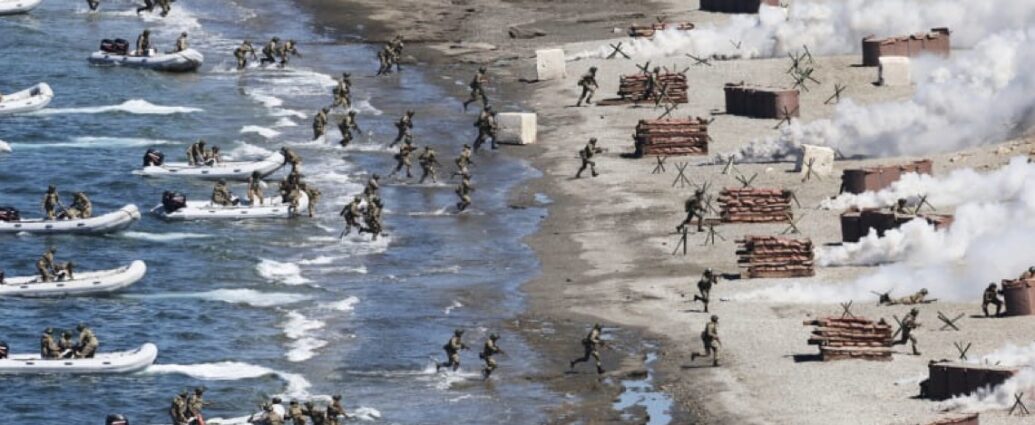
Turkey plans 229% defense spending boost over three years to advance domestic military tech
Turkey plans to increase defense spending by 229% over the next three years as part of a push to develop its own technologies and produce higher-value products in the defense industry, Turkish Vice President Cevdet Yilmaz announced on Sunday, according to Turkish media reports.
“In the defense industry, we aim for a Turkey that develops its own technology and produces high added value,” Yilmaz said. “We are increasing defense spending by 229%.”
The plan was announced during a presentation of Turkey’s new Medium-Term Program (MTP), which sets out the country’s economic roadmap for 2027-2029.
The increase in defense spending is the largest among the seven priority areas outlined in the program. Spending on social housing is set to increase by 150%, mining exploration by 139%, industrial infrastructure by 54%, railways by 49%, health by 43%, and food supply security by 42%.
Envanter Medya, a Turkey-based news site that tracks developments in military technology, noted that the additional funding would support major defense projects, including mass production of the TF-KAAN fighter jet, the first deliveries of the KIZILELMA unmanned fighter aircraft and the delivery of more than 10 ALTAY tanks to the Land Forces.

Turkey one of world’s largest military spenders
“The global economy has recently been going through a new period in which economic, technological and geopolitical developments are intertwined, predictability has decreased, and risks have risen to historically high levels,” Yilmaz said.
“The Turkish economy is, of course, not independent of the developments taking place in the world and in our region.”
Yilmaz said the war with Iran had created both direct and indirect consequences in many areas, including energy and commodity prices, global trade, the inflation outlook and growth expectations.
Turkey’s military spending already reached $30 billion in 2025, making it the world’s 18th-largest military spender, according to the Stockholm International Peace Research Institute (SIPRI).
Turkish military spending rose 7.2% from the previous year, with SIPRI saying the increase was driven by ongoing military operations in Iraq, Somalia and Syria, but most of all by investment in Turkey’s domestic arms industry

Lululemon billionaire Chip Wilson, wife divorcing after 20-plus years without prenup: report
Lululemon Athletica Inc. founder Chip Wilson and his wife and longtime business partner, Shannon “Summer” Wilson, are reportedly divorcing after more than two decades of marriage.
A family legal proceeding between the couple was filed in the Supreme Court of British Columbia in April, though the contents of the case are not publicly accessible, Bloomberg reported.
Bloomberg, citing a person familiar with the matter, also reported that there is no prenuptial agreement between the couple, though it remains unclear how the divorce could affect the division of their assets.
Lululemon and Chip Wilson could not immediately be reached by FOX Business for comment.
Chip Wilson, 71, founded Vancouver-based Lululemon in 1998, according to Bloomberg.
He is widely credited with helping pioneer the athleisure apparel market.
According to the Bloomberg Billionaires Index, Chip Wilson has an estimated net worth of roughly $6.1 billion.
Summer Wilson, 52, served as the company’s founding lead designer, according to her website. Chip Wilson has previously credited her with playing a key role in building the brand during its early years, Bloomberg reported.
LULULEMON HALTS ONLINE SALES OF NEW LEGGINGS AFTER ‘SEE-THROUGH’ CLAIMS
The couple married in 2002.
Though both left the company more than a decade ago, Chip Wilson remains one of Lululemon’s largest shareholders and has continued to publicly weigh in on the retailer’s direction, Bloomberg reported.
He owns roughly 8.6% of the company, a stake worth just under $1 billion, while Summer Wilson owns nearly 1%, valued at about $100 million, according to Bloomberg.
Under British Columbia law, assets owned before a marriage generally remain excluded from division, while any increase in their value during the marriage is generally considered family property and is typically divided equally.
“In British Columbia, the value of assets brought into the marriage is not shareable, but the gain is called family property and presumptively divided 50-50,” Lorne MacLean KC, founder of Vancouver-based MacLean Law, told The New York Post.
BILLIONAIRES AND BUSINESSES FUEL GROWING EXODUS FROM BLUE STATES
The Wilsons’ reported split joins a number of high-profile billionaire divorces in recent years.
GET FOX BUSINESS ON THE GO BY CLICKING HERE
Amazon founder Jeff Bezos and MacKenzie Scott finalized their divorce in 2019. Scott received a roughly 4% stake in Amazon, then valued at about $36 billion, BBC News reported at the time.
In 2021, Microsoft co-founder Bill Gates and Melinda French Gates divorced after 27 years. Following the announcement, Bill Gates transferred billions of dollars in stock to Melinda French Gates, according to Vanity Fair.


Congress created this park in 1897 for the ‘pleasure of the people.’ Trump wants to remake its golf course into an upscale venue for major tournaments
A pack of cyclists whisked by along the circuit at East Potomac Park while the golf course parking lot filled with luxury SUVs parked next to older, inexpensive economy cars, all with the Washington Monument in the background.
The scene highlighted what residents say are the park’s best features: its accessibility and affordability right in the nation’s capital.
The historic park, especially the golf course, has caught the eye of President Donald Trump, who wants to turn it into a world-class golf venue. It’s part of his grand vision for Washington, D.C., where he has torn down storied structures, remade or renamed others and deployed the National Guard for more than a year.
But some residents fear the planned changes to the golf course — where Trump has visited with a cabinet member, a well-known golf course architect and blueprints — risk altering the character of a place that has served Washingtonians of many stripes for more than a century. Turning the park into an upscale golf course will mean costlier fees and a loss of public space, residents worry.
“It takes away the history of the links here as well as deprives people of having a reasonably inexpensive place to play that is readily accessible to everyone,” said Joe Foley, who said he was in his 70s and had just finished nine holes of golf for $36, including a cart.
A park created by Congress for ‘the people’
East Potomac Park, including the East Potomac Golf Links, was created by a congressional act in 1897, which established the park for the “recreation and the pleasure of the people.” The course opened in 1919.
Trump, who has multiple projects underway in Washington, including a $400 million White House ballroom and the soon-to-begin construction of his triumphal arch, began talking about the city’s public courses in late 2025.
Two months earlier, debris from the demolished East Wing of the White House was dumped at East Potomac, forming a three-story mound near one of its three golf courses, which remains there. The National Park Service has said that the debris tested positive for lead, chromium and other toxic metals.
“When completed, this Course will have the ability to host Major Golf Tournaments, including The U.S. Open, The Ryder Cup, The PGA Championship, and other top PGA Tour events,” Trump posted on social media in June. He said then that work was meant to begin on Sept. 1, but there were no signs of activity on the grounds this week.
An image unveiled in May by Interior Secretary Doug Burgum showed an 18-hole course that he said would deliver “championship-quality golf at affordable, highly discounted rates.”
A lawsuit challenging the golf course renovation argues that the Trump administration’s redevelopment would violate the congressional act that created the park. The government is challenging the standing of the plaintiffs to sue.
At the park, people who spoke to The Associated Press noted that in some of Trump’s other Washington projects, the administration has moved to make irrevocable changes and act faster than courts can respond.
“The government currently is either playing by a different set of rules or just not playing by any rules at all,” said Jason Levitt, 54, ending an hour of high-speed laps on his bike.
At a court hearing Thursday about the park, U.S. District Judge Ana Reyes said as much, telling the government’s attorney she understood the plaintiff’s wariness about changes made before they received proper approval, though she said she had not seen evidence of that in the golf course case.
The administration has already removed dozens of trees from the park, although it says that is routine maintenance work.
The park draws a broad array of visitors
On a visit this week, the park drew cyclists, as well as retirees, workers on lunch break, and a couple of people who declined to speak to The Associated Press because they were meant to be at work as they hit the links for an afternoon of recreation.
With dark clouds rolling in and patrons rushing to the clubhouse, the demographics were on full display: Men, women, black, Hispanic, and white golfers. They said they visited because of the park’s location, cost and history. They were aware that the park and golf courses, as they know it, might be on borrowed time.
Foley, a retired lobbyist, said the region has many “championship caliber courses already” and said he was worried about the president’s plans.
“No one knows what he’s going to do. Are the incredibly popular bike paths in jeopardy, too? Just look at how many bike riders are coming through Potomac Park and the golf course area at noon on a Wednesday,” he said.
Levitt, the cyclist, said he has been coming to the park for 20 years and rides about four times a week. A road that runs the perimeter of the park in one direction offers safe riding away from normal city traffic, but within the city.
“This is seen as a relatively safe place to come and kind of stay out of the way of traffic and everything else.”
Changes are coming, he said. “Let’s just hope that they make changes that are beneficial for everyone rather than just a certain type of golfer.”
Congress controls many of Washington’s local affairs
Washington has long been at the whim of the federal government. Congress maintains significant control over the city’s affairs, including approving the budget and all laws passed by the D.C. Council. The Home Rule Act of 1973 lets residents elect a mayor, a council and neighborhood commissioners.
That autonomy has only been further squeezed under Trump, who last year launched a law enforcement surge in the city that briefly federalized the local police force and deployed the National Guard through to 2029. His imprint on the city has affected not just iconic landmarks and tourist sites but also areas that locals visit frequently, such as East Potomac Park.
Outgoing Mayor Muriel Bowser said this week the city could “stand to attract world-class golf.”
But she told reporters after an event focused on using sports to draw visitors to the nation’s capital, “we still need public access.”
Ryan Bates, 44, said he took up golf as an adult and has been coming to the park weekly for three and a half years. He noted that he has a membership at a private club but prefers to golf at East Potomac, citing its convenient location.
“The most important tenet of it,” he said, packing up his clubs after a round, “is that golf should be an approachable game for people that come from all walks of life.”
This story was originally featured on Fortune.com

Canada’s pivot to Asia is finally real. The challenge is that neither side knows much about the other
Come Sept. 8, some $20 billion’s worth of U.S. goods will be subject to Canadian counter-tariffs of up to 50%. They follow the 50% duties imposed by Washington on Canadian goods on Aug. 22. Yet U.S. President Donald Trump’s renewed focus on Canada should be no surprise, after Washington declined to extend the U.S.-Mexico-Canada trade agreement in July.
For four decades, Canadian commercial life has been organized around the belief that access to the U.S. market was a constant, rather than a variable. That assumption no longer holds, whether or not tariffs are here to stay.
So where should Canadians look to next? The answer is Asia—if both sides can overcome their mutual ignorance.
Yes, a pivot—where it makes sense
We estimate that the U.S. was the destination for 65% of Canadian goods and services exports in the first half of 2026. That’s down from roughly 75% in 2024, yet much of the shift was in a handful of commodities like oil, gold, and liquefied natural gas. The European Union and China attracted about 5% of Canada’s exports each.
No single market will replace the U.S. market, meaning Canadian companies will need to develop multiple smaller markets simultaneously. But the effort will be worth it: If Canada sells into several large, growing rules-based markets, it can treat the next unilateral decision from Washington as an annoyance, rather than an emergency.
Not starting from scratch
Fortunately, the groundwork for Canada’s expansion into Asia has already been laid.
Japan and South Korea are the immediate priorities, with their purchasing power, strong rule of law, and already-established links with Canada. Much of Canada-Japan and Canada-Korea trade already is, or soon will be, tariff-free. Canada offers Korea and Japan energy and agricultural products; Japan and Korea, in turn, supply batteries, semiconductors, machinery, and shipbuilding capacity. (Taiwan, too, offers the same benefits; the Taiwan-Canada Trade Cooperation Framework just awaits signing.)
Energy leads the way when it comes to Canada’s exports to Asia—facilitated by Asian investment. LNG Canada is backed by Petronas, Korea Gas, Mitsubishi and PetroChina; it already ships to countries across Asia.
The Canadian Energy Regulator (CER) notes that crude oil exports to destinations other than the United States were worth $10 billion in 2025 averaging roughly 430,000 barrels a day, up from effectively zero before 2024. Oil sales haven’t slowed: Alberta’s oil exports to China and South Korea rose by 122% and 227%, respectively in the first four months of 2026. Those energy flows cross the Pacific without ever passing through a contested chokepoint.
Other sectors that could gain from a shift to Asia are agrifood, forest products, aluminum, machinery, and digitally delivered services. Southeast Asia is an important growth area for these sectors. Vietnam, Malaysia, and Singapore are all CPTPP partners. Vietnam offers growth and manufacturing demand; Malaysia gives industrial and processed-food opportunities; and Singapore is valuable as a regional base but also as a sophisticated end-market, particularly for niche agrifood and technology products.
The region’s largest markets offer other opportunities. India and Indonesia are high-growth, higher-friction markets which promise demand for machinery, industrial technology, infrastructure, and specialty inputs. Finally, China will remain a selective market for Canada, both in terms of sourcing and exports, given sensitivities around national security and overcapacity. Beyond oil, Canada-China trade will likely focus on less sensitive areas including pulp, paper, industrial materials and premium consumer goods.
The barrier is knowledge, in both directions
The obstacle isn’t market access. Canada and Asia already have the trade agreements, expert agencies, joint business councils and chambers of commerce to facilitate the flow of goods and services.
Yet with all this support, too few businesspeople—on either side of the Pacific—know what’s going on.
Polling by the Angus Reid Institute for the Asia Pacific Foundation of Canada found that 73% of Canadians say they know little or nothing about South Korea; 82% say the same of Singapore, and 90% of Malaysia. Yet 78% supported Canada’s CPTPP membership. Canadians endorse the agreement while knowing almost nothing about the countries inside it.
The mirror image is just as bad. In a Kadin Business Pulse survey of 276 Indonesian firms, 84% of respondents reported that they had either never heard about or knew very little of Indonesia and Canada’s free trade agreement. Many were unaware Canada has a preferential agreement with their country; among those who knew, interpretations of what it covers varied widely.
At the Asia Pacific Foundation of Canada, we hear similar anecdotes from Vietnam’s private sector, especially outside of the tech manufacturing sector.
You can’t leverage preferences you don’t understand. The work at hand is persuading hundreds of thousands of Canadian and Asian companies that now is the time to get to know each other. Governments can only do so much. Instead, the private sector on both sides needs to educate itself, get on a few planes, and test some markets and products.
The trade agreements and institutional elements are there to support this diversification. But companies must take the first step.
The opinions expressed in Fortune.com commentary pieces are solely the views of their authors and do not necessarily reflect the opinions and beliefs of Fortune.
Barrett Bingley is Asia Regional Director of the Asia Pacific Foundation of Canada, based in Singapore. He was previously senior policy advisor to Canada’s foreign and trade ministers.
This story was originally featured on Fortune.com
Smotrich calls for expulsion of UK ambassador after ‘Post’ report of planned settlement trade ban
Finance Minister Bezalel Smotrich called for the United Kingdom’s ambassador to Israel to be ejected from the country on Monday night, following reports that the UK was planning to announce a ban on trade with Israeli settlements in the West Bank on Tuesday.
“Expel the British ambassador tonight!” Smotrich posted on X/Twitter. “The British Mandate in the Land of Israel is over.”
Smotrich added that Israel would not be “a doormat trampled by an antisemitic government,” and called the UK “a country conquered by radical Islam, trying to save itself from economic and social decline by attacking Jews and the State of Israel.”
לגרש את השגריר הבריטי עוד הערב!
לא נהיה אסקופה נדרסת של ממשלה אנטישמית, במדינה שנכבשה על ידי האסלאם הרדיקלי, ומנסה להינצל משקיעה כלכלית וחברתית באמצעות תקיפת היהודים ומדינת ישראל.
המנדט הבריטי בארץ ישראל נגמר.
— בצלאל סמוטריץ’ (@bezalelsm) September 7, 2026
National Security Minister Itamar Ben-Gvir also responded to the reports of the UK’s settlement trade ban by calling for Israel to recognize the Falkland Islands as “Argentine territory under occupation.”
According to Ben-Gvir, “The British are not content with merely occupying the territory; they also carry out oil drilling there and steal the money from the Argentine people.”

He also called upon Prime Minister Benjamin Netanyahu to recognize Argentina’s sovereignty over the islands, and to impose sanctions on Britain “as long as the occupation continues.”
Es hora de que el Estado de Israel reconozca públicamente que las Islas Malvinas son territorio argentino ocupado, que los británicos le roban violentamente al pueblo argentino. Los británicos no solo se conforman con ocupar el territorio, sino que también realizan allí…
— איתמר בן גביר (@itamarbengvir) September 7, 2026
UK likely to announce ban following debate on Jewish safety
Earlier on Monday, sources told The Jerusalem Post about the UK’s plan to announce the ban on trade with settlements.
Tuesday’s announcement in Parliament is likely to take place in the afternoon, after a 9:30 a.m. debate on Jewish safety in Westminster Hall.
The new measures will likely include a ban on goods produced in the settlements and targeted sanctions on British institutions and individuals.
Mathilda Heller contributed to this report.
Hind Rajab Foundation files criminal complaint against FM Sa’ar ahead of visit to Slovenia
The pro-Palestinian Hind Rajab Foundation (HRF) announced on Monday that it had filed a criminal complaint against Foreign Minister Gideon Sa’ar with authorities in Slovenia, ahead of his expected visit to Ljubljana on September 9 and 10 for the opening of the new Israeli embassy.
The organization accuses Sa’ar of responsibility for war crimes, genocide, and torture during the war in Gaza.
At this stage, there is no indication that Slovenian authorities have opened proceedings in response to the complaint. The Foreign Ministry has not yet issued a response.
The HRF has previously lodged complaints against Sa’ar in February 2025, ahead of his visit to Brussels, and in April 2025, ahead of his visit to London.
“Universal jurisdiction exists precisely so that perpetrators cannot hide behind borders or diplomatic visits,” Natacha Bracq, Head of Litigation at HRF, stated. “We expect the Slovenian judiciary to act swiftly and decisively, ensuring that diplomatic immunity is not used as a shield against accountability for war crimes, acts of genocide, and torture.”

Sa’ar announces new Slovenia embassy
Sa’ar announced the opening of the new Israeli embassy in June, after the election of Slovenian Prime Minister Janez Janša.
“The election of Prime Minister Janez Janša marks a new chapter in relations between Israel and Slovenia,” he announced at the time.
“After years of the hostility of the previous government – we now have an opportunity to rebuild, strengthen, and deepen a real partnership.”
Ofer Winter rejects Goldknopf’s demand for universal yeshiva student IDF draft exemption
Brig.-Gen. (res.) Ofer Winter, the chairman of the People of Israel party, fired back at Yitzhak Goldknopf, head of United Torah Judaism’s haredi (ultra-Orthodox) faction Agudat Yisrael, on Monday after he stated that UTJ would demand a full military draft exemption for any student of a yeshiva.
“Not everyone who wears black and white studies Torah,” Winter, who comes from a national religious background, said.
“There will be no government without regulating the status of those who serve. Our commitment to them is paramount.”
Winter also called for Goldknopf to stop “deceiving the public,” saying that “this system harms first and foremost the true Torah students.”
In the future, Winter stated, “Haredim will integrate into the IDF and the national service. Those who contribute to the state will receive. Those who serve more will receive much more. And those who do not serve, do not study, and do not contribute will not enjoy benefits.

“What was – will not be,” he concluded.
Winter releases People of Israel Knesset slate ahead of elections
Earlier on Monday, Winter released his party’s slate, submitting it at the Knesset along with other parties ahead of the October elections.
The submission of the list closed the door to a merger with Finance Minister Bezalel Smotrich’s Religious Zionist Party (RZP). Smotrich had called on Winter to join his alliance with Zehut party leader Moshe Feiglin.
The choice not to merge also appeared to defy Prime Minister Benjamin Netanyahu, who has been pushing small parties to merge to avoid losing votes from the right-wing bloc if they fail to cross the electoral threshold.
Keshet Neev and Tobias Holcman contributed to this report.
Trains to run on special Rosh Hashanah schedule, Israel Railways announces
Trains will operate on a special schedule during Rosh Hashanah, Israel Railways announced on Monday.
On the eve of the holiday, Friday, September 11, trains will operate from approximately 6:00 a.m. to 4:00 p.m., with increased service on the Haifa-Tel Aviv line.
Train service will resume after the holiday on Sunday, September 13, beginning at approximately 9:30 p.m.
In addition, on the Selichot days, Tuesday and Wednesday, September 8 to 9 and September 15 to 16, 2026, nighttime train service will be extended to Jerusalem’s Yitzhak Navon Station.

Gush Dan metro trains technically capable of operating on Shabbat
Last month, it was revealed that the planned Gush Dan metro trains will be highly automated, driverless, and run every minute and a half, even during peak hours, and would be technically capable of operating on weekends or holidays such as Rosh Hashanah.
Eliminating drivers would reduce the extent of Shabbat violations involved in running the network, although security and operations personnel would still be required on Fridays and Saturdays.
An NTA official stressed, however, that weekend service is only a technical possibility and that the decision will ultimately be made by the political leadership.
Udi Etzion contributed to this report.


Upcoming inflation data could determine if the Federal Reserve hikes interest rates soon, leaving Wall Street on edge
Wall Street will get several important updates about inflation this week.
On Thursday, the U.S. will release its August report for inflation at the wholesale level, called the Producer Price Index, or the PPI. It provides details on prices for businesses before they pass along the costs to consumers.
On Friday, the U.S. will release its better-known Consumer Price Index, for August. The CPI is closely watched and provides details on price changes for specific grocery items, furniture, and clothing, among other categories. It also details price changes for services ranging from car maintenance to travel and restaurant dining.
The reports will help give Wall Street and the Federal Reserve a clearer picture of inflation’s direction. The rate of inflation remains above 3% and is squeezing households and businesses. Inflation is also outpacing wage growth, putting more strain on households.
Rising energy prices because of the U.S. war with Iran have been fueling inflation. Shipping has been stifled in the Strait of Hormuz, through which about 20% of the world’s oil supply flowed prior to the war. That has pushed prices for gasoline and shipped goods higher.
Ongoing tariff conflicts between the U.S. and most of the world also threatens to send prices higher.
The Fed has been holding its benchmark interest rate steady, but Wall Street expects it to raise the rate at least once this year to help fight inflation. The central bank’s stated goal is to cool inflation to a rate of 2%.
This story was originally featured on Fortune.com

Matt Kaulig details how The NASCAR Foundation continues to create impact ahead of 20th anniversary gala in NYC
For 20 years, The NASCAR Foundation has been giving back to those who have supported the sport throughout the country.
To celebrate the 20th anniversary, the nonprofit is set to host a two-day celebration in New York City that is all about continuing that impact in our communities.
Matt Kaulig, owner of NASCAR’s Kaulig Racing, has been working with The NASCAR Foundation through his Kaulig Giving for years now, and he couldn’t contain his excitement when speaking to Fox Business about what’s in store for The NASCAR Foundation in the “Big Apple,” including an important, and fun, Honors Gala.
CLICK HERE FOR MORE SPORTS COVERAGE ON FOXBUSINESS.COM
“We live in Ohio. To get into the city, get dressed up, be at a gala, red carpet. To go in there with a bunch of media, and again, ultimately raising a couple million of dollars for these kids is pretty exciting,” Kaulig said with a huge smile on his face.
“It’s just a celebration of all the giving and still even trying to raise money. I’m sure this gala will raise – I think their goal is to raise over $2 million to give back to kids, the communities and everything else.”
The event is being held at the Ziegfeld Ballroom on Sept. 8, hosted by NASCAR’s France family along with leadership sponsors, including Kaulig Racing. The night will be filled with special guests, including current NASCAR drivers like Joey Logano, Ross Chastain and Kaulig Racing’s AJ Allmendinger and Ty Dillon, while Emmy and Tony Award-winning actress and singer Kristin Chenoweth will give a special performance.
The NASCAR Foundation will also honor four finalists for the 16th annual Betty Jane France Humanitarian Award, which recognizes inspiring NASCAR fans who volunteer for children’s causes across their regions. The winner, announced at the end of the gala, will receive a $100,000 donation from the non-profit to further their philanthropic efforts.
But it’s not just the gala Kaulig is excited about — it’s the following day’s exciting event known as The Speedy Bear Brigade, which is powered by Kaulig Giving.
The NASCAR Foundation and Kaulig Giving teamed up to deliver NASCAR-themed “Speedy Bears” to children at Hassenfeld Children’s Hospital at NYU Langone. But it’s not just in New York City where this impact will be made: A record 157 hospitals across the country will see 6,000 Speedy Bears be delivered with messages filled with love and support for those children and their families battling illness, injury and more.
Kaulig is also matching all donations up to $25,000 for those who want to put more Speedy Bears into the hands of kids to provide a little extra comfort and support.
“For even NASCAR drivers to go into their room in their fire suits and getting a teddy bear, it just brightens their day and brightens their spirit. All of that makes a difference,” Kaulig explained. “I mean, I guarantee these kids have their Speedy Bears still in their rooms at home after they get out of the hospital. They remember that, and it’s such a cool thing.”
For Kaulig, most of the impact he’s making is in his home of Northeast Ohio. But when he got involved with The NASCAR Foundation after opening Kaulig Racing’s operations in 2016, it was a no-brainer.
“That’s why we’re so involved in the NASCAR Foundation. We love NASCAR,” he said. “We think it’s a great fit for us, our brand, but everything we do at Kaulig Giving is for kids and their direct families. Almost all of our giving is up here in Northeast Ohio. Everything we do is basically in Cleveland, but NASCAR Foundation is obviously nationwide.
“What The NASCAR Foundation does for the community, the racetracks and everywhere we race is really special and I’m really proud of them. …They do so much more for the community than people realize. It’s so cool to be involved.”
Other than The Speedy Bear Brigade, Kaulig Giving has been heavily involved in The NASCAR Foundation’s Speediatrics Fun Day Festivals, where the excitement of race weeks turns into real impact moments for underprivileged kids. The festivals reach 16 NASCAR communities at different racetracks, where the kids are surprised with bikes built right there by teams like Kaulig Racing, while receiving helmets and sneakers, too.
“We built 150 bikes, gave them to these kids, and they didn’t know they were getting them,” Kaulig said about the first Fun Day Festival in Daytona. “It’s a big surprise. Fitted them with bicycle helmets, gave them new sneakers, and it’s just a really cool thing The NASCAR Foundation does.”
While this will be a two-day celebration for The NASCAR Foundation, recognizing all the impact made across two decades, Kaulig emphasized how important it is for the continued growth of this nonprofit and to get as many involved as possible to continue the mission and impact it has had.
GET FOX BUSINESS ON THE GO BY CLICKING HERE
“Even in business, you’ve got to continue to grow. You can’t cut back. We as a race team continue to grow. So, even philanthropy-wise, with The NASCAR Foundation, it’s what we can do to help them grow,” he said. “So, it is fantastic to be a part of organizations that are growing.
“And you just want to be a positive role model. We want to show other teams in the garage that you should get involved. We do well; we make money; we get all the fame and acclaim and just the fun part of it. But we should give back to those communities that are supporting our sport, our industry, and ultimately, our teams.”

Canada Hits Back With New U.S. Tariffs as Trade War Deepens
Canada will impose a new wave of retaliatory tariffs on $27.6 billion worth of U.S. goods beginning September 8, escalating a trade fight already hitting steel, dairy, manufacturing and consumer products on both sides of the border.
Canada is preparing to hit back at the United States with a fresh round of tariffs covering $27.6 billion in American imports, matching Washington’s latest trade measures dollar for dollar.
The new Canadian tariffs take effect at 12:01 a.m. on September 8.
Rates will range from 15% to 50%, depending on the product, and are designed to mirror the corresponding U.S. tariffs imposed on Canadian goods.
The measures will target a broad range of American products, including steel and aluminum products, dairy goods, appliances, agricultural equipment, pulp and paper, plastics and electronics.
Some products will face tariffs as high as 50%.
Canada says the retaliation is a direct response to the United States imposing 50% tariffs on $27.6 billion worth of Canadian goods beginning August 22.
Prime Minister Mark Carney’s government has argued that the U.S. measures are unjustified and that Ottawa had little choice but to respond.
The new tariffs add to existing Canadian countermeasures already in place against U.S. goods, including tariffs affecting the automotive sector.
Canada is also rolling out approximately $7.5 billion in additional support for workers and businesses affected by the trade conflict.
That assistance comes on top of nearly $25 billion in previously announced support measures.
The government says the money will help companies adjust supply chains, find new export markets and compete against American products now facing higher Canadian import costs.
But tariffs rarely stop at the border.
When Canada taxes American products, Canadian importers typically pay the tariff first.
Some companies absorb part of that cost.
Others pass it through to retailers, manufacturers or consumers.
That means Canadian businesses relying on U.S. machinery, electronics, ingredients or industrial materials could face higher operating expenses.
American exporters face the opposite problem.
Their products become more expensive in Canada, potentially allowing Canadian or overseas competitors to gain market share.
The trade relationship is especially difficult to unwind because the two economies are deeply integrated.
Auto parts can cross the border several times before a finished vehicle reaches a dealership.
Steel and aluminum flow into factories on both sides.
Agricultural goods, energy products, machinery and consumer products move through supply chains that were built around relatively open trade.
Every additional tariff complicates that system.
Ottawa has already adjusted the retaliation once.
The government removed certain U.S. seafood and fish products from the tariff list after industry concerns, showing how quickly retaliatory measures can create problems for domestic companies that depend on American imports.
Canada is also maintaining a tariff-remission process allowing businesses to request relief when necessary goods cannot reasonably be sourced from Canadian or other foreign suppliers.
What It Means for You
This is where a trade war begins affecting ordinary business decisions.
A 25% tariff can completely change whether a supplier remains competitive.
A 50% tariff can effectively shut a product out of the market.
Companies therefore begin searching for new suppliers, changing production plans or raising prices.
Those changes can remain long after the original political dispute ends.
For American manufacturers, Canada is one of the largest export markets in the world.
Losing even part of that business can hurt factories, farmers and suppliers across the United States.
For Canadian businesses, retaliation creates its own pain because many rely heavily on American goods and equipment.
That is why trade wars create an unusual economic reality:
Both sides can retaliate — and businesses on both sides can still lose.
Unless Washington and Ottawa return to negotiations, September 8 will mark another significant step away from the deeply integrated North American trading system that companies spent decades building.
JBizNews Desk | New York
© JBizNews.com All Rights Reserved. Reproduction or distribution without written permission is prohibited.

Opinion | Europe Hits the Snooze Button

Opinion | What Trump Could Learn From Bush


Sapporo Breweries CSO on Tariffs, Iran War



Ahoy, Knesset: Israel’s Pirate Party sets sail with Dan Ariely on its slate
Israel’s Pirate Party sailed back into election season on Monday, filing its candidate list for the 26th Knesset with a familiar assortment of pirate hats and one rather unexpected recruit: Prof. Dan Ariely.
Ariely, the Israeli-American behavioral economist and best-selling author, was placed third on the party’s 25-person slate submitted to the Central Elections Committee. He also appeared at the Knesset sporting a pirate hat, keeping with party tradition.
Asked by Israeli news site Kipa why he had joined the Pirates, Ariely offered a concise explanation: “Politics is fun.”
The Pirates have been a colorful fixture of Israeli election campaigns for more than a decade.
Founded in 2012, the party first ran for the Knesset in 2013, when it received just over 2,000 votes, still its best showing to date. It has never come close to crossing the electoral threshold.

The Pirate Party advocates for Israelis to play a more direct role in its democracy
The party advocates using technology to give citizens a more direct role in government decisions.
Its representative Daniel Felber said ahead of the filing that Israel’s democracy should allow citizens to influence decisions throughout a Knesset term rather than only on Election Day.
The Pirates are unlikely to make it into the Knesset. But with Ariely on the list and pirate hats in the halls of parliament, they did manage to get noticed.
WATCH: Haredi protest against light rail construction erupts on Jerusalem’s Bar-Ilan Street
Haredi (ultra-Orthodox) protesters demonstrated against light rail construction on Bar-Ilan Street in Jerusalem on Monday, according to the Israel Police.
Police said activists tried to block traffic and damage the construction sites, and officers began dispersing the crowd after declaring the protest unlawful.
The demonstration marks the latest in what have become regular protests against the expansion of Jerusalem’s light rail network along Bar-Ilan Street.
On August 27, hundreds of haredi individuals gathered in the same area to protest the project, with Ynet News reporting that several demonstrators tore down fences, set fire to cardboard installations, and attempted to break into the construction site.

A suspect in the alleged arson was later arrested by police and taken in for questioning. An additional suspect was arrested for throwing stones at security forces.
Haredi protests cause over NIS 400 million in damage to light rail
The protests follow an N12 News report that haredi protests have cumulatively caused over NIS 400 million in damage to the Jerusalem Light Rail’s unfinished Green Line since construction began about six years ago.
The protests have caused Jerusalem Light Rail operator Cfir to change opening dates and routing in several sections of the line, according to N12.
Walla and Alon Hachmon contributed to this report.
‘Blow to Israel’s security’: Ben-Gvir slams High Court directive allowing Nukhba terrorists visits
National Security Minister Itamar Ben-Gvir criticized the High Court of Justice directive that allows Nukhba terrorists to receive visits for the first time since October 7, according to a statement released on Monday.
Ben-Gvir argued that the decision would harm Israel’s security deterrence, pointing to what he described as the impact of tougher conditions for security prisoners.
“The High Court’s directive to allow visits to Nukhba terrorists for the first time since October 7 constitutes a direct blow to the State of Israel’s security deterrence,” Ben-Gvir said.
He also linked a decline in terrorist attacks to reforms in prison conditions.
“The security reality is clear: There has been a decline of approximately 75% in terrorist attacks, according to the Shin Bet, due in part to the reform of conditions for terrorists in prison,” he said.

Ben-Gvir also accused the High Court of serving the interests of Israel’s enemies, saying, “Unfortunately, the High Court consistently serves as an address for appeals by the enemy, and as Justice Amit told petitioners in the case concerning the entry of goods into Gaza, ‘This court places itself at your disposal.’”
Prison conditions, death penalty central to Ben-Gvir agenda
As national security minister, Ben-Gvir has made tightening prison conditions for October 7 terrorists and advancing the death penalty for terrorists key priorities of his term.
When the death penalty for terrorists law first passed in April, Ben-Gvir told The Jerusalem Post that the measure would help prevent another attack like the October 7 massacre, defending it amid international condemnation and saying it would align Israel with US capital punishment policies.
Ben-Gvir has continued to present harsher prison conditions and capital punishment as central elements of his approach to deterring terrorism. Speaking in August about an execution facility being built for terrorists, he said, “I promised to worsen the conditions of terrorists in prisons – we kept it. I promised to pass the Death Penalty for Terrorists Law – we did. And now the death row and hanging facility are also starting to take shape.”
Keshet Neev and Jerusalem Post Staff contributed to this report.
BlackRock and JPMorgan Turn to Emerging-Market Debt as Developed-Market Bonds Reel
Some of the world’s largest asset managers are finding opportunity in an unexpected corner of the bond market: emerging economies, where higher real yields and stronger fiscal discipline are attracting capital while developed-market government bonds come under pressure.
BlackRock and JPMorgan Asset Management are among the firms increasing their focus on emerging-market debt as investors reassess where the best risk-adjusted returns are available in global fixed income.
The shift comes during a difficult period for government bonds in the United States, United Kingdom, Japan and other major economies.
Long-term yields have climbed as investors worry about persistent inflation, large government deficits, heavy borrowing needs and renewed geopolitical risk.
Japan’s 10-year government bond yield recently reached 3% for the first time since 1996, while U.S. Treasury yields have moved sharply higher and investors are increasingly discussing whether the benchmark 10-year could again approach 5%.
Against that backdrop, some emerging markets suddenly look comparatively attractive.
One reason is simple:
Real yields are high.
Real yield measures how much an investor earns after inflation.
Countries including Brazil and South Africa continue to offer substantially higher inflation-adjusted returns than many developed economies.
That gives investors a larger cushion if global interest rates remain elevated.
BlackRock has already moved local-currency emerging-market debt to an overweight position, reflecting the firm’s view that valuations and income opportunities have become more attractive.
JPMorgan Asset Management has expressed a similar preference, pointing to unusually high real yields available across several local emerging-market bond markets.
The strategy represents a reversal of the way many investors treated emerging markets for much of the previous decade.
For years, U.S. assets benefited from strong economic growth, a powerful dollar and enormous demand for American stocks and bonds.
Emerging markets often struggled with weaker currencies, inflation and political instability.
But the financial landscape has changed.
Many emerging-market central banks raised interest rates earlier and more aggressively than their developed-market counterparts during the recent inflation cycle.
Several countries also strengthened foreign-exchange reserves, improved monetary credibility and developed deeper domestic bond markets.
Those changes have made their economies less dependent on foreign-dollar borrowing than they were during previous crises.
Investor money is following.
Emerging-market debt attracted approximately $214 billion in inflows through July, the strongest pace in roughly two decades.
Bond issuance from emerging economies has also reached record territory.
The appeal has been strengthened by weakness in the U.S. dollar.
When the dollar falls, investors holding bonds denominated in currencies such as the Brazilian real, Mexican peso or South African rand can receive an additional boost when those investments are translated back into dollars.
But the trade is not without substantial risk.
A renewed surge in U.S. interest rates or sharp strengthening of the dollar could quickly reverse capital flows.
Political instability, commodity-price swings and country-specific fiscal problems remain important risks across emerging markets.
And if the Federal Reserve becomes significantly more aggressive about raising rates, higher U.S. yields could once again pull money away from developing economies.
What It Means for You
This is an important change in where some of the world’s largest investors believe value can be found.
For years, the simplest bond strategy was often to buy debt issued by wealthy developed countries and treat emerging markets as the riskier alternative.
That equation is becoming less obvious.
Governments in the United States, Japan and parts of Europe are carrying enormous debt loads while continuing to borrow heavily.
At the same time, several emerging economies have spent years repairing their finances and fighting inflation aggressively.
That means investors can sometimes receive higher yields from countries whose financial fundamentals have actually been improving.
The result is a remarkable reversal:
While investors worry about government borrowing in some of the world’s richest economies, BlackRock and JPMorgan are finding opportunities in countries that markets once considered considerably more dangerous.
That does not mean emerging-market bonds have suddenly become safe.
It means the definition of where the risk is is beginning to change.
And when institutions managing trillions of dollars start shifting money because of that change, global capital flows can move with them.
JBizNews Desk | New York
© JBizNews.com All Rights Reserved. Reproduction or distribution without written permission is prohibited.


Trump targets Bombardier, says Canadian jetmaker ‘must build’ in the US
President Donald Trump on Monday said Canadian aircraft manufacturer Bombardier should no longer be allowed to sell its planes in the United States unless it manufactures them domestically.
In a Truth Social post, Trump claimed that more than half of Bombardier’s revenue comes from U.S. customers and accused Canada of imposing “unfair” restrictions on American companies.
“NO MORE SELLING BOMBARDIER IN THE UNITED STATES!” Trump wrote. “Their products aren’t good enough!”
HOW MAPQUEST’S ‘LAKE AMERICA’ STANCE SPARKED A MASSIVE APP STORE SURGE
“Over 50% of their revenue comes from the United States — They live off American Buyers, American Companies, American Airports, and American Service — All while Canada blocks our GREAT American Banks, and Companies, throughout the U.S.A. They even blocked Gulfstream Aerospace from doing business in Canada — Completely unjust and unfair! That Era is OVER!”
Trump added, “If they want our Market, they must build here, and stop treating America like a ‘piggybank.’ BUY AMERICAN. FLY ON AMERICAN AIRLINERS. ENJOY AMERICAN LIQUOR AND BEVERAGES. SAIL ON LAKE AMERICA. AMERICA FIRST!”
CANADA PLANS TARIFF RETALIATION AFTER TRUMP WARNS ITS LEADERS TO ‘FALL IN LINE’
Trump’s latest remarks come amid a widening trade dispute between the United States and Canada.
Earlier this year, Trump threatened to decertify Bombardier Global Express business jets and impose 50% tariffs on Canadian-made aircraft unless Canada certified several Gulfstream business jets, according to Reuters.
TRUMP FIRES BACK AT CANADA AFTER CARNEY SUSPENDS TRADE TALKS, ACCUSES US OF LAST-MINUTE ‘POWER PLAY’
Canada later approved certification of the Gulfstream aircraft, the outlet reported.
GET FOX BUSINESS ON THE GO BY CLICKING HERE
Bombardier and Canadian Prime Minister Mark Carney’s office did not immediately respond to FOX Business requests for comment.
Reuters contributed to this report.

Delta, United Airlines return to Israel in time for High Holy Days, other carriers follow
Delta Air Lines returned to Israel on Monday, with flight DL234 from New York’s JFK Airport arriving at Ben-Gurion Airport at 8:43 a.m., over 40 minutes ahead of schedule, according to the company’s website.
The Airbus A330-900neo left JFK on Sunday, marking the first Delta flight to depart for the Jewish State since the airline paused flights in March following the outbreak of the US-Israeli war against Iran.
Ben-Gurion Airport posted a video on its Instagram page later on Monday showing the aircraft landing and taxiing to the gate, followed by its departure back to the United States as flight DL235 to JFK.
Competing US legacy carrier United Airlines is additionally set to return to Israel this week, with flights UA84 and UA90 set to depart New Jersey’s Newark Liberty International Airport on Tuesday for their expected arrivals in Tel Aviv on Wednesday.
Like Delta, United has also been absent from Israeli skies since the beginning of Operation Roaring Lion.

While Delta has maintained a quasi-presence in Israel through its partnership with El Al, United currently has no codeshare agreements with any Israeli airline, though its passengers have been able to access Ben-Gurion Airport by connecting to other Star Alliance carriers in Europe, such as Germany’s Lufthansa.
Both United’s flights to Israel will make use of Boeing 787-10 Dreamliner aircraft, with the return of the two US aviation giants bringing the first direct competition to El Al in over six months.
SAS to return, Wizz Air plans expansion of Israel network
Regarding European carriers, Scandinavian Airlines (SAS) is set to restart its Copenhagen-Tel Aviv route starting October 26, with the company operating four round-trip Airbus A320neo flights weekly, according to Walla.
The report noted that the updated schedule for northern Europe’s largest airline is an even higher frequency for the route than that of its services prior to the war-related hiatus.
In addition, low-cost carrier Wizz Air announced on Monday that it will be expanding its Israel network, KAN News reported, with the airline having stopped and restarted its services to Tel Aviv several times amid the conflict.
Destinations set to be added include Catania, London Gatwick, Venice, Cluj, and Iasi, while existing services will be increased in frequency.
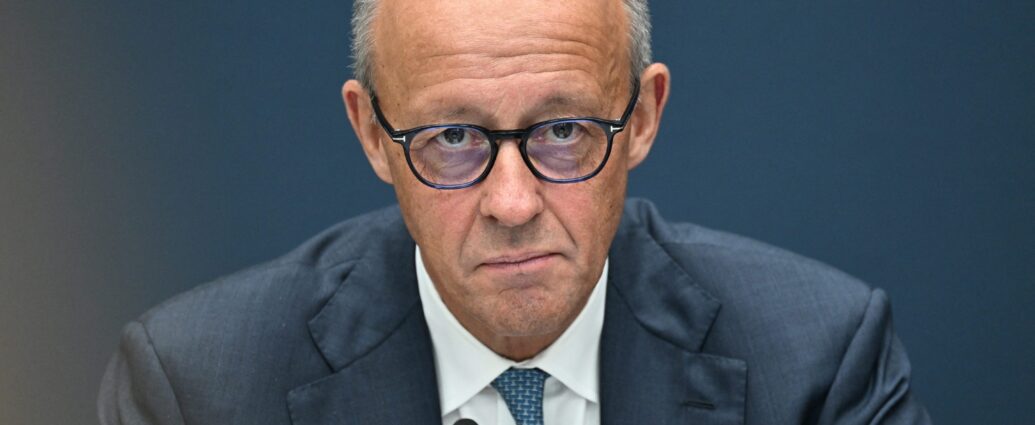
Germany built a ‘firewall’ so the far-right could never take power again. It just failed in Saxony-Anhalt
Alternative for Germany, or AfD, has established itself as a significant political force in the 13 years since its founding, but it has never been part of any state or federal government. That’s a result of what is often called a “firewall” against cooperation with the anti-immigrant, far-right party.
That firewall faces its biggest test after AfD won a landslide victory in Sunday’s election in the eastern German state of Saxony-Anhalt.
Germany’s mainstream parties have long said they would not work with Alternative for Germany, which is classified by Germany’s domestic intelligence agency as an extremist group in some regions of the country — including the eastern state of Saxony-Anhalt. Any dealing by mainstream parties with AfD is particularly sensitive in view of Germany’s Nazi past.
Many Germans had believed their country had developed an immunity to nationalism and assertions of racial superiority after confronting the horrors of its Nazi past through education and laws to outlaw persecution.
But as it turns out, that conviction was mistaken, and similar to voters across Europe and elsewhere, voters in Germany are increasingly empowering the extreme far-right party.
AfD has rejected any accusations of being undemocratic or even anti-constitutional and has repeatedly pushed back against the firewall.
The firewall taboo has sometimes forced other parties into unusual alliances to keep AfD out of power — for instance, a three-party coalition straddling ideological divisions that governs the eastern state of Thuringia since AfD emerged as the strongest party for the first time in a regional election there two years ago.
In Germany’s national election last year, AfD achieved the best showing by a far-right party since World War II and became the strongest political force in parts of the country. AfD became the biggest opposition party in parliament after Chancellor Friedrich Merz’s center-right Christian Democrats upheld the firewall and formed an unpopular coalition with the center-left Social Democrats.
The firewall could crack after AfD’s latest victory
AfD won 43.8% of the vote in Sunday’s election, more than double its showing five years ago in the state, while Merz’s party lost about half its support.
Merz has strictly rejected any kind of cooperation with AfD in the past and top officials reiterated that stance on Sunday. But other parties in the newly elected state parliament may be less likely to keep up the firewall.
The AfD candidate for governor, Ulrich Siegmund, aims to become the first far-right head of a state government and has already said he will reach out to all other parties and individual lawmakers to assemble a governing majority.
While Siegmund has rejected an AfD minority government, his party could possibly govern with the hard-left BSW party, which received 5.3% of the vote. The two parties share a Russia-friendly course and oppose immigration but do not agree on some other subjects.
BSW could help AfD run Germany’s first far-right state government since World War II
On Monday, BSW’s lead candidate in the election, Thomas Schulze, expressed his party’s willingness to help an AfD governor take office in the state parliament.
Forming a government that excludes the AfD would only be possible if all the other parties that were elected worked together — CDU, Social Democrats, the Greens, the Left Party, and the BSW. However, a coalition involving five partners would be extremely unusual, very complicated and prone to instability.
It’s also possible that newly elected lawmakers from other parties could defect to AfD — it would only need three people to get a majority to govern.
Political analyst Volker Resing said AfD may be able to overcome the firewall after its strong showing in Saxony-Anhalt, with BSW potentially serving as the kingmaker.
“This tiny party could now play a decisive role in determining the future of Saxony-Anhalt,” he told The Associated Press.
Resing said “it is still unclear” whether the parties will join forces based on their common view toward Russia to overcome the firewall and succeed in forming Germany’s first far-right state government since the end of the Nazi era.
This story was originally featured on Fortune.com

U.S. debt is even worse than it seems, and rising Treasury yields are now an ‘all-hands-on-deck situation,’ top economist warns
The market for U.S. Treasuries has shown troubling signs lately, and rising yields are a clue that conditions are more dire than they appear, according to Robin Brooks, a senior fellow at the Brookings Institution.
In a Substack post on Tuesday, he said U.S. policy is now focused on preventing long-term borrowing costs from shooting higher and pointed to Treasury Secretary Scott Bessent’s efforts to double debt buybacks.
Brooks added that economic data releases that indicate weaker activity have failed to bring down long-term yields, unlike the historical pattern, revealing how much upward pressure is coming from the market.
“As far as I can tell, it’s an all-hands-on-deck situation where long-term yields are concerned,” he wrote.
Although Friday’s jobs report surprised to the upside, other economic data over the past month have consistently fallen short of expectations, according to Brooks. Rather markets sending yields lower to account for a slower economy and cooler inflation, yields have marched higher.
To be sure, the U.S. war on Iran has also heated up in recent weeks. With fighting intensifying and no sign of diplomatic progress, oil prices have headed back up, worsening the inflation outlook.
But Brooks argued the anomalous behavior of the 10-year yield is actually as sign that “demand for Treasury debt is weaker than first meets the eye.”
With U.S. debt now at $40 trillion, it’s starting to overshadow the AI boom as the center of attention on Wall Street. Debt worries aren’t limited to the U.S. either, with yields in other top economies like the U.K., France, Germany, and Japan also surging.
That’s as governments since the COVID pandemic have continued spending as if borrowing costs were still at crisis-era lows and letting deficits worsen as if their economies were still in desperate need of emergency stimulus.
But the economic landscape is totally different now. Interest rates have surged in recent years to combat high inflation, and the AI boom is pouring hundreds of billions of dollars a year into an economy that increasingly immune to higher rates.
“When does debt become unsustainable? When the global financial markets say it is,” RSM Chief Economist Joseph Brusuelas said in a note last month. “That appears to be happening.”
At the same time, buyers of U.S. debt have changed. Foreign central banks and other institutions looking for a safe place to park their capital have diminished roles in the Treasury market and have increasingly turned to alternative havens like gold.
Norges Bank Investment Management, the world’s biggest sovereign wealth fund with $2.3 trillion in assets, has proposed reshuffling its debt holdings away from Treasuries.
As traditional U.S. debt buyers pull back, hedge funds have emerged as major players—and they are more price sensitive, stoking volatility in the debt market.
That means the Treasury Department must offer attractive yields to keep bond investors coming back. And as the budget deficit heads toward $2 trillion a year with no sign of lawmakers trying to rein it in, the market is getting skittish about continuing to lend to the federal government at such levels.
For Brooks, the decoupling of yields from economic data leads to an “obvious explanation,” namely that markets are more focused on the deficit outlook and are pushing up longer-term rates.
“The underlying dynamic in the Treasury market is more worrying than you think,” he added.
But others interpret rising yields as a sign of a strong economy. Wall Street veteran Ed Yardeni has dismissed warnings of an imminent debt crisis and instead thinks yields are just going back to normal, before the Great Financial Crisis and the COVID-19 pandemic ushered in a era of ultra-low rates.
Of course, the current trajectory of U.S. debt is still unsustainable, he added in a recent note, but the so-called bond vigilantes don’t seem to be worried about it, at least not yet.
“Treasury yields remain in a range broadly consistent with a healthy economy, and we expect the 10-year yield to remain between 4.00% and 5.00%,” Yardeni predicted.
This story was originally featured on Fortune.com

Labor Day Return Rush Peaks Today — AAA Says Avoid Driving 2 to 5 p.m.
WASHINGTON — Millions of Americans heading home from Labor Day trips are expected to hit the road Monday, with AAA and INRIX warning that the worst nationwide congestion is likely between 2 p.m. and 5 p.m.
Drivers who can leave before noon are expected to face substantially lighter traffic.
That timing matters because Labor Day return travel often compresses into a relatively short window as families, students and workers all head home before Tuesday.
The result can turn normally manageable highways into hours-long backups.
AAA’s forecast shows some individual routes becoming dramatically slower than usual during peak periods.
One of the most severe examples is the drive from Seattle to Ellensburg, which could take as much as 121% longer than normal at the worst point of the afternoon.
Other major metro areas are also expected to see heavy return traffic on highways leading into New York, Washington, Chicago, Los Angeles, Atlanta and other large cities.
For drivers, the congestion comes with another cost this year: fuel.
Gasoline prices are elevated compared with last Labor Day, meaning sitting in stop-and-go traffic is not just frustrating — it can also become more expensive.
The practical advice is simple.
Travelers who have flexibility should leave earlier in the day, avoid the mid-afternoon peak, and check traffic conditions before beginning the drive.
Those returning later in the evening may also see improvement after the afternoon rush begins to fade.
AAA and INRIX also recommend building extra time into trips because crashes, construction or weather can quickly worsen already-heavy traffic.
For families with young children, elderly passengers or long-distance trips, avoiding the peak window can make a substantial difference in both travel time and stress.
Monday is expected to be the biggest return-home day of the holiday weekend.
For anyone still deciding when to leave, the best window is before lunchtime.
The worst is likely to be right in the middle of the afternoon.
JBizNews Desk | Washington
© JBizNews.com All Rights Reserved. Reproduction or distribution without written permission is prohibited.

U.S. Markets Closed for Labor Day as Oil Nears $100 and Fed Rate-Hike Risk Builds
JBizNews U.S. Market Opening Recap — September 7, 2026
There is no U.S. stock-market opening today. The New York Stock Exchange and Nasdaq are closed Monday, September 7, for Labor Day, so there are no opening levels or point changes for the Dow Jones Industrial Average, S&P 500 or Nasdaq Composite. Regular trading resumes Tuesday morning at 9:30 a.m. ET.
For reference, Friday’s session ended with the Dow at 53,414.25, down 0.5%, the S&P 500 at 7,718.60, down 0.4%, and the Nasdaq Composite at 26,506.99, down 0.3% after a stronger-than-expected August jobs report pushed Treasury yields higher and increased expectations that the Federal Reserve could raise rates this month.
The most important market-moving development during the holiday session is oil.
Brent crude was trading around $97 a barrel Monday, near a six-week high, while West Texas Intermediate was near $92 as escalating U.S.-Iran attacks threatened shipping through the Strait of Hormuz. Tanker traffic through the waterway has fallen sharply, and Goldman Sachs has warned crude could reach roughly $120 if the conflict produces a more severe supply disruption.
That leaves investors facing a potentially difficult combination when Wall Street reopens Tuesday: a labor market that is stronger than expected and an oil shock threatening to keep inflation elevated.
Friday’s August employment report showed the U.S. economy added 162,000 jobs, far above forecasts, while unemployment remained at 4.1%. The surprise has already caused major Wall Street firms to rethink the interest-rate outlook. UBS said Monday it now expects two Federal Reserve rate increases in 2026 — one in September and another in December — after previously forecasting no moves this year. Market pricing has also shifted toward a greater probability of a September hike.
That means Tuesday’s reopening could quickly become a battle between economic strength and inflation risk.
There are no major scheduled U.S. economic reports Monday morning because of the Labor Day holiday. The economic focus shifts to inflation later this week, with CPI and PPI data becoming especially important ahead of the Federal Reserve’s September 15-16 policy meeting. The NYSE also flagged inflation data as the major macroeconomic event for the coming week.
Overseas markets remained active Monday. Asian technology shares were strong, with Japan’s Nikkei gaining about 2.1% and South Korea’s Kospi surging roughly 4.6%, helped by sharp gains in semiconductor stocks including Samsung Electronics and SK Hynix. European markets were mixed to lower, while U.S. stock-index futures pointed modestly downward during the holiday session.
AI investment remains another major business theme heading into Tuesday. South Korea and the United States are discussing a potentially enormous Texas energy project designed partly to supply growing electricity demand from AI data centers. Korean media reported a possible investment of more than $20 billion in a 6.3-gigawatt gas-power project, although South Korea’s Industry Ministry cautioned that negotiations remain ongoing and no final agreement has been reached.
For investors, the first thing to watch Tuesday morning will be oil. A sustained move toward or through $100 Brent could quickly pressure consumer, transportation, industrial and other energy-sensitive stocks while boosting producers.
The second is the 10-year Treasury yield. It finished last week near 4.78% after the strong employment report. Another jump toward 5% would put renewed pressure on technology, housing and other rate-sensitive sectors.
The third is the Federal Reserve. With UBS now forecasting two hikes and other banks also revising their outlooks, every inflation reading between now and the September 16 decision carries greater weight.
Corporate results will also return to focus this week, with Oracle, Adobe, Macy’s and Kroger among companies expected to report, while management presentations at a heavy calendar of investor conferences could provide fresh signals on consumer demand, AI spending and capital investment.
There may be no opening bell Monday, but the market is hardly standing still.
The setup for Tuesday is increasingly clear: oil near $100, a stronger labor market, rising expectations for another Fed rate hike and investors waiting to see whether Wall Street can absorb all three at once.
JBizNews Desk | New York
© JBizNews.com All Rights Reserved.

‘Oh, my God! Bro, bro, I’m going to spaz out!’ The first Bitcoin RICO case comes for a DOJ that gutted its ability to build it
They pulled off one of the largest cryptocurrency thefts in U.S. history, duping a stranger out of bitcoin worth over $240 million. They tried to hide their digital fingerprints, carrying out a sophisticated scheme to launder the proceeds.
And then the party started.
The scammers — a network of young men in their late teens or early 20s — celebrated the August 2024 heist by embarking on a wild spending spree. They purchased fleets of sports cars, flew on private jets, hired security guards and rented mansions in Miami and the Hamptons. An alleged ringleader, 22-year-old Malone Lam, spent over $569,000 in one evening at a Los Angeles night club.
Their bender lasted a month before FBI agents arrested Lam on charges that he organized a “social engineering” attack on the Washington, D.C., resident. Lam, an eighth-grade dropout from Singapore, has a plea agreement hearing set for Tuesday. His conviction would be a capstone for the government’s investigation.
The charges against Lam and 17 others are an extreme example of an increasingly common form of cybercrime. Complaints of cryptocurrency investment fraud to the FBI rose by nearly 50% in 2025, while Republican President Donald Trump’s administration largely abandoned a regulatory crackdown on the volatile industry.
Last year, the Justice Department disbanded a unit dedicated to prosecuting crypto-related crimes. Meanwhile, crypto companies that complained of unfair treatment during Democratic President Joe Biden’s presidency are enjoying the government’s hands-off approach under Trump, who took in roughly $1.2 billion from his crypto businesses in 2025.
Cybersecurity researcher Allison Nixon, who has spent years tracking The Com, an underground subculture of young hackers united by the “insane amount of money” that crypto fraud can generate, advocates for more law enforcement resources to go after them.
“If we don’t seriously ramp up the resources to take these people down and do it faster, then it’s going to spread more and more,” she said.
Scammers nabbed millions though ‘social engineering’ heist
A man identified as “Victim 7” in court filings was at home in Washington on Aug. 18, 2024, when his phone rang. The first caller identified himself as a Google representative inquiring about attempts to breach his account. A second, claiming to be from the Gemini crypto exchange, warned the man of a malware attack affecting his crypto wallet.
The callers manipulated the man into giving them access to his Google Drive and revealing security codes that allowed Lam to siphon off over 4,100 bitcoin, according to prosecutors. They said Lam and his friends on the calls — Veer Chetal and Jeandiel Serrano — targeted the man because he was a wealthy, longtime crypto investor.
A private recording captured the moment when the friends realized how much money they just stole, according to a video posted by a well-known private investigator of cryptocurrency crimes who goes by ZachXBT.
“Oh, my God! Bro, bro, I’m going to spaz out!” a voice on the video said.
Once they swiped the man’s savings, they used money laundering specialists to wash it through multiple exchange platforms and convert virtual currency into government-issued cash.
It wasn’t the first social engineering scam for the friends, who met in online gaming forums. They had teamed up on other multimillion-dollar thefts since late 2023 using a similar playbook, according to prosecutors.
This time, however, one of them made a costly mistake: Serrano failed to conceal his IP address when he created an account on a cryptocurrency exchange to hold nearly $30 million in stolen crypto, according to prosecutors. Investigators linked the IP address to a home in Encino, California, that Serrano was renting for $47,500 a month.
Lavish spending quickly drew attention
Serrano was vacationing in the Maldives when investigators identified him as a suspect. Lam was in Los Angeles, where he and friends spent $4 million at nightclubs in one month, authorities say. Chetal gifted a Lamborghini to his parents and hid a duffel bag filled with $500,000 in cash in their laundry machine.
Word of their windfall quickly spread in crypto scammers’ circles. A week after the big score, Chetal’s parents were driving in Danbury, Connecticut, when several masked men cut them off, forced them out of their new car, beat Chetal’s father with a baseball bat, shoved the couple into a van and bound their hands.
The captors, from Miami, had intended to use Chetal’s parents as leverage for extorting him into giving up his share of the stolen crypto. But the ransom plot fell apart when witnesses notified police, who apprehended the carjackers.
The FBI showed up to search Chetal’s apartment in Brunswick, New Jersey, on Sept. 9, 2024, and found $37 million in stolen crypto in his possession. He agreed to cooperate with their investigation.
Lam was attracting attention, too, for spending hundreds of thousands of dollars a night at clubs and tossing handbags worth tens of thousands of dollars to women in the crowds. He also used stolen cryptocurrency to buy a $2 million watch and over 30 cars, including custom Porsches, Lamborghinis and Ferraris, according to the FBI.
“This luxury lifestyle, of which so many young men and women could only dream, was just built on a foundation of fraud,” a prosecutor, William Hart, said during a recent sentencing hearing for a money laundering co-defendant.
‘Ferris Bueller gone bad’
Serrano was wearing a $500,000 watch when FBI agents arrested him at Los Angeles International Airport on Sept. 18, 2024. He initially professed his innocence but soon admitted to having roughly $20 million of the D.C. man’s stolen crypto, prosecutors said.
Lam was arrested at one of his Miami mansions on the same day as Serrano. An off-duty law enforcement officer had tipped off Lam that authorities were on their way to arrest him, the indictment says.
“We always talked about what it would be like if I were to go down, but never thought it would be this crazy,” Lam told associates from jail on a recorded call, according to his indictment.
The judge for Lam’s initial court appearance in Miami sounded astonished by a prosecutor’s summary of his lavish spending.
“I could only think of Ferris Bueller gone bad,” U.S. Magistrate Alicia Valle said, referring to the school-skipping protagonist of the 1986 movie “Ferris Bueller’s Day Off.”
Lam’s capture didn’t stop the splurging. Ferro, who pleaded guilty to a racketeering conspiracy charge last year, used stolen funds to cover Lam’s legal expenses.
Judgment Days
Eighteen defendants have been charged. Lam would be the 11th to plead guilty. At Lam’s first court appearance, a prosecutor estimated that his sentencing guidelines would recommend a prison term of at least 14 years upon conviction.
U.S. District Judge Colleen Kollar-Kotelly, who presides over Lam’s case, already has sentenced three of his co-conspirators. She sentenced two money launderers to prison terms of approximately six years.
Chetal pleaded guilty to conspiracy charges in November 2024 and awaits sentencing. Serrano’s charges remain pending.
Tucker Desmond, who pleaded guilty to destroying evidence of other plotters’ crimes, was sentenced to probation. Desmond apologized at his sentencing hearing in March, saying he “got obsessed with the image of success rather than actually becoming a hard-working individual myself.”
Ferro declined to address the court during his sentencing hearing in May. His attorney, Kevin Wilson, described the co-defendants as mischievous “young kids,” but the judge didn’t accept that as an excuse.
“Being young only goes so far,” Kollar-Kotelly said.
This story was originally featured on Fortune.com

Trump braces for midterms, crucial union vote as Labor Day shows 75,000 lost manufacturing jobs
When union workers and their families gather this Labor Day, some may ponder Ronald Reagan’s memorable refrain, “Are you better off now than you were four years ago?”
All workers – unionized or not – are dealing with higher prices for food and gasoline.
For America’s unionized workforce, the overall state of the economy is bleak. Threats from AI and robotics abound. Pledges by U.S. and international corporations to invest in new plants remain largely pledges. The roughly 400,000 federal job cuts during President Donald Trump’s second term have disrupted lives. Many of these jobs were previously represented by labor unions.
As a labor studies scholar, I believe weariness and wariness will accompany blue-collar voters to the polls in November. As such, the candidates who have practical ideas for turning the economy around and exhibit empathy for Americans worried about how to pay their bills could receive the bulk of the union vote.
The union vote
Over generations, the majority of union members have sided with Democratic candidates, even if that support has wavered since the 1970s.
The 2024 presidential campaign was no exception. The majority of union members voted for Democratic candidates, but at a far lower rate than in the 1960s.
Why does this matter in 2026?
Union voters play a bigger role in Michigan, Pennsylvania and Nevada, three swing states where the share of voters who belong to unions is above the national average of 10%. In closely contested House and Senate races, even a small shift in union votes could influence the outcome.
What’s in store this November?
How large is the union vote?
The latest Bureau of Labor Statistics figures show that the percentage of U.S. unionized workers has fallen over the past four decades.
In 1983, 20.1% of U.S. workers were represented by a union. In 2025, the rate was 10.0%, or 14.7 million people. Union membership among public sector workers (32.9%) is more than five times higher than that of private sector workers (5.9%). In close elections, the volatility of these voting blocs matters.
During the 2024 presidential campaign, Trump promised to reduce consumer prices, bring back manufacturing jobs and respect workers’ rights.
As the midterm elections approach, I believe the president’s performance on these issues in the eyes of union voters will determine which party controls the House and Senate. And the signs are not promising for Trump, with recent polls indicating the president’s support among union households is eroding.

Manufacturing jobs and inflation
The U.S. economy has lost 75,000 manufacturing jobs since January 2025, a 0.6% decline. These jobs have steadily declined since the 1980s, so Trump’s policies are not solely to blame.
Furthermore, Trump’s off-again, on-again tariffs may help some U.S. manufacturers. That’s because tariffs can erase the advantages of low-cost overseas labor. As economist Laura Veldkamp noted in July 2026, Trump’s tariffs “made it more profitable for American manufacturers to set up and produce here.”
The bigger problem, though, is that even if some manufacturing returns to the U.S., the work will likely be done with the latest manufacturing technologies, which tend to reduce the need for workers. That does not bode well for significant job creation.
In July 2026, Moody’s financial analyst Mark Zandi told Marketplace that more manufacturing output “doesn’t translate into jobs.” He explained that there has been more activity in the tech sector and in the defense-aerospace industries, but “these factories just don’t employ a lot of people.”
Additionally, Trump has not established a clear plan to lower inflation. The U.S. Department of Agriculture reports that food prices in July 2026 were up 3.0% from July 2025. This increase is slightly above the historical average.
There’s one more factor to consider. Many older blue-collar workers – many of them former union members – across New England, the Great Lakes, Ohio and western Pennsylvania remain angry about the epic industrial collapse of the 1970s and 1980s.
This kind of generational suffering can show up in the voting booth in a big way. And I don’t think voter surveys and polls are able to measure the depths of this rage.
Union representation
The Civil Service Reform Act of 1978 allowed government workers to unionize. But a March 2025 White House announcement said the legislation had enabled “hostile Federal unions to obstruct agency management.”
Through an executive order and mass layoffs across the federal workforce in 2025, Trump has presided over a dramatic change in public sector collective bargaining in Washington, D.C.
Offering guidance on the 2025 executive order, the U.S. Office of Personnel Management directed federal agencies to end their collective bargaining agreement.
In response, the American Federation of Government Employees condemned the action in an email to its members, saying the Trump administration was “illegally strip(ping) collective bargaining rights from hundreds of thousands of federal workers.”
Federal unions have challenged the White House’s March 2025 executive order. In 2026, independent arbitrators have also ruled against the administration’s efforts to circumvent labor agreements with some federal workers. And in June 2026, a federal judge in Massachusetts struck down an effort by the Trump administration to exercise control over union elections at federal agencies.
Whether unionized industrial workers support their public sector counterparts remains to be seen.
Robert Forrant, Professor of U.S. History and Labor Studies, UMass Lowell
This article is republished from The Conversation under a Creative Commons license. Read the original article.
This article is republished from The Conversation under a Creative Commons license. Read the original article.

This story was originally featured on Fortune.com
Israelis should become more selective about where they travel – opinion
It is time for Israelis to rethink their travel plans.
Here is the problem. Since the Hamas-led terrorist attacks on October 7, 2023, Jew-hatred has increased exponentially. Places are simply less receptive to Jews, and especially Israelis. My suggestion is that Israelis travel less, or even better, they become more selective regarding where they travel. Not out of fear, but out of prudence.
This is recognition of the hostility they face, and it is a maximization of pleasure and a reduction of tension.
Zionism was a response to antisemitism.
Early Zionists realized that there was no way to eliminate Jew-hatred. That sage insight into a fear of those who are different – the Jews – has, over the decades, proven to be true. They reasoned that the best way to avoid a harmful, senseless, and destructive bias was to create an independent society that could defend itself.
![An Israeli flag [Ilustrative] (credit: MARC ISRAEL SELLEM/THE JERUSALEM POST)](https://images.jpost.com/image/upload/f_auto,fl_lossy/c_fill,g_faces:center,h_537,w_822/438338 "An Israeli flag [Ilustrative] (credit: MARC ISRAEL SELLEM/THE JERUSALEM POST)")
The Jewish state was created on that foundation.
The model of assimilation and accommodation in host societies adopted by Jews, living in host countries for generations, developed as a survival model. They tried to keep their heads down, keep a low profile, keep to themselves, and be quiet, law-abiding citizens.
The attempt to prove themselves loyal, however, failed. Loyalty alone was not enough. They remained outsiders. They remained unwelcome guests in country after country, decade after decade.
Jewish safety, Jewish life, could not depend on the tolerance of others. Creating a Jewish state was the solution.
Today, as those age-old tensions once again rear their ugly heads, Jews in general, and Israelis in particular, have become moving targets while abroad. Jews – even assimilated Jews, even non-religious Jews, are identifiable. And that means that, for Jews, international travel is not risk-free.
Israelis travel abroad in high numbers
A Pew Research Center study, supported by a Mako survey, reports that 92% of Israelis have traveled abroad at least once in their lives. Some 75% have traveled abroad in the past two years. While those numbers are astonishing in many ways, they are also extremely disturbing.
It is rewarding to know that Israelis, in such large numbers, have the economic capability to travel. It is admirable to know that Israelis have a zest for learning about other cultures, other cuisines, and other climates. With that, of course, comes the realization that Israelis sometimes, oftentimes, just need to get away. From the tensions. From the wars, from the internal conflicts. From October 7 and its after-effects.
Since October 7, Jew-hatred has increased exponentially. It has increased for Jews still living in host countries and it has increased for Israelis living in and passing through those countries. It has been stimulated, in some countries, by the actions and rhetoric of world leaders. It has been carried out by individuals and groups who have been swayed by the vile, vicious, blood libel untruths that a genocide is being perpetrated by the Jewish state.
Not by choice, but out of necessity, Israelis and Jews must change their ways and learn to travel selectively and intelligently. It is time to explore, enjoy, and do business in places where the hosts have proven themselves as countries willing to protect their Jewish guests. It is time to go where Jews are welcome. Passports, hotel reservations, and a cosmopolitan environment do not guarantee a cordial reception.
Modern Zionism’s founding thinkers, such as Leo Pinsker and Theodor Herzl, firmly believed that Jewish safety depended on transforming Jews from guests and minorities who petitioned for their safety, into a power that would and could defend itself in its own home.
It is a colossal mistake to think that Israel and Zionism solved the issue of antisemitism. Rather, it removed Jews from the immediate reach of antisemites and antisemitism. Jew-hatred still exists. Today, an Israeli passport does not magically shield Jews from that hatred. If anything, in certain environments it magnifies the target.
In 2025, the Anti-Defamation League recorded 6,274 attacks against Jews and Jewish institutions in the United States, the country Jews long held to be the “golden country.” While that number was down 33% from 2024, it is still way too high to be considered either acceptable or a statistical anomaly.
The Foreign Ministry recorded 45 Israelis who experienced anti-Jewish incidents between July 2025 and July 2026 while in the United States. That number included fights, spitting, verbal attacks, expulsions from cafés, refusal of service, as well as instances in which Israelis felt threatened. These are by no means all the incidents that occurred; merely those reported or needing diplomatic involvement.
Mathematically, it is highly unlikely that Israeli travelers will be attacked. Until it happens. Until it happens to you. Until you are that Israeli or that Israeli family.
The unfortunate, undeserved message that large swaths of the world have been sending out has been received. A July 2025 survey undertaken by the Israel Democracy Institute reported that 38% of respondents answered that they had changed their travel destinations to accommodate this new state of affairs.
I call that risk-based self-restraint. It is a proactive response; it is not giving the Jew-haters a victory and a reward.
Zionism never promised to eliminate Jew-hatred; it promised that Jews would no longer be defenseless.
Israel exists so that Jews have a place where the state – not a foreign government, and certainly not a hotel manager – is ultimately responsible for the security of Jews.
The writer is a columnist and a social and political commentator. Watch his TV show Thinking Out Loud on the Jewish Broadcasting Syndicate.
Shalva’s Vienna event marked its band’s return, unveiling a rehab center honoring Sharabi family
A particularly moving and extraordinary solidarity event took place last night in Vienna, just days before Rosh Hashanah, when dozens of friends of Israel, community leaders, and diplomatic representatives gathered for a special evening of support for Israel and the Shalva organization.
The highlight of the evening was a performance by the Shalva band, which returned to performing in Europe after a long hiatus forced by the Swords of Iron war.
Organizers also announced plans to establish a trauma and post-trauma treatment center in Ashkelon, which will be named after the family members of the released hostage Eli Sharabi, who was murdered on October 7.
The event was led by Marie-Louise Weissenbock, head of the organization Christians on the Side of Israel in Austria, which works extensively on behalf of the Jewish community and the state.
Among the prominent guests in the hall were the Deputy Ambassador of Israel to Austria, Ilay Levi-Yudkovsky; the Chief Rabbi of Vienna, Rabbi Yaron Engelmayer; the President of the Jewish Community in Linz, Dr. Charlotte Hermann; as well as the founder of the Shalva organization, Kalman Samuels, who celebrated his birthday this evening.

A new rehabilitation center for traumatized residents of the south
In his speech, Kalman Samuels shared with the attendees the extensive mobilization of the Shalva organization since the Black Sabbath of October 7, including hosting thousands of evacuees at the National Center in Jerusalem.
Samuels revealed the new initiative that was born following a government appeal: the establishment of a dedicated family and rehabilitation center in Ashkelon for tens of thousands of residents in the south who are dealing with post-traumatic stress disorder (PTSD).
The connection to the project took a chilling and moving turn when Samuels told about the phone call received by his wife, Malki Mali Sharabi, who was released after 491 days in Hamas captivity.
Sharabi, who lost his wife, Liane, and his two daughters, Noya and Yahel, in the massacre at Kibbutz Be’eri, wanted to commemorate his loved ones through Shalva, an organization close to the family’s heart because of their longstanding commitment to volunteering with people with disabilities.
The new center, located in the Ashkelon marina, will be called the “Sharabi Family Center-Shalva”.
In a recorded and chilling message broadcast during the evening from Israel, Eli Sharabi addressed the audience and said: “I lost my wife, Liane, and my two daughters, Noya and Yahel, on October 7. They were my whole world – three amazing women who always sought to help others. This center is the way to continue their spirit, to take their love and kindness and turn them into a response for families in the south who are dealing with trauma and pain. I believe they would be proud to see their name associated with a place that brings healing to others.”
‘True ambassadors of Israel’
Deputy Ambassador Ilay Levi-Yudkovsky welcomed the initiative and thanked the organization “Christians for Israel” for their steadfast stand by the country. “In these days, when we are facing enormous challenges from our enemies alongside rising waves of anti-Semitism in Europe and the world,” the Ambassador said. “Your support and courage are more important than ever. The members of the Shalva band are our true ambassadors – representing a caring, inclusive Israel that believes that every person deserves respect, community and equality.”
Rabbi of Vienna, Rabbi Yaron Engelmayer, addressed the upcoming Rosh Hashanah prayers. “On Rosh Hashanah we pray not only for ourselves, but for the entire world to be blessed with peace and blessings,” Rabbi Engelmayer said. “This partnership, and the spirit of peace that places the weak and the disabled at the center of society, is the embodiment of the mutual guarantee and social responsibility that we hope for.”
Music, tears and hope for the future
The artistic part of the evening swept the entire audience to tears and dancing. The members of the Shalva band, including soloists Dina Samta and Eden Tehrani, performed their greatest hits – “A Million Dreams,” “Stand by Me,” and “Hallelujah.”
The band’s director, Shai Ben-Shoshan, shared candidly how the band members accompanied him through his rehabilitation process after he was seriously injured in battles in Gaza and Lebanon and returned to fight time and time again. Kalman Samuels also thanked David Fomberg for managing the band and restoring it to intensive activity during this complex period.
Another highlight was when Vienna’s chief cantor, Shmuel Barzilai, took the stage and performed “Adon Olam” with the band in a moving arrangement, and later the song”Jerusalem of Gold” was dedicated to Holocaust survivors who were present in the hall and received flowers from the band members.
The moving evening concluded with a joint singing of “Hatikva” by everyone present in the hall, connecting the local community and the ambassadors of the spirit of peace and prayer for a year of peace, healing, and security for the State of Israel.
Yohanan Samuels, CEO of Shalva, said of the event, “This evening was simply unforgettable! The energy was amazing, and we felt at every moment the warm embrace and immense love of everyone for the ‘Shalva’ organization. After too long a break, the Shalva band returned to stages in Europe – and there is nothing more exciting than showing the world again what we are capable of. People with disabilities are no different from anyone else; they are equal and inseparable from us.
We will continue to represent Israel with dignity, to inspire and work for equality everywhere in the world. A heartfelt thank you to everyone who worked hard and made this evening a reality, and I am already looking forward to the moment when we will celebrate together the opening of the ‘Shalva Sharabi Center’ in Ashkelon – which is made possible thanks to the wonderful people who support us.”
Otzma Yehudit places English-speaking public figure Yishai Fleisher at twelfth spot on Knesset list
Yishai Fleisher, the international spokesman for the Jewish community of Hebron, was given the twelfth spot in the Otzma Yehudit party list announced on Monday.
Fleisher, who was raised in the United States and is a member of the Efrat Local Council, is a widely recognized English-speaking voice for Israel abroad, with his YouTube channel having more than 300,000 subscribers.
“I’m excited. This is a big moment. You are a man of action, a man of advocacy, and an important voice for Israel around the world. I’m proud that you’re joining our Otzma Yehudit list,” said Otzma Yehudit leader and National Security Minister Itamar Ben-Gvir in a statement.
“It is a privilege and an opportunity to work alongside the Otzma Yehudit team on behalf of the Jewish people: to strengthen the State, to strengthen the connection of the Jewish people to the Land of Israel, and to bring this message to Jews and lovers of Israel around the world,” said Fleisher.

Born in Israel, raised in the US
Fleisher was born in Israel to parents who escaped the Soviet Union, while he spent almost half of his life in the United States, where he was raised.
He speaks Russian, Hebrew, and English; served in the IDF as a paratrooper; and graduated from the Benjamin N. Cardozo School of Law in New York.
While now dedicated to politics, his job as the Hebron’s international spokesman allowed him to show the Jewish community living in the West Bank city to visitors, journalists, public officials, and delegations.
Trump says Canadian aviation giant Bombardier can no longer sell aircraft in the United States
Canadian aviation giant Bombardier can no longer sell its aircraft in the United States, US President Donald Trump said in a Truth Social post on Monday.
“NO MORE SELLING BOMBARDIER IN THE UNITED STATES!” declared Trump, describing the company’s products as “not good enough.”
He further claimed that over half of Bombardier’s revenue comes from US sources, “all while Canada blocks our GREAT American Banks, and Companies, throughout the U.S.A.”
He noted that Ottawa previously blocked US aircraft manufacturer Gulfstream Aerospace from doing business in Canada, calling the move “completely unjust and unfair!”
“If they want our Market, they must build here, and stop treating America like a ‘piggybank,’ he said. “BUY AMERICAN. FLY ON AMERICAN AIRLINERS. ENJOY AMERICAN LIQUOR AND BEVERAGES. SAIL ON LAKE AMERICA. AMERICA FIRST!”

Trump renames Lake Ontario to ‘Lake America’
The US and Canada have been locked in a trade war for over a year, with Trump renaming Lake Ontario “Lake America” on August 27, following claims that Canada has been “ripping off the US for decades.”
On Wednesday, Apple Maps officially changed the name of the lake for US users to comply with the Trump order.
On August 22, the US imposed 50% tariffs on certain Canadian imports after the two countries failed to reach a trade deal, with both trading accusations of derailing days of talks.
Ariella Roitman, Jerusalem Post Staff, and Reuters contributed to this report.
Court extends detention of soldier suspected of committing sexual offenses against minors
A court on Monday extended the detention of a 20-year-old active-duty soldier from Bat Yam suspected of committing sexual offenses against minors until Thursday.
The soldier allegedly posed online as a 16-year-old boy to contact girls aged 14 and 15. Israel Police suspect that he initially contacted them on TikTok before moving the conversations to WhatsApp, where he persuaded them to send him revealing photographs. He allegedly later began extorting and threatening them.
Investigators found that the suspect knew the girls were minors. He also admitted he had concealed his real age so they would keep talking to him.
“If I had told them I was 20, they would not have spoken to me. I saw that they were minors,” he said during questioning.
The nature of the conversations allegedly changed after the girls sent him the photographs. Police suspect that he began extorting them and making serious threats.

In one exchange attributed to him, he allegedly threatened one of the girls, saying, “I will throw a grenade at you in your home. I will murder you and your family.”
The suspect is accused of sexual offenses against minors, sexual extortion, sexual harassment, and making threats. A court issued an arrest warrant on August 25, and Bat Yam police later arrested him. Following a court hearing, his detention was extended until Thursday, September 10.
During the investigation, the suspect’s mother told police that her son has special needs and attention and concentration difficulties. At his attorney’s request, he is expected to undergo a psychiatric evaluation.
Bat Yam police investigators are continuing to examine the suspect’s communications with the girls and the scope of the alleged offenses. The investigation remains ongoing.
Holon resident suspected of committing offenses against minors released
A court on Monday released Erez Aviad Cohen, a 37-year-old Holon resident suspected of committing sexual offenses against minors, in a reversal that came one day after police said the evidence against him had strengthened.
Police had also told the court that Cohen was suspected of obstructing the investigation. However, Cohen was released from custody at Abu Kabir after investigators reviewed the evidence and questioned him on Monday morning, Walla reported.
Cohen was released before a hearing scheduled for Tuesday. Under the conditions of his release, he is prohibited from contacting anyone involved in the case and must report for questioning upon request.
Police said suspicions had strengthened
Police told the Tel Aviv Magistrate’s Court on Sunday that the suspicions against Cohen had strengthened. A police representative said that, in addition to the offenses for which he was arrested, Cohen was suspected of obstructing the investigation after allegedly deleting content from his cellphone before it was handed over to investigators.
The hearing also revealed suspicions that Cohen had posed as a 12-year-old girl since April and joined WhatsApp groups that included girls under the age of 10.
The police representative described the messages under investigation as “conversations involving persuasion, not coercion.”
Cohen’s partner also gave testimony as part of the investigation. Cohen was questioned twice and claimed that the cellphone had not been in his possession.
Police arrested Cohen on September 1 on suspicion of sexually harassing a minor or helpless person through repeated propositions or comments of a sexual nature. He was also suspected of committing an indecent act against a minor after obtaining consent through deception.
At an earlier hearing, police said they had evidence and that the case involved four complainants between the ages of 9 and 12. Investigators seized a laptop from Cohen’s home and later obtained his cellphone. Cohen provided investigators with the password to the computer.
His attorney, Omer Adiri, told the court that Cohen had no criminal record, had lived with his partner for the past year and a half, and had undergone rehabilitation, saying he “went through a process and turned his life around.”
Adiri also claimed that investigators called his client a “pedophile” during questioning. Cohen subsequently exercised his right to remain silent.
Although Cohen’s detention had been extended until September 8, police decided on Monday to release him under restrictive conditions before the scheduled hearing. The investigation remains ongoing, and police are continuing to examine the evidence and suspicions that emerged in recent days.
Cohen’s attorneys, Isabel Fuchs and Omer Adiri, said, “As we argued several days ago, once the picture became clearer, the suspicions would be disproved, and our client would be released. That is exactly what happened today. Our client was released from the police station after it became clear that the suspicions against him had no basis. We welcome the police’s decision, which examined the facts as they are and reached the necessary conclusion.”
Netanyahu misses party’s 9:00 p.m. deadline to publish Likud slate, says will submit by Tues. a.m.
Likud’s top internal court ruled that the party must deliver the proposal for reserved slots to members of its secretariat by 9:00 p.m. Monday, but the deadline passed without Prime Minister Benjamin Netanyahu, Likud’s chairman, publishing the list.
The Likud legal adviser will now be required to explain why a secret ballot should not be held without collecting signatures. The dispute comes against the backdrop of MK David Bitan’s petition challenging the reserved slot for Defense Minister Israel Katz.
Netanyahu had yet to publish either the list of candidates for reserved slots or the proposed resolution concerning them, as required by the court, by the time the deadline passed.
The ruling was issued earlier Monday after a petition filed by Bitan, who argued that the names of the candidates had not been published despite an earlier court decision requiring the proposed resolution to be provided to members of the secretariat at least 48 hours before the vote.
Court member attorney Yitzhak Bam warned in his ruling that publishing the proposal shortly before the vote “could be interpreted as an improper fait accompli.”

Bam ruled that if an orderly proposed resolution was not delivered to members of the secretariat by 9 p.m., the movement’s legal adviser would be required to explain why this should not be viewed as implied consent to holding a secret ballot in the secretariat without requiring signatures from 10% of its members.
Bitan sought a declaration in his petition that the reserved slot for Katz would come from the quota of reserved slots already approved for the prime minister under an amendment to the Likud constitution, rather than being added on top of that quota, as the court had ruled previously.
Bitan argues failure to publish list interferes with preparations for vote
He also argued that the failure to publish the names of the candidates for the reserved slots impaired the ability of secretariat members to prepare for the vote.
The court rejected Bitan’s request to cancel the reserved slots, saying that the issue of Katz’s reserved slot had already been considered and that there was no basis to reopen it.
“I believe there is res judicata and no reason to discuss the matter again,” Bam wrote. “The matter is subject to the discretion of the movement chairman, and I do not think it would be appropriate for the court to express an opinion on the matter.”
Netanyahu: Tuesday morning submission leaves enough time for review
Netanyahu said later on Monday that the slate will be submitted by Tuesday morning, which he claimed would leave enough time for review before the 10:00 p.m. deadline.
Regarding publication of the list, the court noted that Likud legal adviser Ilan Bombach had said the previous ruling could not be implemented as written because of the political situation.
The ruling stated, “The 48-hour period was intended to allow members of the secretariat to consider the matter, and even to demand a secret ballot if, in their view, this is justified.”
At the same time, the court clarified that it did not believe canceling the reserved slots was a remedy justified under the circumstances.

U.S. Races to Boost Missile Interceptor Output as Stockpile Pressure Mounts
Washington is rapidly expanding production of its most important missile interceptors as wars in Europe and the Middle East expose how quickly even the world’s largest defense industrial base can burn through sophisticated munitions.
The United States is moving aggressively to increase production of Patriot PAC-3 and THAAD missile interceptors, using multiyear contracts and major factory expansions to rebuild inventories and prepare for future conflicts.
The Pentagon’s strategy is a major break from the past.
Instead of relying heavily on year-to-year procurement, the government is now giving manufacturers long-term purchase commitments designed to justify billions of dollars in new factories, tooling, workers and supplier capacity.
Lockheed Martin is at the center of the push.
The company has committed to increasing annual production capacity of PAC-3 Missile Segment Enhancement interceptors from roughly 600 to 2,000 per year.
PAC-3 MSE missiles are among the most advanced interceptors used by the Patriot air-defense system, designed to destroy ballistic missiles and other high-speed threats.
Lockheed delivered a record 620 PAC-3 MSE interceptors in 2025, but current demand from the U.S. military and allied countries is far greater.
Washington has already awarded Lockheed a multiyear PAC-3 contract valued at up to $58.62 billion.
The government is making an equally dramatic push on THAAD.
Production capacity for Terminal High Altitude Area Defense interceptors is planned to rise from 96 missiles annually to 400, more than quadrupling current capacity.
A separate seven-year THAAD procurement agreement is worth up to $35 billion.
THAAD is designed to intercept ballistic missiles at high altitude during the final stage of flight and forms an important layer of U.S. and allied missile defense.
The Pentagon also signed new seven-year agreements with Lockheed Martin and General Dynamics Ordnance and Tactical Systems in late August to accelerate production of key missile components used in both THAAD and PAC-3 systems.
The logic is straightforward.
Missile-defense systems only work if enough interceptors are available.
Modern conflicts have shown that large quantities can be consumed extremely quickly.
The United States has supplied significant air-defense munitions to Ukraine while simultaneously deploying and using missile-defense systems in the Middle East.
The continuing confrontation with Iran has intensified those concerns.
President Trump recently acknowledged that American missile inventories have been under pressure while emphasizing that domestic production is being expanded.
The Pentagon is trying to solve a problem that cannot be fixed overnight.
Highly sophisticated missile interceptors depend on specialized rocket motors, guidance electronics, explosives, seekers and other components produced by a relatively small network of defense suppliers.
Expanding final assembly therefore does little if those suppliers cannot also increase production.
That is why current contracts are extending deep into the supply chain.
Lockheed is spending billions to expand or modernize more than 20 facilities across Arkansas, Alabama, Florida, Massachusetts and Texas.
In Troy, Alabama, the company is building an 87,000-square-foot munitions production center that will support THAAD and potentially the Next Generation Interceptor program.
In Camden, Arkansas, the expansion of PAC-3 production is expected to increase employment from roughly 1,200 workers to about 1,850.
What It Means for You
The business story here is bigger than defense spending.
America is rebuilding an industrial capability that took decades to shrink.
For years, the Pentagon bought sophisticated missiles in relatively limited numbers because the expectation was that future wars would be short and precision weapons would not be consumed at extraordinary rates.
Ukraine and the Middle East have challenged that assumption.
A missile that takes months to manufacture can be fired in seconds.
That creates a completely different economic model for the defense industry.
Long-term Pentagon contracts allow manufacturers to invest in factories and suppliers without worrying that government demand will disappear after one budget cycle.
For defense contractors, that means billions of dollars in predictable revenue.
For manufacturers, machine shops, electronics suppliers and workers across the country, it means one of the largest expansions of the U.S. munitions industrial base in decades.
And for Washington, the calculation is increasingly simple:
The United States cannot deter large-scale wars unless it can manufacture weapons faster than it may eventually need to use them.
That is why production of some of America’s most advanced missile interceptors is now being tripled and quadrupled.
JBizNews Desk | New York
© JBizNews.com All Rights Reserved. Reproduction or distribution without written permission is prohibited.

Huawei and Xiaomi Launch New Foldables as China Turns Up Pressure on Apple
SHENZHEN, China — Huawei and Xiaomi unveiled new premium foldable smartphones Monday, sharpening competition with Apple just as the U.S. company prepares for one of the most important product weeks of its year.
Huawei introduced its latest Mate XT2, a twice-folding smartphone priced from roughly $2,980, while Xiaomi launched a new foldable device starting at about $1,540.
The launches matter because Chinese smartphone makers are no longer competing only on price.
They are increasingly trying to lead on design, hardware and advanced features — especially in premium devices that directly challenge the most profitable part of Apple’s business.
Huawei’s new phone expands on its unusual tri-fold design, which opens into a much larger tablet-like screen while still folding down into a handheld device.
Xiaomi, meanwhile, is pushing its own premium foldable lineup as it seeks to move further beyond the lower-cost segment where Chinese brands first built their global market share.
The timing is significant.
Apple is entering its annual fall product cycle while Chinese manufacturers are trying to capture more attention in the world’s largest smartphone market.
China has become one of Apple’s most difficult regions.
Local competitors have improved rapidly, especially in cameras, battery technology, artificial-intelligence features and foldable designs.
Huawei’s comeback has been particularly important.
The company was heavily constrained by U.S. export restrictions that cut its access to advanced Western semiconductor technology.
But Huawei has increasingly rebuilt its smartphone business around domestically developed chips and Chinese suppliers.
That has turned the company into something more than a consumer-electronics competitor.
It has become a symbol of China’s effort to reduce dependence on American technology.
Xiaomi is following a similar broader trend by increasing the amount of proprietary hardware and software inside its devices.
That puts pressure on Apple from two directions.
First, Chinese brands are offering features — such as advanced folding screens — that Apple currently does not sell.
Second, they are becoming less dependent on the same foreign technology ecosystem Apple and other Western companies use.
The commercial implications are significant.
Premium smartphones carry some of the highest profit margins in consumer electronics.
If Huawei, Xiaomi and other Chinese manufacturers continue taking share from Apple in that category, the impact could extend beyond phone sales into app revenue, services, accessories and the broader Apple ecosystem.
Foldable phones are still a relatively small part of the global smartphone market.
But they have become strategically important because they allow manufacturers to differentiate their products in an industry where traditional smartphones increasingly look and function alike.
Huawei’s nearly $3,000 starting price also sends a strong signal.
Chinese brands are no longer trying only to undercut Western competitors.
They increasingly believe consumers will pay luxury-level prices for Chinese technology.
That could be one of the biggest changes happening in the global smartphone market.
For years, Apple competed against Chinese companies primarily on the assumption that it owned the premium end.
Huawei and Xiaomi are increasingly challenging that assumption.
JBizNews Desk | Shenzhen, China
© JBizNews.com All Rights Reserved. Reproduction or distribution without written permission is prohibited.

US authorities on the hunt for four Pakistanis in $770 million Medicare fraud case
US federal authorities are hunting four Pakistani nationals accused of operating a call center inside Pakistan to steal Medicare data and generate $703 million in fraudulent claims against the US healthcare system.
The HHS Office of Inspector General (HHS-OIG), the investigative arm of the US Department of Health and Human Services responsible for combating fraud, waste and abuse in federal health programs, identified the four fugitives as Fizza Farid, the only woman among the accused, Faizan Saleem, Shearyar Arif and Ruknuddin “Rick” Charolia, saying they may be hiding in Pakistan or the United Arab Emirates.
According to HHS-OIG, the four allegedly used a call center operated under the name Hello International Marketing Solutions (HIMS) to obtain Medicare beneficiary information, including identification numbers, through theft and deception.
Farid allegedly worked for HIMS and served as a nominee owner of a durable medical equipment provider, HHS-OIG says, and she is believed to have fled the United States for Pakistan in late April 2025.
Charolia is alleged to have operated HIMS alongside Aamir Ali Arif. Saleem, Shearyar Arif, and the other defendants are accused of roles including distributing Medicare beneficiary data and recruiting nominee owners.

Hundreds of millions generated in fraudulent scheme
The stolen information was then allegedly used in a scheme that generated hundreds of millions of dollars in fraudulent Medicare claims.
According to HHS-OIG, the fugitives allegedly participated in a scheme to obtain Medicare beneficiary identification numbers, resulting in approximately $703 million in fraudulent claims submitted to Medicare and Medicare Advantage plans.
The case stems from the US Department of Justice’s 2025 National Health Care Fraud Takedown.
Federal prosecutors in the Northern District of Illinois allege that the defendants and their associates caused $703,834,742 in false and fraudulent claims to be submitted for over-the-counter COVID-19 test kits, durable medical equipment, and genetic tests that beneficiaries had not requested, received, or consented to receive. Medicare and Medicare Advantage plans paid approximately $418.6 million on those claims.
Prosecutors allege that HIMS, the Pakistan-based call center, obtained the sensitive Medicare beneficiary information through hacking, scraping publicly accessible websites, as well as deceptive websites that falsely advertised free healthcare products.
The information was allegedly sold or distributed to US-based durable medical equipment providers and laboratories, including entities allegedly controlled through nominee owners, which then submitted fraudulent claims.
AI used to fabricate audio consent
Authorities further allege that HIMS used artificial intelligence to fabricate audio recordings purporting to show Medicare beneficiaries consenting to receive COVID-19 test kits.
Prosecutors say the defendants also conspired to launder the proceeds through US bank accounts and transfer funds overseas to conceal their source, location, and control. The government seized approximately $44.7 million from related bank accounts.
An Islamabad-based intelligence source told The Media Line that following the US federal authorities’ disclosure about the four Pakistani nationals accused of involvement in the Medicare fraud scheme, Pakistan’s intelligence agencies, including the Federal Investigation Agency, have been directed to investigate the matter on a priority basis and to apprehend the suspects immediately if they are found in the country.
The agencies have also been instructed to identify and pursue other individuals allegedly involved in the scheme, with authorities concerned that the case could further damage Pakistan’s international reputation. The intelligence agencies have additionally been directed to seek assistance from Interpol in locating and apprehending the suspects.
Dolly Parton’s secret weapon against Nashville: turning men into the punchline
Of all the moments that capture Dolly Parton’s musical talents, fierce intelligence and driving ambition, I often find myself thinking back to an awkward, ad-libbed live television duet on “The Porter Wagoner Show.”
The year was 1973. Parton had been performing alongside Wagoner on the syndicated variety show since 1967. Though this had been her big break in Nashville, Parton was feeling confined by playing second fiddle to Wagoner, who, as her producer, often took control of the musical arrangements of her songs. Despite Parton’s commercial success, he was often dismissive of her creative vision.
With Parton and Wagoner set to perform “Run That By Me One More Time” – a song Parton had written in 1970, about a marital quarrel – Wagoner begins by saying, “Me and my sidekick, she just kicked me in the side.” Dolly retorts, “Not yet, but I think I will after this.”
After the two sing the opening lines, Parton dives into her verse:
“Well you’re late again I see
What’s your excuse this time?
Don’t try to kiss and make up
When you smell so strong from wine.”
Right as Wagoner moves in to sing his excuse for coming home late, Parton unexpectedly interrupts him by singing a prolonged, “Well, I –” as if she were going to sing another line. Wagoner, caught by surprise, pauses. Parton laughs, “I thought I’d throw that in.” A flustered Wagoner asks Parton where they are in the song.
Back on track, Wagoner begins the next verse, demanding to know what Parton has done with the rent money. She ad-libs her explanation: “You seen me put that money in that cookie jar the same day you brought it home and one day I come back from shopping and I looked and every dime of that money was gone but I didn’t get it and you know I didn’t get it.”
She’s gone well over her allotted time, and Wagoner starts singing his planned retort. But Parton doesn’t let up and starts speaking over him: “I didn’t get it. I don’t know who got it but I don’t want you packing it on me no more.”
Guffaws are audible from the crowd. All Wagoner can do is awkwardly laugh as he says, “Would you run – me by that one more time.” https://www.youtube.com/embed/BpeCa8rud3Q?wmode=transparent&start=0 Dolly Parton and Porter Wagoner perform ‘Run That By Me One More Time’ on a 1973 episode of ‘The Porter Wagoner Show.’
Wagoner eventually recovers and the two cheerfully finish the song to applause. But for anyone watching, it’s clear who’s in control and whose song it is.
A year later, Parton left the show after writing the hit songs “Jolene” and “I Will Always Love You.” Her 1976 album, “All I Can Do,” was nominated for a Grammy for Best Country Vocal Performance, Female.
The rest – 25 No. 1 country singles, 10 Grammy awards, 44 Top 10 country albums – is history.
Turning the tables
Parton, who died on Aug. 25, 2026, didn’t simply tell jokes for cheap chuckles.
In my work as a scholar of country music, I’ve written about how female country artists from the mid-20th century to the 2010s deployed humor to elbow their way into an industry that has often been hostile to women.
Throughout the genre’s history, female country artists could be treated as window dressing for the male main attractions. And when women did achieve success, the industry could be quick to portray them as climbers who abandoned their country roots in pursuit of pop stardom.
Women also traditionally have had a harder time getting recording contracts and radio airplay. As recently as 2015, radio consultant Keith Hill controversially said that country stations should play mostly male artists, describing men as the “lettuce” and women as the “tomatoes” in a salad.
One way female artists fought back? By using humor to upend expectations about how women should behave.
In Lulu Belle’s comedic take on marriage in her 1939 song “I Wish I Was a Single Girl Again,” she plays the part of the female rube. By assuming the caricature of female hillbilly, she was able to do or say things that a conventionally respectable female character couldn’t.
Similarly, June Carter often played the unruly country girl who aimed her punchlines at male hosts and duet partners, including Johnny Cash. And in the uproarious “Got My Name Changed Back,” the contemporary trio Pistol Annies use humor to turn the pain of divorce into a celebration of female empowerment.
But few have ever wielded humor as deftly as Parton. She used quick-witted retorts and self-deprecating jokes as weapons to disarm audiences and shine a spotlight on double standards and gendered biases.

She often did this by making men the butt of her jokes.
Take two of Parton’s first commercial hits: “Dumb Blonde,” written by Curly Putman, and her self-penned “Something Fishy.”
In “Dumb Blonde,” Parton tells the story of a cheating man who, upon being confronted, angrily accuses her of being a “dumb blonde.” After announcing that “this dumb blonde ain’t nobody’s fool,” the song’s narrator triumphantly declares, “If there’s one thing this blonde has learned, blondes have more fun,” before walking away from the relationship on her own terms.
“Something Fishy” is another song about a cheater. Parton’s lyrics contrast the man’s thin lies about “going on fishing trips” with her suspicion of his infidelities.
“Something fishy is going on,” she says wryly, playing up the pun. The audience is in on the mockery of this dim-witted man, whose astute wife can see right through him.
Dolly’s world

In the same way that Parton took the spotlight from Wagoner during that televised duet in 1973 – and makes it clear who’s in control and who isn’t – Parton also took control of the narrative of her career. When critics questioned her commitment to country, she demonstrated that popular stardom and country authenticity were not mutually exclusive. When they condemned her ambition, she made no apologies for wanting more. When they tried to ridicule her look, she owned her Dolly image by means of her wit.
As Parton would often say, “It costs a lot of money to look this cheap.”
There’s so much in that line. For one, it’s hilarious. But it also signals that she intentionally crafted her campy persona, and that her calculated appearance also contributed to her wild success.
That was Dolly: self-deprecating, self-aware, self-assured and, yes – wickedly funny.
Stephanie Vander Wel, Associate Professor of Music, University at Buffalo
This article is republished from The Conversation under a Creative Commons license. Read the original article.

This story was originally featured on Fortune.com

Nasty Rhode Island governor rematch raises accusations of opioid peddling, nepotism and who’s the real outsider
Four years ago, Rhode Island Gov. Dan McKee was celebrating his narrow victory in the Democratic primary surrounded by supporters, when someone handed him phone — it was his opponent simply calling to concede.
“That’s not going to happen,” he said, waving the phone away. “Hang up on them.”
Now, the woman he dismissed, Helena Foulkes, is challenging him to a rematch. And McKee is desperate to avoid not only becoming the first U.S. governor to lose a primary since 2018 but also the first Rhode Island governor to lose a primary in more than 30 years.
Foulkes, a former executive at CVS Health, has outraised the incumbent and flooded the airwaves with campaign ads.
And unlike four years ago, Democratic voters this election year have increasingly shown a willingness to oust incumbents. McKee, 75, will also have to overcome simmering anger over a bridge repair project that has dragged on longer than expected.
“I think that what I’ve really learned in the last four years, in a deeper way, is how much people feel like state government just works with a powerful few,” Foulkes, 62, said in an interview. “They also hear the leader of the state saying ‘everything’s great’ and they’re saying, ‘I really worry about a good paying job.’”
The winner of the Sept. 9 primary in Democratic-leaning Rhode Island will be the heavy favorite to win the general election.
Bridge drama haunts the campaign
Beside Foulkes, McKee’s other nemesis in the campaign is a critical bridge in Providence, Rhode Island — New England’s third-largest city.
In 2023, McKee closed the westbound side of Washington Bridge after state officials flagged a “critical failure” and announced repairs would take several months.
The partial closure quickly rippled throughout the region. The bridge carries Interstate 195 over the Seekonk River from Providence to East Providence, as well as the south coast of Massachusetts and Cape Cod. Nearly 100,000 vehicles cross it every day, which now must pass through entirely on the reconfigured eastbound side.
Repairs have since taken much longer than promised as costs have increased from initial estimates, creating plenty of material for Foulkes to criticize McKee’s leadership.
McKee has fought back that he kept people safe and that the bridge construction will be finished by 2028.
He often points to Maryland, saying the Washington Bridge will be complete ahead of the replacement of Baltimore’s Francis Scott Key Bridge, which is set to be done in 2030 after it collapsed and killed six construction workers in 2024 when a massive container ship crashed into it.
But bridge sagas have a way of haunting governors, said Adam Myers, a political scientist at Providence College. Thorny issues like crime, immigration and cost of living often can be difficult to pin down because they involve complicated systems.
“In the case of a bridge, people know that state government is responsible for that,” Myers said. “And so there appears to be a very clear place on which to put all the blame.”
McKee attacks Foulkes’ work at CVS
While fending off criticisms over his handling of the bridge, McKee has gone on the attack, accusing Foulkes as an out-of-touch corporate executive trying to buy her way into the election.
Foulkes has robust political family ties. Her grandfather and uncle, Thomas and Chris Dodd, were both Democratic senators in Connecticut. She worked at CVS for 25 years, eventually becoming president of the company’s pharmacy division between 2014 and 2018. She then became chief executive officer of the Canadian retail giant Hudson’s Bay Company before leaving that job in 2020.
McKee has accused Foulkes of helping fuel the opioid crisis during her time at CVS, an allegation Foulkes denies.
“Who’s the option here? It’s a corporate person that the Democrats can’t stand,” McKee said in an interview. “She’s shown evidence that she’s put profits ahead of people over and over and over again.”
When pressed on her time at CVS, Foulkes argues that CVS reduced its opioid dispersal by 40% when she was president of CVS’ Pharmacy division. In 2022, after Foulkes had left CVS, the company agreed to pay $5 billion to settle lawsuits nationwide over the toll of opioids, without admitting wrongdoing.
Foulkes has also warned that McKee’s attacks have angered the thousands of employees who work at Woonsocket, Rhode Island-based CVS, saying that his criticisms of her are often taken to be criticism of the retail giant.
“The 50 largest companies’ business leaders in this state wrote a letter to you, asking you to stop criticizing CVS,” she said during an August debate. “You are going to drive them out of the state.”
McKee touts that he represents the interests of working class voters by pointing to the many labor endorsements he’s received along the campaign trail, though notably Rhode Island’s Democratic Party and the state AFL-CIO chose not to endorse in the race.
Foulkes, meanwhile, points to her growing base of supporters, which include Democrats from McKee’s hometown of Cumberland — where he once served as mayor.
“It’s a great moment to be an outsider,” Foulkes said.
This story was originally featured on Fortune.com
Majority of Israelis want government to refuse haredi demands on religion-and-state policies – poll
Almost two-thirds of Israel’s Jewish adults support forming a broad coalition after the next election, either without the haredi (ultra-Orthodox) parties or including them without accepting their demands on state policy based on religion, including policies on the draft, funding for religious institutions, public transportation on Shabbat, and civil marriage, according to Hiddush’s annual survey published on Monday.
The survey, conducted by the Smith Polling Institute for Hiddush, an organization advocating for religious freedom and equality in Israel, involved a sample of 800 men and women representing Israel’s Jewish population 18 and up.
It found that on every religion-and-state issue tested, the majority position was opposed to the government’s current policy, including on the haredi draft.
Some 84% of participants supported conscripting yeshiva students in some form, with 51% believing everyone should be conscripted into full regular service or essential service, and 31% believing there should be an annual quota of exemptions for outstanding students, with everyone else conscripted.
Only 16% of respondents held the position that all yeshiva students should be exempt from army service, down from 25% in 2022.

Majority of participants showed support for High Court over government policy towards draft evasion
Additionally, 66% of the participants support the High Court and Attorney General’s decision to expand sanctions against yeshiva students who don’t enlist by cutting public subsidies and increasing arrests, according to Hiddush.
Respondents were also largely in favor of cutting State funding for haredi schools that refuse to teach the core curriculum and administer external exams, with 55% believing that funding should be cut entirely and 21% believing it should be cut in half.
About 77% also believe that all ties between educational institutions and political parties should be severed, and when asked about the disparity between government funding of religious Jewish, general Jewish, and Arab schools, 70% of those with an opinion said that all discrimination within education should be eliminated, and that full funding equality should be guaranteed for all students in Israel, regardless of religion or race.
According to Hiddush, the survey’s findings “expose the wide gap between the government’s repeated claim that it represents the will of the people and the actual positions of the majority of the adult Jewish public.”
Haredi Public party reveals first woman in Israel’s history running for Knesset with a haredi party
The Haredi Public party announced on Monday that it will include Dr. Nechumi Yaffe in its list, making her the first woman to run for the Knesset with a haredi (ultra-Orthodox) party.
Dr. Yaffe is a researcher in political psychology at Tel Aviv University who has been working with Harvard University in the “Israel and the Regional Economy” initiative investigating the haredi lifestyle.
“I welcome the joining of Dr. Nechumi Yaffe to the Knesset list of the HaTzibur HaCharedi Party. Over 30 years of an educational and academic career, Yaffe has worked to advance our Charedi brothers and sisters. Together, we will merit to sanctify God’s name. This time, we take responsibility,” said party leader Moti Leitner.

Hendel-Zelekha reveal election list with Einat Wilf as key third spot pushing to pass threshold
The Reservists-Economic party, led by Yoaz Hendel and Yaron Zelekha, announced Monday its list for the upcoming October elections, with the main surprise being the inclusion of former member of Knesset Einat Wilf of the Labor and Independence party in the third slot.
Wilf, who served in the 18th Knesset from 2010 to 2013, is seen as one of the strong cards of the party, along with Hendel and Zelekha, due to her experience in the political arena and as an influential figure in the Israeli society.
The fourth spot went to Haviv Volibovich, with his spot expected to be the ceiling the party can reach, according to a Sunday poll published by KAN.
The poll revealed that the merger between Hendel and Zelekha pushed the party over the minimum threshold, meaning that it would get four mandates in the next Knesset.
Otzma Yehudit, Democrats unveil their lists
Otzma Yehudit also announced its list for the October election, with chairman Itamar Ben-Gvir at the lead and former Likud MK Tally Gotliv in second.

One of the main surprises was the inclusion of Hanamel Dorfman in the number seven spot, which, according to recent polls, is a realistic position to enter the next Knesset.
Yishai Fleisher, who serves as the international spokesperson for Hebron’s community, was named in the twelfth spot on the list.
In total, Otzma Yehudit is polling eight mandates, with Ben-Gvir, Gotliv, MK Yitzhak Wasserlauf, Amichai Eliyahu, Limor Son Har-Melech, Yitzhak Kreuzer, Dorfman, and Tzahi Eliyahu entering the next Knesset if the latest polls are accurate.
The Democrats, led by Yair Golan, also unveiled their list for the elections, with 20 candidates selected via primaries and the remaining 100 members elected from among party members.
The party announced that in the 99th spot it included Yocheved Lifshitz, who was kidnapped on October 7 from her home in Nir Oz along with her husband, the late Oded Lifshitz. Oded was later murdered by Hamas.
“I see a direct and clear line between October 7th and October 27th, between the abandonment of the fateful elections ahead of us and the battle for democracy and our liberal values,” she said.
Other parties that submitted their lists on Monday include Ofer Winter’s People of Israel and Gadi Eisenkot’s Yashar, while the deadline to submit lists ends on Tuesday night.
Former Beit Shemesh mayor Aliza Bloch joins Blue and White
Additionally, the former mayor of Beit Shemesh, Aliza Bloch, announced Monday that she will be joining Benny Gantz’s Blue and White party for the upcoming elections.
“The State of Israel must establish a Zionist and broad government that will enable it to deal with the country’s challenges. Aliza, who has proven in her actions the ability to connect different extremes, is a significant addition to the Blue and White list,” Gantz said in a statement.
“I chose to enter the political arena for the sake of unity in the people, for the future of my children and grandchildren, and for future generations. My commitment was and remains to the value of unity and to improving the lives of the citizens of Israel,” Bloch added.
Trump toys with the idea of renaming New Mexico to ‘New America’
President Donald Trump spent the early part of the Labor Day holiday posting memes on social media in support of changing the name of the state of New Mexico to ‘New America’ as tense trade negotiations with Mexico ramp up.
Trump posted several maps of the US that relabeled the land area of New Mexico as New America on Monday.
— Rapid Response 47 (@RapidResponse47) September 6, 2026
The President on Sunday said he had received suggestions to change the name of the state and that he liked the idea. “So much more prestigious and beautiful for the people of that potentially incredible State. Wow, I Love It!!!”
Trump’s posts follow his decision to change the name of Lake Ontario to Lake America last month, after trade negotiations with Canada failed to produce a deal.
The US federal government, however, has no authority to change the name of a state.

‘New Mexico’s name isn’t up for debate’
New Mexico is currently governed by Michelle Lujan Grisham, a Democrat. She has been on the job since January 1, 2019, and was reelected in 2022.
The governor said in a post on X that “New Mexico’s name isn’t up for debate — it’s been ours since before the United States existed.”

Trump Says Canada’s Dollar ‘Imbalance’ With U.S. Is Unacceptable, Opening New Front in Trade Fight
President Donald Trump is taking aim at the Canadian dollar, declaring the long-standing difference between the two countries’ currencies unacceptable as Washington and Ottawa move deeper into an escalating trade confrontation.
President Donald Trump opened a new front in the U.S.-Canada economic dispute Sunday, criticizing the value of Canada’s currency relative to the U.S. dollar and signaling that exchange rates could become another issue in already-fractured trade negotiations.
“Canada’s Dollar imbalance with the U.S. is unacceptable,” Trump wrote Sunday, adding that the situation had existed for years but would no longer be tolerated.
Trump did not announce a specific currency action or explain what exchange rate he believes would be appropriate.
But the statement immediately raises the possibility that Washington could begin pressing Ottawa over the Canadian dollar as part of broader trade negotiations.
The Canadian dollar recently traded around C$1.38 for one U.S. dollar, meaning one Canadian dollar buys roughly 72 U.S. cents.
That difference itself is not unusual.
Currencies trade at different nominal values for many reasons, including interest rates, inflation expectations, economic growth, commodity prices and investor demand.
What matters economically is whether a government is deliberately keeping its currency artificially weak to make exports cheaper.
Trump’s remarks suggest the administration may increasingly view Canada’s exchange rate through the same lens it has used when criticizing trade imbalances with other countries.
The comments arrive at an especially sensitive moment.
U.S.-Canada trade negotiations recently broke down after Ottawa rejected American demands it considered unacceptable.
The United States has already imposed 50% tariffs on tens of billions of dollars of Canadian goods, while Canada is preparing to retaliate with its own tariffs beginning September 8.
Ottawa says its countermeasures will cover C$27.6 billion of U.S. imports, with tariffs ranging from 15% to 50%.
Products affected include steel, dairy goods, appliances, agricultural equipment, pulp and paper, plastics and electronics.
The currency dispute could make finding a compromise even harder.
Canada sends roughly two-thirds of its exports to the United States, making the U.S. market enormously important to Canadian manufacturers, energy companies and agricultural producers.
A weaker Canadian dollar can help exporters because their goods become cheaper for American buyers.
But it also makes U.S. products more expensive for Canadians and raises the cost of imported equipment and materials.
The latest Canadian trade numbers already show the pressure building.
Canada’s merchandise trade surplus fell sharply to C$769 million in July from C$4.2 billion in June, while exports to the United States dropped 6.6%.
The Canadian dollar has also been under pressure because of the escalating trade dispute.
Foreign-exchange strategists surveyed recently expect the currency to remain relatively weak in the near term, although many believe it could strengthen if tensions with Washington eventually ease.
What It Means for You
This could become much bigger than a disagreement over whether one dollar is worth more than another.
If the White House formally makes the Canadian dollar part of trade negotiations, Washington could begin demanding policies intended to strengthen Canada’s currency or compensate American companies for what it considers an exchange-rate disadvantage.
That could affect autos, steel, lumber, agriculture, energy and manufacturing — industries where U.S. and Canadian supply chains are deeply interconnected.
For American consumers, the risk is straightforward.
More tariffs or currency-related trade restrictions can increase the cost of Canadian products entering the United States.
For Canadian companies, a stronger currency could make exports less competitive just as they are already dealing with sharply higher U.S. tariffs.
And for investors, Trump’s statement introduces another variable into one of the world’s largest trading relationships.
The U.S.-Canada dispute began with tariffs.
It expanded into autos, banking and government procurement.
Now the Canadian dollar itself is on the table.
That means the economic fight between America and its largest northern trading partner may be entering a new — and potentially more complicated — phase.
JBizNews Desk | New York
© JBizNews.com All Rights Reserved. Reproduction or distribution without written permission is prohibited.

Israel prevented many terror threats against Jews abroad over past year, NSC official tells ‘Post’
Israeli security agencies have thwarted dozens of plots over the past year, while maintaining heightened vigilance ahead of the Jewish holiday season, a senior National Security Council official told The Jerusalem Post ahead of the High Holy Days.
Iran and Hezbollah are expanding efforts to carry out terrorist attacks against Israelis and Jews worldwide, with Israeli security officials identifying a growing number of plots and preparations,
Iran has devoted increasing resources to promoting terrorism globally, the official said, including through individuals and newly established mechanisms focused specifically on attacks against Israelis and Jews.
“There are many people who wake up in the morning and their entire mission is to promote attacks against Israelis and Jews around the world,” the official said.
The effort involves multiple parts of Iran’s security apparatus, including the Islamic Revolutionary Guard Corps’ Quds Force and intelligence bodies, the official said. He stressed that the buildup of these capabilities was a long-term process that had intensified over time.
“Even if the rounds of fighting have ended, and we know their limitations, in the end the Iranian feeling is not good in the kinetic balance,” he said. “So they move to their ultimate arena” – efforts to carry out terrorist attacks and target Israelis at various levels.

No country wants terrorism
The official said Israeli strikes inside Iran during the recent fighting had also targeted elements involved in terrorism, including senior figures in Iran’s security establishment.
This, he said, had changed Israel’s operational environment.
“Unlike in the past, given the circumstances, it is possible to act inside Iran itself, particularly in Tehran,” he said, adding that Israel continued to counter Iranian terrorism worldwide, both independently and with foreign partners.
Israeli security agencies have thwarted dozens of terrorist plots over the past year, the official said. Cooperation with foreign governments had also proved critical, including with countries that do not necessarily maintain close political relations with Israel.
“No country wants terrorism on its territory,” he said.
“There is information, warning intelligence, preparations and alerts,” he said. “All these activities together are directed against all the mechanisms, all the organizations and all the countries.”
Israeli authorities had thwarted concrete, “hot” plots during the past year, including cases in which attacks were stopped at the highest levels of warning, the official said.
Some operations were disrupted within hours, while others took days or weeks to halt. Preventing an attack, he added, does not necessarily require striking the terrorist cell itself.
“There are many ways” to disrupt and stop an attack, he said.
The official declined to provide details on specific plots, targets, or prevention methods.
Hezbollah also remained a major concern, particularly because of its close strategic relationship with Iran.
“There is no status quo with Hezbollah,” the official said.
Hezbollah, Iran suffered significant damage
Hezbollah, like Iran, has suffered significant kinetic damage while failing to inflict anything close to the damage it had sought to cause Israel, he said.
“There is a huge gap between what it has absorbed and what it caused us – a gap that is only growing,” the official said.
Hezbollah and Iran should therefore be viewed as partners in the same broader campaign, he added. The Lebanese terrorist organization is now receiving greater attention in Israel’s counterterrorism efforts than in previous years.
The official also identified Africa as an increasingly important arena in efforts to prevent attacks against Israelis and Jews. Several African countries have weaker security mechanisms, while parts of the continent host established Islamist infrastructure, including local extremist networks and foreign elements.
Global jihadist organizations have long maintained infrastructure in parts of Africa, he said, while the Houthis’ position near the Horn of Africa has created an additional potential threat.
The Houthis possess both kinetic and other capabilities that could potentially be used in the region, the official said. Israel is particularly concerned by the group’s attention to Israeli activity in countries in the Horn of Africa, including Somaliland.
The Houthis view Israeli activity there as both a potential threat to their interests and a potential source of future terrorist targets, he said.
Israeli security agencies have increased vigilance ahead of the Jewish holiday season, a period that terrorist organizations have historically sought to exploit because of large gatherings and increased Israeli and Jewish community activity abroad.
The official pointed to previous incidents and attempted attacks around Jewish holidays. With the anniversary of the October 7 massacre also falling during the holiday period, Israeli authorities are maintaining a particularly high level of alert, he said.



Trump sets unwanted Labor Day record with gas price at $4.14 mark
It’s never been more expensive in the U.S. to fill up the tank and take one last summer trip over the Labor Day weekend.
The average price of regular gas was $4.14 a gallon heading into the holiday, nearly a dollar higher than last year and well above the Labor Day weekend record of $3.82 from 2012, according to AAA motor club.
Nicole Collins planned to head from Philadelphia to South Carolina to visit friends, but she said her family has spent most of the summer close to home and not taking their typical weekend trips because driving has gotten so expensive.
“Gas is pretty high right now. It doesn’t help that we also have a baby, so we also have to pay for that,” Collins said outside a gas station in Claymont, Delaware, where regular gas was $4.199 a gallon.
Prices shot up after the U.S. and Israel attacked Iran in February and have not settled down since. Crude oil traffic through the key Strait of Hormuz has plunged, and Iran has refused to reopen the waterway.
“Everything points to the Iran War and the Strait of Hormuz,” said Tom Seng, a professor of energy finance at Texas Christian University.
Energy Secretary Chris Wright offered few specifics on when the nation’s drivers might see relief at the gas pump, acknowledging that prices are higher now than Labor Day 2025.
“Yes, they’re higher today, but we’re doing everything we can to push them down,” Wright said Sunday on ABC’s “This Week.”
The national average for regular gas prices is still well below the record of $5.02 a gallon set in June 2022.
But diesel is a different story: It hit a national average of $5.85 a gallon Friday, a record.
Trucks and other freight delivery systems use a lot of diesel, and that increased transportation cost is being passed on to consumers, whether at the grocery store or through package delivery services.
“It doesn’t really seem like there’s an end to it,” Collins said.
Gas prices typically drop as the summer driving season ends and refineries turn to making a cheaper winter blend.
But Seng said there are other factors this year even beyond the volatile situation in the Middle East that make future prices unpredictable. U.S. refineries are working at 98% capacity, many in the unusually harsh Texas heat. If there are problems there or a hurricane knocks some systems offline, prices will struggle to drop.
And it’s not just a Middle East problem. Ukrainian drone attacks on Russian refineries are squeezing diesel supplies. Chinese refiners are seeing declining outputs as well, said Matthew Metzgar, a clinical professor of economics at UNC Charlotte.
“There’s just less gasoline coming out of those refineries,” Metzgar said.
Wright, the energy secretary, said the Trump administration was taking steps to increase production and that the markets forecast lower prices in the coming months.
“If you look at the futures prices, if you wanted to buy today in bulk gasoline for two months out in November, it’s about $0.35 cheaper than it is today. So the marketplace thinks gasoline prices are going to move meaningfully lower,” he said.
Geopolitically, though, there is little a driver can do to knock down gas prices.
But using price apps can help save a little money, especially on long trips where gas by the interstate could be 10 to 15 cents per gallon more expensive than at stations a short drive down the road, Metzgar said.
___
Associated Press videojournalist Mingson Lau and reporter Gary Fields contributed.
This story was originally featured on Fortune.com

Meet the charismatic 35-year-old getting Germans to vote for the far-right again
Ulrich Siegmund, a charismatic 35-year-old who gave the far-right Alternative for Germany a friendly face and combined promises of a better future with a touch of nostalgia, has led the party to its strongest showing yet.
The party surged to a resounding victory in Sunday’s regional election in the eastern state of Saxony-Anhalt, but fell just short of a majority as it seeks to form the first far-right state government since World War II.
Siegmund’s face was everywhere in posters for Alternative for Germany, or AfD, in a campaign whose motto was “everything is possible.” At campaign events, supporters — some of them wearing T-shirts bearing his image — queued at length for a selfie and a few words with the candidate.
Although his party is known for its pro-Russian and anti-immigration positions and other radical stances, Siegmund has avoided making extreme statements and presents himself as a man of the people. But while that appeals to voters who might otherwise be put off by AfD, he is also uncompromising, insisting after the election that the party won’t “throw our positions overboard for coalitions.”
Siegmund studied business management and used to sell air fresheners. But he is no political novice: after a brief period as a member of the center-right Christian Democratic Union of current Chancellor Friedrich Merz when he was younger, he joined AfD.
He has been a lawmaker in the state legislature in Magdeburg for 10 years and the co-leader of AfD’s parliamentary group there since 2022. He built a social media following as a critic of restrictions imposed during the COVID-19 pandemic.
Alongside his image as a young and energetic politician, Siegmund has frequently harked back to the past. He said during the campaign that voters want “the old, safe Germany back.”
Born on Oct. 25, 1990, weeks after German reunification, he also has catered to lingering nostalgia for life in communist East Germany among some voters — notably with campaign rides on Simson mopeds, which were produced in the east. On Sunday, he arrived at the polling station in his hometown of Tangermuende on one of the machines.
AfD’s use of the mopeds has drawn criticism from the Simson family, whose Jewish ancestors were expropriated by the Nazis in the 1930s and fled to the U.S.
The party’s regional branch in Saxony-Anhalt is one of several classified by the domestic intelligence agency as a proven right-wing extremist group.
Siegmund was a participant at a 2023 meeting in Potsdam at which a prominent member of the extremist Identitarian Movement presented his “remigration” vision for deportations of immigrants — a gathering that drew large protests when it came to light a few months later. Siegmund was removed as head of the state legislature’s social affairs committee, though he disputed any wrongdoing and said his presence didn’t mean an endorsement.
During a recent television debate, incumbent state governor Sven Schulze was asked whether Siegmund is a right-wing extremist.
“I don’t want to judge that as far as he personally is concerned, and I can’t either,” Schulze replied. “But I know who he surrounds himself with.” The governor added that there were “very extreme people” in Siegmund’s orbit.
AfD vehemently rejects accusations of extremism. Last month, Siegmund said that “no one here needs to be afraid, quite the contrary. Every honest person in Saxony-Anhalt will benefit from an AfD-led government.”
Siegmund “manages to come over as likable, open, always smiling,” said Wolfgang Merkel, a political science professor with the WBZ Berlin Social Science Center, adding that he avoids the often abrasive and overtly provocative or ideological language of some other prominent AfD figures.
“He is avoiding major conflicts at present; that doesn’t have to mean that he is a moderate, or conservative. He isn’t,” Merkel said before the election. He said that “whether he can govern is something he still has to prove.”
This story was originally featured on Fortune.com

Jaguar Land Rover Opens Major Job-Cut Program as Tariffs and Weak Sales Squeeze Luxury Carmaker
Jaguar Land Rover has opened a major voluntary redundancy program as Britain’s largest automaker races to cut £1.7 billion in costs while tariffs, weaker sales and rising competition pressure its luxury vehicle business.
Jaguar Land Rover is preparing for one of its largest workforce reductions in years as the Tata Motors-owned automaker restructures its operations to withstand a more difficult global auto market.
The company has formally opened a voluntary redundancy program for salaried and management employees, confirming that workers and unions have been informed.
British reports say as many as 4,000 jobs could ultimately be affected, although JLR has not confirmed a specific number.
The restructuring is part of a broader plan to save approximately £1.7 billion over the next two years and lower the number of vehicles JLR needs to sell annually to break even to around 300,000 units.
That is a significant strategic shift for one of the world’s best-known luxury automakers.
JLR employs roughly 33,000 people in Britain and operates major facilities in Solihull, Wolverhampton and Halewood.
Its brands include Range Rover, Defender, Discovery and Jaguar.
The company has been hit by several problems at the same time.
Revenue for the quarter ended June 30 fell nearly 10% from a year earlier to approximately £6 billion.
Profit after tax dropped to £66 million, compared with £248 million in the same period a year earlier.
Free cash flow was negative by nearly £1 billion during the quarter.
The company has also faced manufacturing disruptions, including a fire at a supplier facility that temporarily affected production.
And JLR is still dealing with the financial consequences of last year’s major cyberattack, which shut down production across its British factories for weeks.
But one of the biggest pressures now comes from international trade.
North America is one of JLR’s most important markets, particularly for expensive Range Rover and Defender models.
Higher U.S. tariffs on imported vehicles have made those sales more costly at exactly the moment JLR says it wants to dramatically expand its American business.
At the same time, Chinese automakers are becoming increasingly aggressive competitors in both Europe and international markets.
Brands that barely registered with European consumers several years ago are now selling sophisticated electric and hybrid vehicles at significantly lower prices.
JLR therefore faces an uncomfortable equation:
It needs to continue spending heavily on new electric vehicles and technology while simultaneously cutting the cost of operating the existing company.
The automaker has committed to approximately £18 billion of investment over five years as it develops its next generation of vehicles.
That includes the long-awaited electric Range Rover and a completely redesigned electric Jaguar brand.
JLR is also exploring a partnership with Stellantis to develop additional Defender products specifically for the American market.
What It Means for You
This is another warning that the global auto industry is entering a major restructuring.
Car companies are being squeezed from several directions at once.
They are spending billions developing electric vehicles.
Chinese competitors are gaining market share.
Tariffs are making international manufacturing more expensive.
And consumers remain sensitive to high vehicle prices and financing costs.
Luxury manufacturers are not immune.
JLR’s strategy shows how companies are responding:
Cut the cost base now so they can afford to invest in the vehicles they believe will determine who survives later.
The important number is not simply the reported 4,000 potential job losses.
It is 300,000 vehicles.
JLR wants to redesign its business so it can break even selling roughly that many vehicles annually — giving the company considerably more protection if global sales weaken.
For workers, suppliers and communities tied to Britain’s auto industry, that efficiency push comes with a painful cost.
For the broader industry, it sends a clear message:
Even iconic brands such as Range Rover and Jaguar are being forced to become leaner as tariffs, technology and Chinese competition rewrite the economics of building cars.
JBizNews Desk | New York
© JBizNews.com All Rights Reserved. Reproduction or distribution without written permission is prohibited.
Russia closes German consulate in St Petersburg after drone dispute
Russia said on Monday it was closing down the German Consulate-General in St Petersburg in retaliation for Berlin’s decision to close the Russian consulate in Bonn and a Russian cultural center in Berlin.
Germany took its own measures after accusing Moscow of an attempted drone attack at Leipzig/Halle Airport, an allegation Russia called an absurd fabrication.
The Russian Foreign Ministry said in a statement that the German consulate in St Petersburg must cease operations no later than September 18.
German cultural institutes in Russia must cease activities
It also confirmed that Germany’s Goethe-Institut cultural centers in Russia must cease their activities, with staff ordered to leave the country by September 13 at the latest.
“It was the German authorities who, once again, provoked a new round of escalation in bilateral relations,” Russia’s Foreign Ministry said.

“The German government bears full and complete responsibility for the consequences,” it added.
Two petitions challenge voter-tracking decision ahead of Wednesday High Court hearing
Two new petitions were filed on Monday seeking to overturn the Central Elections Committee’s decision to allow political parties to track in real time which voters have cast ballots, expanding the dispute the High Court of Justice will hear on Wednesday morning.
Both petitions ask to be heard alongside Likud’s existing case over the practice.
The hearing, scheduled for 8 a.m. before Justices Yael Willner, Alex Stein, and Khaled Kabub, will be livestreamed through the Government Press Office, the court ruled on Monday.
The information at issue does not reveal how anyone voted, which remains secret. It tells parties whether an identified person has voted, allowing campaigns to compare the information with their databases and focus calls, messages, visits, and transportation efforts on likely supporters who have not reached the polls.
On Sunday, the full Central Elections Committee voted 19-11, with three abstentions, reversing an earlier prohibition imposed by committee chairman and Supreme Court Deputy President Noam Sohlberg.

Attorney Shahar Ben-Meir, whose original complaint led to Sohlberg’s ruling, filed one of the new petitions. The other was filed by the Reservists party and its chairman, former communications minister Yoaz Hendel.
Both ask the court to cancel Sunday’s decision and restore Sohlberg’s prohibition before the October 27 election, but they place different arguments at the center of their challenges.
Ben-Meir says the committee decision breached the court-approved arrangement
Ben-Meir argues that the committee exceeded the terms of an arrangement approved by the High Court last week.
Under that arrangement, the full committee was asked to reconsider Ben-Meir’s original request and decide whether the reporting should be allowed. Sohlberg’s rulings were placed before it as his legal opinion, while all parties retained their arguments for Wednesday’s continued hearing.
Ben-Meir alleges that, after the committee rejected his request, Likud attorney Ilan Bombach introduced a new proposal setting out conditions under which the reporting would be permitted.
According to the petition, that proposal was not included on the meeting’s agenda, circulated in advance, or examined during the preceding discussion. Ben-Meir argues that adopting it breached the court-approved arrangement and denied participants a proper opportunity to address its contents.
Those allegations have not yet been decided by the court.
Ben-Meir also repeats his position that polling-station officials receive voter information to administer and supervise the election, not to support party campaign operations. He argues that the committee cannot authorize them to transfer personal information without clear legal authority.

Sunday’s decision allows reporting only from ordinary polling stations. Parties may not record the time at which an individual voted, use the information for purposes other than encouraging turnout, transfer it to another party or outside body, or retain it after the election.
Ben-Meir argues that those safeguards do not resolve the central privacy problem because the information is collected and removed from the polling station in the first place. His petition also questions how the restriction on outside transfers applies when parties use commercial companies to operate voter-tracking applications.
The Reservists party and Hendel similarly argue that the committee lacks authority to permit the reporting and that the practice violates voters’ privacy.
Their petition adds a separate claim that the decision gives established parties an unfair advantage over new competitors – which he is.
The petition would allow new parties to send observers to polling-stations
Factions represented in the outgoing Knesset appoint members to polling-station committees, giving them broad access to information about voters arriving throughout the day. New parties may send observers but, according to the petition, would have to finance their deployment across polling stations themselves.
The petition argues that established parties also hold larger voter databases and are better equipped to combine historical information with Election Day reports. Parties with geographically concentrated voting bases may likewise be able to make greater use of the information.
Reservists says the result is not merely a privacy issue but a distortion of electoral competition.
The case began with Likud’s petition challenging Sohlberg’s August 4 prohibition. Likud argued that parties had used real-time reporting openly for several election cycles and had built their turnout operations around it.
Likud also disputed Sohlberg’s authority to prohibit the practice on his own. Last week, the High Court sent the underlying question to the full committee, allowing the authority dispute to be set aside temporarily.
Sohlberg, the attorney-general, and the Privacy Protection Authority have argued that information entrusted to polling-station officials cannot be repurposed for party operations without legal authorization. Sohlberg found that previous use of the information did not make its transfer lawful.
The committee’s vote means Sunday’s arrangement currently governs the election preparations. Wednesday’s hearing will determine what legal questions remain after that decision and whether its safeguards comply with privacy and election law.
Police arrest suspect in connection to pair of Monticello synagogue break-ins
A 33-year-old woman has been arrested and charged in connection with back-to-back synagogue burglaries in the Village of Monticello, Sullivan County, New York, according to its police department.
Local law enforcement reports indicate that Adalis Rodriguez-Valentin was taken into custody following an early morning response to a break-in in progress last Thursday. Police statements show that officers rushed to the Pine Knoll Bungalow Colony at 198 Forestburgh Road at approximately 2 a.m. after surveillance systems captured two individuals entering the synagogue and moving through the grounds.
Responding officers spotted the suspects shortly after arriving, which prompted a foot pursuit, the police department stated. Authorities added that Rodriguez-Valentin attempted to hide beneath a building before officers located her and took her into custody. Her alleged accomplice managed to evade capture despite a subsequent search conducted with the assistance of the New York State Police, the Sullivan County Sheriff’s Office, and a K-9 unit.

Suspect linked to earlier synagogue break-in by security camera footage
Investigators revealed that a review of surveillance footage from an earlier incident last Tuesday successfully linked Rodriguez-Valentin to a separate break-in at a synagogue located at 70 Wood Avenue.
Court records and police department summaries confirm that Rodriguez-Valentin has been charged with two counts of third-degree burglary.
Following her arraignment in Monticello Justice Court, she was released on her own recognizance. Local law enforcement emphasized that the investigation remains active and the search for the second suspect is ongoing.
International Jewish-Kurdish conference kicks off in London
An international conference bringing together Jewish and Kurdish leaders, scholars, academics, journalists, activists, and civil society representatives opened in London on Sunday, marking a historic step in building strategic and grassroots solidarity between the two diasporas.
The two-day gathering, titled “Jewish–Kurdish Relations in a Changing Middle East: History, Identity and Future Cooperation,” was organized and hosted by the Jewish Kurdish Network (JKN) London, alongside co-hosting partners the London Center for the Study of Contemporary Antisemitism and the Tel Aviv University Moshe Dayan Center Kurdish Studies Department. Participants traveled from Israel, the United Kingdom, Europe, the United States, and across Kurdistan to attend the sessions.
Organizers highlighted that the conference explores one of the Middle East’s oldest relationships, noting that Jewish and Kurdish communities lived side-by-side for approximately 2,700 years across Kurdistan and the wider region.
Today, this shared history is reflected in a large Jewish community of Kurdish heritage living in Israel and Kurdish communities spread across the Middle East and a substantial international diaspora.
Reflecting on the significance of the event, spokespersons for the JKN stated, “For thousands of years, the ancestors of Jews and Kurds lived side-by-side. Thousands of years later, their great-great-grandchildren have come together in London because we believe that this relationship should not belong only to history.” Organizers emphasized that both Jews and Kurds understand what it means to fight for identity, survival, and self-determination, noting their aim “to take the friendship and historical connection between our peoples and turn it into something meaningful for the future, through education, research, political dialogue, cultural exchange, and stronger relationships between our diasporas.”

Israeli Foreign Minister Gideon Sa’ar addressed the conference
The conference screened a special video address from Israeli Foreign Minister Gideon Sa’ar, who greeted attendees and expressed support for the event. Addressing the participants, Sa’ar highlighted the long-standing friendship between the Jewish people and the Kurdish nation in the Middle East.
He noted that the Kurdish people represent a minority, spread across four countries, who have regrettably not yet achieved political independence. He emphasized a firm belief in strengthening relations among the various minorities in the Middle East, particularly between Jews and Kurds.
Among the emotional highlights of the gathering was an address by Lisa Mira, an Israeli Jew who spends time in Iraqi Kurdistan supporting Yazidi genocide survivors.
Speaking before the room of delegates, Mira shared raw accounts of her grassroots humanitarian work and the psychological scars carried by women and children rescued from ISIS captivity.
“We are Jews, and you are Kurds, and we have to fight with all our might for this generation,” Mira told the assembly, recounting how survivors often return stripped of identity and deeply traumatized.
Regional changes add urgency to Jewish, Kurdish ties
Describing the profound responsibility shared between the two peoples, she added, “We have a generation of kids who are born in ISIS – their mother and father were the caliphate. When they were finally extracted, they have no one, but they have us.”
The conference program featured seven expert panels examining subjects such as Jewish life in Kurdistan and shared heritage; Zionism and Kurdish national identity; regional transformation and Western policy; genocide, trauma and collective memory; women and civil society; diaspora politics and advocacy; and the role of young Jews and Kurds in shaping the future.
Cultural elements were also integrated into the schedule, including a screening of Kae Bahar’s film No Friends But Mountains, as well as traditional live Kurdish music.
A central focus of the second day is scheduled to be a roundtable titled “From Dialogue to Action: Building a Long-Term Kurdish–Jewish Partnership,” which addresses how relationships established through dialogue can develop into practical cooperation involving universities, civil society organizations, cultural institutions, policymakers, and younger generations.
Kurdish-Swedish journalist and speaker at the conference, Suzan Quitaz, told The Jerusalem Post, “The former mayor of Diyarbakir presented a symbolic gift to Prof. Ofra Bengio from Tel Aviv University, whom the esteemed event dubbed the ‘Mother of the Kurds.’”
Quitaz said there were “powerful speeches of the distortion of genocide and ‘re-inventing’ to suit a current political agenda,” adding, “The feeling among attendees is that Israel is not just an ally but rather, ‘we Kurds and Jews are one family.’”
Organizers noted that the conference takes place at a critical juncture for both peoples, as the regional landscape undergoes dramatic shifts and Kurdish communities in Iraq, Syria, Iran, and Turkey face ongoing political and security challenges, while Jewish communities worldwide navigate a sharply transformed environment following the October 7 attacks.
Addressing the diversity of the participants, a spokesperson for JKN emphasized, “This conference is not about claiming that Jews and Kurds agree on everything. Neither community speaks with one voice. What matters is that we are creating a space where people can meet directly, learn from each other, and identify the areas where genuine cooperation is possible.”
She continued, “There is something very powerful about Kurdish and Jewish people sitting together and talking about history, identity, persecution, and survival – but also refusing to define ourselves only through suffering. We want to talk about what we can create together.”
The organizers hope that the London 2026 conference will mark the beginning of a more sustained international network.
“If people leave London with new friendships, new research projects, new institutional connections, and a determination to continue working together, then this conference will have achieved something important,” they said.
“We are honoring 2,700 years of shared history, but our real responsibility is to decide what the next chapter will look like.”
Danger remains real despite Israeli wins against Iranian nukes, sources tell ‘Post’
Despite Israeli wins against Iran’s nuclear program in June 2025 and early 2026, multiple sources have told The Jerusalem Post that the potential future danger from that program remains real, even though there is nothing imminent.
The Post has learned that the positives are that Iran is currently not operating centrifuges to enrich uranium, that its 60% and 20% enriched uranium is not yet easily accessible, and that the vast majority of the Islamic Republic’s nuclear facilities were made inoperable by the two major rounds of strikes.
Those are no small achievements, setting back Iran’s nuclear program in many ways even more than it was pushed back during “pause” periods from 2003-2007 and from 2015-2018, when large portions of Tehran’s nuclear program were frozen, but not broken, and other portions were still being clandestinely expanded.
Yet the Post understands that, despite these achievements, the potential nuclear threat remains more serious than hoped for in the periods immediately after the wars in 2025-2026.
Each nuclear program point has a great improvement for Israel, and each has a gap of concern.

On one hand, the vast majority of Iran’s 20,000-centrifuge fleet was eliminated or broken. On the other hand, a sizable volume of centrifuges survived deep underground.
Multiple sources have warned the Post that even if only a few hundred advanced IR-6 centrifuges can be salvaged and reconnected to their cascades at some medium-term point, that could be enough, at some later undefined point, to secretly weaponize enough uranium for a weapon.
Tehran could develop clandestine digging strategy around enriched uranium, sources warn ‘Post’
Separately, multiple sources have cautioned that Tehran could develop a clandestine digging strategy to extract its 60% and 20% enriched uranium from under rubble and underground in a way that circumvents US and other surveillance.
Regular satellite reports from the Institute for Science and International Security and others already show that the regime is constantly adding structures to cover certain areas from ongoing satellite coverage.
In these reports, the Iranians are portrayed as digging in a wide number of areas, many of which are at a distance from the primary portion of any given nuclear facility that was attacked.
It could take months or even years to dig underground from a distance in order to smuggle out the 60% enriched uranium, or in some cases 20% enriched uranium. But possibly secretly transferring as little as one-tenth might be sufficient to have a basis for a nuclear bomb.
IAEA has been blind to Iran’s nuclear program since 12-day June 2025 war, Grossi says
Keeping tabs on all of these issues is harder than ever in some ways, with the IAEA completely blind to Iran’s nuclear program since at least June 2025, according to a statement by the agency’s Director-General, Rafael Grossi, to its Board of Governors on Monday.
Grossi said, “As stated in the report…the Agency has neither received information from Iran regarding the status of its declared nuclear material or facilities nor had access to any of those facilities to conduct in-field verification activities. Therefore, the Agency was unable to discharge its safeguards responsibilities under the NPT Safeguards Agreement at declared nuclear facilities in Iran.”
Sources do not expect Iran to outplay Israeli and American intelligence, but they also do not want to underestimate the Iranians’ frequently shocking resourcefulness.
According to sources, this may mean that the crux of keeping Tehran’s nuclear program “in the box” may shift again, to some extent, from uranium enrichment to holding back any weapons group activities.
Though less in the headlines, one of the top focuses of Israeli strikes on the Islamic Republic’s nuclear facilities was not only the enrichment sites, but also the facilities for converting enriched uranium into uranium metal and for developing hemispheres in order to place them on a nuclear warhead.
Absent these and other assets, even a significant volume of weaponized uranium does not really help Iran because it will not be able to launch the uranium on a missile at Israeli territory 1,000 or more kilometers away.
Sources have told the Post that preventing Iran from rebuilding such weapons group facilities is one of the primary missions now of Israeli intelligence. So far, the Islamic Republic has made no real progress in this area.
In essence, Iran’s nuclear program is far more damaged than some critics have said, yet there are also vulnerabilities in the surviving remainder of the program that top Israeli officials, both defense and political, were not prepared to acknowledge immediately after each operation.
This means Tehran’s nuclear program was delayed by some years, along with its ability to rebuild the parts of the program that were struck. However, in other ways, Iranian ingenuity means that Israel remains threatened, even if the danger is currently reduced and less imminent.
Canadian council candidate Rasha Zaid says Zionists ‘must be locked up’ in video
A Canadian aesthetician and pro-Palestinian activist running for Windsor city council in Ontario’s Ward 4 district has said in circulating video footage online that Zionists “must be locked up.”
Rasha Zaid, who cooperates with the activist group Windsor4Palestine, was recorded speaking at a demonstration where she said: “Every person that announces they are a Zionist must be locked up! They are terrorists” and “We are not free until they’re not among us.”
The video footage was shared on social media by the X/Twitter account Leviathan, an account dedicated to naming “Jihadis, Antisemites, Anarchists & other threats. Using OSINT to notify for Public Interest” in Canada.
Rasha Zaid is a Windsor based Aesthetician & leader of Windsor4Palestine who is using her skillset to run for @CityWindsorON Councillor in Ward 4, which is currently held by @markmckenzie519
A weekly protestor in Windsor for almost 3 years, Rasha Zaid has called for anyone that… pic.twitter.com/iMa1lBYrsq
— Leviathan (@l3v1at4an) June 5, 2026
Additional footage shared by Leviathan captured Zaid leading chants of “All the Zionists are racists! All the Zionists are the terrorists!” while marching with demonstrators through city streets.
Leviathan also shared screenshots ascribed to Zaid’s social media accounts that included an image, labeled “The Zionist Cycle,” claiming that antisemitism and major attacks are staged to gain global sympathy and justify military actions, while another post featured text asserting, “There is no such thing as antisemitic.”

Zaid: ‘Zionism and Judaism are not the same thing’
Zaid said in a statement to The Jerusalem Post, “Zionism and Judaism are not the same thing, and the constant conflation of the two must end because it puts Jewish people at risk by falsely suggesting that all Jewish people share the same political beliefs.”
She added that, regarding “those statements I made, I have also made that distinction very clear in many of my statements. However, when only bits and pieces of a full speech are selected and shared while the statements that provide context and clarify my position are left out, it creates a narrative that does not represent the full statement or position honestly.”
Zaid continued, “It’s simple; when you stand behind the killing of thousands of children and civilians and violations of international law, that is where my opposition stands,” and “My words are directed at people standing behind the killing of children and civilians. I am not calling for someone to be imprisoned simply for identifying as a Zionist.
“I am calling for accountability for actions and crimes, regardless of who commits them. That distinction is important, and it is precisely the context that is lost when selected portions of my statements are presented without the rest of what I said.”
Zaid’s municipal campaign website outlines her platform around community advocacy and local representation under the banner of Windsor Ward 4.
Zaid seeks Windsor Ward 4 seat in October election
Municipal election listings on the City of Windsor official portal confirm her candidacy for the upcoming October vote, where she is challenging incumbent councilor Mark McKenzie. Campaign materials emphasize grassroots engagement.
Michael Teper, president and member of the Board of Directors of several Jewish organizations in Canada, said in a statement to the Post, “I see this as part of an emerging pattern of candidates taking explicit positions not only against Israel but against Canadians who support Israel. These candidates include Paul Salvatori, who is running for mayor of Toronto, Bahira Abdulsalam, running for a seat on the Toronto Catholic District School Board, and Tamara Sargent, running for a council seat in Owen Sound.
“The anti-Zionist activists are desperate to attain any elected office that they can use as a platform for advancing their ideology.
“What troubles me is that the organized Jewish community is largely indifferent to the threat. Once this movement gains a foothold at the local government level, it can easily transmute to the provincial and federal government levels where it could severely impact Jewish life in Canada,” Teper said.
Israeli clearance of Gaza rubble could destroy ‘evidence,’ says UN’s Francesca Albanese
Israeli clearance of rubble in Gaza could destroy valuable evidence of “atrocity crimes” and prevent the recovery of human remains, United Nations Special Rapporteur to the Palestinian Territories Francesca Albanese said on Monday.
The war in Gaza has generated around 61 million tons of wreckage and debris that could take seven years to clear, according to the UN.
Albanese said evidence should be gathered and human remains identified before full clearance started.
She issued a statement headlined: “UN expert warns Israeli rubble-clearing could erase traces of atrocity crimes” and said Palestinians should be behind any plans to remove waste.
“In devastated Gaza, rubble is not just construction waste,” she said. “It is part of a crime scene, a graveyard, and the material record of what happened during a brutal and senseless bombing campaign that lasted two years.”

She said multiple sources had confirmed Israeli companies were involved in the clearance, without naming them. Her office did not immediately respond to questions about where that information came from.
The Foreign Ministry, the Prime Minister’s Office (PMO) and the IDF did not immediately respond to a request for comment. In the past, all have fiercely disagreed with Albanese, who has emerged as one of the most vocal critics of Israel’s military actions in Gaza.
Several countries condemn Albanese for comments
In February, Germany, France and Italy all condemned what they said were her overly negative statements about Israel, though she denied making the remarks they cited.
In July 2025, the US imposed sanctions on Albanese over what it said were her efforts to prompt the International Criminal Court (ICC) to take action against US and Israeli officials, companies, and executives.
UN experts are commissioned by the Geneva-based Human Rights Council to monitor and document specific human rights crises but are independent of the organization itself.
The October 7, 2023, Hamas attacks killed 1,200 people in Israel while another 251 were taken hostage.
More than 73,000 Palestinians have been killed in Israel’s military campaign, according to Hamas-run Gazan health authorities.
Israel says it has gone to great lengths to avoid civilian casualties and that Hamas uses Gaza’s civilians as human shields in densely populated areas.


Treasury and IRS Move to Strip Tax-Exempt Status From Private Schools That Use Racial Preferences
The Trump administration is moving to make federal tax-exempt status contingent on a stricter race-neutral standard across private schools, colleges, universities and other educational institutions.
The Treasury Department and Internal Revenue Service have proposed new regulations that would deny 501(c)(3) federal tax-exempt status to private educational institutions that discriminate on the basis of race, color, or national or ethnic origin.
The proposal, announced September 3, could affect as many as 18,000 private educational institutions nationwide, according to Treasury and the IRS.
The rule would apply broadly.
It would cover admissions, scholarships, loans, athletics, educational policies and every other school-administered or school-supported program.
That means schools could not use race as a factor to favor or disadvantage students in those areas while continuing to receive the financial benefits associated with federal tax-exempt status.
The proposal applies to private primary and secondary schools as well as colleges, universities, professional schools and trade schools.
The administration says the rule is intended to create one uniform nondiscrimination standard following recent Supreme Court decisions restricting the use of race in education.
The proposal would also remove older IRS guidance that allowed certain race-conscious preferences in admissions, facilities, programs, scholarships and financial assistance.
Treasury says those provisions are no longer compatible with the legal standard established by the courts.
The stakes for affected institutions are significant.
Tax-exempt status allows qualifying nonprofit schools to avoid federal income taxes and can also make donations to those institutions tax deductible for donors.
Losing that status could therefore affect both an institution’s operating costs and its fundraising.
But the proposed regulations do not prohibit schools from trying to help disadvantaged students.
Institutions could continue using race-neutral criteria including family income, geographic location, first-generation status, individual hardship, military-family status or academic achievement.
Religious schools would also remain permitted to select students based on genuine religious affiliation or membership where allowed under existing federal law.
The proposal is not yet final.
If adopted, the regulations would apply to taxable years beginning on or after May 31, 2027, giving schools time to review their policies and make changes before enforcement begins.
What It Means for You
This is much larger than another education-policy fight.
It puts one of the most valuable financial benefits available to nonprofit institutions directly on the line.
A school could continue operating with policies the federal government considers discriminatory.
But under the proposed rule, taxpayers would no longer be required to subsidize those policies through federal tax exemptions.
That changes the economic calculation.
For school boards, universities and nonprofit leaders, admissions and scholarship policies would no longer carry only legal or political risk.
They could carry a direct financial consequence.
And for donors, the issue matters as well because an institution’s tax status can determine whether contributions remain deductible.
The administration is effectively telling thousands of private educational institutions:
You may choose your policies.
But federal tax benefits will come with a race-neutral standard.
JBizNews Desk | New York
© JBizNews.com All Rights Reserved. Reproduction or distribution without written permission is prohibited.
Finland Cuts Off UNRWA as U.S. Blacklists 108 Staff
Helsinki joins Washington and Stockholm in ending direct support for the U.N. agency — extending a shift that gained force at the first post-Oct. 7 congressional hearing on UNRWA, where testimony from Orthodox Jewish Chamber of Commerce founder Duvi Honig entered the permanent record.
A third Western government has decided it can help Palestinians without paying UNRWA.
Finland will stop financing the U.N. Relief and Works Agency for Palestine Refugees when its current agreement expires at the end of 2026, Foreign Trade and Development Minister Ville Tavio announced on Aug. 27, ending contributions of €5 million a year and declining to negotiate a replacement. Tavio said Finnish aid to Palestinian territories will not fall, only move to other channels such as the World Food Programme, with the U.N.‘s new Palestine reconstruction fund under consideration. Israel’s Foreign Ministry welcomed the move, calling the agency a hotbed of terrorism.
Washington moved first and hardest. The United States suspended funding in January 2024 after allegations that agency staff took part in the Oct. 7 attacks, Congress then barred further money, and President Trump directed federal agencies in February 2025 to make no contribution, grant or payment. Sweden ended core support that December while continuing Gaza aid through other bodies. Finland had suspended its own payments in January 2024, then restored them two months later after reviewing the agency’s risk controls. This time it is not renewing at all.
American investigators, meanwhile, have gone from allegations to names. The USAID Office of Inspector General, a law enforcement body separate from the shuttered aid agency, has referred 108 current or former UNRWA employees to the State Department for suspension or exclusion from U.S.-funded work, and roughly 1,500 staff remain under investigation for ties to terrorist organizations in Gaza. Three more were recently proposed for debarment, among them a former UNRWA teacher accused of receiving and holding civilian hostages beginning on Oct. 7.
The case against the agency is not only about individuals. Those referred include school principals, teachers, security personnel, counselors and medical staff — a deputy principal serving as a Hamas company commander, a teacher with sniper training, another who tracked explosive device assignments, and a principal assigned to a Hamas weapons manufacturing unit whose school sat above three anti-tank positions and a tunnel shaft. A 2023 review by UN Watch and Impact-SE identified 133 UNRWA educators promoting hate and violence, plus 82 staff across 30 schools producing hateful material for students. Underpinning it all is a structural fact laid out in congressional testimony: the United Nations does not designate Hamas or Hezbollah as terrorist organizations, so U.N. resources can and regularly do reach their members. A humanitarian body on paper had become a payroll, a classroom system and, in places, physical cover for a terror organization.
That argument was first pressed in a hearing room. On Nov. 8, 2023, one month after the attacks, Rep. Chris Smith convened a hearing on UNRWA’s schools, antisemitism and American funding. Smith entered testimony submitted by Duvi Honig, founder and CEO of the Orthodox Jewish Chamber of Commerce, into the permanent congressional record. Honig worked with Smith before the hearing on its direction and afterward on its takeaways. Smith went on to chair three more UNRWA hearings within twelve months and advanced the Stop Support for UNRWA Act, which cleared the Foreign Affairs Committee in February 2024.
“I’m proud and honored to have helped build this foundation from the beginning — working with Congressman Chris Smith before that historic hearing, helping shape its direction, testifying and putting our position into the permanent congressional record, and then working through the takeaways afterward as we pushed this from exposure toward action,” Honig said.
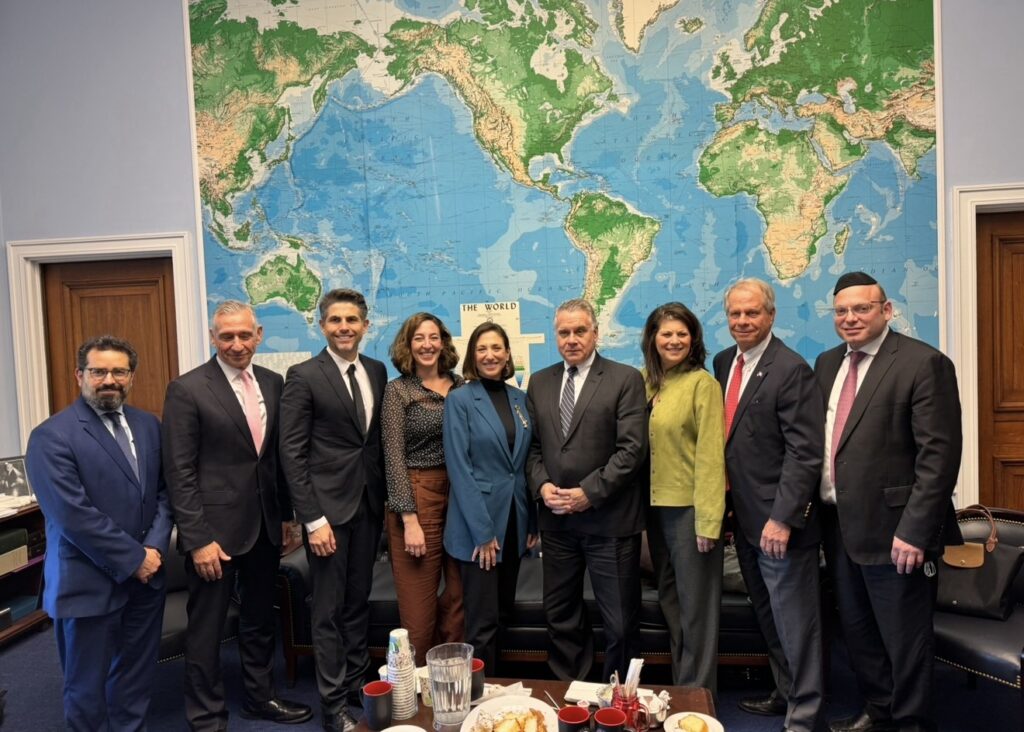
“The principle was clear from day one: taxpayer dollars intended to help innocent people should never be allowed to support terror, radicalization or institutions exploited under the disguise of humanitarian assistance. Protecting Jewish lives and protecting Palestinian lives both require making sure humanitarian funding reaches the people who need it.”
Honig credited Smith directly. “He is second to none on Capitol Hill in fighting antisemitism, hate and injustice, and he has repeatedly been willing to stand at the forefront when others would rather look away.”
For seven decades UNRWA rested on one assumption: that funding Palestinians and funding the agency were the same act. Three governments have now separated them. The United States alone sent the agency $344 million in 2022. It sends nothing today.
JBizNews Desk | Washington
© JBizNews.com All Rights Reserved. Reproduction or distribution without written permission is prohibited.

Some Vegas hotels are so desperate for Canadian tourists they’re treating Canada’s dollar as equivalent to the U.S. greenback to offer more value
Appeals from American tourism organizations seemed to be everywhere Josh Loewen looked over the last year. Billboards and banners proclaimed a state or city’s love for Canada. Online and social media ads offered special deals for travelers from north of the border.
As a Vancouver resident and marketing executive himself, Loewen said he understands the conciliatory overtures. The number of Canadians traveling to the United States plunged after President Donald Trump returned to office with remarks about making Canada the 51st state. An acrimonious trade war between the two countries now is threatening to reinforce the informal boycott just as it appeared to be easing slightly.
“It’s such a big ask right now,” Loewen, 45, said of the U.S. tourism industry’s attempts to woo Canadians like him back before a new president occupies the White House. “It’s just a wasted effort.”
Relations between the U.S. and Canadian governments have deteriorated sharply since their trade negotiations collapsed last month. Trump imposed import taxes of up to 50% on a range of Canadian products. Canada’s government responded in kind. Trump ordered the U.S. government to change the name of border-spanning Lake Ontario to “Lake America.” Canadian Prime Minister Mark Carney dismissed insults from members of Trump’s Cabinet as childish and undignified.
The bilateral rift has not stopped state and local tourism officials and popular destinations like Graceland from trying to persuade Canadian visitors to return.
New York state launched a “NY Loves Canada” promotion this summer, offering discounts at hotels, restaurants and attractions. Some downtown Las Vegas hotels are treating the Canadian dollar as equivalent to the U.S. dollar to give Canadian visitors more value for their money. Las Vegas tourism officials went to Canada last month to meet with travel advisers, tour operators and airline representatives.
“We’re here to make sure you know that we care about Canada,” Steve Hill, president of the Las Vegas Convention and Visitors Authority, said while in Vancouver.
The outreach is happening at the national level, too. Brand USA, the U.S. tourism industry’s marketing organization, is bringing its Travel Week trade-event series to Canada for the first time in October, expanding and rebranding an earlier program known as Canada Connect.
Travel to the U.S. from Canada remains well below 2024 levels
Canada traditionally sent more overnight international visitors to the United States than any other country. Amid last year’s consumer-led backlash, both same-day trips and longer stays nosedived. Canadian residents made 25% fewer return border crossings and spent about $2.4 billion (CA$3.3 billion) less on travel to the U.S. in 2025 than they had the year before, according to Canada’s national statistical agency, Statistics Canada.
The retreat coincided with other headwinds, including a weaker Canadian dollar that made traveling to the U.S. more expensive and rising prices for airfares and hotels. Canadian air travel to the U.S. started declining in September 2023, Statistics Canada data shows.
But the abrupt pullback in stateside travel that accompanied Trump’s second presidency and extended into this year signaled “a persistent shift away from the United States by Canadian residents in their travel preferences,” agency analysts said in a July report.
Tentative signs of improvement emerged in May, June and July, when border crossings picked up slightly, the agency reported. The latter two months coincided with the 2026 World Cup, which the U.S., Canada and Mexico cohosted. Canada’s national soccer team competed during the tournament’s early weeks, giving some Canadians a reason to head south. Carney attended the final match in New Jersey alongside Trump.
Trips by car accounted for most of the uptick in cross-border traffic, while air travel to the U.S. fell from year-earlier levels in every month through June, Statistics Canada said. The U.S. National Travel and Tourism Office estimates that during the first six months of 2026, Canadians made even fewer overnight visits, which typically generate more tourism spending, than they did during the same period last year.
Snowbirds may provide a barometer of Canadian sentiment
A day after the World Cup ended, Trump announced that tariffs on $20 billion worth of Canadian goods would take effect in 30 days. The White House said the tariffs were intended to address U.S. complaints over Canadian barriers to American-made automobiles, alcohol and dairy.
“You went from this really high, exciting moment for the U.S. in terms of international attention, to the next week, it’s negative again,” said Deborah Friedland, a hospitality consultant at financial services firm Eisner Advisory Group. “It’s one step forward and two steps back.”
With the summer now winding down, some of the U.S. destinations most dependent on Canadian visitors are heading into their most important season. Large numbers of Canadian snowbirds typically flock to warm-weather locations in Florida, Arizona and California when temperatures drop at home, making the coming months a test of whether the grassroots boycott will extend into another winter.
“I’d be surprised if we’re talking a year from now and all of a sudden you see this huge uptick in Canadian travel over the winter months,” Friedland said.
Not all tourism officials are worried. Jennifer Adams, tourism director for the Destin-Fort Walton Beach area in Florida’s Panhandle, said she never panicked when headlines about Canadians shunning travel to the U.S. first appeared last year.
“I felt our message was strong,” she said, adding that, “the thing for us is to let the Canadian family know that they are welcomed here and we are committed to giving them a great experience when they get here.”
Florida saw a 7% decline in Canadian visitors in 2025 compared to the previous year, according to state marketing organization Visit Florida. Sister organization Visit California, citing data from global research and consulting company Tourism Economics, estimated that Canadian visitation to the Golden State fell 20%.
For some Canadians, a promise of a good vacation isn’t enough
Loewen, the Vancouver marketing executive, said his family loved visiting the United States. He, his wife and their two children often traveled to San Diego, Portland and Seattle. This year, they chose Mexico instead.
The reluctance, Loewen said, has little to do with whether the U.S. can offer a good vacation. It’s about whether Canadians want to spend their money there while tensions between their country and the U.S. remain so high. Loewen said his family hasn’t stepped foot in the U.S. since Trump’s inauguration and doesn’t plan to until there’s a new president.
Eileen March, a life coach from Calgary, said she made a similar decision. Trump’s threats to make Canada the 51st state and his trade policieswere part of it, as was a broader sense of no longer feeling safe or welcome in the United States, March said.
“As time has worn on, I was beginning to waver,” she said. The latest round of tariffs “reinforced my initial decision to not travel in the U.S. at all while he is in office.” She refuses even to book flights with layovers in the U.S.
March, 41, knows that staying away for four years is a long time. She is prepared to go even longer.
“I think that’ll really depend on who is elected next, their values and the relationship they attempt to foster or repair with Canada,” she said.
This story was originally featured on Fortune.com

U.S. Gasoline Prices Hit Labor Day Record

Tyson Cuts Profit Outlook Again as Historic Cattle Shortage Deepens Beef Losses
Tyson Foods has lowered its profit outlook for the second time in a month as America’s shrinking cattle supply drives up costs, squeezes meatpackers and keeps beef prices elevated for consumers.
Tyson Foods is warning that conditions in the U.S. beef business have become even tougher than it expected only weeks ago.
The company cut its fiscal 2026 adjusted operating-income forecast to between $1.85 billion and $2.05 billion, down from the $2.1 billion to $2.3 billion range it projected in August.
The problem is cattle.
America is dealing with one of its tightest cattle supplies in generations, following years of drought, herd reductions and disruptions to livestock imports from Mexico.
That shortage has pushed cattle prices sharply higher and left meatpackers fighting over a smaller pool of animals.
For Tyson, the math has become painful.
The company is paying more for cattle while having limited ability to fully pass those costs through to consumers, particularly as shoppers remain cautious about food prices and increasingly look for cheaper alternatives.
Tyson had already warned in August that its beef division could lose between $500 million and $650 million this fiscal year.
The company has since moved aggressively to shrink and restructure its beef network.
Tyson announced plans to end operations at its Joslin, Illinois beef facility and its Eagle Mountain, Utah case-ready facility.
It is also pursuing a sale of its beef facility in Pasco, Washington.
The company plans to concentrate more of its beef operations around larger facilities in Dakota City, Nebraska; Holcomb, Kansas; and Amarillo, Texas.
Tyson says those changes are necessary because the cattle shortage could persist.
Recent federal cattle data showed limited rebuilding of the U.S. herd, meaning the supply of animals available for slaughter may remain constrained even after prices rise enough to encourage ranchers to expand.
That rebuilding process takes time.
A rancher cannot simply produce more cattle next quarter.
Cows must be retained for breeding, calves must be born, and those animals then need months or years before they become part of the commercial beef supply.
That is why today’s cattle shortage can continue affecting supermarket prices long after the original drought or supply disruption ends.
The federal government is now trying to intervene.
President Trump recently expanded access to lower-tariff imported beef in an effort to reduce consumer prices, while the administration has also announced support for smaller meat processors and measures intended to help ranchers rebuild domestic production.
But those policies create their own tension.
More imported beef can help consumers in the short term.
It can also put additional pressure on American cattle producers at exactly the moment Washington wants them to invest in rebuilding the herd.
What It Means for You
This is one of those business stories that starts on a ranch and ends at the supermarket checkout.
When cattle supplies fall, ranchers can receive higher prices for animals.
But meatpackers such as Tyson must pay those higher prices before turning the cattle into steaks, roasts and ground beef.
If processors cannot raise retail prices enough to recover those costs, their margins collapse.
That is exactly what is happening now.
For consumers, the shortage means beef prices can remain elevated even while other parts of food inflation cool.
For restaurants, supermarkets and food distributors, it means continued pressure on one of their most important protein categories.
And for investors, Tyson’s latest warning shows that even one of America’s largest food companies cannot easily escape the economics of a 75-year-low cattle supply.
The beef shortage is no longer simply an agricultural problem.
It has become a consumer-price, corporate-profit and national food-supply problem — and Tyson is now paying the price.
JBizNews Desk | New York
© JBizNews.com All Rights Reserved. Reproduction or distribution without written permission is prohibited.
Large majority of Israelis fear an October 7-style attack from the West Bank, poll finds
A majority of Israelis fear that an October 7-style terrorist attack may originate from the West Bank, according to findings released by the Jerusalem Center for Foreign Affairs and Security (JCFA) on Monday.
The findings show that 77% of Israelis, including 86% of Jewish Israelis, are afraid that Palestinian Authority security forces could conduct a large-scale attack much like Hamas did on October 7, 2023.
The study further found that 75% of Jewish Israelis, among 67% of all Israelis, oppose the establishment of a Palestinian state along the 1967 lines.
Earlier on Monday, Defense Minister Israel Katz announced that, should Israel identify a plan to launch an “October-7 style” attack, he and Prime Minister Benjamin Netanyahu have directed the IDF to target senior PA officials in an “all-out war” on terrorism in the West Bank.
“If the security apparatuses of the Palestinian Authority and the bodies associated with them launch, or we know for certain that they are about to launch, an October 7-style terrorist attack against forces and Jewish settlements, Prime Minister Benjamin Netanyahu and I instructed the IDF to prepare to launch an all-out war against senior officials and mechanisms of the [Palestinian] Authority, the bodies associated with them, and against all terrorist infrastructure in Judea and Samaria – in order to quickly bring about their complete defeat,” said Katz.

JCFA warns of potential for Oct. 7-style attack by PA in West Bank
The release of the findings follows the “turning the guns” warning issued by the JCFA on July 15, when a study by Lt.-Col. (res.) Maurice Hirsch noted the buildup of the PA’s military capabilities.
According to Hirsch’s findings, the PA security forces have grown to a size 133% larger than that permitted by the Oslo Accords, reaching a total of about 70,000 personnel, 40,000 more than the number allowed by the agreement.
The study noted that, in the West Bank, the over 50,000 armed PA personnel breach the permitted amount by approximately 400%, with their arms including rocket-propelled grenades (RPGs) and shoulder-launched missiles.
Four potential routes, each totaling around 22 kilometers in length, were identified by the study through which the forces could reach Israeli civilians in a relatively short period of time.
The poll was conducted in cooperation between JCFA and Lazar Research, surveying a representative sample of 703 respondents between September 2 and 4.
Miriam Sela-Eitam contributed to this report.



New Jersey Bond Rating Upgraded to AA- as State Strengthens Fiscal Position
TRENTON, N.J. — New Jersey received a significant credit upgrade after Kroll Bond Rating Agency raised the state’s general obligation bond rating to AA- from A+, citing stronger pension funding, reduced long-term liabilities and improved budget management.
The upgrade is the highest rating KBRA has given New Jersey since it began rating the state in 2015 and marks the first credit-rating increase during Gov. Mikie Sherrill’s administration.
KBRA said New Jersey has built an increasingly established record of making its full actuarially required pension payments while preserving substantial financial flexibility.
The fiscal 2027 budget provides for a full pension contribution for the sixth consecutive year and projects an undesignated year-end fund balance equal to about 10% of appropriations.
The rating agency also pointed to progress in reducing long-term liabilities and better management of reserves accumulated in the years following the pandemic.
For taxpayers, the upgrade has a direct financial significance.
Higher credit ratings generally allow governments to borrow at lower interest rates because bond investors view the debt as carrying less risk. For a state that finances major transportation, infrastructure and capital projects, even modest reductions in borrowing costs can translate into substantial long-term savings.
KBRA also upgraded several state-backed annual appropriation bonds to A+ from A, including debt connected to the New Jersey Transportation Trust Fund Authority, New Jersey Economic Development Authority and New Jersey Educational Facilities Authority.
The outlook on the rated obligations is stable.
The upgrade now puts KBRA’s rating for New Jersey one notch above the state’s current A+ ratings from S&P and Fitch and broadly in line with Moody’s Aa3 rating.
New Jersey’s fiscal position has improved considerably from the period when pension underfunding, large liabilities and repeated credit downgrades weighed heavily on the state.
The Sept. 2 KBRA action represents the state’s 10th consecutive credit-rating upgrade across the four major rating agencies since New Jersey was downgraded during the COVID-19 pandemic, according to the state Treasury Department.
Gov. Sherrill said the upgrade reflects steps taken in the fiscal 2027 budget, including reducing the state’s structural deficit by more than half, maintaining roughly a $6 billion surplus and making the full pension payment.
The stronger rating also carries a broader business message.
Credit ratings are closely watched by investors because they provide an independent assessment of a government’s financial strength and its ability to meet long-term obligations. A stronger state balance sheet can help support infrastructure investment while improving New Jersey’s overall financial credibility with businesses and capital markets.
KBRA nevertheless said challenges remain, including New Jersey’s still-high unfunded pension and other post-employment benefit liabilities and the need to transition carefully away from extraordinary reserves accumulated following the pandemic.
The upgrade therefore represents substantial progress rather than the end of New Jersey’s fiscal challenges.
For taxpayers and businesses, however, the direction is favorable: New Jersey is borrowing from a stronger financial position, carrying a better credit rating and potentially paying less to finance the investments needed to support future economic growth.
JBizNews Desk | Trenton, New Jersey
© JBizNews.com. All Rights Reserved. Reproduction, redistribution, republication or use of this content, in whole or in part, without the express written permission of JBizNews is prohibited.
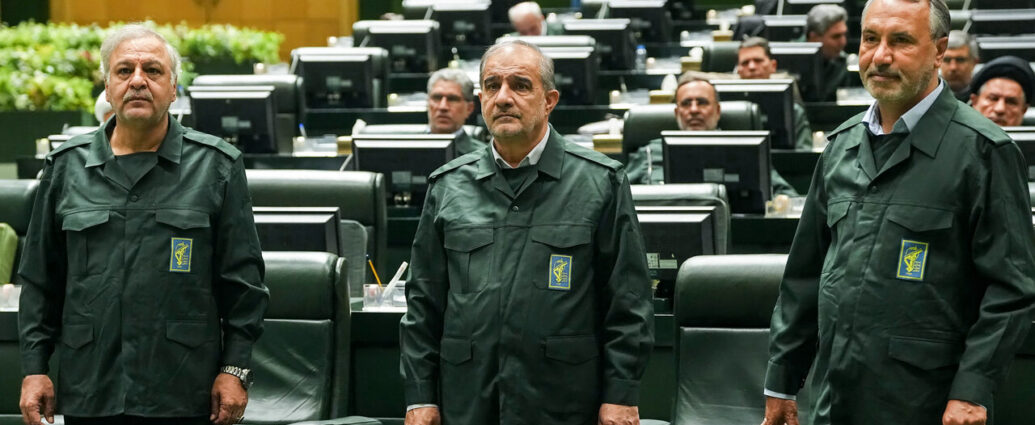
Iranian-American Jew Kamran Hekmati released from Tehran’s Evin Prison, must stay in Iran – report
Kamran Hekmati, a Jewish Iranian American citizen who had been held in Tehran’s Evin Prison, was released on Saturday, Iranian sources reported on Monday.
However, a travel ban imposed on him remains in effect, preventing him from leaving Iran and returning to his home in the United States. Iranian authorities have not yet officially announced his release.
Hekmati was arrested in July 2025 and imprisoned after a Tehran court convicted him over a visit to Israel 13 years earlier, when he traveled there to attend his son’s bar mitzvah celebration.
According to his family and organizations assisting with the case, the trial lasted about 10 minutes and was conducted without a lawyer or witnesses present.
This is a developing story.
Syrian nuclear site destroyed by IDF in 2007 was useful for weapon production, IAEA chief says
The nuclear reactor Syria had nearly completed in 2007 when Israeli jets destroyed it was of a type that could quickly produce fissile material usable in nuclear weapons, International Atomic Energy Agency (IAEA) Director-General Rafael Grossi said on Monday.
The United Nations nuclear watchdog has described its recent investigation into secret nuclear activities under the Assad family’s rule as a ” historic breakthrough. The investigation uncovered around 73 metric tons of natural uranium metal, mainly in the form of reactor fuel.
In a report to member states seen by Reuters, the IAEA confirmed its previous finding that the bombed site in Syria’s eastern province of Deir al-Zor was a nuclear reactor under construction, and that fuel for it had been made in Syria, all of which should have been declared at the time to the agency.
“This is a reactor that is very efficient in the production of fissile material that could be used directly for the fabrication of nuclear weapons,” Grossi told a press conference, adding that it was “almost completed.”
“That was a very serious proliferation concern,” he said, while cautioning that the then-authorities’ intentions “cannot be judged.”

Syria’s new government committed to working with IAEA on nuclear issues
Since the ouster of former president Bashar al-Assad in late 2024, Syria’s new authorities have committed to working with the IAEA to answer questions relating to so-called nuclear safeguards – the process of accounting for and monitoring nuclear material.
“Having received the necessary access and information from Syria, …the agency has been able to clarify and resolve the agency’s questions concerning the outstanding safeguards issues related to Syria’s past nuclear activities,” Grossi said in a speech to the IAEA’s 35-nation board.
“I welcome Syria’s transparency and cooperation with the agency, which facilitates the resolution of the outstanding safeguards issues related to Syria’s past nuclear activities,” he added.
Saudi Arabia set to grant IAEA more investigative powers
A planned US-Saudi atomic deal does not include Riyadh signing the Additional Protocol, which gives the UN nuclear watchdog sweeping inspection powers, but something close to it on some points is in the works, the agency’s chief said Monday.
The US and Saudi Arabia reached an agreement on civil nuclear power cooperation in July that would let Riyadh enrich uranium and build nuclear reactors using US technology.
Non-proliferation groups, such as the Arms Control Association, have criticized the planned “123 agreement” for not including the Additional Protocol, which grants the International Atomic Energy Agency extra powers such as the ability to carry out snap inspections at undeclared locations.
Iran implemented the Additional Protocol from 2016 to 2021 under a nuclear deal with major powers that unraveled after the US pulled out in 2018.
Saudi’s prepare to go beyond its core obligations
IAEA chief Rafael Grossi said that while the Additional Protocol would be the “ideal setup,” Riyadh was preparing to go beyond its core obligations under its Comprehensive Safeguards Agreement governing relations with the IAEA.

“What is important is that in the consultations, in the preparation process, it has been possible to introduce a number of provisions to the bilateral agreement that will give the agency additional verification and monitoring authorizations,” he told a press conference.
Those would relate to activities such as uranium enrichment and the step preceding it, known as uranium conversion, as well as reprocessing, which can separate plutonium from spent reactor fuel.
“These are sensitive activities, as we all know. So for those we are going to have authorizations and capacities which are very, very similar to those that you may find in an Additional Protocol,” he said, without elaborating.
Once the details are finalized, the bilateral agreement between the IAEA and Saudi Arabia will be presented to the IAEA’s 35-nation Board of Governors, Grossi said.
Reporter’s Notebook: The two faces of General Ratko Mladic
BANJA LUKA, Republika Srpska – In the center of Banja Luka, at a memorial dedicated to those killed in the wars accompanying the breakup of Yugoslavia in the 1990s, a smaller memorial had appeared. It showed the photo of a man decked in military garb and was accompanied by floral wreaths. It was for Gen. Ratko Mladic.
The former commander of the Bosnian Serb Army died on August 27 at the age of 84. He was serving a life sentence imposed by the International Criminal Tribunal for the former Yugoslavia (ICTY).
Yet in Republika Srpska, the Serb-majority entity of Bosnia and Herzegovina, the reaction encountered by The Jerusalem Post was often far removed from the international condemnation that followed his death.
“Mladic defended us when we were under attack,” a Banja Luka resident told the Post. “He fought for Serb rights.”
Others who spoke with the Post during a visit to the city similarly described Mladic as a hero, reflecting the extraordinary divide that continues to surround his legacy more than three decades after the end of the Bosnian War.

Those feelings, often buried in the hope of looking to the future, rose to the surface again when Mladic died last week. They were visible again on Monday, when thousands gathered outside a Serbian Orthodox church in Belgrade ahead of his burial.
Mourners carried Serbian flags and photographs of the former military leader, while free buses were provided from towns in Serbia and from Bosnia for those wishing to attend. His coffin was displayed inside the church as his family received condolences.
The reverence is juxtaposed alongside a judicial record that is among the most serious to emerge from the wars that accompanied the breakup of Yugoslavia.
Mladic’s genocide conviction
In 2017, the ICTY convicted Mladic of genocide over the 1995 Srebrenica massacre, as well as persecution, extermination, murder, deportation, and forcible transfer. An estimated 8,000 Bosniak Muslim men and boys were killed following the fall of the town of Srebrenica in July 1995.
Mladic was also convicted of crimes connected to the campaign of sniping and shelling against civilians during the siege of Sarajevo and the taking hostage of UN personnel. His life sentence was upheld on appeal in 2021.
Mladic was, alongside former Bosnian Serb political leader Radovan Karadazic, the highest-ranking Bosnian Serb official to be convicted by the Hague tribunal. Former Serbian and Yugoslav president Slobodan Milosevic died in custody in 2006 before a verdict could be reached in his war-crimes trial.
President Milorad Dodik, the longtime dominant political figure in Republika Srpska, made little attempt to disguise the depth of the divide during an interview with the Post in Banja Luka last week.
“What the West and the Muslims have done is turn Gen. Mladic into an icon of identification for the Serbs, whatever anyone may think about him,” he said.
Attempts to criminalize the glorification of convicted war criminals in Bosnia have strengthened rather than diminished Mladic’s standing among some Serbs, Dodik said.
“You can prohibit someone from saying something publicly, but you cannot prohibit people from saying what they want in private conversations,” he told the Post.
Mladic’s reputation as a defender of the Serbs has survived into a new generation
What particularly concerned Dodik, though, was that the phenomenon was no longer restricted to the generation that fought or lived through the war: The fierce Serb nationalism of the 1990s has taken root among today’s youth.
“Today, these people – young people born after the war – are going into the streets and paying tribute to Gen. Mladic,” he said. “Excuse me, how am I supposed to prohibit that? Should I use force?”
The conversations the Post had in Banja Luka suggested that whatever the reasons, Mladic’s reputation as a defender of the Serbs has survived into a generation with little or no personal memory of the conflict.
Many of the people who spoke to the Post – Bosnian citizens who identify first and foremost as Serbs – expressed deep contempt for the Bosnian state and distrust of Sarajevo; politically and culturally, their eyes remain firmly turned toward Belgrade.
Dodik also rejected the international narrative surrounding Mladic’s responsibility, saying he had been made into a symbol of what many Serbs regard as the unequal treatment of the different sides in the Bosnian War.
“A myth has been created around Mladic – the image of a beast that certain liberal circles needed in order to portray him that way,” Dodik said.
This view was also expressed by others who spoke with the Post. They did not necessarily deny that crimes had been committed by Bosnian Serb forces, but they repeatedly returned to what they regarded as the unequal judgment of the war: that crimes were committed by all sides, while the Serbs alone have come to be defined by them.
Mladic’s death has once again exposed divisions that have never fully disappeared since the 1992-1995 war.
Before his death, Mladic had personally requested to be buried in Belgrade alongside his daughter, Ana, who died in 1994.
“During his lifetime, he asked to be buried in the cemetery where his daughter is buried,” Dodik said. “Among us Christians, Orthodox Christians, that is a definitive and irrevocable decision, and we cannot change it.”

Serbian-European relations suffer tension following Mladic’s death
The Serbian government’s treatment of Mladic following his death has meanwhile produced a new confrontation with Europe. EU Enlargement Commissioner Marta Kos canceled a planned visit to Serbia last week, saying the glorification of convicted war criminals was incompatible with the principles of reconciliation and respect for victims expected of countries seeking EU membership.
Dodik characterized the criticism surrounding the funeral as “hysteria,” saying it would only reinforce the sense among Serbs that Mladic and, by extension, themselves were being treated unjustly.
“I think all of this would have passed much more peacefully if the Muslims had not started this hysteria,” he said. “Then the Serbs react in defense of their dignity.”
That sense of grievance helps to understand what was visible in Banja Luka in the days following Mladic’s death.
The legal judgment regarding Ratko Mladic was delivered long ago. His final appeal failed five years before his death, leaving in place a life sentence for genocide, crimes against humanity, and war crimes.
But judicial judgments and collective memory do not necessarily travel together.
Three decades after Srebrenica, the memorial in central Banja Luka, the conversations with residents, and now the thousands who turned out in Belgrade for his funeral demonstrate that for many Serbs, Mladic remains something very different from the man described in the judgments of The Hague.
For one resident who spoke with the Post, at least, there was little ambiguity.
“He defended us,” he said.
Education Minister Kisch asks High Court to preserve proportional funding for haredi schools
Education Minister Yoav Kisch asked the High Court of Justice to preserve a system that funds party-affiliated haredi (ultra-Orthodox) schools according to the amount of core curriculum they teach, placing him directly at odds with the attorney-general.
On Sunday, Kisch asked the court to cancel an order requiring the government to justify the system and to reject a petition filed by religious freedom advocacy group Hiddush.
The dispute concerns hundreds of schools operated by the Independent Education Center and Ma’ayan Hahinuch Hatorani Bnei Yosef, which are affiliated with United Torah Judaism and Shas, respectively.
The schools are recognized by the state but are not part of the state school system. A special legal provision allows the two networks to receive funding on the same basis as state schools. Other recognized but unofficial schools generally receive 75% of equivalent state-school funding.
Hiddush argues that the networks are entitled to full funding only if they teach the full core curriculum, including mathematics, English, and science. It claims that schools have continued to receive funding despite failing to meet those requirements and that the Education Ministry’s supervision has not provided an accurate picture of what is taught.
Kisch disputes that interpretation. He defended the ministry’s practice of adjusting each school’s funding according to the proportion of the core curriculum it teaches. Under that system, a school assessed as teaching 85% of the required program may receive funding at a similar rate.

Kisch warns all-or-nothing rule could drive schools from state oversight
The minister argued that the system has encouraged schools to expand their core studies. An “all-or-nothing” rule could instead push schools out of the networks and into educational frameworks subject to fewer state requirements, he said.
Kisch also argued that previous attorneys-general and court rulings had accepted proportional funding. The attorney-general’s position is that the arrangement was, at most, temporary and never provided a permanent legal basis for funding network schools that do not meet their full obligations.
The disagreement led Kisch to obtain separate legal representation rather than join the state’s response filed on behalf of the Education and Finance ministries.
The court first sought additional information after a January 5 hearing at which the state hadn’t filed a preliminary response addressing the substance of the petition.
On January 8, Justices Dafna Barak-Erez, David Mintz, and Ruth Ronnen ordered the state to provide information already held by the Education Ministry. The court asked what core studies the schools must teach, how compliance is calculated, how teacher qualifications and external examinations are considered, and how the schools are supervised.
Court questions funding rules and oversight of haredi schools
After receiving a supplemental filing, the court issued a conditional order on February 17, requiring the government to justify its policy before the court reaches a final decision.
The court asked why each school’s funding should not depend on teaching the full core curriculum, employing suitably trained teachers, and participating in external assessment exams at rates comparable to state schools.
It also asked why the ministries should not establish school-by-school supervision that does not rely solely on self-reporting or visits arranged in advance, and why schools that fail to meet the conditions should not be removed from the networks.
Kisch’s Monday response said Education Ministry data showed substantial improvement. According to the filing, 498 of the networks’ 517 schools taught between 96% and 100% of the required core curriculum during the 2025-26 school year. Of those, 476 were assessed as teaching the full program.
Those figures are disputed. The attorney-general’s response said the ministry’s calculation method could conceal gaps in individual subjects.
Shortcomings in teacher training
ACCORDING TO the state, schools that did not teach English or mathematics in entire grades could still be classified as teaching more than 95% of the program because the ministry calculated total hours across subjects and age groups.
The state also identified shortcomings in teacher training, external testing, and enforcement.
Kisch acknowledged a shortage of trained teachers but argued that similar shortages exist in state schools. He also said teacher qualifications had not previously been treated as a direct condition for funding a school.
His filing presented different qualification rates for each subject, ranging from 4.6% for middle-school science teachers to 24.5% for general elementary-school teaching. Kisch said the ministry had introduced a multiyear training program intended to improve those figures.
The minister also said the ministry strengthened inspections and enforcement, saying that removal notices were sent to 22 schools, and two Independent Education Center schools were subsequently transferred out of the network.
Under the transition proposed by Attorney-General Gali Baharav Miara, a school that does not teach the full curriculum during the 2026-27 school year could continue receiving reduced funding only if it commits to full compliance the following year. A school that refuses would face removal from the network.
Kisch also argued that the court should exercise restraint because Israel is approaching an election and haredi education funding is politically disputed.
Hiddush rejected that position. Dr. Yifat Solel, the organization’s deputy director and the lawyer who filed the petition, accused Kisch of seeking to preserve public funding without ensuring that the schools provide the education for which the money was allocated.
The High Court must now decide whether the responses justify the existing arrangement or whether to make its order final.

SoundHound Closes LivePerson Deal, Expanding Its AI Reach Across Voice and Messaging
SoundHound AI has completed its acquisition of LivePerson, combining voice AI, digital messaging and enterprise customer-service technology into a larger platform serving some of the world’s biggest companies.
SoundHound AI has officially closed its acquisition of LivePerson, completing a deal designed to give the company a much larger position in the rapidly growing market for AI-powered customer service.
The transaction closed September 4.
The combination brings together SoundHound’s voice and agentic AI technology with LivePerson’s digital messaging platform, which has long been used by major enterprises to communicate with customers online.
The combined customer base includes 25 of the Fortune 100, according to SoundHound.
The company also says the acquisition expands its intellectual-property portfolio to more than 750 patents.
That gives SoundHound a broader platform across both voice and text.
Until now, much of SoundHound’s public profile has come from voice-based AI systems used in restaurants, automobiles and other customer-facing environments.
LivePerson adds another major channel.
Its technology powers large volumes of customer conversations through messaging platforms, allowing companies to handle service inquiries, sales interactions and support requests digitally.
SoundHound plans to integrate LivePerson’s technology into OASYS, its self-learning agentic AI platform.
The goal is to allow businesses to create AI agents that can interact with customers across multiple channels instead of requiring separate systems for phone calls, digital chat and messaging.
The financial opportunity is also significant.
When SoundHound announced the acquisition earlier this year, it said the combined existing customer base represented a potential $500 million revenue opportunity.
The company also projected 2027 revenue of at least $350 million to $400 million, including at least $100 million in potential contribution from LivePerson’s existing customers.
SoundHound originally agreed to acquire LivePerson for an equity value of approximately $43 million.
But the economics of the transaction were more complicated than the headline purchase price.
LivePerson was expected to bring approximately $74 million in cash at closing, while SoundHound planned to retire the company’s remaining discounted debt.
SoundHound said the transaction implied an enterprise value of approximately $250 million.
With the acquisition now complete, SoundHound also named John Collins chief financial officer of the combined company.
What It Means for You
The bigger story is how quickly AI is moving into ordinary customer service.
Companies are no longer experimenting only with chatbots that answer simple questions.
They are increasingly deploying AI agents designed to handle entire conversations, place orders, solve problems, manage appointments and move customers through transactions.
SoundHound wants to provide that technology whether the customer is speaking on the phone or typing a message.
That is why LivePerson matters.
It gives SoundHound access to an established enterprise messaging network and hundreds of major corporate customers that can potentially be offered SoundHound’s voice and agentic AI products.
The opportunity is straightforward:
Instead of selling one AI product to one department, SoundHound is trying to become the platform businesses use for customer conversations across every channel.
For companies spending heavily to reduce call-center costs and automate customer interactions, that market could become enormous.
And SoundHound just substantially increased the number of doors it can knock on.
JBizNews Desk | New York
© JBizNews.com All Rights Reserved. Reproduction or distribution without written permission is prohibited
UK set to ban trade with Israeli settlements in West Bank on Tuesday, ‘Post’ learns – exclusive
The United Kingdom will announce a ban on trade with Israeli settlements in the West Bank on Tuesday, The Jerusalem Post understands.
British Foreign Secretary Ed Miliband told the House of Commons last week the UK needs “a comprehensive reset of our policy” when it comes to the West Bank.
Miliband added that the new measures would include a ban on goods produced in the settlements and targeted sanctions on British institutions and individuals.
“We are looking, indeed, at our wider economic relationship with the occupied territories, and the different tools we have to tackle it,” Miliband explained. “We do not want British companies financing, constructing, or advertising new settlements. The work we are now undertaking is how we can stop that.”

According to late August reports from the UK, British Prime Minister Andy Burnham had considered imposing a trade embargo over the past weeks. The new sanctions regime would likely stop the exchange of both goods and services.
This is a developing story.

The 10 fastest-growing jobs in America over the next decade
The Bureau of Labor Statistics (BLS) recently released a report projecting how the U.S. workforce will grow from 2025 to 2035 and what professions will see the largest increases in jobs as the economy evolves.
Employment projections from the BLS estimate that the U.S. economy will add a total of 5.9 million jobs from 2025 to 2035, lifting total employment from 170.3 million to 176.2 million in that period. That would amount to a 3.5% growth rate, which is slower than the 10.9% growth rate from 2015 to 2025.
The report also detailed what it projects as the 10 fastest-growing occupations from 2025 to 2035, with the list dominated by roles in the healthcare industry, as well as some in the energy sector.
“Because the likelihood of experiencing health complications increases with age, the aging population is expected to boost demand for a wide variety of healthcare and social services, including home health and personal care services,” the BLS wrote.
PRIVATE SECTOR ADDED 38,000 JOBS IN AUGUST, BELOW EXPECTATIONS, ADP SAYS
Nurse practitioners were at the top of the list, with the profession’s employment expected to grow by 41% over the 2025 to 2035 period. That growth rate represents an estimated gain of about 137,800 nurse practitioner jobs.
The second-fastest growing occupation in the report is solar photovoltaic panel installer, with the role expected to grow 36.5%, or about 11,300 jobs added through 2035.
BLS noted that demand for electricity “is expected to grow significantly” over that period, boosting demand for roles like solar panel installers and another role ranked further down the list.
LOWE’S LAUNCHES MAJOR EFFORT TO HELP CLOSE AMERICA’S SKILLED TRADES GAP
Data scientists ranked third, with employment growing by 34.6%, or 95,400 jobs, while wind turbine technicians were projected as the fourth-fastest growing role with a growth rate of 29.5%, or 3,500 jobs in the 2025-2035 period.
Medical and health services manager roles were projected to grow by 24.2%, with the largest nominal employment growth of 155,100 jobs added in that time.
Physical therapist assistants were the sixth-fastest growing role in the BLS report, with projected growth of 23%, or 26,200 jobs, through 2035.
BILL GATES OUTLINES THE STAKES OF THE AI ERA: ‘GREATEST EQUALIZER… OR WORST SOURCE OF INJUSTICE’
Continuing the trend of healthcare roles dominating the 10 fastest-growing roles over the next decade, psychiatric technicians ranked seventh on the list at a 22.3% growth rate and 36,000 jobs added in the next decade.
The three roles that rounded out the list of the 10 fastest growing occupations from 2025 to 2035 were computer and information research scientists, with growth of 21.8% and 8,400 jobs; occupational therapy assistants, with a 21.5% growth rate and 11,200 jobs; and ophthalmic medical technicians, with a 21.4% growth rate and 15,500 jobs.

‘It tastes exactly like beef.’ For people with a life-threatening allergy to red meat, an ostrich burger can bring them to the verge of tears
When a friend approached Brent Williams four years ago with a business proposition to start an ostrich farm, he was more than intrigued — he had a personal motivation as someone who developed a life-threatening allergy to red meat, triggered by tick bites.
The problem, known as alpha-gal syndrome, was first linked to a particular species of ticks about 15 years ago. But cases are on the rise as more people report symptoms such as hives, diarrhea and itchiness after eating as little as a mouthful of red meat. The allergy doesn’t extend to seafood or poultry. Chicken, turkey and eggs are all OK to eat.
And so is ostrich meat.
The flightless bird’s meat, red in color and high in iron, has a look and taste similar to beef.
“The people that have alpha-gal that I talked to that have tried an ostrich burger, most of them are almost in tears,” said Williams, a nutritionist and partner at Alpha Roost Farms in Danville, Kentucky. They say, “You just don’t know how bad I missed this.”
Many who are allergic to red meat are turning to ostrich meat
The farm is looking to nearly double its herd by next year. It recently built a new barn for hatchlings of the birds, which are native to Africa and are the world’s largest, standing at nine feet tall (2.7 meters) and weighing more than 300 pounds (136 kilograms). The farm has more than 400 birds, and expects that number to grow to 700 by next year.
Alpha Roost Farms owner W.D. King, who approached Williams with the idea of raising ostriches, said the interest from those with alpha-gal is helping drive the demand.
“People who haven’t had a hamburger in six or seven years really want one,” King said.
And they are willing to pay: A pound of ground ostrich can cost more than $20, and choice cuts can sell for more than $40.
“We have people that drive here from all over the state to get the ostrich,” said Leah Gibbs, who runs Dry Branch Farm market in Danville, Kentucky, that sells ostrich cuts from Alpha Roost Farms.
“They are elated to have something that’s an alternative to beef,” Gibbs said. “I mean, it tastes exactly like beef.”
The Alpha-Gal Association, a nonprofit advocacy group that provides online resources to people with the allergy, recommends ostrich as a dietary substitute that tastes like beef.
Boyd Clark, who runs a large ostrich farm in Texas, said he expects to increase his herd of about 1,200 birds by 50% next year. Clark has raised the big birds since the 1980s, and said the few full-scale ostrich farms around the country are trying to meet a growing demand.
“We get calls weekly from various restaurants or even small stores in different parts of the country that you wouldn’t think would even want to carry ostrich, but they’re looking for it because they’ve got customers wanting it,” said Clark, who runs Clark Ostrich Farm, about 90 miles (144 kilometers) northwest of Austin.
Ostrich farms have seen ups and downs in US
The latest interest comes after ostrich farming saw a surge and crash in the 1990s, when many farms and investors were eager to get into the ostrich market but lacked experience dealing with the wild birds.
“The U.S. producers that jumped both feet in in the ’90s, they were all operating under the premise that these were 300-pound chickens,” said Michael Lehman, vice president of the American Ostrich Association and an ostrich farmer in Oregon.
The farms tried to apply the high-density approach that works well with chickens, but ostriches need free range space, Lehman said. The farms weren’t able to get the yields they expected, so supply wasn’t able to meet demand, he said, and the industry crashed under skyrocketing prices.
Lehman estimated there are only about 10 to 15 farms operating today that have large ostrich herds, and those producers have a better understanding of the animals’ behavior and free range needs.
A farmer who also suffers from alpha-gal
Williams was diagnosed with alpha-gal seven years ago. His first allergic reaction came in 2017 after eating a steak sandwich while traveling for work, something he had done hundreds of times before.
He went to see an allergist for help in diagnosing the puzzling and painful flare-up.
“The very first visit, he asked me, ‘Have you been bitten by a tick?’ I just laughed and said, ‘Sure, hundreds,’” said Williams, who has spent most of his life raising livestock on farms where ticks thrive.
The tick that bit him was carrying the alpha-gal sugar, which is found in the meat of most mammals, but not in humans. The sugar is harmless when eaten directly, but not when exposed via ticks’ saliva. When it entered Williams’ bloodstream, it caused an immune system reaction. The antibodies created from the reaction learned to identify and attack alpha-gal sugar molecules, making meat from mammals toxic to his system.
Alpha-gal syndrome is relatively new to medical study after a research paper linked it to tick bites in 2011. In 2023, a government report said there were about 100,000 people in the U.S. with the allergy, though experts said many people don’t know they have it and the number of sufferers could be closer to a half-million. Last year, researchers said they documented the first known case of a death related to alpha-gal, after a 47-year-old New Jersey man died in 2024.
Once Williams got his diagnosis, all meat from mammals, even the fumes of it from a grill or gelatin on a pill, were off limits.
“It’s been eight years, but I still vividly remember how sick I was,” Williams said.
So when he tried ostrich meat for the first time, he said it was the closest thing he had to beef in years. His wife bought some online and he cooked an ostrich steak.
“The mouth feel, the taste, the texture, it brought me good memories … because there’s only so many ways you can cook a chicken,” Williams said.
This story was originally featured on Fortune.com

United Returns to Israel Tomorrow With Two Daily Newark–Tel Aviv Flights
NEWARK, N.J. — United Airlines is set to restore one of the most important U.S.–Israel air links Tuesday, September 8, with two daily nonstop flights from Newark Liberty International Airport to Tel Aviv, bringing substantial new capacity back to the market just ahead of the Jewish High Holiday travel season.
The restart remained on the published schedule Monday, September 7, with both United flights showing service beginning September 8.
United Flight 84 is scheduled to depart Newark at 3:25 p.m. and arrive at Tel Aviv’s Ben Gurion Airport at 8:55 a.m. the following morning. The flight is scheduled on a Boeing 787-10 Dreamliner.
United Flight 90 is scheduled to leave Newark at 10:50 p.m., arriving in Tel Aviv at 4:20 p.m. the following day.
That means United is not returning cautiously with a limited or occasional schedule. It is moving directly back to two flights a day from Newark, restoring a major portion of the airline capacity that travelers between the United States and Israel lost during the latest Middle East disruption.
The timing matters.
September is one of the most important travel periods of the year for the Orthodox Jewish community and the broader U.S.–Israel market, as thousands of travelers prepare to head to Israel for Rosh Hashanah, Yom Kippur and Sukkot.
United’s Newark hub is particularly important for that traffic because passengers do not have to originate in the New York area. Travelers from cities across the United States can connect through Newark and continue directly to Tel Aviv on the same airline.
For New Jersey, New York and the large Jewish communities surrounding Newark, the restoration is even more significant. Newark has historically been one of the principal gateways between the United States and Israel, and United has long been one of the largest U.S. carriers serving the route.
The airline’s return also represents another sign that American carriers are gradually rebuilding their Israel networks after months of instability.
Delta Air Lines resumed its own New York-JFK to Tel Aviv service on September 6, meaning two of the largest U.S. airlines are again competing for nonstop New York-area traffic to Israel.
The difference is capacity: United’s planned Newark schedule provides two daily flights, while Delta restarted with one daily JFK flight.
United’s return therefore adds hundreds of seats each day in each direction and gives travelers considerably more flexibility in departure times, connections and premium-cabin availability.
The afternoon Flight 84 departure is particularly useful for passengers connecting into Newark from other U.S. cities earlier in the day, while Flight 90 provides a late-evening option that allows travelers to complete much of a normal workday before heading to the airport.
The Boeing 787-10 scheduled for Flight 84 is among the largest aircraft in United’s Dreamliner fleet. Published configuration information shows approximately 318 seats, including business class, premium economy and economy cabins.
The return also carries broader importance for airfare competition.
When major U.S. carriers suspend Israel flights, the reduction in available seats can place significant pressure on fares, particularly during periods of strong demand. Restoring several hundred United seats every day gives travelers another major option and reduces reliance on Israeli carriers and connecting itineraries through Europe.
For businesses, the route is also more than a leisure or family-travel connection.
New York and New Jersey maintain deep commercial relationships with Israel in technology, finance, health care, real estate, venture capital and professional services. The ability to travel nonstop between the New York metropolitan area and Tel Aviv is therefore an important piece of business infrastructure.
United has repeatedly had to adjust its Israel operation since October 2023 as security conditions changed. Airlines have suspended, resumed and again suspended service as conflict spread across the region and airspace conditions shifted.
That history is why travelers have been watching this particular restart closely.
As of Monday, however, the September 8 restart remained intact in published schedules. UA84 is listed beginning September 8 at 3:25 p.m., while UA90 is likewise scheduled to begin September 8 with its 10:50 p.m. Newark departure.
There has been no newly announced postponement of those flights.
The next important test comes Tuesday afternoon, when UA84 is scheduled to push back from Newark and begin the roughly 10½-hour journey to Ben Gurion.
If both flights operate as planned, September 8 will mark the return of a major piece of the U.S.–Israel aviation network — and, for thousands of travelers preparing for the coming holiday season, a return of something that has been increasingly difficult to count on: two daily United departures from Newark directly to Israel.
JBizNews Desk | Newark, New Jersey
© JBizNews.com. All rights reserved. This article is original reporting by JBizNews Desk. Unauthorized reproduction or redistribution is strictly prohibited.

US government to use AI virtual agents as part of interviewing, hiring process – report
The US federal government will begin incorporating artificial intelligence into the interview and hiring process for some new employees in the coming days, CBS reported on Monday, citing US officials.
The government will test the technology using the platform CodeSignal on the “Tech Force,” an initiative started eight months ago to recruit private-sector tech experts into two-year government posts, according to one official.
The federal government employs 1.9 million workers and has fallen behind the private sector in using AI interviewing tools as the first screening layer for large employers, CBS wrote.
AI is already used regularly in the Office of Personnel Management, the government’s HR unit, with administrative staff having access to programs including Microsoft’s Copilot, Anthropic’s Claude, OpenAI’s ChatGPT, and Google’s Gemini on their government computers. OPM also began using an AI tool to prepare job descriptions earlier this year.
OPM urges agencies to use AI
The personnel office issued guidance encouraging agencies to use AI in their hiring process with human oversight, especially in certain crucial personnel decisions.

Office director Scott Kupor has pushed to make the federal hiring process more efficient and has encouraged agency heads to hire at least a third of new hires from early-career professionals as the federal workforce continues to age, according to CBS.
CodeSignal will provide AI-powered tools to screen job applications in early rounds of the hiring process in the Tech Force hiring pilot program, with virtual AI agents handling interviews with phone, audio, and text-based options. Hiring managers will be sent transcribed recordings of candidates.
AI is likely to grow more common in the federal government hiring process, several officials told CBS.

Two IDF soldiers injured by Hezbollah terrorist in southern Lebanon, military strikes in response
Two IDF soldiers were lightly injured by a Hezbollah terrorist in the Beaufort Ridge area of southern Lebanon, their military said on Monday, noting that it struck Hezbollah targets in response to the attack.
According to the IDF, the two soldiers were attacked at close range and managed to kill the terrorist despite being injured. They were evacuated to a hospital, and their families were notified.
Targets struck by the IDF included weapons storage facilities, command centers, and additional Hezbollah terror infrastructure.
The announcement follows overnight IDF strikes in the Nabatiya area of southern Lebanon, during which the military killed several terrorists.

Hezbollah-affiliated reporter injured in IDF strike
Hezbollah-run Al-Manar reporter Ali Shabib was injured in one of the strikes and has since been evacuated to a hospital.
Like the Beaufort Ridge strikes, the Nabatiya strikes came as a response to a Hezbollah drone attack on IDF soldiers in the Ali al-Taher Ridge area. No Israeli soldiers were injured in the attack.
Eli Leon contributed to this report.
Defying Netanyahu pressure to merge, Winter submits People of Israel’s list ahead of 2026 election
Ofer Winter, the chairman of the People of Israel party, announced Monday his party’s complete list and closed the door to a rumored merger with Finance Minister Bezalel Smotrich’s Religious Zionist Party (RZP).
“The People of Israel party was launched only two weeks ago and has already become a significant player on the political map,” said Winter in a statement, adding that a reason behind it was that the party “brings a new spirit that represents the entire spectrum of the population and leads a policy of true right-wing and military decisiveness in all sectors.”
He also said that one of the goals of his party is to push for Haredi enlistment into the IDF “without compromise and without willingness to serve as [United Torah Judaism leader Yitzchak] Goldknopf’s political pawn at the expense of the soldiers.”
The decision defied Prime Minister Benjamin Netanyahu, who is pushing aligned parties to merge to avoid losing votes from the right wing if they fail to cross the electoral threshold.
“In recent weeks, Minister Smotrich has examined the possibility of adding many figures to the Religious Zionism list for the upcoming Knesset, but has waited with a decision on the matter in order to save places for a responsible unification with Ofer Winter’s party,” said RZP in a statement following the announcement.

“Minister Smotrich believed that joining forces in the national camp was more important for the good of his party and strengthening it with additional figures,” the statement continued.
“However, now that it seems that Winter has made up his mind to run independently and to gamble irresponsibly on the future of right-wing rule and the State of Israel, he will be free to once again examine the possibility of strengthening Religious Zionism through the chairman’s reserves,” it concluded.
Who is in Winter’s list for October elections?
In total, the People of Israel party shared the names of 18 candidates, with most polls currently giving them between four and five seats.
If these numbers are reflected in the upcoming election, then Ofer Winter, Yoseph Haddad, Netali Shem Tov, Eran Ben-Ari, and Fleur Hassan-Nahoum.
This is a developing story.
Israeli lawyer faces ethics complaint over expert opinion used to target IDF reservist in UK
A British-Israeli IDF soldier who was subjected to bogus legal proceedings in the UK has filed a complaint with the Israel Bar Association’s Tel Aviv District Ethics Committee, asking it to investigate an Israeli lawyer who provided the prosecution’s expert opinion.
As The Jerusalem Post has previously reported, UK organization the International Center of Justice for Palestinians (ICJP) attempted to bring a private prosecution against a dual British-Israeli citizen (called Soldier A) who served in a reserve IDF unit after October 7, 2023.
The ICJP made the application for the summons of Soldier A on November 6, 2025, with the aim that he be charged under Section 4 of the Foreign Enlistment Act 1870.
Judge Paul Goldspring of Westminster Magistrates’ Court ultimately ruled on April 8, 2026 that ICJP’s application was “fundamentally misconceived in law,” as the FEA does not apply to dual nationals.
He also deemed ICJP’s antics “egregious” and “inexcusable” and ordered ICJP to pay costs to Soldier A.

Pomeranz provides Expert Witness Report to prosecution
In order to build the prosecution, ICJP reached out to Israeli attorney Michal Pomeranz to provide an Expert Witness Report, which she did on Oct 18, 2025, in her capacity as a member of the Israeli Bar.
Pomeranz was asked to provide testimony about the Israel Defense Forces, specifically to what extent those who agree to engage in service with the IDF can be inferred to have “enlisted in the [Israeli] military,” and whether the IDF (and therefore Israel) can be considered to be “at war”.
In the expert report, Pomeranz acknowledged that the ICJP intended to initiate a private prosecution against at least nine named British citizens known to have traveled to Israel to participate in reserve duties since 7 October 2023. As such, by providing the report, she was essentially aiding the prosecution in this attempt.
Pomeranz goes on to say that an Order 8 or what is known as “Tzav shmoneh” (referring to an enlistment order according to article 8 of the Reserve Service Law) does not explicitly apply to return to Israel for those residing abroad or traveling while they receive an order 8.
Complaint says expert opinion helped target IDF reservists
Soldier A’s central argument in his complaint to the Bar is that Pomeranz may have violated Israeli professional ethics by providing an expert opinion that helped an organization pursue criminal proceedings against him and potentially other dual British Israeli citizens solely for serving in the IDF.
He argues that her statement about reservists not being required to return to Israel if they are abroad is “misleading.”
Citing an expert legal opinion he received, Soldier A said “a reservist may not ignore a call-up order, and certainly not an emergency call-up order.”
“As a general rule, an emergency call-up order is binding on every reservist to whom it is issued, even if he is abroad, and he may not unilaterally decide whether to report,” he wrote.
Soldier A said this point is critical because the British proceedings’ thesis sought to argue that the he “enlisted” or “accepted an engagement” when he chose to return to Israel. However, if returning to Israel is an action by a reservist subject to an existing legal obligation under Israeli law, then this is not a new enlistment and does not constitute voluntary entry into the service of a foreign military.
“Therefore, it was precisely on this point that an objective, accurate and unbiased expert opinion was of particular importance,” Soldier A said.
Complaint says report misrepresented reserve service rules
“Attorney Pomeranz’s actions are therefore serious in every respect. Not only did she provide an expert opinion in proceedings whose purpose was to turn IDF service itself into a criminal offense, an act that is improper in itself; she also presented Israeli law partially and misleadingly on a material point, in order to support the argument that reserve service by someone staying abroad is a personal choice rather than fulfillment of a legal obligation, thereby supporting the argument advanced by the ICJP.”
Soldier A proceeded to argue that the mere submission of Attorney Pomeranz’s expert opinion in the British proceedings constitutes a disciplinary offense by an attorney under the Israel Bar Association Law.
Soldier A also said that Pomeranz’s actions constitute a real harm to national security and “contains a substantial moral defect that harms public confidence in the legal profession and its practitioners.”
Accordingly, he requested that the Ethics Committee open an urgent disciplinary inquiry against Attorney Pomeranz; examine whether the expert opinion was provided in violation of her duties as an Israeli attorney; and file a disciplinary complaint against her for violation of Section 53 of the Israel Bar Association Law.

As wildfires and floods batter national parks, a developer says it’s negotiating for a piece of Yosemite
The National Parks in the past year have been through a reckoning. The Grand Canyon has seen ravaging floods in the past week, sparking search and rescue missions and damaging nearly 40% of its sole water pipeline. The national park also saw wildfires on its northern edge in 2025, making the floods the second natural disaster to hit the park in the past year.
But the Grand Canyon isn’t the only national park weathering the elements. Yosemite National Park is battling wildfires and shutting down Highway 140 as a result. Now, the park is on its way to lose even more land, but this time it’s not due to mother nature. According to reports from CNN and NOTUS, the transferring of about 700 feet of the park is reportedly being discussed between the National Park Service and the private developer Kingsbarn Realty Capital in order for the developer to build a road to a parcel of land abutting the national park. In a statement to Fortune, the Department of Interior, which includes the National Park Service, said there has been “no political pressure to reach a predetermined outcome” and that “no final decisions have been made.”
“Any land exchange or access proposal involving National Park Service lands would be subject to all applicable federal laws, regulations and Departmental policies, including required environmental review and public notification processes,” the statement read. “If a proposal advances, the Department will follow established procedures to ensure appropriate coordination, transparency and public involvement consistent with federal law.”
Kingsbarn Realty Capital told Fortune it has been working on a deal to transact a 700-foot long patch of land for close to a year.
“Kingsbarn owns an approximately 83-acre parcel of land along the west edge of Yosemite National Park, just outside of the Park’s western boundary line,” Kingsbarn Realty Capital said in a statement. “The Company has been engaged in discussions with the National Park Service (NPS) to gain access from the Property to Big Oak Flat Road, which is situated a few hundred feet away.”
The 83-acre parcel of land Kingsbarn owns, generally known as Hazel Green Ranch, is a “historically significant” property as it served as a stagecoach route into Yosemite from the late 1800’s into the early part of the twentieth century. The property was replaced as an entrance to the park when automobiles replaced stagecoaches.
The company is seeking the portion of land to build a road to allow guests and residents of Hazel Green Ranch access into Yosemite National Park, bypassing the current 11 miles of forestry roads to Stanislaus National Forest.
Land use law
The law regarding acquiring public park land is blurred. According to the National Park Service’s FAQ site, “only states, counties, municipalities, and similar government entities may acquire surplus federal property to be used for park and recreational use through the National Park Service Federal Lands to Parks program.”
However, the Department of Interior’s Bureau of Land Management states on its website that the department “does occasionally sell parcels of public land” where its “land-use planning finds it to be appropriate and in the public interest.”
The Department further states that the land must meet one of three criteria—the land is scattered with isolated tracts that are difficult to manage, the land was acquired for a specific purpose is are no longer needed for that purpose, or disposing of the land will serve important public objectives, such as community expansion or economic development.
“Hazel Green has agreed to build and maintain this road at its expense to meet all federal, state, and local standards,” Lanny Davis, an attorney that represents Kingsbarn and Pori, told Fortune. “It is good for the environment, keeps cars off the Forest Service roads, and helps ease congestion in, and around, Yosemite National Park. Clearly, these benefits are in the public interest.”
Rather than directly buying the land necessary, Kingsbarn will look to participate in an exchange. The company said it has had a dozen meetings with the National Park Service to find a “legal way” to acquire the land.
“We’ve been negotiating the mechanics of a land exchange that is legal,” Davis said. “A purchase of a right of way or even the actual property from the Park Service is not legal by a private developer. The only thing that’s a legal way of doing it is an exchange.”
This story was originally featured on Fortune.com

Herzog awards Israeli Presidential Medal of Honor to 11 distinguished figures
President Isaac Herzog honored 11 prominent figures from a range of fields with the Israeli Presidential Medal of Honor during a ceremony at the President’s Residence on Sunday.
Recognizing their lifelong dedication to the country, the ceremony highlighted the laureates’ lasting impact on Israeli society through science, culture, academia, and public service.
The medal, established by president Shimon Peres in 2012, is awarded to those “who, by virtue of their skills, service, or in any other way, have made an exceptional contribution to the State of Israel or to humanity.”
It is the highest civilian recognition awarded by the State of Israel and is presented to leading figures in Israel and abroad from the fields of government, culture, and public service.
This year’s recipients were Yona Elian-Keshet, Prof. Hossam Haick, Prof. Mooli Lahad, Prof. Hefziba Lifshitz, Prof. Yossi Leshem, Abie Moses, Ziva Mekonen, Moshe Nissim, Rabbi Haim Sabato, Yehuda Eder, and Prof. Uriel Reichman.

President Herzog honors recipients, highlights Israeli unity
“Each and every one of you is a beacon in your field. Each and every one of you is a genuine, personal example of the power to make a difference, not only to the State of Israel and Israeli society, but to a great extent to the wider world as well,” the president remarked at the ceremony.
“There are people here who simply changed the world, and there are certainly people here who made a decisive contribution to the good name of the State of Israel around the globe.”
The president also addressed the ongoing changes in the country, including calling for unity during the election period.
“It is precisely amid our disagreements, precisely during an election period, that I will say again and warn again: elections are not a civil war! After the elections, we will all still be here, as sisters and brothers,” he said
Who are the 11 recipients of the 2026 Israeli Presidential Medal of Honor?
Five of the recipients were professors from various fields, including Prof. Hossam Haick, an internationally recognized scientist specializing in nanotechnology and biomedicine at the Technion’s Wolfson Faculty of Chemical Engineering; Prof. Mooli Lahad, a psychologist and professor at Tel-Hai University who is an internationally recognized expert in resilience, psychotrauma, post-traumatic stress, and emergency intervention.
Prof. Hefziba Lifshitz of Bar-Ilan University’s School of Education, a researcher specializing in the learning potential of people with intellectual disabilities; Prof. Yossi Leshem, professor emeritus at Tel Aviv University’s School of Zoology, a prominent ornithologist and ecologist who has spent nearly five decades researching bird migration; and Prof. Uriel Reichman, a legal scholar, educational entrepreneur, and founding president and chairman of Reichman University.
In the field of social advocacy, the president honored Ziva Mekonen, a social activist and the founder and CEO of Mothers on Guard, which works against violence and racism targeting Ethiopian Israelis, as well as Abie Moses, who spent more than three decades advocating for victims of terrorism and bereaved families and has long served voluntarily as chairman of the Victims of Terror Organization.
For their work promoting the arts in Israel, Herzog also honored Yehuda Eder, a musician, producer, singer, educator, and cultural entrepreneur who founded the Rimon School of Music and serves as its president, as well as Yona Elian-Keshet, one of Israel’s leading stage, film, and television actresses who also serves as chairwoman of the Israeli Union of Performing Arts.
Additionally, the president honored Moshe Nissim, a lawyer and former longtime Knesset member who served in several senior government positions, including justice minister, finance minister, industry and trade minister, and deputy prime minister, as well as Rabbi Haim Sabato, a rabbi, author, and co-founder and head of Yeshivat Birkat Moshe in Ma’ale Adumim.
Katz threatens ‘all-out war’ on PA over West Bank ‘October 7-style attack’ terror threat to Israel
Defense Minister Israel Katz announced that he and Prime Minister Benjamin Netanyahu have directed the IDF to target senior Palestinian Authority (PA) officials in an “all-out war” on terrorism in the West Bank, should Israel identify a plan to launch an “October-7 style” attack on Israeli forces and Jewish settlements.
“If the security apparatuses of the Palestinian Authority and the bodies associated with them launch, or we know for certain that they are about to launch, an October 7-style terrorist attack against forces and Jewish settlements, Prime Minister Benjamin Netanyahu and I instructed the IDF to prepare to launch an all-out war against senior officials and mechanisms of the [Palestinian] Authority, the bodies associated with them, and against all terrorist infrastructure in Judea and Samaria – in order to quickly bring about their complete defeat,” Katz said.
We will not allow for a return of a reality of a continued intifada spanning years, as was the case in the past,” the defense minister continued.
“Instead, we will launch a comprehensive campaign against the Authority and all terrorist infrastructure in Judea and Samaria, including the elimination of senior officials, the evacuation of residents of the cities and villages from which terrorist activity will be carried out, the elimination of terrorists, the destruction of all terrorist infrastructures in place, and the remaining The IDF will be in the area to be evacuated.”
The Monday statement followed the West Bank terror stabbing attack at Maoz Yehuda Farm near Kusra that left one moderately to seriously wounded.

“No terrorist can hide,” Netanyahu said in a separate statement. “I commend our heroic fighters who engaged the enemy and eliminated the terrorist who carried out the attack in Samaria. I wish a complete recovery to the farm owner who was wounded in the attack.”
“We will continue to eliminate terrorists, hunt down those who dispatch them, and destroy the terrorist infrastructure in Judea and Samaria. Anyone who tries to threaten the State of Israel and its citizens will pay a heavy price.”
IDF launches exercises testing military readiness on all fronts
Since Sunday, the IDF has launched several exercises to test combat readiness in case of an October 7-style attack on several fronts, including the surprise Operation Dawn 2.0 and Operations Advancing the Wall and Southern Wind in the Eilat area and along Israel’s western border.
The situation in the West Bank is particularly volatile.
On Sunday, troops from the Menashe Brigade operated in the village of Aqaba in northern Samaria. During the operation, a rocket and weapons were discovered, including an M16 rifle and large quantities of explosives intended for the production of bombs.
Sunday’s operation followed a series of foiled attacks in recent days in the West Bank, including the arrest on Friday of a five-member terrorist cell in the Qabatiya area.
A rifle and ammunition were found in the cell’s possession, and the assessment was that its members were preparing to carry out a major attack in the northern West Bank.
Avi Ashkenazi contributed to this report.
Eisenkot submits final Yashar list, former Shin Bet chief Cohen receives number two spot
Yashar party leader Gadi Eisenkot released his selection of candidates for his Knesset slate on Monday, as the party submitted its list at the Knesset ahead of the October elections.
Second on the party’s list is former Shin Bet (Israel Security Agency) chief Yoram Cohen.
Zionist Home chairman Chili Tropper was also included on the list in the sixth spot.
The party submitted the list to the Central Elections Committee ahead of Tuesday’s deadline, by which all parties must do so.
Eisenkot’s Yashar party has recently led most polls and is part of the opposition bloc seeking to replace Prime Minister Benjamin Netanyahu in the upcoming elections.
This is a developing story.
Merz says Germany needs reform, defends democratic order after historic election defeat against AfD
German Chancellor Friedrich Merz said the far-right AfD’s historic state election victory showed that deep reforms are needed, but he stressed that basic democratic values remain valid.
“I want to assure everyone in our country of this: Our institutions are resilient and stable. Our Basic Law protects and guarantees this order,” Merz said after what he described as the worst defeat for his party, the CDU, in decades in the election in the eastern state of Saxony-Anhalt.
“This message is also directed at our friends in Europe and across the globe,” he added.
Merz also stuck by his reform decisions made last year despite the election defeat. “That is what we need to deliver on now; it is what I want to deliver on, and that is the stance I am taking into talks with our coalition partner,” said Merz.

AfD’s state election win will not change Ukraine support, Merz says
Merz also said that the fact that AfD is a pro-Russia party would not change the federal government’s support for Ukraine and warned that there is a very concrete threat facing Germany’s internal security.
“And I want to make this very clear: 2,500 kilometers east of here, people are especially delighted with this election result in the eastern German state of Saxony-Anhalt,” said Merz, in reference to Russia.
This is a developing story.
Kosovo signs document to join Gazan International Stabilization Force
Representatives from Kosovo signed a document confirming that it will join the International Stabilization Force (ISF), the Gazan Board of Peace confirmed in a Monday X/Twitter post.
The document was signed by US Major General Jasper Jeffers, who leads the ISF mission, and Commander of the Kosovo Security Force Lieutenant General Bashkim Jashari.
The signing ceremony, which was held in Pristina, Kosovo, was also attended by representatives of the BoP and the ISF.
“Kosovo will provide critical support for the mission of advancing [US] President [Donald] Trump’s 20-Point Peace Plan in Gaza,” the BoP’s post read.
This is a developing story.
Small-scale protests break out across Iranian cities as severe economic crisis deepens
Small-scale protests were held by retired telecommunications workers, retired teachers and job seekers in Tehran and several other Iranian cities as the country continues to face a worsening economic crisis, according to footage published by the Human Rights Activists News Agency.
In Isfahan and Sanandaj on Sunday, retirees reportedly gathered to demand action on the cost of living crisis and pension payments that reflect the cost of living, as required under Article 96 of Iran’s Social Security Law. Many also called for the implementation of Article 111 of the law, which requires pension and disability payments to remain at or above the legal minimum wage.
Iran’s statutory base minimum wage is around 16.6 million tomans (currently equivalent to $1.66 USD, according to Coinbase) a month before benefits, according to Iranian media.
در ادامه تجمعات اعتراضی بازنشستگان مخابرات، شماری از این افراد روز جاری در شهرهای اصفهان و سنندج نیز دست به تجمع زدند. #بازنشستگان خواستار رسیدگی به مطالبات و مشکلات معیشتی خود، اجرای کامل آیین نامه اجرایی، ساماندهی وضعیت بیمه های تکمیلی، اجرای صحیح طرح متناسبسازی و پرداخت… pic.twitter.com/Wjs0zCRcda
— خبرگزاری هرانا (@hra_news) September 7, 2026
Retired educators, telecommunications workers and job seekers also reportedly demonstrated on Sunday in Tehran, Ahvaz, Shush, Kermanshah, Dezful and Rasht.
On Monday, a group of retirees also reportedly protested in Kermanshah province, demanding action on the cost of living crisis and subsidized medical treatment under Iran’s supplementary insurance policies.

Many Iranians forgoing critical treatments as costs rise
The protests come after DW Persian reported that many people in Iran, including cancer patients, were forgoing or delaying critical treatment as healthcare costs become increasingly unaffordable. The IRGC-affiliated Tasnim News Agency also reported that the prices of some medications had risen by 120%, while DW reported that some medications had increased in price by as much as 543%.
The cost of a monthly prescription of four NovoRapid insulin pens, for example, has risen from about 280,000 tomans after insurance reimbursement to roughly 1.1 million tomans, DW reported, citing Iranian physicians.
در ادامه تجمعات اعتراضی بازنشستگان مخابرات، شماری از این افراد روز جاری در شهرهای اصفهان و سنندج نیز دست به تجمع زدند. #بازنشستگان خواستار رسیدگی به مطالبات و مشکلات معیشتی خود، اجرای کامل آیین نامه اجرایی، ساماندهی وضعیت بیمه های تکمیلی، اجرای صحیح طرح متناسبسازی و پرداخت… pic.twitter.com/Wjs0zCRcda
— خبرگزاری هرانا (@hra_news) September 7, 2026
Though there were no reports of violent suppression at these protests, last week Iran’s security forces opened fire on and beat demonstrators outside the Dabal Khazaei Sugarcane Agro-Industry Company and outside the Lishtar refinery project, according to footage shared by both HRANA and the Karun Human Rights Organization.
Iran’s economy continues to struggle with blackouts, water crisis, war
Iran’s economy was already struggling under years of financial mismanagement and sanctions, while the regime’s internet blackout and water crisis, as well as the war with the United States and Israel and the blockade of the Strait of Hormuz, have further worsened the crisis.
امروز یکشنبه ۱۵ شهریورماه، شماری از بازنشستگان فرهنگی، مخابرات و تامین اجتماعی در تهران، گروهی از بازنشستگان تامین اجتماعی در اهواز، شوش، کرمانشاه، دزفول و رشت، جمعی از معلمان در تهران، جمعی از بازنشستگان فرهنگی در یاسوج و شماری از شهروندان جویای کار در اهواز با برگزاری تجمعات… pic.twitter.com/zQx53ExQ5z
— خبرگزاری هرانا (@hra_news) September 6, 2026
Beni Sabti, an expert on Iran at Tel Aviv’s Institute for National Security Studies (INSS), told The Jerusalem Post last week that it was possible that there would be a return to protests at the size and scale of the violently suppressed January demonstrations, especially given that the “Iranian people don’t have many options to survive.”
Human rights groups say that upward of 30,000 demonstrators were killed by the regime’s security forces in January, while Iranian authorities have continued to execute people accused of being involved in the protests, using vague charges like moharebeh (waging war against God).
Germany on its way to getting Israel’s Iron Dome missile defense system
Germany is on its way to getting Israel’s Iron Dome missile defense system, Defense & Tech by The Jerusalem Post understands.
D&T has confirmed that the letter of intent signed by the German state of Lower Saxony, Rafael Advanced Defense Systems, and Aurelius Capital is the first step toward the European nation acquiring the Iron Dome.
The agreement, signed at the factory on Monday, will see the Volkswagen site in Osnabruck developed into a center of excellence for innovative security and defense solutions. It will combine German engineering expertise, industrial capital and quality standards.
Though it is not a signed agreement, sources who have spoken to D&T have said that the plan later down the road is for Germany to procure the famous interceptor. Germany, a key ally of Israel, currently has the Arrow 3 missile defense system that is manufactured by Israel Aerospace Industries. Berlin, like most of Europe has been bolstering its defenses as Russia continues it’s war against Ukraine.

Rafael has been active in Germany for over 20 years and has established a strong presence in the country with various subsidiaries including Dynamit Nobel Defence, EuroSpike and EuroTrophy GmbH.
Yoav Tourgeman, president and CEO of Rafael Advanced Defense Systems, said that the partnership with Germany is part of a long-term relationship with the country “with the idea that the technology will be fully produced in Germany, to protect Germany and Europe.”
“The technology at the heart of this partnership is built for the defense of today, tomorrow, and well beyond. Our outstanding combat-proven technology evolves constantly in order to be ahead of the threats, so that highly reliable defense will always be provided,” he added.
Integral part of Israel’s missile defense array
Initially designed to shoot down short-range rockets, the Iron Dome has, over the past 15 years, become an integral component of Israel’s multi-layered defense array.
The system’s modular architecture enables seamless integration with additional defense layers, and it can operate independently or as part of Israel’s broader air defense network that includes the the Arrow (Arrow 2 and Arrow 3) system, which intercepts ballistic missiles outside of the Earth’s atmosphere, and the David’s Sling missile defense system which is designed to intercept tactical ballistic missiles, medium- to long-range rockets, as well as cruise missiles fired at ranges between 40 to 300 km. Rafael has also manufactured the Iron Beam laser defense system, which has been operational along Israel’s northern border.
The system’s early years were defined by rapid operational learning. Iron Dome took part in a long series of conflicts and operations, from Operation Protective Edge, Operation Guardian of the Walls, Operation Breaking Dawn, Operation Shield and Arrow, Operation Swords of Iron, and Operations Rising and Roaring Lion, where it served alongside the Arrow and David’s Sling as a central pillar in the protection of Israel’s home front.
Each round of fighting was followed by a new wave of software updates, radar refinements, and interceptor improvements.
It quickly became evident that the system was a flexible defensive layer capable of handling dense salvos, more complex trajectories, and a wider range of threats. The system’s radar was upgraded to track more targets simultaneously, its algorithms became faster and more selective, and its interceptors were refined to handle longer ranges and more demanding engagement profiles.
Yet, despite its successes, the Iron Dome is not infallible.
Israeli officials have consistently noted that no air‑defense system can guarantee complete protection. Some rockets inevitably penetrate the system’s defenses, underscoring the importance of measures such as early warning sirens and reinforced shelters.
Nevertheless, the system’s high interception rate has significantly reduced casualties and property damage during periods of conflict, altering both military calculations and civilian life in Israel.

An Israeli shield over Europe
Europe has increasingly turned to Israeli air defense technology over the past decade, especially after Russia invaded Ukraine and the growing demand for rapid, combat‑proven systems.
The news comes just one week after Israel and Greece have formalized one of the largest defense export agreements in Israel’s history, a €3 billion government‑to‑government deal that will see Israel design and deliver a complete, multi‑layered national air defense architecture for the Hellenic Republic’s Achilles Shield project.
Though the Iron Dome is not part of it, the project will integrate several Israeli‑made systems into a unified national network. At its core are David’s Sling, BARAK MX, and SPYDER missile defense systems developed by the Israeli defense companies and already deployed operationally within Israel’s own air defense array.
The package also includes MMR radars produced by IAI subsidiary ELTA for air surveillance coverage and a new national command‑and‑control system developed by Rafael to integrate all layers into a single operational picture.
The agreement represents the first time Israel will supply a complete, end‑to‑end air‑defense array to another country. According to a statement released by the Defense Ministry, the architecture is based entirely on Israeli systems and incorporates operational lessons drawn from Israel’s recent wars wherein these systems played central roles in intercepting thousands of hostile aerial targets, including drones and ballistic missiles launched by Iran, Hezbollah, and the Houthis in Yemen.
Central European states have also moved toward Israeli systems, with the Czech Republic receiving the Spyder medium‑range system, Slovakia selecting the Barak MX, and Estonia contemplating purchasing the David Sling missile defense system as it bolsters its long-range air defenses and plans to invest over €1b. in a new long-range ground-based air defense system to protect strategic sites.
Germany has also purchased Israel’s Arrow 3 as a response to Russia’s war against Ukraine and the growing proliferation of advanced missile systems. Germany signed the $3.5b.Arrow 3 contract in November 2023, the largest defense deal in Israel’s history at the time. In December, the two countries signed a $3.1b. follow-up contract to expand interceptor and launcher stocks.
Arrow 3, developed by Israel Aerospace Industries (IAI), is a highly maneuverable system designed to provide ultimate air defense by intercepting ballistic missiles when they are still outside the Earth’s atmosphere.
UK Charity Commission reopens Save One Life probe amid Hamas funding concerns
The UK’s Charity Commission has reopened its investigation into Save One Life, following concerns that some of its Gaza-destined funding has worked its way to Hamas.
A spokesperson for the charity watchdog told The Jerusalem Post on Monday that it takes seriously concerns raised about the potential misuse of any charity and its funds.
It noted that a regulatory compliance case was opened into Save One Life last year, but was subsequently closed after an inspection of the charity’s premises and review of the charity’s policies found no evidence to support the concerns raised.
However, the spokesperson told the Post that since then, it has identified matters “relating to due diligence and monitoring the end use of funds in Gaza which require further examination and, as such, we have re-opened our case and are re-engaging with the charity’s trustees.”
Save One Life claims to be focused on supporting the people of Gaza by providing humanitarian aid.

According to its financial filings, Save One Life UK has raised around £2 million over the last few years. In its most recent financial year, it registered a total income of £1,162,336 and spent a total of £596,330 on charitable activities and £50,570 on fundraising.
Save One Life referred to police over concerns funds were being diverted to Hamas
Last year, it was referred to counter-terror police due to concerns that funds were being diverted to Hamas officials.
The new inquiry was opened after an anonymous complainant told the Charity Commission that “Save One Life UK is sending money to Gaza via an unknown broker in Turkey. This could provide material support for a proscribed terrorist group like Hamas.”
Responding to the new concerns about its practices, Save One Life said it “categorically rejects any allegation that Save One Life has funded, supported or worked with Hamas or any other proscribed organization.”
Save One Life: ‘All funds raised by Save One Life are used solely for legitimate charitable purposes’
In a statement on Saturday, the charity said: “All funds raised by Save One Life are used solely for legitimate charitable purposes and in accordance with our governing document.”
“We have consistently cooperated fully and in good faith with the Charity Commission, providing all relevant documentation concerning our governance, financial oversight and distribution processes. Following its regulatory review, the matter was closed in March 2026. We understand that the same complainant has since raised substantially the same allegations again, including matters that have already been considered and addressed by the Commission.”
“Save One Life remains fully committed to transparency, robust governance, regulatory compliance and its charitable mission of providing vital humanitarian assistance to people in need in Gaza.”

Rafael, Aurelius to build Iron Dome components at former Volkswagen plant in Germany’s Lower Saxony
The German state of Lower Saxony, Rafael Advanced Defense Systems and Aurelius Capital have signed a letter of intent to purchase Volkswagen’s Osnabrück plant, allowing the Israeli defense company to establish production of Iron Dome components in Germany.
The agreement, signed at the factory on Monday, will see the Volkswagen site in Osnabrück developed into a center of excellence for innovative security and defense solutions. It will combine German engineering expertise, industrial capital and quality standards.
First reported by the German publication WirtschaftsWoche and confirmed to Defense & Tech by The Jerusalem Post, is a change in direction from the original plan, which initially called for the German car-maker to cooperate with Rafael to produce the parts. Qatar, Volkswagen’s largest foreign shareholder, blocked that plan.
Following the statement of intent, the consortium will hold detailed negotiations, assessments of regulatory requirements, and the necessary internal decision-making processes by all parties involved.

The Osnabruck plant currently employs 2,300 people and produces the T-Roc Cabriolet, Porsche Cayman and Porsche Boxster. According to reports, Volkswagen will leave the site in the second half of 2027, and while the Iron Dome’s Tamir interceptor itself will not be manufactured there, military vehicles, launchers, generators, and other equipment will be.
Olaf Lies, Minister-President of Lower Saxony said that “this partnership creates realistic opportunities for long-term, highly skilled employment at a location that has stood for industrial excellence for 125 years.”
Lies added that the country’s “security environment has changed fundamentally. Germany and Europe must strengthen their capabilities in the security and defense industry and become more independent. This is both a responsibility and an economic opportunity. Osnabrück can play an important role in this effort. The workforce has repeatedly demonstrated its ability to achieve outstanding results. We are building on that strength.”
Rafael has been active in Germany for over 20 years and has established a strong presence in the country with various subsidiaries including Dynamit Nobel Defence, EuroSpike and EuroTrophy Gmbh.
Yoav Tourgeman, President and CEO, Rafael Advanced Defense Systems said that the partnership with Germany is part of a long-term relationship with the country “with the idea that the technology will be fully produced in Germany, to protect Germany and Europe.”
“The technology at the heart of this partnership is built for the defense of today, tomorrow, and well beyond. Our outstanding combat proven technology evolves constantly in order to be ahead of the threats, so that highly reliable defense will always be provided,” he added.
Aurelius Capital was co-founded by Alon Lifshitz and Tomer Jacob, alongside former NSA director Michael Rogers and former IAF commander Maj.-Gen. (res.) Amir Eshel and former Mossad deputy director Udi Lavi.
Aurelius is expected to take over the site together with Lower Saxony and develop new business there.
“At Aurelius, we are very proud to partner with Rafael and transform an advanced automotive manufacturing facility in Osnabrück into a leading defense production center. This initiative is made possible by Rafael’s groundbreaking technology, the highly important partnership with the Government of Lower Saxony, and the close cooperation with Volkswagen. Its goal is to strengthen the security of both Germany and Israel while creating significant value for all parties involved. This is only the first step in a strategic partnership that will continue to grow and deepen over time,” Jacob said in a statement.
Integral part of Israel’s missile defense array
Initially designed to shoot down short-range rockets, the Iron Dome has become an integral component of Israel’s multi-layered defense array.
The system’s modular architecture enables seamless integration with additional defense layers, and it can operate independently or as part of a broader air defense network that includes the the Arrow (Arrow 2 and Arrow 3) system, which intercepts ballistic missiles outside of the Earth’s atmosphere, and the David’s Sling missile defense system which is designed to intercept tactical ballistic missiles, medium- to long-range rockets, as well as cruise missiles fired at ranges between 40 to 300 kilometers. Rafael has also manufactured the Iron Beam laser defense system which has been operational along Israel’s northern border.

The system’s early years were defined by rapid operational learning. Iron Dome took part a long series of conflicts and operations, from Operation Protective Edge, Operation Guardian of the Walls, Operation Breaking Dawn, Operation Shield and Arrow, Operation Swords of Iron, and Operations Rising and Roaring Lion, where it is served alongside the Arrow and David’s Sling as a central pillar in the protection of Israel’s home front.
Each round of fighting was followed by a new wave of software updates, radar refinements, and interceptor improvements.
It quickly became evident that the system was a flexible defensive layer capable of handling dense salvos, more complex trajectories, and a wider range of threats. The system’s radar was upgraded to track more targets simultaneously, its algorithms became faster and more selective, and its interceptors were refined to handle longer ranges and more demanding engagement profiles.
German defenses
Germany has also purchased Israel’s Arrow 3 as a response to Russia’s war against Ukraine and the growing proliferation of advanced missile systems.
Germany signed the $3.5 billion Arrow 3 contract in November 2023, the largest defense deal in Israel’s history at the time. In December, the two countries signed a $3.1 billion follow-up contract to expand interceptor and launcher stocks.
The Bundeswehr announced on June 30 that the second Arrow air defense battery site would be in the greater Kaufbeuren area of Bavaria and would house the ELM-2080 Green Pine Block C radar to detect and track threats.
The second location would complement the initial battery at Fliegerhorst Holzdorf/Schönewalde, south of Berlin, the capital. That battery was the first time the system had been deployed outside of Israel.
Arrow 3, developed by Israel Aerospace Industries (IAI) is a highly maneuverable system designed to provide ultimate air defense by intercepting ballistic missiles when they are still outside the Earth’s atmosphere.


Hebrew cheers in Queens: Israeli teen Dan Brand makes his mark at US Open juniors
It had been a long time since Hebrew chants were heard around the courts of the Billie Jean King USTA Tennis Center in Queens, New York, the home of the US Open. But by the second set of 17-year-old Israeli Dan Brand’s opening-round junior boys match, there were plenty of reasons for the growing contingent of Jewish and Israeli fans gathered around Court 8 to cheer.
Brand had given them something to believe in.
Making his US Open debut, the tall right-hander from Kfar Saba had endured a difficult opening set against Australia’s Daniel Jovanovski, an 18-year-old Melbourne native with a booming serve and a powerful game. But rather than allowing the fast court and Jovanovski’s imposing serve to dictate the match, Brand made the necessary adjustments, turned the momentum around and eventually completed a 1-6, 6-3, 6-2 victory in one hour and 38 minutes.
For Brand, ranked No. 20 in the world in the International Tennis Federation junior rankings after recently climbing three spots, it was an important victory on a very big stage.
“It was my first match at the US Open, and I was very excited to win my first match,” Brand told The Jerusalem Post courtside after the match. “I didn’t start out well, but I managed to get on track, and it ended well.”

The opening set was anything but easy.
Jovanovski, who plays college tennis at the University of Tennessee, used his height and powerful serve to overwhelm Brand. He fired four aces, averaged approximately 130 mph on his serve, and reached a top speed of 137 mph, compared with Brand’s average of 91 mph.
The Australian needed only 23 minutes to race through the first set 6-1.
But something changed when the second set began.
Brand moved farther behind the baseline to give himself more time to deal with Jovanovski’s serve. Instead of trying to match the Australian’s power, he looked to use spin and aggression to begin the points on his own terms.
Maintaining a positive mindset on tennis court
“The court was very fast, and he had a strong serve,” Brand explained. “I went back and tried to open the point with a lot of spin and aggression.”
The adjustment worked.
Brand held serve throughout the 38-minute second set and gradually began to take control of the match. Just as importantly, he maintained a positive mindset, refusing to let the disappointing opening set linger.
“I tried to be only positive in my mind and tell myself I could do it,” Brand said. “I tried to do my best.”
By the third set, Brand was firmly in control.
He raced out to a 4-0 lead, forcing Jovanovski to search for answers. At 3-0, the Australian could be heard telling his coach in the coaches’ box, “I’m playing his game.”
Jovanovski managed to break Brand when the Israeli was serving at 4-1, but it was only a brief interruption. Brand quickly regained control and closed out the match, earning a place in the second round.
The victory was made even more meaningful by the support waiting for him courtside.
Among those watching were Danny Perekalsky, CEO of the Israel Tennis Association, and others from the ITA, who followed the match with excitement as Brand became the latest Israeli junior to compete on one of tennis’ biggest stages.
“We are so proud to have such a kid represent us on such a big stage of the tennis world,” Perekalsky said. “We wish for more Israelis to do the same in the future.”
Shahar Biran, 27, a partner in Momentum Sports Group and a former Israeli college tennis player at the University of South Carolina, was also there to cheer Brand on.
For Biran, the decision to come to Court 8 was an easy one.
“An Israeli playing in a Grand Slam in New York? No way was I going to not come!” Biran said. “Supporting Israeli is number one!”
Biran is also attending the tournament to scout players and help international athletes find opportunities to play college tennis in the United States, a path he knows well.
“I love college sports and try to help international players get placed at US colleges,” he said. “When I came to college, I didn’t get a lot of help.”
Brand, meanwhile, appreciated having that support behind him.
“I was very excited that people came to watch,” he said, noting that many of those around the court were speaking Hebrew. Some fans even approached him afterward for autographs and selfies.
A second Israeli connection at US Open juniors
There was another Israeli connection on the other side of the net.
Jovanovski’s sister, Annie, was watching from the stands alongside his girlfriend, Ella Ennis, both of whom are from Melbourne. They told the Post that Jovanovski already has a connection to Israeli tennis through his University of Tennessee teammate Orel Kimhi.
Kimhi, an Israeli who previously played at Oklahoma, transferred to Tennessee ahead of the 2026/27 season. Jovanovski spoke warmly of his teammate after the match.
“He is a nice guy,” Jovanovski said.
While Brand’s first US Open appearance is now off to a winning start, his summer has already included some of the biggest tournaments on the junior calendar.
Before arriving in New York, Brand reached the semifinals of the prestigious J300 College Park tournament at the Junior Tennis Champions Center in Maryland, where he lost 6-2, 6-4 to top seed Vincent Reisach of Germany.
Earlier this summer, Brand competed at both Roland Garros and Wimbledon. At the French Open, he lost in the first round of singles but reached the quarterfinals in doubles. At Wimbledon, he advanced to the second round in both singles and doubles.
Now, he has another Grand Slam victory to add to his rapidly growing résumé.
Brand advances to the second round in New York, where he will face 12th-seeded Andrew Johnson, also 17. He will also compete in junior doubles later in the week.
For Israeli tennis fans, Brand’s appearance represents something more than another result on a junior draw sheet. It is a glimpse of the next generation of Israeli tennis players competing against the world’s best – and doing so with a small but passionate Israeli crowd behind them.
The last Israelis to compete in the US Open main draw were Dudi Sela and Shahar Peer in 2014. Two years later, junior Yshai Oliel reached the boys’ doubles semifinals alongside Zizou Bergs, who is now ranked No. 37 in the world. Last year, Israeli Mika Buchnik, who currently plays at the University of South Carolina, competed in both junior singles and doubles.
On this day in Queens, however, it was Brand’s turn.
And after a difficult first set, the Hebrew cheers that rang around Court 8 had a reason to grow louder.

Israel on high alert for surprise attack ahead of Rosh Hashanah as threats span multiple fronts
Israel’s defense establishment is on its highest level of alert ahead of Rosh Hashanah, which begins on Friday evening, amid assessments that a security incident could erupt on any of several active fronts. The October 7 massacre continues to resonate strongly within the IDF and the broader defense establishment.
Defense Minister Israel Katz’s statement that “the Iranians like to attack on Jewish holidays because they hate Jews” may have sounded childish in its phrasing, but it contained a great deal of substance. The defense establishment believes a security incident is highly likely. Among other things, the assessment is based on the state of war in the Arabian Gulf and the fact that all theaters remain active.
The National Security Council issued instructions on Sunday urging Israelis abroad to take precautionary measures, including a recommendation that Israeli tourists keep a lower profile in the countries they visit. In practical terms, however, that warning holds little water.
Many areas in Thailand, Vietnam, Greece, Cyprus, Miami, and other tourist destinations are places where Hebrew is effectively the language spoken. Not to mention fashion chains such as Zara, Nike, Adidas, and others across Europe, which at any given time are frequented by large numbers of Israelis, sometimes more than the number visiting those chains’ stores in Israeli malls.
The defense establishment acknowledges that, as of Sunday evening, there was no specific indication of an imminent attack abroad. But Hezbollah, Hamas, and Palestinian Islamic Jihad cells have both motivation and capabilities, as do combat teams belonging to Iran’s Islamic Revolutionary Guard Corps, which could potentially operate almost anywhere in the world.

Shortly before 5 a.m. on Sunday, the entire IDF was called into the surprise “Alot Hashachar 2.0” exercise, intended to test without warning the military’s readiness for a comprehensive war on any front, from Lebanon and Syria through the eastern border and the West Bank to Gaza and the southern border.
The question is not whether an incident will occur, but when and where
The truth is that no exercise is needed to understand that the IDF must remain at a high level of readiness. A cluster of incidents within a single day across several fronts illustrates the degree of tension. The question is not whether an incident will occur, but when and where. The IDF is currently conducting defensive operations in every possible theater.
The events of the past day demonstrate both the motivation and capabilities involved. In Syria, troops from the Bashan Division were required to respond after three figures were identified approaching the border fence from the Syrian side. The assessment is that they intended to plant a bomb. IDF troops launched an armed drone at them, which apparently killed one of the three terrorists.
In Lebanon, the IDF completed the clearing of tunnels in the Ali Taher Ridge. The assessment is that Hezbollah, which has suffered an extremely severe blow to its morale, will seek to carry out an operation aimed at embarrassing and harming IDF troops or northern Israeli communities.
The situation in the West Bank is particularly volatile. On Sunday, troops from the Menashe Brigade operated in the village of Aqaba in northern Samaria. During the operation, a rocket and weapons were discovered, including an M16 rifle and large quantities of explosives intended for the production of bombs.
Sunday’s operation followed a series of foiled attacks in recent days in the West Bank, including the arrest on Friday of a five-member terrorist cell in the Qabatiya area. A rifle and ammunition were found in the cell’s possession, and the assessment was that its members were preparing to carry out a major attack in northern Samaria.

Gaza also continues to occupy the IDF’s attention. The assessment is that Hamas could seek to carry out a high-profile attack to mark the October 7 massacre.
IDF Chief of Staff Lt.-Gen. Eyal Zamir said: “We are in a tense and volatile period across all theaters, and are preparing for the upcoming holiday period. We continue to draw lessons, and as I have defined it, the basic condition in which the entire IDF finds itself is readiness for a surprise attack.”
The IDF may continue to maintain a high level of alert, but military readiness is not enough. The major question is whether the political leadership has woken up. Has it established doctrines to deter all of the actors involved in the region? When the Iranians fired at a US military vessel over the weekend, they very quickly discovered the American response.
Beyond the military exercises, in which we always win, and beyond the heightened state of alert, it is important that the political leadership also do what is required of it and send a clear message to all the neighbors in the jungle surrounding the villa in the Middle East.

‘Uncharted territory’: The $40 trillion U.S. national debt just got uglier as interest payments rise to $1.25 trillion a year
The federal interest burden has reached a new height, exceeding even the 1991 record, but analysts warn the risks associated with servicing the ever-growing national debt today are much higher than they were 35 years ago, analysts warn.
A recent analysis from investment management firm Doubleline noted that in 2025, the federal net interest payment on the U.S.’s now-$40 trillion national debt reached 18.5% of revenue, surpassing 1991’s record 18.4%. That means the U.S. is collecting nearly 19% of all taxes and revenue just to pay off interest on its ballooning debt, equivalent to $1.25 trillion—more than the entire 2026 defense budget.
Growing interest payments create a cycle: the government must borrow more just to cover the interest, leaving it less flexible to spend on infrastructure, education, and other investments that drive growth.
The amount of money needed just to pay the interest on America’s debt has swelled over the last decade as interest rates have grown, with interest expense as a percentage of revenue tripling since 2015, according to global market commentator the Kobeissi Letter, citing the Congressional Budget Office, which predicts interest expense levels to climb to 25% by 2036.
“The US debt crisis is in uncharted territory,” the Kobeissi Letter wrote on a social media post. “These projections assume no major slowdown, recession, or significant rise in Treasury yields over this period.”
Why today’s debt interest is different from the previous 1991 record
Back in 1991, the U.S. economy was recovering from a recession and oil shocks from the Gulf War. The high demand for bonds at the time pulled yields down to about 8% for 30-year Treasuries, down from more than 10% in the previous decades.
Today, the picture is different, Doubleline argued. The government could handle a higher 8% interest rate when the debt was smaller, but that’s not the case now. In 1991, the debt held by the public was about 44% of the U.S. GDP; today, the debt held by the public has topped $32 trillion, more than 100% of GDP. That lower rate is still costing the government a greater share of its budget, because the debt itself has grown so much.
“The federal government has reached a record interest burden with the long bond nowhere near a record yield,” analysts wrote. “The yield itself might look ordinary by historical standards, but the government’s sensitivity to it is not.”
To make matters more complicated, major tech companies, particularly hyperscalers, are turning to debt markets, with AI giants issuing $225 billion in bonds in the first half of 2026. Not only may much of this capital expenditure worsen the national debt as much of these investments are tax-deductible, but it is bucking a trend of private companies borrowing less at times when the government is also borrowing heavily. The long-term capital needed for the AI buildout has tech giants flocking to 10-to-30-year bonds, straining U.S. finances and pressuring the U.S. government to pay higher yields to keep demand for bonds high.
“Capital flowing into corporate bonds is capital not flowing into Treasuries, and Treasury yields have had to rise to clear the market,” economist and Wall Street veteran Ed Yardeni wrote in a recent note. “In short, the AI revolution is producing a classic crowding-out effect, causing Treasury yields to rise.”
In an effort to steady the bond market, U.S. Treasury Secretary Scott Bessent doubled the size of the Treasury’s buybacks of 10-to-30-year bonds, from $2 billion to at least $4 billion per operation, a move that surprised investors and marked a rare direct intervention by the head of the Treasury. To Doubleline analysts, the strategy blurred the line between cash management and controlling the market—and showed just how critical a moment the U.S. is in regarding how it manages the interest on its debt.
“Net interest expense has already reached a record share of revenue, while the Treasury continues to finance large deficits in a market with heavy private demand for capital,” analysts said. “That makes the level of the long bond more consequential than the historical comparison alone suggests.”
This story was originally featured on Fortune.com

Russia warns US missile system deployment in Norway threatens to reset strategic dialogue to zero
Russia on Monday condemned the US deployment of an advanced missile system to Norway, saying the move dealt a further blow to the prospect of US-Russia talks on strategic nuclear stability.
Russia’s Foreign Ministry said in a statement that the deployment in Norway of a missile system based on Mk-41 launchers, which can be used to fire a range of missiles, including Tomahawk cruise missiles, posed a threat because missiles fired from them would be capable of reaching a substantial part of European Russia, including Moscow.
“Steps such as the deployment in Europe of US ground-based intermediate-range missiles that pose a threat to the Russian Federation ‘reset to zero’ – to put it mildly – the conditions for constructive dialog with the US on strategic issues,” the ministry said.
It added that Russia would pay “particular attention” to the deployment sites and command-and-control centers of US missile systems and that they would become targets in the event of a military conflict.
Missile launch system delivered to Norway
US media reports suggested Washington had delivered the new missile launch system to Norway in August.
The Foreign Ministry said dialogue on strategic stability between Moscow and Washington had been curtailed under the previous US administration and described plans by the current administration to pursue multilateral negotiations involving China as “unrealistic.”

As Wall Street shifts expectations towards a Fed rate hike, the White House turns up the pressure on Warsh’s central bank
Surprisingly healthy employment data has tipped expectations for a rate hike at the Federal Open Market Committee’s (FOMC) meeting higher this week, with interest rate traders now placing the likelihood at 58.4%.
According to CME’s FedWatch, nearly 60% of investors are betting on a 25bps hike to 3.75% to 4%, with the remainder of bettors suggesting the Kevin Warsh-led central bank will instead announce a hold.
The renewed call for a hike comes courtesy of a Bureau of Labor Statistics (BLS) report Friday, which showed that the U.S. economy added 162,000 jobs in August with the unemployment rate unchanged at 4.1%.
Meanwhile, inflation data, the other side of the Fed’s two-pronged mandate, isn’t behaving as helpfully. The BLS’s latest report, released in mid-August, showed the all-items index for the past 12 months sat at 3.4%—well ahead of the FOMC’s 2% target. The next Consumer Price Index report is due to be released on Friday, but with supply-side shocks like the Middle East conflict and tariffs still rumbling on, analysts expect the data to further prove the need for a hike at the next FOMC meeting, which will conclude Sept. 16.
Macquarie’s David Doyle wrote in a Friday note: “While the timing remains uncertain, we move our baseline case for the first 25 bps hike to September [previously December]. We continue to anticipate a second 25 bps hike in 1Q27.”
Bank of America added it expects a hike next week with the U.S. macro team adding: “If August core [Personal Consumption Expenditures] prints at 0.24% m/m or higher, there is a good possibility we go into the September meeting with hike odds above 50%. In that scenario, a decision not to hike could raise questions about the Fed’s credibility, likely showing up in higher long-end yields.”
Yields moving higher, as they did after the last FOMC meeting in July, would likely undo the work that Treasury Secretary Scott Bessent has been actioning over the past few weeks with Treasury buybacks.
UBS added it expects two hikes this year, in September and December, though chief investment officer Mark Haefele suggests the context of a hike is more important than the move. He wrote this morning: “The important question is not whether rates move higher, but what is the backdrop against which they do. A Fed responding to U.S. economic strength is very different from a Fed responding to inflation problems. For portfolios, that distinction matters far more than the next policy meeting.”
Lobbying begins
The Trump camp is yet to land the base rate reduction it pushed the previous chairman, Jerome Powell, to enact.
President Donald Trump went to extraordinary lengths in his bid to secure an interest rate reduction. The administration’s campaign for a dovish narrative is to be expected, though perhaps not helpful to Warsh, Trump’s pick to lead the Fed. “Lower the interest rates because the U.S.A. is a much stronger credit than it was just a short time ago!” Trump wrote on Truth Social, a platform he owns, Friday afternoon.
The president also issued a new threat: If rates don’t come down, then he will stop the U.S. from trading with countries with which it has a trade deficit. “The Fed Board, with its great new leader, must get smart – BE PATRIOTS for a change,” the president continued. “High interest rates put the U.S.A. at a very unfair disadvantage, and I won’t allow that to happen!”
Vice President JD Vance echoed a similar sentiment, saying Trump was so determined to push rates down because it would help Americans afford a home. “We’re doing a lot of things to try to keep those interest rates down, but it would be nice to have some help from the Federal Reserve,” Vance said last week.
This story was originally featured on Fortune.com

Republicans defend US House majority as 50 competitive races loom ahead of 2026 midterms
Only about 50 of the 435 races for the House of Representatives are expected to be competitive on the November 3 US midterm ballot, but they could decide whether Democrats gain the three seats needed to reclaim control of the chamber from Republicans.
Here is a look at some of the races that will determine the outcome:
Arizona
This battleground state includes two of the most competitive House districts in the country.
In Phoenix’s northern suburbs, Democrat Amish Shah, a former state representative and emergency-room doctor, and Republican Jay Feely, a former NFL kicker, face off for an open seat.
In a Tucson-based district, Democrat JoAnna Mendoza, a retired Marine drill instructor, is taking on Republican Representative Juan Ciscomani, a moderate.

California
At the urging of US President Donald Trump, several Republican-led states have redrawn their district maps to boost their chances of retaining control of the House, in a departure from the usual practice of setting those boundaries once a decade to reflect population shifts.
Democratic-led California pushed through a redistricting of its own last year in response to the moves by Republican-led states, which analysts say could allow them to pick up five more of the state’s 52 seats from Republicans.
Among the most endangered Republicans is Representative David Valadao, a centrist who has survived previous close elections in this Central Valley seat. He faces Democrat Randy Villegas, a school board member.
Republican Darrell Issa opted to retire rather than run for reelection in a less hospitable seat. Republican San Diego County Supervisor Jim Desmond and Democratic San Diego City Council member Marni von Wilpert are competing to take his place.
Democrats are on defense east of San Francisco, where incumbent Representative Adam Gray, who won his last race by 187 votes, will try to hold off Republican Kevin Lincoln, a former mayor of Stockton.
Colorado
Republican Representative Gabe Evans won his 2024 race by less than a percentage point. He faces Democrat Manny Rutinel, a state representative. Trump’s immigration crackdown has been a major issue in this district north of Denver, which is 40% Hispanic.
Florida
Florida’s Republican-led redistricting could leave the state with a House delegation of 24 Republicans and four Democrats.
Democratic Representative Kathy Castor now must run for reelection in a Tampa-based district that includes more Republican-leaning areas. She will face Republican Mike Beltran, a former state representative.
Democratic Representative Jared Moskowitz moved to a new district along the Atlantic coast north of Miami. He will face Republican Scott Singer, the former mayor of Boca Raton.
And in a redrawn district that stretches from Palm Beach to the Gulf Coast, voters will choose between Democrat Pia Dandiya, an educator, and Republican Casey Askar, a veteran.
Iowa
Though Iowa has trended steadily Republican over the past decade, concerns over Trump’s tariffs and higher fuel and fertilizer costs stemming from the US-Israeli war with Iran have put a range of races across the farm state in play.
Three of the state’s four House districts will be competitive this year.
In the southeast corner of the state, Democrat Christina Bohannan is challenging Republican Representative Mariannette Miller-Meeks for a third time, after losing by 799 votes in 2024.
The state’s northeast corner hosts a matchup for an open seat between Democratic state Representative Lindsay James, a Presbyterian minister, and former Republican state Representative Joe Mitchell.
Democrats are running another member of the clergy, Lutheran pastor Sarah Trone Garriott, to take on Republican Representative Zach Nunn in a Des Moines-based district.
Michigan
Republican Representative Tom Barrett, narrowly elected in 2024, faces Democrat William Lawrence, a progressive climate activist, in this Lansing-area district.
New Jersey
Republican US Representative Tom Kean Jr., son of a former governor, has faced scrutiny for an extended absence from the House. Kean later said he was receiving treatment for depression. Navy pilot Rebecca Bennett is the Democratic nominee.
New York
Democrat Cait Conley, a former national security official, is challenging Representative Mike Lawler, one of the more moderate House Republicans, in this Hudson Valley district.
Ohio
Republican redistricting could complicate the reelection prospects of Democrat Marcy Kaptur, who first won office in 1982. She faces a rematch with Republican Derek Merrin, a former state representative.
Pennsylvania
Three Republican incumbents in Pennsylvania will face tough reelection battles this year.
In an Allentown-based district, Representative Ryan Mackenzie, who is finishing up his first term, faces Democrat Bob Brooks, a firefighter union leader who is emphasizing his blue-collar background.
In a neighboring district that covers the northeastern corner of the state, Democratic Scranton Mayor Paige Cognetti is challenging another freshman, Republican Representative Rob Bresnahan.
Republican Representative Scott Perry faces former news anchor Janelle Stelson in a rematch in Pennsylvania’s Harrisburg-area district after narrowly defeating her in 2024.
Texas
Republican-led Texas imposed a new congressional map that could help the party pick up as many as five House seats. But three districts in the south of the state are shaping up as competitive races.
In a district that runs along the border with Mexico, Republican Tano Tijerina, the top elected official in Webb County, is trying to unseat Democratic Representative Henry Cuellar.
Along the southern Gulf Coast, Republican Eric Flores, a former federal prosecutor, is challenging Democratic Representative Vicente Gonzalez.
In a neighboring inland district, Democrats have recruited a Tejano musician, Bobby Pulido, to take on Republican Representative Monica De La Cruz.
Virginia
In the Virginia Beach-area district, Republican Representative Jen Kiggans will again face Democrat Elaine Luria, whom she defeated in 2022.
Wisconsin
In western Wisconsin, Democrat Rebecca Cooke is hoping voter unhappiness with rising farm costs will help her unseat Republican Representative Derrick Van Orden.
Veteran Israeli theater, film actor Ilan Dar dies at 89
Veteran Israeli actor Ilan Dar, best known to generations of viewers for playing Ilan in the landmark television comedy Krovim Krovim, died at the age of 89, Israeli media reported on Monday.
Dar was a fixture of Israeli theater, television, and cinema for decades, but his role in Krovim Krovim became one of the defining performances of his career.
The sitcom, which began airing in 1983, followed an extended family living in the same Tel Aviv apartment building and became one of the most enduring programs in Israeli television history.
This is a developing story
Germany asks ICJ to dismiss Nicaragua-backed case against Israel arms export
Germany asked the International Court of Justice on Monday to throw out a 2024 case brought by Nicaragua, which accuses Berlin of violating the 1948 Genocide Convention because it supplies arms to Israel.
Berlin suspended weapons exports to Israel for a few months in 2025, but it has since resumed. A US-backed ceasefire that took effect in October 2025 halted large-scale fighting that had devastated Gaza, but it has not ended Israeli strikes.
Nicaragua and Germany are both signatories of the Genocide Convention, which includes an obligation on states to act to prevent possible genocides – but it is unusual for the court to hear cases where neither party is directly involved in the conflict at the heart of it.
Israel rejects genocide allegations as politically motivated and says its military campaign has targeted the militant group Hamas, whose attack on Israel triggered the war in October 2023.
Nicaragua’s claim builds on the case South Africa brought against Israel for allegedly committing genocide against Palestinians in Gaza.

Argument over jurisdiction
In an interim ruling in 2024, the ICJ said it was plausible Israel violated some rights guaranteed under the Genocide Convention during its assault on Gaza.
Israel opposes the case and says it respects international law and has a right to defend itself. The main genocide case is not expected to be heard in full until late 2029.
Germany told the ICJ, also known as the World Court, on Monday that Nicaragua had not taken the proper steps before turning to the court and that much of the claim falls outside the jurisdiction it has under the genocide treaty.
“Germany respectfully requests the court to reject Nicaragua’s claims,” Julia Monar, legal adviser of the German foreign ministry, told the judges.
Nicaragua, which broke off diplomatic relations with Israel in 2024 over the war in Gaza, will have a chance on Tuesday to argue why the case should move forward.
A ruling on Germany’s objection to jurisdiction is expected later this year. Even if the case can continue, it is expected to take years before a final ruling on the merits.
The ICJ is the United Nations‘ top court, which deals with disputes between states and alleged violations of numerous international treaties. Its rulings are final and without appeal.

Americans face the most expensive Labor Day at the gas pump ever recorded
Just as the summer travel season comes to a close, Americans are facing the most expensive Labor Day gas prices on record, extending the squeeze on household budgets for millions hitting the road over the holiday weekend.
AAA says nearly 40 million Americans are expected to drive over the holiday, but they’ll be paying unprecedented prices at the pump.
The national average for regular gasoline reached $4.14 per gallon on Monday, up about 4 cents from last week and nearly 95 cents higher than a year ago.
FORGET GASOLINE: THIS OVERLOOKED FUEL COULD RAISE THE PRICE OF NEARLY EVERYTHING YOU BUY
If that average holds, it will shatter the previous Labor Day record of $3.82, set in 2012, and mark the first time the national average has exceeded $4 per gallon during the holiday weekend.
The unusually high prices come even though gasoline demand typically falls after the peak summer driving season.
Normally, motorists begin to see relief at the pump after Labor Day as vacation travel winds down and fuel demand eases. This year, however, elevated crude oil prices tied to the conflict involving Iran have largely offset that seasonal trend.
Fighting in the region has raised concerns about disruptions to oil shipments through the Strait of Hormuz, a narrow waterway between Iran and Oman that carries roughly one-fifth of the world’s crude oil.
Those concerns have kept crude oil prices near $90 a barrel, preventing the seasonal decline in gas prices motorists usually see after Labor Day.
TRUMP’S AMBITIOUS ENERGY BET COULD BE A WINNING HAND AS THE WORLD BURNS MORE OIL, GAS THAN EVER
A satellite view of the Strait of Hormuz, a critical choke point for global energy supply, connecting the Persian Gulf to the Gulf of Oman. (Gallo Images/Orbital Horizon/Copernicus Sentinel Data 2025/Amanda Macias/Fox News Digital)
While the national average is $4.14, prices vary significantly by state.
California continues to have the nation’s highest average gas prices at $5.78 per gallon, followed by Washington at $5.47, Hawaii at $5.41, Oregon at $4.98, Alaska at $4.96, Nevada at $4.91, Idaho at $4.62, Arizona at $4.52, Utah at $4.42 and Montana at $4.38.
At the other end of the spectrum, Indiana has the nation’s cheapest gas at $3.44 per gallon.
It is followed by Texas at $3.69, Oklahoma and Mississippi at $3.71, Louisiana at $3.75, Arkansas at $3.77, South Carolina and Kansas at $3.78, Alabama at $3.79 and Wisconsin at $3.80.
GET FOX BUSINESS ON THE GO BY CLICKING HERE
Whether motorists finally see relief in the weeks ahead will depend largely on crude oil prices. If tensions in the Middle East ease and oil prices retreat, drivers could begin to see the seasonal decline in gasoline prices that typically follows Labor Day.

Americans splurged smarter this summer with micro-vacations and travel stacking
Labor Day weekend marks the end of the summer travel season and new data shows American households were conscious of finding ways to save money even as they forged ahead with travel and entertainment plans this summer.
Bank of America’s summer travel survey found that consumers’ desire to travel remained strong and that people have been focused on getting the most value out of their trip.
“People aren’t cutting travel out. Instead, they’re being intentional about where the money goes,” Mary Hines Droesch, head of consumer and small business products and analytics at Bank of America, told FOX Business.
“They’ll splurge on the one thing that makes a trip memorable, whether that’s a great meal, a well-located hotel, or a unique experience, and then scale back elsewhere, like a more affordable flight or skipping premium add-ons, without feeling like they gave up what mattered,” Droesch said.
LABOR DAY TRAVEL COSTS CLIMB AS AIRFARE, HOTEL PRICES MOVE HIGHER
Droesch noted that the Bank of America data showed that shorter “micro-vacations” have given travelers “a reset without the price tag of a longer getaway,” and that about one-in-five members of Gen Z planned shorter trips this year than in past years.
Additionally, over half of Americans “planned to stay closer to home, crossing state lines rather than booking a costlier long-haul flight,” she added.
Consumers have also engaged in “travel stacking,” which Droesch said is “extending a trip already planned around a concert, wedding, or sporting event rather than paying for a separate vacation later.” The firm found that nearly one-third of Americans traveling to live events opted to extend the trip to spend more time exploring their destination.
NATIONAL AVERAGE PRICE FOR DIESEL HITS NEW RECORD HIGH AMID IRAN CONFLICT
“Rising costs, particularly gas prices, are having a mixed impact this summer. About 23% of survey respondents planned to reduce the number of trips they take, while 31% said fuel costs had no impact on their plans at all. Rather than skip travel entirely, 22% said they planned to cut back on accommodations to offset higher gas prices,” Droesch said.
About one-in-four Americans, or 22%, who were traveling this summer said they are scaling back their spending on their lodging accommodations and food to offset their fuel costs, the firm’s research revealed.
Among consumers who aren’t traveling, the top reasons cited for staying home are that they can’t afford to travel right now (56%), are holding off on big purchases amid economic uncertainty (25%), and don’t like traveling (20%).
FED’S FAVORED INFLATION GAUGE ROSE MORE THAN EXPECTED IN JULY
Bank of America found that 61% of Americans were willing to make some sort of financial trade-off to afford to travel to a live entertainment event, such as cutting back on dining out (26%), taking on extra work or a side hustle (18%) and using credit cards (18%).
About half of consumers (46%) said they plan to redeem financial rewards this summer – such as credit card rewards, banking loyalty program offers and similar rewards. Members of Gen Z are the most likely to do so, at 80%, compared with 60% among millennials, 35% of Gen X and 19% of baby boomers.
GET FOX BUSINESS ON THE GO BY CLICKING HERE
The Bank of America analysis also found that consumers are mindful of financial institutions’ benefits and other offerings when planning their travel, such as credit card rewards bonuses above baseline rewards (37%), personalized cash-back deals (30%), enhanced fraud monitoring while traveling (28%), and exclusive offers for travel and premium experiences (26%).

Jaguar Land Rover opens voluntary redundancy program in $2.3B cost-cutting drive
British carmaker Jaguar Land Rover has opened a voluntary redundancy program for salaried and management staff as part of a sweeping multi-billion cost-cutting campaign.
The Tata Motors-owned vehicle manufacturer confirmed the voluntary exit scheme for white-collar staff over the weekend as it moves to lower its global operational break-even threshold to 300,000 vehicles annually. While unconfirmed British media reports indicate the two-year operational overhaul could impact up to 4,000 non-assembly positions across its 30,000-strong UK workforce, JLR noted that hourly assembly line workers at primary manufacturing facilities will remain outside the scope of the program.
“Over the past three years, we have transformed our product portfolio,” a JLR spokesperson told outlets. “To achieve this next phase, we must further simplify our organization, improve efficiency, and build greater resilience while adapting to evolving global market conditions.”
FORD BOOSTS US LINCOLN PRODUCTION AS IT PHASES OUT IMPORTS FROM CHINA
The restructuring follows mounting financial and operational pressures across international markets. Vehicle imports into the U.S. carry a 10% tariff rate, narrowing profit margins. In its domestic market, JLR faces intensifying competition from lower-cost Chinese electric vehicle imports, including Chery’s Jaecoo 7 SUV.
The cost-cutting push also comes in the wake of a major cyberattack late last year that forced JLR to temporarily halt production across several international facilities, contributing to a 27% drop in output and an estimated $2.5 billion, or £1.9 billion, drag on the broader British economy.
UK Business Secretary Jonathan Reynolds confirmed he would meet with JLR Chief Executive Officer PB Balaji and representatives from Unite the Union.
“A company the size of JLR … at various times in its business cycle, the number of people it employs will change,” Reynolds told the BBC on Sunday. “If this is about making sure over time that the workforce is right to make the business as competitive as possible, that’s the conversation we need to have. But the government will not be giving support if it’s to bail people out.”
Unite General Secretary Sharon Graham stated that union leaders will take part in discussions with JLR executives to ensure hourly factory personnel are protected from compulsory job losses.
CLICK HERE TO GET FOX BUSINESS ON THE GO
FOX Business has reached out to Jaguar Land Rover for additional comment.
Reuters contributed to this report.

Inflation Data Takes Center Stage as Fed Heads Into September Rate Decision
Wall Street enters the new week with two inflation reports carrying unusual weight as the Federal Reserve prepares to decide interest rates just days later.
The next major test for markets is no longer earnings.
It is inflation.
The U.S. government will release the August Producer Price Index on Thursday, September 10, followed by the Consumer Price Index on Friday, September 11, both at 8:30 a.m. ET.
Those numbers will arrive only days before the Federal Reserve begins its next two-day policy meeting on September 15–16.
That timing makes this week especially important.
The Fed will have little distance between the inflation data and its rate decision, meaning any meaningful surprise in prices could quickly reshape expectations for monetary policy.
The latest official CPI data showed that consumer prices rose 0.1% in July and were up 3.4% from a year earlier. Core inflation, which excludes food and energy, rose 0.2% for the month and 2.5% over the year.
Now the question is whether August shows inflation continuing to cool — or beginning to reaccelerate.
That question has become more complicated because energy prices have moved sharply higher.
Oil prices have climbed as geopolitical tension intensifies, raising the risk that higher transportation and fuel costs eventually work their way back through the broader economy.
At the same time, the labor market remains an important part of the Fed’s calculation.
Friday’s August employment report gave policymakers another major piece of evidence on the strength of the economy before they vote.
The Fed’s September meeting is also one of the meetings accompanied by updated economic projections, making it an important opportunity for policymakers to show how their expectations for inflation, growth and interest rates have changed.
What It Means for You
This week could determine whether businesses and consumers get closer to interest-rate relief — or have to prepare for borrowing costs to remain higher for longer.
A softer inflation report would give the Fed more room to move toward lower rates.
A hotter report would do the opposite.
That matters directly for mortgages, business loans, credit cards, commercial real estate financing and corporate borrowing.
It also matters for stocks.
Markets have spent much of the year trying to determine when the Federal Reserve will become comfortable enough with inflation to ease monetary policy.
This week could provide the clearest answer yet.
The calendar is simple:
Thursday: wholesale inflation. Friday: consumer inflation. September 16: the Federal Reserve decision.
For Wall Street and Main Street alike, those three dates could set the direction for interest rates heading into the fall.
JBizNews Desk | New York
© JBizNews.com All Rights Reserved. Reproduction or distribution without written permission is prohibited.

Fringe anti-Zionist group leads campaign pushing Australian parliament to sanction Israel
BRISBANE, Australia – The Jewish Council of Australia (JCA), a fringe far-left group with close ties to Australian Palestinian groups that have described October 7 as “resistance” and marched for an Arab state to replace Israel “from the river to the sea,” has taken the lead on a new drive to get the Australian parliament to sanction Israel.
Branded the Red Lines Package, the campaign launches this week with the goal of pushing through legislation with the support of anti-Israel Greens and independent senators to ensure that “Australia doesn’t fund, arm or invest in illegal settlements, war crimes, or genocide.”
Aimed at sanctioning Israel, the initiative is supported by the Australian Palestine Advocacy Network and other groups that have been at the forefront of the pro-Hamas marches that erupted after October 7.
It is underpinned by a misreading of the the International Court of Justice (ICJ) ruling by the legislation’s architects, who wrongly claim that the ICJ found a plausible case that Israel committed genocide in Gaza.
In its order of 26 January 2024, the Court found only that the right of Palestinians in Gaza to be protected from genocide, and South Africa’s right to bring the case, were plausible.

Long history of delegitimizing, antagonizing Israel
Then-president Joan Donoghue later told the BBC that the ICJ “didn’t decide that the claim of genocide was plausible,” she said. “The shorthand that often appears, which is that there’s a plausible case of genocide, isn’t what the court decided.”
Chris Sidoti, the Australian lawyer on the controversial United Nations commission of inquiry that has accused Israel of genocide, is also behind the initiative. Sidoti has a long history of trying to delegitimize Israel as “a settler colonial apartheid state” and, according to UN Watch, trivializing antisemitism. In 2022, he told a UN human rights panel that Jews “throw around accusations of antisemitism like rice at a wedding”.
Founded in February 2024, JCA represents a far-left fringe of Australian Jewry with just 2,500 claimed supporters in a community of more than 100,000.
It has taken the lead on a campaign by the Australian Palestine Advocacy Network and other pro-Palestine groups to lobby against the International Holocaust Remembrance Alliance definition of antisemitism in Australian public institutions and healthcare.
The JCA has also campaigned against commissions of inquiry into antisemitism, and its leaders and members have marched in rallies since October 7 in which crowds chanted for Israel’s annihilation and posters of Hamas leaders and the terror group’s flag were waved.
The Australian media and government platform the JCA and have even included the JCA on panels to deal with antisemitism, partly due to a lack of awareness of JCA’s close ties with the APAN and other organizations behind the post-October 7 marches in Australia that led to the worst antisemitism in Australian history that paved the way to the Bondi terror attacks in December 2025.
JCA ‘does not represent Australian Jewry’
“The Jewish leadership bodies need to make clear to the public, the media and the government that the JCA represents the interests of APAN and not Australian Jewry. Maybe then they will stop platforming the JCA as in any way representative of the interests or wellbeing of the Jewish community. Rather, the JCA is the exact opposite. It works in lockstep with APAN,” said a philanthropist who asked not to be named.
Also partnering with the JCA and APAN on the initiative is the Muslim Aid Australia. In 2008, the Australian Federal Police raided its Sydney office while investigating alleged use of Interpal, a group banned in Australia and listed in the United States over alleged Hamas links. It canceled a fundraising campaign and has been allowed to operate since. In November 2023, by its own account, MAA’s leadership was on the Egyptian side of the Gaza border sending aid into Gaza in coordination with the Hamas-run Gaza Ministry of Health.
Another group partnering with JCA on the initiative is the Australian Muslim Advocacy Network. Its director Adel Salman described the October 7 massacre as a “legitimate act of resistance.
Rita Jabri Markwell, AMAN’s lawyer and one of the Red Lines drafters, was asked at the Royal Commission into Antisemitism last month whether her proposed anti-dehumanization framework would cover a hypothetical campus message calling Zionist students “animals” who should “feel subhuman.” Her answer: “I don’t think, on the face of it, that it would.”
Hava Mendelle is an Australian-based writer who writes for The Spectator Australia and other media outlets.


Israir to begin New York flights in September after $85m. investment in two Airbus A330 aircraft
Israir Airlines will open ticket sales for its New York route on Monday night after completing preparations to operate two Airbus A330 wide-body aircraft, the company announced Monday.
The first flight from Tel Aviv to New York is scheduled for September 15, while the first flight from New York to Israel is planned for September 17.
The airline said it completed the operational and regulatory preparations for the new aircraft within three and a half months. On May 27, Israir made the final payment for the purchase of the two A330s, bringing its total investment to approximately $85 million, including service-related modifications and an inventory of spare parts.
Since then, the company said it has signed more than 60 agreements covering various aspects of the new operation and obtained the required approvals from Israel’s Civil Aviation Authority, the US Department of Transportation, and the US Federal Aviation Administration.
The FAA approval, received in August, represented the final major regulatory step toward allowing Israir to operate flights to the US. The airline had earlier received US Department of Transportation approval connected to the planned service and ticket sales. FAA authorization followed later that month.

Israir has also recruited and trained dedicated air crews for the A330 operation while continuing to operate its eight Airbus A320 narrow-body aircraft.
Introduction of new aircraft will be carried out gradually to prioritize safety, efficiency
The company said the introduction of the wide-body aircraft would be carried out gradually to ensure a safe and efficient transition from operational, safety, and customer-service perspectives.
The A330 acquisition is part of a broader expansion strategy announced by the carrier. Israir had previously moved to purchase two Airbus A330 aircraft as it sought to expand beyond its traditional short- and medium-haul network and develop transatlantic operations.
Israir said it would support the expansion through its Super Fly credit card, new technology, expanded commercial agreements, strategic partnerships, and growth at its company-owned maintenance center.
In addition to the two A330 aircraft that Israir will operate itself, the carrier plans to use two additional wide-body aircraft under wet-lease agreements, in which aircraft are generally supplied together with crew and other operational services.
Israir is also preparing to introduce a third self-operated wide-body aircraft during the second half of 2027, according to the company.

The typical tech leader’s pay rose $810k since 2021—more than COOs, CFOs, and CIOs combined
Technology leaders have spent nearly four years evangelizing about the ways AI will change every aspect of work life. One of the most measurable changes so far however has been to tech chiefs’ own paychecks.
Median reported compensation for executives with “technology” in the title reached $2.6 million in the most recent fiscal year, up a whopping 45.4% from 2021, according to data compiled for Fortune by executive pay analytics firm C-suite Comp. The rising pay for tech execs was leagues above what their peers in the C-suite saw, with median compensation increasing 18.3% for COOs, 17.2% for CEOs, 15% for CFOs, and 9.2% for chief information officers.
The gain was larger in dollars, too, which is even more unusual. Median pay for chief technology officers rose $809,587 from 2021 to 2025 while median pay for CEOs—typically the C-suite leader most likely to reap massive pay rewards—only rose $698,399. And that was from a starting point twice as high as CTOs. Operating, finance, and information chiefs gained $725,584 among all three roles combined at the median.
“Strategic CTOs are a real value-add for these companies,” said Dan Laddin, founding partner at consulting firm Compensation Advisory Partners who advises boards on pay programs. “So people who can do that, and lead that side of the business—you are seeing a dramatic increase.”
Telehealth platform Hims & Hers showed its pay priorities in a series of compensation moves last year. In May 2025, the Hims & Hers board approved two new-hire awards for incoming C-suite executives. The award to the new COO, Nader Kabbani, was 216,333 restricted stock units (RSUs) valued at $13.5 million. The award to Mohamed Elshenawy, the incoming CTO, was 1,036,339 RSUs valued at $57.2 million—more than four times as much. (Kabbani left Hims & Hers six months later.)
The board explained the difference in its annual proxy report to shareholders.
“Competition for experienced talent in the AI space during 2025 was intense,” the report states, noting that Elshenawy’s award reflected the “unique competitive circumstances for AI talent” when he was hired. No equivalent was given for Kabbani.
And Elshenawy had the bona fides to back it up. He came from Cruise, the self-driving vehicle company owned by General Motors, where he had been president and CTO. Elshenawy’s reported comp for 2025 was $60.9 million, more than 2.5x what Hims & Hers reported for CEO and co-founder Andrew Dudum at $23 million.
Note that figures reported in proxy statements are grant-date values, which are calculated when a board approves an award, not take-home pay. None of Elshenawy’s RSUs had vested by the end of 2025 and the company’s stock fell since the award, making the $57.2 million worth $33.6 million on the last trading day of the year, according to Hims & Hers.
The four year ramp for CTO pay was enough to bring a new world order to the C-suite. In fiscal 2021, the typical (median) CTO was paid about $176,000 less than the typical (median) COO. By the most recent year, CTOs were paid about $275,000 more. Compared to a typical CEO, there is still a clear hierarchy. CTOs are nowhere close to catching up to CEOs, but the outward signal about the priority of the role is clear. The typical CEO was paid $2.27 million more than the typical CTO in 2021, and about $2.16 million more in the most recent year.
The AI Talent Factor
The timing around the explosive surge in pay for CTOs tracks cleanly with the near rapid expansion of ChatGPT. That now-ubiquitous AI bot launched in November 2022 and claimed 100 million users about two months later, notching the fastest consumer adoption on record at the time. OpenAI launched an enterprise product in August 2023 and much of the Fortune 500 were piloting and experimenting with the platform features by that fall and winter. Microsoft started selling Copilot to enterprise customers in fall 2023, with Pfizer and Chevron among its earliest users. During this cycle, the technology median compensation surged 28.9%, the largest single-year move for any role in the data across the period of 2021 to 2025.
As companies began investing in AI platforms and the AI race began in earnest, it also got a lot more expensive to bring aboard new talent. While headlines focused on mega-packages granted to frontier labs competing for talent with $100 million sign-on bonuses, hiring CTOs to lead smaller, marquee Nasdaq- and NYSE-listed companies also got pricey.
James Kuffner joined warehouse robotics company Symbiotic as CTO in January 2025 with an initial equity award with a target value of $18 million, plus another $3 million to make him whole for cash awards he left behind at his previous employer. The board cited his three decades in robotics at Toyota, Google, and Carnegie Mellon in granting him the award, along with “the value his experience commands in the competitive market for such talent.” His reported pay total for 2025 was $37 million.
Human capital giant Workday hired Gerrit Kazmaier as president of product and technology in March 2025 after his predecessor retired, giving him a pay package with a target value of $31 million. The board said the package was “both competitive and necessary to attract a proven industry leader” like Kazmaier.
But even when companies weren’t luring in new hires to take on CTO roles, pay went up. Walmart, for instance, increased the target value of Suresh Kumar’s annual equity award by $1 million, which the company said produced a 7.1% increase to his target comp and put him slightly above the 75th percentile of his peer group. That nudge indicates to the market that Walmart thinks highly of its CTO—and it also makes Kumar more expensive for companies to try to poach.
What Boards are Buying
The rationale for the rise among the median is that the CTO role itself has changed dramatically at some companies.
“Historically, I think a lot of times [the CTO] was keeping the systems running and thinking about how we can be more efficient from a process standpoint,” said Laddin. Now, he sees the role taking on far more strategy involving workflow processes, customers, and data so that companies can leverage AI to streamline or go to market differently. Plus, companies are willing shop around outside their direct peers to get what they need, he added. And since large awards aren’t that unusual in tech, there’s been a slight “acceleration and expansion” as companies work to recruit new tech talent or keep people in house, said Laddin.
But because the role differs so much company-to-company and sector-to-sector, there is often a wider market range and more discretion applied from the board, said Kyle Eastman, a CAP partner who specializes in technology.
“Judgement plays probably more of a role in benchmarking CTO compensation than it does CFO compensation,” he said.
Tanvir Hossain, founder of C-suite Comp, which analyzed the data, attributes the increase to at least two drivers. First, tech officers had a lower baseline, so their growth appears more pronounced. But the second is in the way boards and CEOs value the role. “Technology leadership has evolved from back-office utility into a primary engine of business strategy and revenue,” said Hossain.
He described 2021 through 2023 as a period when companies were focused on cost discipline—until things blew up around AI.
“ChatGPT was the catalyst that ignited an aggressive C-suite arms race for engineering visionaries,” Hossain said. “The year 2024 was the pivot point where boards recognized that failing to capitalize on generative AI meant risking rapid obsolescence.”
This story was originally featured on Fortune.com

Like Jamie Dimon, AT&T CEO says if you attend a meeting, you need to show up prepared—he ‘craves’ people who don’t just sit back and observe
Surrounding yourself with a bunch of yes-men is not a recipe for success—at least according to AT&T CEO John Stankey. Instead, he wants employees to come to meetings prepared to share their ideas and perspectives—not simply sit back and listen.
“I love discourse,” Stankey said in a recent joint interview with JPMorgan Chase CEO Jamie Dimon hosted by LinkedIn. The telecommunications executive added that one of the principles in his company’s cultural documents is to not show up to meetings without having done your homework.
“Don’t walk in there and just be an observer,” Stankey said. “When you have a point of view, it shouldn’t just be some uninformed opinion. It should be a point of view that’s built on facts, information, and data. I crave that.”
If employees aren’t willing to speak up—or don’t have a constructive point to make—Stankey suggested there may not be the right people in the room.
Dimon has similarly emphasized the importance of making sure meetings are both necessary and productive. Leaders should create an environment where employees aren’t afraid to disagree or raise uncomfortable issues in meetings—even if that means putting the proverbial “dead cat on the table,” he said.
“I am never upset when someone says I’m wrong about something,” Dimon added. “I just want to do the best I can for our clients, our country, our company.”
That leadership strategy has had varying results for the two companies. JPMorgan’s stock is up more than 17% over the past year, while AT&T’s has fallen about 12%.
Stankey and Dimon are rethinking meeting prep—but Dimon has always had etiquette on his mind
The two Fortune 500 CEOs also discussed how they’re preparing for meetings in the age of AI. Both have long highlighted the importance of pre-reading materials, but Stankey and Dimon suggested that approach may be changing.
“I’m starting to wonder if reading is the best way to go,” Stankey said. “As I’ve gotten more into the dialog dynamic with AI, I can consume, I think, faster now in a directed conversation.”
“I do that same thing,” Dimon added. “I use Gemini or Google, and deep dive to get information very quickly. I try to do all my previews before I go to meetings.”
Still, the underlying principle hasn’t changed: Dimon has long argued that showing up prepared is essential.
“When I go to a meeting, I’ve done the pre-reads, and you get 100% of my attention,” he said at Fortune’s Most Powerful Women conference last year. Otherwise, Dimon believes in eliminating meetings altogether when they aren’t a productive use of employees’ time.
Dimon has thought about proper meeting etiquette his entire career. In an early Fortune profile of Dimon as a then-28-year-old Harvard MBA working as an assistant to American Express president Sanford “Sandy” Weill, Dimon believed his best role was often to stay out of the way and soak everything in.
“My first goal was to learn something and not say anything until I could add some value,” Dimon said at the time.
But that mantra might not fly in Stankey’s conference room. A young Dimon might find himself getting cold-called—and expected to have a point of view.
This story was originally featured on Fortune.com

Exclusive: Ineffable Intelligence adds six ‘cofounders,’ hiring veterans from Google DeepMind, InstaDeep and venture firm Flying Fish
Ineffable Intelligence, the London-based AI startup launched earlier this year by ex-Google DeepMind AI researcher David Silver, has brought on six high-profile “cofounders.”
Four of the new Ineffable hires are former Google DeepMind colleagues of Silver’s: Chris Apps, Wojciech Czarnecki, Lasse Espeholt, and Junhyuk Oh. Apps, Czarnecki, and Oh worked with Silver on DeepMind’s 2019 AlphaStar breakthrough. AlphaStar was an AI system that could beat the world’s best human players at the competitive, real-time strategy video game Starcraft II. Meanwhile, Espeholt helped build Google’s MetNet weather prediction AI models.
The fifth cofounder, Alexandre Laterre, was formerly the head of research at London-based AI company InstaDeep, which was acquired by biotech company BioNTech in 2023. The sixth, Heather Gorham, had been a partner at the venture capital firm Flying Fish, which was among the first investors in Ineffable.
All six cofounders recently updated their LinkedIn profiles to reflect their new roles. Ineffable confirmed the hires, but declined to comment further.
In April, Ineffable was valued at $5 billion when it raised a $1.1 billion seed round of venture capital funding, the largest seed investment ever in Europe.
Ineffable’s hiring spree adds to the wave of high-profile researchers who have recently left Google DeepMind to join rival AI companies and contributed to a perception that DeepMind, which was the first company to make the creation of AI models that could rival or exceed human intelligence its primary mission, is now struggling.
When Ineffable was incorporated in November 2025, records at U.K. business registry Companies House show that the company was set up by George “Geordie” Rose, a Canadian serial entrepreneur and tech investor. Silver only became a company director in January 2026, after he officially left DeepMind. Companies House records show that one month later, Rose was no longer a “person with significant control” of Ineffable’s shares, and he stepped down as a director in July. Rose’s LinkedIn profile and his web page list his as a “founding advisor” to the company. A company spokesperson said that Rose is a friend of Silver’s who helped him get the company up and running before moving into an advisory role, but that Silver does not consider him a “cofounder.”
Ineffable is one of the so-called “neolabs”—the next generation of frontier AI companies that have been launched in the past two years, many started by veterans of the three older generation of companies whose goal was the creation of advanced artificial intelligence: Google DeepMind, OpenAI, and Anthropic. Besides Ineffable, the neolabs include Thinking Machines Labs, cofounded by former OpenAI chief technology officer Mira Murati, and Safe Superintelligence, cofounded by former OpenAI chief scientist Ilya Sutskever, as well as Sakana AI, Recursive Superintelligence, Core Automation, and Adaption Labs, among others.
Like other so-called “neolabs,” Ineffable’s stated mission is to create AI superintelligence. But Ineffable is committed to getting there using reinforcement learning, the AI training technique with which Silver is closely associated. In reinforcement learning, an AI model learns, by trial and error, to maximize a reward that the person training the model establishes. It is somewhat similar to the idea of operant conditioning in psychology. Actions that lead to rewards get reinforced, while agents learn not to repeat those that don’t.
Oh, who will run reinforcement learning at Ineffable, was the reinforcement learning lead on DeepMind’s AlphaStar work. In 2025, he also was one of the first researchers to use AI to discover new reinforcement learning algorithms. Using AI to help automate AI research itself is a major focus among the frontier AI companies. Many are pushing towards “recursive self-improvement,” or RSI, a moment in which AI systems can autonomously optimize future versions of themselves with little to no human help. Oh’s hiring suggests that Ineffable will also be looking to use automated reinforcement learning research to accelerate its quest for superintelligence.
At DeepMind, Czarnecki focused on multi-agent research, or scenarios in which multiple AI agents have to learn to either cooperate or compete on various tasks. He worked on AlphaStar too, as well as on DeepMind’s work on teams of AI agents that had to learn how to work together to beat other AI agents in simulated games of capture the flag held inside virtual mazes. At Ineffable, Czarnecki will oversee the startup’s science team.
Apps was a technical program and research delivery lead at Google DeepMind. In essence, he helped project manage the large teams of researchers needed to deliver many of the company’s breakthroughs. Before DeepMind, he helped run technology transformation programs at Barclays bank and Deloitte. He will lead “mission acceleration” at Ineffable.
Espeholt will be in charge of Ineffable’s “compute, infrastructure, and engineering strategy,” according to his LinkedIn profile, while Laterre will oversee research engineering.
Gorham is working on Ineffable’s “compute, fundraising, and operations,” according to her LinkedIn profile. As a partner at Flying Fish, she had approached Silver in early 2024 to learn more about new approaches to reinforcement learning and to lay the groundwork for Flying Fish getting in on the ground floor if Silver ever decided to leave DeepMind and start his own company, according to a story in GeekWire. Her efforts paid off, allowing Flying Fish to write the first check for Silver’s new company and to play a role in its mega seed round, which was led by Sequoia and Lightspeed Ventures. She also helped secure Ineffable’s partnership for computing power with Google Cloud, which was announced in July.
This story was originally featured on Fortune.com

STAT+: Novo Nordisk stops two cardiovascular trials of drug aimed at lowering inflammation
Novo Nordisk has stopped two trials of a drug that aims to tame inflammation as a way to improve cardiovascular health, another blow for the approach.
The company said it had halted the HERMES and ATHENA trials of its drug, ziltivekimab, after a data monitoring committee found they were unlikely to succeed. Novo informed trial investigators on Friday.
The move follows the earlier failure of the drug in the ZEUS trial, which showed that the medicine, despite lowering markers of inflammation, did not reduce the risk of major clinical complications, including deaths and heart attacks.

Flex Makes $4.4 Billion Bet That Power — Not Chips — Is AI’s Next Bottleneck
The artificial intelligence boom is moving beyond chips. Flex is spending $4.4 billion to buy a company that helps deliver the enormous amounts of electricity next-generation AI data centers need to operate.
Flex has agreed to acquire EPC Power for $4.4 billion, making a major bet that one of the next critical constraints on artificial intelligence will be the infrastructure required to power increasingly dense data centers.
The transaction, announced September 3, is expected to close in the fourth quarter of 2026, subject to regulatory approvals and customary closing conditions.
EPC Power specializes in sophisticated power-conversion systems used by data centers and electric grids.
That may sound technical, but the business problem it addresses is becoming enormous.
AI servers packed with increasingly powerful GPUs consume extraordinary amounts of electricity. As computing racks become more powerful, data centers must move far more energy through their facilities without losing efficiency, overheating equipment or destabilizing the power supply.
Flex is betting that companies capable of solving that problem will become increasingly valuable.
EPC Power is developing systems for the emerging 800-volt data-center architecture, which is designed to move electricity more efficiently into extremely high-density AI computing systems.
Its technology includes rectifiers, DC-to-DC power conversion and grid-forming equipment that can help manage power from the utility grid, backup generation and other energy sources.
The company already has more than 15 gigawatts of equipment deployed across 62 countries.
Flex says EPC Power is expected to generate approximately $800 million in revenue during 2026, with organic revenue growth of roughly 40% projected for 2027.
Its U.S. manufacturing capacity is expected to surpass 30 gigawatts annually in 2027.
That growth explains why Flex is willing to pay billions.
The company already manufactures equipment across the computing, power and cooling infrastructure surrounding data centers. Adding EPC Power allows Flex to control another critical piece of the AI infrastructure stack.
Flex also plans to separate its Cloud and Power Infrastructure business into an independent publicly traded company in the first quarter of 2027.
That would effectively create a standalone company built around one of the fastest-growing areas of the global economy: supplying the physical infrastructure behind artificial intelligence.
What It Means for You
For the past several years, the AI investment story has been dominated by chips.
Now the money is spreading.
Data centers need transformers.
They need substations.
They need cooling systems.
They need backup power.
They need transmission capacity.
And increasingly, they need advanced systems capable of converting and controlling huge amounts of electricity efficiently.
That is why a power-conversion company can suddenly command a $4.4 billion valuation.
The next phase of the AI boom may not be determined solely by who can manufacture the fastest processor.
It may be determined by who can deliver enough electricity to keep those processors running.
Flex is putting $4.4 billion behind that bet.
JBizNews Desk | New York
© JBizNews.com All Rights Reserved.
Majority of Spaniards unhappy with government’s handling of Ceuta crisis, poll shows
Nearly nine in 10 Spaniards blame Morocco for the mass migrant crossings into Ceuta in late July, while a majority rate Spanish Prime Minister Pedro Sanchez’s handling of the crisis as “bad” or “very bad,” according to an opinion poll released on Monday that also showed a drop in support for Sanchez’s party.
The 40dB poll of 2,000 people for El Pais newspaper and radio station SER also recorded an increase in voting intentions for the conservatives and the anti-immigration, far-right Vox party, in line with several other polls conducted after the deadly border surge into Spain’s North African enclave.
For 89% of respondents, Morocco bore the most responsibility for the crisis, followed by human-trafficking groups (75%), the spread of disinformation on social media (74%), the migrants who decided to cross (73%) and the Spanish government (72%), the 40dB poll found.
Only 14.2% rated Sanchez’s handling of the crisis positively, with two-thirds of those surveyed saying his response was too slow.

Support for Sanchez falls following Ceuta
The combined voting intentions for the conservative People’s Party and Vox hit 50.2%, leading their potential right-wing alliance to breach the 50% mark for the first time in an opinion poll during this legislature. The center-left bloc fell to 36.1%.
The PP rose to 32.4%, from 32% in the previous 40dB poll in July, and Vox to 17.8% from 17.2%, while Sanchez’s Socialist Party dipped to 27.6% from 28%.
About 27% of respondents named Vox as the most capable party on the issue of immigration, ahead of the Socialists at 18.4% and the PP at 13.9%.
Seven out of 10 chose tighter border controls over protecting vulnerable migrants, and 82% backed increasing fences and surveillance at Spain’s borders.
Italian tech group Autistici/Inventati shuts down after US terrorist designation
Italian technology collective Autistici/Inventati (A/I) said on Sunday it would shut down its services after a US terrorism designation led to the suspension of its .org domain and the closure of its bank account.
The closure affects about 16,000 mailboxes, 1,500 websites, 5,500 mailing lists and 10,000 blogs, according to the US State Department.
The volunteer-run provider, founded in 2001, offers privacy-focused email, websites, mailing lists and blogging services to activists, campaigners and others seeking alternatives to commercial platforms.
The United States designated the group on August 26, alleging it provided support to extremist activists and organizations through services including email accounts, websites and communications tools.
A/I rejected the designation, describing itself as a collective of volunteers and digital activists that provides digital self-defense tools for activists, individuals, groups and associations.

Website shut down after US placed server on hold
Two days later, autistici.org became unreachable after Public Interest Registry (PIR), the US-based operator of the .org domain, placed it on serverHold status. PIR said it was legally required to suspend the domain following the designation.
Banca Etica, an Italian lender where the collective held an account, subsequently suspended the account, citing sanctions-related risks. The bank criticized what it described as the use of US sanctions for political purposes.
In a statement announcing the closure, A/I said it had hoped to continue operating but could no longer do so responsibly.
“The day we discovered we had been designated a global terrorist organization, we promised that we would try to resist as long as this was possible,” the collective said.
However, it said it had “a responsibility to protect our users” and could not ignore the risk that people associated with the organization might face legal or financial consequences.
“The possibility that our work may cause legal and financial consequences to those who are close to us, or even only have something to do with us, leaves us no choice,” it said.
IAEA has been completely blind to Iran’s nuclear program for over a year, Rafael Grossi says
The International Atomic Energy Agency (IAEA) is completely blind regarding Iran’s nuclear program and has been since at least June 2025, the agency’s Director-General Rafael Grossi told its Board of Governors on Monday.
Grossi said, “As stated in the report…the Agency has neither received information from Iran regarding the status of its declared nuclear material or facilities nor had access to any of those facilities to conduct in-field verification activities. Therefore, the Agency was unable to discharge its safeguards responsibilities under the NPT Safeguards Agreement at declared nuclear facilities in Iran.
“Consequently, we were not able to verify their status for safeguards purposes and the associated nuclear material, and as a result I am also unable to report in relation to the implementation by Iran of relevant provisions of the UN Security Council resolutions or the Board’s resolutions of November last year and June this year,” he continued.
Further, he said, “It is more than a year since the Agency lost continuity of knowledge in relation to the previously declared inventories of LEU and HEU enriched up to 60% U-235 at the declared nuclear facilities affected by the military attacks of June 2025,” referring to Israel’s war with Iran last year.
Next, he noted, “The Agency’s lack of information about these facilities and associated nuclear material and our inability to conduct verification activities at these facilities is a matter of serious proliferation concern. The situation needs to be rectified with the utmost urgency.”

Moreover, Grossi said, he called on Iran “to engage with the Agency constructively in order to make possible the full and effective implementation of Agency safeguards in Iran and to fulfill its responsibilities under the NPT Safeguards Agreement.
“A return to diplomacy and negotiations aimed at finding a solution to issues related to Iran’s nuclear program is imperative, and the Agency stands ready to support such efforts. The situation regarding Iran’s nuclear program has implications for the global non-proliferation regime,” he warned.
Iran refuses access to IAEA inspectors since joint Israel-US attacks
Since Israel and the US struck Iran in June 2025, Tehran has refused access to the IAEA to any of its nuclear facilities, claiming that the agency would pass on classified information to those who attacked it.
While Grossi at points has said that solving nuclear issues by the use of force is less productive than diplomacy, the Islamic regime has viewed his stance on American and Israeli attacks on Iran’s nuclear program in 2025-2026 as too mild, and taken offense that he has not condemned the attacks more forcefully.
However, while Grossi has complained that Iran has cut off IAEA access almost completely in 2025-2026 – with the exception of a visit to the Bushehr nuclear facility, which has never presented any threat – in fact, the Islamic Republic started to significantly limit IAEA inspector access as early as 2021.
As early as November 2021, Grossi cited the Islamic Republic’s violation of a supposed deal from September 12, 2021, to renew IAEA access to the critical Karaj nuclear site. Because Tehran reneged on the deal, Grossi said, “the lack of access to the Karaj workshop has meant that the restoration of surveillance and monitoring at all of Iran’s facilities and locations in relation to the JCPOA could not be completed. This is seriously affecting the Agency’s ability to restore continuity of knowledge at the workshop, which has been widely recognized as essential in relation to a return to the JCPOA” 2015 nuclear deal.

Iran’s IAEA obstruction predates the 2025 war with Israel
Going back further in time, Iran has accused the US of being the first to violate the 2015 deal when first-term US President Donald Trump pulled out of that deal in May 2018.
However, when Trump pulled out, he noted that the Mossad had provided tens of thousands of files of evidence of Iranian lying and cheating relating to the deal when it seized Iran’s nuclear archives in January 2018.
Although Iran was certainly complying with some significant aspects of the deal, the archives proved that the regime was also systematically seeking to hide the weapons aspects of the nuclear program from the IAEA and the West.
Currently, neither Iran nor the US is pushing for IAEA involvement until they resolve their other ongoing standoff over the Straits of Hormuz.
Israel remains concerned that whatever is left of Iran’s nuclear program after the 2025-2026 strikes has not yet been closed down as is not being overseen by IAEA inspectors.
Israeli strikes in southern Lebanon kill at least nine, including two infants, local reports say
At least nine people were reportedly killed and five others wounded in Israeli strikes near Nabatieh in southern Lebanon, Lebanese media outlets Al Jadeed and Lebanon 24 reported on Monday.
According to Al Jadeed, two infants were among those killed, and one of the strikes hit a residential building.
Rescue teams worked through the night among the rubble, using heavy machinery to search for people trapped beneath the debris and for additional casualties.
The Lebanese newspaper An-Nahar described the night as particularly difficult in the Nabatieh district and reported that the strikes were not limited to Kfar Roummane.
According to the newspaper, areas in Nabatieh al-Fawqa, Arab Salim, and Jabal al-Rafi were also struck, while Israeli activity was also reported in the area of Zawtar al-Sharqiyah.
IDF strikes Hezbollah command center, weapons storage facilities
On Sunday, the IDF carried out several waves of strikes in southern Lebanon in response to Hezbollah drone launches earlier in the day.
The military struck several weapons storage facilities and terrorist infrastructure in southern Lebanon belonging to Hezbollah, as well as a Hezbollah command center established inside a building previously used as a hospital.
The military noted that Hezbollah terrorists had recently been seen using the sites.
Earlier in the day, Lebanon’s Health Ministry reported that at least four were killed and 20 people were injured in the strikes.
Miriam Sela-Eitam contributed to this report.
Fighting increases in Yemen as Houthis look to al-Mandab Strait as potential pressure point
Reports in Yemen suggest that Yemen’s government forces have made some limited gains against the Houthis. The Houthis have dominated a swath of Yemen since 2015. They have consolidated control over the last decade and launched attacks on Saudi Arabia, Israel, and other countries. They are backed by Iran. However, Iran has fewer funds to support them, and this could cause them to suffer setbacks.
The Houthis could still threaten the key Bab al-Mandab Strait at the entrance to the Red Sea. They could do this to try to reduce pressure on Iran. Currently, the picture of escalation is not fully clear. Both the Houthis and government forces are escalating attacks.
Reports in regional media, including SANA in Syria and Al-Arabiya, say that Yemeni government forces had taken full control of Hays district in Hodeidah province and made gains in Taiz and Al-Jawf, as Houthi forces fired three ballistic missiles at Taiz city. The SANA report is based on Yemen’s Saba News Agency, which itself quoted a Yemeni military source as “saying government forces secured the remaining rural areas of Hays on Saturday evening. Hays city was already under government control.”
The report added that “government forces had begun operations in neighboring Al-Jarrahi district and advanced toward Houthi positions. The military reported Houthi casualties but gave no figures.” Meanwhile, in Taiz province, there were clashes on a frontline. The clashes have taken place in numerous areas. Jawf is close to Saudi Arabia in northern Yemen, whereas Taiz is in the mountains closer to Mocha and the Red Sea.
“Government forces said they captured several positions on the Hayfan front during clashes with Houthi forces,” SANA added. The report also said that the Houthis fired ballistic missiles targeting Taiz. “The attack came a day after a Houthi ballistic missile struck a civilian gathering in Taiz province, killing four people and injuring nine others, according to the agency,” SANA added.

Government continues combatting Houthi attacks, targeting Houthi fighters
In Al-Jawf, Yemeni armed forces spokesman Col. Majed al-Nuzaili said government forces targeted Houthi fighters. Government forces reported shooting down several Houthi drones on other fronts, including one east of Al-Hazm. “Fighting continues in Hodeidah, Taiz and Al-Jawf between government forces and the Houthis.”
Al-Arabiya noted that there were continuing clashes also. “Yemeni armed forces gained control of Jabal Koura in the Al-Kadha area, west of Taiz, after a bloody night of fighting against the militias.” Their report added that “a military source told Al-Arabiya/Al-Hadath that the forces had taken control of Jabal Al-Koura and a security point that belonged to the Houthis, while clashes were taking place on the hills of Al-Hanaya and the vicinity of Jabal Ghubari, west of Al-Kadha.”
The government forces also launched several other raids in various areas.
“The Yemeni Armed Forces Media Center reported that warplanes carried out a series of raids targeting a command and control room, a thermal sensor system, and Houthi gatherings on the top of Mount Nasa in the Maris front in Al-Dhale’ province.”
It was not clear what types of air assets the government of Yemen has. “Yemeni forces announced they had taken control of the city of Hays, southeast of Hodeidah,” the report added.
The battles come in the context of a Houthi offensive aimed at cutting off access to the coastal city of Mocha. This area has been under attack for a month. A military source in the internationally recognized government, based in the southern city of Aden, confirmed that “the armed forces were able to consolidate their positions north of Hays after advancing in the area,” Al-Arabiya added.
The Houthi advance could threaten the Bab al-Mandab strait. This would give an Iranian-backed group more ways to pressure the international community. The overall picture is escalation in Yemen. There have been clashes over the last month in which Saudi Arabia has been accused of targeting Sana’a airport because Iran was trying to reopen an air corridor to the airport. The Houthis then attacked Saudi Arabia.
“These battles came in the context of the recent renewed escalation in the region between Iran and America, and since last July Yemen has returned to the forefront of regional tension, with renewed attacks and threats by the Houthis against cargo ships and maritime traffic,” Al-Arabiya said.
The reports illustrate that there is fighting at several fronts over key areas of Yemen, near the coast and near Saudi Arabia. The Yemen government is trying to use its limited air power in strikes in the governorates of Al-Bayda and Al-Jawf, as well as in Ma’rib and Taiz.
Al-Arabiya notes that the Houthis “attempted to advance towards government-held areas near the strategic Bab al-Mandab Strait. However, Yemeni forces repelled these attacks and made territorial gains, particularly west of Taiz and in al-Jawf. They captured Jabal al-Koura, while clashes continued on the hills.”
Cutting support for Haredi families would weaken Israel’s demographic resilience, economy – opinion
Israel enters the final stretch of its election campaign against a turbulent backdrop. Israel’s war with Iran has yet to yield an agreement preventing Tehran from developing nuclear weapons, the arrangement on the northern border still faces serious obstacles, and Hamas’ demilitarization is hardly around the corner.
Yet for many politicians, the campaign’s defining issue is not these security and diplomatic challenges, but the “Haredi question.” The conflict over conscripting yeshiva students has prompted a broader reassessment of the relationship between Haredi society and the state.
In this atmosphere, a policy paper presented by the Israel Democracy Institute at the 2026 Eli Hurvitz Conference on Economy and Society proposes reducing public support for Haredi families according to the number of their children.
It suggests conditioning child allowances, day care subsidies, housing assistance, and child-related tax credits on maximizing earning capacity or civic participation.
The paper distinguishes between protecting children’s basic needs and publicly funding what it calls a “high-fertility pattern.”

Proposal a step backward
This proposal is a step backward. It threatens one of Israel’s unique economic strengths while overlooking the real long-term danger: Not an excess of births, but a shortage.
The demographic crisis is no longer a distant forecast. Fertility in the European Union has fallen to roughly 1.4 children per woman, well below the replacement level of 2.1. In Italy and Spain, it is near 1.2, while South Korea’s rate has fallen below one. These countries face aging populations, labor shortages, growing pressure on pension and health care systems, and diminishing prospects for long-term growth.
Population decline can create a feedback loop. As populations shrink, the burden on younger generations grows, making it harder for young couples to raise families. Governments have tried to reverse the trend with little success.
Many countries have turned to immigration as a stopgap. Yet immigration offers only a temporary solution, as immigrants tend over time to adopt the lower fertility rates of their host countries. It can also produce integration difficulties, tensions over national and religious identity, and political polarization.
Israel’s high fertility rate a boon
Europe is discovering that immigration may fill immediate labor shortages but cannot restore the social cohesion and intergenerational confidence weakened by family decline.
Japan has chosen to limit immigration to preserve social cohesion but pays a heavy economic price as its population falls by hundreds of thousands each year.
Against this backdrop, Israel is an anomaly. Its fertility rate remains close to three children per woman, making it the only Organization for Economic Co-operation and Development country safely above replacement level.
This is not a structural weakness of the Israeli economy. It is a singular strategic advantage.
Israel’s SpearUAV announces 1,000 suicide drones ready to deploy around the world
SpearUAV, an Israeli defense tech company based in Tel Aviv, has close to 1,000 Viper 300 loitering munitions (LM) ready to deliver to customers around the world, the company has announced on Linkedin.
According to the company, the Viper 300 is an artificial intelligence (AI) based suicide drone that was designed for armored divisions, specialized ground forces, and tactical squads carrying out various missions – from reconnaissance and surveillance, asymmetric warfare, border patrol, homeland security, and even “the elimination of high-value targets.”
Weighing 2.8 kilograms, including capsule and payload, the suicide drone can be folded into a capsule or backpack. It has a range of five kilometers, an endurance of 20 minutes, and troops can launch the LM while on foot or from a platform.
The Viper 300’s design allows it to hover in place, and using its AI tools, provide immediate target acquisition for precise attacks. Operators can use the system after a short training period.

While the company didn’t disclose the end-users or the contracts involved, the company wrote in a LinkedIn post that “this significant milestone reflects the trust of our growing international customer base, which recognizes the operational value of SPEAR UAVs armed VIPER 300 system and its ability to deliver precise, mission-ready, and easy-to-use capability – on time and ready for use by any soldier, mounted or dismounted. Hundreds of systems a month – and counting.”
Combat proven
The company’s unique encapsulated weapons systems can be launched from the air, ground, and from the depth of the sea from submarines.
The Viper 300 is part of a broader group of systems, including the Viper 750 for naval use, and the Viper 1, which acts as an interceptor rather than striking targets. All are battle-proven, having been used across IDF corps and other militaries.
In June, Rafael and Spear announced a collaboration for another compact interceptor called the Iron Wasp, which can be launched from combat vehicles.
Defense & Tech by The Jerusalem Post has understood that the Viper 300 was developed with lessons learned from various combat zones, including the war in Ukraine.
“From conflict zones like Eastern Ukraine to border regions, the VIPER 300 is an invaluable tool for capturing real-time, high-resolution intelligence without tipping off adversaries,” the company wrote on its website.
The platform’s capabilities were designed to address operational requirements that have become increasingly relevant in modern battlefield environments and provide troops with a combination of real-time intelligence, surveillance and reconnaissance (ISR), and precision strike capabilities, while maintaining a low operational signature.
SpearUAV was founded in 2017 in the garage of co-founder and CTO Gadi Kuperman, and CEO Yiftach Kleinman. Former Mossad chief Yossi Cohen serves as chairman of the company’s advisory committee.
What AfD’s election victory in Germany’s Saxony-Anhalt could mean for Jewish life – analysis
MAGDEBURG – The far-right AfD has scored a historic victory in Saxony-Anhalt, falling just three seats short of an absolute majority. Its rise could reshape Holocaust education and remembrance policy, while a small party critical of Israel may now hold the balance of power.
The AfD’s victory came with 43.8 percent of the vote – more than twice as much as the CDU, which received 17.2 percent. However, victory does not yet mean power: the party won 39 of the 83 seats in the state parliament, three more seats needed to secure an absolute majority.
The face of this success is 35-year-old Ulrich Siegmund. He called the election result a “mandate to govern.” Legally, however, no such mandate exists: the minister-president will be whoever can secure the necessary majority in the state parliament.
Siegmund has succeeded in giving the radical party a friendly, modern image. He smiles for the camera, films videos for social media, shares family celebrations and poses for photos with voters. One of the symbols of his campaign has been mass rides on Simson mopeds.
But Simson was founded by a Jewish family whose property was confiscated under the Nazis. The founders’ descendants protested the AfD’s use of the brand, saying that its political appropriation was a mockery of their family’s history. Siegmund, however, continued to use the mopeds as a symbol of East German pride.

Concept of ‘remigration’ for ‘insufficiently assimilated’
In November 2023, Siegmund attended a meeting of AfD representatives and right-wing extremists near Potsdam, where Austrian far-right activist Martin Sellner presented his concept of “remigration.”
The concept applied not only to asylum seekers but also to German citizens of immigrant origin who were deemed insufficiently “assimilated.” At the same meeting, Siegmund presented his “Vision 2026” – a plan for the AfD to come to power in Saxony-Anhalt.
Following the publication of an investigative report, he was removed as chair of the state parliament’s committee on social affairs. This did not hinder his political career.
Siegmund has also faced criticism over his attitude toward Germany’s Nazi past. In a 2025 interview, he was asked whether he considered the Holocaust the most horrific crime in human history.
Siegmund refused to give a direct answer, saying that he did not consider himself qualified to rank crimes in history. Josef Schuster, president of the Central Council of Jews in Germany, called the response a relativization of the Shoah.
At Siegmund’s events, the host would shout “Sieg,” and the audience would respond with “Mund.” In the German context, the association with the Nazi slogan is obvious. Siegmund dismissed the criticism, asking what was wrong with supporters chanting his last name.
Following the Hamas-led attack on Israel on October 7, 2023, Siegmund also stopped short of directly condemning Hamas or expressing solidarity with Israel in comments reported by German public broadcaster MDR. Instead, he said that the state parliament was not in a position to change the geopolitical situation and that the main task was to prevent “the conflicts of this world” from spilling over into Germany.
In the run-up to the election, the Union of Jewish Students in Germany ran a campaign in Saxony-Anhalt under the slogan “Demokratiefeinde ANHALTen.” In videos published by the organization, some AfD supporters express support for Hitler’s policies. Other videos from AfD events, filmed by independent bloggers, show people performing the Nazi salute or denying the Holocaust.
At the same time, some Jewish voters themselves support the AfD, primarily because of the party’s hardline stance on migration and political Islam. There is even a small organization in Germany called “Jews in the AfD” (Juden in der AfD), whose chairman said in 2025 that it had 22 full members.
After October 7, this argument gained additional weight. Antisemitic incidents in Germany increased sharply, and the AfD regularly presents itself as a defender of Jews against so-called “imported antisemitism.”
Yet a state government cannot close Germany’s borders, independently determine federal migration policy or shape Germany’s foreign policy. It does, however, have direct influence over schools and Holocaust education, cultural policy, the police, state-level domestic intelligence and the allocation of public funds.
After the election results were announced, Schuster said he was personally appalled by the AfD’s result and singled out education policy in particular. According to him, education plays a central role in combating antisemitism, and the damage caused by an AfD government could be enormous.
The AfD wants to strengthen the state government’s influence over standardized teaching materials. The party also intends to abolish the State Center for Political Education (Landeszentrale für politische Bildung) in its current form and replace it with an institute for “civic and political education and cultural identity.”
The current center focuses on political education and funds external projects, including initiatives against racism and extremism.
AfD platform criticized German ‘guilt complex’
In its platform, the AfD argues that Germany’s approach to its historical responsibility has created a persistent “guilt complex,” weakened national pride and hindered the formation of a stable national identity.
The party also calls for a different approach to commemorating German soldiers who served during World War II, emphasizing their courage and sacrifice for their country.
Kai Langer, director of the Saxony-Anhalt Memorial Foundation, has warned that the AfD does not directly deny the Holocaust or the Wehrmacht’s war crimes, but pushes them into the past as issues that have already been “settled,” while seeking to establish a more positive national historical narrative.
The AfD also wants to cut funding for school trips to memorial sites dedicated to victims of National Socialism while devoting greater attention to the maintenance of war memorials.
One of the party’s specific targets is the German Lost Art Foundation (Deutsches Zentrum Kulturgutverluste) in Magdeburg. It funds provenance research into cultural property, including works of art seized from Jews and other victims of Nazi persecution.
The AfD promises to completely eliminate Saxony-Anhalt’s funding for the foundation. The party’s platform states that provenance research places museum collections under unjustified suspicion and that research conducted without an existing, specific restitution claim artificially perpetuates a sense of German guilt.
The German Lost Art Foundation itself has warned that the AfD’s plans would primarily affect victims of Nazi persecution and extermination and call into question a research-based culture of remembrance.
It remains unclear whether the AfD will be able to implement this program. The party holds 39 of 83 seats. The CDU, SPD, Greens and The Left together also have 39 lawmakers.
Another five seats went to the Sahra Wagenknecht Alliance (BSW), a party founded in 2024 by former Left Party politician Sahra Wagenknecht that combines left-wing economic policies with a hardline stance on migration and opposes arms deliveries to Ukraine while advocating closer ties with Russia.
BSW has ruled out a formal coalition with the AfD but is open to cooperation on specific issues. Even individual votes from its lawmakers could therefore prove decisive.
The party has also taken a sharply critical stance toward Israel. BSW has repeatedly called for a German arms embargo on Israel, while its Saxony-Anhalt election platform calls for an end to German arms deliveries to Israel, recognition of a Palestinian state, an end to the Israeli occupation, and the suspension of the EU-Israel Association Agreement.
In 2024, Wagenknecht and other BSW lawmakers also introduced a motion in the Bundestag calling on the German government to revoke arms export licenses for Israel and impose an arms embargo over the war in Gaza.
Wagenknecht’s clashes over Israel predate the current war by many years. In January 2010, Israeli president Shimon Peres addressed the Bundestag on International Holocaust Remembrance Day. After his speech, parliament gave him a standing ovation, but Wagenknecht and two other lawmakers from The Left remained seated.
Wagenknecht later explained that she had stood during the commemoration of Holocaust victims but refused to join the ovation for Peres because of the Israeli government’s policies.
The results of the September 6 election have not yet brought the AfD to power. But nearly 44 percent of voters have made a party that seeks to reshape Holocaust education and Germany’s culture of remembrance the largest parliamentary group in Saxony-Anhalt.
Israeli seriously wounded in West Bank stabbing attack, IDF kills terrorist after hour-long manhunt
The IDF killed the terrorist who wounded one person in a terror stabbing attack at Maoz Yehuda Farm near Kusra in the West Bank on Monday morning, the military announced in an afternoon statement.
IDF soldiers located the terrorist near his vehicle in the area of Qabalan. Upon being located, the terrorist attempted to stab the soldiers. An IDF commander responded with fire and killed him.
The terrorist arrived at the farm in a car, asked the victim, a man in his 20s, if he was armed, before attacking him. The terrorist then fled in a white van.
פצוע קשה בפיגוע דקירה בחוות מעוז יהודה בשומרון סמוך ליישוב מגדלים. המחבל ברח דרך ציר פיראטי שסללו ערבי האזור. צה”ל פתח במרדף. רבש”צ מגדלים קפץ למקום ועזר לפנות את הפצוע.
יוסי דגן ראש המועצה דורש סגר מלא באזור ופתיחת מבצע צבאי רחב :”ההתיישבות בשומרון ועם ישראל לא ישברו כ”כ מהר”.… pic.twitter.com/WCxbPZcIpz
— שמחה רז (@simkha0404) September 7, 2026
Israeli media reported that the victim is a resident of Migdal Ha’emek and was stabbed while in a Range Rover.
According to KAN News, the terrorist’s phone fell from his pocket while fleeing the scene and has been identified as an individual known to the security establishment.

The victim is conscious and is being treated by first responders attached to the IDF, Rescuers Without Borders (Hatzalah Without Borders) said, adding that the victim has been evacuated to the Rabin Medical Center-Beilinson Campus in Petah Tikva.
Victim stabbed several times, evacuated to hospital
“We were led to a farm where we found a young man, about 19 years old, conscious, suffering from stab wounds to the head, neck, and limbs,” said Rescuers Without Borders Magen David Adom medics Aviel Mamelia and Neria Giat. “In cooperation with an IDF medical force and together with other medics and paramedics who arrived at the scene, we provided the injured man with initial medical treatment, including stopping the bleeding, bandaging, and immobilization.”
They added that he is being transported to Beilinson’s trauma unit in a military ambulance.
The IDF and Israel Police responded to the incident, imposing a blockade on the surrounding villages.
The military’s elite undercover Duvdevan Unit, Nahal Brigade, and Unit 636 of the Combat Intelligence Collection Corps were among the forces dispatched to search for the terrorist.
Expecting a ‘full-scale operation’ against terrorism
“No terrorist can hide,” Prime Minister Benjamin Netanyahu said in a statement following the attack. “I commend our heroic fighters who engaged the enemy and eliminated the terrorist who carried out the attack in Samaria. I wish a complete recovery to the farm owner who was wounded in the attack.”
“We will continue to eliminate terrorists, hunt down those who dispatch them, and destroy the terrorist infrastructure in Judea and Samaria. Anyone who tries to threaten the State of Israel and its citizens will pay a heavy price.”
Defense Minister Israel Katz announced that he and Prime Minister Benjamin Netanyahu have directed the IDF to launch an “all-out war” against terrorism in the West Bank and the bodies that enable it.
“Prime Minister Benjamin Netanyahu and I instructed the IDF to prepare to launch an all-out war against senior officials and mechanisms of the PA and the bodies associated with them, and against all terrorist infrastructure in Judea and Samaria – in order to quickly bring about their complete defeat.”
Finance Minister Bezalel Smotrich sent well-wishes to the victim and support to the security forces searching for the terrorist.
“Am Yisrael needs a strong and united national camp that will continue to develop the farm enterprise we established in Judea and Samaria – Israel’s security belt,” he wrote in a post to X/Twitter.
“[This is] a very serious attack,” Samaria Regional Council Head Yossi Dagan said. “I expect a full-scale operation in the area to go door-to-door and collect weapons, to crush the infrastructure of the supporters of terrorism.”
“I am strengthening the hands of IDF soldiers and IDF command and praying for the recovery of the wounded,” he said, adding that he is in contact with security officials on the ground and receiving updates from the field.
“I demand that all roads in the area be closed immediately, that the terrorist be captured, and that everyone who helped him be held accountable. The settlements in Samaria and all of Israel will not surrender to terrorism. We will continue to build, strengthen ourselves, hold on to the land, and build Samaria.”

NextEra-Dominion $66.8 Billion Power Merger Clears Major Shareholder Hurdle
One of the largest utility mergers in U.S. history has moved a major step closer to completion as shareholders of both NextEra Energy and Dominion Energy approved the $66.8 billion combination.
Shareholders of NextEra Energy and Dominion Energy voted Thursday, September 3, to approve their proposed $66.8 billion merger, clearing one of the biggest corporate hurdles standing between the two utilities and the creation of a massive new U.S. power company.
The deal was first announced in May and is structured as an all-stock transaction.
If regulators approve it, the combined company would become the world’s largest regulated electric utility business by market capitalization, according to NextEra, and would serve approximately 10 million customer accounts across Florida, Virginia, North Carolina and South Carolina.
The merger is arriving at a particularly important moment for the U.S. power industry.
Electricity demand is accelerating after years of relatively slow growth, driven heavily by the enormous power requirements of artificial intelligence data centers, advanced manufacturing and broader electrification.
Virginia sits directly at the center of that shift.
Dominion operates in a state that contains one of the largest concentrations of data centers in the world, making its electric grid increasingly important to the expansion of the AI industry.
NextEra, meanwhile, is already one of America’s largest developers and operators of power generation, transmission and renewable-energy infrastructure.
Combining the two would give the company an unusually large footprint across some of the fastest-growing electricity markets in the country.
The companies say greater scale should help them finance and build power plants, transmission systems and other infrastructure more efficiently as electricity demand rises.
They have also proposed $2.25 billion in shareholder-funded customer bill credits in Virginia, North Carolina and South Carolina and pledged that merger-related costs would not be passed along to customers.
But shareholder approval does not mean the deal is finished.
The merger still faces extensive federal and state regulatory reviews, including scrutiny over electricity rates, competition, employment and future investment.
Regulators will ultimately decide whether the benefits promised by the companies outweigh concerns about allowing two already-large utilities to become substantially larger.
What It Means for You
This deal is about much more than two electric companies becoming one.
It is another sign that electricity itself is becoming one of the most valuable commodities of the AI economy.
Technology companies can buy more chips and build more data centers, but none of that computing power works without enormous amounts of reliable electricity.
That is forcing utilities to spend billions on new generating capacity, transmission lines, substations and grid infrastructure.
It is also making utilities increasingly valuable strategic assets.
If the NextEra-Dominion merger receives final approval, the combined company would have enormous scale to finance those investments — and an unusually strong position in states experiencing some of America’s fastest-growing power demand.
For investors, businesses and consumers, the regulatory fight now becomes the story.
Shareholders have said yes.
Now federal and state regulators must decide whether creating a $66.8 billion power giant will help America meet its rapidly growing electricity needs without pushing costs higher for the customers who ultimately pay for the grid.
JBizNews Desk | New York
© JBizNews.com All Rights Reserved. Reproduction or distribution without written permission is prohibited.


School bus driver shortage persists as districts raise pay to compete for workers
School districts across the country continue to struggle to recruit and retain enough school bus drivers, forcing them to compete with other employers for a limited pool of qualified workers despite higher wages.
School bus driver employment remained 9.5% below 2019 levels in August 2025, even as inflation-adjusted hourly wages rose 4.2% over the previous year, according to an Economic Policy Institute analysis. The employment figures are based on 12-month rolling averages of federal survey data.
“The wages are simply too low,” Wething told FOX Business, identifying pay as the primary reason the workforce has not returned to pre-pandemic levels.
The job can also present scheduling challenges. School bus drivers often work split shifts, with an early-morning route followed by several hours off before an afternoon route, making the position less attractive than trucking, delivery, transit or other jobs offering higher pay or more predictable hours.
AI INFRASTRUCTURE INVESTMENT PROJECTED TO TOP $31T BY 2050
Wething also cautioned against assuming that people classified as outside the labor force are available to fill those positions. The category can include retirees, students, caregivers and people with disabilities.
The East Greenbush Central School District in New York experienced those staffing pressures firsthand during the 2025-2026 school year.
When Superintendent Kurtis Kotes took over in July 2025, the district was short nearly 14 bus runs. Mechanics, dispatchers and other employees with the required licenses had to help cover routes.
“We had to consolidate runs,” Kotes told FOX Business. “It meant students were late being picked up from home. Sometimes it meant they were late getting back home again, and it would impact instructional time.”
JOB GROWTH REBOUNDED IN AUGUST WITH SOLID GAINS
The district responded with a “bus rodeo” recruitment event that allowed prospective drivers to try operating a school bus with trainers, even if they did not yet have a commercial driver’s license. Kotes said the event resulted in approximately five to eight hires.
East Greenbush pays drivers approximately $28 an hour and offers health benefits, which Kotes said can be an important recruiting and retention tool as the district competes with an Amazon warehouse, other public-sector employers and seasonal work such as snowplowing.
“The issue becomes… health benefits behind that for people that are looking at this as a primary source of income,” he said.
The district also tries to provide drivers with opportunities for additional hours during the middle of the day, including field trips and custodial or cleaning assignments. Some drivers take other part-time jobs to supplement their income.
UBER TO CUT THOUSANDS OF JOBS IN SWEEPING RESTRUCTURING EFFORT
The district has also sought to give administrators a better understanding of the job. Kotes and the district’s interim human resources director obtained their own licenses to support the transportation department and better understand the work.
Kotes spent five weeks training before earning a Class B CDL with school bus and passenger endorsements. His training covered defensive driving, student management, safety procedures, emergency response and vehicle inspections before he completed a road test. He drove his first student route in December 2025.
LOWE’S LAUNCHES MAJOR EFFORT TO HELP CLOSE AMERICA’S SKILLED TRADES GAP
Kotes does not drive a daily route but helps cover sports and after-school runs when needed. He said the district is now in a better staffing position, though competition for workers remains.
Wething said the expiration of federal pandemic-relief funding has put additional pressure on school systems. The funding helped districts hire support staff, including bus drivers, but districts now must maintain transportation services with tighter budgets.
For families, a shortage of drivers can mean late pickups, longer rides, consolidated routes and other transportation disruptions. For districts, filling the gap may require more than higher hourly wages, with benefits, additional hours, training support and retention efforts all playing a role in competing for workers.
CLICK HERE TO GET FOX BUSINESS ON THE GO
Kotes said compensation is only part of the equation, with workplace culture also playing a role in keeping drivers on staff.
“When people feel like they’re valued, they’re going to want to work here,” he said.
This post was originally published here