
Far-right AfD’s Weidel targets 40% in next German federal election after state victory
The far-right Alternative for Germany (AfD) is aiming to win at least 40% in the next federal election after a historic win in the eastern state of Saxony-Anhalt, said national co-leader Alice Weidel on Monday.
“My stated goal is to significantly widen the gap in a very short time and grow to at least 40% for the next federal election,” said Weidel.
The AfD surged into first place in the Saxony-Anhalt state elections on Sunday, putting a far-right party on the cusp of power at the state level for the first time since World War II.
AfD’s success highlights unpopularity of Merz’s conservatives
While short of an overall majority, the AfD won 44% of the vote and delivered a drubbing to Chancellor Friedrich Merz’s conservatives, reflecting the deep unpopularity of Germany’s ruling coalition in a fracturing political landscape.

The AfD is already Germany’s most popular party at the national level and is seeking to secure a foothold for advancing its agenda, which includes heavy restrictions on immigration, restoring ties with Russia, cutting support to Ukraine and quitting the euro.
As counting continued, it remained unclear whether the AfD could form a government, but the wider political significance was clear for the election, which, according to broadcaster ZDF, drew a heavy turnout of 77%.


There’s a Legal Fight Brewing at Oktoberfest

China Pumps $54 Billion Into Banks and Insurers in Major Financial-System Boost
Beijing is injecting tens of billions of dollars into some of China’s biggest financial institutions, strengthening their balance sheets as the government pushes banks to keep lending and support economic growth.
China is moving roughly $54 billion into major state-owned banks and insurance companies, one of Beijing’s most significant recent efforts to reinforce the financial system and give lenders more room to support the economy.
The capital push announced Sunday centers on three state financial institutions receiving a combined 290 billion yuan, or about $43 billion, while another group of major state-controlled insurers will receive additional capital.
Agricultural Bank of China plans to raise up to 160 billion yuan, approximately $24 billion, through a private placement of shares.
Industrial and Commercial Bank of China, the country’s largest commercial lender by assets, plans to raise another 100 billion yuan, or roughly $15 billion.
The Export-Import Bank of China is set to receive a further 30 billion yuan.
The money is intended to strengthen what regulators call core Tier 1 capital — essentially the highest-quality financial cushion banks maintain to absorb losses and continue lending during periods of economic stress.
China is also putting billions of dollars into its insurance sector.
China Life Insurance is set to receive 35 billion yuan, while China Taiping Insurance will receive 7 billion yuan. Other state-backed insurers are also receiving additional capital through separate transactions.
The broader message from Beijing is clear: China wants its largest financial institutions strong enough to continue providing credit even as parts of the economy remain under pressure.
Loan demand has been uneven, property-sector problems continue to weigh on activity, and Chinese banks have faced pressure on profitability as interest rates remain low.
At the same time, Beijing is asking banks to finance strategic industries, infrastructure, manufacturing and other areas the government views as important to long-term economic growth.
That creates a balancing act.
Banks are expected to lend more aggressively while also protecting themselves against bad loans and maintaining sufficient capital.
The new government money gives them additional room to do both.
China has already been using special government bonds to reinforce its banking system. Earlier government disclosures showed that 500 billion yuan in special treasury bonds had previously been issued to help several major banks replenish core capital.
The latest round extends that strategy to additional financial institutions.
What It Means for You
This is not simply a bank bailout.
It is Beijing using government money to make sure its financial system has enough firepower to keep lending.
That matters globally because Chinese banks finance enormous portions of manufacturing, infrastructure, exports and industrial investment.
More bank capital can translate into more credit for factories, technology projects and Chinese companies competing in global markets.
It also shows that Beijing remains concerned enough about economic conditions to strengthen financial institutions before problems become larger.
For investors and businesses, the most important question is what happens next.
If the additional capital produces stronger lending and investment, it could support Chinese growth and global demand for commodities and industrial goods.
If banks remain reluctant to lend — or companies remain reluctant to borrow — then even tens of billions of dollars in new capital may have limited impact.
Either way, China has just made another major government-backed move to keep its financial system capable of supporting the world’s second-largest economy.
JBizNews Desk | New York
© JBizNews.com All Rights Reserved. Reproduction or distribution without written permission is prohibited.


Bending Spoons Closes $1.285 Billion Airtable Acquisition in Major Enterprise Software Bet
Bending Spoons has completed its acquisition of Airtable, adding one of the best-known workplace software platforms to a portfolio that already includes Evernote, Vimeo, WeTransfer and other global digital brands.
Bending Spoons completed its acquisition of Airtable on September 4, closing an all-cash transaction that valued the company at $1.285 billion on an enterprise-value basis.
Including Airtable’s net cash position, the deal implied an equity value of approximately $2.25 billion when it was announced in August.
The acquisition gives Bending Spoons control of a platform used by more than 500,000 organizations, including 80% of the Fortune 100.
Airtable sits somewhere between a spreadsheet, database and custom-app platform.
Companies use it to organize workflows, manage projects, coordinate product operations, automate processes and increasingly deploy artificial intelligence into internal business systems.
That AI angle is becoming more important.
Airtable has been positioning itself as an AI-native platform where companies can bring together data, business context and AI agents inside customized workflows.
Its annual recurring revenue had reached approximately $480 million as of June, growing more than 20% from a year earlier.
For Bending Spoons, that combination of a well-known brand, recurring subscription revenue and enterprise customers fits directly into its acquisition strategy.
The Milan-based technology company specializes in buying established digital businesses and trying to improve their products, growth and profitability over long periods.
Its portfolio already includes businesses such as AOL, Brightcove, Eventbrite, Evernote, Vimeo, WeTransfer, Remini and StreamYard.
Airtable now joins that group.
The closing also marks Bending Spoons’ first acquisition since listing on Nasdaq on July 1.
Bending Spoons said it plans to invest heavily in Airtable’s product, customer support and sales capabilities rather than treat the acquisition simply as a cost-cutting exercise.
The company will incorporate Airtable into its financial outlook when it next reports results.
Bending Spoons reported $704 million in second-quarter revenue, up 126% from a year earlier, while operating income reached $240 million.
That financial growth has given the company considerably more capacity to continue buying established technology businesses.
What It Means for You
The striking part of this transaction is not only the $1.285 billion purchase price.
It is what Bending Spoons is buying.
Airtable already sits inside the daily operations of hundreds of thousands of businesses.
If Bending Spoons can successfully expand AI tools across that customer base, Airtable could become far more than a workplace database.
It could become an operating layer where companies organize information, automate tasks and deploy AI agents across entire departments.
That is becoming one of the most valuable battlegrounds in enterprise technology.
The first stage of the AI boom centered on who could build the models and chips.
The next stage is increasingly about which software platforms businesses will actually use to put AI to work.
With Airtable now officially under its control, Bending Spoons has made a $1.285 billion bet that it can own a meaningful piece of that market.
JBizNews Desk | New York
© JBizNews.com All Rights Reserved. Reproduction or distribution without written permission is prohibited.
Unfilled state comptroller seat stalls Israel’s whistleblower protections and campaign oversight
When a public employee who says he was fired for reporting wrongdoing sought emergency protection from Israel’s state comptroller, the office had no authorized head to consider his case. He turned instead to the labor court, spending nearly 90,000 shekels – about $30,000 – on legal action, according to an attorney who advised him.
Israel has had no state comptroller since the term of the outgoing comptroller, Matanyahu Englman, expired on July 5. The vacancy has interrupted a central avenue for protecting public-sector whistleblowers and left parts of Israel’s campaign-finance oversight without the official empowered to act.
The vacancy followed a disputed vote in the Knesset to choose Englman’s successor. The state comptroller is elected by lawmakers through a secret ballot, but several members recorded or otherwise revealed their votes during the second round of the process. On July 2, the High Court of Justice invalidated the election of attorney Michael Rabello and instructed the Knesset to conduct another vote between the two candidates who had already been presented.
The court did not rule on a separate conflict-of-interest argument raised against Rabello. Attorney Rachel El-Shai Rosenfeld of the Movement for Quality Government in Israel said Rabello had represented Prime Minister Benjamin Netanyahu and Likud, including in matters involving coalition agreements that could later fall within the comptroller’s scrutiny. She described the compromised ballot as unlawful and a case of improper administration, while stopping short of defining it as corruption in the criminal sense.
Knesset Speaker Amir Ohana has not convened the renewed vote. According to reports, Ohana said the Knesset had already expressed its position and indicated it did not intend to hold another election. The Knesset’s legal adviser, Sagit Afik, reportedly advised that the Knesset was required to comply with the ruling and that its dissolution did not prevent it from voting for a comptroller.

Law does not provide for assumption of comptroller functions during vacancy
Opposition parties have not mounted a sustained effort to force another vote either. Israeli reports said that some of the parties connected with the original court challenge had not asked the High Court to enforce its ruling, set a firm deadline, or consider contempt proceedings.
Dr. Guy Lurie, a research fellow at the Israel Democracy Institute, told The Media Line that the petitioners could request a clarification specifying when and how the Knesset speaker must carry out the decision.
In an earlier dispute involving a speaker who delayed compliance with a court order, the justices issued further instructions governing the process. Such an application could move quickly, Lurie said, although he declined to speculate about why it had not been filed.
He noted that the law does not provide for an official who automatically assumes all of the comptroller’s functions during a vacancy. Although the office continues to employ investigators and other professional staff, the statutory powers belong to the comptroller personally.
Work approved by Englman before his departure may continue, but no comptroller is available to initiate new examinations, make required decisions, or approve completed reports for publication.
“You don’t have an actual state comptroller who can fulfill the powers of the state comptroller,” Lurie said. “It’s a very substantial weakening of the institution at a crucial time in this institution’s role, namely the election process.”
That role is narrower than policing every disputed campaign activity. Questions involving election propaganda generally fall under the chair of the Central Elections Committee, while suspected crimes may be referred to the police. The comptroller’s election responsibilities include auditing the finances of political parties and primary candidates, examining the work of the elections committee, and supervising outside organizations whose activities fall under Israel’s rules for entities active in elections.
Much of that enforcement occurs after voting is over. The comptroller reviews income, donations, and expenditures, publishes findings, and may reduce a party’s public funding if violations are found. Reports may also produce information that leads to a criminal investigation. During the campaign, the comptroller can request records and advise parties, candidates, and outside groups on whether proposed financial activity complies with the law.
Lurie did not argue that the vacancy, by itself, invalidates the coming election. He said Israel’s campaign-finance supervision was already limited by its reliance on reviews conducted after the fact. The absence of a comptroller, however, may give parties or private individuals additional room to circumvent donation and spending rules, particularly because there is no officeholder able to demand information or update guidance as questions arise.
The most immediate consequences are being felt outside party politics. The state comptroller also serves as Israel’s ombudsman and can issue temporary or permanent orders when a public employee faces retaliation after reporting corruption. Those orders can stop a dismissal or reduction in salary, return an employee to work, provide compensation, or arrange a transfer to another suitable position.
Rosenfeld, who heads the Movement for Quality Government’s Whistleblower Protection Unit, said that the procedure was designed to be faster and more accessible than litigation. Applicants do not generally need an attorney, and the process is not bound by the same evidentiary and procedural rules as a labor-court case. She said police and correctional officers are in an especially precarious position because they cannot use the labor-court route available to other public employees.
The difference is not limited to cost and waiting time. Rosenfeld said an employee who files a labor court case may be questioned under oath by lawyers representing the employer, who can argue that the dismissal resulted from poor performance rather than retaliation. The ombudsman’s examination is conducted by professional staff and does not require the whistleblower to confront the employer in court.
Rosenfeld said her unit had received substantially more requests for assistance during the current government, but she had not yet identified an increase specifically connected with the election campaign. The movement is preparing for possible cases as voting approaches, she said, but the available information does not establish that the campaign itself has produced more whistleblower complaints.
“There is now a void,” Rosenfeld told The Media Line. Existing investigations have been stopped, and new requests are being rejected without an examination, she said. In one case, documented in a July 9 letter from the movement, the comptroller’s office informed a whistleblower whose complaint was already under review that the process had been halted because no authorized official could decide it.
The movement said it had verified the account but withheld the employee’s identity and the details of the complaint to prevent further retaliation.
Broader hearing not held
The movement’s first letter to the Knesset State Control Committee, sent July 8, proposed appointing an acting comptroller under Section 29 of the State Comptroller Law. It cited a 1978 case in which the committee named Yaakov Hirsch, then director-general of the comptroller’s office, to serve temporarily while State Comptroller Yitzhak Nebenzahl was ill.
The movement asked the committee to use that authority at least for the ombudsman’s whistleblower-protection powers.
Rosenfeld said the committee rejected that interpretation, concluding that Section 29 applies when a serving comptroller is temporarily unable to perform the job, not when the position is vacant.
The committee also did not hold the broader hearing requested by the movement, which wanted officials to explain how many complaints had been halted, whether emergency applications were pending, and what information was being given to new applicants.
The movement’s follow-up letter argued that even if the professional staff cannot issue protection orders, it could continue to collect documents, interview the parties, and prepare cases for a decision once an authorized officeholder is appointed.
A complete suspension creates additional legal uncertainty because whistleblower claims are subject to limitation periods. It is unclear whether cases already under examination will resume from the point at which they stopped, or whether the intervening months will count against applicants.
Rosenfeld was not confident that another court ruling would resolve a dispute already rooted in the refusal to implement the first one. The movement could file another petition, she said, but it has previously had to seek contempt proceedings when government officials did not carry out judicial decisions.
For whistleblowers facing dismissal now, the choice cannot always wait for that legal process. They can spend tens of thousands of shekels and enter the labor courts, or remain without an enforceable protection order until the Knesset elects a comptroller.
Once an employee chooses litigation, Rosenfeld said, the ombudsman will generally not reopen the matter later. “You’re stuck there,” she said.
Iran threatens retaliation if UN nuclear watchdog adopts resolution against Tehran
Iran’s Foreign Ministry spokesperson Esmaeil Baghei said on Monday that, should a UN nuclear watchdog make a resolution against Iran, Tehran will retaliate.
He said that European states are ‘irrational’ for seeking a UN resolution against Iran when ‘imposed-war’ made nuclear facilities inaccessible.
He further said the conflict with the US was not a war, but “overt aggression.”
This is a developing story.
Two three-day cultural festivals to mark Sukkot with poetry, dance, and eco-tours
Two distinct three-day cultural festivals will take place during the Sukkot holiday from September 29 to October 1, offering audiences a mix of literature, dance, and community events.
The eighth annual Ushpizin Poetry Festival at Jerusalem’s Confederation House will explore themes of home and memory through verse, while the Vertigo Ecological Art Village in the Ela Valley will host its Dance in the Village festival, combining contemporary choreography with sustainability initiatives.
At Confederation House, the poetry festival operates under the theme “Poets Are Called Alive in Death.” Directed by Effie Benaya and Binyamin Shvili, the event utilizes the traditional sukkah as a metaphor for an inner artistic sanctuary.
Programming features readings, panels, and live musical accompaniment honoring late Israeli literary icons Hedva Harechavi, Israel Eliraz, and Haim Gouri, alongside global masters like Dante, Osip Mandelstam, and Matsuo Basho.
The festival concludes with a musical tribute pairing Natan Zach’s poetry with compositions by the late Matti Caspi.

Vertigo Ecological Art Village hosts Sukkot festival
Simultaneously, the Vertigo Ecological Art Village hosts its festival under artistic director Sigal Roth.
The main lineup features an exclusive 2027 pre-premiere by the Vertigo Dance Company, choreographed by Noa Wertheim and Rina Wertheim Koren, alongside performances by the Force of Balance Ensemble, Orly Portal, and the Kibbutz 2 dancers.
Daily free community programming starting at 4:00 p.m. includes guided eco-tours, a second-hand market, sunset movement sessions, and a veteran art exhibition via Vertigo’s Resilience Farm. The final day explicitly caters to families, concluding with local food and drink.
UAE warns exports will not be ‘held hostage,’ says rebuilding trust with Iran may take ‘decades’
The United Arab Emirates will not allow its energy exports to be “held hostage” and will not accept any single state’s control of the Strait of Hormuz, UAE presidential diplomatic adviser Anwar Gargash said Monday amid renewed tensions over shipping through the strategic waterway.
“Our energy exports will not be held hostage,” Gargash said, adding that dealing with Iran remains a central issue for the UAE and other Gulf countries.
Gargash warned that rebuilding trust with Tehran “may take decades,” underscoring the deep strain between Iran and its Gulf neighbors following months of confrontation and disruption to commercial shipping.
This is a developing story.
Iran warns S. Korea that presence in Hormuz would be seen as support for US, have ‘consequences’
Iran’s Foreign Ministry spokesperson said in a post on X/Twitter on Monday that South Korea’s military participation or presence in operations in the Gulf and Strait of Hormuz would be regarded as support for US “aggression” and would have serious consequences.
The post was written in Korean.
이란과 대한민국의 관계는 64년이 넘는 역사를 지니고 있으며, 양국 관계는 줄곧 상호 존중을 바탕으로 발전해 왔습니다. 이란은 대한민국과의 우호 관계를 매우 중요하게 여기고 있습니다.
그러나 현재 이란 국민이 미국의 침략적 행위에 맞서 자위하고 있으며, 여성과 어린이를 상대로 한 미국의… pic.twitter.com/ThlIXzIyIN
— Esmaeil Baqaei (@IRIMFA_SPOX) September 7, 2026
This is a developing story.
Israeli resident charged over ISIS ties, marking fourth in under two weeks
A 19-year-old resident of northern Israel was charged with membership in a terrorist organization on Monday, becoming the fourth person from the region indicted over alleged ties to the Islamic State in less than two weeks.
The concentrated run of cases includes two alleged plots to attack Israeli security forces and a former IDF soldier accused of training to join ISIS abroad.
Yaqoub Shibli, a resident of the northern village of Shibli, was arrested on August 16 in a joint operation by the Shin Bet and the Israel Police Northern District’s central investigative unit.
Investigators allege that Shibli expressed support for ISIS, watched material about the terrorist organization and pledged allegiance to it.
The prosecution filed the indictment at the Nof Hagalil-Nazareth Magistrate’s Court. The indictment follows three others filed against northern residents since August 28.

Various other cases of ISIS-affiliated arrests in Israel
In the first case, Haifa district prosecutors indicted a 16-year-old from the Galilee and Ibrahim Kaabia, 19, of Haifa after authorities alleged that both had pledged allegiance to ISIS and developed separate plans to attack security forces.
According to police and the Shin Bet, the minor searched online for instructions on making an explosive belt and intended to attack police officers and soldiers at the Temple Mount. Kaabia allegedly planned an attack against an IDF base in northern Israel.
Kaabia’s attorney, Suhad Aga-Dahla, denied that he had planned an attack. She said his exposure to ISIS material stemmed from curiosity and described him as a loyal citizen.
Five days later, prosecutors charged Khamis Su’ad, 30, of Huseiniya in the Galilee, with training or receiving instruction for terrorist purposes.
According to that indictment, Su’ad, who served in the IDF from 2017 to 2019, developed a growing identification with ISIS beginning in 2023. Prosecutors allege that he later decided to travel to Syria or Africa to join the organization, saved money for the journey, and viewed training material on combat, weapons, and the production of missiles and drones.
The four cases involve substantially different levels of alleged conduct, ranging from viewing ISIS material and pledging allegiance to preparing for attacks or training to fight abroad.
Police and the Shin Bet said they would continue acting against Israeli citizens seeking to operate on behalf of terrorist organizations.
This Week Is All About US CPI: 3-Minute MLIV
Israel’s ‘crazy election’ making it ‘a little irrational’ in regards to Gaza plan, Kushner says
US envoy Jared Kushner said on Sunday that political considerations in Israel were complicating efforts to advance US plans for Gaza, even though Washington and Jerusalem agree on the desired outcome.
“We’re working through some political issues in Israel. I think we agree with them on the end state,” Kushner told reporters in Kyiv. “They just have a crazy election, and that makes them a little irrational in certain regards, but we’re very determined that we’re working through these things.”
Kushner also said the United States was only beginning to grasp the scale of Gaza’s current militarization.
“We’re now starting to understand the scope of the militarization of Gaza,” Kushner said. “It is beyond your comprehension, and so demilitarizing it is not going to be easy.”
He said that the US had worked with Hamas for more than four months and that the terrorist organization had signed an agreement committing to demilitarization.

“You can’t go in if there are guns, right? You can’t send the government into a place,” he said.
Kushner, Witkoff arrive in Ukraine to discuss security with Zelensky
Kushner, along with US envoy Steve Witkoff, arrived in Ukraine on Sunday to meet with Ukrainian President Volodymyr Zelensky and discuss security and diplomacy.
Zelensky said the talks were “very substantial,” adding that they discussed security and economic guarantees for Ukraine, supplies of air-defense missiles, and a winter support package.
He also said he hoped trilateral talks involving Ukraine, Russia, and the US would resume soon.
On Saturday, the two Americans had also visited Moscow in order to meet with Russian President Vladimir Putin.
Reuters contributed to this report.
European leaders voice concern as Germany’s far-right AfD wins key state election
French Finance Minister Roland Lescure said on Monday he was worried by the victory of the far-right party Alternative for Germany (AfD) in the Saxony-Anhalt state election on Sunday.
“I recently had the opportunity to speak with German business leaders who were extremely concerned,” Lescure said in an interview with RTL radio station.
“This shows that we face a major challenge in the face of a populist wave which is spreading around the world today and which we must resist,” he added, also saying that the result sent out a “very, very worrying signal.”
The AfD’s victory also sparked concerns in Poland, with their foreign minister calling it a disturbing signal.
“It seems they’re just a few votes short of an absolute majority, but this is indeed a very worrying sign,” Radoslaw Sikorski told Radio Vox FM.

AfD first far-right party at cusp of power since WWII
The AfD party surged into first place in state elections in Saxony-Anhalt on Sunday, exit polls showed, putting a far-right party on the cusp of power at state level for the first time since World War Two.
While short of an overall majority, the AfD won 44% of the vote and delivered a drubbing to Chancellor Friedrich Merz’s conservatives, reflecting the deep unpopularity of Germany’s ruling coalition in a fracturing political landscape.
The AfD is already Germany’s most popular party at the national level and is seeking to secure a foothold for advancing its agenda, which includes heavy restrictions on immigration, restoring ties with Russia, cutting support to Ukraine and quitting the euro.
“We have made history in this country,” said Ulrich Siegmund, the 35-year-old AfD lead candidate in Saxony-Anhalt, who attracted thousands to his campaign rallies and who repeatedly cast victory in the state as a first step towards securing national power in federal elections due in 2029.
“The people have made it absolutely clear that they finally want political change and, above all, they have shown that they want it with us,” Siegmund said.
Palestinian killed by IDF fire during clash with settlers in village near Kalkilya – report
A Palestinian was killed by IDF fire during overnight clashes with extreme right-wing activists in the village of Hajja, located near Kalkilya in the West Bank.
According to the IDF, right-wing activists from the nearby Sha’ar Oz farm flew a drone over the area of Hajja, which the residents of the village threw stones at, causing it to crash.
In response, 30 right-wing activists entered the village. A confrontation developed at the scene, and stones were thrown from both sides.
IDF soldiers from the Nahal Brigade entered the village in order to extract the activists, during which the military said the force was attacked with stones and fired at those throwing them.
On Sunday night, the PA-run WAFA reported that three Palestinians were wounded during the clash, including two who were in serious condition after being shot.

WAFA reported that all three were transferred to a hospital for medical treatment.
The clashes follow an increase in settler violence in the past weeks against Palestinians, the most significant of which is the ongoing situation at Kusra in the northern West Bank.
In mid-August, dozens of settler extremists clashed with the IDF near Kusra after the military evacuated an outpost that was set up in the area.
Two settlers arrested on suspicion of involvement in Kusra attacks
Most recently, Israel Police has arrested two Israeli teenagers on suspicion of being involved in the recent attacks on Kusra.
According to the police, the first suspect, a 19-year-old from the Shomron area, was arrested first. During a search of his vehicle, police found several suspicious items, including an airsoft rifle, a knife, a penknife, and tear gas.
Later, the police also located the second suspect, an 18-year-old from the Jordan Valley area. The 18-year-old was in active mandatory IDF service.
Tzvi Jasper contributed to this report.
Ten killed, over 60 injured in fireworks explosion at Mexican church festival
At least 10 people were killed and 64 others injured when pyrotechnic material exploded during a patron saint festival in central Mexico on Saturday night, Mexican authorities said.
The explosion occurred beside the Nuestra Señora de la Luz church in Temascalcingo, a municipality in Mexico State with about 66,000 residents. Hundreds of people were gathered to watch a fireworks display associated with the religious festival when the blast occurred, according to local reports.
The explosion caused a wall or part of an adjacent structure to collapse, leaving victims trapped amid debris as residents and emergency personnel searched for survivors.
Ayer, sábado 5 de septiembre, en la víspera de la fiesta patronal de Nuestra Señora de la Luz en Santa María Canchesdá, municipio de Temascalcingo, terminó en tragedia cuando estalló la pirotecnia guardada en un cuarto junto a un templo religioso.
La detonación derribó la losa y… pic.twitter.com/xCRHNNvTCX
— Anxious Vids🔥 (@Anxiousvids) September 6, 2026
Local authorities open investigation into cause of explosion
Temascalcingo is about 160 kilometers northwest of Mexico City.

Authorities had not determined the cause of the explosion, and the Mexico State Attorney General’s Office opened an investigation.
A local bishop said two priests were among those injured.
Video shared on social media showed the aftermath of the explosion, with dozens of people moving through smoke and rubble as they searched the area following the blast.
Rival driver stops during China GT race to pull crashed racer from burning Ferrari
British driver Ollie Millroy thanked rival Loek Hartog for saving his life after the Dutch racer stopped and pulled him from a burning Ferrari during a China GT Championship race in Shanghai on Saturday.
Millroy was involved in a multi-car crash on the seventh lap of the race and suffered five broken ribs, a broken collarbone, a broken hand and finger, and a bruised lung.
“I am still alive tonight, entirely thanks to one man,” Millroy posted on Instagram, describing how Hartog abandoned his own car and rushed to help before emergency crews arrived.
“I don’t remember anything between 30 seconds before the crash and one hour after it, but I will remember his incredible act of bravery for the rest of my life,” Millroy said.
Hartog said he had acted instinctively.

Car turned into a fireball
“When I saw a car turning into a huge fireball far ahead, there wasn’t really a decision to make,” he said.
“From what I had seen, I genuinely believed the driver might not be able to get out by himself. I stopped, got out and went towards the car. There was never a moment of doubt. It was scary.”
Race organizers said they would investigate the incident and address shortcomings in competition management, emergency response, rescue operations and medical support.
Millroy’s team, AAI Motorsport, criticized the handling of the accident and said it would no longer compete in China GT events.
IDF, police readiness drills continue for second day as forces train in Eilat for Oct.7-like attack
The IDF began Operation “Kadmat Homa” (Advancing the Wall) in the sector of the 80th Division, near Eilat and the surrounding areas, the military announced on Monday, exactly a month before the third anniversary of the October 7 massacre.
The aim of the exercise is to improve the division’s capabilities and readiness in the face of a large-scale October 7-style surprise attack, based on the lessons drawn from the massacre.
All of the division’s forces will participate in the exercise, alongside Israel’s air, naval, and additional security forces.
As a result, the military noted a noticeable increase in the movement of security personnel, aircraft, naval vessels, and vehicles in the Eilat area and along Israel’s eastern border, but reassured that no security incident is taking place.
Israel Police said it is participating in the security exercise under the name Operation “Southern Wind,” led by Israel Police’s Southern District under the command of Southern District Police Commander Haim Bublil and District Commander Alon Kalfon.

Police from the Eilat district and the nearby region will be operating alongside security and emergency services.
As part of the exercise, the forces will practice responding to a range of complex extreme scenarios modeled after October 7, including responding to a surprise attack, developing security incidents, multiple simultaneous scenes, controlling traffic routes, maintaining public order, and providing a rapid, coordinated response.
Operation Dawn 2.0
Both Advancing the Wall and Southern Wind come on the tail end of the IDF’s announcement of Operation Dawn 2.0 on Sunday.
Under the command of IDF Chief of Staff Lt.-Gen. Eyal Zamir, Dawn 2.0 was a surprise exercise meant to test the heat-of-the-moment readiness and abilities of the military to deal with large-scale attacks, as part of the country’s preparations to strengthen defense ahead of the holiday period.
As part of the exercise, surprise scenarios and multi-scene events will be practiced in all possible “theaters of war,” the military explained. Commanders from all units of the military were called up, forces mobilized, and the IDF’s reserve capabilities are being assessed.

Bangladesh dengue fever surge strains hospitals as case numbers pass 42,000
Bangladesh’s dengue outbreak is accelerating, with 42,590 people hospitalized and 117 deaths recorded this year, as a sharp September surge strains hospitals and raises fears the mosquito-borne disease could intensify further in the coming weeks.
At least four dengue patients died, and 1,558 others were hospitalized in the past 24 hours, according to health ministry data, marking the highest daily admission tally recorded so far this year.
The disease, which can cause fever, severe headaches and potentially fatal complications, has spread sharply in recent weeks, reviving concerns after Bangladesh’s deadliest dengue outbreak in 2023. The outbreak has further strained a healthcare system already grappling with a nationwide measles outbreak that has killed nearly 1,000 children this year.
Health experts warn September could prove even more severe than August, which recorded the highest monthly dengue caseload of the year.
Professor Kabirul Bashar, a medical entomologist at Jahangirnagar University, said his surveillance and forecasting model suggests hospitalizations could exceed 30,000 this month if current trends continue, with weather conditions likely to support transmission into October.

Hospital beds fall in short supply
“The peak has not been reached yet,” Bashar said. “If the current trajectory continues, September may become the worst month of the year for dengue infections.”
For Zahid Hasan, 32, the outbreak became a personal ordeal when his four-year-old son developed a high fever and was diagnosed with dengue.
As the child’s condition worsened, Hasan took him to three government hospitals but could not find an available bed.
“I was terrified. As a father, it was unbearable to watch my child getting worse without knowing where he could be admitted,” Hasan said.
He eventually secured a bed at a private hospital with the help of a relative. His son received seven bags of blood and plasma before being discharged.
“Those days were a nightmare for us. We were constantly afraid something could happen to him,” Hasan said. His son remains weak and is recovering slowly.
After fever, some patients deteriorate, develop complications
Dengue patients can deteriorate rapidly after their fever subsides, developing complications such as plasma leakage, low blood pressure, shock, and severe bleeding, making close monitoring during the critical post-fever phase essential.
“Patients are flooding hospitals, and warning signs such as abdominal pain, dizziness and unusual lethargy must not be ignored,” said Professor Tarek Alam, a physician treating dengue patients in Dhaka.
Bashar said the spread of Aedes mosquitoes beyond Dhaka and other major cities was fueling infections in districts and rural areas. Dengue cases have now been reported in all 64 districts, although the capital continues to account for the largest share.
The government has intensified prevention efforts as the outbreak worsens. Prime Minister Tarique Rahman has ordered nationwide cleanup and awareness campaigns, urging people to remove stagnant water and other mosquito-breeding sites while encouraging greater community participation in mosquito-control measures.
“Fogging alone cannot control dengue if breeding sites remain untouched,” Bashar said. “Control efforts must target areas where Aedes mosquitoes are actually breeding. The biggest weakness in dengue control is the lack of evidence-based interventions.”
Hari: Oil Prices to Keep Grinding Higher
Multiple Dead in New Delhi Building Collapse
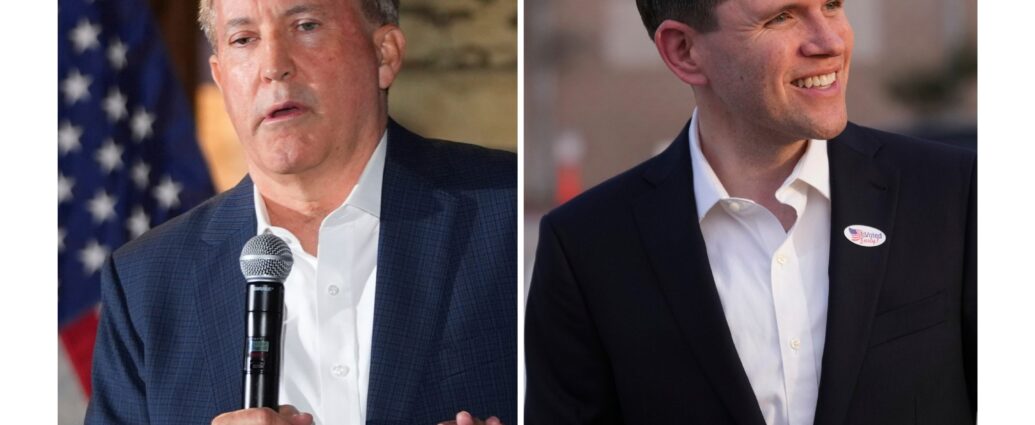
MAGA Inc. to put $10 million in Texas Senate race to hold a once-safe Republican seat after Trump vows to spend ‘whatever amount of money necessary’
The political group associated with President Donald Trump is spending $10 million on television and digital advertisements in the Texas Senate race, according to a Saturday filing with the Federal Election Commission.
This is the first significant spending in a premier general election contest by MAGA, Inc., and reflects how a once-safe Republican seat in Texas may be viable for Democrats with the candidacy of James Talarico, a 37-year-old state representative.
Texas Attorney General Ken Paxton is the Republican nominee in the race. Trump’s endorsement helped Paxton to defeat the incumbent, Sen. John Cornyn, in a May primary runoff election.
Public disapproval of Trump over the economy and the Iran war has been a headwind for many Republican candidates. Voters generally go against the party in control of the White House in midterm elections and Democrats are hoping to gain control of the House and Senate — with Texas being a symbolically powerful indication of how the political map might be expanding this year.
The ads seek to highlight taxes as a dominant issue at a time when many voters have expressed concerns about continued inflation. Talarico has favored higher taxes on wealthier households and the two ads seek to portray him as seeking tax hikes more broadly while claiming that Paxton would give tax breaks to first-time homebuyers and families with children.
The key piece of legislation signed into law by Trump last year enhanced and extended many of his expiring tax breaks from his 2017 overhaul. But that measure also increased budget deficits, which has contributed to higher interest rates on the national debt. Trump has also hiked tariffs, which are taxes on imports, to try to raise revenue.
“High Tax Talarico wants to take money out of Texans’ pockets. MAGA Inc. is going to ensure Texas knows about Talarico’s radical policies and elects Ken Paxton to the U.S. Senate,” Alex Pfeiffer, a spokesman for MAGA, Inc., said in a statement Saturday.
Talarico campaign spokesperson JT Ennis pushed back against the ads’ claims that the Democrat seeks broad tax hikes.
“Billionaire-backed dark money groups are lying about James Talarico because they’re scared of the people-powered movement we’re building to fix this broken, corrupt political system,” Ennis said in a statement. “James was proud to vote for the largest property tax cut in Texas history and has consistently voted to cut taxes for working Texans.”
MAGA, Inc., has at least $400 million in campaign funds that GOP candidates have been waiting for the president to deploy.
“I’m going to spend whatever amount of money necessary to try and help us,” Trump told reporters on Friday.
The president stressed that these were his funds to spend as he sees fit.
“This is my money,” Trump said, adding that it was “separate” from funds controlled by the Republican National Committee.
The president also said he could hold some of the funds until the 2028 elections “if that’s what I want.” Trump is constitutionally barred from running for a third presidential term.
Trump backed Paxton despite the Texas politician’s public scandals, but he has acknowledged this past week that Paxton is not the most telegenic candidate.
“It’s so insulting to him, but I might as well say it: You might not like the way he looks, you might not love his look, you might not love his television interviews, but he was the best attorney general in the country, perhaps,” Trump said Wednesday at a White House event on the midterm elections.
Republicans in battleground states have been clamoring for the president to open his wallet and spend some of the enormous war chest he has amassed.
James Blair, who runs the president’s midterm political operation, had tried to tamp down growing concern and impatience earlier this week.
“When it’s all said and done, all Republicans, at least, will be quite pleased and relieved at the support they find,” he said at an Ohio energy summit.
This story was originally featured on Fortune.com
Israel must fight harder to keep its doctors in the country – editorial
Israel is losing doctors at an alarming rate. It should be doing everything possible to keep them. But it should also recognize an opportunity: Israel can recruit more Jewish doctors from around the world to make aliyah.
The Jerusalem Post recently reported that 1,370 Israeli doctors left the country for more than a year between 2023 and 2025, a 94% increase compared with the equivalent period a decade earlier.
Not every doctor who spends a year abroad is gone for good. Physicians leave for fellowships, research, specialist training, and other reasons before returning. But the trend should concern policymakers. After accounting for returning physicians, Israel recorded a net loss of 509 doctors in 2023 and 2024, roughly five times the annual average of the previous decade.
The government’s first responsibility is obvious: Find out why doctors are leaving and give them reasons to stay.
Israeli physicians work under enormous pressure. The healthcare system must offer competitive conditions, professional advancement, adequate staffing, and a sense that young doctors can build their futures here.

Israel’s two-pronged path toward doctor retention
But retention should be only half of Israel’s strategy. The other half should be recruitment.
Israel is the national home of the Jewish people, and Jewish communities worldwide contain doctors, nurses, researchers, therapists, and other healthcare professionals. Some already dream of making aliyah. Others might consider it if Israel made the process easier and they saw a clear opportunity to contribute.
Israel already has an International Medical Aliyah Program, run by Nefesh B’Nefesh with the Aliyah and Integration Ministry, Health Ministry, and Jewish Agency. Its goal is to facilitate the aliyah of 2,000 physicians by 2029 by streamlining licensing and helping doctors find placements.
The government should expand and accelerate that effort.
That means removing unnecessary barriers to recognizing foreign qualifications, expanding professional Hebrew programs, helping immigrants find placements, and assisting families with the practical difficulties of moving countries. Israel should also strengthen incentives for immigrant doctors willing to practice where shortages are most severe, particularly in the North and South.
There is ample precedent.
Former waves of aliyah provide a historical blueprint
Successive waves of aliyah have transformed Israel demographically and professionally. Immigration from the former Soviet Union brought thousands of doctors and nurses, alongside scientists, engineers, musicians, and academics. Their contribution to Israeli medicine, science, and technology is difficult to overstate.
There are encouraging signs. More than 1,100 North Americans made aliyah through Nefesh B’Nefesh in August alone. Approximately 2,700 had arrived since the beginning of 2026, and the organization expects more than 4,000 by year’s end. The current wave includes doctors and nurses.

Imagine a Jewish doctor in New York, Toronto, London, Paris, or Melbourne wondering whether Israel might someday become home. Israel could actively make the case: We need you. We will help you navigate licensing, learn professional Hebrew, and connect with hospitals and communities where your skills can make a difference.
That is not merely immigration policy. It is national planning.
None of this should become an excuse for ignoring why Israeli doctors are leaving.
It would be absurd to recruit a physician from New Jersey while failing to address the conditions driving a physician from Jerusalem abroad. A successful healthcare strategy must make Israel attractive both to the doctor considering aliyah and the Israeli medical student deciding where to build a career.
Nor should aliyah be viewed merely as a mechanism for filling labor shortages. People make aliyah for reasons of identity, family, community, faith, Zionism, and belonging. They are citizens building lives, not numbers on a manpower spreadsheet.
But Zionism has always involved matching individual aspirations with national needs.
Israel needs doctors. There are Jewish doctors around the world who may want to make Israel their home. Connecting the two is a natural proposition for a country that prides itself on creative solutions to difficult problems
The physician crisis is a warning and a call to action
The rise in doctors leaving Israel should serve as a warning and a call to action.
Israel must fight harder to keep the medical professionals it has. At the same time, it should open the door wider to those who want to join them.
A brain drain demands a brain-gain strategy. For Israel, part of that strategy may be waiting in Jewish communities around the world.

US Navy SEALS conducted covert four-month mission to clear Strait of Hormuz mines – report
US special forces spent four months conducting a secret mine-clearing mission in the Strait of Hormuz in an attempt to open up the waterway, the Financial Times reported Sunday.
Iran has said it placed mines in international and Omani waters following the outbreak of the war. The International Maritime Organization estimated in June that roughly 80 mines had been deployed along important shipping routes.
The covert operation was carried out amid ongoing exchanges of strikes between the US and Iran in and around the Strait, according to people familiar with the mission.
Navy SEAL divers worked with unmanned vessels, robots, and specialized underwater equipment to locate and remove suspected Iranian mines, often operating at night.
The objective of the operation was to make the strait safer for commercial vessels that had largely avoided the waterway since the US and Israel attacked Iran in February.

US President Donald Trump announced last week that “all mines” in the strait’s international waters had been removed or destroyed, a claim subsequently confirmed by the US military.
The announcement came despite reports showing that three US vessels normally assigned to mine-countermeasure operations in the Gulf had been operating in the Indian and Pacific oceans since at least early June.
US uses divers, unmanned systems to clear mines
Mine-clearing can be painstaking, lengthy, and inherently dangerous in peacetime, and an active conflict adds further risks.
For these operations, small teams of Navy divers worked from inflatable-hulled boats, supported by unmanned surface vessels and submersibles equipped with advanced sonar to locate underwater objects. Despite the advanced technology, divers may still have had to approach and destroy the mines directly.
“That is usually followed up by a navy diver who’s got to get in the water and approach the mine, and then put a charge on it and destroy it,” retired US Navy captain Bill Hamblet told the FT.
No US casualties have been reported in connection with the operation.
“It is an extremely time-consuming process,” said Nitya Labh, an associate fellow at Chatham House. “They are doing, essentially, active bomb detonation underwater.”
Questions remain over whether Strait is mine-free
Despite Trump’s declaration, uncertainty remains over whether the entire Strait of Hormuz has been cleared.
Shipping companies and maritime security advisers believe areas near Oman, where the US has been directing ships through the strait, have likely been cleared, but remain less certain about the rest of the waterway.
“It doesn’t take much to put a mine back in because there is a lot of small-boat traffic going across Hormuz every night,” a tanker industry executive said.
The uncertainty itself gives Tehran leverage. Even the possibility of mines can discourage commercial shipping and increase insurance costs, while concerns remain that Iran could deploy new mines in areas already cleared by US forces.
Oil prices dropped five percent following Trump’s announcement but have since returned to their previous levels as strikes have resumed.
“It’s hard to know what to believe,” said Ethan Connell, assistant director of Taiwan Security Monitor and a mine warfare expert. “Iran is certainly trying to re-mine.”
Hamblet said Iran benefits strategically from the perception that it can disrupt the critical waterway.
“The Iranians have realized that their strongest card is the perception that they control the Strait of Hormuz. If they can convince the world that they can threaten the strait, that’s their strongest source of strategic leverage,” he said.

He failed the military pilot eye test—so he built a $1 million-a-day traffic company and bought flying lessons. Now he’s Top Gun’s stunt pilot
As a child, Jonathan Spano had one dream: to be a military pilot. It was swiftly shattered when he learned the U.S. Navy required near-perfect eyesight to fly—a standard he could never meet. So he launched his own business instead. And it’s done so well that decades later, he’s been able to splash out millions on flying lessons and his own aircraft to fulfill his childhood dream. Now, he’s the stunt pilot behind some of Top Gun: Maverick‘s most acclaimed aerial sequences.
“I was just fascinated with airplanes; I would build little models of them, hang them from the ceiling with a fishing line in my room. And like many, many young boys, when the Top Gun movie came out, I was obsessed and wanted to fly planes in the Navy and land on aircraft carriers,” Spano told Fortune.
As he got older, the now 48-year-old CEO realized that no amount of passion, pining, or studying would set him on that career course. “I learned that you had to have better than perfect eyesight, really—2020 is kind of the minimum standard,” he said. “I didn’t meet that criteria, so that took that off the table for me… My eyesight was just not that good. I wore glasses as a kid.”
So Spano worked towards a new dream: Growing up in a “very blue-collar” family in California, he and his brother started doing traffic control work as teenagers—setting out cones and barricades for a crane company their father worked for.
“We identified pretty early on that there was demand for the services that we were providing. At that time, you could go to a company and rent some barricades, but they wouldn’t put them out for you. Or you could go to a company, and they would get the permits, but they didn’t do the other traffic control services.” So in 1995, the brothers launched a side hustle of their own, offering traffic safety—rental equipment, cones, barricades, and signs on the road, plus 24/7 emergency dispatch —all in one place.
“That continued to progress and eventually turned into an office in our great-grandmother’s garage,” he said. “The plan was never to build a national company. It was really a way to just make some money, and it just continued to grow.”
It grew a lot. Thirty years later, that company, Traffic Management Inc, operates across more than 50 locations in the U.S and, according to Spano, is the largest privately held traffic control company in the United States, making over $1 million a day in revenue. Perhaps surprisingly, that same business has quietly bankrolled Spano’s path to the sky.
“It’s funny, the business I originally started just to make ends meet has ended up funding and giving me the opportunity to live the dream that I had as a child,” Spano added.
A tax tip from his accountant led him back to the cockpit
It all started when two decades into running the business, Traffic Management’s finance chief suggested buying a small plane—both as a tax write-off and a faster way to reach the company’s growing list of locations.
“It had never occurred to me that I would maybe be able to fulfill that dream as a pilot,” he said. He bought a Cessna, learned to fly it, and started using it to save hours that would have been driving across California to visit the company’s other offices. That TK enabled the company to keep expanding its presence.
“Two offices became three offices, became 10 offices, became 20 offices in the state of California, and aviation was certainly a part of that success story.”
One plane led to another—bigger, faster, eventually a private jet, costing him a few hundred thousand dollars each step of the way. Along the way, Spano also chased a second childhood passion: filmmaking. He bought a helicopter for around $2 million and partnered with Fred North, a Hollywood aerial coordinator, to mount camera rigs on it for film and commercial shoots.
North first floated the idea that would change everything. “They’re making another Top Gun film,” Spano recalled him saying. “You should try to modify your jet to carry the same cameras that we do on the helicopter, and if you can pull it off and get it done, you could work on and fly your airplane in this next Top Gun movie.”
Spano spent roughly 18 months and, by his own estimate, well into seven figures modifying his jet—an Embraer Phenom 300—to carry two camera systems and clear FAA certification. “We pulled it off in time to have the jet work on production and fly in the Top Gun: Maverick film,” he said. Flying alongside veteran film pilot Kevin LaRosa Jr., Spano flew “a large portion of the jet-to-jet aerial sequences, including all of the aircraft carrier sequences” in the movie.
The work earned the team a Screen Actors Guild Award for stunts.
He studied at 11 p.m. and woke up at 6 a.m.—here’s his advice for anyone chasing a dream job
Paramount has since greenlit a third Top Gun film, with production expected to begin in 2027—and Spano is already in talks with the director. “Considering we have the only platform in the world that is capable of what it is capable of,” he said, “I’m optimistic that we will be participating in that project.”
And since building the only camera jet of its kind in the world, he’s already used it on a string of other projects: commercials for private aviation companies including NetJets, FlexJet, Gulfstream, Embraer, and Delta, plus work for the U.S. Air Force. He was also part of the team behind National Geographic’s America the Beautiful, including aerial footage of the Northern Lights over Alaska, which earned an Emmy nomination.
“I’m living proof that anything is possible, and though these things don’t happen on their own, and you have to make your dreams reality,” Spano said of his success.
His advice to anyone looking to chase their dreams? “Be bold, take risks, but you know also you have to put in the hard work and dedication.”
After all, he waited decades to turn his childhood dream into a reality instead of giving up on it—and once he finally started, he still had to squeeze the training in around a full-time job.
“I look back at how hard I worked to get to where I am while running a business and getting my license, and it’s not a matter of just getting your license. To get to where I am as an aviator, it was thousands of hours of training,” he explained, adding that he’d be up studying at 11 p.m. while his family was asleep and still had to get ready for work the next morning at 6 a.m.
“If I had to say what one of the things that was really fundamental in me being successful was I picked the things that I wanted to achieve, and I was just fearless in pushing for them,” Spano added. “I stuck to it, I just believed that I was going to get there, and I just overcame whatever obstacle was in my way.”
This story was originally featured on Fortune.com

Ohio Democratic candidate for governor Amy Acton attacked at Canfield Fair
An armed individual attacked Ohio gubernatorial candidate Amy Acton on Sunday at the Canfield Fair near Youngstown, according to her campaign and the state highway patrol.
Acton, the Democratic nominee for governor, was unharmed.
The 38-year-old suspect, Patrick Havas, knocked over multiple people at the fair while trying to reach Acton, Ohio State Highway Patrol said in an email to Reuters. Havas had a taser and two pistols on his person, the highway patrol said.
Havas was taken to Mahoning County Jail and charged with disorderly conduct and two counts of assault, the highway patrol said. It was not immediately clear if Havas had retained legal representation.
The Mahoning County Sheriff’s Office did not immediately respond to Reuters‘ requests for comment. Ohio State Highway Patrol and the sheriff’s office were investigating what have led to the incident, the OSHP said, but no other details were available.

“This kind of violence has no place in Ohio,” Acton campaign spokesperson Addie Bullock said in a statement.
Acton’s Republican opponent denounces violent incident
Connie Luck, a spokesperson for the campaign of Acton’s Republican opponent in the general election, Vivek Ramaswamy, called the incident “completely unacceptable.”
“Candidates should be able to meet with voters without having to worry about threats or violence,” Luck said in a statement.
Chris Anderson, chairman of the Mahoning County Democratic Party, and Ohio Governor Mike DeWine, a Republican who cannot run for reelection because of term limits, both condemned the attack.
French-Israeli killed in Vietnam motorcycle accident, ZAKA working to retrieve remains for burial
A 23-year-old Israeli was killed in a motorcycle accident in Vietnam on Friday, the ZAKA rescue and recovery organization announced on Sunday.
The victim, David Ben Lulu from Jerusalem, had dual Israeli-French citizenship, and as such the Foreign Ministry had to coordinate between Vietnam and France in order to retrieve his remains for burial in Israel.
“Since we learned of the case, we have been working non-stop with the French, Vietnamese and Israeli authorities,” Serge Ben Chaim, commander of ZAKA France, explained. “This morning I personally arrived at the French Foreign Ministry, where the necessary instructions were given to the team in Hanoi, and at the same time we are in direct contact with the French consulate and the family. Following the efforts, the consulate in Hanoi was opened today specifically to promote the processing of documents.”

Motorcycle accident victim’s remains hundreds of km. from Hanoi
Ben Chaim added that Ben Lulu’s remains were hundreds of kilometers away from Hanoi, and that ZAKA was working on a way to arrange his transfer to Israel as soon as possible.
Chaim Weingarten, ZAKA’s VP of Operations, described the situation as a “complex case,” which required cooperation between several countries’ agencies.
“ZAKA’s international unit is working together with ZAKA France and the family to overcome the difficulties and expedite the procedures as much as possible,” he said. “We hope to quickly complete all the necessary actions and bring the late David for burial in Israel.”
Ben-Gvir tells police commissioner he will not approve officer appointments until after election
National Security Minister Itamar Ben-Gvir informed Police Commissioner Insp.-Gen. Danny Levi that he would not approve appointments of senior police officers until after the election, and in a letter sent to him on Sunday argued that advancing appointments at the current time could harm public trust.
In the letter, titled “Your desire to hold a round of police officer appointments about a month and a half before elections,” Ben-Gvir noted that the election is expected to take place on October 27 and that the Knesset has already entered recess. He said that during an election period, restrictions apply to government activity, including appointments in the public service.
He also claimed that about four months ago he suggested to the commissioner that a round of appointments be advanced, but Levi did not provide him with a list of candidates at the time. Ben-Gvir wrote that his position is that “there is an obligation to act with restraint and moderation, due to concerns of harming public trust,” adding that he opposes holding a round of senior police appointments at this time.
According to Ben-Gvir, “this is not, God forbid, any kind of statement against the wonderful male and female officers of the Israel Police,” but rather a public and legal issue concerning conduct during an election period.
The minister also recalled that when the current government took office, the attorney-general sent a letter to the previous minister ordering a sweeping ban on senior police appointments ahead of the incoming government. Ben-Gvir argued that a similar standard should now be applied, concluding: “I hereby inform you that as the minister responsible for the police, there will be no further appointments of senior officers in the Israel Police until after the elections.”

Later Sunday night, Ben-Gvir’s office said: “Following reports regarding recommendations for police appointments, and as the minister announced earlier today, there will be no appointments before the elections, except in exceptional cases. Approval of exceptional cases will be discussed individually by the minister, after the commissioner presents reasons. All other appointments will be discussed gladly after the elections.”
Ben-Gvir blocks Attorney-General’s candidate for police legal adviser deputy
The letter also comes amid another dispute between Ben-Gvir and the police commissioner. Sources close to the minister said that Levi, who had complained to Ben-Gvir about the number of Israel Prison Service appointments made by Commissioner Kobi Yaakobi, had initially received approval to move forward with preparing recommendations for police appointments.
However, according to the minister’s associates, Levi later met on Thursday with Attorney-General Gali Baharav-Miara, and discussions included the issue of appointing a deputy to the police legal adviser.
According to those sources, Baharav-Miara was willing to allow the appointments to proceed, but requested the appointment of a deputy to the police legal adviser and even named a candidate for the position.
At a later meeting between Ben-Gvir and Levi, when the commissioner raised the name of that candidate, the minister presented his letter and the attorney-general’s previous position regarding appointments during an election period, effectively blocking the move.
Sources close to Ben-Gvir told Maariv, “The commissioner can hold a ceremony for the commissioner’s recommended appointments, but the minister will not approve the appointments.”
Police officers threaten to petition High Court over appointments
Senior officials close to the commissioner, police officers with the rank of deputy commissioner, said Sunday evening that if Ben-Gvir does not sign off on appointments approved during a meeting held on that day at the commissioner’s office, they will not hesitate to petition the High Court of Justice.
The meeting was held with the participation of senior command staff and a representative of the National Security Ministry, Moshe Bachar from the ministry’s budget department. “This will be a disgraceful mark against the minister,” the officials said.
The officials also claimed that about NIS 500 million, transferred in March to the National Security Ministry and allocated for the Israel Police, remains “stuck” at the ministry.
“Under the commissioner’s instructions, renovations began at several police stations, but the work stopped because the budget is not being transferred to the police, even though it belongs to it. Patrol vehicles have not been purchased despite the critical need to deal with crime in general and crime in the Arab sector in particular. In the north, criminals drive Rubicons, while we are stuck with five-year-old vehicles. We did not ask for a personal vehicle, but rather patrol cars and vehicles for special units,” they said.
The officials said the commissioner does not intend to back down on the appointments issue.
“The commissioner will not give up and will not compromise regarding the appointment of officers, because this is an opportunity and this is what the police need. If the commander of the Ayalon District has announced his retirement, then it is clear that a deputy commissioner must be appointed in his place, and this is a large district. How can the police operate without a head of the Planning and Organization Division? The commissioner will also request special approval for that.”
The officials added, “One thing needs to be understood: The commissioner and the senior command staff have the authority to appoint officers up to the rank of deputy commissioner without anyone else’s approval, and the minister has the final authority to approve the appointments with his signature. These are purely professional appointments, not matters of connections or politics.”
They also said, “Only recently, more than 40 senior officers were appointed in the Israel Prison Service and the minister approved them, so how can he prevent approval of appointments in the ministry’s largest organization?”
Meanwhile, senior officials close to the commissioner pledged to the police leadership that they would not retreat from their professional positions.
“I am made of a different material. I will not fold and I will not give up on things I believe in professionally. It is possible that I made mistakes in one appointment or another, but I did not act based on any consideration that was not professional,” Levi said.
“I respect the person who appointed me, but I am not easily pressured, rather I am rough and tough. I am giving this days, not more than that, because the police belong to the public and everyone, including the minister, wants a strong police force. Despite what people are trying to portray, we have built a police force here and the data can prove it. If they want me to continue for another year, as a fourth year, an event I am not thinking about at the moment, as someone who loves and breathes policing I would be happy to continue on my path and implement the goals,” was his claim.

Volcanic island in Indonesia erupts, canceling 1,558 flights and affecting 170,000 passengers
A volcano erupted in Indonesia early Sunday, prompting the cancellation of all flights at Jakarta’s Soekarno-Hatta International Airport and disrupting other domestic airports as ash drifted across western parts of the country.
The volcanic island of Anak Krakatau, located in Indonesia’s Sunda Strait between the main Java and Sumatra islands, had showed signs of activity since Friday before erupting for 30 seconds at 3:53 a.m. Sunday and for 16 seconds about three hours later, Indonesia’s Geological Agency said. Closed-circuit camera footage showed lava flares from the volcano.
No casualties were reported and no evacuation order was issued. The nearest settlement is more than 16 kilometers (10 miles) away, but authorities warned residents and visitors to stay at least 3 kilometers (2 miles) from the active crater.
Volcanic ash spread across parts of Jakarta and Lampung province on Sumatra’s southern tip, Indonesia’s Center for Volcanology and Geological Hazard Mitigation said.
AirNav Indonesia closed airspace around Soekarno-Hatta and Halim Perdanakusuma airports in Jakarta, as well as six other airports, including Radin Inten II Airport in Lampung, because of volcanic ash.
Flights canceled as 170,000 passengers affected
By Sunday evening, the closure of eight airports had affected 170,000 passengers from 1,558 canceled flights, including 963 flights in Jakarta’s Soekarno-Hatta airport alone. All eight airports were ordered closed until 8:59 a.m. Monday.
“It’s of course an inconvenience,” said Diego Urdiales, a Spanish tourist who was supposed to fly home to Madrid. “I was supposed to get input from the airline … but so far no news.”
“It’s a natural disaster, it’s a force majeure, so, what can we do?” said Michele Gouw, an Indonesian passenger. “We just have to accept it and wait for the airline and airport directions.”
Indonesia’s Directorate General of Civil Aviation said that it was closely monitoring the eruption’s impact on air travel and coordinating with airlines, airport operators, air navigation services and the meteorology agency.
“Safety remains our top priority in every operational decision,” Lukman F. Laisa, Ministry of Transportation director general of civil aviation, said in a statement.
He warned flight schedules could face cascading disruptions affecting aircraft rotations, fleet availability and terminal capacity as airlines work to restore operations.
The eruption also disrupted services at Bali’s I Gusti Ngurah Rai International Airport and at Medan.
Volcano remains active
Indonesia’s volcanology agency and the Darwin Volcanic Ash Advisory Centre identified two ash clouds using satellite imagery. One plume rose to 20,000 feet (6,100 meters) and drifted northeast over Jakarta, Banten, West Java and nearby waters. A second cloud reached 50,000 feet (15,200 meters) and spread over parts of Banten, Lampung and Bengkulu provinces, the southern Sunda Strait and sections of the Indian Ocean west of Sumatra.
Lana Saria, head of Indonesia’s Geological Agency, said activity at Anak Krakatau has intensified since July, with Sunday’s eruption the strongest during that period.
The repeated eruptions indicate a continued supply of magma and volcanic gases beneath the volcano, she said, though officials can’t predict whether a larger eruption will occur.
“We continue to evaluate the volcano’s development based on all monitoring data, not solely on the number of eruptions or the height of the ash column,” Saria said in a video briefing.
She said the main hazards include volcanic ash, high concentrations of gas and the ejection of hot rocks and other material around the crater area.
Schools move to online learning
The eruption’s impact extended beyond air travel. The government on Sunday authorized schools in areas affected by volcanic ash could temporarily move to online learning at home. The measure is intended to reduce students’ exposure to ashfall and allow local authorities to adjust classroom activities based on conditions on the ground.
Anak Krakatau, which means “child of Krakatau,” is the offspring of the famous Krakatau, whose monumental 1883 eruption triggered a period of global cooling.
An eruption of Anak Krakatau in 2018 caused a tsunami that killed at least 430 people in Sumatra and Java. Researchers believe volcanic activity triggered an underwater landslide and caused a large chunk of Anak Krakatau’s southwest slope to collapse and displace a large volume of water. Scientists said that Anak Krakatau island was only about a quarter of its original size after that eruption.
This story was originally featured on Fortune.com


Amazon says it’s ‘working closely’ with authorities after cargo plane crash kills 5
Amazon said it is cooperating with authorities after a cargo plane operating on behalf of Amazon Air crashed while attempting to land at Miami International Airport on Sunday, killing at least five people and injuring five others.
The company confirmed to FOX Business that the aircraft involved in the crash was operated by cargo carrier 21 Air, which flies for Amazon Air.
Amazon Air is Amazon’s air cargo network, helping move packages between the company’s facilities, according to its website.
“We’re heartbroken to learn that five people lost their lives in today’s incident at Miami International Airport. Our deepest sympathies go out to the families, loved ones, and all those affected by this devastating loss,” an Amazon spokesperson said.
RYANAIR PASSENGER RECOUNTS BEING PARTLY SUCKED OUT AIRPLANE WINDOW: ‘I AM LUCKY’
“The airplane, which was operated by 21 Air, was attempting to land when this incident occurred. We’re working closely with local authorities and officials to learn more and will cooperate fully with any investigation,” the spokesperson added.
Prime Air Flight 7598 — a Boeing 767-300 operated by 21 Air — overran the runway while attempting to land at Miami International Airport around 2 p.m. local time after departing San Juan, Puerto Rico, according to authorities.
Miami-Dade officials said the aircraft struck multiple vehicles and caught fire.
At least five people were killed, and five others were injured. Three victims were transported to a trauma center in critical condition, while two others were taken to a local hospital, authorities said.
The Federal Aviation Administration (FAA) and National Transportation Safety Board (NTSB) are investigating the crash.
Boeing told Fox News that the aircraft was first delivered as a passenger plane in 1994 before later being converted to a freighter.
“Boeing extends our deepest condolences to the families and loved ones of those who lost their lives in the accident in Miami,” the company said.
“Our hearts go out to those injured and affected by this tragedy. Boeing is supporting the investigation led by the U.S. National Transportation Safety Board.”
It was not immediately clear whether the crash would affect Amazon Air operations or package deliveries.
MAJOR US AIRPORT GETTING NEW TECH TO PREVENT RUNWAY INCIDENTS
Previous cargo aircraft accidents have prompted heightened regulatory scrutiny and, in certain cases, resulted in temporary operational disruptions.
GET FOX BUSINESS ON THE GO BY CLICKING HERE
The last fatal crash involving Amazon’s air cargo network occurred in 2019, when an Atlas Air Boeing 767 operating for Amazon Air crashed in Texas, killing all three people aboard, officials said at the time.
21 Air could not immediately be reached by FOX Business for comment.
Fox News Digital’s Bonny Chu contributed to this report.

Asian family philanthropy is ‘a lot more hands-on’—and more corporate—than the West
Asia’s richest families approach philanthropy in much the same way they approach business: Managing things directly and keeping a close eye on outputs, rather than just writing the checks.
That’s one of the conclusions from a new report from the Bridgespan Group, a U.S.-based philanthropy advisory group, released at the Philanthropy for Better Cities Forum in Hong Kong on Sept. 7.
Asia’s family fortunes are still younger than the rest of the world’s. About 94% of the Asian families Bridgespan studied are in their first or second generation of wealth, versus 85% of families in high-income economies elsewhere. Around as many are still in control of the businesses that made them rich, compared with 68% outside the region.
That continued ownership shapes how Asian families give. Business-linked giving dominates in Asia, used by 95% of wealthy families in the region’s middle-income economies and 80% in its high-income ones. Elsewhere, just 28% of high-income families give through their businesses. Most Western families instead choose to set up their own foundation: Bill Gates and Warren Buffett, for example, chose to set up their own foundations rather than give through Microsoft or Berkshire Hathaway.
“The level of control that families expect to have over their giving—because they’re still so used to having that level of control over the corporate—is definitely a lot more hands-on,” says Gwendolyn Lim, head of Southeast Asia at Bridgespan and an author of the report.
She traces the habit to the conglomerate era, when Asia’s tycoons built sprawling groups by spotting “gaps in the market” and grew comfortable running operations that had nothing to do with each other.
When they turned to philanthropy, they saw similar gaps, such as non-profits lacking the capacity to do good work or governments unwilling to step in to take action. The result was the “operating foundation” that both funded and managed charitable projects.
Western philanthropists, on the other hand, are surrounded by mature civil-society groups, and so are more content to just deliver funding through grants. Bridgespan’s report finds that families in middle-income countries are more likely to administer their own programs than those in higher-income countries.
Working with the state
More than three-quarters of Asian family philanthropies partner with the government, versus 58% outside Asia.
That willingness to work with the state is unique, Lim says. Asian families are used to dealing with ministries through their businesses, and thus see few qualms in doing so again through their charities.
Yet Western donors are more wary of the government. “If you talk to American or European philanthropists, working closely with the government is something that makes them nervous,” she says. “Their faces change a little bit. They’re like, ‘Maybe we influence the government from an advocacy perspective.’”
Bridgespan’s report notes that Asian families might fund pilot programs to prove that something works, before handing over successful models to the government to run at a larger scale. Lim points out that philanthropic families are “usually standard bearers who are able to experiment a lot more.”
Another difference is that Asian philanthropists are more willing than their Western counterparts to report how much work they’re doing, using metrics like schools built or teachers trained. More than 80% of Asian families report their outputs, compared with 45% of families in high-income economies elsewhere.
Yet relatively few families—in Asia or elsewhere—report outcomes, or how things changed because of what an organizatrion did. “They go: ‘I don’t want to pay you to measure outcomes, but I want you to report on outcomes.’ That’s pretty terrible,” Lim admits.
The world’s largest givers
This week, Bridgespan also updated its rankings of the world’s largest corporate and institutional givers, based on average annual giving between 2020 and 2024.
The Hong Kong Jockey Club, the city’s only authorized betting operator, tops Asia’s corporate rankings at $774 million a year, ahead of Tencent at $404 million.
Globally, the Jockey Club is the only Asian entity in the corporate top 10, at No. 8, behind Deutsche Telekom and well behind Johnson & Johnson, the world’s largest corporate giver at $3.8 billion a year.
Much of the Jockey Club’s money is funneled through the Hong Kong Jockey Club Charities Trust. The Trust gave an average of $705 million a year between 2020 and 2024, putting it in the lead among Asian philanthropic organizations, but just shy of the global top 10. The Gates Foundation leads the way among institutional funders at $6.5 billion per year.
The top 20 Asian philanthropies together gave $2.7 billion annually; the global top 20, $21.4 billion.
Both reports were commissioned by Bridgespan’s Funders’ Council, whose members include the Institute of Philanthropy, the Gates Foundation, and the Rockefeller Foundation, and were released at the Philanthropy for Better Cities Forum, organized by the Jockey Club.
The first line of risk
According to AVPN, a network of Asia-based social investors, the region faces a development funding shortfall of $26 trillion through 2030. Filling that gap will be a tall order.
“We call philanthropy the first line of risk,” Lim says. “Philanthropic giving fills the spots where corporates may be too nervous to invest. And family philanthropy is even more at the vanguard of giving.”
Yet the gap Asian philanthropy is being asked to fill keeps growing. The Trump administration’s dismantling of the U.S. Agency for International Development canceled roughly 83% of the agency’s programs, gutting development budgets in a region where USAID once spent about $860 million a year; in Indonesia and the Philippines, program values fell by 95% or more. Aid financing to Southeast Asia could drop by more than $2 billion, according to estimates from the Lowy Institute.
Nobody, Lim concedes, can plug the hole left by Washington. “Governments can’t fill the gap. Philanthropy can’t fill the gap. There’s not enough money,” she says.
Still, in the “Asian decade,” Asia’s philanthropists will need to find some way to pick up the slack. “This is the decade where our own people have to help our own people,” she says.
This story was originally featured on Fortune.com
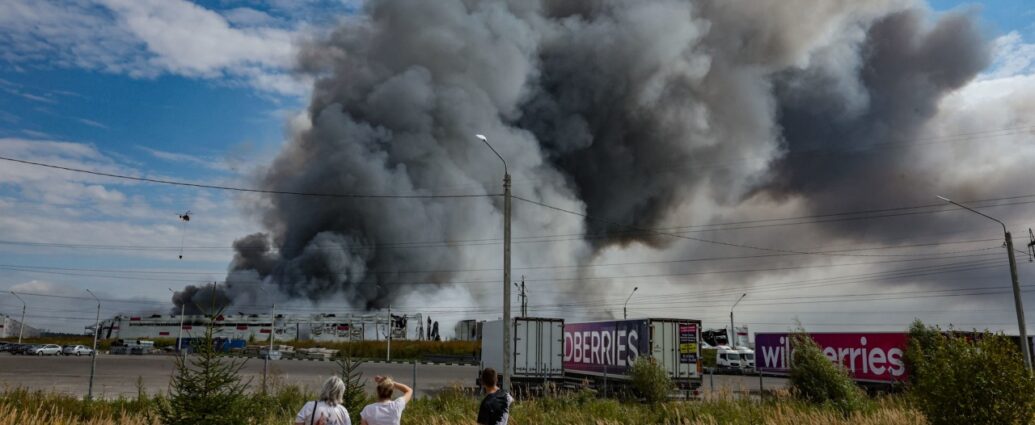

Iran plans to announce an ‘exclusion zone’ that runs from the U.S. naval blockade line, through the Strait of Hormuz, and into the Persian Gulf
The U.S. military has denied Iran ’s claim to have struck an unmanned American military vessel in the Strait of Hormuz, calling it a “total lie.” A top Iranian official said Tehran plans to announce an “exclusion zone” outside the Strait of Hormuz aimed at vessels it believes are attempting to transit the waterway.
Meanwhile, Israeli strikes in southern Lebanon killed seven people and leveled a vacant hospital, according to Lebanese authorities, near an area that has become a flash point in fighting between Israel and the Iran-backed militant group Hezbollah.
Here’s a look at the latest news in the Middle East. Full coverage can be found here.
Iran says it hit a US boat in the strait
State-run media in Tehran said the U.S. vessel was trying to enter an area that Iran says is restricted in the Strait of Hormuz, but Capt. Tim Hawkins, spokesperson for the U.S. Central Command, called it “a total lie.”
The claim came a day after the U.S. said it struck Iranian oil tankers in retaliation for Iran launching ballistic missiles at Navy warships. Attacks resumed last week after roughly a month of quiet.
The war began with U.S. and Israeli attacks on Iran on Feb. 28. But negotiations have collapsed after a ceasefire agreement was announced in June, and on-and-off fighting has persisted with both sides trying to inflict military and economic pain.
Iran’s parliament speaker and chief negotiator, Mohammad Bagher Qalibaf, said the era of “proportionate responses” is over and Iran’s retaliation will be “faster, heavier and more painful.”
Iran official says Tehran to set up exclusion zone outside strait
The new head of Iran’s Supreme National Security Council said Tehran plans to announce an “exclusion zone” outside the Strait of Hormuz aimed at vessels it believes are attempting to transit the waterway.
Mohsen Rezaei’s comments to Iran’s state broadcaster came with few details, a day after the U.S. struck three Iranian oil tankers in response to Tehran launching ballistic missiles at U.S. warships. Experts called the launches a dangerous escalation after Iran’s previous attacks at sea targeted commercial shipping.
The new zone should be announced in the coming days and weeks and “will begin from the line of the U.S. naval blockade, extend toward the Strait of Hormuz, and from this side continue into the Persian Gulf,” Rezaei said.
Israeli strikes kill 7 in Lebanon
Israeli strikes killed at least seven people in southern Lebanon and leveled an empty hospital, Lebanon’s Health Ministry said.
Strikes on the village of Arabsalim killed two, the ministry said. Two others were killed in Nabatiyeh al-Fawqa, near a strategic hill that Israel said its forces gained control over Thursday. And three people were killed in the village of Nabatiyeh al-Tahta after an Israeli drone struck a parking lot. At least 20 others were wounded in strikes, the ministry said, among them three children and five women.
Israel’s military said its latest strikes came in response to a drone attack launched earlier Sunday by Hezbollah on troops in southern Lebanon. It said Hezbollah had used the empty hospital as a command center.
Since a ceasefire went into effect between Israel and Hezbollah more than two months ago, low-level skirmishes and Israeli strikes continue in the south.
Mass funeral in Gaza for over 110 Palestinians found in rubble
Dozens of Palestinians gathered in Gaza City to mourn over 110 people, including at least 70 children, after their remains were recovered.
Rescue crews have been digging out the bodies from the Zeitoun neighborhood. They said the dead came from three families whose houses were flattened by Israeli strikes earlier in the war.
“We are witnessing a painful, heartbreaking scene,” said Mustafa Quzghat, a relative.
The bodies were wrapped in white shrouds and draped with Palestinian flags. Some shrouds bore images of the deceased, according to Associated Press footage. They were laid out in rows on the ground.
Over 73,650 Palestinians have been killed since the war in Gaza began, according to Gaza’s Health Ministry. The ministry, part of the Hamas-run government, maintains detailed records viewed as generally reliable by U.N. agencies and international organizations. It doesn’t give a breakdown of civilians and militants.
Kushner says Gaza has long been ‘dystopian’
Jared Kushner, President Donald Trump’s son-in-law, defended the lack of progress in talks about next steps in the fragile Gaza ceasefire, saying that “it’s been a dystopian place for a long time.”
Speaking at a news conference in Ukraine, Kushner defended his work with Trump’s special envoy, Steve Witkoff, saying the militarization by the Hamas militant group in the Palestinian territory was “beyond our comprehension, so demilitarizing it is not going to be easy.”
“But we’re very determined, and we’re working through these things,” Kushner said.
He added: “We’re working through some political issues in Israel. I think we agree with them on the end state. They just have a crazy election, and that makes them a little irrational in certain regards.” Israel’s election is set for Oct. 27.
Israeli strike in Gaza kills a father and daughter
An Israeli strike on a civilian vehicle in western Gaza City killed a father and his daughter and wounded at least six others, according to health officials at Shifa Hospital, where the casualties were taken.
The Israeli military said it struck a “terrorist” in Gaza City.
Israeli strikes have killed at least 1,344 Palestinians in Gaza since a ceasefire agreement was reached with the Hamas militant group in October, according to Gaza’s Health Ministry. Israel says it is targeting Hamas and other militants who pose a threat, and in response to ceasefire violations, including occasional attacks.
The war began when Hamas-led militants attacked southern Israel on Oct. 7, 2023, killing around 1,200 people and taking 251 others hostage.
Muslim nations condemn Israeli proposal to empty Gaza
Any Israeli plan or action to remove Palestinians from Gaza would violate international law and undermine the U.S.-backed plan for drawing down the war, the foreign ministers of Egypt, Saudi Arabia, Jordan and five other governments said in a statement.
Israel’s national security minister, Itamar Ben-Gvir, last week published a plan to encourage Palestinian migration from Gaza. Israel’s defense minister, Israel Katz, has said Israel is prepared to facilitate the removal of Palestinians by sea, air or other means, and that plans remain under discussion.
The governments called the statements “inflammatory” and said they threatened the “legitimate and inalienable rights” of Palestinians and the future establishment of a Palestinian state. ___ This report will be updated throughout the day as new developments emerge.
This story was originally featured on Fortune.com

China’s export shock is pushing the global economy to a breaking point, and the U.S. may have to clean up the mess, former trade official says
While President Donald Trump’s tariffs have caused much heartburn on Wall Street, China’s cheap and overwhelming exports have also been rippling through the global economy.
But the Chinese growth model is running out of road, setting the stage for another global economic crisis, according to Michael Froman, a former U.S. Trade Representative and current president of the Council on Foreign Relations.
Writing in Foreign Affairs last month, he warned “the world’s ability to absorb Chinese overcapacity is approaching a breaking point.”
For example, the International Monetary Funds estimated that global GDP growth is running around 3.1% this year, while China’s trade surplus expanded more than 20% in early 2026. That’s after China posted a $1.2 trillion trade surplus in 2025—the largest in recorded history—growing three times faster than global goods trade.
Now there’s widespread pushback against the flood of Chinese exports. Most notably, Trump hiked tariffs on China last year and made it the centerpiece of his “Liberation Day” trade war. But even once-stalwart defenders of open markets, like the European Union, are racing to put up trade barriers against China.
“The political appetite for accepting the deindustrialization and critical dependencies that come with the flood of Chinese imports is finite and shrinking,” Froman wrote. “As these trends continue, protectionism is likely to rise, cutting off Chinese manufacturers’ market access.”
Helped by an undervalued currency, Chinese companies charge as much as 30% less than rivals in other parts of the world. State subsidies and mandates from Beijing have also encouraged excess production and cutthroat price wars, forcing them to turn to export markets and resulting in nearly a third of Chinese industrial firms operating at a loss.
Add it all up, and China’s export machine is poised to stall as it nears the point where it basically runs out of customers, Froman explained.
“The result is an industrial machine that cannot stop and cannot slow down—but that, owing to the limits of demand, cannot keep going,” he added.
Global fallout, U.S. response
To be sure, Beijing has acknowledged it must rebalance its economy away from exports and industry, taking some steps to support consumer spending. China’s government is also trying to crack down on over-competition, or so called involution.
But Froman said China can’t fully commit to abandoning its export-led growth model, because it’s an economic grand strategy and a political project.
“As Beijing debates whether to embrace the reforms necessary to avert disaster, other countries are likely to try to stem the flow of Chinese exports,” he predicted. “Such moves could suddenly close off China’s access to a broad swath of foreign markets, accelerating the failure of its export-led growth model and raising the prospect of a global economic crisis.”
The fallout in China would see already-fragile businesses failing en masse, state-owned banks recording losses on “zombie firms,” cascading defaults in local government financing vehicles, and provincial revenues collapsing.
Meanwhile, China’s demand for raw materials and intermediate goods would dry up, hitting commodity-exporting economies and other developing countries that depend on China as a top trading partner.
But don’t expect China to come to the rescue, Froman wrote, pointing out Beijing has shown little interest in taking on the role the U.S. now plays in the global economy.
“Even if the next crisis is made in China, the cleanup is likely to fall, as it often does, on the United States and the institutions it anchors,” he said.
China shock 2.0
Others have sounded the alarm on the “China shock 2.0,” including Apollo chief economist Torsten Slok, who said last month the country is increasingly exporting the kinds of products that advanced economies once expected to dominate domestically.
Federal Reserve economists penned a similar note in May, finding that the products driving China’s export boom changed from labor-intensive goods in the early 2000s to capital- and tech-intensive industries now.
“Taken together, these elements suggest that ‘China Shock 2.0’ is not simply a continuation of earlier trends, but a new phase of global trade integration,” they wrote.
And last year, former Treasury official Brad Setser warned China’s flood of exports could pose the worst threat to the global economy, even eclipsing Trump’s tariffs.
Imports of manufactured goods into China have grown by an average of just $15 billion annually over the last six years, essentially unchanged after accounting for inflation. But exports from China have shot up by more than $150 billion.
Now, China alone has the capacity to produce two-thirds of the world’s demand for cars, Setser estimated. China also makes more than half the world’s supply of steel, aluminum, and ships.
“This points to a world economy in which China has no need for the industrial inputs of other countries while leaving those countries dependent on Chinese-made goods—and vulnerable to Beijing’s political and economic pressure,” he said in a New York Times op-ed.
This story was originally featured on Fortune.com
Germany’s far-right AfD wins historic 44% in Saxony-Anhalt election, exit polls show
The Alternative for Germany (AfD) surged into first place in state elections in Saxony-Anhalt on Sunday, exit polls showed, putting a far-right party on the cusp of power at state level for the first time since World War Two.
While short of an overall majority, the AfD won 44% of the vote and delivered a drubbing to Chancellor Friedrich Merz’s conservatives, reflecting the deep unpopularity of Germany’s ruling coalition in a fracturing political landscape.
The AfD is already Germany’s most popular party at the national level and is seeking to secure a foothold for advancing its agenda, which includes heavy restrictions on immigration, restoring ties with Russia, cutting support to Ukraine and quitting the euro.
As counting continued, it remained unclear whether the AfD could form a government but the wider political significance was clear for the election, which according to broadcaster ZDF drew a heavy turnout of 77%.
“We have made history in this country,” said Ulrich Siegmund, the 35-year-old AfD lead candidate in Saxony-Anhalt, who attracted thousands to his campaign rallies and who repeatedly cast victory in the state as a first step towards securing national power in federal elections due in 2029.

“The people have made it absolutely clear that they finally want political change and, above all, they have shown that they want it with us,” Siegmund said.
As the first exit polls were published, he stood arm-in-arm with his party’s two national leaders, who laughed gleefully as the extent of the victory became clear. Jubilant celebrations broke out at the party’s election night gathering in the city of Magdeburg, where people waved German flags and hugged each other in triumph.
US President Donald Trump posted a screenshot of the result without comment on his Truth Social site, while far-right leaders in other European countries cheered the election as a mandate for change.
The result marks a significant setback for Merz, whose personal approval rating has sunk to historic lows as voters turn away from both his planned reforms to revive Germany’s sluggish economy and his gaffe-prone personal communication style.
Majority of state voters unhappy with federal government
A poll from the ARD broadcaster showed 87% of the state’s voters were unhappy with the federal government. Siegmund has described Merz as the AfD’s best campaigner, given his unpopularity in the state.
“This election result is, above all, a vote of no confidence in the federal government,” Marcel Fratzscher, the president of the German Institute for Economic Research, told Reuters.
Merz has vowed to revive Europe’s largest economy with business-friendly reforms and increased spending, while warning that an AfD win in Saxony-Anhalt would damage the state and deter foreign companies from investing there.
Germany’s mainstream parties have all refused to work with the AfD, which has been classified as right-wing extremist by the local office of Germany’s domestic intelligence service.
One outlier is the small Sahra Wagenknecht Alliance party (BSW), which looked set to clear the threshold to enter parliament. The BSW has floated the idea of rule for Saxony-Anhalt by a non-partisan state premier relying on shifting majorities, including with votes from the AfD.
Siegmund, however, rejected the BSW’s idea as a “mess” and ruled out any arrangements with other parties that would prevent the AfD from delivering on his promise of change. “If push comes to shove, there will simply be new elections,” he said.
Merz’s conservatives said they would explore talks with other parties, although that could require pulling together parties with vastly different policy agendas. In the neighboring eastern German state of Thuringia, the conservatives run a minority government with passive tolerance from the Left party.
Although Saxony-Anhalt, formerly part of Communist-run East Germany, is one of the smaller German states, with a population of just over 2 million, the result underlines the rapid advance of the AfD since it was created in 2013.
The AfD is now Germany’s most popular party nationally, polling at 28% according to a recent INSA poll, comfortably ahead of the conservatives on 20%.
Mainstream parties reluctant to cooperate with AfD due to Nazi past
While hard-right parties have gained ground elsewhere in Europe, Germany’s Nazi past has contributed to a reluctance among mainstream parties to cooperate with the AfD.
The AfD has dismissed accusations of extremism as scaremongering and an insult to the party’s millions of supporters.
During the campaign, the AfD tapped into growing disillusionment with established parties, which it characterizes as tired and out of touch, offering instead a range of hardline policies and a nostalgic vision of a return to cleaner and safer streets and taking pride in being German.
“It is clear that we need change in Germany and in Western Europe. And I believe a starting signal is definitely going out from here – whether you like it or not,” said Antony Lee, an attendee at the AfD’s election party. “I am a father, I am an entrepreneur, and I know that things cannot continue like this in Germany.”
The AfD’s program includes plans to push schools and cultural institutions towards what it views as more traditional values, while curbing immigration and overhauling public broadcasting. It wants the children of refugees to be taught in segregated classes.
It has called for rainbow flags in schools to be banned and for the German national flag to be hoisted every day. The national anthem would be sung by students and staff at school celebrations. Other proposals include citizen patrols, more teaching of Russian in schools and a halt to building new wind farms.

Cyclospora outbreaks expose a U.S. food safety system that’s been crumbling for decades—and Musk’s DOGE cuts are ‘only going to make that worse’
A slew of food recalls this summer have left a bad taste in Americans’ mouths, and public health professionals warn cuts to key food safety personnel means more food-related illness could be on its way.
In July, Taylor Farms de Mexico recalled all iceberg lettuce sourced in Mexico from 27 states following a cyclospora outbreak that has sickened 18,445 people since the beginning of May. That’s on top of Taylor Farms recalling fresh jalapenos in 26 states over salmonella concerns. A Food and Drug Administration report in July revealed Dairy Queen locations in five states pulled 74 cases of ice cream after metal shavings were found in the product. Don’t forget the more than 75,000 packages of tofu recalled for possibly containing ink.
The seeming surge of food-related recalls has coincided with massive cuts conducted by the Elon Musk-led Department of Government Efficiency (DOGE) last year, including across the FDA, U.S. Department of Agriculture, and Centers for Disease Control and Prevention.
The U.S. government has for decades grappled with staffing challenges and limited resources around food safety. But following the DOGE cuts, the jobs of these critical agencies to prevent the spread of food-related illnesses will just get harder, according to experts.
“None of it’s good for food safety,” Don Schaffner, chair of the department of Food Science at Rutgers University, told Fortune. “I really worry more that we’re going to lose visibility into what’s going on. We already know that a significant number of illnesses go unreported, a significant number of outbreaks go undetected. This is only going to make that worse.”
He added: “None of this is efficiency. This is all whatever the opposite of efficiency is.”
DOGE’s cuts across food safety
According to Office of Personnel Management data, there are more than 1,100 fewer Food Safety and Inspection Service (FSIS) roles in the USDA since 2024.
“Food Safety remains a top priority,” a USDA spokesperson told Fortune in a statement. “Inspectors and frontline personnel provide mandatory inspection coverage at every federally regulated establishment every day and that will not change. No FSIS-regulated products can enter commerce without inspection.”
In the Department of Health and Human Services, the FDA shifted focus to preventing, rather than responding to, food safety crises after the Food Safety Modernization Act of 2011.
But more recently, DOGE reduced surveillance and tracing capabilities. In addition to slashing its own workforce, the FDA is carrying out fewer inspections of imported food, which make up 20% of the U.S. food supply. According to a Fortune analysis of agency data on foreign human food inspections, compared to fiscal 2024, when the FDA carried out 805 inspections, fiscal 2025 saw 723 inspections, and fiscal 2026 showed a further downward trend, with 214 inspections in the first two quarters of the year.
The reduction correlates to the elimination of FDA support staff roles, or personnel who booked travel and carried out food testing for contamination, creating an administrative slowdown to efficiently carry out key safety and inspection protocol.
In August 2025, Health and Human Services also scaled down the Foodborne Diseases Active Surveillance Network, known as FoodNet, which tracks food poisoning cases, slashing mandatory surveillance of six major germs, including cyclospora.
The FDA told Fortune the Trump administration is working closely with health departments across all 50 states to respond to outbreaks, and that no FDA investigators were impacted by staffing changes or reductions in force.
The FDA’s 2027 proposed budget is $7.2 billion, a 3.3% increase from the 2026 budget, and the agency is prioritizing growing its inspection capabilities.
The agency also noted in a recent social media post that food recalls have actually decreased over the past few years, with 2,182 in fiscal 2024 and 2,160 in fiscal 2025, compared to 1,836 in so far fiscal 2026, which ends on Sept. 30.
Pre-existing food safety problems
But even prior to DOGE cuts, U.S. food inspections were lagging behind what was recommended. A 2025 Government Accountability Office report found the “FDA has not met its domestic and foreign inspection targets since fiscal year 2018,” failing to inspect 7% of high-risk domestic facilities due for inspection in fiscal 2019, a figure that rose dramatically to 40% in 2020 and 49% in 2021.
The agency, responsible for 80% of the country’s food supply, cited workforce shortages as the main reason for inspection shortcomings.
The GAO released a similar analysis in 2009 identifying food safety as a major focal point of the FDA’s deficiencies, mirroring a Science Board report released two years early that called out staffing shortages even decades prior.
“They were stuck having to do more and more with less and less,” Marion Nestle, professor emerita of nutrition, food studies, and public health at New York University, told Fortune.
She attributed the persistent staffing problem in part to how congressional appropriations committees fund the FDA, saying money earmarked for rural development and agricultural efforts leaves food and drug regulatory funding by the wayside.
What DOGE made worse
Nestle warned that while the U.S. government has always been strapped for inspection resources, fewer inspections following DOGE cuts changed the psychology behind how companies enforce food safety and cited a trend in people being less afraid of familiar risks like food contaminations.
“If the companies aren’t being inspected, if nobody’s minding the store, if nobody’s holding them accountable, they’re going to get sloppy,” she said.
Food safety ultimately rests in the hands of industry, not the government, Schaffner said. But DOGE has made it harder for researchers and academics to be proactive in studying germs that can endanger people’s health.
For example, the USDA plans to shutter the Beltsville Agricultural Research Center in Maryland, and relocate its programs to different facilities. The research center contains two parasitology labs that research and coordinate research on cyclospora.
Schaffner said it’s unlikely for scientists to uproot their lives to move to a different research facility, particularly in times of uncertainty, and further disruptions could set back research for years to come.
“This is probably a time that we might want to know more about cyclospora incidents in general, rather than less,” he said. “And so, in retrospect, that looks like an absolutely boneheaded decision.”
This story was originally featured on Fortune.com

STAT+: Not so fast: Diabetes association panel not done reviewing ejections from its June meeting
Three months later, the story is not over.
On Sept. 1 the American Diabetes Association issued top-line findings from an internal panel charged with reviewing the June 5 expulsion of five members from its conference in New Orleans. The full review remains confidential, ADA said last week, but on Sunday, members of its audit and governance committee (AGC) said it was not done.
“The AGC has notified the Board that its initial findings did not take into account the full breadth and depth of the AGC’s investigation and certain interviews that were conducted after the initial findings were prepared,” Sunday’s release said. “Additional findings are expected to be presented to the Board, which may clarify or correct information previously provided and could result in further actions by the Board.”

Luxury real estate CEO gives blunt response as NYC rents soar over $100K amid new pied-à-terre tax
Manhattan’s luxury rental market is breaking records, with some apartments now going for more than $100,000 a month as New York City’s pied-à-terre tax gives wealthy buyers another reason to rent instead.
But Nest Seekers International CEO Eddie Shapiro has a blunt message for anyone shocked by the jaw-dropping prices.
“Don’t be upset if someone else can afford to do that and chooses to do that,” Shapiro told Fox News Digital. “They’re entitled to do that in this free world, free economy. It’s called capitalism. That’s what it is.”
Seven times as many Manhattan apartments are renting for more than $100,000 a month compared with last year, while rentals above $50,000 have more than doubled, according to market data cited by CNBC.
MAMDANI RIPPED OVER RECORD-HIGH NYC RENTS WITH CRITICS POINTING TO POLICY THEY SAY IS FUELING CRISIS
The average rent for the top 10% of the market jumped 35% over the past year to $17,464 a month, or about $121 per square foot annually. Manhattan’s median rent also hit a record $5,295 in July, up 6% from a year earlier, according to a Corcoran Group market report.
The surge is unfolding as the city rolls out its new pied-à-terre tax on high-end homes that are not an owner’s primary residence. The policy covers one- to three-family homes with market values above $5 million, as well as certain condos and co-ops with assessed values above $1 million.
The rollout has already sparked a court fight. Three homeowners sued the Mamdani administration, arguing the city wrongly forced New Yorkers to prove they live in their homes instead of first determining which properties should be hit with the tax.
The city sent initial notices to about 17,000 property owners. A lower-court judge temporarily stopped officials from moving forward based on the disputed notices and a much larger property roll, but an appeals court later allowed the process to resume while the legal battle continued.
“I continue to believe that the pied-à-terre surcharge will raise $500 million on an annual basis,” Mamdani said in August. “And the importance of this tax is that it is one that will ensure that our streets are cleaner, that our city is safer, that our schools are more supported.”
MAMDANI’S LUXURY-HOME TAX GETS NEW LIFE AS APPEALS COURT LIFTS ROADBLOCK IN HOMEOWNER FIGHT
For some wealthy buyers, the looming bill is changing the math. Renting allows them to keep their primary residence elsewhere while avoiding the new surcharge and other costs that come with owning a multimillion-dollar Manhattan apartment.
NEW YORK CITY LANDLORDS WARN AMERICAN DREAM IS SLIPPING AWAY UNDER SOCIALIST RENT POLICIES
Shapiro agreed the tax is “certainly a factor,” but said it is adding to a shift that was already underway rather than creating the six-figure rental market on its own.
“This is a natural progression of rent, inflation, the state of the economy, New York City and demand,” Shapiro said. “The tax certainly plays somewhat of a role in it, but we were seeing rents in New York upwards of six figures as far back as 2019, 2020 at the top end of the market.”
He stressed that those prices apply to a very small slice of the market.
“You’re talking about towers. You’re talking about 5,000- to 10,000-square-foot apartments that are one of a kind in their particular micro-markets and specific buildings that command those rents,” he said. “It’s not every building.”
But there are cheaper options for renters willing to give up the prime address.
“You don’t have to spend $120,000 a month, but you’re also not going to be 15 steps from Central Park,” Shapiro said. “You might have to get on a subway.”
Shapiro said wealthy clients feel the tax differently depending on the price range. Buyers at the very top often have enough cash to absorb it, while those shopping in the $5 million to $10 million range may take a harder look at interest rates, property taxes and monthly building costs.
The booming stock market and artificial intelligence have also created a new wave of millionaires looking for New York homes, Shapiro said. Some prefer to keep their cash invested and rent for greater flexibility.
He said it is still too early to tell whether the pied-à-terre tax will permanently change the market. Owners are deciding whether to raise rents, declare New York their primary residence or take on tens of thousands of dollars in additional taxes.
“In some cases, it’s definitely a conversation when you’re sitting with owners and they’re deciding, ‘Wow, I just got another $40,000, $50,000 a year tax bill. What do I do? Can I increase the rent? Do I stay in here? Do I declare this now New York is my primary residence?’” he said.
MARK PENN: SOCIALIST MAMDANI SOLD A TAX ON BILLIONAIRES. REGULAR HOMEOWNERS COULD PAY THE PRICE
Despite the rush to rent, Shapiro remains a strong supporter of buying. Renters may spend less in the short term, he said, but owners have a chance to pay down their mortgage and build wealth.
“At some point, people will sit there and start questioning themselves: ‘Why am I paying all of this money every month to someone else’s benefit? Why don’t I do that and at least gain back some of that equity?’” he said.
Shapiro also pushed back against predictions that taxes, crime or political uncertainty will drive wealthy residents out of New York for good. People leave during difficult periods, he said, but others are always waiting to take their place.
He recalled a headline published after the Sept. 11 terror attacks predicting that New York would never build another high-rise.
‘WE’RE TAXING THE RICH’: NYC MAYOR MAMDANI TOUTS NEW $500M-A-YEAR TAX ON LUXURY SECOND HOMES
“Since then, we’ve built countless of them, and we’ve recovered,” Shapiro said. “We have a tendency to recover, as always, faster than before. It’s just the greatest city in the world.”
Shapiro believes wealthy renters will eventually return to the sales market as interest rates ease and money made from technology, AI and future public stock offerings flows into real estate.
Asked what headline he expects to see a year from now, Shapiro did not hesitate.
“The market is on fire,” he said. “The sales market is hitting new records and new highs.”
His advice to buyers is not to wait until the market is booming again.
“When you think that things are a little bit rough, now is the time to get in,” Shapiro said. “You don’t want to wait until it gets hot again, and now you’re in bidding wars.”
“New York is alive and well,” he added, “and it’s not going anywhere.”

Opinion | The AfD Rises on the German Right

Opinion | The Teamsters Return to Ugly Type
Two settlers arrested on suspicion of involvement in Kusra attacks, Israel Police announce
Two Israeli teenagers were arrested under suspicion of being involved in the recent violent attacks on the West Bank Palestinian village of Kusra, Israel Police announced on Sunday.
According to the police, the first suspect, a 19-year-old from the Shomron area, was arrested first. On a search of his vehicle, police found several suspicious items, including an airsoft rifle, a knife, a penknife, and tear gas.
Later, the police also located the second suspect, an 18-year-old from the Jordan Valley area. The 18-year-old was in active mandatory IDF service.

Police arrest first suspect in Kusra violence.
Last Thursday, the police announced that a West Bank resident had been arrested on suspicion of involvement in the violent settler attacks against Kusra, marking the first suspect to be arrested in regard to the attacks.
According to the police, the 19-year-old suspect was arrested following a joint investigation with the Shin Bet (Israeli Security Agency) involving the collection of testimonies and evidence using “various technological tools and capabilities.”
Police added that they aim to bring “everyone who took part” in the Kusra attacks to justice, noting that they plan to request an extension for the suspect’s detention during his upcoming court hearing.
Aaron Glick contributed to this report.
Hendel-Zelekha crosses electoral threshold in new KAN poll, complicating coalition possibilities
Yoaz Hendel of the Unity Party and Prof. Yaron Zelekha would cross the electoral threshold with four seats in the upcoming election, according to a new KAN News poll published Sunday evening.
The survey follows the split between Chili Tropper and Hendel, who announced Sunday that they were pursuing “separate political paths.” Their party, Zionist Home-The Reservists, has consistently polled below the electoral threshold.
Following his split from Tropper, Hendel announced that he would run jointly with Zelekha, an Israeli economist and political figure who heads the New Economic Party, which has also consistently failed to cross the electoral threshold.
Tuesday, September 8th is the final deadline for political parties to submit their official candidate lists for the upcoming national elections.
With Hendel and Zelekha’s party projected to enter the Knesset, neither the Netanyahu bloc nor the Eisenkot bloc would have enough seats to form a government on its own, potentially forcing both sides to seek additional coalition partners after the election.

According to the poll, the Netanyahu bloc would hold 52 seats, while the opposition bloc would hold 51 seats.
Both blocs fall short of 61-seat majority
With Hendel and Zelekha’s party included, the poll projects the Netanyahu bloc at 56 seats and the Eisenkot bloc at 55 seats, leaving both sides short of the 61 seats needed to form a government.
The poll showed that Likud (20), Yashar led by Gadi Eisenkot (23), and B’Yachad led by Naftali Bennett (13) each lost seats compared with previous polls. The Democrats, Otzma Yehudit, United Torah Judaism, and the Joint Arab List also each lost one seat.
Ra’am and the Religious Zionist Party both gained strength, rising to six seats each.
Eisenkot still leads in suitability for prime minister
Eisenkot continues to lead Netanyahu and Bennett on questions of suitability for prime minister. Among respondents, 38% said Eisenkot was more suitable for the role compared with 35% who chose Netanyahu. Netanyahu led Bennett by 37% to 32%.
Respondents were also asked about Prime Minister Benjamin Netanyahu’s conduct on the morning of October 7, against the backdrop of a KAN News report stating that he spoke with the IDF chief of staff only three hours after Hamas’s attack began. Sixty-two percent gave Netanyahu a “not good” rating for his conduct that morning, while 26% said his conduct was “good.”
The poll was conducted on September 6, 2026, by the Kantar Institute. A total of 2,450 people were invited to participate, of whom 551 men and women aged 18 and older responded. The poll was conducted through an online sample and also included Arab sector respondents. The margin of error is plus or minus 4.2%.
Shir Perets and Keshet Neev contributed to this report.
Gilad Erdan, Ayelet Shaked announce they will not run in upcoming election
Former Israeli ambassador to the UN Gilad Erdan and former justice minister Ayelet Shaked announced Sunday that they will not run in the upcoming election, citing the political reality and the difficulty of advancing their vision for a broad unity government.
Erdan, chairman of the Unity Party, said he decided to withdraw the party from the race after concluding that it was unlikely to cross the electoral threshold and that efforts to merge with other parties had not succeeded.
“Throughout my life, I have served the people of Israel and the State of Israel,” Erdan said. “Out of this sense of mission, I established the Unity Party several weeks ago, because I believe Israel needs a broad Zionist government that can pass a genuine conscription law and resolve disputes.”
“I believed that the terrible massacre of October 7 and the horrific price paid by Israeli citizens required us to change direction,” he added.
Erdan said that after a month of campaigning, it had become clear that most Israelis were primarily focused on determining who should serve as prime minister, rather than forming a broad unity government.

“Unfortunately, after about a month of campaigning, reality shows that in the upcoming election, a large majority of the public is primarily seeking a clear decision regarding the identity of the prime minister. The need for a broad unity government is not high on the public’s list of priorities,” he said.
Erdan: Withdrawing from election is responsible decision
“Despite the many efforts we made, the support for the Unity Party I established does not currently provide a high likelihood that we will cross the electoral threshold,” Erdan said. “In addition, the options for joining with other parties in the unity bloc have not materialized.”
“Therefore, I have decided that the Unity Party will not run in the upcoming election,” he said.
Erdan said withdrawing from the race was a responsible decision intended to ensure that his supporters’ votes would not be wasted.
“Leadership also means recognizing reality as it is and acting responsibly, and I believe we must ensure that the votes of our supporters influence the election results and do not go to waste,” he said.
Ayelet Shaked announces she will not run in upcoming election
Shaked also announced her decision not to run in the upcoming election, expressing disappointment that Israel’s political system had not shifted toward greater cooperation following the October 7 massacre.
“I admit that I hoped that after October 7, Israel’s political reality would change,” Shaked said. “Unfortunately, it appears that even in the upcoming election, the political system is returning to the same patterns of camps and boycotts, with two blocs that, in my view, are tearing the country apart.”
Shaked said she believed a broad government spanning political blocs was necessary to address Israel’s security, diplomatic, and economic challenges, but concluded that such a government was not possible in the current election cycle.
“I think and believe that a broad government spanning the political blocs is necessary to address the security, diplomatic, and economic challenges before us. But it appears that such a government is not possible in the current election cycle,” she said.
Shaked thanked supporters who encouraged her to return to politics and said she would continue contributing to Israel outside the political system.
“I promise that, as always, I will continue contributing to the State of Israel in every way I can,” she said. “Better days will come.”

Top sovereign wealth fund may dump $80 billion in Treasury bonds — and load up on other types of U.S. debt with more risk
Norges Bank Investment Management, the world’s biggest sovereign wealth fund with $2.3 trillion in assets, proposed reshuffling its U.S. debt holdings away from Treasuries.
In a letter to Norway’s finance ministry on Tuesday, the fund’s manager recommended slashing government debt in its benchmark bond index. That would result in $80 billion of U.S. Treasury securities being offloaded.
But the reduction in Treasuries would be mostly offset by purchases of riskier forms of U.S. debt, including mortgage-backed securities.
The fund pointed out that MBS risk is not from the threat of default. Instead, it’s because mortgages can be refinanced at a lower interest rate, benefiting borrowers over investors. So MBS debt entails a prepayment premium to account for this risk.
“Norges Bank’s advice is that securitized bonds (including mortgage-backed securities, so-called agency MBS) and government-related bonds should be included in the bond index,” the fund’s letter said. “A broad market index provides exposure to more risk premiums and gives a more diversified benchmark index than today.”
It added that MBS are guaranteed by mortgage giants Fannie Mae, Freddie Mac and Ginnie Mae, “and the credit quality is close to that of US government bonds.”
Following the proposed rebalancing, the fund would see its holdings of U.S. Treasuries trimmed by 12.2 percentage points, while the share of non-government U.S. debt would jump by 11.4 percentage points.
The overall exposure to dollar-denominated assets would remain largely unchanged at 52.5% versus 52.9% under the current portfolio.
While the Norwegian sovereign wealth fund characterized the proposed changes as a realignment to match broader market weightings, it comes at a sensitive political time.
U.S. national debt has soared to $40 trillion, and the federal deficit is on track to hit $2 trillion this fiscal year, with no signs of any effort to rein that in.
Treasury Secretary Scott Bessent has also shown an interventionist streak to keep Treasury yields in check and prevent the dollar was rising too much.
At the same time, President Donald Trump has launched trade wars against longtime allies, threatened to reduce the U.S. commitment to NATO, and even suggested that Greenland could be seized militarily.
Amid a more belligerent U.S. administration, holding dollar assets has become riskier as they could become targeted by sanctions from Washington someday.
In fact, dollar-denominated assets like Treasury bonds now make up a smaller share of central bank reserves around the world with gold accounting for a larger share.
While Norges Bank Investment Management is cutting the overall share of government bonds in its benchmark, the rebalance will be uneven, with Treasuries seeing the biggest hit.
U.S. government bonds will drop to 21.9% from 34.1%, while debt from the euro zone will see a more modest dip to 14.1% from 16.8%. But Japanese government bonds would increase to 7.4% from 4.6%, and the UK would remain unchanged at 4.2%.
After all those moves, the fund’s weighting to government bonds within its benchmark bond index would drop to 50% from 70%.
“A government share of 50% will be sufficient to cover the liquidity needs, including in periods of turbulence in financial markets,” Norges Bank Governor Ida Wolden Bache and Norges Bank Investment Management CEO Nicolai Tangen wrote in the letter.
This story was originally featured on Fortune.com

Five killed after Amazon-owned Boeing 767 cargo plane crashes after overshooting runway in Miami
A Boeing 767-300 cargo aircraft belonging to Amazon went off the runway at Miami International Airport on Sunday, video footage seen by The Jerusalem Post showed, killing at least five people.
Amazon confirmed that the plane had “experienced an incident” while attempting to land at Miami International Airport, and that it was working with local authorities in order to determine the exact nature of the accident.
Miami-Dade Fire Rescue told CBS that the plane had hit several vehicles, and that multiple people had been injured.
Later, officials stated that at least five people had been killed in the incident, and that another five had been injured, with three in critical condition.

Ground stop enacted at Miami International Airport
A ground stop is in effect at the airport, United States Transportation Department Secretary Sean Duffy announced in a post on X/Twitter.
Miami-Dade County Mayor Daniella Levine Cava stated that local firefighters were on the scene, along with airport teams.
The aircraft had departed from San Juan, Puerto Rico, the Federal Aviation Administration noted.

Amazon cargo plane barrels off runway, crashing into multiple vehicles and forcing Miami International Airport to ground all flights
An Amazon cargo plane barreled off a runway at Miami International Airport on Sunday, striking multiple vehicles and bursting into flames in a crash that sent thick black smoke billowing into the sky and forced the closure of all runways at one of the nation’s busiest airports.
The Federal Aviation Administration said the aircraft overran the runway at around 2 p.m. after heading into Florida from San Juan, Puerto Rico.
The Prime Air plane came to rest beside a roadway, with two semi-trucks parked nearby, according to images on social media. Images showed the plane on its belly and largely intact despite the fire.
The National Transportation Safety Board said it was “gathering information” about the crash.
Amazon did not immediately return an email seeking comment.
It was not immediately known if anyone was injured.
All runways and taxiways were closed and a ground stop is in effect, an airport spokesperson said.
During a ground stop all flights are put on hold and the airport is essentially shut down. The FAA has already said it expects flights to be delayed after the Miami airport does reopen with a low rate of arrivals and departures.
Miami-Dade Fire Rescue said the plane struck multiple vehicles after overrunning the runway. Responders arrived to find the airplane on fire. Sixty Miami-Dade Fire Rescue units were at the scene trying to extinguish the fire, the agency said in a social media post Sunday afternoon.
This story was originally featured on Fortune.com


How MapQuest’s ‘Lake America’ stance sparked a massive App Store surge
MapQuest announced last week it had soared to the top of Apple’s App Store navigation rankings following its decision to keep the former name of Lake America, Lake Ontario, on its maps.
Hundreds of thousands of people downloaded the app after it reaffirmed it would continue using the historical names for lakes and gulfs, driving usage to roughly 50 times its normal level, according to MapQuest.
The company said it was the No. 1 navigation app and the No. 8 free app overall in the U.S. Apple App Store as of 7 p.m. PDT on Aug. 30. It also climbed to No. 2 among all free apps in Canada.
“We took the same approach we did with the Gulf of Mexico: be part of the conversation, and give people an app that keeps the names they’re familiar with,” Doug Berger, general manager of MapQuest, said in a statement.
APPLE MAPS RENAMES LAKE ONTARIO ‘LAKE AMERICA’ FOR US USERS AFTER TRUMP ORDER
“Hundreds of thousands of people signaled to us this weekend that we got it right, by downloading our app,” Berger added.
The surge came after President Donald Trump ordered the body of water be renamed “Lake America.”
While Google Maps and Apple Maps adopted the change for U.S. users, MapQuest said it would continue displaying Lake Ontario, mirroring its earlier decision not to replace “Gulf of Mexico” with “Gulf of America.”
The company also expanded a feature allowing users to rename Lake Ontario within the app themselves, building on a tool it first launched for the Gulf of Mexico in February 2025.
GOOGLE MAPS CHANGES LAKE ONTARIO TO ‘LAKE AMERICA’ FOR US USERS AFTER TRUMP ORDER: ‘IT’S OFFICIAL!’
Eric Yaverbaum, CEO of public relations firm Ericho Communications, told FOX Business the company capitalized on a cultural moment closely tied to its business.
“What worked for them was they didn’t force this,” Yaverbaum said. “They’re an expert at one thing: maps. They get to weigh in on one thing: maps.”
Yaverbaum said the viral attention presents MapQuest with an opportunity to revive its brand and reconnect with consumers.
“You want to have a redo on your brand, you want to do a rebrand — boy, did they just open a big door,” he said.
GOOGLE MAPS UPDATE: GULF OF AMERICA, MOUNT MCKINLEY WILL BE IN AFTER TRUMP ORDERS NAME CHANGES
However, Yaverbaum cautioned that companies should be careful when wading into political issues.
“Generally speaking, I counsel my clients to stay out of politics. You’re going to lose half your audience. So if you’re going to play, play safely,” he said.
GET FOX BUSINESS ON THE GO BY CLICKING HERE
Trump signed an executive order on Aug. 27 directing the Interior Department to officially rename Lake Ontario “Lake America” within the United States, amid ongoing trade tensions between Washington and Ottawa.
MapQuest could not immediately be reached by FOX Business for comment.
High Court dismisses petition by expatriates seeking to vote in upcoming election
Israel’s High Court on Wednesday dismissed a petition by Israeli expatriates seeking to vote in the October 27 election after discovering that they had been excluded from the voter rolls under a little-known Interior Ministry classification that records certain citizens as nonresidents.
The petition was filed by some 100 expatriate Israelis challenging their exclusion from the voter rolls under an Interior Ministry classification known as “Code 51,” which records them as having ceased to be Israeli residents.
The petitioners said they had never asked to give up their status as Israeli residents and questioned the legal authority, criteria, and process by which the classification was imposed. Some only discovered the designation when they checked their eligibility ahead of the election.
The court did not resolve that factual dispute, instead dismissing the petition on procedural grounds. Justice Yechiel Kasher said the case was filed too late, a week before the voter registry was due to be finalized, and that the petitioners had not first used the statutory appeals process available to challenge their registration status. The court also said the petition lacked a detailed factual record showing how each of the petitioners came to receive Code 51.
The case arose as tens of thousands of Israeli citizens living abroad are making plans to return to Israel to cast ballots in the country’s first national election since the October 7 Hamas attack. More than 30,000 expatriates had registered with Fly&Vote, an initiative helping Israelis arrange election travel, which has already secured seven dedicated flights to Israel.

The Interior Ministry told the court that Code 51 is given to citizens who informed a population registry official that they were leaving Israel and asked not to remain registered as residents. The petitioners disputed that account, saying they had never asked for their registration as Israeli residents to be canceled.
Israeli informed of change to residency status while registering newborn son
Ilana Mittman, a retired social scientist living in Baltimore and a petitioner in the case, discovered this summer that her residency status had been changed under Code 51 on March 7, 1986, the same date she visited the Israeli Consulate in San Francisco to register her newborn son.
Mittman told the Jewish Telegraphic Agency that consular staff took away her Israeli ID card during the 1986 appointment without explanation. “I remember how bad of a feeling it was to give that document away,” she said. “I felt I gave a part of myself away when that happened. But I didn’t know that my biggest right as a citizen – the right to vote – was just robbed from me.”
The petition also challenged the law tying voting eligibility to residency, arguing that it conflicts with Israel’s Basic Law governing the Knesset, which guarantees every Israeli citizen aged 18 or older the right to vote unless a court has deprived them of that right. The court did not decide that question, and Kasher said the petitioners could raise it again after the election.
Jerusalem Cinematheque pays tribute to actor, director, and sex symbol Paul Newman
The Jerusalem Cinematheque will celebrate the late Paul Newman, one of the greatest Hollywood stars of all time, with Paul Newman: A Tribute, a retrospective running from September 10 through October 3.
Newman is remembered for many things: first of all, his incredible good looks, especially his piercing blue eyes, as well as his talent as an actor in a wide variety of roles, from outlaws and rebels to heroes to despairing guys who once knew better days.
He was great in straight dramatic roles but always brought out the playfulness and sexiness in the characters he portrayed, and he shined in comedies.
Despite his looks, he was especially convincing when he played outsiders, making wry comments on what was going on around him. Even children today know him through his voice acting as Doc Hudson in the Pixar classic, Cars.
He was also known as an acclaimed director who made several highly regarded movies starring his wife, the Oscar-winning actress Joanne Woodward, some of which are part of the program.

One of the movies in the program that will have special resonance for Israeli audiences is Otto Preminger’s 1960 epic Exodus, in which Newman played Ari Ben Canaan, the Hagana commander who helps bring Jewish refugees to pre-state Israel.
Based on Leon Uris’s best-selling novel, the movie played a huge role in shaping the image of the new Jewish state for international audiences. Newman’s father was Jewish, and Newman himself identified with his Jewish heritage.
Unusually good review of Newman’s career
The cinematheque retrospective offers an unusually good overview of that career, starting with Somebody Up There Likes Me, Robert Wise’s 1956 biopic about boxer Rocky Graziano, which gave Newman his first major movie breakthrough.
The program features many movies that are not widely available to see today.
They include Richard Brooks’s Cat on a Hot Tin Roof, adapted from the Tennessee Williams play, in which Newman stars opposite Elizabeth Taylor as Brick, a former football hero drinking himself into oblivion as his wealthy Southern family gathers around its dying patriarch.
In Robert Rossen’s The Hustler, he plays “Fast Eddie” Felson, the brilliant but brash pool player.
In Cool Hand Luke, directed by Stuart Rosenberg, he memorably played a prisoner whose defiance turns him into a hero to his fellow inmates and a threat to the men running the prison.
It featured the memorable line, “What we’ve got here is a failure to communicate,” delivered by a brutal, corrupt warden.
Martin Ritt’s The Long, Hot Summer, which co-stars Woodward and Orson Welles, features Newman as a charismatic outsider who disrupts an entire community just by showing up.
It also has special significance because it was the first movie Newman and Woodward made together. They married in 1958 and became one of Hollywood’s most enduring acting couples, appearing together in 10 films.
Three movies directed by Newman available
Three movies Newman directed are included, all starring Woodward. His 1968 directorial debut, Rachel, Rachel, features her as a lonely, unmarried schoolteacher whose carefully circumscribed life slowly begins to change.
The Effect of Gamma Rays on Man-in-the-Moon Marigolds, adapted from Paul Zindel’s Pulitzer Prize-winning play, casts Woodward as the troubled mother of two daughters, and one of her on-screen children in the film was played by Nell Potts, Newman and Woodward’s eldest daughter.
Woodward won the Best Actress Award at Cannes for this role.
The Glass Menagerie is Newman’s adaptation of the Tennessee Williams classic, which starred Woodward and John Malkovich, and received critical acclaim, with some calling it the best filmed version of the play.
The retrospective also includes one of Newman’s most entertaining films, George Roy Hill’s The Sting, in which he teamed up with Robert Redford after their megahit Butch Cassidy and the Sundance Kid, this time as Depression-era con men plotting an elaborate swindle.
Movies from Newman’s later career include Martin Scorsese’s The Color of Money, in which he reprised the role of Eddie Felson, the pool hustler he had played a quarter-century earlier in The Hustler, this time opposite Tom Cruise.
Newman won the Academy Award for Best Actor for the performance.
The Coen brothers’ quirky The Hudsucker Proxy, in which he played an overbearing corporate boss, and Sam Mendes’s Road to Perdition, in which an aging Newman gave a melancholy performance opposite Tom Hanks, are also on the program.
Audiences will enjoy seeing Newman’s gorgeous eyes and chiseled features on the big screen, but his acting skills will make a far more lasting impression than his looks.
IDF targets Hezbollah in southern Lebanon following Hezbollah drone launches – report
The IDF carried out a wave of strikes in southern Lebanon in response to Hezbollah drone launches earlier Sunday, Lebanese media reported Sunday evening.
According to the reports, the strikes targeted the area of Kfar Rumman, near Nabatieh. Two people were reportedly killed, and another was wounded in a strike in Nabatieh, which Lebanese media said was carried out by an unmanned aerial vehicle.
Earlier Sunday, Hezbollah launched two explosive drones toward IDF forces operating in southern Lebanon. IDF forces fired at one of the drones and intercepted it, with no injuries reported among Israeli troops.
The IDF Spokesperson’s Unit said Sunday morning that “this is a blatant violation by the Hezbollah terrorist organization. The IDF is operating now and will continue to operate with force against the Hezbollah terrorist organization’s repeated attempts to harm our forces.”

IDF strikes Hezbollah infrastructure in southern Lebanon
Strikes were also reported in southern Lebanon over the weekend. The IDF said Saturday that it had struck terrorists and Hezbollah infrastructure overnight, including weapons storage facilities used for planning and directing terrorist attack routes.
The strikes were carried out in response to Hezbollah’s attempt the previous day to target IDF forces using a drone. No injuries were reported among Israeli troops in that incident.
Guy Nattiv’s ‘The Liberation’ premieres at the Telluride Film Festival
Israeli filmmaker Guy Nattiv’s new film, The Liberation, had its world premiere on September 4 at the prestigious Telluride Film Festival in Colorado.
It will have its Canadian premiere at the Toronto International Film Festival, which runs September 10-20.
The psychological drama, written by Nattiv and Noa Berman-Herzberg, was inspired by a true story from Nattiv’s family.
It centers on Rita, a character based on his Holocaust-survivor grandmother, who falls under the spell of a charismatic cult leader and leaves her family to join an isolated women’s commune.
When Rita’s daughters unexpectedly arrive to convince her to come home, they too are drawn into the cult’s manipulative and emotionally charged world, forcing Rita to choose between the new life she has embraced and the family she left behind.

Nattiv is no stranger to film awards and festivals
Nattiv’s previous films include Tatami, a portrait of female Iranian judokas at odds with the Iranian regime; Golda, a drama starring Helen Mirren about Golda Meir during the Yom Kippur War; and the feature-length movie about an American skinhead, Skin, starring Jamie Bell, and the Oscar-winning short film of the same name.
In The Liberation, Nattiv has assembled a high-profile cast. Carrie Coon (The White Lotus, The Gilded Age) stars as Rita, with Bella Ramsey (The Last of Us) and Odessa Young (Mothering Sunday) playing her daughters.
Lily James (Mamma Mia! Here We Go Again, and Cinderella) portrays the cult leader, while actor and playwright Tracy Letts, Coon’s husband in real life, plays her husband onscreen.
Jaime Ray Newman, Nattiv’s wife and longtime producing partner, also appears in the film.
The film, originally titled Harmony, was announced as part of Telluride’s lineup on September 3, in keeping with the festival’s tradition of keeping its tightly curated program secret until just before opening day.

Bitcoin is trading more like an ‘amplified version of gold’ again, but the four-year cycle theory threatens further declines
Bitcoin hit a multi-month high this week thanks in part to investors fleeing volatility and treating the largest cryptocurrency like a safe haven again.
From early June, the price had been stuck in a range between $60,000 and $70,000, disappointing investors still hopeful Bitcoin could return to the boom times of October when it skyrocketed above $126,000.
Late last month, it finally broke out of that range, and on Thursday, it reached a four-month high of $82,262, before paring back gains. Bitcoin was down 2% at about $79,800 on Friday afternoon, still near the highest level it had reached since May.
In a recent note to clients, Bitwise’s director of research for Europe, André Dragosch, said the cryptocurrency’s recent upswing comes as investors have treated it more as a store of value than a risky tech stock.
That’s after Treasury Secretary Scott Bessent recently revealed a plan to increase the Treasury’s buybacks of long-dated bonds as yields surged. The move raised fears of “financial repression” and came as the 30-year yield hit its highest level in nearly two decades late last month, with the Iran war keeping inflation forecasts elevated.
Amid Bessent’s proposed measure, which hasn’t been rolled out yet, Bitcoin’s 90-day correlation with gold has neared a six-year high, Dragosch wrote in the note.
That marks a change from earlier this year, when Bitcoin traded more like a risk-on asset that was more correlated with tech stocks.
“When things get serious and macro forces are strong, investors are discriminating less and less between bitcoin and gold as they navigate rising currency debasement risks,” Dragosch wrote in the note. “In those scenarios, bitcoin has recently started to look like an amplified version of gold.”
Still, this may not be as good a sign for the overall market. The last time Bitcoin and the dollar were this closely correlated was in 2020, as central banks worldwide responded to the COVID-19 pandemic with stimulus and quantitative easing, Dragosch warned.
Some traders also claim Bitcoin’s recent good news could be short-lived, given the four-year cycle theory, which holds that Bitcoin’s bear market lows and bull market tops tend to occur in four year increments. This means Bitcoin’s next bear market bottom could be some time in November, four years after the last bear market bottom in November 2022, if the theory holds true, according to Fidelity’s fourth quarter crypto market outlook.
The four-year cycle theory is partly tied to the process of Bitcoin’s halving, which cuts rewards to miners that keep the blockchain that backs up Bitcoin running.
One of the louder voices touting the four-year cycle theory is Alex Thorn, Galaxy’s head of firmwide research. In a June report, Thorn wrote “the historical analogies suggest a base case bottom for the current drawdown between $40k-46k occurring sometime between now and Q4 2026,” although he noted this was not a price prediction.
Still, Chris Kuiper, vice president of research at Fidelity Digital Assets, said in the fourth quarter market outlook that this theory doesn’t necessarily mean there will be a downslide later this year, as the timing of the four-year cycle theory isn’t exact.
“In light of this, having a long-term perspective and holding period is what has historically been the most beneficial for investors,” Kuiper wrote in the report this week.
This story was originally featured on Fortune.com

Alternative for Germany party set for regional election triumph and could form the country’s first far-right state government since World War II
The far-right Alternative for Germany was projected to win a strong victory in a regional election Sunday, but it wasn’t immediately clear whether it would be able to fulfill its ambition of forming the country’s first far-right state government since World War II.
The party of German’s unpopular leader, Chancellor Friedrich Merz, was set for a disastrous result in the eastern state of Saxony-Anhalt. The anti-migration and Russia-friendly Alternative for Germany’s candidate for governor said that “we have written history.”
Ulrich Siegmund, 35, told public broadcaster ARD that voters had sent a signal that “things cannot carry on like this” and that it was “also a signal toward Berlin.” Of Germany’s unpopular leader, he said: “A very good campaigner for us in this election campaign was Friedrich Merz. Every day this man is in the chancellery is one too many.”
AfD wanted to govern on its own
Alternative for Germany, or AfD, went into the vote seeking an absolute majority in the state legislature to govern on its own. That would overcome the so-called firewall of mainstream parties’ refusal to work with AfD, but it was unclear long after polls closed whether it would happen.
A first state government would be the biggest prize in the anti-migration party’s 13-year history, at a time of widespread discontent with a national government that has yet to persuade voters that it can get the country’s sluggish economy moving.
Whether or not AfD can form a government, the projected result is a blow to Merz, whose center-right party has led Saxony-Anhalt for 24 years. Unlike other countries in Europe, modern Germany hasn’t yet had a far-right or right-wing populist party leading a national, state or major-city government.
AfD is the biggest opposition party in Germany’s national parliament and is strongest in the formerly communist and less prosperous east, where Saxony-Anhalt is located.
Its regional branch in Saxony-Anhalt is one of several classified as a proven right-wing extremist group by the domestic intelligence agency, which points to members’ denigration of migrants from Muslim countries among other things.
The party talks of “remigration,” a politically charged term for the deportation of immigrants. Its leader in a neighboring state appealed two convictions for knowingly using a Nazi slogan.
AfD vehemently rejects accusations of extremism and says they’re politically motivated.
Big decline for German leader’s party
Projections for ARD and ZDF public television, based on exit polls and partial counting, put AfD at a bit over 44% of the vote, more than double its showing five years ago in the region of 2.1 million people west of Berlin.
That was far ahead of Merz’s Christian Democratic Union which was seen polling 18% and losing about half its support. The Left Party, the center-left Social Democrats and Greens were seen taking around 9% each.
It was unclear whether the BSW party would get the 5% of the vote needed to win seats. The projections put AfD at least marginally short of an absolute majority, though that could change.
AfD’s national co-leader, Alice Weidel, described the projected result as “sensational” and said that “we have received a very clear mandate to govern here.” The party’s “hand is outstretched to all who want to make Saxony-Anhalt better and move Germany forward,” she said.
A visibly disappointed incumbent governor, Sven Schulze, congratulated AfD on becoming the state’s strongest political force and said that “we as the CDU will also have to deal with this result,” without specifying how.
Franziska Hoppermann, the national general-secretary of Merz’s party, rejected the idea of backing off its refusal to deal with AfD.
“AfD is a right-wing extremist party. It wants to leave the euro; that would be economic downfall … it works closely together with Russia, it wants a completely different social model,” she said. “We will not work with them.”
There already has been one case in which AfD won a state election but didn’t end up governing. That was two years ago in neighboring Thuringia, where a CDU governor took power with a minority government, but against a regional AfD that was well short of a majority.
If the result allows Schulze to try to put together some kind of alliance with smaller parties, that would be delicate, because it would require at least some tacit support from the Left Party, a hard-left party with which the CDU refuses to form coalitions.
Germany’s states have extensive powers
Germany’s 16 states have extensive powers, for example in overseeing security matters and running the education system.
Siegmund has listed among his top priorities “a deportation offensive” and dropping incentives for people to come to Germany and “exploit our social system.” He wants to initiate a long process to withdraw Saxony-Anhalt from the regional public broadcaster, citing concerns about “disinformation.”
AfD in Saxony-Anhalt wants to allow home schooling, which so far isn’t permitted in Germany. It pledges to ban schools from officially raising the rainbow flag and ensure they fly the national flag. It opposes taxpayers’ money being “given away” to Ukraine and says it would push to lift sanctions against Russia, but that isn’t a matter state governments can decide.
State governments also sit in Germany’s upper house of parliament, which has to approve some government legislation. The influence there of Saxony-Anhalt, one of the smaller states in a nation of 83.5 people, is limited — it controls four of the 69 votes.
This story was originally featured on Fortune.com

Tom Fruin’s iconic water tower sculpture in Brooklyn Bridge Park to be restored

The colorful water tower sculpture in Brooklyn Bridge Park has been removed. But don’t worry, it will return next year. Designed by Tom Fruin and installed 12 years ago, the Plexiglas and steel artwork on top of the park’s administrative building at 334 Furman Street was dismantled and taken down on Tuesday ahead of a renovation of the building. Like the building, the sculpture, which honors NYC’s water towers, will also be restored, as first reported by the Brooklyn Daily Eagle. “Watertower 3: R.V. Ingersoll” will be repaired and rehabilitated after more than a decade of exposure to sun, snow, and rain and reinstalled in the fall of 2027.

The artwork is visible from the Brooklyn Heights Promenade and the Brooklyn-Queens Expressway and has become a familiar fixture of the borough’s waterfront since its installation in 2014.
“Watertower 3: R.V. Ingersoll” is the sixth work of Fruin’s plexiglass-and-steel “ICON” series, which uses scavenged, reclaimed, and recycled materials to create “sculptural tributes” honoring architectural icons around the world, the Daily Eagle reported.
Fruin created “Watertower 3” from roughly 1,000 scraps of acrylic from Evonik Industries, a producer of Acrylite acrylic sheets. Other elements include transparent acrylic scraps sourced from Chinatown sign shops. The structure also features interior and exterior access ladders and an operable roof hatch.
During the day, sunlight passes through the stained glass, illuminating its colorful panels and powering its solar energy system. At night, the piece is illuminated with light sequences that run from dusk until dawn, highlighting Fruin’s use of sustainable and recycled materials.

However, when the artwork’s lighting went dark in the weeks before its removal, Fruin reached out to the building’s owners to find out what was happening.
“When I noticed the light was out a month ago, I contacted the building to look into it, and they informed me that the building was undergoing an extensive top-to-bottom renovation, including reworking the roof,” Fruin told 6sqft in an email.
“I thought it was a perfect opportunity to remove the artwork to inspect it and have it repowder-coated and cleaned so that it would last for many more years,” he added.
The ICON series began in Copenhagen in 2010 with the installation of “Kolonihavehus,” inspired by the Scandinavian city’s signature garden sheds, which were designed to provide refuge for state workers from cramped living conditions in the city, according to Fruin’s website. In 2012, the first “Watertower” sculpture was installed atop 20 Jay Street in Dumbo.
For now, New Yorkers will have to wait a bit longer for the sparkling water tower to return. The renovation of 334 Furman Street will transform the building with updated offices and an expanded Education Center. The sculpture is expected to be reinstalled in fall 2027.
“‘Watertower 3: R.V. Ingersoll’ has been such a beloved part of the park for the past 12 years, and we’re excited to give it some much-needed TLC,” BBP President Eric Landau said in a statement to the Daily Eagle.
RELATED:
- The history behind NYC’s water towers
- Tom Fruin’s famous colorful glass house sculptures arrive in Meatpacking District
The post Tom Fruin’s iconic water tower sculpture in Brooklyn Bridge Park to be restored first appeared on 6sqft.
Arab, Muslim countries affirm establishing Palestinian state is condition for peace with Israel
Saudi Arabia and seven other Arab and Muslim countries on Sunday issued a joint statement rejecting any attempt to displace Palestinians from the Gaza Strip and reaffirming their support for the establishment of an independent, sovereign Palestinian state.
The statement was signed by the foreign ministers of Saudi Arabia, the United Arab Emirates, Qatar, Jordan, Egypt, Turkey, Pakistan and Indonesia.
The countries strongly condemned statements made in Israel calling for the encouragement of Palestinian emigration from the Gaza Strip and warned against turning such ideas into government policy or practical measures on the ground.
يدين وزراء خارجية المملكة العربية السعودية، والمملكة الأردنية الهاشمية، ودولة الإمارات العربية المتحدة، وجمهورية إندونيسيا، وجمهورية باكستان الإسلامية، والجمهورية التركية، ودولة قطر، وجمهورية مصر العربية بأشد العبارات التصريحات الصادرة عن وزير الأمن القومي الإسرائيلي إيتمار بن… pic.twitter.com/zcXKCXIhEw
— وزارة الخارجية 🇸🇦 (@KSAMOFA) September 6, 2026
Displacing Palestinians is violation of international law
According to the statement, displacing Palestinians from their land, whether by force or by creating conditions that would compel them to leave, constitutes a serious violation of international law and damages prospects for reaching a political settlement.
The foreign ministers stressed that they “absolutely” reject any attempt to alter the demographic reality in the Palestinian territories and said that the Palestinians’ national rights, foremost among them the right to self-determination, cannot be revoked.

The countries reiterated their support for the establishment of an independent Palestinian state along the June 4, 1967, lines, with east Jerusalem as its capital, as part of a two-state solution and in accordance with UN resolutions and the Arab Peace Initiative. A similar position appeared in previous statements issued by the same group of countries in recent months.
Tension with Israel over Gaza on the rise
The statement follows a condemnation issued by the eight countries in August of Israel’s rejection of a road map for the continued implementation of the US plan to end the war in Gaza, as well as its opposition to the establishment of a Palestinian state.
At the time, the foreign ministers said Israel’s position undermined efforts to achieve a “just and lasting peace” and endangered implementation of the political framework approved by the UN Security Council.
In the latest statement, the countries called on the international community to act to prevent measures that could lead to displacement, safeguard Palestinian rights and work toward advancing a political solution.
From the perspective of Riyadh and its allies, the establishment of a Palestinian state is presented not merely as a Palestinian demand, but as a central condition for achieving long-term stability and peace in the region.
What’s in a name? Population Authority shares most popular baby names ahead of Rosh Hashanah
Mohammed, Ariel, and Avigail topped Israel’s lists of the most popular names given to babies during the Hebrew year 5786, according to Population and Immigration Authority data released on Sunday ahead of Rosh Hashanah.
A total of 179,398 babies had been registered in Israel’s Population Registry as of Sunday morning, September 6, the authority said.
Mohammed was the most common name among boys across Israel’s general population, followed by Ariel, Yosef, Adam, David, Omer, Rafael, Lavi, Michael, and Eitan.
Among Jewish boys, Ariel took first place. David ranked second, followed by Rafael, Lavi, Uri, Michael, Eliya, Eitan, Yehuda, and Ari.
Ariel’s position at the top continues its strong showing in recent years. In 2024, it was also the most popular name among Jewish boys according to Population and Immigration Authority figures, while David ranked second and Lavi third. Earlier baby-name data showed Ariel leading Jewish boys in 2024.

Most popular names among girls
Avigail was the most popular girls’ name both across the general population and among Jewish Israelis in 5786.
In the overall ranking for girls, Avigail was followed by Miriam, Lia, Libi, Tamar, Yael, Ayala, Sarah, Ella, and Naya.
Among Jewish girls, Libi came in second after Avigail, followed by Tamar, Yael, Lia, Ella, Ayala, Sarah, Noa, and Naya.
Avigail has maintained an unusually strong run at the top of the rankings. Population and Immigration Authority figures for 2024 also placed the name first among Jewish girls, marking its second consecutive year in the top spot at the time. Avigail also topped Israel’s 2024 rankings
More recent Central Bureau of Statistics data covering children born in 2024 similarly found Avigail to be the most popular name among Jewish girls, while traditional and biblical names continued to dominate many of the rankings. That analysis placed David first among Jewish boys in its separate dataset, followed by Levi and Ariel. Israeli parents continued to favor traditional names in CBS data
Mohammed’s place at the top of the overall boys’ ranking also continues a long-running pattern. The name topped the nationwide boys’ list in data released ahead of Rosh Hashanah in 2022 as well, when Adam and Yosef followed it. Mohammed has led nationwide baby-name rankings in previous years
Jerusalem leads Israel in births
Jerusalem recorded by far the largest number of registered births during 5786, with 23,336 babies.
Bnei Brak ranked second with 8,225 births, while Tel Aviv-Jaffa was third with 7,405.
Beit Shemesh followed with 6,974 births, ahead of Ashdod with 4,031 and Haifa with 3,421.
Rishon LeZion registered 3,413 births, Netanya 3,343, Petah Tikva 3,338, and Modi’in Illit 3,113.
The figures were released as Israel prepared to enter the Hebrew year 5787, with Rosh Hashanah beginning on Friday evening.

DOJ expands beef price probe to eight retailers, including Walmart and Amazon, with inflation a key issue ahead of midterm elections
This year’s been a rough one for meat lovers. There’s the New World screwworm, a flesh-eating parasite from Mexico that led to dozens of confirmed livestock infestations. There’s drought affecting 75% of all livestock in the country, leading to a 75-year low for cow herds. That, coupled with tariffs on Brazil, the largest exporter of beef, helped make the average price of a pound of ground beef hit $6.89 in July, up 10% from a year earlier.
The Department of Justice now wants to know whether eight of the country’s largest grocery retailers can be blamed for it.
Federal investigators are scrutinizing Walmart, Costco, Amazon, Kroger, Publix, Albertsons, Aldi and Ahold Delhaize USA for beef affordability, with the DOJ calling beef prices a “priority” for the agency in a Sept. 1 X post announcing the probe. The retailers and the DOJ did not respond to Fortune’s requests for comment.
The Trump administration has zeroed in on tamping down beef prices, as the cost of staples like ground beef shape how consumers judge inflation, a key issue for voters ahead of the midterms.
The new probe into retailers seems to build on the department’s antitrust investigation into meatpackers that launched in May.
Trump asked the DOJ to probe meatpackers over beef prices in November, accusing them of “driving up the price of Beef through Illicit Collusion, Price Fixing, and Price Manipulation.” He scrapped 40% tariffs on Brazilian beef the same month, and announced last month a plan to allow 300,000 metric tons of it into the country without being subject to out-of-quota tariffs.
The administration also tried other ways to ease prices. It started importing beef from Argentina, which drew backlash from American ranchers who said the move would introduce disease risks to domestic cattle and do little for grocery prices. The Trump administration also started allowing some imports of Mexican livestock back in on Aug. 24 after having barred them in July when Mexican cattle tested positive for screwworm.
Meanwhile, the meatpackers have struggled financially. Tyson announced it’s closing two beef plants and selling a third one on Aug. 13 a week after reporting a $138 million operating loss in its beef segment. JBS, headquartered in Brazil, halted beef processing at its Pennsylvania plant a day after Tyson’s announcement, having reported a $279 million adjusted operating loss for its North American beef.
Trump announced last week that he’s allowing ranchers to process meat themselves, but it’s unclear how he plans to alter meat processing regulations. Ranchers can process their own meat for personal use but can’t sell it unless it meets strict safety and sanitation standards and undergoes inspections.
Other factors hiking up beef prices
Herd size is a big factor in making beef costlier. Farmers had 86.2 million cattle and calves at the start of this year, the lowest number since 1951, according to data from the U.S. Department of Agriculture. This is because the costs of maintaining a herd—feed, fertilizer and equipment—have gone up as a result of tariffs and drought, so fewer farmers breed cows for slaughter, which restricts beef supply.
While cow-calf ranchers, who supply cows for the entire industry, are able to raise prices and mint fortunes, other farmers are stuck buying more expensive cattle and face slimming margins.
Another hurdle is the time it takes for cows to reproduce and be ready for slaughter. Heifers are bred from between 12 to 15 months of age, and calves have a gestation period just under a year before staying up to 10 months with their mothers. Then farmers face the choice between keeping calves for more breeding stock to rebuild the herd or sending them to beef production.
But farmers know this biological cycle and can handle it without market interference.
“They’re not asking for anything,” Derrell Peel, a professor of agribusiness specializing in livestock at Oklahoma State University, told Fortune last year. “Basically, they just want everybody to get out of the market and let it do what it does.”
This story was originally featured on Fortune.com

Is there a halachic basis to refuse to serve alongside a female paramedic? – opinion
Last week, 16 religious soldiers refused an order to participate in an operational mission in Gaza, and the mission was canceled because a female paramedic was supposed to travel with them in their Namer armored personnel carrier. There is no halachic justification for their refusal; on the contrary, their refusal goes against Jewish law.
Negiah (physical contact): Perhaps they were concerned about touching the female soldier, but I have already demonstrated (Responsa in a Moment, Vol. V, Jerusalem, 2021, pp. 319-339) that this “prohibition” appears neither in the Talmud nor in the writings of the leading halachic authorities.
Rather, it is a custom that developed on the basis of late midrashim and medieval ethical literature, and there is no obligation to observe it.
Yihud (seclusion with women in a closed space): According to the Talmud (Sanhedrin 21b), a decree was enacted in the days of King David prohibiting a man from being secluded with an unmarried woman, as a reaction to the rape of Tamar by Amnon.
However, according to the Mishnah (Kiddushin 4:12) and in the view of the majority of leading halachic authorities (Rif, Rosh, Tur, Rema, and many others), it is permissible for one woman to be secluded with two men.

Mara d’atra (the local halachic authority): The brigade rabbi ruled that the soldiers were permitted to take part in the mission. They then consulted a rabbi from their yeshiva, who prohibited it. This runs contrary to the widely accepted halachic principle of mara d’atra.
Trust a ruling by a rabbi familiar with the ins and outs of military norms
If there is a local rabbi who is an expert in Jewish law related to the army and deals with these issues on a daily basis, his ruling should be followed, rather than that of an outside rabbi who is unfamiliar with the operational realities on the ground in Gaza.
Pikuah nefesh (saving a life): The principle of pikuah nefesh overrides all the commandments of the Torah except for idolatry, prohibited sexual relations, and murder (Sanhedrin 74a and elsewhere), and this was the ruling of the major halachic authorities, including Maimonides (Yesodei Hatorah 5:1-3), the Tur, and the Shulhan Aruch (Yoreh De’ah 157:1).
In the present case, there is a double concern regarding pikuah nefesh: the need to protect the people of Israel from a murderous enemy, and the need to safeguard the lives of the soldiers themselves through the presence of a female paramedic who underwent 13 and a half months of training to save their lives.
A soldier who refuses to engage in life-saving activity because of concerns about “physical contact” (negi’ah) or “seclusion” (yihud) resembles the “pious fool” (hasid shoteh) described in the Talmud, who sees a woman drowning in a river and refrains from rescuing her to avoid looking at her (Sotah 21b).
Kiddush Hashem and hilul Hashem (sanctifying and desecrating God’s name): Both of these commandments are derived from the same verse (Leviticus 22:32): “You shall not profane My holy name, and I shall be sanctified among the children of Israel; I am the Lord who sanctifies you.” Every good deed performed by a Jew publicly sanctifies God’s name; every bad deed performed by a Jew publicly desecrates God’s name.
Unfortunately, these young soldiers publicly desecrated God’s name, as can be seen from the 670 responses to the Ynet article about this incident.
I do not blame the soldiers; I blame their rabbi. He is the one who caused this desecration of God’s name. May it be God’s will that their rabbis learn to distinguish between what is essential and what is secondary in Jewish law.
The writer, a rabbi who serves as a professor of Talmud and Halacha at the Schechter Institute in Jerusalem, has published 40 volumes of responsa and other books related to Jewish law.
An invasion is underway in Canada, but not in the way you think – opinion
For much of its modern history, Canada has enjoyed a strategic privilege few countries possess.
Geography provided distance from the world’s most volatile regions, while powerful alliances and North American stability allowed Ottawa to view many international crises principally as matters of foreign policy.
That distinction is becoming obsolete.
Emerging threats do not necessarily cross Canadian borders in recognizable military form; they travel through cyberspace, financial networks, intelligence relationships, criminal intermediaries, political influence, and transnational repression.
The central national-security question is therefore no longer simply how Canada responds to instability abroad, but how it defends its sovereignty when authoritarian states project power into Canadian society itself.

The Islamic Republic of Iran provides a revealing case study of this transformation. Tehran has traditionally been viewed in Ottawa through the lenses of nuclear proliferation, terrorism, sanctions, and Middle Eastern instability.
Those concerns remain substantial, but they are no longer sufficient.
The Center for Strategic and International Studies (CSIS) has identified Iran as a relatively sophisticated actor in foreign interference, employing intelligence services, proxies, and intermediaries to pursue opponents abroad.
It also warns that such activities and transnational repression may intensify as the regime perceives growing threats to its survival.
The implication extends beyond Iran: the boundary between foreign affairs and domestic security is disappearing.
Transnational repression should therefore be understood not merely as a human-rights problem but as an intrusion upon sovereignty.
When an authoritarian government attempts to determine what a dissident may say in Toronto, whom an activist may meet in Vancouver, or what a journalist may publish in Montreal, it is extending its authority into Canadian territory.
The victim may be Iranian, Chinese, or Russian, but the principle violated is Canadian. A state that tolerates such coercion permits a foreign government to establish an invisible sphere of authority within its borders.
Iran is particularly important because asymmetric power has shaped the Islamic Republic’s strategic culture for decades.
Aware of its conventional weakness against the Western alliance, Tehran has converted vulnerability into leverage through proxies, covert operations, cyber capabilities, intelligence networks, and non-state actors.
Its sophistication lies not in any single instrument but in combining them under layers of deniability.
Ottawa needs to pay attention: Networks that appear unconnected may very well be
Western governments, by contrast, often separate these threats into bureaucratic categories: cyberattacks, criminal investigations, sanctions violations, intimidation, and foreign interference.
What appears institutionally fragmented in Ottawa may be strategically integrated in Tehran.
Therefore, Canada needs what might be called network-based national security: the ability to recognize connections among apparently separate events.
When credible foreign interference is detected, investigations should extend beyond the immediate actor to the surrounding architecture – financing, facilitators, digital infrastructure, intelligence contacts, criminal intermediaries, and organizations providing legitimate cover.
Modern counterintelligence succeeds not merely by identifying who operates, but by illuminating the network that makes it possible.
Canada should become an increasingly difficult environment in which hostile states cannot build such networks undetected.
Ottawa has already taken important steps.
Canada designated the Islamic Revolutionary Guard Corps as a terrorist entity in 2024, while CSIS has described credible Iranian threats and Tehran’s willingness to use proxies and individuals connected with transnational organized crime against perceived enemies abroad.
Canada’s Foreign Influence Transparency Registry provides another instrument for exposing arrangements through which foreign principals seek to influence Canadian political and governmental processes.
Together, these measures recognize that foreign power can operate through structures far removed from traditional espionage.
Yet effective counterintelligence requires precision as much as vigilance.
Canada must never confuse Iranian identity with allegiance to the Islamic Republic. Iranian Canadians are often among the regime’s most determined opponents, many having left Iran precisely because they rejected its political system.
Indiscriminate suspicion would therefore be both unjust and strategically counterproductive, alienating the very communities authoritarian governments seek to intimidate.
The essential distinction is not between Canadians and foreigners, but between legitimate civic activity and covert activity conducted at the direction or for the benefit of a hostile state.
This distinction points toward a broader principle of democratic security. An authoritarian state can protect itself by closing society; a democracy must protect itself while remaining open.
Universities, political organizations, and diaspora communities must remain free and accessible. The task of security institutions is not to construct walls around Canadian society, but to identify where openness is being deliberately exploited.
A sophisticated democracy does not cast a wider security net; it develops a more discriminating one.
Ground invasions don’t threaten Canada pe se – cyber ones do
Cyber operations make this challenge particularly urgent. Physical distance once insulated Canada from conflicts thousands of kilometers away; digital infrastructure has radically reduced that advantage.
Iranian-linked cyber actors have targeted Western governmental, technological, and critical infrastructure, while Canadian security reporting has addressed cyber-enabled activity directed toward dissidents.
As such, geography can no longer define the boundaries of national security.
A hostile actor may be geographically distant while remaining operationally present inside the networks upon which Canadian government, commerce, and society depend.
Nor should Canada understand Iran in isolation. CSIS has identified China, Russia, India, Iran, and Pakistan in connection with significant foreign-interference or espionage concerns.
Iran is therefore part of a broader transformation: authoritarian and revisionist states recognize that open democracies possess vulnerabilities precisely because they are open – their institutions are accessible, political participation decentralized, and economic relationships international.
Canada’s response to Iran should contribute to a broader doctrine of democratic resilience capable of confronting different adversaries without sacrificing the constitutional freedoms that distinguish Canada from them.
Such a doctrine requires deeper integration of intelligence, law enforcement, financial intelligence, border security, and cyber defense.
Democracies naturally prefer to respond after wrongdoing becomes visible and evidence meets the standards of prosecution; intelligence operates earlier, recognizing patterns before they mature into operations.
The challenge is to act upon sophisticated warning while maintaining rigorous legal oversight. Security and liberty are not opposing objectives when the threat itself is designed to undermine the conditions under which liberty can safely exist.
Iran offers Canada one final strategic lesson: regimes under pressure do not necessarily become less dangerous abroad.
As conventional options narrow and domestic insecurity grows, asymmetric instruments become more attractive because they are inexpensive, deniable, and disproportionately effective.
A weakened authoritarian state may therefore rely increasingly on intelligence operations, cyber activity, proxies, and coercion abroad.
CSIS’s warning that Iranian foreign interference and transnational repression could increase as threats to the regime intensify should be understood in precisely this strategic context.
Canada is thus confronting a question larger than its policy toward Tehran.
Traditional sovereignty was primarily territorial: governments defended borders, institutions, and populations from external attack.
Sovereignty in the 21st century must protect something more: the independence of political decision-making, the integrity of digital infrastructure, the freedom of diaspora communities, the autonomy of public institutions, and the right of every person on Canadian soil to speak without being subjected to the coercive authority of a foreign state.
Canada’s great challenge is not to choose between openness and security. It is to understand that a democratic society can preserve openness only if it develops the intelligence, institutional confidence, and strategic imagination necessary to defend it.
The threats of the coming decade may rarely resemble invasion in the traditional sense. They may instead appear as networks, influence, intimidation, cyber penetration, and deniable coercion.
Recognizing that transformation is the beginning of an effective national-security doctrine.
Canada does not need to become a fortress. It needs to ensure that its openness remains a democratic strength rather than an authoritarian opportunity.
The writer is a Middle East political analyst. His latest book, Tehran’s Dictator, examines the theocratic era of Ali Khamenei (1989-2026). @EQFard
Adidas faces boycott calls over ‘single shoe’ campaign with former Israel soldier and amputee
Adidas is facing boycott calls over a campaign featuring former Israeli soldier and amputee Shalev Biton.
Biton lost his left leg in May 2021 while serving in the IDF’s Nahal Brigade during Operation Guardian of the Walls.
He recently partnered with Adidas to promote the sports brand’s in-store “single shoe” service campaign, which is designed to help make footwear more accessible to those living with a limb difference.
View this post on InstagramA post shared by 🇵🇸 عين على فلسطين | Eye on Palestine (@eye.on.palestine)
The service offers qualifying customers the option to purchase only the shoe they need at 50% of the listed price, rather than both shoes.
The campaign posters were only used within Israel
Ten other disabled athletes joined Biton for the series of advertisements for Adidas Israel. The posters were not used outside of Israel.

However, over the last few days, anti-Israel figures – especially Spanish actor Javier Bardem – noticed Biton’s involvement and amplified it in social media the campaign, resulting in mass calls for boycott.
Many falsely claimed that Biton was a soldier during the current Gaza war.
Project Unite Humanity released a cartoon saying, “Gaza has the highest number of child amputees per capita in the world. Adidas chose an IOF soldier.”
Other activist accounts have posted graphics encouraging people to throw their Adidas shoes in the trash, and some activists have shared videos of them throwing away their running shoes.
Major pro-Palestine advocacy accounts such as Europe Palestine Network and The Times of Palestine then released a joint statement titled ‘Adidas partners with criminals, ignores victims.’
“Adidas featured former Israeli soldier Shalev Biton. Meanwhile, thousands of Palestinians have suffered amputations during Israel’s genocide, including 10-year-old Rateb Abu Qleiq. An Israeli airstrike killed his mother and brother and cost him his right leg. With proper prosthetics unavailable, he fashioned one from a plastic sewage pipe.
“Adidas made an Israeli soldier the face of inclusion while Gaza’s child amputees remain largely unseen,” it said.
Responding to the campaign against him, Biton said he has “been hit by an absolutely insane wave of hatred and reports from all over the world” amounting to tens of thousands of social media posts, videos and messages.
“Some of the biggest pro-Palestinian pages in the world, with millions of followers and millions of likes and shares, have been posting about me again and again, and the abuse and reports just don’t stop.”
He asked his supporters to share his page, invite people to come and follow, and help him strengthen this space.
“They’re millions over there. I want to feel that you’re here with me,” he said.
Shalev Biton did not respond to The Jerusalem Post by press time.

Wall Street Pulls Back From U.S. Housing as Investor Home Purchases Drop by 40,000
Investors are still buying more than one in four single-family homes in the United States — but the biggest buyers are pulling back sharply.
Cotality found that investors accounted for about 27% of U.S. single-family home purchases in the second quarter, down from roughly 28% at the end of the first quarter.
In total, investors purchased about 273,000 homes, roughly 40,000 fewer than a year earlier.
That decline matters because it was not spread evenly across every type of investor.
The biggest pullback came from the largest institutional buyers.
The Mega-Investors Are Retreating
Cotality defines “mega investors” as companies or entities owning at least 1,000 homes.
Those buyers reduced their purchases significantly during the first half of 2026.
Mega investors averaged roughly 4,500 purchases per month, about 40% fewer than during the same period last year.
Large investors owning 100 to 999 properties also reduced purchases, while medium-sized investors cut back as well.
That means the decline is not simply seasonal.
The largest institutional buyers appear to be reconsidering how aggressively they want to expand.
Why They Are Pulling Back
The biggest reason may be Washington.
Federal restrictions on large institutional purchases of single-family homes have changed the calculation for major investors.
Cotality economist Thom Malone said the drop among mega-investors began almost immediately after legislation aimed at restricting institutional ownership was introduced.
The decline was especially sharp among firms that had built large portfolios of rental homes.
That suggests investors may have paused purchases while waiting to understand exactly how the new rules would affect them.
This Is Not Wall Street Leaving Housing
There is an important distinction.
Investors still represented 27% of single-family purchases during the quarter.
That is much higher than the levels seen through much of the 2010s, when investors generally represented less than 20% of purchases.
So institutional and smaller investors remain major participants in the housing market.
They are simply buying less aggressively than they were a year ago.
Why This Could Help Homebuyers
For first-time buyers, the pullback could create an opening.
Institutional buyers often compete for the same lower- and middle-priced homes that individual buyers want.
Large investors can also have advantages.
They may buy with cash.
They can move quickly.
They may not need traditional mortgage approval.
When those buyers step away, individual families face less competition.
That could be especially important in markets where supply remains tight.
A homebuyer who previously lost multiple properties to cash investors may suddenly find more opportunities.
But There Is Another Side
Institutional investors are also major providers of single-family rental housing.
That means fewer investor purchases can eventually mean fewer rental homes.
The same companies that buy existing homes also finance build-to-rent developments, where entire communities are constructed specifically for renters.
If restrictions make large-scale investment less attractive, some of that construction could slow.
That could reduce rental supply and potentially push rents higher.
So a policy designed to improve homeownership opportunities can have an unintended consequence:
More homes may become available for buyers, but fewer may be available for renters.
Why the 40,000 Drop Matters
A 40,000-home annual decline is meaningful.
But the composition matters even more.
Mega-investors accounted for roughly 10,000 of the decline despite representing a relatively small portion of total purchases.
That shows how sharply the biggest players changed behavior.
Cotality says the real test will come in the third quarter.
If institutional buying stays weak, it may indicate a permanent shift.
If purchases rebound, the second quarter may turn out to have been a temporary pause while investors waited for regulatory clarity.
What It Means for Businesses
For real estate brokers, homebuilders, lenders and property managers, the investor pullback changes who the customer may be.
Builders that relied heavily on institutional buyers could see fewer bulk purchases.
Mortgage lenders could see more opportunities with traditional owner-occupants.
Real estate agents may find fewer all-cash investors bidding against families.
Property-management firms tied to large rental portfolios could see slower expansion.
And for investors themselves, the business model is becoming more complicated.
High home prices.
Elevated mortgage rates.
Higher insurance and property-tax costs.
And now tighter regulation.
All of those pressures make it harder to justify aggressive expansion.
The Bigger Housing Shift
For years, the housing debate centered on whether Wall Street was buying too many homes and pricing families out.
Now the market may be entering a different phase.
Large investors are still significant.
But they are no longer expanding at the same pace.
That could give individual buyers more room.
It could also expose how dependent parts of the rental market have become on institutional capital.
For now, the clearest number is this:
Investor purchases fell by roughly 40,000 homes in one year — and the largest buyers were responsible for a disproportionate share of the retreat.
The next few months will show whether Wall Street is truly stepping back from American housing — or simply waiting for the rules to become clearer.
JBizNews Desk | New York
© JBizNews.com All Rights Reserved. Reproduction or distribution without written permission is prohibited.
Bennett presents B’Yachad party slate, revealing list ahead of October elections
Former prime minister Naftali Bennett presented the candidates on his B’Yachad party’s Knesset slate on Sunday, ahead of the deadline to submit lists for the October elections.
The B’Yachad party was formed from an alliance between Bennett and opposition leader Yair Lapid’s centrist Yesh Atid Party.
Bennett and Lapid had separately announced their slates on Sunday and Saturday. The full list of the B’Yachad party – combining Lapid and Bennett’s joint slate – was unveiled later on Sunday evening at a party event in Tel Aviv.
Lapid will receive the second slot on the party’s list, after Bennett.
Women with experience as senior civil servants granted high places on B’Yachad list
Notably, after Lapid, the next three top slots on the list will be held by women who previously served as senior director-generals in the public sector.

Third on Bennett’s list is Keren Terner, who had served as director-general of the Communications Ministry.
Yesh Atid MK Meirav Ben-Ari, who serves as the opposition coordinator in the Knesset, will receive the fourth slot.
After her, in fifth, is Liran Avisar Ben Horin, who had served as director-general of both the Finance and Transportation Ministries.
The sixth slot was given to Major-General (res.) Noam Tibon, the seventh slot to Michal Hirsch Negri, eighth to former Blue and White MK Eitan Ginzburg, and the nineth to Yesh Atid MK Meirav Cohen.
In the tenth slot of Bennett’s slate is Yonathan Shalev, 23, who will become Israel’s youngest-ever lawmaker if he enters parliament. He has stated that he aims to be the voice for the younger generation and help shape the country’s future in the aftermath of the October 7 Hamas attacks in 2023.
“After hard work and an in-depth selection process, we are presenting today the best team to repair the State of Israel,” Bennett said following the release of the B’Yachad slate.
“Personally, I believe this is the best and most effective list to run for the Knesset in the past generation.”
“This list reflects Israel’s existential need for its future: people who work hard, quickly, and at the highest possible level,” he added.
The list also includes nine candidates who are active reservists, the B’Yachad party noted.
Ahead of the deadline for submitting party lists on Tuesday, the coming days are the final opportunity for parties to forge alliances before the elections and lock in their Knesset slates.
B’Yachad presented the first 35 candidates on its list. The party has recently been polling at about 15 seats, making approximately the first half of the list likely to realistically enter the Knesset.
Sen. Fetterman rejects former staffers’ accusations of neglecting Senate duties as ‘hit pieces’
Former staffers for Sen. John Fetterman claim the Democratic Pennsylvania senator is apathetic about several aspects of his job and has canceled or refused meetings with them to appear on conservative news outlets or meet with Israeli advocacy groups, the Wall Street Journal reported Friday.
The Pennsylvania senator has faced several allegations of apathy towards his duties, which he has claimed are “smears.”
He is currently facing declining ratings, and warned in July that he would leave the Democratic Party if it adopts an anti-Israel stance.
The WSJ report published text messages and interviewed former staffers and lawmakers who detail how Fetterman has appeared to neglect his constituents’ concerns.
In comments to CNN, he said that it was the “the third hit piece from disgruntled staffers.”

“Per usual, lies, half-truths, innuendos, smears and anonymous,” Fetterman said. “No matter how many smears or stories, I’m proud to continue to deliver for Pennsylvania.”
What did the WSJ report allege that Fetterman did?
In one instance, Fetterman asked a staffer why he had to “keep having to meet” a group of officials from the Children’s Hospital of Philadelphia.
“Because they’re worried about Medicaid cuts,” the staffer responded, in texts shown by the WSJ.
“Well, I’m not,” the senator replied.
In a statement to CNN, the senator said that he made a “dumb joke, and for that, I sincerely apologize.”
He added that he and his team “always have, and always will, advocate for CHOP, support their requests and any other needs that we can assist with.”
In another instance, Fetterman was set to meet with a group of three paralyzed veterans to discuss healthcare legislation.
He skipped the meeting and told his staff he wasn’t feeling well, but then showed up at his office looking totally fine and appeared on Fox News.
“It was my intention to meet with the group,” Fetterman told CNN. “Prior to the meeting, I was at home throwing up, so I asked my staff to continue with the meeting, which they did. Hours later, I felt well enough to continue the day as scheduled.”
In a third instance, Fetterman was set to attend a funeral for three police officers who died near his hometown, York.
He then texted a staffer complaining of the length of the funeral, and added that the length “may be a nonstarter.”
In his statement to CNN, Fetterman claimed to have met privately with family members of the slain officers.
“On the day of that tragedy, we privately ordered flowers to be delivered for their families and expressed my condolences publicly,” he told CNN in the same statement, referencing a September 2025 X/Twitter post.
“In June of this year, I privately attended a Tunnel to Towers fundraiser in York for the families. I met with their chief and the family members directly to express my personal condolences.”
Previous claims of Fetterman’s inability to carry out his senatorial duties
After the WSJ report was published, an anonymous group of Fetterman staffers started a Twitter account and is threatening to release more information about the senator on September 14, the day the Senate returns to session.
“If you were troubled by yesterday’s Wall Street Journal story… trust us, that’s just the tip of the iceberg. It’s even worse than you thought,” one post from the account reads.
“We’ve come together to share our stories (and screenshots) to show Pennsylvanians exactly who their senator is.”
The report also comes after a New York Magazine article from 2025 in which his former chief of staff, Adam Jentleson, raised concerns about the senator’s mental health.
The New York Magazine article cites a 2024 email, in which Jentleson detailed Fetterman’s concerning behaviors and noted that he was off his treatment plan after he was hospitalized in 2023.
At the time, Fetterman denied the claims in the New York Magazine article, and said it cited “disgruntled staffers” with a “weird grudge.”
“There are many crazy things about this story, but one is that this is an entirely new group of staff who have rotated in and apparently find themselves horrified at Fetterman’s behavior,” Jentleson wrote in response to Friday’s WSJ report.
Liberman unveils Yisrael Beytenu’s election list with Rafi Ben Shitrit second, Sharon Sharabi sixth
MK Avidgor Liberman, chairman of Yisrael Beytenu, announced on Sunday his selection of candidates for his party’s Knesset slate ahead of Tuesday’s deadline to submit lists before the October elections.
In the second and third spots, the party will field new faces, including former mayor of Beit Shean Rafi Ben Shitrit and Co. (res.) Talya Lankri. The fourth and fifth spots were given to MKs Oded Forer and Yulia Malinovsky, while the sixth spot was given to Sharon Sharabi, brother of former Hamas hostage Eli Sharabi.
One of Sharabi’s brothers, Yossi, was murdered in Hamas captivity. His other brother, Eli, survived captivity after being held hostage for 491 days, during which he endured conditions of torture and starvation. Eli’s wife and two daughters were murdered on October 7 during the Hamas massacre.
Spots seven and eight were given to current Yisrael Beytenu MKs Hamad Amar and Evgeny Sova; the ninth spot was given to deputy mayor of Lod Elvira Kolihman, and MK Dan Illouz, who formerly entered the 25th Knesset as a Likud member, received the tenth spot.
List with 25 candidates, party polling ten seats
The complete list included 25 candidates, while the latest polling results gave the party 10 mandates.

“The State of Israel cannot become a federation of religious and ethnic minorities, in which each group only cares for itself, and each party only cares for its base,” Liberman said in his speech.
“We need to win a clear and decisive victory, which will allow us to establish a Zionist, nationalist, and liberal government, which will prioritize the people who serve in the IDF, are in the reserves, work, and pay taxes. This government will consist only of Zionist parties,” he added.
Hawkish on security, more decisive stance on enemies
The party, a core part of the opposition bloc seeking to replace Prime Minister Benjamin Netanyahu, is traditionally hawkish on security, calling for a more decisive stance to fully eliminate Hamas, Hezbollah, and the Iranian regime.
In addition, the party advocates for expanding Israeli settlements in the West Bank, while also strongly supporting the separation of religion and state.
Liberman, a fierce critic of Netanyahu’s current government, has been open about his aim of becoming prime minister.
He has taken a hardline on haredi conscription, calling for legislation to ensure there will be no exemptions, and for those who do dodge service to be prevented from receiving any financial aid from the state.
IDF expected to make historic change for more inclusive combat soldier profile
The IDF is expected to make a historic change to its system for profiling candidates for potential combat roles, lowering the minimum “score” required to be eligible for such a role to provide more soldiers for combat in an era when the military faces a massive shortage.
While there have been numerous reports over several months suggesting that such a change might be approved, KAN News reported first on Sunday that the decision has finally gone through.
Prior to the decision, the lowest profile a soldier could have and still serve in any combat role would have been 72 out of 100.
Soldiers who received a 64 profile because of some kind of minor, though not insignificant, medical condition were automatically disqualified from consideration.
IDF introduces new profile score of 70 instead of 64
Under the new system, many soldiers who might once have been dropped from a 72 profile to a 64 profile will instead be dropped only to a new profile score of 70.

This 70 profile score will still allow them to serve in particular combat roles, such as artillery, air defense, certain other air force functions, and additional roles, though they would still not serve in infantry units like the Golani or Givati brigades.
Since Hamas’s October 7, 2023 invasion, the IDF has talked about a shortage of 7,000 combat fighters and of 10,000-12,000 soldiers in general, due to the large number of soldiers killed and wounded in recent years, as well as the increased standing army requirements to ensure that future such invasions are not possible.
With no major increase in haredi (ultra-Orthodox) enlistment from the current government, the drop in profile standards, while controversial, has been viewed as one way to handle the issue in the near and medium term.
The IDF had not responded by press time despite repeated requests, prompting speculation that some controversy might still be blocking or delaying the move.

Built from scratch by immigrant parents, this NYC grocery store now faces Mamdani’s taxpayer-backed rival
For nearly 30 years, Josefina Aguirre has helped keep alive the East Harlem grocery store her immigrant parents built from scratch. The family business has survived soaring rents, inflation, the pandemic and a changing neighborhood.
Now, she fears New York City Mayor Zohran Mamdani‘s grocery experiment could become the final blow to the family business.
Aguirre is among the neighborhood grocers suing Mamdani over his plan to open city-backed grocery stores across all five boroughs. The mayor says the stores will offer prices roughly 30% lower than comparable retailers. Local business owners argue the taxpayer-backed competition could force family-run stores to close.
EXPERTS SCORCH MAMDANI’S GROCERY PLAN AS AN ‘ILLUSION’ THAT WILL HAVE TAXPAYERS FOOTING THE BILL
“When we heard Mamdani was opening a grocery store where people are gonna save 30%, it scares us because we don’t have the money to compete,” Aguirre said. “We’re not scared of competition, we never have been. But when you have a grocery store coming in like this, it could take us out of business.”
One of the proposed stores is slated to open next year at La Marqueta, a public market just two blocks from Little Mexico, the grocery Aguirre’s parents opened in 1997. The city is expected to spend roughly $30 million to build the location, putting a taxpayer-backed competitor virtually on Aguirre’s doorstep.
MAMDANI’S AFFORDABILITY REVOLUTION STUMBLED AS RENT COSTS SOAR TO RECORD HIGHS
For generations, neighborhood grocery stores have competed against one another, along with supermarket chains and big-box retailers. Aguirre said this fight is different because the city would be subsidizing a competitor that independent businesses cannot match.
“If I’m selling a whole chicken for [$10], and he’s giving it for $7, they’re gonna buy the $7 chicken,” Aguirre said. “Who doesn’t want a 30% discount?”
For Aguirre, the stakes extend well beyond losing customers.
“I pay my mortgage from here. I pay for my kid’s tuition. This is what I’ve been doing for over 30 years. Do I need to start over in a new career?”
NYC TAXPAYERS COULD PAY TWICE UNDER MAMDANI’S CITY-OWNED GROCERY STORE PLAN
Aguirre’s concerns are at the heart of a lawsuit brought by a coalition of New York City grocers challenging Mamdani’s plan to use public funds to create grocery stores they argue private businesses cannot realistically compete against.
Mamdani has committed $70 million to opening five municipal grocery stores, one in each borough, saying the model will lower grocery bills for New Yorkers struggling with the rising cost of food. The stores would operate on city-owned property without paying rent or property taxes, savings Mamdani says would allow them to charge lower prices.
Independent grocers argue those same taxpayer-funded advantages would leave businesses like Little Mexico competing on an uneven playing field.
NYC GROCERS SOUND ALARM ON MAMDANI’S SUPERMARKET PLAN: ‘WE’LL LOSE CUSTOMERS’
Mamdani’s grocery push is also an early test of his broader socialist vision for New York, putting government-run stores in direct competition with private businesses in a city synonymous with capitalism.
For Aguirre, the fight is personal.
“This is what my parents left us,” she said. “It’ll be sad to see us leave.”
But she has no intention of walking away from the business her family spent nearly three decades building.
“So what will happen next? The next thing would be closing our business, and we don’t want to close. We’ve been here for years,” she said.
Mamdani’s office did not respond to Fox News Digital’s request for comment.

From Target stockrooms to factory floors: The first jobs that shaped Fortune’s Most Powerful Women
The path to the C-suite is rarely linear—more often a winding road marked by setbacks as much as opportunity. For women in particular, the climb across industries from Wall Street to Silicon Valley has often meant breaking through glass ceilings to enter rooms where they were once told they did not belong.
But long before boardrooms, earnings calls, and billion-dollar decisions, the 100 leaders on Fortune’s 2026 Most Powerful Women list were learning the fundamentals of work in far humbler settings. Some stood on factory floors or stocked shelves at Target; others worked the airplane cabin aisle or settled into Wall Street cubicles. Few began with a clear roadmap to the top.
What united them isn’t having a perfect plan, but a willingness to adapt, outwork expectations, and seize opportunities when they appeared. While landing the corner office may not have been the goal from the outset, the earliest signs of their ambition can often be found in the first lines of their résumés.
Jane Fraser (No. 1), chair and CEO of Citigroup
After graduating from the University of Cambridge with a degree in economics in 1988, Jane Fraser began her career as a mergers and acquisitions analyst at Goldman Sachs. While the job taught her some of the foundations of finance, and how to navigate a major firm, she admitted she wasn’t satisfied with where she was in life.
“I was young when I started, and I was the boring girl from Scotland,” Fraser said at the Economic Club of Washington, D.C. in 2023. “Everyone else was European, spoke multiple languages, was a lot more exotic and interesting than me.”
So, once her new-graduate analyst program was over, she moved to Spain—despite knowing little Spanish—and later pursued her MBA at Harvard Business School. She spent 10 years at McKinsey in financial services and strategy before landing at Citi in 2004. By 2021 she was named CEO, becoming the first woman to helm a major Wall Street bank.
Mary Barra (No. 2), chair and CEO of General Motors
Like many young people, Mary Barra’s first-ever job was working at her local grocery store, an experience she’s said taught her “commitment to work.” But her next company would be the one she’d stick with for life.
While a student at General Motors Institute (now Kettering University) she began co-op work on the assembly line as a quality inspector at the Pontiac Motor Division.
“It was terrific because I learned how cars were built and how important every step of the assembly process was to make a great car,” Barra wrote on LinkedIn in 2016.
Her first full-time job was as an electrical engineer, and a few years later, she became the plant manager at GM’s Detroit Hamtramck assembly plant.
With the exception of a brief break in the late 1980s to get her MBA from Stanford University, she then concurrently climbed the ladder all the way to the corner office. By 2014, she was named chief executive officer and has led the company to its nearly $70 billion market cap today.
Lisa Su (No. 3), chair and CEO of AMD
After immigrating from Taiwan to the U.S. with her family at a young age, Lisa Su spent her early years fascinated by technology. She studied electrical engineering at the Massachusetts Institute of Technology, obtaining her bachelor’s and PhD focused on semiconductors.
Her first job was as a technical staff member at Texas Instruments before jumping to IBM in 1995. She spent four years working at Freescale Semiconductor, and then joined AMD in 2012. By 2014, she was named president and CEO and has since led the company to the forefront of computing and the AI revolution.
Julie Sweet (No. 4), chair and CEO of Accenture
Julie Sweet began working at age 14 as a reservationist at the Elizabeth Howard dinner theater in California.
“They had never hired someone in high school, let alone a 14-year-old. But Elizabeth was so impressed that I was this young woman coming in looking for a job, she hired me and gave me a chance,” she told The New York Times in 2019.
“My parents were struggling financially, and when I was in seventh grade I was growing so fast they could only buy one pair of pants at a time, because they kept having to replace them. By the time I got to high school, if I could work, then I could buy my own clothes.”
Sweet went on to attend Claremont McKenna College and obtained her law degree from Columbia in 1992. She worked at a corporate law firm for 17 years before becoming Accenture’s general counsel in 2010. By 2019, she was named CEO of the company.
Ana Botín (No. 5), executive chair of Santander
A native of Spain, Ana Botín studied economics at Bryn Mawr College in Pennsylvania and started her career at J.P. Morgan in 1981.
In 1988, she returned to Spain to work for Santander Group, the financial services giant that’s been led by her family for over 120 years. When her father died of a heart attack in 2014, she took the reins of one of Europe’s largest banks by total assets as its executive chairman.
Grace Wang (No. 8), chairwoman and CEO of Luxshare
Grace Wang, head of Chinese electronics manufacturer Luxshare, didn’t take a traditional route to the corner office. She never graduated from college and instead began working in manufacturing as a teenager, joining one of the first cohorts of employees hired when Foxconn opened a factory in Shenzhen in 1988. In 2004, she and her brother cofounded Luxshare, which has become a leading maker of Apple products, including AirPods, Apple Watches, and iPhones.
Mitsuko Tottori (No. 27), president and group CEO, JAL Group
When Mitsuko Tottori joined Japan Airlines in 1985, she wasn’t entering the corporate ranks—she was working the cabin aisle. In her early 20s, Tottori began as a flight attendant and spent decades rising through the airline, later serving in leadership roles including as a senior cabin attendants director in 2015. Nearly 40 years after first putting on the uniform, she was named CEO in 2024.
“I don’t think of myself as the first woman or the first former flight attendant. I want to act as an individual,” she told the BBC in 2024.
Bela Bajaria (No. 35), chief content officer at Netflix
For Bela Bajaria, the road to Hollywood power started at a car wash. As a teenager, Bajaria helped her immigrant family’s business, washing cars before winning a string of beauty pageants, including Miss India Worldwide in 1991. After graduating from California State University, Long Beach, she landed an assistant role at CBS in movies and miniseries. By 2002, she was running the division. She joined Netflix in 2016 to oversee global TV and eventually became chief content officer—one of the most influential positions in entertainment.
Amy Hood (No. 38), EVP and CFO at Microsoft
After graduating from Duke University in 1994, Amy Hood launched her career in investment banking at Goldman Sachs. But after nearly a decade, she realized corporate finance wasn’t how she wanted to spend the rest of her career. She quit without a clear next step, briefly considering a third degree before pursuing what felt like a reset: an internship with the National Park Service. It was short-lived—she quit after her first day at Alcatraz Island. Back on the job market, Hood accepted a role at Microsoft in 2002 without knowing the salary. She climbed steadily through the ranks and has served as CFO since 2013, now making consequential decisions about Microsoft’s AI spending that impact the global economy.
Kecia Steelman (No. 39), president and CEO at Ulta Beauty
President and CEO of Ulta Beauty Kecia Steelman grew up “poor, hungry and determined” in Mediapolis, Iowa, she told Fortune last year. Her first job was working at Target in the 1990s, making $8 an hour as a floor associate. She slowly worked her way up to district manager in 2001. After leadership stints at the Home Depot and Family Dollar, she joined Ulta Beauty in 2014 and became CEO in 2025.
Explore the full 2026 Most Powerful Women list here.
This story was originally featured on Fortune.com
Anti-Zionist actor Susan Sarandon claims she’s losing roles over support for Palestine
Oscar-winning actor Susan Sarandon said on Sunday she was still losing work because of her outspoken support for Palestinians, despite what she described as a broader shift in public opinion against US support for Israel.
Speaking at the Venice Film Festival, where she is promoting her latest movie The Echo Chamber, Sarandon said some parts of the film industry continued to shun her over her activism.
“I think that the narrative has completely changed in terms of the historical relevance of Palestine and the ties of Zionists with America and our politics,” she said. “That has been a major revelation for people, how much money the United States gives to Israel; nobody really understood that.”
Recent US opinion polls have shown support for Israel softening and sympathy for Palestinians rising since the start of the Israel-Hamas War in 2023.

However, the 79-year-old actor said her support for the Palestinian cause continued to carry professional consequences.
“I’ve still had movies taken away recently because there are agencies that are telling people not to hire me still,” she told reporters. “But that’s the power structure. I think (among) people, certainly internationally, I feel welcome.”
Flag row at Venice
An Academy Award winner for Dead Man Walking, Sarandon rose to prominence in films including The Rocky Horror Picture Show, Bull Durham, and Thelma & Louise.
She was dropped by her longstanding talent agency UTA in 2023 after remarks she made while attending pro-Palestinian rallies shortly after the Hamas massacre.
The conflict has spilled into this year’s Venice Film Festival, with activists calling on organizers to raise the Palestinian flag in recognition of Palestinian directors screening at the event.
Artistic Director Alberto Barbera has said this is impossible because Italy does not formally recognize the state of Palestine, but he has pointed to several films being shown on the Lido that show the struggle of ordinary Palestinians.
Sarandon said resistance to hiring outspoken critics of Israel remained particularly strong among major studios.
“If it is a major studio, I think it’s not just with me but with other people who have been told that that is impossible,” she said, thanking Andrea Pallaoro, the director of The Echo Chamber, for casting her.
“I found my family, I found my people, and I’m OK,” she said, sparking prolonged applause at the news conference.
In her latest film, adapted from the final screenplay by Italian filmmaker Bernardo Bertolucci, Sarandon plays an aging singer who hires a music producer recovering from drug addiction to work on a comeback album.
The Echo Chamber is one of 21 films competing for Venice’s Golden Lion award, which will be presented on September 12.
Amid US pressure, Netanyahu orders removal of illegal West Bank settler outposts, sources say
Prime Minister Benjamin Netanyahu has ordered unauthorized settler outposts in the West Bank to be dismantled, two people familiar with the matter said on Sunday, amid pressure from the US to crack down on settler attacks on Palestinians.
The order applies to outposts established by settlers without official authorization from the Israeli state, the sources said. Outposts typically consist of prefabricated caravans and house a small number of settlers. The state has from time to time demolished such structures and also formally recognized others, allowing them to access government funding.
It was not immediately clear when the operation would begin.
US urges Israel to act against settler violence
Netanyahu had ordered the eviction of the unauthorized outposts in response to pressure from the United States, the country’s closest ally, the sources said.
US Ambassador to Israel Mike Huckabee on Saturday denounced violent settlers as terrorists and called for them to face severe consequences following a meeting with several Palestinian Americans in a West Bank Palestinian town.
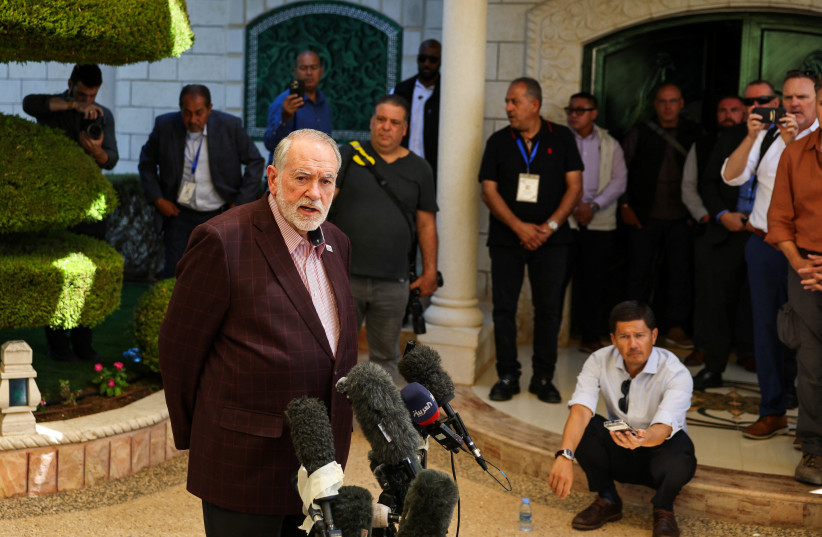
Ynet earlier reported that the orders targeted around 100 outposts across the West Bank.
The Israeli prime minister’s office and the military, who would normally take part in clearing any outposts in the West Bank, did not immediately respond to a request to comment.
Finance Minister Bezalel Smotrich, asked at a conference in Jerusalem about the Ynet report, said Netanyahu has given “an instruction to evict places built in Areas A and B.”
Under the Oslo Accords, interim peace agreements reached in the 1990s between Israel and the Palestine Liberation Organization (PLO), the West Bank was split into three zones: A, B and C.
Smotrich, a settler himself who has overseen settlement housing projects and formally recognized homes built illegally, said that while he disagreed with Netanyahu’s decision, the government had made huge strides in advancing settlements in Area C.
Settler violence on the rise
Last month, Israeli settlers besieged the homes of Palestinians in a nearby village, including one owned by a Palestinian American, before the military forced them from the area. The village’s Palestinian residents have said they have continued to face harassment and intimidation by Israeli settlers.
The Israeli government has condemned the attacks and said that it would act to stop settler violence.
On Saturday, Huckabee said it was in Israel’s own interest to take action against settlers carrying out what he described as “criminal behavior and terrorism.”
Gafni’s ouster marks a changing era for Israel’s haredi parties – and for Netanyahu – analysis
You think Prime Minister Benjamin Netanyahu has been in power for a long time? Consider Degel Hatorah’s Moshe Gafni.
Gafni, the Knesset’s longest-serving MK, was unceremoniously dropped from the party’s Knesset slate on Saturday night, along with Uri Maklev, on the instructions of Degel Hatorah’s spiritual leader, Rabbi Dov Lando.
When Gafni first entered the Knesset in 1988, Israel had only one national television channel; Rabbi Elazar Menachem Shach led the Lithuanian haredi (ultra-Orthodox) world with which Gafni is associated; Yitzhak Shamir was prime minister; Ronald Reagan occupied the White House; and Mikhail Gorbachev led the still-intact Soviet Union.
Netanyahu and Gafni were first elected together in 1988. Netanyahu left the Knesset in 1999 and returned in 2003. Gafni, apart from a two-year absence from 1992 to 1994 and a brief break in 1998-99, has served almost continuously for close to 38 years.
And while he obviously never wielded anything approaching Netanyahu’s power, Gafni became one of the country’s ultimate power brokers and kingmakers, a symbol of the disproportionate influence that haredi parties have often exercised over Israel’s political system.

The era of haredi influence over Israeli politics may be coming to an end
As October’s election approaches, that era may be coming to an end. Several opposition parties have made military or national service for all a central condition for joining the next government. And now the man who, perhaps more than anyone else, came to represent the old system is also on his way out.
Degel Hatorah’s rabbinic leadership thanked Gafni and Maklev for their years of loyal service but said they would not be included on the party’s next Knesset list, citing the need to “refresh” its parliamentary representation.
Gafni will also be replaced as Degel Hatorah chairman by Yakov Asher, slated to head both Degel Hatorah and United Torah Judaism (UTJ), the party it forms with the hassidic Agudat Yisrael. This is therefore not merely the departure of a veteran MK; it is a changing of the guard.
The reference to “refreshing” the list is a courteous formulation. The obvious inference is that Gafni and Maklev are being held responsible for the failure of the haredi parties to secure the comprehensive legislation their rabbinic leadership demanded to protect the status of yeshiva students from conscription – even in a Knesset in which the haredi parties repeatedly held the balance of power.
There is a considerable irony here. As a longtime MK and seemingly permanent chairman of the powerful Knesset Finance Committee, Gafni was perhaps the most accomplished parliamentary tactician in haredi politics. He mastered the political system, knew how to work its levers, and succeeded in channeling tremendous budgets to his constituents.
Yet all that parliamentary mastery could not deliver the one result his community – or at least its most respected rabbis – considered essential. And that raises a broader question: Has the traditional haredi method of working within the parliamentary system to protect and preserve the yeshiva world run its course?
For decades, the model worked.
The haredi parties generally avoided taking strong positions on diplomacy and security, were willing to align themselves with whichever major party could best meet their communal needs, and they used their pivotal position to secure budgets and preserve military exemptions.
But the war, the IDF’s manpower shortage, repeated court rulings, and mounting public anger over the unequal sharing of the security burden have made that model increasingly difficult to sustain.
What was once viewed by much of the public as an irritating but tolerable political arrangement is now seen by many as immoral, fundamentally unjust, and a long-term threat to a country that is badly in need of more soldiers amid a prolonged, multi-front war.
Is Degel HaTorah breaking away from Netanyahu?
The removal of Gafni and Maklev may also be intended as a message to Netanyahu that the alliance between Likud, the haredim, and the religious Right can no longer be taken for granted.
Lando said as much earlier this year, during the failed effort to secure the draft-exemption legislation, declaring that Degel Hatorah no longer trusted Netanyahu and that, as far as the party was concerned, the old right-wing bloc no longer existed.
Netanyahu and Gafni entered the Knesset together, and their relationship came to symbolize the Likud-haredi alliance. The arguments could be fierce, but both men knew that, at the end of the day, they needed one another and would find a way to get back to business.
Taking Gafni off the list deprives Netanyahu of a key ally in the haredi world and of his most dependable political channel to the Lithuanian haredi leadership. It also leaves him dealing with new political leaders who may feel less bound by decades of shared history and personal commitments.
That should not necessarily be interpreted as Degel Hatorah abandoning the prime minister. Ideologically, culturally, and politically, the party remains far more comfortable with Likud and the religious Right than with most of the parties in the anti-Netanyahu camp.
It does suggest, however, that Netanyahu can no longer assume that history and personal relationships will automatically restore the alliance to what it once was.
Does this mean that Degel Hatorah is winking at Gadi Eisenkot and Naftali Bennett?
Possibly. The leadership change may be a signal that the party is open to working with the “change bloc” – or at least wants Netanyahu to believe that it is. By portraying itself as potentially available to either side, Degel Hatorah could try to regain the kingmaker status the haredi parties once enjoyed.
If, as recent polls indicate, the anti-Netanyahu bloc finishes a few seats short of the magic 61 needed to form a government, UTJ – with the seven it has been receiving consistently in the polls – could theoretically push it over the finish line.
But “theoretically” is the operative word.
Such a move would depend not only on what Degel Hatorah and its new political leadership want but also on whether Bennett, Eisenkot, and Avigdor Liberman – who have all made haredi conscription central to their campaigns, though with somewhat different nuances – would agree to in order to bring UTJ into a coalition without a fundamental change in its position.
A change in Degel Hatorah’s position on this matter is very unlikely. Gafni’s departure does not mean Degel Hatorah is softening its opposition to the conscription of haredim. Nor does Asher’s elevation – even though he served for several months in the IDF’s abbreviated Shlav Bet framework – signal a more accommodating position on the draft.
The change is therefore less about ideology than political positioning. Degel Hatorah is trying to move from being perceived as a captive part of the Netanyahu camp to being seen once again as a potential swing vote between the blocs.
The party has not crossed the political aisle. But by pushing Gafni out of the next Knesset, its rabbinic leadership has served notice that Netanyahu will have to win the haredim back rather than simply count them in.
Court orders return for Jalud Palestinian families home after extremist settlers drove them out
The High Court of Justice ordered Israeli authorities on Sunday to arrange within 14 days for three Palestinian petitioners and their families to return to their homes in the West Bank village of Jalud, after months of nationalist violence by Israeli extremists drove residents out and left the houses open to repeated takeover.
The order requires the IDF and police to protect the families as they return and allow them to bring in supplies needed to repair the homes and restore water and electricity. Updates to the court are due by September 22.
The justices also issued a conditional order requiring the state to explain why it has not restored the residents to their homes and removed barriers from the access roads. A sworn response is due by October 8.

Israeli authorities comply with the court’s orders
The decision moves the case beyond the state’s general promise to coordinate the families’ return, and requires concrete action and detailed answers about investigations that have so far produced few visible results.
The court said the state largely did not dispute the central sequence of events.
This is a developing story.
Netanyahu trial resumes as defense phase moves beyond prime minister
Prime Minister Benjamin Netanyahu’s criminal trial resumed at the Jerusalem District Court on Sunday after the summer recess, beginning a new stretch of the defense case in which the remaining witnesses for Netanyahu and his three co-defendants will take the stand.
Netanyahu completed his own testimony in June after 98 hearing days spanning a year and a half. Sunday’s hearing focused primarily on organizing the witness schedule and determining which defense witnesses will be called, rather than hearing new evidence.
Four hearing days are planned this week. According to a notice submitted by Netanyahu’s defense, MK Ze’ev Elkin’s cross-examination is scheduled to continue on Monday.
Ronit Mandelbaum is expected to testify later that day if necessary, while Police Chief Superintendent Shmuel Sharvit is scheduled to take the stand on Tuesday and Wednesday. The defense asked the court to issue summonses for Mandelbaum and Sharvit.
Their testimony will form part of the defense effort to challenge the prosecution’s account of how the investigations in the case were conducted, and whether evidence was lawfully and properly obtained.

The trial is also returning to its original venue in Jerusalem. Netanyahu’s testimony was heard at the Tel Aviv District Court building under special security arrangements.
The most consequential unresolved question as proceedings resume is the bribery charge in Case 4000, the Bezeq-Walla affair.
Judges continued to see evidentiary difficulties in proving bribery
After Netanyahu completed his testimony, the judges told the parties that their assessment from June 2023 had not changed: They continued to see evidentiary difficulties in proving bribery and believed the prosecution should consider withdrawing that charge.
This was not an instruction, nor was it very detailed. The prosecution has not withdrawn the charge, and the indictment remains unchanged.
Case 4000 alleges that Netanyahu, while serving as prime minister and communications minister, advanced regulatory decisions benefiting Bezeq and its then-controlling shareholder, Shaul Elovitch. In exchange, prosecutors allege, Netanyahu and his family received unusually favorable and responsive treatment from the Walla news site, which Elovitch also controlled.
Netanyahu and the Elovitches deny that there was any such exchange. Netanyahu has argued that Walla remained hostile to him and that the regulatory decisions were professionally justified.
Even if prosecutors withdraw the bribery charge, Case 4000 would not disappear. Netanyahu would continue to face allegations of fraud and breach of trust over the same affair, alongside fraud and breach of trust charges in Cases 1000 and 2000.
Case 1000 concerns gifts, including cigars and champagne, that Netanyahu and his wife, Sara, allegedly received from wealthy businessmen, principally Arnon Milchan. Prosecutors allege that Netanyahu provided official assistance in matters affecting Milchan while receiving those gifts. Netanyahu says they were presents exchanged within a genuine friendship.
Case 2000 concerns recorded conversations between Netanyahu and Yediot Aharonot publisher Arnon “Noni” Mozes. Prosecutors allege that the two discussed improving Netanyahu’s coverage in exchange for steps that could have weakened the newspaper’s principal competitor, Israel Hayom. Both men deny wrongdoing.
Mozes and Shaul and Iris Elovitch are standing trial alongside Netanyahu and will also be able to call witnesses in their defense.
The dispute over the Case 4000 bribery charge is closely connected to the battle over how quickly the trial should now proceed. Netanyahu’s attorney, Amit Hadad, has said that if the charge remains, the defense may seek to call hundreds of witnesses to challenge the prosecution’s account.
The judges have instead been pressing the parties to narrow the witness lists and accelerate a trial that began in May 2020. Beginning October 4, hearings are scheduled to take place five days a week, from Sunday through Thursday.
Both the defense and prosecution opposed the five-day schedule when it was discussed in June. Hadad argued that it would leave Netanyahu’s lawyers without sufficient time to prepare witnesses and warned that members of the defense team could withdraw if they could not provide adequate representation.
Court instructed the defense teams to prepare witnesses and alternatives
The court has nevertheless instructed the defense teams to prepare witnesses and alternatives for each hearing day to avoid further cancellations.
The timetable is particularly pressing because the head of the three-judge panel, Judge Rivka Friedman-Feldman, is expected to retire in March 2028. The panel also includes Judges Moshe Bar-Am and Oded Shaham.
For now, the trial remains in the evidence stage. Once Netanyahu and the other defendants finish presenting their witnesses, the prosecution and defense will submit their final arguments. Only then will the judges deliver a verdict on the charges that remain.

Who runs the labor market? Women accounted for 98% of U.S. job gains in August
Who runs the world (or the U.S. labor market in August?) Girls.
Women accounted for almost every job added to the U.S. economy in August, an extraordinary statistic within a jobs report full of surprises.
The economy added 162,000 jobs last month, nearly triple most economists’ projections of around 55,000, according to the Bureau of Labor Statistics. Of those gains, women accounted for 158,000 of them, roughly 98% of the net increase in payroll employment.
Men, by comparison, gained only about 4,000 jobs.
Heather Long, chief economist at Navy Federal Credit Union, cautioned against reading too much into the gender split of one month, calling it “noisy.”
“I think there’s been way too much focus on the month to month—is it men gaining jobs or women?” Long told Fortune. “That moves around a lot.”
Nevertheless, the lopsided month is another data point for a broad transformation in the American workforce: earlier this year, women overtook men in total payroll employment for the third time in history. Unlike the other two times, the Great Recession and just before the pandemic, the latest shift looks less crisis-driven and more structural: female-heavy industries such as healthcare and hospitality continue to add workers even as male-heavy sectors like manufacturing stagnate.
August really emphasized this divergence. Women gained around 68,000 jobs in leisure and hospitality, even as the whole sector added only 62,000, meaning men lost 6,000 jobs in the sector. Several other service industries showed the same pattern, where women accounted for more than 100% of net job growth since male employment fell.
“One of the main drivers of the post-pandemic labor force has once again been health care, where women are highly represented,” she said. Women also earn more college degrees than men, she added, leaving them relatively well positioned to capture growth in some professional industries.
Still, Long said much of the dramatic August swing had a simple explanation: teachers and servers.
“The reason that women were down in July and up in August is almost entirely driven by education hiring—the teacher effect,” she said, along with a rebound in hospitality, where women make up a large share of workers. “It’s not like something dramatically changed for women.”
Indeed, food service and drinking places added 59,000 jobs, while local government education added another startling 42,000: together, making up 62% of all the jobs created in August. Education was seen as a reversal of a seasonal summer decline, and BLS said employment there has shown very little net change since January 2025.
June and July were revised up by a combined 55,000 jobs.
“A monster jobs report for August reminds us that this labor statistic has become highly volatile,” said Bradford Smith, portfolio manager at Janus Henderson Investors.
The unemployment rate held at 4.1%, while labor force participation ticked higher. Wage growth stagnated, rising only 0.3% in August and just 3.1% from a year earlier, the slowest annual pace in years.
For markets, good news becomes bad news as traders immediately began pricing in a higher chance of a rate hike. September hike odds rose to 52.6% from 49.4% Thursday, according to CME’s Fed Watch tool, while the 2-year yield rose 7.6 bps to 4.41%, the 10-year to 4.792%. Stock futures were mixed. The concern is that a strong labor market gives the Fed more reason to nip the bud of inflation above 2%, and raise rates in September.
“An upside surprise in payrolls will likely ramp up concerns about a rate hike,” Ellen Zentner, chief economic strategist for Morgan Stanley Wealth Management, said, though she added that the decision ultimately rests on next week’s inflation report. If inflation comes in cooler than expected next week, Zentner said, the Fed may be comfortable looking through the stronger jobs number and sitting at the current fed funds rate. If it doesn’t, August’s surprising labor market gave policymakers one more reason to hike.
This story was originally featured on Fortune.com
At least 120 Roman-era inscriptions, worship to unknown goddess identified inside Spanish cave
At least 120 Latin inscriptions, dating to the first and second centuries CE, were successfully identified at Valencia’s Cova Dones in eastern Spain, marking a significant jump from the roughly 15 inscriptions known at the site before 2026.
The findings, announced in late July by the University of Alicante, were made in May and June by a team led by Virginia Barciela of the University of Alicante and Aitor Ruiz-Redondo of the University of Zaragoza.
The inscriptions were found on the walls and ceilings of a cave previously discovered in 2024 at the site, located over 200 meters underground. The cave’s floor is dotted with small natural pools, known as gours, formed by water seeping through the rock.
“Preliminary results indicate that Cova Dones was a cave-sanctuary frequented by women, since several female names appear among the inscriptions documented so far,” explained the team.
Epigrapher Silvia Alfayé of the University of Zaragoza said that five votive inscriptions confirm that Roman-era visitors had worshipped a deity they called “Domina,” meaning “the Lady” in Latin, and that women played an active role in her cult.

“Three of these inscriptions bear the name ‘MALACI’,” a previously unknown epithet for a goddess,” Alfayé added. “This goddess had a specific aspect, perhaps related to water, the definitive interpretation of which we are currently working on.”
Sergio García-Dils, an epigraphy specialist who worked on the readings, said that the presence of at least five inscriptions dedicated to the same deity rules out casual or one-off visits for a generic purpose, but rather points to specific cultic activity dedicated to a single deity.
“Likewise,” he said. “The fact that the texts are concentrated in a specific and delimited area of the cave, away from the entrance, confirms that it is an organized cult.”
Barciela noted that the research team at the site had found several spindle whorls, used to increase the rotation of a spindle, in addition to the inscriptions.
This indicates that worshippers at the site may have used spindles as offerings, which, in antiquity, “was associated with the female sphere,” Barciela explained. “This fact would fit with the epigraphic evidence pointing to the active participation of women at the sanctuary.”
“In this regard, it is worth considering the first written name that refers to the site: Cova de les Dones (Cave of the Women). It is possible that this is the fossilization of a toponym alluding to the presence of women or female entities there.”
Known to archaeologists since 2023
Cova Dones first drew archaeologists’ eye in 2023, after over 100 Paleolithic paintings were discovered inside it, making it the largest Paleolithic “art collections” found in the eastern Iberian Peninsula.
The site’s Roman layer was only found a year later, in 2024, when excavations uncovered the cave where the newly identified inscriptions were found.
Also found in 2024 were around 15 Latin inscriptions and a coin from the reign of Roman Emperor Claudius (41 CE to 54 CE).
In 2025, researchers succeeded in identifying over 100 pieces of stalagmite that had been altered by human hands.
Jerusalem Rabbi Moshe Yazdi sentenced to 18 years for rape by deception
The Jerusalem District Court sentenced Rabbi Moshe Yazdi to 18 years in prison on Sunday for repeated sex offenses against two women who sought his religious guidance, after finding that he deceived them into believing the acts were divinely sanctioned “spiritual corrections.”
Yazdi was convicted in March of multiple offenses of rape and indecent acts by deception, as well as financial crimes. The court found that one series of sexual offenses continued for approximately 12 years and another for three to four years, amounting to dozens and possibly hundreds of offenses against each woman.
The sentence also includes a one-year suspended prison term and NIS 150,000 in compensation for each of the two women. Time Yazdi has already spent in custody will be deducted from his sentence.
Sexual acts falsely presented as religious requirements
The finding of rape by deception centered on how Yazdi obtained the women’s apparent agreement. The court found that they submitted to the sexual acts because he falsely presented them as religiously required measures that would achieve a spiritual correction or benefit the world.
Yazdi had led the Amudei Hashalom community and a similarly named nonprofit organization since 1997. He ran a soup kitchen, assisted people in need, and taught Torah classes, building a following that included people who had become newly religious.

Yazdi taught his followers to subordinate their views and feelings to “da’at Torah,” or Torah authority. He portrayed himself as one of the 36 hidden righteous people in Jewish tradition and claimed to possess divine inspiration and to consult deceased rabbis before advising followers on their private lives.
He also taught that wrongdoing created “sparks of impurity” and that he could correct them by descending into impure places and sanctifying them. The court found that he used those claims to persuade the two women that sexual acts with him were spiritual interventions rather than ordinary sexual encounters.
The judges said Yazdi exploited the women’s trust, personal distress, youth and susceptibility to his influence. His conduct harmed their bodies and mental well-being, as well as their autonomy and ability to make informed decisions, the court said.
Yazdi did not accept responsibility for the offenses. He acknowledged in his final statement that he had “sinned,” but did not accept that he had wronged the victims, instead continuing to place responsibility on them. The judges also described his conduct during the trial as manipulative and an abuse of the judicial process.
Yazdi faced allegations involving eight women but was convicted concerning two
The prosecution’s original case was broader. Yazdi faced allegations involving eight women but was convicted of sexual offenses concerning two. The sexual allegations involving the other six women did not result in convictions, and he was acquitted on five of the indictment’s nine counts, including additional sexual and financial allegations.
His financial convictions included money laundering, acts intended to prevent legally required financial reporting, dealing in prohibited property and defrauding creditors. Prosecutors argued during sentencing that Yazdi used bank accounts belonging to followers to conceal money from creditors while he was in bankruptcy proceedings.
The court considered evidence of Yazdi’s charitable work, including his operation of a soup kitchen and assistance to people in financial difficulty. It found, however, that this carried little weight when weighed against the severity and duration of the harm inflicted on the two women.
Yazdi may appeal his conviction and sentence to the Supreme Court.
‘The end of the Iranian regime is near,’ Netanyahu threatens at government’s Rosh Hashanah toast
Prime Minister Benjamin Netanyahu said on Sunday that “the end of the Iranian regime is near,” and that its fall would “change the fate of the Middle East and the Jewish people.”
Netanyahu also implied that Israel is continuing operations against Iran in order to achieve the fall of the regime, saying that he is “determined to do this.”
The prime minister spoke at a Government toast in advance of Rosh Hashanah, where he said that Israel is the strongest it has ever been, while its enemies are weaker than ever.
“Together with the United States, we accomplished tremendous achievements in removing an existential threat from above us. We have removed atomic bombs and ballistic missiles from above us and have hit the Iranian axis with great force,” Netanyahu pointed out.
Israel determined to defend itself
“We are determined to defend ourselves; we are determined to strike our enemies,” Netanyahu continued, adding that while neither Iran nor any of Israel’s enemies are attacking the country right now, they can “make a mistake,” and “suffer a blow they don’t even imagine.”
He continued his warning against Iran by saying, “Don’t mess with us. We know how to unite in times of difficulty, and it is currently the most powerful power in the Middle East.”
He then dedicated a part of his speech to the IDF, saying, “From here, I want to bless the heroic soldiers of the IDF and the security branches who labor constantly. We are eliminating terrorists around the clock – in Lebanon, in Gaza, and in Judea and Samaria.”
“May the year and its curses end, and may a year with its blessings begin, blessings greater than we have ever had. A happy New Year to the people of Israel,” he concluded.
Jerusalem man shot during attempted robbery, in serious condition
A Jerusalem man was shot in the neighborhood of Givat Shaul on Sunday evening, in what turned out to be a robbery gone wrong, according to initial police investigations.
United Hatzalah responders reported treating a 19-year-old with a gunshot wound, noting that he was taken to Shaare Zedek Medical Center in serious condition.
Initial police investigations indicate that the robber was the one who was shot by one of his would-be victims.
Police confirmed that the event is being treated as a criminal incident and is still under investigation.
This is a developing story.
Israeli parties will be able to track who has voted in real time, election panel rules
The Central Elections Committee voted on Sunday to allow party representatives inside polling stations to report in real time which voters have cast ballots, restoring – for now – a central part of parties’ Election Day turnout operations ahead of the October 27 election.
The information at issue does not reveal how anyone voted, which remains secret. What it does do is tell parties whether a particular person has voted or not. Campaigns can compare that information with their databases and concentrate calls, messages, home visits, and transportation efforts on likely supporters who have not yet reached the polls.
Sunday’s decision is not the final legal word. The High Court of Justice will resume hearing Likud’s petition at 8 a.m. on Wednesday, after the parties update the court on the committee’s decision.
The full committee approved the proposal by 19 votes to 11, with three abstentions, departing from the position of committee chairman and Supreme Court Deputy President Noam Sohlberg, who ruled in August that transferring identified voter information to political parties was prohibited.

Under the committee’s decision, the reporting will be allowed only under restrictions: Information may not be transferred from special polling stations, parties may not record when an individual voted, and the data may be used only to encourage voter turnout.
Information must be destroyed after the election
The information may not be transferred to another party or outside body and must be destroyed after the election.
The proposal was presented by attorney Ilan Bombach, who represents Likud in the proceedings. The committee is composed primarily of political-party representatives, with seats allocated according to the factions in the outgoing Knesset; the coalition holds a majority.
The court has not ruled that Sohlberg lacked the authority to impose the original ban. Instead, an arrangement approved last Thursday transferred the underlying question to the full committee for a fresh decision, with Sohlberg’s rulings placed before it as his legal opinion.
That allowed the court to bypass the authority dispute for the time being. Now that the committee has permitted the practice, the central question is expected to become whether its decision complies with privacy and election law.
Wednesday’s hearing will proceed as though the court has already issued a conditional order requiring the respondents to justify their position. In practical terms, that allows the case to move directly into substantive review without another preliminary stage.
Likud has argued that this system has operated openly for several election cycles and is essential to its ability to bring supporters to the polls. It said Sohlberg’s original prohibition was imposed after parties had already planned their campaigns around the practice and that aggregate turnout figures could not replace identified reporting.
The privacy concern extends beyond the secrecy of the ballot
Sohlberg, the attorney-general, and the Privacy Protection Authority took the opposite position. They argued that information entrusted to polling-station officials for administering and supervising the election cannot be repurposed for political-party operations without legal authorization.
Sohlberg found that whether a person voted, when they voted, and the circumstances of their vote constitute personal information. He ruled that the fact that parties had used the information in previous elections did not make its transfer lawful.
The privacy concern extends beyond the secrecy of the ballot. Information showing that someone voted at a hospital, prison, women’s shelter, or another special polling station could reveal sensitive details about that person even without disclosing their vote. Sunday’s decision seeks to address that concern by excluding special polling stations and prohibiting the transfer of voting times.
Critics maintain that identified information from ordinary polling stations can also become sensitive when combined with party databases. In communities with predictable voting patterns, even the fact that a person voted may support inferences about their political views. Real-time access can also expose voters to targeted pressure or repeated approaches before polls close.
Sohlberg had proposed an alternative under which the committee would publish aggregate turnout figures for every ordinary polling station at least four times on Election Day, without identifying individual voters. Sunday’s decision instead preserves identified reporting under the new restrictions.
The parties must now explain to the High Court how the committee’s decision affects their positions. The justices may then determine whether the safeguards are sufficient or whether identified voter reporting remains incompatible with privacy and election law.

Belgian mayor blocks Hapoel Beersheba Europa League match over alleged safety concerns
Hapoel Beersheba is expected to play in the Europa League, but it now appears that the team’s participation will not happen without challenges. The Belgian city of Leuven announced on Tuesday that it will not allow the club’s October match against Royale Union Saint-Gilloise to be held there.
The match against Union was scheduled to take place on October 22, but Leuven’s Mayor Mohamed Ridouani told the city council that, while “Union is welcome here, but in this case it is an Israeli team, and I am consistent in my position.”
He explained that in the past, he had refused to allow the Belgian women’s national team to play against Israel in the city, here, and the match had been forced to change locations.
“For reasons of public safety, I announced that this match also cannot take place in Leuven,” Ridouani said.
A mayor in Belgium 🇧🇪 has banned an Israeli 🇮🇱 soccer team.
Mayor Mohamed Ridouani has banned Hapoel Be’er Sheva from playing a Europa League match in Leuven.
This ban even prevents them from playing behind closed doors, without fans. The ban is ostensibly for “safety.”
What… pic.twitter.com/8BOpANTbkt
— Hen Mazzig (@HenMazzig) September 2, 2026
The mayor emphasized that holding the match without spectators would not be a solution, saying, “Even then, there is still a risk that people will come to the stadium anyway.”

In response to his remarks, the Belgian club said: “We received Leuven Municipality’s decision to prohibit the holding of our Europa League match against Hapoel Beersheba. We are in discussions with all the relevant parties in an attempt to find a solution. As soon as there is any news, we will immediately update the fans.”
Fear of harm coming to Israeli fans
A week earlier, on October 15, the Israeli champions are scheduled to face Dutch club AZ Alkmaar. However, pro-Palestinian organizations announced their opposition to Hapoel Beersheba traveling to the Netherlands.
“The arrival of hundreds of former IDF soldiers and supporters of genocide is unacceptable,” they wrote on social media.
As has happened in previous matches involving Israeli teams abroad, there are concerns that activists could organize with the aim of harming Israeli fans.
Jerusalem Post Staff contributed to this report.

Gavin Newsom admits ‘California derangement syndrome’ is real but won’t hide his interest in a presidential run
Gavin Newsom’s secret is no secret here in South Carolina.
They were selling “Gavin 2028” buttons outside his events this past week as he trekked across the state that will hold Democrats’ first presidential primary. His allies, the state party chair, college presidents and pro-Newsom activists all openly hinted at his national aspirations. And people close to him privately referred to a White House campaign as “the next thing.”
Still, California’s Democratic governor has barely begun to address what may be his biggest political liability as he stakes a claim as an early front-runner in the Democratic Party’s 2028 shadow primary. That liability, South Carolina voters acknowledged this past week, is something he cannot change — his home state, California, is a symbol of modern-day liberalism that people across the political spectrum love to hate.
Vera DeVito, a 78-year-old Democrat who packed into one of Newsom’s eight public events across South Carolina, said she didn’t know much about him or his policies — except that he’s from the Golden State. On that basis alone, she suggested that supporting Newsom could be “risky.”
“It’s going to be hard for him to appeal to the whole country,” she said in the town of Summerville. “Everybody thinks California is different — especially in the South. They’re not crazy about California.”
Newsom’s home state stands in stark contrast with likely primary competitors who hail from battlegrounds like Michigan’s Pete Buttigiegand Pennsylvania’s Gov. Josh Shapiro. Should they run, which is likely, all could make credible claims that they are in a better position to win over the moderate and independent voters ultimately needed to win the presidency.
Newsom’s team acknowledges that “California derangement syndrome” is real. In the almost half-century since former California Gov. Ronald Reagan first won the presidency, the state has produced a long list of failed White House contenders, including Gov. Pete Wilson, Gov. Jerry Brown, businessman Tom Steyer, and most recently Vice President Kamala Harris.
Despite such daunting history, Newsom is not hiding his interest in the presidency. In an interview, he left open the possibility of announcing his decision before the end of the year.
“It’s the right question. Honestly, I don’t know,” Newsom told The Associated Press. “I think this thing’s happening. I mean, you already feel it, right? There are folks out here — they’re saying they’re already starting to interview state directors. So this thing is going to happen very, very quickly.”
Voters like that Newsom is ‘not intimidated’ by Trump
Newsom’s breakneck pace in South Carolina — which included a handful of private engagements in addition to his public events — mirrored or even exceeded that of a presidential campaign.
His visit was billed as part of his “take it back tour” across states in the Deep South where he argues that President Donald Trump and his Republican allies are rolling back civil rights.
He opened the trip on Wednesday with one day in Alabama and finished on Saturday with two stops in North Carolina. But the overwhelming focus was South Carolina, which will host the Democratic Party’s opening presidential primary contest in little more than a year. It was Newsom’s third trip to South Carolina this midterm season.
The voters who crowded into community halls, courthouses and a university lecture hall talked openly about Newsom’s presidential ambitions, even as Democrats try to keep the focus on November’s midterm elections.
“He has strong potential,” said Kirk Bovill, a 65-year-old semi-retired actor and former Los Angeles resident who now lives in Summerville. “The question is how he’s perceived outside of California. People might think he’s too Hollywood.”
“The one thing he does very well: He doesn’t have a problem standing up to Trump,” Bovill continued. “He’s not intimidated.”
Indeed, Newsom’s message this past week was overwhelmingly focused on attacking Trump and rallying Democrats to stand up against him.
“We cannot do business as usual. We need to fight fire with fire,” Newsom told roughly 150 people gathered inside a Lexington, S.C. community center on Friday. “We’ve got to meet this moment and recognize what we’re up against. We’re up against an invasive species in the name of Donald Trump.”
At every stop, Newsom highlighted the hundreds of millions of dollars Trump and his family have made from crypto currency and other private business dealings since the 2024 election; Trump’s decision to dispatch the National Guard to Los Angeles and other major U.S. cities; the federal immigration agents that have descended upon Los Angeles and other cities under Trump’s direction; and Trump’s push to disrupt the midterm elections, including his recent move to limit mail voting.
“Donald Trump is ruthless. He’s ruthless. He’s going to try to steal this election,” Newsom charged. “He is not screwing around. Neither can we.”
The White House did not respond to a request for comment.
Newsom faces criticism that he’s from the ‘Wrong Coast’
Republican activists protesting outside of some of Newsom’s stops focused largely on his connection to California.
CJ Westfall, the Republican chairman of Dorchester County, described Newsom as “a far-left extreme Democrat who’s probably the front-runner of this (presidential) race right now.” He was surrounded by protesters who waved signs that read things like, “Wrong Coast” and “Clean Up Your State First.”
“We don’t want Gavin Newsom to California our South Carolina,” Westfall said.
Newsom’s team acknowledges widespread dislike for California, even among some Democrats, but argues that the California governor is gifted and experienced at fighting back against such criticism on the national stage. Newsom is a regular on Fox News, he faced Florida Gov. Ron DeSantis in a debate and he was the most prominent national surrogate for former President Joe Biden’s campaign.
Newsom acknowledged that California is both a political liability and “the greatest opportunity” because the California story has only been told on the national stage by “people that have ‘California Derangement Syndrome.’” He said it would play far differently if he’s able to reframe the conversation in 2028.
“In a Democratic primary, in particular — we’ve got the receipts, things that the party is arguing for, we’ve delivered across a spectrum of issues,” he told AP.
Indeed, some of the achievements that Republican critics attack him for are the same issues that might play well among Democratic base voters.
California under Newsom’s leadership has enacted progressive priorities such as expanded healthcare coverage regardless of immigration status, expanded paid sick leave, universal free school meals, a $20 minimum wage for fast food workers, protections for women from other states seeking abortions, aggressive climate change and gun control laws and a death penalty moratorium.
California also remains the nation’s most populous state and the world’s fourth-largest economy, even as critics decry the state’s high taxes that have pushed some businesses and residents alike into other states. The population has been growing since a COVID-era dip, however.
While South Carolina voters may have had mixed views on California, several said they were drawn in by Newsom’s celebrity image. The 58-year-old Democrat certainly looked the part of a made-for-TV president as he charmed voters in his plain white dress shirt with his sleeves rolled up and no tie.
“We don’t get that many famous people here in Aiken. He’s pretty famous,” said 73-year-old Monty Fetterolf, who attended one of Newsom’s Friday events in Aiken, S.C.
DeVito, the 78-year-old Democrat from Summerville, said Newsom still has work to do.
“He’s a little slick — not a lot of meat,” she said after listening to his speech in Dorchester. “But he’s good looking, which helps.”
This story was originally featured on Fortune.com

As the first mail-in ballots of the midterm election start going out, Trump asks the Supreme Court a third time to limit them
The Trump administration on Sunday renewed its appeal to the Supreme Court after a federal judge blocked new restrictions on mail ballots ahead of the midterms.
The filing came after U.S. District Court Judge Indira Talwani extended an order against the Postal Service enforcing President Donald Trump’s executive order for the November elections.
The legal wrangling comes even as states start sending out mail ballots, leaving the administration little time to make big changes in mail ballot rules.
“Ballots have already begun to be mailed in North Carolina, and more States will begin the mailing process as the injunction remains in place — including Alabama on September 9 and at least five States the week of September 13,” Solicitor General John Sauer said in the filing.
“Once those ballot envelopes enter the mailstream, there is no retrieving them. And while the injunction allows the Postal Service and the States to continue taking steps to ensure that their envelopes satisfy the Rule’s requirements … each day the injunction is in place risks sowing confusion and chaos because the injunction makes those preparatory steps voluntary, rather than mandatory.”
The appeal marks the third time the administration has asked the high court to intervene. The high court has allowed the plan to move forward but not ruled on whether it is legal.
The battle could have major ramifications for this year’s elections, when control of Congress is at stake. Nearly one-third of voters in the U.S. cast mail ballots.
Democratic states and voting rights groups say the changes are unconstitutional. Election officials contend there isn’t enough time to revise their systems to comply with the new Postal Service directives.
The Trump administration has framed the restrictions as commonsense changes that are within its power to regulate the mail.
“Simply put, the best way to address respondents’ fears about inability to comply with the Rule is to grant an immediate administrative stay of the order, followed by a full stay pending further review,” Sauer said. “That will remove the improper cloud of uncertainty that the district court has cast over the Rule, making clear to all involved that compliance with the Rule is not optional and must start without further delay.”
The filing added that eligibility for mail-in and absentee voting will continue to be governed by state law and state and local officials will determine who is eligible to use the method and which ballots are eligible to be counted. “The Postal Service will not play any role in determining voter eligibility, maintaining voter rolls, or counting ballots.”
Trump has long sought to limit mail voting, even though he himself often uses that method to cast his own ballot. He has falsely blamed mail balloting for his 2020 election loss to Democrat Joe Bden, spreading baseless claims of fraud. But so far, he has been unable to change the longstanding voting procedure.
This story was originally featured on Fortune.com
Israeli-US org. calls for Ed Sheeran to remove Macklemore as opener after shouting ‘Free Palestine’
The Israeli-American Council (IAC) launched a petition on Sunday urging Ed Sheeran and his management to drop rapper Macklemore from the remainder of the tour after claiming he used his opening set to spread anti-Zionist and antisemitic propaganda.
Macklemore took to the stage at MetLife Stadium in New Jersey over the weekend to call for a “Free Palestine” and accuse Israel of committing genocide in Gaza.
“I wanted to stand up here on stages across America and say two words that are near and dear to my heart: Free Palestine,” Macklemore said, wearing a keffiyeh draped over his shoulders.
The rapper also performed his song “Hind’s Hall” while footage from Gaza, pro-Palestinian encampments, and other political messages were projected on the stadium’s screens.
“Jewish patrons should not be subjected to this propaganda,” StopAntisemitism wrote on X/Twitter, sharing a video of the incident.

“Imagine paying over $500 to see Ed Sheeran only to be ambushed by Macklemore’s relentless anti-Israel obsession,” it wrote in a second X post. “Yes, the same Macklemore who appeared onstage dressed as an Orthodox Jew, complete with an enormous prosthetic nose.
“Fans deserve apologies and refunds. Unacceptable.”
Here we go again – despite massive backlash surrounding Macklemore opening for @edsheeran, a repeat occurred a few moments ago at @MetLifeStadium in New Jersey.
Jewish patrons should not be subjected to this propaganda. pic.twitter.com/dRvFkHWA2T
— StopAntisemitism (@StopAntisemites) September 6, 2026
A concert, not a political rally
“This was an Ed Sheeran concert – not a political rally, not a protest, and not an activist event,” said the IAC, which represents more than 150,000 Israeli-Americans.
“The issue is not whether Macklemore has the right to hold political views. The question is where to draw the line when an opening act uses a global concert platform to advance a one-sided political agenda,” it explained.
“This becomes even more troubling when the message relies on selective imagery, biased messaging, and disputed claims presented to a massive audience as fact, without context or complexity.”
Macklemore’s decision to perform “Hind’s Hall” during his opening set was “not incidental,” the IAC added.
Imagine paying $500+ to see Ed Sheeran only to be ambushed by Macklemore’s relentless anti-Israel obsession.
Yes, the same Macklemore who appeared onstage dressed as an Orthodox Jew, complete with an enormous prosthetic nose.
Fans deserve apologies and refunds.
Unacceptable. pic.twitter.com/MWKXb2A8UX— StopAntisemitism (@StopAntisemites) September 5, 2026
IAC calls for clear boundaries of activism on stage to be implemented
“The song was written in explicit support of the campus protest movement and takes its name from the nickname protesters gave to the historic Hamilton Hall at Columbia University after they broke in and occupied it,” IAC said.
“Some of those protests involved trespassing, building occupations, vandalism, and violations of the law – conduct that stands in direct conflict with core American values.”
In addition to removing Macklemore from Sheeran’s remaining tour dates, the IAC called for the establishment of clear boundaries regarding tour stages being used as platforms to promote political messaging.
“Freedom of expression does not mean freedom from responsibility. Your show. Your stage. Your responsibility,” the IAC concluded, adding a demand for action from Live Nation, one of the world’s largest concert promotion companies.
Israel should consider changing Hatikvah as its national anthem – opinion
Several countries have changed their national anthems. In Australia, where I was born and raised, we used to sing the British national anthem of “God Save the Queen,” which underwent a slight change in previous years, depending on the gender of the monarch.
In April 1984, the anthem was officially changed to “Advance Australia Fair.”
In New Zealand, they have two national anthems, one of which is “God Save the King” and the other being “God Defend New Zealand,” which is in tribute to the indigenous Maori population.
Prior to the end of apartheid, South Africa also had two national anthems, but in 1997, abandoned both, and adopted a new anthem.
Other countries wishing to correct historic grievances or bowing to a change of regime have also altered existing anthems or brought in new ones.

In Russia, for instance, the anthem has been changed at least three times. The present anthem is sung to the same tune as that of Soviet times, but the lyrics were changed in December 2000.
Prior to the fall of the Berlin Wall and the reunification of Germany in November 1989, the East Germans had a different anthem to those of the West Germans. The East German anthem was “Risen from the Ashes,” whereas in West Germany they sang “Germany Above All,” omitting some of the Nazi-era lyrics.
For Jews, the world over, Israel’s national anthem “Hatikvah” – the Hope – which was originally a poem written in 1878 by Naftali Herz Imber, is the universal national anthem. The melody was adapted from a Moldavian folk song by Romanian immigrant Samuel Cohen. The lyrics speak of the Jewish people’s longing to return to Zion.
Most national anthems are in tribute to the country or the nation as a whole. But “Hatikvah” is clearly the anthem of the Jewish people and does not take into account the minorities who are also part of the nation of Israel.
Making Israel’s national anthem more inclusive
A major step toward making Israel more acceptable to the Arab world would be to change the anthem to something in which the lyrics would be more neutral and could apply to any sector of the population. “Jerusalem of Gold” comes close, but includes the Temple Mount in the text. Though unofficially Israel’s second national anthem, it would have to be altered slightly so that another expression could be found for Temple Mount which has both political and religious connotations.
Whether “Jerusalem of Gold” replaces “Hatikvah” or whether a new song is composed, what remains important is change in order to make the national anthem inclusive.
Debates on this subject go back to long before the establishment of the state.
Rabbi Abraham Isaac Kook, who was Ashkenazi chief rabbi under the British Mandate, wrote a possible alternative to “Hatikvah” under the title of “HaEmunah” (“The Faith”). This was fine for religious Jews, but not for the rest of the population.
The debate on the anthem has been going on for more than a century, with agreement yet to be reached. Non-Jews respectfully stand to attention when “Hatikvah” is played, but cannot bring themselves to sing about the Jewish soul and Zion.
Jews in other countries often face a similar problem in hospitals run by Catholic orders. Almost every room in such hospitals features a crucifix on the wall and a portrait of the Virgin Mary.
Even secular Jews feel uncomfortable in such an environment, but most of the Catholic hospitals are really good, and the nursing staff amazingly kind and considerate.
It’s not quite the same, because hospital stays are relatively brief and seldom repeated. But many events attended by non-Jews begin or end with “Hatikvah,” which was inspiring on the road to statehood, but is no longer suitable when we have a state
If we want everyone to sing the anthem with pride and a sense of belonging, we must agree to change.
New report flags widespread failures in Canadian universities’ antisemitism response
B’nai Brith Canada has launched its Canadian Campus Climate Report Card, an institutional accountability initiative designed to evaluate the state of Jewish life and the climate for Jewish students on university campuses as the new academic year gets underway.
The initiative is part of B’nai Brith’s broader Project Accountability, which operates on the principle that academic institutions must be held accountable for the environments they foster and for how effectively they respond when students face antisemitism, harassment, or discrimination.
The initial launch features a pilot assessment covering four universities where students have reported particularly hostile social climates: York University, the University of Toronto, Queen’s University, and McGill University.
Unlike traditional incident trackers that catalog instances of antisemitism, the report cards evaluate 28 criteria across three core categories: administrative policies and actions, campus conduct and climate, and Jewish life on campus.
The methodology combines student surveys with a qualitative review of university policies, anti-hate measures, course offerings, and the availability of kosher dining and Jewish services. Each criterion is weighted equally across the categories.

Initial findings from the pilot program highlight that while all four institutions demonstrated strong traditional Jewish life indicators, such as active student groups, chaplaincy support, and religious services, the campus climate and administrative response metrics yielded widespread red scores.
Administrators received poor marks for their handling of antisemitic incidents
At McGill University, York University, and the University of Toronto, administrators received failing or critical marks regarding their handling of harassment, event disruptions, and transparency in reporting antisemitic incidents.
“The goal isn’t simply to hand out grades,” said B’nai Brith Canada’s CEO Simon Wolle in a press release on Wednesday. “It is to give students, parents and the community a clearer picture of what is happening on campus. We want to recognize where universities are getting it right, identify where they’re falling short, and help universities do better.”
Wolle added, “Our Report Cards must serve as an impetus for Canadian institutions to revise their policies, where they fall short, and improve programming if it is insufficient to meet the needs of Jewish students.”
B’nai Brith intends for the report cards to serve as an ongoing benchmark to push Canadian tertiary institutions to tighten their policies and enforce anti-hate codes.
Israel’s next leader must be ambitious for Israel, not themselves – opinion
On October 27, Israelis will once again choose a government.
We will spend the coming weeks arguing about Gaza, Iran, the haredi draft, the economy, judicial reform, the Palestinians, and the consequences of the Hamas-led October 7, 2023 attacks. We will scrutinize party platforms, coalition possibilities, and opinion polls.
But perhaps we should be asking: What sort of person wants to be prime minister in the first place?
It is a peculiar ambition. The hours are appalling. Privacy mostly disappears. Every mistake becomes public property. Your appearance, your family, your finances, and sometimes even your choice of lunch become legitimate subjects for discussion. Roughly half the country may regard you as the person qualified to save the nation, while much of the other half regards you as the person most likely to destroy it.
Why would anybody want the job?

Many politicians still motivated by public service
Political psychologists have been asking versions of this question for years, and their findings are fascinating. Research into “political ambition” suggests that politicians are not simply power-hungry egomaniacs, as the popular stereotype would have it. Many are strongly motivated by public service. Studies of political candidates have found genuine evidence of what psychologists call “self-transcendence,” the desire to improve society and help others.
That is worth remembering in an age when cynicism about politicians comes so easily.
But alongside the desire to serve sits something else: the desire to influence. Political leaders tend to have a greater “need for power” than the rest of us. Again, that is not necessarily bad. If you are convinced that your country is heading in the wrong direction, it is perfectly reasonable to want the authority to change course.
Then there is a third characteristic: unusually strong self-belief. Research has associated political ambition with traits including extraversion and grandiose narcissism. That does not mean that every politician is a narcissist, still less that we should diagnose politicians we dislike with psychiatric disorders.
It means something simpler. To seek the premiership requires an extraordinary degree of confidence in yourself.
Israel has almost 10 million inhabitants. To seriously aspire to become prime minister requires believing that, among all those people, you possess some combination of judgment, ability, and vision that makes you particularly suited to lead them. Most of us never have that thought.
Those who do are, almost by definition, psychologically unusual.
Pirkei Avot (Ethics of the Fathers) understood the danger long before anyone invented political psychology. Shmaya teaches: “Love work, hate authority, and do not become overly familiar with the government.”
“Hate positions of power.” It is a striking instruction. Judaism clearly does not oppose leadership. The Torah is filled with leaders. Jewish communities cannot function without people willing to take responsibility.
The warning is not against exercising authority. It is against falling in love with it. And that distinction ought to matter to us as voters. Does a candidate want power because there is something that they believe desperately needs doing, or has acquiring and retaining power become the objective itself?
How can we possibly know? Not from campaign advertisements. Every candidate will assure us that they seek office only out of devotion to the people of Israel.
We have to watch their behavior. How does this person react when contradicted? Can they admit a mistake? Can they tolerate talented people around them, or does everyone eventually have to demonstrate personal loyalty? Do they distinguish between criticism and betrayal? Do they listen to advice that they do not want to hear?
When something goes badly wrong, is the first instinct to ask, “What did I get wrong?” or “Whom can I blame?”
Perhaps above all: can this person distinguish between what is good for the country and what is good for his or her political survival?
This is not an argument for timid leadership. In fact, Pirkei Avot gives us the opposite warning as well. Hillel says: “In a place where there are no people, strive to be a person.”
The traditional commentators understand this, among other things, as an instruction to step forward when nobody else is capable of taking responsibility.
Leadership sometimes requires enormous confidence. Moses’ humility did not prevent him from confronting Pharaoh. David’s greatness did not consist of avoiding difficult decisions. There are moments when standing back is not modesty but cowardice.
So Judaism presents us with a beautiful tension. Do not crave leadership. But when leadership is needed, do not run away from it.
Perhaps that is exactly the personality we should be looking for in October. Someone who wants the job enough to do it, but not so much that possessing the job becomes an end in itself.
Someone confident enough to make terrible decisions under pressure, but humble enough to wonder whether somebody else might know better. Someone strong enough to withstand public hostility, but not so insulated from criticism that they stop hearing it. Someone ambitious for Israel, rather than merely ambitious for themselves.
Our electoral system encourages us to think primarily about parties. Formally, we vote for lists rather than directly for a prime minister. In reality, personalities dominate Israeli elections. Faces stare at us from billboards. Campaigns revolve around leaders. Pollsters constantly ask which individual is “most suitable” to be prime minister.
If personality is already part of the election, we should examine it more seriously. Not whether we like the candidate, or if they gave a good speech, or if they performed brilliantly in a television interview.
Character is revealed most clearly when things go wrong. How did this person behave after failure? How did they treat an opponent once the cameras were switched off? Did they keep people around who disagreed with them? Have they ever publicly accepted responsibility for anything?
These questions matter in every election. In Israel in 2026, they matter enormously.
The next prime minister will inherit a country still carrying the wounds of the October 7 massacres and the Israel-Hamas War that ensued. Israeli society remains divided, bereaved, and exhausted. Enormous decisions lie ahead concerning security, the economy, the haredi draft, our relationship with the Palestinians, our relationship with the wider world and, perhaps most difficult of all, our relationship with one another.
Policies matter enormously. But policies do not make decisions. People do. Sometimes, the intelligence is incomplete, advisers disagree, and every option carries terrible risks.
What remains is the person; their judgment, temperament, humility, courage, and ego. Their capacity to listen; their ability to say, “I was wrong.” So by all means, before October 27, let us ask our politicians what they intend to do. But perhaps we should spend more time asking who they are.
Shmaya warned us to distrust the love of power. Hillel reminded us that good people must sometimes step forward and exercise it. Somewhere between those two teachings lies the leader that Israel needs.
The writer is a rabbi and physician. He writes and teaches on Jewish ethics, leadership, and resilience. His work appears on rabbidrjonathanlieberman.substack.com and youtube.com. @rabbidrjonathanlieberman
US withdrawal from Iraq will be watched closely by Iran-backed militias, Kurds – analysis
The US is to meet a September 30 deadline for withdrawing from Iraq, Kurdish media outlet Rudaw reported on Sunday.
It was one of several reports that indicate the US is committed to taking away air defense systems from the Kurdistan Region. The full details of this are unclear and hard to confirm. What matters is not necessarily if it is accurate, but that people will think it is happening.
Rudaw wrote, “The United States will withdraw its defense systems from the Kurdistan Region along with its remaining troops by the end of September under an agreement with the Iraqi government, a senior Iraqi security official said on Sunday.”
The report noted that “Qasim al-Araji, security advisor to Iraqi Prime Minister Ali al-Zaidi, told Rudaw that the withdrawal includes all defense systems, including remaining ones in Erbil, adding that the phased removal of troops and military equipment has already begun.”
Araji said, “On September 30, coalition forces will completely withdraw from Iraq, and this is the implementation of the agreement made between the previous government and the global coalition…The American side has expressed its full readiness to implement the agreement and withdraw by the specified deadline.”

US pressuring Iraq to control militias
This comes as the US is also pressuring Iraq to rein in Iranian-backed militias and disarm them. So far, none of the militias have disarmed. It doesn’t seem possible that any weapons will be collected in September. If no militias were disarmed in the last months, why would they hand over their guns now?
Instead, what they will do is put more conditions on disarmament. Some may also claim they already put their guns under “state control.” Most of the militias are part of the Baghdad-backed Popular Mobilization Forces (PMF). As such, they will claim the PMF controls their weapons already. This is a kind of bait and switch.
Rudaw said there is progress with the militias. “Araji said discussions with the armed groups were moving in a positive direction.”
Araji said, “After the withdrawal of the coalition, an agreement will be reached on a comprehensive mechanism to place all weapons under the control of the state and the commander-in-chief of the armed forces.” He added that “discussions are proceeding very well and there is positive understanding.”
It’s worth noting that the militias were supposed to hand over their weapons by September 30. Now the handover is overdue. This is how the can gets kicked down the road.
For the Kurdistan Region, this is a problem because the militias and Iran have already targeted the region with more than 1,000 drone and missile attacks since February 2026.
Iran has even targeted the offices of the Kurdish Regional Government’s prime minister and president. Iran is indicating that it wants to strike at dissident groups in the Kurdistan Region and also that it can do as it wants.
Not clear if air defenses will remain
In the past, reports said that US and coalition air defenses had downed some of the drone attacks. It is not clear if some of the defenses will actually remain. The US has a large consulate in Erbil. It is logical that the US will want to defend it. The consulate, as well as a UAE consulate, has been targeted in the past.
Yet, Rudaw said, “the US has already relocated eight Patriot surface-to-air missile batteries to Jordan, while Britain has transferred its Rapid Sentry system to Cyprus.”
The report added context, noting the “US and British forces have defended Erbil airport and surrounding areas using anti-missile and counter-drone systems stationed at the base. Despite those defenses, at least five American soldiers and contractors have been killed in attacks in recent months, Rudaw understands.”
The report also names five Iranian-backed militias as refusing to disarm. These include Kataib Hezbollah, Sayyid al-Shuhada and Harakat al-Nujaba. Kataib Hezbollah is believed to be the most dangerous in terms of its threat and close ties to the IRGC.
In 2020, when the US killed IRGC Quds Force head Qasem Soleimani, he was riding with Kataib Hezbollah leader Abu Mahdi al-Muhandis. Muhandis was also killed.
Kataib Hezbollah killed three Americans in Jordan in a drone attack in 2024. It has also attacked Saudi Arabia. The militias, such as the three mentioned above, often play a role in the “Islamic Resistance” in Iraq, which has carried out attacks on Israel, the US, and others in recent years.

U.N. General Assembly endorses a new world map that represents Africa more accurately in its larger size. Only the U.S. voted against it
The United Nations General Assembly on Friday endorsed a new world map that represents Africa more accurately in its larger size, a culmination of a recent campaign led by African countries and advocacy groups.
Friday’s resolution, which was sponsored by Togo and backed by members of the African Union, was passed with 164 member states voting in favor. Only the U.S. voted against it while six other countries — Serbia, Estonia, Georgia, Lithuania, Moldova and Ukraine — abstained.
The vote encourages governments and institutions around the world to replace the traditional Mercator map, commonly used since the 16th Century, with the Equal Earth projection that advocates and geographers say shows locations more accurately.
The Mercator projection shows Greenland and Africa as appearing to be about the same size whereas in the Equal Earth projection that shows continents in their true proportions, Africa is 14 times larger than Greenland.
Friday’s resolution does not ban the Mercator projection or impose a replacement, but only encourages the use of the Equal Earth projection, the U.N. said in its report.
“Maps shape our understanding of the world,” the global body quoted Togo’s Foreign Minister Robert Dussey as saying before the vote. “They guide education, nourish the imagination, and influence collective perceptions.”
Africa No Filter, one of the lead campaigners for the adoption of the new map, hailed the resolution, adding: “We want to see accurate maps in schools, textbooks, newsrooms, businesses and on the digital platforms billions of people use every day.”
Several countries hailed the adoption and urged the adoption of the Equal Earth map. “Changing the map obviously doesn’t change the world. But correcting a representation that distorts it is already an act of truth,” French Foreign Minister Jean-Noël Barrot said on X after the vote.
The Mercator map was designed by Flemish cartographer Gerardus Mercator to help European navigators at sea, but advocates say it distorted landmasses by enlarging regions near the poles such as North America and Greenland while shrinking Africa and South America.
The 2018 Equal Earth projection, on the other hand, follows the Earth’s curvature and shows continents in their true proportions.
Geographers say the traditional map is only useful for navigation.
“Outside of that very narrow navigation application, there is no point in using it,” according to Mark Monmonier, a Syracuse University professor of geography.
This story was originally featured on Fortune.com

Lebanon can sign Abraham Accords once Hezbollah is disarmed, Sunni MP says
Lebanon can join the Abraham Accords once Hezbollah is disarmed and can no longer use the country as a “launching pad” for attacks against Israel, Lebanese Sunni MP Fouad Makhzoumi told Middle East 24 last week.
Makhzoumi, who has previously urged the Lebanese military to demonstrate its willingness to confront Hezbollah’s arms trafficking by establishing a checkpoint in Beirut’s Dahieh neighborhood, said diplomatic relations and trade with Israel would be possible once “our side, as Lebanese, disarms the militias.”
As it stands, he said, Lebanon has a border that is outside the state’s control, allowing arms to be smuggled into and out of the country.
“I don’t see any reason why we cannot sign peace with Israel,” Makhzoumi said, adding that it was possible for Lebanon to “achieve” membership in the Abraham Accords.
The CEO and executive chairman of Future Pipe Industries, a major international conglomerate, and the founder and leader of Lebanon’s National Dialogue Party, he framed Lebanon’s economic recovery and future growth as depending on the state’s ability to tackle corruption within the judicial system and dismantle Hezbollah’s “parallel state.”
Lebanon’s central bank to conduct audit of transactions
Lebanon scored 23 out of 100 on Transparency International’s 2025 Corruption Perceptions Index, ranking 153 out of 182 countries.
Makhzoumi’s comments also came the same week that Lebanon’s central bank announced that France-based consulting firm Alvarez & Marsal would conduct an audit of transactions dating from October 1, 2019, through December 31, 2023.
For Makhzoumi, restoring investor confidence requires more than financial reforms. He argued that capital will not flow into Lebanon until there is a regulatory framework that is fairly applied to every investor, one military force representing the country and one law applied equally to all.
Achieving those conditions, he said, requires Lebanon to disarm Hezbollah, “make sure that there is no opportunity for somebody to take me to a war under ideological reasons,” establish a strong banking system that complies with international regulations, and “have peace with Israel.”
Such a shift could also open the door to greater investment from Lebanon’s regional partners. Notably, the United Arab Emirates, a signatory to the Abraham Accords, has become a major investor in Lebanon. UAE Foreign Trade Minister Thani bin Ahmed Al Zeyoudi led a delegation of more than 80 prominent figures to Lebanon last month, where the two countries signed an intergovernmental memorandum of understanding aimed at strengthening bilateral relations.
Regional analysts who spoke with The Jerusalem Post suggested that increased UAE investment could help Beirut distance itself from Iran and Hezbollah.
Makhzoumi said he is already in discussions with individuals interested in investing in southern Lebanon, where Hezbollah has created economic and social dependency by filling gaps in employment, healthcare and education.
Makhzoumi attempts to bring Lebanon’s wealthy diaspora home
New investment, he argued, could encourage members of Lebanon’s wealthy diaspora to return.
“I myself operate in 50 countries, and wherever you go in the world, you find a Lebanese that has been successful, whether in a big corporation, or in a state, or in an advisory role,” he said. “So I am confident that the Lebanese will be willing to come and to build their country, but give me a state, give me a place that I can afford to bring my children back, and to make sure that they can live happily under the law, and not to be threatened by Hezbollah or by any other militia.”
The lack of economic and political stability has driven many young Lebanese to seek opportunities abroad, Makhzoumi said. Many leave the country after graduating because they cannot envision a future in a country where assassinations occur, the threat of war remains, and Hezbollah can threaten their security.
That emigration has accelerated amid Lebanon’s prolonged economic crisis, which began in 2019. According to figures published by the American University of Beirut, emigration increased by 450% in 2021 and 2022, with around 79,134 Lebanese citizens leaving the country in 2021 alone. The trend left a giant gap in numerous industries, especially in the healthcare sector.


Iran’s chief negotiator warns retaliation will be ‘faster, heavier and more painful’ after U.S. hits tankers in response to attack attempt on warships
The U.S. military has denied Iran ’s claim to have struck an unmanned American military vessel in the Strait of Hormuz, calling it a “total lie.”
Meanwhile, Israeli strikes in southern Lebanon killed four people and leveled a hospital, according to Lebanese authorities, near an area that has become a flashpoint in fighting between Israel and the Iran-backed militant group Hezbollah.
Here’s a look at the latest news in the Middle East. Full coverage can be found here.
Iran says it hit a US boat in latest Hormuz salvo
State-run media in Tehran said the U.S. vessel was trying to enter an area that Iran says is restricted in the Strait of Hormuz.
“The report came from Iranian state media and it’s a total lie,” said Capt. Tim Hawkins, spokesman for U.S. Central Command.
It came a day after the U.S. said it struck Iranian oil tankers in retaliation for Iran launching ballistic missiles at Navy warships.
Attacks resumed last week after roughly a month of quiet.
The war began with U.S. and Israeli attacks on Iran on Feb. 28. But since a ceasefire agreement was announced in June, on-and-off fighting has persisted with both sides trying to inflict military and economic pain as negotiations have collapsed.
Iran’s parliament speaker and chief negotiator, Mohammad Bagher Qalibaf, said the era of “proportionate responses” is over, and that from now on, Iran’s retaliation will be “faster, heavier and more painful.”
Israeli strikes kill 4 in Lebanon and level a vacant hospital
Israeli strikes killed at least four people in southern Lebanon on Sunday and leveled a hospital, Lebanon’s Health Ministry said.
Strikes on the Lebanese village of Arabsalim killed two, the ministry said. Two others were killed in the city of Nabatiyeh, near a strategic hill that Israel said its forces gained control over Thursday.
At least 20 others were wounded in the Sunday strikes, the ministry said, among them three children and five women. The strikes also destroyed an empty hospital, the ministry said. Residents have largely vacated the area because of the war.
The Israeli military said its latest strikes came in response to a drone attack launched earlier Sunday by Hezbollah on Israeli troops in southern Lebanon. It said Hezbollah had used the hospital as a command center.
Since a ceasefire went into effect between Israel and Hezbollah more than two months ago, fighting has subsided in much of Lebanon but low-level skirmishes and Israeli strikes continue.
Yemen’s government forces retake territory from Iran-backed Houthi rebels
Yemen’s internationally recognized government said Sunday its forces have recaptured areas of two key provinces from the Iranian-backed Houthi rebels.
The provinces of Hodeida and Taiz are along the country’s western coast.
On Saturday, the Houthis fired three ballistic missiles at the city of Taiz, striking close to civilian and police facilities, the country’s SABA news agency reported.
Mass funeral in Gaza for over 110 Palestinians recovered from rubble
Dozens of Palestinians gathered Sunday in Gaza City to mourn over 110 people, including at least 70 children, after their remains were recovered from the rubble.
Rescue crews, who have spent the past few days digging out the bodies from Gaza’s Zeitoun neighborhood, said the dead came from three families whose houses were flattened by Israeli strikes earlier in the war.
“We are witnessing a painful, heartbreaking scene for the families of the Zeitoun neighborhood,” said Mustafa Quzghat, a relative.
The bodies were wrapped in white shrouds and draped with Palestinian flags. Some shrouds bore images of the deceased, according to Associated Press footage. They were laid out in rows on the ground.
The nearly three-year Israel-Hamas war has killed over 73,650 Palestinians, according to Gaza’s Health Ministry.
The ministry, part of the Hamas-run government, maintains detailed records viewed as generally reliable by U.N. agencies and international organizations. It doesn’t distinguish between civilians and militants, but says women and children make up around half of the toll.
Muslim nations condemn Israeli proposal to empty Gaza of Palestinians
Any Israeli plan or action to remove Palestinians from the Gaza Strip would violate international law and undermine the U.S.-backed plan for drawing down the Gaza war, the foreign ministers of Egypt, Saudi Arabia, Jordan and five other governments said in a statement on Sunday.
Israel’s national security minister, Itamar Ben-Gvir, last week published a plan to encourage Palestinian migration from Gaza, which he said would include Israel paying countries to help cover the cost of services for emigrants. Israel’s defense minister, Israel Katz, has said Israel is prepared to facilitate the removal of Palestinians by sea, air or other means, and that plans remain under discussion.
The governments called the statements “inflammatory” and said they threatened the “legitimate and inalienable rights” of Palestinians and the future establishment of a Palestinian state. They warned that any Israeli effort “aimed at uprooting Palestinians from their land” would have “grave consequences.”
Previous Israeli attempts to persuade third countries to accept Palestinians from war-ravaged Gaza have gained little traction.
Israeli government warns holiday travelers
Israel issued a warning ahead of the Jewish High Holiday season, a busy travel time that begins this Friday.
It cautioned citizens not to travel to Muslim nations, including Jordan and Egypt, which are at peace with Israel. It urged travelers to take precautions when overseas, including avoiding displaying Jewish symbols like skullcaps or speaking Hebrew in public spaces.
Israel frequently issues such warnings ahead of holidays or during wartime. ___ This report will be updated throughout the day as new developments emerge.
This story was originally featured on Fortune.com

Kushner says US envoys in Ukraine looking forward to more progress in peace talks
A US delegation visiting Kyiv looks forward to making more progress in peace talks aimed at ending the war in Ukraine, US envoy Jared Kushner said on Sunday.
In joint statements to reporters after the first round of talks, fellow envoy Steve Witkoff said the US team had been “very encouraged” by what he described as a “substantive, important” discussion.
Kushner and Witkoff traveled from Moscow, where they held three hours of talks with Russian President Vladimir Putin on Saturday but did not appear to secure a breakthrough in the conflict.
Previous rounds of US-mediated peace talks encouraged by President Donald Trump, who campaigned on a promise to quickly end the war, have yielded few results. He suggested on Friday that the US had a fresh proposal, though he did not elaborate.
Kremlin aide Yuri Ushakov described Saturday’s meeting as “highly useful,” while a White House official told Reuters that the administration would announce next steps in the coming weeks.

Ukraine’s Zelensky welcomes Kushner, Witkoff, European officials to Kyiv for peace talks
The two envoys met Zelensky and other top Ukrainian officials in central Kyiv.
Zelensky, who believes Washington will be key to any peace deal, has said a window of opportunity to make peace exists before the US begins focusing on its next presidential elections next summer.
In a social media post before the envoys’ arrival, Zelensky said he had held a preparatory meeting with his negotiating team and that Ukraine wanted an end to the war.
We began talks.
Почали перемовини.
🇺🇦 🇺🇸 pic.twitter.com/UkJV6CzOag— Volodymyr Zelenskyy / Володимир Зеленський (@ZelenskyyUa) September 6, 2026
“Security guarantees are needed. A dignified post-war peace is needed. Our proposals have been drawn up,” he said.
British, French and German national security advisers also landed in Kyiv on Sunday, and will reportedly take part in the second round of meetings.

Israel cuts gasoline prices by 50 agorot after Smotrich approves temporary excise relief
Finance Minister Bezalel Smotrich signed an order on Sunday cutting the price of gasoline by 50 agorot per liter beginning at midnight, bringing the self-service price of 95-octane gasoline down from NIS 8.25 to NIS 7.75 per liter, Walla reported on Sunday.
The state will absorb the difference by temporarily relinquishing part of the excise tax it collects from drivers.
The decision came less than a week after gasoline prices jumped last week to a level matching the record set in Israel in September 2012. The sharp increase resulted from higher global gasoline prices and refining margins, the dollar-shekel exchange rate, the linkage of the excise tax to the Consumer Price Index, and an update to the marketing margin and full-service surcharge.
Immediately after the new price was announced, Smotrich instructed Finance Ministry officials to find a way to reduce by 50 agorot the amount drivers pay at gas stations. The chosen solution was a temporary reduction in the excise tax, one of the main components of gasoline prices in Israel. Rather than having drivers bear the full increase, the state will forgo some tax revenue in the coming period.
The timing, however, complicated the decision. Elections are scheduled for October 27, and cutting the price by 50 agorot per liter less than two months before voters go to the polls raised concerns that the measure could amount to election economics.

Smotrich signs order cutting gasoline price by 50 agorot until after elections
The Finance Ministry’s legal adviser determined that the price reduction could be implemented during this period, citing, among other things, the precedent set when Avigdor Liberman served as finance minister, and the excise tax was reduced close to an election. Attorney-General Gali Baharav-Miara also approved the move.
The order will remain in effect until October 31, four days after the election. This means drivers will receive the discount beginning Sunday night and will continue to benefit from it throughout the election campaign, while Smotrich will be able to present the public with an immediate and noticeable reduction in one of the more significant expenses faced by households.
Finance Ministry officials say the goal is not only to ease the burden on drivers. Expensive fuel also raises transportation, distribution, and shipping costs, which can quickly translate into higher prices for food, deliveries, and services. Lowering the price is intended to reduce at least some of that pressure and prevent the increase at gas stations from spilling over into the prices of other products.
Ultimately, the move contains a certain irony. The state imposes a heavy tax on every liter of gasoline, and to shield the public from what had become a record-high price, it is now temporarily giving up 50 agorot of the tax it imposed in the first place.

Here’s what is open and closed this year on Labor Day
The origins of Labor Day date back to the late 19th century, when activists first sought to establish a day that would pay tribute to workers.
The first U.S. Labor Day celebration took place in New York City on Sept. 5, 1882. Some 10,000 workers marched in a parade organized by the Central Labor Union and the Knights of Labor.
A handful of cities and states began to adopt laws recognizing Labor Day in the years that followed, yet it took more than a decade before President Grover Cleveland signed a congressional act in 1894 establishing the first Monday of September as a legal holiday.
While many workers have the day off, most big consumer-facing businesses are open and even offering promotional sales to lure customers.
Here’s what is open and closed this year on Labor Day:
Government buildings
Government offices, post offices, courts and schools are closed.
Banks and the stock market
U.S. stock markets and banks are closed Monday.
Standard FedEx and UPS pickup and delivery services will not be available on Labor Day, although some critical services will be offered at certain locations.
Retailers
Warehouse membership club Costco will be closed on Labor Day, but the vast majority of major national retailers and grocery stores will be open, with many offering promotional sales to lure customers. Hours may vary by location, so check your local store.
Travel
Despite the fact that many schools are back in session and travel costs have risen with higher fuel prices due to the conflict in Iran, millions of Americans will hit the roads and the skies to get away for the last big summer travel weekend.
AAA says that prices for flights to top domestic destinations are nearly 20% higher than last year and prices for hotels have also risen. The average U.S. price for a gallon of regular gas, according to the auto club, is just under $4.10, up 90 cents from the same time a year ago.
However, for those traveling by sea, AAA says that cruises departing from U.S. ports are about 4% cheaper than last year.
The auto club doesn’t provide a full travel forecast for Labor Day as it does for Memorial Day and July Fourth. But AAA does offer some useful advice for travelers.
AAA advises travelers to keep an eye on the weather and inspect your vehicle’s tires, battery, and fluid levels before a road trip. It’s also a good idea to pack an emergency kit with water, snacks, a flashlight, and jumper cables, AAA says.
This story was originally featured on Fortune.com
Ukrainians push to legalize pornography, raise millions for war effort – report
Ukraine is reportedly considering legalizing sex work to help its battered economy and fund the war against Russia, the Wall Street Journal reported on Sunday.
In Ukraine, the production, possession, or distribution of pornography is illegal and is punishable by up to seven years in prison.
Despite this, the adult entertainment industry in the country has grown considerably but operates with the cooperation of a corrupt police force, the WSJ reported.
Ukrainian authorities have begun demanding taxes from adult content creators. However, anyone who complies effectively admits their involvement in criminal activity.
One Ukrainian lawmaker, Yaroslav Zhelezniak, is pushing for a bill that says legalizing pornography in the country would help boost the economy and could leave up to $25 million in tax revenues available to Ukraine’s war chest.

He predicts that the revenues could help pay for up to 30,000 drones.
Ukrainian MP pushes to legalize pornography to help fund war against Russia
“These women either don’t pay taxes and face criminal charges for that, or they pay taxes and get charged with violating pornography laws,” Zhelezniak, who chairs the finance committee in Ukraine’s Parliament, told the WSJ. “It’s a tragicomic situation.”
Before Russia’s full-scale invasion of Ukraine, authorities turned a blind eye to the adult entertainment industry in the country. Recently, three regions of Ukraine received as much as $20,000 in bribes, according to the office of the Ukrainian General Prosecutor.
Two years into the invasion, OnlyFans’s parent company, Fenix International, found that 7,900 Ukrainians made more than $131 million on OnlyFans in 2023 alone, the WSJ reported.
Kyiv began sending letters to content creators who filed tax declarations that, unbeknownst to them, would be charged with tax evasion and illicitly producing adult content.
One of them, Svitlana Dvornikova, told the WSJ that while she was getting her daughter ready for school one morning, police seized $20.000 in cash, her laptop, and hard drives.
“They had a list of webcam models, and knew all their addresses,” Dvornikova told the WSJ. She said the officers offered her the option to bribe them to keep the matter quiet, but she declined.
Another woman told the WSJ that officers searched her apartment in a similar manner. She was later summoned to a court hearing, but did not go because she was scared that she would be forced to pay a bribe.
Many Ukrainian OnlyFans models, including Dvornikova, have since left the country or temporarily left to live elsewhere in Europe.
“This is a victimless crime,” Lesia Mykhalenko, a tax lawyer who has represented more than 100 OnlyFans models, told the WSJ. “It unnecessarily burdens the legal system at a time when we should be focused on defending the country.”
After a case was filed against her, Dvornikova filed a petition that was later featured on Ukrainian President Volodymyr Zelensky’s website. In it, she described herself as a “conscientious taxpayer,” and said that instead of marking her as a criminal, the government should be thankful for the near $900,000 she had paid in taxes, which she claimed was worth “hundreds of Russians killed on the front line.”
Her petition got over 25,000 signatures within a week, the WSJ reported. In turn, Zelensky said he would make parliament consider Zhelezniak’s legislation to legalize porn.
The bill Zhelezniak co-authored to legalize porn passed its first reading in Ukraine’s parliament in July and is due for a second reading.
‘Al-Aqsa, be patient’: Chants against ‘Zionist scum’ heard at Damascus International Fair – report
“We will liberate Palestine from the Zionist scum,” people chanted at Damascus’s 63rd International Fair on Friday, the final day of a multi-day event that brought companies and entities from 60 countries to Syria as Damascus sought to reconnect with international markets, according to footage circulated from the event and international media reports.
The event was organized by Syria’s Economy and Industry Ministry together with the Damascus International Fair Administration. For the first time this year, the event also included the Damascus World Economic Forum, a program specifically launched as a platform for dialogue between government, the private sector, investors and international partners, according to the organization Rebuilding Syria.
“Oh Al-Aqsa, be patient, we’re coming, no matter how many years it takes, I swear to God,” individuals recorded at the event chanted in Arabic. “Oh Gaza, be patient, we’re coming, no matter how many years it takes, I swear to God, and we will liberate Palestine from the Zionist scum.”
#Damascus: A viral clip of chants, apparently from Syrian officials in the Damascus International Fair for Gaza, threatening Israelis, today September 4th.
The slogans were:
“Oh Al-Aqsa, be patient, we’re coming, no matter how many years it takes, I swear to God.
Oh Gaza, be… pic.twitter.com/2pV9RCLRcG
— Syria Justice Archive (@SyJusticeArc) September 4, 2026
The fair ran under the theme “Syria Shines Again,” SANA reported, claiming nearly 1,000 participating entities, representing approximately 60 countries, joined. The fair was to have hosted a total of 1.4 million visitors
Western companies took part in the events, according to SANA
In addition to entities representing countries hostile to Israel, SANA reported that a number of Western companies took part in the events. Around 13 companies from Germany participated, along with several American companies.

Notably, only weeks ago, The Jerusalem Post reported on a video showing members of the Syrian Arab Army chanting “I am coming for you Jew…I will make your blood flow in rivers” outside the historic Damascus Citadel.
The outcome of years of anti-Israel indoctrination by the Assad regime
Ghassan Ibrahim, a Syrian journalist and the editor-in-chief of Syria Focus, told the Post that such sentiments were the outcome of years of anti-Israel indoctrination by the Assad regime and argued that such rhetoric would go unchanged until Jerusalem and Damascus make some kind of peace agreement.
“The current government is trying to be pragmatic in its approach. There are a lot of hiccups here and there, but it’s not organized. It’s not a policy. It’s not a strategy. There is mainly a heritage left from the previous regime,” he said. “The approach is toward getting less involved in trouble, trying to focus on sorting out the issues inside the country and de-escalating around the world to reach a peaceful way forward. This would allow the reconstruction projects and development to go through, create a degree of stability, and allow the regime to move the country toward elections and rebuilding the state itself as part of the global system.”
Insisting that it will take time before there is a change of perception, Ibrahim also cautioned the Post on how to view reports of such chants in Arab media, noting that many sites were affiliated with countries that had an interest in preserving the image of Syrians as sympathetic to Gaza to the point they would act against Israel given the opportunity.
‘Evidence of the hostility of the new government in Syria’
Lt.-Col. (Res.) Sarit Zehavi, the founder and president of the Alma Research and Education Center, however, told the Post that such a demonstration would only serve to encourage Israel to maintain its buffer zone in Syria and argued that it was more “evidence of the hostility of the new government in Syria.”
“I would expect a new government to encourage an Israeli booth in the exhibition rather than hearing these kinds of voices,” she added.
‘I am going to an Arab party, they aren’t coming to me’: Segalovitz explains Ra’am move – interview
Former Yesh Atid lawmaker Yoav Segalovitz will occupy the second position on Ra’am’s ticket in Israel’s October 27 election, putting a Jewish Zionist immediately behind the leader of a party built primarily around an Arab Muslim constituency. Segalovitz told The Media Line that he will join Ra’am’s parliamentary faction but will not become a formal member of the party, a distinction that allows him to retain his political identity while running on its slate.
At a joint press conference in Nazareth, Segalovitz introduced the partnership by listing the differences between himself and Ra’am chairman Mansour Abbas. Segalovitz described himself as a Jewish, secular Zionist who served as an army officer and rose to one of the highest ranks in the Israel Police. Abbas, he said, is an Arab, a religious Muslim, and a social conservative. “What connects us is that we are all Israelis,” Segalovitz said. “That is our shared identity.”
The arrangement gives Segalovitz a prominent position in a party that could again become important to the formation of a government. Ra’am participated in the coalition that governed Israel from 2021 to 2022, but several opposition leaders now say they will not form another government dependent on an Arab party. Segalovitz argues that his candidacy can begin changing that calculation, even if it does not produce an immediate electoral shift.
“I do not see Ra’am or Mansour Abbas as a threat,” he said. “They want to be part of the country, and I think we need to be strong enough to extend a hand in return.”
Former Israel Police, Lahav 433 official joins Ra’am
Segalovitz, 67, previously headed the Israel Police Investigations and Intelligence Division and the Lahav 433 national crime unit. During the previous government, he became the official responsible for coordinating the state’s campaign against organized crime and violence in Arab communities. That work gave him relationships with Arab mayors and local leaders well before he began discussing a political partnership with Abbas.

His decision to leave Yesh Atid and enter Ra’am’s slate has met resistance across much of the political system. Opposition Leader Yair Lapid said he believed Segalovitz was making a mistake, although he respected his former colleague for acting on his convictions. Yisrael Beiteinu chairman Avigdor Liberman has said Ra’am cannot be a coalition partner, while Prime Minister Benjamin Netanyahu has made the opposition’s potential dependence on Abbas a campaign issue, presenting voters with a choice between his government and a rival bloc supported by Ra’am.
Segalovitz said those positions leave Arab citizens fully integrated into much of Israeli life but excluded when political power is discussed. Arab citizens account for approximately 21% of Israel’s population and work throughout its medical system, universities, industries and public services. The distinction becomes visible, he said, when people move from daily life into party politics. “At a hospital, nobody asks questions,” Segalovitz said. “You enter political life, and everyone puts on some kind of narrative; some kind of suit tailored to his measurements. That is where you see the lack of connection.”
He rejected the argument that political cooperation with Arab parties became unacceptable after the Hamas-led massacre of October 7, 2023. In his announcement, Segalovitz said that more than 34 members of Israel’s Arab community were killed in the attack and that six Bedouin citizens were abducted to Gaza. Arab communities also suffered casualties and property damage from missiles fired during the conflicts with Hezbollah and Iran.
Segalovitz acknowledged that October 7 increased fear among Jewish Israelis when Arab political participation is discussed. He said, however, that the responsibility of political leaders is not to reinforce that fear. “There is no future for the State of Israel as I see it without partnership with Arabs,” he said. “The differences are there. I emphasized that in my statement. I am not hiding them.”
He described himself as a “bridgehead” between parts of Jewish and Arab society that rarely meet inside the same electoral framework. By accepting the second position rather than asking Abbas to join a Zionist party, Segalovitz said he intended to send a stronger message. “I am going to an Arab party. They are not coming to me,” he said. “A Jewish Zionist, a former police officer, number two in Ra’am. There is a powerful message in that.”
Segalovitz said the initial response within Arab communities had gone beyond support from Ra’am voters. The day after the announcement, he visited Baqa al-Gharbiyye, where residents approached him in the street to wish him success, including people who told him they did not intend to vote for the party. In Nazareth, he said, Arab journalists privately described an unusual level of excitement surrounding the move.
He also said he had received supportive messages from former commanders and senior figures in Israel’s security establishment, although he did not identify them. Segalovitz argued that excluding more than one-fifth of the population from meaningful political influence is damaging not only to democratic representation but also to Israel’s security and economy.
Violent crime will be immediate policy test
The immediate policy test, he said, will be violent crime. Segalovitz wants the next government to restore the interagency programs he oversaw as deputy public security minister and consider expanding them. Data compiled by the Abraham Initiatives showed that the number of Arab citizens killed in criminal violence fell from 126 to 116 during his only full year in government. It rose to 244 the following year, after the government changed. “Personal security comes first, and that means crime,” he said. “The situation is so serious that this must be at the top of the next government’s priorities. Root treatment will take longer, but significant action has to begin immediately.”
Segalovitz also supports expanding civilian service among young Arab citizens, presenting it as both a contribution to the state and a means of providing structure and opportunities for those aged 18 to 24. He said the program should not be imposed by the government. “It has to come from Arab society to the state, not from the state to Arab society,” he said, adding that Ra’am is already pursuing initiatives in that area.
Beyond crime, Segalovitz identified education, healthcare, welfare, employment, and infrastructure as priorities. He said the state has also avoided dealing seriously with the accumulated problems facing Bedouin communities in the Negev, including planning, housing, public services, and their relationship with state institutions. He did not place responsibility solely on the current government, saying the issue had been neglected for many years and could not be reduced to disputes over home demolitions.
The longer-term challenge, he said, is moving more Arab graduates into fields such as technology and other higher-paying sectors rather than allowing educational advancement to remain concentrated in a limited number of professions. “Arab society, as I see it, is first of all a major economic, cultural and social opportunity for the State of Israel,” he said. “It is not a threat.”
Asked what would constitute success four years from now, Segalovitz did not cite a seat target or government position. He said he wanted the partnership to become sufficiently established that Israelis would stop asking why he had joined Ra’am and begin asking what the alliance had accomplished, where it had failed, and what should be done differently. The work, he said, requires planning for the next 20 years rather than one parliamentary term. “If I have to put it in one phrase,” Segalovitz said, “I want the act I have taken not to be an episode.”
Chinese nationals accused of posing as descendants of Nazi victims to obtain German citizenship
The Dusseldorf public prosecutor’s office is investigating 32 people, many of them Chinese, said to have posed as descendants of Jewish victims of the Nazis in order to fraudulently obtain German citizenship, the news magazine Der Spiegel has reported.
The fraud involves people claiming to be descendants of Jews persecuted by the Nazis, with falsified documents and biographical information being submitted to the Federal Office of Administration in Cologne.
The legal mechanism that makes this possible is Article 116(2) of Germany’s Basic Law, which provides for the restoration of German citizenship to former German citizens whose citizenship was stripped between January 30, 1933, and May 8, 1945, for political, racial or religious reasons, and to their descendants.
Der Spiegel details one specific example involving Chinese national Liu H., reportedly the subject of an international manhunt on suspicion of kidnapping and murder.
According to the magazine, Liu H. orchestrated various schemes to evade Chinese justice, including adopting new biographies, inventing names, and traveling under false identities. In 2024, Liu H. obtained German nationality under the name Derrick Wong, and subsequently obtained a passport.

How did Liu H. successfully obtain a passport?
According to Der Spiegel, he stated in his application that he was a grandson of Karl Siegfried and Gertraud Suesskind, who fled Germany to what was then British Mandatory Palestine. Liu H. is not one of their descendants.
Another Chinese national, Tian C., living in London, is also said to have unlawfully obtained a German passport by claiming descent from the same Siegfried-Suesskind couple.
The Dusseldorf public prosecutor’s office and the BKA (Germany’s FBI) are said to have been working on the case for about a year now.
According to the report, around 30 Chinese nationals are being investigated. Many of them are well-known, and some face allegations of serious crimes and have been the subject of international manhunts.
Der Spiegel noted that German citizenship cannot be revoked easily, and that an unlawful naturalization can only be withdrawn within 10 years.
All the suspects are said to live abroad, meaning that German investigators cannot easily bring them in for questioning. The accused are said to now live in Cyprus, Israel, the United Kingdom and the United States. In about half of the cases, German citizenship is said to have already been granted.
The Jerusalem Post reached out to the Dusseldorf public prosecutor’s office for confirmation of the report.
NBA Hits Clippers With Historic Penalties

Federal regulators are investigating Musk’s new steering-wheel-free Cybercabs a day after launch, unconvinced by Tesla’s self-certification process
Federal regulators are opening an investigation into whether Tesla’s new steering-wheel-free taxis comply with safety rules, a day after the company began offering rides in the vehicles.
The National Highway Traffic Safety Administration said it was looking into whether Tesla was in full compliance with federal rules when it deployed so-called Cybercabs in Austin, Texas, given that the two-seat cars lack the steering wheels, mirrors and brake pedals typically required in vehicles.
The head of the company, Elon Musk, kicked off the Cybercab service in Austin on Thursday with fanfare, sending dozens of the futuristic taxis onto city streets and holding a launch event for invitees.
Tesla stock fell nearly 6% to $354.08 on Friday, reversing all its gains from a day earlier amid excitement about the launch.
Tesla did not respond to a request for comment.
Before the launch, Tesla had said it relied on a self-certification process to ensure the Cybercabs complied with federal standards. But the agency is examining whether the taxis do indeed meet those standards. In its filing about the probe, it said it would conduct an audit to “examine the process and technical data” Tesla used in the certification.
Thursday’s launch of the Austin service kicked off what Musk says will be a national rollout of a cheap, driverless taxi service that he promises will transform the way people travel.
Musk plans to integrate Cybercabs, which lack manual controls that passengers could use to take over in an emergency, into the company’s existing cab service, which until now has used only conventional Tesla vehicles. That robotaxi network has been operating in Austin for more than a year and has also begun offering rides in five other cities in Texas and Florida.
Automakers generally self-certify when introducing new vehicles on public roads, but a regulatory audit or investigation is not automatic. Regulators investigate only certifications they believe might violate federal rules.
Unlike most new models, the Cybercab does not merely feature minor tweaks but significant changes that present new safety issues.
Rival taxi service Zoox faced a probe three years ago after self-certifying its own steering-wheel-free cabs. Regulators eventually granted approval, but only after conducting a formal review.
Tesla is facing several federal investigations into the safety of its self-driving software.
One probe is examining the software’s role in several Tesla crashes in fog, sun glare and other low-visibility conditions, including one in which a pedestrian was killed. Another is investigating dozens of incidents in which Teslas using partial self-driving software ran red lights or drove on the wrong side of the road, sometimes crashing into other vehicles and causing injuries. A third is examining why Tesla apparently violated regulatory requirements by failing to report crashes promptly.
This story was originally featured on Fortune.com
Chili Tropper’s Zionist Home splits from Yoaz Hendel’s Reservists, joins Eisenkot’s Yashar
Zionist Home-The Reservists chairmen Chili Tropper and Yoaz Hendel on Sunday announced they would pursue “separate political paths,” while stressing that their ideological partnership and decades-long friendship remain intact.
Later on Sunday, Gadi Eisenkot’s Yashar party announced that Tropper will be given sixth place on its party list for the elections.
In a joint statement, the two recalled more than 20 years as neighbors and friends, sitting alongside one another in synagogue and serving together for several years in the reserves.
“We both chose to try to serve the public through the political arena as well,” they said. “In some cases together and in all other cases separately, but with a very similar ideological outlook.”
The statement came less than two months after Tropper and Hendel announced that they would run together in the upcoming Knesset election, seeking to create what they described at the time as a significant new Zionist political force.
Their party had failed to pass the electoral threshold in recent polling, along with a group of other small right-wing parties that have recently emerged, which have been informally termed “the third bloc.”

“In recent weeks, we established Zionist Home-The Reservists together, with a clear goal: establishing a Zionist government, and making an effort for it to be as broad as possible,” the two said.
They added that the party had succeeded in establishing “an important and significant place” for itself and attracting many supporters.
“However, faced with the complicated political reality, each of us made a personal decision,” Tropper and Hendel said.
Hendel in contact with parties to form bloc, spox. tells ‘Post’
Meanwhile, Hendel is now in contact with all the parties in the third bloc regarding an alliance for him to join, his spokesperson told The Jerusalem Post after the announcement of the split.
Among the parties in the third bloc is MK Benny Gantz’s Blue and White. There have been reports that Gantz has been considering adding various figures to his list, such as former justice minister Ayelet Shaked, who quit political life in 2022.
Party slates must be finalized and registered this week in order to be eligible for the October 27 election.
If small parties run in the elections and ultimately fail to cross the electoral threshold, the votes that went toward them will not be counted.
Following his split from Tropper, Hendel announced that he would run jointly with Yaron Zelekha, an Israeli economist and political figure who heads the New Economic Party, which has also consistently failed to cross the necessary electoral threshold required to enter the Knesset in past elections.

The two said they had agreed on a set of basic principles, including joining only a Zionist government and demanding that a universal conscription law be passed before a government is formed.
Earlier in the day, Hendel had been in contact with all the parties in the third bloc regarding an alliance for him to join, his spokesperson told The Jerusalem Post after the announcement of the split.
Yehuda Shlezinger contributed to this report.
Multi-story building collapses in India’s Delhi, police rescue at least six people
Six people have been rescued after a building collapsed in the Indian capital Delhi, news agency ANI reported on Sunday, citing the police.
It was not immediately clear how many people were inside the premises at the time of the incident.
Located in South-West Delhi, the building was being used as guest accommodation and comprised a basement along with five upper floors. According to the report, repair work was underway in the basement when the structure collapsed.
“All agencies are working in coordination, with every effort focused on the safe rescue,” Delhi Chief Minister Rekha Gupta said in a post on X.
Delhi Police did not immediately respond to a Reuters’ request for comment.
This is a developing story.
‘Not as I had planned’: MK Zvika Fogel announces he will not run with Otzma Yehudit
MK Zvika Fogel announced Sunday that he will not run with Otzma Yehudit in the upcoming October elections, shortly after the party’s announcement of the list.
Fogel, who was previously fourth on the party’s list was named outside the top six places.
“Regrettably, the path to continuing my activities in the Knesset or in the future government is not possible as I had planned,” Fogel said on X/Twitter. “And therefore, I will not run for the 26th Knesset on behalf of the Otzma Yehudit party.”
היה לי הכבוד לייצג את עם ישראל בכנסת וכיו״ר הוועדה לבטחון לאומי והיתה לי הזכות להיות חלק ממפלגת עוצמה יהודית.
בשנים האחרונות נתתי את כל כולי למען עם ישראל ומדינת ישראל, ובמיוחד כדי להבטיח שידה של מדינת ישראל תהיה על העליונה לאחר האסון הנורא שעברנו.
לצערי, הדרך לבצע את את המשך…
— צביקה פוגל (@tzvikafoghel) September 6, 2026
Otzma Yehudit chairman MK Itamar Ben-Gvir said that “Zvika dedicated his life to the security of the state and acted over the years with a deep sense of mission, courage and faith in the path.”
“I thank him from the bottom of my heart for the shared path, for the friendship, for the dedication, for the loyalty, and for his great contribution to Otzma Yehudit and the people of Israel,” he added.

Ben-Gvir announces fifth, sixth place on his list
Ben-Gvir also announced Sunday that MK Limor Son Har-Melech and MK Yitzhak Kreuzer will be placed in the fifth and sixth positions on the Otzma Yehudit list for the upcoming elections.
This would be the same positions both MKs held in the previous elections, when Otzma Yehudit won six mandates.
According to the latest Maariv poll, Otzma Yehudit will secure six mandates in the upcoming election, meaning both Son Har-Melech and Kreuzer have relatively safe spots.
PayPal layoffs hit Israel as payment giant restructures global operations
American payment services giant PayPal is laying off 70 employees in Israel from its local workforce of 300 as part of a restructuring announced in May by the company’s new CEO Enrique Lores.
The cut will hit the Tel Aviv development center, which develops artificial intelligence systems to analyze transactions in real time, detect fraud, prevent money laundering, and monitor the company’s user experience and mobile applications.
Lores’ global efficiency plan involves structural changes and includes a major reduction in the company’s workforce, including at the management level, as it shifts its focus to AI integration.
It will see data scientists, software engineers, and product developers laid off.
Structural changes at PayPal
When the restructuring was announced, Bloomberg said that the plan would involve laying off 20% of the company’s workforce, over 4,500 employees, and saving around $1.5 billion over the next few years.

Other locations hit by the restructuring plan include Ireland (164 layoffs), India (200 layoffs), and PayPal’s headquarters in San Jose, United States (251 layoffs).
PayPal was quoted in local media as saying that the cuts were part of the previously announced changes and are “designed to simplify our global operations and put the company on a path to long-term growth.”
“Decisions of this kind are not easy, and we are fully aware of their impact on our employees. We are committed to standing by them and providing them with full support during this period of change,” PayPal was quoted as saying.
The company said in April that it would also split its business operations into three divisions: product payments, consumer financial services through Venmo, and cryptocurrency payments.
The Financial news website reported that the company will also be closing its 10-year-old venture team, which has backed over 80 companies across three funds totaling more than $850 million.
PayPal had bought several Israeli companies and recently acquired Cymbio, a Tel Aviv commerce tech company, for an estimated hundreds of millions of dollars.
PayPal Ventures first invested in Cymbio in 2022.

Europe Gets a New Commercial Route to Orbit as Isar Aerospace Makes History
A German space company has successfully carried satellites into orbit from Norway, giving continental Europe a new privately developed launch capability and marking a major breakthrough for its commercial space industry.
Isar Aerospace successfully reached orbit Saturday with its Spectrum rocket, deploying satellites from the company’s dedicated launch complex at Andøya Space in northern Norway.
The mission, called “Onward and Upward,” lifted off at 10:12 p.m. Central European Summer Time on September 5 and successfully delivered its payloads into orbit.
It was only Spectrum’s second flight.
That makes the achievement particularly significant.
Isar Aerospace says it has become the first commercial space company from Europe to successfully deliver satellites into orbit, while Andøya Space described the flight as the first successful satellite launch from mainland Europe.
The rocket carried five CubeSats and one experimental payload, with the mission designed not only to deliver satellites but also to continue qualifying Spectrum’s systems under real operating conditions.
The successful flight comes after a much more difficult first mission.
Spectrum’s first test flight did not reach orbit, making Saturday’s success an important demonstration that the company was able to identify problems, improve the vehicle and move quickly toward a functioning commercial launch system.
For Europe, the business implications are substantial.
European governments, defense agencies and private satellite companies have faced a shortage of domestic launch capacity as demand for small-satellite launches has expanded.
For years, much of the global commercial launch market has been dominated by a relatively small number of companies, particularly SpaceX.
Isar Aerospace is trying to build a European alternative.
The company has already raised more than €500 million in private capital and employs more than 400 people from nearly 50 countries.
Its Spectrum rocket is designed specifically for small and medium-size satellites, allowing customers to purchase dedicated launches or share space with other payloads.
Isar is also building a commercial pipeline beyond Europe.
Earlier this month, the company signed an agreement with Astroscale Japan to launch a future satellite designed to remove space debris. That mission is targeted for 2027 or 2028.
Andøya Space is preparing for much larger launch volumes as well.
The Norwegian spaceport says it ultimately wants the capacity to support up to 30 satellite launches annually within the next several years.
What It Means for You
This is not simply another rocket launch.
It is about who controls access to space.
Satellites now support communications, navigation, defense, agriculture, weather forecasting, financial systems and an increasingly large part of the global digital economy.
Countries that cannot launch their own satellites remain dependent on someone else to get critical infrastructure into orbit.
Europe has been trying to reduce that dependence.
Saturday’s successful Spectrum mission shows that privately funded European companies may finally be able to help fill that gap.
For Isar Aerospace, reaching orbit transforms the company from a promising rocket developer into something far more valuable:
A company that has demonstrated it can actually put customers into space.
And in the rapidly expanding commercial space economy, that distinction can be worth billions.
JBizNews Desk | New York
© JBizNews.com All Rights Reserved. Reproduction or distribution without written permission is prohibited.
How will an AfD victory in Saxony-Anhalt impact Germany – and should Jews be worried?
BERLIN – Why are so many Germans wringing their hands over Sunday’s election in Saxony-Anhalt?
After all, what impact could 1.7 million registered voters in this former East German state have on a nation with 16 Länder (federal states) and some 60 million voters?
Why Sunday’s election matters
As it turns out, German voters in Saxony-Anhalt could give the right-wing extremist political party, the Alternative for Germany, or AfD, its most significant achievement since its founding in 2013.
Although the AfD is predicted to win only 40 percent of the vote, that would be enough to affect upcoming general local elections in Lower Saxony on Sept. 13, and elections in the state of Mecklenburg-Pomerania and the city-state of Berlin on Sept. 20.
There is also an outside chance it could open the door to an AfD-led government in Saxony-Anhalt, a first for the far right since the end of World War II. Although that is considered unlikely, the party’s state website proclaims: “Everything is possible.”

Voters in this economically depressed state are, pundits say, drawn to the AfD’s anti-immigrant and anti-European Union rhetoric; its promise to expel non-citizens; its focus on German national pride rather than on the dark side of its past; and its ambition to repair relations with Putin’s Russia. Their drumbeat resonates particularly in former east German states, which have suffered since unification with the closing of factories and flight of younger workers to western states.
The AfD has also done well in elections in other former east German states, and increasingly in western ones. Last March, for example, it earned 19% of the popular vote in elections in Baden-Wuerttemburg, nearly doubling its previous tally there. In the 2025 federal election, it leapt to second place next to the conservative Christian Democratic Union led by German Chancellor Angela Merkel from 2005-2021. Opinion polls show the AfD is the leading party, if there were to be federal elections today.
While some observers note that the party’s agenda on national issues could not be implemented, they are troubled by the party’s goals on the state level.
Stephan Kramer, president of Germany’s domestic intelligence agency in the state of Thuringia, and former general secretary of the Central Council of Jews in Germany, told the JTA that the main concern is with the power the party could wield “over the interior ministry, police, the state intelligence service, education, appointments and the handling of sensitive information.”
“For the first time, the party could use the machinery of a state government and thereby gain substantially greater political and institutional influence at the federal level,” he said.
Banning the AfD would be a painstaking process, thanks to post-war protections of free speech. Former West Germany banned only two political parties: a neo-Nazi one in 1952, and a far-left Communist party in 1956. Later attempts to ban neo-Nazi parties stumbled on legal hurdles, and many politicians fear to try again, lest the AfD make hay of a failure.
Support for the AfD fits right in with trends on the European and UK level: According to the latest survey of European far-left, far-right and populist parties published by the PopuList research group, nearly a quarter of European and UK voters back far-right parties today, up from 5% in 1995. According to the Guardian newspaper, the biggest surge in support came in national elections in France and the UK in 2024, and Germany in 2025.
Here’s why AfD votes might not matter, yet
A key difference from US state elections is that “voters do not directly elect the equivalent of a governor,” Paulina Fröhlich, senior expert for democracy at the Gütersloh-based Bertelsmann Foundation, told the JTA. “Instead, the state parliament elects a state premier after the parties have built a coalition or secured enough support. So, the party that wins the most votes does not necessarily lead the government.”
In 1980, the CDU and its Bavarian sister party, the Christian Social Union (CSU), won 44.5% of the vote, but the Social Democratic Party (SPD) with 42.9% and the Free Democratic Party (FDP) with 10.6% support built a coalition government.
Two years ago in the state of Thuringia, the AfD became the first far-right party to get the most votes in a state election since World War II, but was blocked from forming a coalition.
Similarly, the likely outcome of Sunday’s Saxony-Anhalt election will be a coalition of minority parties that together exceed 50% of the vote; the AfD, despite a significant electoral achievement, will not be able to pull together the needed majority to take power.
It can take days, weeks, even months before a state or federal government is formed, including appointment of the minister-president or chancellor, and ministers dealing with education, policing and culture (and foreign policy, on the federal level). After the CDU and CSU won Germany’s federal election in February 2025 with only 28.5 percent of the vote, it took until early April for them to form a government with the SPD, as they argued over policy differences. But neither party would work with the AfD, which actually came in second
Most Germans still reject the AfD’s message. Several states have classified the party as right-wing extremist, a designation that its leaders have opposed in court. And there are calls to ban the party, including by prominent Jews such as Charlotte Knobloch, 93-year-old former chairwoman of the Central Council of Jews in Germany and head of the Jewish community of Munich and Upper Bavaria.
There has been much media buzz over an interview that Knobloch, who survived the Holocaust in hiding with a German Christian family, gave to Stern magazine. “Even the Nazi Party started small and tried out what was possible,” and now AfD politicians “are testing the limits of what is acceptable,” said Knobloch, arguing for a ban: “Everything that could help should be tried.”
Unlike in the United States, German elections include many political parties – from the large, mainstream ones to those on the fringes, which usually fail to meet the 5% vote threshold required to have seats in the parliament.
Even if the AfD receives a plurality this time, it is highly unlikely that it will rule the state. That’s because virtually no one else will work with them. Mainstream democratic parties have set up a “firewall” to that end. So the probable outcome will be a government built through a coalition of the remaining parties.
But this year, even some of the previous top parties are teetering on the edge of the 5% threshold, polls say.
Should the past winners – the CDU, and possibly the center-left Social Democratic Party, the center-right Free Democratic Party, and the progressive Green Party – make it past the threshold, they are expected to build that minority coalition, even holding their noses to do so: The CDU is even expected to seek informal support from the communist Left Party.
Thus the procedure in Saxony-Anhalt is likely to echo what happened in the neighboring state of Thuringia two years ago. While the AfD got the biggest piece of the electoral pie, it did not gain a majority of seats in the parliament. So the mainstream democratic parties were able to form a coalition government.
What do the AfD stand for? Why are they so popular?
Its appeal “comes from a mixture of protest, distrust of established parties, concerns about migration and social change, and a sense among some voters that [AfD] articulates grievances others avoid,” said Kramer of Thuringia’s domestic intelligence agency.
“The AfD officially presents itself as supportive of Jewish life and Israel,” he added. But the platform “explicitly demands a complete ban on ritual slaughter without exception, which would directly affect Jewish religious practice. AfD leaders also use world conspiracy arguments and antisemitic language, we should not forget.”
It’s illegal in Germany to celebrate the crimes of National Socialism, to repeat Nazi slogans and other propaganda. But AfD leaders “do not always stay on the safe side of the law,” Kramer added. For example, Björn Höcke, who heads the party’s parliamentary faction in the neighboring state of Thuringia, “was convicted for repeating the banned Nazi stormtrooper slogan ‘Alles für Deutschland’ [everything for Germany], and the Federal Court of Justice rejected his appeal in August 2025, making that conviction final.”
Höcke “is a certified history teacher, so he knows what he is doing,” Kramer added. “I would not describe the AfD simply as a party that carefully stays legal. Rather, parts of it repeatedly test those boundaries, and in some cases demonstrably cross them, [moving the] boundaries of what is acceptable to say in public and what is not.”
In Saxony-Anhalt, the party is “classified as definitely right-wing extremist” and is under observation by the domestic intelligence service, Maik Reichel, director of Saxony-Anhalt’s State Agency for Civic Education, told JTA. “And I think we also have the most extreme AfD state branch.”
The party wants to “restrict state-sponsored [school] trips to memorial sites, which they say turn young people into ‘memorial zombies,’ ” Reichel added.
“Our mission is to provide pluralistic civic education” and the AfD is against diversity, Reichel said. The AfD also takes a nationalist perspective, “which means we leave out important dictatorial, anti-democratic periods that were truly terrible in Germany,” he explained.
The main architect of the AfD’s platform in Saxony-Anhalt, Hans-Thomas Tillschneider, is known for wanting “more Bismarck, less Hitler.” Otto von Bismarck (1815-1898), who served as Germany’s first chancellor from 1871-1890, is seen as a hero by some German nationalists.
Despite such concerns, the AfD gained in the polls. At the EU parliament level, the AfD has 15 members, the largest contingent in the far-right Europe of Sovereign Nations group.
Should the AfD win an absolute majority on Sunday, they would most certainly appoint their state party leader Ulrich Siegmund, age 35, as minister president. He is described as personable, even affable.
But his messages are not so friendly, critics say. Siegmund says his “100-day immediate action plan” includes a promise to “deport from minute one” many foreign nationals, including professional specialists; to cut funding to pro-democracy NGOs; to crack down on diversity programs in the state; and to cut taxes that support such programs.
Whatever the final tally, the lead-up to Sunday’s election has made it clear: A ballot cast for the AfD is no longer dismissible as a “protest vote.” Other mainstream parties are taking a plunge, while the AfD’s star continues to rise.
Ultimately, the other parties have to regain the people’s trust, said Reichel. In Saxony-Anhalt that means “solving the problems that concern people in a way that they actually notice a difference.”
Conference of European Rabbis launch seven-point manifesto to combat antisemitism in the EU
The Conference of European Rabbis (CER) launched a seven-point manifesto in Brussels last week, demanding that European governments move beyond physical security measures and dismantle the ideological and financial infrastructure driving rising hostility against Jewish communities.
The manifesto, titled “A Call to End the Violent Hatred,” was presented at the Representation of the Free State of Bavaria to the EU before a gathering of politicians, policymakers, and journalists.
At the opening of the launch event, CER President Chief Rabbi Pinchas Goldschmidt warned against accepting the heavily fortified state of Jewish institutions as an enduring reality. “Almost every Jewish school and synagogue in Europe sits behind guards, steel barriers and concrete blocks,” Goldschmidt said. “Jewish children are growing up believing this is normal. It is not.” He added, “The test is not whether Jewish communities can survive behind concrete barriers, but whether Jewish life can flourish openly, safely and with dignity.”
Sharp escalation in violence across the continent
The manifesto highlights a sharp escalation in violence across the continent, pointing to incidents such as the torching of four Hatzola NW ambulances outside a synagogue in a London suburb, an explosive attack on a synagogue in Liège, a car torched in Antwerp’s Jewish quarter, a targeted Jewish school in Amsterdam, the fatal shooting of two worshippers in a Manchester synagogue on Yom Kippur 2025, and a stabbing spree in Golders Green. The document also notes that hate marches have filled European capitals for three years while European security services and courts have linked Iran’s Islamic Revolutionary Guard Corps to proxy attacks and plots against Jewish citizens.
Detailing the strategy to counter these threats, the manifesto outlines seven core policy proposals. The first proposal calls for training and certifying religious leaders, demanding that faith leaders arriving from abroad meet minimum language proficiency requirements and possess a basic understanding of democratic rights and responsibilities. It requires institutions to implement training from a curriculum covering religious freedom and Holocaust remembrance, alongside giving authorities the power to revoke visas, licenses, or permits from clerics who incite hatred or glorify terrorism.

The second proposal focuses on exposing and blocking extremist funding to stop money that spreads hate. It calls for transparent registers of major foreign donations to religious institutions, thorough investigations into funding linked to extremist states or organizations, the removal of charitable status from bodies promoting antisemitism or radicalization, and the freezing of funding streams connected to hate.
The third proposal aims to strengthen oversight of religious institutions, ensuring that places of worship and faith-based charities are subjected to standard external audits regulated by a recognized authority to prevent them from becoming centers of radicalization. The proposal includes inspecting educational materials and staff when concerns arise, coordinating intelligence between law enforcement and regulatory bodies, and closing institutions that repeatedly promote violence or hatred.
The fourth proposal stipulates that every religious institution should appoint a trained community safeguarding officer responsible for monitoring hate incidents and warning signs, maintaining clear reporting procedures, liaising with the police and civil society, and ensuring that safeguarding is embedded in daily community life.
The fifth proposal addresses the digital space by pointing to online platforms as incubators of radicalization. It urges communities to be educated about extremist content and demands that the EU Digital Services Act (DSA) be expanded to ensure strict, swift regulation of incitement. It requires technology companies to promptly remove incitement and strengthens cooperation between governments and platforms.
Zero tolerance for hate on the streets
The sixth proposal demands zero tolerance for hate on the streets, emphasizing that public demonstrations must not become vehicles for antisemitic intimidation. The framework calls for the prosecution of individuals inciting violence and promoting terrorist groups, holding event organizers accountable when incitement recurs, banning organizations that repeatedly glorify terrorism, and enforcing the law without fear or favor.
The seventh proposal calls for the creation of a European Register of Responsible Institutions to build trust between communities and wider society by establishing a public framework that recognizes congregations and organizations that commit to these standards and promotes best practices across faith communities.
The manifesto concludes with a stark warning to policymakers, emphasizing that a continent unable to protect its Jewish citizens from violent hatred can no longer claim to uphold human dignity, the rule of law, democracy, and freedom.

White House unveils ‘Build the Wall,’ a Tetris knockoff video game, to ‘protect the border from the coming horde’
The White House website on Thursday unveiled Arcade, a collection of five low-resolution video games that promote different aspects of President Donald Trump’s agenda.
“Build the Wall” is a “Tetris” knockoff that transforms the classic game into an effort to “Protect the border from the coming horde.” In “Rio Run,” which resembles the mobile favorite “Snake,” an icon resembling Trump runs around gathering potential border crossers.
In “Supply Line,” which looks like a condensed version of the arcade game “Tapper,” food moves along an assembly line and you must reject items that don’t meet “Make America Healthy Again” standards.
Two of the games take place over the skies of the nation’s capital. In “Flappy Bill,” an eagle carries a bill across the National Mall. In “Trump Savings Tycoon,” your goal is to collect money flying through the air to “Fill your kids’ Trump Accounts,” the administration savings plan that offers $1,000 to every child born during Trump’s term.
In a statement Friday, The Tetris Company said it “was not involved in the creation of ‘Build the Wall’ and did not authorize or license the Tetris brand or intellectual property for the game.”
Pointing out that the object of the original game is to avoid building a wall, the company said, “For more than 40 years, Tetris has brought people together across generations and cultures through play and joy.” It added, “We are currently reviewing the matter.”
The White House announced Arcade on social media with a series of animations parodying Xbox, PlayStation and Nintendo loading screens. In one such post, the Sega logo turns into “MAGA,” as in Trump’s “Make America Great Again” slogan.
This story was originally featured on Fortune.com
U.S. envoys Witkoff and Kushner arrive in Kyiv after talks with Putin fail to produce breakthrough while both sides continue to exchange fire
U.S. envoys Steve Witkoff and Jared Kushner arrived in Kyiv on Sunday in their first official visit to Ukraine as part of a renewed push for peace more than 4½ years after Russia’s full-scale invasion of Ukraine.
The trip by the Americans follows a meeting with Russian President Vladimir Putin in Moscow on Saturday, as both sides have escalated their aerial attacks. Washington’s push to end the fighting has lost momentum, with the Trump administration focused for the past six months on the Iran war.
Russia has recently been using fast-flying, jet-powered drones, and the recurring wail of air-raid sirens has become part of daily life in Kyiv. Troops have struggled to make progress along the 1,250-kilometer (775-mile) front line.
Ukrainian President Volodymyr Zelenskyy said Sunday that his government is ready for a “constructive” discussion with the U.S. emissaries.
“We are interested in bringing the end of the war closer. Peace is needed. Security guarantees are needed. A just and sustainable postwar peace is needed. Our proposals are prepared,” Zelenskyy said in a post on Telegram.
The envoys arrived by train and were welcomed at the station in Ukraine’s capital by high-ranking Ukrainian officials, before being met by Zelenskyy at a ceremony in St. Sophia Square.
Kyrylo Budanov, Zelenskyy’s chief of staff, said representatives of Ukraine’s European partners, from France, Germany and the United Kingdom, were also in Kyiv.
No breakthroughs in Moscow talks
Saturday’s meeting in Moscow lasted more than three hours behind closed doors and ended without any major developments being announced. Putin’s foreign policy adviser, Yuri Ushakov, described the talks as constructive, frank and useful, but he didn’t discuss specific outcomes.
While Moscow offered its “comprehensive assessment” of the battlefield situation in Ukraine, Ushakov said, the talks weren’t purely focused on the war in Ukraine.
“Economic issues and potentially large, mutually beneficial joint projects for Russia and America were discussed in considerable detail,” he said.
The last known visit to Moscow by Witkoff and Kushner, U.S. President Donald Trump’s son-in-law, was in January when they also held talks with Putin at the Kremlin.
Russia and Ukraine continue to exchange fire
Putin and Zelenskyy had agreed to pause strikes on each other’s capitals while the talks take place. Still, the two traded fire overnight into Sunday, officials said.
Russian attacks across multiple Ukrainian regions killed one person and wounded at least 10 others overnight into Sunday, Ukraine’s State Emergency Service said.
In Zaporizhzhia, drone strikes killed a 74-year-old man and wounded three people, while a drone damaged an apartment building, wounding seven people, in the Khmelnytskyi region.
Ukraine’s air force said Sunday that it intercepted 82 drones out of the 108 launched by Russia overnight, along with six missiles.
In Russia, a man was killed and a woman was seriously wounded when a Ukrainian drone struck a vehicle, local authorities in the Belgorod border region said.
The Russian Defense Ministry said Sunday that its air defenses overnight shot down 258 Ukrainian drones over 14 Russian regions, the Russia-occupied Crimean Peninsula and the waters of the Black and Azov Seas.
Mixed hopes on the ground
In Kyiv on Sunday, dozens gathered for a nationwide 9 a.m. moment of silence honoring Ukraine’s fallen soldiers, a daily ritual held in cities across the country.
Nataliia Lipei, 67, whose son Viktor was killed in December 2022, was among those who attended. Despite a health condition, she has traveled from city to city to take part, and she said that she hopes the talks in Moscow and Kyiv will finally bring an end to the war.
“I hope these steps and these meetings will definitely produce results, because there has been so much bloodshed and so many deaths here that we have to stop all of this,” Lipei told The Associated Press.
Not everyone shared her hope for the talks. Oleksandr Pastukhov, a 27-year-old video editor who joined the commemoration, was skeptical that the envoys’ visit would change anything.
“We’ve already seen delegations like this come here before,” he said. “We’ve seen this so-called ceasefire for three days, which ended after just a couple of hours, and now we’re supposed to naively think that two people will come and change something.”
This story was originally featured on Fortune.com

OPEC+ Holds Oil Supply Steady as Iran Conflict Pushes Crude Toward $100
Global energy markets enter the new week under renewed pressure after the oil alliance declined to add more barrels while fighting around the Strait of Hormuz continues to threaten one of the world’s most important shipping routes.
OPEC+ agreed Sunday to keep its oil-production policy unchanged for October, choosing not to increase supply further as the continuing U.S.-Iran conflict disrupts shipping through the Strait of Hormuz and pushes crude prices toward levels not seen in months.
The decision means the group will maintain October production at September levels after six consecutive months of increases.
The timing is especially important.
Brent crude finished Friday at $96.28 a barrel, gaining approximately 7.6% for the week, while U.S. West Texas Intermediate crude settled at $91.48, up nearly 10% for the week.
Oil markets were already dealing with restricted shipping through the Strait of Hormuz before another round of military escalation over the weekend.
U.S. forces struck three Iranian oil tankers after Iran launched missiles toward American naval vessels, adding another layer of uncertainty before global crude trading resumes.
For businesses, the danger extends far beyond the price of oil itself.
Higher crude prices feed directly into gasoline, diesel, jet fuel, trucking, shipping, agriculture and manufacturing costs. U.S. diesel prices have already climbed to record territory, putting additional pressure on companies that move physical goods.
That makes the OPEC+ decision significant.
Normally, higher prices could encourage major producers to put more barrels onto the market. But the current problem is increasingly about whether oil can physically move through the region rather than simply how much producers are willing to pump.
The Strait of Hormuz is the narrow maritime passage connecting the Persian Gulf with global markets and is one of the most important energy chokepoints in the world. Continued disruption there can affect oil and liquefied natural gas supplies regardless of official production quotas.
OPEC+ also faces its own limitations. Several members have struggled to reach their assigned production targets, meaning a higher quota would not necessarily translate into the same amount of additional oil reaching global buyers.
The seven OPEC+ countries participating in Sunday’s decision include Saudi Arabia, Russia, Iraq, Kuwait, Kazakhstan, Algeria and Oman.
The group had been gradually restoring production that was removed from the market through earlier voluntary cuts. September’s increase of approximately 188,000 barrels per day completed another stage of that process.
But for October, producers are stopping there.
The next OPEC+ meeting is scheduled for October 4, when members are expected to consider November production.
What It Means for You
The number to watch now is $100 oil.
If Brent crude breaks decisively above that level, the consequences could begin appearing throughout the economy — at gas stations, in airline fares, freight bills and ultimately consumer prices.
That creates an additional problem for the Federal Reserve.
The Fed is already confronting stronger-than-expected employment data and renewed concerns that inflation may remain stubborn. Another sustained energy-price increase could make lowering interest rates considerably more difficult — and could even strengthen the argument for keeping monetary policy tighter.
For businesses, the equation entering the new week is becoming increasingly clear:
The Middle East conflict is no longer simply a geopolitical story.
It is becoming an inflation, transportation, interest-rate and economic-growth story — and OPEC+ just decided it will not provide additional oil to soften the impact, at least for now.
JBizNews Desk | New York
© JBizNews.com All Rights Reserved. Reproduction or distribution without written permission is prohibited.

Iraq emerges as Iran’s economic lifeline amid tighter US sanctions
Iraq remains one of Iran’s most important regional economic and financial links as Washington expands pressure on Tehran and entities accused of supporting it. Iraq’s close political and commercial ties with Iran, along with the influence of Iran-backed armed groups in parts of the economy, give Tehran access to trade routes, currency markets, and commercial networks that are difficult for US authorities to monitor.
The issue has gained urgency as Iraqi Prime Minister Ali al-Zaidi has pledged to bring the weapons of Iran-backed armed groups under state control by a Sept. 30 deadline. Iraqi officials and analysts have said progress has been slow, while Washington has continued pressing Baghdad to strengthen oversight of dollar transactions and the banking system.
Iraq and Iran share a roughly 1,600-kilometer border, with multiple formal crossings as well as longstanding informal trade routes. US authorities have documented the use of Iraqi banks and currency-exchange mechanisms to move dollars to Iran and Iran-aligned armed groups.
In December 2023, the US Treasury said Al-Huda Bank had used access to US dollars to support the Islamic Revolutionary Guard Corps-Qods Force and Iran-aligned Iraqi armed groups, including Kata’ib Hizballah and Asa’ib Ahl al-Haq. Treasury also accused the bank’s owner of using front companies and forged documents to circumvent restrictions on currency purchases and international transfers.
US restrictions on dollar transactions have narrowed the formal channels available to some Iraqi banks since 2023. The measures have reduced access to dollars for institutions targeted by the restrictions, though they have not eliminated incentives for illicit currency trading.

The Central Bank of Iraq has set the official exchange rate at 1,300 Iraqi dinars per dollar. The parallel-market rate has remained higher, reflecting continued demand for hard currency outside formal channels.
Dollar smuggling routes remain difficult to track
Ali Hamza, a former Iraqi banker, told The Media Line that the volume of money smuggled from Iraq to Iran is difficult to establish. “Daily shipments of dollars go to Iran through several border crossings, most notably the Shalamcheh border crossing between Basra and Iran, which is clearly controlled by Shia militias,” he said.
Hamza said the funds being moved had declined following US restrictions on Iraqi banks but had not stopped. “There is still a network of smuggled funds whose amounts are unknown,” he said.
He said one method involved accounts opened at Iraqi, Lebanese, and other banks in the names of Iranian nationals or figures whose beneficial ownership was difficult to trace. “These accounts are used by the Iranian Revolutionary Guard, or even some agencies of the Iranian regime, and it is impossible to trace who benefits from these accounts,” he said.
Iraqi markets carry a wide range of Iranian products, including agricultural goods, dairy products, iron and steel, household goods, ceramics, and other consumer and industrial items. Iranian customs data put Iran’s non-oil trade with Iraq at more than $7 billion in the first seven months of 2024, while Iraqi official statistics recorded about $3.1 billion in non-oil imports from Iran for all of 2024. The differing figures reflect the use of separate national reporting systems and trade classifications.
Sanjabi Shirazi, secretary general of the Iran-Iraq Joint Chamber of Commerce, told Iraqi and Iranian media outlets that “despite the decrease in the value of exports between Iraq and Iran, trade in non-energy goods is growing and active.”
Iraq exported goods worth approximately $2.2 billion annually to Iran, according to Trade Map.
“Trade between the two countries cannot be stopped for several reasons, most notably that the current government is loyal to Iran, and there are militias working for Iran as well,” Abdulrahman al-Sheikh, an Iraqi economist, told The Media Line.
“Furthermore, some families living near the border between the two countries have shared ancestry and work together for each other’s benefit.”
Al-Sheikh said Iraqi exports to Iran could increase and that Iraq could be used to obtain goods restricted by US sanctions. “Iran will obtain all the goods it lacks through the Iraqi market, especially since transporting them is easy through several border crossings between the two countries, most notably the Shalamcheh crossing in Basra,” he said.
Local currency deals reduce Iran’s reliance on dollars
The economist also said Iran pays for some goods in Iraqi dinars and that the Iranian toman is used in some southern Iraqi provinces with Shia-majority populations. He argued that these arrangements reduce Iran’s need for dollars in bilateral trade while increasing the economic burden on Iraq.
He said Iranian goods retain a strong market in Iraq because of their price and established distribution networks. Al-Sheikh alleged that Iran-backed armed groups use their political and economic influence to favor Iranian goods.
A source familiar with the matter at the Iraqi Ministry of Industry and Minerals said repackaging operations had increased in industrial areas of Karbala and Najaf. The source, who requested anonymity because he was not authorized to speak publicly for the ministry, said some facilities might be repackaging Iranian goods for export under Iraqi labels.
Ali al-Badri, an Iraqi businessman, told The Media Line that Iranian goods could increasingly be sold with “Made in Iraq” labels to facilitate exports to other countries. He said armed groups with economic interests in manufacturing could exploit factories to repackage and relabel goods, harming Iraqi producers.
Al-Badri also said access to several industrial areas in Iraqi governorates had been restricted, though he could not identify the authority imposing those restrictions. He said he believed Iran-backed armed groups were responsible.
Iraq has also faced allegations that its oil-export system has been used to help disguise Iranian oil or fuel-oil sales and circumvent US sanctions. A source familiar with oil export operations at the Iraqi Ministry of Oil told The Media Line that “the mixing of Iraqi oil exported by the government with Iranian oil exported by other parties outside Iraq” made it difficult to determine the full volume of Iraqi oil shipped abroad.
The Ministry of Oil did not respond to a request for comment.
That allegation is consistent with a May 2026 US Treasury action against Deputy Oil Minister Ali Maarij al-Bahadly. Treasury accused al-Bahadly of facilitating the diversion of Iraqi oil products and the blending of Iranian and Iraqi oil to disguise its origin before export. The deputy minister’s designation, along with sanctions against Iran-aligned armed-group figures, pointed to the continuing risk that official and informal networks could be used to evade sanctions.
Iranian businesses continue to operate in Iraq
Iranian business activity is also visible in Iraq, including in Baghdad and Erbil, the capital of the Kurdistan Region. In August 2025, the Erbil Chamber of Commerce and Industry said 395 Iranian companies were operating across the Kurdistan Region, including 200 in Erbil. No comparable, current official figure was available for Baghdad.
These companies operate in many Iraqi sectors, including construction, trade, import-export, food, and energy. Contracting remains especially important because of Iraq’s extensive construction and housing needs.
“Iraqi militias backed by Iran are jeopardizing Iraq’s economy for the benefit of Iran,” Hatem al-Sulaimani, an Iraqi economist, told The Media Line.
Al-Sulaimani said illicit currency transfers, alleged trade fraud, and preferential treatment for Iranian goods could expose Iraq to further financial restrictions and increase pressure on the dinar. “All of this poses a threat to the Iraqi economy and could subject Iraq to sanctions, in addition to the risk of a dollar shortage,” he said.
He called on Baghdad to strengthen oversight of armed groups’ economic activities and protect Iraq’s recovering economy. He said the two countries’ stated goal of expanding annual trade to $20 billion, together with increased activity at border crossings, could complicate enforcement as US sanctions on Iran tighten.
Houthis target Saudi forces, claim to strike vehicles using ‘domestically manufactured’ missiles
The Houthi terror organization claimed on Sunday that it targeted Saudi-linked vehicles with ballistic missiles, the Houthi-run Yemeni Military Media reported.
According to a post shared on social media, the missiles were “domestically manufactured,” and a video appears to show the missile striking its target.
The video, seen by The Jerusalem Post, appears to show the strike hitting and destroying three vehicles in the undisclosed location.
Iran preparing coordinated attack against Israel, intelligence indicates
Iran is reportedly preparing for a broad, coordinated attack against Israel on several fronts simultaneously, Israeli assessments indicate, in a scenario resembling a future October 7-style assault but designed from the outset to bring together all components of the Iranian axis.

According to the alleged assessments, Iran is seeking to combine its own forces with Hezbollah in Lebanon, Hamas, the Houthis, and pro-Iranian militias in Iraq in a single campaign.
The plan under consideration is intended to enable several fronts to operate against Israel at the same time, making a multi-front campaign part of the strategy from the outset, according to reports in Arab media.
Anna Barsky contributed to this report.
US Races to Boost Missile Interceptor Output
The government counts on the judges in Jerusalem to strike down their laws – comment
There are judges in Jerusalem. The government knew it.
The phrase, popularly associated with former prime minister Menachem Begin and the principle that governments must respect judicial rulings, is usually invoked as an expression of faith: However great the political pressure, the law will ultimately be upheld. In this case, however, it describes something considerably more cynical.
The coalition passed an amendment on July 14 after being warned, repeatedly and in the clearest possible terms, that it could not survive legal scrutiny. It then left the law effectively undefended in court. When nine justices unanimously struck it down, the politicians responsible attacked the court for producing the expected result.
The temporary amendment would have halted arrests, investigations, and other enforcement proceedings against qualifying ultra-Orthodox (haredi) yeshiva students who failed to report for military service. It did not exempt them from the draft; their legal obligation to serve remained, the state would simply have been prevented from enforcing it.
The law never took effect. Justice Ofer Grosskopf froze it the day after it passed, pending the petitions that produced Thursday’s judgment.

Grosskopf’s order was enacted against an already settled legal backdrop. After the statutory framework allowing yeshiva-student deferments expired in 2023, the High Court unanimously ruled in June 2024 that the government no longer had the authority to refrain from drafting eligible students. Subsequent rulings ordered the state to enforce that obligation meaningfully.
Its problems were not discovered after the vote by an overreaching court hunting for an excuse to intervene.
The Knesset’s own legal advisers warned lawmakers “once, twice, and three times,” as Deputy Supreme Court President Noam Sohlberg put it, that the legislation had departed entirely from the bill that passed its first reading.
That original bill was intended to increase haredi enlistment and national service, encourage employment, and reduce inequality. By the time the coalition had finished with it, it contained no enlistment targets, effective sanctions, or alternative enforcement system. Its principal achievement was to remove the consequences of refusing to report.
Knesset legal team warns High Court that legislative process fundamentally defective
The Knesset’s legal team eventually told the High Court that the legislative process was fundamentally defective. Attorney-General Gali Baharav-Miara opposed the law on both procedural and constitutional grounds. IDF Chief of Staff Lt.-Gen. Eyal Zamir warned that it would encourage noncompliance and was “clearly and unequivocally inconsistent” with the military’s needs.
The government was permitted to obtain separate legal representation – and it still offered no substantive legal defense. Instead, it submitted a short position saying the result of the case was “known in advance.”
That sentence should follow every attack now being directed at the court.
This was not a law that unexpectedly encountered a newly invented judicial obstacle; the coalition was told, at every stage, that it was crossing the basic procedural boundaries that turn a proposal into law. It crossed them anyway.
Nine justices, along with the petitioners and state and Knesset attorneys, were then required to spend their time litigating what lawmakers had already been told before the legislation passed.
Now, if the law somehow survived, the coalition would obtain temporary immunity from enforcement for haredi draft evaders. If it was struck down – as almost everyone involved understood it would be – haredi politicians would obtain something else: another judgment around which to rally their voters and another opportunity to portray the court as the enemy of Torah.
The law failed, and Shas immediately called the justices “the greatest generators of chaos in the country,” accused them of trampling democracy, and claimed that they were intervening in the election on behalf of the Left.
Pass an indefensible law, force the court to intervene, and then present that intervention as proof that the court is persecuting the community the law purported to protect.
The fear within haredi society is real. The messaging to families, explicit and implicit, is that military enlistment threatens their children’s religious identity and standing within their community, and that enforcement of an obligation imposed by Israeli law amounts to persecution of Torah students.
But that fear was not created by the High Court. It is the product of decades in which political and religious leaders, with the state’s cooperation and frequent capitulation, allowed a separate understanding of citizenship to take hold: that the laws governing military service were ultimately negotiable for one community, even when they remained compulsory for everyone else.
The state bears deep responsibility for that failure. It failed to ensure that every Israeli child receives an education in the rights and obligations of citizenship, and allowed temporary arrangements to become an assumed way of life and repeatedly postponed the moment at which it would have to tell haredi citizens the truth.
Haredi leadership must take responsibility
But haredi leadership bears responsibility as well.
Citizenship cannot mean access to representation, budgets, benefits, and political power, while its obligations are framed as oppression whenever they become inconvenient.
This is why Sohlberg’s despair, which carries through very clearly in the decision, is so poignant.
Sohlberg is not a judge hostile to Torah study looking at haredi society from the outside. He is an observant Jew, a graduate of a hesder yeshiva, and a jurist whose opinions are steeped in Jewish law and religious texts.
At the July hearing, an attorney representing a haredi organization claimed that the Torah prohibited enlistment under the current conditions. Justice David Mintz, also observant, responded: “I simply cannot believe what I am hearing.”
In Thursday’s judgment, Sohlberg answered the claim at greater length.
“With the signing of another chapter – as bleak as those before it – in the saga of haredi enlistment, and precisely ‘out of recognition of the value of Torah study’ and the Torah’s values, I cannot refrain from what has nearly become a fixed ritual,” he wrote.
He would try once again, he said, to make clear “to anyone willing to listen, that this is not the way of Torah. Far from it.”
He cited Moses’s question to the tribes that sought to remain outside the coming battle: “Shall your brothers go to war while you sit here?”
The court did not order the arrest of Torah students because they study Torah. As Sohlberg stressed, enforcement applies because they have not complied with a legal obligation to report for service.
Nor did the court create the haredi draft crisis; the Knesset preserved the duty to enlist and then attempted to switch off its enforcement for one group.
Nine-year-old boy in serious condition after infection caused by brain-eating amoeba
A 9-year-old boy has been hospitalized in serious condition with encephalitis as a result of Naegleria Fowleri, also known as the ‘brain-eating amoeba.’
The boy was hospitalized with swelling in his brain and was subsequently sedated and ventilated in intensive care at Rambam Medical Center.
A sample was sent to the Health Ministry laboratory, which confirmed the cause as the amoeba on Saturday night.
According to the ministry, an investigation found that the boy had been swimming at Kursi Beach in the Kinneret (Sea of Galilee) about a week before his hospitalization.
The microscopic amoeba is found in fresh and warm water sources and may cause an infection of the central nervous system if water containing the amoeba enters through the nose and the amoeba reaches the brain.

The ministry emphasized that the infection, while having a high mortality rate, is extremely rare and that it cannot be contracted from drinking the water or from another person.
There have been fewer than 500 cases worldwide, two of which were diagnosed in the US last year, and three of which were diagnosed in Israel in recent years.
Ministry urges public to avoid getting water in the nose where possible
To reduce risk while bathing in fresh, warm water, it is recommended to avoid getting water in the nose as much as possible, especially when jumping, diving, or otherwise submerging one’s head in the water.
The Health Ministry recommends closing one’s nose or using a nose plug.
Additionally, avoid digging or stirring the bottom in shallow water, where the amoeba may gather in higher concentrations.
If symptoms including fever, pain, significant headaches, nausea, or vomiting, especially combined with neck stiffness, confusion, or unusual drowsiness, and a change in consciousness, appear, the public is urged to seek immediate medical attention and mention their water exposure.
Bus crash kills 25, mostly students in Cape Verde
Some 25 people died in a bus crash on Cape Verde’s Fogo Island, with most of the victims being young people and teenagers, students from the Curral Grande and Ponta Verde areas on Saturday, according to local reports and officials.
The trip was not organized by the schools, according to Education Ministry delegate José Pedro Gonçalves in São Filipe, but was one the driver regularly organized each year with students he transported during the school year.
The driver was one of the victims who died in the crash.
The cause of the crash is unknown, but initial reports indicate the bus veered off the road, fell down a roughly 30-meter cliff in a rocky area, and landed in a ravine that was difficult to access, complicating rescue efforts.
According to local reports, 20 of the fatalities died at the scene and five died in the hospital overnight.
Seven of the victims were buried overnight.
This is a developing story.
Oscar hopes and Eurovision: Cultural challenges Israel faces next year
In the latest episode of The Jerusalem Playlist, hosts Ezra Taylor and Hannah Brown discuss the biggest stories shaping Israeli culture, from Eurovision’s evolving rules to the films expected to make an impact during Israel’s awards season and at the Venice Film Festival.
The episode opens with Eurovision and the question of whether Bulgaria will be able to host the 2027 competition. Taylor and Brown discuss Netta Barzilai’s role in Israel’s Eurovision history, noting that she was the last Israeli artist to win the competition in 2018.
The hosts examine new Eurovision rules that state a country may become ineligible to host if it is involved in armed conflict, facing a sensitive geopolitical situation, or dealing with circumstances that could affect regional security and stability. While the rule was widely viewed as potentially affecting Israel, Taylor and Brown discuss whether Bulgaria could also face questions after Iran threatened the country over its decision to allow US aircraft to refuel there.
Shifting towards Israeli cinema
The conversation then shifts to Tell Me Everything, an Israeli film by director Moshe Rosenthal that follows a family during the 1980s and 1990s. Hannah Brown explains that the film centers on a young boy who discovers that his father is gay while preparing for his bar mitzvah, during the height of the AIDS epidemic, and explores the fear, confusion, and trauma that follow within the family.
The film has received 16 Ophir Award nominations, with Brown explaining the importance of the awards within Israel’s film industry. The Ophir Awards are considered Israel’s equivalent of the Oscars, and the Best Picture winner becomes Israel’s official submission for consideration in the Academy Awards’ Best International Feature category.
The episode concludes with a look at the Venice Film Festival and Israeli films making their mark on the international stage. Taylor and Brown discuss Nasa, a new film by two of the creators of No Other Land, as well as the broader history of Israeli cinema at Venice, where films have often explored questions of identity, politics and conflict.
Afghan Deportations Fuel Humanitarian Strain
US Envoys Test New Opening in Ukraine Talks

Nvidia’s $13 billion Hugging Face bet reveals Jensen Huang’s vision for the next AI battleground
Good morning. Nvidia will pay $12.93 billion for Hugging Face, which is generating roughly $150 million in annualized revenue. At about 86 times revenue, the price makes clear that Nvidia values Hugging Face less for the business it is today than for the strategic position it occupies at the center of open-source AI.
The chipmaker announced Thursday that it has agreed to acquire Hugging Face, a major platform for open-source AI models, datasets and applications. More than 18 million developers, researchers and creators use Hugging Face, which hosts more than 3 million models, 500,000 datasets and 1 million applications, according to Nvidia.
The acquisition gives Nvidia a major foothold in open-source AI at a moment when open models are increasingly challenging closed systems from companies such as Anthropic and OpenAI, as Fortune previously reported. Hugging Face, founded 10 years ago, has said it is nearing profitability.
Nvidia CEO Jensen Huang said Thursday that Hugging Face will remain open to the broader AI industry. “Nvidia compute will not be required to build on or deploy through the platform,” Huang wrote in a blog post.
More than 200,000 companies use Hugging Face, according to Nvidia. That broad developer and corporate reach is a key part of the strategic position Nvidia is paying nearly $13 billion to acquire.
Dan Ives, partner and senior managing director at Yorkville Ives, said the price reflects the scarcity of an asset like Hugging Face.
“Nvidia and Jensen see the bigger AI picture,” Ives told me, adding that “valuation is important, but there is a scarcity in the Hugging Face asset.”
The acquisition also shows how Nvidia is using the enormous financial resources generated by its dominance of AI chips to secure strategic positions beyond its core business.
The Hugging Face deal is Nvidia’s second-largest ever, behind its roughly $20 billion licensing and talent deal for AI chip startup Groq’s assets in December. It also fits with a broader investment strategy CFO Colette Kress has been outlining.
On Nvidia’s Aug. 26 earnings call, Kress said the company has invested nearly $50 billion in AI labs developing advanced models, calling it “a meaningful commitment” but “a small fraction” of Nvidia’s expected free cash flow.
The transaction is expected to close in the first half of 2027, according to an SEC filing.
Quick note: The next CFO Daily will be in your inbox on Tuesday. Enjoy the Labor Day holiday.
Sheryl Estrada
Sheryl.Estrada@fortune.com
This story was originally featured on Fortune.com
US Iran Fight Shifts to Economic Endurance

Former UTrade chief analyst Roy Cuzin convicted in NIS 77 million investor fraud case
The Tel Aviv District Court convicted former UTrade chief analyst Roy Cuzin on Sunday of helping the algorithmic-trading company obtain approximately NIS 77 million from some 600 clients through fraud.
Cuzin admitted to multiple counts of aiding aggravated fraud under a plea agreement. Judge Dana Amir convicted him after prosecutors filed an amended indictment setting out a narrower account of his role in the scheme.
The prosecution and defense will jointly ask the court to sentence Cuzin to 22 months in prison and impose a NIS 25,000 fine.
Cuzin served as UTrade’s chief analyst from 2012 to 2015. The company offered automated trading services using an algorithm that selected investments on behalf of its clients.
Under its agreements with customers, UTrade was required to return their investments within seven to 10 days of a withdrawal request.

The amended indictment states that the company’s recruitment process relied on false claims and the concealment of important information about its operations. Among other things, prospective clients were given misleading information about the separation of customer and company funds, potential conflicts of interest, and regulatory oversight.
Cuzin admitted specifically to helping present customers with false figures about UTrade’s previous investment returns. Because he supervised the company’s trading program and had access to its trading accounts, he knew the figures did not reflect the company’s actual performance, according to the amended indictment.
UTrade encountered financial difficulties in 2015 after much of its customers’ money was used for company expenses and other investments – rather than trading.
UTrade owed customers NIS 42 million by end of 2015
As the company struggled to meet withdrawal requests, Cuzin helped owner and manager Aviv Talmor persuade dozens of customers to accept repayment plans lasting several months. Customers were told the delays resulted from temporary technical difficulties, without being informed of the company’s financial condition.
Cuzin also helped sign customers to agreements promising accounts “protected against losses” if they left their money with UTrade for 12 months. He admitted knowing that leaving the funds with the company placed them at risk.
By the end of 2015, UTrade owed its customers approximately NIS 42 million, while its customer account held only about NIS 173,000 and $50,000, according to the amended indictment.
Talmor previously convicted
The indictment draws an important distinction between Cuzin’s conduct and that of Talmor. It states that Talmor directed the unauthorized transfer of customer funds without Cuzin’s knowledge. Cuzin’s conviction concerns his assistance in presenting false returns and persuading customers to leave their money with the company or accept delayed repayment.
Talmor was previously convicted in the affair. The Supreme Court increased his sentence from four to five years in prison in 2024 and left a NIS 250,000 fine in place.
Cuzin was questioned under caution in 2016 and left Israel shortly afterward. He and several others were indicted in 2018, but the proceedings against him could not advance while he remained abroad.
After moving among several countries, Cuzin was arrested in Mexico in July 2025. Mexican authorities approved his extradition in December, and he was returned to Israel in January to stand trial.
James Genn contributed to this report.
IDF, Shin Bet dismantle Hamas terror cell, weapons cache during West Bank counterterrorism op.
A Hamas terror cell operating in the West Bank area of Akraba near Nablus was dismantled during a multi-agency counterterrorism operation, the IDF and Shin Bet (Israel Security Agency) announced in a joint statement on Sunday.
Working alongside Israel Police’s Counterterrorism Unit (YAMAM), the IDF and Shin Bet arrested ten terrorists working to advance terror attacks against Israeli civilians.
In addition, the security forces located and dismantled a rocket found in the area, without a launcher.
During questioning, one of the terrorists revealed the location of a weapons cache, containing an M16 rifle and a large quantity of explosives. These were also dismantled immediately.
This is a developing story.

Josh Kushner says Thrive would have stayed away from FIFA’s $4.2 billion World Cup deal if it had known what was coming
Joshua Kushner, brother of President Donald Trump’s son-in-law Jared and the founder of VC firm Thrive Capital, has some regrets about a failed plan to allow private investors to take a stake in the World Cup.
In a statement published initially by Axios this week, Kushner said the firm “failed to appreciate the political dynamics of global football, and the lengths some would go to.” Defending Thrive’s participation in the failed deal, Kushner added: “Had we known what this would devolve into, we would not have gotten involved.”
The failed proposal, known as FIFA Forward Enterprise, or FFE, would have created a new commercial subsidiary that would hold commercial rights in FIFA competitions, including broadcasting, licensing, and ticket sales. Thrive was set to be the lead investor in a group that also included BANN Ventures CEO Greg Maffei, which would have put in as much as $4.2 billion for about 20% of the business, valuing it at about $20 billion.
Each member association would have immediately received $20 million in increased development funding under the plan, with more to come later. FIFA would have retained control of FFE while outside investors purchased minority, non-controlling stakes.
Kushner, in his statement, argued the FIFA Forward Enterprise would have allowed more capital to flow to “underdeveloped nations” and their soccer infrastructure and players.
“Money in football has historically been concentrated amongst a small group of countries,” Kushner said.
But critics of the proposal fiercely rejected the plan over concerns about introducing private interests into the world’s largest soccer tournament that would expect to make a profit on their investment. FIFA is a nonprofit. Several also criticized the way the plan was drawn up and executed. FIFA and Infantino scrapped the FFE plan in late July.
UEFA raising the stakes
UEFA, the governing body for European soccer, is now reportedly preparing to file a criminal complaint in Switzerland in which it alleges that FIFA president Gianni Infantino and other FIFA officials developed the FFE plan with a small group of advisers and investors without notifying FIFA’s governing body, the FIFA Council, or any regional confederations or member associations, which make up the rest of the FIFA’s governance.
After the press first revealed the plan to create the FFE, UEFA, as well as North American soccer’s governing body CONCACAF and the Asian Football Confederation, issued statements rejecting it. Former FIFA president Sepp Blatter, who faced accusations of corruption and mismanagement during his tenure, was one of the plan’s most vocal critics, along with current FIFA president Infantino.
Overall, critics voiced concern over giving outside investors a long-term stake in some of FIFA’s most valuable commercial assets and the influence that might give them over the world’s largest sporting event. They also questioned how the $20 billion price was reached.
Kushner and Thrive have now been thrust into what may be a prolonged fight between FIFA and UEFA, the European confederation representing 55 member associations. Thrive has reportedly engaged with high-profile lawyer Alex Spiro of Quinn Emanuel Urquhart & Sullivan, who has made a name for himself defending big names like Elon Musk, billionaire rapper and businessman Jay Z, and actor Alec Baldwin. UEFA has said Kushner and Thrive themselves are not suspected of wrongdoing.
UEFA has asked several U.S. federal courts including in Florida and the Southern District of New York for permission to obtain documents and testimony through discovery that it could use for a potential criminal complaint in Switzerland against Infantino and other FIFA officials over the proposed transaction.
Meanwhile, FIFA in court filings this week asked a U.S. court to defer giving UEFA the documents or give FIFA a chance to oppose the move by the end of the month, the BBC reported. FIFA said in filings that UEFA is seeking U.S. documents for a foreign criminal proceeding that doesn’t exist yet and that UEFA lacks the authority to initiate. It claims UEFA wants to maintain its outsized influence over global soccer by blocking other regions and member associations from gaining financial strength. It also accused UEFA of a “smear campaign against it and its leadership.”
Infantino, up for reelection as FIFA president in March 2027, now faces a steep crisis of confidence despite previously being seen as likely to win another four-year term. Several European member associations, each with one vote in the election, have withdrawn support for Infantino. Still, he retains support from the African and South American confederations, which together represent 64 member associations.
Infantino has apologized for errors surrounding the aborted proposal while still defending the underlying idea that it would have distributed more money to smaller and poorer soccer federations.
Kushner for his part emphasized in his note this week that FIFA’s members would ultimately have decided whether to participate.
“It was an idea that every Member Association would vote on, not an obligation or determination,” Kushner said.
In Florida, a federal court allowed FIFA to intervene and oppose UEFA’s discovery request, and its opposition is due by the end of the month. In New York, FIFA is seeking the same outcome and has asked the court to defer its proceedings while the Florida court weighs similar underlying legal questions.
This story was originally featured on Fortune.com
IDF strikes Hezbollah command center, weapons storage facilities in response to attack on troops
The IDF on Sunday struck several weapons storage facilities and terrorist infrastructure in southern Lebanon belonging to Hezbollah, the military announced, in response to the launch of two drones by the terror organization towards troops operating within the security zone.
In addition, the IDF struck a Hezbollah command center established inside a building previously used as a hospital.
The military noted that Hezbollah terrorists had recently been seen using the sites.
Earlier in the day, Lebanon’s Health Ministry reported that at least four were killed and 20 people were injured in the IDF’s strikes.
Ahead of the strikes, IDF Arabic Spokesperson Lt. Col. Ella Waweya issued an evacuation order to residents of the southern Lebanese town of Arab Salim on X/Twitter.

IDF strikes Hezbollah facility
“We urge all residents present in the building marked in red on the attached map and the adjacent buildings to evacuate immediately,” she wrote. “You are located near a facility belonging to the terrorist organization Hezbollah, which the IDF will act against.”
#عاجل ‼️ إنذار عاجل إلى مواطني لبنان وتحديدًا سكان عربصاليم
🔸 في أعقاب الانتهاك الصارخ لاتفاق وقف إطلاق النار من قبل تنظيم حزب الله الإرهابي، بعد إطلاق مسيّرة مفخخة باتجاه قوات جيش الدفاع، فإن نشاط حزب الله الإرهابي يُجبر جيش الدفاع على العمل ضده بقوة. جيش الدفاع لا ينوي المساس… pic.twitter.com/vnogcixHUH
— Lieutenant Colonel Ella Waweya | إيلا واوية (@CaptainElla1) September 6, 2026
Residents were urged to stay at least 300 meters away from the building marked on the map Waweya shared.
“Remaining in the area of the building marked in red puts you at risk.”
Reuters contributed to this report.
Brain drain: Israel’s medical exodus grows as nearly 1,400 doctors leave inside three years
In the last three years, about 1,370 doctors left Israel for a period longer than 12 months, a Tel Aviv University study published on Sunday found.
Researchers Prof. Itai Ater, Prof. Nittai Bergman, and Doron Zamir found that between 2023 and 2025, the number of doctors who left Israel surged by 94% compared with a similar period between 2013 and 2015.
In 2023, 416 doctors left Israel for at least one year, compared with 530 in 2024 and a preliminary estimate of 419 in 2025.
Even after accounting for the Israeli doctors who returned back to the country, Israel lost a net total of 509 doctors in 2023 and 2024, amounting to an average of approximately 255 doctors per year.
Notably, this is nearly five times the annual average during the previous decade.

From 2010 to 2019, Israel recorded an average annual net loss of 54 doctors.
One in seven experienced Israeli doctors chooses to emigrate
Doctors across all specialties left, but rates were particularly high among pediatricians, ophthalmologists, dermatologists, and ear, nose, and throat specialists, who left at rates of 6.2%.
Some 6% of doctors who reported leaving were surgeons, 4.7% were intensive care physicians, and 3.9% were internal medicine physicians.
At least 14% of the physicians who decided to leave Israel were experienced doctors, or one in seven. A decade earlier, only 14% of the physicians who left were more experienced.
One in five, or 20% of doctors who emigrate, were over 45. Notably, emigrating for a year does not necessarily mean that a doctor permanently leaves the country, as many travel abroad for specialized training, research programs, or other advanced professional programs.
However, the researchers said the trend affects the overall quality of Israel’s medical care and is a worrying sign.
Some doctors are leaving Israel permanently, while others may travel abroad for temporary training but ultimately decide to stay.
According to the researchers, this trend could harm the quality of training of the next generation of Israeli physicians, especially if the number of doctors who emigrate for at least a year continues to grow.
“Since 2023, the State of Israel has been losing its best people,” Prof. Ater said.
“All of us have relatives waiting for surgery or other medical treatment. The departure of nearly 1,400 doctors translates directly into longer waiting times, less effective medical care, and ultimately severe harm to our quality of life. If, God forbid, this trend continues, there is growing concern that it will cause irreversible damage to Israel’s resilience.”
Freedom 250 in Jerusalem: America celebrates 250 years at a defining moment
This week, the U.S. Embassy Jerusalem will celebrate America’s 250th birthday at the Museum of Tolerance Jerusalem. Held in partnership with the Museum for the second consecutive year, the “Freedom 250” celebration, headed by Ambassador Mike Huckabee, will mark a milestone in American history at a defining moment for the U.S.–Israel alliance.
This year’s celebration follows an extraordinary period in U.S.–Israel relations. During the recent war with Iran, the two countries carried out coordinated military operations against a shared regional threat, reflecting an unprecedented level of strategic and operational cooperation between the allies.
The Museum of Tolerance Jerusalem shares the U.S. Embassy’s commitment to freedom, democracy, human dignity, and the fight against antisemitism and hatred in all their forms. In a special message recorded ahead of the event, U.S. Ambassador to Israel Mike Huckabee described the Museum as “an international beacon of hope and human dignity in the heart of Israel’s capital and a valued strategic partner of the U.S. Embassy.”
“This year, we gather at a truly historic moment,” Huckabee said. “As the U.S.-Israel alliance continues to reach new heights, we celebrate not only 250 years of American independence but also the enduring partnership between two nations bound by shared values, democratic ideals, and an unwavering commitment to freedom.”

That message reflects the Museum’s growing role in Jerusalem and internationally. More than a traditional museum, the Museum of Tolerance Jerusalem has become a platform for dialogue, education, diplomacy, leadership, and civic engagement. Its work brings together world leaders, diplomats, faith communities, students, educators, and visitors from Israel and around the world.
Since October 7, that mission has assumed even greater urgency. Through exhibitions including 6:29 – From Darkness to Light, Faces of Israel, and Love in the Shadow of War, the Museum has confronted questions of identity, memory, resilience, and human dignity while sharing Israel’s story with international audiences.
Created in response to the Hamas massacre, 6:29 – From Darkness to Light presents the testimonies of courageous women whose lives were deeply impacted by the events of October 7. Using advanced technology, live holograms, and photography by leading Israeli photographers, the enclosed exhibition allows visitors to encounter these personal stories in an immediate and deeply human way. More than 130,000 visitors have experienced the exhibition, including world leaders and official delegations from across the globe.
The Museum is also investing in the next generation through its School of Civic Discourse and Leadership Academy. These initiatives address polarization, radicalization, extremism, misinformation, and the unprecedented surge in global antisemitism. Their purpose is not simply to explain the challenges facing democratic societies, but to equip young people with the tools to think critically, engage across differences, and lead responsibly.
The Museum’s permanent experiences, including The People’s Journey and the Social Lab, use artificial intelligence and interactive technology to examine identity, social responsibility, and the choices individuals make when confronted by prejudice and intolerance. They were developed with leading programmers, designers, and experts from organizations including Microsoft Israel, KPMG, and Bar-Ilan University.
The Museum has also emerged as an important setting for international diplomacy, culture, and public life. It has welcomed the Genesis Prize ceremony honoring Argentine President Javier Milei, a diplomatic conference headlined by Florida Governor Ron DeSantis, international chess championships, film premieres, and memorial ceremonies for both Hebrew- and English-speaking audiences. Its outdoor amphitheater, built above an ancient aqueduct, and its 450-seat indoor theater offer advanced screening and production capabilities for major international events.
The U.S. Embassy Jerusalem’s Freedom 250 celebration represents far more than a ceremonial occasion. Led by the Embassy and Ambassador Mike Huckabee in partnership with the Museum of Tolerance Jerusalem, the event underscores America’s enduring commitment to democratic values and commitment to freedom.
As America marks 250 years of independence, Jerusalem provides a powerful setting to reflect on the meaning of freedom and the responsibility to defend it. This year’s celebration honors those enduring American ideals and an alliance that has proven its strength not only through words, but through decisive action at one of the most consequential moments in the shared history of the United States and Israel.
Written in collaboration with The Museumof Tolerance Jerusalem

After 30 years in aerospace, these brothers retired from corporate life and work at Disney: ‘I’m finished being married to my laptop and phone’
Americans are retiring later and picking up part-time work to cushion their savings, pursue a long-lost passion, or simply fill the extra downtime. After sunsetting their decades-long careers in the aerospace industry, brothers Jerry and Peter Wong decided to add a bit of magic to their lives by working at Disney.
Jerry Wong, 66, is a photographer snapping pictures of park-goers at Disneyland Resort in Anaheim, California. He joined as a photographer four years ago, the same year he wrapped his career as an engineer at aerospace and defense giant Northrop Grumman. He began as a summer intern in 1979, and went on to lead a four-decade career at the $75 billion company. Jerry worked on ground communications for government contracts—picking up people skills he now uses at Disney—and later retired from the profession in 2022.
But a blank calendar left him restless, and after just four months, he began hunting for another gig. He and his brother, Peter, had been going to the amusement parks since 1967, and wanting to stay busy and reconnect with that childhood nostalgia, he looked into what Disney jobs were available.

The baby boomer found a part-time role in photography—a hobby he had picked up from his dad as a freshman studying at UCLA. By October that year he was suited up in photography blues and armed with a professional camera, capturing the magical moments at both Disneyland Park and Disney California Adventure Park. Jerry currently works around 14 hours across two or three days a week during the off-season, and 32 hours on a five-day schedule when the holidays roll around. For the retired engineer, the job is less about the paycheck than the people and the experience.
“I don’t know if I would call it a second career…the term career is something that you’re there because it’s something you need to do to support yourself, or to create a long-term lifestyle,” Jerry tells Fortune. “Working post-retirement, it’s a different perspective. From a personal point of view, there’s no stress. I’m enjoying myself…I’m here because I choose to be here.”
But Jerry might not even be working at the park if it weren’t for his youngest brother, Peter Wong. He had already made the leap years before, showing Jerry the upsides of adding a Disney gig to the leisurely schedule of corporate retirement.
Retiring from desk jobs and working at Disneyland: ‘I’m finished with being married to my laptop’
63-year-old Peter was the first of the Wong brothers to add a Disney job to his retirement schedule.
The former finance worker wrapped up his own aerospace career back in 2017, winding down from a three-decade career of crunching financial figures. He began working in fixed asset accounting at Hughes Electronics in 1987—an aerospace company that had been purchased by automotive giant General Motors.
One decade later, U.S. defense contractor Raytheon snapped up Hughes during a major consolidation of aerospace companies. Peter was responsible for the financial planning rates and budgets of seven facilities across America. Around 30 years into his career, a buyout offer pushed him to throw in the towel—the $271 billion contractor offered special golden handshake packages for employees from the legacy Hughes days. Peter took the deal, and phased into retirement.
But just one year later, the retiree was back on his feet working the rides at Disney California Adventure. For Peter, it also meant reconnecting with the special moments in his life, from his memories of going to Disney every year with his Hong Kong relatives, to proposing to his now-wife on the Skyway ride (which closed in 1994).
“I’m finished with being married to my laptop and phone all day and night,” Peter tells Fortune. “I want to do something to make magic for people.”
Now, Peter is a Disney attractions host bringing the park to life while keeping guests safe on the rides. He works two to three days a week, around 14 hours in total, and during the holidays and busy season, he’ll take up to 28 hours. The job required some adjusting; having worked an office job his entire career, it took time to get used to being on his feet everyday.
He was trained at Redwood Creek Challenge Trail at Disney California Adventure, and still splits his time between working the attraction and flight ride Soarin’ Across America. For hours each workday, Peter suits up in wilderness outfits and Disney vests, greeting guests while getting a peek behind the rides.
“I wanted attractions because of the face-to-face interaction with the guests, and also learning how the attractions work,” Peter explains. “As a guest, you just see the person pushing the button…But you don’t see all the intricacies involved with actually working the attraction.”

Due to their differing schedules, the Wong brothers don’t often get the chance to meet up while on the clock. There is the off chance that they’ll spontaneously stumble into each other while working a shift, Peter says, but oftentimes they just go to Disneyland together as annual pass holders.
Having worked there for several years now—and seeing the way things have changed since being kids in the 1960’s—Jerry and Peter are reconnecting with the place that has been part of their lives for nearly six decades. And they’re passing that whimsy onto thousands of visitors around the world every week.
“I look at the pictures that our parents took of us in ’67…I can remember exactly what ride we had to go on first, which was Pirates [of the Caribbean], because it first just opened up,” Jerry recalls. “As a photographer, it’s the same thing. In that one or two minutes that I get with the guests, I create a lasting memory for them.”
This story was originally featured on Fortune.com

Diesel’s record $5.85 per gallon price threatens higher grocery bills, with refrigerated foods among the first to feel the squeeze
Diesel hit a new record price in the U.S. on Friday, soaring to an average of $5.85 a gallon for the first time ever as the six-month war with Iran disrupts the world’s flow of fuel.
Because diesel is used for many freight and delivery networks, higher diesel prices mean higher transportation costs for a long list of everyday goods.
This could add to Republicans’ political challenges ahead of November’s midterm elections, with voters already sour on President Donald Trump’s management of the economy. AP-NORC polling this summer showed two out of three U.S. adults disapproved of how Trump is handling the economy.
More expensive fuel is increasing bills for businesses across sectors — some of which have already passed on costs to consumers in the form of added fees on online orders and packages in the mail. And shoppers may see more and more sticker shock trickle down to store shelves.
One of the most immediate strains is being felt in the grocery aisle, particularly with produce, meat and other perishable foods that need to be hauled in and restocked frequently — or even harvested using diesel-powered farm equipment. It can take time for all of those costs to trickle down.
Still, experts warn that price hikes could mount the longer diesel remains expensive. A range of other products are also transported by diesel trucks, trains and boats, including clothing, cosmetics, furniture and more.
The price for regular gasoline has also been going up, although not as fast as the price of diesel. The average price was $4.15 a gallon, compared with $3.20 at this time last year, according to AAA, which says gas has never been above $4 a gallon on Labor Day. Prices for regular gasoline, however, are far from the record of $5.02 a gallon set in June 2022.
What’s driving the latest jump for diesel
Before the U.S. and Israel launched their war against Iran in late February, the national average for a gallon of diesel was about $3.76 in the U.S., per AAA. Prices quickly climbed as the cost of crude oil — the main ingredient in diesel, as well as gasoline — soared amid supply chain disruptions and production cuts across the Middle East, notably with most tanker traffic bottlenecked in the key Strait of Hormuz.
Despite prices cooling some during hopes for peace earlier in the summer, oil has now renewed its climb as fighting once more escalates between the U.S. and Iran. Brent crude, the international standard, was trading at more than $95 a barrel Friday, up from roughly $70 before the war. Prices at the pump always follow closely behind.
The last time U.S. businesses and drivers saw sky-high fuel prices was in June 2022, when diesel reached as high as nearly $5.82 a gallon on average, months after the Ukraine war began and world leaders imposed sanctions against Russia, a leading oil producer.
When adjusted for inflation, however, prices have been higher in the past. Ahead of the 2008 financial crisis, for example, diesel peaked at about $4.74 a gallon — equivalent to $7.20 in 2026, according to the government’s latest data. And 2022’s record of nearly $5.82 would be about $6.56 this year when accounting for inflation.
That doesn’t take the pain away from today’s steep prices, which are already bringing ripple effects for the economy and wider costs of living. Drivers are feeling the pain each time they fill up gasoline, too.
The average $4.15 for a gallon of regular unleaded is up from $2.98 before the Iran war, although still well below the 2022 peak of nearly $5.02 a gallon nationwide.
Diesel has been more expensive than gasoline for decades, and its price has risen at a faster pace during recent energy crises. Some reasons include more limited supply, less flexibility in demand, and diesel’s position in global commerce overall. Individual households may find ways to drive less when gas prices are high, for example, but there’s fewer immediate substitutes for networks that rely on diesel to help produce and haul goods worldwide.
All eyes on food
Diesel is integral to every part of the food supply chain. It powers farm equipment and fishing boats as well as the trains, cargo ships and trucks that get food to grocery stores.
Fuel accounts for roughly 15% to 30% of the total cost of food, according to the Independent Grocers Alliance, a grouping of 7,500 global supermarkets. Because of this, higher diesel costs often result in more expensive food, although it can take a while for energy shocks to wind their way through the supply chain.
Items that need to stay refrigerated while they’re transported are often the first to see prices rise, according to David Ortega, a professor of food economics and policy at Michigan State University. In July, for example, overall U.S. grocery prices were up 2.7% compared to last July, but seafood prices were up 7% and fresh fruit prices were up 4.9%.
Ortega cautioned that there can be other factors at play when food prices go up or down. Lettuce also faced higher transportation costs in July, but a drop in demand due to the cyclospora outbreak caused prices to fall.
Still, consumers could feel more of a squeeze the longer diesel prices remain high.
“Early on, much of the cost increase gets absorbed along the supply chain through existing freight contracts and retailer margins,” Ortega said. “But as contracts reprice and fuel surcharges take hold, more of that cost makes its way to the grocery store.”
More fuel shocks
Back in April, e-commerce giant Amazon rolled out a temporary 3.5% fuel and logistics surcharge on some third-party sellers. And United Parcel Service, FedEx and the United States Postal Service also moved to add fees on some of the packages they ship earlier in the war, citing rising operational costs for fuel overall.
Ajesh Kapoor, CEO and founder of trucking technology company SemiCab, said trucking and transportation can adapt to rising diesel prices — but at some point there is a limit.
“Diesel price has a very, very direct impact on everything that moves on pretty much any mode,” Kapoor said.
The ramifications extend beyond the movement of consumer goods. Some public transit buses and trains also run on diesel — and diesel generators are often used for backup or emergency power, if not central electricity sources in some remote parts of the world.
Experts warn that the consequences could continue to deepen — particularly in countries in Africa and Asia, which rely more heavily on imports from the Middle East and have already been hit the hardest by energy shocks over the course of the war.
Neil Atkinson, energy analyst and senior fellow at the National Center for Energy Analytics, said refined oil products like diesel are becoming more expensive as supplies get stretched.
“This is gradually becoming a major crisis because A) the prices themselves are very high — but the physical stocks of these products are dwindling,” he said in a weekly briefing with maritime data firm Lloyd’s List Intelligence, pointing to the strain on the global refining system. “This cannot go on forever.”
___
Associated Press writers Dee-Ann Durbin in Detroit, Mae Anderson in New York and Bill Barrow in Atlanta contributed to this report.
This story was originally featured on Fortune.com
Police locate stolen IDF shoulder-fired missile, 10 flash grenades during two ops. in Galilee
Two people were arrested in Shfaram on suspicion of stealing a shoulder-fired MATADOR missile stolen from the IDF during operations in northern Israel over the weekend, Israel Police announced on Sunday morning.
Police said one of the suspects is an illegal resident.
Police transferred both suspects to the Galilee Region police station for questioning and expect to bring them before the court to extend their detention.
The missile was seized during a targeted operational activity conducted by the Northern District police, the IDF’s anti-terrorist unit, and officers of the military’s northern command.
Later on Sunday, police announced it had located ten flash grenades during a traffic accident between a car and a scooter with no license plates in the Western Galilee. The scooter was towed by police.

An Israel Police bomb squad was called to the scene in order to safely remove the grenades and transport them for “further evidence collection.”
Since the start of 2026, police have seized over 610 illegal weapons and arrested countless suspects in the fight against violent crime.
IDF reservist indicted over stolen IDF rifle, drug ring that supplied soldiers
In early August, a reservist and a civilian were indicted over the theft and alleged trafficking of an M16 rifle taken from an IDF base in northern Israel.
The investigation also uncovered a suspected network that allegedly sold cocaine and other drugs, including to soldiers inside military bases in northern Israel. An IDF major implicated in the drug investigation is expected to be indicted separately at a later date, according to a joint military and Israel Police statement at the time.
The investigation began on June 20, after Military Police received a report that an M16 rifle had been stolen from a base in northern Israel.
Investigators arrested a 30-year-old reservist noncommissioned officer from Tiberias later that evening on suspicion that he had stolen the rifle from a soldier serving in his unit.
After investigators came to suspect that the weapon had been transferred to criminal elements, the Northern District Police’s central investigative unit opened a joint investigation with the northern unit of the Military Police.
Israelis, Jews abroad face heightened terror threat as High Holy Days near, NSC warns
The National Security Council on Sunday issued a warning that terrorist organizations and individual attackers continue to seek opportunities to target Israelis and Jews around the world ahead of the High Holy Days.
The updated assessment was intended to raise awareness of current threats to Israelis overseas and encourage preventive measures, the NSC said, stressing that it does not constitute a new set of travel warnings.
Israel’s ongoing confrontations with Iran, Hezbollah, and Hamas have broadened the threat to Israelis abroad, according to the council. At the same time, increasingly hostile anti-Israel rhetoric and incitement have contributed to growing motivation among terrorist groups and individual attackers to target Israelis and Jews.
The NSC identified the third anniversary of the October 7 massacre as a particularly sensitive period. October 2026 could see large-scale protests, some of which may turn violent, alongside intensified efforts to carry out terrorist attacks, it warned.
Iran and its proxies remain the main global terrorist threat to Israelis and Jews, the assessment said. Tehran, driven in part by a desire to retaliate for blows it has suffered in recent years, continues to pursue operations through its own networks, proxy groups, and criminal organizations.

Additionally, Hamas is investing significant resources in establishing terrorist infrastructure in Europe and other countries with the aim of carrying out revenge attacks or high-profile attacks against Israelis and Jews, the NSC said.
The Houthis have also called for attacks on Israel and Israelis traveling to Somaliland and elsewhere in Africa, viewing Israel’s presence on the continent as a threat, according to the assessment.
What countries are most dangerous for Israelis and Jews to travel to?
Countries surrounding Iran remain particularly exposed to Iranian terrorist activity because of both established networks and their geographic proximity to the Islamic Republic, the NSC said. The NSC specifically highlighted Azerbaijan, Turkey, and the United Arab Emirates.
Jordan, Qatar, Somaliland, and Egypt, including the Sinai Peninsula, remain under Level 4 travel warnings. Israelis should avoid travel to or remaining in those areas, the council said.
The NSC also advised travelers to avoid connection and transit stops in Level 4 countries wherever possible. Israelis passing through such countries must not leave airport terminals, it said.
Iraq, including the Kurdistan Region, Yemen, Iran, Syria, and Lebanon remain prohibited destinations for Israeli citizens under Israeli law, including dual nationals.
Travel to Saudi Arabia remains legally restricted. The NSC also advised Israelis to avoid Bangladesh, Somalia, Pakistan, Afghanistan, Libya, and Algeria due to the high level of risk.
NSC urges Israelis to avoid showing Jewish identifiers, speaking Hebrew
The NSC advised Israelis overseas to avoid displaying prominent Israeli or Jewish identifiers, including kippot and clothing with Hebrew writing. In countries under a Level 3 warning, travelers were advised to limit speaking Hebrew in crowded public places.
Travelers were also urged not to publish real-time locations or check-ins on social media and to conceal, block, or remove content indicating service in Israel’s security services, including regular, career, or reserve military service.
The advisory comes amid broader concerns over harassment and violence directed at Israelis abroad. The Foreign Ministry said in July that it had received 45 reports of antisemitic incidents involving Israelis overseas during the preceding year, including physical assaults, verbal abuse, and denial of services.
The council called for heightened vigilance around Chabad houses, kosher restaurants, synagogues, and other Jewish or Israeli gathering places, particularly regarding suspicious people or objects.
Israelis were also advised to stay away from demonstrations and protests and avoid political arguments with strangers.
Travelers should keep the emergency numbers of local security and law enforcement authorities readily available, the NSC said.
Iran’s response to US attacks will be ‘faster, heavier, more painful,’ Ghalibaf says
The US should understand that the rules of the game in war against Iran have changed “before it is too late,” Iranian Parliament Speaker Mohammad Bagher Ghalibaf said on Sunday, a day after the US struck several Iranian tankers in the Gulf.
“From now on, any attack against Iran’s interests and security will receive a faster, heavier, and more painful response,” he said in a speech published on his Telegram channel.
This is a developing story.
Fatah Central Committee secretary-general reveals Hamas talks in Turkey, doubts elections – report
Jibril Rajoub met with Hamas leaders Khalil al-Hayya and Zaher Jabarin in Turkey two weeks ago, the secretary-general of the Fatah Central Committee confirmed to the Hamas-affiliated Quds News Network on Friday.
According to a source who spoke with the Palestinian Press Network, Rajoub also met with mukhtars, or clan leaders, from the Gaza Strip in an effort to potentially create his own alliance ahead of the election.
Rajoub told Quds that he doubted the Palestinian Legislative Council elections scheduled for November would go ahead, though he called for a meeting of all Palestinian factions to develop a roadmap for national dialogue and reform with Egyptian support.
Rajoub said such a meeting would renew legitimacy for the Palestinian political system, arguing that Palestinians are currently facing an impasse that has evolved into an existential threat. Renewed Palestinian unity, he said, would be an essential step toward establishing a Palestinian state.
Hamas meets with multiple Fatah officials
Yoni Ben Menachem, a senior researcher at the Jerusalem Center for Security and Foreign Affairs, told The Jerusalem Post that Hamas has met with several Fatah officials in recent weeks and has found a foothold among those disappointed by Palestinian Authority President Mahmoud Abbas’s attempts to position his son as his successor.

The officials, who reject Yasser Abbas as a potential new president, are considering new alliances with Hamas and Palestinian Islamic Jihad as a way to signal their disappointment with Abbas and pressure him to prioritize Palestinian interests over his personal aspirations, Menachem continued.
Menachem also agreed with Rajoub’s assessment that Abbas would again postpone the long-delayed elections, saying he had been warned that doing so would be a “dangerous gamble” for Fatah, given that Hamas won a majority of the seats in the last PLC election in 2006, securing 74 seats. Hamas has since mounted a new campaign to win over Abbas’s critics, Menachem said.
Beyond unity, Rajoub said the Palestinian political focus should be on addressing the refugee crisis, unifying the Palestinian approach toward Israel and defining a pluralistic and democratic national identity.
That unified approach toward Israel, he argued, should center on confrontation rather than normalization, with “popular resistance” representing the most effective way to handle the conflict with Israel.
However, opposing factions that have engaged with Hamas recently told The Post that it was becoming more widely understood that violent campaigns against Israel had not been successful and that it was more effective to focus on combating “the occupation” through diplomacy.
Rajoub also advocated for political, judicial, security, administrative and financial reforms, as well as changes to the Palestinian curriculum. He said it was also necessary to address the “issue” of payments to Palestinian prisoners and their families, who receive financial assistance from the Palestinian Authority under a system that critics have long said ties payments to the length of a prisoner’s sentence in an Israeli prison.
The PA has struggled to maintain the payments in recent months amid US pressure and Israel’s withholding of tax revenues. Palestinian Media Watch has reported that Palestinians who carried out attacks against Israeli and American citizens and now live outside the territories have continued to receive payments, while recipients inside the territories have reported delays.
Rajoub advocates for PLO strength
Rajoub also said that the Palestinian Liberation Organization must remain the sole legitimate representative of the Palestinian people. He argued that the biggest mistake made by the Palestinian political system was allowing the PA to become dominant over the PLO.
His comments come as the FDR faction appears to be gaining influence within Fatah. Rajoub rejected the possibility of former Fatah leader and current FDR leader Mohammed Dahlan returning to the Palestinian political sphere, though Dahlan also met with Hamas’s leadership only weeks ago and has been pushing for renewed Palestinian unity across the factions.
Menachem explained that Hamas was building support with as many high-profile players as possible, seeing the PLC elections as an opportunity to “rehabilitate themselves” from the military failure in Gaza through a democratic success.
Egyptian broadcaster and influencer sentenced to death after gang, drug convictions
An Egyptian television presenter and social media influencer was sentenced to death by hanging after being convicted of belonging to an organized crime gang that imported chemical substances used to manufacture and traffic illegal drugs.
Sara Khalifa, 39, was convicted along with 11 other members of the criminal organization after authorities uncovered drug laboratories hidden in two apartments in Egypt’s capital. Khalifa, who has 2.5 million followers on Instagram, is best known to the Egyptian public for hosting the popular crime program “Mission Impossible.”
Khalifa’s role in the trafficking network was uncovered after armed police forces seized more than 750 kilograms of synthetic drugs, along with raw chemicals, weapons, and ammunition, during raids last year on two apartments in Cairo.
According to reports in Egypt’s state-owned newspapers Al-Ahram and Akhbar Al-Youm, the gang was convicted of establishing a criminal organization specializing in obtaining materials used to produce drugs for the purpose of trafficking them, as well as possessing firearms and ammunition without a license.
The gang was also accused of manufacturing synthetic drugs after importing raw materials from outside the country.

Prosecutors told the court that Khalifa, who also owns a plastic surgery clinic and an event production company, effectively financed the cartel and traveled abroad to communicate directly with international crime bosses.
The prosecution presented 20 testimonies, alongside a range of digital evidence, including recorded conversations and incriminating video footage.
Khalifa disputes allegations, verdict subject to appeal
Khalifa strongly denies the allegations against her, and the verdict is currently subject to appeal. When questioned by the judge in September of last year about her alleged involvement in the case, she claimed that she had never seen drugs until she was filmed next to them at the offices of the local anti-narcotics authority.
The death sentences of the network’s members were approved and officially announced on Saturday, after the case was referred for the nonbinding opinion of Egypt’s Grand Mufti, a step required by law in death penalty cases in the country.
Of the 28 defendants who stood trial, 12 were sentenced to death by hanging, nine were sentenced to life imprisonment, and seven others were acquitted.
In addition to the death sentence, Khalifa and several other defendants were sentenced to five years in prison in a separate case involving the kidnapping and physical assault of a young man.
All 12 individuals sentenced to death have the legal right to appeal their sentences before Egypt’s Court of Cassation.


AI’s productivity boom will likely create a ‘winner-takes-all’ economy, top EY economist warns
Good morning. On Fortune’s radar today:
- Who are the real winners of AI transformation?
- Don’t blame the Fed for bond yields, says JPMorgan.
- Markets: Cautiously optimistic ahead of key jobs data.
- Chart: Cracks in subprime auto loans.
- Eating out is a waste of money, according to Suze Orman.
This story was originally featured on Fortune.com

Restaurants have been serving up fake food ads for decades—AI slop is just the latest special
Throw a rock in New York City, and apparently you’ll hit an AI food ad.
At least that was X user Maggie Moda’s assessment after spotting a series of peculiar sidewalk signs outside the city’s delis and cafés in a post that has since racked up 2.8 million views. There were croissant sandwiches with almost comically perfect layers, an affogato with a side of random holes, and a chopped-cheese hero with cheese melted a little too perfectly over every piece of meat.
Generative AI is giving restaurants a cheap and remarkably easy alternative to photographing the food they sell. For small businesses without the time or money for professional food photography, that can be a real advantage. But the backlash to AI food ads reveals a paradox: Some customers would rather see an imperfect picture of a meal that actually existed than a polished one that didn’t.
That distinction matters beyond whether AI food looks gross. Restaurants have been making food look better in advertisements for decades, but generative AI makes it possible to advertise a photorealistic meal that never existed at all. And because that imaginary meal is being used to sell a real product to real customers, it raises an old question in a new way. How different can the food in the ad be from the food on the plate before it becomes deceptive?
The closer you look at an AI ad, the less it resembles lunch and the more it starts to trigger trypophobia—the fear of a pattern of holes. Sandwiches contain identical holes and repeating ingredients. One viral burrito has so many tiny holes that the internet simply christened it the “trypophobia burrito.”
In other ads, cheese melts without an obvious beginning or end. Ingredients multiply into unnaturally neat rows. Croissants achieve levels of flakiness that seem to defy structural engineering. The images have become recognizable enough to earn their own unappetizing nickname: food slop. And not the sloppy Joe kind—AI slop.
The business case for AI slop
To restaurants, though, the appeal isn’t difficult to understand. Professional-looking food advertising no longer necessarily requires professional food photography.
When Grind & Unwind opened on San Francisco’s Haight Street in May, owners AJ and Lyndsey Lozano put a temporary menu in the window featuring AI-generated images of the restaurant’s food while they got the new business up and running, according to SFGATE. The internet was not impressed. A Reddit post titled “Yum, slop” drew more than 670 upvotes, with commenters comparing the focaccia to a “loofah” and a “lung.”
But the reason for the AI images was considerably less dramatic than the backlash. Lozano told SFGATE the pictures were only supposed to be temporary while the couple opened their first restaurant and cared for three children under 5.
A Chicago deli offered essentially the same explanation. Chi-Town Deli manager Ali Malik told Business Insider that its AI-generated sandwich images were temporary while the restaurant waited for a new sign featuring actual photographs.
Before AI slop, there were mashed potatoes
For all the futuristic weirdness, fake food in advertising is remarkably old. In the 1965 Supreme Court case FTC v. Colgate-Palmolive Co., the justices even contemplated a familiar advertising trick: using mashed potatoes as a stand-in for ice cream.
The fake food itself wasn’t necessarily the problem. Rebecca Tushnet, a Harvard Law School professor who specializes in advertising and trademark law, told Fortune that advertisers can use images that aren’t real as long as they don’t mislead consumers about what they’re buying.
“If a reasonable consumer would understand that the image was making actual claims about the composition or quality of the food, then that could be deceptive,” she said. But if it’s simply showing the general kind of thing a customer will get, “then it is not likely to be deceptive.”
Generative AI makes that old distinction considerably stranger. Instead of mashed potatoes pretending to be ice cream, restaurants can now advertise food that never sat in front of a camera at all.
“The image itself can make a claim about the product’s size, quantity, ingredients, quality, or appearance, even if the ad never says those things in words,” Libby O’Neill, partner and deputy chair of advertising, marketing and promotions at Loeb & Loeb LLP, told Fortune.
And an “AI-generated” label isn’t necessarily a get-out-of-jail-free card. “It explains how the image was made; it does not correct a false impression about what is actually being sold,” she said.
Her rule of thumb is simpler: “Sell the product you depict, and depict the product you sell.”
This story was originally featured on Fortune.com

Meet the Portland Fire owners, whose family’s swimwear company and short-lived NFL venture laid the groundwork for a $380 million WNBA franchise
Alex Bhathal and his sister Lisa Bhathal Merage have some rules they follow ahead of each Portland Fire game they attend. For Alex, it means wearing a lucky red shirt—a switch from his usual black attire, which was correlated with two team losses. And for Lisa, she sits in seat 11 of her designated row.
The pre-game rituals of the owners of the first-year WNBA franchise are a product of their father, a businessman and sports investor who emigrated from India to the U.S. in 1960.
Lisa remembers one of the superstitions their father would espouse: “If your left eye twitches, it means that money is coming your way.”
The siblings have certainly seen recent success through their family investment firm RAJ Sports. After buying the Portland Thorns in the growing NWSL in early 2024 for a reported $63 million, the siblings are expanding their roots in the city. In September of that year, RAJ Sports purchased the Portland Fire for $125 million to secure control of the newly announced expansion franchise, which began play in the 2026 season.
The team now has a valuation of $380 million and has the fourth-highest attendance of the WNBA’s 15 franchises, averaging about 14,500 fans per game in its inaugural season. Last month, RAJ Sports opened the Kaiser Permanente Performance Center, the $150 million joint training facility for the Thorns and the Fire.
“We know that things are going to take time. But we also knew that we were going to surprise some people, and I think we’ve done that,” Alex told Fortune. “We’re really grateful and appreciative of being able to do this in a city like Portland, where it is the global epicenter of women’s sports.”

A family affair
The influence of the siblings’ parents runs deeper than just game-day superstitions. Shortly after the siblings’ father Raj Bhathal immigrated to the U.S., he and their mother, Martha Bhathal, started swimwear company Raj Manufacturing in Southern California.
It meant the siblings grew up in Los Angeles with a sports team to follow for about every season: Rams in the fall, Lakers in the winter, and Angels in the spring and summer.
In addition to being a sports fan, Martha was an athlete. While growing up in California, she lettered in about seven sports growing up and played golf at UCLA.
Raj took a liking to American sports too, even beyond fandom and swimwear. In the late 1980s, he learned about the NFL’s efforts to expand internationally from an article in the Los Angeles Times, and called up the league office through a mutual contact, and ended up becoming the first franchise winner of the World League of American Football, what was then the first transatlantic pro sports league.
“We grew up with our parents as examples to us for how you show up in the world, not only in business but within a community,” Lisa told Fortune.
Raj’s time with the circuit was cut short; the domestic teams ultimately folded as the league transformed into NFL Europe, but by then, the kids had caught the bug.
They took over their family’s swimwear manufacturing business in 2006 as part of a succession plan, transforming it less than a decade later into RAJ Sports with the purchase of a minority stake in the Sacramento Kings NBA team in 2013.
“It was tremendously impactful in terms of getting a little bit of understanding and knowledge and relationships in the business side of sports,” Alex said. “That’s what led to ultimately us pursuing sports team ownership more holistically later in life.”
Portland’s women’s sporting epicenter
Lisa believes her family’s years in the fashion industry gave her and her brother a premonition about the rise of women’s sports years before the NWSL and WNBA would take off in earnest. Years ago, after the purchase of the Sacramento Kings—where Raj and Alex sit on the board, and where Raj is an alternate governor and vice chair—the family saw opportunities for women’s sports cross their desk. At the time, some called it a fad.
“Some people at that time were calling it a ‘moment,’ and I absolutely disagree with that. It’s about the rise and the future of women’s sports,” she said.
Portland, in some ways, was a natural fit. The city is home to Adidas North America and neighboring Beaverton is home to Nike’s world headquarters, creating another connection between the family and the sports lifestyle industry.
Lisa watched the Thorns play at Providence Park, and Alex began working on a business plan to purchase the NWSL team. Around the same time, ZoomInfo co-founder Kirk Brown’s bid for Portland’s WNBA expansion franchise fell through, and the siblings pounced on the opportunity.
“The stars just aligned for us, and it was meant to be,” Lisa said. “Portland is an amazing city, and Portland shows up for its sports.”
Last month, RAJ Sports, partnering with Nike, held its second annual Epicenter Sports Week, a summit to promote women’s sports. It’s a display of confidence in the future as well as an admission that the structure of women’s leagues still has some uncertainty surrounding them. Besides each league navigating issues around growth and sustainability, there’s questions around increasing pay to match leagues’ success, infrastructure to accommodate training and games, as well as politics, most recently in the WNBA having to address the eligibility of transgender athletes.
That’s an advantage to having two growing teams in Portland sports, Alex said. There’s twice the stakeholders, athletes, and fanbases from which to learn.
“In the business of sports, there’s always something crazy that happens almost every day,” he said. “It’s important to backstop that against a clear direction on what we’re trying to build.”
This story was originally featured on Fortune.com