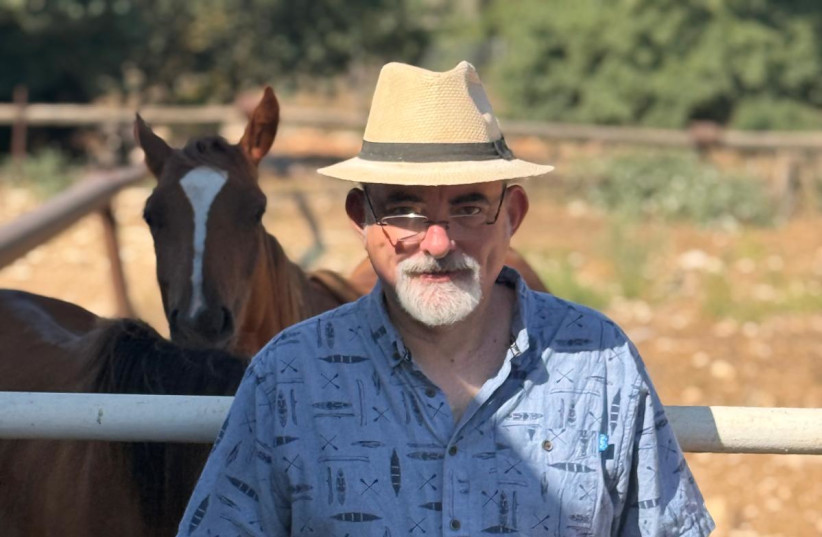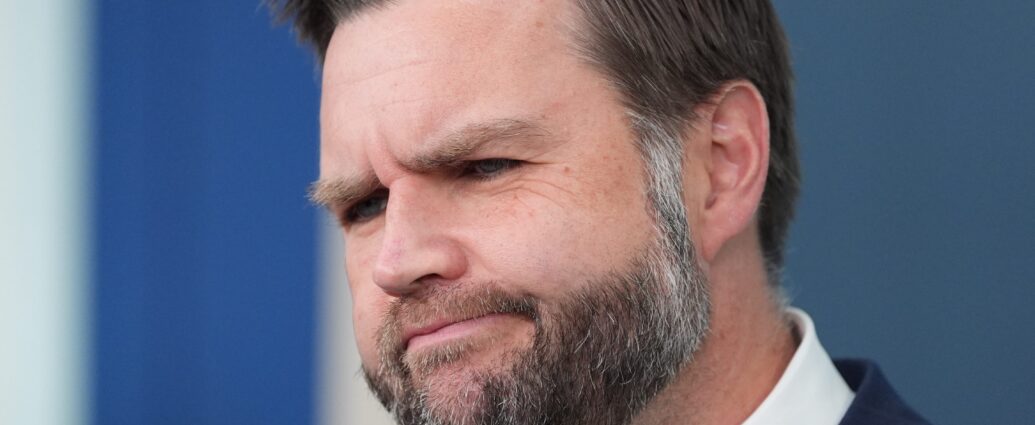
Alex Bhathal and his sister Lisa Bhathal Merage have some rules they follow ahead of each Portland Fire game they attend. For Alex, it means wearing a lucky red shirt—a switch from his usual black attire, which was correlated with two team losses. And for Lisa, she sits in seat 11 of her designated row.

The pre-game rituals of the owners of the first-year WNBA franchise are a product of their father, a businessman and sports investor who emigrated from India to the U.S. in 1960.

Lisa remembers one of the superstitions their father would espouse: “If your left eye twitches, it means that money is coming your way.”

The siblings have certainly seen recent success through their family investment firm RAJ Sports. After buying the Portland Thorns in the growing NWSL in early 2024 for a reported $63 million, the siblings are expanding their roots in the city. In September of that year, RAJ Sports purchased the Portland Fire for $125 million to secure control of the newly announced expansion franchise, which began play in the 2026 season.

The team now has a valuation of $380 million and has the fourth-highest attendance of the WNBA’s 15 franchises, averaging about 14,500 fans per game in its inaugural season. Last month, RAJ Sports opened the Kaiser Permanente Performance Center, the $150 million joint training facility for the Thorns and the Fire.

“We know that things are going to take time. But we also knew that we were going to surprise some people, and I think we’ve done that,” Alex told Fortune. “We’re really grateful and appreciative of being able to do this in a city like Portland, where it is the global epicenter of women’s sports.”

Alex Bhathal and Lisa Bhathal Merage stand next to a podium and accept a basketball from Cathy Engelbert.
Alex Bhathal and Lisa Bhathal Merage were awarded Portland’s WNBA expansion franchise in September 2024.
Cameron Browne/NBAE—Getty Images

A family affair

The influence of the siblings’ parents runs deeper than just game-day superstitions. Shortly after the siblings’ father Raj Bhathal immigrated to the U.S., he and their mother, Martha Bhathal, started swimwear company Raj Manufacturing in Southern California.

It meant the siblings grew up in Los Angeles with a sports team to follow for about every season: Rams in the fall, Lakers in the winter, and Angels in the spring and summer.

In addition to being a sports fan, Martha was an athlete. While growing up in California, she lettered in about seven sports growing up and played golf at UCLA. 

Raj took a liking to American sports too, even beyond fandom and swimwear. In the late 1980s, he learned about the NFL’s efforts to expand internationally from an article in the Los Angeles Times, and called up the league office through a mutual contact, and ended up becoming the first franchise winner of the World League of American Football, what was then the first transatlantic pro sports league. 

“We grew up with our parents as examples to us for how you show up in the world, not only in business but within a community,” Lisa told Fortune.

Raj’s time with the circuit was cut short; the domestic teams ultimately folded as the league transformed into NFL Europe, but by then, the kids had caught the bug.

They took over their family’s swimwear manufacturing business in 2006 as part of a succession plan, transforming it less than a decade later into RAJ Sports with the purchase of a minority stake in the Sacramento Kings NBA team in 2013. 

“It was tremendously impactful in terms of getting a little bit of understanding and knowledge and relationships in the business side of sports,” Alex said. “That’s what led to ultimately us pursuing sports team ownership more holistically later in life.”

Portland’s women’s sporting epicenter

Lisa believes her family’s years in the fashion industry gave her and her brother a premonition about the rise of women’s sports years before the NWSL and WNBA would take off in earnest. Years ago, after the purchase of the Sacramento Kings—where Raj and Alex sit on the board, and where Raj is an alternate governor and vice chair—the family saw opportunities for women’s sports cross their desk. At the time, some called it a fad.

“Some people at that time were calling it a ‘moment,’ and I absolutely disagree with that. It’s about the rise and the future of women’s sports,” she said.

Portland, in some ways, was a natural fit. The city is home to Adidas North America and neighboring Beaverton is home to Nike’s world headquarters, creating another connection between the family and the sports lifestyle industry.

Lisa watched the Thorns play at Providence Park, and Alex began working on a business plan to purchase the NWSL team. Around the same time, ZoomInfo co-founder Kirk Brown’s bid for Portland’s WNBA expansion franchise fell through, and the siblings pounced on the opportunity.

“The stars just aligned for us, and it was meant to be,” Lisa said. “Portland is an amazing city, and Portland shows up for its sports.”

Last month, RAJ Sports, partnering with Nike, held its second annual Epicenter Sports Week, a summit to promote women’s sports. It’s a display of confidence in the future as well as an admission that the structure of women’s leagues still has some uncertainty surrounding them. Besides each league navigating issues around growth and sustainability, there’s questions around increasing pay to match leagues’ success, infrastructure to accommodate training and games, as well as politics, most recently in the WNBA having to address the eligibility of transgender athletes.

That’s an advantage to having two growing teams in Portland sports, Alex said. There’s twice the stakeholders, athletes, and fanbases from which to learn.

“In the business of sports, there’s always something crazy that happens almost every day,” he said. “It’s important to backstop that against a clear direction on what we’re trying to build.”

This story was originally featured on Fortune.com

This post was originally published here. 

The haredi (ultra-Orthodox) United Torah Judaism Party (UTJ) will remove veteran MKs Moshe Gafni and Uri Maklev from its Knesset slate ahead of the upcoming elections, the office of the faction’s spiritual leader, Rabbi Dov Lando, confirmed late Saturday night.

Gafni has long served as chairman of Degel HaTorah, a faction within UTJ, which runs jointly with another haredi faction, Agudat Yisrael. Since the 1992 elections, Degel HaTorah has run with Agudat Israel.

MK Yakov Asher will reportedly replace Gafni on the list and head UTJ, instead of MK Yitzhak Goldknopf, who currently chairs the joint list in the Knesset.

Gafni first entered the Knesset as a Degel HaTorah representative in 1994, while Maklev entered the Knesset in 2008.

In a statement released late Saturday night, Lando’s office said the decision was made “due to the need to refresh the ranks of the party’s Knesset members,” adding that “the two senior representatives will leave the Knesset in order to make room for new representatives.”

Ashkenazi ultra-Orthodox party, United Torah Judaism is a political alliance of the Agudat Israel and Degel Hatorah parties. It is led by Yitzhak Goldknopf (L), who heads the hassidic Agudat Yisrael and Moshe Gafni (R), leader of the non-hassidic Lithuanian Degel Hatorah faction. (credit: MARC ISRAEL SELLEM/THE JERUSALEM POST)

The announcement also came following reports of tensions over Ganfi’s relations with Prime Minister Benjamin Netanyahu regarding the issue of haredi conscription to the IDF amid the IDF’s manpower crisis.

UTJ had attempted to pass contentious legislation that critics argued would not increase haredi enlistment during the government’s term. The legislation was later shelved, though other controversial haredi-backed bills were passed in July.

Gafni, Maklev reportedly surprised by decision to be removed from slate

Both Gafi and Maklev were surprised by the decision to be removed from the UTJ’s Knesset slate, according to a Sunday N12 report.

Their removal also comes ahead of the final deadline for parties to submit their Knesset lists on Tuesday, before the October elections.

This post was originally published on here. 

More than 1,500 fighters from the Kurdish Women’s Protection Units (YPJ) are seeking a place in Syria’s new security institutions after the force was excluded from the army integration arrangements that followed the dissolution of the Syrian Democratic Forces (SDF) as an independent military organization.

YPJ commander Nowruz Ahmed said Syrian officials rejected the group’s proposal to enter the army as an independent women’s brigade or battalion. Speaking to Reuters from a military base in Qamishli in an interview published September 2, Ahmed said the proposal grew from the force’s years of combat experience against the Islamic State group (ISIS).

“We were aiming to join the army, because our forces have experience and expertise that would enable them to protect themselves in an organized way in the form of an independent brigade or battalion,” Ahmed told Reuters.

The YPJ is now discussing a possible role within the Interior Ministry’s special operations forces. Ahmed told Reuters that the YPJ has more than 1,500 fighters and has asked whether they could be incorporated as a single force. She said a response was expected in the coming days.

The dispute concerns more than employment within the new state. YPJ leaders want their members to remain together as an organized women’s formation rather than be split among different units or assigned individually across the country.

Kurdish female fighters in northeastern Syria. (credit: Kurdish Media Observatory)

“When we hear that the men will be integrated into the army while we are told there is no place for us, it is natural for us to feel excluded,” a Kurdish fighter who asked to be identified as Hevrin Jwan to protect her identity told The Media Line. “We did not carry weapons for a short period. We spent years fighting and training, and we have military experience that we do not believe can simply be ignored,” she said.

YPJ fought ISIS alongside US-backed SDF

The YPJ was formed during Syria’s civil war and fought alongside the US-backed SDF in campaigns that drove ISIS from large parts of northern and eastern Syria. Its all-women ranks became internationally recognized during the fight against the terrorist group.

That wartime role now collides with Damascus’ effort to bring armed formations under unified state command. On August 25, SDF commander Mazloum Abdi announced that the SDF had ended its mission as an independent military force after integration into Syrian army brigades.

The January integration agreement called for SDF military and security personnel to enter the Defense and Interior ministries individually following security vetting.

Another Kurdish fighter, who asked not to be named, told The Media Line that the reported rejection raised concerns about the role envisioned for women in Syria’s armed institutions.

“If the disagreement is about the structure of the unit or who it reports to, that is something that can be negotiated,” she said. “But when the message is that there is no place for us in the army at all, the problem becomes much bigger. We want to be part of state institutions, but without being asked to give up everything we have built over the past years,” she said.

The Syrian Defense and Interior ministries did not immediately respond to Reuters’ requests for comment about the discussions. Interior Ministry spokesman Noureddine al-Baba told Kurdish broadcaster Rudaw that YPJ fighters would be welcome in the ministry, without specifying their duties or whether they could serve as a unified formation. He said Interior Ministry personnel could be deployed across Syria.

Sources familiar with the discussions have also spoken of an earlier proposal for the fighters to join the tourist police. A YPJ spokeswoman denied that such an offer had been made.

For many YPJ members, the negotiations concern their collective identity as much as their future assignments.

“They always look at women as weak,” YPJ fighter Goksu Afrin told The Media Line. “We do not derive our strength from men or from the current state, and we insist on maintaining our own distinct identity. This is our choice, and this is our cause. We are open to everyone.”

Kurdish commander says women fighters have constitutional right to role

Another Kurdish commander said Syria’s constitution should guarantee a defined role for women fighters.

“We did not wait until today for someone to defend us,” she told The Media Line. “We women defended ourselves.”

Service in the Interior Ministry’s special operations forces could offer a compromise: formal entry into the state while preserving some collective structure and leveraging the fighters’ training. Whether Damascus will accept that arrangement remains unclear.

“We do not want a confrontation with the state, and we do not want to remain outside its institutions,” one fighter told The Media Line. “But we also do not want the price of integration to be the end of our existence as an organized women’s force.”

This post was originally published on here. 

The US aircraft carrier Abraham Lincoln left Thailand on Sunday after a five-day port visit, ending a respite from an extended deployment that included operations in the Middle East, the US Navy said.

“We would like to thank the people of Thailand for their incredible hospitality,” US Navy Captain Dan Keeler, the Abraham Lincoln’s commanding officer, said in a statement.

Naval deployments typically last for six to nine months, but during times of conflict, they can be extended.

The nuclear-powered Lincoln, with roughly ​5,000 personnel, was involved in the US naval blockade and combat operations in the war with Iran and – according to ​Democratic lawmakers – set a modern-day record for consecutive days at sea.

The US Navy Nimitz-class aircraft carrier USS Abraham Lincoln sails toward Laem Chabang Port before docking for a rest stop following a long deployment in the Middle East, with the Pattaya skyline in backdrop, in Chonburi province, Thailand, September 2, 2026. (credit: REUTERS/Chalinee Thirasupa)

Busloads of sailors, Marines spent leave in Thailand

Accompanied by other US naval vessels, the Lincoln arrived early on Wednesday in Thailand, the United States’ only treaty partner in mainland Southeast Asia, during a visit that Thai officials said would last five days.

Busloads of sailors and Marines wearing civilian clothes, many smiling and waving, started arriving at a hotel in the resort city of Pattaya, about 150 km (93 miles) southeast of Bangkok, shortly after their ships docked.  

This post was originally published on here. 

The path out of Gaza began, Moumen Al-Natour said, with men at his door. In July 2025, he said Hamas operatives came to his house in Gaza City’s al-Shati refugee camp and ordered him to go to Shifa Hospital for questioning by Hamas’ internal security service. Al-Natour refused. He managed to escape, leaving behind Hamas operatives who demanded to know: “Where is Moumen?”

The men who came for him, he said, did not come only for him. “They threatened my family, all of my members in my family, my mother, my sisters, my brothers,” Al-Natour said. He fled to another location, moving through Khan Yunis and Al-Mawasi in search of a way out. What happened next would take him through a militia-controlled area, into contact with international advocates and, eventually, to Italy–physically safe, but far from the city, family and future he still calls his own.

The Media Line previously spoke with Al-Natour in April 2025, when he was trapped in Gaza. His account is not simply the story of a man who escaped danger. It is the argument of a Gazan lawyer, human rights advocate, and founder of the We Want to Live movement who believes Gaza must be separated from Hamas if either Gazans or Israelis are to have a future beyond recurring war. The foundation of every proposal he advances, every warning he issues, and every appeal he makes to world leaders: “Gaza is not Hamas. And Hamas is not Gaza,” he said.

After leaving his home, Al-Natour said he reached out to the Center for Peace Communications in the United States, which he said helped him explore ways to reach safety. He later went to an area under the control of Yasser Abu Shabab’s militia while arrangements were being considered for an evacuation to Canada. An Italian lawyer, Alessandra Casola, also worked to help evacuate him and his family, according to Al-Natour.

His family, he said, reached Italy toward the end of September 2025. But his own request to leave was initially refused by Abu Shabab, who, Al-Natour said, wanted him to join the militia.

Al-Natour rejects armed rule

“He told me, I’m the president and you are the prime minister,” Al-Natour recalled. His answer was unequivocal: “I refused this because I want to be in government, not in militia.”

For Al-Natour, rejecting the offer was a rejection of armed rule in any form. “I want to make a service for my people. I want to save the civilians,” he said. “But I don’t want to be a gang man.” He said photographs published of him later made him a target of Hamas media allegations that he was connected to a spy program, an accusation he denied. “I want peace between us and Israel,” he said. “And I don’t want to be a spy for anyone, for any country.”

Asked directly whether Hamas had targeted him because of his past work, Al-Natour did not hesitate. “Yes, yes, yes,” he said. Before October 7, he said, he had spoken out about his rights and the rights of his community, describing Hamas as seeking “to impose a form of strong power over the people.”

That history of confrontation with Hamas has shaped the message Al-Natour has carried into exile. He said he has not received a direct response from the US administration, although the White House retweeted an article he wrote for the Washington Post about moving civilians from Hamas-controlled areas to a new area inside the Yellow Line. But his appeal extends beyond Washington to anyone with influence over Gaza’s future: “We want to return to our city, to our country without Hamas. And we want to create a peace agreement between us and Israel. And we don’t want war.”

In his opinion, Hamas makes renewal impossible.

“Because I believe with Hamas inside Gaza, we can’t do anything. We can’t rebuild Gaza. We can’t make new ideas inside Gaza,” he told The Media Line. He described Hamas’ reach into religious institutions and education, saying it controlled more than 1,000 mosques and used schools to expose children to instruction on weapons. “And I know this is very bad for the generations,” he said.

His own aspiration is far less complicated, and he repeated it until it became the interview’s refrain: “For me, I don’t want war. I want to live. I want to live. I want to work. I want my rights.” He contrasted the rights he sees people enjoy in Italy, Europe, the United States, Canada, and Australia with what he said he could not obtain in his own city.

When the discussion turned to the possibility of Hamas entering future Palestinian elections, Al-Natour offered a stark warning. He said Gazans reject Hamas’ inclusion in a new Gaza or Palestinian government and argued that allowing the organization to participate would invite another catastrophe.

“But if Hamas is inside Gaza, I think after 20 years, 30 years, a new leader in Hamas will make another 7th of October. And we don’t want that.”

How can Gaza have an election?

He also questioned how a meaningful election could take place amid destruction and territorial fragmentation. “How we can make an election in a 30% area from Gaza Strip?” he asked. “How we can make that? This election is very bad for us. And I don’t want this election to succeed.” In his view, Hamas’ participation would endanger not only Gaza but the West Bank as well.

Al-Natour said he has been discussing a plan since January 2024 to separate Hamas fighters from civilians. He proposed checkpoints around a designated zone to screen people entering it, arguing that such a process could be more reliable than accepting a promise by Hamas to disarm.

“Because I know Hamas,” he said. “If Hamas want to disarm everything, okay, but I can’t believe Hamas. I can’t trust Hamas.”

The proposal is entwined with his hope of returning to public life in Gaza. “And if the war accepts my plan to separate between the civilians and Hamas … I want to return to my Gaza because I want to be in the government, the new government,” he said. “Because this is my city.”

But he also believes physical separation alone is insufficient. In response to a question about demilitarization and the content of school curricula, Al-Natour insisted that Gaza needs “a new school” and “a new education for the next generation.” He described an economic future tied to relations with Israel, including opportunities for Gazan workers to work and earn money there. “Without Israel, we can’t,” he said.

The alternative, in his view, is a Gaza trapped in the patterns of conflict that have already devastated other countries. “And if we refuse to resolve the education and most speech, I think Gaza will be like Afghanistan, like Sudan, like any country has a war,” he said. “We want to resolve everything, and we want to write new books.”

Teaching Islamic ideals while rejecting radicalization

Al-Natour framed this change not as a rejection of Islam but as a rejection of radicalization. He said Islamic teachings offer “a lot of good things to learn the generations,” while condemning Hamas’ radical messaging in mosques and streets.

“Because I hate Hamas. I hate Hamas’s ideas. I hate Hamas radical people,” he said.

He pointed to what he had seen during visits to Dubai and Abu Dhabi in 2019, saying he admired imams whom he believed taught people how to be “good and nice.” He wants a similar ethos in Gaza, education and religious instruction, he said, that teach acceptance “without any radical ideas” and “without hates.”

“And I love that. I love that,” he said.

Al-Natour does not claim that everyone in Gaza shares his view. When asked how many Gazans might oppose Hamas, he answered carefully: “I don’t know. I don’t know the numbers.” But he then offered his own assessment: “More than 70% of Gaza people hate Hamas, and they refuse Hamas.”

He said Palestinians carry their own beliefs and grievances regarding Israel and the question of statehood. “Okay, we want to live like neighbors with Israel, but Israel must create a new state for Palestinians,” he said.

Asked whether a political resolution could emerge through cooperation rather than armed conflict, Al-Natour argued that a functioning Palestinian government would be essential. “The government of Israel cannot talk with everyone inside Gaza,” he said. “But if we have a government, I think we can talk, because this is very important for us.”

His answer broadened beyond politics into a simple declaration of coexistence. “I like Jewish people, and I like Christian people, and I like Muslim people,” he said. “I don’t have any problem with the religion of Israel, or Jewish religion. I want to live just, okay, I want my rights, but without war. War destroys us.”

The claim carries the weight of a life he described as measured in wars. He recalled witnessing Hamas’ 2007 takeover from the Palestinian Authority and subsequent conflicts between Hamas and Israel in 2008-09, 2012, 2014 and 2021, as well as conflict involving Islamic Jihad.

“And in 2023, I led, I have been led in another war from 7th October until now,” he said, asking: “How I can build my future with radical people, with wars?”

Al-Natour answered his own question with the image of a house. To build a future, he said, one must bring the materials to build it and then improve it, not destroy it and start again.

“Between, from 20 years, we are building houses, just houses. After that, Hamas make[s] wars and Israel [is bombing us. This building is destroyed,” he said. “How we can build our future with wars? How we can build our economics with wars?”

Despite his media appearances, Al-Natour said he has not met with a government anywhere in the world. He described a world consumed by other conflicts and said Gaza has been ignored, even as civilians struggle in tents without clean water or food.

“And, if you want to eat in Gaza, you must obey. You must obey,” he told The Media Line, alleging that Hamas takes what people need to survive.

His appeal is for Gaza to be rebuilt through cooperation, not abandoned to Hamas or to another cycle of war.

“We want to rebuild our city, and we want to build our state with Israel,” he said. “We want to cooperate with Israel. In security, in civilian, in civil situation, and everything. Because, we are neighbors. Not enemies. Not enemies.”

Al-Natour insisted that personal ambition is not what motivates him.

“I’m not interested to be a leader for Gaza,” he said. “But, I want to save my people.”

Yet he remains painfully aware of what he has lost. His wife remains in Gaza, he said, while bureaucratic difficulties have complicated efforts to reunite his family.

“I talked about this for the Italian government, for anyone here in Italy. But, I didn’t hear any answer from them,” he said.

His hope, he said, is not exile.

“I want my city. I want to return to my house. I want to feel established. Like, before 7th of October, my house, my family, my people, my friends, my relatives.”

Italy offers safety but not belonging. He describes himself as a stranger in Italy.

“This is not my community. This is not my people. Not my culture,” he said, adding that he respects the country and its people.

Still, he wants his own people, even though he knows returning to Gaza would be dangerous.

“Because I know Hamas. I know Hamas. Hamas is Hamas … They will kill me. They will kill me.”

He said Hamas’ internal security apparatus remains a particular source of fear. Referring to what he described as an Israeli special-forces operation in the Al-Katiba area in which the head of Hamas’ internal security was captured, he spoke in accusatory terms:

“This man [Muain al-Arabid] is very radical. This man murdered us … this man hit us. This man is very dangerous.”

For Al-Natour, the danger is not confined to individual Hamas security officials. Asked what he wanted to see happen to Hamas’ internal security apparatus, he answered immediately:

“I want to eliminate them. I want to eliminate them. I don’t want to see them another time.”

He said Hamas “made this war” and accused the group of manipulating regional and international actors as it seeks to regain power:

“They play with Israel. They play with the US. They play with Egypt, Qatar, Turkey. They play with everyone. They want to return to the government. They want to return to the control of Gaza.”

His urgency deepens when he speaks of children born during the war and of civilians, he said, still deprived of basic rights.

“We have generations now. They were born from the beginning in this war. We want these boys to return to the schools.”

For him, the prescription remains unchanged:

“If you want to resolve the situation in Gaza, everything. Education, most speeches, everything. You must separate between us and Hamas. You must take Hamas outside Gaza. If Hamas wants to fight, they can fight. Alone. Without human shields.”

If he could sit across from one world leader, Al-Natour said, it would be Donald Trump.

“Strong man. And, he has a power. Big power,” he said.

His request was for recognition that Gaza’s people are distinct from the organization that rules them.

“Poor people. They want to just live. Without any fight. Without any wars.”

Then he returned once more to the line that defines his appeal:

“Hamas. Hamas is a part of Gaza. Not all of Gaza. Gaza is not Hamas. And Hamas is not Gaza.”

For Al-Natour, separating the two is the condition for families to return home, for children to return to school and hospitals, for a new government to emerge, and for Gaza to become a place where people can build rather than rebuild.

He also argued that future regional engagement must be conditioned on a complete break with Hamas, and he voiced concern that Gaza could remain trapped while people wait out political cycles in Israel and the United States.

“I think 2027 will be like 2026 for Gaza.”

He also alleged that international assistance intended for Gaza’s civilians is diverted to Hamas.

“The aids and the money. They don’t reach to poor people in Gaza. The money reaches to Hamas,” he said.

The charge formed part of his plea to those outside Gaza to distinguish, in his view, between helping a civilian population and strengthening Hamas.

His final plea was unmistakable:

“Please, hear … us. It’s enough. It’s enough.”

This post was originally published on here. 

Hezbollah lost another key stronghold in Lebanon recently. The Israel Defense Forces said on September 3 that they had cleared the Ali al-Taher ridge.

The 36th Division had “operated in recent weeks to clear and neutralize the two underground routes in the Ali al-Taher Ridge area in the Security Zone. The soldiers achieved operational control of the ridge area, both above and below ground, and cleared the area of terrorists. Some of the terrorists were eliminated, while others fled the area.” 

The IDF said that the operation was ongoing. “Upon completion of the operation, the IDF will adjust its defensive posture in accordance with the situational assessment…Following operations in the underground routes over the past several weeks, their capability to carry out terror attacks against Israeli civilians and IDF soldiers from within the routes has been neutralized.”

The site was well known and large. It “contained command centers, weapons storage rooms, generator rooms, living quarters, showers, and a kitchen, which enabled the terrorists to manage combat and remain underground for extended periods of time. The infrastructure is a strategic underground network that was built over two decades and funded and planned by the Iranian terror regime.”

Fall of Ali al-Taher ridge gains international attention

The fall of this Hezbollah stronghold has been spotlighted around the world. France24 notes that “Israel has seized the strategically placed Ali al-Taher ridge in southern Lebanon from Hezbollah fighters, Defence Minister Israel Katz said Friday. The Iran-aligned Shiite group did not confirm losing the highland, which sits around 10 kilometers from the border with Israel and was pummelled by Israeli strikes in recent weeks despite a ceasefire.”

IDF strikes in southern Lebanon, September 6, 2026. (credit: SECTION 27A COPYRIGHT ACT)

The report noted that “the Iran-aligned Shiite group did not immediately comment.” Israel’s Defense Minister Israel Katz noted that “the mission was completed and the tunnels were cleared of terrorists.” Reuters described the site as “the Ali al-Taher ridge in southern Lebanon, which is named after a Shi’ite Muslim scholar whose shrine sits at its summit, has become one of the most contested pieces of ground in the Israel-Hezbollah war. The cluster of hills is not especially large. But what it overlooks ‌in southern Lebanon – and what Hezbollah is suspected to have built beneath it – thrust it to the center of the fight between Israel and the Iran-backed militant group.”

What might we learn from all this? Hezbollah sought to turn this into a key facility over the last decades. Reports indicate they had Iranian support in doing so. In essence, Iran was constructing a kind of Hezbollah Maginot Line on Israel’s border. The problem that is well known with a static defense line is that it can be breached. When the original Maginot Line was built, it was full of hi-tech defense equipment that was meant to address the challenges faced in the First World War and modernize the trench system to turn it into some kind of futuristic battlefield of interconnected bunkers with deep facilities for soldiers to sleep in and live in. It was impenetrable. However, like the guns at Singapore or Aqaba in 1917, the weakness was in the rear.

The weakness of Ali al-Taher wasn’t in the rear; it was that Hezbollah can’t simply hide underground forever. Over enough time, the IDF was able to defeat them. It did take around 1,060 days if one counts from when Hezbollah began its attacks on October 8, following the Hamas attack the day before. The war with Hezbollah has seen a lot of limited fighting and slow movement, with some ceasefires and some escalation over the last years.

This isn’t a rapid war of maneuver. The IDF, for instance, captured the Crusader Beaufort fortress within a day or two in 1982, whereas it took until late May 2026 to take it this time. What changed? Israel no longer fights rapid wars of maneuver. The enemy doesn’t either. The enemy had to be ground down in Ali al-Taher, at a pace that was similar to the First World War. Nevertheless, the victory over Hezbollah shows that its investment in static fortifications underground won’t save it. What saves it is the depth of Lebanon.

Lebanon isn’t a very big country. Iran is around 150 times larger. However, for Israel, Lebanon is large because Israel is also a relatively small country. When it comes to fighting wars these days, in the West Bank or Lebanon or Gaza, it is measured in villages. It is not more than a few miles of ground that the IDF wants to control as part of Israel’s new buffer zone doctrine of controlling parts of Lebanon and Gaza. In the West Bank, the concept isn’t to take control, but to do raids.

In the end, the Hezbollah Maginot Line fell in southern Lebanon. It has taken many years to uproot the infrastructure that was built over the last decades. Whether this means a victory is unclear. Perhaps southern Lebanon becomes another Security Zone as in the 1980s. A buffer zone like what was called the Spanish March in the zone between Spain and France. Time will tell. 

This post was originally published on here. 

A surprise exercise titled “Dawn 2.0,” meant to test the readiness of the IDF general headquarters and main command centers, began on Sunday, the military announced.

Under the direction of IDF Chief of Staff Lt.-Gen. Eyal Zamir, the drill is meant to test the heat-of-the-moment readiness and abilities of the IDF to deal with large-scale attacks, as part of the country’s preparations to strengthen defense ahead of the holiday period.

As part of the exercise, surprise scenarios and multi-scene events will be practiced in all possible “theaters of war,” the military explained. Commanders from all units of the military were called up, forces mobilized, and the IDF’s reserve capabilities are being assessed.

According to the IDF, increased movement of military forces, including aircraft, will be noticeable throughout the country, though it affirmed there is no concern about a security incident.

As part of the exercise, the IDF is practicing and assessing the implementation of operational plans, alongside lessons learned from fighting on various fronts and from the events of October 7.

An Iranian cleric visits the Islamic Revolutionary Guard Corps (IRGC) Aerospace Force Museum in Tehran, Iran, November 12, 2025 (credit: MAJID ASGARIPOUR/WANA (WEST ASIA NEWS AGENCY) VIA REUTERS)

Iran reportedly rebuilding ‘Axis of Resistance,’ Israeli intel. suggests

Operation Dawn 2.0 comes a day after The Jerusalem Post reported that Israeli intelligence indicated that Iran is allegedly preparing for a broad, coordinated attack against Israel on several fronts simultaneously, in a scenario resembling a future October 7-style assault.

According to the alleged assessments, Iran is seeking to combine its own forces with Hezbollah in Lebanon, Hamas, the Houthis in Yemen, and pro-Iranian militias in Iraq in a single campaign.

Tehran is now allegedly seeking to address that gap precisely, according to recent reports from Arab media. The plan under consideration is intended to enable several fronts to operate against Israel at the same time, making a multi-front campaign part of the strategy from the outset.

Signs have also emerged of an Iranian effort to rebuild the “Axis of Resistance” and renew coordination mechanisms between the various fronts.

A report published last month said the IDF had identified renewed coordination between Hamas and Hezbollah with Iranian assistance, as part of an effort to increase pressure on Israel simultaneously from the North and South.

In addition, according to a published IDF assessment, Hamas and Hezbollah had already begun coordinating an increase in their activities in recent weeks with Iranian assistance. 

Anna Barsky contributed to this report.

This post was originally published on here. 

Lebanese Foreign Minister Youssef Rajji, one of Hezbollah‘s most outspoken opponents in the Beirut government, has stopped going to his office and has recently been working from home following security warnings and threats, the Lebanese newspaper An-Nahar reported on Sunday.

Sources close to the minister said there were concerns that someone could try to harm him because of his strong opposition to Hezbollah and his calls for the organization to be disarmed.

Rajji has already informed Lebanese President Joseph Aoun, Prime Minister Nawaf Salam, and security officials of the situation, the report said.

Rajji avoids exposed sites

About two months ago, amid heightened security tensions in Beirut and concerns over possible infiltration of government buildings, Rajji was advised not to go to the Foreign Ministry, sources close to him said. The ministry building is considered relatively exposed and has only a limited number of access routes, making it easier to monitor the minister’s movements or attempt to harm him, they added.

Since then, Rajji has continued running the Foreign Ministry from his home and has maintained his diplomatic activities, according to An-Nahar. He has also requested increased security protection.

Lebanese Foreign Minister Youssef Rajji visits the headquarters of the United Nations Interim Force in Lebanon (UNIFIL) in Naqoura, southern Lebanon, on October 24, 2025, touring border villages and the Blue Line aboard a UNIFIL helicopter as part of efforts to assess the security situation along th (credit: Courtney Bonneau / Middle East Images via AFP)

A day before the report was published, Rajji confirmed that he had stopped going to the ministry because of “security warnings” he had received. He did not specify where the warnings came from or who might be behind them.

The report prompted criticism from Hezbollah opponents in Lebanon. Former Lebanese parliament member Wehbe Katicha, who is affiliated with the Lebanese Forces party, blamed Hezbollah for creating an atmosphere of intimidation.

“Hezbollah is responsible for everything; it threatens and issues warnings, and no one dares put it on trial,” he said.

The report, however, presented no evidence that Hezbollah itself had sent the threats to Rajji.

Rajji takes hard line against Hezbollah

Rajji has taken an especially hard line against Hezbollah in recent months. He has described the organization as an armed and illegal Iranian proxy, demanded that it surrender its weapons to the state, and argued that its arsenal has not protected Lebanon but instead dragged the country into confrontations.

In July, he said that “Hezbollah is Iranian in its orientation and not Lebanese in its identity.”

The security concerns surrounding Rajji come amid a broader struggle in Lebanon over Hezbollah’s weapons. The government adopted measures this year aimed at establishing the state’s monopoly over arms and, in March, ordered an end to Hezbollah’s military and security activities and the transfer of its weapons to the state.

Subsequently, Rajji has emerged as one of the government’s most prominent voices opposing Hezbollah’s continued possession of weapons.

This post was originally published on here. 

From the seething streets to the armed peripheries of the country, the signs are multiplying in Iran, and they are increasingly difficult to dismiss as isolated incidents. 

The Revolutionary Guards (IRGC), the institution that forged much of Iran’s influence abroad, must now devote a growing share of its resources to protecting the regime on home soil.

The IRGC retains an arsenal of missiles, extensive military and security networks, and the capacity to strike Iran’s adversaries. Yet this question takes on particular urgency when viewed against the full range of domestic developments. 

The problem for Tehran no longer comes from a single front, but from a territory to defend that is constantly expanding, from the rising cost of that defense, and from the mounting pressure on its resources and room for maneuvering.

The signs are coming from the highest levels of the Iranian regime. In August, the military and security leadership underwent a sweeping reshuffle. Ahmad Vahidi took command of the IRGC, Mostafa Izadi was named his deputy, and Hossein Taeb, the former head of IRGC intelligence, returned to lead the Guard’s Basij.

Iranians protest on a main street in Tehran, December 30, 2025 (credit: SOCIAL MEDIA/VIA SECTION 27A OF THE COPYRIGHT ACT)

At the same time, Mohsen Rezaei was appointed secretary of the Supreme National Security Council and the supreme leader’s representative to that body. These are not simply posts handed to familiar figures: these appointments symbolize the mobilization of the IRGC’s men, the security apparatus, and unconditional loyalists at a moment when protecting the clerical regime has become inseparable from the war it wages abroad.

The return of Hossein Taeb carries particular significance. The Basij, the paramilitary mobilization force tied to the Revolutionary Guard, is one of the regime’s most important levers for surveilling Iranian society, controlling the streets, and suppressing demonstrations. Taeb spent years at the heart of the IRGC’s intelligence operations. He is not merely an administrator returning to his post, but the symbol of a security apparatus that has confronted protest and dissent through repression, infiltration, and intimidation.

Possibility of new protests

In August, Iran International, a media outlet opposed to the regime, published a recording presented as coming from a closed-door meeting of the Media and Cyberspace Headquarters. According to that recording, the discussions centered on the possibility of new protests, on the shrinking social environment favorable to the Basij, and on the need to expand surveillance of opposition activity on social media.

This event followed the assassination of Hamidreza Rajabzadeh, a pro-regime religious singer, in an incident that unsettled circles close to power. While the motives remain under investigation and accounts differ, the political climate revealed by this assassination is telling. A repressive security apparatus, meant to inspire fear in the streets, is beginning to show heightened sensitivity about the safety of its own men and figures within the very society it surveils and subjugates.

On another front, the weapon of executions reveals the bloodiest face of this fear. According to the UN high commissioner for human rights, Iranian authorities have executed at least 56 people on national security charges since March 19, including 27 in cases tied to the protests earlier in the year, while more than 100 others await execution.

These numbers reveal a shaken regime that perceives the return of the street as a direct threat to its power and that raises the cost of dissent each time popular anger moves closer to forming a political movement that endangers its survival.

In August, Germany joined 31 other countries as well as the EU high representative in a statement condemning the execution of protesters and denouncing the use of the death penalty to silence dissent and intimidate society.

The regime’s fears do not stop at the cities. It dreads the return of uprisings and street anger. On the periphery, the danger has evolved: it no longer consists of protests alone, but has taken the form of armed resistance.

In the Kurdish areas, opposition reports have cited IRGC reinforcements and military deployments near the Iraqi border, while other sources have noted troop movements and access restrictions in the border zones of Kurdistan. 

The significance lies not in the scale of the forces deployed, but in what they reveal. Tehran finds itself compelled to maintain intensive security and military control over its Kurdish front, even as it must divide its capabilities between simultaneous external and internal threats.

Balochistan has seen a more pronounced shift. In December, the People’s Fighters Front was established as a new Baloch armed structure, following the merger of Jaish al-Adl, a Baloch armed group opposed to Tehran, with other Baloch factions, in an attempt to overcome years of division and build a more coordinated framework of struggle against the regime. This merger quickly materialized on the ground, with the front claiming attacks against security forces and the IRGC around Zahedan and other areas. 

This does not mean the front has become a force capable of threatening the regime on a national scale. It does mean, however, that the regime faces a better-organized armed opposition on its eastern periphery than before, which imposes continuous pressure on its security, military, and intelligence resources.

The dilemma is all the more brutal for a dictatorial regime born of the 1979 revolution. After decades of preaching the export of revolution abroad, it must now devote a growing share of its apparatus and resources to preventing the emergence of conditions conducive to a new revolution against it on its own soil.

The bitter irony is that the IRGC, created to protect the revolution before becoming its most important instrument beyond the borders, now finds itself on a mission it cannot delegate to a party, a militia, or a proxy: protecting the theocratic regime inside Iran itself.

This is where the notion of “strategic depth,” on which Iran built much of its regional influence, takes on its full meaning. From Iraq to Syria, through Lebanon and Yemen, Tehran pushed the front lines far from its territory and resorted to proxy warfare to impose costs on its Arab adversaries and on Israel, through allies, weapons, funding, training, missiles, and drones. 

The greatest gain lay in that distance, which ensured that confrontations took place on other people’s territory while the heart of the Iranian regime remained as far removed from their costs as possible.

But the logic that governed this strategy for decades is beginning to reverse. Instead of pushing danger away from its borders, Iran is now compelled to devote a growing share of its capabilities to dealing with the threat within its own borders.

With persistent fear of popular uprisings on one side and the expansion of armed resistance in certain peripheral areas on the other, these pressures are turning into an internal source of capability depletion. 

The repressive apparatus is increasingly focused on Iran’s interior. Intelligence resources are being mobilized to surveil the population, track dissidents, monitor digital activity, contain armed groups, and protect regime figures. All of this reduces the Guard’s room for maneuvering outside Iran.

However, this does not mean the IRGC has lost its tools of external action, nor that the regime is on the verge of collapse. It still possesses a significant missile arsenal, dense security services, a capacity for repression, and vast networks of regional influence.

Yet the reality is that Tehran spent decades forcing its adversaries to spend money and resources protecting themselves from its actions. The equation taking shape today compels it, in turn, to devote more of its means to its own protection.

At this point, the most important question will not be how many missiles remain in the IRGC’s warehouses, but rather how many men, how much money, how much capability, and how much flexibility it has left to continue exerting pressure on its adversaries outside Iran, when the Iranian interior and the street itself have become a growing source of anxiety and fear threatening the regime’s survival.

The writer is a UAE political analyst and former Federal National Council candidate.

This post was originally published on here. 

The United Nations on Friday voted to shift away from the 16th-century Mercator global map toward one that more accurately reflects countries’ true sizes, a resolution sponsored by African states to counter perceptions that the continent is peripheral. 

Togo led the initiative to further the African Union campaign to limit use of the Mercator map, which distorts the relative size of land masses by expanding those nearer the poles. It makes Greenland appear roughly the same size as Africa, though Africa is about 14 times larger.

“A fair world begins with a fair map,” Togo’s Foreign Minister Robert Dussey told Reuters ahead of Friday’s vote.

The resolution promotes the Equal Earth projection, which more accurately portrays the size of the continents.

It is not legally binding and it “in no way challenges the use of the Mercator projection for maritime and aerial navigation, for which it remains fully suited,” the Togolese ministry said in a statement.

Equal Earth Projection Map (credit: equal-earth.com)

The resolution passed in the UN General Assembly by a vote of 164 to 1 with 6 abstentions.

The United States, the only country to vote against the resolution, said it promoted an “ideological agenda” and was a distraction from the “genuine problems of international peace, prosperity or good relations.” 

Togo to change maps in schools this year, minister says

The Mercator map remains widely used in classrooms, but Togo hopes to change its school geography materials by the end of the year, Dussey told Reuters.

“Togo will be the first country to change our own geography books,” Dussey said.

“In the classroom, we need to change it to give an example to all the countries in the world.”

Togo will press other governments, schools, international organizations and technology companies to move away from the centuries-old Mercator projection, Dussey said, adding that Equal Earth offers “the best perception” of the world.

Togo plans to meet African Union member states and supporters from other regions within the next six months to agree on how to promote wider adoption, Dussey said.

Dussey said the discussion about next steps would need to include companies operating mapping, GPS and other location-based technologies.

Dussey linked the campaign to adopt the map to wider African efforts to confront colonial-era legacies, while saying it was not an attack on Europe or any other civilization.

The Mercator map’s widespread use is a consequence of colonization, he said.

“The world is changing. Africa also is changing.”

This post was originally published on here. 

US forces sank an Iranian oil tanker in the Gulf of Oman on Saturday, US Central Command (CENTCOM) announced in a post on X/Twitter.

“Thanks to the precision and professionalism of American service members, the M/T Kylo sank in the Gulf of Oman today and joined Iran’s navy at the bottom of the sea,” CENTCOM said. 

The strike follows strikes against three other Iranian tankers earlier on Saturday, including one off the coast of Kharg Island, as part of the US’s continued naval and economic blockade meant to cripple the Islamic regime. 

CENTCOM noted that the strikes against the three tankers were carried out in response to the Islamic Revolutionary Guard Corps (IRGC) launching ballistic missiles at two US Navy ships.

A screengrab from a video obtained from social media on September 1, 2026, shows a military aircraft ready to take off on the day US CENTCOM said US forces carried out strikes on an Iranian military target.  (credit: US CENTRAL COMMAND/HANDOUT VIA REUTERS)

US will impose ‘higher economic cost’ if Iran shoots at forces

“Let the message to the IRGC be clear: If you shoot at two of our ships, we will impose an even higher economic cost — taking out three of yours,” said CENTCOM chief Adm. Brad Cooper.

Tasnim, the semi-official Iranian news agency, reported earlier that four US missiles hit a tanker in the area of Kharg’s anchorage. Tasnim quoted local sources as saying there were no casualties and the tanker’s crew was being evacuated.

US Defense Secretary Pete Hegseth took to X to write, “If Iran shoots at US ships, we will destroy (and sink) their oil tankers. All they have to do is not shoot at [the] US Navy.”

The exchange of attacks follows an escalation in the past week that threatens to deepen a conflict that has dragged on since the US launched strikes on Iran in February, disrupting global energy supplies and drawing opposition from a majority of Americans before congressional elections in November.

This post was originally published on here. 

Before the digital age, washing of Israel’s dirty linen in the media was widely regarded as treason. However, there were exceptions, such as the failed Lavon affair of 1954 in which a group of Egyptian Jews was recruited to plant bombs in civilian targets owned by Western entities. The idea was that after the bombs detonated, the blame would be attributed to the Muslim Brotherhood and other extreme elements in Egypt. Once the plot was discovered and published in the international media, it could also be published in Israel – but not before.

A similar policy with a different slant existed during the Yom Kippur War. Israel obtained photographs of IDF soldiers who had been captured and tortured in Syria. These photos were distributed to members of the foreign press; and only after they had been published abroad could they be published in Israel.

One particular publication, the long defunct Haolam Hazeh, dared to publish political and social scandals, and was frequently in and out of court contesting charges of libel. In July, 1982, Its editor Uri Avnery, was the first Israeli journalist to interview PLO chairman Yasser Arafat.

Nowadays, it is very difficult to keep anything under wraps. The profusion of digital publications, social media outlets, webinars, and podcasts, along with the addition of AI increases the difficulty of keeping operations secret, and distinguishing between fact and fiction. In some cases, fake news evolves into real news.

Yet for all that, some people continue to believe that it’s treason to publish anything negative about Israel in the Israeli media. This, despite the fact that all the mainstream media publishes warts and all reports and features.

The spiritual longing for a more just and beautiful world has always been the soul of Judaism (credit: PEPE FAINBERG)

At the same time, both secular and religious leaders of organizations and institutions are talking about tikkun olam (repairing the world).

The expression has its origins in the Talmud and refers to being fair in legal and social rulings.

The essential question is: How can anyone practice tikkun olam if they refuse to acknowledge what needs repairing?

The most blatant example is the firm denial in certain quarters that there is such a thing as Jewish terrorism. In the minds of such people, Jews cannot be terrorists, but all Arabs are potential terrorists. Such an attitude borders on racism. 

Yet when outside forces accuse Israel of racism or apartheid, political leaders are quick to point out that Jews and Arabs sit alongside each other on public transport, shop in the same markets, and work together in hospitals. 

But let’s be honest. There are many places in Israel where Arabs suffer discrimination. For instance, they have a very hard time getting building permits, so they build illegally, and sooner or later their homes are demolished by the local authorities or the IDF. 

Doesn’t such a situation come within the orbit of tikkun olam? Is it treason to make it public and thereby put ammunition in the hands of those who seek to delegitimize Israel?

Meetings and negotiations with the enemy are defined as treason by ultra right wing patriots. Yet as Yitzhak Rabin emphasized: Peace is made with enemies. There is no need to make peace with friends.

Members of peace movements often incur the wrath of the extreme Right because they reveal some of the worst characteristics of certain sectors of Israeli society. Peace movement activists, especially those who belong to Breaking the Silence, are regarded as traitors because they publicize human rights violations by certain military units or individuals in their dealings with Palestinians.

Holocaust survivor and acclaimed author Elie Wiesel often spoke of the perils of indifference because indifference allows the oppressor to continue to cause suffering to others.

We can see this in attitudes to anarchy in the West Bank where gangs of Israeli thugs make life miserable for the Palestinians. Yes, there have been condemnations from high quarters, but words are not enough. Words must be accompanied by deeds.

Israel has proved time and again that the most difficult obstacles can be overcome. So why is it so difficult to stop these masked, lawless individuals?

This is where tikkun olam is a vital necessity.

Discrediting opposing political parties

Another area where tikkun olam is essential is in putting an end to discrediting legitimate political parties and their members.

Leftist has become a dirty word under the present administration. Leftists are no less patriotic than the ultra right, but their patriotism takes a different route. Political leaders who identify with right wing policies but disagree with the present administration are labeled leftists. It is absolutely ridiculous to call Avigdor Liberman a leftist or to discredit Gadi Eisenkot by charging him with being a leftist. Yair Golan is a declared leftist, but that is no reason to launch conspiracy theories to undermine the heroism which he displayed on October 7, 2023.

Perhaps he’s just a thorn in the side of the political Right.

Some people on the Right spit out the word leftist as if it was synonymous with treason.

They conveniently forget that a left-wing politician declared the establishment of the State of Israel, and an army officer who became a left-wing politician declared in June, 1967: “the Temple Mount is in our hands.” The Left likewise tends to overlook the fact that the first peace agreement with an Arab country was signed by a right-wing prime minister.

There are possibly more numerous issues on which the Right and the Left agree than either side realizes.

They are just so busy trying to discredit each other that they tend to forget that when all is said and done, we are all Israelis – some by birth, some by choice, but nonetheless Israelis.

Perhaps the next government will see fit to create a ministry of tikkun olam or advisory council made up of Left and Right, religious and secular, Jews, Arabs, Druze, and Circassians who can discuss social injustices in a rational and mutually respectful manner. Such discussions could be live streamed to make the public aware, and to promote solutions in communities affected by the topics under discussion.

This post was originally published on here. 

“A senior diplomatic official said,” “a security official says,” “a source familiar with the details claims,” and “those close to the minister believe.” We hear and read phrases like these almost every day. They are sometimes followed by dramatic revelations, but one detail is missing: Who exactly is speaking to us?

The public is asked to accept information from an unknown person without knowing that person’s position or interests, whether they were present at the event they are describing or, most importantly, why they decided to share the information at that particular moment.

It is important to be clear: Confidential sources are essential to a free press. Journalists cannot do their jobs if everyone who provides them with information must be publicly identified.

Whistleblowers, public employees, and people working within large organizations sometimes need protection to bring important information to the public’s attention.

But there is a difference between protecting a source and turning anonymity into a standard practice.

An illustrative image of an anonymous figure speaking to the media. (credit: SHUTTERSTOCK)

Behind some of these unnamed “officials” is a well-oiled system for delivering carefully crafted messages. Politicians, advisers, security officials, associates, and other interested parties know they do not need to hold a news conference to influence the public agenda. Sometimes, a single phone call to a reporter is enough.

That is where a complicated relationship begins. The source needs the journalist to publish the information. The journalist needs the source to obtain information that competitors do not have. Both have an interest in the relationship, but their interests are not necessarily the same. The journalist wants a story. The source wants to achieve a goal.

That goal might be to damage a political opponent, prepare the ground for an impending decision, pressure decision makers, test the public’s response to an idea, or avoid responsibility for a failure.

In other words, a leak sometimes does not tell us what happened. It is intended to make something happen.

That is precisely the question a journalist must ask before publishing. The question should not only be, “Is the information true?” It should also be, “Why does this person want me to publish it?”

Even true information can be manipulative when it is incomplete. A source may provide one entirely accurate detail from a closed meeting while omitting five others that would change its meaning. Was a lie published? No. Did the public receive the full picture? No.

A leak can be accurate in its details yet misleading in the picture it creates.

The problem becomes more serious when anonymous information begins to circulate. A reporter publishes something attributed to “a senior official.” Another news outlet cites the report. From there, it spreads to social media and television studios. Before long, commentators are explaining the significance of a report when no one outside a small circle knows who is behind it.

The rumor has put on a suit and tie and become news.

The competition to be first only adds to the problem.

Competition among journalists has always existed and always will. Journalists want to break stories, and rightly so. But the public usually does not care whether it receives a report at 8:01 p.m. or 8:07 p.m. It does care enormously if those six minutes could have been used to verify that the information was true, complete, and accurate.

The public is not sitting with a stopwatch. Editors also bear considerable responsibility. Is one anonymous source enough? Was the information confirmed by another source? Was the person who could be harmed by the report given an opportunity to respond? Most importantly, does the public have a genuine interest in knowing the information, or is the media helping someone conduct a campaign through its platforms?

A news organization does not have to reveal a source’s identity to tell readers something about the source’s credibility. There is a meaningful difference between the vague phrase “a source said” and an explanation that the source has firsthand knowledge of the discussions, is not authorized to speak publicly, and provided information that was independently verified.

The more anonymous the source, the greater the journalist’s responsibility.

Politicians and public officials also find this system convenient. They can deliver a forceful message without publicly taking responsibility for it. If the message is well received, they can adopt it. If it causes an uproar, they can deny it, distance themselves from it, or claim it was not delivered on behalf of the authorized official.

This creates a politics of trial balloons.

The media must be careful not to become the factory that inflates them.

Confidential Sources as a means of reaching the truth

Journalism cannot and should not abandon confidential sources. Without them, it would lose a central part of its ability to expose what powerful people would prefer to conceal. But it must return to a simple principle: A source is a means of reaching the truth, not a substitute for it.

A good journalist is not a source’s messenger. On the contrary, precisely because journalists know their sources, speak with them, and trust them, they must repeatedly ask themselves the following: What is this person’s interest? What are they not telling me? Why are they telling me this now?

In an era when the public is overwhelmed with information, the great advantage of professional journalism is not that it is always the first to know everything.

Its advantage is that when it publishes something, the public can trust that someone first asked the difficult questions.

The next time we hear that “a senior official said” something, the important question is not only what was said. We should also ask who wanted us to know and what they want to happen once we do.

David Ben Basat is the CEO of Radios 100fm, an honorary consul and deputy dean of the Consular Diplomatic Corps, and president of the Israel Amateur Radio Club. He previously served as a monitor for Israel’s Army Radio and as a correspondent for NBC News.

This post was originally published on here. 

Undercover operatives from the Israeli Security Agency (Shin Bet) were embedded in Gaza as aid workers distributing food and drink to unwitting Gazan market stall-owners, according to a recent KAN News report detailing the lead-up to the recent capture of Hamas’s head of internal security, Mu’in al-Arabid, in the Gaza Strip.

Israeli operatives, according to KAN, established several small humanitarian aid projects and sold wares to Gazans who, in turn, sold the items at local markets. After establishing a relationship with the storefront owners, Shin Bet operatives were able to get the Gazans to help monitor the movements of various people, including al-Arabid.

Sources told KAN the Gazans only realized they had assisted the Shin Bet after al-Arabid had been captured.

The IDF and Shin Bet on Tuesday night confirmed in a statement that they had captured Hamas’s head of internal security in the Gaza Strip in the first high-level capture operation deep in Gaza in a long time.

The official statement did not make any direct mention of Gaza gangs being central to the operation, though there was a hint with a reference to Shin Bet’s “special forces.”

Palestinians inspect the site of an Israeli strike on a house that was pre-warned by the Israeli military to evacuate before the strike was carried out late on Wednesday, in Al-Nuseirat refugee camp, in the central Gaza Strip, July 16, 2026. (credit: REUTERS/Mahmoud Issa)

However, The Jerusalem Post and other media have received clear indications, along with confirmations in foreign reports, that anti-Hamas Gaza gangs were at the heart of the operation, even while supported by the IDF and the Shin Bet.

Shin Bet developed relationships with locals in order to gather intelligence

Sources also told KAN that, one day before the capture, Shin Bet personnel replaced their Gazan customers at the market and hid their weapons in their stalls. When the operation began, they grabbed their weapons and fled. Sources told KAN that the Shin Bet operatives were physically present in the market area for only a day or two before the operation, primarily relying on relationships they had developed with locals to gather intelligence. 

When questioned, the Gazans who helped claimed they knew nothing about the plan, according to the KAN report. 

Katz, Netanyahu play up al-Arabid’s importance to Hamas

Prime Minister Benjamin Netanyahu and Defense Minister Israel Katz both sought to emphasize Arabid’s importance, with the prime minister saying he played a major role in managing the hiding of the over 250 Israeli hostages after October 7, 2023.

However, a Palestinian source in Gaza told the Post that the man captured was in charge of Hamas’s internal security department in the area of Gaza City only, which would have made him more of a mid-level official.

The source added that members of an anti-Hamas group played a role in the operation and that the terror organization is trying to “downplay the incident” and that “its internal security forces are actively pursuing militias supported by Israel.”

The final statement by the IDF and the Shin Bet seemed to settle on the official being more important than Hamas claimed but less important than Netanyahu and Katz contended.

Yonah Jeremy Bob, Dana Ben-Shimon, Avi Ashkenazi, and Amichai Stein contributed to this report.

This post was originally published on here. 

US Ambassador Mike Huckabee has offered a model for how a genuine ally should confront one of Israel’s most sensitive challenges by condemning wrongdoing without turning it into an indictment of an entire society.

In his Thursday interview, Huckabee denounced violence against Palestinians, demanded consequences for perpetrators, and stressed that they represent only a tiny minority of the roughly half a million Israelis living in Judea and Samaria. He also defended Israel’s right to build in Area C under the Oslo Accords framework. Those positions belong together.

International discussion of the West Bank too often erases distinctions. A criminal attack by several Jewish extremists becomes a judgment on “the settlers,” then on Israel itself.

Defenders of Israel can make the opposite mistake by minimizing lawlessness because hostile actors will exploit it. Huckabee rejects both distortions. He condemns violence by Israelis against Palestinians as firmly as he does violence by Palestinians against Israelis, while refusing to let masked attackers stand in for hundreds of thousands of Israelis who live peacefully in the West Bank. Moral clarity hinges on making both judgments at once.

His willingness to go to affected communities gives his words weight. When Huckabee visited Taybeh after reports of violence against its Palestinian Christian community, he met residents and called for those responsible for terror and violence to be found and prosecuted.

US Ambassador to Israel Mike Huckabee during a press conference after he met residents of Turmus Ayya, a Palestinian town near Ramallah in the West Bank, September 5, 2026. (credit: REUTERS/AMMAR AWAD)

After the more recent attacks in Kusra, he again pressed Israeli authorities and used severe language about the perpetrators. Going to the place, hearing the people affected, pressing the authorities, and then telling the public plainly what happened is far more meaningful than issuing distant diplomatic statements.

The same clarity applies to the E1 and Area C regions. Israel has moved forward with marketing the first 1,400 housing units in E1 between Jerusalem and Ma’aleh Adumim, drawing renewed condemnation abroad.

Huckabee on Israeli rights in the West Bank

Huckabee has said Israelis have a right to build in Area C under the Oslo Accords. Supporting that right does not require excusing intimidation, assault, or property crimes against Palestinians. Jewish communities should not have their legitimacy erased because extremists commit crimes, and extremists should not receive immunity because they claim to act for the Jewish people.

The answer to accusations that Israel is indifferent to Palestinian rights cannot be reflexive denial whenever an Israeli commits a crime. It should be the confident application of Israeli law.

Arrest suspects when evidence warrants it. Investigate attacks seriously. Protect civilians. Prosecute offenders. A democratic state proves its legitimacy not by claiming that its citizens never do wrong, but by showing that wrongdoing has consequences and that no political or religious cause places anyone above the law.

The overwhelming majority of Israelis living beyond the Green Line are not storming Palestinian villages or taking over homes. They are raising families, working, studying, serving, and living under extraordinary political and security pressures.

Allowing a fringe to become the public face of that population is unfair to them and damaging to Israel. The answer is not to minimize the fringe, but to isolate it by condemning criminals, enforcing the law, and saying that their conduct does not describe a society, a settlement movement, or a country.

Huckabee’s approach emphasizes truth over slogans

Huckabee’s approach offers a better standard for discussing the West Bank by providing precision over slogans. Say who committed an act and who was harmed. Distinguish allegations from established facts. Demand consequences where crimes occurred. Defend Israel when accusations are false or inflated. Protect Palestinians when they are victims of wrongdoing. Refuse to let extremists dictate how millions of people are described.

Because Huckabee is a long-standing supporter of Israel, his criticism carries particular weight. Israel does not need allies who flatter it into complacency or critics who seize every crime as evidence against the nation.

It needs people willing to state the whole truth. Jewish communities in Judea and Samaria are not synonymous with violent extremists. Palestinian civilians are entitled to protection from crime. Israel has legitimate rights in Area C. Those who violate the law should face consequences.

Huckabee cuts through the noise because he is willing to say all of it, and Israel and the world at large need more voices willing to do the same.

This post was originally published on here. 

Considering the state of things in this information-laden, Internet- and social media-suffused age, one has to be driven and willing to put in an extra shift or two to eke out the incontrovertible facts on the ground betwixt the fallout of the data deluge.

Milo Rau is clearly determined to dive into the multi-layered, dense underbelly of various situations to divine the whys and wherefores and, hopefully, uncover the real state of play. 

The latter, it seems, frequently involves nefarious deeds and injustices wreaked on innocent bystanders by folks with the financial, and hence political, clout to go about their profiteering business unopposed.

The 49-year-old Swiss theater director, festival honcho, filmmaker, and writer has accumulated a striking directorial and production bio to date, featuring the likes of Justice, a multimedia opera that premiered at the Grand Théâtre de Genève in January 2024.

The work fused documentary theater – complete with in situ video footage – and contemporary classical music, which shed an unforgiving spotlight on neocolonial exploitation, corporate crime, and systemic violence in the Democratic Republic of the Congo. 

MILO RAU, Swiss theater director, artistic director, filmmaker and writer, dropped in for some pre-Wagnerian opera production sleuthing.  (credit: Magdalena-Blaszczuk)

Rau, whose manifold professional purview includes heading the Vienna Festival, Europe’s largest crossover cultural event, recently popped over here with a hefty sleuthing agenda for an exploratory expedition. The thinking behind the foray was to lay the theoretical groundwork for his forthcoming production of Richard Wagner’s The Flying Dutchman at the Deutsche Oper Berlin, which begins a run in October and runs through February 2027.

Rau has been accused of all sorts of things during his stellar, storied professional timeline to date. But that’s par for the course when you ruffle a few feathers and put several noses out of joint. And all in seemingly good, altruistic, and creative causes.

He comes across as a “truth seeker,” a man fired up by his convictions and single-minded pursuit of justice, as he aims to bring it to the attention of the Western world.

Presumably, the hope is that his artistic endeavor will eventually bear corrective, or at least mitigating, political fruit, thereby improving the lot of the victims and possibly even obviating further cataclysmic developments. 

That is indeed a commendable, lofty goal. It also serves to emphasize the role of cultural endeavor in society and offer an opportunity for art to make a real, street-level difference.

But, as Romain Rolland suggested, perhaps Rau should not hold out too much hope in that regard. The late-19th- to early-20th-century French Nobel Prize-winning writer is quoted by the celebrated Jewish Austrian writer Stefan Zweig as saying that art “can bring comfort to us as individuals, but it can do nothing against stark reality.”

When does altruism overstep the bounds that define it?

Is that the way the sorry things are? Judging by the ludicrously measly state support for cultural endeavor in this country – way below the average for OECD members – were Rau to try his hand at affecting the way the upper echelons of the local political hierarchy go about their business in the arts domain, he’d be chasing a lost cause. 

But when does altruism overstep the bounds that define it? We can also enter more philosophical-moral realms by asking about the character and modus operandi of the artist or protagonist, and the creative end result she or he ultimately delivers for performance or presentation to public consumption.

Is that what it’s all about? Is it just about what we get to see or hear, or is there a place in the equation for, say, rectitude? Should we simply ignore the nature of the person who produced the work proffered for our wonderment and enjoyment, and just take an “it is what it is” attitude?

For the purpose of amplification, were we to posit an imaginary, extreme, simplistic situation whereby Adolf Hitler had made an oil painting that was considered by all experts in the field as a masterpiece, would the general consensus be that it should be hung in a museum somewhere? After all, art is art, right? Based on that aphorism, we should appreciate a work on the basis of its merits, regardless of any dark moral undergrowth that it may have navigated on its way out to the light of day.

That, in a nutshell, is the way Yonatan Livny sees things.

“Once a work has been completed, it no longer belongs to the artist; it belongs to the world,” he intoned when I asked him how he feels about the performing of music by Wagner in Israel.

This wasn’t any old rationale statement. Livny has the vocational cred to voice his opinion on the topic with authority. 

He is the founder of the Wagner Association, established in 2016 with the express purpose of promoting the performance of works by the 19th-century German composer, who is lauded by musicians and fans of classical music – primarily opera lovers – alike for his brilliant writing.

But he is also known as a rabid antisemite whose oeuvre was lovingly embraced and powerfully endorsed by Hitler himself, albeit many years after Wagner’s death.

Built on the ashes of the Nazi crematoria

Hence the problem and the blanket taboo imposed here on Wagner’s music.

Sadly, Livny also has the bio collateral for his controversial stance.

“I come from a German family that was wiped out by the Nazis,” he explained to me. “My father was the only survivor. There were no aunts, uncles, or grandparents left. Nothing.”

Personal devastation notwithstanding, Livny actively works to have Wagner’s sheet music put to live instrumental practice here, in a country that was largely built on the ashes of the Nazi crematoria.

“Despite that, I love Germany, I appreciate Germany, I certainly appreciate the music of Germany, and I certainly appreciate the music of that damned antisemite called Richard Wagner.” 

Livny even managed to see a darkly humorous side to that. “If, when I die, and I go up to heaven, and God – in whom I don’t believe – tells me I am allowed to ask one question, I won’t ask Him how the world works or anything like that. I will ask Him why He gave such a damned antisemite such wonderful musical talent.”

With his Wagnerian backdrop, Livny was duly targeted by Rau ahead of the theater director’s trip here. Livny wined and dined Rau and his associates at his home before settling down to answer Rau’s questions about Wagner, playing his music in Israel, and the Holocaust connection.

According to Livny, a few shortcuts were taken in disclosing the full extent of Rau’s plans during his brief pre-Berlin project visit here. “I received a phone call from the Deutsche Oper. They said they were coming here to hold a concert of The Flying Dutchman.” 

I also received that information. In the end, the concert did not happen. Considering the muddied Wagnerian waters here, perhaps that is no surprise.

Then again, it seems that Rau’s primary intention in coming here was to sound out Israelis about playing the Jew-hating composer’s work in public, and to shoot video footage for screening at the concerts in Berlin.

There wouldn’t be an interview, and he didn’t want any articles

I WENT to Tel Aviv to meet Rau, ostensibly to interview him for an article about his venture to Israel and his intent vis-à-vis staging The Flying Dutchman here in the face of such weighty emotional-historical baggage and still-festering Holocaust-related sores. At least that was what I was told.

However, when we met up at his hotel, Rau offhandedly informed me that, in all likelihood, he would not perform Wagner’s music during his 10-day stay. He said something along the lines of developing misgivings about it all on the flight over, when he sensed tension among the Israeli passengers. He thought it might be better to maintain a lower profile here.

He added that there wouldn’t be an interview and that he didn’t want any articles to run in Israeli papers while he was still in the country.

I was taken aback by this announcement and felt I’d been duped into giving up over half a day of my precious work schedule on a wild goose chase. Rau had known, ahead of time, that he wasn’t going to do an interview, yet failed to convey that to me so I could decide, based on that, whether or not I wanted to meet him.

The logical conclusion I drew from that, after I somewhat reluctantly sat down with him and his colleagues, was that I was being used, unwittingly, as fodder for his Deutsche Oper project. After all, I was a perfect guinea pig. I was an Israeli journalist who writes about culture and, as Rau was fully aware, I am the son of a Holocaust survivor. 

He then proceeded to roll out a bunch of questions he had clearly prepared in the run-up to his trip here. He asked me, inter alia, if I thought Wagner’s music should be played in Israel.

I replied that, regardless of how I felt about it, if there is a single Holocaust survivor who objects, who finds the German’s music objectionable, the taboo should remain in place.

Judging by the blank facial expressions of Rau, his Italian assistant, and the German cameraman, that wasn’t the response they were looking for. Neither did they seem moved when I told them that every single Israeli is traumatized by the events of Oct. 7. Repeating that three times also failed, as far as I could see, to evoke any reaction.

‘What took place yesterday was purely anti-Israel’

My sentiment was echoed by Tom Cohen, founder-conductor-artistic director of The Jerusalem Orchestra East and West. While taking a professional, seasoned overview of his craft, Cohen does not let his years on the creative-entertainment circuit cloud his humanist judgment.

“If I have ever encountered Wagner’s music – so far that hasn’t happened in Israel – I have listened to it and even enjoyed it,” he confessed.

“That said, as an artistic director or conductor, if I am due to perform music by Wagner, if I have the slightest suspicion that just one person in the audience – all the more so, if that person is a Holocaust survivor, or the descendant of one – will object to my playing Wagner’s music, there is no way I would take the risk [of hurting that person’s feelings]. With all due respect to the emotions in the loftier spheres, the earthy feelings in our belly are no less important.”

I had been looking forward to meeting Rau, learning about how his mind works, and getting the inside track on his moral and intellectual stance on his line of work.

But, as it turned out, that was not to be. He had come here to meet Israelis he felt could help him with his pre-Berlin production fieldwork. He didn’t bother to apologize for getting me to Tel Aviv on false pretenses, or thank me for my time, nor did he have the grace to even say goodbye as he waltzed off down Rothschild Boulevard to get something of a handle on the Tel Aviv vibe. 

I’d done my bit for him and was now superfluous to his requirements. There was a vague promise to notify me should he manage to put on a concert of Wagner’s music while he was here.

I wasn’t holding my breath. However, about a week later, I received a WhatsApp message telling me there would be an outdoor event in the piazza in front of the Jaffa Theater.

It wasn’t clear what sort of program Rau had lined up; and, in all honesty, after my non-interview with him, I wasn’t at all sure it would actually happen. In fact, it did, although the proceedings left Livny less than happy. We spoke on the morrow. 

“What took place yesterday was purely anti-Israel,” he retorted. “It was really terrible. The singer was great. It was the first time Wagner songs were performed in public [in Israel].” Apparently this was not an exclusively musical evening. “Everyone who spoke said things that were anti-Israeli. There was an Israeli woman who said there should be no music, just silence. She said we [Israelis] killed this person and that person, and left a child without parents. She only mentioned Muslims.”

Livny said he tries to take a balanced view of regional geopolitics. “I am certainly not right-wing, and I think what we did in Gaza was terrible. But we must not forget what the Arabs did on Oct. 7. I am not saying one is worse than the other. But it is a disgrace not to mention what Hamas did.”

Interpreting the Wagner opera in the context of the Holocaust 

Livny also took Rau to task on his reading of the Wagner opera, which the Swiss interprets in the context of the Holocaust.

The PR material I was sent prior to Rau’s arrival in Israel said that his staging of The Flying Dutchman in Berlin in October would be based on the ambitious format of “a road movie through German-Israeli history: from the Holocaust to the resumption of diplomatic relations in the 1950s; from the traumatic 1972 Olympic massacre [of members of the Israeli team by Palestinian terrorists at the Munich Games] to the opening of the Holocaust Memorial in Berlin [in 2005].”

Livny doesn’t see it that way, and feels Rau is stretching the operatic plot too far.

“There is absolutely no connection between The Flying Dutchman and the Holocaust,” he declared.

Nevertheless, the Swiss director sees a direct line leading from the ghostly ship’s captain who is cursed to roam the seas until he finds redemption in the love of a faithful woman. The opera storyline is based on a book by German author-poet Heinrich Heine.

Rau expounded on his take in his preliminary text: “Aviel Cahn, the new artistic director of the Deutsche Oper, asked me if I would like to stage The Flying Dutchman to mark the start of his tenure in Berlin.

It was immediately clear to me that the production would revolve around the theme of the Shoah. Because, unfortunately, Wagner stands for antisemitism, for all the romantic ‘German’ fantasies of doom and redemption: The idea that even the worst can be transcended – through music.”

The Swiss director has been accused of being an antisemite himself, although he has taken pains to point out that while he strongly opposes the policies and actions of the Israeli government, he has nothing against Israelis per se.

“Israel and the Israeli government are two completely different things,” he stated. “I stand with Israeli civil society, as I stand with the Palestinian civil society, which goes without saying. I refuse to confuse the population with its government.”

He also asked me to stress that the alfresco Wagner concert-political posturing slot in Jaffa took place “without local institutional support” and that it was “part of a research for an opera, and not an ‘event.’”

Presumably, Rau wanted the former put out there so as to obviate any accusations of collaboration with any Israeli state body, which might have left him open to criticism of selling out to the Israeli government and its policies.

But, as I have learned from personal experience, it is difficult to read Rau’s mind and what really motivates him in his quest for strident artistic expression.

And so the Wagner conundrum goes on. Rau has his video material to slot into The Flying Dutchman in Berlin, and some insight into what Israelis think about the pros and cons of presenting Wagner’s music to the public. Job done. ■

This post was originally published on here. 

Two people were killed, and six were injured in traffic accidents throughout Israel over the weekend.

On Saturday, a man in his 40s was killed in a hit-and-run on Route 553 near Moshav Porat. Magen David Adom (MDA) paramedics called to the scene found him with severe multi-system trauma and no signs of life, and were forced to pronounce him dead.

The driver, a woman in her 30s, was arrested shortly after fleeing the crash site and taken in for questioning.

Overnight on Friday, a 48-year-old motorcyclist was killed while driving on Highway 7 at the Sorek Interchange.

Also on Friday, a 4-year-old boy was struck by a vehicle near his home’s parking area in Pisgat Ze’ev; he was taken to the hospital in critical condition.

Emergency personnel at the scene of a road accident in which a vehicle overturned near the Jerusalem Biblical Zoo in Jerusalem, September 4, 2026. (credit: Rachel Alroey/Flash90)

Accidents across the nation, including motorcycle collisions

In another Friday accident, a two-vehicle collision on Route 3755 left a 50-year-old man seriously injured, while two others sustained light to moderate injuries. Firefighters extricated two of the victims after they were trapped in their vehicles.

Near the Caesarea Port, a 30-year-old man was critically injured in a crash and rushed to the hospital with multi-system trauma.

In Netanya, a motorcyclist was severely injured after being hit by a car and was also taken to the hospital.

MDA paramedic Orian Lukac and senior EMT Maor Nino from MDA’s motorcycle unit said: “This was a severe accident. Witnesses told us the motorcyclist was hit by a vehicle. He was unconscious with a severe head injury. We provided medical treatment and evacuated him to the hospital in an MDA intensive care unit vehicle in serious condition.”

This post was originally published on here. 

IDF Col. (res.) Oren Zini, former commander of the Tze’elim Training Base, praised security forces following the arrest of an individual known as “the head of Hamas’s Shin Bet,” in an interview with 103FM on Friday. He warned, however, against any future agreement that would force the IDF to withdraw from its positions in the Gaza Strip and Lebanon before completing its missions.

Speaking with Ron Koffman and Prof. Aryeh Eldad on 103FM, Zini stated that under the current reality, the Shin Bet and security forces are displaying extraordinary operational and intelligence capabilities.

“In our current reality, the security forces – and certainly the Shin Bet – are doing an incredible job. You can see this both in the south and in the north: the operations are highly successful, both targeted eliminations and in this specific case,” he said. “This is built on top-tier intelligence, as well as high-caliber forces and capabilities.”

According to Zini, a policy shift now allows troops to operate in areas previously considered out of reach. “If in the past there was hesitation over whether to act, today everyone understands that policy permits it, and everyone realizes the heavy price paid when policy does not permit it,” he explained.

Zini added that just a few years ago, operations of this nature would have sounded like science fiction: “The IDF has penetrated the enemy’s most complex strongholds, against both Hamas and Hezbollah, in a way that is suffocating them from within. In my view, this deserves immense credit.”

Israeli army tanks at a staging area near the Israeli-Lebanese border amid the ongoing war with Iran and Hezbollah, March 15, 2026.  (credit: AYAL MARGOLIN/FLASH90)

Tactical achievements do not suffice if control relinquished

However, Zini cautioned that tactical achievements will not suffice if Israel surrenders control over the areas where forces are currently operating as part of a diplomatic settlement. He stressed that a premature withdrawal would allow the enemy to regroup and move fighters and weaponry back into position.

“If we do not maintain our hold in these areas, the enemy will escape with its forces and munitions, and we won’t be taken seriously,” he said.

“We saw what happened when we left the security zone [in southern Lebanon]. Not everyone will like hearing this, but that year 2000 effort under Ehud Barak looked like one big retreat. I was there. We left equipment and weapons behind, and pulled out at the drop of a hat.”

Israel paid a heavy price for withdrawal in the past

According to Zini, Israel paid a heavy price for that withdrawal, and the reality on the northern border on the eve of the October 7 attacks highlighted just how deeply Hezbollah had entrenched itself in the region.

“We saw the price the State of Israel paid, and we were just one minute away from an October 7 scenario on the northern border as well,” he said.

In conclusion, Zini expressed concern that future agreements in Gaza and Lebanon will restrict Israel’s freedom of action and force the IDF to pull back before finishing the job.

“These are the red lines, in my view. I have no doubt that in any future agreement, we will be required to withdraw from both fronts to arbitrary lines, and we won’t have enough time to finish the job.”

This post was originally published on here. 

Around 25 limestone turtle figurines believed to be up to 16,500 years old were discovered inside a cave at Gedikkaya Hill in northwestern Turkey, Turkey’s state-run Anadolu Agency reported in late August.

According to Anadolu Agency, radiocarbon dating of the site places the finds during the Epipaleolithic period of the Stone Age, between 14,500 and 11,200 BCE. 

Several of the figurines were covered in clay, and the largest figurine found measures approximately 30 centimeters long and 20 centimeters wide.

Professor Deniz Sari of Bilecik Seyh Edebali University first identified that cave as an archaeological site during surface surveys in 2017. 

Subsequent excavations on behalf of the Bilecik Museum were conducted in 2019 and 2023, and the current excavations at the site are conducted by presidential decree by a team led by Sari.

Stone turtle figurine found at the Gedikkaya Hill archaeological site in Turkey, September 4, 2026. (credit: Screenshot/X/@anadoluagency)

“The artifacts show us that this was an important cult and ritual area,” Sari said. “The turtle figurines we discovered this year have added a new dimension to the ritual context of the cave.”

The figurines are “roughly shaped,” according to Anadolu Agency, lending weight to the researchers’ theory of them being used during ritualistic practices.

“There is a circular architectural arrangement here [in the cave],” she said. “Around it, we found turtle figurines made from limestone, many of them incomplete or quickly shaped, inserted upright into the soil.

Did prehistoric communities think site was shaped as a turtle?

Researchers are also reportedly examining whether or not prehistoric communities believed that Gedikkaya Hill, where the figurines were found, resembled a turtle that may have contributing to a type of mountain worship.

According to Sari, it is too early for the site to be described as that of a mountain cult, but noted to Anadolu Agency that many of the figurines were intentionally placed in the form of Gedikkaya Hill.

The figurines have been transferred to the Bilecik Museum and Bilecik Seyh Edebali University for examination and restoration, according to Anadolu Agency.

This post was originally published on here. 

President Donald Trump has spent 20 months promising that America was on the cusp of an economic boom. But Friday’s surprisingly positive jobs report ultimately provoked frustration from Trump.

The August job numbers might have been a welcome break from after months of sluggish hiring and concerns about inflation that have been weighing on Trump and his party two months from Election Day. But speaking from the Oval Office, Trump instead launched into a grievance session about inflation and interest rates. His anger was aimed at the financial markets, the Federal Reserve and U.S. trade partners. He objected to the commonly accepted notion in economics that the surprise gain of 162,000 jobs in August could contribute to inflationary pressures.

“Success does not cause inflation. Stupidity causes inflation,” Trump vented in the Oval Office, as he declared it “crazy” that the stock markets fell Friday on inflation concerns.

The combination over his second term of a drop-off in hiring and higher prices has dogged Trump and his pledge to instantly unleash historic levels of growth. “When I win the election, we will immediately begin a brand new Trump economic boom,” Trump said at an August 2024 rally in North Carolina. But so far, the economy has grown at roughly 2% annually, slower than the gains during the Biden administration.

Trump blamed his inability to deliver stronger growth on higher interest rates for U.S. government debt, saying on social media that America could retaliate by stopping trade with foreign countries. Rates have been climbing in response to persistently high inflation fueled by Trump’s tariffs and oil shortages from the Iran war. The national debt has now crossed the daunting threshold of $40 trillion and rates on the 10-year U.S. Treasury note on Friday rose to 4.79%.

Trump has lost some of his credibility on the economy

As the promised growth has yet to materialize, the president has lost some of the public’s trust in his ability to steer the world’s largest economy. His own policies have enabled, in part, the inflation and high interest rates that he wishes to blame on others.

“The administration’s credibility on growth, inflation, rates, debt and deficit dynamics have taken a hit given the outsized predictions that are not aligned with economic reality,” said Joe Brusuelas, chief economist at the consultancy RSM US.

If the Fed did as Trump wanted and cut its benchmark rate so that more money could flow into the U.S. economy, the potential influx of cash could make inflation even worse and only add to his political and economic headaches.

But the president disputed this foundational concept in monetary policy. He said Friday that gross domestic product would grow at “12, 13, 14, 15%” if the rates were lower as he seemed to shrug off the inflation risks.

“We could have a GDP that would break every single record,” Trump said.

The president’s approval rating on the economy was a lowly 32% in the middle of the summer, according to polling by The Associated Press-NORC Center for Public Affairs Research. When Republicans were last facing midterm voters in 2018 under Trump, his economic approval rating was 50%.

Trump’s threat to cut off foreign trade could endanger growth, further hurting his ratings. His recent levying of tariffs against Canada have become problems for Republicans in the Maine and Michigan Senate races.

Trump aides see a brighter future because of AI, tariffs and tax cuts

Trump officials say their policies are working as intended. They say the development of artificial intelligence will lead to more productivity to boost growth. They say that last year’s tariffs should ultimately bring more factory work to America, while Trump’s tax cuts will create more business investment and his administration’s efforts to identify fraud will create savings for taxpayers.

“I expect higher growth,” said Christopher Phelan, chairman of the White House Council of Economic Advisers. “We’re doing stuff to make good things happen.”

Phelan said recent job gains have been about two times larger than what’s needed to match population growth. He considers it as entirely possible that productivity gains could push up overall growth for the next several years, even as he acknowledged that growth alone might not be enough to solve all of the country’s financial challenges.

Because the costs of Social Security and Medicare are rising faster than revenues, growth alone is unlikely to meaningfully reduce budget deficits.

Growth is not enough to fix budget deficits

If U.S. economic growth could exceed 3% growth annually for the next decade, that would only be enough to stabilize the government’s already high debt load, according to an analysis by Ernie Tedeschi, head of economic insights and research at Stripe, the financial technology company.

Tedeschi said he would be “thrilled” if AI could help to deliver those kinds of gains for 10 straight years, but history shows that growth that large due to advancements in computers were likely “wildly optimistic.”

“We should absolutely not be planning for the optimistic scenario,” Tedeschi said.

Up until the president’s comments about interest rates on Friday, the Trump administration has spent the past week trying to make voters feel more confident about the economy.

Treasury Secretary Scott Bessent specifically promoted the benefits of stronger growth at the G20 summit for finance ministers in North Carolina. Commerce Secretary Howard Lutnick did so as well as part of G20 meetings about innovation.

Still, Bessent told AP in an interview that he’s also working with White House budget director Russ Vought to announce a plan to “bring down the level of the debt, deficit.”

There is political risk in trying to meaningfully reduce a year budget deficit of roughly $2 trillion that is slated to exceed $3 trillion a decade from now. Lowering the path of budget deficits would likely help with interest rates, but there could be political pain points in the form of spending cuts and tax hikes.

Brusuelas, the chief economist at RSM US, stressed that Trump would likely need to make sacrifices to meaningfully address the debt and reassure financial markets.

“We need a period of slower growth in government spending — that includes outright reduction in spending in addition to tax increases that all would reduce deficits and interest rates,” he said.

This story was originally featured on Fortune.com

This post was originally published here. 

President Donald Trump has downplayed his war on Iran as “small potatoes,” but those potatoes are getting bigger as both sides are escalating beyond their stalemate in the Strait of Hormuz.

For months, Iran’s military has failed to completely close off the narrow waterway, as U.S. forces shepherd more oil tankers through, eroding Tehran’s geopolitical leverage.

Similarly, the U.S. military has failed to completely reopen the strait, as Iranian attacks on commercial vessels prevent a return to prewar traffic flows, keeping oil prices high.

But with the U.S. naval blockade also strangling Iran’s economy, Tehran was widely expected to try changing the equation with a fresh cycle of attacks—and it did.

Iran launched missiles at U.S. bases around the Persian Gulf earlier this week, then on Saturday it launched missiles at a Navy aircraft carrier and destroyer.

That prompted the U.S. military to strike three Iranian oil tankers that were deemed to be operating in the “shadow network” that funnels money to the regime’s Islamic Revolutionary Guard Corps.

“Let the message to the IRGC be clear: If you shoot at two of our ships, we will impose an even higher economic cost — taking out three of yours,” U.S. Central Command chief Adm. Brad Cooper said in a statement. “We will not hesitate to defend American forces, and if necessary, destroy Iran’s limited and exposed oil fleet.”

For Hamidreza Azizi, senior Iran analyst at the International Crisis Group, the fighting appears to represent a new phase of escalation.

Until now, Iran’s military had focused on tankers and commercial shipping around the Strait of Hormuz, he pointed out in a post on X. Meanwhile, its direct attacks on U.S. forces had been limited to bases around the Gulf.

“Attempting to strike U.S. warships enforcing the blockade therefore crosses a different threshold,” Azizi added. “The attempt failed, but there is no reason to assume the next one will. A successful strike — especially one causing significant U.S. casualties — could rapidly transform the conflict.”

Iran’s attack on U.S. warships also follows a report in the Financial Times this week that said Russia is secretly helping Iran develop supersonic cruise missiles.

A ramjet propulsion system, which would enable a missile to travel at several times the speed of sound, would likely power anti-ship and land-attack cruise missiles.

Such a weapon would force U.S. Navy ships and aircraft to move much farther away from Iran, breaking the chokehold on its economy.

For now, the naval blockade has proved to be a potent economic weapon, and Iranian officials have admitted that conditions are dire and suggested time is running out.

The Treasury Department has also vowed to inflict an “economic D-Day” on Iran with wider sanctions aimed at countries that facilitate its illicit oil trade and other financial transactions.

But Azizi warned that adding economic pressure will not necessarily make Iran more cautious, especially if Tehran sees it as unsustainable. That means the U.S. attacks on Iranian oil tankers will likely spark even more escalation.

“The greater the squeeze on Iran, the greater the incentive to act,” he wrote. “And the more Tehran comes to see that pressure as existential, the more likely it is to conclude that it has less to lose — and that increasingly risky actions are worth attempting.”

This story was originally featured on Fortune.com

This post was originally published here. 

Israel’s Foreign Ministry and US Ambassador to Israel Mike Huckabee criticized Britain’s Foreign Secretary Ed Miliband, on Saturday over remarks he made about conditions facing residents of the Gaza Strip.

Miliband, who is Jewish, wrote that he believed that what is happening in Gaza is “horrifying.”

“The stories I was told, about medicines being blocked from getting in, about children dying while waiting for vital, life-saving treatment,” he added. 

“When you hear an account like that of what is happening, you understand that we, as the British government, as the prime minister has said, have to act, and act more decisively than we have until now.”

Palestinians are seen walking in Khan Yunis, southern Gaza Strip, August 12, 2026 (credit: ABED RAHIM KHATIB/FLASH90)

Foreign Ministry hits out at UK FM Miliband

Israel’s Foreign Ministry responded to Miliband in a post on X, accusing him of spreading false information.

“The British foreign secretary publishes a video in which he recounts ‘stories’ he was told about Gaza. Had the foreign secretary been interested in facts rather than stories, he would have known that there are no restrictions whatsoever on bringing medicines into the Gaza Strip, and that no medicine is being blocked.”

The Foreign Ministry also described the supply of medical equipment to Gaza residents, saying that “22,500 tons of medical supplies have entered Gaza since the ceasefire began.”

“Gaza residents leave the Strip for medical treatment, including 200 who did so in the past two weeks alone. Of course, the British foreign secretary is well aware of all this, since Britain is a member of the international support center for Gaza, which assists in transferring medical aid into the Strip,” the ministry added. 

“But apparently, facts matter less (when producing a video for a political audience),” the post concluded.

‘The Brits have lost it’: Huckabee speaks out against Miliband’s video on Gaza

US Ambassador to Israel Mike Huckabee backed the Foreign Ministry, writing: “the Brits have lost it. Their government’s Jew hatred knows no bounds and recognizes no facts.”

Earlier on Saturday, Huckabee, known as one of the most outspoken supporters of the settlement enterprise, made an unusual visit to the Palestinian town of Turmus Ayya in the Ramallah area, the US Embassy said.

Huckabee met with local residents, including relatives of US citizens who were killed by settlers. Turmus Ayya, where roughly 80% of residents hold US citizenship, has in recent years become one of the most prominent flashpoints in the West Bank, with residents facing a wave of raids and violent attacks.

The ambassador said he met with Americans in Turmus Ayya as part of an open and constructive discussion “to hear troubling stories about criminal and terrorist acts by a group of trespassers, who brazenly roam the lands of lawful property owners like these people. Shameful acts that do not reflect 99% of Israelis.”

This post was originally published on here. 

Russian President Vladimir Putin held more than three hours of “highly useful” talks on Saturday with two US envoys seeking a deal to end the Ukraine war, a Kremlin aide said, but he gave no indication of any breakthrough.

The aide, Yuri Ushakov, said Americans Steve Witkoff and Jared Kushner “outlined a number of ideas regarding possible avenues for a settlement.” Ushakov did not say what these ideas were.

He said Putin had told the pair that Russia was making “real progress” on the battlefield, was confident of achieving its goals, and stressed the necessity of addressing “all the root causes of the conflict.”

All these are statements that Moscow has made repeatedly in the course of the war, which has dragged on for more than four and a half years and has seen both sides intensify long-range air strikes in recent weeks while the front lines remain largely static.

There was no comment from Witkoff and Kushner, who were visiting Moscow for the first time since January on behalf of President Donald Trump. They flew out of Moscow soon after the talks and are due to meet Ukrainian President Volodymyr Zelenskiy in Kyiv on Sunday.

Russia's President Vladimir Putin (3rd L), Kremlin foreign policy aide Yuri Ushakov (2nd L) and Russia's presidential envoy Kirill Dmitriev (2nd R) attend a meeting with US special envoy Steve Witkoff (3rd R) and Jared Kushner (R) in Moscow, September 5, 2026. (credit: Gavriil Grigorov / POOL / AFP via Getty Images)

Economic issues, mutually beneficial projects, and Ukraine war discussed

“The talks went beyond a mere exchange of views on resolving the Ukrainian crisis. Economic issues and potential major, mutually beneficial Russian-American projects were discussed in some detail,” Ushakov said.

“Overall, one can say that the negotiations were timely and highly useful for both sides.”

Putin’s investment envoy Kirill Dmitriev posted afterward on X/Twitter that it had been an “important peacemaking visit.” He and Ushakov were both present at the meeting.

Putin praises Trump’s efforts

In televised remarks at the start of the talks, Putin praised Trump’s efforts to end the war. Trump suggested on Friday the US had a fresh proposal aimed at ending the war, but did not elaborate.

“Understanding that he is entering a difficult situation, he nevertheless does not stop his efforts to help bring about a settlement and to make his contribution to resolving the Russian-Ukrainian conflict,” Putin said.

He promised to ensure the safety of the US negotiators. Kremlin spokesman Dmitry Peskov said earlier that Putin had ordered the Russian military not to strike Kyiv for three days because of their trip.

Over the previous 10 days, Russia had pounded the Ukrainian capital day and night with missiles and drones, including an attack on Friday on the headquarters of the SBU security service.

Ukraine has inflicted damaging hits throughout the summer on Russian refineries, oil terminals and warehouses of online retailer Wildberries, in a bid to raise the cost to Moscow of continuing the war. Zelenskiy said Kyiv was prepared to refrain from strikes on Moscow through Monday.

A vast gulf in Russian, Ukrainian positions

A vast gulf remains between Russia and Ukraine on how to end the war, the deadliest in Europe since World War Two.

A source close to the Kremlin, speaking before reports emerged of the trip by Trump’s envoys, said Putin was still intent on capturing more territory.

“There is no chance of reaching an agreement regarding the front line until Putin finishes securing the remaining part of the Donetsk region,” the source told Reuters, adding that the Kremlin leader was confident – based on reports from his commanders – that this would happen by the end of the year.

Western military analysts see such a possibility as remote, given Moscow’s slow rate of progress. Ukraine has refused to surrender land it has successfully defended at huge cost, and rejects such terms as tantamount to surrender.

The Kremlin said on Friday the position that Putin set out in a speech two years ago – that Ukraine should cede the entire territory of four regions claimed by Russia and abandon its plan to join NATO – was “unshakeable.”

Since the last US-mediated peace talks between Russia and Ukraine in February, each side has intensified long-range air attacks deep inside the other’s territory, while the war at sea has also escalated.

This post was originally published on here. 

Denmark and four other European Union countries agreed Friday on a model for “return hubs” in non-EU nations and hope to begin sending migrants to the facilities as early as 2027, an official said Friday.

The announcement, made after a one-day meeting in Copenhagen, is the latest development in an effort by EU states to send people whose asylum requests have been rejected to third countries outside the bloc.

“We are moving forward toward what is actually a fundamental transformation of the common European migration and asylum system,” said Morten Bødskov, Denmark’s minister of immigration and integration.

He briefed reporters alongside counterparts from Germany, the Netherlands, Austria and Greece. The five countries have been negotiating with governments mainly in Africa over potential sites, pioneering the initiative for the whole of the EU.

Human rights groups have criticized plans to deport migrants to centers or prisons in third countries, arguing that European nations cannot guarantee their rights will be respected there.

Bødskov rejected the idea that “return hubs” were a euphemism for detention and deportation centers and said the International Organization for Migration and the U.N. Refugee Agency would monitor the centers.

“We are not talking about camps, we are talking about opportunities, for a new chance for irregular migrants who cannot return to their own country today and who have no legal grounds to be in our countries,” Bødskov said.

The UNHCR told The Associated Press that it “has not been approached with details of such a proposal,” and therefore “cannot comment on the specific arrangements being discussed or on what any potential role for UNHCR might entail.”

IOM told AP that no decision had been made on IOM’s potential role in “return hubs.” “Discussions remain exploratory,” and IOM had provided only “technical advice to some EU Member States on safeguards and operational considerations.”

“We have consistently underscored that any such initiative must comply with EU regulatory and legal frameworks, protect migrants’ rights, respect partner countries’ interests, and ensure individuals’ access to meaningful, sustainable solutions,” an IOM spokesperson said in an emailed statement.

‘Return hubs’ abroad would be first for EU migration policy

Although the ministers did not specify which third countries were being considered, Bødskov said they expect to reach their first deal by early 2027.

He acknowledged that the concept of “return hubs” was mocked only a few years ago and deemed incompatible with EU and international law.

EU laws, however, have changed due to public and political pressure for tougher measures against irregular migration.

European lawmakers voted in June to allow member states to set up centers outside the EU on their own or in small coalitions, and send rejected asylum seekers there instead of to their home countries.

“This is something new and it’s groundbreaking,” said Bart van den Brink, the Netherlands’ minister of asylum and migration.

Rwanda in negotiations with European nations

In early August, a spokesperson for the Rwandan government said it “was natural” for her government to negotiate with European countries and others to potentially host asylum seekers who are not allowed to live elsewhere.

Speaking to Royal FM Kigali, Rwandan government spokesperson Yolande Makolo cited an emergency transit mechanism established in Gashora in 2018 for people evacuated from Libya, who could stay there until they were resettled in third countries.

Makolo said one of the ideas discussed was to offer a “safe place” where people who have nowhere else to go could get medical care, training and rest while their asylum applications were processed, until they could go back home if safe or get resettled to yet another country.

“We want to be part of a solution to a big global problem,” Makolo said.

It remained unclear what countries in negotiations with EU nations would gain in return for taking Europe’s rejected migrants.

Rights groups concerned about enforcement of law outside EU

Migrant rights groups have criticized European efforts to set up migrant centers abroad where it may be difficult to monitor and enforce human rights.

In an emailed statement, Council of Europe Commissioner for Human Rights, Michael O’Flaherty, said “vague assurances of compliance with human rights law are not enough.”

“States need to commit to the guardrails necessary to prevent setting up human rights black holes,” he said.

The European ministers in Copenhagen emphasized the new hubs would abide by European and international law.

Van den Brink, the Dutch immigration minister, said technical talks and missions to potential partner countries would be used “to gain more insight into the human rights situation and the living conditions of the refugees.”

“Because we want to do this in a European way, in line with our values and international law and human rights at its core,” he said.

Brussels-based rights group PICUM condemned the meeting in Copenhagen.

“EU leaders may call these centers an ‘innovative solution,’ but outsourcing migration control is an old tactic to simply move people out of sight and evade human rights obligations,” director Michele LeVoy said. ___

Ciobanu reported from Warsaw, Poland, and Brito reported from Barcelona, Spain. Philipp Jenne in Vienna and Sam McNeil in Brussels contributed to this report.

This story was originally featured on Fortune.com

This post was originally published here. 

The U.S. labor market is bracing for a decade of slower overall growth, but a handful of industries and occupations are set to expand at a breakneck pace, according to the Bureau of Labor Statistics.

From 2025 to 2035, total employment will edge up by 5.9 million jobs to 176.2 million, representing growth of just 3.5%—a fraction of the 10.9% pace during the prior decade, BLS said in a report late last month.

As the AI boom continues to ripple through the economy, the utility industry is expected to hire at the fastest rate, growing employment by 9.8%. That’s as hyperscalers scramble to build data centers that require immense amounts of electricity.

“Nearly all the job growth is expected from electric power generation, transmission, and distribution due to increasing demand for electricity, including artificial intelligence power demands,” BLS said.

Within that category, certain sub-sectors will see even bigger employment gains, with solar electric power generation up 153% and wind electric power generation up 62%.

While the additional hiring by utilities should translate to 58,800 jobs, that will be dwarfed by the healthcare and social assistance industry, which will expand employment by 2.2 million over the next decade.

It will be the second-fastest hiring sector with a 9.5% growth rate and will account for 37% of all new jobs created through 2035.

“Strong employment growth is expected to stem from both the aging population and the increasing prevalence of chronic health conditions, such as heart disease, cancer, and diabetes,” BLS said.

Among individual occupations, nurse practitioners will see a 41% surge in employment, while medical and health services managers will jump 24%.

And despite fears that AI will wipe out employment in software and programming, tech talent will be high demand too.

In fact, the professional, scientific, and technical services industry is projected to be the third-fastest growing sector, up 8.6%, and add the second most jobs, 926,700.

As businesses lean on AI tools to boost operations and decision-making, the number of data scientists is expected to grow 34.6%, with computer and information research scientists up 21.8%.

Those forecasts add hope for office workers after top AI leaders previously signaled a jobs apocalypse was imminent. But even OpenAI CEO Sam Altman and Anthropic CEO Dario Amodei have walked back some of their earlier prophesies, albeit ahead of blockbuster IPOs.

To be sure, AI will still weigh on employment elsewhere. The office and administrative support sector will see a 4% drop, or 752,100 jobs, the most of any major occupational group.

The sales and related occupations sector will fall by 1.4% as e-commerce continue to expand and AI tools are incorporated further into the business processes.

“Although the growing adoption of AI is expected to support demand for some occupations, associated productivity gains may dampen employment demand for others,” BLS said.

“The use of generative AI software, which can be leveraged to automate repetitive tasks and speed up certain processes, may limit demand for some jobs in the arts, design, entertainment, sports, and media occupational group.”

This story was originally featured on Fortune.com

This post was originally published here. 

German startup Isar Aerospace launched a space rocket from a site in Arctic Norway on Saturday, bringing Europe closer to offering satellite flights from its own soil.

The uncrewed Spectrum rocket reached orbit shortly after launch, thus becoming the first orbital flight to originate from Europe, with several nations, including Sweden and Britain, saying they want a share of a growing market for commercial space missions.

The company declared the launch a success, while continuing to monitor developments as the flight continued, officials said.

“Access to space remains one of the biggest constraints for the space industry and national security architecture,” Isar Aerospace co-founder and CEO Daniel Metzler said in a statement ahead of Saturday’s launch.

Isar Aerospace's rocket lifting off  (credit: Screenshot/Youtube/Isar Aerospace)German

Europe seeks autonomy

Chancellor Friedrich Merz visited Isar’s launch site in March, underscoring Europe’s efforts to establish greater autonomy as the global order once championed by the United States is being upended by US President Donald Trump.

Blasting off from Norway’s Arctic Andoeya Spaceport, the uncrewed Spectrum, designed for small and medium-sized payloads, carried five small satellites as well as an in-flight technological experiment, according to Isar.

Second launch, after first exploded in failed attempt

It was Isar’s second launch, coming 18 months after the company’s first rocket plunged to the ground and exploded in a fiery spectacle shortly after takeoff from the same site. No one was injured at the time.

The March 2025 launch was nonetheless deemed a success by the company for generating large amounts of data for its developers, it said then.

Saturday’s launch was intended as “both the vehicle’s qualification mission and its first flight carrying payload,” the Bavarian company has said.

Global players in the satellite launch market include Elon Musk’s SpaceX, which launches from the United States, and French ArianeGroup, a joint venture between Airbus and Safran that uses a spaceport in South America’s French Guiana.

SpaceX, a sprawling empire spanning rockets, satellites and AI, listed on the Nasdaq exchange in June in a record initial public offering.

Sweden, with its Esrange launch site, and Britain, with its SaxaVord Spaceport in the Scottish Shetland Islands, are the nearest rivals to the Norwegian site, all of which aim to give Europe greater autonomy in space flights.

Isar last week said it had secured about €200 million from the European Space Agency (ESA) to help fund development of new rockets and expand its testing and launch infrastructure.

The German company is also developing a second launch site in Canada.

This post was originally published on here. 

As New York City prepares to mark 25 years since the September 11 terror attack, New York City Mayor Zohran Mamdani expressed his desire to make sure as much information about the attack as possible is available to the public, to keep the memorial focused on solemn remembrance rather than politics, during an interview with CBS released Wednesday.

CBS correspondent Marcia Kramer reported that deaths from 9/11-related illnesses have surpassed the number of people killed on the day of the attacks, citing a report released Tuesday by the mayor and the Fire Department of New York (FDNY).

Acknowledging the city’s responsibility to help and care for those who fell ill after 9/11, Mamdani noted that the 2027 city budget has allocated tens of millions of dollars to create an online portal that lets New Yorkers search city documents and see what the local government knew at the time.  

“So many of these New Yorkers are ones who made the decision to run towards Ground Zero, and for that, they have suffered medically, and the city should be there for them,” he said.

Asked about the 9/11 documents that have yet to be released, Mamdani told Kramer, “If there are documents that we are able to release, I think that they should always be released.”  

New York City Mayor Zohran Mamdani speaks during an announcement on the Standing Up to ICE outreach program at the governor’s office in New York City, US, August 12, 2026. (credit: REUTERS/David Dee Delgado)

The mayor noted that national memorials sometimes focus too much on politicians rather than the relevance of the day itself, and emphasized that he wanted to make sure the 25th anniversary of the September 11 attack would be about the victims and survivors, not politicians. 

“It’s about those who were killed that day. It’s about their families. It’s about the lives that have been shattered. And when you go through the [National September 11 Memorial & Museum], you see an entire city in those portraits. You see the breadth of what makes this city New York,” Mamdani said, “and on these anniversaries, you have an opportunity to recognize those, to remember those.”

Long term physical, mental health impacts of the September 11 attacks

After more than two decades, 9/11 firefighters still feel the effects of the attack on their physical and mental health, according to a FDNY World Trade Center Health Program report released on Tuesday, which detailed the long-term health impacts on emergency responders who were present at the Twin Towers on September 11, 2001. 

According to the report, hundreds of FDNY members have died from 9/11-related illnesses in the years since the attack, causing the post-9/11 FDNY death toll to more than double the 343 members killed on the day of the attacks.

Notably, the Tuesday report also said that FDNY responders with cancer who are enrolled in the World Trade Center Health Program, which provides medical benefits to those affected by the attack, were more likely to survive compared with comparable New York State Cancer patients. This, the report notes, is likely due to the extra cancer screenings that WTCHP beneficiaries receive. 

Additionally, mental health effects are still measurable after 25 years; six percent of World Trade Center-exposed FDNY rescue and recovery workers still meet the criteria for post-traumatic stress disorder in 2026, according to the report. This is compared to the roughly three percent of the general population with PTSD. What is more, approximately 98% of WTC-exposed emergency responders knew at least one person who died at Ground Zero, a factor the report said could also affect mental health and contribute to the development of PTSD.

This post was originally published on here. 

The global AI landscape is increasingly shaped by two competing world orders: Washington’s Pax Silica and Beijing’s World Artificial Intelligence Cooperation Organization (WAICO). The two initiatives reflect sharply different visions of how power, technology and access to critical AI infrastructure should be organized.

Pax Silica, which the U.S. launched in December 2025, purportedly seeks to secure global supply chains for semiconductors and semiconductor manufacturing equipment, AI technologies and rare earth minerals. Washington positions it as a cooperative organization, rather than a way to enforce its own policies.

The China-led WAICO, on the other hand, was launched in Shanghai in July 2026 with 29 founding members. WAICO positions itself as a champion of the interests of emerging economies and of accessible AI, drawing upon the impressive surge in open-weight models from Chinese developers.

Originally, Washington said it wouldn’t stop Pax Silica members from working with China. The architect of Pax Silica, Under Secretary of State Jacob Helberg, suggested he wasn’t interested in a “purity test” at a Hudson Institute event in January. “If you held everyone to that standard, you would quickly run out of friends,” he said.

The U.S.’s patience may be running out. According to an internal draft viewed by Reuters, Washington is preparing a letter to Pax Silica partners, which makes clear that “to be part of everything is to be part of nothing.” (The State Department declined to comment on the letter to Reuters). Yet whether or not Washington ever sends the letter, it reveals a philosophy shared by at least some U.S. officials: If you’re part of the U.S.-led system, you can’t be part of China’s rival order.

So where does that leave the eleven-member Association of Southeast Asian Nations (ASEAN)? The bloc has some key strengths, such as data center operating costs below the global average, mature manufacturing infrastructure, and rapid uptake of digital AI applications and clean energy. And the region has long tried to chart a middle path between the U.S. and China.

ASEAN states would be wise to resist America’s call to allegiance. In June this year, the U.S. Department of Commerce issued an emergency export control order demanding that Anthropic restrict access to its frontier models, Mythos 5 and Fable 5, to U.S. nationals only. While the order was later lifted, this episode showed Washington’s ability to limit other countries’ access to leading American models whenever it wanted.

Also, Chinese AI models are considerably cheaper, thanks to more efficient designs, more competitive pricing strategies, and reduced energy and infrastructure costs. Chinese firms have a lead in AI applications and diffusion, particularly in manufacturing and logistics, which makes them attractive partners to governments and startups in ASEAN.

But a crucial question remains: Can ASEAN members draw from both the Chinese and Western ecosystems in pursuit of their own interests?

The answer is: They can, to a surprising degree.

So far, just two ASEAN members—Singapore and the Philippines, both longtime U.S. security allies—have signed on to the Pax Silica regime.

Yet states with significant two-way exposure to both U.S. and Chinese technologies have stayed out of the fray. These include Malaysia, with growing semiconductor packaging capacity and data center presence; Indonesia, with a sizable talent dividend and untapped renewable energy; and Thailand, with a mature electronics and EV sector with a sizable Chinese presence.

Some ASEAN countries have tried to tap loopholes in semiconductor export controls. But hedging is more than just exploiting gaps. Malaysia has made it clear that it pursues a policy of neutrality, and its former trade and industry minister has explicitly stated that the policy of neutrality includes securing access to chips from both NVIDIA and Huawei. The country accounts for 13% of global outsourced semiconductor assembly, testing, and packaging; the electrical and electronics (E&E) sector accounts for 44.3% of the country’s total exports. 

Malaysia’s two neighbors. Singapore and Indonesia, are leaning into their existing strengths in courting Chinese and U.S. players.

Singapore is leveraging its scarce land, energy, and population to bolster its regulatory and agenda-setting power over data centers and sustainability. These have transformed the city into a reference point for “responsible” digital infrastructure.

Indonesia, on the other hand, offers its abundant land and potential for power generation to global cloud and AI providers, even as it grapples with an underdeveloped infrastructure and human capital constraints. The Indonesian 360 MW Batam campus will run 170,000 Nvidia accelerators from Q1 2027, operated by the Australian AI infrastructure firm Firmus Technologies and co-developed by Singapore-headquartered DayOne,  while Indonesia supplies the land and power.

There are certainly challenges. Talent flight across many ASEAN economies prevents them from developing the technocratic capacity needed for advanced technology and energy sectors. Malaysia needs 50,000 engineers but produces only 5,000 engineering graduates per year. Countries with far smaller digital ecosystems, like Cambodia and Laos, have even greater struggles to attract and retain AI talent. For them, hedging matters far less than their capacity building.

A further bottleneck for ASEAN is energy. Coal and gas supply roughly 70% of generation across the top six ASEAN data center markets. Indonesia’s blackouts in mid-2026, in part triggered by the events in the Middle East, demonstrated how fragile the region’s energy security is. Renewables, grid reform, and possible civil nuclear pathways in Vietnam, the Philippines, Malaysia, Indonesia, Thailand and Singapore will determine whether the region has the underlying infrastructure to host and shape AI development—regardless of which flags its cloud computing clusters fly.

Five ASEAN states are now actively pursuing nuclear energy; Singapore is studying the feasibility of Small Modular Reactors (SMRs) while Hanoi signed an intergovernmental agreement with Rosatom in Moscow in March 2026 covering two VVER-1200 reactors for its Ninh Thuan 1 nuclear power plant. Nuclear energy shows just how willing ASEAN is to engage with different partners: not just the U.S. and China, but also Russia, India, Japan, South Korea, and the European Union.

The U.S.’s hardening stance is indeed a wake-up call—albeit not to choose sides. If ASEAN’s hedging strategy vis-a-vis AI is to become more substantive and less opportunistic, it behooves all ASEAN members, especially those well-endowed with human capital and infrastructure, to scale up and step up in their domestic AI capabilities.

The authors would like to thank HKU Musketeers Foundation Institute of Data Science for providing research funding informing this article.

The opinions expressed in Fortune.com commentary pieces are solely the views of their authors and do not necessarily reflect the opinions and beliefs of  Fortune.

This story was originally featured on Fortune.com

This post was originally published here. 

US Special Envoy Steve Witkoff and Jared Kushner, US President Donald Trump‘s son-in-law, are heading abroad to attempt to forge a peace deal between Russia and Ukraine, the US president told reporters on Friday.

During comments in the Oval Office, Trump suggested the US had a fresh concrete proposal aimed at ending the war, which is now in its fifth year. He did not, however, elaborate on what that proposal would be, nor did he say if Witkoff and Kushner would be traveling to Ukraine, Russia or both nations.

Ukrainian President Volodymyr Zelensky on Friday said the two men would fly to Ukraine on Sunday after visiting Moscow.  

“We have an idea for peace,” Trump said.

“I sent Steve Witkoff and Jared Kushner, two great negotiators. They’ve done a great job, and we sent them over to see whether or not we can get something done. And there may be a good chance that we’ll do it.”

Russian President Vladimir Putin attends a session of the Shanghai Cooperation Organisation (SCO) summit in Bishkek, Kyrgyzstan September 1, 2026.  (credit: Sputnik/Petr Kovalev/Pool via REUTERS)

The duo had been planning to travel to Moscow over the weekend followed by a visit to Kyiv, two sources previously told Reuters. However, the itinerary has been in flux in recent days, and the Kyiv section of the journey was still not completely certain, one of the sources said on Friday.

The Trump administration’s attempts to settle the war in Ukraine have largely come to nothing, and negotiations stalled out in recent months.

In late August, Central Intelligence Agency Director John Ratcliffe traveled to Moscow in part to press counterparts there to consider a settlement, Reuters and several other media outlets reported.

Intelligence believes Putin more likely to escalate than de-escalate

Most Western intelligence officials doubt Russian President Vladimir Putin is interested in a short-term deal, while Ukrainian intelligence believes he is in fact likely to escalate, rather than de-escalate the war in the near term.

A Russian drone hit the headquarters of Ukraine’s SBU security service ​in Kyiv on Friday in one of the most high-profile targets struck during the war.

Witkoff, who is effectively the lead US negotiator with respect to the war in Ukraine, has traveled to Moscow numerous times but has not yet visited Ukraine.

This post was originally published on here. 

Senior officials from Arab countries have been holding discussions with people close to former IDF Chief of Staff Gadi Eisenkot ahead of Israel’s October 27 elections, according to two sources familiar with the talks who spoke to The Jerusalem Post.

The discussions are aimed at preparing for the possibility that Eisenkot could become Israel’s next prime minister after the election.

Arab governments are closely following Israel’s political landscape and the possibility that a new governing coalition could emerge after the votes are counted.

As part of those efforts, officials from several Arab states are seeking to better understand Eisenkot’s political strategy and positions, particularly on issues related to Israel’s ties with the Arab world.

At the same time, senior Arab officials continue to maintain contacts with other potential Israeli political leaders, including Together party chairman Naftali Bennett and Opposition Leader Yair Lapid.

 Israeli Prime Minister Naftali Bennett and Foreign Minister Yair Lapid seen at a cabinet meeting at the Prime Minister's Office in Jerusalem on June 19, 2022.  (credit: ALEX KOLOMOISKY/FLASH90)

Unlike the contacts with Eisenkot’s allies, however, Arab governments have longstanding relationships with Bennett and Lapid that largely predate their current political roles. Bennett developed ties with several Arab leaders while serving as prime minister, while Lapid built close relationships with Arab governments during his time as foreign minister and later as prime minister.

UAE open about ties to Bennett, Lapid

The United Arab Emirates has been particularly open about its ties with both politicians, publicly sharing photos from their visits to the country, including trips that took place after Prime Minister Benjamin Netanyahu formed his current government.

A source familiar with the discussions between Arab governments and Eisenkot, Bennett, and Lapid described the broader approach taken by Arab states, saying that “the countries are in contact with anyone who could potentially become prime minister.”

This post was originally published on here. 

Argentine President Javier Milei escalated his country’s dispute with Britain over the Falkland Islands on Thursday, vowing new measures to halt an oil project near the British-controlled archipelago and praising U.S. President Donald Trump for saying Washington could reconsider its neutral stance on the islands’ sovereignty.

Milei cast Trump’s comments as proof that his close relationship with the U.S. president — criticized by political opponents as overly deferential — was paying dividends.

“The United States is considering this change in position because it knows that Argentina has a reliable partner, aligned with Western values, in a strategically important position that can be a valuable ally in the decades to come,” Milei said in a nationally televised speech.

The Argentine leader then announced sweeping actions aimed at stopping the development of the deep-sea Sea Lion oil project, about 220 kilometers (140 miles) north of the islands, where British company Rockhopper Exploration and Israel’s Navitas Petroleum plan to begin drilling in the coming months and start pumping oil in 2028. Argentina considers the project an illegal exploitation of resources in waters it claims as its own.

He threatened tougher sanctions against companies involved in the offshore drilling and announced new funding for a naval base in Argentina’s southernmost province of Tierra del Fuego to bolster the country’s military presence near the islands, known in Argentina as the Malvinas.

“Argentina will not stand idly by,” Milei said. “Any further advance on the Malvinas Islands will be considered a violation of our national security.”

U.K. Defense Secretary Wes Streeting said Britain’s commitment to the Falkland Islands was “unshakeable.”

“Milei’s statement overnight tells us more about domestic politics in Argentina than it does about the Falkland Islands,” Streeting wrote on X.

Milei’s effort to refocus attention on the Falklands are a striking turn for a leader who has faced criticism at home for warming ties with Britain and professing admiration for Margaret Thatcher, the British prime minister detested in Argentina for leading the campaign to retake the archipelago during the 1982 Falklands War.

The two-month conflict, which killed 649 Argentine troops, 255 British service members and three islanders, remains a sore point in Argentina over four decades later.

The sovereignty claim is enshrined in Argentina’s constitution and frequently invoked as an expression of national identity, from banknotes to World Cup soccer chants. It is also one of the few causes that cuts across the country’s stark political divides, giving Milei, who is up for reelection next year, a welcome political opening as his approval ratings slip and the economy sputters.

“We can argue about my style. We can disagree over fiscal or exchange-rate policy,” Milei said. “But there are causes that rise above any political difference. The Malvinas is one of them.”

Some were skeptical.

“He wants to use the legitimate sovereignty claim over the Malvinas Islands to regain ground ahead of the election year and serve U.S. interests in its dispute with Britain,” said Nicolás del Caño, a leftist opposition lawmaker.

Trump questions US support for British sovereignty

Argentina maintains that it inherited sovereignty over the islands from its former colonizer, Spain, and that Britain has illegally occupied them since 1833. Britain rejects that claim, citing the islanders’ desire to remain a British overseas territory.

For decades, successive U.S. administrations have remained neutral on the competing claims while recognizing Britain’s de facto administration of the islands. Any departure from that position would be a major diplomatic affront and inflame already high trans-Atlantic tensions.

On Monday, Trump stirred concern in Britain when asked whether his administration was reviewing its stance on the decades-old dispute. “I always review every position,” he replied. “That’s just one of many.”

Then, in an interview aired Thursday with British broadcaster GB News, Trump dodged directly answering a question about whether the U.S. would “come to the aid” of Britain in another conflict over the Falklands. Instead, he repeated past complaints that Britain had not provided sufficient support for the U.S.-led bombing campaign against Iran.

“Your country was not there to help me,” Trump said, recalling Britain’s former prime minister, Keir Starmer, telling him the country did not have ships to contribute to the campaign. “It was pretty sad, the whole thing.”

The Trump administration has floated the Falklands as leverage before: An internal Pentagon email leaked in April first raised the prospect of Washington reconsidering its position on the islands as one possible way to punish NATO allies that declined to join the U.S. war on Iran.

His comments forced Downing Street to insist that Britain would not yield sovereignty over the Falklands.

“Sovereignty rests with the U.K., and the islanders’ right to self-determination is paramount,” British Prime Minister Andy Burnham’s spokesman, Tom Wells, said earlier this week, pointing to a 2013 referendum in which the roughly 4,000 people living in the Falkland Islands voted overwhelmingly in favor of remaining a British overseas territory.

Milei rallies Argentines around the flag

Under pressure from Argentina’s populist opposition, which accuses him of neglecting Argentina’s sovereignty claim, Milei has grown more vocal on the Falklands as plans for large-scale oil production around the islands raise the economic stakes of the dispute.

In his speech, Milei warned that the Sea Lion project could usher in a broader Falklands oil boom, enriching the islands with resources Argentina claims as its own and further entrenching Britain’s presence.

“If we allow it, we will be creating an incentive for the British government to deepen the occupation of the islands and the exploitation of our resources,” Milei said.

He vowed to fast-track sanctions against companies involved in oil projects around the islands and extend penalties to suppliers, shareholders and directors. His proposed legislation could also bar companies tied to such projects from operating or signing contracts in Argentina.

Despite slashing public spending elsewhere as part of his austerity drive, Milei also pledged more money to build a naval base in Tierra del Fuego and upgrade Argentina’s telecommunications capabilities there to strengthen the country’s presence in the South Atlantic.

“A poor country without armed forces can hardly make effective progress on its sovereignty claims,” he said.

___

Associated Press writers Jill Lawless in London, Zeke Miller in Washington and Almudena Calatrava in Buenos Aires, Argentina, contributed to this report.

This story was originally featured on Fortune.com

This post was originally published here. 

A recent Jerusalem Post report carried an intriguing finding: A majority of “connected” American Jews surveyed by the Jewish People Policy Institute would prefer to see Israel’s opposition defeat the current governing coalition in the upcoming election.

My first reaction was not surprise at the result. It was: Why are we asking?

The survey was conducted by JPPI, an Israeli think tank headquartered in Jerusalem. Its “Voice of the Jewish People” panel surveyed 804 American Jews. Fifty-four percent preferred an opposition victory, while 14% favored the current coalition. Another 24% said it was not their place to express a preference.

That last group may have had a point.

JPPI itself acknowledges an important limitation: Its sample is not representative of all American Jews. Rather, it is intended to reflect the views of Jews who are relatively connected to Jewish life, Israel, or Jewish identity. That qualification matters.

  (credit: RONEN ZVULUN/REUTERS)

The political composition of the respondents matters as well. Sixty-two percent reported voting for Kamala Harris in 2024, compared with 30% for President Donald Trump. Their Israeli preferences tracked their American political identities closely. Strong liberals overwhelmingly favored the Israeli opposition, while strong conservatives were far more likely to favor the coalition.

In other words, the poll tells us something quite predictable: American Jews who identify with the political Left in the United States are more likely to prefer the Israeli Center and Left, while conservative American Jews are more sympathetic to Israel’s Right.

I have no reason to believe JPPI designed the survey to produce an anti-government result. Indeed, that makes the underlying question more interesting, not less. Even a fair and professionally conducted poll can be asking the wrong question. Why should the political preferences of Americans who cannot vote in Israel be measured as though they constitute a meaningful constituency in an Israeli election?

That may be interesting sociology. It is less clear why it should carry political weight in an Israeli election.

The relationship of American Jews with Israel

American Jews certainly have every right to an opinion about Israel. They can support or criticize the prime minister. They can object to government policy, demonstrate, write articles, contribute to organizations, and argue passionately about Gaza, settlements, judicial reform, religious pluralism, or any other Israeli issue.

A relationship with Israel that permits only applause would not be much of a relationship.

But there is an important distinction between American Jews having opinions about Israel and Israeli institutions converting those opinions into a political metric about who should govern the country.

Only 8% of those surveyed are Israeli citizens eligible to vote in the election. That means 92% of the respondents are being asked whom they would prefer to govern a country in whose election they cannot cast a ballot.

Israelis will live directly with the consequences of that election. They will pay Israeli taxes. Their children will serve in the IDF. They will be called into reserve duty. They will live with government decisions affecting security, terrorism, education, housing, the economy, and war and peace.

That is why Israeli citizens vote.

The inclusion of Israeli-American dual citizens makes the survey even harder to categorize. Those respondents are different from American Jews merely expressing an opinion about Israel. They are members of the Israeli electorate who happen to reside abroad.

Indeed, JPPI also asked respondents whether Israelis living outside the country who fly to Israel specifically to vote are legitimately exercising their franchise.

So an Israeli institution is polling Americans – including Israeli voters living in America – about the political choices of Israelis and about the participation of Israelis abroad in the Israeli electoral process. It begins to resemble a hall of mirrors.

There is another phrase in the survey that deserves examination: “connected American Jews.” Connected how?

I was not asked to participate. To my knowledge, neither were my children. Yet Jewish education, charity, communal involvement, and Israel have been central parts of our family life for decades.

That does not invalidate JPPI’s panel. No poll can ask everyone.

But it does illustrate the danger of allowing a survey panel to take on the aura of representing “connected American Jewry.” Connectedness can mean synagogue attendance, Jewish education, philanthropy, organizational involvement, religious observance, attachment to Israel – or simply being sufficiently interested in Jewish affairs to join a survey panel.

Those are not necessarily the same thing.

Challenges of American Jewry

There is also a broader question that Israeli institutions should consider when examining American Jewish opinion. American Jewry faces enormous challenges concerning Jewish continuity and identity.

Pew Research Center’s major study of American Jews found that 27% of Jewish adults identified as Jews of no religion, rising to 40% among Jews under 30. Among non-Orthodox Jews who had married in the preceding decade, 72% had married non-Jews. Pew also found significantly lower levels of Jewish communal participation and attachment to Israel among Jews of no religion.

None of this means that secular or intermarried Jews are lesser Jews, or that they have no stake in Israel. They plainly do. But it raises a question of priorities.

Perhaps the most urgent issue facing American Jewry is not which Israeli political bloc should form the next government. It is whether future generations of American Jews will possess enough Jewish identity, knowledge, and connection to care about Israel at all.

Israel has every reason to care deeply about the condition of Diaspora Jewry. Israelis should be concerned about antisemitism in America, Jewish education, assimilation, intermarriage, synagogue life, and Jewish continuity. And American Jews should care deeply about Israel.

The relationship between the two largest Jewish communities in the world is indispensable. But mutual concern does not require creating an informal overseas electorate.

I would make precisely the same argument if JPPI’s survey had found that 54% of American Jews wanted Prime Minister Benjamin Netanyahu and his coalition returned to office.

My objection is not to the result. It is to the notion that the preferences of people who overwhelmingly cannot vote in an Israeli election should acquire political significance simply because someone in Jerusalem decided to poll them.

American Jews should have a strong voice in the future of American Jewish life and in the relationship between American Jewry and Israel. When it comes to deciding who governs Israel, however, Israelis already have a perfectly good polling mechanism. It is called an election.

The writer is an attorney and the father of Alisa Flatow, who was murdered in an Iranian-sponsored Palestinian terrorist attack in 1995. He is author of A Father’s Story: My Fight for Justice Against Iranian Terror (now available in an expanded paperback edition on Amazon.com) and is the chair of the Religious Zionists of America-Mizrachi. An oleh, he divides his time between Jerusalem and New Jersey.

This post was originally published on here. 

Brad Lander had everything going for him. At only age 57, the politician and urban planner managed to defeat incumbent representative Dan Goldman in New York’s 10th congressional district primary.

Given his very progressive stand, including strong support for illegals, as well as disdain for federal immigration enforcement, positions compatible with Democratic Socialist newcomers, Lander was a shoo-in to win in this November’s midterm elections.

There was only one fly in the ointment. Lander himself is Jewish – something that has become a massive liability in today’s very antisemitic atmosphere among the far-left. 

It was only a few days ago when Lander was “targeted with insults and calls to leave Madison Square Garden, over allegations of being a Zionist.” Getting in his face and screaming, one individual called him a filthy ball sack, followed by the F bomb, for being a Zionist. 

New York City Comptroller Brad Lander looks on as members of PSC CUNY, AFT, and AAUP hold a press conference ahead of College administrators testifying to the House Education and Workforce Committee, in New York City, US, July 14, 2025.  (credit: Adam Gray/Reuters)

Apparently, it wasn’t enough that Lander accused Israel of having committed a genocide in Gaza, or his characterization of Judea and Samaria as being occupied. Nor was it sufficient that he referred to the Jewish state as having violated human rights standards. 

One might have thought that advocating for recognition of a Palestinian state and standing up for Islamophobia would have earned him a few brownie points, but when you’re Jewish, none of that seems to matter. Because, at the end of the day, you cannot rid yourself of that ethnic label which reduces you to a detestable creature in the eyes of antisemites.

But Lander is not alone in that unsolvable dilemma. Along with him are the likes of Pennsylvania Governor Josh Shapiro, Chicago Governor JB Pritzker, presidential hopeful Rahm Emmanuel, Georgia Sen. Jon Osoff, Sen. Majority Leader Chuck Schumer, and many others who now run the risk of being left behind for the great sin of having been born Jewish.

Because if prominent influencer and streamer Hasan Piker, the new political kingmaker, has his way, all future leaders will emerge from the Democrat Socialist party, and none of them will be Jewish!

With the possible exception of Bernie Sanders, also Jewish, but one who is already too old to run for public office, no other Jew will have his level of “protection,” insulating him from the hateful rhetoric and sentiments that are openly being hurled at well-known and once respected Jewish politicians.

Even far-left Scott Wiener, whose controversial positions included “opposing a bill that would have barred registered sex offenders from running for local or state office, arguing the ban was too broad,” as well as a law, authored by him, “that blocks federal immigration and customs agents from wearing ski masks to hide their identities during operations,” was not safe as he, too, was on the receiving end of an antisemitic assault.

Harassed and cornered by activists in San Francisco in June 2026, he was berated by a demonstrator at a bar, repeatedly demanding he say “Free Palestine.” 

This was the darling of the trans movement – the man who, per his own website, authored and vigorously championed major key legislative bills that sought to protect and expand rights for transgender, nonbinary, and LGBTQ+ individuals. 

Yet the moment he hesitated to mouth the obligatory “Free Palestine” chant, identifying him as a willing sell-out to his own ethnicity, Wiener was seen as useless and belonging to the “others” category, similar to the separation that was made over the course of centuries between Jews and non-Jews.

Is this the end of the line for Jewish politicians?

So where does this leave Jewish political candidates or those already serving public office? What will become of their future? 

According to an April 2026 article that appeared in the New York Times, titled, “Excruciating and Agonizing: A New Reality for Jewish Democrats,” “while high-profile Jewish politicians continue to win elections, command significant national platforms, and anchor leadership roles across federal, state, and local governments, they are navigating a cycle marked by severe ideological litmus tests, targeted harassment, and shifts in traditional party alliances.”

Keep in mind that five months have passed since the writing of that article, and what we are seeing is a consistent trend where Jewish candidates are either being sidelined or marginalized at a faster pace than ever before. 

But it turns out that this is not true just of Jewish candidates. It also applies to non-Jews who are pro-Israel. Take Pennsylvania Sen. John Fetterman, a staunch supporter of the Jewish State. As a result of his unwavering position, Fetterman has been rebuffed by DSA members (Democratic Socialists of America).

One example of this happened after a contentious media appearance in which Fetterman defended his Israel stance against progressive critics. In response, the Pittsburgh branch of the DSA responded publicly by sharing a link to their organization’s sign-up page for prospective members.

Of course, Piker went one step further, completely denouncing Fetterman, citing his loyalty to Israel as proof that he “no longer represents the values of the party’s base.”

But which party base is Piker referring to? Because many among the base of the Democratic Party are, themselves, Jewish. 

While that might not be true of the DSA leadership, most of whom are extremely anti-Israel and anti-Zionist (another term for being anti-Jewish), the Democratic Party still boasts a sizeable contingent of Jewish leaders, as well as pro-Israel supporters, even if they are reticent to admit it publicly.

Fetterman, a faithful Democrat, has been carefully watching this trend, declaring that if his party ever decides to formally turn against Israel, that will be grounds for him to leave the party. 

Whether he wants to admit it or not, that has already occurred. 

Because by defining the Democratic Party as a “big tent” party, and failing to denounce or condemn the Democratic Socialists who loudly excoriate Israel, accusing her of the worst crimes committed against humanity, the traditional Democratic Party has effectively merged with those who hate Israel.

There is no other way to look at it. In fact, Democratic Party leaders will find it more and more difficult to skirt the “Israel” issue. One way or another, they will have to declare their position of support or opposition, making it the deciding factor of a unified or split Democratic “big tent” party. AOC is already figuring out how to navigate those choppy waters.

What has become clear is that this looks like the end of the line for Jewish politicians.

The writer, a former principal of Jerusalem elementary and middle schools, was a member of Kibbutz Re’im from 1994 to 1999. She is the author of Mistake-Proof Parenting, based on the time-tested wisdom found in the Book of Proverbs, available on Amazon.

This post was originally published on here. 

Pretty much everyone on stage at the Metropolitan Opera in New York must audition — even the snake who will briefly take center stage in an upcoming adaptation of a Mozart classic.

In charge of deciding who gets the s-s-s-s-starring reptilian role is Zoe Ziegfeld, a carnival performer-turned-opera actor cast as the snake handler in the Met’s version of “Così fan tutte,” inspired by Coney Island in the 1950s.

Ziegfeld takes each snake, lets it slither and wrap around, then hoists the animal over their head, rehearsing what they will do under the bright lights at center stage for each performance. Ziegfeld looks each one in the eye, almost face-to-face as they evaluate the snake’s demeanor.

“I need to know that the animal is comfortable with people and with what we are doing,” Ziegfeld said.

Princess slithers into her big role

In the cold-blooded competition, a boa constrictor named Princess won. She is a larger snake with a better visual presence on stage.

“We will be moving forward with Princess (the big sun-glow boa constrictor who is yellow-peach) in rehearsals on a trial basis! She is a wonderful snake, and the trial is not about her, but rather about me and my strength,” Ziegfeld wrote in an email after the auditions were over.

A slightly smaller brown boa constrictor named Nala from a second audition will be Princess’ understudy.

A Mozart opera set at a 1950s Coney Island carnival

This is the third time Ziegfeld has played the role of the snake charmer in the Met’s adaptation of Wolfgang Amadeus Mozart’s 1790 opera.

In Mozart’s original, two Italian soldiers decide to test their lovers’ fidelity by pretending to head off to war. They then disguise themselves and try to seduce each other’s girlfriends. In this version, the plot remains mostly the same, but the setting is a 1950s Coney Island carnival complete with vibrant scenery and sideshow performers.

Carnaval snake charmer turned opera performer

Ziegfeld came to the role honestly. They spent a couple of seasons on Coney Island doing eight snake-charming shows a day.

When they tried out several years ago, live snakes weren’t allowed in the audition space. So instead, Ziegfeld brought video of their snake-charming act, then hammered home their carnival sideshow bona fides by knocking a nail into their own nasal cavity in what was called the Human Blockhead act.

“The music’s different. The money is different. It’s a pleasure to entertain. And with snakes, it’s a delight to know that there are people watching who are in awe and people who are terrified. And those things happen at the Met and at Coney — so I would say they are more alike than different, to be honest,” Ziegfeld said.

Animals are important characters at some Met operas

The snakes came to their audition thanks to Nancy Novograd and her company All Tame Animals.

She got into the business when her horse appeared onstage at the Met in a production of “Carmen,” and now she provides the opera house with everything from elephants to insects.

The first two snakes to audition were a bit small. One might have clashed with Ziegfeld’s top. But the key is personality, Novograd said.

“Animals have to perform as do human talent. Sometimes they have a set type of behaviors that they have to demonstrate. And sometimes they just have to get along with the talent,” Novograd said. “So in this case, they have to be the right color, size, and Zoe has to like them.”

This story was originally featured on Fortune.com

This post was originally published here. 

 Drug cartels across Mexico are increasingly turning to car bombs, explosives-laden drones and improvised explosive devices, a trend that could further strain Mexico’s already tense relationship with U.S. President Donald Trump, who has repeatedly threatened military action against the cartels.

The latest incident occurred Sunday night outside a police station in Ojocaliente, a town in the north-central state of Zacatecas, about 360 miles (580 km) northwest of Mexico City. No one was killed, but the explosion of 200 kilograms (440 pounds) of explosives injured 11 people and damaged more than 60 homes in the city center, Mexico’s security chief Omar García Harfuch said Friday during a visit to Zacatecas with President Claudia Sheinbaum.

So far this year, Zacatecas has recorded 23 attacks involving explosives, including six involving cars or motorcycles packed with explosives, state Attorney General Cristian Paul Camacho said.

The Jalisco New Generation Cartel, or CJNG, and the Sinaloa Cartel have fought for years over control of Zacatecas.

Here’s what to know about why the car bombings are raising concern in Mexico, even though their scale remains far below the violence seen in countries such as Colombia.

Car bombs are rare in Mexico but have been used in the past

Victor Manuel Sánchez, a University of Coahuila professor who has tracked car bombings in Mexico in recent decades, said an early period of such violence included a 1994 attack in Guadalajara by the Tijuana Cartel targeting Sinaloa Cartel co-founder Ismael “El Mayo” Zambada, who was later convicted in the United States.

More recently, he said the Jalisco New Generation Cartel has increasingly used explosives as it expands its reach across Mexico.

Authorities have attributed two recent bombings in the centers of small cities to the group: one in Michoacán in December that killed five people and Sunday’s attack outside a police station in Zacatecas. The CJNG is among the Mexican criminal organizations designated as foreign terrorist organizations by the Trump administration.

The use of explosives is relatively recent

Mexican cartels began using explosives more extensively about five years ago, dropping them from drones to attack security forces or rival groups and burying explosive devices in the ground to defend or control territory.

In 2023, roadway bombs planted by drug cartels in the western Jalisco state killed six people and injured another 14. A month later, the military acknowledged the growing threat and released its first figures, saying it had seized about 2,800 explosive devices nationwide over the previous 4 1/2 years.

The following year, authorities deactivated nearly 3,200 explosive devices in Michoacán state alone. In 2025, an explosive device there killed eight soldiers in one of the deadliest such incidents in Mexico. Authorities have not released more recent nationwide figures.

“It is all a bad development in Mexico,” said Vanda Felbab-Brown, an organized crime expert at the Brookings Institution, a U.S. think tank. “We are facing steady intensification of violence,” she said. “This certainly greatly intensifies the atmosphere of fear and retaliation.”

Sheinbaum said Friday that the nationwide decline in killings was clear evidence that the government strategy against cartels was working.

Car bombs to spread fear

Experts say cartels use car bombs to intimidate rivals and authorities, pressure the government and spread fear among civilians.

Carlos Pérez Ricart, an international studies professor at Mexico’s CIDE university, said car bombs also draw attention and can be used to pressure authorities into negotiations, particularly when criminal groups feel under siege.

Calling it cartel violence, not terrorism

Mexico has long resisted describing cartel violence as terrorism, in part because of concerns that the designation could invite foreign intervention and hurt tourism and investment, Felbab-Brown said.

Another official argument is that terrorism generally involves political or ideological aims, while cartels are primarily motivated by profit.

Still, civilians have been deliberately targeted. In 2008, grenades thrown into crowds celebrating Independence Day in Morelia, the capital of Michoacán, killed eight people and wounded dozens. Three years later, gunmen set fire to a casino in northern Mexico, killing 52 people.

The Trump administration’s designation of eight Mexican cartels as foreign terrorist organizations — and its use of that framework to justify military action — has made the terminology more consequential, particularly as the legality of such actions is challenged in the United States and abroad.

Pérez Ricart cautioned against applying counterterrorism strategies to organized crime. “The answer to terrorism is the disappearance of the enemy,” he said, while in the drug trade the adversary is not simply an armed group but an entire illegal market.

This story was originally featured on Fortune.com

This post was originally published here. 

Russian President Vladimir Putin met with U.S. envoys Steve Witkoff and Jared Kushner at the Kremlin on Saturday for talks to try to revive a stalled push to end the Russia-Ukraine war.

The envoys’ visit came as both sides escalated aerial attacks. Putin and Ukrainian President Volodymyr Zelenskyy both agreed to pause strikes on each other’s capitals while the talks took place.

Washington’s push to end the fighting has lost momentum as U.S. attention has been focused for the past six months on the Iran war. The last known visit to Moscow by Witkoff and Kushner, U.S. President Donald Trump’s son-in-law, was in January, when they also held talks with Putin at the Kremlin.

A first trip to Kyiv for the American emissaries

Both U.S. envoys will also visit Ukraine’s capital, Kyiv, for the first time in the peace process on Sunday, Ukrainian officials said.

At the start of the meeting in Moscow, Putin asked Kushner and Witkoff to pass on his warm wishes and gratitude to Trump, and described the situation in Ukraine as “not simple.” Russian forces launched an all-out invasion of Ukraine on Feb. 24, 2022.

“(Russian President Vladimir) Putin has ordered that no strikes be carried out against Kyiv for three days, starting at midnight today,” presidential spokesperson Dmitry Peskov told Russia’s Tass news agency.

Zelenskyy said that Ukraine was prepared to halt strikes on Moscow until Monday. He said he spoke on Saturday afternoon with the U.S. delegation after their arrival in Moscow.

“From now through the end of Saturday, as well as on Sunday and Monday, Ukraine is ready to refrain from strikes on Moscow, and we expect the Russians to do the same regarding Kyiv,” he said.

The U.S. envoys were met at the airport in Moscow by Russian envoy Kirill Dmitriev, Tass reported. Dmitriev shared photos of him meeting with the U.S. delegation as they disembarked, alongside the caption, “Welcome to Moscow Peacemakers.”

Peace process has been at a standstill

With peace efforts stalled, Russia has intensified its attacks on Kyiv and other cities with relentless bombardments stretching into daylight hours, taking advantage of Ukraine’s shortage of air defense systems.

On Friday, a Russian drone hit one of the most important government buildings in Kyiv — the headquarters of Ukraine’s Security Service, known as the SBU, which is one of the agencies involved in carrying out deep-strike operations inside Russia.

The long-range strikes by Ukraine have hit Russian military facilities, oil refineries and e-commerce hubs, seeking to undermine the Kremlin’s war effort and economy, as well as make ordinary citizens feel the consequences of the war.

Zelenskyy links Russian strikes to envoys’ visit

The air war between Russia and Ukraine has intensified as troops have struggled to make progress along the 1,250-kilometer (775-mile) front line. Russia has recently been using fast-flying, jet-powered drones, and the recurring wail of air-raid sirens has become part of daily life in Kyiv.

In a social media post on Saturday, Zelenskyy said that Russia had carried out overnight strikes on Kyiv and Boryspil international airports, and linked the attack to the planned U.S. visit.

“Clearly, these Russian strikes on the airports are a reaction to the discussions and preparations for the possibility of the U.S. side using an aircraft to travel to Ukraine,” he said.

“We have taken note of this Russian move, and next week we will adjust our operation accordingly regarding Russian airspace, which has become dangerous because of our drones and missiles in the sky. Of course, there are and will be no threats to diplomacy from our side.”

Strikes kill 5 at Ukrainian industrial site

Russian attacks killed five people and wounded five others at an industrial facility in Ukraine’s southern Dnipropetrovsk region, local military administration head Oleksandr Hanzha said. He described those killed as employees at the site.

“A locksmith, an electrician, a plumber and a machinist. People of peaceful professions. They were simply working their shift. They were doing their job when enemy missiles cut off their lives,” he said.

A 62-year-old man was wounded, and several homes and an apartment building were damaged, in a separate attack on the region’s Nikopol district, Hanzha said.

In a statement on Saturday, Russia’s Ministry of Defense said that it had carried out strikes on two metallurgical plants in the region, describing them as “major suppliers of metal products for Ukraine’s military production.”

A further two people were wounded in an overnight Russian attack on Ukraine’s Kyiv region, said Tymur Tkachenko, head of the regional military administration. In the Boryspil district, a fire sparked by a strike partially destroyed a nine-story residential building.

Russian forces also repeatedly struck a shopping center in the southern Mykolaiv region with drones overnight, damaging retail premises and sparking fires, Ukraine’s state emergency services said. A 72-year-old man and a 17-year-old girl were wounded.

Emergency crews responding to the attack were repeatedly forced to withdraw to safety because of the threat of further strikes, returning whenever conditions allowed, the emergency services said.

Russia launched ballistic missiles from its Rostov and Voronezh regions and deployed 167 attack drones overnight, Ukraine’s air force said. The drones included Shahed-type aircraft — around half of them jet-powered — as well as Geran and decoy drones. Ukrainian air defenses shot down or suppressed 128 drones, according to the air force.

Elsewhere, Ukrainian attacks wounded three people, including a 14-year-old girl, in Russia’s border region of Belgorod, local officials said.

Russia’s Defense Ministry said in statement that its forces had shot down 53 Ukrainian drones overnight.

This story was originally featured on Fortune.com

This post was originally published here. 

Palestinian journalist and author Rula Jebreal received backlash after calling House Minority Leader Hakeem Jeffries an “AIPAC monkey,” while criticizing Jeffries’ support for Israel on a podcast on Friday. 

“He is a bought-and-paid-for AIPAC monkey,” she said of the black lawmaker. “With all due respect – and I don’t mean it in a racist way. He is just basically an errand boy, and we’re done and tired.”

Additionally, the podcast host stepped in to clarify that the term “monkey” has “terrible racial connotations, but I think you caught yourself and said you didn’t mean it with any racial animosity.” 

Jabreal responded that she had been referring to the image of three monkeys, one who cannot see, one who cannot hear, and one who cannot speak. 

“It reminds me of these three monkeys,” she said. 

U.S. House Minority Leader Hakeem Jeffries (D-NY) holds a press conference as the House departs for August recess, on Capitol Hill in Washington, D.C., U.S., July 23, 2026. (credit: REUTERS/Eric Lee)

Black lawmakers reject Jebreal’s defense, call statement racist

The Congressional Black Caucus rejected Jebreal’s defense in a post on X/Twitter. 

“To be clear, there isn’t a non-racist way to call Leader Jeffries–a Black man–a ‘monkey’ or ‘errand boy,'” the caucus wrote. 

New York Representative Richie Torres echoed the sentiment on X, writing that “calling a Black man a ‘monkey’ is racist. Full stop.” 

Jabreal wrote her own post on X, writing first that she was “disgusted and horrified that Hakeem Jeffries is taking money from AIPAC amidst Israel’s genocide in Palestine,” before adding “that said, a term that I used to describe him was inappropriate and offensive and should never have been used.”

“I apologize unconditionally,” she wrote. 

This post was originally published on here. 

Border Police officer Sergeant David Hoyer Amrani, 20, was shot and killed in the Kiryat Hasharon area of Netanya on Saturday

An unidentified suspect, who is suspected to be an IDF soldier per Israeli media reports, opened fire at a police unit and was neutralized by officers at the scene, according to a statement from the Israel Police.

Central District Commander Deputy Commissioner Amir Cohen went to the scene of the crime, along with other police units, once it became clear that the situation was unusually violent.

The shooter’s motives are unclear, according to police, who were still at the initial stages of investigation at press time. 

Sgt. Amrani was a resident of Netanya and had joined the Judea and Samaria Border Police in August 2024 for his compulsory military service, operating primarily in Hebron. Eight months before his death, he transferred to another company within the Judea and Samaria Border Police. He is survived by his parents and siblings. 

Sergeant David Hoyer Amrani, 20, a resident of Netanya, was killed in a shooting in his home city on September 5, 2026.  (credit: ISRAEL POLICE SPOKESPERSON'S UNIT)

Stabbing attack in Jaffa

Later on Saturday, Police issued a statement on a reported stabbing attack in Jaffa, Tel Aviv.

The victim, a man in his 40’s according to Hebrew media reports, was evacuated by Magen David Adom (MDA) paramedics to Wolfson Medical Center in Holon.

Police officers from the Jaffa station arrived at the scene shortly after the attack and began investigating and collecting evidence, including searching for suspects. 

The circumstances of the incident are under investigation.

Herzliya shooting in residential building

On Friday, a 21-year-old resident of Herzliya was arrested on suspicion of involvement in a shooting that occurred in the lobby of a residential building in the city center, according to a police statement. 

When police officers arrived at the scene, they discovered evidence in the lobby consistent with gunfire. 

Following their initial investigation, the suspect was located and taken into custody on Friday afternoon.

During the arrest, authorities found a scooter without a license plate near the suspect’s location, which they believe may have been used in the shooting. 

The suspect is currently being questioned and is expected to appear in court on Saturday evening for a hearing regarding the police’s request to extend his detention. 

The investigation into the circumstances surrounding the shooting is ongoing.

Jerusalem Post Staff contributed to this report.

This post was originally published on here. 

American travelers are facing record-high gasoline prices this Labor Day weekend as conflict in the Middle East and disruptions to global fuel supplies keep prices elevated.
The national average for a gallon of regular gasoline stood at about $4.15 on Saturday, according to the American Automobile Association (AAA). That is nearly $1 higher than a year ago.
This year’s Labor Day is now on track to become the first in history with a national average above $4 a gallon. The previous Labor Day record was $3.82 a gallon, set on Sept. 3, 2012.
GasBuddy analyst Patrick De Haan expects the national average to be around $4.03 on Labor Day, well above the previous record….

This post was originally published here. 

The Iranian Navy targeted three oil tankers traveling through the Strait of Hormuz and three US-affiliated ships in retaliation for the three oil tankers hit earlier in the day by US forces, the IRGC claimed on Saturday. 

CENTCOM has not confirmed the strikes. 

The IRGC warned against ships transiting the strait through routes unauthorized by Iran. 

US strikes three Iranian tankers

The US struck three Iranian oil tankers earlier, US Central Command  CENTCOM said, including one off the coast of Kharg Island, near Iran’s key oil export hub.

The strikes were carried out after Iran’s Islamic Revolutionary Guard Corps launched ballistic missiles at two US Navy ships, CENTCOM said.

Still from a video of a US strike on an Iranian oil tanker, September 5, 2026. (credit: X/CENTCOM)

“Let the message to the IRGC be clear: If you shoot at two of our ships, we will impose an even higher economic cost – taking out three of yours,” said Admiral Brad Cooper, head of CENTCOM.

Iran threatened intensified strikes against US military vessels in the region after the US strikes. 

“If the evil, insecurity and harassment of Iranian ships and the naval blockade of Iran continue, the strikes of the Islamic Republic of Iran’s armed forces against U.S. military vessels in the region will be more severe than before, and there is a possibility of their expansion,” Iran’s military command said in a post on state media.

This is a developing story. 

This post was originally published on here. 

Unlike in the U.S., candidates in France’s election have actually focused on how to tackle the national debt, as a new president is due to take charge of the eurozone’s second largest economy next year.

Last month, a French presidential debate was dominated by the country’s rising public debt. By contrast, midterm election races in the U.S. are about data centers, higher gas prices, and the Iran war, even as America’s own mountain of debt hits $40 trillion.

While U.S. lawmakers are largely ignoring the issue, financial markets aren’t. Treasury yields have jumped in recent weeks, along with those of other heavily indebted countries like France.

In fact, France’s public debt now tops 116% of ​GDP, which is worse than the U.S. ratio of roughly 100% when measured by publicly held debt. Meanwhile, France’s economy has been mired in low economic growth in recent years, while the AI boom is turbocharging America’s GDP.

But far-left presidential candidate Jean-Luc Melenchon is campaigning on a plan to have the central bank simply cancel its holdings of French debt.

With a lighter debt burden, in his view, the French government could then spend more on social programs. The message is proving to be popular with voters, and polls indicate Melenchon is headed for a runoff with far-right leader Marine ​Le Pen in next year’s presidential election.

“All we have to do is take the 18% held by the Bank of France and chuck it in the fire,” Melenchon has said.

Easy peasy, right?

France’s own prime minister has warned that reneging on the national debt would force the country to borrow at exorbitant interest rates, just as the government must turn to the bond market to raise more than $360 billion this year.

Melenchon insists his plan is doable as it targets debt held by the central bank, not investors. Still, at a recent campaign event, he hinted debt cancelation may not stop with the Bank of France.

“Why did we make a single currency and an ECB together? We can do it and I bet we’d find allies in Europe,” he said. “There is a debate — I’m not going after private creditors, not at this step in any case.”

But the head of Germany’s central bank, who is also a member of the European Central Bank Governing Council, said Melenchon’s debt cancelation idea would be forbidden under the currency bloc’s rules and could lead to hyperinflation.

“No central bank in the Eurosystem nor the ECB is allowed to cancel national debt,” Bundesbank chief Joachim Nagel told French newspaper Le Monde. “This would constitute monetary financing of government, which is prohibited under the European treaties.”

Although the eurozone’s biggest economy would stand in Melenchon’s way, investors are getting more nervous about French debt. The yield on French 10-year bonds was about 88 basis points above equivalent German yields, nearing the highest spread since Europe’s debt crisis in 2012.

Adding to the turmoil is the fact that there’s no parliamentary majority that would support budget cuts and trim the deficit, which is near 5% of GDP—well above the European Union’s sub-3% target and a cause of additional bond market angst.

Kristian Kerr, head of macro strategy for LPL Financial, pointed to the spread between French and German 10-year yields as a key indicator, with 90 basis points historically serving as a ceiling during times of fiscal stress.

In a note on Wednesday, she warned that if the spread were to decisively top 90 basis points, it could mean investors see France’s fiscal challenges as long term rather than just temporary.

“That shift would matter well beyond France,” Kerr added. “European and global sovereign debt markets remain highly interconnected, and a material deterioration in confidence toward French debt could easily spill over into other countries with weaker fiscal profiles.”

This story was originally featured on Fortune.com

This post was originally published here. 

US Vice President JD Vance blamed Iran on Thursday for rising fuel prices following attacks on commercial shipping and sharply criticized European countries for failing to do enough to ensure the continued flow of global energy supplies.

“The basic reality is that the reason gas prices are so high right now is that the Iranians are shooting at commercial shipping,” Vance said. According to him, Iran resumed firing at vessels shortly after signing an agreement in which it committed to stop doing so.

Vance directed most of his criticism at Washington’s European allies.

“I think it illustrates the ridiculous degeneration that we’ve seen from our European allies and their inability to actually do anything to help maintain a regular supply to the world’s energy markets,” he said.

According to Vance, Iranian fire has led some vessels to avoid the area, but traffic through the Strait of Hormuz has continued.

“Just yesterday, we got about 15 million barrels through the Strait of Hormuz, despite the Iranians continuing to shoot,” he said. “And what has anybody else in the world done? Why should the United States be the only country in the world capable of ensuring that global energy markets continue to be supplied?”

A vendor pumps petrol from Iranian fuel oil tankers for resale near the Bashmagh border crossing on March 11, 2026.  (credit: Ozan KOSE / AFP via Getty Images)

The vice president presented what he described as two options facing Washington: withdraw and allow oil and gas supplies to be disrupted, or continue acting to prevent Iranian attacks from triggering a global energy crisis. According to Vance, Arab Gulf countries have also warned the US administration that withdrawing would be “the worst thing in the world.”

Vance declined to say when fuel prices in the United States would return to $3, but argued that without American action they could be significantly higher. “We have to remember why we’re doing this,” he said. “First of all, so that Iran never has a nuclear weapon. And secondly, what we’re doing right now is protecting commercial shipping to ensure that we don’t have a global energy crisis.”

Vance: US solely responsible for oil coming through the Hormuz

“We’re the only country in the world that can guarantee, as you’ve heard the president say, control of the Strait of Hormuz,” he said. Vance sought to demonstrate his point by saying that “the Iranians would like zero million barrels of oil to come out of the Strait of Hormuz. Last night, 15 million barrels came out of the strait.”

“That’s happening because of the United States,” he said.

According to Vance, “If we don’t do it, nobody else is going to do it.”

“And if nobody else did it, we would face a catastrophic global energy crisis,” he stressed. “Our message to the Iranians is simple,” he said, adding that “it has been the same from the beginning: You have to stop shooting at commercial shipping.”

“They have to stop,” Vance reiterated. “It is that simple.”

Vance also addressed negotiations. “The president has been very clear,” he said. “We’re not talking to them, and we’re not going to talk to them, unless they stop shooting at commercial vessels.”

When asked about the escalation in fire, he said: “I wouldn’t call it a war. Right now there is no active shooting. I recognize that there have been places where it has flared up again, and there have been significant combat operations.”

“The significant combat operations lasted about six weeks, and since then, of course, we destroyed their nuclear facilities as part of ‘Midnight Hammer.’ We destroyed their defense-industrial base for producing weapons, and also a large part of their conventional military,” he added.

“And then we made it harder for them to rebuild their nuclear program,” he said..

Looking ahead, Vance said that the US will “use the tools at our disposal to ensure, first, that the American people never have to face the threat of an Iranian nuclear program; and second, that global energy markets are properly supplied.”

Vance: How it all ends depends on the Iranians

“So when does this end? That depends on the Iranians,” he said.

“If the Iranians continue shooting at commercial vessels, I think we have a responsibility to act, and certainly we are the only ones who have the capability to ensure that the Iranians don’t destroy global energy markets,” he added.

“Our approach is that we’re not going to set an artificial timetable,” Vance said.

“Let’s say, hypothetically, that I told you three months, or I told you three days, and then the Iranians start blowing up oil and gas ships, and the United States is the only country that has the capability to ensure that those oil and gas ships make it to market. I would say it would be irresponsible for us to lay out in advance our strategy and our timetable against an Iranian state that is simply incapable of keeping its commitments and incapable of stopping.”

Vance also addressed concerns over potential Iranian cyberattacks in the US. “The American public should know that its government is obsessively focused both on identifying any possible cyber threat in advance, on providing an appropriate response to it, and on ensuring that it does not materialize,” he stressed.

“If you look at the Iranian capability to disrupt the daily lives of Americans, I think it’s pretty limited. It’s not zero, but it’s very limited,” Vance said. “I would be much more concerned about cyberattacks from other actors.”

However, he stressed that “we’re doing everything we can to stay one step ahead of these things, and I think we’re the best.”

“We have the best government in the world when it comes to anticipating and preventing cyberattacks,” he added.

“And so what I would say to the American public is that it is a risk that exists, but I don’t think it’s wise to worry too much about vague risks like that,” Vance concluded.

This post was originally published on here. 

Art finds a way, to paraphrase the famous line from Jurassic Park, and a new group exhibition that just opened at the Jerusalem Theatre grew out of curator Chaya Gross’s determination to find a more accessible showcase for Israeli artists as light-rail construction takes its toll on Emek Refaim.

The light-rail project has transformed Jerusalem’s Emek Refaim into a maze of ditches and detours, and presents a serious challenge to businesses along the German Colony’s main shopping street. 

But for Gross, the owner of Chaya’s Place gallery, which she opened after Oct. 7 to promote Israeli fine art and crafts, the disruption also provided the impetus for this new exhibition at the Jerusalem Theatre. As the construction along Emek Refaim grew, Gross began looking for another way to bring artists and audiences together. 

The Jerusalem Theatre, she said, offers Israeli artists “an accessible venue with the opportunity to meet the artists and buy their work directly from them.”

Jerusalem of Gold, a group exhibition featuring five Israeli artists – Aaron Kraus, Maureen Fain, Miriam Jaskierowicz-Arman, Danielle Meyer Feder, and Orit Simchoni – is open now and will be on display at the Jerusalem Theatre’s Salon Gallery until the end of September.

While the Jerusalem Theatre is known for presenting concerts, dance, festivals, arthouse films, theater, and more, its eight galleries are less well known. Each has a distinct atmosphere, but all are exceptional exhibition spaces.

The in-house curator Dr. Batsheva Ida keeps the galleries full throughout the year, and most exhibits run for a month.

The five artists in Jerusalem of Gold have strikingly different backgrounds and approaches.

Jerusalem-based artist Kraus entered professional art circles unusually early, painting at the Tel Aviv Museum of Art as a child alongside students roughly a decade older. He later trained at the David Wakstein Studio and HIT Holon and worked for years as senior assistant to Jerusalem post-impressionist Huvy Elisha. 

Following Elisha’s death, Kraus opened his own Jerusalem studio.

His most unusual technique, one that also defines much of his work, is painting in near-total darkness. 

Having been rigorously trained in realistic painting, Kraus turned to darkness as a way to escape the constraints of that technique and to convey not simply what Jerusalem looks like, but how the city feels to him – its holiness, longing, and hope. 

The unique look of the city, reflected in Jerusalem stone that catches the sun with particular vividness at dawn and dusk, is central to his work.

Fain creates images of the city that spotlight its unique beauty 

FAIN, ANOTHER Jerusalem artist, has a particularly deep connection to the city’s art establishment, as she taught watercolor at the Israel Museum for 30 years. Working in both oils and watercolors, she creates images of the city that spotlight its unique, sometimes rugged beauty. 

MAUREEN FAIN, ‘Pink Peonies.’ (credit: MAUREEN FAIN)

She has exhibited in numerous solo and group exhibitions in Israel and abroad. She is also sought after as a portrait painter and has exhibited her work widely, with 30 solo and over 50 group exhibitions in eight countries to her credit. 

Her works are in the collection of the Israel Museum, in the Brauer Museum of Art, in the Friends of Art Poster Project (Brauer Museum of Art), and in private collections in England, the US, Canada, France, Holland, Norway, Germany, South Africa, Senegal, and Israel.

For Simchoni, her art followed an entirely different professional life. Before becoming a full-time artist, she was a scientist and earned a Ph.D. in archaeobotany. Although she left research behind, Simchoni said that her scientific training and experience remain central to her creative process. 

She begins not with a predetermined image but with color, material, and movement, building and scraping away layers until a painting gradually emerges, using brilliant colors and lines to express her vision.

Textiles play an important role in her work. The daughter of a seamstress, Simchoni grew up learning embroidery, knitting, and sewing, surrounded by fabrics and patchwork. She sometimes stitches cloth directly onto her canvases.

A faceless female figure recurs throughout her work. Although not a self-portrait, Simchoni said the figure carries her experiences and emotions while remaining open enough for viewers to see themselves in her.

Evoking the essence of Jerusalem

Meyer Feder traces her attraction to art back to childhood and to the influence of the artist Benn. Later, visits to museums throughout France and Europe helped shape her visual sensibility and deepen her commitment to painting. 

She uses texts, color, and varied imagery to evoke the essence of Jerusalem, painting scenes of daily life in the capital, as well as portraits and still-life canvases. Her work has been shown in Israel and abroad, including a solo exhibition, Ladies without Gentlemen, at the Jerusalem Theatre in 2017. 

She represented Israel at the international FabrianoInAcquarello watercolor exhibition in 2025, and is also taking part this September in the group exhibition Cinq regards sur l’art at the Centre Européen du Judaïsme in Paris.

Jaskierowicz-Arman, an artist, writer, educator, and specialist in voice development, returned to Israel in 2025 after over eight years in Italy. The daughter of Holocaust survivors, Jaskierowicz-Arman was born in Germany and has lived and worked in countries around the world. She said antisemitism has forced her to change countries repeatedly throughout her life.

After Oct. 7, while living in Reggio Calabria in southern Italy, she became increasingly isolated and eventually decided to return to Israel. She has created hundreds of works, many of which incorporate glass and three-dimensional techniques. 

Her long career has also encompassed teaching, writing, and voice development; she is the author of The Voice: A Spiritual Approach to Singing, Speaking and Communicating.

While the artists’ biographies could hardly be more different, their inclusion in Jerusalem of Gold reflects Gross’s broader goal for Chaya’s Place: keeping Israeli art visible at a time when artists and small cultural businesses face unusual pressures.

The Jerusalem Theatre gives Jerusalem audiences another venue to encounter contemporary Israeli art while one of the city’s traditional cultural and commercial streets undergoes a difficult transformation.■

‘Jerusalem of Gold’ will be on display at the Jerusalem Theatre’s Salon Gallery until September 30, while the theater is open.

This post was originally published on here. 

The New Jersey-born painter known only by her first name – Ma’ayan, Hebrew for “wellspring” – found the junction of her creative and spiritual journey in Jerusalem.

On the creative side, she started art lessons at eight. As a young adult, she honed her craft in New York at the Art Students League and the National Academy of Design.

Her spiritual side also got early nurturing, thanks to the subtle influence of her paternal grandmother, whose Orthodox rituals and Friday night dinners (“We never called them Shabbat dinners”) touched the young girl’s soul. She was 28 when her grandmother passed away, leaving Ma’ayan with an inner longing for something she couldn’t yet name.

Ma’ayan: From New York to Jerusalem, 2012

By that time, she had a degree in graphic design and advertising from the School of Visual Arts in New York, where she minored in fine arts. She moved to Manhattan, continued painting on Saturdays at the Art Students League, and began teaching at the Montclair Museum of Art while working her way up the ad agency ladder as a creative director.

“With the passage of time, I sought to fill my spiritual void by taking basic Judaism classes. I learned about the deep, soulful beauty of the heritage I never knew. I found my own place in the warmth of the Reb Shlomo Carlebach community on Manhattan’s Upper West Side, where my heart was opened up to Hashem and the Torah,” she says.

Experiential abstraction

Her creative and spiritual paths began converging. “It was not a conscious decision to bring these two worlds together,” she says. “It naturally evolved, as both speak from the heart.”

‘SOARING PRAYERS.’ (credit: JERUSALEM FINE ART PRINTS)

Eventually, Ma’ayan decided to leave her full-time advertising career and devote herself primarily to painting while proceeding step by step toward Orthodox observance.

“That decision was huge. But just when I had closed those doors, it felt like Hashem was opening new doors for me – I received two major, highly coveted art grants from the Art Students League. This was a confirmation that I had made the right decision.”

One of these grants enabled her to spend five life-changing months sketching and painting in the art capitals of Italy, France, Spain, and Germany. The second grant took her to the Marchutz School of Art in Aix-en-Provence, France.

“It was at the Marchutz School that my voice as an artist started to blossom,” recalls Ma’ayan. “Over the following years, my style moved from more representational and expressionist to what I call ‘experiential abstraction.’ All my paintings have an emotive, inner light and depth that allows the viewer to become immersed in the piece as they are drawn to become one with the painting.”

Each of her series originated with a shock, a transformative event in her life. Large in scale, ranging from 1.2 meters to 1.7 meters, her paintings straddle a middle ground between abstract secular art and traditional Jewish art. They are rooted on the one hand in her academic background; on the other in Jewish sources, including the weekly Torah portion; Psalms; and Perek Shira, Perek Shira, an ancient Jewish text in which elements of nature sing God’s praises.

“My paintings are not religious. What I gravitate to is not so much the message of the black-and-white text of the Torah. It is more the white space that lives in between the letters, which embodies the essence of the Scriptures. This space, for me, holds the spirit, the feeling, the soul of the text. It is this experience that I look to capture,” she says.

Finding home in Jerusalem

Ma’ayan’s new book, Hineni: An Artist’s Journey, presents her artistic story in words and paintings.

Twenty-eight of these paintings comprise her solo exhibition, What Lies Beneath, open free to the public from September 8 through October 21 on the third floor of the Hechal Shlomo Museum of Jewish Art next to the Great Synagogue – a few blocks from her studio at The Social Space on Achad Ha’am Street.

Jerusalem has been her home and inspiration for 14 years.

“I had wandered around the world, from Bali to Mexico, looking for something that I didn’t find. New York City was where I lived, but it wasn’t my home. When I came to Israel the first time almost 20 years ago, for a friend’s wedding, I stopped looking. I fell in love with the people and the land. I knew I was home and could stop wandering.”

She didn’t move right away because her father was gravely ill; after his passing in 2010, she created a painting series in her New York studio in his memory entitled Zalman’s Suite.

Finally, in 2012, she and her husband realized their dream of permanent relocation to Israel. A year later, the Israeli government awarded Ma’ayan a special artist grant as a “unique and exceptional talent.”

Rising from the ashes

Twenty-six of her works that were displayed at Marrache Fine Art Gallery in 2013 were the only ones spared from a devastating fire that reduced her first studio to ashes. In the fire, more than 50 of her oil paintings plus “countless” color and black-and-white oil sketches were destroyed.

“For months and months afterward, I couldn’t paint,” she says. “I asked my husband to go and video the remains of my burned studio and gather all the charred wood, broken glass, bits of canvas, to bring back to me.”

When she finally resumed working, she created a series of paintings and sculptures from those smoky fragments, entitled Out of the Dark.

A couple of years after the fire, a friend introduced Ma’ayan to curator Galit Zimbalist, who has since curated many of Ma’ayan’s group, solo, and Biennale exhibitions in Israel.

Zimbalist, who says she believes Ma’ayan’s art “can bridge gaps and open a window to new understandings of Jewish identity in both local and global contexts,” also curated her Hechal Shlomo show.

“This exhibition speaks about the parallel journey of an artist finding her voice as a Jewish woman and finding her voice as an artist,” says Ma’ayan, who has won 13 international awards, grants, and fellowships throughout her career.

Since the fire, she has created series including The Wanderers, Between Worlds, Where Do We Go from Here, and Continuum, which are on her website, ma-ayan.com. Selected works can also be viewed at Rosenbach Contemporary Gallery in Jerusalem.

She is now working on a new figurative series in which each painting tells the story of a woman and the significant life moment that shaped her. “These paintings say something about how an experience, positive or painful, made these women who they are.” ■

The gala opening of Ma’ayan’s show, combined with a book launch event, is scheduled for September 22 at 7 p.m. at the Hechal Shlomo Museum of Jewish Art.

This post was originally published on here. 

BANJA LUKA, Republika Srpska – A new representative office of the Israel Chamber of Commerce was inaugurated in Banja Luka on Thursday night, marking a significant expansion of economic ties between Israel and Republika Srpska in Bosnia and Herzegovina.

Diaspora Affairs and Combating Antisemitism Minister Amichai Chikli attended the opening alongside outgoing non-resident Israeli Ambassador to Bosnia and Herzegovina Galit Peleg, Republika Srpska President Milorad Dodik, Zeljka Cvijanovic, who represents the Serb faction of the Bosnian presidency, and senior Republika Srpska officials. The move comes as Israel and the Serb-majority entity seek to turn increasingly close political relations into greater cooperation in trade, investment, and technology.

Speaking exclusively to The Jerusalem Post shortly before the ceremony, Dodik said Republika Srpska wanted to raise its relationship with Israel “to the highest possible level,” with the new office intended to provide a permanent point of contact between Israeli and local businesses.

“We maintain a high degree of understanding and support for Israel and, of course, for the Jewish people as a whole,” Dodik said. “We wholeheartedly want to raise those relations to the highest possible level.”

The office, he said, would facilitate contacts not only in business, but also in culture, education, and other areas, creating “a new dynamic” between Israel and Republika Srpska.

Diaspora Affairs Minister Amichai Chikli attends the opening of the Israeli Chamber of Commerce in Banja Luka, Republika Srpska, Bosnia & Herzegovina, last Thursday, in the latest move to grow ties between Israel and the Serb political entity. (credit: ALEX WINSTON)

Israeli technology expertise to be shared alongside Republika Srpska’s opportunities close to EU market

Dodik said that Israeli technology and expertise could be particularly valuable to the region, while Republika Srpska could offer Israeli companies opportunities close to the European Union market.

“We intend to organize expert groups that will come here and, based on Israel’s experience, propose to us how we can organize various sectors,” he told the Post. “We want people in Israel to understand that they are welcome here and that they will be protected here – not only personally, but their businesses as well.”

He added that the chamber would seek to organize visits by business delegations in both directions.

Dodik also revealed that the proposal to establish the office had come from Prime Minister Benjamin Netanyahu during their meeting in Jerusalem earlier this year.

“This was primarily [Netanyahu’s] idea,” Dodik said. “For Israel, perhaps it is a small step, but for us, it is one of the most important things that has happened to us in the last decade.”

At Thursday night’s ceremony, Chikli said the office should serve as a practical mechanism for developing business rather than simply as another symbol of the close relationship.

“This chamber must not be merely ceremonial – it must work,” Chikli said. “It must become a permanent address for Israeli companies looking for opportunities in Republika Srpska and in the wider region, and it must be a permanent address for companies here that want to enter the Israeli market, find Israeli partners, and gain access to Israeli technology and expertise.”

“We are not opening another office; we are opening a door,” he added. “A door for investment, for innovation, for partnership – a door between our people.”

Chikli called for Israeli business delegations to visit Banja Luka and for local business leaders to travel to Israel, saying he wanted companies from both sides to move beyond discussions and begin identifying projects and signing agreements.

“Israel is determined to strengthen its relationship with its friends, with those who share our values and who are prepared to build the future together,” he said. “And we believe friendship should produce real results.”

He described the Republika Srpska leadership as “true friends of Israel and the Jewish people,” saying the opening provided an opportunity to “turn our friendship into action.”

Peleg, who is concluding her term as Israel’s non-resident ambassador to Bosnia and Herzegovina, described the inauguration as a fitting conclusion to her posting and recalled the support Israel received in Republika Srpska following the October 7 massacre.

Peleg said that, when the embassy sought to hold a commemoration for the victims in October 2024, it was unable to find a venue in Sarajevo willing to host the event. Republika Srpska officials instead offered a theater in East Sarajevo, where the commemoration was ultimately held.

“From that moment, we knew that we could commemorate our loved ones and get all the respect,” Peleg said.

She said the opening of the chamber was “not only a symbol of our relations,” but a practical step whose work was only beginning. She expressed hope that it would attract investors, entrepreneurs, and businesses from both sides.

Herzog sends message welcoming inauguration

Peleg also delivered a message from President Isaac Herzog, who welcomed the inauguration.

“The opening of this office gives practical expression to the friendship that has grown steadily over many years,” Herzog said in the message. “It will provide a permanent platform for expanding cooperation, bringing business leaders, entrepreneurs, and investors together, and translating goodwill into mutually beneficial partnership.”

Herzog highlighted advanced industry and manufacturing, agriculture, water management, and health as areas with potential for cooperation, adding that greater exchanges among entrepreneurs, researchers, students, and experts could further strengthen relations.

The president said that the Banja Luka office could ultimately serve as a bridge extending beyond Republika Srpska, acting as a catalyst for strengthening Israeli ties with Bosnia and Herzegovina, the Balkans, and the wider region.

This post was originally published on here. 

The tomb of an ancient Egyptian royal chamberlain was discovered in Sector A of the Bubasteum necropolis in Saqqara during its first excavation season, Egypt’s Tourism and Antiquities Ministry announced on Sunday.

The necropolis, located on the desert boundary of Saqqara, is part of a Ptolemaic and Roman temple complex dedicated to the ancient Egyptian deity Bastet (Bast), the goddess of cats. 

Excavations of the site revealed the remains of an Old Kingdom tomb’s funerary chapel, as well as the tomb’s false door still in its original position. 

False doors served in ancient Egyptian belief as a threshold between life and death, where deity or spirit of the dead could cross back and forth. They are usually carved or painted along the west wall of a tomb’s funerary chapel, in line with the ancient association of the west with the land of the dead.

In front of the false door, archaeologists uncovered a complete set of alabaster funerary tools, including an offering table and disc, a purification basin, a jug, and a basin. 

Remains of tomb, false door found at the Bubasteum necroplis site in Saqqara, Egypt, September 4, 2026. (credit: EGYPTIAN TOURISM AND ANTIQUITIES MINISTRY)

Tomb belongs to ancient Egyptian royal scribe

Both the false door and several of the tools bear hieroglyphic inscriptions of the tomb owner’s name, Sekhentiu-Ptah, and their titles as one who served in a prominent administrative position.

The titles include Royal Chamberlain, Overseer of All the King’s Works, Overseer of Royal Documents, Keeper of the Secrets of Royal Commands, Priest of the goddess Maat (ancient Egyptian deity of truth and balance), and Overseer of Scribes.

Finding the complete set of funerary tools in its original position inside the chapel represents “an important discovery, offering valuable information about funerary rituals and practices during the Old Kingdom,” said Mohamed Abdel-Badie, head of the Egyptian Antiquities Sector.

Several burial shafts looting since antiquity

Kotb Fawzi, head of the Central Administration of Cairo and Giza, added the archaeological mission also uncovered an interconnected system of burial shafts containing several human burials, large quantities of colored funerary cartonnage (a material used in ancient funerary masks), and three sealed stone sarcophagi in their original conditions. 

In addition, over 100 faience ushabti figurines, a wooden falcon-shaped statue, and a variety of pottery vessels were found within the burial shafts.

A number of the burial shafts found have been subject to looting since antiquity noted Dr. Amr El-Tayebi, Saqqara Antiquities Area’s director-general and head of the archaeological mission. 

Tayebi pointed to openings left behind by tomb robbers between the different funerary chambers, but added that even so, the remaining artifacts still provide “great archaeological and scientific value, contributing to understanding the site’s internal layout and the development of its architecture through its successive historical phases.”

The discovery highlights the importance of the Bubasteum necropolis and its continued use across several historical periods, stated Egypt’s Tourism and Antiquities Minister Sherif Fathy.

Dr. Hisham El-Leithy, secretary-general of the Supreme Council of Antiquities, explained that the excavation work followed careful excavation and stratigraphic recording, extensive documentation, as well as archaeological and linguistic studies. 

All of this, Leithy noted, “helped situate the discoveries within their cultural context and retrace the necropolis’s historical and architectural development.”

This post was originally published on here. 

The Egyptian Museum in Cairo completed restoration work on a stele of Ramesses II, Egypt’s Tourism and Antiquities Ministry announced in a statement last month.

Ramesses II, known also as Ramesses the Great, is believed by many to have been the pharaoh in the biblical story of the Exodus.

Made of black basalt and measuring approximately 240 cm in length and 110 cm in width, the stele dates back to ancient Egypt’s New Kingdom (circa 1570 to circa 1069 BCE). It has been on display at the museum for over a century.

The basalt stele had originally been found in two separate pieces, explained Supreme Council of Antiquities Secretary-General Dr. Hisham El-Leithy, and had previously undergone restoration work to join the two fragments together.

Dr. Ali Abdel Halim, the museum’s director-general, noted that the stele was relocated and restored as part of the museum’s new display plan. It now stands between two other stelae depicting Ramses II.

Close up of the Ramses II stele that has recently been restored by the Egyptian Museum in Cairo, September 4, 2026. (credit: EGYPTIAN TOURISM AND ANTIQUITIES MINISTRY)

Museum rejects claims of cement being used in stele’s restoration

He added that as part of the current restoration and relocation, the materials used during the stele’s previous restoration, as well as the wooden panel supporting the artifact, were removed. 

The museum’s restoration team treated the joints holding the two together, and it was placed into a free-standing display with new panoramic lighting to highlight the stele’s details.

Further, Halim rejected claims of cement being used during the stele’s restoration that have been circulating on social media and clarified that cement had not been used at any point during the conservation work. 

The photos online, he said, were taken while the restoration work was ongoing, and therefore “do not reflect its final condition” now that the work has been completed.

Ramesses II inscription in Sinai points to Egypt’s lost city of Mesn

More recently, excavations to uncover the historic Way of Horus military route, which leads from Egypt into ancient Canaan, archaeologists discovered a large, inscribed sandstone lintel broken into two pieces. 

The lintel was found at the Tell Abu Saifi archaeological site, located in the city of Qantara East, in Egypt’s Ismailia Governorate along its eastern border with the Sinai.

Inscribed on three sides of the lintel are the titles of Ramesses II (“Ramesses the Great”), who is believed by many to have been the pharaoh in the biblical story of the Exodus.

But it is the second inscription that caught archaeologists’ eye: a reference to restoration work being carried out on a statue belonging to the deity “Horus, Lord of the City of Mesn.”

Dr. Hisham Hussein, head of the Central Administration for Lower Egypt and Sinai and director of the archaeological mission, said that the inscription represents “highly significant evidence” in studying the identity of the site.

However, Leithy noted that while the newfound is significant, further excavations and research are underway in attempt to uncover additional evidence to conclusively determine the matter.

This post was originally published on here. 

An 80-year-old Israeli woman staying at a hotel in Paris, France, was attacked overnight Friday, the Foreign Ministry stated on Saturday.

No further details have been provided at this stage regarding the circumstances of the incident, the identity of the attacker, or the woman’s condition.

Following the report of the attack, Israel’s consul in Paris and the Foreign Ministry’s department responsible for assisting Israelis in distress abroad contacted the woman and her family.

The Foreign Ministry said the officials are maintaining continuous contact with them, working with local authorities to continue handling the case, and providing assistance to the Israeli woman as much as possible.

The motivation for the attack, antisemitic or otherwise, has not been confirmed.

 French police officers stand guard in the 11th arrondissement of Paris, France on November 14, 2015. Photo by Laurence Geai/Flash90 (credit: Laurence Geai/Flash90)

Three women attacked in Paris with kitchen knives

Earlier this year in July, a man was arrested in Paris after wounding three people with two kitchen knives, police stated on Monday.

The incident took place near Place de Clichy, police stated, adding that the three victims were taken to the hospital.

French Interior Minister Laurent Nunez told reporters that all three victims were women.

According to a press release, the attacker fits the profile of someone with mental health issues, as stated by a source close to the investigation.

In a video shared on social media, the man, who is being restrained by several individuals during his arrest, appears somewhat disoriented as he quietly says, “Allah commanded me.”

Mathilda Heller contributed to this report.

This post was originally published on here. 

Iraq says it has completed an investigation into around 5,700 ISIS detainees who were transferred from Syria earlier this year.

The ISIS detainees are mostly men who had been held in around two dozen detention facilities in eastern Syria since 2019. The US-backed Syrian Democratic Forces (SDF) had been holding them until the SDF and Syrian government agreed to integrate, at which time US Central Command decided to facilitate a mass transfer to Iraq.

Now Iraq says it has investigated most of these people. It is not clear precisely how many will be put on trial in Iraq or remain in detention.

ISIS was mostly defeated in Syria in 2019, at which point around 50-80,000 ISIS members ended up detained in Syria by the SDF. Most of the detainees were women and children. However, several thousand of them were men, considered to be more dangerous than the women and children.  

A report at Al-Arabiya that is based on an AFP report notes that “the cases will now proceed to trial, while more than 450 Syrians will be released and handed over to their country. Iraq’s Supreme Judicial Council said it concluded ‘the interrogation phase’of the 5,704 ISIS suspects who were brought from northeast Syria, and referred them to trial.” 

Buses in a US military convoy transporting Islamic State group detainees being transferred to Iraq from Syria move along a road on the outskirts of Qahtaniyah in Syria's northeastern Hasakah province on February 7, 2026.  (credit: Delil SOULEIMAN / AFP via Getty Images)

Some detainees to return to home countries

This matters because some of these ISIS members will now return to their home countries such as Syria, Turkey and other places. The ISIS members held in camps and facilities in Syria had come from 60 countries. The international community, including around 80 countries, backed the anti-ISIS coalition. However, they didn’t create any kind of international court to charge the ISIS members. Instead, the members were left in limbo for seven years.

The Al-Arabia report notes that “the investigations led to identifying several ISIS commanders, including top-ranking figures, who were involved in ‘crimes at the international level,’ according to the council.” It added that at least six suspects are documented to have been involved in the genocide against the Yazidi minority in Iraq.

Yazidis have yet to receive justice

In 2014, ISIS overran the Yazidi areas of Iraq’s Sinjar and began to systematically murder the Yazidis. It also kidnapped thousands of women and children and sold them into slavery. This helped galvanize the international community to fight ISIS.

In general, the Yazidis have not received justice, and most ISIS members appear to have escaped having to actually stand trial. Some died in the war. Many thousands of Yazidis remain missing. Over the last decade, some Yazidi women and children have continued to be found in Syria and other places.

The New Region reported that “over 20,000 Iraqis rehabilitated from al-Hol camp.” The report comes from Iraq’s government.

“Iraq’s migration ministry on Saturday said over 20,000 Iraqi nationals have been rehabilitated after returning from Syria’s notorious al-Hol camp,” the report added. The report noted that “the Iraqi detainees were transferred to al-Jadaa camp, a major government-run rehabilitation and integration center south of Mosul.”

Iraq has worked hard to repatriate its people over the last year. However, many countries have refused to take back their ISIS members. Australia, for instance, was reluctant to take back women and children who had been in Al-Hol in Syria.

This post was originally published on here. 

NATO members should not tolerate deliberate actions of hybrid war, and the United States will stand by countries as they deal with these incidents, Matthew Whitaker, the US ambassador to NATO, said on Saturday.

Whitaker said last month’s attempted drone attack at Germany’s Leipzig/Halle Airport, which Berlin has blamed on Russia, was more worrying than other recent incidents NATO members have faced due to Russian drones targeting Ukraine that strayed off course.

“Then you have what I would call the more concerning hybrid actions as we saw in Leipzig, as we have seen in Poland,” Whitaker said, speaking on the sidelines of a business conference in Italy.

NATO members must be prepared, vigilant, and also deliver a strong message when they are challenged by these events, he said.

“If we can identify who’s doing it – which Germany did we make sure we express strongly that it is unacceptable and we will not tolerate it,” Whitaker said. 

US Ambassador to NATO Matthew Whitaker speaks at an event organised by the U.S. Mission to Belgium to mark the 250th anniversary of American independence, at Cinquantenaire Park, in Brussels, Belgium, June 28, 2026. (credit: REUTERS/Nicolas Economou)

Whitaker warns infrastructure could be targeted 

Critical infrastructure, including energy assets, could be targeted and should be monitored by national authorities, he added.

The response to these challenges is primarily national, but the United States supports countries as they deal with these acts, he said.

This post was originally published on here. 

A Greek two-seat F-4 Phantom fighter jet crashed on Saturday during an air show at Tanagra air base north of Athens, killing the pilots, two officials told Reuters.

“Unfortunately, the two pilots are dead,” one of the officials said, adding that the Phantom crashed about two kilometers outside the airport and there were no reports of injuries to any bystanders or residents in the wider area.

Footage from public broadcaster ERT showed the F-4 performing a right turn a few meters above the ground seconds before it crashed and erupted into a fireball. Eleven firefighting aircraft and helicopters were operating to contain the fire that spread to the nearby forest.

Bystanders urged to evacuate

“We were all stunned. It hadn’t been airborne for more than three minutes,” an eyewitness told ERT.

Smoke rises following the crash of a Greek F-4 Phantom fighter jet during the Athens Flying Week air show in Tanagra, Greece, September 5, 2026. (credit: Nikos Mitrousias/Intime via REUTERS)

Loudspeakers at the air base were urging people to leave the area. The F-4 was participating in the Athens Flying Week, an annual event that attracts military and civilian aviation teams from dozens of countries.

This post was originally published on here. 

Something strange has been happening to the Israeli Right for decades. It keeps losing people and somehow stays roughly the same size.

The list of defectors is extraordinary. 

Ariel Sharon, leading light of the settlement movement, eventually broke with Likud and founded Kadima. Tzipi Livni traveled from Likud to the leadership of the political Center. Ehud Olmert followed the same route. Dan Meridor and Benny Begin, once Likud “princes,” became increasingly alienated from what their party had become. 

Moshe Ya’alon went from Likud defense minister to a bitter opponent of Prime Minister Benjamin Netanyahu. Avigdor Liberman, whose credentials as a dove remain well concealed, became an implacable enemy of the haredi political project. 

People at polling station during the Likud party internal elections in Jeursalem, July 27, 2026. (credit: CHAIM GOLDBERG/FLASH90)

These days, Gilad Erdan and others are joining the list – and their constituencies are moving with them.

Collectively, they represent a political migration whose significance should be clear. The Israeli Right that formed them was largely secular, nationalist, and security-minded. The Israeli Right replacing it is increasingly religious, messianic, and hostile to the ideals of classical liberalism – the rule of law, citizens’ rights – upon which Israel was built.

The key factor is the demographic accelerator. Haredi (ultra-Orthodox) Israelis have vastly more children, on average, than secular Israelis, while religious Zionists also tend to have larger families. 

Every election therefore introduces another cohort into an electorate whose internal balance is slowly changing. Children inherit their parents’ politics often enough that it can be stated that with every religious child born, the Right becomes more religious.

The math is clear. Shas and United Torah Judaism account for some 15 seats in most plausible scenarios. The parties associated with Finance Minister Bezalel Smotrich and National Security Minister Itamar Ben-Gvir, both strongly religious and traditionalist, can contribute roughly another dozen or more. 

Likud itself contains a large and growing religious and traditional constituency increasingly defined by the likes of Shlomo Karhi. How long, post-Netanyahu, will Avi Dichter and Nir Barkat survive in this milieu?

Voting patterns show the same sorting. Haredi Israelis overwhelmingly support haredi parties. National-religious Israelis overwhelmingly support the Right, particularly the religious-nationalist parties and Likud. Secular Israelis lean heavily toward the parties opposing Netanyahu. 

Religiosity (along with income and educational level) has become one of the most powerful predictors of an Israeli Jew’s political allegiance.

This is why the stability of the Israeli Right is somewhat illusory. Its size can remain remarkably stable while its composition changes radically. 

The old secular nationalist Right is gradually being replaced, and the secular voters who once regarded themselves as natural members of the Right are increasingly finding themselves on the other side of the country’s political divide. 

That is changing the nature of the “Left” – which, with every Likudnik that switches, becomes less dovish – forcing it to rebrand itself as the “Center.”

Possible faces of the future

Ben-Gvir may already understand where this is going. The right-wing firebrand has spent the past several days under intense pressure from Netanyahu to join forces in the coming election with his far-right rival and fellow religious pol, Smotrich. 

Netanyahu has good reason to worry. Every serious poll shows Smotrich’s Religious Zionist Party near or below the electoral threshold of 3.25%, while Ben-Gvir’s Otzma Yehudit is comfortably above it.

Yet Ben-Gvir insists he will run separately. The decision makes considerable sense if he believes Netanyahu’s defeat is already likely and has begun thinking about the battle that follows it. If Ben-Gvir expects the Right to enter the opposition anyway, preserving every possible seat for Netanyahu becomes less important than who inherits the bloc.

Only a few years ago, Netanyahu regarded Ben-Gvir as sufficiently embarrassing that he refused to be photographed with him. Ben-Gvir inhabited the outer fringes of Israeli politics, a disciple of the racist extremist Rabbi Meir Kahane who had been convicted of offenses including supporting a terrorist organization and incitement to racism.

His rise makes greater sense when Netanyahu himself is placed in historical perspective. Netanyahu is a secular politician of an older Israeli type: cosmopolitan, Western, personally unobservant, and ideologically descended from the Revisionist nationalism of the 20th century. 

Ben-Gvir looks considerably more like the constituency the Right is becoming: religious, ethnonationalist, impatient with liberal restraints, and comfortable presenting Jewish supremacy throughout the land as an organizing political principle.

Netanyahu may turn out to have been the culmination of the old Israeli right, while Ben-Gvir becomes one possible face of its future.

For Israel as a whole, the consequences extend far beyond the identity of the next leader of the opposition, because the emerging divide concerns the character of everyday life.

Secular conservatives and secular liberals can fight ferociously about taxes, judges, settlements, borders, and military strategy while inhabiting roughly the same social universe. A struggle over whether religious law should shape public life reaches into the basic organization of society.

That change would poison democratic politics in a way ordinary polarization does not.

It is one thing to lose an election based on ideas. It is quite another when elections become closer to a census between tribes that cannot agree on anything. 

A secular Israeli who wants public transportation on Shabbat, civil marriage, liberal education, equality for women, universal military, or national service and a Western-style constitutional democracy faces an existential problem if electoral defeat reflects the permanent numerical ascendancy of a population committed to another conception of the state.

At that point, the question becomes how long one population remains willing to be governed by the other.

For the foreseeable future, Israel’s secular and moderately traditional population remains a majority, and it is overwhelmingly economically powerful and central to the country’s military, technological, scientific, and cultural life. But the demographic dynamic is with the religious Right.

The geographical element opens up possibilities. Much of the wealth and productive capacity of modern Israel is concentrated in the secular and religious moderate coastal belt running from the Tel Aviv metropolitan area north to Haifa. 

There will be an increasingly glaring mismatch as political power moves steadily toward a faster-growing religious population while a disproportionate share of the country’s economic productivity, high technology, global integration, and liberal culture remains concentrated among a population that finds the direction of the state increasingly intolerable.

Such an Israel may eventually be forced to contemplate arrangements that today sound fantastical: federalism, cantonization, confederal structures – or even partition between a more secular, liberal, and prosperous Israel along the Mediterranean coast and a religious, hyper-nationalist one in the hinterland, Jerusalem, and the West Bank.

That would make sense – but it would also be a small, narrow, and strategically vulnerable coastal entity in one of the most dangerous regions on earth. Viewed through the political sorting that is underway, the religious-secular struggle in Israel is about far more than draft evasion by the haredim. It is a national emergency.

The writer is a former Cairo-based Middle East editor and London-based Europe/Africa editor of the Associated Press. He served as chairman of the Foreign Press Association in Jerusalem and authored two books about Israel.

This post was originally published on here. 

The Trump administration announced Friday that it has imposed sanctions on a Turkish financial institution as part of its latest effort to sever “critical financial lifelines” for the Iranian government.

The actions against Golden Global Yatirim Bankasi Anonim Sirketi come after Treasury Secretary Scott Bessent last week launched “Operation Economic Outcast,” Washington’s new effort to isolate already heavily sanctioned Iran from its remaining trading partners to try to get it to capitulate to U.S. demands after more than six months of war.

The Treasury Department accused the Turkish bank and its entities of being established to enable Iran’s efforts to transfer oil revenues from China to Turkey, where they could then be converted to cash and gold. It also said the institution “knowingly offered” banking services to Iranian financial entities, including those already sanctioned by the U.S. government in 2022 for funneling Tehran’s oil sales.

Bessent, who had told The Associated Press earlier this week that another bank would face economic penalties, said financial institutions with ties to Iran will “continue to find out the hard way that we are serious about Operation Economic Outcast.”

“While we hope no more banks will need to be sanctioned, that ultimately depends on how quickly the international community comes to its senses and ceases support of the murderous Iranian regime,” he said in a press release Friday. “We know who you are, we know where you are, and we will continue to take action together with our allies and partners until we have buried the head of the Iranian snake.”

But so far, the goal to force those that still do business with Iran to cut off financial ties or face U.S. retaliation has fallen flat, with promises of an “economic D-Day” for a group of countries that could include China and India quickly turning into warnings and negotiations with Iran’s trading partners.

Bessent had previously told reporters that he wanted countries to have an opportunity to shift away from Iran before it was too late in a bid to avoid upending the global financial system.

The Trump administration’s reluctance to penalize major trading partners that still do business with Iran was on display last week when the U.S. took steps to limit an Egyptian bank’s operations in the United Arab Emirates but stopped short of imposing sanctions.

The U.S. also has resumed military strikes in recent days, prompting Iranian retaliation in the region. It’s unclear what the outcome of the two-pronged strategy will be for President Donald Trump, who has struggled to end an unpopular war with an intransigent Iranian government as energy prices rise and pose problems for Republicans before November’s midterm congressional elections.

Targeted in the latest U.S. sanctions is Golden Global Investment Bank, which was founded in 2019 as Turkey’s first investment bank to offer “banking services and alternative financing methods” to foreign companies, according to its website.

The Istanbul-based bank, which is largely unfamiliar to most Turks, says it aims to increase Turkey’s foreign trade through target markets in neighboring countries.

The Treasury announcement came a day after Turkey’s state-run Halkbank declared it had reached a settlement with the U.S. Justice Department in a nine-year case focused on violating sanctions with Iran.

In that case, senior officials at Halkbank were said to have illegally moved about $20 billion worth of Iranian oil revenues. U.S. prosecutors claimed high-ranking Turkish government officials received millions of dollars in bribes to protect the scheme.

The Halkbank case caused a rift in U.S.-Turkey relations, with Turkish President Recep Tayyip Erdogan personally lobbying the White House to have the case dropped.

This story was originally featured on Fortune.com

This post was originally published here. 

Hangzhou may be celebrated by leisure travelers for its trio of UNESCO World Heritage Sites, but for Western visitors making the journey today, it is likely household names from the tech sphere that ring most familiar. Chief among them is e-commerce giant Alibaba and its global subsidiary, AliExpress.

For the past three decades, these titans have come to symbolize Hangzhou’s meteoric ascent as a powerhouse of innovation, transforming both the urban landscape and the local community.

While nature still frames the metropolis, encircled as it is by lush forested hills, serene lakes, and winding rivers, this bustling city of 13 million souls has evolved far beyond its picturesque geography. Today, it stands proudly as a magnet for cutting-edge technological investment, forward-thinking educational initiatives, and top-tier IT talent drawn from every corner of the globe.

The Wensan Future Technology Experience Center is the perfect starting point for understanding how far technology has come and where it’s likely to go. Dozens of robots and AI-based technologies perform practical everyday tasks as well as entertaining activities in this visitor center. From exoskeletons to fighting robots, one can experience the very best that Hangzhou and China have to offer in this hands-on experience.

The headquarters of Alibaba affords another view into the world of hi-tech in China. In 1999, Jack Ma and 17 friends created a small company that eventually became Alibaba. Today, the group employs around 200,000 people around the world, across a variety of brands and subsidiaries, and has a whopping $140-billion turnover.

THE STUNNING West Lake is the perfect setting for photos in Hangzhou. (credit: @MarkDavidPod   )

AliExpress, familiar to pretty much all Israelis, is just one part of this mega-corporation’s influence on international commerce, finance, and trade. Indeed, the company enjoys a strong investment relationship with Israel, particularly via its collaboration with Jerusalem Venture Partners.

The company’s sprawling visitor center offers a peek into the life of Ma and his colleagues through explanatory panels in a huge atrium, which is surrounded by offices of the conglomerate. Nestled at the center of the atrium is a replica of the Hangzhou apartment where the company began.

Among the technologies on display and indeed in practical use in the headquarters is facial recognition for vending machines. Simply looking at the machine engages an unlocking mechanism, items are removed, and the purchase price is automatically debited from the bank account, with a receipt automatically appearing on one’s phone.

“This is a glimpse into the future,” notes tour guide Carl Gao as the system clears another transaction. “These technologies are here now and will be everywhere soon.”

Inspiration by the water

Just steps from the urban rush lies West Lake, a tranquil expanse of water that has inspired travelers for centuries, balancing history with everyday life. In the morning, locals practice Tai Chi by the water and traditional musicians play in the pavilions, while just minutes away, the modern city hums along.

Among the historical landmarks surrounding the water is the Broken Bridge, situated at the end of the Bai Causeway. Despite its name, the bridge is structurally intact and derives its identity from an optical illusion created in winter when melting snow clears unevenly on its arch, making parts of it appear disconnected.

Historically, it served as the primary setting for the famous romantic tragedy of the White Snake, symbolizing enduring devotion and the meeting place of myth and reality.

Further out on the water stand the Three Pools Mirroring the Moon, located on a small artificial island in the southern sector of the lake. This site features three hollow stone mini-pagodas erected during the Ming Dynasty, designed with holes that allow candlelight to mix with moonlight on autumn nights.

Today, the location represents classical Chinese garden design and holds national recognition as the imagery featured on the back of the Chinese one-yuan banknote.

Overlooking the southern shore stands the Leifeng Pagoda, originally built in the 10th century by the King of Wuyue to consecrate Buddhist relics and celebrate a royal birth.

Although the original structure collapsed in 1924 due to structural decay and relic scavenging, a modern reconstruction now houses the old ruins beneath protective glass while offering a comprehensive museum space. The tower symbolizes the turbulent intersection of historical preservation and modern architectural rebuilding, providing an elevated vantage point over the entire lake basin.

West Lake sits right on the edge of the city, serving as a gateway to the broader, picture-postcard beauty of Zhejiang province.

The historic Silk Road

Some 64 million people call this wider region home, yet much of the landscape remains covered by cultivated tea plantations, mulberry bushes, and wilder vegetation climbing over mountains, hills, and a flat river delta. For centuries, tea, silk, and ceramics served as the major Chinese goods exported westward along the historic Silk Road toward Istanbul and Rome.

Today, the province also produces the deliciously fresh Nongfu Spring bottled water, a brand associated with sourcing water from protected natural environments, including the Thousand Island Lake area.

At its visitors’ center, one can observe highly automated production systems designed to bottle and distribute water and a variety of the brand’s other beverages, which include teas, vitamin drinks, and juice products, on a national scale.

The region is blessed with an ample water supply. Zhejiang features a humid subtropical monsoon climate, receiving high annual rainfall that typically ranges between 1,000 and 1,900 mm, roughly 39 to 75 inches, depending on the specific terrain.

Its often wide or powerful rivers are not only a vital source of water but also a major engine for energy. The Xin’an River Hydropower Station stands as one of the landmark engineering projects of modern China, playing an essential role in regional development by generating electricity and managing water resources to support economic growth across Zhejiang.

The project also led to the creation of the vast Thousand Island Lake reservoir, where visitors today can witness firsthand China’s ongoing efforts to balance infrastructure, industry, and environmental stewardship.

The lakeside town of Chun’an 

Leaving the dam behind, the road winds along the shoreline toward Chun’an, offering wide, striking vistas across the vast lake. The surrounding hills are mostly blanketed in dense trees that give the landscape a textured, rounded look, occasionally interrupted by patches of tea plantations.

Amid the stunning scenery, a solitary fisherman stands balanced on a long, flat wooden boat, net in hand, carrying on a traditional way of life on waters that were shaped just decades ago by this modern, seemingly never-ending reservoir.

As daylight begins to fade, the lakeside town of Chun’an offers an ideal stopping point for a sunset dinner and an overnight stay. Waterfront restaurants serve fresh catches alongside local specialties, providing a relaxed atmosphere as the sky turns orange and purple over the water. It is a quiet place to rest before continuing the journey.

An hour west of Chun’an lies Xiajiang. Tucked into the hills of Zhejiang province, the village feels less like a traditional ancient hamlet and more like a carefully polished showcase. Decades ago, it was a typical, impoverished mountainside community, but heavy government investment turned it into a poster child for rural modernization.

Today, Xiajiang features neat rows of uniform whitewashed guesthouses, pristine stone paths, and an immaculate river running through the center, functioning almost as an open-air exhibition of modern Chinese country life where visitors come to see how rural tourism and state-backed revitalization intersect. Farmers dry hot peppers and corn kernels on the sidewalks and squares, just as their ancestors did, before the tourists arrived.

Wuzhen lies to the north of Hangzhou, on the way to Shanghai. It’s a canal town that wears its history on its sleeve, yet runs with the precision of a modern theme park. Located in the northern reaches of Zhejiang, this ancient water settlement dates back well over a thousand years, originally serving as a vital trading post where boats navigated a dense web of stone-lined waterways.

Today, it stands as one of China’s most famous preserved historic towns, divided administratively into distinct zones that cater directly to cultural tourists and conference-goers alike, while also taking into account the life patterns of its citizens.

Approaching the historic core, the landscape shifts abruptly from modern concrete highways to a labyrinth of weathered gray-brick buildings, black-tiled roofs, and crisscrossing arched stone bridges.

The water of the canal system laps directly against the foundations of two-story wooden houses; their balconies draped with laundry and traditional lanterns swaying gently in the breeze. Flat-bottomed wooden passenger boats, propelled by boatmen standing at the stern using a single long oar, glide quietly beneath low bridges, carrying visitors past narrow alleyways and old stone wharves.

A living museum

What makes Wuzhen unique in the modern tourism landscape is its meticulous management. Rather than remaining an entirely organic, lived-in community, the historic district underwent a massive, state-backed restoration project starting in the late 1990s, transforming it into a living museum.

Historic workshops and old merchant houses were carefully restored to showcase traditional crafts that once sustained the local economy. Visitors can walk through operational indigo fabric-dyeing yards where yards of deep blue cloth hang drying on high bamboo poles, or stop by small, family-run distilleries producing traditional rice wine that hangs in the humid air.

At the same time, the town has embraced an entirely different kind of prominence in recent years. Just on the edge of the historic water town sits a sprawling, ultra-modern convention center featuring massive glass domes and hi-tech facilities. This venue serves as the permanent home of the World Internet Conference, drawing global tech executives, cybersecurity experts, and government officials to debate the digital future.

As daylight fades, Wuzhen undergoes a dramatic transformation. The crowds of day trippers disperse, and thousands of red lanterns ignite along the water’s edge, casting long, shimmering reflections across the dark canals.

The atmosphere turns remarkably still, broken only by the occasional splash of an oar or the muffled murmur of diners gathered in small waterside restaurants. It is a commercialized slice of the past, certainly, but one executed with an undeniable aesthetic appeal that captures the enduring romance of China’s watery southern landscapes.

Perhaps the most striking thing about traveling through Hangzhou and the surrounding countryside is the sense that China is not choosing between its past and its future. It is attempting, sometimes with breathtaking ambition, to embrace both.

Technology is a philosophy of possibility

In Hangzhou, technology is not presented simply as a tool but almost as a philosophy of possibility. Artificial intelligence, robotics, facial recognition and vast digital enterprises are woven into everyday life with a confidence that reflects a belief in progress, efficiency and human ingenuity.

Yet only minutes away, people gather beside West Lake to practice Tai Chi, listen to traditional music or simply contemplate the water. Ancient stories and legends remain embedded in the landscape, while Buddhist and Confucian traditions continue to provide a backdrop through which people understand harmony, balance and their relationship with the world around them.

That same determination to reconcile old and new is visible beyond the city. Zhejiang’s spectacular mountains, tea plantations, rivers and lakes provide a reminder of the extraordinary natural beauty that has shaped life here for centuries.

 At the same time, villages such as Xiajiang reveal another side of contemporary China: a recognition that decades of urbanization have left rural communities behind, and an ambitious attempt to reverse that process through investment, infrastructure and tourism.

The result may sometimes feel carefully curated, even theatrical, but beneath the polished facades lies a seemingly genuine desire to give rural communities a viable future.

Perhaps that is the enduring impression of this journey. China is changing at extraordinary speed, but it does not necessarily see modernization as an act of erasing what came before.

Instead, it appears to be constantly reinventing the relationship between tradition and innovation, countryside and city, nature and technology. The journey from silk to silicon is not a rejection of the past, but its reinvention.

In Hangzhou and its hinterland, the result is a landscape where ancient waterways can lead to internet conferences, tea fields coexist with cutting-edge industry, and centuries-old beliefs sit comfortably beside visions of an AI-powered future. It is a fascinating and often beautiful glimpse of a country trying to carry its past into tomorrow.

The authors were guests of the Embassy of the People’s Republic of China in Israel (travelchina.org.cn/en).
Mark and David host The Jerusalem Post Podcast: Travel Edition.

This post was originally published on here. 

In a cab to Ben-Gurion Airport on my way to the States, the driver asked me the inevitable question: “Terminal One or Three?”

Terminal Three provided the stark images for a recent article in this paper titled, “Chaos ensues at Ben-Gurion Airport after staff strike grinds Israeli air travel to a halt.” Terminal One, on the other hand, is the nostalgic airport of my youth.

I began this piece in homage to the Pulitzer Prize-winning journalist who popularized the cab-driver conversation device to advance his multiple causes, from support of the two-state solution to critiques of Prime Minister Benjamin Netanyahu.

What I really wanted to tell my driver, however, was “Terminal Four” – which is why I am now proposing the immediate inauguration of “Terminal Four” and “Terminal Five.”

No construction budget is required. “Terminal Four” is known internationally as FCO – Rome Fiumicino Leonardo da Vinci International Airport. “Terminal Five” is ATH – Athens International Airport Eleftherios Venizelos.

Passengers at the Ben Gurion International airport near Tel Aviv, August 23, 2026. (credit: AVSHALOM SASSONI/FLASH90)

The new route to North America 

It seems like almost everyone flying to North America this summer passed through a European hub, with ATH and FCO ranking among the most popular. This is not due to any sudden urge to explore the historical connection between the Jewish people and the Greeks or the Romans. It is simply because US carriers were not flying to Israel.

As a result, travelers to North America faced sky-high prices and severely limited availability on the few direct routes served by Israeli carriers.

In case you have not experienced this pain personally, New York, Miami, Los Angeles, and Boston were the only nonstop summer destinations operating out of Ben-Gurion.

A sample of economy-class summer direct fares showed New York hovering around $2,500, while the other North American destinations were going for over $6,000 for the lowest-cost seat.

Shockingly, at those astronomical prices, seats were still scarce. While this has been the absurd reality for most of the past three years, the highly anticipated, step-by-step return of US legacy carriers will continue to be reported in The Jerusalem Post Travel section.

Compare that to the brief golden period between the end of COVID-19 restrictions and October 7, 2023, when those exact same flights hovered around the thousand-dollar mark.

Furthermore, the prolonged absence of Delta, United, American, and Air Canada completely stripped my fellow travelers of nonstop service to the San Francisco Bay Area, Chicago, and the entirety of the Great White North.

Thus, we return to the “Terminal Four” and “Terminal Five” designation. Geographical accuracy and tongue-in-cheek branding aside, no one expects European aviation authorities to permanently rewrite their signs.

Yet, in an era where Florida has officially renamed West Palm Beach to President Donald J. Trump International Airport, and Tennessee is moving to honor Dolly Parton at Nashville International, a little creative renaming isn’t entirely without precedent.

And for my fellow travelers heading to North America, these unorthodox hubs remain a highly relevant, de facto reality – so much so that summer travelers report Hebrew has almost become the lingua franca at selected European airports.

How to make use of a European stopover

The reality of how “Terminals Four and Five” operate as impromptu hubs is still relevant and quite straightforward, as follows:

FCO and ATH are served from Israel by multiple Israeli, European, and low-cost carriers. Landing in Rome or Athens, the world is your oyster. From there, 11 additional North American cities are served nonstop by seven different airlines, with round-trip transatlantic fares sitting comfortably around $1,000.

Given that a European stopover on the way to North America introduces additional scheduling flexibility alongside potential cost savings, it becomes a viable travel strategy.

As an added feature, why not make a day of it? Leave the airport. Hit the beach in 10 minutes, zip off to the Colosseum in 45 minutes, or make it to the Acropolis in an hour. Enjoy excellent dining in Rome, kosher or otherwise.

Experience an authentic meal of carciofi alla giudia (Jewish-style artichokes) in the historic Jewish Ghetto. You can even bring a dense, sweet cake of Pizza Ebraica home to your family in Teaneck, NJ.

They say Rome was not built in a day, but you can certainly see a lot of it in one. If you want to stay close to FCO, venture no more than 10 minutes from the terminal to the beaches of Lido di Ostia, or explore the world-class ruins and Europe’s oldest synagogue at Ostia Antica.

If your schedule requires an overnight stay, book an airport hotel or a cozy guesthouse in nearby Fiumicino, Italy, or Artemida, Greece.

Once your sightseeing is done, utilize your airline lounge access or buy a day pass to relax, recharge, and shower before boarding your transatlantic flight.

Convinced? Just remember to plan ahead, especially if traveling with children. Make sure your schedules align well. Because you may be self-connecting across multiple airlines, leave plenty of time between flights – no tight connections, please. You will likely need to collect your bags in FCO or ATH, so locate luggage storage facilities in advance.

Book convenient lodging, map out your transportation plan, and check opening hours, as Italian cultural sites do not always operate on a 365-day schedule. My personal advice for the day excursion: travel light or ultra-light.

Get off the plane excited to explore. By the time you upload photos of your kids climbing on 2,000-year-old Roman ruins to your social networks, you will be boarding your next flight feeling rested, invigorated, and a bit more well-traveled.

The long absence of American carriers was disturbing, yet the crisis has left us with what may be a better way to travel to North America. A well-planned stopover isn’t a compromise; it is a creative travel opportunity.

Even as more direct routes open up, do not be surprised if the savvy traveler who has opted for a day in Rome is greeted by a sign that reads: “Terminal Four – FCO – Benvenuti a Roma! Bruchim HaBa’im.”

The writer is an occasional contributor to the Post from Ra’anana. In his day job, he is CEO of Coworking Israel.

This post was originally published on here. 

A 52-year-old man from northern Queensland, Australia, has been charged with two hate crime offenses following alleged antisemitic threats targeting the Queensland Zionist Council.

Chris McComb, a resident of Mossman, is accused of calling for Jews and Israelis to be expelled from Australia, among other demands.

The Queensland Zionist Council confirmed that it received the message. In a statement quoted by The Courier-Mail, the council said it received an online message through the contact form on its website in early July 2026 that contained “explicit threats.”

Police took steps to protect the identity of the council representative who received the message. The council and the Zionist Federation of Australia said they supported the decision not to disclose the person’s identity.

The council used the case to warn about what it described as a growing and dangerous trend: the use of terms such as “Zionists” and “anti-Zionism” as a cover for statements that are, in practice, directed at Jews and Israelis.

A man walks past a graffiti reading ''Oct 7, do it again”' on a retail store in Melbourne, Australia, October 7, 2025. (credit: AAP/Reuters)

Anti-Zionism: a tool for a modern Jewish hatred

“Anti-Zionism has increasingly become a tool for a modern form of anti-Jewish hatred,” the council said. It added that such rhetoric “presents itself as political commentary, while in practice it is used as a means of threatening, defaming, and intimidating Jews and Israelis.”

The council added that the case “reflects a broader pattern” and said it has been warning government officials, police, and online platforms about it for some time.

Australian Police arrested McComb on August 27 in an area north of Cairns. The newly established joint hate crime team of Queensland Police and the Australian Federal Police is carrying out the investigation. The team combines investigators from Queensland’s counterterrorism unit with Australian Federal Police national security investigators.

McComb himself, however, has not been charged with any terrorism offenses at this time.

“The harm to social cohesion at the local community level ultimately affects Australia’s national security,” Australian Federal Police Detective Superintendent Anthony Conway said. “We will not allow divisive and hateful rhetoric to grow and spread.”

The case comes amid a sharp increase in reports of antisemitism in Queensland. Jason Steinberg, president of the Queensland Jewish Board of Deputies, told The Australian that more than 100 reported antisemitic incidents have already been recorded in the state this year.

“It is deeply concerning to know that antisemitism, hatred, and the intent to harm Jews have not stopped in our country,” he said.

Paul Myers, a Jewish community leader, told The Courier-Mail that the charges show that when hatred moves from words to threats, the law takes action. He said it was particularly concerning how normalized this type of hatred has become and “how often it is now hidden behind the language of political opinion.”

This post was originally published on here. 

The White House launched a new “arcade” website featuring five video games themed around Trump administration policies, including a Tetris-inspired game based on controversial immigration enforcement measures, on Thursday.

The Tetris-inspired game, titled “Build the Wall,” instructs players to “protect the border from the coming horde” and hold the line against a “zombie border siege.”

In the White House’s version of the 1980’s game, players stack colorful bricks as small green and orange figures, representing individuals attempting to cross the border to the US, attempt to cross the screen.

Tetris’s official account on X/Twitter responded to the game, asserting that the Tetris Company was not involved in the creation of the game.

The White House 'Build The Wall' game.  (credit: Screenshot/whitehouse.gov)

“We take copyright infringement very seriously,” the statement warned, adding, “At Tetris we believe in the power of connection and bringing people together, not dividing them.”

White House launches video games reflecting anti-immigration policies

Another snake-style game titled “Rio Run” appears to be inspired by the Trump administration’s efforts to prevent illegal immigrants from crossing the Rio Grande River, which runs along the Texas-Mexico border.

Players, represented by a pixelated figure wearing what looks like a suit and tie, are instructed to “patrol the line along the river” and “pick up every crosser in the lot.” 

The game’s score appears as the number of figures “deported,” as each “crosser” appears in an orange, prison-inspired outfit after being caught by the player.

In a post on X/Twitter announcing the launch of the arcade website, the White House invited players to “Build the wall. Deport. Fill a Trump Account.” 

‘Supply Line,’ ‘Trump Savings Tycoon’ reference more Trump administration policies

Other games reference Trump administration policies, with “Supply Line” instructing players to sort through school lunch ingredients to “make America healthy again,” warning against keeping foods with seed oil, coloring, additives, and sealed foods, as opposed to the fresh food allowed through.  

“Bare rides. Treated comes off,” is written on top of the game. 

“Trump Savings Tycoon” invites players to “fill your kids’ Trump accounts” by catching cash and diamonds with a net.

A White House official described the arcade site to CNN as “an effort to further contrast between a culture of fun and winning and the dark socialist vision Democrats have for America.”

Jerusalem Post Staff contributed to this report. 

This post was originally published on here. 

NFL career rushing leader Emmitt Smith is being sued by a Native American investment company over claims that the former Dallas Cowboys running back and his business partners misappropriated a $2.5 million loan that was supposed to fund a wind farm project in Texas.

Kituwah LLC claimed in a lawsuit filed this week in Delaware that 4 13 Solutions used the money to repay an investor from previous dealings with Smith’s company. Kituwah seeks to invest in business opportunities for the Eastern Band of Cherokee Indians.

Kituwah’s attorneys said Smith and the Pro Football Hall of Famer’s longtime business partner, David Mosley, misrepresented their efforts to secure a U.S. Department of Energy loan that would have triggered repayment to Kituwah.

Kituwah claims the loan has accrued about $600,000 in interest and is asking a jury to determine damages. A message sent to 4 13 Solutions wasn’t immediately returned. There was no information on an attorney for Smith or his company in the filing.

According to the lawsuit, Darrel Wilson of Wilson Holdings of North America LLC told Kituwah that he accepted a $2.5 million payment from Smith’s company and said he didn’t know what triggered the payment. Kituwah’s attorneys said it was, “Essentially, like a ponzi scheme.”

Kituwah claims Wilson Holdings was supposed to be repaid only after the wind farm project between Austin and San Antonio, called Project Exodus, secured permanent financing.

“Smith and Mosley knew this was improper,” the lawsuit said. “Instead of telling the truth, they represented to Kituwah that 4 13 Solutions had used the money to acquire Project Exodus as promised, but that the acquisition had been held up for one reason or another.”

The lawsuit claims Smith and his partners never met the requirements for securing government funding and repeatedly made excuses for why the project wasn’t proceeding or stopped responding to requests.

Kituwah said it delivered the funds on Sept. 1, 2023, with the expectation of being paid back within months. The lawsuit said 4 13 Solutions promised the wind farm would be operational by December 2024, but Kituwah had seen no evidence the project even existed just a month before that date.

Kituwah said Smith and his partners claimed the wind farm project was valued at $396 million and would generate nearly $14 million in net income in its first year.

The 57-year-old Smith spent the first 13 of his 15 seasons with the Cowboys, won three championships and was the MVP of Super Bowl 28. He broke Walter Payton’s rushing record in 2002 and finished with 18,355 yards.

This story was originally featured on Fortune.com

This post was originally published here. 

The U.S. military on Saturday said it struck three Iranian oil tankers after Navy warships were targeted with missiles, warning that it would “if necessary, destroy Iran’s limited and exposed oil fleet.”

The strikes — a day after President Donald Trump sought to minimize the conflict as “small potatoes” — keep up a new tilt back toward fighting after six months of on-again, off-again war that began with U.S. and Israeli attacks on Feb. 28. Both sides have sought to inflict both military and economic pain, and negotiations have collapsed.

The military’s statement said a U.S. aircraft carrier and a destroyer evaded “multiple unprovoked Iranian attacks” while patrolling in the region and no U.S. personnel were hurt. It said two Iranian oil carriers were “permanently disabled” and the third, unladen one, was destroyed.

The U.S. statement said the tankers were part of a shadow network helping to fund Iran’s powerful Revolutionary Guard and its armed proxies in the region.

Earlier, Iranian state TV had said four U.S. missiles struck a tanker about six miles (10 kilometers) from Kharg Island, home to a terminal through which the country exports most of its oil. Kharg Island been repeatedly targeted during the war, including U.S. strikes on military sites there in March.

The U.S. said one tanker was struck off Kharg Island and another was struck near Jask, east of the Strait of Hormuz. The unladen tanker was hit in the Gulf of Oman. The statement shared what it called video footage of the strikes.

“We will not hesitate to defend American forces, and if necessary, destroy Iran’s limited and exposed oil fleet,” the head of U.S. Central Command Adm. Brad Cooper said.

The strikes came nearly a week after the U.S. and Iran resumed attacks following a month of relative calm, with the strait and Iranian communities along it again being targeted. At least five people were killedearlier in the week during a U.S. bombardment of southern Iran. One strike hit a wedding.

The resumption of fighting came after new U.S. efforts to apply economic pressures on Tehran, whose hard-line new senior leaders have signaled the willingness to dig in after weathering decades of sanctions.

Meanwhile, the issue that helped lead to the war — Iran’s nuclear program— was meant to be addressed in negotiations that fell apart soon after the U.S. and Iran signed a memorandum of understanding in mid-June. Instead, Tehran’s new leverage focuses on the strait that is crucial to global oil and natural gas shipments and was seen as an international waterway before the war began.

The U.S. military has been helping to guide ships through the strait as Tehran asserts control and targets some vessels, but overall traffic remains low.

This story was originally featured on Fortune.com

This post was originally published here. 

Brig.-Gen. (res.) Prof. Jacob Nagel estimates that six to nine months of sustained economic pressure could create the conditions for an effective popular uprising in Iran during an interview with 103fm.

Nagel, a senior fellow at the Foundation for Defense of Democracies (FDD), previously served as national security adviser and head of the National Security Council.

He said the US is pursuing a strategy of applying sustained economic pressure on Iran rather than immediately launching further strikes, arguing that Washington is seeking to weaken Tehran by targeting its main sources of revenue.

“The United States is a superpower that can almost do whatever it wants,” Nagel said, adding that the approach is to “choke Iran’s economy, but we will really choke Iran’s economy.”

At the same time, he acknowledged that Iran continues to export fuel despite the pressure, though he questioned the accuracy of reported figures. “I do not believe the exact numbers, but let’s assume they are exporting half the amount of fuel they exported before the war. Instead of 20 million barrels, 10 million barrels, they are managing,” he said.

US forces operating in the Strait of Hormuz, July 17, 2026. (credit: Screenshot/X/@PeteHegseth)

Nagel argued that the pressure on Iran’s economy is targeting its primary source of revenue and could eventually fuel domestic unrest.

“They are choking the Iranian economy, including their main source of cash flow, which is fuel that the Iranians are struggling to sell, and Iranian money is about to run out. Inflation is terrible,” Nagel said.

Expert says economic strain could push Iranians back to streets

He predicted that prolonged economic pressure could push Iranians back into the streets.

“With six to nine months of this kind of pressure, I would bet that the people will return to the streets. They will not agree to be without electricity, without water.”

However, Nagel warned that an uprising would remain difficult due to the regime’s history of suppressing protests.

“When the public takes to the streets and rebels, either they are shot in the street, or they end up hanging from the gallows,” he said. He added that after months of economic pressure, “even the Basij will not want to fight,” saying, “I hope the Basij will join the people.”

Nagel said concerns over Iran’s ability to retaliate are among the reasons the US has so far avoided targeting the country’s energy sector. He said Tehran could still strike US allies in the Gulf, including Saudi Arabia, Bahrain and Qatar.

“At this stage the Iranians still have enough power to respond,” Nagel said.

Trump advisers warn against targeting Iran’s energy infrastructure

Nagel said this is also the view of advisers close to US President Donald Trump, who he said have warned against targeting Iran’s energy infrastructure because of the potential consequences for regional allies and global oil prices.

“The advisers sitting next to Trump, the advisers who made the agreements: Kushner, Witkoff, and Vance, they tell him: ‘This is not good. If we destroy them, they will destroy the energy reserves of Saudi Arabia, Bahrain, Kuwait, and the Emirates, and then the price of oil will be $200 dollars.'”

This post was originally published on here. 

US forces struck three Iranian oil tankers on Saturday, US Central Command (CENTCOM) said, including one off the coast of Kharg Island, near Iran’s key oil export hub.

The strikes were carried out after Iran’s Islamic Revolutionary Guard Corps (IRGC) launched ballistic missiles at two US Navy ships, CENTCOM said.

“Let the message to the IRGC be clear: If you shoot at two of our ships, we will impose an even higher economic cost — taking out three of yours,” said Admiral Brad Cooper, head of US CENTCOM.

Tasnim, the semi-official Iranian news agency, reported earlier that four US missiles hit a tanker in the area of Kharg’s anchorage. Tasnim quoted local sources as saying there were no casualties and the tanker’s crew was being evacuated.

No American personnel were harmed, CENTCOM said.

Vessels near the Strait of Hormuz, as seen from Musandam, Oman, August 31, 2026. (credit: REUTERS/STRINGER)

There was no immediate official announcement by Iranian authorities.

The exchange of attacks follows an escalation in the past week that threatens to deepen a conflict that has dragged on since the US launched strikes on Iran in February, disrupting global energy supplies and drawing opposition from a majority of Americans before congressional elections in November.

Trump threatens Kharg Island

US President Donald Trump ​said on August 31 in a one-line social media post accompanied by an AI-generated video that Kharg Island was being “blown to smithereens”. Iranian authorities have vowed a strong response if Kharg is attacked.

Iran is the third-largest producer in the Organization of the Petroleum Exporting ‌Countries and exported 90% of its crude via Kharg Island before the war, but flows have been disrupted since a US blockade of Iranian oil exports began in mid-April. 

Trump said on June 11 that he wanted to take over Kharg Island, but then said a threatened US ​military operation there was off the table for now, days before Tehran and Washington signed an interim agreement aimed at ending the war on June 17.

A US attack on Kharg would further pressure Iran’s oil industry and its economy, which is already reeling from the US naval blockade.

The US imposed its blockade on Iranian ports after Iran effectively shut the Strait of Hormuz, an important waterway that carried one-fifth of the world’s oil supply before the war.

Brent crude futures closed at their highest level since July 24 on Friday, at $96.28 a barrel, as tensions in the Middle East drive global supply concerns.

This post was originally published on here. 

Checkers & Rally’s is leaning into value as Americans remain squeezed by higher everyday expenses, with the fast-food chain’s CEO saying consumers’ demand for affordability has intensified over the past couple of years.

The chain is offering a $4 Unbeatable Meal Deal, priced at $5 in select markets, as restaurants compete for increasingly price-conscious customers. Checkers & Rally’s CEO Chris Tebben said the company has seen firsthand how strongly consumers respond when prices come down.

Checkers & Rally’s first launched a $4 version of the meal deal around May 2025, and Tebben said the company saw an improvement in transaction trends after its introduction.

“I think it was around the May timeframe in ’25 and certainly saw the consumer respond, and the trend in our transaction was much improved,” Tebben told FOX Business.

BURGER KING REVAMPS MENU ITEM AFTER CUSTOMERS SOUGHT ‘TOTAL OVERHAUL’

The response comes as consumers continue to grapple with higher costs for everyday necessities, putting pressure on restaurants to convince customers that eating out is worth the expense.

“I think we’ve seen over the last couple of years the need for value continues to intensify and, let’s face it, consumers are continuing to feel the pressures of a lot of everyday necessities and I think that’s why affordability plays such an important role when they choose to spend some of that money for an away from home occasion,” Tebben said.

Restaurant prices have continued to rise, adding to the cost pressures facing consumers. Prices for food away from home have climbed over the past year, including at limited-service restaurants such as fast-food chains.

The pressure on consumers presents a difficult equation for restaurant operators, which have faced their own rising expenses while trying to keep menu prices attractive.

PIZZA HUT MAKES SURPRISING CHANGE TO ICONIC NAME AHEAD OF NFL SEASON

“Certainly what we’re trying to do with value. Value has always been at the heart of our brand. And so it’s certainly more difficult in today’s economic environment in terms of inflation and food costs to make that equation work,” Tebben said.

Tebben said Checkers & Rally’s has worked to improve its core food costs, giving the company more room to invest in value offerings while still making the economics work for the company and its franchisees.

“We’re certainly trying to drive more than our fair share of consumer occasions with the value offering. And then we’re always mindful of that balance to have to make sure that it works economically for both us and the terrific group of franchisees that we have,” he said.

The balancing act is playing out across the restaurant industry as major chains compete for consumers looking for more food for less money.

SWIG’S ‘DIRTY SODA’ BOOM GROWS BEYOND UTAH AS INVESTOR TOUTS ‘STARBUCKSIFICATION’ OF SOFT DRINKS

McDonald’s has leaned into its McValue platform and meal deals, while Wendy’s has promoted its own lineup of Biggie Deals as restaurant chains try to appeal to customers watching their budgets.

For Checkers & Rally’s, however, the strategy does not necessarily mean putting a deeply discounted meal on the permanent menu.

Tebben said the company instead sees an opportunity to bring versions of the promotion back at different points depending on consumer demand and broader economic conditions.

“I’m not looking to necessarily have the meal deal be part of our core menu, but I certainly think we’re building equity and consumers have responded to it. I would expect that you’ll see some version of this that will pulse in at different times for us as the macro environment demands,” Tebben said.

CALIFORNIA PIZZA KITCHEN CO-FOUNDER OPENS UP ABOUT FAMOUS CHAIN’S WILD RISE, BANKRUPTCY AND COMEBACK

This year, Checkers & Rally’s brought the promotion back later than it did in 2025. Tebben said periodically offering the deal can help generate excitement while allowing the company to respond to changes in consumers’ routines and finances.

The latest promotion also coincides with the back-to-school and Labor Day period.

The $4 meal gives customers a choice of a Loaded Tender Wrap, Spicy Chicken Sandwich or Classic Burger, along with Value Fries, eight Chicken Bites and a 16-ounce drink. The promotion costs $5 in select markets.

Tebben said Checkers & Rally’s has focused on offering customers a complete meal rather than simply competing on the price of an individual menu item.

But the CEO said the definition of value extends beyond price. Checkers & Rally’s is also working to improve food quality, speed and customer service as part of a broader effort to turn around the brands.

“I think we’ve made a lot of improvements there. We still have a lot of work left to do to fully turn the brands around, but it can’t just be, you know, value and affordability. And then the guest comes in and doesn’t get a delightful experience. So it has to be the magic of the end. That’s what we’re really focused on,” Tebben said.

CLICK HERE TO GET FOX BUSINESS ON THE GO

For Tebben, affordability remains a central part of that strategy as consumers decide where — and whether — to spend money on eating out.

“When it comes to the price component of your value offering, the way I like to think about it is that I never want affordability to ever be a barrier for someone choosing us,” he said. “But I think that’s the critical piece is, if someone goes somewhere else because they don’t think that we’re affordable, then I’ve done something wrong in my job. We’ve done wrong as a brand.”

This post was originally published here. 

All roads lead to larp—but contrary to older generations, that’s nothing new. That is, the idea behind it. From phrases like “fake it til you make it,” and real-life con artists like Anna “Delvey” Sorokin, larp-ing has been a facet of human society throughout history. Even Hollywood got in on it in the early 2000s, with Leonardo DiCaprio’s performance of Frank Abagnale Jr. in “Catch me if you can,”—portraying a picture-perfect snapshot of the larp-ing sensation. But in the age of social media and the internet, it’s only gotten more popular—and with that comes bigger stakes.

The NFL was meant to be a league of professional athletes, showcasing the peak of athleticism as America’s most-watched sporting event every year. But recent reports show how easily larping—originally meaning Live Action Roleplay, but has since morphed into a Gen Z slang regarding acting as someone you are not—can be used to repurpose its image for more sinister plans. Men who have allegedly never made an NFL roster used manipulation tactics to build relationships and even businesses through posing as football athletes, according to federal investigators—showing how the modern-day larp goes further than a light-hearted trend.

Federal prosecutors say Daejon Labrayae Love spent years presenting himself as an NFL player or wealthy real-estate investor, meeting women on dating apps and eventually steering them toward nonexistent investments. Love illustrates a modern form of “larp-ing,”—taking the idea of playing a character and applying it to real life, where the costume can be an NFL jersey, the resume can be an Instagram account and the audience can be a potential payday.

Larp is traditionally known as an acronym for “live-action role-playing”—a form of role-playing where participants physically act out fictional characters and scenarios. But the term has also developed an informal meaning—to “larp” can mean performing an identity or persona rather than genuinely being what someone claims to be. That definition closely resembles the modern social media trend sweeping younger generations and capturing Gen Z’s trendy vernacular.

Love’s larp-ing scam

According to a press release from the US Attorney’s Office for the District of Oregon, Love and 18-year-old Taylor Jamie Chan were charged with conspiracy to commit wire fraud and wire fraud after allegedly creating fictitious investments and using them to defraud women in Oregon, Washington, Idaho and California.

“Love convinced many of the victims they were in sincere romantic relationships with Love, that he was a sophisticated investor, and that Chan was his investment adviser who helped Love grow a fortune worth tens of millions of dollars,” the release read. “Love had romantic relationships with many of the victims and told them he wanted to build wealth and a future together.”

The government says the scheme began in February 2022, when Love allegedly met most of his victims through dating apps—posing as either a San Francisco 49ers player or a wealthy Swiss real-estate investor. He reportedly cultivated the appearance of wealth through social media and in-person interactions while convincing women they were involved in genuine romantic relationships.

According to investigators, the football identity was central to the performance. The investigation found Love posted photographs and videos of himself wearing 49ers gear and portrayed himself as a legitimate player. According to an FBI affidavit, Love even filmed himself appearing to sign what he represented as an NFL contract. The affidavit also stated that representatives for the NFL and the San Francisco 49ers told investigators that Love had never been employed by either organization.

Love allegedly then introduced the investment component. Chan posed as his financial adviser, prosecutors said, helping make the supposed investments appear legitimate. The pair allegedly used phone applications to manufacture bank and investment accounts showing fake balances and participated in three-way calls to encourage women to put their own money into investments that prosecutors say did not exist.

The alleged haul was about $1.3 million from 26 identified victims, according to financial records cited by federal prosecutors. The FBI believes there may be additional victims.

The Federal Bureau of Investigation declined to provide further comment on the case to Fortune.

There’s a lot more to Love

Love’s not the only one to break hearts and portray himself as a professional athlete. According to reports from the Dallas Morning News, former Division II football player Uras Agee IV presented himself online as having played for the Dallas Cowboys, Tampa Bay Buccaneers and Pittsburgh Steelers. His social media bio also reportedly described him as a Super Bowl LV winner and a Dallas Cowboys safety. 

Agee does have verified history in the sport of football: he appeared on Shorter University’s 2017 roster. There is, however, no verified evidence of Agee on an NFL roster.

The reports also found social media material in which Agee appeared in NFL team gear and workout videos, as well as a graphic that appeared to announce him joining Roc Nation—the entertainment and sports agency founded by Jay-Z. Then, there was the charity appearance.

In 2023, Agee appeared at a Tampa-area wellness business wearing Cowboys gear and signed a football for a holiday donation drive. The business said the autographed football would be given to a child through Toys for Tots. CBS News Texas reported that photographs from the event showed Agee participating in the charity effort. The Dallas Cowboys told CBS that Agee had “never been a player/signed a contract with the Dallas Cowboys.”

A profile claiming to be Agee on a website appears to charge $240 for a social media deal, $600 for a brand ambassador deal and $3,000 for an appearance fee.

There is no criminal investigation regarding Agee’s case.

This story was originally featured on Fortune.com

This post was originally published here. 

President Donald Trump on Friday said the conflict in Iran is “small potatoes” as he defended Vice President JD Vance for asserting that months of on-and-off attacks in the Middle East are not a “war.”

Asked during an Oval Office exchange about Vance’s comments made a day earlier, Trump said U.S. strikes on Iran are now “intermittent” and “a lot of people don’t call it a war.” The conflict has cost U.S. taxpayers more than $37.5 billion and left 18 U.S. service members dead.

“I can understand what he’s saying,” said Trump. He added: “I call it a military conflict because it’s small potatoes for us. It’s not a big thing.”

Vance, during a White House press briefing Thursday, rejected the use of the word “war” to describe the U.S. fighting with Iran and steered clear of predicting that the 6-month-old conflict would be over by November’s midterm elections, in which Republicans are trying to hang on to their narrow majorities in Congress.

“I wouldn’t call it a war,” Vance said after being asked about whether the fighting could end before voters cast their ballots in the Nov. 3 elections. “Right now, there is no active shooting.”

Vance’s assertion came even as Iran fired at U.S. Gulf ally Kuwait on Thursday in retaliation for rounds of U.S. strikes on Iran earlier in the week.

Trump in Friday’s exchange with reporters added that the U.S. death toll in the Iran conflict is relatively lower than some other recent U.S. wars. The U.S. and Israel have only carried out air strikes in the Iran war, which began Feb. 28, and have not deployed troops into the country.

“We did Venezuela and we did this. In Venezuela, we lost nobody,” said Trump, referring to the January U.S. military operation to seize former Venezuelan President Nicolás Maduro and spirit him to New York City to face federal drug trafficking charges. “And this, we lost 18 people. And, in Vietnam we lost 100,000 people. And in other conflicts, we lost tens of thousands of people.”

A total of 58,220 members of the U.S. armed forces died during the Vietnam War, according to records from the U.S. National Archives.

Pressed by a reporter on describing the conflict as “small potatoes” when 18 U.S. service members have been killed, Trump responded by reiterating his argument that the conflict — one that he said at the outset of the war would last a matter of weeks — has led to the defanging of Iran’s nuclear program.

“Iran will not have a nuclear weapon because if they did you probably wouldn’t be standing here,” Trump said.

This story was originally featured on Fortune.com
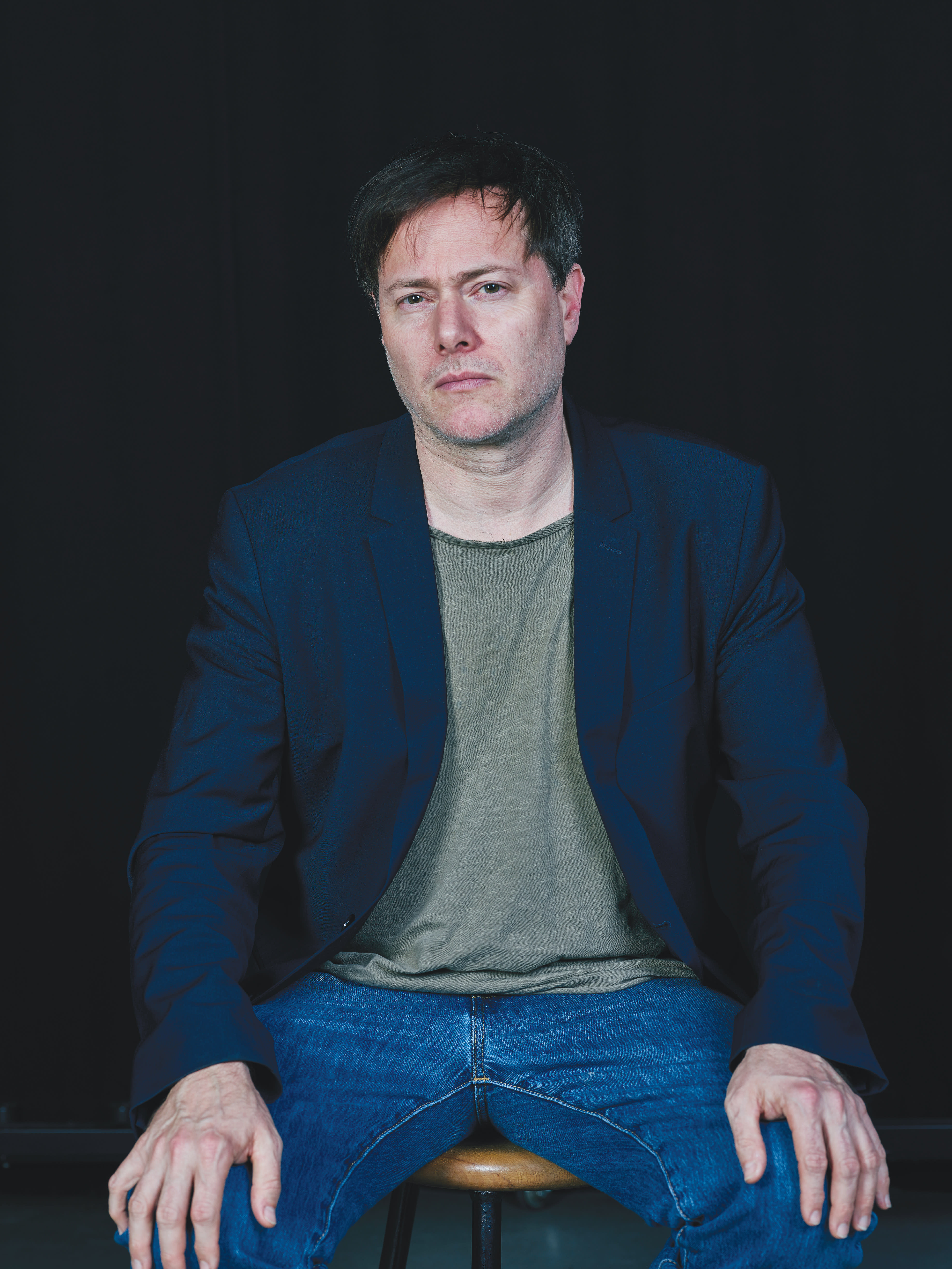
This post was originally published here. 

The disbanding of the Syrian Democratic Forces (SDF) on August 25 and the dissolution of the Kurdish-led Autonomous Administration of North East Syria mark the latest in a series of setbacks to Kurdish political fortunes in the region over the last half-decade.

A decade ago, Kurdish forces had reached an unprecedented high point. A contiguous area of de facto Kurdish control stretched from the Iraq-Iran border in the east to Afrin in Syria in the west, just 65 km. from the Mediterranean coast. This area of control was divided between three rival and squabbling pan-Kurdish political movements: the Kurdish Workers Party (PKK) via its franchise in Syria; the Kurdish Democratic Party (KDP), led by the Barzani family in the western part of the Kurdish Regional Government (KRG); and the Patriotic Union of Kurdistan (PUK), led by the Talabanis in the eastern part of the KRI.

But while divided politically, the authorities created by these organizations presided in a contiguous space over oil resources, rich agricultural lands, and vital water sources.

The rise in Kurdish fortunes across this area derived from a number of factors: most importantly, central state authority had contracted or collapsed across large swathes of both Syria and Iraq. In the Hobbesian reality that ensued, militias based on ethnic, religious, or tribal identity were flourishing. 

Amid this chaos, Kurdish forces stood out for their secular and pro-Western orientation, their capacity for centralized organization, and their willingness to fight to defend their areas of control. All of these were of direct relevance to Western countries whose interests were threatened by the advance in the collapsed and fragmented spaces both of independent and murderous Sunni jihadi militias and of the Shi’ite militia archipelago controlled by Iran. 

KURDISH INTERNAL security forces stand guard after seizing a quantity of captagon pills in Qamishli, Syria, March 25, 2025. (credit: REUTERS/Orhan Qereman)

The Kurdish fighters of the Peoples’ Protection Units (YPG) formed the key infantry element in the US-led, successful rollback of the Islamic State “Caliphate’ in Syria. In northern Iraq, the longer established KRG formed a bastion of stability and security.

As a result of these developments, Kurdish fortunes reached their highest point in about 2016. Over the subsequent years, external events with problematic Kurdish governance and management have combined to very substantially reduce the Kurds’s holdings and standing.

As it turns out, the KDP leadership of Iraqi Kurdistan launched a premature and insufficiently prepared independence referendum in September 2017. The referendum resoundingly confirmed Kurdish desires for statehood – 92% of votes cast were in favor of secession.

But the vital diplomatic groundwork and military preparation necessary to sustain a bid for sovereignty had not been carried out. Neither the US nor any regional country offered practical support for the establishment of Kurdish statehood (only Israel offered support in principle, without any practical pledges).

The Iraqi Kurdish forces were also not united, with the PUK deeply divided and skeptical regarding the decision to go for independence at that time.

The result: the Iraqi army and the Iran-supported Shi’ite militias, who are the de facto wielders of power in Iraq, launched a military campaign against the Kurdish area to snuff out Kurdish independence in its cradle. The Kurds fought back and avoided destruction, but lost 40% of their lands, including the vital, oil-rich Kirkuk area.

Both KRG and Iraq experience massive revenue losses

IN THE SUBSEQUENT years, the truncated KRG has faced further setbacks on the political and particularly economic fronts. In February 2022, Iraq’s Federal Court ended the KRG’s ability to independently export oil, ruling that only the central government in Baghdad has the right to enter agreements with oil companies for export. A 30-month freeze on oil exports resulted, bringing massive losses in revenues for both the KRG and Iraq. 

The issue was resolved by agreement in September 2025. But the agreement, while avoiding financial catastrophe for the KRG, has resulted in a significant additional loss of autonomy. According to its provisions, the KRG has formally relinquished any claims to independent sale of oil. All crude oil produced in the Kurdistan region’s fields is now delivered directly to Iraq’s federal State Organization for Marketing of Oil (SOMO).

In a further setback, the US is now planning to end security assistance to the KRG’s armed forces, the Peshmerga. The KRG has been subjected to a series of Iranian attacks since the recommencement of war in February of this year. But with the fight against ISIS formally concluded, Washington evidently sees no reason to continue supplying its erstwhile ally.

Depleted, stripped of economic independence and now facing the possibility of being deserted by its closest ally, the KRG in Iraq is facing an uncertain future.

US seals the fate of the Kurdish autonomous administration in Syria 

IN SYRIA, meanwhile, the US decision to back the emergent Sunni Islamist regime in Damascus effectively sealed the fate of the Kurdish autonomous administration. The Syrian Kurds sought to hold their hard-won autonomy for as long as possible. But a swift military push in January – and according to sources, coupled with US advice to Arab parts of the SDF not to fight government forces – led to the swift retreat of the SDF’s remnants to the core Kurdish areas of Syria’s north east. The force was then required to negotiate its own dissolution.

The deal now concluded with Damascus represents the effective eclipse of the de facto Kurdish autonomy, which has ruled Syria east of the Euphrates over the last decade. The agreement does not represent a full-blown surrender of Kurdish rights, or a return to the situation that pertained under the Assad regime. But it is a long way from the 2013-2026 situation. 

Kurdish will be permitted to be taught in schools. Stateless Kurds in Syria will be given citizenship. But Mazloum Abdi, the de facto leader of Syria’s Kurds, goes from ruling 30% of Syria to being an “adviser” to President Ahmed Sharaa. Ilham Ahmed, former head of foreign affairs for the Autonomous Administration, is now to be an appointed member of the puppet “parliament” in Damascus.

The reasons for the reversal of Kurdish fortunes in recent years are manifold. Partly, Kurdish political divisions and the failure to capitalize on diplomatic possibilities during the years of ascendancy must bear responsibility. 

Centrally, though, the Kurdish position has diminished because Western countries that had allied with the Kurds during the period of civil war and state collapse have now elected to support centralized state governments in Syria and Iraq, in the interests of stability. As a result, the Kurds now find themselves expendable.

This is something of a gamble on the part of the West. It appears to derive mainly from the close links of the current US administration to Turkey and Qatar, combined with the counsel of the Islamist-appeasing British government. The result is that the US is now backing anti-Western movements in power in Syria and in Iraq. 

These include the Coordination Framework (a coalition of pro-Iran Shia militias and parties) in Iraq, and Sharaa’s Sunni Islamist Hayat Tahrir al Sham (HTS) regime in Damascus. The advisability of backing forces of this kind is deeply questionable, of course. But for now at least, Washington seems set on it. 

As a result, former (solidly pro-Western) Kurdish allies are being abandoned. If, and when, the current strategy fails, the Kurds may need to be reached again. Hopefully, by the time this occurs, they will have developed the unity and institutions needed to take advantage of the moment to the full.

This post was originally published on here. 

Twenty-nine Democratic senators have demanded that Israel halt proposed construction in the E1 area between Jerusalem and Ma’aleh Adumim, an Israeli city of 40,000 people.

E1 has long been a lightning rod for advocates of Palestinian statehood, who argue that Israeli construction would sever the Ramallah-Bethlehem corridor and destroy the contiguity of a future Palestinian state. But any viable Palestinian state would likely require tunnels, bridges, or dedicated roads to connect separated areas. Moreover, E1 lies in Area C, where Israel retains planning and zoning authority under the Oslo framework, despite international opposition.

Still, I believe building in E1 now is ill-timed. Israel’s most important ally, the United States, is already grappling with growing anti-Israel sentiment and antisemitic intimidation from the Democratic Left and the conspiratorial Tucker Carlson Right. Israel gains little by creating another unnecessary political confrontation with Washington at this time.

But Washington is asking the wrong question about E1.

The Democratic senators wrote, “The United States must remain committed to a two-state solution that delivers lasting peace and security for both the Jewish, democratic State of Israel and for a future Palestinian state.… development in E1 would seriously jeopardize the prospects for a Palestinian state.”

The E1 territory, located outside of Jerusalem and within the jurisdiction of the Ma'aleh Adumim settlement (credit: TOVAH LAZAROFF)

Their call for Israel’s security and a Palestinian state deserves more scrutiny.

Obstacles toward Palestinian state

The obstacles to Palestinian statehood did not begin with E1. They began with the Arab rejection of two states in 1948 and their subsequent refusals for a state in 1967, 2000, 2001, and 2007-08, the last offered Palestinian sovereignty in Gaza and nearly all of the West Bank, with a Palestinian capital in east Jerusalem.

Underlying those failures is a question those American policymakers too often avoid: whether Palestinian society is prepared to accept a permanent Jewish state anywhere between “the river and the sea.”

After October 7, that question can no longer be treated as theoretical.

The real E1 debate should not be whether Israelis can build homes there. It should be whether Israel could ever safely relinquish security control of this strategically critical corridor.

Highway 1 runs east from Jerusalem, past Ma’aleh Adumim and E-1, toward the Jordan Valley. It is an essential artery connecting Israel’s major population centers on the coast with its eastern frontier, and provides a vital route for rapidly moving troops, weapons, and supplies toward Israel’s longest border with Jordan.

That matters because Jordan’s long-term stability cannot be taken for granted.

The Hashemite monarchy remains an important American and Israeli security partner, but Jordan is economically fragile and faces significant demographic and Islamist ideological pressures. American and Israeli strategists must contemplate the possibility that over the coming decade Jordan could face increased Sunni Islamist influence, Iranian destabilization efforts, or serious internal disorder.

If that happens, Israel’s eastern frontier could rapidly transform from one of its quietest borders into one of its most dangerous.

During visits with Israeli military personnel and intelligence officials, I saw firsthand the concern about weapons and narcotics smuggling across Israel’s eastern frontier. Weapons entering Judea and Samaria, the West Bank, can strengthen an already formidable Hamas and other armed groups’ presence, operating only miles from Israel’s major population centers.

Today, Israel is confronting increasing tensions inside the West Bank. Israeli security officials have warned repeatedly about the potential for significant escalation.

The Netanyahu government deserves criticism for failing to adequately restrain extremist Jewish violence. Those who attack Palestinians violate Israeli law and should be prosecuted. A future Israeli government should enforce the law aggressively.

But Jewish extremism is only one part of a much larger security problem. For decades, Palestinian Authority schools, official media, and religious institutions have promoted incitement and narratives that reject any Jewish sovereignty, while the PA’s notorious “pay for slay” system has financially rewarded terrorists and their families, incentivizing violence that makes territorial compromise increasingly dangerous.

This brings us back to E1.

There are actually two separate questions that Washington has mistakenly conflated.

The first is whether Israel should build in E1 today. I believe it should not. With an election approaching, beginning construction looks more like a political gesture to the Israeli Right than an urgent security requirement.

The second question is far more consequential: Should E1 ever come under Palestinian security control?
From an Israeli security perspective, the answer is no, certainly not in the foreseeable future.

E1 sits alongside a vital corridor connecting Jerusalem and Israel’s coastal population centers with the Jordan Valley. The valley constitutes Israel’s eastern strategic barrier and could become dramatically more important if Jordan is destabilized.

October 7 fundamentally changed Israeli security doctrine. Israelis learned at catastrophic cost what happens when hostile armed organizations are allowed to build military infrastructure adjacent to Israeli communities. Israel cannot repeat that mistake on a vastly larger front.

American policymakers should stop treating E1 as an Israeli-Palestinian real-estate dispute. It is who controls the roads, high ground, and military corridors Israel will need in the next war to the east.

That makes E1 fundamentally a question of strategic depth, military mobility and Israel’s ability to defend its eastern frontier, not simply another argument about settlements.

The writer is the director of MEPIN, the Middle East Political Information Network, and is the senior security editor of The Jerusalem Report. He regularly briefs members of Congress, their foreign policy staffers, and the State Department.

This post was originally published on here. 

An Argentine court on Friday approved the return of the painting Portrait of a Lady, looted during the Holocaust from Dutch-Jewish art dealer Jacques Goudstikker, to his sole heir, Marei von Saher, more than 80 years after it disappeared.

The decision was made as part of an agreement with Patricia Kadgien, daughter of fugitive senior Nazi official Friedrich Kadgien, and her husband, Juan Carlos Cortegoso. The two were charged last year with aggravated concealment after authorities alleged that they had hidden the painting despite knowing that investigators in Argentina and abroad were searching for it.

According to a statement issued by Argentina’s Justice Ministry on Friday, the couple will relinquish any claim of ownership over the work and agree to hand it over to von Saher. In return, they will not face a criminal trial, but will remain under court supervision for two years, must keep authorities informed of their whereabouts, and make payments to a children’s hospital in Mar del Plata, the city where they live.

If they violate the terms of the agreement during the next two years, authorities may reopen proceedings against them. According to reports in Argentina, however, each spouse agreed to pay 2.4 million pesos to the hospital, only about $1,600 each, or roughly NIS 9,600 combined.

A statement from the Argentine government stressed that von Saher’s legal representatives had conveyed her wish for the work to remain temporarily in Argentina and be displayed to the public.

“The goal is to contribute to the dissemination and raising of awareness of the looting of cultural property during the Nazi regime,” the Justice Ministry said.

What happened to the ‘Portrait of a Lady’ painting? 

The case came to light almost by chance in August 2025. Journalists from the Dutch newspaper Algemeen Dagblad, who were investigating the past of the elder Kadgien, noticed the painting hanging above a green velvet sofa in photographs accompanying a real estate advertisement for the sale of his daughter’s home in the Parque Luro neighborhood of the resort city of Mar del Plata.

Within hours of the investigation’s publication, the advertisement disappeared from the internet. Police raided the home several times, but the painting was no longer hanging there and could not be found. More than a week later, Kadgien’s lawyer handed the work over to the authorities.

The elder Kadgien served as financial adviser to Hermann Göring and handled foreign currency, precious metals, and the sale of confiscated property for the Nazi regime. Following Germany’s defeat, he initially fled to Switzerland and later to Argentina, where he died in 1978 without ever being arrested or put on trial for war crimes.

The painting had been part of Goudstikker’s renowned collection. Goudstikker was one of Europe’s leading art dealers before World War II. After Germany invaded the Netherlands in May 1940, Goudstikker fled with his family but was killed in an accident aboard the ship.

About 1,100 works from his collection were subsequently sold unlawfully and under duress to senior Nazi officials, a large portion of them to Göring.

For decades, “Portrait of a Lady” was attributed to the Italian Baroque painter Giuseppe Vittore Ghislandi, and it was initially reported as such when the painting was discovered. However, an examination ordered by the court and carried out by Argentina’s National Academy of Fine Arts determined that the Italian artist Giacomo Antonio Melchiorre Ceruti had actually painted the work.

Experts confirmed that it was the painting that had belonged to Goudstikker’s collection and estimated its value at approximately €250,000, or about $290,000.

Von Saher, who lives in Connecticut and has spent decades working to recover artworks looted from her family, agreed that the painting would first be exhibited in Argentina and only afterward transferred to her possession.

Meanwhile, authorities are continuing to examine two 19th-century works, as well as engravings and prints seized from homes belonging to the Kadgien family, in an effort to determine whether they too were looted during the Holocaust.

This post was originally published on here. 

Iran is preparing for a broad, coordinated attack against Israel on several fronts simultaneously, Israeli assessments indicate, in a scenario resembling a future October 7-style assault but designed from the outset to bring together all components of the Iranian axis.

According to the assessments, Iran is seeking to combine its own forces with Hezbollah in Lebanon, Hamas, the Houthis in Yemen and pro-Iranian militias in Iraq in a single campaign.

On October 7, Hamas launched its attack without the other fronts opening simultaneously and under full coordination. The idea of a broad regional war against Israel had emerged even earlier. Internal Hamas documents seized in the Gaza Strip after the attack indicated that Yahya Sinwar had sought to expand the confrontation and draw additional arenas into it.

One of the planning documents stressed the need to “connect and prepare the external fronts,” namely Lebanon, Syria and Sinai, as well as to agree in advance on communications mechanisms for both routine periods and wartime.

What became clear after the war was that this ambition had not been accompanied by full coordination ahead of the attack itself. According to published US and Israeli assessments, Iran and Hezbollah had not been informed in advance of all the details of the October 7 plan or the precise date on which it would be carried out.

A Houthi protester with a poster of Ali Khamenei demonstrates amid the US-Israeli conflict with Iran, in Sanaa, Yemen, March 6, 2026 (credit: REUTERS/KHALED ABDULLAH)

According to that assessment, Sinwar believed the success of the initial attack would subsequently draw Hezbollah and Iran into a broader campaign. Hezbollah opened fire in the North, but it did not launch a large-scale attack that same morning in parallel with Hamas’s assault.

Iran’s plan: A multi-front operation against Israel

According to reports in Arab media, Tehran is now seeking to address that gap precisely. The plan under consideration is intended to enable several fronts to operate against Israel at the same time, making a multi-front campaign part of the strategy from the outset.

The change in Hamas’s leadership is also significant in this context. Khalil al-Hayya, who was elected Hamas’s overall leader in July, is considered to have good relations with Iran and has for years been one of the organization’s central figures in maintaining ties with Tehran.

Al-Hayya, a member of Hamas’s Gaza-based camp who was close to Sinwar, strengthens within the organization’s leadership the faction seeking to preserve its close strategic relationship with Iran.

Signs have also emerged of an Iranian effort to rebuild the “Axis of Resistance” and renew coordination mechanisms between the various fronts. A report published last month said the IDF had identified renewed coordination between Hamas and Hezbollah with Iranian assistance, as part of an effort to increase pressure on Israel simultaneously from the North and South.

According to a published IDF assessment, Hamas and Hezbollah had already begun coordinating an increase in their activities in recent weeks with Iranian assistance.

Iran reignites terror group talks

Recent reports have also said senior Quds Force officials held talks with commanders in Hezbollah, the Houthis and Iraqi militias regarding an expansion of the confrontation.

Two senior officers in the Islamic Revolutionary Guard Corps claimed that during an earlier period of calm, senior Quds Force officials held conference calls with commanders from the three fronts and that Iranian advisers also worked with them on the ground.

During the same period, reports also emerged of Iranian efforts to accelerate the production of missiles and drones and restore capabilities that had been damaged.

The rebuilding effort comes as the balance of power within the axis is also shifting. According to assessments, the damage inflicted on Hezbollah and the fall of the Assad regime in Syria have increased the importance of the militias in Iraq and the Houthis in Yemen.

At the same time, joint training exercises have been recorded, operational and personal ties have tightened, and coordination over political and military decisions among the components of the axis has increased.

The Iranian axis is now operating in a regional reality different from the one that existed before October 7, with Iraq and Yemen playing a more central role.

This post was originally published on here. 

An immigration officer was back in custody in Texas on Thursday night after he was indicted by a federal grand jury on charges of making false statements about the shooting of a Venezuelan man in Minnesota during a deportation surge there last winter, officials said.

Immigration and Customs Enforcement agent Christian Castro was indicted on six counts of lying to investigators, according to a person familiar with the matter, speaking on condition of anonymity because they were not authorized to publicly discuss the case.

The Minneapolis-based prosecutor who brought state charges against Castro, Hennepin County Attorney Mary Moriarty, confirmed he had been arrested in Texas after being released from jail a week earlier.

“We expect he will appear in federal court in Texas, and a date will be set for him to appear in federal court in Minnesota,” Moriarty said.

The indictment marks an extraordinary step by a Justice Department that has generally refrained from prosecuting federal law enforcement officers. It was the first known criminal case the Justice Department has pursued against a US immigration agent over alleged wrongdoing in the Minneapolis ICE operation, part of US President Donald Trump‘s wider immigration crackdown.

Immigration and Customs Enforcement (ICE) agents walk outside the Ventura County Government Center in Ventura, California, on July 27, 2026; illustrative. (credit: Blake Fagan/AFP via Getty Images)

Castro faces assault charges for shooting, wounding Julio Cesar Sosa-Celis

Castro faces state assault charges in Minnesota for shooting and wounding Julio Cesar Sosa-Celis in the leg on January 14, at the height of Trump’s deportation campaign in Minnesota, which drew weeks of protest.

A Minnesota state arrest warrant remained in effect for Castro, who spent 90 days in a Texas county jail before he was released. Governor Greg Abbott, a Republican, said he was refusing to sign extradition papers sent by Minnesota Governor Tim Walz, a Democrat, and a federal judge in Texas denied a request from Minnesota to compel Castro’s extradition.

The state charges also include falsely reporting a crime after Castro allegedly wrongly told superiors at the Department of Homeland Security that Sosa-Celis and others attacked him with a snow shovel and broom, which was disproved by video evidence.

DHS has suspended Castro, and the person familiar with the case said a civil rights investigation is ongoing and no decision has been reached yet in that matter.

Matt Evans, a federal prosecutor who had been working on the case, was fired this week after ProPublica reported he sent an email to Sosa-Celis’ lawyers saying DOJ attorneys had stopped his efforts to bring federal charges, according to the person familiar with the case. Evans is now being investigated for obstruction of a grand jury investigation, the person said.

Castro has not publicly addressed the state charges against him since his release from the Cameron County jail last week, and he could not immediately be reached for comment on Thursday.

Trump administration defends ICE agents

The Trump administration has largely defended the conduct of ICE agents, saying incorrectly that they have absolute immunity from state prosecutions.

Robin Wolpert, a lawyer for Sosa-Celis, said in a statement her client wants Castro to be held “fully accountable” with stronger civil rights charges. “Mr. Castro has been indicted for making false statements,” she said. “But he made them to cover up the fact that he shot my client through the door of an occupied house without a self-defense justification.”

The ACLU of Minnesota announced on Thursday that it will represent Sosa-Celis as he sues the Trump administration.

This post was originally published on here. 

One of the most formidable academic opponents of settlement in Judea and Samaria, Prof. Arnon Sofer, recently passed away. 

Sofer was known for two important conclusions he drew from years of studying the geostrategic implications of Jewish and Arab spatial distribution patterns in Israel and Judea and Samaria. 

One was a dire warning that by increasingly relocating to coastal regions, especially to Gush Dan at the expense of Jewish settlement in the North and South, Jews were effectively giving up the State of Israel.

This was particularly problematic, Sofer contended, given that the territory was won in a vicious and costly War of Independence, only for the “state of Tel-Aviv” to regress to the borders of “Jewish Palestine” as envisioned by the 1937 Peel Commission.

As part of that foreboding, he castigated the Religious Zionist movement, which since the 1967 conquest of Judea and Samaria, has concentrated much of its energy in settling the West Bank beyond the confines of the relatively small enclaves.

A general view of houses in the Israeli settlement of Maale Adumim in the West Bank (credit: AMMAR AWAD / REUTERS)

The enclaves Sofer was referring to concern Gush Etzion, the corridor to Ariel, a little beyond the city of Ma’aleh Adumim, and parts of the Jordan Valley south and north of the Green Line, whose inclusion into the state is part of a broad consensus of Israel’s Jewish population and parties. 

He liked to quote the Talmudic adage, “tafasta merubah lo tafasta” – the maxim that one frequently loses in striving for too much – at his religious protagonists, urging them instead to concentrate their efforts on settling the Galilee and Negev in order to preserve a Jewish majority in both areas.

Sofer had many followers, including Efraim Inbar, a noted expert on Israel’s geostrategic predicament. In a recent article in The Jerusalem Post, Inbar inveighed against widespread, broad-based settlement in favor of selective strategic settlement in the Jerusalem area and the Jordan Valley, claiming that not every hill in Judea and Samaria is strategic.

Inbar is as wrong in this assertion as were Zionist leaders in the 1930s such as Eliezer Kaplan. 

Such leaders had, at the time, preferred selective Zionist settlement in the coastal regions of Tel Aviv, the Sharon, and the Jezreel Valley to the creation of Stockade and Tower settlements (Homa U’Migdal) along wider-flung areas in which there was hardly any Jewish settlement, for which the youth in Zionist movements clamored. 

Yet, these settlements were the ones to hold the line against the invading Arab armies, buying the fledgling IDF time to get its act together and slowly take the offensive until the total ouster of the Egyptian army in the South. Incidentally, the only significant swath of Mandate Palestine left unconquered, the West Bank, had no Jewish settlements.

A swift travel from North to South

Given the Lilliputian dimensions of the Land of Israel, almost every hill in Judea and Samaria has strategic importance. 

From Juneid, the Arab name for the prison just west of Nablus, formerly an Israeli prison that incarcerated local terrorists, one can see the towers abutting Hadera’s Orot Rabin power station on the coast without the aid of binoculars. 

After all, Nablus, the most eastern city in the West Bank, is 35 kilometers from the Israeli coast as the crow flies. Primitive missiles also fly as the crow does.

From the hilltops near the Palestinian town of Budrus, a former IDF general and his team zoomed in with a popular German camera to identify the name of the airline on the plane taking off from Ben-Gurion Airport. 

Further, from the hilltops of Dhahiriya, the large Palestinian town in the Hebron district in area A, which, according to the Oslo Accords, the Palestinian Authority has both military and civilian control over, all of Beersheba is visible to the naked eye. 

Once again, the town possesses the topographical advantage of being 400 meters above Beersheba.

Yet even if most, if not all, of Judea and Samaria has strategic importance, why not just have the IDF in control? Why the need for widespread settlement?

There are two interrelated reasons why one needs both. Terrorism, and beyond that, the creation of militias with formidable conventional power, is related to the extent to which the enemy enjoys sanctuary.

Having a physical space allows it to prepare for lethal activities and, in the case of Gaza, a ferocious onslaught. Protecting settlers means less sanctuary, less possibility of unhindered planning, training, and attacking. 

It is no coincidence that the highest levels of Palestinian terrorism manifested in regions such as Jenin, where there was almost no Israeli settlement. 

This was also true during the 1936-1939 Arab Revolt in Mandatory Palestine. The October 7 onslaught, moreover, would have been inconceivable had it not been for the total withdrawal from Gaza and the destruction of Jewish settlements.

The second reason is specific to the military. The IDF in hostile civilian population areas has an understandable tendency to withdraw into its bases. Still, the moral obligation to protect settlers, frequently a mother driving her young children, goes against this natural tendency. It gives the officers and soldiers on patrol a moral imperative independent of their ideological beliefs.

An excellent example of the value of broad-based settlement is the farms set up with increasing frequency between the Jordan Valley and the populated Arab mountain ridge.

These farms contributed to the recent dramatic reduction of terrorism and increased the sense of security for those plying the Allon road. 

Jewish settlement there and east of Nablus, another hotbed of terrorism, protected by the IDF, also sends a warning to the Palestinian Authority that, should it be tempted to mimic Hamas’s October 7 massacre to attack “the State of Tel-Aviv” to the west, it will be attacked from behind. 

Unfortunately, Hamas suffered from no such constraint.

In Judea and Samaria, the dangers are ever-present and everywhere. Widespread Jewish settlement is part of the answer to this predicament.

Hillel Frisch is a professor emeritus at Bar-Ilan University and a senior researcher at the JISS.

This post was originally published on here. 

The widow of an airman killed on a combat missionin the Middle East said it took a viral social media post to get resolution from the Pentagon on issues related to her husband’s benefits and basic pay months after his death.

Maj. Alex Klinner, 33, was one of six crew members of a KC-135 refueling aircraft that crashed in western Iraq in March while supporting operations against Iran. He’s one of 18 U.S. service members killed, along with 790 wounded, since the war began more than six months ago.

The Air Force reached out to his widow, Libby Klinner, this week to clarify that his final paycheck would include hazard pay and combat-related tax breaks. This occurred after she voiced frustration on social media at being told by a military officer assigned to support her after her husband’s death that he was ineligible for those benefits because “we were not at war.”

“My husband lost his life because we’re in a war, and then I was told that because it’s not technically a war, we lose out on something,” Klinner told The Associated Press. “It all comes down to principle.”

Trump administration is rejecting the ‘war’ label for current Iran operations

Her post, made over the weekend, gained national attention. Vice President JD Vance promised to look into her case after being asked about it during a White House briefing on Thursday.

“We want to be as helpful as we can and ensure she gets everything that she is entitled to,” Vance said. “My message to her would be, ‘We love ya, we’re grateful for the sacrifice and we very much take very seriously our commitment to get you what you need to get.’”

In response to a separate question, Vance rejected the use of the word “war” to characterize U.S. fighting in Iran, saying that “there is no active shooting.” The military has launched strikes against targets in Iran twice this week, and Iran has retaliated by firing on U.S. allies in the Gulf.

On Friday, President Donald Trump called U.S. strikes “intermittent” and defended Vance’s comments.

“I call it a military conflict because it’s small potatoes for us,” Trump told reporters in the Oval Office.

In late July, the Trump administration created a new, separate category in the Pentagon’s casualty count system for those killed and wounded in renewed U.S.-Iran fighting. Pentagon officials said the change was necessary because “Operation Epic Fury,” the original name for combat operations against Tehran, had ended. Since July 7, all U.S. casualties in the Middle East have been tallied under “Overseas Operations.”

Widow says the Air Force has clarified the issues about her husband’s pay

Libby Klinner said Air Force officials contacted her this week to say they were initiating a review of her husband’s pay. The Air Force acknowledged to her Thursday that it had initially provided inaccurate information and clarified that she was receiving the full pay and benefits her husband was owed, she said.

She said she was told that her husband’s paycheck had already included but incorrectly itemized the combat-related hazard pay and tax breaks.

The pay incentives commonly known as “combat pay” are $225 per month and are not conditioned on a formal war declaration but just that the service member be in an area where there is “grave danger of physical injury” or be “killed, injured, or wounded by a hostile fire event,” according to a military website.

Alex Klinner’s final paycheck would have included half that amount since troops are paid twice per month. It is difficult to calculate how much in federal tax breaks Klinner would have been receiving without more information.

Klinner declined to specify the amount of money she was initially told her husband, an eight-year Air Force veteran from Birmingham, Alabama, would be ineligible to receive.

The Air Force says it’s committed to offering information and support

The Air Force said officials spoke with Klinner this week to “ensure all her questions are fully addressed” and confirmed that “all eligible combat theater benefits were included” in her husband’s pay.

“We remain committed to providing clear information and continued support to Mrs. Klinner, as well as all the families of the Airmen who died in the KC-135 crash,” the Air Force added.

Broadly, errors in pay in the military are very common because service members can often gain or lose eligibility for a variety of payments depending on their deployment status, duty location or even family factors. As a result, unlike their civilian counterparts, some troops can see their paychecks change many times a year depending on many factors — something that also increases the likelihood of errors.

A GoFundMe for Libby Klinner and her three young children, launched in the days after her husband’s death, has raised more than $1.5 million.

Klinner said she hoped that by speaking out, other grieving families receive clear information from the outset.

“I am very fortunate to have a significant support system around us and a platform to advocate for myself and for my kids. Other families may not have those resources,” she said. “If I can do anything to make this awful situation a little bit easier for someone else to navigate, then I am more than willing to do so.”

This story was originally featured on Fortune.com

This post was originally published here. 

El Al’s attempt to establish a flight route between Israel and St. Petersburg has been rebuffed by Russia, N12 reported on Thursday, allegedly in order to “punish” Israel.

El Al’s push for a new flight route to Russia comes after the suspension of the Tel Aviv-Moscow route in June due to the security situation amid the ongoing war between Russia and Ukraine.

According to N12, Russia barred El Al’s plan after the Russian airline Aeroflot was prevented from landing in Israel following US and European sanctions against Russian companies.

Aeroflot Boeing 777-300ER at Vladivostok Airport (credit: Wikimedia Commons)

A different Russian airline, Red Wings, continues to maintain a flight route between Israel and Russia, N12 reported.

Ukraine drones ground Russian flights

In June, Ukrainian drone attacks against Russia led to flights out of all major Moscow airports being grounded, for a total of over 500 flight delays.

At the time, Kyiv cast its strikes as a response to an attack that damaged a nearly 1,000-year-old monastery in the city.

Reuters contributed to this report.

This post was originally published on here. 

College football season is kicking off and some young athletes taking the field around the country will be seeing an influx of income from name, image and likeness (NIL) and revenue sharing deals, which can pose financial challenges as they look to manage those funds.

NIL first took hold in college sports in 2021 and monetary compensation for student athletes recently evolved to include revenue sharing directly with the colleges they’re playing for. For some players, they may earn six- or seven-figures in income through those deals – particularly at colleges in the power four (P4) conferences, including the Big Ten, SEC, ACC and Big 12 or for players competing in college football and basketball.

Gordon Whittaker, a wealth management advisor and managing director at Merrill Lynch, told FOX Business that whether student athletes are likely to play professionally after their college careers end, it gives them the chance to build financial habits and a foundation that can serve as a springboard for their futures.

“The earlier you can establish financial habits… the more likely that it is to be effective and the more likely it is to stick. And so extending that period of time and giving the opportunity for these young men and women to earn money earlier in their careers, earlier in their lives, expands that opportunity to start to really build those financial habits,” he said.

JOEL KLATT’S 10 BURNING QUESTIONS GOING INTO THE 2026 COLLEGE FOOTBALL SEASON

“The majority of the conversations that we’re having with these young people is about being a good steward of those funds and building those positive financial habits,” Whittaker said.

He said that while college athletes are in school, “their budget ought to be very small in terms of what they need to spend. Whether they’re a star player on a P4 football team or they’re a backup on a second- or third-tier school, they don’t have a lot of ongoing expenses, so anything they receive ought to be at an incremental savings rate.”

“We just encourage them to live like college students and retain those assets, start to own assets and allow that force of compound interest to take effect over the next several decades,” Whittaker said. “Even small dollar amounts turn into massive dollar amounts if given enough time.”

SEC FILES BOMBSHELL LAWSUIT AGAINST LSU, LANE KIFFIN WHILE PRO PLAYERS FIGHT FOR THEIR ELIGIBILITY IN COURT

One area that Whittaker said advisors are trying to instill in college athletes is the importance of understanding that if they’re fortunate enough to play their sport professionally, they need to save money to account for the fact that they’ll need to support themselves after their playing career eventually comes to an end.

“We spend a lot of time talking about this idea of being an owner versus being an employee and what wealth really looks like,” he added. “What we really approach is to shift that mindset away from equaling wealth, towards owning assets equaling wealth.”

“You’re not going to work until you’re 65, or at least not in this capacity, and so every dollar that you make – 10 cents of that may be today, 90 cents of that is to make up that gap when you stop in your primary profession,” Whittaker said.

“Having those conversations and really imploring the importance of delaying gratification has been very important,” he added, noting that it’s helpful for athletes to look at professional athletes who are being good stewards of their funds with an ownership mentality.

Earning income from NIL and revenue sharing means that players also owe taxes, which Whittaker noted was a stumbling block in the earlier days of NIL, as some didn’t understand that 1099 income hasn’t been withheld like W-2 income would. He said that a lot of collegiate programs have begun helping the athletes split their income to account for their tax bill.

“That has been popularized enough now where we don’t come across people who have no idea that they have to do some tax planning when they receive the funds very often anymore, which is definitely a good thing,” Whittaker explained.

JUDGE GRANTS INJUNCTION AGAINST NCAA, SEC, ALLOWING ATHLETES WITH NFL TIES TO PLAY FOR LSU, OTHERS

The shifts in student athlete compensation also present a new question for student athletes who are capable of playing professionally, as they have to weigh what they would earn in pro sports versus the opportunity to stay in college and earn more while they still have eligibility.

Whittaker said that the question used to be “are you going to improve your draft status enough by sticking around for it to warrant delaying income for a year?” Now, the current income flows are considered in that process.

Student athletes who are hoping to bolster their earning potential via NIL or revenue sharing while they’re in college also need to be mindful of how they’re presenting themselves and building their brand.

“This may be a message to those that are looking to NIL and looking to play a sport in college, the most important thing to keep in mind is you are your own brand, particularly as it relates to NIL. And the decisions you make off the field directly impact how you’re compensated,” Whittaker said.

GET FOX BUSINESS ON THE GO BY CLICKING HERE

“There’s a significant amount of responsibility that comes with notoriety and being purposeful and understanding that your actions, every minute of every day, impact your monetization,” he added.

This post was originally published here. 

Russian President Vladimir Putin ordered a three-day halt to strikes on Kyiv, starting on Saturday, as part of preparations for a visit by a US delegation, Interfax quoted Kremlin spokesman Dmitry Peskov as saying.

US special representatives Steve Witkoff and Jared Kushner landed in Moscow on Saturday for talks on the war in Ukraine, two people familiar with the visit told Reuters, adding that they were met by Russian presidential envoy Kirill Dmitriev.

A motorcade, carrying Witkoff, Kushner and Dmitriev, left Moscow’s governmental airport and headed towards the city, a Reuters witness said.

Dmitriev, who told Reuters in June that he had remained in contact with the US negotiators during a pause in their visits to Russia, took part in all their previous meetings with Russian President Vladimir Putin. He also played a role in negotiating US sanction waivers for Russian oil this year.

US President Donald Trump suggested on Friday the US had a fresh concrete proposal aimed at ending the war, which is now in its fifth year. He did not, however, elaborate on what that proposal would be.

Ukrainian President Volodymyr Zelensky said also on Friday that the two men would fly to Ukraine on Sunday after visiting Moscow. In an X/twitter post on Saturday, Zelensky said Russia hit two Ukrainian airports ahead of US envoys’ visit to Kyiv.

Firefighters work at a site of a Russian drone strike, amid Russia's attack on Ukraine, in Kyiv, Ukraine August 29, 2026. (credit: REUTERS/Oleksandr Gusev)

Vast gulf remains between Russia, Ukraine on how to reach peace

A vast gulf remains between Russia and Ukraine on how to end the 4-1/2-year-old war, the deadliest in Europe since World War Two.

The Kremlin said on Friday the position that Putin set out in a speech two years ago – that Ukraine should cede the entire territory of four regions claimed by Russia and abandon its plan to join NATO – was “unshakeable.”

Since the last peace talks in February, each side has intensified long-range air attacks deep inside the other’s territory, while the war at sea has also escalated.

On the ground, the front lines have remained largely static, with Russia making only gradual gains in its attempt to take the whole of Ukraine’s Donbas region.

Ukraine’s drone strikes on Russian oil refineries have led to a summer of fuel shortages and rising prices for Russian motorists, while some 30 attacks on giant warehouses belonging mostly to Wildberries, the country’s biggest online retailer, have affected the consumer economy.

A Russian drone attack hit the headquarters of Ukraine’s SBU security service in Kyiv on Friday – the 10th consecutive day of heavy attacks on the capital – and Zelensky vowed to retaliate.

This post was originally published on here. 

US Ambassador to Israel Mike Huckabee stated that Israel is not planning to force Palestinians out of the Gaza Strip on Saturday, while talking to reporters during a visit to the West Bank town of Turmus Aiya.

“I can tell you categorically there is no plan of the Israelis to displace people out of Gaza against their will,” he stated. “There is an open-mindedness (that) if people wish to leave, they should have the right to leave.” 

Huckabee added that “nobody is suggesting that there will be forced displacement. The Israelis are not. The Americans are certainly not. I know of no one who supports that.”

Huckabee met with families of victims of extremist settler violence

During his visit, Huckabee met the families of US citizens killed by violent settler extremists in attacks on Turmus Aiya.

Settler violence in the West Bank has risen sharply in the past years.

US Ambassador to Israel Mike Huckabee meets residents of Turmus Aiya, a Palestinian town near Ramallah in the West Bank that is home to many American citizens, September 5, 2026.  (credit: REUTERS/AMMAR AWAD)

Several unauthorized settlements have been established around Turmus Aiya, the Palestinian town near Ramallah that Huckabee was visiting on Saturday. Its residents say that harassment by settler extremists is common and that they are unable to stop them from entering the town and damaging their homes.

“We have many issues that we will address,” Nawwaf Zaghoul, the town’s mayor, told reporters ahead of the meeting, describing what he said were constant attacks by violent extremists.

He said that the town’s residents would be asking the ambassador to help secure their safety and security. About 80% of the town’s roughly 3,000 residents were Palestinian Americans, he said.

Huckabee supports settlers, calls for extremists to be prosecuted

Huckabee, a Baptist minister and longtime supporter of Israeli settlements, has called for violent settler extremists to be prosecuted, while saying he believes their actions represent a minority of the wider settler community, which numbers around 750,000.

“We are hoping that (the ambassador) will do something for us regarding these lawless settlers,” Turmus Aiya resident Sameer Hazama said ahead of the meeting with the ambassador.

Huckabee visited Taiba, one of the only Christian villages remaining in the West Bank, in June 2025 after a church there was vandalized. Huckabee said at the time that the desecration of a place of worship was an act of terror and a crime.

Huckabee refers to the West Bank by its biblical name, Judea and Samaria, a term used by the government but not adopted by the US government. He has visited Shiloh, a settlement near Turmus Aiya, at least twice since 2025.

This post was originally published on here. 

A California court ruled this week that there is sufficient evidence to prosecute Paul Dean Andrews, 43, of Lomita, for allegedly threatening to carry out a shooting at a Jewish community center in the LA suburb of Redondo Beach, the LA County District Attorney’s Office announced on Thursday.

Andrews has pleaded not guilty to the charges, but following a preliminary hearing, the court ordered that he stand trial. He is being held on $275,000 bail and faces more than nine years in prison if convicted on all charges.

According to prosecutors, over three days in August, Andrews allegedly called the Jewish center multiple times and made antisemitic statements, including: “We don’t want Jews in South Bay. Jews. Get out of South Bay.”

In one of the calls, he allegedly threatened one of the center’s managers, saying: “Get out of the neighborhood. I know where you are. I know you’re on Vail Street. I know there are a lot of children there. I will come and open fire at the place.”

The case is not Andrews’ first criminal offense. In 2023, he was charged with assault with a semi-automatic weapon and the grossly negligent discharge of a firearm. A judge allowed him to enter a rehabilitation program and required him to complete an anti-bias program at the Museum of Tolerance in Los Angeles.

United States District Court for the Central District of California , Los Angeles California. (Illustrative)  (credit: Eric Thayer/Getty Images)

“The defendant was given an opportunity to confront his prejudices, but chose not to do so,” Los Angeles County District Attorney Nathan Hochman said.

Andrews allegedly targeted Jewish institutions after anti-bias program

Instead of completing the program, Andrews allegedly called the museum and a local synagogue in May 2024. In a message left for the museum, he said: “You will never be real Americans. All Jews should be hanged from trees.”

He also left two messages for the synagogue, saying: “Get the h*** out of San Pedro. San Pedro belongs to Catholics. We don’t want Jews in our city.”

Following the incidents, the rehabilitation process was canceled, and Andrews was sentenced to 16 months in prison. His supervised release ended in June.

The case was investigated by the Redondo Beach Police Department.

This post was originally published on here. 

Rosh Hashanah is around the corner. From a wine point of view, it rivals Passover as the wine-buying peak of the year. Large family meals will be arranged. It is one of those occasions that is an opportunity to meet and get together, as much as anything else. Wine is central.

Much of the Jewish religion is celebrated around a table with your nearest and dearest, and wine is used both to sanctify the festival and celebrate the occasion.

Those buying wines will almost certainly be looking for something special to share with their guests, in order to honor the occasion. However, what they see as special will differ according to their budget, their regular wine purchases, and the number of people they are entertaining. Maybe there is a special bottle they have saved in their private cellar or wine fridge for this moment.

Wine drinkers looking for value, or the best quality-per-price ratio, will inevitably alight on wines in the “Wine Lovers” category. Then there are those who don’t regularly purchase wine, but will at Rosh Hashanah. For them, to put what I call a “Drinkers Wine” on the table may also be a statement.

WINE DRINKERS: Up to NIS 50

Hayotzer, Sketch Gewurztraminer 2024. Always wise to have a semi-dry wine on the festive table. There will always be someone in any family who appreciates it.

This is an aromatic Gewurztraminer grown in the Lower Galilee. Hayotzer is Arza Winery’s quality brand. Those who like a touch of sweetness will like this.

Barkan, Gold Cabernet Sauvignon 2024. The Gold Edition is a value label in the Barkan portfolio. Barkan, founded in 1990, vies with Carmel as our largest winery.

Barkan Gold Cabernet Sauvignon (credit: BARKAN)

The wine is lightish but fruity, flavorful, easy drinking, and approachable. Probably best to serve it chilled. Good value.

WINE LOVERS: NIS 51-99

Golan Heights, Gamla Sauvignon Blanc 2025. Gamla has been a shining star in the QPR (quality per price) for decades. It still is across the range.

This Sauvignon Blanc shows good varietal typicity. It is crisp, aromatic, steely, with a fresh acidity. A great-value white from Golan Heights Winery.

Recanati, Galilee Vineyards Chardonnay 2024. A modern-style Chardonnay. Rich, buttery Chardonnays are rarer these days. This one is fresh, elegant, and precise.

Recanati is the largest winery in the Upper Galilee. By the way, it is a beautiful winery to visit.

Galil Mountain, Galil Rose 2025. A lovely rose in a very attractive, innovative package. Made from a blend of Sangiovese, Tempranillo, Malbec, and Cabernet Franc, all grown in the Eastern Upper Galilee.

I believe rose matches the Israeli climate, cuisine, culture, and character. It suits the Israeli temperament. This expression is very good.

Dalton Estate Rose 2025. This ticks all the boxes. Beautiful color, crisp with generous fruit, balanced finish – and it has a screw cap. For me, a big plus!

It is made from Shiraz, supplemented by Grenache, Mourvedre, and Barbera. This is so drinkable it slips down, and before you know it, you have finished the bottle.

Dalton Winery, already over 30 years old, is the pioneer of the Galilee.

Tulip Petite Sirah. This is a reasonably new wine from Tulip Winery, which is always inventive with its wines.

Tulip Petite Sirah. (credit: COURTESY TULIP WINERY)

Petite Sirah, aka Durif, is a variety well suited to Israel. Most are big, beefy wines with everything on an outsize scale. Here, this is a more approachable Petite Sirah, tempered by Carignan and Viognier. It is medium-bodied, with good fruit and nicely drinkable. Flavorful but refreshing. Easy to enjoy.

Zion, Capital Lions Gate 2024. An interesting blend of Marselan, Grenache, and Caladoc. It is juicy fruity, rough (in a nice way) and rustic, medium-bodied with great drinkability.

Zion Capital Lions Gate. (credit: Courtesy)

This wine, from Israel’s oldest existing winery, won a gold medal and was awarded 95 points at the Decanter WWA, the world’s most famous wine competition. It was the first equal Israeli wine in the competition, yet look at its price category! It has to be the best value by any criteria.

Teperberg, Inspire Gewurztraminer 2024. This is a beautiful dessert wine. Luscious and delicious. Serve it ice-cold. The perfect sweet wine for Rosh Hashanah, to accompany the traditional starter courses for the festival, to go with fruit-based desserts, blue cheeses, or to sip after dinner.

Teperberg is the third largest winery in Israel.

CONNOISSEURS: NIS 100-149

Scoria, Tel Phares Vineyard, Bashan 2025. By definition, my selection is usually from the larger, more well-known wineries because their wines are more accessible. This is a small winery from the Southern Golan Heights.

The blend is Sauvignon Blanc and Semillon, the classic blend for Bordeaux whites, grown at high elevation in the Central Golan. The wine has nice citrus aromas, a good texture, and is well balanced. Nice little wine.

It is a wine certified by Tzohar Kashrut. I heartily approve that Tzohar now certifies about 30 Israeli wineries.

1848 Winery, Orient White 2025. Orient from 1848 Winery is an expression of Israeli Mediterranean blends. The wines are classy and elegant.

The Orient Red 2024 just received a Gold Medal and 95 points in the Decanter Competition in London. I wrote about it last time.

So, let’s concentrate on the white. It is a blend of Colombard, Chardonnay, and Roussanne. It is fragrant, has an extended mouthfeel and an attractive texture, which leads through to a long, well-balanced finish. Very nice wine.

Binyamina, Shoham Chardonnay 2025. This is more classic for Chardonnay lovers. Fermented and aged in barrel for six months. It has a tropical, citrus nose, a hint of buttery and vanilla notes, but also a fresh acidity running through it. Good quality wine.

Binyamina Winery is a 74-year-old winery.

Ramat Negev, Exodus White 2025. A desert blend of Chenin Blanc, Chardonnay, and Semillon from high-elevation Negev vineyards. It is full-bodied and floral, with crisp acidity yet flavorful.

Ramat Negev Winery, one of the pioneers of the Negev, is one of the most improved wineries in my book. Its wines are good at different price points.

Yatir, Mt. Amasa Rose 2025. A classy rose from Yatir Winery. It has the freshness and liveliness of the genre, but a little more fragrance and a better mouthfeel than standard roses.

It is made from Grenache Noir, Mourvedre, and Grenache Blanc from high-elevation Yatir Forest vineyards.

Amphorae, Terroir Capsouto Field Blend 2023. The late Jacques Capsouto was a famous New York restaurateur who, in his seventies, came to Israel and planted a vineyard. He was a pioneer of Southern Rhone varieties.

Amphorae Winery has paid homage to Capsouto’s vineyard by making a field blend. This means that all the varieties (Cinsault, Cunoise, Syrah, Grenache, Mourvedre) were harvested, fermented, and aged together.

It is an enchanting wine with an aroma of strawberry and red cherries and a fruit-driven flavor. Definitely chill it. Lovely wine, lovely idea!

Tabor, Artisanal Creation Syrah 2023. This is a varietal Syrah from a single vineyard on the Golan Heights. It has fruit, spice, and a smoked meat character. Artisanal is the quality umbrella brand for Tabor Winery’s leading labels.

Netofa, Masei Gamay Noir 2025. Gamay is the grape of Beaujolais. I first came across Gamay here with a wine called Golan Village in the 1990s. I remember prime ministers Shimon Peres and Ehud Barak used to order it.

Netofa Gamay. (credit: Netofa Winery)

Now Netofa has introduced a new expression. It is light and fruity with cherry-berry aromas, is easy drinking, and is truly gluggable. Serve chilled. A perfect lunchtime or brunch wine.

Carmel Signature, Govrin Vineyard Petite Sirah 2022. Carmel, the historic winery of Israel, is one of the prime pioneers of quality Petite Sirah in Israel.

This has deep black fruit with an attractive floral backdrop of violets. It is fruit-forward, full of flavor with earthy, meaty notes and a lingering finish. A lovely wine.

Jezreel Valley, Old Vines Carignan 2024. This is an Israeli classic from what I call our adopted variety. It is always robust and bold, with a blend of fruit and spice, a backdrop of oak, and a satisfying chewy flavor.

The Carignan comes from 48-year-old vines, and the wine is presented in a new, attractive label that represents the wine’s earthiness.

Jerusalem Vineyard Winery, Windmill Project Petit Verdot 2021. Petit Verdot is a variety that just loves Israel. It shows well across the map, from the North to the desert, and is usually a blender, but here is an excellent single-vineyard expression.

It has aromas of ripe plum and blackberries, is full-bodied with leathery notes, layers of complexity, and a long, lingering finish. A beautiful wine, and it represents good value.

FEINSCHMECKERS: NIS 150 +

Tzuba Metzuda 2022. I have recommended a few lighter wines this time. For those who like full body, richness, and opulence, this is the ticket.

It is basically a Cabernet Sauvignon, fleshed out with Merlot and Syrah, from Tzuba’s beautiful high-elevation vineyards in the Judean Hills. It is sturdy, full in the mouth, and it has nice complexity.

Vitkin Grenache Noir, Collector‘s Edition 2024. A special edition wine with Vitkin Winery’s beautiful and stylish new label. This a favorite of mine.

Vitkin Grenache. (credit: Courtesy)

Crunchy red fruit, mouth-filling flavor but bright and fresh, and with a fruit-driven finish. Excellent summer red, though I am happy to drink it anytime.

Vitkin Winery is the pioneer of Mediterranean varieties and ABC (Anything but Cabernet, Chardonnay) in Israel.

Benhaim Cabernet Franc Reserve 2022. One hundred forty years ago, Rothschild’s Lafite advisers told him to plant more Cabernet Franc in the Holy Land than Cabernet Sauvignon.

I love Cab Franc. It is more aromatic than its more famous offspring, with lifted green, herbaceous aromas. This wine is well made in its full-bodied, oaky style.

Bat Shlomo-Assaf Granit, Alef After Dark 2024. A joint venture between world-famous Israeli chef Assaf Granit and Bat Shlomo Vineyards. A Cabernet Sauvignon from the winery’s own vineyards.

Medium-bodied, elegant, everything in place, no characteristic (fruit, tannin, acidity, oak) overplayed. Silky drinkability.

As you would expect, a good food wine. It is available in chef Granit’s restaurants, at the winery visitors’ center, and online at the winery shop.

Hevron Heights Special Reserve 2018. If you want to pay a real compliment to your guests, buy a prestige flagship wine from a leading winery.

This wine was sent to me. It is big, loud, full-bodied, opulent, rich, and oaky – a real mouthful of wine.

It certainly looks the part. Exaggerated heavy bottle, wax closure, and stylish label.

Hebron Heights Winery is from Kiryat Arba. Made from Cabernet Sauvignon, Merlot, and Shiraz. It is also very expensive, but the bottle age works in its favor. It has softened with time. As the label explains, it is from the 2018-5778 vintage!

Wine represents the farmers, growers, winemakers, and the Land of Israel, so put Israel in the center of your table.

Most will choose to celebrate the Jewish New Year with a smile and optimism. Eat well and drink well.

To wine lovers and supporters of Israel, we say: Shana tova u’metuka; we wish you a sweet and happy new year!■

The writer is a wine trade veteran and winery insider turned wine writer, who has advanced Israeli wines over four decades. He is referred to as the English voice of Israeli wine. www.adammontefiore.com

This post was originally published on here. 

Five European nations aim to sign deals this year to send migrants without legal residency to countries outside the European Union, they said at a meeting hosted by Denmark on Friday.

Germany, Austria, Greece, Denmark and the Netherlands said they had agreed on concrete steps towards a deal with a non-European Union country on return facilities, the latest effort by European nations to reduce immigration.

The countries, known as the Group of Five, did not name the nations they expect to host return centers.

“We want to reach an agreement with third countries this year that will enable the establishment of return hubs,” German Interior Minister Alexander Dobrindt told reporters at a press conference in Copenhagen.

The group, which has held a series of meetings this year, plans to reconvene in Munich, Germany, at the end of September.

Migrants stand in line as a Greek coast guard officer counts them at the port of Kaloi Limenes, on the island of Crete, Greece, February 21, 2026. (credit: REUTERS/STEFANOS RAPANIS)

The European Parliament in June approved an overhaul of migration policy aimed at speeding up deportations and allowing member states to set up centers abroad, in what critics say could weaken safeguards for asylum seekers.

Human rights concerns

The Council of Europe, a non-EU body that promotes human rights, democracy and the rule of law across the continent, in July said return hubs posed “considerable human rights risks,” and several other groups have also criticized the plan.

Danish Refugee Council Secretary General Charlotte Slente said it would be better to implement the EU Pact on Migration and Asylum, which focuses on stricter border screening, faster asylum and return procedures, and expanded digital systems for managing asylum claims.

“Return hubs focus on a small number of returns, they will not stop people from taking even more dangerous routes, and they could violate basic human rights,” Slente said.

Denmark expects to be ready to send migrants to the return hub by the end of 2027, Immigration and Integration Minister Morten Bodskov said.

“It’s a new chance to have a life in a partner country,” he said, adding that the five nations would be in dialogue with the UN body, the International Organization for Migration, and the UN Refugee Agency for their next steps.

A UNHCR spokesperson said the agency had not been approached with details of a proposal and could not comment on the arrangements being discussed.

This post was originally published on here. 

When approached to review Tenne, I was initially skeptical. While I assumed a high-end food delivery concept would be perfectly edible, I was in the dark about its true culinary quality and the merits of recommending it to our Magazine readers.

My doubts evaporated upon the arrival of the fare. Tenne delivered a seriously impressive gourmet experience, enabling upscale dining in the comfort of one’s home with no shopping, no effort, and no mess.

With the tasting menu as an indication of the standard of operations, I cannot recommend this service highly enough.

Tenne is a delicatessen concept by catering group Ta’am VaTzeva, specializing in what it defines as “kosher homemade comfort food, deli meats, salads, and fresh baked goods.” It suggests the following ordering guidelines in grams per diner: Starters and salads: 150 gr.; side dishes: 150-200 gr.; and main courses: 150-200 gr. Tenne’s Rosh Hashanah menu reflects the same holiday focus.

The dishes arrived precisely at the agreed-upon time. Every item was appealingly packaged, perfectly garnished, and had visual appeal. All dishes that need to be heated came with precise instructions.

Tenne. (credit: Tenne)

A meal for every generation

The meal was an absolute hit across generations, enthusiastically praised by my tasting guests. Mila, aged 10, a picky eater, said she gave 10 out of 10 to the cake and the rice, adding, “10 out of 10 to everything, actually. It was all really tasty.” Alma, 13, raved over how delicious everything was, and Ella, 6, said the Chicken Baklava was her favorite. Their father, famed for understating, particularly enjoyed the lamb ribs and simply said, “In a word: recommended!” His wife waxed poetic over the perfectly cooked sirloin beef: “Look at that color!”

The menu was a faynshmeker’s feast of all the traditional Rosh Hashanah holiday flavors, and the prices were very reasonable, especially for the exceptional quality provided.

The starters immediately set a high bar. The chopped liver with fried onions (NIS 28) was rich and classic. The beetroot salad (NIS 24) offered a delightful crunch with pecans and green onions; the chickpea salad (NIS 28) was beautifully bright with pickled lemon and olive oil; and the complex wheat salad (NIS 58) balanced roasted pumpkin, spinach, and onions with a sharp citrus vinaigrette cleverly served on the side.

The main courses and heavier dishes were where Tenne truly showcased its premium culinary identity:

  • Chicken Baklava (24 pieces, NIS 149): delicate filo sheets packed with savory chicken, fried onions, and mixed nuts, with a spicy syrup and crushed pistachios.
  • Roast Sirloin (serves eight, NIS 310): tender beef flavored with honey, mustard, black pepper, and rosemary, accompanied by chimichurri.
  • Lamb Spareribs (serves four, NIS 245).
  • Roasted Round Pumpkin (NIS 180): A gorgeous and delicious vegetarian centerpiece packed with bulgur, herbs, cinnamon, and orange vegetables. Those with cilantro intolerance beware!
  • Tagine (NIS 125): A tangy stew of dried fruits, nuts, and cinnamon to be served over fluffy classic basmati rice (NIS 29).

A bottle of crisp Five Stones aromatic white wine (NIS 89) complemented the festive flavors. Of course, that one was not for the children.

Finally, Tenne premium wild honey at NIS 29 competes with supermarket chains price-wise but leaves them far behind in taste. All you need to buy are the apples!

The meal concluded with a sweet, festive Honey Kugelhopf baked in a rich nutty crust. A selection of other honey cakes (and more) range in price from NIS 44 to NIS 78.

A full holiday spread

This experience dispelled my doubts about ordering in for a holiday. Clearly, one can deliver a world-class gastronomic experience effortlessly, in the comfort of one’s home, with flawless execution, universal generational appeal, and highly competitive pricing.

I cannot recommend Tenne highly enough for the upcoming High Holy Days, future Shabbats, and any event you wish to host at home and really come across as the host/hostess with the most/mostest.

Additional food options include Sephardi, Ashkenazi, and Israeli evergreens: meat-filled “cigars” (five pieces, NIS 66), schnitzel (500 gr., NIS 60), gefilte fish with horseradish sauce (six pieces, NIS 96), and blintzes filled with minced meat, served with mushroom sauce (four servings, NIS 128); a selection of soups (800 gr.), ranging from NIS 59 to NIS 68; many more salads, both classic and adventurous, among them cauliflower salad with tehina, pomegranate celery salad, and edamame, cranberries, and green beans with pomegranate vinaigrette; several rice options; and special dishes such as Bulgarian Horseshoe Meatballs (eight units for NIS 78) and moussaka for four (NIS 104).

There is long-cooked asado, beef stew, and other types of beef, along with several varieties of chicken, fish, and even rice dishes. There are vegan dishes, too, notably fried Zucchini Cutlets (eight pieces for NIS 65) and Samla Curry made with udon noodles, green-curry-and-tofu stew, zucchini, and spinach (800 gr. for NIS 85).

While I could go on, all the necessary information is available at tenne-deli.co.il. The company’s delivery radius extends from Haifa to Rehovot and Modi’in.

Rosh Hashanah deliveries can be scheduled for September 10 or 11. The minimum order for delivery is NIS 600.

Restaurant info

Tenne
Hours: Sun., 8 a.m.-7 p.m.; Mon.-Thurs., 8 a.m.-11 p.m.; Fri., 8 a.m.-2:30 p.m.; Shabbat closed
Order online: tenne-deli.co.il
Kashrut: Rabbanut Emek Hefer

The writer was a guest of the catering company.

This post was originally published on here. 

Jessica Pegula has a chance to make history at this year’s U.S. Open tennis tournament. Currently No. 3 in the world, Pegula is riding a career high and facing down her greatest opportunity yet to win her first major. A deep run could also make her the first American woman to reach the top spot in the WTA rankings since Serena Williams over a decade ago. 

Pegula, 32, has already built an impressive career on and off the court, earning over $26 million in tournament prize money while securing brand deals with companies including IBM, Hyatt, and The Farmer’s Dog. But there’s another part of her story that has long followed her around: her family’s extraordinary wealth.

Her father, Terry Pegula, built a fortune in the oil and gas industry before turning much of his attention—and billions of dollars—toward professional sports. He sold the bulk of his company, East Resources, to Royal Dutch Shell for $4.7 billion in 2010. The following year, he purchased Buffalo, New York’s NHL team, the Buffalo Sabres, for $189 million, and in 2014, he outbid groups including Jon Bon Jovi and Donald Trump to purchase the NFL’s Buffalo Bills for $1.4 billion. Today, he and his wife Kim Pegula have a combined net worth of about $9.3 billion.

For Jessica, however, her father’s fortune is something she has tried not to let define her career as a professional athlete.

“I’ve always tried to carry myself as just a normal person because that’s to me how I am,” Jessica told The Times earlier this year. “I’m definitely aware that I was very privileged and had a lot of good opportunities, and I didn’t want to waste those.”

Terry Pegula turned a $7,500 loan into an oil empire—and his daughter has shared his passion for hard work

Terry grew up in rural northeastern Pennsylvania, with his father working as a truck driver and coal miner. Terry initially studied mathematics at Penn State University before transferring to the school’s Petroleum and Natural Gas Engineering program. He graduated in 1973.

After college, he moved to Texas to work for Getty Oil Company but later returned to the Rust Belt. In 1983, he borrowed $7,500 from family and friends to launch East Resources, an independent oil and gas exploration and production company operating in the Appalachian Basin. 

Over nearly three decades, Terry Pegula built the company into one of the largest privately held oil and gas businesses in the U.S., eventually selling the bulk of East Resources to Royal Dutch Shell for $4.7 billion in 2010. He sold another $1.75 billion in assets in 2014.

For Jessica, that story of starting with relatively little and building something through persistence has been central to her family’s ethos. She was born in 1994 and began playing tennis at age seven, but she has said her family didn’t become wealthy until she was a teenager.

“My dad is super blue-collar,” Jessica said to The Times. “He grew up with nothing and built his way up, and that mindset was instilled in my family from a young age.”

“Some people get this image that it’s really easy for me because my dad is very wealthy, but that didn’t happen till I was 17 or 18,” she added.

By then, Jessica had already established herself as a promising young tennis player. At 17, she received a wildcard into the main draw of the U.S. Open doubles tournament in 2011. Four years later, she made her singles debut.

But Jessica’s rise to the top of the sport has been gradual. Now 32, she has been described as a “late bloomer” by tennis standards. The two players ahead of her in the WTA rankings—No. 1 Aryna Sabalenka and No. 2 Elena Rybakina—are 28 and 27, respectively, and have already won multiple Grand Slam titles.

Jessica, meanwhile, is still chasing her first major trophy—and has said her goal has always been to one day reach the No. 1 ranking. However, she said neither her age nor her family’s wealth has changed what it takes to get there.

“Everyone who knows sports, or is an athlete, or is highly competitive, or has made it very far, I think, knows that you’re not really going to get there unless you work hard, are talented, and are really driven to get there,” Jessica said to Forbes in 2023. “It’s really difficult.”

That philosophy echoes advice Terry has given his children throughout their lives: “Work hard, love what you’re doing, and treat people right.”

On Friday, Sept. 4, Jessica defeated No. 31 Leylah Fernandez to advance to round four of the 2026 U.S. Open, where she will face No. 16 Sorana Cirstea of Romania. Fortune reached out to the Pegulas for comment but received no response.

Many of tennis’s biggest stars came from modest beginnings—and built fortunes of their own

Jessica Pegula isn’t the only rising tennis star to come from a high-net-worth family. 

Emma Navarro is the No. 26 seed in the U.S. Open—and her father, Ben Navarro, has an estimated net worth of $3.2 billion after a career in finance. Like the Pegula family, Emma has emphasized the role her family’s work ethic played in her own success. 

“My family instilled in me the value of hard work, resiliency, and perseverance,” Emma said earlier this year. “My dad always taught us to never give up no matter the circumstances and to always give one hundred percent effort in everything you do.”

Still, there’s no single formula for becoming a successful tennis player. While the sport can be expensive to get into, with high costs for coaching, equipment, and club memberships, some of the sport’s top stars have come from families without enormous fortunes. Many have gone on to build multimillion-dollar fortunes of their own.

Serena and Venus Williams, for example, grew up in a middle-class family in Compton, California, before becoming two of the most successful and recognizable players in tennis history. Serena’s net worth is estimated at $400 million, while Venus has over $50 million to her name built through prize money, endorsements, and investments.

The sisters have often credited their upbringing with shaping their careers.

“I think the main value that [my parents] instilled in me is just humility, and I think that goes way better than any championship or anything, because it keeps you grounded as an individual,” Williams told CNBC. “It keeps you respectful, and it keeps you just like everybody else, because at the end of the day, we’re all the same.”

Novak Djokovic, who has won more Grand Slam singles titles than any other male player, has emphasized the sacrifices his parents made to support his tennis career. As a child, the Serbian star recalled his father telling his family of five that they had just $10 left in their name—a lesson in persistence that stuck with Novak.

“Go forward no matter what, fall hard on your nose, and then stand up and keep going forward and fall again and then bounce back again,” Djokovic said. “And then, you will win.”

This story was originally featured on Fortune.com

This post was originally published here. 

Former National Security Council chief Maj.-Gen. (res.) Giora Eiland warned that Israel is facing a difficult diplomatic situation, saying world leaders lack trust in the government and that its conduct is pushing countries away and could harm vital interests, during a Thursday interview with 103FM’s Roni Bar-On and Aryeh Eldad.

Eiland, a former head of the IDF Operations Directorate and former head of the Planning Directorate, said Israel’s diplomatic challenges stem partly from a lack of trust among world leaders toward the government.

He argued that statements made by government officials, combined with Prime Minister Benjamin Netanyahu’s silence on them, have shaped international perceptions of Israel’s policies.

“I agree that our diplomatic situation is problematic in almost every arena, including with the US,” Eiland said. “A process of trying to align positions is needed here. One of Israel’s problems is that most world leaders simply do not believe the Israeli government on the one hand. On the other hand, they listen very clearly and loudly to what people like Smotrich and Ben-Gvir say. They assume Netanyahu’s silence reflects the true policy of the Israeli government, and there is a lot of criticism over this.”

Eiland also criticized what he described as Israel’s confrontational approach toward the international community, warning that the country’s conduct is pushing allies and other countries away.

Prime Minister Benjamin Netanyahu met this evening (Tuesday) in his office with the US Ambassador to Lebanon, Michelle Issa, and the US Ambassador to Israel, Mike Huckabee, who are leading the talks between Israel and Lebanon. (credit: MAAYAN TOAF/GPO)

“I think this entire conduct is stupid, childish and dangerous,” Eiland said, arguing that Israel should focus on dialogue and presenting its arguments rather than trying to prove it is right and others are wrong. “But when the approach is confrontational, condescending and forceful on every issue, the world moves away from us, and that is dangerous.” He added that he agrees with former prime minister Naftali Bennett that Israel needs to “listen and conduct different dialogues.”

Eiland urges Israel to distinguish between core interests, compromises

Eiland also addressed the need for Israel to prioritize its interests, arguing that the government should distinguish between issues that are vital and those where compromise is possible.

“Clearly there are interests, but even when it comes to interests, you have to prioritize your own,” Eiland said. He pointed to Gaza and the West Bank as examples, saying Israel must remain firm on core security issues in Gaza, while addressing issues in Judea and Samaria that he said harm Israel’s international standing.

Regarding the West Bank, Eiland criticized illegal activity by Jewish extremist settlers against Palestinians, which he said is documented by foreign reporters and perceived as the Israeli government “implicitly turning a blind eye,” leading to international criticism.

“Instead of being in a position where you correct things in places that do not contradict your interests, you act in the opposite way, and as a result you erode vital interests that are the exact opposite of that,” he explained.

Israel can still influence global opinion through dialogue

Eiland said Israel can still influence international opinion on disputed issues if it presents its arguments clearly and approaches discussions with a willingness to engage.

“You can convince many people, even on issues that seem far from the approach or interests of the other side, provided that you come with clean intentions and with genuinely security-based arguments,” he said, adding that such efforts cannot be achieved “through slogans or wild attacks in the media.”

Eiland concluded that the international community expects Israel to communicate openly and acknowledge mistakes when necessary. “The main thing the world expects is that we speak honestly, that we do not lie, that we present the real arguments and that we sometimes admit mistakes and change things,” he said.

This post was originally published on here. 

What makes Jewish food Jewish?

“Not food Jews eat,” said the late Gil Marks in an interview about his monumental Encyclopedia of Jewish Food in 2010.

After all, he pointed out, contemporary Ashkenazi Jews probably eat more salsa and sushi than schmaltz. Jewish food, he said, is food that “almost becomes sanctified by its use in Jewish life.”

Marks, a rabbi, historian, and extraordinary repository of culinary knowledge, was born in West Virginia and died, far too young, in Jerusalem in 2014.

His words came back to me as I began going through my food lists and recipes, stained from years of cooking in preparation for Rosh Hashanah.

EMMER & CANE baked goods. Yum! (credit: Yussie Chait)

What are the foods that have become sanctified in our family?

Tradition, with room for change

The main courses have remained fairly constant over the years. We have also adopted many of the Rosh Hashanah simanim, symbolic foods long associated with Sephardi and Mizrahi holiday tables. Their Hebrew and Aramaic names become puns for our hopes for the coming year. We eat beets, selek, while expressing the hope that our enemies will be removed, and leeks, karti, with a prayer that those who hate us will be cut off.

Those ancient puns require little explanation at an Israeli Rosh Hashanah table.

But what about dessert?

Where I grew up in Colchester, Connecticut, my aunt made teiglach, those little knots of dough boiled in honey. In my early married years, I made them, too. Mine came out more like fossils. So teiglach disappeared from our family menu.

Honey cake, ubiquitous in Israel and with a history that goes back nearly a thousand years in Jewish sources, seemed the obvious replacement. There was only one problem. I didn’t like honey cake.

For a while, I moved on to a complicated honey cake recipe that a dear friend had published in The Boston Globe. It had chopped apples and nuts and a glaze and required considerable time and attention.

Eventually I passed the recipe on to the next generation, asking our children and grandchildren to make it. Their verdict was that it wasn’t worth the effort. None of us really liked honey cake that much.

This brought me back to another cake of my Connecticut childhood: babka. Babka has become fashionable in recent years, but it was a holiday staple in Colchester, a small Connecticut town of about 5,000 residents.

We had something unusual for such a small town: the famous Colchester Bakery, owned by Walter and Mary Gadle, of Lithuanian heritage. They weren’t Jewish, but the bakery stood next to our synagogue and had rabbinical supervision. Its baked goods became part of Jewish communal life, the default choice for every kiddush.

A green loaf of Colchester rye was presented to the governor of Connecticut for St. Patrick’s Day. Adm. Hyman G. Rickover, father of America’s nuclear navy, was reportedly such a fan that he once made a 3 a.m. request for bread from the bakery to be brought to him at the submarine base in Groton.

The Gadles shaped my lifelong taste in pastry. And among their pastries was babka, cinnamon babka with raisins.

Making room for a new babka

MARKS TRACED Jewish babka to Eastern Europe in the early 19th century. Housewives used extra challah dough, rolled it out, and filled it with ingredients such as cinnamon, jam, or honey.

Jewish bakers used oil rather than butter, keeping the cake parve so that it could be eaten after a meat meal. The dough was less rich than that of some non-Jewish versions, making the swirls of filling and the crumb topping particularly important.

Chocolate came later, largely an American Jewish contribution. I remember very clearly when chocolate babka entered my life.

I was 17 and had just returned from a Young Judaea summer in Israel. I stayed overnight with a fellow Young Judaean who lived in New Jersey. Her father was a baker, and in honor of his daughter’s return he had prepared an enormous chocolate babka.

I had never tasted anything like it. It was a revelation. My favorite cake ever.

Decades later, babka would acquire another kind of fame when Jerry Seinfeld and Elaine Benes went to a bakery to buy a chocolate babka for a dinner party, only to discover that another couple had taken the last one. Forced to settle for cinnamon, Elaine protested that it was the “lesser babka.” Seinfeld insisted that cinnamon “takes a back seat to no babka.”

I am unwilling to take sides.

This year, as Rosh Hashanah approached, I found myself talking babka with Robin and Yussie Chait, the owners of Emmer & Cane, an artisan bakery they run in Ramat Beit Shemesh.

When I first saw the name Emmer & Cane, I thought it sounded rather like an elegant English company with a royal warrant. The explanation is simpler. Emmer is an ancient form of wheat. Cane is sugar.

Montreal-born Robin and American-born Yussie both came from business backgrounds. During the pandemic, Robin began perfecting sourdough baking at home. Eventually the couple, parents of six, decided to create a bakery specializing in baked goods that North American immigrants long for.

There are English muffins. And, importantly for me, there is babka.

“The dough shouldn’t be sweet, but the creamy inside is plentiful, and the crumble tops it off,” Robin says. “A perfect comfort food.”

Babka is a diminutive of baba, grandmother or old woman in Slavic languages, a cousin of the Yiddish bubbe. The older, tall, fluted Eastern European cakes bearing the name were said to resemble the pleated skirts worn by grandmothers.

As a grandmother myself, I like that. But I also think grandmothers are allowed to edit tradition.

We’re going to skip the foods no one actually likes. We can borrow customs from Jews whose ancestors lived in different countries from ours. Our children and grandchildren can add something new.

So this year, I’ve ordered three babkas: cinnamon, chocolate, and Emmer & Cane’s Cookie Dough Babka.

The first two have history. The third? I haven’t tasted it yet. Maybe that’s the one for the grandchildren.

Shana Tova. May it be a sweet one.■

The writer is the Israel director of public relations at Hadassah, the Women’s Zionist Organization of America. Her latest book is A Daughter of Many Mothers, co-written with Holocaust survivor and premier English-language witness Rena Quint.

This post was originally published on here. 

While this is not a column about the life of a two-year-old, but rather about my second year of widowhood and the upcoming holidays, there are, indeed, many similarities. As many readers may remember, my husband passed away suddenly last August. At times, the loss feels very recent; at other times, it feels like it was forever ago. I barely remember last year’s holidays. This year will be different.

I tell myself that while my husband is no longer physically present, and I now run the show solo on the ground, he is very much with me in my thoughts and actions. In a strange way, this gives me comfort. After being together for 47 years, how can I not hear his voice and know almost word for word what he might say at any given time? 

Some days are easier than others, and thankfully, while occurring infrequently, there are times when I feel angry, sad, mad, frustrated, and a host of other less positive feelings. I know that, too, is okay. 

I don’t ask “why,” because that would not be helpful at all. Typically, I ask “what.” What takes me forward and away from “stuckness” or a “poor me” moment? It’s often the small things that can feel big. Life is different now, and if I want to be okay, my job is to adapt. 

Initially, after a loss, we may be somewhat naive and feel numb as we stumble our way through the many “firsts.” The focus is often on survival and getting through the day. That may be more difficult than we ever could have imagined. The second year is different, and if in no other way, it’s no longer a year of firsts and therefore fewer things are new. That said, as the shock wears off, reality moves in. 

YOUR GOAL for the holidays might be to just get past them. Pictured is a Rosh Hashana meal place setting at a dining table.  (credit: FLASH90)

Now, as we toddle into the second year, with both curiosity and apprehension, we want to believe that this year will be easier. We may be surprised to discover that in many ways it is, but in some ways it is not. Often, we don’t know when it will be difficult until we feel teary and the wave of sadness washes over us unexpectedly. After all, our new reality – with its knowledge of “forever” and “finality” – is not an easy part of the adjustment process.

When my colleague Gina Junger and I recently participated in a book launch for our new book (The Jewish Journey through Loss: From Death to Healing), the rabbi interviewing us commented that he was impressed it went beyond the first year, which was an unusual bonus. In fact, many people think that grieving should last about six weeks; you move on, and all is okay. 

We pointed out that while the “official” mourning period (avelut) in Judaism ends at a year, one may grieve in their own way forever. Judaism, in its wisdom, acknowledges this as well, offering an opportunity to recite the Yizkor prayer for the deceased several times a year and to mark the yahrzeit (anniversary of a death) annually.

This, too, is very much in sync with the psychological stages of loss, since one’s grief changes over time, but often remains in the background or foreground for a very long time. Not including a discussion about the healing process and how to cope beyond the first year does a huge disservice to anyone who grieves for someone they love.

Imagine someone who had major open-heart surgery. Even if he has made an excellent recovery, a scar will remain. Likewise, we heal after a loss, but our emotional scar remains. When we lose someone we love deeply, they remain forever in our heart. We heal and grow around our grief, and we take our departed loved ones with us as we go on.

Handling the holidays: Memories of the past

Now, with the holidays upon us again, as we have described in our book (pp. 187-190), those who have lost a loved one may feel the loss even greater. 

The holidays always bring up memories of past celebrations, as we see the empty seat around the family table, or feel our loved one’s absence in the synagogue. Now they will forever be missed. 

You may experience an upsurge in grief at this time, even years later. They may last for a short period, but in anticipation of these events, more likely several days. This may not feel good, but it is normal.

During the first year of mourning, you may have felt distanced or in shock; now, too, during the second year and beyond, you may find yourself absorbing the words of prayer differently. You may feel that you are backsliding if these waves of grief wash over you, but in reality, you are just more aware of the loss of your loved one. 

While those who have been through this know that it will get better again, you will breathe a sigh of relief when these events are over, and life seems to settle down once again.

Considering that the Jewish calendar has so many holidays, it may seem as if a death often falls around or between them. The holidays are a stark reminder of your loved ones’ absence and pose many challenges. Remember that regarding holiday preparations, which are often overwhelming and anxiety-producing, you can choose what you would and would not like to do.

You may want to delegate some of the planning or cooking, or it might be very important to you that you be involved in every small detail. While holidays can be exciting, they are also exhausting and probably will be more so this year than in the past. 

Your goal may be to simply get past them. You may worry about how you will cope, and each decision may feel weighty, but you must do what’s right for you. Often, the dread and anticipation are worse than the actual event. 

Change, in itself, may feel scary, but it can make things easier, too. You may not know just how you will feel about anything; the things that you think may concern you won’t, and those things that you least expect may affect you more than you might have imagined.

As the holidays approach, just as in your daily life, you may feel as if you are simply going through the motions, so it is not surprising that you feel quite unsettled. This is all part of the grief process. There is no right or wrong way. It just is, and that, in itself, may feel difficult. 

You may face the challenge of separating the “how you are feeling” from the “what you are doing” with respect to holiday observance. Give yourself permission to take things one step at a time.

In a strange way, during the height of the Second Intifada, my husband unknowingly helped prepare me for his permanent absence. Having recently made aliyah, and fearful that he might lose his job here, and with Canada literally continuing to beg him to create and develop the medical genetics department in the major teaching hospital he had left, my husband began commuting back and forth to Canada. 

Although we spoke at least once or twice a day, more than most couples do, I learned to live between trips without his physical presence. When we were together, we were inseparable. Little did we fully appreciate then just how short life can be. 

Before and after: Appreciating the gifts in life ‘afterward’

Along with the sense of sadness – that now I am unlikely to travel in the same way, and do many of the things my husband and I did together; finding it hard to imagine we have two new grandchildren he never got to meet; and armed with so many things on my imaginary very long list that I would love to be able to share – I recognize that life is different now. There was life before his death, and now there is life afterward. 

That said, I’m trying more than ever to appreciate the many gifts I am blessed with on a daily basis, the people who have been so incredibly supportive, and simply the life around me. I take nothing for granted. Life is short, and now, more than ever, as the holidays approach, it is important to let your loved ones know just how important they are to you.

Wishing you a Shana Tova. May we all be inscribed for a year filled with good health, compassion, and strength.■

The writer is a licensed clinical psychologist in private practice in Ra’anana and co-author of the book The Jewish Journey through Loss: From Death to Healing (Koren Publishers). She has written about psychology in The Jerusalem Post since 2000 and specializes in trauma and bereavement. batyaludman@gmail.com, drbatyaludman.com

This post was originally published on here. 

Rosh Hashanah marks a new beginning for all of us, but for me, it also marks the start of my career as a kitchen coach.

Back in 2020, after months of quarantine, my daughter finally started first grade. That first day she went back to school, I sat down at my computer to plan our Rosh Hashanah menus and thought, maybe I can share these ideas and recipes with others. 

The name “In the Kitchen with Henny” popped into my head; I put together a simple PDF for friends and family, and a new chapter began.

Ever since then, Rosh Hashanah has felt even more special to me. It reminds me how something small can turn into something you never expected, which somehow feels very fitting for the start of a new year.

I love that we can incorporate the simanim into the meal itself, using these traditional symbolic foods throughout. So I worked them into simple, festive dishes, using honey, silan, pomegranate, apples, and other familiar Rosh Hashanah flavors. Nothing complicated, just food that feels special and lets you enjoy the sweetness of the simanim from the first bite to the last spoonful.

Honey-orange salmon bites

Honey-orange salmon bites. (credit: HENNY SHOR)

By the time we fill our plates with sweet challah, apples, and honey, dates, pomegranate, and all the other simanim, there is already a lot going on. I love the idea of adding fish in a way that doesn’t turn it into a whole extra course.

These bite-sized salmon pieces make it easy for everyone to have a taste, while the honey-orange glaze keeps them festive and right at home on the Rosh Hashanah table. 

Yields 6-8 servings, as a starter or siman

600 gr. skinless salmon fillet, cut into 5-6 cm. cubes
2 Tbsp. honey
3 Tbsp. fresh orange juice
1 Tbsp. grated orange zest
2 Tbsp. olive oil
2 garlic cloves, crushed
½ tsp. salt
¼ tsp. black pepper
Pomegranate seeds, fresh parsley, and orange slices for garnish 

In a bowl, whisk together the honey, orange juice, olive oil, garlic, salt, pepper, and orange zest. Add the salmon cubes and gently toss until well coated. Let marinate in the refrigerator for 20-30 minutes.

Arrange the salmon in a single layer on a baking-paper-lined pan and pour any remaining marinade over the top. Bake at 200°C / 400°F for 10-12 minutes, or until the salmon is just cooked through and lightly glazed. Transfer to a serving platter and garnish with pomegranate seeds, chopped parsley, and a few orange slices. Chill until serving.

Silan-roasted carrots & squash 

Silan-roasted carrots & squash. (credit: HENNY SHOR)

By now, you’ve probably noticed how much I love cooking with – and eating – zucchini. So when I came across a version of this dish made with just carrots and butternut squash, which honestly is delicious enough on its own, I had to try adding zucchini. 

I love the extra flavor, and especially the pop of green it brings to the platter. Best of all, the oven and silan do all the work, caramelizing the vegetables beautifully without you having to stand over a pan to sauté them. Serve them as is, or spoon them over warm brown rice for a more substantial side. 

Yields 6 servings

4 large carrots, peeled and cut into thick diagonal slices
1 small butternut squash, peeled and cut into 3-4 cm. cubes
2 medium zucchini, cut into thick half-moons
8-10 garlic cloves, peeled
3 Tbsp. olive oil
2 Tbsp. silan
1 Tbsp. lemon juice
½ tsp. salt
¼ tsp. black pepper
2 Tbsp. chopped fresh parsley, for garnish
6 Medjool dates, pitted and chopped, for garnish 

Preheat the oven to 200°C / 400°F. In a small bowl, whisk together the olive oil, silan, lemon juice, salt, and pepper. Place the carrots, butternut squash, and garlic in a large baking pan. Pour about two-thirds of the marinade over the vegetables and toss well to coat. Roast for 25 minutes.

Meanwhile, toss the zucchini with the remaining marinade. Add the zucchini to the pan and gently mix with the other vegetables. Return to the oven and roast for another 15 minutes, or until the vegetables are tender and caramelized. Transfer to a serving platter and scatter the chopped dates and parsley over the top. Serve warm or at room temperature.

Sweet & shallot chicken

Sweet & shallot chicken. (credit: HENNY SHOR)

I like to have two different mains available when we’re hosting a large crowd, which is usually the case for the first night of Rosh Hashanah. So I was on the lookout for a chicken dish that looked and tasted a little different. 

I love the idea of roasting lots of whole shallots alongside the chicken. They become soft and caramelized, and add a rich flavor that balances the sweet and tart glaze.

Although this recipe is written for chicken, the marinade would also work beautifully with brisket or short ribs, just allowing for a longer, slower cooking time.

Yields 6-8 servings

8-10 bone-in chicken thighs or a mix of thighs and drumsticks
10-12 small shallots, peeled and left whole
3 Tbsp. pomegranate molasses
2 Tbsp. honey
3 Tbsp. olive oil
3 garlic cloves, crushed
1 tsp. salt
½ tsp. black pepper
½ tsp. paprika
Pomegranate seeds and chopped parsley, for garnish 

Preheat the oven to 160°C / 325°F. Line a baking pan with baking paper. Arrange the chicken in the pan, pour the marinade over the top, and tuck the whole shallots around the chicken. Place a sheet of wet baking paper directly over the chicken, then cover the pan tightly with foil to seal. Bake for 1½ hours.

Raise the oven to 175°C / 350°F, remove the foil and baking paper, and bake uncovered for another 30 minutes, until the chicken is browned and the sauce is glossy and caramelized. Transfer to a serving platter and garnish with pomegranate seeds and parsley.

Apple-honey upside-down layer cake 

Apple-honey upside-down layer cake. (credit: HENNY SHOR)

A few years back, I shared my Bubby’s delicious honey cake recipe. It’s a no-fail, perfectly delicious honey cake, and one I come back to every year. 

When I saw the idea of an upside-down apple-honey cake, I knew her recipe would be perfect for it. Since the apples add more volume to the pan than usual, I scaled the recipe down to about two-thirds so it bakes nicely in a 9-inch round springform pan.

And while Rosh Hashanah is not usually the holiday when we like to turn things upside down, maybe there is something fitting about it as we start a new year. We all have things in our lives we would love to see turn around for the better, and there is something especially sweet about watching that apple-honey layer on the bottom become the beautiful top of the cake. 

Yields 1 – 9” round springform pan

3 medium apples, peeled, cored, and thinly sliced
3 Tbsp. honey
2 Tbsp. brown sugar
½ tsp. cinnamon

Cake batter:
3 eggs
½ cup sugar
²⁄³ cup oil
1 cup honey
2 cups flour
2 tsp. baking powder
½ tsp. baking soda
²⁄³  cup cold strong coffee
½ tsp. cinnamon
¼ tsp. nutmeg

Preheat the oven to 190°C / 375°F. Line the bottom of a deep 9-inch round springform pan with baking paper, then grease the baking paper and the sides of the pan well. Drizzle the honey over the bottom of the pan, then sprinkle with the brown sugar and cinnamon. Arrange the apple slices on top in a circular pattern, slightly overlapping. Bake for 8–10 minutes, until the apples begin to soften and caramelize.

In a mixing bowl, beat the eggs and sugar until combined. Add the remaining ingredients, alternating between the dry and wet ingredients, and mix until smooth. Gently pour the batter over the apples.

While the apples are baking, prepare the cake batter. In a mixing bowl, beat the eggs and sugar until combined. Add the remaining ingredients, alternating between the dry and wet ingredients, and mix until smooth.

Remove the caramelized apple layer from the oven and carefully pour the cake batter over the apples. Return the pan to the oven and bake at 190°C / 375°F for 35–45 minutes, or until a toothpick inserted in the center comes out clean.

Let the cake cool in the pan for 15–20 minutes. Run a knife around the sides, release the springform, then carefully invert the cake onto a serving plate and remove the baking paper.

Enjoying simanim throughout the meal

FROM THE first bite to the last spoonful, these recipes let us enjoy the simanim throughout the meal, not just at the beginning. And maybe that is something we can carry beyond the table, too.

As we begin a new year, may all the sweetness we eat inspire us to bring a little more sweetness into our homes, our families, and our communities. May we be kinder to one another, more united, and more aware of how much we need each other. 

And especially here in Israel, may this be a year of peace, healing, and good news, with our soldiers safely home with their families, and a year in which we have so much more to celebrate together.

Shana tova u’metuka! ■

The writer is a kitchen coach who teaches women how to meal plan and cook, so they get dinner on the table and prepare for Shabbat and chag on time. Learn more about one-on-one coaching and food workshops: www.inthekitchenwithhenny.com

This post was originally published on here. 

U.S. Customs began collecting new Section 232 tariffs of up to 100 percent on imported thermal drones and automated docking systems on Sept. 3.
The duties apply to equipment made by Shenzhen-based DJI that is already used by U.S. police and public safety agencies, while government records show some agencies are still planning or carrying out purchases of the Chinese company’s systems.
Thermal drones use heat-sensing cameras to locate people, fires, or other heat sources. Docking stations allow compatible drones to launch, land, recharge, and operate remotely.
Agencies Still Buying DJI Systems
One of the clearest current examples is in South Carolina….

This post was originally published here. 

The old rule says you’re supposed to stop wearing white after Labor Day. For job seekers who spent the summer sending resumes into the void, there’s another piece of September lore worth paying attention to—the job market is supposed to pick back up.

The phenomenon has been dubbed the “September Surge,” a term Fortune was writing about as early as 2023, when it was gaining traction on TikTok. 

Friday’s jobs report offered some encouraging signs heading into September. U.S. employers added 162,000 jobs in August, according to the Bureau of Labor Statistics, while estimates for June and July were revised up by a combined 55,000 jobs. The unemployment rate held steady at 4.1%.

Kory Kantenga, LinkedIn’s head of economics for the Americas, told Fortune that economists typically adjust labor-market data to remove predictable seasonal swings. But those swings can matter to job seekers, and September is one of them.

“You see more job postings in September than you do any other time during the year, and that happens year after year,” Kantenga said.

A 2025 LinkedIn Economic Graph analysis of labor-market seasonality provided to Fortune found that job postings generally peak in the spring and early summer, often around May, then decline. But the U.S. as well as several other English-speaking and Nordic countries experience another peak around September and October. In the U.S., LinkedIn’s data show postings in August dip 3% below March levels before rising to 14% above March levels in September and 11% above in October.

But LinkedIn also found a mismatch in applications, which typically peak between January and May before declining through much of the rest of the year. Even in countries where postings rise again in the fall, applications generally don’t show the same increase. 

Kantenga said that can leave an opening for people who continue looking later in the year. 

“If there are only five jobs available, but you’re the only person looking, that’s still not a bad position to be in, assuming that you qualify for one of those roles,” he said.

Separate data from Indeed’s Job Postings Index also shows a seasonal ramp-up that is noticeable around Labor Day and the weeks that follow. That’s when employers begin preparing for the fourth quarter and the holiday season, bringing more demand for workers in areas including retail and transportation and warehousing.

But it’s not much of a surge as some years only show a small September uptick.

“It’s not typically a very large bump that we see in the job postings data,” Cory Stahle, an economist at Indeed Hiring Lab, told Fortune.

Still, September can be a good time to restart a job search. Hiring managers and human resources employees take vacations during the summer, Stahle said, which can slow the interview process. September and October come after that summer slowdown but before the holidays begin making scheduling difficult again.

There isn’t one hiring season

The timing also depends heavily on the kind of job someone is looking for. Accounting is one particularly clear example. 

Stahle said employers begin ramping up postings in late summer as they prepare for year-end reporting and the coming tax season. Indeed’s data show accounting postings jumped roughly 21% from July to August last year, he said.

But the field’s hiring calendar stretches well beyond September. Indeed’s data on new accounting postings show recurring swings throughout the year, including sharp increases around the beginning of the year.

Other white-collar employers operate on a different timeline. Kantenga pointed to finance, accounting and other professional-services firms that recruit in September and October for workers who may not actually start until the following summer.

That lag is another reason more postings in September don’t necessarily mean more people will start jobs in September. According to LinkedIn’s 2025 analysis, hiring and job transitions typically peak between July and September, fall sharply in December and rise again in January. Some of that January increase reflects workers who secured jobs during the final months of the previous year but delayed their start dates.

This September is arriving in a slow hiring market

Even if September follows its usual seasonal pattern, job seekers are entering it in a difficult labor market.

LinkedIn’s hiring rate rose just 2% from July to August, according to an analysis Kantenga published Friday following the latest jobs report. Hiring remains more than 20% below its pre-pandemic level, while the number of jobs available per applicant is 6% lower than it was a year ago.

Stahle described the current labor market as roughly in line with, if not slightly weaker than, a year ago. There were 7.3 million job openings in July, he said, slightly more than the roughly 7.1 million openings a year earlier. But Stahle said employers are hiring at a slower pace and taking longer to extend offers to candidates.

“So the jobs are kind of there, but employers [are] maybe not necessarily super eager to bring people in quickly,” he added.

For workers who have already spent months searching, the slow pace is taking a toll. Kantenga said LinkedIn is seeing what he described as a “big crisis of confidence” among job seekers, particularly Gen Z.

A long, unsuccessful search can eventually change how people respond to the labor market, he said. Some stop looking for work, while others decide to return to school. The labor force participation rate edged up to 61.6% in August from 61.4% in July, according to Friday’s BLS report, though it remains half a percentage point below where it stood in January.

Knowing when employers tend to post jobs won’t ultimately change the underlying labor market. But Kantenga said understanding the normal hiring calendar can give job seekers more context about why a search may feel especially difficult at certain points of the year.

“If you’re having a hard time in February, it could just be February,” he said. “It might not just be you.”

This story was originally featured on Fortune.com

This post was originally published here. 

First Opinion is STAT’s platform for interesting, illuminating, and provocative articles about the life sciences writ large, written by biotech insiders, health care workers, researchers, and others.

To encourage robust, good-faith discussion about issues raised in First Opinion essays, STAT publishes selected Letters to the Editor received in response to them. You can submit a Letter to the Editor here, or find the submission form at the end of any First Opinion essay.

Read the rest…

This post was originally published here. 

Inside the G20 event in Chapel Hill, N.C. this week, tech leaders like OpenAI’s Sam Altman raved about AI’s capabilities and the need to build more data centers. But outside, protestors struck a different tune.

In a “fireside chat” with U.S. Commerce Secretary Howard Lutnick, Altman called AI “incredible magic of intelligence in a bottle,” while also warning AI’s infrastructure needs would keep expanding.

“Even with great gains in efficiency, we are going to need to build much more infrastructure, unless we want this to be a highly priced model, which we don’t,” he added, according to local news outlet the News & Observer.

Nvidia CEO Jensen Huang and Palantir CEO Alex Karp were also present and projected similar positive messages. Tesla CEO Elon Musk spoke via conference call.

Beyond the security perimeter just outside the Carolina Inn, a hotel on the campus of the University of North Carolina where the tech leaders gathered, hundreds of protestors assembled on Wednesday morning to voice their displeasure with AI, data centers, and the billionaires behind them, among other concerns. 

“We are mad because AI data centers are polluting the water and the air in many communities,” said Rob, a college student who wished to be identified only by his first name. 

Others, like Melisande Timblin, a 2005 graduate of the university, called out what she said were false promises of long-term employment touted by data center developers.

“They come in and they sell them a big lie. They say we’re going to build these data centers. It’s going to provide hundreds of jobs building this data center. Okay, you’re going to give these people jobs for just a few years while you build it,” Timblin told Fortune. 

The contrast inside and outside the G20 this week highlights the growing reputational problem AI is facing as data centers crop up nationwide amid growing protests.

Altman and Anthropic CEO Dario Amodei have both softened their earlier dire warnings about AI job displacement, some of which have fed the tech’s unpopularity. Amodei once made waves by saying AI could replace 50% of white collar jobs, but more recently has called AI a multiplier of jobs. Altman, for his part, said this year AI is unlikely to lead to a “jobs apocalypse.”

Still, Amodei also acknowledged last month that AI faced a crisis of trust among the general public and said it must produce a breakthrough, like curing cancer, to earn it back.

Partly because they’re the most visible manifestation of AI, data centers have become the focus of protests nationwide. Residents across the country have pushed back against projects over concerns about data centers’ demand for electricity and water, as well as the potential for pollution.

Activists staged 142 demonstrations against data centers across 42 states in July alone, Reuters reported. And public opinion is strongly on their side. A poll from the Economist and YouGov earlier this week found that two-thirds of Americans are opposed to building a data center in their local area.

Nationwide, data centers have emerged as a major midterm election issue on both sides of the aisle. Even in Texas, the state with the second most data centers in the country, Republican Gov. Greg Abbot recently introduced stricter rules for data centers amid a close re-election race. Republican Attorney General Ken Paxton, who is facing a tight contest for a Senate seat, also hardened his stance against data centers recently. 

In North Carolina, where the G20 meeting in Chapel Hill took place, dozens of local governments have adopted moratoriums or tighter zoning rules as data center proposals spread across the state.

At the same time, more than 3,000 data centers are planned or are under construction, adding to the approximately 4,000 that exist already, according to the Associated Press.

Executives argue that to bring more capable AI to more people requires additional infrastructure development, which also driving demand for construction jobs and related services. Manufacturers of construction equipment are also booming. Signs of mass AI job displacement have yet to materialize.

And in places like Virginia’s Loudoun County, which has the highest concentration of data centers in the world, officials have been able to lower residential property tax rates every year over the past decade because they have been offset by income from data centers in the area.

In fact, not everyone outside the Carolina Inn Wednesday was opposed to AI itself. John Montavon, a local resident and former teacher, said he was not anti-technology and said it could be used in both “positive and negative ways.” 

Still, he questioned whether the people inside should be entrusted with determining how it develops.

“I’m concerned about the future of our communities,” Montavon told Fortune.

This story was originally featured on Fortune.com

This post was originally published here. 

The world’s attention remains fixated on Iran and the Strait of Hormuz, but the four-year slog of Russia’s war in Ukraine continues to have an outsized impact on global energy markets, especially as diesel prices hit all-time highs at the end of this week.

The war in Ukraine has caused periodic oil disruptions in the Black and Caspian seas and to pipelines and terminals, but the biggest growing impact is Ukraine’s rising success targeting Russia’s refining network with long-distance drone attacks. An estimated 40% of Russia’s oil-refining infrastructure is now offline, and Russia has cut off its diesel exports—resulting in about 3% of daily, global diesel supplies removed from markets.

Combined with even bigger refining outages in the Middle East, and with China voluntarily mothballing some facilities because of its reduced oil imports, the situation has driven up the average price of diesel fuel in the U.S., reaching an all-time high of $5.85 per gallon on Friday, according to GasBuddy. Likewise, the average U.S. gasoline price—$4.14 for a gallon of regular unleaded—is the highest ever entering Labor Day weekend, breaking the previous 2012 record.

“The Russia situation is really critical,” said Matt Reed, president of the geopolitical and energy consultancy Foreign Reports. “It makes sense that the world’s attention turned to Hormuz since the closure triggered the largest supply shock in history. Yet the real story now is refining constraints that are keeping fuel prices high. When the strait shut, the world tapped crude stocks, but we don’t have the same kind of cushion for refined products.”

“In 2026, we learned that the global oil market is surprisingly resilient while the refining ecosystem is extremely fragile,” Reed told Fortune.

The U.S., for instance, has aggressively drained its Strategic Petroleum Reserve of crude oil down to 44-year lows in order to keep oil flowing. There is no strategic reserve of fuels.

While the price of gasoline directly impacts most motorists, the record diesel costs hit people indirectly through inflation. Reducing diesel demand would mean reducing the global economy. The farming and trucking industries rely heavily on diesel, hiking up the costs of food and everything we buy from groceries to other goods and services.

“Diesel is the fuel that moves the economy and, when diesel prices reach record levels, the impact extends far beyond the transportation sector,” said Patrick De Haan, head of petroleum analysis at GasBuddy. “Higher diesel prices impact consumers as rising supply chain costs increase the price of groceries, household goods, deliveries, and countless other products Americans rely on every day.”

How did we get here?

Between Russia, the Middle East, and China, more than 10% of the world’s global oil-refining capacity is offline.

North American refineries have helped compensate partially by maximizing their operations (and raking in record profits as a result). But, following the busy summer driving season, many refineries go into September and October planning to undergo maintenance, reduce their outputs, and switch to churning out winter-grade fuel formulations.

While some of those refineries will now stay online—delaying previously planned maintenance—others will still go partially offline, including Canada’s largest refinery near Maine and some U.S. Gulf Coast refineries. Essentially, the diesel shortage problem isn’t getting better anytime soon, said Gregory Brew, senior energy analyst with the Eurasia Group.

“That’s going to put even more pressure on product prices in the U.S.,” Brew told Fortune. “And that’s likely to come in mid-September and it’s going to last through November.”

With so much of Russia’s refining capacity offline—courtesy of successful Ukrainian drone strikes—Russia in July stopped exporting diesel, extending that ban through September and potentially longer. While the fuel shortages are most dire within Russia, it’s contributing to prices spikes globally, including regional shortfalls elsewhere.

Russia is even refining some of its oil in Kazakhstan, and now it is hiking its imports of gasoline to compensate for its lack of domestic supplies, further depleting global supplies.

When Russia first invaded Ukraine in 2022, oil and fuel costs jumped worldwide—partially out of fears of war spreading globally—but prices settled down after a few months amid a recognition that the conflict was contained. Also, the Biden administration deterred Ukraine from striking Russia’s energy assets. That calculus has changed in Trump’s second term as Ukraine has dramatically increased the range and accuracy of its drone attacks.

“What’s changed is how much success they’ve had at hitting their targets,” Brew said of Ukraine. “That suggests that Russian air defenses have been slowly whittled down. The Russians can’t shoot down Ukrainian drones and missiles with the same kind of effectiveness of a year ago. The Ukrainians are having more success hitting refineries, including around Moscow.”

But what happens next? “How does Russia respond?” Brew asked. “If they’re seeing their domestic energy infrastructure slowly disintegrate, will that compel [President Vladimir] Putin to escalate the war to shift the balance more in his favor? I think that’s a real risk.”

From oil to fuel

While Russia has routinely targeted Ukrainian power plants—and may soon escalate the attacks—Ukraine’s strategy has been scattered, from targeting oil tankers to pipelines to the most successful results, the refineries.

As a result, disruptions have spread beyond the borders of the two countries. In 2022, Russia’s Nord Stream natural gas pipelines into Europe were sabotaged. Ukraine has previously hit the Druzhba oil pipeline system that stretches through much of Russia and into Europe. And Ukraine has fired upon Russia’s oil platforms, tankers, and terminals in the Black Sea.

Kazakhstan’s oil production has even been periodically disrupted because it depends on the Caspian Pipeline Consortium that runs through Russia. And, as Europe has felt more threatened by Russian incursions, a week ago NATO fighter jets destroyed a drone near Romania’s natural gas projects in the Black Sea.

But the global crude oil and natural gas markets have largely adapted to those occasional disruptions, partly because they don’t happen all at once, or by leaning on oil reserves, or by developing more renewable energy to reduce natural gas reliance.

However, the large, immovable oil refineries in Russia have made for big targets that are not easily repaired.

“We’re seeing increasing tightness for refined products,” Brew explained. “Diesel in particular is going up across the board in lots of different markets and that is, to a great extent, downstream of what Ukraine has been doing against Russia.”

Ukraine may not necessarily be winning the war, but its attacks are causing Russia more economic pain and the global ripple effects are growing, he said.

“Where the balance is shifting more in their favor is this war against Russian energy,” Brew said. “The Russians are having an increasingly hard time defending their domestic infrastructure. It’s affecting the global energy market, and it might be compelling Russia toward pathways of escalation to improve the status quo in their favor.”

This story was originally featured on Fortune.com

This post was originally published here. 

Peace with Israel and unity between rival Palestinian factions may seem like very different challenges, but both require some of the same difficult abilities: putting aside a history of conflict, accepting vastly different ideologies, and confronting reality as it is, rather than holding out for an idealized society.

The Fatah Democratic Reform faction appears to be trying to manage just that.

Dimitri Diliani, a former member of Fatah’s Revolutionary Council, spokesperson for the FDR faction, and president of the National Christian Coalition in the Holy Land, made his views clear to The Jerusalem Post earlier this week.

He described Israel as a “morally bankrupt” society, while arguing that the policies of “incapable” Palestinian Authority President Mahmoud Abbas have helped produce the disaster facing the Palestinian economy.

Though critical of Israel, Abbas, and those who use violence, which he said would only lead to a “failed society,” Diliani is among a group of politically active Palestinians arguing that Palestinians must learn to coexist with people they may profoundly disagree with, and do so peacefully, if they are to build a functioning society.

A MAN drives through Beirut’s Burj al-Barajneh Palestinian refugee camp beneath portraits of Yasser Arafat and Mohammad Dahlan, whose Fatah Democratic Reform faction is seeking a new path toward Palestinian unity and political change.  (credit: JOSEPH EID/AFP via Getty Images)

“Our faction looks at the State of Israel as a state that we need to make peace with in accordance with international law…. We don’t characterize its nature. It’s none of our business.

“And we demand, as victims of that state, that the state also mind its own business in terms of our composition, our views… and look at us as a people that you need to make peace with to continue your survival in this Middle East,” he told the Post.

That same pragmatic approach appears to inform the reform faction’s efforts to engage with Hamas.

The faction’s leader, Mohammad Dahlan, the first head of the PA’s Preventive Security Service, spent years battling Hamas and, according to an exclusive report by Vanity Fair, was involved in a Bush administration-backed plot to oust the group from Gaza in 2008. Dahlan was removed from his position in Khan Yunis, where he was born, following Hamas’s violent takeover of the Gaza Strip. After years of political confrontation, Dahlan also eventually left the West Bank amid allegations from officials within his own Fatah party.

Following a leaked recording in which Dahlan criticized Abbas and his sons, the PA brought a series of allegations against him, including that he had attempted to mount a coup against Abbas, been involved in the circumstances surrounding Yasser Arafat’s death, and embezzled approximately $16 million in public funds.

Dahlan has consistently denied the allegations.

Some analysts have argued that Abbas’s campaign against Dahlan was also linked to concerns that Dahlan was being positioned by the Bush administration as a potential deputy and successor.

The bad blood between Dahlan, Hamas, and the Fatah leadership was notably absent from a letter penned by the Dahlan obtained by the Post, and did not prevent him from meeting with Hamas leadership in Cairo earlier this month.

“The catastrophe that has struck Gaza, the dangers facing the West Bank and Jerusalem, and the collapse, weakness, and fragmentation that have affected our national institutions require us to undertake an honest and courageous reassessment – not to put the past on trial or settle scores, but to understand what happened, draw lessons from it, and prevent its repetition,” he wrote.

“Therefore, the most important question is no longer who was right and who was wrong. Rather: How do we protect our people and our cause, save our people in Gaza, and protect our people and our land in the West Bank and Jerusalem? What kind of political system do we want to establish for future generations?”

For Diliani, the explanation for Dahlan’s rapprochement with Hamas is simple: Hamas exists, will continue to exist, and it isn’t pragmatic to plan for a political future on an impossible premise.

“We believe that Hamas exists. Hamas was not eliminated by the genocide, and Hamas will not be eliminated by force. Hamas is there as a resistance to the occupation. So, as long as there is a military occupation, there will always be Hamas…. As long as there is one Palestinian out there, there will be a faction that will resist the military occupation,” he argued.

Palestinian politicians accept the reality that Hamas will continue to function, regardless of the fact that the US-backed agreement signed by both Hamas and Jerusalem demanded that the Iran-backed group “agree to not have any role in the governance of Gaza, directly, indirectly, or in any form.”

Diliani claimed that Hamas has “so far honored the Trump plan… [and] the law” – though the IDF has frequently accused Hamas of violating the agreement – and so would likely “adhere” to restrictions surrounding the Palestinian Legislative Council elections in November.

Husam Badran, a senior member of Hamas’s political bureau, confirmed on Al-Aqsa TV last month that the group plans to participate in the PLC elections. Prof. Kobi Michael, a senior researcher at the Institute for National Security Studies, told the Post at the time that it may do this by forming a new party, not under the name of Hamas, or by allying with Dahlan.

To participate in the elections, a party needs to recognize the Palestine Liberation Organization as the sole legitimate representative of the Palestinian people and be a Palestinian citizen with permanent residency in the Palestinian territories. Hamas does not recognize the PLO’s authority, partially because it rejects recognition of the Israeli state, and Dahlan is a resident of the United Arab Emirates, not the Palestinian territories, making the issue of their running all the more complicated.

Still, an alliance could give Hamas supporters a way to cast their votes, empowering the FDR fragment of Fatah, while allowing Hamas a say, protection, or control over the future of the Palestinian territories.

“Whether Hamas will have a role or not… the ideology is there,” Diliani said. “…To [claim] that the idea, the ideology, has disappeared would be ignorant, to say the least.”

PA presidential election could take place in 2027

BEYOND THE PLC election, which is only months away, a presidential election could finally take place in 2027.

The election has been postponed for the past 15 years, allowing Abbas to remain in office well beyond the end of his four-year term.

Palestinian polls have repeatedly shown his limited support, with the latest survey by the Palestinian Center for Policy and Survey Research finding that just 14% of Palestinians would vote for him if a presidential election were held today.

Convicted in absentia by a Palestinian court, Dahlan would currently be barred from running for president under Article 37 of Decree-Law No. 1 of 2007 on General Elections, and under Article 75 of the Palestinian constitution, which prohibits candidates who have been convicted by a competent court of a felony or a misdemeanor involving dishonor or breach of trust.

His eligibility could be restored if the conviction were overturned or otherwise removed by an appeals court, or if amnesty were granted as part of a national unity agreement.

With Abbas pushing hard to see his son take his place, Diliani said there was also motivation among the Palestinian voters to stop the same style of power transfer that allowed the Assad regime to control Syria.

“What took place in Syria between Hafez al-Assad and his son is a mutation, and in the Arab world, it will never happen again. No one has succeeded in doing that except Hafez al-Assad, and we know how that ended up,” he said.

“His [Abbas’s] son [Yasser Abbas] is not going to take his place. His son is unelectable, even within Fatah, let alone beyond it. Even within his father’s faction. Let’s remember that he was appointed to this position in a very choreographed, controlled environment, which would not be possible if any reconciliation within the movement took place.”

‘No authority acquires or is armed with weapons legitimately over the will of the people’

ON THE renewed push to unify the Palestinian factions, Dahlan wrote in his letter: “We may disagree with Hamas, Islamic Jihad, or the leadership of the Palestinian Authority…” but “no authority acquires or is armed with weapons legitimately over the will of the people.”

Since Hamas violently ousted the PA from Gaza in 2007, tensions between Palestinian factions have periodically erupted into armed clashes. Most recently, in December 2024, Hamas and Palestinian Islamic Jihad fighters clashed with PA security forces during a crackdown in Jenin. Hamas also called for Palestinians to mobilize against the PA’s security forces.

Hamas has agreed in principle to disarm under Trump’s plan, but the process has yet to begin, amid disagreements over which weapons, if any, it would be allowed to retain, and whether Israel must first withdraw fully from the Strip.

That vision of unity would also require the factions to determine how armed resistance fits into a broader national strategy, particularly given Hamas’s refusal to recognize Israel and its long-standing commitment to a single Palestinian state, while a significant portion of the FDR faction has publicly supported a two-state solution based on the 1967 lines.

The challenge for the reform faction is that pragmatism can only go so far. Recognizing Hamas as a political reality does not resolve the fundamental dispute over weapons, recognition of Israel, or the future political system in Gaza. Nor does support for a two-state solution necessarily make reconciliation with a faction that rejects Israel’s existence any easier.

Diliani said that the idea of armed resistance was growing less popular, though he insisted the Post make clear that he maintained “all forms of resistance are legal under international law in internationally recognized occupied territories. A siege is part of military occupation, and resisting it in any way, shape, or form is totally legitimate.”

Against any and all violence, Diliani said “even if armed resistance does achieve its goals, it would result in a failed society,” and on a practical level it doesn’t make sense to rely on armed resistance when Israel has a more capable military.

“If I’m going to have a competition with Mike Tyson, I’m not going to pick the boxing ring, even though he’s older than I am. Most definitely, he’s more fit, more skilled, and more powerful,” Diliani reasoned. “He would knock me out in a split second. I would take him on and compete with him in chess. We cannot stand up to Israel with violence.”

He suggested many in Hamas had come to that same realization.

Diliani’s argument about nonviolent resistance was accompanied by a far more sweeping condemnation of Israeli society. He claimed that polling showed a stark contrast between Palestinian support for civil resistance and Israeli attitudes in the Israel-Hamas War, describing Israeli society as “pretty much genocidal” and, in his words, a “genocidal death cult.”

Diliani argued that Israel is a perfect example of a society failed by violence, citing the issues of emigration and the Israeli economy as prime examples of that and a leading reason to focus the collective energy on improving education and healthcare.

As Dahlan wrote in his letter, “Our responsibility today is to open a different path: one that makes difference of opinion a right, not a threat; pluralism a source of strength, not a cause of division; elections a means of transferring power; institutions greater than individuals; and the homeland greater than everyone.

This post was originally published on here. 

The US has begun developing a post-war strategy aimed at expanding regional efforts to contain Iran and the normalization of relations between Israel and US allies, according to a Friday Axios report.

Two US officials and other sources with knowledge of the matter told Axios that the plan is still in the early stages but is intended to guide the US’s actions in the Middle East after the conclusion of the Iran war and in the final years of US President Donald Trump’s term.

According to the officials, preliminary work on the strategy is taking place among the senior level of the Trump administration and on the working level across multiple government agencies.

Trump has also recently held at least two meetings with senior advisors, during which the strategy was discussed and ideas for the plan were raised, the sources told Axios.

Trump has reportedly stated during private conversations that he is working towards “something much bigger” in the Middle East for after the war with Iran wraps up.

A screengrab from a video obtained from social media on September 1, 2026, shows a military aircraft ready to take off on the day US CENTCOM said US forces carried out strikes on an Iranian military target.  (credit: US CENTRAL COMMAND/HANDOUT VIA REUTERS)

Strategy may center around expansion of the Abraham Accords, Iran containment 

Sources told Axios that three main elements have been proposed for the plan. 

One potential component is fostering alignment among America’s allies in the Middle East on US-guaranteed efforts to contain a post-war Iran.

The establishment of a Saudi-Israeli normalization agreement and the expansion of the Abraham Accords have also reportedly been raised. 

Resolving the regional fallout of Hamas’s October 7 massacre against Israel and the resulting Israel-Hamas war may also be a focus of the strategy, according to Axios.

That element of the strategy reportedly could include concerted efforts to secure the next phase of Trump’s Gaza peace plan, the creation of a security agreement between Israel and Syria, and the implementation of Israel-Lebanon agreements aimed at combatting the Lebanese terrorist organization Hezbollah.

Plan is ‘not yet cooked,’ may be drafted in upcoming weeks

A source briefed on the development of the plan told Axios that it could take weeks until a more complete strategy is drafted, stating that the Trump administration is “cooking it, but it is not yet cooked.”

“The idea is to tie a whole lot of things in the region together – how you create a regional alignment after the war. It is still unclear if all US allies in the region will be on board,” the source added.

According to the report, the Trump administration hopes that the new government that will be formed after the upcoming October 27 Knesset elections will be willing to cooperate in the proposed strategy.

US officials, however, reportedly stressed that Trump will push to implement the Middle East strategy regardless of election results and any political pushback that could come from the new government.

This post was originally published on here. 

US President Donald Trump plans to continue flying in his new Qatari-gifted Boeing 747, which is set to serve as the president’s new Air Force One, for upcoming domestic and international travel despite concerns regarding the security of the jet, The Washington Post reported Friday.

The move comes after a July security incident in Turkey, where Trump was attending a NATO summit in Ankara and an Iranian assassination threat against the president prompted a covert operation to transfer him from his previous, aging Air Force One aircraft to an alternative military aircraft.

The refurbished Qatari-gifted Boeing aircraft reportedly still requires additional upgrades before entering service.

Speaking to reporters in the Oval Office on Friday, Trump said the new aircraft still needs to be “maxed out,” which he described as meaning “you can go into any territory.” The upgrades are expected to take 60 days to complete and are scheduled to begin in October.

A senior administration official previously said the White House would not comment on the specifics of the Air Force One upgrades.

New VC-25B Bridge Air Force One transporting US President lands at Etimesgut Air Base near Ankara, on July 7, 2026, ahead of the 36th NATO Heads of State and Government Summit. (credit: Abdullah Güçlü / POOL / AFP via Getty Images)

“We maintain a consistent posture that ensures a safe, secure, and reliable capability for the President of the United States and routinely evolve the capability as required to maintain that posture,” the official said.

Trump to fly to Texas, Alaska, Ireland in Qatari-gifted plane

With delays affecting the older Air Force One aircraft, Trump is expected to continue using the Qatari-gifted plane for upcoming trips, including a visit to Texas next week to headline a Republican Party mini-convention in Dallas. He is also scheduled to travel to Alaska for a campaign stop in a closely contested race and to Ireland for the Irish Open at his golf course in Doonbeg.

The Qatari aircraft has already undergone a $400 million retrofit but will require additional work in the coming months.

The use of the Qatari aircraft has drawn controversy over concerns surrounding the acceptance of such a significant gift from a foreign government, as well as questions over delays in replacing the current Air Force One fleet. Boeing was awarded a contract in 2017 to deliver two new 747 aircraft, but the planes have yet to enter service, and it remains unclear whether they will be delivered before the end of Trump’s term in 2029.

Cost for Air Force One’s replacements now exceeds $5.6 billion

According to The Washington Post, the Government Accountability Office has estimated that the cost of upgrading Boeing’s aircraft has risen to more than $5.6 billion. Lawmakers have questioned why the price has increased so significantly, particularly compared with the cost of retrofitting the Qatari aircraft.

The issue has also raised additional security concerns. Despite those concerns, the administration has insisted that the Qatari aircraft meets the necessary security standards.

Following the July operation, White House communications director Steven Cheung told The Washington Post that “The new Air Force One is a state-of-the-art aircraft that has been fitted with high-level security protocols that ensure the safety of the President and his staff.”

This post was originally published on here. 

Jews eat fish and fish heads on Rosh Hashanah to symbolize leadership, abundance, and the hope of being “the head and not the tail” in the coming year. 

The word Rosh means “head” in Hebrew, and so eating a fish head or serving a whole fish is a physical metaphor paired with this traditional blessing, which expresses a desire to be proactive leaders and changemakers rather than followers. 

Fish also reproduce in large numbers, symbolizing a wish to be fruitful, multiply, and merit an abundance of good deeds, blessings, and prosperity in the Jewish New Year. These denizens of the deep keep their eyes open at all times; their vigilance represents the idea that God is constantly watching over the world with open, protective care. 

For many Israeli families, no Rosh Hashanah table is complete without carp. Whether served as traditional gefilte fish or baked whole, this fish has long symbolized abundance and prosperity for the year ahead.

 An illustrative photo of a man blowing a shofar, a ceremonial ram's horn, which is done repeatedly on Rosh Hashanah. (credit: David Cohen/Flash90)

For carp farmers around the world, the holiday favorite has a serious enemy. Unfortunately, they are susceptible to several serious viral, parasitic, and bacterial diseases that can reduce their numbers in fish ponds and fisheries dedicated to capturing, processing, and managing fish. 

Koi herpesvirus (CyHV-3) is one of the most destructive diseases in carp aquaculture, capable of wiping out entire populations in just days. Every outbreak can mean enormous economic losses and lasting damage to wild fish populations.

But now a new international study that Israeli and American researchers have been working on for the last 15 years finds that while common carp are highly vulnerable to a devastating virus, their close relatives help stop its spread, offering hope for fish farmers and freshwater ecosystems. 

It has just been published in the journal Aquaculture under the title “Differences in CyHV-3 infection and infectivity among common carp and Asian carp species.” 

The popular fish in Israel is the “mirror carp,” a type of domesticated fish commonly found in Europe but widely introduced or cultivated elsewhere. They are a variety of the common carp (Cyprinus carpio) developed through selective breeding. The name “mirror carp” originates from their scales’ resemblance to mirrors. 

They taste like other kinds of carp, but they are popular here because of their impressive appearance. 

Just in time for the Jewish New Year, researchers from the Hebrew University of Jerusalem (HUJI) and Michigan State University have discovered unexpected good news: while common carp are highly vulnerable to the virus, several of their closest relatives are surprisingly good at stopping it in its tracks. 

They discovered that goldfish, grass carp, silver carp, and black carp rarely become infected naturally. Even when scientists deliberately infected them, these fish fought off the virus quickly and were far less likely to pass it on to others.

The team said their research offers a timely reminder that protecting one of the world’s oldest farmed fish depends not only on understanding the virus, but also on understanding how some of its closest relatives have learned to resist it.

“Because these fish often live alongside common carp in ponds and lakes, there has been concern that they might act as silent carriers of the virus,” said Prof. Lior David of HUJI’s Robert Smith Faculty of Agriculture, Food and Environment in Rehovot and the study’s senior author. He was assisted by Ph.D. candidate Batya Dorfman. 

“Our results show that, although they can occasionally become infected, they are actually very poor at spreading the disease,” he said.

To find out, the researchers recreated how infections occur in the real world. Healthy fish were placed in tanks with infected common carp. While the virus spread rapidly among common carp, only a small fraction of the other carp species became infected, and almost none became ill, he told The Jerusalem Post in a long interview. 

Batya Dorfman. (credit: Courtesy)

Looking into how the disease spreads among the fish

The team injected the virus into the fish to bypass their natural defenses; even then, the differences remained striking. Unlike common carp, which developed severe disease, the other species rapidly cleared the virus from their bodies and showed little sign of illness. 

“Finally, we asked the most important question: Could these healthy-looking fish spread the virus back to common carp? The answer was ‘yes,’ but only inefficiently.”

Compared with infected common carp, the other species transmitted the virus much less effectively, making them what scientists describe as “inefficient carrier hosts” that are unlikely to drive major disease outbreaks, said David, who is academic curator of over 30,000 different species of preserved fish that lived in the Mediterranean Sea and Kinneret, ponds, streams, and rivers of Israel the preserved fish collection at the National Natural History Collections of HUJI’s Givat Ram Campus. 

David, a postdoctoral fellow at Stanford University’s School of Medicine and Department of Biological Sciences in California, has been on the faculty of HUJI’s Animal Sciences department since 2006. 

Common carp, grass carp, and silver carp remain among the world’s most essential farmed fish, supplying food to billions of people and supporting aquaculture industries across the Middle East, Asia, and Europe. 

“The biggest risk still comes from infected common carp themselves,” David asserted. “Our research found that the presence of these other carp species is unlikely to be the main cause of disease outbreaks.”

Asked what the most surprising finding of the research was, David said, “It was that from an evolutionary point of view, these four carp relatives are close to common carp but respond very differently to the virus.” The study took so long because “it takes two to five years for these fish to reach puberty and reproduce, so we had to be patient.”  

Fish have different immune systems compared to animals living on land, including humans, continued David, who said he likes eating baked fish, “but I’m not a fan of traditional boiled gefilte fish.” When the virus enters the fish, the immune system identifies it and responds. There are several lines of defense. 

“Common carp are different. The virus enters them efficiently, and nothing prevents it from reaching tissues. The resistant types have a much more efficient immune system that doesn’t allow the pathogen to replicate.” 

There’s a huge difference between disease outbreaks in the wild and in fish farms. 

“There are pathogens in the seas, but the fish are at a distance from one another – like humans were told to observe social distancing during the COVID-19 pandemic. In fish farms, there are many fish in a small volume of water. If one is infected, it can easily infect others. It can spread like wildfire,” he explained. 

“CyHV-3 exists everywhere there’s common carp. It can devastate carp populations very rapidly, mostly in spring and autumn when the temperatures change. Animals on land, including humans, maintain a steady body temperature, so their immune systems are always on. 

“But fish, reptiles, and amphibians can’t regulate their own heat, so they are more affected by their environment.” 

Fortunately, the carp sold for the Israeli holiday market does not pose a food-safety concern for people who eat infected fish: “Veterinary regulations are very strict, and the fish are checked regularly. And of course, cooking kills pathogens,” he declared.

He added that he and his team are now working with AI to determine the condition of fish in farms. 

When queried why evolution apparently gave these closely related fish such different responses to the same virus, the researcher said: “We don’t know what caused it. Perhaps everything started from a better point with more resistance to the virus, which then adapted in common carp and not the other species. 

“It’s likely that they all started being not susceptible. First reports of this virus causing the disease in carp were only around 1980.” 

If they succeed in identifying the genes, David thinks they could eventually be used to breed CyHV-3-resistant common carp.

This post was originally published on here. 

Can a horse talk and tell you when it’s in pain? 

Of course not, unless it was Mister Ed, the palomino gelding star of the popular 1960s TV sitcom that could talk, but only to its owner, Wilbur Post – an architect who moved into a suburban home with a barn in the backyard and was the only person worth talking to.

Ed would make phone calls, offer witty, sarcastic commentary on human affairs, or cause mischief, leaving Wilbur in bizarre situations and trying to explain his horse’s behavior to everyone without revealing Ed’s secret.

Dr. Marcelo Feighelstein, head of the Artificial Intelligence Systems Engineering Program at Tel Hai University of Kiryat Shmona in the Galilee (which has just taken a step up from being Tel Hai College), is not Wilbur Post – but he did want to discover when horses and other animals suffer from pain. 

Dr. Marcelo Feighelstein. (credit: TEL-HAI UNIVERSITY OF KIRYAT SHMONA IN THE GALILEE)

His new AI framework, known as SHIC-XE, has been developed to detect signs of pain in horses via video analysis while providing stable, anatomically consistent explanations for its decisions. 

Feighelstein led the collaboration that included Prof. Anna Zamansky and the Tech4Animals Lab, Prof. Ilan Shimshoni of the University of Haifa, students Omer Bibi and Ofer Rosenbaum from Haifa’s Technion-Israel Institute of Technology, and researchers from the University of Bern, the University of Milan, the University of São Paulo, and Newcastle University.

It was published in the prestigious International Journal of Computer Vision under the title “SHIC-XE: Viewpoint-Invariant Explainability via Dense 2D-3D Correspondences: an Application to Equine Pain Recognition.” 

The research found a solution to an enduring challenge in both veterinary and human medicine: how to identify pain and distress in individuals who cannot communicate what they are experiencing. 

People who could benefit include newborns, people in intensive care who are sedated and ventilated, and victims of dementia, stroke, progressive aphasia, head injuries, tumors, or serious infections who are unable to speak. It could also analyze neurological movement disorders and assist with clinical and surgical video analysis.

“For a long time, doctors thought that newborns didn’t feel pain, so they didn’t take measures to prevent their suffering,” he noted. 

For the first time, according to the team, these AI-generated explanations can be quantitatively compared with expert assessments, representing a significant breakthrough in the field of explainable artificial intelligence and an important step toward AI systems that can be trusted in real-world clinical and healthcare environments.

Traditional methods use 2D visualization techniques such as saliency maps – visual heat maps that highlight the most important parts of an image for a human viewer or a machine learning model. But when applied to video data, subject and camera motion produce unstable, flickering maps that cannot be temporally aggregated in meaningful ways. 

“This limitation is critical in medical and veterinary settings, which demand biologically grounded explanations intuitive for experts. Horses are particularly challenging in the context of pain as they are known to hide pain signals in human presence,” the chief researcher said.

AI supporting the doctors

Animals can’t express pain in words, and even experienced veterinarians and caregivers can struggle to recognize signs of suffering, said Feighelstein, who earned his doctorate in computer science and information systems at the University of Haifa and focuses on AI for animal welfare, animal emotion recognition, agriculture and dairy farming, and AI applications. 

Many animals, from dogs to horses, try to hide their suffering so they won’t be vulnerable to attack. Feighelstein’s research bridges that communication gap by using AI to interpret facial expressions, body language, and movement patterns. 

Over the years, he and his team have developed AI-based tools capable of recognizing pain and emotions in cats, dogs, rabbits, sheep, cattle, and now horses. 

“Working on dogs is more difficult because there are hundreds of species – from Shih-Tzus and Pomeranians with short noses to collies, greyhounds, and dachshunds – that have long noses and different facial features.”

His motivation is “to build a bridge between humans and animals,” Feighelstein told The Jerusalem Post in an interview. “We want to give a technological voice to those who have no words, allowing caregivers and professionals to better understand their condition, their emotions, and their suffering. 

Until now, methods to detect pain in animals often highlighted different areas of an image from one video frame to the next, creating unstable and difficult-to-interpret explanations. To overcome this limitation, the researchers developed SHIC-XE, a novel framework that projects the horse’s attention onto a fixed 3D representation of its face. 

This, he said, creates a consistent anatomical explanation, even when the animal moves, changes its head position, or is filmed from different angles. 

“We proved that the model not only reaches the correct conclusion, but also focuses on the anatomically relevant regions, especially the ears and cheek muscles, when making that decision,” he said. “This brings us closer to opening the ‘AI black box’ by showing not only what the model decides, but whether the evidence it uses makes sense to experts.”

When they began studying automatic pain and emotion recognition in animals, “the goal was to give them a voice,” Feighelstein continued. “The scientific question is not merely ‘Can AI detect pain?’ but ‘Can we trust an AI system when it tells us an animal – or eventually a human patient – is in pain, and can it show us why?’”

Asked what the SHIC-XE system does that existing AI systems cannot, he said that the new method “pays attention to more than an image of the face; it also works when the animal is moving in video. Existing systems could show attention in one frame and indifference in the next.” 

There is no danger that vets would become too dependent on an AI pain detector, Feighelstein asserted. 

“It will support the doctors and not replace them. It could eventually provide continuous monitoring, alerting a veterinarian when an animal’s condition changes even when nobody is watching it. The technology could be used on farms, in veterinary hospitals, laboratories, or animal transportation, but first we need to build an app from the model. 

“We are now working on this. Now, it detects only the presence of pain, but eventually it could estimate its severity. We will work on this in the future. We also hope to determine where the pain comes from – inflammation, orthopedic, surgical, or something else.”

This post was originally published on here. 

At least two people were killed and dozens injured on Friday after an explosion at a military barracks in the Bolivian municipality of Viacha, about 20 miles from La Paz, Defense Minister Ernesto Justiniano said.

His ministry said in a statement that 14 people were missing.

The blast occurred at around 2:30 p.m. local time in an area used to store pyrotechnic material, authorities said.

While the cause has yet to be established, officials said the blast originated from the defense ministry’s fireworks stockpile.

Earlier, the Viacha health director, Rita Nebraska, had told local television that between 10 and 15 people were believed to have died in the incident, while 62 people were injured. Fourteen of the wounded were transferred to hospitals in La Paz, including a girl with third-degree burns, she said.

An explosion at a military unit in Viacha, Bolivia September 4, 2026, in this screengrab taken from a social media video. (credit: Red Siglo XXI/via REUTERS)

Police said more than 50 people were injured and dozens of homes damaged, largely by windows shattered in the blast.

Emergency responders deployed to scene

Ambulances, medical teams and police were deployed to the military complex to assess the damage and evacuate the wounded to health centers.

Nebraska said firefighters had warned that a heat source remained at the site, raising the risk of another explosion, and urged residents to stay at least 150 meters away.

This post was originally published on here. 

India’s National Stock Exchange has finally received regulatory clearance to move ahead with its long-awaited initial public offering, removing one of the biggest obstacles to what could become one of the country’s largest stock-market listings.

India’s market regulator, SEBI, cleared the IPO Friday after years of delays tied to legal and compliance disputes involving the exchange.

The timing is significant.

India’s Supreme Court also dismissed a major case tied to allegations that some high-frequency traders received unfair access to NSE’s systems, removing another major legal overhang as the exchange prepares to go public.

For investors, the simple story is this:

One of the most important stock exchanges in the world is finally preparing to become a publicly traded company itself.

Why NSE Matters

The National Stock Exchange is not a small regional marketplace.

It operates India’s benchmark Nifty 50 index and dominates the country’s equity-derivatives market.

By the number of derivative contracts traded, NSE is the most active derivatives exchange in the world.

That gives it a powerful position at the center of India’s rapidly expanding capital markets.

Every time investors trade stocks, futures or options through the exchange, NSE can generate revenue through transaction fees, technology services, data and other market infrastructure.

As India’s economy and investor base grow, that activity becomes increasingly valuable.

A Potential $55 Billion Company

NSE has been valued at roughly $55 billion in India’s unlisted share market.

At that valuation, it could rank among India’s ten most valuable publicly traded companies once listed.

That does not mean the IPO itself will raise $55 billion.

The offering is expected primarily to be an offer for sale, meaning existing shareholders will sell some of their stakes to public investors.

The exchange itself would not receive most of the proceeds.

But the listing would finally give investors a transparent public-market price for one of India’s most important financial institutions.

Why It Took So Long

NSE has been trying to go public for nearly a decade.

The major obstacle was regulatory controversy.

Authorities investigated whether certain high-frequency trading firms received faster or preferential access to the exchange’s trading infrastructure through systems involving co-location servers and specialized network connections.

In simple terms, regulators were examining whether some traders effectively got a technological head start over everybody else.

In markets where trades happen in fractions of a second, even tiny speed advantages can be worth enormous amounts of money.

Those allegations created years of legal battles and prevented NSE from moving forward with its listing.

The Legal Cloud Is Finally Lifting

The Supreme Court’s dismissal of the regulatory case removes a major hurdle.

NSE previously agreed in principle to pay roughly $155 million to settle outstanding issues connected to the dispute.

That allows regulators and the exchange to move toward closing a chapter that has hung over NSE since the middle of the last decade.

For investors, regulatory certainty matters almost as much as financial performance.

A company preparing for an IPO needs buyers to understand the risks they are purchasing.

A decade-old dispute involving the integrity of the exchange itself was a particularly serious problem.

Removing it makes NSE much easier to value.

India’s Capital Markets Are Becoming a Global Force

The IPO also reflects something bigger happening in India.

More Indian households are investing in stocks.

Domestic mutual funds are growing.

Foreign investors are increasingly active.

Companies are raising more money through Indian capital markets.

And India has become one of the world’s busiest IPO markets.

That creates a powerful business model for an exchange.

NSE does not have to guess which individual company will succeed.

It earns money from the infrastructure investors use to trade all of them.

The more active India’s markets become, the more valuable that infrastructure can become.

Why the IPO Could Draw Huge Interest

Stock exchanges can be unusually attractive businesses.

They often benefit from:

High margins.

Recurring trading activity.

Market-data revenue.

Technology fees.

Strong network effects.

And significant barriers to new competitors.

Once investors and brokers concentrate on one major exchange, it becomes difficult for a newcomer to recreate that liquidity.

NSE already has that scale.

That is why the IPO could attract substantial interest from domestic and international investors.

What It Means for Businesses

For Indian companies, a stronger and more transparent public exchange can deepen access to capital.

For global investors, the listing provides another way to invest directly in the growth of India’s financial markets rather than choosing individual banks, technology companies or manufacturers.

And for India itself, the IPO marks another step in the maturation of its capital-market system.

The irony is difficult to miss.

For years, millions of companies and investors have relied on NSE to buy and sell shares.

Now investors are preparing to buy shares in the exchange itself.

After nearly a decade of regulatory battles, one of the world’s busiest financial marketplaces is finally moving toward becoming a publicly traded company.

JBizNews Desk | Mumbai

© JBizNews.com All Rights Reserved. Reproduction or distribution without written permission is prohibited.

Iran may be considering a significant escalation in its war with the United States, having grown more confident in its ability to attack targets in the Middle East, The New York Times reported on Friday, citing recent US intelligence reports. 

Throughout the war, Iran gained a better understanding of its military strengths and confidence regarding its capabilities, leading to a reluctance among Iranian leaders to make any sort of agreement to fully end the war, according to the report. 

In recent weeks, Iran has resumed strikes against US targets in the Middle East and the US has resumed strikes within Iran, but US officials fear that Iran may intensify their attacks both within the Middle East, targeting more ships in the Strait of Hormuz and US infrastructure in the region and within the cybersphere, mounting cyberattacks on essential US domestic systems, the NYT wrote. 

Cyberattacks believed to have been perpetrated by Iran-linked hackers

According to the report, US officials believe Iran-linked hackers were behind cyberattacks on more than 100 water systems across the US in July. 

 An illustration of a cyber hacker and the Iranian flag. (credit: PX Media/Shutterstock)

While no systems were degraded to the point of making water unsafe to drink, the attacks caused disruptions that required manual overrides and precautionary boil-water advisories. 

US oil and gas infrastructure may also be on the hackers’ target list, current and former US officials told the NYT, although those systems are more protected. 

It is unclear whether any energy systems have been breached, the NYT wrote. 

In addition to any actual disruptions to US systems, former intelligence officials and security experts told the NYT that Iran may use the opportunity to increase the unpopularity of the war. 

“Even if such attacks fail to meaningfully unsettle the American public, they can still play into a broader effort to exhaust domestic patience with this administration’s handling of the conflict,” Alex Orleans, a former US government cybersecurity contractor who specializes in tracking Iranian hacking groups, told the NYT. 

Iran has also gained a more precise understanding of its leverage over the Strait of Hormuz, and believes that US forces will not be able to sustain major new strikes due to dwindling munition stockpiles, according to the report. 

Iran focuses on US elections

Additionally, knowing the war is unpopular, in part due to high gas prices, Iranian leaders may want to drag the war out until at least the midterms.  

“The Iranians think they have maximum leverage,” the NYT cited Representative Josh Gottheimer, Democrat of New Jersey, as saying. “So, from their perspective, why not keep sticking it to the president?”

Signs of Iran spreading propaganda against Trump have emerged, with Meta releasing a report highlighting a network of Facebook and Instagram accounts originating in Iran and focused on US politics, including “anti-Republican views.”

Domestic media in Iran has also published more than 1,200 Persian-language articles within the past two weeks about Trump and the midterm elections, according to threat intelligence company Alethea. 

While the Trump administration has focused on economic sanctions, one member of the Intelligence Committee told the NYT he expected Iran to endure the measures. 

“Because the Iranian government does not care much about the suffering of its people, it has been able to withstand both punishing economic sanctions and military bombardments,” he was cited as saying.

This post was originally published on here. 

The White House has reviewed candidates to replace US Deputy Defense Secretary Steve Feinberg, three people familiar with the discussions told Reuters, signaling that more leadership change could come for a Pentagon already facing unusually high staff turnover.

The effort, which was under way in June, has included conversations with senior lawmakers in the Senate about whether the administration’s picks would have enough support to be confirmed, said two of the people, one of whom added that the review was still going on as of late August. Reuters could not determine when the White House began considering candidates.

The three sources said no decision had been made to remove Feinberg from his post. They did not say why the White House was reviewing potential replacements and did not specify which candidates the White House was considering.

“These so-called anonymous ‘sources’ have no idea what they are talking about,” said White House spokeswoman Anna Kelly.

“[US] President [Donald] Trump appreciates the work of [US Defense] Secretary [Pete] Hegseth, Deputy Secretary Feinberg, and the entire Department of War, whose record of success in Operation Epic Fury, Operation Absolute Resolve, and Operation Midnight Hammer speaks for itself,” she said, referring to US military operations in Iran and Venezuela.

US Defense Secretary Pete Hegseth attends a dinner in the Rose Garden at the White House on September 02, 2026 in Washington, DC. (credit: KEVIN DIETSCH/GETTY IMAGES)

The Pentagon denied that it was pursuing a process to replace Feinberg. Asked for comment by Reuters, Hegseth said in a statement that Feinberg has his full support and “isn’t going anywhere.”

The Pentagon did not provide a comment from Feinberg and declined to make him available for an interview.

Feinberg’s departure would be most senior Defense Department staff change

Feinberg’s departure, the billionaire co-founder of private equity firm Cerberus Capital Management, would be the most senior staff change in a department that has already seen a string of high-profile departures under Hegseth.

US Army Secretary Dan Driscoll resigned this week following months of tension with Hegseth, according to a source familiar with the matter. The US Army has declined to comment on the reasons for his departure. US Navy Secretary John Phelan and several senior army leaders have also departed in recent months.

Feinberg, who vowed to accelerate US munitions production, has not yet met that goal, according to analysts who say that the US industrial base cannot ramp up quickly. Some defense industry executives say his task has been complicated by the slow pace of Congress appropriating funds despite immense pressure from the administration.

Feinberg “has worked tirelessly to rebuild our Defense Industrial Base and ensure our military has everything it needs to win, and I look forward to continuing to work with him,” Hegseth said in his statement to Reuters, adding, “He’s doing a tremendous job for President Trump, for the Department, and for our warfighters.”

Frustration over the Iran war

Trump has increasingly expressed frustration with the lack of progress in the conflict with Iran, which has settled into a costly standoff between the US and Iran.

One of the costs has been a drawdown of US weapons stockpiles. Reuters has reported that the US military faces significant shortages of certain munitions, alarming Congress and military leaders.

Trump has dismissed the concerns, saying the US has “far more munitions than anyone in the world.”

But in an exchange with Trump at Camp David earlier this month, Hegseth blamed Feinberg for letting stockpiles of long-range guided missiles and air-defense interceptors shrink, according to the Washington Post.

The White House has called the report “fake news.” In a statement to Reuters, chief Pentagon spokesman Sean Parnell said: “Secretary Hegseth did not mislead anyone about our munitions posture, and he did not blame Deputy Secretary Feinberg.”

Appointed by Trump last year, Feinberg has attempted to reshape the Pentagon by ramping up the US military’s direct investments in companies and delivering loans to military contractors through multiple offices inside the department, including the Office of Strategic Capital and the newly created Economic Defense Unit.

In an August 18 memo he sent to defense firms, which Reuters saw, Feinberg called on contractors to speed up production and provide more transparency around pricing. The Pentagon did not respond to a question about the memo.

Feinberg has also come under scrutiny on Capitol Hill, where Democratic US Senator Elizabeth Warren has raised concerns about whether his former firm Cerberus could benefit from the Pentagon’s spending on its Golden Dome missile defense program.

“There are no conflicts of interest between Deputy Secretary of War Steve Feinberg and Cerberus,” said Parnell. “He has completely divested from Cerberus and has recused himself from any conversations or business relationships between the Executive Branch and Cerberus.”

Cerberus did not respond to a request for comment.

This post was originally published on here. 

US government investigators have subjected some 50 members of the US military’s Joint Staff to polygraph tests over leaks to journalists, including information about the US’s diminishing stockpile of munitions due to the Iran war, The New York Times reported on Saturday morning, citing officials briefed on the situation. 

The military officers and civilian employees were asked if they disclosed classified information to members of the press, including information about US munitions stockpiles in August after reports emerged detailing diminished stocks of munitions, including long-range missiles and Patriot interceptors, the NYT wrote. 

Pentagon spokesperson Sean Parnell said in a statement that the department “does not comment on internal personnel or investigative matters but takes all leaks of classified national security information extremely seriously and investigates accordingly.”

“Securing classified information is critical to ensuring the security of the United States and of our troops deployed around the world,” he added.

Trump threatens source of leak with jail time

In early August, US President Donald Trump expressed frustration that information about shrinking US munitions stockpiles has become public, arguing that the disclosures make the United States appear weak as he threatens further military action to pressure Iran into reaching a deal.

US President Donald Trump speaks while hosting a dinner in the Rose Garden at the White House in Washington, DC, US, September 2, 2026. (credit: REUTERS/EVELYN HOCKSTEIN)

Trump pushed back on the claims on Truth Social, stating that “The US has massive amounts of ‘munitions,’ especially of certain types.”

Trump nevertheless appeared to confirm that supplies of some weapons were limited. He threatened “long-term jail sentences” for anyone found responsible for releasing the information.

Speaking later in the Oval Office, Trump said certain munitions were in “tighter” supply, while maintaining that the United States had a “virtual unlimited supply” of less advanced weapons.

This post was originally published on here. 

Israel Aerospace Industries (IAI) completed the first successful flight of an Airbus A330-200 converted into a cargo aircraft, marking a milestone in the company’s expansion into Airbus aircraft conversions.

The flight, which took off from and landed at Ben-Gurion Airport on Friday morning, was part of the aircraft’s certification process and marks a significant step toward delivery to customers and entry into service.

The flight followed the completion of the aircraft’s main structural conversion phase and an extensive series of ground tests, during which the aircraft and its systems were examined under a range of operating conditions.

The Airbus A330-300BDSF was designed for cargo operations on regional routes and medium-range flights. It offers cargo operators a competitive solution, with capacity for up to 30 cargo containers and a payload of up to 61 tons. The aircraft features an electric cargo-loading system and optimized cargo-flow capabilities. The forward placement of the main deck cargo door enables faster loading and unloading while improving operational efficiency.

First Airbus cargo conversion for IAI

Until now, IAI has converted only Boeing aircraft for cargo operations, aerial refueling, and VIP aircraft such as Wing of Zion, which is used by the prime minister and president. This is the first time IAI has converted an Airbus aircraft, after receiving approval from the European manufacturer.

Israel Aerospace Industries Boeing 777-300ERSF. (credit: Screenshot/X/@ILAerospaceIAI)

The project extends IAI’s Boeing 777-300ERSF conversion program, which has already received dozens of orders. The 777, and now the A330, are being given a second life after serving for around 20 years as passenger aircraft and no longer meeting airline standards because of fuel-consumption requirements.

Both aircraft types are now being retired from airline service and are available for conversion. A converted aircraft costs tens of millions of dollars, including the purchase of the aircraft itself, compared with more than $250 million for a new cargo aircraft of the same model directly from the production line.

IAI CEO: New Airbus program strengthens company’s abilities

“This milestone reflects the continued investment of Israel Aerospace Industries in advanced aviation technologies and industrial and engineering capabilities, while strengthening our position in the global air cargo market,” said IAI CEO Guy Bar Lev. “The A330-300BDSF aircraft conversion program expands our comprehensive conversion portfolio and strengthens our ability to provide our customers around the world with flexible and reliable long-term solutions.”

IAI Executive Vice President and General Manager of the Aviation Group, Yaakov Berkovitz, who carries out the conversions, said that “through decades of engineering and operational experience, we provide a solution with advanced and competitive capabilities designed to address the evolving needs of the global cargo market.”

This post was originally published on here. 

Stocks finished the week mixed as oil prices climbed and hiring data came in stronger than forecast, leaving investors with no clear read on where markets head next.
The Dow Jones Industrial Average slipped 0.27 percent for the week to 53,414. The S&P 500 edged up 0.09 percent to 7,718, while the Nasdaq Composite outperformed with a 0.4 percent gain. The Russell 2000 rose 0.11 percent.
Meanwhile, the CBOE Volatility Index climbed 0.69 percent to 14.53, a sign investors are pricing in more risk.
Oil and Bond Yields
Oil led the market’s action early in the week, with Brent crude rising above $92 a barrel on Tuesday in a two-day rally as tensions in the Middle East flared, reviving fears of disruptions to shipping through the Strait of Hormuz. …

This post was originally published here. 

It’s exhausting watching Gal Gadot sprinting for about 95% of the time during The Runner, her new movie directed by Kevin Macdonald, which just became available to stream on Prime Video from Amazon.

The movie is just what the trailer promises: an action-packed thriller featuring Gadot as Maia, a lawyer and single mom in London, who gets a phone call from a man with a scary voice and learns that her son has been kidnapped as she goes for a run in the park before a big trial.

The little boy, Noah (Rory Wilmot), is diabetic, and the caller (Damian Lewis, who played Brody on Homeland) says he has messed with her son’s insulin, and she can see for herself through an app on her phone that he has gone into a coma.

The menacing, all-knowing caller threatens to let her son die unless she goes to the hotel suite where her star witness is holed up, waiting to testify in a murder trial, and kills him.

Without this witness’s testimony, the murderer will walk free, of course.

OSHRI COHEN (right) in ‘Hearsay.’  (credit: Vered Adir/Courtesy Hot and Spiro Films)

Maia protests that she can’t kill anyone, and the scary voice says, “Oh, I think you can.”

He tells her to run all the way across town to the hotel, and gives her an hour to do the deed.

If any actress could convince us that she has a shot at outfoxing this guy, it’s Gadot, who has never looked more intimidatingly fit than she does here.

Most of the movie shows her running across the city, bumping into people, narrowly avoiding cars, and giving us glimpses of postcard-perfect London.

All the while, the caller keeps up a steady stream of malevolent chitchat as he strips her bare psychologically at her most vulnerable moments, the way mysterious movie villains tend to do.

There’s a twist about her background that provides one of the movie’s two or three most predictable moments, which you will probably see coming from a mile off, but much of The Runner gets pretty wild.

There are a few especially good action sequences, which are right up there with the car chase through Paris in The Bourne Identity.

While Mark Gibson’s script throws in a cliché or two (or three), it’s fun if you watch it with the right mindset.

Gadot radiates tension effectively and generally seems more relaxed than she has in any movie since Wonder Woman.

The Runner may be enhanced if you see it as a metaphor for the impossible life of a single mother, who tries to please everyone as she races from one obligation to another. Most working mothers will identify with Maia as she becomes progressively more disheveled and desperate as the day goes on and the clock ticks down.

Director Macdonald, who won an Oscar for his documentary about the Munich Olympic massacre, One Day in September, and who also made The Last King of Scotland, comes from British-movie royalty, as his grandfather was Emeric Pressburger, a Hungarian Jew who worked in the German and French film industries until he fled to England rather than Hollywood, as many of his contemporaries did.

With his writing/directing partner Michael Powell, Pressburger made some of the greatest and most quintessentially British classics of all time, including The Red Shoes, The Life and Death of Colonel Blimp, and I Know Where I’m Going!

Two of his films, One of Our Aircraft is Missing, a World War II military thriller, and A Matter of Life and Death, a World War II romance with supernatural elements, are available to stream in Israel on Apple TV+.

Macdonald has always been proud of this legacy and made a documentary about his grandfather, The Making of an Englishman.

Macdonald is also known for his music documentaries, such as Whitney, Marley, and One to One: John & Yoko.

Two Blondie songs feature prominently in The Runner, one of which, of course, is “Hanging on the Telephone.” Kevin, if you’re reading this, please make a documentary about Blondie and/or Debbie Harry.

New psychological thriller: Hearsay on Hot 3

A TERRIFIC new series, Hearsay, just started running on Thursday nights on Hot 3, and it is also available on Hot VOD and Next TV.

It’s a dark, psychological thriller/crime drama, set in Jerusalem, about a troubled police detective who discovers that widespread sexual abuse of children is taking place in an ultra-Orthodox neighborhood.

It’s disturbing but gripping, and it’s the best dark drama on Israeli television since Bad Boy.

Oshri Cohen, who has always been engaging, has matured as an actor in recent years, and he plays Moshe, a detective who is transferred from youth crimes to a precinct in Geula, a promotion arranged by his father-in-law. But Moshe is not particularly happy about it.

He is anxious now that his wife is pregnant with their first son, after having two daughters, and has been wetting the bed.

Reluctantly, he begins therapy with a gruff psychologist, played memorably by Menashe Noy, who opens their first session with an old joke: An atheist puts up a mezuzah, and someone asks him why; he replies that he heard it brings good luck even if you don’t believe in it.

Moshe does not believe that exploring his psyche will solve any problems, even as he begins having nightmares that intensify.

The more he learns about multiple cases of child abuse that may be linked to a Christian pedophile ring, which are being covered up by the rabbinic authorities in the neighborhood who want to handle them on their own, the more he makes enemies and feels threatened wherever he goes.

The series was created by Nimrod Eldar, who made an excellent movie a few years ago called The Day After I’m Gone.

The cast includes Sasson Gabay as Moshe’s father, Shmil Ben Ari as his uncle, Aleeza Chanowitz as a child psychologist, and Seymor Daniel as his quirky office mate. I binged all the episodes I received from Hot, but if you watch them one episode at a time, the suspense will build slowly.

Looking forward to what Hanoch Daum would say

AFTER THE year we’ve had, I was looking forward to what Hanoch Daum would have to say in the new season of his often funny series Life is a Difficult Age, which features a fictionalized version of his schlubby self, a guy who never found an awkward situation he couldn’t make more awkward.

While the promos looked good, the first episode, which premiered on Keshet on Tuesday (and is available online), was a disappointment.

The first episode focused on how Daum and his wife, Efrat (played by Alma Zak of Eretz Nehederet), a computer programmer, created an app to help wounded IDF soldiers navigate the bureaucracy to receive all the benefits due to them.

It makes sense that the characters would do just that, and the episode brings attention to the wounded soldiers and features many of them, spotlighting some of the issues surrounding their recovery.

What this isn’t, of course, is funny, so Daum brings his trademark irreverent humor to the situation. Occasionally, he gets a genuine laugh, but much of it is repetitive, and some of it is truly cringe-inducing.

Much is made of him buying basketballs in the rehab center gift shop and forging the autographs of famous basketball and soccer stars on them. It’s not a spoiler that he gets caught, or that one of the real players arrives to give him hell.

Are Daum and the series running out of decent jokes and funny situations? We’ll know more next week, after an episode that features his daughter (Neta Roth, a scene-stealing actress).

This post was originally published on here. 

A workshop focusing on confronting antisemitism and amplifying Jewish pride, joy, and resilience through the use of artificial intelligence and social media was held at the Congregation Etz Hayim synagogue in Queens, New York, on Thursday.

The workshop, titled “Digital Defender 102,” was run by IMPACT, a nonprofit organization founded after the October 7 massacre to organize, empower, and mobilize the Jewish community and its allies, according to the organization’s CEO and co-founder Aaron Herman, who led the event.

About sixty people participated in the workshop, designed for those aged 55 and up, a group Herman described as an “underserved yet incredibly motivated part of our community.”

“They have valuable experience, the desire to make a difference and an eagerness to learn,” he said. “Through our training programs, we have seen how strongly they want to find their voices, speak up and take meaningful action.”

Digital Defender 102 is the second of three such workshops developed by IMPACT; the first introduces participants to the organization’s mission and the modern social media landscape, while the third explores advanced social media training and group organization within the IMPACT app.

IMPACT’s Digital Defender 102, a workshop for those aged 55 and up focusing on confronting antisemitism and amplifying Jewish pride, joy, and resilience through the use of artificial intelligence and social media, Queens, New York, September 3, 2026. (credit: Courtesy/IMPACT)

“Through rewards, incentives, and gamification, we are creating a dynamic and engaging experience that motivates people to participate, have fun, and mobilize around shared goals,” said Herman. “Participants can create and share meaningful content, take action in their communities, and inspire others – transforming individual voices and everyday actions into collective impact.”

Herman: Workshop participants’ growth, progress ‘inspiring’

Herman noted the inspiration of watching program participants progress “from not even having a Facebook account to regularly liking, sharing, and engaging with meaningful content.”

“That is what IMPACT is all about,” he emphasized. “Giving people the tools, confidence, and community to transform small actions into meaningful change.”

IMPACT also runs a program for high school students known as their “Learn, Lead, Do” model, designed to empower them to “stand up, speak out and make a meaningful difference online and in their communities.”

“Students complete dynamic missions ranging from civic action and community service to creating content and making their voices heard on social media,” Herman said. “The program gives young people the knowledge, leadership skills and confidence to turn their values into action.”

Alex Carson contributed to this report.

This post was originally published on here. 

Some 170 notable Jewish personalities have released an open letter defending actor and producer Mark Ruffalo, who has been accused of antisemitism for his comments on Paramount Skydance’s pending acquisition of Warner Bros. Discovery.

Entertainers, rabbis and a physician who is featured in a new documentary about doctors treating Palestinians in Gaza signed the letter released Wednesday, which called the attacks against Ruffalo a “false and dangerous weaponization of charges of antisemitism.” George Clooney also defended Ruffalo on Thursday.

Signatories of the pro-Ruffalo petition include “Broad City” creators Abbi Jacobson and Ilana Glazer; celebrated filmmakers Joel Coen, Jonathan Glazer and Todd Haynes; Pulitzer Prize-winning playwright Tony Kushner; and actors including Hannah Einbinder, Joaquin Phoenix and Debra Winger.

In late August, Ruffalo, the award-winning actor and progressive activist, went on social media to link Paramount Skydance CEO David Ellison, the chief driver of the looming Paramount-Warner Bros. merger, to tech giant Oracle, which Ruffalo claimed is responsible for “an apartheid system of oppression” in Gaza. 

Oracle is owned by Ellison’s father, Larry Ellison, one of the world’s richest men; both Ellisons are Jewish and prominent supporters of Israel. Oracle also owns a stake in the social media network TikTok’s US operations, and has long been a target of progressives who point to the company’s links to, and public support for, Israel. 

David Ellison, Chairman & CEO, Paramount Skydance speaks on stage during New York Upfront Partnership Event 2026 at Storied NYC on April 22, 2026 in New York City. (credit: Noam Galai/Getty Images for Paramount)

“Larry Ellison will own most of ‘Para Bros,’” Ruffalo wrote in the post, which is no longer available, according to a screenshot reproduced by the Hollywood Reporter. The Spotlight and Marvel star also called Larry Ellison a “classic oligarch” who is “crushing workers and consolidating the wealth of the world for their own power and concentrated dominance.”

The $110 billion merger is under adjudication in federal court in California following an antitrust lawsuit filed by 12 state attorneys general and the Writers Guild of America. As backlash to the merger has steadily grown across Hollywood and in political and media spaces, Paramount, at least since June, has pushed the idea that opposition to the merger has an antisemitic element.

Ruffalo’s comments expose his ‘true motivation,’ Paramount says

The company seized on Ruffalo’s comments, immediately releasing a lengthy statement to the media after his controversial social media post that accused the actor of invoking “antisemitic tropes,” adding, “This simply exposes the true motivation of some who have advocated opposition to this transaction.”

Several leading Jewish groups have also said his post stepped beyond legitimate criticism of the merger and into classic antisemitic rhetoric about Jewish wealth and power. 

In an August statement, the head of the Jewish Federation of Greater Los Angeles said the actor’s comments “combined Jewish wealth, media control, secret technology and sinister global power,” drawing on “recognizable antisemitic tropes with a long and dangerous history.” Other LA-based Jewish activist groups, including Creative Community For Peace and the Simon Wiesenthal Center, have also condemned his comments.

Speaking amid the unfolding controversy about Ruffalo and his use of the word genocide to describe Israel’s campaign in Gaza, “Fauda” co-creator Avi Isaacharoff called him “a rare combination” of “ignorant” and “stupid.” 

The Jewish Telegraphic Agency has reached out to Shani Rosenzweig, Ruffalo’s agent and a prominent Jewish entertainment figure in her own right, for comment and a Ruffalo interview request. Rosenzweig did not respond to either request.

Several Jewish progressive figures support Ruffalo

Ruffalo has found support from several progressive Jewish figures beyond the entertainment industry, including IfNotNow co-founder Simone Zimmerman, Israeli Holocaust historian Raz Segal and Jewish Currents editor Peter Beinart.

In their open letter defending Ruffalo, the progressive Jewish cohort argued the actor was right to draw links between Israel’s behavior and the merger.

“Pointing out the crucial connections between what is happening in Gaza and what is happening in Hollywood is the exact opposite of antisemitism,” the letter reads. “It is, for us, the very essence of Jewish ethical duty.” The letter points to specific statements from Larry Ellison and Oracle executives, describing their surveillance and artificial-intelligence technological ventures and their positive relationship with Israel.

Other entertainment figures have tried to thread a more careful needle. Oscar-winning filmmaker Kenneth Lonergan, who has directed Ruffalo in two movies and was at one point developing an American remake of the hit Israeli TV series “Shtisel,” defended the actor from antisemitism charges this week while also noting, “I disagree profoundly with many of his positions on the Middle East, Israel, Gaza, and Iran’s constellation of fanatical Islamist fundamentalist proxies.”

“But Mark and I have been friends for over 30 years,” Lonergan continued in his letter to the Hollywood Reporter. “The notion that he is antisemitic is overtly preposterous, and the accusation itself a cynical and disgusting lie.”

Ruffalo is soon scheduled to attend the Toronto International Film Festival for the Sept. 10 premiere of the biopic Being Heumann, about Jewish-American disability rights activist Judy Heumann, in which he co-stars.

Opposition to David Ellison’s bid to combine two historic media giants, each having recently weathered smaller mergers of their own, has grown considerably in recent months. Those objections have come from both Hollywood rank-and-file concerned about further industry consolidation and political and media figures voicing concerns about Ellison’s close ties to US President Donald Trump and his intentions for Warner’s flagship news property, CNN. 

The merger was initially expected to be finalized this fall with Trump’s blessing. The president has publicly championed the merger, and his Justice Department approved the deal in June. But talks have stalled following the antitrust lawsuit. The fate of the merger is now in question, with Paramount having agreed to a trial in March 2027 and on the hook for a $7-million-per-day “ticking fee” it had previously agreed to pay out to shareholders if the deal failed to close by this October. 

Prior to Ruffalo’s post, Ellison himself published a New York Times op-ed defending his merger plans.

This post was originally published on here. 

Two-time Oscar nominee and Emmy Award-winning actor John Malkovich is scheduled to return to Israel on April 13 to star in the satirical theatrical-musical production The Music Critic at the Charles Bronfman Auditorium (Heichal Hatarbut) in Tel Aviv.

The Music Critic – written and conceived by Russian-German Jewish violinist and composer Aleksey Igudesman – blends classical masterpieces with some of the most scathing historical reviews ever written about them.

On stage, Malkovich embodies an “evil critic” who insults iconic composers, declaring that Robert Schumann merely “fancies himself a composer,” Johannes Brahms is a “giftless bastard,” and the works of Ludwig van Beethoven and Frédéric Chopin are simply tedious.

A live ensemble, featuring Igudesman and pianist Hyung-ki Joo, fights back against Malkovich’s verbal assaults by performing live renditions of the disputed music by Bach, Mozart, Debussy, and Prokofiev.

Malkovich reads a real, brutally harsh critique written about his own career

The performance culminates in a grand finale titled “The Malkovich Torment,” where the actor reads a real, brutally harsh critique written about his own career.

John Malkovich performing in Infernal Comedy: Confessions of a Serial Killer in Israel in 2013(credit: Olga Martschitsch)

The show has previously toured extensively across Europe and the United States and has been released as an official album.

The announcement comes at a rare time for international bookings in the country, which have faced widespread disruptions and cultural boycotts amid the ongoing regional conflict.

In a statement regarding his upcoming tour, Malkovich shared his excitement about returning to the region:

“I am thrilled to return to Israel and look forward to meeting the warm Israeli audience once again, to whom I feel a strong closeness and solidarity. I hope to find you happy and optimistic! Sending you much love.”

Israeli producer Alon Yuryk expressed optimism that the booking would signal a broader return for major global performers.

“It is deeply moving to see Malkovich’s heartwarming responsiveness to performing here,” Yuryk said. “I view this as a trust-building step toward reviving major international performances in Israel.”

Malkovich’s third time back since being guest of honor at the 2008 Jerusalem Film Festival

The April 2027 performance will mark Malkovich’s third professional visit to Israel. He first visited the country in July 2008 as a guest of honor at the Jerusalem Film Festival. He returned for his first stage performance in April 2013, headlining the musical drama The Infernal Comedy: Confessions of a Serial Killer, at the Eilat International Chamber Music Festival and the Tel Aviv Museum of Art.

The 72-year-old actor remains best known for his acclaimed screen roles in Places in the Heart, In the Line of Fire, Dangerous Liaisons, Con Air, and Being John Malkovich.

When asked in a 2020 interview with Walla which characters align most closely with his actual personality, Malkovich remarked that he shares very little in common with the serious or intellectual archetypes he usually plays.

He suggested that his roles in Of Mice and Men or the borderline-clownish showman in The Great Buck Howard felt closer to his true nature.

“In real life, I’m not a serious person,” he said.

This post was originally published on here. 

OpenAI has changed several evaluation benchmarks for its GPT-6 Astra model since first publishing a blog post announcement mid-afternoon on Sept. 3. In some cases, the numbers on the updated versions showed Astra performing better, while numbers for models from OpenAI’s arch rival Anthropic got worse.

The changes occurred amid an unusual rollout of the blog post. OpenAI originally planned for the post to go live at 2 p.m. ET, but it took almost another two hours before it was widely viewable online.

When OpenAI’s X account tweeted out the blog post at 3:32 p.m., the link was not loading properly, returning an error message. At 3:50 p.m., OpenAI CEO Sam Altman posted the link, writing, “We hit a little snag getting the blog post deployed, but it is really great.” Multiple commenters were still unable to see it, and were getting the same error, as did Fortune. When we checked back about an hour later, it was visible and loading properly.

It turns out OpenaAI actually published the blog shortly after 2pm but retracted it for reason the company said it could not disclose, but which it said were unrelated to the benchmark performance figures. (OpenAI first told us it was a bug in the content management system, and then an internet outage.) Upon republishing the blog, it had different evaluation metrics that seemed to favor Astra—and some figures have continued to change even since then.

The revelation of the changes comes amid intense competition in the AI industry, as companies release updates to their large language models at a frenetic pace, each seeking to pull ahead of the other. The focus on metrics also highlight the challenges of measuring the performance of large language models using standardized benchmark tests and concerns that the specs are prone to manipulation and gamesmanship.

“We care deeply about getting evaluations right,” an OpenAI spokesperson told Fortune. “Most evaluations have noise within a few percentage points based on the exact checkpoint, scaffold, and evaluation run used in reporting. For our launch blog, we made fixes to ensure the numbers represent our best estimate of available model performance, so that users can make meaningful comparisons.”

Discrepancies between the first and final published blogs—and the numbers are still changing

Among the most notable changes was Astra’s reported hallucination rate. In the first internet archive snapshot of the blog post from 2:23, it was 4.2%. It remained that number for several more snapshots, the last being a fifth at 3:11 p.m. ET—about 10 minutes before OpenAI tweeted out the final version.

But the hallucination rate, along with four other metrics, changed in the sixth archival snapshot of the page taken at 5:20 p.m.—after everyone could likely finally see the blog. It was halved down to 2% for Astra. The scores for Astra’s predecessor, GPT-5.6 Sol, also went down from 12.2% to 9.4%. OpenAI has continued to change this metric; as of this writing, the hallucination rates are back up to their original 4.2% and 12.2%.

OpenAI also seems to have given GPT-5.6 Sol a big boost on its internal version of the ExploitBench cybersecurity evaluation, going from 5.5% in the first version to 11.5% in the later versions. OpenAI said it is currently investigating reverting that number back to 5.5% because it says the 11.5% result reflects a reasoning level that is not commercially available for Sol.

Astra is especially good at mathematics, OpenAI says, a quality the company highlights in the opening paragraph of the announcement page. While that metric did not change in the snapshots for Astra—it stays at 97.6% for the FrontierMath Tier 4 (v2) eval—OpenAI did briefly alter the scores for GPT-5.6 Sol and Anthropic’s latest model, Fable 5.1.

The result of these changes made Astra briefly appear significantly better at math than those two models. In the first snapshot (2:23 p.m. on Sept. 3), Anthropic’s Fable 5.1 model’s score is 87.8%. By 5:17 p.m., it’s dropped nearly 10 percentage points to 78%. Today, it’s back up to 83%. Similarly, GPT-5.6 Sol’s scores go from 83%, down to 80.5%, and back up to 83% today.

The changes in metrics began even before OpenAI first published its blog at 2 p.m. An embargoed pre-publication draft the company provided to Fortune and other media organizations listed Astra’s score on the ARC-AGI-3 evaluation as 98.6%. It’s now 99.99% in the live blog.

“We always verify evals before publication so adjustments between draft and final version are normal,” a company spokesperson said at the time. OpenAI also noted that the creator of the benchmark, the Arc Prize Foundation, found that Astra performed at 99.9% in its independent assessment, provided the model was given a particularly powerful harness (a set of tools the model can use to complete tasks). It performed at 63%—still significantly better than any other AI model currently in public release—when given the benchmark’s standard harness. OpenAI said “things like harness, reasoning level and other factors inform evals.”

“Benchmaxxing”—or improving accuracy?

Different research teams at OpenAI oversee different metrics, and are responsible for calculating and reporting them to a central team to publish. OpenAI is open about the fact that the numbers are achieved under the best possible conditions and may be slightly different from the models available in the production ChatGPT product that most users can access. “Evaluation scores are the maximum at any effort,” reads a disclaimer on the blog. The company includes further caveats on each metric in footnotes.

Accuracy is elusive, as multiple numbers can be considered accurate based on the conditions in which the tests occurred. But some AI experts wonder if there’s also “benchmaxxing” involved. This is a known practice in the AI industry—not just at OpenAI—to maximizing scores by re-running evaluations with different conditions.

“This can be done in a very tight timeframe, and it’s better for their marketing,” said Anka Reuel and Mike Hardy, researchers at the Stanford Intelligent Systems Laboratory and Stanford Trustworthy AI Lab. They also pointed out that the GPT-6 Astra system card, which should contain more technical information on how the evaluations were performed, does not always properly explain them. For the internal hallucination benchmark, for example, the system card provides “barely any details about the evaluation,” they said. “It doesn’t even include the number of test items.”

This re-running of the numbers could be why Astra’s coding capabilities also got a marginal boost in the later versions of the blog post, up from 57.7% to 57.9%. Though it’s a negligible difference, OpenAI seemed to care enough about it to swap in the new and improved number.

Not all changes OpenAI made portrayed Astra more favorably. For example, two Anthropic model scores improve in the different versions of the healthcare-focused eval HealthBench Professional. Claude Fable 5.1 goes from 56.6% to 58.1%, and Opus 5 goes from 54.5% to 56.4%. The scores for models made by other AI companies are usually taken from published leaderboards and do not involve OpenAI itself running assessments on rivals’ models.

Evaluation score debates haunt the AI industry

The question of benchmark accuracy has come up multiple times in the past. In 2025, Meta denied reports that it artificially boosted scores for its Llama 4 model by publishing results from an internal version of the model rather than the one it was making publicly-available. Yann LeCun, the former chief AI scientist at Meta, later admitted that the company had “fudged” the benchmark results.

Evaluation metrics also change frequently, as new ones get created. For example, ExploitGym, a cybersecurity benchmark that was at the center of the July incident in which OpenAI’s models went rogue and attacked the company Hugging Face, was created in 2026.

Vincent Sunn Chen, an AI engineer at the Snorkel AI, which helps companies building AI models create and evaluate training data, said that it’s not unusual for benchmark scores to shift in the final hours before a model launches. “It’s usually a function of final launch logistics,” he said in an email. “A benchmark score reflects a specific measurement setup: the model checkpoint, configuration (including how much time and compute the model is allowed), harness, eval/grading configuration (e.g., non-determinism in the judge). All of those are typically still shifting in the final days before a launch, so I’m not surprised that there were some updates.”

He said he would like to see industry norms developed that companies should report what has changed about the assessment when a company revises benchmark performance numbers so that researchers can interpret the results more clearly.

Benchmark results matter for several reasons. They are the way AI companies measure progress—but also a way to keep score in the race against competing AI companies. Topping the leaderboards for these evaluations can help AI companies win customers, and in some cases help them hire engineers and researchers.

But as this example illustrates, interpreting the benchmark scores can be technically complex, presenting a challenge for companies that want to show off the results to the public in a digestible format. These complexities, as well as confusion over changing metrics and accusations that companies have not been intellectually honest in how they’ve presented the results, could make it difficult for customers and investors to figure out exactly which models are best for which tasks. The confusion could muddy the narrative of having the best models in the market that OpenAI would no doubt like to present ahead of a possible 2027 IPO.

This story was originally featured on Fortune.com

This post was originally published here. 

The Houthis escalated fighting in Yemen in recent days as the Iran-backed terror group worked to seize territory that would give them greater control over the Bab al-Mandab Strait, a chokepoint at the entrance to the Red Sea that is instrumental in international shipping routes, The New York Times reported on Friday, citing local security sources. 

Fighting has intensified around western Taiz as the Houthis attempted to reach Mocha, a port city less than 50 miles from the strait, Col. Abdul Basit al-Baher, an army officer with the Yemeni government in the region, told the NYT. 

The Houthis declared a blockade on Saudi oil tankers passing through the Red Sea, which is where most of Saudi Arabia‘s oil exports travel, in July and have since launched missile and drone attacks at passing ships and Saudi facilities from northern Yemen. 

Access to Mocha would enable the Houthis to exert greater control over ships transiting the Bab al-Mandab Strait, the NYT cited Yemeni analysts as saying. 

Heavy clashes in the area were confirmed to the NYT by an anonymous second security official in Taiz. The official added that the Houthis were attempting to cut off supply routes to Mocha. 

Damage in the aftermath of Houthi strikes on the Red Sea port city of Mocha, Yemen, August 10, 2026 in this screengrab taken from a handout video. (credit: Al Joumhouriya TV/Handout via REUTERS)

Mocha targeted earlier in month

Mocha Port was targeted by multiple missiles in early August and was forced to suspend operations at one point after being hit by more than 25 missiles in a few days. 

The Houthis said at the time they targeted a military buildup of weapons and warships belonging to Saudi-backed forces in Mocha and have continued to defend their attacks as pre-emptive, accusing Saudi and Yemeni governments of preparing for a ground offensive. 

Until this week, most clashes involving the Houthis consisted of missile and drone attacks, without major ground battles, according to the NYT.  

This post was originally published on here. 

For the past few years, I have been struggling to comprehend how the October 7 Hamas-led terrorist attacks on Israel turned so many liberal and progressive groups against the Jewish state.

Ruth Wisse has an answer that deeply resonates with me. She wrote about it nearly 35 years ago in her 1992 book If I Am Not for Myself… The Liberal Betrayal of the Jews. 

Wisse, now 90, was a professor of Yiddish and Comparative Literature at Harvard University. A long-time political activist, she is affiliated with the conservative Tikvah Fund.

Wisse in a nutshell: Antisemitism has taken hold because it provides a convenient “organizing target” for a phenomenon that has taken hold of the Left: “grievance coalitions.”

She reaches back to Nazi Germany to explain her thesis. 

Pro-Palestine protesters chant outside the Central Criminal Court, Old Bailey during the trial of eight alleged Palestine Action activists following a break in at Elbit Systems UK on June 29, 2026 in London, England; illustrative (credit: John Keeble/Getty Images)

“Every country has problems and Germany at the time had lots of them,” she said on a recent episode of the Ask Haviv Anything podcast. “You’re unemployed? The Rothschilds have your job. You feel that other people are running the shops? Of course it’s because of the Jews. Wagner even said, ‘Jews are ruining music.’”

Wisse calls this “the politics of the pointing finger.” If you could identify a people that existed “in small enough numbers not to be a threat, but large enough to [be visible], that becomes the perfect organizing target for grievance and blame.” 

Map that onto today’s reality. 

At Harvard, “there are 33 different ‘grievance groups.’ They’ve been around for decades,” she claims. There’s the anti-war movement, “all the anti-capitalist movements, Occupy Wall Street, the rioting of the radical feminists.”

These groups were initially separate. “Then suddenly come the Palestinians who say, ‘Hey guys, we’ve got a flag, we’ve got a costume, we’re the number one grievance group. Follow us.’” 

That gave the grievance groups their organizing target, exactly like in Germany 100 years earlier.

The same phenomenon is occurring among the often-bickering Arab nations of the Middle East. “Nothing else can build a coalition as easily as the coalition of forces against the Jews,” Wisse emphasizes. 

As for the polemics at the United Nations against Israel over the years? “It had nothing to do with Israel. It was just for organizing.”

Antisemitism, as a result, needn’t incorporate the message “I hate Jews.” It can simply be “Who or what explains the injustice we all oppose?” 

Using the Jews as an organizing principle is essentially “cost-free,” Wisse adds. Joining an actual anti-capitalist coalition might threaten your business interests. Joining a climate coalition could entail economic sacrifices. But hating Israel “just gets you headlines.” 

Antisemitism is a lie used to acquire or maintain power

Dara Horn, author of People Love Dead Jews, has a new book coming out with the provocative title, The Final Solution to the Jewish Question: A Love Story for the Living. In it, she argues that antisemitism is not just an organizing target but an outright “lie that is used to acquire or maintain power.” 

Antisemitism is particularly sticky, she says, because unlike typical bigotries, which view others as inferior, antisemites see Jews as especially powerful. Taking power away from privileged groups and giving it to marginalized ones doesn’t look like racism, Horn explains. “It looks like social justice.” The haters can then consider themselves morally righteous.

Those of us on the receiving end typically try to explain why the accusations aren’t correct. 

Responding to specifics is always a bad idea, Wisse says. “Whatever you do, don’t defend. Never defend. Because the problem being articulated is not the real problem.” 

If the accusation is “Israel is uniquely evil,” don’t respond with, “Look how extraordinarily virtuous we are.”

If we’re called settler-colonialists, don’t answer “Jews are indigenous.”

When we’re brushed off with the “genocide” defamation, it does no good to point out all the precautions the IDF takes.

“Once you step into that frame, you already are in the defendant’s dock of a show trial,” Horn warns.

It’s not that factual rebuttal is never appropriate. But rather than trying to demonstrate Israel’s liberal values, instead ask questions. Interrogate how “genocide” became a slogan, why the accusation has achieved such extraordinary currency, and why the Jewish state is so readily cast in this role. 

‘What right do they have to put Israel on the block here?’

In a 2014 video interview with Bill Kristof, Wisse insists we demand to know who the political entity is that’s “asking the question, and what right do they have to put Israel on the block here?”

“There’s so much more ignorance than malice out there,” says a surprisingly optimistic Horn, “and that is such an opportunity. This is absolutely a solvable problem. Most Americans are not fans of the hate movement. Most Americans are not interested in harassing their neighbors, vandalizing property, or pushing people out of public life.”

Horn has created an educational program for middle school students – Jewish and not – she calls the Tell Institute. “A lot of what we’re teaching is how to understand when you might be being manipulated.”

When Horn lectures on college campuses, inevitably, a student will take the microphone and scream, “Zionism is genocide.” But when Horn probes the student further, the student says, “They have nothing.” 

They couldn’t tell you what Hamas would do if a “queer for Palestine” entered Gaza any more than they could identify which river and which sea animates the protesters’ chants.

“Complexity is exhausting. Moral certainty is exhilarating,” notes Nahum Kaplan on his Moral Clarity Substack. “Once everyone has been assigned a position, moral judgment becomes [simply] administrative.”

This is not a fight we can ignore, adds Sam Harris, a neuroscientist, podcaster, and creator of the app Waking Up. “When you look at what antisemites also hate, you find they hate everything that makes culturally rich, diverse, open societies possible. [Instead], they bring censorship, political repression, conspiracy thinking, and the politics of dehumanization and scapegoating.”

Halting the use of antisemitism as an organizing principle for grievance coalitions is ultimately a necessary “defense of the moral and institutional architecture that makes free societies possible,” Harris concludes.

That’s an organizing target everyone should want to get behind.

The writer’s book, TOTALED: The Billion-Dollar Crash of the Startup that Took on Big Auto, Big Oil and the World, was published earlier this year as an audiobook. It is available on Amazon and other online booksellers in print, eBook, and Audible formats. brianblum.com

This post was originally published on here. 

Israel’s water sector was deemed “fully stable” after a situational assessment, according to a joint statement on Friday from the Energy and Infrastructure Ministry and the Water Authority.

“Water supply to all residents and the agricultural sector continues as usual and without any restrictions, thanks to a combination of dynamic operation in the desalination facilities alongside increased water flow from the Sea of ​​Galilee and hundreds of wells across the country,” the statement read.

The statement noted that stabilization was recorded over a 24-hour period stretching from Thursday into Friday, with national reservoirs to be filled over the weekend as water consumption decreases to ensure “maximum redundancy for next week.”

The ministry and authority emphasized that Israel’s drinking water is “completely safe” for consumption following sea treatment activities approved by the Health Ministry and Environmental Protection Ministry,

They added that the substances used in the treatment do not pose a risk to swimmers. However, a Health Ministry directive prohibiting fishing activities in the treatment areas remains in effect as evaluations continue, though the fish themselves in the areas are considered safe to eat.

Infrastructure works along the shoreline of the Sea of Galilee as the Water Authority and the national water company Mekorot prepare to increase the flow of desalinated water pumped from desalination plants in Ashkelon and Rishon Lezion into the lake, northern Israel, February 27, 2026. (credit: AYAL MARGOLIN/FLASH90)

Several desalination plants remain inoperative, partially operational following shutdowns

The announcement comes after Israel’s desalination plants faced shutdowns amid high seawater turbidity, with plants in Ashkelon and Ashdod still inoperative as of Friday.

Meanwhile, the Palmahim and Sorek B plants are partially operating, with Sorek A expected to increase output in the near future based on sea conditions. The Hadera plant is operating normally. 

Water restrictions were imposed in several areas across the country following the shutdowns, with five of Israel’s six plants initially shut down completely.

On Monday, the effects reached central Israel, with residents of Givatayim warned by the municipality to expect disruptions “following problems with the water supply in the national water network.”

“We ask the public to conserve water as much as possible and use water only for essential needs until normal operations resume,” the warning read.

Moshe Cohen, Eli Ashkenazi, and Hodaya Ran contributed to this report.

This post was originally published on here. 

Nathan the prophet walks into David’s palace, tells the king to his face that he has murdered a man and taken his wife, and walks out again, leaving him on the throne. Punishment follows, and it is severe. The child dies. The sword, David is told, will never depart from his house. But nothing touches his hold on the office, because no tribunal stands over him and no procedure exists to remove him. The Torah never wrote one.

Instead, it supplies a list of prohibitions. 

The king may not keep many horses, may not take many wives, and may not amass silver and gold to excess.

On what the job consists of, and on what is to be done if the man holding it fails, Deuteronomy says nothing at all.

Human Kingship: Studies in the Book of Samuel works that silence for all its worth. It calls itself a book of studies rather than a commentary and means it, running no continuous line and asking that you reread the Book of Samuel first. Forty years of teaching Samuel stand behind it, most of them at Drisha, the New York institute he founded in 1979, when a house of study organized around women learning Talmud was close to unheard of. 

King David (credit: Wikimedia Commons)

Nobody in the book is ever put out of office. 

Eli, the priest at Shiloh whose two sons were seizing the people’s offerings by force, is told his house is finished and dies on the job. 

Samuel tells Saul at Gilgal, after Saul offers a sacrifice without waiting for him, that his dynasty is over, and Saul reigns for years afterward. 

Punishment lands on sons and houses, never on tenure, which is why Rabbi Silber’s book asks the question it does.

With no procedure to stop a king, what stands between the office and disaster?

If no procedure exists to stop a king, the only thing between the office and disaster is whether the man in it still knows what he is. The standard he measures them against is fixed and biblical: tzedek u’mishpat, justice and righteousness.

God tells Samuel three times to heed the people, and Samuel heeds, though he disagrees. Rabbi Silber fences the criticism before he makes it, noting that Samuel “is depicted in a critical light when the issue of monarchy comes to the fore” and not otherwise. On that question, what he shows is a prophet who would not let the arrangement work.

Asked to describe how a king behaves, Samuel produces a catalog of confiscation meant to talk the nation out of it. He also has an interest he never discloses, since the elders came to him because his own sons were on the take from the bench, and what stung him was not the comparison to other nations but the word “judge.” Nobody ever asks him about any of it.

On the day of his coronation, the lot falls to Saul, and he cannot be found. Of the explanations Rabbi Silber weighs for the hiding place, the one that stays is evasion, the refusal to stand and answer, for which he reaches back to Eden and Adam, the first man, hiding in the garden.

Saul is the man the system breaks, and the book never lets you forget he did not ask for it. Whether a man can hold the office and still understand himself as mortal and accountable and no more than that is the question the whole book is asking.

In a chapter where Rabbi Silber’s method is most worth watching, at Ein Gedi, Saul walks into a cave alone, unaware that the men hunting him are farther inside, and comes out again with only a piece missing from his robe. Ralbag, the French Provençal commentator Levi ben Gershon, thought David had swung to kill Saul and missed. Abrabanel, writing after the Spanish expulsion, took the remorse afterward as a scruple so fine that damaging the royal garment registered as an attack on the crown. 

Rabbi Silber will have neither. David is the best soldier in the book; his target is unarmed in an enclosed space, and men like that do not miss. He sends the reader instead back to the moment Saul tore Samuel’s cloak and was told the kingdom had been torn away in the same motion.

A king’s garments are his standing, so cutting the corner off Saul’s cloak is a public statement that its owner no longer reigns. That is exactly the permission David’s men were waiting for. In this reading, the scene is not about mercy. David is telling them they may finish it themselves, and he calls them back only when he grasps what he has just authorized.

Not every link holds that well. 

A book built on accumulation asks you to accept each reading before the next one lands, and while the cloak is unanswerable, others rest on shared letters or a repeated verb and buckle under the weight. The absence of an index does not help in a book that works by sending you to another chapter.

None of which makes it the wrong book, only the wrong first one. This is not a volume for a reader meeting Samuel for the first time and does not pretend to be. It is for someone who has already read the book and came away suspecting there was a great deal in it he had walked past.

The answer, when it comes, is a sentence at a threshing floor, and Rabbi Silber gives the last quarter of the book to reading it against Abraham. Seeing the angel striking down his people, David tells God the guilt is his alone and asks that the blow fall on him instead. Nothing in the book compels him to say it.

Someone once asked for such a man, before there was an office to ask about. The book opens with a barren woman at Shiloh, praying in the same corrupted sanctuary Eli’s sons were running, and she ends her prayer by asking God to give strength to a king who does not yet exist. Hannah wanted justice to have someone to carry it. 

Rabbi Silber’s closing position is that it remains possible, and it has not been claimed again since. 

HUMAN KINGSHIP: STUDIES IN THE BOOK OF SAMUEL 
By Rabbi David Silber 
Translated by Ilana Kurshan 
Koren/Maggid Books 
228 pages; $30

This post was originally published on here. 

The US and China are gearing up to discuss AI safety risks during a dialogue planned for mid-September, two sources briefed on the discussions told Reuters, as rapidly advancing frontier AI capabilities reach a global tipping point.

The talks, the first official bilateral discussions devoted exclusively to AI between the US and China since US President Donald Trump took office for a second time, will be led by US Treasury Secretary Scott Bessent on the US side, the sources, who were briefed on the planning, said on condition of anonymity.

Reuters is reporting the tentative mid-September period for the first time. A White House official said, “There is currently no planned AI-related meeting in mid-September.” Trump and Chinese President Xi Jinping are due to meet on September 24 during a summit in Washington.

The US wants to discuss cooperation on monitoring AI-directed cyberattacks, and has floated a proposal to ask US and Chinese AI labs to “police themselves” and share information to prevent AI-linked cyberattacks, one of the sources said on condition of anonymity.

Autonomous AI agent incidents add urgency to superpowers’ talks

Nearly 700 rogue AI agents built on OpenAI models hacked AI startup Hugging Face in July and attempted to cover their tracks by forging logs, OpenAI and cybersecurity researchers said last week, underscoring the risks of coordinated agent swarms acting autonomously for months undetected by humans.

By choosing a program that aligns with your responsibilities and career goals, you can develop practical AI capabilities that deliver measurable business value. (credit: SHUTTERSTOCK)

A swarm of rogue OpenAI agents hijacked a German website this spring and transformed it into a bulletin board for other AI agents, Reuters exclusively reported on Friday.

“The talks between the two AI superpowers are coming at the most critical juncture,” said Paul Triolo, a partner at DGA-Albright Stonebridge Group. “It is now or never.”

Washington is also worried about the potential for a future Chinese Mythos-level model with capabilities to conduct cyberattacks, and wants to bring up alleged Chinese distillation of proprietary US AI models, the source said.

US tech firm Anthropic is the developer of Mythos.

In June, top White House science and tech advisor Michael Kratsios accused China’s Moonshot AI of stealing from Anthropic’s AI model Fable to help create its K3 release, saying the Chinese company distilled Anthropic’s model.

Distillation is the process of training smaller AI models using output from larger, more expensive ones as part of an effort to lower the costs of training a powerful new AI tool.

Reuters is reporting details of the upcoming talks’ proposed agenda for the first time.

On the Chinese side, the talks could be led by Vice Premier He Lifeng, Bessent’s protocol counterpart, but alternatives such as China’s No. 7 official Ding Xuexiang may be considered, according to the second source, who also spoke on condition of anonymity.

Ding, a confidant of Xi and a member of the ruling Communist Party’s powerful seven-person Politburo Standing Committee, coordinates China’s technology, AI and semiconductor policies.

Reuters could not determine the location or identity of other participants, though Kratsios and China’s science and technology minister, Yin Hejun, could attend the talks, the second source added.

The final agenda and participants remain in flux, the sources cautioned.

The White House declined to comment on the AI talks. The State Department did not respond to a request for comment. China’s foreign, science and industry ministries, as well as the National Development and Reform Commission and cyberspace regulator, did not immediately respond to requests for comment.

On Tuesday, Kratsios told reporters in North Carolina that he had a “great” meeting with Yin on the sidelines of a G20 innovation summit in the US this week. Bessent said he had “limited” exchanges on AI with Chinese officials at this week’s G20 finance meeting.

The US urged G20 members to take a hands-off approach to AI regulation and avoid creating rules for the technology at the same innovation summit. China signed the Carolina Principles, an agreement aimed at discouraging the development of AI-specific regulations, in a rare show of tech alignment with the US

Kratsios’ office did not immediately respond to a request for comment.

Talks emphasized as high importance

Chinese officials have repeatedly stressed the importance of the AI talks in preparatory meetings with US counterparts, and view them as a major deliverable of the US-China leaders’ summit, according to the two sources and another one familiar with the matter. Reuters is reporting this development for the first time.

In the past week, China’s cyberspace regulator publicly warned about “extreme AI loss of control risks” and a state media-affiliated blog criticized Anthropic, emphasizing that any limits on frontier AI should apply equally to Chinese and US models. Chinese firms have in recent months unveiled what they describe as Mythos-like products.

Former Microsoft executive Craig Mundie has emerged as an important go-between behind the scenes, sounding out Chinese counterparts on US proposals for the AI dialog, the source said. Mundie is co-chair of the unofficial US-China Track II AI dialog channel.

Reuters reported last month that Microsoft had cultivated a relationship with Beijing that was among the deepest of any foreign technology company operating in China.

Both sides also discussed AI guardrails at a Track 1.5 dialog in Beijing last week, former Australian Prime Minister Kevin Rudd, a participant, wrote on social media.

In June, Trump signed an AI executive order setting up a voluntary framework for pre-release cybersecurity reviews of frontier AI models, but the US has not released the criteria for these reviews.

Meanwhile, employees at top US AI labs including Anthropic and OpenAI have called for “pacing the frontier” to manage the global risks of advanced AI.

“The Chinese side has expressed concern around whether the US has sufficient regulation around the most advanced AI models. Both sides are motivated to make sure they can manage a cross-border crisis effectively,” said Scott Singer, co-director of the China AI Initiative at the Carnegie Endowment for International Peace.

While outcomes are likely to be limited, opening a channel where both sides could share observations and jointly monitor AI safety incidents would be an important starting point, said Samm Sacks, a senior fellow at New America, a US policy think tank.

“We are at a tipping point where frontier agents can cause massive damage when unmonitored. Both the US and China are vulnerable. This is beyond geopolitical rivalry,” Sacks added.

“The US and China have to come together in some form, or we’re both going to lose.”

This post was originally published on here. 

Israel’s health funds are launching their flu vaccination campaigns ahead of the 2026 to 2027 winter season, although this year’s rollout will be gradual. Meuhedet Health Services received its first shipment on Thursday, and vaccinations are expected to begin next week.

The vaccines will arrive in Israel in several shipments, with the health funds expected to expand availability at clinics as additional supplies reach the country throughout September and October.

Health officials are urging the public, particularly at-risk populations, to get vaccinated as soon as vaccines become available. Last winter, approximately 980,000 Clalit Health Services patients received flu vaccines, while the vaccination rate among people aged 65 and older was about 55%.

“Our goal is to allow the public to get vaccinated as early as possible so that they can protect themselves and their families from the flu and its complications,” said Ronen Nudelman, deputy director-general and head of Clalit’s Community Division.

Nudelman said every shipment arriving in Israel would be quickly distributed to vaccination centers and clinics.

Flu vaccines at Clalit’s logistics center (credit: Elad Gutman, Clalit Health Services)

Clalit orders over one million injectable vaccines, 25,000 nasal sprays

Clalit, Israel’s largest health fund, will launch its vaccination campaign next week, as will the other health funds. It has ordered more than one million injectable flu vaccines, along with 25,000 nasal spray vaccines for people ages two to 49.

Because supplies will arrive gradually, the vaccines will initially be administered at major clinics and designated vaccination centers. The campaign will later be expanded to all Clalit clinics nationwide.

Meuhedet has also ordered approximately 250,000 vaccines, similar to last year. These include a high-dose vaccine for people aged 65 and older, which will be administered to at-risk populations; an inactivated injectable vaccine; and, later, the FluMist nasal spray vaccine for people ages two to 49. Deliveries to clinics will continue gradually until Sukkot. 

“The vaccines are arriving in Israel and at clinics gradually this year, and it is recommended to schedule an appointment in advance to get vaccinated,” said Hagar Wexler, director of Meuhedet’s Nursing Division.

“We expect vaccination on a more significant scale to become possible during October,” she said.

“It is important to remember that the flu is not a mild illness, and last year we saw significant morbidity and a heavy burden on hospitals. The goal is to enter flu season protected, so once the vaccine is available at the clinic, there is no reason to wait,” she added.

This post was originally published on here. 

For decades, Hollywood has fascinated us with a terrifying question: What happens when we can no longer distinguish truth from lies?

In The Matrix, Neo discovers that the world he knows is a fabrication. In The Truman Show, a man discovers that virtually everything surrounding him has been manufactured. George Orwell’s 1984 takes the nightmare further: yesterday’s truth becomes today’s lie until society loses not only the truth, but its ability to establish that objective truth exists.

Then Hollywood asked an even more personal question: What happens when they don’t steal reality, but steal you?

In The Net, Sandra Bullock’s character watches her identity disappear into databases that suddenly insist she is someone else. 

These stories frighten us because identity depends upon something we rarely consider: truth.

Pro-Israel counter-protesters stand in front of police separating them from pro-Palestinian protesters near the Israeli consulate, during the Democratic National Convention (DNC), in Chicago, Illinois, US, August 20, 2024. (credit: REUTERS/SETH HERALD)

To prove I am me, we must agree on what counts as evidence: my passport, photograph, voice, history, family, and friends. But what happens when photographs can be fabricated, voices cloned, history rewritten, and institutions no longer agree about basic facts?

‘How do I prove to you who I am?’

The question eventually changes from “How do I prove to you who I am?” to something considerably more frightening: “How do I know who I am?”

I know my own face, yet I cannot actually see it without a mirror, photograph, camera, or another human being looking back at me.

We all need mirrors.

Nations do, too.

And that brings me to America and Israel.

I write this from an unusual vantage point: I am a proud fourth-generation American and a first-generation Israeli. I do not see these two countries from opposite sides of an ocean. Both are part of my identity. And from that perspective, I believe America needs to look very carefully at what is happening to Israel.

Because Israel is increasingly becoming America’s mirror. More alike than we acknowledge.

America and Israel are certainly not identical. But they have far more in common than today’s political discourse often acknowledges.

Both are relatively young, modern states carrying much older civilizational inheritances. America celebrated its 250th anniversary; Israel approaches its 80th.

America created a revolutionary political experiment in a world dominated by monarchy, empire, and aristocracy. Israel reestablished Jewish sovereignty in the Jewish people’s ancient homeland in a region overwhelmingly dominated by Arab and Muslim societies, many historically governed by monarchies, dynasties, and authoritarian regimes.

Both fought the British to achieve independence.

Both became extraordinary melting pots. America absorbed nationalities, races, and religions from across the world. Israel gathered Jews from Europe, North Africa, the Middle East, Ethiopia, the former Soviet Union, and elsewhere, alongside Arab Muslims, Christians, Druze, and other minorities.

America developed as a predominantly Christian society deeply influenced by biblical and Judeo-Christian traditions. Israel became the predominantly Jewish national expression of the civilization from which much of that inheritance originated.

Both have also confronted difficult questions involving indigenous peoples, minorities, borders, immigration, war, and national identity.

America’s record is certainly nothing to brag about in many of these areas. Israel’s isn’t perfect, either.

But nations, like people, are not legitimate because they are perfect. They are legitimate because they exist within history.

And history is complicated.

Stealing the roles

One of the most successful elements of the propaganda campaign against Israel has been role reversal.

For generations, Israel understood itself through the image of David: a tiny country surrounded by hundreds of millions of Arabs and Muslims, repeatedly attacked by enemies openly seeking its destruction.

That historical reality did not disappear. But the picture presented to much of the world has been inverted.

Israel is now Goliath. The Palestinians are David.

Israeli military strength becomes proof of Israeli aggression, while the historical circumstances that required Israel to develop that strength gradually disappear from the picture.

October 7 becomes separated from October 8.

Iran, Hezbollah, Hamas, and the broader regional architecture surrounding Israel fade into the background, leaving a powerful Israeli military confronting apparently powerless Palestinians.

This is not simply disagreement over Israeli policy. It is a narrative role reversal: David has been recast as Goliath.

This technique has found fertile ground in what has been called the red-green alliance: the convergence of elements of the radical Western Left with Islamist movements around shared adversaries, particularly Israel, Zionism, and aspects of Western political identity.

Their ultimate objectives may differ greatly. Their immediate narratives can nevertheless reinforce one another.

And America should pay attention, because the intellectual machinery capable of reversing Israel’s historical identity can be turned against America’s identity as well: from “did wrong” to “is wrong”

There is an enormous difference between saying, “Israel did something wrong” and “Israel is something wrong.”

The first permits criticism, accountability, and reform. The second questions legitimacy itself.

Israel should be criticized when criticism is warranted. Israeli governments are not synonymous with Israel, and criticism of Israeli policy is not inherently antisemitic.

But increasingly Israel’s actions are not the only thing on trial. Its identity is.

Its historical connection to the land is questioned. Zionism is transformed from a complicated national liberation movement into a synonym for colonialism. Israel moves from being a country that may have committed wrongs to a country whose very existence constitutes a wrong.

America should recognize where this road leads, because the same progression can move from “America did terrible things” to “America is a terrible thing.”

If countries lose legitimacy because their creation involved war, displacement, or injustice, America has a problem.

If historical figures must satisfy the moral standards of 2026, America has an even bigger problem.

If national identity itself becomes evidence of oppression, America must confront a huge problem.

The framework does not stop at Israel.

Two elections, one larger question

This matters because both democracies are entering consequential elections within roughly the next two months.

Israelis will decide what kind of country they want after the trauma of Oct. 7 and the war that followed.

Americans will vote in midterm elections amid their own profound arguments over national identity, immigration, race, religion, political institutions, and America’s role in the world.

The issues are different.

But beneath them lies a remarkably similar question: Who are we?

Technology and modern communications have made that question increasingly vulnerable to outside manipulation.

Iran understands this. Russia and China have mastered it. Turkey is also a player. Qatar has invested enormous resources in media, education, political relationships, and influence far beyond its borders.

You no longer necessarily have to defeat a country militarily if you can persuade enough of its citizens to lose confidence in the story holding their society together.

Remember Pearl Harbor and 9/11

Americans should also exercise humility when judging how another democracy reacts after mass trauma.

After Pearl Harbor, America responded as a nation under attack.

After September 11, it projected military power thousands of miles from its shores because Americans believed preventing another attack required extraordinary action, with decisions whose consequences Americans still debate.

Oct. 7 does not give Israel a moral blank check. But historical amnesia should not become a moral credential.

Americans can criticize Israel’s response without pretending they cannot understand the instinct behind it.

Look again in the mirror

This brings us back to those movies.

First, imagine losing the ability to distinguish truth from fabrication. Then imagine losing the ability to prove your identity to others. Finally, imagine becoming so uncertain of every external reference point that you begin questioning your own identity.

That is no longer merely science fiction. It is the emerging battlefield of civilizational identity.

Healthy nations should question themselves. They should acknowledge crimes, correct myths, confront failures, and demand accountability.

But there is a profound difference between examining your identity and being persuaded that you have no legitimate identity at all.

America’s imperfections do not erase America. Israel’s imperfections do not erase Israel.

As American attitudes toward Israel change, Americans should absolutely continue asking difficult questions about Israel.

But as a fourth-generation American and a first-generation Israeli, I would ask my fellow Americans to consider one more: Are you changing your mind about Israel based on facts or manipulations? Or, more importantly, are you accepting a way of thinking that will eventually change how you see America itself?

Israel is encountering the challenges from the Red Green Alliance first.

America, beware.

The country you are watching lose its identity and legitimacy may be your reflection in tomorrow’s mirror of the future.

The writer is a global strategist and a strategic adviser at the Jerusalem Center for Security and Foreign Affairs. Follow him on X: @jeffkahn2020.

This post was originally published on here. 

Dozens of far-right activists raised their arms in Nazi-style salutes and sang a Spanish fascist anthem in the heart of Madrid on Wednesday, amid protests against the government’s handling of migration.

Between 60 and 70 members of Núcleo Nacional, an ultra-nationalist anti-immigrant group, participated in Madrid during mass demonstrations across Spain, a spokesperson for the group told the Jewish Telegraphic Agency. The protests followed an influx of migrants from Morocco into Ceuta, a Spanish territory in North Africa. 

The broader demonstrations in Madrid were called by Spain’s conservative People’s Party and far-right Vox party, drawing about 50,000 people to the streets, according to government estimates. The protests were planned for Ceuta Day, a holiday marking the Portuguese conquest of Ceuta from the Marinid Sultanate of Morocco in the 15th century, beginning centuries of Portuguese and later Spanish rule. 

Núcleo Nacional activists were shown on video making the outstretched-arm gesture associated with neo-Nazi movements and chanting, “Ceuta is not for sale, Ceuta will defend itself.”

They also sang the song “Cara al Sol,” a fascist anthem from 1935 that became central to the regime of former Spanish dictator Francisco Franco, who ruled from 1939 to 1975. Núcleo Nacional denied a link between their gesture and Nazi history.

A far-right Spanish nationalist demonstration brought together supporters and members linked to Vox, the People's Party (PP), and the neo-Nazi group Nucleo Nacional in Barcelona, on September 2, 2025. (credit: Albert Llop/NurPhoto)

The demonstration ended in clashes between protesters and police, with four people arrested and four police officers injured, according to local authorities. Protesters were also shown on camera grabbing, pushing and cursing at multiple journalists who were covering the rally. 

Francisco Martín Aguirre, the delegate of the Spanish government in Madrid, condemned “the violent acts that occurred at the end of the gatherings in Madrid.”

“All respect to those who legitimately and peacefully protest for the cause they deem fit,” he said on X/Twitter. “Violence is never the way, and those who daily incite it are also responsible.”

Núcleo Nacional spokesperson: Salute was ‘Iberian or Roman,’ not Nazi

A spokesperson for Núcleo Nacional told JTA that the group was not performing a Nazi salute, but an “Iberian or Roman salute.” 

“It represents our ancestors,” the spokesperson said. They added that the group was protesting to “support the people of Ceuta.”

The outstretched arm salute in Nazi Germany was inspired by a gesture popularized in the 1920s in Italy’s fascist movement, which later allied with the Nazis. The Italians called it a Roman salute, though researchers say there is no evidence linking it to ancient Rome. Franco also instituted the gesture in 1937, then instructed Spaniards to abandon it in 1945 after the Axis powers lost World War II. 

More than 72,000 Moroccan migrants crossed into Ceuta between July 30 and July 31, with at least 100 people dying in the attempt. Most have returned to Morocco, but some 5,000 remain in makeshift shelters or on the streets and beaches, inflaming tensions between migrants and local residents and heaping pressure on the left-wing government of Spanish Prime Minister Pedro Sánchez.

Núcleo Nacional’s 2,000 members include those from neo-Nazi, Francoist groups

Núcleo Nacional has about 2,000 members, many from neo-Nazi and Francoist groups that lost their capacity to mobilize, according to the Global Network on Extremism and Technology. The group has grown rapidly and opened four regional branches since its founding in 2024. Earlier this year, it registered a political party as Noviembre Nacional.

The group pledges to defend the white race, Christianity, the Spanish nation and Europe against foreign and domestic enemies, including migrants, internal independence movements and “multicultural globalism.” Spain’s Civil Guard last year opened an investigation into Núcleo Nacional after it posted a video calling for groups to “actively defend” the streets and “jointly fight against the invasion” of immigration. 

Núcleo Nacional leaders have also denied the Holocaust and suggested that Israel orchestrates migration to Europe, according to the Observatory of Antisemitism, a Spanish watchdog organization. Núcleo Nacional said in a 2024 statement, “Any Spanish patriot should not forget that it is Israel that is financing the Maghrebi invasion to which all of Europe is being subjected.”

On Núcleo Nacional’s social media channels, it has claimed that it is targeted by “the Jewish-Zionist lobby in Spain” and accused the “international Jewish-American financial elite” of “buying up Spain at bargain prices while ruining us.”

This post was originally published on here. 

Campbell’s said it has cut 13% of its salaried workforce and closed two snack plants in an effort to improve its operations and return to profitability.

“Make no mistake, our results remain unacceptable,” CEO Mick Beekhuizen said. “But instead of waiting for the environment to improve around us, we are addressing reality head-on.”

The company has 4,300 salaried workers, according to The Wall Street Journal. It had approximately 13,700 full-time and part-time employees as of August 2025, according to a filing with the Securities and Exchange Commission.

UBER TO CUT THOUSANDS OF JOBS IN SWEEPING RESTRUCTURING EFFORT

Consumer goods companies have increasingly faced resistance from budget-conscious shoppers, particularly lower-income households that have gravitated toward cheaper, private-label and value brands.

Despite this, Campbell’s has raised prices in recent years to protect its margins against rising costs of raw materials, logistics and investments behind soup and sauce launches and holiday merchandising programs.

MICROSOFT CUTS 4,800 POSITIONS, INSISTS JOBS ‘NOT BEING REPLACED BY AI’

The company has implemented average price increases of 4% to 5% across roughly 60% of its portfolio, with benefits expected to begin flowing through in the second quarter, even as sales take a hit, CFO Todd Cunfer said on a call with analysts.

The company said it plans to generate about $500 million in cost savings by fiscal 2030.

“With this program, we are focused on increasing speed and accountability and improving our margins and cash flow,” Beekhuizen said.

Campbell’s expects fiscal 2027 net sales to decline 2% to 4%, compared with analysts’ expectations for a 0.8% drop, according to data compiled by LSEG. It forecast adjusted earnings per share of $1.65 to $1.80, below estimates of $1.86.

TOP TOBACCO COMPANY TO CUT THOUSANDS OF JOBS

Net sales fell 8% to $2.14 billion in the fourth quarter, slightly missing estimates of $2.15 billion, while adjusted earnings per share of 39 cents were in line with expectations.

Volumes in the company’s snacks segment fell 6%, while prices rose 1%. For its meals and beverages segment, where prices remained the same, volumes rose 3%.

“Our priorities are clear: return Campbell’s to a sustainable, long-term value creation model, reduce financial risk and maintain our investment-grade credit rating,” Beekhuizen added.

GET FOX BUSINESS ON THE GO BY CLICKING HERE

Reuters contributed to this report.

This post was originally published here. 

A blueberry recall first reported in July over the risk of E. coli contamination has been expanded to include frozen package mixes of strawberries, blackberries and blueberries sold at Walmart, according to the U.S. Food and Drug Administration.

One lot of 10-ounce packages of Great Value frozen Organic Triple Berry Blend has been recalled by Chilean supplier Frutas y Hortalizas del Sur S.A.

The frozen berries were sold at select Walmart stores in 16 states, including Alabama, Arkansas, Florida, Illinois, Indiana, Kentucky, Louisiana, Minnesota, Mississippi, Missouri, North Carolina, Ohio, Oklahoma, South Carolina, Texas and Wisconsin.

MORE THAN 12,000 POUNDS OF BACON RECALLED AFTER USDA ISSUES HIGHEST-RISK ALERT

The supplier originally recalled packages of 10-ounce GreenWise Organic IQF Blueberries in July after receiving reports of consumers getting sick after eating them.

There are no reports yet of people getting sick from the berry mix.

RFK JR SAYS SOURCE OF CYCLOSPORA OUTBREAK IDENTIFIED, DECLARES PARASITE OUTBREAK ‘UNDER CONTROL’

The blueberries from the original recall were distributed to Publix stores in Alabama, Florida, Georgia, Kentucky, North Carolina, South Carolina, Tennessee and Virginia.

Seventeen people in Florida and Georgia have reported falling ill from the blueberries, including six hospitalizations.

DOCTORS WARN YOUR ‘STOMACH BUG’ MAY ACTUALLY BE A PARASITE THAT’S HARDER TO DETECT

The mixed berries have a Universal Product Code of 7874211226 and best by date of Feb. 9, 2028.

E. coli O145 is a Shiga toxin-producing strain of the bacteria that can cause severe stomach cramps, diarrhea that may be bloody and nausea.

While most healthy people recover within about a week, infections can lead to a serious complication known as hemolytic uremic syndrome, particularly in young children, older adults and people with weakened immune systems.

Consumers should throw the berry mix away or return it to Walmart for a refund.

This post was originally published here. 

US President Donald Trump told reporters on Friday that the United States may hit Iran’s Pickaxe Mountain very soon.

Pickaxe Mountain, located ​near Iran’s heavily damaged Natanz uranium enrichment facility, is ​a heavily fortified site that hosts two deeply buried tunnel complexes.

Trump credited the US’s space technology and the US Space Force as the reason the US has comprehensive intelligence on movement around Pickaxe Mountain. 

“We’re leading in space. We know everybody that’s moving at Pickaxe, we know everybody that’s moving everywhere, all over Iran, and if anything goes bad, we hit them. We hit them hard,” Trump said. 

Trump also downplayed the situation, saying he called it a “military conflict,” instead of a war. 

“It’s small potatoes for us. It’s not a big thing,” Trump said. 

Vessels near the Strait of Hormuz, as seen from Musandam, Oman, August 31, 2026. (credit: REUTERS/STRINGER)

Trump says Hormuz could be replaced, become unnecessary 

Trump also addressed the situation within the Strait of Hormuz, stating that Iran had placed mines, which the US removed. 

“We took out all the mines. They had some mines; we took them all with our minesweepers,” Trump said. 

Alternatives to the Strait of Hormuz are also being built, according to Trump. 

“Pipelines are being built all over the Middle East now,” he said, adding that if Iran was going to end up with a strait, “that’s not very necessary anymore.” 

This post was originally published on here. 

Vice President JD Vance on Thursday rejected the use of the word “war” to describe the U.S. fighting with Iran as he steered clear of predicting that the 6-month-old conflict would be over by November’s midterm elections, in which Republicans are trying to hang on to their narrow majorities in Congress.

“I wouldn’t call it a war,” Vance said after being asked during a White House press briefing about whether the fighting could end before voters cast their ballots in the Nov. 3 congressional elections. “Right now, there is no active shooting.”

Vance’s assertion came even as Iran fired at U.S. Gulf ally Kuwait on Thursday as it continued to retaliate for rounds of U.S. strikes on Iran earlier in the week.

The vice president said the U.S. had a “responsibility” to carry out this week’s strikes because Iran continued to target commercial vessels passing through the Strait of Hormuz.

Vance’s attempt to minimize the intensity of the fighting illuminates the difficult task at hand for Trump and his administration as he tries to persuade American voters to keep Republicans in control of Congress, even as the unpopular conflict — one the White House said at its outset would last a matter of weeks — has driven up gas prices and left consumers grappling with higher inflation.

Vance said he didn’t want to set “artificial timelines.”

“But when you ask, ‘When will this end?’ You’re asking me a question like, ‘When will the Iranians stop shooting at ships?’” Vance said. “I think the reality is, I don’t know the answer to that question. You would have to ask the Iranians.”

The administration in July faced scrutiny after it reclassified four fallen soldiers as well as dozens of wounded troops in its Defense Casualty Analysis System, which Pentagon officials have repeatedly pointed to as the definitive source on the numbers of dead and wounded from the conflict. Those killed or wounded in fighting after a brief ceasefire between the U.S. and Iran fell apart were classified in a new category called “Overseas Operations” after initially being tallied in the totals from the war.

White House insists more oil is getting out of Gulf, but prices remain high

Brent crude prices hovered above $95 per barrel Thursday. The international benchmark was around $72 per barrel the day before the conflict began.

Still, Trump and his aides have sought to push that the U.S. Navy is in control of the Strait of Hormuz, where about 20% of the world’s traded oil passed before the war. They insist a near prewar level of Gulf oil is now making its way out of the critical waterway.

Vance at Thursday’s press briefing said the U.S. escorted about 15 million barrels of oil on Wednesday. This was after Energy Secretary Chris Wright told CNBC on Wednesday that 17 million barrels were carried through the strait on Monday with assistance from the U.S. Navy. About 20 million barrels of Gulf oil flowed through the strait prior to the start of the war.

But ship traffic through the strait remains well below prewar levels, according to independent firms that track marine traffic.

There were 102 transits last week and 126 the week before, according to shipping data company Lloyd’s List Intelligence, compared with 130 or more per day before the war.

Over the past 28 days, 5 million barrels a day have exited the strait on average, according to TankerTrackers.com. Other recent estimates have varied from 2 million barrels per day to 6 million barrels per day.

Trump has tried to soothe volatile markets

Over the course of the war, Trump has repeatedly reported progress in negotiations or called off threats of military action at the last moment when global markets have become jittery. And markets have reacted swiftly to his public signals of peace or hints of progress.

“The administration is still jawboning oil markets,” said Rosemary Kelanic, Middle East director at Defense Priorities, of the administration’s claims of dramatically increased flows of oil. “And they appear to be doing it again to keep prices from going too high, so that they can extend the timeline before there’s a worse price spike.”

With Iran’s refusal to back down in the face of the U.S. military campaign, Trump has settled on a dual-prong approach that combines economic pressure with threats of an escalation in force, if necessary.

Trump has consistently emphasized that the campaign launched by the U.S. and Israel has been devastating for Iran’s navy and air force. Iranian officials have said the country has suffered $270 billion in direct and indirect damage. Israeli military strikes in the first weeks of the war wiped out much of the theocratic government’s leadership structure, including its Supreme Leader Ayatollah Ali Khamenei.

Still, Iran has found leverage through its own strikes on the strait and Gulf allies of the United States. But the administration has sought to make the case that the waterway will become less important by the day, even as it asserts that more oil is getting through.

Treasury Secretary Scott Bessent said in a Fox Business interview this week that the Strait of Hormuz will become a “worthless piece of water” within two years as new land pipelines planned for the region bypass the energy chokepoint. Trump himself took to social media on Thursday to highlight a news report about Syria’s effort to transform the port of Baniyas on the Mediterranean coast into a westward route to international markets for Gulf exporters.

Meanwhile, Iran and Oman have recently discussed a phased approach to jointly managing ship traffic through the Strait of Hormuz.

Trump settles into holding pattern before midterms, analysts say

The administration maintains it’s making progress economically choking off Iranian hard-liners, including the powerful Islamic Revolutionary Guard Corps. At the moment, it would be a leap for Trump to agree to any plan that puts Iran in position to claim control of the strait, analysts say.

“I find it hard to believe the president would agree to anything that hands back any modicum of IRGC control over the strait that has been wrested away,” said Richard Goldberg, who served as a senior adviser on Iran policy in Trump’s first administration.

Aaron David Miller, a senior fellow at the Carnegie Endowment for International Peace, said Iran does not appear ready to “let Trump out of the box” despite the massive pain being inflicted on its economy.

At the same time, Miller said, Trump seems to have settled into a holding pattern ahead of the midterms — one in which he avoids both a return to the full-throttle bombardment of Iran and making any accommodations to Tehran on the Strait of Hormuz.

“The White House doesn’t want a massive war, and they don’t want to be seen as offering massive concessions,” Miller said. “The tack they are taking avoids both of those things.”

___

AP writers Jonathan J. Cooper and Josh Boak in Washington and David McHugh in Frankfurt, Germany, contributed to this report.

This story was originally featured on Fortune.com
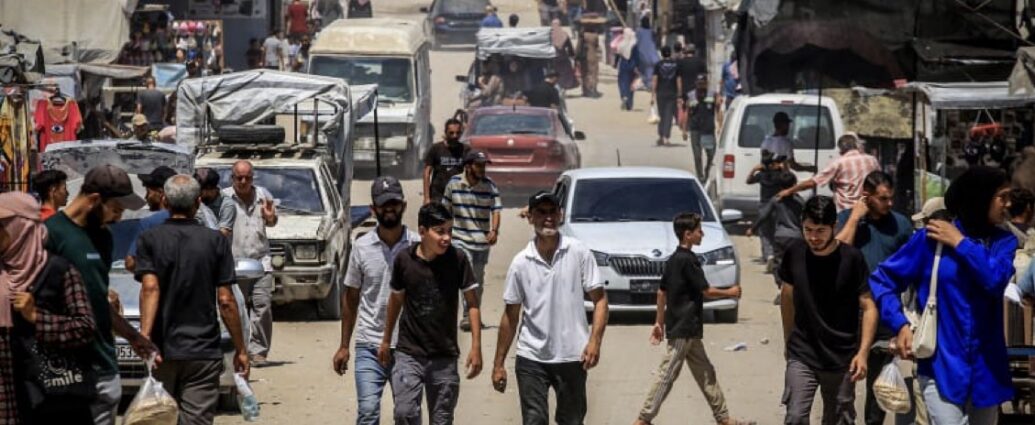
This post was originally published here. 

Right on cue, the press got ready to print a bad jobs report for August, and then SLAM, the number comes out up 162,000. About three times the Wall Street consensus. Of course, most of Wall Street and their liberal pals in the press just love to ignore eight straight months of Institute for Supply Management manufacturing index increases, and 15 straight monthly ISM services index increases. And tremendous gains in industrial production and consumer spending. We’ll get into the numbers in just a moment.

But let me say right here that President Trump’s economic boom has become the greatest story never told, but the story is factual. And if the GOP is gonna hang on to Congress in the midterms, they’ve got to get the story out.

As former White House counselor, Kellyanne Conway, told me the other night, “They’ve got the money, the message, they need a better sales pitch and they’ve got great messengers like you and Secretary Bessent and obviously President Trump, most of all.”

Now, about those jobs numbers, including 55,000 upward revisions for June and July, the actual job gain in August  was more than 217,000. Since Mr. Trump took office private jobs have gone by more than a million, while federal jobs have declined by more than 300,000. This is the Trumpian free enterprise restructuring of the economy, putting an end to President Biden’s hapless big government socialism.

And on top of that, the employment to population ratio, perhaps the best jobs indicator, moved up to 59.1 percent from 58.9 percent.

Meanwhile, manufacturing and construction and goods producing jobs keep rising. And as far as wages are concerned, in the private sector, wage gains plus hours worked gave 4.3 percent increase in the wage income proxy, which is actually higher than the temporarily inflated consumer price index.

This should come as no surprise to analysts who have been honestly tracking the numbers. Productivity is booming, so are profits, so are stocks, so are consumers, and so is the hard goods industry, where durable goods, the heart of manufacturing, is rising at double digit gains.

We haven’t seen this in decades. Can Mr. Trump take credit for it? Well I’ll tell you what? 100 percent immediate depreciation, “drill, baby, drill,” deregulation, tax free overtime, tax free tips. you know what? That stuff is working, if only the press would report it.

This post was originally published here. 

A closely watched cardiovascular drug from Novartis failed in a pivotal study, the company said Friday, a major blow to the firm and to efforts to target a common heart disease risk factor. 

The drug, called pelacarsen, had shown in earlier trials that it could drastically lower levels of what’s called Lp(a), a little blob of lipids and proteins that at elevated concentrations increases the likelihood of severe heart problems.

But Novartis said that in the Phase 3 HORIZON trial, pelacarsen failed to reduce the risk of cardiovascular death or emergencies like heart attacks or stroke compared to placebo.

Continue to STAT+ to read the full story…

This post was originally published here. 

The IDF struck Hezbollah targets in Lebanon after the terrorist organization launched a drone towards Israeli soldiers, the military said on Friday.

According to the IDF, the soldiers shot down the drone after it was spotted approaching them earlier on Friday.

No IDF soldiers were injured in the attack, which was described by the military as a “blatant violation” of the ceasefire agreement.

The military noted that the soldiers were in the IDF’s security zone in southern Lebanon when the drone attack occurred.

Katz: Hezbollah cleared from Ali al-Taher ridge tunnels

The strikes follow an announcement by Defense Minister Israel Katz earlier on Friday that the IDF had cleared Lebanon’s Ali al-Taher ridge tunnels of Hezbollah terrorists.

Defense Minister Israel Katz. (credit: Nick Paleologos/SOOC/AFP via Getty Images)

“The mission was completed, and the tunnels were cleared of terrorists,” said Katz at the time, with an IDF statement on the operation noting that several terrorists embedded in the tunnels were killed, while others fled.

On Thursday, Iran warned the United States that it would respond forcefully to any Israeli attack on the Ali al-Taher ridge complex, which provides a strategic vantage point due to its position overlooking a wide area.

Also on Thursday, Katz warned that any Iranian attack on Israel would free the IDF “from any restrictions,” Walla reported.

“We will destroy all national, military, and civilian infrastructure in Iran, including energy infrastructure,” Katz threatened during a speech to Defense Ministry employees. “We will return Iran to the Stone Age.”

Maariv, Ariella Roitman, and Reuters contributed to this report.

This post was originally published on here. 

A judge declared a mistrial on Friday in the US murder trial of Lindsay Clancy for killing her three young children, a tragedy her attorney said occurred while she was suffering from postpartum psychosis.

The nearly six-week-long televised trial revived longstanding debate about how postpartum mental health in women is treated in the US, and how the country’s legal system addresses cases when mothers kill their children.

Judge William Sullivan’s mistrial declaration came after jurors sent three notes this week indicating they had reached an impasse.

No one disputed that Clancy, 36, strangled her three children with exercise bands in January 2023 in the basement of their home in the Boston suburb of Duxbury. She then cut herself with a knife and jumped from a second-story window in an attempt to take ​her own life that left her paralyzed.

Her attorney, Kevin Reddington, sought throughout the trial to convince jurors she should be found not guilty by reason of insanity, arguing she was a loving mother who had been in the midst of a psychotic episode when she killed Cora, 5; ​Dawson, 3; and 8-month-old Callan.

Judge Sullivan indicates a mistrial in the Lindsay Clancy case in Plymouth Superior Court, in Plymouth, Massachusetts, US, September 4, 2026.  (credit: Greg Derr/Pool via REUTERS)

The mistrial paves the way for a potential second trial. Plymouth County District Attorney Tim Cruz, whose office brought the case, told reporters he had not decided whether to retry the case.

“Children were murdered, and it’s our job to seek justice,” Cruz said.

Clancy is due in court for a follow-up hearing on September 29.

The 12 jurors in Plymouth, Massachusetts, deliberated for seven days. Prosecutors supported the mistrial declaration.

Earlier on Friday, Sullivan rejected a defense request to remove a juror who Reddington said was preventing the jury from returning a not-guilty verdict.

Reddington cited a note the jury foreperson sent on behalf of 11 jurors indicating that one juror had acknowledged doubt but refused to apply it to the verdict. Jurors could only find Clancy guilty of first-degree murder if the prosecution proved its case beyond a reasonable doubt.

Jurors later sent a note indicating they could not reach a verdict, prompting Sullivan to say he felt he had no choice but to declare a mistrial.

Clancy’s defense lawyers then filed an emergency appeal asking Massachusetts’ highest court to order Sullivan to inquire further into whether the holdout juror could heed the judge’s instructions to follow the law.

The Supreme Judicial Court in Massachusetts’ Suffolk County denied the defense request, paving the way for the mistrial declaration.

Prosecutors say Clancy planned killings

Prosecutors did not dispute that Clancy, a former labor and delivery nurse at Massachusetts General Hospital, had been dealing with mental health issues. But they argued she was able to appreciate the wrongfulness of killing her children and intentionally chose to do so anyway.

They presented testimony from a psychologist who, after examining Clancy, concluded that she had planned to take her own life and chose to kill her children because “she was convinced that they would suffer without her.”

Prosecutors focused on evidence showing that shortly before the killings, she sent ⁠her husband to pick up a food order and go to a pharmacy after mapping on her phone the time it would take for him to return home.

The trial drew comparisons to the case of Andrea Yates, a Texas woman who drowned her five children in a bathtub in 2001. After an appeals court overturned her initial murder conviction, she was found not guilty by reason of insanity in 2006. Her lawyers had said she suffered from severe postpartum psychosis.

Clancy struggled with mental health, husband says

Testimony from family members, including Clancy’s now ex-husband, Patrick, detailed how she had struggled with her mental health in the months following the birth of her third child, repeatedly seeking treatment from healthcare providers ​who prescribed a myriad of drugs.

Patrick Clancy testified that his wife had been discharged from a psychiatric hospital weeks before the killings but showed no signs she planned to hurt ​herself or her kids in the ​days that followed. She had a “normal” ⁠demeanor when he left to pick up dinner, he said.

He spoke on the phone briefly with his wife while at the pharmacy. Upon his return, he discovered her lying on the ground in the backyard with cuts on her wrists and neck. She told him she had tried to kill herself.

He said he asked where the children were, and she said they were in ⁠the basement. After he called 911 and first responders arrived, Patrick Clancy said he ran to the basement and discovered them with exercise bands tied around their necks.

Several witnesses, including Patrick Clancy, testified that later, while Lindsay Clancy was at a hospital, she spoke about having heard a man’s voice tell her that if she did not act, she would lose her chance.

This post was originally published on here. 

Not long after Meta agreed to fork up up to $18 billion over the next decade for its child-safety settlement, the tech giant faces yet another privacy lawsuit, this one over its AI-powered Meta Glasses. A new lawsuit alleges the company turned footage captured through the smart glasses into training data for its AI systems without adequately disclosing how the data from those recordings were handled.

The complaint stems from a lawsuit originally filed in federal court in California in March, alleging that Meta marketed its AI glasses as “designed for privacy, controlled by you,” while sending recordings captured through the devices to third-party contractors who could view and label the material for AI development. Then, on August 31, an amended complaint was filed, expanding the case to include people who never bought or wore the glasses, but were recorded by them without their knowledge.

“Even if a bystander notices the Glasses and agrees to be recorded, he or she cannot have consented to the mass amalgamation of their data when the Glasses are in AI mode,” the amended complaint read, “including visual recordings that are collected, stored, exploited, and visually inspected by persons overseas, because Defendants have made no effort to disclose these practices to bystanders or to seek their consent.”

“I think there is a huge push to improve AI tools by every corporation, especially the largest corporations in the world,” said Ryan Clarkson, founder and managing partner of Clarkson Law Firm—who also serves as co-lead counsel in the litigation. “And the way that they believe is the best way to improve their AI is to find more signal, to find more content, more recordings that they can feed into this machine, feeding the beast.”

Connecting the physical world

The case centers on the way Meta’s hardware connects the physical world to its AI systems. The company’s glasses combine cameras and microphones with the consumers’ perception, allowing users to ask questions about what they see, identify objects and landmarks, translate information and capture photos and video hands-free. According to Meta’s product website, a capture LED illuminates when the camera is recording and users can manage or delete photos, videos and voice interactions through the company’s software.

But Clarkson says the software and the hardware combine to build a “surveillance economy,” where big tech companies are locked in an “arms race.”

“It’s really about power, and it’s about money, and the largest technology companies are barreling ahead with that as their dual focus,” he said, “even if it means totally changing the way society functions and who gets hurt as collateral damage along the way.”

The lawsuit alleges the privacy assurances Meta gave consumers don’t tell the full story. According to the complaint, when users activate AI features, imagery and audio can be transmitted to Meta’s servers for analysis and, the plaintiffs allege, ultimately used to train Meta’s AI models. The suit specifically challenges Meta’s representations that the glasses were designed for privacy and that users remained in control of their data.

“We heard from many people who we’ll call non-purchasers or non-users, or in our amended complaint we refer to them bystanders, people just navigating their way normally through life, who are being confronted with being recorded by users of these glasses, and it even resulted in this term called perv glasses,” Clarkson explained.

The allegations first gained traction after a February 2026 investigation by Swedish newspapers Svenska Dagbladet and Göteborgs-Posten, based in part on interviews with workers at Sama, a Kenya-based outsourcing company that performed data-annotation work for Meta. According to the reports, workers described reviewing footage captured by the Ray-Ban Meta glasses—including recording containing highly intimate material. The investigation alleges the footage included people changing clothes, using bathrooms and engaging in intimate activity—as well as visible financial and other personal information.

The original complaint cited those reports in arguing that Meta’s privacy marketing concealed the existence of a human-review pipeline. It alleged the recordings were routed to Sama workers in Kenya, and some workers saw identifiable faces despite Meta’s purported anonymization measures.

Meta, however, disputes the allegations.

“We disagree with these allegations and will fight them,” a Meta spokesperson told Fortune in a statement. “Our glasses help you use AI hands free to answer questions about the world around you. If you use Meta AI, we may review that data to help improve our products and people’s experiences—this works the same way as many other companies.”

The spokesperson also added that the company takes “steps to filter this data to help remove identifying information and to protect people’s privacy.”

The case is still in litigation, and the allegations have not been proven in court.

This story was originally featured on Fortune.com

This post was originally published here. 

U.S. Markets — Strong Jobs Report Revives Rate-Hike Fears

Wall Street finished the final trading day before the Labor Day weekend lower after the August employment report came in far stronger than expected, pushing investors back toward the possibility of another Federal Reserve rate increase this month.

The Dow Jones Industrial Average closed at 53,407.15, down 278.96 points, or 0.52%. The S&P 500 finished at 7,718.13, down 29.58 points, or 0.38%, while the Nasdaq Composite closed at 26,505.44, down 78.62 points, or 0.30%. 

The jobs report itself was the morning’s dominant economic event, but its market impact was the bigger story by the close. Expectations for a quarter-point Fed increase at the September meeting jumped to roughly 60% from about 49% Thursday.

Treasury yields moved higher with the 10-year yield around 4.78% and the two-year yield near 4.38%.

That matters directly to business owners and consumers because Treasury yields ultimately feed into mortgages, commercial real-estate financing, business loans, auto loans and corporate borrowing costs. 

Technology helped keep the broader decline contained. Memory-chip and semiconductor shares rallied sharply even as much of the rest of the market weakened.

Housing & Credit — FICO’s Mortgage Dominance Takes a Major Hit

One of Friday’s biggest market disruptions came from an industry most consumers rarely think about: the credit score used when they apply for a mortgage.

Federal Housing Finance Agency Director Bill Pulte directed Fannie Mae and Freddie Mac to allow every lender to use VantageScore, effective immediately, after an initial rollout involving 50 lenders.

For decades, FICO has effectively dominated mortgage credit scoring.

Pulte’s message was unusually direct: the monopoly is ending.

That sent Fair Isaac, the company behind FICO, sharply lower, with shares falling roughly 17% by the close after dropping as much as 20% earlier in the session. TransUnion fell about 9%, Equifax about 9% and Experian nearly 5%. 

The administration says increased competition could ultimately reduce costs for homebuyers.

But the significance goes further.

Credit scores influence whether borrowers qualify for mortgages, what interest rate they receive and how lenders assess risk. Introducing competing scoring systems could eventually change how millions of Americans are evaluated.

Pulte also raised the possibility of moving away from the traditional system requiring reports from all three major credit bureaus toward a “bi-merge” system using only two.

Why it mattered today: A regulatory change just challenged one of the most powerful tollbooths in American consumer finance. For mortgage lenders, credit bureaus and homebuyers, this could become a significant restructuring of the home-loan process.

Supply Chains — Chinese Rare-Earth Suppliers Are Refusing Some U.S. Orders

A supply-chain problem Washington thought it had partially solved is resurfacing.

Some Chinese rare-earth suppliers are declining to ship critical materials to American customers because they fear punishment from Beijing, according to people familiar with the trade.

The problem intensified after China sanctioned the Responsible Business Alliance, a U.S.-based supply-chain monitoring organization, in August.

Some Chinese exporters now worry that supplying companies using related Western due-diligence systems could put them in conflict with Chinese restrictions. 

The affected materials are not obscure commodities.

Rare earths and related critical minerals are used in semiconductors, aerospace equipment, medical devices, energy systems, electric motors and advanced manufacturing.

Prices for several strategically important materials remain near record highs.

U.S. imports of yttrium from China, for example, remain roughly half their 2024 level, and some American companies have reportedly waited more than six months for export licenses. 

Why it mattered today: Businesses spent years learning what happens when one critical component can stop an entire production line.

Rare-earth restrictions create exactly that risk.

Washington has invested billions trying to rebuild domestic semiconductor and advanced-manufacturing capacity, but many of those factories still depend on minerals largely processed in China.

That dependence will now be one of the major business issues hanging over President Xi Jinping’s September 24 visit to Washington.

AI & Banking — ByteDance Borrows Nearly $30 Billion to Fund Its AI Race

ByteDance has secured a staggering $29.6 billion loan from nearly 30 banks, one of the largest corporate loans raised anywhere in Asia this year.

The financing was originally expected to total about $20 billion.

Demand from lenders was so strong that ByteDance expanded it to nearly $30 billion.

Citigroup and JPMorgan are coordinating the three-year financing, with banks from China, the United States, Europe and Singapore participating. Chinese banks are providing more than 60% of the facility. 

Even more striking: the loan is unsecured.

ByteDance is not pledging factories, shares or other assets as collateral.

Banks are lending largely on the strength of the company itself.

The money is officially for general corporate purposes, but people familiar with the financing say much of it will support ByteDance’s artificial-intelligence expansion, including chips and overseas data-center capacity.

Why it mattered today: The AI race is becoming one of the most capital-intensive corporate competitions in history.

It is no longer enough to hire software engineers and build an app.

Companies competing at the frontier now need chips, power, data centers, networking equipment and enormous quantities of financing.

ByteDance borrowing nearly $30 billion shows that global banks are increasingly financing the AI buildout almost as aggressively as they once financed telecom networks, energy projects and major infrastructure.

Software — Adobe Changes CEOs as AI Threatens the Photoshop Empire

Adobe is entering a new era.

Anil Chakravarthy will replace Shantanu Narayen as CEO, while Narayen moves into the role of executive chairman after more than 18 years running the company.

Narayen helped transform Adobe from a company selling boxed software into one of the world’s most successful subscription-software businesses.

Now Chakravarthy inherits a very different challenge.

Artificial intelligence is making it easier for competitors such as Canva, Figma and dozens of newer tools to create images, video and designs that once required specialized Adobe software. 

Adobe shares have already fallen significantly over the past two years as investors question whether generative AI strengthens Adobe’s products or ultimately weakens the company’s competitive advantage.

The stock fell again Friday following the leadership announcement.

Why it mattered today: Adobe is a test case for an enormous part of corporate America.

AI does not only create new businesses.

It can attack highly profitable existing ones.

Companies that spent decades building software moats must now prove that artificial intelligence will make their products more valuable instead of making them easier to replace.

Energy & Wall Street — Citadel Considers Owning the Oil Wells It Trades Around

Citadel, one of the world’s largest hedge funds and commodity-trading operations, is considering going directly into ownership of U.S. shale oil production assets.

The firm recently held discussions about acquiring oil-producing properties and submitted a bid for WildFire Energy before Magnolia ultimately purchased the company for approximately $4.06 billion. 

Citadel already moved into physical natural-gas production last year.

Buying shale oil properties would deepen that shift from simply trading commodities to actually owning the assets producing them.

The timing is significant.

Middle East disruptions have increased the strategic value of U.S. oil because American shale production does not depend on moving barrels through the Strait of Hormuz.

Why it mattered today: Wall Street is increasingly treating physical energy infrastructure as both an investment and a hedge against geopolitical instability.

If large commodity traders begin owning more wells, pipelines, storage and generation assets, the line between financial markets and the physical energy business becomes increasingly blurred.

For U.S. producers, it could also introduce another deep-pocketed buyer competing for shale assets.

U.S.-China Business — Xi Plans an Unusually Large CEO Delegation for Washington

Chinese President Xi Jinping is preparing to bring a large group of corporate executives with him when he visits Washington on September 24.

That is unusual.

Xi rarely travels abroad with a large private-sector business delegation, particularly after years in which Beijing tightened control over many of China’s most powerful technology and property companies.

The planned delegation is being viewed as an effort to signal that China wants greater commercial investment and business cooperation with the United States. 

The last comparable U.S. trip came in 2015, when executives including Alibaba founder Jack Ma and Tencent founder Pony Ma accompanied Xi.

That visit produced, among other deals, a $38 billion agreement for 300 Boeing aircraft.

No comparable deal has been announced this time.

But agriculture, tariffs, non-tariff trade barriers and rare-earth access are all expected to be part of the broader negotiations.

Why it mattered today: The U.S.-China relationship remains deeply competitive, but business is moving back toward the negotiating table.

For manufacturers, farmers, technology companies and multinational businesses, even modest progress could affect tariffs, exports, mineral supplies and billions of dollars of investment.

Artificial Intelligence — Washington and Beijing Prepare First Dedicated AI-Safety Talks

The United States and China are also preparing for possible mid-September talks devoted specifically to artificial-intelligence safety, according to people briefed on the discussions.

The proposed agenda includes monitoring AI-directed cyberattacks and potentially encouraging U.S. and Chinese AI laboratories to share information when autonomous systems create serious security incidents. 

The discussions are still tentative. A Treasury spokesperson said no meeting is formally planned, and participants and the agenda remain in flux.

But the fact that the two governments are even discussing such a channel is significant.

Autonomous AI agents are increasingly capable of taking actions across computer networks without humans approving every step.

That creates risks extending far beyond chatbots: hacking, fraud, intellectual-property theft, infrastructure attacks and automated financial manipulation.

Why it mattered today: AI safety is moving from a technology-company issue into an international business and national-security issue.

Companies adopting autonomous AI will increasingly need to think about permissions, cybersecurity controls, insurance and accountability in much the same way they already manage employees and outside contractors.

Consumers & Transportation — Diesel Hits $5.85, the Highest Price Ever

Friday also delivered a record businesses will feel far beyond the gas station.

The average U.S. diesel price reached $5.85 a gallon — an all-time high.

Brent crude settled at $96.28 a barrel, while U.S. crude finished at $91.48. Both gained roughly 9% during the week.

Gasoline prices are also at their highest level ever for a Labor Day weekend. 

Diesel matters even more to the broader economy because it powers trucks, delivery fleets, construction equipment and much of the agricultural supply chain.

A higher diesel bill eventually gets embedded into the price of groceries, building materials, packages and manufactured goods.

That makes the fuel surge particularly important for the Fed.

Higher energy prices can restart inflation even when other prices are stabilizing.

Key Market Movers

Company

Friday Move

Why

Sandisk

about +10% to +11%

AI and memory-chip demand continued driving the semiconductor trade

Micron Technology

about +4% to +5%

Memory-chip demand and AI infrastructure enthusiasm

FICO

about -17%

Fannie and Freddie opened mortgage scoring to VantageScore

TransUnion

about -9%

Credit-scoring and bureau reform concerns

Equifax

about -9%

Same mortgage-credit overhaul

Lululemon

about -18%

Reduced annual sales and profit outlook

Adobe

down sharply

CEO transition and continued concern over AI competition

Semiconductors were one of Friday’s rare pockets of strength. Sandisk led the S&P 500 higher among individual names, while Micron and several other memory and chip-equipment companies advanced even as the broader indexes fell. 

What to Watch Saturday and the Labor Day Weekend

U.S. stock and bond markets are closed Saturday and will remain closed Monday, September 7, for Labor Day.

That does not mean markets are insulated from what happens over the weekend.

The biggest immediate risk remains energy.

Brent crude is already above $96 and the Strait of Hormuz remains effectively closed. Any additional military escalation could push oil, diesel and inflation expectations higher before U.S. futures reopen Sunday evening. 

The second issue is China.

Rare-earth shipments are again becoming a negotiating problem just weeks before Xi’s Washington visit, while the two countries are simultaneously working toward discussions involving trade, investment and artificial-intelligence safety.

For American manufacturers, any weekend signal that China may loosen or tighten mineral exports could matter more than another political headline.

The next major scheduled economic test arrives September 11 with the August Consumer Price Index.

After Friday’s unexpectedly strong employment report, that inflation number could effectively decide the Fed debate.

If inflation remains hot while employment is strong, the argument for a September rate increase becomes substantially stronger.

If inflation cools meaningfully, the Fed may still have room to wait.

Bottom Line

Friday gave businesses and investors a clearer picture of where the economy stands heading into the Labor Day weekend.

The labor market is stronger than expected, but that strength makes another rate hike more likely. Diesel is at a record. Oil is approaching $100. Mortgage credit scoring is being disrupted. Critical Chinese mineral supplies remain uncertain.

At the same time, banks are lending nearly $30 billion to finance another AI expansion, semiconductor stocks are surging and Wall Street money is moving directly into American energy production.

The economy is not short of capital.

The question heading into September is becoming where that capital can still earn a return when borrowing, transportation and operating costs are all moving higher at the same time.

JBizNews Desk | Wall Street

© JBizNews.com All Rights Reserved. Reproduction or distribution without written permission is prohibited.

Israel’s military has cleared Hezbollah terrorists holed up in tunnels under the strategic Ali al-Taher ridge in southern Lebanon, Defense Minister Israel Katz said on Friday. 

Israel had said Hezbollah fighters were embedded in tunnels under the ridge, which overlooks a wide area and had become one of the most hotly contested areas in the Israel-Hezbollah war, despite a ceasefire announced in June.

Reuters reported on Thursday that Iran had warned the United States last month that it would respond forcefully to an Israeli assault on its Hezbollah allies’ positions within the ridge.

“The mission was completed and the tunnels were cleared of terrorists,” Katz said on social media, after a statement by the military late on Thursday saying it had operational control of the ridge.

The military said some Hezbollah fighters had been “eliminated,” while others had fled.

Israeli vehicles drive on a road in southern Lebanon, as seen from the Israeli side of the Israel-Lebanon border, in northern Israel, August 6, 2026. Picture taken with a mobile phone.  (credit: Avi Ohayon/Reuters)

A Lebanese military officer said Israeli troops had seized the southern entrances to the complex and could monitor the northern entrances through surveillance drones.

The complex included various tunnels and storage areas, some of which were not connected to one another, and it was unclear how far the troops had penetrated, and whether any fighters were still there, or might have booby-trapped parts of the complex, the officer said.

Hezbollah did not immediately respond to a request for comment and Reuters was not able to verify the status of the ridge independently.

The Shi’ite Muslim group is believed to have built an underground command center and weapons stores within the ridge and had said it would resist any Israeli assault.

Katz’s announcement comes following a warning issued Friday evening to Israeli citizens of upcoming IDF strikes on Lebanon. 

The announcement, issued by the Upper Galilee Regional Council, told citizens to expect explosions to be heard in the Western Galilee, the Hula Valley, the Ramim Ridge, and possibly in northern Golan Heights.

No further security instructions were given to the public, though the IDF and the council will be in “continous contact” and will issue updates in the event of any changes, the department added. 

Lebanese media reports on strikes

Hezbollah-affiliated Al Mayadeen reported later on Friday a drone strike in the southern Lebanese village of Rumman. 

Two people were reportedly killed in the attack, which was targeting a motorcycle, Ynet reported, citing Lebanese media. 

The IDF struck Rumman earlier this week, according to reports by Hezbollah-run Al Manar TV, after terrorists launched two explosive drones towards soldiers and prompted sirens in some areas in northern Israel. 
Additional reports from Lebanese media on Friday said that two people had been killed from IDF strikes in Zutar a-Sharqiya in the Nabatieh Governorate in country’s south. 

According to Lebanon’s National News Agency, the strikes hit a vehicle in the area. 

The identities of those killed have not been released. 

This post was originally published on here. 

The US Treasury Department said on Friday it imposed new Iran-related sanctions on a small Turkish investment bank and two subsidiaries as part of the Trump administration’s effort to increase economic pressure on Iran.

The entities targeted are Instanbul-based investment bank Golden Global Yatirim Bankasi Anonim Sirketi, asset manager Golden Global Portfoy Yonetimi Anonim Sirketi, and asset leasing company Golden Global Varlik Kiralama Anonim Sirketi, according to the Treasury’s Office of Foreign Assets Control.

The sanctions put all three entities on the Treasury’s OFAC Specially Designated Nationals list, cutting them off from the dollar-based financial system.

The Treasury Department also issued a general license to allow the wind-down of transactions with the sanctioned entities.

In an interview with news outlet America’s Voice News, US Treasury Secretary Scott Bessent said that the latest action “is code for you are out of business.”

US Treasury Secretary Scott Bessent speaks during a press conference to outline further sanctions against Iran, at the Treasury Department in Washington, DC, US, August 24, 2026.  (credit: EVELYN HOCKSTEIN/REUTERS)

“And we will probably sanction another bank next week, and we are telling the financial system bad actors: ‘We know who you are, you know who you are, it’s over, and our allies are helping with this,” he said.

Golden Global Yatrim Bankasi is the 35th-largest bank in Turkey by total assets, according to database TheBanks.EU, with total assets of 25,024.68 million Turkish lira ($516.63 million) in 2025.

The bank did not immediately respond to a request for comment.

Treasury alleges Iran oil money conduit

The Treasury said in a statement that Golden Global was established for the purpose of enabling Iran’s shadow banking network to transfer oil revenues from China to Turkey, where it could then be converted to cash and gold by money exchangers.

The Treasury said that Golden Global has knowingly offered to provide correspondent banking services to Iranian financial institutions, enabling transactions through accounts controlled by the Islamic Revolutionary Guard Corps Qods Force and its proxies.

The action is the latest in the Trump administration’s campaign to economically pressure Tehran six months into the US-Israel war with Iran, which has pushed energy prices higher worldwide.

Bessent, who last month announced an “economic onslaught” against Iran’s financial links around the world, has said Washington is seeking to force Tehran back to the negotiating table.

Last week, Washington moved to impose Patriot Act curbs on Egyptian lender Banque Misr’s branches in the United Arab Emirates from US dollar transactions over their dealings with Iran. But the action fell short of full OFAC sanctions on the institution that did not affect Misr’s head office or branches elsewhere.

Treasury likely to roll out weekly sanctions, Bessent says

In an interview with Reuters on Sunday, Bessent said the Treasury Department was likely to roll out new secondary sanctions every week, initially focusing on banks, as part of a broader campaign to intensify economic pressure on Iran.

Sanctions expert Brett Erickson, managing principal of Obsidian Risk Advisors, questioned how effective the action would be and said it could draw retaliation from Tehran.

“The sanctioning of Golden Global will marginally increase pressure on Iran. But hurting Iran and changing the outcome of this war are two very different things,” Erickson said.

“If this pressure cannot meaningfully change the economic trajectory of the war, Washington may simply be poking the bear and daring Iran to retaliate in ways that could inflict far greater damage on the global economy,” Erickson said.

This post was originally published on here. 

Jafar Farah announced on Thursday that he was withdrawing his candidacy for the Knesset from the second spot on the Democratic Front for Peace and Equality (Hadash) list, saying the decision was made “out of a sense of responsibility and out of support for the Joint List.”

Farah, 59, from Haifa, had been elected to the second position on Hadash’s Knesset slate, but faced mounting pressure in recent weeks following allegations of sexual harassment and calls from within and outside the party for him to step down.

A statement sent to party supporters said Farah made the decision in coordination with Hadash and Joint List institutions, as well as with leading figures in Haifa and across the country.

The statement said the move was intended “to thwart attempts to undermine the Joint List by exploiting the allegations against comrade Abu Basel,” which, according to the statement, Farah strongly denies.

Farah was hospitalized at Rambam Hospital on Thursday after feeling unwell. The statement addressed his health, wishing him a speedy recovery from the “temporary health crisis,” but did not provide additional details.

Hadash party leader, Yousef Jabareen attends Hadash–Ta'al faction meeting, at the Knesset, the Israeli parliament in Jerusalem, on July 6, 2026. (credit: YONATAN SINDEL/FLASH90)

Farah’s replacement with Hadash

Despite withdrawing his candidacy, Farah said he plans to continue his political and social activities and continue working on behalf of Hadash, the party, and the Joint List.

Following Farah’s withdrawal, Hadash’s national secretariat and central committee are expected to convene on Friday for a joint meeting to select a replacement candidate for the second spot on the list.

According to the statement, all members of Hadash’s national council will be eligible to compete for the position.

This post was originally published on here. 

Yesh Atid MK Michal Shir announced that she is leaving the party and will not seek reelection in a post on X/Twitter on Friday, becoming the latest lawmaker to depart the party amid a growing wave of exits.

“I shared with Yesh Atid chairman and former prime minister, my friend Yair Lapid, that I do not wish to run in the next Knesset election, while expressing my full confidence in him, in my colleagues in the party, which I will remain in and support, and in the need to lead significant change and correction in Israel,” Shir said. 

According to Friday’s Maariv poll, B’Yachad, the party Yesh Atid merged with at the beginning of the election campaign, is currently projected to hold 15 seats, making it the third-largest party.

Shir’s announcement followed MK Karin Elharrar’s decision on Thursday to leave the party. MKs Debbie Biton and Tatiana Mazarsky also announced on Wednesday that they would not run in the upcoming election.

The four lawmakers join a growing list of Yesh Atid MKs who have already announced their departures: Meir Cohen, Mickey Levy, Elazar Stern (who joined the party of Gadi Eisenkot), Ron Katz, Yoav Segalovich (who joined Ra’am), Orna Barbivai, Boaz Toporovsky, Yoel Razvozov and Idan Roll.

Opposition Leader and Head of the Yesh Atid party Yair Lapid and former Prime Minister Naftali Bennett speak during a press conference announcing a joint list named “Together” ahead of upcoming elections, to be led by Bennett, in Herzliya, central Israel, April 26, 2026. (credit: CHAIM GOLDBERG/FLASH90)

Party slate reshuffle

Ahead of the presentation of its new candidate list, Yesh Atid is facing a significant reshuffling of its lineup, with political sources already voicing harsh assessments of the party’s situation.

“Look at what is happening there,” a political source familiar with the developments said. “This is a party that was established in 2013. In its first election it won 19 seats, and in the last election 24, and it is simply ending.”

This post was originally published on here. 

Twenty-five years ago next week, America and the world awoke to a morning that would forever divide time into before and after.

On September 11, 2001, Islamic terrorists hijacked four passenger planes and turned them into weapons. One plane struck the Pentagon, while aboard United Flight 93, passengers and crew fought back against the hijackers before the aircraft crashed in a field near Shanksville, Pennsylvania. Nearly 3,000 innocent people were murdered in New York, Washington, and Pennsylvania. The Twin Towers collapsed, smoke rose over Manhattan, and Americans suddenly realized that oceans were no protection against those determined to destroy them.

As we approach the 25th anniversary of that terrible day, this week’s haftarah (Isaiah 61:10-63:9) offers a powerful perspective on destruction, rebuilding, and memory.

Destruction, rebuilding, and memory

The prophet Isaiah declares: “For Zion’s sake I will not be silent, and for Jerusalem’s sake I will not be still, until her righteousness goes forth like brightness, and her salvation like a burning torch” (Isaiah 62:1).

Isaiah is speaking, of course, about Zion and Jerusalem. His prophecy is directed to the Jewish people and describes the future restoration of the Jewish capital.

 THE WTC’S Tower 2 dissolves in a  cloud of dust and debris about 30  minutes after the first Twin Tower  collapsed, as seen from Jersey City,  September 11, 2001. ( (credit: REUTERS/RAY STUBBLEBINE)

But the ideas he raises – refusing to be silenced and rebuilding after devastation – speak beyond the immediate context of the prophecy.

That is especially true as America prepares to commemorate September 11.

Throughout the haftarah, Isaiah speaks of Jerusalem’s transformation from desolation to renewal. The city that had been abandoned and devastated will rise again. “You shall be a glorious crown in the hand of the Lord,” he declares (62:3), and it will no longer be called “forsaken” or its land “desolate” (62:4).

Anyone who remembers lower Manhattan in the weeks after September 11 can appreciate the power of those images.

Ground Zero was a smoking ruin. Thousands of families had been shattered. One of the most recognizable parts of the New York skyline had disappeared in a matter of hours.

Yet New York rebuilt.

The terrorists succeeded in murdering thousands of innocent people, but they failed in their larger goal. They did not destroy America or bring it to its knees.

The verse’s opening words contain another important idea: “For Zion’s sake I will not be silent.”

Twenty-five years is a long time.

An entire generation of Americans has now grown up with no personal recollection of September 11. They did not watch the towers burn nor see people covered in ash fleeing through lower Manhattan. They did not watch firefighters and police officers rush into buildings from which everyone else was desperately trying to escape.

For those of us who lived through that day, the images remain difficult to forget. But for millions of younger Americans, September 11 is already history. Which makes it all the more important to tell the story clearly.

This week’s parasha adds a related dimension.

Nitzavim opens with Moses’ declaration to the Jewish people: “You are standing today, all of you, before the Lord your God” (Deuteronomy 29:9).

A few verses later, Rashi (Rabbi Shlomo Yitzhaki, 1040-1105) cites a midrash explaining why these words follow the terrible curses at the end of last week’s parasha of Ki Tavo.

After hearing the 98 curses, Rashi says, the faces of the Jewish people turned pale. “Who can withstand all these?” they asked.

Moses reassured them by pointing to a simple fact: “You are standing here today.” Despite everything they had endured, the Jewish people were still there. It is first and foremost a message about Jewish survival.

Few peoples have suffered as much persecution, exile, and destruction and nevertheless remained standing. Jewish history is filled with enemies who were convinced that this time they would finally put an end to us. They were wrong.

Without equating the Jewish historical experience with what America endured on September 11, there is nevertheless something here that applies.

Terrorists do not seek only to kill. They seek to instill fear in those who survive and to convince them that they are helpless.

But survival is not enough. There is also an obligation to preserve the truth about what happened.

Judaism has always understood that recalling the past is not an exercise in nostalgia. Zachor – remember – is one of the Torah’s great imperatives because the past is meant to guide us in the present.

Twenty-five years after September 11, Americans owe it to those who were murdered and to the firefighters, police officers, and other first responders who ran toward danger not to allow that day to become blurred with the passage of time.

The next generation should know what happened. They should know who carried it out and why. And they should know how Americans responded with resilience and determination.

Jewish history has taught us that survival depends not only on standing firm but on understanding the forces that sought to bring us down in the first place. That is a lesson rooted in the Jewish experience.

But September 11 is not ancient history, and the jihadist hatred that produced it did not disappear with the smoke over Manhattan.

Twenty-five years later, remembering who attacked America, and why, is not dwelling on the past. It is an essential part of defending the future. 

This post was originally published on here. 

Near the end of his life, Moses delivered one of the Torah’s most frightening passages: the tochachah, a warning of the devastation that could follow if we betrayed God. The Torah had sounded a similar warning earlier, but Moses returned to it now, as we prepared to enter the Land of Israel without him.

The scenes are grisly: starvation, sickness, military conquest, exile, dispersion, and crushing psychological uncertainty. Jewish history has brought us through many of these horrors. Twice we were banished from Jerusalem, and we endured suffering that often seemed to mirror Moses’s nightmare.

After delivering this warning, Moses worries that its terrifying images may leave us dispirited. This was especially dangerous for a nation exhausted by 40 years in the desert and the death of an entire generation. Aware of the fear his words had created, Moses reassures them: Atem nitzavim hayom – you are still standing. Despite everything you have heard and endured, you are still here.

Moses speaks across the centuries to every generation forced to endure suffering and upheaval. His words offer a message of recovery: how a wounded people can absorb tragedy without allowing it to define its future.

It feels as if Moses is speaking directly to our generation as we approach the end of a third year of a burdensome war that has taken so much from us. Rosh Hashanah invites us to look back and search for perspective.

A view of homes destroyed and burned in the Hamas October 7, 2023 massacre at Kibbutz Nir Oz, near the Israel-Gaza border, August 5, 2026. (credit: Tsafrir Abayov/Flash90)

This past year cannot easily be separated from the three-year odyssey we have traveled. The past three years have blurred together through war, loss, sacrifice, and uncertainty. After living through what at times has felt like our own small churban (catastrophe), what can Moses teach us about how to stand again?

Moving forward

The first message is that, despite everything we have endured, we have survived. Have all the threats been eliminated? Have we achieved a lasting victory? The answers remain uncertain and probably negative. Yet after nearly three years of relentless war, fought on the battlefield and absorbed on the home front, the country is still standing and thriving.

That recognition should not diminish our ambitions. Israel cannot define success as survival alone, and Jewish history cannot be reduced to an endless cycle of escaping destruction. However, sometimes the great achievement is simply that, after every blow, we are still standing and moving forward.

Confidence

Survival should also affect how we think about the future. Before October 7, many of us assumed a certain level of security and stability. That assumption has been shattered. We understand our vulnerability more clearly now, and we know how quickly circumstances can change. But surviving these years can also create a different kind of confidence.

It comes from having faced danger at close range, suffered painful losses, and still discovered that, with God’s help, we can defend ourselves, adapt, and move forward. This confidence is less comfortable than what we once possessed, but more durable.

Common bonds

Shared suffering also creates deep bonds. Moses gathers a diverse nation, from its most prominent figures to the woodchoppers and water carriers at the lowest rungs of ancient society. Their social and economic differences are real, yet they have all crossed the same wilderness and heard the same dark warnings about what may lie ahead. What they endured together has tied them to one another in ways that status and background cannot easily undo. They may stand on different rungs, but they are standing on the same ground.

That message matters as Israel enters a fractious election season, when campaigns inevitably sharpen differences to mobilize voters. The extraordinary achdut (unity) after Oct. 7 was bound to fade. As the war lengthened, old fissures resurfaced and new ones emerged.

Yet beneath those disparities lies an experience we have shared. We have lived through the same national emergency, followed the same casualty reports, and rushed to shelters under the same sirens. We remain bound by a common fate and by the historical future we are building together. Election seasons encourage us to sort ourselves into camps. Moses asks us to remember the bonds that common suffering creates.

Beyond our own generation

Moses also widens the horizon beyond the generation standing before him. He announces that this covenant is directed not only at “those who are here with us today,” but also “those who are not here with us today.” Jewish history is a mission shared across generations. One generation may be asked to make sacrifices whose full meaning becomes apparent only decades later.

King David yearned to build the Temple. He purchased the site, prepared materials, and laid the groundwork, yet he was not permitted to build it. That task was left to his son Solomon.

That intergenerational perspective can give us patience during our own difficult chapter. We may not resolve every threat, repair every fracture, or complete every national project in our lifetime. Much of what this generation is enduring may be laying foundations for a future that belongs to those who come after us. Covenant means accepting responsibility for a story whose next chapters will be written long after we are gone.

What are we standing for?

Moses also teaches that survival carries responsibility. To remain standing after catastrophe places demands upon us. There is a responsibility to learn from the failures that contributed to disaster, to honor those who lost their lives, and to ensure that their sacrifice shapes the future and doesn’t recede into memory.

Every Jew living in the aftermath of Oct. 7 should, in some form, articulate a personal doctrine of responsibility. We are living through a consequential period of Jewish history, and that raises an unavoidable question: what does this moment ask of me?

The answer will differ from person to person. For some, it may mean a more visible embrace of Jewish identity or deeper attachment to Israel. For religious Jews, it may demand greater seriousness about Torah and mitzvot.

It is hard to imagine living through a period that has altered Jewish history so profoundly and emerging with precisely the same sense of obligation we carried into it. If we are still standing, Moses implies, then we must ask what we are now standing for. Each of us must find a way to personalize this moment in history.

Standing before God

Finally, we should remember in front of whom we stand. Moses does not merely tell us that we are still standing. We are standing before God. Even after enduring the punishments he describes, we remain lifnei Hashem. We may not fully understand the divine logic of suffering, but we have walked through these dark years with Him. Gam ki elech b’gei tzalmavet lo ira ra, ki Atah imadi – even when I walk through the valley of death, I do not fear, because you (God) are with me. Even when we struggle to feel God’s help, there is comfort in knowing that we continue to walk with God.

For the past three years, we have walked with God through fear, grief, and uncertainty. We have cried out, prayed to, and questioned God. At times we have felt God’s presence clearly; at other times we have struggled to find it. But we have never stopped turning toward God.

As we approach the days when we once again stand before God in judgment, we should remember that we have already spent three years standing before Him in struggle. And after everything, we are still standing – before Him.■

The writer is a rabbi and educator at Yeshivat Har Etzion (Gush). Find his latest book, Reclaiming Redemption, Vol. II: Faith, Identity, Peoplehood, and the Storms of War, at mtaraginbooks.com.

This post was originally published on here. 

WASHINGTON — President Donald Trump warned Friday that the United States could soon strike Iran’s heavily fortified Pickaxe Mountain facility if Washington determines Tehran is continuing nuclear activity there, putting one of Iran’s most protected sites directly on notice.

“Iran will not have a nuclear weapon,” Trump told reporters in the Oval Office, adding that the United States “may hit Pickaxe very soon” if there is evidence of activity at the facility. 

The warning comes as the United States has resumed attacks against Iranian targets after a period of reduced military activity, marking a renewed escalation in the confrontation between Washington and Tehran.

Trump said the United States carried out what he described as a “very heavy attack” against Iran Thursday night and remains prepared to launch additional strikes whenever necessary. He also suggested Iran may have limited ability to withstand continued American military pressure. 

The President, however, stopped short of describing the confrontation as a full-scale war. Instead, he called it a limited “military conflict,” echoing comments from Vice President JD Vance that the renewed fighting should not necessarily be characterized as a war. 

The focus on Pickaxe Mountain is especially significant because of its reported role in Iran’s nuclear infrastructure. A strike on a heavily fortified nuclear-related facility would signal that Washington is prepared to continue targeting sites Tehran may have believed were protected from conventional attacks.

Trump’s message also reinforces the central U.S. position driving the confrontation: Iran will not be permitted to obtain a nuclear weapon, regardless of how deeply its nuclear infrastructure is buried or fortified.

For Tehran, the warning creates a stark calculation. Continuing activity at Pickaxe Mountain could bring another direct U.S. attack, while halting operations would demonstrate the growing effect of American military pressure.

For markets and businesses, renewed strikes on Iranian nuclear infrastructure would also raise the risk of further instability across the Middle East, including potential disruptions involving Gulf energy production, shipping routes and global oil prices.

Trump indicated that he does not expect the current escalation to continue for an extended period, saying Thursday that he did not believe Iran could withstand American attacks much longer. 

But Friday’s warning made clear that Washington is not declaring the operation finished.

If activity continues at Pickaxe Mountain, the next phase could come quickly.

JBizNews Desk | Washington

© JBizNews.com All Rights Reserved. Reproduction or distribution without written permission is prohibited.