Average Freelancer Income in 2026—How Do You Compare?
2026-03-21
This post was originally published here

This post was originally published here
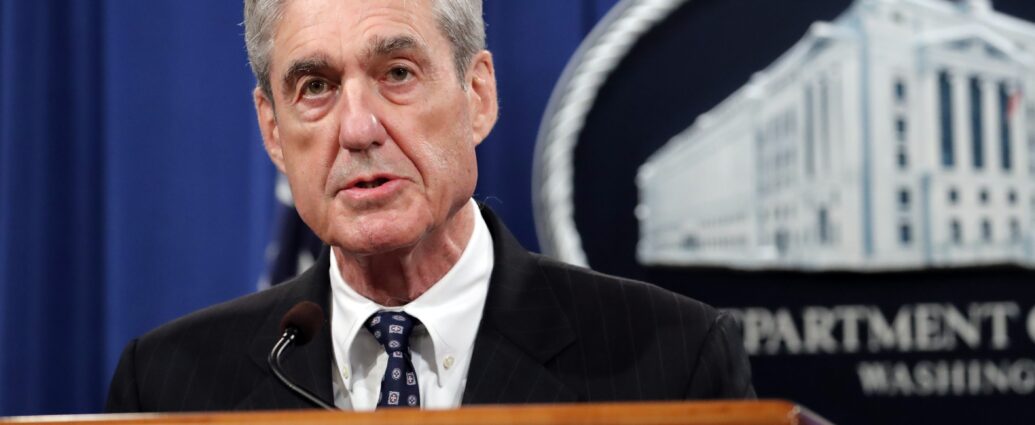
Mueller’s family told The New York Times in August that he had been diagnosed with Parkinson’s disease.
(Image credit: Carolyn Kaster)

This post was originally published here



This post was originally published here
Family says Mueller, who also examined Russian interference in 2016 election that Trump won, ‘passed away last night’
Robert Mueller, the former special counsel who investigated Russian interference in 2016 and links between Donald Trump and Moscow, has died. He was 81.
In a statement from Mueller’s family, relayed by the New York Times on X, said “With deep sadness, we are sharing the news that Bob passed away last night. His family asks that their privacy be respected.”
This post was originally published here
This post was originally published here
Mark Robinson, who ran for North Carolina governor in 2024, tells podcast he had ‘obsession’ with porn and sex
The former Republican North Carolina lieutenant governor Mark Robinson has admitted he misled voters during his unsuccessful 2024 gubernatorial campaign when he denied posting racist and offensive comments on a pornography website – suggesting he did so to protect Donald Trump’s successful presidential run.
Robinson, who worked in furniture manufacturing before entering politics in 2020, told the After the Call podcast on Thursday: “I won’t say that I completely lied. Some of the things about the whole story – some of it — there’s some truth to it.”
This post was originally published here

Videos of Labour’s Al Carns include him talking about his time as a marine and challenging a firefighter to pull-up contest
Labour minister Al Carns has claimed thousands of pounds on parliamentary expenses for promotional videos including one showing him doing pull-ups at a fire station in competition with a firefighter.
The veterans minister and former Royal Marine, who is tipped by some MPs as a leadership hopeful, claimed about £3,000, approved by the Independent Parliamentary Standards Authority (Ipsa), for the production of 17 videos that show him interacting with local businesses.
This post was originally published here

This post was originally published here

In the Kurdish regions of the Middle East, Nowruz celebrations — honoring the arrival of spring — are a fundamental expression of Kurdish identity.
(Image credit: Claire Harbage)

This post was originally published here
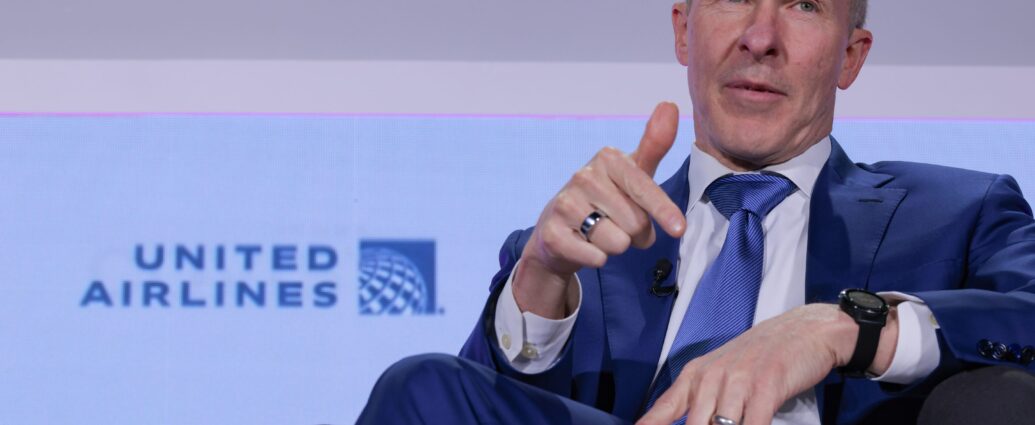
The U.S.-Israel war on Iran has delivered the biggest disruption to the airline industry since the COVID-19 pandemic, and United is bracing for a future where oil prices remain high through 2027.
Not only has the price of oil soared, air traffic to key Middle East airport hubs has been disrupted, forcing planes to take alternate routes that burn more fuel.
In a letter to employees posted on Friday, CEO Scott Kirby pointed out that jet fuel prices have more than doubled in the last three weeks, representing an additional $11 billion in annual costs if prices stay at that level.
United spent $11.4 billion last year on fuel, meaning current prices could send that total expense past $20 billion this year. The carrier reported adjusted net income of $3.5 billion for 2025, and Kirby noted that its best year ever saw earnings of $5 billion.
But United’s cash position, profit margins, and balance sheet are healthy, while demand remains strong, he added. In fact, the last 10 weeks have seen United’s 10 biggest booked revenue weeks in its history.
Still, he acknowledged it will be difficult for United to continue passing on the cost of fuel if oil stays higher for longer, revealing that the airline’s plans assume oil hits $175 a barrel and doesn’t go back down to $100 until the end of 2027.
On Friday, Brent crude rose 3.26% to close at $112.19 per barrel, and U.S. oil gained 2.27% to settle at $98.32. But the Strait of Hormuz, through which 20% of the world’s oil passes, remains largely closed, and analysts have warned that prices could reach $150 or even $200 a barrel if it doesn’t reopen soon.
Jet fuel prices have surged even more due to tighter refining constraints. Northwest Europe has seen record highs near $239 a barrel, and Asian jet fuel prices are near $200 a barrel, close to recent highs.
While Kirby thinks “there’s a good chance” that United’s scenario won’t be realized, he also said capacity will come down in certain times and places.
That means fewer flights in off-peak times, such as redeyes as well as Tuesday, Wednesday, and Saturday trips during the second and third quarters. United’s will also trim capacity in the Chicago O’Hare airport hub and will pull service from Tel Aviv and Dubai, which are still being bombarded by Iran.
The combined effect of the changes will be about 5 percentage points of capacity, though United plans to restore the full schedule in the fall.
“To be clear, nothing changes about our longer-term plans for aircraft deliveries or total capacity for 2027 and beyond, but there’s no point in burning cash in the near term on flying that just can’t absorb these fuel costs,” Kirby said.
At the same time, he vowed to avoid furloughing employees, deferring aircraft orders, downgrading to regional jets, going through cost cutting exercises, and delaying investments. United still plans to take delivery of about 120 new aircraft this year, the CEO said.
More dollars will go into tech and facilities, such as the airline’s clubs, new infrastructure at hubs, and an expansion at the Newark airport.
Kirby dismissed cost cuts and investment deferrals as “small dollars at best, they’re distracting, they aren’t necessary for United and they deter us from our mission to build the best airline in the history of aviation.”
Other airlines are making contingency plans too. Scandinavian airline SAS said it will cancel around 1,000 flights because of rising fuel prices.
For Air France-KLM, plans include cutting service to parts of Asia if fuel costs for return trips to Europe become more difficult.
“Southeast Asia is much more dependent on fuel coming over the Gulf than Europe is,” CEO Ben Smith told the Financial Times. “We can get fuel out of Europe, but when we go to [a] south-east Asian city we’re not going to be able to fly the plane back . . . If there’s no fuel, you can’t fly.”
This story was originally featured on Fortune.com
This post was originally published here

This post was originally published here



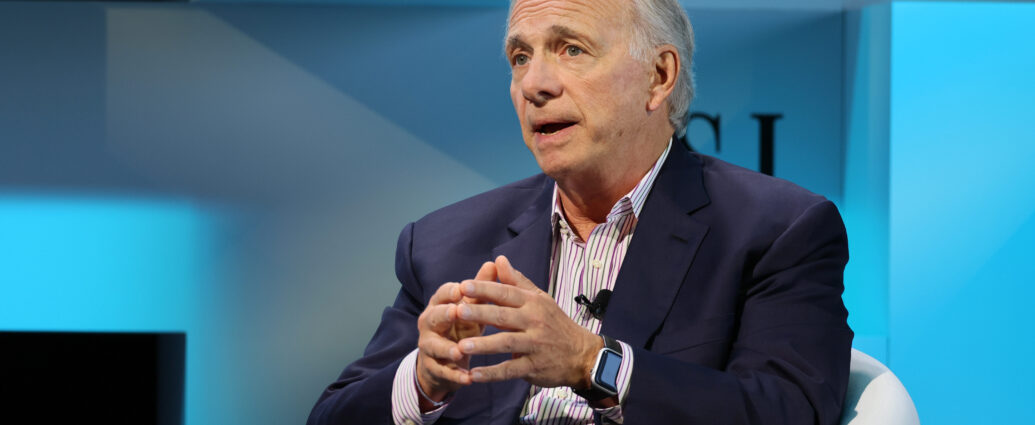
The world is “on the brink” of a capital war, according to billionaire investor Ray Dalio.
Speaking at the World Government Summit, Dalio said that the five “big forces” that have historically signaled the collapse of world orders are shifting. The multilateral system established in 1945—defined by the United Nations, World Trade Organization and a U.S.-dominated monetary framework—is rapidly fracturing. For investors, that raises uncomfortable questions about how much of their wealth is tied to paper systems that can be frozen, devalued or restructured in a hurry.
“The monetary order is changing, breaking down in a certain way,” Dalio said.
Dailio said the transition from a multilateral to a unilateral, power-based world order is well underway, blaming the massive accumulation of debt and the proliferation of fiat systems as primary catalysts for the instability. It’s the kind of backdrop that has more investors revisiting hard assets and, in some cases, reallocating a slice of their savings into physical gold and silver through specialists like Preserve Gold.
While much of the current …
This post was originally published here

Medical bills (over)due? Your first plan of action should be contacting your provider.
This post was originally published here

This post was originally published here

Michael Smith, 52, charged after flooding platforms with thousands of AI songs and boosting them with bots
A North Carolina man has pleaded guilty to defrauding music streaming platforms and his fellow musicians out of millions in royalties by flooding the services with thousands of AI-generated songs – and using automated “bots” to artificially boost the number of listens into the billions.
As part of a deal with federal prosecutors in New York’s southern district, 52-year-old Michael Smith pleaded guilty on Friday to conspiracy to commit wire fraud.
This post was originally published here
Footage shows US musician struggling with field sobriety tests he calls ‘really hard’ before his 2024 arrest in New York
Justin Timberlake struggled to perform field sobriety tests requiring him to walk a straight line and stand on one leg after the pop star was pulled over in New York’s Hamptons in 2024 by police officers who suspected him of driving drunk, according to video footage released on Friday.
Timberlake tells officers at one point, “these are like really hard tests.”
This post was originally published here
Franklin Templeton CEO Jenny Johnson leads a global fund manager with nearly $2 billion in assets and a 79-year-old family business started by her grandfather.
This post was originally published here
Franklin Templeton CEO Jenny Johnson leads a global fund manager with nearly $2 billion in assets and a 79-year-old family business started by her grandfather.

United Airlines is slashing flights as soaring fuel prices tied to the Iran war hit U.S. carriers, becoming the first major U.S. airline to announce a cut to capacity after weeks of industry warnings.
United CEO Scott Kirby said in a staff memo released Friday that the airline will cut about 5% of capacity by trimming less profitable routes. He said the company is preparing for a prolonged period of elevated fuel prices, modeling oil at $175 per barrel and expecting it could remain above $100 through the end of 2027.
“The reality is, jet fuel prices have more than doubled in the last three weeks,” Kirby said in a statement. “If prices stayed at this level, it would mean an extra $11B in annual expense just for jet fuel. For perspective, in United’s best year ever, we made less than $5B.”
Kirby stressed the airline is not panicking and plans to manage the short-term pressure by cutting unprofitable flying while continuing its long-term growth strategy.
ELON MUSK OFFERS TO PAY TSA WORKERS’ SALARIES AMID DHS BUDGET STANDOFF
United said the cuts will total about 5 percentage points of its planned capacity, including roughly 3 points from off-peak flying such as midweek and overnight routes, about 1 point from reductions at Chicago O’Hare, and another 1 point tied to suspended service to Tel Aviv and Dubai. The airline expects to restore its full schedule in the fall.
Despite the pullback, Kirby said demand remains strong, noting that the airline has recorded its “10 biggest booked revenue weeks” in its history over the past 10 weeks.
He emphasized that United is not responding to the fuel shock with drastic measures seen in past downturns, such as furloughs or delaying aircraft orders. Instead, the airline plans to continue taking delivery of about 120 new planes this year, including 20 Boeing 787s, with another 130 aircraft due by April 2028, he said.
MAJOR AIRLINE SUSPENDS ABU DHABI FLIGHTS UNTIL END OF YEAR AMID AIRSPACE ‘UNCERTAINTY’
“To be clear, nothing changes about our longer-term plans for aircraft deliveries or total capacity for 2027 and beyond, but there’s no point in burning cash in the near term on flying that just can’t absorb these fuel costs,” he said.
The strategy, Kirby said, is to cut unprofitable flying in the near term while continuing to invest in long-term growth.
Other airlines, meanwhile, have so far stopped short of announcing major flight cuts, underscoring how United is among the first U.S. carriers to move from warnings to action as fuel costs surge.
GET FOX BUSINESS ON THE GO BY CLICKING HERE
Delta Air Lines has said it could trim capacity if fuel prices stay elevated, according to Reuters, while other major U.S. carriers have so far relied on fare hikes to offset rising costs.
International carriers have moved faster, with airlines including Qantas, Scandinavian Airlines and Thai Airways raising prices, and Air New Zealand canceling more than 1,000 flights, according to earlier reports.
This post was originally published here

Israel’s defense minister threatened a surge in attacks against Iran on Saturday and Britain condemned Iran for targeting a joint U.K.-U.S. base in the Indian Ocean as the war in the Middle East entered its fourth week.
The Iranian attack on the Diego Garcia air base — about 2,500 miles (4,000 kilometers) from Iran — suggested Tehran has missiles that can go farther than it had previously acknowledged.
Also Saturday, Iran’s Natanz nuclear enrichment facility was hit in an airstrike, an official Iranian news agency reported, saying there was no radiation leakage.
Israel’s Defense Minister Israel Katz said in a video statement that next week, “the intensity of the attacks” by Israel and the United States against Iran’s ruling theocracy will “increase significantly.”
He spoke shortly after fragments from an Iranian missile slammed into an empty kindergarten near Tel Aviv. Israeli army spokesman Nadav Shoshani posted a video on X of the kindergarten building. The school was empty at the time and no casualties were reported.
Overnight and into the morning, Iran’s capital saw heavy airstrikes, residents said. The attacks — and threats of more to come — indicate the Iran war shows no sign of abating.
The U.S. and Israel have offered shifting rationales for the war, from hoping to foment an uprising that topples Iran’s leadership to eliminating its nuclear and missile programs. There have been no public signs of any such uprising.
Iranian Foreign Minister Abbas Araghchi told Japan’s Kyodo news service Friday that Iran wanted “not a ceasefire, but a complete, comprehensive and lasting end to the war.”
U.S. President Donald Trump said Friday that he was considering “winding down” military operations in the Mideast, which seemed at odds with his administration’s move to bolster its firepower in the region and request another $200 billion from Congress to fund the war.
The U.S. is deploying three more amphibious assault ships and roughly 2,500 additional Marines to the Mideast, an official told The Associated Press. Two other U.S. officials confirmed that ships were deploying, without saying where they were headed. All three spoke on condition of anonymity to discuss the military operations.
In a move aimed at wrangling soaring fuel prices, the Trump administration announced it was lifting sanctions on some Iranian oil. The pause in sanctions applies to Iranian oil already loaded on ships as of Friday and is set to end April 19. The license has limits including a restriction on sales involving anyone in North Korea or Cuba.
The new move does not increase the flow of production, a central factor in the surging prices. Iran has managed to evade U.S. sanctions for years, suggesting that much of what it exports already reaches buyers.
Saudi Arabia said it downed 20 drones in just a couple of hours Saturday in the country’s eastern region, home to major oil installations. No injuries or damage were reported.
U.K. officials have not given details of the strike that targeted the ocean air base Friday, which was unsuccessful.
Britain’s Ministry of Defense said Saturday that Iran’s “lashing out across the region and holding hostage the Strait of Hormuz, are a threat to British interests and British allies.”
Britain has not participated in U.S.-Israeli attacks on Iran but has allowed American bombers to use U.K. bases to attack Iran’s missile sites.
On Friday, the British government said U.S. bombers can also use U.K. bases, including Diego Garcia, in operations to prevent Iran attacking ships in the Strait of Hormuz. Iran targeted the base before that U.K. statement.
Iran’s official news agency, Mizan, said there was no leakage after Saturday’s strike on the Natanz nuclear facility, nearly 220 kilometers (135 miles) southeast of Tehran.
The facility, Iran’s main uranium enrichment site, was hit in the first week of the war and several buildings appeared damaged, according to satellite images. The United Nations nuclear watchdog — the International Atomic Energy Agency — had said “no radiological consequence” were expected from that earlier strike. Natanz had also been targeted in the 12-day war last June.
On Saturday, the IAEA said on X that it was informed by Iran about the Natanz strike and about there being no increase in off-site radiation levels. The agency said it was looking into the incident.
Iran’s top military spokesperson, Gen. Abolfazl Shekarchi, warned Friday that “parks, recreational areas and tourist destinations” worldwide will not be safe for the country’s enemies.
Supreme Leader Ayatollah Mojtaba Khamenei praised Iranians’ steadfastness in the face of war in a written statement read on Iranian television to mark the Persian New Year, or Nowruz. Khamenei has not been seen in public since he became supreme leader after Israeli strikes killed his father, Ayatollah Ali Khamenei, and reportedly wounded him.
With little information coming out of Iran, it was not clear how much damage its arms, nuclear or energy facilities have sustained in the punishing U.S. and Israeli strikes, which began Feb. 28 — or even who was truly in charge of the country.
But Iran’s attacks are still choking off oil supplies and raising food and fuel prices far beyond the Middle East.
The Israeli military said its forces were conducting a “targeted ground operation” Saturday with the support of Israeli aircraft and that at least four militants were killed.
Hezbollah also released a statement saying its fighters clashed with Israeli troops in the southern village of Khiam.
So far, Israeli strikes targeting Hezbollah in Lebanon have killed more than 1,000 people and displaced more than 1 million, according to the Lebanese government.
More than 1,300 people have been killed in Iran during the war. In Israel, 15 people have been killed by Iranian missiles and four others have died in the occupied West Bank. At least 13 U.S. military members have been killed.
This story was originally featured on Fortune.com
This post was originally published here

This post was originally published here
SEC Commissioner Hester Peirce indicates an openness to work with Wall Street on fresh exchange-traded fund products tied to cryptocurrencies and tokenization.
This post was originally published here

A 19-year-old star wrestler and two other young men were hanged in Iran this week, raising alarm among rights groups that a wave of executions may be underway as authorities facing relentless attacks from the U.S. and Israel seek to squelch public dissent.
The three men are the first to be executed from among the tens of thousands who were arrested during a January crackdown on nationwide protests. Rights groups say more than 100 others could face death sentences.
The wrestler, Saleh Mohammadi, was hanged early Thursday morning — along with Mehdi Qasemi and Saeed Davoudi — in Qom, just south of the capital, Tehran, according to state media. They had been sentenced on charges of “moharabeh,” or “waging war against God,” for allegedly killing two police officers during protests in the city.
Amnesty International said the convictions of the three, and of others arrested during the protests, came in “grossly unfair trials” that used confessions extracted by torture.
The executions were “intended to instill fear in society and deter new protests” amid the U.S.-Israeli war on Iran, said Mahmood Amiry-Moghaddam, director of Iran Human Rights, an Oslo-based group that has documented detentions.
Amiry-Moghaddam said he worries many more “executions of protesters and political prisoners may be imminent.”
Amiry-Moghaddam said his group has documented at least 27 death sentences that have been issued against people arrested during the protests. Another 100 face charges that carry the death penalty, and Iranian state media have aired hundreds of forced confessions to crimes punishable by death, he said.
Nationwide protests that began in late December peaked in the first week of January, prompting the deadliest crackdown by Iranian security forces since the Islamic Republic took power in 1979.
A complete death toll has been hard to gauge because of internet restrictions by authorities. The U.S.-based Human Rights Activists New Agency, which relies on a network of contacts inside Iran, said it confirmed that more than 7,000 were killed and that it was investigating thousands more. It said over 50,000 were arrested in just over six weeks. The government acknowledged more than 3,000 were killed.
At the height of the protests, Iranian authorities signaled that fast trials and executions lay ahead.
At the time, U.S. President Donald Trump suggested military action might be an option to stop the deadly crackdown. But he soon announced that he learned that plans for executions were halted, signaling that a military operation was no longer on the table.
Just a month later, Israel and the U.S. launched an intense airstrike campaign against Iran, pounding military installations and targeting the top political and security leadership of Iran. The security agencies believed to be responsible for the deadly crackdown on protesters are also being targeted.
Despite the war, Iranian authorities have kept up the crackdown on dissent. Authorities say scores have been detained since the war began on Feb. 28, including some who took part in the January protests.
Because of Iran’s internet blackout, there have been scant details about the three men executed Thursday. Amiry-Moghaddam said Davoudi was born on March 20, 2004, meaning he was executed a day before his 22nd birthday. Qasemi’s age was not known, he said.
Mohammadi appeared to be a standout in wrestling, a sport that is wildly popular in Iran. In 2024, he won a bronze medal at an international youth freestyle wrestling tournament in the Russian city of Krasnoyarsk.
On his Instagram account, Mohammadi posted photos and videos of his matches and his workouts, along with inspirational “no-pain-no-gain” messages. In his last post in late December, he posted a video of himself in the gym and wrote: “We endured beyond our imagination. Back again #bodybuilding #training #wrestling.”
“He was full of energy,” said Shiva Amelirad, an Iranian teacher living in Toronto who spoke with Mohammadi in 2022 while he was still in high school.
Amelirad said Mohammadi had participated in anti-government protests that erupted earlier that year when Mahsa Amini died in police custodyafter being detained for not wearing her headscarf properly. Those demonstrations were also met with a heavy crackdown by authorities.
She said Mohammadi told her that workouts and eating ice cream were his only ways “to forget all this catastrophe that we are facing.”
“He always tried to show that he was happy,” said Amelirad.
Mohammadi, Qasemi and Davoudi were arrested in Qom on Jan. 15, according to multiple human rights groups. The circumstances of their arrests are not known, and it is not clear if they knew each other beforehand.
They were charged in the killing of a police officer on Jan. 8 and convicted in early February, according to Amnesty and Iran Human Rights.
During his detention, Mohammadi was beaten and one of his hands broken, Amnesty said in a Feb. 19 open letter to Iran’s judiciary criticizing the prosecution of dozens of arrested protesters. Amnesty said Mohammadi denied the charges and retracted his confessions in court, saying they were extracted under torture.
“Authorities have systematically subjected those arrested in connection to the protests to enforced disappearance, incommunicado detention, torture to extract forced ‘confessions,’” Amnesty said in the letter.
Mizan, the Iranian judiciary’s official news agency, announced the execution of the three on Thursday, showing video of them sitting in prison uniforms in court. It said they had confessed to killing two police officers with “knives and swords,” and showed video of them allegedly reenacting the killings for judicial officials.
Amiry-Moghaddam, of Iran Human Rights, said the Islamic Republic is struggling for its survival “and is well aware that the main threat to its existence comes not from external actors, but from the Iranian people demanding fundamental change.”
This story was originally featured on Fortune.com
This post was originally published here
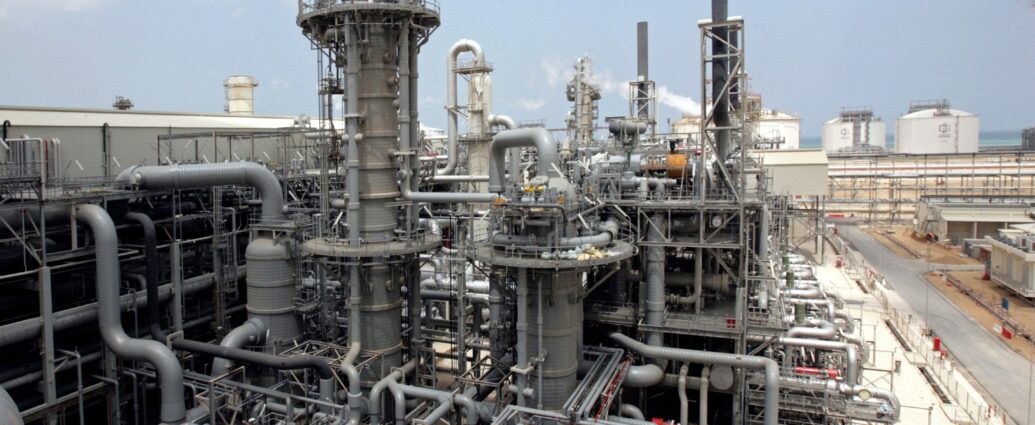
Iran’s attack this week on Qatar’s natural gas export facility threatens to disrupt not just world energy markets but also global technology supply chains because the helium it produces is crucial for a range of advanced industries.
Best known as the gas that makes party balloons float, helium is also a key input in chipmaking, space rockets and medical imaging.
Qatar supplies a third of the world’s helium, according to the U.S. Geological Survey, but the nation had to halt production shortly after the war erupted three weeks ago. The latest Iranian strikes against the region’s energy producing infrastructure have added to supply worries, with Qatar’s state-owned gas company saying it would crimp helium exports by 14%.
Here’s a deeper look at helium’s industrial role:
Helium is a byproduct of natural gas production, when it’s separated out by cryogenic distillation. Qatar, which sits on the world’s biggest single natural gas field, produces about 30% of global helium supply, according to the U.S. Geological Survey.
Qatar’s helium is produced at its Ras Laffan facility, the world’s largest liquefied natural gas plant. But state-owned energy company QatarGas halted production of LNG and “associated products” on March 2 because of Iran’s drone attacks and two days later declared force majeure, meaning it’s unable to supply contracted customers due to circumstances beyond its control.
After Ras Laffan was hit again by more Iranian strikes on Wednesday and Thursday, QatarGas reported “extensive” damage that will take years to repair and cut annual helium exports by 14%.
“It makes the story worse,” said Phil Kornbluth, president of Kornbluth Helium Consulting. “Your best case scenario would be you’re back producing some helium in six weeks or something like that. As it looks right now, that’s highly unlikely.”
Spot prices for helium have doubled since the crisis erupted and will probably rise further, Kornbluth said.
But spot trading only accounts for about 2% of the total market in normal times, he said. Helium is a thinly traded commodity and is mostly sold through long-term contracts.
Still, contract prices “could go up a lot,” Kornbluth said. “There’s lots of room for price increase if this is an extended outage.”
Kornbluth said the shortage hasn’t hit yet, because helium containers that would have been filled when the conflict erupted at the start of March would have still taken several weeks to arrive in Asia.
“Nobody’s run out of helium yet. But it’s a few weeks out when the shortage really hits.”
Helium is essential for manufacturing semiconductors, including the cutting-edge chips used for artificial intelligence models produced in Asian fabrication plants.
It’s great at conducting or transferring heat, making it ideal for rapid cooling.
Chipmakers use it to cool wafers — the discs of silicon printed with tiny electronic circuits. Helium is used during the etching process, when material that’s been deposited on a wafer is scraped away to form transistor structures, said Jacob Feldgoise, an analyst at Georgetown University’s Center for Security and Emerging Technology.
During the etching process, “you really want to maintain a constant temperature over the wafer. And in order to do that, you need to be able to draw heat away from the wafer that’s being processed,” said Feldgoise. “Helium is an excellent thermal conductor. And so chip fabs will blow helium over the back of the wafer in order to speed heat removal and keep heat removal consistent.”
Under current semiconductor manufacturing processes, there’s no viable replacement for helium to cool wafers, said Jong-hwan Lee, a professor of semiconductor devices at South Korea’s Sangmyung University.
The medical industry uses helium to cool superconducting magnets powering magnetic resonance imaging machines.
And the space industry uses helium to purge rocket fuel tanks, a demand that is expected to grow because of more frequent launches by companies like SpaceX and Blue Origin.
Helium’s atomic properties make it tricky to store and transport.
In gas form, helium’s tiny molecules can easily escape containers by leaking through even the smallest of gaps.
Helium is typically chilled by Qatar’s gas company into liquid form and stored in insulated containers for transport through the Strait of Hormuz. The specialized containers can store helium for 35 to 48 days. Any longer and they start warming up, letting the helium transform into gas that escapes through pressure release valves.
About 200 of these containers are stuck in the Middle East, Kornbluth said. They cost about $1 million each, so there aren’t a lot of extra ones sitting around elsewhere.
“It’s going to take a fair amount of time to get these containers out of Qatar and to get them somewhere else where they might be able to be filled with helium,” he said.
“So this initial period when you lose Qatar supply and have to rejig the supply chain and reposition containers, that’s going to be the worst part of the shortage most likely.”
There only are a handful of countries that produce helium.
The United States is the biggest producer, accounting for 81 million cubic meters last year. Qatar, Algeria and Russia are the other major producers, but Russian supplies are banned under Under States and European Union sanctions.
USGS estimates the United States has 8.5 billion cubic meters of recoverable helium in geologic reservoirs, while the rest of the world has 31.3 billion cubic meters.
The war highlights the sprawling global supply chains that underpin South Korea’s semiconductor industry, which has seen a surge in global demand for its chips amid the AI boom.
Fitch Ratings said in a report this week that the country — home to Samsung Electronics and SK Hynix, the world’s largest memory chip makers — is particularly vulnerable to supply shortages because it imports about 65% of its helium from Qatar.
Samsung Electronics and SK Hynix likely have several months of inventory, but it’s crucial that they accelerate efforts to secure alternative sources, Lee said, as the war could drag on and potentially disrupt supplies of more materials beyond helium.
Helium is among 14 semiconductor supply chain materials the Seoul government has flagged for monitoring due to their heavy vulnerability to the war.
“Even disruptions affecting just a handful of materials could destabilize the entire semiconductor manufacturing process as each stage of production depends on the previous one,” Lee said.
Still, a full-blown helium crisis is unlikely, experts said. In the event of a shortage, Kornbluth said the helium industry allocates supplies based on importance so critical industries such as chipmaking and medical would be at the front of the line.
And because helium is a small part of the overall production cost of a semiconductor, it’s likely that chip fabs “would be willing to pay a higher price” to secure supplies, Feldgoise said.
Samsung and SK Hynix declined to respond to questions about inventory or plans to diversify supplies. The Korea Semiconductor Industry Association said short-term supplies are sufficient and companies have been diversifying their supply routes.
Chipmaking giant Taiwan Semiconductor Manufacturing Company also said it does not “anticipate any significant impact at this time” but will continue monitoring the situation.
This story was originally featured on Fortune.com
This post was originally published here
Analysts project total tour earnings of as much as $1.8 billion, rivaling Taylor Swift’s Eras Tour and Coldplay’s Music of the Spheres World Tour.
This post was originally published here

Colombian President Gustavo Petro has been designated a “priority target” by the U.S. Drug Enforcement Administration as federal prosecutors in New York probe his alleged ties to drug traffickers, according to people familiar with the matter and records seen by The Associated Press.
DEA records show Petro has surfaced in multiple investigations dating to 2022, many based on interviews with confidential informants. The alleged crimes the DEA has investigated include his possible dealings with Mexico’s Sinaloa cartel and a scheme to leverage his “total peace” plan to benefit prominent traffickers who contributed to his presidential campaign. The records also suggest the use of law enforcement to smuggle cocaine and fentanyl through Colombian ports.
The “priority target” label is reserved for suspects DEA deems to have a “significant impact” on the drug trade. It’s unclear when the DEA gave Petro that designation.
Petro denied all ties to drug traffickers and maintained he never accepted their funds during his campaign. Writing on X Friday, he argued that U.S. legal proceedings would ultimately dismantle accusations from the Colombian far right, a group he claims is actually the one involved with traffickers.
Colombia’s Embassy in Washington downplayed what it called “unverified” and anonymous reports of preliminary law enforcement investigations against Petro.
“The reported insinuations have no legal or factual basis,” the embassy said in a statement.
In recent months, prosecutors in Brooklyn and Manhattan have been questioning drug traffickers about their ties to Petro and specifically about allegations the Colombian president’s representatives solicited bribes to block their extradition to the United States, according to one of the people who weren’t authorized to discuss the ongoing inquiry and spoke to The Associated Press on condition of anonymity.
The person said it wasn’t clear whether federal prosecutors have implicated Petro in any crime.
The investigation is focusing at least in part on allegations that representatives of Petro solicited bribes from drug traffickers at the Colombian jail La Picota in exchange for a promise that they not be extradited to the U.S., one of the people said.
Petro has consistently denied allegations of drug trafficking, particularly after Trump labeled him an “illegal drug leader” and the Treasury Department sanctioned him in late 2025 for alleged ties to the trade without offering evidence.
U.S. federal prosecutors declined to comment. The DEA did not immediately respond to a request for comment.
The federal inquiry was reported earlier Friday by The New York Times.
The inquiries into Petro are in the early stages, and it is not clear whether they will result in charges, according to another person familiar with the matter, adding the White House has had no role in the investigations.
The DEA records reviewed by the AP are based in part on tips from confidential sources that point to Petro’s possible involvement with a range of criminal groups that have dominated the South American drug trade for years. Those include Mexico’s Sinaloa cartel as well as the Cartel de los soles, or Cartel of the Suns, a term used to describe a loose network of corrupt, high-ranking military officers in neighboring Venezuela.
The records also cite a 2024 interview with an unnamed source who claimed Petro is utilizing former campaign aides and officials from state-run oil company Ecopetrol to launder presidential funds into foreign countries for Petro’s use upon completion of his presidency.
Ecopetrol President Ricardo Roa vehemently denied the allegations in a statement to AP, saying they “lacked all reality or logic.”
Petro, a former rebel leader, soared into office promising to reduce the country’s dependence on fossil fuels and reallocate state resources to addressing entrenched poverty.
A leftist politician known for winding sometimes incoherent speeches, he has regularly criticized the Trump administration over its support for Israel, bombing of drug boats in the Caribbean and likened the White House migration crackdown to “Nazi” tactics.
After one such outburst, at a pro-Palestinian demonstration outside the United Nations headquarters in New York, Trump retaliated by revoking Petro’s U.S. visa. He also briefly slapped high tariffs on Colombia over Petro’s refusal to accept deportation flights from the United States.
But more recently the two have shown signs of getting along. After a meeting at the White House in February, Trump described Petro as “terrific.”
Colombian authorities have for years been investigating members of Petro’s family for possible criminal acts.
His son, Nicolás Petro, was charged in 2023 with soliciting illegal campaign contributions from a convicted drug trafficker to fund a lavish lifestyle of expensive cars and homes. The younger Petro has pleaded not guilty and his father has said none of the money was used to fund his campaign.
The president’s brother, Juan Fernando Petro, has also been implicated in secret negotiations that allegedly took place with imprisoned drug traffickers to shield them from extradition to the U.S. in exchange for their disarmament.
Politics in Colombia have long been tainted by cocaine, of which it is the world’s largest supplier. In the 1980s, drug lord Pablo Escobar was elected to the country’s Congress with the support of one of Colombia’s most traditional parties. A decade later, his rivals from the Cali cartel flooded the presidential campaign of Ernesto Samper with illegal donations.
The now defunct urban guerrilla group Petro belonged to, the 19th of April Movement, has long been suspected of taking money from Escobar’s Medellin cartels as part of its deadly siege of the Supreme Court in 1985. Petro did not participate in the attack, which left several guerrillas and around half the high court’s magistrates dead. Leaders of the group have always denied any links to the cartel.
This story was originally featured on Fortune.com
This post was originally published here
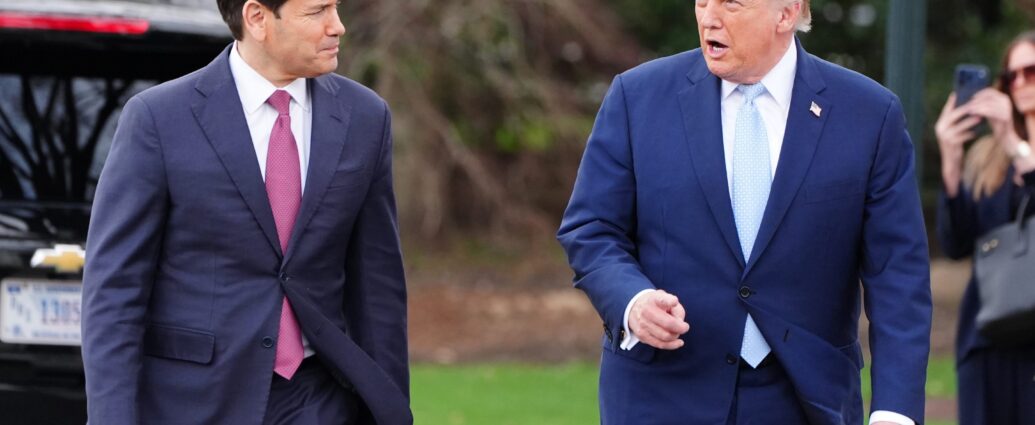
Three weeks into an escalating war in the Middle East, Iran threatened to expand its retaliatory attacks to include recreational and tourist sites worldwide, as the U.S. announced it was sending more warships and Marines to the region.
Following news of the deployments, President Donald Trump said later Friday on social media that his administration in fact was considering “winding down” military operations in the region. The mixed messages came after another climb in oil prices plunged the U.S. stock market, and was followed by a Trump administration announcement that it will lift sanctions on Iranian oil loaded on ships, a move aimed at wrangling soaring fuel prices.
The war, meanwhile, has shown no signs of abating.
Israel said Iran continued to fire missiles at it early Saturday, while Saudi Arabia said it downed 20 drones in just a couple of hours in the country’s eastern region, which is home to major oil installations. The defense ministry said there were no injuries or damage.
The attacks came a day after Israeli airstrikes hit in Tehran as Iranians celebrated the Persian New Year, known as Nowruz, a normally festive holiday.
Iran has escalated attacks on its Gulf neighbors since Israel bombed its massive South Pars offshore natural gas field, while keeping a stranglehold on shipping in the Strait of Hormuz, a strategic waterwaythrough which a fifth of the world’s oil and other critical goods are transported.
With little information coming out of Iran, it was not clear how much damage its arms, nuclear or energy facilities have sustained in the punishing U.S. and Israeli strikes, which began Feb. 28 — or even who was truly in charge of the country. But Iran’s attacks are still choking off oil supplies and raising food and fuel prices far beyond the Middle East.
The U.S. and Israel have offered shifting rationales for the war, from hoping to foment an uprising that topples Iran’s leadership to eliminating its nuclear and missile programs. There have been no public signs of any such uprising and no end to the war in sight.
In his social media post, the president said, “We are getting very close to meeting our objectives as we consider winding down our great Military efforts in the Middle East.”
That seemed at odds with his administration’s move to bolster its firepower in the region and request another $200 billion from Congress to fund the war.
The U.S. is deploying three more amphibious assault ships and roughly 2,500 additional Marines to the Middle East, an official told The Associated Press. Two other U.S. officials confirmed that ships were deploying, without saying where they were headed. All three spoke on condition of anonymity to discuss sensitive military operations.
Days earlier the U.S. redirected another group of amphibious assault ships carrying another 2,500 Marines from the Pacific to the Middle East. The Marines will join more than 50,000 U.S. troops already in the region.
Trump has said he has no plans to send ground forces into Iran but also has asserted that he retains all options.
Gen. Ali Mohammad Naeini, a spokesperson for Iran’s paramilitary Revolutionary Guard, was quoted by a state-run newspaper Friday as saying Iran continues to manufacture missiles despite Israel’s claim that it destroyed Iran’s production capabilities. Iranian state television later said Naeini was killed in an airstrike.
Supreme Leader Ayatollah Mojtaba Khamenei praised Iranians’ steadfastness in the face of war in a written statement read on Iranian television to mark Nowruz. He said the U.S. and Israeli attacks were based on an illusion that killing Iran’s top leaders could cause the overthrow of the government.
Khamenei has not been seen in public since he became supreme leader following Israeli strikes that killed his father, Ayatollah Ali Khamenei, and reportedly wounded him. Airstrikes have also killed the head of its Supreme National Security Council and a raft of other top-rankingofficials.
Iran’s top military spokesperson, Gen. Abolfazl Shekarchi, warned that “parks, recreational areas and tourist destinations” worldwide will not be safe for the country’s enemies. The threat renewed concerns that Tehran may revert to using militant attacks beyond the Middle East as a pressure tactic.
Brent crude oil, the international standard, has soared during the fighting and was around $108 per barrel, up from roughly $70 before the war.
The newly announced U.S. pause in sanctions applies to Iranian oil loaded on ships as of Friday and is set to end April 19. The license has limits including a restriction on sales involving anyone in North Korea or Cuba.
Treasury Secretary Scott Bessent previously suggested it as a way to prevent China from being the sole beneficiary of Iranian oil.
The new move does not increase the flow of production, a central factor in the surging prices. Iran has managed to evade U.S. sanctions for years, suggesting that much of what it exports already reaches buyers.
Looking for ways to boost global oil supplies during the Iran war, the Trump administration has previously paused sanctions on certain Russian oil shipments for 30 days, which critics said rewarded Moscow while having only a modest effect on markets.
The Israeli military said early Saturday that it began a wave of strikes targeting Hezbollah militants in Beirut’s southern suburbs.
Smoke was seen rising, fires broke out and loud explosions were heard across parts of central Beirut. Hours earlier the army renewed evacuation warnings for seven neighborhoods, prompting some residents to fire gunshots to alert families to flee. No injuries were reported.
Israeli strikes targeting Iran-backed Hezbollah militants in Lebanon have displaced more than 1 million people, according to the Lebanese government, which says more than 1,000 people have been killed.
More than 1,300 people have been killed in Iran during the war. In Israel, 15 people have been killed by Iranian missiles and four others have died in the occupied West Bank. At least 13 U.S. military members have been killed.
This story was originally featured on Fortune.com
This post was originally published here
Shahezad Contractor left his “cushy” IT career and launched a halal restaurant chain.
This post was originally published here

Eviction notices. Vehicle repossessions. Empty refrigerators and overdrawn bank accounts.
Union leaders and federal officials say these are just some of the financial pressures Transportation Security Administration agents are facing during an ongoing government funding lapse — the third shutdown in less than six months that has forced the officers who screen airport passengers and luggage to keep working without pay.
The public is experiencing the consequences in long wait times at some airports as more TSA officers take time off to earn money on the side or cut back on expenses. At least 376 have quit their jobs altogether since the shutdown began on Valentine’s Day, according to the Department of Homeland Security, exacerbating staff turnover at an agency that historically has had some of the U.S. government’s highest attrition and lowest employee morale.
“It’s just exhausting. Every day it just feels like this weight gets heavier and heavier on us,” Cameron Cochems, a local TSA union leader in Boise, Idaho, told The Associated Press.
Airport screeners have spent nearly half of the past 170 days with their paychecks held up by politics — 43 days last fall during the longest government shutdown in history, four days earlier this year during a brief funding lapse, and now 35 days and counting during the current shutdown, which affects only the Department of Homeland Security. They are considered essential so have to keep showing up for work whether they get paid or not.
Cochems, who has worked as a TSA agent for more than four years and is vice president of his regional American Federation of Government Employees chapter, said the number of resignations likely doesn’t fully capture the extent of the agency’s personnel challenges. He thinks many more officers would already have walked away in a stronger job market.
“I think more people are staying with the TSA that don’t want to be here,” Cochems said.
The House Committee on Homeland Security has scheduled a hearing for Wednesday to review the partial shutdown’s impact on the TSA, the Federal Emergency Management Agency, the U.S. Coast Guard and other agencies within DHS.
A 2024 report by the U.S. Government Accountability Office found that TSA’s workforce has long struggled with some of the lowest morale in the federal government, driven in part by years of comparatively low pay and persistent workplace frustrations. While recent raises have helped, the report said dissatisfaction remained widespread, with officers citing inconsistent management, limited recognition and poor work-life balance.
The starting pay for TSA agents is about $34,500, and the average salary is $46,000 to $55,000, according to the agency’s careers website.
The GAO warned that unless those underlying issues were addressed, the risk of officers leaving the workforce was likely to persist.
For Cochems, the recent shutdowns have upended the sense of stability that drew him to federal service in the first place. He said he already works a seasonal side job screening college sports teams at airports to supplement his income. Now, with his TSA paychecks halted, even that isn’t enough to keep up with basic expenses.
The financial pressure on his family intensified after his wife was unexpectedly laid off from her job two weeks ago.
“Every day I come to the airport and I look at the food drive, see what things I can get for my family,” he said, referring to the donations that his airport, like many others, are soliciting to help TSA workers.
It’s unclear how long airport screeners will have to keep working unpaid. Both chambers of Congress are scheduled to be out of Washington the first two weeks of April. And Democrats have said the department won’t get funded until new restrictions are placed on federal immigration operations following the fatal shootings of Alex Pretti and Renee Good in Minneapolis earlier this year.
For travelers, the strain in TSA staffing has made airport conditions increasingly unpredictable. Wait times have stretched into multiple hours at some airports, with passengers in cities like Houston, Atlanta and New Orleans reporting delays long enough to miss flights.
TSA officers missed their first full paycheck last weekend, and absences are climbing nationwide, according to Homeland Security. More than half of scheduled staff were absent Sunday at an airport in Houston. At Atlanta’s Hartsfield-Jackson International Airport, 38% of officers missed work on Wednesday and 32% on Thursday.
“I’ve heard from officers who cannot afford copayments for cancer treatments or office visits for their sick children,” Aaron Barker, a local TSA union leader in Atlanta, said at a news conference outside the airport this week.
Homeland Security has said roughly 50,000 TSA employees would work during the shutdown. Nationwide on Thursday, about 10% of TSA agents missed work, the department reported. The absentee rate was two or three times higher in some places: 33% at Houston’s George Bush Intercontinental Airport, 29% at John F. Kennedy International Airport in New York, 27% at Louis Armstrong New Orleans International Airport, and 23% at Baltimore-Washington International Airport.
The staffing shortages have also forced some airports to close checkpoints, with wait times swinging dramatically throughout the day in some cases. Early Friday, Hartsfield-Jackson had two-hour waits before easing to less than five minutes by early afternoon, and then jumping back up to 90 minutes.
Security line wait times at Houston’s main airport exceeded two hours on Friday afternoon. Videos posted to social media showed lines snaking around the airport and down an escalator, spilling into the baggage claim area.
In a Fox News interview this week, Acting Deputy TSA Administrator Adam Stahl warned that the latest shutdown could have lasting consequences for staffing, saying attrition and recruitment would likely suffer. Staff depatures increased after the record one last fall, Stahl said.
“We saw an uptick of 25% attrition after the last shutdown, and so this is going to continue and worsen — not get better, get worse — if we don’t get a resumption of normal operations, DHS funded and money back into our TSA officers’ pockets,” he said, adding that the agency has exhausted its options, including deploying emergency manpower, to keep airport security checkpoints adequately staffed.
Former TSA Administrator John Pistole has said that about 1,100 officers quit during last year’s shutdown that ended in November.
This story was originally featured on Fortune.com
This post was originally published here
Joe Kent, who left Trump administration over Iran war, tells Megyn Kelly ‘facts are on my side’ amid FBI investigation
The counter-terrorism official who resigned from Donald Trump’s administration over the US and Israel’s war against Iran has said he is bracing for political retribution – but would do it all again anyway.
Asked by conservative podcaster Megyn Kelly if he was concerned about a pre-existing FBI search investigating him for leaking classified information, Kent said he was ambivalent.
This post was originally published here


Anthropic fought against the government’s misuse of its technology, but authorities are buying Americans’ data, enabling them to surveil citizens at scale
The FBI declares it can conduct mass surveillance without AI, despite Anthropic’s protest.
A central part of the standoff between Anthropic and the Department of Defense has revolved around the artificial intelligence firm’s refusal to allow its technology to be used for mass domestic surveillance. Yet even without the cooperation of AI firms, remarks this week from Kash Patel, FBI director, show how authorities are by any reasonable measure already operating a system that can surveil citizens at scale.
This post was originally published here

Inside a FedEx AI literacy initiative being delivered across half a million employees around the world.
This post was originally published here
Walmart is rolling out digital shelf labels and expects it to be in all U.S. stores by year’s end. Is it surge pricing in disguise or just new tech efficiency?
This post was originally published here
Autopsy reveals James ‘Jimmy’ Gracey’s injuries consistent with repeatedly hitting breakwater’s rocks, Spanish media report
A University of Alabama student who was found dead in Barcelona after going missing while vacationing evidently fell into the sea on accident in view of surveillance cameras – and an autopsy revealed injuries on his body that were consistent with having repeatedly struck a breakwater’s rocks.
Such details about James “Jimmy” Gracey surfaced in the Spanish media as a spokesperson for police in Barcelona told the Associated Press that “all signs point” to the 20-year-old’s death as having been an accident.
This post was originally published here

A new report from West Health and Gallup shows how routine healthcare costs are reshaping household finances for tens of millions of Americans.
Instead of drawing on savings, many are borrowing, cutting back on basics or postponing major decisions to stay current on medical bills.
According to the survey, about 1 in 7 Americans had to borrow money in the past year to cover healthcare expenses. That translates to an estimated tens of billions of dollars in medical borrowing, much of it on credit cards or personal loans, for routine care rather than big-ticket procedures. For households already carrying other balances, some are now looking at consolidation tools that match borrowers with lenders for a personal loan aimed at simplifying payments and potentially lowering their rate.
The report also found that 15% of Americans have rationed prescriptions—skipping doses, splitting pills or not filling a prescription—in order to manage costs. That behavior shows up across income groups and carries clear clinical risks, since untreated or under-treated conditions often lead to more intensive and expensive care later.
In practice, that means the same families juggling co-pays and deductibles are also deciding which bills to prioritize each month, a calculation that could call on a restructure of high-interest medical and household debt into a single, fixed-rate loan.
In total, about one-third of adults—more than 80 million people—reported making at least one significant trade-off in the last year to pay for healthcare. Those decisions range from cutting back on everyday …
This post was originally published here

The British Parliament still has 92 unelected lawmakers who inherit seats by bloodline. They’re all older white men. A new law now phases them out, for the first time in nearly 1,000 years.
(Image credit: Susannah Ireland for NPR)

This post was originally published here
Tax protesters often withhold taxes due to moral objections to certain government programs, such as the Iran war. But there can be IRS penalties, experts say.
This post was originally published here
Nissan plans to introduce a new type of hybrid for the U.S. market that drives like an all-electric vehicle but is powered by a traditional gas-powered engine.
This post was originally published here
After three years of widespread generative AI adoption, our data reveals only a small percentage of U.S. employees use AI in such a way that it enhances their thinking. Most workers either resist the technology entirely or use it passively. A small group — call them fluent users — does something fundamentally different.
So, what sets them apart? It’s not IQ. It’s not a technical skill. When we ask people how they’re using AI to make themselves smarter, their descriptions coalesce around a particular skill that rejects asking AI for direct answers to complex problems. These fluent users are thinking about their own thinking, casting AI in a supportive role, not a guiding one.
What they are describing is the act of metacognition.
Metacognition is a fundamental concept in psychology that involves a distinctly human ability: reflecting on our own stream of thoughts, mulling them over, revisiting assumptions, and folding in new ideas to evolve our mental model. When we ask ourselves, “What am I missing?” or “What’s another way of looking at this problem?” We are engaging in metacognitive acts.
Few people practice metacognition deliberately, which makes fluent AI users look almost magical to their peers — the way a polyglot seems effortless to someone who only speaks one language. But here’s the good news: the skill is highly learnable. With the right principles and enough practice, anyone can use AI to make themselves smarter.
Based on our research, AI fluent users represent between 5–30% of employees at a given organization, depending on industry and role. They don’t ask the chatbot to generate a plan and pass it off as their own. Instead, they remain in the driver’s seat, starting conversations with prompts like:
I’ve created a marketing plan that I need help refining. I’m fairly confident it needs to reach mid-career professionals between 28–45 years old, but I could be missing something because of my unconscious bias around the topic. Without providing specific suggestions, can you help me think through my various options for improving the attached plan?
There are several things going on here. Most importantly, notice that the prompt doesn’t hand control to the AI. In our example, the user explicitly tells the AI not to offer suggestions — signaling that the user intends to remain the intellectual authority in the conversation.
First, the prompt demonstrates humility. The user acknowledges they don’t have all the answers, using certain hedge phrases, such as “I’m fairly confident” and “could be missing something.” These signal a growth mindset, or the belief that one’s skills can be improved over time. Without it, the ego stays in self-protection mode — and learning stops.
Second, the prompt shows flexibility. The user acknowledges their point of view isn’t the only valid one. With a bit of digging, other options will come into view, expanding their perspective on the matter. From a neuroscience perspective, cognitive flexibility in AI usage enables us to be adaptive and open to multiple perspectives. Cognitive flexibility is thought to involve an expansive network of brain regions involved in cognitive control, including regions of the prefrontal cortex.
Third, the prompt shows the user taking an active role in driving their search for new perspectives — a form of vigilance. The user prioritizes getting it right over feeling right.
Bias is a quiet saboteur. Without pausing to question blind spots, users risk having AI simply repackage flawed assumptions in new wrapping. Also, a sense of vigilance is crucial for mitigating any biases that may be embedded in the AI’s answers — including biases baked into the AI itself.
The most encouraging finding from our research: metacognition isn’t an innate talent. It’s a trainable skill. The more deliberately you practice thinking about your own thinking, the more natural it becomes — and the more likely you are to walk away from every AI conversation sharper than when you started. In an era when most people worry AI will make them dumber, fluent users are quietly proving the opposite.
The opinions expressed in Fortune.com commentary pieces are solely the views of their authors and do not necessarily reflect the opinions and beliefs of Fortune.
This story was originally featured on Fortune.com
This post was originally published here
Some in cabinet in despair over possible impact of war begun by Donald Trump, who branded Nato allies ‘cowards’
Donald Trump has branded the UK and other Nato allies “cowards” as anger grows among cabinet ministers that his war in Iran could jeopardise Britain’s fragile finances.
Senior members of the UK government are in despair about the potential effects on the economy, with experts warning of higher energy prices and increased mortgage and borrowing costs.
This post was originally published here

Labor secures landslide win, but One Nation vote tops 20%, leaving Liberals devastated and eating into ALP territory in outer suburbs
I’m going to leave you some land mines, Hanson warns premier
Get our breaking news email, free app or daily news podcast
South Australia’s Peter Malinauskas has used Labor’s landslide state election victory to urge a kinder and more inclusive politics, reaching out to disaffected One Nation voters and promising to work across politics lines in his second term.
The Labor leader increased his majority in Saturday’s vote, with One Nation’s support surging and the Liberal opposition reduced to a handful of seats.
This post was originally published here
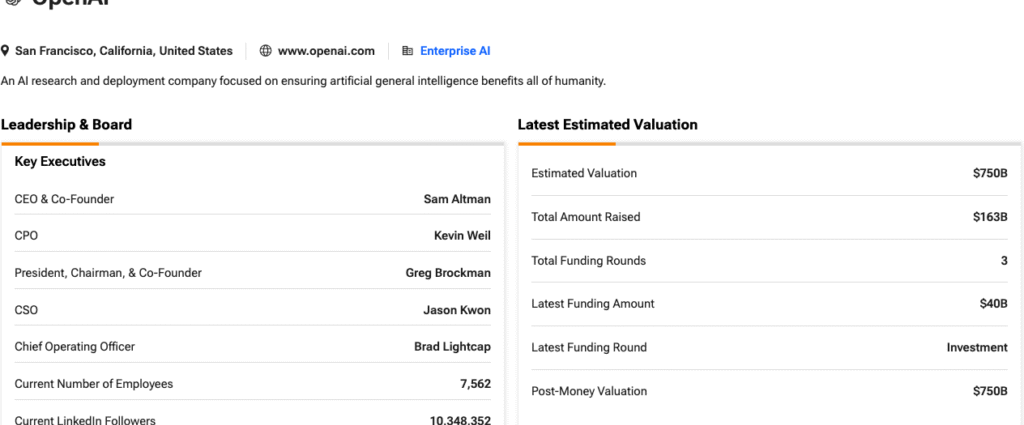
OpenAI plans to deploy most of the new hires across product development, engineering, research and sales, the Financial Times said.
This post was originally published here

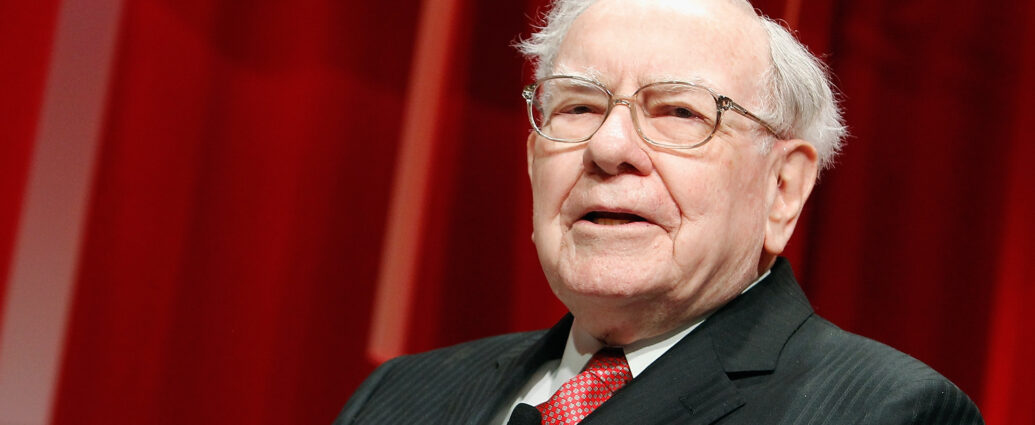
Warren Buffett is defending the philanthropic initiative he co-founded with Bill Gates almost 15 years ago.
This post was originally published here

Benzinga examined the prospects for many investors’ favorite stocks over the last week — here’s a look at some of our top stories.
Markets ended the week under pressure as escalating geopolitical tensions and rising inflation concerns weighed on investor sentiment. The Dow Jones Industrial Average, S&P 500 and Nasdaq Composite struggled to maintain momentum, with volatility increasing as the ongoing Iran conflict pushed energy prices higher and complicated the Federal Reserve’s policy outlook. Investors reacted cautiously to the combination of persistent inflation and slowing economic signals, raising doubts about the timing of any potential rate cuts.
Inflation fears intensified as the war-driven oil shock continued to ripple through global markets, reinforcing expectations that interest rates may stay elevated for longer. The disruption of energy supplies through the Strait of Hormuz — which typically handles about 20% of global oil flows — has fueled concerns about sustained price pressures and tighter financial conditions. Strait of Hormuz This backdrop has led to increased volatility across equities, with investors reassessing risk amid higher yields and uncertain monetary policy direction.
Sector performance reflected the shifting macro landscape, with energy stocks benefiting from higher crude prices while rate-sensitive and consumer-focused sectors lagged. Broader market sentiment remained fragile as traders weighed geopolitical risks, inflation data and central bank expectations, suggesting that markets could remain choppy in the near term as multiple macro headwinds converge.
Benzinga provides daily reports on the stocks most popular with investors. Here are a few of this past week’s most bullish and bearish posts that are worth another look.
The Bulls
“FedEx Tops Q3 Estimates, Freight Spin-Off Remains On Track,” by Adam Eckert, reports that FedEx Corp. (NYSE:FDX) delivered a third-quarter earnings and …
This post was originally published here
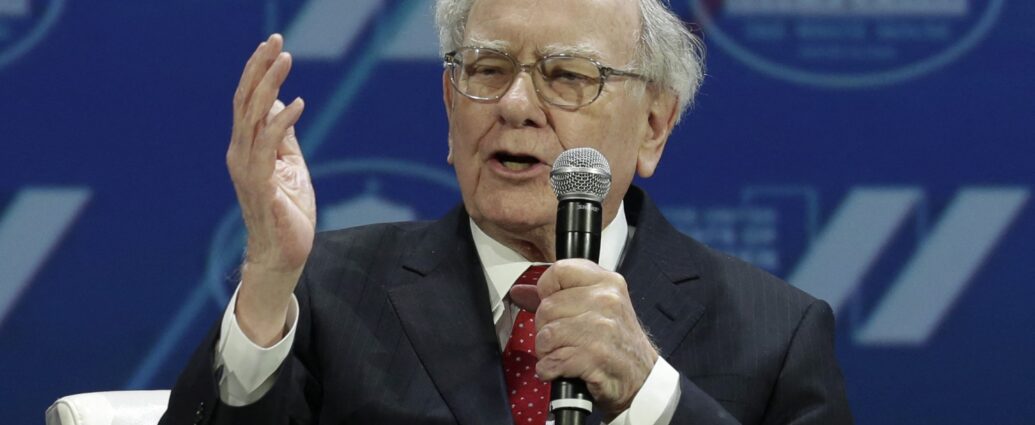
Many businesses are birthed from a bright idea—but that isn’t enough to take a company big-time. Dairy Queen CEO Troy Bader said Warren Buffett taught him that zeal for the mission is more important than anything else; being “smartest person in the world” won’t outperform “somebody who has that passion.”
“Anybody you meet, I don’t care who they are—they know something you don’t,” Bader told Business Insider last year.
It’s just one of the two takeaways that have stuck with Bader since his job interview with Buffett in 2017 to become CEO of the billion-dollar ice cream giant. And as the serial investor stepped down from his six-decade rein over Berkshire Hathaway at the end of 2025, his words of wisdom seem to carry even more weight. The Dairy Queen CEO was shown that even the most successful people still have things to learn, and passion triumphs wits in growing a business.
Bader admitted it was daunting to come face-to-face with Buffett; especially after Berkshire Hathaway shelled out $600 million to take Dairy Queen company private in 1998. The business mogul has long had a soft spot for Dairy Queen, both in business and in life. So the sweet treat CEO felt the pressure to impress during their interview.
“It was the fall of 2017, I’ll never forget the day,” Bader told Business Insider. “I was very anxious going in because OK, I felt like I knew our business, but you’re sitting down with Warren Buffett.”
Buffett wasn’t the type to act “very arrogant” in the meetings as one might expect, Bader said. Instead, the Oracle of Omaha spent the first 15 or 20 minutes asking the Dairy Queen executive about something relevant to another business deal in his pipeline. Buffett figured Bader could teach him a thing or two, which ironically taught him a valuable lesson back: that anyone you meet knows something you don’t, regardless of stature.
“Warren is a constant learner,” Bader said. “He wants to know what you know and what he can learn from you.”
During their conversation, Bader noticed Buffett was “digging for something more, that energy, that passion, that connection to the business.” That spurred a second revaluation—that Buffett wanted spirit and enthusiasm from the executives he was meeting with. When it comes to running a successful business, passion tops intelligence in getting the job done right. The power of a can-do, passionate attitude in business has been echoed by other executives like Amazon CEO Andy Jassy and Cisco’s U.K. chief Sarah Walker.
Buffett’s words have impacted more than just the people he interviews. Even some of the world’s most respected leaders see the billionaire as a north star in navigating the rollercoaster of entrepreneurship.
Early on in Melinda French Gates’ philanthropic career running the Gates Foundation with her then-husband Bill Gates, the Berkshire Hathaway boss gave her some advice on managing the stress—and she still swears by it.
“Warren Buffett once said to us early in the [Gates] Foundation’s life, ‘Find your bull’s-eye of what you’re working on, and let the other things fall away. You’ll feel better if you keep your talents in that bull’s-eye, keep working those issues, and you’ll feel less bad about letting other things go,’” French Gates told LinkedIn in 2024. “And I think that’s true.”
American Express CEO Stephen Squeri also said he soaked up advice from Buffett during their bimonthly calls. In an interview with Barrons in 2023, the financial services executive recalled getting important guidance from the Omaha entrepreneur during the COVID-19 pandemic when no one was in public cashing out their Amex cards. Buffett advised him to hold two things down pat; it could mean a difference between boom and bust.
“His advice to me is, protect two things—protect your customers and protect your brand,” Squeri said.
A version of this story was published on Fortune.com on May 21, 2025.
This story was originally featured on Fortune.com
This post was originally published here

Scale AI has released Voice Showdown, a platform for evaluating voice AI models, as it seeks to compete with rivals such as OpenAI, xAI, and Anthropic.
Voice Showdown is the first global preference arena for voice AI. This new methodology involves users interacting with voice models via Scale’s platform ChatLab to provide a real-world context for these evaluations, the company noted in a press release.
The model has two evaluation modes: Dictate, where users speak and text appears and Speech-to-Speech, a back and forth conversation.
The company is in the process of developing a third mode, Full Duplex, “where interruptions, barge-ins, and overlapping speech emerge naturally and cannot be reduced to side-by-side preference judgments,” the company …
This post was originally published here
General Mills, McCormick & Company and Conagra Brands top of the list of most oversold stocks in the S&P 500.
This post was originally published here
General Mills, McCormick & Company and Conagra Brands top of the list of most oversold stocks in the S&P 500.
Elon Musk has a moonshot vision of life with AI: The technology will take all our jobs, while a “universal high income” will mean anyone can access a theoretical abundance of goods and services. Provided Musk’s lofty dream could even become a reality, there would, of course, be a profound existential reckoning.
“The question will really be one of meaning,” Musk said at the Viva Technology conference in May 2024. “If a computer can do—and the robots can do—everything better than you … does your life have meaning?”
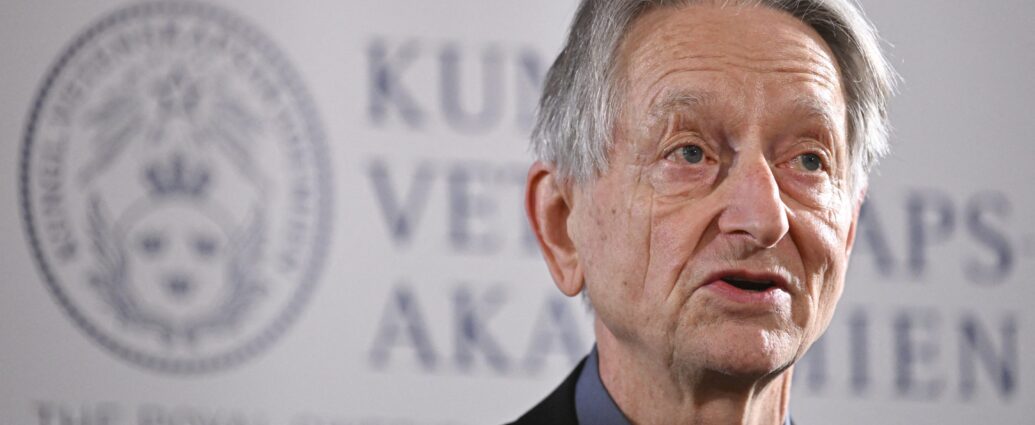
But most industry leaders aren’t asking themselves this question about the endgame of AI, according to Nobel laureate and “godfather of AI” Geoffrey Hinton. When it comes to developing AI, Big Tech is less interested in the long-term consequences of the technology—and more concerned with quick results.
“For the owners of the companies, what’s driving the research is short-term profits,” Hinton, a professor emeritus of computer science at the University of Toronto, told Fortune.
And for the developers behind the technology, Hinton said, the focus is similarly on the work immediately in front of them, not on the final outcome of the research itself.
“Researchers are interested in solving problems that have their curiosity. It’s not like we start off with the same goal of, what’s the future of humanity going to be?” Hinton said.
“We have these little goals of, how would you make it? Or, how should you make your computer able to recognize things in images? How would you make a computer able to generate convincing videos?” he added. “That’s really what’s driving the research.”
Hinton has long warned about the dangers of AI without guardrails and intentional evolution, estimating a 10% to 20% chance of the technology wiping out humans after the development of superintelligence.
In 2023—10 years after he sold his neural network company DNNresearch to Google—Hinton left his role at the tech giant, wanting to freely speak out about the dangers of the technology and fearing the inability to “prevent the bad actors from using it for bad things.”
For Hinton, the dangers of AI fall into two categories: the risk the technology itself poses to the future of humanity, and the consequences of AI being manipulated by people with bad intent.
“There’s a big distinction between two different kinds of risk,” he said. “There’s the risk of bad actors misusing AI, and that’s already here. That’s already happening with things like fake videos and cyberattacks, and may happen very soon with viruses. And that’s very different from the risk of AI itself becoming a bad actor.”
In November 2025, Anthropic said it disrupted “the first documented case of a large-scale AI cyberattack executed without substantial human intervention,” identifying a Chinese state-sponsored group that manipulated Claude Code in an attempt to infiltrate around 30 tech companies, financial institutions, government agencies, and chemical manufacturers, the AI company said in a blog post.
The disruption has led cybersecurity experts to believe Iran could use AI to conduct a largely automated cyberattack against the U.S.
Beyond advocating for more regulation, Hinton’s call to action to address AI’s potential for misdeeds is a steep battle because each problem with the technology requires a discrete solution, he said. He envisions a provenance-like authentication of videos and images in the future that would combat the spread of deepfakes.
Just as printers added names to their works after the advent of the printing press hundreds of years ago, media sources will similarly need to find a way to add their signatures to their authentic works. But Hinton said fixes can only go so far.
“That problem can probably be solved, but the solution to that problem doesn’t solve the other problems,” he said.
For the risk AI itself poses, Hinton believes tech companies need to fundamentally change how they view their relationship to AI. When AI achieves superintelligence, he said, it will not only surpass human capabilities, but have a strong desire to survive and gain additional control. The current framework around AI—that humans can control the technology—will therefore no longer be relevant.
Hinton posits AI models need to be imbued with a “maternal instinct” so it can treat the less-powerful humans with sympathy, rather than desire to control them.
Invoking ideals of traditional femininity, he said the only example he can cite of a more intelligent being falling under the sway of a less intelligent one is a baby controlling a mother.
“And so I think that’s a better model we could practice with superintelligent AI,” Hinton said. “They will be the mothers, and we will be the babies.”
A version of this story was published on Fortune.com on Aug. 15, 2025.
This story was originally featured on Fortune.com
This post was originally published here
The Woman’s Hour host, who has died aged 75, could talk about hydrangeas, campaign against domestic abuse, then tear a strip off a politician – all within a few minutes
Before she took over Woman’s Hour in 1987, Jenni Murray was a presenter on the Today programme. She had joined the BBC in Bristol in 1973, and became a TV reporter and presenter for South Today, so arrived with solid news credentials. But Today in the 1980s was inveterately sexist – the guys took the politics, the women mopped up the rest – that the format was just too small for her.
Woman’s Hour, on the other hand, was absolutely reshaped in her image: there was no preconception of tone, and nothing was too serious or too light for it. Murray, who has died at the age of 75, could tear a strip off a politician, talk about hydrangeas, then campaign against domestic abuse, all within a few minutes. She was instinctively open and generous about her personal experience, but never solipsistic – an incredibly fine balance.
This post was originally published here

Bank of America named five stocks that are well positioned despite a turbulent macroeconomy.
This post was originally published here

Retail investors talked up five hot stocks this week (March 9 to March 13) on X and Reddit’s r/WallStreetBets, driven by retail hype, earnings, AI buzz, and corporate news flow.
Super Micro Computer Inc. (NASDAQ:SMCI), Micron Technology Inc. (NASDAQ:MU), Ulta Beauty Inc. (NASDAQ:ULTA), CF Industries Holdings Inc. (NYSE:CF), Nvidia Corp. (NASDAQ:NVDA), spanning software, semiconductors, online retail, agriculture and fertilizers, and AI reflected diverse investor interests.

This post was originally published here
Exclusive: War in the Middle East is draining the global carbon budget faster than 84 countries combined
The US-Israel war on Iran is a disaster for the climate, according to an analysis that finds it is draining the global carbon budget faster than 84 countries combined.
As warplanes, drones and missiles kill thousands of people, level infrastructure and turn the Middle East into a gigantic environmental sacrifice zone, the first analysis of the climate cost has found the conflict led to 5m tonnes of greenhouse gas emissions in its first 14 days.
This post was originally published here
FoI request reveals no evidence of testing despite ministers hailing agreement as key to delivering AI-led public service reform
When the UK government signed a memorandum of understanding with OpenAI, the tech firm behind ChatGPT, the partnership was hailed as one that could harness artificial intelligence to “address society’s greatest challenges”.
But eight months on from the fanfare of that announcement, the government has yet to hold any trials involving the firm’s tech.
This post was originally published here

At Nvidia’s GTC conference this week, CEO Nvidia Jensen Huang dedicated a major part of his keynote to OpenClaw, a technology that didn’t exist six months ago.
This post was originally published here
The president’s unprecedented use of executive power has made him a driving force behind oil prices, the Federal Reserve’s interest rates and more.
This post was originally published here
The president’s unprecedented use of executive power has made him a driving force behind oil prices, the Federal Reserve’s interest rates and more.
For restaurants and food companies, the increasing adoption of GLP-1 drugs present both an opportunity and a threat to their businesses.
This post was originally published here

On March 1, Iranian drones struck three data centers operated by a major U.S. hyperscaler in the Gulf—two in the UAE, one in Bahrain. Banking apps went dark. Payment platforms failed. Ride-hailing services crashed. It was the first time a U.S. data center had been hit by military action, and it sent an unmistakable message: in modern conflict, corporations are targets.
This is not an anomaly. It’s a strategy.
Since the dawn of modern warfare, armed forces fought other armed forces. Private companies were affected, but they operated on the periphery of the battlefield. That assumption is now obsolete.
Iran’s current campaign reflects a deliberate shift toward attacking economic infrastructure and commercial actors. Data centers in the Gulf have faced physical, cyber, and hybrid strikes aimed at disrupting the digital backbone of global commerce.
Tourism hubs in Dubai and Abu Dhabi have been hit by missile and drone strikes on hotels and airports—designed to erode confidence and kill visitor demand.
Oil tankers and commercial vessels tied to the global energy trade have been harassed in the Strait of Hormuz, while Iran’s Houthi proxies in Yemen have targeted shipping in the Red Sea. These attacks are not random. They are a coordinated effort to impose economic costs, manufacture uncertainty, and pressure governments by targeting the private systems that sustain modern economies.
This reality demands a fundamentally new approach to corporate security—one that treats geopolitical risk as an operational issue, not a compliance checkbox.
Real-time intelligence. Quarterly risk assessments and static security reviews are relics of a different era. In a dynamic conflict environment, businesses need continuous situational awareness— live information on cyber threats, physical attacks, regional instability, and supply chain disruptions.
Physical and digital hardening. Data centers, ports, logistics hubs, energy infrastructure, and commercial campuses are now legitimate military targets. Resilience planning—redundant networks, reinforced facilities, physical security improvements to redundancy in digital networks and supply chains—has become a board-level governance issue.
Active defensive capabilities. The proliferation of drone and missile technologies means counter-drone and counter-missile systems are no longer exclusively military concerns. In high-risk sectors and regions, companies may need to evaluate both kinetic and non-kinetic defensive tools to protect critical infrastructure.
None of this means corporations should replace governments as security providers. Militaries will still field the most advanced anti-missile and anti-drone systems. But the traditional boundary between national security and corporate risk management is dissolving fast.
The companies best positioned to navigate this era will be those that build genuine partnerships with governments, intelligence professionals, and national security advisors—and that design practical mitigation strategies before the next strike, not after.
The front lines of modern conflict no longer run only through military bases. They run through ports, data centers, shipping lanes, and corporate networks.
And the companies that depend on them must be prepared to defend themselves.
This story was originally featured on Fortune.com
This post was originally published here

This post was originally published here
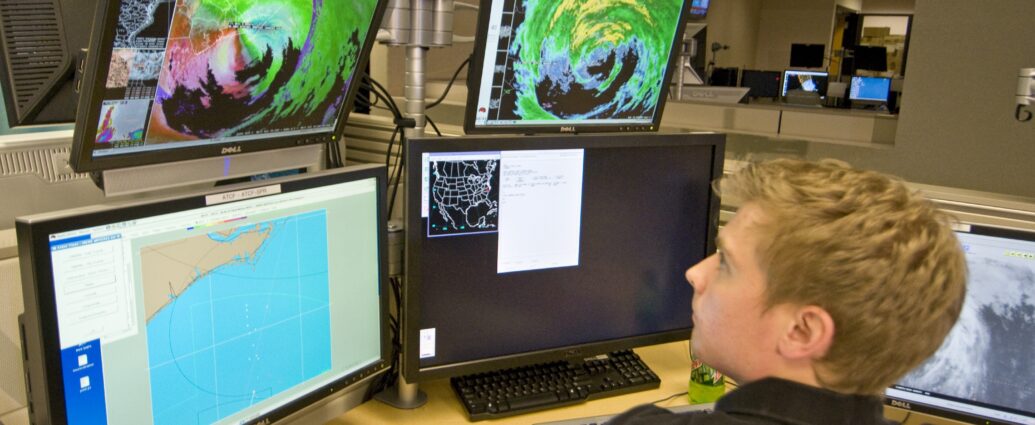
Residents in and around Washington braced themselves for damaging storms earlier this week, but turns out it was a forecast flop. One local meteorologist apologized.
(Image credit: Andy Newman/ASSOCIATED PRESS)

This post was originally published here
The SA election result is devastating for the Liberals, but there are warning signs for Labor too in One Nation’s startling rise, which has rocked Australian politics
Labor secures overwhelming victory in SA election
Rarely – perhaps never – has the winner of an election felt more like a subplot to a bigger and more consequential narrative than in South Australia on Saturday night.
The ABC called the result for Peter Malinauskas and his Labor government less than 90 minutes after the polls closed, validating the opinion polls that had long forecast a landslide victory.
This post was originally published here
This post was originally published here