
Elon Musk offers to pay TSA workers’ salaries amid DHS budget standoff
Elon Musk offered to cover the salaries of Transportation Security Administration (TSA) personnel during the ongoing government funding standoff.
“I would like to offer to pay the salaries of TSA personnel during this funding impasse that is negatively affecting the lives of so many Americans at airports throughout the country,” Musk said in an X post on Saturday morning.
Musk’s offer comes as a partial government shutdown passes one month, with lawmakers unable to reach a deal to fund the Department of Homeland Security (DHS), which oversees the TSA.
HOW MUCH DO GOVERNMENT SHUTDOWNS COST AMERICAN TAXPAYERS?
The DHS shutdown has left TSA agents working without pay, triggering staffing shortages and long airport lines nationwide, while raising concerns about the ability to prevent attacks.
Republicans have pushed to fund DHS, while Democrats have sought standalone funding for agencies like TSA that would exclude immigration operations.
TSA officers are considered essential employees and are required to report to work even during a shutdown, though pay can be delayed.
Musk’s offer appeared aimed at easing the strain as airport lines grow and staffing pressures build.
Major U.S. airports have experienced severe delays, with security wait times exceeding 3 hours in some cases, due to high TSA officer absenteeism. Hardest-hit airports include Houston (HOU, IAH), Atlanta (ATL), New Orleans (MSY), and Philadelphia (PHL).
Footage from PHL, shot early Thursday morning, showed hundreds of passengers waiting on elevators and escalators to clear a security checkpoint.
GET FOX BUSINESS ON THE GO BY CLICKING HERE
It comes as a top TSA union leader warned Thursday that airport security risks linked to the shutdown are set to “get worse,” given that TSA has been under a hiring freeze since last year.
It remains unclear how Musk’s proposed arrangement would work or whether it would be legally possible for a private individual to fund federal workers.
Fox News’ Ashley J. DiMella and Taylor Penley contributed to this report.
US interest in electric vehicles surges as gas prices jump amid Iran war
Online searches for electric and hybrid cars increase as war-linked fuel prices hit highest levels in nearly three years
US car buyers are showing a surge in interest in electric vehicles after Donald Trump’s decision to attack Iran helped cause a major jump in gasoline prices.
The cost to refuel a vehicle in the US is at its highest level in nearly three years, with the average national price of gas standing at $3.90 a gallon on Friday.
This post was originally published here
From Goop to gavel: Gwyneth Paltrow’s wardrobe clearout heads to auction
Nearly 300 of the actor’s items, from designer gowns to everyday basics, to be sold in Los Angeles, with some lots under $100
A customised sunhat. A slogan sweatshirt. A “mom” necklace. An old copy of Cosmopolitan. If these sound like items found in many homes today, they’re actually the castoffs of a household name: Gwyneth Paltrow.
Next week, nearly 300 pieces owned by Paltrow will be on sale as part of an auction at Julien’s, the Los Angeles auction house that has sold big-ticket items such as Marilyn Monroe’s so-called “naked” dress and the leather jacket worn by Olivia Newton-John in Grease. But, while those items went for six-figure prices, Paltrow’s sale is a little more affordable, with estimates starting at about $50 (£37) to $75 (£56) for some of Paltrow’s personalised stationery.
This post was originally published here
‘Frustration, anger, confusion’: Trump administration leaves millions without clear path to paying off student loans
Court’s decision to eliminate Save plan and internal shuffling on who handles what when it comes to student loans presents new challenges for borrowers
Many Americans with student debt are again facing future upheaval after a federal appeals court recently ordered the end of a Biden-era student loan repayment program, known as the Saving on a Value Education (Save) Plan, a move that coincided with another grim revelation: new education department data shows that by the end of 2025, 7.7 million borrowers had defaulted on $181bn in federal student loans.
The Save plan, which was launched in 2023, is an income-driven repayment program created with the goal of cutting undergraduate loans in half, bringing some borrowers’ monthly payments to $0, and offering early forgiveness for low-balance borrowers. Shortly after the program was announced, Republican attorneys general across the country sued to get it killed, arguing that it was an overstep of executive power and imposed heavy taxpayer costs.
This post was originally published here
Dave Ramsey warns young hopefuls locked out of housing market: ‘Corporate America has screwed you’
Young Americans are increasingly finding themselves shut out of the housing market as rising debt levels and lingering affordability pressures reshape the path to homeownership.
“The Ramsey Show” host Dave Ramsey joined FOX Business’ Cheryl Casone on the FOX Business In Depth Special, “Hitting Home: Rebuilding the Dream,” to break down the financial realities facing first-time buyers and why many are falling behind.
Ramsey pointed to a combination of record-high consumer debt and shifting economic conditions that have eroded buying power across younger generations.
“I’m afraid I have to tell you the truth. . . . Corporate America has screwed you,” Ramsey said.
“Car debt is at an all-time high. . . . Student loan debt is at an all-time high. . . . And, of course, credit card debt . . . is at a all-time high.”
MIAMI OVERTAKES LOS ANGELES AND NEW YORK AS WORLD’S RISKIEST HOUSING MARKET FOR BUBBLE RISK
Those pressures, he explained, are leaving many without the financial flexibility to enter the housing market, as disposable income is increasingly consumed by monthly obligations.
“When you’re drowning in personal debt, you can’t afford to buy a freaking house,” Ramsey said.
Beyond debt, Ramsey also highlighted the post-pandemic housing surge as a key factor pushing first-time-buyer ages higher, noting that supply shortages and elevated prices continue to weigh on affordability.
MORTGAGE RATES JUMP TO HIGHEST LEVEL IN OVER 3 MONTHS
Despite the challenges, Ramsey pushed back on the idea that homeownership is out of reach, arguing that progress is still possible for those willing to aggressively tackle debt.
“Our message to Gen Z and to millennials . . . is: clear this debt, get rid of the stupidity, and chop up the cards and work your way through it. . . . Once you do that, you can get there,” Ramsey said.
US fertiliser bosses cash in as Iran war boosts shares
This post was originally published here

Canada’s oil producers in line for C$90bn windfall from Iran war
This post was originally published here






Costco CEO promises the $1.50 hot dog isn’t going away: ‘The price will not change as long as I’m around’
There’s no better way to fuel up for traipsing the Costco aisles for hours than a $1.50 hot dog and a soda.
It’s been a staple of the bargain shopping club for four decades, and Costco’s president and CEO, Ron Vachris, recently confirmed it’s a deal that’s never going away, at least under his watch.
“The hot dog price will not change as long as I’m around,” Vachris said in an Instagram video posted this week.
Costco executives have long assured customers the bargain won’t go away, but they’ve ramped up that messaging in the past couple of years as consumers continue to be strained by tariffs, inflation, and a high cost of living.
Richard Galanti, who stepped down in 2024 as chief financial officer, told Fortune’s Phil Wahba that deals as well as Costco’s $5 rotisserie chicken are “foundational” to the warehouse chain’s success—and even told The Wall Street Journal in 2022 the $1.50 hot dog was “sacrosanct,” and its price would stay fixed “forever.” In 2024, Galanti’s successor, Gary Millerchip, said, “I also want to confirm the $1.50 hot dog price is safe.”
And as Irina Ivanova reported for Fortune, Costco is also committed to keeping the soda part of the combo cheap. When Costco’s contract with Coca-Cola was up for renewal a decade ago, the company switched to Pepsi to save on prices, although they’re back to serving Coke products now.
K-shaped economy food prices
The timing of Vachris’s reassurance isn’t coincidental, could be seen as strategic. American consumers face mounting financial pressure, so even a modest, decades-old hot dog deal has become a symbol of economic stability in an otherwise turbulent economy.
“Food away from home” prices rose about 4.1% from December 2024 to December 2025, according to the U.S. Consumer Price Index. That means a budget staple like Costco’s $1.50 combo, which has been unchanged since 1985, represents something increasingly rare: a price point that hasn’t budged while nearly everything else has.
The broader backdrop is a K-shaped economy that has split American consumers into two diverging realities. According to a Moody’s analysis of Federal Reserve data, lower-income earners have spent only in line with inflation since the pandemic, with all real spending growth coming from the top 20%.
“Looking at the data, it’s not a mystery why most Americans feel like the economy isn’t working for them,” Moody’s chief economist Mark Zandi wrote in a 2025 report. “For those in the bottom 80% of the income distribution, those making less than approximately $175,000 a year, their spending has simply kept pace with inflation since the pandemic.”
“The 20% of households that make more have done much better,” he continued, “and those in the top 3.3% of the distribution have done much, much, much better.”
Spending among top-income consumers grew 4% in November 2025 year-over-year—nearly four times the pace of the lowest-income bracket, according to the Bank of America Institute. For the consumers trending downward on the K-curve, every dollar counts.
This phenomenon has triggered other food-industry companies to create deals for consumers. McDonald’s extended its meal deal well beyond its original run and launched a “McValue” menu with buy-one-get-one-for-$1 offers. Wendy’s rolled out $4, $6, and $8 mix-and-match value tiers; KFC introduced a $5 offering; and Taco Bell launched Cravings Boxes starting at $5. Even Sweetgreen, a notoriously expensive fast-casual chain, began offering $10 loyalty-member bowls, a roughly $6 discount, to stay competitive.
But Costco doesn’t need a limited-time promotion to signal it’s on the consumer’s side. It’s been doing that for 40 years by consistently selling $1.50 hot dogs, so customers know what to expect.
This story was originally featured on Fortune.com
This post was originally published here

Meet the Dutch art detective who tracks down stolen masterpieces
For 20 years, Dutch art detective Arthur Brand has acted as an intermediary between the police and people who know where stolen artwork might be hiding. He says patience and trust are everything.

This post was originally published here

When health insurance costs $2,500 per month, families make tough choices
A self-employed couple already had to dip into retirement savings for health costs. Now, they are skipping vacations and canceling streaming to afford health insurance.
(Image credit: Jarod Lew for NPR)

This post was originally published here




At least 14 people killed in fire at South Korean car parts factory
Almost 60 injured in blaze in Daejeon with footage seemingly showing people jumping from burning building to escape
A fire at a car parts factory in South Korea has killed 14 people and injured almost 60 others.
Firefighters said all of the missing are now accounted for after a search operation of the wreckage of the three-storey building.
This post was originally published here














Iranian among two charged over alleged attempt to enter UK nuclear submarine base
Police say two people tried to enter Faslane base in Scotland, home to core of UK’s submarine fleet and Trident nuclear weapons
Two people have been charged, one of them Iranian, after they allegedly tried to enter HM Naval Base Clyde in Scotland, which houses the UK’s nuclear Trident submarines.
A 34-year-old man and a 31-year-old woman were charged after the incident at the base, which is known as Faslane. Police Scotland said inquiries were continuing and that the pair were due to appear at Dumbarton sheriff court on Monday.
This post was originally published here

Covid gave us hybrid work. The Iran War might give us a four-day week—and this time, experts say it could stick
COVID-19 gave us hybrid work. The Iran War might give us a three-day weekend. That’s because, as Sri Lanka, the Philippines, and Pakistan move to a 4-day work week because of the war in Iran, experts say we’re the closest we’ve ever been to a permanent shorter workweek.
It started in Asia, but now major governments around the world are once again mandating that workers stay home to save on fuel and survive an energy crisis as the war in the Middle East threatens vital oil shipments through the Strait of Hormuz.
What began as an emergency measure in the developing world is now spreading globally. Sound familiar? We’ve been here before: The last time the world was forced to shift en masse—the pandemic—the changes we thought would be temporary became permanent. Hybrid work didn’t die when offices reopened. Instead, it reshaped how we work.
Now, with governments reaching for the same lever again, experts say something similar could happen with a four-day workweek. But it’ll come with major consequences for those who can’t take their jobs home, like drivers, baristas, window cleaners, pet sitters, and more.
Will an overnight emergency four-day week come to the West?
Although Brits and Australians are being urged to work from home, Dr. Wladislaw Rivkin, Professor in Organisational Behaviour at Trinity Business School, told Fortune that a global three-day weekend currently looks unlikely—at least not at the click of the government’s fingers.
That’s because a permanent restructuring of how work is organized is a far heavier lift than an overnight shift to working from a makeshift home office. “I do not see this as a model for the U.S. and U.K., at least in the long term, because the current sharp rise in fuel costs is temporary,” Rivkin says.
Professor Roberta Aguzzoli at Durham University Business School says she wouldn’t rule out the West moving to shorter workweeks to save fuel, but she argues better infrastructure should minimise that need.
“Public transport systems in large European cities are generally more developed and less reliant on individual transport use than those in certain emerging economies,” she says, adding that limited transport infrastructure and higher exposure to fuel price volatility make last-minute policy changes more necessary.
On that basis, she says a permanent four-day week in the near term is more likely to become the new norm in developing countries. But there’s a big but. The mere fact that millions of workers are about to spend an extended period proving they can get the job done in four days could be the tipping point the movement has been waiting for.
Why Asia’s four-day week could permanently change how the world works
Whether Asia’s emergency four‑day workweek will have the same lasting effect as the pandemic’s work-from-home mandate, or even ripple into Europe and the U.S., remains to be seen. But once workers get a taste of a shorter week—even a forced one—it’s a hard sell to go back to the old one.
“Remote work didn’t spread because companies planned it,” says William Self, chief workforce strategist at Mercer. “It spread because the pandemic crisis forced the experiment, the experiment worked, and workers weren’t willing to give back what they’d gained. The same logic applies here.”
Self argues that once the experiment runs, the burden of proof flips. “If employers experiment with a four-day workweek and employees show they can deliver in four days what they previously delivered in five, management has to justify the fifth day rather than the other way around.”
What makes this moment historically distinct, he says, is the convergence of two previously separate conversations. “Previously, a four-day workweek was mostly theoretical or confined to a handful of pilot programmes. Now you have some governments weighing in as a matter of public policy and major employers adopting it, and they’re doing so in the same news cycle. That’s a different situation than we’ve been in before.” Add AI rewriting what productivity means, a cost-of-living crisis, stagnant wages and workers who’ve already had a taste of flexibility, and the pressure for more flexible ways of working is converging from every direction at once.
Emergency or not, Aguzzoli argues that research shows we’re already heading that way anyway.
According to CIPD, the four-day workweek has the potential to become a new norm. There is a growing global trend in this direction, with organisations across different countries volunteering to test the effectiveness of such policies.
Thankfully for workers, the fuel crisis isn’t the sole reason for this shift, making it more likely to stick—but it’s also why you shouldn’t expect it to explode overnight like hybrid working during the pandemic.
“The discussion around the four-day workweek is still at an early stage, with companies and researchers continuing to assess its long-term impact on performance,” Aguzzoli added. “While there are several initiatives moving in this direction, most involve large organisations with well-developed human resource management systems that are better equipped to plan for and manage such changes.”
Who gets left behind: why the four-day week could make inequality worse
Perhaps the most uncomfortable truth about the four-day workweek is who it would actually benefit—and who it would leave behind.
For office workers, the transition is relatively seamless and largely welcomed.
But workers in lower-skilled, customer-facing, or physically demanding roles—delivery drivers, construction workers, care workers, retail staff—face a fundamentally different reality. Compressing the same output into fewer hours doesn’t mean more rest, Aguzzoli argues. It means more strain, greater fatigue, and a higher risk of workplace accidents. Plus, for those already on low wages with little bargaining power, a forced compression of hours could also mean a direct hit to their income.
Ultimately, Aguzzoli says that although a four-day workweek could help reduce the current gender gap, it could “widen disparities between skilled and low-skilled workers.“
The divisions don’t stop there. Rivkin warns that the four-day workweek could fracture workplaces from the inside out. “For example, if an administrative worker in a hospital works 4 days a week, while a nurse has to work 5 days a week.”
The result isn’t a more equitable workplace—it’s a more resentful one. Rather than levelling the playing field, a four-day rollout could make physically demanding professions even less attractive, harder to staff, and more dangerous than they already are.
This story was originally featured on Fortune.com
This post was originally published here





Record deaths in US immigration custody expose systemic failures
Families, advocates and lawmakers say poor care, opaque investigations and bureaucracy leave deaths unexplained
The circumstances of many of the record number of deaths in US immigration custody under the second Trump administration have left loved ones often searching in vain for answers amid a lack of transparency over key investigations.
Immigration and Customs Enforcement (ICE) reports mandated by Congress, autopsy reports and 911 calls collected by the Guardian raise questions about the quality of medical care, allegedly inadequate or haphazard responses to emergencies, and contraction of diseases and infections inside detention facilities that in some cases contributed to detainee deaths.
This post was originally published here








DHS shutdown hurts families’ access to detention facilities, Democrat says
The difficulties for families adds to the patchwork of complaints about immigration oversight and other issues while the department remains without government funding for five weeks.
(Image credit: Andrew Caballero-Reynolds)

This post was originally published here



Iran war enters its fourth week with no clear end in sight
As the war in the Middle East enters its fourth week, President Trump says the U.S. is considering “winding down” military efforts, as it also seeks to ease the energy crisis by lifting sanctions on Iranian oil stranded at sea.
(Image credit: Amir Levy)

This post was originally published here


The entry-level job market is the worst it’s been in 37 years. Stop blaming Gen Z
Months of hot takes have blamed Gen Z for bad attitudes, no work ethic, and too many demands. But labor market data tells a far less convenient story. The entry-level rungs of the employment ladder are splintering beneath America’s youngest workers — and the data makes clear this isn’t a generational character flaw. It’s a structural collapse.
Headline indicators suggest a strong labor market. Under the hood, persistent weaknesses are festering. The “low-hire, low-fire” market means employers are hesitant to make any changes to their payroll. For mid-career employees, that stability is a relief. For young people trying to land a first job, it’s a dead end.
In 2025, the share of unemployed Americans who are new workforce entrants hit a 37-year high, peaking at 13.3% in July before settling at 10.6% this February. That is still higher than at any point during the Great Recession. When hiring slows, the door closes first on recent graduates and those new to the workforce.
[Moved the 37-year high stat up and made it the paragraph’s lead — it’s the piece’s most alarming single data point and was previously buried as a supporting detail. “That’s still higher than any point during the Great Recession” elevated to its own sentence for emphasis.]
The Jobs That Were Supposed to Be Theirs Have Vanished
Today’s labor market gains are isolated and uneven, largely bypassing young workers. Job gains have been narrowly concentrated in health care and social services. Meanwhile, finance and information services — industries that once provided an on-ramp for the lion’s share of recent college graduates — are hemorrhaging jobs, shedding an average of 9,000 jobs per month since 2023. Before the pandemic, those same industries were adding 44,000 jobs per month. Young workers are refreshing job boards only to find a shrinking pool of openings. A record number of new workers are arriving at the doorstep of the labor market just as employers are pulling the door shut.
Gen Z doesn’t lack hustle. As this generation tries to find their footing in the traditional market, many are turning to side hustles. More than half — 57% — of Gen Zers now juggle additional work such as making content, selling crafts, and working in the gig economy, compared to just 21% of Baby Boomers. There’s real entrepreneurship in the side-hustle surge, but there’s also a warning sign. Across the economy, a ballooning share of workers are cobbling together part-time or multiple jobs to stay afloat. In this context, the boom in side-hustle culture reflects a generation piecing together income in a market that offers too little stability and too few pathways to advancement.
The College Degree No Longer Guarantees What It Once Did
What labor economists first documented among Black college graduates a decade ago — that doing everything “right” still didn’t guarantee stable employment — has since rippled across the entire labor market.
A college diploma no longer guarantees a job or a better shot at a stable paycheck. Since the Great Recession, the gap in unemployment rates between college graduates and those without degrees has been narrowing. Now, recent college graduates are actually more likely to be unemployed than the overall workforce.
Perhaps most striking: for six months in 2025, workers with an occupational associate’s degree in skilled trades — plumbers, electricians, pipe fitters — posted slightly better employment outcomes than college graduates. This marks the first time college graduates have lost their employment advantage since the federal government began tracking these data in the 1990s.
AI Is Threatening to Lock the Door From the Inside
As the labor market door swings shut on young people, artificial intelligence threatens to turn the deadbolt from the inside. AI-driven mass unemployment has not yet arrived — but early warning signs are flashing for workers at the start of their careers. A recent Stanford University study found that workers ages 22 to 25 in highly AI-exposed occupations — software development, customer service — experienced a 13% drop in employment since 2022.
Even tech leaders are sounding the alarm. Anthropic CEO Dario Amodei has warned that AI could wipe out roughly half of entry-level white-collar jobs in the next five years. Taken together, young workers without experience face outsized risk of labor market scarring — entering a workforce that is simultaneously contracting at the entry level and automating the roles that remain.
This uncertainty is weighing on young workers. The Conference Board finds that just 57% of workers under 25 report being satisfied with their jobs, compared to 72% for workers over 55. In a year marked by the fastest single-year gain in job satisfaction ever recorded, young workers were the only group whose satisfaction declined.
What Actually Needs to Change
Blaming Gen Z is easy. The data shows it’s also wrong. This generation is coming of age in a labor market that is less secure, less dynamic, and less predictable than the ones their parents entered — one where workplaces increasingly deploy surveillance technology and retirement benefits are eroding. What’s needed is not a lecture about work ethic. We need an economy that offers multiple, durable pathways to middle-class security.
We can reinvigorate the promise of a four-year degree while investing in apprenticeships, public service programs, and other proven on-ramps to stable employment. And as AI reshapes the workforce, policymakers must ensure that workers have a voice in how it’s deployed — and that the benefits it creates are broadly shared rather than concentrated among the few.
Gen Z is not unemployable. They are knocking on locked doors. The task before us is to reopen them — and to make sure that a shot at the middle class doesn’t become a relic of the past.
The opinions expressed in Fortune.com commentary pieces are solely the views of their authors and do not necessarily reflect the opinions and beliefs of Fortune.
This story was originally featured on Fortune.com
This post was originally published here

Women are avoiding the very technology that threatens them most, as expert warns of a ‘two-tiered AI economy’ approaching
Artificial intelligence is moving even faster than many thought. In the span of three years, the world went from wearily experimenting with OpenAI’s ChatGPT to entire companies integrating Anthropic’s Claude Code into their workflows. The speed of AI’s progression, technologically and culturally, has surprised many—including Anthropic CEO Dario Amodei, who warned in a 20,000-word essay in January that society could experience catastrophic impacts within a year or two.
But experts warn this fast-paced innovation is leaving one essential group behind: women.
The jobs women hold are three times more likely to be automated by AI. Despite this fact, women are using AI at a rate 25% lower than men on average. This paradox is compounded by the fact that women are underrepresented in AI leadership and development, even as some of the companies with the most advanced AI adoption are led by women.
Women are more hesitant about using AI
Leaving women out of a major technological transition could have long-term economic consequences, says workplace AI adoption strategist Mara Bolis, who warned the issue doesn’t rest with a woman’s ability to use the technology, but rather, their willingness.
“This is not a lack of competence,” Bolis told Fortune. “This is discernment, in terms of how we want our economies and our societies to evolve.”
“I’m really worried that we’re at risk of creating a two-tiered AI economy if we don’t engage women more actively and really respect the unique skills and expertise that they bring to the field, skills that are critically important to making sure that AI evolves safely and equitably,” Bolis said.
Bolis thinks hesitancy is a wise response to AI hype. After a stint as an economic analyst at the New York Federal Reserve, Bolis spent 11 years working on women’s economic empowerment at Oxfam. While completing a fellowship at the Harvard Kennedy School in 2023, she noticed how gender was missing from the conversation around AI policy. She founded First Prompt, an inclusive AI adoption lab that advises businesses globally on how to address and prevent inequitable AI adoption.
Researchers at Stanford University, Harvard University, and the University of California, Berkeley found that women are less familiar with how to use AI tools and are less persistent with the technology when they use it. They are more likely to be concerned with the ethical implications of AI and about how it will affect their jobs and livelihoods.
Women are also less certain about the benefits of AI adoption, according to Beatrice Magistro and Sophie Borwein, assistant professors of political science at Northeastern University and the University of British Columbia, respectively. The two researched how women’s risk aversion affects their skepticism toward AI’s economic benefits.
Whether their jobs were highly complementary to AI or at risk of automation, women still perceived the technology as riskier than men did, Borwein said.
And there’s good reason for that caution: women face a higher risk of punishment for using AI at work. A Harvard Business Review study found that female engineers are penalized more and are seen as less competent than otherwise-identical male colleagues when they produce identical AI-assisted work.
Women’s jobs will face the brunt of AI disruption
Of the 6.1 million workers whose jobs are the most likely to be disrupted by AI and least likely to adapt, 86% are women, a Brookings analysis found. These are roles like administrative assistants, receptionists, office and legal clerks, which are positions often held by older women. Whereas men in highly AI-exposed jobs are likely to change jobs, women are most likely to completely exit the labor market rather than find new employment, Brookings found.
“Those types of jobs that are really good, middle-class jobs. They’re well-paying jobs, they’re white-collar jobs, and they’re going to go away,” Bolis said. “They’re going to fall into less well paid, less secure work as that entire sector falls away, unless we focus intentionally on creating policies and programs that help them weather this change.”
While gender disparities in AI usage persist, the gap does appear to be closing. In 2018, only 12% of machine learning engineers were women, WIRED reported. Now, 30.5% of AI professionals are women, researchers at Stanford University found.
A September 2025 OpenAI report that analyzed 1.5 million conversations found that the gap between users with masculine and feminine names was closing. In January 2024, the company reported 37% of users had typically feminine names. By July 2025, that share had risen to 52%.
Bolis said women are in a position to find gaps with AI because they didn’t build this system. She advocates for people to approach the technology with “fierce ambivalence.”
“People think that [ambivalence] means that you don’t care, which is not what it means at all. It means holding divergent attitudes at once, which I think is very uncomfortable for people,” she said. “We need to be using AI to empower ourselves and others, while we hold the creators of this technology and the people who are setting up policies and governance to the highest possible standards to ensure that these technologies are rolled out in a way that’s safe and efficient and equitable.”
Both women and men support AI adoption when they are certain that the net effects will be positive, Magistro and Borwein’s research showed.
“This ambivalence is not fixed. Women can lose that ambivalence if they are convinced that the net benefits are there,” Magistro said.
This story was originally featured on Fortune.com
This post was originally published here







Why Block’s COO is tracking ‘gross profit per employee’—and how AI is on track to double it to $2 million
When the fintech Block recently announced it was cutting nearly half its workforce, many questioned whether it was another tech company cleaning up a pandemic-era hiring binge. But CFO and COO Amrita Ahuja offered a data point to consider.
Block generated roughly $500,000 in gross profit per employee in 2019—a figure that barely budged even as headcount ballooned from a few thousand to around 13,000 during the hyper-growth years, Ahuja noted in a recent interview with Fortune. Then something changed.
As AI tools embedded more deeply into the company’s workflows, that metric began climbing: $750,000 per employee in 2024, $1 million in 2025. And if Block hits the targets the targets in its 2026 outlook—now expecting gross profit to grow 18% year over year and profits to climb 54%—gross profit per employee will reach approximately $2 million in 2026, double last year’s level.
“I don’t think this is about bloat,” Ahuja said. “This is about empowering our teams with the most world-class and powerful tools.”
Central to that shift is Block’s internally built AI agent, code-named Goose, which has been running in production for 18 months. Since September, developer productivity has jumped 40% per engineer. One risk underwriting model that previously took a full quarter to build was completed in a fraction of the time. The productivity math is what gave leadership confidence to cut 4,000 jobs from a position of strength, Ahuja said. The decision was part of a longer transformation. “This is a two-year journey for us,” she said. “This was not an overnight decision.”
Even with potential productivity gains from AI, research finds that AI adoption alone doesn’t automatically translate to higher profits per employee—it demands a reimagining of how work gets done. In addition, broader market conditions, product expansion, and strategic cost management all play a role. But Block’s case illustrates how targeted AI implementation can significantly amplify human output.
This story was originally featured on Fortune.com
This post was originally published here











Why K-Pop Is Hitting a Roadblock in China

Iran war is making the world a little less sweet as oil soars at the worst possible time for sugar
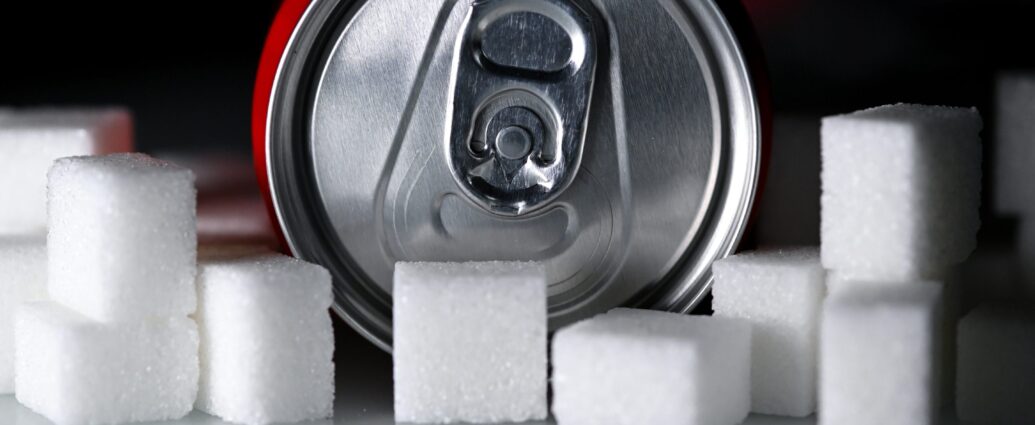
Sugar and gasoline don’t have a lot in common, unless you’re in a sugarcane mill in Brazil, in which case they’re literally the same plant. Usually that’s a fun fact, but right now it’s a problem.
Brazil is the world’s dominant sugar exporter—roughly 45% of everything traded globally. Every harvest, mills decide how much sugarcane goes to sugar and how much goes to ethanol. When oil prices are low, the math favors sugar. When oil spikes, ethanol gets more profitable, and cane gets pulled away from sweetener production.
The Strait of Hormuz disruptions have now tipped that math, as oil is hovering around $100 a barrel. The government is considering raising the maximum ethanol blend in flex fuel from 30% to 35%, a move that would funnel significantly more sugarcane away from sugar and into fuel.
At the same time, Brazil’s truckers threatened to strike this week over high diesel prices — and the government scrambled, cutting fuel taxes and drafting proposals to let states slash fuel levies. The last time Brazilian truckers walked off the job, in 2018, it paralyzed Latin America’s largest economy for days: fuel shortages, and empty supermarket shelves abounded.
If a strike happens, the timing couldn’t be worse. Sugarcane, when it’s harvested, has to be immediately trucked from fields to mills, then trucked from mills to ports. A trucker strike would halt that process during the most critical time of year. Brazil’s new sugarcane harvest starts April 1, and the first three months are when the bulk of the crop is processed. That means the decision about how much cane goes to sugar versus ethanol is being made right now, as the Strait of Hormuz is a war zone.
“If this is a problem for the next few months, with the war and oil prices being high, then the majority of the biggest bulk of the harvest is going to swing to ethanol, away from sugar,” Judith Ganes, an independent commodities analyst with four decades in soft commodity markets, told Fortune. Six months from now, when 75% of the crop is already in, it wouldn’t matter that much, she added.
Sugar prices are already anticipating that mix. White refined sugar in London hit $451 per ton on Friday—-its highest since October and up 8% since the war in Iran began. Ganes sees raw sugar heading to 18 to 19 cents per pound, up from the 13- to 14.5-cent range where it had been stuck for “months and months and months.”
The logistics of it all are making it worse. Persian Gulf refineries that import Brazilian raw sugar and process it into refined products for the region are seeing their expected shipments delayed or rerouted as the Strait of Hormuz remains largely closed.
That makes the problem two-sided: refined sugar gets scarce across the Middle East, East Africa, and parts of Asia, while raw sugar backs up at its origin in Brazil with nowhere to go.
“It creates a tightness in refining of white sugar and shortfall in the region, but then leaves the exporter with—uh oh, where’s the sugar going?” Ganes said.
At the 18-cent price range, she doesn’t imagine consumers will feel any effect. Sugar prices were already depressed all year, and cocoa prices have also come down hard after some tariff relief, easing some pressure on manufacturers of baked goods.
But beyond the war, the longer-term picture isn’t reassuring. Ganes flagged a strong probability of an El Niño weather pattern in 2026/27, which would bring drought conditions to Southeast Asia and threaten production in Thailand and India—the other two pillars of global sugar supply. Replanting has already slowed after years of depressed prices. In a scenario of a severe El Niño, “Any cushion is done,” she said.
At the Federal Reserve on Wednesday, Chair Jerome Powell acknowledged the broader commodity bleed from the Iran war. He noted that oil and its derivatives feed into production and transportation costs across the economy, with effects that “leak into core” inflation. But he stressed the uncertainty: “We’re right at the beginning of this, and we don’t know how big this will be and how long it lasts.”
This story was originally featured on Fortune.com
This post was originally published here

A man let ChatGPT sell his home. It beat every agent’s estimate by $100K—and closed in 5 days
It all started on a long drive from south Florida to North Carolina last holiday season. As Robert Levine drove, he asked his wife in the passenger seat to prompt ChatGPT with questions they had about the home-selling process. “Are we capable of doing this?” they asked. “What’s the realistic timeline tactically?”
The conversation started as a way to pass time on the long trip. But it soon ballooned into a comprehensive endeavor, with the AI taking over the marketing, planning, pricing, and negotiating. Through simple prompts throughout the home-selling journey, Levine and his wife clinched a signed contract to sell their Cooper City, Fla., home for $954,800—or $100,000 more than what real estate agents estimated the home’s value to be.
“When we met with real estate agents they lacked confidence in pricing,” Levine told Fortune. “ChatGPT gave us more confidence in price points of where the market was going.”
AI models are growing more capable of completing even the most complex tasks, surpassing benchmarks that the world’s smartest mathematicians and lawyers deemed onerous hurdles.
It’s not just businesses that are leveraging the technology. Everyday Americans are using AI to serve themselves, some for selling their homes, and others for more questionable practices like completing their schoolwork. Some AI experts and business leaders think the technology could wipe out swaths of white-collar workers, and real estate agents may not be spared.
Levine has the technological acumen to utilize the full extent of ChatGPT’s tools. As the CEO of strategic consulting firm ComOps, he guides casinos and hospitality brands on how to leverage AI. Still, Levine is convinced the way he sold his house is attainable to even those less tech-savvy than he.
“I’d recommend it to everyone,” he said. “ChatGPT is not coding. It is a conversation, and you’re going to have to have that conversation with a real estate professional if you want to go that direction anyway.”
ChatGPT as a negotiator and a painter
For Levine, conversations with real estate agents didn’t quite fit into his busy schedule. And though he spoke to some, none were confident in the pricing of his home. ChatGPT, on the other hand, assured him that listing the home $100,000 more than what real estate agents advised was the right move.
The home sold for one of the highest per-square-foot prices in the market, according to Levine, despite not having the best view, the largest lot, or being the most updated property in the area.
The AI planned the most granular aspects of the homeselling process. It gave tips on how to update the property, even suggesting which walls to repaint. And it told Levine when to schedule home viewings to work around his schedule. The father of three ultimately showed his home to 15 prospective buyers, one-third of whom submitted an application.
“It pushed us through all of that, including small things that I would have never thought of,” Levine recalled. “The first impression is important. We hear that all the time about curb appeal. But also when they walk into the house, they don’t want to see scuffs on the wall.”
While the AI functioned as Levine’s personal real estate agent, there were some barriers to its abilities. For one, Levine had to be engaged at every step. That meant prompting the AI for instructions rather than handing over duties to an autonomous AI agent. And while recent studies have shown AI is theoretically capable of handling the majority of tasks a lawyer does, he opted to hire his own lawyer. And of course, the technology couldn’t host open houses or box up his family’s belongings.
Levine still thinks real estate agents fulfill the needs of certain homebuyers, but believes all home sellers could benefit from putting the technology to work.
“It doesn’t necessarily replace professionals,” he said. “But it does allow us all to have the ability to be more curious and to feel more confident in the decisions we’re making.”
This story was originally featured on Fortune.com
This post was originally published here
‘This is the saddest moment’: families search for loved ones on Eid after Kabul hospital strike
At least 400 killed in Pakistan’s strike on drug rehab centre, Taliban say, with families searching unmarked mass graves
Sohrab Faqiri spent Eid, the Muslim festival to mark the end of the fasting month of Ramadan, looking for the grave of his brother, killed in a massive Pakistan airstrike on Kabul this week.
Pakistan’s bombardment campaign, on what it says is terrorist and military infrastructure in neighbouring Afghanistan, appeared to have gone catastrophically wrong. A rehabilitation centre for drug addicts was hit on Monday night, according to the United Nations and the Afghan authorities. The UN’s preliminary death toll is 143 people, while the Taliban administration puts the figure at more than 400 dead.
This post was originally published here
Owners from Great Britain travelling to EU warned over pet passport ‘dodge’
Bypassing animal health certificate system by using cheaper pet passport issued abroad could backfire, experts say
British pet owners who want to take their furry friends elsewhere in Europe have been warned not to try to dodge expensive health certificates by using a pet passport issued abroad.
Before Brexit, taking a cat, dog or ferret to the EU was relatively simple: the Pet Travel Scheme meant an animal needed a microchip, vaccination against rabies, a pet passport and, for dogs, there were also requirements concerning tapeworm treatment.
This post was originally published here
Owners from Great Britain travelling to EU warned over pet passport ‘dodge’
Bypassing animal health certificate system by using cheaper pet passport issued abroad could backfire, experts say
British pet owners who want to take their furry friends elsewhere in Europe have been warned not to try to dodge expensive health certificates by using a pet passport issued abroad.
Before Brexit, taking a cat, dog or ferret to the EU was relatively simple: the Pet Travel Scheme meant an animal needed a microchip, vaccination against rabies, a pet passport and, for dogs, there were also requirements concerning tapeworm treatment.




Trump hints at wind down of war as US prepares to send more troops to Gulf
Washington considers Kharg Island takeover as Donald Trump calls Nato allies ‘cowards’ for refusal to ‘help open’ strait of Hormuz
Donald Trump said he was considering “winding down” military operations in the Middle East even as the US is reportedly sending three more amphibious assault ships and roughly 2,500 additional marines to the region.
The US president’s remarks on Friday followed an Iranian threat to attack recreational and tourist sites worldwide and another day of the airstrikes and drone and missile attacks that have engulfed the region.
This post was originally published here


Three weeks into the Iran war that’s requested $200 billion, here’s what success for Trump might look like
The U.S. and Israel are locked into a longer-than-expected war that may extend through April before Iran’s military is sufficiently neutered to begin shifting toward a “defensive” posture and reopening oil and gas flows to a world thirsting for cheaper energy, military and energy analysts said.
With or without a ceasefire agreement and likely short of regime change, the main military objective is to stay the course until Iran is exhausted of much of its remaining missile, drone, and fast-boat inventories, meaning it can no longer effectively block tankers from the critical Strait of Hormuz choke point, they said.
President Donald Trump hinted at it on Friday, when he posted on social media that he is considering “winding down” military operations in the Mideast, saying the U.S. is near its objectives of degrading Iran’s missile capability, defense industrial base, armed forces, and nuclear program.
The war has caused oil prices to surge about 75% since the beginning of the year, threatening inflationary spikes worldwide and regional energy shortages. The campaign has already cost the U.S. many billions of dollars, and the Pentagon has request $200 billion more. Much of the Iranian leadership is killed and many of its military supply chains are decimated. But that hasn’t stopped Israel from escalating matters by targeting Iran’s domestic power supplies through its South Pars gas field—an action Trump criticized, asking Israel to stop hitting oil and gas production—or Iran responding by attacking the energy infrastructure of its Gulf neighbors, most notably Qatar’s liquefied natural gas facilities.
So what’s the end game now that the war has concluded its third week? After all, the conflict is almost certainly extending beyond the initial four weeks that Trump cited. And limited operations for U.S. boots on the ground remain on the table, whether to seize nuclear sites or Iran’s oil-exporting hub, Kharg Island.
“You can leave the regime intact but, if it is neutralized militarily, President Trump could claim that the Iranian military does not pose a threat to shipping through the strait. That would certainly be an important victory,” said Thierry Wizman, a top economic strategist for the Macquarie Group.
The U.S. is currently targeting Iranian fast-attack vessels and drones near the strait, relying on A-10 Warthog fighter jets and Apache attack helicopters.
“If the U.S. claims victory and there is no formal surrender, and then you have an attack by Iran on a [tanker] vessel, then that would look very bad for the U.S.,” Wizman said, warning of a too-early “mission accomplished” celebration. “It really must be airtight. That’s why, in the absence of a formal agreement, this can last a long, long time because you have to basically get everything that’s out there.”
But an end is within reach, even if the timeline is extended an extra month or so, said Richard Goldberg, senior advisor for the Foundation for Defense of Democracies neoconservative think tank.
“Whether it’s four weeks or eight weeks—whatever is planned—this is not an endless conflict,” said Goldberg, who previously served as Iranian counteroffensive director on Trump’s National Security Council. “We would not want to stop until they can’t keep opening fire. Then we can manage the situation with or without a ceasefire. Otherwise, Iran has a victory of sorts where they can continue to extort the West and threaten to shut down the Strait of Hormuz.”
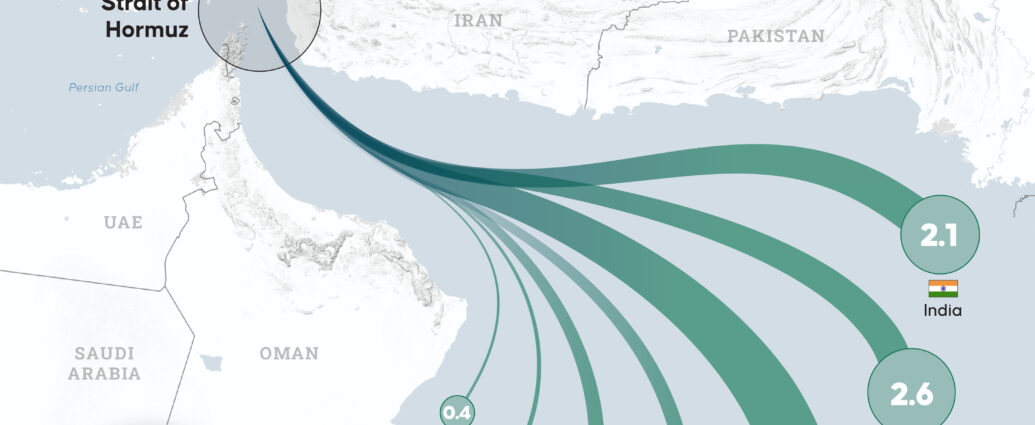
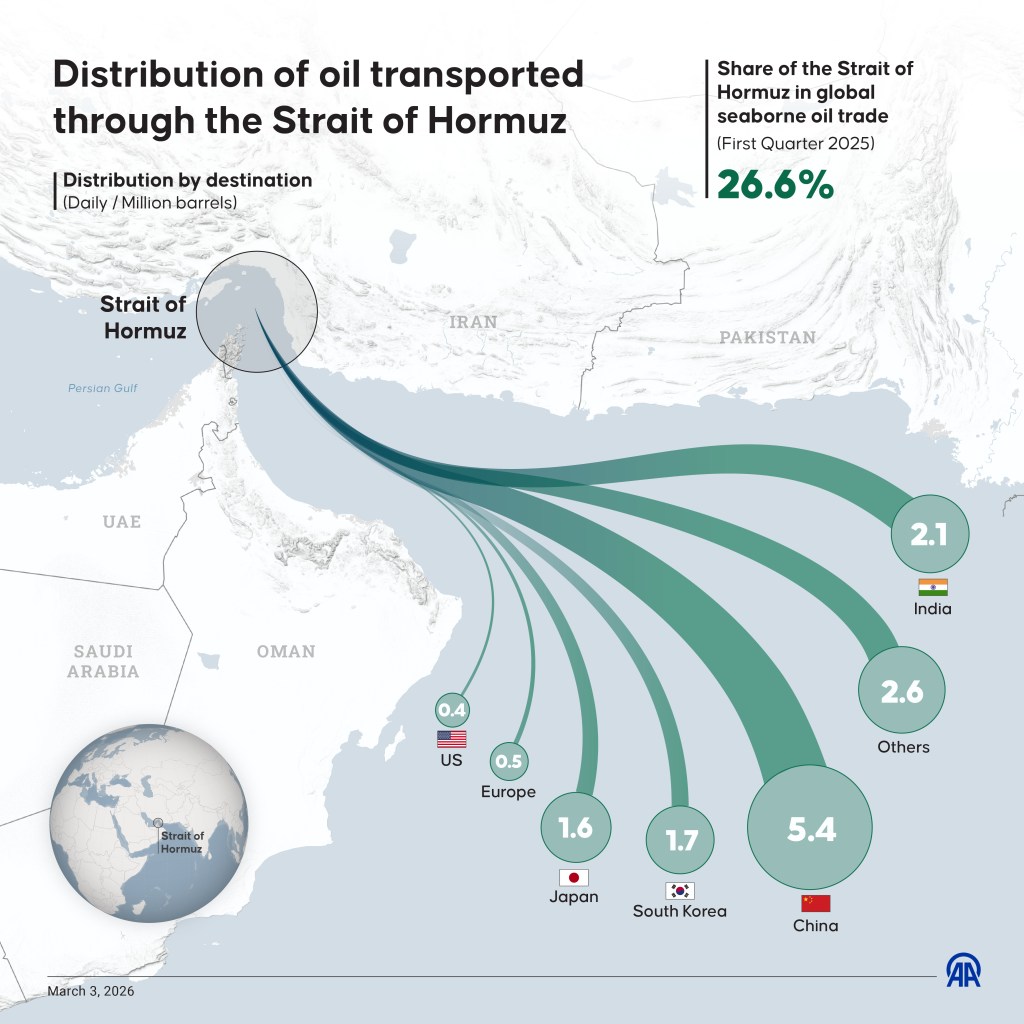
In the meantime, the narrow passageway controlling 20% of the world’s oil and exported natural gas remains effectively closed, representing the greatest energy supply shock ever, although some oil barrels are rerouted and Iran is allowing a few select tankers through. When and if the strait is reopened, it will take months to resume normal oil flows and, although prices will dip from their highs, they would remain elevated because of the heightened risks and insurance costs. And nearly 20% of Qatar’s gas-exporting facilities will remain offline with an announced repair timeline of three to five years.
“Every day that passes, your supply shock is getting wider and wider, and to get out of that is getting harder and harder,” said Sara Hakim, director of natural gas for ICF energy consultants.
Differing opinions
The U.S. and Israel could have continued negotiations toward a nuclear compromise, but they opted for a surprise strike on the Iranian leadership on Feb. 28, killing Supreme Leader Ali Khamenei and many others. His son now holds the same role.
Since then, the conflict has escalated beyond most expectations to include the entire Gulf region and the stoppage of energy flows, dramatically disrupting the global economy, said Jim Krane, energy fellow and Middle East expert at Rice University’s Baker Institute.
“It would take a lot of spin at this point to still call it a victory. It would require the U.S. to eat some crow really,” he said. “The U.S. is supposed to be the Gulf’s security provider, not the instigator of regional warfare that stops the oil flow.”
The “energy-for-security” relationship between the U.S. and Saudi Arabia along with much of the region dates back 80 years to President Franklin D. Roosevelt.
“Now we don’t have either one. We don’t have any oil; we don’t have any security,” Krane pointed out. “This is a 180-degree reversal of its original intent. It’s getting hard to watch.”
It will now take years to rebuild both the relationships with the Gulf states and to rebuild the damaged energy facilities, he added.
And Israel killing Ali Larijani, secretary of Iran’s Supreme National Security Council, who was acting as a day-to-day leader for Iran during the war, made a negotiated peace more difficult as the militant Revolutionary Guard takes more control. Krane likened Larijani to Venezuelan Vice President Delcy Rodriguez, now the interim president after the U.S. arrested former leader Nicolás Maduro in January.
“He had a pretty good track record of negotiating in good faith, so killing him I think was a big mistake. That makes it a lot harder,” Krane said of Larijani. “I don’t see an easy off-ramp.”
Since then, Trump has lashed out at allies as “cowards” for not assisting militarily in reopening the strait, calling NATO a “paper tiger” without the U.S. And Iran’s foreign minister, Abbas Araghchi, said Iran would show “zero restraint” if its energy infrastructure was struck again.
In the meantime, the White House is pulling every lever to keep prices, especially prices at the pump, from getting out of control. There’s the 172 million barrels of oil slated for release from the U.S. Strategic Petroleum Reserve—almost half of the 400 million barrels scheduled to come out of reserves worldwide—the loosening of sanctions on Russian oil, the potential loosening on waterborne Iranian crude, the 60-day Jones Act waiver to allow for foreign tankers to move oil and products domestically, and more.
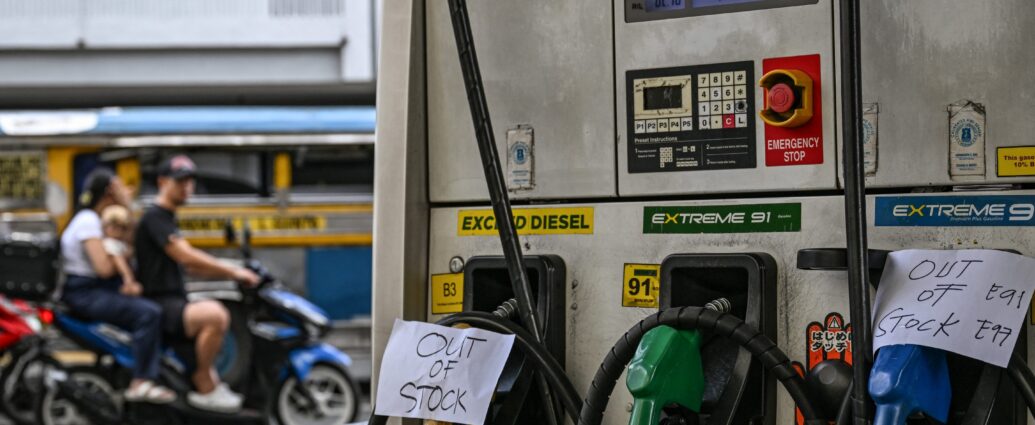
Still, the U.S. average for the cost of a gallon of regular unleaded oil has spiked 45% from January lows and counting, even though U.S. oil prices remain lower than the rest of the world and U.S. natural gas costs are largely unchanged. The national average could exceed $4.00 a gallon by the end of the weekend.
Are boots needed?
Then there’s the question of whether the war will require so-called boots on the ground in Iran, not for a full ground invasion, but for select, but dangerous, special operations. Trump has said he does not want to deploy troops on the ground in Iran, but he’s left some wiggle room.
“There’s a tangential view you can’t do all this by air power. At some point you may have to put boots on the ground. Maybe that’s the case,” Wizman said.
Troops could be used selectively on the shoreline of the Strait of Hormuz, at nuclear sites, or even on Iran’s Kharg Island, which the U.S. has already bombed but avoided hitting energy infrastructure.
Iran’s missile and drone defenses would need to be further crippled first, Goldberg said. “If you were to put boots on the ground on Kharg, they’d be vulnerable to drones, they’d be vulnerable to other threats,” he said. “One missile into the power plant shuts down the export terminal without destroying the oil. That to me seems like a better solution.”
Regardless, the top priority is reopening the Strait of Hormuz and safely escorting tankers through.
“If you’re able to conduct the escort missions and defeat any threats that are still posed by the regime, then the [Iranian] regime probably has lost at that point,” Goldberg said.
This story was originally featured on Fortune.com
This post was originally published here
United Airlines to cut more flights as it eyes oil above $100 through 2027
Chief Executive Scott Kirby says United’s annual fuel bill would rise by about $11 billion if oil prices stay above $100 a barrel through next year.
This post was originally published here
Department of Health retracts claim sunbeds are as dangerous as smoking
DHSC corrects statements after regulator intervenes as experts say smoking causes far more cancer cases
The Department of Health and Social Care (DHSC) has had to retract a misleading claim that sunbeds are as dangerous a cancer risk as smoking.
In January, health officials announced stricter rules for sunbeds, incorrectly claiming they were “as dangerous as smoking”. The comparison was repeated in social media posts shared by the health secretary and NHS England and was reported by a number of media outlets.
This post was originally published here
More British teenagers stranded abroad as result of new rules on dual nationals
Cases emerge after other people tell of change in Home Office policy on passports that has left people scrambling
Two more British teenagers have found themselves unable to return to the UK because of new Home Office border rules on British dual nationals.
Their cases emerged just hours after reports a 16-year-old British schoolgirl was blocked from boarding a flight in Denmark home to the UK because she was a dual national and did not have a British passport. She has missed two weeks of school so far.
This post was originally published here
How the Strait of Hormuz poses an existential threat to Asia’s economies
As the Iran war enters its fourth week, much of its cost is being borne by countries that had nothing to do with starting it.
Iran closed the Strait of Hormuz soon after the U.S. and Israel launched their strikes on the country, choking the maritime artery through which nearly all of the Persian Gulf’s oil and natural gas flow. The closure has strangled shipments from major energy exporters—Qatar, Saudi Arabia, and the United Arab Emirates—and poses an existential threat to Asia, a region that relies on imported energy.
“Asia is at the heart of this drama, in that it is the chief area…of collateral damage,” said Columbia University historian Adam Tooze at the Jefferies Asia Forum in Hong Kong this week.
The Iran war threatens to become an inflationary shock targeted at the world’s growth engine. For three decades, governments turned to rate cuts and looser fiscal policy when faced with a crisis. This time, those tools may no longer work.
Fiscal and monetary policy was already loosening across much of the world economy. “Coming into the current crisis with Iran…it was pretty obvious, whether Japan, whether Europe, whether the United States, whether the UK, that we were very much in an inflationary boom,” Louis-Vincent Gave, CEO of Gavekal Research, told conference attendees.
But now an energy supply shock threatens to push inflation higher while slowing growth: what Gave calls an inflationary bust, and what people may better know as stagflation.
Roughly 84% of crude that transits Hormuz goes to Asia, while the U.S. now imports little through the strait. That asymmetry shows up in prices: West Texas Intermediate is near $100 a barrel, while Dubai crude has jumped past $160.
Natural gas has also been hit. Iran has struck key infrastructure in Qatar, which accounts for roughly 20% of global liquefied natural gas supply. On Thuesday, QatarEnergy declared force majeure on deliveries after Iranian drone and missile strikes on the Ras Laffan Industrial City, the world’s largest LNG export hub.
‘A perfect dilemma’
Governments across the region have moved quickly to limit the damage, deploying a mix of price caps, rationing, and stockpile releases.
South Korea imposed a fuel price cap, the first in 30 years. Seoul is urgently seeking oil supplies that bypass Hormuz and accelerating a longer-term shift toward nuclear power generation.
Asia’s fourth-largest economy grew by just 1.0%—the worst in five years and below the 2.0% annual rate that Peter Kim, senior managing director at KB Securities, described as the minimum for political legitimacy in a sideline interview.
“An oil price shock, with a weak currency and a central bank that can’t cut because of inflation pressure? That could really jeopardize that 2% target,” Kim warned in an interview with Fortune.
Japan’s Prime Minister Sanae Takaichi started the release of roughly 80 million barrels from the country’s petroleum reserves on Monday. Tokyo faces not only an energy crisis but a diplomatic one. U.S. President Donald Trump has publicly pressed allies like Japan to contribute to any coalition to reopen the strait, citing their dependence on the strait for energy. Takaichi, for now, has cited constitutional limits on the use of force as a reason for Japan’s hesitance to send ships.
“It’s a perfect dilemma,” said Ken Jimbo, a professor of international relations at Keio University to Fortune. “We don’t wish to be too hostile to the United States, because there’s a quid pro quo type of Trump psychology: I defend you. Why do you not defend me?”
Governments can’t ‘subsidize forever’
Emerging markets are absorbing the shock in more desperate ways. Thailand, which imports 70% of its oil, has capped diesel prices, instructed officials to work from home, and urged citizens to wear short-sleeved shirts.
“If the price of global crude oil increases, our GDP automatically decreases,” said Tanawat Ruenbanterng, head of institutional research at Tisco Securities, to Fortune. A weaker baht and higher bond yields give Bangkok even less fiscal room to respond. “Because of limited fiscal space, they could not subsidize forever,” Tanawat said.
Thailand isn’t alone in needing to impose emergency measures. Indonesia is shielding retail pump prices ahead of the Eid al-Fitr holiday, even as that threatens to blow through Jakarta’s fuel subsidy budget of 381 trillion rupiah ($22.6 billion). Bangladesh has imposed daily fuel purchase limits and closed universities early; Sri Lanka has declared Wednesdays a holiday to conserve fuel.
Concern is spreading to advanced economies too: On March 20, the International Energy Agency warned its member economies, like Australia and the UK, to consider carpooling or working from home to save fuel.
What happens next?
China, the world’s largest oil importer, banned the export of diesel, gasoline, and aviation fuel until at least the end of March to pre-empt domestic shortages. The ban is forcing Southeast Asian buyers who relied on Chinese fuel exports to scramble for alternatives.
That may push countries back to a fuel that many environmentalists hoped would be left behind: coal. Countries like South Korea, Thailand, and Bangladesh are quickly ramping up coal power generation to make up for halted LNG imports.
“Coal is, and remains, the cheapest way to produce electricity,” Gave told the Jefferies audience, “if you don’t care, and if you don’t price the environmental costs.”
This story was originally featured on Fortune.com
This post was originally published here
Opinion: As Trump eyes Cuba, my trips there a decade ago remind me how different things were
Trump has threatened a ‘friendly takeover’ of Cuba after cutting it off from Venezuela’s oil. CNBC’s Justin Solomon reflects how different things used to be.
This post was originally published here
Rhoda Roberts, Indigenous cultural leader who introduced the term ‘welcome to country’, dies aged 66
Roberts, who was the first Aboriginal person to host a prime-time current affairs program, was diagnosed with a rare type of ovarian cancer seven months ago
Rhoda Roberts, the Bundjalung Widjabul Wiyebal cultural leader and arts devotee, has died at the age of 66.
In a statement made via Instagram, Roberts’s family announced she had died peacefully in hospital on Saturday afternoon, having been diagnosed with a rare type of ovarian cancer seven months ago.
This post was originally published here



‘Something I’ve never felt since Covid. It was scarier’: the shock and pain of Kent’s meningitis outbreak
How infections linked to a nightclub escalated into a public health incident requiring a national response is a puzzle experts are still grappling with
Tyra Skinner had already been violently sick three times when doctors at Kent’s William Harvey hospital realised something was badly wrong. The 20-year-old was rushed into critical care, racked with a pounding headache, a stiff neck and excruciating pain – the hallmark symptoms of meningitis, the disease that had already claimed two young lives in Kent.
“She could hardly move, she was in a foetal position. She was so cramped up and sore,” her father, Dale Skinner, 42, told the Guardian. “It was horrendous, to be honest, to see her so helpless and in so much pain.”
This post was originally published here
Israel deliberately targeting medical facilities in south Lebanon, say health workers
Medics and officials say there is systematic use of double-tap strikes in campaign to make the south uninhabitable
Lebanese healthcare workers and officials say Israeli bombings have deliberately targeted medical workers and facilities in south Lebanon, including through the use of double-tap strikes, in what they describe as a systematic effort to make the area unlivable.
Since the war began on 2 March, Israel has struck at least 128 medical facilities and ambulances across south Lebanon, killing 40 healthcare workers and wounding 107, according to the Lebanese ministry of health. The war started when Hezbollah launched rockets at Israel, triggering an Israeli military campaign.
This post was originally published here

More than 230 people rescued as flash flooding hits Hawaii and fears dam could fail
Heavy rains have pummeled the Hawaiian island of Oahu and triggered the worst flooding the island has in 20 years
Towering flash floods and an imminent dam failure in the northern part of Oahu triggered mass rescues and evacuation warnings in Hawaii on Friday, as the state continued contending with a powerful storm this week.
The waters came on quickly in the middle of the night, and videos on social media captured inundated streets and cars being swallowed by the muddy flood waters.
This post was originally published here

Death, power and paranoia: painting that shocked German society finally returns to Berlin
Mors Imperator caused a scandal in 1887 amid fears it mocked the German kaiser – more than 100 years later it is being displayed in a state museum
Wrapped in a cloak with ermine fur and wearing a jagged iron crown, a hulking skeleton rests one foot on a globe and knocks over a royal throne with a dramatic flick of its ivory wrist.
Entitled Mors Imperator (“Death is the Ruler”), the German artist Hermione von Preuschen’s 1887 symbolical painting was meant to express the transience of fame and power. But authorities feared the picture could be seen as mocking the ageing German Emperor Wilhelm I, who then had recently turned 90, and refused to accept its submission to the Berlin Academy of the Arts’ annual exhibition that year.
This post was originally published here
Iran’s willingness to escalate this high-stakes war is its greatest weapon
Regime will do whatever it takes to cling on to power – including sacrificing economies of other Gulf states
Brinkmanship, the ability to take a country to the edge of war without plunging it into the abyss, was the cornerstone of cold war diplomacy. But in our different, more unstable times – in which the line between state and non-state actors has blurred, and weapons of war have diffused – the world this week finally tipped over the edge, and suddenly it is in freefall.
The first six days of the Iran war cost the US $12.7bn (£9.5bn), but now the Pentagon is seeking as much as $200bn in military funding. Oil at $125 a barrel is no longer an Iranian, or Russian, fantasy. The crown jewel of Qatar, Ras Laffan – the world’s largest liquefied natural gas plant – may not reopen fully for five years, at a cost of $20bn a year. Other combustible oil depots in the Gulf, from Bahrain to Abu Dhabi, are exposed to Iran’s low-cost drones. Then add the human cost of 18,000 civilians injured and more than 3,000 killed in Iran alone.
This post was originally published here
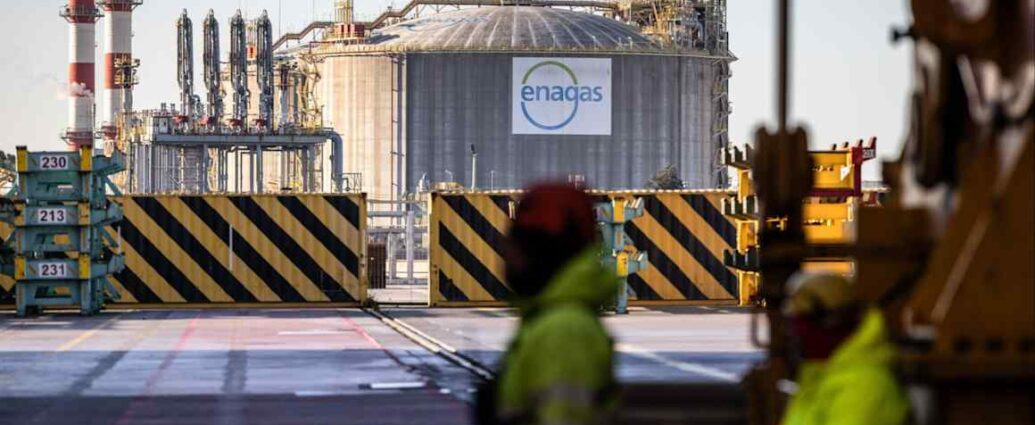
EU member states urged to lower gas storage targets due to Iran war
This post was originally published here

Iran war raises the risk of a bond market shock
This post was originally published here
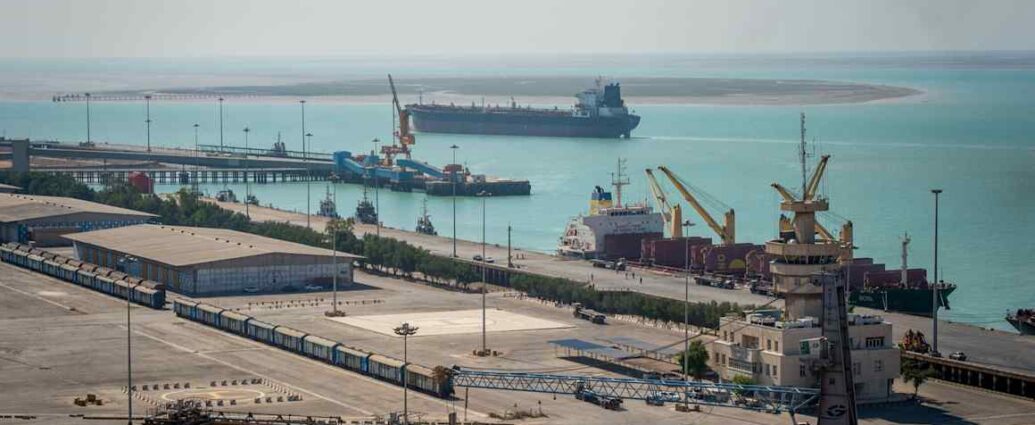
Iran lets grain ships through Hormuz to shore up food supply
This post was originally published here

History is tragically repeating itself in Lebanon
This post was originally published here

Iran launches 10mn rial banknote as war triggers dash for cash
This post was originally published here

The Israeli border towns driving Netanyahu’s hard line on Lebanon
This post was originally published here


Super Micro Co-Founder Exits Board As Nvidia Chip Smuggling Indictment Batters Stock
Super Micro Computer, Inc’s (NASDAQ:SMCI) co-founder, Yih-Shyan “Wally” Liaw, has resigned from the server maker’s board after a federal indictment accused him of smuggling equipment loaded with Nvidia’s (NASDAQ:NVDA) AI chips into China — a scheme that allegedly generated $2.5 billion in sales since 2024 in violation of U.S. export controls.
What The Indictment Alleges
A U.S. court unsealed the indictment Thursday, naming Liaw — Super Micro’s senior vice president of business development, alongside general manager Ruei-Tsan “Steven” Chang and contractor Ting-Wei “Willy” Sun.
Prosecutors allege the trio used a Southeast Asian company as a middleman, which generated fake paperwork suggesting it was the end user of the servers. A separate logistics firm then repackaged the hardware to conceal its destination before it was shipped on to China.
The …







Israel launches fresh strikes on Tehran and Beirut – as it happened
This blog is now closed – our live coverage of the US-Israel war on Iran continues in a new blog here
Kuwait’s state oil firm KPC said its Mina Al-Ahmadi refinery was hit by multiple drone attacks early on Friday, causing a fire in some units, with no initial casualties reported, the state news agency said.
Firefighters responded immediately, with several units shut down as a precaution to ensure workers’ safety.
This post was originally published here







The Anti-War Democrat Courting MAGA Voters
Trump claims strict voter ID act should be ‘easy pass’ but says ‘we need Democrat votes’ – as it happened
This live blog is now closed.
The US military is deploying thousands of additional marines and sailors to the Middle East, three US officials told Reuters on Friday.
One of the officials, speaking on the condition of anonymity, said that the USS Boxer, along with the marine expeditionary unit onboard, were departing the west coast of the US about three weeks ahead of schedule.
This post was originally published here

Nicholas Brendon, Buffy the Vampire Slayer actor, dies at 54
Family says actor, who played Xander in hit TV series, died on Friday ‘in his sleep of natural causes’
Nicholas Brendon, the actor best known for playing Xander in Buffy the Vampire Slayer, has died. He was 54.
Brendon’s family issued a statement saying that he died on Friday “in his sleep of natural causes”.
This post was originally published here















U.S. judge rules against Pentagon restrictions on press coverage
The policy required media organizations to pledge not to gather information unless Defense officials formally authorized its release. A U.S. judge said the rules are at odds with the First Amendment.
(Image credit: Alex Wong)

This post was originally published here
U.S. issues 30-day sanctions waiver for sale of Iranian oil at sea
The Trump administration on Friday issued a 30-day sanctions waiver for the purchase of Iranian oil at sea to ease energy supply pressures since the start of the U.S.-Israeli war on Iran, U.S. Treasury Secretary Scott Bessent said.
This post was originally published here
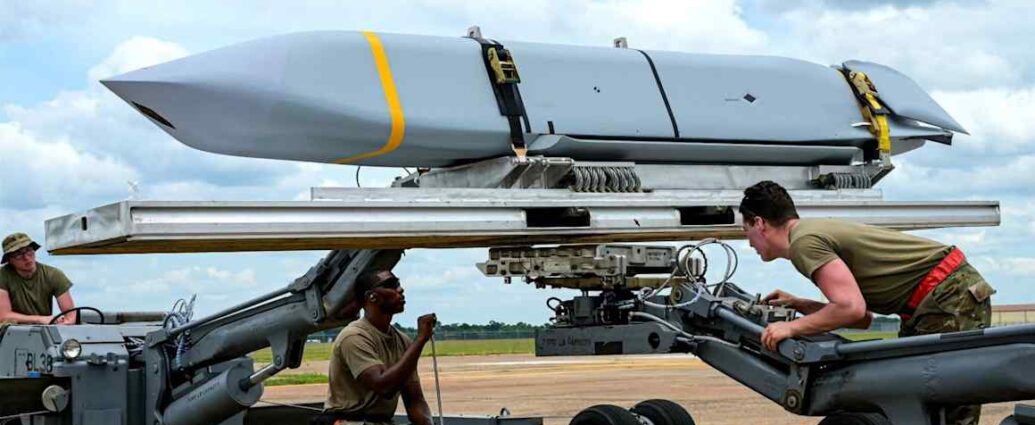
Taiwan concerned by depletion of US missile stocks during Iran war
This post was originally published here


Musk responsible for Twitter investors’ stock dropping when he bought company, jury rules
California jurors hand win to investors who sued billionaire saying he publicly disparaged social media platform in 2022
A California jury has ruled that Elon Musk is responsible for Twitter investors’ stock plummeting when he sought to buy the social media platform for $44bn in 2022. Jurors handed the win to a group of investors who sued the billionaire saying he publicly disparaged the company with the aim of bringing down Twitter’s stock price to get a better bargain.
The trial, which began earlier this month in federal court in San Francisco, focused on whether Musk intended to move the market with his comments. During a six-month period in 2022, after his offer to buy Twitter, he posted constantly to his millions of followers that the social network was rife with bots that produced spam and created fake accounts.
This post was originally published here
Amazon developing new AI-driven smartphone years after Fire Phone flop: report
Amazon is reportedly developing a new smartphone more than a decade after scrapping its Fire Phone, with plans for an AI-driven device integrated with Alexa and its broader services ecosystem.
The tech giant’s new effort is called “Transformer” and is being developed within the company’s devices and services unit, according to Reuters, citing four people familiar with the project.
The outlet said the new phone could be a mobile personalization device able to sync with the voice assistant platform Alexa.
Details about the anticipated price of the phone, along with Amazon’s financial commitment to the project and revenue projections, were not immediately clear.
AMAZON LAUNCHES 1-HOUR AND 3-HOUR DELIVERY OPTIONS WITH NEW TIERED PRICING STRUCTURE FOR CUSTOMERS
Sources told Reuters the project’s timeline is also unclear, noting it could still be scrapped.
An Amazon spokesperson declined to comment to Reuters. Fox Business has reached out to Amazon for comment.
Amazon introduced the Fire Phone in 2014, packaging the product with a free year of Amazon Prime.
HSBC WEIGHS DEEP JOB CUTS AS AI OVERHAUL UNFOLDS: REPORT
While the smartphone was launched with a lot of hype, it received mixed reviews with complaints ranging from a lackluster operating system to its high price, which was initially $649.
The company canceled the smartphone after just 14 months, taking a $170 million charge for unsold inventory, Reuters reported.
Apple and Samsung together commanded about 40% of global smartphone sales last year, according to Counterpoint Research, a market Amazon would now be reentering with its reported new device.
CLICK HERE TO GET FOX BUSINESS ON THE GO
According to Reuters, the new smartphone would include personalization features that would allow users to easily access Amazon.com, Prime Video and food delivery apps like Grubhub.
The project is focused on integrating artificial intelligence into the device, which could eliminate the need for traditional app stores, the outlet added.
Reuters contributed to this report.

One Nation dumps South Australian election candidate after reports claiming warrant for his arrest in UK
Aoi Baxter was the party’s candidate for the state seat of Adelaide in Saturday’s election
Former South Australian One Nation candidate, Aoi Baxter, has been dumped by the rightwing party, after media reports claiming there is a warrant for his arrest in the UK.
Baxter, who was reportedly previously known as Trent Baxter, had allegedly failed to appear at a court hearing, according to reporting by the ABC. A UK court confirmed to the ABC a warrant had been issued for the arrest of a man named Trent Baxter.
This post was originally published here
Bill to fund US homeland security fails again as concern grows about airport lines
Proposal fails to advance in Senate amid growing concerns about long lines to get through screening at some airports
A bill to fund the Department of Homeland Security failed to advance on Friday in the Senate amid growing concerns about long lines to get through screening at some of the country’s biggest airports.
Democrats declined to provide the support needed to move the funding measure toward final passage. Senate Democratic leader, Chuck Schumer, said he would offer an alternative measure on Saturday to fund just the Transportation Security Administration, which screens passengers and luggage for hazardous items. That too is likely to fail as lawmakers hold a rare weekend session.
This post was originally published here
US lifts sanctions on Iranian oil at sea in bid to ease supply pressures
Treasury secretary Scott Bessent says move will bring 140m barrels to market but insists Tehran will not benefit
The Trump administration has issued a 30-day sanctions waiver for the purchase of Iranian oil at sea to ease energy supply pressures since the start of the US-Israeli war on Iran, US treasury secretary Scott Bessent said.
It is the third time the US has temporarily waived sanctions in about two weeks.
This post was originally published here


Territorians in path of Tropical Cyclone Narelle told to take cover in bathrooms as storm intensifies
Very destructive winds gusting up to 195km/h are forecasted, with major flooding expected in Katherine by Monday
-
Get our breaking news email, free app or daily news podcast
An emergency warning has been issued and thousands are bracing for Tropical Cyclone Narelle ahead of its landfall in the Northern Territory, with winds of up to 195km/h expected.
The highest-level warning had been issued around midday on Saturday and extends to Nhulunbuy to Port MacArthur, including Borroloola, Numbulwar, Alyangula and Gapuwiyak, the NT fire and emergency services commissioner, Andrew Wharton, said.
This post was originally published here


Musk misled Twitter investors before 2022 buyout, jury says
Elon Musk defrauded Twitter Inc. investors when he disparaged the company in 2022 in an effort to buy the social media platform for a lower price than his original $44 billion bid, a jury concluded.
Jurors in federal court in San Francisco found Friday that Musk intentionally misled Twitter shareholders when he tweeted that the social network — now called X — had too many fake accounts and tried to back out of the deal. The jury rejected two of the four fraud claims.
The eight-member panel calculated how much Musk’s statements drove down the company’s stock price for each trading day over a period of about five months. The amount of damages he must pay to individual investors — which could total hundreds of millions or even billions of dollars — will be determined at a later date when shareholders submit claims.
The verdict, following about three days of deliberations, marks a rare defeat in court for the world’s richest person, who has been dubbed “Teflon Elon” for his track record of winning high-stakes legal battles that many expected him to lose.
He prevailed in a 2023 trial over Tesla Inc. investors’ allegations that he misled them in a tweet five years earlier saying he had “funding secured” to take the electric car-maker private. Musk is a co-founder of Tesla and its chief executive officer.
Mark Molumphy, a lawyer for the investors, said after the verdict he thinks the damages will amount to $2.6 billion. But even an award that high wouldn’t dent Musk’s net worth, which was $661.1 billion on Friday, according to the Bloomberg Billionaires Index.
“This case is much bigger than Twitter, this case goes right to the heart of Wall Street and what’s been going on in recent years,” said Joseph Cotchett, Molumphy’s partner at Cotchett, Pitre & McCarthy LLP. “It’s a great example of what you cannot do to the average investor.”
Musk’s lawyers declined to comment in the courtroom. Musk didn’t immediately respond to a request for comment.
In federal court, the losing side can appeal.
The jurors heard about two weeks of live testimony from Musk and top Twitter executives at the time, who recalled the turbulent six-month period in 2022 when the serial entrepreneur flip-flopped over whether he would buy the platform, resulting in hard-fought litigation with Twitter’s board of directors to force him to follow through.
The investors claimed that Musk’s social media posts and public statements — including a May 13, 2022, tweet stating the deal was “temporarily on hold” pending a review of the number of bots counted as Twitter users — was actually part of a deliberate plan to drive down the company’s stock price so he could renegotiate at a better price.
Molumphy told the jury in his closing argument Tuesday that Musk’s tweets “were not some innocent mistakes, some stupid tweet that he didn’t consider.”
“They were intentional, deliberate, and devised to convey to investors that Twitter was overrun with spam,” Molumphy said.
Musk took the stand for a whole day, and part of a second, and largely stayed on script in telling the jury he believed that the ex-Twitter executives, including Chief Executive Officer Parag Agrawal and Chief Financial Officer Ned Segal, lied to him and in public financial statements about the prevalence on the platform of spam and fake accounts, known as bots.
“Of course people were talking about a renegotiation once this bot issue came up,” Musk’s attorney, Michael Lifrak of Quinn Emanuel Urquhart & Sullivan LLP, told the jury in his closing argument. “There was no secret about that.”
The stock remained volatile for several months while Musk waffled on following through with the deal, wiping away billions of dollars in Twitter’s market value. When Twitter sued Musk in Delaware for reneging on the purchase in July 2022, the shares reached a low of $32.52, 40% less than Musk’s buyout price.
Musk testified that he only agreed to do the deal at the original price of $54.20 per share because he believed the Delaware judge overseeing Twitter’s lawsuit was biased against him.
The billionaire argued that his tweet at the center of the lawsuit was very different from walking away from the deal entirely. “I’m not saying I’m not going to do the deal,” he told the jury. “At no point did I say the deal was canceled.”
But Musk acknowledged under questioning from a lawyer for investors that the “temporarily on hold” post was a mistake. “It may not be my wisest tweet,” he said. “I don’t know if I would call it my stupidest. But if it led to this trial it probably qualifies as such.”
The case is Pampena v. Musk, 22-cv-05937, US District Court, Northern District of California (San Francisco).
This story was originally featured on Fortune.com
This post was originally published here

New Orleans attorneys found guilty in plot to stage vehicle accidents for payouts
Prosecutors say they paid ‘slammers’ to intentionally crash into tractor-trailers and file fraudulent lawsuits
A federal jury in New Orleans has found two personal injury attorneys guilty of involving themselves in a scheme to stage collisions with 18-wheelers and then collect settlement payouts.
The lawyers, Jason Giles and former Hollywood stuntwoman Vanessa Motta, were found guilty on Friday of fraud, obstruction of justice and witness tampering, local news outlets WVUE and WWL Louisiana – a Guardian reporting partner – reported. Their law firms were convicted of related charges.
This post was originally published here
Jim Cramer says to prepare for further stock declines but be open to opportunities
CNBC’s Jim Cramer said on “Mad Money” on Friday that a tough market can also present an opportune time to selectively buy.
This post was originally published here



Elon Musk misled Twitter investors ahead of $44 billion acquisition, jury says
Elon Musk was sued in late 2022 after completing his acquisition of Twitter, which he later renamed X.
This post was originally published here


Artificial intelligence helps unlock geothermal potential
Geothermal energy has been around since earth’s creation and exists almost everywhere, yet harnessing its full potential has proven difficult since viable sources are often difficult to find.
“The U.S. has a lot of it, and most of it in the U.S. is untapped. It’s a tremendous sort of resource base that’s waiting for us to go after it,” Zanskar co-founder Joel Edwards said.
Geothermal energy is generated by the Earth’s formation and ongoing radioactive decay. It is stored beneath the surface and accessed by drilling thousands of feet underground.
“The great thing about geothermal energy is there’s heat underground everywhere. The deeper you go into the earth, the hotter it gets. But there are some parts, certain regions, that just have hotter rocks,” Edwards said.
ARTIFICIAL INTELLIGENCE HELPS FUEL NEW ENERGY SOURCES
Geothermal energy makes its way to the Earth’s surface through volcanoes, hot springs and geysers. It has been otherwise difficult to detect above ground until now.
“We have made more discoveries in three years than the industry found in 30,” Edwards said.
Zanskar, a geothermal company, is making the search for hot sources more accurate. The company has built artificial intelligence models that are able to detect geothermal resources and target them with deeper drilling.
AMERICA MUST POWER AI WITH SPEED AND DISCIPLINE — OR CHINA WILL DOMINATE
“We have found dozens of sites, and they were either overlooked or they were just in areas where nobody had ever looked,” Edwards said. “Once we find these systems, we’re having much more success drilling into them because those models are better at sort of simulating all the possible orientations of a geothermal system.”
Historically, geothermal production has carried risks of drilling into inefficient wells. There are safety risks in geothermal production and environmental concerns over air and water pollution. The uncertainty has caused delays in permitting and operational challenges.
“What happens is you drill moderately productive wells, marginal wells, or you drill unproductive wells. All of those failures, they get rolled up into the total cost of a project, and that drives the cost of the project up,” Edwards said.
NUCLEAR FUSION ADVANCES, BUT CHALLENGES REMAIN FOR POWER GRID
The best geothermal resources in the U.S. are located in the west, where much of the land is owned by the federal government. The Interior Department has implemented emergency permitting procedures to accelerate reviews of geothermal projects as part of President Trump’s energy agenda.
“It takes typically like three to six, three to seven years to get these projects permitted. Luckily, in the last few years, there’s been an urgency to cut red tape,” Edwards said. “And that’s already having a material benefit for some of these earlier stage projects.”
Artificial intelligence could also help streamline the regulatory process.
TRUMP SAYS EVERY AI PLANT BEING BUILT IN US WILL BE SELF-SUSTAINING WITH THEIR OWN ELECTRICITY
“What we have to do is work with our federal, state and local partners to drive those solutions that you’re talking about. We cannot think of this technology as it’s happening to us. We have to partner and utilize it just like everyone else,” Exelon CEO Calvin Butler said. “AI should help us all become more efficient at what we do and get better at.”
The geothermal industry has similar challenges and risks as oil and gas. The Society of Petroleum Engineers began promoting the use of AI as early as 2009. It has helped improve exploration, drilling and development. Studies show some of the same techniques could help geothermal production.
“It sort of feels like where oil and gas was maybe 100-plus years ago,” Edwards said. “We didn’t know how much of it was out there and so forth. That’s what geothermal feels like.
“Like, it just feels like we’ve barely explored for it. We’ve got a little bit of it going right now. We kind of understand it. But now the market is out there, and the market’s like, ‘We want this stuff.’”
As artificial intelligence helps fast-track new resources, there are still concerns over its immediate effect on the electric grid.
“It’s a challenge, but it’s a huge opportunity. And that is what we are most excited about, the opportunity to be part of this journey, this next wave of the energy transformation, because we can’t just look at it as a challenge and say, ‘We don’t know what to do,'” Butler said.
“We’re partnering with our technology partners and saying, ‘What can we do to make this a win-win for everyone?’”
Donald Trump ‘very surprised’ Australia declined to send troops to strait of Hormuz amid fuel crisis
US president claims he ‘always says yes’ to Australia, Japan and South Korea, after saying he didn’t need help from trio of countries earlier this week
Donald Trump says he is “very surprised” Australia has not sent warships to aid in opening the strait of Hormuz as the blockade of the key strategic route for global oil supply continues to impact fuel prices.
“I was very surprised,” the US president said in Washington on Friday when asked what he took issue with regarding Japan, South Korea and Australia.
This post was originally published here

Tariffs were already squeezing small businesses. Now the Iran conflict is pushing them to the brink as rising oil prices boost shipping costs
Three weeks into the Iran war, small businesses are starting to feel the pressure of the conflict, and experts say the worst may still be yet to come.
Following the initial strikes on Iran in late February, U.S. businesses have been directly affected by the war in the form of shipping disruptions and skyrocketing oil prices, which have led to higher gas prices.
These obstacles come as small businesses have over the past year dealt with the whipsaw of President Trump’s tariff policies. Sweeping tariffs on goods from China, Canada, Mexico, and the European Union, among others, have driven up input costs and squeezed profit margins for small business owners who often lack the purchasing power and legal resources of large corporations.
Unlike larger corporations who, at least in the short term, can absorb higher costs and shipping upheaval caused by the Iran war, smaller businesses are especially at risk, said Brett Massimino, an associate professor at Virginia Commonwealth University’s business school and chair of the department of supply chain management and analytics.
“Small businesses, they don’t have the margins or the reserves to really absorb those kinds of cost increases,” he told Fortune. “They’re faced with a dilemma of, do they try to expedite some of the shipments that might be delayed right now, or do they deal with the shortages.”
If the Iran war stretches on, small businesses could start to feel the effects in as soon as two months as they run out of reserves or look to renew contracts at potentially higher prices. Trump has repeatedly insisted he could stop the war “right now” having seen Iran’s military crippled, as he told MS Now Friday. Still, Defense Secretary Pete Hegseth earlier this week requested an extra $200 billion for the war effort.
The price of Brent crude hit a brief high of $119 a barrel Thursday, before retreating Friday, as Iran continued to threaten, and at times strike, ships passing through the Hormuz Strait, through which 20% of the world’s oil supply flows.
At the same time, the threat of attacks has also led shipping company Maersk to halt all vessel crossings through the strait. In early March about 147 container ships in the area also had to take refuge after getting stuck in the Persian Gulf.
‘Everything has gone up’
Yet, while these events may feel half a world away for Americans, they have already translated into real price increases at home for many homegrown small businesses.
Travis Maderia, a fourth generation lobster fisherman and cofounder of the direct-to-consumer seafood company Lobster Boys, told Fortune the fishermen that catch lobster for the business in the cold North Atlantic water near Nova Scotia, Canada, are facing rising costs. On Friday, he said one fisherman told him gas prices have increased 60 cents per liter, or more than $2 per gallon.
The result? Maderia has needed to shell out more per pound of lobster to the fishermen than he would during the same season any other year—$17 per pound, compared to $13 or $14 per pound normally—which raises his operating costs.
Jet fuel price increase and more demand for air freight thanks to the shift from risky cargo ships have also led airlines to raise their prices and increase shipping costs.
For Lobster Boys, these increases have meant higher prices for shipping their products to the continental U.S.—increases that Maderia said the company has had to pass on to the restaurants and grocery stores they sell to. And yet, when these restaurants pass the higher prices onto their own customers, they also see a slump in demand, which means fewer orders for Maderia’s company.
“Everything has gone up, unfortunately, and customers are not liking it,” he said.
This story was originally featured on Fortune.com
This post was originally published here

Musk defrauded Twitter investors during buyout, jury finds
This post was originally published here


Woman, 80, receives probation and no jail time over San Francisco crash that killed four
Mary Fong Lau crashed into bus shelter in 2024, causing deaths of two parents and two infant children
The 80-year-old woman that prosecutors found responsible for a car crash that killed a family of four in San Francisco has been sentenced to two years of probation and will have her driver’s license suspended.
Lau will receive no jail time and will not be subject to home confinement. As part of her sentence, she must complete 200 hours of community service.
This post was originally published here
Coroner ‘cannot be satisfied’ that Ricky Hatton intended to take his own life
Former boxing world champion’s cause of death was hanging but his intention was unclear, inquest concludes
A coroner has said she “cannot be satisfied” that British former boxing world champion Ricky Hattonintended to take his own life.
Hatton, 46, was found dead in his home on 14 September, with the inquest concluding that the official cause of his death was hanging.
In the UK and Ireland, Samaritans can be contacted on freephone 116 123, or email jo@samaritans.org or jo@samaritans.ie. In the US, you can call or text the National Suicide Prevention Lifeline on 988, chat on 988lifeline.org, or text HOME to 741741 to connect with a crisis counselor. In Australia, the crisis support service Lifeline is 13 11 14. Other international helplines can be found at befrienders.org
This post was originally published here