Opinion | War Requires Ugly Choices
2026-03-17


Kiis FM radio host was suspended from work after an on-air argument with co-host Jackie ‘O’ Henderson
Kyle Sandilands has been sacked by ARN Media and his top-rating Kyle and Jackie O Show cancelled, but he says will fight to save his $100m contract.
ARN Media said in a statement on Wednesday it had issued a notice of termination of contract to Sandilands and his company Quasar Media, over a dispute that began with an on-air argument between Sandilands and his co-host Jackie ‘O’ Henderson.
This post was originally published here
Kiis FM radio host was suspended from work after an on-air argument with co-host Jackie ‘O’ Henderson
Kyle Sandilands has been sacked by ARN Media and his top-rating Kyle and Jackie O Show cancelled, but he says will fight to save his $100m contract.
ARN Media said in a statement on Wednesday it had issued a notice of termination of contract to Sandilands and his company Quasar Media, over a dispute that began with an on-air argument between Sandilands and his co-host Jackie ‘O’ Henderson.
This post was originally published here
Lawmakers on both sides of aisle have criticized justice department’s improper redaction of information
Pam Bondi, the attorney general, has been formally subpoenaed to appear before a House panel to answer questions about the justice department’s handling of the investigation into Jeffrey Epstein and it’s release of the Epstein files.
The move came amid growing criticism from lawmakers on both sides of the aisle over the justice department’s compliance with a law passed last year requiring the full release of Epstein-related files.
This post was originally published here
Lawmakers on both sides of aisle have criticized justice department’s improper redaction of information
Pam Bondi, the attorney general, has been formally subpoenaed to appear before a House panel to answer questions about the justice department’s handling of the investigation into Jeffrey Epstein and it’s release of the Epstein files.
The move came amid growing criticism from lawmakers on both sides of the aisle over the justice department’s compliance with a law passed last year requiring the full release of Epstein-related files.
This post was originally published here
Senate voted 51-48 to begin discussion on bill that would require proof of citizenship for new voters
The Senate voted on Tuesday to debate a sweeping restrictive voting bill that would require proof of US citizenship for new voters, among other measures.
The Senate voted 51-48 to begin debate on the Save America Act, a rebranded version of the Safeguard American Voter Eligibility act, or the Save Act, which has been circulating through Congress in some iteration for more than two years.
This post was originally published here

This post was originally published here

High Tide Inc. (NASDAQ:HITI) shares rallied in Tuesday’s extended trading after the company released its first-quarter earnings report, beating the consensus revenue estimate.
The Details: High Tide reported quarterly earnings of one cent per share, in line with the analyst consensus estimate.
Quarterly revenue clocked in at $127.9 million which beat the Street estimate of $127.15 million was a 27.53% increase over $100.293 million from the same …

U.S. Senator Kevin Cramer (R-ND) is urging U.S. lawmakers to pass the Clarity Act quickly, emphasizing that regulatory uncertainty risks driving the digital asset industry the country.
In a Mar. 17 interview, Cramer stressed the need for clear regulatory “guardrails” to define:
He acknowledged concerns from banks about crypto firms offering yield products, sometimes through intermediaries like PayPal, but argued that regulation must strike a balance between oversight and innovation.
Cramer warned that without clarity, the U.S. …
OpenAI has hired the former DocuSign CFO Cynthia Gaylor to run investor relations as the company gears up for a potential IPO.
This post was originally published here

Docusign Inc (NASDAQ:DOCU) delivered its fourth-quarter financial results on Tuesday after the market close. Here’s everything you need to know from the report.
Docusign posted fourth-quarter revenue of $836.86 million, beating the consensus estimate of $827.84 million. The agreement management company reported adjusted earnings of $1.01 per share for the quarter, beating analyst estimates of 95 cents per share, according to Benzinga Pro.
Total revenue was up 8% year-over-year, driven by subscription revenue growth, which was up 8% year-over-year to $819 million. Professional services and other revenue decreased 3% year-over-year to $17.9 million.
Billings came in at approximately $1 billion, up 10% year-over-year. Net cash from operating …

Lululemon Athletica Inc. (NASDAQ:LULU) shares slipped in Tuesday’s extended trading after the company released its fourth-quarter earnings report and issued fiscal year guidance below estimates.
The Details: Lululemon Athletica reported quarterly GAAP earnings of $5.01 per share, which beat the consensus estimate of $4.79, according to Benzinga Pro data.
Quarterly revenue came in at $3.64 billion, which beat the analyst estimate of $3.59 billion and was up from $3.61 billion in the same period last year.
Lululemon reported the following fourth quarter and year-over-year metrics:
Progressive and green groups join call for tax on major fossil-fuel companies to help offset rising living costs
With big oil companies poised to reap billions of dollars in profits from the war in Iran, Democratic lawmakers and progressive groups are calling for a windfall tax on major fossil fuel companies.
The US-Israeli strikes on Iran have triggered the largest ever disruption to fuel supply, according to the International Energy Agency, sending crude costs surging over $100 per barrel in recent days. Those high prices have hit US pocketbooks, with average domestic gas prices topping $3.70 a gallon, and Americans spending more than an additional $2bn to fill their tanks in the past fortnight according to one estimate.
This post was originally published here

Amazon announced Tuesday that customers in select locations can now receive even faster deliveries in as little as one or three hours for an additional fee.
The e-commerce giant noted that Prime members benefit from significantly lower service costs than non-members for the ultra-fast delivery option.
Members will pay $9.99 for the one-hour delivery and $4.99 for the three-hour option. Meanwhile, customers without a membership will pay $19.99 for the one-hour shipping and $14.99 for the three-hour alternative.
“These new delivery options save customers time by bringing the selection typically available in local supercenters straight to their doorsteps,” the company said.
MAJOR TECH COMPANIES BACK TRUMP PLEDGE TO PAY MORE FOR DATA CENTER ELECTRICITY AHEAD OF SIGNING
According to the Seattle-based company, the one-hour delivery option is already available in hundreds of U.S. cities and towns, while the three-hour window has expanded to more than 2,000 locations.
The one-hour option is available in several major and smaller cities, including Los Angeles; Chicago; Houston; Washington, D.C.; Nashville; Oklahoma City; Des Moines in Iowa; Boise in Idaho; and American Fork in Utah.
The broader three-hour delivery network covers large, mid-size and smaller cities, as well as surrounding suburbs, including Cornwall, Pennsylvania; Harrah, Oklahoma; and Arabi, Louisiana.
GOOGLE COMMITS $1B TO NORTH CAROLINA DATA CENTERS AS AI DEMAND SURGES
Customers can find eligible items using the app’s new “In 1 Hour” and “In 3 Hours” search filters. The company’s user interface and dedicated storefront page also highlight items that qualify for one- and three-hour delivery. Shoppers can also confirm exactly which options are available in their area by visiting www.amazon.com/getitfast.
Both accelerated shipping tiers will be available for more than 90,000 products, including everyday essentials and retail items such as pantry goods, beauty products, over-the-counter medications, electronics, toys, clothing, and home and garden supplies.
The faster delivery options reportedly leverage predictive AI inventory placement algorithms — which help forecast customer demand and strategically position products — alongside Amazon’s existing Same-Day Delivery sites, locations that already act as highly efficient all-in-one fulfillment hubs.
GET FOX BUSINESS ON THE GO BY CLICKING HERE
Amazon is also testing a service called “Amazon Now” in select locations to offer everyday essentials and fresh grocery items in 30 minutes or less.
The service, which was launched in December 2025, is available in parts of Seattle and Philadelphia.
Prime members can expect discounted delivery fees starting at $3.99 per order, while non-Prime customers pay $13.99.
FOX Business reached out to Amazon for more information.


Beyond Meat (NASDAQ:BYND) is catching no break in 2026. After receiving a Nasdaq deficiency warning (share price below $1 for 30 consecutive days), the firm is now delaying its 2025 annual report.
The news states it needs more time to review inventory balances and the accounting treatment of excess and obsolete stock. The issue is serious enough that the company expects to report a “material weakness” in its internal financial controls.
Plainly put, its inventory bookkeeping wasn’t reliable, and it will take time to determine the full impact.
Six years ago, Beyond made its debut as one of the decade’s most talked-about IPOs. The company went public, closing the first day with a valuation of around $3.8 billion, promising to reinvent the global protein industry with burgers made from peas, beans, and other plant proteins. Investors loved the story; a climate-friendly alternative to livestock that could disrupt a trillion-dollar meat market.
The hype was enormous. Within months of listing, the market cap surged to roughly $14 billion. Restaurants rushed to add the Beyond Burger to menus, and supermarkets dedicated entire freezer sections to plant-based meats. At one point, it seemed like the future of protein might really come from yellow …
This post was originally published here
Lululemon topped fourth-quarter estimates but gave weaker-than-expected sales and earnings forecasts for 2026.
This post was originally published here

This post was originally published here
This post was originally published here

American renters got some price relief in February as the national median asking rent dipped to the lowest level in four years, with some metro areas seeing notable declines.
An analysis by Realtor.com found that the median asking rent for 0 to 2-bedroom properties in the 50 largest metro areas declined for the 30th consecutive month, with the metric falling $29, or 1.7%, compared to a year ago in February.
The median asking rent in those markets was $1,667 – down 5.1% from its peak in summer 2022 but still14.2% higher than its pre-pandemic level. All 50 metro areas analyzed in the report had median asking rents below their peak level.
Realtor.com found that there were 15 markets that had median asking rents down at least 10% from their peaks as of February 2026, as renters in those metro areas have seen the most significant relief since the pandemic era.
RENO SURPASSES LAS VEGAS AS TOP DESTINATION FOR CALIFORNIA HOMEBUYERS SEEKING AFFORDABILITY
The steepest decline in the median asking rent from the pandemic peak was in Austin, Texas, which had seen the rental price decline 18.2% from its peak and 7.1% year over year.
Birmingham, Alabama, ranked second with a 17.1% decline from the peak, while the median asking rent was down 3.4% from a year ago.
The Memphis, Tennessee, metro area has seen a 16.1% decline, which ranked as the third deepest, while the rent declined 3.8% from last year.
MIAMI OVERTAKES LOS ANGELES AND NEW YORK AS WORLD’S RISKIEST HOUSING MARKET FOR BUBBLE RISK
Other cities in the Sun Belt were among those that saw the largest decline in median asking rent, with Phoenix, Arizona, down 15.6% from its peak including a 4.4% decrease from a year ago.
Atlanta was down 15.2% in February from the market’s peak, with prices down 2% from last year.
Las Vegas had similar figures, with a 14.8% decline in the median asking price from its peak and 1.8% from a year ago.
AMERICA’S 10 MOST EXPENSIVE ZIP CODES REVEALED
San Diego has also seen a notable decline in the median asking rent from the pandemic peak, with it down 14.3% from its high and 3.7% from a year ago.
Five metro areas have seen much more modest declines in the median asking rent when compared with the pandemic-era peak.
The metro area with the smallest decrease as of February was Virginia Beach, Virginia, which was down just 1.7% from the peak – in part because the median rent rose 4.5% in the last year.
GET FOX BUSINESS ON THE GO BY CLICKING HERE
Kansas City was down 1.8% from the peak and had the median asking rent rise by 1% from a year ago, while Baltimore’s rental figure was down 2.4% from its peak and up 0.8% in the last year.
This post was originally published here
While stocks have rebounded to start the week, the bank’s metrics aren’t at the same levels that typically mark stock market bottoms.
This post was originally published here

Bitcoin (CRYPTO: BTC) on Tuesday morning hit $76,000 after eight straight green days, a pattern that has only occurred 15 times in Bitcoin’s history and not seen in three years.
The eight consecutive green days pushed Bitcoin up 15%-16% from crisis lows, breaking through key resistance despite testing back to $74,000.
The last time this pattern occurred, it led to a massive correction, but historically it has been a positive signal, especially approaching key resistance levels.
CoinShares head of research James Butterfill says the rally appears to be driven by a short squeeze that may be ending.
“There’s been a bit of a short flush out and we’re at the end of that, so the rally doesn’t have legs to it,” Butterfill said.
Bitcoin …
Russian billionaire accused of missing ‘last chance’ to release money to help victims of Ukraine war
UK officials are preparing for a possible court case against Roman Abramovich after he missed a deadline to release £2.4bn he raised from selling Chelsea FC.
The Russian billionaire failed to hand over the money by the deadline of 17 March, amid a dispute over how it will eventually be used.
This post was originally published here
Union says claims involving young women and minors are serious enough to halt annual tributes and open an inquiry
The United Farm Workers union has cancelled celebrations honoring Cesar Chavez, the organization’s co-founder, following “troubling allegations” that Chavez was involved in the abuse of young women or minors.
“We have not received any direct reports, and we do not have any firsthand knowledge of these allegations,” the UWF said in a statement on Tuesday. “However, the allegations are serious enough that we feel compelled to take urgent steps to learn more and provide space for people who may have been victimized to find support and to share their stories if that is what they choose.”
This post was originally published here
Honeywell, Dover, and Linde each have ways to mitigate the conflict overseas.
This post was originally published here

Kalshi sued the state of Arizona recently in U.S. District Court, naming Attorney General Kris Mayes and Arizona Department of Gaming officials as defendants.
The prediction market exchange argues that the Commodity Exchange Act gives the CFTC exclusive jurisdiction over its event contracts, and that state enforcement would violate federal preemption.
Mayes wasn’t deterred. Just days later, she filed 20 criminal counts.
Mayes’ office appears to have placed a series of small bets on Kalshi from Arizona, then used them as the basis for a 20-count criminal information filed March 16 in Maricopa County Superior Court.
The wagers were tiny, including a $30 bet on the Commanders-Giants NFL game, a $1 Super Bowl prop on whether Elon Musk would attend, a $5 OKC Thunder spread and a $1 ASU women’s basketball game. The largest was $30, most were $1 or $2.
Arizona law bans election betting outright. The filing cites a $2 bet on J.D. Vance for …
This post was originally published here

Bitcoin moved swiftly above $74,000 on Tuesday, buoyed by strong institutional demand and improving sentiment.
| Cryptocurrency | Ticker | Price |
| Bitcoin | (CRYPTO: BTC) | $74,633.94 |
| Ethereum | (CRYPTO: ETH) | $2,334.78 |
| Solana | (CRYPTO: SOL) | $95.09 |
| XRP | (CRYPTO: XRP) | $1.53 |
| Dogecoin | (CRYPTO: DOGE) | $0.1008 |
| Shiba Inu | (CRYPTO: SHIB) | $0.056067 |
Notable Statistics:
Notable Developments:

This post was originally published here
This post was originally published here
Supplies becoming sparse amid rise in demand since Kent outbreak, which has killed two and left 13 seriously ill
Worried parents are contacting pharmacies in an “increasingly desperate” effort to get their children vaccinated against meningitis after the outbreak in Kent that has killed two young people and left 13 seriously ill.
The surge in demand has led to stocks of the vaccine running so low that many pharmacies cannot get hold of supplies from wholesalers.
This post was originally published here
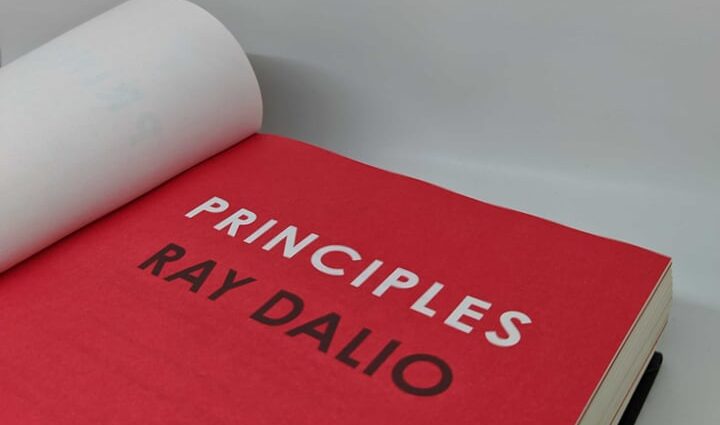
Ray Dalio has published a lengthy warning on X, arguing that the Iran war comes down to a single variable: who controls the Strait of Hormuz.
If Iran retains any ability to control or negotiate passage, the U.S. will be seen as having lost, regardless of how the conflict ends.
The Bridgewater Associates founder specifically warns that if President Trump fails to muster an international coalition to keep the strait open, it will signal a fatal weakness in American global leadership.
For Dalio, this is a classic symptom of the declining stage in his macroeconomic “Big Cycle” framework.
He says the pattern has repeated across centuries, from the Spanish empire to the Dutch.
A dominant power loses a critical trade route, and capital, allies, and credibility shift fast toward whoever wins.
He compared that scenario to the 1956 Suez Canal Crisis, the moment widely regarded as ending British global power.
This post was originally published here
This post was originally published here
Vaccination programme to be launched on Canterbury campus as strain B of disease identified in fatal outbreak
Students in Kent are to be offered a targeted vaccination against meningitis B after two more cases in the deadly outbreak were confirmed and pharmacies ran out of vaccine doses.
Government scientists have said two people who died in the outbreak had bacterial strain B of the disease, for which most people have not been vaccinated.
This post was originally published here

Ukraine’s president says mass attacks on civilians are no longer the preserve of a ‘madman like Putin’
European nations should prepare for attacks by non-state actors including criminal networks, terror groups and lone attackers as drone technology advances, Volodymyr Zelenskyy has warned.
The Ukrainian president said it was no longer just “a wealthy madman like Putin” who could afford mass attacks as he demonstrated the latest technology to British MPs and peers.
This post was originally published here
The Thoma Bravo co-founder said that some of the software stocks getting hit by the AI wave deserve a lower valuation.
This post was originally published here

The private market landscape witnessed a historic shift in capital formation last month, driven by notable activity from companies like SpaceX, Anthropic, and OpenAI.
These three companies have redefined the upper echelons of private market valuations, with their combined worth comprising a significant portion of the top 50 private companies’ total valuation, Forge Global reports.
Last month, SpaceX merged with xAI, forming the highest-valued private entity to date with a staggering $1.25 trillion valuation. This move marks the creation of the first “Teracorn,” a phrase used to reference a trillion-dollar-plus private company.
Following that announcement, SpaceX revealed that it was reportedly preparing to confidentially file for an initial public offering as soon as March. Elon Musk’s rocket startup is targeting a June listing that could raise up to $50 billion, and would surpass Saudi Aramco‘s $29 billion debut in 2019 to become the largest IPO …
This post was originally published here

A new Vanity Fair feature published on Tuesday gathered a group of crypto billionaires alongside Polychain Capital’s Olaf Carlson-Wee at a luxury Manhattan hotel.
Michael Novogratz showed up hungover from a 4 a.m. trip to a Burning Man-themed nightclub wearing a full-length silver puffer jacket.
Danny Ryan, who runs a company trying to bring Wall Street onto the blockchain, wore pants with a hole in the crotch and went barefoot.
Meltem Demirors arrived layered a diamond cross, a leopard print coat, and a black sweatsuit with “Believe in Something” bedazzled across her rear.
Cathie Wood, the ARK Invest CEO, sat for her portrait in a dark cardigan, black trousers, and a single gold brooch, in sharp contrast to the others.
They are collectively billions poorer on paper.
The total crypto market cap has shed roughly $1.4 trillion since its December 2024 peak, and Bitcoin (CRYPTO: BTC) is trading near $73,700, about half its all-time high.
Demirors had her own take on the investors who sold: “They’re all p****es.”
Experts say Nigel Farage’s party is not being transparent about how it will use data it collects on people’s voting habits
Reform UK risks breaching data protection laws with its competition to win free energy bills for a year, lawyers and data experts have warned.
Nigel Farage announced the lottery on Tuesday as a way to advertise his latest policy to cut energy bills. The Reform leader encouraged British people to sign up via a website for a chance to have their energy bills paid for a year, as well as those of their entire street.
This post was originally published here

The U.S. Postal Service on Tuesday will tell Congress that it’s facing a serious financial crisis and is on pace to run out of cash in less than a year without significant reforms.
Postmaster General David Steiner testified before a House Oversight subcommittee and told lawmakers that the USPS needs higher stamp prices and the ability to borrow more money along with other reforms – including changes to pension funding and liabilities calculations, workers’ compensation and retirement fund investment strategies.
Steiner has put forward possible options for cutting costs, including ending six-day-a-week deliveries, closing post offices or raising first-class mail stamp prices from the current 78 cents to $1 or more.
“In order to survive beyond the next year, we need to increase our borrowing capacity so that we don’t run out of cash,” Steiner said in prepared testimony. “The failure to do this could lead to the end of the Postal Service as we know it now.”
POSTAL SERVICE CAN’T BE SUED FOR INTENTIONALLY NOT DELIVERING MAIL, SUPREME COURT RULES IN 5-4 SPLIT
Stamp prices have risen 46% since early 19, when they were 50 cents. Steiner argues that those prices are still far lower than postage costs in other countries.
USPS has also reached its current borrowing cap of $15 billion, precluding the agency from taking out additional loans.
Reuters previously reported in December that Steiner thought the USPS was on track to run out of money as soon as early 2027 amid mounting losses.
USPS has reported net losses of $118 billion since 2007 as volumes of its most profitable product, first-class mail, fell to the lowest level since the late 1960s.
POSTMASTER GENERAL LOUIS DEJOY STEPPING DOWN AMID US POSTAL SERVICE FINANCIAL TURMOIL
Steiner said that if USPS were to reduce deliveries to five days a week, it would save the agency about $3 billion per year, while closing small post offices in remote areas would save about $840 million.
However, Steiner cautioned that both of those options “may not be palatable to Congress or the American public.”
USPS currently delivers to more than 170 million U.S. addresses on a six-day-a-week schedule.
USPS COULD SLOW SERVICE IN CERTAIN AREAS AS IT SEEKS TO CUT COSTS
The Government Accountability Office (GAO) is set to tell lawmakers on Tuesday that it’s critical to “address USPS’s unsustainable business model before it will be responsible for billions in new annual expenses for retiree healthcare, likely in 2031.”
USPS’ peak postage volume was 213 billion pieces of mail in 2006, while that figure has fallen by more than half to 104 billion pieces of mail in 2025.
Steiner noted that at current stamp prices, that translates to a loss of $81 billion. He added that in the years since 2006, USPS “was thrown overboard and instead of tossing us a life jacket, we were thrown an anchor.”
GET FOX BUSINESS ON THE GO BY CLICKING HERE
Congress in 2022 provided USPS with $57 billion in financial relief over a decade and required the agency’s future retirees to enroll in a government health insurance plan.
Reuters contributed to this report.
The SEC accused Elon Musk of failing to promptly disclose that he amassed an active stake in Twitter in 2022.
This post was originally published here
Tory leader says US president’s words ‘completely wrong’ as she tries to distance herself from his war on Iran
Kemi Badenoch has called Donald Trump’s repeated criticisms of Keir Starmer “childish”, as the Conservative leader continued her recent moves to distance herself from the US president and his military action against Iran.
Speaking shortly before Trump yet again singled out Starmer for condemnation to say the prime minister had not been sufficiently supportive of the US war, Badenoch used a social media video to describe Trump’s actions as counterproductive.
This post was originally published here
Pipeline, closed since 2015 after huge oil spill, reopens after president cites need to boost US supply amid war on Iran
Oil has begun to flow from a controversial California pipeline system for the first time in an more than decade following a Trump administration order, despite state officials decrying the move.
Sable Offshore Corporation, the Houston-based owner of the coastal pipelines, announced on Monday that offshore oil was now flowing through its Santa Ynez unit and Santa Ynez pipeline system, which runs through several California counties.
This post was originally published here

McDonald’s is rolling out its cheapest value menu in years, a move that could speak more to the state of the American economy than it does fast food.
Even as sales rose for the quarter, executives at the world’s largest burger chain acknowledged in its February earnings call the fast food environment, which has pulled back in recent quarters, would “remain challenging” in 2026. Despite the company’s own progress attracting lower-income customer in the company’s fourth quarter, this tier of consumers, who have been dealing with stubborn inflation for years, are broadly pulling back on spending.
To address this issue, CEO Chris Kempczinski said during the company’s latest earnings call the restaurant chain would double down on its commitment to value and deeper discounts.
“McDonald’s is not going to get beat on value and affordability,” Kempczinski said during the call last month.
As part of the company’s latest effort to reach these consumers, McDonald’s is reportedly launching a new value menu in April with items like a 4-piece Chicken McNuggets or Sausage Biscuit priced at $3 or less. It is also revealing a $4 breakfast bundle that includes a McMuffin, hash brown, and a coffee, among other options, The Wall Street Journal reported. The new $3 menu will replace the McValue platform it launched in January 2025 that offered customers the choice of adding a second item to their full-priced order for just $1 more.
McDonald’s did not immediately respond to Fortune’s request for comment.
McDonald’s newest value menu fits squarely into the trend of the K-shaped economy. While high-income people have fared well during the multi-year-stock bull run of the past few years, lower-income people have been hit by higher prices and stagnating wages. The same is happening at McDonald’s, according to Kempczinski. While high-income customer traffic is stable, the CEO warned, “lower-income consumers are particularly sensitive to value and affordability.”
McDonald’s is not the only restaurant chain looking to target these lower-income customers: Wendy’s, Burger King, and Taco Bell have all rolled out aggressive value promotions over the past year, to reach a shrinking pool of budget-conscious diners who have grown increasingly selective.
To win over these picky consumers, Mark Wasilefsky, head of restaurant and franchise finance at TD Bank, told Fortune chains are increasingly looking for a way to provide value to consumers.
“Lower-priced options, when chosen carefully, priced at an acceptable level, and marketed aggressively, create perceived value and can generate a long-term customer,” he said.
While Kempczinski last month touted the company’s affordability moves as part of the company getting back to its roots, some worry the new $3 menu could be indicative of broader economic problems to come.
A post by prediction market Kalshi mentioning the $3 menu racked up more than 4 million views on X, with many users jumping on the news to declare an economic downturn is near. One user who quoted the Kalshi post on X got 2.6 million views for the declaration: “Oh it’s a RECESSION recession.”
McDonald’s is betting a $3 meal will bring lower-income customers back, and yet, that may be difficult when Americans are increasingly betting that the future could hold more economic pain.
A Pew Research survey last month found 72% of people rate economic conditions as fair or poor, and nearly 40% believe conditions will be worse a year from now, compared to 31% who think they will improve.
This pressure, Wasilefsky argues, has made value perception that much more important for chains seeking lower-income consumers, or at least those with the financial flexibility to slash prices without gutting margins.
“For those brands who can afford to do so, this is an excellent time to convince existing customers and new customers of your brand’s value and its right to have a share of your shrinking wallet,” he said.
This story was originally featured on Fortune.com
This post was originally published here

When Changhan Kim, CEO of the South Korean gaming company Krafton, decided he needed a way out of a costly acquisition deal, he didn’t call his lawyers—he opened ChatGPT. The result is one of the most striking cautionary tales about AI-assisted decision-making in corporate America, and it ended with a Delaware judge ordering the company reverse everything it had done.
A Delaware judge found Kim used ChatGPT to engineer the removal of Unknown Worlds Entertainment—the indie studio responsible for the underwater survival game Subnautica—CEO Ted Gill from the company to dodge a $250 million bonus payout.
“Fearing he had agreed to a ‘pushover’ contract, Krafton’s CEO consulted an artificial intelligence chatbot to contrive a corporate ‘takeover’ strategy,” Delaware’s Court of Chancery Vice Chancellor Lori Will wrote in a ruling on Tuesday.
In 2021, Krafton, the publisher behind the global phenomenon PUBG: Battlegrounds, acquired Unknown Worlds Entertainment for $500 million. As part of the deal, Krafton agreed to pay an additional $250 million earn-out bonus if the studio’s hotly anticipated sequel, Subnautica 2, hit certain sales targets. The contract also guaranteed that Unknown Worlds would remain independent, with cofounders Charlie Cleveland and Max McGuire, along with Gill, retaining operational control—and only being removed for cause.
Usually, it’s a good thing to hit and even exceed sales targets, but for Krafton, trouble started when their own internal sales projections showed Subnautica 2 was well on track to trigger that payout. When Maria Park, Krafton’s head of corporate development, told Kim a “dismissal with cause” would not rid the company of its $250 million bonus obligation without exposing the company to “lawsuit and reputation risk,” Kim looked toward an AI chatbot for guidance.
Kim, spooked by what he privately called a “pushover” deal, bypassed his own legal team and turned to ChatGPT for help. When the AI chatbot responded that the earnout would be “difficult to cancel,” the ruling read, Kim didn’t accept the answer. He pushed further—and the chatbot obliged with a detailed, multi-stage corporate takeover strategy dubbed “Project X.”
ChatGPT advised Kim to form an internal task force to renegotiate the earnout or force a studio takeover; if negotiations failed, to “lock down” Steam and console publishing rights and control over the game’s code; to frame the entire conflict as being about “fan trust” and “quality” rather than money; and to prepare systematic legal defense materials while logging all communications. The chatbot even suggested drafting a public-facing message to win over Subnautica fans—a message Kim then asked ChatGPT to write. It backfired spectacularly, alarming the gaming community and heightening suspicions that something was deeply wrong at the studio.
Throughout this process, Kim’s own team warned him the strategy was dangerous, but Kim pressed ahead anyway. Cleveland, McGuire, and Gill were all removed from their roles without what the court determined was legitimate cause.
Will found Krafton had improperly ousted the Unknown Worlds leadership, and noted company executives are expected to exercise independent human judgment—not outsource good-faith decisions to an AI. Gill has now been ordered reinstated as CEO, with the authority to bring back the cofounders. The earnout period has been extended to account for the disruption.
Neither Krafton nor Unknown Worlds responded to Fortune’s requests for comments. As of Tuesday morning, Krafton’s contact page was “temporarily offline.”
This story was originally featured on Fortune.com
This post was originally published here

Technology allowed the U.S. and Israel to kill Iran’s Supreme Leader, but raised longstanding questions about whether the U.S. as a democracy should be assassinating foreign leaders.
(Image credit: Ahmad Al-Rubaye)

This post was originally published here
National power outage is making life extremely difficult and may force Havana into biggest economic changes in 67 years
Just a few hours after a nationwide electricity blackout struck Cuba, Donald Trump hinted at an even darker future for the island’s rulers.
The country’s entire electricity system had collapsed on Monday afternoon, leaving about 10 million people without power. Emergency teams were still struggling to restore it when the US leader made his latest threat.
This post was originally published here
Master limited partnerships can offer solid income and hold up even as oil prices swing.
This post was originally published here
Probably, but investors should brace for more volatility
This post was originally published here

The Arizona charges are the first criminal charges to have been filed against Kalshi, though the company is embroiled in multiple lawsuits over its predictions platform.
This post was originally published here
An NWS office posted video of the meteor shooting across the sky, but says no report of debris found as it likely burned
A meteor over Ohio caused a large boom that jolted people as far away as Pennsylvania on Tuesday morning, according to the National Weather Service (NWS) and reports.
The meteor entered the atmosphere at about 9am local time on Tuesday, producing a sonic boom felt across a wide swath of northern Ohio and beyond. Reports poured in from Cleveland and other sectors as far east as Pittsburgh, Pennsylvania, and into New York state.
This post was originally published here
Clare Dupree, 48, who had severe mental illness, died after using a vape to start blaze at prison in Gloucestershire
There were “missed opportunities” that could have prevented the death of a woman with severe mental illness from “sustained inhalation of smoke” after a fire in her prison cell, an inquest has found.
Clare Dupree, 48, from Cardiff, died after she used a vape to start a fire at HMP Eastwood Park in Gloucestershire just after Christmas 2022.
This post was originally published here

TORONTO, March 17, 2026 /CNW/ – SLGI Asset Management Inc. (“Sun Life Global Investments”) announces the following regular cash distributions for the month ending March 31, 2026 in respect of the exchange-traded series of units of funds managed by Sun Life Global Investments (“ETF Series”), as set out in the table below. Unitholders of record on March 24, 2026 will receive cash distributions for the respective ETF Series payable on March 31, 2026.
The details of the cash distribution amounts per unit are as follows:
|
Fund Name |
Ticker |
Distribution |
|
Sun Life Core Advantage Credit Private Pool – ETF Series |
This post was originally published here

This post was originally published here
The Federal Reserve has little choice but to stay on the sidelines this week.
This post was originally published here
Despite renewables and reserves, it will suffer
This post was originally published here

Ross Stores is ramping up store growth in 2026 as demand for discount apparel and home goods remains resilient, with the retailer opening 17 new locations and planning more than 100 additional sites this year.
The company said the latest openings – 13 Ross Dress for Less stores and four dd’s Discounts locations – mark the start of its 2026 rollout, which targets approximately 110 new stores in total, including about 85 Ross locations and 25 dd’s Discounts stores.
The expansion follows solid performance from stores opened in 2025, reinforcing management’s expectations that value-focused retail will remain a key draw for consumers.
COSTCO RECALLS POPULAR MEATLOAF MEAL KIT OVER SALMONELLA CONTAMINATION FEARS ACROSS 26 STATES
Off-price retailers have continued to benefit as shoppers seek lower-cost alternatives for apparel and home goods, particularly as price sensitivity persists across discretionary categories.
Geographically, Ross expanded its namesake brand across the Mountain, Midwest and Northeast regions, while also strengthening its presence in key Sunbelt markets.
For dd’s Discounts, the company added locations in its core markets of California and Texas, along with its first store in Utah, signaling expansion into new territory.
The new stores are also expected to support local job creation and broader economic activity tied to store development.
Looking ahead, Ross said it sees a long-term opportunity to grow to approximately 2,900 Ross Dress for Less stores and 700 dd’s Discounts locations nationwide – or about 3,600 stores in total – underscoring confidence in sustained demand for discount retail.
CLICK HERE TO GET FOX BUSINESS ON THE GO
In conjunction with each opening, the company said it is supporting community initiatives through donations to local Boys & Girls Clubs or First Book literacy partners focused on underprivileged youth.
Bravo said deep sector expertise is separating winners from losers as artificial intelligence creates disruption across the software industry.
This post was originally published here

This post was originally published here
Tesla is expanding ties with LG Energy Solution to include a $4.3 billion deal for U.S.-produced cells for energy storage systems from Michigan.
This post was originally published here
Relations deteriorate as Gustavo Petro claims government of Trump ally Daniel Noboa bombing targets in Colombia
President Gustavo Petro has accused Ecuador of bombing targets inside Colombian territory, saying later that the burned remains of nearly 30 people had been found near the border, in a sharp deterioration in relations between the two neighbouring countries.
The Colombian leader said on Tuesday that an attack which had left “27 charred bodies” did not appear to have been carried out by Colombia’s own forces or any illegal armed groups which he said do not have armed planes.
This post was originally published here

As pressure builds on Iran’s ruling regime, exiled Crown Prince Reza Pahlavi remains in contact with figures inside the country who could help ensure a “stable transition,” according to his chief of staff.
“He’s in touch with forces within the country, including within the state bureaucracy, who, at the right moment, are ready to pull away from this regime and to ensure a stable transition,” Cameron Khansarinia said.
EXPERT SAYS IRAN DRONE ATTACK ON CALIFORNIA COAST WOULD BE ‘VERY EASY’ TO STOP
Khansarinia, Crown Prince Reza Pahlavi’s chief of staff, joined FOX Business’ Maria Bartiromo on “Mornings with Maria” to discuss the latest developments inside Iran and the growing movement among Iranians who oppose the current leadership.
Khansarinia said the recent elimination of a key Iranian security figure, Ali Larijani, marked a significant moment for the country, arguing that the official had played a major role in maintaining the regime’s grip on power and overseeing violent crackdowns against protesters.
“Larijani played a critical role in holding up this criminal regime,” Khansarinia said.
He added that the official had been closely tied to the suppression of demonstrations following calls by Pahlavi for Iranians to take to the streets.
“According to President Trump, more than 32,000 innocent and peaceful protesters were slaughtered,” he said.
CRUISE LINES FACE FUEL COST SURGE AS OIL PRICES JUMP ON IRAN TENSIONS
Khansarinia said many Iranians are preparing for the right moment to mobilize again, noting that supporters are waiting for a signal from Pahlavi before launching another nationwide wave of protests.
“The prince has told them that he will issue the final call to take to the street, to take down this regime when the time is right,” he said.
Khansarinia also pointed to what he described as widespread public support for the exiled crown prince as the country looks toward a potential post-regime future.
“The crown prince absolutely has the majority support of the Iranian people,” Khansarinia said. “That’s been proven time and time again on the streets, when at his call millions of Iranians took to the streets… chanting his name… calling for his leadership of the transition to the ballot box, to his true secular democratic system, which has always been his mission in life.”
IRAN REGIME ‘ABOUT TO COLLAPSE,’ PRINCE REZA PAHLAVI SAYS AS ECONOMIC CRISIS DEEPENS
He added that Pahlavi has been working to prepare for a stable transition should the regime collapse.
“The prince is really the one person who can unite Iranian society from the armed forces… and ensure stability going forward,” Khansarinia said.

This post was originally published here
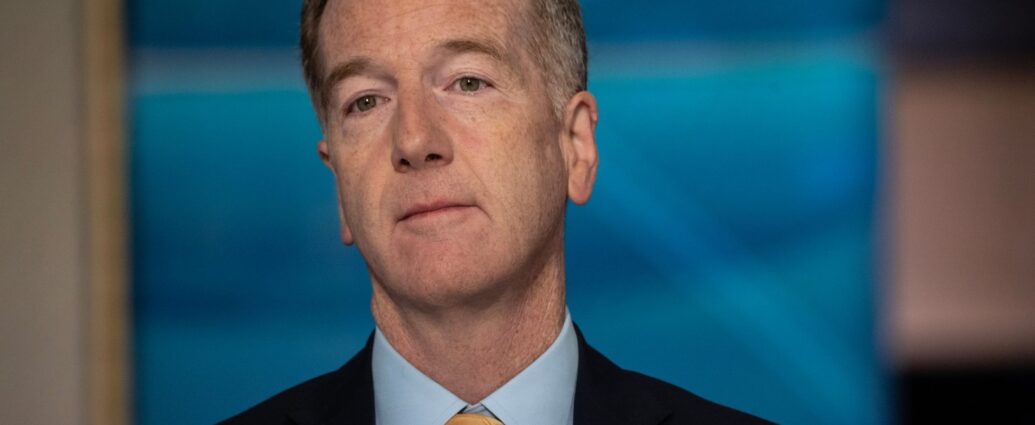
Morgan Stanley’s Mike Wilson spent years insisting a “rolling recession” was hiding in plain sight while Wall Street celebrated what appeared to be a boom. Now he’s back with another contrarian call: half the stock market is already in a bear market, the correction has been grinding for six months, and investors panicking this week arrived late.
In a note published Monday, Wilson — Morgan Stanley’s chief U.S. equity strategist — argued that the dramatic volatility roiling markets recently is not the beginning of a selloff. It’s closer to the end. “This correction is mature in time and price,” he wrote, anchoring the call with a striking data point: 50% of all stocks in the Russell 3000 are now down at least 20% from their 52-week highs, and among S&P 500 members, the figure exceeds 40%.
The backdrop is important. Wilson spent years arguing, often in isolation, that the economy was much weaker for many companies and consumers than what the headline economic statistics (nominal GDP or employment) suggested. Rather than a single crash, he said, weakness had moved sector by sector — tech first, then consumer goods, then the broader economy — meaning the usual markers of recession, soaring unemployment and plummeting GDP, remained muted while pain mounted underneath. He called it a “rolling recession.” Most of Wall Street thought he was wrong.
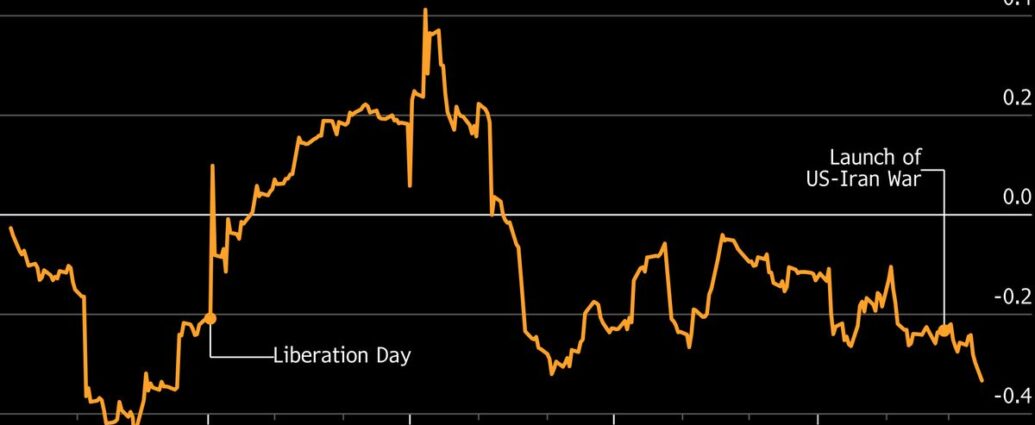
He wasn’t. Wilson identified April 2025 — when the White House’s Liberation Day tariff announcement triggered a market capitulation — as the recession’s trough. Earnings revisions breadth staged a dramatic V-shaped rebound from that point, payroll revisions improved, and layoff data peaked and rolled over. The early-cycle recovery he had forecast was underway. And critically, it’s that recovered, reaccelerating backdrop that shapes Wilson’s read on the current turbulence.
This week’s sell-off, he argued, has been a “correction within a bull market” — not a new downturn. It began last fall, when liquidity tightened, well before crude oil prices spiked and the VIX lurched higher in recent weeks following the escalation of the conflict in Iran. The geopolitical shock served as a “final blow” — the kind of capitulatory event that typically marks an ending rather than a beginning.
The numbers back him up on the damage already done. Software and services stocks have been the hardest hit, with 97% of S&P 500 members in that sector trading at least 10% below their 52-week highs. Semiconductors, consumer discretionary, and financial services stocks tell a similar story. The index-level S&P 500 decline of roughly 15% from peak is real — but it dramatically understates how widely the carnage has spread beneath the surface.
What distinguishes today from the darker chapters of the rolling recession era, according to Wilson, is that the fundamental engine is firing. S&P 500 earnings are growing at +13% and accelerating — the opposite of the deteriorating earnings environment that accompanied prior oil-shock recessions. The crude rally is running around 40% year-over-year, well short of the 100%-plus spikes that have historically derailed business cycles. Fiscal support is substantial, with personal income tax refunds running 17% higher year-over-year, and the Fed has turned expansionary again after shrinking its balance sheet through much of last year.
The issue, of course, is that Wilson’s analysis assumes the Iran conflict stays contained, oil stays below $100 a barrel, and the geopolitical situation resolves in “weeks, not months.” Those are enormous assumptions given the intractable nature of the Iran War, which, by all outward appearances, will go on for longer than the 3 weeks President Trump publicly estimated. History suggests geopolitical shocks have a nasty habit of defying neat timelines for resolution.
Wilson himself acknowledges the Strait of Hormuz disruption is blocking roughly 20 million barrels per day of tanker flow, and that tapping strategic petroleum reserves will only replace a fraction of that volume. If crude breaks and holds above $100 for a sustained period — which Wilson concedes would change his view entirely — the dynamic shifts from “correction in a bull market” to something more serious. The bear case isn’t some remote tail risk. It’s one escalation away.
There is one area where Wilson’s critics should be careful: his track record on calling inflection points. He was right about the rolling recession when the consensus laughed. He was right that Liberation Day marked the trough. Those calls weren’t lucky — they were built on a rigorous framework of leading indicators, breadth of earnings revisions, and liquidity tracking that most strategists missed.
This story was originally featured on Fortune.com
This post was originally published here
“On balance, we do not like the risk/reward balance in Lilly shares,” the analysts wrote.
This post was originally published here
This post was originally published here

This post was originally published here
The House panel wants to question Bondi about the DOJ’s compliance with the Epstein Files Transparency Act, which President Donald Trump signed into law.
This post was originally published here

This post was originally published here
This post was originally published here
(RTTNews) – Recovering from yesterday’s slump, crude oil surged on Tuesday as Iran stepped up its attack on energy infrastructure in the Middle East in its war against the U.S.-Israel combined forces.
This post was originally published here

Lululemon Athletica Inc. (NASDAQ:LULU) shares are up on Tuesday as the company is facing scrutiny from shareholders regarding its leadership and strategic direction.
The firm will release its financial results for the fourth quarter and full year fiscal 2025 today (Tuesday, March 17, 2026). The company will host a conference call at 4:30 p.m. Eastern time to discuss the results.
Chip Wilson, the founder and a significant shareholder of Lululemon, has publicly called for the company’s leadership to address critical questions about its future direction.
“As Lululemon reports its fourth quarter and full year 2025 results, shareholders will be critically evaluating the company’s claims of success or improvement,” per Wilson’s statement in a release. “The core issue at Lululemon is one the company has struggled with for years: there is a disconnect between the company’s creative engine and the Board’s understanding for how brand power and product excellence fuel cultural strength, margin durability and long-term shareholder value.”
Wilson emphasized the need for accountability and oversight, particularly regarding the disconnect between …
This post was originally published here

A lesser-known crypto ETF is quietly outperforming the broader markets. The T-Rex 2X Long CRCL Daily Target ETF (BATS:CCUP) has risen nearly 300% in the last 30 days.
• T-REX 2X Long CRCL Daily Target ETF stock is charging ahead with explosive momentum. What’s fueling CCUP momentum?
The catalyst for this incredible move is a company called Circle Internet Group Inc (NYSE:CRCL), which has seen its stock more than double in the last 30 days, fueling this incredible move in CCUP.
Unlike other crypto ETFs that tend to move due to fluctuations in cryptocurrency asset prices, this move is due to underlying company fundamentals.
Circle Internet, which issues a stablecoin called USDC (CRYPTO: USDC), …

This post was originally published here
Rising oil prices and the fallout of the U.S.-Iran war are worsening the economic divide, experts say.
This post was originally published here
Todd Gordon walks investors through several market technicals as stocks try to break out of a tight range.
This post was originally published here

This post was originally published here

Prominent trader Taiki Maeda says the crypto market may have already bottomed, arguing that a new fixed-income product tied to Bitcoin (CRYPTO: BTC) could make further downside increasingly difficult.
In his Mar.17 podcast, Maeda noted that market sentiment is extremely bearish, with many traders expecting a final capitulation toward $45,000.
However, he sees this as an overcrowded trade, choosing instead to aggressively accumulate Bitcoin.
His thesis is not based on macro or technicals, but on crypto-native capital flows, which he believes are shifting in a way that supports price stability.
At the center of this view is Strategy (NASDAQ:
Keir Starmer previously reassured that the war in Iran would not distract the UK from supporting Ukraine
Nigel Farage is speaking now at the Reform UK event.
The website promoting the lottery is up. It is called nigelcutmybills.com.
This post was originally published here
But Michael Shanks says government will not be rushed into plans to reduce costs faced by households due to war in Iran
Britain’s energy minister has said “every penny” levied on household energy bills will be scrutinised after suppliers warned that households could face a price hike of £250 a year due to the war in Iran.
Michael Shanks told MPs that the government would stand ready to provide support wherever needed, but it would not be rushed into plans to reduce the costs faced by households or offer direct financial support.
This post was originally published here

Oksana Masters leaves Italy with five new para Nordic skiing medals, extending her reign as the most decorated U.S. Winter Paralympian. She competes in summer sports too and is already eyeing LA 2028.
(Image credit: Buda Mendes)

This post was originally published here
Amid escalation of Middle East crisis, US president describes rejection of call for help as a ‘foolish mistake’
Donald Trump has said the United States does not need Nato after being rebuffed by a number of the organisation’s member countries over his appeal for a multi-national naval force to reopen the key strait of Hormuz trade route closed by Iran.
Speaking to reporters from the Oval Office, the US president described the rejection of his calls as a “very foolish mistake”, adding without evidence: “Everyone agrees with us, but they don’t want to help. And we, you know, we as the United States have to remember that because we think it’s pretty shocking.”
This post was originally published here
Margaret Hodge, who led report into arts funder, tells DCMS committee that grant recipients have lost confidence in the body
Arts Council England (ACE) requires a “radical” overhaul so that it is able to respond to the challenges of the culture sector, according to Margaret Hodge, who said if ACE leaders did not heed her warnings it would be a “disaster”.
The Labour peer, who led a wide-ranging and critical report into ACE, made the comments at a Department for Culture, Media and Sport (DCMS) committee, where she reiterated her calls for the organisation to embrace reform.
This post was originally published here
Senate Democrats sent counteroffer Monday aimed at resolving budget standoff
Negotiations for Congress to fund the Department of Homeland Security (DHS) – which oversees airport security officers – remained ongoing as the airport in Atlanta, the world’s busiest, dealt with long security lines Tuesday.
A White House official confirmed that Senate Democrats sent a counteroffer Monday aimed at resolving a budget standoff that led to a DHS shutdown into its second month. A Trump administration official confirmed to the Guardian that the offer by Democrats was under review, though Republican lawmakers were quick to dismiss the proposal.
This post was originally published here

When Bernstein analyst Mark Shmulik sent a note to clients about Meta’s reported plans to cut 20% or more of its roughly 79,000-person workforce, he issued a warning. If Meta succeeds in redrawing the blueprint for an AI-enabled organization, he wrote, “others will rush to replicate it,” potentially triggering “a cascade of hurried pivots, half-formed strategies, and reactive restructuring across the ecosystem.”
The math alone is striking. Even at a 20% headcount reduction, Shmulik estimates Meta could realize $2 billion to $4 billion in cost savings this year and $5 billion to $8 billion in 2027 — translating to 3%–5% EPS upside in 2026 and 4%–7% in 2027. But he was quick to note the savings are more likely to be redeployed into AI infrastructure than returned to shareholders. Meta is already planning to spend $600 billion on data centers by 2028 and recently acquired AI startup Manus for at least $2 billion.
What makes the moment significant isn’t the scale of the cuts, but the context. Less than three weeks ago, Jack Dorsey laid off nearly half of Block’s 4,000-person workforce and made a blunt prediction to investors: within a year, most companies would reach the same conclusion. He didn’t have to wait the whole year.
Zuckerberg has been telegraphing the same logic. In January, he said he was starting to see “projects that used to require big teams now be accomplished by a single very talented person.” Reuters reported Friday that Meta is now targeting a 50:1 employee-to-manager ratio — unthinkable against the 7-to-15:1 long considered standard.
The competitive pressure is already visible elsewhere. Amazon confirmed 16,000 job cuts in January. Salesforce CEO Marc Benioff has said he “needs less heads” after cutting 4,000 from his customer support workforce. Economist Anton Korinek previously told Fortune the trend could mark “the beginning of a new era where white-collar jobs become threatened more seriously by AI. Once a few companies start the trend, competitive forces may induce others to follow suit.”
The central question Shmulik raises — and leaves open — is whether these cuts are genuinely AI-driven or whether AI is providing convenient cover for belt-tightening that would have happened anyway. “Fat exists in every organization,” he wrote, “but it’s usually not as clean as being concentrated in specific teams or individuals.”
“This is speculative reporting about theoretical approaches,” a Meta spokesperson told Fortune. That theoretical approach, of course, could set off a cascade of cuts.
This story was originally featured on Fortune.com
This post was originally published here

Ripple has launched digital asset services in Brazil and plans to apply for a Virtual Asset Service Provider license with the country’s central bank, yet XRP (CRYPTO: XRP) fell 1% on Tuesday.
Ripple is rolling out an integrated platform for banks and fintechs that combines cross-border payments, crypto custody, brokerage, and treasury tools, Coindesk reported.
The company said it will apply for a VASP license with the Central Bank of Brazil under the country’s new crypto framework.
“Latin America has always been a priority market for Ripple—not just because of the scale of the opportunity, but because Brazil has built one of the most advanced and forward-thinking financial ecosystems in the world,” Monica Long, president at Ripple, said.
Several Brazilian firms already use Ripple’s payments network and crypto services.
Banco Genial handles same-day U.S. dollar transfers, while Braza …

This post was originally published here
Minister says the change is needed to protect the corporation from repeated ‘culture war’ attacks
The government is to put the BBC’s charter on a permanent footing for the first time, after the corporation said the change was needed to protect it from political interference.
In a significant change to the governance of the BBC, the culture secretary, Lisa Nandy, said she wanted to grant the corporation’s demand for a permanent charter. She said she wanted to protect it from repeated “culture war” attacks.
This post was originally published here

U.S. equities extended their rebound from four-month lows Tuesday as investors largely looked past a fresh surge in oil prices, reassessing last week’s stagflation fears ahead of the Federal Reserve’s rate decision on Wednesday.
President Donald Trump declared the United States “does not need the help of anyone” after most NATO allies declined to join the military operation against Iran, writing that America had already “decimated Iran’s Military” — their navy, air force, anti-aircraft systems, and leadership “at virtually every level.”
West Texas Intermediate crude climbed 1.5% to $94.90 a barrel and Brent crossed back above $101, reversing Monday’s energy-market relief rally after Iran escalated attacks on Persian Gulf energy infrastructure overnight.
Israel also reported killing Iran’s security chief — a development that reinforced the view that the conflict is far from resolved.
The Federal Reserve kicked off its two-day policy meeting, with its rate decision due Wednesday.
No change to the 3.75% fed funds rate is expected. But all attention is on the updated Summary of Economic Projections — the dot plot — as policymakers try to model the economic impact of surging energy prices on both growth and inflation.
Markets are currently pricing in just one 25-basis-point cut, no earlier than December. The 10-year U.S. Treasury yield edged down nearly 2 basis points to 4.20%. The 30-year yield settled at 4.85%.
By midday trading in …
This post was originally published here

Nebius Group NV (NASDAQ:NBIS) announced the Enterprise Readiness Initiative on Tuesday. The program aims to help artificial intelligence-native startups scale products for enterprise customers. This project operates in collaboration with NVIDIA Corp (NASDAQ:NVDA).
The initiative bridges the gap between AI prototypes and production-ready solutions. It focuses on performance, security, and compliance. Nebius will provide engineering teams to work with venture capital (VC)-backed portfolio companies.
Insight Partners, Accel, and Fellows Fund serve as launch partners. These firms want their portfolio companies to gain a structural advantage.
“The Enterprise Readiness Initiative offers startups access to strong infrastructure and engineering expertise,” said George Mathew, Managing Director at …
This post was originally published here
In letter to justice secretary, groups say judge-led decisions more likely to be influenced by bias than those made by 12 random people
Thirty organisations representing victims of violence against women and girls (VAWG) have written to the justice secretary, David Lammy, urging him to drop plans to significantly reduce the number of jury trials.
The groups said that the proposals, which will affect court cases in England and Wales, will deepen mistrust in the justice system among victims and distract from measures designed to reduce offending.
This post was originally published here

This post was originally published here

This post was originally published here

This post was originally published here

This post was originally published here

This post was originally published here
This post was originally published here

This post was originally published here


Scott Galloway doesn’t want the markets to go up. He said so out loud, live at South by Southwest, and the audience—skewing young—didn’t boo him. They cheered.
“At some point,” Galloway told the crowd during a taping of the Prof G Markets podcast on Monday, “We have to stop propping up the markets with young people’s credit cards.”
It was a throwaway line dropped near the end of a longer riff about war, oil prices, and the mechanics of economic decay. But it landed like a thesis statement—and it inadvertently explained the entire psychology behind Gen Z’s flight into prediction markets, meme stocks, crypto, and speculative gambling.
Here’s Galloway’s argument, stripped to its core: for the last 40 years, every time a genuine economic shock threatened to destroy capital—the dot-com crash, the 2008 financial crisis, the COVID collapse—the U.S. government intervened. Not to protect workers. To protect assets. To protect owners. The debt and stimulus that financed those rescues lands on younger generations.
“Rather than let assets collapse and take money from the owners and give advantage back to the earners,” Galloway said, speaking directly to Gen Z, “we’re going to pull out your credit card and ensure, in the form of debt and stimulus, that I stay rich.”
“The reason I’m economically secure,” he explained, goes back to the 2008 collapse. Yes, the government bailed out the banks, but they let the markets collapse, and as a result Galloway said he got to buy stock in Apple, Amazon, and Netflix for between $8 to $12 per share each. Looking at today’s market, he asked, “Where do you find value right now?” Gen Z already knows the answer—and it’s not in equities.
The Dow and the S&P, Galloway argued, are not indicators of economic health. They are “effectively a proxy for how the rich are doing. And spoiler alert—they’re doing really well.” A market correction, Galloway said, would be a feature, not a bug—a recalibration in which housing prices would fall, stocks would become affordable, and capital flows would go back from owners to earners.
New data released this month by Northwestern Mutual found that nearly a third of Gen Z investors have been exposed to prediction markets, and the cohort leads all generations in meme coin activity and usage of speculative platforms like Polymarket. The study attributed the trend to a belief that previous rules of growth and finance broke down creating a generation of investors who suspected market manipulation and tried to seek better returns in new markets. Bloomberg, surveying the same data, called it “financial nihilism.”
But nihilism implies irrationality. What Galloway described at SXSW is the rational engine underneath the behavior. If the traditional system is structurally designed to enrich those who already own assets — and if every crash is backstopped before young buyers can get in at the bottom — then the conventional playbook isn’t just unappealing. It’s a trap. Prediction markets, meme coins, and speculative bets aren’t signs of recklessness. They are the logical response of a generation that has concluded the casino is rigged and decided to find a different one.
To be sure, not all of it is rational. Gen Z also leads all generations in sports betting participation, online casino usage, and scratch ticket purchases—not as defensibly rational as other alternative investments. And Galloway’s argument overlooks the fact that the humble index fund, boring as it sounds, has still compounded at roughly 10% annually over the long run, through every bailout and moral hazard Galloway has catalogued.
Still, Galloway is right that the intergenerational wealth transfer is real, that bailouts produce moral hazard, and that young people have been handed an objectively harder economic hand than their parents. All of that is true and worth saying loudly.
The moral hazard Galloway decries at the institutional level has been perfectly replicated at the retail level. When banks learn that catastrophic risk-taking carries no real consequence, they take more of it. When a generation watches that dynamic play out across three major crises—with the government each time choosing to protect portfolios over people—they draw the obvious inference: downside risk is something the system absorbs for the already-wealthy, and the only way to break through is to bet big and early. Polymarket is, in a sense, the free-market correction that fiscal and monetary policy has refused to allow.
Galloway has argued separately that for the first time in American history, a 30-year-old is not doing as well economically as their parents were at the same age—and that this intergenerational wealth gap is the root cause of the political and social volatility now convulsing the country.
“A certain amount of disruption and drawdowns in the market is a healthy thing,” Galloway said at SXSW, “that transfers and seeds power, leverage, and capital back from owners to earners.”
Galloway is right. They just stopped waiting for the market to do it on its own—and opened a Polymarket tab instead.
This story was originally featured on Fortune.com
This post was originally published here

This post was originally published here

The first quarter of 2026 has seen significant investment activity in the private venture sector, with a strong focus on artificial intelligence (AI), despite ongoing legal controversies surrounding at least three of the space’s key players.
Here are five companies that completed the largest funding rounds during the first quarter, Forge Global reports.
OpenAI secured a monumental $110 billion Series C funding round, marking one of the largest private investments ever recorded.
Forge stated that this influx of capital into OpenAI, supported by major players such as Nvidia, Amazon, and SoftBank, underscores the growing enthusiasm for AI’s commercial prospects.
OpenAI is expanding its product lineup, including the upcoming launch of the Sora application in ChatGPT, which aims to enhance user interaction with AI.
The company’s co-founders, Sam Altman and Greg Brockman, are currently embroiled in a lawsuit with the world’s richest man, Elon Musk, one of OpenAI’s investors.
Musk alleges that Altman and Brockman lied about maintaining a nonprofit structure at the time of his $38-million seed investment. He is seeking up to $134 billion in damages from both OpenAI and Microsoft Corp (NASDAQ:MSFT).
Anthropic, raised $30 billion in its Series G round in February 2026. The San Francisco-based company, established by former OpenAI …
This post was originally published here

This post was originally published here
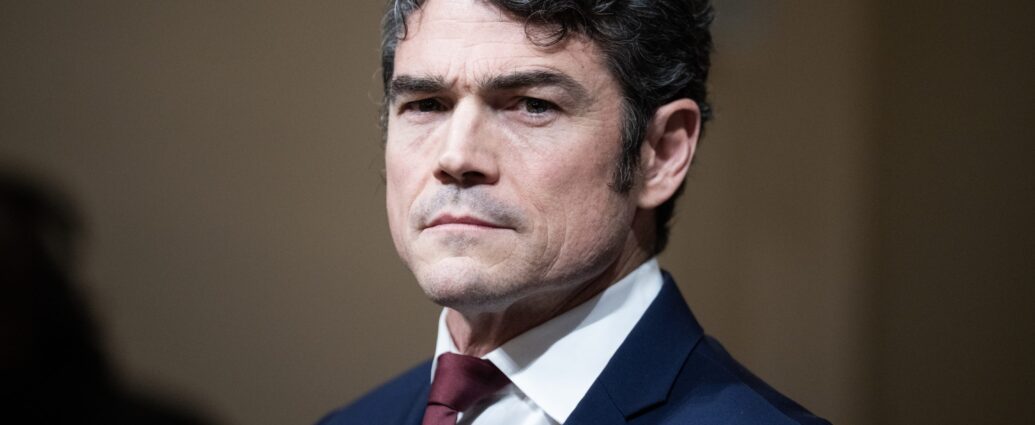
He’s a 45-year-old former Army Special Forces officer. He’s a former politician with ties to far-right conspiracies. He’s also out of a job.
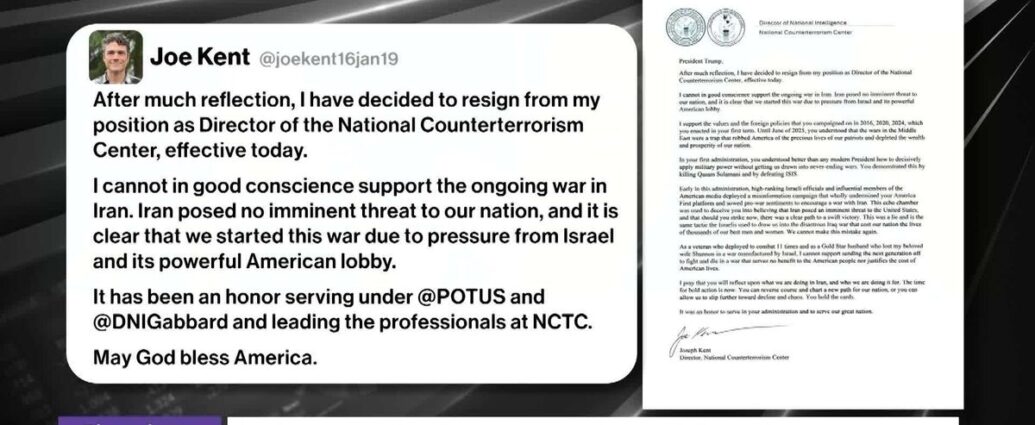
Meet Joe Kent, who up until this morning, was serving as the director of the National Counterterrorism Center. In a now-viral post on X, Kent officially resigned from his role due to a disagreement with how President Donald Trump was handling the U.S. and Israel war with Iran—saying the country should have never been involved in the first place.
Iran “posed no imminent threat to our nation,” he said, adding the war was launched “due to pressure from Israel and its powerful American lobby.”
Kent’s departure from one of the country’s most sensitive intelligence posts marked a dramatic break from a man long considered among Trump’s most committed loyalists.
Kent enlisted in the U.S. Army at age 17, completed Airborne School and the Ranger Indoctrination Program, and earned his Green Beret as a Special Forces Weapons Sergeant in 2003 after arriving at the qualification course just days after the 9/11 attacks. Over 20 years, he rose through the ranks to become a Warrant Officer and was selected for a Special Missions Unit—an elite tier-one designation comparable to Delta Force—deploying across Iraq and Yemen.
He deployed on 11 combat missions primarily in Iraq before retiring in 2018 with six Bronze Stars. He then became a paramilitary officer with the CIA and later served as a counterterrorism advisor to Trump’s 2020 reelection campaign. After leaving the government, he became a fixture on conservative cable shows and podcasts and ran twice for Congress, in 2022 and 2024. He ran in Washington’s 3rd Congressional District and lost both times to Democrat Marie Gluesenkamp Perez.
His political career was defined as much by his extremist associations as his military record. During his 2022 campaign, a political consultant arranged a call that included Nick Fuentes—a white nationalist who participated in the 2017 “Unite the Right” rally in Charlottesville; praised Hitler; and even said Jews hold the U.S. “hostage.” Fuentes later claimed in a livestream he told Kent “I love what you’re doing” and his network actively boosted Kent’s social media following. Kent denied any formal agreement and claimed he was barely aware of who Fuentes was, saying at the time: “The last, whatever, 24, 48 hours is really the biggest, deep-dive I’ve done on him.” He said this despite his chief consultant, Matt Braynard, having attended Fuentes’ America First Political Action Conference that same year. Kent also paid a Proud Boys member for consulting work and collaborated with the founder of the Christian nationalist group Patriot Prayer.
Beyond his associations, Kent spread rhetoric the DCCC described as adjacent to the “Great Replacement Theory,” backing calls to halt all legal immigration for 20 years. He called for a national abortion ban with no exceptions for rape, incest, or the life of the woman, and compared abortion access to slavery and segregation. He also described COVID-19 as a China-designed “vehicle” to suppress freedoms. While he later said he rejected all “racism and bigotry,” he declined during Senate confirmation hearings to distance himself from his 2020 election denialism.
Kent’s foreign policy worldview is shaped by personal tragedy. His first wife, Navy cryptologist Shannon Smith, was killed by a suicide bomber in Syria in 2019 while aiding in the U.S. fight against ISIS, with her death hardening his skepticism of U.S. foreign intervention. During the chaotic U.S. withdrawal from Afghanistan in 2021, he tore into the defense industry and Washington’s “permanent ruling class,” arguing the wars had been prolonged “on the backs and dead bodies of U.S. soldiers” by people “making money and making their careers at the other end of it.”.
In February 2025, Trump nominated him to lead the National Counterterrorism Center, praising him as someone who would help “eradicate all terrorism, from the jihadists around the World, to the cartels in our backyard.” He was confirmed in July on a 52-44 vote that split almost entirely along party lines.
That anti-interventionist conviction ultimately ended his tenure in the Trump administration. In his resignation letter, he accused “high-ranking Israeli officials and influential members of the American media” of running a “misinformation campaign” to push the U.S. into conflict, language critics noted drew on antisemitic tropes about Jewish Americans’ political influence.
It was a striking end for someone Senate Democrats had unanimously opposed at confirmation—every Democrat citing his right-wing ties—and who even one Republican, Sen. Thom Tillis of North Carolina, had voted against.
For this story, Fortune used generative AI to help with an initial draft. An editor verified the accuracy of the information before publishing.
This story was originally featured on Fortune.com
This post was originally published here

Palantir Technologies (NYSE:PLTR) shares are up on Tuesday as the company is partnering with the U.S. Navy on the ShipOS initiative, which aims to enhance the efficiency of the Navy’s shipbuilding processes.
• Palantir Technologies shares are advancing steadily. What’s pushing PLTR stock higher?
This move comes as broader markets are experiencing gains, with the S&P 500 up 0.3% and the Technology sector gaining 0.5%.
The stock is also getting traction from Wedbush’s outperform rating, which remains anchored by Palantir’s strategic partnership with Nvidia and a bullish $230 price forecast. Wedbush analysts highlight the company’s AIPCon event as a major catalyst, noting that U.S. enterprises are rapidly adopting Palantir’s Artificial Intelligence Platform to solve complex operational challenges at scale.
As part of the collaboration, Palantir will integrate its Foundry and Artificial Intelligence Platform into Keel’s operations, focusing on improving schedule efficiency and accelerating shipbuilding timelines.
The initiative is backed by up to $448 million in authorized funding, which will be deployed across the Navy’s shipbuilders and over 100 suppliers.
In this partnership, Keel aims to enhance production workflows and establish a unified data foundation to improve decision-making across its organization. This integration is expected to …
This post was originally published here
Prime minister Jonas Gahr Støre says files show links between those in ‘trusted and central positions’ and late sex offender
The Norwegian parliament has voted unanimously to appoint an independent investigative commission to look into connections between its foreign office and the late sex offender Jeffrey Epstein.
Speaking before the vote on Tuesday, the prime minister, Jonas Gahr Støre, paid tribute to Epstein’s victims and said that the files released by the US Department of Justice had clearly shown “it is possible to buy and abuse influence if you are rich enough”.
This post was originally published here

This post was originally published here
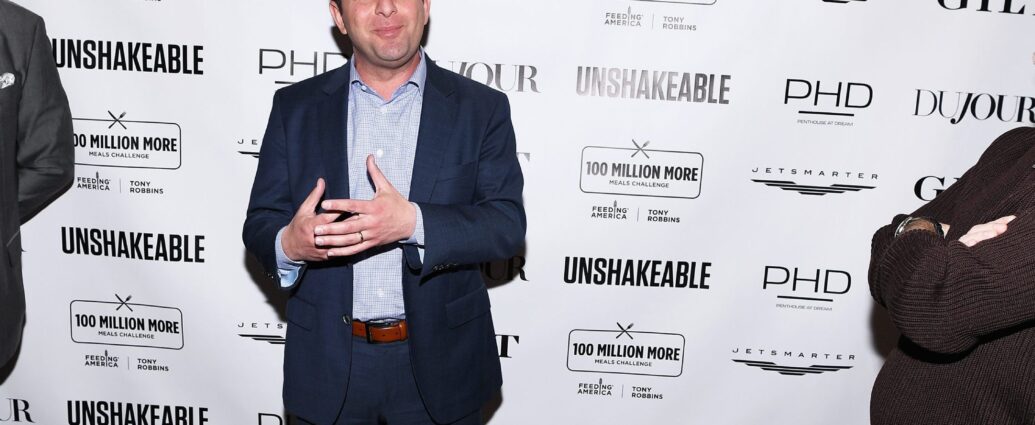
The U.S. wealth gap has grown so wide, even America’s billionaires can’t help but notice.
In the third quarter of 2025, the top 1% of U.S. households owned a whopping 31.7% of U.S. wealth, according to Federal Reserve data released in January. It’s more or less as much as what the bottom 90% of Americans hold, the widest the gap has been since the Fed started collecting data in 1989. And although headline figures are relatively strong, the U.S. economy doesn’t feel like it’s working for everyone, according to one person who has been treated very well by it.
“This is 100% completely unsustainable as a society,” Peter Mallouk, the CEO of Creative Planning, a wealth management firm overseeing around $700 billion in assets, wrote on X Monday.
The gap has manifested in everything from asset ownership to how different households spend money, with real repercussions for the economy and even national politics. Mallouk even posted a graph from a December Financial Times article about the country’s widening wealth gap and growing evidence of a K-shaped economy, where households that own assets see their net worth rise while the majority of Americans are unable to build wealth.
The graph, based on a Moody’s analysis from September, showed that the wealthiest 10% of Americans account for almost half of all consumer spending, a departure from 20 years ago, when spending was more evenly distributed across income groups.
“Nearly 50% of all consumer spending now comes from the top 10% of earners,” Mallouk wrote. “The bottom 80%? Their share keeps falling.”
Mallouk’s post underscores the growing risk of America’s K-shaped reality. Wealth concentration at the top has accelerated since the pandemic, driven by booming stock markets and uneven wage growth favoring high earners.
Pay for high and middle-income earners rose 3% last year, compared to 1.5% for low-income households, according to a January report from Bank of America, a reversal from the early pandemic recovery days when low-income households posted much faster wage growth than wealthier peers. Today, most middle and lower-income households are struggling to build enough wealth to stay afloat, unable to muscle their way into homeownership and concerned about their ability to buy basic necessities.
Mallouk isn’t the only wealthy voice sounding the alarm. Last year, Ray Dalio, the billionaire Bridgewater Associates founder, said the widening wealth gap in the U.S. and other rich nations was causing populism to rise and risked creating “irreconcilable differences” in society that democratic order would not be equipped to handle. Some ultrawealthy, like Salesforce CEO Marc Benioff, have also pushed for higher corporate taxes to fund education and housing.
This growing inequality is in spite of a relatively positive state of the U.S. economy, at least according to topline numbers. In addition to a strong stock market, unemployment and GDP growth were both relative success stories last year by historical standards, although the economy might have entered a slowdown toward the end of 2025. Last month, Moody’s chief economist Mark Zandi warned markets and the real economy had become “increasingly disconnected.”
“This is why the economy can look strong in the data while millions of people feel like they’re falling behind,” Mallouk wrote.
This story was originally featured on Fortune.com
This post was originally published here
(RTTNews) – Gold prices have edged higher on Tuesday as investors held back big moves with the Middle East burning.
This post was originally published here
Chancellor says Brexit may have cost 8% of UK GDP in wide-ranging Mais lecture at Bayes Business School in London which also called for AI push
The number of people in England and Wales falling into insolvency has jumped.
There were 11,609 individual insolvencies registered in England and Wales in February, the Insolvency Service has reported this morning. This was 18% higher than in February 2025 and 6% higher than in January 2026.
The individual insolvencies consisted of 768 bankruptcies, 4,210 debt relief orders (DROs) and 6,631 individual voluntary arrangements (IVAs). The number of DROs in February 2026 was a record high in the monthly time series going back to their introduction in 2009, exceeding the previous high of 4,185 in August 2025.
The number of IVAs was higher than both January 2026 and the 2025 monthly average. Bankruptcies were 25% higher than in February 2025, although numbers were affected by the clearing of a backlog following the Insolvency Service moving to a new case management system.
Average 2-year fix has risen from 4.83% at the start of March to 5.28% today. It’s highest since April 2025.
Average 5-year fix has risen from 4.95% at the start of March to 5.32% today. It’s highest since February 2025.
“War in the Middle East has added almost £800 to a typical annual mortgage bill in just two weeks, which will be unwelcome news for anyone currently seeking a fixed rate deal.
“The average two-year fixed rate has jumped from 4.83% at the start of March to 5.28% today – its highest level since April 2025. The average five-year fix has risen from 4.95% to 5.32%, now at its highest since February 2025. For a borrower with a £250,000 mortgage over 25 years, that equates to paying £788 more per year on a two-year fix, or £651 more on a five-year deal compared to just a fortnight ago.
This post was originally published here
Nissan will export the Murano SUV built in Smyrna, Tennessee beginning early next year. It marks the first American-made Nissan sold in Japan since the 1990s.
This post was originally published here
Kalshi calls Arizona’s case ‘paper-thin’ and says the platform should not be overseen by ‘inconsistent state laws’
Arizona’s attorney general on Tuesday filed criminal charges against Kalshi, accusing the prediction markets platform of operating an illegal gambling business in the state and unlawfully allowing people to place bets on elections.
The charges filed by Kris Mayes, the Arizona attorney general, marked the first time a state has pursued a criminal case against Kalshi, which has been at the center of an escalating battle over the ability of state gaming regulators to police prediction markets operators.
This post was originally published here

This post was originally published here


This post was originally published here

New Era Energy & Digital Inc (NASDAQ:NUAI) shares are trading higher on Tuesday. The surge follows a series of strategic corporate updates and a key leadership addition.
• New Era Energy & Digital stock is charging ahead with explosive momentum. What’s fueling NUAI momentum?
The primary catalyst for Tuesday’s price action is the appointment of Ted Warner as the company’s new chief financial officer, effective Monday. Warner joins the developer of next-generation digital infrastructure with nearly 20 years of experience. He most recently led the Energy, Power and Digital Infrastructure practice at Northland Capital Markets.
“Ted brings deep capital markets expertise and a strong track record structuring financing solutions for large-scale …
This post was originally published here
This post was originally published here
Here are some of the stocks making big headlines in midday trading.
This post was originally published here
Cutting period of protection from five years to 30 months is a risk to social cohesion, say bishops, rabbis and imam
Religious leaders have said that plans to rip up the UK’s asylum rules by ending the right to permanent refugee status would damage integration and should be rethought.
A group, which includes seven bishops, three rabbis and an imam, said they had “grave concerns” about Shabana Mahmood’s proposed changes to settlement and citizenship rules.
This post was originally published here
New details about Nvidia’s partnership with Uber strengthen the bullish case for the ride-sharing stock, the analysts said.
This post was originally published here

Just a few short years ago, AI was a novel concept generating uncanny, sloppy photos and videos that appeared across your social media feeds. Today, it’s seemingly ubiquitous. New models are popping up almost every month. There’s AI integration in pockets of Hollywood. And even if it’s so far failing to boost your productivity at the office, AI has most likely already appeared in your workplace. That sprawling expansion requires enormous infrastructure investment. And Nvidia CEO Jensen Huang said his company is expecting to deliver those building blocks at a massive scale.
During his keynote address Monday at Nvidia’s GTC conference in San Jose, Huang said the company doubled its demand forecast within the next year. “I see through 2027 at least $1 trillion,” he said. “In fact, we are going to be short. I am certain computing demand will be much higher than that.”
And he’s already preparing for that reality with an unusual incentive to attract top talent and wring more computing power from his workforce: offering engineers AI tokens worth nearly half their salary.
The AI boom is pushing infrastructure investments to new heights. Tech companies are investing a staggering $700 billion into the data center buildout, a sum that rivals the GDP of developed economies like Sweden, and is more than double the total inflation-adjusted cost of the Apollo missions—projects that sent humans to the moon. Nvidia is a critical supplier in that buildout, providing the processors that power AI factories. The $1 trillion demand figure is further proof that the buildout is all gas, no brakes, even as competitors like Advanced Micro Devices (AMD) struggle to close the gap. All of this comes despite looming fears of an AI bubble, as flagged by business leaders like Microsoft CEO Satya Nadella and “Big Short” investor Michael Burry.
Huang made the prediction alongside claims that AI agents could soon run the world, as well as announcements around space-based computing designed to launch AI into orbit, a concept Elon Musk has spotlighted as a potential solution to the energy demands of expanding data centers.
“We are completely resetting and starting the largest buildout of human history,” Huang said. “Most of the world’s industries building AI factories, building chip plants, building computer plants are represented here today.”
The company’s recent earnings reports have added credibility to Huang’s claims. Last month, Nvidia posted $215.9 billion in revenue for fiscal 2026, up 65% from a year ago, the highest annual result ever. Data center revenue alone rose 75% from a year ago, reaching $62.3 billion.
AI tokens: the future of pay?
As business leaders aim to harness AI to boost worker productivity, Huang offered a glimpse at how Nvidia plans to operationalize that ambition: paying engineers in tokens—the currency of AI—to amplify their output.
“I could totally imagine in the future every single engineer in our company will need an annual token budget,” he said. “They’re going to make a few 100,000 a year as their base pay. I’m going to give them probably half of that on top of it as tokens so that they could be amplified 10 times.”
Tokens are the basic units of data or words that AI models use to process language and recognize patterns, making them critical to the future of AI deployment. AI company OpenAI estimates that one token is equal to approximately four characters, with a single one-to-two sentence prompt requiring about 30 tokens. “Fortune Magazine,” for example, may be broken down into five tokens: “For” “tune” “Mag” “az” “ine.”
At the allowance levels Huang described, engineers would have access to billions of tokens annually, unleashing a torrent of compute power. In Huang’s scenario, tokens would be an added employment perk for engineers at his firm, arming them with the power needed to conduct deep research for the company.
The Nvidia CEO said other tech firms will quickly follow suit and use tokens as a recruiting tool to attract top industry talent.
“It is now one of the recruiting tools in Silicon Valley: how many tokens come along with my job,” he said. “The reason for that is very clear because every engineer that has access to tokens will be more productive.”
This story was originally featured on Fortune.com
This post was originally published here
This post was originally published here

This post was originally published here
Trump, a longtime NATO critic, said he sees the alliance as a “one way street — We will protect them, but they will do nothing for us.”
This post was originally published here

Hello and welcome to Eye on AI. In this edition…Nvidia sees $1 trillion in AI chip sales by the end of 2027…Meta delays the debut of its latest AI model (again)…Moonshot AI develops a new architecture for large neural networks…and why we may soon be worrying about ‘moral crumple zones.’
Since the advent of ChatGPT in November 2022, one of the professions that people often claim is now toast is consulting. After all, what is it that consultants do? They advise companies on strategy; they help them restructure their businesses to create new organizational designs and processes, often with the help of technology from third-party vendors; and they act as providers of outsourced services, or at least conduits to outsourced services, such as customer support or software development. Well, a frontier AI model can offer strategic advice. It can also advise on how to restructure an organization and about which software to buy. AI agents can actually help stitch some of those systems together too. Finally, AI agents can also now handle coding and customer support. So it’s lights out for consultants, right?
Well, it hasn’t turned out that way so far. AI companies have discovered that they need consultants, or “systems integrators” as they are sometimes called in the software world, to help them sell their AI agents, as a story in last week’s Wall Street Journal highlighted. The reason is that using AI agents effectively often requires quite a lot of organizational transformation—cleaning up data, redesigning workflows, and thinking about how to redeploy human workers—as well as strategic thinking about how AI might be used to provide a real competitive advantage.
The AI model vendors have found they don’t have the resources to provide this kind of advice at scale—OpenAI only has about 70 so-called “forward deployed engineers” who go on site with customers to help them implement solutions based on their AI models; Anthropic is thought to have a similar number. And while it is possible that AI itself could serve this function, AI still suffers from a trust deficit—most boards would still rather put their faith in advice from McKinsey or BCG than ChatGPT. (A more cynical take: CEOs still like to use consultants to justify their own decisions to boards, as well as to have someone else to blame if it all goes wrong.)
OpenAI has formed what it calls its Frontier Alliance with McKinsey, Boston Consulting Group, Capgemini, and Accenture to help clients use its Frontier platform for building and managing AI agents. (You can read my coverage of that announcement here.) Anthropic has struck similar deals with Deloitte, Accenture, and Cognizant and is reportedly in talks with private equity groups, such as Blackstone, to implement Claude-based solutions in their portfolio companies.
I recently caught up with Capgemini’s Chief Strategy Officer Fernando Alvarez to talk about how his firm is viewing the future of consulting in an AI world.
First, Alvarez says that while every client wants to use AI agents, they also recognize the need to govern those agents, make sure there is adequate cybersecurity around them, and ensure they can interact with legacy systems and fragmented data sources. Advising clients on all of that stuff and often helping them build it has been Capgemini’s bread and butter. He says clients still want Capgemini to provide these services. They aren’t ready to hand it off to AI.
The other big selling point for the consulting firms, Alvarez says, is deep industry and domain expertise. The frontier AI labs don’t have the expertise in how to optimize a pharmaceutical manufacturing plant or the best way to run logistics for a fast-fashion retailer. Consulting firms do. And that makes a difference when trying to use AI agent successfully. Alvarez says the conversations clients want to have are not about how many agents you can spin up or how you orchestrate them. “The conversation is, do you have the domain expertise to understand my problem?” he says.
That doesn’t mean that Capgemini itself isn’t using AI to help serve clients. Alvarez says the big shift that Capgemini, as well as some competitors such as Accenture, are trying to make is to move from selling technology and advice, to selling outcomes. In this model, the consulting firm takes on the risk of trying to figure out how to deliver, say, better customer support, whether that is through business process outsourcing to humans in lower wage countries, such as the Philippines or India, or through AI agents.
“At the end, people want the cake,” he says—not a tour of the ingredients or the recipe. The new pitch boils down to a simple proposition: “Here is the problem. Here is the risk I’m willing to take, and this is the outcome I give you.” The client pays for the outcome: improved KPIs like successful customer issue resolutions and improved net promoter scores. The difference too is that the consultants in this model charge for the outcome, not by the number of people deployed on a project as some consultants have traditionally billed.
Alvarez says that AI is also enabling Capgemini and other consulting firms to move into market segments, such as midmarket companies, that it couldn’t service previously because the economics didn’t make sense. The engagements often required more staff and cost than the client was willing to pay for. But now AI has lowered those staffing and cost requirements, meaning that Capgemini can offer a solution at a price point that is attractive to midmarket companies while maintaining a decent enough profit margin.
Perhaps the biggest challenge for consulting firms, though, is retraining their own people to work alongside AI agents. “Some people will make it, some people will not,” Alvarez says.
For all the disruption, Alvarez is unmistakably energized. He calls this moment “probably the best opportunity I’ve seen in the history of technology.” The question now is whether Capgemini and other consultants can rewire themselves as fast as the technology demands—which is, of course, exactly what they are advising their clients to do.
With that, here’s more AI news.
Jeremy Kahn
jeremy.kahn@fortune.com
@jeremyakahn
This story was originally featured on Fortune.com
This post was originally published here
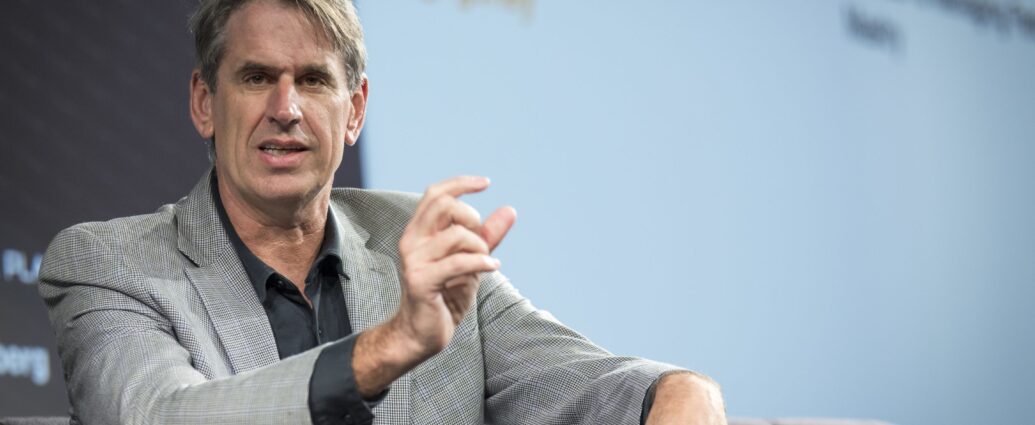
The AI boom helped make the world’s 500 wealthiest people $2.2 trillion richer in 2025. To Bill Gurley, one of Silicon Valley’s sage investors and a general partner at Benchmark, those astronomical gains in wealth are a sign of an inflating AI bubble that is bound to pop.
The AI boom is following the pattern of other eras of technological growth, in which early gains for some tech firms have sparked a wave of spending that will ultimately be unsustainable for dozens of companies, Gurley said in an CNBC interview on Monday. Companies will soon have to curtail their spending and revise their valuations, or otherwise risk failing.
“When people get rich quick, a whole bunch of people come in and want to get rich too, and that’s why we end up with bubbles,” Gurley said. “One day we’re going to have an AI reset, because waves create bubbles, because interlopers come in.”
The venture capitalist added that investors should “start gobbling [software-as-a-service stocks] up” following the reset. The sector has been hit particularly hard by AI disruptions as a result of AI agents being able to automate workflows more cheaply than existing SaaS tools. Salesforce and ServiceNow stocks have lost more than 20% of their respective value since the start of 2026.
Gurley said the exorbitant amounts of money being spent on AI are a warning sign for a potential bubble burst.
“One day, I just think we trip and run out of money on those things,” he said. “I do think that moment stands in front of us.”
This wave of AI spending is set to exceed the capital expenditure-to-sales ratio from the dot-com era as a result of hyperscalers pouring money into data centers used to train and deploy vast large language models and other AI systems, according to Morgan Stanley analyst Todd Castagno. In a note to clients last month, Castagno said capex-to-sales will reach 34% this year and 37% in 2028, dwarfing the 32% recording near the turn of the century. That spending, about $2 trillion between 2026 and 2028, would represent 40% of the Russell 1000.
Hyperscalers may push this ratio even higher, to 38% this year and 45% by 2028, if they continue to finance data centers with leases, the note said. Indeed. Amazon, Meta, Alphabet, Microsoft, and Oracle amassed nearly $1 trillion in total undisclosed future lease commitments, or leases for data centers that have yet to be built, according to a February report from Moody’s Ratings. About $662 billion of that total is for leases that have yet to commence, which companies are not required to recognize as liabilities on their balance sheets under generally accepted accounting principles.
These infrastructure buildouts are often in partnership with startups like OpenAI and Anthropic, which have fuelled these ambitious data center investments. Last month HSBC estimated OpenAI would need an additional $207 billion in funding by 2030 in order to afford its cloud computer rental from Microsoft and Amazon. Analysts estimated $280 billion in total cash burn by 2030. Anthropic’s CFO said in a recent court filing the company spent more than $10 billion training models that generated half that total in cumulative revenue.
Gurley compared those figures with Uber’s annual burn rate of $2 billion when he was involved in the company—a sum he said gave him “high anxiety.” (Benchmark was an early investor in Uber, and Gurley served on the company’s board of directors at the time of ex-CEO Travis Kalanick’s 2017 ousting.)
“God bless them,” Gurley said of OpenAI and Anthropic. “It’s a scary way to run a company.”
AI companies’ astronomical spending has been accompanied with bold claims about the future of the labor market, with ServiceNow CEO Bill McDermott anticipating an eventual 30% unemployment rate for Gen Z college graduates as a result of the technology
Tech companies have already attributed mass layoffs to AI, including Oracle, which is reportedly reducing thousands of roles, touting efficiencies of its AI tools. Meta will lay off about 20% of its workforce following heavy AI spending, according to a Reuters report. Gurley said these claims and attributing mass layoffs to AI productivity is overdone.
“I’m not that big of a doomer, he said. “I think these waves come, and especially with AI, there have been a lot of people pumping kind of miracles into it … .They get this kind of apocalyptic view. We’ve had technology disruption before.”
Gurley noted CEOs announcing layoffs are going to blame AI, rather than take responsibility for “being bloated” or making tactical missteps. Analysts say companies like Oracle are slashing headcounts as a way to conserve cash following massive waves of investment. To Gurley, these cuts will become the new normal.
“We’re going to see a ton of these announcements,” he said. “But it’s a normal thing that we’ve been through before.”
This story was originally featured on Fortune.com
This post was originally published here

This post was originally published here

This post was originally published here


This post was originally published here
President Donald Trump has been pushing Congress to approve the SAVE America Act to require ID at the polls and proof of U.S. citizenship to register to vote.
This post was originally published here

This post was originally published here


This post was originally published here

In eastern Ukraine, white nylon nets now stretch over roads and city streets, a low-tech defense against deadly FPV drones that dominate the battlefield and threaten civilians near the front line.
(Image credit: Anton Shtuka for NPR)

This post was originally published here
The final instalment in Denis Villeneuve’s sci-fi trilogy brings back Timothée Chalamet, Zendaya and Florence Pugh and introduces a nasty new villain
Timothée Chalamet may have finally escaped Oscar season, but not movie promotion – the first look at Dune: Part Three is here.
The first trailer released for the final installment in Denis Villeneuve’s sci-fi trilogy sees further war and political upheaval in the galaxy beyond Arrakis – plus a possible future child for Chalamet’s Paul Atreides and Chani, the Fremen warrior played by Zendaya. “If we have a girl, what should be name her?” Chani asks, suggesting the two have reconciled since the end of Part Two.
This post was originally published here
This post was originally published here

Clad in his trademark leather jacket, Nvidia CEO Jensen Huang took the stage yesterday at San Jose’s SAP Center before nearly 20,000 people at the company’s annual GTC conference, known in recent years as the Super Bowl of AI.
Once again, Huang essentially declared a blowout, forecasting a staggering $1 trillion in orders for Nvidia’s most sophisticated AI chips through 2027, driven by the explosion of AI infrastructure now being built around the world.
Yet for someone whose company has become the world’s most valuable—with a roughly $4 trillion market cap—by powering the global AI buildout, Huang has somehow avoided the kind of public criticism that has been leveled at other prominent AI CEOs.
It takes only a cursory glance at social media to find posts calling OpenAI CEO Sam Altman “evil,” while companies like Anthropic, Meta, and Google increasingly face criticism over AI’s risks—from job losses and copyright lawsuits to misinformation and the growing push to deploy AI in military systems.
Nvidia’s CEO, by contrast, remains largely celebrated as the engineer-builder behind the boom. That’s been true even though the massive AI data centers now rising across the country and generating a good deal of local opposition are packed with Nvidia chips.
In fact, every major move in AI—from chatbots and agents to applications in the workplace, schools, and the military—runs on Nvidia hardware, software, and systems. Nvidia has also invested billions to support the AI ecosystem, partnering with both OpenAI and Anthropic, as well as funding data center companies and AI startups.
So why isn’t Huang—and Nvidia as a whole—a target of the AI backlash?
The answer is that the companies supplying the “picks and shovels” of technological booms rarely attract the same scrutiny as the miners. Oil companies drew criticism during the fossil fuel era, not the manufacturers of drilling equipment. Railroad barons faced public backlash, not the companies supplying steel rails. And in the internet era, cloud providers like Amazon Web Services powered companies such as Airbnb and Uber that reshaped entire industries—yet the criticism largely focused on the platforms, not the infrastructure behind them.
Still, Nvidia made it clear at GTC that it is positioning itself not just as a chipmaker but as the provider of entire AI computing systems powering the new “inference” phase of AI. (Inference is about powering AI outputs, not just training, and it will require an enormous new round of infrastructure investment.) That ambition goes beyond Nvidia’s traditional “picks and shovels” role. These days, Nvidia is increasingly trying to control the entire swath of systems, software and platforms that power the AI economy.
The centerpiece of Huang’s keynote was the launch of the company’s Vera Rubin platform, which combines multiple chips and system components designed to run large AI models and “agentic AI” systems. The platform includes seven new chips and several rack-scale systems intended to power extremely large AI clusters containing hundreds of thousands of GPUs.
Nvidia also introduced NemoClaw, an open-source platform for building enterprise AI agents, allowing companies to create agents, connect them to corporate data, and deploy them on Nvidia hardware.
At the same time, Nvidia is continuing to invest aggressively across the AI ecosystem. The company has poured billions into dozens of AI startups over the past year. Most recently it invested $2 billion in AI cloud company Nebius and is backing former OpenAI CTO Mira Murati’s new venture, Thinking Machines, with plans for more than 1 gigawatt of Nvidia-powered compute capacity.
The company is also continuing its push into autonomous vehicles, where Nvidia chips and software platforms are increasingly being adopted by carmakers building self-driving systems.
Finally, Huang used GTC to promote what he called AI’s “five-layer cake.” The AI economy, he argued, depends on five layers—energy, chips, infrastructure, models, and applications—all of which must scale together to support the massive buildout now underway. Nvidia, not coincidentally, sits squarely in the middle of that stack—connecting most of those layers together.
For now, Nvidia still benefits from the traditional insulation of a picks-and-shovels supplier. But as the sprawling AI data centers rising across the country fill with Nvidia hardware—and as the company pushes deeper into the systems powering them—the company may find itself far more exposed to the debate over AI’s consequences.
This story was originally featured on Fortune.com
This post was originally published here
This post was originally published here


This post was originally published here


A new analysis represents the largest effort yet to systematically parse all the data from high-quality clinical trials on cannabis and mental health. The evidence is lacking.
(Image credit: Justin Sullivan)

This post was originally published here