

‘This is the way’: Elon Musk endorses Warren Buffett’s famed 5-minute plan to fix the national debt
The national debt is set to reach $40 trillion in the near future if it continues to grow at its current pace. That has caught the attention of the richest man in the world.
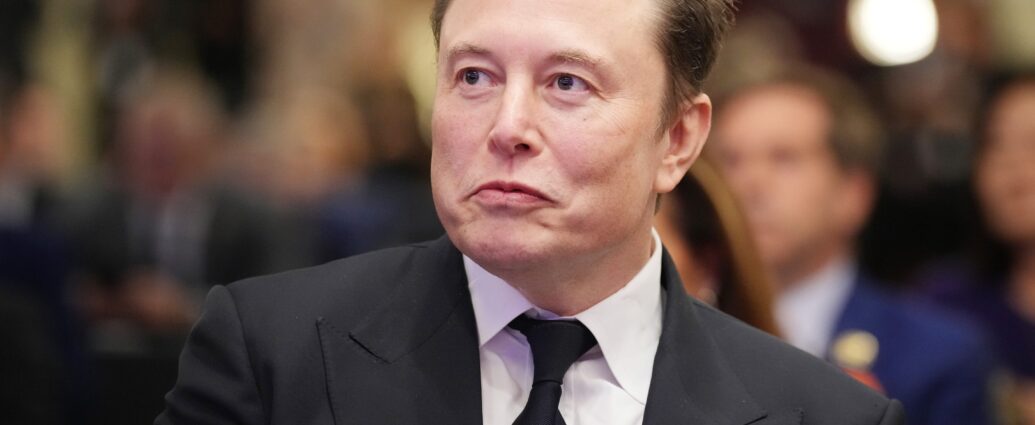
Elon Musk has joined the likes of Bridgewater founder Ray Dalio and Treasury Secretary Scott Bessent in supporting a solution to lowering the national debt, made famous by former Berkshire Hathaway CEO Warren Buffett.
“I can end the deficit in five minutes,” Buffet said in a 2011 interview with CNBC. “You just pass a law that says that anytime there’s a deficit of more than 3% of the GDP, all sitting members of Congress are ineligible for reelection. Now, you’ve got the incentives in the right place.”
The plan received Musk’s full endorsement. “This is the way,” he wrote in June, sharing the interview in a post on X.
Last year, the national debt ballooned by $2.6 trillion, and currently stands at $38.9 trillion, or 124% of the economy, according to the U.S. Treasury.
Buffett is far from the only one sounding the alarm on the national debt.
Recently, the nonpartisan think tank Committee for a Responsible Federal Budget (CRFB) warned the average interest rate on the national debt could exceed economic growth by fiscal year 2031.
“Once interest rates exceed the growth rate…primary deficits will lead debt to grow indefinitely,” the CRFB warned in a blog post on March 9. The committee also endorses the 3% of GDP target.
While members of Congress haven’t warmed to the idea of being replaced over the national debt, a bipartisan group of representatives in January introduced a resolution to lower the deficit to 3% of GDP.
What Warren Buffett’s 5‑minute plan to cap the deficit at 3% of GDP would actually do
In 2024, under the Biden administration, Buffett predicted higher taxes were coming for businesses.
“They may decide that someday they don’t want the fiscal deficit to be this large, because that has some important consequences. And they may not want to decrease spending a lot, and they may decide they’ll take a larger percentage of what we earn, and we’ll pay it,” he said at Berkshire Hathaway shareholders meeting in May 2024.
At that point, the national debt was more than $34 trillion, or 122% of GDP. Buffett has rebuffed companies that search for the smallest loopholes to reduce their tax burden. Since the first Trump administration, corporations have paid a maximum tax rate of 21%, compared to 35% previously. This tax rate was not changed the Biden administration.
“My best speculation is that U.S. debt will be acceptable for a very long time, because there is not much alternative,” Buffett said.
This story was originally featured on Fortune.com
This post was originally published here


Top US counterterrorism official resigns over war against Iran
This post was originally published here
Florida Republican student group sues university after suspension over Nazi salute post
The University of Florida campus group says the suspension over an off-campus post violated free speech
A dispute among student Republican groups in Florida over alleged antisemitic behavior is heading for a courtroom after a chapter at the state’s flagship university was suspended for an online post featuring two people giving Nazi salutes.
On Saturday, University of Florida (UF) blocked campus operations of the school’s College Republicans after the group’s state leadership said it had disbanded the chapter for engaging in “a pattern of conduct that violated its rules and values, including a recent antisemitic gesture”.
This post was originally published here

Opinion | Iran and the Escalation Trap



Tech, Media & Telecom Roundup: Market Talk

Even a $1 trillion forecast can’t break Nvidia out of a 2026 funk. A theory on what’s wrong with stock
There’s a theory that Nvidia may have crossed a threshold where traditional equity dynamics no longer apply.
This post was originally published here


Transit agency sues Trump over frozen funds for New York subway project
The Manhattan subway project is designed to shorten commutes for more than 100,000 daily riders, while adding three new subway stations.
This post was originally published here



Analyst Favorites: MP Materials Ranks As a Top Metals Pick
A study of analyst recommendations at the major brokerages shows that MP Materials Corp (Symbol: MP) is the #16 broker analyst pick, on average, out of the 50 stocks making up the Metals Channel Global Mining Titans Index, according to Metals Channel. The Metals Channel Global
This post was originally published here




















MI5 apologises and pays compensation to woman allegedly abused by agent
Woman known only as Beth says abuser claimed status made him untouchable, which terrorised her into silence
MI5 has apologised and paid compensation to a woman who alleged the Security Service was to blame for her being attacked with a machete and abused by one of its agents.
The woman, known only as Beth, was in a relationship with a man she says used his status as an MI5 agent to perpetrate abuse and terrorise her into silence.
This post was originally published here




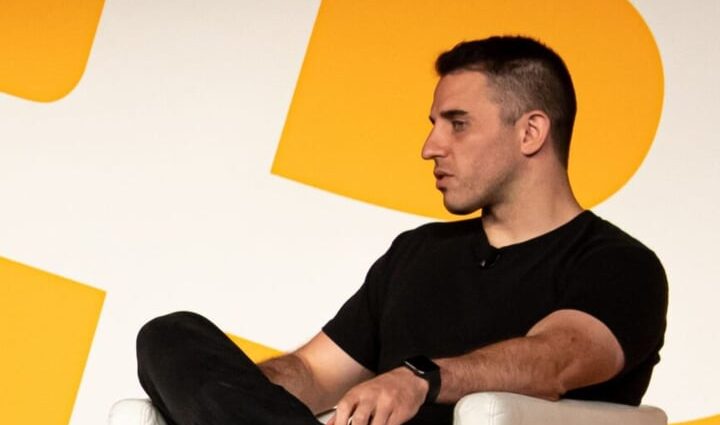
Anthony Pompliano: Bitcoin’s Strong Because It’s Proving Itself As A ‘Borderless Asset’
Bitcoin (CRYPTO: BTC) is beginning to stand out as a true “borderless asset” as geopolitical tensions rise, according to Professional Capital Management CEO Anthony Pompliano.
Bitcoin Diverges As Chaos Hedge
Pompliano highlighted in his weekly podcast update that Bitcoin and oil are the two assets currently showing strength.
While oil’s rally is driven by supply disruptions, Bitcoin’s move is more notable, rising roughly 10% since the first signs of escalation, even as traditional markets struggle.
He offered two interpretations for Bitcoin’s resilience:
- Chaos hedge thesis: Bitcoin is behaving as expected, acting as a hedge during global instability
- Retail-driven rally: …






CBS News workers hold 24-hour walkout for new contract
Writers Guild of America East says management failed to offer fair wages and basic job protections
Workers at CBS News walked out for 24 hours on Tuesday after a new contract agreement was not reached following the expiration of the contract last week.
About 60 workers at the streaming service CBS News 24/7 are represented by the Writers Guild of America East. The union is holding rallies and walkouts at the CBS News broadcast center in Manhattan, New York, and at KPIX-TV CBS News Bay Area in San Francisco, California.
This post was originally published here













Miami overtakes Los Angeles and New York as world’s riskiest housing market for bubble risk
Miami has officially been crowned the most at-risk housing market in the world, surpassing notoriously expensive hubs like Los Angeles and New York.
While Florida’s tax-friendly climate continues to lure billionaires fleeing high-tax states like California, local homeowners are facing a perfect storm of record-low affordability, massive condo repair bills and surging insurance premiums, according to a new report.
UBS’ Global Real Estate Bubble Index for 2025 puts Miami in the No. 1 spot for the real estate market with the highest bubble risk, with a score of 1.73, well above the 1.5 threshold for “high risk.” That figure exceeds the peak of the 2006 housing bubble.
“Over the past 15 years, Miami has posted the strongest inflation-adjusted housing appreciation among all cities in the study,” the report says.
MARK ZUCKERBERG AND SERGEY BRIN CLOSE ON MASSIVE MIAMI ESTATES WORTH OVER $220M COMBINED
“Cities with elevated or high bubble risk continued to decouple from fundamentals: over the last five years, inflation-adjusted home prices increased nearly 25% on average, while rents rose about 10% and incomes about 5%,” it continues.
“By contrast, prices in cities with moderate or low risk fell roughly 5%, while rents and incomes were broadly flat. Historically, worsening affordability and widening gaps between prices and rents have served as forerunners of housing crises.”
Although Florida remains attractive for its zero-income tax and a potential zero-property tax, the report notes a regulatory squeeze is hitting the state’s middle class as owners of older condominium units are getting hit with rising maintenance and reserve costs.
“While price growth is expected to turn negative in the coming quarters, a sharp correction appears unlikely at this stage,” says the report.
The Magic City has been a fiscal sanctuary for names like Amazon founder Jeff Bezos, venture capitalist Peter Thiel, Google co-founders Larry Page and Sergey Brin and Meta CEO Mark Zuckerberg – some of whom recently moved out of California ahead of a proposed wealth tax.
GET FOX BUSINESS ON THE GO BY CLICKING HERE
“Miami’s coastal appeal and favorable tax environment continue to attract newcomers from the U.S. West and Northeast, with real estate prices still well below those in New York and Los Angeles,” UBS notes.
Miami and Los Angeles are leading the U.S. in bubble risk, as “law and order” or “quality of life” issues in cities like San Francisco are impacting their housing trajectories, the report adds.

‘Everything was burning, people were burning’: witnesses describe strike on Kabul drug rehab centre
Pakistani strike on Afghan capital kills 400 people, who burned in their beds or were crushed by collapsing walls
Witnesses and survivors have described the horrific scenes of a Pakistani air raid that hit a drug rehabilitation centre in Kabul, killing more than 400 people, who burned in their beds or were crushed by the collapsing building.
Afghan rescue crews were still digging bodies out of the rubble on Tuesday after the strike, the deadliest single attack so far in a three-week war between the two countries.
This post was originally published here



The era of US dominance in economic warfare is over
This post was originally published here




Being in Sinn Féin not the same as being in the IRA, Gerry Adams tells high court
Party’s former leader, who is being sued for symbolic damages, says opponents have repeatedly tried to conflate Sinn Féin and IRA
Gerry Adams has told the high court that opponents of Sinn Féin have repeatedly sought to conflate the political party he led with the IRA, as he denied ever being a member of the Irish Republican Army.
Giving evidence in London watched by victims of IRA bombings, the 77-year-old, credited with helping to bring about the peace process that ended the Troubles, said he had “never been a senior, let alone most senior, figure in the IRA”.
This post was originally published here






Chocolate candy sold at Lidl recalled over undeclared hazelnut allergen
Lidl US is recalling its Favorina Chocolate Ladybugs due to an undeclared hazelnut allergen, the company said.
Consumers with hazelnut allergies risk serious or life-threatening allergic reactions if the product is consumed.
The recall applies to Favorina Chocolate Ladybugs – German-Style Nougat 3.52 oz boxes with UPC 20304492.
E. COLI OUTBREAK LINKED TO RAW CHEDDAR CHEESE ALLEGEDLY SICKENS 7 PEOPLE ACROSS MULTIPLE STATES
The products were distributed between Jan. 28, 2026, and March 11, 2026, at Lidl store locations in Delaware, the District of Columbia, Georgia, Maryland, New Jersey, New York, North Carolina, Pennsylvania, South Carolina and Virginia.
The recall was initiated after the company discovered the chocolate products, which contain tree nuts, were sold in packaging that did not disclose the presence of hazelnuts.
Customers are advised not to consume the product and to return it to any Lidl store for a full refund. A receipt is not required. Customers with questions can contact Lidl US by phone.
CLICK HERE TO GET FOX BUSINESS ON THE GO
No illnesses have been reported to date. FOX Business reached out to Lidl US for additional comment.

Kent meningitis outbreak: a timeline of the health authorities’ response
The cases recorded so far have all been linked to a nightclub popular with students in Canterbury
Two young people have died in an outbreak of meningitis in Kent as private supplies of vaccines run out. Here’s what we know about how the disease spread and what the authorities did to tackle it.
This post was originally published here
Death of influential Ali Larijani could be bigger loss to Iran than Khamenei
Security chief’s huge influence on many levels of Iranian politics and abroad will make his killing devastating
Israel’s assassination of Ali Larijani, the secretary of Iran’s supreme national security council and one of the linchpins of Iranian politics, will be a devastating body blow to the country and probably a bigger reverse than the loss of the supreme leader Ali Khamenei at the outset of the war.
Larijani would always have been a prime target in any attempt to decapitate the Iranian leadership, largely because of his ability to straddle so many levels of politics and his huge personal influence not just in Iran but with foreign states including China and Russia.
This post was originally published here

ServiceNow CEO says that new college graduate unemployment could reach 30% thanks to AI automation
AI tools are already spurring fierce job competition among Bambi-legged Gen Zers hoping to land their first entry-level job out of college. And the situation could get even worse, one tech boss is warning.
“I think young people coming out of university today [are experiencing] 9% unemployment,” Bill McDermott, the CEO of AI-driven software company ServiceNow, recently told CNBC. “I think it could easily go into the mid-30s in the next couple of years.”
When evaluating what is disrupting the budding workforce, the boss of the $123 billion American tech giant pointed the finger at AI agents. McDermott predicted that there will be about three billion digital, non-human agents added to enterprises by 2030, which have the ability to automate routine tasks typically done by entry and mid-level employees.
“What’s happening now, for the non-differentiating roles, [is] so much of the work is going to be done by agents,” the ServiceNow CEO continued. “So it’s going to be challenging for young people to differentiate themselves in a corporate environment.”
Already, around 5.6% of recent U.S. college graduates aged 22 to 27 are unemployed, compared to 4.2% of the general population, according to the Federal Reserve Bank of New York. And looking ahead, CEOs and experts alike are hesitant that entry-level hiring will make a comeback anytime soon. McDermott added that if other leaders follow ServiceNow in giving AI agents use cases humans were once assigned, “that will definitely put a damper on who you need to hire.”
Fortune reached out to ServiceNow for comment.
Fresh-faced graduates are caught in the crosshairs of an AI work revolution
Tech leaders with a front-row seat to the AI-driven workforce revolution have been sounding the alarm of a job takeover. The “godfather of AI” Geoffrey Hinton warned that unemployment will balloon because “rich people are going to use AI to replace workers”; Anthropic CEO Dario Amodei predicted that half of white-collar jobs would be automated by 2030; and OpenAI leader Sam Altman said the advanced tech is already giving entry-level workers a run for their money.
“Today [AI] is like an intern that can work for a couple of hours, but at some point it’ll be like an experienced software engineer that can work for a couple of days,” Altman said during a panel with Snowflake CEO Sridhar Ramaswamy last year.
As AI continues to advance at a breakneck pace, employment for vulnerable young workers has taken a turn for the worse. Since ChatGPT took the world by storm in 2022, U.S. job postings have plummeted by nearly 32%, according to a November 2025 analysis of Federal Reserve data. And 2026 reports have failed to drum up optimism, as the American economy unexpectedly shed 92,000 jobs in February, marking the biggest decline since last October.
And just as McDermott observed, young inexperienced workers are most susceptible to the shift. About 58% of Gen Z students who graduated in 2024 and 2025 were still looking for their first job, compared to just 25% of millennial and Gen X graduates in previous years, according to a Kickresume report released last year. Job postings on early-career talent platform Handshake also fell more than 16% between August 2024 and August 2025, while the average number of applications per role has jumped 26%.
Hiring is down for Gen Z grads, even in tech
Even industries that are famous for plucking young, spry talent right out of college and putting them in high-paying jobs are reeling back.
Hiring for new graduates in the tech sector at 15 of the largest companies fell by over 50% since 2019, according to a 2025 report from VC firm SignalFire. Before the pandemic, these Gen Z grads made up 15% of Big Tech hires—now, they only account for 7%.
Leaders are split on whether the current job market, marked by massive layoffs and stalled hiring, is reflective of AI automation or a correction of pandemic-era overhiring. But many can agree on one thing: entry-level jobs are the most endangered by AI. J. Scott Davis, assistant vice president of the Dallas Fed, believes young workers primarily have book smarts easily automatable by AI tools—unlike work experience.
“Returns on job experience are increasing in AI-exposed occupations,” Davis recently wrote. “Young workers with primarily codifiable knowledge and limited experience will likely face challenging job markets.”
This story was originally featured on Fortune.com
This post was originally published here
Trump counter-terrorism chief quits over Iran war, blaming Israel
Joe Kent resigned as national counter-terrorism center director, saying Iran posed no imminent threat to the US
Joe Kent, director of the National Counterterrorism Center and a far-right political figure and supporter of Donald Trump, resigned from his position on Tuesday in protest of the war in Iran.
“I cannot in good conscience support the ongoing war in Iran,” Kent wrote in a resignation letter posted to X. “Iran posed no imminent threat to our nation, and it is clear that we started this war due to pressure from Israel and its powerful American lobby.”
This post was originally published here


US media mogul sees a big opportunity in the cuts at the Washington Post
Robert Allbritton’s Notus plans to double its newsroom staff, which includes hiring prominent ex-Post journalists
Robert Allbritton, the billionaire media entrepreneur, said he was “pained” by the Washington Post’s decision to lay off a large chunk of its newsroom in early February. But, he also saw it as an opportunity to hire some of the Post’s most well-known journalists, including many who would have been hard to poach in previous years.
“Opportunity knocks, and you’re going to decide if you’re going to answer the door or not,” Allbritton, 57, said. “I’m always the one that says: ‘Look, if an opportunity like this comes up, you ought to go on ahead and see what you can do with it and take it on full throttle, because these things don’t come along very often.’”
This post was originally published here

A Quarter Of Americans Admit They Want To Invest But Don’t Know How — Here’s The First Move Pros Tell Nervous Beginners To Make
More than 1 in 4 U.S. adults say 2026 is the year they finally get off the sidelines and into the stock market, or at least want to.
In a CivicScience survey issued late January, 26% of Americans 18 and over say they either plan to start investing within the next six to 12 months or would like to start but don’t know how, excluding workplace plans like a 401(k).
It’s a snapshot of a large group that sees investing as the next logical step but hasn’t yet found a clear way to begin.
That wave is being powered by younger adults. CivicScience finds that 42% of Gen Z respondents ages 18 to 29 say they’re ready to start investing this year.
Many are already researching on their phones, turning to search engines and social media rather than to banks or financial news sites when they want information about financial products.
At the same time, their basic money worries look familiar. Managing day‑to‑day living expenses still tops the list, and those planning to start investing are more than twice …
This post was originally published here
Why Analysts Believe Tokenized Assets Could Become A Trillion-Dollar Market
The tokenization sector has seen remarkable growth over the past year, especially with banks, crypto firms, and fintech companies looking to launch products in this space.
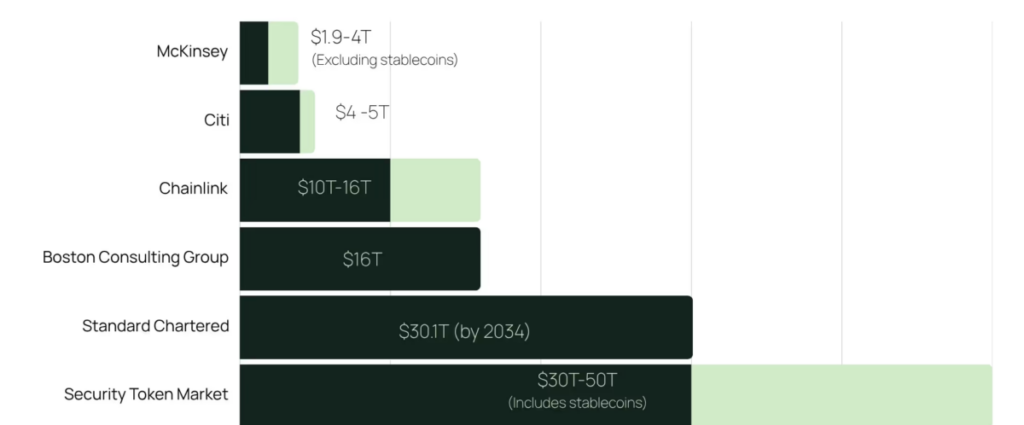
According to data compiled by Asset Tokenization, major financial institutions projected that this sector could reach at least a $2 trillion valuation by 2035. Consulting firm McKinsey forecasted that the tokenization market could reach $1.9 trillion by 2030 and $4 trillion by 2035.
On the higher end, Standard Chartered said the market value of tokenized assets could reach $30.1 trillion by 2034.
One could also say these bullish projections are helping to boost institutional interest in the growing sector.
A Look at Banks Already Entering the Tokenization Market
Banks have been discussing the development of tokenized forms of other types of assets for several years. They claim that this will help make the trade more efficient, faster, and cheaper.
Since the latter half of 2025, this concept has begun to take form as more and more institutions are launching this sector. For instance, in December 2025, JPMorgan (NYSE:JPM) launched its first tokenized money fund, allowing investors to hold tokens representing their shareholding in the fund.
The fund, called My OnChain Net Yield Fund, or “MONY,” was available to individuals with a minimum investment of $5 million and to institutions with a minimum investment of $25 million.
This post was originally published here



Why Is Frontier Group Stock Gaining Today?
Frontier Group Holdings, Inc. (NASDAQ:ULCC) traded higher on Tuesday after updating its first-quarter outlook.
At the 2026 JPMorgan Industrials Conference, the firm said underlying demand remains strong, with bookings stable over the past two weeks. The company expects about 15% RASM growth, noting its first-quarter outlook was largely set before the recent fuel price spike, according to Benzinga Pro data.
In an exchange filing, the airline signalled stronger-than-expected revenue trends despite rising cost pressures.
The company shared revised projections before its scheduled appearance at the J.P. Morgan Industrials Conference.
Frontier said demand trends improved meaningfully, supporting higher revenue expectations, Benzinga reports.
Guidance Update
Frontier now expects an adjusted first-quarter loss between 32 cents and 44 cents per share (Street view: 31 cents loss). This range remains within …
This post was originally published here






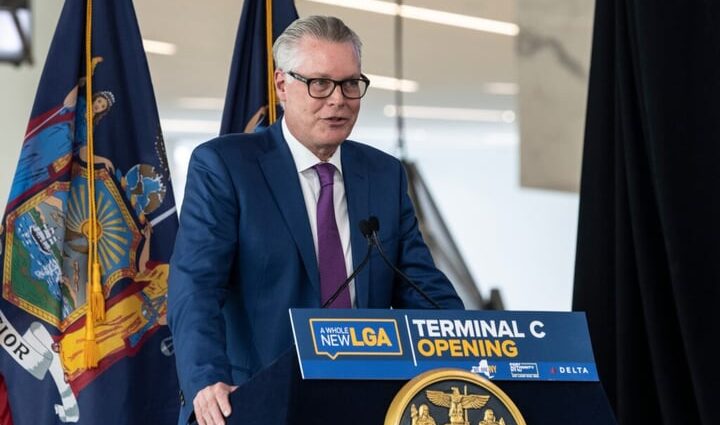
Delta CEO Says Demand Is ‘Really, Really Great’, Raises Revenue Guidance As Jet Fuel Doubles, TSA Shortages Continue
Delta Air Lines (NYSE:DAL) CEO Ed Bastian told CNBC on Tuesday that travel demand has been “really, really great” despite a $400 million hit from surging jet fuel costs, as the airline raised its first-quarter revenue guidance at a JPMorgan investor conference.
Delta now expects Q1 revenue growth in the high single digits, and to come in at the original earnings guidance, at 50 to 90 cents EPS, which he described as healthy growth.
American Airlines (NASDAQ:AAL) raised its own outlook even further, guiding for revenue growth above 10%, a record for the carrier.
90% Of Revenue Comes From The Top Of The K
Bastian said Delta’s consumer base remains “very healthy,” noting that 90% of revenue now comes from the top end of the K-shaped economy.
Eight of the airline’s top ten sales days in history came in the last quarter.
Revenue is up 25% …
This post was originally published here

Trump’s Iran War looks improvised. It isn’t. Here’s the playbook he’s been running for decades
For many observers, Donald Trump’s prosecution of the war against Iran has been nothing short of confounding — contradictory remarks, a seemingly improvisational strategy, and a nonchalance toward risks and costs that would paralyze a traditional commander-in-chief.
A century and a half ago, author John Churton Collins advised, “In prosperity our friends know us; in adversity we know our friends.” America’s allies are confused. Pundits are reeling. But the surprise is misplaced.
Trump’s approach to the Iranian conflict is not an anomaly. It is lifted directly from a consistent playbook he has relied on for decades. The president’s actions are rarely the random impulses they appear to be. Instead, they follow consistent, discernible patterns of behavior. Here are five of what we call Trump’s Ten Commandments, as we lay out in our new book of the same title. He’s exhibited them throughout his career, and he’s displaying them again in his conduct of this war.
1. Centralizing All Power
Unlike previous military engagements — which typically followed careful interagency planning with input from domain experts — Trump has bypassed the traditional national security apparatus entirely. Instead, he is managing the entire war through his signature “hub-and-spokes” leadership model. In Trump’s universe, he must be the sun around which everything revolves. Rather than deferring to seasoned military leaders, the intelligence community, or veteran foreign service officers, Trump has centralized war-making authority squarely in his own hands, relying on a tight circle of close advisors while other high-ranking officials — in his own administration and across foreign governments — learn what is happening by watching the news.
Freed of institutional constraints, the result is a war directed not by consensus but by singular, unconstrained instinct of Trump and Trump alone — limited, arguably, only by what financial markets will tolerate and how long the munitions stockpile will last.
2. The Punch in the Face
Where traditional diplomacy builds trust incrementally, Trump starts by striking the first blow and staking out the most maximalist position imaginable to create immediate leverage. By decapitating Iran’s leadership and neutralizing core infrastructure on day one, Trump bypassed standard diplomatic escalation ladders entirely. It is the geopolitical equivalent of his classic real estate strategy — inflicting maximum blunt trauma as the opening move, not the last resort.
3. Divide and Conquer
Trump has long viewed the traditional coalitions built by his predecessors — NATO, the EU — as constraints on his own authority rather than assets.
It is entirely consistent, then, that Trump went to war without consulting many of America’s historical allies in Europe, who were left in the cold. Eschewing multilateral consensus, he publicly chastised several allies for their “lukewarm” enthusiasm, demanding they deploy warships and police the waterway themselves. At the same time, he has kept Israel and the Gulf nations close, coordinating carefully in what Israeli President Isaac Herzog described as NATO-like in its intimacy, while talking nearly daily with top Gulf leaders according to New York Times reporting. In this way, he treats foreign nations much like he treats his own subordinates — pitting them against one another so that he alone rises above the chaos as the all-powerful arbiter.
4. The Wall of Sound
To control the narrative, Trump relies on what might be called a Perpetual Noise Machine — an overwhelming barrage of sudden moves and outrageos statements designed to distract and disorient. The sheer scale of the Iran strikes has dominated news coverage since the conflict began, erasing prior negative news cycles from domestic affordability concerns to foreign policy friction over Venezuela and Greenland.
By feeding contradictory remarks to the press practically hourly and issuing escalating threats against Iran’s oil infrastructure — will he or won’t he strike? — Trump keeps the media and international community focused entirely on his unpredictable next move. This relentless cascade ensures he dominates the news cycle, exhausts opponents, and prevents any cohesive counter-strategy from forming.
5. Donald the Great
Trump views himself in messianic terms — the leader who alone can accomplish what no predecessor could. By framing the 2026 war as the decisive strike to prevent Iran from acquiring nuclear weapons and the culmination of 40 years of Iranian aggression, he casts himself as a historic savior. Critics and supporters alike note that he appears increasingly convinced there is nothing he cannot do. Where traditional presidents weigh constitutional constraints, congressional approval, and allied consultation, Trump views those guardrails with the same dismissiveness he has applied to institutional limits his entire career, as Gulliver viewed the Lilliputians.
Trump’s war with Iran is not an anomaly. It is the ultimate expression of a leadership style decades in the making. The most useful thing global leaders — and observers — can do right now is stop being surprised. The playbook has always been visible. The only question is whether those on the receiving end are finally willing to read it.
The opinions expressed in Fortune.com commentary pieces are solely the views of their authors and do not necessarily reflect the opinions and beliefs of Fortune.
This story was originally featured on Fortune.com
This post was originally published here

Mode: What It Is in Statistics and How to Calculate It
This post was originally published here
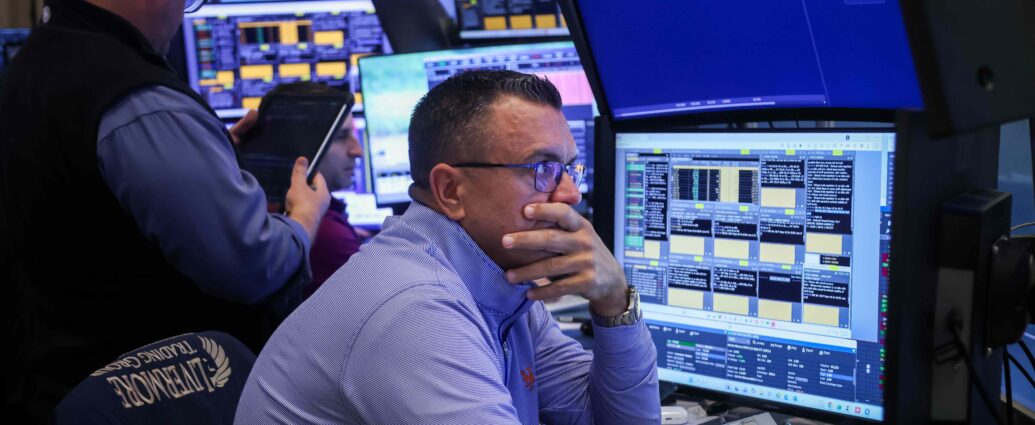
Stock Market Today: Major Indexes Rise as Investors Digest Middle East Developments; Oil Pares Gains
This post was originally published here



4 Steps to Move Beyond the AI Hype

Porter Diamond Model: What It Is and How It Works
This post was originally published here




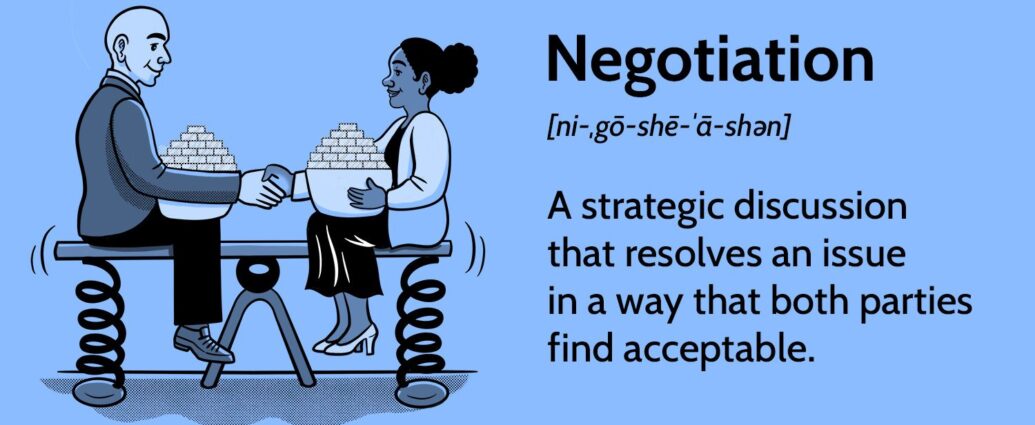
Understanding Negotiation: Key Stages & Effective Strategies
This post was originally published here
Bentley to cut hundreds of UK jobs amid ‘challenging global market environment’
Carmaker reduces office-based roles and will not fill vacancies ‘to ensure long-term competitiveness of business’
Bentley is to cut 275 jobs in the UK as the carmaker faces a “challenging global market environment”.
The luxury brand, owned by Germany’s Volkswagen, is preparing to launch its first all-electric model but acknowledged it had some work to do to convince consumers to switch away from internal combustion engine vehicles.
This post was originally published here




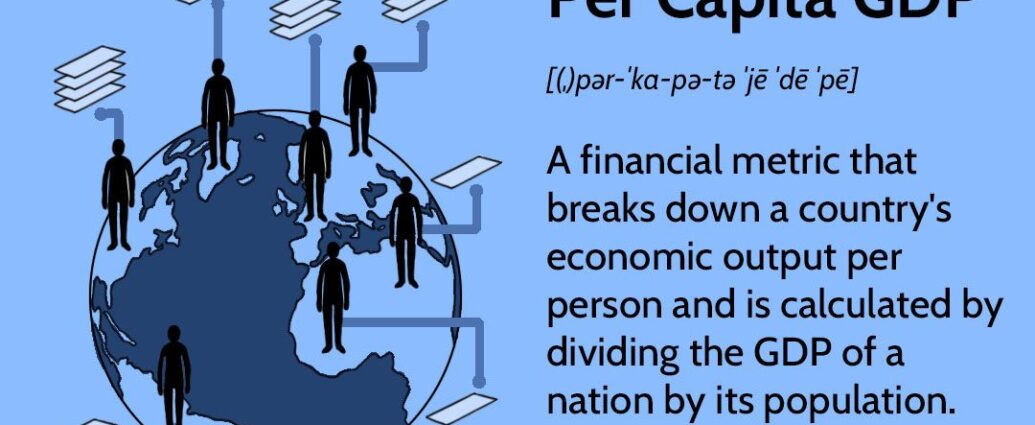
GDP Per Capita: Definition, Uses, and Highest Per Country
This post was originally published here


PayPal Expands Stablecoin Offering To 70 Countries Worldwide
PayPal (NASDAQ:PYPL) is expanding its PYUSD stablecoin (CRYPTO: PYUSD) to 70 markets worldwide, enabling users to skip cross-border transfer fees and bank withdrawal requirements.
The 70-Country Expansion
Customers in 70 nations can now hold PYUSD in their PayPal wallets, up from only the U.S. and U.K. previously.
The expansion includes Uganda, Colombia, Peru, Singapore, Guatemala, and new additions across South America, Africa, and Asia, Fortune reported on Tuesday.
“Now you’re really opening up not only access—especially in places where they need it most—but also cross-border transfers and volume, where the pain is felt so high,” said May Zabaneh, senior vice president and head of crypto at PayPal.
How It Skips Bank Fees
Currently, PayPal users in countries like Peru can only withdraw money in their native currency.
If a New Yorker sends $10 to someone in Lima, the Peruvian user pays a cross-border transfer fee …
This post was originally published here


Belgian court sends ex-diplomat, 93, to trial over 1961 murder of Congo leader
Étienne Davignon is charged with participation in war crimes in relation to killing of then PM Patrice Lumumba
A former Belgian diplomat , 93, should stand trial over alleged complicity in the 1961 murder of Patrice Lumumba, the first prime minister of what was then the newly independent Congolese state, a Brussels court has ruled.
Étienne Davignon, the only person still alive among 10 Belgians the Lumumba family accuses of involvement in the killing, is charged with participation in war crimes.
This post was originally published here

Why Is bioAffinity Technologies Stock Surging Tuesday?
bioAffinity Technologies Inc (NASDAQ:BIAF) shares are trading higher on Tuesday morning.
The move follows the release of a new clinical case study. The study highlights the benefits of adding CyPath Lung to the diagnostic pathway.
Clinical Case Study Success
The company released data regarding a 71-year-old former smoker with multiple pulmonary nodules. Traditionally, such cases lead to invasive biopsies. However, the CyPath Lung test returned a result of “Unlikely Malignancy.”
A follow-up scan in October confirmed the nodules were benign.
Enhancing Diagnostic Clarity
“Multiple small nodules in a high-risk patient pose a diagnostic challenge,” said Daya Nadarajah, MD, the patient’s pulmonologist.
He noted the negative result provided comfort …
This post was originally published here
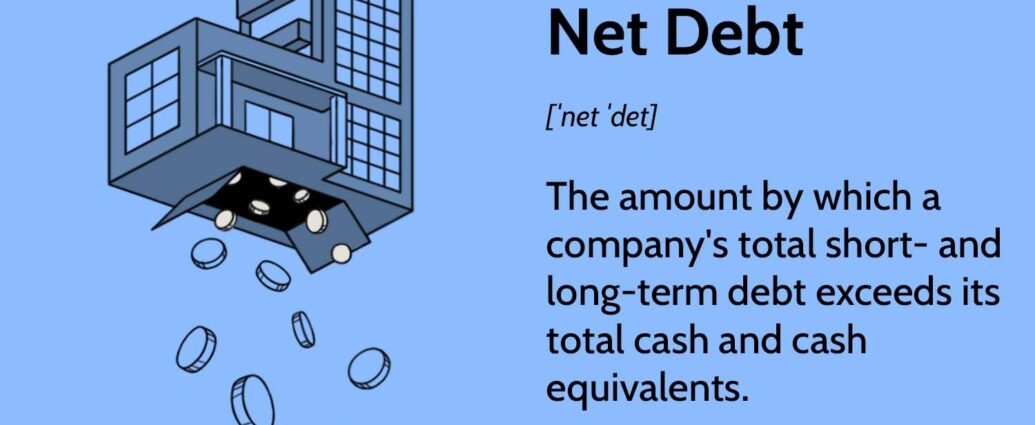
How Net Debt Is Calculated and Why It Matters to a Company
This post was originally published here

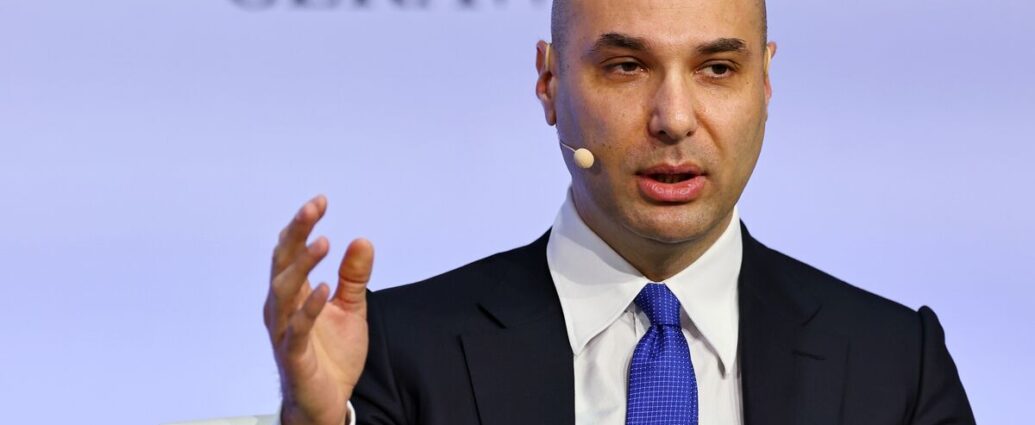




The Postal Service may be out of cash in 2027 without Congress’ help, postmaster says
The U.S. Postal Service’s leader says it is set to run out of money in less than a year and may have to stop deliveries because of declining mail volume and what USPS sees as burdensome requirements.
(Image credit: Kyle Grillot)

This post was originally published here
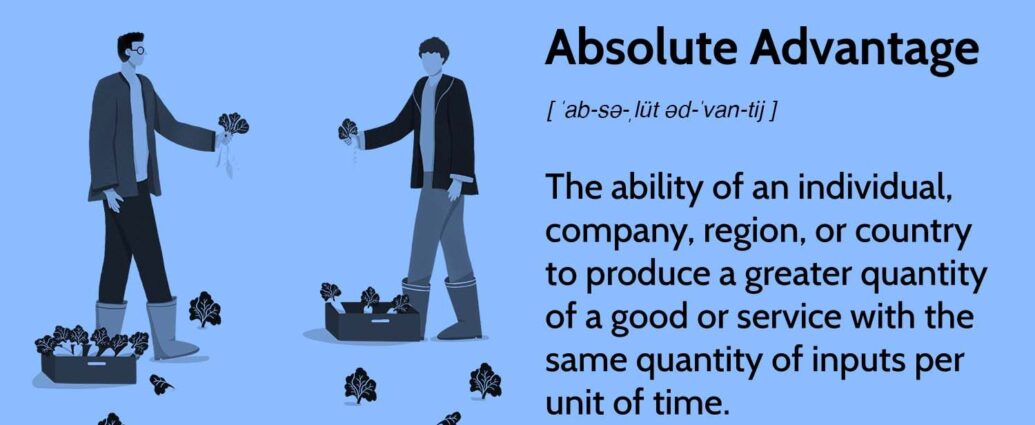
Absolute Advantage: Definition, Benefits, and Example
This post was originally published here



Joe Kent, a top counterterrorism official, resigns citing Iran war

Kent said he “cannot in good conscience” back the Iran war. In his resignation letter, he says Iran “posed no imminent threat to our nation.”
(Image credit: Nathan Howard)

This post was originally published here

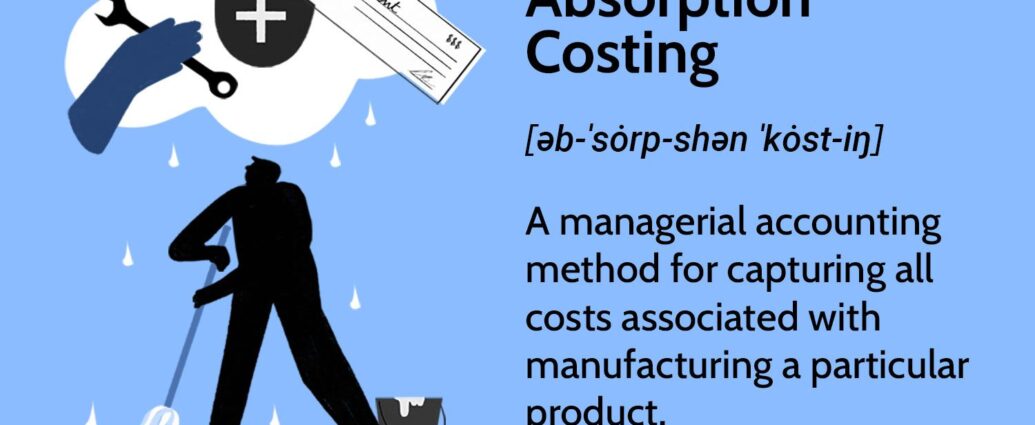
Absorption Costing Explained, With Pros and Cons and Example
This post was originally published here

Liberal arts degrees have long paid the worst salaries—but Microsoft chief scientist says in the age of AI, they will be ‘really important’ for Gen Z
Traditional paths to stable careers are undergoing a massive shift. Fields like computer science—once considered the safest bet for a high-paying job—are now facing new uncertainty. At the same time, some business leaders warn that entry-level roles could be hollowed out by AI, leaving many Gen Z workers questioning where opportunity still exists.
Jaime Teevan, Microsoft’s chief scientist, believes the answer may lie in an unexpected place: the liberal arts.
“Metacognitive skills will be very important—flexibility, adaptability, experimentation, thinking critically, being able to challenge things. Developing critical-thinking skills requires friction, doing things that are hard, doing deep thinking,” Teevan told The Wall Street Journal.
“For that, a traditional liberal-arts education is really important.”
Teevan, who leads the research direction of the company’s experiences and devices division, including Office, Windows, Surface, and Teams, said the shift reflects a deeper change in how humans interact with technology. And for her, the stakes are personal: she has four sons, ages 17 to 21, all navigating higher education decisions in real time.
“Think of what AI does. It used to be that communicating with a computer was deterministic: You press this button, and this thing happens. Now it’s based on natural language, providing context, expressing intent and thinking critically.”
In other words, while liberal arts majors—such as anthropology, psychology, and education—have long been among the worst-paid majors, the very skills often taught in those career paths are becoming more valuable, not less.
As AI handles more technical and repetitive tasks, the ability to exercise judgement, communicate nuance, and take responsibility is emerging as a differentiator. And it may be just what Gen Z needs to land a job in today’s market.
In today’s AI era, Gen Z may need to take an ‘insurance policy’ on their education
For years, educators and employers pushed students toward STEM fields, pointing to degrees like computer engineering as pathways to six-figure salaries. But early signs suggest that even those once-reliable routes are facing pressure.
The unemployment rate for computer engineering majors has climbed to 7.8%—the highest of any major except anthropology, according to the Federal Reserve Bank of New York, underscoring how quickly the job market is shifting in the AI era.
It’s a concern echoed by Ethan Mollick, a professor at the University of Pennsylvania’s Wharton School known for his AI research. With so much uncertainty, Mollick argued that overspecialization can be risky. Instead, he emphasized the value of broad, foundational learning—an approach central to liberal arts education—where students build critical thinking, problem-solving, and communication skills across disciplines.
“Take an insurance policy by being broadly educated, being deeply educated, being flexible in the face of change, maybe saving money to get through the disruptions—the things you’d do in any time of uncertainty,” he told the WSJ. “A liberal-arts education matters more than ever.”
Employers are on the hunt for liberal arts graduates
The shift to hiring liberal arts majors is already showing up in the hiring process.
At McKinsey, candidates are now being evaluated in part on how well they can work alongside AI tools—a signal that technical knowledge alone is no longer the primary differentiator. The firm’s CEO admitted its hiring priorities have changed, with a new focus on “looking more at liberal arts majors, whom we had deprioritized.”
It’s an idea echoed by Ravi Kumar S, the CEO of IT firm Cognizant Technology Solutions Ravi Kumar S, who said he’s also changed his hiring practices in the wake of AI.
“We are now going to hire non-STEM graduates,” he told Fortune. “I’m going to liberal arts schools and community colleges.”
Even leaders building out AI systems said human-centered skills are becoming more—not less—critical. Daniela Amodei, cofounder of AI firm Anthropic, said studying the humanities will be “more important than ever.”
“The things that make us human will become much more important instead of much less important,” she told ABC News last month. “And what I mean by that is when we look to hire people at Anthropic today, we look for people who are great communicators, who have excellent EQ and people skills, who are kind and compassionate and curious and want to help other people.”
This story was originally featured on Fortune.com
This post was originally published here


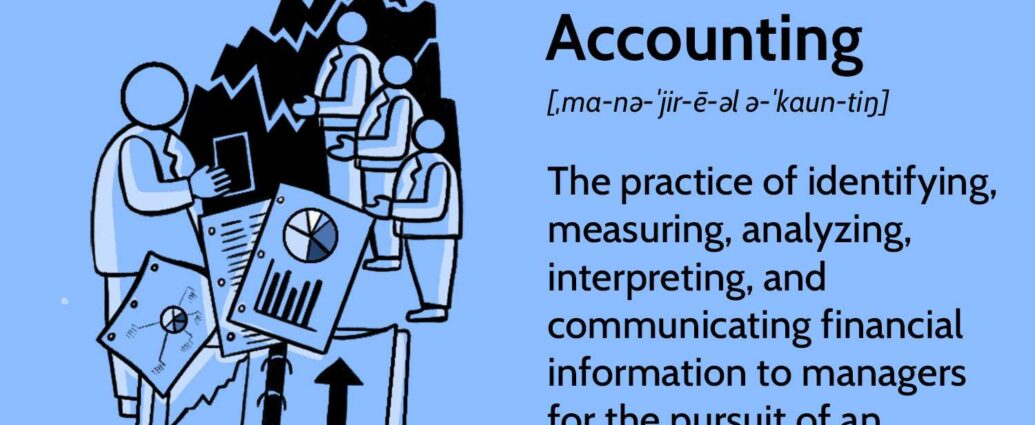
Managerial Accounting Meaning, Pillars, and Types
This post was originally published here







Nasdaq Surges Over 100 Points; Academy Sports And Outdoors Posts Downbeat Earnings
U.S. stocks traded higher this morning, with the Nasdaq Composite gaining more than 100 points on Tuesday.
Following the market opening Tuesday, the Dow traded up 0.60% to 47,229.35 while the NASDAQ rose 0.54% to 22,495.65. The S&P 500 also rose, gaining, 0.55% to 6,736.04.
Check This Out: How To Earn $500 A Month From Goldman Sachs Stock Ahead Of Q4 Earnings
Leading and Lagging Sectors
Energy shares climbed by 1.3% on Tuesday.
In trading on Tuesday, industrials stocks fell by 0.1%.
Top Headline
Academy Sports and Outdoors Inc (NASDAQ:ASO) reported downbeat earnings for the fourth quarter on Tuesday.
The company posted quarterly earnings of $1.97 per share which missed the analyst consensus estimate of $2.06 per share. The company reported quarterly sales of $1.719 billion which missed the analyst consensus estimate of $1.758 billion.
Equities Trading UP
- U Power Ltd (NASDAQ:UCAR) shares shot up 170% to $1.20. U Power announced production of first batch of 30 battery-swapping …
This post was originally published here

Original Equipment Manufacturer (OEM): Definition and Examples
This post was originally published here




Best Money Market Account Rates for March 2026: Up to 4.00%
This post was originally published here

Best Free Savings Accounts for March 2026: Up to 5.00%
This post was originally published here

What’s with all the AI lobsters?
This post was originally published here
Half a million lose power as storm lashes US from midwest to east coast
Snow, tornadoes and fierce winds disrupt flights and leave homes and businesses in multiple states in the dark
Half a million US homes and businesses were without power on Tuesday morning after a potent storm system brought a mix of snow, strong winds, cold temperatures and rainfall to areas from the midwest to the east coast.
As of Tuesday morning, there were about 107,000 power outages reported in Michigan, according to poweroutage.us. In New York, there were 68,000 power outages; 65,000 were registered in Pennsylvania and 50,000 in Massachusetts.
This post was originally published here


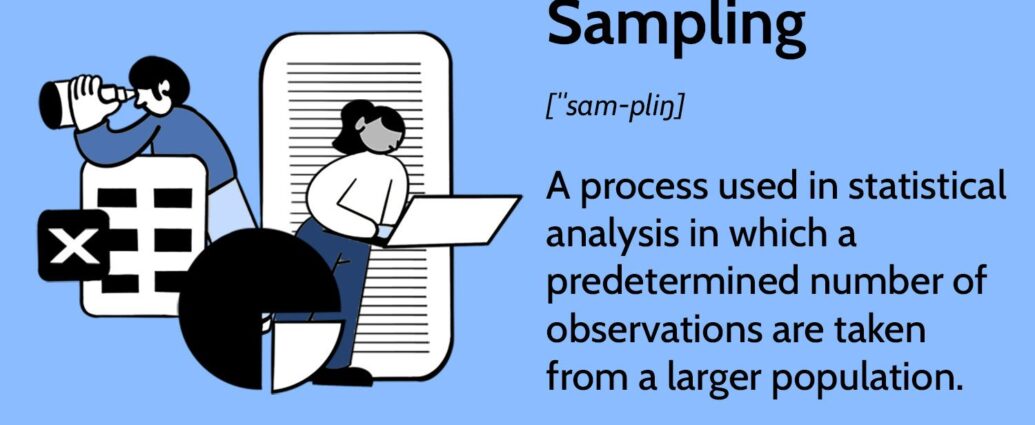
Sampling: What It Is, Different Types, and How Auditors and Marketers Use It
This post was originally published here

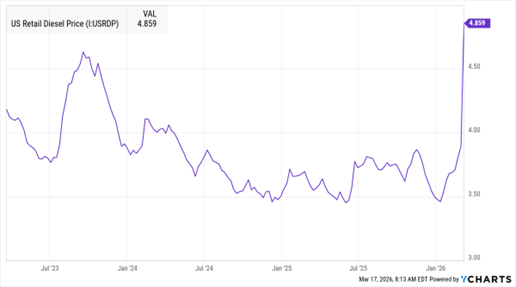





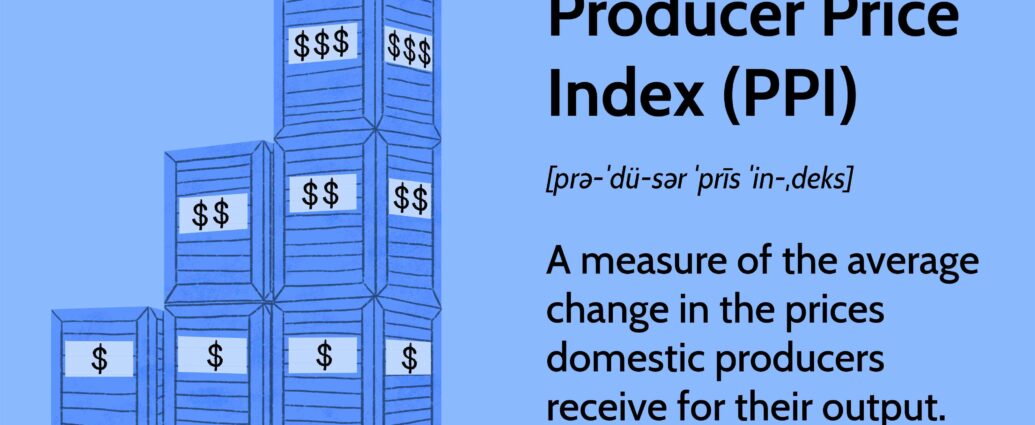
Producer Price Index (PPI): What It Is and How It’s Calculated
This post was originally published here




‘We started this war due to pressure from Israel and its powerful American lobby:’ Trump’s National Counterterrorism Center director resigns over war
Joe Kent, the director of the National Counterterrorism Center, announced his resignation on Tuesday, citing his concerns about the justification for military strikes in Iran and saying he “cannot in good conscience” back the Trump administration’s war.
Kent said on social media that Iran “posed no imminent threat to our nation, and it is clear that we started this war due to pressure from Israel and its powerful American lobby.”
Kent, a former political candidate with connections to right-wing extremists, was confirmed to his post last July on a 52-44 vote. As head of the National Counterterrorism Center, he was in charge of an agency tasked with analyzing and detecting terrorist threats. His resignation reflects unease within Trump’s base about the war and shows that questions about the justification for the use of force in Iran extend to the right of President Donald Trump’s base and to senior members of the administration.
Trump has offered shifting reasons for the strikes and has pushed back on claims that Israel forced the U.S. to act. Earlier this month, House Speaker Mike Johnson, R-La., suggested that the White House believed Israel was determined to act on its own, leaving the Republican president with a “very difficult decision.”
A spokesperson for Director of National Intelligence Tulsi Gabbard did not immediately respond to questions about Kent’s resignation. The White House also had no immediate comment on Kent’s resignation.
Before entering Trump’s administration, Kent ran two unsuccessful campaigns for Congress in Washington state. He also served in the military, seeing 11 deployments as a Green Beret, followed by work at the CIA.
Democrats strongly opposed Kent’s confirmation, pointing to his past ties to far-right figures and conspiracy theories. During his 2022 congressional campaign, Kent paid Graham Jorgensen, a member of the far-right military group the Proud Boys, for consulting work. He also worked closely with Joey Gibson, the founder of the Christian nationalist group Patriot Prayer, and attracted support from a variety of far-right figures.
During his Senate confirmation hearing, Kent also refused to distance himself from a conspiracy theory that federal agents instigated the Jan. 6, 2021, attack at the Capitol, as well as false claims that Trump won the 2020 election over Democrat Joe Biden.
Democrats grilled Kent on his participation in a group chat on Signal that was used by Trump’s national security team to discuss sensitive military plans.
Still, Republicans praised Kent’s counterterrorism qualifications, pointing to his military and intelligence experience.
Sen. Tom Cotton, the GOP chair of the intelligence committee, said in a floor speech that Kent had “dedicated his career to fighting terrorism and keeping Americans safe.”
This story was originally featured on Fortune.com
This post was originally published here







HealthEquity Likely To Report Higher Q4 Earnings; These Most Accurate Analysts Revise Forecasts Ahead Of Earnings Call
HealthEquity, Inc. (NASDAQ:HQY) will release earnings results for its fourth quarter, after the closing bell on Tuesday, March 17.
Analysts expect the Draper, Utah-based company to report quarterly earnings at 90 cents per share, up from 69 cents per share in the year-ago period. The consensus estimate for HealthEquity’s quarterly revenue is $332.82 million, versus $311.82 million a year earlier, according to data from Benzinga Pro.
On Feb. 17, HealthEquity affirmed its FY2027 sales guidance of $1.380 billion to $1.410 billion.
HealthEquity shares rose 1.1% to close at $78.67 on Monday.
Benzinga readers can access the latest analyst ratings on the Analyst Stock Ratings page. Readers can sort by stock ticker, company name, analyst firm, rating change or other variables.
Let’s have a look at how Benzinga’s most-accurate analysts have rated …
This post was originally published here