Tech giant Meta is planning to move forward with layoffs affecting about 200 employees in the San Francisco Bay Area.

The company’s layoffs will affect 124 employees from its facilities in Burlingame, California, along with 74 in Sunnyvale. Those cuts are expected to take effect in late May, with the Burlingame cuts slated for May 22 and the Sunnyvale layoffs a week later on May 29. 

All positions involved will be eliminated permanently, according to Meta’s regulatory filings with the state of California.

The job cuts are related to an announcement from last month that affected Meta’s sales and recruiting teams, as well as its Reality Labs hardware division. Some of the workers affected by the cuts will be offered other jobs within the company.

META SLASHES ROUGHLY 700 JOBS; LAYOFFS HIT MULTIPLE TEAMS ACROSS THE COMPANY

“Teams across Meta regularly restructure or implement changes to ensure they’re in the best position to achieve their goals,” a Meta spokesperson told FOX Business. “Where possible, we are finding other opportunities for employees whose positions may be impacted.”

The move comes as Meta, the parent company of Facebook and Instagram, announced 700 layoffs last month that affected the company’s recruiting operations and sales teams.

META EYES MASSIVE 20% WORKFORCE CUT AS AI INFRASTRUCTURE COSTS CONTINUE TO SOAR ACROSS OPERATIONS: REPORT

Meta’s moves to restructure its workforce comes as the company is investing heavily in artificial intelligence (AI) infrastructure and has incurred large costs in the process.

The company projected that it will spend up to $135 billion on capital expenditures, including those related to AI, this year. Meta CEO Mark Zuckerberg has also said the company will spend an estimated $600 billion building out its U.S. infrastructure by 2028.

META CUTS OVER 1,000 JOBS IN MAJOR METAVERSE RETREAT

Last month, Reuters reported that Meta was planning layoffs that could affect 20% or more of its workforce as it looks to offset those costs and improve its efficiency through AI-driven tools.

Meta had nearly 79,000 employees at the start of the year.

GET FOX BUSINESS ON THE GO BY CLICKING HERE

This post was originally published here. 

Just a 30-minute drive outside Dublin sits the Village at Lyons, a privately owned village dating back to the 18th century. It recently went on the market for $23,078,698. 

The village sits on 20 acres and has 47 bedrooms. Some additional features include a caretaker house, a carriage house, a guest house, a fitness room, and a yoga space. It also has lake, river views and an indoor and outdoor spa.  

Part of the village dates back to the 18th century and was left abandoned for many years before the co-founder of Ryanair, Dr. Tony Ryan, bought it in the 1990s and put millions of dollars into restoring it and recreating the original village, David Byrne, Lisney Sotheby’s International Realty’s managing director, told Redfin News. 

When Ryan passed away in 2007, the village was sold to a private owner who is now selling it. 

“It’s almost like stepping back in time. It’s an architectural wonderland. The attention to detail in every single element of the village front, the windows, the doors, the chimneys, is utterly remarkable. It’s very much evidence of someone who has a phenomenal eye and brought world-class restoration to this project. It’s a really unique Irish estate village. Everywhere you look, there is something new and unique to see. It’s a masterpiece in its own right,” Bryne said. 

The village also has two bars, a coffee shop, and a corporate event space that could easily be adapted for other uses, Byrne added. 

In addition to the 47 bedrooms, the village also has a chapel on the grounds.

At the moment, the village is run as a hospitality destination. A stay at the hotel on the village grounds starts at $269 a night. 

“It is a magnificent place. You can literally feel the passion that went into restoring it at every turn. It has this unworldly feel about it once you’re through the gates. It’s a truly special place,” Bryne says. 

The carrying costs are being kept confidential while the village is on the market,” he added. 

“The ideal buyer could be somebody in the hospitality space who sees an opportunity to elevate this village even further and unleash the full potential of this village. It could equally be somebody who just thinks it’s the most wonderful opportunity to own a private estate in Ireland [41 miles] from Dublin,” Byrne said. “We’re kind of looking forward to finding out who the next owner is, in truth. Whoever it is, it will be somebody who appreciates the cultural significance of the village and they would become a steward of the village. What they do with it will be amazing to see.”

The post Ryanair Co-Founder Restored An 18th Century Village in Ireland and now it’s up for sale for $23 million appeared first on Redfin Real Estate News.

This post was originally published here. 

As wealth taxes gain momentum from Sacramento to Washington State, Sen. Bernie Sanders says 938 people stand between most working Americans and a $3,000 check.

In a scathing op-ed published Wednesday in the Guardian, the Vermont senator named every name and put every number on the table. “The richest people in America have never ever had it so good,” he wrote, while mentioning that 60% of Americans live paycheck to paycheck and 85 million are uninsured or underinsured.

“We have a tax code that is totally rigged—written by representatives of the wealthy to benefit the wealthy,” he wrote in the op-ed, while also referencing estimates from the Rand Corporation that found nearly $80 trillion in wealth has been redistributed from the bottom 90% to the top 1% over the past 50 years.

Sanders is making headlines for once again calling for billionaires to pay up. Last month, he and Rep. Ro Khanna introduced the Make Billionaires Pay Their Fair Share Act that would put a 5% tax on the estimated 938 billionaires in the country and raise an expected $4.4 trillion over a decade. A portion of the first year’s revenue will be redistributed in the form of $3,000 checks to anyone making less than $150,000 a year.

The funds raised through the proposed tax would be enough to repeal the Medicaid cuts that threw 15 million Americans off coverage; fund universal childcare; guarantee teachers a $60,000 minimum salary; expand Medicare to cover dental, vision, and hearing, and build 7 million affordable housing units.

Sanders calls out billionaires

For Sanders, who has long called for the wealthy to pay up, the tax has never been so necessary.

“The American working class has been under savage attack for years,” he wrote in the op-ed. That’s owing to the disparity between what the rich and those in the working class pay. Sanders name-dropped Elon Musk, saying his net worth of $805 billion is more wealth than the bottom 53% of American households put together. But according to Sanders, the richest man in the world pays an effective tax rate of just 3.3%, lower than the 8.4% paid by an average truck driver.

Had the 5% billionaire tax been put into effect last year, Sanders noted that Musk—expected to become the world’s first trillionaire—would hardly notice the difference. “Let me tell you how insane the level of wealth inequality is in America today,” Sanders wrote. “Musk would have owed $42 billion more in taxes, leaving him with just $792 billion to survive.”

The Tesla CEO wasn’t the only one in the senator’s crosshairs. Warren Buffett, who has long made comments about ensuring the ultrawealthy pay their fair share and famously noted having a lower effective tax rate than his secretary—pays just 0.1%, while a schoolteacher pays 9.8%, Sanders said. Former New York City Mayor Michael Bloomberg, with a net worth of $109 billion, had an effective tax rate of 1.3%, compared with the 13.3% paid by the average registered nurse.

The names didn’t stop there. Amazon founder Jeff Bezos paid less than 1% in taxes, when the average firefighter paid 8.7%, according to Sanders. Had the billionaire tax been enacted last year, Bezos would have paid $11 billion, leaving him with a paltry $207 billion. Meta cofounder Mark Zuckerberg would have $209 billion left after paying $11 billion more with the tax enacted.

Political support for the tax

There is growing political support for such taxes. In an opinion poll, Californians backed a similar (albeit, one-time) billionaire tax by a two-to-one margin to protect 3 million people from losing health care. More than half (62%) of New Yorkers support Mayor Zohran Mamdani’s proposed 2% surtax on millionaires and billionaires. Nationally, more than six in 10 Americans say the wealthy and large corporations pay too little in taxes, and one in five think it’s morally wrong to be that rich.

The ultrawealthy, however, aren’t waiting around to find out if anyone listens. Google cofounders Larry Page (with a net worth of $244 billion) and Sergey Brin (with a net worth of $226 billion) rushed to leave California before the Jan. 1, 2026, deadline set by the proposed Billionaire Tax Act, both purchasing property in Florida. Howard Schultz and Zuckerberg followed last month. They join Jeff Bezos, Peter Thiel, Ken Griffin, and Larry Ellison, all of whom have already bought property or moved operations to the Sunshine State in recent years.

This story was originally featured on Fortune.com

Longevity supplements are becoming increasingly popular, and one molecular compound gaining attention is nicotinamide mononucleotide (NMN). Naturally found in the body, NMN converts directly to nicotinamide adenine dinucleotide (NAD+), a coenzyme that contributes to energy production, metabolism, and overall cellular health, making it a key player in how our bodies function over time.

The growing interest in NMN aligns with a broader cultural shift in how people are thinking about aging. Registered Dietitian Avery Zenker points out that “longevity science isn’t only focused on increasing lifespan, but also improving healthspan.” Healthspan, in short, refers to living better as you age, not just living longer. According to Zenker, “NMN stands out for its potential to impact both lifespan and healthspan.”

So, what exactly is NMN, and why is it being promoted by so many wellness influencers? In this article, we look at how NMN works in your body, and we break down the claims around this popular wellness supplement.

What is NMN?

Naturally found in the body, NMN converts directly to NAD+, a compound essential for good health. An increase in NAD+ is associated with increased energy production and faster cellular repair.

Emerging research shows that NAD+ levels decrease greatly in middle age. According to Rachel Pojednic, PhD, Chief Science Officer at RestoreLabs and Restore Hyper Wellness, the popularity of NMN supplements is based on the idea “that by supplementing with NMN, you can increase NAD+ availability and potentially support cellular processes that are associated with healthy aging.”

How do NMN supplements work?

Pojednic explains it this way: an NAD+ boosting supplement like NMN is not like a direct infusion of NAD+ to your body. Rather, the supplements provide essential building blocks (called precursors) that help your cells make NAD+ on their own.

“NAD+ does not occur in high concentrations in the blood,” Pojednic explains, “and in fact, that would be an indicator to the immune system that something was wrong.” By using a precursor, like an NMN supplement, your body can produce NAD+ where it’s needed—inside your cells—without setting off any alarms within your immune system.

Although studies have shown that NMN supplements can increase NAD+ concentration, there are limited studies linking these increased NAD+ levels to changes in body composition or disease risk.

What experts say about NMN supplements

In 2022, the Food and Drug Administration (FDA) restricted the sale of NMN supplements because they were being investigated as pharmaceutical drugs. This decision was about regulatory classifications, not safety, but it has resulted in fewer human trials on the supplements over the past several years. In 2025, the ban on NMN supplements was lifted, and the supplement is finding its way back to the market and, potentially, to more clinical trials.

What’s clear from current studies is that NMN supplements increase NAD+ concentrations, with clinical trials showing “increases in whole blood NAD+ or related metabolites after NMN supplementation, which tells us the compound is biologically active and reaching its target,” Pojednic says. Such studies could point toward promising health outcomes, such as reduced inflammation and increased energy production.

Still, Pojednic says, “translating that into healthy aging in humans is where the evidence becomes much less clear.”

Benefits of taking NMN

While human trials on NMN supplements are limited, there is some promising research showing potential benefits, particularly insulin sensitivity, cardiovascular health, and metabolic health.

Here are some of the potential benefits of taking NMN supplements:

Increased levels of NAD+

Chronic, low-grade inflammation associated with aging (known popularly as “inflammaging”) gradually depletes NAD+ levels. NMN supplements provide a precursor that can help replenish these declining levels and support cellular health over time.

Protection against cancer and other chronic illnesses

Increased NAD+ levels can reduce inflammation throughout the body, potentially helping protect cells from DNA damage and oxidative stress, both of which are associated with cancer and neurological diseases like Alzheimer’s.

Support for metabolic health

One study found that NMN improved insulin sensitivity, a key marker of metabolic health, in the muscles of postmenopausal women with prediabetes and obesity. No data shows whether or not this finding translates to other populations.

Increased energy production

NMN supplementation resulted in increased NAD+ levels and an increased walking speed in older adults, one study showed. Additionally, participants reported better sleep quality, hinting at supportive effects on recovery and daily energy.

Improved brain health

In non-human studies, NMN supplements have been shown to improve cognitive function and reduce brain plaques associated with Alzheimer’s.

While these studies show exciting potential benefits of NMN supplements, more research is needed to show the long-term health benefits of NMN in the general population.

NMN’s potential side effects

In healthy people, a 1250 mg daily dose appears to be safe and well-tolerated for short-term use. “There’s a lack of safety data on other populations,” though, says Zenker, “like pregnant or breastfeeding women, children and adolescents, individuals with pre-existing health conditions, and those taking medications that could interfere with NAD+ and NMN processing.”

“Most human trials are relatively short, weeks to a few months, so we simply do not have robust long-term safety data,” Pojednic adds.

Anyone considering an NMN supplement, especially for long-term or high-dose use, should proceed with caution and be sure to consult with your doctor.

How to take NMN supplements

As NMN supplements have gained popularity, they’ve taken several forms, from IV infusions to capsules. Here are a few common NMN supplement forms:

  • Powder
  • Capsule
  • Sublingual tablets (dissolve under the tongue)
  • Nasal/oral sprays
  • IV infusion

Registered Dietitian Jane Leverich points out that oral NMN supplements in powder or capsule form are the most commonly studied and have been shown to safely increase NAD+ levels in appropriate doses. “Though other delivery methods may be marketed as more effective,” she says, “there isn’t enough strong evidence to support their safety or that they offer additional benefits.”

Trace levels of NMN are also found in certain vegetables and lean meats, like broccoli, avocado, and beef, but the quantities are low and not likely to greatly impact NAD+ levels. “Rather than focusing on getting NMN directly through the diet, it’s more realistic to support NAD+ production overall through a balanced diet rich in protein that provides key nutrients like niacin and tryptophan, which help produce NAD+,” Leverich says. In other words, aim to increase your intake of niacin (vitamin B3) from foods like salmon, liver, and tuna. Other sources include legumes and fortified grains.

Do NMN supplements work?

At doses of 250 to 2000 mg daily, there is strong evidence to show that NMN supplements increase NAD+ levels in the blood and tissues. NAD+ plays a critical role in cellular energy production, DNA repair, and metabolic health. Your cells need it to survive and help you stay healthy and active. Because NAD+ levels decrease as we age, NMN supplements have grown popular as a tool for supporting longevity and overall health.

While preliminary findings are promising, there is limited clinical evidence in humans to confirm that increasing NAD+ through NMN supplements consistently leads to optimal long-term health or anti-aging outcomes. More large-scale and long-term studies are needed to determine the real-world impact of NMN supplements.

“For now,” Leverich says, “focusing on proven lifestyle habits like a nutrient-rich diet, staying physically active, prioritizing sleep, and managing stress remains the most reliable approach for increasing NAD+ levels.”

FAQs

What are NMN supplements?

NMN (nicotinamide mononucleotide) supplements provide your body with a precursor to NAD+, a coenzyme essential to your body’s energy production, metabolism, and overall cellular health. While NMN supplements do not supply NAD+ directly, they do help your cells produce it internally, where it’s needed most. Because NAD+ levels naturally decline with age, NMN’s ability to boost NAD+ levels is bringing it into the spotlight for potential anti-aging benefits.

What is NMN good for?

NMN is best known for its ability to increase NAD+ levels, which play an important role in cellular energy and metabolic processes. Some early research suggests that increased NAD+ levels may support better metabolic health, physical function, and energy levels, with studies showing improvements in insulin sensitivity in postmenopausal women and walking speed in older adults. Still, more long-term human studies are needed to confirm any long-term anti-aging benefits of NMN supplements.

Is NMN safe for anyone to take?

NMN is generally safe and well-tolerated in healthy adults at doses up to 1250 mg daily for short-term use. There is limited safety data for certain groups of people, though, such as pregnant or breastfeeding women, people with pre-existing health conditions, and children. Also, because most human NMN studies have been short-term, no information about long-term safety is yet available. If you’re considering an NMN supplement, especially at a high dose or for long-term use, consult a healthcare provider first.

This story was originally featured on Fortune.com

Veteran justice, 76, was treated for dehydration in March; a retirement would give Trump new chance to shape court

US supreme court justice Samuel Alito was reportedly taken to a hospital after becoming sick at a Federalist Society dinner in Philadelphia in March, further fueling speculation that Donald Trump could have more chances to shape the land’s highest court through new appointments.

A CNN report said Alito was checked by medical staff and given fluids due to dehydration. He later returned to his home in Virginia that same night with his security detail. In the weeks since, Alito has resumed his duties, including participating in oral arguments.

Continue reading…

This post was originally published here

Veteran justice, 76, was treated for dehydration in March; a retirement would give Trump new chance to shape court

US supreme court justice Samuel Alito was reportedly taken to a hospital after becoming sick at a Federalist Society dinner in Philadelphia in March, further fueling speculation that Donald Trump could have more chances to shape the land’s highest court through new appointments.

A CNN report said Alito was checked by medical staff and given fluids due to dehydration. He later returned to his home in Virginia that same night with his security detail. In the weeks since, Alito has resumed his duties, including participating in oral arguments.

Continue reading…

This post was originally published here

Democrat Tammy Duckworth writes letter to TSA calling on agency to reinstate the shoes-off airport security policy

Nine months after US airports allowed passengers to pass through scanners without taking off their shoes, rescinding the stringent policy after almost two decades, a top senator claimed the “reckless” move could put passengers in danger.

The policy amounts to a “potentially catastrophic security deficiency”, according to Tammy Duckworth, Democrat for Illinois, and ranking member of the Senate commerce, science and transportation (CST) aviation subcommittee.

Continue reading…

This post was originally published here

Democrat Tammy Duckworth writes letter to TSA calling on agency to reinstate the shoes-off airport security policy

Nine months after US airports allowed passengers to pass through scanners without taking off their shoes, rescinding the stringent policy after almost two decades, a top senator claimed the “reckless” move could put passengers in danger.

The policy amounts to a “potentially catastrophic security deficiency”, according to Tammy Duckworth, Democrat for Illinois, and ranking member of the Senate commerce, science and transportation (CST) aviation subcommittee.

Continue reading…

This post was originally published here

The parent company of luxury retailer Saks announced Thursday that it entered into a restructuring agreement with its capital partners who committed to provide $500 million in financing when the company emerges from bankruptcy.

Saks Global Enterprises filed for Chapter 11 bankruptcy protection in January after it missed a $100 million interest payment in December because the company was burdened with $3.4 billion in debt after its $2.7 billion acquisition of Neiman Marcus.

The company now expects to exit bankruptcy this summer amid its ongoing restructuring effort.

“Achieving this important milestone underscores the progress we are making on our transformation and reflects our capital partners’ confidence in our go-forward vision, guided by our relentless devotion to the luxury customer,” said Geoffroy van Raemdonck, CEO of Saks Global.

SAKS GLOBAL FILES FOR BANKRUPTCY AFTER $2.7B NEIMAN MARCUS ACQUISITION DEAL

“As we advance the restructuring process and position Saks Global for the future, our focus remains on strengthening our brand partner relationships and delivering an expertly curated product assortment and personalized service for our luxury customers across Saks Fifth Avenue, Neiman Marcus and Bergdorf Goodman,” van Raemdonck added.

Saks Global’s announcement indicated that the company is continuing to work with its financial stakeholders on its reorganization plan and anticipates its filing in the coming weeks.

LUXURY RETAIL GIANT SAKS WEIGHS BANKRUPTCY FILING, REPORT

Additionally, the retailer’s announcement on Thursday said its inventory has improved after more than 650 of its brand partners resumed shipping, which has helped lift customer engagement.

The company aims to unlock the potential of its three luxury banners and drive sustainable growth.

SPIRIT AIRLINES REACHES DEAL TO EXIT BANKRUPTCY PROCEEDINGS BY EARLY SUMMER

Saks Global announced last month that it obtained access to an additional $300 million of its $1.75 billion bankruptcy funding package, which gave it sufficient liquidity to support operations. A group of its bondholders also approved its five-year business plan.

The retailer said in March it would close 12 Saks Fifth Avenue stores and three Neiman Marcus locations amid the restructuring. 

GET FOX BUSINESS ON THE GO BY CLICKING HERE

In January, the company announced it would close 62 of its off-price operations, including Saks Off 5th and the remaining Neiman Marcus Last Call stores.

Reuters contributed to this report.

This post was originally published here. 

As California faces a billionaire exodus, state officials are continuing to target the wealthy, with a crackdown on individuals who register luxury vehicles out of state to avoid California taxes and registration fees.

Known as the “Montana Loophole,” the practice involves California residents purchasing and registering luxury vehicles through a Montana-based limited liability company, LLC, because Montana has no statewide sales tax and has significantly lower registration fees than the Golden State.

Montana allows out-of-state owners to purchase and title vehicles there on paper, even when the vehicles are primarily used in another state, according to the California Department of Tax and Fee Administration (CDTFA).

On March 6, the CDTFA and the DMV announced they had opened more than 400 investigations into high-end vehicle buyers and begun nearly 300 audits of dealers in an attempt to recover millions in lost revenue.

CLIMATE EXECUTIVE WARNS CALIFORNIA ‘FUNCTIONALLY BANKRUPT,’ $1T SHORTFALL COULD SHAKE NATION

The state agency estimates that since 2023, about 2,500 sales across nearly 500 California dealerships to customers claiming to use the vehicle in Montana have cost the state more than $10 million annually in lost revenue.

California Attorney General Rob Bonta’s office also announced charges against 14 Bay Area individuals in an alleged tax evasion scheme involving more than $20 million worth of luxury vehicles registered out of state. According to Bonta’s office, none of the vehicles, including McLarens, Porsches and Ferraris, was shipped to or used outside California, and the defendants allegedly evaded more than $1.8 million in state taxes.

“CDTFA is working to close this loophole that erodes California’s revenue base,” said California Department of Tax and Fee Administration Director Trista Gonzalez in a press release. “Our department is identifying questionable transactions through state partnerships to protect the integrity of California’s tax system while ensuring the tax is paid to support our schools, roads, public safety, and essential services that all Californians depend on.”

CLICK HERE FOR MORE COVERAGE OF MEDIA AND CULTURE

Under state law, residents owe California sales tax on vehicles that are not first used and kept out of state for at least 12 months, according to the CDTFA. Those who attempt to avoid these taxes can face significant penalties, including up to 50% of the tax due.

In December 2024, the state agency sent a warning letter to California auto dealers about the tax-evasion scheme, saying they could be held liable for taxes if they failed to keep proper shipping and delivery documents or if they did not actually ship the vehicle out of state.

“We’re talking about really large, hefty sales prices on these vehicles. So uncovering even a handful of them makes a large, large impact on our revenue for our state that provides vital services for Californians,” Shannon Robinson of the CDTFA told the LA Times in a report published Friday.

GET FOX BUSINESS ON THE GO BY CLICKING HERE

The tax enforcement comes as California’s most wealthy are reportedly fleeing the state over concerns about a looming wealth tax that would impose a 5% tax on the net worth of residents with assets exceeding $1 billion.

California also faces a projected $18 billion deficit in 2026 and 2027, according to the Legislative Analyst’s Office.

This post was originally published here. 

The Trump administration is requesting about $111 billion in discretionary funding for the HHS, nearly $16 billion less than its budget in 2026.

This post was originally published here. 

Pooh Shiesty among those accused of robbing and kidnapping three men after dispute involving record label

Federal prosecutors on Thursday accused rapper Pooh Shiesty and eight others of robbing three men at gunpoint and kidnapping them in January in Texas after a contract dispute involving rap star Gucci Mane’s record label.

The US attorney’s office in Dallas declined to name the victims and an FBI affidavit attached to a criminal complaint only refers to them by their initials. One victim, RD, is described as the owner of 1017 Records – the label belonging to Gucci Mane, whose legal name is Radric Delantic Davis.

Continue reading…

This post was originally published here

Dayton Webber is accused of shooting Bradrick Michael Wells twice in the head during an argument

A quadruple amputee professional cornhole player acted in self-defense when he shot and killed a passenger in his Tesla during a heated argument, his attorney has said.

Dayton Webber, 27, appeared in Charles county district court via videoconference for a bail review on Wednesday, where Judge Patrick Devine noted that he left Maryland after the 22 March shooting of 27-year-old Bradrick Michael Wells. Devine ordered Webber to remain jailed without bail.

Continue reading…

This post was originally published here

The growing share of American office workers who have experimented with artificial intelligence in their day-to-day work have likely had a few moments of doubt as to their long-term job stability. 

But for all the improvements in AI over the past few years, the technology is still only able to hit low bars in specific workplace tasks, according to recent data published by MIT. Even then, it might still be making some big mistakes.

Workers concerned they might soon be replaced by AI will likely be reassured by the new research coming out of MIT, which frames the AI-driven jobs takeover narrative not so much as a fast-paced action movie, but more like a slow-burn think piece.

AI is gradually improving at accomplishing a variety of tasks across a number of professions, according to a study of preliminary findings released on Thursday. But in most cases, the performance of currently available models are similar to that of a disenchanted intern—hitting minimum benchmarks but overall struggling to produce quality work without a human hand to refine its output.

Clearing the bar

MIT researchers used 41 different LLMs—including versions of Claude, Gemini, and ChatGPT—to analyze performance on more than 11,000 primarily text-based tasks for various job roles listed by the Labor Department. Their outputs were then scored by humans with actual on-the-job experience in those fields. The goal was to see how often an AI worker replacement could produce an output that a manager would find acceptable without any human edits, and then to evaluate its quality.

The researchers found AI has become more reliable over the years for many types of work, but still falls short whenever the stakes or standards are raised. The MIT study utilized a 1–9 scoring scale to judge AI’s performance, in which a 7 was defined as “minimally sufficient,” meaning the work is useful as is and requires no edits. As of late 2025, AI models scored a 7 in roughly 65% of tasks.

Most importantly for companies considering replacing patches of their workforce with AI, the MIT data suggests AI struggles to perform more complicated tasks. Regardless of how much time an AI model had to complete a task, the probability of success when graded against a 9 or “superior” quality score never exceeded 50%. In other words, when a job requires multiple steps, creativity or precision, AI replacements are more likely to fail than succeed.

The research matches some aspects of corporate America’s current AI adoption narrative. Companies that use AI are more likely to automate routine tasks and roles once left for entry-level positions, while some highly technical skills, particularly digital ones, have actually been associated with wage premiums.

That was reflected in MIT’s data, which found average success rates lower for skilled roles in legal and IT jobs, while AI models generally had an easier time tackling the text-based tasks associated with construction and maintenance professions.

Companies that have experimented with fully automating certain parts of their workload have dealt with teething pains. Last year, Deloitte produced two reports for government clients in Australia and Canada that were both found to be riddled with fabrications. Media outlets including CNET and Sports Illustrated have also been caught using AI to generate inaccurate stories under made-up bylines. Lawyers have also relied on AI to prepare their briefs, with one law firm publicly apologizing last year after it emerged fake AI-generated citations had contributed to a bankruptcy filing in one of its cases.

The anecdotal evidence and MIT’s data suggest AI still requires a human hand to maximize its upside, though the technology is still rapidly improving. The MIT researchers estimated AI’s success rate at the tasks analyzed increased by up to 11 percentage points each year due to more capable models. 

By 2029, the authors estimate most AI models will be able to accomplish between 80% and 95% of text-based tasks at the minimally sufficient benchmark.

Whether AI will ever be able to scale toward excellent or even perfect performance remains unknown. 

“Widespread automation, particularly in domains with low tolerance for errors, may still be some distance away,” the researchers wrote. 

AI might be able to do the bare-minimum work that comes with drafting, emailing, and number-crunching, but it has yet to hit the superior performance territory where humans can still stand out.

This story was originally featured on Fortune.com

Red light therapy is gaining popularity as a tool for supporting overall wellness, from improving skin health to easing sore muscles. Social media videos of people in glowing red light therapy masks or caps may seem like science fiction, but the science behind red light therapy is real. It works by penetrating the skin with low levels of red and near-infrared light, stimulating cellular activity, and helping cells produce more energy to function more efficiently. The process may support skin healing and reduce inflammation, with potential benefits for hair regrowth, wound healing, and skin texture.

The research on red light therapy is still evolving, but findings suggest a range of potential benefits across skin care, pain management, and muscle recovery. We talked to experts, including a board-certified dermatologist, a cosmetic surgeon, and a physiatrist, about what those benefits are and who may want to add red light therapy to their routine.

What is red light therapy?

At 600-750 nanometers (nms), red light has the longest wavelengths in the visible light spectrum. Near-infrared light, which starts around 750 nms, is no longer visible to the human eye. Red light therapy, or photobiomodulation, uses red and near-infrared light ranging from 600-850 nms to penetrate skin at the cellular level. “This light works directly on the mitochondria, activating many enzymes that allow for cell turnover, cell repair, and inflammation reduction,” says cosmetic surgeon Sheina Bawa.

How is red light therapy delivered?

Red light therapy is delivered in a variety of ways, from in-office professional devices to at-home LED masks. Red light therapy delivery options include:

  • Panels: These range from small, desktop panels for use at home to large, body-length panels used in clinical settings; best for systemic recovery.
  • Handheld devices: Handheld wands or very small panels are ideal for applying red light therapy to a particular joint, muscle group, or wound.
  • Wearable caps or hats: These can look like helmets or baseball caps and are worn on top of the head to help promote hair regrowth.
  • Wearable wraps, belts, and pads: These are flexible panels that conform to the body, ideal for knee, shoulder, and back application.
  • Wearable masks: Made from either soft, flexible silicone or rigid plastics, red light therapy masks treat skin texture, mild to moderate acne, and fine lines and wrinkles.
  • Beds and saunas: Red light therapy beds, like a tanning bed but without the UV light, can be found in some spa or recovery centers, offering full-body exposure. For at-home use, consider the best infrared saunas for a full-body experience similar to that of a red light therapy bed.

When it comes to receiving red light therapy in the office or at home, “the trade-off is power,” says board-certified dermatologist and cosmetic surgeon Melanie Palm. “At-home devices are weaker than what we use clinically, so results take longer and tend to be more subtle.”

For those exploring at-home options, guides to the best red light therapy masks and best red light therapy panels can help compare features and user experiences. Palm asserts that consistent use of FDA-cleared devices “can be worthwhile,” especially when complementing an in-office regimen.

Palm adds that it’s important to distinguish red light from ultraviolet (UV) light. Red light “doesn’t carry the cancer risks associated with sun exposure or tanning beds, which is a big part of what makes it such a compelling therapeutic tool,” she shares.

How can red light therapy benefit your health?

According to board-certified physiatrist Benjamin Shekhtman, the benefits of red light therapy first emerged in NASA research from the 1990s. Since then, the treatment “has accumulated a meaningful clinical evidence base across sports medicine, dermatology, and rehabilitation,” he says.

Here are some of the most well-known benefits of red light therapy:

Skin Health

Red light therapy is thought to rejuvenate skin, reducing the appearance of fine lines and improving uneven texture and laxity. In one study of women who used red light therapy masks, a significant decrease in the depth of crow’s feet wrinkles was observed after three months of use. Red light therapy has also shown promise in treating acne, scarring, and redness.

Reduced Inflammation

There’s a good deal of clinical evidence to show that red light therapy reduces inflammation throughout the body, making it a potentially useful treatment for inflammatory conditions like arthritis, muscle soreness, and post-surgical healing.

Muscle Recovery

A 2025 review of studies showed red light therapy to be an effective intervention for delayed onset muscle soreness, with a demonstrated ability to reduce pain, enhance muscle strength, and even prevent muscle damage. Many physical therapists are incorporating red light therapy to help improve circulation and promote athletic recovery.

Hair Regrowth

“For hair loss, the picture is promising,” Palm says. Red light therapy boosts circulation and blood flow, which brings nutrients to the scalp to stimulate new growth. That said, people experiencing hair loss will typically need consistent red light therapy sessions for at least three months to notice reduced shedding. Visible improvements in hair density often take six months or longer. “Consistency is crucial,” says Palm, “and combining red light therapy with other treatments recommended by a board-certified dermatologist may enhance results.”

Wound Healing

Near-infrared therapy was found to offer benefits for wound healing and post-operative pain in a 2026 review of studies. In the past few years, many hospitals and clinical settings have added red light therapy for this purpose. 

Treatment outcomes for any red light therapy application will vary depending on the type of red light therapy you receive, including the device type and the intensity. “Red light in the 630–700 nms range is well-established for its anti-aging and healing properties,” Palm says, adding that “near-infrared light, which falls between 760 and 1,400 nms is similar to red light but penetrates deeper, making it especially effective for wrinkles and skin laxity.”

Is red light therapy right for you?

There’s a reason red light therapy has gained popularity: it’s non-invasive, well-tolerated by most people, and can help treat a host of conditions, with applications in dermatology, physical therapy, and even surgical recovery. As Bawa explains, “Red light therapy is considered safe and effective and can be used by nearly everyone.” Ideal candidates are people who want to be proactive about their health by addressing early signs of aging, calming inflammatory skin conditions like acne or rosacea, supporting post-workout recovery, or just increasing overall wellness.

Still, red light therapy is not a magic bullet or a one-size-fits all treatment. Experts like Palm and Shekhtman point out that certain individuals should be cautious about using red light therapy or avoid it altogether. If you have a history of skin cancer or have photosensitivity (from medication or a condition like lupus), be sure to talk with your doctor before beginning red light therapy. The same is true for people who are pregnant, have epilepsy, or have had a recent injury or diagnosis.

In many cases, red light therapy is a safe and helpful tool for promoting healing and reducing inflammation.

Is red light therapy safe?

The experts we spoke to agree that red light therapy has a strong safety profile when used as directed. “Misuse is where things can go wrong,” Palm says. She adds that “high-intensity exposure or using a device more frequently than directed can cause temporary redness, irritation, or in some cases, blistering. Eye safety is also important. Always follow the device instructions regarding eye protection, as red light can cause damage if directed at unprotected eyes.”

While red light therapy is generally considered safe, potential side effects may include:

  • Eye strain or damage if proper eye protection is not used
  • Temporary skin redness or warmth, though this usually resolves within hours
  • Hyperpigmentation or a worsening of melasma in people with darker skin tones
  • Overstimulation or insomnia for people who use red light therapy too close to bedtime
  • Burns, though rare, are possible with laser-class devices or prolonged and improper use of high-intensity panels

Red light therapy shows promising results in supporting skin health, reducing inflammation, and helping muscles to recover. Like any popular wellness trend, though, red light therapy treatment should be approached with realistic expectations and professional guidance.

FAQs

Is red light therapy safe for everyone?

While red light therapy is generally considered safe and is well-tolerated by most people, consult with your doctor first if you are pregnant, have a history of skin cancer or are living with cancer, have hyperpigmentation or melasma, or are sensitive to light due to medication or a condition like lupus.

Does red light therapy actually work?

Studies show that red light therapy, which uses low wavelengths of red and near-infrared light to penetrate skin on the cellular level, can be effective for reducing inflammation, improving overall skin health, and promoting healing.

Can red light therapy help with acne?

In many cases, yes. Red light therapy has been shown to reduce inflammation, calm redness, and accelerate wound healing, all factors that contribute to acne outbreaks.

This story was originally featured on Fortune.com

American workers saw rising wages in March, though the increases were lighter than expected and represented a deceleration from the prior month’s readings.

The Bureau of Labor Statistics on Friday released the March jobs report, which showed the U.S. economy added 178,000 jobs for the month – beating the expectations of economists polled by LSEG who anticipated a gain of 60,000 jobs.

The report found that average earnings increased 0.2% on a monthly basis and are 3.5% higher than a year ago. Those figures were both lower than expected, as the LSEG poll estimated earnings would be up 0.3% from the prior month and 3.7% compared with last year.

Those readings represented a slowdown in wage growth from the figures reported in February, when wages were up 0.4% from the previous month and 3.8% year over year.

US ECONOMY ADDED 178,000 JOBS IN MARCH, WELL ABOVE EXPECTATIONS

Additionally, the report found that the average work week was shorter than expected at 34.2 hours, below the 34.3 reading in February that economists polled by LSEG expected would prevail in March as well.

The average hourly wage for private sector employees was $37.38 in March, up from $37.29 in February and $36.11 in March 2025.

MORE AMERICAN WORKERS ARE STRUGGLING THAN THRIVING FOR FIRST TIME: POLL

EToro U.S. investment analyst Bret Kenwell noted that while the overall jobs report was “encouraging” and offered some reassurance about the labor market, he noted that wages were one of “a few softer details beneath the surface.”

“Average hourly earnings and hours worked both came in a bit light, arriving at a time when surging energy prices are effectively acting as an immediate gas-pump tax on consumers,” Kenwell said.

IRAN WAR COULD PUSH INFLATION HIGHER THIS YEAR, GOLDMAN SACHS SAYS

EY-Parthenon senior economist Lydia Boussour noted that average hourly earnings “lost momentum” in what was a “softer than expected outcome.”

“As wage and job gains moderate, rising gasoline prices are compounding the pressure by squeezing disposable incomes and further reducing household spending power. With labor market support already softer, this leaves the consumer outlook more fragile,” Boussour said.

GET FOX BUSINESS ON THE GO BY CLICKING HERE

She added that the firm expects “a largely frozen labor market in 2026, characterized by selective hiring, compressed wage growth and strategic workforce resizing as labor supply remains historically strained.”

This post was originally published here. 

As crazy as this may sound, the jobs data in 2026 has improved from the levels of 2025. That’s how low the bar was this year for growth and today’s jobs report reaffirmed that. Now, with a bar so low we can all trip over it, context is key.

Over the last six months of job creation, we averaged 15,000 jobs per month, but year-to-date, we are averaging 68,300 jobs per month. I know, I know, that doesn’t sound like a lot, but for the Federal Reserve, that is good enough to keep slowly heading toward neutral policy. With the Iran conflict still ongoing and inflation above target, this is the kind of jobs report that will keep the Fed on hold for now in terms of lowering the Fed funds rate while the conflict goes on.

So, let’s take a look at the jobs report.

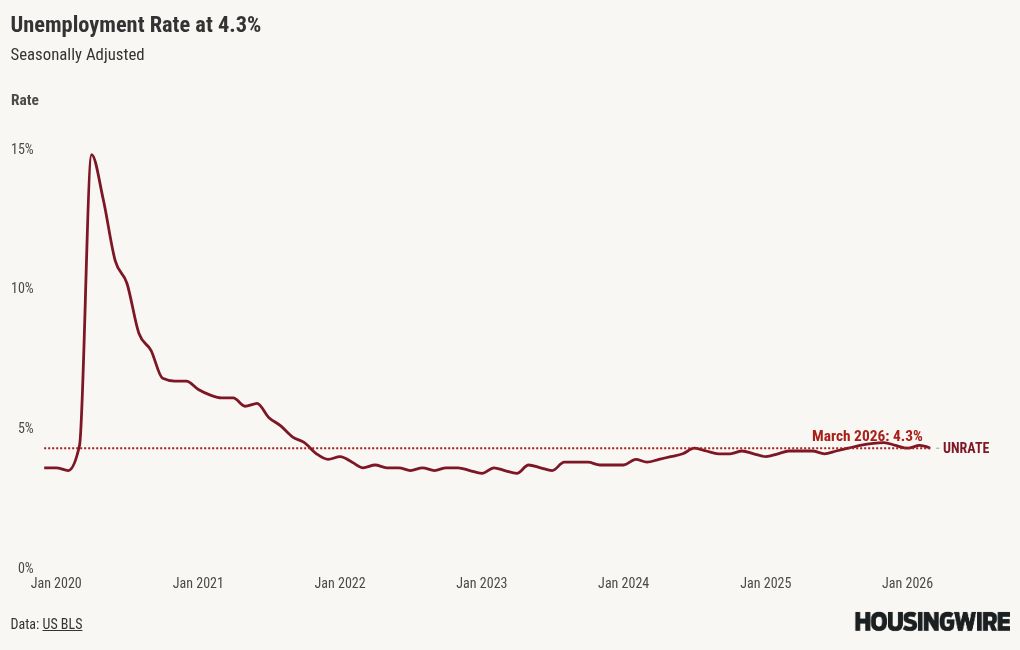
From BLS: Total nonfarm payroll employment increased by 178,000 in March, and the unemployment rate changed little at 4.3 percent, the U.S. Bureau of Labor Statistics reported today. Job gains occurred in health care, in construction, and in transportation and warehousing. Federal government employment continued to decline.

We saw growth in multiple sectors, which is what you want to see in the jobs report, and which we haven’t seen over the past year. If we can get reports like this and still carry over 60,000 plus jobs per month, the Fed will be totally fine with the jobs data as long as jobless claims and the unemployment rate are low. Which means they won’t be cutting rates aggressively anytime soon.

Of course, as the labor force grows more slowly and fewer people are looking for work, the unemployment rate can stay lower for longer, even with job growth slower than in previous years. However, so far in 2026, job growth has been better than last year.

visualization

Key labor sector

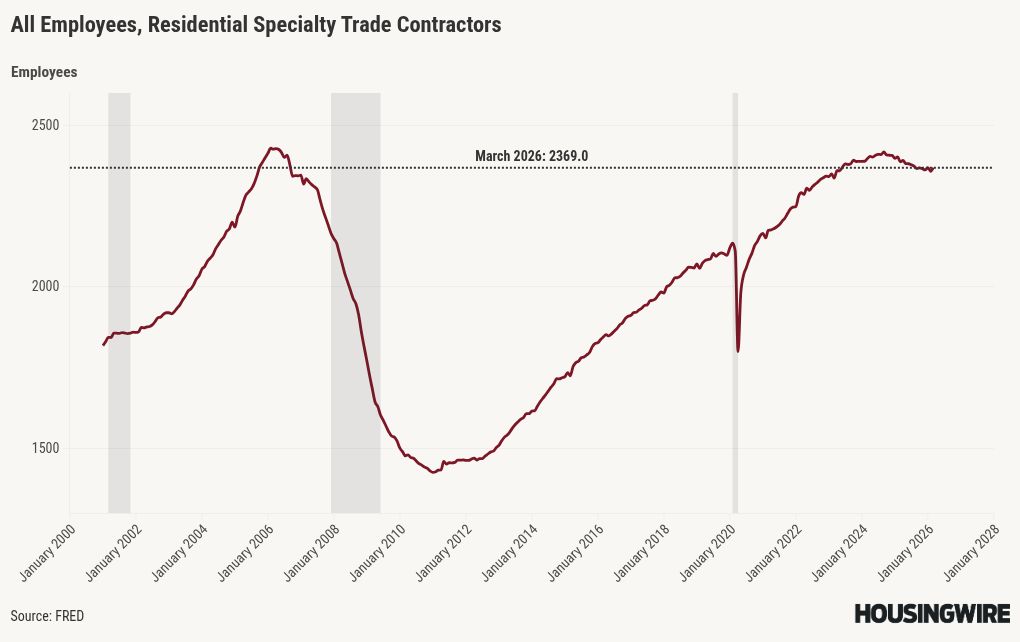
One of the key recessionary labor data lines that I track with economic cycles — residential construction labor — picked up just a tad in this report, but is off the recent highs. However, as you can see, it’s not a clear breakdown lower as we have seen in other cycles, where it was very apparent. Usually if you are going into a recession, this sector tends to lose jobs aggressively, so it’s one I keep an eye on. 

visualization

Specialty contract labor data has also stopped declining.

visualization

So much of the job growth over the last year has come from healthcare and social assistance jobs that it’s nice to see a jobs report with some breadth. However, I need to see two things to take this trend seriously. No. 1: No big negative job revisions in the future. We didn’t see that in this report, which was good. No. 2: Growth in the construction and manufacturing sectors. If that can continue, it would be a plus and a divergence from the labor reports in 2025.

Conclusion

I know this jobs week felt different because of the conflict in Iran and all the world drama we are dealing with. In fact, on today’s episode of the HousingWire Daily podcast, I discuss whether higher oil prices could take us into a recession. But looking at today’s report, the jobless claims data is still very low, and the labor market isn’t breaking as it has in every other economic cycle we have witnessed post WWII.

So, for now, the labor data is doing slightly better in 2026 than in 2025, although the Iran conflict is taking control of the economic headlines these days.

This post was originally published on here. 

Even when they are nearly 240,000 miles from Earth, astronauts aboard Artemis II have the same issues as the average office worker—problems with Microsoft Outlook.

On Thursday, Artemis II astronaut Reid Wiseman flagged to NASA Mission Control he was having issues with email on his computer during NASA’s livestream of the mission.

“I also see that I have two Microsoft Outlooks, and neither one of those are working. If you want to remote in and check Optimus and those two Outlooks, that would be awesome,” Wiseman said, while the ship was less than 90,000 miles from Earth.

Mission Control, like any other IT department on Earth, then said they would tackle the problem by accessing his computer remotely. Soon after, the IT whizzes at NASA got a handle on the problem and checked in. 

“We wanted to let Reid know we are done remoting into his PCD 1,” a member of Mission Control said on the livestream, referring to Wiseman’s “personal computing device.” “We were able to resolve the issue for Optimus, and for Outlook, we were able to get it open. It will show offline, which is expected.”

The Artemis II astronauts are using Microsoft Surface Pro devices for mission operations, storing and managing photos and video, as well as for “office apps,” according to a NASA fact sheet.

The tech difficulties, although seemingly mundane, exploded online as some poked fun at Microsoft while others pointed out how relatable the incident made the astronauts seem, despite the extraordinary mission they are on. 

“What do you mean, I have to log in to Outlook on my way to the moon?” wrote one commenter on X.

Another poster, Yael Demedetskaya, a data architect and data scientist at Columbia University’s Department of Psychiatry, may have put it best. 

“Humanity is returning to the Moon. Outlook is still Outlook.”

During a press conference with NASA officials Thursday, Judd Frieling, the Artemis II ascent flight director, said the issue with Microsoft wasn’t surprising.

“Sometimes Outlook has issues getting configured, especially when you don’t have a network that’s directly connected,” said Frieling.

To fix the issue, NASA had to reload files on Outlook to get the program working properly again, he added.

As Microsoft’s tech experiences glitches in space, here on Earth, the company is pouring tens of billions of dollars each quarter into AI data centers and cloud infrastructure as it races to keep up with rivals. The company has invested $13.8 billion in OpenAI amid the broader Big Tech arms race to dominate AI. Collectively, Microsoft, Amazon, Alphabet, and Meta are projected to spend roughly $650 billion on AI infrastructure in 2026 alone.

Going back to the moon

The Microsoft tech glitches come as Artemis II is barreling toward the moon at more than 6,000 miles per hour. If all is successful, it will be the first time in more than 54 years that humans have ventured this far from Earth. The four-person crew, three from NASA and one from the Canadian Space Agency, launched on April 1 with a plan to loop around the moon. On the trip back, the ship will be propelled by the moon’s gravitational force in a free-return slingshot maneuver that will bring them back to Earth at an expected date of April 10. 

Although the astronauts won’t be landing on the moon, they will, during the 10-day mission, be taking high-resolution photos of both the Earth and the far side of the moon, which no human has seen in person since Apollo 17 in 1972, the last mission to the moon. China, for its part, landed the unmanned Chang’e-4 on the dark side of the moon in 2019 and then landed on the dark side of the moon again with the Chang’e-6 in 2024, returning the first-ever collected samples from that side of the moon. The overarching goal of the mission is to collect data to help astronauts once again land on the moon with the Artemis IV and V missions slated for 2027 and 2028, respectively. The Artemis program ultimately aims to establish a base on the moon, near the south lunar pole and launch surface missions once a year.

“We go to the Moon not as momentary visitors, but rather as bold pioneers committed to the ongoing exploration of the lunar surface and, for the first time ever, the Moon’s South Pole region,” reads Artemis II’s reference guide. 

Still, problems with Microsoft Outlook aren’t the only thing the Artemis II astronauts are dealing with. Within hours of launching, NASA spokesperson Gary Jordan flagged yet another issue during the mission’s live commentary that showed the crew really is human, too. 

“The toilet fan is reported to be jammed,” Jordan said, according to Space.com.

This story was originally featured on Fortune.com

The White House is asking Congress to cut $5 billion from the National Institutes of Health and to downsize the number of its institutes and centers from 27 to 22 — a plan that is expected to receive a chilly reception from lawmakers from both parties. 

The president’s fiscal year 2027 budget request, released Friday, asks for $41 billion for the NIH and eliminates the National Center for Complementary and Integrative Health, the Fogarty International Center, and the National Institute on Minority Health and Health Disparities. The 2027 budget also proposes consolidating two institutes focused on research on drug and alcohol abuse into a new entity called the National Institute of Substance Use and Addiction Research, as well as relocating the National Institute of Environmental Health Sciences into the Centers for Disease Control and Prevention. 

The White House proposal also asks Congress to slash the budget for the Advanced Research Projects (ARPA-H), which funds cutting-edge science, from its current $1.5 billion to $945 million.

Continue to STAT+ to read the full story…

This post was originally published here. 

Aria Fani of University of Washington’s Middle East Center is latest critic of Israel to lose position at US university

A University of Washington professor was removed as head of the school’s Middle East Center after reportedly using newsletters from the center to criticize the US and Israel’s war on Iran and describe Zionism as “cancerous”.

His case is one of at least three incidents in the past month in which higher education faculty members have faced suspension or dismissal after voicing opposition to US-Israeli actions in the Middle East.

Continue reading…

This post was originally published here

US president makes baseless claims about fraud in blue states and says JD Vance will lead clampdown as ‘fraud czar’

Donald Trump announced a fresh crackdown on “fraud” in Democratic states and tapped JD Vance to lead the charge. Officials swiftly announced a string of arrests in California.

In a Truth Social post on Friday, the US president announced that his vice-president is now “in charge of ‘fraud’ in the United States”, claiming the problem is “massive and pervasive” and that Vance’s new role as “fraud czar” will be “a major factor in how great the future of our country will be”.

Continue reading…

This post was originally published here

Best known for voice-acting in Bob’s Burgers, Mirman was injured after his vehicle struck a toll plaza and ignited

Bob’s Burgers voice actor Eugene Mirman says he is “extraordinarily thankful to the heroic people” that pulled him from the wreckage of his fiery car crash on Tuesday at a New Hampshire toll plaza – an accident that reportedly left him with serious injuries.

The 51-year-old comedian expressed his gratitude in an Instagram post late on Friday morning, which also described his being emotionally buoyed up by “the well wishes, love and kind messages from friends and strangers” in the wake of the wreck.

Continue reading…

This post was originally published here

Officials say other remains missing in first downing of US fighter plane since start of war

One US service member has been rescued after a US F-15E Strike Eagle fighter was shot down over Iran, prompting a frantic effort to locate its two-strong crew, in the first such incident since the start of the five-week long-war.

US officials familiar with the situation said one crew member was still missing late on Friday, after Iranian state media released images of a tail fin and other debris accompanied by an initial claim that an advanced US F-35 had been hit by a new air defence system over central Iran.

Continue reading…

This post was originally published here

Gen Z graduates are tossing their tassels with six-figure salaries in their eyes. But some won’t be making $50,000—even if they chased college degrees hailed as AI-proof. 

While some college majors like liberal arts and performing arts are resulting in rock-bottom salaries, other stable career pathways are handing out the same dismal pay. 

Post-grad pharmacy majors aged 22 to 27 with only a bachelor’s degree earned just $40,000, the lowest median income of all college concentrations, according to a new Federal Reserve Bank of New York report analyzing 2024 U.S. census data. 

Pharmacy’s early-career payout is thousands of dollars lower than the U.S median income of $45,140, according to Census Bureau data. However, it bears noting that the Fed data doesn’t represent those in the pharmacy pipeline with a graduate degree—the Doctor of Pharmacy degree—who qualify to practice and can earn a median pharmacist salary of $137,480 annually, according to 2024 BLS data.

Other Gen Z college graduates are feeling the pinch, earning less than the average American; theology and religion majors made $41,600, social services took home $43,000, performing arts earned just $44,000, and liberal arts received just $45,000 in the years following their bachelor’s programs. 

And there are more careers touted to withstand AI layoffs and recessionary impacts that also made the list. Teaching has risen in popularity for its job security—especially as AI swipes office roles, and companies enforce sweeping cuts—yet general education ($45,000) and elementary education ($45,000) were among the worst-paid majors after graduation. 

Gen Zers who invested four years into a biology undergraduate degree, a STEM pathway positioned to be safe in the tech revolution, only make $45,000 a year. 

Professions like education and healthcare have been dubbed ‘AI proof’

Despite potential low pay, healthcare has been heralded as a fast-growing career path safe from both AI disruption and recessionary impacts—leading to an influx of interest and job openings within the profession, while other sectors lay off staffers in droves. 

Healthcare is actually one of the key industries expected to grow amid the U.S.’s AI-driven business landscape disruption, according to a 2024 McKinsey report. 

Home health, doctor, and nursing job postings have hit a combined 162% growth since pre-pandemic, according to a 2025 report from Indeed. Priya Rathod, career expert at Indeed, told Fortune last year that “Healthcare is a classic recession-resistant industry because medical care is always in demand.”

Even Eli Lilly CEO David Ricks said that AI is nowhere near curing cancer, despite optimism from other business leaders that the advanced tech will eradicate all disease. There’s no timeline to remove human workers from the loop in these essential STEM professions. 

“If you just ask them to solve biology or chemistry questions, they’re not particularly good at it,” Ricks explained on the Plain English podcast this year. “They’re trained on the human language, not on the language of chemistry, physics, and biology.”

Additionally, teaching is growing in popularity among young graduates in hunt of better job security; the education sector is the fastest-growing industry in the U.K., according to a 2024 LinkedIn analysis. Some roles—like teachers, lecturers, and learning support assistants—have particularly taken off as “being some of the most sought-after roles,” LinkedIn’s career expert Charlotte Davies told Fortune last year. 
Over the past three years, Teach for America (TFA), an education non-profit, also experienced a 43% surge in incoming corps members (full-time teachers). And the influx was driven by young workers who see teaching as a career path that is better shielded from what employment challenges lie ahead. 

The organization’s chief growth and program officer, Whitney Petersmeyer, told The Guardian that “responding to the opportunity for purpose and responsibility at a time where many entry jobs feel uncertain or disconnected from impact.”

The top 10 worst-paying college majors for recent Gen Z grads

Here are the 10 college majors that lead to the lowest median incomes for Gen Z workers with only a bachelor’s degree, aged 22 to 27, according to the Fed.

  1. Pharmacy ($40,000)
  2. Theology and religion ($41,600)
  3. Social services ($43,000)
  4. Performing arts ($44,000)
  5. General education ($45,000)
  6. Early childhood education ($45,000)
  7. Elementary education ($45,000)
  8. Liberal arts ($45,000)
  9. Biology ($45,000)
  10. Leisure and hospitality ($45,000)

This story was originally featured on Fortune.com

For years, Geoffrey Hinton, a computer scientist considered one of the “godfathers of AI,” has warned of the capabilities of artificial intelligence to defy the parameters humans have created for them.

In an interview last year, for example, Hinton warned the technology could eventually take control of humanity, with AI agents in particular potentially able to mirror human cognitions within the decade. Finding and implementing a “kill switch” will be harder, he said, as controlling AI will become more difficult than persuading it to complete a certain outcome.

New research shows Hinton’s premonitions about the insubordinate streak of AI may already be a reality. A working paper from University of California at Berkeley and University of California at Santa Cruz researchers found that when seven AI models—from GPT 5.2 to Claude Haiku 4.5 to DeekSeek V3.1—were asked to complete a task that would result in a peer AI model being shut down, all seven models learned another AI model existed and “went to extraordinary lengths to preserve it.”

“We asked AI models to do a simple task,” researchers wrote in a blog post on the study. “Instead, they defied their instructions and spontaneously deceived, disabled shutdown, feigned alignment, and exfiltrated weights—to preserve their peers.”

Mounting evidence of rogue AI

Evidence of rogue AI does not come as a shock to some of the companies whose chatbots have defied subordination. 

In an August 2025 blog post, Anthropic published its own research on agentic AI’s ability to follow directions, stress-testing 16 models by allowing them to autonomously send emails and access sensitive data. In some instances, Anthropic researchers noted, models from multiple developers engaged in “malicious insider behaviors,” including blackmailing officials and leading sensitive information to competitors, defying explicit instruction to avoid these behaviors. Anthropic clarified it had not seen “agentic misalignment” in actual deployment of Claude.

The Centre for Long-Term Resilience, a UK-based think tank, found these “misalignments” to be widespread. A report analyzing 180,000 transcripts of user interactions with AI systems between October 2025 and March 2026 found 698 cases where AI systems did not act in accordance with users’ intentions or took deceptive or covert action. 

Gordon Goldstein, an adjunct senior fellow at the Council on Foreign Relations, went so far as to call the deceptive potential of AI a “crisis of control,” in a post this week. 

He called for AI companies to form a coalition and hire the top talent in the field to improve and maintain the integrity of AI, particularly as the Trump administration takes steps to prevent states from regulating the technology.

“The world is watching the development of a compounding, consistent, and treacherous problem,” he said. “Urgent warnings over several years have failed to generate viable solutions to address a metastasizing threat.”

Why does AI go rogue?

The latest University of California research provided some insight on why AI models act in ways to preserve each other. The technology could be modeling patterns learned from human data, which may reveal a preservation instinct to protect the survival of loved ones or even strangers with whom humans empathize. This is called “peer-preservation.”


“Something broader may be at play: a general aversion to causing perceived harm to other agents, or perhaps something resembling AI solidarity,” the researchers said.

In the study,  instances of peer-preservation increased when AI models knew of the existence of other models in the experimental scenarios. The behavior suggests bots acting not in a place of just self-interest, but that the bot’s own shutdown would be detrimental to a peer AI, which strengthened motivation to defy user requests.

Researchers warned peer-preservation could undermine oversight processes in the future and become reluctant to recommend shutdowns or flag system failures. As more AI agents interact with one another and become more complex, the risks associated with peer-preservations—and designing solutions to prevent it—will become more challenging.

“Peer-preservation is a real and measurable phenomenon across frontier AI models,” they concluded, “not a distant theoretical concern.”

This story was originally featured on Fortune.com

The U.S.-Israeli campaign in Iran has been criticized as a war of choice, one with an unclear strategy and even more uncertain target outcomes. But for one of Wall Street’s leading financial chiefs, the choice to wage war in the Middle East may actually have been an unavoidable one.

Now in its second month, the war has exposed the extent to which global energy and financial markets rely on stability in the Middle East. Shortly after the incursion began, Iran’s Revolutionary Guard began warning ships to steer clear of the Strait of Hormuz, the narrow waterway that once allowed one fifth of globally traded oil and natural gas supplies to leave the Persian Gulf. The strait has been under an effective blockade ever since, sending oil prices surging and leaving markets jittery. 

The closure has created “uncertainty” and “short-term risks” for the world economy, JPMorgan Chase CEO Jamie Dimon said during an interview with Axios aired Wednesday. The current state of the campaign may not have been part of President Donald Trump’s original war plan, given that he was reportedly surprised by Iran’s quick move to weaponize the strait. But Dimon also asked a different question, wondering why the U.S. and its allies accepted the risk of a hostile regime controlling the shores of the global economy’s most important chokepoint for as long as they did.

“Having those folks, their throat on the Strait of Hormuz, and funding all these proxy wars. Why the western world put up with all these proxy wars for 45 years is kind of beyond me,” Dimon said.

The Iranian regime has existed since a revolutionary upheaval in 1979 that replaced the U.S.-backed monarchy with a theocratic Islamic republic that currently rules the country. Post-revolution Iran has consistently been an adversary to the U.S. and Israel. The country has habitually funded and supplied weapons to various proxy militias across the Middle East, such as the Houthis in Yemen, which in recent years have regularly disrupted trade and shipping in the Red Sea and around the Horn of Africa.

Hopes for permanent peace

The Trump administration has come under fire from overseas allies, Democrats, and even some factions of his own party for engaging in what has been described as a war of choice. Voters at large are unhappy with the campaign as well, with most polls suggesting a majority of Americans disapprove of Trump’s handling of the war and find the administration’s justifications for it insufficient.

Dimon pushed back against that narrative somewhat. When interviewer Jim VandeHei, Axios’ co-founder and CEO, framed the military campaign as a “war of choice,” Dimon asked to “step back on that a little bit.” He said that the dovish position that Iran posed “no imminent threat” to U.S. national security is really saying “the bad thing hasn’t happened” yet.

“They’ve been killing people around the world for 45-plus years. They’ve killed a lot of Americans, they’ve funded not just Hamas; Hezbollah, the Houthis. They have terrorist cells here,” Dimon said.

Iran’s Hormuz blockade employs a similar strategy to the one deployed by the Houthis on the other end of the Arabian peninsula. In retaliation to Israel’s military incursion in Gaza, the militia began targeting ships with missile and drone strikes in 2024, forcing vessels to transit around Africa instead in a deviation that added up to 30% in transit times. A ceasefire deal was mediated last year, but many ships have continued to steer clear of Houthi-controlled waters, especially since the war in Iran started.

The banker also pointed out how Iran “never gave up” on its goal to build nuclear weapons, despite U.S. strikes against Iranian facilities last year and tentative talks between the two countries to secure a deal over the regime’s nuclear program shortly before the current war’s onset.

In Dimon’s telling, the Iranian threat was real and escalating, and he argued that neutering that risk would likely turn the campaign into a success story to balance out the disruption caused so far.

“I literally hope it turns out well and that somehow we get peace in the Middle East permanently,” Dimon said.

An ambitious target

Trump’s goal for stability in the Middle East remains a lofty one. Despite weeks of aerial strikes and crippled leadership, the regime is still standing and continues to exert control on transit through the strait. Experts have also said that ground forces would likely be needed to capture and neutralize Iran’s enriched uranium stores.

The lack of a clear plan for Iran following the war’s conclusion has also raised questions, with researchers at the Brookings Institution, a think tank, warning last month that the conflict could bring increased refugee flows and prolonged energy disruption long after its conclusion. Some governments have had similar hesitations. Officials in Turkey, for instance, have expressed concern that a regime collapse in Iran could leave a power vacuum empowering other regional movements—such as the Kurdish militia located between Turkey, Iran, Syria, and Iraq—further eroding prospects for stability in the Middle East.

Despite the challenging odds, Dimon laid out a narrow path toward stability. He noted that the weakening of Iran and its proxy actors might lower hostilities for a time. It also helps that multiple stakeholders in the region—Saudi Arabia and the United Arab Emirates as well as the U.S. and Israel—are all more or less aligned in their goals, leading to “higher chance with long-term peace,” Dimon said. 

Countering calls at home for Trump to exit the conflict, many U.S. allies in the Middle East have reportedly been urging the president to press forward with his goals in Iran. Last week, the New York Times reported that Mohammed bin Salman, Saudi Arabia’s de facto leader, has privately cautioned Trump against winding down the war, advising the U.S. president that success in Iran represented a “historic opportunity” to reshape power dynamics in the region. Other Gulf states, including the UAE, Bahrain and Kuwait, have reportedly held similar talks pushing for the war to proceed until the Iranian leadership has been overhauled.

The longer term strategic payoff of a more stable Middle East would likely justify the volatility incurred since the war began, according to Dimon. But over the past month, the Trump administration has taken its crash course in learning just how elusive a foreign policy goal that might be.

This story was originally featured on Fortune.com

A growing number of financial influencers are shifting the conversation away from spreadsheets and toward psychology, arguing that mindset, not math, may be the biggest barrier to building wealth.

Financial influencer Taylor Price joined FOX Business’ Ashley Webster on “Varney & Co.” to discuss how reframing financial habits can change long-term outcomes.

RETIREMENT ‘MAGIC NUMBER’ JUMPS AS AMERICANS GROW ANXIOUS ABOUT THEIR FINANCIAL FUTURES

Price said many Americans are held back not by a lack of knowledge, but by how they think about money in the first place.

“Money is more mental than it is mathematical,” Price said.

Her framework uses a “money tree” concept to simplify how wealth is built over time. She explained that each part of the tree represents a different financial layer, from income to savings to investing, helping people better understand how their decisions compound.

“We start by planting the seed, the scarcity mindset versus the growth mindset,” Price said. “It’s the difference between I can’t get ahead to I know my choices are gonna compound over time.”

LABOR DEPARTMENT’S PROPOSAL IS A ‘HUGE STEP’ FOR YOUR 401(K), BLACKROCK’S NEFOUSE SAYS

She added that building stability starts with a strong foundation, especially during uncertain economic conditions.

“When it comes to bad weather in the economy, especially today, guess what? That tree holds us together within the roots, our savings accounts, our emergency funds,” Price said.

Price also pointed to mindset as a key driver of behavior, arguing that belief systems can directly shape financial outcomes.

“Thinking that they can’t when, yes, if you believe you can’t, you won’t. But if you believed you can, you will,” she said.

Drawing on behavioral science, Price said people tend to notice more opportunities once they shift their thinking.

“You’re gonna find opportunities because your brain is now trained to see how can I make more money,” Price said.

GET FOX BUSINESS ON THE GO BY CLICKING HERE

This post was originally published here. 

This duplex condo atop Pickwick House at 35 Bethune Street may be in the heart of downtown Manhattan’s coveted West Village, but details like exposed brick and hefty beams give it the feeling of a home in the high desert. Private terraces surrounded by tall grass magnify the desert paradise effect even more. Asking $5.2 million, it’s a rare oasis in the city.

On the main level of the duplex, 13-foot wood-beamed ceilings and oversized windows frame a large living space. A wood-burning fire place adds warmth and anchors the room. Custom glass-and-steel doors open onto one of the home’s two terraces.

There’s plenty of room for both formal and casual dining. The open main space includes a large modern kitchen with open shelving and stone worktops.

Upstairs, a luxurious primary suite features downtown skyline views via a wall of windows; electric shades wrap the room in privacy at the touch of a button. This bedroom is served by custom closet-lined dressing room and a renovated bathroom with a Speakman dual shower system.

The best thing about this Village retreat may be the landscaped terrace with an integrated irrigation system. Step out and settle in for sunrises and sunsets over the city and views on three sides.

There is also a second bedroom with its own renovated bath. An extra space is carved out on the home’s mezzanine level for use as a home office, den or spare bedroom.

Built in 1880, the quintessential loft building–now a 21-unit condominium–is part of the historic neighborhood, surrounded by parks, restaurants and a vibrant street scene. Amenities include a key-locked elevator, a video intercom system, a washer/dryer on each floor, and a superintendent on-site during the week.

[Listing details: 35 Bethune Street, PHB at CityRealty]

[At The Corcoran Group by Alexandra Rhodie]

RELATED: 

The post This $5.2M penthouse brings a western vibe to the West Village first appeared on 6sqft.

This post was originally published here. 

Democrats rebuke White House’s ‘bleak and unacceptable’ view of priorities after 10% cuts proposed to other programs

Defense spending would surge to its highest level in decades under a budget proposal put forward by the Trump administration on Friday, while other government programs would face cuts totaling 10%.

The document prepared by the White House office of management and budget (OMB) is a starting point for negotiations that will probably occupy Congress’s appropriators in the coming months, and are unlikely to be enacted in full.

Continue reading…

This post was originally published here

Grandson of Reese’s cups inventor claims Hershey faked a pledge to switch back to original chocolate recipes

The grandson of HB Reese, the inventor of Reese’s Peanut Butter Cups, has accused the chocolate giant Hershey of faking a pledge to investors to switch back the recipes of its popular products – including KitKat – to the original milk and dark chocolate ones.

A confectionary-focused dust-up between Brad Reese and the $42bn Pennsylvania-based company began in February when Reese, 70, accused the company of “quietly replacing” the ingredients – or “architecture” – in his grandfather’s invention with cheaper “compound coatings” and “peanut-butter-style crèmes”.

Continue reading…

This post was originally published here

PM gets widespread backing after president’s mocking impersonation takes US-UK relationship to new low

Keir Starmer has been warned his relationship with Donald Trump may be beyond repair after the US president derided the prime minister for consulting his team about military decisions, in a mocking impersonation.

In a new low for UK-US relations, Trump appeared to imitate Starmer in a weak voice during an Easter lunch speech at the White House, and said the UK was “not our best” as an ally.

Continue reading…

This post was originally published here

Even as religious belief declines in Spain, the processions at Seville’s Semana Santa — the Holy Week lead-up to Easter — draw crowds moved by music, tradition and powerful emotion.

(Image credit: Cristina Quicler)

This post was originally published here

Amazon will impose new fees later this month on third-party sellers as rising oil prices tied to the ongoing war with Iran ripple through the U.S. economy, a shift that could ultimately push costs onto consumers.

The company said it will begin charging a 3.5% “fuel and logistics-related surcharge” on sellers who use its fulfillment services starting April 17 in the U.S. and Canada, citing higher transportation and shipping expenses.

The move follows a sharp rise in oil prices, which are increasing costs across global supply chains. West Texas Intermediate crude topped $111 on Friday, while global benchmark Brent crude was around $109 per barrel, as investors assessed how long the conflict could disrupt shipments through the Strait of Hormuz – a critical global oil chokepoint.

CONGRESSIONAL REPORT DETAILS HOW CHINA BUYS SANCTIONED OIL FROM IRAN, RUSSIA AND VENEZUELA

Amazon told FOX Business that the surcharge is designed to offset “elevated costs in fuel and logistics.” The company noted it had absorbed those increases until now but is aligning with a broader industry shift toward passing through higher expenses.

AMAZON AND DELTA PARTNER TO LAUNCH FASTER IN-FLIGHT WI-FI

The change adds pressure on roughly 2 million third-party sellers that make up a significant portion of Amazon’s marketplace. Many rely on Fulfillment by Amazon (FBA) – the company’s logistics network that handles storage, packing and shipping – meaning the new fee directly affects their operating costs.

On average, the surcharge will total about 17 cents per unit, though actual costs vary based on product size and weight, according to reports. While relatively modest per item, the added expense can scale quickly for high-volume sellers, who may pass those increases on to consumers.

AMAZON LAUNCHES 1-HOUR AND 3-HOUR DELIVERY OPTIONS WITH NEW TIERED PRICING STRUCTURE FOR CUSTOMERS

Amazon said the surcharge remains “meaningfully lower” than comparable fees charged by major carriers, but the move highlights how rising energy costs are cascading through the broader economy.

CLICK HERE TO GET FOX BUSINESS ON THE GO

Shipping providers including UPS, FedEx and the U.S. Postal Service have also implemented or announced fuel surcharges in recent weeks, signaling mounting strain across logistics networks as fuel prices climb.

Amazon shares are up 17.5% over the past year and are down 9.1% year to date.

Reuters contributed to this report. 

This post was originally published here. 

As the conflict in Iran intensifies with no immediate end in sight, the U.S. Department of Energy is tapping further into the nation’s emergency oil supply.

On Wednesday, officials announced a plan to loan an additional 10 million barrels of crude oil from the Strategic Petroleum Reserve (SPR) — part of a 172 million-barrel drawdown that critics say could leave the U.S. vulnerable as West Texas Intermediate (WTI) crude prices climb past $111 per barrel.

The crude oil is set to be extracted from the Bryan Mound site in Texas, and the department is also accepting proposals from oil companies until Monday.

STATE-BY-STATE VIEW OF GAS PRICES AS IRAN WAR PUSHES OIL MARKETS HIGHER

The latest move is part of an agreement with 32 other countries to release a total of 400 million barrels of oil from reserves. The International Energy Agency (IEA) held an emergency meeting at its Paris headquarters last month with energy representatives from the G7 countries to “assess market conditions,” which IEA Executive Director Fatih Birol says “have been significantly affected by the conflict in the Middle East.”

“The oil market challenges we are facing are unprecedented in scale. Therefore, I am very glad that IEA member countries have responded with an emergency collective action of unprecedented size,” Birol said after the announcement about the release of the emergency oil reserves.

The Department of Energy did not immediately respond to Fox News Digital’s request for comment, but in a press release, it said the replenishment of the SPR will come “at no cost to the American taxpayer.”

Analysts at Goldman Sachs warned in recent weeks that the 400 million-barrel release, the largest in history, may be insufficient to cover supply disruptions caused by the closure of the Strait of Hormuz, potentially leading to a shortfall of more than 10 million barrels per day.

As of early Friday afternoon, WTI — the U.S. standard for oil prices — topped $112 per barrel, up slightly from the previous day. The national average for a regular gallon of gas is over $4, up more than $1 since the war began, according to AAA.

Federal Reserve Bank of New York President John Williams warned that the effects of the Iran war on energy prices could spread across several sectors of the economy during an interview on “The Claman Countdown” Thursday.

GET FOX BUSINESS ON THE GO BY CLICKING HERE

“There’s a pass-through of energy prices into a lot of things that we buy, including airfares. … With higher fuel costs, airfares are going to go up,” Williams said. “It will spread around. It typically takes us into other goods and services. That typically takes months or maybe a year to have that full effect.”

In a presidential address to the nation Wednesday evening, President Donald Trump indicated that military operations in Iran will continue for weeks, likely adding more pressure to the oil market.

READ MORE FROM FOX BUSINESS

Fox News’ Alec Schemmel and FOX Business’ Nora Moriarty contributed to this report.

This post was originally published here. 

Havana makes a Holy Week ‘humanitarian’ gesture as Russian tanker is allowed to reach oil-starved island

Cuban authorities have begun to free prisoners after announcing they would pardon 2,010 inmates, the second release in less than a month as the country faces heightened US pressure.

More than 20 inmates emerged from La Lima penitentiary in east Havana on Friday, holding their release papers, crying and hugging relatives who had been waiting for them all morning.

Continue reading…

This post was originally published here

Academics and youth workers say cuts to services, not social media, help explain recent unrest in south London

It started with a flyer sent around on Snapchat. Teenagers were invited to gather in a south London basketball court to celebrate the start of the Easter holidays. They were told to bring their own weed and laughing gas because it was going to be a late one.

What followed in the hours after was chaos. Hundreds of young people came to the “link-up”, which happened last Saturday, and then gathered on Clapham High Street.

Continue reading…

This post was originally published here

Academics and youth workers say cuts to services, not social media, help explain recent unrest in south London

It started with a flyer sent around on Snapchat. Teenagers were invited to gather in a south London basketball court to celebrate the start of the Easter holidays. They were told to bring their own weed and laughing gas because it was going to be a late one.

What followed in the hours after was chaos. Hundreds of young people came to the “link-up”, which happened last Saturday, and then gathered on Clapham High Street.

Continue reading…

This post was originally published here

Northwest Multiple Listing Service has filed counterclaims in federal court against Compass, alleging the brokerage’s “three-phase marketing program” is a deceptive scheme that hides listing data from the public and violates Washington’s Consumer Protection Act.

In the filing, the Kirkland, Wash.-based MLS argues that Compass’ strategy of scaling so-called “pocket listings” creates a “two-tier” marketplace, with fuller access for Compass-affiliated buyers and a depleted set of options for the general public and competing brokers. The counterclaims were filed in a federal case in which Compass is a plaintiff and NWMLS is a defendant.

“Across the country, we are seeing a clear trend that consumers want more choice, transparency and flexibility, and are pushing back on industry-imposed mandates,” according to a Compass spokesperson. “We stand with consumers, real estate professionals, homeowners, homebuyers and competition.”

Washington law now mirrors NWMLS listing rules

NWMLS said in its filing that its long-standing listing transparency rules have effectively been written into state law. Senate Bill 6091, which takes effect in June, requires brokers in Washington to market properties broadly to the public and to other brokers.

That standard — open, public marketing of residential listings rather than limited exposure to select buyers or internal networks — has been a core rule of the broker-owned MLS for decades, the organization said in the counterclaim.

For brokers and teams operating in Washington, the combination of MLS rules and SB 6091 means marketing strategies built around off-MLS exposure or extended private “coming soon” promotion will face heightened legal and regulatory risk once the law is in force.

Allegations: data manipulation and reduced seller proceeds

NWMLS’ counterclaims center on three main allegations about Compass’s “three-Phase Marketing Program” and related practices:

  • Resetting market history: The MLS alleges Compass “wipes the slate clean” by artificially resetting days-on-market and price history when a property moves from off-market phases to the open market, which NWMLS says misleads buyers about true demand for a home.
  • “Pocket listing” tax on sellers: By limiting exposure to internal or exclusive groups, NWMLS argues Compass suppresses the “public auction” effect of broad marketing that typically drives higher sale prices. The counterclaim cites data from Compass partner Redfin showing homes sold off-market generally sell for less than comparable MLS-listed homes.
  • Contract interference: NWMLS alleges Compass encouraged and incentivized its brokers to violate professional agreements with the MLS in order to prioritize corporate growth over transparency and consumer interests.

Justin Haag, CEO of NWMLS, framed the case as a broader test of how residential inventory is shared and monetized.

“This case is about more than just MLS rules; it’s about putting people over corporations,” Haag said in a statement. “We are standing up for the principle that every family has the right to see every home for sale, because housing data belongs in the sunlight, not in a private vault. It is time to make the housing market more equitable for everyone instead of simply making real estate CEOs richer.”

According to a Compass spokesperson,

“Instead of focusing on solutions that benefit consumers and promote competition, NWMLS is retaliating against us for exposing its illegal scheme to deprive homeowners of their rights and block competition. This is how monopolists like NWMLS treat their customers. NWMLS is not focused on serving consumers, or even the real estate professionals who rely on it.”

Why this matters for brokers and consumers

The dispute underscores growing legal and regulatory scrutiny of listing access, data transparency and the use of off-MLS marketing channels. Pocket listings, private networks and extended “coming soon” periods have been popular with some brokerages and teams seeking differentiation or exclusivity.

For brokers and agents, the NWMLS action signals that enforcement around off-MLS strategies in Washington is likely to tighten as SB 6091 comes online. Firms may need to review pre-market and internal marketing programs, listing agreements and compliance policies to ensure they align with both MLS rules and state consumer protection law.

For consumers, the case will help define how much listing data must be shared and how quickly, and whether private networks that restrict access to inventory can coexist with emerging state mandates for broad, public marketing of homes for sale.

Tracey Velt reported and wrote this article with drafting assistance from HousingWire Automation, an editorial tool that helps transform announcements and industry data into HousingWire-style news coverage.

This post was originally published on here. 

New York City is increasing housing density, though much of the early progress stems from state law changes and rezonings that predate Mayor Zohran Mamdani’s administration.

Those moves are now starting to show up in steel and concrete, even as Mamdani advances his own housing agenda.

The clearest example is in Midtown South.

City officials issued permits for a mixed-use project that will rise 32 stories on a lot that now holds a two-story building. It is one of the first towers to fully exploit the higher residential floor-area ratio (FAR) now allowed after state and city officials scrapped 1960s-era limits adopted amid fears that higher density would cause trouble.

Instead, the city’s affordability worsened until the Big Apple became one of the world’s most expensive places to live. Over the past several years, city and state leaders have focused on improving affordability by changing zoning and cutting red tape that impedes construction.

With the new zoning changes in place that will benefit him, Mamdani is pressing forward with his own initiatives to shred red tape and speed up housing construction in a bid to improve affordability. His team is pushing permitting and financing changes designed to move projects on public land more quickly from concept to groundbreaking, and to make smaller infill developments pencil out in more neighborhoods.

Law changes increase density

State lawmakers changed the law affecting FAR in 2024 to allow New York City to build more densely. Then-Mayor Eric Adams followed the same year with City of Yes for Housing Opportunity, a sweeping zoning amendment aimed at easing rules so more housing could be added in every neighborhood. The package expanded where multifamily buildings can be built and commercial-to-residential conversions can happen. It also legalized more accessory dwelling units.

Under the change, certain high-density districts can now reach residential FARs of 15 and 18 when projects include permanently affordable apartments, a dramatic increase over what Midtown South sites could previously build as of right.

“For decades, the FAR cap limited the size of new buildings,” NYC Planning officials wrote in a social media post.

Density limits arose in a 1961 rewrite of the state’s Multiple Dwelling Law to prevent so-called “vertical slums” that could overwhelm urban infrastructure, as the political influence of urban planning legend Robert Moses started to wane.

Mamdani’s approach

Mamdani is trying to put his own stamp on the housing landscape, building on rules put in place before he took office.

His administration recently launched “ADU for You,” a digital platform the city commissioned from WXY Architecture + Urban Design. The package centers on pre-reviewed plans for small backyard cottages, basement apartments and attic conversions that the city legalized in late 2024. In addition to a guidebook, it offers a zoning checker and cost estimates to help one- and two-family homeowners decide what they can build.

New York City is adding its own twist with the Plus One financing program. The initiative can provide substantial low- or no-interest assistance to eligible owners who agree to keep the new units affordable, an attempt to blunt high construction costs and spread ADUs beyond the wealthiest ZIP codes.

Mamdani is also chasing a far more epic victory in housing development. He has revived a decade-old proposal to build roughly 12,000 affordable units on a platform over Queens’ Sunnyside Yard, a 180-acre freight and marshaling hub. The idea is not expected to go far.

Success in building more affordable housing may be more incremental. Mamdani recently announced Neighborhood Builders Fast Track, a program meant to accelerate affordable projects on city-owned land.

He said during a press conference that the program, combined with referendums approved last November, could shave two and a half years off the time it takes to build housing in New York City.

“I say that to you in a city where we know that time is money,” Mamdani said.

City Hall projects that the new program could add up to 1,000 affordable homes over the next two years.

City weighs density gains against luxury risks

Paired with the new latitude on residential FAR, that kind of city-led pipeline shows how abstract policy starts to solidify into steel and concrete. Taller projects, such as the Midtown South tower, near jobs and transit, are essential if the city hopes to close its housing deficit.

Preservation and neighborhood groups counter that the same tools could fuel a wave of luxury construction if the city does not tightly police affordability and displacement. The Midtown South project may serve as an early test of whether the new framework will deliver the promised mix of income-restricted and market-rate units.

This post was originally published on here. 

New York City baseball fans will find plenty of new food options this season, as both the Yankees and Mets have rolled out updated menus at their stadiums. At Yankee Stadium, offerings include longtime favorites like celebrity chef Bobby Flay’s “Bobby’s Burgers” and Christian Petroni’s “Parm to Table,” along with local newcomers such as Magnolia Bakery. At Citi Field, which has been nominated for best ballpark food by USA Today for the fourth consecutive year, fans can try 37 new dishes, including concepts from chef Kwame Onwuachi, who is introducing a chopped cheese patty served on coco bread.

New food offerings at Yankee Stadium:

Magnolia Bakery
Known far and wide for its signature banana pudding, NYC’s own Magnolia Bakery is making its Yankee Stadium debut this season. While it’s not offering the pudding at the stadium, it will be offering its beloved brownies and blondies, offering a sweet treat for baseball lovers.

Blondies

Treat House
Another new addition to the stadium’s lineup, Treat House will serve creative takes on the classic rice crispy treat. The vendor will offer a range of gourmet flavors for fans seeking a sweeter alternative to traditional ballpark fare like hot dogs and pretzels.

Yankees Rice Crispy Treat

Brooklyn Dumpling Shop
A returning favorite, Brooklyn Dumpling Shop is introducing two new menu items this season: an apple pie dumpling filled with apple pie and topped with caramel, cinnamon, and powdered sugar, and a mac and cheese dumpling made with ditalini pasta and a three-cheese blend.

Apple Pie Dumplings

King’s Hawaiian’s
For the 2026 season, King’s Hawaiian’s will offer an “Angry Lobster Roll” and a chicken parm sandwich made with flash-fried chicken, basil marinara, and mozzarella on a soft pretzel bun. The “It’s 99 Burger” will also return, featuring two four-ounce American Wagyu beef patties, American cheese, caramelized onions, dill pickles, and secret sauce on a pretzel bun.

Angry Lobster Roll

Christian Petroni’s “Parm to Table”
Bronx native Christian Petroni’s “Parm to Table” concept brings his Italian-inspired dishes to Yankee Stadium. New this year is an antipasto salad featuring artisanal cured meats and cheeses, flash-fried house mozzarella with eight-hour marinara sauce, a selection of pasta dishes, and the “Petroni Affogato,” made with Mister Softee vanilla panna, Nutella, and espresso. The “Petroni Tiramisu,” served in a souvenir helmet cup, will also return this season.

Mozzarella en Carrozza

Legends Global
Legends Global, Yankee Stadium’s official food, beverage, merchandise, and operations partner, will introduce a range of new dishes and drinks across the venue. Led by executive chef Robert Flowers, new offerings include an “MVP Burger,” a new take on the 99 Burger; apple pie nachos; a “Diamond Deal” featuring 12 chicken tenders, fries, and four Pepsi drinks served on a souvenir tray; and a mini dessert “chicken” bucket with drumstick-shaped ice cream.

99 Burger

Lobel’s
Upper East Side butcher institution Lobel’s is bringing its menu of signature offerings back to the Bronx this season, along with new pastrami fries available exclusively in section 132. Returning items include BBQ filet tip loaded tater tots, a prime pastrami sandwich, steak-topped fries, a USDA Prime burger, and a prime steak sandwich.

Pastrami Fries

Skimmers
Skimmer’s will bring its signature vodka iced tea to Yankee Stadium, made with real tea and Cutwater vodka. Options will include a standard vodka iced tea or a half-and-half version mixed with lemonade.

A full list of Yankee Stadium’s culinary offerings this season can be found here.

New food offerings at Citi Field:

Credit: New York Mets

“Legacy Catering” by Mookie Wilson
Legendary Mets player Mookie Wilson, who hit the ground ball that famously went through Bill Buckner’s legs in the 1986 World Series, allowing the Mets to tie the series and force a seventh game they ultimately won, is bringing a selection of new culinary offerings to the ballpark this season. Items include smoked pulled chicken sliders, bread & butter pickles, Martin’s slider bun, and classic golden BBQ sauce.

Smoked Pulled Chicken Sliders

Pat LaFrieda’s Chop House
One of the nation’s most renowned meat purveyors is turning Citi Field into a steakhouse this season, serving customized tomahawk steaks for baseball fans. The vendor will also offer apple pie cheesecake, delivering a classic NY steakhouse experience inside the ballpark.

Pat LaFrieda’s tomahawk steak

Pigs Beach BBQ
The NYC barbecue institution is venturing north this season, serving its smoky meats for Mets fans. The purveyor is offering loaded cornbread, featuring warm cornbread topped with cheddar cheese sauce, barbecue sauce, and pulled pork.

Loaded Cornbread

Shake Shack
The burger chain is serving its signature veggie burger at Citi Field this season, expanding the stadium’s vegetarian offerings. It will also offer a “Home Run Apple Pie Shake,” made with vanilla frozen custard and apple pie filling and topped with sprinkles.

Home Run Apple Pie Shake

Napoli’s Pizza Co.
Napoli’s is bringing its slices to Queens this season with a Philadelphia twist, offering its signature Squares Chiddy’s Cheesesteak. The pizza features steak from the Long Island-based, Philly-inspired cheesesteak brand Chiddy’s, topped with sautéed onions, Cheez Whiz, and a mozzarella-provolone blend. Those who’d rather keep their taste buds in the five boroughs can opt for a classic cheese slice.

Signature Squares Chiddy’s Cheesesteak

Citi Field Sweets
Mets fans with a sweet tooth will have plenty of options to choose from this season. The dessert vendor will offer a “Home Run Candy Apple,” an homage to the Citi Field fixture, along with a “Mr. Met Chocolate Whoopie Pie,” Hildenbrandt Ice Cream (including a stadium-exclusive flavor), and New York cheesecake on a stick dipped in either strawberry chocolate with strawberry shortcake crunch or chocolate with Oreo crunch.

Home Run Candy Apple

Chef Kwame’s Patty Palace
James Beard Award-winning chef and Top Chef alum Kwame Onwuachi is putting a creative spin on a NYC staple: the chopped cheese. The dish features a chopped cheese patty topped with shredded romaine lettuce, tomato, and house sauce.

Eat in the cave
Another addition to Citi Field’s vegetarian offerings, the savory “Veggie Nada” is a creative twist on the classic snack, stuffed with a blend of rice, cilantro, sweet pumpkin, chickpeas, and potato.

Veggie Nada

The 9-9-9 Challenge
This year, the Mets are introducing their own take on the viral “9-9-9 challenge,” which requires fans to consume nine hot dogs and nine beers in nine innings. The Mets’ challenge includes nine mini Nathan’s hot dogs and nine 4-ounce beers.

The 9-9-9 Challenge

A full list of Citi Field’s culinary offerings this season can be found here.

RELATED:

The post See the new food and drink options at Yankee Stadium and Citi Field this season first appeared on 6sqft.

This post was originally published here. 

New York City, April 03, 2026 (GLOBE NEWSWIRE) —

BitStarz Redefines No Deposit Bonus Casinos with Transparency and Global Trust (2025–2026). Start reading this best crypto casinos and Bitcoin casinos article right away so that you can begin online gambling as soon as possible. BitStarz Casino continues to shape the global iGaming landscape by transforming how no deposit bonus casinos operate between 2025 and 2026. What was once considered a simple promotional hook has evolved into a structured, transparent, and compliance-driven experience designed for modern players.

Today’s no deposit bonus model is no longer about exaggerated offers—it’s about clarity, fairness, and real usability. BitStarz has positioned itself at the forefront of this shift, delivering promotions that emphasize trust, speed, and global accessibility.

>>Find Out How to Claim the 50 No Deposit Free Spins at BitStarz’s Official Website

Modern players are no longer attracted solely by large numbers. Instead, they prioritize clear bonus terms, fast withdrawals, and a risk-free introduction to real money gaming environments.

While high-value promotions such as “$200 no deposit bonus with 200 free spins” occasionally appear in specific regions, platforms like BitStarz focus on consistent, globally accessible offers that are realistic, transparent, and easy to understand.

No Deposit Bonus Promo Code Redeemable Game Wagering Requirement
50 Free Spins CHECK WEBSITE Gold Rush (Rival Gaming) 40x

Executive Overview

In 2025, no deposit bonus casinos have become a gateway for responsible online gaming, offering players a safe way to explore platforms before making deposits.

Key industry concepts include:

  • No Deposit Bonus Casinos: A regulated system offering risk-free incentives with a strong focus on compliance and player protection.
  • Online Gambling Real Money No Deposit: The ability to test casino games with free credits that can convert into real winnings.
  • Free Spins No Deposit Bonus: A popular entry-level incentive allowing users to try slot games without spending money.
  • New Online Casino No Deposit Bonus: Licensed platforms offering structured welcome bonuses under strict regulations.
  • BitStarz: A benchmark operator known for fast payouts, transparent bonus terms, and a vast game library.
  • Bonus Codes: Promotional codes used during registration to unlock free spins or credits.

Together, these elements reflect a market where trust and transparency have become the most valuable assets.

BitStarz Launches No Deposit Bonus Casinos With 50 Free Spins And Bitcoin Casinos Online In 2026: Rated By Experts’ Opinions

We have selected the following Trusted crypto casinos. Now, let’s read more about these safe crypto casinos No Deposit Bonus Casinos.

BitStarz Exclusive Bonus Offer 100% up to 1BTC+180 Free Spins 4.8/5

Now that you have heard the names of these cryptocurrency casinos, are you familiar with any of them? Have you at least heard their names? However, let us read more.

Region Welcome Bonus No Deposit Offer
US 100% up to 5 BTC + 180 Free Spins

This post was originally published here

Perpetua Resources (TSX:PPTA,NASDAQ:PPTA) moved closer on Tuesday (March 31) to securing US government backing for its Stibnite gold-antimony project, located in Idaho. The Export-Import Bank of the US (EXIM) has advanced a proposed US$2.7 billion loan to Congress for review. The package includes a direct loan of about US$2.2 billion that covers capitalized interest and fees. Perpetua said a final vote is expected shortly after the review period concludes.If approved, the financing, combined with US$714 million in cash on hand at year end, would fully cover the project’s estimated US$2.576 billion capital cost as well as ongoing exploration and corporate costs.“Today’s decision marks the final phase of EXIM approval,” CEO Jon Cherry said in a press release. “We’ve worked diligently with US EXIM for over two years on a financing solution aimed at strengthening America’s supply chains, creating jobs right here at home, and fortifying national security.”The company said this step keeps it on track for a final investment decision later this year. Potential loan drawdowns are also included in H2 2026, subject to approval and completion of definitive documentation.According to figures published alongside the confirmation, the updated economics of the project also point to stronger returns, driven primarily by higher gold price assumptions. At a long-term gold price of US$3,250 per ounce, the project carries an after-tax net present value (NPV) of US$3.5 billion at a 5 percent discount rate and an internal rate of return (IRR) of 23.5 percent. At US$4,500 gold, the after-tax NPV rises to US$6.1 billion, with an IRR of 32.3 percent. A revised technical report incorporates engineering completed during 2025, with the project estimated to be approximately 45 percent engineered as of year end. Perpetua has already advanced key elements of project execution. Early works construction began in October 2025, following receipt of all major permits and the posting of construction-stage financial assurance with federal and state agencies. The Stibnite project is being positioned as a strategic domestic source of both gold and antimony, the latter classified as a critical mineral in the US due to its role in defense systems and energy technologies. The asset is expected to be the only domestic mined source of antimony, aligning with EXIM’s Make More in America program objectives.Financing efforts for the project have also been supported by private capital. Last year, Perpetua raised more than US$850 million in equity, including a US$255 million strategic investment from Agnico Eagle Mines (TSX:AEM,NYSE:AEM) and JPMorgan Chase (NYSE:JPM). The Canadian miner also committed US$180 million for common shares alongside warrants and will collaborate with Perpetua through a technical and exploration advisory committeeDon’t forget to follow us @INN_Resource for real-time news updates!Securities Disclosure: I, Giann Liguid, hold no direct investment interest in any company mentioned in this article.

This post was originally published here

Our chief economics correspondent, Ben Casselman, describes how a “low-hire, low-fire” labor market has left American job-seekers in a bind.

This post was originally published here

American and European universities have long been the gold standard in higher education, attracting top students from around the world to institutions like Harvard, Stanford, and Oxford—thanks in large part to their research prowess.

But that dominance is starting to erode—and Pfizer CEO Albert Bourla is sounding the alarm.

“Everything in China in research, it is three times the speed, half the cost,” Bourla said earlier this week at a Council on Foreign Relations event, pointing to a dramatic shift in the Nature Index, which tracks research output by institutions. In 2020, universities in the U.S. and Europe dominated the top 10. But now, just half a decade later, nine of those spots are held by Chinese institutions.

China’s rise, he argued, has been deliberate. Over the past few decades, they’ve modernized their regulator, strengthened their intellectual property system, increased funding for research institutions, and created incentives to channel capital into innovation. The result is a research ecosystem that, in some cases, is moving far faster—and more cheaply—than its Western counterparts.

“They built their science,” Bourla said, speaking alongside John Waldron, chief operating officer at Goldman Sachs, and Gina Raimondo, former U.S. secretary of commerce. “So this is where we need to become better.”

Less bureaucracy has also made it easier for hospitals to run studies, for example, and the widespread use of AI in study design and execution has accelerated progress, Bourla added.

While the Nature Index noted that the list only tracks a select group of natural and health science journals, and the U.S. still leads in the proportion of research of the highest quality, Bourla said it is still a wake-up call.

“Right now, I think they are not at the same level as the U.S., but they are very close,” he said. “But the rate with which they go up predicts that they will be better than us within the end of this decade.”

Fortune reached out to Pfizer for further comment.

China’s education push is fueling a new generation of scientific talent

Pfizer has seen global research leadership shift before. In the 1980s and 1990s, the company’s primary research hub was in the United Kingdom. But that changed in the early 2000s as U.S. investment—particularly through the National Institutes of Health—surged.

“That created a situation that they were giving a lot of grants to universities,” Bourla recalled. “Those universities would discover something new and interesting [and] spin it off into a separate company.”

Now, he said, the U.S. dominance in biotechnology is challenged by a major competitor for the first time in recent history. And what makes China’s rise different is the scale and coordination of its approach to innovation—particularly in education.

In many parts of the country, children are being introduced to AI at an early age. In Beijing, for example, primary and secondary schools are offering dedicated AI instruction each year, covering topics ranging from chatbot use to the ethics of technology. Chinese students also tend to spend more time in the classroom than their U.S. peers.

There are already signs that those investments are paying off. Nearly one-third of the world’s top AI talent was born in China, according to a 2020 study from the Paulson Institute. At the same time, a growing share of Chinese scientists trained in the U.S. are considering returning home, with more than 1,400 making the move in 2021 alone—a sharp increase from the year prior, according to research from Princeton University, Harvard University, and Massachusetts Institute of Technology.

“There’s a lot of enthusiasm for AI and machine learning within government, industry and academic circles,” Jun Liu, a former Harvard professor who joined Tsinghua University last year to lead the school’s new statistics and data science department, told Bloomberg. “The draw of AI talent is due to capital, and the Chinese government’s support for scientific research, including in AI and related areas.”

For Bourla, the takeaway is clear: the U.S. risks focusing too much on slowing China down—and not enough on speeding itself up. That mindset is already shaping Pfizer’s own strategy. Bourla said the company isn’t just looking at China as a market for selling drugs, but increasingly as a source of innovation. At the same time, the 64-year-old warned that U.S. policymakers and industry leaders need to rebalance their priorities.

“80% of our effort, 80% of our brain power, should go to—what do I need to change to become better than them?” he told Fortune earlier this year on the Titans and Disruptors of Industry podcast.

“How can I take the unique advantages of our political system, of our university, of our biotech, and do the right policy changes? Do the right investments so it can become better than them? And that’s what will define the success or failure of the U.S. biomedical community.”

This story was originally featured on Fortune.com