Use of unmanned ground vehicles has grown exponentially since 2024 turning the war into a technological contest

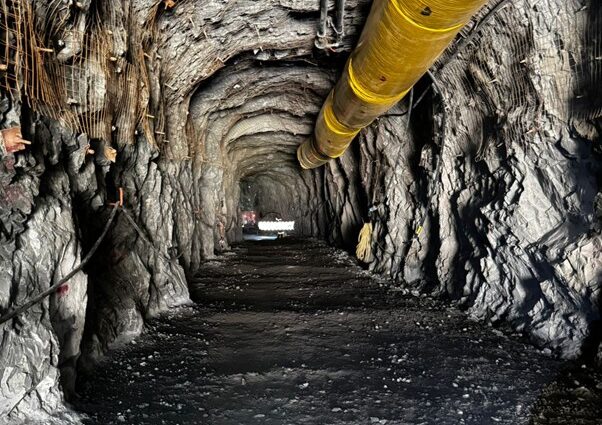
Victor Pavlov showed off Ukraine’s newest and most versatile weapon: a battery-powered land robot.

The unmanned ground vehicles come in various shapes and sizes. One runs on caterpillar tracks and resembles a roofless milk float. Another has wheels and antennas. A third carries anti-tank mines. Since spring 2024 their use has grown exponentially.

Continue reading…

This post was originally published here

Use of unmanned ground vehicles has grown exponentially since 2024 turning the war into a technological contest

Victor Pavlov showed off Ukraine’s newest and most versatile weapon: a battery-powered land robot.

The unmanned ground vehicles come in various shapes and sizes. One runs on caterpillar tracks and resembles a roofless milk float. Another has wheels and antennas. A third carries anti-tank mines. Since spring 2024 their use has grown exponentially.

Continue reading…

This post was originally published here

Reports on English policies seen in Wales as relating to whole of UK contribute to widespread confusion, researchers say

UK media is failing to report properly on devolved issues in Wales, leaving voters ill-informed about May’s Senedd elections, a report has found.

A Cardiff University study of more than 3,000 news items found repeated patterns in coverage across different broadcasters and platforms, including not signposting whether an issue was relevant to England or England and Wales only, widespread references to “the government” rather than “the UK government”, and the use of “you” and “your” in contexts that apply only to people living in England.

Continue reading…

This post was originally published here

Reports on English policies seen in Wales as relating to whole of UK contribute to widespread confusion, researchers say

UK media is failing to report properly on devolved issues in Wales, leaving voters ill-informed about May’s Senedd elections, a report has found.

A Cardiff University study of more than 3,000 news items found repeated patterns in coverage across different broadcasters and platforms, including not signposting whether an issue was relevant to England or England and Wales only, widespread references to “the government” rather than “the UK government”, and the use of “you” and “your” in contexts that apply only to people living in England.

Continue reading…

This post was originally published here

Anthropic has reportedly acquired stealth AI biology startup Coefficient Bio in an all-stock deal worth just over $400 million, as the AI startup behind the Claude chatbot eyes a potential IPO as early as October.

The acquisition was confirmed on Friday through a letter obtained by Newcomer.

A Moonshot For Science

Coefficient Bio was founded in September 2025 by Nathan Frey and Samuel Stanton, both formerly of Genentech‘s Prescient Design unit. Backed by venture firm Dimension, the startup develops AI models to automate complex laboratory workflows, including drug R&D planning and clinical regulatory strategy management.

The Newcomer reported that following the acquisition, Coefficient Bio will join Anthropic’s Health Care Life Sciences team, led by Eric Kauderer-Abrams.

Anthropic and Coefficient Bio did …

Full story available on Benzinga.com

This post was originally published here

Man and woman to be interviewed by police after arrests at separate properties in state’s north-east on Saturday morning

Two people have been arrested as part of the investigation into how Porepunkah fugitive Dezi Freeman was able to survive on the run for seven months before he was shot dead last week.

A man and a woman were arrested at separate properties in north-east Victoria on Saturday morning around 7am.

Continue reading…

This post was originally published here

Citizen science data reveals early flowering, nesting and insect activity as global heating accelerate seasonal change

Bluebells are flowering, swallows are returning and orange-tip butterflies are flying in what could become Britain’s earliest recorded spring.

Records for early spring occurrences are being smashed as 2026 looks to be the earliest this century for frogspawn laying, blackbirds nesting, brimstone butterflies emerging and hazel flowering, according to Nature’s Calendar, which has logged citizen science records of seasonal change since 2000.

Continue reading…

This post was originally published here

Ray Blanchette admits he may be a ‘little crazy’ as he outlines chain’s hopes of building 1,000 outlets globally

“I am a little crazy maybe,” admits Ray Blanchette, a former TGI Fridays kitchen manager who has taken on the revival of the bar-restaurant chain’s UK business in the face of blasting industry headwinds.

Blanchette’s family investment firm, Sugarloaf, rescued the Dallas-based parent business from administration in 2025. He then went on to pick up its UK arm in January after the local franchisee got into difficulties, retaining 33 UK restaurants but closing 16, with the loss of 456 jobs.

Continue reading…

This post was originally published here

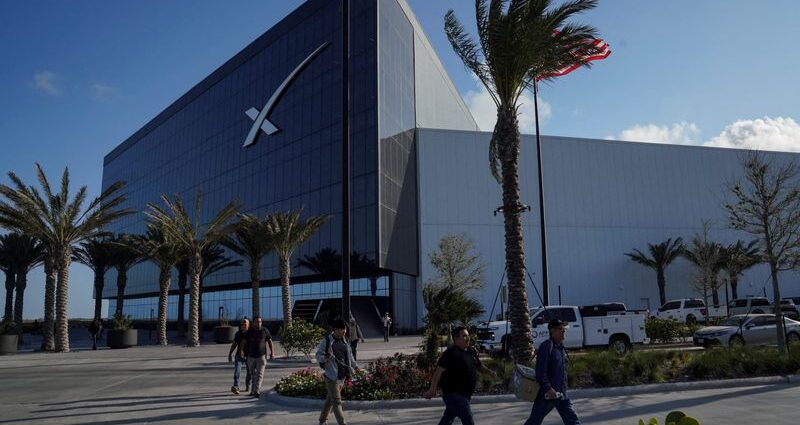
Elon Musk has reportedly mandated the banks and advisors involved in SpaceX‘s upcoming initial public offering (IPO) to purchase subscriptions to the AI chatbot Grok.

The New York Times, citing sources, reported on Friday that some banks have agreed to spend millions annually on Grok and have begun integrating it into their IT systems as a mandatory condition for SpaceX IPO roles.

The company did not immediately respond to Benzinga‘s request for comment.

Wall Street’s Biggest Names Line Up As Bookrunners

The lead banks managing the IPO include Morgan Stanley (NYSE:MS), Goldman Sachs (NYSE:GS), JPMorgan Chase

Full story available on Benzinga.com

This post was originally published here

President Donald Trump has proposed a fiscal 2027 budget that would raise defense spending by some 44% while cutting non-defense discretionary programmes by 10%, according to a White House budget document released on Friday.

The proposed surge in defense spending to $1.5 trillion, up from about $1 trillion in 2026, “would ensure that the United States continues to maintain the world’s most powerful and capable military,” Budget Director Russell Vought wrote.

“President Trump promised to reinvest in America’s national security infrastructure, to make sure our Nation is safe in a dangerous world.”

Domestic Cuts Across Sectors

Trump’s proposal, which reflects his political priorities ahead of the 2026 midterm elections in November, comes amid mounting geopolitical tensions, with the administration deploying U.S. forces to the Middle East, even as rising fuel costs linked to the U.S.-Iran war add to economic strain at home.

The budget calls for …

Full story available on Benzinga.com

This post was originally published here

OpenAI‘s product and business chief Fidji Simo announced several leadership changes on Friday, after disclosing that she is taking medical leave due to a worsening neuroimmune condition called Postural Orthostatic Tachycardia Syndrome (POTS).

POTS Relapse Sidelines Product Chief

Simo, who joined OpenAI in May after serving as Instacart (NASDAQ:CART) CEO and spending more than a decade at Meta (NASDAQ:META), informed her staffers in a memo that she had been postponing medical tests and new therapies to remain focused on her job, according to a memo. However, she now needs to take time off to stabilize her health.

During an interview with CNBC in March, Simo revealed that she was diagnosed with POTS in 2019. The condition is a chronic disorder of the autonomic nervous system that makes it difficult for patients to maintain stable blood pressure, causing symptoms such as dizziness, fatigue and chest pain.

Full story available on Benzinga.com

This post was originally published here

Datacentres ‘directly competing’ with possible residential builds near public transport, one council tells NSW inquiry, amid growing concerns

Datacentre developments are crowding out opportunities for housing and job-rich industries across Sydney, a New South Wales inquiry has heard, with one local council reporting a rise in blackouts linked to the industry’s expansion.

Several Sydney councils, all facing an influx of datacentre developments, have raised concerns about the health, environmental and amenity impacts on their local communities in submissions to the state’s datacentre inquiry.

Continue reading…

This post was originally published here

This blog is closed – our live coverage continues in a new blog here

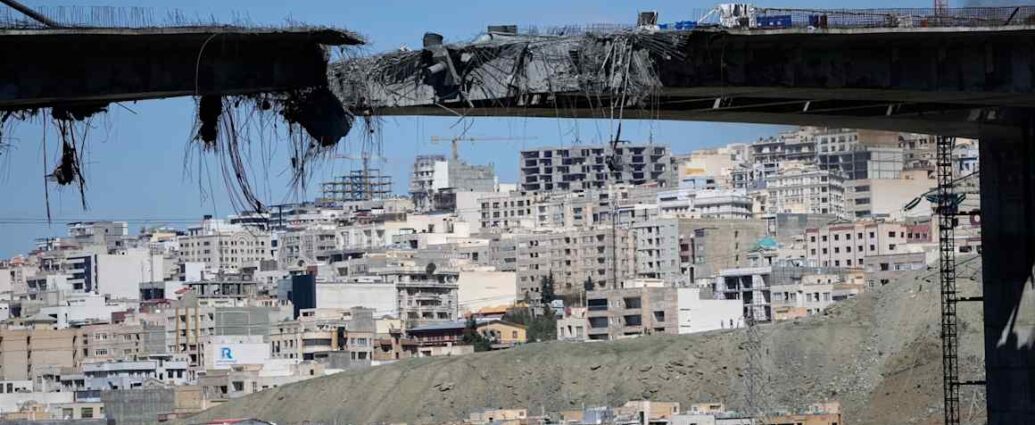
Authorities in Abu Dhabi have reported two incidents of debris falling from intercepted aerial threats in the UAE capital, with one sparking a fire at a gas facility,

The official Abu Dhabi Media Office said authorities responded to an incident of falling debris at the Habshan gas facilities. “Operations have been suspended while authorities respond to a fire,” it said in a post on X, adding that no injuries were reported.

Continue reading…

This post was originally published here

This live blog is now closed.

A reminder that my colleagues are covering the latest out of the Middle East at our dedicated live blog.

This includes Donald Trump’s recent comments on Truth Social that “with a little more time” he could open strait of Hormuz. The president added that reopening the vital passageway would allow the US to “TAKE THE OIL, & MAKE A FORTUNE. IT WOULD BE A ‘GUSHER’ FOR THE WORLD.”

Continue reading…

This post was originally published here

Stiff winds ‘spreading the smoke’ as Springs fire bears down on Moreno Valley while smaller Crown fire also burning

A pair of wildfires broke out in southern California on Friday, marking the region’s first significant burns in a spring that has seen a major heatwave.

The fires started in windy conditions that have caused them to spread quickly. The National Weather Service issued a wind advisory for parts of southern California through midday Friday, warning of gusts up to 50mph.

Continue reading…

This post was originally published here

President Donald Trump on Friday touted the unexpectedly high March jobs report following job losses in February.

“A very happy and blessed Good Friday to all, especially to the 186,000 Americans who gained Private Sector jobs in the month of March alone!” the president wrote on Friday. “My Economic Policies have created an enormously powerful engine of Economic Growth, and nothing can slow it down.”

Trump added that “Factory Construction Jobs are soaring as a result of the rapid Onshoring and surging Investment that TARIFFS have generated, all while the Trade Deficit has shrunk by 52% in a year!”

The U.S. added 178,000 jobs in March, which includes 8,000 government job losses, according to the Bureau of Labor Statistics.

LIZ PEEK: TRUMP’S ECONOMIC WINS ARE REAL — NOW HE NEEDS TO CONVINCE THE COUNTRY

The figure is about three times what most economists forecast.

The gains come after the country lost 133,000 jobs in February.

Unemployment also dipped from 4.4% in February to 4.3% in March while the percentage of adults in the labor force dipped to 61.9%, the lowest since November 2021.

TRUMP’S ECONOMIC WINS CANCEL OUT BIDEN’S LOSSES IN LATEST JOBS REPORT

Revisions were made to the payroll numbers for the prior two months, with January’s report revised up by 34,000 jobs from a gain of 126,000 to 160,000; while February’s report was revised down by 41,000 jobs from a loss of 92,000 to 133,000.

Taken together, employment in January and February was 7,000 jobs lower than previously reported.

It’s not clear how the war in Iran will affect job numbers going forward as some economists say the March numbers may not fully reflect the new conflict in the Middle East.

“The data is mostly backward-looking, and likely does not incorporate any impact from the recent rise in energy prices, or other risks related to the war in Iran,” Thomas Simons, chief U.S. economist with the investment firm Jefferies, wrote in a commentary.

The health care sector led the March job gains, with 76,400 new jobs following the end of a Kaiser Permanente strike in February, as employees returned to work.

“This year will most likely be a year of shifting labor dynamics as artificial intelligence upends the job market, especially for low-skilled roles. We continue to see healthy job opportunities for workers with experience,” said Jeffrey Roach, chief economist for LPL Financial.

 “Average hourly earnings rose 3.5% from a year ago, giving consumers enough buying power to overcome nagging inflation. This update on the job market gives the Federal Reserve more time to wait for inflation to decelerate before taking action,” Roach added.

The latest jobs data did little to shift the market’s expectation that the Federal Reserve is likely to leave interest rates unchanged for the foreseeable future.

Fox Business’ Eric Revell and The Associated Press contributed to this report.

This post was originally published here. 

Police allege drugs were to be collected from a drop zone in Bass Strait and distributed across the nation using trucking connections

When a commercial trawler sank off Victoria with four crew members needing rescuing, police became suspicious about an alleged drug trafficking operation.

Nine men are accused over a conspiracy to import tonnes of cocaine and methamphetamine before distributing the drugs across Australia using trucking connections.

Continue reading…

This post was originally published here

Russian advances slowing, thinktank’s data shows; 14 killed in Ukraine in massive drone and missile salvo. What we know on day 1,501

Russia’s army recorded almost no territorial gains on the frontline in Ukraine in March for the first time in two-and-a-half years, according to analysis of data from the Institute for the Study of War (ISW) conducted by Agence France-Presse. The Russian army has been slowing in its advances since late 2025 – because of Kyiv’s localised breakthroughs in the south-east of the country. Across the entire frontline, the Russian army seized only 23 sq km (8.9 sq miles) in March, losing territory in some areas, according to the analysis. This figure excludes infiltration operations conducted by Russian forces beyond the frontline, as well as advances claimed by the Russian side but neither confirmed nor denied by the ISW.

The Russian army made 319 sq km of gains in January and 123 sq km in February, which was then the smallest advance since April 2024. Its advance in March was the smallest since September 2023. The ISW attributed the slowdown to Ukrainian counteroffensives, but also to “Russia’s ban on using Starlink terminals in Ukraine” and “the Kremlin’s efforts to restrict access to Telegram”. The messaging app – very popular among Russians, including those fighting on the front – has been barely usable in recent months due to blocks imposed by the authorities. As in February, Russia lost ground on the southern section of the frontline, between the Donetsk and Dnipropetrovsk regions.

Russian strikes killed 14 people in Ukraine on Friday, officials said, as Moscow launched the latest in an increasing number of daytime barrages. Moscow has been firing aerial broadsides at Ukraine throughout its more than four-year invasion, mostly at night, but in recent weeks has stepped up daytime attacks. The Russian military used more than 500 drones and dozens of missiles in its salvo on Friday, according to the Ukrainian air force.

Russia’s Baltic oil export hubs at Ust-Luga and Primorsk remain unable to handle shipments after a series of Ukrainian drone attacks, prompting the country’s refineries to find alternative routes for export, industry sources said on Friday. The attacks have damaged port infrastructure and continued through the last two weeks of March, with at least five strikes on Ust-Luga in the space of 10 days. Sources said the export restrictions, along with disruptions at large refineries, could lead to a decrease in oil production in Russia. Traders said refineries had been unable to deliver diesel fuel to Primorsk for export since 22 March, leaving refineries in European Russia and Siberia without their most viable export route. Traders said refineries were having to consider more expensive rail transport routes to other export terminals.

Zelenskyy has called on lawmakers to pass key legislation next week to avert a funding crisis, help Ukraine fight the war against Russia, and enact key reforms required for EU accession. Due to lagging reforms and slow legislative progress in late 2025 and early this year, Ukraine missed deadlines to unlock billions from its key lenders, economists said. With the need for external financing standing at $52bn this year – equivalent to about a quarter of annual economic output – the budget situation is desperate. “I have a list of key draft laws that are critical for securing funding,” the Ukrainian president said in remarks released on Friday. They range from strengthening the court system to reforming energy sector procedures. “I believe that members of parliament from all parties must understand the importance of these bills for Ukraine’s budget,” said Zelenskyy, who has a majority in parliament but its relations with his government have soured.

Continue reading…

This post was originally published here

The Artemis II astronauts have captured our blue planet’s brilliant beauty as they zoom ever closer to the moon.

NASA released the crew’s first downlinked images Friday, 1 1/2 days into the first astronaut moonshot in more than half a century.

The first photo taken by commander Reid Wiseman shows a curved slice of Earth in one of the capsule’s windows. The second shows the entire globe with the oceans topped by swirling white tendrils of clouds. A green aurora even glows, according to NASA.

“It’s great to think that with the exception of our four friends, all of us are represented in this image,” said NASA’s Lakiesha Hawkins, an exploration systems leader. She added the mission was going well.

As of late Friday afternoon, Wiseman and his crew were more than 110,000 miles (180,000 kilometers) from Earth and were quickly gaining on the moon with another 150,000 miles (240,000 kilometers) to go. They should reach their destination on Monday.

The three Americans and one Canadian will swing around the moon in their Orion capsule, hang a U-turn and then head straight back home without stopping. They fired Orion’s main engine Thursday night that set them on their course.

After Mission Control shifted the position of their capsule, the entire Earth complete with northern lights filled their windows.

“It was the most spectacular moment, and it paused all four of us in our tracks,” Wiseman said in a TV interview.

They’re the first lunar travelers since Apollo 17 in 1972.

This story was originally featured on Fortune.com

On the same day Washington Gov. Bob Ferguson signed the state’s first-ever personal income tax into law, one of the state’s most recognizable millionaires made his feelings perfectly clear: he’s thrilled to pay it.

Rick Steves, the Edmonds-based travel author and TV host whose empire of guidebooks, tours, and public television specials has made him a household name, took to Facebook on March 30 to celebrate the signing of the so-called “millionaires tax.”

His post, complete with a smiling photo of him holding an American flag in his right hand under the words “A Millionaires Tax? Let’s Try Shared Prosperity!” went viral almost instantly, racking up over 11,000 reactions and hundreds of comments as it was shared by Gov. Ferguson and Washington Senate Democrats alike.

“A new tax on fat paychecks like mine was just signed into law in my home state—and I like it,” Steves wrote. For a political debate that had been dominated by warnings of billionaire flight—Amazon founder Jeff Bezos decamped to Miami in 2023, and Starbucks’ Howard Schultz announced a similar move days after the bill passed—Steves offered a strikingly different voice from the wealthy class: one welcoming a higher tax bill.

The new law, which imposes a 9.9% tax on individual income above $1 million per year, will fund expanded childcare, free school meals for all Washington students, and expanded Working Families Tax Credits for hundreds of thousands of lower-income households. For Steves, who has long been an advocate for progressive taxation and equitable public investment, the math was simple.

“And—for those of us with a heart for the public good—it’s simply common sense,” he wrote.

He also took aim at Washington’s long-standing tax structure, which relies heavily on a regressive sales tax and has been routinely ranked among the most unequal in the nation for its burden on low-income residents. “It’s time to change our upside-down tax system,” Steves wrote.

He’s not the first to frame Washington’s tax code as upside-down, which puts an outsized burden on the poor compared to the wealthy. “We knew it was going to be a pretty major endeavor,” Washington Rep. Brianna Thomas, a Democrat who supported the measure, told Fortune the day after she and her colleagues spent 25 hours debating the bill. “We’ve got 93 years of precedent in front of us, behind us, around us at all times on the conversation around an income tax.”

Washington Senate Democrats were quick to amplify the moment, writing: “Millionaires like Rick know that we all win with shared prosperity.”

Whether the law survives looming legal challenges—rooted in a 1933 state Supreme Court ruling classifying income as property—remains an open question. But Steves’ post showed not every wealthy Washingtonian is heading for Miami.

This story was originally featured on Fortune.com

Budget proposal released on Friday outlines president’s desire to revive former federal prison in San Francisco Bay

Donald Trump is asking for $152m to restore Alcatraz, a former federal prison off the coast of San Francisco, according to a budget proposal released on Friday for the 2027 fiscal year.

Last May, Trump first called upon the Department of Justice, the FBI and Homeland Security to rebuild the prison. He heaped praise on Alcatraz’s reputation in a Truth Social post.

Continue reading…

This post was originally published here

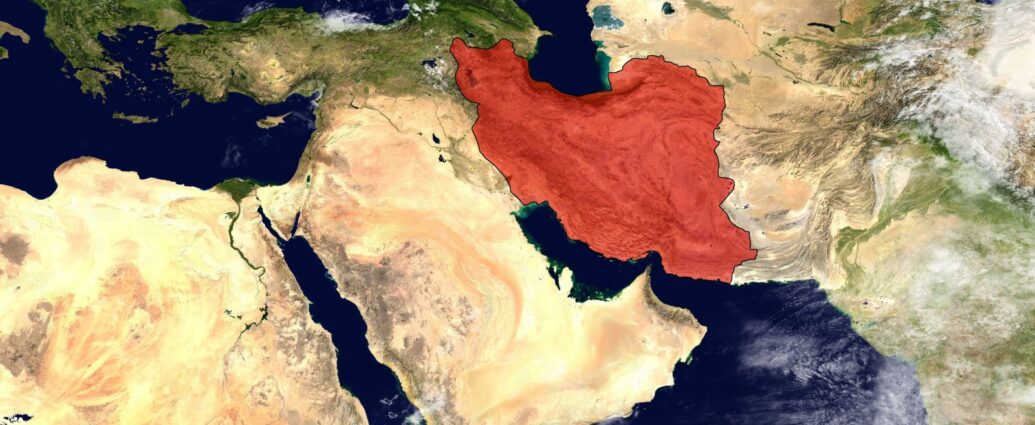
Iran shot down two U.S. military planes in separate attacks Friday, with one service member rescued and at least one missing, in a dramatic escalation since the war began nearly five weeks ago.

It was the first time U.S. aircraft have been downed in the conflict and came just two days after President Donald Trump said in a national address that the U.S. has “beaten and completely decimated Iran” and was “going to finish the job, and we’re going to finish it very fast.”

One fighter jet was shot down in Iran, officials said. A U.S. crew member from that plane was rescued, but a second was missing, and a U.S. military search-and-rescue operation was underway.

Neither the White House nor Pentagon released public information about the downed planes. In a brief telephone interview with NBC News, Trump declined to discuss the search-and-rescue efforts but said what happened would not affect negotiations with Iran.

“No, not at all. No, it’s war,” he said.

Separately Iranian state media said a U.S. A-10 attack aircraft crashed in the Persian Gulf after being struck by Iranian defense forces.

A U.S. official who spoke on condition of anonymity to discuss a sensitive military situation said earlier that it was not clear if the aircraft crashed or was shot down or whether Iran was involved. Neither the status of the crew nor exactly where it went down was immediately known.

Those incidents came as Iran fired on targets across the Middle East on Friday, keeping the pressure on Israel and its Gulf Arab neighbors despite U.S. and Israeli insistence that Iran’s military capabilities have been all but destroyed.

Second service member’s status unknown

Neither the White House nor the Pentagon released public information about the downed planes. But the Pentagon notified the House Armed Services Committee that the status of a second service member from the fighter jet was not known.

In an email from the Pentagon that obtained by The Associated Press, meanwhile, the military said it received notification of “an aircraft being shot down” in the Middle East, without providing more details.

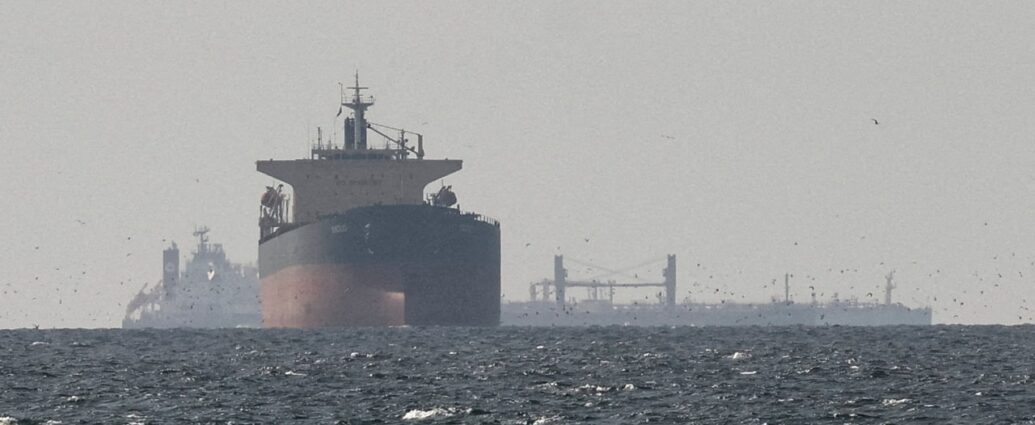
Iran’s attacks on Gulf energy infrastructure and its tight grip on the Strait of Hormuz, through which a fifth of the world’s oil and natural gas transits in peacetime, have roiled stock markets, sent oil prices skyrocketing, and threatened to raise the cost of many basic goods, including food.

Downed jet could mark a new level of pressure on the US

Prior to word of the rescue, social media footage showed American drones, aircraft and helicopters flying over the mountainous region where a TV channel affiliated with Iranian state television said earlier that at least one pilot bailed out of the fighter jet.

An anchor urged residents to hand over any “enemy pilot” to police and promised a reward.

It was the first time the U.S. has lost aircraft in Iranian territory during the conflict and could mark a new level of pressure on the U.S. military.

Throughout the war, Iran has made a series of claims about shooting down piloted enemy aircraft that turned out not to be true. Friday was the first time that Iran went on television urging the public to look for a downed pilot.

Iranian state media said in a post on the social platform X that the military shot down a U.S. F-15E Strike Eagle. The aircraft is a variation of the Air Force fighter jet that carries a pilot and weapons system officer.

Alan Diehl, a former investigator for the Air Force Safety Center, said the Strike Eagle has an emergency locator beacon in a survival kit that can be set to activate automatically or manually.

White House press secretary Karoline Leavitt said Trump had been briefed but did not offer additional information. The president subsequently posted messages on Iran to his social media site but made no mention of the downed aircraft or search-and-rescue efforts.

Iran targets a desalination plant and a refinery

News about the downed planes came after Iran attacked Kuwait’s Mina al-Ahmadi oil refinery. The state-run Kuwait Petroleum Corp. said firefighters were working to control several blazes.

Kuwait also said an Iranian attack caused “material damage” to a desalination plant. Such plants are responsible for most of the drinking water for Gulf states, and they have become a major target in the war.

Also sirens sounded in Bahrain, Saudi Arabia said it destroyed several Iranian drones and Israel reported incoming missiles.

Authorities in the United Arab Emirates shut down a gas field after a missile interception reportedly rained debris on it and started a fire.

Activists reported strikes around Tehran and the central city of Isfahan, but it was not immediately clear what was hit.

In Lebanon, where Israel has launched a ground invasion in its fight with the pro-Iranian Hezbollah militant group, an Israeli drone strike on worshippers leaving Friday prayers near Beirut killed two people, according to the state‑run National News Agency

More than 1,900 people have been killed in Iran since the war began on Feb. 28 with U.S. and Israeli strikes. In a review released Friday, the Armed Conflict Location and Event Data, a U.S.-based group, said it found that civilian casualties were clustered around strikes on security and state-linked sites “rather than indiscriminate bombardment” of urban areas.

More than two dozen people have died in Gulf states and the occupied West Bank, 19 have been reported dead in Israel and 13 U.S. service members have been killed.

More than 1,300 people have been killed and more than 1 million displaced in Lebanon. Ten Israeli soldiers have also died there.

Iran keeps a chokehold on the Strait of Hormuz

World leaders have struggled to end Iran’s stranglehold on the waterway, which has had far-reaching consequences for the global economy and has proved to be its greatest strategic advantage in the war.

The U.N. Security Council was expected to take up the matter Saturday.

Trump has vacillated on America’s role in the strait, alternately threatening Iran if it does not open the strait and telling other nations to “go get your own oil.” On Friday he said in a post on social media that, “With a little more time, we can easily OPEN THE HORMUZ STRAIT, TAKE THE OIL, & MAKE A FORTUNE.”

Spot prices of Brent crude, the international standard, were around $109, up more than 50% since the start of the war, when Iran began restricting traffic through the strait.

This story was originally featured on Fortune.com

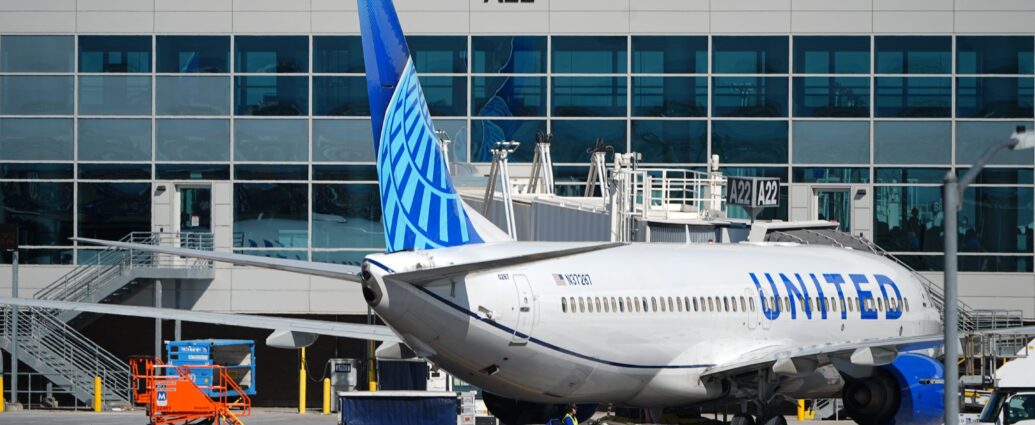
Most travelers flying with United Airlines will now pay $10 more to check their luggage beginning on Friday, as rising jet fuel costs driven by the war in the Middle East pushes another major U.S. carrier to increase fees.

Customers traveling in the United States, Mexico, Canada and Latin America will now pay $45 for their first piece of luggage and $55 for their second bag, according to United.

“This is the first time in two years the airline has raised bag fees,” United said in a statement.

Some passengers will still receive a free first checked bag, including co-branded credit card holders, certain loyalty-tier members, active military personnel and travelers in premium cabins. Customers who check bags less than 24 hours before departure will pay an additional $5.

United joins JetBlue, which raised checked baggage fees on Monday by up to $9 during peak travel periods, as the war in the Middle East continues to severely disrupt global oil supplies, particularly near the narrow Strait of Hormuz where a fifth of the world’s oil typically passes. That has caused crude prices to fluctuate wildly, which affects airlines’ operating costs because the fuel their aircraft rely on is refined from crude oil.

JetBlue said charging more for optional services used by select customers helps keep base fares competitive. Like United, it will continue offering a free first checked bag to some customers.

The average price for a gallon of jet fuel in Chicago, Houston, Los Angeles and New York reached $4.88 on Thursday, up from $2.50 before the conflict began on Feb. 28, according to Argus Media. The energy market intelligence company’s U.S. Jet Fuel Index tracks the average prices across those major hubs.

Speaking to investors last month at a conference, United CEO Scott Kirby said the higher jet fuel costs had already added roughly $400 million to operating costs. The CEOs for Delta Air Lines and American Airlines reported similar figures.

Fuel is typically the second biggest expense for airlines after labor. Analysts expect U.S. airlines to pass higher fuel costs on to travelers by increasing add-on fees or ticket prices since they don’t usually have fuel surcharges, while a number of non-U.S. carriers already have added fuel surcharges.

This story was originally featured on Fortune.com

Catholic Timothy Broglio says ‘hard to cast this war as something that would be sponsored by the Lord’

The leader of all Catholic chaplains in the United States’ armed forces has questioned how righteous the US military’s campaign in Iran is, saying that “under the just war theory – it is not”.

Archbishop Timothy Broglio, head of the Catholic Archdiocese for the Military Services USA, told CBS News in an interview set for broadcast Sunday that while Iran “was a threat with nuclear arms”, waging war on the theocratic state constituted “compensating for a threat before the threat is actually realized”.

Continue reading…

This post was originally published here

US president issues executive order as longest partial government shutdown in US history enters 49th day

Donald Trump issued an executive order Friday that declares all Department of Homeland Security employees will receive pay and benefits during the agency’s partial shutdown.

The “Liberating the Department of Homeland Security From the Democrat-Caused Shutdown” memo is similar to Trump’s executive order from last week which called for issuing pay to Transportation Security Administration (TSA) agents during the shutdown.

In the order, Trump directed the homeland security secretary, Markwayne Mullin, to “use funds that have a reasonable and logical nexus to the functions of DHS” to pay “each and every employee of DHS”.

Continue reading…

This post was originally published here
Ripple effects of oil and fertiliser shortage felt by farmers in India and Sri Lanka despite governments saying there is enough stock to go round

Gurvinder Singh never thought the war in Iran would touch his quiet corner of Punjab.

Yet looking out over his smallholding, where he alternates between wheat and rice crops in the state known as India’s breadbasket, the 52-year-old farmer can barely think of anything else. His anxiety over a conflict playing out thousands of miles away is crippling as he fears what will come of this season’s rice crop.

Continue reading…

This post was originally published here
Misogynistic abuse of female staff is increasing, leaving teachers feeling ‘traumatised’ and ‘humiliated’

Teachers’ leaders have said a “masculinity crisis” is fermenting in schools across the UK, with misogynistic abuse of female staff on the increase, leaving victims “traumatised”, “demeaned” and “humiliated”.

Almost a quarter of female teachers who took part in a union survey said they have been the target of misogyny from a pupil over the past 12 months – the highest proportion in the last four years of surveys.

Continue reading…

This post was originally published here