


SpaceX Charts Path Toward $2 Trillion IPO
Elon Musk‘s SpaceX is targeting a valuation of more than $2 trillion in its upcoming initial public offering (IPO), making it a record-setting debut.
The commercial space firms is targeting a June listing at a valuation that would dwarf Saudi Aramco‘s much-hyped $29 billion debut in 2019. Executives at SpaceX plan to meet this month with prospective IPO investors and might include more details that would support the valuation, Bloomberg reported, citing sources it didn’t identify.
On Wednesday, SpaceX submitted a confidential draft initial public offering (IPO) registration to the U.S. Securities and Exchange Commission (SEC).
By filing confidentially, SpaceX can receive SEC feedback and make adjustments before its prospectus becomes public.
According to previous media reports, Bank of America, Goldman Sachs, JPMorgan Chase, and Morgan Stanley have all secured senior roles on the deal. …
This post was originally published here

Trump Fires Pam Bondi: From ‘Dow Over 50,000’ To ‘You’re Fired’
President Donald Trump fired Attorney General Pam Bondi on Thursday.
Her now‑infamous comment that “the Dow is over 50,000 dollars” has aged as badly as the market tape she pointed to back in February.
- DIA shares are moving. See the chart and price action here.
Dow Since The ‘Over 50,000′ Boast
Bondi made her “Dow is over 50,000” remark during a contentious February 11 House Judiciary hearing, using record stock prices to swat away questions about the Jeffrey Epstein files and uncharged accomplices.
At that point, the Dow had only recently notched its first historic close above 50,000 and was still hovering near record territory.
Since then, the index has tumbled.
The Dow Jones Industrial Average …
This post was originally published here

This Age Group Is the Most Likely To Believe They’ll Outlive Their Retirement Savings—Here’s How To Catch Up
This post was originally published here


Understanding Business Write-Offs: Impact on Taxes and Profits
This post was originally published here

Markets News, April 2, 2026: Major Indexes Snap 5-Week Skids as Stocks Rebound from Early Rout; Oil Prices Jump on Iran War Concerns
This post was originally published here

Opinion | Cuba Waits in Darkness for Easter



Dow closes lower as Trump comments dampen traders’ hopes for Iran war ending: Live updates
The Dow Industrials ended Thursday slightly lower as traders weighed the prospect of the Iran war continuing for weeks.
This post was originally published here
Maryland man receives 20-year sentence for pet crematorium scam
Rodney Ward returned debris instead of pets’ ashes and stored animals’ bodies in hearse or threw them out on road
A Baltimore county man has been sentenced to 20 years in prison after being found guilty of defrauding pet owners through his fake crematorium business, returning rocks and sand to grieving victims instead of ashes.
On Tuesday, 56-year-old Rodney Ward was also ordered to pay $12,510 in restitution to victims. He had pleaded guilty to one count of felony theft and five counts of malicious destruction of property over $1,000, according to the Baltimore county state’s attorney’s office.
This post was originally published here
Trump threatens 100% tariff on US drug makers that don’t strike deals to lower prices
New tax will hit branded drugs and active ingredients while exempting generics for at least one year
Donald Trump is threatening 100% tariffs on pharmaceutical companies that have not struck deals to lower US drug prices.
The new tariff will only apply to branded drugs and their active ingredients. Generic drugs, which make up more than 90% of medicines sold in the US, will be exempted from tariffs for at least one year. Orphan, veterinary and other specialty drugs are exempt if they are from trade deal countries or meet urgent public health needs.
This post was originally published here
Federal judge throws out most of Blake Lively’s claims against Justin Baldoni
Judge Lewis Liman dismissed 10 of Lively’s 13 claims against Baldoni, including claim of sexual harassment
A federal judge has thrown out the majority of Blake Lively’s claims against Justin Baldoni.
In a court ruling on Thursday, Judge Lewis Liman dismissed 10 of the 13 claims in Lively’s lawsuit against her co-star and director of the domestic violence film It Ends With Us.
This post was originally published here
Epstein accusations and pressure from the boss: Bondi’s time as Trump’s chief enforcer
From attempts to prosecute president’s foes to claims of a cover-up, attorney general endured tumultuous tenure
Donald Trump fired Attorney General Pam Bondi on Thursday, removing the nation’s chief law enforcement officer after months of mounting frustration over her handling of the Epstein files and her faltering attempts to prosecute the president’s political enemies.
“We love Pam, and she will be transitioning to a much needed and important new job in the private sector, to be announced at a date in the near future,” Trump wrote in a social media post on Thursday. He said she would be replaced by her deputy, Todd Blanche, on an interim basis.
This post was originally published here





Opinion | Why Britain Can’t Afford a Navy










EPA to put microplastics on study list of contaminants in drinking water
The Environmental Protection Agency on Thursday proposed including microplastics and pharmaceuticals on a list of contaminants in drinking water for the first time, a step that could eventually lead to new limits on those substances for water utilities.
EPA Administrator Lee Zeldin said the agency is responding to Americans who have worried about plastics and pharmaceuticals in their drinking water. The gesture also aims to hand a win to Health Secretary Robert F. Kennedy Jr.’s MAHA movement, which for months has pressured Zeldin to further crack down on environmental contaminants.
Century 21 Integra expands Chicago presence with acquisition
Century 21 Integra has acquired Schaumburg, Illinois-based Realty Executives Advance — expanding its presence in Chicago’s northwest suburbs.
“Bringing Realty Executives Advance into the Integra family is a natural fit,” said Jim D’Amico, owner of Century 21 Integra. “Hank (Fatoorehchi) and his team have built a strong, respected business in Schaumburg, and we’re excited to provide them with the systems, support and scale that will help them reach the next level.”
With the acquisition, Century 21 Integra now operates Illinois offices in Schaumburg, Naperville and McHenry — along with 70 additional locations in 17 states.
Since launching in Illinois two and a half years ago, the firm has grown to roughly 100 affiliated agents in the state.
“Our growth has been intentional and agent-focused,” said Nathan Brown, chief growth officer of Century 21 Integra and Illinois designated managing broker. “We are not your father’s Century 21. We are a franchisee with Century 21, but we operate very autonomously with a full value package, aggressive splits and don’t even charge our agents the traditional ‘franchise fee.’
“We are considered too progressive by the traditional brokerages, and we are far more traditional than the progressive brokerages. We offer the best of both worlds to fit the different needs of thousands of agents providing them a big international brand name and experienced local support.”
Agents from Realty Executives Advance will gain access to Integra’s suite of resources — including marketing tools, training programs and a centralized customer service infrastructure.
“We’re excited to join a brokerage that is clearly investing in its agents and the future of real estate,” said Hank Fatoorehchi, owner of Realty Executives Advance. “Century 21 Integra offers the kind of support, innovation, and growth opportunities that will empower our agents to thrive in today’s market.”
This article was generated using HousingWire Automation and reviewed by a HousingWire editor before publication. The system helps convert company announcements and industry data into HousingWire-style news coverage.
PartnerOne finalizes acquisition of Mortgage Cadence
PartnerOne has completed its acquisition of Mortgage Cadence, adding another long-standing mortgage technology platform to the portfolio of the global enterprise software group, the company announced Thursday.
Terms of the deal were not disclosed. The transaction was previously announced as an agreement with Accenture to sell Mortgage Cadence, which provides a cloud-based digital lending platform used by mortgage lenders across channels and products.
With the deal closed, Mortgage Cadence will operate under the PartnerOne umbrella, which focuses on acquiring and holding software companies as long-term businesses rather than flipping them. PartnerOne said the acquisition is intended to give Mortgage Cadence additional capital and operational resources to speed product development, especially around artificial intelligence and workflow automation in loan origination.
“Welcoming Mortgage Cadence into the PartnerOne family marks a pivotal moment for both organizations,” Suzanne Fortman, vice president at PartnerOne, said in a statement. “We are committed to empowering Mortgage Cadence’s talented team, supporting their innovation, and expanding the resources needed to serve customers and partners at the highest level.”
Mortgage Cadence offers an end-to-end, cloud-based loan origination system with borrower point-of-sale, processing and closing collaboration tools. Its technology competes in a crowded LOS market that includes ICE Mortgage Technology’s Encompass, Dark Matter Technologies’ Empower, MeridianLink, LendingQB and others.
For lenders, a change in ownership at a core LOS vendor raises questions about product road maps, pricing and long-term support. PartnerOne signaled that it plans to keep Mortgage Cadence as a long-term holding and emphasized stability for existing customers and partners during the transition.
PartnerOne works with more than 2,000 enterprise and government customers worldwide across multiple software verticals. Its “Acquire. Invest. Grow.” strategy mirrors the approach of other permanent capital software buyers that have been active in mortgage and real estate technology in recent years.
The acquisition comes as lenders continue to evaluate LOS strategies after a prolonged volume downturn and significant consolidation across mortgage technology. Deals involving ICE/Black Knight, the sale of several LOS and point-of-sale providers, and renewed focus on profitability have pushed lenders to scrutinize vendor risk, integration depth and total cost of ownership.
For housing professionals, the PartnerOne-Mortgage Cadence deal matters because it may influence how aggressively Mortgage Cadence invests in AI-driven underwriting workflows, document automation and borrower self-service — areas lenders are exploring to cut turn times and fulfillment costs. It also adds another well-capitalized owner into the LOS segment at a time when some smaller vendors are struggling to maintain development pace.
PartnerOne said it will focus on evolving the Mortgage Cadence platform while “deepening customer relationships,” a signal that lenders should watch for upcoming road map updates, support model changes and potential integrations with other software businesses in the PartnerOne portfolio.
This article was generated using HousingWire Automation and reviewed by a HousingWire editor before publication. The system helps convert company announcements and industry data into HousingWire-style news coverage.


Venture Capital Explodes: $300 Billion Floods Startups In Historic AI-Fueled Surge
Venture investments saw “unprecedented spending” on AI compute and frontier labs, as investors poured $300 billion into 6,000 startups during the first quarter of this year.
Notably, funding for startups in the first quarter of 2026 alone accounted for nearly 70% of the total venture capital invested throughout all of 2025, a report by Crunchbase noted. This quarterly figure also exceeded the annual investment totals seen in any year prior to 2018.
Much of the capital in Q1 was concentrated in artificial intelligence startups, with a significant share directed toward a small group of U.S.-based companies through record-breaking deals.
Four of the five largest venture funding rounds ever documented occurred during this period. Leading the group were frontier AI firms OpenAI ($122 billion), Anthropic ($30 billion), xAI ($20 billion), along …
This post was originally published here
Stock Market Today: S&P 500, Nasdaq End Higher After Late Rally; Major Indexes Snap 5-Week Skids; Oil Prices Jump
This post was originally published here

We Asked ChatGPT Where To Put $10K—Here’s What We’d Do Instead
This post was originally published here
Steve Barton: Gold, Silver, Uranium, Oil — Price Targets, Key Levels
Steve Barton, host of In It To Win It, shares his current strategy, saying he’s looking to take profits in oil stocks and rotate into the gold, silver and uranium sectors. “We’ve had an amazing selloff — nothing with the fundamentals has changed with gold other than it’s gotten better, it’s become a better deal,” he said. Don’t forget to follow us @INN_Resource for real-time updates!Securities Disclosure: I, Charlotte McLeod, hold no direct investment interest in any company mentioned in this article.
This post was originally published here















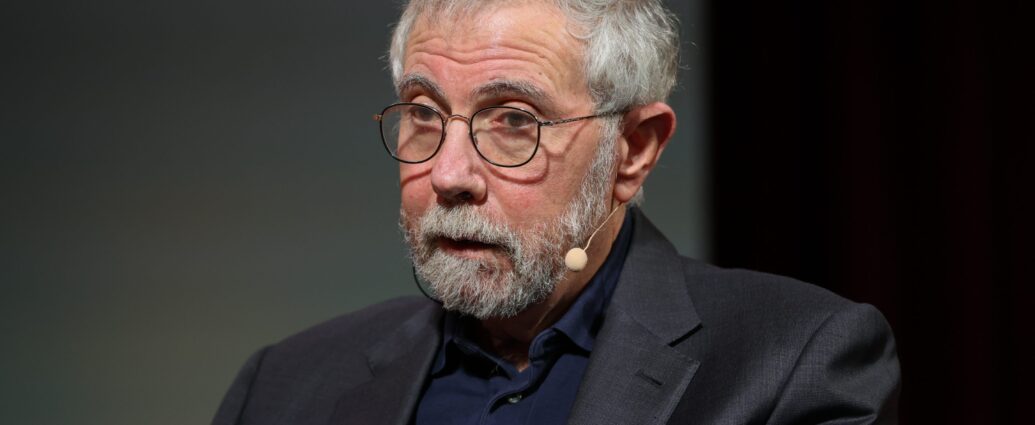
Paul Krugman smacks down Trump speech with argument that $4 gas is ‘less than half’ of the Hormuz hit. Here’s what he’s talking about
In a primetime address to the nation Wednesday night, President Donald Trump cast the U.S. effort in Iran as a show of strength. But he left the timeline of the war’s end conspicuously fuzzy, pledging the U.S. would hit Iran “extremely hard” in the coming weeks. Markets didn’t love that ambiguity. Investors recoiled out of fears of an endless quagmire. But Trump tried to quell fears by downplaying the stakes in the Strait of Hormuz, insisting the U.S. doesn’t depend on the critical trade choke point. “The United States imports almost no oil through the Hormuz Strait and won’t be taking any in the future,” he said. “We don’t need it. We haven’t needed it, and we don’t need it.”
But as Nobel laureate Paul Krugman highlighted in a recent Substack post titled “$4 Gasoline Is Less Than Half the Story,” and as many other experts have also emphasized, the strait is essential to not only oil, but trade of some of the world’s most vital resources. Diesel, jet fuel, fertilizer, and plastics are all resources that pass through the Strait of Hormuz—and the war has everyone from oil execs to airline leaders to farmers bracing for fallout from its impacts.
“Less than half of U.S. consumption of petroleum products was gasoline,” Krugman wrote. “Add in soaring costs for fertilizer and feedstocks for plastic, and the surge in gas prices, even though it dominates headlines, is well under half of the economic story.” Those inputs are crucial for everything from the food on your grocery shelves to the shopping bags that carry them.
The impact of rising gas prices isn’t just in the headlines; it’s flashing in giant digits at more than 150,000 gas stations nationwide, where prices have steadily climbed past $4 a gallon. While Trump claims the U.S. isn’t reliant on the Strait of Hormuz, roughly a fifth of the world’s oil and natural gas supply passes through it daily. And so do other resources critical to the American consumer. The U.S. is a top producer of gasoline. But even ignoring the reality of skyrocketing gas prices, a prolonged closure of the Strait of Hormuz could hurt Americans’ pocketbooks in many other ways, according to Krugman.
Even as the U.S. produces more oil than it consumes, it remains tethered to global energy markets where prices are set at the margin. That means disruptions in the Strait of Hormuz ripple through diesel, petrochemicals, and fertilizer markets, disrupting everything from shipping costs to food production.
More than half the battle—petrochemicals, diesel, and fertilizer
The price of polyethylene (PE), the most commonly produced plastic, has shot up about 30% since the start of the war. That’s largely because about 84% of Middle East polyethylene capacity relies on the Strait of Hormuz for waterborne exports, according to a note from Harrison Jacoby, director of PE at ICIS. While the U.S. is a major exporter of PE, the rising price could mean higher costs for Americans. The commodity can be found in everything from your shopping bags and milk jugs to detergent bottles and your kid’s toys. Dow CEO Jim Fitterling recently warned petrochemical shortages could fuel inflation through the rest of the year.
Diesel prices have climbed by approximately $1.70 per gallon, roughly 70% more than the increase in gas prices. That raises the cost of shipping and doing business, according to Krugman. At the same time, jet fuel prices have climbed, and fertilizer costs have soared because the Middle East is a major producer of the natural gas feedstocks required to manufacture them. The price of urea, a critical component in fertilizer, has spiked as the war disrupts these essential supply chains.
But experts say that food prices would have to remain elevated for several months before consumers see a marked uptick in grocery prices. “If we’re talking just a few weeks, very likely you’re not going to see this show up in your grocery receipts,” David Ortega, an agricultural economist and professor at Michigan State University, told Fortune in a recent interview. “But if we’re talking a month or more, a few months, then it’s a different story.”
The biggest loser: American consumers
These rising costs are passed on to consumers through the prices of food and goods. And because of it, Krugman said, that puts Trump’s desire for a Fed rate cut further out of reach.
“The diesel/jet fuel/plastics shock will lead, other things equal, to a more hawkish Fed—and an elevated risk of recession,” he wrote.
Trump didn’t make mention of commodities other than oil and gas during his speech. To reassure the country on that end, the president highlighted the U.S.’s dominant role in global oil production. But even with the U.S.’s vast domestic oil industry—and Venezuelan oil and gas reserves, which Trump said the U.S. is discussing receiving “millions of barrels” from—Krugman highlights that there’s no way American families could benefit from any gains in production.
“We don’t have any mechanism in place to capture and redistribute those windfall gains,” he said. “So ordinary U.S. families will bear the full brunt of the global oil shock even though America is a net oil exporter.”
This story was originally featured on Fortune.com

Trump wants to add nearly $7 trillion to the $39 trillion national debt with his new military budget, watchdog warns
Budget hawks in Washington have their eyes trained on April 3, when the White House is scheduled to release its fiscal year 2027 budget request, centering on a significant “historic” defense spending increase to $1.5 trillion. The national debt crossed $39 trillion just weeks ago and is alarming figures as varied as Elon Musk and Jerome Powell.
Musk, the world’s richest man and, briefly, an advisor to the White House who was involved with the Department of Government Efficiency before departing in 2025, put it bluntly at a conference appearance last September: “If you look at our national debt, which is insanely high, the interest payments exceed the Defense Department budget—and they keep rising.” His conclusion: “If AI and robots don’t solve our national debt, we’re toast.”
President Donald Trump’s response to this situation is to fix the fact that interest payments exceed military budgets by taking out more debt to boost the military budget, according to a top watchdog calculation.
The Committee for a Responsible Federal Budget (CRFB), a nonpartisan fiscal watchdog, estimated Monday boosting the defense budget by the expected amount would increase total defense discretionary spending by $5.8 trillion from FY 2027 through 2036, and add $6.9 trillion to the national debt once interest costs are factored in. The group noted the projection was revised upward from an earlier estimate owing to an additional year in the budget window and higher prevailing interest rates.
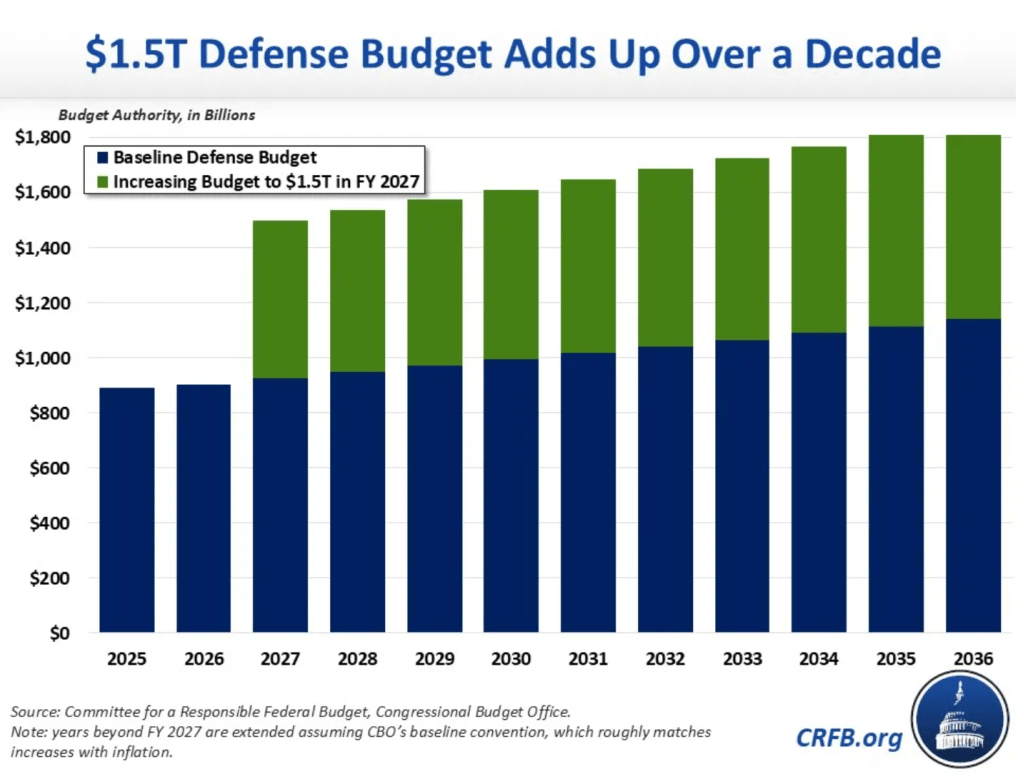
The proposal, which Trump first floated on Truth Social in January, would represent “by far the largest year-over-year increase in defense spending in the post-WWII era,” the CRFB said. The group noted that the request “should be fully offset by other proposals in his budget” and called on lawmakers to reduce other spending, raise revenue, or enact some combination of the two if they wish to accommodate the president’s ask.
On Monday, no less an authority than Federal Reserve Chair Jerome Powell chimed in with similar comments. In a moderated discussion before roughly 400 Harvard economics students, Powell said that while he doesn’t consider the nation’s $39 trillion debt load to be immediately dangerous, its trajectory demands urgent action.
“The level of the debt is not unsustainable,” Powell said, “but the path is not sustainable. It will not end well if we don’t do something fairly soon.”
Powell drew a sharp distinction between the stock of debt and its rate of growth.
“What’s clear is that our debt is growing much faster; the federal government debt is growing substantially faster than our economy,” he said. “And that ratio is going up. And in the long run, that’s kind of the definition of unsustainable.”
The numbers behind Powell’s concern are stark. Net interest payments on the national debt are now projected to exceed $1 trillion in fiscal year 2026—nearly triple the $345 billion the government paid in 2020. In just the first three months of the current fiscal year, interest payments reached $270 billion, already surpassing the nation’s defense spending during the same period. The Congressional Budget Office projects debt held by the public will surge from 101% of GDP today to 120% of GDP by 2036, eclipsing the post–World War II record.
Powell put the ball in Congress’s hands, as to how to solve this issue.
“We don’t have to pay the debt down,” he said. “We just need to have primary balance and begin to have the economy actually growing more quickly than the debt.”
He also acknowledged his warnings about the debt, consistent for roughly a decade serving at the top of the central bank, have historically gone unheeded in Washington: “I pretty much limit myself to those high-level points,” he said, “which essentially everyone ignores.”
Whether Congress will heed the CRFB’s call to offset the defense buildup remains to be seen. But the fiscal arithmetic is unforgiving: Layering nearly $7 trillion in additional debt on top of a $39 trillion base, with interest rates higher than they were just a few years ago, narrows the margin for error considerably—and makes the path Powell warned about much steeper.
This story was originally featured on Fortune.com
CFTC sues Arizona, Connecticut, Illinois over prediction market regulation
The Commodity Futures Trading Commission said it was suing Arizona, Connecticut and Illinois over its ability to exclusively regulate prediction markets.
This post was originally published here
Tesla’s stock suffers steepest drop of 2026 on disappointing deliveries report
Tesla is coming off a year of declining deliveries due in part to increased competition from rivals in China offering lower-cost models.
This post was originally published here
Brent oil spot price for actual cargo soars to $141, highest level since 2008 financial crisis
The Brent oil futures price is giving the market a false sense of security, said Amrita Sen, founder of Energy Aspects.
This post was originally published here
United flyers without a credit card will now earn fewer miles. Here’s what’s changed
United is boosting the value for its most loyal flyers, at the expense of everyone else. Here’s how you can benefit.
This post was originally published here
U.S. crude on Thursday did something it’s never done before as Iran war continues
The market has had the perception that President Donald Trump will quickly end the war.
This post was originally published here
Bondi firing a reminder that even ultra-loyalists get dumped by Trump
Attorney general was key part of effort to go after enemies but even she could not satisfy whims of mercurial president
Pam Bondi’s swift dismissal on Thursday underscores a reality that has met Trump loyalists from Jeff Sessions to Kristi Noem – no amount of loyalty is enough to save oneself from being dumped by Donald Trump.
Since the president assumed office last year, there have been few people more important to his effort to remake government than Bondi, his longtime friend.
This post was originally published here





Red Lobster looks to revive ‘Endless Shrimp’ after promotion helped sink finances: report
Red Lobster is reportedly weighing the return of its popular “Endless Shrimp” promotion as part of a broader push to revive sales following its 2024 bankruptcy.
The all-you-can-eat deal – which previously contributed to millions in losses – could come back as a limited-time offer, possibly as soon as this month, Bloomberg reported, citing sources familiar with the plans.
A Red Lobster spokesperson told FOX Business the company doesn’t have “anything to announce at this time,” but emphasized that the promotion remains a longtime customer favorite and that the company is closely monitoring guest feedback.
“Endless Shrimp has long been a Red Lobster guest favorite and one of our most popular promotions for 20 years. We’re always paying attention to what our guests are asking for,” the spokesperson said. “We’re grateful for the enthusiasm and encourage guests to keep sharing their feedback with us. We’re listening.”
RED LOBSTER CONSIDERING MORE RESTAURANT CLOSURES, CEO SAYS
Red Lobster filed for Chapter 11 in May 2024 after mounting losses, including fallout from the $20 “Endless Shrimp” deal that was expanded to a permanent menu item in 2023.
The promotion was designed to drive traffic, but demand overwhelmed the offer and strained supply costs.
In one example, a diner claimed to have eaten 108 shrimp in a single four-hour sitting.
While it drove strong customer traffic, it also led to roughly $11 million in losses in a single quarter and strained supply costs. For roughly two decades prior, it succeeded as a limited-time offering, according to Bloomberg.
RED LOBSTER IS BACK; CEO PLOTS FUTURE FOR SEAFOOD CHAIN
The potential revival comes as Red Lobster works to rebuild momentum about 18 months after emerging from bankruptcy.
CEO Damola Adamolekun, the former P.F. Chang’s chief who took over in August 2024, is leading a turnaround strategy focused on increasing traffic and modernizing the brand.
Efforts include trimming the menu by about 20%, introducing new items like lobster bisque and seafood boils and rolling out a revamped in-restaurant experience, according to Bloomberg.
RED LOBSTER CLEARED TO EXIT CHAPTER 11 BANKRUPTCY PROTECTION
GET FOX BUSINESS ON THE GO BY CLICKING HERE
The company is also reassessing its footprint after closing about 130 locations during bankruptcy, with additional closures still under consideration, Adamolekun told The Wall Street Journal in a February interview.
“There’s a lot of positive signs, but we inherited a very damaged brand, so there’s still work to do to repair all of that,” Adamolekun told the Journal at the time.
FOX Business’ Eric Revell and Daniella Genovese contributed to this report.

Retirement ‘magic number’ jumps as Americans grow anxious about their financial futures
The “magic number” that Americans believe they need to have saved for retirement jumped from a year ago as some express anxiety about their retirement savings.
Northwestern Mutual released a study on Wednesday which found that the amount of retirement savings Americans think they need to retire comfortably rose to $1.46 million.
That figure is an increase of $200,000 from last year’s edition of the report and is in line with the estimated magic number from 2024, the firm noted.
“The new ‘magic number’ reflects a convergence of factors — from persistent inflation and longer life expectancies to uncertainty about the future of Social Security,” said John Roberts, chief field officer at Northwestern Mutual.
TRUMP ADMIN PROPOSES OPENING 401(K)S TO PRIVATE EQUITY, CRYPTO
For Americans with a relatively high net worth, defined as having $1 million or more in investable assets, the magic number is even higher at $2.67 million, on average.
“Retirement is increasingly complex, and Americans are responding by setting higher expectations for what they’ll need. What matters now is pairing those expectations with a thoughtful, comprehensive financial plan that will enable them to reach their unique goals,” Roberts said.
The report found that 46% of Americans say they don’t expect they will be financially prepared for retirement, and 48% said it’s somewhat or very likely they will outlive their savings. It also found that just 23% of Americans with retirement savings said they have only one year or less of their current income set aside.
The report notes that while there isn’t a universal retirement number for all Americans, Northwestern Mutual recommends that people plan to replace about 80% of their pre-retirement income.
It also detailed several other retirement rules of thumb for Americans to consider as they think about how much they should save for retirement.
The so-called “25x rule” suggests that a person should save about 25 times their expected annual savings. Using the $1.46 million “magic number” from the study, that would be sufficient to generate about $58,000 in annual retirement income, the report said.
NEW PROPOSAL WOULD CAP SOCIAL SECURITY BENEFITS AT $100K FOR WEALTHY COUPLES
Another rule of thumb is the $1,000-a-month rule, which states that for every $1,000 of desired monthly retirement spending, there should be $300,000 in savings. For example, with $1.46 million in retirement savings, it would yield about $4,800 in retirement income per month.
“These rules of thumb can certainly give Americans a ballpark estimate for their own wealth management goals. But they don’t factor in the big risks to retirement – like increasing healthcare costs or a long-term care event,” Roberts said.
GET FOX BUSINESS ON THE GO BY CLICKING HERE
“They also don’t consider any unique estate planning goals that Americans hope to provide to the next generation,” he added, noting that developing a financial plan with an advisor can be beneficial.

Trump Revamps Tariffs on Steel, Aluminum, and Copper
The new order defines how the value of metals is assessed, imposing 50 percent levies on the U.S. price of goods sold for raw material and 25 percent on products containing at least 15 percent of affected metals.
Stricter guidelines were needed because some wholesalers and exporters were artificially lowering the stated value of goods to reduce tariff liability, administration officials told reporters during a background call on April 2.
“So it’s now going to be proper and fair,” the official said….

The case for Trump’s tariffs looks strong a year on from ‘liberation day’
This post was originally published here

UK urges pharma companies to invest after reaching drug pricing deal with US
This post was originally published here







Stripe, Coinbase, Cloudflare To Create NonProfit For AI Driven Payments
Stripe, Coinbase Global, and Cloudflare are working together to form a nonprofit foundation called the x402 Foundation, which will manage the open x402 protocol for seamless online payments.
The foundation will be built under the Linux Foundation and will act as a neutral organization supporting x402, a universal payment standard. This standard allows payments to be built directly into everyday web interactions, so AI agents, APIs, and apps can send and receive money just as easily as they share data.
“By moving the x402 protocol under the stewardship of the Linux Foundation, we are ensuring that the future of agentic commerce remains neutral, …
This post was originally published here

Retired? Here’s when the IRS might take a closer look at your finances
American retirees may be done with their working careers, but they may still face the scrutiny of an IRS audit if their tax return raises red flags.
Data from the IRS shows the tax collection and enforcement agency has conducted audits on fewer than 1% of individual tax returns in recent years.
In the tax years from 2014 through 2022, the IRS reported that it examined 0.4% of all individual tax returns filed – though that figure rises to 7.9% of taxpayers who filed returns with income of $10 million or more.
Retirees generally have simpler tax returns that may not involve the kinds of tax credits that may warrant additional scrutiny, and while it’s unclear from the agency’s data how often the IRS audits retired Americans, there are some things that can attract the attention of auditors.
AVERAGE TAX REFUND UP NEARLY 11% FROM A YEAR AGO, IRS DATA SHOWS
High-income taxpayers are more likely to face IRS audits, so while retirees may not be earning income from work, they may face an audit if they have relatively high income from investments and capital gains or from retirement plan distributions.
The IRS in recent years has signaled that it won’t raise audit rates on taxpayers earning under $400,000 while it aims to focus enforcement on higher-income taxpayers.
Retirees who neglect to report all of their taxable income may also face IRS scrutiny. It’s important for taxpayers to submit copies of all tax documents they receive, including 1099s that may cover retirement income, interest income and Social Security benefits as well as a W-2 for any work they did as an employee.
IRS REFUND TRACKER EXPLAINED: WHAT YOU NEED TO KNOW BEFORE THIS YEAR’S TAX FILING DEADLINE
A report by Kiplinger notes that retirees who gamble must also report their winnings and losses, though the process is different for recreational and professional gamblers. Failing to disclose those, or only attempting to write off losses while not reporting winnings, can prompt additional scrutiny.
Taxpayers who are receiving income from retirement plans like traditional IRAs and 401(k) plans should be aware of the need to receive and report any required minimum distributions (RMDs) for those plans.
Currently, retirees face RMDs when they turn 73 and failing to take those withdrawals can trigger a penalty in the form of a 25% excise tax on the amount that wasn’t distributed as required.
IRS WARNS AMERICANS TO BEWARE OF DANGEROUS NEW SCAMS THIS TAX SEASON
Retirees who are still working part-time or own a business need to ensure they’re accurately reporting that income or any deductions they’re claiming, as those could prompt the scrutiny of the IRS. Those who claim business loss deductions for a small business or side gig could have the IRS deem the activity a “hobby” and disallow those deductions.
Reporting large charitable contributions can also trigger a review by the IRS, particularly if the taxpayer’s reported donations represent a large portion of their income or include relatively valuable non-cash gifts to a charitable organization.
GET FOX BUSINESS ON THE GO BY CLICKING HERE
The IRS has also placed an emphasis on international tax compliance, so taxpayers who have foreign bank accounts or income from overseas should ensure they report those on their tax return to avoid a higher risk of an audit or penalties.
This post was originally published here

Fashion Mogul Todd Snyder Says This Is Your Biggest Growth Opportunity
In this conversation, founder and creative brand officer Todd Snyder breaks down the principles behind his company’s growth: owning the customer experience through retail, building powerful partnerships, and maintaining creative integrity while scaling with intention.









Is April The Turning Point Crypto Bulls Have Been Waiting For?
After months of choppy price action and range-bound trading, April is shaping up as a potentially pivotal month for the crypto market. A growing number of analysts believe the conditions are aligning for a breakout, even as near-term risks continue to keep traders cautious.
Bitcoin’s (CRYPTO: BTC) recent behavior tells the story. The world’s largest cryptocurrency has spent weeks consolidating just below the psychologically important $70,000 level, repeatedly testing resistance without a decisive move higher. While this has frustrated momentum traders, many market participants see the prolonged consolidation as a constructive phase rather than a sign of weakness.
Why April Is Getting So Much Attention
The bullish case for April rests on a combination of macro, regulatory, and structural factors that are beginning to converge.
First, regulatory clarity in the United States has improved meaningfully compared to previous years. With clearer guidance around crypto custody, exchange operations, and institutional participation, large financial players are no longer sitting entirely on the sidelines. Instead, they are gradually increasing their exposure through ETFs, custody services, and structured products.
This shift matters because institutional flows tend to be slower but more durable than retail-driven rallies. Analysts argue that the steady bid from institutions has helped Bitcoin hold elevated levels even during periods of macro uncertainty.
Second, the broader macro backdrop could become more supportive. Any signs of easing financial conditions or reduced geopolitical tensions could quickly translate into renewed risk appetite. Crypto, which has increasingly traded like a high-beta risk asset, would likely benefit from that shift.
At the same time, expectations around monetary policy remain a key variable. If inflation data stabilizes and central banks signal a more accommodative stance, liquidity conditions could improve, creating a more favorable environment for speculative assets, including cryptocurrencies.
The Resistance Problem Around $70,000
Despite the constructive setup, Bitcoin’s inability to decisively break above the $69,000 to $70,000 range remains a central concern.
This level is not just technical resistance. It is also a psychological barrier tied to previous cycle highs. …

Comprehensive Income: Understanding Changes in Company Net Assets
This post was originally published here


Stock Market Today: S&P 500, Nasdaq End Higher After Late Rally; Dow Ticks Lower to Snap 3-Day Winning Streak; Oil Prices Jump
This post was originally published here

Apple Pay vs. Google Wallet: Key Features and Security Compared
This post was originally published here
Crude Oil Skyrockets As Prevailing Uncertainty Due To Gulf War Increases
(RTTNews) – Rebounding from yesterday’s plunge, crude oil has catapulted on Thursday as concerns of supply disruptions due to a protracted war in gulf increased following U.S. President Donald Trump’s address to the nation yesterday.
This post was originally published here

























Amex rolls out best-ever welcome bonuses for two business cards: Earn as high as 300,000 points
Even with a side hustle or part-time freelance gig, you could still qualify for an Amex business credit card and earn a bonus as high as 300,000 points.
This post was originally published here
Morgan Stanley’s defensive playbook for spiking oil prices amid Iran war
Investors ought to prepare their portfolios for rockier times as energy supply becomes uncertain, according to a team of Morgan Stanley strategists.
This post was originally published here
Trump administration sets up to 100% tariffs on some imported drugs, with many companies exempt
The Trump administration is preparing to impose new tariffs on drugmakers that have not struck deals with the president to lower their U.S. drug prices.
This post was originally published here
Alleged maple syrup scam in Quebec uncovered by Canadian broadcaster
A Radio-Canada reporter noticed his maple syrup tasted odd; testing revealed it was adulterated with cane sugar
An investigation by Canada’s national broadcaster has found that a major Quebec producer has been diluting its maple syrup with cane sugar and selling the fraudulent product to grocery chains.
In a sting operation that involved false identities and covert recordings, journalists from Radio-Canada’s Enquête programme found that a low-cost syrup sold in major grocery store chains was heavily diluted.
This post was originally published here
Trump warns Tehran ‘more to follow’ after strike destroys Iran’s largest bridge
Two people reported killed in attack on newly completed suspension bridge after strike splits structure in half
Donald Trump claimed responsibility for destroying Iran’s largest bridge, a day after he threatened to bomb the country “back to the stone ages” if a deal to end the five-week-long war he started was not reached.
The US president shared footage of part of the newly built 136 metre-high $400m B1 suspension bridge between Tehran and Karaj collapsing dramatically on to the causeway below amid a rising plume of black smoke.
This post was originally published here
UK drug exports to US spared tariffs under deal critics say will cost NHS billions
‘Partnership’ on drug pricing also gives patients in Britain greater access to potentially life-extending treatments
British drug exports to the US will escape tariffs imposed by Donald Trump as part of a controversial UK-US medicines deal that critics fear will mean less money for the NHS.
The deal will also give patients in Britain greater access to potentially life-extending drugs because the rules have been relaxed to allow the NHS to pay more for particular treatments.
This post was originally published here
Democrats cheer Trump’s firing of Pam Bondi and attack Epstein files ‘cover-up’
Hakeem Jeffries predicts Pete Hegseth could be next as party alarmed by damage done by ‘terrible’ attorney general
With quips, memes and jabs, Democrats cheered Donald Trump’s firing of attorney general Pam Bondi on Thursday, while the president’s Republican allies praised her relatively brief tenure overseeing the justice department.
Trump announced Bondi’s departure on Truth Social, saying: “We love Pam, and she will be transitioning to a much needed and important new job in the private sector, to be announced at a date in the near future.” Her deputy Todd Blanche will take over as acting attorney general.
This post was originally published here
Louis CK to headline Hollywood Bowl for Netflix festival
Headlining set for Netflix Is a Joke festival marks first outing with major streamer since misconduct allegations in 2017
Netflix is welcoming Louis CK back into its fold.
The comedian, long subject to questions regarding rehabilitation and so-called “cancel culture”, will headline a show at the Hollywood Bowl next month as part of the streamer’s Netflix Is a Joke festival – his first major outing with a streamer since allegations of sexual misconduct at the height of the #MeToo movement. Later this summer, Netflix will also premiere CK’s new special, Ridiculous, which he directed and executive-produced.
This post was originally published here
CPS considering 13 suspected cases of assisted dying in England and Wales
Latest data shows 209 cases recorded as assisted dying referred to CPS by police between 1 April 2009 and 31 March 31 this year
Thirteen cases of suspected assisted dying are being considered by prosecutors in England and Wales, according to the latest data.
Encouraging or assisting the suicide or attempted suicide of another person is against the law in England and Wales, under the Suicide Act 1961.
In the UK and Ireland, Samaritans can be contacted on freephone 116 123, or email jo@samaritans.org or jo@samaritans.ie. In the US, you can call or text the 988 Suicide & Crisis Lifeline at 988 or chat at 988lifeline.org. In Australia, the crisis support service Lifeline is 13 11 14. Other international helplines can be found at befrienders.org
This post was originally published here

Trump administration sues three states over attempts to regulate prediction markets
The suits are the most ambitious effort to date that the Trump administration has gone to try to override state laws and set the rules for the fast-growing and increasingly divisive betting industry.
(Image credit: Scott Olson)

This post was originally published here

Trump administration announces new tariffs on pharmaceuticals
This post was originally published here
Nvidia, Apple Are Outgunning Defense Stocks During A War — That’s Weird
U.S. tech titans are beating the defense sector amid an escalating geopolitical situation—a rare phenomenon in the markets.
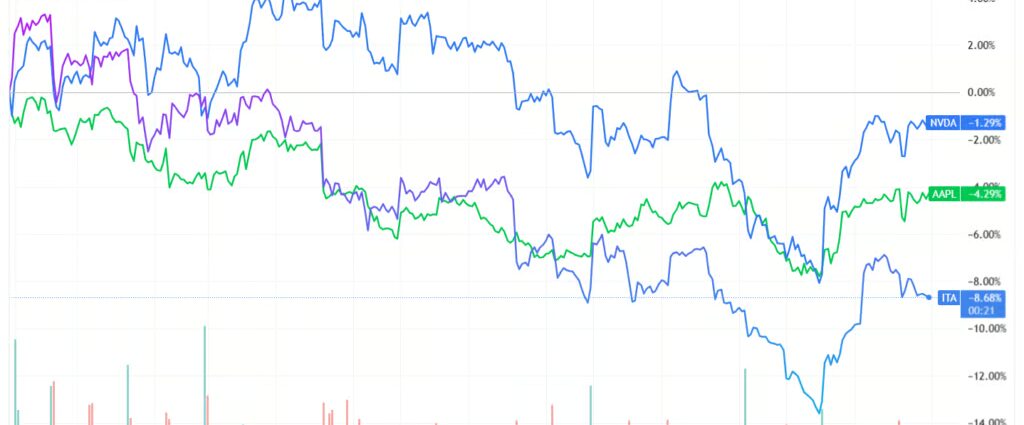
Since the Iran conflict began on Feb. 28, the iShares U.S. Aerospace & Defense ETF (BATS:ITA), the fund used as a proxy for tracking the defense sector, has lost about 8.7%. Meanwhile, shares of Nvidia Corp (NASDAQ:NVDA) have lost just 1.3%, and those of Apple Inc (NASDAQ:AAPL) have slipped about 4.3%.
This phenomenon represents a significant deviation from the past, when the defense sector tended to rally amid heightened global tensions. The basic rationale was that tensions would boost military spending.
Flipping The Traditional Playbook
Technology stocks were thought to be the sector most vulnerable amid escalating tensions. Rising inflation and interest-rate uncertainty, often triggered by conflict-driven energy shocks, tend to pressure high-growth sectors. Yet, this time, Big Tech has proven more resilient than expected.
U.S. tech stocks have re-emerged as …
This post was originally published here

Cramer Calls Out Trump’s ‘Mind-Boggling Misdirection’ ― Warns Stock Market Could Sink 20%
CNBC host Jim Cramer warned on Thursday that surging crude prices could trigger a painful equity selloff, arguing that oil’s parabolic move under President Donald Trump risks a 20% stock market drawdown.
- USO shares are climbing. See the chart and price action here.
Cramer’s 20% Selloff Warning
Cramer highlighted in an X.com post that crude oil is “up 87% for the year,” tying the move directly to Washington’s handling of energy and Middle East risk.
He blasted what he called a “mind-boggling misdirection play” from the president, suggesting policy rhetoric is ignoring the inflation shock building in real time at the pump.
In a stark historical claim, Cramer said, “Remember we don’t have any instances of oil being up 100% and the market NOT being down 20%. So here we go again…,” framing the current spike as a classic prelude to an equity air pocket.
This post was originally published here




Apollo and FC Barcelona just proved legacy markets are losing their grip on business
Just this week, two very different global institutions made the same telling decision. Apollo Global Management, one of the world’s largest investment firms, and FC Barcelona, one of the most recognized sports brands, both announced moves away from New York City in search of more favorable operating environments.
For decades, states like New York and California were the unquestioned centers of economic ambition. If you wanted to build a company, scale a financial institution or anchor a global brand, those were the places to be. That assumption is beginning to change.
The issue is not any single policy. It is the cumulative effect: layers of regulation, rising costs, complex compliance requirements and permitting timelines that introduce uncertainty into basic business decisions. These systems were often built with sound intent. But over time, they have made it harder for companies to move with speed and clarity. At a moment when flexibility and execution matter more than ever, that friction carries a real cost.
In Florida, a different pattern is emerging. I lead the Florida Council of 100, a nonprofit that brings together the state’s top business executives, and our Q1 2026 CEO Economic Outlook Index shows that executives in the state remain significantly more optimistic than their national peers. More important than sentiment, however, is behavior. Across industries, companies are increasing capital investment in facilities, technology and infrastructure. These are long-term decisions. Capital investment reflects where leaders expect opportunity to exist over the next decade, not just the next quarter.
Right now, many of them are choosing Florida. From financial services and technology to healthcare, logistics and advanced manufacturing, companies are expanding their footprint in the state. Those investments extend beyond individual firms. They support construction, strengthen supply chains, and create jobs that ripple across local economies.
In South Florida, particularly along the Gold Coast corridor from West Palm Beach through Miami, investment expectations remain among the strongest in the state. The region continues to attract capital and talent, supported by a business environment that allows companies to operate with greater speed and predictability.
Rather than being the product of any one decision, this trend reflects a broader alignment within Florida between policy and private-sector decision-making. The focus there remains on execution: how quickly a project can move forward, how predictable an investment environment is and how much time companies spend building rather than navigating systems.
Even as expectations moderate in some areas, the overall outlook remains strong. Florida CEOs continue to project growth in both sales and hiring and remain far more confident than their national counterparts. Only 9% expect employment to decline in the next six months, compared with 32% nationally. That gap reflects more than optimism. It reflects a different view of where growth will occur and which environments are best positioned to support it.
The Florida Council of 100 brings together many of the executives making these decisions in real time. When this group signals confidence, it is not theoretical. It reflects capital being deployed and companies choosing where to expand.
Economic leadership is not disappearing from legacy markets. But it is becoming more distributed, shaped by the environments where companies can operate most effectively. Apollo and FC Barcelona made that calculation this week. They won’t be the last.
The opinions expressed in Fortune.com commentary pieces are solely the views of their authors and do not necessarily reflect the opinions and beliefs of Fortune.
This story was originally featured on Fortune.com



Biotech investors’ plea to Trump, and a busy M&A week
How has the Food and Drug Administration’s recent decisions on rare disease drugs affected investment trends? Why is Eli Lilly getting into sleep medicine? And where did Allison go on her vacation?
We discuss all that and more on this week’s episode of “The Readout LOUD,” STAT’s weekly biotech podcast. Biotech investor Rod Wong joins us to talk about why an industry-patient coalition he’s part of sent a letter to President Trump asking for more regulatory flexibility at the FDA.

STAT+: Trump announces 100% tariffs on brand-name drugs, with plenty of carveouts
WASHINGTON — The Trump administration announced Thursday 100% tariffs on imported brand-name drugs — but with significant caveats.
Many large drugmakers won’t have to pay the tax because they’ve struck deals with the U.S. to build manufacturing facilities here and lower the prices of their medications. Drugmakers that haven’t struck those deals but pledge to bring production to the U.S. can have their tariffs reduced to 20% for the remainder of Trump’s term.
The tariffs open a new front in the Trump administration’s efforts to rein in the pharmaceutical industry and in its push to bring manufacturing back to the U.S. The announcement comes as Trump has looked to emphasize his administration’s work to make prices — especially medicines — more affordable ahead of the midterms.

STAT+: Small drugmakers, facing threat of tariffs, negotiate pricing deals with White House
WASHINGTON — The Trump administration is negotiating new drug-pricing deals, now with smaller companies, according to three people with knowledge of the meetings, including a White House official.
The new talks offer a pathway for smaller pharmaceutical companies — those not included in the first round of deals — to pledge lower prices and potentially avoid tariffs or new pricing policies through Medicare.
The new negotiations suggest the administration is looking to replicate the strategy it used with larger drugmakers: extract voluntary, confidential agreements in pursuit of lower prices and more domestic manufacturing. They also offer smaller players in the sector, which have faced substantial uncertainty about how federal policies would affect them, the chance to cut a deal and gain more certainty about how they might be affected by federal policies.
What Washington state agents are seeing with new ‘millionaires tax’
Washington state is entering a new policy era with its “millionaires tax” — targeting high-income earners who shape the luxury real estate market.
The law imposes a 9.9% tax on annual income above $1 million, with implementation expected in 2028 pending legal challenges.
For real estate professionals, the policy could spell shifts in client behavior, transaction timing and investment strategy.
While it affects only a small percentage of households — roughly half a percent of the population — these clients often dominate luxury and investment property activity.
Jacob Weaver, managing broker at Bellevue, Washington-based Jacob Weaver Group, brokered by eXp Luxury Realty, said reactions among high-net-worth clients have varied widely.
He’s observed two main groups; those actively planning around the tax and those who accept it as part of broader societal considerations.
“One group is seeing what’s happening around the world and in our country, and they’re saying, ‘You know, there is a huge discrepancy in the ultra-high-net-worth individuals and middle class,” Weaver told HousingWire. “And their general take is,’ Yes, I’m going to have to pay some more taxes.
“Do I love it? Not really. Is it maybe the best thing for our state and society. Probably.’”
How the tax works
The tax applies only to income above $1 million, leaving most households unaffected.
Weaver emphasized that many high-net-worth individuals earn income through sophisticated strategies such as business structures, investments or real estate rather than straightforward salaries.
“They’re very creative and they’ve got great advisors,” he said. “Everybody knows that. We’re always in a changing ecosystem of taxes, opportunity, micro and macroeconomics, localized opportunity in certain markets.”
The final number of people truly affected by the tax will likely be smaller than what many expect, Weaver added.
Even so, he explained, early signs of change were already emerging in client behavior.
“We’re seeing people who maybe had a timeline of moving out of state in the next five to 10 years accelerating a little bit,” Weaver said. “It’s people who maybe were planning on that anyway, that was part of the retirement plan — or it’s where they wanted to eventually end up after they sold the company.
“I would say that timeline is getting compressed a little bit. Somebody who is going to be leaving in five, six or seven years, maybe now it’s worth doing it in three.”
Overlap with capital gains taxes
Washington has already imposed a capital gains tax — with long-term gains above certain thresholds taxed at 7% and a 2.9% surtax on gains exceeding $1 million in a calendar year.
Yet primary residence transactions remained largely exempt, an important distinction for agents to relay to clients wary of the millionaires tax, said Heidi Braund, designated broker at Seattle-based Corcoran Lifestyle Properties.
“The tax implications aren’t aren’t going to hit when they sell their homes,” she said. “So, that part is safe. The Seattle King County Realtors and the Washington state Realtors have lobbied that pretty hard. So, they saved the millionaires from when they sell houses to not have to pay taxes on their net proceeds.”
Aaron Abrahamson, an agent at Seattle’s Coldwell Banker Danforth, highlighted general frustration among clients with the new millionaires tax and general taxation environment.
“Washington is taxing everybody out of it,” he said. “You know, they’re taxing us out of a comfortable living and people are tired of it.”
Potential luxury housing impact
Weaver said some clients are exploring new opportunities, particularly in second homes and investment properties.
Many of his high-net-worth buyers are looking for markets with better tax environments — such as Nevada, Palm Springs, Florida, and the Phoenix area.
“We’re seeing that in Nevada there’s a lot of great luxury product that’s being built, both condos as well as single-family homes,” Weaver said. “You’ve got just some monster mansions in Henderson and you also have the Four Seasons development (in Las Vegas).
“Those types of projects are facilitating these secondary home plays for people from California and now more so from Washington, who have high tax rates and a desire to get into a better tax environment.”
Abrahamson also noted that some ultra-wealthy clients had already left the state.
“A couple of friends I have, very, very wealthy individuals,” he said. “They have both gone outside of the state and purchased and are building new properties, new homes for themselves. These are homes that they wouldn’t be able to build here because of all the taxes and permits anymore. So, they’re done. They left.”
Braund envisioned future impact from the millionaires tax but said, for now, business has remained relatively stable.
“We’re still seeing multiple offers over here in the ($1 million to $2 million) range,” she said. “I can imagine, at some point, maybe the houses in that upper range may come down in price and bring some lower-end buyers up to that range. I can see maybe a laddering effect, but I don’t see that yet.”
While Washington’s wealth tax could influence high-end real estate, market fundamentals remain strong and guidance from agents is helping clients navigate an evolving status quo.

Trump to Impose 100 Percent Tariffs on Certain Imported Pharmaceutical Drugs
Pharmaceutical drugs produced outside the United States are subject to 100 percent tariffs, unless manufacturers agree to onshore production and offer most-favored-nation pricing.
The Commerce Department is authorized to reduce levies to 20 percent for companies that invest in American facilities and remove the tariffs entirely for those that agree to both conditions.
Generic medications are exempt from the tariffs for one year, with a reassessment scheduled for 2027.
Exceptions were granted, lowering tariffs to 15 percent for the European Union, Switzerland, Japan, and South Korea, and a 10 percent levy for the United Kingdom….











Kura Sushi Likely To Report Wider Q2 Loss; These Most Accurate Analysts Revise Forecasts Ahead Of Earnings Call
Kura Sushi USA, Inc. (NASDAQ:KRUS) will release earnings for its second quarter after the closing bell on Tuesday, April 7.
Analysts expect the Irvine, California-based company to report quarterly loss of 20 cents per share, versus a loss of 14 cents per share in the year-ago period. The consensus estimate for Kura Sushi’s quarterly revenue is $77.59 million (it reported $64.89 million last year), according to Benzinga Pro.
On Jan. 22, Kura Sushi USA announced the election of Claudia Schaefer to the company’s board of directors.
Kura Sushi shares fell 2.4% to trade at $67.71 on Thursday.
Benzinga readers can access the latest analyst ratings on the Analyst Stock Ratings page. Readers can sort by stock ticker, company name, analyst firm, rating change or other variables.
Let’s have a look at how Benzinga’s most-accurate …
This post was originally published here

KKR Is Closing $23 Billion NAX4 Megafund
KKR (NYSE:KKR) has announced the closure of its KKR North America Fund XIV, known as NAX4.
This fund, dedicated exclusively to private equity investments in North America, has raised approximately $23 billion — making it the largest private equity fund focused solely on the region, KKR stated in a press release.
NAX4 attracted a wide array of investors, including public and private pension plans, sovereign wealth funds, and insurance companies, among others. The fund aims to continue its predecessor’s strategy of supporting companies with broad-based employee ownership programs, which KKR views as essential for fostering stronger companies and expanding financial opportunities.
“Raising our largest fund in this environment reflects the consistency of our approach and the work our teams are doing inside our portfolio companies …
This post was originally published here

Trump Administration Sues Illinois, Arizona, Connecticut To Shield Kalshi, Polymarket From Gambling Laws
The lawyer who got Kalshi legalized in 2024 is now at the Department of Justice, suing three states to protect the prediction market industry.
Yaakov Roth, principal deputy assistant attorney general, filed federal lawsuits Thursday against Illinois, Arizona and Connecticut to block state gambling regulators from touching CFTC-registered prediction markets. Illinois Gov. J.B. Pritzker is named as a defendant.
What The Feds Are Arguing
CFTC Chairman Mike Selig said the agency would “defend market participants against overzealous state regulators” and warned against a “fragmented patchwork” of state-by-state rules.
The core claim: event contracts on platforms like Kalshi, Polymarket and Crypto.com are federal derivatives, not sports bets.
The complaints argue that state cease-and-desist orders make it impossible for exchanges to comply with the CFTC’s requirement to provide “impartial access” to all participants nationwide.
If a state bans the contract, the …
This post was originally published here

How To Earn $500 A Month From Delta Air Lines Stock Ahead Of Q1 Earnings
Analysts expect the company to report earnings of 62 cents per share. That’s up from 46 cents per share in the year-ago period. The consensus estimate for Delta Air’s quarterly revenue is $14.8 billion (it reported $14.04 billion last year), according to Benzinga Pro.
Shares of airline companies traded lower on Thursday amid oil price gains after President Trump indicated that the U.S. would continue strikes against Iran over the next few weeks with no set timeline for ending the conflict.
With the recent buzz around Delta Air Lines, some investors may be eyeing potential gains from the company’s dividends too. As of now, Delta Air has an annual dividend yield of 1.13%, which is a quarterly dividend amount of 18.75 cents per share (75 cents a year).
To figure …
This post was originally published here

Lamb Weston Analysts Cut Their Forecasts After Q3 Results
Lamb Weston Holdings, Inc. (NYSE:LW) on Wednesday posted stronger-than-expected earnings and revenue for the third quarter.
The company reported third-quarter adjusted earnings per share of 72 cents, beating the analyst consensus estimate of 61 cents. Quarterly sales of $1.565 billion outpaced the Street view of $1.492 billion.
Lamb Weston raised its 2026 sales guidance to $6.45 billion to $6.55 billion from $6.35 billion to $6.55 billion. The company projects adjusted EBITDA of $1.08 billion to $1.14 billion (prior view: $1 billion to $1.20 billion).
“Our focus on operational rigor and cost discipline continues to drive strong productivity, and we now expect to exceed our cost reduction target of at least $250 million by fiscal year-end 2028,” said CEO Mike …
This post was originally published here

These Analysts Revise Their Forecasts On Penguin Solutions Following Q2 Results
Penguin Solutions Inc. (NASDAQ:PENG) on Wednesday posted upbeat second-quarter results and raised its full-year outlook.
Net sales were $343 million, down 6% year over year but above the $337.938 million estimate. Adjusted EPS was 52 cents, beating the 42-cent estimate, while GAAP diluted EPS rose to 58 cents from 9 cents.
CEO Kash Shaikh said, “Enterprises, governments, and neocloud providers are racing to build AI factories, as platforms scale to power the next generation of inference workloads. Our AI/HPC pipeline continues to expand, and we added five AI/HPC customers this quarter, including a Tier One financial institution deploying our MemoryAI™ CXL-based KV …
This post was originally published here

Best HELOC Loans for 2026: Compare Rates, Terms, and Top Lenders
This post was originally published here

Best Jumbo CD Rates Our Experts Found Today, April 2, 2026: Up to 4.15%
This post was originally published here

Stock Market Today: Major Indexes Slip, Oil Prices Jump as Investors Doubt Iran War Will End Soon
This post was originally published here
Gold Plunges After Trump’s Address Hints At A Lengthy War In Gulf
(RTTNews) – Gold prices have plunged on Thursday after U.S. President Donald Trump asserted that the Middle East war could go on for two to three weeks while delivering his speech to the nation yesterday to update on the conflict.
This post was originally published here


The Iran war is effectively ‘a tax’ on U.S. households that could accelerate the economy’s widening K shape, Moody’s says
The conflict in the Middle East has sent gasoline prices in the U.S. soaring to their highest level in four years. That’s bad news for everybody, but the domestic consequences of the war are likely to ripple unevenly, and in the process undermine one of the country’s primary engines of economic growth.
Iran’s effective blockade of the Strait of Hormuz has starved the global economy of around 20% of the oil supply it is accustomed to, and Americans are witnessing the effect every time they go past a gas station. Average gasoline prices in the U.S. hit $4 a gallon on Tuesday, the first time that threshold has been crossed since 2022.
And expensive gas is for some households a huge concern. When gasoline prices spike, they drain real disposable income that would otherwise flow into the broader economy, forcing some families into making hard choices about where to put their money. By hurting lower-income households’ spending power and leaving the finances of the wealthy relatively insulated, the war in Iran could add even more fuel to the country’s growing K-shaped economy, according to a Moody’s Analytics report published this week.
“While household consumption remains the primary driver of U.S. economic growth, the ongoing Middle East conflict and resulting surge in oil prices are testing its resilience,” the report’s authors wrote. “If the conflict is prolonged, the shock would even more meaningfully reduce household purchasing power and weigh on spending.”
The critical role spending plays
The U.S. economy is massively reliant on Americans being willing to spend money. At the end of last year, consumer spending accounted for 68% of GDP, according to the Federal Reserve. It’s why spending data is considered a critical economic indicator, and why markets are so closely attuned to releases detailing monthly retail spending and consumer confidence.
But spending’s outsize role could turn into a dangerously lopsided dependence. Analysts at Moody’s, including Mark Zandi, the firm’s chief economist, have repeatedly sounded the alarm that the bulk of spending comes from a relatively small share of consumers, specifically wealthy ones.
In a report last year, Zandi wrote that the U.S. economy is “largely powered by the well-to-do,” finding that only the top 20% of the country’s income distribution has spent enough to outpace inflation in recent years. By another metric, the 10% of Americans with the highest incomes accounted for nearly half of all consumer spending last year.
Moody’s has framed the divergence as evidence of a K-shaped economy, one where the highest-income earners are doing better than ever and seeing their wealth grow, while low- and middle-income groups deal with stagnating wages and rising affordability concerns.
The problem of pricey gas
More expensive fuel could accelerate that trend. Low- and middle-income earners spend larger shares of their wealth on essentials including transportation, food, and housing, meaning their ability to spend in the economy gets squeezed faster when prices for the basics rise.
“Higher gasoline and utility costs act like a tax on households by reducing real disposable income,” Moody’s analysts wrote in the recent report. “As consumers spend more on essential goods and services, they will curb spending elsewhere.”
This effective tax arrives at a particularly precarious moment for many Americans, just as real wage gains are beginning to flatten and households are drawing down their savings to near-historic lows, according to Moody’s. Real wages declined 0.3% for low-income workers last year, according to the Economic Policy Institute, a reversal from post-pandemic trends when low- and middle-wage gains were prominent.
A pricier fuel tax has already had a significant impact on household finances. In the month since the war began, Americans may have paid an extra $8.4 billion on gasoline, according to an analysis published Thursday by Democratic members of the Joint Economic Committee, a standing congressional body.
While the committee did not break down the cost burden by income group, the amount Americans pay at the pump is likely to leave a bigger dent in their overall budget the less they earn. Households in the lowest fifth of incomes spent 18.3% of their wages on gasoline in 2021, more than double the average of 7.7%, according to an analysis by the American Council for an Energy-Efficient Economy, an advocacy group.
Higher-for-longer gas prices could also hurt wealthier Americans eventually. The Moody’s analysts warned that more expensive fuel will likely “erode some of the boost to household purchasing power” high-income groups would have had from fatter tax refunds this year.
Tax provisions in Donald Trump’s One Big Beautiful Bill Act last year paved the way for larger than usual refunds, primarily benefiting the wealthiest Americans. A recent analysis from Oxford Economics, a consultancy, projected returns this year to rise by $60 billion, but a prolonged period of high gasoline prices will be enough to “almost exactly” offset all of those returns this year.
This story was originally featured on Fortune.com

Latest crypto hack sees thieves make off with $280 million from Solana DeFi platform Drift
On April Fool’s day, the decentralized platform Drift saw hundreds of millions of dollars drained from its accounts and, unfortunately, this was no joke. The company suffered a $280 million hack on Wednesday, and industry experts suspected that North Korea was behind it.
“Earlier today, a malicious actor gained unauthorized access to Drift Protocol through a novel attack involving durable nonces, resulting in a rapid takeover of Drift’s Security Council administrative powers,” the company announced on X. A durable nonce is a tool used on Solana used to avoid transaction expirations.
The blockchain analytics firm Elliptic says that the on-chain behavior is consistent with previous North Korea-backed crimes. The Kim Jong Un-led nation is no stranger to perpetrating crypto crime. In 2025, the country was responsible for $2 billion of stolen crypto, equivalent to about 60% to all the digital asset funds stolen around the world, according to blockchain analytics firm Chainalysis. Last year, North Koreans executed a nearly $1.5 billion hack of Bybit in the largest crypto attack in history.
Hackers from North Korea often use social engineering, when they manipulate people into trusting them to get private information, but that wasn’t exactly the case in this most recent Drift attack. This instance involved the use of a durable nonce, which is a Solana feature, to dupe the company’s security council into pre-approving transactions that would happen weeks later, according to Coindesk. The platform suspended deposits and withdrawals for its customers.
Drift, founded by Cindy Leow and David Lu in 2021, provides perpetual futures and other trading products to its users. The company had over $400 million in total deposits and more than $19 million in total trades, according to its website.
Big crypto companies are not the only ones susceptible to attacks by North Koreans. Fortune crypto reporter Ben Weiss was also targeted by the DPRK. The malicious actor hacked into Weiss’s contact’s Telegram, arranged a video call with him, and attempted to run a script on his computer to get his passwords.
This story was originally featured on Fortune.com

Mercor, a $10 billion AI startup that works with companies including OpenAI and Anthropic, confirms major data breach
Mercor, a startup that provides training data to major AI companies, confirmed that it was the victim of a security breach that may have exposed sensitive company and user data.
The three-year old startup, which is valued at $10 billion, recruits experts in fields ranging from medicine to law to literature, to help provide data the improves the capabilities of AI modes. Its customers include Anthropic, OpenAI , and Meta.
According to unconfirmed reports circulating online, datasets used by some of Mercor’s customers and information about those customers’ secretive AI projects may have been compromised in the breach.
The incident was linked to a supply chain attack involving LiteLLM, a widely used open-source library for connecting applications to AI services.
The company confirmed to Fortune it was “one of thousands of companies” affected by the supply chain attack on LiteLLM, which has been linked to a hacking group called TeamPCP. Mercor spokesperson Heidi Hagberg said that the company had “moved promptly” to contain and remediate the incident and said a third-party forensics investigation was underway.
“The privacy and security of our customers and contractors is foundational to everything we do at Mercor,” Hagberg said. “We will continue to communicate with our customers and contractors directly as appropriate and devote the resources necessary to resolving the matter as soon as possible.”
Mercor is widely-considered one of Silicon Valley’s hottest startups, having raised a $350 million in a Series C round led by venture capital firm Felicis Ventures last October.
The TeamPCP hacking group planted malicious code inside LiteLLM, a tool used by developers to plug their applications into AI services from companies including OpenAI and Anthropic, that is typically downloaded millions of times per day, according to security firm Snyk. The code was designed to harvest credentials and spread widely across the industry before it was identified and removed within hours of discovery.
Lapsus$, a notorious extortion hacking gang, later claimed it had targeted Mercor and accessed its data. It’s not immediately clear how the gang obtained the data, and Mercor did not respond to specific questions from Fortune about the hacking group’s claims. TeamPCP is thought to have recently begun collaborating with Lapsus$ as well as other groups that specialize in ransomware and extortion, according to security researchers from the cybersecurity firm Wiz quoted in a story in Infosecurity Magazine.
TeamPCP is known for engineering so-called “supply chain attacks,” in which malware is planted inside code bases or software libraries that are widely used by programmers when writing their own code. Lapsus$, by contrast, is an older hacking group, known for social engineering and phishing attacks that focus on stealing user login credentials and then using those credentials to gain access to and steal sensitive data.
Lapsus$ has published samples of allegedly stolen data on its leak site, according to TechCrunch, including what appeared to be Slack data, internal ticketing information, and two videos purportedly showing conversations between Mercor’s AI systems and contractors on its platform. Lapsus$ claims to have obtained as much as four terabytes of data in total, including source code and database records. A single terabyte is approximately as much data as in 1,000 hours of video or 1,000 copies of the Encyclopedia Britannica.
Mercor may be an early indicator of a coming wave of extortion attempts stemming from the supply chain attack. TeamPCP has publicly stated its intention to partner with ransomware and extortion groups to target affected companies at scale, according to cybersecurity trade publication Cybernews. If true, that strategy would mirror campaigns carried out in the past by hacking groups.
In 2023, an attack from the Cl0p ransomware gang that exploited a vulnerability in MOVEit, a widely used file transfer tool, breached hundreds of organizations simultaneously, ultimately affecting nearly 100 million individuals across government agencies, financial institutions, and healthcare providers. Extortion attempts from that campaign dragged on for months.
This story was originally featured on Fortune.com
Trump’s White House ballroom gets final approval days after a judge ordered a halt to construction
Despite approval from the National Capital Planning Commission’s approval, a federal judge’s ruling asserts that Congress must also approve the project.
This post was originally published here
The March jobs report will be released on Friday. Here’s what to expect
The U.S. economy is projected to show job gains of 59,000 in March, with the unemployment rate holding at 4.4%.
This post was originally published here
Market volatility poses a serious risk for new retirees. Here’s how to prepare
Investors within a decade of retirement may want to ensure their portfolio allocation will limit the impact of retiring into a down market, advisors say.
This post was originally published here
U.S. oil prices soar 11% as Trump’s Iran war speech stokes fears of further escalation
Oil surged as Trump in his address to the nation on Iran war said that he expected the conflict to last another two to three weeks.
This post was originally published here
Coinbase clears key regulatory hurdle in bid to bolster its stablecoin business
Coinbase has received conditional approval from the U.S. Office of the Comptroller of the Currency (OCC) to operate as a trust bank, the company said Thursday.
This post was originally published here
Drip-feed of Reform UK controversies puts party’s policy drive in shade
Sacking of Simon Dudley is latest distraction at a time when party is keen to show it is serious contender for government
It was a week that started with a candid admission from Nigel Farage. When asked if Reform UK’s vetting process was finally up to scratch, the party leader said: “I accept that at the last general election basically there was no vetting really.” He was speaking after the latest of what a senior colleague had described as a “series of abhorrent incidents”.
That latest incident had involved a Welsh Senedd candidate, Corey Edwards, who was forced to step down last Friday after a picture of him appearing to do a Nazi salute surfaced online.
This post was originally published here
Trump’s White House ballroom wins approval of planning authorities
Blessing from NCPC comes just days after judge ruled work on project cannot proceed without congressional approval
Donald Trump’s White House ballroom project received the approval of Washington’s planning authorities on Thursday, two days after a judge ruled work cannot proceed without Congress’s approval.
The National Capital Planning Commission, which is chaired by one of Trump’s former lawyers, gave the green light to the “East Wing Modernization Project” on Thursday, describing the ballroom as just the latest stage over two centuries of continuous changes.
This post was originally published here
Children as young as 12 buying and selling knives and weapons via the internet
Government must ‘come down very hard’ on online trade in knives and weapons, says policing and crime minister Sarah Jones
Children are setting up online businesses selling knives in the same way they trade clothes, the policing and crime minister Sarah Jones has said.
Jones heard how children as young as 12 were buying and selling the weapons on the internet and social media at the opening of the new National Knife Crime Centre in Bloomsbury, central London, on Thursday.
This post was originally published here

SpaceX IPO is Musk’s biggest financial moonshot
This post was originally published here