





STAT+: FDA’s evolving view of what makes a ‘breakthrough’ device
You’re reading the web edition of STAT’s Health Tech newsletter, our guide to how technology is transforming the life sciences. Sign up to get it delivered in your inbox every Tuesday and Thursday.
Good morning health tech readers!
On top of being a day for brands to post “pranks” on social media, April 1 was also the deadline to apply for the CMMI ACCESS Model’s first cohort. Did you apply? Decide not to? Let me know: mario.aguilar@statnews.com
FOA introduces second-lien reverse mortgage LOC in California
Finance of America (FOA) on Thursday introduced HomeSafe Second Line of Credit, a second-lien reverse mortgage line of credit now available in California that lets homeowners 55 and older tap home equity over time without refinancing or taking on a new required monthly mortgage payment.
The product, which became available April 1, is designed to operate alongside a borrower’s existing first mortgage. It targets equity-rich senior homeowners who secured low fixed rates during the COVID-19 pandemic and are reluctant to refinance into a higher-rate loan or add a traditional home equity line of credit (HELOC), according to the company announcement.
HomeSafe Second Line of Credit is structured as a nonrevolving, second-lien reverse mortgage. Eligible borrowers must take an initial draw of at least 25% of the available funds at closing, with the remaining line accessible over a 10-year draw period. No new monthly mortgage payment is required, though borrowers must continue paying the existing first mortgage and all property-related charges such as taxes, insurance and fees.
“HomeSafe Second Line of Credit could solve a real market need in California,” FOA President Kristen Sieffert said in a statement. “This product gives borrowers the ability to access their home equity on their terms – when they need it – without adding a new monthly mortgage payment.”
The launch comes as more homeowners turn to second-lien products rather than refinancing. Second-lien equity withdrawals rose 22% year over year in the first quarter of 2025 to the highest level in 17 years, according to ICE Mortgage Technology data cited in FOA’s press release.
For lenders and originators focused on retirees and near-retirees, the move underscores growing demand for nontraditional ways to unlock housing wealth while preserving below-market first-lien rates.
HomeSafe Second Line of Credit offers a maximum loan amount of up to $1 million with a minimum credit score of 640, Finance of America said. The rate is adjustable, tied to the one-year Constant Maturity Treasury (CMT) plus a margin. Unused portions of the line can grow at 1.5% annually for the first seven years, giving borrowers additional capacity over time.
Unlike a traditional HELOC, the FOA product is nonrevolving: Once funds are repaid, they do not become available again for future draws. By contrast, standard HELOCs typically revolve and require monthly principal and interest payments during and after the draw period.
FOA is positioning the new line of credit as a complement to its existing proprietary HomeSafe Second lump-sum reverse mortgage and as a potential HELOC alternative for older borrowers seeking flexibility without a new installment-payment obligation.
In California, mid-tier home values are about $775,000, among the highest in the country, and nearly three-quarters of residents 65 and older own their homes, according to Zillow data and other sources cited by FOA. Many of these homeowners built substantial equity during the pandemic-era price run-up and are now “equity rich but cash constrained,” especially as inflation and volatility raise the costs of living in retirement.
For financial planners, loan officers and brokers serving senior homeowners, the product offers another tool for bridging retirement income gaps, funding large expenses or backing up emergency reserves. Example uses highlighted by FOA include home improvements, helping children or grandchildren with tuition or down payments, managing short-term cash needs, or covering unexpected medical and household costs.
Like other reverse mortgage products, the loan must be repaid when the borrower no longer meets the loan obligations, including living in the home as a principal residence, paying property charges or maintaining the property. Mortgage professionals will need to weigh these risks, as well as nonrevolving LOC terms and adjustable rates, against other forward and reverse lending options.
Finance of America said it plans to roll out HomeSafe Second Line of Credit beyond California to additional states throughout 2026.
This article was generated using HousingWire Automation and reviewed by a HousingWire editor before publication. The system helps convert company announcements and industry data into HousingWire-style news coverage.
HECM activity rises in March, but proprietary loans are taking a bite out of business
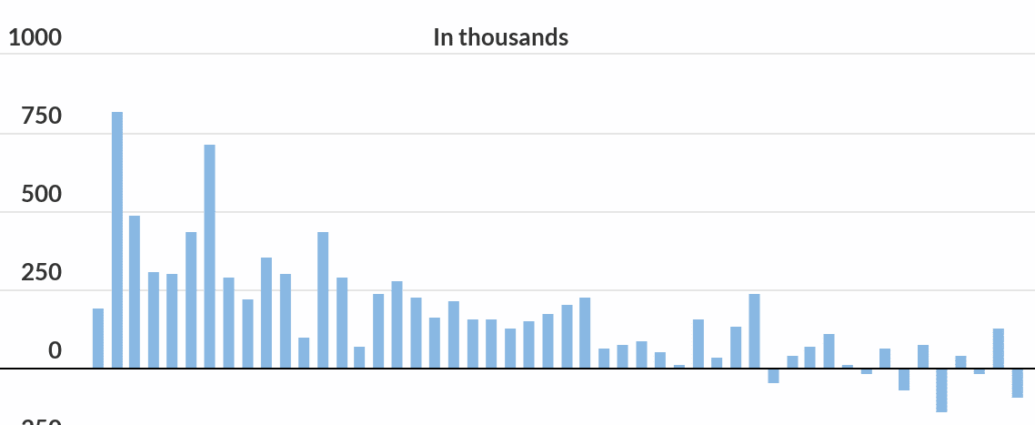
U.S. reverse mortgage endorsements rose sharply in March following subdued activity in February, but overall volume remains down compared with recent months, according to data released Wednesday by Reverse Market Insight (RMI).
Home Equity Conversion Mortgage (HECM) endorsements increased 16.3% in March to 2,117 loans. Despite the monthly gain, activity remained below the levels seen in every month since August 2025.
“March bounced back from the short February, rising 16.3% to 2,117 loans, although that remains below every month since August,” RMI wrote in commentary accompanying the data. “That continues the theme of weakness in HECM endorsements we touched on last month, and we believe the more competitive and non-FHA reverse mortgage market is the primary contributor.”
The decline in HECM volume reflects ongoing competitive pressure from proprietary reverse mortgage products, which industry observers say have captured much of the growth in recent years.
“We still don’t have comprehensive data there, but what we can piece together looks like the growth in unit volume has been almost entirely in the proprietary products for several years, particularly when we exclude the HECM refinance waves from 2018-2022,” RMI explained.
Nine of the 10 regions analyzed by RMI posted monthly increases in March, with four outpacing the national growth rate.
The Rocky Mountain region led these gains, rising 33.8% to 178 loans. The Northwest/Alaska region followed with a 33.1% increase to 165 loans, while the New York/New Jersey region climbed 33% to 133 loans. The Mid-Atlantic region also saw strong growth, increasing 32.5% to 159 loans.
Among the top 10 lenders, eight recorded month-over-month increases. Goodlife Home Loans/Traditional Mortgage Acceptance Corp. posted the largest jump, surging 55.1% to 107 loans. Finance of America (FOA) increased its endorsements by 24.7% to 454 loans, while South River Mortgage saw an 18.8% gain to 82 loans.
HMBS posts modest gain
In sync with rising HECM endorsements, the issuance of HECM Mortgage-Backed Securities (HMBS) rose modestly in March, according to data compiled by New View Advisors.
HMBS issuance totaled $441 million in March, up $10 million from February’s figure of $431 million but down $46 million from $487 million in the same month last year. A total of 66 pools were issued during the month, unchanged from February.
Despite the monthly increase, March’s total ranks among the lowest levels since 2009. Only four months, including February 2026, have had weaker issuance in that time span, New View reported.
FOA was the top issuer in March with $138 million, down slightly from $140 million in February. Longbridge Financial followed with $114 million and Mutual of Omaha Mortgage issued $81 million. Onity Mortgage Corp., formerly PHH Mortgage Corp., issued $59 million, down $7 million from the prior month.
Ginnie Mae/Reverse Mortgage Funding, also known as “Issuer 42,” did not issue any HMBS pools during March.
First-participation production totaled $260 million, flat month over month but down from both January and March 2025. Through the first quarter, FAR remained the top issuer of first-participation HMBS at $255 million, followed by Longbridge, Mutual of Omaha and Onity.
Of the 66 pools issued in March, 16 were first participations and 49 were tail pools, with one mixed pool. Tail issuance — which reflects additional draws on existing loans rather than new originations — rose to $181 million, up from $169 million in February.
Smaller pools also played a notable role. Twenty pools of less than $1 million were issued, enabled by Ginnie Mae’s allowance for pools as small as $250,000, which accounted for $12.4 million in issuance that may not otherwise have reached the market. Additionally, $69.8 million in participations were pooled using a 2023 policy that permits multiple participations from the same loan within a single month.
New View Advisors also reported that FOA maintained its position as the leading HMBS issuer in the first quarter of 2026, topping both total and first-participation issuance with $433 million and $255 million, respectively.
Longbridge ranked second with $361 million in total issuance, capturing a 26% market share, and continued to gain ground in first-participation volume with $237 million. It solidified its position ahead of Mutual of Omaha and Onity, which rounded out the top four with $260 million and $218 million in total issuance, respectively.
A total of nine issuers were active during the quarter, with the top four collectively accounting for about 90% of overall HMBS issuance volume, according to data compiled by New View Advisors from Ginnie Mae and private sources.
D.C. pushes single-stair apartments higher with added safety rules
Washington, D.C., council members are leaning into a growing national trend by relaxing single-stairway rules to cut the cost of building small and mid-rise housing.
On Tuesday, the D.C. Council unanimously advanced the One Front Door Act. If it passes on second reading, the maximum height for residential buildings with a single stairway would double to six stories.
Single-stair residential policy is gaining momentum nationwide as lawmakers and housing advocates seek additional ways to boost housing supply. A growing list of states and cities now allow, or are moving toward allowing, single-stair apartment buildings up to roughly five or six stories, with the added condition that they strengthen fire-safety systems.
The D.C. ordinance would lift current height limits so point-access, or single-stair, apartment buildings can rise taller while still meeting modern fire and life-safety standards such as sprinklers and smoke control.
Today, D.C. generally limits single-stair residential buildings to three stories, a threshold shared by many U.S. jurisdictions that follow International Building Code provisions. Supporters say the rules push designers toward wider, bulkier buildings with double-loaded corridors or make small multifamily projects on narrow lots infeasible.
Implementation details
Under the One Front Door Act, the Construction Codes Coordinating Board would have to develop criteria that specify which building types may adopt a single enclosed stair and what additional protections they must include. That work is expected to cover issues such as maximum travel distances from units to the stairs, corridor ventilation and elevator placement, as well as requirements for sprinklers and alarms.
The ordinance frames single-stair reform as one piece of a broader effort to reduce regulatory barriers to modest-scale apartment construction in a city with constrained infill sites and high land costs.
Potential benefits and concerns
Housing and planning groups, along with researchers who have examined international codes, say these reforms can open up low- and mid-rise sites, trim construction costs, and support more naturally affordable units without direct subsidy.
Fire safety professionals often oppose changes, arguing that stairwell redundancy remains safer.
Studies, including one in Minnesota, have found that a single stairwell can be as safe, or safer, than multiple stairs in a typical fire because of sprinklers and other safety measures.
In D.C., opponents, including several neighborhood civic associations, warned about potential evacuation risks and compatibility with historic districts. The city’s Department of Buildings has pledged to release design guidelines and require additional fire-safety reviews for single-stair projects before it issues permits.
“Allowing single-stair buildings at modest heights does not create a new class of high-risk construction,” Yesim Sayin, D.C. Policy Center’s executive director, said in testimony at a January hearing on the ordinance. “It enables small walk-ups and adaptive reuse projects to be built more efficiently—projects that sit squarely between single-family homes and high-rise towers. These are precisely the housing types that many neighborhoods say they want and that the District chronically underproduces.”
If the D.C. Council approves the One Front Door Act on final reading, the District would become one of the highest-profile East Coast jurisdictions to formally embrace this approach to mid-rise housing design.
Lower launches Movoto Advantage for solo real estate agents
Lower has launched Movoto Advantage, a limited-access, subscription-based program that connects high-performing solo real estate agents with motivated home buyers and sellers through real-time live transfers, the company announced Thursday.
The program, which Lower began rolling out in late 2025, operates within Lower’s Movoto real estate marketplace and has enrolled about 200 agents to date. It has doubled in size since its initial rollout and has generated thousands of consumer introductions, according to the announcement.
Movoto Advantage targets independent agents who rank near the top in their markets by transaction volume and have a history of closing deals, strong client service and consistent responsiveness. Unlike traditional online real estate platforms that may send the same opportunity to multiple agents, Movoto Advantage limits the number of participating agents in each market and routes consumers to a single, vetted agent in real time.
“Top real estate agents should be set up for success when connecting with consumers, not put in situations that reduce them to a commodity or make consumers feel like they are being spammed,” John Berkowitz, the president of real estate at Lower, said in a statement.
“By giving high-performing agents real conversations with motivated buyers and sellers, and giving those consumers the support they need to navigate the transaction, we are building an ecosystem that works better for everyone.”
The model builds on Movoto’s Pro+ program, launched in 2023 to serve real estate teams, but is tailored specifically for solo agents. Prospective participants apply online and, once approved, receive referrals to local buyers and sellers. Lower positions the limited-membership structure as a way to provide more predictable opportunity flow and a larger share of available leads for each participating agent.
Movoto Advantage is integrated with Lower’s lending platform through Lower Connect, which pairs consumers and agents with Lower loan officers for fast preapprovals and support through closing. The company says this alignment is intended to streamline the homebuying process and improve pull-through rates for both agents and lenders.
“The traditional buying experience has too many friction points that push qualified buyers to the sidelines,” Lower CEO Dan Snyder said in a statement. “When agents and lenders work together inside one ecosystem, barriers come down and buyers move forward with real momentum. That’s how we start closing the gap between wanting a home and owning one.”
The announcement comes almost a year after Lower acquired Movoto from its parent company, OJO Labs. Movoto Advantage aligns closely with comments Berkowitz made to HousingWire in July 2025 when discussing his hopes of using Lower’s network to connect more consumers with top local real estate agents and mortgage professionals.
“Call center mortgages work for a certain subset of consumers, but for the ones that go to a real estate agent first and rely on real estate agent recommendations, it is very hard for them to partner with a call center,” Berkowitz told HousingWire in July 2025.
“So, while we may be the smallest in scale as far as consumers, I think we have that last mile of the operation more scaled and dialed in than anybody else. And how do you win when you are fighting against giants? You lean into your strengths and I think you are going to see us lean heavily into delivering a really good, consistent experience for consumers at a local level by leveraging the best real estate agents in that market and a well-run retail mortgage operation.”
This article was written by Brooklee Han and generated with the assistance of HousingWire Automation. It was reviewed by a HousingWire editor before publication. The system helps convert company announcements and industry data into HousingWire-style news coverage.

Markets rally hard on Iran’s promise to play nice in Hormuz as its leaders pocket billions from the disruption
Markets breathed a sigh of relief on Thursday after Iran’s state news agency reported the country is drafting a protocol with Oman to monitor and charge tolls on ships transiting the Strait of Hormuz. Deputy Foreign Minister Kazem Gharibabadi told state media the requirements “do not constitute restrictions” but are intended to “facilitate and ensure safe passage.”
Wall Street was heading for a brutal day after President Trump’s speech Wednesday night made clear that the war with Iran would last for at least another month, and that further escalation was on the horizon. But after the report, stocks recovered all their losses and turned green on the day.
Oil traders weren’t so jubilant. Both U.S. and Brent crude recovered slightly, but U.S. crude still sits close to its high of the war, having surged nearly 9% to $108.95 a barrel on Thursday, while Brent climbed more than 5% to $106.55 after Trump’s speech.
Normally, Brent trades at a $3 to $6 premium over WTI, so it is unusual for WTI to be priced higher. But the unusual spread reflects traders’ belief that the price of oil will be higher in May than in June, a phenomenon known as backwardation—an effect of Trump’s stated timeline last night. WTI contracts are trading for May delivery, while Brent is trading for June.
The big reversal for equities reflects the market’s approval of some kind of hybrid model of control over the Strait of Hormuz, where Iran and a U.S. ally share oversight. However, it is unclear how quickly the two countries would start power-sharing, given that Gharibabadi told Sputnik that Iran is currently in a state of war and that peacetime rules can’t be expected to apply under those conditions. The protocol is explicitly a peacetime framework — Iran and Oman would coordinate navigation and require vessels to obtain permits “under normal conditions.”
The question is whether either side is actually ready for peacetime. Trump, in his prime-time address Wednesday night, pledged to “hit them extremely hard over the next two to three weeks” and threatened to obliterate Iran’s power grid and oil infrastructure if no deal is struck. Iran has denied it is negotiating and has demanded international recognition of its sovereignty over the strait as one of its conditions for ending the war.
Meanwhile, key figures in Iran’s power structure are profiting handsomely from the very disruption that a protocol might resolve. Supreme Leader Mojtaba Khamenei and oil mogul Hossein Shamkhani have emerged as early beneficiaries of the oil price spike, thanks to a temporary U.S. sanctions waiver that has allowed Iran-linked vessels to move crude through the strait. Former U.S. Treasury official Miad Maleki told Bloomberg, most of the money is being pocketed by intermediaries like Khamenei and Shamkhani rather than the Iranian state itself. Iranian lawmakers have separately said the country has been charging vessels as much as $2 million for passage, and is now making twice as much on oil exports as before the war.
Iran, it seems, wants to cement that kind of economic control. And if Trump listens to markets, he might just let it happen.
This story was originally featured on Fortune.com

After renewable power’s record-smashing 2025, the Iran war could accelerate the shift as countries seek ‘structurally more resilient’ energy, UN says
The story of the energy transition in 2025 was one of fast-paced growth and global adoption. That trend was always likely to continue this year, but the war in Iran may be giving it a fresh geopolitical push.
Renewable power accounted for 85.6% of all new energy capacity installed worldwide last year, according to a report released Thursday by the International Renewable Energy Agency (IRENA), a UN body. Renewables now make up a record 49.4% of the world’s energy capacity, up from 46.3% in 2024.
That record-breaking streak has largely come down to plummeting costs for solar panels and wind turbines, the leading forms of clean power generation. These items have grown so cheap on a global scale that a UN analysis last year concluded over 90% of new renewable energy projects are now cheaper than alternative fossil fuel-dependent sources.
Countries may now have an incentive other than economics to go green. The conflict in the Middle East has exposed how reliant global oil and gas supply is on certain chokepoints, including the Strait of Hormuz. The waterway has been under Iranian blockade for the past month, locking around 20% of the world’s oil and gas supply out of global markets. For Iran, the strait represents strategic leverage, but for the rest of the world, it is a reminder of the risk inherent to relying on an energy source produced in a relatively small number of countries.
“A more decentralized energy system, with a growing share of renewables and more market players, is structurally more resilient,” Francesco La Camera, IRENA’s director-general, said in a statement. “Countries that invested in the energy transition are weathering this crisis with less economic damage, as they boost energy security, resilience and competitiveness.”
A safer source
One of the big arguments for more renewable energy in recent years has been that while petroleum and natural gas reserves are contained to specific regions—with geography playing a large role in determining who produces and purchases energy—wind and sunlight are everywhere. Declining costs for renewables combined with their power sources’ ubiquity mean that solar and wind alone could take care of the entire planet’s energy demand 100 times over, according to a 2021 analysis by Carbon Tracker, a think tank.
Much of that opportunity is present in poorer countries that currently import fossil fuels to generate the bulk of their energy needs. Africa, for instance, accounts for 39% of global renewable potential, according to Carbon Tracker because of the continent’s huge solar and wind capabilities.
The current supply crunch has been primarily felt in Asia, the recipient of almost 90% of oil and gas that normally passes through the Strait of Hormuz. Facing fuel shortages, governments from Bangladesh to Vietnam have called for stricter energy conservation measures, including working from home and limiting air conditioning usage.
These are also countries that have already seen a rapid rise in electrification since the war began. Electric car and motorcycle interest has soared in southeast Asia in particular, and several countries have even begun reconsidering their nuclear power plans in the wake of the conflict. Europeans have similarly rushed to install more solar panels, heat pumps and electric vehicles in the month since the conflict began.
Locking in demand
To be sure, wind and solar power remains hobbled by weather conditions, with capacity weaker when the sun goes down or when the wind dies. While battery technology is rapidly improving, countries with a large renewables share in their energy mix can still be saddled with high electricity costs. In Spain, for example, where solar, wind and hydroelectric power feature more prominently than in other European countries, electricity costs have remained relatively low. But experts have pointed out that prices could rise come summer when hydropower capacity starts dwindling, and will likely have to be replaced by more natural gas.
The reliability of renewables is also limited by their supply chains. The critical components used to build solar panels and battery technology have their own chokepoints. China is one of the biggest actors in clean energy manufacturing, and if it chooses to prioritize its domestic market or leverage its position in trade negotiations, the renewable market can suffer. This month, the country scrapped export incentives involving solar panels, a move that is already expected to raise costs for solar energy infrastructure abroad.
But the crisis in the Middle East is regardless pushing governments in the same direction markets have been signaling for years, and energy experts are already writing in a boost to renewables as countries consider their alternatives.
“I expect one of the responses to this crisis will be an acceleration of renewables. Not only because they are helping to reduce emissions, but also, they are a homegrown domestic energy source,” Fatih Birol, executive director of the International Energy Agency, said during a speech last week.
This story was originally featured on Fortune.com

Why American billionaires are abandoning Wall Street for English soccer clubs
Eight of the top 10 Premier League clubs are now owned by Americans. So are a third of all clubs across the four divisions of the English Football League. With the 2026 World Cup arriving on American soil this summer, U.S. investors have already conquered a different kind of field — Britain’s Premier League and the English football pyramid below it.
As we approach what sportswriters over there refer to as “the business end” of the 2025-2026 season, eight of the 10 clubs in the top half of the Premier League table are owned by Americans. Below them, in the English Football League’s “Championship” (as the pyramid’s second division is confusingly called), four of the eight clubs battling for promotion to the Premier League are U.S.-owned (including the feel-good Ryan Reynolds-Rob McElhenney Wrexham project and its Tom Brady-backed TV documentary rival, Birmingham City). And three of the top eight clubs in the division below them, League One (still confusing, I know), boast American owners. Overall, a majority of Premier League clubs are now in American hands, as are a third of the clubs in the three divisions below that comprise the English Football League.
It wasn’t long ago that one of America’s most cherished sports was bashing the world’s sport. Soccer was derided as staid and boring, when it wasn’t being characterized as a plot to alter our way of life, to be rejected by red-blooded Americans with the same vehemence we’d rejected such other foreign abominations as the metric system, Socialism, and Esperanto.
But today, European football, the English varietal in particular, is all the rage among our investing classes. What changed?
The Promotion/Relegation Bet
Well, it turns out the structure and culture of global football is the perfect fit for Wall Street’s animal spirits, offering a far higher-stakes competitive jolt than any American sport ever could to those addicted to competitive speculation and the pursuit of greater financial upside. Americans used to scoff at the existence of ties in soccer, and the lack of playoffs in most of its leagues, as evidence of a “wimp factor” in the game most associated with participation trophies among America’s youth.
But then America’s capitalists discovered the sport’s system of promotion and relegation (glaringly absent in America’s domestic soccer league), which offers clubs the possibility of moving up and down the game’s various divisions. This promises investors dramatic upside, or the jeopardy of existential implosion, depending on their results on the field. Moneyball reigns supreme in a world where sporting performance has a direct correlation with a club’s financial performance. Win enough, get promoted, your income and valuation soars exponentially (as Wrexham has experienced the last few years). Lose enough, get relegated to a lower division, and you’ll be forced to lay off staff and take a write-down on your investment as your revenues drastically shrink. Not for the faint-hearted, but catnip for that certain type who’s made a fortune by outsmarting competing hedge fund managers or private equity firms. And a certain catnip not available in American sports that lack this immediate correlation between financial and sporting performance.
By contrast, American pro leagues are structured to protect their owners from exactly this kind of jeopardy. The NFL shares revenue equally, enforces a salary cap, and hands the worst team the top draft pick — socialism in shoulder pads. NBA owners have perfected “tanking,” deliberately losing seasons to improve draft position.
Finish last in the Social Darwinism of a European football league, and you’re banished to a lower division of the game. If the Cleveland Browns were an English football team, they’d be playing in a Sunday pub league at this point.
Why Valuations Stay Low — For Now
European football’s volatility and jeopardy are also attractive to American investors because they hold down valuations. Only the handful of relegation-proof Premier League clubs have anything approximating US sport franchise valuations, because everyone else’s value could evaporate as a result of a bad season or two. Tom Foley, who also owns the NHL’s Las Vegas Golden Knights, acquired Bournemouth in the Premier League after being surprised he could do so for less than the cost of acquiring a new MLS team. That’s because baked into Bournemouth’s valuation is an assumption that the relatively small club isn’t going to be in the Premier League for the long haul.
Another attraction to American investors is the English game’s financial chaos, itself exacerbated by the speculative frenzy and dire stakes inherent in promotion/relegation. A study released in January by the accounting firm BDO claimed that 90% of all football clubs in England’s top four divisions lose money. Again, more catnip for private equity turnaround artists and American financial ingenuity.
The Intangibles
Then there are the intangibles, the seductive addictiveness of just how meaningful English football is, both to each club’s community and to the entire planet. Talk to any American invested over there, and they will breathlessly describe to you how the intensity of fans’ passion, the depth of clubs’ local roots, and the game’s global reach are like nothing to be found in US sports.
So, all in all, what’s not to like? Losing over there might be exponentially more brutal than losing over here, true, but the friendly invaders pouring into Britain don’t see themselves as capable of losing.
The opinions expressed in Fortune.com commentary pieces are solely the views of their authors and do not necessarily reflect the opinions and beliefs of Fortune.
This story was originally featured on Fortune.com
Stocks making the biggest moves midday: Tesla, NextDecade, General Motors, Delta Air Lines & more
Here are some of the stocks making headlines in midday trading.
This post was originally published here
SpaceX’s IPO could be the largest-ever public offering—what to know before investing, from experts
Elon Musk’s rocket and sattelite firm is on track to become the largest U.S. public offering in history.
This post was originally published here
Trump’s Iran war speech paints a grim picture for oil markets with more than 600 million barrels at risk
Oil prices are surging as the market prepares for a longer U.S. war with Iran after President Donald Trump’s national address.
This post was originally published here
OpenAI acquires popular tech podcast TBPN
OpenAI did not disclose the terms of the deal but said TBPN will be housed within its strategy organization.
This post was originally published here
Jefferies says this discount retailer is a steady grower that could surge more than 40%
Jefferies upgraded the discount store chain on Thursday and said its stock could rise more than 40% from here.
This post was originally published here
UK politics Q&A, as it happened: Andrew Sparrow answers your questions on Starmer, Reform and more
This blog is now closed
Q: Do you agree with the Tories about wanting more oil and gas drilling from the North Sea?
Davey says Kemi Badenoch claims she can get an extra £2.5bn in tax revenue by allowing more exploration in the North Sea. He says she is “just lying”. He says everyone knows that that is not realistic.
This post was originally published here
Court dismisses former WhatsApp security chief’s lawsuit against Meta
Abdullah Baig alleged Meta ignored flaws putting billions at risk, but a US judge ruled he lacked sufficient evidence
A US court has dismissed a lawsuit from WhatsApp’s former security chief, who alleged that parent company Meta ignored internal flaws he flagged about the messaging app’s digital defenses.
Abdullah Baig, who claims he was fired in retaliation for raising these concerns, had alleged that billions of users had been put at risk because of these vulnerabilities. Thousands of employees could view sensitive user data, including profile photos and location, Baig claimed in the lawsuit filed in September. A judge ruled he had not presented enough evidence to move forward.
This post was originally published here
CDC temporarily halts testing for several infectious diseases amid staffing shortages
Federal agency, which normally supports state and local public health labs, has been hobbled by staff departures
The US federal agency responsible for monitoring diseases has temporarily halted certain diagnostic testing, including those for rabies, human herpesvirus and several other infectious illnesses.
The Centers for Disease Control and Prevention (CDC) released a list on Monday showing that more than two dozen types of testing are now unavailable.
This post was originally published here
Sadiq Khan warns of ‘zero-tolerance approach’ to any repeat of Clapham disorder
London mayor says more arrests will be made after young people stormed into shops as part of social media trend
Sadiq Khan has warned against any repeat of “utterly unacceptable” scenes of disorder in Clapham earlier this week, saying culprits who assault and intimidate shop workers will face the full force of the law.
The mayor of London said more arrests would be made in the coming days, and urged anyone considering more violence over the Easter weekend to think again.
This post was originally published here

‘Hunger Games’ director Gary Ross lists his Cobble Hill townhouse for $10.6M

Gary Ross, director of Hollywood hits like “The Hunger Games” and “Big,” and his wife, designer Claudia Solti, have just put their Brooklyn townhouse at 197 Clinton Street on the market. Asking $10,600,000, the stately brick home offers 6,474 square feet of living space on six floors, from the private screening room to a top-floor “penthouse” with a patio. Behind its 1850s facade, the home has all the architecture and design features buyers look for in modern townhouse living, without having to change a thing.

Rooms are framed by 12-foot ceilings enhanced by subtle recessed lighting. Refined details like herringbone floors, working fireplaces, and custom storage (there’s even a working dumbwaiter) complement a gracious, light-filled layout.


Up a classic stoop, the parlor floor begins with a classic brownstone living room. Floor-to-ceiling windows overlook the street below. At the rear, walls of glass frame a formal dining room overlooking the private patio beyond.



On the garden floor, a sleek, European-style kitchen is a natural gathering zone, framed by custom cabinetry and served by a dining island, integrated appliances, and a walk-in pantry. Full-wall glazing leads to a professionally-landscaped outdoor oasis. There is also a guest bedroom on this level.


On the home’s third floor are two bedrooms with en-suite baths. For added convenience, there’s a home office and a laundry room as well.



The fourth floor is home to a luxurious primary suite with a large, lovely bath, a dressing room, and a separate closet. High ceilings, recessed lighting, and designer fixtures enhance even the intimate sleeping spaces.




On the highest floor is a private “penthouse.” This townhouse-topping aerie offers a convenient auxiliary kitchen and a private patio in addition to flexible rooms for living.
On the home’s lowest floor, a “wellness retreat” offers a gym and home theater, served by a spa bathroom with a sauna. This floor also accesses the back patio for outdoor yoga or a post-sauna sunbath.

Located at the border of Brooklyn Heights and Cobble Hill, this turnkey home represents modern townhouse living with all the trimmings. Rare perks like a finished lower level and a top-floor suite (not to mention Hollywood cachet) make this a listing that’s sure to get plenty of attention.
[Listing: 197 Clinton Street at CityRealty]
[At Compass by Marta Maletz and Carl Gambino]
RELATED:
- $22M Cobble Hill brownstone is five floors of architectural perfection, from the wine cellar to the rooftop deck
- For $11M, this Cobble Hill townhouse offers modern comforts, elevated design, and a garage
- For $3M, a two-bedroom Cobble Hill condo with a private roof deck and room to expand
- Enjoy effortless brownstone living at this $2.15M Cobble Hill condo
The post ‘Hunger Games’ director Gary Ross lists his Cobble Hill townhouse for $10.6M first appeared on 6sqft.


A 7% Risk-Free Return On Nvidia? Prediction Markets Now Make It (Almost) Possible
Marex Group Plc has created the first structured note tied to a prediction market outcome, paying a 7% coupon if NVIDIA Corp (NASDAQ:NVDA) remains the world’s largest company in one year.
The deal is the latest evidence of how prediction markets are shaping the financial world.
How It Works
Polymarket runs markets where traders bet on which company will be the largest by market cap at the end of each month and at the end of the year.
Nvidia is currently the dominant favorite across all of them.
But the contracts are binary. If Nvidia loses the top spot, a trader who bet on it loses everything they put in.
The Marex note works differently.
The buyer’s capital is protected regardless of the outcome. If Nvidia is still No. 1 in a year, they collect a 7% coupon. If not, they get …
This post was originally published here

What’s Going On With Amazon Stock Thursday?
Amazon.com, Inc. (NASDAQ:AMZN) traded flat as analysts reiterated bullish views and raised price targets, signaling steady investor confidence.
The company also drew attention for expanding AI partnerships and potential satellite deal talks, reinforcing its long-term growth strategy.
Wells Fargo analyst Ken Gawrelski maintains an Overweight rating on the stock and raises the price forecast from $304 to $305.
According to Benzinga Pro, AMZN stock has gained over 6% in the past year. Investors can gain exposure to the stock via Global X PureCap MSCI Consumer Discretionary ETF (NYSE:GXPD).
AI Pact With Reply
Separately, Reply has entered a strategic collaboration agreement with Amazon Web Services to accelerate cloud and artificial intelligence adoption across global markets, with a strong emphasis on scaling enterprise-grade generative AI solutions.
The agreement focuses heavily on advancing AI deployment using AWS infrastructure, while leveraging Reply’s specialized firms to build industry-specific solutions and governance frameworks aligned with evolving regulations.
Amazon Drives Public Sector AI Growth
This post was originally published here

What’s Going On With Rezolve AI Stock Thursday?
On Thursday, Rezolve AI PLC (NASDAQ:RZLV) said DBLP Sea Cow Limited, linked to CEO Dan Wagner, acquired 9 million shares since Jan. 1, 2026.
The company called the move a “vote of confidence” in its long-term strategy, with Wagner citing strong momentum in its AI-driven commerce platform.
The shares were purchased through a mix of direct issuance and private transactions, strengthening DBLP Sea Cow’s position as a key investor.
Rezolve AI Technical Analysis
At $3.19, the stock is trading 19.1% above its 20-day simple moving average (SMA), the stock’s average price over the …
This post was originally published here

Elon Musk’s Biographer Calls SpaceX IPO His ‘Biggest Act’—And Makes A Daring Prediction
Elon Musk’s biographer Walter Isaacson says the SpaceX IPO filing may be a step toward something much bigger, calling the potential listing Musk’s “biggest act” and predicting he will eventually push to fold all his companies into one.
Isaacson said that ever since Musk was a kid with very few friends, the notion of humanity becoming a multiplanetary species has been what drives him most.
SpaceX confidentially filed its S-1 with the SEC this week, putting the company on track for a potential June listing.
Reports suggest the company could seek a valuation north of $1.75 trillion and raise up to $75 billion, which would make it the largest IPO in history.
Isaacson Says The Pieces Are Coming Together
Isaacson said if Musk could put data centers in orbit and then build …
This post was originally published here

Not Exxon, Not Chevron — This Small Cap Name Is One Of The Biggest Winners From $110 Oil
Oil above $110 is back—but the biggest moves aren’t showing up where you’d expect.
While giants like Exxon Mobil Corp (NYSE:XOM) and Chevron Corp (NYSE:CVX) grind higher, it’s a much smaller name that’s suddenly stealing the spotlight: Sky Quarry Inc. (NASDAQ:SKYQ). SKYQ stock was up over 80% on Thursday.
And the reason goes beyond just a sharp stock move.
Why Smaller Names React Differently
For oil majors, higher crude typically means better margins—but the impact is spread across refining, chemicals, and global operations. The result is steady, incremental upside.
For smaller players, …
This post was originally published here

North Korea Strikes Again: $285 Million Exploit Raises Questions For Circle
Blockchain analytics firm Elliptic on Thursday flagged “multiple indicators” that North Korea’s state-sponsored hackers may be behind the $285 million exploit of Drift Protocol, the largest DeFi hack of 2026 so far that wiped out more than half of the Solana-based exchange’s total value locked.
Arthur Hayes, BitMEX co-founder, Maelstrom CIO, and Drift Protocol advisor, pointed the finger at Solana (CRYPTO: SOL) itself.
“If Solana had native multi sig addresses, would the Drift hack even have been possible? Actually curious, not trolling,” Hayes wrote on X.
Ledger CTO Charles Guillemet drew a direct comparison to the $1.4 billion Bybit hack of 2025, which the FBI attributed to North Korea’s Lazarus Group.
The pattern is nearly identical: compromised multi sig signers, social engineering, and malicious transactions disguised as routine operations.
The Lazarus Playbook
The hacker spent weeks setting up the attack.
They created a fake token called …

Margin and Margin Trading Explained Plus Advantages and Disadvantages
This post was originally published here

401(k) Loans: When to Borrow and Key Rules Explained
This post was originally published here

Understanding IFRS: Global Accounting Standards Explained
This post was originally published here

Lines of Credit: Benefits, Risks, and Strategic Uses Explained
This post was originally published here

Social Security: Maximize Earnings and Understand Benefits
This post was originally published here

Attorney General Pam Bondi out at DOJ
President Trump has announced that Attorney General Pam Bondi is out at the Justice Department. Her departure comes amid simmering frustration over her leadership and handling of the Epstein files.
(Image credit: Win McNamee)

This post was originally published here

EPA flags concerns about microplastics, pharmaceuticals in drinking water
There’s been a lot of public is concerned about health risks from the chemicals, especially from the Make America Healthy Again movement. The agency’s move doesn’t in itself guarantee regulation.
(Image credit: Justin Sullivan)

This post was originally published here

Trump fires US attorney-general Pam Bondi
This post was originally published here










Colleges under pressure over building names with Epstein connections
In rain, snow and bitter cold, a steady drumbeat of small protests have been held in recent months on the Ohio State University main campus with a single goal in mind: removing billionaire retail mogul Les Wexner’s name from buildings where it’s emblazoned.
At issue — for union nurses at OSU’s Wexner Medical Center, for former athletes at the Les Wexner Football Complex, and for some student leaders who may walk past the Wexner Center for the Arts near the campus oval — is Wexner’s well-documented association with the late sexual predator Jeffrey Epstein.
Similar cries are arising over a Wexner-named building at Harvard University and others around the country named for different Epstein associates, including Steve Tisch, Casey Wasserman, Glenn Dubin and Howard Lutnick.
It’s all part of the backlash across higher education against figures with ties to Epstein, who cultivated an extensive network including powerful people in the arts, business and academia. Scrutiny has landed on university donors as well as several academics whose emails with Epstein surfaced in the latest files, including some who have resigned.
Wexner complaints cite Epstein association
Wexner hasn’t been charged with any crime in connection with Epstein, the one-time financial adviser by whom he says he was “duped.”
But a group of former Ohio State athletes who survived a sweeping sexual abuse scandal at the school argues that the retired L Brands founder ‘s generosity to his alma mater is now tainted by the knowledge that Epstein was entangled in many of his family’s spending decisions, including around the football complex’s naming.
“Ohio State University cannot credibly separate itself from these facts, nor can it justify continuing to honor Les Wexner with an athletic facility,” their naming removal request read. It went on, “To do so is to ignore the voices of survivors, former athletes, and the broader community who expect accountability, transparency, and moral leadership.”
At Harvard, a group of students and faculty at the prestigious Kennedy School has targeted the Leslie H. Wexner Building and the Wexner-Sunshine Lobby. The renaming request submitted in March cites Wexner’s “strong ties to Epstein” and argues Epstein profited off Wexner, “which enabled Epstein to use his wealth and power to traffic and abuse children and women.”
Some Harvard students and alumni also want the Farkas name removed from Farkas Hall, which hosts the Hasty Pudding Theatricals Man and Woman of the Year. The building was renamed in 2011 following a significant donation from Andrew Farkas, graduate chairman of the Hasty Pudding Institute, in honor of his father.
Farkas had a longtime personal and business relationship with Epstein, including co-owning a marina with him in the Caribbean. He also repeatedly asked Epstein to donate to Hasty Pudding. Between roughly 2013 and 2019, Epstein regularly donating $50,000 annually to secure top-tier donor status, for a total of more than $300,000.
“As I’ve said repeatedly, I deeply regret ever having met this individual, but at no time have I conducted myself inappropriately,” Farkas said in a statement.
Pressure building on campuses
Pushback against buildings named for Epstein associates is growing on some U.S. campuses.
Just last weekend, the student body at Haverford College in Pennsylvania voted to urge President Wendy Raymond to forge ahead with the renaming process for the Allison & Howard Lutnick Library. The building is named for the U.S. commerce secretary who has faced resignation calls over his relationship with Epstein.
Raymond had said in a February open letter that she wasn’t ready to do that. In a statement to The Associated Press following Sunday’s vote, Raymond said she respected the process and would respond to the resolution within the customary 30-day period.
At Ohio State, pleas against the Wexner name are making their way through a five-step review procedure, most of which takes place outside public view and with no set timeline. The university’s new president, Ravi Bellamkonda said, “I think the process is thorough, fair, and open, and I will promise you that we will give each request a full consideration.”
A spokesman for Harvard confirmed the school has received the Wexner-related name removal request but would not comment further. It would be the university’s second name change, after the John Winthrop House, which bore the name of a Harvard professor and a like-named ancestor, was changed to Winthrop House in July over their connections to slavery.
Tufts University, home to the Tisch Library and the Steve Tisch Sports and Fitness Center, said it continues to look at the matter. The library has moved to clarify that it was not named for Steve, but, in 1992, for his father Preston Tisch, an honored alum. The sports center removed a set of Steve Tisch’s handprints during spring break. The university said that was part of a planned renovation.
UCLA’s Wasserman Football Center and Stony Brook University’s Dubin Family Athletic Performance Center also are named for Epstein associates.
Namings often tied to philanthropic giving
The current clamor bears some resemblance to the controversy that surrounded the wealthy Sackler family’s culpability in the deadly opioid crisis, because in both cases the institutions involved had received vast sums from the family.
Some major institutions — including museums in New York and Paris, Tufts and the University of Oxford in England — did remove the Sackler name, but Harvard chose not to. In a 15-page report explaining its 2024 decision, the university said the legacy of Arthur M. Sackler, whose company Purdue Pharma made the potent opioid OxyContin, was “complex, ambiguous and debatable.”
The Epstein associates whose names are on campus buildings also are typically generous donors, as well as alumni.
Wexner, his wife Abigail and their charities have given Ohio State well over $200 million over the years, for example. That included $100 million to benefit the Wexner Medical Center; at least $15 million for the Wexner Center, a contemporary art museum named for Wexner’s father, Harry; and $5 million split with an Epstein-run foundation toward construction of the football complex. The Wexners have given another $42 million to the Harvard Kennedy School.
A moral and financial bind for universities
Anne Bergeron, a museum consultant and author who specializes in the ethics of building naming rights in the cultural sector, said universities are serious about their gift acceptance standards while also recognizing that the conduct of individual donors may be judged differently over time.
“It’s no surprise that a lot of these situations arise within the university sphere, because with students — especially the younger generation — there is virtually no tolerance for being associated with anyone who doesn’t represent the best of humanity,” she said
She called this “a moment of reckoning” for universities and said they have to guard against the appearance of a quid pro quo in their building namings.
Michael Oser, a Columbus-area resident, articulated the frustration of some defenders of retaining the Wexner name in a recent letter-to-the-editor of The Columbus Dispatch.
“OSU took the money. Built the buildings. Cut the ribbons. Smiled for the photos There were no formal ‘morality clauses’ attached back then, just gratitude and applause,” he wrote. “Now, years later, some want to play moral referee while the university keeps the cash and the concrete. That’s not accountability. That’s convenience.”
Supporters of name removal see opportunity for healing
Lauren Barnes, a student in the Kennedy School’s master’s program leading the effort to remove Wexner’s name, said she struggles most days as a survivor of sexual abuse and the mother of a 14-year-old to walk into a building with a name linked to Epstein.
“Thinking about all the children in this world that deserve safety and also all the survivors on campus that have to walk under the Wexner name, I know what that’s like to have my heart race and my hands get sweaty,” she said. “I hate that anyone else has to have that feeling walking under that name and just dealing with it kind of everywhere on campus.”
One protester at Ohio State, Audrey Brill, told a local ABC affiliate that it now “feels gross” thinking of women delivering babies at OSU’s Wexner Medical Center “given everything that we’re learning about where this money went” — and she feels removing Wexner’s name could help.
Some protesters also want the name of Dr. Mark Landon, a prominent Ohio State gynecologist who received five-figure quarterly payments from Epstein between 2001 and 2005, removed from a visitor’s lounge in the hospital’s new $2 billion, 26-story tower. Landon have said the money was for biotech investment consulting for Wexner, not health care for Epstein or any of his victims.
___
Casey contributed from Boston.
This story was originally featured on Fortune.com

Jack Dorsey and Roelof Botha think AI can make middle management obsolete
For years, companies have been flattening their organizations and cutting down middle management. Weeks after slashing his staff by 40%, Jack Dorsey, CEO of payments company Block, foresees middle management’s complete extinction.
In an essay published Tuesday co-authored with Sequoia advisor Roelof Botha and titled “From Hierarchy to Intelligence,” Dorsey questioned the conventional wisdom of widely used organizational structures.
“At Sequoia, we see that speed is the best predictor of start-up success. Most companies are focused on AI as a productivity enhancer. Few are focused on the potential of AI to change how we work together,” they wrote.
In February, Block laid off 4,000 employees, or about 40% of its workforce. Dorsey made his reasoning clear: “We’re already seeing that the intelligence tools we’re creating and using, paired with smaller and flatter teams, are enabling a new way of working which fundamentally changes what it means to build and run a company,” he wrote in a Feb. 26 X post.
Dorsey and Botha are rejecting what they see as 2,000 years of hierarchical organizational structures, starting with the Roman army, that relied on middlemen to “route information, pre-compute decisions, and maintain alignment across a complex organization,” thereby slowing the flow of information. They argue companies today are still running on the same system.
“Most companies using AI today are giving everyone a copilot, which makes the existing structure work slightly better without changing it,” they wrote. “We’re after something different: a company built as an intelligence (or mini-AGI),” they wrote.
Block is not the only company that wants to axe middle management. In November, Amazon cut 14,000 corporate employees to “reduce bureaucracy” and “remove organizational layers.” Months before the layoffs, Amazon CEO Andy Jassy said the company is cutting “well-intentioned” middle managers who “want to put their fingerprint on everything” to allow employees to move faster and give them more ownership over their work. Meta’s AI team now has a 50-to-1 employee-to-manager ratio following the company’s crusade against middle managers in recent years.
Their vision for a new organizational structure
Dorsey and Botha proposed companies need both a “world model” of their operations and a strong “customer signal.” Simply put, they believe companies need a way to record and track all decisions, discussions, plans, problems, and progress to build an ever-evolving “world model.” This system would replace the role of managers, who relay information across an organization. The second part of their plan is even more straightforward: Follow the money to determine the model’s success.
“Money is the most honest signal in the world,” they wrote. This approach may work particularly well for Block because it can track buyers through Cash App and sellers through Square in real-time, and AI can process that information faster than humans.
“The traditional roadmap, where product managers hypothesize about what to build next, is any company’s ultimate limiting factor,” they wrote. “In this model, customer reality generates the backlog directly.”
If you’re wondering where Block’s remaining 6,000 employees sit in this new model, Dorsey and Botha have an answer for that: the edge, or “where the action is.” On the edge of their new system, people will be able to sense things the model can’t perceive, such as cultural context, trust, intuition, and “the feeling in the room.” What makes their proposal more than just a database is how humans will interact with it and use it without needing a chain of command, they wrote.
“We’re not making this decision because we’re in trouble,” Dorsey wrote in an X post on the day he announced the layoffs. “Our business is strong.”
The company reported a gross profit of $2.87 billion in Q4, up 24% year over year. Block’s shares rose about 3% immediately after the pair published the paper on March 31, but have fallen slightly in the days since. Over the last year, the company’s stock has fallen 9%.
“Block is in the early stages of this transition,” Dorsey and Botha wrote. “It will be a difficult one, and parts of it will likely break before they work.”
This story was originally featured on Fortune.com

‘There are no words’: Zohran Mamdani grapples with fatal shooting of 7-month-old in a stroller
A 7-month-old baby in a stroller was killed by a stray bullet Wednesday afternoon when a man on a moped shot at a group of people on a Brooklyn sidewalk, authorities said.
The shooting was believed to be gang-related and the child an unintended victim, police said.
“There are no words that can mend the heartbreak this family is feeling right now,” Mayor Zohran Mamdani told reporters in a briefing near the spot where the shooting happened. “A life that had barely begun was taken in an instant.”
The shooting unfolded around 1:20 p.m. after two men sped down a street on a moped and the man on the back of the vehicle fired at least two shots at a street corner where several adults and children were gathered. No other injuries from the shooting were reported by police.
The moped sped off, but crashed into an oncoming car two blocks away, Police Commissioner Jessica Tisch said. The impact threw both men off the vehicle so hard that the moped’s passenger lost both his shoes, she said.
One of the men on the moped was hurt in the crash and brought to a hospital, where he was in police custody in connection with an unrelated investigation, police said. The other man fled and was still being sought by police Wednesday afternoon.
Police investigators used neighborhood security cameras to track where the moped traveled in the minutes after the shooting, Tisch said.
“This is a terrible day in our city, a tragedy that truly shocks the conscience,” she said at the news briefing. “As a mother, I cannot imagine the pain that this family is feeling or the grief that they now carry with them. It is unspeakable.”
The child’s death comes amid a sustained period of dropping crime in New York City. Through Sunday, the NYPD had recorded 52 killings so far in 2026, down 29% from the same period last year. The city is on track to finish the first quarter with killings and shootings near their lowest in decades.
Mamdani said the killing is a reminder that much work still needs to be done to reduce gun violence.
This story was originally featured on Fortune.com

Trump ousts Pam Bondi as attorney general
President Donald Trump says Pam Bondi is out as his attorney general, ending the contentious tenure of a loyalist who upended the Justice Department’s culture of independence from the White House, oversaw large-scale firings of career employees and moved aggressively to investigate the Republican president’s perceived enemies.
The announcement follows months of scrutiny over the Justice Department’s handling of files related to Jeffrey Epstein’s sex trafficking investigation that made Bondi the target of angry conservatives even with her close relationship with Trump. She also struggled to satisfy Trump’s demands to prosecute his political rivals, with multiple investigations rejected by judges or grand juries.
The former Florida attorney general came into office last year pledging that she would not play politics with the Justice Department, but she quickly started investigations of Trump foes, sparking an outcry that the law enforcement agency was being wielded as a tool of revenge to advance the president’s political and personal agenda.
Bondi ushered in a period of intense turmoil at the department that included the firings of career prosecutors deemed insufficiently loyal to Trump and the resignations of hundreds of other employees. Her departure continues a trend of Justice Department upheaval that has defined Trump’s presidency as multiple attorneys general across his two terms have either been pushed out or resigned after proving unwilling or unable to meet his demands for the position.
Bondi rejected accusations that she politicized the Justice Department and said her mission was to restore the institution’s credibility after overreach by President Joe Biden’s Democratic administration with two federal criminal cases against Trump. Bondi’s defenders have said she worked to refocus the department to better tackle illegal immigration and violent crime and brought much-needed change to an agency they believe unfairly targeted conservatives.
Embracing, supporting and protecting the president
Bondi’s public embrace of the president, however, marked a sharp departure from her predecessors, who generally took pains to maintain an arm’s-length distance from the White House to protect the impartiality of investigations and prosecutions. Bondi postured herself as Trump’s chief supporter and protector, praising and defending him in congressional hearings and placing a banner with his face on the exterior of Justice Department headquarters.
She called for an end to the “weaponization” of law enforcement she said occurred under the Biden administration, even though Biden’s attorney general, Merrick Garland, and Jack Smith, the special counsel who produced two cases against Trump, have said they followed the facts, the evidence and the law in their decision-making. Bondi’s critics, meanwhile, said she was the one who had politicized the agency to do the president’s bidding.
“You’ve turned the People’s Department of Justice into Trump’s instrument of revenge,” Rep. Jamie Raskin of Maryland, the top Democrat on the House Judiciary committee, said at a February hearing.
Bondi delivered a combative performance but few substantive answers at that hearing as she angrily insulted her Democratic questioners with name-calling, praised Trump over the performance of the stock market — “The Dow is up over 50,000 right now” —- and openly aligned herself as in sync with a president whom she painted as a victim of past impeachments and investigations.
Even Republicans began to challenge her, with the Republican-led House Oversight Committee last month issuing a subpoena to her to appear for a closed-door interview about the Epstein files.
Under Bondi’s leadership, the department opened investigations into a string of Trump foes, including Federal Reserve Chair Jerome Powell, New York Attorney General Letitia James, former FBI Director James Comey and former CIA Director John Brennan. The high-profile prosecutions of Comey and James were short-lived as they were quickly thrown out by a judge who ruled that the prosecutor who brought the cases was illegally appointed.
Trump repeatedly publicly praised and defended Bondi but also showed flashes of impatience with his attorney general’s efforts to meet his demands to prosecute his rivals. In one extraordinary social media post last year, Trump called on Bondi to move quickly to prosecute his foes, including James and Comey, telling her: “We can’t delay any longer, it’s killing our reputation and credibility.”
Bondi oversaw the exodus of thousands of career employees — both through firings and voluntary departures — including lawyers who prosecuted violent attacks on police at the U.S. Capitol on Jan. 6, 2021; environmental, civil rights and ethics enforcers; counterterrorism prosecutors; and others.
Fumbling the Epstein files
She struggled to overcome early stumbles over the Epstein files that angered conservatives eager for government bombshells about the case, which has long fascinated conspiracy theorists. She herself had fed the conspiracy theory machine with a suggestion in a 2025 Fox News Channel interview that Epstein’s “client list” was sitting on her desk for review. The department later acknowledged that no such document exists.
Bondi was ridiculed over a move to hand out binders of Epstein files to conservative influencers at the White House only for it to be later revealed that the documents included no new revelations. And despite promises that more files were going to become public, the Justice Department in July said no more would be released, prompting Congress to pass a bill to force the agency to do so.
The Epstein files fumbles led to a stunning public criticism from White House chief of staff Susie Wiles, a close friend of Bondi’s, who told Vanity Fair that the attorney general “completely whiffed.” The Justice Department’s release of millions of pages of Epstein files did little to tamp down criticism, prompting a House committee with the support of five Republicans to subpoena Bondi to answer questions under oath.
Bondi, who defended Trump during his first impeachment trial, was his second choice to lead the Justice Department, picked for the role after former Rep. Matt Gaetz of Florida withdrew his name from consideration amid scrutiny over sex trafficking allegations.
This story was originally featured on Fortune.com


The S&P 500 is trying to end its terrible Thursday streak
The broad market index has ended the last nine Thursdays in the red. Number 10 would be the worst streak ever in the benchmark’s history.
This post was originally published here
The charts are showing solar stocks will keep soaring after a strong start to the year
Jay Woods of Freedom Capital Markets takes a look at technicals on the TAN ETF.
This post was originally published here
Amazon to add 3.5% fuel and logistics surcharge for sellers as Iran war drives up energy prices
With the war in Iran now in its fifth week, Amazon said it’s adding a 3.5% fuel and logistics surcharge for third-party sellers in the U.S. and Canada.
This post was originally published here
‘A litany of lies’: Trump’s rambling primetime Iran address sparks backlash
US president’s 19-minute Wednesday address at the White House was met with bewilderment from commentators
Donald Trump’s primetime nationwide address on the war with Iran caused widespread bewilderment, with commentators voicing shock at his vow to continue bombing to “bring them back to the stone ages”.
Speculation before Wednesday’s speech from the White House Blue Room suggested that the president might be about to signal a winding up of the US military effort, which began on 28 February.
This post was originally published here
‘A wow moment’: ancient Romanian gold helmet returned in plea deal with theft suspects
Prosecutors unveil artefact linked to lost Dacian civilisation after it was stolen from Dutch museum last year
A priceless ancient gold helmet from Romania that was stolen last year from a museum in the Netherlands, has been recovered as part of a plea deal reached with the suspects.
Under the guard of balaclava-wearing police, prosecutors unveiled the 2,500-year-old Coțofenești helmet, which is considered a cultural icon of Romania, during a news conference on Thursday in the eastern Dutch city of Assen.
This post was originally published here
Coalition of countries discuss ‘every possible measure’ to pressure Iran into reopening strait of Hormuz
Yvette Cooper hosted virtual summit of more than 40 countries to consider coordinated action in face of closure of vital shipping lane
More than 40 countries gathered to discuss “every possible diplomatic, economic and coordinated measure” to pressure Iran into reopening the strait of Hormuz, the UK foreign secretary said on Thursday.
After chairing a virtual summit, Yvette Cooper said coordinated action was needed as Iran’s “reckless strikes” on international shipping and efforts to “hijack the global economy” were hitting nations from across the globe “who played no part in this conflict”.
This post was originally published here
Jewish diaspora leaders urge Israeli president to stop West Bank settler violence
Former UK foreign secretary among 3,000 signatories of open letter to Isaac Herzog after spate of killings
The former British foreign secretary Malcolm Rifkind is among leading members of the Jewish diaspora urging the Israeli president, Isaac Herzog, to intervene to stop “attacks by Jewish extremists” on Palestinians in the West Bank.
An open letter to Herzog facilitated by the London Initiative – a liberal Zionist network of 360 people, including eminent Jewish, Israeli and Israeli Palestinian figures – has attracted more than 3,000 signatories, including diplomats, philanthropists, rabbis and academics from Australia, Canada, across Europe, South Africa the UK and US. It follows a spate of killings and arson attacks by settlers on Palestinian civilians in March.
This post was originally published here
Trump fires Pam Bondi, a loyalist and ally, as attorney general
Bondi earned president’s ire over handling release of Epstein files and failing to prosecute his political enemies
Donald Trump has fired Pam Bondi, the US attorney general, according to multiple reports, dismissing a loyalist who reshaped the justice department, but still failed to please a president fixated on prosecuting political enemies and frustrated with the politically explosive release of the Jeffrey Epstein files.
“Pam Bondi is a Great American Patriot and a loyal friend, who faithfully served as my Attorney General over the past year. Pam did a tremendous job overseeing a massive crackdown in Crime across our Country, with Murders plummeting to their lowest level since 1900,” Trump wrote in a post on Truth Social. “We love Pam, and she will be transitioning to a much needed and important new job in the private sector, to be announced at a date in the near future.” He added that Todd Blanche, the deputy attorney general, would serve as acting attorney general.
This post was originally published here
Starmer must call energy summit akin to 2008 crisis response, Labour MP says
Former government adviser Polly Billington urges bigger steps to shield people in UK from effects of Iran war
Keir Starmer should convene a global energy summit of the same order as Gordon Brown’s response to the 2008 financial crisis and put Britain on a “war footing” to reduce its exposure to fossil fuels, a Labour MP and former government adviser has said.
Polly Billington, who was an aide in Brown’s government, warned that economic pain was “hurtling down the tracks” and a bigger response was needed to protect the British people from the consequences of the US-Israeli war on Iran.
This post was originally published here
Appeals court orders resentencing of ex-Colorado clerk jailed for election interference
Tina Peters, an election denier, was found guilty in 2024 of allowing unauthorized access to county’s voting equipment
A Colorado appeals court on Thursday ordered the resentencing of a former Colorado election official who was found guilty of allowing unauthorized access to her county’s voting equipment, the latest development in a closely watched case that has attracted considerable attention from Donald Trump and other election deniers.
Tina Peters, the former clerk in Mesa county in western Colorado was sentenced to nine years in prison in 2024 after a jury found her guilty on three counts of attempting to influence a public servant, conspiracy to commit criminal impersonation, first-degree official misconduct, violation of duty and failure to comply with the secretary of state. Peters was the county clerk in 2020 and later allowed an unauthorized person to access the county’s Dominion voting machines. Sensitive information from the machines later wound up on the internet.
This post was originally published here
‘You have to be serious’: Macron criticises Trump’s mixed messages about Nato and Iran
Speaking in South Korea, the French president defended the transatlantic alliance and called for return to peace
Emmanuel Macron has sharply criticised Donald Trump’s inconsistent and often contradictory pronouncements on the Iran war and Nato, saying if “you want to be serious” it was better not to come out with a something different every day.
“There is too much talk … and it’s all over the place,” the French president said on Thursday during a state visit to South Korea. “We all need stability, calm, a return to peace – this isn’t a show!”
This post was originally published here





From Alabama to Texas: A patchwork of buyer agency laws emerges after NAR settlement
For many agents and brokers across the country, the National Association of Realtors’ (NAR) commission lawsuit settlement agreement thrust buyer representation agreements into the forefront.
Under the terms of the settlement, which went into effect in August 2024, Realtors are required to have consumers sign a buyer agency agreement that outlinse the terms of the agent’s services and compensation prior to touring a property. This requirement marked a change for agents across the country — even those already accustomed to using buyer agency agreements — and sparked concern among others about getting a stranger they just met to sign a legally binding contract.
This concern prompted several states to examine their buyer agency and disclosure laws. Alabama was one of the earliest movers in enacting legislation in response to the buyer agency agreement requirements outlined in NAR’s settlement.
In March 2025, Alabama governor Kay Ivey signed into law a bill that ensures homebuyers only have to sign a buyer brokerage agreement prior to submitting an offer on a property — and not before touring a home with an agent.
The law reaffirms Alabama’s existing Real Estate Consumers Agency and Disclosure Act (RECAD) framework, with emphasis on early discussions of brokerage services and compensation. But it prevents consumers from signing a contract with an agent early in their relationship.
Chad Beasley, a Birmingham, Alabama-based agent for eXp Realty, said that in the year since the bill was passed, it has mostly felt like business as usual.
“It was a pretty seamless change because it basically went back to the way we were doing things prior to the NAR settlement,” Beasley said. “In my business, I am always careful when meeting buyers for the first time to sit down and go over the real estate brokerage services disclosure form that is required.
“Even prior to the settlement, if it was someone who already knew they wanted to work with me, then we’d also sign the buyer representation agreement then, but now with the new law in place, that isn’t a requirement.”
Not having to follow the settlement requirement for buyer agency agreements has made meetings with new leads a lot more comfortable, Beasley said.
“I just feel like requiring buyer representation agreements to show a home is a bit of a push too far,” he said. “If brokerage options are being disclosed properly and the consumer understands what capacity I am acting in, then as the relationship moves forward and we both decide we are comfortable working together, then we can sign that buyer representation agreement.
“I feel like it gives agents the freedom to work their business how they want to, and take the time they need to build those relationships before taking that next step.”
Exploring risk tolerance
Jeremy Walker, CEO of the Alabama Association of Realtors, which backed the bill, shared a similar sentiment.
“You want to be able to establish a relationship with a professional you’re going to be working with. That’s one of the biggest complaints from consumers,” Walker said on an episode of Capitol Journal in February 2025. “They may see a property listed, or know someone and want to work with them and see a property, but they don’t want to be forced into a buyer agreement too soon.
“They want to get to know you before they say, ‘Hey, I want to work with you.’ And that’s where we want to get that part right,” Walker added.
Beasley acknowledged that it is a risk to tour a property without having a buyer representation agreement as an agent may not be paid for that work. This is why he will typically only show two properties to a client without having a signed agreement.
“After a while you need that representation agreement, because there are questions I can’t answer and there are things that buyers shouldn’t be telling me if I am not representing them,” Beasley said.
He added that other agents may be more willing to show several properties to a buyer before signing an agreement, but his risk tolerance usually sits at the two-property threshold. Still, Beasley said he is grateful that the new law allows him and other licensees in the states to decide what makes the most sense for their businesses.
“I do take measures to protect myself, and I ask a lot of questions to make sure that buyer isn’t working with another agent or just using me to open a door when they plan to submit an offer on that property with another agent,” he said. “I do think it is neat to see that Alabama was on the forefront of this, and to see that other states are following makes it feel like this was a pretty good idea.”
Texas takes a different tact
Texas is another state that acted quickly in adjusting its laws related to buyer agency agreements. But the Lone Star State took the opposite approach to Alabama.
Under the updated version of the state’s real estate license law, agents must enter into a written agreement with a prospective buyer before taking any substantive action. This means that while an agent could unlock the door to a property for a buyer without having a signed agreement, the agent cannot offer any advice or opinions on the property, bringing the state law more in line with the terms of the NAR settlement.
The law went into effect at the start of 2026.
Brandy Wuensch, the broker-owner of City View Realty Group and immediate past president of the Austin Board of Realtors (ABoR), said she is grateful for the clarity and transparency the law provides consumers about agent roles and compensation.
“There was a lot of confusion among agents and consumers, and a lot of out-of-date practices. And with the industry evolving quickly over the past couple of years, I think this legislation helped formalize the expectations so both agents and consumers could better understand how representation is structured,” Wuensch said.
“It reinforced professionalism in the industry, and ensured that agents are clearly communicating their value and making sure that they are more intentional in explaining who they represent, how they are compensated and what services they provide.”
Wuensch added that she feels the law reinforces best practices that agents should already have been following. As much as the law helps increase transparency for consumers, Wuensch also feels that the law protects agents.
“For agents, it really reinforces the importance of formal representation and professional standards, and it helps legitimize the work that we do and ensures that we are not operating in gray areas,” she said.
Kelea Youngblood, the chief marketing officer of Unlock MLS and ABoR, views the new law as a step toward “modernization.”
“It brought Texas agency law closer to how the market was already operating, and it clarified when a license holder is and is not representing a buyer,” Youngblood said. “It was a meaningful step toward clearer expectations and more transparency for consumers.”
Meanwhile, in Oklahoma and Mississippi…
While the law in Texas closely aligns with the terms of the NAR settlement, the state’s neighbor to the north, Oklahoma, is currently contemplating two bills that seek to do the opposite of what the Texas law has done.
Under the two bills, SB 1217 and SB 1225, a broker must disclose any information pertaining to their compensation or fees charged prior to providing a client with the services they plan to charge for. Additionally, brokers and agents are not required to procure a buyer broker agreement before showing a property.
In an email, Bryan Hutchinson, the CEO of Oklahoma Realtors, told HousingWire that the association is not publicly opposing SB 1217, which stipulates that an agent is not required to have a buyer sign a representation agreement to show a property.
“Ultimately, whatever decision legislators make, our association knows that we will work with OREC (Oklahoma Real Estate Commission) to communicate and enforce the law,” Hutchinson wrote. “However, SB 1217 is inconsistent with the adopted legislative position of Oklahoma Realtors. The association believes the legislation, as drafted, will confuse Realtor members who are licensees and potentially confuse consumers who will receive mixed messaging.
“Because of these inconsistencies and potential for confusion in the marketplace, Oklahoma Realtors does not support SB1217, rather it has chosen to monitor the legislation.”
Hutchinson added that the association encourages its members to follow the terms of NAR’s commission lawsuit settlement.
In contrast, Mississippi Realtors supported SB 2713, which was signed into law in March 2026. The law makes it optional for a buyer’s agent to sign an agreement to provide a home tour.
Under the law, licensees are required to have a brokerage agreement signed with their clients only prior to listing a home for sale, or when submitting an offer on a property if they’re going to be compensated for the services provided.
“SB 2713 protects consumers by requiring Mississippi licensed real estate agents to include relevant terms and a clear disclosure of compensation in written brokerage agreements before listing or submitting an offer on residential property. This new law provides buyers and brokers maximum flexibility in finalizing terms of their relationship before negotiations begin involving a property,” DeShawn Davis, the 2026 president of Mississippi Realtors, wrote in an emailed statement.
Davis added that NAR’s settlement defers to state law on the requirement of written agreements for buyers touring a home.
“With SB 2713, Mississippi surpasses the protections in the NAR settlement by requiring written agreements for sellers and buyers working with any licensed real estate agent, irrespective of Realtor membership,” Davis wrote. “At the same time, SB 2713 gives consumers and agents greater flexibility in forging business relationships while enhancing transparency and consumer choice.”
While other states are taking a different approach to buyer agency agreements with their laws and proposals, Youngblood said the most important thing is that any new law enacted provides more clarity and transparency for consumers.
“I think states are all solving the same issue — just in different ways,” Youngblood said. “I think Texas chose early clarity and to be on the front end, and I believe that Texas’s choice is more structured, which I think can serve consumers well when it is paired with strong education for agents.
“So, making a choice to favor a more statutory framework, I think, was a positive one.”
From Alabama to Texas: A patchwork of buyer agency laws emerges after NAR settlement
For many agents and brokers across the country, the National Association of Realtors’ (NAR) commission lawsuit settlement agreement thrust buyer representation agreements into the forefront.
Under the terms of the settlement, which went into effect in August 2024, Realtors are required to have consumers sign a buyer agency agreement that outlinse the terms of the agent’s services and compensation prior to touring a property. This requirement marked a change for agents across the country — even those already accustomed to using buyer agency agreements — and sparked concern among others about getting a stranger they just met to sign a legally binding contract.
This concern prompted several states to examine their buyer agency and disclosure laws. Alabama was one of the earliest movers in enacting legislation in response to the buyer agency agreement requirements outlined in NAR’s settlement.
In March 2025, Alabama governor Kay Ivey signed into law a bill that ensures homebuyers only have to sign a buyer brokerage agreement prior to submitting an offer on a property — and not before touring a home with an agent.
The law reaffirms Alabama’s existing Real Estate Consumers Agency and Disclosure Act (RECAD) framework, with emphasis on early discussions of brokerage services and compensation. But it prevents consumers from signing a contract with an agent early in their relationship.
Chad Beasley, a Birmingham, Alabama-based agent for eXp Realty, said that in the year since the bill was passed, it has mostly felt like business as usual.
“It was a pretty seamless change because it basically went back to the way we were doing things prior to the NAR settlement,” Beasley said. “In my business, I am always careful when meeting buyers for the first time to sit down and go over the real estate brokerage services disclosure form that is required.
“Even prior to the settlement, if it was someone who already knew they wanted to work with me, then we’d also sign the buyer representation agreement then, but now with the new law in place, that isn’t a requirement.”
Not having to follow the settlement requirement for buyer agency agreements has made meetings with new leads a lot more comfortable, Beasley said.
“I just feel like requiring buyer representation agreements to show a home is a bit of a push too far,” he said. “If brokerage options are being disclosed properly and the consumer understands what capacity I am acting in, then as the relationship moves forward and we both decide we are comfortable working together, then we can sign that buyer representation agreement.
“I feel like it gives agents the freedom to work their business how they want to, and take the time they need to build those relationships before taking that next step.”
Exploring risk tolerance
Jeremy Walker, CEO of the Alabama Association of Realtors, which backed the bill, shared a similar sentiment.
“You want to be able to establish a relationship with a professional you’re going to be working with. That’s one of the biggest complaints from consumers,” Walker said on an episode of Capitol Journal in February 2025. “They may see a property listed, or know someone and want to work with them and see a property, but they don’t want to be forced into a buyer agreement too soon.
“They want to get to know you before they say, ‘Hey, I want to work with you.’ And that’s where we want to get that part right,” Walker added.
Beasley acknowledged that it is a risk to tour a property without having a buyer representation agreement as an agent may not be paid for that work. This is why he will typically only show two properties to a client without having a signed agreement.
“After a while you need that representation agreement, because there are questions I can’t answer and there are things that buyers shouldn’t be telling me if I am not representing them,” Beasley said.
He added that other agents may be more willing to show several properties to a buyer before signing an agreement, but his risk tolerance usually sits at the two-property threshold. Still, Beasley said he is grateful that the new law allows him and other licensees in the states to decide what makes the most sense for their businesses.
“I do take measures to protect myself, and I ask a lot of questions to make sure that buyer isn’t working with another agent or just using me to open a door when they plan to submit an offer on that property with another agent,” he said. “I do think it is neat to see that Alabama was on the forefront of this, and to see that other states are following makes it feel like this was a pretty good idea.”
Texas takes a different tact
Texas is another state that acted quickly in adjusting its laws related to buyer agency agreements. But the Lone Star State took the opposite approach to Alabama.
Under the updated version of the state’s real estate license law, agents must enter into a written agreement with a prospective buyer before taking any substantive action. This means that while an agent could unlock the door to a property for a buyer without having a signed agreement, the agent cannot offer any advice or opinions on the property, bringing the state law more in line with the terms of the NAR settlement.
The law went into effect at the start of 2026.
Brandy Wuensch, the broker-owner of City View Realty Group and immediate past president of the Austin Board of Realtors (ABoR), said she is grateful for the clarity and transparency the law provides consumers about agent roles and compensation.
“There was a lot of confusion among agents and consumers, and a lot of out-of-date practices. And with the industry evolving quickly over the past couple of years, I think this legislation helped formalize the expectations so both agents and consumers could better understand how representation is structured,” Wuensch said.
“It reinforced professionalism in the industry, and ensured that agents are clearly communicating their value and making sure that they are more intentional in explaining who they represent, how they are compensated and what services they provide.”
Wuensch added that she feels the law reinforces best practices that agents should already have been following. As much as the law helps increase transparency for consumers, Wuensch also feels that the law protects agents.
“For agents, it really reinforces the importance of formal representation and professional standards, and it helps legitimize the work that we do and ensures that we are not operating in gray areas,” she said.
Kelea Youngblood, the chief marketing officer of Unlock MLS and ABoR, views the new law as a step toward “modernization.”
“It brought Texas agency law closer to how the market was already operating, and it clarified when a license holder is and is not representing a buyer,” Youngblood said. “It was a meaningful step toward clearer expectations and more transparency for consumers.”
Meanwhile, in Oklahoma and Mississippi…
While the law in Texas closely aligns with the terms of the NAR settlement, the state’s neighbor to the north, Oklahoma, is currently contemplating two bills that seek to do the opposite of what the Texas law has done.
Under the two bills, SB 1217 and SB 1225, a broker must disclose any information pertaining to their compensation or fees charged prior to providing a client with the services they plan to charge for. Additionally, brokers and agents are not required to procure a buyer broker agreement before showing a property.
In an email, Bryan Hutchinson, the CEO of Oklahoma Realtors, told HousingWire that the association is not publicly opposing SB 1217, which stipulates that an agent is not required to have a buyer sign a representation agreement to show a property.
“Ultimately, whatever decision legislators make, our association knows that we will work with OREC (Oklahoma Real Estate Commission) to communicate and enforce the law,” Hutchinson wrote. “However, SB 1217 is inconsistent with the adopted legislative position of Oklahoma Realtors. The association believes the legislation, as drafted, will confuse Realtor members who are licensees and potentially confuse consumers who will receive mixed messaging.
“Because of these inconsistencies and potential for confusion in the marketplace, Oklahoma Realtors does not support SB1217, rather it has chosen to monitor the legislation.”
Hutchinson added that the association encourages its members to follow the terms of NAR’s commission lawsuit settlement.
In contrast, Mississippi Realtors supported SB 2713, which was signed into law in March 2026. The law makes it optional for a buyer’s agent to sign an agreement to provide a home tour.
Under the law, licensees are required to have a brokerage agreement signed with their clients only prior to listing a home for sale, or when submitting an offer on a property if they’re going to be compensated for the services provided.
“SB 2713 protects consumers by requiring Mississippi licensed real estate agents to include relevant terms and a clear disclosure of compensation in written brokerage agreements before listing or submitting an offer on residential property. This new law provides buyers and brokers maximum flexibility in finalizing terms of their relationship before negotiations begin involving a property,” DeShawn Davis, the 2026 president of Mississippi Realtors, wrote in an emailed statement.
Davis added that NAR’s settlement defers to state law on the requirement of written agreements for buyers touring a home.
“With SB 2713, Mississippi surpasses the protections in the NAR settlement by requiring written agreements for sellers and buyers working with any licensed real estate agent, irrespective of Realtor membership,” Davis wrote. “At the same time, SB 2713 gives consumers and agents greater flexibility in forging business relationships while enhancing transparency and consumer choice.”
While other states are taking a different approach to buyer agency agreements with their laws and proposals, Youngblood said the most important thing is that any new law enacted provides more clarity and transparency for consumers.
“I think states are all solving the same issue — just in different ways,” Youngblood said. “I think Texas chose early clarity and to be on the front end, and I believe that Texas’s choice is more structured, which I think can serve consumers well when it is paired with strong education for agents.
“So, making a choice to favor a more statutory framework, I think, was a positive one.”
United Real Estate adds 725 agents with Allison James affiliation
United Real Estate expanded its national network with the addition of Allison James Estates and Homes, a 725-agent, multi-state brokerage based in Port Charlotte, Florida, the company announced Thursday.
The affiliation extends United’s reach across California, Florida, Maryland, Washington, D.C., Nevada, Texas, Massachusetts and Virginia, bringing more East and West Coast coverage under its national platform.
The move follows a series of scale-focused affiliations for United. In 2025, the Dallas-based brokerage expanded with MORE Realty, adding about 900 agents across the Pacific Northwest and Southwest. In 2024, it affiliated with Premiere Plus Realty, bringing on about 1,500 agents and increasing its market share in Florida.
United positions its strategy as an alternative to traditional brokerage roll-ups by allowing large independents to keep their local brands while tapping national resources, technology and a shared agent community. For housing professionals, these models can affect recruiting, splits, tech access and competitive positioning in local markets as more independents plug into national networks.
“United Real Estate is doing things differently, and it’s really their people and collaborative broker community that will help us hit our growth goals,” Matthew Crumbaugh, the CEO of Allison James Estates and Homes, said in the announcement. “Over the next five years, our focus is on increasing agent production, and we will leverage all the tools United provides to help make that happen.”
Crumbaugh said the arrangement lets Allison James maintain its family-owned culture and brand while giving agents a broader platform to grow and build long-term wealth.
Rick Haase, the president of United Real Estate, said Allison James is “in a perfect position” to join United’s family of companies.
“Their leadership team brings both sharp business acumen and a deep passion for building on a strong legacy of success,” Haase said in a statement. “Matt, Jessica, Victoria and the entire Allison James team are outstanding additions to our organization. Together, the exchange of knowledge, experience and talent between our companies will accelerate growth and opportunities for both agents and clients alike.”
Allison James executives also expressed excitement over the training, expanded mentorship and advanced marketing tools agents will gain access through the affiliation. Among the tools Allison James agents will adopt is United’s BullseyeAI, the firm’s proprietary AI-driven productivity platform. BullseyeAI streamlines tasks such as inputting client contact data, writing follow-up messages, initiating automated email campaigns, summarizing client interactions and searching for properties via text or voice commands, according to the company.
For brokers and team leaders, the spread of in-house AI platforms like BullseyeAI signals an escalation in the technology arms race among national brokerage networks, with automated workflows and marketing support increasingly used as recruiting and retention levers.
Allison James was founded in 2008 as a cloud-based, full-service brokerage with a flat-fee, 100% commission structure designed to give agents more control over their economics. The firm emphasizes technology, education and personalized support for agents serving buyers and sellers in its eight-state footprint.
Editor’s note: This article was generated using HousingWire Automation and reviewed by a HousingWire editor before publication. The system helps convert company announcements and industry data into HousingWire-style news coverage.
United Real Estate adds 725 agents with Allison James affiliation
United Real Estate expanded its national network with the addition of Allison James Estates and Homes, a 725-agent, multi-state brokerage based in Port Charlotte, Florida, the company announced Thursday.
The affiliation extends United’s reach across California, Florida, Maryland, Washington, D.C., Nevada, Texas, Massachusetts and Virginia, bringing more East and West Coast coverage under its national platform.
The move follows a series of scale-focused affiliations for United. In 2025, the Dallas-based brokerage expanded with MORE Realty, adding about 900 agents across the Pacific Northwest and Southwest. In 2024, it affiliated with Premiere Plus Realty, bringing on about 1,500 agents and increasing its market share in Florida.
United positions its strategy as an alternative to traditional brokerage roll-ups by allowing large independents to keep their local brands while tapping national resources, technology and a shared agent community. For housing professionals, these models can affect recruiting, splits, tech access and competitive positioning in local markets as more independents plug into national networks.
“United Real Estate is doing things differently, and it’s really their people and collaborative broker community that will help us hit our growth goals,” Matthew Crumbaugh, the CEO of Allison James Estates and Homes, said in the announcement. “Over the next five years, our focus is on increasing agent production, and we will leverage all the tools United provides to help make that happen.”
Crumbaugh said the arrangement lets Allison James maintain its family-owned culture and brand while giving agents a broader platform to grow and build long-term wealth.
Rick Haase, the president of United Real Estate, said Allison James is “in a perfect position” to join United’s family of companies.
“Their leadership team brings both sharp business acumen and a deep passion for building on a strong legacy of success,” Haase said in a statement. “Matt, Jessica, Victoria and the entire Allison James team are outstanding additions to our organization. Together, the exchange of knowledge, experience and talent between our companies will accelerate growth and opportunities for both agents and clients alike.”
Allison James executives also expressed excitement over the training, expanded mentorship and advanced marketing tools agents will gain access through the affiliation. Among the tools Allison James agents will adopt is United’s BullseyeAI, the firm’s proprietary AI-driven productivity platform. BullseyeAI streamlines tasks such as inputting client contact data, writing follow-up messages, initiating automated email campaigns, summarizing client interactions and searching for properties via text or voice commands, according to the company.
For brokers and team leaders, the spread of in-house AI platforms like BullseyeAI signals an escalation in the technology arms race among national brokerage networks, with automated workflows and marketing support increasingly used as recruiting and retention levers.
Allison James was founded in 2008 as a cloud-based, full-service brokerage with a flat-fee, 100% commission structure designed to give agents more control over their economics. The firm emphasizes technology, education and personalized support for agents serving buyers and sellers in its eight-state footprint.
Editor’s note: This article was generated using HousingWire Automation and reviewed by a HousingWire editor before publication. The system helps convert company announcements and industry data into HousingWire-style news coverage.
Frost Bank is betting on 0% down mortgages in Texas
Frost Bank previously announced in 2023 that it was reentering the mortgage business after a multiyear buildup that included system development and pilot programs. Now, reporting from Dallas news outlet WFAA says that the Texas-based bank is coming back swinging with a new program for borrowers who have been priced out of the housing market.
Bill Day, Frost Bank’s senior vice president of corporate communications, clarified the company’s timeline to HousingWire and confirmed the bank began offering mortgages again in 2023.
“We’ve been steadily increasing since then,” Day said. “We started working with companies to help us design a system back in 2021 and started offering mortgages to employees in a pilot program in 2022. Then we started offering mortgages to customers in a few markets, and later statewide, in 2023.”
After relaunching its mortgage arm, Day said the company set a goal to have $500 million in mortgages by the end of 2025. Frost was able to surpass that, with Modex data revealing that Frost posted $744.2 million in volume last year.
“It has been an incremental process because we created our mortgage lending system ourselves, rather than acquiring a mortgage operator or something similar,” Day said.
“We wanted to build a mortgage lending process that would fit with the rest of our customer-centric culture, which is why we intend to service the mortgage ourselves through the life of the loan, rather than bundle and sell off the mortgages as is common elsewhere in mortgage lending.”
A central part of Frost’s push has been its “Progress Mortgage,” a product designed to attract borrowers who have been priced out of the market. The loan offers up to 100% financing with no down payment, no private mortgage insurance and about $4,000 in closing-cost assistance for qualifying borrowers, particularly those earning less than 80% of the area median income (AMI).
Borrowers earning between 80% and 110% of the AMI in low- to moderate-income census tracts may also qualify for waived administrative fees, according to Frost’s website.
The product features a 30-year fixed rate, no minimum loan amount and is structured to lower monthly payments, expanding access to homeownership for underserved buyers.
“Progress Mortgages are not a main source of income for us, but they’re important to our customers here in Texas, where affordable housing is increasingly scarce due to rapid growth, and it’s a great way to introduce new customers to Frost Bank,” Day said.
Banks, which once dominated the mortgage market prior to 2008, have steadily withdrawn their originations activity and mortgage servicing rights (MSRs) presence.
Banks originated roughly 60% of mortgages in 2008 and serviced roughly 95% of outstanding balances, according to data cited by Michelle Bowman, the Federal Reserve’s vice chair for supervision. By 2023, these figures had fallen to 35% and 45%, respectively.
But industry executives told HousingWire last month that banks could become more active if changes to the Basel III regulatory framework provide more flexibility for them to put mortgages on their balance sheets.
NAR rolls out expertise-based application process for 2027 committees
The National Association of Realtors (NAR) has introduced an expertise-driven application process for its 2027 governance committees, aiming to match members to roles based on their experience, qualifications and leadership background, the trade group announced Thursday.
This announcement comes one day after NAR announced plans to sunset some governance groups as part of a committee overhaul as the trade association looks to streamline its committee structure and reduce duplication.
NAR said the updated application process is meant to create a more targeted, transparent and effective system for filling volunteer leadership positions across its governance structure. The move also comes as NAR faces growing pressure from members and regulators to demonstrate clearer accountability and stronger oversight of their boards and committees.
“NAR’s committees help shape the work of our association and the future of our industry, and we want members with the right experience, ideas and leadership to see a clear path to serving,” NAR President Kevin Brown said in a statement. “The new process is designed to bring more transparency to committee appointments, help members put their expertise to work, and better match talented applicants to the roles where they can make the greatest impact.”
The changes center on a new “Expertise Profile” that every 2027 committee applicant must complete before submitting an application. The profile will form the basis for how an applicant’s industry background, association involvement and subject-matter expertise are reviewed.
After completing the profile, members will move into a more tailored application that NAR said is intended to better evaluate their fit for specific committee assignments.
NAR framed the revisions as part of a broader focus on stronger governance, more intentional leadership selection and increased transparency around how committee appointments are made. For brokers and real estate agents, more clearly defined pathways into committee service could influence how industry rules, standards and advocacy priorities are set at the national level.
Governance structures at major trade groups like NAR can shape policy debates on issues ranging from MLS rules and professional standards to fair housing and federal housing finance. An application process that ties committee seats more directly to relevant experience may affect who is at the table when these decisions are made. Applications for 2027 committees are now live on NAR’s website.
This article was generated using HousingWire Automation and reviewed by a HousingWire editor before publication. The system helps convert company announcements and industry data into HousingWire-style news coverage.

New look at Fifth Avenue’s tallest residential tower, 262 Fifth Ave

New renderings of Fifth Avenue’s tallest residential building were released this week as sales kick off at the condominium. Developed by Five Points Development and designed by Meganom, 262 Fifth Avenue is a 52-story tower in Nomad with only 26 full-floor and duplex residences. In addition to new images, the developer launched a teaser website for the building and announced a new sales team from Sotheby’s International Realty.

About a decade in the works, the super-skinny structure, with a footprint of just 5,000 square feet, will have an incredible observation deck-like rooftop with an infinity pool and exceptional views of Manhattan to the north and south.
Five Points has tapped Nikki Field and Ben Pofcher of the Field Team at Sotheby’s International Realty to lead sales, working in collaboration with Sotheby’s International Realty Development Advisors.
Field and Pofcher previously led sales at 111 West 57th Street, also a skinny skyscraper where 21 residences sold within 18 months after they joined the team in July 2024.
“Positioned on one of the world’s most iconic avenues, this project carries a level of prestige that deeply resonates with today’s selective buyers. What distinguishes this residence is not only its revolutionary architecture and engineering, but its intentional focus on wellness and longevity,” Field said.
Featuring interior design by Norm Architects, the firm’s first New York project, condos at 262 Fifth Avenue are designed to maximize space, light, and privacy. Each home offers column-free interiors with sweeping, uninterrupted views of the Manhattan skyline.
Plans for the supertall were first filed in September 2016 by Israeli-Russian billionaire Boris Kuzinez, who is known for transforming Moscow’s Ostozhenka Street into a “Russian Billionaires’ Row.” Initial plans called for a 54-story, 928-foot mixed-use tower, but the design changed a few times, with the height increasing to over 1,000 feet before being reduced to its current 860 feet.
Two vacant prewar buildings at 262 and 264 Fifth Avenue were demolished to make way for the project, while a historic 12-story structure is being incorporated into the new building’s base.
Amenities include a fitness center, a common terrace, an arched rooftop terrace offering views similar to those enjoyed from the Empire State Building’s Observation Deck, and an infinity pool.
Private showings are set to begin next month. Pricing will start at $7.5 million for full-floor units, $8.75 million for mezzanine residences, and $18 million for duplex residences.
“Realized by a highly integrated team across architecture, design and engineering, the building reflects both design brilliance and a forward-thinking approach to sustainable, responsible living,” Kuzinez said in a statement.
“As we near completion, we will begin engaging a select group of buyers, presenting a limited and highly considered residential offering.”
When the building topped out in 2024, some New Yorkers criticized the tower for blocking long-cherished views. According to the New York Times, 262 Fifth Avenue obstructs views of the Empire State Building from the pedestrian plaza just south of Madison Square Park.
RELATED:
- 262 Fifth Avenue, the tallest tower between Empire State Building and One WTC, gets new details
- Moscow-based Meganom reveals designs for 1,001-foot skinny supertall in Nomad
- Skyline-altering tower to rise 928 feet along Fifth Avenue in Nomad
The post New look at Fifth Avenue’s tallest residential tower, 262 Fifth Ave first appeared on 6sqft.

Why Are Viasat Shares Trading Higher On Thursday?
Viasat Inc (NASDAQ:VSAT) shares are climbing Thursday. The stock is participating in a massive sector-wide rally.
The Nasdaq is down 0.29% while the S&P 500 has shed 0.23%.
SpaceX IPO Buzz Lifts Sentiment
The move follows reports that SpaceX filed for a confidential initial public offering. The company may target a June debut at a $1.75 trillion valuation. This news sparked expectations of fresh capital inflows across the space economy.
M&A Chatter Adds Momentum
Additional upside stems from deal speculation involving Globalstar Inc (NYSE:GSAT). Reports suggest the company is in acquisition talks with Amazon.com Inc
This post was originally published here

Crude Oil Rises Sharply; Acuity Shares Fall After Q2 Results
U.S. stocks traded lower midway through trading, with the Dow Jones index falling more than 100 points on Thursday.
The Dow traded down 0.27% to 46,441.45 while the NASDAQ fell 0.08% to 21,823.12. The S&P 500 also fell, dropping, 0.06% to 6,571.55.
Leading and Lagging Sectors
Real estate shares climbed by 0.8% on Thursday.
In trading on Thursday, consumer discretionary stocks fell by 1.1%.
Top Headline
Shares of Acuity Inc. (NYSE:AYI) fell around 5% on Thursday after the company reported mixed fiscal second-quarter 2026 results, as a revenue miss offset an earnings beat.
Quarterly net sales rose 4.9% year over year to $1.06 billion, falling short of the $1.09 billion consensus estimate. Adjusted earnings came in at $4.14 per share, ahead of expectations of $4.06.
Equities Trading UP
- Sky Quarry Inc (NASDAQ:SKYQ) shares shot up 67% to $4.23 after the company announced that it’s in discussions with crude oil companies in Nevada about increasing local production that could …
This post was originally published here

Ziggy Stardust and Hacky Sack: What life was like the last time we went to the moon
The Artemis II mission is the first time humans have headed to the moon since 1972. That year also marked the debut of The Godfather and the Egg McMuffin.
(Image credit: Evening Standard/Getty Images)

This post was originally published here

OpenAI Buys Tech-Industry Talk Show TBPN


Understanding Normal Goods: Definition, Demand, and Examples
This post was originally published here

Present Value vs. Net Present Value: Understanding Investment Valuation
This post was originally published here

Incorporation Explained: Process, Benefits & How to Start
This post was originally published here

Chart of Accounts (COA): Definition, How It Works, and Example
This post was originally published here

Stock Market Today: Major Indexes Pull Back, Oil Prices Jump as Investors Doubt Iran War Will End Soon
This post was originally published here























Kalshi Labels Itself ‘Gambling’ In Federal Filing As California AG Challenges Prediction Market Oversight
Kalshi asked the U.S. Patent and Trademark Office to classify its product under the gambling industry in a November trademark filing, even as CEO Tarek Mansour continues to argue publicly that his platform has nothing to do with sports betting.
The filing shows Kalshi tied its “prediction market” trademark application to “bookmaking services” and “sports betting and gambling tournaments.”
The company said its trademark strategy was “intentionally broad” and designed to protect the term from competitors in adjacent categories.
Kalshi’s Identity Crisis
The filing lands at an awkward time.
Kalshi is currently fighting lawsuits from Nevada, Massachusetts and Washington state, plus criminal charges in Arizona, all arguing its platform is an unlicensed gambling operation.
The company’s core legal defense rests on being a CFTC-regulated financial exchange, not a sportsbook.
A George Washington University study published in …
This post was originally published here

What’s Going On With Intel Stock Thursday?
Intel Corp. (NASDAQ:INTC) shares are climbing Thursday. This move comes despite a broader market retreat. The Nasdaq is currently down 0.28%. Meanwhile, the S&P 500 has shed 0.19%.
Massive Repurchase Deal In Ireland
The primary catalyst is a $14.2 billion agreement. Intel will repurchase Apollo Global Management’s (NYSE:APO) 49% stake in its Ireland Fab 34 joint venture for $14.2 billion, restoring full ownership. The buyback reverses a 2024 deal that gave Intel financial flexibility to fund advanced chip manufacturing.
The transaction will be funded with cash and about …
This post was originally published here

Ares Raises More Than $9.8 Billion For Opportunistic Credit Fund
Ares Management Corporation (NYSE:ARES) has closed on more than $9.8 billion for its Opportunistic Credit strategy. This includes the final closing of Ares Special Opportunities Fund III LP (ASOF III) and related transactions.
ASOF III, with more than $8.3 billion in equity commitments, has surpassed its target and the size of its previous fund. This fund is now one of the largest pools of private capital dedicated to opportunistic credit, the company said in a press release.
The strategy focuses on working with middle-market companies to provide flexible capital solutions, to support both organic and inorganic growth, refinancing, and returning capital to shareholders. ASOF III aims to fill the gap between traditional corporate lending and private equity by offering private debt, equity, and hybrid solutions.
“For …
This post was originally published here



Amazon weighs a deal to boost its satellite internet ambitions. Why it’s worthy pursuit
The Investing Club holds its “Morning Meeting” every weekday at 10:20 a.m. ET.
This post was originally published here
Trump told Attorney General Pam Bondi she will soon be removed, MS NOW reports
Trump in recent days has been talking to Republicans about removing Bondi from her position.
This post was originally published here
Republican senators McConnell and Tillis break with Trump on Nato withdrawal
They warned leaving the alliance would aid rivals, threaten US security and require Senate approval under 2024 law
A second Republican senator spoke out in defense of Nato on Thursday, joining Mitch McConnell and the Democrats, after Donald Trump said that he was “absolutely” considering withdrawing from the alliance after it refused to take part in the joint assault with Israel against Iran.
“Nato stood by America when we were under attack and came to our aid after the September 11th attacks. Their soldiers fought and died alongside our troops in Afghanistan,” said Thom Tillis, a Republican, and Jeanne Shaheen, a Democrat, who co-chair the Senate Nato observer group.
This post was originally published here
Award-winning Iranian human rights lawyer arrested in Tehran, says her daughter
Activists accuse Iran’s regime of crackdown on civil society as whereabouts of Nasrin Sotoudeh are unknown
The prize-winning Iranian human rights lawyer Nasrin Sotoudeh has been arrested in Tehran, according to her family, as activists accused the regime of cracking down on civil society under cover of the war with Israel and the US.
Sotoudeh’s daughter Mehraveh Khandan said her mother was taken from her home in Tehran late on Wednesday and that her whereabouts were unknown. Khandan suspected the arrest may be related to recent interviews about the war, in which Sotoudeh criticised the government.
This post was originally published here
TikTok pulls Israeli ultranationalist’s account for breach of hate speech rules
Dozens of videos have gone viral on TikTok and Instagram showing harassment of Palestinians and activists
TikTok has removed an account belonging to an ultranationalist, pro-settlement Israeli influencer for breaching hate speech and bullying rules after the Guardian flagged videos showing him harassing activists in the occupied West Bank.
The Guardian has reviewed dozens of videos posted by various social media figures that have gone viral on TikTok and Instagram documenting the harassment of Palestinians as well as physical attacks on Israeli and international activists.
This post was originally published here
HBO to air standalone special on the making of new Harry Potter series
Finding Harry: The Craft Behind the Magic features interviews with cast members and will air on 5 April
HBO has more Harry Potter magic up its sleeve – today, the company announced a standalone, behind-the-scenes special to accompany its upcoming TV adaptation of Harry Potter and the Philosopher’s Stone.
Finding Harry: The Craft Behind the Magic will offer “an in-depth look at the making of the first season”, including plenty of production footage and details on the lengthy, UK-wide casting process for Harry, Ron and Hermione, played by Dominic McLaughlin, Alastair Stout and Arabella Stanton.
This post was originally published here
Streeting hits out at BMA ‘delusion’ as talks to avert resident doctors’ strike fail
Six-day stoppage in England next week to go ahead and minister confirms offer of extra training places withdrawn
The NHS is bracing for the longest strike yet by resident doctors after last-ditch talks failed, prompting Wes Streeting to accuse the medics of suffering from “delusion”.
Many thousands of resident – formerly junior – doctors across England will stage a six-day stoppage over pay and jobs starting at 7am on Tuesday, just after the Easter weekend. A deadline for agreement ended on Thursday.
This post was originally published here
Uganda receives first US deportation flight under third-country agreement
Dozen people arrive under new deal but legal challenges expected with process criticised for ‘dehumanising process’
A flight carrying people being deported from the US has landed in Uganda, as Donald Trump’s administration pushes on with its strategy of expelling migrants to countries they have no ties to.
The deported people would stay in the east African country as “a transition phase for potential onward transmission to other countries”, an unnamed senior Ugandan government official told Reuters.
This post was originally published here

Gen Z millionaires are rushing into crypto—and they blame the risky bet on FOMO, or fear of missing out
Cryptocurrency has long attracted younger investors with its promise of outsized returns outside of traditional finance. Yet despite well-documented warnings about its volatility, wealthy Gen Z and Millennials are embracing the asset class at rates far exceeding older generations.
Among affluent young investors—those with between $100,000 and $999,999 in assets—48% report holding cryptocurrency, according to a new report from the CFA Institute. That’s nearly double the share of Gen X and baby boomers in the same wealth bracket, only about a quarter of whom own crypto.
The pattern holds at higher wealth levels, too. Among Gen Z and Millennial millionaires, 50% hold crypto, compared with just 33% of their parents and grandparents.
And what’s driving it? Roughly 44% of Gen Z and 49% of Millennials say their decision to invest in crypto is influenced by fear of missing out—known as FOMO.
Big potential, big risk: Bitcoin’s value has halved in recent months
In recent months, the bet is not looking as enticing as it once was.
After hitting a record high of $124,000 in October, Bitcoin has fallen to roughly $66,000—a drop of about 47%—rattling portfolios and testing conviction among even its most enthusiastic backers.
That dynamic is unfolding at a pivotal moment. An estimated $61 trillion in wealth is expected to be passed down from older generations in the coming decades—roughly $46 trillion to Millennials and $15 trillion to Gen Z—giving younger investors an unprecedented level of financial influence at a time when concerns about their financial literacy are growing. But experts warn that making investment decisions based on peer trends could be a recipe for disaster.
“Younger investors’ susceptibility to FOMO is concerning because it can lead to reactive decisions that are influenced by hype without consideration of their long-term goals,” Genevieve Hayman, a senior researcher at the CFA Institute, told Fortune.
Young investors are leaning on social media for financial advice—and experts say it’s doing more harm than good
Social media has become a double-edged sword for young investors.
On one hand, it’s helping introduce people to markets earlier than ever. More than half of Gen Z began learning about investing before entering the workforce, compared to just 20% of Baby Boomers, according to a 2024 World Economic Forum survey. Nearly a third started investing in college or early adulthood—about twice the rate of millennials at the same age.
But the quality of social media information is far less consistent.
As a result, Gen Z still consistently lags older generations in financial literacy across all eight key personal finance areas measured by TIAA, with many young adults struggling to answer basic questions about saving, borrowing, and investing.
“Access to this information can be empowering, but it also exposes young investors to misinformation and investment recommendations from influencers that may not have appropriate disclosures,” Hayman said.
“This exposure also amplifies the anxiety of ‘missing out’ when peers appear to be cashing in on trending stocks or viral investment opportunities.”
Gen Z is showing financial warning signs—but leaders like Jamie Dimon and Kevin O’Leary say a lack of education is to blame
Warning signs have already emerged, indicating the struggles young people are having with managing their money. Gen Z’s average credit score slipped three points to 676—39 points lower than the national average of 715, according to a 2025 FICO report.
In the U.S., 30 states have a financial education graduation requirement, according to the National Endowment for Financial Education. But many business leaders, like JPMorgan Chase CEO Jamie Dimon, say that more needs to be done.
“We should teach financial education, like saving money,” Dimon said at The Atlantic Festival in 2024.
Shark Tank investor Kevin O’Leary has echoed that concern, arguing that many young people are entering adulthood without a clear understanding of how to manage money.
“I’ve spent most of my career in education and here’s the hard truth: We improved math. We improved reading. We failed at financial literacy,” O’Leary wrote on social media.
His advice is simple—and notably at odds with the high-risk, high-reward mindset that often defines volatile assets like crypto.
“Don’t spend it. Save it. Invest it. Let it compound. That’s the gift the market gives you,” he said, adding that consistently investing even a modest share over time can turn into a million-dollar portfolio by retirement.
This story was originally featured on Fortune.com

Jobless claims fall 9,000 as overall layoffs remain low across the economy
U.S. applications for unemployment benefits fell last week as layoffs remain sparse despite a softening labor market and rising energy costs due to the Iran war.
The number of Americans applying for jobless aid for the week ending March 28 fell by 9,000 to 202,000 from the previous week’s 211,000, the Labor Department reported Thursday. That’s fewer than the 212,000 new filings analysts surveyed by the data firm FactSet were expecting and within the range of the past several years.
Filings for unemployment benefits are considered representative of U.S. layoffs and are close to a real-time indicator of the health of the job market.
A number of high-profile companies have cut jobs recently, including the software maker Oracle, which according to media reports cut thousands of workers this week.
Others that have recently announced job cuts include Morgan Stanley,Block, UPSand Amazon.
Weekly jobless aid applications have stabilized in a range mostly between 200,000 and 250,000 since the U.S. economy emerged from the pandemic recession. However, hiring began slowing about two years ago and tapered even further in 2025 due to President Donald Trump’s erratic tariff rollouts, his purge of the federal workforce and the lingering effects of high interest rates meant to control inflation.
Employers added fewer than 200,000 jobs last year, compared with about 1.5 million in 2024, according to the data firm FactSet.
Last month, the Labor Department reported that U.S. employers unexpectedly cut 92,000 jobs in February, a sign that the labor market remains under strain. Revisions also slashed 69,000 jobs from December and January payrolls, nudging the unemployment rate up to 4.4%.
The March jobs report is due out Friday.
The surprisingly weak employment picture in February adds to the economic uncertainty over the war with Iran, which has caused oil prices to surge more than 40% and saddled business and consumers with higher costs.
This comes at a time when inflation was already relatively high in the U.S.
The Commerce Department recently reported that the Fed’s preferred inflation gauge rose 2.8% in January compared with a year earlier. That’s above the Fed’s 2% target and the latest sign that prices were persistently elevated even before the Iran war caused spikes in oil and gas costs.
That persistent inflation, combined with the uncertainties brought on by the conflict in the Middle East, led the Fed to leave its benchmark lending rate alone at its last meeting and raised doubts that a cut was coming anytime soon.
Central bank officials voted to raise the rate three times to close 2025 out of concern for a weakening job market.
The American labor market appears stuck in what economists call a “low-hire, low-fire” state that has kept the unemployment rate historically low, but has left those out of work struggling to find a new job.
The Labor Department’s report Thursday showed that the four-week moving average of jobless claims, which evens out some of the weekly swings, declined by 3,000 to 207,750.
The total number of Americans filing for unemployment benefits for the previous week ending March 21 jumped by 25,000 to 1.84 million, the government said.
This story was originally featured on Fortune.com

Meet China’s AI-powered recycling robot that sorts 220 pounds of clothes in 2 to 3 minutes
In an industrial park in Zhangjiagang, a small city on China’s east coast, a large humming and hissing machine feeds on piles of used clothes and sorts them.
The novelty? It uses artificial intelligence to sort them by composition at high speed, offering a glimpse into how AI could play a role in reducing the impact of synthetic textile waste.
The Fastsort-Textile machine, named one of Time magazine’s Best Inventions of 2025, was created by DataBeyond, a Chinese AI recycling company founded in 2018.
“We can make full use of textile waste and reduce the amount that is incinerated which will be a great help to recycling resources,” DataBeyond CEO Mo Zhuoya said.
Synthetic textiles are derived from fossil fuels and are a low-cost, popular option for fashion production. Altogether they account for around 70% of global textile production, according to a report from Amsterdam-based nonprofit Circle Economy, which analyzes ways to reduce textile waste.
Textile waste is a major global pollutant, with China as the leading contributor. China led global textile exports at $142 billion, more than double that of the European Union, according to the World Trade Organization’s 2025 Key Insights and Trends report.
Fastsort-Textile is being used only in one location in China: Shanhesheng Environmental Technology Ltd., a textile recycling facility in Zhangjiagang that installed the machine in 2025.
The equipment uses an AI scanner to read the composition of such textiles and sorts them by fibers, after which they can be recycled.
Fastsort-Textile sorts through 100 kilograms (220 pounds) of clothes in two to three minutes , compared to around four hours for one worker to do the same thing. The machine can process two tons per hour, while two people would need two days and at reduced accuracy, according to analysis by Shanhesheng.
The AI scanner measuring 5-by-2 meters (16-by-6.5 feet) works with a series of conveyer belts. Workers load stacks of textiles onto belts that move them through the scanner, which emits a sharp hiss while reading the textiles’ composition. A live video feed displays the reading on the scanner’s side.
It takes less than one second to accurately read one item’s material composition, which is set according to customers’ desired benchmarks.
After the scanning process, the textiles are transported to nylon and polyester sorting areas for recycling. Items below the benchmark are sorted into a different area mainly for incineration or landfill, which is where textile pollution wreaks its most damage.
“This sort of thing saves money on labor costs, it saves time. When people sort materials, they can’t tell accurately if it’s 80 or 90% polyester. This machine rarely makes mistakes,” Shanhesheng Sales Manager Cui Peng said.
Previously, up to 50% of the processed textiles were deemed unrecyclable and sent to landfills or incinerated. That number is down to 30% with the Fastsort-Textile machine, Sales Director Li Bin said.
“Now, though machines are already capable of sorting, people’s energy is limited,” he said. “People can’t work for 24 hours straight, so robots may take over the roles in the end. The ultimate goal is a ‘dark factory’ with the robots running 24 hours.”
This story was originally featured on Fortune.com

Understanding UCC-1: The Uniform Commercial Code Financing Statement
This post was originally published here
Understanding UCC-1: The Uniform Commercial Code Financing Statement
This post was originally published here

5 Companies Owned by Coca-Cola
This post was originally published here

5 Companies Owned by Coca-Cola
This post was originally published here

Best Travel Insurance Options for Every Type of Traveler in 2026
This post was originally published here

Vicarious Liability Explained: Examples and How to Prevent It
This post was originally published here

Student Loan Interest Rates
This post was originally published here

Student Loan Interest Rates
This post was originally published here

Gap Analysis: Understand and Bridge Performance Gaps
This post was originally published here
Gap Analysis: Understand and Bridge Performance Gaps
This post was originally published here



Understanding Poverty: Definition, Causes, and Measurement
This post was originally published here

Understanding Poverty: Definition, Causes, and Measurement
This post was originally published here



Understanding Per Capita: Definition, Calculation, and Economic Example
This post was originally published here
Understanding Per Capita: Definition, Calculation, and Economic Example
This post was originally published here

Stock Market Today: Major Indexes Pare Losses on Word Iran Drafting Protocol With Oman to Reopen Strait of Hormuz; Oil Jumps
This post was originally published here

Stock Market Today: Major Indexes Pare Losses on Word Iran Drafting Protocol With Oman to Reopen Strait of Hormuz; Oil Jumps
This post was originally published here

What Are Soft Skills? Definition, Importance, and Examples
This post was originally published here

What Are Soft Skills? Definition, Importance, and Examples
This post was originally published here

Common Size Financial Statement Explained: Definitions & Examples
This post was originally published here
Common Size Financial Statement Explained: Definitions & Examples
This post was originally published here

Understanding Cash Back: Credit Card Rewards and How They Work
This post was originally published here
Understanding Cash Back: Credit Card Rewards and How They Work
This post was originally published here

How to Calculate Variance in Excel Using VAR.S, VARA, and VAR.P
This post was originally published here

Analyst Favorites: Barrick Mining Ranks As a Top Metals Pick
A study of analyst recommendations at the major brokerages shows that Barrick Mining Corp (Symbol: B) is the #4 broker analyst pick, on average, out of the 50 stocks making up the Metals Channel Global Mining Titans Index, according to Metals Channel. The Metals Channel Global
This post was originally published here









STAT+: How health care could gum up Trump’s reconciliation push
You’re reading the web edition of D.C. Diagnosis, STAT’s twice-weekly newsletter about the politics and policy of health and medicine. Sign up here to receive it in your inbox on Tuesdays and Thursdays.
Former Theranos CEO Elizabeth Holmes and real housewife Jen Shah bonded in prison while cleaning toilets. Send news tips and your least favorite chores to John.Wilkerson@statnews.com or John_Wilkerson.07 on Signal.
Two ways health care could complicate reconciliation
There’s been some hubbub about whether health care cuts might be used to offset the cost of immigration enforcement and the Iran war if Republicans try to use a party-line budget process, called reconciliation, to avoid a Senate filibuster by Democrats.

Lenders are ramping up builder divisions to capture purchase share
Mortgage lenders are increasingly formalizing or expanding their homebuilder divisions as they look to capture a larger share of the purchase lending pie, even as broader housing activity remains uneven.
CrossCountry Mortgage (CCM) launched a dedicated builder division in March, positioning it as a way to deepen relationships with homebuilders while gearing products for new-home buyers, a move that CEO Ron Leonhardt called a “strategic investment.”
In an interview with HousingWire, Leonhardt elaborated that the move is an expansion aimed at aligning more closely with builders as new construction accounts for a growing share of available housing inventory.
“It’s designed to support both builders and CCM loan officers, giving builders a reliable mortgage partner and helping loan officers win more purchase business tied to new construction, without taking over their relationships or deals,” Leonhardt said.
The division, led by executive vice president Damien Mercer, offers a range of financing products, including construction loans, bridge loans, fix-and-flip financing and forward commitments.
Capitalizing on opportunity
At the same time, other lenders are building out similar efforts.
Guaranteed Rate Affinity (GRA) is a joint venture between Rate and Anywhere Integrated Services that already had a national builder division. It recently tapped Kevin Ginsburg to lead the division with the purpose of “expanding builder partnerships across Guaranteed Rate Affinity and its real estate partner, Coldwell Banker.”
In an interview with HousingWire, Ginsburg said his promotion reflects what he described as a broader industry shift toward treating builder business as a core pillar rather than a side channel.
“A healthy balance of builders in any company should be maybe around 15% to 20% of your overall retail book of business,” Ginsburg said. “In a lot of our markets … we’ve got the opportunity that’s there, but we’re just not fully taking advantage of it.”
Ginsburg, who has spent roughly two-thirds of his career in builder-focused roles, said many lenders have historically captured builder business opportunistically rather than through a defined strategy. The creation of formal divisions signals a shift toward more intentional growth.
“I think what happens is, you do some of this [builder] business on accident,” he said. “The idea of doing this was for us to focus on our strategy … not just within growing it through those relationships, but also growing it for the entire retail enterprise.”
The renewed focus on builder partnerships comes despite a recent slowdown in new home sales compared to prior years. But neither CCM nor GRA are discouraged by these headlines.
“The timing reflects the growing role builders play in today’s housing market,” Leonhardt said. “Across the U.S., new construction now makes up more than one-quarter of homes currently for sale.”
Ginsburg pointed out that conditions vary widely by region and are being shaped by elevated levels of unsold inventory in some markets. For example, builder activity remains concentrated in Sun Belt states and in high-growth regions, particularly in Texas, Florida and Arizona.
“There’s a whole lot of specs that have been built over the last couple of years, and builders actually have inventory,” he said. “What I think a lot of mortgage companies are looking at is, do we have solutions to help them move their inventory?”
As a result, products such as forward commitments and long-term rate locks are gaining popularity as key tools to help builders. This is particularly true for small and midsize firms looking to compete with larger, publicly traded builders, Ginsburg said.
Under forward commitment structures, lenders effectively provide builders with access to below-market financing in bulk, which can then be used to market lower mortgage rates to buyers.
“We’re basically selling them blocks of money … at below-market interest rates,” Ginsburg said. “It allows them to compete on par with their large competitors out there.”
Beyond rate-focused products, lenders are also expanding into alternative financing solutions to address gaps in the market. At GRA, more than 40% of production last year came from products that did not exist two years earlier, Ginsburg said, a testament to GRA’s commitment to “solve a product or service gap.”
Meeting demand
As lenders expand nationally, scale and consistency across markets are becoming more important. Ginsburg said large, multistate builders value partners who understand their operations and can deliver standardized solutions across regions.
“National companies taking on builder business is all about scale,” he said.
On the flip side, lenders are trying to access all touch points of the housing industry. To boot, competition is intensifying as these lenders chase a smaller origination market than during the heydays of 2020 and 2021.
“I think you’ll see more of this,” Ginsburg said. “There were tons of builder divisions until there weren’t … and now focusing on builder again as one of the legs of the stool of your business.”
“Mortgage is a copycat league,” he added. “When companies see other companies doing this … you’re going to see people that all want to dive into the similar spaces, because it’s where the opportunity is.”
Rhode Island targets housing supply with three reform bills
Rhode Island could become another state that allows faith-based organizations to build affordable housing on land they own without rezoning.
The bill is gaining traction alongside two others aimed at boosting the Ocean State’s housing supply and creating more affordable options.
Like many states, Rhode Island has grappled with a housing crisis as rents and home prices rise amid too little new supply. Lawmakers opened this year’s session with a sixth package of housing reforms.
In addition to the “yes in God’s backyard” legislation, state lawmakers are considering bills to re-legalize single-room occupancy housing and create a new financing incentive to convert commercial buildings into affordable housing.
All three measures have strong support from most housing advocates across the state. Several spoke in favor of the bills during a long committee hearing Monday night.
Faith-based affordable housing
State Rep. June Speakman, who introduced the Faith-based Affordable Housing Act, cited California as an example of by-right development for such properties. California has been on the leading edge of by-right reform, with lawmakers passing a faith-based law in 2023.
“It’s too soon to determine how well it’s working,” Speakman said, but noted the need to create more housing options.
Her bill would create a statewide framework allowing faith-based organizations to develop affordable and mixed-use housing on land they own. It would also set uniform statewide development standards and curb local barriers such as discretionary denials and restrictive zoning rules. The Rhode Island Housing and Mortgage Finance Corporation would oversee compliance and refer violations to the attorney general.
Matt Netto, associate state director for AARP Rhode Island, said in written testimony that older adults are among the people most affected by the state’s housing affordability crisis.
“As housing costs increase, too many older adults are forced to make difficult choices or leave communities where they have lived for decades,” Netto said. “Expanding a wider range of lower-cost housing options is essential to ensuring older Rhode Islanders can remain housed safely and with dignity in the community of their choosing.”
SRO bill changes
Speakman also introduced the “Restoring Options in Occupancy Models Act,” based on a legislative template the Institute for Justice has been urging states to adopt. The bill is being amended after negotiations with stakeholders.
“After some negotiations with stakeholders, we narrowed the bill slightly to apply only to areas zoned for multifamily, commercial or mixed use,” Sam Hooper, legislative counsel with the Institute, told The Builder’s Daily.
The original bill would have allowed SROs in single-family areas, but that provision drew objections from the Rhode Island League of Cities and Towns. The revised version also sets a minimum tenancy of 90 days to distinguish SROs from short-term rentals.
At the hearing, housing advocate Kristina Brown said SRO development could help repurpose vacant buildings, including offices, schools and other hard-to-convert properties, into housing.
“It gives the developer, the builder, options on how to reuse that property and bring it online, which we think benefits both residents who are looking for different types of housing options as well as municipalities who want to see these properties put back online,” she said.
Adaptive reuse funding
To encourage converting commercial properties to housing, H 8142 would create a state program and fund to finance adaptive-reuse and mixed-use housing projects. It requires affordable housing units and labor-related conditions, and the bill would pair with labor union pension fund investments.
Speakman, who also introduced this bill, said that, like the other two bills, it would “take advantage of already developed spaces without having to intrude on increasingly scarce vacant land or put increasing pressure on water and sewer resources.”
The only pushback came from Rhode Island Housing’s Amy Rainone. Rainone said her organization supports incentives for adaptive reuse projects, but raised concerns about how they would interact with other incentives, such as low-income housing tax credits. She also said the way the incentives target tenants could “potentially run afoul of some fair housing requirements.”






This Brinker Analyst Turns Bullish; Here Are Top 5 Upgrades For Thursday
Top Wall Street analysts changed their outlook on these top names. For a complete view of all analyst rating changes, including upgrades, downgrades and initiations, please see our analyst ratings page.
- Piper Sandler analyst Brian Mullan upgraded Wingstop Inc (NASDAQ:WING) from Neutral to Overweight and lowered the price target from $283 to $190. Wingstop shares closed at $144.87 on Wednesday. See how other analysts view this stock.
- Roth Capital analyst Bill Kirk upgraded Tilray Brands, Inc. (NASDAQ:TLRY) from Neutral to Buy and maintained the price target of $10. Tilray Brands shares closed at …
This post was originally published here

What’s Going On With Western Digital Stock Thursday?
Western Digital Corp. (NASDAQ:WDC) shares fell on Thursday. This move follows a sharp 8.71% surge during Wednesday’s session. The broader markets also faced pressure. The Nasdaq fell 0.24%, while the S&P 500 shed 0.12%.
Geopolitical Friction Impacts Tech Sentiment
Market volatility follows President Donald Trump’s announcement to extend “Operation Epic Fury.” Trump warned of strikes on Iran for “two to three weeks” more. “We are going to hit them extremely hard,” Trump stated during his address.
This escalation has caused a historic decoupling between oil and equities.
The AI Storage’ Gold Mine’
CNBC’s Jim …
This post was originally published here

This Nutanix Analyst Begins Coverage On A Bullish Note; Here Are Top 5 Initiations For Thursday
Top Wall Street analysts changed their outlook on these top names. For a complete view of all analyst rating changes, including upgrades, downgrades and initiations, please see our analyst ratings page.
- BTIG analyst Andre Madrid initiated coverage on StandardAero, Inc. (NYSE:SARO) with a Buy rating and announced a price target of $35. StandardAero shares closed at $26.25 on Wednesday. See how other analysts view this stock.
- Roth Capital analyst Philip Shen initiated coverage on TOYO Co., Ltd. (NASDAQ:TOYO) with a Buy rating and announced a price target of $15. Toyo shares closed at …
This post was originally published here

Amazon To Rally Around 45%? Here Are 10 Top Analyst Forecasts For Thursday
Top Wall Street analysts changed their outlook on these top names. For a complete view of all analyst rating changes, including upgrades and downgrades, please see our analyst ratings page.
- BMO Capital raised the price target for Exelon Corporation (NASDAQ:EXC) from $51 to $52. BMO Capital analyst James Thalacker maintained an Outperform rating. Exelon shares closed at $48.88 on Wednesday. See how other analysts view this stock.
- RBC Capital raised Methanex Corporation (NASDAQ:MEOH) price target from $55 to $65. RBC Capital analyst Nelson Ng downgraded the stock from Outperform to Sector Perform. Methanex shares closed at $59.04 on Wednesday. See how other analysts view this stock.
- Stifel slashed price target for ServiceNow, Inc. (NYSE:NOW) from $180 to $135. Stifel analyst Brad Reback maintained a Buy rating. ServiceNow shares closed at $104.04 on Wednesday. See how other analysts view this stock.
- Barclays slashed the price target for Lamb Weston Holdings, …
This post was originally published here

Top 3 Defensive Stocks That Could Lead To Your Biggest Gains This Month
The most oversold stocks in the consumer staples sector presents an opportunity to buy into undervalued companies.
The RSI is a momentum indicator, which compares a stock’s strength on days when prices go up to its strength on days when prices go down. When compared to a stock’s price action, it can give traders a better sense of how a stock may perform in the short term. An asset is typically considered oversold when the RSI is below 30, according to Benzinga Pro.
Here’s the latest list of major oversold players in this sector, having an RSI near or below 30.
Dollar General Corp (NYSE:DG)
- On March 24, Dollar General named Jerry W. Fleeman Jr as CEO, effective Jan. 1, 2027, succeeding Todd Vasos. The company’s stock fell around 22% over the past month and has a 52-week low of $84.70.
- RSI Value: 29.7
- DG Price Action: …
This post was originally published here

Blue Owl Caps Redemptions Following Massive Requests From Investors
Blue Owl Capital (NYSE:OWL) capped redemptions in both its funds at 5% after investors requested withdrawals of 22% and 41% in its private credit and technology-focused funds, respectively.
The firm attributed the above-average number of requests to “heightened market concerns around AI-related disruption to software companies.”
“We continue to observe a meaningful disconnect between the public dialogue on private credit and the underlying trends in our portfolio,” Blue Owl wrote in a letter to shareholders and reported by CNBC.
Shares of Blue Owl stock are down around 2% midday and the stock remains down almost 60% in a year.
Other firms have capped redemptions as the private credit market has come …
This post was originally published here

What’s Going On With Planet Labs Stock Thursday?
Planet Labs PBC (NYSE:PL) shares are climbing Thursday. The stock is participating in a massive sector-wide rally.
SpaceX IPO Buzz Lifts Sector Sentiment
The move is being fueled by reports that SpaceX has confidentially filed for an initial public offering, potentially targeting a June debut at a valuation north of $1.75 trillion. If realized, it would mark the largest IPO on record—sparking expectations of fresh capital inflows and renewed investor focus across the space economy.
M&A Chatter Adds Momentum
Additional upside is coming from deal speculation surrounding Globalstar Inc. (NYSE:GSAT), which is reportedly in acquisition talks with …
This post was originally published here

Oil Tops $110 As Trump Vows ‘Stone Age’ For Iran: 5 Stocks Hit Hardest On Thursday
President Donald Trump delivered his first nationally televised address on the Iran conflict, and instead of offering an off-ramp, he escalated.
He threatened to hit Iranian power plants and water desalination facilities “extremely hard” within two to three weeks, reiterated his April 6 deadline for the Strait of Hormuz to reopen, and went further.
“Iran’s ‘New Regime President’ is asking the United States for a Ceasefire… Until then, we are blasting Iran into oblivion or, as they say, back to the Stone Ages!!!,” Trump wrote on social media Wednesday.
WTI crude – as tracked by the United States Oil Fund (NYSE:USO) – surged 9% to $110 a barrel Thursday morning, and the stocks most exposed to jet fuel, diesel, and consumer spending are leading the selloff.
What Did Trump Actually Say — And Why Did Oil React?
Oil fell earlier this week precisely because traders expected Trump’s prime-time address to be an off-ramp.
The speech contained no plan for reopening the Strait.
Instead, the president outlined a 2–3 week intensification of the air campaign, threatened to destroy Iran’s electricity generating plants and water desalination facilities if no deal emerges.
Dennis DeBusschere, portfolio strategist at 22V Research, said the implications of Trump’s Hormuz handoff were stark. “Just pulling out of the gulf hands over some control of U.S. oil and gasoline prices to other countries, not least Iran,” DeBusschere said.
According to DeBusschere, that move amounts to ceding pricing power to actors with interests that directly diverge from Washington’s — and he described the rationale for such a …
This post was originally published here

Top 2 Industrials Stocks You May Want To Dump In Q2
As of April 2, 2026, two stocks in the industrials sector could be flashing a real warning to investors who value momentum as a key criteria in their trading decisions.
The RSI is a momentum indicator, which compares a stock’s strength on days when prices go up to its strength on days when prices go down. When compared to a stock’s price action, it can give traders a better sense of how a stock may perform in the short term. An asset is typically considered overbought when the RSI is above 70, according to Benzinga Pro.
Here’s the latest list of major overbought players in this sector.
Franklin Covey Co (NYSE:FC)
- On April 1, Franklin Covey reported better-than-expected second-quarter sales results. Paul Walker, President …
This post was originally published here

6.7 Million Bitcoin Face A 9-Minute Quantum Threat And Nobody’s Watching, Crypto Exec Warns
According to Alex Pruden, CEO of Project 11, the cryptocurrency industry is dangerously unprepared for quantum computing as a threat.
In an interview on the Wolf of All Streets podcast Wednesday, Pruden broke down the exact mechanics of how a quantum computer could unravel Bitcoin‘s (CRYPTO: BTC) foundational cryptography, putting approximately 6.7 million BTC at risk of theft.
The Google Breakthrough: Moving The Goalposts
The catalyst for the current panic is a research paper published by Google, which outlines how attackers could crack Bitcoin’s private keys much faster — and with significantly fewer resources — than previously believed.
“This paper is really about lowering the bar or moving the goalposts closer,” Pruden explained.
“If you look at the cryptographers for Bitcoin and specifically look at our architecture and do a bunch of tricks, you can lower that bar way down.”
The Google paper suggests that an optimized quantum computer could crack a private key in roughly 9 minutes — slightly faster than Bitcoin’s average 10-minute block time.
This means …