







Jamie Dimon says the American Dream is ‘slipping out of reach’ — and JPMorgan is spending billions to fix it
Jamie Dimon has a warning: The American Dream is in trouble. And he’s putting JPMorgan Chase’s money where his mouth is.
The bank’s chairman and CEO on Tuesday unveiled the “American Dream Initiative” (ADI), a sweeping multi-year effort to expand economic opportunity across the United States. The announcement marks one of the most ambitious community investment programs in the bank’s 225-year history—and comes with a pointed message from its chief executive about the state of the country.
“The American Dream is alive, but it’s slipping out of reach for too many people—and for future generations,” Dimon said in a statement. “This slows economic growth, hurts communities and prevents many people from getting ahead.”
The initiative will span six focus areas: small business growth, affordable housing, financial health, careers and skills, healthcare access, and support for local institutions. But JPMorgan is leading with its biggest strength—small business banking—as the initial centerpiece of the program.
The nation’s largest lender to small businesses says it currently serves 7 million such firms and intends to grow that number to 10 million over the next several years. A representative for JPMorgan told Fortune that the 10 million figure is projected to be hit within five years. To get there, the bank is committing nearly $80 billion in lending to small businesses over the next decade, including direct loans and capital channeled through Community Development Financial Institutions (CDFIs) as well as mission-driven lenders. This is above the baseline figure, JPMorgan confirmed to Fortune.
JPMorgan also plans to hire 1,000 additional small business bankers across its 5,000-branch network and nearly double its corps of Senior Business Consultants to 150, with targeted expansion in markets like Atlanta, Philadelphia, Los Angeles, and San Francisco.
“Small businesses are essential to economic growth and opportunity in communities across America,” said Ben Walter, CEO of Chase for Business. “We are supporting entrepreneurs by combining local, on-the-ground engagement with the scale, capital and expertise of the nation’s leading small business bank—so they can start, grow and scale in the communities they call home.”
Through its Coaching for Impact program, JPMorgan plans to mentor and graduate nearly 115,000 small business owners in more than 80 cities over the next 10 years, marking an eight-fold increase from the program’s 2020 launch. On the financial literacy front, the bank aims to reach roughly 5 million customers, students, and small business owners with financial education, up from 1 million over the past five years.
The ADI also takes aim at the regulatory burden. JPMorgan says it will advocate for policies to eliminate $100 billion in red tape costs under the SBA’s Made in America Manufacturing Initiative.
Alabama is among the first markets getting a deeper investment. The bank has operated in the state for more than 50 years and plans to triple its Chase branch count there to 35 by 2030, including new locations in Decatur, Foley, and Trussville. It will also open its first Community Center in the state, designed to host financial workshops, skills training, and small business pop-ups.
“JPMorgan Chase has been helping Alabamians pursue their American Dream for more than 50 years, and we know we have a role to play in the decades ahead,” said Brian Lamb, the firm’s head of Specialized Industries.
Nearly a decade of JPMorgan initiatives
The American Dream Initiative is also positioned as a complement to JPMorgan’s previously announced $1.5 trillion Security and Resiliency Initiative, which targets investments in manufacturing, energy, infrastructure, and healthcare—industries the firm views as critical to America’s long-term competitiveness. Together, the two programs reflect Dimon’s thesis that national economic strength and broad-based community opportunity are inseparable goals.
The American Dream Initiative is the latest chapter in a long JPMorgan playbook of large-scale, branded community investment programs—each one bigger than the last. It arguably started with Detroit, when JPMorgan made a landmark $200 million investment in the city’s economic recovery when it filed the largest municipal bankruptcy in U.S. history in 2013. The firm later described it as “one of our most comprehensive and integrated business and philanthropic investments to date,” and the model it developed there became the blueprint for everything that followed. The Detroit bet combined lending, philanthropy, and policy advocacy under one roof, exactly the structure ADI now deploys nationally.
In 2018, JPMorgan scaled the Detroit model into AdvancingCities, a $500 million, five-year initiative to drive inclusive economic growth in cities that had been left behind. The program awarded multimillion-dollar grants to cities including Miami, Philadelphia, Chicago, Louisville, and Baton Rouge, with investments focused on small business lending, affordable housing, and workforce development. The firm relaunched AdvancingCities again in 2025, suggesting the model has enough institutional support to persist across cycles.
JPMorgan’s most politically charged initiative came in October 2020, in the aftermath of George Floyd’s death, when the firm pledged $30 billion over five years to close the racial wealth gap among Black, Hispanic, and Latino communities. By early 2024, Dimon reported the firm had surpassed $30 billion in progress and announced plans to embed the programs into regular business lines, essentially graduating the initiative into standard operations. Admittedly, a large portion of that $30 billion was driven by existing products like homeownership refinancing and affordable rental housing preservation, and ADI may take similar form today.
The bank, which held $4.4 trillion in assets as of Dec. 31, said it will continue announcing new investments, partnerships, and policy solutions across all six focus areas in the months ahead.
For this story, Fortune journalists used generative AI as a research tool. An editor verified the accuracy of the information before publishing.
This story was originally featured on Fortune.com

Understanding Micron Technology’s Position In Semiconductors & Semiconductor Equipment Industry Compared To Competitors
Amidst today’s fast-paced and highly competitive business environment, it is crucial for investors and industry enthusiasts to conduct comprehensive company evaluations. In this article, we will delve into an extensive industry comparison, evaluating Micron Technology (NASDAQ:MU) in comparison to its major competitors within the Semiconductors & Semiconductor Equipment industry. By analyzing critical financial metrics, market position, and growth potential, our objective is to provide valuable insights for investors and offer a deeper understanding of company’s performance in the industry.
Micron Technology Background
Micron is one of the largest semiconductor companies in the world, specializing in memory and storage chips. Its primary revenue stream comes from dynamic random access memory, or DRAM, and it also has minority exposure to not-and or NAND, flash chips. Micron serves a global customer base, selling chips into data centers, mobile phones, consumer electronics, and industrial and automotive applications. The firm is vertically integrated.
| Company | P/E | P/B | P/S | ROE | EBITDA (in billions) | Gross Profit (in billions) | Revenue Growth |
|---|---|---|---|---|---|---|---|
| Micron Technology Inc | 15.19 | 5.01 | 6.28 | 21.0% | $18.48 | $17.75 | 196.29% |
| NVIDIA Corp | 33.71 | 25.52 | 18.75 | 31.11% | $51.28 | $51.09 | 73.21% |
| Broadcom Inc | 57.19 | 17.39 | 20.91 | 9.12% | $11.15 | $13.16 | 29.47% |
| Advanced Micro Devices Inc | 75.11 | 5.07 | 9.26 | 2.44% | $2.86 | $5.58 | 34.11% |
| Texas Instruments Inc | 34.21 | 10.43 | 9.63 | 7.03% | $2.07 | $2.47 | 10.38% |
| Analog Devices Inc | 55.41 | 4.38 | 12.76 | 2.46% | $1.52 | $2.04 | 30.42% |
| Qualcomm Inc | 25.62 | 5.88 | 3.10 | 13.57% | $4.11 | $6.68 | 5.0% |
| Marvell Technology Inc | 28.60 | 5.37 | 9.32 | 2.79% | $0.75 | $1.15 | 22.08% |
| Monolithic Power Systems Inc | 77.94 | 13.94 | 17.35 | 4.95% | $0.21 | $0.41 | 20.83% |
| NXP Semiconductors NV | 23.57 | 4.71 | 3.88 | 4.53% | $0.98 | $1.81 | 7.2% |
| GLOBALFOUNDRIES Inc | 26.03 | 1.90 | 3.40 | 1.68% | $0.73 | $0.51 | 0.0% |
| ON Semiconductor Corp | 191.93 | 2.86 | 3.82 | 2.33% | $0.45 | $0.55 | -11.17% |
| First Solar Inc | 13 | 2.08 | 3.81 | 5.62% | $0.7 | $0.67 | 11.15% |
| Tower Semiconductor Ltd | 81.77 | 6.11 | 11.51 | 2.78% | $0.13 | $0.09 | 11.26% |
| Astera Labs Inc | 82.19 | 12.52 | 21.12 | 3.41% | $0.07 | $0.2 | 91.77% |
| MACOM Technology Solutions Holdings Inc | 94.79 | 11.61 | 15.39 | 3.64% | $0.07 | $0.15 | 24.52% |
| Credo Technology Group Holding Ltd | 48.25 | 8.76 | 15.27 | 10.03% | $0.16 | $0.28 | 201.49% |
| Lattice Semiconductor Corp | 4266 | 16.35 | 22.54 | -1.08% | $0.01 | $0.1 | 24.16% |
| Rambus Inc | 37.78 | 6.32 | 12.31 | 4.81% | $0.09 | $0.15 | 18.09% |
| Average | 291.84 | 8.96 | 11.9 | 6.18% | $4.3 | $4.84 | 33.55% |
This post was originally published here

Performance Comparison: Meta Platforms And Competitors In Interactive Media & Services Industry
In the ever-changing and fiercely competitive business landscape, conducting thorough company analysis is crucial for investors and industry experts. In this article, we will undertake a comprehensive industry comparison, evaluating Meta Platforms (NASDAQ:META) and its primary competitors in the Interactive Media & Services industry. By closely examining key financial metrics, market position, and growth prospects, our aim is to provide valuable insights for investors and shed light on company’s performance within the industry.
Meta Platforms Background
Meta is the largest social media company in the world, boasting close to 4 billion monthly active users worldwide. The firm’s “Family of Apps,” its core business, consists of Facebook, Instagram, Messenger, and WhatsApp. End users can leverage these applications for a variety of different purposes, from keeping in touch with friends to following celebrities and running digital businesses for free. Meta packages customer data, gleaned from its application ecosystem and sells ads to digital advertisers. While the firm has been investing heavily in its Reality Labs business, it remains a very small part of Meta’s overall sales.
| Company | P/E | P/B | P/S | ROE | EBITDA (in billions) | Gross Profit (in billions) | Revenue Growth |
|---|---|---|---|---|---|---|---|
| Meta Platforms Inc | 22.83 | 6.25 | 6.87 | 11.07% | $31.22 | $48.99 | 23.78% |
| Alphabet Inc | 25.27 | 7.96 | 8.29 | 8.59% | $45.45 | $68.06 | 18.0% |
| Reddit Inc | 47.38 | 8.10 | 11.39 | 9.08% | $0.24 | $0.67 | 69.65% |
| Pinterest Inc | 29.52 | 2.43 | 2.93 | 5.79% | $0.31 | $1.09 | 14.32% |
| CarGurus Inc | 18.01 | 8.98 | 3.91 | 13.29% | $0.1 | $0.22 | 58.17% |
| Grindr Inc | 28.67 | 48.57 | 5.47 | 34.35% | $0.03 | $0.09 | 29.04% |
| ZoomInfo Technologies Inc | 15.68 | 1.18 | 1.55 | 2.28% | $0.07 | $0.27 | 3.24% |
| Ziff Davis Inc | 36.46 | 0.90 | 1.19 | 0.02% | $0.08 | $0.35 | -1.48% |
| Yelp Inc | 11.08 | 2.08 | 1.10 | 5.23% | $0.06 | $0.32 | -0.54% |
| Tripadvisor Inc | 33.52 | 1.85 | 0.72 | -5.62% | $-0.0 | $0.38 | 0.0% |
| Taboola.com Ltd | 23.15 | 0.92 | 0.50 | 5.51% | $0.06 | $0.18 | 6.37% |
| Average | 26.87 | 8.3 | 3.7 | 7.85% | $4.64 | $7.16 | 19.68% |
This post was originally published here

In-Depth Analysis: Tesla Versus Competitors In Automobiles Industry
In the dynamic and cutthroat world of business, conducting thorough company analysis is essential for investors and industry experts. In this article, we will undertake a comprehensive industry comparison, evaluating Tesla (NASDAQ:TSLA) and its primary competitors in the Automobiles industry. By closely examining key financial metrics, market position, and growth prospects, our aim is to provide valuable insights for investors and shed light on company’s performance within the industry.
Tesla Background
Tesla is a vertically integrated battery electric vehicle automaker and developer of real world artificial intelligence software, which includes autonomous driving and humanoid robots. The company has multiple vehicles in its fleet, which include luxury and midsize sedans, crossover SUVs, a light truck, and a semi truck. Tesla also plans to begin selling a sports car and offer a robotaxi service. Global deliveries in 2025 were nearly 1.64 million vehicles. The company sells batteries for stationary storage for residential and commercial properties including utilities and solar panels and solar roofs for energy generation. Tesla also owns a fast-charging network and an auto insurance business.
| Company | P/E | P/B | P/S | ROE | EBITDA (in billions) | Gross Profit (in billions) | Revenue Growth |
|---|---|---|---|---|---|---|---|
| Tesla Inc | 328.96 | 16.23 | 13.22 | 1.04% | $2.91 | $5.01 | -3.14% |
| General Motors Co | 22.25 | 1.08 | 0.38 | -5.22% | $0.42 | $-1.12 | -5.06% |
| Ferrari NV | 31.64 | 12.82 | 7.07 | 9.89% | $0.69 | $0.93 | 3.79% |
| Thor Industries Inc | 13.90 | 0.95 | 0.42 | 0.41% | $0.1 | $0.25 | 5.34% |
| Winnebago Industries Inc | 21.46 | 0.72 | 0.31 | 0.39% | $0.03 | $0.09 | 6.0% |
| Workhorse Group Inc | 0.04 | 0.80 | 0.19 | -28.77% | $-0.01 | $-0.01 | -4.97% |
| Average | 17.86 | 3.27 | 1.67 | -4.66% | $0.25 | $0.03 | 1.02% |
This post was originally published here

Insights Into Microsoft’s Performance Versus Peers In Software Sector
In today’s rapidly changing and fiercely competitive business landscape, it is vital for investors and industry enthusiasts to carefully evaluate companies. In this article, we will perform a comprehensive industry comparison, evaluating Microsoft (NASDAQ:MSFT) against its key competitors in the Software industry. By analyzing important financial metrics, market position, and growth prospects, we aim to provide valuable insights for investors and shed light on company’s performance within the industry.
Microsoft Background
Microsoft develops and licenses consumer and enterprise software. It is known for its Windows operating systems and Office productivity suite. The company is organized into three equally sized broad segments: productivity and business processes (legacy Microsoft Office, cloud-based Office 365, Exchange, SharePoint, Skype, LinkedIn, Dynamics), intelligence cloud (infrastructure- and platform-as-a-service offerings Azure, Windows Server OS, SQL Server), and more personal computing (Windows Client, Xbox, Bing search, display advertising, and Surface laptops, tablets, and desktops).
| Company | P/E | P/B | P/S | ROE | EBITDA (in billions) | Gross Profit (in billions) | Revenue Growth |
|---|---|---|---|---|---|---|---|
| Microsoft Corp | 22.46 | 6.82 | 8.77 | 10.2% | $58.18 | $55.3 | 16.72% |
| Oracle Corp | 24.92 | 11.90 | 6.29 | 11.65% | $8.16 | $11.1 | 21.66% |
| Palo Alto Networks Inc | 85.75 | 13.33 | 11.10 | 4.78% | $0.64 | $1.91 | 14.93% |
| ServiceNow Inc | 62.86 | 8.47 | 8.27 | 3.31% | $0.76 | $2.73 | 20.66% |
| Fortinet Inc | 32.67 | 47.27 | 8.89 | 51.3% | $0.69 | $1.52 | 14.75% |
| Nebius Group NV | 804.94 | 5.06 | 44.06 | -5.3% | $0.01 | $0.1 | 55.85% |
| Check Point Software Technologies Ltd | 14.68 | 5.26 | 5.70 | 10.21% | $0.22 | $0.59 | 9.95% |
| Gen Digital Inc | 18.88 | 4.76 | 2.41 | 8.02% | $0.57 | $0.97 | 25.76% |
| UiPath Inc | 20.90 | 2.73 | 3.68 | 5.21% | $0.09 | $0.41 | 13.56% |
| Dolby Laboratories Inc | 23.60 | 2.15 | 4.24 | 2.04% | $0.1 | $0.3 | -2.88% |
| Monday.Com Ltd | 30.26 | 2.78 | 2.92 | 6.1% | $0.01 | $0.3 | 24.59% |
| CommVault Systems Inc | 39.12 | 15.24 | 2.95 | 8.33% | $0.03 | $0.25 | 19.5% |
| Qualys Inc | 16.16 | 5.59 | 4.79 | 9.75% | $0.06 | $0.15 | 10.11% |
| Teradata Corp | 18.33 | 10.17 | 1.44 | 16.48% | $0.08 | $0.26 | 2.93% |
| BlackBerry Ltd | 78.75 | 2.51 | 3.52 | 1.87% | $0.02 | $0.11 | -1.25% |
| Average | 90.84 | 9.8 | 7.88 | 9.55% | $0.82 | $1.48 | 16.44% |
This post was originally published here
Gold Gains After Powell’s Reassuring Comments On Inflation
(RTTNews) – Gold jumped nearly 1 percent toward $4,600 an ounce on Tuesday but was poised for a monthly loss of about 13 percent, marking its worst monthly performance since October 2008.
This post was originally published here
Palantir’s UK boss criticises ‘ideological’ groups as ministers move to scrap NHS contract
Louis Mosley says government should resist calls to trigger break clause in £330m deal with US analytics company
Palantir’s UK boss has urged the government not to give in to “ideologically motivated campaigners” as government ministers explore a way out of a £330m NHS contract with the tech company.
Ministers have sought advice on triggering a break clause in Palantir’s deal to deliver the Federated Data Platform (FDP), amid questions over the company’s presence in the public sector.
This post was originally published here




Is Europe too regulated to win the AI race—or ready for a second act?
If someone told you that your current trajectory was taking you toward “slow agony,” you might sit up and take notice. Yet this is exactly the warning many have ignored following the publication of the Draghi report.
Formally known as The Future of European Competitiveness, the report was published in September 2024 and authored by former European Central Bank President Mario Draghi. Its findings are stark. Draghi, who also served as Italy’s prime minister, states that, without radical reform, the European Union is set to slip into economic and geopolitical decline.
However dire the warnings, they came as little surprise to European business leaders, many of whom have been grappling with stringent regulations, economic turbulence, and the demands of the AI age for years now.
Something must change. But in a market comprising more than 44 countries, and hundreds of companies that have been operating for over a century, making the necessary changes at speed is no easy thing.
Competitiveness crunch
Draghi’s report highlights several reasons why Europe’s competitiveness is faltering.
Although it focuses solely on the European Union, many of the bloc’s problems overlap with those of non-member countries, such as the U.K. The first major issue is Europe’s rapidly widening innovation gap. As the United States and China make leaps forward in high‑tech sectors such as artificial intelligence and quantum computing, many of Europe’s brightest startups are choosing to set up shop elsewhere, frustrated by the lack of funding. Recent research by Amazon Web Services (AWS) shows that as many as four in 10 European startups would consider relocating outside Europe to scale.
But the picture is more nuanced than a straightforward decline. “We see European AI adoption reaching a tipping point,” says Tanuja Randery, vice president and managing director of AWS EMEA. “We’ve reached a milestone with over half of European businesses using AI.” The issue, she explains, is not whether companies are adopting AI but how they are using it: “There are some companies that are experimenting deeply, embedding advanced AI into their processes—then you have those who are simply experimenting at the edge.” The challenge for Europe, she says, is that progress on deeper adoption “hasn’t really moved—it’s stayed pretty flat.”
Another reality plaguing the AI industry is the extremely high cost of energy in Europe. Electricity on the continent can be two to three times as expensive as it is in the U.S., with natural gas prices up to five times as high.
The situation is exacerbated by Europe’s vast and fragmented energy networks, with thousands of different providers across each of its countries, making it almost impossible to distribute renewable energy efficiently.
Then there is the subject of much heated debate: regulation. Draghi states that EU regulatory barriers constrain growth and advocates for simplification of the General Data Protection Regulation (GDPR) and EU AI Act; fewer reporting requirements for businesses; and a shift to more innovation‑friendly regulation.
Regulation meets reality
This is an opinion heartily shared by many European business leaders, including Erik Ekudden, chief technology officer at telecoms giant Ericsson.
“The EU set out with strong ambition in the area of consumer protection, but some of these regulatory tools are not helping,” Ekudden says. “You need to lead with innovation; you can’t lead with regulation. We have to dial back this inclination to regulate something before it’s even been innovated.” The ubiquity and strictness of regulation has real business impacts. AWS research found that, currently, 42% of IT budgets are spent on compliance alone.
For Ekudden and his colleagues at Ericsson, the issue is not just over‑regulation but a lack of consolidation across Europe. The existence of so many regional telecoms operators may be precisely what is preventing competitiveness on a global stage.
“In the U.S., there are basically three main operators,” explains Per Narvinger, Ericsson’s executive vice president of business area networks. “In India, there are two very dominant ones and two more. In China you have three. In Europe—I lose count.”
He points out that, like mobile networks, AI is an industry of scale. To train algorithms, you need a massive amount of data, and in a market as fragmented as Europe, “it will be both complicated and expensive for every small operator to do the same as large operators in other continents.”
For Yael Selfin, chief economist at KPMG U.K., this tension reflects something philosophically important and deeper than policy missteps. “Europe values stability, protection, and quality of life, whereas in the U.S. profit growth has a stronger value,” she says. “These values drive some of this discrepancy.”
What enables growth?
There are those, however, who do not see regulation as a stifling force. Shail Deep, chief operating officer for EMEA and APAC at global financial data and technology company Experian, believes that regulation is what enables great innovation.
“The first reaction [to regulation] is often, ‘Oh, there are more guardrails; how are we supposed to innovate?’” she says. “But if you think about regulation first, then when we start innovating, we can move faster… We won’t have to keep returning to square one because there were risks associated with a project which were not initially considered.”
For Deep, regulation such as the EU AI Act has brought vital clarity to companies in high‑risk industries, where consumer trust is paramount. “It gives our clients confidence in terms of how AI is being used,” she says. “We have a lot more explainability about our solutions.” This, too, has a direct business impact. “If clients trust us, there is more adoption of our solutions.”
She points to other areas across financial services where European regulation has allowed for greater clarity and safer innovation, including open banking and buy‑now, pay‑later systems.
“We have to dial back this inclination to regulate something before it’s even been innovated.”
Erik Ekudden, Chief Technology Officer, Ericsson
Speed is, of course, the crux of the matter when discussing European competitiveness. Although Deep believes regulation has largely been a force for good, she does think it could move faster. “Sometimes we come up with guidelines by having these long consultative periods, which take two to three years. We need to regulate faster.”
Competing the European way
The picture for European business is by no means bleak, however. The heritage some see as a drawback speaks to endurance and resilience. Ericsson is celebrating its 150th birthday this year, while Experian’s roots stretch back nearly two centuries. The average age of a Fortune 500 Europe brand is 109 years old. No company can survive that long without understanding the power of the pivot. The key here, again, is speed.
“In periods of rapid change, there is a lot of opportunity for companies that adapt fast, both in the adoption of technology and in entering new markets,” says Selfin.
Some, particularly those in heavily regulated industries, are embracing an “if you can’t beat ’em, join ’em” philosophy. The European pharmaceuticals sector is one of the continent’s most successful, employing around 900,000 people and generating a trade surplus of €200 billion. Many of pharma’s biggest players, including AstraZeneca, Novo Nordisk, and Novartis, have opted to design for regulation, not around it, and have been working with the EU on reforms.
The result of this collaboration is new legislation, which comes into force in 2026. The new rules are designed to profit both business and society by fostering greater innovation, improving patient access to medicine, and tackling major public health challenges. Perhaps the most business‑critical element is the introduction of EU pharmaceutical regulatory sandboxes, which will allow developers to test disruptive products not currently covered by existing regulation.
Looking beyond consolidation
For many organizations, the simple truth of the matter is that success for European businesses requires them to look outside Europe. “Individual European markets are relatively small,” says Selfin. “If you really want to scale, you need to look beyond.”
It is true too, however, that the diversity of European countries can create opportunities not only through merger‑led consolidation but also by creating mutually beneficial partnerships.
The European Commission’s Battery Alliance aims to create “an innovative, competitive, and sustainable battery value chain in Europe,” uniting businesses across the supply chain, from raw material suppliers to manufacturers.
Then there are longer‑lived examples. Airbus’s consortium model was established in 1970, bringing together aerospace players from France, Germany, Spain, and the U.K. to challenge U.S. aviation dominance. The result has been eight commercial aircraft models capable of competing with those of Boeing, which in turn has sent Airbus to No. 41 on the most recent Fortune 500 Europe list.
Building for many Europes
Europe’s fragmentation can also offer untold opportunities for innovation and creativity. Deep explains there is often one solution for all of Experian’s North American clients but multiple offerings for customers in different European countries. “Some of the solutions that work in Italy don’t get the same response in Spain,” she says. “That’s why we have such a rich portfolio of products and solutions that we offer to clients.” Indeed, Italy has proved to be one of Experian’s most innovative markets because of how the country has implemented EU regulations. “It puts clients on the same page as us regarding what is permissible,” she says. “This makes the cocreation of products much easier and helps us to move faster.”
Brands can also use Europe’s many markets as a testing ground for ideas which may resonate in non‑European regions. Ikea has long adapted its product range and store experience to meet local needs. When designing for the often‑cramped reality of living in cities such as Paris or London, it created a blueprint for space‑saving furniture that works just as well in tiny Tokyo apartments or modest New York City walk‑ups.
Above all, it is worth remembering the potential inherent in Europe’s businesses, whichever strategies individual players embrace to stay competitive.
Experts agree that Europe is well placed in terms of skills, technical knowledge, and businesses—both small and large—which continue to innovate in spite of the challenges. Randery’s view reflects this optimism. “Europe’s got a ton of momentum and a ton of opportunity,” she says. “But I’ll tell you this—we’ve got to act now.” The real question, then, is not whether Europe can escape Draghi’s “slow agony,” but whether it can accelerate without abandoning the stability that has long defined its strength.
Brain drain
Percentage of European startups saying they would leave Europe for the following reasons:
56%
Greater availability of funding elsewhere
50%
Ability to scale faster internationally
46%
Better access to global markets
45%
Lower operational costs
Source: Amazon Web Services, 2026
This article appears in the April/May 2026: Europe issue of Fortune with the headline “Is Europe too slow for the AI age?”
This story was originally featured on Fortune.com
Euro zone inflation smashes through ECB target to 2.5% in March as energy costs soar
The increase largely reflects a sharp jump in energy prices since the U.S. and Israel launched their military operation against Iran.
This post was originally published here
Step-by-Step Guide to Calculate EBITDA Margin in Excel
This post was originally published here



‘Pharma Bro’ Martin Shkreli Demands Michael Saylor’s Arrest for Pitching Strategy’s Preferred Stock As Retirement Gold
Investor Martin Shkreli, popularly known as “Pharma Bro,” slammed Michael Saylor’s latest video on Monday promoting Strategy Inc.‘s (NASDAQ: MSTR) preferred stock offering.
The Video At The Center Of Controversy
The AI video shared on X showed a young woman who has retired and is living a luxurious life in a tropical paradise.
When asked how she got rich so quickly, the woman credited it to buying shares of Perpetual Stretch Preferred Stock (NASDAQ: STRC).
Saylor captioned the video with, “You weren’t meant to live an uncomfortable life.”
Critics Say It’s ‘Nonsense’
Shkreli took strong exception, going so far as to demand Saylor’s “arrest” for promoting unrealistic retirement security on a Bitcoin-backed asset.
Market analyst Adam Cochran also came down heavily, …



In a town close to the farmworker movement, some struggle to process Chavez allegations
March 31 is Cesar Chavez’s birthday, and a longtime holiday. In the wake of sexual assault allegations against him, residents in the farming town of Delano are conflicted about how to remember him.
(Image credit: Jennifer Emerling for NPR)

This post was originally published here



Oil Prices Little Changed Near Four-year High
(RTTNews) – Oil prices were subdued on Tuesday after reports emerged that the Trump administration is willing to end the U.S. military campaign against Iran even if the strategically vital Strait of Hormuz remains largely closed.
This post was originally published here




European defense startups eye commercial deals and hiring push in the Middle East amid the Iran war
A crop of emerging defense companies in Europe are fielding increasing interest from Middle East militaries as conflict continues in the region.
This post was originally published here








Eurozone inflation jumps to 2.5% in March
This post was originally published here



Treasury yields fall as traders rethink Fed rate hikes after Powell comments
U.S. Treasury yields edged lower on Tuesday morning, as investors continued to monitor developments in the Middle East.
This post was originally published here

Olympic champion Eileen Gu’s advice for women seeking her heights of career success: Don’t be a small fish in a big pond, ‘Create your own pond’
In 2025, Olympian Eileen Gu was one of the world’s highest-paid female athletes. Bringing in a reported $23.1 million, she was in the top five, she confirms with a wink.
After February’s Milan-Cortina Olympics, the 22-year-old athlete, who competes for China, became the most decorated Olympic freeskier in history, with six Olympic medals to her name.
Gu was recently honored by the women’s media platform the Shift as a woman shifting culture—in Gu’s case, in sports. At the Shift’s inaugural gala at Harvard Art Museums, she told Fortune what advice she would give to other women seeking to reach similar professional—and financial—heights in their own fields.
“Redefine what the boundary lines are,” she said. “Sometimes we think that the only options are being a big fish in a small pond or a small fish in a big pond, but my advice is to create your own pond. For me, that took the form of doing sports, skiing, and education all at the same time and doing it in a way that no one’s done before.”
“Women are naturally multifaceted,” she added. “Find what makes you you and amplify that and create your own pond.”
Gu also reflected on advice she would give her younger self. Not taking herself so seriously is her top piece of wisdom for young Eileen.
“I was always kind of a precocious young child, but in a way that manifested as always thinking that I was older than I was. When I was 8 or 9, I was like, ‘I’m too old to be doing this.’ But you’re never too old or too young or too anything to be doing anything.”
This story was originally featured on Fortune.com
‘Our little savior’: partly blind New Mexico dog hailed for warding off bear
‘Bear slayer’ Honey injured during confrontation to protect family and animals from ursine home invader
A half-blind, 12-year-old New Mexico dog is being called “bear slayer” after she fended off an ursine intruder at her family’s home, protecting dozens of chickens and other animals but only narrowly surviving the violent encounter.
As told by her caretakers, the story of Honey demonstrates the extreme loyalty of dogs to their owners.
This post was originally published here

Babies are an afterthought in the birthright citizenship case, advocates say
An end to birthright citizenship would mean a new layer of bureaucracy for all babies born in the U.S., and could cause delays for health insurance and other benefits.
(Image credit: Drew Angerer)

This post was originally published here

The final batch of World Cup tickets is about to go on sale. Here are 5 things to know
FIFA is kicking off its last sales for World Cup tickets on Wednesday. From prices to why FOMO is working against you, here’s what you need to know.
(Image credit: Robert Cianflone)

This post was originally published here

Born out of the Civil Rights era, the EEOC pivots toward protecting white people
Andrea Lucas, the Trump-appointed chair of the Equal Employment Opportunity Commission, has set a new agenda for an agency that long prioritized vulnerable and underserved workers.
(Image credit: Elizabeth Gillis)

This post was originally published here




Congress is violating the Constitution—and a $39 trillion debt is the proof
Most Americans can’t pass the U.S. citizenship test. Surveys put that number at roughly two in three. What’s more alarming: most Members of Congress are barely more informed about the document they swore an oath to protect.
That ignorance has a price tag—$39 trillion and climbing.
What the Framers Actually Built
The Constitution ratified in 1789 is a short, deliberately limited document. Its preamble runs just 52 words. Seven articles and ten amendments follow.
The Framers—55 delegates, most educated in Latin, Greek, and classical rhetoric—weren’t building a government to run people’s lives. They were building a cage for government power.
About 20% of the Constitution itemizes things that the federal and state governments may not do. Only 10% is concerned with positive grants of power. The remaining 70% is structural: who holds power and how it must be exercised.
Separation of powers wasn’t a governing philosophy—it was a shield for citizens against the state.
The Amendment Escape Valve Congress Is Ignoring
The familiar route: Article V includes Congress to pass passing a proposed amendment with by at least a two-thirds vote in each chamber, then 38 states ratify it. All 27 existing amendments went this way.
The lesser-known route: if two-thirds of states (34) apply, Congress shall call a convention to propose amendments. Those amendments still require ratification by 38 states— so there’s no risk of a runaway rewrite of the founding document.
39 States Asked. Congress Looked Away.
Here’s where congressional failure becomes indefensible. By 1979, 39 states had active applications for Congress to call an Article V convention to propose a fiscal responsibility amendment, but Congress failed to act.A majority of the 50 states still have active applications that remain in limbo. The Federal Fiscal Sustainability Foundation (FFSF) has documented this (we both serve as board members).
The state-created National Federalism Commission confirmed it in September 2025. Those findings were entered into the Congressional Record at a December 2025 hearing before the Constitution Subcommittee of the House Judiciary Committee. Congress has still done nothing.
Since 1979, total federal debt has exploded from under $1 trillion to over $39 trillion and continues to rise rapidly That’s the direct cost of this abdication.
A Bill Exists. Use It.
House Budget Committee Chairman Jodey Arrington’s H.Con.Res.15 would call exactly the kind of limited Article V convention the states have been requesting for nearly five decades—one narrowly focused on a fiscal responsibility amendment.
Members of Congress took an oath to protect and defend the Constitution. Article V doesn’t give them discretion here—calling a convention when 34 states apply is a nondiscretionary duty. Ignoring it isn’t just bad governance. It’s a breach of constitutional obligation. It’s time to keep the oath.
The opinions expressed in Fortune.com commentary pieces are solely the views of their authors and do not necessarily reflect the opinions and beliefs of Fortune.
This story was originally featured on Fortune.com


Steps to Achieve $1 Million With Your Small Business
This post was originally published here




UK aviation regulator rejects Heathrow’s plans to significantly raise landing fees
Heathrow wanted changes to fund multi-billion pound upgrade, but airlines had warned steep rises would be passed on to passengers
The UK aviation regulator has partially rejected plans by Heathrow to significantly raise its landing fees to fund a multi-billion pound upgrade, arguing the airport can still invest without steep hikes to ticket prices.
The Civil Aviation Authority said the average charge per passenger should rise from £28.40 to £28.80 between 2027 and 2031.
This post was originally published here

Why Virgin Galactic Shares Are Trading Higher By 6%; Here Are 20 Stocks Moving Premarket
Shares of Virgin Galactic Holdings Inc (NYSE:SPCE) rose sharply in pre-market trading after the company reported financial results for the fourth quarter.
Virgin Galactic reported fourth-quarter revenue of $312,000, missing estimates of $495,000, according to Benzinga Pro. The aerospace and space travel company reported a fourth-quarter loss of 98 cents per share, beating estimates for a loss of $1.05 per share. Virgin Galactic said it’s progressing on support testing of its second SpaceShip, which is expected to enter service late in the fourth quarter to early in the first quarter.
Virgin Galactic shares jumped 6% to $2.30 in pre-market trading.
Here are some other stocks moving in pre-market trading.
Gainers
- Hitek Global Inc (NASDAQ:HKIT) gained 137.7% to $0.095 in pre-market trading after dipping 27% on Monday. The move followed the company’s announcement of a registered direct offering of securities to certain investors.
- Megan Holdings Ltd (NASDAQ:MGN) gained 50.4% to $0.21 in pre-market trading after dipping 16% on Monday.
- Artelo Biosciences Inc (NASDAQ:ARTL) gained 34.4% to $11.73 in pre-market trading. Artelo Biosciences announced closing of $11.0 million private placement priced at-the-market under Nasdaq rules.
- Oxbridge Re Holdings Ltd (NASDAQ:OXBR) rose 30.2% to $1.13 in pre-market trading after reporting fourth-quarter earnings.
- 3 E Network Technology Group Ltd (NASDAQ:MASK) rose 25.8% to …
This post was originally published here

Starting a Home-Based Food Business: Key Steps & Regulations
This post was originally published here










Will Stock Market Open Up Or Down Today?
The S&P 500 extended its losing streak on Monday, falling 0.39% to close at 6,343.72, as rising oil prices and weakness in technology stocks continued to pressure the broader market.
The Polygon-based (CRYPTO: POL) Polymarket crowd is leaning bullish heading into Tuesday. The March 31 market shows a majority of traders betting “Up,” with early trading activity building on whether the S&P 500 will open higher or lower.
Why That Number Matters
Crude prices surged at the start of the week, with U.S. oil settling above $102 per barrel — its highest level since 2022 — amid escalating tensions in …
This post was originally published here


‘We call it the walking bus’: How kids are getting to school amid ICE operations
In cities where ICE operations have surged, community members are walking kids to school.
(Image credit: LA Johnson)

This post was originally published here



Franchise or Startup: Which Fits Your Entrepreneurial Goals?
This post was originally published here

Gold on track for worst month since 2008 as Iran war enters its fifth week
Gold edged higher on Tuesday morning, but the metal remained on course to notch its biggest monthly decline in almost 17 years.
This post was originally published here

















STAT+: Jimini Health raises funding for AI chatbot targeting complex mental health care
Chatbots can talk like therapists, but should they be used that way? One startup is betting the real opportunity lies in incorporating artificial intelligence into a behavioral health clinical team.
Startup Jimini Health has raised $17 million in seed funding as it seeks to launch its mental health AI platform Sage with large behavioral health organizations. The product interacts with patients continuously while they’re in treatment, under the supervision of a clinician.
Investors include M13, Town Hall Ventures, LionBird, Zetta Venture Partners, and OneMind. Jimini has raised $25 million to date.

STAT+: Biotech VCs move upstream in China’s scientific pipelines as competition grows fiercer
U.S. venture capital firms are no longer waiting for Chinese biotech assets to surface before investing in them — they’re moving upstream, embedding themselves inside labs and courting scientists before they publish their research. In some cases, they’re vying against Chinese VCs urging scientists not to publish at all.
As multinational drugmakers flood China in search of deals, competition is intensifying, and valuations are rising sharply, according to VCs and other observers. That pressure is forcing venture capital firms to move earlier — teaming up with local partners to tap scientific discoveries before they reach the market.
Among those VC firms is RA Capital, which has invested in some of the most transformative names in Chinese biotech, including Legend Biotech, which obtained its first Food and Drug Administration approval with its cell therapy Carvykti in 2022, and Gracell Bio, which was acquired by AstraZeneca in a $1.2 billion deal in 2024.

STAT+: Over-the-top psychedelic promos could undermine the field’s drug development efforts
The claims were astounding.
“One company may have figured out how to actually rewire the brain with 100% patient improvement in Phase 2 trials. And FDA may have just handed them a golden ticket,” a voice intoned on a YouTube video about a biotech called Helus Pharma that’s developing psychedelic drugs for mental health disorders. “This is potentially the first new mechanism in decades to show durable remission after just two doses, with FDA acceleration, elite institutional backing, and billions in unmet demand,” it later said.
The video was one of a handful that were uploaded earlier this year and that came with a disclosure that they were advertisements for Helus and paid for by a third-party marketing agency. STAT also discovered another set of recently posted videos paid for by another marketing agency on behalf of AtaiBeckley, a much larger and well-known psychedelics company.
“What if one dose of a nasal spray could do what years of antidepressants could not, and it only takes 90 minutes? That is not hypothetical. That is real clinical data,” a voice on one video said about Atai’s lead candidate.
Both videos said they were for “informational” purposes only and not meant as investment advice.
Helus and AtaiBeckley are hardly the only drugmakers paying outside marketing companies for promotion. But many of these YouTube videos make exaggerated claims about investigational drugs, at a time when psychedelic-focused biotechs, which have long combatted stigma and skepticism, are trying to gain a foothold in the medical mainstream and with established pharma companies that may be interested in acquiring them.

STAT+: HSA companies struck it big in Trump’s tax bill. They’re lobbying for more
WASHINGTON — Sellers of health savings accounts see an opening for expanding their market, and they’re ramping up lobbying efforts to seize the opportunity.
A group of companies and organizations tied to the HSA industry this year formed a nonprofit called the Great American Health Alliance, or GAHA, a riff on Make America Healthy Again, or MAHA. As a 501(c)(4), GAHA can engage in unlimited lobbying, support political candidates, and avoid disclosing where it gets its money.
Members of GAHA include HealthEquity, one of the largest administrators of HSAs, and the American Bankers Association, which represents institutions holding about 90% of HSAs. GAHA is run by brothers Keith Nahigian, who is the group’s president and has worked for multiple GOP presidential campaigns, and Ken Nahigian, who led the Trump transition in 2017 and was health secretary Robert F. Kennedy Jr.’s liaison to senators during his confirmation process.

Opinion: How the next CDC director can win back America’s trust
Five years after the peak of Covid-19, as the nation searches for its next Centers for Disease Control and Prevention director, the most immediate threat to U.S. pandemic preparedness may not be a novel virus, but the erosion of public trust. The country remains vulnerable as avian influenza spreads, vaccination rates decline, and outbreaks of measles and dengue reemerge.
Without restoring confidence in the CDC, even the strongest scientific guidance will fall short of protecting the public, as well as the nation’s economic stability and security.

Opinion: America needs more clinics of last resort for patients who can’t get answers
For decades, five siblings in rural Kentucky were slowly turning to stone. After walking for just a few minutes, their legs would painfully freeze up, as if turning to rock — an agony no doctor could explain.
By the time the eldest sibling, Louise Benge, reached her 50s, she had come to believe that medicine might never figure out what ailed her family. After years of inconclusive check-ups and exams, her doctor eventually referred her to a program at the National Institutes of Health devoted to cracking the most challenging medical mysteries: the Undiagnosed Diseases Program.
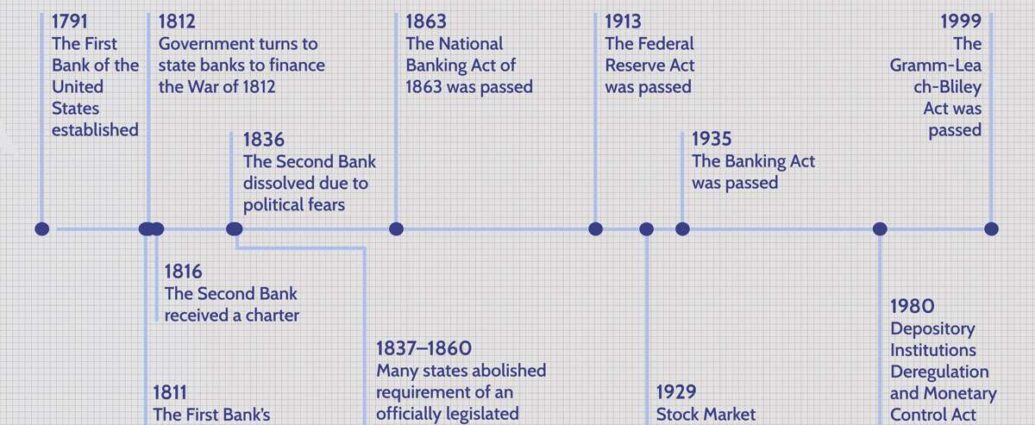
U.S. Banking Regulation: From Hamilton to Dodd-Frank
This post was originally published here

Understanding Chapter 11 Bankruptcy’s Effect on Stock Value
This post was originally published here
Grooming gangs inquiry to examine role of ethnicity, culture and religion
Inquiry will directly look at whether factors influenced offending and institutional response in England and Wales
The grooming gangs inquiry will directly examine whether ethnicity, culture or religion influenced offending and whether they shaped the institutional response.
The statutory independent inquiry has published its terms of reference, which will be laid before parliament when it returns from recess on 13 April. The inquiry will then begin its full investigation into the group-based sexual exploitation of children in England and Wales.
This post was originally published here


Nebius unveils plans to build one of Europe’s largest AI factories as region scrambles for compute
Europe is racing to create the infrastructure needed to power the AI boom.
This post was originally published here


Food price rises unlikely before summer, says boss of Sainsbury’s
Simon Roberts says Easter shop will be unaffected by Middle East conflict, but industry warns prices may rise this year
Shoppers will not see food prices rise until at least the summer and Easter will be unaffected by conflict in the Middle East, the boss of Sainsbury’s has said, despite fears of an inflation spike.
Simon Roberts said it was “too early” to say whether and when food price inflation related to higher commodity costs would hit supermarket shelves and that the UK’s second-largest supermarket had long-term agreements with suppliers to help protect shoppers.
This post was originally published here
The AI-native mortgage: Supporting intelligent, compliant adoption
Across the U.S., mortgage origination and servicing involve disconnected systems that often rely on manual tasks. It’s an inefficient, costly dynamic that elicits frustration from borrowers and industry participants alike.
Now, the application of AI alongside new data and technology is driving a paradigm shift. Lenders are using AI platforms to improve borrower engagement, help decision-making, and streamline processes across the loan lifecycle — from origination and risk management to servicing and customer support.
Here, one challenge is the sheer amount of fragmented data involved in lending and servicing. When data is messy or incomplete, AI models struggle to deliver reliable results. Additionally, while a recent proliferation of AI startups offers tools that may help processing speed, they often lack the compliance depth, governance controls, and mortgage-specific system-of-record context needed to navigate the market.
Why data, governance and systems-of-record matter
For AI to deliver value — such as predicting borrower behavior or identifying loan-manufacturing inefficiencies — it must be developed with high-quality data, compliance safeguards and industry expertise.
ICE Mortgage Technology is uniquely positioned to address these challenges, with decades of experience in supporting lenders, investors and servicers. The company’s loan origination and mortgage servicing platforms — Encompass® and MSP® — are two of the industry’s systems of record, enabling access to large-scale, best-in-class market and operational data. ICE has integrated AI across its origination and servicing businesses, enabling the automation of multi-step workflows and a shift toward exception-based processing.
From automation to augmentation: Keeping humans in the loop
These AI applications are powered by ICE Aurora, which embeds responsible agentic AI directly into mortgage workflows rather than using standalone tools. This supports regulatory trust through governance, auditability, and system-of-record integration.
Critically, this AI strategy is designed to assist professionals rather than replace them. AI insights are explainable, and logged within the system-of-record, with explicit boundaries established across the business. During the underwriting process, for example, AI will not be used to make final decisions on approvals, pricing, or disclosures. In loan servicing, cash movement, escrow disbursement and investor remittance are explicitly human-authorized actions. Benefits of this approach can include improved loan quality, stronger borrower communication, and shortened cycle times across origination and servicing.
Scaling AI across the homeownership lifecycle
Because ICE’s technology solutions support every stage of the homeownership lifecycle, AI models can train and scale for a variety of use cases. The company also supports the largest industry partner network, with 400+ prebuilt platform integrations, which means clients can access partner-driven AI innovations alongside those at ICE.
Importantly, ICE’s AI systems understand the meaning, structure, and relationships of data across its origination and servicing platform, allowing them to orchestrate highly regulated business processes. To capture the greatest initial benefits from AI, ICE has integrated it into some of the most time-consuming, error-prone lending and servicing workflows to automate manual “stare-and-compare” tasks. This can be supplemented with exception-based processing, so clients can focus on more complex work to help increase loan quality and support business growth. Ultimately, this lowers the cost to originate and service loans, producing savings that can be passed onto consumers.
Where AI is delivering operational value
The capabilities offered by ICE’s AI for mortgages can be broken into key areas. First, AI can help access information and research by providing stakeholders with instant access to compliance support, with business intelligence capabilities to come. In loan origination and servicing, this can help highlight potential risks and inefficiencies in client workflows. AI can also ease the burden of staying compliant with a plethora of shifting regulations by using natural language processing to help lenders — being assistive rather than authoritative — to quickly find answers to complex questions.
Second, AI can help streamline tasks, where a variety of stakeholders can be guided through processes with efficiency and contextual assistance. The use of virtual and text-based AI agents in servicing can help handle payment scheduling, resolve issues, and work directly with borrowers to reduce the need for a phone call. AI service agents can also improve borrower satisfaction and lower costs by predicting call context and summarizing call notes to support accurate responses that reduce handle time.
Additionally, ICE has released purpose-built AI voice and chat agents that are being tested for its mortgage servicing solutions. These can help homeowners answer queries, execute loan management actions and reduce the cost per loan for servicing teams. Other automations include disaster-tracking updates that identify and update loans affected by FEMA disasters, and HELOC credit score-based line adjustments that review customer credit scores and update available HELOC lines. In this process, all sensitive actions remain human-authorized.
The path forward: Intelligent, compliant adoption
As the adoption of AI accelerates across the mortgage sector, applying it in a compliant and intelligent way will be critical to creating value. Here, ICE combines deep mortgage expertise, system-of-record integration, and responsible governance to help the industry adopt AI with confidence and improve the path to homeownership.
Visit ICE

The ‘end-to-end’ title tech system has given way to something better
Not long ago, many technology vendors were selling title professionals on a fairly simple idea: one platform, one vendor, every step of the workflow covered. It was an appealing proposition, and a number of providers invested heavily in trying to deliver on it. In fact, some still are.
The concept made sense on its face. Fewer vendors means fewer contracts, fewer support relationships to manage and fewer points where things can break down. What the all-in-one pitch tended to understate, though, is that title agencies don’t operate from a shared template. They can’t. Not when they’re required to operate within a vast patchwork system of regulatory and market requirements that vary widely from state to state and even county to county. A commercial shop serving institutional lenders in a major metro market has genuinely different workflow needs than a regional agency handling residential transactions across rural counties in several states. Expecting both to thrive inside the same predetermined system may have always been a stretch.
That reality has gradually reshaped how title professionals approach their technology decisions. Increasingly, the firms operating the most efficiently aren’t necessarily the ones who found the most comprehensive platform. Rather, they’re the ones who built a thoughtful stack, selecting specialized tools that do their specific jobs well and connect cleanly with everything else in the workflow.
Open systems make that possible in a way that closed ones cannot. When a title production system is built around genuine interoperability, it functions as a hub rather than a proprietary silo. Underwriter connections, AI-powered communication tools and client portals can all feed into a common workflow without requiring manual re-entry or the kind of constant tab-switching that quietly consumes hours every week. The agent stays in one place while the system reaches outward.
Now, in contrast, imagine a world where users would have to wait on, for example, Google or Apple to themselves launch the next popular social media app, simply because there are no third party apps otherwise available.
There is a meaningful difference, though, between a platform that claims to support integration and one designed around it from the start. True openness tends to show up in practical ways including clear API documentation, no incremental fees charged to partners or customers just for connecting and a product development process that treats user feedback as a source of useful information rather than a distraction. It also means the technology can flex when an agency’s needs shift, rather than the other way around.
Some providers have added integration capabilities to platforms that weren’t originally built for them. That may work reasonably well in some cases, but title professionals who have lived through a poorly-managed third-party connection know there’s a major difference between a system that tolerates integrations and one that was designed to enable them. When something breaks in a bolted-on integration, the support experience tends to reflect the underlying design.
There’s also a longer-term consideration that often goes overlooked: vendor stability. The title technology market has seen providers get acquired, rebranded or folded into larger platforms with some regularity. When an agency has built its entire workflow around a single closed system, a change in that vendor’s ownership or direction can be genuinely disruptive. An open stack is more resilient. If one component needs to be replaced, the rest of the workflow keeps running while the transition happens.
Technology developed by people who have worked in the title industry tends to be organized around a different set of priorities than technology developed primarily to scale for acquisition. The former is usually focused on the actual workflow problems that agents and escrow officers encounter every day. The latter may be technically sophisticated and well-resourced, but those qualities don’t always translate into tools that reflect how title work actually gets done.
Title professionals shopping for technology can usually ask a few questions that will clarify where a vendor’s priorities actually lie. Does the system work with the underwriters and service providers we already rely on, or does it steer toward a preferred internal network? Do integration fees get charged to partners in ways that eventually get passed back to us? What happens to our workflow if this company is acquired in two years?
The end-to-end platform concept fit an earlier, simpler moment in title technology. As the industry has grown more complex and more demanding, a lot of firms have found that the better approach is building a well-connected stack rather than searching for a single system that claims to do everything. The technology serving the industry has been following that shift, and the providers who have recognized it earliest are probably the ones worth paying attention to.
John Freyer, Jr. is the President & Co-Founder of Settlor.

Crypto Exchange KuCoin Settles Case With CFTC— $500,000 Fine, No Unregistered Users In US Allowed
A court on Monday levied a penalty of $500,000 against Peken Global Limited, the company that operates the KuCoin cryptocurrency exchange, and prohibited it from serving U.S. users without registering with the CFTC.
Court Orders No Future Violations
The order by the U.S. District Court for the Southern District of New York also stated that the CFTC is not pursuing disgorgement, nor is the court imposing it, based on the specifics of this case.
“The order permanently enjoins Peken Global from future violations, as charged, and requires Peken Global to pay a $500,000 civil monetary penalty,” a CFTC press …

CAPEX vs. Operating Expenses: Differences in Taxes and Accounting
This post was originally published here


Nasdaq Dips 150 Points Amid Gain In Oil Prices: Fear & Greed Index Remains In ‘Extreme Fear’ Zone
The CNN Money Fear and Greed index showed a further increase in the overall fear level, while the index remained in the “Extreme Fear” zone on Monday.
U.S. stocks settled mixed on Monday, with the Nasdaq Composite falling more than 150 points during the session amid further gains in oil prices.
The S&P 500 recorded its fifth consecutive weekly decline, falling 2.1% during the week. The Nasdaq dipped 3.2%, while the blue-chip Dow fell 0.9% last week.
US President Donald Trump disclosed active negotiations with a “new and more reasonable” Iranian regime, while Fed Chair Jerome Powell downplayed the need for imminent rate hikes.
Compass Diversified Holdings (NYSE:CODI) shares jumped 15% on Monday after the company announced it will sell the food service business of its majority-owned …
This post was originally published here

McCormick, Allbirds And 3 Stocks To Watch Heading Into Tuesday
With U.S. stock futures trading higher this morning on Tuesday, some of the stocks that may grab investor focus today are as follows:
- Wall Street expects McCormick & Company Inc. (NYSE:MKC) to report quarterly earnings at 60 cents per share on revenue of $1.79 billion for the quarter before the opening bell, according to data from Benzinga Pro. McCormick shares rose 2.3% to $54.94 in after-hours trading.
- Virgin Galactic Holdings Inc (NYSE:SPCE) reported mixed financial results for the fourth quarter after the market close on Monday. Virgin Galactic reported fourth-quarter revenue of $312,000, missing estimates of $495,000, according to Benzinga Pro. The aerospace …
This post was originally published here
UK house prices rose sharply in March but Iran war expected to cause slowdown
Price of typical UK home increased by 0.9% in March, but surging mortgage rates amid conflict in Middle East is expected to put break on activity
UK house prices increased at the fastest rate in almost 18 months in March, although surging mortgage rates amid the Iran war is likely to lead to a slowdown in the market, according to Nationwide.
The UK’s biggest building society said the price of a typical UK home increased by 0.9% month-on-month in March, the largest increase since December 2024.
This post was originally published here

Anthony Scaramucci Warns American Dream ‘Impaired’ As Mortgage Rates Hit 6-Month High
As U.S. mortgage rates surge to a six-month high, former White House official and the founder of SkyBridge Capital, Anthony Scaramucci, is sounding the alarm on a widening generational wealth gap, declaring the American Dream “impaired” but not entirely dead.
The Affordability Crisis And Lost Purchasing Power
In a recent social media post, Scaramucci highlighted the stark reality of modern housing affordability by comparing his father’s era to today. “My dad made $32,000 a year. He bought a house for $16,000,” Scaramucci noted. “That same house is worth $780,000 today.”
Pricing his father’s 1976 wages in modern dollars, Scaramucci pointed out a 27% drop in middle-class purchasing power. He added, “He could not afford today the life he was able to give us. There is real tragedy in that, and we should be honest about it instead of pretending the ladder is still where it used to be.”
This post was originally published here






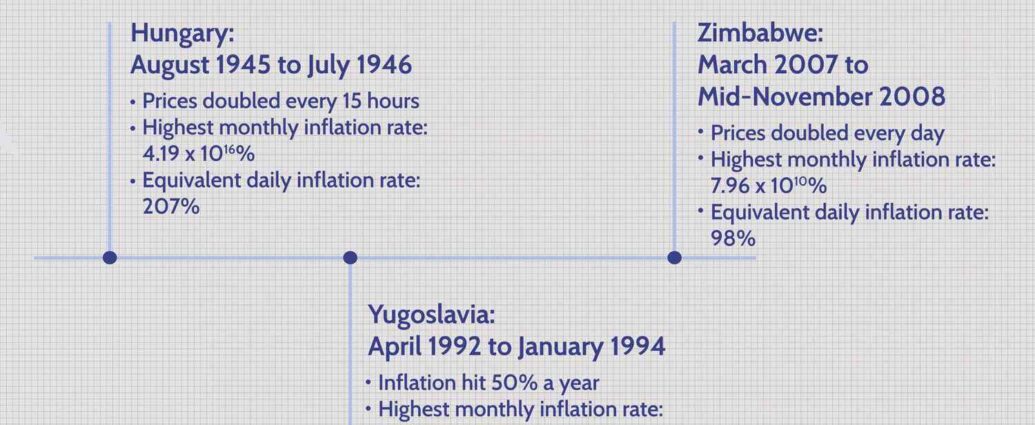
Examining the Worst Hyperinflation Cases: Hungary, Zimbabwe & Yugoslavia
This post was originally published here


Is the org chart dead in the age of AI? LinkedIn’s chief economic opportunity officer thinks so
The humble org chart isn’t usually blamed for holding back innovation. But as companies push their employees to adopt AI, LinkedIn executive Aneesh Raman thinks the relationships that structure most workplaces are what’s holding things back.
“The org chart was built in the industrial age to bring order, predictability, and stability to rapidly growing organizations,” says Raman, LinkedIn’s chief economic opportunity officer and co-author of a new book on the future of work. “Companies need to let that go, as it’s going to hold back innovation.”
Instead of waiting for top-down transformation programs, Raman argues, executives will need to get comfortable with workers figuring out AI on their own, even if those experiments cut across departments and job descriptions. “Where you’re going to see the real returns on AI isn’t just a new workflow around AI, but rather new work around human capability,” he says.
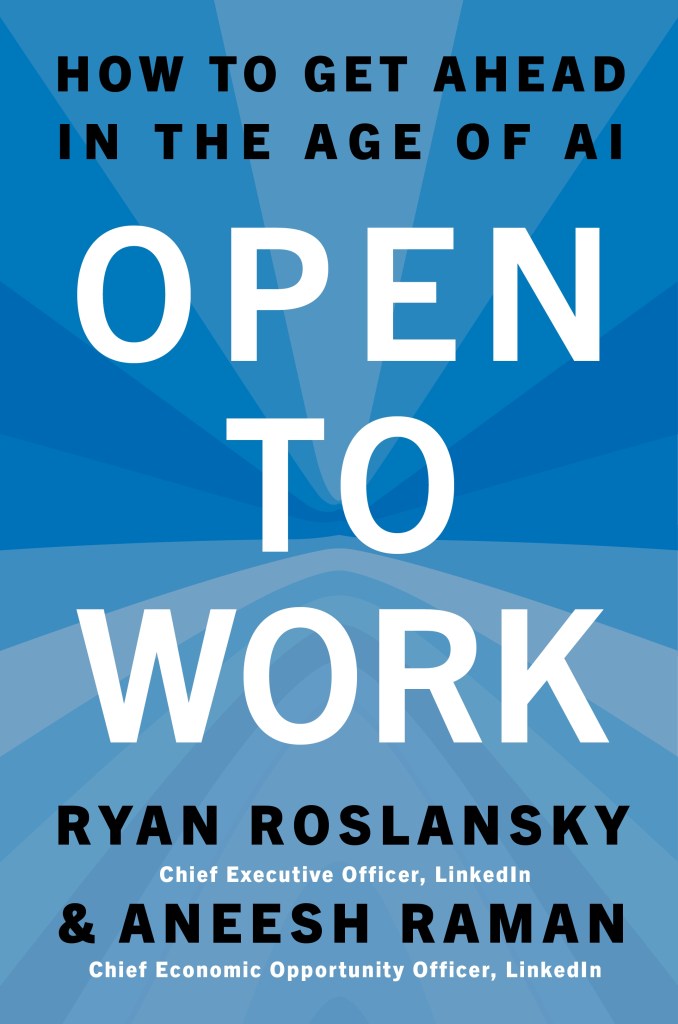
Raman, a former CNN war correspondent and Obama speechwriter, is the co-author of Open to Work: How to Get Ahead in the Age of AI, alongside Linkedin CEO Ryan Roslansky. The book draws on LinkedIn data and case studies of early adopters to offer what he calls a “how-to-human-with-AI” playbook that tries to counter the “fatalism” that dominates most conversations about AI’s effect on employment.
He urges workers to think about their work, and how AI relates to it, in three categories. The first bucket covers activities AI already does today, like generating code, running quick analyses, or writing a first draft to inspire someone else’s writing. The second bucket are experiments to create something new with AI. The final bucket involves using the time saved from the first bucket, and the lessons learned from the second bucket, to start using AI as a group. “What are you doing with other people?” he asks.
“It’s going to be a worker-led transition, and so companies are going to have to figure out how to let individuals start to move into this new era in their day-to-day work,” Raman says. “We have more autonomy than we often think in terms of pushing for what we want to do that might push our work to the next level.”
What skills will matter in the AI workforce?
LinkedIn is in the middle of a pivot to what it calls a “skills-first approach” to hiring and employment. In theory, employers are looking for specific skills and capabilities—and proof that potential hires have those skills—instead of just looking at a list of job titles on a resume. LinkedIn is also integrating AI into its own product, such as a new AI agent to help with hiring.
But as AI’s capacity to automate knowledge work grows, there’s still confusion over what skills employees will need. Take coding: For more than a decade, universities and policymakers told young people that learning to code was the surest path to a high-paying job. That advice looks less certain in the age of “vibe-coding”: Claude developer Anthropic now sees computer and math careers as leading the way in terms of current and possible coverage by AI.
Raman, for his part, thinks computer science isn’t obsolete. Instead, employers need to look at the broader skills a degree like computer science provides. “A computer science degree doesn’t just teach coding alone. It teaches complex thinking, organizational design, and structures of systems” he points out.
Workers, at least in the U.S., aren’t convinced they will come out ahead. A CBS News poll released last week reported that two thirds of Americans believe that AI will decrease the number of jobs; around the same share don’t believe that tech companies will use AI in appropriate ways.
AI could get more traction in Asia, where populations are more comfortable with AI. A Pew Research Center survey from October found lower rates of concern among Asia-based respondents than Western ones. For example, just 16% of South Koreans reported being “more concerned than excited” about AI, the lowest share among the 25 countries Pew surveyed; the U.S., in contrast, had the highest share, at 50% reporting concern.
More recently, Chinese consumers have flocked to install OpenClaw, the open-source AI agent framework, on their devices, and local governments are rushing to support “one-person companies,” or AI startups trying to build new products.
“There’s a hunger in Asia, not just among companies but also among workers, to learn about these tools and put them to use,” Raman says. “There’s an entrepreneurial culture in a lot of countries in Asia.”
Time to adapt
Still, Raman is sympathetic to workers concerned about automation. “There was a career ladder, and there was extreme clarity about what you had to do to get on each rung of that ladder,” he says.
But he’s optimistic that, ultimately, employees will be better off as AI starts to dismantle the ways companies traditionally organize and reward their talent. “Very few people have ever had real control over their career,” he says. “Because of AI, I think we’re about to have the first generations at work that have more control over their career than any who’ve come before.”
But what if someone doesn’t want to be an innovator at their job? What if someone wants to do their responsibilities and earn a stable wage?
Raman’s answer to those people is direct: “Nobody is coming to save any individual but themselves.”
Change is coming, like it or not. “It’s just a question of when this change hits you, and how hard it hits you,” he says.
This story was originally featured on Fortune.com

Nordstrom’s $6.25 billion deal to go private is paying off—and don’t expect an IPO anytime soon
When Nordstrom went private last year, the move was seen by industry analysts as a way to let the founding family make the changes needed to rejuvenate its sagging department store business without being hemmed in by Wall Street’s short-term focus on profits.
Nearly a year later, co-CEOs Peter and Erik Nordstrom, great grandsons of the retailer’s founder, say they don’t miss the distraction of being a public company. Indeed they hint that Nordstrom won’t return to the stock market anytime soon—if at all.
As reported by Fortune last week, Nordstrom’s revenue rose 7% in 2025 to $15.9 billion, slipping past a high watermark from 2019 and finally recovering from the hit to sales from the COVID pandemic and turmoil in the luxury market.
How going private gave Nordstrom freedom from Wall Street
While the chaos at Saks Fifth Avenue and Neiman Marcus have given it a huge opening, Nordstrom has also helped its own cause by upgrading stores, spending a lot of money on merging databases, and expanding its inventory. All that costs money, and the shareholder focus on profits and margins would probably have hurt Nordstrom shares if it were still a public company. Wall Street generally sees department stores as a mature business, and will let such companies invest only so much to reinvent themselves.
“When you’re a public company, your scorecard is your stock price, and that has a lot to do with the results you generate,” Pete Nordstrom says. “If the investment community doesn’t think very highly of department stores, which they don’t, your multiple goes down.” As a company leader, responding to that takes time away from tending to the core business, he adds: “You end up spending a lot of time on things that aren’t exactly what your business is.”
Like other luxury retail businesses, Nordstrom hit a rough patch coming out of COVID as people stopped buying nicer clothes for in-person events and going to the office. What’s more, its Rack discount chain struggled to define its market niche, and its expansion to Canada turned into an expensive failure.
To be able to re-engineer the 125-year-old family business as they saw fit, the Nordstroms. tried in 2017 to go private but failed, before ultimately succeeding in 2025. In a $6.25 billion deal that took the company off the stock market after 54 years, the Nordstroms teamed up with Mexico’s El Puerto de Liverpool department store, an operator of multiple chains. The Nordstrom family now owns a majority 50.1% stake.
Still, being private isn’t a license to let laxness creep in. And Nordstrom faces other strictures: The company took on some debt, for example, which requires the company to hit certain milestones.
Why Nordstrom’s family owners aren’t in a rush for an IPO
“We do think being private on the edges helps us with improved focus as some noise gets removed,” says Erik. But he added: “I’ve never complained about being a public company. The main upside for us is that it was a forcing mechanism to get our story very clear.”
There are other advantages to being public: It can make attracting talent easier thanks to more easily traded shares that can be offered as a bonus. It also makes raising money easier and could be a way for the Nordstroms and their Mexican partners to cash in on the improvements the business is seeing. And indeed, if Nordstrom keeps up its strong performance, it is inevitable that investment bankers will knock on the door, telling the family and Liverpool what a bonanze the IPO could generate. So while Nordstrom is not even one year into being private, many expect this large and successful of a company to eventually go public again at some point.
Stacey Widlitz, president of consulting firm SW Retail Advisers, suggests that if the chain manages to address its problems while it has the leeway to do so, a Nordstrom IPO is a real possibility: “If they get all these things right and have the right leadership, there is no reason why in several years, we won’t see them go back to the public market.”
Pete Nordstrom feels differently. When asked if the family would take Nordstrom public again, he says flatly, “I doubt it.” Though, he quickly adds, “never say never.” The fundamental question, Pete says, is “to what end?”
“Our goal is not financial engineering,” he says. “Our goal is to serve customers well in an enduring and compelling way.”
And as he mentions more than once, there’s a responsibility to the family’s legacy. Nobody wants to be “the generation of Nordstroms that screwed it up.”
This story was originally featured on Fortune.com

Asia markets mostly fall as Trump comments on Iran war stoke oil volatility
Asia-Pacific markets largely fell on Tuesday as investors assesed Mideast conflict and volatile crude oil prices.
This post was originally published here
Keir Starmer gives resident doctors 48 hours to call off strike or lose training offer
PM says decision by union to reject deal for thousands of extra training posts and 7.1% pay rise without putting it to members is ‘reckless’
Keir Starmer has threatened to withdraw an offer of thousands of extra NHS training posts if resident doctors do not call off a six-day strike after Easter.
The prime minister has given the doctors’ union, the British Medical Association, 48 hours to ditch its plans for industrial action or the government will pull the current offer from the table.
This post was originally published here
Melbourne girl, 13, allegedly shouted antisemitic remarks, threw eggs and swerved car towards Jewish families
Jewish families ‘narrowly escaped being struck by the car’ after girl swerved towards them in Ripponlea, police say
-
Get our breaking news email, free app or daily news podcast
A 13-year-old Melbourne girl has been charged with 52 offences including allegedly shouting antisemitic remarks, throwing eggs and swerving a stolen car towards members of the Jewish community.
Victorian police said in a statement on Tuesday that the girl and two other girls were alleged to have been seen driving the stolen black Hyundai sedan in the south-eastern suburbs of Hampton, Ripponlea and Caulfield over multiple days last week.
This post was originally published here

‘Tiger King’ Fame Joe Exotic’s Appeal Turned Down By Supreme Court — Here’s What Happened To His Namesake TKING Crypto
A cryptocurrency tied to Tiger King” fell on Monday after the Supreme Court decided not to entertain the appeal case of Joseph Maldonado-Passage, the central figure in Netflix Inc.’s (NASDAQ:NFLX) “Tiger King” documentary.
Tiger King Coin Is Almost Worthless Today
Tiger King Coin (TKING), available on Ethereum (CRYPTO: ETH) and BNB Chain (CRYPTO: BNB), fell 0.6% in the last 24 hours to $0.0000001937, according to CoinGecko. The coin had a fully diluted valuation of $180,653, with just $1,140 worth of TKING changing hands over the past 24 …

Inflation worries become growth worries
This post was originally published here

The federal government shed 385,000 employees last year. Now the Trump administration is on a blitz to hire Gen Z workers
A year after firing thousands of probationary employees, the Trump administration indicated it needs more early-career workers to sustain the federal workforce.
“We’ve got close to half of our population that’s within 10 years of retirement age,” Scott Kupor, director of the Office of Personnel Management (OPM), told Fortune. “So if you just did nothing else, you’ve got this major demographic challenge of a large number of people who will likely either retire or certainly be retirement-eligible over the near term, without us actually replenishing the pipeline of early-career people coming in.”
On Monday, OPM launched the Early Career Talent Network, a recruitment push for entry-level workers to join the federal payroll. Spanning across finance, human resources, engineering, project management and procurement roles, it will offer young workers the chance to dip their toes into government work, without the commitment of decades in the public sector, according to Kupor.
Early-career individuals—those with five to seven years of experience—make up only about 7% of the 2 million civilian federal workforce, compared to more than 20% of the broader U.S. workforce, he said.
The recruitment push comes as Gen Z has entered into a stagnant labor market that’s particularly punishing to early-career individuals. According to an analysis from the Federal Reserve Bank of New York, the unemployment rate for college graduates ages 22 to 27 reached 5.6% at the end of 2025, above the 4.2% overall unemployment rate at the time and up from 4.2% unemployment for college graduates in mid-2023.
The hiring spree is a departure from the Trump administration’s early efforts to reduce the federal workforce, particularly entry-level employees. In the first days of his second term, President Donald Trump tapped Elon Musk to spearhead the Department of Government Efficiency (DOGE) to slash contracts and cull headcounts, with the initial goal of cutting $2 trillion from the federal budget.
OPM was effectively DOGE’s executing arm. From January 2025 to January 2026, the federal workforce saw 386,826 workers depart from the government, including about 17,000 from reductions in force. Thousands of those employees were probationary, meaning they held their position for less than one year. The vast majority of the individuals who left the federal workforce either resigned or retired.
About 122,000 employees also joined the federal workforce, a 55% decrease from 2024, according to a Pew Research Center analysis. As a result, the federal workforce has seen a net reduction of 264,000.
Musk claimed DOGE saved $200 billion, but a Cato Institute report in December calculated that a 10% cut in the workforce would result in a savings of only about $40 billion.
Even DOGE employee Nate Cavanaugh said in a January deposition that DOGE failed to reduce the federal deficit.
The federal workforce, transformed
Kupor said he sees the cuts and hirings as part of the same mission: “We’re reshaping the workforce to make sure that we have the right talent for the right roles.”
“A huge push is around technology, for example,” he added. “That’s an area where we don’t have all the skills we need to do the modernization efforts that we’d like.”
In December, the Trump administration launched the U.S. Tech Force, an initiative hiring 1,000 engineers and specialists to work with private-sector tech companies to build out AI infrastructure within the federal government. The employment program has a two-year duration for each cohort and is geared toward early-career professionals.
That came after DOGE’s gutting last year of the U.S. Digital Corps and the General Services Administration’s 18F program meant to improve the government’s technological efficiency.
Kupor said the U.S. Tech Corps is a way to scale up and learn from previous initiatives. OPM launched a similar recruitment program with NASA earlier this month.
“We need people with modern software development. We need people with modern AI understanding. We need data science,” he said.
But many federal workers see the transformed government workforce differently, with some saying the headcount cuts have made it harder for existing employees to complete their jobs efficiently.
“This is going to be probably the roughest filing season we’ve had since the pandemic,” one IRS employee told Fortune, adding that the agency has been short-staffed and that ongoing burnout from greater workloads had the potential to impact the quality of internal reviews.
A 2025 Best Places to Work in Federal Government survey found a precipitous drop in job satisfaction as well as lower confidence that the workplace was free of favoritism and political coercion. The survey based its questions on OPM’s previous Federal Employee Viewpoint Survey (FEVS), which it did not administer last year. Kupor said the survey had a smaller sample size, about 11,000 federal employees, and its results should not be generalized.
Instead of administering the FEVS survey, OPM offered quarterly “pulse” surveys. The survey item with the highest mean score was “Understand Work Alignment with Agency Goals,” while the lowest was “Recommend agency as good place to work.”
An anonymous OPM employee not authorized to speak to the press told Fortune a handful of employees admitted to answering pulse survey responses more positively than they really felt, expressing concerns around lack of trust and that their responses were being surveilled. The employee said other employees didn’t complete the survey because of methodological limitations, such as no questions with open-ended responses.
Kupor said he understands not all employees will be on board with the mission of the administration.
“There’s no question that when you do the changes in the order of magnitude, we’re doing it fully understandable that there are some people who are not fully bought off on those changes,” he said.
This story was originally featured on Fortune.com

Pentagon Denies ‘Fabricated’ Report Of Pete Hegseth Considering Multimillion-Dollar Defense Investment Before Iran War
The Department of Defense has issued a denial following a report alleging that a broker for Secretary Pete Hegseth attempted to move millions into defense stocks just weeks before the U.S. launched military operations against Iran.
‘Entirely False And Fabricated’
Chief Pentagon Spokesman Sean Parnell took to social media early Tuesday to denounce the allegations made in a Financial Times report, characterizing it as a coordinated disinformation effort.
“This allegation is entirely false and fabricated,” Parnell stated. “Neither Secretary Hegseth nor any of his representatives approached BlackRock about any such investment. This is yet another baseless, dishonest smear designed to mislead the public.”
The spokesperson further demanded an “immediate retraction,” asserting that the Secretary remains in …
This post was originally published here
Oil sees choppy trading as traders parse Trump comments on Iran war
Oil prices fell on Tuesday as U.S. President Donald Trump reportedly expressed willingness to end the military hostilities against Iran even if the Strait of Hormuz remains largely shut.
This post was originally published here
Anonymous $200,000 donation to charity providing free meals – as it happened
This blog is now closed
-
Get our breaking news email, free app or daily news podcast
What’s the trigger for stage three under the national plan?
The energy minister, Chris Bowen, says we’re still on stage two of the national plan agreed to at yesterday’s national cabinet, reiterating that so far any cancelled fuel shipments have been replaced (he’s referring to the six tankers that he announced were cancelled on 22 March).
The trigger … says ongoing supply disruptions mean we will focus on getting fuel where it’s needed most. Now, ongoing supply disruptions really means the fuel supply to Australia has been impacted. That hasn’t happened.
Early on in this conflict, I reached out to counterparts in the region who are our primary suppliers of liquid fuels … I reached out to Korea, to Singapore, to Malaysia, but we’ll continue to do that.
We believe we’re reliable, and we ask for reliability in return.
This post was originally published here
South Korea proposes extra $17 billion budget to cushion energy costs fueled by Iran war
Seoul imports 94% of its energy needs, and almost 72% of its crude oil comes from the Middle East.
This post was originally published here


Will US And Iran Blink Before Oil Hits $120? Here’s What Prediction Market Is Saying
The Iran war has pushed crude oil prices over 45% in March, with WTI crude futures settling above $100 for the first time since July 2022. With both Iran and the U.S.-Israel continuing to attack each other, an end to hostilities seems distant.
Iran Invasion Odds Surge
The odds of a U.S. ground invasion of Iran by the end of April surged to 70% as per the prediction market, up from 57% just a week ago.
Meanwhile, expectations for peace have declined. Bettors priced in a 32% odds of a U.S.-Iran ceasefire by the end of April, down from 40% last week.
Here’s What Prediction Market Is Saying
This post was originally published here

Energy ‘vulnerable’ India seeks U.S. help to produce more oil and wean itself off Russia, Middle East reliance amid geopolitical turmoil
India imports nearly 90% of its crude oil—largely from Russia and the Middle East. With geopolitical trouble making both of those sources less reliable and leaving it vulnerable, the world’s most populous country is inviting more foreign investment to help it boost its domestic oil and gas supplies, a top energy executive from India told Fortune.
While India is acquiring more alternative supplies to help it ride out the war in Iran, it typically imports most of its oil from Saudi Arabia, Iraq, and Russia. At present, those Russian barrels are flowing only under a temporary waiver from the U.S., after President Trump had used higher tariffs to get India to stop buying from Russia.
As part of reforms to open the country up to more domestic oil and gas exploration, India is seeking to attract $100 billion in investment by 2030. Recently, the chairman of India’s top private oil and gas producer, Cairn, made the trek to Houston for the CERAWeek by S&P Global conference with government officials to meet with many of the top American companies specializing in shale and offshore drilling.
Billionaire industrialist Anil Agarwal, who chairs mining giant Vedanta Resources and its subsidiary, Cairn Oil & Gas, said he personally made the trip “with a shopping list to spend $5 billion.”
India remains “vulnerable” and lacking in energy security until it can produce at least 50% of its own oil, Agarwal told Fortune. He believes India can grow to produce enough oil to meet 30% of its domestic demand within a few years. He wants to help create a “mini Houston” in India.
“It’s a greater opportunity to be an explorer in India because India is fundamentally oil rich, as far as the reserves are concerned,” he said. “But you have to do the exploration, make investment, and this is the great opportunity to develop the hydrocarbons in India.”
India may have surpassed China as the world’s most populous nation, but it produces less than 1% of the world’s oil and gas. India also imports more than half of its natural gas.
Cairn has ambitious plans to increase its production capacity from roughly 110,000 barrels of oil per day to 500,000 barrels daily over the next several years. Close to 70% of the vast country has never been explored for potential oil or gas reserves.
India is becoming friendlier to domestic oil and gas production and foreign investment, with legal reforms eliminating some barriers, and Cairn aims to take advantage, Agarwal said. More than 70% of India’s industry is still comprised of state-owned companies. “That mindset is changing,” Agarwal said, arguing that businesses should be run by businesspeople.
Cairn already works with top U.S. oilfield services companies, including Halliburton and Baker Hughes, but the company also is looking for exploration joint venture partners. The government’s current round of bids for onshore and offshore exploration blocks has been extended to the end of May.
Lots of opportunities remain with newer technologies, including the onshore Digboi, Assam region, which was the birthplace of India’s oil sector, but has little activity today. “There is hardly any production there,” Agarwal said.
India counts quadruple the population of the U.S. and rising, and its middle class is growing. “This will be the highest [energy] demand in the world,” he said.
Agarwal sees aligned entrepreneurial spirits between the U.S. and India. “The collaboration between America and India is very strong. We think alike, we work alike, and we can adjust with each other and trust each other,” he said. “America is very important for us. America can give us all the technology.”
India and Vedanta also are eager to partner more with the U.S. on critical minerals to help the U.S. build up supply from partners outside of China. Vedanta is strong in the production of copper, zinc, rare earths, and much more.
“I use the words, ‘Drill, baby, drill’ for the hydrocarbons, and I use the words, ‘Dig baby dig,’ for the minerals,” Agarwal said with a laugh.
This story was originally featured on Fortune.com
‘Are we frustrated? Yes. Surprised? No’: how Victorian Liberal moderates’ plan to oust Moira Deeming went horribly wrong
Jess Wilson tried to create a united front – and it worked for a minute. But the Victorian Liberals just couldn’t help themselves
-
Get our breaking news email, free app or daily news podcast
For months, a plan has been under way by moderates within the Victorian Liberal party to dislodge a group of conservative women from their prized, top positions on the upper house ballot ahead of the November state election.
While they failed to move Bev McArthur and Renee Heath, and Ann-Marie Hermans held on in the second spot, they did claim one major victory by ousting Moira Deeming – by far the most high-profile of the group.
This post was originally published here

Why Allbirds (BIRD) Stock Jumped 31% After Hours
Allbirds, Inc. (NASDAQ:BIRD) jumped 30.87% in after-hours trading on Monday, rising to $3.90.
BIRD closed the regular session down 6.29% at $2.98, according to Benzinga Pro.
The move followed the company’s announcement that it has entered into a definitive agreement with American Exchange Group to sell substantially all of its intellectual property and certain assets.
Asset Sale Agreement Drives Move
According to Allbirds, the transaction is valued at approximately $39 million, subject to adjustments at closing.
The agreement includes the sale of the company’s intellectual property and certain assets and liabilities, and was approved unanimously by the board of directors following negotiations by a special committee of independent directors.
The transaction remains subject to approval by …
Tuesday briefing: How to make sense of England’s local elections campaigns
In today’s newsletter: From breakthroughs to breakdowns, what we can expect to see – and what the consequences of the vote could be
Good morning. On 7 May, voters in England will go to the polls for a series of local elections, on the same day that Scotland and Wales vote for new governments. It promises to be a torrid time for Keir Starmer and his governing Labour party, with Nigel Farage’s Reform UK, Zack Polanski’s Green party and Rhun ap Iorwerth’s Plaid Cymru expected to make breakthroughs.
Recent polling, though, suggests that the overall balance between those on the right and those on the left has barely shifted – rather, previously loyal Conservative voters are moving towards Farage’s party, while Labour voters are deserting to other progressive options.
Middle East crisis | Donald Trump has threatened to “obliterate” Iran’s power stations and fresh water plants if Tehran does not agree to peace terms “shortly”.
Israel | Israel’s parliament has passed a law imposing the death penalty on Palestinians convicted of fatal attacks, a measure sharply criticised as discriminatory by European countries and rights groups.
BBC | The BBC has sacked the Radio 2 presenter Scott Mills after allegations about his personal conduct. The corporation said that “while we do not comment on matters relating to individuals, we can confirm Scott Mills is no longer contracted and has left the BBC”.
Politics | Zack Polanski has kicked off a charm offensive designed to convince trade unions to stop funding Labour and throw their weight behind the Green party, as he delivered the first in a series of speeches to union conferences.
Travelodge | A woman who was sexually assaulted by an employee at a Travelodge has said she was shocked to learn the hotel chain’s boss cancelled a meeting with a group of MPs seeking to discuss concerns about the case.
This post was originally published here


Why Hitek Global (HKIT) Jumped 60% After Hours Despite a 27% Drop
Hitek Global Inc. (NASDAQ:HKIT) jumped 60% in after-hours trading on Monday, rising to $0.064.
HKIT closed the regular session down 27.27% at $0.040, according to Benzinga Pro.
The move followed the company’s announcement of a registered direct offering of securities to certain investors.
Offering Raises Capital Through Shares And Warrants
According to Hitek Global, the company is offering 1.5 million Class A ordinary shares at a purchase price of $0.03 per share, along with pre-funded warrants to purchase up to 98.5 million additional shares.
The pre-funded warrants are priced at $0.0299 each, with an exercise price of $0.0001 per share, effectively matching the per-share offering price.
The aggregate subscription amount for the initial sale is $3 …
Three niche commodity prices are surging. What they show about China’s grip on supply chains
In the wake of the Iran war, prices are surging for critical elements used in defense and the semiconductors that power artificial intelligence advances.
This post was originally published here

Who Stole The KitKat Bars? Dogecoin Says ‘Woof,’ Pengu Admits Nothing, Domino’s Declares Culinary War, And Nobody’s Taking A Break From The Jokes
Having fun at someone else’s expense might be a social media faux pas, but big brands and cryptocurrencies can’t stop memeing the KitKat chocolate heist.
Dog Mocks ‘Kat’
About twelve tons of Nestle S.A.’s KitKat chocolate bars went missing in Europe last week after thieves stole the truck carrying them—yes, you read that right!
And everybody’s cracking up over it. Dogecoin (CRYPTO: DOGE), the world’s most popular meme-based cryptocurrency, repeated “woof” as its “official statement,” celebrating Shiba Inu playfulness.
Was That You, Pengu?
NFT brand Pudgy Penguins dropped a chocolate-smeared picture of PENGU, ironically adding that their lil’ mascot had nothing to do with the theft.


Army reviewing after helicopters hovered alongside Kid Rock’s swimming pool as he saluted
The Army has launched an administrative review after two AH-64 Apache helicopters on a training run hovered near the hillside home of Kid Rock as the outspoken supporter of President Donald Trump saluted their crews.
(Image credit: John Amis)

This post was originally published here

Airport cleared to be renamed for Trump as he unveils design for skyscraper library
A Florida airport was cleared to be renamed after President Donald Trump on Monday, hours before the president revealed plans for a Miami skyscraper planned to house his presidential library.
(Image credit: Mark Schiefelbein)

This post was originally published here



Women’s Final Four is set, and it is a repeat of last season’s
No. 1 seeds UConn, UCLA, Texas and South Carolina are in the Final Four for the second straight season, just the second time the same teams have reached the sport’s final weekend in consecutive years.
(Image credit: Justine Willard)

This post was originally published here
More drilling in North Sea ‘not the answer’ for UK energy security, say former military leaders
Government told to focus on transition to mix of wind, solar, tidal and nuclear energy
More drilling in the North Sea would do nothing to improve the UK’s energy security, former military leaders have said, as a new analysis finds no fossil fuel importer is safe from chokepoints in the global supply chain.
The government should focus on a rapid transition to a mix of wind, solar, tidal and nuclear energy to ensure the UK’s future security, the former military leaders told the Guardian, as well as a programme of energy efficiency and a “major renewal” of the electricity grid.
This post was originally published here


Thieves steal paintings by Renoir, Cézanne and Matisse from a private museum in Italy
Thieves made off with three paintings by Renoir, Cézanne and Matisse worth millions of euros from a museum near the city of Parma in northern Italy.
(Image credit: Domenico Stinellis)

This post was originally published here
China to ban storing remains of dead in ‘bone ash apartments’
Practice of using apartments to store relatives’ ashes has risen as rapid urbanisation and aging population increases competition for cemetery plots
China is introducing a law to stop people storing the ashes of their dead relatives in empty high-rise flats rather than paying steep costs for increasingly scarce cemetery plots.
China’s new funeral management legislation will prohibit the use of “residential housing specifically for the purpose of storing cremated remains” and the burial of corpses or construction of tombs in “areas other than public cemeteries”.
This post was originally published here
Labor accused of avoiding promise to rein in controversial Morrison-era university fees scheme
Greens amendments to force new watchdog to scrutinise uni fees and the Jobs-Ready Graduates scheme rejected by federal government
-
Get our breaking news email, free app or daily news podcast
The federal government is being accused of dodging promised reforms to bring down soaring university fees, after rejecting efforts to have them scrutinised by a new watchdog.
On Monday, legislation to establish the independent Australian Tertiary Education Commission (Atec) passed the Senate with a number of amendments, including to improve its resourcing and ensuring it had a focus on research.
This post was originally published here


Nasdaq Rule Changes Could Let SpaceX Join Index Just 15 Days After IPO—Here’s How
Nasdaq has announced a series of rule changes that could help Elon Musk-led SpaceX to be listed on the exchange within 15 days following its IPO. Here’s what you need to know:
Rule Changes To The Nasdaq 100
In a statement released on Monday, the index said it had sought feedback on a number of revisions to the Nasdaq 100 methodology, including market cap analysis and expedited entry into the index.
The proposed measures aimed to ensure that the index remained “timely and representative of the market it measures,” the statement said, adding that the decision would also let the index “be consistent with its objective of tracking the 100 largest non-financial companies,” on the platform.
Nasdaq proposed that it would include both listed and unlisted shares for calculating a company’s market capitalization for ranking and inclusion into the index. “This will only affect eligibility and not weighting, which remains based on listed market capitalization,” the statement said.
The index also proposed a “fast entry” for large listed companies into the exchange, which, according to an earlier release, would let new companies be added to the index …
This post was originally published here
US-based dissident artist put on trial in China over satirical Mao sculptures, says rights group
New York-based Gao Zhen was detained in 2024 during a family visit to China and then tried for ‘defaming national heroes’
The Chinese dissident artist Gao Zhen, known for making satirical sculptures of China’s former leader Mao Zedong, has been tried over accusations of “defaming national heroes and martyrs”, his wife and a rights group have said.
Gao, 69, who was detained in 2024 during a visit to China from the US, faces a maximum three-year prison sentence, his wife, Zhao Yaliang, and Shane Yi, a researcher at the Chinese human rights defenders group, said.
This post was originally published here
Perth man accused of attempted terror attack at Invasion Day rally to plead mental health defence
Lawyers for Liam Alexander Hall say the 32-year-old is undergoing treatment in custody
-
Get our breaking news email, free app or daily news podcast
Lawyers acting for Liam Alexander Hall, a 32-year-old man accused of attempting to bomb an Invasion Day rally in Perth, have foreshadowed a potential not guilty by insanity plea.
Hall was scheduled to appear before magistrate Matthew Walton via video link from Western Australia’s most secure psychiatric facility on Tuesday, but did not. Instead the case was adjourned until May.
This post was originally published here
Starmer’s immigration rhetoric follows familiar pattern of bold claims but few results, expert says
Madeleine Sumption says politicians make big claims about things they only partially control to appeal to voters
Keir Starmer’s pledge to “smash the gangs” profiting from small boat crossings has followed a pattern set by Conservative-led governments of employing “bullish rhetoric” with little evidence that it can be delivered, an expert has claimed.
Madeleine Sumption, the director of the University of Oxford’s Migration Observatory, says the prime minister has repeated the mistakes of Rishi Sunak and David Cameron by making “bold claims with great certainty about things governments only partially control” .
This post was originally published here

Foreign central banks sell US Treasuries in wake of Iran war
This post was originally published here

Cracks appear in US-UK security co-operation after Trump-Starmer tensions
This post was originally published here

Why do politicians want AI to go faster?
This post was originally published here
Rubbish and recycling in England: what’s changing and why it matters
Nationwide reforms aim to standardise collections and expand food waste recycling to tackle stagnating rates
Recycling rules across England have long been inconsistent – but that will change from Tuesday when the government’s Simpler Recycling legislation comes into effect.
This post was originally published here

Swiss lawmakers signal compromise on $22bn UBS capital plan
This post was originally published here

‘Pump anxiety’ from soaring fuel prices prompts surge in interest in EVs
This post was originally published here

In trade’s ‘law of the jungle’, the winners are clear
This post was originally published here

Who is Péter Magyar, Orbán’s nemesis?
This post was originally published here

Iran’s hackers go to war
This post was originally published here
Oil set for record monthly gain – as it happened
This blog is closed – our live coverage continues on a new blog here
Donald Trump is weighing a military operation to extract nearly 1,000 pounds (454kg) of uranium from Iran, the Wall Street Journal is reporting, citing unnamed US officials.
The mission would likely put American forces inside the country for days or longer, the report says.
But the president remains generally open to the idea, according to the officials, because it could help accomplish his central goal of preventing Iran from ever making a nuclear weapon.
The combined effect of both waterways being shut to commercial traffic from countries that neither the Iranians nor Houthis favour would be devastating.
Napoleon Bonaparte’s remark that “the policy of a state lies in its geography” has never seemed more apt.
This post was originally published here
Indian mobile giant Airtel raises $1 billion for data centers from Carlyle, other PE firms
Signaling rising global interest in India’s data‑center sector, Bharti Airtel has attracted private‑equity interest as it seeks to raise $1 billion.
This post was originally published here

Iran, Russia Using Crypto To Buy Military Drones? Report Reveals E-Commerce Platforms Used To Sell Equipment To ‘Opaque’ Identities
State and non-state actors linked to Russia and Iran are increasingly using cryptocurrency to acquire low-cost, commercially available drones for ongoing conflicts, a new report published on Monday said.
Blockchains Powering Drone Warfare?
Sanctioned entities, including Iran’s defense sector and aligned proxies, are turning to cryptocurrency to procure drone components restricted by export controls, according to a new study by blockchain analytics firm Chainalysis.
Iran’s Shahed drone program, widely deployed in the ongoing conflict with the U.S. and Israel, relies “heavily” on components sourced through third-country procurement networks, the report added.
Cryptocurrency facilitates procurement in two ways, according to Chainalysis. The first is direct, where a drone manufacturer accepts cryptocurrency as a payment method. The second is indirect, where vendors selling through third-party e-commerce platforms, such as Alibaba Group Holding Limited
Fair Work abolishes junior pay rates, with half a million young Australians to be paid more
Union celebrates ‘landmark decision’ that will mean adults aged 20 or younger are no longer paid less
-
Get our breaking news email, free app or daily news podcast
Half a million young Australians working in the retail, fast food and pharmacy sectors are set for a wage increase after the Fair Work Commission abolished junior pay rates for those aged 18 and over.
The wage rises will be phased in over four years in a landmark change that unions compared to the introduction of equal pay for women in the 1970s.
This post was originally published here