If approved, move is latest in series of buildings, warships, institutions, programs and currency named after president

He has buildings, institutions, government programs, warships, currency, and now Donald Trump is getting an airport that bears his name even as he looks forward to a towering Trump presidential library in Miami.

Ron DeSantis, Florida’s governor, signed a bill on Monday saying the Palm Beach international airport was being renamed to the President Donald J Trump international airport.

Continue reading…

This post was originally published here

Treasurer Jim Chalmers says changes will help with cost of living and ‘Australians hate paying’ the surcharges

Debit and credit card surcharges will be gone by October under Reserve Bank reforms, with big banks likely to foot the bill for the cost-of-living measures.

The new rules, announced on Tuesday, will enable businesses to remove added fees on Mastercard, visa and eftpos card payments.

Continue reading…

This post was originally published here

Clowns in Bolivia are upset by mandate that stops schools hosting events from which they earn a living

Dozens of clowns have marched through the streets of Bolivia’s capital to protest against a government decree that limits extracurricular activities in schools, threatening their livelihoods.

Wearing full face paint and their signature red noses, the clowns gathered on Monday in front of the ministry of education in La Paz to oppose a decree published in February. The new mandate says schools must comply with 200 days of lessons each year – in effect banning them from hosting the special events where the entertainers are frequently employed.

Continue reading…

This post was originally published here

Exclusive: Environmental impact assessments are ‘incomplete’, say leaders, and private beach club could harm fragile ecosystems

Indigenous community leaders in Vanuatu have raised concerns over plans by the cruise operator Royal Caribbean to build a private beach club on the island of Lelepa, arguing environmental impact assessments by the company are “incomplete” and “misleading”.

The community leaders outlined the issues in a letter sent to Royal Caribbean on 26 February, which has been seen by the Guardian. The leaders also said the development could harm fragile ecosystems and a nearby Unesco world heritage site.

Continue reading…

This post was originally published here

Gavin Newsom signs order to prioritize public safety and rights as president seeks to prevent ‘cumbersome’ rules

California will impose new standards on artificial intelligence companies seeking to do business with the state, defying Donald Trump’s demands to keep the controversial industry as deregulated as possible.

Democratic governor Gavin Newsom signed an executive order on Monday that gives the state four months to develop AI policies that prioritize public safety.

Continue reading…

This post was originally published here

Former co-host of Kyle Sandilands filed proceedings in the federal court against Kiis licence holder

Jackie “O” Henderson has filed a legal action in the federal court claiming compensation of “at least $82,250,000” for the wrongful termination of her 10-year contract after she told ARN Media she had allegedly been bullied by her co-host Kyle Sandilands.

The fresh legal action came four weeks after Henderson’s contract was terminated by Kiis owner ARN Media, and days after Sandilands’ first hearing in the federal court for his own claim against the media company.

Continue reading…

This post was originally published here

Prosecutors investigate whether Farah Louis and Debbie Louis accepted bribes to help migrant shelter provider

Federal prosecutors are investigating whether a New York City councilmember and her sister, an aide to governor Kathy Hochul, accepted bribes or kickbacks in connection with the appropriation of city funds to a migrant shelter provider, according to a copy of a search warrant obtained by the Associated Press.

The warrant, signed on 19 March, seeks evidence of possible criminal violations involving councilmember Farah Louis, a Brooklyn Democrat, and Debbie Louis, who serves as Hochul’s assistant secretary of New York City intergovernmental affairs.

Continue reading…

This post was originally published here

Congressman Joaquin Castro calls for release of boy, Kaleth, and mother from much-criticized detention Dilley facility

A two-year-old detained in a family detention center in Dilley, Texas, is sick and not getting adequate help, said Joaquin Castro, a Democratic congressman from San Antonio. The boy, Kaleth, has a fever and is not eating the food served at the Immigration and Customs Enforcement detention center, which Castro said detainees have complained of having mold and worms.

“When his mother asked for help, the staff said it was all ‘mental’,” Castro wrote in a post on X. “A vulnerable child at the Dilley trailer prison was suffering and ICE denied their reality and their needs. It’s shameful and must stop.”

Continue reading…

This post was originally published here

Takeda Pharmaceuticals will lay off nearly 250 workers in Cambridge, the state’s largest biopharma employer announced through a state filing.

The layoffs will begin in July, although some will take place later in the year or in 2027. All affected Massachusetts employees work at the company’s 500 Kendall St. location, according to the filing posted Friday.

The workforce reduction is part of a cost-saving plan approved by Takeda’s board of directors on March 25 that is expected to result in annual savings of about $1.25 billion by 2028, according to a company statement. Another 387 workers in other states may also be laid off as part of the plan.

Continue to STAT+ to read the full story…

This post was originally published here. 

Ayman Ghazali, naturalized US citizen from Lebanon, often consumed content linked to Lebanese group online

The assailant who attacked a synagogue in Michigan earlier this month was inspired by Hezbollah, the FBI said on Monday.

Jennifer Runyan, head of the FBI’s Detroit field office, announced during a press conference that Ayman Ghazali, 41, had frequently consumed Hezbollah-related content online before the attack. In a video recorded before he drove his truck into Temple Israel in West Bloomfield Township – a north-western suburb of Detroit – on 12 March, Ghazali said he wanted to “kill as many of them as I possibly can”.

Continue reading…

This post was originally published here

Sony Group is raising global prices of its PlayStation 5 consoles, including a $100 increase in the U.S., marking its second hike in less than a year as the Japanese firm grapples with rising costs of key components such as memory chips.

The tech industry’s race to build out artificial intelligence (AI) infrastructure has pushed chipmakers to favor higher-margin data-center chips, tightening supply for consumer devices. ‌

The updated U.S. prices, effective April 2, will put the standard PS5 at $649.99, up from $549.99. The Digital Edition will now cost $599.99 while the high‑end PS5 Pro will cost $899.99.

NETFLIX RAISES SUBSCRIPTION PRICES ACROSS ALL PLANS

Prices of the PlayStation Portal remote player will also climb to $249.99 from $199.99.

Similar increases will take effect across Europe and Japan, following what the company described as a “careful evaluation” of rising cost pressures in global supply chains.

EPIC GAMES CUTS 1,000 JOBS AS FORTNITE ‘MAGIC’ FADES IN ‘EXTREME’ MARKET CONDITIONS

Analysts have said the console price hikes are likely to dampen growth in the video-game market this year. 

“Fortnite” maker Epic Games also cited sluggish console sales among the reasons for the cut of 1,000 jobs it announced earlier this week.

GAMESTOP SHUTTERING 30 NEW YORK LOCATIONS AS PART OF NATIONWIDE CLOSURES LINKED TO FALLING SALES

In the key October-December holiday quarter, sales of Sony’s PlayStation 5 fell 16% from a year earlier to 8 million units. The console has been on the market for around six years.

Sony last raised PS5 prices by around $50 in the U.S. in August last year. Microsoft also raised prices of its console, the Xbox, in 2025.

The surging demand for AI chips prompted Elon Musk to announce plans for two of his companies, Tesla and SpaceX, to partner on an advanced AI chip manufacturing facility.

CLICK HERE TO GET FOX BUSINESS ON THE GO

He said the so-called “Terafab” will have two facilities: one focused on AI chips for Tesla’s electric vehicles and Optimus humanoid robots; while the other will be focused on AI chips for space-based data centers made by SpaceX.

“We either build the Terafab or we don’t have the chips,” Musk said.

Reuters contributed to this report.

This post was originally published here. 

Cable signed by Marco Rubio and seen by Guardian suggests staff work with Pentagon psychological operations unit

The United States has directed every American embassy and consulate across the world to launch coordinated campaigns against foreign propaganda and endorses Elon Musk’s X as an “innovative” tool to help do it.

The cable, signed by secretary of state Marco Rubio on Monday and obtained by the Guardian, also suggests embassies and consulates work alongside the US military’s psychological operations unit to address the problem of rampant disinformation. It lays out a sweeping set of instructions for how embassy staff should push back against what it describes as coordinated foreign efforts to undermine American interests abroad.

Continue reading…

This post was originally published here

Federal Reserve Chair Jerome Powell delivered a pointed message to the next generation of workers last week: stop worrying about artificial intelligence and start learning to use it.

Speaking before nearly 400 students at a Harvard economics class in a wide-ranging conversation moderated by Professor David Moss, Powell acknowledged that Gen Z is entering one of the more challenging job markets in recent memory—and said AI is both part of the problem and the solution.

Moss put Powell on the spot immediately, asking on behalf of the students in the room: “They’re entering into an uncertain time—an economy where new job formation is lower for many reasons. In particular, jobs that were plentiful a couple of years ago for students coming out of college are no longer so. And AI sits as this remarkable technological transformation that is both promising and existentially threatening.”

Powell said he and his colleagues at the central bank were “well aware of the current situation for students coming out. It’s a time of very low job creation. And also you have AI going on.” Allowing that something “more longer-term, more secular” is probably happening around technology and AI, he was direct: “there’s no denying it’s a challenging time to enter the labor market.”

Powell also cited low job creation, shifts in immigration policy, along with the disruptive force of new technology. But rather than counsel caution, he pointed students toward the tools disrupting their future careers. “I think you’re in a situation where you need to invest the time to really master the use of these new technologies, and that should stand you in good stead.”

Powell spoke from personal experience. “My observation is that these large language models make people much more productive,” he said. “I feel like it’s making me more productive, because I can learn things really quickly.” He added that conversations with his son and others in the workforce had reinforced that view: for those who learn to use AI well, it is an amplifier, not a threat.

The AI washing wave is already here

The remarks come at a delicate moment. The U.S. unemployment rate remains low, but Powell was candid that the headline figure offers little comfort to recent graduates struggling to land their first jobs. New college hires that were plentiful just a few years ago have grown scarce, he noted, as companies assess what work can be automated.

Powell all but confirmed that many large companies are eager to follow Block CEO Jack Dorsey’s lead and lay off thousands of workers, a practice that some, including OpenAI CEO Sam Altman, call “AI washing.” He said that “major U.S. companies—and we talked to a lot of those people who run those companies—they’re all looking at what they can do” in terms of staff reductions. “The truth is, they can take out a lot of jobs that can be automated by a very smart large language model. They just can, and they will, because their competitors are doing it and they can’t afford to have higher costs than their competitors.”

Still, Powell pushed back against fatalism. He cited the historical pattern of technological disruption—stretching back to the invention of the loom—as evidence that new tools, however threatening in the short term, ultimately raise productivity and living standards.

Jerome Powell on the Luddite era

Powell put on his econ nerd hat for a second, citing all the similar technological advances throughout the history of modern capitalism. “If you look back through history—to generalize, this has been going on for a couple hundred years, since the loom was invented, right, to put all the people who were doing weaving out of business. But in all cases, it has wound up raising productivity and raising living standards—as long as the society keeps producing people who have the skills and aptitudes to benefit from that technology.”

Powell predicted “that will be the case here,” when it comes to AI—just a new version of the loom. “It may take some patience and all that,” he said, “but in the longer term, this economy is going to give you great opportunities. And just be a little optimistic about that.”

The crucial question, though, is just how much longer that longer term ends up being. When mechanical weaving displaced textile workers in 19th-century England, after all, the transition was brutal, sparking the Luddite movement of displaced workers destroying the machines that had taken their jobs and giving economic historians. What if the “long term” is the whole lifespan of the Gen Z generation?

That was exactly Moss’ follow-up question: does longer term mean 10, 20, or even 40 years? “You know,” Powell responded, “it’s so hard to say.” All the AI adoption that he sees happening in the 2020s is focusing on existing middle management, back-office jobs, and Powell speculated that fluent AI users should be unaffected by this, while admitting that he didn’t know the answer. “There can be a period during which it’s challenging,” he acknowledged to the professor, “and this may be one of those. But nonetheless, I would just say it’s out there and it’s out there to be done. And I would be, medium and longer term, very optimistic about this economy compared to any other economy.”

This story was originally featured on Fortune.com

Justice department claims state is violating Title IX – the federal law that prohibits sex-based discrimination

The US Department of Justice sued Minnesota’s education department and the state’s school athletics body on Monday for allowing transgender athletes to compete in girls’ sports.

In a lawsuit, the justice department claims that by making female student athletes compete against transgender girls, as well as share locker rooms and bathrooms with them, Minnesota is violating Title IX – the federal law that prohibits sex-based discrimination for any programs that receive federal funding.

Continue reading…

This post was originally published here
Security staff at the Adelanto detention center found Ramos unconscious and unresponsive in his bunk

A Mexican immigrant has died at a detention center outside Los Angeles, marking at least the 14th death in Immigration and Customs Enforcement (ICE) custody since the year began.

Security staff at the Adelanto detention center found José Guadalupe Ramos unconscious and unresponsive in his bunk on 25 March, according to an ICE press release. Staff attempted to carry out life-saving procedures, including CPR, then called emergency services, who took Ramos to Victory Valley Global medical center in nearby Victorville. He was pronounced dead there at 9.29pm.

Continue reading…

This post was originally published here

TORONTO, March 30, 2026 /CNW/ – Montfort Capital Corp. (“Montfort” or the “Company”) (TSXV:MONT), today announced preliminary unaudited results for its fourth quarter and year ended December 31, 2025. All figures are reported in Canadian dollars unless otherwise noted.

Preliminary Q4 2025 Financial Highlights:

 Financial Highlights 

 Three months

ended
December 31, 2025
$(millions) 

 Three months

ended
December 31, 2024
$(millions) 

 Year ended
December 31,

2025
$(millions) 

 Year ended
December 31,

2024
$(millions) 

 Gross interest income 

$

4.1

$

4.6

$

17.3

$

20.7

 Net interest income 

0.7

0.3

2.1

1.2

 Total Revenue 

1.1

1.3

4.3

4.7

 Total Operating Expenses 

1.2

2.7

9.0

10.5

 Other non-operating gain 

3.9

–

3.9

–

 Net income (loss) from continuing operations 

3.9

(1.4)

(0.6)

(5.8)

 Net income (loss) from discontinued operations 

–

(14.6)

4.9

(17.9)

 Total Net income (loss) 

3.9

(16.0)

4.3

(23.7)

 EBTDA 

4.1

(15.8)

5.2

(22.6)

 Adjusted EBTDA 

0.2

(14.8)

4.4

(20.5)

 Three months

ended
December 31, 2025 

 Three months

ended
December 31, 2024 

 Year ended
December 31,

2025 

 Year ended
December 31,

2024 

 Basic and diluted loss per common share (in dollars): 

Full story available on Benzinga.com

This post was originally published here

Two AH-64 Apache helicopters on training run maneuvered near hillside home of Trump-supporting musician

The army has launched an administrative review after two AH-64 Apache helicopters on a training run hovered near the hillside home of Kid Rock as the outspoken supporter of Donald Trump saluted their crews.

Kid Rock posted two videos on social media on Saturday. Each shows a helicopter hovering alongside his swimming pool while the entertainer claps, salutes and raises his fist in the air. The Nashville skyline can be seen in the background.

Continue reading…

This post was originally published here

Federal Reserve Chair Jerome Powell noted during a talk at Harvard University today that the turmoil the private credit sector has seen in recent weeks is not indicative of a broader risk to the financial system.

Powell added that the $3 trillion private credit industry is a “relatively small slice” of the asset pool and is something that the Fed is watching “super carefully,” MSN reported.

“I’m reluctant to say anything that suggests we’re dismissive of the risk but we’re looking for connections to the banking system and things that might result in contagion. We don’t see that right now,” he said. “What we see is a correction going on and certainly they’ll be people losing money and things like that, but it doesn’t seem to have the makings of a broader systemic event.”

Regulators are “well aware of what the bank’s exposure is,” Powell added. They …

Full story available on Benzinga.com

This post was originally published here

Fannie Mae and Freddie Mac, the two government sponsored businesses designed to prop up mortgages, ripped on Monday after billionaire investor Bill Ackman told investors in a late Sunday X post to stop worrying about the war in Iran and start buying.

“Some of the highest quality businesses in the world are trading at extremely cheap prices,” Ackman wrote. “Ignore the MSM. One of the most one-sided wars in history that will end well for the U.S. and the world. And we have the potential for a large peace dividend.”

Then he added, almost as an aside, that “Fannie and Freddie are stupidly cheap. Asymmetry at its best. They could be a 10X and it could happen soon.”

Ackman’s tweet was the only obvious catalyst as Fannie Mae surged as much as 41% in Monday trading, while Freddie Mac climbed as much as 34%. These were the largest single-day moves for each stock since May of last year, when Trump floated the idea of privatizing the two entities. 

Ackman’s post clearly touched a nerve. Investors are feeling “extreme fear” according to CNN’s Fear & Greed Index as the Iran war, now in its sixth week, wreaks havoc on markets. Oil prices are spiking on threats to the Strait of Hormuz, which Iran’s semiofficial Fars News Agency reported will be used as a toll and blocked off to Israel, and American stocks sold off last week and again on Monday. But Ackman’s message to anyone watching their portfolio bleed: get over it.

Many investors seemed to take that confidence at face value. But Ackman isn’t a neutral source, in fact, he’s the single biggest beneficiary of the trade he’s recommending. Pershing Square Capital Management is the largest common shareholder in both companies, holding more than 210 million shares combined. He’s been in the position for over a decade and has helped lead the charge to get Fannie and Freddie privatized.

The timing also might raise eyebrows, as Monday is the last trading day of Q1 2026, which matters for hedge funds. The price a stock closes at on the final day of the quarter is the price that shows up in performance reports to investors. A 40% pop in your largest position on that exact day is, at minimum very convenient.

Ackman has previous in this regard. On December 30, 2024 — the second-to-last trading day of Q4 — he published a detailed thesis calling the GSE trade his best idea for 2025. That post got 4.9 million views and sent shares surging by similar margins.

Still, the valuation disparity that Ackman is pointing to is genuinely striking. Fannie printed $14.4 billion in net income last year, while Freddie printed $10.7 billion. Their combined market cap before Monday’s move was roughly $10 billion, meaning both companies earn more than twice their market value annually.

Michael Burry, of “Big Short” fame, also encouraged Ackman and responded to his post, writing that he “cannot emphasize enough how rare this is in this market.” Burry also added extra thoughts on the housing market in a different post, where he blamed Fannie and Freddie’s long-time conservatorship for keeping the housing supply low, in addition to what he called artificially low interest rates and 6 to 7 trillion in “helicopter cash” during the COVID-19 pandemic.

“Government created the problem and now maintains policies that prevent free markets from reaching a solution, not the least of which is keeping the GSEs inefficiently run while in conservatorship,” Burry wrote. 

The bullish case for the GSEs, that the Trump administration will privatize the two via IPO, potentially by the end of the year, has been the thesis since they went under government conservatorship in 2008, and it has never materialized. Fannie topped out at around $15.30 in September 2025 due to peak privatization optimism sparked by Ackman and his allies. Even after Monday’s rally, both stocks remain down nearly 60% from that peak. At the ResiDay housing conference in November, White House housing director Bill Pulte said that a decision on the IPO would happen sometime by the end of that quarter or early this year, but that decision has yet to come.

Some critics, like UCLA economist Wesley Yin, argue that a rushed privatization process could raise borrowing costs and risk recreating the conditions that fueled the Great Recession; namely, allowing for-profit companies with access to risk-free government backed borrowing. He raised questions about whether the government would truly risk repeating that mistake. 

In his December post, Ackman acknowledged the uncertainty with some legalese.  “There remains a high degree of uncertainty about the ultimate outcome so you should limit your exposure to what you can afford to lose if you choose to invest,” he wrote. 

That caveat was gone Sunday night. Ackman wrote, “ignore the bears.”

This story was originally featured on Fortune.com

‘There is no doubt that the cells and tissues of the oral cavity, the mouth and the lungs are altered by inhalation from e-cigarettes,’ academic says

Vaping is likely to cause lung and oral cancer, researchers have found, as they urged regulators to act now rather than wait decades for a definitive level of risk.

Cancer researchers led by UNSW in Sydney analysed reviews of evidence from animal studies, human case reports and laboratory research published between 2017 and 2025, in one of the most detailed assessments to date of whether nicotine e-cigarettes could cause cancer.

Continue reading…

This post was originally published here

Policy uncertainty is pushing older Americans to delay retirement, shift to conservative investments and boost their emergency savings, according to a new survey.

The findings published last week by the Center for Retirement Research at Boston College show 21% of respondents who’ve yet to retire are postponing retirement while 33% are moving to safer portfolios.

The survey of 1,443 people ages 45 to 79 with more than $100,000 in investable assets was conducted between July 7 and July 31, 2025, by Greenwald Research in partnership with Jackson National Life Insurance.

Researchers explored how participants perceived risks related to Social Security, Medicare and fiscal policy — and how they might act to hedge these risks.

“To be clear, ‘policy uncertainty’ is not about policy change, per se, but rather about the unpredictability of future policy,” the report said. “Even without any change to current policy, for example, a tight and polarized election forces households to consider a wider range of policies than if the election outcome were certain or the policy positions of the candidates were similar.”

Uncertainty depresses economic activity, increases stock market volatility and reduces returns. Unemployment tends to rise with greater uncertainty, while consumption and investment tend to fall. Households’ attempts to protect themselves against specific risks — such as a cut in Social Security benefits — can also backfire, the report added.

By July 2025, policy had changed dramatically on taxation, tariffs, federal debt and Medicaid due to the One Big Beautiful Bill Act, the report explained.

Long-term trends in Medicare and Social Security financing have become more concerning, respondents said. Majorities reported seeing worrying news stories on Social Security’s financial pressures (55%), the cost of Medicare (52%), the size of the federal debt (75%) and tariffs (89%).

Among all respondents, 28% increased the amounts in their emergency funds.

“Overall, the risk that policy uncertainty poses to near-retirees and retirees seems substantial, imposing considerable costs on households as they take precautionary actions, as well as harming the economy,” the report said. “As noted, this survey was undertaken during what now seems to have been a relatively tranquil period in the last 18 months.

“Clearly, an updated survey would show more anxiety and more individuals planning to take actions to protect themselves. These actions have real costs.”

This post was originally published on here. 

There are an estimated 938 billionaires in the United States. To put that into context, that’s about two full Boeing 747s (each one holds 416 passengers). Or, that’s about half of the seats in The Broadway Theatre (which has 1,763) seats, where you can now catch The Great Gatsby. It’s also the average size of the U.S. college graduating class, and just 1.1% of the 82,500 seats at MetLife Stadium.

Regardless of how you view that 938 number, there’s one overall resounding agreement people have: most voters want billionaires to pay their fair share. With two separate billionaire tax proposals now gaining traction (one nationwide and one in California specifically), a new poll from UC Berkeley’s Institute of Governmental Studies quantifies just how much the average American thinks the rich should pay up.

The survey, released this month in partnership with the Los Angeles Times, found that 52% of California’s registered voters support a proposed one-time 5% tax on the net worth of the state’s roughly 200 billionaires, while 33% oppose it. 

Responses fell along ideological lines. Seventy-two percent of Democrats back the tax, and so does 51% of no-party-preference voters. But more than seven in 10 Republicans and strongly conservative voters oppose it.

California’s ballot initiative

The California Billionaire Tax Act didn’t come from a politician but from a union. SEIU-United Healthcare Workers West, representing 120,000 healthcare workers, filed the ballot initiative in October 2025 with a specific crisis in mind: federal Medicaid cuts threatening to strip healthcare from more than 3 million working-class Californians.

To design the tax, the union tapped UC Berkeley economist Emmanuel Saez, who calculated that American billionaires currently pay just 1.3% of their wealth in taxes, down from 3.1% under President Ronald Reagan. 

The bill would impose a one-time, 5% levy on the worldwide net worth of any individual worth more than $1 billion who was a California resident as of Jan. 1, 2026, paid in annual installments of 1% over five years. The Jan. 1 cutoff was designed to prevent the exodus that critics predicted and that at least six billionaires—including Google co-founders Larry Page and Sergey Brin—had attempted before the deadline passed.

The revenue is projected to be at $100 billion over five years and would flow 90% into healthcare, with the remaining 10% into education and food assistance. The measure still needs nearly 875,000 valid signatures by June 24 to reach the November ballot.

Bernie’s federal tax on billionaires

There’s a separate measure to initiate a similar 5% tax on billionaires nationwide. Sen. Bernie Sanders (I-Vt.) and Rep. Ro Khanna (D-Calif.) have proposed the “Make Billionaires Pay Their Fair Share Act” which would impose a 5% annual federal wealth tax on individuals worth $1 billion or more.

In its first year, the revenue would fund one-time $3,000 checks for households earning under $150,000, covering roughly three-quarters of the country. And like the California tax, the bill would address the $1.1 trillion in Medicaid and ACA cuts, in addition to capping childcare costs at 7% of household income, and establishing a $60,000 minimum salary for public school teachers.

The richest man alive, Elon Musk, has countered that taxing every billionaire at 100% barely dents the $39 trillion national debt. But the billionaire tax isn’t trying to fix the debt—it’s an attempt to address healthcare cuts. 

A separate measure for a $30-an-hour minimum wage

The billionaire tax poll landed in the middle of something already moving: a $30-an-hour minimum wage campaign. It’s co-led by One Fair Wage, the national advocacy group whose president, Saru Jayaraman, helped convene 140 labor and community leaders in Los Angeles last June to declare a new era for the wage movement.

“We all agreed that the fight for $15 is long gone,” Jayaraman told Fortune. “It’s time for a new kind of frame.”

What emerged was the concept of a living wage for all, pegged to what the MIT Living Wage Calculator says it actually costs to live, with no carveouts for tipped workers.

Since then, $30-wage bills have been introduced in New York City, Hawaii, and Los Angeles. Bills for $25 per hour are advancing in DC, Maryland, Pennsylvania, and federally. Twenty states remain stuck at the federal floor of $7.25, unchanged since 2009.

Two sides of the same coin

The billionaire tax and the $30-wage campaigns share more than timing — they share a target.

“We see these two things in California go hand in hand,” Jayaraman said. “There are two parts to the same plan. Billionaires should pay tax like everybody else to help contribute to society, and they should pay their employees, whose labor they profit from, enough to survive.”

She added: “Right now, billionaires are paying nothing. They should pay their fair share.”

“Minimum wage is by far the most popular issue out there right now,” Jayaraman said. “But the billionaires tax is a close second.”

This story was originally featured on Fortune.com

  • Aaround 5% of tickets will cost more than $1,000

  • Tickets for general public to go on sale on 9 April

Tickets for the 2028 Los Angeles Olympic Games will go on sale to the general public on 9 April, organizers said on Monday, as LA28 also moved to reassure fans over ticket security by naming a group of verified resale platforms.

A presale for residents in qualifying areas of Los Angeles and Oklahoma City, which will host softball and canoe slalom events, will begin on 2 April.

Continue reading…

This post was originally published here

Even amid the torrent of disquieting news from the Middle East in recent weeks, an Iranian suggestion that it might start offering safe passage to oil tankers that paid in Chinese yuan, instead of the U.S. dollar, raised eyebrows.

Sourced to an anonymous Iranian official, the threat sparked a spate of warnings that Tehran might use its control of the Strait of Hormuz not to just threaten the world’s access to petroleum, but also upend the dollar-based international monetary system. By striking a blow against the petrodollar, Iran could initiate the unraveling of the dollar’s dominance, itself a linchpin of U.S. power—or so the argument goes. Those citing such ominous scenarios envisioned other possible dangers, including the debilitation of America’s security guarantees to Saudi Arabia and other Gulf oil exporters.

“The conflict could be remembered as a key catalyst for erosion in petrodollar dominance, and the beginnings of the petroyuan,” with potentially “significant downstream effects to…the dollar’s role as the world’s reserve currency,” Deutsche Bank analysts warned in a report last week.

The war’s consequences will doubtless be serious—but not for the dollar. The U.S. currency’s success rests on robust foundations, and Iran’s petroyuan gambit looks to be just the latest of many episodes in which alarmism over the dollar’s primacy has proven misplaced. Even if the petrodollar system weakens, it would matter little: As massive as world oil markets are, the reasons for dollar dominance lie elsewhere.

The greenback’s status stems from two features that no other currency can match. First is the depth, breadth, and liquidity of U.S. financial markets, in particular the market for Treasury bills and bonds, which can be bought and sold in enormous volumes without causing significant movements in price. This attribute is crucial in a financial crunch, when firms are scrambling to ensure that they can obtain the cash needed to meet obligations coming due.

The second feature is America’s open capital account—that is, the freedom to move money across U.S. borders virtually unimpeded. Many countries have open capital accounts but, importantly, China doesn’t. And no country, even open ones, has the U.S. market’s depth and breadth.

Having defied obituary writers on numerous occasions, the dollar continues to play a role in international transactions far out of proportion to the U.S. economy’s size. It accounts for well over half of foreign currency reserves held by central banks, and a similar share of export invoices for cross-border trade, as well as international bank loans and bond issuance. Network effects entrench its status; everybody has an incentive to use the dollar because so many others do.

Nowhere is the extent of the dollar’s entrenchment more evident than in the working of the little-known but gigantic market for foreign exchange swaps. In this market, global firms—multinational corporations, banks, insurance companies, securities dealers, and pension funds—shield themselves against currency fluctuations. According to the Bank for International Settlements (BIS), the amount of outstanding swaps currently stands above $100 trillion, with some 90% involving the dollar. (Far lower percentages involve the euro, Japanese yen, and other currencies.) This reflects the myriad ways in which the greenback is used for lending, borrowing, and investing.

So why are so many people obsessed with the petrodollar? It mostly comes down to a narrative that is only loosely grounded in facts. As the story goes, in the mid-1970s, the U.S. struck a bargain with Saudi Arabia, offering military aid and protection to the ruling House of Saud, in exchange for a Saudi promise to only accept dollars for oil and invest the proceeds in U.S. Treasuries. That set a precedent for other oil exporters to follow.

Those on the ground at the time remember things differently. One of the few foreigners allowed to live in the desert kingdom then was David Mulford, a young investment banker hired in 1975 by the Saudi Arabian Monetary Agency (SAMA), the nation’s central bank, as an adviser. In his 2014 memoir, he recalled how a team of six professionals struggled in SAMA’s dilapidated headquarters to manage “a portfolio growing at $5 and later $10 billion every thirty days,” relying on a single, sluggish telex machine for communicating with the outside world.

It turns out that oil was already predominantly priced in dollars and, as Mulford explained, Saudi Arabia had little choice but to plow its revenue into dollar-denominated assets. According to Mulford, who later became a U.S. Treasury undersecretary and ambassador to India, “In most markets outside the U.S. in those days a currency trade of just $10 million was enough to move markets, so there were practical limitations on the amount of currency diversification that we could achieve.” Furthermore, “purchases of German [bonds], or Japanese yen bonds, or Dutch guilder bonds, or Swiss franc notes were just not possible in the sizes common in the U.S. market.”

In other words, it was the American market’s unique depth, breadth, and liquidity—and not some secret deal—that led the Saudis to choose the dollar.

Petrodollars were a major reason why the greenback internationalized in the 1970s and the decades thereafter, as much of the income received by oil exporters was deposited in dollar accounts at banks around the world, primarily in Europe. But they are a much less significant factor in the global dollar market today.

While 44% of earnings from oil sales were deposited in offshore dollar bank accounts during the 1970s, that figure shrank to 27% by the early 2000s, noted Jess Hoversen, chief economist at Column, a San Francisco financial services firm, citing research from the IMF. The percentage is now in single digits, she estimates, as oil exporters’ earnings today are directed toward domestic development and sovereign wealth funds, which in turn are invested heavily in international stock markets and startups.

But the dollar market has surged even as the petrodollar took a step back. Hoversen pointed out that the offshore dollar credit market stood at $2.5 trillion in 2000, and hit $14.2 trillion by last year. “This tells us that the dollar is very structurally resilient,” she writes.

The debate about dollar dominance will continue to rage, as the Trump administration shakes investor confidence with actions like attacking the independence of the Federal Reserve. But barring much more serious self-inflicted wounds, the dollar will keep its place at the top of the currency league table for the foreseeable future—even if Iran demands oil payments in yuan.

The opinions expressed in Fortune.com commentary pieces are solely the views of their authors and do not necessarily reflect the opinions and beliefs of Fortune.

This story was originally featured on Fortune.com

Federal Reserve Chair Jerome Powell offered a sobering assessment of America’s fiscal health on Monday, telling a Harvard economics class audience that while the nation’s $39 trillion debt load is not immediately dangerous, the path the country is on demands urgent attention from lawmakers.

“The level of the debt is not unsustainable,” Powell said during a wide-ranging conversation before roughly 400 students, “but the path is not sustainable. It will not end well if we don’t do something fairly soon.”

The remarks extend a consistent warning Powell has sounded for years, that while the the debt level is manageable in the short term, the fiscal trajectory absolutely is not. His comments also came as the average national gas price neared $4 per gallon amid a war in Iran that shows no signs of resolving soon, despite President Trump’s inconsistent noises about a potential end to hostilities.

Powell was careful to draw a distinction between the stock of debt and its trajectory, noting that the U.S., as the world’s reserve currency issuer and home to the deepest capital markets on earth, can sustain a large debt load in ways smaller economies cannot.

The remarks came in response to a student question about at what point the size of the U.S. debt breaks “the point of natural systems of repayment.” Powell acknowledged that no one knows exactly where that breaking point lies—pointing to Japan as a country carrying a far higher debt-to-GDP ratio than the U.S.—but said the direction of travel was unambiguous.

“What’s clear is that our debt is growing much faster. The federal government debt is growing substantially faster than our economy,” Powell said, “and that ratio is going up. And in the long run, that’s kind of the definition of unsustainable.”

Net interest payments on the national debt are now projected to exceed $1 trillion in fiscal year 2026—nearly triple the $345 billion the government paid in 2020. In the first three months of the current fiscal year alone, interest payments reached $270 billion, already surpassing the nation’s defense spending for the same period. Those are real constraints on real budget choices. But they are constraints, not collapse—and conflating the two distorts the policy conversation. Debt held by the public is projected to surge from 101% of GDP today to 120% of GDP by 2036, eclipsing the post-World War II record, according to projections by the Congressional Budget Office.

Seeking balance

Importantly, Powell did not call for paying down the debt outright. The fix, he suggested, is more modest—and more achievable, if there is political will. “We don’t have to pay the debt down,” he said. “We just need to have primary balance and begin to have the economy actually growing more quickly than the debt.”

The Fed chair was careful to note that fiscal policy is explicitly not within his jurisdiction. “This is not the Fed’s job, of course,” he said, and he acknowledged with a touch of dry humor that his warnings tend to fall on deaf ears in Washington. “I pretty much limit myself to those high-level points, which essentially everyone ignores.”

To be sure, Powell is not wrong that America’s debt trajectory is unsustainable on paper. But that has been the verdict for decades—and the sky has stubbornly refused to fall. Also, his preferred solution of achieving primary balance, so the economy grows faster than the debt, will be difficult, to say the least. In practice, closing a structural primary deficit of the U.S. government’s current size means either raising revenues significantly, cutting spending in politically explosive areas like Medicare and Social Security, or banking on growth rates that history suggests are optimistic. But as Powell noted, the Fed chair is explicitly not responsible for solving the problem.

The broader context of Powell’s remarks made clear the stakes for the central bank. Powell has spent his tenure fiercely defending the Fed’s political independence, insisting throughout the conversation that the Fed must “stick to our knitting” and resist pressure to deploy its tools for purposes beyond maximum employment and price stability. A fiscal crisis that forced the Fed’s hand would represent exactly the kind of mission creep he has warned against.

Powell made those boundaries explicit when describing his philosophy of Fed governance. “There’s always a time when an administration looks and says, ‘It would be good to use that tool for something else,’” he said. “It happens all the time. And we just have to be in a situation where we’re not trying to work against any politician or any administration, but we have to be careful to stick to what we’re doing.”

There’s also an irony in Powell warning about debt sustainability while leading an institution whose own policies made cheap borrowing the path of least resistance for years. As JPMorgan warned in its 2026 outlook, there could be “a less straightforward path to reduce the U.S. government’s debt load”—in part because of the interplay between Fed policy and Treasury financing needs. Bridgewater’s Ray Dalio has described one possible endgame as an economic “heart attack,” with government investment crowded out by debt service obligations. That’s a serious concern, but that’s an argument for smart fiscal reform, not for treating Powell’s Harvard remarks as a five-alarm fire.

Former Fed Chair Janet Yellen struck a similar tone in January, warning that the ballooning debt could reduce the Fed’s ability to address unemployment and inflation, while noting that legislators were not “adequately acknowledging the risks.” The chorus of credible voices is real. So is the risk of that chorus becoming cover for cuts that disproportionately hurt the Americans least able to absorb them—a tradeoff Powell’s remarks, however honest, did not address.

The debt deserves serious attention. But serious attention means honest accounting of tradeoffs, not just a clean soundbite from Cambridge telling lawmakers to act “fairly soon,” with no guidance on how, and no acknowledgment that acting too aggressively could be just as destabilizing as the debt itself.

Powell’s term as Fed chair expires in May 2026. His fiscal warning, which was offered not from a podium in Washington but to a room of Harvard students, may prove to be among the clearest statements of his tenure: the debt level is survivable, but only if the trajectory changes. “It will not end well,” he said, “if we don’t do something fairly soon.”

For this story, Fortune journalists used generative AI as a research tool. An editor verified the accuracy of the information before publishing.

This story was originally featured on Fortune.com

Airport wait times appear to be shorter as workers received back pay for two whole paychecks

The Transportation Security Administration (TSA) issued its employees back pay on Monday, after Donald Trump signed an order for them to be paid even as a partial shutdown of the Department of Homeland Security drags on, with no end in sight.

The paychecks appear to have relieved severe congestion at airport TSA checkpoints, which resulted in hours-long lines at several major air hubs over the past two weeks but brought Congress no closer to resolving the standoff over the the DHS’s budget.

Continue reading…

This post was originally published here
RFA, a global provider of IT, cybersecurity, and cloud services for the financial sector, has warned that artificial intelligence (AI) is increasing cybersecurity risks for private equity firms. 

In an exclusive interview with Benzinga, Global Managing Director and Chief Risk Officer (CRO) George Ralph noted that not only are these threats becoming more sophisticated, but many executives are also discussing the potential risk for more AI-related scams.

Advancements in AI are lowering barriers to entry for hacking, as less-skilled individuals can now execute more sophisticated cyberattacks than in the past.

“Hackers before had a specific skill and now AI helps everyone have that skill. There’s more entry points in terms of human error, bad leavers. There’s lower skilled threat actors who can use prompt AI to help them work out how to do malicious code or feeding errors back into AI,” Ralph said.

Governance Gaps And AI-Driven Threats

Approximately 72% of private equity firms across the U.S. and Europe reported a serious cyber incident at one of their portfolio companies in the past three years, with an average cost of $3.4 million per incident, advisory and executive search firm Russell Reynolds wrote in a report.

Ralph stated that he has run into cases where a firm hasn’t issued proper governance controls for AI, and they’ve just let people …

Full story available on Benzinga.com

This post was originally published here

Nearly 6,000 people forced to flee, human rights group says, as it criticises ‘abandonment’ from authorities

At least 70 people have been killed and 30 injured during an attack in Haiti’s breadbasket Artibonite region, significantly more than official estimates, a human rights group has said.

Police initially reported 16 dead and 10 injured, while a preliminary report from civil protection authorities suggested 17 had died and 19 were wounded.

Continue reading…

This post was originally published here

Robinhood Markets Inc (NASDAQ:HOOD) stock is trending late Monday after the company provided an update on its trading volumes for March.

Robinhood Sees Higher Trading Volumes In March

After the market close on Monday, Robinhood reported month-to-date trading volumes for the period spanning March 1 to March 27.

Equity notional trading volumes totaled approximately $196 billion, compared to $194.4 billion in February. Options contracts …

Full story available on Benzinga.com

This post was originally published here

EXCLUSIVE: Bristol Myers Squibb is launching three medications on TrumpRx.gov on Monday, FOX Business has learned.

The three prescription drugs will each be offered at deep discounts that range from 40% to 90% off the retail price.

The Princeton, New Jersey-based company’s drug Sotyktu retails for $7,135.55 and will be offered through TrumpRx.gov for $743. That represents a 90% discount off what patients have been paying. Sotyktu treats adults with moderate-to-severe plaque psoriasis.

TWO MAJOR DRUG COMPANIES ARE THE LATEST TO JOIN TRUMPRX

Zeposia, which treats relapsing forms of multiple sclerosis, will be added at a discount of between 88% and 90%.

FOX NEWS POLL: VOTERS SOUND ALARM ON HEALTHCARE COSTS

The weekly injection to treat moderate-to-severe rheumatoid arthritis, Orencia SC, will be reduced by 40% from the retail price.

A White House official said this is the latest big pharma company to offer reduced prices after the tariff pressure from President Donald Trump.

The talks with pharmaceutical companies continue to be successful, with more medications added to the government website.

Bristol Myers’ additions come weeks after FOX Business reported that Amgen and GSK were added to the list of prescription drug manufacturers offering discounts on the government website.

HOUSE GOP SEEKS OFF-RAMP TO SKY-HIGH HEALTH INSURANCE COSTS FOR MILLIONS OF AMERICANS

Amgen offers medications on the website that cut 80% off the retail price. Amjevita has an original price of $1,484, but will be available on TrumpRx.gov for $299. The medication treats rheumatoid arthritis, psoriasis and ulcerative colitis.

Amgen also lists Aimovig and Repatha for discounts of 62%.

GSK discounts Incruse at 55% off the retail price. The drug treats COPD and will be listed at $159.20.

GSK lists Arnuity, Relenza and Anoro at discounts ranging from 10% to 51%.

The White House is pushing ahead with announcements to TrumpRx.gov as Americans look for ways to cut medical costs.

GET FOX BUSINESS ON THE GO BY CLICKING HERE

Under the Biden administration, Bureau of Labor Statistics data shows, prescription drug costs increased 10.4% from January 2021 to January 2025. Under the Trump administration, prescription drug prices increased 0.2% from January 2025 through the latest data from February 2026.

This post was originally published here. 

On March 17, 2026, a single day of US spot Bitcoin (CRYPTO: BTC) ETF inflows totaled $199.37 million. 

Two days later, the FOMC held interest rates steady, and geopolitical risk spiked. 

By March 20, the same ETF market was recording $52.1 million in daily outflows.

Bitcoin dropped below $69,200 on March 22 as a Middle East escalation triggered $299 million in liquidations across the derivatives market.

That 96-hour window captures exactly what Bitcoin investors face in 2026: two powerful forces pulling in opposite directions, with no clear winner yet.

This article examines those two forces: the historical four-year cycle model and the institutional adoption thesis, and presents the current on-chain data that sits between them.

Historical Pattern of the Four-Year Cycle

The four-year cycle theory is grounded in Bitcoin’s halving schedule. Block rewards are split, reducing the fresh BTC supply by 50%. In April 2024, rewards were reduced from 6.25 BTC to 3.125 BTC per block.

Across the three prior cycles, Bitcoin’s price peaked between 12 and 18 months after each halving. Following the 2024 event, Bitcoin reached its all-time peak: $126,000. That timing is consistent with the historical pattern. Bitcoin is now trading near $72,600, a drawdown of approximately 43% from that peak.

The prior cycle drawdowns were severe. The 2017-2018 cycle produced an 84% decline from peak to trough. The 2021-2022 cycle saw a 77% crash. Applying this to the current cycle, a similar correction would place a potential bottom between $28,000 and $35,000. Some technical analysts have identified a support zone between $25,900 and $30,350, based on prior accumulation behavior. The cycle model projects this low near November 2026.

The average recovery time across all nine 40 to 50 percent corrections since 2014 has been roughly 9 to 14 months, and every single one ended with BTC reaching a new all-time high.

Bitcoin has only completed three full halving cycles. Each happened under a different macroeconomic and regulatory environment. The cycle model is a pattern that relies on limited data.

Data From the The On-Chain Picture

Glassnode’s on-chain analysis for March 2026 presents a nuanced view. According to their reporting, Bitcoin is currently trading in a defensive range, with the …

Full story available on Benzinga.com

This post was originally published here

Delta Airlines CEO Ed Bastian ripped Congress for creating a “mess” as lawmakers continue to stall on funding the Department of Homeland Security.

In an exclusive sit-down with “The Claman Countdown” on Monday, Bastian pointed fingers at Congress for leaving travelers with hours-long security wait times and TSA agents unpaid for more than a month.

“We are beyond frustrated at the lack of leadership that’s coming out of Congress,” the Delta CEO told FOX Business anchor Liz Claman.

HOUSE REPUBLICANS PASS RIVAL DHS PLAN, SETTING UP SENATE FIGHT AS SHUTDOWN SET TO BECOME LONGEST IN HISTORY

Bastian’s comments come after President Donald Trump signed an executive order Friday to pay TSA agents after they went without pay since Feb. 14 due to a congressional battle over funding for the Department of Homeland Security. TSA workers started receiving back pay Monday.

“Thank God the president enacted an emergency order to ensure the TSA workers are paid,” Bastian said.

“I appreciate the work that they have done. I appreciate the patience of our customers that have to go through this ordeal, but it’s a travesty.”

Bastian said that since Trump’s order, agents have started to return to work.

VIRAL INTERVIEW CAPTURES WHAT TRAVELER REALLY THOUGHT ABOUT ICE AGENTS HELPING TSA AT AIRPORTS

“We’ve seen the lines are starting to dissipate over this past weekend,” Bastian told FOX Business. “It wasn’t nearly as bad as the prior couple of weekends, and hopefully this thing is getting settled down pretty soon.”

Hundreds of TSA agents quit during the shutdown with several more calling out sick after their paychecks stopped over one month ago.

Bastian praised agents’ dedication and said he hopes a shutdown like this will not happen again, after two shutdowns have occurred in less than a year.

DHS SHUTDOWN PUTTING AMERICANS AT RISK AS WORLD CUP SECURITY PREP ‘SIGNIFICANTLY BEHIND’: SEN FETTERMAN

“We are just so appreciative of the work they do, and hopefully, coming out of this, we’ll have legislation, so we don’t ever have to go through this again,” he said.

“I appreciate all their tremendous sacrifice they make to take care of our transportation system and the safety of that system.”

Bastian went on to discuss why Delta suspended travel perks for members of Congress during the shutdown, cutting off the airport escort service lawmakers would normally receive.

“We want to make sure they understand what they’re doing and stand in line just like everybody else,” the Delta Airlines CEO said.

“We let their offices know ahead of time, and I think they understand why we had to do what we did.”

Bastian also revealed how long the pause on Congress’ airport perks will last.

“At a minimum, until everything is back and running normally, the workers are paid — and at that point, we’ll decide whether we continue it.”

Bastian asked travelers to be patient with agents and airline employees when the shutdown and its impact eventually begin to wind down.

“I ask all customers that are watching to continue to – and they are – be very kind and very patient, and we appreciate their patience as we’re getting through this ordeal,” he said.

This post was originally published here. 

Rory Golod has been named president of growth at Compass International Holdings (CIH), the parent company of Compass, Christie’s International Real Estate, @properties and the Anywhere brands. In this newly created role, Golod will be focused on driving agent success across the company’s unified technology platform.

In an announcement on Monday, CIH said Golod will oversee efforts to help roughly 340,000 real estate professionals across its brands grow their businesses on a single technology platform.

“Myself and my team are going to be leading the effort to bring the Compass technology platform to all of our brands, which is the most important thing we are focused on as a company this year and next,” Golod told HousingWire. “This is important because not all of the agents in our portfolio of brands will be able to benefit from the massive productivity and client experience impact that they can get from being able to use our technology.”

Golod said the firm will spend 2026 focused on rolling the platform out to all of the agents who are part of the owned brokerage operation, such as those at Coldwell Banker Realty, Sotheby’s and Corcoran, while 2027 will see all of the affiliates and franchisees onboarded to the technology platform. 

According to CIH, Golod’s remit covers platform adoption, agent recruitment, mergers and acquisitions, corporate communications and coaching. The goal is to consolidate agents on CIH’s AI-enabled tools to save time, streamline workflows and deepen client service at a time when margins are tight and transaction volumes remain below peak levels.

“I am focused on continuing to drive growth across all of our brands, both from agent recruitment and also M&A,” Golod said to HousingWire. “I am also focused on helping our existing agents grow their businesses and that is what the roll out of the technology platform for all of the brands is really about. We want to be the destination for agents who want to grow their businesses. If you are affiliated with any of our brands, the main reason you should be with us is because we can help you grow your business better than anyone else can.” 

Golod has been with Compass since December 2014, holding several senior roles tied to the company’s expansion. He previously co-led Compass’s entire brokerage business, directed brokerage growth nationwide and served as chief of staff to Reffkin. He most recently served as Compass’s president of growth and communications, a role he has held since April 2023. 

“I was here in the earliest days, back when we were Urban Compass and we only had a very small handful of people and to see where we’ve come as an organization is remarkable. It means everything to me to be a part of this journey,” Golod said, in an interview with HousingWire. “Looking back at the first 10 years, I believe we were setting the stage and building the company to set up for the next 10 years, so they can be even more incredible and spectacular.” 

For brokerage leaders and team owners, the move underscores how large platforms are betting on tighter integration of disparate tools — from CRM and marketing to transaction management and AI assistants — to drive agent productivity and retention. In a post-commission-lawsuit-settlement landscape where agent value propositions are under more scrutiny, CIH is positioning unified technology and structured coaching as core levers for growth.

“My role is really about helping to attract the best agents and companies to the company and then helping to create an environment where they can grow their businesses more so than anywhere else,” Golod said. 

Brooklee Han reported and wrote this article with drafting assistance from HousingWire Automation, an editorial tool that helps transform announcements and industry data into HousingWire-style news coverage.

This post was originally published on here. 

Austin city lawmakers bent on ensuring the Texas capital sustains momentum in a housing supply expansion that cuts into a home shortage and slows price growth took another step last week.

Thursday, the Austin City Council approved a new package of land-use changes that would accelerate construction of missing-middle housing types such as duplexes, fourplexes and small apartment buildings in walkable, transit‑served areas of the city.

Austin’s planning and zoning staff must draft ordinances and zoning text amendments by March 2027.

Austin’s land-use reform has become a nationally celebrated model for inducing housing supply to bring down prices. Michigan pro‑housing reform advocates, for example, now cite Austin as a standard-setter for what their state should do.

A study on how to stem housing price growth

Austin’s housing prices had been rising before the COVID‑19 pandemic as the metro area’s technology sector rapidly expanded.

The city kicked off a density push in 2019, after voters approved a $250 million housing bond the previous year. City leaders set a goal of producing 135,000 new units by 2027, with roughly half of them constructed for income‑restricted households. Developers received extra height or density in exchange for setting aside income‑restricted units.

In the years since, Austin overhauled its development rules to allow more homes in more parts of the city. Officials opened most traditional single‑family neighborhoods to multiple-unit lots and loosened restrictions that had limited the number of unrelated people who could share a home.

The city also cut the amount of land required for a single house, making it easier to split lots and build smaller homes or cottages. Rules governing building height, setbacks and parking have been relaxed so projects can add more units, especially along major streets and near transit.

Together, these steps made it easier for builders to produce more housing of different types across Austin. The efforts appear to have worked. A recent study from The Pew Charitable Trusts shows how effective the reforms have been in slowing rent growth. Austin now leads the country in rent price declines after several years near the top for rent increases.

Lawmakers push for missing-middle homes

Austin housing officials point to the recent cooling in home price growth as evidence that the rapid pace of new construction is beginning to ease pressure on buyers and renters.

Under the latest resolution, city staff must draft new zoning districts and development standards to make it easier to build smaller multiunit projects that fall between single‑family homes and large apartment complexes.

“Expanding these options helps support more attainable housing over time, creating neighborhoods where people can live closer to jobs, small businesses, and daily needs,” Council Member Paige Ellis, the lead ordinance sponsor, wrote in a social media post. “It also allows Austin to grow more efficiently by making better use of existing infrastructure and supporting a more connected, sustainable city.”

The council’s focus on expanding housing supply by increasing missing-middle options marks the latest front in Austin’s years‑long effort to overhaul its development code, after earlier attempts to rewrite the city’s Land Development Code collapsed amid neighborhood opposition and legal challenges.

Supporters say the incremental packages adopted since 2018 have already allowed thousands of additional homes to progress from blueprint to reality.

Critics warn that faster entitlement and added height could accelerate redevelopment and displacement in vulnerable areas if the city fails to pair them with stronger tenant protections and anti‑displacement tools.

Those concerns will play out over the next year.

Once Austin’s planning and zoning staff finish their work, another round of public hearings and votes will determine how much more capacity the Texas capital can unlock in its remaining underused residential land.

This post was originally published on here. 

Bitcoin traded relatively flat near $66,000 as market sentiment remained cautious, weighed down by persistent fear and continued outflows from spot Bitcoin exchange-traded funds (ETFs).

Cryptocurrency Ticker Price
Bitcoin (CRYPTO: BTC) $66,344.94
Ethereum (CRYPTO: ETH) $2,019.94
Solana (CRYPTO: SOL) $82.10
XRP (CRYPTO: XRP) $1.31
Dogecoin (CRYPTO: DOGE) $0.09061
Shiba Inu (CRYPTO: SHIB) $0.055941

Notable Statistics:

  • Coinglass data shows 100,975 traders were liquidated in the past 24 hours for $432.91 million.       
  • SoSoValue data shows net outflows of $225.5 million from spot Bitcoin ETFs on Friday. Spot Ethereum ETFs saw net outflows of $48.5 million.
  • In the past 24 …

Full story available on Benzinga.com

This post was originally published here

Jim Cramer isn’t mincing words about the private credit mess.

The veteran market commentator and former hedge fund manager took to X.com over the weekend with a message that was equal parts reassurance and warning for anyone with exposure to the increasingly stressed private credit market.

His argument is straightforward: unlike the 2008 financial crisis, where the underlying mortgage assets were fundamentally worthless and there was no clean way out, today’s situation has an exit — but only for those willing to take it.

The key difference, Cramer contends, is that most of the companies sitting inside private credit portfolios are fundamentally healthy businesses. They’re solvent and operational. Which means there is actually a path out — provided investors are willing to accept some losses on the way.

“Unlike the housing/mortgage crisis in 2007-8, there is a solution to the private credit situation: take the hit,” Cramer wrote. “The vast majority of companies are solvent, so sell them, take some losses. Don’t get Dead!”

It’s a characteristically direct message from someone who has never been accused of sugarcoating things. But beneath the signature Cramer delivery is a point worth considering: the greatest risk for investors right now may not be taking a loss — it’s doing nothing at all.

Redemptions Rise, Nerves Start Showing

The private credit market has come under growing pressure …

Full story available on Benzinga.com

This post was originally published here

Global investment firm Permira is seeking to acquire discounted software loans, as the sector is concerned that artificial intelligence will erode the software industry.

“The market has overreacted,” Premira’s credit head of strategic opportunities, Ian Jackson, told Bloomberg. 

The firm is understood to be focusing on broadly syndicated loans in the European secondary markets.

Permira is also considering expanding into the U.S. and is looking for software companies that have robust offerings and high market visibility, sources told the publication. 

Permira is a global investment firm with approximately $98 billion in assets under management. The firm is headquartered in London, but operates …

Full story available on Benzinga.com

This post was originally published here

If you’ve spent a lot of time in the past year looking at your bank account balance, you’re not the only one. Nearly all Americans are rethinking their finances as money anxiety increases, according to a new study from Wells Fargo. 

A survey of more than 3,700 U.S. adults found that 86% of respondents said they made changes in what, where, and how they buy, and two-thirds said they have delayed spending or payments. 

People are looking to take charge over their finances and feel more positive when they sense they’re in control, Emily Irwin, head of Private Wealth Planning at Wells Fargo, told Fortune. 

Meanwhile, 84% said they’d rather give up social media for a year compared to just 16% willing to say goodbye to banking apps from Robinhood, Nerdwallet, and traditional financial institutions.

It follows a trend of more Americans trying to be more intentional with their money in a moment where “they feel like their financial lives are messy,” Irwin said. 

“They want to kind of check in on their finances,” she explained. “They want to minimize distractions or minimize temptation—positive ones sometimes—but still temptations, nonetheless. And they want to be able to maintain focus on what their intention for their money is, both short-term and long-term.” 

Turning to social media and AI for financial advice

As people try to take more control of their finances, they’re looking beyond traditional banking for advice. Gen Z is increasingly turning to social media to decide where to put their money, the study found, with 44% relying on YouTube videos and 34% turning to Instagram or TikTok. 

In addition, nearly one-fifth of U.S. adults reported using AI in the past year for financial advice, and twice as many Gen Z adults said they used it. Among the AI users, about 80% said they use it for financial education, like learning the difference between a traditional and Roth 401(k)s, and three-fourths of people ask about financial strategy, Irwin said. 

Two-thirds of people who asked AI for money advice acted on its suggestions, according to the study. Of those in that group, 90% said that the advice was profitable or worthwhile. However, questions remain if AI advice leads to long-term profitability, Irwin said. 

“AI is a wonderful resource to be able to get education, to be able to ask those questions that maybe, you’ve always been a little bit confused on, or you want to learn more about,” she said, but added people should be cautious when AI offers strategic plans. “I would ensure that before there’s implementation of a strategy, even if it’s profitable, that someone understands what all the alternate paths would be in order to appropriately put a strategy in place.”

This story was originally featured on Fortune.com

In trading on Monday, shares of Encore Energy Corp (Symbol: EU) entered into oversold territory, changing hands as low as $1.67 per share. We define oversold territory using the Relative Strength Index, or RSI, which is a technical analysis indicator used to measure momentum on

This post was originally published here

There seem to be very few things that Democrats and Republicans on Capitol Hill can agree on these days, but one of them is that housing has become increasingly unaffordable for the average American. And with good reason: housing affordability is the worst it’s been in over 40 years – since the 1980s when mortgage rates routinely approached 20%.

According to the Federal Reserve Bank of Atlanta, there’s a 37% “affordability gap” today between the income needed to afford a median priced home ($117,403), and the actual median U.S. household income ($85,497). This means that a household with a median income would need to spend 41% of its monthly income on housing, well beyond the 30% amount that’s typically regarded as affordable.

How we got here is a play in three acts. In act one, homebuilders underbuilt for over a decade after the housing market meltdown in 2008, leading to a housing shortage. From 2000 through 2007, builders completed almost 1.4 million single-family homes annually; since then, the number of homes built has averaged just over 767,000 a year.

Meanwhile, the country’s population grew from 304 million to 344 million since 2008, increasing the demand for housing.

The second act stars COVID-19 and the Federal Reserve. The former threatened to decimate the economy; the latter acted to ensure that didn’t happen by deploying a zero interest rate policy while buying over $1 trillion in mortgage-backed securities to provide ample liquidity to the mortgage industry.

This resulted in mortgage rates dropping to historically low levels, and a led to a veritable feeding frenzy among prospective homebuyers. As these buyers rushed to take advantage of low mortgage rates, demand far outstripped supply and bidding wars ensued, causing prices to soar by 30% between early 2020 and mid-2022. But rising wages and low financing costs largely offset these price increases, keeping homes relatively affordable.

Until act three.

That’s when the Federal Reserve, in an effort to get runaway inflation under control, initiated an unprecedented series of hikes to the Fed Funds rate, unsettling the financial markets and causing mortgage rates to double in mid-2022. Affordability was decimated, and many homes were suddenly out of reach for many prospective buyers.

Further complicating supply and demand dynamics, these higher mortgage rates “locked in” many homeowners who might otherwise have listed their homes for sale, but no longer could afford to do so, as it would have meant trading a 3% mortgage for a 7% mortgage on a more expensive property. Inventory tightened up significantly while the population aged into prime home-buying years, with about 5 million adults reaching the age of 35 every year. Many of these potential homebuyers opted to rent, as there were few homes to buy and even fewer they could afford.

So Washington decided to act, vowing to make homes affordable again.

A ROAD paved with good intentions

To address this issue, the Senate has proposed the 21st Century Road to Housing Act, which is a well-intended effort with some commendable ideas – but is also an example of how difficult it is to impact home affordability, and the limits that the federal government has in attempting to do so.

Remember that the White House previously floated a few trial balloons that didn’t meet with much enthusiasm from the housing and mortgage industries, consumers or Congress. There was the 50-year mortgage (which wouldn’t have lowered monthly payments very much, and would have burdened the homebuyer with many thousands of dollars in extra interest payments while delaying equity accumulation).

There was the order to have Fannie Mae and Freddie Mac buy $200 billion in mortgage-backed securities to bring down mortgage rates (which had a short-term impact on rates, but those have since been obliterated by market concerns about the war in Iran). And there was the idea to ban institutional investors from buying single-family homes, a popular but misguided idea which has unfortunately found a place in the Senate bill.

Much of the 303-page ROAD act rehashes existing programs that probably won’t have much of an impact on affordability, either now or in the long run. For example, the first section of the bill, Title 1 – Improving Financial Literacy, is dedicated to evaluating the performance of HUD housing counselors; a worthwhile initiative, but not something that will make a noticeable difference in the market.

Likewise, other sections focus on prohibiting the Federal Reserve from creating a central bank digital currency through 2030; modernizing the appraisal process; improvements in reporting and oversight from government housing and finance agencies; addressing homelessness; raising awareness of loans available through the Veterans Administration; and improving disaster recovery response.

While there’s nothing necessarily wrong with any of these ideas, none of them is likely to improve affordability, and none of them address the fundamental issue of inadequate supply, which is often constrained by local and state government regulatory hurdles. Despite that, there are some aspects of the ROAD act that are noteworthy, and which may ultimately move the needle a bit.

Life in the Fast Lane

Showing that the Senate understands the need to address the housing shortage, the act does offer a few solid ideas for increasing supply. Title 2 – Building More in America enables HUD to prioritize projects based in communities designated as Opportunity Zones for any competitive housing development grants, ensuring that funds go where they’re most needed.

It also creates a program that provides financial incentives for property owners to make necessary repairs to affordable homes that can be used by owner-occupants or renters. And it provides grants to local governments that can be used to convert vacant office, retail, or industrial buildings into affordable housing.

Manufactured and modular homes, which are often much less expensive than traditional ground up construction, are included in the act’s Title 3 – Manufactured Housing for America. That section of the bill eliminates the permanent chassis requirement for manufactured homes, making them less expensive to build, easier to finance and allows them to more aesthetically integrate into neighborhoods.

The bill also increases FHA loan limits on those properties, and reinstates a program that provides funding for repairs to manufactured homes and communities. Additionally, it calls for removing barriers to FHA lending for modular homes and for allowing FHA property improvement loans to be used for the construction of accessory dwelling units (ADUs).

Another interesting aspect of the bill is an attempt to address an unintended consequence of the CFPB’s qualified mortgage rules, which rigidly limit loan officer compensation and have made it difficult for borrowers to find mortgages for low dollar home purchases – even if buyers manage to  find an affordable home, they often have a hard time financing the purchase. The ROAD act calls for the CFPB to adjust these compensation rules in a way that encourages more small dollar mortgages – typically loans of less than $100,000.

Incentives for state and local governments

But perhaps the most encouraging part of the ROAD act is that it acknowledges that the key to affordable housing rests with state and local governments, not with politicians in Washington. To that end, the bill attempts to use federal dollars as both a carrot and a stick to encourage these local entities to allow more homebuilding in their markets – specifically more development of affordable housing.

A great example of this approach is the Build Now Act within the bill, which ties localities’ Community Development Block Grant (CDBG) funding to their housing production, providing bonuses for accelerated homebuilding and funding reductions for those who don’t achieve their housing goals. The bill also changes the rules around CDBG funding to allow it to be used for the construction of new affordable housing.

The ROAD Act includes funding a $200 million annual competitive grant program for local governments that incentivizes regulatory reforms such as streamlined permitting, density bonuses and relaxed zoning, while also demonstrating increases in housing supply. Similarly, there are grants earmarked for municipalities that utilize pre-reviewed housing designs for ADUs, duplexes and townhouses that streamline affordable housing construction.

Finally, the ROAD Act identifies a number of federal regulatory hurdles that will be lowered, such as compliance with the National Environmental Policy Act, in order to simplify and lower the costs of development.

Missed exits and dead ends

While promising, the ROAD Act isn’t perfect, by any means.

Many of the initiatives mentioned above require submission of formal plans back to Congress, and most of those plans aren’t due for a year or more, pushing any market impact out into 2027 or 2028 at the earliest.

The bill also misses some opportunities that should be low-hanging fruit, such as a temporary exemption from capital gains taxes for investors – or even traditional homeowners – who list their properties for sale. There are millions of property owners with more than the $250,000 ($500,000 for married couples) capital gains exclusion that was set back in 1997, and may be enticed to sell if given the chance to protect their equity.

Then, of course, there’s the egregious purchase ban for investors who own 350+ homes. This group – collectively – bought just under 36,000 of the 4 million homes that were sold in 2025, or 0.9%, according to data provided to HousingWire by BatchData. They also sold about 34,000 homes last year, meaning they had almost no impact whatsoever on the market.

And the arbitrary requirement forcing these investors to sell off build-to-rent community homes within seven years to an individual homeowner almost guarantees that these new rental communities of single-family homes won’t be built, depriving the market of much-needed housing units for families who want or need to rent – and possibly raising the rental costs of existing inventory.

As the bill works its way through the reconciliation process with the House and Senate, it will be interesting to see what changes are made, but it’s encouraging to know that improving home affordability is at least on the roadmap for Congress in 2026.

This post was originally published on here. 

MARA Holdings Inc (NASDAQ:MARA) shares are trading lower Monday afternoon as weakness in Bitcoin (CRYPTO: BTC) continues to pressure sentiment across crypto-linked miners, even after the company announced a major balance sheet move last week.

Bitcoin was down about 6.6% over the past week and lower again Monday, a backdrop that may be weighing on MARA Holdings and the broader mining space.

MARA Uses $1.1 Billion Bitcoin Sale To Repurchase Debt

The move follows a March 26 announcement in which MARA Holdings said it sold 15,133 Bitcoin for about $1.1 billion and used the proceeds to repurchase roughly $1 billion …

Full story available on Benzinga.com

This post was originally published here
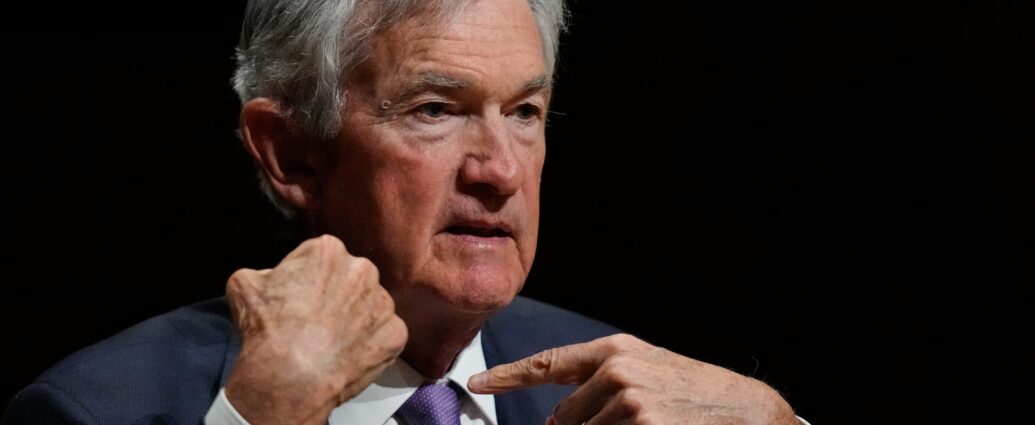
In trading on Monday, shares of Vista Gold Corp (Symbol: VGZ) entered into oversold territory, changing hands as low as $1.725 per share. We define oversold territory using the Relative Strength Index, or RSI, which is a technical analysis indicator used to measure momentum on

This post was originally published here

In trading on Monday, shares of Americas Gold & Silver Corp (Symbol: USAS) entered into oversold territory, changing hands as low as $4.56 per share. We define oversold territory using the Relative Strength Index, or RSI, which is a technical analysis indicator used to meas

This post was originally published here

In trading on Monday, shares of Metalla Royalty & Streaming Ltd (Symbol: MTA) entered into oversold territory, changing hands as low as $5.9501 per share. We define oversold territory using the Relative Strength Index, or RSI, which is a technical analysis indicator used to

This post was originally published here

In trading on Monday, shares of Mesabi Trust (Symbol: MSB) crossed above their 200 day moving average of $31.86, changing hands as high as $32.38 per share. Mesabi Trust shares are currently trading up about 4.7% on the day. The chart below shows the one year performance of MS

This post was originally published here

To non-Canadian eyes, Air Canada CEO Michael Rousseau’s decision to post a message of condolences in English following the airline’s deadly crash at New York’s LaGuardia airport may not seem all that noteworthy. After all, Rousseau has acknowledged himself the limitations of his French. And this was an extremely emotionally fraught moment: In the first Air Canada accident to involve fatalities since 1983, the March 22 runway collision between a plane and a fire truck killed two pilots and injured dozens of others.

Amid such a tragedy, the ensuing outcry over the CEO’s language choice might look like a tempest in a teapot. But Canadians understood immediately why Rousseau’s decision to speak English (other than a “bonjour” and a “merci”) caused such an affront. It has now led to his retirement from the company later this year, as announced on Monday. (A spokesman for Air Canada said, “Mr. Rousseau has reached a natural retirement age” and added that the company’s succession planning had been underway internally for some time.)

Air Canada is headquartered in Montreal, a majority French-speaking city, the largest in Quebec. It’s a region where matters of language are often a third rail in public life. For many Québécois, French is not just a means of communication but a core marker of identity—which helps explain the intense emotional reactions when they feel it is sidelined in official settings.

Rousseau’s message was meant to offer condolences for the deaths and sympathy for the injured—and also to reassure the company’s rattled 37,000 employees and put the spotlight on the heroism of the pilots and crew. He expressed Air Canada’s “deepest sorrow for everyone affected,” and called it a “very dark day here at Air Canada.”

But those messages were overshadowed by the flap over his language. As a former Crown corporation (Canadian jargon for government-owned business) Air Canada is subject to the nation’s Official Languages Act, meaning it is required by law to communicate in both English and French. So it was baffling to many that Rousseau, a Canadian, would not realize that a 3-minute, 45-second video in English would be a big faux pas. Making matters worse: The flight originated in Montreal, so it certainly had many francophone passengers and crew members among the injured, in addition to one of the pilots who died.

Montreal Mayor Soraya Martinez Ferrada called it “disrespectful of the francophone community.” And even Canadian Prime Minister Mark Carney weighed in, slamming Rousseau for his “lack of judgment and lack of compassion.” “We proudly live in a bilingual country, and companies like Air Canada particularly have a responsibility to always communicate in both official languages,” Carney told reporters.

Rousseau himself acknowledged the flub and said last week that he was “deeply saddened” that “his inability to speak French had diverted attention from the profound grief of the families and the great resilience of Air Canada’s employees.”

Why effort matters more than perfect pronunciation

Though speaking in heartfelt way can be hard for someone using a second language, many executives of multinational companies do nonetheless make the effort (even if their public relations staff typically crafts the message). Politicians too: New York Mayor Zohran Mamdani has made videos in Spanish, Arabic, and Hindi—often including footage of him struggling with his lines—to the delight of immigrant voters who appreciate the effort, even if he’s butchering the pronunciation.

This wasn’t Rousseau’s first time creating a language kerfuffle as CEO of Air Canada. In 2021, soon after taking the reins, Rousseau proudly noted in a speech to the Montreal Chamber of Commerce that he had been easily able to live in the city for more than a decade without learning French. (He grew up in Eastern Ontario, a part of the country with a sizeable francophone minority.)

During the ensuing P.R. crisis, he apologized and pledged to learn French. Bloomberg reported that Rousseau had taken 300 hours of French lessons since 2021, so it’s anyone’s guess why he couldn’t have cobbled together at least a couple of sentences in the mother tongue of many of Air Canada’s stakeholders. (Some commentators suggested that for his compensation of $9.4 million last year, learning conversational French shouldn’t be too much to ask.) Before Air Canada, he spent years as a senior executive of the retailer Hudson’s Bay.

The Air Canada board—which should perhaps have nudged Rousseau along in his French studies—said on Monday that French skills would be a key factor in choosing the next CEO. (Though Rousseau has won credit for guiding Air Canada out of the pandemic, shares are down 33% since he became CEO.)

The language debates permeate many aspects of Quebec life: A few years ago, controversy erupted when the hallowed Montreal Canadiens hockey team hired an anglophone coach who was unilingual. He didn’t last long.

The business risk of offending your home market

Some of Rousseau’s defenders in the Canadian commentariat have raised fair questions about whether a CEO of a global business really needs to speak French, whether such a requirement narrows the talent pool too much, and whether any of this should even be the government’s business.

But ultimately, Rousseau’s inability—or perhaps even unwillingness—to learn French, was just bad business. Angering politicians or columnists is one thing. But 23% of Canadians are native French speakers. Given all the competition in the airline industry, and choices travelers have, offending anyone is dangerous.

Emotional intelligence, empathy, and the ability to read the room are essential skills for CEOs today. Others have learned that lesson the hard way years before Rousseau did: Remember when cloud computing company PagerDuty’s CEO Jennifer Tejada quoted Martin Luther King Jr. in a memo announcing mass layoffs in 2023 and had to apologize? Or howBP CEO Tony Hayward grumbled “I’d like my life back” after an oil spill caused by the company?

Perhaps Rousseau should get credit for not using AI to mask his lack of linguistic fluency. But authenticity, even if expressed in broken French, is the best approach when it comes to soothing nerves and expressing sympathy.

This story was originally featured on Fortune.com

Federal Reserve Chair Jerome Powell said that the U.S. economy is facing a supply shock from the disruption of Middle East oil supplies after previous shocks like the COVID-19 pandemic and tariffs pushed prices higher.

Powell spoke to an economics class at Harvard University on Monday and said that the series of supply shocks has kept inflation elevated above the central bank’s 2% long-run target despite progress in slowing the pace of price growth substantially from its 9.1% peak in 2022.

“We got pretty close to 2% by the end of ’24,” Powell said. “We were just dealing with the effect of tariffs, which have largely fallen here in the U.S. and not abroad. They’ve been less than expected because the others didn’t retaliate, and also because what was implemented was less than what had been announced.”

“We were at about 3% inflation and somewhere between 0.5 and 0.8 [percentage points] of that is from tariffs. We’ve been pretty close to 2% all this time. Now we have another supply shock coming,” Powell said.

IRAN WAR COULD PUSH INFLATION HIGHER THIS YEAR, GOLDMAN SACHS SAYS

“You know, it’s one of those times where you get a series of supply shocks: first the pandemic, then the much smaller one from tariffs, and then we’re getting now an energy shock,” he said. 

Powell added that, “No one knows how big it will be, it’s way too early to know.” 

WILL THE FEDERAL RESERVE CUT INTEREST RATES IN 2026?

Oil prices have risen above $100 a barrel, with the price of West Texas Intermediate crude oil surging above $102 a barrel on Tuesday after trading in the $60-$70 range a month ago before the outbreak of war in Iran. 

Brent crude oil is also trading at around $112 a barrel and has approached $120 a barrel since the conflict began, after it traded in a similar range between $65 and $75 a barrel before the war started.

FED’S BOWMAN SAYS SHE’S WRITTEN IN 3 INTEREST RATE CUTS BEFORE YEAR-END

Gas prices have surged in response to the increase in oil prices, with the national average price of regular gasoline increasing over $1 per gallon in the last month – rising from an average of $2.98 last month to $3.99 as of Monday, according to AAA data. That’s an increase of about 34% in the last month.

Powell said that while it’s unclear how severe the price shock from the energy supply disruption will be, the Federal Reserve’s monetary policy is positioned to allow for a response to conditions that require policymakers to either cut or hike interest rates to support the economy or curb inflation, respectively.

“We do think our policy is in a good place for us to wait and see,” Powell said.

GET FOX BUSINESS ON THE GO BY CLICKING HERE

The market currently sees an 80% probability that the Fed’s benchmark federal funds rate will remain at its current range of 3.5% to 3.75% for the rest of this year.

This post was originally published here. 

In the latest dustup over a groundbreaking HIV prevention medicine, Doctors Without Borders has harshly criticized the manufacturer for refusing to sell its treatment directly to humanitarian organizations.

The move came after months of talks in which Doctors Without Borders asked Gilead Sciences for a “limited” supply of lenacapavir. The drug has been in demand after studies showed a single set of injections every six months can offer virtually complete protection from infection, a form of prevention known as preexposure prophylaxis, or PrEP.

The organization currently obtains lenacapavir through The Global Fund to Fight AIDS, Tuberculosis and Malaria, a worldwide partnership of governments, civil society groups, and the private sector that, in late 2024, reached a deal with the company to distribute lenacapavir to 2 million people in low- and middle-income countries.

Continue to STAT+ to read the full story…

This post was originally published here. 

Steve Eisman, the portfolio manager made famous by “The Big Short,” called the Iran war a “unipolar market” on his podcast The Real Eisman Playbook.

The framing marks a sharp reversal. In early March, Eisman told CNBC the conflict would be “very, very positive” and said he wouldn’t change a single trade. Four weeks of $100-plus oil appears to have changed the calculus.

Brent crude traded near $113 per barrel on Monday, up roughly 55% in March. That is the largest monthly surge in the contract’s history, surpassing the 46% gain recorded during the first Gulf War in September 1990.

The Energy Select Sector SPDR Fund (NYSE:XLE) is the only S&P 500 sector in the green this month, while the United States Oil Fund (NYSE:USO) has tracked crude’s historic March run.

What Prediction Markets Say

Bettors on …

Full story available on Benzinga.com

This post was originally published here

Leslie Sherman-Shafer, an Uber driver in the San Francisco Bay Area, likes to start each shift with a full tank of gas.

It used to cost her around $25 to fill up her Toyota Corolla. She’s spent closer to $40 since the Iran war began and pushed up the average U.S. price for a gallon of regular gasoline by $1. Sherman-Shafer, a retired dental office assistant who picks up Uber passengers five days a week, said she’s putting in extra hours to cover the difference.

“We don’t get reimbursed for gas. We rely on the generosity of the tip,” Sherman-Shafer said. Some passengers have tipped more to compensate for higher gas prices, but most don’t tip at all, she said.

Driving a car, van or truck is a big part of many Americans’ workdays. Nearly 27% of civilian workers cited driving as a physical demand of their jobs last year, according to the U.S. Bureau of Labor Statistics. Millions of drivers use personal vehicles for their work, from delivery and ride-share providers like Sherman-Shafer to self-employed electricians, nannies, home health care aides and real estate agents.

As the war enters a fifth week and continues to disrupt global oil supplies. many of those workers are now scrambling to make ends meet. The national average price for gas reached $3.99 per gallon on Monday, up 34% from a month earlier, according to AAA.

“With everything going up, it’s impossible to save a dime,” Sherman-Shafer said.

Some companies compensate employees for using their own vehicles, including the cost of gas. In the U.S., the Internal Revenue Service sets a standard mileage rate every year that businesses and private contractors can use to calculate tax deductions. Alpine Maids, a housekeeping company based in Denver, pays cleaners the 2026 federal reimbursement rate of 72.5 cents per mile for the distance they drive to clients’ homes.

But with gas prices spiking, that money is not going as far, said Chris Willatt, a former geologist who now runs Alpine Maids.

“Our maids drive their own cars, so it’s kind of like their paycheck got smaller,” Willatt said. “They’re all upset.”

Willatt said he reduced how often maids must report to the office, from daily to once a week, and rejiggered cleaning assignments so employees aren’t driving as far between clients. If gas prices climb further, he said he might increase what he charges customers so he can pay workers more.

Molly Kenefick, the owner of Doggy Lama Pet Care Inc. in Oakland, California, said she recently raised her gas reimbursement rate to 80 cents per mile for 15 employees who use their own vehicles to pick up dogs and take them for hikes around the Bay Area. The rate increase will stay in place until gas prices in their area drop below $5 for at least a month, she said.

Kenefick said she planned to raise prices for the company’s services in May. But she doesn’t want to increase them too much because she’s worried she’ll lose clients. So Kenefick is also dipping into her savings to pay for gas.

“The economy is hard for people. Everybody’s under strain,” she said. “I can take some of the load and the company can take some of the load, provided this doesn’t go on too long.”

Ride-hailing and food delivery platforms that rely on gig workers don’t reimburse drivers for gas, but some are offering temporary incentives in response to rising gas prices. DoorDash, Uber, Lyft and Instacart are providing more than the usual cash back on gas purchases for drivers who use company-branded debit cards. DoorDash and Instacart are giving a weekly fuel payment to drivers who travel 125 miles or more making deliveries.

Sarah Noell, who spends about 20 hours a week making deliveries for DoorDash in Lynchburg, Virginia, said the measures help somewhat. But she said she’s noticed more customers declining to add tips to their orders as gas prices have increased.

Noell has started refusing any order that won’t average out to $1 per mile, including the $2.50 per order she gets from DoorDash. That cancels out many users who aren’t tipping or give only small tips.

“It takes nearly double the cost to fill my tank,” Noell said. “Ten dollars used to get me a decent amount. Now it only gets me 3 gallons.”

Owners of diesel-powered vehicles have seen even steeper fuel price increases since the war started on Feb. 28, affecting drivers around the world.

Drivers of diesel-powered “jeepneys” in the Philippines, went on strike for two days last week to protest their higher costs. In France, dozens of buses and trucks drove slowly on the Paris ring road Monday to demonstrate their concerns about rising diesel prices. Drivers and businesses want the French government to provide aid to mitigate the impact.

“The major difficulty right now is finding our balance on our business since we sold services with the vehicles at a certain price for diesel that was much cheaper. And we’re not going to ask customers to pay that difference,” Sarah Bahezre, manager of the bus transportation company Ulysse Cars, told The Associated Press.

Average U.S. diesel prices climbed 44% over the last month, according to AAA.

A few weeks ago, Rachel Hunter paid $3.62 a gallon to fill the single diesel truck used by Cactus Crew Junk Removal & Thrift Store, a Phoenix business she and her husband co-founded. The same fuel now costs $6.09 per gallon in Phoenix, according to AAA.

The truck carries all kinds of heavy cargo, from slabs of solid maple bowling lanes to loads of concrete paver tiles. So fuel costs quickly add up, Hunter said, particularly with a truck that only gets 12 or 13 miles to the gallon.

Hunter has started quoting prices that reflect the jump in prices. She worries she’s in a “vicious circle” that could hurt the business if oil prices remain high.

“We don’t want to get a bad name for being overpriced,” she says. “I’ll be able to explain it where people can understand, but it doesn’t mean they can afford it.”

This story was originally featured on Fortune.com


Health secretary Robert F. Kennedy Jr. made waves in February when he opined that changing your diet can “cure” schizophrenia. His comment sparked a wave of backlash from researchers who called the secretary’s remarks “unfounded.” 

While the current scientific consensus suggests that schizophrenia cannot be cured through diet, Kennedy’s interests in nutrition and diet as tools to treat mental illness are shared by some researchers and clinicians eager to find alternatives for conditions like schizophrenia that lack good treatment options. A person’s mental health, they say, is not solely determined by neurotransmitters bouncing around inside their brain, but also by other bodily pathways.

Stanford University researcher Shebani Sethi has been at the vanguard of this group, a field she calls “metabolic psychiatry.” Her work has caught the interest of leaders in the Make America Healthy Again movement, including physician Mark Hyman, a longtime friend of Kennedy. 

Continue to STAT+ to read the full story…

This post was originally published here. 

Federal Reserve Chair Jerome Powell said Monday that it is important to closely monitor inflation amid a spike in energy prices from the Iran war.

Powell, who spoke before nearly 400 students at Harvard University as gas prices inched toward an average of $4 per gallon in the U.S., said there wasn’t a lot Fed policymakers could do since energy shocks “tend to come and go pretty quickly” and monetary maneuvers work over the longer-term. But a series of energy shocks, nevertheless, could be concerning.

“You have to carefully monitor inflation expectations because you could have a series of big supply shocks and that can lead, you know, the public generally, businesses, price setters, households … to start expecting higher inflation over time. Why wouldn’t it?” Powell said.

In wide-ranging remarks, Powell acknowledged young graduates were entering a challenging job market. He noted the role of artificial intelligence and that while employment is historically low, there is very little job creation right now.

The U.S. job market has been lackluster for the past year. Employers added fewer than 10,000 jobs a month in 2025 – the weakest hiring outside a recession since 2002. This year began with a strong 126,000 new jobs in January, but the United States whipsawed to 92,000 job losses the following month.

Economists refer to a low-hire, low-fire job market in which companies are hesitant to add staff but don’t want to let go of the workers that they have. That’s made it especially hard for young people to find employment. There’s some concern that artificial intelligence is taking over entry-level work that previously would have gone to young jobseekers, or that companies are reluctant to make hiring decisions until they better understand how they are going to use AI.

Powell said he was optimistic over the medium- to long-term, noting that history has shown that technological innovations have repeatedly raised living standards and increased production. Large-language models, he said, make people, including himself, more productive.

“You’re in a situation where you need to really invest the time to master the use of these new technologies,” Powell said. “There’s no denying it’s a challenging time to enter the labor market, It may take some patience and all that, but in the longer term, this economy is going to give you great opportunities. Just be a little optimistic.”

In a question-and-answer session, neither Powell nor the students mentioned President Donald Trump, who has repeatedly criticized the Fed chair. But Powell did stress the importance of the Fed’s independence.

“It’s very hard to build great democratic institutions and much easier to bring them down,” Powell said.

President Donald Trump has repeatedly urged Powell and the Fed to cut interest rates, which would lower the costs to borrow for households, businesses and the U.S. government. Powell’s caution has infuriated Trump.

Some of the economic policies under the Trump administration, however, have complicated the dual mandate of the Federal Reserve, which is to keep prices stable and seek maximum employment.

The U.S. has hit all of its trading partners with new tariffs which can boost retail prices, and the war in Iran has sent energy prices soaring.

The average gallon of gas in the U.S. rose to $3.99 overnight, according to motor club AAA.

Trump escalated his attacks on the Fed in January, when the Department of Justice served the central bank with subpoenas and threatened it with a criminal indictment over his testimony last summer about the Fed’s building renovations.

Trump has nominated former Fed official Kevin Warsh to succeed Powell. But Warsh’s confirmation has been delayed by a Justice Department investigation. Sen. Thom Tillis, a North Carolina Republican, has said he won’t vote to confirm any Fed nominees until the investigation is dropped.

Still, Powell took a moment to offer some advice to his would-be successor without naming him, saying it was “very important to stick to your knitting and to stick to the things that were actually assigned.”

“We have very powerful tools. They’re supposed to be for maximum employment and price stability and financial stability,” he continued. “There’s always a time when an administration looks and say it would be good to use that tool for something else … We just have to be in a situation where we’re not trying to work against any politician or any administration, but we have to be careful to stick to what we’re doing.”

This story was originally featured on Fortune.com

Trader Cryptoinsightuk said the crypto market appears to be in a late-stage correction and nearing a bottom, though not necessarily at its exact low.

Mixed Outlook, But Constructive

In a March 30 podcast, the trader said the current consolidation phase could last from a few weeks to several months but overall reflects a value accumulation zone rather than the start of a prolonged bear market. He described the broader outlook as mixed but constructive across major assets.

Bitcoin (CRYPTO: BTC) could still see a short-term dip toward key liquidity levels, potentially near $60,000. Meanwhile, Dogecoin …

Full story available on Benzinga.com

This post was originally published here

CrowdStrike Holdings Inc. (NASDAQ:CRWD) rose over 3.5% on Monday morning after the cybersecurity firm enjoyed a rare double endorsement.

Wolfe Research upgraded the stock to outperform, and Morgan Stanley named it a top pick — but the stock is still down roughly 20% year-to-date.

Analysts are praising CrowdStrike while Iranian hackers escalate cyberattacks.

Palo Alto Networks (NASDAQ:PANW) threat intelligence unit has identified more than 60 Iran-aligned hacktivist groups active since President Trump’s Operation Epic Fury launched on Feb. 28.

One of those groups, Handala, launched a wiper attack on Stryker Corp. (NYSE:SYK), the $132 billion medical device maker, destroying internal servers and permanently erasing data across the company’s network.

Russian hackers operating in support …

Full story available on Benzinga.com

This post was originally published here

The U.S. homebuilding industry remains more fragmented than outsiders believe, even after years of consolidation. Lennar continues to be one of the biggest builders in the country, but size alone isn’t the main factor anymore; the next advantage comes from blending operational efficiency with customer segmentation.

That is why KB Home appears to be a possible strategic target. KB Home is large enough to matter and small enough to absorb.

KB Home reported about $6.24 billion in revenue for 2025, with Q4 2025 results showing $1.69 billion in revenue, 3,619 homes delivered, and an average selling price of $465,600. In comparison, Lennar delivered 82,583 homes in 2025, generated $34.2 billion, and reported Q4 SG&A of 7.9%, highlighting the scale advantage that defines its business model.

The core thesis is simple.

Lennar could acquire a nationally recognized builder, eliminate redundant overhead, and preserve the parts of KB Home that make it strategically distinct. In a housing market where affordability remains strained and pricing power is no longer a given, that kind of self-help can matter more than waiting for macro conditions to improve.

The cost gap creates the opportunity

The strongest argument for a Lennar KB Home deal is neither sentiment nor brand. It is the cost structure. KB Home’s SG&A profile is significantly higher than Lennar’s, with KB Home projecting Q1 2026 SG&A to be 12.2% to 12.8% of housing revenues, compared with Lennar’s 7.9% in Q4 of 2025 and an expected 8.9% to 9.1% Q2 of 2026.

That gap is what transforms this from a theoretical idea into a credible merger thesis. If KB Home has around $750 million to $800 million in annual SG&A, then a buyer with Lennar’s platform could reasonably aim for $250 million to $300 million in annual savings through integration. These synergies would likely come from removing duplicate public company costs, consolidating corporate functions into Lennar’s existing structure, reducing overlap at the division level, and streamlining systems and marketing expenses.

This approach is not a new concept in Lennar’s history. When Lennar announced its all-stock merger with CalAtlantic in 2017, the companies estimated about $250 million in annual cost savings and synergies, including reductions in overhead, elimination of duplicate costs, and improvements in marketing and technology. This example matters because it demonstrates that Lennar has previously articulated and pursued a similar consolidation strategy.

KB Home brings something Lennar doesn’t fully own

The smarter approach to this acquisition wouldn’t be to eliminate KB Home. Instead, it would be to retain the brand where it provides value. KB Home has increasingly focused on built-to-order (BTO) housing, and recent reports indicate that management anticipates about 70% of deliveries will come from BTO in the second half of 2026.

That gives Lennar more than just extra volume. It creates a unique consumer offer. Lennar’s model has long focused on throughput, standardization, and affordability through scale, while KB Home’s BTO approach appeals to buyers who want more personalization. In a market where entry-level buyers are stretched but still selective, a company that can serve both efficiency-focused and customization-focused buyers has a broader reach.

In that sense, KB Home is more than just an acquisition target; it represents a portfolio extension. Lennar could continue running its main operations while using KB Home as a specialized brand for buyers who prioritize design options and a more consultative purchasing experience. This approach is cleaner than trying to retrofit the entire Lennar platform around customization.

Why the timing works

The best strategic acquisitions often occur when the market is uneasy. Lennar’s Q1 2026 commentary highlighted lower year-over-year deliveries and continued reliance on incentives, even as management anticipated improvements with the spring selling season. KB Home’s recent results also showed pressure, with Q1 2026 revenue down and management shifting more toward BTO to support margins.

That background makes consolidation more necessary, not less. When demand varies, builders can’t rely on quick price increases to cover inefficiencies. They must improve internally. For Lennar, that means increasing the gap between its own costs and those of slower or less efficient competitors.

A well-organized acquisition of KB Home would align with that strategy. It would boost deliveries, expand exposure to key Sun Belt and coastal markets, and offer a straightforward cost reduction narrative for investors. More importantly, it would provide Lennar with a strategic response to a softer housing cycle that doesn’t rely on lower rates arriving on schedule.

What investors would care about

Investors would ask three questions. First, is the valuation disciplined? Second, are the synergies real? Third, can Lennar integrate the business without diluting the very BTO capability that makes KB Home valuable.

The synergy case is the easiest part to defend. Lennar already operates with a significantly lower SG&A ratio than KB Home, and the historical CalAtlantic merger offers a credible blueprint for how management considers cost reduction.

The more challenging issue would be maintaining customer-facing differentiation while aggressively consolidating internally.

That challenge is manageable. The back office can be merged quickly. The consumer proposition should remain unchanged. Lennar’s advantage would come from integrating accounting, HR, finance, IT, and regional management while keeping KB Home’s BTO identity intact where it still resonates with buyers.

The bottom line

If Lennar seeks a deal that is strategically consistent, financially sound, and suited for a slower market, KB Home appears to be one of the cleaner targets among public homebuilders. The appeal isn’t that the combination would be dramatic; rather, it’s that it would be logical: lower overhead, broader segmentation, and increased operating leverage in a housing market that values discipline over optimism.

That is what makes this feel less like speculation and more like a transaction idea grounded in genuine industrial logic. Lennar would not be buying a story. It would be purchasing a spread between its own efficiency and KB Home’s higher cost structure, along with a BTO capability that could become more important in the next phase of the cycle.

This post was originally published on here. 

How does a kangaroo escape a petting zoo?

It’s not the opening line to a dad joke. If you’re Chesney the kangaroo, you scale an eight-foot (2 1/2 meter) fence and go on the lam for three days, giving your keeper sleepless nights and sending residents of a small Wisconsin town on a search that would end happily on Saturday.

The unprecedented leap at Sunshine Farm in Necedah, Wisconsin, last week was precipitated by some stray dogs that rushed the enclosure and spooked the 16-month-old Chesney, said his keeper, Debbie Marland. She and friends then trekked hither and yon in this town about 160 miles (255 kilometers) northwest of Milwaukee.

They chased reports of sightings and even rented heat-seeking drones, which proved effective in narrowing down the wanderings of the high-jumping adventurer.

“I was putting on about 37,000 steps per day looking for him,” Marland said Sunday. “I haven’t done so much exercise in a very long time.”

Chesney and his roommate Kenny are named for country-music star Kenny Chesney. They’re among 25 animals at Sunshine Farm, with horses, sheep, alpacas, Kunekune pigs, Highland cows and a Bactrian camel. The farm is generally open Fridays through Sundays from mid-May through mid-November and tours are offered to visitors who can interact with the animals.

Chesney escaped about 11:15 a.m. last Wednesday. Though he stayed within a three-mile (5-kilometer) radius of the farm, he kept his pursuers guessing.

Colton Johnson, owner of Midwest Aerial Drone Services, has used heat-sensing drones to help hunters recover deer and reunite missing dogs with their owners. Add a kangaroo to the list.

Johnson spent three days trailing Chesney alongside Marland and a team of volunteers. His strategy was similar to the ones he uses to find lost pets, but Johnson said the appearance of Chesney’s heat signature on the drone footage was unique.

“It almost looked like a dinosaur running through the woods,” Johnson said. “It’s got a long tail, and the way it was moving and hopping, that’s the only way that I can describe it.”

The team caught up with Chesney on Wednesday and again Thursday night, but Johnson said the frightened kangaroo slipped away — once by jumping into a cold river — and Johnson lost track on the drone.

According to Marland’s friend, Stacy Brereton, who helps out at the farm routinely, Friday was a tough day. No one had spotted Chesney all day and searchers feared he had wandered farther afield into even more unfamiliar territory, Brereton said.

Then, Friday night, Chesney was discovered nestled under a tree in a wooded area. A group of searchers surrounded him, but ever fleet of foot — 20 mph (32 kph) is no stretch for him — Chesney eluded them.

Marland returned to the area Saturday morning with Chesney’s favorite treats and pieces of material that had his and Kenny’s scent. Other searchers later joined her. But with no sign of the kangaroo, they started packing up. Just then, they spotted the long-eared kangaroo with outsize back legs approaching.

Brereton stepped up with a delicate touch.

“He had a very calm attitude when he walked up, obviously you could tell he wasn’t in fight-or-flight mode, so I just went with that,” Brereton said. “I just stayed calm with him and I just kind of went and sat and let him come to me.”

Chesney heard the voices and wanted attention, said Brereton, who eventually scooped up the 40-pound (18-kilogram) animal.

“I do believe he heard our comforting voices, he smelled the familiar smells of home and it just made him feel safe,” said Brereton, adding, “I’m just glad he loves me as much as I love him.”

Marland said the “the community really did come together” for the kangaroo, who is now something of a celebrity. A Sunshine Farm fan has written a children’s book about Chesney’s adventures, which Marland hopes to publish and sell to recoup some of the search costs.

Kenny, who with his marsupial mate has the run of Marland’s house, was happy to be reunited with Chesney. Though hungry and tired, Chesney was otherwise healthy but will get a checkup with the veterinarian shortly.

To be safe, Marland added, a new mesh top will be placed over the kangaroo enclosure to prevent any more high-jumping hijinks.

___

Associated Press writer Savannah Peters in Edgewood, New Mexico, contributed.

This story was originally featured on Fortune.com

Baby Boomers’ decades long control of U.S. housing wealth is not just locking out younger buyers, it’s forcing significant changes to a real estate agent’s job description.

Top-producing agents told HousingWire the industry continues to pivot toward multi-generational advisory work.

Academic research has confirmed why; agents who cannot navigate trusts, estate planning and family gifting strategies risk becoming obsolete.

Jennifer Leahy — founder of the Jennifer Leahy Team at Compass — said the traditional first-time buyer is being redefined before her eyes.

“The most significant structural change we’re witnessing is the acceleration of intergenerational wealth transfer,” she said. “Many younger buyers are entering the market not solely based on their own income, but with meaningful financial support from their parents, whether through down payments, co-purchasing or early inheritance.

“That dynamic is allowing them to purchase at significantly higher price points than they otherwise could, particularly at a time when home values have risen dramatically and affordability has become more challenging. In many ways, it’s reshaping the definition of a ‘first-time buyer.’”

Pamela D’Arc – Compass’s No. 8 ranked agent in Manhattan by sales volume per 2025 RealTrends Verified – has seen the same trend playing out across New York City.

“Parents, spanning generations themselves, are increasingly stepping in as financial anchors for their children — whether they’re in their 20s or 60s — helping them secure a foothold in the city where the cost of entry feels insurmountable for many,” she said. “From co-purchasing to significant monetary gifts, and even the strategic formation of trusts, the role of family wealth in apartment purchases is undeniable.

“This phenomenon transcends price points and neighborhoods, touching nearly every corner of the market.”

Academic research shows historic imbalance

Recent research shows Baby Boomers’ dominance in housing wealth reshaping the real estate market and contributing to long-term inequality.

A working paper from Harvard University and The University of Toronto found that demographic forces are a key driver of sustained housing pressures — helping explain why housing costs remain elevated despite affordability challenges and high demand from younger generations.

A second study for the Michigan Journal of Economics, “The Great Wealth Transfer and Its Implications for the American Economy,” examines how Boomer-held housing wealth will shape future inequality.

As trillions of dollars are passed down, real estate plays a central role. However, the study warns that wealth transfers are highly unequal and tend to reinforce existing disparities.

Families who already own property are far more likely to benefit, making inheritance an increasingly important factor in homeownership access, research said.

A RAND study shows that median households would now be earning $29,000 more per year if income distribution for workers — as a share of annual GDP — returned to 1970s levels.

The Urban Institute’s “Wealth Gap Between Homeowners and Renters Has Reached Historic High” highlights the widening divide between owners and renters.

Research found that the median wealth gap between homeowners and renters was roughly $390,000 in 2022 — driven largely by rising home values — with the average wealth gap sitting at nearly $1.4 million.

Renters and family-backed buyers

Leahy acknowledged that not every younger person would benefit from family wealth. The result, she said, was a market splitting into two distinct tracks.

“There will absolutely be a segment of the population that rents longer, either by choice or necessity,” she said. “So, the industry isn’t shifting in one direction, it’s becoming more bifurcated. As a brokerage, we’re equipped to serve high-touch advisory for buyers using family capital and thoughtful guidance for clients navigating longer-term renting as part of their financial strategy.

“The market isn’t moving away from homeownership; it is redefining who gets to access it and how.”

D’Arc described New York institutions also preparing for this market trajectory.

“Even co-op boards, once notoriously rigid, are adapting,” she said. “The growing prevalence of trusts as purchasing vehicles reflects a recognition of this wealth transfer and its increasingly pivotal role in sustaining the market. This trend — born of estate planning and familial support — underscores both the enduring allure of urban living and the financial realities shaping how New Yorkers call the city home.”

The 10-to-20-year outlook – more inventory but uneven access

Over the next two decades, Leahy predicted a meaningful release of inventory — but not equal access.

“Over the next 10–20 years, I do think we’ll see a meaningful shift,” she said. “As baby boomers [continue to] age and homes begin to transition to the next generation, whether through sale or inheritance, we should see an increase in inventory. That will help rebalance the market and create more opportunity for younger buyers.

“However, access will not be evenly distributed. Buyers with family support will continue to have a significant advantage, while others may face longer entry timelines. So, while inventory may improve, affordability and access will remain key themes shaping transaction volume and pricing dynamics for the next generation.”

D’Arc emphasized that agents must actively guide clients through these complexities rather than simply facilitating transactions.

“I am making more of an effort to stay in touch with clients — buyers, sellers and renters — and help them solve their anxieties and concerns regarding buying or selling,” she said. “I do that by offering concrete solutions to anticipated issues, including capital gains, not knowing where their kids will land, housing options, etc.

“Often, there is misinformation, so I introduce them to tax advisors, estate attorneys and other professionals who can be of help.”

For real estate professionals, the message was clear: adapt to multi-generational advising – or risk being left behind.

This post was originally published on here. 

The Trump administration sued Minnesota and its school athletics governing body on Monday, carrying out a threat to punish the state for allowing transgender athletes to compete in girls sports.

The lawsuit is part of a broader fight over the rights of transgender youth. More than two dozen states have laws prohibiting transgender women and girls from participating in certain sports and some have barred gender-affirming surgeries for minors. Courts have blocked some of those policies.

In the lawsuit filed Monday, the Justice Department alleges the state Department of Education and the Minnesota State High School League are violating Title IX, a federal law against sex discrimination in educational programs that receive federal money.

“The Trump Administration does not tolerate flawed state policies that ignore biological reality and unfairly undermine girls on the playing field,” Attorney General Pamela Bondi said in a statement.

Democratic Minnesota Attorney General Keith Ellison called the lawsuit “a sad attempt to get attention” over an issue that has already been in litigation for months. He said he’ll keep fighting.

“It is astonishing that any president would try to target, shame, and harass children just trying to be themselves, let alone a president with so many actual problems to address,” Ellison said in a statement.

League officials did not immediately respond to a request for comment.

The administration has filed similar lawsuits against Maine and California, and has threatened the federal funding of some universities over transgender athletes, including San Jose State in California and the University of Pennsylvania.

Minnesota officials have long resisted the federal push to ban trans athletes from girls sports. Ellison filed a preemptive lawsuit last April, saying Minnesota’s human rights act supersedes executive orders issued by President Donald Trump last year. The lawsuit also says the state is already in compliance with Title IX. A ruling is pending on the federal government’s motion to dismiss that case.

The Justice Department said in a statement that Minnesota violates Title IX “by requiring girls to compete against boys in athletic competitions that are designated exclusively for girls and allowing boys to invade intimate spaces designated exclusively for girls, such as multi-person locker rooms and bathrooms.”

To buttress its claims that trans athletes have an unfair advantage, the lawsuit highlights the case of a trans pitcher on the Champlin Park High School girls varsity fastpitch softball team who helped lead the school to a 6-0 victory in a state championship game in 2025.

The Trump administration also reversed the Biden administration’s interpretation of Title IX, which held that its provisions prohibiting discrimination on the basis of sex also extended to gender identity.

According to the Justice Department, Minnesota’s Department of Education receives more than $3 billion annually in federal funding from the U.S. Departments of Education and Health and Human Services. It says that funding is contingent on compliance with Title IX.

The lawsuit asks a federal court in Minnesota to declare the state in violation of Title IX and order it to prohibit transgender girls from competing in girls’ prep sports.

The civil rights offices at the Education and Health and Human Services put the state and league on notice last September that they faced legal action if they didn’t stop violating the federal law.

This story was originally featured on Fortune.com

U.S. stocks are swinging again Monday as oil prices keep climbing because of uncertainty about when the war with Iran could end.

The S&P 500 fell 0.3% and deepened its losses following its worst week since the war with Iran began. The Dow Jones Industrial Average was up 130 points, or 0.3%, as of 2:35 p.m. Eastern time, and the Nasdaq composite was 0.6% lower.

Caution was prevalent throughout financial markets. After jumping to an initial gain of 0.9%, the S&P 500 quickly erased nearly all of it before seesawing lower. Stock indexes rose in Europe but fell sharply in some Asian markets, while the price for a barrel of benchmark U.S. crude oil rose 3.3% to settle at $102.88.

The mixed movements followed a whirlwind of action in the war over the weekend, including an entry into the fighting by Houthi rebels in Yemen. The main issue for investors is whether oil and natural gas can resume their full flow from the Persian Gulf to customers worldwide and prevent a brutal blast of inflation.

Shortly before the U.S. stock market opened for trading Monday, President Donald Trump said on his social media network that “great progress has been made” with “A NEW, AND MORE REASONABLE, REGIME to end our Military Operations in Iran.”

But he also threatened the possibility of “blowing up and completely obliterating” Iranian power plants if a deal is not reached shortly and if the Strait of Hormuz, an integral waterway for the flow of oil, is not opened immediately.

The statement fit and condensed last week’s pattern, where Trump would tout progress being made in talks and offer some optimism for the market, only for doubts to rise quickly afterward about whether the war can end soon.

All the back and forth has some investors saying they’re giving Trump’s pronouncements less weight than before. But stock prices are nevertheless cheaper than they were before the war, which has some investors waiting for an opportune time to buy.

The S&P 500 is roughly 9% below its all-time high, which was set in January. The Dow and Nasdaq both finished last week more than 10% below their records, a steep-enough fall that professional investors call it a “correction.”

Taking into account how much profits are expected to grow in the coming year for companies in the S&P 500, the index looks roughly 17% cheaper than before the war, by one measure. That’s in a similar range as where prior growth scares for the market ended, as long as they didn’t result in a recession or the Federal Reserve hiking interest rates, according to strategists at Morgan Stanley.

That’s one of the signs that the strategists led by Michael Wilson point to as “growing evidence the S&P 500 correction is getting closer to its ending stages.”

Of course, the Federal Reserve could upset that if it decides oil prices are threatening to stay high for long enough that it needs to raise interest rates. Higher interest rates would help keep a lid on inflation, but they would also slow the economy and push down on prices for all kinds of investments.

Treasury yields have been leaping in the bond market since the war began because of such worries, but they eased somewhat on Monday.

The yield on the 10-year Treasury fell to 4.34% from 4.44% late Friday. That’s a significant move for the bond market and offers some breathing room for Wall Street. But it remains far above its 3.97% level from before the war.

On Wall Street, Sysco fell 14.2% to help lead the market lower after it said it was buying Jetro Restaurant Depot for $21.6 billion in cash and enough Sysco shares to value the company at about $29.1 billion.

Alcoa jumped 8.4% for one of the market’s biggest gains on speculation it could get more business after attacks damaged rival aluminum facilities in the Middle East over the weekend.

In stock markets abroad, the FTSE 100 in London climbed 1.6%, and the CAC 40 in Paris rose 0.9%. That followed drops of 3% for Seoul’s Kospi, 2.8% for Tokyo’s Nikkei 225 and 0.8% for Hong Kong’s Hang Seng.

___

AP Business Writers Yuri Kageyama and Matt Ott and AP journalist Ayaka McGill contributed to this report.

This story was originally featured on Fortune.com

Tim Sweeney, chief of firm that created Fortnite, received backlash after worker’s wife revealed loss of life insurance

The chief of the company that created Fortnite, a popular online game, has issued an apology following backlash after recent mass layoffs cost an employee with terminal brain cancer his job – and his life insurance.

On Sunday, Tim Sweeney, the Epic Games chief executive, apologized after Jenni Griffin, the wife of Mike Prinke, a laid off employee, revealed on social media that the loss of her husband’s job also meant he was losing his life insurance.

Continue reading…

This post was originally published here

The American Land Title Association (ALTA) has renewed TrustLink as an ALTA Elite Provider for 2026, extending the company’s status in a program that highlights vendors serving title and settlement firms’ operational and compliance needs, according to an ALTA announcement.

ALTA’s Elite Provider program recognizes service providers that, in the association’s view, meet specific criteria for industry experience, financial stability, compliance and customer service and that offer discounts or other benefits to ALTA members. The program is designed to help title insurers and settlement services companies vet third-party vendors in a heavily regulated environment where escrow accounting and consumer funds management are under increasing scrutiny.

“The ALTA Elite Provider Program recognizes service providers that demonstrate a strong commitment to supporting the title insurance industry and the professionals who serve consumers every day,” ALTA CEO Chris Morton said in the announcement. “Elite Providers like TrustLink deliver reliable solutions, uphold high industry standards and help ALTA members operate more efficiently in a complex and evolving marketplace.”

TrustLink provides trust accounting services to title and settlement companies, with a focus on reconciliation and regulatory compliance. The company said it has more than 50 years of experience delivering daily and monthly three-way reconciliation supported by dedicated reconcilers. Its services also include segregation of duties, positive pay uploads to financial institutions and verification processes for account activity.

Beyond core reconciliation, TrustLink assists clients with unclaimed property reporting and 1099-S tax filing services, including Taxpayer Identification Number (TIN) matching and reporting support to help settlement agents meet federal and state requirements.

“Title and settlement companies rely on TrustLink for critical operational responsibilities, including trust accounting and reconciliation,” Steve Modglin, vice president of operations at TrustLink, said. “Our team is focused on helping clients manage those processes efficiently, while supporting the reporting and compliance requirements they face.”

As part of its Elite Provider offering, TrustLink will waive positive pay setup fees for new customers who are ALTA members, according to the announcement.

Why this matters for title and settlement companies

Escrow and trust accounting has been a focus area for regulators, lenders and underwriters, especially as wire fraud risk and consumer protection standards increase. Many title and settlement firms lean on third-party providers for daily reconciliations, segregation of duties and positive pay controls to reduce the risk of fraud and audit findings.

For ALTA members, an Elite Provider designation can serve as one data point in vendor due diligence and can also offer cost savings tied to specific services. Firms evaluating back-office and compliance functions may look at Elite Provider participants as part of broader efforts to modernize operations, support underwriter requirements and prepare for potential audits.

This article was generated using HousingWire Automation and reviewed by a HousingWire editor before publication. The system helps convert company announcements and industry data into HousingWire-style news coverage.

This post was originally published on here. 

Morgan Stanley‘s (NYSE:MS) E*Trade is reportedly in discussions to lead the retail portion of the SpaceX initial public offering (IPO), potentially sidelining rivals Robinhood Markets Inc (NASDAQ:HOOD) and SoFi Technologies Inc (NASDAQ:SOFI).

SpaceX may set aside up to 30% of its shares for retail investors, fueled by the massive following of founder Elon Musk, Reuters reported citing sources.

SpaceX did not immediately respond to Benzinga’s request for comment.

• Morgan Stanley stock is trading in a tight range. What’s ahead for MS stock?

Valuation and Market Impact

SpaceX is reportedly targeting a

Full story available on Benzinga.com

This post was originally published here

The federal, bureaucratic push to expedite power grid interconnections is picking up steam, but a key headwind is the lack of “aptitude” and communication from hyperscalers as they rush to electrify their AI data center hubs, said Laura Swett, chairwoman of the Federal Energy Regulatory Commission, which oversees grid connections and pipeline approvals.

A combination of Supreme Court rulings, federal rulemaking, and a renewed congressional push for infrastructure permitting reform are all helping speed up approval and construction timelines—while reducing environmental reviews. But a big roadblock is the “tension” between Big Tech hyperscalers wanting to move faster and the “lack of understanding” of the processes, Swett said at the CERAWeek by S&P Global conference last week.


“I see difficulty and a breakdown of communication in many instances,” Swett said.

“They (hyperscalers) are very diverse in their aptitude of how things work,” she added. “I see some very successful examples, and some that just continue to butt heads.”

In their defense, she said, the bureaucratic process is a “wonky, very nerdy…morass and a black box” to most people. But the hyperscalers are not reaching out to FERC as much as she hoped, Swett said. She speaks to traditional utilities “probably nine times” more than the hyperscalers. They need more “very strategic communication and very pointed education,” she said.

“The hyperscalers, when they do come speak to us, they don’t speak FERC,” Swett said. “Their complaints about the utilities, quite frankly, to me show a lack of understanding of how the utilities normally function.”

Speeding up the rulemaking

FERC has until the end of April to make a decision on rulemaking after the Energy Department took the unusual steps of asking FERC to take greater jurisdiction of grid interconnects for loads larger than 20 megawatts to accelerate the process.

Whatever the result, fights could develop over the federal government taking more authority from states’ rights on the power grid.

“Our electric grid…is very old, and we haven’t had any growth in demand for decades, and now we’re looking at exponential, explosive demand,” Swett said. “So, how do we get this very slow-moving ship to turn into a speedboat that’s going in several directions at the same time?”

She insisted that FERC will not slash regulations in a way that results in endless litigation. “I don’t want you to be in court for nine years because we made a crappy order that didn’t keep the law in mind,” Swett told energy leaders, arguing for “well thought out and durable” rulemaking.

One major victory for the energy sector, she said, was last year’s 8-0 U.S. Supreme Court ruling (Justice Gorsuch recused himself due a client conflict) in Seven County Infrastructure Coalition v. Eagle County over construction of a Utah railroad to carry crude oil.

In FERC’s view, the ruling means that indirect emissions from projects no longer need to be considered in the National Environmental Policy Act environmental (NEPA) review process. Essentially, if a natural gas pipeline is being approved, the process doesn’t need to consider the indirect effects of burning the gas at a power plant.

Swett said FERC already has cut 70 days off the NEPA process because of the court ruling and additional internal efficiencies.

 “We’re on the brink of a cliff in our country, and we need to get this generation on as quickly as possible,” she said.

Permitting reform for infrastructure

Energy Secretary Chris Wright touted his optimism for congressional permitting reform, which is being considered to expedite the timelines for all energy sources, from wind and solar farms to powerline transmission to gas pipelines.

“There are a lot of Democrats that are becoming very common sense about energy,” Wright said. “I love it.”

Indeed, given the AI data center boom and the growing geopolitical issues of energy security from the Iran war, Democratic senators Martin Heinrich, D-N.M., and Sheldon Whitehouse, D-R.I., put out a statement in early March saying they will “reopen negotiations on permitting reform,” so long as the Trump administration stops attacking already-permitted wind projects.

“We look forward to working on a bipartisan bill that will speed infrastructure development, lower energy costs, and create good-paying jobs,” they said.

Rich Powell, CEO of the Corporate Energy Buyers Association and the nonprofit Clean Energy Buyers Institute, said he is very supportive of reform if it is “technology neutral,” so politicians cannot target either renewables or fossil fuels. And there is growing bipartisan support, he said, although he’s been optimistic before too.

“This is the third congress in a row we’re taking a great, big run at permitting reform,” Powell said.

This story was originally featured on Fortune.com

DENVER, March 30, 2026 /PRNewswire/ — Shelton Capital Management (“Shelton”) announced today that it will become the investment advisor of STF Management LP (“STF Management”) assets including two exchange-traded funds: the STF Tactical Growth ETF (TUG) and the STF Tactical Growth & Income ETF (TUGN).1

The combined assets of the funds are approximately $100 million, with Shelton’s total assets under management now exceeding $6.5 billion. Shelton has appointed Jonathan Molchan of STF Management as senior portfolio manager and head of ETF trading, effective March 30.

“Bringing on an ETF veteran like Jon Molchan is exciting because it bridges a gap in our ETF capabilities while bolstering our lineup with a very strong, five-star rated fund TUGN,” said Steve Rogers, chief executive officer of Shelton Capital Management.2 “The merger complements our growth strategy as we migrate to become a ‘wrapper neutral’ platform, enabling Shelton to better serve advisors and their clients. Jon brings extensive portfolio management experience with his addition to Shelton’s powerful options team. His 20 years of derivatives experience in trading, research and risk management will support our continued work to expand our ETF lineup.”

The existing Shelton covered call lineup includes the Shelton Equity Premium Income ETF (SEPI), the Equity Income Fund (EQTIX) and its popular Separately Managed Account program.3,4

“Joining a strong team at Shelton is an important next step for our ETFs,” Molchan said. “We’re bringing a strong track record and our performance capabilities onto a platform that has the marketing and distribution capabilities needed for our products to flourish. That focus on execution is one reason I’m looking forward to joining Shelton and continuing to manage the ETFs—combining my more than 12 years of experience in options-based ETFs with Shelton’s nearly 20 years of covered call expertise and a strong commitment to exceptional client care.”5

Shelton’s latest acquisition follows preliminary SEC approval to launch dual-share products and the firm’s purchase of Stringer Asset Management, its first acquisition of 2026. As Shelton expands its product lineup and investment expertise, it will continue to explore how ETF structures best serve advisors and shareholders of its existing mutual funds.

About Shelton Capital Management

Shelton Capital Management (Shelton) is a …

Full story available on Benzinga.com

This post was originally published here

Citywide Home Mortgage, an affiliate of top-10 U.S. mortgage lender Rate, has promoted Robert Coomer to chief growth officer, tasking the veteran executive with accelerating the lender’s national expansion and branch partnership model.

Coomer joined Citywide in April 2024 as executive vice president and director of sales strategy and growth, according to a company press release issued Monday. In that role, he focused on recruiting, production growth and building a framework that gives branch managers and loan officers more control over local operations.

Citywide, which operates in all 50 states, is pushing for scale at a time when many independent mortgage banks are still recovering from the 2022-23 volume collapse and margin compression. Lenders that can add productive branches and experienced originators while keeping costs in check are better positioned if rates decline and purchase demand rebounds later this year.

“Robert has demonstrated an exceptional ability to attract elite talent while maintaining the client-first, service-oriented culture that defines who we are,” Citywide president and CEO John Cady said in a statement. “His promotion to chief growth officer reflects both his impact on our organization and our confidence in his vision for where we’re headed.”

Coomer has more than 25 years of mortgage experience. Before joining Citywide, he founded and led the Robert Coomer Group, a nationwide lending operation that closed $1.3 billion in 2020 during the refinance boom. He has been a consistent top-producing originator and has held leadership roles at several national lenders.

Citywide said Coomer is known for building high-performing teams and for implementing consumer-focused lending models that balance branch autonomy with clear accountability. That aligns with the lender’s charter branch partnership structure, which gives local operators more control over staffing and marketing while leveraging centralized technology, capital markets and compliance from the parent company.

As chief growth officer, Coomer will work with Citywide’s executive team to set and execute growth strategies across sales, recruiting and market expansion. His remit includes using Guaranteed Rate’s technology and capital resources to support branch-level entrepreneurs.

Founded in 1998, Citywide built its business as a regional lender before joining Guaranteed Rate in 2021. The company now positions itself as a “nimble, boutique” platform backed by the scale and innovation of a national mortgage brand. Citywide has stated a goal of becoming one of the nation’s top 20 mortgage companies by volume.

For lenders and branch managers weighing where to place their licenses in a still-challenging market, executive moves like Coomer’s promotion signal which platforms are investing in growth infrastructure and recruiting. Growth-focused leadership at the corporate level often translates into more resources for market expansion, branch M&A activity and experienced lending teams looking for stronger operational support.

This post was originally published on here. 

(RTTNews) – Crude oil has catapulted on Monday as the gulf region gets enveloped in war-tension after the U.S. dispatches more soldiers to gulf while U.S. President Donald Trump warns Iran to open up the Strait of Hormuz right away or face obliteration.

This post was originally published here

Negotiations deadlocked as No 10 wants more action on beach patrols but France has concerns over safety

The UK’s agreement with France to pay for beach patrols is on the verge of collapse amid wrangling over the number of small boat interceptions and the safety of asylum seekers in French waters.

Negotiations over plans to revamp the three-year, £480m deal remain deadlocked, despite the involvement of ministers including Shabana Mahmood, the home secretary. The deal expires at midnight on Tuesday.

Continue reading…

This post was originally published here

The latest episode of Capital Link’s Company Presentation Series featured senior management from Star Bulk Carriers (NASDAQ:SBLK), providing investors with an overview of the company’s strategy, financial positioning, and outlook for the dry bulk shipping market, with particular emphasis on cash flow generation, capital allocation, and market fundamentals.

View the webinar through the link below

Company positioning and scale

The company operates a fleet of 141 owned vessels, including 8 recently delivered newbuildings. The fleet is allocated across Newcastlemax/Capesize, Panamax/Kamsarmax, and Ultramax/Supramax vessels. Star Bulk has a market capitalization of approximately $2.5 billion and average daily trading liquidity of around $28 million. Management highlighted that for every $1,000 per day change in charter rates, Star Bulk generates approximately $50 million in incremental annual cash flow. An operational advantage is the company’s scrubber installation program, which covers nearly the entire fleet. Star Bulk maintains primarily short-term exposure to the spot market, with limited long-term fixed-rate coverage.

Market dynamics: supply side

Mr. Constantinos Simantiras, Deputy CIO and Head of Market Research, noted that fleet growth is expected to increase modestly to approximately 3.5% over the next two years. However, this is expected to be …

Full story available on Benzinga.com

This post was originally published here

Oil prices on course for record monthly rise amid risk of further escalation and mixed messaging from US

Donald Trump has threatened to “obliterate” Iran’s power stations and fresh water plants if Tehran does not agree to peace terms “shortly”, even as he claimed diplomatic progress in ending the war that was instigated by the US and Israel.

Tehran has remained defiant during the month-long conflict, describing US peace proposals as “excessive, unrealistic and irrational” and firing waves of missiles at Israel.

Continue reading…

This post was originally published here