


Wall Street’s Getting Nervous: Expert Warns Stocks Could Drop 25% If $150 Oil Scenario Slams Markets Hard
In light of the ongoing Middle East conflict, Morgan Stanley has decided to downgrade global equities while upgrading cash and U.S. government bonds.
The firm, on Friday, adjusted its rating on global equities to “equal weight” from “overweight”, while raising U.S. Treasuries and cash to “overweight” from “equal weight,” reported Reuters.
Strategists at the firm pointed out the increasing risk asymmetry in asset outcomes due to the unpredictable impact and duration of oil supply disruption. Brent crude has seen a sharp 59% increase this month, surpassing gains observed during the 1990 Gulf War.
At 7:14 AM ET, Brent crude oil is trading 2.19% higher at $115.03 per barrel.
The brokerage warned of a possible 25% reduction in global equity valuations if oil prices continue to hover around $150-$180 per barrel. Consequently, Morgan Stanley has reduced its overall equity exposure, downgrading U.S. and Japanese stocks to “equal weight”.
Despite these changes, the firm still prefers U.S. stocks over …
This post was originally published here

Painting considered workshop copy is in fact by Rembrandt, expert says
Exclusive: UK owner’s version of Old Man with a Gold Chain reunited in Chicago with undisputed work by Dutch master
A portrait in a UK collection that has long been dismissed as a workshop copy of an almost identical painting by Rembrandt was in fact also painted by the 17th-century Dutch master, according to a leading scholar.
Each of the paintings, titled Old Man with a Gold Chain and dated to the early 1630s, is a near-lifesize depiction of an older man wearing a gold chain and a plumed hat.
This post was originally published here
TSA workers may receive pay soon. And, Israel plans to expand its invasion of Lebanon
TSA workers have now been without pay for more than 40 days, as Trump says he has a plan to pay them. And, Israeli Prime Minister Benjamin Netanyahu announces plans to expand the invasion of Lebanon.
(Image credit: Danielle Villasana)

This post was originally published here

Buy this cruise line operator that’s trading at a discount, says HSBC
The bank upgraded the cruise operator to buy from hold.
This post was originally published here
Scott Mills sacked by BBC after allegations about his personal conduct
Corporation announces departure of Radio 2 star who took over breakfast show from Zoe Ball in 2025
The BBC has sacked the Radio 2 presenter Scott Mills after allegations about his personal conduct.
The corporation said that “while we do not comment on matters relating to individuals, we can confirm Scott Mills is no longer contracted and has left the BBC”.
This post was originally published here













Coca-Cola, Walmart, and Adobe CEO shakeups have one thing in common: AI
A striking new story is taking shape in corporate America. Some of the most recognizable Fortune 500 CEOs are stepping down as AI becomes a defining question about what kind of executive is best suited to lead the next phase of the business.
That reflects a meaningful shift. For years, AI was treated as one strategic priority among many. Now, at companies like Walmart, Coca-Cola, and Adobe, it is increasingly looking like the dividing line between one leadership era and the next.
At Coca-Cola, James Quincey explicitly linked his decision to step down to the company’s “next wave of growth,” arguing that the company had made substantial progress under the old playbook but now faced a much larger AI-driven shift. The company’s own reorganization under incoming CEO Henrique Braun reinforces the point. Coca-Cola created a new chief digital officer role reporting directly to Braun and said the change was designed to bring the business closer to consumers and enable faster technology adoption across the enterprise. Braun, for his part, said the company was elevating digital leadership so it could move faster and work smarter across all markets.
At Walmart, Doug McMillon offered a similarly revealing signal. In announcing John Furner as his successor, he described him as uniquely capable of leading Walmart through its next AI-driven transformation. Furner, a longtime operator who rose from hourly associate to lead Walmart U.S., takes over as the company pushes deeper into agentic commerce and AI-enabled retail operations. He also brings leadership experience at Sam’s Club and is closely associated with Walmart’s broader digital acceleration.
Adobe’s situation is somewhat different, but no less telling. Shantanu Narayen’s planned departure comes at a moment when investors are scrutinizing Adobe’s AI positioning and questioning how well its subscription model will hold up against faster-moving generative AI competitors. Adobe has not yet named a successor, and that search is unfolding under unusually intense pressure to prove the company can lead in an AI-defined era. In his message to employees, Narayen wrote that “the next era of creativity is being written right now — shaped by AI, by new workflows and by entirely new forms of expression.”
Taken together, these transitions point to a new leadership test. Boards are not just looking for CEOs who can talk about AI or add tools around the edges. They increasingly want leaders who can reorganize large companies around faster decision-making, AI-enabled workflows, and operating models built for an era of greater autonomy.
Ruth Umoh
ruth.umoh@fortune.com
This story was originally featured on Fortune.com

AI is reshaping the doctor visit—just not how you think
AI healthcare deals are roaring.
Digital health startups raised $14.2 billion in 2025, up 35% from 2024, with AI‑enabled companies capturing 54% of that capital and enjoying roughly a 19% premium on average deal size versus non‑AI peers, research from Rock Health details. Investors have rushed into ambient scribes, agentic triage tools, and “doctor‑copilot” platforms—including Abridge (an AI-powered clinical scribe) which raised about $550 million across two mega‑rounds in 2025.
But Zocdoc CEO Oliver Kharraz is spending his time asking a less glamorous question: What actually happens when patients show up in the exam room armed with AI answers?
Zocdoc—backed by Francisco Partners, Atomico, Baillie Gifford, DST Global, and Goldman Sachs—was valued at roughly $1.8 billion in 2015 after a $130 million round led by Baillie Gifford and Atomico, making it one of New York’s highest‑valued private tech companies at the time. In 2021, Zocdoc raised $150 million in growth financing from Francisco Partners after growing revenue more than 35% year over year pre‑pandemic.
Now pitching itself as “healthcare access infrastructure,” Zocdoc says millions of patients each month use its marketplace to find in‑network doctors.
The company’s latest survey of 1,186 U.S. adults and 1,000 providers focuses on the interaction between AI and patient care. Zocdoc found that 26% of patients have already asked an AI a health-related question, and 85% of providers say they’re seeing more AI‑informed patients. Yet more than 1 in 5 patients admit they’ve hidden their AI use from their doctor—often out of fear of being judged. 77% of providers say they feel positively about patients using AI and 60% would rather they use AI than Google.
That disconnect is creating friction. Patients come in “anchored” to an AI-generated answer but won’t admit it, Kharraz told Fortune, forcing physicians to “shadow box with an unnamed partner” as they unwind advice that “might not apply to a patient’s specific case.” Zocdoc’s data backs him up: 83% of providers say they have to correct AI information. The most consequential finding: nobody actually wants a robot doctor. Seventy percent of patients say they would prefer to receive medical guidance from a doctor rather than AI, and 65% would rather ask a doctor their medical questions. But AI is filling a very real access gap—65% of patients say they’ve consulted AI because it’s easier than seeing a doctor, with average wait times to see a primary care provider now topping 31 days in the U.S.
Both patients and providers converge on a narrower job description for AI. Their No. 1 use case is the same: preparing better questions for the doctor. Kharraz’s advice to patients: Don’t ask AI for a diagnosis.
“It’s not as if you can keep AI use a secret. The interesting challenge for organizations like ours is helping mediate that patient-doctor relationship,” Kharraz says.
See you tomorrow,
Lily Mae Lazarus
X: @LilyMaeLazarus
Email: lily.lazarus@fortune.com
Submit a deal for the Term Sheet newsletter here.
Joey Abrams curated the deals section of today’s newsletter. Subscribe here.
This story was originally featured on Fortune.com








Why Are CleanSpark Shares Surging On Monday?
CleanSpark Inc. (NASDAQ:CLSK) shares are seeing notable upward activity in Monday’s premarket session.
The move comes as the broader cryptocurrency market recovers from a volatile weekend. As of Monday morning, the total crypto market cap rose 1.39% to $2.33 trillion.
Bitcoin (CRYPTO: BTC) traded 1.43% higher over the last 24 hours, hovering near $67,367. Nasdaq futures are up 0.43% while S&P 500 futures have gained 0.53%.
CleanSpark, a data center developer focused exclusively on bitcoin mining, typically trades in high correlation with the digital asset.
Short Interest Data Signals Tight Float
According to Benzinga, short interest in …
Reflecting On A Widely Panned Contrarian Stock Market Call From 2011
In fall 2011, global stock markets tumbled amid increasing concerns over sovereign debt levels. Debt crises gripped Greece, Ireland, Portugal, and Spain. S&P even stripped the U.S. of its pristine AAA sovereign credit rating.
The S&P 500 fell 19% from its July 7 closing high of 1,353 to its Oct. 3 closing low of 1,099.
It was the kind of move you’d think would have Wall Street strategists tripping over each other as they cut their targets for the market.
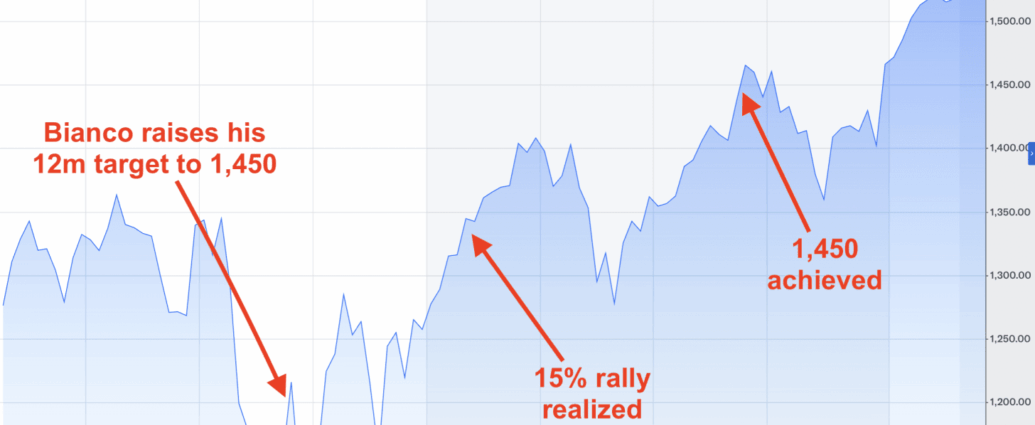
But on Sept. 11, when the S&P was at 1,154, then-BofA strategist David Bianco raised his 12-month forecast on the S&P to 1,450 from 1,400. This implied a very bullish 26% return. In his note, he also suggested the market could surge 15% from Sept. to January.
At the time, his calls were widely criticized as delusional optimism. I even wrote that he was the “gutsiest strategist in the world right now.” (Three days later, BofA and Bianco parted ways. He later joined Deutsche Bank as their top equity strategist. Today, he’s CIO at DWS.)
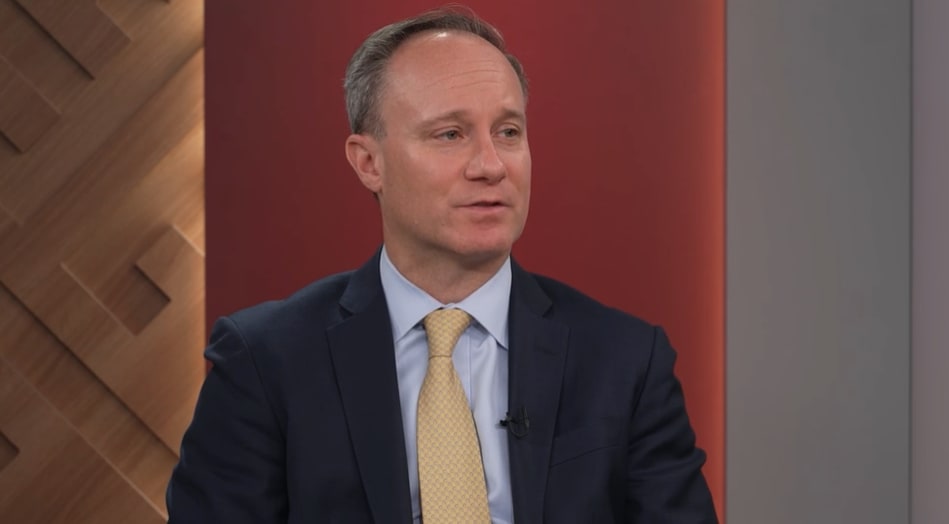
Well, Bianco nailed both calls.
The S&P surged 15% from September to the end of January. And it hit 1,450 on Sept. 13, 2012 — 12 months and two days after he set his 12-month target.
This post was originally published here

Judd Kessler on Getting Started in Academia
Trump to revoke protections for endangered species in Gulf of Mexico
President is convening so-called ‘God squad’ to override provisions of Endangered Species Act for ‘national security’
Donald Trump is dispatching a so-called “God squad” of top officials to revoke protections for endangered species in the Gulf of Mexico, purportedly to protect national security by expanding oil and gas industry operations.
If successful, the administration may kill off dozens of protected species – from Rice’s whales and whooping cranes to sea turtles.
This post was originally published here



Why the White Mountains Are the Ideal Outdoor Escape for Retirees Seeking Adventure and Peace
This post was originally published here

Quantum technology firms race to market as the industry sees ‘inflection point’
Quantum technology firms are braving turbulent markets to publicly list this year, as the nascent industry looks towards commercialization.
This post was originally published here

China Can’t Export Electricity, So It Did Something Smarter: The AI Token Revolution Explained
China’s electricity cannot cross its borders, but Chinese tokens are already sold globally. These two phenomena are essentially the same thing. Tokens are China’s true electricity export. I know this concept may not have fully clicked yet, but every sentence I share is backed by data.
China generates 10 trillion kilowatt-hours of electricity annually, surpassing the EU, Russia, India, and Japan combined. This is not because China lacks the desire to sell. It is physically impossible. Electricity cannot be stored or loaded onto ships. Extending high-voltage transmission lines across national borders involves negotiations that can drag on for a decade. It is like holding the world’s largest gold mine where the gold is too heavy to transport, leaving it piled up in your own backyard.
Tokens have shattered this bottleneck.
First, let us clarify what a token represents. When you converse with an AI like DeepSeek, every character and line of code it returns consists of tokens. On the surface, they appear as text or dialogue. Fundamentally, they are digitally encapsulated electrical energy. If you doubt this, consider the math. In the cost structure of AI inference, electricity plus compute depreciation together account for a staggering 80% to 90%. In other words, nearly 90 cents of every dollar spent on a token effectively pays for electricity.
A token is a compressed packet of electrical energy, representing the final product refined from China’s northwestern green electricity through GPU computation.
So how does this relate to exports? When a Silicon Valley developer sits at their computer and calls a Chinese large language model API, data instantly traverses undersea fiber-optic cables to reach computing centers in Ningxia or Inner Mongolia. Thousands of GPUs roar to life, consuming China’s cheapest northwestern green power to perform logical inference. They return the result to a screen in San Francisco within seconds. Throughout this entire process, not a drop of oil was burned, and not a single power cable crossed a border. The value of Chinese electricity has already been delivered across borders via tokens. This is dimensional warfare involving zero physical output, light-speed cross-border transfer, and near-zero loss.
The most powerful …

Stock Market Today: Futures Rise to Begin Holiday-Shortened Week After Major Indexes Decline for 5th Straight Week
This post was originally published here


The Market Just Priced In Something It Hasn’t Since 2023
Brent crude topped $110. The Nasdaq is officially in correction. And for the first time since 2023, futures markets are pricing in a rate hike.
THE RUNDOWN
WAR › The Dow fell 793 points on Friday and entered correction territory for the first time since early 2023, joining the Nasdaq, which is now down 10.9% from its October high. Brent crude topped $112 after Iran turned back two China-owned container vessels from the Strait of Hormuz, per the WSJ. President Trump extended his deadline for Iran to reopen the strait by 10 days to April 6, calling talks “very well” while Iran denied any direct negotiations. Meanwhile, the Pentagon is weighing 10,000 additional ground troops to give Trump more military options.
MARKETS › The S&P 500 posted its fifth straight weekly decline, falling 2.1% for the week and 6.8% for the month. If that holds, it’s the worst March since December 2022. Every single Magnificent 7 name is now down more than 10% from its highs. Citi cut its equity allocation to neutral, citing “most of our negative equity macro risk signals triggering.” Nineteen S&P 500 stocks hit new 52-week highs on Friday. The number hitting new lows was much longer.





Top 3 Utilities Stocks That Are Set To Fly In Q1
The most oversold stocks in the utilities sector presents an opportunity to buy into undervalued companies.
The RSI is a momentum indicator, which compares a stock’s strength on days when prices go up to its strength on days when prices go down. When compared to a stock’s price action, it can give traders a better sense of how a stock may perform in the short term. An asset is typically considered oversold when the RSI is below 30, according to Benzinga Pro.
Here’s the latest list of major oversold players in this sector, having an RSI near or below 30.
Renew Energy Global PLC (NASDAQ:RNW)
- On March 16, ReNew Green secured $95 million investment to expand clean energy projects in India. Sumant Sinha, Founder, Chairman & CEO, ReNew said, “The C&I industry will be central to India’s decarbonization journey, and with investors like LeapFrog, we can deepen our ability to provide reliable, cost‑competitive renewable power to leading businesses across sectors. This …
This post was originally published here
Mistral Raises $830 Million To Build Nvidia-Powered AI Data Center Near Paris: Report
French AI startup Mistral has reportedly secured $830 million in debt financing. The funds will be used to build a data center powered by Nvidia Corp. (NASDAQ:NVDA) chips.
The financing round was backed by a consortium of seven global banks, including BPIFrance, BNP Paribas, Crédit Agricole CIB, HSBC, La Banque Postale, MUFG, and Natixis CIB, reported Reuters.
Mistral’s new data center near Paris will support both AI model training and inference services, with operations expected to begin in Q2 this year.
The facility will run on 13,800 Nvidia GB300 GPUs, giving it a total capacity of 44 MW. Mistral plans to scale up to 200 MW of capacity across Europe by the end of 2027.
CEO Arthur …
This post was originally published here

4 Best Budget-Friendly Asian Destinations Offering Affordable Retirement Living
This post was originally published here



War against Iran to escalate as we approach six-week ‘TACO’ timetable, analysts say
Good morning. On Fortune‘s radar today:
- The S&P 500 is flirting with correction territory.
- EXCLUSIVE: Don’t hold your breath for artificial general intelligence.
- War in Iran is set to escalate.
- New jobs number incoming.
- Europeans increasingly decline to answer questions about their savings.
This story was originally featured on Fortune.com


Google’s 2029 Quantum Deadline Puts Bitcoin Developers On Hot Seat
Google (NASDAQ:GOOGL) (NASDAQ:GOOG) just set one of the most aggressive quantum security deadlines in tech history. Bitcoin developers are still debating whether one is needed. On March 25, Google announced a 2029 target for completing its migration to post-quantum cryptography (PQC). Years ahead of most government benchmarks. The NSA currently aims to transition national security systems by 2033, while NIST has proposed deprecating legacy RSA algorithms by 2035. Google’s move has reframed the conversation for every industry that relies on cryptography and few rely on it more heavily than Bitcoin.
The question worth asking: Is Bitcoin actually at risk or just early in a transition cycle that has years to play out?
What Google Actually Said
First, some clarification. Google’s 2029 deadline is not “Q-Day” — the hypothetical moment when a quantum computer powerful enough to break today’s encryption becomes operational. It’s a migration target. The company’s new timeline reflects migration needs in light of progress on quantum computing hardware development, quantum error correction, and quantum factoring resource estimates. The distinction matters. Google isn’t saying a cryptographically relevant quantum computer (CRQC) will exist by 2029. It’s saying organizations should finish preparing before one might.
“As a pioneer in both quantum and PQC, it’s our responsibility to lead by example and share an ambitious timeline,” wrote Heather Adkins, Google’s VP of Security Engineering, and Sophie Schmieg, Senior Staff Cryptography Engineer, in the company’s blog post.
“By doing this, we hope to provide the clarity and urgency needed to accelerate digital transitions not only for Google, but also across the industry.”
There are two distinct threat types at play. The first, “harvest now, decrypt later” (HNDL) is relevant today. Adversaries can collect encrypted data now and wait for quantum machines capable of cracking it. The second involves digital signatures, a future threat that requires upgrading cryptographic infrastructure before a CRQC arrives. Google has shifted its internal priorities, accordingly, placing increased focus on migrating authentication systems to post-quantum standards.
Why Quantum Computing Matters for Crypto
Classical computers solve mathematical problems sequentially. Quantum computers exploit principles of superposition and entanglement to process multiple solutions simultaneously, making certain problems exponentially easier to solve.
That’s where Bitcoin’s exposure begins. Shor’s algorithm, developed by mathematician Peter Shor in the 1990s, demonstrated that a sufficiently powerful quantum computer could factor large integers exponentially faster than any classical system. RSA encryption and the Elliptic Curve Digital Signature Algorithm (ECDSA) — the foundation of Bitcoin’s key security are both vulnerable to this attack vector.
SHA-256, the hashing algorithm used in Bitcoin’s proof-of-work, faces a different and lesser threat via Grover’s algorithm, which offers only a quadratic speedup. Most researchers consider Bitcoin’s hashing side manageable. The signature side is a different story.
Bitcoin’s Specific Vulnerability
Bitcoin’s security model relies on a simple …



Trump weighing all options on Iran’s Kharg island
The president said the U.S. could “take the oil in Iran” and that he was considering sending U.S. forces to seize Kharg Island’s oil terminal.
(Image credit: Majid Saeedi)

This post was originally published here
Rob Schneider calls on US to restore military draft
The actor and comedian, posting on X, said that ‘unlike in today’s universities’ the military would teach young people ‘how truly great their country is’
The actor and comedian Rob Schneider has urged the US to “restore the military draft for our nation’s young people” amid the ongoing war with Iran.
Posting on X, Schneider, 62, who has not served in the military, wrote:
This post was originally published here

Michael Burry, Bill Ackman Highlight ‘Rare,’ ‘Stupidly Cheap’ Opportunity In Fannie & Freddie: ‘Ignore The Bears’
Bill Ackman and Michael Burry are urging investors to look past broader market fears and point to a massive, asymmetric opportunity in Fannie Mae (OTC:FNMA) and Freddie Mac (OTC:FMCC).
‘Stupidly Cheap’ Bet
Pershing Square’s Ackman advised investors to “ignore the bears” and mainstream media amid ongoing global conflicts. Predicting a “large peace dividend” following what he termed a “one-sided war,” Ackman highlighted government-sponsored enterprises Fannie Mae and Freddie Mac as prime investment targets.
“Fannie and Freddie are …
This post was originally published here
College Republicans director made racist and sexist remarks on live streams
Review of Kai Schwemmer’s broadcasts undermines claim ‘process of growth’ had led him to abandon bigoted views
The newly appointed College Republicans of America political director Kai Schwemmer has made racist, antisemitic, homophobic and sexist statements while espousing extremist rightwing views on abortion, a Guardian review of livestream recordings can reveal.
Schwemmer said he would accept a world in which slavery was legal if abortion was criminalised, describes himself as “very much an anti universal suffrage guy” and accepts a supporter’s description of him as “our Mormon Nick Fuentes” – referring to the white nationalist influencer whose platform he streamed on for years.
This post was originally published here
Realtor.com launches ChatGPT app for home search planning
Realtor.com is joining Redfin and Zillow in launching its own app integration with OpenAI’s ChatGPT. The company announced the launch of the app on Tuesday.
According to Realtor.com, the app is a step forward in its strategy to infuse AI technology in the homebuying and renting experience for consumers.
“We built the Realtor.com app in ChatGPT to capture what we call the ‘pre-search’ phase — a window where curiosity turns into a plan. Whether someone is calculating affordability or weighing the pros and cons of different neighborhoods, we want to be their first point of contact,” Mickey Neuberger, Realtor.com’s chiefs consumer and marketing officer, told HousingWire. “By engaging them early with industry leading insights, we can seamlessly guide them to Realtor.com to immerse themselves in photos, videos and insights on the property or to connect with a local expert.”
He added that the integration is about being a bridge that connects curious consumers with the knowledgeable professionals that will serve them best.
Realtor.com clarified that all listings displayed in the ChatGPT app will remain fully secure and MLS data will be strictly prohibited from being used to train ChatGPT’s model.
“We worked directly with MLSs and associations to get the protections right. Our app in ChatGPT includes a strict prohibition on using MLS data to train AI models,” Neuberger said. “The app only shows a limited preview: a small set of images, price and key facts with clear MLS attribution and routes consumers back to Realtor.com for full listing details and to connect with an agent. We’re setting what we believe is a gold standard for responsible AI in real estate by keeping MLSs and professionals at the center, protecting their data and using AI to send them better‑informed, higher‑intent consumers.”
Users may engage conversationally within the app to establish their budget parameters based on their savings and income. Additionally, Realtor.com said the app supports users’ ability to compare and pinpoint specific geographic search areas based on things like commute times, lifestyle amenities or school zone boundaries.
“It’s exciting to be able to capture more people who are in this pre-search phase of their journey,” he said. “They’re just asking these initial questions around budget, neighborhood and lifestyle, and we can meet them where they are and transition them to Realtor.com to connect with an agent.”
Neuberger is especially excited by how Realtor.com’s app integration will impact first-time homebuyers, who are often the most overwhelmed during the pre-search phase of their homebuying journey.
“The Realtor.com app in ChatGPT is designed to be a resource that helps turn that anxiety into confidence. It helps them demystify their budget through affordability calculators or explore neighborhoods based on commute times and school boundaries. We’re helping to handle the heavy lifting of the early discovery phase,” he said. “Once they move from ‘what if’ to ‘let’s go,’ they seamlessly transition to Realtor.com where they can see the full picture and, most importantly, find the right agent to guide them through their first closing.”
Zillow was the first real estate firm to launch an app with ChatGPT, debuting its app in early October 2025, followed by Redfin in early February 2026. In addition, Google began piloting a program powered by HouseCanary’s listing portal in certain markets late last year.
Critics of these integrations have argued that listing portals are violating their IDX licensing agreements, as they have said that the agreements only allow portals to display MLS data on their websites and mobile apps, but not publish or transmit MLS data to other domains.










Credit card annual fees are soaring past $800. Here’s why people keep paying them—even as perks are harder to come by
In March, Robinhood announced its Platinum credit card, whose perks include generous travel rewards, $250 in annual DoorDash credits, and a free membership to Amazon One Medical. The name of the new card, which has a not-so-low annual fee of $695, is both an homage and a flex: It echoes the card brand made famous by American Express, though Robinhood points out its version is the only one to be “plated in 99.9% pure platinum.”
The offering is the latest splashy option in the fast-expanding world of premium credit cards that are branded not as simple payment tools, but as lifestyles. In this world, “members” enjoy access to concerts and upscale gym memberships, and the opportunity to load up on free goodies from retailers like Lululemon and Apple.
For the well-disciplined, the high-fee cards are a good value thanks to a combination of perks plus rewards for spending that can be cashed in for a host of travel offerings. Even better, all of this comes tax-free, thanks to a legal quirk that treats credit card swag as “redemptions” rather than income.
But not everyone is pleased. In recent months Congress and the White House, mindful of rising credit card debt and growing merchant fees, have renewed a push to pass the Credit Card Competition Act (CCCA), which could make it much harder for card issuers to offer all those perks. That raises a problem for points hunters: Is the go-go era of rewards nearing its end?
Jamie Dimon’s bet pays off
“I wish it was a $400 million loss,” JPMorgan Chase CEO Jamie Dimon famously declared in 2017. He was responding to investor complaints over a $200 million earnings charge the bank had incurred from huge sign-up bonuses tied to its Chase Sapphire Reserve card. Dimon’s comments reflected a bet that the new premium card would, over time, become a big moneymaker.
The calculation proved correct: Today the card is incredibly popular and has helped the bank attract a generation of premium customers to its other services. Indeed, that’s one of the main rationales for banks issuing these lifestyle cards. At the same time, however, JPMorgan has gradually raised its annual fee from $450 to $795, while reducing the redemption value of certain rewards points. American Express, meanwhile, has raised the annual fee for its flagship Platinum card to $895. Changes like these have led some consumers to question whether the potential to capture loot is worth the upfront cost.
Moshe Orenbuch, a managing director at TD Securities, says that JPMorgan Chase and others would argue the card offerings are more generous than ever—they’re just distributed differently. Many top cards, in addition to offering rewards for spending, now provide credits—usually of $5 to $20 a month—for services like Lyft, DoorDash, and Disney+ that can stack up to thousands of dollars a year in value.
“They are trying to create an ecosystem,” notes Sanjay Sakhrani, a card industry expert at KBW. “Ultimately they want to make this not having a card but having an experience.” And for some members of the card issuers’ web of merchant partners, tie-ups with credit issuers translate into big money. Orenbuch notes that Delta Air Lines alone has collected as much as $10 billion from Amex in recent years for supplying seats on its planes to rewards customers.
23.66%
Average annual interest rate on a travel rewards credit card, 3/16/26
617 million
Credit card accounts in the U.S. in 2024 (latest data available)
Sources: Lendingtree, Wallethub
Chase’s and Amex’s premium cards have been doing such brisk business that new challengers are leaping into the category. In addition to Robinhood’s Platinum card, there is Citi’s $695-per-year Strata Elite, whose debut last year was marred by an application-process bungle that saw the bank freeze thousands of accounts—but which has proved popular nonetheless.
The surge in usage, however, has come with growing pains—most notably at airport lounges. At venues like Amex’s Centurion Lounge and Chase’s Sapphire Lounge, cardholders can enjoy plush seats, chef-made nibbles, and free Chardonnay. But as the cards get more popular, road warriors are increasingly encountering crowds, long queues, and wait times.
The downsides of fat rewards
The glamorous branding of premium cards can also lead some consumers to make foolish mistakes by running up high-interest credit card debt. Sakhrani notes that some premium card customers quickly find themselves carrying monthly balances with interest rates of over 20%—an obligation that can quickly dwarf the value of any rewards they earn.
“Consumer credit is not intuitive. Plenty of people who are otherwise smart can overestimate their own ability to manage credit cards,” says Beverly Harzog, a former CPA and personal finance author who has written about her own experience with card debt. She notes that while some are assiduous about amassing a given card’s full rewards value, many will come to the very reasonable conclusion they can’t risk the costs. In these cases, she suggests people choose a slightly less premium card like the Capital One Venture Rewards card, which can still offer valuable perks but for an annual fee closer to $100. The frugal-minded, meanwhile, may prefer a no-fee, cash-back card like the Citi Double Cash card or the Apple Card.
Merchants, meanwhile, are frustrated by one feature of premium cards: They force businesses to pay higher swipe fees compared with plain-vanilla ones. The CCCA, backed by many of these businesses, would lower the cost of these transactions. President Trump expressed support for the bill early this year, calling for an end to the “out of control Swipe Fee ripoff” and a temporary cap of 10% on monthly interest.
If any of these proposals come to pass, analysts say, banks would be forced to dramatically scale back rewards and turn their “lifestyle” offerings back into ho-hum instruments of credit. For now, though, that appears unlikely. The powerful bank lobby has a growing list of allies—including airlines and hotel chains—that will likely push to preserve the status quo. The good times should continue to roll, letting disciplined consumers pad their incomes with free stuff for the foreseeable future.
This article appears in the April/May 2026 issue of Fortune with the headline “Credit card rewards are more lavish than ever—but you have to work harder to cash in.”
This story was originally featured on Fortune.com

Philanthropy in science has little oversight. Jeffrey Epstein exploited that
A large share of science funding comes through philanthropy, with little legal or public scrutiny. This lack of oversight allowed Jeffrey Epstein to cultivate scientists and launder his reputation.
(Image credit: Hanna Barczyk for NPR)

This post was originally published here



Exploring The Competitive Space: Micron Technology Versus Industry Peers In Semiconductors & Semiconductor Equipment
In today’s rapidly evolving and fiercely competitive business landscape, it is crucial for investors and industry analysts to conduct comprehensive company evaluations. In this article, we will undertake an in-depth industry comparison, assessing Micron Technology (NASDAQ:MU) alongside its primary competitors in the Semiconductors & Semiconductor Equipment industry. By meticulously examining crucial financial indicators, market positioning, and growth potential, we aim to provide valuable insights to investors and shed light on company’s performance within the industry.
Micron Technology Background
Micron is one of the largest semiconductor companies in the world, specializing in memory and storage chips. Its primary revenue stream comes from dynamic random access memory, or DRAM, and it also has minority exposure to not-and or NAND, flash chips. Micron serves a global customer base, selling chips into data centers, mobile phones, consumer electronics, and industrial and automotive applications. The firm is vertically integrated.
| Company | P/E | P/B | P/S | ROE | EBITDA (in billions) | Gross Profit (in billions) | Revenue Growth |
|---|---|---|---|---|---|---|---|
| Micron Technology Inc | 16.86 | 5.56 | 6.97 | 21.0% | $18.48 | $17.75 | 196.29% |
| NVIDIA Corp | 34.19 | 25.88 | 19.02 | 31.11% | $51.28 | $51.09 | 73.21% |
| Broadcom Inc | 58.61 | 17.82 | 21.43 | 9.12% | $11.15 | $13.16 | 29.47% |
| Advanced Micro Devices Inc | 77.39 | 5.23 | 9.54 | 2.44% | $2.86 | $5.58 | 34.11% |
| Texas Instruments Inc | 34.92 | 10.65 | 9.83 | 7.03% | $2.07 | $2.47 | 10.38% |
| Analog Devices Inc | 56.20 | 4.44 | 12.94 | 2.46% | $1.52 | $2.04 | 30.42% |
| Qualcomm Inc | 25.63 | 5.88 | 3.10 | 13.57% | $4.11 | $6.68 | 5.0% |
| Marvell Technology Inc | 30.91 | 5.80 | 10.07 | 2.79% | $0.75 | $1.15 | 22.08% |
| Monolithic Power Systems Inc | 81.88 | 14.65 | 18.23 | 4.95% | $0.21 | $0.41 | 20.83% |
| NXP Semiconductors NV | 24.11 | 4.82 | 3.97 | 4.53% | $0.98 | $1.81 | 7.2% |
| GLOBALFOUNDRIES Inc | 27.01 | 1.98 | 3.53 | 1.68% | $0.73 | $0.51 | 0.0% |
| ON Semiconductor Corp | 201.21 | 3 | 4.01 | 2.33% | $0.45 | $0.55 | -11.17% |
| First Solar Inc | 13.39 | 2.14 | 3.92 | 5.62% | $0.7 | $0.67 | 11.15% |
| Tower Semiconductor Ltd | 88.62 | 6.62 | 12.47 | 2.78% | $0.13 | $0.09 | 11.26% |
| Astera Labs Inc | 92.19 | 14.04 | 23.69 | 3.41% | $0.07 | $0.2 | 91.77% |
| MACOM Technology Solutions Holdings Inc | 102.01 | 12.50 | 16.56 | 3.64% | $0.07 | $0.15 | 24.52% |
| Credo Technology Group Holding Ltd | 52.33 | 9.50 | 16.56 | 10.03% | $0.16 | $0.28 | 201.49% |
| Lattice Semiconductor Corp | 4518.50 | 17.32 | 23.87 | -1.08% | $0.01 | $0.1 | 24.16% |
| Rambus Inc | 42.53 | 7.11 | 13.85 | 4.81% | $0.09 | $0.15 | 18.09% |
| Average | 308.98 | 9.41 | 12.59 | 6.18% | $4.3 | $4.84 | 33.55% |
This post was originally published here
In-Depth Analysis: Meta Platforms Versus Competitors In Interactive Media & Services Industry
In today’s rapidly changing and fiercely competitive business landscape, it is vital for investors and industry enthusiasts to carefully evaluate companies. In this article, we will perform a comprehensive industry comparison, evaluating Meta Platforms (NASDAQ:META) against its key competitors in the Interactive Media & Services industry. By analyzing important financial metrics, market position, and growth prospects, we aim to provide valuable insights for investors and shed light on company’s performance within the industry.
Meta Platforms Background
Meta is the largest social media company in the world, boasting close to 4 billion monthly active users worldwide. The firm’s “Family of Apps,” its core business, consists of Facebook, Instagram, Messenger, and WhatsApp. End users can leverage these applications for a variety of different purposes, from keeping in touch with friends to following celebrities and running digital businesses for free. Meta packages customer data, gleaned from its application ecosystem and sells ads to digital advertisers. While the firm has been investing heavily in its Reality Labs business, it remains a very small part of Meta’s overall sales.
| Company | P/E | P/B | P/S | ROE | EBITDA (in billions) | Gross Profit (in billions) | Revenue Growth |
|---|---|---|---|---|---|---|---|
| Meta Platforms Inc | 22.38 | 6.12 | 6.73 | 11.07% | $31.22 | $48.99 | 23.78% |
| Alphabet Inc | 25.32 | 7.97 | 8.31 | 8.59% | $45.45 | $68.06 | 18.0% |
| Reddit Inc | 46.50 | 7.95 | 11.18 | 9.08% | $0.24 | $0.67 | 69.65% |
| Pinterest Inc | 29.11 | 2.40 | 2.89 | 5.79% | $0.31 | $1.09 | 14.32% |
| CarGurus Inc | 17.87 | 8.91 | 3.88 | 13.29% | $0.1 | $0.22 | 58.17% |
| Grindr Inc | 28.93 | 49 | 5.52 | 34.35% | $0.03 | $0.09 | 29.04% |
| ZoomInfo Technologies Inc | 15.07 | 1.13 | 1.48 | 2.28% | $0.07 | $0.27 | 3.24% |
| Ziff Davis Inc | 36.21 | 0.90 | 1.18 | 0.02% | $0.08 | $0.35 | -1.48% |
| Yelp Inc | 10.88 | 2.04 | 1.08 | 5.23% | $0.06 | $0.32 | -0.54% |
| Tripadvisor Inc | 32.63 | 1.80 | 0.70 | -5.62% | $-0.0 | $0.38 | 0.0% |
| Taboola.com Ltd | 23.15 | 0.92 | 0.50 | 5.51% | $0.06 | $0.18 | 6.37% |
| Average | 26.57 | 8.3 | 3.67 | 7.85% | $4.64 | $7.16 | 19.68% |
This post was originally published here

Inquiry Into Tesla’s Competitor Dynamics In Automobiles Industry
In today’s fast-paced and competitive business landscape, it is essential for investors and industry enthusiasts to thoroughly analyze companies before making investment decisions. In this article, we will conduct a comprehensive industry comparison, evaluating Tesla (NASDAQ:TSLA) against its key competitors in the Automobiles industry. By examining key financial metrics, market position, and growth prospects, we aim to provide valuable insights for investors and shed light on company’s performance within the industry.
Tesla Background
Tesla is a vertically integrated battery electric vehicle automaker and developer of real world artificial intelligence software, which includes autonomous driving and humanoid robots. The company has multiple vehicles in its fleet, which include luxury and midsize sedans, crossover SUVs, a light truck, and a semi truck. Tesla also plans to begin selling a sports car and offer a robotaxi service. Global deliveries in 2025 were nearly 1.64 million vehicles. The company sells batteries for stationary storage for residential and commercial properties including utilities and solar panels and solar roofs for energy generation. Tesla also owns a fast-charging network and an auto insurance business.
| Company | P/E | P/B | P/S | ROE | EBITDA (in billions) | Gross Profit (in billions) | Revenue Growth |
|---|---|---|---|---|---|---|---|
| Tesla Inc | 335.03 | 16.53 | 13.46 | 1.04% | $2.91 | $5.01 | -3.14% |
| General Motors Co | 22.32 | 1.08 | 0.38 | -5.22% | $0.42 | $-1.12 | -5.06% |
| Ferrari NV | 30.64 | 12.41 | 6.85 | 9.89% | $0.69 | $0.93 | 3.79% |
| Thor Industries Inc | 14.05 | 0.96 | 0.42 | 0.41% | $0.1 | $0.25 | 5.34% |
| Winnebago Industries Inc | 21.41 | 0.72 | 0.31 | 0.39% | $0.03 | $0.09 | 6.0% |
| Workhorse Group Inc | 0.04 | 0.75 | 0.18 | -28.77% | $-0.01 | $-0.01 | -4.97% |
| Average | 17.69 | 3.18 | 1.63 | -4.66% | $0.25 | $0.03 | 1.02% |
This post was originally published here

Performance Comparison: Microsoft And Competitors In Software Industry
In the fast-paced and cutthroat world of business, conducting thorough company analysis is essential for investors and industry experts. In this article, we will undertake a comprehensive industry comparison, evaluating Microsoft (NASDAQ:MSFT) in comparison to its major competitors within the Software industry. By analyzing crucial financial metrics, market position, and growth potential, our objective is to provide valuable insights for investors and offer a deeper understanding of company’s performance in the industry.
Microsoft Background
Microsoft develops and licenses consumer and enterprise software. It is known for its Windows operating systems and Office productivity suite. The company is organized into three equally sized broad segments: productivity and business processes (legacy Microsoft Office, cloud-based Office 365, Exchange, SharePoint, Skype, LinkedIn, Dynamics), intelligence cloud (infrastructure- and platform-as-a-service offerings Azure, Windows Server OS, SQL Server), and more personal computing (Windows Client, Xbox, Bing search, display advertising, and Surface laptops, tablets, and desktops).
| Company | P/E | P/B | P/S | ROE | EBITDA (in billions) | Gross Profit (in billions) | Revenue Growth |
|---|---|---|---|---|---|---|---|
| Microsoft Corp | 22.33 | 6.78 | 8.72 | 10.2% | $58.18 | $55.3 | 16.72% |
| Oracle Corp | 25.07 | 11.98 | 6.33 | 11.65% | $8.16 | $11.1 | 21.66% |
| Palo Alto Networks Inc | 81.68 | 12.69 | 10.57 | 4.78% | $0.64 | $1.91 | 14.93% |
| ServiceNow Inc | 59.53 | 8.02 | 7.84 | 3.31% | $0.76 | $2.73 | 20.66% |
| Fortinet Inc | 32.31 | 46.76 | 8.79 | 51.3% | $0.69 | $1.52 | 14.75% |
| Nebius Group NV | 879.63 | 5.53 | 48.15 | -5.3% | $0.01 | $0.1 | 55.85% |
| Check Point Software Technologies Ltd | 14.43 | 5.17 | 5.60 | 10.21% | $0.22 | $0.59 | 9.95% |
| Gen Digital Inc | 18.91 | 4.76 | 2.42 | 8.02% | $0.57 | $0.97 | 25.76% |
| UiPath Inc | 20.56 | 2.69 | 3.62 | 5.21% | $0.09 | $0.41 | 13.56% |
| Dolby Laboratories Inc | 23.49 | 2.14 | 4.22 | 2.04% | $0.1 | $0.3 | -2.88% |
| Monday.Com Ltd | 29.67 | 2.73 | 2.86 | 6.1% | $0.01 | $0.3 | 24.59% |
| CommVault Systems Inc | 39.62 | 15.44 | 2.99 | 8.33% | $0.03 | $0.25 | 19.5% |
| Qualys Inc | 15.74 | 5.44 | 4.67 | 9.75% | $0.06 | $0.15 | 10.11% |
| Teradata Corp | 18.75 | 10.40 | 1.47 | 16.48% | $0.08 | $0.26 | 2.93% |
| BlackBerry Ltd | 79 | 2.52 | 3.53 | 1.87% | $0.02 | $0.11 | -1.25% |
| Average | 95.6 | 9.73 | 8.08 | 9.55% | $0.82 | $1.48 | 16.44% |
This post was originally published here

Comparative Study: NVIDIA And Industry Competitors In Semiconductors & Semiconductor Equipment Industry
In today’s fast-paced and highly competitive business world, it is crucial for investors and industry followers to conduct comprehensive company evaluations. In this article, we will delve into an extensive industry comparison, evaluating NVIDIA (NASDAQ:NVDA) in relation to its major competitors in the Semiconductors & Semiconductor Equipment industry. By closely examining key financial metrics, market standing, and growth prospects, our objective is to provide valuable insights and highlight company’s performance in the industry.
NVIDIA Background
Nvidia is a leading developer of graphics processing units. Traditionally, GPUs were used to enhance the experience on computing platforms, most notably in gaming applications on PCs. GPU use cases have since emerged as important semiconductors used in artificial intelligence to run large language models. Nvidia not only offers AI GPUs, but also a software platform, Cuda, used for AI model development and training. Nvidia is also expanding its data center networking solutions, helping to tie GPUs together to handle complex workloads.
| Company | P/E | P/B | P/S | ROE | EBITDA (in billions) | Gross Profit (in billions) | Revenue Growth |
|---|---|---|---|---|---|---|---|
| NVIDIA Corp | 34.19 | 25.88 | 19.02 | 31.11% | $51.28 | $51.09 | 73.21% |
| Broadcom Inc | 58.61 | 17.82 | 21.43 | 9.12% | $11.15 | $13.16 | 29.47% |
| Micron Technology Inc | 16.86 | 5.56 | 6.97 | 21.0% | $18.48 | $17.75 | 196.29% |
| Advanced Micro Devices Inc | 77.39 | 5.23 | 9.54 | 2.44% | $2.86 | $5.58 | 34.11% |
| Texas Instruments Inc | 34.92 | 10.65 | 9.83 | 7.03% | $2.07 | $2.47 | 10.38% |
| Analog Devices Inc | 56.20 | 4.44 | 12.94 | 2.46% | $1.52 | $2.04 | 30.42% |
| Qualcomm Inc | 25.63 | 5.88 | 3.10 | 13.57% | $4.11 | $6.68 | 5.0% |
| Marvell Technology Inc | 30.91 | 5.80 | 10.07 | 2.79% | $0.75 | $1.15 | 22.08% |
| Monolithic Power Systems Inc | 81.88 | 14.65 | 18.23 | 4.95% | $0.21 | $0.41 | 20.83% |
| NXP Semiconductors NV | 24.11 | 4.82 | 3.97 | 4.53% | $0.98 | $1.81 | 7.2% |
| GLOBALFOUNDRIES Inc | 27.01 | 1.98 | 3.53 | 1.68% | $0.73 | $0.51 | 0.0% |
| ON Semiconductor Corp | 201.21 | 3 | 4.01 | 2.33% | $0.45 | $0.55 | -11.17% |
| First Solar Inc | 13.39 | 2.14 | 3.92 | 5.62% | $0.7 | $0.67 | 11.15% |
| Tower Semiconductor Ltd | 88.62 | 6.62 | 12.47 | 2.78% | $0.13 | $0.09 | 11.26% |
| Astera Labs Inc | 92.19 | 14.04 | 23.69 | 3.41% | $0.07 | $0.2 | 91.77% |
| MACOM Technology Solutions Holdings Inc | 102.01 | 12.50 | 16.56 | 3.64% | $0.07 | $0.15 | 24.52% |
| Credo Technology Group Holding Ltd | 52.33 | 9.50 | 16.56 | 10.03% | $0.16 | $0.28 | 201.49% |
| Lattice Semiconductor Corp | 4518.50 | 17.32 | 23.87 | -1.08% | $0.01 | $0.1 | 24.16% |
| Rambus Inc | 42.53 | 7.11 | 13.85 | 4.81% | $0.09 | $0.15 | 18.09% |
| Average | 308.02 | 8.28 | 11.92 | 5.62% | $2.47 | $2.99 | 40.39% |
This post was originally published here


Sexual assault survivor calls failure of Travelodge boss to meet MPs ‘shocking’
Woman assaulted after man was given key card to her room criticises CEO Jo Boydell over cancelled meeting
A woman who was sexually assaulted by a man who was handed a key card to her room at a Travelodge has said she was shocked to learn the hotel chain’s boss cancelled a meeting with a group of MPs seeking to discuss concerns about the case.
More than 20 MPs had demanded the meeting this month to discuss the matter – including details of the chain’s security processes and procedures that led to it offering the victim an “insulting” £30 refund after the incident.
This post was originally published here
Russia welcomes arrival of oil tanker in Cuba after Trump softens approach to U.S. blockade
A Russian oil tanker carrying a humanitarian shipment of 100,000 tons of crude oil reportedly arrived in Cuba on Monday.
This post was originally published here
Gold Ticks Higher Ahead Of Powell’s Speech
(RTTNews) – Gold reversed earlier losses to trade above $4,500 an ounce on Monday amid mixed signals from Iran and the United States on the status of peace talks.
This post was originally published here
Mounjaro maker wants NHS drug price rises in return for more investment in UK
US firm Eli Lilly, which is also pushing for end to rebate scheme, optimistic about talks with ministers
The US pharmaceutical group behind the Mounjaro weight-loss drug has said it will unpause its UK investments if ministers agree to regularly increase NHS drug prices and end a rebate scheme.
Patrik Jonsson, the president of Eli Lilly’s international business, said the company was in talks with UK ministers and that he was optimistic about reaching an agreement this summer for Britain to pay more for its medicines.
This post was originally published here

Weather tracker: Thunderstorms drench UAE and Saudi Arabia
Abnormally strong jet stream triggers deluge in Middle East, while north Africa braces for 60-80mph gusts
An unusual weather pattern unleashed severe thunderstorms across parts of the Middle East last week, battering countries including the United Arab Emirates and Saudi Arabia. The Arabian peninsula – typically dominated by arid desert climates – received up to 150mm of rain in just a few days.
The deluge was caused by an abnormally strong jet stream, which helped form a deep area of low pressure to develop north of Saudi Arabia. This, in turn, drew moist tropical air from the Indian Ocean and triggered intense storms.
This post was originally published here



How Working in America Became So Joyless


Average Investment Portfolio Size for People in Their 30s in 2026—How Do You Stack Up?
This post was originally published here

Why PMGC Holdings Shares Are Trading Higher By Over 100%; Here Are 20 Stocks Moving Premarket
Shares of PMGC Holdings Inc. (NASDAQ:ELAB) rose sharply in pre-market trading after the company announced its subsidiary, NorthStrive Biosciences, signed a licensing agreement amendment with MOA Life that updates the timing and key development milestones for EL-32 and EL-22 human clinical development program.
PMGC Holdings shares jumped 100.6% to $3.35 in pre-market trading.
Here are some other stocks moving in pre-market trading.
Gainers
- Iterum Therapeutics plc (NASDAQ:ITRM) gained 172.4% to $0.0970 in pre-market trading after dipping 80% on Friday.
- Zeta Network Group (NASDAQ:ZNB) gained 33.2% to $3.05 in pre-market trading.
- Visionary Holdings Inc (NASDAQ:GV) rose 33.2% to $0.27 in pre-market trading after declining 9% on Friday.
- Astrotech Corporation (NASDAQ:ASTC) gained 24.9% to $2.8292 in pre-market trading after rising 9% on Friday.
- Greenland Energy Company (NASDAQ:GLND) rose 20.8% to $9.97 in pre-market trading. Greenland Energy on Friday secured a strategic agreement for advanced rig capacity to support the onshore oil exploration program in Greenland.
- Lantern …
This post was originally published here

Tom Lee Predicted Crypto Winter Will End By April—This Analyst Says ‘April 2027 More Likely’
Cryptocurrency analyst Willy Woo said on Saturday that the bear market may drag on until April 2027, dismissing Wall Street Strategist Tom Lee‘s expectation of a recovery by April of this year.
Woo Trashes Lee’s Forecast
Lee, who also chairs BitMine Immersion Technologies Inc. (NYSE:BMNR), said in mid-February that crypto winter could end by April at the latest.
“I think it touched it to the penny. He thinks we just have to undercut it once more, and that’s the low. meaning we’re really close to the end,” Lee had said.
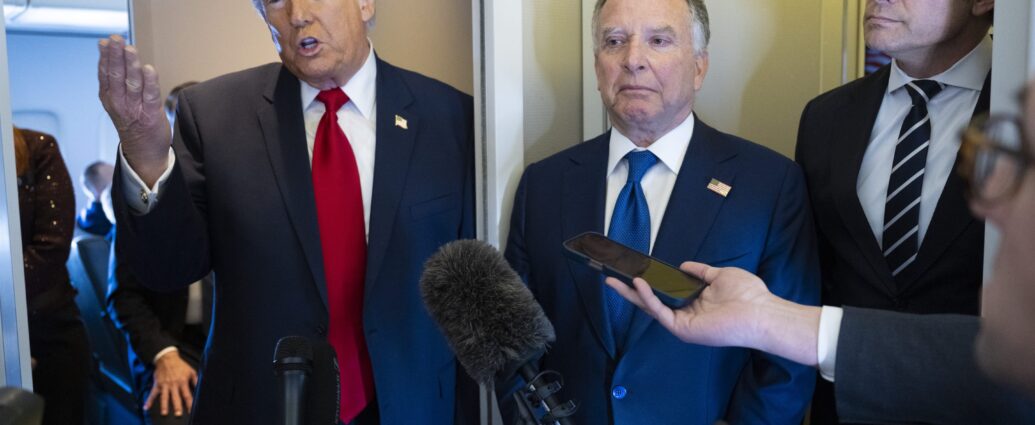
As the Iran war drags on, ‘shell-shocked’ CEOs may soon break their silence on Trump
- In today’s CEO Daily: Diane Brady reports on CEOs’ growing frustration with the Trump administration.
- The big leadership story: A yawning workplace ‘design gap’ could stall productivity gains.
- The markets: Mixed globally as the Iran war enters its fifth week
- Plus: All the news and watercooler chat from Fortune.
Good morning. Will a war-induced recession inspire CEOs to speak out against the Trump administration? Economists like Moodys’ Mark Zandi say odds of a recession are now high. We know that most U.S. CEOs disapprove of Trump’s leadership, from his administration’s policies around tariffs and immigration to its approach to science, free speech and rule of law.
While business leaders might not have wanted the U.S. to start a war against Iran right now, they’re divided about when to end it. At the annual CERAWeek gathering in Houston last week, energy leaders from Dow CEO Jim Fitterling to Chevron’s Mike Wirth warned of dire consequences if the Strait of Hormuz isn’t opened to shipping as soon as possible. But JPMorgan’s Jamie Dimon said the war could mean a “better chance” of permanent peace in the Middle East, while BlackRock CEO Larry Fink predicted the war could result in prosperity or a global recession—but not much in-between.
What’s clear is that no one is winning the war at the moment. Oil prices are up more than 50%, forcing Asia to hunt for alternatives. Russia isn’t gaining much, thanks to its war with Ukraine. It’s costing U.S. taxpayers about $1 billion a day, and that doesn’t include the 10,000 jobs lost from the economic impact. The people who’ve paid the steepest price, of course, are the 3,000+ who’ve been killed and more than 4.2 million displaced, according to U.N. estimates.
At some point, there may be too much to ignore. I didn’t see much evidence of high-profile business leaders among the estimated 8 million people attending the 3,300 anti-Trump No Kings protests on Saturday. But I do see signs of mounting concerns: Chubb CEO Evan Greenberg told me last week that “democracy is so fragile,” Citadel’s Ken Griffin revealed that he and his CEO peers find the current government’s favoritism “extremely distasteful,” and more than 60 CEOs, including leaders of 3M, Best Buy, Cargill, General Mills, Land O’Lakes, Target, Xcel Energy and UnitedHealth Group signed that letter of protest against ICE actions in Minnesota. One CEO confessed to me recently that they are “shell-shocked” by the administration’s policies but feel a fiduciary duty to not put their company in harm’s way by speaking up. If the war starts to seriously impact stock prices and profits, that could change.
Contact CEO Daily via Diane Brady at diane.brady@fortune.com
This story was originally featured on Fortune.com

Oil Extends Surge Above $115 As Iran War Enters Second Month
(RTTNews) – Oil prices extended their surge to trade above $115 a barrel on Monday as the Middle East war entered its fifth week with no signs of slowing down.
This post was originally published here

Tinci Materials’ Hong Kong IPO Likely To Raise Over $1B
A listing by the world’s leading maker of electrolyte materials used in lithium batteries is likely to raise more than $1 billion
image credit: Bamboo Works
Key Takeaways:
- Tinci Materials has filed to list in Hong Kong, reporting its business rebounded last year after sharp revenue and profit declines in 2024
- The leading maker of electrolytes used in lithium-ion batteries is building new production bases outside China and diversifying into sodium ion battery materials
One thing that stands out about Guangzhou Tinci Materials Technology Co. Ltd. is the ages of its top managers. The average of the top three executives at the lithium battery materials maker is nearly 60 years old – something you don’t see too often at Chinese tech companies in emerging areas. That depth of experience is probably a factor helping Tinci to stay at the head of the pack of companies producing electrolytes used in lithium batteries that power not only portable devices like smartphones, but also many of the world’s new energy vehicles (NEVs).
But the track record for Tinci, which last week filed to list its shares in Hong Kong, also reflects the pain the NEV industry, including makers of batteries and their components, has felt over the last two years. The emergence of new technologies like sodium ion batteries is also providing a challenge for the company as it plays in a field where products are constantly changing.
Tinci isn’t sitting idly by while all that is happening, and is developing products for emerging new areas. Still, the rapid pace of change shows that it could easily be overtaken by other companies that develop better products, especially in the current climate where Western governments are trying to seize back some of the momentum from Chinese companies that have come to dominate the new energy sector.
All that said, Tinci looks pretty well positioned, at least for now. Unlike many others in the new energy sector, the company has managed to remain comfortably profitable over the last three years, though its profit fell sharply in 2024 at the height of a price war caused by oversupply. It began to recover last year, with its profits bouncing back.
The company is also trying to build up businesses in new areas, including manufacturing of chemicals used in daily …
This post was originally published here


Trump administration cuts turned rural towns into sitting ducks for disasters
The Trump administration has delayed billions of dollars for projects to protect Americans from floods, wildfires and hurricanes. Local leaders are increasingly anxious.
(Image credit: Mel Evans)

This post was originally published here




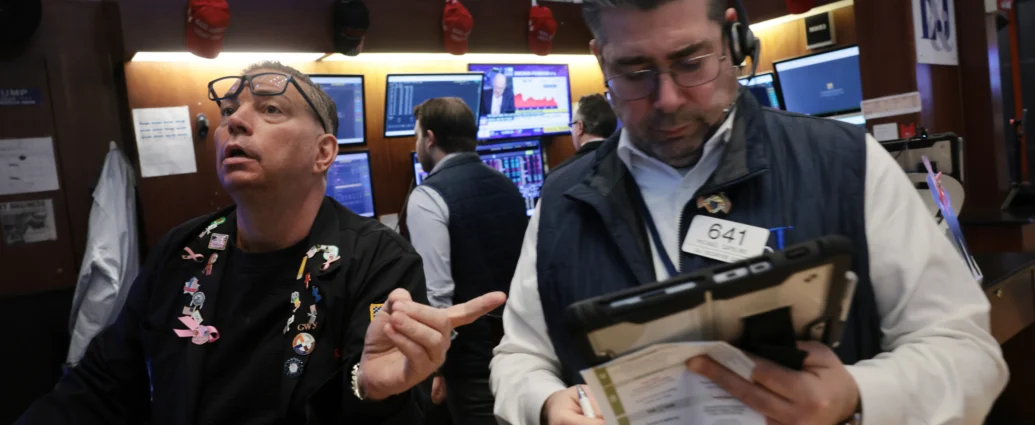




What Is the Average Credit Score for People in Their 40s and 50s? How Do You Stack Up?
This post was originally published here

How a SCOTUS decision on birthright citizenship could impact education access
All children, regardless of immigration status, have the right to a free K-12 public education. But without birthright citizenship, access to schools and colleges could get complicated.

This post was originally published here

China’s chatbot industry is fiercely competing for customers. Cue the freebies
Chinese AI companies are focused less on being cutting edge and more on attracting customers. That means holiday promotions, and making chatbots useful in everyday life.
(Image credit: ADEK BERRY/AFP via Getty Images)

This post was originally published here

How much protein do you need? Here’s how to personalize your optimal intake
The Dietary Guidelines released this year recommend higher levels of this essential nutrient. But protein needs are personal. Here’s how to assess yours.
(Image credit: a_namenko/iStockphoto)

This post was originally published here

As birthright citizenship goes to Supreme Court, here’s how Americans feel about it
The Supreme Court will hear arguments Wednesday on whether all children born in the United States can continue to automatically receive citizenship.
(Image credit: Jim Watson)

This post was originally published here

Trump appears to relax de facto oil blockade on Cuba as Russian oil tanker arrives
US president says he has ‘no problem’ with countries sending some oil to Cuba, in potential lifeline to island nation
Donald Trump has signalled a new flexibility in allowing oil into Cuba, hours before a Russian oil tanker under US sanctions arrived in the Caribbean island amid a de facto oil blockade imposed by Washington.
Speaking to reporters aboard Air Force One the president said: “If a country wants to send some oil into Cuba, right now, I have no problem whether it’s Russia or not.”
This post was originally published here

Evaluating the P/E Ratio: A Reliable Metric for Investors?
This post was originally published here

Evolution of Business Ethics: Key Changes Over Time
This post was originally published here
Murder trial opens over alleged masonic lodge crime network in Paris
Twenty-two defendants, including intelligence agents and police, accused of committing crimes on behalf of Freemason mafia
Twenty-two people are to stand trial in France from Monday on charges of murder and other serious crimes centred on a masonic lodge accused of running hit squads.
Seven defendants – including former intelligence agents, soldiers and businessmen – face possible life sentences. Prosecutors allege the group carried out murder, attempted murder, aggravated assault and criminal conspiracy on behalf of a mafia network inside the Athanor lodge in the Paris suburb of Puteaux.
This post was originally published here

Dave Ramsey Warns Homebuyers As Mortgage Rates Rise: Mistakes Could Cost ‘Tens Of Thousands’
Mortgage rates are rising again, and Dave Ramsey is warning Americans that navigating today’s housing market without professional help could be a costly mistake.
The 30-year fixed-rate mortgage averaged 6.38% for the week ending March 26, according to Freddie Mac (OTC:FMCC), up from 6.22% the prior week. Rates climbed further to around 6.64% on March 27, marking an eight-month high.
Freddie Mac chief economist Sam Khater said purchase and refinance activity has improved from a year ago, though volatility in borrowing costs continues to pressure affordability.
Rising Rates Pressure Housing Market
Higher rates are being driven by broader macro conditions, including rising Treasury yields and renewed inflation concerns linked to higher energy prices.
Against …
This post was originally published here

Opinion: STAT+: Washington is on the verge of true PBM reform
Consumer groups, independent pharmacies, and drugmakers rightly complained for years that pharmacy benefit managers (PBMs) have used their position as supply chain middlemen to benefit themselves at the expense of patients and payers.
At last, relief is in sight. Congress and the Department of Labor are now poised to align PBMs’ incentives with employers and patients, including making PBMs legally accountable as fiduciaries.
I’ve been studying PBMs for as long as the complaints have been piling up. My research with colleagues at the USC Schaeffer Center shows that PBMs negotiate, but patients and payers too often do not benefit from it. For example, between 2014 and 2018, PBMs’ share of insulin expenditures nearly tripled with no overall savings to payers. At the same time, higher rebates led to higher list prices — roughly $1.17 in higher list price for every additional dollar in rebates — which inflates out-of-pocket costs for patients whose cost-sharing is tied to list prices.

7 big challenges for the next CDC director
Public health experts watching the leadership void at the Centers for Disease Control and Prevention have been predicting for a while that finding someone to head the agency would be a Herculean task.
In the first 15 months of the second Trump administration, the agency has had a Senate-confirmed director for a mere four weeks — Susan Monarez, who was fired last August in a clash over vaccination policy with health secretary Robert F. Kennedy Jr.

Opinion: Remembering public health pioneer Barry Bloom: a scientist, a mentor, a mensch
When Barry R. Bloom was diagnosed with pancreatic cancer, he decided to be a data point. He signed up for clinical trials, and, as was his way, he read all the papers and came to his appointments with questions and wanting to learn as much as he could. When he entered a Phase 1 study of a molecular inhibitor of his tumor’s KRAS mutation and saw a tremendous response, he knew it was temporary. A single inhibiting agent was bound to select for resistance — he knew it was a matter of time.
He used that time well: writing his memoir for his 5-year-old grandson, seeing friends, going to the symphony.

STAT+: Health care jobs growth is stagnating at the biggest for-profit firms
Over the past five years, the American workforce has grown in large part due to the health care industry. But large, for-profit health care companies have not been driving that job growth.
Some parts of health care — notably, health insurers — are cutting jobs, some of which has not been previously reported. And considering the Trump administration and Republicans in Congress signed off on billions of dollars in Medicaid cuts in the near future, economists think it’s possible some organizations — particularly hospitals and others that actually deliver care — will lay off employees.
To understand how the health industry workforce is changing, STAT analyzed the number of employees listed in the annual filings of 50 of the largest publicly traded health care companies. They include hospitals, pharmaceutical companies, medical device firms, health insurers, distributors, and other life sciences and equipment manufacturers. The findings reveal a lot of variance by sector, and muted total job growth.

Gold Slides on Liquidity Stress, Global Tensions
Gold’s deep slide since a stellar beginning in January has unnerved investors. The yellow metal typically served as a haven asset in conflicts, yet amid war in the Middle East and disruptions to commodity flows, it reached a 25% drawdown.
For Paul Wong, Sprott’s Managing Partner, the move says less about weakening conviction in the metal than a system suddenly short of cash.
“Gold is being sold because liquidity is being raised, not because its role as a strategic asset has diminished,” he wrote.
Wong notes how the unwinding of short-dollar trade has worsened the decline. He sees a systemic reduction in exposure tied to higher rates, firmer dollar, and capital rotation into energy.
The closure of the Strait of Hormuz during the Iran-linked conflict has added another layer by disrupting about 20% of global oil shipments, squeezing reserve accumulation in Gulf states that had been among the buyers helping support bullion.
That reserve-flow story matters because, since the freezing of Russia’s foreign exchange reserves in 2022, sovereign buyers have been shifting away from Treasuries and toward gold.
“Gold has become …
This post was originally published here

Trump’s TSA Pay Fix May Not End Long Airport Lines: Here’s Why
Even as President Donald Trump signed an executive order directing the Department of Homeland Security (DHS) to pay the Transportation Security Administration (TSA) employees, airport lines could still linger in the coming months.
Staffing Woes At TSA
On Sunday, Business Insider reported that the queues could still be around even after the paycheck approval due to staffing shortages, citing Ha Nguyen McNeill, who serves as the TSA’s Deputy Administrator. McNeill shared that over 500 staff members had quit their jobs since the DHS shutdown and over 1,000 agents had quit last year during the shutdown.
The report also said that staffing woes could stretch into the FIFA World Cup 2026, slated to begin in the coming months, as training newly-hired staff could take …
This post was originally published here

Easter bank holiday expected to be UK’s busiest on roads in four years
Drivers planning nearly 21m leisure journeys from Thursday to Monday despite soaring fuel prices, say experts
The four-day bank holiday weekend is expected to be the busiest Easter on the roads in four years, despite a surge in fuel prices caused by the conflict in the Middle East.
Drivers are planning nearly 21m leisure journeys between Thursday and Easter Monday, according to a study by the RAC and the traffic analytics specialists Inrix.
This post was originally published here
Fears of increased small boat Channel crossings as UK-French deal nears end
New agreement delayed amid home secretary Shabana Mahmood’s demands for more interceptions of dinghies
A renewed deal between the UK and France to stop small boat Channel crossings has not yet been signed, with a day to go before the current one expires, raising questions about whether people smugglers will be able to act unimpeded from later this week.
Rishi Sunak and Emmanuel Macron announced the previous £468m deal on 10 March 2023, weeks before it came into force. The UK pays two-thirds of the cost of policing France’s northern border and the current agreement expires on Tuesday. Discussions on it began last July at the 37th UK-France summit and British officials travelled to Paris last week for another round of talks.
This post was originally published here

Nasdaq Dips Over 2%, Records Weekly Loss: Fear & Greed Index Remains In ‘Extreme Fear’ Zone
The CNN Money Fear and Greed index showed a further increase in the overall fear level, while the index remained in the “Extreme Fear” zone on Friday.
U.S. stocks settled lower on Friday, with the Nasdaq Composite falling more than 2% during the session.
The S&P 500 recorded its fifth consecutive weekly decline, falling 2.1% during the week. The Nasdaq dipped 3.2%, while the blue-chip Dow fell 0.9% last week.
Iran reiterated that the Strait of Hormuz remains closed and that ships will face consequences, while also warning of potential strikes on steel plants in the Gulf and Israel — a sharp rejection of the diplomatic 10-day window President Donald Trump announced late Thursday.
Meta Platforms Inc. (NASDAQ:META) extended its steep three-day rout, falling an additional 4% — bringing its cumulative loss since Wednesday’s close to …
This post was originally published here
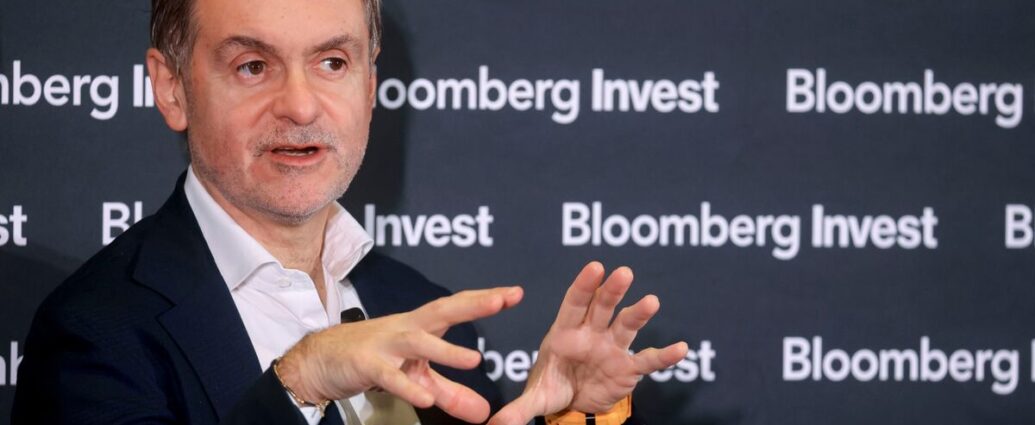

Dell’s CFO is using AI agents to run his finance team—and has helped the AI business go from $0 to $25 billion
As recently as a few years ago, Dell appeared to be a name destined for the business history books. The stock lost nearly a third of its value in 2022, and it was hard to see the once iconic PC-maker’s place in a post-PC world. Then something extraordinary happened. In the span of two years, Dell quietly built a $25 billion AI infrastructure business from scratch, posted total company record revenues of $113.5 billion, and it is now guiding Wall Street toward $50 billion in AI server sales next year alone.
Recently Fortune visited Dell’s CFO in New York to find out more about how the company pulled off something almost no company of its size has managed to do: Reinvent itself in real time. David Kennedy is a 27-year veteran of Dell, and was confirmed as CFO in November 2025 after serving as interim. In a conference room overlooking the chaos of 34th Street, Kennedy walks me through the recent record performance posted by the Round Rock, Texas-based giant (No. 44 on the Fortune 500).
“If you take the 12 months we’ve just finished, we did $34 billion in AI-optimized server orders in Q4, which tapped us up to $64 billion for the full year, and we exited the year with $43 billion in backlog,” Kennedy said. Fourth-quarter AI server revenue alone surged 342% to $9 billion. “What’s super exciting is our next five-quarter pipeline of opportunities has never been higher.”
For fiscal 2027, Dell has guided for $50 billion in AI-optimized server revenue, representing 103% growth year-over-year. Kennedy attributed demand to global interest across neo-clouds, sovereign AI deployments, and Dell’s enterprise base. “The fear of being left behind,” he said, “is becoming more powerful.”
Bank of America analysts recently raised their forecasts for Dell’s AI-servers, increasing their estimate for the current quarter to about $15 billion and lifting their full-year projection to roughly $60 billion, citing stronger-than-expected demand. Morningstar also increased its fair value estimate, noting that sustained AI demand will be key to long-term upside.
If there’s a cloud over the otherwise sunny outlook, it’s supply. Kennedy was direct: there simply aren’t enough components in the ecosystem to fully satisfy AI infrastructure demand. “I’d love more supply still,” he said.
But Kennedy argues Dell’s multi-decade supplier relationships give it an edge over competitors in securing what’s available. And unlike some peers, Dell provided a full-year fiscal 2027 guidance — a signal, Kennedy said, that the company has supply commitments to support it.
On the question of AI server profitability, a topic that has made some investors nervous, Kennedy was unfazed. Dell targets mid-single-digit operating margins on its AI infrastructure business, a figure it has maintained consistently. “Mid-single digits on $50 billion,” he said, “is a lot of dollars.”
At the core of Dell’s strategy is what Kennedy calls an “AI factory,” which is an end-to-end infrastructure stack built around data. That includes GPU-powered servers developed with Nvidia, a large-scale storage business, and networking systems.
“It’s all about data,” Kennedy said. “How do you manage it, store it, use it, deploy it?” He said Dell’s ability to build, deploy, and service systems at 99.9%-plus uptime has helped differentiate it and strengthen customer relationships.
The company now has more than 4,000 enterprise AI factories deployed with customers, including more than 750 added in the fourth quarter alone.
Inside the finance function: Agentic AI
Dell has spent the past two years modernizing and standardizing its systems to prepare for broader AI adoption. That foundation is now enabling the company to scale agentic AI internally, Kennedy said.
The OpEx discipline has come with a workforce reduction. Dell’s total headcount fell roughly 10%, or about 11,000 employees, in fiscal 2026, according to its 10-K filing, which is the third consecutive year of comparable declines. The company has spent $569 million in severance in the most recent fiscal year. Dell said in its 10-K that fiscal 2026 headcount reductions stemmed from employee reorganizations, limits on external hiring, and other cost-alignment measures tied to its business modernization efforts. “Despite these difficult decisions, we continue focused efforts to empower our employees and attract, develop, and retain talent,” the company stated.
Regarding agentic AI, Kennedy has a focus on the finance function. “I’ve started to deploy agents to do reconciliations, do accounting journal entries,” he said. “We’ve launched digital twins in our supply chain and services organizations. We have our own internal sales chat CRM model, which has handed back multiple hours per week to our sales force.”
Kennedy has gone further personally — incubating a team of data scientists within his finance function and building proprietary agents under Dell’s internal governance framework. He uses AI to streamline his calendar, automate emails, and drill down on forecast data by country and segment.
His view on workforce impact is that AI redistributes effort toward higher-value work. “The accountability level is still there,” he said, pointing to relationships with auditors and regulators. “All they’re doing is getting help in getting faster decisions, quicker.”
He also emphasized the importance of data quality and effective prompting: “You’re only as good as the data you have, so you’ve got to make sure that’s clean. And then trying to direct the agent in the right format — because an agent wants to work 24/7.”
This story was originally featured on Fortune.com
Victoria police called to give evidence into Indigenous man’s death in custody seek protection from self-incrimination
Request comes at the start of a two-week inquest into the death of Noongar man Jeffrey Winmar in Melbourne
-
Get our breaking news email, free app or daily news podcast
Eleven police officers called to give evidence into the death of an Aboriginal man in custody have sought certificates to protect themselves from self-incrimination.
The request from the Victoria police chief commissioner came at the start of a two-week inquest into the death of Noongar man Jeffrey Winmar.
This post was originally published here

Victorian Liberals to hold another preselection after candidate who defeated Moira Deeming withdraws
Dinesh Gourisetty ‘not welcome’ in party after revelations he provided court reference for a friend convicted of sexually assaulting a child
-
Get our breaking news email, free app or daily news podcast
The Victorian Liberals will hold another preselection convention to elect a candidate for a top spot on the party’s upper house ticket, after it was revealed the man who replaced Moira Deeming wrote a court character reference for a friend who was convicted of grooming a 15-year-old girl.
Dinesh Gourisetty, who defeated Deeming on Sunday in a preselection vote for the party’s candidates for the western metropolitan region at the upcoming November election, has told the executive he did not want to step down after the revelations.
This post was originally published here


Phreesia, Progress Software And 3 Stocks To Watch Heading Into Monday
With U.S. stock futures trading higher this morning on Monday, some of the stocks that may grab investor focus today are as follows:
- Wall Street expects Americas Gold and Silver Corp. (NYSE:USAS) to report quarterly earnings at 1 cent per share on revenue of $33.23 million for the quarter before the opening bell, according to data from Benzinga Pro. Americas Gold and Silver shares rose 3.6% to close at $5.50 on Friday.
- Analysts are expecting ARKO Petroleum Corp. (NASDAQ:APC) to post quarterly earnings at 13 cents per …
This post was originally published here
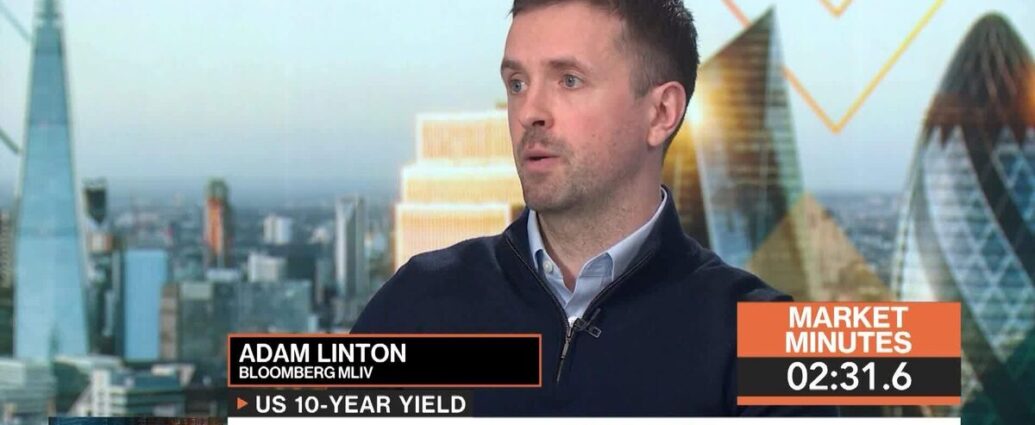

Iran Mocks Trump’s Market Moves As Tensions Escalate: ‘Do The Opposite’
In a surreal twist to escalating global conflicts, Iran’s Parliament Speaker Mohammad Bagher Ghalibaf has taken to X to mock Donald Trump‘s pre-market announcements, advising Wall Street investors to “do the opposite” as popular trading strategies collapse under the weight of an expanding war.
The ‘Reverse Indicator’
As markets grapple with the fallout of the U.S.-Israeli war with Iran and looming tariff battles, Ghalibaf—a former Islamic Revolutionary Guard Corps commander—offered literal day-trading advice to counter Trump’s social media posts.
“Pre-market so-called ‘news’ or ‘Truth’ is often just a setup for profit-taking. Basically, it is a reverse indicator,” Ghalibaf stated to his followers. “Do the opposite: If they pump it, short it. If they dump it, go long. See something tomorrow? You know the drill.”
The taunt adds a layer of psychological warfare to a conflict that has already seen Iran’s supreme leader killed and the Strait of Hormuz effectively closed.
This post was originally published here
Stock futures inch higher ahead of a holiday-shortened trading week: Live updates
The Dow Jones Industrial Average sank into correction territory on Friday, joining the Nasdaq, which entered a correction the day before.
This post was originally published here
Glasgow arts hub tenants condemn ‘unsustainable’ rent rises by landlord
City Property, which manages buildings for council, accused of ‘coercive and unfair’ increases and issuing eviction notices
Tenants at one of Glasgow’s leading cultural hubs are battling what they describe as “unsustainable” rent increases, with critics describing the landlord responsible as a “rogue agency” imposing similar rises on vulnerable organisations across the city.
With tenants expected to sign new leases or receive notices to quit this week, hundreds of protesters gathered outside the offices of City Property last Friday. The demonstration reflects growing concern about the conduct and accountability of the arm’s-length organisation that manages hundreds of buildings on behalf of Glasgow city council.
This post was originally published here
Kevin O’Leary Calls For Calm As Iran War Sends Global Markets Into Panic: Urges Investors To ‘Think Strategically’
“Shark Tank” star and investor Kevin O’Leary is advising Americans to stay calm and prioritize long-term strategy as markets fluctuate wildly amid energy price surges and global uncertainty.
O’Leary On Market Volatility
On Sunday, O’Leary posted on X while sharing a clip from his CNN interview, writing, “I get it — volatility makes people nervous. But my job isn’t to panic. My job is to deploy capital.”
He added, “Whether the market is up 700 points or down 700 points, I ask one question: What has actually changed? Most people react emotionally. That’s a mistake.”
In the CNN interview, O’Leary explained that even if energy prices remain elevated for another month, it would not fundamentally affect long-term earnings.
“My job is to deploy capital. That’s what I have to do every day, whether the market’s up 700 points or down 700 points,” he said.
He urged investors to focus on strategic thinking rather than short-term fluctuations, echoing the hockey adage, “think where the puck is going, not where it is right now.”
O’Leary acknowledged the …
This post was originally published here

Fugitive emerged from building holding weapon before being shot dead, commissioner says – as it happened
This blog is now closed
-
Who is Dezi Freeman: what to know about the Australian fugitive
-
Get our breaking news email, free app or daily news podcast
The chief commissioner is asked about the fact that the most recent update from police regarding Dezi Freeman indicated that they believed Freeman was dead. He is asked if that was a genuine belief or a tactic.
Bush responds:
It’s a very good question because, you know, we have to follow every avenue of inquiry and there was a lot to suggest that Freeman had taken his own life. But I can tell you standing here that our investigators – that’s why they’re professionals – keep their mind open to every possible outcome and follow every possible lead.
This post was originally published here
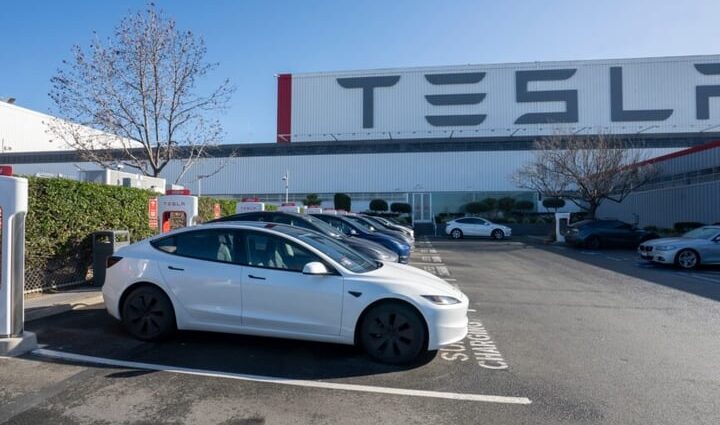
Gary Black Says TSLA Has Underperformed Nasdaq For 5 Years Because It Has Never Lived Up To Unsupervised FSD Hype: ‘TSLA Still Has Only 9 Robotaxis’
Investor Gary Black of The Future Fund LLC has criticized Tesla Inc. (NASDAQ:TSLA) for underperforming the Nasdaq 100 index for the last five years, which he thinks happened due to the brand not living up to the Full Self-Driving (FSD) promises.
Unsupervised FSD Hype
On Sunday, the investor shared his criticism via a post on the social media platform X as he responded to a post by influencer Whole Mars Catalog. In the post, the influencer had outlined various reasons to invest in the company. “No investment professional values $TSLA on trailing P/E,” Black said in the response, adding that investors and analysts used the forward P/E ratio, which wasn’t the reason the stock had “underperformed NDX” for the last five years.
“TSLA has underperformed because it has never lived up to the hype that its vehicles will drive themselves unsupervised,” he said. He then repeated CEO Elon Musk‘s claims about Tesla Robotaxi serving over half the U.S. population by the end of …
This post was originally published here
Mistral secures $830 million in debt financing to fund AI data center
Mistral is one of the few European startups building foundational AI models.
This post was originally published here

Meet the ex-Google CMO who quit with a seven-figure package by 28—he says getting promoted was easy because he just ‘disregarded all the rules’
Alon Chen joined Google in 2006 at 23, with no marketing experience and no connections at the company. By 28 years old, he was a CMO—overseeing marketing for Israel and Greece, building a $2 billion product line across 30 markets, pulling in a highly six-figure salary and a seven-figure equity package.
By most people’s standards, he had made it absurdly early—and he says getting there was “easy,” too. Not because of mentors, politics, or any formal promotion track. In an exclusive interview with Fortune, Chen says he just ignored every rule he was given.
“Climbing up was fairly natural and easy,” he tells Fortune, “simply because I just disregarded all the status quo and the rules and realized what’s the right thing to do, and went all the way with it.”
Chen’s not all talk either: When a senior team at HQ blocked his plans to launch Google Partners internationally, Chen launched it anyway—in foreign languages, in foreign markets, without telling anyone in North America. “Once we proved it was extremely successful, then they came and asked us, ‘Oh, can you also launch it in North America?’”
Likewise, getting a promotion was simply a matter of demanding it ahead of schedule.
Google told him promotions take 2 years—he got his in less than 1
At Google, the general rule of thumb was to wait at least two years before applying for a step up—he says most employees accepted that timeline without question. Chen ignored it entirely, went to his manager within a year, and made the case impossible to refuse.
“I just told my manager, listen, I know this is a year thing. Look what I’ve been able to achieve. It’s way more than anyone else. We’re going to put me up for promotion now.” She did.
“We have all these rules, we have all these benchmarks, we have all these processes,” Chen says. “That’s what’s going to happen for most of you.”
But for high-achievers, he adds, they’re almost just a formality. Especially when, like him, you’re pulling around 12-hour days and have the results to back up your demands for early progression. “You’re going to be like me, promoted more.”
“Corporate America can put you in these frames that discourage you,” he adds. But he says the one’s who will be most successful “actually just ignore these and say, “I’m going to do my own thing and take risks, internally.”
In the end, he took his own career advice literally, opting to become his own boss and do his own thing: With a seven-figure equity package on the table and a career most people would guard with their lives, he handed in his notice—and walked away with zero financial regrets.
Before Google, he was running a thriving business at 15 while in high school
Chen didn’t suddenly wake up one day as a rule‑breaking Google executive. Long before his C‑suite title, he’d already been forced to think like a founder. Growing up in a “low middle-class small town south of Tel Aviv,” his father had a motorbike accident, which left them financially struggling.
“I used to write code when I was 12, and every year I had to change my computer… the software I used to write was not able to run because it needed more memory,” he recalls. “But he couldn’t afford it.”
So at 15, he went straight to the importers and negotiated for parts so he could upgrade his computer himself.
“It was my first entrepreneurial adventure,” he adds. “I started selling computers for thousands of different SMBs, throughout my time at high school… this turned into a very big business.”
His next venture took a different shape entirely. Chen became the digital officer for an LGBT activism nonprofit, building one of the most pioneering advocacy websites across Europe at the time. It was that experience—not a computer science degree, not a corporate internship—that he says caught Google’s eye and landed him his first role there in 2006. “Back then, that was very innovative,” he adds.
Given that background, it’s perhaps less surprising that the golden-ticket job at Google eventually started to feel like a “golden cage.”
When he handed in his notice, his family thought he was “crazy”. His Iraqi-Jewish mother, he recalls, was particularly alarmed—ironically, she inspired the idea for his next venture.
Financially, he’s worse off as a startup founder—but he has zero regrets
The concept for Tastewise, the AI food and beverage intelligence platform he went on to build, came directly from the family WhatsApp group, where his mom would message every Thursday asking what dietary phase everyone was on before spending a day cooking traditional dishes.
She saw dinner logistics. He saw a lightbulb moment—and a gap in the market that the world’s biggest food companies hadn’t yet solved: predicting what people actually want to eat before they know it themselves.
Today, the startup’s technology is used by giants like PepsiCo, Nestlé, Mars, Kraft Heinz, Campbell’s, and Givaudan, and over half its clients are Fortune 100 firms. It has raised more than $71 million in funding.
Financially, he freely admits he’s not ahead of his Google days. “Not yet,” he says. “I’m still building, and I’m all in in the business.”
But given his equity stake, a future Tastewise transaction would likely cement him as a multimillionaire several times over. And he doesn’t waver when asked whether walking away was worth it. “It didn’t matter,” he says of the seven-figure equity he left behind. “It’s almost like it was not a consideration.”
“I used to wake up in the morning, like ‘this is not enough’…. I loved my job. I loved my colleagues. I was extremely happy with my achievements. It was just not mine—not my idea, not my baby. There’s so much satisfaction in creating something out of nothing.”
This story was originally featured on Fortune.com

Nvidia’s Jensen Huang says ‘We’ve achieved AGI.’ But no one can agree on what that means. Why the most important term in tech remains hotly debated.
Last week, Nvidia CEO Jensen Huang made headlines when he told podcaster Lex Fridman that AGI—artificial general intelligence—had already been achieved.
AGI has long been the ultimate goal of many artificial intelligence researchers. That’s been the case even though there is no universally accepted definition of the term. It generally means AI that is as intelligent as humans, but there is a fierce debate over exactly how to define and measure “intelligence.”
In this case, Fridman had offered Huang a very unusual metric for AGI: Could AI start and grow a technology business to the point where it was worth $1 billion? Fridman asked if Huang thought AGI by this definition could be achieved within the next five to 20 years. Huang said he didn’t think that amount of time was necessary. “I think it’s now. I think we’ve achieved AGI,” he said. He then hedged, noting the company didn’t necessarily have to remain that valuable. “You said a billion,” Huang told Fridman, “and you didn’t say forever.”
Few AI researchers agree with the definition of AGI that Fridman offered Huang, which was both more specific (a company worth $1 billion), but also more narrow than most AGI definitions (which tend to refer to matching a vast range of human cognitive skills, not all of which might be needed to build a successful business.) But AI researchers also disagree with one another over what a better definition should be. The term remains stubbornly amorphous despite the fact that several leading AI companies, with collective market valuations of more than $1 trillion, say that AGI is what they are racing towards. Some computer scientists avoid using the term at all precisely because they say it is perpetually undefined and unmeasurable. Others say tech companies like using the term for completely cynical reasons—precisely because it is ill-defined, it’s easy for companies to build hype by claiming big strides towards achieving the fabled milestone.
The buzz over Huang’s AGI remarks only serves to highlight this quandary at the heart of the AI boom.
Trying to measure AGI
In fact, just days before Fridman dropped his podcast, researchers at Google DeepMind—including DeepMind cofounder Shane Legg, who first helped popularize the term AGI in the early 2000s—published a new research paper that proposed a more scientific way to define and assess whether AI models had achieved general intelligence. The paper, “Measuring Progress Toward AGI: A Cognitive Framework,” draws on decades of research in psychology, neuroscience, and cognitive science to construct what its authors call a “Cognitive Taxonomy.”
The taxonomy identifies 10 key cognitive faculties—including perception, reasoning, memory, learning, attention, and social cognition—that the researchers argue are essential for general intelligence. The framework then proposes evaluating AI systems across all 10 faculties and comparing their performance to a representative sample of human adults with at least the equivalent of a secondary education.
The paper’s key insight is that today’s AI models have a “jagged” cognitive profile: They may exceed most humans in some areas, like mathematics or factual recall, while dramatically trailing even average people in others, like learning from experience, maintaining long-term memories, or understanding social situations. An AI model would need to at least match median human performance across all 10 areas to be considered AGI, the Google DeepMind researchers suggest.
The researchers also announced a contest with a $200,000 prize pool on the popular machine learning competition site Kaggle for outside researchers to help build evaluations for the five cognitive faculties where existing benchmark tests are weakest.
The DeepMind paper is only the latest in a string of recent attempts to put the measurement of intelligence on more rigorous footing.
Last year, a team led by Dan Hendrycks at the Center for AI Safety, and that included deep learning pioneer Yoshua Bengio, published their own AGI framework and metrics. That paper also divided general intelligence into 10 separate cognitive domains, drawing on a framework for human intelligence developed by three psychologists—Raymond Cattell, John Horn, and John Carroll—that is the most empirically validated model of human cognition. It produced “AGI Scores” for existing AI models; the most capable system tested, OpenAI’s GPT-5, which was released in August 2025, scored just 57%, falling far short of matching a well-educated adult across all the cognitive dimensions.
One of the most ambitious practical attempts to highlight what today’s AI systems still cannot do is the ARC-AGI benchmark, created by well-known machine learning researcher François Chollet. Chollet’s core argument is that intelligence should be measured not by what a system already knows, but by how efficiently it can learn new skills.
The ARC-AGI benchmark consists of visual puzzle tasks involving grids of colored cells. Each task shows a few examples of an input grid being transformed into an output grid according to a hidden rule, and the test-taker must figure out the rule and apply it to a new input. For a human, grasping the pattern typically takes seconds. For frontier AI models, these puzzles remain surprisingly difficult, because they require the kind of flexible, abstract reasoning—spotting symmetries, understanding spatial relationships, inferring rules from a handful of examples—that current systems struggle with.
This month, Chollet and his collaborators launched ARC-AGI-3, the latest and most demanding version of the benchmark. Unlike earlier editions, which presented static puzzles, ARC-AGI-3 is interactive: AI agents must explore novel environments, acquire goals on the fly, build adaptable world models, and learn continuously over multiple steps—abilities that come naturally to humans but that remain at the frontier of AI research.
Taken together, these new benchmarks represent a growing effort within the AI research community to replace vague definitions about AGI with something closer to scientific measurement. But as these researchers are the first to admit, the difficulty of defining intelligence is as old as the study of thinking itself—and has plagued artificial intelligence as a field from its very earliest days.
Defining intelligence
In 1950, before the term “artificial intelligence” had even been coined and when mathematicians and electrical engineers were just starting to build the first modern computers, the famed British mathematician and computer pioneer Alan Turing wrestled with the fact that it was extremely difficult to formulate a definition of intelligence.
Rather than attempting one, Turing proposed an assessment he called “the Imitation Game,” which later became better known as the Turing Test. It stipulated that a machine should be considered intelligent when it can hold a general conversation with a person, via text, and a second human judge, reading the exchange, cannot reliably determine which participant is the machine and which the human. It was, in essence, an “I’ll know it when I see it” approach to intelligence.
But the Turing Test soon proved problematic too. Eliza, a chatbot developed at MIT in the mid-1960s, was designed to mimic a psychotherapist. Most of its responses followed hard-coded logical rules; Eliza often answered users with questions such as “Why do you think that is?” or “Tell me more” to cover up its weak language understanding. And yet Eliza fooled some people into believing it understood them. Eliza came close to passing the Turing Test even though on almost every other measure it came nowhere close to human cognitive abilities. And, in fact, a more sophisticated chatbot called “Eugene Goostman” officially passed a live Turing Test competition in 2014, again without touching most human cognitive skills.
Today’s large language models converse far more fluently than Eliza ever could, they still cannot match humans across the full spectrum of cognitive abilities—they hallucinate facts, struggle with long-horizon planning, and cannot learn from experience the way a person does.
Compared to the Turing Test, the term “artificial general intelligence” is a relatively recent one. It was first coined in 1997 by Mark Gubrud, then a graduate student at the University of Maryland, who used the neologism in a 1997 paper he presented at a conference on nanotechnology. He used the phrase “advanced artificial general intelligence” to describe AI systems that could “rival or surpass the human brain in complexity and speed, that can acquire, manipulate, and reason with general knowledge, and that are usable in essentially any phase of operations where a human intelligence would otherwise be needed.” But the paper quickly vanished in obscurity.
Then, in the early 2000s, Legg—who would go on to cofound DeepMind—independently coined the same term. He was collaborating with computer scientists Ben Goertzel, Cassio Pennachin, and others on a book about potential ways to create machine learning systems that would be able to address a wide range of problems and tasks. They wanted a term that would distinguish the ambition of these systems from the narrow machine learning algorithms then in vogue, which, once trained, could only tackle a single, narrow task. Goertzel considered calling this more general AI “real AI” or “strong AI,” but Legg suggested “artificial general intelligence” instead, unaware of Gubrud’s earlier usage. He also suggested the term be abbreviated as AGI. This time, AGI took off.
In Goertzel’s book he defined AGI as “AI systems that possess a reasonable degree of self-understanding and autonomous self-control, and have the ability to solve a variety of complex problems in a variety of contexts, and to learn to solve new problems that they didn’t know about at their time of creation.”
The definition was useful for separating work on general AI systems from narrow machine learning ones, but it too contained a fair an unhelpful amount of ambiguity: What did “reasonable degree” mean? Which complex problems in which contexts counted towards the standard?
Legg would later compound this ambiguity by offering a more casual definition of AGI that was in some ways narrower (it didn’t talk about self-understanding, for instance) but equally vague. For instance, he told The Atlantic’s Nick Thompson last year, “I define an AGI to be an artificial agent that can do the kinds of cognitive things that people can typically do. I see this as the natural minimum bar.” But which things? And which people?
Questions like this have continued to swirl around AGI. Does the term mean software that matches the cognitive abilities of an average human? Or the abilities of the humans with the highest IQs? Or the best expert in each individual domain of knowledge? The Hendrycks and Bengio research paper, for instance, defines AGI as matching or exceeding “the cognitive versatility and proficiency of a well-educated adult.” The DeepMind paper proposes measuring against a representative sample of adults. Others have used less precise formulations.
Adding to the confusion, AGI is often conflated in public discussion with a concept AI researchers call “artificial superintelligence,” or ASI—an AI that would be smarter than all humans combined. Most AI researchers consider AGI and ASI to be separate milestones, and very different in degree of sophistication, but in the popular imagination the two frequently blur together.
AGI becomes a corporate goal—and a marketing slogan
If the academic debate over defining AGI has been long and nuanced, the corporate world has introduced definitions that are, to put it charitably, idiosyncratic. DeepMind became the first company to make the pursuit of “artificial general intelligence” a business goal. Legg put the phrase on the front page of the company’s first business plan when he, Demis Hassabis, and Mustafa Suleyman cofounded the company in 2010.
Five years later, OpenAI also made building AGI its explicit mission. Its original 2015 founding principles said that the new lab—at the time a non-profit—was dedicated to ensuring “that artificial general intelligence benefits all of humanity.” Three years later, when the lab first set up a for-profit arm, it published a charter that defined AGI “as highly autonomous systems that outperform humans at most economically valuable work.” Now, for the first time, AGI was being measured by financial metrics, not mere cognitive ones.
And, as it turned out, OpenAI would soon secretly set a highly specific financial threshold for AGI. When Microsoft first invested $1 billion into OpenAI’s for-profit arm in 2019, the tech giant’s agreement with the AI startup made it OpenAI’s preferred commercialization partner for any AI model the lab developed up to, but crucially not including, AGI. At the time, it was reported that the decision of when AGI had been achieved would be at the discretion of OpenAI’s non-profit board.
But, crucially, according to reporting by tech publication The Information in 2024, when Microsoft agreed to invest a further $10 billion into OpenAI in 2023, its contract with OpenAI contained a clause that defined AGI as a technology that could generate at least $100 billion in profits.
OpenAI is nowhere near that mark. The company has reportedly told investors it made $13 billion in revenues last year, but still managed to burn through $8 billion in cash. It does not expect to break even until 2030.
Despite being far short of the financial threshold for AGI in its contract with Microsoft, OpenAI CEO Sam Altman has often made statements that suggest OpenAI is close to achieving the AI milestone as measured by other benchmarks. In a post to his personal blog in January 2025 titled “Reflections,” Altman wrote that OpenAI was “now confident we know how to build AGI as we have traditionally understood it” and that the company was beginning to turn its aim towards superintelligence. In a subsequent essay titled “Three Observations,” he wrote that systems pointing toward AGI were “coming into view.” Yet, at other times, Altman has seemed to acknowledge AGI’s weakness as a concept. Around the same time as his “Reflections” blog post, Altman told a Bloomberg News interviewer that AGI “has become a very sloppy term.”
Microsoft has also chosen to ignore the financial definition of AGI it struck with OpenAI when it suited the company’s marketing purposes. In March 2023, a team of Microsoft researchers published a 154-page paper about GPT-4 provocatively titled “Sparks of Artificial General Intelligence,” arguing the model could “reasonably be viewed as an early (yet still incomplete) version” of AGI.
The paper was widely criticized for hyping the abilities of GPT-4 for commercial purposes. Even Altman distanced himself, calling GPT-4 “still flawed, still limited.”The new research and benchmarks from Google DeepMind and the Hendrycks-Bengio team makes some progress towards establishing a yardstick for AGI, one rooted in decades of study of human intelligence. And what’s clear is that today’s best AI models still don’t measure up to breadth and depth of human cognitive abilities.
Huang, the Nvidia CEO, knows this, just as he was no doubt fully aware of the social media frenzy and headlines he would generate by saying AGI had been achieved. We know Huang knows this because later in the same podcast in which he said “AGI is achieved” he also said that the popular OpenClaw AI agents, which can be powered by any of the top AI models from companies such as Anthropic and OpenAI, could never replicate Nvidia. “Now, the odds of 100,000 of those agents building Nvidia is zero percent,” he said.
Huang is not just Nvidia’s CEO. He is also the company’s founder and the person who has run the company for 33 years, piloting it past near-bankruptcy at one point, to see it now worth more than $4 trillion, making it one of the most valuable companies on the planet. In many ways, Huang is a singular genius. But he’s also a very human one. So maybe we need a new standard, not AGI but AJI—artificial Jensen intelligence. When AI reaches that level, the AI boosters on social media who breathlessly amplified Huang’s AGI claim will really have something to get excited about.
This story was originally featured on Fortune.com

Michael Saylor Says It’s Time To Put His Laser Eyes Back On, Fellow Bitcoin Bull Chimes In: ‘Never Took Them Off’
Strategy Inc. (NASDAQ:MSTR) Chair Michael Saylor reaffirmed his unflinching support for Bitcoin (CRYPTO: BTC) by sharing the popular “laser eyes” meme on Saturday.
‘Laser Eyes’ Meme Is Back
The meme, a 2021 Bitcoin community signal of strong bullish conviction, typically shows a person with glowing red eyes in their profile picture to signify “laser focus” on Bitcoin’s price.
Saylor replugged it on X, adding, “It’s time to put the laser eyes back on.”
It appeared to be yet another call from Saylor encouraging HODLers to stay firm despite ongoing market pressure.
Samson Mow, fellow Bitcoin …


How Tropical Cyclone Narelle turned the sky red in Western Australia
Dry ground, iron-rich earth and strong winds combined to create an eerie dust storm that was filmed in Denham
-
Get our breaking news email, free app or daily news podcast
The skies of Shark Bay in Western Australia turned an eerie blood red before Tropical Cyclone Narelle made landfall, a phenomenon an expert said was caused by an iron-infused dust storm.
Narelle crossed into WA on Friday, hitting the state roughly 900km north of Perth in the food bowl region.
This post was originally published here
Budget airlines built on cheap fares now face a painful reality: Fuel is getting expensive
Budget airlines try to maintain low costs while fuel costs continue to rise
This post was originally published here
Labor backs Greens inquiry into gas export tax – as it happened
This blog is now closed
-
Labor cuts fuel excise for three months, saving Australians 26c a litre on petrol and diesel
-
Get our breaking news email, free app or daily news podcast
Trade minister to speak at National Press Club after signing of EU free trade deal
Don Farrell, the trade and tourism minister, will speak to journalists at the National Press Club in Canberra today, talking up the government’s new free trade agreement with the European Union.
We haven’t had an honest conversation in this country about issues around taxation for a very long time, because the conversation always gets shut down. So I absolutely support us having honest conversations as Australians about what we should be doing into the future that’s in the best interest of our nation.
This post was originally published here

Ross Gerber Slams Tesla’s FSD For Being ‘Level 2’ As Gary Black Decries Marketing Strategy: ‘You Still Basically Have…’
Investor Ross Gerber of Gerber Kawasaki has criticized Tesla Inc.‘s (NASDAQ:TSLA) Full Self-Driving (FSD) system’s capabilities, lamenting that it still wasn’t as capable as it should be.
Still At Level 2
In a response to a post on the social media platform X, Gerber criticized the technology, as user James Cat said that there was a lack of awareness among people about the FSD system, as well as the system itself needing improvements before going mainstream.
Gerber, in his response, shared that the system still needed to make improvements. “It’s also level 2. So you still have to basically drive,” he said, referring to Tesla’s FSD being at a level 2, according to the Society of Automotive Engineers (SAE). Broadly speaking, a Level 2 rating means that the system is capable of handling some autonomous tasks, but cannot be considered fully autonomous.
Interestingly, the California Public Utilities Commission (CPUC) shares this opinion, with the agency’s …
This post was originally published here
When Will Elon Musk’s Tesla And SpaceX Merge? Here’s What Prediction Market Is Saying
Elon Musk‘s xAI and SpaceX merged in February, valuing the company at over $1.25 trillion. SpaceX is now preparing for an initial public offering (IPO).
SpaceX IPO
SpaceX reportedly plans to raise $75 billion from its IPO, valuing the space exploration company at around $1.75 trillion.
SpaceX’s confidential filing would show that the company is still targeting a June listing.
Tesla-SpaceX Merger Buzz
Amid the IPO, there’s also buzz around a merger between Tesla Inc. (NASDAQ:TSLA) and SpaceX.
While there has been no official information around a merger between the two companies, Gary Black, the managing director of …
This post was originally published here
UK savers told to act now before Easter Sunday cash Isa deadline
Interest rates as high as 4.45% and a steep cut in next year’s allowance fuel forecast of last-minute rush
Savers who want to make the most of this year’s cash Isa allowance are being urged not to leave it to the last minute, as the deadline for applications falls on the Easter weekend.
The Isa wrapper allows people to save or invest money and benefit from the returns free of tax. Each tax year, people can pay in up to £20,000, which can then be moved around in subsequent years without the tax benefits being lost.
This post was originally published here
Pessimism takes root in UK as shoppers struggle to afford essentials
Millions are dipping into savings or borrowing to get by as the Iran war drives up prices, survey shows
The Iran war has led to a surge in pessimism in the UK as half of households are already struggling to afford everyday essentials.
The escalating conflict in the Middle East, which has driven the price of oil, gas, crop fertiliser and other raw materials sharply higher, threatens to cause another cost of living shock.
This post was originally published here
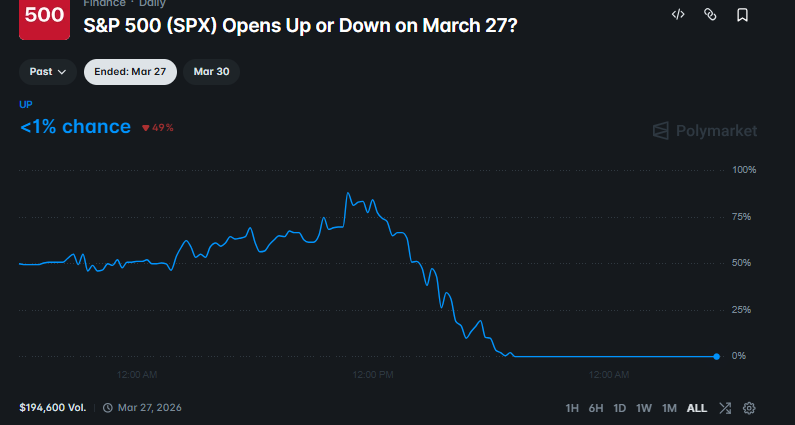
Will S&P 500 Open Up Or Down On March 30? Here Is How Prediction Market Traders Lean As Oil Spikes On Trump’s ‘Take The Oil’ Threat
The S&P 500 enters the final week of March under significant duress after tumbling 1.67% on Friday to close at 6.368,85. While the index closed the week lower, a fresh wave of weekend volatility has left investors on edge.
The Polygon-based (CRYPTO: POL) Polymarket crowd is currently split, but showing a slight tilt toward a positive open. The bets for “S&P 500 Opens Up or Down on March 30?” market on Polygon currently reflects a 53% chance of an “Up” open. Trading volume for the Monday bet has reached $229,617.
Why That …
This post was originally published here
Thieves steal Renoir, Cézanne and Matisse paintings worth millions from Italian museum
Four masked men entered Magnani Rocca Foundation villa, near Parma in northern Italy, and made off with artworks
Thieves stole paintings by Renoir, Cézanne and Matisse from a museum in Italy a week ago, police have said.
Four masked men entered the villa of the Magnani Rocca Foundation, near Parma in northern Italy, and made off with the artworks on the night of 22 March, a police spokesperson said, confirming a report on the Rai television network.
This post was originally published here

Crypto Fraudster Sam Bankman-Fried Showers Praises On Trump, Says He’s The First President To Recognize ‘Strategic Potential’ Of Crypto And AI
Jailed cryptocurrency fraudster Sam Bankman-Fried praised on Sunday President Donald Trump’s foresight in recognizing the potential of both cryptocurrency and artificial intelligence.
SBF Praises Trump’s Crypto, AI Push
Bankman-Fried, popularly known as SBF, reacted to Trump’s remarks at the Future Investment Initiative Priority Summit in Miami last week, where the president described Bitcoin (CRYPTO: BTC) as “very powerful” and said that many people now prefer to pay using cryptocurrency.
“It’s not just people who want to pay you in crypto, increasingly it’s AI agents. Crypto is the future of AI-native payments,” SBF brought in the agentic payments angle.
He added that Trump is the “first president” to foresee the strategic potential of both crypto and AI.

Trump says he has ‘no problem’ with Russian oil tanker bringing relief to Cuba despite blockade
President Donald Trump said he has “no problem” with a Russian oil tanker off the coast of Cuba delivering relief to the island, which has been brought to its knees by a U.S. oil blockade.
(Image credit: Ramon Espinosa)

This post was originally published here

CNBC Daily Open: Trump’s ‘favorite thing’ is Iranian oil
President Trump’s tough rhetoric and a build-up of ground troops raise escalation fears and drive risk-averse trade across global markets.
This post was originally published here

Central Haitian town descends into fire and bloodshed from gang warfare
Violence erupted in the central Haitian town of Petite-Rivière de l’Artibonite early Sunday morning as a powerful gang warred with a vigilante group.
(Image credit: Odelyn Joseph)

This post was originally published here

Number of people helped by RNLI in UK and Channel Islands doubled in 2025
Charity believes Middle East crisis may lead to even busier spring and summer in 2026
The number of people helped by RNLI lifeguards on the beaches of the UK and the Channel Islands doubled last year and the charity believes the Middle East crisis may lead to an even busier spring and summer in 2026.
While RNLI lifeguards went to the aid of about 18,000 people in 2023 and 2024, this leapt to more than 35,000 in 2025, the spike put down to a combination of good weather and an increased interest in seaside pursuits.
This post was originally published here
MPs wary of move against Starmer while war is raging
Even after electoral disaster, Iran war gives many MPs pause for thought about timing of leadership contest
A week after Labour’s election victory in July 2024, officials at Labour HQ held their first crisis meeting about the May 2026 local elections.
The party had just secured a 174-seat majority and already strategists were predicting it would be very tough, though none were assuming the prime minister’s own position would be vulnerable.
This post was originally published here
Daily Telegraph apologises as dispute reignites between pro-Israel activist and Middle Eastern restaurant Cairo
Apology published in News Corp paper as part of agreed joint statement to resolve legal dispute over ‘undercover’ story, with Cairo also apologising to activist Ofir Birenbaum
-
Get our breaking news email, free app or daily news podcast
The Daily Telegraph has apologised to a popular Middle Eastern restaurant for “causing distress” after it sent a pro-Israel activist to the Sydney eatery as part of its so-called operation “undercover Jew”.
The apology was published on page two of the News Corp newspaper as part of an agreed joint statement to resolve a now settled legal dispute between the Newtown restaurant Cairo Takeaway and the pro-Israel activist Ofir Birenbaum.
This post was originally published here
Five EU governments found to ‘consistently’ dismantle rule of law
Exclusive: Bulgaria, Croatia, Hungary, Italy and Slovakia actively pursue regressive policies, watchdog finds
Governments in five EU member states are “consistently and intentionally” eroding the rule of law, Europe’s leading civil liberties group has warned, while democratic standards are deteriorating in six more, including historically strong democracies.
Drawing on evidence from more than 40 NGOs in 22 countries, the Civil Liberties Union for Europe (Liberties) described the governments of Bulgaria, Croatia, Hungary, Italy and Slovakia as “dismantlers” that were actively weakening the rule of law.
This post was originally published here

Dogecoin Remains ‘Stuck’ After Top Analyst’s 29% Move Prediction Fails To Play Out—But There’s Still Hope
A leading cryptocurrency analyst’s forecast of imminent Dogecoin (CRYPTO: DOGE) volatility has yet to materialize, as the memecoin continued to move sideways as of Sunday.
DOGE Yet To Breakout
Ali Martinez took to X, highlighting a descending triangle formation on Dogecoin’s 4-hour chart. Earlier this week, they projected it could spark a 29% move in the memecoin’s price.
However, as things stand, Dogecoin remains “stuck” in the triangle.
Note that Martinez didn’t explicitly state the direction of the swing, whether upward or downward.

Did Anthony Albanese just cement a third interest rate hike in May by cutting the fuel excise?
Injecting $1.5bn via petrol subsidies into an inflated economy may change things for the Reserve Bank board at its next meeting
-
Get our breaking news email, free app or daily news podcast
Economists will say that what millions of motorists gain in cheaper fuel through the prime minister’s three-month fuel excise cut, they will lose in more expensive mortgages.
It may be good politics, but injecting $1.5bn via petrol subsidies into an economy that is already struggling with a resurgent inflationary problem is not going to make the Reserve Bank of Australia’s job any easier.
This post was originally published here


Private capital: what are the risks?
This post was originally published here

TotalEnergies made bumper profit on Middle East oil bet
This post was originally published here