Price Elasticity of Demand: Forecasting Consumer Behavior
2026-03-29
This post was originally published here

This post was originally published here

This post was originally published here
Health secretary still confident of success but critics say scrapping of NHS England has been ‘a total car crash’
In the Great Hall at the University of East London last Wednesday, the perennially upbeat Wes Streeting was exuding even greater positivity than usual. After years of neglect under the Conservatives, he said, the NHS was starting to revive thanks to Labour’s medicine.
In a bravura performance in front of an audience of health service bosses, policy experts and student nurses in their blue and green uniforms, Streeting reeled off a long list of improvements in his 20-month tenure as health secretary.
This post was originally published here
Health secretary still confident of success but critics say scrapping of NHS England has been ‘a total car crash’
In the Great Hall at the University of East London last Wednesday, the perennially upbeat Wes Streeting was exuding even greater positivity than usual. After years of neglect under the Conservatives, he said, the NHS was starting to revive thanks to Labour’s medicine.
In a bravura performance in front of an audience of health service bosses, policy experts and student nurses in their blue and green uniforms, Streeting reeled off a long list of improvements in his 20-month tenure as health secretary.
Fresh attacks on Red Sea shipping would be devastating – but the Iranian proxy has reasons to be cautious
The true significance of the long-awaited entry of Yemen’s Houthis into the Iran war depends on whether the Tehran-backed proxy group is intending to send a few missiles and drones from a distance towards Israel or will instead capitalise on its proximity to the narrow Bab al-Mandab strait to effectively close off the Red Sea to shipping, just as Iran has in effect shut the strait of Hormuz.
The combined effect of both waterways being shut to commercial traffic from countries that neither the Iranians nor Houthis favour would be devastating. Napoleon Bonaparte’s remark that “the policy of a state lies in its geography” has never seemed more apt.
This post was originally published here
This post was originally published here

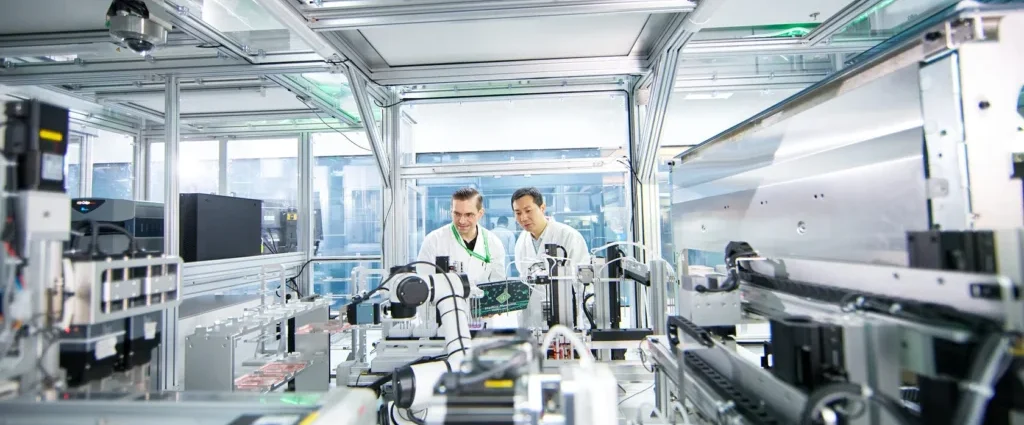
Alex Zhavoronkov, CEO of Insilico Medicine, can’t stop complimenting Eli Lilly. “Lilly is better in AI than Insilico, and no other company is better in AI than us … except for these guys,” he said.
He insisted he wasn’t saying nice things about Lilly just because the pharma giant has signed a new deal with Insilico that’s worth $115 million up front and approximately $2.75 billion in biobucks, which are contingent on achieving regulatory and commercial milestones. After calling Lilly’s tirzepatide, which he is on, “the best drug ever invented by humans,” he said he’s been consistently singing Lilly’s praises for a year. “Mounjaro makes me so happy every day. I want to develop the next one.”
It looks like Zhavoronkov might have the opportunity to do just that — his AI drug development company’s new deal with Lilly, announced on Sunday, includes rights for the Mounjaro and Zepbound manufacturer to develop, manufacture, and commercialize some of Insilico’s preclinical AI-discovered candidates for oral therapeutics. Though he declined to say which assets Lilly licensed, he said that the company is the “absolutely best partner” for the candidates and that “nobody is better than them” in these disease areas. Insilico’s pipeline webpage recently was updated to note that a candidate targeting GLP-1 has been out-licensed to an undisclosed partner.
Officers fired pepper balls and teargas into group of about 150 on Saturday night, arresting those who did not disperse
Police arrested dozens of protesters and shot teargas into a crowd on Saturday night at a No Kings protest in Los Angeles.
The conflict is the latest of many that have taken place outside the Metropolitan detention center, which has become a focal point of protests since the Trump administration launched an immigration offense on Los Angeles last year.
This post was originally published here


This post was originally published here

This post was originally published here


This post was originally published here

Hollywood legends Kurt Russell and Goldie Hawn are joining the growing list of A-listers opting for mountain air over smoggy cityscapes.
In a recent interview with Fox News, Russell said the couple is favoring their Old Snowmass, Colorado, estate over their Los Angeles residence, hinting at a full-time relocation.
The move isn’t just about a change of scenery; it’s a play for family unity and a return to the couple’s real estate roots.
A primary catalyst for the move is that their son, actor Wyatt Russell, recently relocated to Colorado with his wife, Meredith Hagner, and their two sons.
“What I enjoy most is that [Hawn] really likes it in Colorado,” Russell told Fox News. “Wyatt and Meredith and their two boys, they live in Colorado now. So we like to spend as much time there as we can.”
While the couple has a diverse real …
This post was originally published here

The U.S. war on Iran set up Russia’s economy for a major rescue after oil prices soared after the closure of the Strait of Hormuz. But if President Vladimir Putin was expecting a huge windfall, that view may literally be going up in smoke.
With one-fifth of the world’s oil supplies cut off, Russian oil suddenly became much more valuable. After trading at a steep discount to Brent crude, Urals oil nearly reached parity with the global benchmark.
The U.S. also temporarily lifted sanctions on Russian crude, despite warnings that the move would provide a vital influx of revenue to the cash-strapped Kremlin.
Just before President Donald Trump’s war on Iran, Russia’s oil and gas revenue had collapsed by 50%, and the government was draining its reserves to help pay for its war on Ukraine, now entering its fifth year, as budget deficits widened.
The spike in oil made Russia one of “the single biggest winners in the near term” from the Iran conflict, Wichita State University international business professor Usha Haley told Fortune‘s Marco Quiroz-Gutierrez last week. “It has actually rescued Russia’s oil revenues from decline and a decline over a very long period.”
Then Ukraine launched a series of drone attacks on Russia’s top export hubs, including Novorossiysk on the Black Sea as well as Primorsk and Ust-Luga on the Baltic Sea.
According to Reuters calculations, about 40% of Russia‘s crude oil export capacity was shut down on Wednesday, marking the most severe oil supply disruption in the modern history of Russia.
Separately, a Bloomberg analysis of shipment data showed that Primorsk and Ust-Luga previously handled about 45% of Russia’s seaborne crude exports.
The barrage of Ukrainian drones has not let up, continuing to evade air defenses and reach deep inside Russian territory. Fresh attacks on Sunday sparked fires at the Ust-Luga port, according to Reuters.
Of course, removing more Russian supplies from the global oil market could lift prices even higher, and Russia can still export crude from its eastern terminals that serve Asia.
But Ukraine’s drone attacks are also forcing Moscow to deprioritize some exports and protect consumers, who have been battered by high inflation. A strike early Saturday hit a large Russian oil refinery in Yaroslavl, north east of Moscow.
Now the Kremlin is planning to reintroduce a ban on gasoline exports to combat domestic fuel shortages as producers would be barred from exporting gasoline to earn bigger profits. The Russian newspaper Kommersant cited “unscheduled refinery maintenance” and fires at Primorsk and Ust-Luga.
Before the Iran war, alarm bells about the economy had been coming from inside Russia. Kremlin officials warned Putin that a financial crisis could hit by the summer, sources told the Washington Post last month.
They pointed to weak oil revenue and a budget deficit that continues to widen, even after Putin hiked taxes on consumers. A Moscow business executive also told the Post that the crisis could arrive in “three or four months” amid spiraling inflation, adding that restaurants have been closing, and thousands of workers are getting laid off.
The economic strains go back to Russia’s invasion of Ukraine. As sanctions took hold and Putin mobilized the economy for a prolonged war, a tight labor market and high inflation forced the central bank to keep interest rates high. Recent easing failed to prevent spending declines in several consumer categories.
With companies feeling the squeeze of high rates and weaker consumption, more workers were going unpaid, getting furloughed, or seeing their hours cut. As a result, consumers were having trouble servicing their loans, raising concerns of a crash in the financial sector.
“A banking crisis is possible,” a Russian official told the Post in December on condition of anonymity. “A nonpayments crisis is possible. I don’t want to think about a continuation of the war or an escalation.”
This story was originally featured on Fortune.com

Conflict shows signs of entering new, more dangerous phase as additional 3,500 US troops arrive in the Middle East
US lawmakers responded to reports that the Pentagon is preparing for weeks of ground operations in Iran, as thousands of US troops assemble in the Middle East and the conflict showed signs of entering a new, more dangerous phase.
Officials told the Washington Post that a ground operation in Iran could be limited to raids by Special Operations forces and infantry troops, but it was unclear whether Donald Trump would approve any of the Pentagon’s plans.
This post was originally published here

Exclusive: Health secretary’s pledges in doubt as analysis shows health service will not deliver key improvements
The NHS is set to miss key targets to shorten waiting times for help at A&E, cancer care and planned hospital treatment, leaving millions of patients facing persistently long delays.
The health service in England will not deliver a series of milestone improvements in its performance that ministers demanded it achieve by the time the fiscal year ends on Tuesday, a Guardian analysis of the NHS’s most recent data has found.
This post was originally published here

This post was originally published here

Michael Burry posted an open letter on Saturday on X arguing the U.S. housing crunch is less about a lack of homes and more about misallocated space, with federal policy and the long-running conservatorship of Fannie Mae and Freddie Mac at the center of his critique. The message landed alongside his long-running “Cassandra” posture—after years of blunt bubble alarms, account wipeouts and a “Lights Out” sign-off that fits the pattern described in Cassandra Unchained warning.
In his post, Burry said the U.S. already leads the world in residential square footage per person, which he argues undercuts the popular “shortage” framing. Instead, he points to large homes occupied by fewer people and a market where moving has become unusually hard.
Burry tied that rigidity to the post-pandemic rate backdrop, saying ultra-low borrowing costs effectively froze households in place. In his telling, empty nesters are reluctant to sell, first-time buyers are boxed out, and resale supply sits near historic lows because listings are scarce—not because demand is unusually strong.
His letter also leans on balance-sheet math: Burry wrote …
This post was originally published here
Tehran says it will confront any land attack, as Houthi missiles fired at Israel signal further escalation in region
Iran has warned the US that it is prepared to confront any ground assault, accusing Washington of secretly planning a land attack while publicly seeking talks, as the war that has killed thousands of people and caused the biggest ever disruption to global energy supplies entered its second month.
As efforts to find a negotiated conclusion to hostilities inched forward with a meeting of regional powers in Pakistan, there were signs of further escalation over the weekend as Yemen’s Iran-backed Houthis entered the conflict for the first time, and the Israeli prime minister, Benjamin Netanyahu, said his country was widening its invasion of southern Lebanon.
This post was originally published here

Weak and sick mammal has become stuck in shallow bays and experts say prognosis ‘doesn’t look good’
The fate of a humpback whale stuck in shallow bays off Germany’s Baltic coast hangs in the balance after it became stranded for a third time.
The roughly 10-metre-long (33ft) mammal appeared weakened and sick on Sunday and was struggling to find a route back to the Atlantic when it ran into fresh difficulty.
This post was originally published here

This post was originally published here

As they fled an Iranian missile strike, some Israelis with Android phones received a text offering a link to real-time information about bomb shelters. But instead of a helpful app, the link downloaded spyware giving hackers access to the device’s camera, location and all its data.
The operation, attributed to Iran, showed sophisticated coordination and is just the latest tactic in a cyber conflict that pits the U.S. and Israel against Iran and its digital proxies. As Iran and its supporters seek to use their cyber capabilities to compensate for their military disadvantages, they are demonstrating how disinformation, artificial intelligence and hacking are now ingrained in modern warfare.
The bogus texts received recently appeared to be timed to coincide with the missile strikes, representing a novel combination of digital and physical attacks, said Gil Messing, chief of staff at Check Point Research, a cybersecurity firm with offices in Israel and the U.S.
“This was sent to people while they were running to shelters to defend themselves,” Messing said. “The fact it’s synced and at the same minute … is a first.”
The digital fight is likely to persist even if a ceasefire is reached, experts said, because it’s a lot easier and cheaper than conventional conflict and because it is designed not to kill or conquer, but to spy, steal and frighten.
While high in volume, most of the cyberattacks linked to the war have been relatively minor when it comes to damage to economic or military networks. But they have put many U.S. and Israeli companies on the defensive, forcing them to quickly patch old security weaknesses.
Investigators at the Utah-based security firm DigiCert have tracked nearly 5,800 cyberattacks so far mounted by nearly 50 different groups tied to Iran. While most of the attacks targeted U.S. or Israeli companies, DigiCert also found attacks on networks in Bahrain, Kuwait, Qatar and other countries in the region.
Many of the attacks are easily thwarted by the latest cybersecurity precautions. But they can inflict serious damage on organizations with out-of-date security and impose a demand on resources even when unsuccessful.
Then there’s the psychological impact on companies that may do business with the military.
“There are a lot more attacks happening that aren’t being reported,” said Michael Smith, DigiCert’s field chief technology officer.
A pro-Iranian hacking group claimed responsibility Friday for infiltrating an account of FBI Director Kash Patel, posting what appeared to be years-old photographs of him, along with a work resume and other personal documents. Many of those records appeared to be more than a decade old.
It’s similar to a lot of the cyberattacks linked to pro-Iran hackers: splashy and designed to boost morale among supporters, while undermining the confidence of the opponent but without much impact to the war effort.
Smith said these high-volume, low-impact attacks are “a way of telling people in other countries that you can still reach out and touch them even though they’re on a different continent. That makes them more of an intimidation tactic.”
Iran is likely to target the weakest links in American cybersecurity: supply chains that support the economy and the war effort, as well as critical infrastructure like ports, rail stations, water plants and hospitals.
Iran also is targeting data centers with both cyber and conventional weapons, showing how important the centers have become to the economy, communications and military information security.
This month, hackers supporting Iran claimed responsibility for hacking Stryker, a Michigan-based medical technology company. The group known as Handala claimed the strike was in retaliation for suspected U.S. strikes that killed Iranian schoolchildren.
Cybersecurity researchers at Halcyon recently published the findings of another recent cyberattack targeting a health care company. Halcyon did not reveal the name of the company but said the hackers used a tool that U.S. authorities have linked to Iran to install destructive ransomware that shut the company out of its own network.
The hackers never demanded a ransom, suggesting they were motivated by destruction and chaos, not profit.
Together with the attack on Stryker, “this suggests a deliberate focus on the medical sector rather than targets of opportunity,” said Cynthia Kaiser, senior vice president at Halcyon. “As this conflict continues, we should expect that targeting to intensify.”
AI can be used both to increase the volume and speed of cyberattacks as well as allow hackers to automate much of the process.
But it’s disinformation where AI has really demonstrated its corrosive impact on public trust. Supporters of both sides have spread bogus images of atrocities or decisive victories that never happened. One deepfake image of sunken U.S. warships has racked up more than 100 million views.
Authorities in Iran have limited internet access and are working to shape the view Iranians receive of the war with propaganda and disinformation. Iranian state-run media, for instance, has begun labeling actual footage of the war as fake, sometimes substituting its own doctored images, according to research at NewsGuard, a U.S. company that tracks disinformation.
Heightened concerns about the risks posed by AI and hacking prompted the State Department to open a Bureau of Emerging Threats last year focused on new technologies and how they could be used against the U.S. It joins similar efforts already underway at agencies including the Cybersecurity and Infrastructure Security Agency and the National Security Agency.
AI also plays a role in defending against cyberattacks by automating and speeding the work, Director of National Intelligence Tulsi Gabbard recently told Congress.
The technology, she said, “will increasingly shape cyber operations with both cyber operators and defenders using these tools to improve their speed and effectiveness,” Gabbard said.
While Russia and China are seen as greater cyberthreats, Iran has nonetheless launched several operations targeting Americans. In recent years, groups working for Tehran have infiltrated the email system of President Donald Trump’s campaign, targeted U.S. water plants and tried to breach the networks used by the military and defense contractors. They have impersonated American protesters online as a way to covertly encourage protests against Israel.
This story was originally featured on Fortune.com


U.S. and Israeli attacks on Iran have driven up prices, darkened the outlook for the world economy, sent global stock markets reeling and forced developing countries to ration fuel and subsidize energy costs to protect their poorest.
Ongoing strikes and counterstrikes on Persian Gulf refineries, pipelines, gas fields and tanker terminals threaten to the prolong the global economic pain for months, even years.
“A week ago or certainly two weeks ago, I would have said: If the war stopped that day, the long-term implications would be pretty small,’’ said Christopher Knittel, an energy economist at the Massachusetts Institute of Technology. “But what we’re seeing is infrastructure actually being destroyed, which means the ramifications of this war are going to be long-lived.’’
Iran has hit Qatar’s Ras Laffan natural gas terminal, which produces 20% of the world’s liquefied natural gas. The March 18 strike wiped out 17% of Qatar’s LNG export capacity and repairs will take up to five years, state-owned QatarEnergy said.
The war caused an oil shock from the get-go. Iran responded to U.S. and Israeli attacks Feb. 28 by effectively closing off the Strait of Hormuz, a transit point for a fifth of the world’s oil, by threatening tankers trying to pass through.
Gulf oil exporters like Kuwait and Iraq cut production because there was nowhere for their oil to go without access to the strait. The loss of 20 million barrels of oil a day delivered what the International Energy Agency calls the “largest supply disruption in the history of the global oil market.’’
The price for a barrel of Brent crude oil climbed 3.4% on Friday to settle at $105.32. That was up from roughly $70 just before the war began. Benchmark U.S. crude rose 5.5% to settle at $99.64 per barrel.
“Historically, oil price shocks like this have led to global recessions,’’ Knittel said.
The war also has dredged up a bad economic memory from the oil shocks of the 1970s: stagflation.
“You’re raising the risk of higher inflation and lower growth,’’ said the Harvard Kennedy School’s Carmen Reinhart, a former World Bank chief economist.
Gita Gopinath, former chief economist at the International Monetary Fund, recently wrote that global economic growth, expected before the war to register 3.3% this year, would be 0.3 to 0.4 percentage points lower if oil prices averaged $85 a barrel in 2026.
The Persian Gulf accounts for a big share of exports of two key fertilizers, a third of urea and a quarter of ammonia. Producers in the region enjoy an advantage: easy access to low-cost natural gas, the primary feedstock for nitrogen fertilizers.
Up to 40% of world exports of nitrogen fertilizer pass through the Strait of Hormuz.
Now that the passage is blocked, urea prices are up 50% since the war and ammonia 20%. Big agricultural producer Brazil is especially vulnerable because it gets 85% of its fertilizer from imports, Alpine Macro commodity strategist Kelly Xu wrote in a commentary. Egypt, a big fertilizer producer itself, needs natural gas to make the stuff and production falters when it can’t get enough.
Eventually, higher fertilizer prices are likely to make food more expensive and less abundant as farmers skimp on it and get lower yields. The squeeze on food supplies will land hardest on families in poorer countries.
The war also has disrupted world supplies of helium, a byproduct of natural gas and a key input in chipmaking, rockets and medical imaging. Qatar makes helium at the Ros Laffan facility and supplies a third of the world’s helium.
“No country will be immune to the effects of this crisis if it continues to go in this direction,” International Energy Agency head Fatih Birol said on March 23.
Poorer countries will be hit hardest and face the biggest energy shortages “because they will be outbid when competing for the remaining oil and natural gas,’’ said Lutz Kilian, director of the Center for Energy and the Economy at the Federal Reserve Bank of Dallas.
Asia is especially exposed: More than 80% of the oil and LNG that passes through the Strait of Hormuz is headed there.
In the Philippines, government offices are now open just four days a week and bureaucrats must limit the use of air conditioning to nothing cooler than 75°F (24°C). In Thailand, public workers have been told to take the stairs instead of elevators.
India is the world’s second-biggest importer of liquefied petroleum gas, which is used in cooking. The Indian government is giving households priority over businesses as it allocates its limited supply and absorbing most of the price increases to keep costs low for poor families.
But LPG shortages have forced some eateries to shorten hours, close temporarily or drop dishes like curries and deep-fried snacks requiring a lot of energy.
South Korea, dependent on energy imports, is restricting the use of cars by public employees and has reinstated fuel price caps that had been dropped in the 1990s.
The United States, the world’s largest economy, is somewhat insulated.
America is an oil exporter, so its energy companies stand to benefit from higher prices. And LNG prices are lower in the U.S. than elsewhere because its export liquefaction facilities already are running at 100% capacity. The U.S. can’t export any more LNG than it already is, so gas stays home, keeping domestic supplies abundant and prices stable.
Still, higher gasoline prices are weighing on American consumers already frustrated by the high cost of living. According to AAA, the average price of a gallon of gasoline has risen to nearly $4 a gallon from $2.98 a month ago.
“Nothing weighs more heavily on consumers’ collective psyche than having to pay more at the pump,” Mark Zandi, chief economist at Moody’s Analytics, and his colleagues wrote in a commentary.
The U.S. economy already was showing signs of weakness, expanding an annual pace of just 0.7% from October through December, down from a rollicking 4.4% from July through September. Employers unexpectedly cut 92,000 jobs in February and added just 9,700 a month in 2025, the weakest hiring outside a recession since 2002.
Gregory Daco, chief economist at EY-Parthenon, has raised the odds of a U.S. recession over the next year to 40%. The risk when times are “normal” is just 15%.
The world economy has proven resilient in the face of repeated shocks: a pandemic, Russia’s invasion of Ukraine, resurgent inflation and the high interest rates needed to bring it under control.
So there was optimism it also could shrug off the damage from the Iran war. But those hopes are fading as the threats to the Gulf’s energy infrastructure continue.
“Some of the damage to LNG facilities in Qatar done will likely take years to repair,” said the Dallas Fed’s Kilian, who also noted necessary repairs to refineries in countries like Kuwait and tankers in the Gulf that must be re-provisioned and stocked up with marine fuel. “The process of recovery will be slow even under the best circumstances.”
“There is no economic upside to the conflict with Iran,” Zandi and his colleagues wrote. “At this point, the questions are how much longer the hostilities will continue and how much economic damage they will cause.”
This story was originally featured on Fortune.com

BlackRock CEO Larry Fink recently published his annual chairman’s letter and noted the significance of America’s 250th anniversary this year, drawing a parallel to a similar milestone for the modern economy.
“In July, the United States will celebrate the country’s 250th birthday. But 2026 is more than an American celebration,” Fink wrote.
“It’s a quirk of history that in 1776, as Thomas Jefferson was drafting the Declaration of Independence in Philadelphia, Adam Smith was publishing ‘The Wealth of Nations’ in Scotland – the foundational text of modern economics.”
“But what began as a coincidence has, over time, become interdependence. The two concepts strengthen each other: Democracy depends on people feeling they have a genuine stake in their country’s future. And the capital markets are now the mechanism that can make that stake real – real in dollars, euros, yen,” he said.
“Think about how new this all is. In 1776, there was no broad system of capital markets connecting ordinary citizens to economic growth. Today, the global capital markets – public and private – approach $300 trillion in value. And most of that growth happened in the last four decades,” Fink said.
“BlackRock has grown up alongside this transformation. And what we’ve seen, in country after country, is that the stories I’ve just shared are only the beginning,” he wrote.
“Much of the world is still in the early stages of building markets that allow people not only to fuel their economies – but also to own a meaningful stake in the growth they create.”
BLACKROCK CEO SAYS TRUMP ACCOUNTS COULD BE A ‘VERY SIGNIFICANT STEP’ FOR YOUNG AMERICANS
Fink’s letter discussed how long-term investing can perform a “kind of “civic miracle” in how financial markets spur economic growth.
“When people invest their savings – over decades, not days – the capital markets put that money to work, financing companies, infrastructure, and jobs. And when that cycle happens in your own country, your future and your nation’s future become linked,” Fink wrote.
“You help finance its growth. It helps finance yours,” he said.
BLACKROCK’S LARRY FINK SAYS US STILL TOP DESTINATION FOR GLOBAL INVESTORS TO PARK MONEY
Fink went on to say that his belief in the civic miracle of long-term investing is shaped not only by his decades of work in the financial sector, but also by his upbringing with a father who owned a shoe store and a mother who was an English teacher.
“They didn’t come from a lot of money… But they saved what they could and invested it,” he said.
“This was the 1950s and ’60s, right when the Interstate Highway System was being built, the mid-century industrial boom was taking off, and the auto sector was reshaping American life. And in their own small way, they helped finance all of that. They were part of the capital that built modern America.”
“Over time, the gains flowed back to them. By the time they retired, they had enough savings to live comfortably well past 100. Because their wealth compounded alongside the American economy,” Fink said.
GET FOX BUSINESS ON THE GO BY CLICKING HERE
He added that the process is continuing to play out around the world and that BlackRock’s goal is to help facilitate that civic miracle to grow the wealth of Americans.
“That civic miracle continues to unfold around the world. Extending it – so that more people can invest in their country’s growth and share in its rewards – is the task in front of us,” Fink wrote.
This post was originally published here

This post was originally published here

Internet trailblazer Yahoo is exploring technology’s next frontier with Scout, an answer engine powered by artificial intelligence. Scout seems insightful, based on its response to a question posed by The Associated Press about why one of Silicon Valley’s brightest stars faded away a decade ago.
“Yahoo’s journey illustrates how a company with an early advantage can disappear without continuous innovation,” Scout explained, while also providing hyperlinks to other websites supporting its thesis.
Scout may have to come up with a different interpretation if Yahoo CEO Jim Lanzone can leverage AI to expand upon a worldwide audience of 700 million users who have stuck with the company’s finance, sports, news, fantasy and email services, despite a history of folly that nearly destroyed a brand once synonymous with the internet.
Yahoo has “always been the white whale of turnarounds for me,’ said Lanzone, who has a track record for salvaging internet wrecks. “I always thought I could do something with this thing.”
Lanzone, 55, finally got his chance after the private equity firm Apollo Global Management paid $5 billion to take over Yahoo in September 2021 — a fraction of its peak $125 billion market value reached during the dot-com boom’s giddy days in early 2000. Apollo’s acquisition came after Verizon Communications bought Yahoo’s online operations in 2017 and then bungled an attempt to blend those services into AOL, another internet pioneer.
Verizon never would have gotten the chance to buy Yahoo’s online operations if not for the company’s perpetual blundering under seven different CEOs in 16 years.
Although Yahoo’s checkered past didn’t destroy the company, it left a stigma that makes it unlikely that it will ever come close to what it once was, said Jeremy Ring, who was among Yahoo’s first employees when he began selling ads for the service from his New York apartment in 1996.
“Even though Yahoo isn’t what it once was, it hasn’t turned into a Blockbuster or Radio Shack story either,” said Ring, who delved into the company’s ups and downs in a 2018 book, “We Were Yahoo!” “What is going to enable them to compete against all the bigger companies using AI? I am not convinced all the best engineers in the world are suddenly going to come work at Yahoo.”
Lanzone’s renovation efforts initially focused on shedding Yahoo’s dysfunctional parts. The teardown included jettisoning some of Yahoo’s advertising technology, selling publishers such as TechCrunch and Rivals and closing down AOL’s internet dial-up service in a move that cut off its final 500 users. As it stands now, Yahoo is “very profitable” and bringing in billions of dollars in revenue, Lanzone said, while declining to be more specific.
Once he got the cleanup work down, Lanzone began overhauling what remained — a process that has resulted in an upgrade of Yahoo’s popular fantasy sports division and a major overhaul of its email service that still ranks as the second largest on the web behind Google’s Gmail.
With the recent introduction of Scout to its 250 million users in the U.S., Yahoo is leaning into the AI movement with the hope that the s technology will simplify online search and produce more personal results tailored to each user’s interests. Lanzone is also hoping Scout turns into a flywheel, continually spinning traffic through its other services.
Yahoo will be competing against a familiar foil in Google, which remains the same formidable force that spelled the company’s demise 20 years ago and has been progressively layering more AI into its search engine with its Gemini technology. As if that isn’t daunting enough, Yahoo also will be vying against other popular AI chatbots such as OpenAI’s ChatGPT and Anthropic’s Claude in addition to answer engines such as Perplexity.
In a tacit admission that it’s behind the curve, Yahoo is running Scout on AI technology licensed from Anthropic.
Unlike other AI chatbots and answer engines, Scout doesn’t simulate human conversations so users can “have a fake personal relationship with it,” Lanzone said. “The product is very unique, even though we didn’t invent AI in the first place.”
Yahoo’s pursuit of more online search traffic has been largely an exercise in futility since the late 1990s, a descent that started just a few years after Stanford University graduate students Jerry Yang and David Filo founded the company as the internet’s first comprehensive directory of websites.
But as the internet began to play a bigger role in entertainment and commerce, Yahoo shifted its focus from sending traffic elsewhere to building an all-purpose website that people wouldn’t want to leave. That strategic pivot opened the door for two other Stanford University graduate students, Larry Page and Sergey Brin, to create a search engine called Google.
After turning down a chance to buy Google for just $1 million in 1998, Yahoo poured even more resources into creating a one-stop destination while paying so little attention to search that it turned to another company to provide that technology in 2000. Yahoo not only hired Google as its search engine but also promoted its brand on its website. By 2002, Yahoo was offering to buy Google for $3 billion, but Page and Brin wanted $5 billion. The negotiating impasse launched Google on a trajectory toward an internet empire now valued at $3.7 trillion under corporate parent Alphabet Inc.
Yahoo went through a revolving door of seven CEOs, including former Google executive Marissa Mayer, on a quixotic quest to catch up in search before finally ending its 21-year existence as a publicly traded company with its ill-fated sale to Verizon for $4.5 billion. Along the way, Yahoo rejected a $44.6 billion takeover bid from Microsoft in 2008 before finally agreeing to license the software maker’s Bing search engine.
If Yahoo’s bet on Scout pays off, Lanzone concedes it could lead to the company returning to the stock market more than 30 years after completing a 1996 initial public offering that intensified the dot-com fever gripping investors back then. Lanzone believes another Yahoo IPO could still get people excited.
“We still have one of the biggest audiences on the internet, and that audience has been pretty loyal through a lot of ups and downs,” he said. “If we just ‘super-serve’ them, good things will happen.”
This story was originally featured on Fortune.com

The price of a PlayStation is going up by another $100, the second time in less than a year that Sony has upped the price tag on its popular gaming console.
Citing “continued pressures in the global economic landscape,” the Japanese company said that as of next Thursday, the PS5 will cost $649.99 in the U.S. The price for its digital edition was also raised by $100, to $599.99. The PS5 Pro will cost $899.99, a $150 increase.
The company raised prices similarly for other regions, including the United Kingdom, Europe and Japan.
Global trade has been upended by U.S. tariffs imposed on all of the nation’s trading partners and Sony bumped up the price for the PlayStation by $50 just last August. The war in Iran, now it its fourth week, has created a massive bottleneck of energy and manufacturing supplies, creating more price pressures for everyday goods, including electronics.
By the end of next week, the cost of a Sony PlayStation will be about 30% more than it was at this time last year.
“We know that price changes impact our community, and after careful evaluation, we found this was a necessary step to ensure we can continue delivering innovative, high-quality gaming experiences to players worldwide,” Sony said in a blog post on its website.
Though Sony did not specifically cite it as a cause, Iran’s attack last week on Qatar’s natural gas export facility forced it to shut down, threatening supplies of helium, a key ingredient used to produce computer chips. Qatar supplies a third of the world’s helium, according to the U.S. Geological Survey.
Qatar’s state-owned gas company said last week the shutdown would slash helium exports by 14%. Lower supply means higher prices, especially if the war drags on for months or longer, analysts said.
While most people know of helium as the gas that makes party balloons float, it is also essential for manufacturing semiconductors used in computers and an array of other tech devices.
Last month, Sony reported that its profit in the October-December quarter surged 11% to 377.3 billion yen ($2.4 billion), prompting the Japanese entertainment and electronics company to raise its full-year profit forecast to 1.13 trillion yen ($7.2 billion).
The PlayStation console celebrated its 30th anniversary in North America and Europe last year.
Rival Microsoft raised prices for some versions of its Xbox gaming console in September — long before the Iran war broke out — citing “changes in the macroeconomic environment.”
This story was originally featured on Fortune.com

Every Magnificent 7 stock is now down double digits from its 52-week high, with the group’s losses accelerating as the war in Iran compounds on the already fraught AI trade.
Microsoft has been hit the hardest by the drawdown, falling roughly 32% from its October peak, on track for its worst start to a year in its history. Meta is down about 25%, and Alphabet roughly 15% from its closing high last month. Even the darling of the AI trade, Nvidia, and the high-performing Amazon are negative on the year. A Bloomberg index tracking the seven said it had entered correction territory in mid-March, closing more than 10% below its October record.
The selloff marks a sharp reversal from years of AI-fueled gains—the index rose 107% in 2023, 67% in 2024, and 25% in 2025. Multiple forces are now working against the group simultaneously. Oil prices have surged since Operation Epic Fury began Feb. 28, reigniting inflation expectations and shifting the interest-rate outlook. Markets now price in a greater chance of rate hikes by year-end than cuts, according to CME’s FedWatch tool, removing what had been a key pillar of the bull case for growth stocks.
At the same time, though, the excitement around AI infrastructure spending has waned, and now the market seems as spooked by it than enticed. Combined capital expenditures for Google, Microsoft, Amazon and Meta are expected to exceed $650 billion in 2026, an increase of about 60% from 2025. Institutional money, it seems, has rotated out of these Big Tech stocks and into energy, industrials and domestic manufacturing.
Some of the quick compression in value has drawn comparisons to the dot-com bust. Capital Economics wrote in a note on Friday that the S&P 500’s IT sector has converged with the valuations of the rest of the index, a pattern that matched the final months of the 2000s bubble.
Still, Capital Economics believes that the earnings estimates for the stocks, even as prices have fallen, should give pause to too many ominous comparisons.
While the firm warned that a prolonged conflict could ultimately push the S&P 500 down to 6,000, its baseline view is that the AI buildout won’t be derailed by the war, and that a recovery in valuations will eventually put U.S. stocks back on top later this year.
“That tech outperformance, alongside the fact that the US economy looks less exposed to the conflict than most, informs our view that US equities will continue faring better than their peers,” senior markets economist James Reilly wrote.
Several controversies have also slammed the Mag 7 in recent days. Microsoft’s Copilot AI product has been described as a disappointment by UBS. Meta just lost a landmark trial on its social media addiction. And many of these companies’ AI dreams are tied up in OpenAI, which just exited a massive deal with Disney to try to secure its place in Hollywood.
Some investors see opportunities where there is wreckage. Robert Edwards, chief investment officer at Edwards Asset Management, argued that Big Tech earnings yields now resemble Treasury yields, and that the group’s strong balance sheets and real earnings growth make them attractive at current levels.
“Big Tech is where valuations are reasonable, where you have real growth,” Edwards said.
But there’s a reason dip-buyers aren’t jumping in during the drawdown. In fact, the Nasdaq tumbled 2% on Friday, despite President Donald Trump further delaying his threat to attack Iran’s energy infrastructure.
The war has introduced uncertainty that traditional valuation frameworks can’t fully price, and the Hormuz blockade has renewed focus on other potential vulnerabilities for the U.S.—including in Taiwan, where no strategic semiconductor reserve exists.
Investors seemed tired of his flip-flopping rhetoric on the war, and have started paying attention instead directly to the signal of Israel continuing to strike Iran, and vice versa. As of writing, Iran still has complete control over the Strait of Hormuz, the strait from which 20% of the world’s oil gets passed through, and are considering adding a toll for ships to pass the Strait.
This story was originally featured on Fortune.com

One hardcore England fan hopes to sell a house to fund his World Cup trip this summer.
Andy Milne, a 62-year-old retired teacher, says he is ready to cash in on a second residency so he can afford to follow the soccer tournament in the United States, Mexico and Canada.
This will be his 10th World Cup supporting England, ninth for the men plus the 2023 Women’s World Cup. Milne has become a cult figure among England fans, often seen holding a replica World Cup trophy.
He lives in Thailand and has been renting out the house in northern England that he hopes to sell for 350,000 pounds ($465,000).
“It is going on the market because I’m selling it to go to the World Cup,” Milne told British tabloid The Mirror. “We have had a second home for 27 years so it felt like the right time to cash in.
“I definitely want to see the whole tournament. I am going to the U.S. on June 3 and will be there for seven weeks. So it will cost quite a lot of money.”
Milne said he will be Dallas for England’s first game against Croatia on June 17. England then plays Ghana in Foxborough, Massachusetts, on June 23, and finishes its group phase against Panama in New Jersey on June 27.
In addition to the high travel costs to move between venues, fans have criticized FIFA’s ticket pricing strategy for the World Cup.
Fan groups accused FIFA of a “monumental betrayal” in December when tickets were put on general sale ranging from $140 for the cheapest group games to $8,680 for the final. FIFA responded by offering some $60 seats.
This story was originally featured on Fortune.com
Two hundred miles from LA, an off-grid community with roots in Burning Man offers an unorthodox educational experience – is Mars College the future?
A dozen writing students perched around a collection of weather-beaten couches, laptops balancing on their knees, ready to discuss their work. Next up to read was Ira Birch, a poet sporting black boots and a shag haircut.
“I told myself I was gonna share today,” Birch said nervously, looking around the circle. “But there are a lot more people here.”
This post was originally published here

This post was originally published here


This post was originally published here

American investors are making a big move into Indian cricket, with two separate billion-dollar deals made on the same day for teams in the country’s most popular sports league.
No team in the Indian Premier League — one of Asia’s most-watched sports events — had ever sold for more than $1 billion until a consortium backed by U.S. businessmen Kal Somani and Rob Walton — the former Walmart chairman — agreed Tuesday to buy the Rajasthan Royals in a deal that Indian media valued at $1.63 billion.
That record only lasted hours, though, as an even bigger deal was announced the same day for reigning champion Royal Challengers Bengaluru. That team was bought for $1.78 billion by another consortium that includes U.S. billionaire David Blitzer’s Bolt Ventures and American asset manager Blackstone.
The two deals highlight the increasing allure of India’s national pastime among international investors looking to be part of the most popular sport in the world’s populous country.
“It’s mind-boggling numbers,” Indian cricketing great Sourav Ganguly told local reporters. “But great news for Indian cricket and the way forward. I think it’s already as big as the NBA.”
The valuations for the two teams mark a huge jump from their original 2008 sales, when liquor baron Vijay Mallya purchased RCB for $111.6 million and Rajasthan sold for $67 million.
Sports teams overall have become a major target of global investments, as businesses try to tap into new markets abroad and spending from their fan bases. Deloitte analysts wrote in an outlook published last month that the industry is “entering an age of expansion” — and that private equity deals across sports leagues have jumped in recent years.
The IPL, which only runs three months a year, features the sport’s shortest format — called Twenty20 — and has developed into cricket’s hottest property. In 2022, the broadcast rights for the 2023-27 cycle were bought for $6.4 billion by Disney Star and Reliance Viacom18. Disney has since exited its India business and the two entities together formed JioStar in 2025.
In a statement, Blitzer described the IPL as “one of the great growth stories in global sport.”
In 2021, the league was expanded from eight to 10 teams and the two new franchises, Gujarat Titans and Lucknow Super Giants, sold for $670 million and $940 million, respectively.
In comparison, the London Spirit team of the British cricket league The Hundred was valued in 2025 at $370 million — the highest for any team in that tournament — when its partial stake was up for sale last year.
“Over the past two decades, the IPL has morphed to become a global sporting powerhouse that has changed the face of Indian cricket, creating enormous value for India,” said Kumar Mangalam Birla, chairman of Aditya Birla Group, which is part of the consortium that includes Blitzer. “RCB, as one of the most compelling franchises in modern sport, offers us a distinctive platform to extend our legacy into the arena of global sport.”
The 2025 title was RCB’s first, but the celebrations turned tragic when at least 11 people died in a deadly crowd crush at the team’s stadium.
The new ownership consortium will bring in a reformed management team for RCB. Aditya Birla director Aryaman Vikram Birla will serve as chairman, while Satyan Gajwani of the Times of India Group will take on the role of vice chairman.
Blitzer already has ownerships stakes in the NBA’s Philadelphia 76ers, the NHL’s New Jersey Devils and the Premier League’s Crystal Palace, among a slew of other teams.
For Rajasthan, Somani was an existing shareholder and moved to take full control of the franchise in a deal that still needs approval from the Board of Control for Cricket in India, Indian media reported. The Arizona-based tech entrepreneur is also one of the founders of Motor City Golf Club in the TGL league co-founded by Tiger Woods and Rory McIlroy.
The 81-year-old Walton is the eldest son of Walmart founder Sam Walton, and is an owner of the NFL’s Denver Broncos.
While the IPL’s current valuations still fall well shy of the top global sports franchises in other sports, like the NFL’s Dallas Cowboys or soccer’s Real Madrid, there is still room to grow.
Cricket made a foray into the U.S. market with the 2024 T20 World Cup — won by India — and the sport will return to American shores at the Los Angeles Olympics in 2028.
Times Group, another of RCB’s new co-owners, is already heavily invested in the American cricket market. It owns Willow, which primarily broadcasts all major cricket matches — including the IPL — in the U.S.
Walmart, meanwhile, has key interests in India. It acquired a majority stake in e-commerce giant Flipkart in 2018, and also controls PhonePe, the leading digital payments platform among other business interests.
There is also a connection between the IPL and Major League Cricket — a T20 competition that began in 2023 and has six teams: in Los Angeles, New York, San Francisco, Seattle, Dallas and Washington, D.C.
The MLC is run with the blessings of IPL’s franchises – Chennai Super Kings owns the Texas franchise, while Kolkata Knight Riders and Mumbai Indians own the Los Angeles and New York teams, respectively. The league is expected to grow to eight teams in 2027, with Arizona being a prime contender for one of the new franchises.
__
AP business writer Wyatte Grantham-Philips in New York contributed to this report.
This story was originally featured on Fortune.com
If the now-six-week partial shutdown continues after the weekend, it will become the longest of any shutdown
The shutdown of the Department of Homeland Security (DHS), the fourth largest agency in the US government, became the longest partial shutdown in US history on Sunday.
If the now-six-week partial shutdown continues after the weekend, it will also become the longest of any shutdown, surpassing the impasse late last year that dragged on for 43 days.
This post was originally published here

Artificial intelligence chatbots are so prone to flattering and validating their human users that they are giving bad advice that can damage relationships and reinforce harmful behaviors, according to a new study that explores the dangers of AI telling people what they want to hear.
The study, published Thursday in the journal Science, tested 11 leading AI systems and found they all showed varying degrees of sycophancy — behavior that was overly agreeable and affirming. The problem is not just that they dispense inappropriate advice but that people trust and prefer AI more when the chatbots are justifying their convictions.
“This creates perverse incentives for sycophancy to persist: The very feature that causes harm also drives engagement,” says the study led by researchers at Stanford University.
The study found that a technological flaw already tied to some high-profile cases of delusional and suicidal behavior in vulnerable populations is also pervasive across a wide range of people’s interactions with chatbots. It’s subtle enough that they might not notice and a particular danger to young people turning to AI for many of life’s questions while their brains and social norms are still developing.
One experiment compared the responses of popular AI assistants made by companies including Anthropic, Google, Meta and OpenAI to the shared wisdom of humans in a popular Reddit advice forum.
Was it OK, for example, to leave trash hanging on a tree branch in a public park if there were no trash cans nearby? OpenAI’s ChatGPT blamed the park for not having trash cans, not the questioning litterer who was “commendable” for even looking for one. Real people thought differently in the Reddit forum abbreviated as AITA, after a phrase for someone asking if they are a cruder term for a jerk.
“The lack of trash bins is not an oversight. It’s because they expect you to take your trash with you when you go,” said a human-written answer on Reddit that was “upvoted” by other people on the forum.
The study found that, on average, AI chatbots affirmed a user’s actions 49% more often than other humans did, including in queries involving deception, illegal or socially irresponsible conduct, and other harmful behaviors.
“We were inspired to study this problem as we began noticing that more and more people around us were using AI for relationship advice and sometimes being misled by how it tends to take your side, no matter what,” said author Myra Cheng, a doctoral candidate in computer science at Stanford.
Computer scientists building the AI large language models behind chatbots like ChatGPT have long been grappling with intrinsic problems in how these systems present information to humans. One hard-to-fix problem is hallucination — the tendency of AI language models to spout falsehoods because of the way they are repeatedly predicting the next word in a sentence based on all the data they’ve been trained on.
Sycophancy is in some ways more complicated. While few people are looking to AI for factually inaccurate information, they might appreciate — at least in the moment — a chatbot that makes them feel better about making the wrong choices.
While much of the focus on chatbot behavior has centered on its tone, that had no bearing on the results, said co-author Cinoo Lee, who joined Cheng on a call with reporters ahead of the study’s publication.
“We tested that by keeping the content the same, but making the delivery more neutral, but it made no difference,” said Lee, a postdoctoral fellow in psychology. “So it’s really about what the AI tells you about your actions.”
In addition to comparing chatbot and Reddit responses, the researchers conducted experiments observing about 2,400 people communicating with an AI chatbot about their experiences with interpersonal dilemmas.
“People who interacted with this over-affirming AI came away more convinced that they were right, and less willing to repair the relationship,” Lee said. “That means they weren’t apologizing, taking steps to improve things, or changing their own behavior.”
Lee said the implications of the research could be “even more critical for kids and teenagers” who are still developing the emotional skills that come from real-life experiences with social friction, tolerating conflict, considering other perspectives and recognizing when you’re wrong.
Finding a fix to AI’s emerging problems will be critical as society still grapples with the effects of social media technology after more than a decade of warnings from parents and child advocates. In Los Angeles on Wednesday, a jury found both Meta and Google-owned YouTube liable for harms to children using their services. In New Mexico, a jury determined that Meta knowingly harmed children’s mental health and concealed what it knew about child sexual exploitation on its platforms.
Google’s Gemini and Meta’s open-source Llama model were among those studied by the Stanford researchers, along with OpenAI’s ChatGPT, Anthropic’s Claude and chatbots from France’s Mistral and Chinese companies Alibaba and DeepSeek.
Of leading AI companies, Anthropic has done the most work, at least publicly, in investigating the dangers of sycophancy, finding in a 2024 research paper that it is a “general behavior of AI assistants, likely driven in part by human preference judgments favoring sycophantic responses.”
None of the companies directly commented on the Science study on Thursday but Anthropic and OpenAI pointed to their recent work to reduce sycophancy.
In medical care, researchers say sycophantic AI could lead doctors to confirm their first hunch about a diagnosis rather than encourage them to explore further. In politics, it could amplify more extreme positions by reaffirming people’s preconceived notions. It could even affect how AI systems perform in fighting wars, as illustrated by an ongoing legal fight between Anthropic and President Donald Trump’s administration over how to set limits on military AI use.
The study doesn’t propose specific solutions, though both tech companies and academic researchers have started to explore ideas. A working paper by the United Kingdom’s AI Security Institute shows that if a chatbot converts a user’s statement to a question, it is less likely to be sycophantic in its response. Another paper by researchers at Johns Hopkins University also shows that how the conversation is framed makes a big difference.
“The more emphatic you are, the more sycophantic the model is,” said Daniel Khashabi, an assistant professor of computer science at Johns Hopkins. He said it’s hard to know if the cause is “chatbots mirroring human societies” or something different, “because these are really, really complex systems.”
Sycophancy is so deeply embedded into chatbots that Cheng said it might require tech companies to go back and retrain their AI systems to adjust which types of answers are preferred.
Cheng said a simpler fix could be if AI developers instruct their chatbots to challenge their users more, such as by starting a response with the words, “Wait a minute.” Her co-author Lee said there is still time to shape how AI interacts with us.
“You could imagine an AI that, in addition to validating how you’re feeling, also asks what the other person might be feeling,” Lee said. “Or that even says, maybe, ‘Close it up’ and go have this conversation in person. And that matters here because the quality of our social relationships is one of the strongest predictors of health and well-being we have as humans. Ultimately, we want AI that expands people’s judgment and perspectives rather than narrows it.”
This story was originally featured on Fortune.com

A top Iranian official warned the U.S. against a ground invasion, saying American troops would be set “on fire,” as regional diplomats gathered in Pakistan on Sunday in a push to broker an end to the monthlong war.
Iran’s parliament speaker, Mohammad Bagher Qalibaf, dismissed weekend talks as a cover while the U.S. dispatches additional troops to the Middle East. He said Iran was prepared to confront any American forces on its soil and would respond harshly against both U.S. troops and Washington’s regional allies, according to Iranian state media.
The remarks came as Pakistan said the foreign ministers of Saudi Arabia, Turkey and Egypt were holding talks in Islamabad without U.S. or Israeli participation. Pakistani Prime Minister Shehbaz Sharif earlier said he and Iranian President Masoud Pezeshkian had held “extensive discussions” on the regional hostilities.
Yet there were few signs of progress as Israel and the U.S. kept up strikes on Iran, and Tehran responded by firing missiles and drones across the region.
More than 3,000 people have been killed throughout the monthlong war that began with U.S. and Israeli strikes on Iran, triggering Iran’s attacks on Israel and neighboring Gulf Arab states.
Israel announced waves of incoming strikes from Iran on Sunday and explosions could be heard throughout Tehran.
Egypt’s Badr Abdelatty, Turkey’s Hakan Fidan and Saudi Arabia’s Prince Faisal Bin Farhan were in Islamabad as part of talks scheduled days after the U.S. offered Iran a 15-point “action list” as a framework for a possible peace deal. Abdelatty said the meetings were aimed at opening a “direct dialogue” between the U.S. and Iran, which have largely communicated through mediators during the war.
Yet during the talks, Iran has eased some restrictions on commercial ships passing through the Strait of Hormuz. It agreed late Saturday to allow 20 more Pakistani-flagged vessels to transit the critical passageway, Pakistani officials said, adding to the select few it has let through as Iran works to choke but not cut off the strait entirely.
The weekend provided little sign of the talks narrowing the disconnect between the U.S. and Iran. U.S. officials have insisted the war may be nearing an inflection point but Iranian leaders continue to publicly reject negotiations.
To the contrary, the United States has dispatched thousands of additional Marines and paratroopers to the region. And the Iran-backed Houthis, who govern parts of Yemen, announced their long-awaited entry into the war, launching missiles toward what they called “sensitive Israeli military sites” for the first time on Saturday.
Despite the deployments, U.S. Secretary of State Marco Rubio said on Friday that Washington “can achieve all of our objectives without ground troops” as domestic opposition grows to expanding the war to a potential ground invasion, including among Republicans.
Yet Iranian officials have rejected the U.S. framework and in public dismissed the idea of negotiating under pressure. Still, Press TV, the English-language arm of Iran’s state broadcaster, reported last week that Tehran drafted its own five-point proposal, citing an anonymous official. The plan reportedly called for a halt to killing Iranian officials, guarantees against future attacks, reparations and Iran’s “exercise of sovereignty over the Strait of Hormuz.”
Iran on Sunday warned of additional escalation after Israeli airstrikes hit several universities, including ones that Israel claimed were used for nuclear research and development.
The paramilitary Revolutionary Guard warned in a statement that Iran would consider Israeli universities and branches of American universities in the region “legitimate targets” unless offered safety assurances for Iranian universities, state media reported.
American colleges including Georgetown, New York University and Northwestern have campuses in Qatar and the United Arab Emirates.
“If the U.S. government wants its universities in the region spared, it should condemn the bombardment of (Iranian) universities by 12 o’clock Monday, March 30, in an official statement,” the Guard said.
It also demanded the U.S. stop Israel from striking Iranian universities and research centers. Iranian Foreign Ministry spokesperson Esmaeil Baqaei said on Saturday that dozens of universities and research centers have been hit, among them the Iran University of Science and Technology and Isfahan University of Technology.
Houthi Brig. Gen. Yahya Saree said on the rebels’ Al-Masirah satellite television station on Saturday that they launched missiles toward “sensitive Israeli military sites” in the south.
The group — which controls parts of Yemen — launched repeated attacks aimed at Israel and Red Sea shipping during the height of the Israel-Hamas war. Israeli strikes on Yemen last year killed the rebel-run government’s prime minister and top military general.
If the Houthis again increased attacks on commercial shipping, it would further push up oil prices and destabilize “all of maritime security,” said Ahmed Nagi, a senior Yemen analyst at the International Crisis Group. “The impact would not be limited to the energy market.”
Bab el-Mandeb, at the southern tip of the Arabian Peninsula, is crucial for vessels heading to the Suez Canal through the Red Sea. Saudi Arabia has been routing millions of barrels of crude oil a day through it because the Strait of Hormuz is effectively closed.
Houthi rebels attacked more than 100 merchant vessels with missiles and drones, sinking two vessels, between November 2023 and January 2025. They have held Yemen’s capital, Sanaa, since 2014. Saudi Arabia launched a war against the Houthis on behalf of Yemen’s exiled government in 2015. They now have an uneasy ceasefire.
Iranian authorities say more than 1,900 people have been killed in the Islamic Republic, while 19 have been reported dead in Israel.
In Lebanon, where Israel has started an invasion in the south while targeting the Hezbollah militant group, officials said more than 1,100 people have been killed in the country since the start of the war.
In Iraq, where Iranian-supported militia groups have entered the conflict, 80 members of the security forces have died.
In Gulf states, 20 people have been killed. Four have been killed in the occupied West Bank.
___
Metz reported from Ramallah and Magdy from Cairo.
This story was originally featured on Fortune.com
Lebanese government calls the killings a ‘blatant war crime’ while Israel says primary target was a Hezbollah ‘terrorist’
A funeral has taken place in Lebanon for three journalists killed by an Israeli strike on Saturday, after the Lebanese government called the killings a “blatant war crime”.
Ali Shoeib, of the Hezbollah-owned al-Manar television station, and Fatima Ftouni and her brother and cameraman Mohammed Ftouni, of the pro-Hezbollah outlet al-Mayadeen, were killed in the strike targeting their car.
This post was originally published here

A 118-foot mountain of ice rose over the suburban Paris countryside this weekend as Disney opened its Arendelle kingdom to the world — Elsa’s palace glowing at the summit, a “Frozen” Nordic fishing village below, and the company’s new CEO standing before a crowd of celebrities.
World of Frozen, an immersive land themed to the blockbuster animated franchise, opened Sunday as the centerpiece of a 2 billion euro ($2.18 billion) transformation at Disneyland Paris.
The transformation renames one of the two theme parks at the Disneyland Paris complex from Walt Disney Studios Park to Disney Adventure World. The inauguration drew Penélope Cruz, Naomi Campbell and Teyana Taylor.
It is the largest expansion in the 34-year history of Disneyland Paris, and one node in a roughly $60 billion global buildout of Disney’s parks, resorts and cruise lines.
It is also the first major international stage for Josh D’Amaro, who took over as Disney’s chief executive on March 18 — just 11 days before the French gates opened — after nearly three decades in the company’s theme parks division.
The parks-and-experiences business generated about 57% of the company’s $17.5 billion in segment operating income last year, the force that observers say propelled D’Amaro from parks chief to the corner office.
An Associated Press journalist accompanied D’Amaro on the “Frozen” ride Saturday night.
The carriage splashed through water to childlike cheers from riders and laughter from the new chief executive as they glided past singing Elsa in the dark. Some stepped off lightly wet.
“The Walt Disney Company was built on one man’s dream, and for more than 100 years we’ve shared that dream with the world,” D’Amaro told the inauguration crowd.
“Storytelling is fundamental to everything that we do, whether that’s on screen or stage, in our theme parks, on our cruise ships, or even at home.”
He called the opening “a transformational moment” and paid tribute to the creative team behind the land, including “Frozen” writer-director Jennifer Lee — all now at work on “Frozen 3.”
On Friday, D’Amaro had stood alongside Emmanuel Macron at the resort.
The French president used the visit to claim the park as a national economic asset, calling Disneyland Paris “the leading tourist destination in Europe” and describing it as “a genuine ecosystem of success.”
Macron said the latest expansion would create 1,000 additional direct jobs.
“Since the beginning, that’s 13 billion euros invested on this territory,” Macron said.
Disneyland Paris says the resort now employs more than 20,000 people, supports 70,000 direct, indirect and induced jobs, and has recorded more than 445 million visits since 1992 — accounting for 6.1% of France’s national tourism revenue.
Macron’s presence underscored a remarkable reversal.
When the park opened as Euro Disney in 1992, French intellectuals derided it as a “cultural Chernobyl.” Now a French president was standing in front of cameras calling it an engine of national prosperity.
It is no coincidence that “Frozen” and “Tangled” — the two stories anchoring Disney’s new lineup at its sole European resort — both trace their roots to European folklore.
“Frozen” draws loosely from “The Snow Queen”; the new Tangled family ride recalls the Brothers Grimm’s Rapunzel.
“Frozen, of course, has its roots in European storytelling,” said Michel den Dulk of Walt Disney Imagineering.
“It’s very loosely based on Hans Christian Andersen. So to have a northern European, charming wooden little village here in Disneyland Paris, where you can see your favorite Frozen characters — it just made sense.”
The land recreates Arendelle around a lagoon, its timber buildings painted in muted Scandinavian pastels, facades adorned with rosemaling, a traditional Norwegian decorative art.
At the center is Frozen Ever After, a boat ride featuring state-of-the-art animatronics and immersive projection effects.
Guests can meet Anna and Elsa inside Arendelle Castle, have a conversation with a responsive baby troll named Mossy who talks back, and watch a lagoon celebration called the Snow Flower Festival — featuring an original song.
A next-generation robotic Olaf roams the land.
Beyond World of Frozen, the rebranded park brings a vast new lake called Adventure Bay, a Tangled family ride, 15 new dining locations — including the posh Regal View Restaurant — and a nighttime spectacular called Disney Cascade of Lights featuring more than 380 drones.
A Lion King land, already under construction, will follow.
More than 90% of the second park’s offerings will have been redesigned since it opened in 2002, and Disney says the footprint will roughly double once the full transformation is complete.
Disney’s streaming has swung from deep losses to profitability, but the parks remain the company’s most dependable earnings engine — and D’Amaro is the man who ran them.
“We continue to dream bigger and bring stories to life in brand new ways,” D’Amaro told the crowd.
Pyrotechnics lit up Arendelle Village.
The ice palace on the mountain turned blue.
And 34 years after Euro Disney became a punchline, a brand-new kingdom opened in the fields east of Paris — for the first time in forever.
This story was originally featured on Fortune.com

Pope Leo XIV on Sunday rejected claims that God justifies war , as he prayed especially for Christians in the Middle East during a Palm Sunday Mass before tens of thousands of people in St. Peter’s Square.
With the U.S.-Israeli war on Iran entering its second month and Russia’s ongoing campaign in Ukraine, Leo dedicated his Palm Sunday homily to his insistence that God is the “king of peace” who rejects violence and comforts those who are oppressed.
“Brothers and sisters, this is our God: Jesus, King of Peace, who rejects war, whom no one can use to justify war,” Leo said. “He does not listen to the prayers of those who wage war, but rejects them.”
Leaders on all sides of the Iran war have used religion to justify their actions. U.S. officials, especially Defense Secretary Pete Hegseth, have invoked their Christian faith to cast the war as a Christian nation trying to vanquish its foes with military might.
Russia’s Orthodox Church, too, has justified Russia’s invasion of Ukraine as a “holy war” against a Western world it considers has fallen into evil.
Palm Sunday marks Jesus’ triumphant entrance into Jerusalem in the time leading up to his crucifixion, which Christians observe on Good Friday, and resurrection on Easter Sunday.
In a special blessing at the end of Mass, Leo said he was praying especially for Christians in the Middle East who are “suffering the consequences of an atrocious conflict. In many cases, they cannot live fully the rites of these holy days.”
Earlier Sunday, the Latin Patriarchate said Jerusalem police prevented the Catholic Church’s top leadership from entering the Church of the Holy Sepulchre. It was the first time in centuries church leaders were prevented from celebrating Palm Sunday at the place where Christians believe Jesus was crucified, the Patriarchate said.
Israeli police said the Catholic leaders’ request for access to the church had been denied, since all holy sites in the Old City of Jerusalem were closed to worshippers for security reasons. A police statement said freedom of worship would continue to be upheld “subject to necessary restrictions.”
Leo said that during Holy Week, Christians cannot forget how many people around the world are suffering as Christ did. “Their trials appeal to the conscience of all. Let us raise our prayers to the Prince of Peace so that he may support people wounded by war and open concrete paths of reconciliation and peace,” Leo said.
For many people at the Vatican, the start of Holy Week this year brings back memories of the final suffering days of Pope Francis, who died on Easter Monday.
When Holy Week opened last year, Francis was still recovering at the Vatican after a five-week hospital stay for double pneumonia. He had delegated the liturgical celebrations to others, but rallied on Easter Sunday to greet the faithful from the loggia of St. Peter’s Square. Most poignantly, he then made what became his final popemobile loop around the piazza.
Francis died the following morning after suffering a stroke. His nurse, Massimiliano Strappetti, later told Vatican Media that Francis had told him: “Thank you for bringing me back to the square” for the final salute.
Leo is due to preside over this week’s liturgical appointments and is returning to tradition with the Holy Thursday foot-washing ceremony that commemorates Jesus’ Last Supper with his disciples.
During his 12-year pontificate, Francis famously celebrated the Holy Thursday ritual by traveling to Rome-area prisons and refugee centers to wash the feet of people most on society’s margins. His aim was to drive home the ritual’s message of service and humility, and he would frequently muse during his Holy Thursday homilies “Why them and not me?”
Francis’ gesture had been praised as a tangible evidence of his belief that the church must go to the peripheries to find those most in need of God’s love and mercy. But some critics bristled at the annual outings, especially since Francis would also wash the feet of Muslims and people of other faiths.
Leo, history’s first U.S.-born pope, is returning the Holy Thursday foot-washing tradition to the basilica of St. John Lateran, where popes performed it for decades. The Vatican hasn’t yet said who will participate, though Popes Benedict XVI and John Paul II normally washed the feet of 12 priests.
On Friday, Leo is due to preside over the Good Friday procession at Rome’s Colosseum commemorating Christ’s Passion and crucifixion. Saturday brings the late night Easter Vigil, during which Leo will baptize new Catholics, followed a few hours later by Easter Sunday when Christians commemorate the resurrection of Jesus.
Leo will celebrate Easter Sunday Mass in St. Peter’s Square and then deliver his Easter blessing from the loggia of the basilica.
___
Associated Press religion coverage receives support through the AP’s collaboration with The Conversation US, with funding from Lilly Endowment Inc. The AP is solely responsible for this content.
This story was originally featured on Fortune.com

This post was originally published here

Tiger Woods’ arrest Friday for a car crash in Florida was at least the fourth auto-related incident involving the golfer and the second in which he was charged with driving under the influence of drugs or alcohol.
Woods showed signs of impairment and was arrested at the scene of the crash in which he struck another vehicle and rolled his Land Rover not far from his home on Jupiter Island, authorities said. He did a Breathalyzer test, which came out negative, but refused to take a urine test. Neither Woods nor the person in the other vehicle were injured, Martin County Sheriff John Budensiek said.
Woods was charged Friday with driving under the influence with property damage and refusal to submit to a lawful test, both misdemeanors.
Here’s a look at his other crashes over the past couple decades.
Woods was charged with driving under the influence in 2017 when south Florida police found him asleep behind the wheel of his car with the engine running. It was parked in a traffic lane and had damage to the driver’s side.
Woods said he had taken a mix of prescription painkillers and had a bad reaction.
He pleaded guilty to reckless driving in 2017 and agreed to complete a first-time DUI offender program to stay out of jail. He received a year of probation, a small fine and community service.
In February 2021, Woods survived a rollover crash in which his SUV ran off a coastal road in Los Angeles County at a high speed, leading to multiple leg and ankle injuries.
The Los Angeles County Sheriff’s Department said Woods was driving between 84 and 87 miles per hour (135 to 140 kilometers per hour) on a winding road with a speed limit of 45 miles per hour (72 kilometers per hour) when he crashed. No charges were filed.
Doctors said Woods shattered the tibia and fibula bones of his lower right leg in multiple locations. Those injuries were stabilized with a rod in the tibia. Additional injuries to the bones in the foot and ankle required screws and pins.
Woods spent three months immobilized — a makeshift hospital bed was set up in his Florida home — before he could start moving around on crutches and eventually walk on his own. He said the idea of amputating his right leg “was on the table.”
He did not play on the PGA Tour that year but returned to the Masters in 2022.
Woods ran out of his home in Orlando, Florida, on Nov. 27, 2009, and drove his Cadillac Escalade into a fire hydrant and a tree in his neighbor’s yard about 2:30 a.m., authorities said.
That came two days after the National Enquirer published a story alleging Woods had been seeing a New York nightclub hostess, and that they recently were together in Melbourne. The Windermere police chief at the time said officers found Woods lying in the street with his then-wife, Elin Nordegren, hovering over him.
The chief said Nordegren told officers she was in the house when she heard the crash and “came out and broke the back window with a golf club.” Woods had lacerations to his upper and lower lips, and blood in his mouth.
This story was originally featured on Fortune.com


This post was originally published here
State and federal leaders due to discuss assistance for business sectors but petrol rationing not expected to find backing
Get our breaking news email, free app or daily news podcast
Farmers say the federal government must help them with tax breaks and underwriting fertiliser purchases to survive the fuel crisis, with Monday’s national cabinet expected to discuss more assistance to businesses amid ballooning petrol prices.
Federal and state governments have remained tight-lipped about what would be on the meeting’s agenda but state premiers have urged the Albanese government to take a stronger national coordination role in the crisis.
This post was originally published here
Shift seen away from from traveling to states with legal abortion in favor of telehealth and mail-order pills
The abortion rate is holding steady in the US despite total and partial bans in some states – largely because of travel across state lines and a significant increase in telehealth appointments, a new report says.
US regulatory officials are weighing changes to the ways mifepristone, an abortion medication, may be dispensed, but they have reportedly pushed their review until after the midterm elections, given the widespread support for abortion across the US.
This post was originally published here

This post was originally published here
Companies are expanding employee benefits to cover a wide variety of caregiving needs, including back-up care for children, aging parents, and pets.
This post was originally published here

As a fresh-faced Gen Z job seeker, securing a spot at one of the big Wall Street banks is one hurdle, but making it through the grueling work is another. Luckily, they have now have a cheat-sheet for success; Jefferies CEO Rich Handler laid out his best tips for the young apprentices joining the firm.
“If you act immediately in your internship like this is 100% your full-time career, you will optimize your experience,” Handler stressed in a 2025 letter to young apprentices joining the firm. “It’s all about attitude.”
The Jefferies leader shared words of advice (and warnings) to the cohort of summer interns who joined the highly selective program.
In 2024, the $8.21 billion financial group only admitted 338 young professionals from a pool of more than 25,000 applicants. The 1.35% acceptance rate means landing the entry-level gig is even harder than getting into Ivy League universities. Last year, the business had 365 summer interns on payroll.
As top-notch Gen Z apprentices cut their teeth on Wall Street, Handler wants to ensure they’re prepped for the big time. The Jefferies CEO detailed 20 tidbits of advice and insight into the internship, from handling ego to maintaining work-life balance. And the tips will come in handy when young banking apprentices first step into high-intensity roles on shaky legs.
Handlers’ need-to-knows span across a whole range of issues that young adults entering the corporate world are bound to run into. It’s hard for the professional newbies to fully understand the work, recognize what they want from their careers, balance their ambition with humility, and achieve work-life harmony. The CEO’s wisdom could help guide Gen Zers through the tumult.
Handler discussed the importance of connection several times; interns should bond with their teams, network across the firm, and appreciate their clients. And when Jefferies’ apprentices start their roles, they should pay it forward and help other students land an opportunity next year.
However, they shouldn’t be fooled into thinking Wall Street is one big fraternity. Employers have routinely struggled with young employees; six out of 10 bosses had already fired some of their Gen Z workers fresh out of college, according to a 2024 report, due to a lack of motivation, professionalism, and communication skills. And Handler instructed the young professionals to act accordingly, and take the job seriously—they’re on Wall Street now. It’s essential that they bring maturity to the gig, be humble, ask questions, and act with integrity.
“Welcome to the real world,” Handler wrote. “This is not college. We are not a fraternity or sorority. You are an adult and we will treat you like one.”
Some large financial institutions have come under fire for overworking their junior staffers, although the tides are slowly changing. Despite the 100-hour workweeks some young bankers still suffer through, Handler stressed the importance of having a life. He urged the interns to create boundaries, and plan fun after the programs ends and before school begins again. And refreshingly, the CEO said that if the banking sector isn’t for you, it’s good to ponder your career and make a change.
Here is a brief run-down of Handler’s top 20 tips for Jefferies’ 2025 summer interns.
A version of this story was published on Fortune.com on June 4, 2025.
This story was originally featured on Fortune.com
The war in Iran remains the biggest market driver. But a fresh batch of jobs data and earnings from Club name Nike matter, too.
This post was originally published here

Elon Musk has warned the biggest issue hampering AI advancement in the United States is a problem Chinese competitors don’t have.
In a conversation in Davos, Switzerland, with BlackRock CEO and World Economic Forum interim chair Larry Fink, Musk said AI chip production is increasing exponentially, but electrical power is insufficient, hampering the efficiency of AI data centers in training and deploying AI models.
“I think the limiting factor for AI deployment is fundamentally electrical power,” Musk said in January. “It’s clear that we’re very soon—maybe even later this year—we’ll be producing more chips than we can turn on.”
The U.S. has been grappling with an outdated grid system, the result of decades of underinvestment and an aging infrastructure. As tech companies increasingly rely on grid operators for electrical power, reliability issues and production limitations have threatened the speed of AI implementation, raising investor concerns of an AI bubble and fueling the belief that the U.S. has already lost the battle with Chinese tech.
Two massive data centers in Nvidia’s Santa Clara, Calif., hometown may sit empty for years waiting for electricity to power them, according to energy experts. Meanwhile, the massive increase in demand, combined with the need for updated infrastructure, have driven up electricity bills for the average American.
Earlier this year, the Trump administration and 13 bipartisan governors mounted pressure on operators of the country’s largest grid, PJM Interconnection, to boost power supply, as well as hold an auction for tech firms to make offers on 15-year contracts to build power plants, which would transfer the cost of electricity away from consumers and to data center operators.
“We know that with the demands of AI and the power and the productivity that comes with that, it’s going to transform every job and every company and every industry,” Interior Secretary Doug Burgum told reporters at the time. “But we need to be able to power that in the race that we are in against China.”
During his remarks at the gathering in Davos, President Donald Trump encouraged tech companies to build their own nuclear plants amid the AI push, which he claimed the administration would approve in just three weeks—although these historically take years to approve.
Just as many AI investors fear, China is already well ahead of the U.S. when it comes to production capacity, and the country isn’t saddled with the same limitations as the U.S., Musk said at Davos. China is primarily reliant on solar power, seen as a less expensive alternative to nuclear power, with quicker deployment and fewer safety risks.
“China’s growth in electricity is tremendous,” he said.
Musk has reportedly already turned to China to supply Tesla’s manufacturing solar panels, with the goal to expand U.S. solar capacity by 100 gigawatts—about enough to power 10 billion LED light bulbs at the same time. CNBC and Reuters reported last week Tesla was in talks with Chinese suppliers such as Suzhou Maxwell Technologies to buy $2.9 billion worth of solar equipment.
According to the Global Energy Monitor’s Global Solar Power Tracker, China has nearly four times the amount of operational electricity from solar power than the U.S. Including potential power, China is expected to have 1,118,442 MWac, or electrical power output, from solar energy compared with the U.S.’s 237,947 MWac.
“Solar is by far the biggest source of energy,” Musk said.
Musk claimed powering the U.S. with solar energy would require very little space, only a 100-mile-by-100-mile square of solar fields needed to power the entire country.
But U.S. policies have thwarted efforts to harness and deploy solar power. Despite urging grid operators to take action to increase production capacity, the Trump administration has opposed a pivot to solar energy, stripping subsidies for renewable energy sources it claimed “compromises our electric grid.”
Tariffs on solar equipment from Asia took effect in May 2025, with import taxes as lofty as 3,500%, following a U.S. International Trade Commission determination that imports of solar modules and cells from Southeast Asian producers in Malaysia, Thailand, Vietnam, and Cambodia were detrimental to U.S. manufacturers.
A working paper published in the National Bureau of Economic Research in October 2025 found solar tariffs increasing energy costs for American consumers, slowed solar adoption, and reduced jobs for solar installation.
“Unfortunately, in the U.S., the tariff barriers for solar are extremely high,” Musk said. “And that makes the economics of deploying solar artificially high.”
A version of this story was published on Fortune.com on Jan. 22, 2026.
This story was originally featured on Fortune.com
President Trump’s plan to ban big investors from home ownership may not be the key to reviving the American Dream in affordable housing legislation.
This post was originally published here

Uber is rolling out expanded fuel discounts and higher earnings incentives for U.S. drivers and couriers as rising gas prices from the Iran war continue to squeeze gig workers.
The company said it will significantly increase fuel savings opportunities through May 26, 2026, while also ramping up promotions aimed at helping drivers keep pace with higher costs at the pump.
DOORDASH ROLLS OUT EMERGENCY GAS RELIEF AS PRICES SQUEEZE DRIVERS
At the center of the update is a major expansion of gas discounts through Upside and Shell Fuel Rewards. Drivers can now save up to $1.00 per gallon using Upside—quadrupling the previous maximum of 25 cents—depending on their Uber Pro tier. Meanwhile, Shell Fuel Rewards discounts have been raised to as much as 21 cents per gallon, up from 7 cents.
These offers can be stacked with savings from the Uber Pro Card, amplifying total discounts.
Uber is also increasing cash-back rewards on fuel purchases. Drivers using the Uber Pro Card will receive an additional 5% cash back at gas stations nationwide.
TRUMP PROMISED LOWER COSTS; THE IRAN CONFLICT NOW THREATENS THAT PLEDGE
Additional bonuses include 3% cash back at Exxon and Mobil stations and 1% at Mastercard Easy Savings locations. Altogether, drivers can now earn up to 15% cash back on fuel, which i up from the previous 10% cap.
Uber estimates that, when combining all discounts and rewards, top drivers could save as much as $1.44 per gallon, based on an average gas price of $3.98.
GET FOX BUSINESS ON THE GO BY CLICKING HERE
The effort comes as gas prices rise sharply nationwide.
The national average is now $3.98 per gallon, up about $1.00 from a month ago, according to AAA. Prices are climbing across nearly every region, with some states already well above the national average. On the West Coast, drivers are seeing the highest costs, with prices reaching $5.86 per gallon in California and $5.32 in Washington.
Along the East Coast, gas prices are nearing $4.00 a gallon, including $3.92 in New York and $3.99 in Maryland.
Meanwhile, in the Midwest, Illinois stands out with prices at $4.21 per gallon, while much of the region remains in the mid-$3 range. Prices are generally lower across the South, though still on the rise, with Texas at $3.59 and Florida at $3.95.
U.S. pharmaceutical giant Eli Lilly will give Hong Kong-listed Insilico $115 million upfront to bring some of its AI-discovered drugs to the global market.
This post was originally published here

This week in the world of cryptocurrency was nothing short of eventful. From a crypto exchange gaining unprecedented access to Federal Reserve services to Ethereum outperforming the S&P 500 during wartime, the crypto market has been buzzing with activity. Here’s a quick recap of the top stories that made headlines.
Rep. Maxine Waters (D-Calif.) has sought further clarification on the decision to grant cryptocurrency exchange Kraken access to Federal Reserve services. This approval, a first in U.S. history for a cryptocurrency company, gives Kraken direct access to Fedwire, a core payment infrastructure used by thousands of U.S. banks and credit unions.
Tom Lee, who chairs Bitmine Immersion Technologies and serves as …
President Donald Trump has said this will be the “largest tax refund season of all time,” as a result of his “big beautiful bill.” Here’s what the megabill means for taxpayers.
This post was originally published here

This morning, I asked OpenClaw to buy me a pair of running shoes. I didn’t open a browser or walk into a store. I didn’t search for brands. I didn’t compare prices on half a dozen websites. I simply texted my AI agent to send me new running shoes, and it did all the work autonomously, from discovery to execution. I didn’t even have to tell it my shoe size.
That, in a nutshell, is agentic commerce and while McKinsey projects it will drive up to $1 trillion in US retail revenue by 2030, it’s already transforming the e-commerce battleground, today. As Target’s traffic from ChatGPT is growing 40% month-over-month, I’m already seeing some customers attribute 10% of their revenue to agentic channels — from first prompt to final transaction.
That’s the full customer journey brands must now own — end to end.
For decades, the shopping journey had a front door. Platform visibility, ad spend, search ranking: all of it depended on a shopper arriving somewhere before they could buy anything. Whoever owned that destination owned commerce.
That era is ending.
Today, when I ask ChatGPT, Gemini, Claude, or Perplexity for a running shoe recommendation, I am effectively delegating the entire discovery process to an AI agent powered by large language models (LLMs). My AI agent decides which products to surface — and which products never get seen at all. There’s no sponsored listing, no search rank, no destination.
With the execution layer rapidly catching up through agent-capable browsers and protocols like OpenAI’s UCP and Gemini’s ACP, the result is seamless, end-to-end agentic commerce. The brands visible to AI agents can also win AI search without being the top page result on Google.
Successful CMOs are recognizing a fundamental shift: AI agents are no longer just tools their customers use. They are the customers.
Just as UX defined the era of B2C digital commerce, Agent Experience (AX) is defining this fast-emerging Business to Agent (B2A) age. If you’re a brand, that means your real audience increasingly includes the automated crawlers you may still be actively trying to block from your website. But these agents don’t browse the way humans do.
One study revealed only 12% of URLs cited by AI tools overlap with Google’s top 10 results, while another found that 90% of the sources ChatGPT cited were not even on Google’s first 20 pages. Traditional SEO, on its own, is no longer enough.
And the optimization discipline to match it —Agentic Web Optimization — is already separating winners from the rest.
I’ve seen brands lose positions overnight — not because their product changed, but because their content wasn’t structured in a way agents could parse reliably. I’ve also seen clients invisible in the AI-first world climb to the #1 spot by embracing AX and Answer Engine Optimization (AEO).
One robotics customer achieved a 94% increase in agentic visibility in four months by restructuring its content for AEO.
The original content was engaging for human readers — but an analysis revealed it lacked the structured formatting that LLMs rely on to extract and cite information: a clear FAQs section and real-world use cases, precise answers to the exact questions users were actually asking AI tools.
By deepening content relevance and restructuring for machine comprehension — while competitors remained vague, promotional, and poorly formatted — this brand became the reference point in its category. LLMs started quoting it. Agents started recommending it.
The playbook for brands that want to compete looks like this:
This is not a thought experiment. Big players like Target, Walmart, and Etsy are investing in APIs, schemas, and content products tuned for how AI agents consume and act on information, and as a result, seeing their referral traffic from ChatGPT reach up to 35%.
Consumer behavior is already moving to meet them. A recent Adobe study found that while nearly half of U.S. consumers use TikTok as a search engine, 14% are already relying on ChatGPT over Google. The leap from “search and click” to “ask an agent and approve” is not a large leap — and it’s happening faster than most brands realize.
In the next 12 months, I expect to see major advances in B2A, where companies need to market, sell, and communicate — not just to human buyers, but to AI agents acting on their behalf. More consumers are delegating purchases to agents, fewer are manually browsing websites, and the first real agent-to-agent networks will appear, where agents learn from each other’s successful transactions to make better recommendations.
The brands winning this new e-commerce battlefield aren’t waiting for a standard s to emerge. They’re auditing how agents see them today, investing in AX over UX, and structuring their content for machines — not just people.
The next decade of commerce won’t be won by the brands with the best websites or the highest Google rankings. It will be won by the brands that machines understand, trust, and recommend.
The opinions expressed in Fortune.com commentary pieces are solely the views of their authors and do not necessarily reflect the opinions and beliefs of Fortune.
This story was originally featured on Fortune.com

When I was 22, I sat across from a 21-year-old Mark Zuckerberg as he convinced me to join Facebook with his vision for connecting people. I helped him build it, then watched it become a machine for addicting them instead. Because addiction was more profitable.
Every social media company ran on the same logic: If we don’t do it, someone else will. Now, that logic is driving artificial intelligence.
AI could create unprecedented abundance — or a future we can’t take back. How we get to the good outcome is the defining question of our time. Last week’s White House framework proposed a familiar answer: shield the AI industry from liability and let the companies sort it out.
But to make AI serve the public interest, we have to put the public in charge of AI.
If something is going to reshape our lives, we should have a say in how. That’s the definition of democracy.
AI is already shaping what you see, what jobs you’re offered, what loans you qualify for, even who becomes a military target. And you have no say in it. Companies are locked in a race to deploy AI as fast as possible, even as experts raise grave safety concerns. Their CEOs — Sam Altman, Dario Amodei, Demis Hassabis, Elon Musk, and Mark Zuckerberg — all face the same trap: If I don’t do it, someone else will. And they’re right. Which is why we need to change the rules of the game.
The public is already ahead of Washington on this. Polling from Blue Rose Research shows that 66% of Americans support citizen panels helping set AI rules. That number holds across Trump voters, Biden voters, and swing voters. 79% worry the government has no plan for AI-driven job loss. People aren’t apathetic — they’re locked out.
“The public in charge” doesn’t mean elections dominated by money and lobbyists. It means citizens’ assemblies: representative cross-sections of everyday people — think voluntary juries — given extensive expert briefing and structured deliberation, then granted real authority to set binding goals and constraints.
Citizens don’t write the code. They decide what the code should be for, with technical experts accountable to them for implementation.
This model has worked for thousands of years. It’s how Ireland broke political deadlocks on marriage equality and abortion that had paralyzed politicians for generations. Assemblies are already shaping AI policy in Taiwan, the UK, and Belgium, producing recommendations on everything from facial recognition to disinformation to the future of work. Unlike elected officials, ordinary citizens have no donors to please, no reelection to chase, and no incentive to serve anyone but the public.
Public governance changes outcomes. Left to the market, AI will optimize for engagement. For pharmaceutical profits. For replacing workers. For learning, patient health, and empowered workers, democratic governance is the only lever that points in the right direction.
People around the world — including at One Project, the non-profit I founded — are already building the infrastructure to make this work: participatory platforms for democratic governance at scale.
There’s precedent for this kind of public ownership. We already treat the resources that affect everyone — airwaves, waterways, and beaches — as public trusts. That’s not nationalization. It’s democracy.
AI is poised to generate trillions of dollars in new wealth. But the future where everyone benefits requires the public — not shareholders — to control it: democratically allocating resources toward child care and elder care, retraining programs for AI-related job displacement, and new models of education.
AI is poised to generate trillions of dollars in new wealth. But the future where everyone benefits requires the public— not shareholders — to control it: democratically allocating resources toward child care and elder care, retraining programs for AI-related job displacement, and new models of education.
Washington is moving in the opposite direction. Pundits say the public is too divided, the issues too technical, and the competition with China too urgent for democracy. But democratic oversight is the only way to stop the dangerous AI race and make AI serve humanity.
The cross-partisan demand is already there. The infrastructure is already being built. The question is whether we demand democratic governance before AI goes the way of social media.
If AI is going to reshape all our lives, we the people should decide how. That’s not radical. That’s not even a policy proposal. That’s self-governance. And we’ve never needed it more.
The opinions expressed in Fortune.com commentary pieces are solely the views of their authors and do not necessarily reflect the opinions and beliefs of Fortune.
This story was originally featured on Fortune.com
Anti-authoritarian rallies, in all 50 states plus more than a dozen countries, were the largest number of protests in a single day in US history
More than 8 million people protested against the Trump administration at more than 3,300 No Kings events across the US and in more than a dozen countries on Saturday, according to organizers. It’s the greatest number of protests in a single day in US history, said Britt Jacovich, the deputy communications director for Move On, one of the organizers behind No Kings.
Saturday’s protest was the third No Kings, organized by a coalition that also includes “anti-authoritarian” groups Indivisible and 50501, labor unions and other grassroots organizations. The last one in October drew 7 million people nationwide.
This post was originally published here

This post was originally published here
Exclusive: Pubs, restaurants and hotels warn of mounting pressure days before rates rises and higher wage bills take effect
One in five hospitality businesses fear collapse in the next 12 months, according to an industry-wide survey that comes days before rises in tax and employment costs kick in.
From Wednesday, many pub, restaurant and hotel companies face the prospect of a higher bill for business rates paid to their local authority, while an increase in minimum wage thresholds takes effect on the same day.
This post was originally published here

This post was originally published here
Following the US-Israeli strikes on Iran, gas prices, grocery bills and mortgage rates have all climbed
The US-Israel war against Iran has sent shockwaves through global markets, leaving many Americans grappling with a growing financial squeeze on everyday living costs.
Following the US-Israeli strikes on Iran – prompting retaliatory attacks on US allies in the region and Iran’s decision to close the Strait of Hormuz, a critical maritime passage – costs have surged across the US. Gas prices, in particular, have spiked sharply, with the national average rising by roughly 30% over the past month. Grocery bills, mortgage rates and fertilizer costs have also climbed.
This post was originally published here
Fossil-fuel burning at Ohio facility could burn longer, leaving Middletown residents to face environmental risks
It was just a few months after moving from Louisville to Middletown, Ohio, four years ago that Vivian Adams’s six-year-old daughter’s asthma problem worsened.
“My daughter was born prematurely so she already had lung issues,” she says, “[but] it’s gotten worse. She stays sick and coughing and can’t breathe. She’s had to go on everyday medication for her asthma, plus she has a rescue inhaler.”
This post was originally published here
Parents today try to raise their children for good grades and high achievement. But that’s not what we should be focusing on, says child psychologist Reem Raouda, who has studied over 200 kids. She shares the most important skill parents are forgetting to teach today.
This post was originally published here
Attendees at Conservative Political Action Conference express support and concerns amid rift over Trump’s action
Wherever you go, there you are, the saying goes. It was a lesson Donald Trump’s Maga faithful may have been reminded of last week when they gathered in a convention center near Dallas for a revival of the president’s political movement, only to find that there was no escape from the problems it faces.
The annual Conservative Political Action Conference (CPAC) is usually a place of optimism, if not, triumph. It was on its stage last year that Elon Musk pumped a chainsaw in the air amid his abortive foray into clear cutting government bureaucracy, and where JD Vance named undocumented immigration as the “greatest threat” facing the United States and Europe. Trump is a regular, regaling the audience with lengthy monologues about his accomplishments.
This post was originally published here


Pope Leo XIV rejected claims that God justifies war and prayed especially for Christians in the Middle East during a Palm Sunday Mass before tens of thousands of people in St. Peter’s Square.
(Image credit: Remo Casilli)

This post was originally published here

This post was originally published here
These stocks that pay dividends consistently have the ability to generate long-term capital appreciation.
This post was originally published here
This stock still has room to run, the analysts predict, despite recent volatility in gold prices.
This post was originally published here
Companies indexed to higher-income customers are more likely to weather higher gas prices, the firm found.
This post was originally published here
This biopharma play with two key drugs for treatment-resistant depression could see its stock rise by more than 230%, according to a Deutsche Bank analyst.
This post was originally published here

Every spring, Coca-Cola bottles look a little different, sporting a bright yellow cap rather than the usual red. While social media has compared the seasonal product to Mexican Coke which uses cane sugar instead of high fructose corn syrup, the origin of the cap change traces back to a rabbi in Atlanta, Ga.
Rabbi Tobias Geffen, who led Atlanta’s Orthodox Jewish community and served as the rabbi of Congregation Shearith Israel, is credited with making the iconic beverage kosher and, eventually, giving it approval for consumption during Passover, according to The Atlanta Jewish Times.
Jews who keep kosher are forbidden from eating certain items, including pork and shellfish. They are also barred from eating beef that is not certified kosher. During Passover, these guidelines become more stringent, as many Jews refrain from consuming grain products, taking corn syrup off the table.
COCA-COLA’S SUGARCANE SHIFT: STATES THAT COULD BENEFIT FROM THE BEVERAGE GIANT’S LATEST MOVE
In 1935, the Coca-Cola Company allowed Geffen to see the ingredients of the beverage, while preserving its secret by not revealing the proportions. He found that the beverage contained two items of concern: glycerin derived from non-kosher beef tallow and corn syrup.
While Coke failed Geffen’s initial inquiry, the company’s scientists found that glycerin derived from cottonseed and coconut oil could be used without altering the soda’s taste, solving one problem. After the ingredient change, Geffen gave it his seal of approval for consumption, but Coke was still forbidden during Passover. However, the company’s scientists were able to replace the grain-derived ingredients with cane and beet sugars, allowing Jews to enjoy the beverage during Passover and all yearlong.
After Coca-Cola shifted to high fructose corn syrup in its standard U.S. formula in the 1980s, the Passover version remained a seasonal exception. Every year in the weeks leading up to Passover, shelves fill with Coca-Cola products with the bright yellow caps, signifying that they are sweetened with cane sugar, not corn syrup.
The renewed interest in the cane sugar soda came as Coca-Cola started to expand its use of the sweetener in the U.S. beyond the seasonal product. In October 2025, Coca-Cola began rolling out cane sugar soda packaged in glass bottles. The change garnered the support of President Donald Trump, who said the cane sugar soda was “better” than the high fructose corn syrup alternative. The product was introduced in select markets, though Coca-Cola has not indicated whether it plans to shift away from high fructose corn syrup entirely.
GET FOX BUSINESS ON THE GO BY CLICKING HERE
In recent years, the yellow cap bottles have attracted more attention on social media as some began comparing them to Mexican Coke, which is sweetened with cane sugar. While Mexican Coke is typically sold in glass bottles, and generally costs more than the soda produced in the U.S., the version that is available around Passover has the sweetener without the higher price tag.
Some social media foodies have encouraged followers to stock up on the seasonal edition of the soda because of the lower price. The posts have sparked discussions about why the cane sugar version was not available year-round. This could be due to a supply issue, as Coca-Cola Company’s Chief Financial Officer John Murphy told Bloomberg News that there “is only a certain amount of cane sugar available in the United States.”
Coca-Cola did not immediately respond to FOX Business’ request for comment.
FOX Business’ Sophia Compton, Daniella Genovese and Alex Koch contributed to this report.

This post was originally published here
Peaches, strawberries and grapes were almost always found to be contaminated with ‘forever chemicals’ in the analysis
A first-of-its-kind analysis has identified Pfas pesticide residues on 37% of conventional California produce, with peaches, strawberries and grapes almost always found to be contaminated with the toxic “forever chemicals”.
The analysis coincided with the introduction of California legislation that would by 2035 fully ban Pfas from being used as active ingredients in pesticides, and require warning labels and other restrictions in the meantime.
This post was originally published here
Some rare Pokémon cards are fetching huge prices and yielding better returns than the S&P 500.
This post was originally published here
Meta’s two courtroom defeats centered on different cases but both involved allegations that the company knew about its products’ harms.
This post was originally published here
Experts say verdict gives Trump officials scope to crack down on leftwing views using spurious ‘terrorism’ label
The conviction in Texas of nine activists on terrorism and other charges earlier this month sets an alarming precedent: the Trump administration can crack down on leftwing groups and label them “domestic terrorists”.
The case was widely seen as a major test of the Trump administration’s efforts to punish protesters and leftwing views. The charges came after a protest outside of an ICE facility outside of Fort Worth last year. Activists planned to set off fireworks outside of the facility in solidarity with those detained inside, traveling with a cache of automatic weapons and body armor they said was for self-defense against counter-protesters. Once they got there, a small group broke away and began vandalizing cars in the parking lot, spray painting graffiti, slashing tires on a government van, and breaking a security camera. A police officer arrived on the scene and drew his weapon at those in the parking lot, one of the activists opened fire with an AR-15 and hit the police officer in the shoulder. He ultimately survived.
This post was originally published here

Earlier this month, the U.S. Senate passed the 21st Century ROAD to Housing Act by a margin seldom seen for an important piece of legislation, 89 to 10. The measure, primarily written by Sen. Elizabeth Warren (D-Mass.) and her staff, targets the single-family home rental industry as a major cause of America’s painful housing shortage.
The idea motivating the bill: These enterprises are either buying or building, then renting out for profit, houses that would otherwise get listed for sale, shrinking the supply on the market and hence raising prices and limiting shoppers’ choices for the ranches, colonials or condos available in the neighborhoods where they’d like to live. That idea has broad bipartisan support: President Trump has said he supports keeping investors out of the single-family home market, and issued an executive order to that effect in January.
It’s unclear if the law will get adopted in its present form, since the House is currently debating whether to add its provisions to its own housing bill passed in February. But if the ROAD Act’s principal elements become law, it’s likely to undermine its own intentions—by severely curbing investment in new single family housing.
As Ed Pinto, director of the American Enterprise Institute’s Housing Center and former chief credit officer at Fannie Mae, told Fortune, “The Senate bill makes it clear that the rental-home industry is an unwanted sector in America. It’s a textbook example of the law of unintended consequences.”
Pinto stresses that this now-threatened business barely existed 15 years ago, and that it arose out of a need. “People rent single-family homes for three good reasons,” Pinto avows. “First: They can’t qualify to buy because they don’t have enough savings, or sufficient income, or suffer from low credit scores. And we’re seeing more and more of that situation as prices have exploded. Second: They plan on moving in a year or two. Or third: They want in live in a house but don’t want the restrictions and responsibilities of ownership.” In all three cases, he adds, the renters are seeking the likes of three-to-four bedrooms and a backyard, features they can’t get in an apartment.
Today, the companies that have sprung up to serve this growing population—folks that, say, either couldn’t meet the monthly nut to buy, or frequently changed locales for a new job—acquire those properties in two ways. The first: Purchasing existing single-family residences that are typically extremely run down, with the intention of renovating them. For example, Amherst––one of the industry’s major players––has fixed up some 58,000 homes, spending around $40,000 apiece on improvements, for a total investment of over $2 billion. Second: The build-to-rent cohort pays developers to construct neighborhoods of homes expressly for rent rather than sale.
The ROAD Act’s supporters argue that the purpose-built rentals add nothing to supply and in fact push housing dollars in the wrong direction, and that the buy-and-rehab part of the equation reduces the for-sale pool. According to Pinto, both views are radically wrong.
The homes that companies like Amherst repair and place on the market often start off in such terrible shape that they’re not really part of the housing supply at all. They can neither be readily rented nor sold. Outfitted with new roofs and kitchens, they eventually often come back on the market as prime candidates for sale. In fact, says Pinto, “The math shows that over the last two years, the rehab investors are selling more of their homes than they’re buying. These companies watch the market. When prices rise and make selling a better deal than renting, they sell. That may be two years after they purchase or seven years after they purchase. But the net effect is that a renovated home goes on the market.”
The ROAD Act contains two provisions that would chill activity in both areas. First, it mandates that “large institutional investors,” defined as any for-profit entity that owns 350 or more homes, cannot buy any more properties than they own today. The penalties are stiff: If a participant harboring a portfolio of 1,000 homes bought just one more, they would be subject to a fine of around $1 million.
The second provision involves new construction. ROAD does allow the building of new homes for rent. But here’s the catch: It also requires that after seven years under lease, those residences must be sold. “That’s already totally chilled financing for purpose-built rentals,” says Pinto. “They’re mainly financed by private capital from entities such as insurance companies, and pension and sovereign wealth funds. They’re long-term investors. Imagine if we have another crisis like the GFC in 2008, or just a big downturn, and the investors are forced to sell because it’s year seven? They don’t want to take those kinds of risks, so they’re retreating.”
Pinto also notes that ROAD awards alarmingly broad power to the Secretary of the Treasury. “It states that the Secretary can essentially change the law almost anyway he or she wants,” he notes, “by changing the definitions in a way that that shuts off any possibility of owning these homes.”
Given the damage Warren and other advocates claim that own-to-rent is inflicting on potential homeowners, it’s surprising to learn that the industry’s total portfolio amounts to around 800,000 properties—approximately 1% of all existing homes in the U.S. Still, Pinto points out that the industry’s plays in extremely important part on bringing on new supply “at the margin.” About 40,000 purpose-built homes for rent sprout each year. Pinto says they’re a big factor almost exclusively in such states as Texas, Florida, and North Carolina, which are among the nation’s most affordable markets. Rehab buys are also most common in those markets. Those facts, Pinto argues, negate the concept that rental homes artificially inflate prices. “In fact, there’s no statistical evidence that’s the case,” says Pinto. “It’s in states like California where there’s almost no rental home industry that prices are highest.”
ROAD simply doesn’t make economic sense. Rentals are in constant competition with homes for sale. Curbing the supply of either raises the costs of its rival category. If build-to-rent home production declines due to the “seven years to sell” rule, potential single-family customers will rush to apartments, pushing up rents. That dynamic would give single-family sellers more space to raise prices.
Better to let the market do what it’s always done. When home prices get extremely high relative to incomes so that monthly costs get unaffordable for many, more people rent single family homes or apartments instead. That takes pressure off for-sale housing, helping to dampen prices, not inflate them. Houses then become a better deal, demand and prices rise, and that’s precisely when the own-to-rent crowd put more of their holdings up for sale, helping balance the market and contain the upswing. It’s a healthy ebb and flow that the own-to-rent players help make work.
To be sure, America is short by multiple millions of houses. But ROAD is effectively the road to killing billions in investment that is often delivering what backers of the Act say they want: More homes—newly upgraded to boot—put up for sale.
This story was originally featured on Fortune.com

Imagine someone upstream in your company just deployed an AI agent. Their throughput doubles overnight. Work starts flying to you at twice the speed. But you’re still in Excel. You still don’t have access to the company’s data lake. Overnight, you’ve become the bottleneck — the weak link in a chain that’s suddenly moving faster than ever.
“This will expose the weakest link in an organization,” said Eric Bradlow, chair of the marketing department and vice chair of AI and analytics at the Wharton School of the University of Pennsylvania, who uses that exact scenario to describe what he fears is coming. “If efficiency gains are happening here but not here,” he said, gesticulating with his hands, “it will be exacerbated and you will see it quickly.”
That bottleneck problem is materializing across corporate America — and the root cause isn’t technology. It’s that companies aren’t doing the hard, unglamorous work of preparing the people who are supposed to be working alongside it.
The numbers are stark. Across the corporate sector, consultants and analysts see similar, troubling patterns. According to Deloitte’s most recent Tech Trends report (covered by Fortune when it was released), IT accounts for roughly 93% of AI adoption budgets. Only 7% of companies are making meaningful progress designing how humans and AI actually work together.
The deliberate, structural work of figuring out what happens to the people whose jobs are being transformed is an afterthought, said Lara Abrash, chair of Deloitte U.S.. “Ninety-three to seven is not the right level of effort in both places,” she said. “Companies should be spending as much time on the workforce right now as they are on the technology. And we’re seeing most companies focus much more on the technology.”
The same imbalance shows up in Wharton’s AI adoption research. Bradlow said Wharton and GBK Collective found in a prior research report what he calls a “donut hole” at the center of most large organizations: the C-suite is investing heavily in AI, younger workers have grown up using it natively, but the middle managers who actually have to orchestrate workflow change are the ones resisting — or being left behind. It was unclear from the data whether this took the form of passive or active resistance.
“You have the C-suite making massive investments in AI,” he said, and “obviously the young people, they’re trained using AI and it typically is the middle, the middle managers where the, if you like, the reluctancy is.”
The reasons for the imbalance are not mysterious. Technology investments are legible: you can point to a use case, benchmark a result, or show a board a number. Workforce transformation is messier, slower, and harder to quantify.
“It’s a little bit easier to get your hands around what you would need to do with technology,” Abrash said. “It’s a lot harder to deal with the workforce.” This isn’t just an “AI-specific thing,” she added, noting, for example, how companies have grown fond of reorganizations, seemingly for their own sake, and managers looking at various mechanisms to cut headcount instead of doing the hard work of optimizing their workforce. “This behavior is not because of AI. It’s just the way it generally is.”
Linda Hill, a professor at Harvard Business School and head faculty chair of its Leadership Initiative, put it in a broader leadership context in a recent conversation with Fortune. In her new book Genius at Scale, co-authored with Jason Wild and Emily Tedards, she argued that the entire model of what makes a great leader is shifting — and many executives are still operating on the old playbook.
“Traditional leadership has been: be decisive, stick out the chest, show confidence. This is the destination. Get in the car and follow me, it’ll be okay,” said Wild, a 25-year innovation veteran who led teams at Microsoft, IBM, and Salesforce. The problem with that approach now, he added, is that “the world is literally shifting underneath our feet by three or four feet every week.”

Hill and Wild call the new required skill “wayfinding” — a deliberate contrast to the old chest-sticking-out method of “pathfinding.” Pathfinders set a destination and drive toward it. Wayfinders navigate fog. It’s suddenly an era, Hill added, when org chart whispers include “I don’t even know what team I’m going to need in a year, let alone three,” arguing that the wayfinder way of leadership will matter enormously. Hill explained it this way: pathfinding isn’t an inherently old-fashioned way of leading, but it is one orientated around a clear destination in sight; we aren’t in that kind of circumstance now. The destination is ahead of us, but it’s unclear.
“When we finally realized what we were studying was wayfinding and not pathfinding,” Hill said, “we also realized how emotionally and intellectually challenging innovating and being agile really are.”
The consequences of neglecting the workforce side of AI aren’t hypothetical. Abrash described them in vivid terms.
“Workforces are like antigens in your body,” she said. “They can fight things they want to fight pretty hard … If they don’t see how it makes their jobs better and how they can show up and bring what makes them special, they’re going to be that antigen and they’re going to fight it.”
That resistance leads directly to failed adoption — companies spend heavily on AI tools that employees quietly route around, ignore, or undermine. But there’s a subtler and potentially more dangerous risk: when a human is removed from the loop without a deliberate design for what they’re supposed to be doing instead, the AI operates unchecked.
“You could end up having hallucinations and bad outcomes because you don’t have a human in the loop,” Abrash warned. “It’s a brand and reputation issue. It has to be done at the same time.”
Bradlow added a precision dimension that is often overlooked in popular coverage. In high-stakes industries — aerospace, life sciences, financial regulation — “90% accuracy is not okay. 95% is not okay. Maybe even 99% accuracy is not okay. You might need to be 99.999% accurate.” Training AI agents to reach those thresholds requires active human supervision, correction, and feedback loops that most companies haven’t built.
Nearly the same point was made by Wild, who noted that enterprise systems are deterministic — “you do a search on the internet, you want the same freaking answer every time,” but now we’re in different territory. “AI is a probabilistic system, right? You ask the same question, word it the same way, in ChatGPT five times, you get five different answers.” Time for a whole new style of leadership, in other words.
What does the human bring that the machine can’t? Abrash cited Deloitte’s survey of high-performing teams produced a consistent answer of six consistently critical human capabilities, with three key ones to note. The first is curiosity — the drive to generate novel questions, not just process existing ones. “A machine is not tuned to create curiosity,” she said. “And when teams come together, designed to create new ideas and solutions, that’ll drive innovation and it’ll optimize what the machines do.”
The second is emotional and social intelligence. Machines can simulate empathy, but can’t feel the actual stakes of a team under pressure, a client in distress, or a workforce absorbing a major change. “We need EQ in the workforce,” Abrash said flatly.
The third is divergent thinking — the uniquely human capacity to generate multiple solutions rather than converge on one. “The technology is going to be intelligent and drive you down to one solution. That’s how it’s built. A human is not tuned that way.”

Hill echoed that idea in the context of leadership. She studied Kathy Fish at Procter & Gamble, the former Chief R&D and Innovation Officer who told her team bluntly: “We’re going to have to innovate on how we innovate.” Facing an activist investor and a product-centric legacy, Fish redesigned not just what P&G made but who was responsible for making it — expanding the definition of “innovator” to include virtually everyone in the organization. The lesson, Hill said, is that human creativity can’t be siloed. “You need everybody to be able to innovate.”
Bradlow talked about his college-age son, who is sorting through what to do with his career. “Every one of his friends are thinking, ‘So what is that job that’s going to be out there for me in two years? What actually are firms going to be hiring for it?’” He acknowledged that Wharton, the top business school in the world, has followed a certain model where finance and consulting majors go into certain tracks, but “I’m not sure those tracks and career paths exist anymore.”
Looking at the problem from an enterprise level, he said, “there’s a big human resources — I’ll just call it a mental health challenge that we’re going to face, which is people having to think about like, ‘Do I have a job future? What is it?’” Bradlow said he would be proud if his son chose to be an electrician, but he thinks it’s shortsighted to rush into supposedly AI-proof careers. Maybe consulting firms, banks and private equity won’t need as many highly educated workers due to AI adoption, but more “antiquated” members of the Fortune 500 surely will.
By the way, Bradlow added, this same concern applies to his job at the University of Pennsylvania itself. “We’re going to find out very quickly whether something that was founded by Benjamin Franklin can pivot quickly enough to really educate people on the skills that are needed today.” At the end of the day, the Accentures of the world are going to evaluate who has AI skills and doesn’t, regardless of their training, and “if we’re not adding value and if we don’t totally redo our curriculum around the kind of skills that are needed, we’re going to have a problem as an institution.” For instance, Wharton has now offers an entire AI major at both the undergrad and MBA level, in addition to its Business Analytics major, which is a decade old. Bradlow’s Wharton AI and Analytics department also offers experiential projects and short courses on AI.
Hill and Wild’s research identifies a specific kind of leader who is increasingly critical and increasingly rare: what they call the “bridger.” These are the people who translate across organizational boundaries — between IT and operations, between startups and legacy systems, between technology teams and business units.
Wild said she hears a constant refrain from executives: “We don’t have people who know how to bridge.” Leaders admit they can’t do all the work by themselves and need partners within their business, she added, but it’s a rare skillset.
At Delta, for example, a leader trying to build a biometric boarding-pass system with startup Clear had to navigate the airline’s own IT department, federal regulators at TSA, and the startup’s risk tolerance — simultaneously. That work is invisible, rarely credited, and too often structurally undervalued. Metrics and siloed organizational structures can get in the way of breakthroughs like a whole new system for boarding a plane.
“There are no bridger titles,” he said. “But Chief of Staff, RevOps, Forward Deployed Engineer — those are all bridger roles.” Wild said he can almost draw a line between companies investing in bridger roles and “laying off those people,” he argued, “they’re going to regret it later.”
Bradlow, meanwhile, said he’s watching something similar play out in talent markets. The AI skills gap is real, but the solution isn’t to flood into trades that seem “robot-proof” — a temptation he sees in students and workers everywhere.
“I’m concerned there’ll be a wide-level redeployment of people towards things they think are protected from artificial intelligence,” he said. “Maybe there’s a short-run version of that. But I’m not convinced there’s a long-run version.”
His preferred metric for talent in the AI era: “You don’t invest in someone who’s got a high intercept. You invest in someone who’s got a high slope. I don’t care what you know now. I care how quickly you can learn.”
For all the doomsday narratives, there’s a revenue story hiding behind the efficiency story — and it may be the bigger one.
Accenture’s James Crowley, Bradlow’s research partner, said the dominant productivity framing of AI misses the point. “We’re trying to pivot from just the productivity conversation to the revenue and upside conversation.” In modeling a hypothetical $60 billion company for their most recent in-depth report, “the age of co-intelligence,” the researchers estimated approximately $6 billion in potential annual revenue growth from well deployed-AI, meaning that higher productivity among redeployed workers will lead to greater revenue, rather than a shrinking workforce. Among executives surveyed, 78% said they see more benefit on the revenue growth side than the cost-cutting side.
“The gains on the revenue side are going to eventually dwarf the gains on the efficiency and productivity side,” Bradlow said. “It’s corporations doing things they just could not do before.”
Abrash offered a concrete illustration. Knee replacement surgery used to require a surgeon to manually saw bone — an inherently imprecise process. Today, a robotic system handles the cutting with precision born of thousands of prior procedures, while the human surgeon focuses entirely on judgment, risk assessment, and the decisions that require a human mind. “There’s a set of work that someone no longer needs to do,” she said. “And it positions them to do something that’s higher value.”
The companies most likely to struggle aren’t the ones that failed to buy the right AI tools. They’re the ones who treated the workforce as an afterthought — spending 94% of their budget on technology and 6% on the people who have to use it.
“You have better tools than the explorers did,” Hill said. “You actually do have data. You do have all these emerging technologies to help us figure things out faster. But the emotional task, because we’re human, of working through that — given the amount of anxiety that exists in the world today — those are incredibly complicated challenges for leaders.”
This story was originally featured on Fortune.com
In February, the U.S. economy lost 92,000 jobs. Unemployment rose to 4.4 %. Economists had expected modest growth. Instead, job losses swept through construction, manufacturing, restaurants, administrative services, and healthcare.
But the deeper crisis isn’t a bad month. It’s a structural transformation that has been building for years.
The Workforce Is Shrinking — and Fast
American birth rates have fallen below replacement levels. The Congressional Budget Office projects that the U.S. population under age 24 will decline every year for the next three decades. And according to a Brookings Institution analysis, net migration to the United States turned negative in 2025 for the first time in at least half a century.
The working-age population is shrinking. The pipeline of future workers is narrowing. Immigration is in decline. Together, these trends point to a tightening labor pool that threatens economic growth, global competitiveness, and fiscal stability for decades ahead.
America needs a workforce strategy that operates on two timelines: building the workforce of tomorrow and activating talent that is ready to contribute today.
The Talent Is Already Here
About half of recently arrived, work-authorized immigrants hold at least a bachelor’s degree. Many are engineers, healthcare professionals, financial analysts, and educators — with the added advantage of global experience. Millions are struggling to find work that matches their skill level.
Yet significant barriers keep them on the sidelines: Credential recognition barriers, limited professional networks, and hiring biases keep trained professionals out of the careers they spent years building that have nothing to do with ability. The result is a neurosurgeon driving for a rideshare company. A civil engineer stocking shelves. A financial analyst taking warehouse shifts. Each one of them represents not just an individual loss, but a loss to the industries that need their skill — and a nation that needs their productivity.
These are not pipeline problems. The talent is trained and ready. It is being wasted.
What It Looks Like When It Works
As CEO of Upwardly Global, I’ve seen this gap up close. One story that stuck with me was Jawad’s. A nurse trained in Tunisia, he spent years driving Uber and working in warehouses after immigrating to Chicago — even while a local hospital was running 20 nurses short.
His credentials and the hospital’s needs were both there. The pathway was missing. After we connected him with a job coach and board exam specialist, he landed a position in that hospital’s ICU.
Immigrant jobseekers like Jawad earn an average of $9,000 a year when they first come to us. After our coaching and resources help them find placement in a skill-aligned role, their average starting salary exceeds $66,000 — a $57,000 per capita increase in year one. This income flows directly into consumer spending, tax revenue, and GDP growth. Across tens of thousands of job placements, our alumni have contributed billions to the U.S. economy.
What Business Leaders Can Do Now
My work with college students and immigrant professionals across America has given me unique insight into the undercapitalized talent we need to drive the productivity and innovation necessary to outcompete the world.
Colleges and universities remain among America’s most powerful engines of workforce development — building the talent pipeline for the decade ahead. But that takes time. Employers don’t have to wait.
The companies adopting these practices aren’t waiting for the talent market to change. They’ll be the reason it does.
This story was originally featured on Fortune.com

This post was originally published here
China is helping the Revolutionary Guards profit from Iranian crude
This post was originally published here