Brent crude jumps 51% since start of March and gold suffers fifth-largest monthly fall in 50 years

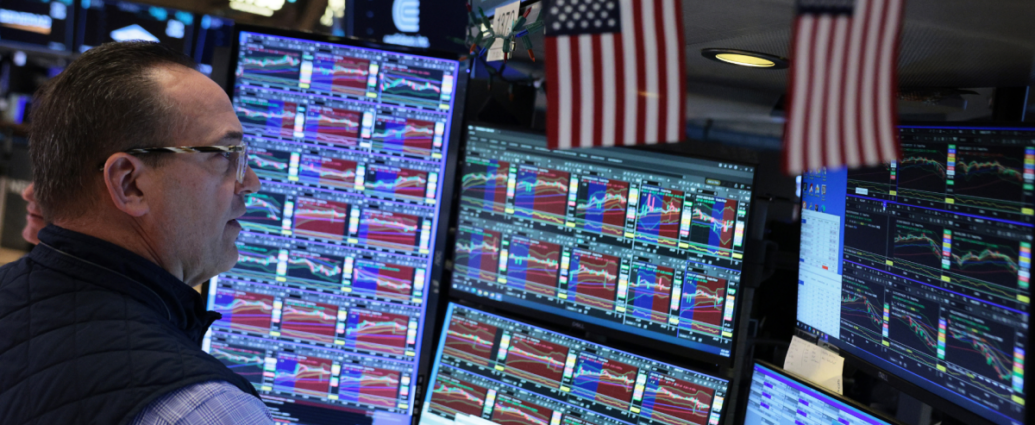
The Brent crude oil price is on track for its biggest monthly gain on record in March after the Iran war caused mayhem in the markets.

Brent crude, the international benchmark, has climbed by 51% since the start of March, LSEG data shows, beating the previous monthly record of 46% in September 1990 after Saddam Hussein invaded Kuwait, leading to the first Gulf war.

Continue reading…

This post was originally published here

Apple Inc. (NASDAQ:AAPL) had a busy week, making headlines with a series of significant developments. Here’s a quick roundup of the key stories that emerged over the week.

Apple Drops Six-Figure Bonuses To Retain iPhone Talent

Apple Inc. has taken a drastic step to retain its top talent. The company is reportedly discontinuing six-figure bonuses to prevent its engineers from leaving for competitors like OpenAI. This move comes as a response to the aggressive recruitment of Apple engineers by OpenAI and other startups.

Read the full article here.

Apple Taps Bosch, TDK For US iPhone Parts As Domestic Spending Surges

Apple Inc. has decided to source iPhone parts from Bosch and TDK in the US. This move is part of Apple’s larger $600 …

Full story available on Benzinga.com

This post was originally published here

Forthcoming rules mean debilitating conditions may not meet strict ‘severe and lifelong’ criteria, say charities

Hundreds of thousands of severely ill and disabled people making new claims will have their benefits cut if the government assesses that their condition might improve, charities have said.

In April, the health element of universal credit – an extra payment for people assessed as too unwell to work or prepare for work – will be halved to £50 a week and frozen for new claimants unless their condition is found to be terminal or severe and lifelong with no prospect of improvement.

Continue reading…

This post was originally published here

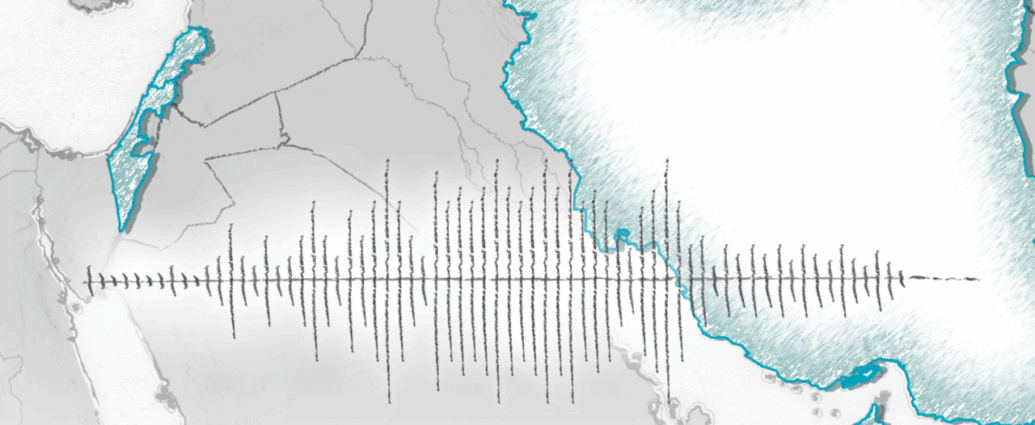
Foreign ministers from Pakistan, Saudi Arabia, Turkey and Egypt will meet in Islamabad today in an attempt to come up with a plan to de-escalate the Iran war, after another group got involved in the expanding conflict: Yemen’s Houthi rebels.

(Image credit: Pakistan Ministry of Foreign Affairs)

This post was originally published here

In his strongest intervention yet, PM says some features ‘shouldn’t be permitted’, while education secretary says things ‘are going to change’

Keir Starmer has backed banning addictive social media features in his strongest intervention yet on curbs that could be placed on tech companies, saying the features “shouldn’t be permitted”.

The prime minister said the government was “going to have to act” on the algorithms that hook young people and children to social media, such as scrolling or “streaks” that encourage daily usage of apps.

Continue reading…

This post was originally published here

Sara Ziff, founder of Model Alliance, said business leaders need to be hauled before House oversight committee

A top modeling industry activist has called for business leaders to be hauled before lawmakers in Washington to investigate what role modeling agencies may have played in the Jeffrey Epstein sex trafficking scandal.

Sara Ziff is founder of the Model Alliance, a non-profit advocacy group calling for fair treatment, labor rights and safe working conditions for fashion industry workers.

Continue reading…

This post was originally published here

As Women’s History Month comes to a close, here’s a little bit of trivia for you: One of the premier patents in bras hadn’t been touched or improved upon in 88 years. That was until Bree McKeen went after it. 

In 1931, inventor Helene Pons was granted a U.S. patent for a brassiere featuring an open-ended wire loop that encircled the bottom and sides of each breast. That uncomfortable, unyielding design had largely been left unchanged for nearly a century—and remains the dominant style in the global bra market, which is expected to reach nearly $60 billion by 2032. 

Nobody had filed a patent for an underwire replacement until McKeen, founder of Evelyn & Bobbie, left her Silicon Valley job to try to fix a personal problem. At the end of long days working at a boutique venture capital firm doing due diligence on consumer health care companies, she would come home with divots on her shoulders and chronic tension headaches after being hunched over her desk for hours on end. 

While the world was demanding, the culprit wasn’t her workload. It was her bra. 

But McKeen had zero experience in fashion. She studied medical anthropology and earned her MBA from Stanford. The turning point for her, though, came in a physiologist’s office, where McKeen had been working on her posture, along with regular barre training. 

“He’s like, your posture looks great,’” McKeen recalled to Fortune. “And I kind of blurt it out: When I stand like this, I get pain from my bra.” 

The physiologist explained it was a neuromuscular feedback loop, or the body’s automatic response to pain, like a pebble in a shoe. 

“Here I am doing all this work to carry myself with authority and poise, and my bra, I find out, is totally doing the opposite,” McKeen said. “You don’t have to tell your body to curl around the pain. It just does.”

She had zero fashion experience. She filed a patent anyway

That realization kick-started McKeen on a major career switch, costing her a career in VC—but earning her one of the most quietly disruptive brands in women’s fashion (Evelyn & Bobbie is now the fastest-growing brand at Nordstrom). She moved to Portland, Ore., the home to Nike, Adidas, and Columbia, for inspiration from major brands and proximity to new connections. 

She started tinkering with prototypes in her garage and immediately filed for intellectual property rights. That was based on her VC knowledge that a woman’s company would need that to get funded. 

McKeen got her first works utility patent (the harder, more defensible kind that covers how something works, not just how it looks) within a year. The brand declined to disclose how much funding it has raised, but it now holds 16 international patents protecting its proprietary EB Core technology, which mimics the support and structure of a wire without causing discomfort.

Woman wearing a bra

Photo courtesy Evelyn & Bobbie

To put into perspective how critical it was to protect her intellectual property, only 12% of patents in the U.S. were awarded to women, according to the U.S. Patent and Trademark Office as of 2019. McKeen has six of them, protecting the unique 3D-sling technology in her bras. 

The brand McKeen built, Evelyn & Bobbie, was named for her maternal grandmother and her aunt, and operates on a simple premise: a bra that fits well and feels good all day.

“I wanted a bra that made me look better in my clothes,” McKeen said—an inspiration reminiscent of how Spanx founder Sara Blakely started her now $1.2 billion shapewear empire. “Wire-free bras give you that mono boob—not a nice silhouette. They make your clothes look frumpy. I wanted nice lift, separation, a beautiful silhouette. I could not find that bra. How outrageous, really.”

The average U.S. bra size is 34F. Most brands design for something much smaller

With major brands like Victoria’s Secret, Aerie, Third Love, Savage X Fenty, and countless others on the market, Evelyn & Bobbie is undoubtedly in a crowded, competitive space. But as all women know, not all bras are comfortable to wear, especially for extended periods. 

“Every woman I talked to had 20 bras in her drawer, but she wore like two of them—the ugly, comfy ones that she felt like she shouldn’t wear,” McKeen said. 

What sets Evelyn & Bobbie apart is its approach to sizing. McKeen designs with 270 fit models across seven easy sizes, grading each style individually rather than scaling up from a single sample.

“Most bra companies have like one or two fit models,” she said. “They’ll make a 34B and just scale it up, which is why it doesn’t fit well in larger sizes.” 

Woman wearing a bra

Photo courtesy Evelyn & Bobbie

The average bra size in the U.S., McKeen pointed out, is a 34F, a stat that’s surprising to most people—including initial investors she once had to convince that comfort was even a relevant selling point.

“I had many investor meetings where they were 60-minute meetings, and 50 minutes of it was me trying to convince them that comfort was relevant,” she said. “I mean, Victoria’s Secret kind of figured it out, right? Like it’s just sexy, isn’t that what women want?”

Today, McKeen has a Slack channel dedicated entirely to customer love letters; a relationship with Dr. Nina Naidu, a New York–based plastic surgeon who sends the bras home with every postoperative patient; and a sports bra line in development. 

With a luxury product comes a luxury price point: Evelyn & Bobbie bras retail for $98 each. But for some women, avoiding chronic pain could be worth the price tag.

“Comfort is the new luxury,” she said. “We spend money on yoga pants that make us look and feel great. I’m going to make the premium bra the bra of the future.”

This story was originally featured on Fortune.com

Washington is racing to secure American leadership in artificial intelligence. Lawmakers are investing in semiconductor capacity, energy infrastructure, domestic manufacturing, and supply chain resilience — all with AI at the center of economic strategy.

But there is a structural gap in that strategy that few are talking about.

AI leadership depends on more than compute, talent, and capital. It also depends on whether the United States offers predictable and enforceable patent protection for the technologies that companies are building and investors are financing. In the global competition for AI dominance, intellectual property policy is not peripheral — it is foundational.

Recent Federal Circuit decisions affecting applied AI patents have renewed debate over subject matter eligibility under Section 101 of the Patent Act. The U.S. Patent and Trademark Office has issued helpful guidance clarifying examination standards for AI-related inventions — a needed step. But for companies deploying AI into real-world systems, from advanced manufacturing to grid modernization to defense, the operative question is durability: Will a duly issued patent withstand challenge? Will it support financing and commercialization? Will it provide meaningful remedies if infringed?

This distinction is especially significant in applied AI — AI embedded in industrial processes, energy systems, logistics networks, and health technologies. That is where large-scale private capital flows, and where enforceable patent protection most directly shapes investment decisions. When patent rights are uncertain, investors factor in that risk. Some move their capital toward less risky industries — or less risky jurisdictions.

What China and Europe Are Already Doing

Other major economies treat patent policy as a core component of their industrial strategy. China integrates intellectual property objectives into its national AI plans, pairing patent development with enforcement capacity. The European Patent Office has issued structured guidance on AI patentability designed to produce predictable outcomes when software-based inventions demonstrate “technical effect.”

The United States retains extraordinary strengths: leading research institutions, deep capital markets, entrepreneurial dynamism, and a sophisticated patent system. But sustained AI leadership depends not only on technological capability — it depends on legal certainty.

Three Priorities for a Forward-Looking Agenda

1. Maintain clarity in AI patent examination. The USPTO’s AI-related guidance provides a constructive foundation. Continued refinement, examiner training, and transparent application of eligibility standards are essential to ensure consistent outcomes across technologies and industries. Predictable examination reduces friction at the front end of innovation.

2. Strengthen enforceability through legislation. Uncertainty surrounding Section 101 has created instability for software-enabled and data-driven inventions. Congressional clarification of subject matter eligibility would reduce unpredictability and provide clearer guardrails for courts and innovators alike. Patent rights that cannot be defended in practice do not function as meaningful commercial assets.

3. Align IP incentives with strategic sectors. Congress is advancing legislation to bolster domestic manufacturing, energy infrastructure, defense technologies, and supply chain resilience — all areas increasingly powered by AI-enabled systems. Stable and enforceable IP rights encourage companies to develop, manufacture, and scale transformative technologies within the United States, rather than shifting investment toward jurisdictions that offer greater legal certainty.

The policy debate around AI often focuses on inputs: chips, data, workforce development, research dollars. They matter enormously. But innovation ecosystems depend just as much on credible legal institutions. Investors assess defensibility before committing capital. Entrepreneurs evaluate IP strength before entering markets. Global firms consider enforcement regimes when deciding where to locate research, production, and scaling operations.

Predictable patent systems send signals — that innovation will be rewarded, that risk is calculable, and that a jurisdiction is serious about technological leadership.

The global AI race is underway. Winning it will require more than chips and research grants. It will require a patent system calibrated for applied AI — one that provides clarity at the front end and enforceability at the back end. If Washington is serious about AI leadership, it must recognize that the global AI race is also an IP race — and strengthen the U.S. patent system accordingly. 

The opinions expressed in Fortune.com commentary pieces are solely the views of their authors and do not necessarily reflect the opinions and beliefs of Fortune.

This story was originally featured on Fortune.com

Five months after a ceasefire was announced in Gaza, airstrikes are still killing civilians, and the humanitarian situation remains dire

There is little left that connects Palestinians in Gaza with their prewar existence. The contours of life have become darker and far more brutal, as if the population has been stripped of its past.

“Drones never stop buzzing overhead, gunfire and shelling continue almost daily and naval boats fire towards fishermen,” said 56-year-old Ahmed Baroud, a father of five displaced in Deir al-Balah.

Continue reading…

This post was originally published here

Gabriel Petersson’s childhood looked a lot like many Gen Z upbringings: collecting Pokemon cards and building worlds in Minecraft, while worries about college and careers sat somewhere in the distant future.

But by high school, growing up in a small Swedish town of about 5,000 people, Petersson found himself less interested in just playing games and more curious in how they worked. That quickly snowballed into a deeper obsession with startups, software, and artificial intelligence—what he saw as the next major technological shift. 

Rather than follow a traditional path of finishing high school, studying computer science, and climbing the corporate tech ladder, Petersson opted out entirely. During his senior year, the then 17-year-old dropped out of high school to cofound Depict.ai, an e-commerce data startup, alongside peers who would later go on to roles at companies like Lovable and Lego.

Five years later, that bet has paid off. At 22, Petersson has landed a six-figure salary at ChatGPT parent OpenAI working as a researcher (formally part of the now sun-setting Sora team). And he’s become an unlikely evangelist for a simple idea: the credential gap is closable, if you’re willing to show your work.

How a twentysomething landed a job in Silicon Valley—without a degree to his name

Landing a role at one of Silicon Valley’s most coveted companies without a degree—let alone a high school diploma—requires a different kind of job-seeking strategy. For Petersson, it came down to proving you can do the job before anyone asks for your resume.

After his time at Depict, he joined Y Combinator-backed AI startup Dataland and relocated to New York in 2021. By most measures, things were going well. Then he visited San Francisco. 

“I still remember the first week,” Petersson said. “I just couldn’t sleep… you could just go to any place, and people would discuss programming. They would discuss startups. They would talk about all these things that I enjoy talking about…I was just mind blown.”

The trip recalibrated his ambitions entirely. But there was the obvious challenge of how a high school dropout could compete with candidates from Ivy League schools and top engineering programs. His answer was to stop competing on credentials altogether and compete on proof instead. 

Rather than submitting applications just through traditional channels, Petersson developed a direct outreach playbook. The format was simple: introduce yourself briefly, express genuine enthusiasm for the company, and—most critically—show them something built for them specifically.

“You can say something like, ‘I was so excited about your company that I’ve been having this side project of building an actual website for what you guys are doing,” he said. “In this way I can prove all these things and not compete with anyone else.”

The strategy helped him land a role at Dataland, and he put it to the test again at Midjourney, an AI research lab based in Silicon Valley. Around that time, he was still striking out through traditional applications, including an early rejection from OpenAI.

So he doubled down on his approach by spending a full week working 16-hour days to build a custom website for Midjourney, then sending over a video demo walking through the code. The effort paid off, and Midjourney hired him as a software engineer in 2023.

“When I make a video demo of a product that I build, I show my understanding, I show that I’m good socially. They can see this person seems reasonable,” Petersson added. “I tick more boxes than I ever could by any proxy.”

The Midjourney role opened the next door. A friend connected him to OpenAI’s research team—the same company that had rejected him a year earlier. This time, he was ready. He landed the role in December 2024. It was a lesson, he said, in the power of trying again for opportunities after you know you can do more.

Gen Z can land their dream job—as long as they have the right mindset, according to Petersson

For Petersson, Midjourney and OpenAI have been more than just jobs—they’ve been confirmation of something he now shares broadly with young people navigating an increasingly credential-obsessed hiring market: elite careers are not reserved for a select few. Even people working at the most powerful companies in the world, he argued, aren’t as unreachable as they seem.

“Anyone can compete if you just put yourself in the right scenarios and the right things,” Petersson said.

Many young professionals fall into the trap of holding themselves back, he added, by staying in roles for too long. Having worked at nearly half a dozen companies before even turning 23, Petersson thinks early careers should be optimized for learning velocity, not stability.

At a moment when many young people are entering the workforce wondering whether AI will simply take the jobs they’re chasing, Petersson is convinced there’s plenty of opportunity for those willing to embrace the technology rather than fear it.

And after working in the tech industry, he pointed out even top minds “don’t have everything figured out.”

This story was originally featured on Fortune.com

A long-term project to remove or modify dams may clear the way for endangered wild Atlantic salmon to swim freely up to the Sandy River. But it faces opposition from business and lawmakers.

This post was originally published here

The effective closure from the Iran war of the Strait of Hormuz—the critical chokepoint for roughly 20% of the world’s oil and liquefied natural gas—is in its fifth week with no clear signs of resolving. For Asia, which buys more than 80% of the crude and LNG that flows through the narrow waterway, the consequences have been swift: severe fuel shortages, export bans, and government budgets stretched to the breaking point.

The crisis is forcing Asia to look both backward and forward simultaneously. In the short term, governments are returning to coal—the dirtiest of fossil fuels—to keep the lights on. In the long term, the supply shock may accelerate nuclear restarts and electric vehicle adoption faster than years of climate policy ever managed.

The fuel crisis has pushed Asian countries to turn to increasingly severe measures to maintain their stockpiles. 

South Korea urged households to take shorter showers, charge devices during off-peak hours and shift usage of high-energy appliances like washing machines to weekends. Samsung, meanwhile, barred employees from driving their car to work if the last digit of their license plate matches the last digit of the current date. 

Southeast Asian governments are rolling out similar restrictions. Thailand introduced a four-day workweek for civil servants, and ordered higher office air-conditioning temperatures to curb demand. Vietnam’s airlines are suspending some domestic routes as the country braces for jet fuel shortages.

The situation is most critical in the Philippines, where President Ferdinand Marcos Jr. on March 24 declared a national energy emergency, citing an “imminent danger” to the nation’s supplies of fuel. Transit workers went on strike on Friday to protest rising fuel prices.

The crisis also is straining government finances. Malaysia’s monthly fuel-subsidy bill, for example, has surged from 700 million Malaysian ringgit ($174 million) to more than 3.2 billion ringgit ($797 million), and could reach 24 billion ringgit ($6 billion) if oil remains above $110 per barrel. Kuala Lumpur cut the quota of subsidized fuel by a third before the weekend in a bid to slice costs.

Back to coal

Asian governments are temporarily pivoting to coal as the Iran war chokes off natural gas supplies, undermining years of effort to curb the continent’s dependence on the dirtiest major fuel.

Across the region, governments have gradually curtailed coal while promoting LNG as a relatively cleaner, more flexible transition fuel.

The Hormuz crisis is reversing that progress. Thailand’s government is restarting two coal plants that it decommissioned last year. South Korea removed its 80% operating cap on coal-fired generation. Japan confirmed on March 27 that it too is lifting caps on coal power generation, allowing older and less-efficient plants to operate at full capacity for up to a year from April.

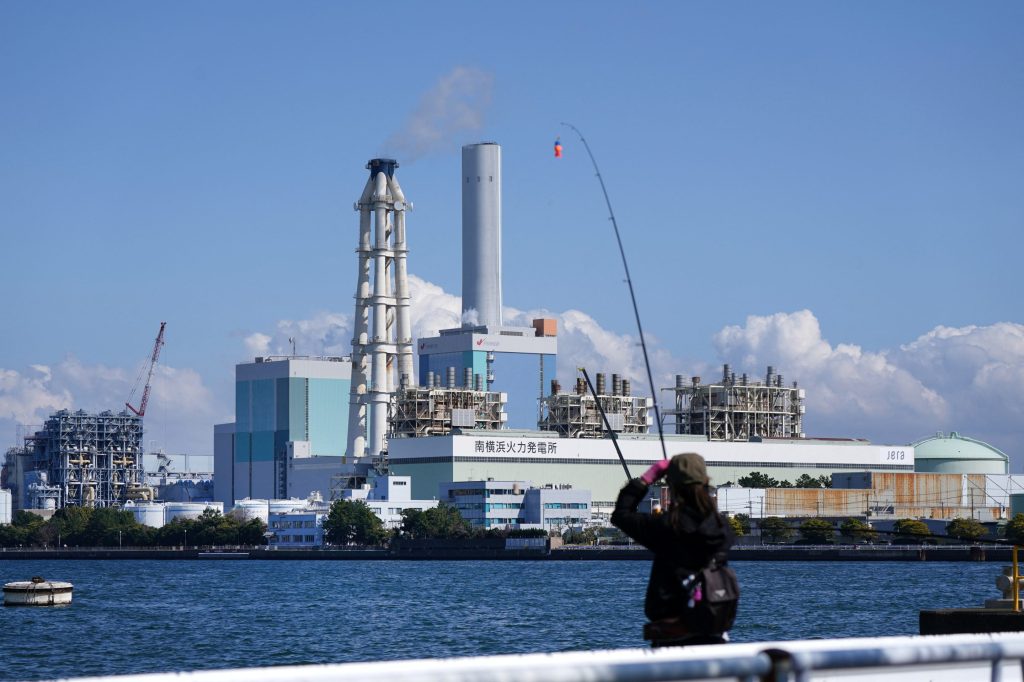
Japan’s government plans to temporarily lift restrictions on coal-fired power plants as it seeks to ease an energy crunch caused by the Middle East war, an official said on March 27, 2026.
Kazuhiro Nogi—AFP via Getty Images

Traditional coal exporters, such as Australia and Indonesia, also may keep coal for themselves rather than share it with their neighbors.

“Indonesia is prioritizing domestic coal consumption over exports, which tightens supply for Asian imports,” says Vicky Janita, an analyst at Rystad Energy. “The rest of the region doesn’t necessarily benefit from Indonesia’s coal abundance if it cannot export.” 

The risk is that once a coal plant is brought back online, the sunk costs and political economy of energy pricing make it difficult to shut down again. “There’s a danger of a long-term carbon lock-in once countries decide to reverse plans to retire aging coal-fired fleets,” warns Sharon Seah, coordinator of the Climate Change in Southeast Asia program at ISEAS–Yusof Ishak Institute. 

Forward to nuclear

The ongoing war in Iran and Lebanon also is likely to accelerate nuclear plans across Asia.

Southeast Asia, despite years of debate, does not have a single operational nuclear power plant. Nuclear was expensive and politically toxic after the Fukushima nuclear accident in 2011, and cheap natural gas ended up a more attractive option. Other parts of Asia have also been wary of nuclear: Taiwan decommissioned its last nuclear plant last year. 

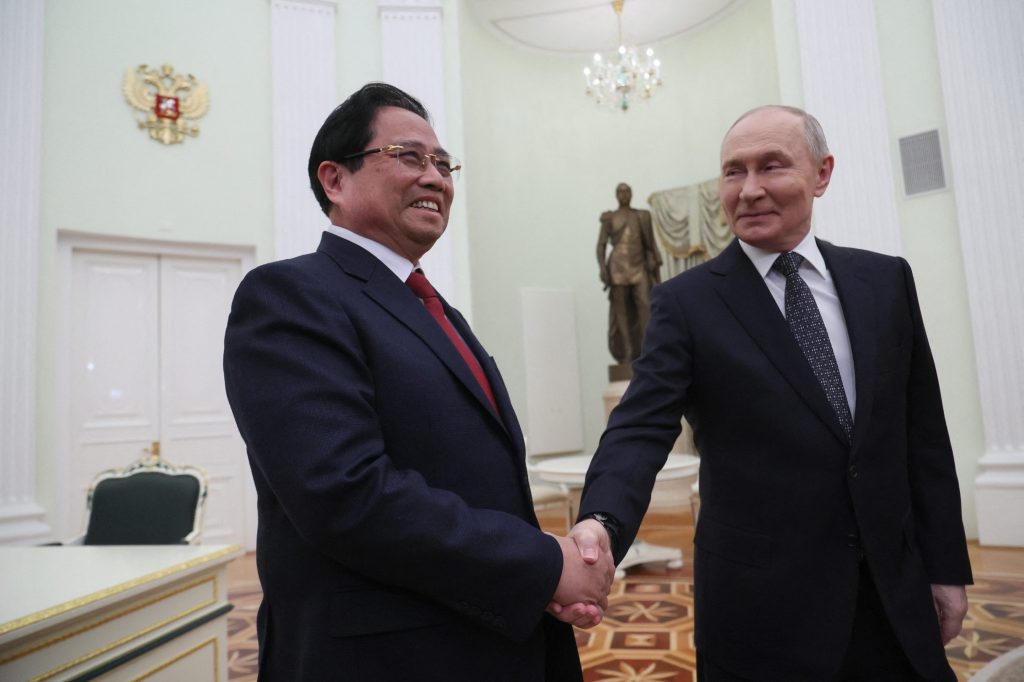
Parts of Asia were making cautious steps toward nuclear energy before the Iran crisis. Vietnam had been in negotiations with Russia to build its first nuclear power plant; that deal was finalized on March 23, when Moscow agreed to help construct the Ninh Thuan 1 plant using two Russian-designed reactors.

Malaysia is also considering nuclear energy to power its growing data center industry without abandoning its net-zero commitments.

Russian President Vladimir Putin welcomes Vietnamese Prime Minister Pham Minh Chinh during their meeting at the Kremlin in Moscow on March 25, 2026.
Maxim Shipenkov—Pool/AFP via Getty Images

China has dozens of nuclear reactors under construction and several hundred still in the planning stage, David Fishman, an analyst at the China-based Lantau Group, noted. “It’s the most ambitious build plan in the world by far, even if it’s still only a very small fraction of China’s total power consumption.”

But the Iran war could accelerate a return to nuclear energy. 

The most dramatic nuclear reversal is in Taiwan, where President Lai Ching-te, whose ruling Democratic Progressive Party has governed under a “nuclear-free homeland” platform since 2016, announced plans to restart two of the island’s shuttered reactors. 

The Philippines has laid out a pathway to nuclear power by 2032 and is seeking South Korean expertise, while Seoul is raising utilization rates at existing reactors.

Still, it is easy to overestimate the permanence of any of these shifts. 

“In every oil crisis, the knee-jerk reaction from net importers is, ‘We must switch to non-fossil fuel sources’,” says Li-Chen Sim, an associate fellow at the Middle East Institute in Washington. “But this is quickly forgotten or cast aside once the crisis is over.” 

Fossil fuels are not used solely for power generation, she added; the region’s semiconductor, plastics, and textile industries also depend heavily on petrochemical inputs. “No Southeast Asian country is about to permanently shift away from fossil fuels,” she notes.

“The energy transition in Asia is more likely to be a messier, longer transition where fossil fuels remain a significant part of the mix for at least another decade,” adds Rystad’s Janita.

Not just power

Apart from seeking alternative energy sources, the Hormuz crisis may trigger “demand destruction,” resulting in less total energy usage—a phenomenon when high prices cause a permanent shift in consumer behavior. One historical precedent is the 1970s oil embargo, when U.S. drivers defected to fuel-efficient Japanese cars and never went back. 

“The question is whether this crisis does the same for EVs in Asia,” Janita says. “While EVs won’t ease the current shortage, this crisis could be a turning point for medium-term adoption across the region.”

There’s some early evidence that consumer behavior is changing. EV dealerships across Southeast Asia reported higher customer interest and increased orders in March. And governments are pushing for change too: earlier this week, Indonesia President Prabowo Subianto pledged that all vehicles in Indonesia would eventually be electric. 

“Chinese EVs have been gaining strong traction in markets like Australia recently, and electric two-wheelers in Southeast Asia were already expanding rapidly even before the current crisis,” says Hao Tan, a professor of management at the University of Nottingham Ningbo China. “Higher oil prices are most likely to accelerate this trend, and Chinese firms hold the strongest competitive advantage.”

China has been insulated from the Iran energy shock. China relies more on a mix of coal, nuclear, and renewable energy rather than oil and LNG. In addition, its strategic reserves, estimated at some 120 days of oil imports, give it a substantial buffer against price shocks.

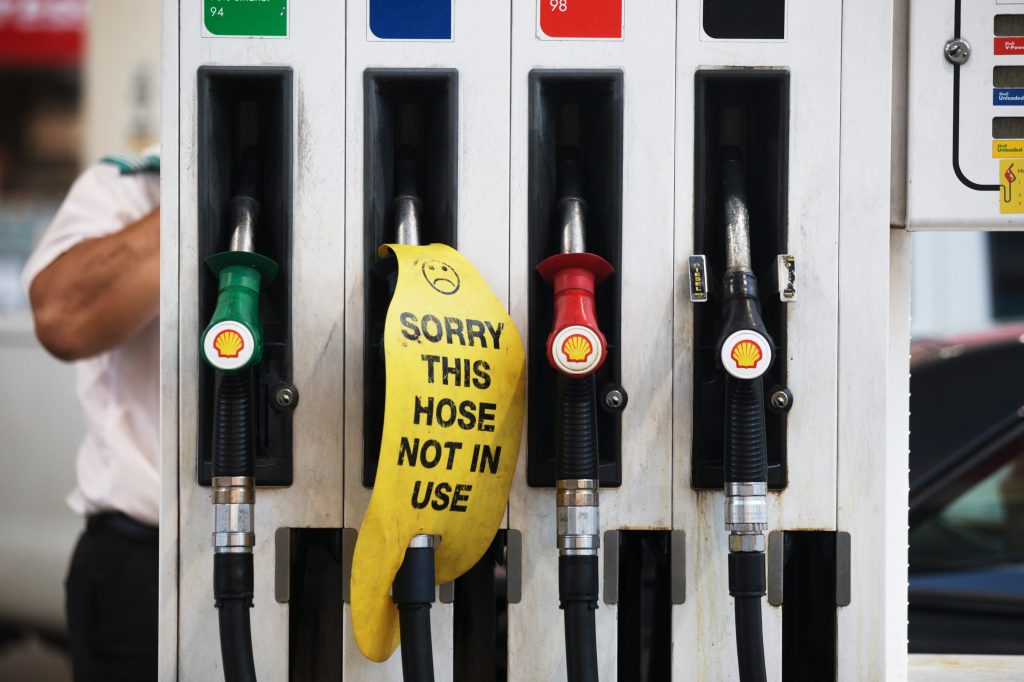
A ‘Sorry This Hose Not In Use’ sign covers a pump at a Shell petrol station in Sydney, Australia, on Wednesday, March 25, 2026.
Brent Lewin—Bloomberg via Getty Images

But China’s early decision to direct its top refiners to suspend exports of diesel, petrol, and jet fuel is rippling across the region. 

The collateral damage has been significant. China supplies 40% of Australia’s jet fuel; Vietnam, the Philippines and Bangladesh also rely on Chinese fuel. Thailand and South Korea have also imposed limits on refined-fuel exports, further tightening regional supply.

Mines in Australia are warning of suspensions due to dwindling diesel supplies. Airlines across the region, like Hong Kong’s Cathay Pacific are slapping hefty fuel surcharges on flights; Vietnam and the Philippines are even weighing whether to ground planes.

Fishman thinks China may take a “reputational hit” for halting fuel exports, but argues Beijing may have had little practical choice. “Wouldn’t you do the same if you had excess refining capacity and you were facing down a potential domestic shortfall?” he asked. “It’s horrendous math that you can’t get around—but it’s not wrong.”

This story was originally featured on Fortune.com

Police say seven people suffered ‘range of serious but not life-threatening injuries’ in incident on Friar Gate

A man has been arrested on suspicion of attempted murder after a car struck several pedestrians on one of Derby’s busiest streets.

Derbyshire police said seven people had been injured, sustaining “a range of serious but not life-threatening injuries” in the incident on Saturday night.

Continue reading…

This post was originally published here

Ban on junk food adverts has cut advertising spend and prompted a debate over the policy’s impact

The UK will have its first Easter without the traditional barrage of TV ads for chocolate eggs and hot cross buns as the ban on junk food advertising makes the sweetest tradition of the year a sugar-free viewing experience.

New regulations, which came into force at the beginning of the year, prohibit products high in fat, sugar and salt from appearing in TV ads before 9pm, as part of efforts to tackle rising childhood obesity.

Continue reading…

This post was originally published here

Workers in high-pressure careers may count down the hours until they can escape the office and get a moment of relief—but a Japanese Zen Buddhist monk says a reset doesn’t have to wait. Toryo Ito, the vice abbot of the oldest Zen temple in Kyoto, is bringing a mediation-based practice to the corporate world and helping workers cope with their stressful careers.

“I want to shift their awareness of the definition of ‘strong.’ People who are very good at business tend to focus on the power [and] force,” he tells Fortune. “My definition of [strength] is how you get back to the core of your idea, how to come back to your body and heart in daily life.”

Ito says helping people navigate their high-stress jobs is one of the most frequent requests he gets from white-collar pupils. The 46-year-old leader at Ryosokuin Temple was born into a lineage of Zen monks, and started sharing his practice with companies and their staffers back in 2012.

Serving as director of mindfulness at Japanese skincare company Tatcha since 2021 and leading meditation workshops at Fortune 500 businesses like Meta and Sony, the monk is bringing his ancient practice to people all around the world with a modern approach. He travels to Tokyo to teach mindfulness once a month, conducting overseas sessions up to 10 times a year.

When it comes to handling stress while on the job, Ito says it’s a dilemma he’s mitigated with his meditation attendees “thoughtfully and proactively.” And luckily, workers don’t have to wait to clock out to reset their nervous systems. Ito shares a 30-second method to reconnect with themselves and achieve a sense of calm. 

“When you get so much information, [you become] obsessed with a lot of decisions,” Ito explains. It’s okay to recognize that you’ve dwelled on the feeling, and he shares a “way to notice that earlier, and then develop the way—our technique—to get back to your origin, to your body, quickly.”

The Zen way anyone can achieve a calmer mindset in 30 seconds 

Millions of workers have become hardwired to bustle into their offices, overwhelmed by packed commutes and chaotic starts to the day. But even while toiling away at their laptops, professionals can take one short step to return to their center. Opening up a new document or answering emails can turn into a meditative moment. 

“I often teach them what you can do in your daily routine, such as drinking coffee, for example, or opening a laptop. Before opening your laptop, just take 30 seconds to breathe in, breathe out carefully,” Ito explains. 

By taking a beat to sit in silence with closed eyes, people are giving themselves a moment to notice the world, rather than shut it out. Ito says it’s important to be observant during those 30 seconds: pay attention to the noise in the room, what it smells like in that moment. If you pick up a cup of coffee to drink, focus on the taste.

Engaging the senses centers mindfulness even in the most hectic work environments, lowering stress and opening up the headspace for thinking. 

“When you send an important message to your colleague, just take 30 seconds to listen to the sound surrounding you, smell the surroundings,” he continues. “Your habit, your work, can become meditative time.”

Ito offers another Zen strategy for one of the most nerve-wracking moments at work: going into a stressful meeting. Focusing on your steps and entering the room intentionally helps build up “your personal ritual,” the monk says. 

“When you enter the conference room, just open the door,” he says. “Put your feet together, then walk from the left foot first, then right foot. Always do that, then you can find the slight changes of that everytime…You have a strong routine that gives you that awareness.”

Professionals might lose their rhythm, or recognize a difference in their breathing, but it all goes back into Zen’s practice of noticing—and having those small meditative habits to reconnect to the body.

This story was originally featured on Fortune.com

Critical Western Australia agriculture region counting cost of brutal cyclone as flooding risk persists for low-lying communities

An agricultural region that supplies about 60% of Western Australia’s fresh winter produce is assessing damage as authorities continue work on Sunday to restore power to a popular tourist town hit hard by Cyclone Narelle.

The food-bowl region near Carnarvon, about 900km north of Perth, provides 80% of of the state’s bananas. Meanwhile, flooding risk remains in the state’s low-lying communities.

Continue reading…

This post was originally published here
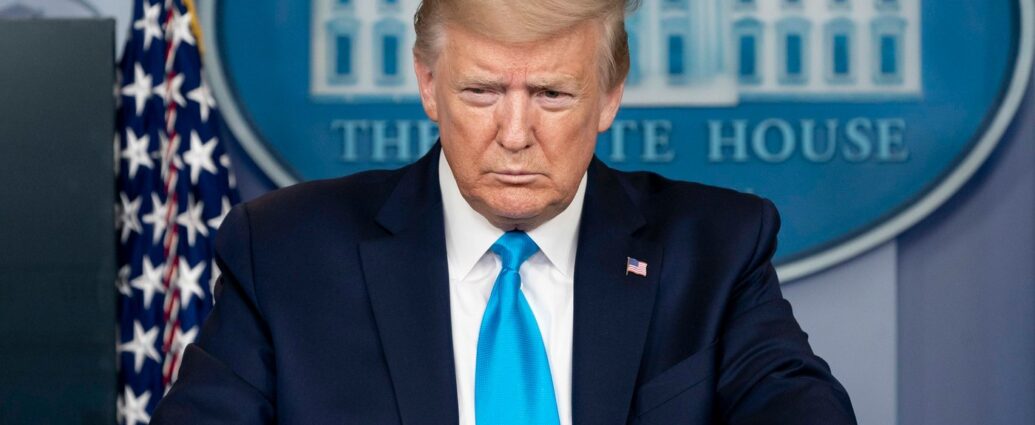
Conviction revealed during questioning of Rob Hastings about a second woman whom he deceived into intimate relationship

An undercover officer who deceived a woman into an intimate relationship was later convicted and dismissed from the police for assaulting his long-term partner, the public inquiry into undercover policing has heard.

Rob Hastings, who infiltrated pro-Palestinian and left wing protest groups for three years during his covert deployment, was convicted of assaulting his now ex-partner and mother of his three children in 2014. He was sacked by the Metropolitan police for gross misconduct as a result.

Continue reading…

This post was originally published here

Venture capitalist Chamath Palihapitiya argued that brand moats are heading to zero as cheaper, faster, better products erode brand pricing power across most categories.

Brand Pricing Power Fades

Speaking on the All-In Podcast, Chamath discussed the factors that create strong competitive advantages for businesses, known as “moats.” He also expressed skepticism about the long-term strength of brands in the face of AI-driven innovation.

“If I had to bet, I’m going to bet that brands go to zero,” Chamath said. He argued that in a world of digital abundance, consumers prioritize products that offer better value and quality over brand loyalty.

Legacy Brands Lose Ground To Value

Chamath cited Tesla Inc. (NASDAQ:TSLA) displacing BMW, Mercedes and Porsche, and what BYD Co. (OTC:BYDDY)(OTC:

Full story available on Benzinga.com

This post was originally published here

Moderate-backed Dinesh Gourisetty won nomination for upper house seat

Moira Deeming has lost her spot on the ballot for the Victorian Liberal party at the November state election, after a successful challenge by a moderate-backed candidate.

Liberal members gathered at party headquarters in Melbourne’s CBD on Sunday for the western metropolitan region convention, where Deeming was defeated by Dinesh Gourisetty, a prominent figure in Melbourne’s fast-growing Indian community.

Continue reading…

This post was originally published here

Nigel Farage has called Tate an ‘important voice’ for young men and held back from criticising his misogynistic views

Reform insiders are becoming increasingly irritated by the party’s association with Andrew Tate and other extreme online celebrities whose views are too toxic for the mainstream voters Nigel Farage needs to win over.

Insiders have revealed that as Reform prepare for power they are trying to end their association with more controversial figures on the right such as Tate, whose extreme and misogynistic content could taint the party’s credibility.

Continue reading…

This post was originally published here

Islamabad is attempting high-wire diplomacy between US and Iran, but Israel could spoil any chance of success

Intensifying Israeli bombing of civilian targets in Iran and an expanding US military force in the Gulf are casting a dark shadow over Pakistan’s hopes of hosting peace talks between Iran and the US.

Pakistan is attempting high-wire diplomacy, using its relative neutrality as a country with good relations with Iran and the US, to provide a venue for negotiations. It is not a player in the Middle East and does not host any American military bases, so it does not bring the baggage of other potential regional mediators.

Continue reading…

This post was originally published here

Minister’s decision to ditch town’s colonial-era identity and honour anti-apartheid activist divides residents

A South African town is divided over changing its name from the colonial-era Graaff-Reinet to Robert Sobukwe, after the anti-apartheid activist, in a debate that has inflamed racial tensions.

Petitions have been signed, rival marches held and a formal letter of complaint sent to the sports, arts and culture minister, Gayton McKenzie, who approved the name change on 6 February.

Continue reading…

This post was originally published here

Evacuation orders and strikes turn once-vibrant Lebanese beach town into a refuge for holdouts and displaced

This post was originally published here

Most of us are just one event away from resigning even though we probably should stay put

This post was originally published here

Elon Musk‘s last original co-founder at xAI, Ross Nordeen, has reportedly resigned. This marks the end of an era for the company, which is now undergoing a major reorganization as it prepares for a high-profile IPO.

Last Original Co-Founder Departs xAI

Nordeen, one of the 11 co-founders who helped launch xAI with Musk, has left the company, Business Insider reported, citing sources.

The 36-year-old had experience in high-performance computing and artificial intelligence systems from his work at Tesla (NASDAQ:TSLA) and brought that knowledge to xAI.

According to the report, he was a key figure at xAI, reporting directly to Musk and overseeing the company’s operations.

Nordeen reportedly joined Musk after working at Tesla to help launch the AI startup …

Full story available on Benzinga.com

This post was originally published here

Mark Cuban outlined AI automation, tax, and market-structure risks faced by companies replacing human workers with humanoids and AI in a mock IPO risk-disclosure post on X on Saturday.

Cuban’s post was in response to Elon Musk‘s statement, “Working will be optional in the future,” posted on X.

Cuban Drafts Tomorrow’s Risk Disclosures — Today

The hypothetical prospectus shared by the billionaire investor warns that in the event work becomes optional, local, state and federal governments are expected to institute new and unpredictable taxes, including a robot utilization tax and a token utilization tax.

Cuban noted these could “completely change the economics of our industry” and impact shareholder returns.

Full story available on Benzinga.com

This post was originally published here

Allan government says measure is temporary as energy shock from Middle East conflict sees petrol prices soar

Public transport will be free in Victoria for a month and in Tasmania until July, in an effort to encourage people to switch from driving and to alleviate the surge in fuel demand.

However, the NSW and Western Australian governments will not follow suit, with NSW’s transport minister saying it needs to “keep our powder dry” to deal with a crisis that may last much longer than a month.

Continue reading…

This post was originally published here

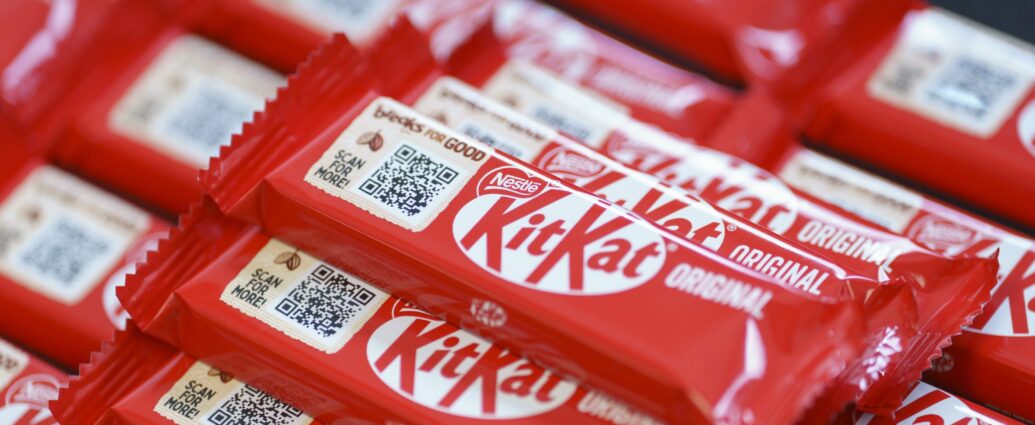
Twelve tons of KitKat chocolate bars were stolen while being transported across Europe earlier this week.

KitKat, which is owned by food giant Nestlé, said Saturday that 413,793 bars went missing after leaving a factory in central Italy, where they were to be distributed throughout Europe before arriving in Poland.

The vehicle and its contents have not been found, Nestlé said. It did not say where the truck was lost.

MILLIONS OF GRILL BRUSHES PULLED FROM MARKET OVER RISK OF ‘SERIOUS INTERNAL INJURIES’

“We’ve always encouraged people to have a break with KitKat, but it seems thieves have taken the message too literally and made a break with more than 12 tonnes of our chocolate,” a KitKat spokesperson said in a statement.

“Whilst we appreciate the criminals’ exceptional taste, the fact remains that cargo theft is an escalating issue for businesses of all sizes,” the spokesperson continued. “With more sophisticated schemes being deployed on a regular basis, we have chosen to go public with our own experience in the hope that it raises awareness of an increasingly common criminal trend.”

While KitKat said there was no risk tied to the stolen product, it added that the missing chocolate bars could appear on unofficial sales channels across Europe.

NEARLY 10M POUNDS OF FROZEN FRIED RICE SOLD AT TRADER JOE’S ADDED TO RECALL: USDA

The company said the missing chocolate bars are traceable through a unique batch code and that anyone scanning the batch numbers of the stolen bars would be given instructions on how to contact the company.

CLICK HERE TO GET FOX BUSINESS ON THE GO

Nestlé said the incident will not affect supply or lead to a shortage ahead of Easter.

Reuters contributed to this report.

This post was originally published here. 

National Education Union poll finds 89% feel class sizes in England are too big to be ‘properly inclusive’

Oversized classes and inadequate staffing levels are hindering teachers’ capacity to support children with special educational needs and disabilities (Send), according to a large survey of state school teachers in England.

Nine out of 10 (89%) of the 10,000 teachers who took part in the poll by the National Education Union (NEU), before its annual conference in Brighton which starts on Monday, said class sizes were too big to be “properly inclusive”.

Continue reading…

This post was originally published here

This liveblog is now closed. Read the full story here.

In the year since Donald Trump retook office, the number of protests in the US outpaced those at the same point in his first administration, according to data from the Crowd Counting Consortium, an open-source project collaboration between Harvard University’s Kennedy School and the University of Connecticut, reported Lex McMenamin and Andrew Witherspoon.

There were more than 10,700 protests in 2025, a 133% increase from the 4,588 recorded in 2017, the first year of Trump’s first term. According to the data, an overwhelming majority of US counties – including 42% that voted for Trump – have had at least one protest since he was re-inaugurated last year.

Continue reading…

This post was originally published here

Vice-president received about 53% of votes at Conservative Political Action Conference held in Texas this year

One of the biggest conservative gatherings in the US ran a poll showing vice-president JD Vance is the top choice this year to be the next Republican presidential candidate.

The poll from the Conservative Political Action Conference (CPAC), released on Saturday, was taken during this year’s gathering. About 53% of the more than 1,600 attendees who voted in the poll chose Vance, Reuters reports. Marco Rubio, the secretary of state, came in second with 35%.

Continue reading…

This post was originally published here

Large crowds protested Saturday against the war in Iran and President Donald Trump’s actions in “No Kings” rallies across the U.S. and in Europe. Minnesota took center stage, with thousands of people standing shoulder-to-shoulder to celebrate resistance to Trump’s aggressive immigration enforcement.

Minnesota’s flagship event on the Capitol lawn in St. Paul drew Bruce Springsteen as its headliner. He and other speakers praised the state’s people for taking to the streets over the winter in opposition to a surge of U.S. Customs and Immigration Enforcement agents.

Springsteen performed “Streets of Minneapolis,” the song he wrote in response to the fatal shootings of Renee Good and Alex Pretti by federal agents. Springsteen lamented Good and Pretti’s deaths but said the state’s pushback against ICE has given the rest of the country hope.

“Your strength and your commitment told us that this was still America,” he said. “And this reactionary nightmare, and these invasions of American cities, will not stand.”

People rallied from New York City, with almost 8.5 million residents in a solidly blue state, to Driggs, a town of fewer than 2,000 people in eastern Idaho, a state Trump carried with 66% of the vote in 2024.

Biggest crowds yet expected

U.S. organizers have estimated that the first two rounds of No Kings rallies drew more than 5 million people in June and 7 million in October.This week they told reporters they expected 9 million participants Saturday, though it was too early to tell whether those expectations were met.

Organizers said more than 3,100 events — 500 more than in October — were registered, in all 50 states.

In Topeka, Kansas, a rally outside the Statehouse had people impersonating a frog king and Trump as a baby. Wendy Wyatt drove with “Cats Against Trump” sign from Lawrence, 20 miles (32 kilometers) to the east, and planned to drive back to her hometown for a later rally there.

Wyatt said “there are so many things” about the Trump administration that upset her, but “this is very hopeful to me.”

GOP officials dismissive of protests

White House spokesperson Abigail Jackson characterized them as the product of “leftist funding networks” with little real public support.

The “only people who care about these Trump Derangement Therapy Sessions are the reporters who are paid to cover them,” Jackson said in a statement.

The National Republican Congressional Committee was also sharply critical.

“These Hate America Rallies are where the far-left’s most violent, deranged fantasies get a microphone,” NRCC spokesperson Maureen O’Toole said.

Protesters have a long list of causes

Trump’s immigration enforcement push, particularly in Minnesota, was just one item on a long list of protester grievances that also included the war in Iran and the rollback of transgender rights. Speakers at the Minnesota rally decried billionaires’ economic power.

In Washington, hundreds marched past the Lincoln Memorial and into the National Mall, holding signs that read “Put down the crown, clown” and “Regime change begins at home.” Demonstrators rang bells, played drums and chanted “No kings.”

Bill Jarcho was there from Seattle, joined by six people dressed as insects wearing tactical vests that said, “LICE” — spoofing ICE, as part of what he called a “mock and awe” tour.

“What we provide is mockery to the king,” Jarcho said. “It’s about taking authoritarianism and making fun of it, which they hate.”

About 40,000 people marched in San Diego, police there said.

In New York, Donna Lieberman, executive director of the New York Civil Liberties Union, said during a news conference that Trump and his supporters want people to be afraid to protest.

“They want us to be afraid that there’s nothing we can do to stop them,” she said. “But you know what? They are wrong — dead wrong.”

Organizers said two-thirds of RSVPs for the rallies came from outside of major urban centers. That included communities in conservative-leaning states like Idaho, Wyoming, Montana, Utah, South Dakota and Louisiana, as well in electorally competitive suburbs in Pennsylvania, Georgia and Arizona.

Main event at the Minnesota Capitol

Organizers designated the rally there as the national flagship event.

Before Springsteen took the stage, organizers played a video in which actor Robert DeNiro said he wakes up every morning depressed because of Trump but was happier Saturday because millions of people were protesting. He also congratulated Minnesotans for running ICE out of town.

The bill also included singer Joan Baez, actor Jane Fonda, Vermont U.S. Sen. Bernie Sanders and a long list of activists, labor leaders and elected officials.

Protesters held up a massive sign on the Capitol steps that read, “We had whistles, they had guns. The revolution starts in Minneapolis.”

“Donald Trump may pretend that he’s not listening, but he can’t ignore the millions in the streets today,” said Randi Weingarten, president of the American Federation of Teachers.

Rallies outside the US

Demonstrations were also planned in more than a dozen other countries, from Europe to Latin America to Australia, Ezra Levin, a co-executive director of Indivisible, a group spearheading the events, said in an interview. In countries with constitutional monarchies, people call the protests “No Tyrants,” he said.

In Rome, thousands marched with defiant chants aimed at Premier Giorgia Meloni, whose conservative government saw its referendum for streamlining Italy’s judiciary fail badly this week amid criticism that it was a threat to the courts’ independence. Protesters also waved banners protesting Israeli and US attacks on Iran, calling for “A world free from wars.”

In London, people protesting the war held banners with slogans such as “Stop the far right” and “Stand up to Racism.”

And in Paris, several hundred people, mostly Americans living in France, along with labor unions and human rights organizations, gathered at the Bastille.

“I protest all of Trump’s illegal, immoral, reckless, and feckless, endless wars,” rally organizer Ada Shen said.

This story was originally featured on Fortune.com

A 26-year old man died in a cell in Darwin on Saturday morning, and a 25 year-old man died in a police car on Tuesday

A 26-year-old man died at Darwin correctional centre on Saturday, Northern Territory police said.

It was the territory’s second reported death in custody in just a matter of days.

Continue reading…

This post was originally published here

Conservative leader expected to call for government to lift suspension on licences in drive to reduce energy prices

Kemi Badenoch is “peddling a dangerous fantasy” about North Sea energy in her attempt to reverse a ban on new oil and gas licences, a leading campaign group has said.

The Conservative leader is expected to call on the government to lift its suspension of the licences as part of a drive to reduce energy prices, as the party launches a new campaign aimed at boosting the fossil fuel sector.

Continue reading…

This post was originally published here

Home buyers have gained even more leverage over sellers as housing market supply continues to overwhelm tepid demand.

In February, there were 46.3% more sellers than buyers, representing a gap of 629,808, the largest in Redfin’s records going back to 2013, the real estate company said in a report on Monday.

The latest number is up 30% from a year earlier, when the mismatch was 449,409. And recently as October, it was 528,769 people.

According to Redfin, a buyer’s market is when there are over 10% more sellers than buyers. And by this definition, buyers have held the advantage since May 2024.

That came after the Federal Reserve’s most aggressive rate-hiking cycle in four decades, sending mortgage rates higher as central bankers scrambled to bring down inflation.

The result was a sharp unwinding of the seller’s market that saw home prices and sales boom in the aftermath of the COVID pandemic.

But even though the Fed began reducing rates two years ago, the housing market has largely been frozen as the “lock-in effect” prevented homeowners with low mortgage rates from putting their properties up for sale. The tight supply also lifted home prices, adding to the spiraling housing affordability crisis.

President Donald Trump’s Iran war has only made things worse. Fears that high oil prices will accelerate inflation while more defense spending widens the deficit have spiked Treasury yields, lifting borrowing costs throughout the economy.

That includes mortgage rates, which have jumped to their highest levels since October. With homeownership now even more expensive, mortgage application volume plunged 10.5% last week from the prior week. That’s an ominous sign for the upcoming spring selling season.

“Of course, it’s only a buyer’s market for those who can afford to buy,” Redfin pointed out. “High housing costs and economic uncertainty have caused many house hunters to retreat, creating an imbalance of buyers and sellers.”

The number of homebuyers in the fell 2.4% month over month in February to about 1.36 million. Meanwhile, the number of sellers dipped just 0.4% to an estimated 1.99 million.

The strongest buyer’s market last month was Miami, where sellers outnumbered buyers by 163%. That was followed by Nashville (120%), Austin (112%), West Palm Beach (110%) and San Antonio (104%).

After many Sun Belt cities saw an influx of people during the remote-work heyday of the pandemic, builders rushed to add more supply. But the affordability crisis has weighed on demand, leaving many cities with a hangover of excess supply.

In another indication of how much the housing market favors buyers, a separate batch of Redfin data showed canceled contracts hit a record high for February.

More than 42,000 U.S. home-sale agreements fell through last month, or 13.7% of homes that went under contract, marking the highest February share in records dating back to 2017. That’s also up from 12.8% a year earlier.

Cancelations happen when buyers see better homes and back out during the inspection period or when a they dont want to repair an issue that comes up after signing contracts. Other times, they just get cold feet and assume an even more desirable property will eventually become available.

“House hunters are also feeling jittery because of economic and geopolitical uncertainty,” Redfin said. “Many Americans are concerned about job security, inflation, the Iran war, and other world events that can make their finances feel shaky.”

This story was originally featured on Fortune.com

Tolkan, known for portraying authoritarian figures, died ‘peacefully’ in Lake Placid, New York, his agent said

James Tolkan, known for his roles as an authoritarian figure in the Back to the Future and Top Gun films, has died. He was 94.

Tolkan died Thursday in Lake Placid, New York, where he lived, his booking agent, John Alcantar, said Saturday. A brief obituary published on the Back to the Future website said Tolkan died “peacefully”, but no cause of death was given.

Continue reading…

This post was originally published here

A study from Northwestern Mutual found that half of all adults now describe themselves as “financially secure,” a notable jump from 44% just a year ago. 

Financial discipline is also trending up, with 53% of people now considering themselves disciplined planners, a steady climb back from a post-pandemic low. 

But beneath this encouraging surface, a current of anxiety and desperation is pulling younger generations toward risky, speculative bets in a frantic attempt to catch up.

This is the central paradox of the 2026 Planning & Progress Study. Even as the country’s financial footing seems to be firming up, a significant number of young adults are embracing a kind of financial nihilism. 

They feel so profoundly behind that they’re turning to high-risk instruments like cryptocurrency, sports betting, and prediction markets, not as a form of entertainment, but as a primary strategy for wealth creation. 

“When people feel behind, they often look for shortcuts,” said John Roberts, Northwestern Mutual’s chief field officer, in the report. “But building financial security is rarely about cutting corners. It’s about consistency, discipline, and protection.” 

He cautions that while these high-risk assets can be part of a portfolio, they should be treated as “fun money,” advising investors not to allocate more than they can afford to lose. The core of a financial plan, he argues, should remain focused on strategies proven to build and protect wealth over the long term.

Nearly a third of Gen Z adults are already invested in or are considering putting money into crypto and sports betting this year, a …

Full story available on Benzinga.com

This post was originally published here

Palmer Luckey is clear when asked whether he would sell weapons to North Korea. “If the U.S. asks me to, yes.”

Anduril, the defense-technology startup Luckey founded in 2017 after his politically charged departure from Facebook, could be set for a $60 billion valuation. The company is riding a record surge in global defense spending and a shift in Silicon Valley sentiment toward working with the military, selling autonomous systems such as its Fury drone and Ghost Shark submarine to U.S. partners including Australia, Japan, South Korea, and Taiwan. 

War in the Middle East—between high-tech planes on the side of the U.S. and Israel, and relatively low-tech drones and missiles on the side of Iran—is also revealing how current-day warfare is changing, and how manufacturing capacity can quickly become stretched. 

But as Anduril grows into one of America’s most closely watched weapons makers, Luckey’s position—that arms makers should function as extensions of U.S. government policy—puts him at the center of overlapping debates about alliance politics in Asia, the rise of Chinese military hardware, and how much power tech billionaires should wield over questions of war and peace.

“I’m never going to promise to do something the U.S. wouldn’t do,” he told Fortune in early February, on the sidelines of the Singapore Airshow. The question is: Will other governments be relieved–or unnerved–by that pledge? 

From consumer tech to defense tech

Drones were all over the Singapore Airshow, held at Singapore’s Changi Exhibition Centre on a sweltering February day. Exhibitors hawked unmanned aerial vehicles and systems to manage them; a few booths further down, other companies sold systems to shoot those same drones down.

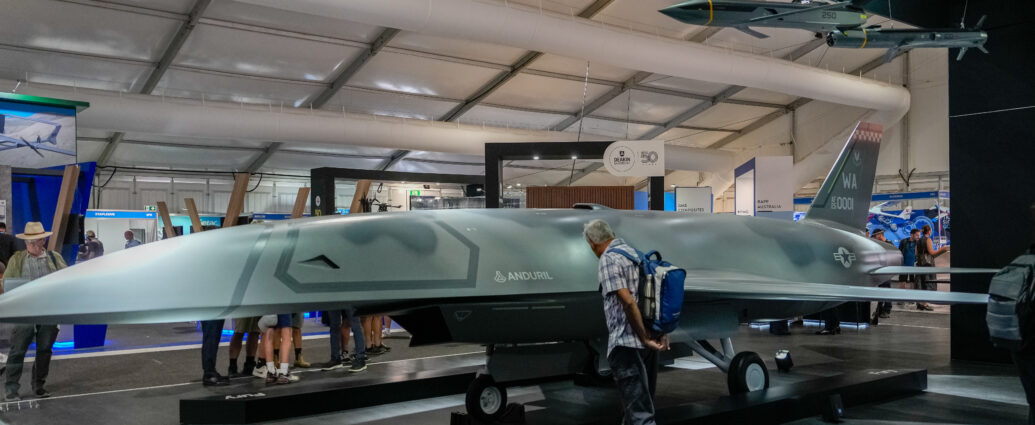
One such drone was the YFQ-44 Fury: a grey metal fuselage that resembles a fighter jet stripped of its cockpit. Made by Anduril Industries, the Fury is a jet-powered, unmanned combat aircraft designed to team with fighters like the F-35 and carry out high-risk air-to-air missions autonomously at a fraction of the cost of a traditional jet.

Anduril is the work of Palmer Luckey, who founded the defense tech startup in 2017 after leaving Facebook amid political fallout over his support for a pro-Trump, anti-Hillary Clinton group during the 2016 election.

“It’s funny seeing people say, ‘Look at him—he’s wasting his time,’ or, ‘He’s evil and trying to make war happen,’” Luckey said. “Post-Ukraine, I feel like people have been more like, ‘Okay, maybe he wasn’t totally nuts.’ Even the people who hate me agree I’m not nuts.”

Palmer Luckey, co-founder of Oculus VR Inc., left, plays the new video game “Eagle Flight VR” during an Ubisoft news conference before the start of the E3 Gaming Conference on June 13, 2016 in Los Angeles, California.
Kevork Djansezian—Getty Images

Luckey, 33, was in consumer tech long before he went into defense. He started Oculus VR, a company that designed virtual reality headsets, in 2012, which was later bought by Facebook for $2 billion.

Months after leaving Facebook in 2017, Luckey founded Anduril Industries—named for Aragorn’s reforged sword in J.R.R. Tolkien’s The Lord of the Rings—alongside several other executives from Palantir Technologies. Last year, Anduril raised $2.5 billion in a funding round led by Founders Fund, the Peter Thiel-led VC fund, which valued the defense tech company at $30.5 billion. The company is currently in talks with Thrive Capital and other investors for a new funding round that could double its valuation to $60 billion, Bloomberg reported on March 3. 

Luckey admits that moving from VR headsets to defense was a shift. “With VR, the only thing stopping us from launching a new headset was whether it was finished and ready to launch. You can’t do that with the military. You’re moving at someone else’s pace.”

That sluggishness is partly why Anduril doesn’t rely on defense grants to develop products, instead relying on its own funds. “Cost-plus contracting has perverse incentives: people make more money when programs are slow, more money when things are more expensive, more money when things break all the time. If I relied on the government to give me money to start development, I’d have to wait years just to even start.”

Not all of Anduril’s customers praise the company’s work. The Wall Street Journal reported last year that some Ukrainian operators stopped using Anduril’s drones in 2024, following frustrations with their performance. U.S. testers, too, have reportedly criticized the responsiveness of Anduril’s Lattice operating system. 

Anduril has pushed back against these reports, arguing in an extended response that failures are part of a broader strategy of “highly iterative model of technology development—moving fast, testing constantly, failing often, refining our work, and doing it all over again.”

“It is not surprising that Anduril, as a leading new defense technology company, is subject to increasing scrutiny,” the company wrote.

‘I’m not willing to go to prison to sell you spare parts’

Anduril is riding a record defense spending boom and a wave of government-aligned tech sentiment in Silicon Valley, as investors pour billions into autonomous weapons, AI-enabled sensor networks, and cheap, expendable drones. The company projects about $4.3 billion in revenue this year, even as it expects to lose more than $1 billion and does not forecast adjusted profitability until later in the decade, The Information reported in early March.

Global arms spending rose to a record $2.7 trillion in 2024, according to the Stockholm International Peace Research Institute, an international institute that tracks military expenditure and security trends. Shares of defense contractors have shot upwards over the past year: The Global X Defense Tech ETF, which includes companies like Lockheed Martin, RTX, Hanwha Aerospace, and Leonardo, is up by more than 45% over the past 12 months, compared to 14% for the S&P 500. 

Some of that boom in defense spending, in Luckey’s view, is due to longstanding U.S. demands that allies pay more for their own defense. “There’s an appetite in Washington for Anduril to work with Asian countries on domestic production. The view is that if Japan isn’t building any of its own weapons, they’re basically a freeloader,” he said.

Australia is spending $1.1 billion on Anduril’s autonomous submarine, the Ghost Shark. Anduril has also signed deals with companies in Japan and South Korea, as well as the government of Taiwan; that last partnership caught the ire of Beijing, which slapped sanctions on both Anduril and Luckey last year.

A general view of the Anduril Fury an autonomous air vehicle (AAV) displayed on March 28, 2025 in Avalon, Australia.
Asanka Ratnayake—Getty Images

Australia, Japan and South Korea are all close U.S. security allies and longstanding democracies, and so obvious markets for a U.S. defense company. But what about countries that are less democratic, or those who don’t have decades-long security arrangements with Washington?

“I have opinions on which countries are going to stay close U.S. allies and which ones aren’t. But my opinion can’t be the one that counts,” he explained.

He takes it to an extreme: he would sell arms to North Korea, if the U.S. asks him to. “If I take any other position, then what I’m effectively saying is that U.S. foreign policy should be decided by a handful of corporate executives based on who they’re willing to sell to or not,” he said.

What Anduril’s customers may be more concerned about, however, is what happens if the U.S. orders the company to stop working with a particular country. Many countries have looser ties to the U.S. alliance system, bound together by more transient economic and geopolitical alignments. 

And even close alliances don’t seem as solid as they used to be: President Trump has repeatedly picked fights with South Korea, Japan, Canada, and the European Union in disagreements over tariffs, defense spending, and support for U.S. military endeavors.

“I can’t reassure them. I’m never going to be able to promise to do anything that the U.S. would not. If a country asks me ‘commit to supporting this even if the U.S. doesn’t want to,’ all I can say is no,” he explained. “I’m not willing to go to prison to sell you spare parts.”

The rise of China

It’s impossible to talk about defense spending in Asia without talking about China, a strategic rival to the U.S. and a growing military power in its own right. The country makes up the second-largest share of global defense spending, at 12%, though it is still far behind the U.S.

“China has actually gotten its shit together,” Luckey said.

U.S. officials have long been concerned about China’s ability to develop hypersonic missiles and other forms of asymmetric warfare that might undermine the U.S.’s traditional strength. Last year’s brief India-Pakistan conflict was also a wake-up call for military observers, when Pakistani-operated J-10Cs—a Chinese-manufactured plane—shot down Indian jets, including a French-made Dassault Rafale, along with other aircraft, according to Western officials.

Aircraft of the Bayi Aerobatic Team of the Chinese People’s Liberation Army PLA Air Force perform during the 10th Singapore Airshow in Singapore, Feb. 3, 2026.
Then Chih Wey—Xinhua via Getty Images

“Is China building the world’s best fighter jets? No. But you don’t need to build the world’s best fighter jets to be a massive threat,” Luckey said. “A lot of times, two pretty good fighter jets will kick the butt of one really good fighter jet.”

Luckey uses a Second World War comparison to illustrate his point. Nazi Germany manufactured tanks using complex systems that could withstand repeated use—but were difficult to fix when they did break, he notes. The U.S., by comparison, used techniques that required pieces to be replaced constantly—but made tanks “cheap to make, easy to maintain, and fast to repair.”

He now sees China as the U.S. in this analogy, producing things that are “engineered to be manufacturable.” The U.S., he worries, is now like Germany: “We’ve built exquisite systems without regard for manufacturability and maintenance.”

Anduril is trying to position itself on the Chinese side of that comparison. The company is building a 5‑million-square-foot “Arsenal-1” factory in Ohio that aims to mass-produce drones and other weapons systems by mid‑2026, part of Luckey’s bet that industrial scale, rather than a handful of exquisite platforms, will decide future conflicts. 

Luckey’s more reasoned views on China are balanced by his public persona, which is far more provocative than what he says in private. Just hours after his conversation with Fortune, where he praised China’s ability to innovate, the Anduril founder posted a photo mocking the Shenyang J-35, a Chinese stealth fighter jet developed by the state-owned Aviation Industry Corporation of China. “Not convinced China’s J-35 measures up to the real deal,” he posted on X.

Luckey’s post prompted a backlash from both Chinese netizens and state-owned media. “This is more like a piece of performance art, and I think he lacks professional dedication,” one Chinese military expert grumbled to the Global Times, a Chinese state-owned English-language outlet.

‘An appendage of our democracy’

At the Singapore Air Show, Luckey mused that “you’re going to see a return of American corporations, particularly the ones large and powerful enough to be of national importance, working closely with the United States as a country.”

Luckey’s views on how tech should work with the government are increasingly common across Silicon Valley, as U.S. tech companies embrace a more overtly patriotic mindset in the Trump era—whether to get on the president’s good side, avoid his bad side, or both.

But there are still tensions between the U.S. tech sector and the Trump administration. In late February, Anthropic—the developer behind the Claude large language model—refused to accept a Department of Defense request to roll back its red lines on how its AI was used, particularly around surveillance and autonomous weaponry. In retaliation, the DoD deemed Anthropic a “supply chain risk,” putting it on the same level as firms like Huawei; Trump later barred all federal agencies from using Claude. (A U.S. court paused that order before on March 26.)

Anthropic’s decision set off a fierce debate in Silicon Valley about how much deference business owes to the U.S. government. Anthropic supporters are angry that the U.S. government is punishing a company for trying to decide how its product gets used; Trump supporters, on the other hand, see Anthropic as unfairly harming U.S. national security and undermining Washington’s democratic legitimacy.

Luckey, perhaps unsurprisingly, has come out on the side of those criticizing Anthropic.

“At the end of the day, you have to believe…that our imperfect constitutional republic is still good enough to run a country without outsourcing the real levers of power to billionaires and corpos and their shadow advisors,” he wrote on X on Feb. 28.

As he told Fortune in Singapore: “I’m an appendage of the will of the people—for better or for worse.”

This story was originally featured on Fortune.com

Two delivery robots reportedly crashed into bus shelters in Chicago this past week, shattering glass panels in separate incidents just days apart.

One crash, captured on video Sunday, shows a delivery robot approaching a Chicago Transit Authority (CTA) bus stop along Racine Avenue in West Town before slamming into the shelter’s glass panel, FOX 32 Chicago reported.

The impact sends shards falling onto the robot — identified as “Nasir” and operated by Serve Robotics — before it comes to a stop, FOX 32 reported.

RESTAURANT ROBOT GOES HAYWIRE, SENDS TABLEWARE FLYING BEFORE BREAKING OUT IN DANCE MOVES

Serve Robotics said no one was injured and crews quickly cleared the scene.

“We have also been in contact with local stakeholders and are committed to addressing any concerns directly,” Serve Robotics said in a statement. “We take this matter very seriously.”

A second incident occurred Tuesday at a bus shelter near North Avenue and Larrabee Street in Old Town, according to FOX 32.

Video shared on social media shows a Coco Robotics delivery robot after it broke through another glass panel, FOX 32 reported.

TESLA ENDS PRODUCTION OF MODEL S AND MODEL X VEHICLES, WILL FOCUS ON ROBOTS IN 2026

“Across more than one million miles of deliveries, this is the first time one of our robots has collided with a structure like this,” Coco Robotics told FOX 32. “Our robots operate at a top speed of about 5 miles per hour, and safety is a top priority in how we design and monitor our systems.”

Coco confirmed it has launched an internal investigation, calling the crash a “rare, isolated event” and pledging to prevent similar incidents.

“We’re grateful no one was hurt. We’ve reached out to the company that owns the shelter and are taking full responsibility for the cost of repair,” Coco said.

NVIDIA REVOLUTIONIZES HOSPITALS WITH AI ROBOTS AND VOICE ASSISTANTS TO ADDRESS WORKER SHORTAGE

Coco began operating in Chicago in late 2024, while Serve Robotics rolled out its delivery robots in September as part of a city pilot program, according to ABC7 Chicago.

GET FOX BUSINESS ON THE GO BY CLICKING HERE

On Wednesday, Mayor Brandon Johnson said he was aware of the incidents and emphasized the pilot program is designed to evaluate performance and identify areas for improvement, the outlet reported.

Serve Robotics and Coco Robotics did not immediately respond to FOX Business’ request for comment.

This post was originally published here. 

French police have thwarted a suspected bomb attack outside a Bank of America building in Paris, authorities said Saturday. One suspect was detained and another escaped.

The national anti-terrorism prosecutor’s office, or PNAT, told The Associated Press that it has opened an investigation into alleged terrorism-related offenses.

The suspected offenses include attempted damage by fire or by a dangerous means, the manufacture of an incendiary or explosive device, the possession and transport of such devices with the intent to prepare dangerous damage, and involvement in a terrorist criminal association.

A person was placed in police custody.

“Well done to the rapid intervention of a Paris police prefecture unit, which made it possible to thwart a violent act of a terrorist nature overnight in Paris,” Interior Minister Laurent Nuñez said.

“Vigilance remains at a very high level,” Nuñez said. “I commend all security and intelligence forces, fully mobilized under my authority in the current international context.”

RTL radio, citing police sources, reported that the incident took place early Saturday when police officers spotted two suspects carrying a shopping bag near the premises of the Bank of America in the 8th arrondissement of the French capital.

One of the suspects, holding a lighter, was attempting to ignite a device, RTL said, while the second suspect managed to escape. The Paris police prefecture declined to comment.

Since the Iran war broke out, French authorities have increased personal protection of some figures from the Iranian opposition and stepped up security around sites that could be a target, including sites linked to U.S. interests and to the Jewish community, Nuñez said earlier this week.

This story was originally featured on Fortune.com

Thieves made a break for 413,793 units of the company’s new F1 line bars which could cause shortage before Easter

A large shipment of KitKat candy bars was stolen while in transit to distributors, a major candy crime right before the Easter holiday that could cause shortages for customers.

The truck carrying 413,793 units of a “new chocolate range”, about 12 tons of chocolate bars, was pilfered while driving through Europe on 26 March, Agence France-Presse reported.

Continue reading…

This post was originally published here

Swiss food giant Nestlé says about 12 tons, or 413,793 candy bars, of its KitKat chocolate brand were stolen after leaving its production site in Italy earlier this week for Poland.

The company, based in Vevey, Switzerland, said in a statement Friday that “the vehicle and its load are still nowhere to be found.”

The shipment of the crunchy bars, made of waffles covered with chocolate, disappeared last week while en route between production and distribution locations. The chocolate bars were to be distributed throughout Europe.

The missing candy bars could enter unofficial sales channels across European markets, the company said, but if this does happen, all products can be traced using the unique batch code assigned to individual bars.

A spokesperson for KitKat said that as a result, consumers, retailers and wholesalers would be able to identify if a product is part of the stolen shipment by scanning the on-pack batch numbers. If a match is found, the scanner will be given clear instructions on how to alert the company, which will then share the evidence appropriately.

“Whilst we appreciate the criminals’ exceptional taste, the fact remains that cargo theft is an escalating issue for businesses of all sizes,” KitKat said in a statement.

“With more sophisticated schemes being deployed on a regular basis, we have chosen to go public with our own experience in the hope that it raises awareness of an increasingly common criminal trend,” the statement added.

This story was originally featured on Fortune.com

Protesters decried Trump administration healthcare policies and direction of HHS under leadership of RFK Jr

As tens of thousands of people assembled across the US and around the world for No Kings protests, about a thousand people gathered outside the National Institutes of Health (NIH) in Bethesda, Maryland, on Saturday morning to protest cuts to medical research and the Trump’s administration’s policies on health.

The rally follows a tumultuous year for the research agency, with devastating cuts to multi-year funding and outright terminations of grants, especially to research related to gender and race. The White House is now poised to cut the NIH’s budget by 20%, according to reporting by Roll Call on Friday, nearly one year after mass layoffs at health agencies.

Continue reading…

This post was originally published here

Middle East oil has long been a linchpin of the U.S. dollar’s status as the dominant currency in global trade and reserves, but President Donald Trump’s war on Iran could open the door to China’s currency, according to Deutsche Bank.

In a note on Tuesday, analysts pointed out that the current “petrodollar” regime goes back to a deal struck in 1974 when Saudi Arabia agreed to price its oil in dollars and invest surpluses in U.S. assets.

And because oil is a core input to global manufacturing and transport, supply chains have a natural incentive to dollarize, the note added. Indeed, Mideast oil and gas is used to make petrochemicals, fertilizer, and even helium, which is critical to chipmaking.

“The world saves in dollars in large part because it pays in dollars,” Deutsche Bank said. “The dollar’s dominance in cross-border trade is arguably built on the petrodollar: globally traded oil is priced and invoiced in USD.” 

In exchange for Saudi Arabia recycling its dollars back into the U.S., Washington guaranteed the kingdom’s security, which also involved stationing troops in the region, providing advanced weapons, and ensuring free navigation in the Strait of Hormuz.

That security shield was on display in 1990, when Saddam Hussein invaded Kuwait and threatened Saudi Arabia. The U.S. assembled a massive international coalition to quickly defeat Iraq and lower oil prices.

Fast forward to today, and America’s role in the Mideast looks vastly different. While the U.S. and Israeli militaries have severely degraded Iran’s capabilities, the regime still retains enough to combat power to selectively close off the Strait of Hormuz—unless countries negotiate safe passage and pay in Chinese yuan.

At the same time, Iran’s swarms of missiles and drones have inflicted significant damage on U.S. aircraft, radars and bases, while American air-defense systems have failed to completely protect Gulf allies’ critical energy infrastructure.

But even before the Iran war, the petrodollar regime had come under pressure, Deutsche Bank noted. U.S. sanctions on oil from Russia and Iran created an illicit trade that relied on other currencies, like the yuan.

Saudi Arabia also joined mBridge project, a central bank digital currency initiative led by China that takes on the dollar-payment infrastructure.

“The current conflict may expose further fault lines, by challenging the US security umbrella for Gulf infrastructure and the maritime security for global trade in oil,” analysts warned.

U.S. troops walk towards their barracks upon landing at Saudi Dhahran air base on Aug. 21, 1990.
GERARD FOUET/AFP via Getty Images

Until the U.S. can neutralize Iran’s salvos, the Gulf will continue to be pummeled. Not only are their oil shipments bottled up in the Persian Gulf, output has been slashed as supplies have nowhere to go.

Efforts by Gulf states to diversify from oil and become international finance and tourism hubs are also at risk amid the Iranian bombardment.

“Damage to Gulf economies could encourage an unwind in their foreign asset savings,” Deutsche Bank said. “In this context, reports that the passage for ships through the Strait of Hormuz may be granted in exchange for oil payments in yuan should be closely followed. The conflict could be remembered as a key catalyst for erosion in petrodollar dominance, and the beginnings of the petroyuan.”

Any loss of the dollar’s “exorbitant privilege” would also ripple through other areas of global finance, including the bond market. Due the dollar’s status as the world’s reserve currency, the federal government has long been able to issue debt at rates lower than investors would otherwise allow.

To be sure, dollar doomsayers have consistently been proven wrong, and the greenback has surged against other top currencies during the Iran war.

But there’s an even bigger potential threat to the dollar’s dominance than China’s currency: a permanent shift away from globally traded oil and gas.

With energy prices sky high, countries in Asia that rely heavily on Mideast supplies are scrambling to ration oil and gas while turning to coal, nuclear power, and renewables.

Demand for electric vehicles is also up across the globe, with Deutsche Bank saying energy choices of the Global South, Europe and North Asia will be key to track.

“A move away from oil could be as powerful as the pressure to price it in other currencies,” it added. “A world that becomes more self-sufficient in defence and energy could also be a world that holds less USD reserves.”

This story was originally featured on Fortune.com

Organisers claim half a million people are marching through central London, protesting against the rise of the far right

Some protesters have spoken to PA earmarking opposition to Reform UK, support for Palestine and anti-racism as drivers for their attendance.

Paige Horsford, 34, a media and English teacher from New Romney, Kent, said she joined the Together march because she has witnessed racist incidents at her school.

Continue reading…

This post was originally published here

Four people arrested as police appeal for help in identifying woman found unconscious on street

Police in Leeds have launched a murder investigation after a young woman died after being found unconscious on the street.

Officers were called at 5.55am on Saturday to Kennerleigh Avenue in Austhorpe where they found the woman with serious injuries. She was taken to hospital but was pronounced dead shortly afterwards.

Continue reading…

This post was originally published here

Four people arrested as police appeal for help in identifying woman found unconscious on street

Police in Leeds have launched a murder investigation after a young woman died after being found unconscious on the street.

Officers were called at 5.55am on Saturday to Kennerleigh Avenue in Austhorpe where they found the woman with serious injuries. She was taken to hospital but was pronounced dead shortly afterwards.

Continue reading…

This post was originally published here

CNN team detained while reporting on aftermath of attack by settlers in West Bank, Foreign Press Association says

An international media association has condemned what it described as a “violent assault” by Israeli soldiers who detained a CNN crew in the occupied West Bank this week.

A CNN team was reporting on the aftermath of an assault by Israeli settlers and the establishment of an illegal outpost near the Palestinian village of Tayasir on Thursday when it was detained by Israeli soldiers, the Foreign Press Association said on Saturday.

Continue reading…

This post was originally published here

Ukrainian President Volodymyr Zelenskyy on Saturday made unannounced visits to the United Arab Emirates and Qatar, as Ukraine seeks to use its drone expertise to help Gulf Arab states blunt Iran’s attacks during the war in the Middle East.

Zelenskyy said that Ukraine has already signed 10-year security agreements with Saudi Arabia and Qatar, and expects to shortly finalize a similar agreement with the UAE.

Ukraine has quickly grown into one of the world’s leading producers of cutting-edge, battle-tested drone interceptors that are cheap and effective. They are playing a key part in its defense against Russia’s full-scale invasion, which began on Feb. 24, 2022.

In return for its aid to Gulf countries, Ukraine is seeking more high-end air-defense missiles that they possess and that Kyiv needs to counter Russia’s attacks. On Thursday, Zelenskyy visited Saudi Arabia,, and last week he said that Ukraine is looking into whether it can play a role in restoring security in the Strait of Hormuz.

Zelenskyy tours Gulf Arab states

On Saturday, Zelenskyy and Emirati state media reported on a meeting between the Ukrainian president and his Emirati counterpart, Mohamed bin Zayed Al Nahyan, to discuss regional security amid the Iran war.

Zelenskyy later posted on X to say that he had moved on to Doha and met with Qatari leaders, including with the ruling emir, Sheikh Tamim bin Hamad Al Thani, and Prime Minister Sheikh Mohammed bin Abdulrahman Al Thani.

The Ukrainian and Qatari ministers of defense signed cooperation agreements in the defense sector and defense investments, according to the Qatar Ministry of Defense.

“Real security is built on partnership — we value everyone and remain open to supporting all those who are ready to work together for this goal,” Zelenskyy wrote alongside a video of himself disembarking a plane in Qatar.

The war in the Middle East erupted on Feb. 28 when the United States and Israel launched joint attacks on Iran. The Islamic Republic retaliated with strikes against Israel and the Gulf Arab States and the blockading of the Strait of Hormuz, a crucial waterway. The war has upended global travel and sent oil prices soaring as its economic fallout extended well beyond the region.

Last week, Zelenskyy revealed that Kyiv is helping five countries — the UAE, Saudi Arabia, Qatar, Kuwait and Jordan — counter Tehran’s drone strikes on their territory.

“For Ukraine, this is also a matter of principle: terror must not prevail anywhere in the world. Protection must be sufficient everywhere,” he said on X following his meeting with the Emirati leader.

He added they had discussed “the security situation in the Emirates, Iranian strikes, and the blockade of the Strait of Hormuz, which directly affects the global oil market”.

Ukraine’s Mideast alliances

Zelenskyy told reporters that his government is seeking to build long-term strategic ties with Middle Eastern countries, including joint production, investment, energy cooperation and the sharing of battlefield experience.

“Simple sales do not interest us,” he said at a live briefing held on Zoom on Saturday.

While Ukraine remains short of high-end air defense systems, such as Patriot missiles, Zelenskyy said that Kyiv has developed an “integrated” defense model that effectively protects against Iranian-made Shahed drones.

Tehran sent large numbers of the attack drones to Russia early in the war. Since then, Moscow has modified them to improve their effectiveness, begun domestic production, and repeatedly launched the drones in waves at Ukrainian cities.

Zelenskyy said that Ukraine is offering Gulf Arab partners “combat-tested” expertise, and has already signed 10-year security deals with Saudi Arabia and Qatar.

The agreement with Qatar involves “joint defense industry projects, the establishment of coproduction facilities, and technological partnerships between companies,” Zelenskyy said in an X post.

At a media briefing, the Ukrainian leader said that he expects a similar agreement with the UAE to follow shortly.

He also told reporters that Ukraine had received “no signals” from the U.S. about potential diversions of weapons, including those funded by Kyiv’s European partners, from Ukraine to the Middle East.

His comments followed weeks of speculation that the Iran war could detract attention from Ukraine, deplete Western arsenals and force NATO allies to reduce military support for Kyiv.

Russia is already profiting from a surge in global energy prices, brought on by damage to oil and gas infrastructure in the Gulf and Iran’s blocking of the Strait of Hormuz, a vital oil choke point.

Zelenskyy on Rubio: ‘I have not lied to anyone’

Zelenskyy also pushed back on recent remarks by U.S. Secretary of State Marco Rubio, who on Friday dismissed as “a lie” the Ukrainian leader’s claim that Washington wants Kyiv to hand over territory to Russia before giving it security guarantees.

Zelenskyy said his earlier statements, made in an interview with Reuters, reflected the “general direction” of talks.

“I have not lied to anyone,” he said, adding that Rubio may have misconstrued his comments.

Zelenskyy stressed that the U.S. has not directly pressured Kyiv to withdraw troops from the Donbas, Ukraine’s industrial heartland long coveted by Moscow.

Russian forces occupy the bulk of the region, but they have not seized a strip of land that is among the most heavily fortified parts of the front line. Kyiv fears that Moscow could use that territory as a launchpad for further aggression.

But Zelenskyy said he was worried by Washington’s insistence that Ukraine would only receive guarantees following a comprehensive peace agreement, not a ceasefire deal. Kyiv claims that Russia has refused to end the war unless it can take over all of the Donbas.

Drone attacks in Ukraine and Russia

Russia launched more than 270 drones at Ukraine overnight, killing at least five people, Ukrainian authorities reported on Saturday.

Two people were killed and at least 11 more were wounded in a nighttime Russian drone strike on Odesa, according to the head of the region, Serhii Lysak. Zelenskyy said that the “massive” strike on Odesa involved more than 60 drones.



Russia’s overnight strikes also killed two men and wounded two other people in Kryvyi Rih, Zelenskyy’s hometown in central Ukraine, after a drone hit an industrial facility, regional head Oleksandr Gandzha said in a Telegram update. He didn’t specify what the industrial building was.

One person was killed overnight in the Poltava region, also in central Ukraine, as Russia struck industrial sites there, regional authorities reported on Saturday. Ukrainian state gas company Naftogaz said that a production facility was hit.

In Russia, a child died after a Ukrainian drone hit a private house in Russia’s western Yaroslavl region, local Gov. Mikhail Evraev reported early Saturday. According to Evraev’s Telegram post, the child’s parents were hospitalized with serious injuries after the attack.

Russia’s Defense Ministry said on Saturday that 155 Ukrainian drones were shot down during the night over Russia and the annexed Crimean Peninsula.

This story was originally featured on Fortune.com