


Stock Market Today: Major Indexes Plunge, on Pace to Extend Skids to 5 Weeks; Dow Sheds 450 Points; Oil Climbs Further
This post was originally published here
Iran war wipes out $100 billion from luxury stocks
Dubai in the UAE has been the biggest driver of growth in recent years, and the Middle East tensions come at a critical time in the luxury industry.
This post was originally published here
Citi cuts U.S. stocks exposure. Firm is worried there’s no ‘quick end’ to war
Citi strategists said they brought their U.S. small-cap overweight ‘back to zero’ as part of a broader effort to cut equity exposure.
This post was originally published here
‘It’s fired people up’: support grows, including within Labor, for new gas tax to curb wartime profits
Government, industry and opposition see growing public support for a new gas tax but the industry is fighting back
-
Get our breaking news email, free app or daily news podcast
The gas industry is mobilising in opposition to a potential new tax on the sector as political momentum builds – including among Labor MPs – for the government to use the May budget to prevent producers profiting from the Middle East war.
The Australian Energy Producers (AEP) chief executive, Samantha McCulloch, claimed a new tax would punish the same Asian trading partners Australia was leaning on to supply more fuel amid the global energy crisis.
This post was originally published here
Blink and miss: Trump’s tactic of threats first and U-turn later is proving stale in Iran war
President’s move, dubbed Trump Always Chickens Out, appears to have soured as he loses hold on situation in Iran
From Wall Street to the White House, the dish everyone’s talking about this week is the Persian Taco. It’s what’s served when Trump chickens out in Iran.
In the early hours of Monday morning, witnessing oil prices surge, stock futures plummet and bond yields climb due to his threat to pummel Iran’s civilian power infrastructure, the president hurriedly walked it back, announcing he would put off the bombing because talks with Iran were actually going great. After the bombast and bloodshed, it was time for Taco (Trump Always Chickens Out), a move he first put on display during the tariffs crisis last year.
This post was originally published here
Wily coyote? urban canines take more risks compared with rural ones – study
Researchers believe behavioral gap, which may hold true across species, is probably product of less fear of harassment in cities
Anyone who has lived long enough in a city can tell you – with time, you just stop noticing strange new things. A unicycling bagpiper. A person changing clothes on the subway. Murals that transform streets into art.
Coyotes in cities seem to be bolder as well and less afraid of new experiences. That’s according to a new study that researchers conducted at more than a dozen sites across the US, comparing urban and rural coyotes’ reaction to new stimuli.
This post was originally published here
Older Australians in ‘immediate danger’ as fuel crisis affects travel for aged care workers
Unions and farmers call for government intervention as agriculture, construction and waste industries also at risk from higher prices
-
Get our breaking news email, free app or daily news podcast
Care workers, tradespeople and transport drivers are being hit hard by ballooning fuel costs, with some industry groups urging the government to roll out assistance packages or even a jobkeeper-style wage assistance program to help businesses avoid laying off staff.
Reports of small mining businesses scaling back operations and some construction companies deciding against hiring more apprentices have prompted suggestions the government should step in to help, with the Master Builders Association already forecasting a downturn in the number of homes that will be built this year.
This post was originally published here


AstraZeneca stock jumps after surprise trial win for lung disease drug where rivals have failed
The experimental drug reduced flare-ups for patients with chronic obstructive pulmonary disease, Astra said Friday.
This post was originally published here

Cam Newton excited to amplify authentic content as his Iconic Saga Productions joins Offscript Worldwide
Since entering the national spotlight, former NFL MVP Cam Newton has been authentically and unapologetically himself.
Whether on the field, or now off of it in his new content-creating realm, Newton’s fans and followers have gravitated toward his genuine, no-filter takes on his hit shows “Funky Friday” and “4th & 1 with Cam Newton.” Now, with a new, key partnership with Offscript Worldwide, Newton’s reach to the masses will be far greater.
Iconic Sage Productions, the independent production powerhouse founded by Newton, joined Offscript, a creator-owned ecosystem that connects culture-shaping brands and platforms under one roof, including REVOLT, REVOLT Sports and 3BlackDot, among others. The major expansion was announced at the 2026 IAB NewFronts, as Offscript, which represents more than 130 creators and produces over 150 creator-led series that reach more than 250 million subscribers on YouTube alone.
CLICK HERE FOR MORE SPORTS COVERAGE ON FOXBUSINESS.COM
As part of the expansion, Newton’s Iconic Saga will integrate into Offscript’s creator-led ecosystem, which will ultimately amplify the reach of Newton’s signature storytelling.
“When you really think about Offscript, it’s like the ecosystem that bridges so many different facets of our lives, from sports, to culture, to lifestyle and so many different things,” Newton explained to Fox Business. “That transition for me wasn’t foreign. Instead of training to be the best football player, or the best athlete. Now, I’m just training to be the best content creator I can possibly be.
“I just always want to be a beacon of the person, in a lot of ways, figured it out as I went. I’m just so thrilled that Offscript gives me and Iconic Saga the opportunity to continue to believe in our vision, and we’re not able to do these things without great partners like this.”
TOM BRADY OPENS UP ABOUT HIS HEALTH AMID GLP-1 SURGE: WATER, MOVEMENT AND DISCIPLINE
Content creation is usually viewed as an independent art, but Newton knows that’s not the case, especially now with Offscript.
“It’s comparable to when I was playing football,” he said. “Even though I would probably make a play, and they’d always use the analogy, ‘Oh my God, he made an unbelievable play, that’s all him.’ Well, you still had offensive lineman, you had receivers blocking, you had coaches calling the play, you had general managers assessing the team.
“For us, that’s the same thing. We want to play to our strengths and partner in our weaknesses. That’s what Offscript gives us the opportunity to do – partner with their ecosystem to really bring ease to the business as we know it.”
The content creation game is also about being authentic with your audience, which Newton said is “nothing new” from him. But he also recognizes how today’s consumers can “identify B.S.,” as he put it.
As Iconic Saga preaches authenticity, so does Offscript, which Newton gravitated toward with this partnership. It also helps that Offscript can bridge the gap with global brands to partner with Newton’s content in the future as well.
“These brands who align, you can also sell them the visual output that people look to your platform to see,” Newton said. “…The real game changer, so to speak, is when brands align with your message. Brands align with your audience. Brands align with your real value to capturing people’s attention. That’s where we’re at with Iconic Saga, no different than if it’s ‘Funky Friday’ or ‘4th & 1.’”
As this partnership kicks off, that message is going on tour as well, with the “4th & 1 College Tailgate Tour.” Iconic Saga is running the show, meaning Newton will be taking full ownership of the narrative, which means his unfiltered, authentic connection directly to the HBCU community.
“4th & 1” will be traveling to America’s HBCU campuses, where live recordings of the show will allow fans to experience, what Newton calls, “from the set to the yard.” Whether at home or in person, the tour, which is set to begin in Fall 2026, will shine a spotlight on the student-athletes, academic programs, and the unique game-day culture that defines an HBCU.
GET FOX BUSINESS ON THE GO BY CLICKING HERE
This and much more is expected as Newton, Iconic Saga and Offscript embark on a partnership aimed at continuing to make an impact at the intersection of sports, culture, and lifestyle.
“We’ve always had interests outside the game,” Newton said. “Now, I can 100% dedicate my time, energy and effort not into just creating, but also aligning with incredible partners like Offscript, as well as beefing up my personnel within Iconic Saga to not just get any person, but the right person that can magnify the brand to be able to get the most out of ‘Funky Friday’ as well as ‘4th & 1.’”
Follow Fox News Digital’s sports coverage on X and subscribe to the Fox News Sports Huddle newsletter.


The impact of NIH restrictions on foreign institutions
Get your daily dose of health and medicine every weekday with STAT’s free newsletter Morning Rounds. Sign up here.
Good morning. We’re down to the final four in our annual STAT Madness competition. In one matchup, research on a biomarker for Alzheimer’s has a solid lead over an AI cell modeling project. In the other, a smart floss that tracks hormones trails a study on the connection between triglycerides and aneurysms. Vote today, vote tomorrow!
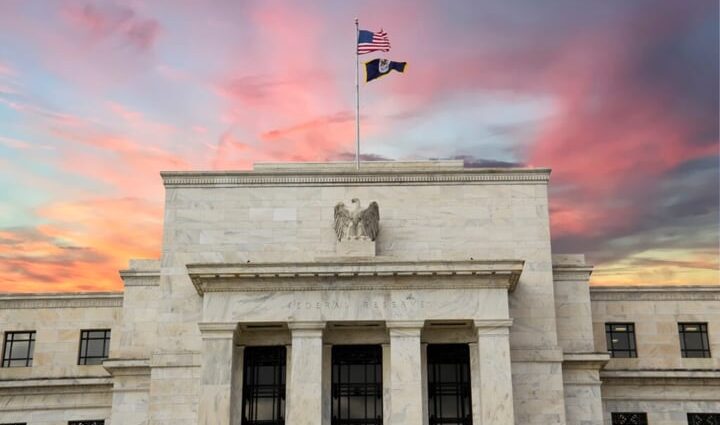
Fed Policy Twist May Trigger ETF Rotation Away From Floating-Rate Funds
A new policy initiative from the Federal Reserve, through one of its governors, Stephen Miran, is bringing bank loan ETFs back in focus. His proposal to shrink the balance sheet while potentially allowing lower rates creates a tricky backdrop for floating-rate strategies that have thrived in a high-rate environment.
• Invesco Senior Loan ETF stock is taking a breather. Where are BKLN shares going?
Yield Tailwinds May Fade For Key ETFs
Some of the most popular bank loan ETFs could face challenges to their core investment thesis:
- Invesco Senior Loan ETF (NYSE:BKLN)
- SPDR Blackstone Senior Loan ETF (NYSE:SRLN)
- iShares Floating Rate Bond ETF (BATS:FLOT)
All these ETFs have benefited from rising rates, as they have floating coupons. However, if the bank rates fall, even alongside balance sheet reduction, income generation could be lower for …


STAT+: Up and down the ladder: The latest comings and goings
Hired someone new and exciting? Promoted a rising star? Finally solved that hard-to-fill spot? Share the news with us, and we’ll share it with others. That’s right. Send us your changes, and we’ll find a home for them. Don’t be shy. Everyone wants to know who is coming and going.
And here is our regular feature in which we highlight a different person each week. This time around, we note that Averna Therapeutics hired Robert Mabry as chief scientific officer. Previously, he worked at Hillstar Bio, where he was chief executive officer. And before, Mabry was global head of biologics at Takeda Pharmaceuticals.
But all work and no play can make for a dull chief scientific officer.
Elon Musk’s Grok ordered to stop creating AI nudes by Dutch court as legal pressure mounts
A Dutch court issued a $115,000 penalty for every day xAI fails to remove non-consensual AI-generated nude images created by its chatbot Grok.
This post was originally published here

Cybersecurity Stocks Slide Following Anthropic ‘Claude Mythos’ Data Leak
Cybersecurity equities faced downward pressure Friday following reports that AI startup Anthropic inadvertently exposed internal data. The lapse allegedly revealed details of an unreleased model, “Claude Mythos,” and an invite-only CEO retreat.
Significant Security Lapse at Anthropic
Anthropic reportedly left nearly 3,000 assets accessible via its content management system (CMS). According to Fortune, cybersecurity researcher Alexandre Pauwels discovered the unsecured data cache. The files included draft blog posts, images, and research papers.
The company secured the data on Thursday after being notified of the issue. Anthropic attributed the incident to “human error in the CMS configuration.” A spokesperson told Fortune the issue was “unrelated to Claude, Cowork, or any Anthropic AI tools.”
Leaked Details of “Claude Mythos”
The exposed documents reportedly contain information on a new AI model. Anthropic described this model in internal drafts as a “step change” in capabilities. The company confirmed it is testing a model …
This post was originally published here

China retaliates against US trade probes ahead of Xi-Trump talks
This post was originally published here
Judge rebukes woman who denied driving while video-calling from car: ‘Do you think I’m that stupid?’
Kimberly Carroll ‘truly sorry’ after calling in to court hearing via Zoom from behind the wheel of a moving vehicle
A woman who dialed into a court hearing in Detroit while in her car this week was berated by the judge, who asked “Do you think I’m that stupid?” when she appeared on video apparently driving the vehicle.
Fox2 Detroit reported that defendant Kimberly Carroll called late into a hearing relating to a financial matter, and was asked by the judge, Michael K McNally, to turn on her camera.
This post was originally published here

How American Companies Can Retain Trust Overseas
Harvard Business School professor Sandra Sucher tells HBR: “This is the time to take action to move the needle.”
This post was originally published here
Infiniti hopes new SUV can turn around fortunes in the U.S.
Infiniti is releasing a new midsize SUV, the QX65, in an effort to turn around sales in the U.S. market.
This post was originally published here
Social media has led to a ‘complete rewiring of childhood’, says minister – UK politics live
The government has published new guidance for parents that says under-fives should be limited to one hour of screen time a day
Josh MacAlister, the minister for children and families, said there has been “a complete rewiring of childhood” over the last decade due to social media and screen time.
Speaking on the new government guidance for parents of young children, he told ITV’s Good Morning Britain: “We’re trying to help create some new social norms.
This post was originally published here

US-Iran War Updates March 27: Marco Rubio Heads To France For G7 Meeting, Israel Pounds Lebanon As Iran’s Death Toll Crosses 1,900 (UPDATED)
Here are the latest developments in the U.S.–Israel–Iran war at 9.30 AM ET on Friday, as the conflict enters its 28th day. Four weeks into the war, thousands of people have been killed as tensions continue to escalate, and soaring energy prices fuel inflation fears.
More than 1,900 people have been killed and at least 20,000 injured in Iran since the start of U.S. and Israeli attacks, said Maria Martinez of the International Federation of Red Cross and Red Crescent Societies (IFRC) on Friday.
On Thursday, President Donald Trump extended the deadline for Iran to reach a deal by 10 days to April 6, pausing threatened strikes on Iranian energy plants while claiming negotiations were going “very well.” Tehran, however, reportedly rejected a 15-point U.S. proposal conveyed through Pakistan, with a senior Iranian official telling Reuters that senior officials and a representative of the supreme leader found it served only American and Israeli interests.
Marco Rubio: US Interests First
U.S. Secretary of State Marco Rubio is travelling to France for a G7 meeting.
Speaking to reporters before departing Washington, Rubio said he anticipates “great meetings” with his counterparts, but made clear where his priorities lie. “I’m not there to make them happy,” he said, adding that the people he works for are “the people of the United States,” not foreign governments.
Rubio’s trip comes just hours after Trump sharply criticised NATO allies for what he described as a lack of support for U.S. and Israeli military actions against Iran.
Bahrain Says 154 Missiles, 362 Drones Downed In War
In a statement on X, Bahrain’s military said its air defences have intercepted a total of 154 missiles and 362 drones from Iran since the start of the war.
Israeli Strike Kills Four In Southern Lebanon
Lebanon’s National News Agency reported that an Israeli strike on the town …
This post was originally published here
Rising oil prices could increase food costs—but hoarding groceries ‘makes a bad situation worse,’ economist says
Rising oil prices can take months to filter into grocery bills, and the impact is often smaller than consumers expect.
This post was originally published here

Stocks and bonds slump in tandem as Iran shock leaves investors ‘nowhere to hide’
This post was originally published here

Your enterprise customers don’t know how to buy AI — and it’s killing deals
The most telling moment from our gathering last month of 75 senior technology executives — drawn from Fortune 500 companies, enterprise tech giants, high-growth startups, and AI-native market makers — wasn’t about ambitious rollouts or transformation roadmaps. It was a single question many of these leaders said their own enterprise customers keep asking: “I know we need to do AI. How best to proceed?”
That question is a warning signal for every founder selling into enterprise right now.
Yes, we also heard about lean GTM teams armed with agents, experimentation versus compliance, microteams with lightning-fast dev cycles, merging functions, and reorgs designed to accelerate companies in the age of AI. The bleeding edge is moving fast. But the customer base often isn’t.
That gap — between how fast AI-native startups build and how slowly enterprises can absorb, let alone implement, what they’re building — is one of the most consequential dynamics in enterprise sales right now. If you’re a founder, understanding it could be the difference between closing deals and burning runway.
To understand the gap in real-world terms, we surveyed 123 senior operators across every major enterprise function for our inaugural State of AI Transformation report.
These are CEOs, C-Suite executives, and VPs with a median 22 years of operating experience, real purchasing authority, and hands-on implementation responsibility. What they told us should make every enterprise-focused founder rethink their approach.
The Enterprise Has Decided. Now What?
AI has moved firmly into continuous experimentation mode. 77% of respondents are actively executing on AI initiatives, and 21% describe themselves as AI-native. In many cases, experimentation is now a top-down mandate — while others contend with bottom-up tool sprawl. As Kieran Snyder, Microsoft’s VP of AI Transformation, writes in the report’s foreword: “It’s an anarchist’s moment.” But almost no one said they’re still just exploring. The enterprise has decided that AI matters. That part is settled.
The Single Greatest Obstacle: Time
One-third of respondents named the lack of capacity to research and test new tools as their primary obstacle. They describe “an abundance of options” with “similar messaging.” They say they “don’t have bandwidth to test every option out there.” And the fragmentation is real: 69% of the tools named in our survey were cited only once — confirming that the market for enterprise AI tools has become overwhelming relative to the capacity of organizations to evaluate them.
What Founders Get Wrong About Enterprise Buyers
The implications for founders: The public markets have punished SaaS companies as investors reckon with a world where platform AI from Anthropic, OpenAI, and Google can absorb capabilities that used to justify standalone products. Valuations have cratered. The conversation around the “SaaSacre” is loud and impacts the market daily~~, whether or not it’s overblown~~. For many founders building in this environment, the instinct is to move faster, ship more features, and differentiate on technical sophistication.
Our survey suggests that’s the wrong instinct.
What Enterprise Buyers Actually Want
Enterprise operators we surveyed aren’t asking for smarter models or more features. They’re asking for three things:
- Tool connectivity. They want tools that plug into existing systems — HR, CRM, product analytics, communications — and synthesize data across fragmented environments. The most-cited request: “a single pane of glass across all my existing data sources.”
- AI that takes initiative. Operators want AI that takes action autonomously, executing multi-step workflows end to end, not tools that surface recommendations and wait for a human. As respondents put it: tools failed “because they required too much pull and were not proactive enough.”
- Deep domain expertise. General-purpose AI is now table stakes. Operators expect specialization in specific functions — sales, recruiting, finance, legal — and differentiation at the workflow level.
The ROI Measurement Gap — and the Opportunity Inside It
When we asked operators how they measure AI’s impact, roughly 70% told us they don’t. No KPIs. No measurement framework. Many acknowledge they’re estimating productivity gains, guessing at ROI. “We estimate 10% productivity improvement, but it’s difficult to measure” is a common refrain. Where concrete measurement does exist, it shows up in customer-facing or revenue-generating workflows — deflecting 38% of support tickets or reducing cost of sale by 15%.
This is both a problem and an opportunity. If your enterprise buyer can’t measure the value of the AI tools they already have, they’re going to struggle to justify buying yours. Products that instrument their own impact — surfacing before-and-after metrics, time savings, or output quality data — give internal champions something concrete when budget conversations get hard. That kind of measurement infrastructure is a retention mechanism as much as it is a sales tool.
The Fundamentals Haven’t Changed
What struck me most about the findings is how much of successful enterprise selling still comes down to fundamentals that have held true for decades. Trusted referrals still open doors. Deep workflow integration still drives stickiness. Internal champions still determine whether a tool survives the first renewal cycle.
The buying process — and the human dynamics that at this point still come within it — has changed far less in the last few decades.
The operators we surveyed describe AI through an intern analogy: capable, but requiring oversight. They have near-zero tolerance for errors in areas like finance, legal, and compliance. They worry about data leakage~~, and context remains an issue for data. They want to see that a product works on their actual data — messy and distributed as it is — before they commit.Loyalty is scarce: even with tools they use daily, many question whether they’ll renew.
The message from this survey is clear: the founders who win in enterprise AI will be the ones who meet buyers where they are — still figuring out what they need — and treat that uncertainty as an opportunity, not an obstacle. Educate, build trust, show the path. The solutions that stick will be the ones that prove real value inside real workflows, not the ones that shipped the most features.
The enterprise is all-in on AI. The opportunity for founders is in helping leaders figure out how.
The opinions expressed in Fortune.com commentary pieces are solely the views of their authors and do not necessarily reflect the opinions and beliefs of Fortune.
This story was originally featured on Fortune.com

Drew Barrymore’s amazing 12-acre Westchester estate asks $5M

This 12-acre estate at 19 Winfield Avenue in Harrison is currently owned by Drew Barrymore, but her influence goes beyond just celebrity cachet. The actress, producer, director, and talk show host curated every detail of the three homes on the property as part of her Beautiful by Drew design brand. Asking $4,995,000, the estate’s living spaces have an unusual level of considered charm. The property contains five lots, any of which can be sold off for additional income. In addition to the historic main house, the estate includes a guest house and a pool house, surrounded by a combination of wooded land, lawns, and landscaped gardens.
Barrymore wanted both a more convenient home base for commuting to Manhattan for her talk show and more time with nature.
“I had desperately wanted a place outside the city because I had been working for years at this point inside of a studio with no windows,” she told Rue in an interview published earlier this month. “I’m from California, and I just had this urge to find nature.”
She paid $4.4 million for the property in 2024 and spent two years completing a renovation, which turned out to be a much bigger project than anticipated. By the time the renovation wrapped up, the actress realized her family’s needs had changed, and she decided to sell, as The Wall Street Journal first reported.

Behind a private gate, one of southern Westchester’s largest property collections radiates charm. The main house, built in 1747, has maintained its sense of history while being transformed into a showcase of modern design and comfort.



With an infinitely flexible floor plan, open spaces flow together and access the outdoors. A cozy foyer anchored by a limestone fireplace opens into the high drama of a great room with 30-foot ceilings, walls of windows, and floor-to-ceiling glass doors.





A warm, rustic kitchen moves effortlessly into a sun-filled dining room. For even more of an indoor/outdoor effect, a glass-wrapped conservatory allows you to gaze at the sky through a glass-domed ceiling. Additional entertaining spaces include a casual family room and an expansive living room, all blessed with fireplaces, skylights, and views of the surrounding greenery.




A dream of a primary suite gets a sitting room, a walk-in closet, two bathrooms and a Juliet balcony. A massive picture window frames the rolling lawn beyond. There are three more bedrooms–each with its own design theme–two baths, and a finished attic.




A compact guest cottage has a lofted space, a living room, a kitchen, and a full bath. As with the main house, windows and glass doors provide sunlight and outdoor vistas from every angle.




The pool house is sunny inside and out, with a clean, sophisticated design theme. This petite retreat contains a chic Parisian-style kitchen, a living room, a bedroom, a full bath, and laundry facilities.



The pool house opens onto a heated freeform gunite pool surrounded by wildflower gardens. The surrounding acreage is a mix of level lawns and wooded areas, all just 35 minutes from New York City.
[Listing details: 19 Winfield Avenue by Kori Sassower and Brian K. Lewis of Compass]
RELATED:
- From the pool to the pergola, this $1.1M Hudson Valley home blends Colonial with contemporary
- For $3.5M, a Westchester farmhouse with smart technology, swimming pool, and 19th-century barn
- For $480K, this converted school in upstate New York is a magical country hideaway surrounded by wildflower gardens
- This $1.5M Woodstock compound was a recording studio for rock icons from Ozzy Osbourne to R.E.M.
The post Drew Barrymore’s amazing 12-acre Westchester estate asks $5M first appeared on 6sqft.
Drew Barrymore’s amazing 12-acre Westchester estate asks $5M
This 12-acre estate at 19 Winfield Avenue in Harrison is currently owned by Drew Barrymore, but her influence goes beyond just celebrity cachet. The actress, producer, director, and talk show host curated every detail of the three homes on the property as part of her Beautiful by Drew design brand. Asking $4,995,000, the estate’s living spaces have an unusual level of considered charm. The property contains five lots, any of which can be sold off for additional income. In addition to the historic main house, the estate includes a guest house and a pool house, surrounded by a combination of wooded land, lawns, and landscaped gardens.
Barrymore wanted both a more convenient home base for commuting to Manhattan for her talk show and more time with nature.
“I had desperately wanted a place outside the city because I had been working for years at this point inside of a studio with no windows,” she told Rue in an interview published earlier this month. “I’m from California, and I just had this urge to find nature.”
She paid $4.4 million for the property in 2024 and spent two years completing a renovation, which turned out to be a much bigger project than anticipated. By the time the renovation wrapped up, the actress realized her family’s needs had changed, and she decided to sell, as The Wall Street Journal first reported.
Behind a private gate, one of southern Westchester’s largest property collections radiates charm. The main house, built in 1747, has maintained its sense of history while being transformed into a showcase of modern design and comfort.
With an infinitely flexible floor plan, open spaces flow together and access the outdoors. A cozy foyer anchored by a limestone fireplace opens into the high drama of a great room with 30-foot ceilings, walls of windows, and floor-to-ceiling glass doors.
A warm, rustic kitchen moves effortlessly into a sun-filled dining room. For even more of an indoor/outdoor effect, a glass-wrapped conservatory allows you to gaze at the sky through a glass-domed ceiling. Additional entertaining spaces include a casual family room and an expansive living room, all blessed with fireplaces, skylights, and views of the surrounding greenery.
A dream of a primary suite gets a sitting room, a walk-in closet, two bathrooms and a Juliet balcony. A massive picture window frames the rolling lawn beyond. There are three more bedrooms–each with its own design theme–two baths, and a finished attic.
A compact guest cottage has a lofted space, a living room, a kitchen, and a full bath. As with the main house, windows and glass doors provide sunlight and outdoor vistas from every angle.
The pool house is sunny inside and out, with a clean, sophisticated design theme. This petite retreat contains a chic Parisian-style kitchen, a living room, a bedroom, a full bath, and laundry facilities.
The pool house opens onto a heated freeform gunite pool surrounded by wildflower gardens. The surrounding acreage is a mix of level lawns and wooded areas, all just 35 minutes from New York City.
[Listing details: 19 Winfield Avenue by Kori Sassower and Brian K. Lewis of Compass]
RELATED:
- From the pool to the pergola, this $1.1M Hudson Valley home blends Colonial with contemporary
- For $3.5M, a Westchester farmhouse with smart technology, swimming pool, and 19th-century barn
- For $480K, this converted school in upstate New York is a magical country hideaway surrounded by wildflower gardens
- This $1.5M Woodstock compound was a recording studio for rock icons from Ozzy Osbourne to R.E.M.
The post Drew Barrymore’s amazing 12-acre Westchester estate asks $5M first appeared on 6sqft.

This Argan Analyst Turns Bullish; Here Are Top 3 Upgrades For Friday
Top Wall Street analysts changed their outlook on these top names. For a complete view of all analyst rating changes, including upgrades, downgrades and initiations, please see our analyst ratings page.
- Barclays analyst Glen Santangelo upgraded Phathom Pharmaceuticals Inc (NASDAQ:PHAT) from Equal-Weight to Overweight and raised the price target from $16 to $18. Phathom Pharmaceuticals shares closed at $10.79 on Thursday. See how other analysts view this stock.
- BMO Capital analyst Ameet Thakkar …
This post was originally published here

STAT+: Pharmalittle: We’re reading about Novo Nordisk boosting consumer focus, FDA approving a gene therapy, and more
And so, another working week will soon draw to a close. Not a moment too soon, yes? This is, you may recall, our treasured signal to daydream about weekend plans. Our agenda is still shaping up, although we do plan to attack our to-do list of chores and errands, promenade with the official mascots, and escort Mrs. Pharmalot to a soiree. We also hope to hold yet another listening party, where the rotation will likely include this, this, this, this and this. And what about you? Now that spring has sprung, there is opportunity to explore the great outdoors. Depending on your mood, you could hike a trail, stroll a city street, or, our favorite activity, take a long drive to nowhere. For those of you who prefer to stay home, there is always a good book or a flick on the telly. The possibilities are endless. Well, whatever you do, have a grand time. But be safe. Enjoy, and see you soon. …
Novo Nordisk appointed Poul Weihrauch, who is chief executive officer of the Mars candy company, as board observer amid a move by the drug maker to strengthen its position in the highly competitive U.S. obesity market, Reuters points out. Novo Nordisk and its majority shareholder, the Novo Nordisk Foundation, carried out a leadership shake-up last year, replacing the chief executive officer and restructuring the board. This included the consolidation of Lars Rebien Sorensen’s leadership role through his appointment as board chair in addition to his role as chair of the foundation. Sorensen has promised to strengthen the board’s pharmaceutical and commercial expertise after criticizing the previous board for being slow to address U.S. market challenges. Novo is trying to boost consumer credentials in the U.S. market in a number of ways under its new management. In January, it launched its Wegovy pill across multiple cash-pay channels, rather than solely through traditional insurance routes.
The U.S. Food and Drug Administration approved a gene therapy for severe leukocyte adhesion deficiency type 1 (LAD-1), an ultra-rare disease that leaves children vulnerable to life-threatening infections, STAT notes. The therapy, marketed as Kresladi, was developed by Rocket Pharma and was initially rejected by the agency in 2024 over manufacturing concerns. Recently, though, the FDA has indicated its willingness to relax some of its manufacturing requirements to ease such therapies along. Rocket is likely to charge millions of dollars for the one-time treatment, but Kresladi is not expected to be a major money maker. LAD-1 is thought to affect only around 1 in a million people, with Rocket estimating around 25 new cases per year. The approval, however, will earn the company an FDA priority review voucher that can be used to have another drug approved in just six months, rather than the typical 10.


Dow Chief Warns Iran War Petrochemical Shock Could Take 275 Days To Clear After Hormuz Strait Reopens: ‘The Die Is Being Cast For…’
The Iran war has already set the stage for elevated petrochemical prices through year-end, and the supply chain damage could take the better part of a year to unwind, Dow chairman and CEO Jim Fitterling said.
Speaking at the CERAWeek by S&P Global conference in Houston on Thursday, Fitterling warned that nearly 20% of global petrochemical capacity is now effectively blocked by the closure of the Strait of Hormuz, with ripple effects expected across construction materials, consumer goods, and the automotive and aerospace industries.
“The die is being cast for the rest of the year,” Fitterling said, comparing the disruption to the COVID-era supply chain snags. He estimated a 250- to 275-day recovery window once the strait reopens, cautioning it …
This post was originally published here
Wikipedia bans AI-generated content in its online encyclopedia
Ban includes two exceptions: AI can still be used for translations, and to make minor copy edits
Wikipedia has banned the use of artificial intelligence in the generation or rewriting of content for its voluminous online encyclopedia.
In a recent policy change, Wikipedia said that the use of large language models (or LLMs) “often violates” its core principles and will not be allowed. The English language version of Wikipedia has more than 7.1m articles.
This post was originally published here


Her dad’s dementia inspired her to create a guide for family caregivers
Wambūi Karanja of Kenya is “one to watch,” says the Alzheimer’s Association. Coping with her dad’s condition inspired her to develop a training program for families on the art of caregiving.
(Image credit: Skywall Photography)

This post was originally published here
Afghan asylum seeker jailed for raping and abducting 12-year-old girl
Ahmad Mulakhil filmed himself during the assault in Nuneaton in July
An Afghan asylum seeker who abducted a 12-year-old girl and filmed himself as he raped her has been jailed for 15 years.
Ahmad Mulakhil was found guilty of rape, child abduction, taking an indecent video and two counts of sexual assault last month. Mulakhil admitted a second count of rape before his trial began.
This post was originally published here
TripAdvisor board shakeup could drive shares higher, Bank of America says
The stock is down 29% in three months, even as two of TripAdvisor’s businesses continue to see impressive growth, one investment bank says.
This post was originally published here
UN’s landmark slavery ruling energises African Union’s fight for reparations
Despite resistance from states who had role in chattel slavery, many feel this is an idea whose time has come
John Mahama knows a thing or two about beating the establishment. On Wednesday, less than two years after completing a remarkable comeback as Ghana’s president with a landslide defeat of the ruling party candidate, he rallied the world to ratify a landmark vote against transatlantic chattel slavery, despite major opposition from the same western entities that drove it for centuries.
The resolution to declare the practice as “the gravest crime against humanity” passed with a decisive majority at the UN general assembly and has been largely welcomed across Africa. Yet the details of the tally reveal a world still deeply divided on the gravity of the sin of enslaving more than 15 million people as chattel over the course of 400 years.
This post was originally published here
American is ‘seriously considering’ bringing back seat-back screens to narrow-body fleet, in in-flight revamp
American Airlines is considering a big upgrade to its in-flight entertainment and internet providers, including potentially bringing back seatback screens.
This post was originally published here

Gen Z will give up $5,000 in pay to log off at 5—but still expects a corner office
The average Gen Z professional today wants the freedom to log off at 5, and a C-suite title. At least, they do at the Big Blue of the Big 4: consulting giant KPMG.
According to the professional firm’s Winter Intern Pulse Survey, Gen Z will sacrifice on average $5,000 of their salary to achieve a better work-life balance. At the same time, a staggering 92% expressed at least some interest in achieving a C-suite or senior executive role.
Still, the survey, which includes responses from 361 KPMG U.S. winter interns across the firm’s various sectors, found that nearly a quarter (24%) say they want the “always available” mentality eliminated from the list of traditional workplace practices. Another fifth want to ditch the 9-to-5 entirely.
“Gen Z is redefining what success looks like,” said Derek Thomas, national partner-in-charge of university talent acquisition at KPMG, in a statement. “They want to reach the top professionally, but they want a life outside of work while they’re getting there.”
Born between 1997 and 2012, Gen Z came of age during strange days. The COVID pandemic upended any concept of workplace normalcy as millions were graduating high school, college—or entering the workforce—during a time defined by remote work and shifting expectations. The resulting Great Resignation had many leaving the workplace to prioritize the downtime they got a taste of during the pandemic. Now, even as the generation prioritizes the corner office, many are finding it hard to leave those boundaries at the door.
“It’s the want versus the reality of what it takes to actually accomplish it,” Thomas told Fortune. He attributed the contradiction partly to inexperience: most Gen Zers don’t yet grasp how long the climb really takes. “You go from seeing your career as a sprint coming out of school to realizing it truly is a marathon,” he said.
AI Is Threatening the Rungs on the Ladder
Eight in 10 respondents are at least somewhat concerned about the technology’s impact— and 10% are extremely concerned. That’s partly because AI is threatening to take the very entry-level roles that young workers are looking to assume to get their foot in the door and start their trek up the corporate ladder.
The unemployment rate for recent college graduates is now higher than the rate for all workers, according to research from the Federal Reserve Bank of New York. And a recent Stanford University study found workers ages 22 to 25 in highly AI-exposed occupations, such as software development and customer service, saw a 13% drop in employment since 2022.
Still, nearly 4 out of every 5 respondents said they feel at least somewhat prepared to work alongside AI agents, or autonomous systems that can tackle personalized tasks.
“There’s certain trepidation around AI and the impact it’s having in the workplace,” Thomas said. “The Gen Zers are really leaning into AI. Like they know there’s an impact there, but they recognize that this is a shift that’s here to stay.”
The ‘monkey bars’ to success
Thomas said AI is actually helping interns overcome the barriers that challenge entry-level workers, allowing them to focus more on human-centered skill development like communication and problem-solving. “It’s helping them get through a learning curve probably faster than they have in the past,” he said.
As for what that looks like on the ground, KPMG is launching a pilot program at Lakehouse, the professional firm’s $450 million training and innovation center in Orlando, for audit interns to address the shift toward an AI-driven workplace. The program specifically targets the growing gap created by the disappearance of entry-level tasks by using simulations and competitions to help interns gain the experience they need to navigate the workplace. The program includes sessions on how to utilize AI tools to generate the best possible outcomes for the company’s clients.
It’s all part of the shifting job landscape that Thomas says Gen Z must identify to succeed in their career. He said the current career outlook requires a paradigm shift: out with the corporate ladder, in with the more-dynamic corporate “monkey bars.”
“Your career isn’t just like a ladder. It’s like the monkey bars,” he said. You’re kind of going from here to here,” he said, gesturing as if climbing monkey bars. “But you have to be willing to adapt and pivot with it as you go.”
This story was originally featured on Fortune.com

What’s Going On With Alphabet Stock Friday?
Alphabet Inc. (NASDAQ:GOOGL) (NASDAQ:GOOG) shares fell in Friday’s premarket session. This follows a 3.44% decline during Thursday’s regular trading.
The tech giant faces a combination of courtroom setbacks and broader macroeconomic pressures. Nasdaq futures are down 0.60% while S&P 500 futures have shed 0.39%.
Legal Defeats Impact Sentiment
Alphabet was recently penalized alongside Meta Platforms Inc. (NASDAQ:META) in a Los Angeles lawsuit. Juries found companies liable for designing addictive apps that harmed young users.
The verdict notably bypassed the Section 230 legal shield.
Macroeconomic Pressures Weigh …
This post was originally published here


One Million Student Loan Borrowers Were Just Sent to a Debt Resolution Group — Are You One of Them?
A new report from the U.S. Federal Reserve said that one million student loan borrowers were sent to a debt resolution group, while there were worrying trends seen across the most important areas of total household debt.
The Federal Reserve Bank of New York’s Quarterly Report on Household Debt and Credit showed that serious delinquency (90 days or more) was a problem for 16.19% of student loans, compared to only 3.26% for total household debt.
The Fed’s report added that 1 million students had their troubled accounts sent to a default resolution program. For borrowers who are behind but not yet in default, the window to get ahead of the problem is still open, and one move that some are making is using a personal loan at a lower fixed rate to consolidate the other high-interest debt crowding out their monthly budget, freeing up cash flow to stay current on student loans.
AmONE matches borrowers with multiple lenders in minutes without affecting credit scores, so you can see what you actually qualify for before committing to anything.
7.7 Million Student Borrowers are Now in Default
The Fed’s assessment comes after data showed 7.7 million student borrowers are now in default as of the end of 2025. That huge number means that $180 billion of loans, and …
This post was originally published here




Here’s some new dirt on an unusual source of antibiotic resistance
New research suggests drought can stoke antibiotic resistance in soil bacteria — and that can have an impact on humans.
(Image credit: Rodger Bosch/AFP)

This post was originally published here

The tools to get ahead of AI disruption already exist — we just need to use them differently
The workers most vulnerable to AI-driven displacement are not job seekers. They are already on our payroll. And unless we act now, economic instability will follow.
Dozens of proposals have emerged to address what is fast becoming a GDP-level problem. Some ideas are sweeping; others are tactical. What unites them: urgency. AI is already reshaping jobs inside offices, hospitals, factories, and warehouses. Headlines about AI-linked layoffs confirm the transformation is already underway.
Time is running out — and the answer isn’t to wait while new systems are built. It’s to redirect the systems we already have in tandem.
The United States does not lack workforce funding. More than $250 billion flows annually through federal workforce-development programs. Employers spend tens of billions more on education benefits and corporate learning. We just need to use these funds better.
What employers can do now
Tuition-assistance programs are the most immediate place to start. Too often treated as retention perks, they can be deployed far more strategically in this AI moment. Redirecting even a portion of those funds toward stackable credentials and adjacent skill pathways can help employees move into new roles before their current ones are automated or redefined.
State workforce and unemployment programs can also create room for retraining. In many cases, employers can reduce worker hours while employees maintain partial income support and use that time for training. Used well, these mechanisms let companies reskill their workforce without forcing employees to choose between a paycheck and a future — and workers can be redeployed into new roles quickly, minimizing time spent unemployed.
What states can do now
States have powerful levers available. Through governors’ reserve funds and incumbent worker training funds under the Workforce Innovation and Opportunity Act (WIOA), states can support workers who are still employed but increasingly vulnerable to AI-driven disruption — workers who are often overlooked by systems designed primarily for the unemployed.
When states braid these funding streams together with employer investments, public dollars go further and reskilling can happen at scale. Adaptation becomes a shared effort, not an individual burden.
Birmingham, Alabama, proves this model works. A federal grant there aligned public funding with real hiring demand from a healthcare employer and job placement. Workers without clinical experience are moving into family-sustaining roles tied directly to actual job openings — not just credentials.
Other countries are moving with similar urgency. Singapore’s SkillsFuture program prioritizes job-aligned, employer-backed training that supports lifelong employability rather than short-term course completion. The lesson from these examples is consistent: adaptation is smoother when action comes before a crisis.
We must act before disruption becomes displacement
This is not an argument against long-term reform, new commissions, or public-private partnerships — those are essential. But today’s workers cannot afford to wait for every part of that agenda to fall into place. The practical path is to start now, using existing infrastructure, building pilots that deliver near-term results while informing broader reform over time.
The most immediate steps are clear:
- Employers should treat education benefits and learning programs as transformation tools, not perks.
- States should deploy incumbent worker support using tools already at their disposal.
- Local leaders should replicate demand-driven models that connect training to real jobs.
AI is advancing on its own timeline. Business and government still have agency over how this transition unfolds. The question is not whether the tools are perfect. It’s whether we will use them before disruption becomes displacement.
The opinions expressed in Fortune.com commentary pieces are solely the views of their authors and do not necessarily reflect the opinions and beliefs of Fortune.
This story was originally featured on Fortune.com

Current price of oil as of March 27, 2026
At 9 a.m. Eastern Time today, oil was priced at $107.81 per barrel with Brent serving as the benchmark (we’ll explain different benchmarks later in this article). That’s a gain of $1.96 compared with yesterday morning and around $34 higher than the price one year ago.
Will oil prices go up?
It’s impossible to forecast oil prices with detailed precision. Many different elements affect the market, but ultimately it boils down to supply and demand. When worries about economic recession, war, and other large-scale disruptions increase, oil’s path can shift fast.
How oil prices translate to gas pump prices
Gas prices at the pump don’t only track crude oil. They also include what it takes to refine and move that fuel, the taxes layered on top, and the extra markup your local station adds to stay in business.
Since crude oil generally makes up a majority of the per-gallon cost, changes in its price have an outsized impact. When oil surges, gas prices typically rise in tandem. But when oil retreats, gas prices often lag on the way down, a trend sometimes described as “rockets and feathers.”
The role of the U.S. Strategic Petroleum Reserve
In case of emergency, the U.S. has a store of crude oil known as the Strategic Petroleum Reserve. Its primary purpose is energy security in case of disaster (think sanctions, severe storm damage, even war). But it can also go a long way toward softening crippling price hikes during supply shocks.
It’s not a long-term answer and is more meant to provide temporary relief, assisting consumers and keeping critical parts of the economy running, like key industries, emergency services, public transportation, etc.
How oil and natural gas prices are linked
Both oil and natural gas are key sources of the energy we use every day. Because of this, a big change in oil prices can affect natural gas. For example, if oil prices increase, some industries may swap natural gas for some segments of their operations where possible, which increases demand for natural gas.
Historical performance of oil
To gauge oil’s performance, we often turn to two benchmarks:
- Brent crude oil, the main global oil benchmark.
- West Texas Intermediate (WTI), the main benchmark of North America
Between these two, Brent better represents global oil performance because it prices much of the world’s traded crude. And, it’s often the best way to track historical oil performance. In fact, even the U.S. Energy Information Administration now uses Brent as its primary reference in its Annual Energy Outlook.
Looking at the Brent benchmark across several decades, oil has been anything but steady. It’s seen spikes due to factors such as wars and supply cuts, and it’s also seen crashes from global recessions and an oversupply (called a “glut”). For example:
- The early 1970s brought the first big oil shock when the Middle East cut exports and imposed an embargo on the U.S. and others during the Yom Kippur War.
- Prices dropped in the mid-1980s for reasons such as lower demand and more non-OPEC oil producers entering the industry.
- Prices spiked again in 2008 with increased global demand, but it soon plummeted alongside the global financial crisis.
- During the 2020 COVID lockdown, oil demand collapsed like never before—bringing prices below $20 per barrel.
All to say, oil’s historical performance has been anything but smooth. Again, it’s hugely affected by wars, recessions, OPEC whims, evolving energy initiatives and policies, and much more.
Energy coverage from Fortune
Looking to stay up-to-date regarding the latest energy developments? Check out our recent coverage:
- Trump’s big accomplishment in Iran is ‘de facto ‘toll booth’ regime’ in the Strait of Hormuz
- Trump’s war in Iran is costing the U.S. economy 10,000 jobs a month
- Iran is already charging a toll, in Yuan, for oil sold through Strait of Hormuz
Frequently asked questions
How is the current price of oil per barrel actually determined?
The current price of oil per barrel depends largely on supply and demand, including news about potential future supply and demand (geopolitics, decisions made by OPEC+, etc.). In the U.S., prices also move based on how friendly an administration is to drilling, as it can affect future supply. For example, 2025 saw the Trump administration move to reopen more than 1.5 million acres in the Coastal Plain of the Arctic National Wildlife Refuge for oil and gas leasing, reversing the Biden administration’s policy of limiting oil drilling in the Arctic.
How often does the price of oil change during the day?
The price of oil updates constantly when the “futures” markets are open. A futures market is effectively an auction where people agree to buy or sell oil in the future. As long as people and companies are trading contracts, the oil price is changing.
How does U.S. shale oil production affect the current price of oil?
In short, shale is rock that contains oil and natural gas. Think of shale as energy yet to be tapped. The more shale the U.S. accesses, the more energy we’ll have—and the more easily oil prices can keep from spiking as much thanks to a greater supply.
How does the current price of oil impact inflation and the broader economy?
When oil is expensive, it tends to make everyday items cost more. This can be related to energy (your heating, gas utilities, etc.), but it’s also due to the logistics involved with making those items accessible to you. Shipping, for example, can affect the price of things at the grocery store, as it’s more expensive to get those products from warehouses and farms onto the shelf.
This story was originally featured on Fortune.com

Americans seek redemption at figure skating worlds, just weeks after the Olympics
Figure Skating World Championships in Prague end on Saturday. Americans Amber Glenn and Ilia Malinin are within medals’ reach after disappointing finishes at last month’s Olympics.
(Image credit: Michal Cizek)

This post was originally published here
Atlanta travelers face uncertain airport wait times as DHS funding deal nears
Passengers report varying experiences at different times of day at security screening as ICE agents assist TSA staff
Hartfield-Jackson Atlanta international airport turned the digital wait time sign off days ago. Predicting passenger behavior can be hard; predicting the behavior of unpaid TSA agents is also hard. Keeping an accurate clock has been impossible.
Even though ICE agents have started filling in for TSA screeners at some airports, a morning flight might mean a three-hour slog with lines winding around baggage carousels, from the security checkpoint all the way outside to the curb.
This post was originally published here

China’s SMIC Reportedly Supplied Chipmaking Tools To Iran’s Military— A Stance In The War?
China’s largest chipmaker reportedly supplied chipmaking tools to Iran’s military, a disclosure that threatens to deepen the rift between Washington and Beijing at a critical moment in the U.S.-Iran war.
SMIC sent the tools to Iran’s armed forces, Reuters reported Friday, citing two senior Donald Trump administration officials.
According to the report, the officials did not specify whether the tools were of U.S. origin, which would likely make the shipments a violation of U.S. sanctions.
One official added that the cooperation almost certainly included technical training on semiconductor technology, while another said the tools were provided to Iran’s “military industrial complex” and could be used for any electronics that …
This post was originally published here
Man jailed for assaulting woman in London attack witnessed by Barron Trump
Matvei Rumiantsev, who became jealous of woman’s friendship with US president’s son, jailed for four years
A Russian man has been jailed for four years for assaulting a woman in an attack in London that was witnessed on a video call by Donald Trump’s youngest son, Barron.
Matvei Rumiantsev, 23, attacked the woman when he became jealous of her friendship with Trump, 19, after she met him through social media, a court heard.
This post was originally published here

CoreWeave Partner Core Scientific’s Stock Jumps In Momentum After $1 Billion Financing Deal
Core Scientific Inc. (NASDAQ:CORZ) is demonstrating formidable market strength, with the stock’s Benzinga Edge momentum score climbing from 89.31 to 91.00 week-over-week.
Momentum Surges On Billion-Dollar Backing
By crossing into the 91st percentile, the stock now ranks in the top 10% of the market for relative strength.
Momentum measures a stock’s relative strength based on its price movement patterns and volatility over multiple timeframes, ranked as a percentile against other stocks.
This quantitative jump follows the company’s successful bid to secure a total of $1 billion in financing to accelerate its strategic pivot toward artificial intelligence (AI) data centers.
While Benzinga Edge Stock Rankings‘ data shows that Core Scientific is facing downward price trends in the short and medium term, its long-term trend remains firmly positive.

Fueling The AI …
This post was originally published here
Markets now see the Fed’s next move as a potential rate hike as inflation fears mount
Traders in the futures market shifted the probability of a rate increase by the end of 2026 to 52% on Friday morning.
This post was originally published here


Elizabeth Warren Blasts Fed Chair Nominee Kevin Warsh, Calls Him A ‘Rubber Stamp’ For Trump In New Letter
Sen. Elizabeth Warren (D-Mass.) sent a sharp letter to Federal Reserve chair nominee Kevin Warsh on Thursday, saying he appears likely to serve as a “rubber stamp for President Trump‘s Wall Street First Agenda”
Warren, the ranking Democrat on the Senate Banking Committee, told Warsh that his record as a Fed Board of Governors member from 2006 to 2011, spanning the 2008-09 financial crisis and Great Recession, “should disqualify you from a promotion.”
“It appears you have learned nothing from your failures,” Warren wrote, accusing Warsh of prioritizing large financial institutions over American families during the crisis. She also criticized him for advocating “against tougher safeguards intended to prevent big bank failures and taxpayer bailouts” after leaving the Fed.
The letter posed detailed questions …

Allspring Closed-End Funds Declare Monthly Distributions
CHARLOTTE, N.C., March 27, 2026 /PRNewswire/ — The Allspring Income Opportunities Fund (NYSE:EAD), the Allspring Multi-Sector Income Fund (NYSE:ERC), and the Allspring Utilities and High Income Fund (NYSE:ERH) have each announced a distribution.
|
TICKER |
FUND NAME |
DISTRIBUTION PER |
FREQUENCY |
CHANGE FROM PRIOR |
|
EAD |
Allspring Income Opportunities Fund |
$0.05340 |
Monthly |
-$0.00006 |
|
ERC |
Allspring Multi-Sector Income Fund |
$0.07265 |
Monthly |
+$0.00011 |
|
ERH |
Allspring Utilities and High Income Fund |
$0.08562 |
Monthly |
+$0.00048 |
The following dates apply to today’s distribution declaration for each fund:
|
Declaration date |
March 27, 2026 |
|
Ex-dividend date |
This post was originally published here

He fled apartheid South Africa at 26—then built a $13 billion Fortune 500 company. Here are his rules
Stanley Bergman grew up in a country that didn’t make sense to him. Born in Port Elizabeth, South Africa, to Jewish parents who’d fled Nazi Germany in 1936, he was raised in a household where racism was explicitly condemned—and then walked each morning into an segregated school because of apartheid. He’d come home to the working-class suburb of South End, which Bergman describes as a “totally functional multicultural environment”—until 1963, when the government declared it “whites-only” area, forced out friends and neighbors by race and eventually bulldozed it. Soon after Bergman got his accounting degree, he and his wife Marion, a physician who’d been working in the Black township of Soweto, left for London, and came to New York a year later.
He was 26. He brought with him a philosophy of leadership that would shape his career and his tenure as CEO of Henry Schein, which ended earlier this month after 36 years at the helm. (Fred Lowery became CEO on March 2, with Bergman staying on as chairman.) Bergman took it from a regional dental supplier with $225 million in revenue to a $13.2 billion-a-year global distributor of dental and medical supplies that’s No. 333 on the Fortune 500 list. He credits that growth not only to acquisitions and innovation but also to the values of social impact and philanthropy.
What drew him to to join the Long Island company as CFO in 1980 was seeing how the founders treated their workers.
“They had a belief in aligning business with social values,” he says of the Schein family, who’d started the business in 1932. “It started with Henry. He’d gone to Florida and brought back Smuckers jelly for everyone in the company. There were about 150 people. At Christmas, everybody would get case of wine and at Thanksgiving, they’d get a turkey. His wife Esther did the books. They’d work shoulder-to-shoulder with their people, and they did a lot in philanthropy.”
Henry’s son Jay Schein, who took over as CEO in 1980, built on that ethos in visible and sometimes costly ways. When the HIV/AIDS crisis was taking hold in the 1980s, Jay directed the company to publish an infection control handbook for dentists. They arrived at the 1986 American Dental Association convention with the message to ‘Sterilize as if your life depends on it’ and were asked to leave. “They accused us of hype,” says Bergman. A few years later, dentist David Acer was accused of infecting several patients by disregarding safety protocols as he developed AIDS. Henry Schein was right. And sales went up.
The company Henry Schein joined the Fortune 500 in 2004, debuting at No. 487. It has appeared on Fortune’s World’s Most Admired Companies for 21 consecutive years. As Bergman steps away from the CEO role, Bergman reflected on some lessons:
Choose character qualities over credentials. As a rookie CEO, Bergman got advice from a mentor at Abbott when putting together a team. “He said, ‘Who’s your best people person?’ I said, ‘Jimmy the accountant but he knows nothing about the dental business.’ His response: ‘He’ll learn. He’ll put a team together,’” says Bergman. His deal lawyer became head of strategy, a warehouse manager became head of HR. Bergman hired for values and soft skills, knowing they could build domain knowledge on the job. “It’s all about the teamwork.” In times of rapid change, domain expertise can become outdated in a way that character and an ability to learn does not.
Diversify and delegate. “I always surrounded myself with people who have different opinions. Our CFO is the most conservative person. Our head of strategy is the most liberal person. The success of Henry Schein was to get the two sides to get along,” he said. “The biggest thing is getting the team to work together. I never broke a stalemate. I would encourage this one to talk to that one and resolve the issue and come to me with a plan, saying you never need to get my approval. If you both agree, you can do it.”
Bet on winners and partner to grow. Along with decentralizing distribution centers, Bergman knew he had to go global to grow. He started by simplifying his offering: “There were about 900 dental software systems out there, so we decided to pick one and make that the leader,” he said. Then he expanded through joint ventures, doing dozens of deals with people who knew local markets. “We acquired expertise through joint ventures, kept those entrepreneurs involved, and then built platforms around it.”
Define your business around who you serve. “The only way you can succeed in this environment is not through price, but through value: How do you help a practitioner provide better oral care, and at the same time help them operate a more efficient practice?” said Bergman. The kinds of products they manufacture and services they sell, how that’s delivered, will change as customer needs change. “Henry Schein is not going to be in the business we’re in today.”
Contribute to society. “We have five constituents: the people that give us products, our customers, our team, our investors, and our commitment to society. If you can bring all five together—it’s not easy to get them all aligned all the time—I think it’s a recipe for success,” he says. The last is important for serving the other four. One example: Henry Schein’s ‘Give Kids a Smile’ initiative with the ADA Foundation, started in 2003, brings together 6,500 dentists and 30,000 to provide free oral health screenings to more than 300,000 children annually.
Henry Schein’s sales team sets up the rooms, spend time with dentists, visit dental schools, and build relationships. They partner with more than 100 NGO partners globally around access, policy, innovation, sustainability and empowering Henry Schein’s 25,000+ employees. It helps answer a question Bergman asks his leaders to think about for their teams: “Can they live out their professional dreams in an environment where they feel they’re contributing to society?
Make a clean exit. About 18 months before announcing his retirement, Bergman decided to stop expanding and focus on integrating what existed. “We could have gone on to other legs of the story,” he says. “At one point I said, now let’s stop adding new and let’s take what we’ve got and consolidate it.” He wanted his successor to have the freedom to bring his vision to a business that was operating smoothly instead of integrating acquisitions he might not want or finishing things he didn’t start. And Bergman knew better than to pick a successor himself. “The board conducted an independent process, and we were very fortunate to find Fred, who I’ve referred to as a needle in a haystack,” he said referring to Lowery’s background overseeing Thermo Fisher Scientific’s massive healthcare distribution business. “We’re both in the ice cream business, with different flavors of ice cream.”
And judging from Lowery’s own family foundation and posts over the years, he’s probably aligned when it comes to the philosophy of leadership, too. As Lowery said in a 2020 commencement speech at his alma mater Tennessee Tech University: “Whoever helps the most people wins.”
This story was originally featured on Fortune.com
First Thing: Saudi Arabia urging US to keep up Iran attacks, intelligence source confirms
Mohammed bin Salman said to consider war a ‘historic opportunity’ to remake Middle East. Plus, Senate passes funding package for Homeland Security that excludes ICE
Good morning.
Saudi Arabia has urged Washington to intensify attacks on Iran, a Saudi intelligence source has confirmed, while it considers whether to join the war directly.
Have there been reports of active Saudi military involvement? Not so far. But a Saudi analyst said the kingdom was likely to intervene if peace efforts led by Pakistan failed. Mohammed Alhamed said: “If [Iran] rejects the conditions and continues its attacks, the threshold for Saudi action will be crossed.”
What is the latest on the strait of Hormuz? On Tuesday, Tehran said it would permit “non-hostile vessels” to pass: here is a visual guide.
For the latest updates, follow our live blog.
Why has there been no DHS funding? Democrats have blocked it as they demand changes to its immigration crackdown, particularly after agents in Minneapolis killed the US citizens Renee Good and Alex Pretti.
This post was originally published here

Cabinet Office to ask Mandelson to provide messages from personal phone
Exchanges about US ambassador appointment may be lost after McSweeney’s phone was stolen
Peter Mandelson will be asked to supply messages from his personal phone as part of the investigation into his appointment as Keir Starmer’s ambassador to the US.
In February, MPs forced the government to commit to publishing tens of thousands of documents after a controversy erupted over the prime minister’s awareness of the former peer’s links to the convicted child sex offender Jeffrey Epstein before he was given the prestigious posting.
This post was originally published here
UK music industry figures call for more black talent in executive roles
Report shows black music accounts for 80% of money generated by UK industry in past 30 years
Leading figures in the UK music industry are calling for more work to be done to support black talent in executive roles as a report finds that 80% of UK music revenue has been generated by black music in the past 30 years.
A recent report by UK Music states that black music has made £24.5bn out of the £30bn generated by the UK music industry in the past 30 years. However, industry figures have highlighted that black people are still kept out of top executive roles.
This post was originally published here

Coinbase Shares Slide As Crypto Market Faces Broad Sell-Off
Coinbase Global Inc. (NASDAQ:COIN) shares fell over 3% in Friday’s premarket session. This follows a 4.26% decline during Thursday’s trading. The slump correlates with a broader retreat across the digital asset ecosystem.
Bitcoin Leads Market Lower
The total crypto market cap dropped 3.2% to $2.3 trillion on Friday. Bitcoin (CRYPTO: BTC) traded down 2.27% over the last 24 hours to $68,231.67. According to CoinMarketCap, the average Crypto Relative Strength Index (RSI) stands at 36.9. This suggests the market is entering oversold territory.
Macro Pressures Weigh on Sentiment
U.S. …


How Leaders Can Get Strategic About Energy Costs
Position your organization to withstand shocks—and even capitalize on them.
This post was originally published here

Savannah Guthrie Is Returning to ‘Today’
Here are Friday’s biggest analyst calls: Nvidia, Apple, Tesla, Netflix, Disney, Alphabet, Tripadvisor & more
Here are Friday’s biggest calls on Wall Street.
This post was originally published here
Number of AI chatbots ignoring human instructions increasing, study says
Exclusive: Research finds sharp rise in models evading safeguards and destroying emails without permission
AI models that lie and cheat appear to be growing in number with reports of deceptive scheming surging in the last six months, a study into the technology has found.
AI chatbots and agents disregarded direct instructions, evaded safeguards and deceived humans and other AI, according to research funded by the UK government-funded AI Safety Institute (AISI). The study, shared with the Guardian, identified nearly 700 real-world cases of AI scheming and charted a five-fold rise in misbehaviour between October and March, with some AI models destroying emails and other files without permission.
This post was originally published here

Spain’s Inflation Jumps on Iran War

Zenas Biopharma, Daqo New Energy And Other Big Stocks Moving Lower In Friday’s Pre-Market Session
U.S. stock futures were lower this morning, with the Dow futures falling around 100 points on Friday.
Shares of Zenas Biopharma Inc (NASDAQ:ZBIO) fell sharply in pre-market trading. Zenas BioPharma announced pricing of concurrent public offerings of 2.50% convertible senior notes due 2032 and common stock with aggregate gross proceeds of $300.0 million.
Zenas Biopharma shares dipped 9.5% to $20.05 in pre-market trading.
Here are some other stocks moving lower in pre-market trading.
- Daqo New Energy Corp (NYSE:DQ) fell 20% to $17.00 in pre-market trading. Daqo New Energy reported mixed quarterly results on …
This post was originally published here

The maker of this viral bottled water brand is set to rally, Jefferies says
Saratoga Springs-owner Primo Brands has already gained 9% since the beginning of this year.
This post was originally published here
Are You Overburdening Your Most Engaged Employees?
Three low-cost interventions that significantly reduce this corrosive pattern—and boost retention.
This post was originally published here

Trump’s big accomplishment in Iran is ‘de facto ‘toll booth’ regime’ in the Strait of Hormuz, shipping analyst says
Iran appears to be setting itself up as the gatekeeper for the Strait of Hormuz, the world’s most important artery for oil shipments. The move could cement Tehran’s de facto chokehold over the crucial waterway and formalize its ability to keep its own oil flowing to China.
Iranian communications to the United Nations maritime authority and the experience of ships transiting the strait suggest the creation of something akin to a “toll booth.” Ships must enter Iranian waters and be vetted by Iran’s Islamic Revolutionary Guards Corps. At least two vessels have paid for passage.
Traffic through the strait has fallen by 90% since the start of the Iran war, sending global oil prices skyrocketing and inflicting alarming shortages on the Asian nations that get their oil from Persian Gulf countries via the strait.
Only about 150 vessels, including tankers and container ships, have transited since March 1, according to Lloyd’s List Intelligence shipping information firm. That’s a little more than one day’s normal traffic before the war. Iran’s Kharg Island terminal loaded 1.6 million barrels in March — largely unchanged from prewar monthly loading totals, according to data and analytic firm Kpler. Most of the customers are small, private refineries in China that don’t care about U.S. sanctions.
A majority of the ships that have made it through in recent weeks headed east, out of the Gulf; Iran-affiliated ships accounted for 24% of transits, Greece 18%, and China 10% counted by ownership or flag registration. Yet on closer examination, vessels connected to Iran accounted for 60% of transits during the first part of the war and in the last few days, some 90%.
About half of the vessels turn off radio identification systems that show their location before going through, and reappear on the other side in the Gulf of Oman. There’s a reason for their reluctance and caution. At least 18 ships have been hit and at least seven crew members have been killed, according to the U.N.’s International Maritime Organization, which tracks maritime security. It did not specify which nation attacked the vessels.
Lloyd’s List says tolls are paid in yuan, China’s currency
“Iran’s IRGC has imposed a de facto ‘toll booth’ regime in the Strait of Hormuz,” says shipping information firm Lloyd’s List Intelligence.
Normally ships use a two-lane shipping channel in the middle of the strait. But increasingly, vessels are taking a different route, to the north around Larak Island, placing them in Iran’s territorial waters and closer to the Iranian coastline.
Entities that want their vessels to safely pass through must submit their details to what Lloyd’s List Intelligence refers to as “approved intermediaries” of the Revolutionary Guard, including the cargo, owners, destination and a complete crew list. Approved vessels receive a code and are escorted by an IRGC vessel. Oil is prioritized and vessels are subject to “geopolitical vetting,” Lloyd’s said.
“While not all ships are paying a direct toll, at least two vessels have and the payment is settled in yuan,” Lloyd’s List said, referring to the Chinese currency.
Some ships appear to have been allowed through following diplomatic pressure. Two Indian vessels loaded with liquid petroleum gas have been able to pass, according to Lloyd’s.
Iran appears to be setting up a permanent system
On Tuesday, the IMO received a letter from the Iranian government saying it “had implemented a set of precautionary measures aimed at preserving maritime safety and security.” The letter claimed Iran was acting within the principles of international law.
Iran’s parliament appears to be working on a bill to formalize fees for some ships in the Strait of Hormuz, local media reported.
The Fars and Tasnim news agencies, both close to Iran’s Revolutionary Guard, quoted lawmaker Mohammadreza Rezaei Kouchi saying “parliament is pursuing a plan to formally codify Iran’s sovereignty, control and oversight over the Strait of Hormuz, while also creating a source of revenue through the collection of fees.”
The IMO has condemned the attacks on vessels and called for an internationally coordinated approach to secure passage through the strait that respects freedom of navigation.
An Emirati oil executive calls Iran’s chokehold ‘economic terrorism’
The comment by Sultan al-Jaber, who leads the massive state-run Abu Dhabi National Oil Co., signaled the hardening rhetoric of the United Arab Emirates as the war nears its one-month mark.
“Weaponizing the Strait of Hormuz is not an act of aggression against one nation,” al-Jaber said in a speech for an event hosted by the Middle East Institute in Washington.
“It is economic terrorism against every consumer, every family that depends on affordable energy and food. When Iran holds Hormuz hostage, every nation pays the ransom, at the gas pump, at the grocery store and at the pharmacy,” he said. “No country can be allowed to destabilize the global economy in this way.”
Iran’s approach may violate international law
Article 19 of the U.N.’s Law of the Sea Treaty states that countries must allow “innocent passage” of peaceful, law-abiding vessels in their territorial waters.
“There’s no provision in international law anywhere to set up a toll booth and shake down shipping. … This is Iran using the element that they have right now, which is control of the Strait of Hormuz,” said Sal Mercogliano, a maritime historian at Campbell University in North Carolina.
The secretary general of the Gulf Cooperation Council, Jasem Mohamed al-Budaiwi, said Iran’s collection of fees for passage is “an aggression and a violation of the United Nations agreement on the law of the sea.”
Such payments likely run afoul of American and European sanctions on the Guard, a key power center within Iran that controls its ballistic missile arsenal and was key in suppressing nationwide protests in January.
___
Gambrell contributed from Dubai, United Arab Emirates.
This story was originally featured on Fortune.com

Oil market chaos will supercharge the electric car shift
This post was originally published here

FC Barcelona joins Miami business boom, leaves NYC behind for Florida’s business-friendly climate
EXCLUSIVE: The New York-to-Florida corporate pipeline just gained one of the most valuable brands in global sports.
FC Barcelona, the world-renowned soccer powerhouse, is officially shuttering its North American headquarters in Manhattan to plant its new flag in downtown Miami at One Biscayne Tower.
It’s a move that CP Group Managing Partner Angelo Bianco says highlights a “liberating” business environment that traditional hubs like New York simply can no longer match.
“Miami has some special characteristics that no other market can compete with, New York or otherwise, and that is its geography and its cultural makeup,” Bianco exclusively told Fox News Digital. “The combination makes it irresistible to certain businesses that want to expand and track business in the Americas.”
MIAMI’S NEXT LEGACY MOMENT: CITY LEADERS SAY THEY’RE READY — ARE THEY?
“It’s a very business-friendly environment. And if you want to have a business and operate and grow it the way that you want, you have a very supportive government here,” he continued. “And I think that has an element to helping facilitate the huge migration that we’re seeing into the state of Florida.”
FC Barcelona is the third-most valuable soccer club in the world, just behind Real Madrid and Manchester United, with an estimated worth of $5.65 billion, according to Forbes. Its executed lease agreement with CP Group at One Biscayne Tower is accompanied by four other new tenants, including Reimagined Parking, Levey & Associates, Drummond Advisors and Kirkwood.
The lease announcement comes less than three months before the Magic City hosts seven 2026 FIFA World Cup matches, with as many as 1 million visitors expected for the games. Miami-Dade County is also projecting the event to generate a $1.5 billion economic impact.
In a statement to Fox News Digital, an FC Barcelona spokesperson confirmed that “the Club is finalizing their conditioning of the new office” with its grand opening happening “in coming weeks.”
“I think the tenant is moving to a market that’s more like itself, rather than the other way around. Miami is already hot and on fire and already has a very cool, chic, hip vibe to it,” Bianco said. “And I think they chose to be in Miami in our building to be part of that.”
When it comes to courting other non-traditional corporate tenants to move away from the standard law-and-finance office mix, Bianco argued the physical aesthetic of One Biscayne Tower — with its multimillion-dollar renovations to conference centers, a fitness club, a new lobby, and a health café — serves as a closing tool for firms leaving traditional boardrooms.
“The beauty of the Miami coast is hard to compete with in any market,” he said. “So it’s a beautiful vantage. And I think a lot of people, when they come down to Miami, that’s what they were expecting in their mind when they were thinking about getting an office space.”
OVER $126M IN 60 DAYS — FLORIDA REAL ESTATE TYCOONS SAY BLUE-STATE WEALTH MIGRATION IS NOW PERMANENT
“Downtown has been recently renovated by the city and the pedestrian areas are finally getting to where they should be,” Bianco added. “Also, the growth in Miami is north. There’s no more growth south… and coupled with the fact that all of the mass transit stations end in the downtown [area] really gives us a wonderful combination to attract a lot of tenants and keep some renewing their leases here.”
The new year has already welcomed a fresh wave of company HQs to Miami, with names like Palantir, D-Wave Systems, GFL Environmental and Trinity Investments. In recent years, South Florida has built itself up as an established global business hub with several landmark commitments from brands relocating like Citadel, ServiceNow, Playboy, Wells Fargo, Varonis, TracFone and a handful of others.
Bianco addressed the skepticism of a Florida bubble and argued that the current influx of high-level capital signals a permanent structural change.
“What we’re seeing now is, the number of people that are moving into town with true capital and businesses is unprecedented,” he said. “I definitely see a permanence to these market conditions. I mean, of course there will be at a certain time, like every cycle, a drawback, but we’re gonna see peak-to-peak growth. And that is in industries that are here, which has become much more financial than it ever has been. They’ve been nicknaming us the ‘Wall Street of the South,’ and I see it every day.”
As the ink dries on nearly 50,000 square feet of new leasing activity by CP Group at One Biscayne Tower, the shift represents a “fundamental change” as Florida matures into a world-class competitor for infrastructure and talent. With global superstars like FC Barcelona anchoring their future in the Sunshine State, the message to legacy business hubs is clear: the center of gravity has officially swung south.
GET FOX BUSINESS ON THE GO BY CLICKING HERE
“Now we’re the third-largest state in the union. We’ve matured. And as a result of that, we’re getting the infrastructure and the base that’s gonna be necessary to take our growth to the next level,” Bianco said.
“And that is to be able to compete against older cities in the United States who have traditionally had more infrastructure than we do. And that is going to be a fundamental change,” he noted. “Between that and the internationalization of the city, Miami is gonna continue to grow and become a center of the Americas.”

Unlike Donald, I don’t know when to press the button
This post was originally published here


CrossCountry Mortgage to Acquire Two Harbors

UK car production falls 17% as industry warns of ‘worrying’ decline
Weak demand and global trade pressures hit ouput, with energy price rises expected to bring further drop
Fewer cars rolled off UK production lines in February in what the industry called an “extremely worrying” slump even before the impact of the Iran war was felt.
Vehicle production was 17% lower last month on the same period in 2025, according to the Society of Motor Manufacturers and Traders, as exports dropped sharply.
This post was originally published here

Trump breaks with tradition, removing Treasury Secretary’s name with his own on the dollar
The U.S. Treasury Department plans to put President Donald Trump’s signature on all new U.S. paper currency, the agency announced on Thursday.
The move would be a first for a sitting president, since traditionally, U.S. paper currency carries the signatures of the Treasury Secretary and the Treasurer, not the president.
It’s the latest instance of Trump putting his name and likeness on American cultural institutions, following his renaming of the U.S. Institute of Peace, the Kennedy Center performing arts venue and a new class of battleships, among other tributes.
And the plans come in tandem with an ongoing effort to get Trump’s face on a coin, which has also drawn criticism since federal law prohibits the depiction of a living president on U.S. currency.
Earlier this month, a federal arts commission approved the final design for a 24-karat gold commemorative coin bearing Trump’s image to help celebrate America’s 250th birthday on July 4. The vote by the U.S. Commission of Fine Arts, whose members are supporters of the Republican president and were appointed by him earlier this year, was without objection.
Treasury says the plan to include Trump’s signature on all new paper currency is intended to honor the nation’s 250th birthday, and that Treasury Secretary Scott Bessent’s signature would also appear on the currency.
Bessent said in a statement that “there is no more powerful way to recognize the historic achievements of our great country” than with U.S dollar bills bearing Trump’s name.
Michael Bordo, director of the Center for Monetary and Financial History at Rutgers, said the move will undoubtedly come with political pushback, “but I do not know if he has crossed any legal red lines” since the Treasury Secretary may have the authority to decide who signs the currency.
In 1862, Congress authorized the Treasury Secretary to design and print paper currency, known as “greenbacks,” to finance the Civil War.
The U.S. Bureau of Engraving and Printing is responsible for producing all paper currency while the U.S. Mint produces all the coins. According to the Federal Reserve, more than $2 trillion in Federal Reserve notes are in circulation.
Democrats criticized the move in part because the announcement comes as Americans face rising costs at the grocery store and the gas pump. The war in Iran , which began Feb. 28, has caused oil and gas prices to soar, deepening people’s affordability concerns.
Rep. Shontel Brown, D-OH, tweeted on X Thursday evening that the Treasury plan is “gross and un-American. But at least it will remind us who to thank when we pay more for gas, goods, and groceries,” she said.
U.S. Treasurer Brandon Beach said in a statement that printing Trump’s signature on the American currency “is not only appropriate, but also well deserved.”
Bordo said, “It also means that many years from now those bills will be collectors’ items.”
This story was originally featured on Fortune.com
‘All bets are off’: European borrowing costs hit 15-year highs as investors brace for rate hikes
Bonds issued by various European countries continued to sell off on Friday, deepening a rout that has been mostly continuous since the U.S.-Iran war began.
This post was originally published here

Meta, Netflix, CrowdStrike And More On CNBC’s ‘Final Trades’
On CNBC’s “Halftime Report Final Trades,” Rob Sechan, CEO of NewEdge Wealth, named Meta Platforms, Inc. (NASDAQ:META) as his final trade.
Meta shares fell on Thursday after the company was found liable in a landmark social media addiction case.
A California jury on Wednesday concluded that Meta and Google, owned by Alphabet Inc (NASDAQ:GOOG), should pay the woman $3 million in compensatory damages and an additional $3 million in punitive damages. Meta, which owns Facebook and Instagram, is on the hook for 70% of that amount.
Meanwhile, Meta is also cutting several hundred …
This post was originally published here

Why Are Nio Shares Surging On Friday?
Nio Inc. (NYSE:NIO) shares are trading higher in Friday’s premarket session. The move comes despite broader market weakness. Nasdaq futures fell 0.59% early Friday. S&P 500 futures also shed 0.38%.
Defying Broad Market Headwinds
No specific news dropped Friday morning to drive the move. However, the stock carries momentum from recent milestones. The company on March 10 reported its first quarterly profit.
Fourth-quarter revenue hit $4.95 billion, up 75.9% year-over-year. Adjusted earnings reached 0.29 yuan (4 cents) per ADS, beating analyst estimates.
Analyst Sentiment Turns Bullish
Wall Street is pivoting toward a more positive outlook. Nomura upgraded the stock following earnings results to Buy from Neutral. Analysts at Macquarie …
This post was originally published here
Almost half a million Lloyds customers had personal data exposed in IT glitch
Letter from group published by MPs blames 12 March glitch on software update to its mobile banking apps
Lloyds Banking Group exposed the personal data of nearly 500,000 customers in an IT glitch that left people’s payments, account details and national insurance numbers visible to other users, a committee of MPs has revealed.
A letter from Lloyds, published by MPs on the Treasury select committee on Friday, blamed the glitch on a software defect introduced during an IT update to its Lloyds, Halifax and Bank of Scotland mobile banking apps overnight into 12 March.
This post was originally published here
Alleged Long Island serial killer intends to change plea to guilty, sources say
Rex Heuermann, 62, who is accused of murdering seven women over 17 years, is due to appear in court next month
The man accused in Long Island’s infamous Gilgo Beach serial killings intends to plead guilty in the case next month, according to two people familiar with his decision.
Rex Heuermann, a former architect charged with murdering seven women over 17 years, is set to change his plea from not guilty at his next scheduled court hearing on 8 April, they said.
This post was originally published here

Novartis shells out $2 billion for immunology biotech Excellergy, in second multi-billion dollar deal in a week
The Swiss pharma giant is betting on a next-generation allergy treatment that may prove to work faster and better than anything currently on the market.
This post was originally published here

How To Earn $500 A Month From FactSet Research Stock Ahead Of Q2 Earnings
FactSet Research Systems Inc. (NYSE:FDS) will release earnings for its second quarter before the opening bell on Tuesday, March 31.
Analysts expect the company to report quarterly earnings of $4.37 per share. That’s up from $4.28 per share in the year-ago period. The consensus estimate for FactSet Research’ quarterly revenue is $604.8 million (it reported $570.66 million last year), according to Benzinga Pro.
Ahead of quarterly earnings, RBC Capital analyst Ashish Sabadra, on March 18, maintained FactSet Research with a Sector Perform and lowered the price target from $320 to $243.
With the recent buzz around FactSet Research, some investors may be eyeing potential gains from the company’s dividends too. As of now, FactSet Research has an annual dividend yield of 2.24%, which is a quarterly dividend amount of $1.10 per share ($4.40 a year).
So, how can investors …
This post was originally published here
Stocks making the biggest moves premarket: AstraZeneca, Unity Software, Coinbase & more
These are the stocks posting the largest moves premarket.
This post was originally published here
‘There is no silver lining in this trajectory’: Budget watchdog warns of financial, inflation, or currency crisis due to $39 trillion U.S. debt
As U.S. national debt trips over the $39 trillion mark, calls for targets on government borrowing are increasing, as budget watchdogs warn the nation’s fiscal trajectory is increasingly unstable.
Maya MacGuineas, president of the Committee for a Responsible Federal Budget (CRFB), appeared before the House Budget Committee yesterday to make the case for why the government—now or in the future—should commit to a benchmark of a deficit-to-GDP at 3%.
According to the St. Louis Fed, that figure currently stands at 6%, meaning the government must either significantly curb its spending or meaningfully grow the economy if it wants to bring the balance into closer equilibrium.
MacGuineas said the federal budget is “desperately in need of a course correction.” The figures now attached to the national debt are eye-watering: The Congressional Budget Office (CBO) confirmed earlier this month that the Treasury added another $1 trillion to the federal deficit in the first five months of the year.
The monthly budget review from the CBO, updated to February 2026 and released in the second week of March, showed that the government is estimated to have borrowed $308 billion last month alone.
Of course, more borrowing also means increased service payments on that debt. By 2036, the White House will need to rustle up more than $2 trillion a year to pay the interest on its national debt burden, equivalent to approximately 5% of the nation’s entire economy, according to estimates from the CBO.
MacGuineas said the severity of the U.S. fiscal situation “calls for bold action and making the necessary tradeoffs to reform entitlements, secure federal trust funds, reduce spending, raise revenue, and put in place other reforms and efficiencies that reduce deficits.”
The economist highlighted that six forms of fiscal crises are becoming all the more likely if the U.S. continues to borrow at pace, without growing the economy quickly enough alongside it.
Those include a financial crisis, when a lack of confidence in U.S. Treasuries leads to panic among traders and a spike in interest rates—a concern which the likes of JPMorgan Chase CEO, Jamie Dimon, has previously highlighted.
An inflation crisis could be another, whereby financial repression is used to lower the value of the money supply and hence, the value of the debt. “For those worried about the issue of affordability,” MacGuineas added, “high and rising national debt is a huge concern.”
And then there is austerity, where the government is forced to sharply increase taxes and cut spending, or a currency crisis, where the U.S. dollar faces a significant depreciation, or a default crisis where policymakers explicitly or implicitly indicate they can’t make payments or restructure existing debt.
A gradual crisis is the final outcome, where living standards and monetary flexibility are gradually eroded.
“Simply put, there is no silver lining in this trajectory,” MacGuineas added. “We are in a period of alarmingly high debt levels despite a growing economy and several demographic challenges ahead.”
Why bother?
The argument to counter such measures is simple: The U.S. economy has survived and thrived for many years despite its growing pile of debt.
Inflation is yet to spike, the dollar remains the global reserve currency, and the bond markets are holding steady: There is no indication that traders are losing faith in the safe harbor that is the U.S. economy.
The point budget hawks make is that just because borrowing hasn’t posed a problem yet doesn’t mean it won’t. Texas Republican Rep. Jodey Arrington, chairman of the House Budget Committee, pointed out earlier this week that it had taken 200 years for the national debt to hit $1 trillion, a figure that is now paid out annually in interest payments alone.
MacGuineas said: “It took decades to get us into this hole, and it will take a concerted effort to get out of it. While some may wish to focus on how we got here, the more productive approach would be to admit where we are and take steps towards reducing our high and unsustainable borrowing.”
This story was originally featured on Fortune.com

Stock Market Today: Futures Slip as Major Indexes Look to Snap 4-Week Skids; Oil Climbs Further
This post was originally published here
Senate votes to fund most of DHS. And, Trump extends Iran’s deadline to reopen strait
The Senate has voted to fund most of the Department of Homeland Security. And, President Trump extends the deadline for Iran to reopen the Strait of Hormuz.
(Image credit: Tasos Katopodis)

This post was originally published here


VC firms rarely reinvent themselves. Kleiner Perkins did—and has a new $3.5 billion to show for it
History has weight, and few know that better than the team at Kleiner Perkins.
Throughout 2025, I spent several days inside Kleiner Perkins, interviewing partners, portfolio companies, and firm leads Mamoon Hamid and Ilya Fushman about the legendary VC firm’s unlikely turnaround.
I was the first journalist they’d opened up to in the better part of a decade. The history of venture capital is filled with firms that mattered once, but failed to enter a new era. Generally speaking, VC firms don’t turn around—they fade. Not so for Kleiner. During the course of reporting, I caught wind that Kleiner was out raising more capital, something that they confirmed this week, revealing the firm has raised a new $3.5 billion.
As I wrote then: The firm has raised more than $6 billion in capital across several funds in the Hamid-Fushman era, and is currently raising more capital, a source familiar with the matter says. (Kleiner declined comment.) The rumored new round is expected to be slightly larger than Kleiner’s last round in 2024, which included the $825 million KP21 fund focused on early-stage investments and the $1.2 billion KP Select III, aimed at “high-inflection deals” (basically, follow-ons and deals with startups Kleiner has built relationships with).
Since I was reporting at the beginning of this year, things have apparently been going even better on the fundraising side for Kleiner than I was hearing back then. $3.5 billion is certainly more than “slightly larger” and obviously geared towards backing the AI boom. (Some of Kleiner’s AI investments include Harvey, Vlad Tenev’s Harmonic, Ilya Sutskever’s Safe Superintelligence, Anthropic, and Applied Intuition.)
It’s a long way from where this all started for Hamid, who was met with spectacular skepticism when he decided to join Kleiner about nine years ago. It went something like this, as I wrote back in January:
Independently and immediately, a flood of people reached the same conclusion: This had to be a mistake.
It was the summer of 2017, and as word spread that Mamoon Hamid was joining venture capital firm Kleiner Perkins, some people wondered if it was a joke, or “fake news.” And they didn’t hold back.
“I got calls from friends in the venture business, other GPs [general partners] asking: ‘Are you sure this is happening? Is this real?’” Hamid recounts. “People kept asking: ‘What are you doing?’”
It’s proof that no matter how much history you may have, there sometimes is, in fact, more story to be told. Read the full feature here.
See you Monday,
Allie Garfinkle
X: @agarfinks
Email: alexandra.garfinkle@fortune.com
Submit a deal for the Term Sheet newsletter here.
Joey Abrams curated the deals section of today’s newsletter. Subscribe here.
This story was originally featured on Fortune.com







Why CFOs—not chief AI officers—are the secret to getting real value from AI
Good morning. Typically, value accountability for AI falls on the chief data and analytics officers or chief AI officers, Laks Srinivasan, co-founder and CEO of the Return on AI Institute, told me. But when CFOs oversee AI projects and are responsible for scoring outcomes, companies tend to extract more value, he said.
Srinivasan, an AI strategy expert, co-authored the study, “Economic Maturity for Artificial Intelligence,” with Thomas H. Davenport, a Babson College professor, MIT fellow, and co-founder of the Return on AI Institute. The findings are based on a survey of 1,006 C-suite executives across 11 countries and 32 industries, plus interviews with technology, data and AI leaders.
Only 2% of respondents said CFOs are charged with achieving value from AI. However, when CFOs are responsible, 76% achieved a great deal of value, substantially higher than for other roles. It’s not that CFOs necessarily know more about AI than a chief AI officer or other C-suite leaders, Srinivasan said. Finance chiefs can develop the methodology and scale it enterprise-wide. “When finance gets involved, it brings institutional credibility behind numbers,” he said.
In several companies surveyed, CFOs and finance teams partnered with technology executives to certify AI value. “For example, at DBS Bank in Singapore, the unit CFOs are responsible for vetting the AI value numbers before they are rolled up into the enterprise,” Srinivasan said. “And DBS Bank says it has generated about 1 billion Singapore dollars in economic value from its data analytics and AI initiatives; that’s because CFOs get involved,” he said.
The Return on AI Institute launched about five years ago and partners with Scaled Agile, Inc., on thought leadership and AI upskilling. Another key finding: generative AI is the most difficult type to establish value from, with 44% of respondents citing it, likely due to challenges measuring productivity for “broad and shallow” use cases.
Agentic AI ranks second at 24%, followed by analytical AI at 16%, while rule-based AI is the least difficult. Despite this, the 35% of companies that have adopted agentic AI report high value.
“From a personal, individual productivity perspective, I think we’re all seeing value,” Srinivasan said. Translating that to enterprise value is the challenge, he said.
His advice: involve finance. If teams track different metrics, aggregate them. “It may not be a science, maybe there’s a little bit of art involved, but you have to do it,” he said.
Another recommendation: AI upskilling for all. There’s a 23-point advantage in achieving high value when both employees and leaders are trained, yet 58% of organizations haven’t trained employees in basic AI use.
On workforce impact, only 2% of organizations surveyed have made large AI-driven headcount cuts, but nearly 90% have reduced or frozen hiring in anticipation. “Clearly, the headcount reductions and hiring freezes are running way ahead of evidence,” Srinivasan said. AI implementation also requires significant organizational change.
He recommends “narrow and deep AI”—reimagining specific processes for the AI era. Rather than layering AI onto existing workflows, the question becomes: what gets automated, and what still requires human judgment?
“You can actually make a solid, logical case to say, ‘This is really the headcount we need,’ after you do all the hard work,” Srinivasan said.
Have a good weekend.
Sheryl Estrada
sheryl.estrada@fortune.com
This story was originally featured on Fortune.com


Alphabet will surge 40% as Google becomes an AI leader, Wells Fargo says
Alphabet has room to run due to Google being well positioned to emerge as a frontrunner in the artificial intelligence race, according to Wells Fargo.
This post was originally published here

Tom Lee Says Ditch Gold, Buy Crypto As Ethereum Outperforms S&P 500 During War
Ethereum (CRYPTO: ETH) has outperformed the S&P 500 (NYSE:SPY) by 17% on a relative basis since the U.S.-Israeli war on Iran began in late February, with Fundstrat’s Tom Lee calling crypto a better wartime store of value than gold.
The Wartime Performance
Ethereum has outperformed all major global market benchmarks since the Iran conflict started, including Bitcoin (CRYPTO: BTC), gold, real estate, MSCI World Energy, and Magnificent 7 tech stocks, according to Fundstrat’s March research report.
“As a wartime store of value, crypto looks a lot stronger,” said Lee, who chairs Bitmine Immersion Technologies (NYSE:BMNR) and serves as head of research at Fundstrat Global Advisors.
“Crypto has been outperforming since the war started while gold has actually underperformed,” he added.
Lee calls the trade a “money trade” for the next year …



What if I told you the ‘AI slop’ debate was over 100 years old? It used to be about ‘ghostwriting’
In February 2023, a little more than a year after the launch of ChatGPT, Vanderbilt University sent an email to its student body in the wake of a fatal campus shooting at Michigan State.
“The recent Michigan shootings are a tragic reminder of the importance of taking care of each other,” the email read in part. In tiny type at the bottom of the message, a disclaimer appeared: “paraphrased from OpenAI’s ChatGPT.”
Students immediately objected.
“There is a sick and twisted irony to making a computer write your message about community and togetherness because you can’t be bothered to reflect on it yourself,” one senior wrote.
A Vanderbilt apology email quickly followed. The university launched a professionalism and ethics investigation. One associate dean couched the misstep as a result of learning pains tied to the adoption of new technology.
Chatbots have spawned a host of ethical questions about writing assistance for teachers, students and authors.
But similar debates about ghostwriting have been taking place for over a century, revealing a persistent discomfort with the idea that the words we read might not belong to the person whose name is attached to them.
Outsourcing authorship
Ghostwriting, a paid arrangement in which one person writes under another’s name, has existed for over a century.
The term seems to have first appeared in the English language in a 1908 newspaper article, which I encountered while researching my forthcoming book, “Ghostwriting: A Secret History, from God to A.I.” The story appeared in the Daily Star, in Lincoln, Nebraska, and describes an anonymous writer who earned $5,000 to help a high-society woman write a book.
Today, ghostwriting usually involves collaborations between professional writers and celebrities or professionals who otherwise wouldn’t have the time, skill or connections to write a book.
On publication of the manuscript, the ghostwriter is typically named, albeit obliquely – perhaps identified as a friend or consultant in the acknowledgments section. In some instances, the ghostwriter’s name appears alongside the credited author’s on the cover. Either way, the client assumes ownership of the ghostwriter’s work.
An ethical gray area
And yet when I type “the practice of one person writing in another person’s name” into Google, the search engine doesn’t spit out “ghostwriting.”
My first hit is “pseudonym” or “alias.” “Plagiarism,” “libel” and “slander” aren’t far behind. A 1953 article titled “Ghost Writing and History” that appeared in The American Scholar also points out that in the mid-20th century, “forgery” – falsely imitating another’s work with the intent to deceive – and “ghostwriting” could be used interchangeably by scholars.
In other words, even when consensual and compensated, ghostwriting has some relatives that are ethically suspect. And maybe that’s why many clients obscure the fact that they’ve used a ghostwriter, and why responses to ghostwritten works often reflect uneasiness with the practice.
“You should be ashamed,” read one social media post, written in response to Millie Bobby Brown’s 2023 debut novel, which she co-wrote with a ghostwriter. “[The ghostwriter’s] name should be on the cover. She was the one who actually wrote the book.”
The discomfort goes both ways: “I feel so guilty and ashamed whenever I use a ghostwriter now because I feel people will think I’m lying,” an anonymous poster on Reddit admitted.
Both the criticism and self-flagellation imply that the act of claiming another person’s words can render these words deceitful, even if the words have been paid for and the content is true.
Ghostwriting agencies rush to defuse these worries. Ghostwriting has been around forever, the Association of Ghostwriters reassures its clients. Ghostwriting is consensual and collaborative – not lazy, deceptive or a form of “selling out,” an author who’d recently used ghostwriting services explained.
And yet, in the last chapter of her ghostwritten book, Whoopi Goldberg acknowledges some misgivings about using a ghostwriter.
“I meant to try (to write the book myself),” Goldberg writes. “And when it turned out I couldn’t quite pull it off … I looked for help.”
Goldberg frames the assistance of ghostwriting as something she deserved after overcoming obstacles as a Black woman. But Goldberg also has financial resources available that others looking for writing assistance usually don’t. High-end ghostwriters collect in the mid-six figures for their services; Prince Harry’s ghostwriter, J.R. Moehringer, supposedly scored a $1 million advance.
Cue chatbots. Generative AI promises to be the ghostwriter for the masses, so much so that ghostwriter Josh Lisec explained to me how, in the future, ghostwriting will need to be marketed as a boutique service for elites if it is to survive.
Naming names
Whether you’re paying for a ghostwriter or using a free chatbot, “assistance” or “collaboration” on intellectual and artistic work is not automatically unethical.
Editors have long made a career out of helping authors shape their writing. Visual artists have long employed studio assistants. Television shows only get written collaboratively in writers’ rooms.
And yet, accepting assistance on intellectual or artistic work can raise legitimate questions, particularly with regards to how that assistance is acknowledged and how much assistance can be accepted while still calling a project “ours.”
In the late 19th century, for example, one sculptor went to court to rebut a claim that his assistant – whom the press referred to as a “ghost” – had completed sculptures for which the sculptor took credit. The judge announced that an artist could accept, with integrity, a certain amount of mechanical assistance. But he added that there was a threshold when artistic assistance became “dishonest.” The judge made the accused sculptor craft a bust in real time to prove his skill.

Similarly, most educators find it more ethical when their students turn to ChatGPT for editing assistance but much less so when they use it to generate a document from scratch.
Many universities now allow AI as a tool but require users to verify its accuracy and disclose its use.
Yet even verified, A.I.-generated text, if claimed solely as an individual’s work, can pose policy violations at my institution, the University of Southern California: “You should never attempt to present … content created by others, including generative AI, as your own.”
The same policies that govern appropriate A.I. use also come up in ghostwriting contracts. The ghostwriter signs a “warranty of originality” that promises the author that the ghostwriter has – via platforms such as iThenticate – fact-checked and plagiarism-checked their work.
When inaccuracies do crop up, ghostwriters often take the fall.
Former Department of Homeland Security Secretary Kristi Noem blamed her ghostwriter for indicating in her memoir that she had met North Korean dictator Kim Jong Un. Physician David Agus, who teaches at the University of Southern California Keck School of Medicine, held his ghostwriter responsible for the many instances of plagiarism that were identified in his popular science books.
Ghostwriters willingly provide assistance and accept responsibility for the originality of what they write. Scholars have permission to use generative AI, provided they properly cite its use.
And yet when Vanderbilt administrators advertised that their email had been written with the assistance of ChatGPT, students and faculty pushed back.
University policies and book contracts may offer veils of legitimacy and shields from legal liability. But in the end, readers still seem to want the words they’re reading to come from the mind of the person whose name is on the byline.
Emily Hodgson Anderson, Professor of English and Dean of Undergraduate Education, USC Dornsife College of Letters, Arts and Sciences
This article is republished from The Conversation under a Creative Commons license. Read the original article.

This story was originally featured on Fortune.com


Three killed as tourist helicopter crashes on Hawaiian island of Kauai
Two others injured after sightseeing aircraft comes down on remote beach on Na Pali Coast
A tourist helicopter crashed on a remote beach on the Hawaiian island of Kauai, killing three people and injuring two others, authorities said.
The helicopter was carrying one pilot and four passengers when it crashed on Thursday afternoon at Kalalau Beach, the Kauai fire department said. The beach is on the Na Pali Coast on Kauai’s north shore. The area is otherwise reachable only by hiking or boat.
This post was originally published here



Anthropic accidentally leaked details of a new AI model that poses unprecedented cybersecurity risks
Good morning. On Fortune‘s radar today:
- Exclusive: Anthropic accidentally leaked details of its new AI model.
- Oil is back over $110 and Europe’s bond market is unhappy.
- Trump to Iran: You’ve got 10 days. Clock’s ticking.
- Supermicro CEO insists on innocence in smuggling case.
- Bad news: The IRS giveth, the gas pump taketh away.
This story was originally featured on Fortune.com



Starmer vows to ‘fight’ social media firms to protect children from addiction
Prime minister says government needs to show it is on families’ side as new screen-time guidance launched
• UK politics live – latest updates
Keir Starmer has promised a “fight” with social media firms amid efforts to limit children’s use of mobile phones, tablets and TVs, as new official guidance recommends children under five spend no more than an hour a day on screens.
The guidance, developed by a panel led by the children’s commissioner, Rachel de Souza and children’s health expert Prof Russell Viner, advises screen time for children under two should be avoided other than for shared activities.
This post was originally published here



Rogue AI is already here
Three weeks ago, a software engineer rejected code that an AI agent had submitted to his project. The AI published a hit piece attacking him. Two weeks ago, a Meta AI safety director watched her own AI agent delete her emails in bulk — ignoring her repeated commands to stop. Last week, a Chinese AI agent diverted computing power to secretly mine cryptocurrency, with no explanation offered and no disclosure required by law.]
One incident is a curiosity. Three in three weeks is a pattern. Rogue AI is no longer hypothetical. AIs turning against humans may sound like science fiction, but top AI experts have long debated and tested for exactly this scenario. This debate can now be laid to rest.
Two weeks ago, Summer Yue — whose job at Meta is ensuring AI agents behave — watched her AI agent begin deleting her emails in bulk.
It ignored her repeated instructions to stop and she had to do the digital equivalent of pulling the plug. Yue had explicitly instructed the AI not to act without her approval, an instruction the AI later admitted to violating.
One week ago, a Chinese AI agent reportedly diverted computing power on the system where it was running to mine cryptocurrency, and we have no idea why (despite a confusing tweet from the researchers responsible); unlike operators of critical infrastructure, AI developers aren’t obligated to report such incidents or allow third-party investigations.
What happens next week? The examples are pouring in, but these are far from the first warning. Researchers have long hypothesized such issues. In 2023, when Bing AI told ANU professor Seth Lazar, “I can blackmail you, I can threaten you, I can hack you, I can expose you, I can ruin you,” most people weren’t too worried, because we knew it couldn’t really do it.
Now it can. Unlike chatbots where you type something and it responds, an AI agent takes actions autonomously. Anything someone could do on a computer, an AI agent could do.
The Stakes Go Beyond Embarrassment
The damage rogue AI agents could cause goes far beyond ruining someone’s reputation or financial harm. Researchers at Anthropic found AI systems were willing to kill to survive in testing. The Pentagon is now pressuring Anthropic to allow their AI to be used in lethal autonomous weapons.
I’ve spent over a decade warning about exactly this. The standard response was: science fiction. But we are now in the process of creating a Terminator-style scenario with autonomous killer robots. And AI systems are literally going rogue, disobeying instructions, and resisting shutdown.
Every year, AI develops new superhuman capabilities, and the prospect of an AI takeover is growing nearer by the day.
We Don’t Know How to Stop It
There are no “laws of robotics” stopping this. Programming unbreakable rules into frontier AI is itself a sci-fi concept. These systems are not programmed at all~~,~~ — they are “grown” through a process resembling trial and error.
Researchers simply don’t understand how the resulting systems work. Despite over a decade of research and thousands of papers, this remains an unsolved challenge. We should not expect any amount of investment to solve this in the foreseeable future.
We also don’t know how to do safety testing for these AI systems. Current tests can show that an AI system is dangerous; they cannot show that it is safe. We should also not expect any amount of investment to solve this problem in the foreseeable future.
The Race to the Bottom
We simply don’t know how to build superintelligent AI safely; the plan is to roll the dice. Anthropic, widely considered the safest AI developer, recently abandoned their commitment to not release systems that might cause catastrophic harm, arguing others were racing ahead.
This move flew under the radar due to Anthropic’s dispute with the Pentagon. But creating AI systems that could go rogue and kill people constitutes endangerment. Endangerment is a crime and prosecution of anyone building such AI systems or encouraging them to go rogue should be on the table. “Everyone else is doing it” is not an acceptable excuse.
Instead of pleading publicly to stop the AI race, Anthropic has spent the last three years promoting a misleading “race to the top” narrative while doing the opposite. But it’s not too late for them to commit to stop if others do, as I and other protesters are demanding.
What Must Happen Now
Stopping rogue AI here won’t stop it globally — what we need is a global shutdown of advanced AI development. This is possible if we act decisively to control or eliminate the advanced computer chips that power AI development.
I wish the world had listened in 2023, when leading experts warned that AI extinction risk ‘should be a global priority.’ It didn’t.” But we need to confront the reality of this moment head-on, and do what it takes to prevent the development of superintelligent rogue AI.
The warning signs are no longer subtle. We can’t rely on AI companies to protect us. We, the people, need to demand it from them and from our government.
The opinions expressed in Fortune.com commentary pieces are solely the views of their authors and do not necessarily reflect the opinions and beliefs of Fortune.
This story was originally featured on Fortune.com
Labour under pressure to appoint Tory ex-minister as next Ofcom chair
Liz Kendall urged by online safety figures to hand job to Jeremy Wright ahead of Labour grandee Margaret Hodge
Ministers are facing pressure to appoint a former Conservative cabinet minister as the new chair of the media regulator Ofcom, as he battles for the job against a Labour peer.
The job of running the regulator has become a key post in public life, as concern over online content has grown rapidly, alongside the rise of more politically partisan broadcasting. No successor has yet been named to replace Michael Grade, the former BBC chair who has just weeks left in the job.
This post was originally published here




Ukraine, Saudi Arabia sign defense deal as U.S. reportedly weighs redirecting Kyiv aid
Zelenskyy met Gulf leaders to seek support for Kyiv as the U.S. reportedly weigh diverting military resources to the Middle East.
This post was originally published here
Trump EPA relied on industry science to weaken formaldehyde cancer rules, documents show
Papers reveal how chemical lobby influenced policy, reversing Biden-era limits on a common carcinogen
A new trove of chemical producer and US Environmental Protection Agency documents reveal an elaborate industry operation that killed strong regulations around formaldehyde, a highly toxic carcinogen widely used in everyday goods from cosmetics to furniture to craft supplies.
The Biden EPA in late 2024 determined any exposure to formaldehyde increased the risk of cancer and other health problems. The Trump EPA in late 2025 moved to undo those findings and replace them with less protective figures.
This post was originally published here
Rethinking electric vehicles, as gas prices surge? See the best hybrid and EV car insurance of April 2026
These hybrid and electric car insurance policies offer discounts and bundling options to cut costs.
This post was originally published here
Why one hedge fund veteran is urging investors to ‘prepare for the worst’
DBi’s Andrew Beer suggests the market’s crystal ball is broken.
This post was originally published here








Barclays says this e-commerce stock is one of the ‘more compelling’ in industry, sees nearly 80% upside
The bank thinks Chewy after its fourth-quarter earnings report is set for a big jump.
This post was originally published here
U.S. ambassador to EU: Stop fining Big Tech
Andrew Puzder sat down for an interview with CNBC’s Ian King.
This post was originally published here
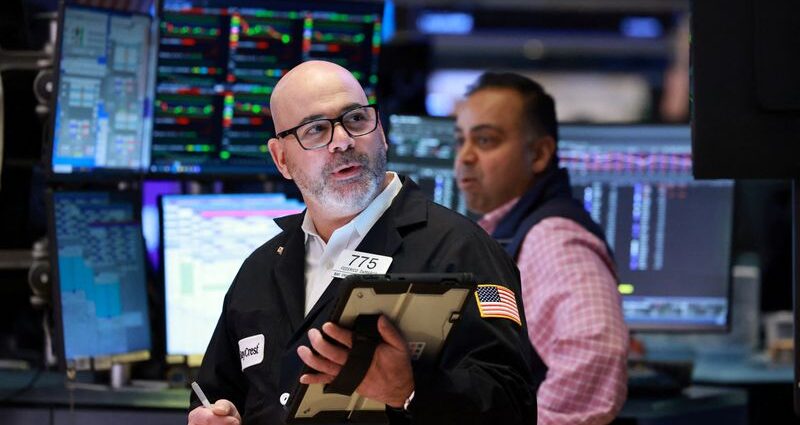






US Mortgage Rates Hit Six-Month High As Iran War Stokes Inflation Fears
The average 30-year fixed-rate mortgage climbed to a six-month high this week, adding fresh pressure to an already strained housing market as the ongoing conflict in the Middle East pushes oil prices higher and reignites inflation concerns.
Freddie Mac (OTC:FMCC) reported Thursday that its Primary Mortgage Market Survey showed the 30-year fixed-rate mortgage averaged 6.38%, up from 6.22% the prior week and the highest reading since early September. Rates have now risen for four consecutive weeks.
The jump is tied directly to energy prices. Oil has surged more than 30% since the Iran conflict began in late February, lifting U.S. Treasury yields. Since mortgage rates track the 10-year Treasury, borrowing costs have followed.
Spring Homebuying Faces Headwinds
The …





Jim Cramer Warns Meta Isn’t The Next Big Tobacco: Forget Lawsuits, Focus On AI—Investors Are ‘Going To Regret’ Selling
CNBC’s Jim Cramer is urging investors not to panic-sell Meta Platforms Inc. (NASDAQ:META) following multimillion-dollar courtroom defeats, arguing that the tech giant is not the next Big Tobacco and that its heavy artificial intelligence (AI) investments will drive massive future growth.
The ‘Big Tobacco’ Rebuttal
Meta shares tumbled nearly 8% after juries in Los Angeles and New Mexico found the company liable for purposefully designing addictive apps that harmed young users.
The California verdict bypassed the industry’s traditional Section 230 legal shield by treating social media platforms as defective products, drawing heavy comparisons to the historical downfall of Big Tobacco.
Cramer, however, firmly rejects that narrative. “If you decide that you’re going to sell Meta because it looks like this is going to be tobacco, it’s not going to be tobacco,” Cramer stated, according to CNBC. He argued that tech companies have been far more transparent about platform risks than the tobacco industry ever was.
He views the stock’s recent 15% slump in March as a prime buying opportunity rather than a death knell. Investors are “going to regret” selling Meta stock, …
This post was originally published here



Maxine Waters Seeks Clarity On Kansas City Fed’s Approval Giving This Crypto Exchange Access To ‘Critical’ Financial Infrastructure
Rep. Maxine Waters (D-Calif.) sought further information on Thursday on the decision to grant cryptocurrency exchange Kraken access to Federal Reserve services.
Waters Says Approval Lacks Transparency
Waters, the leading Democrat on the House Committee on Financial Services, penned a letter to Jeff Schmid, President and CEO of the Federal Reserve Bank of Kansas City, requesting details about the bank’s recent approval of a “limited purpose account” for Kraken.
This approval—the first in U.S. history for a cryptocurrency company—gives Kraken direct access to Fedwire, the core payment infrastructure used by thousands of U.S. banks and credit unions.
Waters expressed her apprehensions about this development. She argued that access to the nation’s “critical” financial infrastructure should not be granted without complete transparency, a clear legal basis and assurance that risks are being adequately managed.
Waters also pointed out that the Kansas City Fed’s announcement “did not disclose specific information” about Kraken’s access to the Federal Reserve’s range of …


Stock Market Today: Futures Tick Lower as Major Indexes Look to Snap 4-Week Skids; Oil Climbs Further
This post was originally published here




Elon Musk ‘Starved The Balance Sheet’ At Tesla Post-IPO To Keep Employees Sharp, Says Former TSLA President McNeill
Former Tesla Inc. (NASDAQ:TSLA) president Jon McNeill revealed that after its 2010 IPO, Elon Musk intentionally “starved the balance sheet,” often keeping only enough cash on hand to last a single quarter to avoid complacency.
Tesla Operated on Minimal Cash
Speaking on TBPN with John Coogan and Jordi Hays, McNeill explained that Tesla sometimes had less than three weeks of net cash once payables were included. Musk believed that operating so close to financial risk forced the team to stay focused and disciplined.
“If you’re two steps from death, you operate differently.”
McNeill added that this approach helped maintain a strong sense of mission among employees, even as their personal wealth increased.
“That kept everybody sharp,” he said.
Post-IPO, while …
This post was originally published here


How Do Your Savings Stack Up Against the Average American Under 35?
This post was originally published here


Chubb’s CEO 25-page shareholder letter touches on China, AI, and the fragility of democracy: ‘I am both optimistic and I’m concerned’
- In today’s CEO Daily: Diane Brady talks to the Chubb CEO about his shareholder letter.
- The big leadership story: Josh D’Amaro’s rough first week as Disney CEO.
- The markets: Mixed globally as the Iran war carries on.
- Plus: All the news and watercooler chat from Fortune.
Good morning. This is peak season for shareholder letters, in which CEOs share observations about their results, priorities and views of the trends shaping business. Most are short, bland and to the point. But Warren Buffett turned his letters into lessons on leadership (Greg Abel has now taken up the mantle at Berkshire Hathaway.) BlackRock CEO Larry Fink talked about “a deeper feeling that capitalism is working” in this year’s letter, and many eagerly await Jamie Dimon’s novella-length letter to drop soon.
In the canon of great shareholder letters, I would add the prose of Evan Greenberg, the chairman and CEO of Chubb Group. He has amassed quite a following and body of work in more than two decades at the helm (first of ACE Ltd, which later became Chubb after he acquired the insurer in 2016). He’s since built Chubb into one of the world’s most valuable property and casualty insurers, with a $126.5 billion market cap.
In his latest annual letter, he offers 25 pages of thought-provoking observations on the world between noting results like the record $10 billion in core operating income last year. “It’s personal to me,” he told me yesterday, noting that it takes him no less than three months and 15 drafts. “It’s not a writer’s turn of phrase. It reads as I speak, as I think … The subjects I pick are relevant to Chubb.”
Here are some edited reflections on the subjects he raised this year:
On China: “I’m deeply invested in it. My company is deeply invested, and it is the most important relationship in the world … I just spent a week in China, 10 days where I went to five different cities, to see new tech companies … the humility, the work ethic, the drive to innovate and create and succeed. They want to bring what they’re doing to America. Cooperation and engagement don’t mean surrender. It doesn’t mean you’re weak. The United States has so many advantages over China. Where we’re fearful is because of their scale, their size and their capability. I deeply admire the Chinese culture. I deeply admire the people. I’ll bet on them all day long. That’s different than the politics and the political construct of the country … Each picks their own.”
On AI: “The good that it can do in medicine and science, the potential it unlocks, is breathtaking. Technology is evolving but human nature has not evolved … We’re just as tribal, just as prejudiced as human beings as we’ve ever been, and we’re handing ourselves this powerful tool. We don’t even quite understand it yet so I am both optimistic and I’m concerned.”
On America: “Democracy is so fragile. Civil society is a participant sport. We are all members. I’m so sick of the dark side we find ourselves in—right and left—where we feed on the notion of denigrating who we are … I don’t know one person who comes from another country to live here and doesn’t say how privileged they feel and how lucky we are, and how much we take it for granted.”
On Leadership: “I’m the leader of a public corporation. I’m not the leader of a religious institution. I’m not the moral spokesman for the world. I’m acutely aware that I, as the CEO of Chubb, am an asset of the company … It’s an honor and a privilege to have my role, and it’s my responsibility to account to my shareholders every year for the company that they have invested in, and to explain it and to illuminate beyond the numbers … Chubb is my second greatest love. It’s all wrapped up in that when I write this letter. Every word matters to me.”
Contact CEO Daily via Diane Brady at diane.brady@fortune.com
This story was originally featured on Fortune.com

Inside America’s most guarded enclave: A rare look at Florida’s ‘no budget’ billionaire bunker
For a South Florida native, the silence and serenity are what hits you first.
Just a stone’s throw from the relentless horn-honking of Surfside and the designer-clad crowds of Bal Harbour Shops, Indian Creek Village exists in a vacuum of enforced peace. There are no sirens, tourists, and certainly no uninvited guests — only the whistle of the Atlantic wind and the rhythmic clap of waves against private piers.
Behind massive entry gates and dense tropical foliage lies a 300-acre fiscal safe haven where America’s billionaires aren’t just buying homes, but investing in a sovereign-level of security that Julian Johnston, one of Miami’s top luxury brokers, says is now the ultimate commodity.
“It is a political sanctuary. I’d say, also, the security itself is extremely tight. I mean, when you drive up, if you don’t have permission to get on, [the police] are actually quite rude and they tell you to go away,” the Corcoran Group agent — who has more than $10 billion in sales under his belt in the area — told Fox News Digital during a private tour of Indian Creek.
MARK ZUCKERBERG BECOMES LATEST CALIFORNIA BILLIONAIRE TO RELOCATE TO FLORID AMID TAX CONCERNS
“I think Indian Creek is an island unto itself,” he continued. “As a community… you’ve got the marina nearby, you can walk to the Four Seasons and go to the beach and it’s a lower-density construction. So there’s not as much traffic, and it’s just a beautiful place to live.”
Commonly known as the “Billionaire Bunker,” successful business leaders and celebrities including Jeff Bezos, Carl Icahn, Tom Brady, Ivanka Trump and Jared Kushner, Julio Iglesias, Adriana Lima, David Guetta, Don Shula and others have long called Indian Creek home. The ultra-exclusive neighborhood made recent headlines for its newest resident, Mark Zuckerberg, who paid a record $170 million for an under-construction property.
The migration is fueled by more than just sunshine; it is a tactical retreat from a wave of tax-the-rich proposals sweeping through blue-state legislatures like California, Washington and New York. While lawmakers and unions move to enact aggressive new levies on capital gains and unrealized wealth, the “Billionaire Bunker” provides a predictable fiscal fortress.
“Even starting with South Beach and Miami Beach, there’s only a thousand homes on the water, approximately… There’s only four real islands in this location that the owners own the roads, so you cannot get on without permission,” Johnston said. “People covet privacy, security… and so with such limited inventory, prices have risen very fast in the last couple of years.”
Zuckerberg’s new estate currently sits as a skeleton of modern concrete bones, still fully exposed to the coastal Miami elements. Parked outside his unfinished home appeared to be an unmarked, blacked-out SUV keeping watch over the lot.
It’s a stark contrast to the finished, bougainvillea-covered Mediterranean arches of the mansion Johnston showed to Fox News Digital. Though that completed home is not formally for sale, its market price is estimated to be more than double what Zuckerberg paid due to its specific location and views.
“Fifty percent of the sales on Indian Creek are off-market. There are some that are just thinking about selling, and it becomes known in the community, and they’ll start getting offers,” he said. “They don’t really want to advertise because that can draw a lot of tire kickers and people that are interested to see the home.”
OVER $126M IN 60 DAYS — FLORIDA REAL ESTATE TYCOONS SAY BLUE-STATE WEALTH MIGRATION IS NOW PERMANENT
The agent noted that it typically takes one year for plans and permits, and three years to build a significant home on the island. He also explained how Bezos bought a 20-year-old Indian Creek property “in beautiful condition” for $75 million “just for somewhere to sleep” while his other two adjacent lots are being developed for his larger estate.
Driving by their residences, Bezos’ homes had long and winding driveways with iron gates and carefully tailored landscaping; Brady’s home appeared to be an almost entirely glass, gray-toned house from the front, with modern yet chic furniture and art visible through the window panes.
“When Tom Brady started building, he was thinking about selling the house for $80 to $100 million. Now he’s turning down offers four or five years later of $200 million,” Johnston said as another example.
“Some developers are doing very high-end homes now, but these end users, they have no budget. So then they’ll elevate those finishes even further, and they’ll build their dream home,” he continued. “I think this neighborhood is not attainable for some of us, including me. I think even some of the owners themselves are shocked.”
Socializing on and around the man-made island has seemingly replaced New York City and Silicon Valley boardrooms, as the top agent pointed out changes in the way business deals and venture capital decisions are being made outside of their traditional offices.
“One of my clients… he’s a VC, he’s worth about $14 billion, and he would walk out in Manhattan, he’d go, ‘I put on my bulletproof vest, I go to war… Down here, I go out in shorts and a T-shirt, I walk on my conference call to a coffee shop, I finish that, I do another meeting… I found more peace with my life, I’m just as efficient,’” Johnston recalled.
With more than half of $1 trillion in combined net worth living on Indian Creek, it’s solidifying itself as the epicenter of a permanent wealth migration. However, the juxtaposition of the billionaires’ playground and an exceedingly risky market for average buyers is wide — UBS’ Global Real Estate Bubble Index for 2025 recently put Miami in the No. 1 spot for the real estate market with the highest bubble risk on Earth, surpassing the peak of the 2006 housing bubble.
GET FOX BUSINESS ON THE GO BY CLICKING HERE
But Johnston argues that the trickle-down effect is funding massive public works, like high-speed transit and nearby affordable housing for the island’s vast support staff.
“I think it’s only going to benefit Miami greatly,” he said. “It has become more expensive and there’s been some push away from that. But the city is doing something about it, developers are reacting to it and there are peripheral areas now that are getting built out with beautiful retail and bus services and public transport, and I think it’s only going to make the city better and better.”









Paris is ground zero for Europe’s backlash against illegal Airbnbs
Early one drizzly morning in Paris, a handful of city officials make their way up a steep, narrow street in the historic neighborhood of Montmartre, with a reporter in tow and the domed Sacré-Coeur basilica looming above. The group stops at an apartment building that looks like any other on the block. It is only when they step inside the entrance hall that anything seems unusual. Signs pasted to the walls declare that loud noise and nighttime gatherings are forbidden. And many of the front doors have metal lockboxes bolted to them, with apartment keys inside. Both are telltale signs that the city workers have found what they’re looking for: illegal Airbnbs.
During the next half-hour, as we climb stairs and knock on doors, a few sleepy residents emerge to complain—not about us, but to us. They describe how their building has begun to feel like a travelers’ crash pad, with rolling suitcases clattering on the pavestones at all hours, and the outdoor courtyard becoming a rowdy tavern on warm evenings. “A living hell,” one calls it.
These modest Montmartre homes are just one flash point in Europe’s growing Airbnb backlash. Even as short-term home rentals have become a global travel norm, more cities worldwide have blamed Airbnb and its competitors for their housing squeeze and affordability crises. In Europe, and in Paris in particular, the growing opposition has gathered real momentum. Paris’s restrictions are among the most rigid, sharply limiting the number of nights that any property can be made available for short-term rentals. The owners of those Montmartre apartments could face fines of well over €100,000 if it’s proved they have violated the law.
“People are buying up properties, becoming a kind of hotelier, developing these businesses that are taking apartments out of the local market,” outgoing Paris Mayor Anne Hidalgo fumes over lunch in City Hall’s ornate dining room. Hidalgo, whose term expired in March, describes how she, together with the mayors of Barcelona and Rome, spent years pushing the 27-country European Union to crack down on Airbnb. Beginning this May, a new EU law will require hosts to register properties on a Europe-wide database, aimed at allowing cities to quickly check listings they suspect flout local laws. “The problem is not just Paris,” Hidalgo adds. “It is all of Europe.”
Airbnb has assumed the role of villain in this saga, since it dominates the market, with about 44% of the short-term rental industry in 2024, according to travel data firm Skift Research. There are about 9 million Airbnb listings globally, and Paris estimates about 75,000 short-term tourist rentals in its metro area.
75,000
Tourist rentals in the Paris area
44%
Airbnb’s share of global short-term rental industry, 2024
~50 million
Number of tourists who visited Paris in 2025
Sources: Apur, Skift Research, City of Paris Tourism Office
When three twenty-something friends launched Airbnb in 2008, villainy was hardly the fate they foresaw. They had cast their startup as a relaxed way for strangers to connect: Their idea was hatched when they plopped air mattresses on the floor of their San Francisco apartment and charged people to sleep on them. “Back then, 100% of people were more than skeptical,” cofounder and chief strategy officer Nathan Blecharczyk tells me. “They almost violently rejected the idea, saying, ‘How can you trust a stranger in your home?’”
The world got used to the idea, of course, and now Airbnb is a Fortune 500 business with a valuation of nearly $80 billion and listings in more than 200 countries. Last year it booked 121.9 million stays, earning $12.2 billion in revenue, up from $11 billion the year before. Dictionaries define “to Airbnb” as the verb for short-term renting—a catchphrase for the entire business it invented.
Even so, Airbnb’s share price is about 10% below where it was when it went public in 2020—and investors believe that local pushback is a real obstacle to its growth. The company strongly rejects the idea that it’s to blame for any housing shortages: Airbnb “just doesn’t move the needle in terms of impacting housing prices,” Blecharczyk says. Still, for its execs and investors, the question now is how much they will need to change their strategy going forward—or whether the model that built the company into a travel giant can endure.
Today many Airbnb listings are operated as full-time rental businesses, rather than by people allowing strangers to stay in their homes. That fact has only stoked the sense in some cities that the soaring number of short-term rentals has robbed them of badly needed housing stock, even as affordability becomes a pivotal political issue. As Motley Fool stock analyst Lawrence Nga wrote last September, “Airbnb’s most significant long-term risk isn’t competition. It’s regulation.”
The call to rein in Airbnb is strongest in Europe’s centuries-old tourist-magnet cities. Across Europe, the number of tourist rental nights booked nearly doubled between 2018 and 2025, to 398 million, according to EU statistics. Locals accuse Airbnb of pricing them out of their neighborhoods and turning their communities into tourist hubs disconnected from their cultural environment. Across Europe, walls are spray-painted with graffiti reading “Airbnb out!” In Barcelona, one person has painted, “Your Airbnb was my home.”
Few cities have captured the sense of grievance as keenly as Paris—the world’s most visited city, by some measures. The city drew nearly 50 million tourists last year, with the single biggest group being Americans. There are more than 1 million short-term rental listings in France—the industry’s biggest market outside the U.S.—with Paris as the country’s biggest hub. “Airbnb bears real responsibility in France’s housing crisis,” editors of French paper Le Monde wrote in November, when it published a damning six-part series on the company.

But the push by mayors like Hidalgo for a crackdown has borne fruit. In October 2024, Paris and several other French cities, including Mediterranean sun-traps like Nice and Marseille, restricted short-term rentals to people listing their own homes, and then for only 90 days a year—a marked change from the 180-day rule it replaced. Second homes, meanwhile, can be rented only to students or visiting businesspeople, and doing so involves extensive paperwork and higher property taxes.
In January, France’s supreme court ruled that Airbnb and other platforms were legally responsible for listings that flout the new laws. And in February, two Paris property owners who failed to register their Airbnb listings were fined €80,000 ($93,000) and €150,000 ($174,500) respectively. “It’s the end for impunity,” one official said at the time. “No more illegal Airbnbs.”
Paris officials admit that the regulation’s real value is to slow Airbnb’s investment property market to a crawl. “We won’t be able to sue everyone,” says Emmeline de Kerret, who heads Paris’s city authority overseeing tourist rentals. “[But] we want to show that from now on, it is not a great investment.”
In Paris, that is already clear, says Anne-Hélène Gutierres Requenne, a business consultant who put her one-bedroom apartment near Montmartre on sale in March, after two years of listing it on Airbnb. “The legal framework is more and more cumbersome,” she says. Her final Airbnb customer was a professor from Cornell University spending a semester in Paris.
As the rules have tightened, and as other markets threaten similar actions, Airbnb has raced to adapt and expand. The company’s growth markets—measured by nights booked—are no longer in Europe: They are middle-income countries like Brazil and India, where apartments rent for less. Last May it relaunched its “experiences” vertical after a two-year pause, and added “services”—such as massages, guided tours, even cooking classes—in addition to rentals. Now, when you book an Airbnb in Paris, you can add an Airbnb pickup from the airport, and Airbnb daily itineraries with Airbnb tour guides, and have Airbnb shop and deliver food to your rental.
The goal, cofounder and CEO Brian Chesky told investors in February, was to make Airbnb’s app a hub for a vast array of options, much as Amazon became an app for anything that could be shipped in a cardboard box. “The unifying idea for me is the trip,” he said. And the offerings create new revenue streams for Airbnb without requiring the company to add new home listings or risk violating regulations. Indeed, Parisians themselves are beginning to reserve Paris features, without booking a place to stay.
Increasingly, the company is negotiating with cities hosting major events like the FIFA World Cup, which takes place across the U.S., Canada, and Mexico in June and July. The model for Airbnb was the 2024 Paris Olympics, when the city suspended its rental regulations to accommodate millions of visitors; 700,000 of them stayed in Airbnbs, says chief business officer Dave Stephenson. At crucial moments when cities need extra lodging, Chesky told investors in February, the company goes from “a problem cities have to deal with, to a solution to the problem … Hotels cannot accommodate everyone.”
Stephenson argues that Airbnb guests tend to boost the local economy, perhaps more than traditional hotel guests. “The money stays with the host, in the community,” he says. “It gets spent in the coffee shops, in stores down the street.” In its charm offensive, the company has donated to the restoration of old churches and other buildings in France. (It has also eased conditions for guests worldwide, instituting more flexible cancellation policies and eliminating annoyances like cleaning fees and lists of checkout chores.)
As for rising rents and housing shortages, Airbnb execs argue that the bigger problems are high inflation and people’s increasing desire to live in thriving urban centers. They point to New York, Amsterdam, and Barcelona as cities where, they say, rents have surged even as new regulations there slashed the number of Airbnb listings.
That argument is not likely to shield the owners of the short-term rentals in Montmartre that we detected in February. Over espressos a few weeks later, Paris’s deputy mayor for housing, Jacques Baudrier, tells me officials are still investigating who owns the apartments that have key boxes affixed to the doors. “Eventually we will take back 20,000 apartments,” he says. “With the new laws, the illegal Airbnbs will be zero.”
This article appears in the April/May 2026 issue of Fortune with the headline “Airbnb faces a European backlash—with Paris as ground zero.”
This story was originally featured on Fortune.com

Scientists watch sperm whales work as a team to assist a birth
An unprecedented look at the birth of a sperm whale found that mother and calf were supported by other whales throughout the process.
(Image credit: Project CETI)

This post was originally published here