

Harley-Davidson Begins Worldwide Layoffs

Research points to how companies could make social media less addictive for teens
Juries in two big cases have affirmed what research is finding: The design of social media platforms is particularly compelling and hard to resist for kids. There are growing calls to change it.
(Image credit: Fiordaliso/Moment RF)

This post was originally published here

Iran seizes assets of public figure ‘traitors’ over dissent
This post was originally published here

Astronaut’s medical mystery stumps doctors and NASA after he suddenly lost the ability to speak in space
The astronaut who prompted NASA’s first medical evacuation earlier this year said Friday that doctors still don’t know why he suddenly fell sick at the International Space Station.
Four-time space flier Mike Fincke said he was eating dinner on Jan. 7 after prepping for a spacewalk the next day when it happened. He couldn’t talk and remembers no pain, but his anxious crewmates jumped into action after seeing him in distress and requested help from flight surgeons on the ground.
“It was completely out of the blue. It was just amazingly quick,” he said in an interview with The Associated Press from Houston’s Johnson Space Center.
Fincke, 59, a retired Air Force colonel, said the episode lasted roughly 20 minutes and he felt fine afterward. He said he still does. He never experienced anything like that before or since.
Doctors have ruled out a heart attack and Fincke said he wasn’t choking, but everything else is still on the table and could be related to his 549 days of weightlessness. He was 5 ½ months into his latest space station stay when the problem struck like “a very, very fast lightning bolt.”
“My crewmates definitely saw that I was in distress,” he said, with all six gathering around him. “It was all hands on deck within just a matter of seconds.”
Fincke said he can’t provide any more details about his medical episode. The space agency wants to make sure that other astronauts do not feel that their medical privacy will be compromised if something happens to them, he said.
Tests are inconclusive
The space station’s ultrasound machine came in handy when the event occurred, he said, and he’s gone through numerous tests since returning to Earth. NASA is poring through other astronauts’ medical records to see if any related instances that might have occurred in space, he said.
Fincke identified himself late last month as the one who was sick to end the swirling public speculation.
He still feels bad that his illness caused the spacewalk to be canceled — it would have been his 10th spacewalk but first for crewmate Zena Cardman — and resulted in an early return for her and their two other crewmates. SpaceX brought them back on Jan. 15, more than a month early, and they went straight to the hospital.
“I’ve been very lucky to be super healthy. So this was very surprising for everyone,” he said.
Fincke stopped apologizing to everybody after NASA’s new administrator Jared Isaacman ordered him to stop.
“This wasn’t you. This was space, right?” his colleagues assured him. “You didn’t let anybody down.”
Ever the optimist, he’s holding out hope that he can return to space one day.
The Associated Press Health and Science Department receives support from the Howard Hughes Medical Institute’s Department of Science Education and the Robert Wood Johnson Foundation. The AP is solely responsible for all content.
This story was originally featured on Fortune.com

Crypto Insurance Sounds Great Until You Actually Need It—Here’s The Ugly Truth
Coinbase (NASDAQ:COIN) denied a $100,000 Bitcoin (CRYPTO: BTC) theft claim from a Coinbase One subscriber, despite the $29.99-a-month service promising up to $1 million in account protection.
The Intuit CRO Who Lost $100,000
Matthew Allan, Chief Risk Officer at Intuit Inc. (NASDAQ:INTU), had nearly $100,000 in Bitcoin stolen from his Coinbase account.
Despite paying for Coinbase One’s account protection, Coinbase told him he was out of luck because he hadn’t turned on certain security settings required by the terms and conditions.
Coinbase maintained that customers own responsibility for all account activity, even when attackers compromise their devices or credentials.
During five months of back-and-forth, Coinbase maintained that customers own responsibility for all account activity, even when attackers compromise their devices or credentials,” according to court records.
Allan sued, a court compelled the complaint into private arbitration, and he may never …

These Analysts Cut Their Forecasts On WhiteFiber Following Q4 Loss
WhiteFiber, Inc. (NASDAQ:WYFI) posted a wider loss for the fourth quarter on Thursday.
The New York-based company reported a Q4 GAAP loss per share of 67 cents, wider than the 18-cent loss estimate, while revenue of $23.561 million came in below the $23.791 million estimate.
Total revenue rose 61% year over year to $23.6 million, while net loss widened to $1.5 million from $1.0 million. Adjusted EBITDA increased to $5.8 million from $5.5 million.
“We completed our initial …
This post was originally published here

Google nears deal to help finance multibillion-dollar data centre leased to Anthropic
This post was originally published here

US law enforcement foils plot to assassinate Palestinian American activist
Nerdeen Kiswani, founder of Within Our Lifetime, says FBI told her plot against her life was ‘about to’ take place
Federal US law enforcement has foiled a plot to assassinate New York-based Palestinian American activist Nerdeen Kiswani.
Kiswani wrote in post on X that late on Thursday, the FBI joint terrorism taskforce informed her that a plot against her life was “about to” take place, and that agents had conducted an operation in Hoboken, New Jersey, in connection to it.
This post was originally published here



Cryptocurrency Scams: How to Spot, Report, and Avoid Them
This post was originally published here



Bitcoin’s Next Stop: $80K or $60K? Bitwise Analysts Just Made Their Bet
Bitcoin (CRYPTO: BTC) is more likely to hit $80,000 before $60,000, according to Bitwise CIO Matt Hougan and analyst Ryan Rasmussen. Hougan expects crypto to trade sideways until the April 15 tax day, then rally toward new all‑time highs.
The April 15 Tax Day Catalyst
Hougan expects crypto weakness heading into April 15—the deadline for Americans to file taxes and pay capital gains from 2025.
Investors who harvested gains last year must now pay taxes, potentially forcing them to sell crypto to cover the bill.
“My experience historically is that crypto is often weak heading into tax day and then starts to rally right around then,” Hougan told Milk Road this week.
The theory carries extra weight this year after the outsized gains many traders booked in late 2024 and early 2025 — especially from the Trump memecoin’s surge in January 2025.
Why $80,000 Beats $60,000
Both Bitwise analysts still expect Bitcoin …

Americans want kids shielded from the internet. They don’t trust websites or the government to do anything about it
You know that pop-up. The one you click “yes” for every time. The one that asks you to confirm you’re over 18. Sometimes, “you must be older than 21 to enter this site” is written in big, bold letters. Other times, in a somewhat sobering moment, you’re asked to scroll back for what seems like eons as you find the year of your birth. Maybe you put your real age; maybe you’re lying and claim to be younger than you are (who’s going to check, this silly little website?); maybe you are underage and want to access whatever’s behind this simple-to-circumvent pop-up. Either way, you’re getting through it, and easily at that.
The political consensus around protecting kids online is nearly universal. What Americans can’t agree on is whether the tools legislators have built actually do the job. A new survey from digital safety platform All About Cookies, conducted in February with responses from 1,000 U.S. adults, reveals a striking paradox: overwhelming public support for age verification laws, paired with near-universal consensus that those laws simply won’t work.
“A lot of kids, especially teens, are probably more tech savvy, better than even some of these adults,” Josh Koebert, a data journalist for All About Cookies, told Fortune. “So if I can get around it, they can get around it.”
Adults want adults on the internet—or at least want kids to out themselves
Seventy-nine percent of Americans support age verification laws for adult content, and 74% back them for social media platforms. Yet 85%, the highest consensus figure in the entire survey, say the current laws are too easy to skirt. More than half of users who have been asked to verify their age online admitted they found a workaround anyway, most commonly by switching to a less-regulated website (45%) or using a VPN (22%).
“The main takeaway is twofold,” said Koebert, who authored the survey. “The majority of people think kids need to be protected, but what we’ve got isn’t working.”
The more revealing story for business leaders may be the data anxieties the survey surfaces. Ninety-two percent of respondents expressed at least one concern about age verification laws, and the fears center squarely on corporate data stewardship.
Seventy-nine percent worry about privacy and data security; 66% cite identity theft risk; and 41% fear being profiled or added to an external list after verification is complete.
Those fears aren’t theoretical. Many age verification laws include provisions requiring companies to delete user data once verification is complete. But high-profile breaches, including incidents involving Discord’s third-party verification vendor Persona, have eroded confidence that the rules are being followed.
“People have been bitten time and time again,” Koebert said. “They’ve submitted information to a giant company and ended up in a breach. Of course they’re going to be hesitant to submit a government ID.”
The survey also identified an unlikely policy pressure point: sports betting. Ninety percent of respondents said gambling platforms should face strict age verification, the highest figure of any category tested, topping even social media.
Koebert attributed it to market saturation. Since the Supreme Court’s 2018 ruling that opened the door to federally legal sports wagering, betting brands have flooded broadcasts with advertising.
“It’s impossible to watch sports without being bombarded,” he said. “Kids are watching these games alongside their parents, and people are thinking: this isn’t healthy.”
Despite widespread support for regulation, the public’s preferred solution skews away from top-down mandates. Fifty-five percent said parental controls and monitoring tools, and not government laws, are the best way to keep minors safe online, while only one in five chose age verification laws as the optimal approach.
As verification requirements expand to cover roughly half of U.S. states, and as countries from Australia to Spain enact their own versions, the core challenge for lawmakers and platforms is converging: how to protect minors online without creating the very privacy vulnerabilities that make adults distrust the internet in the first place.
“Where does it stop? Where does it keep going? What happens next?” Koebert asked regarding how far reaching the laws can get. “Questions that I don’t think we have answers for.”
This story was originally featured on Fortune.com


Why Are Adobe Shares Sliding On Friday?
Adobe Inc (NASDAQ:ADBE) shares fell on Friday. The Nasdaq fell 1.27% while the S&P 500 shed 0.97%.
Analyst Downgrade Hits Sentiment
On Thursday, William Blair analyst Arjun Bhatia downgraded Adobe. The rating moved from Outperform to Market Perform, according to Benzinga Pro.
This shift follows growing unease regarding the software sector.
Competition and ‘SaaSpocalypse’ Risks
Concerns are emerging in the SaaS sector as investors assess the potential impact of AI-driven automation on traditional subscription-based business models.
The confluence of AI-driven disruption fears, deteriorating technical setups, and a shift in fundamental valuation metrics has created a challenging environment for the stock.
Google’s Stitch Poses Threat
This post was originally published here




Best Jumbo CD Rates Our Experts Found Today, March 27, 2026: Up to 4.15%
This post was originally published here
Strategy is accelerating its crypto purchases as rivals sit on the sidelines
Demand for bitcoin as a corporate treasury asset is once again concentrated in Michael Saylor’s Strategy as the company steps up its bitcoin buying pace.
This post was originally published here


Airports complain early bird travelers are making TSA lines even worse
Images of never-ending security lines at U.S. airports and frustrating tales of missed flights are pushing panicked travelers to show up way before their departures. But some airports where the wait times have been manageable are telling passengers to stop arriving so early.
In Ohio, John Glenn International Airport in Columbus says early birds — reacting to the funding standoff on Capitol Hill that’s creating crowded security checkpoints — are making things worse by creating bottlenecks during peak times.
“Arriving too early can actually create longer lines right when we open,” the airport said in a social media post Thursday. “Spacing out arrival times helps keep things moving smoothly for everyone.”
The airport even created a chart showing when to arrive: “90 minutes before departure is all you need.”
What’s confusing for air passengers, though, is that it’s hard to predict which airports will be plagued next by security lines spilling out of terminals.
The government shutdown straining Transportation Security Administration staffing has ballooned checkpoint wait times beyond two hours at some major airports. George Bush Intercontinental Airport in Houston has become the biggest chokepoint for travelers with four-hour security lines.
Those are by far the worst-case scenarios. Many airports — like the one in Ohio — have been seeing wait times comparable with those in normal times. That’s why airlines say the best advice for passengers right now is to check TSA wait times before their scheduled departures.
In some ways, it’s a bit reminiscent of the days of “ panic buying ” during the early days of the COVID-19 pandemic in 2020.
“It’s human nature. You don’t have control over what’s going on at an airport,” said Shari Botwin, a Philadelphia clinical social worker who counsels people about anxiety.
“There’s so much media attention about the chaos at airports,” she said. “They might not trust when someone says, ’Well, you don’t need to come out early anymore.’”
Associated Press reporter Ed White in Detroit contributed.
This story was originally featured on Fortune.com

IRS refund tracker explained: What you need to know before this year’s tax filing deadline
Tax season is in full force as the deadline to file or request an extension is less than three weeks away, and some Americans who have already filed their returns are waiting to receive a refund from the IRS.
Nearly 70 million taxpayers filed their returns as of March 13 and most taxpayers can expect to receive their tax refund within three weeks of filing their return, and the IRS has a tool that taxpayers can use to track the status of their refund.
The IRS’ “Where’s my refund?” tool allows users to view whether their return has been received, if the tax refund has been approved and sent to the taxpayer via direct deposit.
Taxpayers need their Social Security number or taxpayer identification number, filing status, tax year and the exact amount of their federal refund from the tax return they want to check.
HERE’S WHEN TAXPAYERS WILL GET THEIR REFUNDS
The tool informs taxpayers when their refund has been sent to their bank via direct deposit. It also says that if their refund hasn’t been credited to their account by a specific date, they should check with their bank to see if it has been received.
For taxpayers who e-filed their return for the current year, they can typically see their refund status within 24 hours using the refund tracking tool. Those who e-filed a tax return for a prior year can usually see it after three days. The refund status for tax returns that were filed using paper copies is available four weeks after filing.
The timeline for refunds to be received by the taxpayer also depends on how they filed their return. Taxpayers who e-filed their returns typically receive their refund about three weeks from the date they e-filed. Refunds for mailed tax returns are usually received six or more weeks from the date the IRS received the mailed return.
TAX FILING SEASON IS OFFICIALLY HERE: WHAT YOU NEED TO KNOW
The IRS also encourages taxpayers to enroll in direct deposit if they want to receive their refund faster, as the agency began phasing out paper refund checks last fall. It will still send paper checks if no alternative is available for taxpayers. Options available for taxpayers without bank accounts include prepaid debit cards, digital wallets, or other limited exceptions.
The IRS says that while it issues most refunds to taxpayers in fewer than 21 days, some returns may take longer to process as they require additional review or corrections.
For example, returns that claim the earned income tax credit are held by law until mid-February to prevent fraud, while the complexity of the additional child tax credit requires a deeper review. Common mistakes like forgetting to sign your return or making a math error can also cause delays.
TAX REFUND DELAYS HIT MULTIPLE STATES
If the IRS corrects the return, it may reduce or increase the refund amount that the taxpayer was owed based on their original filing. When this happens, the IRS will mail a notice explaining the adjustment to the taxpayer’s address of record.
Taxpayers who had to amend their tax return after it was initially filed have a separate tool that they can use to check on the status of their return and any refund they may be owed.
They can check the status using the “Where’s my amended return?” tool three weeks after it was filed. Amended returns typically take longer for the IRS to process and may require up to 16 weeks.
GET FOX BUSINESS ON THE GO BY CLICKING HERE
The IRS also offers other ways for taxpayers to check their refund status via the IRS mobile app, as well as automated hotlines for refunds and amended returns.

STAT+: In private meetings, White House works to win pharma companies’ support for drug pricing bill
WASHINGTON — The White House has drafted legislative text for its drug pricing policy, and officials are in the process of sharing it with more than a dozen major pharmaceutical companies, according to people familiar with the meetings.
The legislative text, according to a White House official, closely follows the outlines of the voluntary deals the administration made with pharma companies. The draft includes a policy that would allow drugs purchased in cash to count toward a patient’s deductible.
The Trump administration’s push for drug price legislation is part of a larger effort to get health reforms signed into law. The president’s focus on his affordability agenda in an election year has heightened the profile of the effort.
Iran-linked hackers breach FBI Director Kash Patel’s personal email, publish excerpts online
Iran-linked hackers publicly claimed the breach of FBI Director Kash Patel’s personal inbox, publishing photographs of the director and other documents.
This post was originally published here

Man questioned over trafficking allegations in Mohamed Al Fayed investigation
Met police say suspect in his 60s interviewed under caution over claims of human trafficking and facilitating rape
Police have questioned a man over allegations of human trafficking and facilitating rape in connection with the former Harrods owner Mohamed Al Fayed.
The suspect, who is in his 60s, was interviewed under caution this month after 154 people came forward to report allegations of sexual abuse by Fayed, the Metropolitan police said.
This post was originally published here
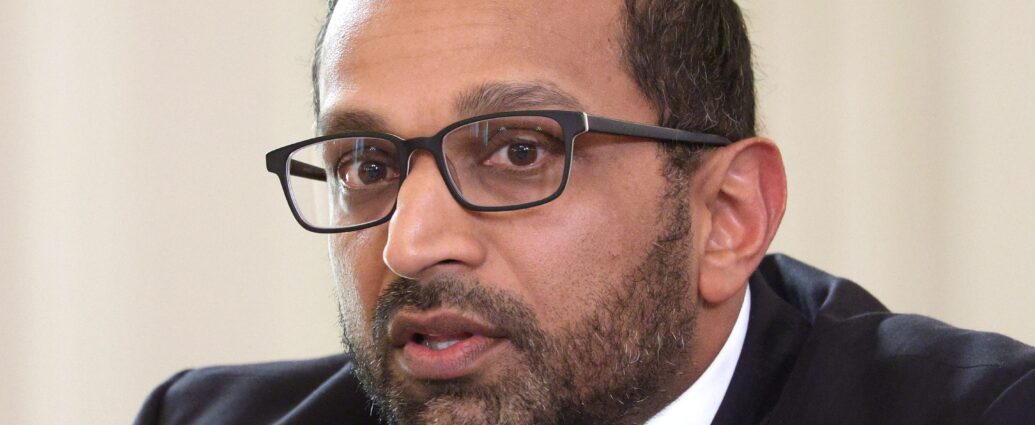
Pro-Iranian hackers claim they breached FBI Director Kash Patel’s personal email as Trump administration offers $10 million reward
A pro-Iranian hacking group claimed Friday to have hacked an account of FBI Director Kash Patel and has posted online what appear to be years-old photographs of him, along with a work resume and other personal documents. Many of those records appeared to be more than a decade old.
“Kash Patel, the current head of the FBI, who once saw his name displayed with pride on the agency’s headquarters, will now find his name among the list of successfully hacked victims,” said a message posted Friday from the group Handala.
The message was accompanied by more than a half dozen photos of Patel, including ones of him standing beside an antique sports car and another with a cigar in his mouth. The group also said that it was making available for download emails and other documents from Patel’s account. Many of the records appeared to relate to his personal travels and business from more than 10 years ago
“The FBI is aware of malicious actors targeting Director Patel’s personal email information, and we have taken all necessary steps to mitigate potential risks associated with this activity,” the FBI said in a statement. “The information in question is historical in nature and involves no government information.”
Justice Department singles out Handala
It was not clear when the hack claimed by Handala might have occurred. News reports from December 2024, before Patel was confirmed as director, said that Patel had been informed by FBI that he had been targeted as part of an Iranian hack.
Handala is a pro-Iranian, pro-Palestinian hacking group that earlier this month claimed credit for disrupting systems at Stryker, a Michigan-based medical technology company. Handala said the attack was in retaliation for suspected U.S. strikes that killed Iranian schoolchildren. They’re a prominent example of the proxy groups that carry out cyber attacks on behalf of Iran.
The Justice Department singled out Handala in an announcement last week in which it said it had seized four web domains tied to Iranian hacking schemes and the threatening of dissidents.
The Trump administration is offering a reward of up to $10 million for information leading to the identification of members of the Handala hacking group.
Associated Press writer David Klepper in Washington contributed to this report.
This story was originally featured on Fortune.com

Gary Black Sounds Alarm On Sell Side Bias In SpaceX IPO Buzz
Gary Black, managing director of The Future Fund LLC, issued an alarm to Tesla Inc. (NASDAQ:TSLA) investors on Friday.
Black cautioned shareholders to remain skeptical of “overly positive” analyst takes regarding Elon Musk’s aerospace venture.
“Be wary of sell-side analysts’ overly positive opinions about SpaceX, a TSLA/SpaceX merger, or the merits of any specific IPO,” Black wrote on X. He highlighted a fundamental conflict of interest, noting that sell-side analysts are paid on commissions rather than the accuracy of their investment ideas.
The Massive SpaceX IPO Payday
The warnings come as reports suggest SpaceX could file for its initial public (IPO) offering as early as this week. The space giant is reportedly targeting …
This post was originally published here

MARA Sells $1B In Bitcoin At A Loss To Pay Down Debt As Hedge Fund CIO Warns: ‘Just The Beginning’
MARA Holdings (NASDAQ:MARA) sold 15,133 Bitcoin (CRYPTO: BTC) between March 4 and March 25 for approximately $1.1 billion, using the proceeds to repurchase roughly $1 billion of its convertible notes due 2030 and 2031. The sale slashed MARA’s holdings by about 28%.
The kicker: MARA disclosed separately that it bought 4,267 BTC in 2025 at an average price of around $111,000: roughly $45,000 above where the token trades today.
Lekker Capital CIO Calls It A ‘Major Unwind’
Quinn Thompson, CIO of hedge fund Lekker Capital, wrote on X that MARA is now a “distressed seller” and called this “just the beginning of a major unwind across the sector.”
Thompson’s thesis centers on a paradox. Bitcoin mining economics are in crisis, and the only way they heal is through a decline in hashrate, which is being driven by companies like Core Scientific
This post was originally published here









Why investors should resist the easiest course of action in a difficult market
It’s the real reason why so few people make money in stocks.
This post was originally published here

What’s Going On With Hycroft Mining Stock Friday?
Hycroft Mining Holding Corporation (NASDAQ:HYMC) shares climbed during Friday’s session. The move follows a recovery in precious metals.
Gold rose back above $4,400 per ounce after a sharp decline on Thursday, according to Trading Economics.
The Nasdaq is down 1.01% while the S&P 500 has shed 0.79%.
Trump Shifts Iran Deadline
Market sentiment shifted as President Donald Trump pushed back a critical deadline. Iran now has until April 6 to secure a deal to end the war.
This 10-day extension halted planned strikes against Iranian energy infrastructure. …
This post was originally published here
Former miners can finally speak the truth about Orgreave, says inquiry chair
Pete Wilcox says point of investigation into infamous 1984 clashes with police is to ‘enable communities to move on’
Former miners will finally get the chance to speak the truth about their experiences after four decades of silence during a public inquiry into infamous clashes with police at Orgreave, the inquiry’s chair has said.
Pete Wilcox, the bishop of Sheffield, said only an inquiry could help South Yorkshire move on from the events of 18 June 1984, when striking miners unexpectedly found themselves in a pitched battle against thousands of police officers brought in from forces across the UK.
This post was originally published here
General Electric is in the throes a major reversal lower, says Carter Worth
GE’s fortunes have reversed of late.
This post was originally published here
UK government borrowing costs hit 5% as Iran war fuels bond market sell-off
Yields on 10-year debt reach highest since the 2008 financial crisis, raising concerns of faster interest rate rises
UK government borrowing costs have risen above 5% amid an intensifying global bond market sell-off fuelled by the Iran war.
The yield – or interest rate – on 10-year debt hit its highest level since the 2008 financial crisis, rising 13 basis points to 5.081%, as investors acted on concerns about the economic fallout from the conflict.
This post was originally published here

NYSE Owner Completes $1.6 Billion Polymarket Stake With $600 Million Cash Injection
Intercontinental Exchange Inc. (NYSE:ICE) invested $600 million in cash into Polymarket, completing a funding plan that gives the New York Stock Exchange owner a roughly $1.6 billion stake in the world’s largest prediction market.
Intercontinental Exchange initially invested $1 billion in October, with a commitment to ramp up to as much as $2 billion over time. The company also expects to purchase up to $40 million in Polymarket securities from existing holders.
• Intercontinental Exchange stock is showing downward bias. What’s next for ICE stock?
Prediction Market Funding Boom
The investment lands amid a flood of institutional capital into the sector. Rival Kalshi raised more than $1 billion earlier this month at a $22 billion valuation, roughly double its previous mark. Polymarket’s valuation for …
This post was originally published here

Meta, Amazon And Big Tech Is Driving A $140 Billion AI Debt Tsunami Spooking Wall Street—JPMorgan Just Stepped In
The AI boom is no longer just a spending story. It’s becoming a debt story — and Wall Street is starting to pay attention. Over the past six months, Big Tech’s biggest names — Meta Platforms, Inc. (NASDAQ:META), Amazon.com, Inc. (NASDAQ:AMZN), Alphabet Inc. (NASDAQ:GOOGL) (NASDAQ:GOOG) and Oracle Corp (NYSE:ORCL) — have collectively raised roughly $140 billion in debt to fund AI infrastructure.
That’s a sharp shift.
For years, hyperscalers funded growth largely through internal cash flows. Now, AI capex is outpacing that — and the gap is being filled by the bond market.
The AI Arms Race Goes Leveraged
The numbers tell the story.
- Meta raised about $30 billion through one of the largest corporate bond …
This post was originally published here
Hegseth reportedly cuts two Black men and two women from military promotion list
US defense secretary axed the four officers’ names from list to become one-star generals, the New York Times reports
Pete Hegseth, the US defense secretary, is reportedly attempting to block the military promotion of four officers – two women and two Black men – to become one-star generals.
The remaining promotion list includes about three dozen officers, most of whom are white men, though a few women and Black officers are still included, according to the New York Times.
This post was originally published here
Stocks making the biggest moves midday: Brown-Forman, Entergy, Meta Platforms, Carnival, Argan & more
Here are some of the stocks making headlines in midday trading.
This post was originally published here
4 Common Social Security Scams and How To Avoid Them
This post was originally published here
Five Guys CEO says he gave a $1.5m bonus to his workers so he wouldn’t get shot in the back
Jerry Murrell seemingly alluded to healthcare CEO killing when he explained giving bonus to workers after bungled promotion
Five Guys’ chief executive officer, Jerry Murrell, said he gave a $1.5m bonus to employees of his US-based burger restaurant chain because “I didn’t want anybody shooting me” after the company recently “screwed … up” a buy-one-get-one-free promotion.
Murrell did not elaborate on the comment, which he gave to Fortune in an interview published on Wednesday – but it came a little more than a year after the UnitedHealthcare CEO Brian Thompson was shot dead on a midtown Manhattan street in what was widely considered a murderous rebuke of the US health insurance industry’s profit-driven practices.
This post was originally published here

Inside the Crypto‑Fueled Fake Review Economy

US appeals court overturns $16bn Argentina ruling in blow to Burford Capital
This post was originally published here


Nvidia Stock Just Became The Bargain Of The AI Boom
After years of skyrocketing gains driven by surging demand for AI processors, Nvidia Corp. (NASDAQ:NVDA) may be offering investors a rare window of opportunity.
Nvidia’s current valuation metrics suggest the stock looks surprisingly reasonable by its own historic standards, despite standing at the foundation of the AI revolution.
- NVDA stock is down. See the chart and price action here.
NVDA is a Bargain
Nvidia stock currently trades at roughly 34.95 times earnings and 19.44 times sales, per Benzinga Pro data, placing it near the lowest multiples seen since the early phase of the AI boom.
For comparison, these ratios were briefly touched last April during the U.S.-China tariff turmoil — a period many investors feared would curb chip exports.
The market’s anxiety proved short-lived: Nvidia’s shares subsequently …
This post was originally published here





Crude Oil Surges 4%; US Consumer Sentiment Declines In March
U.S. stocks traded lower midway through trading, with the Nasdaq Composite falling around 1.5% on Friday.
The Dow traded down 1.11% to 45,448.58 while the NASDAQ fell 1.51% to 21,084.20. The S&P 500 also fell, dropping, 1.07% to 6,407.96.
Leading and Lagging Sectors
Energy shares climbed by 1.4% on Friday.
In trading on Friday, consumer discretionary stocks fell by 2.1%.
Top Headline
The University of Michigan’s Consumer Sentiment Index dipped to 53.3 in March from the preliminary reading of 55.5 and down from February’s reading of 56.6.
Equities Trading UP
This post was originally published here
Energy Transition Accelerates Amid Crisis
Savannah Guthrie will return to Today show next month: ‘Joy will be my protest’
NBC host says returning is ‘part of my purpose’ nearly two months after her mother Nancy’s apparent abduction
After a two-month absence sparked by her 84-year-old mother’s apparent abduction, Savannah Guthrie will return to NBC’s Today show next month, saying in an interview that aired on Friday: “Joy will be my protest.”
Hoda Kotb said after her emotional interview with her former co-host aired that Guthrie will return on 6 April. Guthrie said it was hard to imagine returning to a place of joy and lightness. While she doesn’t know if she can do it or if she will belong any more, Guthrie said she wants to try.
This post was originally published here




Whale stranded off Germany swims to freedom after days of efforts to save it
Rescuers used boats and excavators to try to guide 10-metre long sea mammal to deeper waters
A humpback whale stranded on Germany’s Baltic Sea coast since early this week has freed itself and swum into deeper waters, rescuers said on Friday.
A flotilla of vessels were following the weakened animal at a distance, hoping to help guide it into the North Sea and toward the Atlantic Ocean, its natural habitat.
This post was originally published here







Polio virus detected in London days before ministers cut global eradication funding
Campaigner criticises ‘shortsighted and self-defeating’ decision and says it increases risk to the UK public
The polio virus was detected in London sewage for the second time this year, days before ministers withdrew funding for global polio eradication efforts.
Its detection reveals the spending cuts to be “shortsighted and self-defeating”, campaigners said. Polio is an extremely infectious viral disease, which typically affects young children under five. It can cause paralysis by damaging nerves in the spine and base of the brain, and can be life-threatening if it affects muscles used for breathing.
This post was originally published here
Police find no evidence of criminality in Gorton and Denton byelection
Reform UK had asked GMP to investigate after reports of ‘concerningly high levels’ of so-called family voting
Police have found no evidence of criminality in the Gorton and Denton byelection after claims by Nigel Farage that it was “a victory for cheating”.
Greater Manchester police (GMP) had been asked by Reform UK to investigate allegations of corrupt voting in the Greater Manchester contest, which was won by the Green party.
This post was originally published here
Memory chip stocks were the big winners of 2026 — until lately. What to do with the shares now
The 10-day selloff reflects investor concern that one of the industry’s most powerful tailwinds may not prove as strong as previously thought.
This post was originally published here

Mark Zuckerberg has cut 25,000 jobs at Meta since 2022. Here’s what that says about his leadership
When Meta’s CEO announced the company’s first round of 11,000 layoffs in 2022, a red-eyed Mark Zuckerberg was conciliatory: “It was one of the hardest calls that I’ve had to make in the 18 years of running the company,” he said at the time.
Including this first mass layoff, the company has dismissed a total of around 25,000 people across several divisions since 2022, with the most recent being a reported 700 layoffs affecting its Reality Labs unit this week. Following the 11,000 laid off in 2022, Meta cut another 10,000 jobs and began a hiring freeze during Zuckerberg’s “year of efficiency” in 2023.
At the same time, he has changed his tone, and experts say his inconsistent behavior is hurting employees still at the company.
By early 2025, when he announced a 5% reduction in Meta’s workforce affecting approximately 3,600 workers, Zuckerberg replaced empathy with cold business logic, saying in an internal memo the cuts were aimed at “low performers” and that he had raised the bar on “performance management.”
“This is going to be an intense year, and I want to make sure we have the best people on our teams,” he said at the time.
Many of these supposed low-performing workers later argued in posts on social media they were never warned about any performance issues before being fired.
Meta cut about 600 employees in 2025 across its SuperIntelligence Labs division late last year and cut another estimated 1,000 employees from Reality Labs earlier this year.
Inconsistent leadership
While Zuckerberg has not commented on the latest 700 layoffs reported this week, there is a clear vibe shift in his approach to layoffs since 2022, Stevens Institute of Technology business professor Haoying Xu told Fortune.
“At the very beginning, layoffs were something that he had to do—he had no choice,” he said. “Now it seems to be a norm.”
This inconsistent leadership, as Xu describes it, may increase quiet quitting among the workers who remain and cause them to lose faith in Zuckerberg’s decision making.
Because he went all-in on the metaverse by changing his company’s name to Meta in 2021 and pouring billions into the VR and metaverse-focused Reality Labs division, which is reportedly facing layoffs for the second time this year, employees may think twice about buying into the CEO’s grand ideas the next time.
“You will lose credibility in your followers, because what you did and what you said, it’s just unpredictable and untrustworthy to the employees, because you keep switching back and forth,” Xu said.
Meta did not immediately respond to Fortune’s request for comment.
To be sure, the layoffs could also be seen as demonstrating Zuckerberg’s willingness to course correct on the metaverse, even though the initiative was his idea, said Jessica Kriegel, the chief strategy officer at consulting firm Culture Partners, which advises companies on strategy and workforce shifts.
“He made a massive bet on the future with metaverse. He staffed up for it. He was unapologetic about it,” she told Fortune. “And then when the results didn’t match the pace, or the market shifted, didn’t slowly unwind it—he just reset the system pretty quickly.”
A lot of founders would not have done the same, Kriegel noted.
“Founder-led ideas sometimes die way too slow of a death,” she said.
Breaking the ‘psychological contract’
While Zuckerberg arguably kicked off the trend of layoffs and flat management structures in the tech industry with his “year of efficiency” declaration in 2023, his change in tone regarding layoffs is a reflection of a broad shift across tech companies, especially as AI continues to change how they operate.
Xu argued tech companies have broken the “psychological contract” they once had with workers during the pre-pandemic era where giant workforces were the norm and companies like Meta, Google, and others offered perks like free haircuts and nap pods.
In the age of AI, companies are instead scrambling to be more efficient and squeeze the most out of each worker, all while raising growth expectations. Meta, for its part, is aiming for a $9 trillion market cap by 2031, up more than 500% from $1.39 trillion today, and has promised some of its top executives payouts of up to hundreds of millions of dollars to achieve it, the Wall Street Journal reported.
Meanwhile, its new applied AI engineering team is reportedly employing a 50:1 employee-to-manager ratio, which is higher than the 12.1 employees per manager that was the average in 2025, according to Gallup.
If these tech companies can’t promise workers job security, said Xu, employees will demand other benefits, for example more flexibility in terms of remote work or schedules as well as occupational training. The training is especially important, he added, because it may increase the odds of a worker getting a job later even if their current employer lays them off.
As for Meta, Kriegel said Zuckerberg needs to bring some semblance of normalcy back to the company to reassure workers following layoffs. The best approach, she said, is to be candid about the business reasons behind them and not over explain. Employees need to be able to buy in to the company’s vision to move forward.
“Consistency matters more than inspiration at that point,” she said. “Employees don’t necessarily need a bold vision speech. They need to see the same priorities being reinforced over and over again in decisions and investments and even what’s getting rewarded internally.”
This story was originally featured on Fortune.com


Why You Should Not Become an AI expert
Why You Should Not Become an AI expert

Costco says your next checkout could take under 10 seconds thanks to new automated pay stations
Your Costco run is about to get a lot faster.
The warehouse giant is reportedly overhauling its checkout process, piloting new automated stations that promise to process orders in under 10 seconds. By blending employee productivity with high-speed tech, Costco is betting it can solve the retail industry’s biggest headache without losing the low-cost model that keeps its members loyal.
“In digital, we continue to make strides with our roadmap to deliver a more seamless experience for members in warehouse and online. In the warehouses, we are achieving meaningful improvements in the speed of checkout and employee productivity, both as a result of our mobile wallet enhancements, pharmacy pay ahead and the rollout of employee pre-scan technology,” Costco CFO Gary Millerchip said in the company’s second-quarter earnings call earlier this month.
COSTCO ENTERS FERTILITY CARE WITH MASSIVE DISCOUNTS FOR MEMBERS THROUGH NEW HEALTHCARE PARTNERSHIPS
Under new CEO Ron Vachris and Millerchip, the warehouse club is pivoting from its traditional checkout roots to a high-tech pre-scan model and automated pay stations. At first, employees will expedite the pre-scanning process before customers reach the register.
Costco has previously tested self-checkout at select stores, but the system did not appear to stick.
“We are also piloting automated pay stations that will allow members to pay for their pre-scan orders seamlessly with an average transaction time of around eight seconds,” Millerchip added. “Early results show this is improving the flow of traffic, and we have received great member feedback.”
Leadership also discussed embracing AI and e-commerce shifts on the call that rivals have used to dominate the convenience shopping market.
“On our digital sites, we continue to roll out new personalization capabilities which are resonating well with our members and are starting to have measurable impact on e-commerce sales growth. As consumers embrace AI in their shopping habits, we believe our commitments to providing the best value on great quality items can make us a beneficiary of these shifts,” the CFO said.
New data from the NCR Voyix Digital Commerce Index reveals a generational divide in how Americans want to pay at the register. While 43% of all consumers now prefer self-checkout options, 53% of shoppers aged 18 to 44 prefer the DIY method, while those 55 and older stick to manned lanes, citing large cart volumes as the primary reason for avoiding self-checkout.
GET FOX BUSINESS ON THE GO BY CLICKING HERE
While many big-box retailers have passed on inflationary costs to consumers in recent years, Costco has maintained its popularity with middle-class Americans due to its roughly 14% to 15% cap on product margins. Traditional grocers typically have a 25% to 35% product margin, making Costco’s prices highly competitive.
Costco’s net sales surged 9.1% to $68.24 billion in the second quarter, with net income hitting $1.36 billion — a 13.6% increase year over year following a membership price hike.
Member of Jill Biden’s security detail shoots self in leg at Philadelphia airport
Ex-first lady wasn’t near ‘negligent discharge’ and agent is now in hospital while Secret Service investigates incident
A US Secret Service agent, working on security detail for the former first lady Jill Biden, shot themself in the leg at the Philadelphia international airport on Friday morning, an agency spokesperson said.
The Secret Service special agent suffered a “non-life-threatening injury” after they discharged their weapon at around 8.30am. Biden was not near the agent at the time and no one else was injured.
This post was originally published here

The Iran war could drag into 2027, analyst warns. The economic fallout is just getting started
President Donald Trump has insisted his Iran war will last up to six weeks, but it could be more like six months or longer, according to a Wall Street analyst.
As the conflict reaches the four-week mark, more escalation appears to be on the way, despite Trump further pushing back his threat to attack Iranian energy infrastructure.
“The Middle East War now appears to be broadening and deepening,” Capital Alpha Partners analyst Byron Callan said in a note on Thursday. “We have 25% confidence that it’s concluded by the end of May, 45% that it’s settled in the fall of 2026, and 35% that it extends into 2027.”
The war has spread to Iraq as U.S. forces battle Iran-backed militias, and it will likely extend to Yemen, where Houthi militants aligned with Tehran are expected to threaten shipping in the Red Sea.
That would cut off a critical outlet for cargoes and for Saudi oil that has emerged as an alternative with the Strait of Hormuz still mostly blocked, giving Iran even more leverage over the global economy.
Fighting has also reached the Caspian Sea as Israel recently bombed Iranian ports suspected of receiving arms shipments from Russia.
“An escalatory spiral that emerged with strikes on non-military targets does not appear to be contained,” Callan warned.
Gas prices and inflation are under pressure
A prolonged war sets up a darker economic outlook as it’s only just starting to weigh on activity. The average price of gasoline is now $3.98 per gallon, up from $2.98 a month ago, according to AAA. That will cut into consumer spending elsewhere, which had stayed resilient even during Trump’s tariffs last year. The stock market selloff will also produce a negative wealth effect, dampening willingness to spend.
Inflation will heat up too, and was already under pressure before the war. Import prices shot up 1.3% in February, the largest month-over-month increase since March 2022, in the immediate aftermath of Russia’s invasion of Ukraine.
The prospect of worsening inflation has also sent Treasury yields higher, lifting borrowing costs throughout the economy. That includes mortgage rates, which have jumped to the highest level since October. With home ownership now even more expensive, mortgage application volume plunged 10.5% last week from the prior week.
‘Seizing Kharg Island seems a bit loopy’
While about 5,000 Marines and 3,000 soldiers are headed to the Middle East, with 10,000 more U.S. group troops reportedly under consideration, Callan is “very skeptical” that Trump can deliver a knock-out blow to Iran that will cause the regime to accept his peace terms.
Still, he expressed 75% confidence that the U.S. will put boots on the ground to seize Iranian territory and try to fully reopen the Strait of Hormuz.
Such an operation could involve an attack on Kharg Island, where 90% of Iran’s oil is exported, or other islands near the strait. But ground troops would face the risk of Iranian missiles and drones, which the U.S. has failed to prevent from inflicting extensive damage to its bases and embassies in the region.
“This could lead to a long-war scenario,” Callan predicted. “Seizing Kharg Island seems a bit loopy to us because an occupying force would probably have to deal with an extremely unpleasant environment created by the burning of oil in storage facilities. If the intent of seizing Kharg is to cut off Iranian oil exports, that could be done by simply stopping tanker traffic carrying Iranian product.”
In fact, other analysts have also called for a naval blockade of Iran’s oil exports, saying it would be more effective and less risky than deploying troops, especially given that Iran has other hubs besides Kharg from which oil can be exported.
Persian Gulf neighbors could join in
Callan sees the occupation of islands near the strait as the most likely use of U.S. troops and doesn’t expect a large-scale invasion that deep into Iran’s interior, meaning the threat of drones will persist as they can be launched from up to 1,500 miles away.
Troops from the United Arab Emirates or Saudi Arabia might even participate, he added. That’s because Iran’s continued control of the Strait of Hormuz, through which one-fifth of the world’s oil and liquified natural gas flows, would be unacceptable to its Persian Gulf neighbors.
As a result, any agreement to halt fighting that leaves Iran as the effective gatekeeper of the strait would likely lead to further fighting. Indeed, the UAE recently hinted at an increasingly hardened position toward Iran that aligns more closely with the U.S. and Israeli stance.
“Our thinking does not stop at a ceasefire, but rather turns toward solutions that ensure lasting security in the Arabian Gulf, curbing the nuclear threat, missiles, drones, and the bullying of the straits,” Anwar Gargash, a senior UAE diplomat, wrote on X last weekend. “It is inconceivable that this aggression should turn into a permanent state of threat.”
This story was originally featured on Fortune.com
What the Iran war teaches America’s adversaries
This post was originally published here

How long will the war last? No one knows, and it’s making oil prices weird
It’s like the “Schrödinger’s cat” thought experiment. There are two very different potential realities, and traders don’t yet know which one is true.
(Image credit: Ahn Young-joon)

This post was originally published here


What’s Going On With Planet Labs Stock Friday?
Planet Labs PBC (NYSE:PL) shares traded lower Friday morning. This follows an announcement from the satellite data provider regarding its outstanding public warrants.
Mandatory Redemption Details
The company will redeem all outstanding public warrants issued under its March 4, 2021, agreement. The redemption applies to warrants sold during the company’s Initial Public Offering (IPO). The redemption price is set at $0.01 per warrant. This takes effect for any warrants remaining on April 27.
Specific Exercise Terms
Holders can exercise warrants until the April deadline. The exercise price is $11.50 per share of Class A common stock. Unexercised warrants will become void and delisted after the cutoff.
Background on Share Performance
This post was originally published here


US seeks to scrap offshore wind projects in exchange for fossil fuel deals
This post was originally published here

Scientists film whale giving birth while other whales work together to help her
Female named Rounder surrounded by family members when about to give birth to her second calf
Scientists have managed to film a sperm whale giving birth while other female whales worked together to support the mother and her newborn.
A team from Project Ceti, an international effort seeking to understand how whales communicate, was in a boat near a pod of 11 whales off the coast of the Caribbean island of Dominica on 8 July 2023.
This post was originally published here
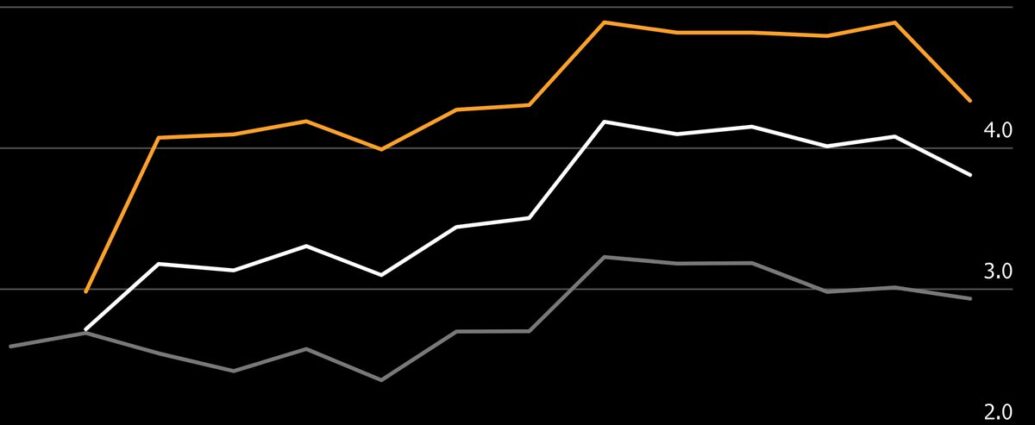

Net of Tax: How to Calculate and Optimize Your Returns
This post was originally published here
Italy investigates beauty brands over concerns about young girls’ mental health
Regulator fears use of ‘covert marketing strategies’ by Sephora and Benefit might fuel compulsive habits
Italian regulators are investigating Sephora and Benefit Cosmetics over the apparent use of “covert marketing strategies” to sell beauty products to young girls that might be fuelling an unhealthy skincare obsession known as “cosmeticorexia”.
The Italian Competition Authority said it was looking into promotions for skincare products such as face masks, serums and anti-ageing creams that in some cases appeared to target girls under 10.
This post was originally published here
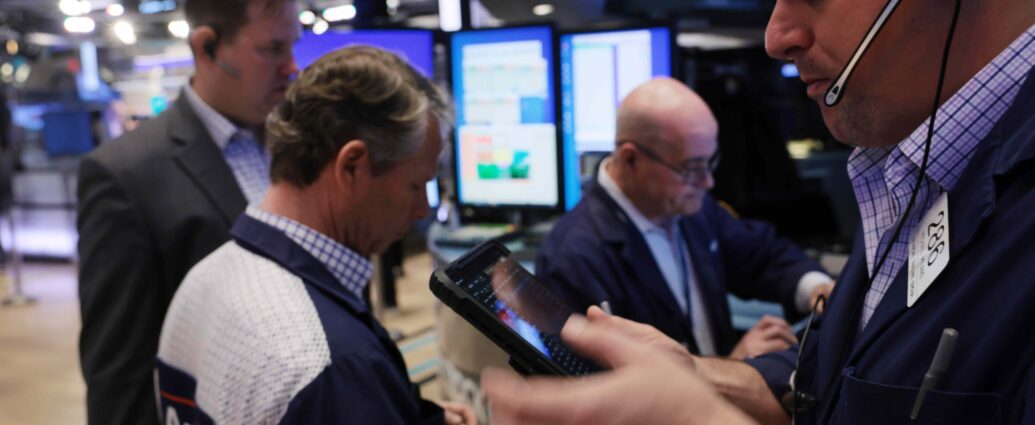
Stock Market Today: Major Indexes Drop, Poised to Extend Skids to 5 Weeks; Oil Climbs Further
This post was originally published here



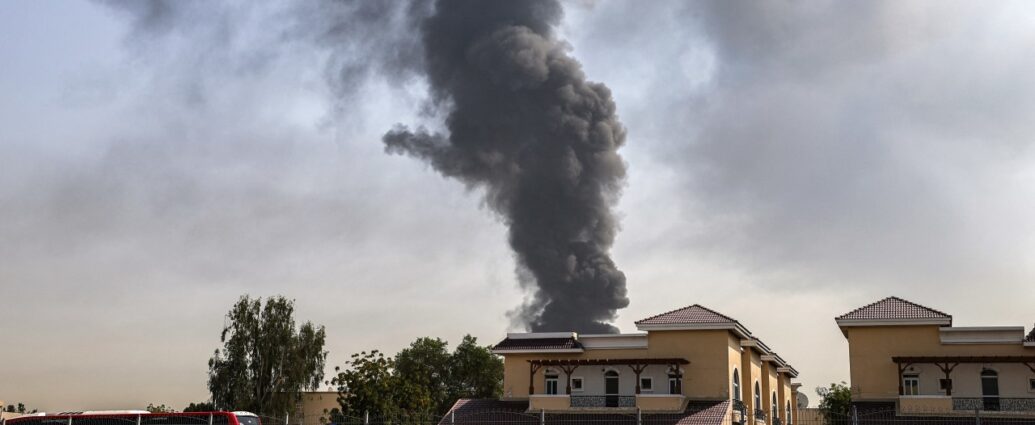

Italy investigates Sephora and Benefit over skincare marketing to children
Italy’s competition authority said the LVMH-owned cosmetic brands Sephora and Benefit used an “insidious marketing strategy” to appeal to tween consumers.
This post was originally published here


Tesla Lost Canada — Now BYD Is Moving In Fast
Tesla, Inc. (NASDAQ:TSLA) didn’t just lose momentum in Canada—it lost the market. And now, just as the dust settles, BYD Co., Ltd. (OTC:BYDDF) (OTC:BYDDY) is stepping in with speed, scale, and a very different playbook.
Chart Turns, Doors Open
Canada’s EV market has already been shaken. Tesla’s sales dropped to roughly 18,000 units, down more than 60% in 2025, according to Electrek.
At the same time, overall EV demand softened, with battery-electric sales down about 25% year-over-year to around 85,000 units.
That’s not just a slowdown. That’s a reset. And resets create openings.
BYD Moves Fast
BYD isn’t easing in—it’s …
This post was originally published here


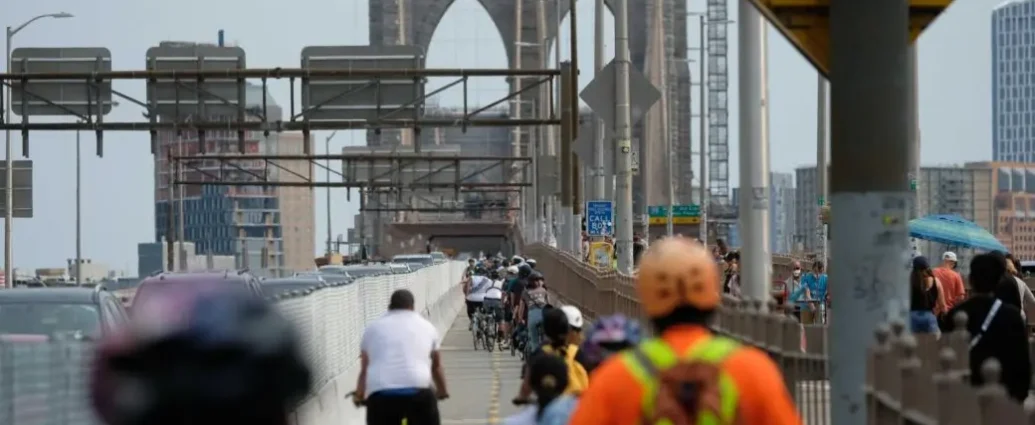
Brooklyn Bridge to get separate bike and pedestrian entrances in Manhattan

New York City this week launched another new street safety project ahead of the FIFA World Cup this summer. Starting in April, the city will fully separate the cyclist and pedestrian entrances to the Brooklyn Bridge in Manhattan for the first time, Mayor Zohran Mamdani announced Friday. Dedicated cyclist and pedestrian entrances from Centre Street and Park Row will allow bike riders to access the bridge without cutting through crowds. Slated for completion in June, the redesign will also convert a left-turn bay on Centre Street between Chambers Street and the bridge entrance into a two-way protected bike lane.
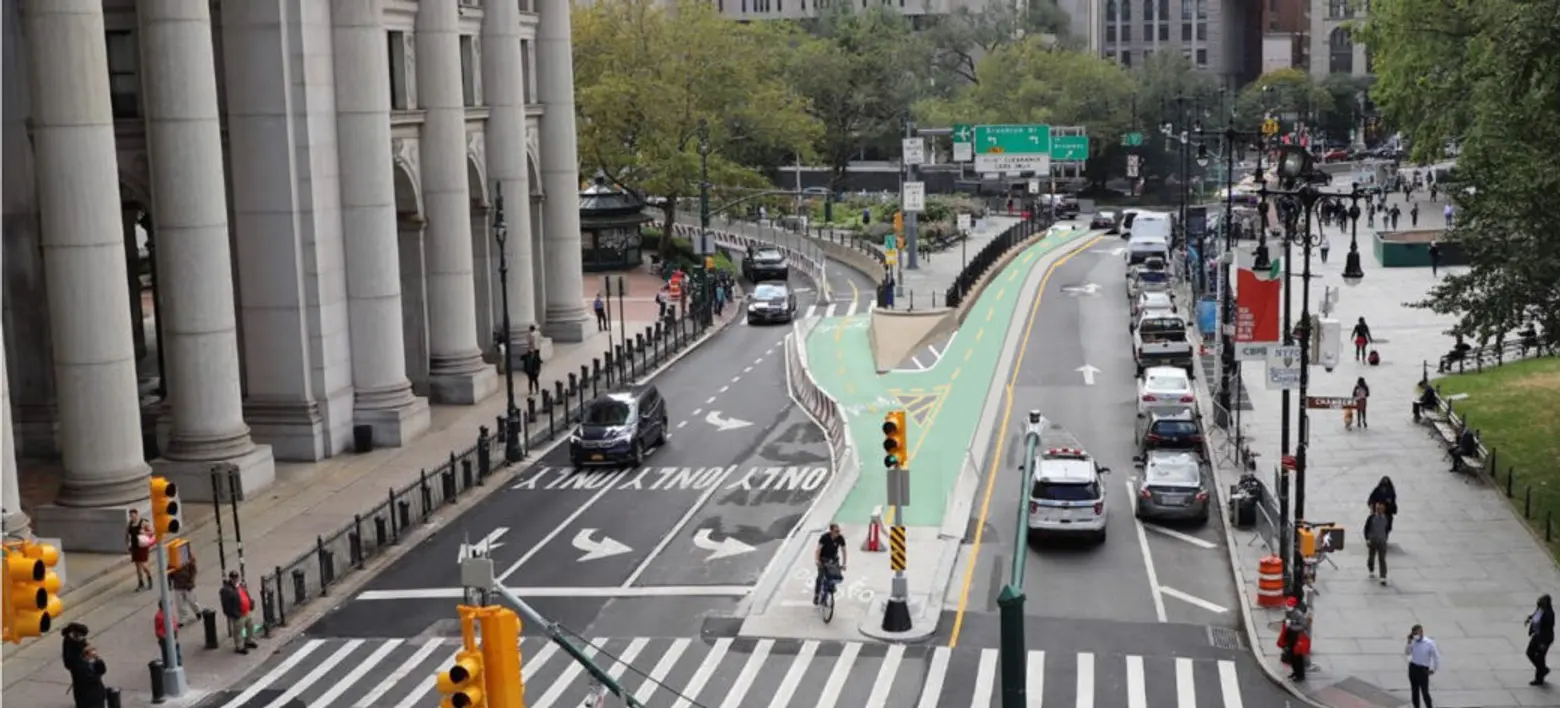
The DOT first proposed the plan in September 2024 under former Mayor Eric Adams, but it was never implemented, according to Streetsblog.
A protected bike lane installed in 2021 at the bridge’s approach has become a popular route, nearly doubling daily rides from 2,652 in 2021 to 5,625 in 2025. The new plan aims to fix a key oversight: cyclists currently must make a tight turn into pedestrian traffic as they exit the lane from the bridge.
At Friday’s press conference announcing the project, Mamdani emphasized both the safety benefits and enhancements to the iconic bridge.
“This is an experience that too many New Yorkers have had when they’re looking to take the healthiest way to cross this bridge—one that comes at the expense of their peace of mind, sanity, and sometimes their safety,” Mamdani said.
“Today, we are meeting that challenge and delivering for New Yorkers to ensure that this continues to be a bridge that we can not only take in as a stunning view, but also one that we can easily and seamlessly cross,” he added.
The project is expected to be completed before the July tournament, joining a series of similar street safety improvements that the city has undertaken to better accommodate the projected surge of visitors this summer.
On Thursday, DOT Commissioner Mike Flynn announced work in Noho, the East Village, and Union Square to create a continuous north-south bike connection from the Brooklyn Bridge to Astor Place and Union Square, with the most significant upgrades set to be finished before the tournament.
Last week, the DOT announced a redesign of West 34th to West 50th Streets along Ninth Avenue in Hell’s Kitchen, a notoriously congested stretch expected to see even more sidewalk overcrowding in July. The project will expand pedestrian space, widen the protected bike lane, and extend and repaint the bus lane to 50th Street.
“As we prepare for millions of visitors this summer for the World Cup, New Yorkers can expect a number of permanent improvements to our streetscapes that will make our streets safer and more accessible long after the tournament ends,” Maya Handa, the city’s World Cup Czar, said in a press release.
“Our goal is to ensure that whether it’s through improved streets or neighborhood activations throughout the summer, all New Yorkers benefit from the World Cup.”
The initiative is also part of a broader push by Mamdani to revive street safety projects delayed or shelved under Adams. In January, Mamdani announced the DOT would move forward with its original plan to install protected bike lanes along Greenpoint’s McGuinness Boulevard, a proposal previously scaled back amid allegations of bribery.
He has also restarted the redesign of Astoria’s 31st Street to add a partially protected bike lane and will move ahead with a long-delayed plan to give buses a dedicated lane along Madison Avenue from 23rd to 42nd Streets.
RELATED:
- New protected two-way bike lane will connect the Brooklyn Bridge and Union Square
- NYC breaks ground on Bronx crosstown bus service upgrades around Yankee Stadium
- NYC begins redesign of Ninth Avenue in Hell’s Kitchen
The post Brooklyn Bridge to get separate bike and pedestrian entrances in Manhattan first appeared on 6sqft.
Brooklyn Bridge to get separate bike and pedestrian entrances in Manhattan
New York City this week launched another new street safety project ahead of the FIFA World Cup this summer. Starting in April, the city will fully separate the cyclist and pedestrian entrances to the Brooklyn Bridge in Manhattan for the first time, Mayor Zohran Mamdani announced Friday. Dedicated cyclist and pedestrian entrances from Centre Street and Park Row will allow bike riders to access the bridge without cutting through crowds. Slated for completion in June, the redesign will also convert a left-turn bay on Centre Street between Chambers Street and the bridge entrance into a two-way protected bike lane.
The DOT first proposed the plan in September 2024 under former Mayor Eric Adams, but it was never implemented, according to Streetsblog.
A protected bike lane installed in 2021 at the bridge’s approach has become a popular route, nearly doubling daily rides from 2,652 in 2021 to 5,625 in 2025. The new plan aims to fix a key oversight: cyclists currently must make a tight turn into pedestrian traffic as they exit the lane from the bridge.
At Friday’s press conference announcing the project, Mamdani emphasized both the safety benefits and enhancements to the iconic bridge.
“This is an experience that too many New Yorkers have had when they’re looking to take the healthiest way to cross this bridge—one that comes at the expense of their peace of mind, sanity, and sometimes their safety,” Mamdani said.
“Today, we are meeting that challenge and delivering for New Yorkers to ensure that this continues to be a bridge that we can not only take in as a stunning view, but also one that we can easily and seamlessly cross,” he added.
The project is expected to be completed before the July tournament, joining a series of similar street safety improvements that the city has undertaken to better accommodate the projected surge of visitors this summer.
On Thursday, DOT Commissioner Mike Flynn announced work in Noho, the East Village, and Union Square to create a continuous north-south bike connection from the Brooklyn Bridge to Astor Place and Union Square, with the most significant upgrades set to be finished before the tournament.
Last week, the DOT announced a redesign of West 34th to West 50th Streets along Ninth Avenue in Hell’s Kitchen, a notoriously congested stretch expected to see even more sidewalk overcrowding in July. The project will expand pedestrian space, widen the protected bike lane, and extend and repaint the bus lane to 50th Street.
“As we prepare for millions of visitors this summer for the World Cup, New Yorkers can expect a number of permanent improvements to our streetscapes that will make our streets safer and more accessible long after the tournament ends,” Maya Handa, the city’s World Cup Czar, said in a press release.
“Our goal is to ensure that whether it’s through improved streets or neighborhood activations throughout the summer, all New Yorkers benefit from the World Cup.”
The initiative is also part of a broader push by Mamdani to revive street safety projects delayed or shelved under Adams. In January, Mamdani announced the DOT would move forward with its original plan to install protected bike lanes along Greenpoint’s McGuinness Boulevard, a proposal previously scaled back amid allegations of bribery.
He has also restarted the redesign of Astoria’s 31st Street to add a partially protected bike lane and will move ahead with a long-delayed plan to give buses a dedicated lane along Madison Avenue from 23rd to 42nd Streets.
RELATED:
- New protected two-way bike lane will connect the Brooklyn Bridge and Union Square
- NYC breaks ground on Bronx crosstown bus service upgrades around Yankee Stadium
- NYC begins redesign of Ninth Avenue in Hell’s Kitchen
The post Brooklyn Bridge to get separate bike and pedestrian entrances in Manhattan first appeared on 6sqft.





Cybersecurity stocks fall on report Anthropic is testing a powerful new model
The cybersecurity sector has slumped this year on fears that new AI will massively disrupt their business models.
This post was originally published here
Here are our top and bottom stocks over the past month. Not much green on the board
The stock market has spent the past month starved of good news.
This post was originally published here

House panel finds Florida Democrat guilty of ethics violations
The House Ethics Committee has found evidence that Rep. Sheila Cherfilus-McCormick violated House rules. This comes after the panel held a rare public hearing to review investigations into allegations against the Florida Democrat.
(Image credit: Tom Williams/CQ-Roll Call, Inc via Getty Images)

This post was originally published here

The big stock market correction that Trump can’t talk his way out of is official
Throughout his presidency, Donald Trump has kidnapped and extradited the leader of Venezuela, threatened to annex Greenland, mused about ousting the chair of the Federal Reserve, and waged economic war on his closest allies, all while (more or less) keeping the stock market from tipping into bearish territory.
The Iran war increasingly looks like the one instance where physical reality has outrun his ability to control the narrative.
The Nasdaq 100 has now fallen over 10% from its peak, technically entering correction territory. The S&P 500 has been at a loss for five weeks, on pace for its longest streak of weekly losses since 2022. Brent crude, the global barometer of oil futures, has shot back up to near $111 a barrel, while West Texas Intermediate (WTI) crude, futures of oil based in Texas, is flirting with $97, threatening to tease $100.
On Thursday, Trump extended his deadline for striking Iran’s energy infrastructure by 10 days, his second extension since issuing the original threat last Saturday. “Talks are ongoing,” he posted on Truth Social after the market closed, potentially hoping to stop the bleeding after the stock market slipped over fears of a ground confrontation in Iran imminently.
So far, the two sides haven’t come to the table much, with Iranian officials publicly rejecting the ambitious-15-point ceasefire proposal delivered by the U.S. through intermediaries in Pakistan and countered with five unrealistic demands of their own, including sovereignty over the Strait of Hormuz.
The post isn’t having the “truth social effect” on oil prices that Trump was hoping for, energy trader John Arnold posted on X. Traders are getting exhausted from the noise and have no sense of whether to trust that anything of what Trump says is true. It seems like the White House agrees, and on Friday, it launched (while poking fun of “launches” as a word used by outlets to describe the war) the official White House app, so folks can get news from Trump directly.
Meanwhile, senior White House aides told MS NOW that Trump has grown “a little bored” with the conflict—not regretful, they said, just ready to move on. A second official said the president has started shifting his focus toward the economy, domestic policy, and the midterm elections. The administration’s public communications have tracked accordingly: official White House social media accounts have promoted the war effort with memes pulled from Iron Man, Top Gun, and SpongeBob SquarePants, and have taken to posting cryptic, eerie posts and videos over the last day or so to promote some unknown project.
Unlike the other conflicts, it takes both parties to back out of this war, and Iran—with its supreme leader assassinated, military infrastructure decimated, and proxies scared—has a desire to draw out the economic damage.
Until Thursday, markets have remained surprisingly resilient, keeping oil prices low throughout all the volatility. ECB President Christine Lagarde warned Friday that markets are “overly optimistic” about the conflict’s fallout, calling it a shock “probably beyond what we can imagine at the moment.” She pointed to second-order supply chain effects—like helium shortages disrupting semiconductor production—that investors haven’t begun to price in. “Most people are actually talking about years,” she said.
Not everyone shares that same sentiment. Nordic American Tankers CEO Herbjørn Hansson told CNBC he expects the Strait of Hormuz to reopen within weeks, not months. “The ships that are trapped or in the Arabian Gulf will be out within a fairly short period of time,” Hansson said. “That is my judgment based upon my experience of the past in similar situations.”
Torten Slok, Apollo’s chief economist, also wrote on Friday that markets are “overreacting” to a period of short term volatility for the sake of longer term stability in oil markets and the supply chain. “The bottom line is that the Iran shock is not big enough to offset the strong tailwinds to the US economy from AI spending, the industrial renaissance and the One Big Beautiful Bill,” Slok wrote.
But even as Hansson was making that case, Iran turned back two Chinese-owned container ships from the strait on Friday—-vessels belonging to state-owned Cosco Shipping that made complete 180s. China has largely been spared from Iran’s blockade, which Tehran said before was focused only on countries it views as aligned with the US and Israel. The fact that Beijing’s ships are now getting turned away suggests the situation at the strait is becoming less predictable, not more.
This story was originally featured on Fortune.com

Gen X boss of $11 billion smart ring company Oura says being a CEO is ‘much harder’ than he thought: ‘It’s pressure, it’s stress, it’s responsibility’
Workers may dream that if they climb the corporate totem pole to CEO, they’ll finally be able to call the shots, set their own schedule, and bask in all the spoils of success. But Oura’s chief executive Tom Hale says the fantasy isn’t all it’s cracked up to be.
Being CEO is “much harder than I thought,” Hale said recently on Sequoia Capital’s Long Strange Trip podcast. “Any CEO in the world will appreciate that. [It’s] much harder, much harder than I thought.”
Hale stepped into the top role of the $11 billion smart ring company nearly four years ago, after high-level stints across technology and consumer product companies like Momentive and HomeAway. With more than 30 years of experience and multiple executive roles under his belt, it would be assumed that he knew exactly what to expect from the top job. Still, nothing quite prepared him for the psychological load of this role.
“It’s not the work that’s harder. It’s the responsibility and the stress,” the CEO continued. “It’s waking up at 4:00 a.m. and being like, ‘Oh my god, is this going to work?’…It’s pressure, it’s stress, it’s responsibility, it’s all the people that you have. They’ve put their faith in you.”
And while professionals may assume that being a CEO means you reap all the glory, Hale explains “it’s really your team, it’s not you, who gets to own that success.” Yet, when an idea or project fails, the consequences are all directed at the top. The Gen X chief executive says CEOs are often found culpable, as they made the decision or set up a system that led to a problem. Plus, people look at being a CEO with rose-colored glasses—Hale says people misunderstand that the job isn’t always as glamorous as it sounds.
“I think they think it’s a lot more fun than it is,” Hale continued. “There is fun. I just think that the ratio of kibble to champagne favors the kibble.”
CEOs who say the top job is lonely, isolating, and complex
Sitting atop the C-suite undeniably comes with major perks, from multimillion-dollar salaries to celebrity status in the business world. But like any role, it also has its downsides—and Hale isn’t the only CEO who hit unexpected hurdles when assuming the top role of a billion-dollar company.
Airbnb’s cofounder and CEO Brian Chesky has said that his mental health took a turn for the worse once he assumed the throne of the $76 billion short-term rental company. At that point in time his other two cofounders—who he called his “family,” spending all their waking hours working, exercising, and hanging out together—were suddenly out of view from the peak of the C-suite. His job became extremely isolating.
“As I became a CEO I started leading from the front, at the top of the mountain, but then the higher you get to the peak, the fewer the people there are with you,” Chesky told Jay Shetty during an episode of the On Purpose podcast in 2023. “No one ever told me how lonely you would get, and I wasn’t prepared for that.”
Another pitfall of being CEO is that it’s harder to vent to peers who may not relate to—or even understand—the trials and tribulations of running a massive company. Indra Nooyi, the former chief executive of $209 billion PepsiCo, said she often felt isolated and struggled to find her confidants.
“You can’t really talk to your spouse all the time. You can’t talk to your friends because it’s confidential stuff about the company. You can’t talk to your board because they are your bosses. You can’t talk to people who work for you because they work for you,” Nooyi told Kellogg Insight last year. “It puts you in a fairly lonely position.”
Michel Doukeris, the CEO of $124 billion business Anheuser-Busch InBev, also pointed out that the top role is very distinct to all other jobs. Leading a business to success sounds like a straightforward plan of action, but there’s a whole host of players and factors to consider. Doukeris said that juggling all these expectations is a part of the job—and it requires a lot of organization to get it done.
“The CEO job is very unique in itself,” Doukeris told Fortune in 2022. “You really have all the stakeholders. You have your own people, you have your customers, you need to listen to your consumers, but then you have your board, and your investors, and you need to balance very well your time.”
This story was originally featured on Fortune.com
Reports Sadiq Khan could join Starmer’s cabinet dismissed by allies
London mayor could however join the House of Lords while still remaining in his current role
Allies of Sadiq Khan have dismissed reports the London mayor could join Keir Starmer’s cabinet after being made a peer, although it remains possible he could join the Lords while keeping his current job.
Downing Street said reports that Khan could become a peer after crucial elections in May across England, Scotland and Wales were “speculation”, while a Labour source also declined to comment.
This post was originally published here

Citrini’s Election Trade Unwinds As Longs And Shorts Converge — Trump Alpha Wiped Out
In March 2024, independent investment research firm Citrini Research — founded in 2023 by James van Geelen — built a long/short market-neutral basket to trade the 2024 U.S. presidential election.
The basket held long positions in stocks expected to benefit from a Republican win and short positions in names exposed to Democratic policy priorities.
The basket spanned roughly 120 names across themes including tariffs, energy, financial deregulation, healthcare and immigration policy. It was designed as a perception play on election odds, not a post-election fundamentals bet.
Post-Election Surge, Then A Sharp 2026 Reversal
According to a performance chart shared by Citrini Research, the basket surged sharply after the November 2024 election. It continued rising into mid-to-late 2025, reaching a peak return of over 220% since inception in early 2024.
The strategy then reversed hard. By early 2026, the basket had given back more than two-thirds of those peak gains.
As of the post, the basket still showed a cumulative return of approximately 65.49% since early 2024. However, the post-election alpha — the gain specifically attributed to the Trump trade — has been wiped out.
This post was originally published here

Can Sheryl Sandberg’s Lean In take on tradwives and the manosphere?
The Wall Street Journal had a really interesting story yesterday about the current state of Lean In. There’s some news on an organizational overhaul—cuts to a quarter of the nonprofit’s staff and a new CEO (Bridget Griswold, a 25-year-old whose background is in AI).
But what caught my attention was the WSJ‘s take on where Sheryl Sandberg is taking Lean In next. What started as a movement encouraging women to pursue ambitious careers is now positioning itself as the counterpoint to the rise of tradwives and the manosphere, the Journal reports. For those who aren’t on social media, these two separate, but related, trends have grown significantly in popularity over the past year. With Trump’s return to office and DEI backlash, a certain segment of men in power have embraced a form of hyper-aggressive manhood. And it has seeped into the business world too (witness Sandberg’s former colleague Mark Zuckerberg’s much-maligned comments a year ago that companies need more “masculine energy.”) It’s a problem.
The rise of tradwives has paralleled this. These are the women glamorizing homemaking on social media—but earning big bucks doing so, making them the breadwinners for their families. Some critics say their content makes taking care of a family full-time seem like a breeze rather than the hard work it is, usually with little acknowledgment of the long-term financial and personal trade-offs. Then there’s a more general fatigue among women that corporate America is not working for them anymore, as seen in Lean In’s own data, which found late last year that fewer women are now aiming to be promoted at work.
Hints of this new direction for Lean In started appearing over the past few weeks. On March 10, Sandberg gave an interview to People magazine, where she said, “The message that is going out is that in order to be a good wife or a good mother, you need to do it full time. And the truth is that that is a decision almost no women can afford to make.” The next week, she wrote a blog post about the same topic. She’s emphasized that while TikTok may make tradwives seem trendy, it’s not a new idea—far from it.
I spoke to a Lean In spokesperson, who added some detail to what this means in practice—and the connection between a young, AI-forward CEO and this mission. Lean In is planning to continue the work it’s best known for (membership circles for women, a large annual study on women in the workplace) but is looking to use technology to produce more “of-the-moment” research. And what’s more of the moment than tradwives on TikTok?
I think that Lean In and Sandberg face some headwinds fighting back against these cultural tides. For women attracted to tradwife life, Lean In represents everything they are rejecting. Sandberg has a powerful voice, but will she be able to reach the women who have already turned their backs on everything she stands for? To be clear, Sandberg is not going after women who stay at home but saying the problem is when women are “weighed down by outdated norms” when making that choice. Still, I’m curious to see how that message lands. (And on the manosphere: God knows those men aren’t listening to what Lean In has to say!)
Overall, I agree with Sandberg: The rise of the tradwife movement, as we’ve seen it on social media, has been harmful to women. I’m interested to see whatever AI-powered research Lean In produces on this topic. If Sandberg can figure out a way to give women’s ambition as much of a hold online as baking bread and making baby food from scratch, we will all be better for it.
Emma Hinchliffe
emma.hinchliffe@fortune.com
The Most Powerful Women Daily newsletter is Fortune’s daily briefing for and about the women leading the business world. Subscribe here.
This story was originally featured on Fortune.com

BYD profits battered by China’s brutal EV price war
This post was originally published here

Rezolve AI Gears Up For FY Print; Here Are The Recent Forecast Changes From Wall Street’s Most Accurate Analysts
Rezolve AI PLC (NASDAQ:RZLV) will release earnings for the second half and full year ended Dec. 31, 2025, before the opening bell on Monday, March 30.
On Feb. 11, Reward announced that it has been acquired by Rezolve Ai for $230 million.
Shares of Rezolve AI gained 0.6% to trade at $2.3650 on Friday.
Benzinga readers can access the latest analyst ratings on the Analyst Stock Ratings page. Readers can sort by stock ticker, company name, analyst firm, rating change or other variables.
Let’s have a look at how Benzinga’s most-accurate analysts have rated the company in the recent period.
- HC Wainwright …
This post was originally published here
1.4 million filers face tax refund delays amid IRS paper check phaseout
Many filers are facing tax refund delays amid the IRS push to phase out paper checks. Here’s what to know if you receive a CP53E notice.
This post was originally published here
Missing aid boats have safely reached Cuba, US confirms
Two vessels part of convoy that organisers say was bringing food and medicine to island in face of ‘criminal US blockade’
Two sailing boats that went missing while carrying humanitarian aid to Cuba have safely reached the Caribbean island, the US Coast Guard said on Friday.
Earlier in the day Cuba’s president, Miguel Díaz-Canel, had said his country would do everything it could to save the people on the two boats that disappeared while travelling to Cuba from Mexico.
This post was originally published here

Man accused of 2003 rape tells court he ‘wouldn’t be able to live with himself’ if he had done it
Paul Quinn denies raping woman in case where previous suspect Andrew Malkinson had conviction quashed
A man accused of a 2003 rape for which an innocent person spent 17 years in jail has told a court he “wouldn’t be able to live with myself” if he had carried out the attack.
Paul Quinn, 51, denies raping the woman, in a case that led to what jurors heard was a “most terrible” miscarriage of justice
This post was originally published here
These Americans are quitting before AI can take their jobs—and starting their own businesses: ‘I just wanted to be in control’
Americans are incorporating new businesses in record numbers, as AI sweeps across many U.S. workplaces. That’s not a coincidence, some new entrepreneurs say.
This post was originally published here
This bargain fintech stock is stuck in a five-year rut. A turnaround is coming
After a recent acquisition, the company has renewed focus and increased scale. It also could see upside from strong cash flow and stock buybacks.
This post was originally published here







The US Army Is Now Taking Recruits Up to Age 42—What Are Pay and Benefits Like?
This post was originally published here

Florida axes sociology as required class at state universities in latest attack on ‘woke’
Move by state education officials picked by Republican governor removes the course as a graduation component
Education leaders in Florida have removed sociology as a graduation component at state universities in Ron DeSantis’s latest attack on what the Republican governor sees as the “woke” indoctrination of students.
The move on Thursday by a majority of DeSantis’s hand-picked university board of governors effectively relegates the stand-alone Introduction to Sociology course to a makeweight elective instead of a core component subject that has been a popular choice for generations of students.
This post was originally published here


European intelligence agencies believe Russia is supplying drones to Iran, says official
Intelligence reports find Russia is close to completing phased shipment of drones, medicine and food
Intelligence agencies in Europe believe Russia is in the final stages of preparing to supply drones to Iran for use in its war with the US and Israel, according to a senior European official.
Russia has already been providing intelligence sharing with Tehran to help it target US forces in the region, the official said, but the upcoming delivery of explosive-laden drones would mark the first evidence of lethal support since the start of the war.
This post was originally published here


Economist Warns America Has a ‘Wage Problem, Not A Price Problem’ — Why Your Paycheck Still Feels Too Small Even As Inflation Cools
The headline inflation numbers are cooling, the stock market is holding its own, and yet, for millions of Americans, the monthly budget feels tighter than ever.
The cost of groceries, housing, and healthcare seems to be in a league of its own, defying the broader economic narrative.
According to a recent analysis, this isn’t just a feeling, it’s the result of a deep-seated structural issue. Economist Mihir Torsekar of the Coalition for a Prosperous America argues that the U.S. doesn’t have a price problem, it has a wage problem, one that has been decades in the making.
For households already stretched thin by that gap, high-interest credit card balances tend to be where the pressure shows up first, and where the cost of doing nothing adds up fastest. Platforms like AmONE match borrowers with multiple lenders in minutes and show personalized loan offers without affecting credit scores, which gives people a real picture of their options before they commit to anything.
The core of the argument is that for the majority of American workers, wages have failed to keep pace with the growth of the economy and corporate profitability. While the Bureau of Labor Statistics reported that real average hourly earnings did increase by 1.4% from February 2025 to February 2026, this modest gain is a drop in the bucket when viewed against the larger economic picture.
Since the year 2000, the American economy has generated immense wealth, but it hasn’t been shared equally. Data from the Federal Reserve shows that after-tax corporate profits have gone from around $800 billion at the turn of the millennium to $3.59 trillion by the third quarter of 2025.
That massive accumulation of wealth at the corporate level stands in stark contrast to …
This post was originally published here

Global Scramble for Critical Minerals Fuels Diplomatic Frictions
The US is escalating its push to secure access to critical minerals through trade deals and diplomatic pressure as competition with China intensifies, but the strategy is increasingly meeting resistance from resource-rich countries seeking greater control over their reserves.The latest friction has emerged in Zambia, where more than 90 public health and development organizations urged US Secretary of State Marco Rubio to reject reports that Washington could link HIV and medical aid to negotiations over a critical minerals agreement.An estimated 1.3 million Zambians receive treatment under the President’s Emergency Plan for AIDS Relief, alongside broader US-funded programs targeting malaria and tuberculosis. In a March 26 letter, advocacy groups warned that conditioning such assistance on minerals access would be “ethically indefensible” and risk deepening poverty and instability.Once largely the domain of commercial negotiations, critical minerals are becoming embedded in geopolitical strategy, as governments compete to secure inputs essential for energy systems, defense technologies, and advanced manufacturing.Washington has accelerated its efforts in recent months. At a critical minerals ministerial in Washington this week, attended by representatives from 54 countries and the European Union, US officials outlined plans to build a preferential trade bloc aimed at countering China’s dominance in supply chains.The initiative includes coordinated pricing mechanisms, with policymakers seeking to establish reference price floors to prevent what they describe as market distortions caused by subsidized supply.“We will establish reference prices for critical minerals at each stage of production,” Vice President JD Vance said. “For members of the preferential zone, these reference prices will operate as a floor maintained through adjustable tariffs to uphold pricing integrity.”Rubio, who hosted the ministerial, also announced the formation of the Forum on Resource Geostrategic Engagement, or FORGE, a platform designed to align policy, financing and project development across partner countries.“We have a number of countries that have signed on to that, and many more that we hope will do so… the purpose of FORGE is to foster collaboration and to build a network of partners across the world,” Rubio said.The US has already signed critical minerals agreements with 11 countries and completed negotiations with an additional 17, according to officials.The push extends beyond diplomacy. President Donald Trump this week unveiled Project Vault, a US$12 billion strategic reserve backed by US $10 billion from the Export-Import Bank and US$2 billion in private funding. The stockpile is intended to stabilize prices and support domestic manufacturers, and will include materials such as rare earths, lithium and copper.Yet the US approach is encountering pushback in countries that control key reserves.In Brazil, which holds between 19 and 23 percent of global rare earth reserves, negotiations over a bilateral minerals agreement have stalled. US officials have proposed investing billions of dollars and identified at least 50 potential projects, but Brazil has been reluctant to enter into arrangements that would prioritize US access.Officials in Brasília have instead emphasized the need to retain flexibility over exports and to build domestic processing capacity, allowing the country to move up the value chain.“They’ve already taken all our silver, our gold, our diamonds, our iron ore,” President Luiz Inácio Lula da Silva said during a recent trip. “What else do they want to take?”A similar disposition is unfolding in the Democratic Republic of Congo (DRC), which holds some of the world’s largest reserves of cobalt and significant deposits of copper, lithium and other battery metals.Kinshasa has recently signed a new agreement with China to deepen cooperation in its mining sector, including provisions for geological data sharing, investment protection and the promotion of local processing.Chinese companies, including Zijin Mining Group (HKEX:2899,SHA:601899,OTCPL:ZIJMF) and CMOC Group (OTC Pink:CMCLF), already dominate much of Congo’s mining industry, while Beijing remains the country’s largest bilateral creditor.At the same time, Congolese officials have made clear they do not intend to align exclusively with either power.Don’t forget to follow us @INN_Resource for real-time updates!Securities Disclosure: I, Giann Liguid, hold no direct investment interest in any company mentioned in this article.
This post was originally published here
ICE doubled its use of ankle monitors for legal immigrants in the past year: ‘A very harmful phenomenon’
Agency uses devices, which are uncomfortable and interfere with employment, to push people to self-deport, advocates say
For five years, an asylum-seeking woman attended routine check-ins with immigration authorities without issue. At her most recent appointment in October, she was unexpectedly ordered to strap on an ankle monitor, according to her attorney, Deepa Bijpuria.
Bijpuria, a supervising attorney in the immigration unit of Legal Aid DC, described the client as a single mom who fled her home country because of severe domestic violence, escaping while pregnant with her young daughter.
This post was originally published here
Biker gangs and hired hands: how Iran is increasingly outsourcing its terrorism campaigns
Experts see potential hallmarks of Iranian involvement in firebombing of four ambulances in Golders Green on Monday
To some it was the moment the mask slipped. Wearing an open-necked white shirt, Mohsen Rafighdoost, former minister of the Islamic Revolutionary Guard Corps (IRGC), was filmed last March fondly reminiscing with an interviewer from the Tehran-based Didban Iran news website about the assassinations he had organised around Europe.
There was Prince Shahriar Shafiq, the last Shah of Iran’s 34-year-old nephew, who was shot twice in the head outside his mother’s home in Paris in 1979.
This post was originally published here



Stock Market Today: Major Indexes Plunge; S&P 500, Nasdaq on Pace to Extend Skids to 5 Weeks; Oil Climbs Further
This post was originally published here


America’s Debt Crisis Is Worse Than You Think — And The Oil Shock Will Expose It
While investors fixate on the Middle East, Professor Steve Hanke says the more dangerous story may be playing out at home. The Johns Hopkins economist argues that the war around Iran and the Strait of Hormuz is not just a geopolitical shock. It is a stress test for a US balance sheet he believes is already broken.
Hanke called the conflict a “massive supply-side shock to the world economy,” noting that it lies at the opposite end of the spectrum from the 2020 pandemic shock.
“You’ll probably get at least a 10% contraction in the supply of oil in the international market,” he said in a recent interview with Metals and Miners. Oil, he said, is “the major input to the world,” meaning higher costs will ripple through refined products, chemicals, plastics, and fertilizer.
The Insolvent Household
That scenario would be damaging even if Washington were entering the crisis from a position of strength. Hanke’s point is that it is not.
The Treasury Department’s latest consolidated financial statements show the US government ended fiscal 2025 with $6.06 trillion in assets and $47.78 …
This post was originally published here


The key to this stock market is oil. Here’s what investors need to consider
High oil prices create a difficult dynamic for companies, consumers, and investors.
This post was originally published here

Mamdani launches new office to support NYC street vendors

A longtime advocate for New York City’s street vendors will now represent the small businesses at City Hall. Mayor Zohran Mamdani on Monday officially launched the Office of Street Vendor Services and appointed Carina Kaufman-Gutierrez, co-director of the Street Vendor Project at the Urban Justice Center, as its first executive director. As part of the Department of Small Business Services, the new office will conduct outreach to the city’s roughly 23,000 street vendors and educate them on local laws and the permitting process. Legislation reforming street vending that passed the City Council last year mandated the creation of the new office.
Kaufman-Gutierrez has spent seven years advocating on behalf of street vendors, conducting outreach to understand their concerns with the city’s policies while keeping them informed about an often complex network of local vending laws, according to Gothamist.
Most recently, she served as co-director of the Street Vendor Project at the Urban Justice Center, an advocacy group. She frequently visited vending hot spots, handing out fliers and using tools like measuring tapes to ensure vendors’ stands met size requirements and were positioned at the required distance from driveways and crosswalks to avoid fines and tickets.
“Street vendors have long fought for both recognition and support from city government, and I’m honored to join SBS and the Administration in centering the needs of our city’s smallest businesses at Office of Street Vendor Services,” Kaufman-Gutierrez said.
“Together with street vendors, interagency partners, community-based organizations, and local stakeholders at the table, we can build a more vibrant, and equitable street vending ecosystem across the five boroughs.”
Kaufman-Gutierrez’s new role comes at a time when the city’s street vending system is undergoing significant change. According to the New York Times, while the city has more than 20,000 vendors, there are only 6,880 permits and 853 general vendor licenses, figures that have barely changed since 1979.
Last December, the Council passed a legislative package aimed at cutting through the red tape and bureaucracy that have long hampered the permitting process, measures Kaufman-Gutierrez advocated for during her time at the Street Vendor Project.
One of the bills makes an additional 22,000 supervisory licenses available annually from 2026 through 2031 and creates 10,500 new general vending licenses in 2027.
The Council overrode Adams’ veto of the legislation in January, which he issued on his last day in office.
The legislation also builds on a similar policy passed in July that decriminalized most street vending violations in NYC, removing misdemeanor penalties for general and food vendors and reducing them to civil offenses. Under Adams, officers issued more than 9,300 tickets to vendors in 2024, more than double the total in 2023, as 6sqft previously reported.
Despite the law, The City reported that some street vendors are still receiving criminal summonses for violations, suggesting the NYPD has not fully trained officers on the new policy.
According to the Street Vendor Project, seven summonses were issued to five vendors in Manhattan and Brooklyn for violations including failing to display a license or food prices and operating too close to a bus stop, curb, or hydrant—all of which should be treated as civil offenses under the new law.
In a statement to The City, an NYPD spokesperson said the department is “continuing to train officers on the change in the law,” but noted that the new policy “does not entirely prohibit the issuance of criminal court summonses for unlicensed general vending,” adding that repeat offenders could still face criminal charges.
With Kaufman-Gutierrez’s appointment, Mamdani said he hopes to “fundamentally transform” the relationship between street vendors and the city, helping their work “thrive” instead of making it harder.
“Our street vendors are not a problem to solve—they are a community to support. They feed us, employ us, and give our streets life at every hour,” Mamdani said. “Many New Yorkers’ fondest memories are of grabbing late-night food at their local taco truck or halal cart. But City Hall has too often made their work harder instead of helping it thrive. That changes now.”
“With this office and with Carina’s leadership, we will fundamentally transform the relationship that street vendors have with the city,” he added. “By streamlining bureaucracy and working closely with street vendors themselves, we can lower costs for vendors and their customers alike.”
RELATED:
- NYC passes landmark street vendor reform, including expanding permit cap
- NYC street vendor advocates push to lift cap on licenses after Adams veto
- New legislation ends criminal penalties for NYC street vendors
The post Mamdani launches new office to support NYC street vendors first appeared on 6sqft.
Mamdani launches new office to support NYC street vendors
A longtime advocate for New York City’s street vendors will now represent the small businesses at City Hall. Mayor Zohran Mamdani on Monday officially launched the Office of Street Vendor Services and appointed Carina Kaufman-Gutierrez, co-director of the Street Vendor Project at the Urban Justice Center, as its first executive director. As part of the Department of Small Business Services, the new office will conduct outreach to the city’s roughly 23,000 street vendors and educate them on local laws and the permitting process. Legislation reforming street vending that passed the City Council last year mandated the creation of the new office.
Kaufman-Gutierrez has spent seven years advocating on behalf of street vendors, conducting outreach to understand their concerns with the city’s policies while keeping them informed about an often complex network of local vending laws, according to Gothamist.
Most recently, she served as co-director of the Street Vendor Project at the Urban Justice Center, an advocacy group. She frequently visited vending hot spots, handing out fliers and using tools like measuring tapes to ensure vendors’ stands met size requirements and were positioned at the required distance from driveways and crosswalks to avoid fines and tickets.
“Street vendors have long fought for both recognition and support from city government, and I’m honored to join SBS and the Administration in centering the needs of our city’s smallest businesses at Office of Street Vendor Services,” Kaufman-Gutierrez said.
“Together with street vendors, interagency partners, community-based organizations, and local stakeholders at the table, we can build a more vibrant, and equitable street vending ecosystem across the five boroughs.”
Kaufman-Gutierrez’s new role comes at a time when the city’s street vending system is undergoing significant change. According to the New York Times, while the city has more than 20,000 vendors, there are only 6,880 permits and 853 general vendor licenses, figures that have barely changed since 1979.
Last December, the Council passed a legislative package aimed at cutting through the red tape and bureaucracy that have long hampered the permitting process, measures Kaufman-Gutierrez advocated for during her time at the Street Vendor Project.
One of the bills makes an additional 22,000 supervisory licenses available annually from 2026 through 2031 and creates 10,500 new general vending licenses in 2027.
The Council overrode Adams’ veto of the legislation in January, which he issued on his last day in office.
The legislation also builds on a similar policy passed in July that decriminalized most street vending violations in NYC, removing misdemeanor penalties for general and food vendors and reducing them to civil offenses. Under Adams, officers issued more than 9,300 tickets to vendors in 2024, more than double the total in 2023, as 6sqft previously reported.
Despite the law, The City reported that some street vendors are still receiving criminal summonses for violations, suggesting the NYPD has not fully trained officers on the new policy.
According to the Street Vendor Project, seven summonses were issued to five vendors in Manhattan and Brooklyn for violations including failing to display a license or food prices and operating too close to a bus stop, curb, or hydrant—all of which should be treated as civil offenses under the new law.
In a statement to The City, an NYPD spokesperson said the department is “continuing to train officers on the change in the law,” but noted that the new policy “does not entirely prohibit the issuance of criminal court summonses for unlicensed general vending,” adding that repeat offenders could still face criminal charges.
With Kaufman-Gutierrez’s appointment, Mamdani said he hopes to “fundamentally transform” the relationship between street vendors and the city, helping their work “thrive” instead of making it harder.
“Our street vendors are not a problem to solve—they are a community to support. They feed us, employ us, and give our streets life at every hour,” Mamdani said. “Many New Yorkers’ fondest memories are of grabbing late-night food at their local taco truck or halal cart. But City Hall has too often made their work harder instead of helping it thrive. That changes now.”
“With this office and with Carina’s leadership, we will fundamentally transform the relationship that street vendors have with the city,” he added. “By streamlining bureaucracy and working closely with street vendors themselves, we can lower costs for vendors and their customers alike.”
RELATED:
- NYC passes landmark street vendor reform, including expanding permit cap
- NYC street vendor advocates push to lift cap on licenses after Adams veto
- New legislation ends criminal penalties for NYC street vendors
The post Mamdani launches new office to support NYC street vendors first appeared on 6sqft.

Economist Nouriel Roubini: Trump is likely to escalate the Iran war — risking ‘1970s stagflation’
The economist and investor, known for calling the 2008 financial crisis, also said the “damage has already been done” to the economy.
This post was originally published here

Rare tongue-shaped fungus discovered in nature reserve in West Sussex
Microglossum cyanobasis – or blue-based earthtongue – is only the second such specimen ever to be found in Europe
The discovery of a rare, tongue-shaped fungus is being hailed as a sign of the crucial ecological value of England’s national nature reserves.
Never before recorded in the UK, the blue-based earthtongue, also known as Microglossum cyanobasis, was found sprouting at the Kingley Vale national nature reserve in West Sussex.
This post was originally published here
Cheshire constabulary rejects criticism by David Davis over Letby investigation
Force issues strongly worded rebuttal after Tory former cabinet minister alleges ‘egregious failures’ in call for review
The police force that conducted the investigation into Lucy Letby has made a strongly worded public statement rejecting criticism after David Davis called in parliament for a review of the case.
The Conservative former cabinet minister, who last year said that Letby had suffered “a clear miscarriage of justice”, said Cheshire constabulary had approached the investigation into deaths of babies at the Countess of Chester hospital with too much focus on suspecting Letby, and made “egregious failures” in not following guidelines and best practice, including in the appointment of expert witnesses.
This post was originally published here
Every Cure’s drug repurposing strategy isn’t what you think, and it could change rare disease treatment
When David Fajgenbaum and his colleagues launched the drug repurposing non-profit Every Cure, they chose a path that challenged the traditional research model.
This post was originally published here

Bitcoin Plunges 3% And ETFs Bleed $171M After Ukraine Destroys Russian Oil Ports
Bitcoin (CRYPTO: BTC) dropped 3% as Ukraine drone strikes resulted in a 40% reduction of Russia’s oil export capacity, coinciding with $171 million in ETF outflows—the largest single-day withdrawal in three weeks.
Ukraine Blows Up Trump’s Oil Plan
President Donald Trump lifted sanctions on Russian crude to compensate for oil supply disruptions caused by the Iran war and cool energy markets.
Ukraine destroyed that strategy this week with drone strikes on ports and refiners in Russia’s Leningrad region.
The damage represents “the most serious threat” to Russia’s oil exports since Putin’s full-scale invasion of Ukraine in 2022, according to observers.
About 40% of Russia’s oil export capacity is now offline, creating what Oilprice.com editor Michael Kern described as “a logistics problem first—and a supply problem second,” CoinDesk reported.
“In conjunction with the war in the Middle East and de facto closure of the …
Man who allegedly planted bomb at US air force base at large after fleeing to China
Alen Zheng, a US citizen, allegedly planted device that went undiscovered for a week at MacDill air force base in Florida
A man who allegedly planted a bomb that went undiscovered for a week in the visitors center of the Florida headquarters of US Central Command, which oversees the ongoing war in Iran, remained at large on Friday after fleeing to China.
Authorities charged Alen Zheng and his sister Ann Mary Zheng, both US citizens in separate indictments this week for their alleged role in planting the explosive device at MacDill air force base. Ann Mary Zheng was arrested in the US after a short trip to China, and was arraigned Thursday in a federal court in Florida.
This post was originally published here

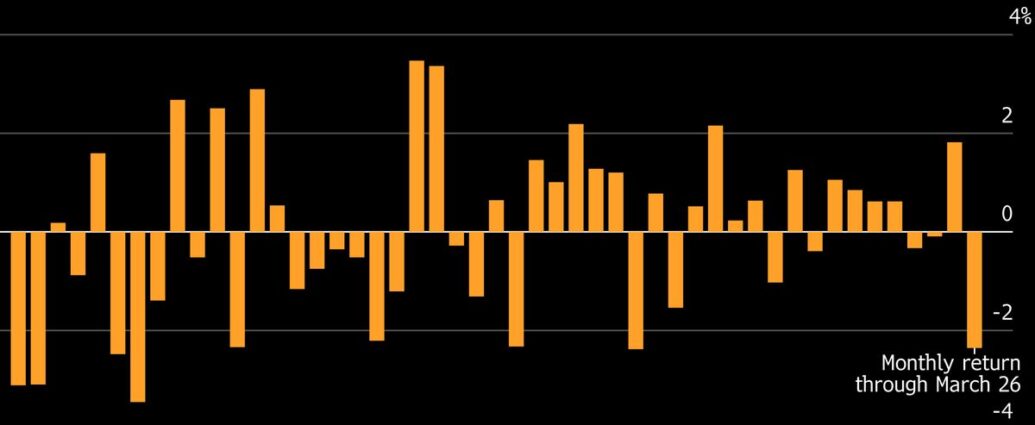

Average Household Spending in Your 30s Revealed—What You Need to Know
This post was originally published here








Oxford Industries Posts Q4 Results, Joins ADMA Biologics, Vor Biopharma And Other Big Stocks Moving Higher On Friday
U.S. stocks were lower, with the Nasdaq Composite falling more than 1% on Friday.
Shares of Oxford Industries Inc (NYSE:OXM) rose sharply during Friday’s session following fourth-quarter results.
Oxford Industries reported quarterly losses of 9 cents per share which missed the analyst consensus estimate of earnings of 2 cents per share. The company reported quarterly sales of $374.500 million which beat the analyst consensus estimate of $371.838 million.
Oxford Industries also raised its quarterly dividend from 69 cents to 70 cents per share.
Oxford Industries shares jumped 11.2% to $35.47/
Here are some other big stocks recording gains in today’s session.
This post was originally published here





Carnival Earnings Prediction Market Preview: What Will CEO Josh Weinstein Say?
Prediction market traders are putting real money on what Carnival Corp. (NYSE:CCL) CEO Josh Weinstein will say on this morning’s fiscal first-quarter earnings call, and the contract list reads like a cheat sheet for what Wall Street actually cares about today.
Analysts expect EPS of $0.18, a roughly 40% jump from the year-ago quarter, on revenue of approximately $6.15 billion. Carnival has beaten EPS estimates in thirteen straight quarters, but the stock is down roughly 25% from its 52-week high after the Iran conflict sent oil prices surging.
Kalshi has a market where traders predict what specific words will come up on the call.
What The Money Says
“Celebration Key” at 93% is a near-certainty. Carnival’s $600 million private island on Grand Bahama opened last July and already welcomed its millionth guest by December. A second pier expansion is underway.
“Dry Dock” at 92% isn’t just operational vocabulary. Dry docks came up on every Carnival call in 2025 and are …
This post was originally published here


Dow Tumbles 400 Points; Carnival Shares Fall After Q1 Earnings
U.S. stocks traded lower this morning, with the Dow Jones index falling more than 400 points on Friday.
Following the market opening Friday, the Dow traded down 0.89% to 45,551.20 while the NASDAQ fell 1.27% to 21,136.11. The S&P 500 also fell, dropping, 0.91% to 6,418.40.
Leading and Lagging Sectors
Energy shares climbed by 1.2% on Friday.
In trading on Friday, consumer discretionary stocks fell by 2%.
Top Headline
Shares of Carnival Corporation (NYSE:CCL) fell around 3% on Friday after the company reported upbeat earnings for the first quarter, but lowered its earnings guidance.
The company posted quarterly earnings of 20 cents per share which beat the analyst consensus estimate of 18 cents per share. The company reported quarterly sales of $6.165 billion which beat the analyst consensus estimate of $6.134 billion.
Equities Trading UP
- Artelo …
This post was originally published here