







The Justice Department plans to share sensitive voter data with Homeland Security
The Justice Department has sought voter data from states. It now says it plans to share that data with the Department of Homeland Security, to run it through a controversial citizenship check tool.
(Image credit: Michael Dwyer)

This post was originally published here


Meta orders 10 gas-fired power plants for its Hyperion AI campus in rural Louisiana—more than triple the initial plan
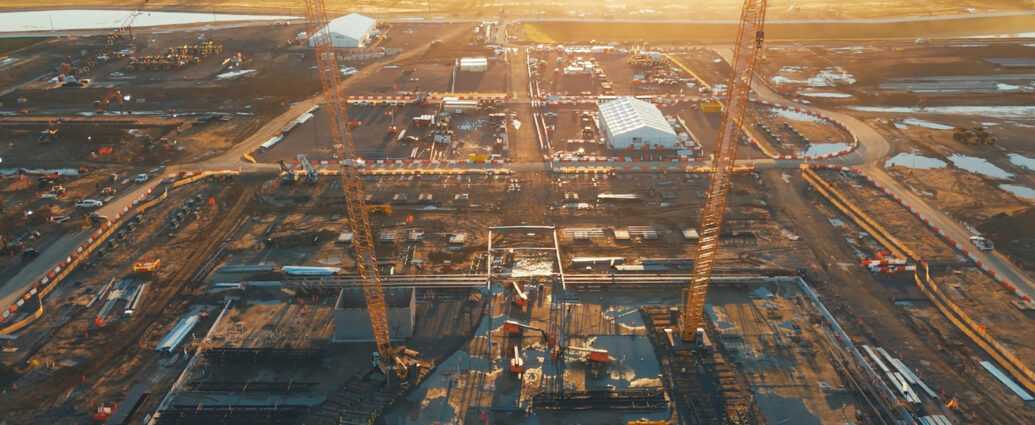
Meta will pay for a total of 10 gas-fired power plants—enough to power more than 5 million homes—to electrify its rapidly expanding plans for its massive AI data center complex in northeastern Louisiana, dubbed Hyperion.
Meta’s agreement with New Orleans-based Entergy, announced March 27, is to build and finance seven new power plants in Louisiana. That comes on top of plans approved last year to build three gas power plants for the sprawling AI hub. The 10 power plants with 7.5 gigawatts of capacity would represent more than a 30% increase to Louisiana’s entire grid capacity, not even counting up to 2.5 gigawatts of renewable energy capacity, including battery storage, that Meta also agreed to help fund.
Meta initially announced plans for a $10 billion investment in December 2024 for a 2,250-acre data center campus in northeastern Louisiana in rural Richland Parish. But Meta recently, and quietly, acquired an additional 1,400 acres, as Fortune reported in February. In October 2025, Meta entered a joint venture with funds managed by Blue Owl Capital to finance, build, and operate the Hyperion campus with up to $27 billion in total development costs, seemingly ensuring the mega campus will serve as a long-term, multiphase AI hub.
Meta CEO Mark Zuckerberg has said Hyperion would cover a “significant part of the footprint of Manhattan.”
“Our Richland Parish data center serves as a symbol of the ambition and scale of next-generation AI infrastructure,” said Rachel Peterson, Meta vice president for data centers, in a statement. “We are building foundations for the future of AI innovation right here in the United States. We’ve been working closely with Entergy since early on-site planning to ensure our power needs are met and, importantly, so that Entergy’s other consumers aren’t paying our costs.”
The Louisiana Public Utility Commission will still need to approve the projects. The previous three power plants received regulatory authorization last year.
Entergy’s stock jumped 7% on March 27, lifting its market cap to a new record high of about $50 billion. The stock has risen almost 125% in two years.
Entergy is emphasizing that Meta is paying for the projects, rather than shifting the costs to other ratepayers. Entergy argues that the deals will save Louisiana taxpayers billions of dollars over several years.
The 10 power plants are estimated to cost nearly $11 billion. Critics contend ratepayers could be stuck with the bill after 15 years, which is the length of the contractual terms, if Meta no longer requires so much power after that span.
“This agreement reflects what’s possible when strong partners align around long-term growth and value,” said Phillip May, president and CEO of Entergy Louisiana, in a statement. “Working with our customers, regulators and state leaders, we are making targeted investments that strengthen reliability, support economic development and deliver meaningful benefits to customers—all while keeping energy rates affordable.”
This story was originally featured on Fortune.com








What Is a Lease Option? Requirements and Benefits
This post was originally published here





Tiger Woods arrested on suspicion of DUI, authorities say
Woods was arrested on suspicion of DUI. The Martin County Sheriff’s Office said Woods was not injured.
(Image credit: Reinhold Matay)

This post was originally published here

Gulf officials seek to calm investors as war rattles confidence
This post was originally published here




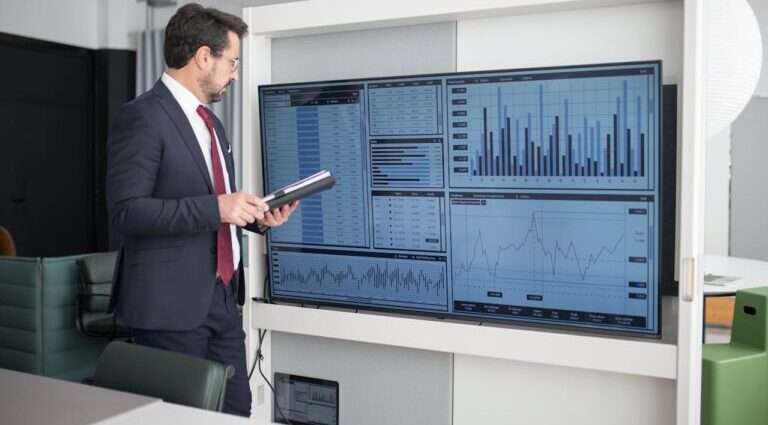


FBI director’s personal email, photos and documents leaked by Iran-linked hackers
The Handala Hack Team published more than 300 emails from Kash Patel’s inbox between 2010 and 2019
Iran-linked hackers have broken into the personal email inbox of Kash Patel, FBI’s director, publishing photographs of him and other documents on the internet, the hackers and the bureau said on Friday.
On their website, the hacker group Handala Hack Team said Patel “will now find his name among the list of successfully hacked victims”. The hackers published a series of personal photographs of Patel sniffing and smoking cigars, riding in an antique convertible and making a face while taking a picture of himself in the mirror with a large bottle of rum.
This post was originally published here





When Is The Iran War Likely To End? Experts Weigh In
The U.S.–Iran war, which began on February 28, 2026, entered its 27th day, with significant global economic fallout. Oil prices have surged above $100 per barrel, while gold suffered its worst weekly decline since 1983, despite its traditional safe-haven role. As midterm elections approach, the political incentive to resolve the conflict has never been higher.
Against this backdrop, one question dominates: when is the war likely to end?
We asked our network of experts for a potential timeline. This is what they said.
Financial influencer Gav Blaxberg, who is the CEO of WOLF Financial, and Co-Founder of Rallies.ai – shares his view:
“This probably settles into a grinding standoff before it ends cleanly. If Israel, Iran, and Washington all decide the cost of a direct fight is climbing faster than anything they’d gain from one, you could see a de-escalation over weeks, maybe a couple months. That’s the optimistic read. The more likely version is – this drags on for many months through proxy hits, cyber ops, covert strikes, and shipping lane disruption rather than any kind of formal ceasefire.
What actually determines the timeline comes down to a few things: does it stay between Israel and Iran, or do Hezbollah and Gulf assets get pulled in? How hard does the US work to keep a lid on it? How much pain are sanctions, oil price swings, and domestic pressure putting on Iran? And does either side feel like deterrence is back in place? Backchannel diplomacy that gives both sides a way to pause without looking weak speeds things up. Proxies opening new fronts slows everything down.”
Former WSJ Journalist and Forbes Contributor, Kenneth Rapoza, specializes in analyzing geopolitical risk. His take:
“The initial projection for this conflict mirrored a “Venezuela II” model: a swift U.S. intervention with a defined objective and a rapid exit. However, given Iran’s scale and the strategic goal of regime change, this was never going to …
This post was originally published here











Tiger Woods arrested for DUI after rollover car crash, Florida sheriff says
Tiger Woods was involved in a rollover car crash in Florida on Friday, the Martin County Sheriff said in a statement.
This post was originally published here



Meta promised it wouldn’t spy on you with its AI smart glasses. A lawsuit says humans are watching you, actually
When Meta opened its Ray-Ban smart glasses up for pre-order, it made clear of one thing: your privacy will be secure. “Ray-Ban Meta smart glasses are built with privacy at their core,” read a statement at the time, released in September 2023. The marketing was unambiguous about your privacy, and as a result, you might have seen people wearing them around town, in a Super Bowl ad, or even in a court proceeding about child safety on Meta’s own platforms. ICE agents were even reportedly wearing them in the field.
What you might not have seen is, well, yourself caught in the crosshairs of the glasses’ camera. Now, a new study—and a federal lawsuit that quickly followed—alleges the company is even less transparent than those thick lenses, claiming the company is quietly routing users’ footage to human workers overseas instead of its AI models. These workers have seen everything from people undressing to sensitive financial documents, and it’s thanks to users who opt into data sharing for AI training purposes.
“In some videos you can see someone going to the toilet, or getting undressed. I don’t think they know, because if they knew they wouldn’t be recording,” a worker said he saw in the videos from the glasses.
In late February, Swedish publications Svenska Dagbladet and Göteborgs-Posten published an investigation into Meta’s AI training pipeline, finding Meta contractors in Kenya help train the artificial intelligence powering the glasses (comprised of the Ray-Ban Meta Wayfarer (Gen 2), the Ray-Ban Display, and the Oakley Meta HSTNs models). What they saw was startling.
“We see everything, from living rooms to naked bodies,” the workers were quoted in the study. “Meta has that type of content in its databases.”
Any user who opts into sharing data for AI training purposes effectively allows all parts of their life to be recorded, and then as a result, reviewed, either by the AIs it’s supposed to train or by the humans behind it. That includes footage of people in bathrooms, undressing, watching porn, and, in at least one documented case, a pair of glasses left on a bedside table that captured a partner who had never consented to being recorded.
Meta’s subcontractors—who were data annotators teaching the AI to interpret images by manually labelling content—also reported viewing users’ credit card numbers and financial documents. At the time of the study’s release, Meta responded through a spokesperson, saying: “When people share content with Meta AI, like other companies we sometimes use contractors to review this data to improve people’s experience with the glasses, as stated in our privacy policy. This data is first filtered to protect people’s privacy.”
A class action begins
The report triggered legal action. On March 4, plaintiffs Gina Bartone and Mateo Canu filed a class action lawsuit against Meta Platforms Inc. (and glassesmaker Luxottica of America) accusing the company of violating federal and state laws by failing to disclose that videos captured by the glasses are transmitted to its servers and then to the Kenyan subcontractor for manual labeling. Referencing new privacy bills and regulations as result of the increase in AI and the surveillance economy, the suit reads that “Meta knows this” in reference to the public’s growing concern of their privacy and safety, and “against this backdrop,” Meta released the glasses with a “reassuring promise: the Glasses were ‘designed for privacy, controlled by you.’”
Brian Hall, a privacy and AI attorney at Stubbs Alderton & Markiles, says the revelations were as predictable as they were alarming. “That’s horrifying. It’s kind of exactly what we all imagined would happen,” Hall told Fortune. “I’m old enough to remember 10 or 12 years ago when Google had their glasses, and that was a concern about people going into restrooms with them on. We’re kind of right back there now.”
(When Google unveiled its prototype Google Glass in 2013, it ignited a fierce public backlash over surveillance, consent, and the death of anonymity. Bars, restaurants, casinos, and strip clubs banned the device outright, and wearers were mockingly dubbed “Glassholes”).
Hall says the legal liability remains murky, partly because Meta’s own Terms of Service state that data annotators “will review your interaction with AI, including the content of your conversations with or messages to AI,” and specifies this review “can be automated or manual.” “If we went and did a close reading of their privacy policy, there’s not going to be anything explicitly that says they don’t do that,” Hall said. “In terms of their legal liability, I don’t know, but it’s certainly a PR liability. This is some of the most sensitive information and imagery that there is out there.”
Hall says his biggest concern isn’t actually the glasses wearers themselves, it’s everyone else caught in the frame. “The bystanders, the people who are being filmed and identified, they’re the ones that are at risk,” he said. “Sadly, our privacy laws are not designed to protect those people. They’re designed to protect the people who are wearing the glasses and their ability to manage their own data.”
In reference to reports of a man using the glasses in a U.K. court to help “coach” him through testimony, Hall said the risk compounds significantly as Meta reportedly considers adding facial recognition to the glasses. “It really is moving from a world where today you might be able to see somebody on the street, in a courtroom, in a bar, and you might be able to do some investigation on Facebook and Instagram and find them. But this is instant. It’s automatic, zero effort. You could be sitting in a courtroom identifying witnesses.”
Hall says existing law is simply not built for what Meta’s glasses make possible. “I don’t know that the existing laws are really sufficient to protect us from the risks of the kind of things that Meta and other social media companies are doing right now,” he said. “It’s sort of getting shoehorned into the privacy laws, but those are rarely enforced as it is, and this is completely upending the whole framework that those were built upon.”
“I’m not seeing that people are meaningfully addressing it in any way,” he said, saying current regulations are piecemeal and fail to address the concerns of privacy entirely. Once privacy is addressed, he said “everything else is just kind of window dressing.”
Meta did not respond to requests for comment.
This story was originally featured on Fortune.com
Bilt 2.0 revisited: Here’s who the new cards are for — and who should pass
Bilt Rewards are amazing, but it can be a significant commitment to earn them. Here are three reasons to apply for a Bilt 2.0 card and two reasons to hold off.
This post was originally published here



Judd Kessler on Understanding Market Designs

Top 5 Canadian Mining Stocks This Week: Altura Energy Jumps 81 Percent
Welcome to the Investing News Network’s weekly look at the best-performing Canadian mining stocks on the TSX, TSXV and CSE, starting with a round-up of Canadian news impacting the resource sector.The US-led war against Iran continued to plague the commodities space this past week. Oil prices have been in decline for much of the week, with Brent and West Texas Intermediate falling below US$100 per barrel. The decreases started on Monday (March 23) as US President Donald Trump walked back his 48 hour ultimatum to attack Iranian energy facilities if the country didn’t allow shipments through the Strait of Hormuz.Trump initially said Iran would have until Friday (March 27) to follow through on his demands, but on Thursday (March 26), the deadline was extended by an additional 10 days, as he said talks with Iran had been productive. For its part, Iran asserts that it has not been negotiating with US representatives.More broadly, the war has had a broad effect on supply chains for other commodities as well. Iranian attacks on Qatari gas production have halved the country’s helium output. Liquefied gas is critical for the operation of MRI scanners and semiconductor manufacturing, and Qatar is the second largest producer of helium. Analysts suggest helium prices could climb to over US$2,000 per thousand square feet from the average of around US$500 over the past two years.The uncertainty stemming from the continued closure of the Strait of Hormuz and inconsistent communications from the White House has driven significant volatility in Canadian markets. The S&P/TSX Composite Index (INDEXTSI:OSPTX) was off by 1.8 percent by Friday morning, led by a 3.6 percent decline in Canadian resource equities and a 3.1 percent drop in tech stocks.Likewise, precious metals have also been affected as the US dollar surged on safe-haven demand. The rise comes amid concern that the US Federal Reserve could keep interest rates unchanged for longer, or raise it should oil prices remain high amid a protracted war with Iran, which is driving inflation risk.Also this week, Rio Tinto (ASX:RIO,NYSE:RIO,LSE:RIO) announced on Thursday that it will be ending operations at its Diavik diamond mine in Canada’s Northwest Territories. The mine has been in production for 23 years, delivering more than 150 million carats and contributing C$11.75 billion to the Northwest Territories’ economy. The mine was also a significant contributor to the community, creating more than 1,000 jobs. Between 200 and 300 will remain employed by Rio Tinto as the mine is decommissioned. For more on what’s moving markets this week, check out our top market news round-up.
Markets and commodities react
Canadian equity markets were mixed this week.The S&P/TSX Composite Index (INDEXTSI:OSPTX) rebounded slightly, posting a gain of 0.52 percent over the week to close Friday at 31,960.65, while the S&P/TSX Venture Composite Index (INDEXTSI:JX) fell 2.72 percent to 915.00.The CSE Composite Index (CSE:CSECOMP) gained 4.02 percent to 174.55.The gold price slipped 3.12 percent to close at US$4,508.73 per ounce on Friday at 4:00 p.m. EST. The silver price closed the week up 3.82 percent at US$70.01 per ounce on Friday.In base metals, the Comex copper price recorded a 1.06 percent decrease this week to US$5.46 per pound. The S&P Goldman Sachs Commodities Index (INDEXSP:SPGSCI) was up 1.6 percent to end Friday at 739.24.
Top Canadian mining stocks this week
How did mining stocks perform against this backdrop? Take a look at this week’s five best-performing Canadian mining stocks below.Stocks data for this article was retrieved at 4:00 p.m. EDT on Friday using TradingView’s stock screener. Only companies trading on the TSX, TSXV and CSE with market caps greater than C$10 million are included. Mineral companies within the non-energy minerals, energy minerals, process industry and producer manufacturing sectors were considered.
1. Altura Energy (TSXV:ALTU)
Weekly gain: 81.25 percentMarket cap: C$16.02 millionShare price: C$0.29Altura Energy is a helium exploration and development company advancing assets in Arizona, US. The company owns a 100 percent stake in the Pinta South project, located in the Holbrook Basin. The property covers 10,600 acres and hosts seven shallow helium wells. Gas from the wells is free of hydrocarbons and is composed of between 5 to 8 percent helium and the remainder nitrogen. Altura finalized its stake in Pinta South in September 2025. The company began selling helium to an offtake partner in November 2025 for a contracted price of US$350 per thousand cubic feet.On March 19, Altura re-completed two helium wells with initial flow rates of 123,000 and 118,000 cubic feet per day.The company also reported that it had completed additional field testing and diagnostics of legacy infrastructure connecting wells to the sites’ processing facilities. Altura discovered deterioration in exposed surface piping, prompting a temporary shutdown of all wells to implement a replacement program.The company said repairs will take approximately eight weeks.
2. Cosa Resources (CSE:COSA)
Weekly gain: 77.46 percentMarket cap: C$49.78 millionShare price: C$0.63Cosa Resources is a uranium explorer advancing a portfolio of assets in Canada’s Athabasca Basin.Among its projects are Orion, a 20,255 hectare property located 29 kilometers from Cameco’s (TSX:CCO,NYSE:CCJ) Cigar Lake mine. Orion hosts approximately 25 kilometers of strike along an extension of the Larocque Lake trend.Additionally, Cosa is collaborating on a trio of projects with Denison Mines (TSX:DML,NYSEAMERICAN:DNN). They cover more than 20,000 hectares and consist of Murphy Lake North, Darby and Packrat. On March 3, the company announced an expansion to its land holdings at Orion, adding one claim covering 1,564 hectares on the southeast portion of the property. Additionally, the company said it had also increased holdings at Murphy Lake North by 345 hectares and its holdings at Darby by 758 hectares.On Tuesday (March 24), Cosa encountered anomalous radioactivity at Murphy Lake North. A radioactivity reading of 13,900 counts per second was detected in a 5 meter intersection at a depth of 260 meters from the surface.
3. Helium Evolution (TSXV:HEVI)
Weekly gain: 65.63 percentMarket cap: C$28.03 millionShare price: C$0.265Helium Evolution is an exploration and development company focused on assets in Saskatchewan, Canada.The company’s main focus is on its 40,000 acre Mankota property which lies adjacent to North American Helium’s. To date, the company has drilled 10 wells and has made six helium discoveries. It’s currently focused on two targets at the basal sand unit and Earlie sandstone.On February 2, the company entered into a pooling agreement with North American Helium for the property, which gives Helium Evolution a 49 percent stake in the operation, and North American the controlling 51 percent.The announcement also said the companies were going to carry out a 3d seismic program at the neighbouring properties. The program was planned for six weeks, with interpretation anticipated in the second quarter of 2026.Shares of Helium Evolution saw significant gains this week alongside supply chain disruptions in the Helium market, but the company did not release any news.
4. Bullion Gold Resources (TSXV:BGD)
Weekly gain: 58.33 percentMarket cap: C$10.11 millionShare price: C$0.095Bullion Gold Resources is an exploration company advancing its Bousquet project in Québec, Canada.The site, located in the Abitibi along the Cadillac Larder Lake fault, consists of 71 claims covering an area of 2,369 hectares. The property hosts seven gold showings, with multiple magnetic targets. Bousquet is currently under option by Olympio Metals (ASX:OLY), which can earn up to an 80 percent stake in the project.On Monday, Bullion received the first assay from the Phase 2 drill program at the Paquin prospect at Bousquet. The results highlighted bonanza-grade gold of 41.81 grams per metric ton (g/t) over 7.5 meters, which included intervals of 60.36 g/t over 4.3 meters and 109.51 g/t over 2 meters. The company said the results are the best to date and highlight the potential for high-grade lodes.
5. Electric Metals (USA) (TSXV:EML)
Weekly gain: 65.63 percentMarket cap: C$28.03 millionShare price: C$0.265Electric Metals (USA) is a mineral development company focused on advancing its flagship North Star manganese project in Minnesota, US. According to the company, the asset is North America’s highest-grade manganese resource. It plans to produce high-purity manganese sulfate monohydrate for lithium-ion batteries.In August 2025, Electric Metals released a preliminary economic assessment for North Star. It demonstrates a base-case after-tax net present value of US$1.39 billion, with an internal rate of return of 43.5 percent and a payback period of 23 months. The report also includes an updated resource estimate with an indicated resource of 7.6 million metric tons of ore grading 19.07 percent manganese, 22.33 percent iron and 30.94 percent silicon, and an inferred resource of 3.73 million metric tons of ore grading 17.04 percent manganese, 19.04 percent iron and 30.03 percent silicon.The most recent news from Electric Metals came on March 16, when it announced it had agreed to sell its non-core silver assets in Nevada to Ameerex (OTC:HIRU) for total consideration of US$3.5 million in staged payments. Additionally, Electric Metals will retain a 2.5 percent net smelter royalty.The assets consist of the Corcoran and Belmont properties, which sit on federal lode claims and lease options on patented mining claims. The sale will allow Electric Metals to focus on advancing its North Star Manganese project.
FAQs for Canadian mining stocks
What is the difference between the TSX and TSXV?
The TSX, or Toronto Stock Exchange, is used by senior companies with larger market caps, and the TSXV, or TSX Venture Exchange, is used by smaller-cap companies. Companies listed on the TSXV can graduate to the senior exchange.
How many mining companies are listed on the TSX and TSXV?
As of December 2025, 898 mining companies and 71 oil and gas companies are listed on the TSXV, combining for more than 60 percent of the 1,531 total companies listed on the exchange.As for the TSX, it is home to 175 mining companies and 51 oil and gas companies. The exchange has 2,089 companies listed on it in total.Together, the TSX and TSXV host around 40 percent of the world’s public mining companies.
How much does it cost to list on the TSXV?
There are a variety of different fees that companies must pay to list on the TSXV, and according to the exchange, they can vary based on the transaction’s nature and complexity. The listing fee alone will most likely cost between C$10,000 to C$70,000. Accounting and auditing fees could rack up between C$25,000 and C$100,000, while legal fees are expected to be over C$75,000 and an underwriters’ commission may hit up to 12 percent.The exchange lists a handful of other fees and expenses companies can expect, including but not limited to security commission and transfer agency fees, investor relations costs and director and officer liability insurance.These are all just for the initial listing, of course. There are ongoing expenses once companies are trading, such as sustaining fees and additional listing fees, plus the costs associated with filing regular reports.
How do you trade on the TSXV?
Investors can trade on the TSXV the way they would trade stocks on any exchange. This means they can use a stock broker or an individual investment account to buy and sell shares of TSXV-listed companies during the exchange’s trading hours.
Article by Dean Belder; FAQs by Lauren Kelly.Don’t forget to follow us @INN_Resource for real-time updates!Securities Disclosure: I, Dean Belder, hold no direct investment interest in any company mentioned in this article.Securities Disclosure: I, Lauren Kelly, hold no direct investment interest in any company mentioned in this article.
This post was originally published here

Indonesia faces a ‘perfect storm’ of downgrade fears, trade tensions and now the Iran war—and 2026 has only just started
Airlangga Hartato was all smiles on Feb. 19 as he signed his name to what he called a “win-win” deal. After four trips to Washington, seven formal negotiating rounds, and nine meetings with U.S. Trade Representative Jamieson Greer, Indonesia’s economy minister had finally secured a reduction in U.S. duties on Indonesian goods—from a punishing 32% to a more tolerable 19%.
The agreement, grandly titled Toward a New Golden Age for the U.S.–Indonesia Alliance, promised tariff exemptions for key exports like palm oil, coffee, cocoa, and rubber. In exchange, Jakarta pledged to scrap barriers on more than 99% of U.S. imports and commit to some $33 billion in purchases of American energy, aircraft, and agricultural products.
The very next day, the U.S. Supreme Court struck down Trump’s Liberation Day tariffs—including the original 32% levy that had forced Jakarta into the talks in the first place—as unconstitutional. (Trump has since followed up with two new trade probes on Indonesia, one on excess manufacturing and another on forced labor.)
The Supreme Court’s ruling was the most visible example of bad timing in what has been a punishing few months for Southeast Asia’s largest economy, and an early test of President Prabowo Subianto’s high hopes for his tenure.
Since January, Indonesia has absorbed shocks from multiple directions at once. A warning from global index provider MSCI that Jakarta’s opaque stock market could lose its coveted emerging-market status triggered an 8% drop in markets over two days. Moody’s and Fitch both cut their outlooks on Indonesia’s sovereign debt to negative—the first step toward a possible downgrade. Trump’s tariffs, if they return, could threaten Indonesia’s export industries. Then came the Iran war, whose disruptions to the Strait of Hormuz threaten Indonesia’s fuel supply.
“The economy is heading into a perfect storm,” says Siwage Dharma Negara, co-coordinator of the Indonesia Studies Program at the ISEAS–Yusof Ishak Institute in Singapore. “This is something we’ve never imagined before.”
So far, these back-to-back blows haven’t hurt Indonesia’s real economy. But higher commodity prices, a weaker rupiah, and a squeeze on government spending could hit affordability in a country where protests in response to rising fuel prices and the cost of living are already common. More broadly, analysts warn that Indonesia’s push to give the state a greater role in the economy could hit business confidence and investment, just at the moment when Indonesia needs capital to grow its manufacturing and mining sectors.
“We’re in an unusual period where Indonesia’s need for foreign capital is high, but its willingness to constrain itself in pursuit of that capital is low,” says Mattias Fibiger, an associate professor at Harvard Business School who covers the Southeast Asian country.
A “human capital” president
Prabowo Subianto took office in October 2024 with a bold target of 8% annual growth by 2029. He inherited a solid economy from his popular predecessor, Joko Widodo—better known as Jokowi—who had tried leveraging Indonesia’s abundant natural resources through a “downstreaming” drive: banning raw nickel ore exports and forcing investors to build smelters and refineries on Indonesian soil. That policy turned the country into a critical node in global battery and EV supply chains.
Prabowo has sought to expand the state’s role further still. “If you can think of Jokowi as a ‘physical capital’ president, then Prabowo is a ‘human capital’ president,” Fibiger explains.
Prabowo hoped to invest in expansive social programs, like a nationwide free nutritious-meals scheme—now budgeted at roughly 335 trillion rupiah ($20 billion) for 2026, almost 9% of the total state budget, targeting 82 million schoolchildren, infants, and pregnant women.
But it will take a long time for such programs to pay off, if they do at all. “Those dividends will be felt a generation down the line, not a year, not three years, not five years down the line,” Fibiger says.
Negara is blunter, noting these measures “are not really contributing to productivity growth.”
Fibiger traces Indonesia’s problems back to September, when Prabowo abruptly removed his widely respected finance minister, Sri Mulyani Indrawati, amid mounting protests over living costs and inequality. Sri Mulyani had served three presidents and was, in Fibiger’s words, “a personification of the Washington consensus,” or a champion of fiscal discipline and market-oriented reforms.
Her replacement, Purbaya Yudhi Sadewa, was more aggressive on spending, tapping some $12 billion of the country’s reserves to recapitalize state-owned banks and pledging to use more than half of the government’s “rainy day” fund by the end of 2025.
“Indonesia has been a victim of both bad timing and bad policy,” Fibiger says.
Ratings shock
Yet the first shock to the country came from a different source entirely. On Jan. 28, MSCI warned that it might downgrade Indonesia to a “frontier market,” citing a lack of transparency over company ownership. Indonesia’s markets have long featured companies with dominant controlling shareholders and limited public floats, allowing insiders to drastically move share prices.
The market rout eventually wiped out $120 billion in value and forced out not only the chief executive of the Indonesian Stock Exchange (IDX), Iman Rachman, but also the chair of the Financial Services Authority (OJK), Mahendra Siregar. Goldman Sachs downgraded Indonesian equities to “underweight” and estimated that a drop to frontier-market status could trigger another $7.8 billion in outflows. Some local brokers warned that, in aggregate, more than $60 billion of foreign holdings could eventually exit if Indonesia were reweighted toward existing frontier peers.
Jakarta moved quickly to try to head that off. OJK pledged to raise minimum free-float requirements to 15% and tighten disclosure of company owners. Danantara, Prabowo’s new sovereign wealth fund, was mobilized to buy equities; the investment ceiling for pension funds and insurers was raised from 8% to 20% of assets.
Pandu Sjahrir, Danantara’s chief investment officer, a coal tycoon turned venture capitalist before joining the fund, says the IDX has “improved significantly” since the MSCI’s warning.
“How do you find a good balance between being issuer-friendly and investor-friendly? You have to be in the middle,” he says. A new IDX management team is expected in the second half of the year, and Pandu says he is “encouraged” by the caliber of applicants.
But the market alarm proved to be only the first in a chain. Within weeks, both Moody’s and Fitch downgraded their outlooks on Indonesia’s sovereign debt to negative. Moody’s cited “reduced predictability and coherence in the policymaking process,” while Fitch pointed to “growing centralization of policymaking authority.” (While S&P hasn’t changed its outlook, it too is wary of increased spending, noting that interest payments likely surpassed 15% of government revenue last year.)
“The underlying concern is about imbalance between state revenue and the government’s spending plans,” says Negara. Indonesia’s 2025 budget deficit reached 2.92% of GDP—the widest in more than two decades, outside of the COVID-19 crisis—pushing the country uncomfortably close to the 3% cap it adopted after the Asian Financial Crisis as a hard-won symbol of post-crisis discipline.
~$1 trillion
Assets managed by Danantara, Indonesia’s new sovereign wealth fund
$120 billion
Market value lost by companies on Indonesia’s IDX stock market, Jan. 29-30, 2026
2.9%
Indonesia’s 2025 budget deficit as a share of GDP
Sources: Danantara; S&P Global; Government data
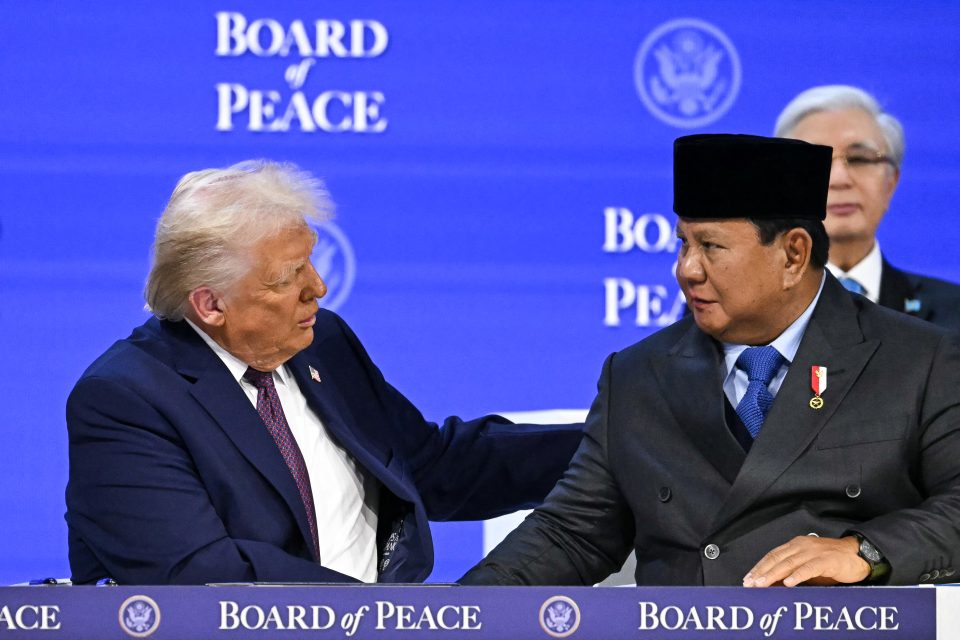
A U.S.-Israeli strike on Iran in February and March, which led to the closure of the Strait of Hormuz, makes things even more complicated for Indonesia’s budget. (In another example of poor timing, Prabowo had just joined Trump’s “Board of Peace” to considerable fanfare, only to pause membership talks after the U.S. struck Iran.) Indonesia pumps around 608,000 barrels of oil a day, but surging domestic demand has made it a net importer since 2003.
The price of petrol has long been a political pressure point in Indonesia, where successive governments have used generous subsidies to keep prices artificially low. Rising fuel prices tend to lead to mass protests—as they did in 1998, eventually helping to topple Indonesia’s then-dictator Suharto, and in 2022, when protesters looted Sri Mulyani’s house.
Jakarta has vowed to keep fuel affordable without imposing the lifestyle changes—shorter workweeks, warmer air-conditioner settings—that some of its Southeast Asian neighbors have rolled out, but has offered few specifics on how it will pay for that stance.
In a mid-March interview with Bloomberg, Prabowo suggested he might lift the budget-deficit cap to deal with the short-term emergency of the Iran war and surging fuel prices. Pandu characterized the government’s approach as only breaching the cap in “special cases.”
Unease on Danantara
Danantara, the sovereign wealth fund Prabowo launched in early 2025 with an estimated $1 trillion in state assets under its umbrella, sits at the center of investor unease about Indonesia.
The fund was designed with a mandate to optimize returns from Indonesia’s sprawling state-owned enterprises and recycle capital into projects that accelerate national development.
“We have this dual role: How can we optimize assets from state-owned enterprises to create more value, and at the same time create quality jobs?” CEO Rosan Roeslani explained to Fortune last year.
Yet in practice, Danantara has been pulled deeper into Indonesia’s economy. Earlier this year, Prabowo ordered it to anchor the creation of a state-owned textile champion, backed by as much as $6 billion in capital, to rescue an industry hammered by cheap Chinese imports and trade disruption. That’s led to worries about confused objectives and mission creep. Others, like Negara, see Danantara as evidence “that the current administration is trying to strengthen the role of the state,” which is worrying the private sector, particularly as the government intervenes in strategic sectors like retail, mining, and energy.
“The market is asking us to be the anchor of confidence,” Pandu says, noting Danantara’s active engagement with MSCI and the rating agencies. “We’re investing in the stock market every day through fund managers,” he adds, helping to rebuild trust in a market that urgently needs it.
“Indonesia grows like a metronome, whether the rest of the world is facing a financial crisis or during boom times.”
Mattias Fibiger, Associate Professor, Harvard Business School
At the same time, he acknowledges that Danantara cannot act like a purely commercial investor. “If I had to choose between a project that offered a 7% return and created 100,000 jobs, or one that offered a 10% return but created no jobs, I’d have to take the 100,000 jobs option,” he says. “I have to make some profit, but I also have to generate high-quality work.”
Rather than the market turbulence or the fiscal squeeze, Pandu says his deepest concern lies elsewhere entirely—with AI. “My biggest fear is being left behind in terms of global trends happening today, both in the U.S. and China. Those two countries are developing things that are rapidly changing the world order in terms of the haves and the have-nots,” he says.
The metronome economy
Prabowo, a former army general, has been characteristically punchy in his response to foreign investors’ jitters. “The markets are not understanding me,” he griped to Bloomberg, insisting that analysts had “got it wrong” and that domestic regulators had mishandled the MSCI warnings.
The hard data give him some cover. Indonesia’s economy grew 5.11% in 2025, its fastest pace in three years and above most analysts’ expectations, supported by robust household spending and investment.
Negara agrees there is still a solid floor beneath the current turbulence. Indonesia’s growth has long been anchored by domestic demand rather than exports; a young, increasingly urban population; and a large, expanding middle class. “If domestic consumption is still growing, it means that there’s still an opportunity for the economy to grow at 4% or 5% per year,” he argues.
“The consumer is still relatively strong and wealthy, and they’re here to spend, especially the middle, upper middle class,” says Pandu of Danantara. He thinks global investors are ignoring opportunities in everyday Indonesian consumption.
Indonesia has been remarkably consistent. “The astonishing thing about Indonesia is that it grows like a metronome,” Fibiger says. He points out that since the end of the Suharto era, Indonesia has posted roughly 5% growth year after year “when commodity prices are high, when commodity prices are low, when the rest of the world is facing a financial crisis, or during boom times.”
“It doesn’t seem obvious to me that today’s problems will prevent Indonesia from growing around that number in the future,” he adds, even if Prabowo’s dream of 8% looks possible only with reforms.
Beyond consumption, Indonesia also offers opportunities in mining and metals, an increasingly hot sector as the world realizes the importance of critical minerals for industries like EVs and semiconductors. And then there’s AI and data centers, which can take advantage of Indonesia’s cheap and abundant energy supply, particularly as the country continues to invest in renewable energy.
“This is a great opportunity to tell Indonesia’s story,” Pandu says. “We haven’t done a great job at it, to be honest.”
This article appears in the April/May 2026: Asia issue of Fortune with the headline “Indonesia’s market meltdown.”
This story was originally featured on Fortune.com
Kalshi Approved For Margin Trading As Washington State Sues It For Illegal Gambling
Kalshi was approved for margin trading on the same day Washington’s attorney general sued it for running an illegal gambling operation.
The prediction market platform secured a futures commission merchant license through an affiliate called Kinetic Markets LLC. The license would let institutional users open positions without posting the full amount of capital, a feature hedge funds have been waiting for.
Kalshi CEO Tarek Mansour said a margin product would be coming “soon.” He noted capital efficiency is the main barrier keeping institutions off the platform.
Hours later, Washington Attorney General Nick Brown filed a lawsuit alleging Kalshi violates the state’s Gambling Act and Consumer Protection Act by allowing residents bet on sports, elections, and events, including Iran war outcomes and measles case totals.
Washington Joins The Legal Pile-On
Washington is at least the 20th jurisdiction to take legal action against Kalshi. Arizona filed criminal charges earlier …
This post was originally published here
Top 5 Junior Gold Mining Stocks on the TSXV
Junior gold stocks are seeing heightened interest in 2026 despite volatility in the gold price, which reached a new record highs of nearly US$5,600 per ounce during the first quarter.The yellow metal’s price action has been driven by numerous factors, including economic uncertainty related to US trade and tariff policy, the breakout of major conflicts in the Middle East, and questions over which direction US monetary policy is headed this year.This perfect storm has led investors to look to safe-haven assets like gold as a hedge to provide greater stability to their portfolios.What does this gold bull run mean for junior gold companies?While it took some time for the high gold price to translate into share price gains for gold explorers, many have now seen significant gains. Below the Investing News Network profiles the five Canadian gold companies on the TSXV that are the best performers of 2026 so far by year-to-date share price gains.Data for this article was retrieved on March 25, 2026, using TradingView’s stock screener, and only companies with market capitalizations greater than C$10 million at that time are included.
1. San Lorenzo Gold (TSXV:SLG)
Year-to-date gain: 216.47 percentMarket cap: C$217.04 millionShare price: C$2.69San Lorenzo Gold is an exploration company working to advance its Salvadora project in the Chañaral province of Chile. The property covers an area of over 9,000 hectares, and hosts a large copper and gold porphyry system with several significant targets, including Cerro Blanco and Arco de Oro. According to the project page, the site geology resembles that of the nearby Codelco-owned Salvador copper mine, which has operated since the early 1950s and is expected to continue until the mid-2060s following an expansion.San Lorenzo finished 2025 as the year’s top performing TSXV gold stock after gaining over 1,000 percent from its open of C$0.08, spurred by discoveries at the Cerro Blanco target. The gold stock has continued its upward trajectory in 2026. On January 26 of this year, the company released drill results from the first hole of its campaign on the Cerro Blanco porphyry target, which highlighted five sections of mineralization combining for over 222.4 meters. The longest interval was 132.2 meters and graded 1.09 grams per metric ton (g/t) gold. While shares of San Lorenzo had been range bound around C$1.00 for much of January, they were boosted to C$2.11 the day of the release. By February 26, the stock’s value had climbed to a year-to-date high of C$3.70 per share following announcements of a fully subscribed, upsized private placement for gross proceeds of C$20 million.In early March, San Lorenzo released further drill results from both the Arco de Oro and Cerro Blanco targets, with more to come from Arco de Oro in the months ahead. In addition, the company closed on the private placement, with plans to use the proceeds to help fund further exploration activities. The news flow helped keep its share value up around the C$3.50 mark on March 9. On March 19, San Lorenzo reported it had significantly increased its acreage at the Cerro Blanco target by 2,900 hectares through a combination of newly acquired claims and an option agreement with Mirasol Resources for Mirasol’s Rubi project.While its share price slid with the gold price to C$2.32 on March 20, it recovered to C$2.69 on March 25, still up 216.47 percent year-to-date.
2. Xali Gold (TSXV:XGC)
Year-to-date gain: 180 percentMarket cap: C$45.08 millionShare price: C$0.28Xali Gold is developing its advanced-stage Pico Machay gold project in Peru. The property hosts a high-sulfidation gold deposit with a historic measured and indicated resource of 264,000 ounces of gold from 10.6 million metric tons of ore.The company’s property portfolio also includes two royalty agreements linked to potential production from the El Oro gold-silver project in Mexico.Xali closed its acquisition of Pico Machay from Pan American Silver (TSX:PAAS,NYSE:PAAS) late last year, with plans to advance the project to near-term production. The company announced on January 8 that it had begun “field work with the initiation of community engagement in anticipation of starting technical field work and environmental studies for drilling permits this month.”After starting the year trading at C$0.10 per share, Xali Gold’s stock value got its first bump on January 26 to C$0.14 as the gold price began climbing to its all-time high.By February 13, the stock was up to C$0.18 following the company’s release of its plans for moving the project forward in 2026. In addition to work already underway, its plans include sampling all new underground workings, drilling to verify historical resource grades and upgrade the resource, and advancing a preliminary economic assessment.On February 25, Xali announced it had reached an agreement with the local community to proceed with exploration work at the project. Shares in Xali spiked to C$0.28 on March 3 and continued upwards to a year-to-date high of C$0.33 per share on March 11.
3. Precipitate Gold (TSXV:PRG)
Year-to-date gain: 175 percentMarket cap: C$54.75 millionShare price: C$0.49Precipitate Gold owns a district-scale portfolio of gold and copper projects in the Dominican Republic. Its Pueblo Grande gold-copper project is located adjacent to the Pueblo Viejo gold-silver mine operated by Barrick Mining (TSX:ABX,NYSE:B), while its Juan de Herrera gold-copper project is next to the emerging Romero deposit operated by GoldQuest Mining (TSXV:GQC,OTCPL:GDQMF). On January 9, Precipitate closed a C$6.5 million private placement to help fund exploration and development work, including planned drilling at Juan de Herrera. The placement’s participants were Dominican investors and business leaders.The company announced on January 22 it had completed a technical review of data related to the Pueblo Grande project that was generated by Barrick Mining over the course of five years. Based on the review, Precipitate followed up with an induced polarization survey, with results showing untested high chargeability anomalies at the project’s Pueblo Grande Norte zone.Its share price began climbing following the news and alongside rising gold prices to hit C$0.48 per share on January 28, and remained elevated through February.Precipitate’s shares rose to a year-to-date high of C$0.53 per share by March 4 after the company’s February 27 announcement that it had begun site preparations for diamond drilling at the Pueblo Grande Norte zone to test the anomalies it identified with the IP survey.On March 25, the company reported the start of diamond drilling, which will include about 2,000 meters over four holes.
4. Tectonic Metals (TSXV:TECT)
Year-to-date gain: 149.44 percentMarket cap: C$191.3 millionShare price: C$2.22Tectonic Metals is advancing its flagship 99,800 acre Flat gold project in Alaska, US. The project includes the Alpha Bowl and Chicken Mountain zones.The company’s management team includes key members from Kaminak Gold, which advanced the multi-million-ounce Coffee gold project in Canada’s Yukon Territory through to a bankable feasibility study before it was acquired in 2016 for C$520 million.Its first news of the year came on January 15 when it announced that initial drill results from its 2025 drill campaign on the Alpha Bowl zone confirmed geological and mineralized continuity with the Chicken Mountain zone. According to Tectonic, this means the gold system is at least 3 kilometers of strike length and open in all directions. Additionally, the 24 holes included in the release all intersected gold mineralization.Tectonic shares were trading at C$0.88 at the start of the year, but began rising rapidly on January 22 and reached a year-to-date high of C$3.15 per share on January 30 on the back of two news releases and a rising gold price.On January 22, Tectonic shared drill results from 42 holes at the Chicken Mountain zone, highlighting a 36.58 meter intercept grading 9.94 g/t gold ending in mineralization. Within that was a smaller interval grading 15.73 g/t gold over 22.86 meters, including 3.05 meters at 104.23 g/t gold. The following week on January 29, the company shared further exploration results, including a discovery from its first drilling at the Black Creek intrusion target 6 kilometers north of Chicken Mountain. Assays returned 4.5 g/t gold over 48.77 meters from surface, including a high-grade core of 7.79 g/t gold over 24.38 meters.”The Flat Gold Project continues to demonstrate the characteristics of a large, reduced intrusion-related gold system with multiple mineralized intrusive centers,” Tectonic President and CEO Tony Reda stated.On March 3, Tectonic completed a C$92 million private placement with proceeds going to further advance the Flat gold project.
5. Patagonia Gold (TSXV:PGDC)
Year-to-date gain: 140 percentMarket cap: C$418.55 millionShare price: C$0.90Patagonia Gold is a precious metals production and development company primarily focused on advancing its Cap-Oeste and Calcatreu underground projects in Argentina. Located in Santa Cruz province, Cap-Oeste hosted open-pit mining operations until 2018. Currently, Patagonia is working on the exploration and development of the underground resource at the site, as well as recovering gold and silver from residual leaching on site.According to the company’s website, a 2018 mineral resource estimate for Cap-Oeste reported a measured and indicated resource of 704,300 ounces of gold and 21.43 million ounces of silver from 10.56 million metric tons of ore with average grades of 2.07 g/t gold and 63.2 g/t silver.Its Calcatreu project, located in the Rio Negro province, is currently under construction. Calcatreu hosts a measured and indicated resource of 669,000 ounces of gold and 6.28 million ounces of silver from 9.84 million metric tons with average grades of 2.11 g/t gold and 19.8 g/t silver.Shares of Patagonia started the year at C$0.43 and rose to C$0.93 per share on January 15. That day, Patagonia released its only news of the quarter, provided an update on construction activities at Calcatreu. Patagonia said it has extracted and stockpiled 40,000 metric tons of mineralized material from the Veta 49 pit, of which 5,200 metric tons were expected to be stacked on the leach pad following electric leak detection tests later in January.After stockpiled material begins being leached and processed, the metal doré product will be sent to Ontario, Canada, for refining. Patagonia expects to release an updated technical report for the project during Q2.Patagonia’s stock reached its highest value year-to-date on March 2 at C$1.33 per share.
Don’t forget to follow us @INN_Resource for real-time updates!Securities Disclosure: I, Melissa Pistilli, hold no direct investment interest in any company mentioned in this article.Editorial Disclosure: Precipitate Gold is a client of the Investing News Network. This article is not paid-for content.
This post was originally published here





Oaktree To Fulfill All Redemption Requests In Its Private Credit Fund
Oaktree Capital Management has elected to fully satisfy all redemption requests, representing 8.5% in its private credit fund for the first quarter.
Oaktree Strategic Credit Fund (OSC) plans to repurchase approximately 13.9 million shares, representing 6.8% of its outstanding shares, Reuters reported.
Additionally, Oaktree’s parent company, Brookfield, will acquire another 1.7% to ensure all redemption requests are met this quarter.
In response to the current earnings environment, characterized by lower interest rates and tighter credit spreads, the fund has decided to adjust its monthly dividend from 18 cents to 16 cents per share.
The fund cited the need to maintain liquidity as a reason for the dividend reduction, echoing the sentiment that “there is no free lunch,” as articulated in a shareholder letter referencing economist Milton Friedman.
Established in 2022, the $7.3 billion fund primarily focuses on privately negotiated loans to U.S. companies. Oaktree has stated that it remains cautious, avoiding areas of the market where it perceives a lack of discipline, according to Reuters.
To …
This post was originally published here

Apple cofounder Steve Wozniak admits he’s ‘disappointed a lot’ by AI and hardly uses it: ‘They just sound too dry and too perfect’
Apple will celebrate 50 years on April 1, and over the last half a century, it has developed the eight-bit personal computer Apple I, the Macintosh, the iPhone, Apple Watch, and AirPods, putting its technology into the pockets of about 1.5 billion people.
Cofounder Steve Wozniak, who made his mark on this new age of technology, would rather just touch grass.
“I really have disconnected from the technology quite a bit,” Wozniak said in a recent CNN interview. “And I believe that nature is much more important than what humans do.”
Wozniak was the innovator behind Apple, serving the company until 1985 and developing its first two computer models as well as the first Macintosh, which popularized the graphical user interface.
The breakthrough made PCs more accessible to non-technical users, opening the doors to a mass audience. Despite the Woz’s contributions to the ubiquity of devices, he does not see the same value in the current big trend in technology.
“I don’t use AI much at all,” he said. “I often read things [AI produces], and they just sound too dry and too perfect, and I want something from a human being, and I’m disappointed a lot.”
Apple has largely sat out of the AI arms race occupying much of the tech sector. It spent just $12.7 billion in capital expenditures in fiscal 2025, a figure that pales in comparison to the $300 billion that AI hyperscalers Microsoft, Amazon, and Alphabet collectively spent.
And instead of developing an in-house AI, Apple is powering its virtual assistant Siri with Google’s Gemini, taking advantage of another company’s tech.
Tech’s big names advocating for the analog life
Woz’s skepticism of AI is shared by a number of leaders. A survey of more than 6,000 senior executives in the U.S., UK, Germany, and Australia led by Stanford future-of-work whiz Nicholas Bloom, found nearly 70% of CEOs, CFOs, and other C-suite members use AI at work for less than an hour a week—and 28% don’t use the tech at all. About 7% of respondents reported using AI more than five hours in a typical work week.
Still, AI use among top executives in the workplace is on the rise, with a January Gallup poll finding 69% of leaders used AI in the fourth quarter of 2025, up from less than 40% in mid-2023.
But even as AI gains momentum, a cadre of tech entrepreneurs—even those who are responsible for proliferating the increased uses of AI tools and devices—are setting boundaries on screens at home.
“I think TikTok is entertainment, but it’s purely entertainment,” Chen said. “It’s just for that moment. Just shorter-form content equates to shorter attention spans.”
Tech billionaire Peter Thiel said in 2024 he allowed his two children only one and a half hours of screen time per week. Bill Gates, Snap’s Evan Spiegel, and Tesla’s Elon Musk have all similarly limited their children’s tech usage.
Their caution was backed up this week, when a jury found YouTube and Meta liable for the harm of young users in designing platforms with addictive features.
These concerns were even shared by Apple execs. When the iPad was released in 2010, then-CEO Steve Jobs, who founded the company alongside Wozniak, said his children had never used the device.
“We limit how much technology our kids use at home,” he told the New York Times.
Current Apple CEO Tim Cook said earlier this month he was concerned about how much people use AI. He warned it’s neither positive nor negative, but is in the hands of the inventor and user to determine its value.
“I don’t want people using them too much,” he said in an interview with Good Morning America. “I don’t want people looking at the smartphone more than they’re looking in someone’s eyes, because if they’re just scrolling endlessly, this is not the way you wanna spend your day. Go out and spend it in nature.”
This story was originally featured on Fortune.com



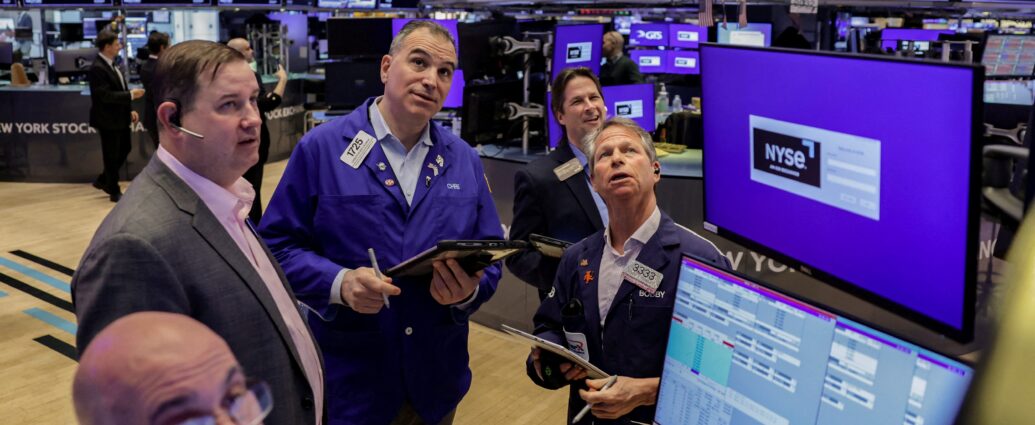




US House rejects DHS funding package earlier passed by Senate
Move imperils efforts to end 42‑day partial shutdown that has seen thousands of DHS employees miss paychecks
House Republicans have rejected legislation, passed by the Senate, that would finance most of the Department of Homeland Security (DHS) but withhold funds from Immigration and Customs Enforcement (ICE) and part of Customs and Border Protection (CBP).
The move imperils efforts to end a 42‑day partial government shutdown that has seen thousands of DHS employees miss paychecks and furious travelers miss flights due to long airport security lines.
This post was originally published here

Opinion | Trump’s Iran Strategy Is Chaotic
Tech stocks suffer worst week in nearly a year, driven down by war worries, Meta legal woes
Meta’s twin legal defeats this week and a big selloff in Micron spurred a drop in technology stocks, which were broadly hit by rising oil prices.
This post was originally published here


4 Best Children’s Life Insurance Companies for March 2026
This post was originally published here

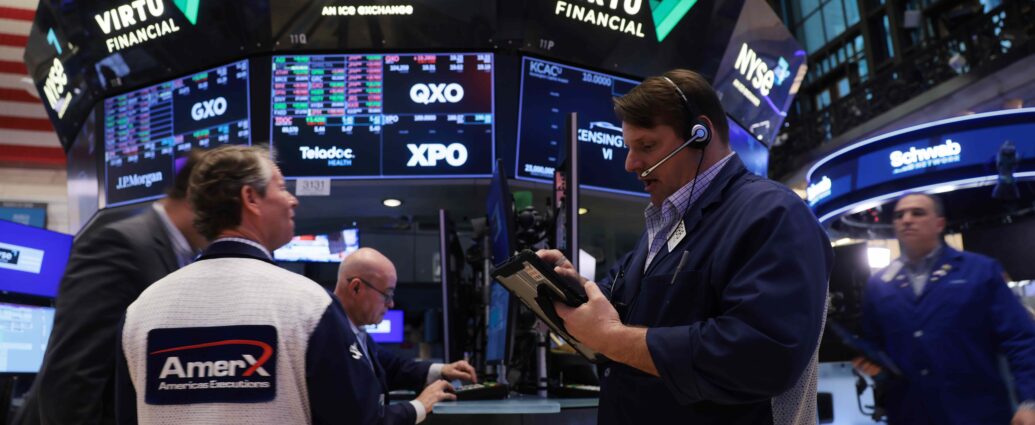
Markets News, March 27, 2026: Stocks Plunge, Extend Skid to 5 Weeks; Dow Ends Down Nearly 800 Points; Oil Climbs
This post was originally published here
Stock Market Today: Major Indexes Plunge, Extend Skids to 5 Weeks; Dow Ends Down Nearly 800 Points; Oil Climbs Further
This post was originally published here
BNC Stock Crowded With Sellers
In trading on Friday, shares of CEA Industries Inc (Symbol: BNC) entered into oversold territory, changing hands as low as $2.875 per share. We define oversold territory using the Relative Strength Index, or RSI, which is a technical analysis indicator used to measure momentum
This post was originally published here
Janus International Group (JBI) Shares Enter Oversold Territory
In trading on Friday, shares of Janus International Group Inc (Symbol: JBI) entered into oversold territory, changing hands as low as $5.01 per share. We define oversold territory using the Relative Strength Index, or RSI, which is a technical analysis indicator used to measure
This post was originally published here
LZM Stock Crowded With Sellers
In trading on Friday, shares of Lifezone Metals Ltd (Symbol: LZM) entered into oversold territory, changing hands as low as $3.18 per share. We define oversold territory using the Relative Strength Index, or RSI, which is a technical analysis indicator used to measure momentum
This post was originally published here
KSIOF Stock Crowded With Sellers
In trading on Friday, shares of kneat.com Inc (Symbol: KSIOF) entered into oversold territory, changing hands as low as $2.389 per share. We define oversold territory using the Relative Strength Index, or RSI, which is a technical analysis indicator used to measure momentum on
This post was originally published here

TSA officers will start getting paychecks as early as Monday, DHS says
The announcement comes as long lines for TSA screening of air travelers at airports around the United States persist.
This post was originally published here

The S&P 500 could join other U.S. benchmarks in a correction next week. Here’s what’s ahead
Investors are growing more uneasy as the war stretches into a fifth week.
This post was originally published here

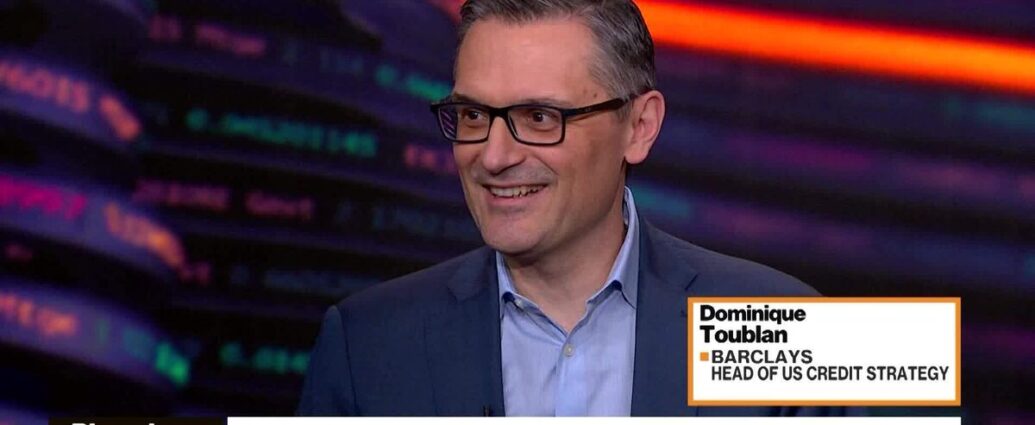
Wall Street thinks there’s more downside to go as a new risk emerges in April
With major headline risks, many doubt the market has hit its lows amid the U.S.-Iran war. But Barclays thinks the selling will look different from here.
This post was originally published here

United flight narrowly avoids US military helicopter in California
FAA investigating after plane carrying 162 passengers forced to change course to prevent collision
A United flight came within a few 100ft of a US military helicopter near John Wayne airport in southern California, triggering an alarm directing the airline pilots to change course.
The Federal Aviation Administration (FAA) said Friday that it was investigating the incident that happened at about 8.40pm Tuesday when a military Black Hawk helicopter returning from a training mission crossed into the plane’s path. The pilots of the passenger plane carrying 162 passengers and six crew members stopped their descent and leveled off to avoid a collision.
This post was originally published here

Trump signs executive order instructing DHS to immediately pay TSA agents
Order comes after House Republicans rejected a Senate‑passed deal to fund key DHS subagencies, including the TSA
Donald Trump signed an executive order Friday instructing the Department of Homeland Security (DHS) to immediately pay Transportation Security Administration agents as the partial shutdown drags on.
Negotiations on Capitol Hill remain stalled after House Republicans rejected a Senate‑passed deal to fund key DHS subagencies, including the TSA. After first announcing on Truth Social that he would pay more than 60,000 airport security workers – without explaining where the money would come from – the president issued the order.
This post was originally published here
Epstein victims sue Google and the Trump administration over alleged disclosure of personal information
A lawsuit filed in Northern California alleges that Google’s AI features generated contact information for Epstein victims.
This post was originally published here



Anthropic Prevails In Initial Ruling, Spotlights ‘First Amendment Retaliation’
San Francisco Federal Court District Judge Rita Lin sided with Anthropic in its request for a preliminary injunction in its legal battle against the Trump administration, calling it “illegal First Amendment retaliation.”
This decision temporarily halts the government’s actions to blacklist the AI company and prevents the enforcement of a directive from President Donald Trump that bans federal agencies from using Anthropic’s Claude models.
“These broad measures do not appear to be directed at the government’s stated national security interests. If the concern is the integrity of the operational chain of command, the Department of War [Defense] could just stop using Claude. Instead, these measures appear designed to punish Anthropic,” the judge cited in a 42-page report.
The Judge noted that the defendant’s designation of Anthropic as a “supply chain risk” is both contrary to the law and arbitrary and capricious.
“Nothing in the governing statute supports the Orwellian notion that …
This post was originally published here



Larry Fink calls for Social Security reform, says investing a portion of funds could strengthen the program
BlackRock CEO Larry Fink discussed possible Social Security reforms that would allow more Americans to benefit from the growth in the stock market while also ensuring the program is strengthened so it can survive to serve future generations.
Fink’s recently released annual chairman’s letter touched on how Social Security is “one of the most effective poverty-prevention programs in history” and that while it provides stability, it “doesn’t allow most Americans to build wealth in a way that grows their country.”
“Today, the system operates largely on a pay-as-you-go basis. Payroll taxes are used to pay current retirees, and the Social Security trust fund is invested primarily in U.S. Treasury bonds. In effect, workers lend money to the government and receive defined benefits in return.”
“The structure, designed as a social insurance program, emphasizes stability and predictability. What it doesn’t do is let people grow their benefits along with the broader economy. The question is whether the Social Security system could allow both,” Fink said.
NEW PROPOSAL WOULD CAP SOCIAL SECURITY BENEFITS AT $100K FOR WEALTHY COUPLES
He said that this could be accomplished by asking whether a portion of the system could be invested “carefully, broadly, and over decades” like other long-term pension systems.
“This would not mean privatizing Social Security or putting it all into the stock market,” Fink wrote. “It would mean introducing a measure of diversification, similar in principle to the federal Thrift Savings Plan, which manages retirement savings for millions of federal employees.”
“The goal would be to strengthen the system over time while preserving its core guarantees,” he added.
SOCIAL SECURITY’S MAIN TRUST FUND FACES DEPLETION IN 2032, TRIGGERING BENEFIT CUTS
Fink noted a bipartisan proposal from Sens. Bill Cassidy, R-La., and Tim Kaine, D-Va., that would create a new investment fund that operates parallel to the existing trust fund rather than replacing it while investing in a diversified mix of stocks and bonds to generate higher returns.
The proposal would require an initial investment of about $1.5 trillion and would be given 75 years to grow, and during that period the Treasury would continue covering Social Security benefits.
Once the fund matures, it would repay the Treasury and then supplement payroll taxes going forward to help close the gap between what the Social Security system takes in and what it pays out – while no one on Social Security or nearing retirement would see a change to their benefits.
Fink also noted that about six million Americans who are employed by state and local governments don’t currently contribute to Social Security and instead rely on public pension systems that invest in diversified portfolios.
BUDGET DEFICIT HITS $1 TRILLION FOR FIRST FIVE MONTHS OF FISCAL YEAR: CBO
Other examples of alternative pension systems can be found overseas, with Australia’s superannuation system representing an approach that invests retirement contributions in the financial markets. Fink said that a “similar, carefully structured approach could be considered to strengthen Social Security.”
“I understand why any talk of changing Social Security makes people uneasy. Social Security is a core promise, and people rightly believe it should be honored. But under the current system, doing nothing could very well break that promise,” he said.
“Current projections show the trust fund won’t be able to pay full benefits by 2033. Many young Americans doubt they’ll ever fully see theirs,” he explained. “Addressing that gap will likely require multiple solutions. But thoughtful, long-term investing could be one of them.”
GET FOX BUSINESS ON THE GO BY CLICKING HERE
An analysis by the nonpartisan Committee for a Responsible Federal Budget (CRFB) noted that when Social Security’s main trust fund reaches insolvency – which is projected to occur in 2032 – federal law requires benefits be cut to match revenue from payroll taxes, which would amount to a roughly 24% cut for beneficiaries.
Fink noted that his chairman’s letter two years ago was focused on rethinking retirement and generated criticism for suggesting that Social Security was in need of reforms. He acknowledged that the latest letter may do the same, but said it’s a conversation that needs to be had.
“In my 50 years in finance, if there’s one thing I’ve learned, it’s that the problems we don’t talk about are the ones that should worry us most. And that’s exactly why we need the conversation now – because the cost of waiting is only getting higher,” he said.





The Oil Shock Hit. The Treasury Shock Is Coming, This Chart Warns
Something is badly mispriced in the bond market, and almost nobody is talking about it.
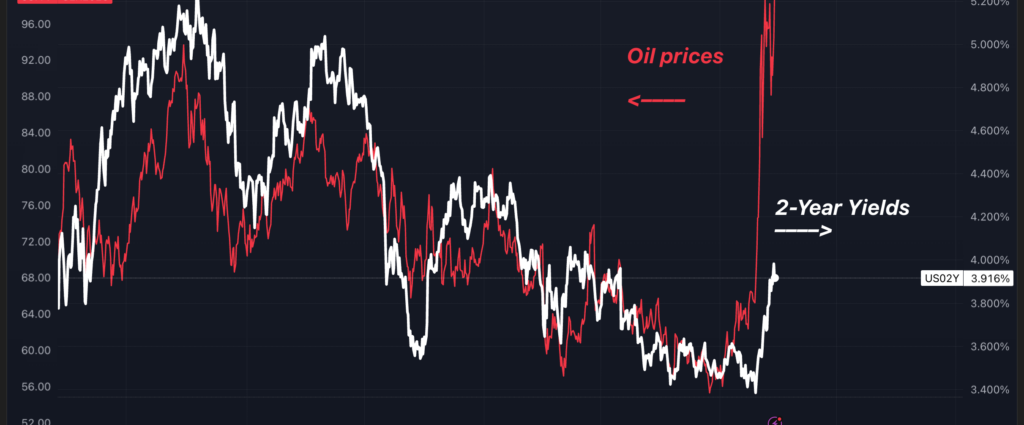
WTI crude rallied to $99 on Friday — on track to close at the highest level since July 2022. The 2-Year Treasury yield, one of the most reliable real-time gauges of Federal Reserve interest rates, is at 3.92%.
The last time oil traded at these levels, the 2-Year was above 5%.
Today, there is roughly a 100-basis-point gap between the current yield and where recent history suggests it should be.
Everyone’s Watching Oil. The 2-Year Yield Is The Real Threat.
John Roque, technical analyst at 22V Research, flagged the divergence in a note published this week
His argument is pointed: oil is getting all the attention, but the 2-Year yield is the instrument that will ultimately do the most damage.
“Right now, oil is ‘public enemy #1’, but I think it’ll ultimately be the US 2-Year Treasury Yield,” he wrote.
Roque’s near-term target for the 2-Year is 5% — the top of a range …

California sheriff seizes more ballot materials in defiance of state officials
Chad Bianco, running for governor, previously confiscated 650,000 ballots for baseless voter fraud investigation
A Republican sheriff in California has confiscated additional ballot materials from a special election, escalating his conflict with state lawmakers who say he is conducting a baseless investigation into claims of voter fraud.
On Tuesday, Chad Bianco, the Riverside county sheriff who is running for governor, was already at the center of a legal controversy after seizing 650,000 ballots from last year’s special election. Earlier this week he ordered his office to seize 426 additional boxes of ballot materials as part of the alleged criminal investigation, prompting criticism from lawmakers including Rob Bonta, California’s Democratic attorney general.
This post was originally published here

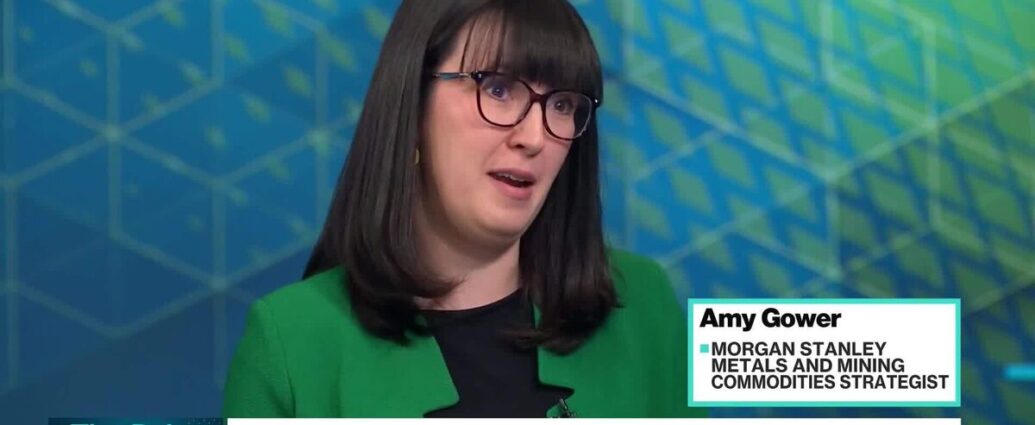
Morgan Stanley’s Amy Gower on Gold Market



Trump moves to shield farmers rattled by tariffs and war. But the U.S. is already doling out $10B to near-millionaire and even billionaire farmers
President Donald Trump convened what he called the single largest gathering of American farmers at the White House on Friday, bringing together more than 800 cowboy-hat-wearing men and women. They filled the South Lawn alongside a shiny golden tractor as the president touted his support for the agricultural industry. “I just gave you $12 billion. I don’t know if you know that or not,” Trump boasted, referring to farm relief provided through the USDA’s Farmer Bridge Assistance Program. Apparently that wasn’t enough, as he then told the crowd he’d asked Congress to approve additional relief in the next funding bill.
But much of the president’s support is actually falling into the hands of the wealthy, and a recent post from libertarian think tank the Cato Institute demonstrates that disparity. The data seems to challenge the notion of a struggling farmer: The national average income of a U.S. farm household in 2024 was $159,334. That’s roughly 32% above the national mean household income, and nearly double the national median of $83,730.
And that’s not even taking into account the majority of subsidies, which data shows are going to the top 10% of farms. The post cites a 2023 report from the Government Accountability Office (GAO) that revealed over 1,300 farmers with an adjusted gross income of more than $900,000 have received subsidies from the federal crop insurance program.
The federal crop insurance program was established in 1938 under President Franklin D. Roosevelt to help the agricultural sector recover from the Great Depression and the Dust Bowl. Since its inception, the program has evolved into a key support pillar to provide producers with financial protection against losses from natural disasters and economic downturns. While it began as a recovery measure, the program now covers more than 120 unique commodities, representing the vast majority of the value of U.S. crop production.
“The subsidies are not an emergency safety net for poor farm families but rather permanent welfare for high-earning businesses,” Chris Edwards, an editor at the Cato Institute, wrote in the blog post. “The government often calls crop insurance ‘market-based,’ but that cannot be true because the program costs taxpayers billions of dollars a year.” Edwards added that because there are no income limits on crop insurance, the top 10% of farmers capture 56% of all subsidies in the program.
A safety net—or welfare for the wealthy?
Even some billionaire farmers receive subsidies. A 2015 GAO report, for example, cited that four individuals—who earned their wealth through a variety of sources in addition to farming, such as mining, real estate, sports, and information technology—with a net worth of $1.5 billion or higher participated in the federal crop insurance program and received premium subsidies. The USDA withholds the names of certain farm subsidy recipients, so it’s not exactly clear which wealthy farmers received the subsidies.

Tariffs and the rising cost of inputs are placing much of America’s breadbasket into an increasingly precarious financial position. The Iran war is driving up energy costs and fertilizer prices. On top of that, some farms are facing pressure from the AI industry as firms look to convert farmland into data centers. Trump claimed Thursday that U.S. farmers have been mistreated by some countries, and said he was taking action to support an industry battered by rising fuel and fertilizer prices caused by the Iran war.
In total, taxpayers are expected to pay $14.7 billion in 2026 for the federal crop insurance program, still just a fraction of the $7 trillion the U.S. spent in 2025, but a sizable sum, comparable to the size of federal agency budgets such as the EPA’s. Out of that $14.7 billion, about $9.6 billion goes to farmers, the other $5.1 billion to insurance companies. Spending on the program is only expected to rise, according to the Congressional Budget Office.
That growth has drawn critics, like Edwards, who argues the program benefits insurers as much as it does farmers. “The crop insurance program is like the government giving you $900 a year for your $1,500 car insurance premium, all while paying billions of dollars to Geico, State Farm, and other insurance firms to boost their profits,” Edwards wrote.
This story was originally featured on Fortune.com




NYC’s first pro soccer stadium tops out in Queens
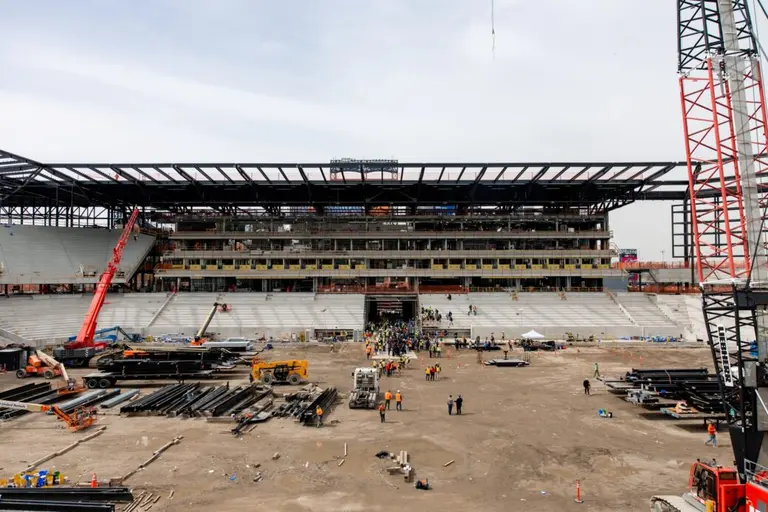
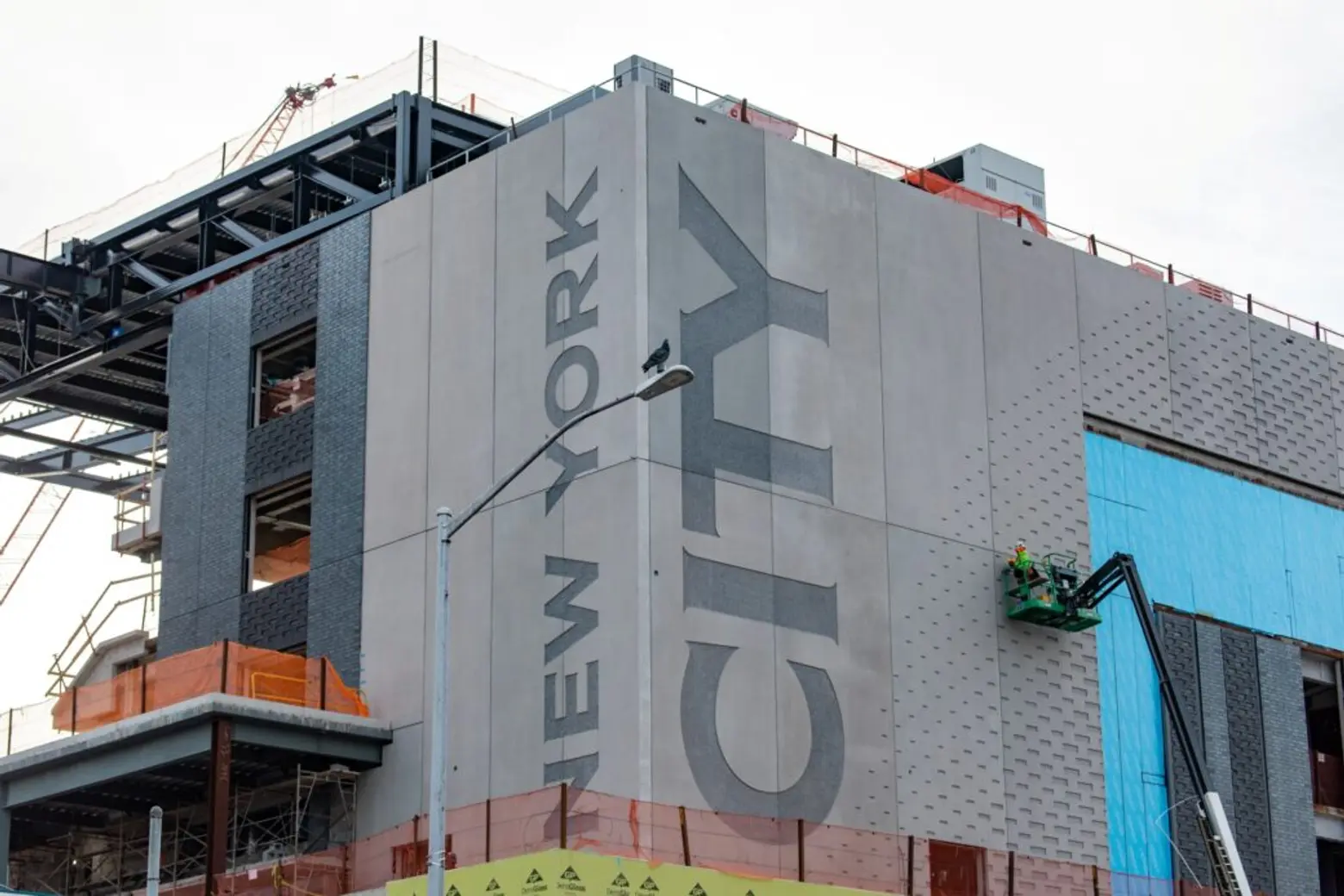
Etihad Park, New York City’s first-ever professional soccer stadium in Queens, topped out this week. The NYC Football Club (NYCFC) laid the final steel beam on Wednesday, completing the 25,000-seat stadium’s frame on schedule after construction began in December 2024. Developed by NYCFC, Related Companies, and Sterling Equities and designed by HOK, the seven-story, fully electric stadium is expected to open for the 2027–28 Major League Soccer season as NYCFC’s official home in the five boroughs.

“Etihad Park represents everything we envisioned for soccer in the largest market in the country—a world-class, fan-first stadium that will elevate NYCFC and Major League Soccer,” MLS Commissioner Don Garber said.
“This is a transformational project that will be a cathedral for the sport, an anchor in the city’s sports landscape, and an inspiration for the next generation of players and fans across New York. The impact of this stadium will be felt for decades to come.”

Located across from Citi Field, the stadium will feature a striking, “activated cube” entranceway, which will be illuminated on match days with vibrant colors and imagery to provide a dynamic experience for visitors. S9 Architecture and Turner Construction Company are design and construction partners on the project, as 6sqft previously reported.
Etihad Park will be the first fully electric stadium in Major League Soccer and the first fully electric professional sports venue in NYC. Its $780 million construction is fully financed by NYCFC and built entirely with union labor. The city will lease the land to the soccer club and its development partners for 49 years, with an option to extend the lease by an additional 25 years.
When it opens, it will be operated by unions 32BJ and UNITE HERE Local 100. Since breaking ground in 2024, the project has employed more than 300 Queens residents.

Wednesday’s topping-out ceremony included a tree placed atop the final beam, following a centuries-old tradition symbolizing growth, resilience, and good fortune for the building and its visitors.
“Today marks an important milestone towards finally giving New York soccer fans our own stadium,” Mayor Zohran Mamdani said.
“I want to thank all of the workers who have gotten us to this point, including the more than 300 hard-working men and women from Queens who have been hired on this project. Etihad Park represents more than just a soccer stadium—it’s the type of project we want to see: fully electric and union-made by and for New Yorkers.”
Etihad Park is a central piece of the broader Willets Point redevelopment, which is transforming a neighborhood long known for junkyards and decades of disinvestment into a sprawling mixed-use community.
The project will include 2,500 housing units across multiple buildings, 1,400 of which will be subsidized or below-market rate, making it the largest affordable housing development in NYC in four decades.
The second phase of the redevelopment will add a 650-seat public school, 40,000 square feet of public open space, retail space, and a 250-key hotel, as 6sqft previously reported.
RELATED:
- Citi Field to host women’s pro soccer match ahead of World Cup final
- City Council approves NYC’s first-ever pro soccer stadium in Queens
- New renderings show off NYC’s first professional soccer stadium
The post NYC’s first pro soccer stadium tops out in Queens first appeared on 6sqft.
NYC’s first pro soccer stadium tops out in Queens
Etihad Park, New York City’s first-ever professional soccer stadium in Queens, topped out this week. The NYC Football Club (NYCFC) laid the final steel beam on Wednesday, completing the 25,000-seat stadium’s frame on schedule after construction began in December 2024. Developed by NYCFC, Related Companies, and Sterling Equities and designed by HOK, the seven-story, fully electric stadium is expected to open for the 2027–28 Major League Soccer season as NYCFC’s official home in the five boroughs.
“Etihad Park represents everything we envisioned for soccer in the largest market in the country—a world-class, fan-first stadium that will elevate NYCFC and Major League Soccer,” MLS Commissioner Don Garber said.
“This is a transformational project that will be a cathedral for the sport, an anchor in the city’s sports landscape, and an inspiration for the next generation of players and fans across New York. The impact of this stadium will be felt for decades to come.”
Located across from Citi Field, the stadium will feature a striking, “activated cube” entranceway, which will be illuminated on match days with vibrant colors and imagery to provide a dynamic experience for visitors. S9 Architecture and Turner Construction Company are design and construction partners on the project, as 6sqft previously reported.
Etihad Park will be the first fully electric stadium in Major League Soccer and the first fully electric professional sports venue in NYC. Its $780 million construction is fully financed by NYCFC and built entirely with union labor. The city will lease the land to the soccer club and its development partners for 49 years, with an option to extend the lease by an additional 25 years.
When it opens, it will be operated by unions 32BJ and UNITE HERE Local 100. Since breaking ground in 2024, the project has employed more than 300 Queens residents.
Wednesday’s topping-out ceremony included a tree placed atop the final beam, following a centuries-old tradition symbolizing growth, resilience, and good fortune for the building and its visitors.
“Today marks an important milestone towards finally giving New York soccer fans our own stadium,” Mayor Zohran Mamdani said.
“I want to thank all of the workers who have gotten us to this point, including the more than 300 hard-working men and women from Queens who have been hired on this project. Etihad Park represents more than just a soccer stadium—it’s the type of project we want to see: fully electric and union-made by and for New Yorkers.”
Etihad Park is a central piece of the broader Willets Point redevelopment, which is transforming a neighborhood long known for junkyards and decades of disinvestment into a sprawling mixed-use community.
The project will include 2,500 housing units across multiple buildings, 1,400 of which will be subsidized or below-market rate, making it the largest affordable housing development in NYC in four decades.
The second phase of the redevelopment will add a 650-seat public school, 40,000 square feet of public open space, retail space, and a 250-key hotel, as 6sqft previously reported.
RELATED:
- Citi Field to host women’s pro soccer match ahead of World Cup final
- City Council approves NYC’s first-ever pro soccer stadium in Queens
- New renderings show off NYC’s first professional soccer stadium
The post NYC’s first pro soccer stadium tops out in Queens first appeared on 6sqft.

ChatGPT, But Make It PG: OpenAI Rethinks Adult Content, Erotica Push
OpenAI has announced it is “indefinitely” shelving its plans for a sexually explicit chatbot amid growing concerns about the societal and reputational implications of launching such a product.
Barrons reports that OpenAI plans to conduct extensive research on the potential impacts of sexually explicit interactions and emotional attachments before making any final product decisions.
The internal project, known as “Citron mode,” faced resistance from both employees and investors concerned about its alignment with the company’s mission to benefit humanity, the Financial Times first reported.
Last year, OpenAI had considered relaxing restrictions on its ChatGPT to allow adult content for verified users, under the principle of “treating adults as adults.”
The decision to halt the chatbot project coincides with OpenAIs announcement of winding down its Sora video social media app, which has been criticized for contributing to a surge of low-quality AI content online.
The Federal …
This post was originally published here
Oil prices close at highest level since 2022 as Iran negotiations fail to ease supply fears
Oil prices traded higher after U.S. President Donald Trump said Iran had allowed 10 oil tankers to pass through the Strait of Hormuz.
This post was originally published here


Fulton county accuses FBI of ‘callous disregard’ over ballot seizures
Lawyers say agency made misrepresentations in affidavit to obtain search warrant for January raid of election offices
Lawyers arguing in federal court for the FBI to return Fulton county’s 2020 election records said the agency’s affidavit to obtain a search warrant relied on misrepresentations that rise to the legal standard of a “callous disregard” for the county’s rights.
“The only element that turns the election into a crime is intent, and nothing in the affidavit shows intent,” Abbe Lowell, who is representing Fulton county, said during the Friday hearing at the Richard Russell courthouse in Atlanta. He argued that the FBI was pursuing crimes for which the statute of limitations has expired.
This post was originally published here

Bitcoin Flashing Late-Stage Business Cycle But This Metric Trends Lower Since 2021, Says Benjamin Cowen
Bitcoin’s (CRYPTO: BTC) price action is pointing to late-cycle signals as macro conditions tighten and a key metric has trended lower since 2021, according to analyst Benjamin Cowen.
Late Business Cycle
In a March 26 podcast, Cowen says the current setup reflects a late business cycle, where capital rotates away from risk and toward safer and defensive assets like gold. That shift helps explain why altcoins have underperformed Bitcoin and why crypto overall has lagged broader defensive moves like gold.
He notes that while Bitcoin still follows its historical pattern of peaking in post-halving fourth quarters, this …


US expects war against Iran to last another 2-4 weeks, Rubio tells G7
This post was originally published here


Defense Secretary Hegseth intervened to stop promotions of Black and female officers
The four Army officers were on track to become one-star generals, NPR confirms. Defense secretary Pete Hegseth’s involvement in the promotion process is highly unusual.
(Image credit: Mandel Ngan)

This post was originally published here




Lloyds bank faces £66m court battle with car loan customers
Law firm is preparing claim on behalf of 30,000 consumers who fear the FCA’s redress scheme will shortchange them
Lloyds Banking Group is facing a court battle with 30,000 aggrieved car loan customers who are set to abandon the City regulator’s official redress scheme amid fears it will shortchange consumers and favour lenders.
The claims law firm Courmacs Legal is planning to file a £66m omnibus claim on behalf of borrowers who believe they were financially harmed by car loan contracts set up by Lloyds’ motor finance arm, Blackhorse.
This post was originally published here


Will Bitcoin Potentially Slide Toward $40,000 Zone? Analyst Warns Bottom Not In Yet
Bitcoin (CRYPTO: BTC) could face further downside toward the $60,000–$40,000 range as the market remains in a mid-cycle drawdown, according to analyst Benjamin Cowen.
No Bottoming Signals Yet
In a Friday podcast, Cowen says Bitcoin’s bottom is likely not formed, arguing that typical capitulation signals haven’t appeared yet.
He points to key valuation metrics, like realized price and balance price, that BTC has not yet broken below, a move that historically aligns with final market bottoms.
Cowen estimates this cycle could ultimately see a ~70% peak-to-trough decline, …
TSA funding update: House GOP spikes DHS funding proposal, extending shutdown that’s caused airport delays
Funding for the Department of Homeland Security lapsed in February, leading to chaos at airports.
This post was originally published here

Average IRS tax refund is up 10.9%, latest filing data shows
The average IRS tax refund is up 10.9%, based on new filing data. Here’s what you can expect.
This post was originally published here

Stock Market Today: Major Indexes Plunge, Poised to Extend Skids to 5 Weeks; Dow Sheds 700 Points; Oil Climbs Further
This post was originally published here

Ripple Expands XRPL With AI Security Push To Support Payments, Tokenization Growth
Ripple is rolling out an AI-driven security upgrade across the XRP Ledger (CRYPTO: XRP) as it prepares the network for the next phase of global payments and tokenization.
AI-Driven Approach
With more than a decade of continuous operation and billions of transactions processed, the network is now focusing on maintaining resilience as it scales for global financial use cases.
A major shift involves adopting an AI-driven approach to security. By integrating artificial intelligence into the development lifecycle, XRPL aims to identify vulnerabilities earlier through …

Schools in England must be compelled to offer pupils healthy food, not junk
School food has suffered at the hands of politics and economics for almost 50 years
Almost a generation has passed since Jamie Oliver’s four-part Channel 4 documentary series Jamie’s School Dinners exposed the unhealthy reality of the food served to pupils at lunchtime, including – notoriously – fat-heavy, meat-light Turkey Twizzlers. It proved a shaming and effective intervention. His ensuing Feed Me Better campaign led the then prime minister, Tony Blair, to pledge to make school lunches more nutritious and hand schools more money to do that, given the average lunch at that time cost just 45p to make.
Problem solved? Unfortunately not.
This post was originally published here

Raoul Pal Says Recessions Are ‘Not Possible Anymore’ As Prediction Markets Price 36% Odds Of One This Year
Raoul Pal, the CEO of Real Vision and one of crypto’s most prominent macro voices, said that he believes recessions are no longer structurally possible.
“I don’t think recessions are possible anymore,” Pal said on Forward Guidance. “We’d have a huge slowdown, but they don’t allow that to happen.”
Prediction market bettors disagree. Polymarket’s U.S. recession contract is trading at 36% for a downturn by year-end, up from a low of 21% in January. Mounting concerns over private credit and the ongoing war in Iran have driven this steady climb.
Why Pal Says It Can’t Happen
His argument centers on what he calls the post-2008 playbook. Central banks discovered that injecting liquidity raises collateral values, and they will never allow that process to reverse. If the S&P 500 falls by more than 25%, liquidity returns. The cost, …

White House launches app touting Trump’s record, with some key omissions
The app includes a link to report tips to Immigrations and Customs Enforcement.
This post was originally published here
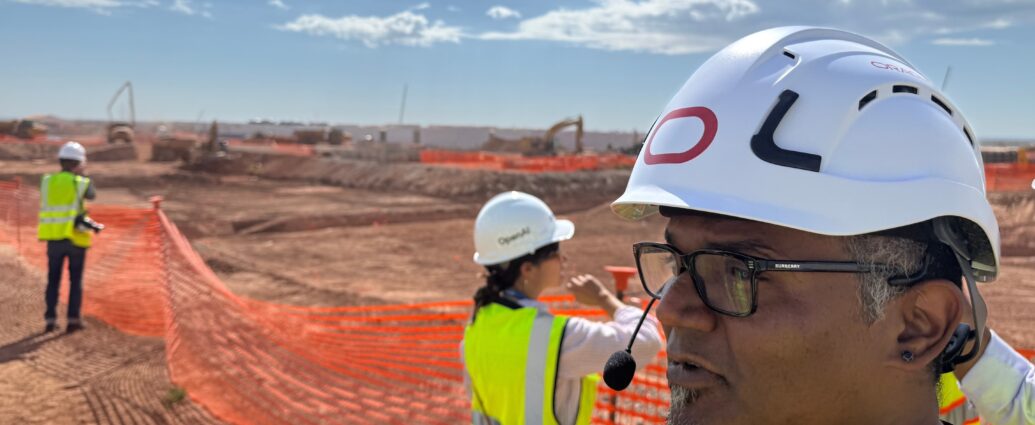
Microsoft is picking up a Texas data center project OpenAI didn’t want, in a telling sign of how far they’ve drifted apart
Microsoft is taking over a data center construction project in Texas after OpenAI declined to pursue it, in a move that will make the two companies neighbors at one of the nation’s largest complexes for running artificial intelligence.
Data center developer Crusoe said Friday it is working with Microsoft to build two new “AI factory” buildings and an on-site power plant in Abilene, Texas, right next to where Crusoe has been building an even larger computing campus for OpenAI and Oracle.
OpenAI’s existing project, the flagship of a broader initiative called Stargate, is so massive that President Donald Trump was the first to officially announce it just after his inauguration last year to signal AI investments he called a “resounding declaration of confidence in America’s potential.”
Microsoft was once OpenAI’s exclusive cloud computing provider and still holds a roughly 27% stake in the ChatGPT maker, but the two companies are increasingly pursuing AI development separately, even though they are on the same tract of land.
OpenAI’s dropped plans
Crusoe has already completed two buildings for OpenAI and its other cloud partner, Oracle, supplying a surge of computing power that helps build and operate technology like ChatGPT. SoftBank was also an investment partner. Crusoe is still completing six more buildings for OpenAI and Oracle due to be completed by the end of this year.
OpenAI said earlier this month that it dropped plans to expand its Abilene project even further.
“Our flagship Stargate site is one of the largest AI data center campuses in the United States,” said Sachin Katti, OpenAI’s head of compute infrastructure, in a post on X. “We considered expanding it further, but ultimately chose to put that additional capacity in other locations.”
Katti said OpenAI has more than half a dozen sites under development across the United States, including one it is building with Oracle in Wisconsin.
Microsoft’s additional two Abilene facilities announced Friday will bring the total number to 10 data center buildings, expected to supply a stunning 2.1 gigawatts of computing capacity from what was once a vast tract of mesquite shrub lands, home to coyote and roadrunners.
‘We’re burning gas to run this data center’
Originally planned as a facility to mine cryptocurrency, developers pivoted and expanded their designs after ChatGPT sparked an AI boom.
Crusoe co-founder and CEO Chase Lochmiller said in a written statement that a new power plant attached to the Microsoft project will be able to generate 900 megawatts to “continue building the industrial foundation for American AI — at a velocity the industry has never seen.”
That will be larger than the existing 350-megawatt, gas-fired power plant attached to the OpenAI and Oracle project. Oracle has previously described that on-site plant as a backup source of power, since the data centers primarily draw from the region’s electricity grid, which includes power supplied by nearby wind farms.
The AI race has been complicating tech companies’ commitments to reduce greenhouse gas emissions, most of which come from the burning of gas, oil and coal and drive climate change. “We’re burning gas to run this data center,” OpenAI CEO Sam Altman said while visiting Abilene last year, adding that “in the long trajectory of Stargate” the hope is to rely on many other power sources.
This story was originally featured on Fortune.com

Understanding Term Payment Plans: Key Features and Limitations
This post was originally published here
Crude Oil Catapults After Iran Adopts Hardline Stance Despite U.S. Peace Efforts
(RTTNews) – Crude oil has skyrocketed on Friday as output-and-supply disruption risks dimmed the expectations of a resumption of export flows through U.S. diplomacy after Iran turned rigid to peace talks.
This post was originally published here

Republican Representative Backs Iran War, Then Cashes Out Chevron Stock At All-Time High
Investors continue to closely track trading activity in Congress, where the timing of trades, committee roles, and other factors can raise red‑flag concerns about potential conflicts of interest. One lawmaker recently sold several oil‑related stocks at all‑time highs following military actions in Iran.
Congressman David Taylor Ditches Oil Stocks
Members of Congress holding oil stocks have seen their portfolios gain as the U.S. strike on Iran sent oil prices — and energy shares — sharply higher.
Congressman David Taylor (R‑Ohio) chose to cash in, according to a recent financial disclosure. While he also reported new purchases, it’s the well‑timed sales that are likely to draw the most investor attention.
Here are the sales, as reported by Quiver Quantitative:
This post was originally published here

STAT+: Amid focus on food, FDA leader briefs lawmakers on priorities
WASHINGTON — Food and Drug Administration officials briefed senators on the agency’s plans for food policy for 2026, according to a person familiar with the meeting.
The agency plans to focus on infant formula safety, updating food labels, defining ultra-processed foods, expanding inspections of food processing plants, and bolstering seafood safety programs, according to a document shared with lawmakers, obtained by STAT.
The meeting comes amid a shift in the administration’s health agenda toward food issues and away from vaccine policy. In recent polls, food reforms have been more popular than the vaccine agenda, catching the attention of administration officials looking to sharpen their message for the midterms.





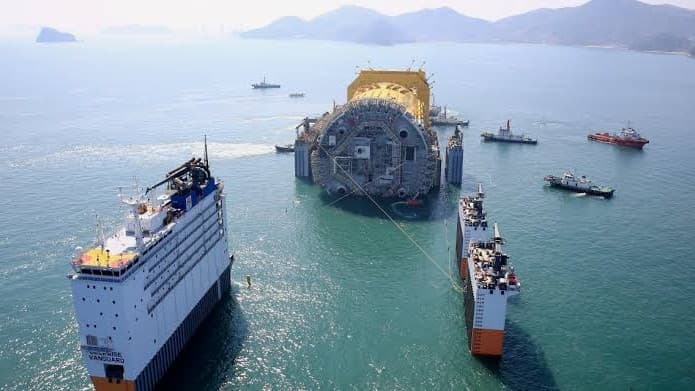




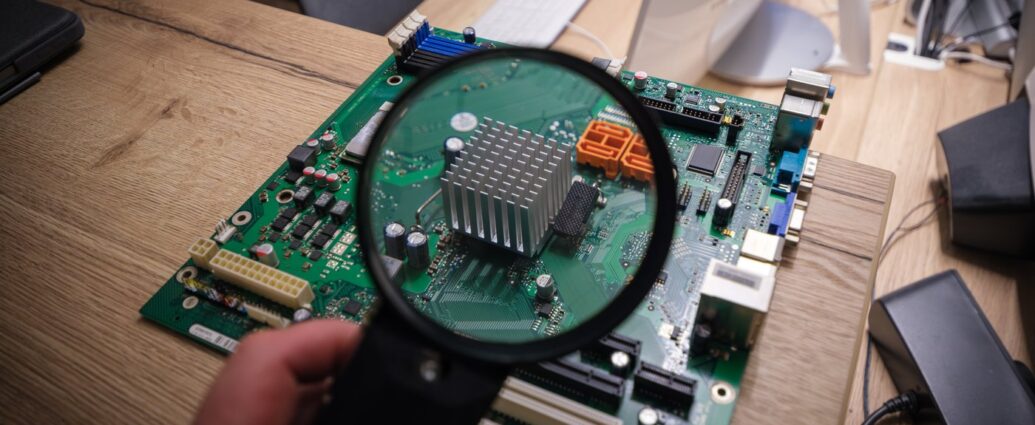


Israel strikes Iran’s nuclear facilities as Tehran vows retaliation ‘will no longer be an eye for an eye’
Iran’s nuclear facilities came under attack Friday, state media reported, just hours after Israel threatened to “escalate and expand” its campaign against Tehran. Israel claimed responsibility for the attacks and Iran quickly threatened to retaliate.
Iran’s Atomic Energy Organization said the Shahid Khondab Heavy Water Complex in Arak and the Ardakan yellowcake production plant in Yazd Province were targeted, IRNA reported. The strikes did not cause any casualties and there was no risk of contamination, it said. The Arak plant has not been operational since Israel attacked it last June.
Yellowcake is a concentrated form of uranium after impurities are removed from the raw ore. Heavy water is used as a moderator in nuclear reactors.
The Israeli military later hailed its attacks on several Iranian targets including “missile production capabilities, infrastructure remaining from its nuclear program, and terror regime targets.” It said raw materials are processed for enrichment at the Yazd plant and that the strike was a major blow to Iran’s nuclear program.
The Islamic Revolutionary Guard Corps warned Iran would retaliate for the attacks, IRNA reported. Seyed Majid Moosavi, IRGC’s Aerospace Force commander, posted on X that employees of companies tied to the U.S. and Israel should abandon their workplaces.
“You tested us once before; the world has once again seen that you yourselves started playing with fire and attacking infrastructure,” he said. “This time, the equation will no longer be ‘an eye for an eye,’ just wait.”
US pushes diplomatic solution
Word of the attacks came after U.S. President Donald Trump claimed talks on ending the war were going “very well” and that he had given Tehran more time to open the Strait of Hormuz. Iran maintains it has not engaged in any negotiations.
With stock markets reeling and economic fallout from the war extending far beyond the Middle East, Trump is under growing pressure to end Iran’s chokehold on the strait, a strategic waterway through which a fifth of the world’s oil is usually shipped.
A Gulf Arab bloc said Thursday that Iran has been exacting tolls from ships to ensure safe passage.
Trump envoy Steve Witkoff said Washington delivered a 15-point “action list” to Iran for a possible ceasefire, using Pakistan as an intermediary. It proposes restricting Iran’s nuclear program and reopening the Strait of Hormuz.
Iran rejected the U.S. offer and presented its own five-point proposal that included reparations and recognition of its sovereignty over the vital strait.
Trump has said if Iran doesn’t reopen the strait to all traffic by April 6, he will order the destruction of Iran’s energy plants.
U.S. stocks fell further on Friday, lengthening Wall Street’s longest losing streak in nearly four years, and oil prices rose again. The price for a barrel of Brent crude rose 2.9% to $104.81, up from roughly $70 before the war began Feb. 28. Benchmark U.S. crude rose 4.4% to $98.61 per barrel.
Israel targets Iran’s weapons production
Air raid sirens sounded in Israel and the military said it has been intercepting Iranian missiles on a daily basis. Defense Minister Israel Katz said Iran “will pay heavy, increasing prices for this war crime.”
“Despite the warnings, the firing continues,” Katz said. “And therefore attacks in Iran will escalate and expand to additional targets and areas that assist the regime in building and operating weapons against Israeli citizens.”
Israel’s military said its attacks Friday targeted sites “in the heart of Tehran” where ballistic missiles and other weapons are produced. It said it also hit missile launchers and storage sites in Western Iran.
Smoke rose over Beirut after a pre-dawn strike, and Lebanon’s Health Ministry later reported two people were killed.
Saudi Arabia’s Defense Ministry meanwhile said it shot down missiles and drones targeting the capital, Riyadh.
Kuwait said its Shuwaikh Port in Kuwait City and the Mubarak Al Kabeer Port to the north, which is under construction as part of China’s “Belt and Road” initiative, sustained “material damage” in attacks. It appeared to be one of the first times a Chinese-affiliated project in the Gulf Arab states has come under assault in the war. China has continued to purchase Iranian crude.
Diplomatic wrangling endures even as US sends more troops
Diplomats from several countries including Pakistan and Turkey have tried to organize a direct meeting between U.S. and Iranian envoys. Separately, G7 foreign ministers meeting in France adopted a declaration calling for an immediate halt to attacks against populations and infrastructure.
Meanwhile, U.S. ships drew closer to the region carrying some 2,500 Marines, and at least 1,000 paratroopers from the 82nd Airborne — trained to land in hostile territory to secure key positions and airfields — have been ordered to the Middle East.
Nevertheless, Secretary of State Marco Rubio said during the G7 meeting that most U.S. objectives in Iran are “ahead of schedule,” and that “We can achieve them without any ground troops.”
Israel deployed the 162nd Division into southern Lebanon to support efforts to protect its northern border towns from Hezbollah attacks and uproot the militant group, the military said.
The U.N.’s International Organization for Migration said Friday that 82,000 civilian buildings in Iran, including hospitals and the homes of 180,000 people, are damaged.
“If this war continues, we risk a far wider humanitarian disaster,” Jan Egeland, secretary general of the Norwegian Refugee Council, said in a statement. “Millions could be forced to flee across borders, placing immense pressure on an already overstretched region.”
Death toll climbs, primarily in Iran and Lebanon
Eighteen people have died in Israel, while four Israeli soldiers have been killed in Lebanon. Two Israeli soldiers were severely injured in Lebanon on Friday during an “operational accident,” the military said.
Authorities said more than 1,100 people have died in Lebanon and over 1,900 people have been killed in Iran.
At least 13 American troops have been killed and four people in the occupied West Bank and 20 in Gulf Arab states have also died.
In Iraq, where Iranian-supported militia groups have entered the conflict, 80 members of the security forces have died.
Rising reported from Bangkok. Associated Press writers Giovanna Dell’Orto in Miami; Fay Abuelgasim in Cairo; Sam Mednick in Tel Aviv, Israel; Sam McNeil in Brussels; and Edith M. Lederer at the United Nations contributed.
This story was originally featured on Fortune.com