Houthi missile attack signals a ‘serious’ escalation in Iran war
2026-03-28
Rebels’ participation puts vital maritime routes at greater risk
This post was originally published here

This post was originally published here
Consider a meeting. A talented employee whom you took the time to recruit, train, and promote has been coasting for two quarters. You have the conversation: expectations, growth plans, maybe a performance improvement track. She nods, agrees, promises to do better. Nothing changes. What didn’t you say? There is a version of that conversation that neither of you will ever have: I’m not here because I want to be. I’m here because my daughter has asthma and my husband is self-employed and your insurance plan is the only thing standing between us and medical bankruptcy. I will do exactly enough to not get fired. I have no realistic incentive to do more.
That meeting is not a culture problem. It isn’t a management problem. It is the structure of the game being played.
In the United States, employers hold one lever no other developed economy grants them: the ability to tie a family’s access to medical care to an employee’s continued compliance. That asymmetry has a name in game theory, and it isn’t “benefits.” It’s coercion.
When you model any asymmetric negotiation, as I do for the U.S. Naval War College, the same pattern appears: when one side holds levers the other cannot match, the weaker side’s rational strategy is always identical: minimize exposure, comply at the lowest acceptable level, and exit at first opportunity. The employer-employee relationship has this structure. And in the United States, employers hold one lever no other developed economy gives them.
A Hostage Situation, Not a Benefit
In the United Kingdom, Germany, Japan, Canada, France, and Australia, your employer cannot threaten your family’s access to medical care, because it was never theirs to give or withhold. Healthcare arrives with citizenship, not with a job offer. Lose your job in London, and you lose your income. Lose your job in Louisville, and you lose your income and your child’s pediatrician.
There is a difference between a manager who can threaten your bonus and a manager who can threaten your child’s access to an oncologist. The first is pressure. The second is a hostage situation. In the United States, your employer holds a direct, credible threat to the physical wellbeing of you and the people you love. We don’t call it a threat. We call it a “benefits package.” But the structural reality is that your child’s access to healthcare is contingent on your continued compliance with your manager’s expectations. In any negotiation I have ever modeled, that is not a benefit. That’s a hostage.
The system began as a wartime workaround. Companies competed for scarce workers with healthcare coverage when wages were frozen. During World War II, with wages frozen by federal mandate, companies competed for scare labor by offering healthcare coverage — a benefit the government exempted from wage controls. Over eight decades, what started as an incentive quietly became something else: the most structurally coercive lever in American employment.
Why Engagement Initiatives Don’t Work
Harvard Business School professor Amy Edmondson has demonstrated — across decades of team research — that psychological safety is the single strongest predictor of team performance. She’s right. But you cannot build psychological safety inside a hostage negotiation. The precondition for genuine trust is mutual vulnerability: I trust you enough that you could hurt me, and you choose not to. That reciprocal vulnerability is the engine of discretionary effort. It’s the difference between a workforce that commits and one that complies. And you cannot build it with someone whose family’s medical care you hold as collateral. Every culture initiative, every engagement survey, every pizza party lands on top of that coercion architecture and changes nothing.
The Evidence: Job Lock, the ACA, and the Great Resignation
Economists have a name for what that architecture produces: job lock. The phenomenon — workers remaining in jobs they want to leave because leaving means losing healthcare — has been studied since the 1990s. It is not a metaphor. When the Affordable Care Act created a marketplace alternative to employer coverage, researchers documented the result: measurable increases in labor mobility, self-employment, and entrepreneurship. The ACA did not change wages or culture or management quality. It weakened one lever, and behavior changed.
The Great Resignation made the same mechanism visible at scale. Stimulus payments reduced income dependency. Remote work disrupted social pressure. The ACA marketplace offered a partial, imperfect, but real alternative to employer insurance. For a brief window, the coercive levers were externally weakened — not by employer choice, but by circumstance. The Bureau of Labor Statistics recorded the highest quit rate in its history: 3% in November 2021, representing 4.5 million people leaving their jobs in a single month. When the disruption wore off, the old terms returned. The quit rate fell. The mechanism had been visible the entire time. Employers just weren’t looking at it.
What Costco Actually Did
Costco’s annual employee turnover is 7%. The retail industry average is above 60 percent. The conventional explanation is that Costco pays well. It does. But so do other companies that churn through employees. What Costco actually did is de-weaponize the healthcare lever within the system. It provided coverage so comprehensive and accessible that it stops functioning as a threat. The lever still exists. Costco has simply committed, credibly, not to pull it. The result is a workforce that stays because it chooses to, not because it’s trapped. Every company has access to that structural move. Most choose not to make it because holding the lever feels like power. It isn’t. It’s the most expensive management strategy in the world, and you are paying for it in every disengaged employee, every quiet quitter, and every exit interview that told you exactly what was wrong.
What You Can Do Before the System Changes
So what do employers actually do? You cannot single-handedly reform American healthcare. But you can stop exploiting the coercive lever the system gives you.
If you sit on a board, start with the most structurally significant move available to you: guarantee transition-period coverage. Tell employees on day one that if they leave voluntarily and in good standing, you cover their healthcare for six months. This is a full structural inversion — not educating people about the exit, but funding it. It seems wildly counterintuitive. It costs real money. It also costs less than replacing the employee who left because she felt implicitly under threat, which SHRM places at 50%–200% of annual salary depending on position.
If you lead HR or People operations, go further than you think you should. Subsidize COBRA for departing employees. COBRA exists in theory; its costs are so punishing that almost no one uses it, meaning the “exit” from employer healthcare is functionally a wall. Covering three to six months for employees who leave in good standing is almost certainly cheaper than replacing them — and it sends a clear signal: we are not trapping you.
If you have the leeway, go further still. Decouple benefits eligibility from full-time hour thresholds. The threshold ties healthcare not just to employment but to scheduling compliance. Remove it and you have weakened two coercive levers at once.
If you manage people, you can do something tomorrow that costs nothing and signals everything. Host a benefits literacy workshop. Don’t make it about your plan’s features — make it about your employees’ total options landscape. Walk them through the ACA marketplace. Explain COBRA in plain language. Show them what their insurance picture looks like if they leave. This sounds like handing people an exit toolkit. It is the most powerful trust-building move available to you.
When you show someone the exit and make it less frightening, you communicate something no engagement survey can capture: we know the system gives us a hostage, and we refuse to exploit it. The manager who hands her team an exit map and watches most of them stay anyway has done something the board retreat, the culture consultant, and the engagement platform cannot. she has replaced compliance with choice.
The employee with the asthmatic daughter is sitting across from you right now. She is performing exactly as well as a hostage performs: enough to survive. The question is not how to engage her. The question is whether you are willing to disarm.
The opinions expressed in Fortune.com commentary pieces are solely the views of their authors and do not necessarily reflect the opinions and beliefs of Fortune, the U.S. Navy, the Naval War College, or any agency of the U.S. government.
This story was originally featured on Fortune.com
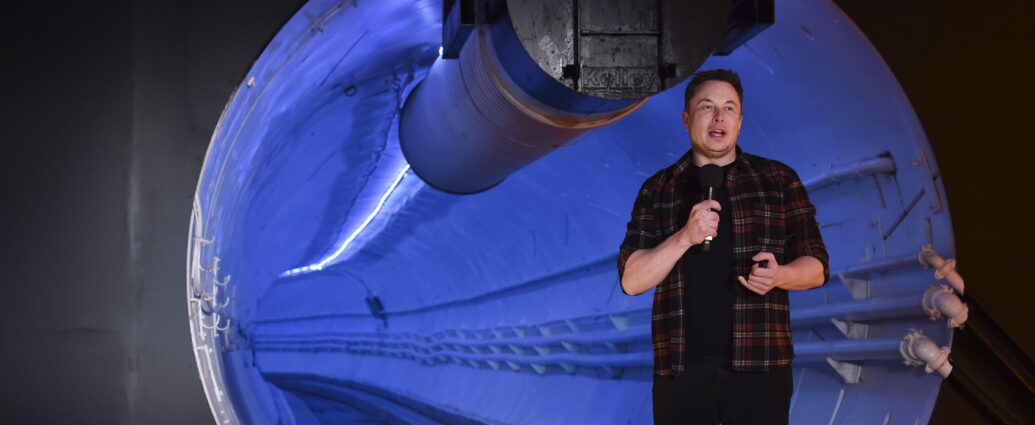
Elon Musk’s Boring Company is tunneling underneath Nashville and residents aren’t happy—particularly that it’s Musk who is doing it.
A new survey by Vanderbilt University found that 35% of Nashville residents generally opposed the plan to use Tesla vehicles, driven by trained drivers, to transport people between downtown Nashville and Nashville International Airport via the Boring Company’s underground Music City Loop.
Yet, when researchers mentioned Musk’s name explicitly, the percentage of residents opposed to the project jumped to 51%—a slight majority.
“The public’s support for Elon Musk’s tunnel project is heavily influenced by partisanship,” the researchers found, underscoring how deeply Musk’s political activity now shapes public perception of even his private business ventures.
The Boring Company did not immediately respond to Fortune’s request for comment.
The disparity between the two findings shows just how polarizing a figure Musk is even after he stepped away from direct involvement with the Trump administration. He previously spent nearly $300 million to elect President Donald Trump and then served as the leader of his government cost-cutting initiative, the Department of Government Efficiency (DOGE), which he departed last May.
While DOGE was dissolved as a government entity late last year, it was responsible for firing an estimated 300,000 federal workers and bringing the federal workforce to its lowest level in more than a decade, according to the Cato Institute. DOGE also cut funding for several agencies and essentially dismantled USAID, which provided foreign aid, by cutting 80% of its programs and absorbing the remaining operations within the State Department.
Musk’s Boring Company in July announced plans to build 20 miles of tunnels underneath existing highways to transport people between Nashville International Airport and downtown’s lower Broadway in about 10 minutes. The loop will remove thousands of vehicles from surface roads daily and is entirely privately funded, according to a press release. The project is estimated to cost the company between $200 million and $300 million.
The Boring Company unveiled its first underground loop project, the Las Vegas Loop, in 2021. It consists of 11 stations that include the Las Vegas Convention Center and Resorts World. While the company ultimately plans to build a 104-station tunnel network beneath Las Vegas, the project has also been plagued by safety issues, accidents, and scandals. Two Nevada regulators earlier this month wrote a letter to Nevada Gov. Joe Lombardo asking for a “comprehensive plan” to address concerns with the tunneling project, Fortune reported.
As for Nashville, despite the apparent opposition by residents and a vote by Nashville’s city council earlier this month to formally oppose the project, the Music City Loop is getting closer to starting construction after the Convention Center Authority granted the Boring Company access to an easement that would let it tunnel beneath the privately owned Music City Center, bringing it closer to its goal of connecting downtown Nashville and the airport.
Still, the findings from the Vanderbilt survey could signal trouble ahead as the company expands — it announced this week it is studying potential projects in New Orleans, Baltimore, Maryland, and Dallas, Texas.
This story was originally featured on Fortune.com

Researchers have found that athletes experience emotional abuse more than any other form of harm. Some athletes maintain that this kind of abuse by coaches can cause lasting, even irreparable damage.

This post was originally published here

Extreme TSA lines at airports have left many passengers scrambling to rebook flights missed due to delays. But while airlines say they’re helping flyers, they’re not obligated to do so.
(Image credit: Michael M. Santiago)

This post was originally published here

People who care for an adult child, partner or sibling have to face the reality that their loved may outlive them. Planning ahead is key but it’s not easy.

This post was originally published here

Members of the MAGA faithful gathered in Texas for the annual Conservative Political Action Conference. While tensions over Iran split some attendees, Trump remained the glue holding them together.
(Image credit: Brandon Bell)

This post was originally published here

South Africa’s iconic Market Theatre, born in the darkest days of apartheid and a force for change, is celebrating its 50th anniversary.
(Image credit: Ruphin Coudyzer)

This post was originally published here
Members of the MAGA faithful gathered in Texas for the annual Conservative Political Action Conference. While tensions over Iran split some attendees, Trump remained the glue holding them together.
(Image credit: Brandon Bell)


As the war in Iran reaches the one-month mark, a Iranian strike on an air base in Saudi Arabia wounded several U.S. service members. On Saturday the Israeli military intercepted a missile launched from Yemen.
(Image credit: Majid Saeedi)

This post was originally published here
As the war in Iran reaches the one-month mark, a Iranian strike on a U.S. airbase in Saudi Arabia wounded several U.S. service members.
(Image credit: Majid Saeedi)

Stop if you’ve heard this one before: an employee received a message from her boss and didn’t quite understand its meaning, suspecting it was written by AI. So, the employee asked an AI tool to interpret the message for her. The AI responded and then asked if she wanted a draft response back to her boss.
The employee paused. “‘I literally think [my boss’] AI is talking to my AI. That is the actual conversation happening right now,’” the employee told Leena Rinne, vice president of leadership, business, and coaching at Skillsoft, an edtech and skills management platform. The employee told her, “‘I can’t crack the code of working with [my boss], because it’s just his AI and my AI going back and forth.’”
Rinne calls this phenomenon “socially offloading”: when interpersonal skills that require human judgement, empathy, or courage gets outsourced to AI. It’s similar to “cognitive offloading,” or shifting often menial tasks to technology like AI to reduce mental effort, and has the potential to disrupt workplace culture.
Social offloading can look like a boss is preparing for a performance review and asking AI how to have the conversation. Or, it could be an employee asking to craft a response to a stressful email from a manager.
“If I’m always asking AI how do I respond to my boss,” Rinne told Fortune, “I don’t actually learn how to engage with my boss. I don’t actually learn how to build a relationship with my boss.”
Humans are increasingly using AI in more human ways, with the most common use being for therapy and companionship, according to a Harvard Business Review analysis of AI usage patterns. The problem is not that AI doesn’t give helpful advice, Rinne said, but the skills we lose when we rely too much on it.
“The risk is then that we don’t develop these critical skills that we can use in the moment, because we don’t know how to navigate emotional intelligence, if AI is navigating emotional intelligence for us,” Rinne said.
Skillsoft uses and sells AI tools to their customers, but their tools aim to coach people through how to have real-world conversations. Its product, CAISY, allows people to practice having conversations and provides feedback, before they have important work conversations.
Instead of “here’s the answer, here’s what you should say,” Rinne said, the AI instead teaches the person how to develop those intrapersonal skills. “I’m actually building my skill of navigating a difficult conversation or navigating a client conversation because I’ve had the practice,”
Paying the price of cutting middle management
AI isn’t the cause of the problem, but rather a leadership vacuum, Rinne said. As organizations have flattened their organizational structures and cut out middle managers, mentorship and coaching have fallen by the wayside.
A prime example of this strategy is Meta, which has cut 25,000 jobs since 2022 and touts an AI team that has one boss for every 50 engineers. Traditionally, a 25-to-1 employee-to-boss ratio is usually seen as the outer limit of the so-called span‑of‑control scale, but the company is going all-in on AI. With AI, some organizations are pushing the limits of management.
The recent uptick in younger hires seems to be a common approach, similarly taken by Cognizant, an IT consulting firm that boasts more than 350,000 employees globally on their site, and is on an entry-level hiring spree.
“If you can equip these people with AI, you have commoditized expertise. You’ve handed over expertise on the fingertips. So you could have more entry-level programs, and you could do more school graduates and take them to expertise faster,” Cognizant CEO Ravi Kumar S told Fortune’s Jeremy Kahn earlier this year. While it does flatten the workplace pyramid, “the asymmetry is not going to come from expertise. It’s going to come from interdisciplinary skills,” he said.
Rinne sees the upside from an organizational perspective as fewer managers can lead to quicker decisions and more autonomy. However, managers are still needed to turn strategy into results and into execution, develop talent, and hold a team together, she said.
“There’s a risk that organizations start treating the span of a leadership’s role like it’s a math problem, when this is really a capability problem,” she said.
While other generations have had decades to learn how to navigate change and the organizational dynamics that come with change, now “young people enter the workforce, and they’re just thrown into the deep end,” Rinne explained.
Some have blamed young workers’ struggle to navigate the workplace on being generally less social. They’re dating and socializing less, and Tessa West, a professor of psychology at New York University whose research focuses on communication between employees and bosses, says that is affecting their ability to perform at work.
“You learn a lot of skills in those early relationships that you then leverage in the workplace,” West said. “Negotiation is a huge one, and so is compromise.”
Even romantic relationships can’t fill the gap Rinne sees forming between employees and their bosses. She points to her own experience coming up as helping her prepare for her current role as an organization’s leader.
“I’ve had amazing opportunities to be coached and to have investment in my development,” she said. “The contrast of that is you’ve got Gen Z coming in, and I think there’s this assumption as a digital child, that they are already ready for the pace of change, or they’re already ready to navigate.”
But leaders are not actually equipping younger employees to navigate change, communicate effectively, and have good judgment, she said, which lowers their competitive advantage when human-centric skills are driving success in the AI era.
“We’re just kind of expecting them to enter this crazy whirlwind moment and be able to navigate it effectively,” she said.
This story was originally featured on Fortune.com
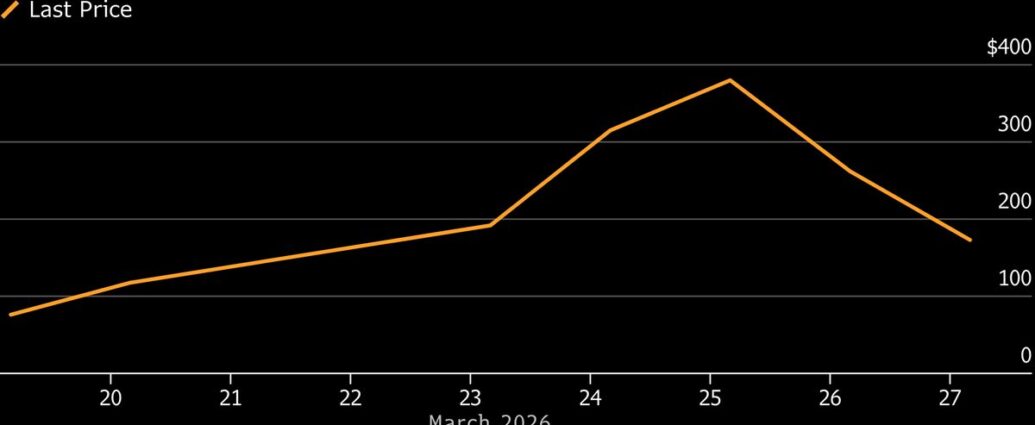
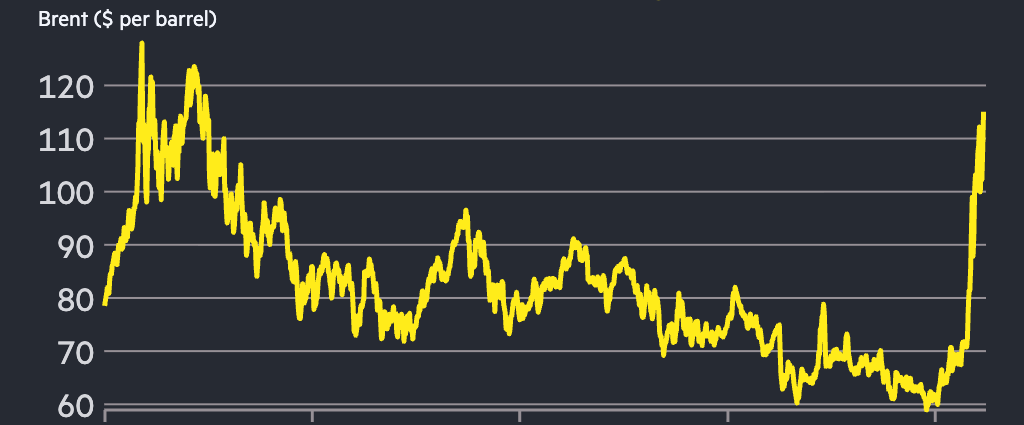
As of March 23, 2026, the global energy market is no longer governed by the invisible hand of economics; it is being strangled by the rigid, non-negotiable laws of engineering. While Brent crude futures experienced a violent flash crash on March 23, plunging over 15% to an intraday low of $96 per barrel after President Donald Trump announced a five-day pause on his ultimatum to strike Iranian power plants, Trump claimed that productive talks were underway — a claim Iran quickly denied — causing prices to instantly whiplash back above the $100 mark. Adding to the gravity of the situation, International Energy Agency chief Fatih Birol recently warned that the current 11-million-barrel-per-day deficit is worse than both of the 1970s oil shocks combined.
Furthermore, the global energy supply chain is rapidly degrading into a toll booth regime at the Strait of Hormuz, transforming historically open transit routes into hostile zones where safe passage demands political concessions or massive risk premiums. History is unforgiving to those who ignore structural chokepoints, as seen during the 1956 Suez Canal Crisis which crippled European supply lines overnight, and the Tanker War of the 1980s, which forced vessels to pay exorbitant insurance premiums or face destruction.
True market clarity will emerge only when we shift our focus from fleeting financial reactions to the physical engineering realities that power the globe. This extreme volatility provides a critical opportunity for industry leaders to look beyond surface-level price swings and focus on the fundamental constraints actually driving the market.
As a petroleum engineer, I am watching two ticking clocks that no amount of diplomatic pauses can reset. The first is a 25-day tank top threatening to freeze Middle Eastern production. The second is a 100-day sludge line that will poison the reserves oil-hungry nations are racing to drain. Beyond these thresholds, the global economy does not just slow down — it hits an engineering dead-end.
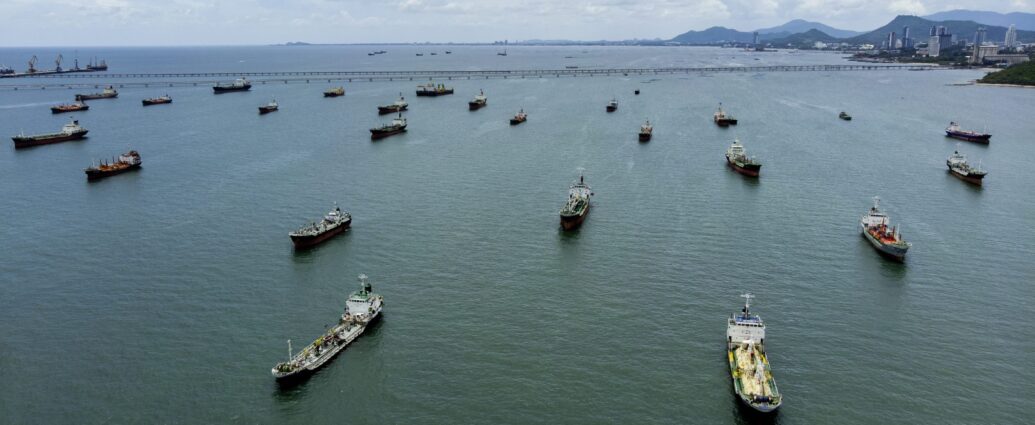
The conflict has physically split the energy world into two paralyzed halves. In the Middle East, the crisis is not a supply cut but a catastrophic supply accumulation. With Lloyd’s of London withdrawing war risk insurance and tanker traffic through the Strait of Hormuz dropping by 95%, nations like Saudi Arabia, Iraq, Kuwait, the UAE, Iran, and Qatar are suddenly drowning in nearly 20 million barrels of stranded oil every single day.
During this critical supply-accumulation phase, my primary focus as an engineer shifts to monitoring the tank top — the absolute maximum safe operating capacity of a storage hub. It is crucial to understand that this is a strict physical volume constraint. Once a storage tank reaches its top capacity, leaving only the necessary headspace for vapor and thermal expansion, the fluid flow must come to a complete halt.
Current industry intelligence confirms that total regional storage capacity in the Gulf stands at roughly 450 million barrels. Given the ongoing disruptions creating a massive surplus of trapped crude, the Middle East is on a strict 25-day countdown to an absolute system freeze. Key producers like Iraq have already reached maximum crude storage capacity, triggering a massive 70% collapse in production from their main southern oilfields, while Kuwait has been forced to declare force majeure. The entire physical network is running out of space right now, and the catastrophic well shut-ins we feared have already begun.
Beyond the surface storage, what truly keeps subsurface asset managers awake at night is the reservoir skin effect. You cannot simply flip a switch to halt fluid flow in a supergiant porous rock formation like Ghawar or Rumaila. An abrupt shut-in causes fines migration — when tiny particles of rock and clay within the porous materials become dislodged, settle, and severely plug the pore throats near the wellbore. This creates permanent skin damage around the well, fundamentally destroying its natural permeability and crippling its long-term productivity. If these complex, engineered underground systems are forced to go dark for even two to three weeks, the altered physics of the reservoir dictate that they may never return to their original flow rates.
The 100-day countdown: sludge line
On the other side of the blockade, oil-reliant nations — led by the U.S., China, India, and Japan — are pivoting to their Strategic Petroleum Reserves. On March 11, the IEA authorized a record-breaking 400-million-barrel release to bridge the gap. But the market has a massive misconception: traders believe these reserves can instantly replace the void. They cannot.
The problem begins with the fluid dynamics of our extraction infrastructure. The United States Strategic Petroleum Reserve has a verified physical maximum drawdown rate of around 4 million barrels per day — but achieving this is a massive engineering challenge. During the 2022 draining of the U.S. reserve, the United States could only sustain a pumping rate of roughly 1.2 million barrels per day for about a week. Even in the event of a globally coordinated release, the combined global strategic infrastructures can only deliver approximately 10 million barrels per day to the market — a permanent, unfillable deficit during a major supply disruption.
Compounding this volumetric constraint is a critical quality issue that most analysts overlook, by treating reserve oil as a uniform asset. In reality, the physics and chemistry within a salt cavern dictate a very different story. Decades of static storage lead to the unavoidable accumulation of heavy waxes, dense inorganic sediments, and highly corrosive hydrogen sulfide produced by sulfate-reducing bacteria — turning the bottom of the cavern into a chemical nightmare.
If we attempt to sustain maximum pumping rates to bridge a massive supply gap, we will inevitably hit this sludge line in less than 100 days. Drawing this degraded, sour crude is akin to pumping industrial poison through our midstream and downstream networks. Processing this bottom-of-the-barrel fluid will rapidly foul heat exchangers and irreversibly poison sensitive refinery catalysts — triggering a devastating secondary wave of forced maintenance downtime and refinery shutdowns that will paralyze the fuel supply in the exact nations that are desperately trying to survive the crisis.
Financial markets often expect a V-shaped recovery, hoping that the moment a ceasefire is signed and the blockade is lifted, the geopolitical risk premium will evaporate instantly and send Brent crude tumbling back to the $70 floor within days. Today’s 10% price drop on the news of a five-day strike delay is a perfect example of this financial optimism. However, as a petroleum engineer, I can tell you that while financial markets move at the speed of light, physical molecules move through an infrastructure defined by inertia, degradation, and hydraulic friction.
Because the underlying physical infrastructure is fundamentally damaged, the capacity to recover is permanently lost. This structural plateau will lock the global oil market into triple-digit territory for the foreseeable future. The defining question for the economy is no longer how high prices will spike, but how long they will stay high.
There are three primary reasons we face an L-shaped plateau instead of a V-shaped recovery:
First is midstream hysteresis. When the 25-day storage wall forces a pipeline to stop, the system begins to degrade immediately. When crude oil flow stops, the loss of turbulence allows heavier asphaltenes and waxes to settle, and dropping temperatures can cause the stagnant oil to gel. Furthermore, the water typically present in flowing crude separates and pools at low elevation points, creating localized environments for rapid internal corrosion. Because of these physical and chemical hazards, no responsible midstream operator will simply restart a line that has been sitting dormant for weeks. They must first deploy robotic sensors — or integrity pigs — to inspect for blockages and wall thinning, — a necessary safety measure that introduces a strict 14-to-21-day logistical lag before full-scale delivery can safely resume.
Second is the current state of the strategic petroleum reserves. Governments are not just releasing oil; they are borrowing it from the future. Under current swap and exchange agreements, nations like the U.S., Japan, and India are legally or strategically committed to refilling their caverns starting in late 2026 and throughout 2027. Traders and speculators are already pricing this in — they know that as soon as the price dips, the world’s largest governments will step in as massive, price-insensitive buyers to replenish their empty salt caverns before the next crisis hits. This creates a hard floor under the market.
Third is the engineering reality of the cold-start problem, compounded by modern geopolitical risk. Financial optimists argue that millions of barrels currently trapped in floating storage will immediately flood the market the moment a ceasefire is signed. This fundamentally misunderstands physical infrastructure. Restarting a massive, stagnant network is often far more complex and dangerous than keeping it running under heavy stress. Furthermore, with the insurance market paralyzed by war risks, mobilizing a ghost fleet of tankers back into a former conflict zone will be a sluggish, highly regulated process. The global hydrocarbon supply chain is a highly interconnected, massive inertial machine, and overcoming this inertia will prevent the rapid recovery the market hopes for.
The final reckoning; policy vs. physics
When the 25-day producer overflow triggers a forced regional shut-in in the Middle East, and the 100-day massive consumer drawdown hits the sludge line, the market will face demand destruction on a scale equivalent to wiping out the entire daily oil demand of Japan, India, and Germany combined.
The daily global supply deficit of 10 million barrels forces a brutal hierarchy of energy allocation. The consequences of this sustained energy plateau will cascade rapidly through the global economy, forcing immediate shutdowns in energy-intensive sectors like petrochemicals, steel manufacturing, and aluminum smelting. This crisis is also bleeding into national security. — a recent West Point analysis warned that the Hormuz blockade is already strangling the U.S. defense industry due to the near-total disruption of critical minerals like sulfur and copper required for munitions and radar repair.
This industrial halt will be compounded by a global transportation freeze, as soaring jet and bunker fuel premiums ground commercial aviation and maritime shipping, effectively ending the era of low-cost, just-in-time logistics. Because modern food production relies heavily on diesel-intensive harvest cycles, a massive increase in fertilizer costs will transform this energy shortage into a global food security emergency. Ultimately, to prevent total societal collapse, governments will be forced to implement severe wartime rationing, restricting fuel exclusively to military logistics, emergency services, and vital agricultural supply chains.
The physics of midstream restarts and the mandatory refilling of global reserves dictate that triple-digit oil is not a temporary spike. — it is the new baseline. As the global economy sprints against a catastrophic countdown, CEOs, policymakers, and investors must stop hoping for a return to cheap oil anytime soon and instead prepare to navigate a long, restricted plateau.
We are reaching the edge of the map where financial theories fail — as real-world engineering buckles under the hard physical constraints of a system running out of room, running out of time, and running out of oil.
The views and opinions expressed in this article are those of the author and do not necessarily reflect the official policy or position of Texas A&M University, nor of Fortune.
This story was originally featured on Fortune.com
More than 850 public demonstrations of support held since start of war and at least 1,400 arrests, research reveals
Iran’s regime has organised more than 850 public demonstrations of support of the government since the beginning of the war and launched a continuing crackdown on unrest that has led to at least 1,400 detentions, research reveals.
The high number of pro-regime gatherings and the increasing number of detentions underlines the resilience of the Islamic Republic despite a month-long campaign of intensive airstrikes by the US and Israel, experts said.
This post was originally published here
Amanda Smith was reunited with her mother, Michele Hundley Smith, on Thursday after decades-long search
A North Carolina woman whose mother was missing without a word for 24 years before authorities managed to locate her – alive and well – has reunited with her and says she forgives her.
“I know everything is not black and white – there’s a whole gray area,” Amanda Smith said of her mother, 62-year-old Michele Hundley Smith, after they embraced in front of a courthouse on Thursday. “And so I mean, look – life’s too short for me to hold a grudge against her because she’s my mom.”
This post was originally published here
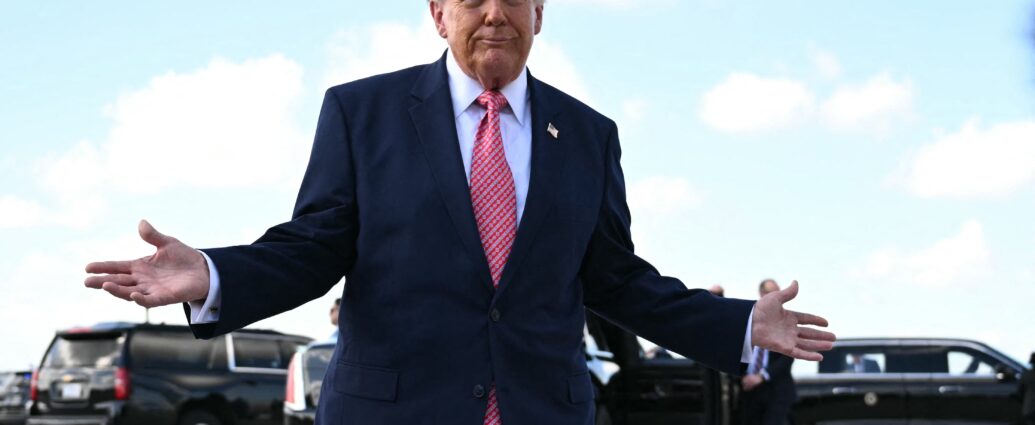
State lawmakers have been stepping in to regulate artificial intelligence, clashing with the federal government’s inaction as concerns about oversight and safety grow.
(Image credit: MANDEL NGAN)

This post was originally published here

The U.S. has gone unbeaten in its past five international matches. But now the team is upping the ante with games against Belgium and Portugal that could show fans whether a deep run is in the cards.
(Image credit: Russell Lewis)

This post was originally published here

Organizers behind No Kings, a network of progressive groups, says protesters will stage demonstrations across the country and abroad to speak out against the Trump administration’s actions.
(Image credit: Julia Demaree Nikhinson)

This post was originally published here

A new Senate bill would shield consumers from data centers’ rising energy costs. The instinct is right. The diagnosis is wrong.
Data centers now account for roughly 7% of U.S. electricity demand, roughly equivalent to powering every home in California and Texas combined, up from about 1% just 15 years ago — the equivalent of powering every home in California and Texas combined. That curve is still steepening. The four largest hyperscale tech companies are projected to spend a combined $650 billion in capital expenditures this year alone. When numbers get that big, it’s natural to ask whether the current system makes sense.
But this bill treats data centers as the problem. The truth is more interesting than that. Data center challenges are a symptom of a grid that has been underbuilt and undermodernized for decades, but the right data centers, designed the right way, can actually help solve these same problems. And the right data centers, designed the right way, can actually help fix it.
The real issue, the thing actually driving electricity costs upward, is that our electrical grid is structurally limited. It was built for a 20th-century world of slow, predictable demand growth, an era when utilities could forecast load years in advance and build generation to match. That world is gone.
But data centers are only one reason why.
Electric vehicles are transforming how and when millions of Americans draw power. Heat pumps are changing residential electricity patterns. Industrial electrification is accelerating across manufacturing and chemicals. Each of these shifts represents genuine economic progress — new industries, new jobs, new capabilities. But each also places new strain on a grid that was never engineered to accommodate them. None of them are “the problem.” Neither are data centers.
Data centers are the most visible new source of demand, making them a convenient political target. But singling out one sector for the grid’s collective modernization challenge is a bit like blaming traffic congestion on the newest cars when the roads were already too narrow.
The transmission bottlenecks, the interconnection backlogs, the outdated planning models that make it so hard to bring new capacity online: these problems were building long before the current wave of AI-driven data center construction, and they will continue to build with or without it. Every year we delay modernizing the grid, we raise the cost of the growth our economy needs.
So what should legislators, in this legislation and beyond, actually do?
1. Treat demand flexibility as a grid resource.
First, they should orient energy policy around demand flexibility as a grid resource. A series of reports from Duke University’s Nicholas Institute has found that curtailing just 0.25% to 1% of annual electricity consumption during the most stressed hours of the year could allow U.S. grids to absorb up to 100 gigawatts of new load — roughly the entire capacity of America’s nuclear fleet — without requiring major new generation or transmission investments. A follow-up study estimates that if large data centers shifted a portion of their computing to off-peak hours, the country could avoid up to $150 billion in power plant, fuel, and transmission costs over the next decade.
A significant share of the capacity we think we need to build already exists. We just aren’t using it well. Legislation should direct regulators and grid operators to value flexible demand alongside traditional supply in resource adequacy planning.
2. Incentivize data centers that help the grid.
Rather than restricting grid access, legislation should require that data centers be designed for grid interactivity — the ability to dynamically adjust energy consumption in coordination with the grid’s needs. The technology to do this is real and deployable today. Data centers can be built with integrated battery storage that provides services to the grid during normal operations and backup power during outages, curtailing load within minutes of a utility signal while maintaining customer uptime.
Recent work validated with national laboratories has demonstrated this flexibility at full scale: these facilities can curtail 100% of their grid load within one minute of a utility signal, provide firm dispatch capacity back to the grid through battery storage, and reconnect seamlessly when conditions stabilize. Data centers designed this way aren’t a burden on the grid. They are an asset to it.
The same principle applies across the demand landscape. Virtual power plants already coordinate millions of residential devices — thermostats, water heaters, home batteries — to shift consumption during peak hours~~, providing gigawatts of dispatchable capacity~~. The Department of Energy estimates that scaling these networks could meet 10 to 20% of peak demand by 2030, saving $10 billion annually in avoided infrastructure costs.
3. Modernize interconnection and planning processes.
Today’s frameworks were designed for a slower era. They assume all new demand requires a corresponding amount of new supply — and that the systems consuming energy cannot also supply it. Both assumptions are increasingly wrong. Flexible loads, intelligent storage, and advanced demand coordination should be treated as capacity resources in grid planning, with regulatory frameworks updated accordingly.
These aren’t speculative ideas. These are proven capabilities being deployed now. The question is whether legislators will build on them or continue to frame the challenge as a zero-sum contest between data centers and consumers.
Legislation that isolates data centers may score political points, but it leaves untouched the structural limitations that will keep driving costs up for everyone. The grid needs modernization that accommodates all 21st-century loads intelligently: EVs, heat pumps, industrial electrification, and yes, data centers. Building walls around one category of demand while the underlying system remains brittle will not protect consumers. It will delay the reforms that actually would.
The instinct to shield ratepayers from rising costs is exactly right. The way to honor it is to build a grid capable of meeting the historic opportunity ahead.
The opinions expressed in Fortune.com commentary pieces are solely the views of their authors and do not necessarily reflect the opinions and beliefs of Fortune.
This story was originally featured on Fortune.com

American parents (and students) weighing whether a U.S. college degree is still worth the hefty debt might want to hear what one philanthropy CEO did instead—she dodged six-figure tuition bills by sending her daughter to university in London.
It sounds counterintuitive. Flights, a foreign city, and a flat in one of the world’s most expensive capitals. But for Greater Good Charities CEO, Liz Baker, saving roughly $50,000-a-year, has been well worth the added admin of sending her kid off to study abroad.
“Once we started to look, we were like, ‘this is so much cheaper,’” she recalled to Fortune.
Tuition in London for her daughters’ courses comes in at around $35,000 a year, versus the $80,000 to $90,000 out-of-state U.S. bill they were initially bracing for. “So it’s like, really half the price,” Baker said.
As someone who has spent years running a nonprofit—scrutinizing budgets, tracking impact, and deciding where every dollar goes furthest—she’s perhaps better placed than most to do the math. “I always tell people who have kids that are going to college, you should look at the UK,” Baker added.
Her oldest daughter has now completed an undergraduate degree at King’s College London and is currently studying a master’s at the London School of Economics, all while living in the heart of England’s capital city.
“Even paying for a flat in like Central London is cheaper than sending her to college here, because she was looking at UC Santa Barbara.” A staggering 747 km (or a 10-hour drive) from Arizona, where they were living at the time.
Essentially, wherever Baker’s children went to university, they’d have to factor in accommodation costs on top of tuition fees anyway—and even with London rent costing north of £2,000 ($2,700) a month, it still worked out cheaper than the American alternative once accommodation costs were stacked on top of that six-figure tuition bill.
“I mean, it’s expensive. But again, tuition out of state at any college is more expensive,” Baker added.
She also shaved off an entire year of college costs. One of the quiet quirks of the British system is that most undergraduate degrees last three years—and if students arrive with enough Advanced Placement (AP) credits, (good grades equal more points) they can often skip an extra foundation year some international students need.
“My one daughter did all of the AP classes, so she didn’t have to do a foundation year,” Baker explained. “So then you take into account that school is three years, and so then you eliminate that cost, and even master’s are shorter.”
One year cut alone can shave tens of thousands of dollars off the total bill for international students, whose annual tuition typically ranges from about £11,400 to £38,000 (roughly $14,000 to $50,000), depending on the course and university.
It’s not just the debt that worries Baker—it’s what (if anything) students are getting in return. Many grads are now walking off U.S. campuses with eye-watering debt but no clear path into a well-paying job.
U.S. student debt has surpassed $1.7 trillion; meanwhile, the unemployment rate for fresh-faced grads just keeps rising.
Now, millions of graduates are questioning whether their degree was worth the price tag, and a growing chorus of the world’s most powerful CEOs is starting to agree with them. Goldman Sachs CEO David Solomon has said he never hires for educational pedigree alone. Amazon’s Andy Jassy has said an “embarrassing amount” of your success depends on attitude, not credentials. And with AI quietly replacing entry-level roles that generations of graduates relied on to justify their loans, the premium higher education once held is eroding fast.
It’s why Baker thinks young people need to question the return on investment more than ever: “If you leave with an English degree, and you have $200,000-plus in debt from student loans—why would you do that?”
She genuinely believes her kids are getting more bang for their buck in Britain.
Not only are UK degrees shorter, but they’re also more specialised. Students typically focus on one subject and study it exclusively for the entire duration of their degree—every module, every year, laser-locked on their chosen field.
Crucially, in her eyes, they’re better aligned with the skills employers actually want.
“I think the curriculum is better because it’s more focused,” Baker said, while adding that when she took her musical theater and criminal justice degree, she had to take irrelevant classes that she’d never use in a career, like “Earth science.”
And when asked whether a British degree holds up against an American one in the eyes of employers, the CEO didn’t hesitate: “Yeah. 100%.”
This story was originally featured on Fortune.com

On Friday, speaking at the Future Investment Initiative in Miami, President Donald referred to the Strait of Hormuz as the “Strait of Trump,” quickly correcting himself but leaning into the moment.
“I’m so sorry. Such a terrible mistake,” he said, before adding, “The fake news will say, ‘He accidentally said’ — no, there’s no accidents with me. Not too many. If there were, we’d have a major story.”
The crowd responded …
This post was originally published here
Members of the UK public join the search after specialist dog units and thermal drones have yet to locate her
Barely 24 hours after nine-month-old capybaras Samba and Tango were brought to Marwell zoo near Winchester, they had made a break for it through a hole in their temporary enclosure. The siblings were transferred to Hampshire from Jimmy’s farm and wildlife park in Suffolk on 16 March after being outshone by other capybaras.
Tango was quickly found, but her sister Samba remains at large, and the mission to find her has attracted national and international coverage.
This post was originally published here

More than 300 U.S. military service members have been wounded since the war against Iran started on February 28.
This post was originally published here
Trump signed the action with an eye toward easing long security lines at many of the nation’s top airports.
This post was originally published here

This post was originally published here

Festive music from the band Sweet Crude blared at a party minutes after President Donald Trump’s former defense secretary warned that ending the war now would cede ownership of the narrow Strait of Hormuz—the world’s most critical choke point—to Iran.
“We’re in a tough spot, ladies and gentlemen,” said retired Gen. Jim Mattis at the CERAWeek by S&P Global conference in Houston. “I can’t identify a lot of options.”
The dichotomy of the celebratory, yet nerve-wracking vibes dominated the unofficial “Davos of energy” event this week that still attracted a record of over 11,000 attendees from 90 countries—a veritable who’s who of the energy sector around the world—not counting the fossil fuel protestors outside.
The mood was meant to be triumphant. There’s ongoing crude oil and gas growth, but most prominent is the unprecedented wave of electricity demand from AI, triggering an infrastructure boom for pipelines, export hubs, and power, including gas-fired generation, renewables, nuclear, and more—truly an all-of-the-above energy renaissance that could still suffer from geopolitical turmoil.
So, the extension of the unexpected Iran war overshadows everything. The industry still cannot come to grips with the previously unfathomable scenario of the strait staying shuttered for a prolonged period of time. The Strait of Hormuz is the narrow, precarious waterway between Iran and the Musandam Peninsula through which flows roughly 20% of the world’s oil and natural gas, fertilizer for agriculture, helium for semiconductors, and petrochemicals that go into almost everything. Much of the world, especially in developing Asia, is already suffering the consequences and the ripple effects will continue to spread the longer the war draws out.
“There’s a lot of somber talk,” said Arjun Murti, energy macro and policy partner at the Veriten research and investment firm. “The strait does need to open in some fashion pretty soon. It’s not good for anybody.”
Even if American oil, gas, and chemicals producers rake in higher profit margins for now, they’ll suffer from the volatility and longer-term demand destruction later, especially if a global recession—or worse—takes hold.
Iran dominated the news so much that Venezuela seems like old news. The in-person appearance at CERAWeek of Venezuelan opposition leader and Nobel Peace Prize winner María Corina Machado was almost an afterthought. The four-hour-long security lines at Houston’s airports were a much more prominent topic of conversation.
With oil prices trading above $100 per barrel—up about 75% since the beginning of the year—Chevron CEO Mike Wirth warned the real impacts are only starting to take hold and that commodities remain underpriced. “There are very real physical manifestations of the closure of the Strait of Hormuz that are working their way around the world through the system that I don’t think are fully priced in,” he said, adding that markets are trading off “scant information.”
Shell CEO Wael Sawan said energy supply shortfalls could hit Europe very soon. Releases of emergency oil supplies only fill part of the gap. “South Asia was first to get that brunt. That’s moved to Southeast Asia, Northeast Asia, and then more so into Europe as we get into April.”
The Dow chemical CEO said the inflationary effects will extend at least through the end of this year. “The die is being cast for the rest of the year for what’s going to happen in the markets,” said CEO Jim Fitterling. “It’s like the unwind we saw on supply chains during COVID.”
Jack Fusco, CEO of Cheniere Energy—now the leading liquefied natural gas exporter in the world as a result of Qatar’s supplies being severely damaged and offline—said the final waterborne shipments from before the war from Qatar just made landfall, so the physical shortfalls are only beginning. “I don’t think you’ve seen a real impact just as of yet,” Fusco said, adding that he’s literally taking phone calls of “Help!” from Asia.

Key members of the Trump administration trekked to Houston, including Energy Secretary Chris Wright and Interior Secretary Doug Burgum, attempting to assuage the concerns of industry leaders and encourage them to produce more oil and gas.
This occurred as President Trump declared the war won—while sending more troops to the Persian Gulf for a potential escalation—and said oil prices would quickly fall again, which doesn’t exactly motivate more oil production.
“Markets do what markets do,” said Wright, a former oil and gas CEO, arguing that “prices have not risen enough yet to drive meaningful demand destruction.”
“It’s short-term disruption right now, but to end a multi-decadal problem and lead to a world that’s much more peaceful, can be much more prosperous, and much more securely energized,” Wright told the CERAWeek audience.
The next day, Wright, who remained in Houston most of the week, said investors are wrong when they pigeonhole energy as a single sector.
“Energy is not one sector. Energy is the enabler of absolutely everything we do,” Wright said. “Energy is life.”
That sentiment is exactly what makes everyone so nervous about the continuation of the Iran war—one started by the U.S. and Israel—and the greatest energy supply shock in history.
There’s a sense of a freeze across the energy industry, stifling long-term planning—except for examining many potential scenarios—and allowing for only short-term operational adjustments. Many top CEOs avoided interviews outside of the main stage for fear of speculating on the war and politics. Houston-based Exxon Mobil CEO Darren Woods didn’t come at all. And top Middle Eastern leaders, such as the CEO of Saudi Aramco, canceled their travel plans.
Some sent recorded video messages instead. Sultan Ahmed Al Jaber, the CEO of the Abu Dhabi National Oil Company (ADNOC), accused Iran of “choking the throat” of the “global economy.”
“Weaponizing the Strait of Hormuz is not an act of aggression against one nation. It’s economic terrorism against every nation,” Al Jaber said. “And no country should be allowed to hold Hormuz hostage. Not now, not ever.”
Kuwait Petroleum CEO Sheikh Nawaf al-Sabah said he is “outraged” by Iran’s unprovoked counterattacks against its Gulf neighbors. Kuwait and Iraq have already shut off most of their oil production, while Saudi Arabia and the United Arab Emirates have implemented major cutbacks as well.
“It’s a domino effect,” al-Sabah said. “The costs of this war don’t stay within geographical lines in this region. They extend all the way through the supply chain.”
The unknowns are really what’s scariest, said Veriten founder and CEO Maynard Holt.
“You have this confluence of factors—an administration keeping a very tight circle to maintain the element of surprise, the Europeans taking a limited role, energy players and various other Middle East actors deciding not to speculate in public, all with a backdrop of a potentially calamitous extended blockage of Hormuz,” Holt told Fortune.
“That whole stew just raises the overall anxiety while also limiting the public discussion.”
This story was originally featured on Fortune.com
Exclusive: Findings cast doubt on claims new drilling would help cut bills and boost energy security, researchers say
Hundreds of licences granted for new oil and gas projects in the North Sea under the Conservatives have so far produced only 36 days’ worth of gas, according to analysis.
Research by the energy consultancy Voar and the campaign group Uplift found that between 2010 and 2024, the government handed out hundreds of new North Sea oil and gas licences in seven licensing rounds.
This post was originally published here
Concern that supply chain disruption could hit health essentials – and prices – from painkillers to cancer treatment
Britain is “a few weeks away” from medicine shortages ranging from painkillers to cancer treatment if the Iran war continues, according to experts, while drug prices could also rise.
The conflict has disrupted the supply of a myriad of crucial raw materials, including oil, gas, crop fertiliser and helium – and health essentials could be next.
This post was originally published here
From 6 April, low-income families can claim universal credit payments for all children living in the household
The two-child benefit policy has been described as a “cap on childhood” and as it comes to an end, Claire* hopes to throw a birthday party for her son.
It is a celebration most children may take for granted, but Claire and her partner run out of money at the end of every month, skipping meals so that their three children can eat. Her son, now in his final year at primary school, has never had a party.
This post was originally published here

In a landmark ruling against Meta and YouTube this week, a Los Angeles jury determined that tech addiction is real—and dangerous. They awarded a combined $6 million in damages to a young woman who argued that the “addictive design” of social media and video platforms helped fuel her serious mental health problems. The verdict left many asking what tech addiction is, exactly, and whether their own use of tech should raise red flags.
If you’re wondering whether your relationship with screens has tipped from normal use into something more troubling, clinicians in the field of tech addiction treatment would tell you to start by asking yourself a few brutally honest questions. Cosette Rae, cofounder of the Washington-based clinic reSTART for those experiencing severe tech addiction, helped develop a set of screening prompts to guide potential clients through that reflection. Here’s an abbreviated form of her questionnaire:
Answering “yes” to one or more questions doesn’t automatically mean you’re addicted to tech. But taken together, Rae’s screening questions are designed to help you move from a vague sense that something is off to a clearer view of how your online habits are shaping your life—and to help you consider the question of whether it might be time to seek more support.
This story was originally featured on Fortune.com
Decision to choose small, wealthy – but very Catholic – state for first European trip has baffled some Vatican observers
Pope Leo will travel to Monaco, the semi-enclave famous for casinos and superyachts, on Saturday on his first European trip since being elected pontiff, causing bemusement among some Vatican observers, not least because it comes 488 years after the last papal visit.
Leo will travel from the Vatican by helicopter for the one-day trip, and will be greeted at Monaco’s heliport by Prince Albert and his wife, Princess Charlene, before being taken to the palace, which has been the residence of the Grimaldi dynasty since the 13th century. It is the first time a pontiff has visited Monaco since Pope Paul III in 1538.
This post was originally published here
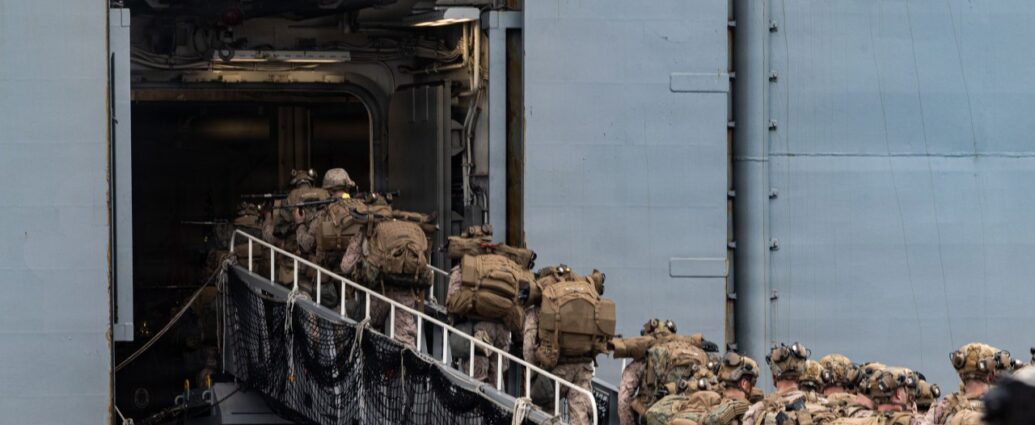
Missile fired from Yemen the first since the Iran war began and came hours after the US secretary set a new timeline for the conflict
Yemen’s Iran-aligned Houthis have confirmed that they launched an attack on Israel for the first time since the outbreak of the Israel-US war on Iran, marking their entry to the conflict just hours after Marco Rubio said the US expected to conclude military operations within “weeks, not months”.
While Israel was again hitting targets across Iran’s capital on Saturday, it identified what it said was a missile launched from Yemen. The Houthis said the attack came after continued targeting of infrastructure in Iran, Lebanon, Iraq and the Palestinian territories, adding that their operations would continue until the “aggression” on all fronts ends.
This post was originally published here

President Donald Trump told attendees at the Future Investment Initiative (FII) summit in Miami on Friday that Cuba would be the next U.S. target following ongoing military operations against Iran, then quickly added, “Please pretend I didn’t say that.”
“Cuba’s next,” Trump said, before pivoting to domestic politics. “Despite the radical left Democrat shutdown, we will continue to defend the sovereign borders,” he added.
The remarks follow Trump’s earlier suggestion of a “friendly takeover” of the island nation located in the Caribbean.
In January, the U.S. president signed an executive order targeting tariffs on any country supplying Cuba with oil, framing it as part of a broader campaign of pressure against Havana.
Trump had previously also suggested he could “take” Cuba “in some form,” calling it “a big honor.” The remark …
This post was originally published here

On Friday, Nouriel Roubini, the economist who called the 2008 financial crisis, cautioned that President Donald Trump is more likely to intensify the U.S. conflict with Iran rather than seek a quick resolution.
Roubini dismissed the notion that Trump is searching for an “off-ramp” to end the war, despite market optimism around a potential peace deal, he told CNBC at the Ambrosetti Forum in Cernobbio, Italy.
“If he chickens out right now, he loses credibility. He lost the war,” Roubini said, adding that such a move could hurt Trump’s chances in upcoming elections.
Roubini described the situation as a high-risk, high-reward scenario.
On one hand, escalation — potentially including targeting key Iranian assets and intensifying military operations — could weaken Iran’s leadership and deliver a geopolitical win.
“My argument is that, counterintuitively, he’s going to decide to escalate,” Roubini said.
On the other hand, failure could trigger severe global consequences …
This post was originally published here

On Friday, David Sacks defended Pentagon official Emil Michael against allegations of a conflict of interest tied to his investment in Perplexity AI.
Speaking on the All-In Podcast, Sacks dismissed the claim as baseless, arguing the company is not a direct competitor to Anthropic and does not sell to the Pentagon.
He also noted that Michael’s holdings were cleared by ethics regulators.
The investor suggested the timing of the report was questionable, adding it resembled prior attacks against him: “It reminds me of what happened to me… all of a sudden there was that hit piece.”
Sacks went further, accusing Anthropic of operating beyond its image as a safety-focused AI firm.
“They’ve hired a number of very seasoned… political operatives in Washington,” he said, concluding, “This is, I think, frankly, a political operation that’s willing to get down and dirty and they’re not always on the side of the angels. I think they can be quite ruthless.”
This post was originally published here
Major gas infrastructure hit by outages as weather system continues south-east
Get our breaking news email, free app or daily news podcast
Zac Saber did not sleep a wink as ex-Tropical Cyclone Narelle battered the Western Australian coast on Friday night.
As fellow Exmouth locals took shelter in evacuation centres and homes, Saber spent the night listening to the sound of “super intense” winds rattling his walls.
This post was originally published here
This post was originally published here

This post was originally published here

This post was originally published here
This post was originally published here
Fears grow that Tehran may start activating sleeper cells across Middle East as part of war with US and Israel
Gulf countries have raised concerns over the prospect of attacks by Iran-backed militias and proxy armed groups in the region, which they fear could destabilise their regimes and escalate the war in the Middle East.
In a joint statement this week, Qatar, Kuwait, the United Arab Emirates, Bahrain, Saudi Arabia and Jordan condemned Iranian attacks on their soil, both as strikes carried out directly from Iran and “through their proxies and armed factions they support in the region”.
This post was originally published here
The settlement by Bank of America comes nearly three years after JPMorgan Chase and Deutsche Bank settled similar lawsuits by victims of Jeffrey Epstein.
This post was originally published here

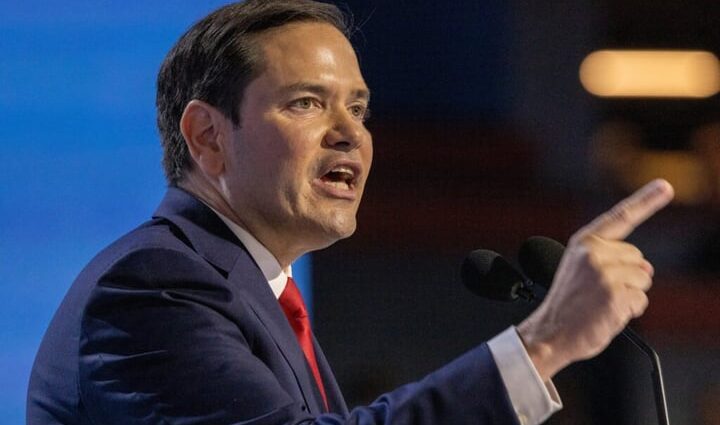
U.S. Secretary of State Marco Rubio has revealed that the U.S. military operations against Iran are expected to conclude in a matter of “weeks, not months,” and that the U.S. is confident in achieving its objectives without deploying ground troops.
After meeting with G7 counterparts in France, Rubio told reporters on Friday: “We are on or ahead of schedule on that operation and expect to conclude it at the appropriate time here in a matter of weeks, not months, and the progress is going very well.”
“We can achieve all of our objectives without ground troops,” Rubio said. Troop deployments, he added, are meant to give the president “maximum optionality” should contingencies emerge.
This post was originally published here

This post was originally published here
This blog is closed. Follow our new liveblog here
More now on India slashing taxes on diesel and petrol amid the global disruption in energy supplies: finance minister Nirmala Sitharaman said the move would “provide protection to consumers from rise in prices”.
The country is one of the world’s largest crude oil importers and relies on foreign suppliers for more than 85% of its oil needs, with Russia being the biggest supplier.
This post was originally published here
This live blog is now closed.
Peter Ticktin, an 80-year-old Florida lawyer who has various ties to Donald Trump and represents some 2020 election deniers, has become an outspoken advocate for an emergency executive order on US elections that would overhaul voting rules and rights by ending machine and mail-in voting.
The exact nature and extent of Ticktin’s contact and influence with Trump and other administration officials is not clear. But election experts and analysts see Ticktin’s push for an executive order as worrying, and part of a broader drive by fellow election conspiracists who are now promoting similar and legally dubious emergency order plans to revamp voting rules this year in order to boost Republican fortunes in the fall elections.
This post was originally published here
At least 77 people killed in anti-corruption youth uprising in September, which began over a brief social media ban
Nepal’s former prime minister, KP Sharma Oli, was taken into custody on Saturday as police investigate whether he was negligent in failing to prevent dozens of deaths during Gen Z protests last September.
This week, a Nepali panel which investigated violence during the anti-corruption protests recommended that Oli, 74, be prosecuted for failing to prevent the crackdown on the protests.
This post was originally published here

A reported “strong smell” at a key air traffic control center disrupted flights Friday evening at major airports across the Washington, D.C., region for the second time in two weeks.
The Federal Aviation Administration (FAA) temporarily halted flights at Ronald Reagan Washington National Airport (DCA), Washington Dulles International Airport (IAD), Baltimore/Washington International Airport (BWI), Charlottesville–Albemarle Airport (CHO) and Richmond International Airport (RIC), the agency told FOX Business in an email.
The FAA said the disruptions were due to a “strong smell” at the Potomac Terminal Radar Approach Control (TRACON) center, which manages airspace in the region.
GROUND STOP LIFTED AT MAJOR DC-AREA AIRPORTS AFTER CHEMICAL ODOR DISRUPTS AIR TRAFFIC CONTROL
It was not immediately clear what caused the smell.
Ground stops at Dulles, Reagan National and BWI remained in effect until around 8 p.m. ET before being lifted, according to the FAA’s website.
As of 8:30 p.m., Reagan National was experiencing ground delays, while BWI continued to see departure delays.
Earlier this month, a ground stop was similarly issued at several airports in the Washington, D.C., region after a chemical odor was detected at the TRACON center.
FATAL LAGUARDIA COLLISION RENEWS FOCUS ON RUNWAY INCURSION RISKS ACROSS US
GET FOX BUSINESS ON THE GO BY CLICKING HERE
The temporary ground stop March 13 similarly affected DCA, IAD, BWI and RIC, Transportation Secretary Sean Duffy said at the time.
Duffy said the smell came from an overheated circuit board, which has since been replaced.

This post was originally published here
This post was originally published here
Actor outside Kennedy Center urges Americans to ‘stand tall against authoritarianism’ and resist free-speech threats
The actor Jane Fonda joined journalists, musicians and writers outside Washington’s John F Kennedy Center for the Performing Arts in urging US citizens to “break your silence” and “stand tall against authoritarianism”.
At a damp but defiant rally hosted by Fonda’s Committee for the First Amendment on Friday, around a hundred invited guests gathered to hear speakers and singers rail against book bans, political censorship and other threats to free speech under Donald Trump.
This post was originally published here

This post was originally published here

PM did not rule out later fuel rationing or work-from-home measures but said he strongly preferred ‘voluntary arrangements’
Get our breaking news email, free app or daily news podcast
The Australian government will take on the financial risk of additional imports of essential products affected by the war in the Middle East, to get extra supplies of petrol, diesel and fertiliser into the country.
The prime minister, Anthony Albanese, announced the new fuel security powers on Saturday after a month of soaring diesel and petrol prices and widespread shortages at service stations, particularly in regional Australia.
This post was originally published here
Trump recently floated the possibility that the strait could be controlled jointly by “me and the ayatollah” as part of a resolution to the Iran war.
This post was originally published here



This post was originally published here
Travelers are facing long lines at airports across the U.S. as a partial government shutdown drags on.
This post was originally published here

Wall Street is coming off a losing session in which higher oil prices and spiking Treasury yields weighed on equities.
This post was originally published here
Jim Cramer says the market sell-off is driven by rising oil tied to the Iran war, with tech stocks taking a huge hit.
This post was originally published here
Joshua Jaynes and Kyle Meany were accused of lying on document used to enter Taylor’s house on night of shooting
A federal judge has dismissed charges against two former Louisville police officers accused of falsifying the warrant used to enter Breonna Taylor’s apartment the night police shot her to death.
Charles Simpson, a US district judge, issued a one-page ruling on Friday throwing out charges against Joshua Jaynes and Kyle Meany, two former officers involved in crafting the Taylor warrant.
This post was originally published here

If you’ve ever stood in front of the mirror and wondered what your outfit’s missing, Macy’s may have the answer. The company recently launched its “Ask Macy’s” AI chatbot, powered by Google’s Gemini AI assistant, and it’s having shocking success.
The chatbot launched across all the company’s digital platforms on Monday, but it was tested with about half of Macy’s website visitors over several weeks, the company told Bloomberg. Shoppers who use the chatbot spend about 4.75 times more than those who don’t, Bloomberg reported.
The bot’s short-term success comes as Macy’s tries to make its comeback after a decade of declining sales.
Earlier this month, the company reported net sales decreased by 2.4% last year, but returned to comparable sales growth, up 1.5%. Macy’s expects to make $21.4 billion to $21.65 billion in net sales this year, a little less than last year’s $21.76 billion, and sees comp sales flat at the midpoint of guidance.
Chief Customer and Digital Officer Max Magni explained that customers may be primed to spend more because they’re looking for a specific item, such as an outfit for an upcoming event, rather than when they’re just browsing, Bloomberg reported. He suspects that the bot is also attracting a younger customer base.
The most popular features are the “complete the look” option, where the bot suggests accessories to go with an outfit, and a virtual try-on feature that allows shoppers to see what an item looks like on them. Customers can also use the virtual try-on feature in store, if they don’t have time to see if an item fits, Chief Stores Office Barbie Cameron told Bloomberg.
More AI shopping assistants are coming as companies and startups bet on making online shopping more seamless. For example, Bill Gates’s daughter Phoebe Gates founded Phia, a browser extension that compares prices across the internet.
And after more than four years in beta, Marc Lore and Melissa Bridgeford, publicly launched shopping agent Wizard in February.
“Every retailer is trying to figure it out one step at a time,” Magni told Bloomberg. “This is anybody’s game. Nobody has cracked the code.”
Getting the Macy’s bot ready for customers has taken some tweaking, and thousands of employees weighed in, according to Magni. Originally, it didn’t take into account that shoppers in different climates may not want to see the same selections.
There were also some tone issues, Magni added. When he asked for T-shirt suggestions for his son, the bot coldly offered a list and wrote: “Here’s a T-shirt for a 10-year-old.”
Now, the bot is more friendly. When asked again, the bot replied “‘Ten-year-olds can have so much fun with color – do you want a brighter or more muted color selection?’” Magni said. “The machine continues to learn.”
This story was originally featured on Fortune.com
Mayor of Hartford has fired a white police officer who fatally shot a Black man in a mental health crisis nine times
A white Connecticut police officer who fatally shot a Black man 30 seconds after arriving at the scene, where three fellow officers had spent several minutes trying to de-escalate the situation, was fired Friday.
Arunan Arulampalam, Hartford’s mayor, said in a statement that he terminated Officer Joseph Magnano effective immediately in connection with the 27 February shooting of Steven Jones, who was on a city street holding a knife. The killing came eight days after a different Hartford officer fatally shot another man in a mental health crisis.
This post was originally published here