



MLB faces a historic shift as potential lockout, media rights and other league changes loom
Several changes await MLB after this season, including its CBA’s expiration, new media partners, and potential expansion and league realignment.
This post was originally published here
MLB faces a historic shift as potential lockout, media rights and other league changes loom
Several changes await MLB after this season, including its CBA’s expiration, new media partners, and potential expansion and league realignment.
This post was originally published here

Trump volatility fatigue: Retail traders aren’t buying the dips like they used to
Retail flows fell to $3 billion in the week beginning on March 19 and ending March 25, below the 12-month average of $6.8 billion.
This post was originally published here
Trump volatility fatigue: Retail traders aren’t buying the dips like they used to
Retail flows fell to $3 billion in the week beginning on March 19 and ending March 25, below the 12-month average of $6.8 billion.
This post was originally published here

Understanding Conservatorship: Key Types and Alternatives
This post was originally published here


Alphabet’s AI Innovation Sparks Decline in Memory Chip Stocks
This post was originally published here

Trump Says Prediction Markets Beat ‘Fake Polls’—And HOOD, CME Race To Cash In On The Boom
Donald Trump said that prediction markets “predicted me pretty right… by a landslide,” calling them better than “fake polls.”
The endorsement lands as the industry races past $17 billion in monthly volume while fighting criminal charges and multiple congressional bills simultaneously.
The Presidential Stamp
Trump made the comments in a phone call with NYU law fellow Max Raskin.
A 2025 Vanderbilt study backs Trump’s claim, finding Polymarket outperformed polling in swing states during the 2024 election. After the July 2024 assassination attempt, traders repriced Trump’s odds instantly. Polls didn’t budge.
CFTC Chairman Michael Selig, a Trump appointee, has matched the tone. He filed an amicus brief in the 9th Circuit asserting exclusive federal jurisdiction over prediction markets and called state enforcement actions a “power grab.”
Where The Money Is
Robinhood Markets (NASDAQ:HOOD) CEO Vlad Tenev has called prediction markets the fastest-growing business in company history, with a …
This post was originally published here

VCX Stock Crashes Nearly 50% As Citron Drops Brutal Short Call
The Fundrise Innovation Fund, LLC (NYSE:VCX) saw its shares collapse Thursday. The stock fell 49.21% following a series of critical posts from activist short seller Andrew Left’s Citron Research.
Citron Questions “Simple Math” and Asset Value
Citron Research said on X, that it is short VCX, arguing the stock’s valuation is disconnected from its underlying assets, adding, “Simple math.”
The report compared the situation to Destiny Tech100 Inc. (NYSE:DXYZ). Citron noted that DXYZ saw its 1,400% premium collapse despite its underlying portfolio performing well. Left warned that “gravity is not a theory” regarding the current VCX valuation.
Regulatory History and Marketing Spend Under Fire
The short report also focused …
This post was originally published here



America’s first AI-fueled war is unfolding right now in Iran. This is how we got here
Bloomberg journalist Katrina Manson discusses the Pentagon’s secretive campaign to build America’s AI warfare capabilities and the obsessive Marine colonel behind it. Her new book is Project Maven.

This post was originally published here

Crude Oil Gains 4%; Commercial Metals Posts Mixed Q2 Results
U.S. stocks traded lower midway through trading, with the Nasdaq Composite falling around 1% on Thursday.
The Dow traded down 0.43% to 46,228.52 while the NASDAQ fell 1.02% to 21,706.08. The S&P 500 also fell, dropping, 0.75% to 6,542.14.
Leading and Lagging Sectors
Energy shares climbed by 1.6% on Thursday.
In trading on Thursday, communication services stocks fell by 2.3%.
Top Headline
Commercial Metals Co. (NYSE:CMC) reported fiscal second-quarter results Thursday that missed adjusted EPS estimates but beat on revenue, sending shares lower.
CMC reported fiscal second-quarter adjusted earnings of $1.16 per diluted share, missing the $1.30 estimate, while sales of $2.132 billion beat the $2.091 billion estimate.
Net earnings were $93.0 million, or 83 cents per diluted share, on net sales of $2.1 billion. This compares with $25.5 million, or 22 cents per diluted share, on net sales of $1.8 billion a year earlier.
Equities Trading UP
- Kodiak Sciences Inc (NASDAQ:KOD) shares shot up 60% to $36.36 after the company announced topline results …
This post was originally published here

These Analysts Boost Their Forecasts On Precigen Following Q4 Results
Precigen, Inc. (NASDAQ:PGEN) reported mixed results for the fourth quarter on Wednesday.
The company posted a quarterly loss of 1 cent per share which beat the analyst consensus estimate of losses of 8 cents per share. The company reported quarterly sales of $4.565 million which missed the analyst consensus estimate of $8.286 million.
“With the FDA approval and launch of PAPZIMEOS, 2025 marked a transformational year for Precigen as we transitioned from a clinical-stage to a commercial-stage company and recognized our first commercial product revenues toward the end of the year,” said Helen Sabzevari, PhD, President and CEO of Precigen. “We are seeing strong alignment within the physician community around PAPZIMEOS as the first-line standard of care for adults …
This post was originally published here






Fannie Mae accepts first crypto-backed mortgage product
Better Home and Finance is partnering with Coinbase on a crypto-backed mortgage that conforms to Fannie Mae guidelines.
This post was originally published here

Paychex Analysts Cut Their Forecasts After Q3 Results
Paychex, Inc. (NASDAQ:PAYX) reported upbeat fiscal third-quarter results on Wednesday.
Its total revenue surged 20% year-over-year to $1.81 billion. The Street expected a quarterly revenue of $1.79 billion. Adjusted diluted earnings per share were $1.71, up from 1.49 a year ago, which topped the analyst consensus estimate of $1.67.
John Gibson, president and CEO of Paychex, said the company delivered strong double-digit revenue and operating income growth while accelerating organic growth through effective execution and progress on strategic priorities. He noted that clients are increasingly turning to Paychex’s advisory and benefits solutions to navigate complex regulatory and workforce challenges, highlighting the value of its technology and expertise.
Paychex reiterated its fiscal 2026 adjusted EPS growth …
This post was originally published here
Sperm get lost in space, Australian research into microgravity impacts suggests
Study into how fertilisation could work in space finds sperm may get disorientated when trying to find an egg
Sperm in space are likely to get disoriented and lost while struggling to find their way to an egg, a new study has found.
When exposed to microgravity in experiments, sperm tumble around like an untethered astronaut, according to Adelaide University researchers.
This post was originally published here

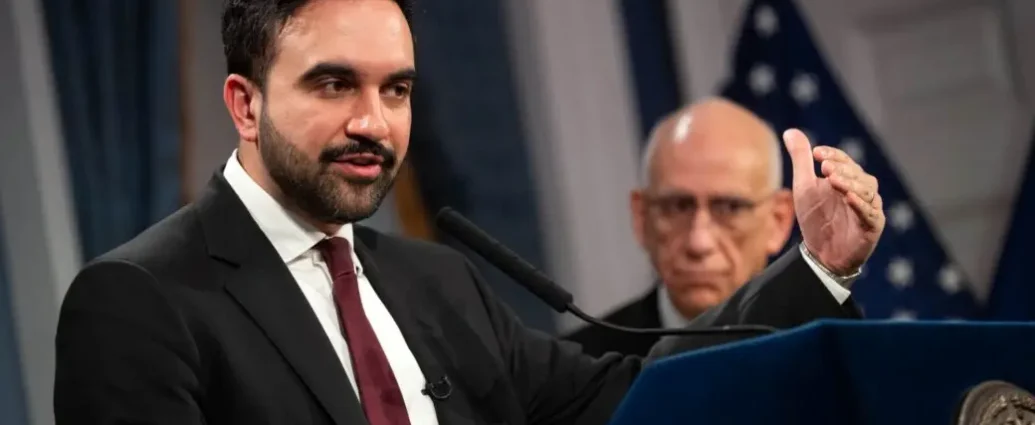
Mamdani appeals housing voucher expansion, breaking campaign pledge
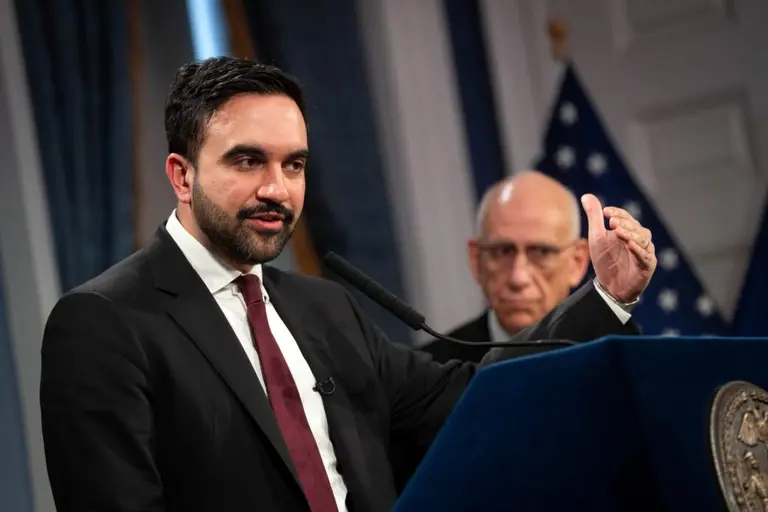
After failing to reach a deal with housing advocates, Mayor Zohran Mamdani has appealed a court ruling that ordered New York City to expand its housing voucher program, a move that departs from one of his key campaign pledges. Filed on Tuesday, the appeal puts Mamdani in the position once held by former Mayor Eric Adams, whose initial opposition sparked a legal battle that has stretched for nearly three years. In February, Mamdani indicated he no longer intended to support the program’s expansion due to the city’s projected $7 billion budget deficit, and after negotiations failed, his appeal now extends the legal battle indefinitely.
The program, known as CityFHEPS, is one of the largest rental assistance programs in the nation. It allows low-income New Yorkers to pay 30 percent of their income toward rent, with the city covering the remainder. The program is a lifeline for the roughly 65,000 households, or about 140,000 people, who currently use the vouchers, as 6sqft previously reported.
In May 2023, the City Council passed legislation expanding eligibility for the vouchers. Adams vetoed the package, but the Council overrode his veto. The administration then filed a lawsuit citing policy concerns and the program’s estimated $17 billion cost.
The expansion would make an additional 47,000 households eligible. It also removes the requirement that unhoused individuals spend at least 90 days in a shelter before qualifying, allows applicants to demonstrate eviction risk with a rent demand letter, and raises income eligibility from 200 percent of the federal poverty level to 50 percent of the area median income.
The program is projected to add $17 billion in expenses over the next five years, according to a January 2024 estimate from the city’s Independent Budget Office. Even before the City Council passed the 2023 expansion legislation, the program’s cost had already surged, from about $25 million in 2019 to more than $1.2 billion in 2025, as reported by the New York Times.
In February, while announcing a projected $7 billion budget deficit, down from the $12.6 billion gap Mamdani had cited two weeks earlier, which he attributed to Adams and former Gov. Andrew Cuomo, the mayor reversed a previous campaign promise.
Last July, after securing the Democratic nomination, Mamdani called Adams’ pushback on CityFHEPS a “ridiculous waste of time during a housing crisis” in a post on X. His campaign website also pledged: “Zohran will drop lawsuits against CityFHEPS and ensure expansion proceeds as scheduled and per city law,” as 6sqft previously reported.
Housing advocates argue that expanding the program is essential to addressing the city’s affordability crisis, which has been worsened by recent cuts to federal rental assistance under the Trump administration.
Win, the city’s largest provider of shelter and supportive housing for homeless families, released a report last month warning that housing people in shelters costs the city far more than investing in CityFHEPS vouchers, since families without permanent housing often cycle back into shelters.
In a statement, Christine Quinn, president and CEO of Win, criticized the mayor for what she called a “blunt reversal” of his previous commitments to CityFHEPS.
“The city’s failure to settle its challenge to codified CityFHEPS expansions is nothing short of a betrayal. Mamdani promised time and time again to drop this suit,” Quinn said. “This blunt reversal of that commitment is an abject failure when it comes to meeting the most basic needs of homeless families—the very population these vouchers are meant to serve.”
“This lack of leadership means more families stuck in shelter, more trauma, and skyrocketing shelter costs for the city. Let it be understood under no uncertain terms: we will not back down until the city has reversed course, dropped the suit, and pledged money to the CityFHEPS voucher program,” she added.
According to City Limits, while Mamdani has filed the appeal, negotiations are expected to continue through the state and city budget sessions, which end in April and June, respectively. During talks, the administration reportedly proposed keeping income eligibility the same, maintaining work requirements, and expanding vouchers to residents of rent-stabilized apartments.
The City Council and legal aid groups rejected that offer, leaving the administration looking for more time. Potential compromises could include limiting the number of vouchers or “phasing in” the expansion to gradually cover a larger pool of eligible New Yorkers.
In its appeal, the city’s Law Department criticized former Mayor Adams while reiterating arguments from his administration, which maintained that the City Council lacks authority to legislate on CityFHEPS.
“When the mayoralty changed hands in January, there was no plan to fully fund CityFHEPS in its current form, let alone in an expanded form. This case is not about the policy merits of expanding CityFHEPS. It instead concerns who holds authority to determine whether and how to do so,” the city’s lawyers wrote in their brief, as reported by City Limits.
However, Joe Calvello, the mayor’s press secretary, told Gothamist that the administration is still seeking a resolution.
“This is not the end of negotiations,” he said. “As the budget process advances, we will continue working toward a resolution while advancing a comprehensive, whole-of-government response to the city’s housing and homelessness crisis.”
RELATED:
- Mamdani looks to narrow housing voucher program, reneging on campaign promise
- NYC invests nearly $40M to bring clean heat pumps to Rockaways NYCHA complex
- Mamdani bans hidden ‘junk fees’ at NYC hotels
The post Mamdani appeals housing voucher expansion, breaking campaign pledge first appeared on 6sqft.





Want to buy Wells Fargo or maybe TJX? Here are the levels to watch
The Investing Club holds its “Morning Meeting” every weekday at 10:20 a.m. ET.
This post was originally published here
Want to buy Wells Fargo or maybe TJX? Here are the levels to watch
The Investing Club holds its “Morning Meeting” every weekday at 10:20 a.m. ET.
This post was originally published here

How a war in the Middle East is hiking your mortgage rate in America
A war in the Middle East has suddenly made getting a mortgage even more expensive in a U.S. housing market already starved for affordability.
Like any global conflict, its repercussions ripple outward far from the immediate war zone. As KPMG chief economist Diane Swonk illustrated in a recent report, the war has set off a “butterfly effect” across the global economy.
Now, the war’s disruption in the Strait of Hormuz is being felt by homeowners in towns across the U.S.
The 30-year fixed mortgage rate rose to 6.43% last week. That’s more than 30 basis points higher than at the end of last month—and its highest level since October 2025, according to data from the Mortgage Bankers Association’s (MBA) Weekly Mortgage Applications Survey. The 30-year mortgage rate sits at 6.4% as of Thursday.
Joel Kan, MBA’s vice president and deputy chief economist, said elevated oil prices, driven up by the Iran conflict, and the ensuing shipping crisis in the Strait of Hormuz, are contributing to the rate hike.
“The threat of higher-for-longer oil prices continued to keep Treasury yields elevated, and mortgage rates finished last week higher,” Kan said in a statement. “Higher mortgage rates, coupled with affordability constraints and economic uncertainty, pushed some potential homebuyers to the sidelines.”
Since the 30-year mortgage rate is benchmarked to the rate of the 10-year Treasury note, mortgage rates rise when the 10-year Treasury note rises. The 10-year Treasury is up to 4.39%, up from about 3.96% from before the start of the war.
The U.S. housing market was already under pressure
The housing market was already under pressure before the war’s start due to a dire housing shortage and concerns about the job market, especially among younger prospective buyers. Even Zillow’s CEO Jeremy Wacksman said homebuyers shouldn’t expect conditions to improve.
“We aren’t expecting any relief in the short term,” he told Fortune in a recent interview. “I think it’s just going to take a while.”
The surge is also hitting refinance demand, not just purchases, as higher rates have reversed activity that had briefly improved earlier in the month. The MBA report—a weekly survey of respondents that include mortgage bankers, commercial banks, thrifts, and credit unions—also found refinance applications were down 15%. The Refinance Index, a measure of the volume of mortgage applications for refinancing existing loans, dropped 15% from the prior week.
It’s not just mortgage rates; the war’s impact on energy and other commodities are adding insult to injury to an already faltering U.S. economy. As Swonk noted in her report, higher-for-longer oil prices could hike inflation in the near term. Grocery prices are expected to take a hit. It’s no surprise to car owners across the U.S. that gas prices are off the charts, hitting a national average of just under $4 per gallon, according to AAA. And some economists have even invoked the dreaded S-word: stagflation.
Uncertainty sidelining potential homebuyers
Potential homebuyers are being spooked by war-driven economic uncertainty, along with other factors, including the emerging threat of an AI-induced job apocalypse. Aside from higher mortgage rates, increased energy costs and stock market volatility associated with the war have caused 1 in 4 Americans to pause big purchases like homes and cars, according to a Redfin report released earlier this month. However, the report also notes that the majority of Americans still remain undeterred by the conflict.
That uncertainty looms in the air on Wall Street as investors try to navigate shifting signals from Washington. President Donald Trump announced Monday the U.S. and Iran had been in talks to end the war, sparking a $1.7 trillion stock market rally, and bringing oil prices briefly below $100 a barrel. But Iran’s foreign minister then said, while messages had been exchanged between the U.S. and Iran, no peace talks have taken place. Today, the price of oil is back up to $105 a barrel, measured using the Brent benchmark, up about $6 in just a day.
A Redfin report released Thursday said the back-and-forth is keeping some homebuyers sidelined.
“Markets are bouncing around this week as investors try to keep up with conflicting messages about the conflict in the Middle East,” the report read. “Stocks and bonds rallied on Monday after the White House said the U.S. and Iran had productive conversations, but it is unclear when the conflict will end.”
This story was originally featured on Fortune.com
See How Centrus Energy Ranks Among Analysts’ Top Metals Picks
A study of analyst recommendations at the major brokerages shows that Centrus Energy Corp (Symbol: LEU) is the #26 broker analyst pick, on average, out of the 50 stocks making up the Metals Channel Global Mining Titans Index, according to Metals Channel. The Metals Channel Glob
This post was originally published here







Hegseth prays at Pentagon service for ‘overwhelming violence’ against enemies
Remarks come after defense secretary calls for changes to military’s chaplain corps, which had been ‘watered down’
The defense secretary, Pete Hegseth, prayed during a religious service at the Pentagon that there be “overwhelming violence of action against those who deserve no mercy”.
The Christian worship service, held on Wednesday before military and civilian workers at the Pentagon, was Hegseth’s first since the Iran war began, the Associated Press reported.
This post was originally published here
Arizona gun dealer accused of selling firearms to two Mexican cartels
Laurence Gray charged with attempting to provide material support to terrorist organizations
An Arizona licensed gun dealer was charged this month with attempting to provide material support to terrorist organizations after federal agents caught him allegedly selling a series of rifles and guns to two Mexican cartels.
The federal charges against the American firearms dealer come amid years of pressure by the Mexican government to stop the flow of weapons into the country. Mexico’s violent and bloody internal conflict, between drug cartels and the Mexican government, has been largely fueled by American weapons smuggled into the country.
This post was originally published here



Household cleaning tool recalled after dozens of burn injuries reported
Wagner Spray Tech is recalling about 700,000 power steamers in the U.S., plus roughly 8,000 sold in Canada, after reports the products can overheat and cause burn injuries, according to federal safety regulators.
The recall affects the company’s 905e Auto Steamer, 915e On-Demand Power Steamer and 925e Steam Machine Elite Steamer, which share the same base unit but come with different accessories, and were sold at major retailers including Home Depot, Lowe’s, Walmart, Target, HSN, QVC, Amazon and through Wagner’s website.
The steamers, manufactured in China and imported by Plymouth, Minnesota-based Wagner Spray Tech Corp., pose a burn hazard because the hose can become excessively hot and the nozzle or gun can expel hot water during use and after the trigger is engaged, the Consumer Product Safety Commission said in a March 19 recall notice.
TOYOTA RECALLS MORE THAN 144,000 LEXUS VEHICLES OVER REARVIEW CAMERA FAILURE RISK
The products feature a yellow-and-black boiler base labeled “Wagner,” along with a black steam hose and trigger-operated nozzle. Model numbers may appear on the side of the unit.
Wagner has received at least 156 reports of incidents involving hoses overheating or nozzles expelling hot water, including more than 50 burn injuries to consumers’ arms, hands, feet and face, some classified as first- or second-degree burns, according to the CPSC.
The affected steamers were sold between November 2018 and March 2026 for between $130 and $200, regulators said.
Consumers are being urged to stop using the recalled steamers immediately and contact Wagner for a free repair kit, which includes a hose sleeve, nozzle cover and funnel designed to reduce the risk of burns.
CLICK HERE TO GET FOX BUSINESS ON THE GO
Consumers can contact Wagner toll-free at 800-962-6118 or visit the company’s website for instructions on how to obtain the repair kit.






Donald Trump’s policy swings are creating instability, energy chiefs say
This post was originally published here

Trump says oil and stock market reaction to Iran conflict not as severe as he expected
Trump expressed confidence in the war effort and said the economic damage will reverse.
This post was originally published here


7 Alternatives to Traditional Banking and Stock Investments
This post was originally published here


New York is home to 154 billionaires. Together they’re worth $975.7 billion—and some of them are even making $2 million an hour
The rich have been enjoying unprecedented wealth gains, while workers struggle against sluggish wages and a high cost of living. And the gap is especially stark in one of the country’s most billionaire-dense states.
New York is home to 154 billionaires boasting a collective fortune of $975.7 billion, according to a new report from Oxfam America. Thanks to the state’s position as a financial and investing hub, it’s home to many ultra-rich residents, including Mike Bloomberg ($109 billion) and Stephen Schwarzman ($41.9 billion). And their eye-watering net worths are only growing bigger; over the past year, the wealth of the state’s billionaires increased 11.6%, three times greater than the hourly wage of New York’s private-sector workers. The disparity is worsened by the fact that real average hourly earnings in the state’s private sector have largely stagnated and were even slightly lower in 2025 than before the pandemic, the Oxfam report pointed out.
And at the top of New York’s elite billionaire club, it’s an even steeper drop down to everyone else. The 10 richest New Yorkers gained $42.4 billion over the past year, according to the report. Each of these ultra-rich billionaires gained about $4.2 billion, reeling in about $2 million per hour. Compared to the state’s average private-sector hourly wage of $39.62, it would take a typical worker 82,863 years to earn as much as one of the 10 wealthiest did last year on average.
However, the growing economic divide in New York shouldn’t be seen as an anomaly; Oxfam notes this phenomenon is taking hold in all corners of the U.S.
“What we see in New York is consistent with national trends,” Rebecca Riddell, senior policy lead for economic justice at Oxfam America, tells Fortune. “In many ways, we have an economy that’s rigged against working people and in favor of the wealthiest. Past policy choices on issues like tax, corporate power, and workers’ rights have resulted in an economy where the benefits flow upward.”
Why billionaire wealth is skyrocketing in America
Riddell points to a few key factors in the billionaire wealth boom.
The wealthiest 0.1% of U.S. households hold around a quarter of all U.S. equities, according to Federal Reserve data, enabling them to grow their fortunes by the billions. Last year, a report from Oxfam revealed that the 10 richest U.S. billionaires—mostly tech founders like Elon Musk, Jeff Bezos, and Mark Zuckerberg, who reeled in big gains from their investments—added $698 billion to their net worths between November 2024 and the same month in 2025. Meanwhile, the bottom 50% of the U.S. owned just 1.1% of the exchange.
Plus, billionaires enjoyed a boost from the Trump administration’s “inequality-fueling” policies, Riddell says.
Last July, President Trump passed his One Big Beautiful Bill, which entails reducing the tax bill of the top 0.1% of earners in the country. By 2027, it’s expected that the statute will shave $311,000 off the tax costs of the ultra-rich, while the poorest Americans—making less than $15,000 annually—will be forced to pay even more in taxes. Riddell explains that through the president’s bill, support for working-class New Yorkers will be cut, while million-dollar earners will be given around a $52,000 “handout” this year.
To make a meaningful difference for working-class New Yorkers, Riddell advises the state’s policymakers to address the inequality through tax increases on the wealthiest and raise revenue for critical public services. NYC Mayor Zohran Mamdani has proposed a 2% increase on the city income tax rate of households earning over $1 million annually.
Americans are barely scraping by—and are critical of the wealth gap
The U.S. is home to more billionaires than any other country in the world, but the average worker isn’t getting a slice of America’s monumental economic success.
Moody’s chief economist, Mark Zandi, told Fortune last year that lower-income households are “hanging on by their fingertips financially.” Cost of living is rising, hiring has slowed to a worrying pace, and layoffs are on the rise. The issue has become so dire that it’s fueling a loneliness crisis, with Americans skipping out on social events and postponing their goals to make ends meet.
“The grip feels more tenuous because no one’s getting hired. You can sustain that for a while, but you can’t sustain that forever. If the layoffs do pick up, that lower-middle-income group is gonna get nailed—and they have no options,” Zandi said in 2025. “They have debt: They have auto debt, they have student loan debt, they may, if they’re lucky, have a mortgage, but they’re gonna struggle, and their world is going to descend into recession pretty quickly.”
And U.S. citizens aren’t blind to the growing divide between the haves and have-nots—they’re critical of extreme wealth. A recent Pew Research survey found that nearly one-in-five Americans think that being a billionaire is “morally wrong,” with Gen Zers leading the outcry. Another 52% of Americans agreed the wealth gap is a very big problem, according to a 2026 report from YouGov, and 59% said the government should step in to reduce wealth inequality. Another 62% of citizens said that the tax rate on billionaires is either much too low (46%) or too low (16%).
This story was originally featured on Fortune.com


30-year-old CEO of $11 billion Harvey earned the backing of OpenAI and Sam Altman. He says you have to ‘re-earn’ your role every 6 months
As fears mount over AI replacing jobs—or workers being outpaced by more AI-savvy peers—standing still has become a liability. For Winston Weinberg, the CEO of AI legal startup Harvey—now valued at $11 billion—that reality isn’t theoretical, it’s how he runs his company.
“You have to re-earn your position every six months; you need to re-earn your role at Harvey every six months,” Weinberg said on the latest episode of Fortune’s Term Sheet podcast. “It includes me, 100%.”
The mandate isn’t about churn for the sake of it—it’s about survival in an era where innovation is compounding quickly and falling behind can lead to dire consequences. That pressure is especially acute in Silicon Valley, where startups are racing not just against time, but against each other to build the defining AI companies of the next decade. For Harvey, that’s top of mind.
“If you don’t reinvent yourself as a company and as a leader, and whatever your role is at a company right now, fast enough, you will lose,” Weinberg added in the interview with Fortune’s Allie Garfinkle.
Weinberg, a lawyer by training, cofounded Harvey in 2022 alongside Gabriel Pereyra, a former Meta and Google DeepMind AI research scientist. In the company’s early days, the pair notably cold-emailed OpenAI CEO Sam Altman—an outreach that eventually helped them secure early access to GPT-4 and backing from the OpenAI Startup Fund. Harvey, which builds AI tools for law firms and in-house legal teams, has also attracted investment from Sequoia and Kleiner Perkins.
From the beginning, Weinberg said, the company survived depending on more than the technology—it required a culture that could move fast and adapt constantly: “The thing that I care the most about with our culture is decisiveness,” he said. “I think you have to basically build a company that has a culture of making decisions very quickly and being OK to make mistakes.”
Adaptability has been critical to Harvey’s $11 billion scale
That willingness to take risks and learn from them, Weinberg added, has been central to distinguishing Harvey from the influx of AI startups—and to helping it scale into a multi-billion-dollar business.
“The reality is, the folks that I have found that haven’t scaled—and when I myself think that I’m not scaling—it’s because I haven’t learned enough in the past couple of months,” he added.
So, when evaluating hires or emerging leaders, Weinberg looks for people who can grow quickly with the company—those who can go from managing no one to leading teams of 20, 50, or even 100.
“The main thing I look at is, can they make decisions, own that decision, and then pivot when they make a mistake?” he said. “Instead of penalizing the mistake, penalize not making the decision or not learning from that mistake going forward.”
A need for constant reinvention and learning is something other top executives have long echoed.
Accenture CEO Julie Sweet told Fortune last year that AI is creating a need to fundamentally change business processes.
“In order to capture the opportunity with AI, you really have to be willing to rewire your company,” Sweet said on the inaugural episode of the Fortune 500 Titans and Disruptors of Industry podcast. “Many times, when clients are saying, ’ We’re not getting a lot out of AI, it’s because they’re trying to apply it to how they operate today.”
Sweet stressed that adapting to AI isn’t a one-time shift; it’s an ongoing process.
“This isn’t about using AI on top of what you do today,” Sweet added. “If you’re not significantly changing the way you operate, then you’re not reinventing, and you’re not going to capture the value.”
At Amazon, CEO Andy Jassy has similarly emphasized the importance of continuous learning—especially through experimentation.
“We ask why, and why not, constantly,” Jassy wrote last year in a letter to shareholders. “It helps us deconstruct problems, get to root causes, understand blockers, and unlock doors that might have previously seemed impenetrable.”
This story was originally featured on Fortune.com




Idaho bill would criminalize trans people using bathrooms in private businesses
Lawmakers consider latest bill that targets trans people for using the bathroom that matches their gender identity
Idaho lawmakers are considering a bill that would make it a crime for transgender people to use the bathroom that matches their gender identity – even inside privately owned businesses.
At least 19 states, including Idaho, already have laws barring transgender people from using bathrooms and changing rooms that align with their gender in schools and, in some cases, other public places. The LGBTQ+ advocacy organization Movement Advancement Project’s tracking of the laws shows that three other states – Florida, Kansas and Utah – have made it a criminal offense in some circumstances to violate the bathroom laws.
This post was originally published here

Why AppLovin Stock Is Sliding Thursday
Shares of AppLovin Corp (NASDAQ:APP) are trading lower on Thursday.
This decline stems primarily from a sharp sell-off in the broader technology sector. Investors are rotating out of high-growth tech shares today.
Jobless Claims Meet Market Estimates
Macroeconomic factors are also influencing the downward trend. U.S. initial jobless claims increased by 5,000 to 210,000 during the third week of March.
This figure aligns with median market estimates. However, the data contributed to a cautious atmosphere. The Dow Jones index fell more than 250 points during the morning session.
Communication Services Lag Behind
The communication services sector is among the weakest performers today. In Thursday trading, these stocks fell by 1.6%.
AppLovin is …
This post was originally published here


Stock Market Today: Major Indexes Pull Back, Oil Moves Back Above $100/Barrel as Investors Digest Iran Developments
This post was originally published here





15 Out Of 20 S&P 500’s Best Stocks This Month Have One Thing In Common
The Iran war isn’t just moving crude prices — it’s redrawing the S&P 500’s performance map.
A month-to-date snapshot through Mar. 26 reveals that 15 of the index’s 20 best-performing stocks are direct beneficiaries of the crisis at the Strait of Hormuz.
Twelve names in the top 20 belong to the oil and gas industry — a clear reflection of how rising crude prices translate into energy stocks’ performance.
Three more belong to chemicals — an industry whose margins are being turbocharged by soaring fertilizer input costs and disrupted petrochemical supply chains.
Together, they form the clearest market map yet of who wins when Hormuz goes dark.
Hormuz Owns 75% Of S&P 500’s March Winners
| # | Stock name | MTD % Chg | Industry | Hormuz related? |
|---|---|---|---|---|
| 1 | APA Corporation (NASDAQ:APA) | +39.56% | Oil, Gas & Consumable Fuels | ✓ |
| 2 | LyondellBasell Industries N.V. (NYSE:LYB) | +34.84% | Chemicals | ✓ |
| 3 | CF Industries Holdings, Inc. (NYSE:CF) | +32.39% | Chemicals | ✓ |
| 4 | Dow Inc. (NYSE:DOW) | +28.91% | Chemicals | ✓ |
| 5 | Dell Technologies Inc. (NYSE:DELL) | +24.44% | Technology Hardware, Storage & Peripherals | — |
| 6 | Marathon Petroleum Corporation (NYSE:MPC) | +21.72% | Oil, Gas & Consumable Fuels | ✓ |
| 7 | Akamai Technologies, Inc. (NASDAQ:AKAM) | +21.71% | IT Services | — |
| 8 | Ciena Corporation (NYSE: |
This post was originally published here





Reverse Mortgage Risks: High Fees and Foreclosure Potential
This post was originally published here
Dash Crofts of Summer Breeze rock duo Seals and Crofts dies aged 85
Crofts helped define the sound of yacht rock with 1970s hits such as Summer Breeze and Diamond Girl
Dash Crofts, the yacht rock musician who helped craft 70s hits such as Summer Breeze and Diamond Girl as part of the duo Seals and Crofts, has died aged 85.
The news was announced on social media by the duo’s producer, Louie Shelton. He wrote: “Sad to hear our dear brother and partner in music has passed away today. Sending love and prayers to all his family and many fans. R.I.P. my brother…..Dash Crofts.” A family member confirmed that Crofts died due to complications following heart surgery.
This post was originally published here








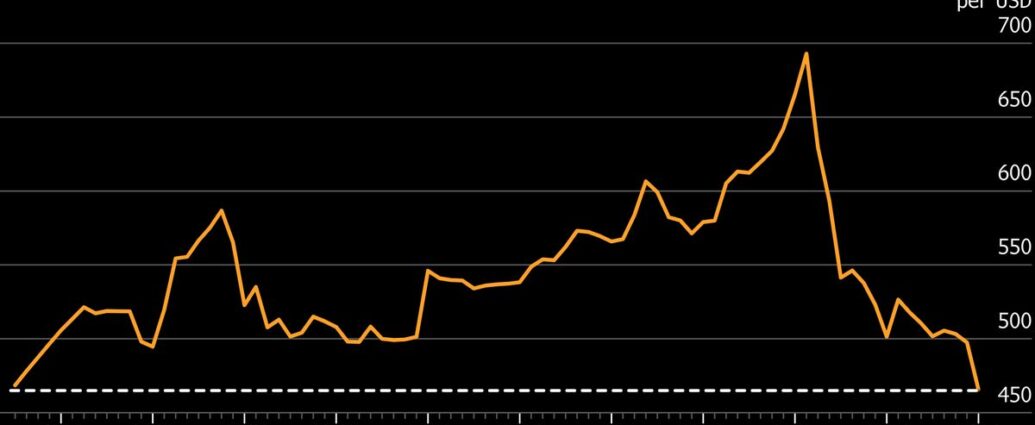

How To Invest In SpaceX Before The IPO Floodgates Open
Investors eager to ride a SpaceX IPO need to be strategic, because the rocket maker remains private and direct secondary-market access is limited to institutions and ultra–high-net-worth buyers.
For most retail investors, the most practical path is through public companies and funds that already hold SpaceX equity.
- SATS stock is moving. See the chart and price action here.
Why SpaceX Pre‑IPO Demand Is Surging
The Elon Musk-led company is reportedly weighing a June IPO that could raise up to $75 billion at a $1.75 trillion valuation, making it one of the largest listings ever.
Private-market estimates already peg the company’s valuation near $1.4 trillion dollars after recent funding rounds, underscoring how much of the upside has accrued before public trading begins.
Public Companies With SpaceX Stakes
Several listed firms give indirect exposure to SpaceX via balance‑sheet stakes.
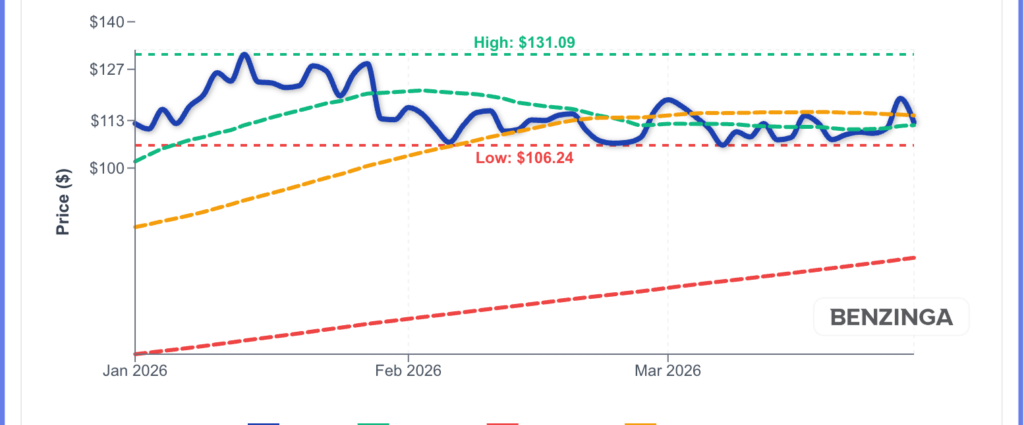
EchoStar Corp. (NASDAQ:SATS) has emerged as a de facto public proxy after spectrum‑for‑equity deals left it with a SpaceX stake recently valued at around $11.1 billion, which helped drive a sharp move higher in its stock.
The chart below shows SATS year-to-date performance:
This post was originally published here


Major outgoing CEOs are citing AI as a factor in their decisions to step down
Coca-Cola CEO James Quincey and former Walmart CEO Doug McMillon have told CNBC that the next wave of artificial intelligence is a reason for their departures.
This post was originally published here
Dell is back on Josh Brown’s Best Stocks list. Why more gains are ahead
Josh Brown and Sean Russo look at how Dell made it back into the Best Stocks list, and where it’s going from here.
This post was originally published here

Stock Market Today: Major Indexes Fall, Oil Moves Back Above $100/Barrel as Investors Digest Iran Developments
This post was originally published here

Millennials Feel 80% Confident About Their Finances — Until Their Situation Gets Complicated. Then It Drops To 27%
Joke all you want about their penchant for six-figure student loans and $18 avocado toast, for many millennials the strategy for confronting financial chaos is no strategy at all.
Are they confident? Yes. Doing well? Not exactly, as just 27% of millennials feel confident handling a diverse portfolio of assets, according to a survey issued by Equitable.
That gap between surface confidence and actual readiness is exactly where an advisor tends to help, and it is also why SmartAsset built a matching tool that connects people with up to three advisors in their area after a short questionnaire, with free initial consultations and no obligation to hire.
Millennials’ Unboxed Chaos
Millennials have so many reasons to want to look away and try to sound brave. It’s not just because, as the preliminary University of Michigan Consumer Sentiment Survey revealed, most consumers are feeling anxious about spending and where the economy will end up.
That general anxiety becomes quite specific when you drill down to millennials’ key concerns. Not only have 3 out of 5 millennials and Gen Zers reported draining their bank accounts and hitting overdraft in 2025, according to a US News survey, but 38% have also recently missed credit card payments.
According to a recent survey by Intuit, 61% of adults see money as their primary life stressor and 54% state they have financial regrets from 2025 that are impacting them right now. Other bad things millennials have besides stress and regret? Debt—lots of it.
They have the highest average student loan amounts ($40,238) next to Gen X, ($44, 240) and the largest share of student debt. Millennials also get to be best with how much they owe on their mortgages. …
This post was originally published here
Paul McCartney announces 18th solo album, The Boys of Dungeon Lane, promising introspection and revelation
The new album draws from the musician’s early childhood memories of growing up in Liverpool and his relationship with Lennon, with musical styles that span his entire career
• Alexis Petridis on single Days We Left Behind: ‘As McCartney-esque as possible’
Paul McCartney has announced his 18th solo album, The Boys of Dungeon Lane – its title a reference to the route from Liverpool to the Speke shoreline, the area where the former Beatle spent his young childhood.
A press release described the 14-track record as McCartney’s most introspective album yet, a “collection of rare and revealing glimpses into memories never-before shared, along with some newly inspired love songs”, presumably about McCartney’s third wife, Nancy Shevell, whom he married in 2011. The musical styles are said to span his entire career, including “Wings-style rock, Beatles-style harmonies, McCartney-style grooves, understated intimacy, melody-driven storytelling, character songs”.
This post was originally published here

NEI Announces positive unitholder vote and benchmark updates
TORONTO, March 26, 2026 /CNW/ – NEI Investments (“NEI”) announced today that at a special meeting of unitholders held on March 25, 2026, applicable unitholders approved the merger of NEI Global Growth Fund into NEI Global Equity RS Fund. Alongside this merger, NEI also announced a change to the benchmark for NEI Global Dividend RS Fund. These updates reflect NEI’s ongoing commitment to streamlining fund offerings and optimizing investment solutions for unitholders.
NEI Global Growth Fund merger
On or about April 10, 2026, NEI will merge NEI Global Growth Fund into NEI Global Equity RS Fund, and the sub-advisor agreement between NEI and Baillie Gifford Overseas Limited will terminate. NEI Global Growth Fund was closed to new and subsequent purchases as of 4:00pm Eastern Time on March 25, 2026.
As part of this transition, effective on or around April 1, 2026, NEI will decrease management and fixed administration fees across all retail series units of NEI Global Equity RS Fund, delivering cost savings to investors, as detailed below:
|
NEI Global Equity RS Fund |
||||
|
Series |
Current |
New Management |
Current Fixed |
New Fixed |
|
A |
1.90 |
1.70 |
||
This post was originally published here

Hearing Notice – CIRO to Hold a Disciplinary Hearing for Alain Georges Cogan
TORONTO, March 26, 2026 /CNW/ – An initial appearance has been scheduled before a hearing panel of the Canadian Investment Regulatory Organization (CIRO) pursuant to the Mutual Fund Dealer Rules in the matter of Alain Georges Cogan.
The initial appearance is open to the public unless the hearing panel orders otherwise. The date for the disciplinary hearing will be made …
This post was originally published here
Suit asks court to force Trump administration to use ‘The Kennedy Center’ name

The motion is part of a lawsuit challenging President Trump and the Center’s board, who now refer to the complex as “The Trump Kennedy Center.”
(Image credit: Jim Watson)

This post was originally published here



Orgreave inquiry formally under way into policing during miners’ strike
Terms of reference are to seek fullest disclosure of information and to produce a report by spring 2028
The government has announced the formal start of the promised official inquiry into the violent policing at the Orgreave coking plant during the 1984-85 miners’ strike and the discredited prosecutions of 95 men that followed.
Yvette Cooper, who was then the home secretary, announced the inquiry in July with Pete Wilcox, the bishop of Sheffield, as the chair. The government has since worked on appointing an expert panel to consider the evidence.
This post was originally published here
Israel says it has killed Iran naval chief overseeing Strait of Hormuz blockade
Israel’s Defense Forces said Thursday that Iranian naval commander Alireza Tangsiri in a “precise strike” in the port city of Bandar Abbas.
This post was originally published here

Bill Maher is getting the Mark Twain Prize after all
There was confusion about whether the satirist would be getting the Kennedy Center’s top humor award after White House press secretary Karoline Leavitt called it “fake news.” Now it’s confirmed.
(Image credit: Evan Agostini)

This post was originally published here


Nigeria takes its place on world stage in quest to become regional superpower
Nigeria and UK look to strengthen trade and economic ties amid growing calls from Africa and Caribbean for reparative justice
“There are chapters in our shared history that I know have left some painful marks,” King Charles said during a state banquet to welcome the Nigerian president, Bola Tinubu, to the UK, in a year in which the monarch is expected to come under renewed pressure to make a formal apology for transatlantic slavery and colonialism.
But while demands grow from African and Caribbean nations for the UK to further reparative justice, Nigeria and the UK are looking to the future of global trade.
This post was originally published here

Investing in the S&P 500 for Retirement: Age-Based Strategies
This post was originally published here









British Airways to reward pilots for cutting fuel as airlines tackle higher costs
Jet fuel prices surged about 106% compared to a month ago, according to data from the week ending March 20 via the International Air Transport Association.
This post was originally published here
Use options to play a potential Invesco runup in wake of Janus Henderson deal
Asset managers are trading at a significant discount to the broad market.
This post was originally published here

Duolingo CEO’s taxi driver test decides who gets hired—before the interview even starts
At Duolingo, job interviews start the moment a candidate steps into a car.
Luis von Ahn, the billionaire cofounder and CEO of the language-learning app, revealed on Phoebe Gates’ and Sophia Kianni’s The Burnouts podcast how a job candidate treats their driver from the airport to the office can make or break their chances of getting hired—regardless of how impressive their résumé looks or how much they like the candidate in the interview process.
Entrepreneur von Ahn, who cofounded Duolingo in 2011 with Severin Hacker, recalled a time when the company had been seeking a chief financial officer “for like a year.” The candidate had a strong résumé and the entire hiring committee “really liked,” he told The Burnouts in a February interview.
But “it turned out that they were pretty mean to their driver from the airport to the office,” von Ahn said. “And that made us not hire them.”
The CEO of Duolingo, which has a market cap of $4.65 billion, knew this because he pays taxi drivers to evaluate whether candidates are worth hiring.
“Our belief is if they’re going to be mean to the driver, they’re probably going to be mean to other people, particularly people under them,” he said.
It’s particularly important to Duolingo to hire the right person because of how much the company and von Ahn have leaned into AI. Last April, von Ahn said he was getting rid of contract employees and replacing them with AI.
“We can’t wait until the technology is 100% perfect,” von Ahn wrote in a memo posted to LinkedIn in April 2025. “We’d rather move with urgency and take occasional small hits on quality than move slowly and miss the moment.”
While von Ahn’s taxi-driver test is an unconventional interview test, candidates in today’s brutal job market are being evaluated in ways they may not even realize.
A job market where every detail counts
His approach comes at a time when landing a job has never felt more grueling. Hiring in tech has slowed drastically, with job postings down an estimated 36% from pre-2020 levels, according to Indeed’s 2025 Tech Talent Report. Meanwhile, more than 40,000 people working in tech have been laid off so far this year, Layoffs.fyi data shows.
Plus, interview processes have become much longer and more involved. Candidates routinely face five to eight interview rounds, panel presentations, case studies, and personality assessments before receiving an offer. The average time-to-hire in the U.S. is approximately 36 days from job posting to offer, according to research by Alex Benjamin, vice president of talent acquisition at OnPoint Consulting Services.
And on top of that, culture and character evaluations have quietly become a standard part of the process—even when candidates don’t know they’re being assessed.
Other CEOs with unorthodox hiring tactics
Duolingo’s CEO isn’t alone in looking beyond a résumé and interview to look for character signals.
Trent Innes, the former managing director of accounting platform Xeno, and now chief growth officer at SiteMinder, told The Ventures podcast in an episode published in September 2024 he uses a coffee-cup test to evaluate candidates.
When a job candidate arrives for an interview, the interviewer walks them to the kitchen for a beverage.
“Then we take that back, have our interview, and one of the things I’m always looking for at the end of the interview is, does the person doing the interview want to take that empty cup back to the kitchen?” Innes said.
For anyone who leaves their dirty cup behind after the interview and doesn’t offer to take it back to the kitchen, it’s a no-go.
“You can develop skills, you can gain knowledge and experience, but it really does come down to attitude, and the attitude that we talk a lot about is the concept of ‘wash your coffee cup,’” he said.
Even without odd tests, several big-name CEOs are vocal about how important street smarts and attitude are to securing a job. Amazon built its hiring process around its core Leadership Principles, with interviewers trained to probe for red flags, and JPMorgan Chase CEO Jamie Dimon has been outspoken about valuing street smarts and intellectual curiosity over pedigree alone.
“I care how you deal with our tellers, our guards, and our receptionists as much as I care how you deal with CEOs,” Dimon said in a July 2024 interview with LinkedIn. “It’s those 300,000 people that matter, and we have to set up right for everybody.”
This story was originally featured on Fortune.com

Mike Novogratz Says Iran’s Hormuz Bluff ‘Only Works Once,’ But Prediction Markets Disagree
Mike Novogratz says Iran made a strategic mistake by showing the world it can shut the Strait of Hormuz.
“You can only bluff people about the Strait of Hormuz once,” the Galaxy Digital (TSX:GLXY) CEO said on the All Things Markets podcast with Anthony Scaramucci.
Gulf States Planning Massive Infrastructure Response
Now that markets know Hormuz can be closed and will be closed, Novogratz expects a massive infrastructure buildout in pipelines and potentially even a canal to bypass the chokepoint, in an effort to become “Hormuz-free.”
Saudi Aramco has already taken emergency measures, converting its East-West Pipeline to full 7-million-barrel-per-day capacity, rerouting crude from the Gulf coast to Red Sea ports at Yanbu.
But the existing infrastructure was designed for a short disruption, not a structural rerouting.
The UAE’s Habshan-Fujairah pipeline runs just 248 miles and carries 1.5 million barrels per day.
It cost $4.2 billion and blew past …
This post was originally published here



How Boeing Makes Money
This post was originally published here
How investors could benefit from Costco building its first standalone gas station
The added convenience and visible gas savings could “attract new members” to Costco and retain the ones it has, Jim Cramer says.
This post was originally published here
Coinbase, Fannie Mae To Introduce Crypto-Backed Mortgages
Fannie Mae will accept crypto-backed mortgages for the first time through a new product from Better Home & Finance and Coinbase (NASDAQ:COIN) that lets home buyers pledge Bitcoin (CRYPTO: BTC) or USDC (CRYPTO: USDC) as collateral.
How The Product Works
Home buyers get a traditional 15- or 30-year Fannie-backed mortgage from Better, then take out a separate loan backed by either Bitcoin or USDC to cover the down payment, The Wall Street Journal reported on Thursday.
This structure lets buyers avoid triggering capital gains taxes from selling crypto while maintaining exposure to the market.
The trade-off comes at a cost. Paying interest on two loans instead of making a cash down payment increases the overall cost of homeownership significantly.
Interest rates on both loans would range from comparable to typical Fannie Mae mortgages to 1.5 percentage points higher.
Once the homeowner pledges the crypto as collateral, they cannot …



Truist Bank Bonuses: March 2026
This post was originally published here
EPA approves sale of higher-ethanol fuel in bid to lower gas prices
Higher blend has been prohibited in warm weather because of concerns it could worsen smog
The US Environmental Protection Agency said on Wednesday that it would temporarily allow widespread sales of a higher-ethanol gas blend in a move that it hopes will tamp down consumer prices that have soared since the Iran war began.
The higher-ethanol blend has been prohibited in warm weather because of concerns it could worsen smog.
This post was originally published here

Credit Unions vs. Banks: Compare Fees, Rates, and Service
This post was originally published here


Understanding CD Compound Interest: How It Works and Benefits
This post was originally published here

Synchrony Bank CD Rates: March 2026
This post was originally published here

Salesforce Lands DoL Deal To Power AI Agent ‘DOLA’ For 24/7 Worker Support
Salesforce Inc. (NYSE:CRM) announced a federal expansion on Thursday. The U.S. Department of Labor (DOL) has tapped the company’s Agentforce platform to modernize its National Contact Center.
The Launch of DOLA
The DOL is rolling out “DOLA,” an autonomous AI agent. This digital assistant provides 24/7 support for American workers and retirees. DOLA leverages Salesforce’s trusted data fabric to provide personalized assistance across 28 federal programs. It functions as a “digital workforce” to handle high volumes of inquiries.
DOLA does more than just chat. It can collect intake details, open formal cases, and launch …
This post was originally published here

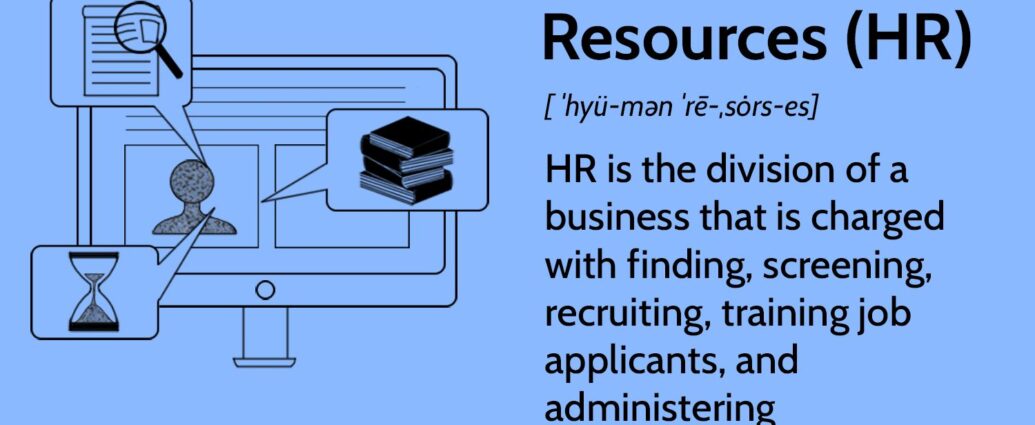
Human Resources: Key Roles and Responsibilities in Business
This post was originally published here
AI humanoid robots will soon invade our economy. Jefferies gives stocks to play the coming wave
An aging population, declining interest in manufacturing jobs and growing technological advancements should lead to a boom in humanoid robots, the firm said.
This post was originally published here

How badly the war in Iran is impacting your finances depends on where you live
If you are watching the chaos unfurling in the Middle East and thinking, “this doesn’t affect me,” that might be because you live on the West Coast or in a large Northeastern metropolitan area.
Where you live determines the impact the war in Iran has on your personal finances, according to an analysis by Oxford Economics.
Since the U.S. and Israel launched attacks on Iran, the economic fallout has included rising oil prices and volatility in equity markets. Oil prices are of particular note because consumers feel the pinch at the gas pump in an environment where they are already sensitive to further pressures on affordability.
Oil prices have increased because Iran borders the Strait of Hormuz, a narrow waterway in the Persian Gulf through which exports from the UAE, Qatar, Kuwait, and Iraq all flow. Some 20 million barrels of oil typically flow through the strait every day, about 20% of the global oil supply. Iran has said it controls the strait, littering it with mines, and ship captains are too nervous to enter the waterway, choking off global supply and sending prices spiralling.
However, other pockets of the economy are also impacted by disruption in the strait: fertilisers are a by-product of gas production, driving inflation in agriculture costs. There’s only a certain margin of costs that producers can absorb before they need to pass it on, with consumers ultimately footing the bill in another very visible way. Additionally, higher gas prices aren’t just borne by consumers but businesses as well: Transportation costs for farm equipment, commercial shipping, trucking, and delivery services have also increased as a result of the disruption.
The conflict in Iran, and the increase in oil prices as a result, have a “disproportionate” impact on low-income households because they spend a larger portion of their budgets on fuel, food, and utilities—the prices of which have increased because of the war, according to Barbara Denham of Oxford Economics.
“Metros where households spend the highest share on these commodities are largely in the South, in West Virginia, or scattered across the Midwest,” Denham noted. “Most are relatively small.”
Families living in Jackson, Hattiesburg, and Gulfport (MS), St. Joseph (MO), and Des Moines (IA) are among those feeling the sharpest end of the increases, the report added, as households in these metros spend an average of 16% of their total budget on groceries, fuel, and utilities. Unsurprisingly, these areas also have high levels of low-income households earning less than $35,000, and tend to be smaller and more remote locations.
The extent of the damage to household finances resulting from increases in oil prices depends not only on how long the conflict continues and how it is resolved, but also on how quickly trade routes reopen. A matter of weeks ago Wolfe Research chief economist Stephanie Roth said “food-at-home” inflation might rise by roughly 2 percentage points, adding about 0.15 percentage points to headline inflation.
An update this week from Britain’s IGD (Institute of Grocery Distribution) suggested food inflation could increase from the country’s current rate of 3.6% to over 8% by June.
At the other end of the spectrum, West Coast, and Northeastern metros spend less of their overall budget on groceries, utilities, and fuel—families in Seattle, Ithaca (NY), Lakeland (FL), Vineland (NJ), and Phoenix spend approximately 11% or less of their total budget on these three costs.
“While we believe that higher energy prices should have more of an impact on headline inflation than on growth, at least over the short term, the psychological impact of both the war and soaring gas prices is already registering on consumer sentiment surveys,” noted Denham. “We still forecast positive consumer spending growth of 1.9% this year … but we have lowered our GDP growth forecast from 2.8% to 2.4% due to the impact of higher oil prices and uncertainty weighing on consumer spending.”
A bump for some
While a bump in oil prices isn’t the most welcome news for consumers, it’s a silver lining for the oil drilling and gas mining sector. In 2020, the U.S. became a net exporter of petroleum for the first time since at least the 1940s, according to the U.S. Energy Information Administration.
Therefore, certain areas—and a handful of states—will see an upward tick in growth courtesy of the new supply and demand equilibrium. More than half of drilling GDP is generated, unsurprisingly, in non-metro counties: The Permian Basin in West Texas (which also includes counties in New Mexico) accounts for 35% of total mining and drilling GDP and 12% of those jobs.
“While we forecast that mining GDP will increase marginally in these counties, the impact on job growth will be more muted as firms can ramp up production in the short run,” Denham added.
Areas heavily involved in the refinery process also stand to gain, observed Denham: “The refined oil sector will also see a short-term uplift in GDP due to the jolt to oil prices. Refineries differ somewhat from drilling in that they are partly concentrated in Texas (Houston, Beaumont, Corpus Christi, and Dallas) but also have a large presence in Los Angeles, Chicago, New Orleans, Minneapolis, San Francisco, and Bellingham (WA). Indeed, the top 10 metros account for 50% of refining GDP and a third of the jobs.”
This story was originally featured on Fortune.com




Australia urged to swap diesel for electric buses as fuel costs soar
Electric buses are just 1% of the Australian fleet compared with 80% in urban China, a quarter in the Netherlands and 12% in the UK
As diesel climbs past $3 a litre amid fuel security concerns, transport advocates are calling for the rollout of electric buses across Australia to be prioritised.
In Australia, just 1% of buses are electric, compared with 80% of the urban fleet in China, a quarter in the Netherlands and 12% in the UK.
This post was originally published here
Australian petrol stations report 25% surge in demand as governments plan for ‘biggest energy crisis in history’
Rationing is not under consideration yet as hundreds of retailers report being without one or more types of fuel
-
Get our breaking news email, free app or daily news podcast
Petrol stations are reporting a surge in demand of up to 25% in the last fortnight alone on top of already major spikes earlier in the Iran war as Anthony Albanese comes under pressure to devise a national plan to cushion Australia against the “biggest energy crisis in history”.
The Australasian Convenience and Petroleum Marketers Association has revealed the scale of the demand on retailers, which has left hundreds of stations across the country without one or more types of fuel.
This post was originally published here
Brendan Gleeson wins best actor as Critics’ Circle theatre awards toasts The Weir
Other winners include Inter Alia’s Rosamund Pike, Ivo van Hove for All My Sons and Hayley Atwell who beat her Much Ado co-star Tom Hiddleston to best Shakespearean performance
Brendan Gleeson has been named best actor at the Critics’ Circle theatre awards for his West End debut in Conor McPherson’s pub drama The Weir. He beat fellow nominees including Bryan Cranston and Paapa Essiedu, both recognised for All My Sons, and James Hameed and Arti Shah, the duo who together portray Paddington in the new musical about Michael Bond’s bear. The Weir, directed by McPherson, was entirely omitted from the nominations for this year’s Olivier awards and is being turned into a film with Gleeson and the rest of the West End cast.
All My Sons, a critically adored production of Arthur Miller’s 1946 classic at Wyndham’s theatre, won in two categories at the Critics’ Circle awards: best revival of a play or musical and best director for Ivo van Hove. A new production of Stephen Sondheim and James Lapine’s Into the Woods, directed by Jordan Fein at the Bridge theatre, also won two prizes – best designer (Tom Scutt) and the inaugural award for best ensemble or cast.
This post was originally published here



How to watch the Sweet 16 and the Elite 8 of March Madness 2026 for free—and without cable
The Rounds of 64 and 32 delivered their share of drama, but now that the March Madness Sweet 16 has arrived, the stakes couldn’t be higher for anyone still hoping to win their office pool.
This year, one bracket made it further than most, surviving all the way to the 44th game of the tournament before No. 6 Tennessee’s 79-72 upset of No. 3 Virginia finally ended the run. Out of the roughly 36 million brackets tracked across major online platforms like ESPN, CBS, Yahoo, and others, zero perfect brackets remain. (Office pools are a different story, of course. If you’re still alive in yours, hold tight.)
What’s perhaps more striking than the upsets themselves is what didn’t happen: For the second straight year, there are no mid-major Cinderellas left standing. The Sweet 16 is an all-power-conference affair, a reflection of how NIL and the transfer portal have reshaped the landscape of college basketball.
The third and fourth rounds start Thursday, and while traditional Cinderella stories may be off the table, the Sweet 16 matchups are loaded with intrigue.
When and where do the Sweet 16 games of March Madness 2026 air?
Sweet 16 — Thursday, March 26
- No. 11 Texas vs. No. 2 Purdue, 7:10 p.m. ET on CBS (SAP Center, San Jose, CA)
- No. 9 Iowa vs. No. 4 Nebraska, 7:30 p.m. ET on TBS (Toyota Center, Houston, TX)
- No. 4 Arkansas vs. No. 1 Arizona, 9:45 p.m. ET on CBS (SAP Center, San Jose, CA)
- No. 3 Illinois vs. No. 2 Houston, 10:05 p.m. ET on TBS (Toyota Center, Houston, TX)
Sweet 16 — Friday, March 27
- No. 5 St. John’s vs. No. 1 Duke, 7:10 p.m. ET on CBS (Capital One Arena, Washington, D.C.)
- No. 4 Alabama vs. No. 1 Michigan, 7:35 p.m. ET on TBS (United Center, Chicago, IL)
- No. 3 Michigan State vs. No. 2 UConn, 9:45 p.m. ET on CBS (Capital One Arena, Washington, D.C.)
- No. 6 Tennessee vs. No. 2 Iowa State, 10:10 p.m. ET on TBS (United Center, Chicago, IL)
Elite 8
Sweet 16 winners won’t get much of a break. Regional championships are set for Saturday, March 28, and Sunday, March 29, airing across CBS and TBS.
Final Four
Saturday, April 4: The penultimate games will air on TBS at 6:00 p.m. and 8:30 p.m. ET from Lucas Oil Stadium in Indianapolis.
National Championship
Monday, April 6: The champion will be decided at 8:30 p.m. ET on TBS from Lucas Oil Stadium in Indianapolis.
How to watch for free
CBS Sports and Turner Sports show all tournaments across TBS, CBS, TNT, truTV, and their digital platforms, including March Madness Live.
Can I watch March Madness online?
If you have a cable subscription but aren’t near a TV, you can log into TBS.com or the TBS app for games on that network. You’ll need your cable or satellite provider credentials. CBS and Warner Bros. Discovery are also streaming games on their respective platforms.
- Paramount+: CBS’s streaming service; subscriptions start at $8.99 or $13.99/month. They have a deal right now for $2.99 for your first month.
- Max: No free trial; subscriptions start at $10.99/month
- Disney+ bundle: (Disney+, Hulu, ESPN+): Starts at $35.99/month; no free trial currently available
- Hulu with Live TV: Three-day free trial; $89.99/month afterward
- YouTube TV: Five-day free trial available; $82.99/month after
- Sling TV: Currently offers an “Orange” plan starting at $4.99 for a one-day, three-day, seven-day, or monthly subscription to watch sports streaming
- Fubo TV: Seven-day free trial; plans start around $73.99/month
NCAA’s own streaming option
March Madness Live will stream every game on the NCAA website and on Apple, Android, Amazon, and Roku devices. You’ll need to log in with your TV provider credentials to access most content, though some free streaming windows are typically offered early in the tournament.
This story was originally featured on Fortune.com

‘Intelligence may be scalable, but accountability is not’: A new report exposes the hidden cost of the AI agent revolution
In Charlie Chaplin’s 1936 film Modern Times, a factory worker struggles to keep pace with an ever-accelerating assembly line — until the machine swallows him whole Nearly 90 years later, Wharton professor Eric Bradlow has the image on his mind. The machines are smarter now. The stakes are higher. And according to a sweeping new joint report from Accenture and the Wharton School, the humans running them are falling behind in a way that should alarm every boardroom in America.
There is a lot of breathless talk of autonomous agents reshaping every corner of corporate America, from handling sales calls to writing code to managing supply chains. But the report from the partnership between Accenture’s Global Products practice and Wharton’s AI and Analytics Initiative adds evidence to an emerging, inconvenient pattern: the smarter AI gets, the more it demands of the humans behind it.
“Intelligence may be scalable, but accountability is not,” says the report, titled The Age of Co-Intelligence: How Humans, AI Agents and Robots Are Redefining Value. It’s a sentence that sounds almost simple until you sit with what it means for every boardroom deploying agents by the hundreds. “This asymmetry is critical,” it continues, arguing that as AI removes limits on how much thinking and analysis can be done, humans still have to decide what matters, set strategy, and, importantly, own the outcomes.
The central finding is not that AI is coming for human jobs — it’s that it poses a direct challenge to all the leaders who will have to manage a world of autonomous bots crawling through the white-collar economy. “In a co-intelligent enterprise, leadership does not diminish as AI improves,” the report reads. “It becomes more consequential.”
While the report illustrates hypothetical upsides and doesn’t discuss the downsides of agents run amok, consider single errors rippling through entire systems: one agent’s hallucinated inventory figure causing downstream agents to massively overorder stock, or a customer service agent telling a customer that the problem is fine, and solved, when it isn’t and a human isn’t taking the lead. James Crowley, Accenture’s Global Products Industry Practices Chair and a co-author of the report, told Fortune that “we like to say humans in the lead, not in the loop.” If humans aren’t consciously taking the lead, errors can multiply at scale.
The numbers underneath that claim are staggering. Analyzing task-level data across 18 industries using ONET and Bureau of Labor Statistics data, Accenture researchers found that more than 50% of working hours across the American economy are now in play — subject to reshaping by about 60 digital and physical AI agents considered in the study. This is a truly massive data set, corresponding to more than 120 million workers across the 18 industries studied. In banking and capital markets, Wharton and Accenture estimated that the share of hours impacted by digital agents alone exceeds 45%.
A mass redeployment of labor
For a $60 billion company — a real client modeled in the report — the researchers estimated approximately $6 billion in potential annual revenue growth from deploying agentic AI at full maturity, alongside $1.7 billion in annual productivity gains. The catch: by 2028, roughly one-third of those productivity gains showed up not as direct cost savings, but as “capacity freed” — hours that need to be deliberately redirected toward higher-value work, or they simply evaporate.
“Productivity becomes growth only through redeployment,” the report warns. “Unless leaders deliberately redeploy that capacity toward higher-value work, productivity gains stall at efficiency and fail to translate into growth.”
Crowley told Fortune that the failure mode isn’t deploying too many agents — it’s failing to think about them as a coherent workforce rather than a collection of one-off experiments. “Everyone’s building an agent here, an agent there, sometimes thousands,” Crowley said. “What we tried to do is step back and look at what the agentic landscape will look like at an enterprise level.”
That enterprise view is where the accountability problem bites hardest. AI agents are already spreading “rapidly across the enterprise value chain, often ahead of formal strategy and governance,” the report notes, with nearly three-quarters of knowledge workers now using AI — frequently through unsanctioned, bring-your-own tools, a phenomenon sometimes called “shadow AI.” By 2028, roughly a third of enterprise applications are expected to embed agentic capabilities. And yet the report makes clear that governance architecture has not kept pace.
From a tech CEO’s perspective, this report rings true. Andrey Khusid, CEO of Miro, the $17.5 billion productivity startup that made headlines for deciding to leave Russia amid the outbreak of the Ukraine War, recently sat down with Fortune for a chat about the state of things. Miro’s main app a productivity software that dates back over a decade and it’s now embedding AI. “For almost 15 years, it was human-to-human collaboration [on Miro],” he agreed. “But then agent-to-AI happened. And now a lot of collaboration happens between humans and agents together.”
By bringing agents onto the platform, Khusid said his company is allowing users to “deliver work in an agentic way.” This is more complex than human-to-human work, he said. “It’s way more powerful and way faster time-to-value. Because before you would need to have a human with this expertise or that expertise … With agents, you can have the whole team working by your side with different expertise.”
Still, it’s extremely important to recognize that agents can be error-prone, just as humans can, and “a lot of this now-agentic delivery is a black box.” Miro is working to unpack that default opacity so that it can correct agents when they err in the wrong direction. Acknowledging that it looks like “an agentic revolution,” he added, “We’re at the very beginning.”
Bradlow and Crowley conceded that agents can be error-prone, even hallucinatory, and, on a mass scale, that could lead to widespread errors. “Here’s the thing,” Bradlow said, citing his years of expertise as a mathematician and data scientist at heart, and urging us to understand agents as fundamentally non-human in their decision-making. “Agents are built on the premise of what’s called reinforcement learning, which means good outcomes as programmed by the human who determines the objective function. When agents get bad outcomes, they change their assignment. They change what they do. It’s not as obvious humans learn that same way.” When an agent makes a mistake, he explained, you can tell it what to reinforce, and it shouldn’t make that mistake again. Which makes Khusid’s point about opening the black box all the more important.
Modern Times and the Weakest Link
Bradlow, who chairs the Wharton marketing department, told Fortune that it reminded him of several images from television and film. “This will expose the weakest link in an organization,” he said, recalling the British game show that was one of the most successful in BBC history, where the host eliminated players by saying, coldly: “You are the weakest link. Goodbye.”
He said it also reminded him of famous images of Charlie Chaplin and Lucille Ball, where the comedy legends struggled to keep up with ever-accelerating assembly lines. In the classic episode “Job Switching,” Ball ended up stuffing her mouth with chocolates as they sped by her at relentless speed
Chaplin’s famous scene in Modern Times was a bit grislier, ending with him getting sucked into the conveyor belt itself. It was also an iconic image that captured the early days of 20th-century capitalism. If one worker in a 20-step process adopts AI and triples their throughput while the next worker is still running on Excel, the bottleneck doesn’t disappear, he said — it just moves. “Efficiency gains happening here but not here,” he said, “will be exacerbated, and you will see it quickly.”
The governance stakes are highest, the report found in one case study, precisely where the revenue opportunity is largest: Sales. A function combining massive decision volume, high digital agent suitability, and elevated commercial risk — customer interactions, pricing, commercial judgment — sales is simultaneously the top candidate for early agent deployment and, as the report calls it, “a governance-critical domain where trust, accountability, and human oversight must be deliberately designed.”
That word — deliberately — recurs throughout the 40-page report like a drumbeat. Leaders cannot simply enable agents and wait for value to emerge. They must set explicit P&L targets, build human-led operating models, and assign clear decision rights before agents go live. The report goes so far as to suggest organizations may need a new executive role: a Chief Agentic Resources Officer.
“We spend so much time on the productivity aspect of the story,” Crowley said. “The gains on the revenue side are going to eventually dwarf the gains on the efficiency and productivity side.” Most companies have been very focused on the efficiency and productivity opportunities with advanced AI, he said, adding that he thinks now is the right time to make this an “and” story as the revenue potential is there and could be far larger.
Bradlow agreed that was a major takeaway for him as well, citing remarks he heard at an executive breakfast roundtable that Wharton and Accenture co-hosted at Nvidia’s GTC conference earlier in March. “The gains on the revenue side are going to eventually dwarf the gains on the efficiency and productivity side … it’s corporations, entities, people doing things they just could not do before. And companies launching new types of products they just could not imagine doing before.”
But that growth prize comes with a human price tag. The more intelligence you scale, the more accountable — and irreplaceable — your human leaders become. The agents can reason, execute, and coordinate. What they cannot do is own the outcome. In a badly designed agentic enterprise, one human could suddenly find themselves responsible for an exponential cascade of outcomes they never saw coming. It suggests that the phrase “modern times” means exactly what it did in Chaplin’s time: you have to master the machine, or you could be ground up in its gears.
This story was originally featured on Fortune.com






Ministers vow to spend record £8.4bn on road maintenance in England
Move is part of £27bn five-year investment plan for A-roads and motorways, with almost a third going on work such as resurfacing
Ministers have pledged to spend record amounts on road maintenance as part of a £27bn five-year investment plan for England’s major roads and motorways.
The government said it was aiming to “fix the foundations” with almost a third, £8.4bn, of the spending going on maintenance, including resurfacing a quarter of England’s strategic road network.
This post was originally published here



Best Low Revenue Business Loans for Startups and Entrepreneurs
This post was originally published here




Dow Falls 250 Points; US Initial Jobless Claims Rise
U.S. stocks traded lower this morning, with the Dow Jones index falling more than 250 points on Thursday.
Following the market opening Thursday, the Dow traded down 0.56% to 46,171.31 while the NASDAQ fell 1.15% to 21,677.52. The S&P 500 also fell, dropping, 0.82% to 6,537.54.
Leading and Lagging Sectors
Energy shares climbed by 0.6% on Thursday.
In trading on Thursday, communication services stocks fell by 1.6%.
Top Headline
U.S. initial jobless claims increased by 5,000 from the previous month to 210,000 during the third week of March, in-line with the median market estimates.
Equities Trading UP
This post was originally published here






Iran war will spare no major economy, says OECD — but the UK is more vulnerable than others
The U.K. is predicted to be worse hit by the Iran war than its developed market counterparts, the OECD said in its interim economic outlook on Thursday.
This post was originally published here


Retail firms warn of price hikes if Iran war extends for months
Fashion retailer Next has accounted for millions in additional costs likely to arise from the Middle East conflict
This post was originally published here





Stock Market Today: Stocks Fall, Oil Moves Back Above $100/Barrel as Investors Digest Iran Developments
This post was originally published here