Shares of Navan Inc (NASDAQ:NAVN) rose sharply in pre-market trading after the company reported better-than-expected fourth-quarter financial results and issued first-quarter sales guidance above estimates.

Navan reported fourth-quarter revenue of $177.92 million, beating analyst estimates of $162 million, according to Benzinga Pro. The company reported adjusted earnings of two cents per share for the quarter, beating estimates for a loss of 12 cents per share.

Navan shares jumped 25.7% to $11.50 in pre-market trading.

Here are some other stocks moving in pre-market trading.

Gainers

  • EpicQuest Education Group Internatnl Ltd (NASDAQ:EEIQ) gained 109.8% to $5.73 in pre-market trading after gaining 22% on Wednesday.
  • Fitness Champs Holdings Ltd (NASDAQ:FCHL) gained 84.8% to $3.16 in pre-market trading after dipping 42% on Wednesday. According to a Mar. 18 Securities and Exchange Commission filing, FCHL’s board approved the 15-for-1 share consolidation on Feb. 12 to regain compliance with Nasdaq Marketplace Rule 5550(a)(2), which mandates a minimum bid price of $1 per share.
  • Olaplex Holdings Inc (NASDAQ:OLPX) gained 50.4% to $2.00 in pre-market trading after the company agreed to a $1.4 billion cash buyout by Henkel at $2.06 per share.
  • Southland Holdings Inc (NYSE:SLND) rose 29.4% …

Full story available on Benzinga.com

This post was originally published here

The Chinese government has reportedly restricted the co-founders of Manus from leaving the country as it reviews the company’s $2.5 billion acquisition by Meta Platforms (NASDAQ:META).

The two co-founders of Manus, Xiao Hong and Ji Yichao, were summoned earlier this month for a meeting with the National Development and Reform Commission in Beijing to discuss the acquisition, according to The Wall Street Journal report.

Following the meeting, officials instructed the Singapore-based executives not to leave China until further notice, citing an ongoing review.

Relocation And Ownership Scrutiny

The acquisition of Manus, which develops an advanced AI agent, by Meta Platforms has drawn scrutiny from Chinese regulators. The company’s actions, including relocating most of …

Full story available on Benzinga.com

This post was originally published here

Teesside site mothballed in September given £100m by government to restart production for at least three months

A shuttered carbon dioxide plant on Teesside is to reopen with £100m of government investment in response to fears that the war in Iran could trigger shortages of the gas that multiple industries rely on.

The business secretary, Peter Kyle, has approved the reopening of the Ensus plant to help bolster production of CO2, which has uses ranging from carbonating drinks and keeping food fresh to medical procedures and the sedating of animals for slaughter.

Continue reading…

This post was originally published here

(RTTNews) – Oil prices climbed more than 3 percent on Thursday, clawing back losses from the previous session on concerns that a prolonged conflict in the Middle East will further disrupt supplies.

This post was originally published here

Rule change follows high court challenge brought by two doctors prevented from working in specialist fields

Doctors who have been prevented from working in the NHS while they wait for asylum decisions are celebrating after the Home Office agreed to lift the ban. The changes come into force on Thursday.

The changes to the immigration rules follow a high court challenge by two specialist doctors who had the relevant qualifications to work for the NHS but were prevented from taking up work. Doctors who have a break in their practice can quickly become deskilled. Until now, the ban has remained in place despite shortages of doctors and other healthcare professionals in some parts of the NHS.

Continue reading…

This post was originally published here

From the Marcy Houses to a chart-topping rapper, Jay-Z was minted the first hip-hop billionaire in 2019. Now worth $2.8 billion, according to Forbes, the star is calling out blanket hate against billionaires.

In a recent interview with GQ, the billionaire rapper said lambasting the whole billionaire class is a distraction from fixing the structural forces that lead to extreme wealth in the first place.

“It’s almost like a cop-out,” he said. “You get to demonize this group of folks without fixing the actual system that exists, that’s in play.”

The comment comes in response to a brewing distaste for the ultrawealthy across the U.S. A Pew Research survey released last week found that nearly one-in-five Americans, or 18%, think that being a billionaire is “morally wrong.” Among young Americans, that figure rises to about one in three. Politicians have seized on that sentiment: California has a ballot proposal for a one-time billionaire tax, and more recently, Sen. Bernie Sanders and Rep. Ro Khanna introduced a national billionaire tax bill. 

For Jay-Z, who may have 99 problems, his net worth isn’t one. He rejected the idea that being wealthy corrupts one’s character. “[Money] may enhance it or may cause you to act in a way,” he said. “But you was going to act like that anyway.”

Ditto for it having an impact on one’s ethics. “Morality is not defined by a dollar amount,” he said, before asking, “If so, what is that dollar amount? When does it start? If it’s a cutoff like ‘all millionaires are bad,’ at $999,000 I’m good? It can’t be that way.”

The rapper is not the only star to achieve billionaire status. Jay-Z’s wife, famed singer-songwriter Beyoncé, crossed the line in December 2025. Taylor Swift, Dr. Dre, and Bruce Springsteen have also reached the ranks of the ultrawealthy.

The country now has more than ever, according to Forbes, with 989 currently claiming a net worth of 10 digits or more. Tesla CEO Elon Musk, currently worth $827 billion, is on his way to becoming the world’s first trillionaire after Tesla shareholders approved a $1 trillion pay package last year. Globally, billionaires wealth hit a record $18.3 trillion in 2025, according to the international charity Oxfam.

From Marcy House to Malibu

The rapper was blunt about his own upbringing and how long it took him to reach the top. “I got successful the hard way, in spite of the way the system is set up,” he said. 

Jay-Z grew up in the Marcy Houses, a public housing project ravaged by violence in Brooklyn’s Bedford-Stuyvesant neighborhood.His upbringing was a far cry from the multimillion-dollar real estate portfolio the rapper and his wife, Beyoncé, hold today. In 2023, the duo purchased a $200 million Malibu mansion, reportedly in cash.

He’s spoken about his upbringing before, during an interview on NPR’s Fresh Air. “It was just [a] weird mix of emotions,” he said. “One day, your best friend could be killed. The day before you could be celebrating him getting a brand-new bike. It was just extreme highs and lows.”

Despite the chaos and uncertainty of his early years, he channeled those experiences into relentless drive. “My talent pushed against all the headwinds and I got successful that way,” he said during the GQ interview.

This story was originally featured on Fortune.com

Keir Starmer responds after Kemi Badenoch spokesperson says she ‘raised eyebrow’ in relation to account of theft

Keir Starmer has said it is “far-fetched” to suggest that the theft of his former chief of staff’s mobile phone is somehow connected to a subsequent push for the release of documents relating to Peter Mandelson’s appointment as US ambassador.

Downing Street has come under pressure to say whether key messages between Morgan McSweeney and the former ambassador were lost after it emerged that the government-issue phone was stolen last year.

Continue reading…

This post was originally published here

Renowned cryptocurrency analyst Willy Woo likened all cryptocurrency trading other than Bitcoin (CRYPTO: BTC) to gambling—unless you’re an insider who knows the game is rigged in your favor.

Crypto Trading Like Gambling, Says Woo

In an X post, Woo said that without an informational or structural edge, one shouldn’t invest in “crypto.”

“Not that I recommend buying crypto, you need to be an insider to get an edge, it works like a casino, the house will take your money,” they argued.

It’s worth mentioning here that Woo sees BTC and altcoins as very different and rejects lumping them together as “crypto.”

Full story available on Benzinga.com

This post was originally published here

Jena Lisa Jones says she backed Trump in 2024 election because of his campaign promises to release Epstein files

After casting her vote for Donald Trump in 2024 in hopes that he would bring transparency around the Jeffrey Epstein case, Epstein survivor Jena Lisa Jones said in an interview this week that she now fears “we’re not going to get justice in all of this”.

“I wanted my day in court,” said Jones, who has said she was abused by Epstein when she was 14, in an interview on the Shadow Sessions podcast that aired on Thursday morning. “I didn’t get that, and we were so close to it, it really got ripped from us, and then after [Epstein] passed, everything just went into a circus show.”

Continue reading…

This post was originally published here

Wall Street had a banner year in 2025—and the paychecks show it.

The securities industry bonus pool reached a record $49.2 billion in 2025, up 9% from the prior year, while the average bonus climbed 6% to $246,900, New York State Comptroller Thomas P. DiNapoli said Thursday. Profits powered the payout: Wall Street earned a record $65.1 billion in pretax profits in 2025, up more than 30% from $49.9 billion the year before.

“Wall Street saw strong performance for much of last year, despite all of the ongoing domestic and international upheavals,” DiNapoli said. “When Wall Street does well, it’s good for our state and city budgets. However, we are seeing slower job growth, and geopolitical conflicts pose extraordinary risks for the short- and long-term outlook.” 

Strong trading activity, underwriting, and asset-management fees drove the gains. There is, however, a significant asterisk: When adjusted for inflation, the bonus pool peaked before the Great Recession, in 2006, at $53.7 billion in today’s dollars, meaning the nominal record remains just that—nominal.

Wall Street’s footprint in New York remains enormous. The industry accounted for 20.2% of all economic activity in the city in 2024 and 19.4% of state tax collections in the past fiscal year. DiNapoli estimates the 2025 bonuses will generate $199 million more in state income tax revenue and $91 million more for the city compared with last year—a critical cushion as federal funding grows uncertain.

The average securities-industry salary in New York City rose 7.3% to $505,677 in 2024, including bonuses—the second-highest on record and nearly five times the average salary in the rest of the city’s private sector. Bonuses alone made up roughly 42% of all industry wages.

Not everything is pointing up. Industry headcount fell to 198,200 in 2025 from a 30-year high of 201,500 in 2024, though the comptroller’s office expects annual data revisions to show modest growth. New York City’s share of national securities jobs has meanwhile slipped to 17.9%, down from roughly a third of the national total in 1990, as rivals like Dallas and Miami have aggressively built out their financial sectors.

The worry now is whether 2026 can come close to matching it. New York’s budget plans may already be too rosy: The governor’s proposed budget assumed finance-sector bonuses would rise 25.9% in the current fiscal year, while the city projected a 15.1% jump in securities bonuses. Based on DiNapoli’s estimate, both targets look out of reach.

President Trump’s escalating tariff agenda has rattled equity markets in early 2026, and Wall Street’s hiring momentum has stalled. With one in 13 New York City jobs tied directly or indirectly to the securities industry, the stakes for getting the next chapter right extend far beyond the trading floor.

For this story, Fortune journalists used generative AI as a research tool. An editor verified the accuracy of the information before publishing.

This story was originally featured on Fortune.com

Sen. Mark Kelly (D-Ariz) said rising health insurance costs are forcing Americans off coverage after enhanced subsidies tied to the Affordable Care Act expired, warning policymakers failed to prevent predictable premium hikes.

ACA Premiums Spike, Millions Lose Coverage

On Wednesday, Kelly posted on X, criticizing President Donald Trump and GOP lawmakers for their inaction.

“Trump and Republicans knew what would happen if they let health care premiums skyrocket: Americans wouldn’t be able to afford it and families would lose their insurance. Now it’s happening, and they still have no solution,” Kelly wrote.

He added, “We must keep fighting to bring down the cost of health care.”

Kelly shared A Wall Street Journal report confirms the scope of the problem: nearly 10% of people enrolled in ACA plans last year dropped coverage after premium increases made insurance unaffordable.

Full story available on Benzinga.com

This post was originally published here

The Initial public offering (IPO) of Elon Musk-led SpaceX is one of the most-awaited IPOs of the year, as it is expected to become the biggest ever, potentially surpassing Saudi Aramco’s $29 billion debut.

The space exploration company is expected to raise up to $75 billion. According to a recent report, the company plans on filing for its IPO as early as this week.

Biggest IPO

SpaceX is expected to allocate more than 20% of shares to retail investors during the IPO, which is significant considering the $75 billion it is expected to raise, up from the earlier reported $50 billion.

SpaceX will target a valuation of $1.75 trillion, as confirmed by Musk in a social media …

Full story available on Benzinga.com

This post was originally published here

Russia suspended ammonium nitrate export licenses from March 21 through April 21 earlier this week, citing domestic planting season needs — a move that economist Steve Hanke says is a direct signal to the West: ease sanctions, or fertilizer won’t flow.

Russia’s Market Grip

Russia controls up to 40% of global trade in ammonium nitrate, making the freeze immediately consequential for world agricultural supply chains. Moscow’s stated rationale is prioritizing spring planting, but Hanke argued the timing and leverage are inseparable from the ongoing sanctions standoff.

In a post on X late Wednesday, Hanke also shared a list of the biggest ammonium nitrate importers, saying “sanctions will have to give or fertilizer won’t flow.”

Full story available on Benzinga.com

This post was originally published here

Sidus Space Inc. (NASDAQ:SIDU) climbed 2.11% to $2.90 in after-hours trade on Wednesday, extending a 18.83% intraday surge.

The stock’s gains across both sessions follow the company’s Tuesday announcement that it will host its fourth-quarter and full-year 2025 earnings call on Mar. 31 at 5:00 p.m. ET.

SpaceX IPO Reports Lift Stock

The stock also moved higher following reports that Elon Musk-led SpaceX, which has a multi-launch commercial agreement with Sidus Space, is preparing to file for its proposed IPO as early as this week. The company is aiming to raise …

Full story available on Benzinga.com

This post was originally published here

Oxford Industries, Inc. (NYSE:OXM) will release earnings for its fourth quarter after the closing bell on Thursday, March 26.

Analysts expect the Atlanta, Georgia-based company to report quarterly earnings of 3 cents per share, down from $1.37 per share in the year-ago period. The consensus estimate for Oxford Industries’ quarterly revenue is $371.84 million (it reported $390.5 million last year), according to Benzinga Pro.

On Dec. 10, Oxford Industries posted upbeat third-quarter results but slashed its FY25 guidance below estimates.

Oxford Industries shares fell 2.5% to close at $32.97 on Wednesday.

Benzinga readers can access the latest analyst ratings on the Analyst Stock Ratings page. Readers can sort by stock ticker, company name, analyst …

Full story available on Benzinga.com

This post was originally published here

Australian counterterrorism experts observe December shooting came amid years of messaging from terror group urging followers to act ‘on their own initiative’

The Bondi beach terror attack occurred amid an international spike of anti-western plots in December last year that appeared to be “inspired or instigated” by Islamic State, a new report has found, with many of them targeting holiday events such as Christmas markets.

In research published by the West Point Combating Terrorism Center in its publication Sentinel on Thursday, Australian counterterrorism experts Andrew Zammit and Levi West examined Islamic State’s strategic shifts and jihadi tactics in Australia prior to the alleged antisemitic terrorist attack.

Continue reading…

This post was originally published here

Two UK nationals released on bail while Met continues investigation into incident in Golders Green

Two men arrested in connection with a suspected arson attack on four ambulances operated by a Jewish charity in north London have been released on bail.

The men, aged 47 and 45, who are both UK nationals, were arrested on Wednesday on suspicion of arson with intent to endanger life after the incident in Golders Green. On Thursday the Metropolitan police said the pair had been bailed until April while the investigation continues.

Continue reading…

This post was originally published here

When Silicon Valley executives and federal lawmakers gathered at the Hill and Valley Forum on Tuesday,, a conference designed to bridge the gap between Big Tech and Washington, artificial intelligence dominated the whole event. 

Despite their historically rocky relationship over tech regulation, executives and lawmakers were aligned that the AI race has become an existential battle, and one source of anxiety came up in nearly every session: China. 

Sen. Rick Scott (R-FL), who spoke during the session “The Operating System for

Institutions: Money, Workflows, and AI,” framed winning the race as a matter of life and death. 

“We are competing against China. The government of China wants to destroy our way of life. When they wake up every day [they think], ‘how can the American way of life be destroyed?’” Scott said, adding he believes that Iran and Russia think the same way. “We got to put ourselves in a position that we can outcompete, especially China, with regard to AI.” 

Beneath the seemingly unified anti-China front, however, revealed an underlying tension between lawmakers and Silicon Valley: should U.S.-based companies keep their most advanced technology at home? The unnamed culprit throughout the conference was Nvidia, which recently got approval from both governments to sell advanced AI chips to China. 

Exports are only part of the problem: there are now smugglers who have stolen Nvidia’s technology to sell to China through backchannels. Last week, the co-founder of hardware manufacturer Supermicro was charged with allegedly orchestrating a scheme to smuggle $2.5 billion worth of Nvidia microchips to China. In November-, a group of four men, comprised of two U.S. citizens and two Chinese citizens, were arrested for shipping Nvidia chips to China through a multi-national smuggling ring. 

Speaker of the House Rep. Mike Johnson (R-LA), the event’s keynote speaker, didn’t call out China directly, but kept asking the audience of technology executives “to keep American technology American.” He then urged the companies to keep their data centers, chips, and infrastructure within the U.S. and “out of the hands of America’s adversaries and rivals.” 

“We’re asking you, our builders and innovators, to accept some minor constraints, relative to competitors in foreign countries, but I’ve always believed that some minor friction from high standards is at the heart of operating in a nation that is built upon the highest principles,” Johnson said. 

Johnson’s keynote reflected the concerns of other lawmakers and tech executives, who alternated between unnamed enemies of the U.S. to explicit warnings about China.

‘AI is an American birthright’ 

“This isn’t just a technological race, a fight over who’s going to get the best technology and win the AI race first, this is a moral fight,” said Sen. Jim Banks (R-IN) in a conversation with Palantir CTO Shyam Sankar entitled “Scale, Security, and

Sovereignty: Competing with China’s Defense-Industrial Model. “We know that the PRC (People’s Republic of China) is going to lie, steal, and cheat.”

Banks sponsored the bipartisan Guaranteeing Access and Innovation for National Artificial Intelligence (GAIN AI) Act, which would force U.S. companies to certify that they gave domestic customers the opportunity to buy advanced AI chips before exporting them. Under the Act, companies would also need to obtain a license to export advanced AI chips to “countries of concern.” 

Sankar agreed with the defensive approach, but said the U.S. also needs to “play offense.” 

“By and large, AI is an American birthright. It came from the US. The Chinese only have it from distillation attacks,” Sankar said, referring to the technique of training a model on the outputs of a more advanced model to replicate its success. “The one place they have a marginal advantage is they’re a little bit more practical about what they’re trying to do with it. They view it as something to implement for economic advantage, while our labs are obsessed with this pursuit of AGI, which I’m glad we have an aspirational goal, like getting to Mars. But you know, there are places where this becomes a pathology.” He cited AI doomerism about mass employment is one example of that pathology.

In a separate session, Keith Rabois, the managing director of Khosla Ventures, argued that the role of American businesspeople is to support the U.S. He said that Khosla Ventures invests in companies that will have a “positive impact” on American society. 

“We will not invest in things that would help our rivals. We don’t invest in China. We wouldn’t consider investing in China, because we are in an existential AI race, and whoever is the most successful with AI will dominate the economic future of the globe,” he said. 

Partnership across sectors

In a speech titled “Broken Bureaucracies vs. The Tyranny of Technologists: Who Will Save The West?,” Trae Stephens, co-founder of defense tech company Anduril Industries, warned if Washington and Silicon Valley can’t figure out how to work together, the country’s future will be decided by China. He argued that neither government overregulation nor a “blank check” to Silicon Valley is the answer.

“These days, the government isn’t legislating much of anything at all,” Stephens said. 

He invoked President Franklin D. Roosevelt enlisting Ford to build more than 18,000 B-24 bombers during World War II, or the Defense Advanced Research Projects Agency developing the direct precursor to the internet.

“We’re playing catch-up here,” Stephens said. “In the early 2010s, when Chinese military documents first started talking about AI weapons, and CCP factionalists started posting about the idea of an industrial party, we were arguing about whether or not tech wanted to work with the Pentagon at all. 

He called on founders to ask if their products “strengthen the country that is making this success possible,” and urged government officials to consider how to leverage technology, not control it. 

This story was originally featured on Fortune.com

Tesla Inc.‘s (NASDAQ:TSLA) ride-hailing service in the state of California isn’t classified as an autonomous vehicle service or Robotaxi, according to a statement by an official from the California Public Utilities Commission (CPUC) on Wednesday.

Tesla’s Ride-Hailing Not A Robotaxi, CPUC Says

In an appearance on the Driverless Digest podcast on Monday, Pat Tsen, who serves as the Deputy Executive Director for Consumer Policy, Transportation, and Enforcement at the CPUC, confirmed that the EV giant holds the same permit by the Department of Motor Vehicles that is issued to limousine operators in the state.

“Tesla is not operating an autonomous vehicle service,” Tsen confirmed, adding that the CPUC classified vehicles based on the Society of Automotive Engineers (SAE) system, with autonomous vehicles being defined as an SAE Level 3, which illustrates that “the onboard AI system is capable of navigating designated road conditions within an operational design domain on its own,” she added.

Tesla was at level 2 and featured a safety driver, which is classified …

Full story available on Benzinga.com

This post was originally published here

Rising energy bills give Reform and Tories opening to attack net zero while government hesitant to make case for clean energy

Could net zero become “the next Brexit”? That is the fear stalking climate advocates as the oil crisis caused by the war on Iran starts to bite.

A powerful coalition of the well-funded Reform party, led by Nigel Farage, the Conservative party, some business interests, and the UK’s right-wing media, are engaged in an onslaught against the longstanding target of reaching net zero greenhouse gas emissions by 2050.

Continue reading…

This post was originally published here

Amid the increasingly damning reports on the rising threat of America’s runaway deficits and debt, the looming disaster that could upend the lifestyle of tens of millions of elderly Americans is getting scant attention. In less than seven years, the Social Security retirement trust fund will go broke, and under federal law, its insolvency will automatically trigger gigantic reductions in benefits. According to estimates from the nonpartisan Committee for a Responsible Federal Budget (CRFB), low- and medium-income retired couples would respectively face hits of $11,200 and $18,400 a year, shrinking the dollars they’re pocketing from Social Security by around one-quarter. To grasp the weight of that sudden blow: America’s seniors, on average, depend on the nine-decades-old program for over half their livelihoods.

Social Security’s math problem is long-standing—and chronically ignored by Congress. Starting in 2010, the program began running cash flow negative, meaning that its outlays exceeded its tax revenues. Ever since then, it’s been paying benefits by drawing down the reserves accumulated when a far higher proportion of Americans were working than retiring versus the sharply falling ratio today. By 2033, the trust fund will run dry, triggering that immense, across-the-board drop that is slated to punish the most vulnerable Americans by collapsing all benefits an equal share regardless of income.

The challenge is daunting: Social Security is facing staggering cash shortfalls of around 4% a year through the year 2100. By the way, the One Big Beautiful Bill Act worsened the outlook by handing seniors a big tax break on their Social Security income, money that was previously helping replenish the trust fund. But now, the CRFB is proposing a fix that promises significant progress toward putting the program on a path to self-sufficiency.

How curbing Social Security benefits to affluent Americans could save the program

The CRFB think tank highlights that a cohort of couples are now getting benefits of $100,000 or more, and that the six-figure group will expand rapidly in the years to come as payouts wax alongside inflation or even faster. As an initial step, the CRFB advocates capping what these formerly super-high-earners, garnering the biggest payments, will receive going forward.

The plan—dubbed the “Six-Figure Limit,” or SFL—would set a max of $100,000 for couples who are now receiving the top benefits. The lid would be adjusted for marital status and age of collection. A single person wouldn’t receive more than $50,000, and a husband and wife, each leaving the workforce at 62, would get capped at $70,000. How about indexing? The CRFB presents two main options: In the first, benefits would rise from the SFL by the rate of inflation. That route would eliminate one-fifth of the solvency gap over the next 75 years, and save $100 billion through 2036. In an alternative scenario, the cap would stay fixed in nominal dollar terms, in our examples at $100,000 or $70,000 sans bumps for the CPI, for 20 or 30 years, and after those intervals grow in tandem with wages. That prescription erases one-quarter of the shortfalls and saves $190 billion over the next decade. It would also single-handedly delay insolvency for seven years.

The CRFB argues that those “high benefits far exceed what’s necessary to maintain an adequate standard of income, especially when one considers that Social Security represents only one-seventh the income of those in the top quintile [of all recipients].” 

Of course, the program’s savings plug far less than half of Social Security’s future deficits. It will take additional modest, and also more radical fixes to bridge the yawning gaps. Jessica Riedl, a budget and tax fellow at the Brookings Institution, champions flattening benefits as the income scale rises. The Riedl plan would lift the low-earners toward $25,000 a year, and push the high-earners closer to the same $25,000 mark. “Benefits wouldn’t be totally flat, but they’d move in that direction,” Riedl told Fortune. “That formula would bring the revenues and benefits into annual balance over a couple of decades. The primary role would return to keeping seniors out of poverty, rather than offering wage replacement for high-earners.”

President Franklin Roosevelt, the father of Social Security, extolled the program as the guarantor “of some measure of protection for the average citizen … against poverty-ridden old age.” The CRFB template would help steer Social Security from what’s in part gravy for the well-to-do toward its original purpose as an essential safety net. 

This story was originally featured on Fortune.com

The CNN Money Fear and Greed index showed some easing in the overall fear level, while the index remained in the “Extreme Fear” zone on Wednesday.

U.S. stocks settled higher on Wednesday, with the Dow Jones index gaining more than 300 points during the session as crude oil prices retreated sharply on reports that Washington is pursuing diplomatic talks with Tehran — even as Iranian officials formally denied any progress.

Reports that the U.S. had delivered Iran a 15-point proposal and was seeking a one-month ceasefire to facilitate talks proved sufficient to spark a broad-based relief bid across equities.

In earnings, Chewy Inc. (NYSE:CHWY) shares jumped around 13% on Wednesday after the online pet‑care retailer delivered a stronger‑than‑expected fourth quarter and rolled out a solid fiscal guidance for 2026. Cintas Corp.

Full story available on Benzinga.com

This post was originally published here

Here are the latest developments in the U.S.–Israel–Iran war at 3.15 AM ET on Thursday, as the conflict enters its 27th day.

U.S. and Israeli strikes on Iran and Lebanon continued, while Iranian missiles targeted central and northern Israel in retaliation.

President Donald Trump said on Wednesday that Iran was eager to reach a deal to end nearly four weeks of fighting, contradicting Iran’s foreign minister, who said Tehran was reviewing a U.S. proposal but had no plans to negotiate an end to the conflict.

In an Iranian state TV interview, Abbas Araghchi said they have not engaged in talks to end the war, “and we do not plan on any negotiations.” This came after reports that Iran rejected a 15-point U.S. ceasefire proposal and made its own demands to end the fighting.

US Tells Iran To Accept Defeat Or Trump May ‘Unleash Hell’

The White House warned Iran to accept what it called a military defeat, or President Trump will be prepared to “unleash hell.”

“If Iran fails to accept the reality of the current moment… President Trump will ensure they are hit harder than they have ever been hit before… he is prepared to unleash hell,” White House Press Secretary Karoline Leavitt …

Full story available on Benzinga.com

This post was originally published here

With U.S. stock futures trading lower this morning on Thursday, some of the stocks that may grab investor focus today are as follows:

  • Wall Street expects Commercial Metals Co. (NYSE:CMC) to report quarterly earnings at $1.33 per share on revenue of $2.09 billion quarter before the opening bell, according to data from Benzinga Pro. Commercial Metals shares rose 0.1% to $62.50 in after-hours trading.
  • Worthington Steel Inc. (NYSE:WS) reported weaker-than-expected third-quarter financial results. The company reported quarterly earnings of 27 cents per share, which missed the analyst consensus estimate of 46 cents per share. The company reported quarterly sales of $769.800 million, which …

Full story available on Benzinga.com

This post was originally published here

The S&P 500 rose 0.54% on Wednesday to close at 6,591.90, as easing oil prices lifted sentiment despite ongoing uncertainty around the Iran war.

The Polygon-based (CRYPTO: POL) Polymarket crowd is bearish heading into Thursday. The March 26 market shows a slight edge toward “Up,” with trading volume building early on bets over whether the S&P 500 will open higher or lower.

Why That Number Matters

Markets remain tightly linked to developments in the Iran war and movements in oil prices.

Crude prices cooled on Wednesday, with WTI settling at $90.32 per barrel and Brent at …

Full story available on Benzinga.com

This post was originally published here

Man was teaching at a secondary school for boys when he allegedly targeted the girl – who police say he did not know

A high school teacher has been accused of grooming a teenage girl and offering money for her to produce sexually explicit material.

Police allege the 29-year-old man targeted a 14-year-old girl not known to him, before she told her parents who alerted authorities.

Continue reading…

This post was originally published here

Navan Inc. (NASDAQ:NAVN) jumped 22.95% in after-hours trading on Wednesday to $11.25.

NAVN closed the regular session up 7.52% at $9.15, according to Benzinga Pro.

The stock move followed the California-based company’s fourth-quarter and full-year fiscal 2026 results for the period ended on Jan. 31, which were reported on Wednesday.

What Do The Q4 Results Say?

Navan reported the following fourth-quarter metrics, compared with the same quarter of the prior year:

Metric Q4 Current Year Prior-Year Q4
Revenue $178 million ~$132 million
Gross Booking Volume (GBV) $2.3 billion ~$1.6 billion
Non-GAAP gross margin 72% 68%
Non-GAAP net income / (loss) $5.2 million −$33 million

The company’s year-over-year revenue rose 35%, while its gross booking volume grew 42%.

Fiscal 2026 Full-Year Results

Full-year for the AI-powered business travel and expense management platform revenue rose 31% to $702 million. Non-GAAP operating income was $37 million, compared with a $25 …

Full story available on Benzinga.com

This post was originally published here
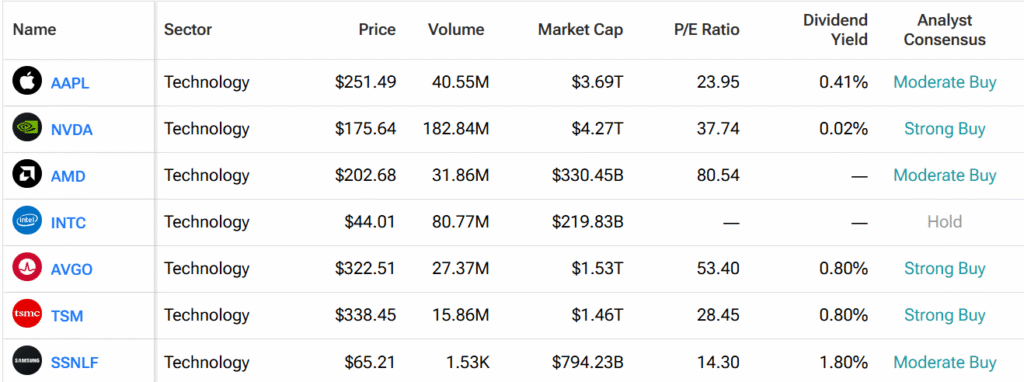
NYU professor and tech commentator Scott Galloway warns that the current artificial intelligence (AI) market is a massive bubble, predicting that high-flying tech stocks like Nvidia Corp. (NASDAQ:NVDA) could plummet by as much as 70%.

The AI Valuation Bubble

Speaking on the Inside Economics podcast alongside Moody’s chief economist Mark Zandi, Galloway cast heavy doubt on the sky-high expectations surrounding AI-centric companies.

He noted that the sector now represents roughly 40% of the S&P 500. For these companies to justify their astronomical revenue multipliers, Galloway argued they either need to drive unprecedented job destruction to create corporate efficiencies or face a severe market correction.

Galloway strongly believes the latter is imminent, predicting that major tech players will soon see their valuations slashed.

“If Nvidia goes down 70%, everyone’s going to feel it,” he cautioned, likening the potential crash to historical tech market corrections, such as Amazon.com Inc.‘s (NASDAQ:AMZN) brutal 97% drop during the early 2000s dot-com bust.

‘Corporate Ozempic’

Galloway also dismissed …

Full story available on Benzinga.com

This post was originally published here

This blog is now closed

Barnaby Joyce calls for fuel rationing, saying a ‘plan is better than panic’

One Nation MP Barnaby Joyce who yesterday called on the government to pull the trigger on the Liquid Fuel Emergency Act, is today calling for the government to start rationing fuel.

This is going to ripple through. It’s going to start with a few sort of peculiarities. Isn’t that interesting? I don’t seem to have any eggs today. And then it’s going to build up and up and up and up. But by the time it arrives, it’s too late …

[The government] should be having rationing now, and he should be brave enough to say to the Australian people, look, you’re not going to like this, but you’re going to appreciate it. A plan is better than panic, and panic is where we’re going.

Continue reading…

This post was originally published here

Cambridge University historian uncovers letter to diarist who was a naval official in 1670s

His journals would become famed for their vivid detail and candour. But now, almost exactly 360 years after diarist Samuel Pepys chronicled the Great Fire of London, new research has found that he “erased” and “curated” correspondence to conceal he had been offered an enslaved boy as a bribe.

Cambridge University historian Dr Michael Edwards consulted hundreds of records in The Pepys Library at Magdalene College, Cambridge; The National Archives; and the Bodleian Library in Oxford for the study “Samuel Pepys, the African Companies, and the Archives of Slavery, 1660–1689”.

Continue reading…

This post was originally published here

James Peng, cofounder and CEO of Chinese robotaxi startup Pony AI, was reviewing customer data with his team, and he was facing a puzzle. Every day, one of his users would book a robotaxi at the same time: right after lunch.

“After a while, we called him and asked why he always took a ride at that time,” Peng recalled to Fortune.

The user’s answer? “The environment is great. It’s clean. I use it as my napping place!”

For Peng, the regular napper is a sign of how quickly riders are adapting their behavior as self-driving cars start to take over China’s—and the world’s—streets.

Chinese robotaxis are plying the streets of cities like Guangzhou, Beijing, and Shanghai. And much like how Waymos are transforming user behavior in San Francisco, robotaxis like Pony AI’s are changing what Chinese passengers are doing.

“Without a driver in the loop, we have to find creative ways to do a lot of things,” Peng says. If a passenger leaves a door open—a common problem for robotaxis—the car might chirp at a passerby in a “cute voice,” in Peng’s words, asking them to close it. If that doesn’t work, Pony AI will reach out to China’s army of delivery gig workers, asking them to close the door and maybe “clean up [the car’s interior] a little bit,” says Peng.

Pony AI is one of several Chinese companies, alongside fellow startup WeRide and search giant Baidu, that are aggressively expanding autonomous vehicles in China and beyond. Pony AI has 1,200 taxis on the road, with plans to hit 3,000 by the end of the year—on track with Waymo. As of early 2026, over 50 Chinese cities allow self-driving cars on public roads in a testing capacity. At least 10 allow commercial operations, the same as in the U.S.

And Chinese robotaxis are now in service well beyond China. Pony AI says it’s now delivering 26 rides per car per day, or somewhere north of 25,000 daily in total, with operations in the United Arab Emirates, Qatar, and Singapore, and is planning to expand into Europe; its counterparts are also expanding around the world. (By comparison, Waymo is present in only two non-U.S. cities: London and Tokyo.)

A number of structural advantages have made China a fertile test bed for self-driving cars.

First, it has a strong manufacturing base that can drive the cost of components down to ultra-affordable levels. That’s thanks to companies like Hesai Technology, which makes the lidar sensors needed for robotaxis to see what’s around them; the Shanghai-based company has slashed the cost of such sensors by 99.5%, enabling them to be installed in cars that cost as little as $15,000. Add China’s broader strength in making EVs and connected cars, and robotaxi firms can tap a wide array of affordable, high-quality vehicles for their fleets.

Peng sees a world with fewer human-driven cars as “inevitable,” citing safety and convenience. “People love to drive; they don’t love driving all the time,” he says. But he doesn’t see that trend as a danger sign for the labor force, noting, “AI will change what we consider ‘work.’ ”

Peng points to an additional advantage: the ready availability of tech talent. China now boasts deep networks of big tech companies, startups, and universities that train the next generation of founders and engineers. “When I left China more than 20 years ago, that kind of ecosystem really didn’t exist,” Peng says. “Now you have internet companies and tech companies that took talent and trained them. It’s a numbers game: Quality is important, but with enough quantity, you can create an ecosystem.”

Chinese consumers are also more willing to consider self-driving cars. Around 85% of Chinese drivers reported being comfortable with robotaxis without human supervision, compared with 39% of U.S. drivers, according to a 2023 survey from PwC. Far fewer Chinese—just 35%—drive a car, meaning they may be more willing to hire a robotaxi.

Finally, there’s government support for automated driving, which Beijing sees as a strategic industry. Local governments offer pilot zones, subsidies, and speedy permits for high-level autonomous driving, while national regulators have issued guidelines to move robotaxis from testing to commercial services in dozens of cities.

HSBC predicted last year that robotaxis could soon capture around 6% of China’s total taxi and ride-hailing market, generating $40 billion a year in fare revenue; meanwhile, UBS estimated that the size of the robotaxi market in China could reach $183 billion a year—if self-driving cars completely replace human-driven taxis.

Pony AI gets its start

James Peng spent most of his career in Silicon Valley. After getting his PhD from Stanford, he spent seven years at Google, working with its ads teams; he then joined the U.S. operations of Baidu, the Chinese Big Tech company behind the country’s leading search engine. By 2015, he’d become head of the company’s autonomous driving division in the U.S.

Peng calls Baidu a “magnet” that attracted talented engineers and researchers from across the industry, several of whom went on to found their own ventures.

Baidu was an early supporter of AI among China’s tech sector, including making a concerted pitch to hire Geoffrey Hinton, an early AI pioneer.

Pony AI’s cofounder and chief technology officer, Tiancheng Lou, is also a Baidu alumnus, as is Tony Han, CEO of competing robotaxi firm WeRide, who was chief scientist of its autonomous driving unit. Even Dario Amodei, Anthropic’s cofounder, spent a year at Baidu.

In late 2016, Peng made the jump to startup founder, establishing Pony AI in Silicon Valley. It started testing self-driving cars in California in 2017, then in China in 2018.

Pony AI debuted on the Nasdaq in late 2024 with a $413 million IPO, making it a rare Chinese startup venturing into U.S. markets as relations between Washington and Beijing soured. Just one year later, it raised $863 million through a secondary listing in Hong Kong.

A Pony AI robotaxi awaits its next fare in Shenzhen, China.
VCG/VCG/Getty Images

By late 2025, Pony AI claimed its robotaxis were operating at breakeven in Guangzhou; by March, it said robotaxis in nearby Shenzhen were breakeven as well. Pony AI reported record usage of its robotaxis over the Chinese New Year holiday, hitting an average of 26 orders a day per vehicle. Each robotaxi generated an average of 338 Chinese yuan ($48.91) a day.

Pony AI generated $60.8 million in revenue in the first nine months of 2025, a 54% year-on-year jump. But investing in a new technology is expensive. The company spent $156.9 million on research and development between January and September 2025, contributing to a $152.2 million net loss over the same period.

Pony AI’s shares have performed poorly since the Hong Kong IPO, down by around 30% from the original offer price. WeRide, which had its own secondary Hong Kong listing at the same time as Pony AI, has seen its shares drop by about as much.

Going global

Pony AI is now venturing into international markets: specifically, Dubai in the United Arab Emirates; Doha in Qatar; Seoul, Hong Kong, Singapore, and Luxembourg. (Peng also mentioned the startup will soon expand to another European market, though didn’t specify which one.)

The startup is also signing partnerships with global players, including ride-hailing platforms Uber and Bolt; ComfortDelGro, one of Singapore’s largest transit and taxi operators; and Stellantis, the European car giant. Pony AI has a long-standing relationship as well with Toyota, an early backer: Its latest generation of robotaxi is developed through a joint venture between Toyota and Guangzhou Automobile Group, a Chinese state-owned carmaker.

More so than many others, Chinese consumers have embraced the idea of robotaxis

85%

Share of Chinese drivers who say they’d be comfortable in a robotaxi without human supervision

35%

Share of Chinese people who drive
Sources: PWC; Government data

Pony AI’s long-term plan isn’t to own the self-driving cars, but rather provide the technology that keeps them running. The startup positions itself as the “virtual driver”—providing the AI, software, and platform—while partners fund and operate the physical fleet.

“That’s where we create the greatest economic and societal value,” Peng explains. “Our most important motivation is to scale as fast as possible, and put as many ‘drivers’ into the market as possible. Everything else could be done by somebody else.”

Partners, meanwhile, can earn a return from vehicle ownership. “If you can earn, say, 5% return by owning vehicles instead of 3% from keeping that capital in the bank, it’s a good business to be in.”

One market that’s not in the cards for Pony AI? The U.S., which takes a dim view of Chinese cars owing to concerns over data security. The outgoing Biden administration barred the sale of Chinese “connected vehicles” from 2027 onward.

“We’re unlikely to run large-scale commercial operations in the U.S. anytime soon,” Peng says. “But I think R&D activities and exchanges of ideas are still permitted.” The company retains a research team in Silicon Valley.

Robots vs. humans

Pony AI’s robotaxis—including models like the GAC Aion V, a compact crossover SUV—are spacious and comfortable, similar to other luxury EVs getting churned out by China’s many factories.

A voice welcomes passengers as they enter the car; a screen mounted in the rear cabin allows them to start the journey and monitor what’s happening around the vehicle on a real-time map. A cute robot-like avatar—at the time wearing a horse costume to celebrate the incoming Year of the Horse—shared updates on the car’s journey.

The trip feels oddly smooth, as the robotaxi cleanly shifts lanes and slows down to avoid hitting other vehicles and bicycles on the road. It’s a quieter journey than what a human-driven taxi normally feels like.

Peng understands that difference. “The human driver does more than just driving: They clean, they charge the car, they have conversations with the passenger, or even, in some cases, comfort passengers,” he says.

Still, as self-driving cars take off, that leads to a question: What will human drivers be doing instead? Anthony Tan, CEO of Grab (an investor in WeRide), suggested on a recent earnings call that “drivers could be remote safety drivers, data labelers; they could change lidars, cameras, and so forth.”

Investors are jumpy, too. In early 2026, U.S. trucking shares collapsed after a little-known karaoke-turned-AI firm announced its product could help increase freight volumes by 300% without adding staff.

Peng takes a measured view. “AI will not destroy the workforce; it will change what we consider ‘work,’” he says. “A lot of the fear is overblown.”

Yet he’s certain that a world with fewer human-driven cars is “inevitable,” citing efficiency, safety, and convenience. “People love to drive; they don’t love driving all the time,” he says.

Peng’s belief that robotaxis are a social good is echoed by his counterpart at WeRide, Tony Han. “Machines won’t be drunk, won’t overdose. Machines are very reliable. Fatal accident rates for robotaxis are much lower than human drivers,” Han told Fortune last October.

What about the roads themselves? Urban infrastructure, after all, is still pretty dumb—forcing robotaxis to be designed around transit systems that are decades old. Will that limit how far robotaxis can go?

Peng is realistic on that front. Perhaps, he acknowledges, the roads will get smarter in 20 or 30 years, and make autonomous driving safer and more efficient. But he’s not going to wait around for the roads to be rebuilt.

“If we want autonomous vehicles to really be part of everyday life, they have to cope with the roads we have now. That’s the beauty of AI: We can train our AI ‘drivers’ to be smart enough to be on the existing infrastructure.”

This article appears in the April/May 2026: Asia issue of Fortune with the headline “The world’s consumers are ready for robotaxis. James Peng of Pony AI wants to make sure they’re riding in his”

This story was originally featured on Fortune.com

The ski season of 2025–26 is winding down—and it was a tough one for Vail Resorts, the world’s largest operator of ski hills. With snowfall 60% below normal for the season through February in its home state of Colorado and low in neighboring Utah, Vail has seen skiers and snowboarders stay away in droves.

Adding to the pressure on Vail, it has been the second difficult winter in a row. Last year, in addition to insufficient snow in many locales, the company saw a 12-day ski-patrol strike close most runs at its largest resort in Park City, Utah, leaving countless customers disappointed, including venture capitalists energetically taking to X to air their dissatisfaction over having to wait in long lift lines. The crisis led to the departure of then–CEO Kirsten Lynch a few months later.

Because Vail’s business model is predicated on people buying passes that cost around $1,000 upfront—on sale for a limited time months before the start of the season, giving them access to dozens of resorts in the U.S. (both in the East and West), Canada, Switzerland, and Australia—revenue fell only 4.7% in its most recent quarter, largely because of fewer ski rentals and fewer lodge rooms booked. (In North America, visits were down 11.9% through March 1.)

Now the focus is on next season: Sales of the Epic Pass have been slow for a couple of years now, and Vail brought back its former longtime CEO Rob Katz to steer the company through the effects of climate change, a slow-growing industry, and increasing competition from other sports.

“We’ve had some challenges: Some of which were on us, some of which were not,” Katz, CEO from 2006 to 2021 in his first go–round, told Fortune earlier this month. “In coming back as CEO, the most important thing was realizing that the industry is different now; the consumer is different; the company is different.”

One place these differences are playing out is in the resort’s prepaid, multi-resort passes. Under Katz, Vail pioneered that concept with its Epic Pass (its largest rival, Alterra Mountain Co., offers the Ikon Pass), which locks in revenue and shields operators from weather variability, region to region, by luring skiers willing to go where the snow is.

One of Katz’s realizations is that the pass is a business tool in need of rejuvenation. Some skiers may feel that they didn’t get their money’s worth for two seasons in a row. Meanwhile, the rising cost of the already expensive sport is keeping many young people away.

“It’s a matter of making sure that the pass is the best deal,” says Katz. In early March, right before Vail put its 2026–27 passes on sale in a major test of its business, the company announced 20% price cuts for skiers and riders under age 30. Katz says Vail also needs to push lift tickets to reach skiers less interested in the commitment of a full pass. “We need to be more aggressive on lift tickets,” he notes. That has meant, for instance, offering 30% off a lift ticket if reserved a month ahead of time.

Vail is also aiming to expand its customer base by attracting skiers of color in the U.S. “We don’t see the same kind of market penetration with communities of color as with the white community, and we need to continue to expand,” he said. That has played a big part in why Vail has stuck with its diversity, equity, and inclusion efforts, despite pressures that have led countless other corporations to walk them back partly or even entirely.

“I think people who come to our resorts don’t all see people who look like them,” Katz says. “We need to have folks in our company who are reaching and know how to make connections in those communities.” So Vail has teamed up with the National Brotherhood of Snowsports, an advocacy group that looks to find and develop talented skiers of color, among other initiatives.

With increasingly variable weather, Katz says he is focusing himself and his teams squarely on what they can control: “In a year like this, we can’t control the weather. We’ve got to constantly be looking to improve and maybe most importantly, when we don’t get it right, we need to admit it.”

And he will, of course, be keeping his fingers crossed for more snow next season.

This story was originally featured on Fortune.com

On a recent morning, the AI boom in Richland Parish, a rural county in northeast Louisiana, could be measured in tacos.

Tim and Lindsey Allen were preparing over 1,600 of them with names like “Divine Swine” (smoked pork), “Righteous Rooster” (braised chicken), and “Golden Calf” (brisket), for construction workers building Meta’s massive 2,250-acre, 4-million-square-foot AI data center, Hyperion. It’s a catering order that would have been unthinkable here just a year ago.

The Allens, parents of five, had long joked about starting a taco joint called Holy Tacos. (Tim is a church administrator and children’s pastor at the First Baptist Church in the small Richland Parish town of Rayville.) When Meta announced in December 2024 that it was investing in a $10 billion facility in Richland Parish, its largest data center to date, they saw a rare opening. Thousands of construction workers, they’d heard, would soon descend on the site—an unheard-of customer base for this otherwise rural, economically depressed community.

At first, the plan was to park a taco truck at the site. But when Allen learned that the vehicle he had invested in wouldn’t be allowed inside the construction zone, he rented a small vacant building in Rayville, pulled the truck inside, and turned it into a makeshift restaurant serving “food worth praising.”

The risk paid off. Workers coming off 12-hour shifts in safety gear began to stop by for quick, to-go meals. And as Meta’s construction ramped up, the Allens landed recurring catering work with Mortenson, one of the project’s three major contractors.

“Just this month, we picked up about 10 caterings,” Allen said. Without Meta, he added, the family likely wouldn’t have taken the leap. “It’s been a huge blessing for us.”

For Allen and many other local business owners, Meta’s arrival has brought new customers, contracts, and long-deferred opportunities in a parish that had been losing population and jobs for decades.

The outcome has been very different for Katie and Logan Stewart. The couple—a nurse and a former farmer in their mid-thirties with two children—invested more than $40,000 of their life savings into Opal’s Orange Food Truck after seeing construction workers post on Facebook asking for food options near the Meta site.

It was a high-stakes bet. Logan had recently stepped away from farming land near the project, and the food truck—serving burgers, chicken, gumbo, and rice and beans—seemed like a way to build a new livelihood without leaving the community.

“I think we were like the second or third truck out there,” Katie said. “When we first started, we were doing 100 to 120 orders a day.”

But the momentum didn’t last. When one of the project’s main contractors, DPR, brought in an out-of-state catering company to feed workers on-site, much of the foot traffic Opal’s had counted on disappeared. Workers no longer needed to leave the grounds for lunch.

“You talk about supporting the local community, but then you outsource the work,” Katie said of DPR’s catering decision. “It felt like a slap in the face.”

The Stewarts couldn’t afford the $1,500 to $2,500 monthly fees charged by two new food truck parks located right across the street from the main Meta entrances, so they parked their truck on a friend’s land a short drive away. Orders fell to fewer than 40 a day. In recent weeks, foot traffic picked up after a local independent journalist wrote about Opal’s, and the Stewarts recently landed a catering job with Meta. They say they’re determined to adapt. “We’re planning on sticking it out and adjusting where we need to,” Katie said.

Stories like those of the Allens and Logans are playing out across the country, as companies such as Meta, Google, and Amazon—alongside fast-growing AI startups like OpenAI and Anthropic—embark upon an unprecedented AI data center spending spree. Collectively, they are projected to invest roughly $630 billion to $700 billion in 2026 alone, a 62% jump from 2025, with total AI-related data-center capital expenditures expected to reach $5.2 trillion by 2030, driven largely by GPUs and energy infrastructure. These mega-scale projects—built to power the AI boom and bolster the U.S. race with China for technological dominance—are helping to grow the U.S. economy, and are being welcomed with open arms by local officials eager for a piece of the economic development these projects promise. A rising tide, they reason, can lift many ships.

And indeed, there’s historical precedent for this optimism: The frenzied construction of massive AI data centers across the country echoes earlier American booms—from the California Gold Rush to the early oil fields of Texas—when fortunes were made by those in the right place at the right time, selling equipment, food, and shelter to the pioneers of new industries. In those eras, local economies thrived on demand for tools, timber, meals, and rooms for laborers chasing the next big thing.

Today, though, in an era of globalization and corporate consolidation, the “pick-and-shovel” ripple spreads very differently. Many of the materials, logistics, and meals for the site are supplied by out-of-state contractors from places like Texas and Arkansas. And the specialized chips and many components that power Hyperion’s AI servers are manufactured primarily overseas as part of the global semiconductor and IT hardware supply chain.

So for many Richland Parish residents, the experience is less one of opportunity than of spectatorship: watching the bustle of progress unfold nearby—and suffering through its accompanying headaches—without being able to participate or share in its rewards.

Tim and Lindsey Allen in their food truck, Holy Tacos.
Camille Farrah Lenain for Fortune

Reached for comment, a spokesperson for Meta said it remains “committed to supporting local resources and prioritizing local partnerships whenever possible,” including working with local food vendors to supply more than 600 meals daily. But, they explained,  “Given the scale and size of the craft workforce currently at the site, our general contractors needed to find a catering solution that could meet the scale and logistics required to feed thousands of people.”

When Fortune visited the community, residents expressed a worry that the short-term influx of construction workers will reshape their community, raise rents and tear up the countryside, leaving it spoiled when the construction phase ends and the data centers are left to hum away, consuming water and electricity and employing only a few hundred workers. The dynamic is testing long-held assumptions about who actually benefits when a mega-project arrives in town.

Several residents told Fortune the speed at which the Meta deal was made, and its lack of transparency, left them feeling sidelined. Major decisions about land use, tax incentives, and infrastructure were largely finalized before most community members fully understood the project’s scale—which has also grown into a much larger build-out than originally planned. In October 2025, Meta announced it had entered a joint venture with funds managed by Blue Owl Capital to finance, build, and operate the Hyperion data center campus—an arrangement targeting up to $27 billion in total development costs and suggesting that Hyperion is intended as a long-term, multiphase campus.

Some described the process as emblematic of a long-standing “good ol’ boys” culture in local development—one in which deals are struck by a small circle of political and business leaders, who then benefit from the result.

“The small businesses who are profiting…it’s not a fair game where the best contractor with the best price and the best qualification wins,” said Amber Perez, the local independent journalist who is also a community activist and posts regularly on Facebook about the Meta project. Instead, she said many residents believe the “winners” are those who are politically and economically connected.

But supporters of the project, including local government officials, economic development leaders, and longtime residents, argue that the Meta investment represents a once-in-a-generation opportunity for a region that has struggled with poverty, job loss, and population decline for decades. In their view, the disruption is the visible price of long-overdue capital flowing into a part of the state that has rarely attracted projects of this magnitude. Even if the number of permanent jobs ultimately proves modest compared to the construction surge, they contend that the billions in investment, new infrastructure, workforce training programs, and heightened national attention could help reposition northeast Louisiana for future industry and growth.

Katie and Logan Stewart pose for a portrait in front of their venture, Opal’s Orange Food Truck.
Camille Farrah Lenain for Fortune

A mixed blessing

Driving east on Route 80 toward the Meta site in Holly Ridge, an unincorporated rural community about 15 minutes east of Rayville—the landscape is defined by flat expanses of soybean and cotton fields, punctuated by grain silos, grazing cows, and the occasional tractor.

At Holly Ridge, however, the terrain changes abruptly. Generations of sharecroppers farmed the land, called the Franklin Farms megasite, until 2006, when the Franklin family sold it to the state of Louisiana, which then hoped to attract an auto plant. That was not to be, but Meta entered a long-term lease for the site in 2024 and purchased it in 2025. Since the company broke ground in early 2025, the farmland has been scraped and leveled into a construction site so disorientingly vast, it resembles the early stages of a city rising from the dirt. At five miles long and 1 mile wide at some points, steel frames jut from the ground. Heavy machinery operates around the clock. An endless stream of trucks pours in before sunrise, feeding a project where thousands of workers move through the site in hardhats and neon vests. Residents complain about damage to their vehicles because of rocks kicked up by the trucks hurtling to and from the Meta site.

Something enormous and unfamiliar has landed, seemingly all at once.

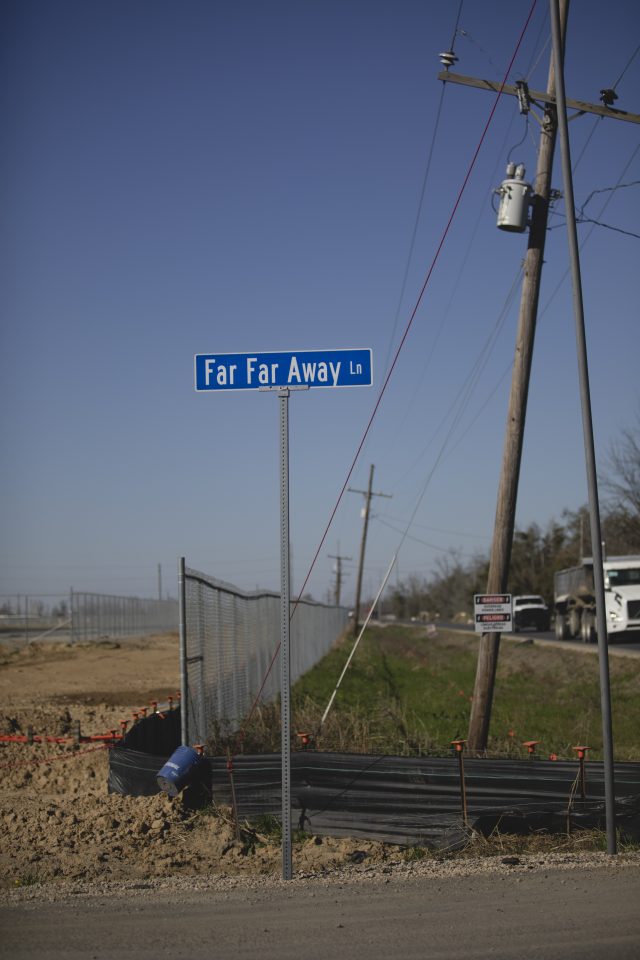
A newly-built road leading into Meta’s Hyperion site carries a prescient name: Far Far Away Lane. The nod to Star Wars is intentional, and the landscape does seem like a new frontier—representing not just Meta’s stratospheric AI ambitions, but the financial, energy-hungry reality of building the infrastructure that underpins the AI boom.

Far Far Away Lane, a newly built road leading to the Meta data center site in Holly Ridge, Louisiana.
Camille Farrah Lenain for Fortune

Before Meta came to town, the biggest claim to fame of Richland Parish, a community where a quarter of residents live under the poverty line, was arguably that country music artist Tim McGraw was born and raised there. Now, residents are living through a seismic shift that has brought new jobs and excitement to some, and stress and disappointment to others—as well as heavier traffic on rural roads, rising rents, and mounting pressure on housing, utilities, and daily routines in communities unaccustomed to rapid growth. Beyond those immediate disruptions, whether the short-term gains of massive construction translate into lasting opportunity remains an open question.

Meta says the project has already created hundreds of construction jobs and will support thousands more over the buildout, along with a much smaller number of permanent roles once the data center is operational—the original announcement said 500. The company has also partnered with a local community college to launch a construction and workforce-training program aimed at preparing residents for jobs tied to the site and future industrial development.

And indeed at Meta’s Hyperion site, as thousands of temporary workers have descended on Richland Parish, taking space in hotels, short-term rentals and newly-built RV parks, there are clear examples of individual businesses booming. GrowNELA, the regional economic development authority for northeast Louisiana, pointed Fortune to companies like ServiceMaster Action Cleaning, a Monroe-based facilities maintenance firm that has doubled its workforce since Meta arrived, and Copeland Electric, another Monroe company that says the project has driven a roughly 40% increase in hiring.

The arrival of the Meta project was a catalyst for Chris Holyfield, the owner of Holy Dippers, a company created specifically to serve the construction project. He supplies septic services and eco-friendly restroom facilities for Meta workers—58 units so far, with more to be added as construction ramps up.

Holyfield wanted to take advantage of the once-in-a-lifetime opportunity, after leaders from the construction companies working on the Meta project told Holyfield that “this area’s about to explode,” he said. “No one believed it at first,” he explained. “Now we’re all feeling the difference.”

Holyfield also owns three restaurants in Monroe that do catering work for Meta’s large contracting companies, as well as a seven-story office building in Monroe where Meta leased space before the data center announcement was made.

Rob Cleveland, president and CEO of GrowNELA, who arrived in Louisiana in July 2024 after eight years in a similar role in Michigan, dismissed complaints about the level of local job creation as “silly.” He emphasized that several thousand new jobs have already arrived in the rural Richland Parish community—both working on the Meta site and for businesses servicing the site. Jobs are jobs, he argues—and the pragmatic reality is there aren’t many options for a community like Richland Parish.

“Constant naysayers say they’re short-term jobs, that there will be only 500 long-term jobs, why aren’t you recruiting automotive plants with 3000 long-term jobs,” Cleveland said. “Well, those projects don’t really exist anymore, and we don’t have the labor to support those projects.” 

Where will they all live?

The influx of workers has created an immediate, practical problem in Richland Parish: housing. Currently, there are about 3,700 workers connected to the site, with an estimated peak in a couple of months of 5,000 (though locals say they have heard numbers as high as 8,000).

To accommodate the influx of construction workers, a patchwork of RV parks, or “man camps”—both large and small—has sprung up across the area. One of Meta’s three primary construction firms, DPR, hired subcontractor Mammoth Industries to build a sprawling, 130-acre workforce housing complex that includes more than 300 full-service RV sites near the Meta project.

And smaller, family-run RV parks are emerging as well. Kayla Caskey, the owner of South Stuart RV Park, about 25 minutes from the Meta site, grew up on the land where the park now sits. “We’ve had it for a couple of generations—it was passed down from my grandparents,” she said. “I got married and moved away, but my family still lives there—my mom and my brother—and we decided to take advantage of this opportunity.”

South Stuart RV Park has room for just 12 RVs, and Caskey said getting it up and running required navigating zoning rules and installing proper facilities, including showers and bathrooms. “We learned a lot along the way,” she said. “But we hope, in the end, this will be something good for our family.” The park filled quickly after opening, she added, and she continues to receive daily inquiries.

Caskey is realistic about the park’s future once construction winds down. “It may just be land out there again,” she said. “But hopefully, over the next couple of years, it’ll pay off while the workers are still here.”

But for others, the rapid spread of RV parks in the area has felt disruptive and overwhelming. For example, Fortune visited one mile-long dead-end road that until recently was lined with just eight homes. Now, two large RV parks—together expected to add up to 700 hookups—are under construction on the street, many directly next to or across the street from the few single-family homes.

Other area residents say they are being priced out of the area, or even facing attempted eviction, because of the influx of workers. Erika James, a 34-year-old mother of two who grew up in Richland Parish and now lives in a mobile home park in Monroe, a small regional hub about 30 minutes west of the Meta site, says her rent increased several times over the past six months. Earlier this month she received an eviction notice after paying her rent just one day late, saying her family had just five days to vacate.

Erika James in the mobile home park where she lives in Monroe, about 30 minutes West of the Meta site.
Camille Farrah Lenain for Fortune

“I panicked and my husband immediately called the property owner and was told it had nothing to do with rent,” she said. “In fact, he said he didn’t even agree with the decision but it came from ‘above him’ because ‘they needed to make room for other tenants.’”

After agreeing to pay an “eviction fee,” James has been able to stay, but her lease ends at the end of April, with no word about renewal.

“Meanwhile, there is literally a sign outside welcoming Meta workers while local families are left wondering where they’re supposed to go,” she said. “We are now having to entertain the idea of leaving the area completely. There is nowhere to go if you can’t pay triple prices.”

“It breaks your heart to even think about having to leave here,” she said. “But it’s getting more expensive every day.”

The Meta project has promised transformation, explained Perez. But she added many residents of Richland Parish have little clarity about what that transformation will actually look like in the end.

“Transform, how?” she said. “That’s what people are on the edge of their seats trying to figure out, because right now you’re in the chaos phase where you don’t know which way to look, and when the dust settles, what’s left?”

Perez had heard that some people are “waiting it out” because they want to see if they can sell their property when it becomes more valuable. “Others just want the heck out because they want their quiet life back, and this is not what they signed up for,” she said. “And then there’s others who are just stuck.”

A rural Louisiana parish’s fervid campaign to bring Big Tech to its back roads

In Louisiana, the effort to court Meta for the Richland Parish site began early. According to reporting by the Times Picayune, Entergy Louisiana economic development executive Ed Jimenez and CEO Philip May hosted roughly half a dozen Meta executives at Entergy’s headquarters in New Orleans in early 2024, after May learned the company was searching for a Southern location to build a data center.

This is not unusual: Across the nation, consortia of state governments, utilities, and economic development groups are actively competing to attract tech companies to build AI data centers. For example, OpenAI said it and its partners reviewed more than 300 proposals from over 30 states before selecting five additional sites for its Stargate data center program, following the launch of its flagship facility in Abilene, Texas.

Over dinner, the Meta folks told Entergy that they would consider Louisiana but that the state would have to move fast to come up with a deal. Entergy executives worked with recently-elected Governor Jeff Landry to forge agreements with legislative leaders, cabinet secretaries and local government officials.

Meta ultimately secured significant tax incentives for the project, including a sales tax exemption on the billions of dollars it will spend on servers and equipment. But Meta emphasized that Richland Parish would also reap tax revenue and economic development.

Construction in progress for high voltage transmission lines on the Meta data center site in Holly Ridge.
Camille Farrah Lenain for Fortune

“Richland Parish receives both a portion of sales tax from our construction materials along with a PILOT (payment in lieu of taxes), based on jobs and capital investment,” a Meta spokesperson said.

These PILOT agreements—common in large data center deals—allow companies to pay a negotiated annual fee instead of full property taxes, with the amount tied to how much they invest and how many jobs they create. Public details of the Richland Parish agreement are limited, but a state contract reviewed by WIRED last year confirmed Meta’s payments and tax breaks are structured around hitting specific investment and hiring thresholds. The Meta spokesperson said the company has invested over $300 million to date in roads, water, and other local infrastructure.

While Louisiana also offers broad sales tax exemptions for data center equipment, local governments can still collect revenue from construction-related spending, because the state’s “sales and use tax” system applies taxes based on where materials are ultimately used. The result is a complex mix of long-term tax relief for the company paired with more limited, often temporary, revenue streams for the parish.

Meanwhile, the Hyperion project is already getting even bigger. Even as residents grapple with the disruption of the current buildout, Meta has quietly acquired roughly 1,400 additional acres adjacent to the existing 2,250-acre Hyperion site, according to people affiliated with companies working on or around the project, paving the way for a second phase of expansion. In reporting this story, Fortune observed active work underway on the newly acquired land.

A temporary boom is better than no boom at all

Some local leaders push back on residents’ complaints that the disruption outweighs the opportunity. GrowNELA’s Cleveland said complaints about traffic and housing are “completely valid and understandable,” adding that “it’s happening very quickly and it’s happening exponentially.” But he pointed out that the land used for the Meta site has been marketed as industrial for more than two decades and the state had long hoped for development to come. Those efforts coming to fruition is something to celebrate, not complain about, he argued: “We’ve hit the gold rush.”

Monroe Mayor Friday Ellis, who was elected to a second term in 2024 and sits on GrowNELA’s board, argues that the challenges now surfacing around housing, traffic, and infrastructure are not unique to the Meta project—but reflect the challenges of building on a “hyper” scale in a region that has long lacked investment.

Mayor Friday Ellis, photographed in his town of Monroe, Louisiana.
Camille Farrah Lenain for Fortune

Ellis also says he understands why people are skeptical of the promises Meta and local politicians are making about the development bringing economic opportunity. He grew up in Richland Parish, and was raised by a single father who sharecropped on the land. He said skepticism toward the project is rooted in a history of broken promises.  “For years, they’ve been ignored,” he said. “They don’t believe this is a real opportunity.”

Still, Ellis is unapologetically bullish. He argues that large projects like Meta’s offer a rare chance to change the community’s trajectory. “This region has a lot of poverty, and poverty exists because there’s no opportunity,” he said. “Opportunity and education lift people out of poverty. Our job right now is to connect as many people as possible to opportunity.”

Ellis has described the region as a budding “Silicon Bayou,” and said increased attention—from investors, contractors, and state leaders—has already begun to unlock new economic activity. “What gives me hope,” he said, “is that more people are paying attention to this part of the world.”

The Silicon Bayou label may not be hyperbole for northern Louisiana. The entire northern part of the state is increasingly being marketed as an AI infrastructure hub. In addition to Meta’s Hyperion expansion, Amazon recently announced plans to invest $12 billion in northwest Louisiana to build data center campuses.

And GrowNELA’s Cleveland said that more tech investment is coming to Richland Parish: “We are actively working on a diverse mix of projects for Richland Parish and the entire region,” he said. “That mix includes data centers, manufacturing, warehouses and suppliers of the Meta and Amazon data centers.”

But Richland Parish resident Dewanna Sanders, who owns a small food business and lives about three miles from the Meta site, said she was saddened by the changes to the landscape when she leaves her home before sunrise.

“It’s lit up like New York City,” she said of the site, describing it as a “halo” she can see from her front steps.

Water storage construction on the Meta data center site in Holly Ridge.
Camille Farrah Lenain for Fortune

While Sanders acknowledges that the data center will likely be good for the area in the long run—and that both her business and her husband’s have benefited—she said she cried when it was announced.

“It’s not the country anymore,” she said. “Everything is going to change here. Nothing’s going to be the same again.”

Sanders said she has received several offers on her 600-acre property and initially thought she might want to leave. “But where are you going to go?” she said. “This is home.”

Even Tim Allen, whose Holy Tacos business has benefited greatly from the Meta project, acknowledges how overwhelming the scale of the construction has been for many in what was once a quiet farming community. “Now it’s lights and noise, day and night,” he says. Still, as a pastor and father, Allen sees the project as a chance for something the region has long lacked. “There was nothing here for our kids,” he said. “They were growing up and moving away.”The Meta site, he believes, offers an opportunity for families to stay—and for the community to adapt. “It’s not going anywhere,” he said. “So we’re trying to meet it with empathy, figure out how to help the people who are struggling, and ask how we can grow and benefit together.”

This story was originally featured on Fortune.com

If you, like many of us, spend most of your waking hours staring at screens—shuttling between work email, TikTok, YouTube, and group chats—you’ve probably wondered, at least half-jokingly, whether you’re “addicted” to your phone. 

It’s a reasonable question, a Los Angeles jury just decided. In a closely watched landmark case, the court found in favor of a 20-year-old plaintiff known as KGM, who sued Meta and Google, alleging that design features like infinite scroll, filters, and autoplay on Instagram, Facebook, and YouTube kept her online as much as 16 hours a day and helped fuel her depression, anxiety, body dysmorphia, and self-harm. (TikTok and Snap settled in the same case earlier this year.) The verdict could open the door to thousands of similar lawsuits—and even end up limiting how far Big Tech can go in competing for our attention.

The legal challenges, alongside a growing body of brain research and concerns raised by health organizations, are adding urgency to a question much discussed in academia and over dinner tables: Is “tech addiction” real? And if so, what does that mean for the business model that powers the world’s most valuable companies?

The answer is not simple. At one end of the spectrum is the kind of “addiction” most of us joke about: checking email before we’re out of bed, scrolling TikTok in the checkout line, refreshing Instagram when we’re bored. At the other end are a far smaller group: people like the plaintiff in the lawsuit and Sarah Hill, a young woman Fortune met at a residential treatment center for digital overuse outside of Seattle. Hill’s compulsive use of an AI chatbot app, Character AI, became so consuming she flunked out of college and ended up at reSTART, one of only a few such centers, in the U.S. or elsewhere.

There, clients give up smartphones, gaming, social media, and other tech—often for months—and spend 24 to 30 hours a week in intensive therapy. The treatment costs, on average, around $1,000 a day, though sometimes it can be covered by insurance for associated disorders such as depression and anxiety.

It’s worth it, Hill says. “After making so many mistakes, I’m finally putting a foot down and saying, ‘I want to get out of this endless cycle,’” she tells Fortune. “I need to do something to better myself and my life.’”

reSTART cofounder Cosette Rae has been treating clients for nearly two decades—gamers who won’t leave their homes, adults glued to virtual reality or pornography, and, increasingly, people hooked on AI chatbots. Tech, she says, is “everywhere,” which means people in recovery are constantly forced to say no to something they can never fully avoid.

The stakes are only getting higher, Rae says, in the AI era. She worries that increasingly sophisticated chatbots and virtual companions could become “substitute attachment figures” for young people, displacing real relationships. She fears a looming “tsunami” for families who don’t yet grasp what their kids are up against—or how these products might reshape their futures.

Stanford psychiatrist Anna Lembke, author of Dopamine Nation and an expert witness called by the plaintiffs in the Meta and YouTube trial, argues that compulsive tech use taps into the brain’s reward circuitry in ways that mirror drug addiction. When people refresh social media feeds or win a round of a video game, their brains get dopamine jolts that train them to seek that hit again and again. Over time, those bursts can desensitize reward pathways and weaken the prefrontal cortex—the part of the brain responsible for planning and self-control—making it harder to resist urges even when work, school, or relationships are suffering. Brain imaging studies of people diagnosed with internet gaming or social media disorders have shown structural and functional changes in these regions that resemble what doctors see in gambling and other behavioral addictions.

The science is far from settled, and tech companies are quick to point out that tech addiction is not formally recognized in the Diagnostic and Statistical Manual of Mental Disorders; the DSM only flags “internet gaming disorder” as a condition that merits more study. Some researchers argue that slapping the “addiction” label on heavy tech use can actually backfire. In one set of surveys, California Institute of Technology researcher Ian Anderson and Wendy Wood, a professor at the University of Southern California, found that when people described their Instagram use as an addiction, “They felt stuck, less confident that they had the ability to change.” Yes, they wrote, companies should “amend their platforms to help users regain control over their habits.” But they concluded, “The truth is: Heavy use is not necessarily an addiction.”

In the KGM case, Instagram head Adam Mosseri told the court that social media is not “clinically addictive.” In a statement to Fortune, a Meta spokesperson pointed to other factors in KGM’s life as the cause of her troubles, adding: “The evidence simply doesn’t support reducing a lifetime of hardship to a single factor, and our case will continue to underscore that reality.” A spokesperson for Google, which owns YouTube, called the allegations “simply not true,” pointing to parental controls, teen-focused safety tools, and policies meant to create age-appropriate experiences. (TikTok declined to comment, and Snap did not respond to requests for comment.)

What, if anything, should be done? Policymakers are floating answers, from state-level warning labels and restrictions on personalized feeds for minors to outright bans on teen social media in some countries. Platforms have rolled out an array of opt-in safeguards, teen modes, and screen-time nudges. 

But as tech investor and author Nir Eyal points out, asking companies to make their products less appealing and engaging can be a tough sell. He sees some of the concern about tech addiction as a “moral panic,” and argues that it’s unreasonable to make tech companies responsible for some people’s immoderate use of their products. “Stop making the product interesting? That’s dumb,” he says. “That’s why we use the product. That’s called ‘entertaining and engaging.’” He argues that the focus should be on making products “better and safer,” not less fun to use.

Read Fortune’s magazine feature on tech addiction here.

This story was originally featured on Fortune.com

Investor Ross Gerber, the co-founder of investment firm Gerber Kawasaki, has weighed in on Tesla Inc.‘s (NASDAQ:TSLA) pivot away from automobiles and into robotics and AI.

Robotics Push

In a post on the social media platform X on Wednesday, user Keith Fitz-Gerald quoted a video by Tesla, which showcased the Optimus humanoid robot’s development behind the scenes. “$TSLA Optimus is going to be so successful that people are going to forget Tesla made cars,” he said in the post.

Ross Gerber Responds

Outlining the robotics push, Gerber responded to Fitz-Gerald’s post on X, sharing his take on the claim. “People have already forgotten that Tesla makes cars…” Gerber …

Full story available on Benzinga.com

This post was originally published here

Homebuyers lose confidence amid higher rates and Iran war-linked price rises across the economy, buyers agent says

Surging numbers of homes are being passed in at auction as higher interest rates weigh on demand and the number of properties for sale hits highs not seen since 2021.

The national auction clearance rate last week was just under 57%, the lowest this year, with Sydney’s at 55%, Cotality data shows. The remainder includes both houses that did not sell at auction and houses withdrawn before auction.

Continue reading…

This post was originally published here

In today’s newsletter: Th​is new war has exposed widening fractures between Israel and its allies, ​and the country finds itself increasingly out of step with global opinion

Good morning. Israel may be the only country in the world where there is overwhelming public support for the conflict in Iran. Despite its impact on everyday life in the country – at least 15 people have been killed and hundreds more injured by Iranian missiles since the war started in February, and school closures and missile warnings remain routine – polling puts support for the war at more than 90% among Jewish Israelis.

The contrast with the rest of the world is stark. Nearly a month into the fighting, polling shows that 60% of the US public oppose the war with Iran, and just one in four backed the initial strikes. In the Gulf, Europe and Asia, the conflict is widely unpopular, as severe economic consequences already begin to bite.

Middle East crisis | Iran dismissed a US ceasefire proposal on Wednesday and countered with a negotiation plan of its own as intermediaries sought to keep diplomatic channels between the warring countries open.

Media | Matt Brittin, Google’s former top executive in Europe, has been named the BBC’s next director general. Brittin will replace Tim Davie at a crucial time for the corporation.

UK politics | Political donations from British citizens living abroad are to be capped at £100,000 a year, in a move that is likely to limit further funding from Reform UK’s Thailand-based mega-donor, Christopher Harborne.

UK news | The former justice minister Crispin Blunt has been fined £1,200 for possessing illegal drugs after he told a court he entered the world of chemsex parties to help inform government policy.

Housing | People who lost their homes when a tower block in Dagenham burned down say they are being made to pay for the building’s fire safety works after the government demanded its money back.

Continue reading…

This post was originally published here

President Donald Trump blasted two Supreme Court justices that he appointed as “bad for our country” after they sided with the majority in a ruling that undercut his tariff agenda.

The criticism follows a Supreme Court decision last month that blocked his use of an emergency law to impose sweeping tariffs.

By a 6–3 vote, the majority concluded that the law cited to justify the import duties “does not authorize the President to impose tariffs.”

Speaking at a National Republican Congressional Committee dinner in Washington, D.C., Trump expressed frustration with Justices Neil Gorsuch and Amy Coney Barrett, though he did not mention them by name.

BLACKROCK CEO SAYS TRUMP ACCOUNTS COULD BE A ‘VERY SIGNIFICANT STEP’ FOR YOUNG AMERICANS

“Bad courts in this country are costing us a tremendous amount of money,” Trump said. “The Supreme Court, that’s right, of the United States, cost our country — all they needed was a sentence — our country hundreds of billions of dollars, and they couldn’t care less. They couldn’t care less.”

Without naming names, Trump then took aim at Gorsuch and Barrett, whom he appointed, and said they “sicken” him.

“Two of the people that voted for that, I appointed and they sicken me,” Trump said. “They sicken me because they’re bad for our country.”

WILL THE FEDERAL RESERVE CUT INTEREST RATES IN 2026?

Trump has previously targeted the court, especially the six members who voted against him.

The president said he was “ashamed of certain members of the court, absolutely ashamed, for not having the courage to do what’s right for the country.”

During an event hosted earlier this month by Rice University, Chief Justice John Roberts — who delivered the opinion of the court — warned against personal criticism of federal judges, citing an increase in “dangerous” and hostile rhetoric.

COSTCO SUED BY CUSTOMER SEEKING REFUNDS FOR TARIFF PAYMENTS

Roberts stressed the difference between criticizing a court order or legal analysis and personally attacking the judge behind it.

“It’s important that our decisions are subjected to scrutiny, and they are,” Roberts said. 

“The problem is that sometimes the criticism can move from a focus on legal analysis to personalities. And you see from all over, I mean, not just any one political perspective on it, that it’s more directed in a personal way. And that, frankly, can actually be quite dangerous.”

GOLD TRUMP COIN MOVES FORWARD AFTER TREASURY INVOKES RARE AUTHORITY

The case centered on whether the International Emergency Economic Powers Act (IEEPA) gave the president authority to impose the tariffs or if the move crossed constitutional limits.

The dispute stems from Trump’s “Liberation Day” tariffs last April, a sweeping package aimed at addressing trade imbalances and reducing reliance on foreign goods.

Tariff revenue has surged in the wake of the policy.

GET FOX BUSINESS ON THE GO BY CLICKING HERE

Duties jumped from $9.6 billion in March to $23.9 billion in May. For fiscal 2025, collections reached $215.2 billion, according to Treasury data, and receipts have continued to climb into fiscal 2026.

Since the ruling, Trump announced a 10% global tariff under Section 122, “above our normal tariffs already being charged.”

FOX Business’ Amanda Macias, Breanne Deppisch and Bill Mears contributed to this report.

This post was originally published here. 

Ondo Finance (CRYPTO: ONDO) said on Wednesday it has partnered with Franklin Templeton to tokenize the asset manager’s exchange-traded funds.

Trade FT ETFs On-Chain

The Franklin Templeton-managed ETFs selected for tokenization include Franklin Focused Growth ETF (BATS:FFOG), Franklin U.S. Large Cap Multifactor Index ETF (BATS:FLQL), Franklin Responsibly Sourced Gold ETF (NYSE:FGDL), Franklin High Yield Corporate ETF (BATS:FLHY) and Franklin Income Equity Focus ETF (NYSE:INCE).

“This marks the first time that tokenized FT-managed ETFs are available on-chain,” Ondo Finance said.

Ondo Finance added that these ETFs will be available through Ondo Global Markets, the …

Full story available on Benzinga.com

This post was originally published here

Southland Holdings Inc. (NYSE:SLND) jumped 53.03% in after-hours trading on Wednesday, rising to $2.02.

SLND closed the regular session up 1.54% at $1.32, according to Benzinga Pro.

On Wednesday, the company announced receipt of notices to proceed on three projects totaling approximately $118 million through its civil segment subsidiary, Oscar Renda Contracting.

Data Center Contract Headlines New Awards

According to Southland Holdings, its largest contract is a $48 million data center project for a private client in the Southwest, involving chilled water pipeline installation and related site development to support cooling at the data center. The project is expected to be completed in 2026.

The other two projects are a $40 million pump station expansion for the Coastal Water Authority in Cleveland, Texas, set to double raw water pumping capacity …

Full story available on Benzinga.com

This post was originally published here

Watchdog issues formal guidance to trustees at top AI research institute after staff expressed concerns

The board of the UK’s leading AI research institute has been reminded of its legal duties in areas such as financial oversight and managing organisational change by the charity watchdog after a whistleblower complaint.

The Charity Commission has issued formal regulatory advice and guidance to trustees at the Alan Turing Institute (ATI) – the organisation’s board – after it was contacted by a group of staff with a list of concerns.

Continue reading…

This post was originally published here

Exclusive: health secretary says he does not think PM will face challenge after May elections, as public doesn’t want ‘chaos’

Wes Streeting has said he does not want Keir Starmer to be challenged as Labour leader after the May elections as it would undermine the party’s election promise to voters to avoid more chaos.

The health secretary, who is widely regarded as a prospective candidate in any contest, urged voters to “give the guy a chance” as he said that none of his colleagues would attempt to oust the prime minister.

Continue reading…

This post was originally published here

Elon Musk-led SpaceX is planning to soon announce its initial public offering (IPO), in what is expected to be the biggest IPO ever. Another IPO that’s being talked about a lot is OpenAI‘s.

While OpenAI is yet to confirm its IPO plans, there has been a lot of buzz around its public debut.

OpenAI’s New Raise

OpenAI is finalizing a new $10 billion venture-capital raise, which could push its valuation close to $850 billion. Andreessen Horowitz, MGX, D.E. Shaw Ventures, TPG and T. Rowe Price are co-leading the financing for the Sam Altman-led company’s latest funding round.

Nvidia’s ‘Last’ Investment In OpenAI

Nvidia Corp. (NASDAQ:NVDA) CEO Jensen Huang earlier this month indicated that the company’s recent $30 …

Full story available on Benzinga.com

This post was originally published here

The Environmental Protection Agency said Wednesday it will temporarily allow broader summer sales of E15 gasoline, a higher-ethanol blend, as the Trump administration looks to ease pump prices that have jumped since the Iran war began.

Gas Prices Spike As E15 Returns

The move arrives as the national average for regular gasoline stood at $3.983 a gallon on Wednesday, according to the American Automobile Association, with diesel at $5.366 and premium at $4.864. AAA’s state data show a dozen states above $4 for regular gas, with California, Hawaii and Washington all above $5.

U.S. Agriculture Secretary Brooke Rollins said in a public statement, “President Trump is unleashing American Energy Dominance, and today’s action will directly lower prices at the pump and gives a clear demand signal to our domestic biofuels producers.” E15 has typically been restricted in warmer months because regulators have worried it could worsen smog.

This post was originally published here

Despite recent market volatility, Deepwater Asset Management’s Gene Munster believes the artificial intelligence (AI) revolution is just getting started, positioning mega-cap tech giants—specifically Apple Inc. (NASDAQ:AAPL) and Alphabet Inc. (NASDAQ:GOOG) (NASDAQ:GOOGL)—as ultimate long-term winners.

The ‘Second Inning’ Of AI

Investors abandoning Big Tech may be making a premature exit. According to Munster, the AI trade is still in the “second inning.” While he sees significant upside in sub-$500 billion market cap companies, he remains firmly bullish on industry titans.

“Most of the big companies are still going to reap massive benefits in the next 5 to 10 years of what’s going to be just some crazy innovation,” Munster said in a recent interview with The Street.

He emphasized that investors who believe AI will profoundly change the world should remain overweight in the tech sector, noting that the Nasdaq is still poised to outperform the broader market.

Winning The Personal AI Race

When it comes to the Magnificent 7, Munster’s top focus is on companies poised to conquer personal, contextual AI. Alphabet and Apple top …

Full story available on Benzinga.com

This post was originally published here

Courts in Australia may be willing to hold social media companies accountable for real-world harm, lawyers say

Australian law firms are investigating the scope for future legal cases after a landmark US court ruling that found Meta and YouTube liable for deliberately designing addictive products.

A jury in Los Angeles ruled against the two tech giants on Wednesday, finding both to be negligent and having failed to provide adequate warnings about the potential dangers of their products.

Continue reading…

This post was originally published here

Coinbase Global Inc. (NASDAQ:COIN) stated on Wednesday that its users can borrow USDC (CRYPTO: USDC) against their cryptocurrency holdings to cover tax bills, avoiding the need to sell them.

Coinbase Presents ‘Choice’ For Users

In an X post, Coinbase said that selling cryptocurrencies would trigger capital gains taxes and could create a cycle of selling more to cover the new taxes.


Remember that tax applies only when you realize the gains. Capital losses aren’t taxable.

The other option they suggested was to get loans in USDC while holding the cryptocurrency, including Bitcoin (CRYPTO: BTC) and Ethereum (CRYPTO: ETH), as collateral, with the loan itself not treated as a taxable event. Later, they can convert the USDC into dollars, pay taxes with that …

Full story available on Benzinga.com

This post was originally published here

Healthcare Triangle, Inc. (NASDAQ:HCTI)  shares are trending on Thursday.

HCTI shares jumped 36.64% in after-hours trading on Wednesday, climbing to $3.99, after the California-based company announced it had deployed Agentic AI into Teyame.AI‘s customer engagement platform.

The deployment comes after HCTI completed its $50 million acquisition in January of Teyamé 360 S.L. and Datono Mediación S.L., the two Spanish companies behind the Teyame platform, through its subsidiary Teyame AI Holdings Inc.

AI platform targets a $199B market opportunity

According to data from Precedence Research cited by Healthcare Triangle, the global agentic AI market is expected to grow from $7.5 billion in 2025 to $199.05 billion by 2034, representing a 45% compound annual growth rate. Precedence Research also notes 60% of enterprises are expected to integrate agentic AI …

Full story available on Benzinga.com

This post was originally published here

Reluctance to cheerlead alleged US ceasefire efforts reflects suspicion talk of peace could be another foil for escalation

Not long after Donald Trump said the US was engaged in “strong talks” to bring the war with Iran to an end this week, Qatar took the unusual step of distancing itself from the alleged diplomatic negotiations.

Qatar was not involved in any mediation efforts, said Majed al-Ansari at a briefing on Tuesday night, before adding as a telling aside: “If they exist.”

Continue reading…

This post was originally published here

Professionals from across Europe urge MEPs to reject plans, saying ‘climate of fear’ could stop people seeking care

More than 1,100 healthcare professionals from across Europe have urged MEPs to reject proposed measures aimed at increasing the deportation of undocumented people, warning they could threaten public health by transforming essential public services, including hospitals, into sites of immigration enforcement.

The draft plans, which are due to go to a vote on Thursday, have been in the works since last March, when the European Commission laid out its proposal to target people with no legal right to stay in the EU, including potentially sending them to offshore centres in non-EU countries.

Continue reading…

This post was originally published here

Hostilities should halt and healthcare facilities must be treated as ‘safe havens’, WHO’s regional chief has said

A total stop to hostilities in the Middle East is needed to halt a “health crisis unfolding in real time”, the World Health Organization’s chief in the region has said.

Hospitals and other healthcare facilities must be treated as “safe havens”, urged Dr Hanan Balkhy, the WHO’s regional director for the Eastern Mediterranean.

Continue reading…

This post was originally published here

Only 38% of parents without care plans felt teachers in mainstream schools had the tools to deal with special needs

Parents of children with special needs in England feel alienated from their schools if they don’t have legal protection, according to the biggest representative survey of its kind.

In a finding that will cause consternation among government ministers, the survey of parents found that those of children with special educational needs and disabilities (Send) but no education, health and care plan (EHCP) were the least satisfied group in the education system.

Continue reading…

This post was originally published here
War in Iran threatens to hit growth and confidence, deepen governments’ unpopularity and hurt public finances

This post was originally published here

Apollo’s Leon Black asked lawyer Brad Karp to settle a fee dispute with Jeffrey Epstein. It was the start of a years-long relationship

This post was originally published here

California Governor Gavin Newsom (D-Calif.) has shared that Tesla Inc. (NASDAQ:TSLA) CEO Elon Musk has turned out to be one of the biggest disappointments.

Elon Musk Is The Edison Of Our Time

In an interview with Axios, Newsom, on Wednesday, lamented Musk’s association with President Donald Trump. “One of the great disappointments,” Newsom said when asked about the SpaceX CEO.

Newsom then hailed Musk as “one of the great innovators of our time,” drawing parallels between Musk and inventor Thomas Edison. “He’s the Edison of our time. It breaks my heart,” Newsom shared. He added that he was one of the first people to get a Tesla vehicle off the line. “I’ve been one of their biggest proponent supporters,” Newsom said.

The California Governor then shared how a favorable regulatory environment in California helped Musk to become a “multi-billionaire, maybe trillionaire, that he’s become.”

Gavin Newsom’s Concerns About Chinese EVs

Describing it as the “greatest own goal,” Newsom shared that Musk, as well as Trump, were letting Chinese EVs grow on the global stage. “They have …

Full story available on Benzinga.com

This post was originally published here

Fitness Champs Holdings Ltd. (NASDAQ:FCHL) shares are trending on Wednesday night.

FCHL shares skyrocketed 127.49% in after-hours trading on Wednesday, jumping to $3.89.

According to Benzinga Pro data, FCHL closed the regular session at $1.71, down 41.84%.

Reverse Split Aimed at Saving Nasdaq Listing

According to a Mar. 18 Securities and Exchange Commission filing, FCHL’s board approved the 15-for-1 share consolidation on Feb. 12 to regain compliance with Nasdaq Marketplace Rule 5550(a)(2), which mandates a minimum bid price of $1 per share.

The consolidation took effect on Monday.

No fractional shares were issued, as every 15 shares were automatically combined into one.

Along with the consolidation, the company reclassified its authorized share capital into Class A ordinary …

Full story available on Benzinga.com

This post was originally published here

NYSE Arca greenlit Morgan Stanley’s (NYSE:MS) application on Wednesday to list shares of a spot Bitcoin (CRYPTO: BTC) exchange-traded fund.

Another Bitcoin ETF On Wall Street

The exchange certified its approval for the “listing and registration” of Morgan Stanley Bitcoin Trust under the ticker MSBT, according to the latest SEC filing.

Bloomberg senior ETF analyst Eric Balchunas predicted an “imminent” launch following the listing announcement.

Details About The New Product

Morgan Stanley filed an amended S-1 filing …

Full story available on Benzinga.com

This post was originally published here

Ukrainian president says peace deal proposed by US included ceding land to Russia. What we know on day 1,492

The US is making its offer of security guarantees for a peace deal in Ukraine conditional on Kyiv ceding all of the country’s eastern region of Donbas to Russia, president Volodymyr Zelenskyy told Reuters in an interview. With the US focused on its own conflict with Iran, Donald Trump is applying pressure to Ukraine in an effort to bring a quick end to the four-year war triggered by Russia’s 2022 invasion, Zelenskyy said. “The Middle East definitely has an impact on President Trump, and I think on his next steps. President Trump, unfortunately, still chooses a strategy of putting more pressure on the Ukrainian side,” he told Reuters. “I would very much like the American side to understand that the eastern part of our country is part of our security guarantees,” he said.

Russia sought to blackmail the US by offering to stop sharing military intelligence with Iran if, in return, Washington would cut off Ukraine from its intelligence data, Zelenskyy said on Wednesday. Zelenskyy, who said on Monday that Ukraine’s military intelligence had “irrefutable” evidence that Russia was continuing to provide intelligence to Iran, told Reuters he had seen the data but provided no further details. “I have reports from our intelligence services showing that Russia is doing this and saying: ‘I will not pass on intelligence to Iran if America stops passing intelligence to Ukraine.’ Isn’t that blackmail? Absolutely,” Zelenskyy said.

Russian attacks killed two people in Ukraine’s northeastern city of Kharkiv and the region around it and a strike on the Danube port of Izamil damaged port facilities and energy infrastructure, officials said. Prosecutors in Kharkiv region, in a statement on Telegram early on Thursday, said a woman injured in an attack on the city of Kharkiv had died of her injuries in hospital. They said nine people were injured in strikes on two districts of the city, a frequent target of Russian forces, 30km (18 miles) from the border. Prosecutors also said a Russian drone had killed a man in his car in a district closer to the border.

Ukrainian drone strikes killed two people on Wednesday in Russia’s border region of Belgorod, the regional governor said. Vyacheslav Gladkov, writing on Telegram, said drones had killed an 18-year-old man aboard a motorcycle in a village near the border and a woman in her car in the town of Graivoron, also near the border. Belgorod has been a frequent target of Ukrainian forces during the four-year war pitting Kyiv against Moscow. Ukrainian shelling of a public building in the city of Belgorod killed four people last week.

Zimbabwe said on Wednesday that 15 of its citizens had been killed fighting for Russia in Ukraine, the latest African country to report recruits dying on the frontlines. The information minister, Zhemu Soda, told a press conference that the 15 had been deceived into enlisting, referring to it as human trafficking. He said one recruitment method used by traffickers targeting Zimbabweans was social media. An official at Russia’s embassy in Harare declined to comment.

The British prime minister, Keir Starmer, said on Wednesday he had given the military permission to board and detain Russian ships his government alleges are part of a network of vessels that enables Moscow to export oil despite western sanctions. Other European nations have stepped up efforts to disrupt Russia’s so-called shadow fleet of tankers used by Moscow to fund its four-year war against Ukraine. Starmer said he approved more aggressive action against the vessels because the Russian president, Vladimir Putin, was likely “rubbing his hands” at the sharp rise in oil prices driven by the US-Israel war against Iran.

The Belarusian president, Alexander Lukashenko, a Putin ally, was greeted by North Korea’s leader, Kim Jong-un, as he arrived on his first visit to the reclusive nation, the Korean Central news agency reported on Thursday. A ceremony welcoming Lukashenko took place on Kim Il Sung Square on 25 March, with Kim “gladly” meeting and “warmly” welcoming the Belarus leader, the report said. Lukashenko visited the Kumsusan Palace of the Sun – where the embalmed bodies of Kim’s father and grandfather lie in state – to pay his respects, flanked by top North Korean officials, the report said. Lukashenko laid a bouquet on behalf of Putin, it added.

Continue reading…

This post was originally published here

This blog is closed. Follow our new liveblog here

Iranian nationals with valid Australian tourist visas will be blocked from entering the country for six months, Australia’s home affairs minister said, citing concern some may decide to stay longer than they’re allowed.

Tony Burke said the direction was necessary as there was a risk Iranians on tourist visas visiting Australia may be unable or unlikely to leave when their visa expires.
The order only applies to people with a valid tourist visa outside of the country.
The government said “sympathetic consideration” would be given to citizens with Iranian parents.

The government said it would closely monitor global developments and adjust settings as required.

If you’re just joining us, here’s a quick recap of the day:

An Iranian military spokesperson mocked US attempts at a ceasefire deal, insisting Americans were only negotiating with themselves. Lt Col Ebrahim Zolfaghari’s statement came after the Trump administration reportedly sent a 15-point ceasefire plan to Iran through Pakistan.

Even as Donald Trump claimed productive negotiations to end the war were ongoing with Tehran, Iran’s relentless bombardment of the Gulf states showed no sign of relenting. Kuwait and Bahrain were both hit with damaging strikes on Tuesday night and into Wednesday morning, as the patience of the Gulf states after rebuffing constant attacks for almost a month began to wear thin.

The World Trade Organisation warned disruptions to international fertiliser supplies caused by the closing of the strait of Hormuz will cause food scarcity and high prices. A third of the world’s fertilisers normally transit the strait.

Oil prices fell nearly 6% and Asian shares gained, after reports Donald Trump had sent a peace plan to Iran fuelled optimism in the market. A barrel of Brent crude was down 5.92% at $98.30, while benchmark US oil contract, West Texas Intermediate, was down 5.01% at $87.72.

Israeli strikes on Lebanon killed nine people, state media reported. Citing the health ministry, Lebanon’s official National News Agency said strikes had killed people across towns and a Palestinian refugee camp.

News that Trump had approved the deployment of more than 1,000 soldiers from the 82nd Airborne Division to the Middle East further undermined the US president’s repeated claims of successful peace talks. Iran has previously threatened to mine the gulf surrounding the island if the US appeared to be landing troops.

Continue reading…

This post was originally published here

Sewell pleaded not guilty to five charges over alleged group assault on Camp Sovereignty last year

Neo-Nazi figure Thomas Sewell has been committed to stand trial after allegedly leading an attack on an Indigenous protest site in Melbourne last year.

Sewell, 33, appeared into Melbourne magistrates court via video link on Thursday morning after being charged over the Camp Sovereignty incident.

Continue reading…

This post was originally published here

Peers, in vote of 266 to 141, reject Keir Starmer’s proposals for public consultation to decide if social media ban should be introduced in UK

The House of Lords has backed an Australian-style social media ban for under-16s.

Peers, in a vote of 266 to 141, rejected Keir Starmer’s proposals for a public consultation to decide whether a ban should be introduced.

Continue reading…

This post was originally published here
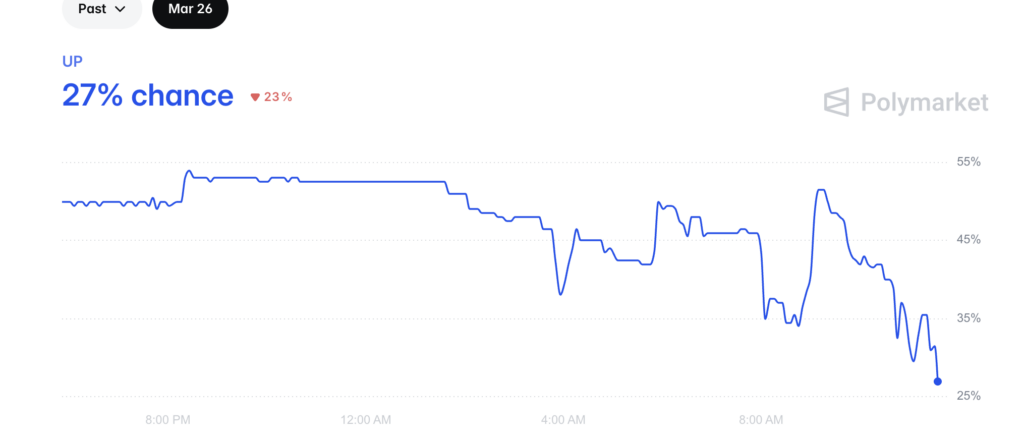
On Wednesday, Cathie Wood-led Ark Invest made significant trades, notably involving Tempus AI Inc (NASDAQ:TEM) and Meta Platforms Inc (NASDAQ:META). These trades reflect Ark’s strategic adjustments amidst evolving market conditions and company-specific developments.

The Tempus AI Trade

ARK Genomic Revolution ETF (BATS:ARKG) and ARK Space & Defense Innovation ETF (BATS:ARKK) increased their holdings in Tempus AI by acquiring 12,649 and 72,290 shares, respectively. The shares closed at $46.76, marking a 4.24% decline.

This purchase aligns with Tempus’ recent collaboration with Daiichi Sankyo, aiming to enhance AI-driven biomarker discovery in oncology. The collaboration seeks to leverage AI models for patient selection, potentially boosting the success rate of new treatments. The total value of the shares bought by Ark Invest in Tempus AI is approximately $3.97 million.

The Meta Platforms Trade

ARK Blockchain & Fintech Innovation ETF (BATS:ARKF), ARK Next Generation Internet ETF

Full story available on Benzinga.com

This post was originally published here