
Understanding How Corporate Events Affect Stockholders and Bondholders
This post was originally published here

















Gen Z brothers bought a $4,000 pickup truck to start their business—now it brings in $3 million a year
Kirk and Jacob McKinney found entrepreneurial inspiration at a local dump, launching junk removal and reselling business Junk Teens while still in high school.
This post was originally published here



‘We want peace’: Iranians try to maintain semblance of normal life as conflict drags on
Explosions lit up Tehran skyline as Israel launched new airstrikes but by morning joggers were in the park
The days after Nowruz, the Persian New Year, are usually a bustling time in Tehran, with spring arriving, trees blossoming, businesses reopening after the holidays, and people returning to work and school.
This year, however, Iranians are trying to maintain a semblance of ordinary life against the constant backdrop of explosions, airstrikes – and a conflict many fear may drag on for weeks or months.
This post was originally published here


The research firm whose AI paper knocked the whole stock market is out with another big call
Citrini Research said persistently high energy prices risk weighing on consumers and corporate earnings, creating a tough backdrop for equities.
This post was originally published here



Can Private Companies Legally Issue Convertible Bonds?
This post was originally published here


Opinion | The U.A.E. Stands Up to Iran

Congress must not give Trump a blank cheque for the Iran war
This post was originally published here

Trump taps Zuckerberg, Huang, Ellison for tech advisory council—but excludes Musk and Altman
President Trump is turning to some of the biggest names in Silicon Valley—including Meta CEO Mark Zuckerberg, Oracle executive chairman Larry Ellison and Nvidia CEO Jensen Huang—to help guide U.S. policy on AI and other key technologies through a new White House advisory council.
A press release from the Office of Science and Technology Policy said the President’s Council of Advisors on Science and Technology, or PCAST, “brings together the Nation’s foremost luminaries in science and technology to advise the President and provide recommendations on strengthening American leadership in science and technology.” It added that the council will focus on topics “related to the opportunities and challenges that emerging technologies present to the American workforce, and ensuring all Americans thrive in the Golden Age of Innovation.”
Each president since Franklin D. Roosevelt in 1933 has established a PCAST advisory committee of scientists, engineers, and industry leaders, the press release said.
Trump established the President’s Council of Advisors on Science and Technology by executive order in January, saying that “as our global competitors race to exploit these technologies, it is a national security imperative for the United States to achieve and maintain unquestioned and unchallenged global technological dominance.”
The council, which can include up to 24 members, will be co-chaired by White House AI and crypto czar David Sacks and senior technology adviser Michael Kratsios. The newly appointed group includes Andreessen Horowitz co-founder Marc Andreessen, Google co-founder Sergey Brin, former Oracle CEO Safra Catz, Dell Technologies founder and CEO Michael Dell, Oklo co-founder and CEO Jacob DeWitte, Coinbase co-founder Fred Ehrsam, entrepreneur and investor David Friedberg, physicist and University of California, Santa Barbara professor John Martinis, Commonwealth Fusion Systems CEO Bob Mumgaard and AMD CEO Lisa Su.
Catz and Su are the only two women, while the lineup leans heavily toward industry leaders and investors shaping the commercial AI boom – Martinis is the only academic researcher.
Notably absent are OpenAI CEO Sam Altman, any executives from Microsoft, and Tesla, SpaceX and xAI CEO Elon Musk, who previously led the Trump administration’s Department of Government Efficiency (DOGE).
Musk has previously taken issue with perceived White House slights. In 2021, the Biden administration held an event on electric vehicles, but Tesla was not invited despite being the top U.S. EV seller. It was a decision Musk criticized, saying it “was odd” that Tesla wasn’t invited.
This story was originally featured on Fortune.com

The median first-time homebuyer is now 40. Zillow’s CEO says don’t expect that to change anytime soon
Americans are waiting longer than ever to buy their first home. And for many, it’s not happening until they’re middle-aged.
The median age of the first-time homebuyer rose to a record high of 40 last year, according to the National Association of Realtors, up from the early 30s roughly a decade ago. The average American today will get married and have their first kid in their late 20s or early 30s, according to Census and CDC data. Homebuying was once coupled with those milestones. But the housing market has grown increasingly unaffordable thanks to high interest rates and low supply, effectively reshaping the American life timeline.
And Zillow CEO Jeremy Wacksman doesn’t see that changing anytime soon.
“The fact that it’s been going up is this affordability challenge,” he told Fortune in an exclusive interview, referring to the median age of the first-time homebuyer. “People are having to wait longer to save up and find their way into a down payment.”
“We aren’t expecting any relief in the short term,” he added. “I think it’s just going to take a while.”
Home prices are up 60% compared to pre-pandemic figures as the country endures a prolonged housing shortage, estimated at about 4.7 million according to a 2025 Zillow report. The situation has grown so dire some potential buyers are looking to their parents to pay their down payment.
The current economic outlook isn’t helping, either. Rising gas prices are eating away at Gen Z’s rent payments. And nearly three-in-five Americans today fear the encroaching AI job apocalypse could make housing even more unattainable. One of the central pillars of the American dream is becoming increasingly decoupled from the other key rites of adulthood.
What’s making homeownership so hard for younger buyers
Wacksman’s diagnosis of the situation is on par with what other economists, policy experts, and politicians have uttered: supply shortages.
He said one of his main concerns is homeowners delaying sales as they wait for mortgage rates to fall to more tolerable levels. Bringing those sellers back to market would add much-needed inventory and help ease prices. Instead, many remain shackled with “golden handcuffs,” as current conditions incentivize them to stay put.
“Sellers who’ve been holding on to their low mortgage rate will finally say, ‘Okay, I’ve been putting off the move,’” he said. “’Now the gap in my mortgage rate is tolerable and I’ll move and new listing supply will come online.’”
The CEO also lauded the Trump administration’s efforts on housing affordability, including the executive order President Donald Trump signed to reduce regulation around mortgages. He’s also hopeful a bipartisan housing bill—a measure aiming to reduce housing regulatory barriers and cap corporate ownership of homes, that passed the Senate with an 89-10 vote—could move the needle on the housing supply.
“What we’re most excited to see is that this is a big topic now, and it’s a topic across Washington on the supply side,” he said.
How Zillow aims to use AI to address the housing crisis
While many of the factors contributing to the housing affordability crisis are structural, Wacksman believes Zillow can at least improve the conditions for those who still think homeownership is out of reach.
Wacksman said an education gap remains a high barrier for many prospective buyers, as most don’t fully understand the complexity of housing transactions. The company is betting the launch of its new AI mode, announced Wednesday, will help close that gap. The feature allows users to interact with Zillow in a conversational format similar to ChatGPT.
“Tools like ours—Zillow AI mode, buyability in our financing tools—they can help educate buyers,” he said. “They can teach you: ‘How could I get it done? There are different mortgage options. Maybe I can look in a different market.’” According to a press release, Zillow AI mode can handle everything from answering affordability questions and comparing options to booking tours.
The company also launched Zillow Preview last week, a tool meant to expand listings on the platform by permitting agents and brokers to showcase “coming soon” listings. Wacksman thinks bringing pre-listings onto the platform will increase supply by publishing more house listings on Zillow, and help to address the housing shortage.
Still, the CEO said there are limitations to how the company can tackle the housing situation. “We can educate,” he said. “We can’t build more houses.”
This story was originally featured on Fortune.com


Savannah Guthrie’s first interview since mother Nancy vanished: ‘I imagine her terror’
Nearly two months after Nancy Guthrie disappeared, her daughter Savannah discusses the toll on her family in an emotional interview with her Today show colleague Hoda Kotb.
(Image credit: Rebecca Noble)

This post was originally published here

Why Is Eightco Stock Trading Higher On Wednesday?
Eightco Holdings Inc (NASDAQ:ORBS) shares are trading higher on Wednesday. The stock is gaining momentum alongside a broader market uptick. The Nasdaq has gained 0.71% while the S&P 500 is up 0.51%.
• Eightco Holdings stock is showing exceptional strength. Why are ORBS shares rallying?
Deepening Ties With OpenAI
The rally follows Friday’s news that Eightco invested an additional $40 million into OpenAI. This brings the company’s total commitment to $90 million. OpenAI now represents approximately 30% of the ORBS total treasury position.
“Access to high-growth private companies has historically been limited to institutional investors,” said Kevin O’Donnell, CEO of Eightco. He noted the company offers retail investors meaningful exposure to the AI …
This post was originally published here

UK iPhone users face over-18 age check to use services after update
Ofcom says decision is ‘real win for children and families’ but some users raise concerns over privacy
Millions of Apple iPhone customers in the UK will now have to confirm they are 18 or older to use all available services, including by showing a credit card or by scanning an ID.
The move, believed to be a first for a European market, comes amid pressure on tech companies from the government to do more to protect children online.
This post was originally published here







On Holding Stock Plunges as Sneaker Maker Announces Management Shakeup
This post was originally published here



Blackstone, Bolt Ventures Acquire Indian Cricket Team For $1.78B
A consortium comprising Blackstone (NYSE:BX), Bolt Ventures, Aditya Birla Group, and The Times of India Group agreed to acquire the Royal Challengers Bengaluru (RCB) cricket franchise.
This acquisition, valued at approximately $1.78 billion, includes both the men’s Indian Premier League and the women’s Premier League teams, Blackstone reports.
The acquisition is pending customary approvals, including those from the Cricket Board of Control for Cricket in India and the Competition Commission of India. The acquisition marks a significant shift in ownership from United Spirits Limited, a subsidiary of Diageo plc, to the new consortium.
Under the new leadership, Aryaman Vikram Birla will assume the role of chairman, while Satyan Gajwani from The Times of India Group will serve as vice chairman.
The new owners aim to build upon the franchise’s legacy …
This post was originally published here
Trump says he could send National Guard to airports ‘for more help’
President Donald Trump says he is considering sending the National Guard to airports where TSA officer absences have led to long lines.
This post was originally published here

Bitcoin ETFs Inflows Soar Past $2 Billion While Gold ETFs Bleed—A Safe Haven Shift Unfolds
Gold’s slide into a bear market is colliding with an unexpected trend: investors are pouring money into Bitcoin ETFs instead.
This dichotomy is particularly interesting, as the price of gold has declined by over 20% from its January highs, which is enough to qualify as a bear market, whereas U.S. spot Bitcoin ETFs have received over $2 billion in inflows over the last few weeks.
Bloomberg ETF analyst Eric Balchunas tweeted that iShares Bitcoin Trust ETF (NASDAQ:IBIT) is already in the top 2% among all ETFs in YTD flows.
ETF Flows Tell The Real Story
Perhaps the most visible aspect of this is the flow data.
The largest gold ETF, SPDR Gold Shares (NYSE:GLD), recorded a record monthly outflow of over $7 billion, a very quick unwinding of a position built on inflation and geopolitical hedging.
Other gold-based ETFs, such as iShares Gold …
We’re adding to an out-of-favor stock with limited exposure to Iran war upheaval
The stock has pulled back roughly 9% since the start of the conflict with Iran.
This post was originally published here

Markets were not made for Trump’s never-ending ping-pong
This post was originally published here



Tom Lee Says ‘Wars Are Good For U.S. Markets’ And Bets $6.8B On Ethereum To Prove It
Bitmine (NYSE:BMNR) lhas aunched MAVAN, an institutional Ethereum (CRYPTO: ETH) staking platform, with Chairman Tom Lee betting $6.8 billion in staked ETH on his thesis that “wars are going to be good for the U.S. economy and the U.S. stock market.”
The War Opportunity Thesis
Lee argues that markets bottom early into conflicts despite short-term uncertainty.
His research shows that across the last eight major war events, markets consistently bottomed very early into the conflict, creating buying opportunities for investors who can see past the immediate crisis.
“As much as the war is creating obviously a huge short-term setback and a lot of uncertainty, including effects on monetary policy, ultimately wars are going to be good for the U.S. economy and the U.S. stock market,” Lee said.
Lee’s timing reflects his conviction that investors fixate on crisis elements while missing emerging opportunities.
When things look their worst, markets often do the opposite of what everyone expects.
He predicts …

Elon Musk’s SpaceX Could IPO By July: Here’s What Prediction Markets Say
Prediction market bettors now price a 70% chance that SpaceX completes its IPO by June, and the company appears to be getting its house in order, quietly hiking launch prices ahead of an IPO that could shatter every record in history.
The company is reportedly targeting a June listing at a valuation that could reach $1.75 trillion, with Goldman Sachs, JPMorgan, Morgan Stanley, and Bank of America in senior roles.
Fattening Margins With No Competition In Sight
Ahead of the S-1, SpaceX has been fattening its margins.
Between mid-January and early February, the company raised its Falcon 9 launch price from $69.75 million to $74 million.
Its only real domestic competitor: United Launch Alliance, the Boeing Co (NYSE:BA) and Lockheed Martin Corp (NYSE:LMT) joint venture, has been grounded after its Vulcan Centaur rocket shed parts midflight.
This effectively …
This post was originally published here

Rishi Sunak is giving advice to CEOs on AI. Here are his golden rules
There was a simple narrative about Rishi Sunak when he was defeated in the U.K. general election of 2024. The Stanford MBA graduate and former Goldman Sachs analyst would quit Parliament, leave the U.K. and hot-foot it to California for lucrative roles towards the top of some hyperscaler or other. Sunak kept insisting it wasn’t true, despite the fact he often wore regulation Silicon Valley white trainers. Few people believed him.
Two years later, and Sunak has confounded the sceptics. He is still a Member of Parliament for a rural constituency in the north of England (AI use for dairy farmers is one of his specialties). And, although he is now an advisor to Goldman Sachs, Microsoft, and Anthropic, his work is resolutely anchored in the U.K. The Labour government is regularly in touch.
“My work with the two technology companies has left me even more convinced, not just about how much AI is going to change, but how quickly it’s going to change things too,” Sunak told a Goldman Sachs conference for small businesses held in Birmingham, England’s second city 100 miles north of London.
“It’s not just about transforming our economy—as much as that is important. I believe that AI is going to lift the floor for humanity and it’s going to do that because it’s going to make it possible for everyone, no matter where they are around the world, to have access to the best healthcare and education that money can buy. And I think that is an extraordinary democratizing force.”
He told the room full of chief executives that speed of adoption is “everything”. If you are not planning for the era of applied AI (in use in your business), then the risk is being left behind, sitting on the wrong side of a ‘K-shaped economy’.
“My work with the two technology companies has left me even more convinced, not just about how much AI is going to change, but how quickly it’s going to change things too”
Rishi Sunak, former U.K. Prime Minister
“Like steam power, like electricity, artificial intelligence is a general-purpose technology which can and will change every aspect of our economy, of our society,” Sunak said. “With new technologies, we’ve all been through these cycles. There’s lots of hype out there, and people get carried away, but I genuinely believe that it is a conservative estimate to say that artificial intelligence will have twice the impact of the Industrial Revolution in just half the time.”
The question-and-answer session with the business leaders is revealing. Most feel they need support with making decisions as CEOs. Others know they need to train their staff so that new ways of being productive can be co-created, not ordered from above. Many fear losing their jobs, sometimes through ignorance rather than data. One founder flagged “false confidence” with splashy AI tools as worthy of note.
“It’s clear that when it comes to AI, the responsibility for it can’t sit in the IT department,” Sunak said. “It has to start with the leaders. Research from McKinsey shows that when leaders demonstrate ownership and commitment, they find that AI deployment in their organizations is far more successful. That doesn’t mean that you have to have deep technical expertise. You don’t need to become a coder overnight, but it’s about awareness [and] it’s about mindset.”
“When I go around the country talking to businesses, the single biggest mistake I see is that people start with the technology first and then try and find a use case for it which is completely the wrong way around.”
“The best thing to do is to look at your business first and figure out where the pain points are, where are those tasks that employees are really frustrated with, where are the processes that slow things down, or where are the bottlenecks that are limiting your growth? That is probably the best way to identify a set of initial AI use cases.”
One of the sessions at the Goldman Sach’s conference is titled “AI—friend or foe?”. Neither, of course. The key will be a CEO’s awareness of where AI can drive growth and revenue opportunities whilst retaining the very essential human leadership and guidance that makes each business and division unique. If everyone uses the same AI tools in the same way, then everyone risks offering the same AI-led solutions. And a world of AI-slop is not where anyone wants to be.

This story was originally featured on Fortune.com

‘I want everybody to have enough food’: the scientist who made your packaged food safer just won the world’s most prestigious food prize
A scientist who pioneered the modern food processing safety standards used around the world was awarded this year’s World Food Prize, the organization announced Wednesday, crediting his work for averting millions of cases of foodborne illness and reducing food waste.
Huub Lelieveld of the Netherlands earned the award after six decades spent advancing ways to improve food safety and advocating for trade regulations that allow safe food to get around the world more easily.
“I just did what I thought was right,” Lelieveld said in an interview with The Associated Press. “I want everybody to have enough food but … it should also be safe.”
Lelieveld began his career as a food researcher at Unilever at a time when mechanisms for manufacturing safe food products were, to him, “illogical,” he said.
Food was often sterilized or chemically preserved after production, and equipment needed to be shut off once or twice each day to be cleaned, which was both difficult and time consuming. The processed food also required heavy use of preservatives, salt, sugar and acids to reduce the risk of contamination, which detracted from flavor and nutrition.
“I realized very soon that they did things in the wrong way, in my view,” Lelieveld said. “From the beginning, I’ve been working on … convincing people that you should do it in a different way.”
Lelieveld worked with colleagues to develop hygienic production methods and equipment, making food manufacturing more efficient and less reliant on chemicals.
Having scaled the processes at Unilever and shown that they worked, Lelieveld said the company gave him permission to publish the research for dissemination and use globally.
“My philosophy was: You should not compete on food safety,” Lelieveld said. “Spreading the technology, the hygienic technology, was very important.”
Unsafe food causes 600 million foodborne illnesses and 420,000 deaths each year, according to the World Health Organization.
“Lelieveld was selected for translating food safety science into global regulations, legislation and practice, a movement spanning dozens of countries,” Gebisa Ejeta, chair of the Laureate selection committee, said in a statement. “His initiatives are estimated to have benefited millions of consumers worldwide.”
The Iowa-based World Food Prize was founded by Norman Borlaug, who received the Nobel Peace Prize in 1970 for his work to dramatically increase crop yields and reduce the threat of starvation in many countries. The agricultural science honor includes a $500,000 award.
“Lelieveld lives by his conviction that access to safe food is a universal right—a philosophy shared by the late Dr. Norman Borlaug,” Mashal Husain, World Food Prize Foundation president, said in a statement.
After four decades at Unilever, Lelieveld founded the Global Harmonization Initiative in 2004 to promote consensus in food and trade regulations around the world. Drawing on a network of a few thousand scientists around the world, the nonprofit organization also works to address critical food security challenges and to facilitate food safety education.
GHI “is extremely useful because it has this enormous pool of knowledge about food safety and food protection,” Lelieveld said.
Lelieveld said challenges for broad access to safe food and water persist, and he hopes to see a system where people can produce safe food and water locally even if the movement of goods across borders is restricted.
“You can’t stop the transport of water through the air, with the clouds,” he said. “You can produce safe water everywhere, but we need to distribute this knowledge to the people that need it and that is the biggest challenge.”
This story was originally featured on Fortune.com







At the Legacy Museum, facing America’s racist past is a path, not a punishment
“There is an America that is more free — where there’s more equality, where there is more justice, where there is less bigotry — and I think it’s waiting for us,” says lawyer Bryan Stevenson.

This post was originally published here





Cipher Shares Are Gaining Today – Here’s Why
Cipher Digital Inc (NASDAQ:CIFR) shares are rising on Wednesday after announcing a 15-year data center campus lease.
The company also secured a revolving credit facility of up to $200 million with an investment-grade hyperscale tenant.
Expansion Into Data Center Infrastructure
Under its third campus lease, Cipher will develop and deliver a new HPC data center at an existing site.
The credit facility includes $200 million in committed capacity, with an additional $50 million accordion option, and is intended to support liquidity, working capital and growth initiatives.
The facility matures in March 2030, carries interest based on SOFR plus 1.25% to 1.75%, and was undrawn at closing.
Financing and Institutional Support
Morgan Stanley served as administrative agent, lead arranger, and bookrunner for the facility. The syndicate included Banco Santander, Goldman Sachs, JPMorgan Chase, Sumitomo Mitsui Banking Corporation, and Wells Fargo.
Cipher, a developer and operator of industrial-scale data centers, said the agreement marks its third large AI campus.
Leadership Commentary and Strategy
“This agreement for our third large AI campus reinforces Cipher’s position as a trusted partner to develop high-quality HPC data center infrastructure for the world’s leading companies,” said CEO …

Cohere Partners With Saab To Revolutionize Aerospace Through AI
Saab announced a strategic partnership with the Canadian AI firm Cohere through a Memorandum of Understanding (MOU) to advance artificial intelligence technologies. This collaboration is poised to enhance Saab’s GlobalEye program in Canada, while also benefiting international operators of the system.
Saab reports that the MOU will foster joint efforts in developing AI technologies that support complex aerospace environments. The partnership will focus on areas such as data-driven mission support, maintenance tools, and information processing.
Initial pilot projects are already in place to evaluate potential cooperation pathways that align with the program’s current needs. This initiative not only aims to strengthen Saab’s global product offerings but also to boost its competitive edge on the international stage.
According to Saab, the collaboration underscores the potential of combining aerospace expertise with cutting-edge AI research.
Micael Johansson, Saabs President …
This post was originally published here





A leadership vacuum adds to strains on the CDC
Low morale, staff turnover and budget issues have sapped the Centers for Disease Control and Prevention. The administration is expected to soon name a new director, who will have their hands full.
(Image credit: Jessica McGowan)

This post was originally published here

US has caused $10tn worth of climate damage since 1990, research finds
US, top carbon emitter in history, has ‘a lot of responsibility’ for causing ‘substantial’ harm globally, scientist says
The US has caused an eye-watering $10tn in global damages to the world over the past three decades through its vast planet-heating emissions, with a quarter of this economic pain inflicted upon itself, new research has found.
By being the largest carbon emitter in history, the US has caused greater harm to worldwide economic growth than any other country, ahead of China, now the world’s largest emitter that is responsible for $9tn in GDP damage since 1990, according to the findings of the paper.
This post was originally published here
Bond between dogs and humans dates back more than 15,000 years, study finds
Research suggests hunter-gatherers were feeding dogs and giving them ritual burials as early as the last ice age
They are humankind’s best friend, and now ancient DNA analysis has revealed that the enduring bond between dogs and humans dates back more than 15,000 years.
The groundbreaking research, published in the journal Nature, pushes back the oldest genetic evidence for domestic dogs by 5,000 years, revealing that hunter-gatherers were feeding the animals and giving them ritual burials long before the emergence of agriculture.
This post was originally published here




Analyst Favorites: Reliance Ranks As a Top Metals Pick
A study of analyst recommendations at the major brokerages shows that Reliance Inc (Symbol: RS) is the #14 broker analyst pick, on average, out of the 50 stocks making up the Metals Channel Global Mining Titans Index, according to Metals Channel. The Metals Channel Global Minin
This post was originally published here

The 5 Biggest Financial Advisory Firms in the U.S.
This post was originally published here



Savannah Guthrie says her family is ‘in agony’ in first interview since mother’s disappearance
Today show co-host appeared in pretaped interview as her mother, Nancy Guthrie, has been missing for seven weeks
Savannah Guthrie, the co-host of NBC’s Today show, has described her family’s ordeal as “agony” in her first interview since her mother’s disappearance more than seven weeks ago.
“Someone needs to do the right thing. We are in agony. We are in agony. It is unbearable,” Guthrie said through tears in a preview of the pretaped interview with her co-host, Hoda Kotb, which previewed on Wednesday.
This post was originally published here

Understanding Estimated Tax: Who Needs to Pay It?
This post was originally published here

Skeleton of Three Musketeers hero d’Artagnan may have been found
Archaeologists believe remains found in Maastricht, Netherlands, may be of soldier who inspired novel character
More than three-and-a-half centuries after a musket ball to the throat put an end to decades of exemplary swashbuckling, the French soldier who inspired Alexandre Dumas and went on to be immortalised on the stage and screen – not to mention as a plucky cartoon dog – may rise again.
Workers repairing a church in the Dutch city of Maastricht have discovered a skeleton that could belong to the 17th-century Gascon nobleman Charles de Batz-Castelmore – better known as d’Artagnan – whose exploits led Dumas to make him the hero of the Three Musketeers.
This post was originally published here

Stock Market Today: Major Indexes Gain, Oil Pulls Back on Report US Sends Iran Plan to End War
This post was originally published here


Arm jumps 20% as company expects revenue windfall from new chip, a ‘significant shift’
Arm said it expects its new chip to generate six times more revenue in 2031 than the $4 billion it made in 2025.
This post was originally published here

‘Conditions for a labor market crisis’: Rising care costs push women out of workforce
The American dream is becoming increasingly difficult for many women who are leaving the U.S. workforce, as new data highlights ongoing pressures tied to caregiving costs.
As the rising cost of childcare and eldercare outpaces wage growth, 455,000 women left the labor market between January and August 2025, according to Catalyst, with many citing difficult trade-offs between a paycheck and the high price of professional caregiving.
A recent report from the research group showed that nearly half a million female employees voluntarily left their jobs for various reasons. Forty-two percent cited leaving due to caregiving responsibilities, 37% cited a lack of schedule flexibility, while smaller percentages of those surveyed noted issues with pay dissatisfaction or job market uncertainty.
If businesses and the government do not address caregiving infrastructure, a Catalyst executive warns, the U.S. could face a long-term labor shortage that could drive up service costs.
THE INVISIBLE LAYOFF: A.I. IS QUIETLY LOCKING AMERICANS OUT OF THE JOB MARKET, C.E.O. WARNS
“This moment is especially risky. We are at the very tip of this spear, and we can still do something about it,” Catalyst President and CEO Jennifer McCollum told WTOP in Washington, D.C. “When women are leaving the corporate world, or the government world or NGO and nonprofit world en masse, like we’re seeing now, and you combine that with fewer leaders wanting to talk openly about that… we are creating the conditions for a labor market crisis.”
“This research makes clear that women’s workforce exits are not about a lack of ambition or commitment,” McCollum said in the report. “They reflect the reality that too many jobs still fail to account for caregiving responsibilities and economic pressures. If we want to understand why women are leaving, we have to look at how work continues to be structured.”
LendingTree research from November 2025 found that in 100 of the largest U.S. metro areas, the average monthly cost for infant care is 25.3% lower than the cost of rent for a two-bedroom apartment. For families with both an infant and a toddler, childcare costs are 31.5% higher than rent.
Federal data from the Bureau of Labor Statistics show women’s labor force participation dropped sharply during the COVID-19 pandemic and has since largely rebounded to near pre-pandemic levels, though surveys from the U.S. Census Bureau indicate ongoing childcare challenges continue to affect workforce participation.
Some employers and policymakers argue that expanding workplace flexibility or government-backed childcare programs comes with trade-offs, including higher costs for businesses and taxpayers. Business groups, including the U.S. Chamber of Commerce and the National Federation of Independent Business, have warned that companies are already facing inflation and labor shortages and caution that new mandates could increase employer costs. Meanwhile, Federal Reserve research points to a still-tight labor market and rising labor force participation in recent years — including among women — though economists attribute those trends to multiple factors, including childcare costs, wages and broader economic conditions.
In some of the most expensive markets with the widest care-to-rent price ratios, childcare costs average $1,996 per month.
After accounting for inflation, 18% of those women surveyed who left the workforce couldn’t justify their salary against the rising costs of care.
“Eighteen percent of them said, ‘When I look at the trade-offs between what I have to do from a caregiving responsibility and pay, and the lack of flexibility I have, and the amount of pay that I get, I cannot make this calculus work anymore,'” McCollum also told WTOP.
“Women are not ‘opting out’ — they are leaving because many jobs are not designed around the logistical and financial realities of childcare and women’s lives,” Catalyst research director Sheila Brassel wrote in the study. “Employers that want to bring women back to the workforce and retain top talent need to take action through tangible and meaningful policies that support women’s full participation.”
GET FOX BUSINESS ON THE GO BY CLICKING HERE
Catalyst’s data shows that women want to work but are being squeezed by rigid corporate structures and a lack of post-COVID flexibility.
“Re-engaging and retaining women requires addressing caregiving realities, offering schedule flexibility, and ensuring work structures, equal pay, and access to opportunity that allow women not only to return to the workforce, but to thrive there,” Brassel added.
Employers, meanwhile, have faced pressure to balance flexible work policies with operational demands, with some companies scaling back remote work options in recent years.

Here’s Why Bitcoin’s ‘Magic Day’ Is Tax Day, April 15 And What Happens Next
Bitcoin (CRYPTO: BTC) has remained range-bound since February, prompting questions about what could drive a shift in the months ahead.
Tax Day As Turning Point
Bitcoin may continue trading sideways until mid-April, with U.S. Tax Day acting as a key catalyst for the next move, according to Bitwise CIO Matt Hougan.
Hougan and Bitwise Head of Research Ryan Rasmussen said in an appearance on the Milk Road podcast that Bitcoin’s near-term outlook is split into two phases, with Apr. 15, U.S. Tax Day, marking a potential inflection …


DHS funding deal on shaky ground as Trump and Democrats both decline to embrace it
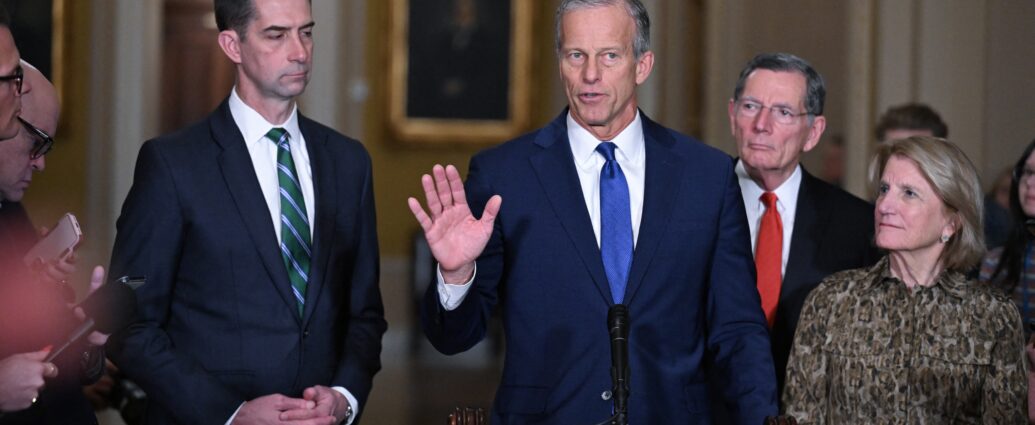
After weeks of start and stop negotiations between Congressional Democrats and the White House, there’s an emerging proposal to fund the majority of DHS and tackle ICE enforcement funding separately.
(Image credit: ROBERTO SCHMIDT)

This post was originally published here








Carding Fraud: Stolen Card Use and Protection Strategies
This post was originally published here

MLB All-Star Alex Bregman joins Patrick Mahomes, Breanna Stewart as Throne SPORT COFFEE partner
With MLB Opening Day upon us, Chicago Cubs new All-Star third baseman, Alex Bregman, knows he’s going to need some caffeine during a long, 162-game season.
But not all coffee is made the same, which is why Bregman is partnering with Throne SPORT COFFEE, joining a star-studded group which includes Kansas City Chiefs superstar quarterback Patrick Mahomes and WNBA star and Olympic gold medalist Breanna Stewart.
“I invested in the company because I believe in it,” Bregman, who joined the Cubs this past offseason on a five-year, $175 million deal, told FOX Business in a recent interview. “You got to take ownership in what you put into your body if you want to play for a long time and have longevity in this game. It’s a good-for-you coffee that will keep you going, and something that is important to me. I want to be putting the right stuff in my body, and Throne SPORT COFFEE does that for me.”
CLICK HERE FOR MORE SPORTS COVERAGE ON FOXBUSINESS.COM
Bregman said he connected with beverage industry veteran Michael Fedele, who created Throne SPORT COFFEE’s proprietary COFFEE PLUS+ formula for the brand’s premium-charged lattes and cold brews, while he was playing for the Houston Astros. Seeing Throne SPORT COFFEE having 150mg of natural caffeine, as well as being NSF Certified for Sport with 10 grams of protein and 100% daily value of B vitamins, it was a no-brainer to try it out for Bregman.
The relationship with Fedele continued as he joined the Boston Red Sox this past year, when he earned his third career All-Star nod.
WNBA STAR BREANNA STEWART PARTNERS WITH THRONE SPORT COFFEE ALONGSIDE PATRICK MAHOMES
Then, as Bregman left Cubs spring training to join Team USA during the World Baseball Classic (WBC), Throne SPORT COFFEE was in the clubhouse as the U.S. made its way to the WBC final.
“They loved it,” Bregman said about his Team USA peers getting Throne SPORT COFFEE in the clubhouse during the WBC. “Michael sent us a shipment when we were in Miami, and it got into the clubhouse at the perfect time. We had a late-night game and an early get-to-the-ballpark for an early workout. All the guys loved it and were caffeinated after that.”
Fedele also couldn’t be happier to add Bregman as an investor and partner, as the brand continues to grow.
“We are excited to officially welcome Alex Bregman to the Throne SPORT COFFEE family,” he said in a statement to FOX Business. “Alex is excited to help drive awareness and education about our better-for-you coffee solution and he embodies the preparation, discipline and performance mindset that defines the Throne SPORT COFFEE brand. Partnering with athletes who have that mindset is key to our continued growth and to reinforcing our leadership in the category.”
Bregman knows Chicago is a big market for not just sports, but coffee drinkers alike. He can’t wait to get his Cubs teammates involved now, especially with how many day games the team plays throughout the season.
GET FOX BUSINESS ON THE GO BY CLICKING HERE
“You’re hitting your vitamins, you’re hitting your protein, and you’re getting the caffeine that’s good caffeine for you. I mean, for 162 games a year, you’re going to need some caffeine, especially here in Chicago with all these day games,” Bregman said. “I feel like Throne SPORT Coffee is going to be the go-to every day. To be able to partner with them is exciting and looking forward to getting the whole team caffeinated for all the games.”
Follow Fox News Digital’s sports coverage on X and subscribe to the Fox News Sports Huddle newsletter.






UK government to trial social media ban for hundreds of teens
A teen social media ban pilot in the U.K. will include restrictions ranging from curfews to time caps on popular apps like Instagram, TikTok, and Snapchat.
This post was originally published here

Denmark’s prime minister given first chance at forming government after election
Danish palace says it has asked Mette Frederiksen to try to form new majority with her Social Democrats and leftwing parties
Denmark’s outgoing prime minister, Mette Frederiksen, has been given the first shot at forming another coalition government after an election which saw her leftwing bloc and the opposing rightwing parties fail to win a parliamentary majority.
A statement released by the Danish palace on Wednesday said Frederiksen had been asked to see if she could pull together a new majority involving her Social Democrats, who had their worst general election since 1903 but remain the biggest force in parliament.
This post was originally published here






Harvard is the No. 1 ‘dream college’ of choice among Gen Z students—despite its war with the Trump administration and an $87,000 a year price tag
Harvard University has had a turbulent few months. The school has faced leadership turmoil, renewed scrutiny over its former president Larry Summers’ past ties to Jeffery Epstein, and an escalating clash with the Trump administration—including a federal lawsuit filed just last week alleging antisemitism on campus.
None of it has knocked it off its perch. The Ivy league institution was once again deemed the No. 1 “dream school” among college applicants, according to a new survey by The Princeton Review.
Harvard has consistently ranked near the top throughout the survey’s 24-year history. Although it was dethroned last year by Massachusetts Institute of Technology (MIT), this year’s revival suggests that sustained controversy has done little to dent its appeal.
“Harvard ultimately reigns as the world’s most desirable university with unparalleled brand recognition, alumni achievement and history,” Jamie Beaton, founder and CEO of Crimson Education—who holds both undergraduate and graduate degrees from the university—told Fortune. “Trump’s battle with Harvard has only made the school more notable and famous.”
While admissions for the incoming fall cohort are still being finalized, Harvard has only become more competitive over the years. Of the nearly 48,000 applications to its class of 2029—who started this past fall—only about 2,000 were admitted, an acceptance rate of around 4%. By comparison, the acceptance rate 18 years ago was about 9%.
Harvard graduates are entering the workforce with near six-figure salaries—and little student debt
For many Harvard students, the payoff of making it through the rigorous application process appears to be tangible.
In a survey of the class of 2025 by The Harvard Crimson, 95% of seniors said they would choose Harvard again. Early career earnings are likely part of the reason: roughly half of respondents expected to earn more than $90,000 in their first job, while about one in five anticipated salaries of $130,000 or higher—figures that far outpace national averages for new graduates.
The price tag, meanwhile, keeps climbing. Total billable costs this academic year—tuition, fees, housing, and food—reached $86,926, a roughly 9% increase over the past two years. Yet only 17% of seniors reported graduating with student loan debt. Harvard waives tuition entirely for undergraduates whose families earn $200,000 or less annually.
But Harvard isn’t alone in driving demand—and the composition of this year’s list suggests that prestige reigns supreme in the minds of most applicants. Adam Nguyen, founder of admissions consulting firm Ivy Link, isn’t surprised.
“Even in a market where families talk constantly about cost, practicality, and ROI, the schools that continue to dominate the imagination are still the ones with the strongest prestige, signaling power, alumni networks, and global brand value,” Nguyen told Fortune.
The 10 top “dream colleges” of students in 2026
- Harvard University
- Massachusetts Institute of Technology
- Stanford University
- Princeton University
- New York University
- Yale University
- Columbia University
- University of Pennsylvania
- University of Texas–Austin
- University of Michigan–Ann Arbor
More Gen Z are questioning the value of degrees—and seeking alternatives in the skilled trades
For all the allure of the Ivy League, those institutions represent a sliver of the American college experience—and the broader picture is more conflicted.
Cost anxiety has become the defining concern of the application process. The plurality of student and parent respondents in this year’s Princeton Review survey, 35%, cited impending debt levels as the biggest concern about the college application process. That’s a dramatic shift from the survey’s early years: in 2003, only 6% of respondents chose cost as their top concern.
The skepticism doesn’t end at graduation. More than a third of all graduates now say their college diploma was a “waste of money,” according to a survey by Indeed. Among Gen Z specifically, that figure rises to 51%. And with artificial intelligence reshaping the job market for entry-level talent, these worries are only expected to grow.
It’s pushing a growing number of young people to take a harder look at alternatives. Enrollment in vocational and trade programs has grown more than 20% between 2020 and 2025, according to National Student Clearinghouse Data. And business leaders like Nvidia CEO Jensen Huang have highlighted that opportunities to land secure, six-figure-paying blue-collar jobs are on the rise—thanks in part to the data center boom.
“This is the largest infrastructure build-out in human history that’s going to create a lot of jobs,” Huang said at the World Economic Forum earlier this year.
“We’re talking about six-figure salaries for people who are building chip factories or computer factories or AI factories.”
This story was originally featured on Fortune.com

KKR and GIP among bidders for Drahi’s multibillion French fibre network
This post was originally published here
Could the continent’s far right be suffering from a Trumplash?
France’s National Rally missed key targets in local elections ahead of next year’s seismic presidential vote – and the mainstream is doing OK elsewhere, too
• Don’t get This Is Europe delivered to your inbox? Sign up here
The Rassemblement National is not invincible. A year out from a make-or-break presidential vote, that might be the main lesson (though there are others, which may prove more significant) from last weekend’s local elections in France. What’s more, news elsewhere – Giorgia Meloni’s referendum defeat in Italy, Janez Janša beaten in Slovenia, Hungary’s Viktor Orbán in trouble, the left bloc largest in Denmark – might suggest the rest of Europe’s far right are not having it all their own way, either.
But let’s focus first on France – if only because while local elections are rarely a wholly accurate guide to future national outcomes, these ones seem to provide some pointers – and the stakes in the country’s next major election are vertiginously high.
This post was originally published here

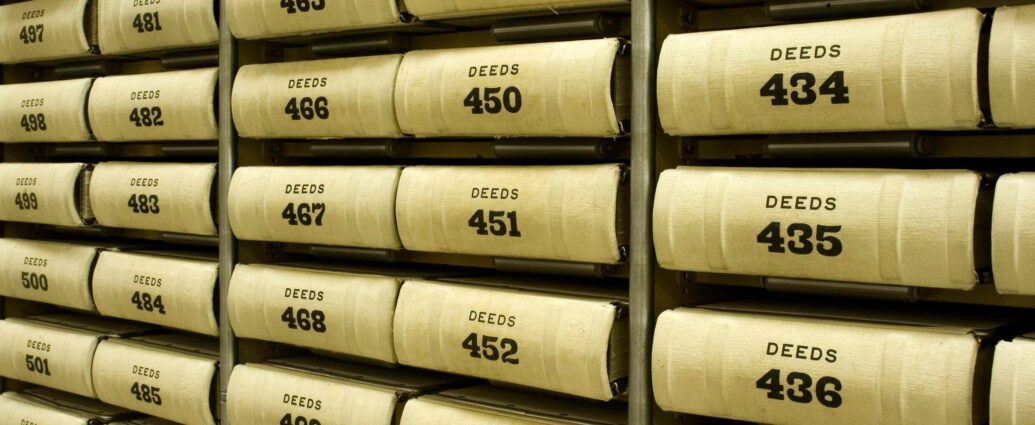
Tax Deed Insights: Definition, Sales, and Clearing Steps
This post was originally published here

Trump taps Silicon Valley billionaires for policy advice
This post was originally published here


Iran war threatens to delay large offshore wind projects in EU and UK
Industry fears strait of Hormuz closure could disrupt shipping of crucial parts for UK and German North Sea projects
• Business live – latest updates
A string of large offshore wind projects in Europe are facing potential delays as the Iran war threatens to disrupt shipping of crucial parts manufactured in the Gulf.
Industry sources are concerned that components ordered from suppliers in the United Arab Emirates could become trapped if shipping remains effectively blocked through the strait of Hormuz.
This post was originally published here
Lars Løkke Rasmussen: Denmark’s pipe-smoking kingmaker who cleans his teeth with soap
Man credited with cooling Greenland tensions with Donald Trump is poised to play central role in any coalition deal
At the end of a long, gruelling night for the biggest parties on the right and left, there was one veteran of Danish politics who came out of Tuesday’s general election with a smile on his face – and a pipe in his mouth.
Lars Løkke Rasmussen, the two-time prime minister whose Moderates party is not aligned with the country’s left or right-leaning political blocs, is poised to play a central role in any coalition deal reached in the coming weeks.
This post was originally published here







Meta cutting several hundred jobs across Reality Labs, Facebook and other departments
The layoffs come as Meta has been refocusing its efforts and pouring billions of dollars into AI.
This post was originally published here

Dagenham leaseholders left homeless by fire could be forced to pay for cladding works
Greater London Authority seeks £6m refund for uncompleted fire safety work on destroyed Spectrum Building
People who lost their homes when a tower block in Dagenham burned down say they are being made to pay for the building’s fire safety works after the government demanded its money back.
Former leaseholders of the Spectrum Building, a seven-storey block of flats which was demolished after a major fire in August 2024, said it was “absolutely outrageous” the Greater London Authority (GLA) was seeking to reclaim £6m for the safety works because the blaze meant they were never completed.
This post was originally published here




JPMorgan’s Jamie Dimon says remote work breeds ‘rope-a-dope politics’ and stunts young workers’ growth
Jamie Dimon, who has led America’s largest bank JPMorgan for 20 years and through multiple recessions, blasted remote work and offered a stern warning for any younger generations who want to move up the career ladder: get into the office.
“If you go to a meeting with me, you got my full friggin attention the whole time,” he said at the Hill and Valley Forum, which brought together leaders from Washington and Silicon Valley, on Tuesday.
During the session titled “Wealth, Power, and the Next American Century” Dimon said remote work only works well for certain jobs like call centers, but for everyone else, including young people and managers alike, in-person working is best. Young people, especially, he said, need to work in-person because they are still learning.
“They learn by going on a sales call. They learn by seeing you make a mistake. They learn by how you deal with the mistake,” Dimon said, adding that remote work also fails to help young people develop their emotional intelligence.
The problem is universal, Dimon said, and managers should also get comfortable sitting in the office. Video calls, which he compared to game show Hollywood Squares where contestants sit in a real life tic-tac-toe board, allow for much fewer checkups than would happen in person when you can ask someone directly for an update. Working from home, Dimon said, causes less ownership of a project, less curiosity, and, using a Muhammad Ali tactic, tires people faster.
“There’s very little follow up, a lot more game playing, you know, rope-a-dope type of politics,” he said.
Plus, he added, “a lot of people aren’t paying attention at all,” as many of them are on their phones while on a video call, a trend which he didn’t notice early on, he said.
The remarks are not new for the 70-year-old, who has often protested remote work for early-career employees, advocating for an “apprentice system” where younger workers learn from more experienced veterans.
“You can’t learn working from your basement,” he said in a Bloomberg interview last year.
Previously, Dimon has complained that remote work has made it more difficult to reach employees, especially on Fridays, which he said is “not how you run a great company.”
Other executives, such as Amazon’s Andy Jassy and Instagram Chief Adam Mosseri, have also pushed to bring employees back to the office for a full five days a week in the past two years. Still, not every business leader agrees. Shark Tank star and O’Leary Ventures chairman Kevin O’Leary has often advocated for remote work to better attract top candidates. In a video earlier this month, O’Leary said, “I’d rather hire somebody who can execute and sit in their basement or in their backyard.”
JPMorgan announced its own five-day in-office policy last year, prompting more than 1,200 employees to sign a petition urging the company to keep its flexible hybrid work model. During a town hall meeting last February, Dimon lashed out at employees for signing what he saw as a meaningless petition.
“Don’t waste time on it,” Dimon reportedly said during the town hall. “I don’t care how many people sign that f—ing petition.”
Gen Z Pushes Back
Despite what Dimon says, young people are not thrilled at the prospect of working from an office full time. While employers have leveraged the shaky job market to force employees back to the office full time, nearly 40% of Gen Z and Millennial employees said they would take a pay cut in exchange for more flexibility with where they work, compared to 32% across generations.
The research on remote work also doesn’t quite align with what executives like Dimon have said. A Bureau of Labor Statistics analysis from 2024 found a statistically significant positive correlation across 61 industries between the pandemic-era rise in remote work and productivity growth, among other positive outcomes. At the same time, Gallup’s State of the Workplace report from 2025 found fully remote workers actually report the highest engagement rates at 31%, compared to 23% for hybrid and on-site workers who are remote capable.
While Dimon acknowledged JPMorgan wants to keep its workers happy, he also said the company has to adapt to what its customers want.
“We’re not in business so my employee’s happy. I’m in business so my customer’s happy, and I want my employee to be happy, but not at the expense of the customer.”
This story was originally featured on Fortune.com









We like the message of Meta’s new executive stock plan — plus, a war beneficiary stock
The Investing Club holds its “Morning Meeting” every weekday at 10:20 a.m. ET.
This post was originally published here




The Oil Price That Would Trigger A Recession Is Getting Closer: What Do Prediction Markets Say?
Moody’s Analytics chief economist Mark Zandi said that oil prices would only need to average close to $125 per barrel in Q2 to tip the U.S. economy into recession.
WTI is trading around $89, but with the Strait of Hormuz still closed, that number could be reached quickly.
What Happened
Recession probabilities are high and rising, Zandi said on X, but the firm’s baseline still doesn’t call for an outright downturn unless the price of oil increases.
Zandi called the $125 scenario “not a stretch” given the state of the Middle East.
Between the firm’s February forecast, done before the Iran conflict, and its March outlook at the start of hostilities, Moody’s raised its 2026 oil price forecast by nearly $15 per barrel.
That alone shaved close to …
This post was originally published here




Prediction markets’ new insider trading restrictions aren’t enough, bipartisan senators say
Sens. Adam Schiff, D-Calif., and John Curtis, R-Utah, said they are optimistic their bill has enough bipartisan support to pass in Congress.
This post was originally published here

Sorry, Can’t Make It—My Budget Said No
This post was originally published here


Ex-Tory minister Crispin Blunt fined £1,200 for possession of crystal meth
Former prisons minister pleads guilty to four drugs charges stemming from raid on his Surrey home
The former justice minister Crispin Blunt has been fined £1,200 for possessing illegal drugs after he told a court he entered the world of chemsex parties to help inform government policy.
Blunt, 65, a former Conservative MP for Reigate, pleaded guilty at Westminster magistrates court to four charges of possessing methamphetamine – commonly known as crystal meth – cannabis and the chemical sedative GBL.
This post was originally published here