
Crude Oil Moves Lower; Cintas Raises FY2026 Forecast
2026-03-25
U.S. stocks traded higher toward the end of trading, with the Nasdaq Composite gaining more than 100 points on Wednesday.
The Dow traded up 0.60% to 46,402.31 while the NASDAQ rose 0.63% to 21,899.66. The S&P 500 also rose, gaining, 0.49% to 6,588.77.
Check This Out: How To Earn $500 A Month From Goldman Sachs Stock Ahead Of Q4 Earnings
Leading and Lagging Sectors
Materials shares climbed by 2% on Wednesday.
In trading on Wednesday, energy stocks fell by 0.2%.
Top Headline
Cintas Corp (NASDAQ:CTAS) posted better-than-expected third-quarter profit and raised its full-year forecast.
The company reported third-quarter earnings per share of $1.24, beating the analyst consensus estimate of $1.23. Quarterly sales of $2.84 billion, up 8.9% year over year, beat the Street view of $2.821 billion.
The company raised FY2026 sales outlook from $11.150 billion-$11.220 billion to $11.210 billion-$11.240 billion versus street view of $11.205 billion.
Equities Trading UP
- Sarepta Therapeutics Inc (NASDAQ:SRPT) shares shot up 30% to $22.90 after the company announced that early results from Phase 1/2 studies of SRP-1001 for facioscapulohumeral muscular dystrophy type 1 and SRP-1003 …
This post was originally published here


‘I didn’t want anybody shooting me’: Five Guys CEO gave away $1.5 million bonus to employees over botched BOGO burger birthday celebration
2026-03-25
When Five Guys’ 40th birthday promotion collapsed under its own weight, most CEOs would have issued a polished apology and moved on. Instead, Jerry Murrell wrote his employees a check—1,500 of them to be exact. Now, the 82-year-old longtime founder of the franchise joked it wasn’t altruism: he was worried about his safety.
“I didn’t want anybody shooting me in the back or anything after the first day, because we really screwed it up. We had no idea that we were going to get that kind of response,” he joked.
In a candid phone call with Fortune, Murrell wove his quick wit between genuine concern for his employees, following what would otherwise be a logistical nightmare that would send CEOs reeling to their crisis comms teams. Instead, Murrell stepped up, apologized first to his employees and then to the public, and said they would do it again—this time, correctly.
“I was gonna buy my wife a new fur coat, and I spent it on [the bonus] instead,” Murrell said in a dry pan usually reserved for the likes of Mel Brooks and Leslie Nielsen. “She still looks at me like I’m stupid. But I thought it was worth it. They worked so hard. They were so overwhelmed.”

Katherine Frey/The The Washington Post via Getty Images
The problem started when the chain launched a BOGO deal on Feb. 17 to celebrate its 40th birthday. Almost immediately, the giveaway had gone awry: stores ran out of food, workers were overwhelmed, and lines stretched out the door.
The response “was unlike anything we’ve seen,” the chain said in a press release. “You visited our restaurants in overwhelming numbers, and we weren’t ready for you. We didn’t meet our own standards, and that’s not something we take lightly. So, we’re asking for a do-over,” the statement continued, giving details of a “40th After Party” that took place between March 9 and 12.
The turnout was particularly impressive for Murrell, who said he never really believed in promotions in the first place. “I’m a funny guy,” he said. “I always think it’s funny when people go to sales. I never thought they worked. We tried this one, buy one, get one free. Holy smokes. I couldn’t believe all the people that jumped on that. I thought maybe increased sales like 20% or something—that was like 130%. So I felt I screwed up.”
Rather than let his workers bear the consequences of his miscalculation, he distributed $1.5 million in bonuses—$1,000 per store—to the frontline crew that had held things together. Then, “we did it over again, and the crew did good that day, because they were prepared, but they worked so hard that I thought, now I better give them a bonus.”
Five Guys has a history of generosity
The $1.5 million bonus wasn’t a one-off moment. It reflects a broader philosophy that has been baked into Five Guys since the beginning. According to its website, the chain donates 20% of sales from in-store community events to local organizations and charities, and corporate and franchise teams are active participants in groups like Big Brothers Big Sisters of America. Individual franchise owners have donated tens of thousands of dollars back to their communities through the company’s fundraising program.

Katherine Frey/The Washington Post via Getty Images
Like the rest of the interview, Murrell brushed off his actions with another joke. “I had a dream the other night of what I thought heaven might be like. And I got up to heaven, and there was a guy in front of me, he was from McDonald’s. And St. Peter said to him, ‘What do you want here?’ The guy from McDonald’s says, ‘I want to get into heaven.’ So St. Peter said, ‘Spell cat.’ And then it was my turn. I’m from Five Guys, and St. Peter says to me, what do you want? I said, I want to get into heaven. He says, spell chrysanthemum.”
Five Guys remains one of the last major fast-food chains that are fully private and family-run. The name itself tells the story: Murrell and his wife Jamie have five sons, and the next generation is already embedded in the business. “We got 14 grandkids and 11 great grandkids, and I think nine or 10 of the grandkids are in the business too, so they seem to like the business. Looks like it’s going to carry on the way we have built it,” he said.
“We’ve just been real, real lucky, real fortunate.”
This story was originally featured on Fortune.com


How the Iran war could crush the U.S. housing recovery, and it’s not just about mortgage rates
2026-03-25
A combination of higher mortgage rates and economic uncertainty are reversing what was expected to be a recovery year in the housing market.
This post was originally published here









Stock Market Today: Major Indexes Rise, Oil Prices Slip After Report US Sends Iran Plan to End War
2026-03-25
This post was originally published here







Top 2 Tech And Telecom Stocks That May Collapse This Quarter
2026-03-25
As of March 25, 2026, two stocks in the communication services sector could be flashing a real warning to investors who value momentum as a key criteria in their trading decisions.
The RSI is a momentum indicator, which compares a stock’s strength on days when prices go up to its strength on days when prices go down. When compared to a stock’s price action, it can give traders a better sense of how a stock may perform in the short term. An asset is typically considered overbought when the RSI is above 70, according to Benzinga Pro.
Here’s the latest list of major overbought players in this sector.
KORE Group Holdings Inc (NYSE:KORE)
- On March 24, KORE Group announced a strategic alliance with Move & Connect, a French IoT connectivity solutions provider with deep expertise in managed …
This post was originally published here


‘Don’t leave’: the remote work guru who nailed the labor market during the Great Resignation offers job advice for 2026
2026-03-25
The job market is frozen in place, and it may still be a while until it thaws, said Nicholas Bloom, the Stanford economist whose research explained why millions left their jobs during the Great Resignation.
His advice for people with a job right now? “don’t leave it,” Bloom said during a webinar at the Harvard Kennedy School last week titled “The Economic Consequences of the Iran War.”
Employers, despite eye-catching exceptions, are laying off employees at a historically low rate but are still reluctant to hire, meanwhile employees are “job-hugging,” essentially not leaving their positions at the lowest rate in years—a combination that’s stalling the job market, Bloom told Fortune in an email.
Yet, employees who may not be satisfied with their job for any reason such as their location or problems with their manager should be extra cautious about leaving, Bloom added in the email.
“Folks that want to change jobs should line one up before quitting their current role. You don’t want to quit a job to find that what you thought would be easy – getting another job – turns out to be a massive struggle,” he wrote.
The top economist, who previously worked for both consulting firm McKinsey and the U.K. Treasury, said the Iran war and its effects have also played a role in the current icy job market.
“This jobs market slowdown is driven in large part by rising economic and policy uncertainty, with policies against trade, immigration and wars making conditions unpredictable,” he wrote in the email to Fortune. “This uncertainty leads business to slow hiring.”
Bloom’s comments on the stalled job market stand in contrast to his research during the Great Resignation when job hopping became the norm as workers sought out better benefits and higher pay while employers struggled to recruit talent. In November 2021 alone, a record 4.5 million people left their jobs, according to data from the Bureau of Labor Statistics.
While Bloom had predicted the rise of remote work since before the pandemic, he noted in research done during the Great Resignation in 2022 that hybrid work policies could reduce quitting rates at companies by 35%. Allowing two days of working from home during a six month trial of more than 1,000 employees at Trip.com improved worker satisfaction and internal communication rates while slashing its churn rate, he and his coauthors found.
The tables turn
The tables have now turned. While recent data has shown the economy is still growing, job openings fell to 7.1 million in November, according to the most recent JOLTS report by the Bureau of Labor Statistics. In February, employers shed 92,000 jobs, far above the 60,000 economists expected, while the unemployment rate ticked up to 4.4% from 4.3% in January.
Artificial intelligence is compounding the freeze, according to Bloom, particularly as some firms have used the technology as a reason to pause hiring. Earlier this month, Federal Reserve Chairman Jerome Powell said job creation is “pretty close to zero,” partly because of the increase in AI adoption that has led to layoffs and hiring pauses on the part of corporations. Large employers, he said, are talking less about expanding headcount. Instead, “much of the time they’re talking about AI and what it can do,” Powell told reporters during a press conference following the Fed’s interest rate decision earlier this month.
The Iran war has only added more uncertainty to the mix for workers. While oil prices are trading below the psychological level of $100 per barrel partly due to President Trump’s announcement earlier this week of a five-day pause on Iran strikes pending negotiations, a sustained increase in oil prices, as some analysts such as Goldman Sachs have predicted, could increase inflation and directly affect companies nationwide.
In the context of the oil market’s instability due to the Iran war, the Federal Reserve earlier this month opted to keep interest rates steady after having cut rates consistently since September. The Atlanta Federal Reserve Bank’s Market Probability Tracker now shows the possibility of a rate hike is more likely than a rate cut in the next three months.
For workers already struggling to find new jobs in a frozen labor market, the prospect of higher borrowing costs on top of geopolitical uncertainty could not have come at a worse time, as it directly affects businesses who already don’t want to make a costly mistake in overhiring.
“It’s costly to hire somebody and if you then discover, say, demand is lower than you expected [it’s] hard to reverse. So when you are uncertain you pause,” Bloom told CNBC in an interview.
This story was originally featured on Fortune.com

Winner’s Hedge — Big Oil Locks Profits Regardless Of Whether War Ends Tomorrow
2026-03-25
Energy sector volatility has rattled financial markets. After quarters of neglect, oil hit the headlines with war, supply shocks, and the return of triple-digit prices per barrel.
However, amid a global scramble to secure supply, the companies that actually produce and transport oil are doing the opposite. They’re locking in profits at volumes rarely seen.
The result is a widening disconnect between physical players and financial capital, where one side insulates itself from uncertainty while the other is whipsawed by it. By insulating itself from uncertainty, producers become the protected class, leaving speculative capital to navigate the turbulent market.
The Producer’s Shield
Short positions in Brent crude by producers, merchants, and commercial users have climbed to a record $193 billion. According to the Kobeissi letter, that number is roughly double since the start of the year.
By selling futures at current levels, often above $100 per barrel, producers are effectively guaranteeing revenues regardless of where prices go next. It is, in effect, a winner’s hedge—locking in peak profitability even if the geopolitical risk premium fades overnight.
At …
This post was originally published here
U.S. natural gas exporters literally answer Asia’s calls for ‘help’ from the Iran war, but aid can’t come overnight
2026-03-25
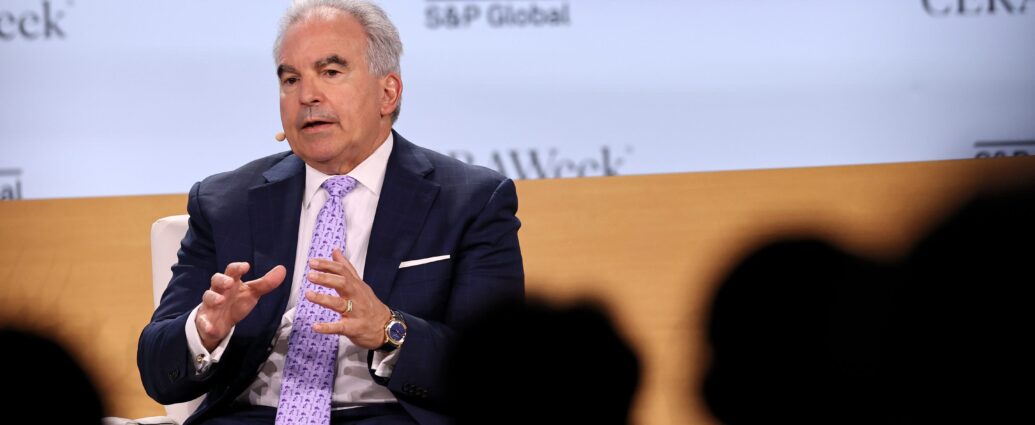
With Qatar’s liquefied natural gas shipments taken offline from the Iran war, Houston-based Cheniere Energy has become the world’s leading LNG exporter and CEO Jack Fusco said he is literally answering phone calls of “Help!” from Asia as a potential supply crisis begins to unfold.
“We’re going to try to get as many molecules as we can to those countries in Asia that really need it. But it’s a 28-day journey from the Gulf Coast to anywhere in Asia, so it’s not going to happen overnight,” Fusco said at the CERAWeek by S&P Global conference in Houston.
Cheniere is planning to start bringing on production for export cargoes from its newest LNG facility—known as a “train” in industry lingo—in Corpus Christi, Texas by the end of this week, Fusco said. Natural gas must be liquefied through the LNG trains to be safely exported over water. Two more Corpus trains are slated to come online later this year. Cheniere (No. 275 on the Fortune 500) is even looking at potential maintenance delays to keep production running at full capacity for longer, he said.
“We are trying to do whatever we can. We’re looking at our maintenance schedules really hard,” Fusco said. “But, at the end of the day, we have to be safe, and we have to be reliable. We don’t want to sacrifice anything to get that last drop out.”
The last waterborne LNG shipments from Qatar to Asia that were shipped before the war began were recently delivered, so the physical supply shortages of natural gas have not yet begun, although many Asian nations have implemented conservation efforts, including mandating work from home and closing schools. “I don’t think you’ve seen a real impact just as of yet,” Fusco said.
Qatar produces about 20% of the world’s LNG that’s offline at least in the short term. But, because of damages from Iranian attacks at Qatar’s Ras Laffan facilities, Qatar said 17% of its supplies could remain offline for five years for repairs while waiting for gas turbine deliveries. And, unlike the worldwide efforts to dip into global crude oil emergency supplies, there are few strategic reserves of natural gas, which is used for power, heating, and cooking.
Meanwhile, in 10 years, the U.S. has gone from zero LNG exports to leading the world. Cheniere’s very first cargo export was in February 2016. With a wave of U.S. construction underway, the U.S. is projected to double its LNG export capacity from 2025 to 2030, growing to roughly 30 billion cubic feet per day.
Even though the growth is rapid, that help cannot come as quickly as it’s needed in the current crunch. “We saw demand really pick up in India, Pakistan, Bangladesh, Vietnam, Egypt. Unfortunately, at these high prices, those emerging markets are the ones that are going to suffer. The rich countries are going to pay whatever they have to pay,” Fusco said.
LNG growth boom
The vast majority of the LNG growth is along the U.S. Gulf Coast in Texas and Louisiana, but an Alaska LNG project is in development, and Canada became an exporter last year from British Columbia with the Shell-led LNG Canada project, offering a shorter route to Asia, with plans to grow other facilities significantly.
While there have been mounting concerns of an LNG capacity overbuild in the U.S, the domestic industry’s financial picture is now benefitting from the U.S.’ position as a secure supply for other countries.
“The current conflict has reinforced a critical lesson for LNG buyers: cost competitiveness alone is insufficient if supply security is vulnerable to single‑point‑of‑failure risks,” Morningstar analysts wrote in a March 25 report. “As a result, LNG buyers are increasingly prioritizing jurisdictional stability, contractual certainty, and diversified supply chains—criteria that strongly favor North American LNG.”
U.S. Energy Secretary Chris Wright has spent all week in Houston meeting with energy executives and repeatedly stating that natural gas is America’s “superpower.”
Despite the sharpest gas supply crisis being in Southeast Asia, most of Cheniere’s exports are still going to Europe on long-term contracts. The same applies to fellow exporter Freeport LNG.
“Europe would be at a standstill already” without U.S. LNG,” said Freeport LNG founder and CEO Michael Smith, pointing to the Russian invasion of Ukraine in 2022 and Russia’s shutting off its gas supplies to the continent. “That continues today through this crisis, which hopefully will be over very soon.”
The only saving grace from the current war is the fact that winter is over, Smith said, and natural gas demand isn’t at a peak. The crisis would be much more dire if the war unfolded right before winter.
If the war hasn’t ended though in another month or two though, Smith warned, gas supplies will really run short, and prices will spike much more in a lot of the world. “That’s a scary thing.”
“Gas demand in the world is going to continue to grow at a very high clip. There’s no way around it,” Smith said. “We offer energy security that no other country can provide”—backed by the U.S. military.
Fossil fuels debate
For advocates of renewable energy and the environment, the war underscores the need for the world to hasten its transition away from fossil fuels. Perhaps not surprisingly, the industry executives at the Houston conference had a different analysis.
Toby Rice, the CEO of leading U.S. natural gas producer EQT, which supplies a lot of the LNG export hubs with gas, sees the war only increasing global demand for U.S. fossil fuels.
“International gas prices have gone up by $10. In the U.S., they went up 10 cents,” Rice told Fortune. “What is the value of our energy independence? You’re seeing it right now. We’ve insulated American from supply shocks around the world on the natural gas side.”
And, more U.S. exports mean more U.S. gas demand and production, Rice said. “We should care about providing energy security to the world, because that is providing even more energy security to Americans.”
This story was originally featured on Fortune.com
A notorious short-seller unloaded on SoFi. The stock shrugged it off
2026-03-25
Muddy Waters made its name as a short-selling firm that exposed accounting trickery at publicly-traded Chinese firms. On March 17, the firm took aim at a new target: It accused SoFi, known for home and student loans, of a host of book-keeping shenanigans designed to enrich top executives at the expense of shareholders. These are the sort of accusations that, if true, could tank a company’s stock. But so far the market doesn’t appear to be buying Muddy Waters’ latest tale.
The short-seller set out its allegations on March 17, blasting out a report to journalists and social media that claimed SoFi had not actually sold a $312 million loan package but kept it on the company’s books with a sleight-of-hand financing arrangement. The Muddy Waters report also alleges that SoFi has been assigning the wrong discount rate to its student loan portfolio—essentially overvaluing it—as well as understating its exposure to loans in default.
“We believe SOFI is a financial engineering treadmill—not a healthy origination business. SOFI shareholders are incessantly diluted so management can hit bonus targets through GE Capital-style loan marks and Enron-esque off-balance-sheet structures that disguise borrowings as revenue,” said the report.
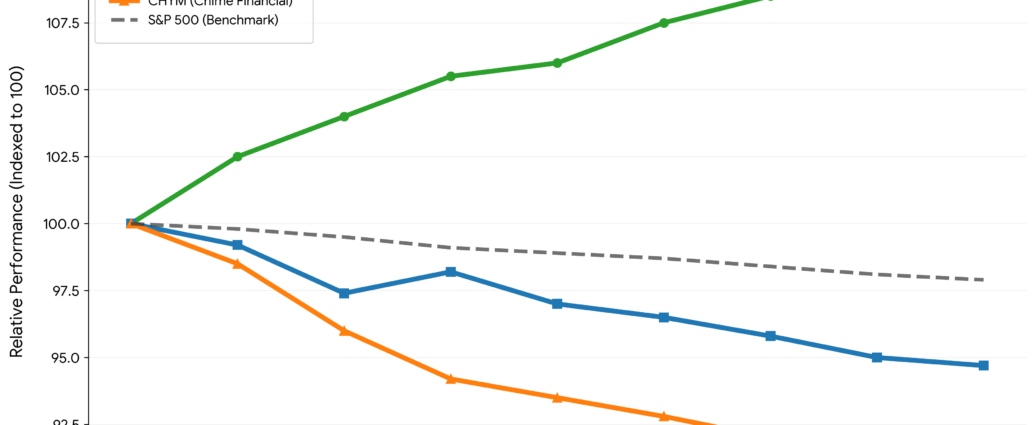
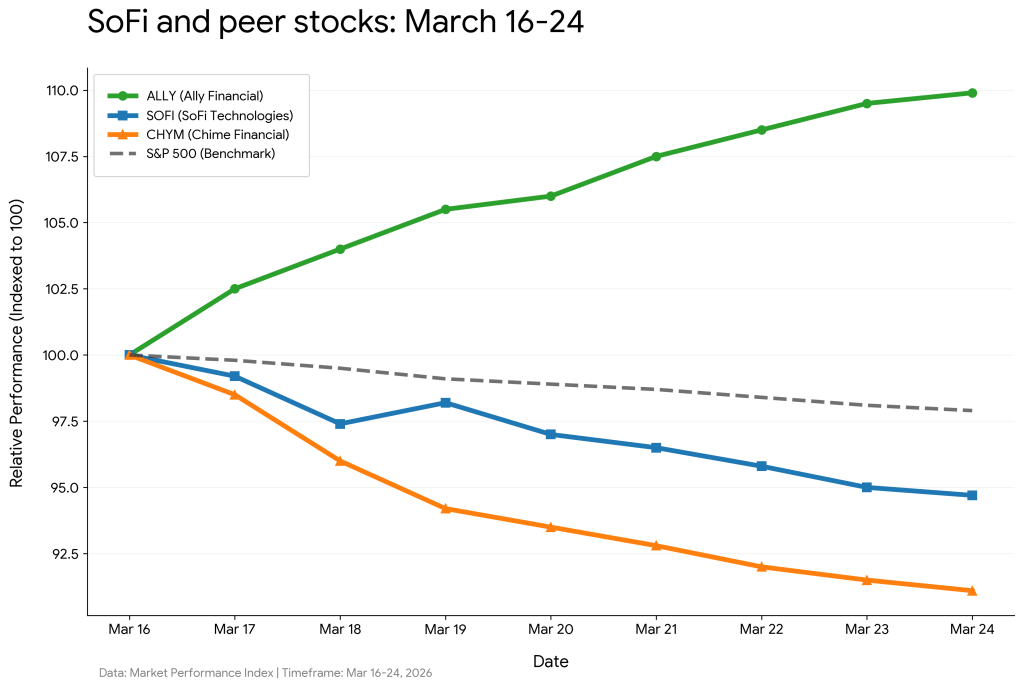
While such reports by Muddy Waters and others have in the past proved devastating, this one appears to be a misfire. While the report produced a minor dip in SoFi’s stock when it was published, the stock has since performed more or less in line with the S&P 500, while faring better than its fintech peer Chime.
The likely reason why SoFi stock has not cratered is that the allegations set forth in Muddy Waters’ report appear to be off the mark. In a research note by Mizuho, prominent analyst Don Dolev notes the report “has an impressive amount of detail and analysis” but that it misunderstands or mischaracterizes key facts related to the loan sale, discount rate and more.
In an interview, a person close to SoFi, who asked not to be named due to legal constraints, told Fortune that the company had concluded the short seller’s allegations were wrong, but decided not to publicly address them since they did not appear to be having an impact on the market. The person added that SoFi has told Muddy Waters it is contemplating legal action, potentially for defamation, but has not decided if it will take that step.
In response to questions about the Mizuho analyst’s conclusions, Muddy Waters founder Carson Block told Fortune by email that the analyst had misunderstood its findings.
This story was originally featured on Fortune.com


Travelers are facing the longest TSA wait times in history
2026-03-25
Wait times are exceeding four hours at some major airports, leading TSA officers to call out at rates of 40 to 50%, according to TSA Deputy Administrator Ha Nguyen McNeill.
(Image credit: Ryan Murphy)

This post was originally published here
UN votes to describe slave trade as ‘gravest crime against humanity’
2026-03-25
Members call for reparatory justice as landmark resolution aims for ‘political recognition at the highest level’
The United Nations has voted to describe the transatlantic chattel slave trade as the “gravest crime against humanity” and called for reparations as “a concrete step towards remedying historical wrongs”.
The landmark resolution passed on Wednesday was backed by the African Union (AU) and the Caribbean Community (Caricom). It had been proposed by Ghana’s president, John Dramani Mahama, who said: “Let it be recorded that when history beckoned, we did what was right for the memory of millions who suffered the indignity of slavery.”
This post was originally published here





Top 3 Tech Stocks Which Could Blast Off In March
2026-03-25
The most oversold stocks in the information technology sector presents an opportunity to buy into undervalued companies.
The RSI is a momentum indicator, which compares a stock’s strength on days when prices go up to its strength on days when prices go down. When compared to a stock’s price action, it can give traders a better sense of how a stock may perform in the short term. An asset is typically considered oversold when the RSI is below 30, according to Benzinga Pro.
Here’s the latest list of major oversold players in this sector, having an RSI near or below 30.
Via Transportation Inc (NYSE:VIA)
- On Feb. 27, Via Transportation posted upbeat quarterly sales. “We are delighted with our outstanding results in Q4 and in 2025 as a whole. We have surpassed our fourth quarter and annual guidance across all key metrics and, in our early days as a public company, continued to demonstrate our ability to execute at the highest levels and sustain revenue growth at 30% year-over-year,” said Daniel Ramot, Via’s Co-founder and Chief Executive Officer. The company’s stock fell around 24% over the past month and has a 52-week low of $13.11.
- RSI Value: 29.7
- VIA …
This post was originally published here


Labour’s donations crackdown is a blow to Reform UK – and a highly political move
2026-03-25
Reform’s ability to fundraise is hobbled in a move that draws attention to donations from an overseas billionaire
Reform UK are no doubt the biggest losers from the government’s emergency measures to overhaul political donations.
Labour MPs are absolutely delighted that No 10 is at last bringing in changes that will hobble Reform’s ability to raise money from its Thailand-based mega-donor, Christopher Harborne, at the same time as making the electoral system fairer in the eyes of the public.
This post was originally published here

How the Iran war could rattle the global economy long after hostilities end
2026-03-25
A reopening of the critical Strait of Hormuz, which Iran has effectively closed to oil tankers, won’t immediately restore the world to its pre-conflict state.
This post was originally published here


Bitcoin inches toward $71,000 as hopes for U.S.-Iran talks push oil prices lower: CNBC Crypto World
2026-03-25
On today’s episode of CNBC Crypto World, bitcoin moves towards $71,000 after Iran counters a U.S. ceasefire plan. Also, Senators reportedly reached an agreement on crypto market structure legislation language to settle a dispute between the banking and crypto sectors. Franklin Templeton’s Max Gokhman also discusses how bitcoin is performing as the Iran war continues.
This post was originally published here

Iran’s Best Weapon Is the Strait of Hormuz
2026-03-25



Donald Trump Is Repeating Richard Nixon’s Mistakes And Will Cause A Recession, Historian Niall Ferguson Says
2026-03-25
Prominent Scottish historian Niall Ferguson thinks the U.S. may be heading for a recession, and he’s pointing to a 50-year-old playbook to explain why.
In a Free Press essay, Ferguson argued that Operation Epic Fury is following the same pattern as Nixon’s 1973 airlift to Israel during the Yom Kippur War: President makes a bold pro-Israel military move, oil supply gets disrupted in retaliation and then economic damage arrives faster than the diplomacy.
In 1973, it took four months to lift the Arab oil embargo. By then, the US was already in recession.
Recession Odds Are Climbing Fast
Polymarket’s “US recession by end of 2026” contract sits at 35%, up more than 10% since before the conflict began.
Moody’s Analytics chief economist Mark Zandi said that oil prices would only need to average …
This post was originally published here
These dividend stocks are higher since the Iran war began. Wall Street believes they have more room to run
2026-03-25
Wall Street loves these small- and mid-cap dividend stocks.
This post was originally published here
TSA staffing shortage and upcoming World Cup will create ‘perfect storm’, warns acting head
2026-03-25
Ha Nguyen McNeill testified before House committee about airport wait times amid DHS funding shutdown
The acting head of the Transportation Security Administration (TSA) said on Wednesday that airports across the country are experiencing the “highest wait times in TSA history”, as the partial shutdown of the Department of Homeland Security (DHS) enters its sixth week.
At a House homeland security committee hearing, Ha Nguyen McNeill said her agency has been shut down for 50% of the fiscal year so far – a stretch that includes last year’s record-breaking 43‑day lapse in federal funding. She told lawmakers that by Friday, TSA employees will have missed $1bn in paychecks as a result of the closures.
This post was originally published here


Bitcoin Holds $70,000 As Ethereum, XRP, Dogecoin Rise On Improving Macro Sentiment
2026-03-25
Bitcoin hovered around $70,000 as improving macro sentiment, driven by easing geopolitical tensions, lifted the broader crypto market on Wednesday.
| Cryptocurrency | Ticker | Price |
| Bitcoin | (CRYPTO: BTC) | $70,733.73 |
| Ethereum | (CRYPTO: ETH) | $2,159.47 |
| Solana | (CRYPTO: SOL) | $91.71 |
| XRP | (CRYPTO: XRP) | $1.41 |
| Dogecoin | (CRYPTO: DOGE) | $0.09622 |
| Shiba Inu | (CRYPTO: SHIB) | $0.056110 |
Notable Statistics:
- Coinglass data shows 79,540 traders were liquidated in the past 24 hours for $219.11 million.
- SoSoValue data shows net outflows of $74.5 million from spot Bitcoin ETFs on Tuesday. Spot Ethereum ETFs saw net outflows of $40.8 million.
- In the past 24 hours, top gainers include siren, …



Maternal mortality rises in US aid-dependent countries under Republican presidents, study shows
2026-03-25
Cuts to family planning aid are linked to an 11% increase in deaths during pregnancy and childbirth in some countries
When Republican presidents win power in the US there is a stark consequence for many pregnant woman around the world – a significant rise in maternal mortality as aid is withdrawn, a new study has found.
Global family planning aid typically drops under Republican presidents and then rises again by 48% once Democratic presidents are elected, the research, published in BMJ Global Health, finds.
This post was originally published here








Jefferies Financial Likely To Report Higher Q1 Earnings; These Most Accurate Analysts Revise Forecasts Ahead Of Earnings Call
2026-03-25
Jefferies Financial Group Inc. (NYSE:JEF) will release earnings for its first quarter after the closing bell on Wednesday, March 25.
Analysts expect the New York-based company to report quarterly earnings of 91 cents per share, up from 57 cents per share in the year-ago period. The consensus estimate for Jefferies Financial’s quarterly revenue is $1.98 billion (it reported $1.59 billion last year), according to Benzinga Pro.
Jefferies Financial shares gained on Tuesday after reports suggesting that Japan’s Sumitomo Mitsui Financial Group is considering making a takeover bid for the company. According to Bloomberg, SMFG has no immediate plans to take over Jefferies.
Jefferies Financial shares fell 1.7% to trade at $39.88 on Wednesday.
Benzinga readers can access the latest analyst ratings on the …
This post was originally published here

More Than 1 In 6 Home Purchases Last Year Were ‘Multigenerational,’ And The Number Of Families Doing It To Save Money Has Doubled
2026-03-25
The traditional American household is shifting as more families choose to live under one roof to combat rising costs.
Multigenerational home purchase hit an all-time high last year, accounting for 17% of all home sales, according to a recent report from the National Association of Realtors.
The Financial Motivation
The primary driver behind the trend is simple: saving money.
In 2024, 36% of buyers cited cost savings as their main reason for a multigenerational purchase. This is more than double the 15% who cited savings in 2015.
Key factors contributing to the economic shift include:
- Boomerang kids: 21% of buyers moved in together because adult children moved back home.
- Never left: 20% of buyers said their adult children or relatives never left the home to begin with.
- Income pooling: Households with three or more income earners are becoming more common among buyers 45 and older.
For many of these families, the home itself becomes the financial foundation. Those who already own property are increasingly looking at what they have built in equity as a way to fund the additions, renovations or separate living spaces that make multigenerational living actually workable.
This post was originally published here


Why Are DraftKings Shares Trading Lower On Wednesday?
2026-03-25
DraftKings Inc (NASDAQ:DKNG) shares are trading lower Wednesday. The decline follows a broader trend of investor concern.
Markets are weighing competitive threats from prediction platforms and long-term profitability hurdles.
Competition From Prediction Markets
Platforms like Kalshi and Polymarket are diverting significant volume from traditional sportsbooks. Combined volume on these exchanges topped $17 billion in January.
Intercontinental Exchange Inc (NYSE:ICE) recently backed Polymarket with a $2 billion investment.
Regulatory Heat Intensifies
U.S. Rep. Alexandria Ocasio-Cortez and Martin Shkreli recently aligned on social media. Both argued Kalshi’s new insider-trading guardrails are insufficient. Ocasio-Cortez called the policy “just a fig leaf.”
This rare agreement spotlights the political exposure …
This post was originally published here

Memory Stocks Slide As Google’s New AI Efficiency Breakthrough May Slash Data Storage Needs
2026-03-25
Shares of memory and storage-related companies, including Micron Technology Inc (NASDAQ:MU) and SanDisk Corp (NASDAQ:SNDK), are trading lower on Wednesday.
The move follows a technical announcement from Alphabet Inc’s (NASDAQ:GOOGL) (NASDAQ:GOOG) Google Research regarding AI efficiency.
Google Unveils TurboQuant Algorithm
On Tuesday, Google researchers introduced “TurboQuant.” This set of advanced quantization algorithms enables massive compression for large language models (LLMs).
According to the Google blog, the technology “optimally addresses the challenge of memory …
This post was originally published here



McSweeney-Mandelson messages still exist despite theft of ex-chief of staff’s phone
2026-03-25
Cabinet Office thought to have a number of exchanges between the friends, which are expected to be released within weeks
The Cabinet Office is understood to hold a number of text and email exchanges between Peter Mandelson and Morgan McSweeney, despite the theft of the former chief of staff’s phone in October last year.
The whereabouts of McSweeney’s messages with Mandelson has been under intense scrutiny since it was reported his work device was stolen last year shortly after Mandelson was sacked as US ambassador.
This post was originally published here
Single women see homeownership as ‘a wealth-building tool,’ economist says, but buying remains a challenge
2026-03-25
For years, single men who were first-time homebuyers had higher annual income than their female counterparts, according to the National Association of Realtors.
This post was originally published here


Democratic rising star extends ‘love’ after Hegseth pastor prays for his death
2026-03-25
Senate nominee in Texas James Talarico says ‘Christian nationalism kills’ in response to Brooks Potteiger remark
James Talarico, the Texas Democratic state representative and Presbyterian seminarian, has said he forgives Pete Hegseth’s pastor for praying for his death. On Tuesday, Texas’s popular Democratic nominee for a US Senate seat pushed back against comments from Brooks Potteiger, the defense secretary’s closest spiritual adviser, who said: “We want him crucified with Christ.”
Talarico said on X: “Jesus loves. Christian Nationalism kills. You may pray for my death, Pastor, but I still love you. I love you more than you could ever hate me.”
This post was originally published here



Fifteen new councils to be created in south and east of England
2026-03-25
New unitary councils will replace 43 county and district councils, in latest round of local government overhaul
Fifteen new councils will be created in the south and east of England under the latest round of a major local government overhaul, aimed at boosting economic growth and accelerating mass housebuilding plans.
The new unitary councils will replace 43 counties and districts across Norfolk, Suffolk, Essex and Hampshire, with hundreds of councillors’ roles axed. A decision on future arrangements for East Sussex and West Sussex has been delayed.
This post was originally published here







‘If It Acts Like Gambling, It Is Gambling’: Bipartisan Senate Bill Comes For Prediction Markets
2026-03-25
Sen. Adam Schiff (D-CA) and Sen. John Curtis (R-UT) appeared on CNBC to push their Prediction Markets Are Gambling Act, introduced March 23, and they came armed with sound bites.
“If it acts like gambling, if it looks like gambling; it is gambling,” Curtis said. “That’s been very clear where that belongs.”
The bill would bar any CFTC-registered platform from listing contracts tied to sporting events or athletic competitions.
That puts Kalshi and Polymarket squarely in the crosshairs, but the collateral damage may be wider than the two prediction markets.
The DraftKings Whiplash
DraftKings Inc. (NASDAQ:DKNG) gapped up nearly 4% Monday when the bill dropped.
Investors saw it as Congress killing a competitor.
Today the stock reversed hard, falling more than 6% to around $22, as traders realized DraftKings Predictions, the company’s own CFTC-regulated event contracts product, would also be banned under the legislation. …
This post was originally published here


SpaceX reportedly could file for an IPO this week. These funds allow you to invest right now
2026-03-25
Investors already have funds to play SpaceX’s potential move to the public market.
This post was originally published here
Republicans balk at Senate Democrats’ DHS shutdown counteroffer
2026-03-25
Congress and the White House are working to reach a funding deal before Congress leaves for a scheduled two-week recess on Friday.
This post was originally published here

Crude Oil Tumbles As U.S. Efforts To End War Ease Oil Transit Concerns
2026-03-25
(RTTNews) – Crude oil has slumped on Wednesday after reports of the U.S. sending a 15-point peace proposal to Iran to end the ongoing gulf war eased transport concerns via the Strait of Hormuz.
This post was originally published here
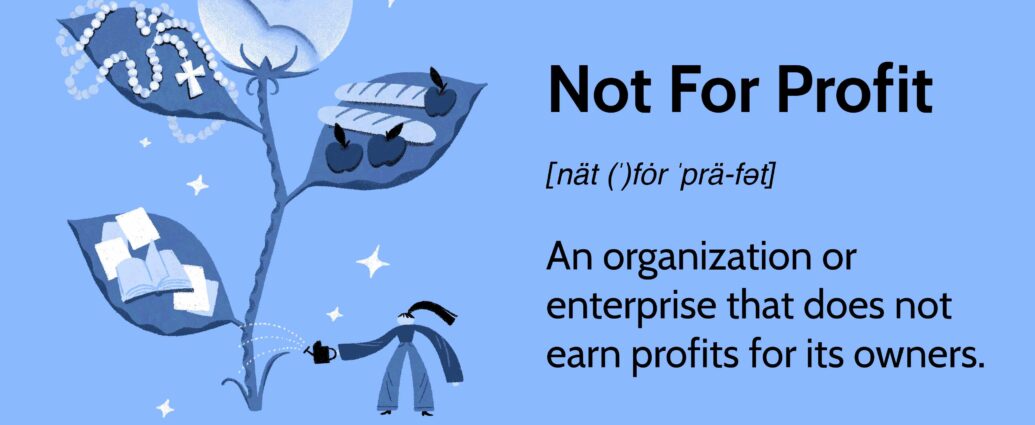
Understanding Not-for-Profit Organizations and Their Tax Implications
2026-03-25
This post was originally published here
Italy’s tourism minister resigns amid turmoil from referendum failure
2026-03-25
Giorgia Meloni made public request for Daniela Santanchè to quit in effort to restore credibility after voters rejected judicial reform
Italy’s embattled tourism minister has resigned, heeding a call to step down as the prime minister, Giorgia Meloni, strives to restore credibility after a bruising defeat in a referendum that has thrown her far-right government into turmoil.
The resignation on Wednesday of Daniela Santanchè, a prominent and brash member of Meloni’s Brothers of Italy party, came after the prime minister took the unusual step of calling in a public statement for her to go.
This post was originally published here
Jamie Lee Curtis to lead Murder, She Wrote reboot movie
2026-03-25
Oscar winner will take on role of Jessica Fletcher in 2027 film from Pitch Perfect director Jason Moore
Oscar-winning actor Jamie Lee Curtis has been confirmed to take on the role of Jessica Fletcher in a big-screen reboot of Murder, She Wrote.
The 67-year-old star of Halloween and Everything Everywhere All at Once will play the mystery author and amateur detective made famous by Angela Lansbury in the long-running television series.
This post was originally published here
Kent meningitis outbreak prompts rush for routine vaccinations in England
2026-03-25
Exclusive: Parental consents in Greater Manchester up 40% as demand surges in various parts of the country
School immunisation services and pharmacies are reporting surging demand for routine vaccinations after the Kent meningitis outbreak in which two teenagers died.
Thousands of teenagers across England have booked or received jabs in past fortnight against the A, C, W and Y strains of meningitis (MenACWY), and diphtheria, polio and tetanus (Td/IPV).
This post was originally published here

AAR Foods Posts Upbeat Q3 Earnings, Joins Braze, Arm Holdings And Other Big Stocks Moving Higher On Wednesday
2026-03-25
U.S. stocks were higher, with the Dow Jones gaining around 350 points on Wednesday.
Shares of AAR Corp (NYSE:AIR) rose sharply during Wednesday’s session as the company reported better-than-expected earnings for the third quarter and raised its FY2026 sales forecast.
AAR reported quarterly earnings of $1.25 per share which beat the analyst consensus estimate of $1.15 per share. The company reported quarterly sales of $845.100 million which beat the analyst consensus estimate of $812.537 million.
AAR shares jumped 10.5% to $119.10 on Wednesday.
Here are some other big stocks recording gains in today’s session.
- Braze Inc (NASDAQ:BRZE) shares jumped 21.2% to $21.84 after the company reported better-than-expected fourth-quarter sales results and issued FY27 sales guidance above estimates. Also, the company announced a $100 million share buyback.
- Corcept Therapeutics Inc (NASDAQ:CORT) gained 21.3% to $41.02 after the FDA approved relacorilant in …
This post was originally published here

Iran war fuels Asia energy crunch as India, Japan, others feel strain
2026-03-25
The latest phase of the Iran war is locked on the Strait of Hormuz and critical energy infrastructure. Already, its effects are rippling thousands of miles away in Asia.
Asia is at the front line of the energy crisis, with shortages hitting nearly every country. Roughly a fifth of the world’s oil flows through the Strait of Hormuz, with some 80% going to Asia, according to the International Energy Agency.
As Iran refuses to open the strait, Asia is scrambling to mitigate disruptions and is being forced to take measures reminiscent of COVID-era actions.
Asia is especially susceptible due to its heavy import dependence, weaker currencies and large populations. And the impact has hit households fast.
The conflict has disrupted sectors from air travel and shipping to gas supplies. People are struggling to cook and businesses across the board are bearing the brunt as liquefied petroleum gas imports slow.
A STATE-BY-STATE LOOK AT GAS PRICES AS IRAN CONFLICT PUSHES OIL HIGHER
Widespread disruptions have hit South Asia in particular, which is extremely reliant on Middle Eastern oil. India, which imports nearly 90% of its crude and about half its natural gas from abroad and is the world’s third-biggest oil importer and consumer, has been left especially vulnerable.
Yesterday, President Donald Trump and Indian Prime Minister Narendra Modi spoke on the phone, their first call since the Feb. 28 war broke out. In a post on X, Prime Minister Modi stressed, “Ensuring that the Strait of Hormuz remains open, secure and accessible is essential for the whole world.”
The Strait of Hormuz serves as a conduit for more than 40% of India’s crude oil imports.
This week, two tankers bound for India sailed through the strait. Vessels with ties to China, Pakistan and Thailand have also transited successfully, while several other Asian governments are in talks with Tehran to secure passage.
But a lot of these imports are expected to be used for non-power, industrial purposes such as fertilizer production, leaving the public left in the lurch.
In a new move that shows the precariousness of the situation, India’s Reliance Industries, which operates the world’s biggest refining facility, reportedly bought 5 million barrels of Iranian oil. The deal marks India’s first such purchase since 2019 and comes days after the U.S. temporarily lifted sanctions.
“All our kitchens run on gas and so, they’ve all been hit,” Indian hospitality veteran AD Singh told FOX Business. “We have been forced to stop serving several items and shorten our menus, doing our best given what we have. But people are worried and livelihoods are at stake. It’s not a positive feeling,” the founder and managing director of the Olive Group of restaurants said.
KEVIN O’LEARY FORECASTS GLOBAL POWER SHIFT IN STRAIT OF HORMUZ AS IRAN CONFLICT RATTLES OIL MARKETS
It’s a similar story in much of the subcontinent.
Two of Asia’s most advanced economies have also been hit hard. But while South Asia feels it more at the household level, Japan and South Korea are facing a different kind of strain.
The two east Asian nations are being rocked by surging import costs, forcing factories to scale back and governments to tap emergency reserves.
Japan, which imports more than 90% of its oil from the region, has begun tapping strategic reserves. South Korea is weighing reserve releases and emergency support measures.
Unlike India, both countries have larger financial buffers and energy stockpiles, allowing them to cushion the immediate impact even though structural risks remain high.
Strikes are hitting many nations, like India, Bangladesh and the Philippines as frustrations grow. Online rumors are deepening the chaos and prompting panic buying. In a few countries like India, police are being deployed at gas stations.
As Asia grapples with this energy crisis, many countries are now turning back to coal and firewood to offset their gas needs.
Induction cooking equipment is flying off the shelves in LPG-dependent India, and early warning signs are popping up elsewhere in the region. Energy shocks are now showing up on dinner tables as well.
“It’s taking some time to get set on these new ways,” AD Singh told FOX Business.
AMERICAN DRONE COMPANY CHALLENGES CHINESE DOMINANCE WHILE PREPARING TROOPS FOR SWARM ATTACKS
Japan and South Korea are accelerating plans to boost nuclear energy.
Several Asian countries have also released petrol and diesel from domestic reserves, temporarily loosened fuel standards and stepped up domestic production.
Emergency regulatory steps are beginning to sweep the region, from severe austerity measures in Sri Lanka to strict fuel rationing in Bangladesh.
The Philippines just became the first country to declare a national energy emergency, warning of “an imminent danger of a critically low energy supply.” The island imports 98% of its oil from the gulf.
Meanwhile, China just dialed back on planned fuel price hikes in a bid to “reduce the burden” on the population.
Some governments are also weighing stimulus packages and energy-saving campaigns are flooding social media as record-high costs bite household budgets.
GET FOX BUSINESS ON THE GO BY CLICKING HERE
“Any scarcity of essential fuels has a cascading effect across the continent,” Singh told FOX Business. “When it comes to food, ingredient prices rise, operation costs increase and business volumes are affected. And with the news all over the place, people are spooked.”
New archbishop of Canterbury acknowledges abuse of ‘victims and survivors’ in first sermon
2026-03-25
Sarah Mullally is formally installed as the Church of England’s spiritual head in grand ceremony
The new archbishop of Canterbury highlighted the pain caused to victims and survivors of abuse by the Church of England in her first sermon, delivered at a grand ceremony marking her formal installation as its spiritual head.
Sarah Mullally, a former nurse who has made history as the C of E’s first female archbishop, said “we must not overlook or minimise the pain experienced by those who have been harmed through the actions, inactions and failures of those in our own Christian churches and communities.
This post was originally published here

Citadel Securities Sees Record-Breaking $12 Billion In Trading Revenue In 2025
2026-03-25
Citadel Securities saw a record breaking $12.2 billion in trading revenue in 2025, a 25% increase from the previous year’s $9.7 billion.
Ken Griffin’s firm generated $6.5 billion in EBITDA and ended the year at $21 billion in trading capital in 2025, sources told Bloomberg.
Founded in 2002, Citadel Securities seeks to bring technology-driven, high-volume market-making to financial markets. The firm relies heavily on quantitative research, machine learning and advanced engineering to power its trading systems.
The firm, which operates independently from the Citadel hedge fund, serves over 1,600 institutional clients, including …
This post was originally published here

Could XRP Dip Towards $1 Before An ‘Explosive’ Breakout?
2026-03-25
XRP’s (CRYPTO: XRP) recent range-bound price action has traders questioning whether a pullback may come before an eventual breakout.
Short Term Uncertainty
In a podcast on Tuesday, analyst Cryptoinsightuk outlined that XRP may see further downside toward $1 before a larger breakout, as traders weigh short-term uncertainty against a bullish long-term setup.
He added that XRP remains in a consolidation phase, with price compressing within a wedge-like structure. This setup leaves room for either an upside breakout or continued drift lower in the near term.
A move toward $1 by June remains …

Stock Market Today: Major Indexes Jump, Oil Pulls Back on Report US Sends Iran Plan to End War; Dow Adds 350 Points
2026-03-25
This post was originally published here

Greetings from Turkey’s border with Iran, where Iranians let loose on the dance floor
2026-03-25
Iranians escaping hardship and war are shaking it off to Persian, Arabic and Turkish tunes in this disco in eastern Turkey.

This post was originally published here

White House says Trump will meet Xi in China in May
2026-03-25
A long-awaited meeting between President Donald Trump and Chinese President Xi Jinping will take place in Beijing on May 14 and 15, the White House said.
This post was originally published here
Crypto’s Biggest Betrayal: ‘Senator Lummis Was On Our Team, Now She’s Not,’ Mark Yusko Says
2026-03-25
Venture capitalist Mark Yusko says Senator Cynthia Lummis (R-Wyo.) abandoned the crypto industry after years of support, with the Clarity Act settlement on stablecoin yield representing regulatory capture rather than the clarity the industry needs.
The Lummis Betrayal
“Senator Lummis, I thought was on our team and she actually acted like she was on our team for a very long time and now suddenly she’s this great supporter of this horrible bill, which means somebody got to her,” Yusko said on The Wolf Of All Streets podcast on Wednesday.
The Clarity Act settlement means banks win while crypto gets nothing. Lummis recently tweeted a yield sign that investors interpreted as bullish for stablecoin yields, only for news to break that the legislation would ban exchanges from offering any yield on stablecoins.
Yusko compared the gaslighting to the Inflation Reduction Act, arguing that lawmakers often give bills names that reflect the opposite of what they actually do.
The Clarity Act has nothing to do with …
Space stocks rally on reports of SpaceX’s imminent IPO filing
2026-03-25
Space stocks, including AST SpaceMobile, Rocket Lab and Firefly Aerospace, rallied after a report that SpaceX may file to go public this week.
This post was originally published here

New Amex Graphite business card offers flat-rate rewards, but there are better options for your business
2026-03-25
Before you apply for the Amex Graphite Business Cash Unlimited, carefully consider all of your options.
This post was originally published here


Key Trade-Offs to Consider Before Choosing a Medicare Advantage Plan
2026-03-25
This post was originally published here
Dow Surges Over 300 Points; Chewy Shares Jump On Upbeat Earnings
2026-03-25
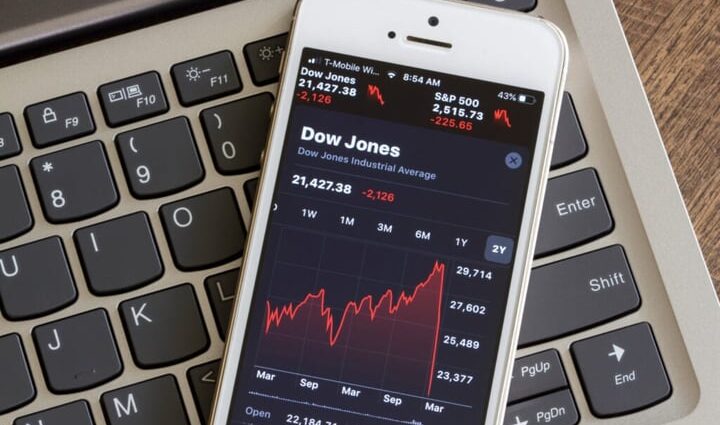
U.S. stocks traded higher midway through trading, with the Dow Jones index gaining more than 300 points on Wednesday.
The Dow traded up 0.79% to 46,489.92 while the NASDAQ rose 0.95% to 21,967.56. The S&P 500 also rose, gaining, 0.72% to 6,603.85.
Check This Out: How To Earn $500 A Month From Goldman Sachs Stock Ahead Of Q4 Earnings
Leading and Lagging Sectors
Materials shares climbed by 1.9% on Wednesday.
In trading on Wednesday, energy stocks fell by 0.2%.
Top Headline
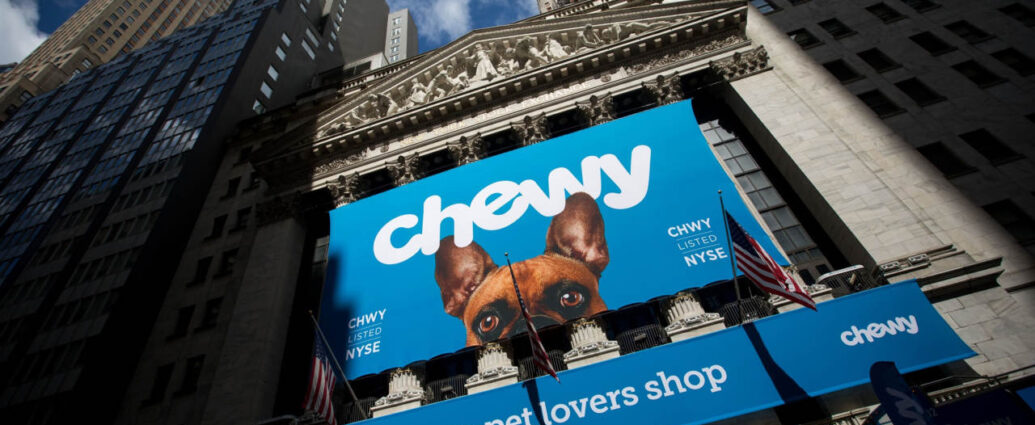
Chewy Inc (NYSE:CHWY) shares jumped around 14% on Wednesday after the online pet‑care retailer delivered a stronger‑than‑expected fourth quarter and rolled out a solid fiscal guidance for 2026.
Chewy posted fourth-quarter 2025 adjusted earnings of 27 cents per share, beating the consensus of 20 cents and within the management guidance of 24 cents to 27 cents.
The retailer of pet supplies reported sales of $3.265 billion, up 0.5% year over year (+8.1% on a normalized 13-week basis), compared to the consensus of $3.262 billion and the management guidance of $3.24 billion-$3.26 billion.
Equities Trading UP
- Sarepta Therapeutics Inc (NASDAQ:SRPT) shares shot up 29% to $22.63 after the …
This post was originally published here


9 Key Medicare Changes in 2026: Impact on Premiums and Drug Prices
2026-03-25
Here’s how to prepare before fall open enrollment
This post was originally published here


Best Jumbo CD Rates Our Experts Found Today, March 25, 2026: Up to 4.15%
2026-03-25
This post was originally published here


New college grad unemployment will spike to 35% in 2 years, senator warns, forcing ‘Dario, Sam’ to quit AI fear-mongering
2026-03-25
Regardless of whether AI will lead to a “job apocalypse” or make work optional, Sen. Mark Warner (D-VA) is warning “the battle of our time will be AI”—and he predicts it’ll be particularly difficult for new grads entering the workforce, who face an 5.6% unemployment rate.
“I will bet anybody in the audience that goes to 30 or 35% within the next two years,” Warner said. “And if we don’t figure this out—I say this as a pro-AI, pro-tech guy—we’re going to get screwed.”
Warner’s estimate may seem extreme, but it tracks with AI leaders who are towing the line between warning the public of their tech predictions and starting widespread panic.
“If you take Dario, Sam, you take all the evangelists. I think they are literally consciously pulling back on their predictions because of the short-term economic disruption,” Warner, the vice chairman of the Senate Intelligence Committee, said during a panel at the Hill and Valley Forum, a conference bringing together Washington policymakers and Silicon Valley executives on Tuesday.
Warner, speaking at the panel entitled “From Capital to Capability: Rebuilding U.S. Industrial Strength” at the event, has often made statements to similar effect.Last week, Warner blasted the White House’s framework to regulate AI, saying it “lacks significant substance.” The Trump administration laid out general policy areas for Congress to address, including children’s privacy, intellectual property rights, and developing “an AI-ready workforce.” In a statement, Warner faulted the White House for shutting down the Senate Intelligence Committee’s bill on national security threats from advanced AI and ignoring AI-powered misinformation entirely.
The senator warned that it’s in the companies’ hands, not the government’s, if they want to reduce the adverse effects of AI.
“If you expect the government officials alone to solve this, you’re missing the boat. We desperately need your input and ideas and suggestions,” Warner, who is the former founder and managing director of venture capital firm Columbia Capital.
Warner pointed toAnthropic’s Claude’s footprint on software and HR job losses as reasons for AI executives to temper their public comments. Last month, OpenAI CEO Sam Altman said that companies are “AI-washing” layoffs and using the technology as a scapegoat for workforce reductions. Anthropic CEO Dario Amodei has pulled back since his declaration last May that AI could wipe out 50% of entry-level office jobs. In more recent comments, he’s shied away from specific predictions about the scale of AI-related job loss, and instead, wrote the technology will cause “unusually painful” disruption in a wide-ranging 20,000-word essay in January. Yet, a recent survey of CFOs found that only 0.4%, or about 502,000 roles out of about 125 million roles, are expected to be lost this year.
Warner explained that AI disruption is different from the labor transformation that globalization caused because it will affect white-collar jobs.
“If we go way back in time, like three or four years ago, we would have said the policy prescription is, ‘let’s make everybody learn how to code.’ At least that was well intentioned, but completely the wrong answer,” Warner said.
Warner says the government ‘desperately’ needs industry input
Warner acknowledged the limits of the federal government to handle the potential economic fallout of AI disruption.
“We’re going to need the capabilities of the AI community to help us figure it out, and candidly, the largest players help pay for it, because I think this transition will be exponentially bigger than I believe today is going to be exponentially bigger and quicker than even what I believed five months ago.”
Students are already thinking of potential AI job displacement-proof careers before they even graduate. He gave the example of business: 1.63 million students, or nearly 9% of students, were enrolled in business bachelor’s degrees in 2025, making it the most popular degree in the U.S. Yet, the business and financial services industry is one of the most AI-exposed sectors.
“Those are where jobs are going to go. Maybe, Anthropic and OpenAI ought to go ahead and put up a fund to convert people from being business administration majors to nurses, at least in the short term,” but advised against government retraining programs, like Trade Adjustment Assistance for Workers., which he said, “have mostly been bullshit.”
He pointed to how the government has struggled to regulate social media with dozens of bills that have failed to pass.
“Social media is tiny compared to AI,” he said. “I cannot stress enough that if we don’t get this transition right, all of the innovation opportunities, all of the healthcare opportunities, could get snuffed out.” He pointed to immigration barriers against international talents, such as the Trump administration’s $100,000 fee on H-1B visas, typically held by Indian and Chinese tech workers.
This story was originally featured on Fortune.com

Rowe warns of massive workforce shakeup, says Sanders is right: ‘Revolution unlike anything’ we’ve seen coming
2026-03-25
A rare point of agreement is emerging across ideological lines as concerns grow over how artificial intelligence could reshape the American workforce.
Mike Rowe, CEO of the mikeroweWORKS Foundation, joined FOX Business’ Stuart Varney on ‘Varney & Co.‘ to discuss how rapid technological change is colliding with a long-standing shortage of skilled labor, creating what he sees as a turning point for the economy.
Rowe’s warning echoes a broader message gaining traction across the political spectrum. Sen. Bernie Sanders, I-Vt., has also pointed to mounting pressure on workers and a changing economic landscape, framing the moment as one of major disruption.
DATA CENTER BOOM POWERING AI REVOLUTION MAY DRAIN US GRIDS — AND WALLETS
“I actually agree with Bernie Sanders. … I think we’re on the cusp of a revolution unlike anything we’ve ever seen,” Rowe said.
Rowe pointed to a surge in demand for skilled trades as companies race to build out the infrastructure needed to support artificial intelligence, data centers and energy expansion. In some parts of the country, he said, electricians are commanding salaries that rival or exceed many white-collar roles, with employers competing aggressively for a limited pool of workers.
THE INVISIBLE LAYOFF: AI IS QUIETLY LOCKING AMERICANS OUT OF THE JOB MARKET, CEO WARNS
That shift, he argued, could flip long-held assumptions about education and career paths as industries once seen as secondary become central to supporting a new digital economy.
“This new era is going to be a renaissance for electricians, steamfitters, pipefitters, welders, CNC operators,” Rowe said.
Rowe warned the scale of the coming buildout, which he described as tied to trillions of dollars in investment, will test whether the U.S. workforce is prepared to meet the moment as companies and institutions scramble to close the skills gap.

Who Will Become the World’s First Trillionaire? Factors and Predictions
2026-03-25
It’s likely to be someone who is among us today
This post was originally published here

Cisco may finally extend meaningfully beyond prior highs, based on latest chart action
2026-03-25
CSCO only just overtook its 2000 peak in February. Not many people realize this simply because it has taken so long to actually come back.
This post was originally published here

Panama Canal Costs: From $15K to $300K Per Crossing
2026-03-25
This post was originally published here


Men accused of murdering Lyra McKee linked to scene by clothing, Belfast court told
2026-03-25
Three men from Derry charged with murder of journalist, who was hit by bullet while observing 2019 rioting
Three men accused of the murder of the Belfast journalist Lyra McKee have been linked to the scene by clothing and physical features, a court has heard.
The New IRA claimed responsibility for the death of McKee, 29, who died after being hit by a bullet as she stood close to police vehicles while observing rioting in the Creggan area of Derry on 18 April 2019.
This post was originally published here

Why Coinbase May Get Hit By Clarity Act Updates But Robinhood And Circle Not
2026-03-25
Proposed updates to the Clarity Act could limit how stablecoin rewards are offered, posing the biggest risk to centralized crypto platforms such as Coinbase (NASDAQ:COIN), according to Needham Research.
Stablecoin Rewards In Focus
Needham said a key concern is a potential ban on passive yield for stablecoin holders on exchanges.
Such a move would affect platforms like Coinbase, where earning yield has been a major driver of user adoption. In contrast, decentralized finance platforms are expected to remain largely unaffected, as their rewards are typically classified as “active” rather than passive.
The final …

The Rise of the U.S. Dollar as the World’s Reserve Currency
2026-03-25
This post was originally published here

Mark Zandi warns recession odds are creeping toward 50%, and the Iran war could launch us into economic turmoil by midyear
2026-03-25
Economists are only growing more antsy about the state of the economy as the conflict in Iran continues.
Moody’s Analytics raised its recession outlook for the next 12 months to 48.6%, following the same pattern as Goldman Sachs, which now forecasts a 30% risk of recession, and EY-Parthenon, which put recession odds at 40%. The baseline probability of a recession sits around 15% to 20%.
Prior to the U.S.-Israeli attack on Iran at the end of February, economic indicators were already suggesting precarious economic conditions. A dismal February jobs report showed the economy unexpectedly lost 92,000 jobs in the previous month, defying estimations of a 60,000-job increase and dashing hopes of a labor market recovery after the U.S. added just 181,000 jobs in 2025. Moreover, the unemployment rate is eking toward 4.5%, up from 3.4% three years ago, coinciding with decelerating wage growth, particularly for lower-income Americans.
On top of those factors, an ongoing war in the Gulf has raised concern among analysts of an oil shock being the tipping point to send the U.S. into a slump, one top economist warned.
“Even before the conflict, I thought recession and risks were on the rise,” Mark Zandi, Moody’s chief economist, told CNBC on Wednesday. “Recession risks are very high—and unless the hostilities are coming to an end now, the president figures out a way to stand down, declare victory and move on, and Iranians follow suit—I think recession is more than likely by the second half of the year.”
Why the war in Iran is driving up chances of a recession
Zandi warned earlier this week if the cost of oil continues trending upward, a recession is all but imminent. The cost of Brent crude has been hovering at around $97 per barrel, but reached a record-breaking $115 per barrel last week.
“Based on simulations of our global macroeconomic model, oil prices would only need to average close to $125 per barrel in the second quarter of this year,” Zandi said in an X post on Monday. “With tensions still elevated, that’s not a stretch.”
Despite President Donald Trump postponing plans on Monday to strike Iranian energy infrastructure and power plants (a move that added $1.7 trillion to stocks and brought down the price of oil by $17), Iran rejected the U.S. proposal to end the war on Wednesday, according to state television reports, and the Pentagon has reportedly ordered 2,000 Paramilitary troops to be sent to the Middle East.
Today’s rising energy prices—including a $1 per gallon increase at the pump—has prompted comparisons to the 1970s oil shock, when Arab state members of OPEC declared they would slash oil production and exports to countries in retaliation for U.S. support of Israel in the Yom Kippur War. President Richard Nixon subsequently advocated for rationing U.S. oil supplies to keep prices from spiking, but the cost of gas still skyrocketed about 40%.
The Paris-based intergovernmental agency International Energy Agency (IEA), has cautioned the ongoing turmoil in the Gulf has exceeded that of a half century ago. IEA Executive Director Fatih Birol said the world is losing 11 million barrels of oil today compared to 5 billion during the crises in 1973 and 1979.
“The depth of the problem was not well appreciated by the decision makers around the world,” Birol told the National Press Club of Australia this week. “If you want to put in a context, this crisis as it stands now: two oil crises and one gas crisis put all together,” he said.
There’s also evidence the ongoing closure of the Strait of Hormuz is impacting industries beyond energy. The Strait of Hormuz is the chokepoint for about one-third of the world’s global fertilizer. Minimal exports have already hiked fertilizer prices, threatening to impact which crops U.S. farmers grow, and potentially eventually driving up the price of groceries.
“There’s a very strong correlation between the movement of energy prices and the movement of food prices,” Ricky Volpe, an agricultural economist and professor of agribusiness at Cal Poly, told Fortune. “We’ve seen oil top $100 a gallon before and that happened to coincide with significant food price inflation.”
This story was originally featured on Fortune.com

Trump wrote the tariff playbook. Now Iran is using it on the world’s most important oil route.
2026-03-25
Iran’s supreme leader is dead. Much of its military infrastructure is destroyed. Its allies are alienated. But the war against Israel and the U.S. has given Tehran something it might not have otherwise appreciated: the unprecedented leverage it holds over the Strait of Hormuz. Now, Iran is trying to milk it.
The Islamic Revolutionary Guard Corps (IRGC), the hardline military force that has consolidated power within what remains of the Iranian regime following Khamenei’s death, has communicated a list of cease-fire conditions to the Trump administration, according to the Wall Street Journal. The two sides aren’t in direct contact, and the Journal reported that these conditions were sent through Middle Eastern intermediaries, though the U.S.’s recent fifteen-point-plan was sent through Pakistan. President Donald Trump, the “master of the deal” who has championed his ability to jawbone other nations through tariffs, has now insisted that his administration has been in fruitful negotiations with Iran, a claim Tehran has mocked by asking if the President was talking to himself.
The demands are sweeping: closure of all American military bases in the Persian Gulf; full reparations for U.S. strikes on Iranian territory; and the complete lifting of sanctions. Iran also seeks full preservation of its missile programs and guarantees that the war won’t restart, for itself and for Iran’s proxy Hezbollah in Lebanon.
But one demand stands apart from the rest.
Tehran wants a new order for the Strait of Hormuz—one that would let Iran collect fees from every ship that transits the waterway, modeled on the toll Egypt collects from vessels passing through the Suez Canal. The Suez uses a somewhat complex formula based on the tonnage of each ship, but on average, cargo ships pay $250,000 to cross. Since the Suez is a manmade canal, Egypt collects the toll to pay for the costs of constructing and maintaining it.
The Strait of Hormuz, on the other hand, is a natural waterway, and Tehran essentially wants to charge ships for the privilege of crossing it without being bombed. It’s hard to overstate the importance of the Strait: roughly 20% of the world’s oil supply passes through it each day. It is the single most important chokepoint in global energy markets,and though oil future markets have taken to bullishness with all the talks about peace talks (as of writing, Texas crude is at $89,), oil analysts are losing their voices from warning about the physical reality of the Straits’ closure catching up. Only two vessels crossed the Strait on March 24, according to figures from the S&P Global Market Intelligence team, much less than the usual 150-160 vessels that cross. And if those vessels would be required to pay a permanent Iranian toll, it would reshape the economics of global energy and hand Tehran a lever it could pull any time it wanted concessions from the West.
Iran has already started charging ships approximately $2 million to cross the Strait, which Iran’s foreign ministry confirmed. Analysts say that the premium is a “bargain” compared to the price of traditional shipping insurance premiums, which have skyrocketed since the war began. ut it effectively means that Tehran is leveraging the threat of its own missiles and mines to capture the profits of the insurers. Plus, an unconfirmed Iranian plan to require the ships to pay their toll in yuan, instead of dollars, would pose a great threat to the dominance of the American petrodollar, long considered the key to the U.S holding its reserve currency status.
A U.S. official called the demands ridiculous and unrealistic, and told the Journal the posturing will make reaching a deal harder than before Trump authorized the strikes that started the war.
That may be true. But the demands, of course, aren’t designed to be accepted at face value—rather, they’re designed to set a negotiating floor amidst whipsawing energy markets.
The IRGC is also flexing its influence, anchoring the negotiation on its terms and signaling to domestic audiences that Iran emerged from the war unbowed. The regime’s information council called the U.S. peace plan a wishlist of objectives that hadn’t been achieved on the battlefield. The semi-official news outlet Press TV said Iran doesn’t accept a ceasefire at all—only an end to the war “when it decides to do so” and when its strategic objectives are met. Trump’s 15-point-counterplan is equally maximalist, demanding a rollback of Iran’s nuclear program and the end of their funding proxies, according to Israel Channel 12.
This story was originally featured on Fortune.com
As March Madness unfolds, NY Fed highlights sports betting toll on consumer credit health
2026-03-25
As sports gambling becomes more popular and less restricted, consumer credit health is suffering, according to a new report by the New York Fed.
This post was originally published here
Mutual Fund and ETF Fees Remained Near Historic Lows in 2025
2026-03-25
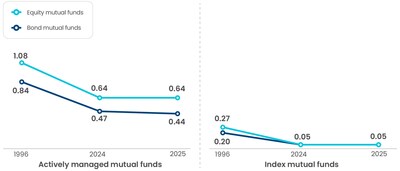
WASHINGTON, March 25, 2026 /PRNewswire/ — Average expense ratios for both actively managed and index mutual funds have decreased over the past 29 years, contributing to the overall decline in mutual fund expense ratios, a new report released today by the Investment Company Institute (ICI) shows. Similarly, average ETF expense ratios have seen a marked decline since 2017. The report, Trends in the Expenses and Fees of Funds, 2025, finds that from 1996 to 2025, average expense ratios fell 62% for equity mutual funds and 57% for bond mutual funds. Over the past nine years, expense ratios for index equity and bond ETFs have declined by 33% and 50%, respectively.
This post was originally published here
Watchdog investigating how police handled Andrew Tate sexual abuse claims
2026-03-25
Independent Office for Police Conduct examining how Hertfordshire police treated three women’s allegations
The police watchdog is investigating a force’s handling of sexual abuse allegations against social media influencer and self-described misogynist Andrew Tate.
The Independent Office for Police Conduct (IOPC) said it was investigating Hertfordshire constabulary’s response to reports made by three women after their case was closed in 2019 after a four-year investigation.
This post was originally published here

Meta and YouTube found liable in landmark child social media harm case, ordered to pay $3 million—with punitive damages still to come
2026-03-25
A jury found both Meta and YouTube liable in a first-of-its-kind lawsuit that aimed to hold social media platforms responsible for harm to children using their services, awarding the plaintiff $3 million in damages.
After more than 40 hours of deliberation across nine days, California jurors decided Meta and YouTube were negligent in the design or operation of their platforms. The jury also decided each company’s negligence was a substantial factor in causing harm to the plaintiff, a 20-year-old woman who says her use of social media as a child addicted her to the technology and exacerbated her mental health struggles.
The multimillion-dollar verdict will grow, as the jury decided the companies acted with malice, or highly egregious conduct, meaning they will hear new evidence shortly and head back into the deliberation room to decide on punitive damages.
Meta and Google-owned YouTube were the two remaining defendants in the case after TikTok and Snap each settled before the trial began.
Jurors listened to about a month of lawyers’ arguments, testimony and evidence, and they heard from the plaintiff herself, a 20-year-old woman identified as KGM in documents, or Kaley as her lawyers have called her during the trial, as well as Meta leaders Mark Zuckerberg and Adam Mosseri. YouTube’s CEO, Neal Mohan, was not called in to testify.
Kaley says she began using YouTube at age 6 and Instagram at age 9 and told the jury she was on social media “all day long” as a child.
Lawyers representing Kaley, led by Mark Lanier, were tasked with proving that the respective defendants’ negligence was a substantial factor in causing Kaley’s harm. They pointed to specific design features they said were designed to “hook” young users, like the “infinite” nature of feeds that allowed for an endless supply of content, autoplay features, and even notifications.
The jurors were told not to take into account the content of the posts and videos that Kaley saw on the platforms. That’s because tech companies are shielded from legal responsibility for content posted on their sites thanks to Section 230 of the 1996 Communications Decency Act.
Meta consistently argued that Kaley had struggled with her mental health separate from her social media use, often pointing to her turbulent home life. Meta also said “not one of her therapists identified social media as the cause” of her mental health issues in a statement following closing arguments. But the plaintiffs did not have to prove that social media caused Kaley’s struggles — only that it was a “substantial factor” in causing her harm.
YouTube focused less on Kaley’s medical records and mental health history and more on her use of YouTube and the nature of the platform. They argued that YouTube is not a form of social media, but rather a video platform akin to television, and pointed to her declining YouTube use as she got older. According to their data, she spent about one minute a day on average watching YouTube Shorts since its inception. YouTube Shorts, which launched in 2020, is the platform’s section of short-form, vertical videos that have the “infinite scroll” feature the plaintiffs argued was addictive.
Lawyers representing both platforms also consistently pointed to the safety features and guardrails they each have available for people to monitor and customize their use.
The case, along with several others, has been randomly selected as a bellwether trial, meaning its outcome could impact how thousands of similar lawsuits filed against social media companies play out.
Laura Marquez-Garrett, an attorney with the Social Media Victims Law Center and the counsel of record for Kaley, said this trial was “a vehicle, not an outcome” during deliberations.
“This case is historic no matter what happens because it was the first,” Marquez-Garrett said, emphasizing the gravity of getting Meta and Google’s internal documents into the public record.
Marquez-Garrett said social media companies are “not taking the cancerous talcum powder off the shelves,” likely in reference to a past case that Lanier and his firm worked on, securing a multi-billion-dollar verdict. “And they’re not going to because they’re making too much money killing kids.”
Still, the Social Media Victims Law Center and the parents who trace their children’s deaths or harms back to social media will continue to keep fighting, Marquez-Garrett said, wearing several rubber wristbands in honor of victims that have not come off since the trial began.
The trial was one of several that social media companies face this year and beyond. They are the culmination of years of scrutiny of the platforms over child safety, and whether the companies make them addictive and serve up content that leads to depression, eating disorders or suicide.
Some experts see the reckoning as reminiscent of cases against tobacco and opioid markets, and the plaintiffs hope that social media platforms will see similar outcomes as cigarette makers and drug companies, pharmacies and distributors.
This story was originally featured on Fortune.com

KKR Strikes Deal for Nothing Bundt Cakes
2026-03-25
What Costs Are Excluded from Gross Profit Margin?
2026-03-25
This post was originally published here
UK politics: Tories claim McSweeney has ‘serious questions’ to answer about phone theft – as it happened
2026-03-25
Shadow cabinet officer minister claims ‘this whole thing stinks to high heaven’
Here is the list of MPs down to ask a question at PMQs.
Wes Streeting, the health secretary, has urged people to reject “conspiracy” theories about the loss of Morgan McSweeney’s phone.
This post was originally published here

Understanding Performance Budgets: Key Benefits and Pitfalls
2026-03-25
This post was originally published here





Meta and Google liable for harm to children’s mental health in landmark US case
2026-03-25
Jury awards at least $3mn in damages with Instagram owner to pay the majority
This post was originally published here



Jury in Los Angeles finds Meta, YouTube negligent in social media addiction trial
2026-03-25
A jury reached a verdict in the L.A. trial focused on Meta and YouTube, a case that experts have characterized as social media’s “Big Tobacco” moment.
This post was originally published here

How to File Your Child’s First Income Tax Return
2026-03-25
Help your child learn the process and build good habits
This post was originally published here
Frederiksen to lead talks on forming new Danish government – as it happened
2026-03-25
Role for Social Democrats’ leader confirmed after meeting with king
Speaking at the debate, Frederiksen confirms she has submitted her government’s resignation as it is clear the outgoing three-party government will not have enough mandates to continue.
But she stresses the urgency of the task to form the new government, as “the world is not waiting for us out there and it has only become more unsettled since the election was called.”
This post was originally published here
Gold Soars As Iran Receives 15-Point-Peace Proposal From U.S.
2026-03-25
(RTTNews) – Reversing two days of decline, gold prices surged on Wednesday after the U.S. reportedly sent Iran a 15-point-peace proposal to end the gulf war even while Israel continued its attacks on Iran.
This post was originally published here
Estée Lauder Confirms Puig Talks; BofA Says Potential Deal Would Create No. 2 Beauty Player
2026-03-25
Estée Lauder Companies Inc. (NYSE:EL) has officially confirmed it is in discussions for a potential merger with Spanish beauty giant Puig Brands, S.A. (OTC:PUIGF).
While no final decision or agreement has been reached, the news has sent ripples through the retail sector.
BofA Securities has reiterated its Buy rating on EL with a price forecast of $130.
Creation of a Beauty Behemoth
According to a Tuesday analyst note from BofA Global Research, a successful combination would create the world’s second-largest listed beauty company.
Proforma 2026 revenues are estimated at $21.6 billion with an EBIT of $2.8 billion. This move would pivot Estée Lauder’s narrative from its “Beauty Reimagined” turnaround plan to a story of transformational …
This post was originally published here
Stocks making the biggest moves midday: Generac, Intuitive Machines, EchoStar, Meta, Braze & more
2026-03-25
Here are some of the names making headlines in midday trading.
This post was originally published here
Move over Labubu, ‘Mystery Dumpling’ is the new hot collectible. This stock could benefit
2026-03-25
The mystery squishy dumpling, created by toy manufacturer RMS USA, is the latest viral toy trend gaining traction on TikTok and other online platforms.
This post was originally published here
Stock Market Today: Major Indexes Jump, Oil Pulls Back on Report US Sends Iran Plan to End War
2026-03-25
This post was originally published here
U.S. brought back $100 million of gold from Venezuela, Interior Secretary Burgum says
2026-03-25
The Interior secretary said Venezuela’s interim president, Delcy Rodriguez, wants foreign investment in the country’s mining sector.
This post was originally published here



Trump Names Jensen Huang, Mark Zuckerberg To AI Advisory Council: What It Means For NVDA, META
2026-03-25
President Donald Trump appointed 13 tech executives to a presidential council that will advise the White House on AI policy, export controls, and science strategy.
Who’s On The Council
The heavyweights include Nvidia Corporation (NASDAQ:NVDA) CEO Jensen Huang, Meta Platforms Inc. (NASDAQ:META) CEO Mark Zuckerberg, Oracle Corp. (NYSE:ORCL) Executive Chairman Larry Ellison, Advanced Micro Devices Inc. (NASDAQ:AMD) CEO Lisa Su, and Alphabet Inc. (NASDAQ:GOOGL) co-founder Sergey Brin.
Dell Technologies Inc. (NYSE:DELL) CEO Michael Dell and venture capitalist Marc Andreessen round out the headline names. David Sacks, Trump’s AI and crypto czar, will co-chair alongside White …
This post was originally published here
Trump administration waives summer gasoline regulations to address surging fuel prices
2026-03-25
EPA Administrator Lee Zeldin said the waivers will help prevent a fuel supply disruption in the U.S. during the Iran war.
This post was originally published here

Jury orders Meta and Google to pay woman $3 million in social media addiction trial
2026-03-25
The verdict marks the end of the first-ever jury trial over whether tech giants should be held accountable for social media addiction. It may influence the outcome of 2,000 other pending lawsuits.
(Image credit: Apu Gomes)

This post was originally published here


The ROI for AI isn’t one-size-fits-all, says data storage CTO
2026-03-25
2026 is the year many C-suite technology leaders will have to finally prove that their artificial intelligence investments are paying off.
But at Everpure, a data storage and cloud services provider, tracking AI’s return on investment comes with some key caveats. “I tend to think that measuring ROI and the efficacy of AI technology really depends on the use case,” says Rob Lee, Everpure’s chief technology and growth officer. “We have some use cases where it’s very clear, and it’s very objectively measurable.”
Some of the more straightforward AI deployments are easier to monitor. An AI bot that can autonomously handle vendor invoices with internal purchase orders, ensuring the reports are accurate before payment is issued, is one such case. Everpure’s “Bestie Bot,” an internal AI tool that helps employees self-service questions that would have been fielded by the human resources team, has strong ROI indicators, but is a bit harder to measure.
And then, there are the third-party AI coding assistants, which Lee says he is taking a closer look at in 2026. While Everpure’s engineers may report that they are saving time using these tools, Lee wants to be sure that the time saved by generating code faster isn’t just being reallocated to debugging because of code quality issues. “That’s an area that we are spending a bit more time this year, trying to sharpen our pencils,” says Lee.
A sharper focus on AI’s ROI comes as Everpure caps a fairly busy first quarter of the year. Last month, the company completed a corporate rebranding that involved changing its name from Pure Storage and announced a deal to acquire the data intelligence and security company 1touch. Everpure also reported fiscal year 2026 revenue of $3.7 billion, up 16% year-over-year. And for the new fiscal year, the top line is projected to increase by between 17% and 20%.
When placing AI bets, Lee says that other than a heightened degree of focus on governance and security, the factors he considers in the buy-versus-build debate are no different than those of any other technology investment. When push comes to shove, Everpure prefers the easier route of “buy” when an off-the-shelf AI tool can be minimally customized and generate desirable business results. But Everpure is also open to creating its own AI tools from scratch, especially if the application of AI would also integrate into the company’s external product offerings.
“That’s something that we’re more likely to want to own and develop over time,” says Lee.
Lee, a 12-year company veteran who initially served as chief architect of the company’s storage platform called FlashBlade, says the AI tools that he’s internally deployed for Everpure’s workforce frequently come from a dedicated, cross-functional team that sits under the CTO’s office and works with various business functions to explore priority AI use cases.
Working closely with vendors is also an option. Everpure’s Bestie Bot was built on top of enterprise AI startup Glean’s AI-powered search software, trained on the company’s corporate policies. That tool is saving HR one hour each day, according to Niki Armstrong, Everpure’s chief administrative and legal officer. She also worked closely with tech startup Eudia to build a contract review tool for the legal department.
“When I think about how we’re using these tools, it’s less time hunting for answers and more time exercising that independent, personalized judgment,” says Armstrong.
“Time saved” is a popular way that C-suite leaders tend to boast about the efficiency savings they get from AI, but what’s not always clear is what employees can do with their extra free time. Armstrong says she has specific tasks that the HR team can tackle with Bestie Bot in action. Her team will spend more time on success planning, pathways to support lateral moves and promotions, improving interview training, and mapping out the skills needed to support the company’s future.
“We can spend more time on the complex, high-stakes cases,” says Armstrong.
Lee says Everpure’s initial approach to generative AI was fairly cautious after the launch of ChatGPT, as the company wanted to take time to set up governance protocols around data privacy and security. Similarly, he has been slower to adopt agentic AI despite all the buzz. One in four enterprises were actively using AI agents by the end of 2025, up from just 11% in the first quarter of the year, according to a survey by accounting giant KPMG.
Everpure is further along in building out agentic workflows that fold into the company’s external product portfolio. But internally, Lee is waiting to get a clearer picture on the agentic tools offered by his enterprise resource planning, payroll, customer relationship management, and other software providers.
“It doesn’t do me any good to spend a bunch of effort to develop an agent if six months later, those vendors come out with their own agents that can largely do the same tasks,” says Lee.
John Kell
Send thoughts or suggestions to CIO Intelligence here.
This story was originally featured on Fortune.com

Smart Retirement Tips for Baby Boomers: Stop Worrying and Start Planning
2026-03-25
Think you can’t afford to retire? Here’s what you can do
This post was originally published here

Jury finds Meta, Google liable in landmark social media addiction trial, awards more than $6M in damages
2026-03-25
A Los Angeles jury on Wednesday found Meta and Google liable in a closely watched trial accusing social media platforms of designing their products to get young users addicted, awarding the plaintiff $6 million in damages.
Meta was ordered to pay 70% of the awarded compensatory damages, while Google is responsible for the remaining 30%, for a total of $3 million. Hours later, the jury ordered Meta to pay another $2.1 million and Google an additional $900,000 in punitive damages.
Unlike compensatory damages, jurors were not asked to award punitive damages as a percentage of a lump sum. The verdict came after nine days, including roughly 43 hours of deliberations.
“For years, social media companies have profited from targeting children while concealing their addictive and dangerous design features,” the plaintiff’s lawyers said in a statement. “Today’s verdict is a referendum — from a jury, to an entire industry — that accountability has arrived.”
“Thousands of individuals and families continue to litigate in the Los Angeles Superior Court,” the statement continued. “We will carry this fight forward on their behalf with the same commitment and determination that brought us to this verdict today.”
Outside the courthouse, parents who say they lost their children to social media-related deaths gathered in anticipation of the verdict. There were cheers and hugs when they heard the decision.
Jurors found that Instagram’s parent company Meta and Google’s YouTube acted with “malice, oppression, or fraud” meaning punitive damages would also be assessed on top of the $3 million total compensatory damages. A hearing will be held in which each side will have 20 minutes to argue punitive damages.
“We respectfully disagree with the verdict and are evaluating our legal options,” a Meta spokesperson said shortly after the verdict.
JILLIAN MICHAELS: BIG TECH BUILT A DIGITAL DRUG — AND OUR KIDS ARE HOOKED
José Castañeda, a spokesperson for Google, told FOX Business the company disagreed with the verdict and planned to appeal.
“This case misunderstands YouTube, which is a responsibly built streaming platform, not a social media site,” he said.
The case centered on a now-20-year-old California woman identified as K.G.M., who said social media platforms encouraged addictive use when she was a minor and contributed to depression and suicidal thoughts.
Her lawsuit alleged that companies behind several major platforms designed their products in ways that encouraged compulsive use among young people.
The companies have denied wrongdoing and argued their services include safety tools and parental controls.
TikTok and Snap, the parent company of Snapchat, were originally named as defendants but settled ahead of trial, leaving Meta and Google-owned YouTube as the remaining companies in the case.
Jurors listened to about a month of lawyers’ arguments, testimony, and evidence, including from K.G.M. herself. She said she began using YouTube at age 6 and Instagram at age 9 and told the jury she was on social media “all day long” as a child.
Her lawyers noted specific design features they said were intended to ‘hook’ young users, like the “infinite” nature of feeds that allow an endless supply of content, autoplay features, and even notifications.
The landmark trial had been closely watched as one of the first to test before a jury whether social media companies can be held legally responsible for alleged harms tied to youth use of their platforms.
Jurors were asked to determine whether Meta or YouTube should have known their platforms posed a danger to children, whether the companies were negligent in designing their products, and if so, whether their services were a “substantial factor” in causing the plaintiff’s mental health issues.
On Monday, jurors asked Judge Carolyn B. Kuhl how to proceed amid difficulty reaching a verdict involving one of the two defendants. They were given their previous instructions, with the judge suggesting they read them aloud before being sent back for more deliberations.
The verdict came a day after a jury in New Mexico ordered Meta to pay $375 million after finding the company misled users about the safety of its platforms and allegedly enabled child sexual exploitation in a separate trial.
After the verdict in Los Angeles, New Mexico Attorney General Raúl Torrez called the jurors’ decision a “step toward justice” that puts big tech executives on notice.
“Juries in New Mexico and California have recognized that Meta’s public deception and design features are putting children in harm’s way,” Torrez said. “In the next phase of New Mexico’s trial, my number one priority remains changing the company’s longstanding and dangerous practice of prioritizing profits over children’s safety. We will seek court-mandated changes to Meta’s platforms that offer protections for kids.”
FOX Business’ Kelly Saberi, as well as The Associated Press contributed to this report.

Dogecoin Up 3%: Can DOGE Benefit From Elon Musk’s Record SpaceX IPO?
2026-03-25
Dogecoin (CRYPTO: DOGE) is up 3% over the past day, as prediction markets price a 70% chance SpaceX completes its IPO by June — potentially providing a catalyst for the meme coin that has crashed 65% from its September peak.
The SpaceX IPO Timeline
Polymarket bettors give SpaceX a 90% chance of going public by September 30 and a 70% chance by June 30.
The company targets a June listing with Goldman Sachs, JPMorgan, Morgan Stanley, and Bank of America in senior roles.
On valuation, 49% of traders expect the closing market cap to exceed $2 trillion, which would place SpaceX as the 6th largest company by market cap below Amazon and above TSMC.
SpaceX quietly raised its Falcon 9 launch price from $69.75 million to $74 million …

Title: History and Impact of Unions in the U.S.
2026-03-25
Milestones in the struggle to protect workers’ rights
This post was originally published here



Jamie Dimon says US has ‘become like Europe’ on defense, and it’s holding the country back
2026-03-25
JPMorgan Chase CEO Jamie Dimon said on Tuesday that the U.S. is becoming more like Europe in terms of defense procurement, and it’s holding the country back.
Dimon spoke at the Hill & Valley Forum, which is an annual meeting that brings together policymakers, defense leaders, tech builders and investors to discuss national security, emerging technology and U.S. competitiveness.
He said he was “deeply frustrated” by what he sees as excessive bureaucracy in the defense procurement process at the Department of War that inhibits its ability to respond quickly and adapt during a conflict.
“We’ve become like Europe, we’re unable to move and change – change budgeting, change procurement. You know, let people do what they need to do,” Dimon said.
JAMIE DIMON WARNS OF PRE-FINANCIAL CRISIS PARALLELS, SAYS SOME PEOPLE DOING ‘DUMB THINGS’
Dimon added that the bureaucracy’s rules and compliance processes as well as Congress’ involvement create barriers to the ability of defense contractors to deliver on time and on budget.
He added that the defense industrial base and policymakers need to be more adaptable as he sees a need to increase defense spending given threats around the world.
“Of course, you also know that there’s going to be a lot more spent on the military, which we really need to do,” he said. “We just want to be part of helping their supply chain.”
DEFENSE SPENDING COULD RISE FOLLOWING US ARREST OF VENEZUELA’S MADURO, ANALYST SAYS
Dimon added that he thinks the involvement of more private companies in the defense industrial base could foster more rapid development and deployment of new technologies. Some private companies like Anduril and SpaceX are emerging as significant defense contractors in their areas of expertise.
As the competition between the U.S. and China intensifies and the threat of conflict over Taiwan grows, Dimon said that the dependencies that the U.S. government and American corporations developed for components from China were harmful over the long-term.
US BANS NEW FOREIGN-MADE CONSUMER INTERNET ROUTERS OVER SECURITY CONCERNS
However, that experience could be informative for the U.S. if a conflict with China ever arises, as it could attempt to emulate aspects of what China has done in terms of critical industries.
“We should acknowledge [China has] done some things magnificently well,” Dimon said, noting the country’s manufacturing of cars, drones, ships and batteries. “We should look at our own shortcomings and then be prepared, if they ever become an adversary, to face off against them.”
GET FOX BUSINESS ON THE GO BY CLICKING HERE
He added that winning the wars in Ukraine and Iran would be “very helpful” for the U.S. approach to dealing with China.
Reuters contributed to this report.
Microsoft’s diversity chief is leaving as company continues ‘AI-powered transformation’
2026-03-25
Hiring and retaining top talent is becoming more critical as Microsoft seeks to develop top-class artificial intelligence models and products.
This post was originally published here









Achieve Market Success: A Guide to Active Trading
2026-03-25
This post was originally published here




For the first time in more than 1,400 years, Church of England gets a woman leader
2026-03-25
A new archbishop of Canterbury has been installed in a historic ceremony. Sarah Mullally is the 106th person to hold the job, and the first woman.
(Image credit: Alastair Grant)

This post was originally published here