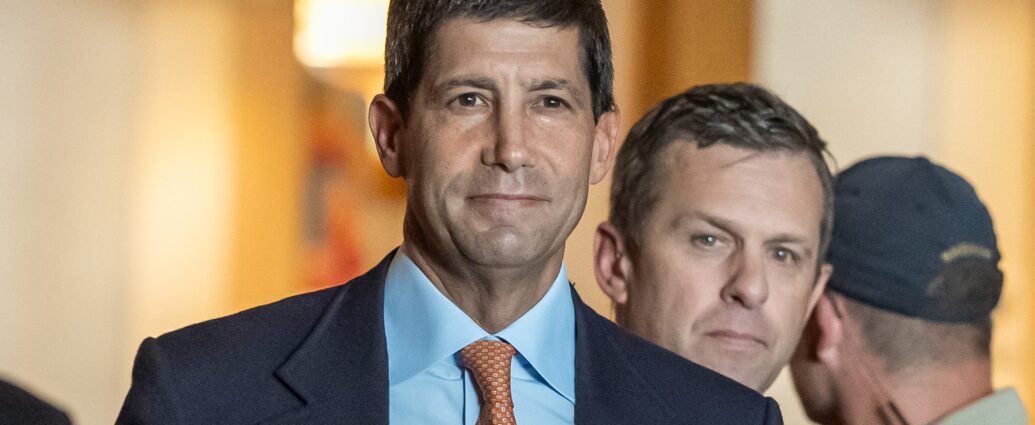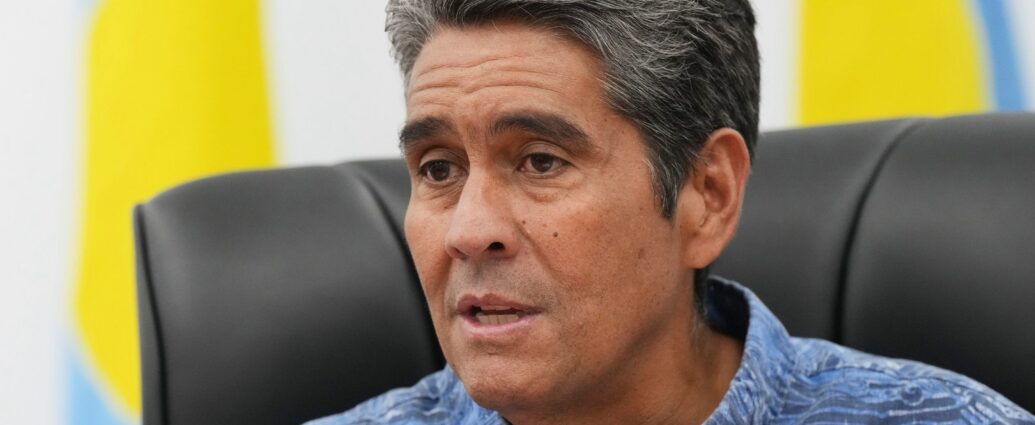
Far from New York or Davos, leaders of some of the world’s least populous states are meeting in a placid tropical archipelago with no traffic lights. The population of the summit host, Palau, was due to swell from 18,000 people to 20,000 as delegates from dozens of countries arrived at the Pacific Islands Forum Leaders Meeting.

Ahead of the summit officially opening Monday, the country’s president and other senior officials walked the main road around the island picking up trash. Barbers and tattoo artists prepared to become drivers for delegates and student volunteers to usher dignitaries.

But beneath the distinctively Pacific character of the event, where matters unfold in their own unhurried time and decisions are made by consensus rather than by a vote, simmered a fraught and escalating geopolitical debate about who gets to shape the future of the vast ocean region.

Powerful nations interested in the Pacific have raced in recent years to shore up alliances among its leaders, intensifying a contest for influence between China and the United States, Taiwan, and forum members Australia and New Zealand. The sometimes-conflicting bids to win sway have also drawn dividing lines among the forum’s members, threatening to derail annual summits.

“The Pacific is our home, not a theater for geopolitical competition,” Palau’s President Surangel Whipps Jr. told reporters Sunday, as he urged the bigger countries closely observing this week’s event not to interfere in talks that he hoped would center on problems desperately imperiling small Pacific island nations, such as climate change and struggling economies.

“Let’s not use this as a place that we should be threatening or making people feel uncomfortable,” he added. The reality, however, was unlikely to be simple.

Small island nations have become important allies

Some of the 18 member countries and territories that make up the Pacific Islands Forum have populations in the low thousands or tens of thousands and were once known mostly as picture-perfect holiday destinations. But many also have sprawling and lucrative exclusive economic zones, rich with fisheries and seabed minerals, and their locations across the wide Pacific Ocean have become strategically important points on the map as global tensions rise.

While Forum countries often reference a “Pacific family,” members come from diverse cultures and political systems and their remote locations mean few opportunities for leaders to speak in person. The annual leaders’ summit was once a relaxed and casual affair, where officials from countries with little power in the global order sought to amplify their voices by reaching unified positions, particularly in urging bigger countries to curb greenhouse gas emissions as rising seas began to threaten low-lying atoll nations.

As major powers over the past decade have escalated their efforts to secure access to Pacific waters and ports by inking security deals and offering funding, immigration access to their countries and other sweeteners, the leaders’ ability to speak with one voice at their annual summit has come under pressure.

“We see examples of this where that consensus-based model, which is referred to as the Pacific Way, can sometimes lead to a bit of paralysis in taking action,” said Oliver Nobetau, Pacific Islands program director at the Lowy Institute, an Australian think tank.

Pacific nations face worsening climate and fuel shocks

In a recent episode, the Forum’s foreign ministers failed to reach consensus on a statement criticizing Beijing’s launch of a ballistic missile into the South Pacific Ocean in July. While most member states strongly opposed China’s actions, the refusal of two to endorse a statement saying so meant none was issued.

“At this point in time when Pacific Islands are facing a lot of acute security issues, decision-making is paramount for this one,” Nobetau said. “We’ll be looking to see if President Whipps can sort of steer the forum to take tangible action.”

Among the issues vexing Pacific island nations are the effects of the latest El Nino weather chaos, which has brought droughts and floods across the region. The volatile weather threatens food security and access to clean water, already vulnerable in island nations dependent on imported goods and funded largely by foreign aid.

Fuel volatility from the Iran war has also prompted some Pacific countries experiencing severe economic shocks to declare national emergencies in a region overwhelmingly reliant on imported diesel and gasoline, arriving via a fragile supply chain.

Whipps this week suggested that the wealthy countries seeking involvement in the region could open their wallets to finance the widespread establishment of solar power capabilities across the region.

“What are they doing together with us to partner to get a 100% renewable Pacific?” Whipps said.

Conflict over members’ alliances is expected

However, some of the powers at loggerheads over the region were always going to see this year’s summit as a showdown. Palau is one of just 12 countries worldwide to recognize Taiwan, incurring the ire of Beijing, which sees Taiwan as part of its territory.

It also sits at the nexus of other great power struggles. Located in the western Pacific Ocean, next to the Philippines, Palau draws from the Asian tourism market and has closer ties to the United States than much of the Forum’s members. A Compact of Free Association allows defense and security access for the U.S. in Palau’s territory in exchange for tens of millions of dollars in U.S. funding each year.

Palau’s turn as host also comes as the summit’s leaders try once more to draw up a structure governing how other countries are permitted involvement in its meetings. Countries approved to engage in the Pacific Islands Forum, including the United States and China, are known as dialogue partners, while Taiwan holds separate status as a development partner.

Beijing has ramped up pressure on forum hosts to exclude Taipei’s envoys from the annual summit, a dispute that grew so fractious ahead of the 2025 event in Solomon Islands that all countries except member nations were entirely barred from attending. Palau’s warm diplomatic relations with Taipei have this year drawn the attendance of Taiwan’s Foreign Minister Lin Chia-lung and provoked a warning from Beijing that China would oppose Taiwanese officials’ participation.

That in turn has prompted exasperation from some officials and Pacific-watchers at the prospect of another summit overshadowed by rivalry between non-member countries. Early arrivals over the weekend were roiled by the news that one leader, Solomon Islands Prime Minister Matthew Wale — a newly elected leader more friendly to Australia than the more Beijing-aligned leader before him — had returned home just hours after arriving because an opponent had mounted a leadership challenge.

It wasn’t immediately clear how much his forced departure, and the absence of others such as Kiribati’s President Taneti Maamau, whose country’s China ties have warmed during his tenure, could be attributed to unease about the summit’s geopolitics.

“You’d be defying gravity and logic if you said it wasn’t a big problem,” New Zealand Foreign Minister Winston Peters told reporters in Koror on Sunday, referring to bids for foreign interference in the event.

The leaders’ non-attendances were “seriously disappointing” and did not help, Peters added.

“But in the main the delegations are of the highest standard,” he said. “So let’s see how we go.”

This story was originally featured on Fortune.com

This post was originally published here. 

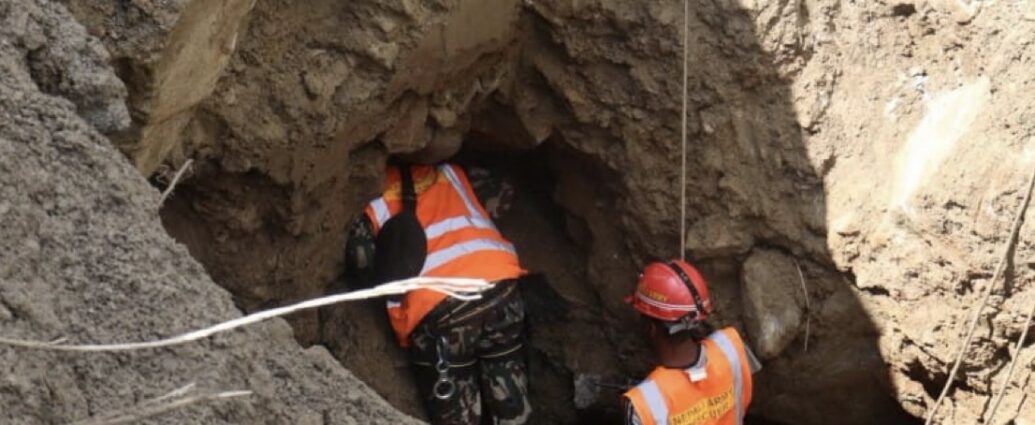
Workers shoveled thick mud from a flood-ravaged power station in central Nepal, trying to revive a key node that supplies electricity to more than 20,000 people. But as they cleared debris from equipment buried by last week’s catastrophic floods, there was hope the plant would not simply be rebuilt in the same place, beside the river that destroyed it.

In Nepal, up to 900 workers are unaccounted for from a dozen hydropower projects, according to the Independent Power Producers’ Association, Nepal, with hundreds believed trapped in tunnels. In Nepal and China combined, over 900 people have died and 4,700 are missing.

The loss of hydropower infrastructure is estimated to have taken 700 megawatts offline — about 10% of the country’s power capacity. Once the immediate aftermath of the disaster is dealt with, the question of how to restore power, roads, bridges, schools and health facilities quickly without rebuilding the same vulnerabilities should be on top of Nepalese authorities’ minds. disaster experts said.

“Authorities have to take a hard look in the mirror now and ask how they will be rebuilding in these places. They will also have to take a close look at other projects in Nepal that have not been built yet, whether they’ll be approved after this event,” said Jakob Steiner, a geoscientist at the University of Graz in Austria, who is currently based in Dhaka, Bangladesh.

Rebuilding for resilience, not just replacement

Hydropower projects that were operating or under construction were fully or partly destroyed across Rasuwa, Nuwakot and Dhading, among the worst-hit districts.

Many of the workers had taken shelter in the tunnels but are stuck, waiting to be rescued, according to officials.

“The tunnels are built to access hydropower infrastructure and to divert water,” Steiner said, describing the tunnels as big enough to drive trucks through.

Apart from the hydropower projects, tens of kilometers (miles) of roads, multiple bridges and essential buildings like schools and hospitals have been destroyed.

Ramraj Narasimhan, a senior director with the Coalition for Disaster Resilient Infrastructure, said rebuilding should focus on continuity of services rather than trying to make every structure indestructible.

“If it gets damaged, let it get damaged, but can we build in redundancy in the system?” he said.

That can mean choosing a better location for construction, alternate routes, backup power, improved early warning and financial tools such as insurance to speed recovery, Narasimhan said. Risk assessments should examine where a river bends, where slopes are unstable and where a single failure could cut off several communities.

Narasimhan’s organization estimates that $124 billion worth of Nepal’s infrastructure is exposed to climate-driven disasters, creating the potential for hundreds of millions of dollars in losses each year. A report by the coalition earlier this year found that Nepal’s average annual losses are nearly $760 million from various disasters, while the country’s national disaster funds is only a fraction of this amount.

Climate risks grow for Himalayan hydropower

Climate scientists said the Himalayan region — which is warming faster than many other parts of the world — is particularly at risk from increasing global warming as a result of human-caused climate change.

Climate experts said the flooding adds to evidence that infrastructure planning in the Himalayas is being forced to account for disasters that are increasing as the climate warms. Glaciers across the Hindu Kush Himalaya are losing ice at an accelerating rate, while permafrost degradation, unstable slopes, glacial lakes and increasingly erratic rainfall are raising the risks of floods, landslides and debris flows, according to reports by Kathmandu-based climate research group International Center for Integrated Mountain Development.

The stakes are particularly high for Nepal because hydropower is both a foundation of its electricity grid and an important source of economic growth and export revenue. Much of the country’s potential is run-of-river hydropower, Narasimhan said, meaning facilities are closely tied to steep river corridors where land is limited and hazards can cascade quickly.

Steiner said smaller floods can sometimes be managed with diversions that keep debris and high flows away from expensive infrastructure and tunnels. But for events as large as the latest flood, he said, physical defenses may be overwhelmed. In those cases, early warning becomes the critical protection for people.

He said the flood was detected at the China-Nepal border after moving rapidly from its source, leaving little warning time upstream. But there was still time as the flood traveled downstream toward hydropower sites, raising questions about whether warnings could have reached workers sooner.

The disaster is also likely to intensify scrutiny of where future projects are approved. Himanshu Thakkar, coordinator of the South Asia Network on Dams, Rivers and People, said environmental, social and disaster-risk assessments need to reflect the specific landscape and past hazards of each valley, backed by land-use rules and stronger accountability.

Hydropower projects can themselves become “force multipliers” when large structures, debris and altered river channels add to downstream damage, Thakkar said. He argued that Nepal should also consider more decentralized solar power as part of a broader energy mix.

Thakkar said the question now is not only how fast Nepal can rebuild, but what it chooses to put back in the path of the next flood.

___

Sibi Arasu reported from Bengaluru and can be followed on X at @sibi123. Reach him at sarasu@ap.org.

___

The Associated Press’ climate and environmental coverage receives financial support from multiple private foundations. AP is solely responsible for all content. Find AP’s standards for working with philanthropies, a list of supporters and funded coverage areas at AP.org.

This story was originally featured on Fortune.com

This post was originally published here. 

Chinese markets are booming with new public stock offerings, energized by the craze for artificial intelligence and other advanced technology and a growing preference to list shares in Hong Kong and Shanghai.

In the latest big stock listing, shares in China-founded e-commerce and fast fashion giant Shein are due to debut Tuesday in Hong Kong in a blockbuster initial public offering raising $1.7 billion, in one of the city’s biggest new share sales this year.

In July, CXMT, China’s largest memory chipmaker, raised more than $8.6 billion in Shanghai in the second-largest IPO for its Nasdaq-style STAR market, mainland China’s second-largest IPO. Its shares jumped 466% on the first day of trading.

Unitree, one of China’s leading humanoid robot makers, also made its listing debut in Shanghai in August. Shares rose 460% on the first day of trading.

“The current IPO boom is powered by investor appetite for AI and robotics,” said Ruiying Zhao, a senior research analyst at S&P Global Market Intelligence. Trading in Shanghai’s stock market, for one, is heavily driven by retail investors.

AI driving Chinese IPO boom

CXMT’s IPO in Shanghai “placed China in a strategically significant position in tech manufacturing related to AI,” said Perris Lee, head of APAC equity capital markets for ION Analytics. “It’s also a testament to China’s tech self-sufficiency ambitions.”

Founded in China in 2016, the company’s revenue surged more than 700% year-on-year to 50.8 billion yuan (about $7.5 billion) in the first three months of 2026 on a spike in demand for computer chips needed for AI.

IPO proceeds in Hong Kong and Shanghai so far this year have already surpassed the funding raised last year, according to the financial data platform LSEG.

It says IPOs and secondary listing activities on the Hong Kong and Shanghai exchanges raised a total of over $54 billion from so far in 2026, surpassing last year’s total of more than $46 billion.

Combined Hong Kong and Shanghai proceeds so far this year accounted for roughly 21% globally, ranking them only behind only the Nasdaq’s roughly 55% global share, LSEG said. There, the mega $75 billion IPO by SpaceX in June made the U.S. exchange the world’s biggest IPO market this year.

Since China limits foreign purchases on mainland exchanges, many Chinese companies do parallel listings in Hong Kong to help raise international capital.

Fewer big Chinese companies listing overseas

Stricter U.S. and Chinese regulatory scrutiny in recent years of big Chinese companies listing in U.S. markets, especially those in strategically important sectors like advanced technologies, has led some Chinese companies to stick closer to home.

Listing overseas typically takes more time compared with doing IPOs in China, said Howie Farn, a capital markets partner at the law firm Freshfields.

In Hong Kong, recent public stock listings of Apple-supplier Luxshare Precision Industry, and Zhongji Innolight, which makes optical transceivers used in data centers, were among this year’s largest deals and were also a reflection of investor demand for advanced technologies.

More companies are looking to hold their IPOs in Hong Kong or Shanghai, like robotics firms AGIBOT and Deep Robotics.

Shein also explored the possibility of listings in the U.S. and London before opting for Hong Kong.

Investors are wary of a possible AI bubble in China, too

After massive oversubscriptions and huge gains in their share debuts, some companies have seen their market value shrink.

Chinese robot maker Unitree’s share price had fallen more than 40% as of Friday from its peak share price on the day of its trading debut.

“The critical question remains: is the AI sentiment enough?” said Zhao from S&P, as the similar question that raised worries among investors in the U.S. also now also applies to China. “For a durable market cycle, investors will demand sustainable revenue, visible profit margins, and realistic valuations.

The global AI frenzy also has also drawn attention away from companies like Shein. “The AI investment cycle is absorbing much of the risk appetite that would have otherwise flowed to a company like Shein,” said Jacob Cooke, CEO of WPIC Marketing + Technologies.

Shein’s IPO puts the company’s value at around $27 billion, a fraction of its peak valuation a few years ago, though that is partly due to U.S. and EU moves to restrict de minimus tax-exemptions for imports of small packages.

This story was originally featured on Fortune.com

This post was originally published here. 

OpenAI’s infrastructure ambitions are colliding with a less technical problem: public backlash.

CEO Sam Altman is conceding that Americans are openly hostile to the facilities powering the AI boom, awkward timing for a company both planning to spend $50 billion this year on compute. “Clearly, people hate data centers—right now, at least,” Altman told Time in an interview. “People are pretty negative on AI.”

The week before Altman sat for Time, OpenAI’s head of data centers Chris Malone left the company, the Wall Street Journal reported, as confirmed by CNBC, which obtained a statement from OpenAI saying that he had “recently reorganized” the infrastructure team. 

OpenAI spent the past year dramatically expanding Stargate, the infrastructure project it launched with SoftBank early last year with plans to invest as much as $500 billion in the U.S. AI infrastructure. By September 2025, OpenAI had announced six U.S. Stargate sites, and said those facilities—along with its Abilene flagship and ongoing CoreWeave projects—would bring Stargate to nearly 7 gigawatts of planned capacity. It has since added a more-than-1-GW Michigan campus, a Georgia project contracted for 3.2 GW of power, and, this month, an agreement to secure approximately 8 GW of IT capacity in southern Ohio.

OpenAI said it is already planning beyond Stargate’s original 10-gigawatt target, and claims it still does not have enough computing power. 

“If anything, we should have bought a lot more,” Sachin Katti, the OpenAI executive overseeing its compute efforts, told Time.

Americans increasingly don’t want data centers next door

Altman’s assessment of the public mood isn’t far off. 

Seven in 10 Americans oppose building data centers in their area, according to a Gallup poll released in May, including 48% who strongly oppose one. Data centers can consume enormous amounts of electricity, and residents in communities targeted for development worry about higher power bills, water usage, noise and the strain on local infrastructure. Some estimates peg the electricity cost of data centers to $23 billion.

The opposition is already having financial consequences for hyperscalers. At least 48 data center projects representing $156 billion in investment were blocked or stalled by local resistance. Even though only 8% of Americans who oppose data centers live near one, the outrage has gone national.  

A Pew Research Center survey released earlier this year found Americans were much more likely to say data centers were bad than good for home energy costs, the environment and nearby quality of life. Among people who said they had heard a lot about data centers, 67% said they believed the facilities were mostly bad for household energy costs.

Those concerns are colliding with a surge in electricity demand. U.S. power consumption grew about 1.7% a year from 2020 through 2025 after barely growing over the previous 15 years, according to the Energy Information Administration. The agency said data centers are helping drive the increase.

The backlash is starting to shape policy–and the midterms

State governments are now responding to frustrated constituents with potential ramifications for OpenAI and other hyperscalers. Local officials proposed more than 120 moratoriums on data center development in 38 states as of July.

Texas Gov. Greg Abbott ordered regulators to scrutinize data centers seeking to connect to the state’s power grid before allowing projects to move forward earlier this month. ERCOT, which manages most of the Texas grid, was facing roughly 474 gigawatts of requests for new connections—more than five times the state’s record peak electricity demand. That matters for OpenAI because Texas is central to Stargate, with its flagship site in Abilene, and additional pending projects in the state.

Pennsylvania Gov. Josh Shapiro took his own steps on Aug. 18, signing an executive order that imposed new energy-affordability, environmental and community requirements on data centers and removed AI data centers from a fast-track permitting program.

Data center backlash is also uniting people from across the political spectrum ahead of the midterm elections. While President Donald Trump champions them, most registered voters oppose data centers, including 60% of Republicans and 53% of MAGA, according to a Fox News poll. 

This story was originally featured on Fortune.com

This post was originally published here. 

A teenager in a Ford Mustang reportedly smashed through the perimeter fence of a New Hampshire airport Saturday night, drove onto an aircraft parking area and struck both a tractor and a small parked plane.

Nobody was killed. Authorities say the 17-year-old driver was intoxicated and fleeing police. There is no indication the incident was terrorism.

But that is exactly why what happened should get Washington’s attention.

If an allegedly intoxicated teenager being chased by police can drive through an airport perimeter and reach aircraft, America should be asking a much larger question: What happens when someone actually intends to cause damage?

That question carries far greater weight today.

The United States is confronting renewed hostilities with Iran, whose Revolutionary Guards have vowed retaliation following American military action against Iranian positions. Tehran has repeatedly demonstrated that its responses do not have to remain confined to a traditional battlefield. Iran has options ranging from attacks on energy and shipping infrastructure to cyber operations, proxies and other forms of asymmetric warfare.

And economic disruption itself can be a weapon.

The latest confrontation has already demonstrated how quickly geopolitical conflict can reach American businesses and consumers. Renewed fighting around the Strait of Hormuz sent oil prices sharply higher Monday. The waterway is one of the most important energy corridors on Earth, and disruptions there immediately affect transportation, manufacturing, shipping, inflation and ultimately the price Americans pay for everyday goods.

America therefore cannot think about homeland security only in terms of military bases or government buildings.

Airports are economic infrastructure.

So are ports, power grids, water systems, telecommunications networks, rail lines, fuel terminals, data centers and major logistics hubs.

Disable enough of them—even temporarily—and the damage does not stop at the physical site. Flights are canceled. Cargo stops moving. Workers cannot get where they need to go. Supply chains back up. Businesses lose revenue. Insurance costs rise. Markets react. Consumers pay more.

That is precisely why hostile governments and terrorist organizations increasingly look at economic disruption as part of modern warfare.

Iran has also previously been accused of cyber activity targeting Western utilities and American water infrastructure. Recent reporting on Tehran’s potential retaliation options has identified energy facilities, shipping routes, utilities, cyberattacks and sabotage among the vulnerabilities security officials must consider.

None of that means Saturday’s incident in New Hampshire was anything more than what police say it was.

It means America should learn from it.

According to New Hampshire State Police, the Mustang crashed through the perimeter fence at Portsmouth International Airport, crossed an aircraft apron and struck a tractor and an unoccupied stationary aircraft before stopping.

That should be treated as a real-world security test that nobody intended to conduct.

The question for airport authorities around the country should now be straightforward: Could the same thing happen here?

Could an ordinary passenger vehicle penetrate the perimeter? How quickly would it be detected? Could it reach a commercial aircraft, fuel storage area or other sensitive infrastructure? Where are physical barriers strong enough to stop a vehicle rather than merely mark a boundary? And are smaller airports being protected with the same urgency Americans expect at the largest hubs?

Security planning cannot begin after a hostile actor finds the weakness.

September 11 taught America what happens when civilian transportation infrastructure is turned into a weapon. Twenty-five years later, the threat environment has changed enormously. Drones, cyberattacks, inexpensive technology and decentralized terror networks have expanded the number of ways an adversary can create enormous economic damage without fielding an army.

The lesson from New Hampshire is therefore bigger than one teenager, one fence and one damaged airplane.

The United States is again facing enemies who openly want to impose costs on America. Protecting the country means protecting not only American lives but the infrastructure that keeps the American economy moving.

A fence that can be smashed through by an intoxicated teenager should not simply be repaired.

It should trigger a question across the country:

Where else are we this vulnerable—and are we going to find those weaknesses before our enemies do?

JBizNews Desk | New Hampshire

© JBizNews.com All Rights Reserved. Reproduction or distribution without written permission is prohibited.

Turkish Foreign Minister Hakan Fidan claimed on Monday that the Mecca Joint Defense Agreement signed by his country with Saudi Arabia and Pakistan wasn’t directed towards any country, while also saying that Prime Minister Benjamin Netanyahu was “an enemy of security and humanity.”

He also claimed that Netanyahu had “commited the crime of genocide.”

“The Mecca Joint Defense Agreement is not directed against a specific country,” Fidan said, adding that its member states are considering establishing a “reciprocal alliance that is capable of solving problems and is open to expansion.”

“The Mecca Joint Defense Agreement is based on the principle of defense and complements the NATO alliance,” he continued.

Fidan also said that a roadmap was being worked on for the process of other countries joining the pact.

Fidan spoke at a press conference after the first meeting of the committee established as part of the Mecca Joint Defense Agreement, which brought together Sunni Muslim US allies “concerned by regional conflict.” The three countries signed the agreement on August 7 in Mecca, Saudi Arabia, Islam’s holy city.

This is a developing story.

This post was originally published on here. 

US President Donald Trump claimed that “Iran is officially a Failed Nation” in a Monday post on Truth Social, the day after the US struck Iranian military assets for the first time in weeks.

“They have no Navy, they have no Air Force, they have no currency, they are not paying their soldiers or police, Inflation is at 300%, and their leadership is in total disarray and incapable of properly representing the country,” Trump added.

He continued to claim that the only thing Tehran still has is “fake news from the USA,” a willingness to kill anti-regime protestors, and “a good line of b******t.”

In reference to the killing of anti-regime protestors, Trump claimed that over 100,000 have been killed and asserted that the regime in Tehran must be tried for war crimes.

Trump says US will respond to strikes on military assets in Jordan

Also on Monday, Trump said that the US will respond to Iran’s overnight missile attack against American military assets in Jordan, telling Fox News reporter Trey Yingst during a phone call that the US is “going to hit them hard.”

He confirmed to Yingst that all but one of the missiles were intercepted by US air defense systems, and the one unintercepted missile was allowed to pass through Jordanian airspace after it was determined that it would not hit anything significant.

Tehran launched the strikes after the US struck two launchers on Iran’s Larak Island that were seen preparing to fire towards the Strait of Hormuz.

This post was originally published on here. 

Iran condemned US strikes on Larak Island on Sunday night. It also said it has the right to self-defense. In the wake of the strikes, it carried out attacks on Jordan and the UAE.

“Iran said it retaliated against the United States in the early hours of Monday morning, targeting US military air bases in Jordan and the UAE and shooting down an American drone over the Strait of Hormuz, hours after Washington launched its first strikes on Iranian territory in a month,” Rudaw media reported.

The Kingdom of Jordan said it intercepted at least 8 missiles, with the armed forces noting that the missiles were destroyed before posing a threat to civilians or property. Jordan once again had to protect its civilians from an Iranian attack.

Iran International noted that the Egyptian Foreign Ministry “announced in a statement on Monday, September 29, that the Islamic Republic’s attacks on Jordan and the United Arab Emirates could expand the scope of confrontations and undermine the opportunities for restoring stability to the region.”

The report added that “Egypt condemned the Islamic Republic’s attacks on Jordan and the United Arab Emirates and warned of the consequences of continued escalation of tensions in the region. Egypt also declared its full solidarity with the United Arab Emirates and Jordan, stressing the need to respect the sovereignty and territorial integrity of the countries and protect the security and health of citizens.”

Still from a video purporting to show an Iranian drone launch, released by Iran August 31, 2026. (credit: SCREENSHOT/X/@IRANinMumbai)

Why is Iran targeting Jordan again?

Iran has targeted Jordan in the past. It has expanded its retaliation from the Gulf to increasingly target Jordan. This is not random. Iran has specifically shifted targeting to Jordan. This may be partly to avoid angering several key Gulf countries. For instance, Iran doesn’t want to anger Saudi Arabia after the kingdom, Turkey, and Pakistan entered into a new pact. Iran also wants to get along with Qatar and Oman, leaving the UAE and Jordan as preferable targets.

Targeting Jordan is a message to the US that even if the Americans move military assets away from the Gulf, Iran will still try to hit them further away. Iran doesn’t want to target Israel, though, because then Israel would likely respond.

As such, it’s striking Jordan as a message to the US and Israel. It is also targeting the UAE because the UAE is part of the Abraham Accords and hosts US forces. It isn’t targeting Qatar, even though US bases are there. It has also toned down threats to Kuwait.

Rudaw media noted that “the Islamic Revolutionary Guard Corps (IRGC) said its Aerospace Force carried out a combined ballistic missile and drone operation against the King Hussein and al-Azraq air bases in Jordan in response to what it called ‘American-Zionist aerial aggression’ against Larak Island.” Note that Iran is also blaming Israel while attacking an Arab country. Jordan has not attacked Iran.

However, Iran feels it has impunity to attack wherever it wants. After the US and Israeli strikes in late February, Iran lashed out by targeting most countries in the region. It has now narrowed down its list of targets. Tehran’s retaliation is calculated, targeting places it thinks won’t strike back. For instance, it has targeted the Kurdistan Region of northern Iraq.

Targeting American bases in Jordan

Iran is clear in claiming that it is attacking “American bases” in Jordan. The regime in Tehran claimed to target “the technical and maintenance infrastructure and the deployment sites of enemy fighter jets at two American airbases, King Hussein and al-Azraq in Jordan,” causing “heavy damage.”

“US forces took limited, precise action against IRGC minelaying forces posing an imminent threat in the Strait of Hormuz,” CENTCOM said on Monday. “In essence, Iran created the threat, and the US military eliminated it to protect civilian mariners, commercial shipping, and the free flow of global commerce,” Rudaw noted.

Iran also claimed to have downed a US drone and to have targeted al-Minhad air base in the United Arab Emirates. The base is south of Dubai.

In Iran, the Iranian President Masoud Pezeshkian has tried to claim Iran is not seeking a wider war. However, he is not in charge very much these days. Iran is believed to largely be ruled by a junta of IRGC officers who have increased their power over the last six months. “We are not seeking war, but we will give a decisive response to aggressors,” Pezeshkian said.

Meanwhile, in Cairo, the Egyptian Foreign Ministry “stressed the need to stop the attacks, reduce tension, and return to the negotiating table, and called for providing an opportunity for diplomatic efforts aimed at reaching a solution to restore security and stability and prevent the spread of confrontation in the region,” Iran International noted.

Iran will continue to view Jordan as a kind of “soft underbelly” for attacks when it claims it is retaliating for US strikes. This has become the Iranian model now. Iran does not think Jordan will respond. It also thinks this is a way around the Turkey-Saudi-Pakistan alliance. Egypt’s comments show that Arab states have solidarity with Jordan. 

This post was originally published on here. 

The European Union Aviation Safety Agency (EASA) on Monday extended its warning to airlines until September 30 to avoid airspace over the waters of the Persian Gulf within Bahrain, Kuwait, Qatar and the UAE, narrowing an earlier advisory that recommended avoiding the countries’ entire airspace.

The new advisory comes hours after the US and Iran resumed hostilities for the first time since late July.

“While risks over the waters of the Persian Gulf remain high, operations necessary for arrivals at or departures from aerodromes within the affected Flight Information Regions may be conducted with sufficient mitigation,” EASA said in its latest advisory for the Persian Gulf nations.

It asked operators to exercise caution when operating over the land territory of these nations, adding that airlines should also not operate over the waters of the Gulf of Oman within Oman’s Muscat flight information region.

The agency lifted its previous recommendation that airlines avoid Jordanian airspace, but advised airlines to exercise caution through September 30.

The headquarters of the EASA pictured on June 23, 2010 in Cologne; Illustrative. (credit: PATRIK STOLLARZ/AFP via Getty Images)

EASA continues to recommend airlines avoid airspaces of Iran, Iraq, Lebanon

EASA also extended its recommendations that airlines not operate in the airspace of Iran, Iraq and Lebanon until the end of September.

However, flights arriving at or departing from the Lebanese capital Beirut are permitted if the approach starts from the sea or the departure ends over the sea, the agency added.

This post was originally published on here. 

The first meeting of the Strategic Political and Defense Committee, established under the Mecca Joint Defense Agreement, began in Istanbul on Monday. It comes as Israel and Greece also signed a multi-billion-dollar defense deal.

The two events happening on the same day are a coincidence, because both have been in the works for some time.

However, it is symbolic of how the Middle East is being reshaped.

The October 7 attack was meant to change the region. Iran and Hamas plotted to carry out a massive war against Israel. Hamas launched the opening shot of the multi-front war.

The attack came after several years of relative peace in the region. After the defeat of ISIS, the region had been working toward stability and integration. The Abraham Accords were part of this process, bringing together Israel, the UAE, and Bahrain.

Turkish President Tayyip Erdogan is received by Saudi Crown Prince Mohammed bin Salman, ahead of the expected signing of a defence deal between Saudi Arabia, Pakistan and Turkey, in Mecca, Saudi Arabia, August 7, 2026. (credit: SAUDI PRESS AGENCY/HANDOUT VIA REUTERS)

Hopes of Saudi Arabia joining Abraham Accords dashed as national alliances shift

This was expected to be part of a larger process that would include India, the US, and other countries. Greece-Israel-Cyprus relations were also growing stronger, along with other developments in the Eastern Mediterranean.

However, high hopes that Saudi Arabia might join the Abraham Accords have now shifted. Egypt, Saudi Arabia, Turkey, Syria, and other countries are growing closer together.

Where relations between Ankara and Cairo were once more negative, things have now shifted. Israel, meanwhile, has not shown flexibility on the Palestinian issue, and Israel has taken a hostile attitude toward the new government in Syria.

The result is that Jerusalem now views the emerging Turkey-Saudi-Pakistan alliance as a potential threat.

Other processes the underway. Israel’s work with US Central Command has increased. US-Israel strikes on Iran have brought the US and Israel closer together. Iran’s attacks on the Gulf, particularly threats to US bases, have led the US to move a large number of refueling aircraft to Israel.

This has led to speculation that the US may move bases away from the Gulf. Israel could benefit by becoming a base for US forces.

This would knit together the Israel-CENTCOM relationship even more than in the past.

It is only in the last half-decade that Israel has officially become part of CENTCOM’s area of operations. This is owed to an anomaly where Israel was seen as part of Europe, because many countries in the region didn’t have peace with Israel in the past.

Now, with peace with Egypt, Jordan, the UAE, Bahrain, and Morocco, there are more reasons for Israel to be linked to regional security.

What happened in Turkey on Monday, August 31

Reports say that Ankara “is hosting the inaugural meeting of the committee, which was established to provide strategic direction for activities under the agreement and brings together the foreign ministers, defense ministers and chiefs of general staff of Turkey, Pakistan and Saudi Arabia,” according to Turkey’s Anadolu.

“The meeting began with the participation of Turkish Foreign Minister Hakan Fidan, National Defense Minister Yasar Guler and Chief of General Staff Gen. Selcuk Bayraktaroglu; Pakistani Foreign Minister Muhammad Ishaq Dar, Federal Defense Minister Khawaja Muhammad Asif and Chief of Army Staff Field Marshal Asim Munir; and Saudi Foreign Minister Prince Faisal bin Farhan, Defense Minister Prince Khalid bin Salman and Chief of General Staff Gen. Fayyadh bin Hamed Al-Ruwaili,” the report said.

The goal is to work on “interoperability among the three countries’ armed forces, deepening defense industry cooperation, including joint production and research and development, and strengthening joint efforts to combat terrorism.”

The report notes that “the agreement stipulates that an attack against any one of the signatory states will be considered an attack against all parties. It also seeks to foster a new culture of regional cooperation and remains open to the participation of actors that respect international law and share a vision of peaceful cooperation.”

Meanwhile, in Israel, Israel’s Minister of Defense, Israel Katz, said, “My visit to Greece a few months ago, as the guest of Greek Defense Minister Dendias, was another expression of the depth of the strategic relationship between Israel and Greece and of our shared determination to keep strengthening it.”

His statement came as Israel and Greece signed the new defense deal.

Katz discussed his earlier meetings in Greece: “In that meeting, we agreed to deepen defense cooperation between our two countries. Israel and Greece share common strategic interests, and face shared regional challenges. At a time when actors with hegemonic ambitions are seeking to expand their influence and undermine stability in the region, Israel and Greece will continue to deepen their defense and strategic cooperation, and will act with determination to preserve stability and safeguard their security and shared interests.”

Israeli air defense systems key to Greek defenses

Greece’s Minister of National Defense Nikos Dendias also put out a statement on the Shield of Achilles defense concept that Greece is developing.

The Israeli air defense systems are key to this.

“The ‘Achilles Shield’ is an important link in the reform of the Armed Forces and an imperative response to the geopolitical and technological challenges of our time. It is part of the ‘Agenda 2030’ reform, with which our Homeland is moving into a new reality. In a new concept of Defense and Deterrence,” Denias said.

He added that the Achilles Shield “marks the transition from a sum of weapons systems to a holistic deterrence system. Ships, aircraft, land assets, autonomous systems, new satellites, and more generally, every platform equipped with sensors, are integrated into a single network-centric architecture.”

This will enable 4th and 5th generation aircraft to play a “broader deterrent role,” he said. Satellites and communications will be key to this.

“Greece has acquired a fleet of microsatellites and is preparing for its first large geostationary satellite,” he said. Greece’s defense industry will also be strengthened. “The goal is clear: for Greece not to remain a passive buyer and user of defense systems. To actively participate in their design, production and development, strengthening domestic know-how,” he said.

In Tel Aviv, the head of the International Defense Cooperation Directorate (SIBAT) at the Israel Ministry of Defense (IMOD), Brig.-Gen. (res.) Yair Kulas added that “The ‘Achilles Shield’ deal is another milestone in the defense relationship between Israel and Greece. It reflects the deep trust our partners in Greece place in Israeli technology, the defense industry, and the government-to-government cooperation model led by the Israeli Ministry of Defense through SIBAT.”

Taken together, the story of the defense deal with Greece and the meeting in Istanbul are examples of how the region is changing.

While some may see these two events as symbolic of rivalry, they don’t have to be. The Saudi-Turkey-Pakistan alliance is built in the wake of the chaos of the Iran war. Iran has been attacking countries across the region, as it did with attacks on Jordan and the UAE overnight.

Countries need to work together toward stability. This is a lesson a decade after the war on ISIS and also after the fall of the Assad regime. The region needs stability and integration. The Israel-Greece deal bolsters key countries in the Eastern Mediterranean.

As such, it also adds to stability. This is part of the broader trend reshaping the region in the wake of decades of war and chaos that began with the Gulf War in 1991.

These are signposts of the new world order that has emerged decades after the collapse of the Soviet Union, as the world once again becomes more multipolar and regional or middle powers step up their cooperation. 

This post was originally published on here. 

Swiss police said on Monday that they arrested a 43-year-old suspect in relation to a deadly shooting incident at a rave in the town of Aarau on the weekend.

“Investigations into the exact circumstances of the incident, as well as its background and possible motive, are currently underway. At this stage, it is assumed that a single perpetrator was involved,” police in the canton of Aargau said in a statement.

At least one person was killed, and five were severely wounded, during the Sunday morning shooting at a Swiss nightclub in the city of Aarau, local authorities said.

According to reports by the Swiss newspaper Blik, one person was killed when gunmen entered the party, which was being held at the city’s horse racing track.

A police car drives past a poster for the rave party, following a deadly shooting incident at a rave party on Sunday, near the Schachen horse racing track, in Aarau, Switzerland, August 31, 2026. (credit: REUTERS/DENIS BALIBOUSE)

Italian citizen killed

Blik also reported that the victim who was killed was a 22-year-old woman identified only as “M.” by the party organizers. 

According to Italy’s Foreign Ministry, the one victim who was killed was an Italian citizen.

All the victims are Swiss residents, and in their 20s, police said, adding that a manhunt was underway and large areas of the town had been cordoned off. They appealed to the public for any images of the incident.

This post was originally published on here. 

Hezbollah has continued to invest in its recovery and adapt its strategy for what it anticipates could be a prolonged, low-intensity war with Israel, according to the latest assessment by the Alma Research and Education Center, published on Sunday.

Based on incidents recorded over the past several months, the center assessed that Hezbollah could increasingly turn toward guerrilla warfare, including small-scale infiltrations into the security zone and potentially Israeli territory, as well as drone and explosive attacks.

The group’s ability to carry out its previous plans to seize the Galilee has been significantly diminished by the destruction of its infrastructure and the continued presence of the IDF in southern Lebanon, the center assessed. However, Hezbollah is still likely to attempt to operate within the security zone.

Given the limited scope of such operations, Hezbollah infiltration attempts would likely be thwarted, according to the center. However, the attempts themselves could indicate that the group is seeking to identify vulnerabilities that could later be exploited.

The center noted that, given Hezbollah’s extensive underground infrastructure and the area’s dense terrain, operatives could still be hiding within the security zone. Some may be cut off from their command networks, but their continued presence could still pose a threat to IDF personnel through planted explosives or other attacks.

This photograph taken during a media tour organised by the Hezbollah shows a man installing a flag of Hezbollah on the balcony of a damaged building at Nabi Sheet town after an Israeli military operation in the Bekaa Valley of Lebanon, on March 7, 2026.  (credit: FADEL ITANI/AFP via Getty Images)

Hezbollah continues to operate above and underground

The IDF has encountered several individual Hezbollah operatives in the area over the past several months, which the center said supports the possibility of a continued Hezbollah presence.

Hezbollah’s underground and above-ground infrastructure, often embedded in civilian areas, is also frequently booby-trapped, making the task of locating and destroying these networks particularly dangerous.

A shortage of skilled operators is preventing Hezbollah from fully utilizing its arsenal of first-person-view (FPV) drones, low-cost unmanned aerial vehicles with a range of up to 60 kilometers that have been used in recent months to target Iron Dome batteries and other Israeli assets and personnel. The shortage of trained operators, however, has not prevented Hezbollah from making FPV and other drones core components of its strategy, according to the center. Hezbollah has also increased the pace at which it is training operatives to use the technology.

Estimated 15,000 rockets, 40,000 active operatives

Though Hezbollah appears to be moving away from the use of precision-guided missiles, cruise missiles and shore-to-sea missiles due to their assessed poor cost-benefit ratio, the center estimated that the group could still possess as many as 15,000 rockets. Alma further estimated that Hezbollah has fewer than 40,000 regular operatives remaining, while retaining tens of thousands of reservists.

At the same time, efforts to reduce Iranian influence in Lebanon have not succeeded in completely removing the IRGC’s presence, according to Alma. The center claimed that members of the IRGC’s Quds Force Lebanon Corps continue to operate in Beirut and the Beqaa Valley.

Iran has also continued to smuggle resources to Hezbollah, though it has been forced to become more creative in its attempts since the fall of the Assad regime, the center continued. Last month, Iran allegedly attempted to send weapons to Hezbollah in a fuel truck through the al-Tanf crossing.

The center claimed that its research had identified smuggling attempts on a near-weekly basis, though it remains unclear how many of these attempts are successful. Syria, it reported, continues to serve as a logistical area for the transfer of weapons to Lebanon. 

This post was originally published on here. 

A fuel supplier is suing a New Jersey distributor and its president, alleging they failed to pay for gasoline that was later sold through stations in the Trump-promoted Freedom Fuel Network.

Mansfield Oil Company filed the lawsuit against KRSM Inc. and its president, Syed Kazmi, on Aug. 19 in the U.S. District Court for the Eastern District of Pennsylvania. Mansfield alleges KRSM obtained approximately 150 loads of fuel from its account at the Twin Oaks terminal in Pennsylvania between May 21 and July 7, totaling roughly 1,124,594 gallons worth $3,998,868.46. 

“KRSM sold a portion of such fuel to its stations that are part of the Freedom Fuel Network,” Mansfield alleges in the complaint. The company further claims KRSM was able to sell some of the fuel at low prices because it had not paid Mansfield for it. Those allegations have not been adjudicated. 

KRSM had been a Mansfield customer since 2022. A commercial credit application included with the complaint and signed by Kazmi states that if Mansfield extended credit and KRSM purchased fuel, KRSM would be responsible for paying for it. The agreement called for payment by electronic funds transfer within 10 days of receiving an invoice. 

VENEZUELA SAYS TRUMP’S HISTORIC OIL DEAL TARGETS 1.5M BARRELS PER DAY, COULD GENERATE $200B

Mansfield acknowledged in the complaint that a data-receiving error delayed its ability to send the invoices until early July. The company said it later discussed what it characterized as minor pricing discrepancies with Kazmi, revised the invoices and sent them to KRSM on July 17. Mansfield alleges its bank subsequently advised it that KRSM had refused attempted drafts from its account. 

KRSM disputes Mansfield’s account of the payment dispute.

Kazmi said in an Aug. 25 court declaration that he “did not agree that the amounts Mansfield demanded were correct or owing.” In court filings, KRSM contends the dispute centers on the prices Mansfield charged for the fuel and says it objected to the invoices before the lawsuit was filed.

On Aug. 28, U.S. District Judge Gerald Austin McHugh vacated an earlier temporary restraining order that had frozen the identified M&T Bank account but granted Mansfield’s requests for preliminary injunctions in part. McHugh ordered the defendants to maintain at least $2.75 million in the account while the litigation proceeds.

The Freedom Fuel Network drew national attention after lowering pump prices amid President Donald Trump’s push for cheaper gasoline.

The White House published a Freedom Fuel Network video on July 7 promoting the network’s lower prices.

Freedom Fuel says on its website that it is a privately owned company that “answered President Trump’s call to action to lower prices at the pump.”

“We didn’t hesitate; we took decisive action and lowered our prices to make filling up more affordable for hardworking families across the greater Philadelphia area,” the company says on its website.

Freedom Fuel also says 25 participating stations experienced an average volume increase of more than 50% after prices were lowered, with several locations increasing more than 100%. Those figures are company-reported and have not been independently verified.

Mansfield’s lawsuit brings claims including breach of contract, unjust enrichment, action for the price, account stated and conversion. The company is seeking at least $3.998 million, plus interest, costs and other damages. 

CLICK HERE TO GET FOX BUSINESS ON THE GO

Fox Business reached out to attorneys for KRSM and Kazmi, Freedom Fuel Network and counsel for Mansfield Oil for comment.

This post was originally published here. 

Good morning and greetings from Pharmalot’s New York bureau. Jason Mast here filling in. Today, I’m still listening to the music recommendation from Pharmalittle’s Friday dispatch — I’ll admit that until today my Traffic knowledge started and ended with a certain saxophone-flecked 1971 hit — and trying to celebrate the coming autumn, rather than mourn the end of summer. Here’s today news:

Bayer, Takeda, and CSL Behring — alongside several mid-sized drugmakers — are part of the new drug pricing deals the White House is expected to announce Monday, the Financial Times reports. The agreements are the latest in a slate of deals the Trump administration has signed with major drugmakers, generally extracting drug pricing concessions in exchange for salary relief — although it’s been unclear how meaningful the drug pricing concessions are. 

The FDA approved Takeda and Protagonist’s drug for a slow-growing cancer, STAT tells us. The weekly injection, called Mimrylo, is approved to treat polycythemia vera, a cancer marked by the overproduction of red blood cells. The cells thicken a patient’s blood, putting them at higher risk for life-threatening heart attacks, strokes, and blood clots. The companies did not disclose a price.

Continue to STAT+ to read the full story…

This post was originally published here. 

A new global bank designed specifically to finance defense spending is moving closer to reality — and Canada wants to put itself at the center of it.

The proposed Defence, Security and Resilience Bank, or DSRB, is seeking to raise roughly €100 billion, about $116 billion, to provide lower-cost financing and loan guarantees for governments and defense contractors.

Canada, Belgium, Greece, Latvia, Luxembourg, Romania, Turkey, Ukraine and Albania have already backed the concept.

So far, however, the project has secured only about €5 billion in commitments, according to officials involved in the effort.

The bank’s broader target is approximately €20 billion in paid-in capital, with another €80 billion available to support future lending.

The idea is simple.

Governments across Europe and NATO are being asked to spend dramatically more on defense.

Large contractors can usually finance themselves.

Smaller suppliers often cannot.

That creates a bottleneck.

A company capable of manufacturing drones, missile components, ammunition, radar systems or military electronics may have government demand waiting for it but still struggle to borrow enough money to expand a factory, hire workers or build inventory.

The proposed bank is designed to solve that problem.

It would lend to governments and defense companies while also providing guarantees that could encourage commercial banks to finance smaller or riskier suppliers.

That could create an entirely new financing system around the defense industry.

And that matters because the global rearmament push increasingly depends not only on military budgets, but on whether companies can actually raise the capital needed to produce what governments are ordering.

Canadian Prime Minister Mark Carney has strongly backed the project and wants the institution headquartered in Canada.

But there is a major obstacle.

Several of the world’s largest economies have not joined.

Germany and Britain remain outside the project, while Japan has not committed.

That matters because the DSRB wants a triple-A credit rating.

A high rating would allow it to borrow money cheaply in global bond markets and then pass those lower financing costs on to governments and defense companies.

Without major sovereign backers, obtaining that rating could become more difficult.

There are also questions about duplication.

The European Union already has its €150 billion SAFE defense-financing program, while Britain is developing a separate Multilateral Defence Mechanism with several European partners.

Some governments are asking why another institution is necessary.

Supporters argue that the DSRB would be different because it would become a permanent multilateral financial institution rather than a temporary government program.

It could also finance companies outside the European Union.

That is particularly important for countries such as Canada, Turkey and Ukraine.

Major financial institutions are already paying attention.

Around a dozen banks, including JPMorgan and Deutsche Bank, have provided approximately $10 million in funding or services to help establish the institution.

Those banks could eventually earn substantial fees arranging defense projects financed through the DSRB.

For investors and businesses, the significance is bigger than the bank itself.

Defense spending is increasingly becoming an industrial-policy story.

Governments are not simply buying more weapons.

They are trying to rebuild factories, expand supply chains, increase ammunition production and create domestic manufacturing capacity that has been allowed to shrink for decades.

That requires enormous amounts of private capital.

If the DSRB succeeds in raising €100 billion and leveraging that money into even larger amounts of lending, smaller defense companies could gain access to financing previously available mainly to the largest contractors.

That could create new factories, new suppliers and new investment opportunities throughout the defense economy.

But the project still has to prove that it can attract enough large governments to make the economics work.

Canada is prepared to move ahead with the countries already committed.

The real test now is whether Britain, Germany and other major economies decide that joining is worth the cost.

If they do, the DSRB could become something much larger than another international institution.

It could become a permanent global financing engine for the defense industry.

JBizNews Desk | Ottawa / London

© JBizNews.com All Rights Reserved. Reproduction or distribution without written permission is prohibited.

Good morning. Fed Chairman Kevin Warsh used his Jackson Hole speech on Friday to focus on inflation. But he also pointed to an unusual metric that could offer clues about whether AI is delivering the productivity gains businesses are betting on: token prices.

Tokens are the units used to measure the data AI models process, and many AI companies charge customers based on token consumption.

Warsh called AI a potential “new factor of production,” then asked whether customers will pay a premium for tokens from the most advanced models even as prices for older models fall toward marginal cost.

That doesn’t mean token prices are becoming a new Fed indicator. Instead, they could reveal how AI economics are evolving.

Gregory Daco, chief economist at EY Parthenon, told me that Warsh appears to see token prices as a window into the evolving AI market, offering clues about competition among providers, differences in model quality, pricing strategies, and computing costs.

But interpreting those price signals isn’t straightforward. Falling token prices can tell two very different stories.

If AI models become more capable while getting cheaper, businesses could generate more output for every dollar they spend, a sign of genuine productivity gains. But if models become increasingly interchangeable, providers could be forced to compete on price. That could signal commoditization and raise questions about whether the enormous capital flowing into AI will generate strong returns.

“Pricing power at the frontier—not usage growth—is becoming the real scoreboard for whether AI is creating value or just consuming capital,” Luke Lango, a technology analyst and publisher of Innovation Investor, told CFO Daily.

Token use has become a top-of-mind cost concern for CFOs. For companies spending on AI, token prices are an input cost. But lower cost doesn’t necessarily mean higher returns.

“For CFOs, the more relevant question is whether AI adoption is generating measurable productivity gains, improving margins, or creating new revenue opportunities,” Daco said.

That gets to the larger issue behind Warsh’s comments. The economics of AI will ultimately hinge on how much value it creates and who captures it.

Sheryl Estrada
Sheryl.Estrada@fortune.com

This story was originally featured on Fortune.com

This post was originally published here. 

Good morning!

After an employee’s grandmother died, they texted their manager that they’d be taking bereavement leave for the funeral. The response became a case study in how not to manage grief.

The manager pushed back, questioning whether the grandmother counted as “immediate family” and calling the timing “terrible” with a big upcoming pitch meeting. The exchange reached millions when George Stern, a former McKinsey consultant, read the texts deadpan to camera, becoming one of his most viral Instagram and TikTok videos.

The outrage from his followers didn’t surprise Stern, who now runs a firm that grows and sells small businesses when he’s not creating content. But the volume of recognition did. Stern says he’s since received roughly 100 more bereavement stories from people who had been treated similarly at work.

“Corporations are losing trust, like every other institution in the country right now,” Stern said. “They’re out of touch with the experience of their employees on the ground.” 

Stern has built an audience, he says, by putting that disconnect on display—and he thinks HR leaders should pay attention. 

Stern didn’t set out to become the internet’s bad-boss archivist. He started posting management content on LinkedIn two years ago. When employees began sending him screenshots of their own manager horror stories, he switched to video, offering advice on navigating workplace conflict. He now gets up to 20 new submissions a day.

Typically, Stern’s advice is to take workplace issues to HR. But increasingly, followers respond with some version of: “HR is not your friend.” He doesn’t entirely agree, but he sees the skepticism as a sign that HR needs to be more transparent about how it handles workplace complaints. For instance, he’s seen employees lose trust in HR when they raise concerns but lack the documentation needed for HR to investigate. In such scenarios, HR leaders should make clear what employees need to document for a complaint to be properly investigated, says Stern.

He offers professionals the same advice, urging them to document workplace interactions in writing, record conversations when permitted, and send written recaps of meetings that weren’t recorded.

But, he adds, “I should not be the messenger of that to these employees. It should be their HR leader.”

Editor’s note: This newsletter will be off for Labor Day next week. Catch us back in your inboxes on Sept. 14.

Kristin Stoller
Editorial Director, Fortune Live Media
kristin.stoller@fortune.com

This story was originally featured on Fortune.com

This post was originally published here. 

As of 8:30 a.m. Eastern Time today, oil sold for $93.03 per barrel (using Brent as the benchmark, which we’ll get into momentarily). That’s $1.06 higher than yesterday morning and approximately a $25 rise over the past year.

Oil price per barrel % Change
Price of oil yesterday $91.97 +1.15%
Price of oil 1 month ago $91.45 +1.72%
Price of oil 1 year ago $67.94 +36.92%

Will oil prices go up?

It’s impossible to predict the future of oil prices. Several factors determine the movement of oil, but it ultimately boils down to supply and demand. Again, when threats of economic downturn, war, etc. are high, the oil trajectory can turn rapidly.

How oil prices translate to gas pump prices

When you pay for gas at the pump, you’re paying for more than just the crude oil itself; you’re also springing for links along the chain, such as the refineries and wholesalers—not to mention taxes and local gas station markups.

Still, the crude oil aspect affects the final price most dramatically, as it typically accounts for more than half the price per gallon. When oil prices spike, so do gas prices. And frustratingly, when oil prices drop, gas prices tend to take their time drifting down to the lower price (sometimes referred to as “rockets and feathers”).

The role of the U.S. Strategic Petroleum Reserve

In case of emergency, the U.S. has a store of crude oil known as the Strategic Petroleum Reserve. Its primary purpose is energy security in case of disaster (think sanctions, severe storm damage, even war). But it can also go a long way toward softening crippling price hikes during supply shocks.

It’s not a long-term answer—more of an immediate relief to assist the consumer and keep critical parts of the economy running, like key industries, emergency services, public transportation, etc.

How oil and natural gas prices are linked

Oil and natural gas are both major energy fuels. A big change in oil prices can affect natural gas by extension. For example, if oil prices increase, some industries may swap natural gas for some segments of their operations where possible—which increases demand for natural gas.

Historical performance of oil

When examining oil’s performance, there are generally two major benchmarks:

  • Brent crude oil is the main global oil benchmark.
  • West Texas Intermediate (WTI) is the main benchmark of North America.

Between the two, Brent better represents global oil performance because it prices much of the world’s traded crude. And, it’s often the best way to track historical oil performance. In fact, even the U.S. Energy Information Administration now uses Brent as its primary reference in its Annual Energy Outlook.

Looking at the Brent benchmark across several decades, oil has been anything but steady. It’s seen spikes due to factors such as wars and supply cuts, and it’s also seen crashes from global recessions and an oversupply (called a “glut”). For example:

  • The early 1970s brought the first big oil shock when the Middle East cut exports and imposed an embargo on the U.S. and others during the Yom Kippur War.
  • Prices dropped in the mid-1980s for reasons such as lower demand and more non-OPEC oil producers entering the industry.
  • Prices spiked again in 2008 with increased global demand, but it soon plummeted alongside the global financial crisis.
  • During the 2020 COVID lockdown, oil demand collapsed like never before—bringing prices below $20 per barrel.

All to say, oil’s historical performance has been anything but smooth. Again, it’s hugely affected by wars, recessions, OPEC whims, evolving energy initiatives and policies, and much more.

Energy coverage from Fortune

Looking to stay up-to-date regarding the latest energy developments? Check out our recent coverage:

Frequently asked questions

How is the current price of oil per barrel actually determined?

The current price of oil per barrel depends largely on supply and demand, including news about potential future supply and demand (geopolitics, decisions made by OPEC+, etc.). In the U.S., prices also move based on how friendly an administration is to drilling, as it can affect future supply. For example, 2025 saw the Trump administration move to reopen more than 1.5 million acres in the Coastal Plain of the Arctic National Wildlife Refuge for oil and gas leasing, reversing the Biden administration’s policy of limiting oil drilling in the Arctic.

How often does the price of oil change during the day?

The price of oil updates constantly when the “futures” markets are open. A futures market is effectively an auction where people agree to buy or sell oil in the future. As long as people and companies are trading contracts, the oil price is changing.

How does U.S. shale oil production affect the current price of oil?

In short, shale is rock that contains oil and natural gas. Think of shale as energy yet to be tapped. The more shale the U.S. accesses, the more energy we’ll have—and the more easily oil prices can keep from spiking as much thanks to a greater supply.

How does the current price of oil impact inflation and the broader economy?

When oil is expensive, it tends to make everyday items cost more. This can be related to energy (your heating, gas utilities, etc.), but it’s also due to the logistics involved with making those items accessible to you. Shipping, for example, can affect the price of things at the grocery store, as it’s more expensive to get those products from warehouses and farms onto the shelf.

This story was originally featured on Fortune.com

This post was originally published here. 

Get your daily dose of health and medicine every weekday with STAT’s free newsletter Morning Rounds. Sign up here.

Good morning. Liz Cooney here filling in for Theresa. Our colleague, Europe correspondent Andrew Joseph, has been covering the European Society of Cardiology meeting in Munich this past weekend (more below). I typically pick up American Heart Association meetings stateside.

Read the rest…

This post was originally published here. 

Israel and Greece signed the largest defense agreement in the history of their relationship Monday, putting Israeli missile-defense technology at the center of Greece’s military buildup as tensions with Turkey continue to intensify across the eastern Mediterranean.

The agreement, valued at approximately €3 billion, or roughly $3.5 billion, will give Greece a comprehensive multi-layered air-defense network built around three Israeli systems: Rafael’s David’s Sling and SPYDER systems and Israel Aerospace Industries’ BARAK MX.

The project, known as the “Achilles Shield,” represents one of the largest defense export agreements ever signed by Israel.

Israel’s Ministry of Defense Director General Maj. Gen. (Res.) Amir Baram and his Greek counterpart Ioannis Bouras signed the agreement Monday at Israeli Defense Ministry headquarters.

For Israel, the deal is much bigger than another weapons sale.

It establishes Israeli technology as the backbone of the air defenses of a NATO member and strengthens an emerging strategic relationship among Israel, Greece and Cyprus at a time when all three are increasingly concerned about Turkey’s regional ambitions.

Greece has accelerated its military modernization as tensions with Ankara grow over islands, maritime boundaries and control of the Aegean Sea.

Those tensions were again visible in recent days when Greek F-16 fighter jets were reportedly scrambled after a Turkish drone operated near the Greek islands of Samothraki and Lemnos.

Turkey and Greece are both NATO members, yet their longstanding disputes over territorial waters, airspace and islands have repeatedly pushed the two countries toward confrontation.

Israel’s relationship with Turkey has also deteriorated sharply under President Recep Tayyip Erdogan, making Greece increasingly important to Jerusalem both strategically and economically.

The new defense system will give Greece multiple layers of protection against aircraft, drones, cruise missiles and ballistic threats.

David’s Sling provides the longer-range layer. BARAK MX covers medium-range threats, while SPYDER can defend against aircraft, helicopters, drones and missiles at shorter ranges.

Together, the systems are designed to operate as one integrated defensive network.

Delivery is expected within approximately 35 months.

Greek companies will also receive a significant share of the work, with approximately €700 million expected to be carried out by Greece’s domestic defense industry.

That provision is particularly important as European countries increasingly seek not only to purchase weapons but also to develop their own manufacturing capabilities and secure their supply chains.

For Israel’s defense industry, the implications are enormous.

Rafael and Israel Aerospace Industries are already seeing surging global demand as governments across Europe dramatically increase defense spending and seek air-defense systems proven under real combat conditions.

Israel’s systems have gained particular attention because of their repeated operational use against missiles, drones and rockets during recent conflicts.

The Greece agreement follows Israel’s record Arrow 3 sale to Germany and a growing list of major European defense contracts.

It also comes only months after Greece signed a separate approximately $750 million agreement for Elbit Systems’ PULS rocket artillery system.

Together, the agreements are turning Greece into one of Israel’s most important defense customers.

But the larger story may be geopolitical.

Israel increasingly views Greece as a strategic gateway into Europe and as part of a broader network of countries whose security and economic interests overlap with its own.

That relationship could eventually extend beyond the purchase of individual missile-defense systems.

Closer integration among Israel, Greece and Cyprus could allow the countries to share radar information, sensors and command-and-control capabilities, creating a much broader picture of aerial threats across the eastern Mediterranean.

For Greece, the objective is deterrence.

For Israel, it is exports, alliances and strategic depth.

And for Israel’s defense industry, the agreement is another sign that air defense has become one of the country’s most valuable exports.

A technology developed primarily to protect Israel is rapidly becoming part of the defense architecture of Europe.

JBizNews Desk | Israel

© JBizNews.com All Rights Reserved. Reproduction or distribution without written permission is prohibited.

In every room, at every table, I hear predictions about what AI means for the workforce and the future of work. The talk is mostly about jobs: which roles are changing, which ones are growing, and which ones may be replaced over time.

But what if we’re missing the crux of the conversation?

AI isn’t just changing jobs; it’s changing the nature of work itself. It is shifting how people will conceptualize work for – quite possibly – the rest of human history. This is a defining moment, and we must respond with urgency. Business leaders need complete clarity on how AI is affecting employees and their work at the most granular levels so they can make critical decisions on hiring, organizational structure, technology investment, and workforce management.

Achieving that clarity requires access to the right data and information – and the leaders who understand this are the ones who will come out stronger.

What the Data Tells Us

Broadly speaking, we don’t see AI eliminating jobs at scale. What we do see – what our data shows – is that the world of work is evolving.

At ADP, we process payroll for one in six U.S. workers and serve over 1.1 million businesses globally, paying 42 million workers worldwide. From this unique vantage point, we observe the labor market as broadly stable. When we look more deeply, we see that AI is reshaping work at the task level. It is changing the workforce, not shrinking it. And while AI’s impact is certainly real, it varies significantly by sector, company size, career stage, and geography. Our work with the Stanford Digital Economy Lab provides a real-time view of AI’s impact on occupations through the lens of ADP’s payroll data. Recent findings show that early-career workers – ages 22 to 25 – in occupations most vulnerable to AI automation, such as software development and customer service, have experienced employment declines. However, employment of more experienced workers in those same occupations, and for workers of all ages in roles less exposed to AI like home healthcare aides, have remained stable or continued to grow.

But this is just scratching the surface.

As we dig deeper, we’re able to see how AI is actually changing individual tasks within jobs. We call this “the great job unbundling.” AI is reshaping work at the task level, creating new job categories and transforming others.

Through the adoption of AI, the wage premium of specific tasks is shifting in real time. This has profound implications for how business leaders think about workforce planning, skills development, and the employer-employee relationship.

AI is also raising the floor on productivity expectations. Employees are increasingly expected to use AI tools as a baseline – not a differentiator – which changes how performance is measured and managed. We see a critical split in this dynamic: entry-level employment has declined where AI is applied to automate work, but employment has grown in occupations where AI is augmentative – where it supports and enhances human decision-making, freeing employees to focus on higher-value, creative, and more strategic work.

Given these nuances, the stakes of getting HCM right have never been higher. Importantly, it is clear this is a moment of change that demands a rigorous, data-driven approach to get it right.

The Shifts that Actually Matter

The workforce is undergoing three key shifts that have direct implications for how leaders should be managing their workers right now.

Investment leads to engagement; 53% of workers say they are fully engaged when they strongly agreed their employer was investing in them – compared to just 12% when they don’t feel that same level of investment. Employees also expect their employers to provide the AI upskilling they need to thrive.

AI increases the value of human judgment. As more “checklist” work is delegated to AI, workers are transitioning toward longer-term, strategic projects where human judgment matters most. The old model of how to measure productivity – task completion, speed, efficiency – is giving way to something harder to quantify but more profound: judgment, creativity, and long-term impact.

AI users report greater productivity and performance. Workers who use AI daily are more than twice as likely to be fully engaged at work – 30% versus 14% of non-users – and half as likely to feel overloaded or stressed: 11% versus 23%. Early AI adopters tend to be top performers. Frequent AI users show higher engagement and motivation, both of which are strong retention drivers.

From Understanding to Action

Leaders who will come out of this moment stronger are not asking what AI will replace; they are asking how to help their people do more with it. AI is a teammate. It takes on the routine work – and what is left are the judgment calls, the hard decisions, the moments that only a real expert can navigate. That is where people become more valuable, not less – and leaders should see their workforce as more than inputs to be optimized. Our people are sources of reasoning, creativity, institutional knowledge, and logic that technology can’t replicate.

Businesses can help workers embrace their evolving identities – encourage them to examine which tasks make up their roles and see new possibilities for growth and opportunity. Workers who understand how their role is changing are better positioned to grow with it.

The fact is: AI is evolving the workforce in ways that are beautifully and fundamentally human. The organizations that have a clear understanding of what the data tells us – that the workforce is shifting, not shrinking – will be the ones that thrive in the future of work.

The opinions expressed in Fortune.com commentary pieces are solely the views of their authors and do not necessarily reflect the opinions and beliefs of Fortune.

This story was originally featured on Fortune.com

This post was originally published here. 

Nearly two years after Elliott Hill returned to Nike as CEO, his tenure raises a question that eventually confronts almost every leader handed a struggling business. How much time should someone get to prove that a turnaround is working?

Executives brought in to revive a company, division, or function often inherit problems that accumulated over years while facing pressure to show improvement within quarters. Hill inherited a Nike in 2024 struggling with weakened retailer relationships, excess inventory, slowing innovation, and declining cultural relevance. He has restored wholesale growth and strengthened performance running. Yet Nike Direct and digital sales have remained weak, China continues to struggle, and the stock has lost the enthusiasm that greeted his appointment.

Research on corporate transformations suggests that expecting an immediate recovery is unrealistic. McKinsey offers some indication of how slowly the economics of a transformation can emerge. In one survey, respondents reported that roughly half of a transformation’s value was realized in the first 18 months, with the remainder coming later.

Spencer Stuart’s research offers a more detailed timeline for judging a CEO’s progress. The firm describes the first year as a launch period, when new CEOs face a steep learning curve, tackle inherited problems and make decisions that can shape their tenure. By then, a leader should have a credible diagnosis, the right team and clear strategic priorities. The second year becomes a period of calibration, when boards and other stakeholders can look for movement in measures such as customer retention, product momentum, market share and operating performance. By around year three, those early decisions should increasingly translate into stronger revenue, margins and returns.

Hill is now far enough into the job to assess whether his early decisions are producing results. Simeon Siegel, senior managing director at Guggenheim Partners, argues that North America provides one such test. Nike’s largest region was among the first parts of the business to struggle, but it has returned to low single-digit growth.

“When people are saying, ‘Okay, he’s failing,’ we have to say, ‘Well, he actually got his largest section to grow 3%,’” he recently told me. The question, he argues, is whether that improvement indicates Nike has found an approach that can eventually work in other regions facing similar problems. “Maybe they do know what they’re doing,” he says. “And therefore, it’s a matter of time.”

A turnaround does not have to be complete for a leader to make the case for more time. There should, however, be evidence that the decisions made early in the process are producing results. For Hill, North America provides some of that evidence. Whether Nike can replicate that progress elsewhere will be the next test.

Ruth Umoh
ruth.umoh@fortune.com

Editor’s note: This newsletter will be off for Labor Day on Monday, Sept. 7. We will return with our next edition.

This story was originally featured on Fortune.com

This post was originally published here. 

Martha Shedden has spent 15 years trying to talk Americans out of panicking. Lately, she says, it’s a losing battle.

She co-founded the National Association of Registered Social Security Analysts (NARSA), the organization that trains and certifies financial professionals as Registered Social Security Analysts, or RSSAs. In an interview with Fortune, she described a pattern she’s watching play out across the country: retirees and near-retirees, spooked by headlines about the program’s finances, are claiming benefits at 62 — the earliest possible age — even when waiting would leave them better off.

“They hear their benefits might be cut 22%, and they’re thinking, ‘I need my money now,’” Shedden said. “That was just really shocking. I mean, I knew people were doing that, but that [number] was very, very surprising.”

The behavior shows up starkly in a survey NARSA conducted of 189 RSSAs in August, which asked advisors what they’re hearing directly from clients. Nearly three-quarters — 73.5% — said their clients want to claim early specifically because they fear future benefit cuts. Almost 59% said clients simply doubt Congress will act to fix the program’s finances. And when advisors were asked to describe the dominant mindset among clients weighing when to claim, 62.4% said people feel “overwhelmed by conflicting advice.”

The 22% problem

Social Security’s retirement trust fund is on track to run dry in the fourth quarter of 2032 — one quarter sooner than last year’s estimate — according to the program’s 2026 Trustees Report. After that point, the law requires an automatic, across-the-board benefit cut because the trust fund can no longer make up the gap between what workers pay in and what retirees are owed. Absent congressional action, the cut would be roughly 22%.

The Committee for a Responsible Federal Budget has translated that into household terms: a typical dual-income couple retiring right after insolvency would lose an estimated $16,900 a year in benefits. A single-earner couple would lose about $12,700 annually, and higher-income couples could see cuts as steep as $22,300 a year.

Lawmakers are aware of the clock. On August 5, the Senate Finance Committee held a hearing — “Exploring Process Approaches for Addressing Social Security Solvency” — with testimony from the Committee for a Responsible Federal Budget, the Mercatus Center, AARP and the National Academy of Social Insurance. The session grew heated, with Democrats accusing Republicans of maneuvering toward benefit cuts through a fast-tracked process, and Sen. Bill Cassidy of Louisiana visibly frustrated by the gridlock.

That combination — a hard deadline six years out and a Congress that can’t agree on next steps — is precisely what Shedden says is pushing clients toward the exits early, even though claiming at 62 locks in a permanently smaller monthly check for life.

“It’s a very emotional decision,” she said of the rush to claim early. “It comes down to the education and the knowledge so that they’re able to make their best claiming decisions.”

Beyond the claiming age

The survey also surfaced a broader knowledge gap. Fifty-eight percent of advisors said clients don’t realize ex-spousal or ex-survivor benefits may be available to them after a divorce, and a similar share said clients simply confuse spousal and survivor benefits altogether.

On taxation, only about a third of clients understand how other income affects the taxability of their Social Security check, and nearly half are blindsided to learn that Medicare premiums can quietly shrink their monthly payment. Roughly two-thirds of advisors said income-related monthly adjustment amount deductions were the top reason clients were surprised by a lower-than-expected payment.

These knowledge gaps are what NARSA exists to close. The credentialing process took a step up this summer: as of late July, the RSSA final certification exam is now administered and proctored by the College for Financial Planning, a Kaplan company, using live online proctoring. Shedden called it a “big step” for an organization she says has grown steadily over the past two years as more financial, tax and insurance professionals seek to specialize in Social Security guidance.

Don’t blame the boomers?

Shedden, who describes herself as squarely in the middle of the baby boom generation, pushed back hard against the increasingly common argument that her cohort is responsible for the program’s shortfall — both by its sheer size and by allegedly hoarding wealth and political power while presiding over the system’s decline.

“I don’t feel that it’s particularly our generation, the baby boomers,” she said. “Yes, we are a huge bubble, but there are so many other socioeconomic factors.”

The numbers back up at least part of her case. When Social Security began paying benefits, there were roughly 40 workers for every retiree collecting them, according to Mercatus Center data. That ratio has collapsed steadily since — not because boomers didn’t pay in, but because Americans are having far fewer children. The average number of children born to a woman was 3.6 around the end of the baby boom in 1960; by 2024, it had fallen to 1.6, according to the Peterson Foundation. The ratio of workers to beneficiaries, which stood at 8.8-to-1 in 1955, had dropped to 3-to-1 by 2025 — and continues to fall.

The data critics cite point the other direction. The CRFB calculated earlier this month that baby boomers are on track to collect roughly 265% of what they paid into the program over their working lives — a return ratio that reflects both the program’s structure and decades of benefit expansions that earlier generations supported and current workers are now financing. “It has always been a pay-as-you-go system,” Shedden countered. “So, that’s always been the program from the beginning. The problem is the longer longevity, the longevity of individuals who are in retirement.”

She also named a second culprit rarely discussed in the generational-blame framing: the disappearance of employer pensions. Roughly 40% of private-sector workers had access to a defined-benefit pension in the 1970s, she said; today it’s closer to 15%, leaving 401(k)s and IRAs — vehicles retirees must manage themselves — to fill a gap they were never fully designed to cover.

“All of us should be saving as much as we can,” Shedden said. “Social Security was never meant to be a 100% replacement of all our income. The critical thing is for individuals to plan, not to panic.”

An optimist, for now

Despite the doom-laden headlines, Shedden insists she remains confident Congress can still act. She pointed to the array of available fixes — adjusting the taxable-earnings cap, changing the benefit formula, altering the retirement age — arguing that no single lever needs to move dramatically if lawmakers combine several modest changes. She also rejected proposals floated inside the Trump administration to eventually replace Social Security with a different savings vehicle, sometimes described as “Trump accounts.” A full replacement of Social Security would be “a huge, huge mistake” that would trigger public backlash, she said. “There would be an uproar.”

Still, she was careful to separate her optimism about the program’s survival from complacency about the choices facing Gen X and millennials now approaching retirement.”They should be informed and concerned,” she said, “and be planning for it.”

For this story, Fortune journalists used generative AI as a research tool. An editor verified the accuracy of the information before publishing.

This story was originally featured on Fortune.com

This post was originally published here. 

Target’s annual shareholder meeting in June was a referendum on the company’s leadership, and the story is bleak: nearly 13% of shareholders opposed the reelection of Executive Chair and former CEO Brian Cornell. Combined with nearly 40% support for a shareholder proposal calling for an independent Board Chair, this level of opposition makes clear that some shareholders are dissatisfied with the decision to retain Cornell on the Board after he stepped down as CEO early this year. 

At first glance Cornell’s reelection margin may look comfortable, but votes like these typically show approval levels of 90% or higher. The average support for S&P 500 directors in the 2026 proxy season was 96.6%. Compare that to Cornell’s fall to 87.2%, and it signals that shareholders like us have lost faith in Cornell’s leadership and demand a change to Target’s management.

Cornell’s fortunes have dropped precipitously. For nearly a decade, his nay votes never once rose above 6.3%. In 2025, after three straight years of sales declines, the opposition to Cornell rose slightly higher. But then he stepped down as CEO in February, only for the Board to retain him as Executive Chair. At this year’s AGM, opposition increased threefold from a decade ago, from 4.2% in 2016 to 12.8% in June.  

Those of us who follow the company understand how we got here: a steady erosion of Target’s brand from years of poor management decisions, including a series of operational missteps that have repeatedly put it at odds with the public. 

Once an industry leader for championing inclusion, in recent years Target has caved to political pressure — slashing its Pride merchandise collection in 2024, rolling back DEI initiatives in 2025, and most recently its muted response to ICE after federal agents shot and killed Renee Good and Alex Pretti and detained two of its employees in the company’s home city of Minneapolis.

The backlash has been fierce. Black, Latino, LGBTQ+, and progressive shoppers — some of Target’s core customer base — have mounted boycotts and national protests. Twin Cities Pride threw Target out of its hometown parade after 18 years as a sponsor. The daughters of Target co-founder Bruce Dayton called the company’s retreat on inclusion “a betrayal.”

In recent years, Cornell fundamentally misread what set Target apart from other big box retailers, eroding years of hard-earned good will by moving away from the qualities customers once trusted: a genuinely welcoming environment for all, a sense that the company balanced profit with people, and a brand identity that reflected the values many shoppers believed it shared with them.

Along with all this are the everyday consumer experience concerns: in-store standards have been slipping for years. Customers report messier aisles, out-of-stock products, longer checkout lines, and fewer employees available to help — all of this leads to families’ shopping trips taking longer, shoppers not finding what they need, and consumers who once looked at “Tarjay” as a fancy shopping destination no longer feeling any of the whimsy they once felt when walking through stores. 

For the first time since 2001, Target fell off Fortune Magazine’s World’s Most Admired Companies All-Star list this year. And nearly half of Target’s workforce say they have no faith in the retailer’s future. But instead of investing in stronger operational support, employee retention, or product supply chains, Cornell engaged in years of stock buybacks that failed to generate shareholder value, while neglecting the company’s serious problems. Recently, the company has stepped back from repurchasing shares and increased investment, but it is unclear if this is a temporary change or represents a recognition that a sustainable turnaround requires ongoing improvements to the in-store experience.

Inflation and tariff pressures have intensified these challenges. Yet Target’s largest rivals have demonstrated that those headwinds do not fully explain its struggles: Walmart continued to attract more in-store shoppers even as e-commerce expanded, while Costco has been winning on price without sacrificing its durable profit margins. Conversely, during Cornell’s tenure as CEO, Target’s foot traffic in U.S. stores decreased significantly from 2022 to 2025, and net sales shrank year-over-year for seven of the last twelve fiscal quarters. 

Since Fiddelke took the reins, Target’s turnaround is showing early signs of taking hold: traffic and comparable sales are rising, digital growth is strong, and management has lifted its underlying outlook. Still, the durability and quality of the earnings recovery remain unproven, particularly in apparel and home and after removing a large, one-time tariff refund. 

That makes its latest cultural misstep especially costly. Just as Target appears to be regaining traction with the customers it lost from its past, self-inflicted, reputational setbacks, it was forced to pull and apologize for a children’s Halloween costume that drew viral comparisons to blackface and minstrel imagery. Target conceded that the product was offensive and “should never have been part of our assortment.”

The Board’s decision to retain Cornell as Executive Chairman, rather than appoint an independent chair, undermines its claim to a genuine management reset—particularly given that new CEO Michael Fiddelke is a 20+ year Target insider and former COO. We at SOC Investment Group haven’t been shy about our own point of view: retaining Cornell as Executive Chair and Special Advisor preserves the influence of the executive most responsible for Target’s prolonged underperformance, undermining Fiddelke’s turnaround efforts. 

It’s time for Board members to prove they understand the gravity of the issues the company is facing. Greater oversight, stronger transparency, and a better governance structure are no longer suggestions — they’re necessary next steps to rebuild accountability and enable sustainable, long-term growth at the company.

Target’s annual meeting results should send a clear message to the Board that investors are hungry for fresh leadership to help the company regain lost ground. If the Board is serious about rebuilding trust, the first step is obvious: the Board should demand that Brian Cornell step down as Executive Chair immediately.

The opinions expressed in Fortune.com commentary pieces are solely the views of their authors and do not necessarily reflect the opinions and beliefs of  Fortune. 

This story was originally featured on Fortune.com

This post was originally published here. 

Treasury Secretary Scott Bessent heads into the G20 finance ministers meeting in Asheville on Monday carrying an unusually heavy agenda.

He wants the world’s largest economies to talk about trade imbalances, economic growth, debt transparency and cutting financial ties with Iran.

But the meeting is also likely to turn the spotlight back on the United States itself.

Washington is now dealing simultaneously with new tariffs, a $40 trillion federal debt load, elevated long-term Treasury yields, intervention in currency markets and growing questions about how aggressively the government should try to influence borrowing costs.

That makes this G20 gathering more than a routine diplomatic meeting.

It is becoming a test of how much confidence the rest of the world still has in the way the United States is managing global finance.

Bessent is expected to push countries to address what Washington sees as excessive trade imbalances and industrial overcapacity, particularly from China.

He is also expected to press governments and financial institutions to reduce or cut economic relationships with Iran as the administration expands secondary sanctions.

That could put several G20 members in an uncomfortable position.

Many of them agree that Chinese overproduction has distorted global markets.

But they are also wary of Washington using tariffs, sanctions and financial pressure in ways that can disrupt their own economies.

The U.S. position is complicated further by its own borrowing needs.

Federal debt crossed $40 trillion earlier this month, while the 30-year Treasury yield recently reached its highest level in nearly two decades.

Treasury responded by expanding purchases of older long-dated government bonds, doubling the maximum size of certain buyback operations to $4 billion.

The government says those purchases are designed to improve market liquidity, not artificially control interest rates.

But investors and foreign officials are watching closely.

The United States still depends heavily on global investors to finance its debt.

Foreign governments, central banks, pension funds and institutions are major buyers of Treasury securities.

If those investors begin demanding higher yields because they are concerned about inflation, deficits or intervention in financial markets, borrowing becomes more expensive not only for Washington but eventually for American businesses and households.

That is why this week’s G20 discussion matters far beyond diplomacy.

A Treasury yield is not simply a Wall Street number.

It helps determine the cost of mortgages, corporate loans, commercial real estate financing and enormous infrastructure investments now being planned across the U.S. economy.

Bessent is therefore walking into Asheville asking other countries to change their economic behavior while simultaneously defending some unusually aggressive U.S. policies of his own.

The administration has imposed or threatened tariffs against dozens of countries.

It has expanded sanctions pressure on Iran.

Treasury has intervened alongside Japan to support the yen.

And Washington has increased bond buybacks at a time when markets are already nervous about the amount of debt the government must sell.

The official American G20 agenda is built around growth, modernizing financial regulation, reducing excessive global imbalances, improving debt transparency and strengthening cross-border payments.

Those are familiar economic goals.

The environment surrounding them is not.

The world’s largest economies are entering the meeting with energy markets disrupted, trade relationships under pressure, inflation still elevated in several countries and central banks again considering higher interest rates.

That means the conversation in Asheville could quickly move from long-term economic cooperation to a much more immediate issue:

How much government intervention can global markets absorb before investors begin demanding a higher price for uncertainty?

For American businesses and consumers, that question matters because the answer will eventually show up in borrowing costs, currencies, tariffs and prices.

Bessent goes into the G20 trying to persuade the world that Washington has a coherent plan for stronger growth and more balanced trade.

This week, the world gets a chance to ask him the same question about America’s own finances.

JBizNews Desk | Asheville, North Carolina

© JBizNews.com All Rights Reserved. Reproduction or distribution without written permission is prohibited.

Even in the depths of the recent crypto winter, stablecoins stood out as a beacon of optimism. Investors and startups hail them as a long-awaited killer application, and even crypto haters concede stablecoins are a superior technology for moving money around—especially following the 2025 passing of the GENIUS Act, which created a predictable regulatory environment for using the tokens. Still, if stablecoins are so great, why is it so hard to figure out who’s going to use them?

That question occurred to me last week while speaking with Dan Kim, who is VP of Product at the emerging fintech giant Airwallex. Prior to his current gig, Kim held a senior business development role at Coinbase, where he led efforts to persuade merchants to adopt stablecoins. It was a tough sell. Many times, Kim recalls, merchants had concerns about who would handle chargebacks, or simply balked at adding another layer of complexity to an already-complicated payment system. “I ran into a blocker for how to make stablecoins useful … It was a dead end,” Kim told me.

Kim may have a point. While stablecoins are useful in the world of crypto trading, I’ve never seen a need for them in my day-to-day life. If I need to send money to a friend or local business, Venmo and Zelle work just dandy, and even if Coinbase can stand up a robust ecosystem of stablecoin rewards—which it is trying to do with USDC—I can’t see a world where those rewards are more lucrative than what I accrue with my credit cards.

It’s a different story in some countries, of course. If you want proof, look at the $183 billion stablecoin business that Tether has built by catering to consumers in developing countries who want a reliable way to hold U.S. dollars. Meanwhile, in places like Northern Europe where many favor debit cards, it’s possible stablecoin rewards could play well. But here in North America, it’s hard to see why consumers will seek out stablecoins anytime soon.

That leaves cross-border business payments, which seem a natural use case for stablecoins, since they allow for much faster and more secure transfers than wires and other legacy technologies. But this too is more complicated than it looks. As Kim pointed out, big companies are well-poised to adopt stablecoins, but that might not be the case for the smaller vendors that serve them. In some markets, those vendors may face regulatory restrictions on accepting crypto or U.S. dollar payments and, in any case, they still need to operate in their country’s native currency.

In theory, these bottlenecks could be resolved by the adoption of various national stablecoins—a real stablecoin in Brazil, a Canadian dollar stablecoin in Canada, and so on. The reality though is that, even though these other tokens do exist, a whopping 98% of stablecoins out there are backed by U.S. dollars—and that’s been the case for years.

All of this is why Airwallex’s CEO, Jack Zhang, told me in 2024 that he was skeptical of stablecoins entirely, and figured that his company—which you can think of as a Wise for the B2B crowd—felt its existing business model was sufficient. That model revolves around acquiring financial licenses, and holding large pools of local currencies around the world, in order to provide companies with low-cost forex transfers.

A lot can change in two years, however, and Airwallex has started to change its tune on stablecoins. According to Kim, stablecoins are now so widespread that Airwallex has created a service focused on the last mile—namely, helping customers convert U.S. stablecoins into local currency.

Airwallex—which has taken a hefty investment from Visa—is also backing a startup called Metal that is building a blockchain designed to be compliant with all local financial regulations right out of the box. Finally, Kim noted that stablecoin use will grow in the coming era of agentic commerce, where bots will handle a portion of our shopping.

So what to make of all this? On one hand, Airwallex makes a compelling case that it is entering the stablecoin market at the right time, and with the right business model. On the other, it’s fair to ask if the company simply decided “better late than never.” In any case, Airwallex will be in tough competing on the last mile front with the likes of Rain and MoonPay. Meanwhile, agentic commerce is still in an early-adopter phase, and there is a long list of companies—including Coinbase, Robinhood, and Stripe—racing to figure it out first.

Long story short, all we really know right now is that it’s too soon to say how any of this will turn out.

Jeff John Roberts
jeff.roberts@fortune.com
@jeffjohnroberts

A note to readers: We will not be publishing on the Labor Day holiday, but will be back in your inbox on Sept. 14.

This story was originally featured on Fortune.com

This post was originally published here. 

Someone in my network moved his family across the country for a new job last year. New schools. New mortgage. A whole life uprooted on the strength of an offer letter. He was laid off eleven weeks later.

He is not the exception. I’m part of a network of senior executives navigating this job market, and I’ve heard this exact story so many times it has stopped shocking me. That should scare all of us.

American business has quietly rewritten its deal with workers. And a generation has been taking notes.

Start with the exit. Most U.S. employment is “at will.”  A company can end your career anytime, for almost any reason, with no notice. That’s legal, and America sets no severance requirement. It’s brutal when a job search runs for months.

And the health insurance? It can end the same day. Not in 30 days, that day. For a client mid-cancer-treatment, or a parent covering a medically complex kid, that isn’t a policy detail. It’s a trapdoor. COBRA is supposed to be the bridge, but in 2025 the full family premium averaged nearly $27,000 a year or about $2,250 a month (Kaiser Family Foundation). This is why people don’t experience a layoff as a business decision. They experience it as abandonment.

First, the lies.

The excuse of the moment is AI. In April 2026, roughly a quarter of announced U.S. job cuts were blamed on it. The top stated reason two months running. But even the people building AI aren’t buying it. OpenAI’s Sam Altman has called it out as “AI washing.” They were cuts companies planned anyway. MIT’s Paul Osterman was blunter: AI is “a perfect excuse to justify big layoffs.”

The receipts back him up. In one Forrester survey, 55% of leaders who cut jobs for AI admitted it was a mistake. And AI is just the newest costume: a 2024 survey found eight in ten leaders had used “layoffs” to cut someone they wanted gone, and 54% did it to dodge paying severance. Workers can feel when they’re being lied to. They just can’t always prove it.

Then, the broken promises.

Millions took jobs sold as remote, then got return-to-office mandates — or relocate-or-quit ultimatums — they never signed up for. Amazon hauled hundreds of thousands back five days a week. Starbucks told corporate leaders to move to Seattle or Toronto within a year or take the exit. The excuse is always that presence drives performance.

It doesn’t. University of Pittsburgh researchers studied RTO mandates at big public companies and found no gain in financial performance — just a drop in employee satisfaction. As Wharton’s Adam Grant puts it, “Don’t mistake presence for performance.” The mandates didn’t bring the work back. They told people their trust was worth less than a badge swipe.

Finally, the math that gives the whole game away.

The average big-company CEO now makes about 281x the typical worker. At some companies it’s in the thousands. Starbucks hit 6,666x last year. Since 1978, CEO pay is up more than 1,000%. Worker pay: 24%. The pain isn’t shared. When Meta cut about 3,600 people it branded “low performers” in early 2025, it raised executive bonus targets from 75% to 200% of salary about a week later.

A generation raised on that arithmetic does not need an economics degree to reach a verdict.

I’m the parent of a Gen Z kid, so I hear the verdict at my own dinner table. Just 17% of Americans told Gallup in 2026 they have real confidence in big business, near a record low. Among adults under 35, nearly half now view socialism favorably. A colleague told me, half-terrified, that her son is becoming a full-blown socialist. I’ve seen what he’s seen: loyalty punished, honesty optional, promises reversed, the gains routed to the top.

When people stop believing their work protects them, they don’t decide one company is bad. They decide the system is rigged. And they go looking for another one.

And increasingly, they’re not just looking. They’re leaving. Americans filed a record 5.5 million new business applications in 2023 and have held roughly that pace since, up about 50% from before the pandemic. Nearly four in 10 recent college graduates say they’d rather start a business than climb someone else’s ladder. When a generation stops trusting the deal, they go into business for themselves.

Business leaders keep asking why young workers seem disloyal, disengaged, quick to walk. They have it backward. This generation isn’t refusing to buy in. They were never sold anything worth buying.

The fixes aren’t mysteries. Tell people the truth when you let them go. Give them a landing soft enough that losing a job doesn’t cost them the house. Honor the deal you hired them under, and when the company wins, cut in the people who built it. That’s the whole list. It costs money and it costs ego — which is exactly why most companies won’t do it, and why the sharpest young talent has already stopped waiting. They’re not disengaged. They’re gone, or quietly building the thing that takes your customers in 10 years. You didn’t lose their loyalty. You taught them not to offer it. That bill comes due on your watch.

The opinions expressed in Fortune.com commentary pieces are solely the views of their authors and do not necessarily reflect the opinions and beliefs of Fortune.

This story was originally featured on Fortune.com

This post was originally published here. 

A U.S.-Venezuela oil deal has been announced by President Trump and Interim President Delcy Rodríguez. The public knows virtually nothing about the details of the agreement — nor do I, a Special Adviser to Venezuelan Congressman Antonio Ecarri on Economic, Monetary, and Energy Affairs. This deal was clearly arrived at in secrecy, with no public debate, and signed under duress. Therefore, it is illegitimate and probably illegal. 

This deal took not only me, but everyone I am in touch with in Caracas by surprise. That being said, it is vital to understand the importance of establishing clear private property rights in Venezuela’s vast oil reserves. The establishment of such private rights would give Venezuela’s oil reserves a positive present value. It’s important to understand why that’s not the case now. 

PDVSA is a state-owned oil company that dominates Venezuela’s economy and accounts for almost 95% of Venezuela’s foreign exchange earnings. Even by state-owned enterprise standards, PDVSA is grossly mismanaged, as evidenced by its production and reserve figures.

Under the direction of Luis Giusti in the 1994-1998 period, PDVSA’s production soared. This trend changed in 1999, when Hugo Chavez became Venezuela’s president and introduced Chavismo as the country’s guiding economic doctrine. Venezuela’s oil output began to stagnate, a situation which worsened further after the coup attempt of April 2002. Chavez responded by purging PDVSA of its professionals en masse, replacing them with “reliable” hands who were loyal to Chavez’s socialist regime.

After the 2002-2003 output plunge, Venezuela’s production temporarily recovered. However, with the death of Chavez and Nicolas Maduro’s assumption of the presidency in March 2013, another output plunge began. This trend has left Venezuela’s output drastically lower than when Chavez took power in 1999.

PDVSA’s physical capital has been consumed at an unsustainably rapid rate, with capital expenditures far below the value of equipment that is being consumed each year by depreciation and amortization. On top of PDVSA’s reduced capital stock and its deteriorating quality, there has also been a drop in the stock and quality of its human capital. For example, in 2017, President Nicolas Maduro named a National Guard general with no industry experience to lead PDVSA. The combination of plunging physical and human capital has left the giant state-owned oil company in very bad shape. Equipment breakdowns and increased accident rates have contributed further to long downtimes and output declines.

It is important to note that PDVSA’s decreased output is not due to dwindling oil reserves, but rather is caused by changes in the rate at which its reserves are being depleted. The depletion rate provides the key to understanding the economics of an oil company and the value of its reserves. Venezuela’s depletion rate has been falling rapidly since 2007. At present, it sits at 0.124% per year, indicating that it would take 558 years for PDVSA’s reserves to be halfway depleted.

This has noteworthy economic implications because of positive time preference and discounting. It is rather obvious that if you have to wait 558 years to produce and sell a barrel of oil, that barrel is virtually worthless in today’s dollars. Therefore, at current depletion rates, most of Venezuela’s oil reserves are worthless.

To put Venezuela’s depletion rate into perspective, consider Exxon, one of the world’s largest oil companies. Exxon’s depletion rate is close to 9% per year. That rate implies that it would take 7.4 years for Exxon’s oil reserves to be halfway depleted.

It is important to mention that I am writing as someone with experience in petroleum economics. Indeed, I was a member of the United Arab Emirate’s Financial Advisory Council from 2008 to 2014. In the UAE, I used a simple model that I had developed, plugged in realistic numbers, and concluded that the UAE should be depleting its vast oil reserves at a much more rapid rate than it was.

My advice to the UAE was to take the money and run.

The UAE agreed. For years, it attempted to obtain a dramatic increase in its OPEC quota. But a dramatic increase was never forthcoming. As a result, in May 2026, the UAE took the exit door and left OPEC.

It’s time for Venezuela to kill inflation by mothballing the bolivar, putting it in a museum, and replacing it with the U.S dollar. After that positive confidence shock, Venezuela must employ all legitimate means to privatize its oil industry and dramatically increase its production. 

The opinions expressed in Fortune.com commentary pieces are solely the views of their authors and do not necessarily reflect the opinions and beliefs of Fortune.

This story was originally featured on Fortune.com

This post was originally published here. 

A British activist remained in Israeli police custody Sunday on suspicion of indecently assaulting a minor during an incident in the southern West Bank village of Umm al-Kheir, where the activist said he had been trying to protect a Palestinian from violence. 

Finn Joughin was detained Saturday after an encounter involving a child in Umm al-Kheir. Police said late Saturday that he was being held “on suspicion of performing an indecent act against a minor.” 

Video from the incident shows Joughin gripping a fence while pressing his body against a child, apparently to prevent the child from passing through. Joughin had been volunteering in the village in what was described as an effort to protect Palestinians from settler attacks. 

Representatives of a left-wing activist group said Joughin had been “kidnapped,” describing the confrontation as stemming from a dispute after Israeli settler children allegedly took a ball from Palestinians. 

Additional footage showed a Hebrew-speaking man calling Joughin an anarchist and a pedophile. The man identified the children shown in the video as residents of Barkan, described as an illegal outpost in the Umm al-Kheir area. 

British national Joughin remains in custody

Police confirmed Sunday, in response to media’s request, that Joughin remained in custody as the investigation continued. The British national was questioned, and investigators collected testimony concerning the allegations against him, police said. 

This interrogation “included, among others, the taking of testimonies that indicated a suspicion of a case of assaulting a minor,” police said. “The suspect was arrested at the end of his interrogation, and the investigation of the case is ongoing.” 

Saturday’s violence also prompted condemnation from Prime Minister Benjamin Netanyahu, who denounced what he called “criminal violence.” 

This post was originally published on here. 

The United States announced on Aug. 24 that it was rescinding Syria’s designation as a State Sponsor of Terrorism, ending a status that had been in place since 1979 and removing an additional layer of legal restrictions that had shaped the country’s relationship with the international financial and commercial system for decades.  

This move opened a new chapter for the Syrian economy, but it does not mean money and investment will flow into the country overnight. 

The decision is part of a broader US effort to ease restrictions on Syria following the fall of the former government. The United States also delisted Hay’at Tahrir al-Sham, the group led by President Ahmed al-Sharaa before he took office, as a Specially Designated Global Terrorist organization in the same announcement. Washington ended its comprehensive Syria sanctions program in 2025, and the Caesar Act was repealed in December of the same year. 

The significance of the latest decision, therefore, lies not in lifting all remaining sanctions on Syria at once, but in removing a legal and political designation that affected foreign assistance, certain export controls, financial transactions, and the US position on financing for Syria through international financial institutions. 

For Syrians and investors, however, the more important question is no longer whether the designation has been lifted, but whether its removal will translate into banks willing to deal with Syria, easier financial transfers, foreign investment, and financing for reconstruction. 

isa and Mastercard credit cards are seen in this illustration taken February 3, 2026. (credit: DADO RUVIC/ILLUSTRATION/FILE PHOTO/REUTERS)

Syria removed from US terror list after nearly 50 years

Syria was placed on the US list of State Sponsors of Terrorism on Dec. 29, 1979, and was among the countries originally designated when the list was established. 

Over the following decades, Washington linked Syria’s continued presence on the list to the Syrian government’s support for groups the United States designated as terrorist organizations, the presence of leaders and members of Palestinian organizations in Damascus, and, later, Syria’s relations with and support for Hezbollah and Iran. 

The designation carried a range of legal restrictions, including bans on US arms exports and sales, controls on certain dual-use goods, restrictions on US foreign assistance, and financial constraints, as well as US opposition to certain forms of financing for Syria through international financial institutions. 

The US sanctions architecture targeting Damascus gradually expanded far beyond the State Sponsor of Terrorism designation. 

In 2004, additional restrictions took effect under the Syria Accountability and Lebanese Sovereignty Restoration Act, targeting exports and dealings with Damascus over Syrian policies in Lebanon and its support for groups designated by Washington as terrorist organizations. 

After protests against Bashar Assad’s government erupted in 2011, Washington imposed successive rounds of sanctions targeting Syrian officials and entities over the repression of protesters and human rights abuses. 

Pressure intensified again when the Caesar Syria Civilian Protection Act took effect in 2020. The law authorized sanctions against Syrian and foreign parties providing material support to the Assad government and, alongside earlier measures, contributed to Syria’s increasing isolation from the international financial and investment system. 

Syria’s removal from the State Sponsors of Terrorism list in 2026 therefore closes the oldest layer of a US restrictions framework dating back to 1979, while forming part of a broader process of dismantling restrictions accumulated over decades. 

Saudi-Syrian businessman Nabil al-Mazloum told The Media Line that the decision changes how investors view the Syrian market, even if it does not make investing in the country risk-free. 

“For us as businesspeople, removing Syria from the State Sponsors of Terrorism list does not mean the market became safe overnight, but it fundamentally changes the way we look at it,” al-Mazloum said. 

He said the obstacle in recent years had not simply been a lack of investment opportunities, but also difficulties with transferring money, dealing with banks, obtaining financing, and ensuring that a transaction would not become a legal risk due to sanctions. 

“When a barrier of this magnitude is removed, an investor can move from asking, ‘Can I even enter Syria in the first place?’ to asking a completely different question: ‘Where should I invest, with whom, and what return can I achieve?’” he said. 

Syria requires substantial capital to rebuild post-war

Syria needs substantial amounts of capital to rebuild sectors severely damaged during years of war, from electricity, energy, transportation, and infrastructure to industry, housing, services, and banking. 

Al-Mazloum said the scale of the country’s needs creates significant investment opportunities but stressed that US political decisions alone will not be enough to attract capital. 

“Capital does not move on emotion or political decisions alone. Investors want to see banks capable of processing transfers, stable laws, enforceable contracts, guarantees protecting property rights, and the ability to repatriate profits,” he said. 

Investors who enter the Syrian market early may encounter greater opportunities, al-Mazloum added, but will also assume greater risks than those who wait until the market’s rules become clearer. 

The banking sector may prove to be one of the clearest indicators of whether the shift in US policy moves from the political sphere into the real economy. Even when certain transactions were legally permitted during earlier periods, years of sanctions and restrictions led many international financial institutions to avoid dealings with Syria due to legal risks and compliance costs. 

Anas Bitar, a businessman working in real estate development and money transfers in Damascus, told The Media Line that removing the designation carries economic and banking significance that goes beyond its political implications. 

He said Syria’s presence on the list had increased the perceived risks associated with virtually any financial dealings involving the country, prompting banks and international institutions to stay away from the Syrian market. 

Bitar said removing the designation could gradually ease that caution, open the way for the restoration of banking relationships, facilitate transfers and trade financing, and signal to foreign investors that dealing with Syria no longer carries the same level of legal and political risk. 

The effects, however, will not be immediate, he said. “International banks move very cautiously and need time to reassess risks, update their compliance policies, and verify which entities and individuals remain subject to sanctions.”  

One of the most important potential developments would be the restoration of correspondent banking relationships between Syrian banks and foreign financial institutions. Such relationships are essential for international transfers, trade financing, and the normal processing of cross-border payments. 

“The real indicator of whether this step succeeds will be seeing foreign banks restore correspondent relationships with Syrian banks, dollar and euro transfers taking place normally, and international companies able to finance their investments and repatriate their profits,” Bitar said. “Only then can we say that removing the designation has moved from a political decision to a tangible economic impact.” 

Despite the significance of the decision, Syria’s removal from the State Sponsors of Terrorism list does not mean that all US sanctions connected to the country have ended. 

The United States continues to retain authorities allowing targeted sanctions against Assad and his associates, human rights abusers, those involved in the Captagon trade, and certain actors linked to destabilizing activities, terrorism, or proliferation. 

Syrian legal expert Fadi al-Hawari told The Media Line that distinguishing between removing the designation of the state itself and lifting all sanctions is essential to understanding the decision’s actual consequences. 

“From a legal perspective, removing Syria from the State Sponsors of Terrorism list does not mean that all US sanctions and restrictions related to Syria automatically disappear, because the designation represents a specific legal framework, while other measures and sanctions are based on different laws and executive orders and may target specific individuals or entities,” al-Hawari said. 

In his view, Syria’s removal from the list eliminates “an important legal layer of restrictions that surrounded its foreign relations for decades” and provides governments, institutions, and companies with a clearer legal basis for reassessing their dealings with the country. 

Reducing legal risks could open the door to greater participation by foreign companies in Syria’s reconstruction, but it does not resolve domestic problems that could continue to deter investors from entering the market. 

Foreign banks and companies will also need to continue screening the parties with which they do business to avoid transactions involving individuals or entities that remain under US sanctions. 

Al-Hawari said this will continue to influence decisions by international institutions because companies and banks consider not only whether a transaction is currently permitted but also the risk of future sanctions or legal exposure. 

The decision also carries a political benefit beyond its economic implications. Syria’s removal from a list it had been on since 1979 eliminates one of the most prominent symbols of the country’s decades-long isolation and opens the way for rebuilding its relations with the United States and international institutions on a different footing. 

Al-Hawari said the durability of the opening will depend on the Syrian state’s conduct and international commitments, as well as the ability of Damascus and Washington to build a political and legal framework that gives investors and international institutions confidence that the new course “is not temporary and subject to rapid reversal.” 

For Syria, then, the greatest value of the decision may not be an immediate influx of capital, but rather the removal of one of the barriers that for years kept the country outside the normal calculations of banks, companies, and investors. 

The real test will come later: when a foreign company attempts to transfer millions of dollars into a project in Syria, when a Syrian bank seeks to restore a correspondent banking relationship in New York or Europe, or when an international investor decides whether the opportunity presented by a market requiring extensive reconstruction is worth the risk. 

Only then will it become clear whether Syria’s removal from the State Sponsors of Terrorism list merely closed a legal and political chapter – or whether it helped open a new economic one.

This post was originally published on here. 

Jewish right-wing firebrand Randy Fine attacked Muslim politicians in the Democratic Party as he addressed the Republican Jewish Coalition’s annual summit on Sunday night.

There were many denouncements of democratic socialist politicians at the gathering’s gala dinner, but the Florida congressman’s criticism was the most pointed as he addressed what he said was “the elephant in the room: the rise of Islam in America.”

“We are constantly told that the problem is not mainstream Islam, but radical Islamism. But where are the so-called moderate Muslims in our political system?” Fine said to applause.

Fine, who won his recent Florida primary with endorsements from the RJC, President Donald Trump and the pro-Israel lobbying group AIPAC, has prompted considerable ire on Capitol Hill for comments denigrating Muslims – including comparing them to dogs – and saying that Gazans should “starve away” until the Israeli hostages were released.

Fine was one of a few speakers who blasted progressive figures such as New York City Mayor Zohran Mamdani, Abdul El-Sayed and the streamer Hasan Piker, as they spoke to an audience of mostly RJC members and students, who were seated in a ballroom inside Las Vegas’ Venetian Resort.  

Randy Fine addresses the audience at the RJC's ''America 250'' gala in Manhattan. (credit: Joseph Strauss)

Intentionally pointing to a list of Muslim figures as others criticize socialism

Most speakers criticized socialists who they say are taking over the Democratic Party, and emphasized the need for Republicans to maintain control of the House and Senate in November. Fine said he was intentionally pointing to a list of Muslim figures.

“The fact that not all Muslims are bad does not mean that no Muslims are bad,” Fine told reporters after the program on Sunday. “People are unwilling to have that discussion, and if we don’t have it we’re going to have real problems in this country.”

The other speaker on Sunday who seemed willing to have the discussion was Texas Rep. Brandon Gill, who said Islam is “fundamentally incompatible with our way of life” and decried the “Islamization of Texas.”

‘If we want to fight antisemitism, we need to start with our immigration policy’

“If we want to fight antisemitism, we need to start with our immigration policy,” said Gill. He added that “importing people whose values are incompatible with our own” would make the US weaker.

Fine commended Gill after the event for his comments about Islam while others were “afraid to talk about it.” 

“I give him credit,” Fine said.

Fine’s comments came just weeks after an ugly primary battle against anti-Israel influencer and former celebrity poker player Dan Bilzerian, who has said he wants to “kill Israelis” and believes the Holocaust death toll was exaggerated. Fine made headlines with inflammatory comments about Armenians (Bilzerian is Armenian-American) in addition to his rhetoric on Muslims.

About an hour before he spoke, Fine tweeted a recent video of New York Gov. Kathy Hochul wearing a hijab while visiting a mosque, adding the caption, “This is what surrendering to Mainstream Islam looks like.”

This post was originally published on here. 

Despite spending 24 years behind bars, imprisoned senior Fatah figure Marwan Barghouti continues to command significant support among Palestinians, largely because of the “myth” surrounding him and what he has come to symbolize, Dr. Michael Milshtein, head of the Palestinian Studies Forum at Tel Aviv University’s Moshe Dayan Center for Middle Eastern and African Studies, told The Jerusalem Post on Monday.

Serving five life sentences for murder and membership in a terrorist organization, Barghouti has been absent from Palestinian society for nearly a quarter of a century. He has not witnessed firsthand how the Palestinian economy has been changed by technological advances, the COVID-19 pandemic, or the events that have reshaped Palestinian society since October 7.

However, despite his long absence from public life, polls conducted by the Ramallah-based Palestinian Center for Policy and Survey Research have consistently shown Barghouti to be the leading choice among Palestinians for the next president.

In its latest poll, published earlier this month, the PCPSR found that Barghouti would receive 54% of the vote, putting him well ahead of Hamas leader Khalil al-Hayya, while current PA President Mahmoud Abbas would receive just 14%. In a poll conducted 10 months earlier, Barghouti was also the most popular choice for president, receiving 49% of the vote.

Asked how it was possible that a man with limited communication with the Palestinian people could enjoy such popularity, Milshtein shared that Qassam Barghouti, the son of the imprisoned Fatah leader, once explained to him that it was Barghouti’s absence that allowed his popularity to grow.

Palestinians protest in support of senior Fatah leader Marwan Barghouti in the West Bank city of Nablus, August 20, 2025 (credit: NASSER ISHTAYEH/FLASH90)

People don’t know Marwan the person; they admire Barghouti, the myth

“He told me, ‘Listen, people do not really know Marwan the person, but they admire Barghouti, the myth. He represents, for most Palestinians, mainly the young ones, all the symbols, dreams and aspirations they support. He is quite clean. He is not corrupt like other senior figures in the PA. He represents the prisoners. He represents the resistance, the Mukawama (resistance). He represents a lot of things that most Palestinians are affiliated with,” he recounted.

Milshtein suggested another reason for Barghouti’s popularity is the poor perception of the alternatives. The Palestinian Authority has failed in its promises to weed out corruption, Abbas continues to hold onto the presidency despite his term expiring in 2009, and the Palestinian economy continues to struggle. State employees have been paid a fraction of their wages for a year, PA schools run part-time, and hospitals have struggled to operate at normal, full capacity in the West Bank.

“Their basic image is related to corruption and other negative phenomena. So, I even assess that if tomorrow there were elections in the Palestinian arena for the presidency, not the coming elections to the parliament, I’m almost 100% sure that he would be the president,” Milshtein continued, explaining that Qassem had once told him that it would hardly matter to Palestinians if their president were governing the West Bank from inside an Israeli prison cell.

Governing from inside a prison cell would be a ‘headache’ for the PA, Israel

Such a possibility would be a “headache” for both the Palestinian Authority and Israel if it ever materialized, he continued. Beyond “the fact that he doesn’t really know what the Palestinian street looks like and what the basic changes have been regarding the economy, society, culture and, of course, politics,” Israel would not be inclined to release a prisoner serving multiple life sentences who would be likely to incite another intifada.

Interestingly, Barghouti’s support extends beyond Fatah. During the hostage-ceasefire negotiations in 2024 and 2025, reports indicated that Hamas pushed for his release as part of a potential deal. While Palestinian prisoners from multiple factions were released as part of the agreements, few were singled out and discussed as prominently as Barghouti.

After nearly a quarter of a century in detention, Barghouti has had extensive interactions with Hamas operatives and leadership, Milshtein said, offering this as part of his explanation for Barghouti’s cross-factional popularity. In 2006, he co-authored the National Conciliation Document of the Prisoners alongside officials from Hamas, Palestinian Islamic Jihad and the PFLP. These interactions helped build a degree of support for Barghouti within Hamas’s camp, Milshtein explained.

A second, more calculated reason, Milshtein said, was that Barghouti could help Hamas project an image of national unity among Palestinians.

“Hamas’s basic assumption was that if Marwan Barghouti were released because of Hamas, because of a military operation that Hamas promoted, maybe he would feel that he owes them,” he offered. “These conditions could make the idea of reconciliation, and maybe Hamas’s involvement in the Palestinian regime, easier.” 

This post was originally published on here. 

An intoxicated pilot was arrested in Hungary after stealing a small aircraft and flying towards a nuclear power plant before crash-landing into a field, the Hungarian National Police announced on Sunday.

According to Hungarian authorities, the man stole a Cessna 172 from Kalocsa Airport before the Hungarian Defense Forces spotted him on radar and dispatched a pair of Gripen fighter aircraft to intercept him. He then attempted an emergency landing in a sunflower field in Gerjen, sustaining minor injuries and damaging the aircraft in the process.

In a video released by the police, an officer explains that the suspect removed the Cessna’s tie-down ropes before taking off from a service road.

A Hungarian Cessna 172 crashed in a field after being stolen by a drunk pilot, August 29, 2026. (credit: Facebook/PoliceHungaryOfficial

After crash-landing in the field, the pilot walked to a nearby road and flagged down a passing driver for assistance, then unsuccessfully attempted to steal the driver’s vehicle before being arrested, according to police.

Hungarian Defense Minister Romulusz Ruszin-Szendi commented on the incident in a Facebook post on Saturday, calling it a “strange alert.”

Hungarian Defense Minister Romulusz Ruszin-Szendi speaks during a ceremony marking the country's national day attended by guests and ambassadors accredited to Hungary on August 20, 2026, in Budapest. (credit: Attila KISBENEDEK / AFP via Getty Images)

The defense minister thanked the Hungarian Defense Forces for their “quick response” and “steadfastness,” emphasizing that no injuries were sustained by any of the personnel responding ot the incident.

“The Gripens found the damaged plane and remained above the scene until the rescue helicopter and ground rescue units arrived,” he said. “The police and the competent authorities also arrived at the scene, and the inspection and investigation began.”

Aircraft flew towards nuclear plant responsible for around half of country’s power

Ruszin-Szendi noted that the aircraft flew towards Paks, home to a nuclear power plant which produces about half of the nation’s electricity, according to the plant’s website.

The plant in question experienced an accident in 2003 involving the cleaning of fuel assemblies in the storage pool near the reactor, with the website noting that the incident “did not lead to radioactive emissions and had no impact on the plant’s safety.”

Following the incident, the police said they worked with the Hungarian Civil Aviation Authority to conduct a joint investigation at Kalocsa Airport, with similar inspections expected at additional airports in the near future.

This post was originally published on here. 

Former hostage Eli Sharabi and Israeli actress Shani Cohen are slated to host this year’s national memorial ceremony for the events of October 7, which will take place in Tel Aviv’s Yarkon Park on Wednesday, October 7, 2026.

The independent ceremony, named the National Memorial Ceremony of October 7 Families, is organized by Kumu, an Israeli grassroots movement focused on ensuring that the lessons of October 7 are not forgotten.

It was first held in 2024, after the bereaved families refused to take part in the government’s state memorial ceremony, citing its failures in the Israel-Hamas War.

As in previous years, the ceremony will be broadcast across Israeli and foreign media, and on community programs internationally.

The ceremony’s start time and line-up have yet to be announced. 

Eli Sharabi, a former hostage, holds a photograph of himself during his release by Hamas as he the United Nations Security Council in New York City, US, March 20, 2025 (credit: REUTERS/MIKE SEGAR)

Oct. 7 cannot be forgotten

“I am very excited to host this year’s national memorial ceremony for the families of October 7,” Sharabi said. “I am fulfilling what I promised my wife Leanne, my daughters Noya and Yahel, and my brother Yossi, may their memory be blessed – that they, and what happened to them, will never be forgotten.”

“October 7 must remain engraved in our hearts as an iron date forever. It must not be blurred, and time must not forget.”

The day cannot pass without a meaningful, national ceremony, affirmed Sharabi, “but I will stand there with all the strength and love that I receive from you, to pay respect to the murdered and the fallen, to the bereaved families and to the entire people of Israel.”

“October 7 is a significant event in all of our lives,” Cohen echoed. “I have accompanied many families and people in the pain of their loss since then and to this day, and I am proud to lead the ceremony alongside a person who chose life despite everything he has been through.”

“This is something that moves me very much: our strength to overcome despite the terrible difficulty and to strengthen others along the way.”

Symbols of ‘Israeliness’

Omri Shafroni, who lost four family members in Kibbutz Be’eri during the October 7 massacre and is one of the ceremony’s organizers, added that the ceremony “expresses the deep pain of all of us and the shared responsibility and hope for the State of Israel.”

He praised the choice of hosts for the upcoming ceremony. 

“I am very moved by the hosts who chose to lead the ceremony,” he said. “Eli Sharabi, whom I knew from the paths and sidewalks in Be’eri, who chose life after the worst of it all, and the talented Shani Cohen, who for me is a symbol of Israeliness.”

“I have no doubt that they are the most suitable to lead the ceremony that will tell the story of our families, and of all of Israeli society.”

This post was originally published on here. 

As the October 27 election nears, Israel’s already fast-paced political scene appears to be speeding up even more, with an ever-revolving mix of old and new faces making an appearance, some who have shuffled around and others making a comeback.

This election will be the first to take place since the October 7, 2023, Hamas attack, with the political landscape and the issues at the forefront of voters’ minds having shifted significantly since the previous vote in 2022.

Some of the central issues include the IDF’s severe manpower crisis after three years of war, contentious haredi (ultra-Orthodox) conscription legislation, and calls for a state commission of inquiry into the government’s failures surrounding the attack.

Meanwhile, traditional election issues, such as the establishment of a Palestinian state, have moved further to the background as Israel’s security outlook has changed.

Another major issue is the fate of long-serving Prime Minister Benjamin Netanyahu, who has led Israel for a total of 19 years. 

Prof. Ofer Kenig, a political expert and research fellow with the Israel Democracy Institute’s Political Reform Program, told The Jerusalem Report that the upcoming election will “mark the direction in which Israel’s democracy is heading.”

Kenig, who is also a lecturer at Ashkelon Academic College, said that the outgoing coalition differed from previous Netanyahu-led governments in that it was “full Right,” a change that was felt by Israeli society due to stark policy changes over the past four years.

“Most Israelis do want some kind of broad government – without the extremists. Without the haredim and without the Arabs, for that matter,” Kenig noted. 

Among the major issues will be the haredi draft laws and a state commission of inquiry, along with key domestic policies such as the rise in the cost of living.

Additionally, he said it will be interesting to see what happens with the political alliances between the parties hovering on the electoral threshold, what is becoming known as “the third bloc,” a new batch of parties offering an alternative to the current right-wing parties.

Kenig said it was important to also keep watch on the Arab parties, noting that the formation of a new Joint List could weaken Netanyahu’s bloc, but, it could also complicate the formation of a government for the opposition bloc.

He said that Netanyahu’s recent calls to form a “broad national government,” suggest that the Prime Minister is facing a “less than optimal situation” as his own party, Likud, continues to slip in the polls.

“If [Netanyahu] were in a much better position in the polls, I’m quite convinced we wouldn’t hear that this was the Likud’s main election slogan,” Kenig noted, adding that there appears to be a shift in Netanyahu’s strategy away from attempting to win to “just trying not to lose.”

Prime Minister Benjamin Netanyahu leads Likud into the October 27 election as the ruling party seeks to retain power amid slipping polls and questions over Netanyahu’s future. (credit: MARC ISRAEL SELLEM/THE JERUSALEM POST)

Netanyahu may be aware that he “doesn’t have the cards in his hands to win,” and could instead be focusing on not losing, Kenig said. 

The question might no longer be whether Likud can remain the largest party, but whether Netanyahu can assemble a coalition with himself at the helm. 

In that case, Kenig theorized, Netanyahu could seek an election result in which the opposition bloc falls short of a majority, allowing him to remain in power as head of a transitional government until another election.” 

So, even as Israelis cast their vote at the ballot box, the real fight might come afterwards with coalition haggling deciding the outcome of this fateful election. 

Following is a breakdown of parties running in the election with a realistic chance of making it into the next Knesset. The factions are generally divided into two camps: Prime Minister Benjamin Netanyahu’s bloc and the opposition, with a new so-called ‘third-bloc’ offering an alternative to the ruling right-wing coalition.

Prime Minister Benjamin Netanyahu’s Likud

Likud, the ruling party, is led by Netanyahu. The party held 32 seats in the 25th Knesset, but recently has been polling far less, at approximately 22 seats.

The party is one of the few to hold primaries to elect its Knesset slate; however, its new list also includes eight slots hand-picked by the prime minister himself, leading to controversy and internal tensions within Likud.

Likud introduced the controversial political commission of inquiry bill to probe the October 7 attack, as Netanyahu has consistently spoken out against judicial appointments leading the investigation.

Initially, at the beginning of the government’s term, the party pushed for a contentious judicial reform amid an ongoing rift with the judiciary, which led to mass protests across the country.

Likud also introduced, and passed, the communications reform bill, which controversially overhauls regulation of Israel’s media and broadcasting sector.

In addition, throughout his latest term in power, Netanyahu has been under criminal trial both in Israel and abroad. At home, he is being tried in three separate cases, and abroad, an arrest warrant for alleged war crimes was issued by the International Criminal Court (ICC).

National Security Minister Itamar Ben-Gvir’s Otzma Yehudit party is polling at around eight seats. (credit: MARC ISRAEL SELLEM/THE JERUSALEM POST)

National Security Minister Itamar Ben-Gvir’s Otzma Yehudit

Otzma Yehudit, or Jewish Power, led by National Security Minister Itamar Ben-Gvir, held six seats in the recent Knesset and is now polling at approximately eight seats.

In the previous election, the party ran on a joint ticket with the Religious Zionist Party, allowing them to cross the electoral threshold. One condition of Otzma Yehudit’s coalition agreements with Netanyahu was a law mandating the death penalty for terrorists. The controversial legislation, which is largely aimed at Palestinians convicted of terror offenses, was passed in March 2026.

As National Security Minister, Ben-Gvir also led reforms in Israel’s prison service, significantly worsening conditions for Palestinian inmates, arguing that both the death penalty and harsher prison conditions create deterrence.

Internationally, Ben-Gvir’s statements and actions, including repeated trips to the Temple Mount with calls to break the status quo, have led multiple European countries to declare him persona non grata.

Finance Minister Bezalel Smotrich’s Religious Zionist Party

The Religious Zionist Party (RZP), led by Finance Minister Bezalel Smotrich, held seven seats in the 25th Knesset. It is currently polling at approximately four seats.

Smotrich’s platform has been focused on Jewish identity, settlement expansion, and Israeli sovereignty in the West Bank.

During the previous term, RZP ran the Ministry of Aliyah and Integration, with Minister Ofir Sofer introducing tax exemptions for new immigrants and increased recognition of foreign diplomas.

Finance Minister Bezalel Smotrich leads the Religious Zionist Party, which is polling at around four seats. (credit: MARC ISRAEL SELLEM/THE JERUSALEM POST)

MK Simcha Rothman was the driving force behind efforts to significantly weaken the attorney-general’s power to influence and have oversight over the government. 

Additionally, Smotrich has pushed to expand Israeli settlements in the West Bank, with over 100 initiated during his tenure, sparking tension for Israel diplomacy and leading him to also be declared persona non grata by several European countries.

The haredi faction: Arye Deri’s Shas and Yitzhak Goldknopf’s United Torah Judaism

There are two haredi parties in the Knesset: The Sephardi Shas Party, led by MK Arye Deri, and the Ashkenazi United Torah Judaism Party, led by MK Yitzhak Goldknopf.

Shas held 11 seats in the previous Knesset and is currently polling at around seven, while UTJ held seven and is polling at nine.

Netanyahu has relied on the haredi parties as key coalition partners, even though they have faced increasing criticism over their stance regarding ultra-Orthodox enlistment amid the IDF’s severe manpower shortage. Despite this, the leaders have continued to push for legislation that critics argue will not increase haredi representation in the army.

Two other contentious pieces of legislation sponsored by the haredi parties, which were passed by the Knesset were a bill to enshrine Torah study as a fundamental value in the country’s Basic Law, along with a bill to temporarily freeze arrests of haredi draft evaders.

Ashkenazi ultra-Orthodox party, United Torah Judaism is a political alliance of the Agudat Israel and Degel Hatorah parties. It is led by Yitzhak Goldknopf (L), who heads the hassidic Agudat Yisrael and Moshe Gafni (R), leader of the non-hassidic Lithuanian Degel Hatorah faction. (credit: MARC ISRAEL SELLEM/THE JERUSALEM POST)

The Opposition

A central unifying issue in the opposition bloc’s campaign is the promise to establish of a state commission of inquiry to investigate the government’s failures surrounding the October 7 attack. 

Opposition parties argue that Netanyahu bears responsibility for those failures and can no longer remain in office.

The parties in the bloc have all pushed to form a framework to enforce haredi conscription to the IDF, though some party leaders have expressed a more hardline stance on the matter.

Gadi Eisenkot’s Yashar

Yashar, led by former IDF chief of staff Gadi Eisenkot, has recently emerged as the largest party in the opposition bloc, with polling putting him at around 26 seats and steadily pulling ahead of even Likud.

Eisenkot was previously a member of the Blue and White Party, led by MK Benny Gantz. After resigning from the Knesset in 2025, he stated that he would not serve as second-in-command and has repeatedly rejected offers to unite with other parties.

Unlike the other parties in the opposition bloc, Eisenkot’s approach to drafting haredim has been more lenient, and he has also indicated that he would be willing to sit in a government with Shas. 

He has also pledged to conduct a state commission of inquiry into government failures on October 7, claiming the government used the attack to evade responsibility.

Former IDF chief of staff Gadi Eisenkot leads the centrist Yashar party, which has emerged as key challenger to Netanyahu’s Likud party. It is polling at around 26 seats. (credit: MARC ISRAEL SELLEM/THE JERUSALEM POST)

The party has presented itself as centrist, and Eisenkot himself appears more reserved, unlike the loud personas politicians tend to project.

As a bereaved father who lost his son and two of his nephews during the Israel-Hamas War, he appears to speak to Israelis on the ground who have suffered from the devastation of the last three years.

Naftali Bennett’s B’Yachad

B’Yachad, led by former prime minister Naftali Bennett, was formed from an alliance between Bennett and current opposition leader, Yair Lapid. Lapid, also a former prime minister, accepted the second slot on the party list. The party has recently been polling at approximately 14 seats.

Bennett became prime minister in June 2021, entering a rotation government with Lapid. His government was the first in Israel’s history to include an Arab party, Ra’am, in the coalition – a highly controversial move. 

He has since taken a firm stance against including any Arab faction in a future coalition. Additionally, Bennett has also said he would not form a coalition with the haredi parties, calling to cut all state funding for anyone evading military service and reverse contentious haredi-backed legislation passed by the outgoing government.

Former prime ministers Naftali Bennett and Yair Lapid have joined forces in B’Yachad, with Bennett heading the party and Lapid in the number two spot. It is polling at around 14 seats.  (credit: MARC ISRAEL SELLEM/THE JERUSALEM POST)

Bennett said that during his time away from the political scene, he consulted experts to prepare a comprehensive plan for the country’s future, which includes the establishment of a written constitution, raising competition in the market to lower the cost of living, improving transportation, cutting down the crime rates, and investing in AI to advance the country’s technology and defense.

Yair Golan’s The Democrats

The Democrats Party, led by Yair Golan, held four seats under its previous name, Labor, in the 25th Knesset. It is currently polling at about 10 seats.

Golan is a reserve major-general and served as the IDF’s deputy chief of staff under Eisenkot.

Though Golan has previously expressed support for a two-state solution with the Palestinians, and other party members have called for a Palestinian state, after October 7, Golan has argued that the approach should be more nuanced.

The party has committed to a list incorporating gender parity through a zipper system alternating between women and men, while also guaranteeing representation for Meretz, which merged with Labor in 2024 to help form the Democrats, the rural sector, and minority communities, including an Arab candidate in a realistic slot. 

It held internal primaries to determine its slate.

Yair Golan leads The Democrats, it is polling at around 10 seats. (credit: MARC ISRAEL SELLEM/THE JERUSALEM POST)

It is notably one of the only parties in the opposition bloc that actively calls to form a coalition with the Arab parties, leading to tension.

Avigdor Liberman’s Yisrael Beytenu

Yisrael Beytenu, led by Avigdor Liberman, held six seats in the 25th Knesset and is currently polling at about 10 seats.

Liberman has been a fixture in Israelis politics for more than three decades, serving in key government positions such as defense minister, foreign minister, and finance minister.

Yisrael Beytenu is traditionally hawkish on security, calling for a more decisive stance to fully eliminate Hamas, Hezbollah, and the Iranian regime. 

In addition, the party advocates for expanding Israeli settlements in the West Bank, while also strongly advocating for the separation of religion and state.

Avigdor Liberman leads Yisrael Beytenu, it is polling at around 10 seats. (credit: MARC ISRAEL SELLEM/THE JERUSALEM POST)

Liberman is fierce critic of Netanyahu’s current government and has been open about his aim of becoming prime minister. He has taken a hardline on haredi conscription, calling for legislation to ensure there will be no exemptions, and for those who do dodge service to be prevented from receiving any financial aid from the state.

Benny Gantz’s Blue and White

Blue and White, led by former IDF chief of staff Benny Gantz, held eight seats in the 25th Knesset – out of the 12 belonging to the National Unity alliance – and is currently polling below the electoral threshold ahead of the upcoming election.

Blue and White has been distanced from the opposition bloc seeking to replace Netanyahu in the upcoming elections, as Gantz has said he would not object to teaming up with Netanyahu, calling for a “broad Zionist government” to bring together parties on both sides of the aisle.

While underscoring the importance of a broad Zionist government, Gantz has drawn a red line to sitting in a coalition with the haredi or Arab parties.

Despite the many MKs leaving his party, such as Eisenkot and Chili Tropper, Gantz has repeatedly asserted that he has no intention of resigning. 

Former IDF chief of staff Benny Gantz leads Blue and White, which is polling below the electoral threshold. (credit: MARC ISRAEL SELLEM/THE JERUSALEM POST)

Numerous reports say he is considering joining a political alliance, and he has said that would ensure he does what is necessary to regain support and pass the electoral threshold.

The Arab faction: Mansour Abbas’s Ra’am, Yousef Jabareen’s Hadash-Ta’al, and Sami Abu Shehadeh’s Balad

Four Arab parties are running: the religious Ra’am Party, led by Mansour Abbas; the secular Hadash-Ta’al, led by Yousef Jabareen; and the hardliner Balad Party, led by Sami Abu Shehadeh.

Hadash-Ta’al is a reduced Joint List that agreed to run together in the 2022 election, and Balad, which has fails to pass the electoral threshold in polls, recently signed an agreement to join the two, while still leaving the door open for Ra’am to join.

Despite polls showing that the Arab parties would earn more seats together, Abbas has held off on joining the Arab alliance out of hope that his Ra’am Party could be invited to the next coalition.

The parties all call to address the spike in Arab crime and advance equality for Arab citizens, and have stated that their main objective would be to remove Netanyahu and far-right figures such as Ben-Gvir from government. The parties also advocate for a Palestinian state.

Mansour Abbas is the head of Ra’am, one of four Arab parties vying for a place in the Knesset.  (credit: MARC ISRAEL SELLEM/THE JERUSALEM POST)

The third bloc

Zionist Home-The Reservists, Unity Party, and People of Israel

Amid tensions over the haredi draft issue, three new right-wing parties have emerged, voicing dissatisfaction with the existing right-wing parties in Netanyahu’s coalition: Knesset member Chili Tropper and former minister Yoaz Hendel’s Zionist Home-The Reservists, former ambassador and minister Gilad Erdan and Knesset member Yuli Edelstein’s Unity Party, and Brig.-Gen. (res.) Ofer Winter’s People of Israel.

According to recent polls, these parties are hovering near the electoral threshold, and all have been informally termed the “Third Bloc” by pundits. All three state that they aim to provide a “political home” for right-wing voters who feel no existing party reflects their beliefs.

Tropper and Hendel have stated that a primary condition for them to join a coalition would be the passage of a draft law requiring haredim to serve in the IDF, as well as universal conscription.

Similarly, Erdan and Edelstein, both former members of Likud, have vowed to uphold right-wing principles and fight for universal IDF conscription.

Former ambassador and minister Gilad Erdan and Knesset Member Yuli Edelstein, both formerly of Likud, are leading the new Unity Party.   (credit: AVSHALOM SASSONI/MAARIV)

Winter’s faction, which includes Arab-Israeli activist Yoseph Haddad and former Jerusalem deputy mayor Fleur Hassan-Nahoum, as well as reservists and bereaved relatives, aims to bring together people who were not part of the political or security failures surrounding October 7, but who fought during the war, paid personal costs and are now prepared to enter politics. 

According to polls, Winter’s roster could win five seats, largely at the expense of Finance Minister Bezalel Smotrich’s Religious Zionist Party, which would then fall beneath the electoral threshold.

With at least two of the parties potentially securing four seats each, these new factions may find themselves in the role of kingmaker in the upcoming election. ■

This post was originally published on here. 

A 41-year-old Israeli woman has been reported missing in the aftermath of the devastating floods that wrecked Nepal on Wednesday, killing nearly 800 people and leaving more than 3,000 people missing.

Israel’s Consulate in Kathmandu and the Foreign Ministry’s Situation Center are in contact with the missing woman’s family and are working with local authorities in an attempt to locate her.

She is the second Israeli to be declared missing in Nepal. 

On Thursday, tourism officials announced the first missing Israeli, noting that ZAKA had officially begun investigating their disappearance.

Israel’s Foreign Ministry released a statement on Thursday warning citizens to avoid traveling to the area due to the current natural disaster.

A drone view shows mud covering buildings and property following devastating floods at Trishuli in Nuwakot district, Nepal, August 27, 2026. (credit: REUTERS/Navesh Chitrakar)

Red Cross estimates over 90,000 affected 

Nepal’s disaster management authority said that 933 people were missing from hydropower projects in the flood-hit region. The Red Cross estimates that more than 90,000 people are likely affected by the disaster, which China has linked to the effects of climate change.

Hundreds of bodies, many unidentified, have been buried in shallow graves as they began decomposing in the humid weather in the plains of the Himalayan country after being swept down the mountains by the torrent.

Beijing has said 261 foreign nationals from 23 countries were unaccounted for in Tibet, near a key border crossing with Nepal.

China’s state-run CCTV reported Beijing has mobilized more than 2,100 rescue workers and allocated at least 220 million yuan ($33 million) to support relief efforts and has been airdropping equipment and supplies to frontline rescuers, while its soldiers used life-detection equipment to look for the missing.

Rescue operations have been suspended several times since Friday because of bad weather and concerns that a lake formed across the Nepal-China border by the disaster could trigger fresh flooding after it began overflowing into Nepal’s rivers.

Reuters and Jerusalem Post Staff contributed to this report.

This post was originally published on here. 

Tehran still seeks a negotiated solution to its conflict with the United States, Iranian President Masoud Pezeshkian said on Monday, according to semi-official Tasnim news agency, following renewed clashes between the two countries.

Pezeshkian told Indian Prime Minister Narendra Modi on the sidelines of the Shanghai Cooperation Organization summit in Bishkek, Kyrgyzstan, that continued war was in no one’s interest and that dialogue and cooperation were the way to resolve existing problems. 

This is a developing story. 

This post was originally published on here. 

Nicholas Gordon here. When is Airwallex, the Australian-born payments company, planning to go public? The company, which serves over 675,000 businesses and claims to have over $1 billion in annualized run rate revenue, once talked about having a U.S. IPO in 2026, but those plans have gotten fuzzier over time.

In a recent conversation for our new Asia Agenda series, president Lucy Liu told me that the firm still plans to be “IPO-ready” by the end of the year, but added that it’s “just not the best time, given how complicated things are.”

One can’t blame her for thinking that way. 2026 already boasts two key IPOs—SpaceX’s $85.7 billion debut and SK Hynix’s $26.5 billion ADR sale—and potentially a third in Anthropic’s. (OpenAI is reportedly considering a debut in 2027.) 

And it’s not just the U.S. Shanghai has already had one blockbuster IPO, in ChangXin Memory Technologies’ $9.8 billion listing. And Alibaba just tapped Hong Kong’s equity markets for a $10 billion share sale.

A smaller company–even one as buzzy as Airwallex–might get lost in the shuffle as bigger investors hold on to their cash. 

Other startups have delayed their IPO plans. Travel platform Klook filed for a New York IPO last November. The company originally scheduled it for the end of 2025, then delayed it until early 2026, and has remained studiously quiet since then. (Klook’s founder Ethan Lin declined to comment on the company’s IPO plans when my colleague Angelica Ang spoke to him earlier this year.)

But it’s also not clear that companies like Airwallex need to go public right now. The company raised $330 million in December, and then raised another $320 million in June. “We just want to be able to have enough capital to fast-charge our plans,” Liu told me, as the company barrels into agentic commerce and automated bookkeeping. 

“Investors are going more towards later-stage investments,” Liu added. “It’s not that they don’t have capital. They just want to see success, right? They want to see a track record before they deploy capital into that particular company.”

Airwallex’s June funding round was a “Series H” round, which isn’t that ridiculous in the world of tech anymore. Databricks is reportedly putting together a Series M round, amid social media jokes that these funding rounds are soon going to run out of letters.

Liu’s story with Airwallex starts in 2015, when she met fellow cofounders Jack Zhang and Max Li; she eventually offered them $1 million in seed capital, twice what they’d asked for. She noted to me that she had a “bit of an overconfidence situation” at the start: “I would be on a plane almost every other day.”

Now, the company is pushing into markets like Mexico, South Korea, Brazil and, importantly, the U.S. It recently moved its headquarters from Australia—which Liu admitted is “quite small” for companies thinking of going global—to Singapore and San Francisco.

That headquarters shift is meant to help its path into the U.S., which hasn’t entirely been smooth. Last November, venture capitalist Keith Rabois (who sits on the board of Ramp, a competitor) called Airwallex a “Chinese backdoor into sensitive American data.” That accusation got picked up by Senator Tom Cotton, who claimed the startup’s “ties to Communist China run deep,” and called for a CFIUS investigation.

Airwallex has pushed back against the claims. CEO Jack Zhang has called them “false,” noted that its China-based staff can’t access U.S. data, and added that third-party companies were hired to audit its data security practices. (Liu, in our conversation, pointed to previous statements by Airwallex.)

So, Zhang, Liu, and Airwallex’s cofounders can probably afford to wait until things settle down before getting an IPO on the calendar. 

But there’s a risk in waiting too long: Just look at Shein, and the 75% haircut it’s taking on its valuation—or Airtable, which never went public and sold at an 80% discount to Bending Spoons. Airwallex can afford to wait, but perhaps not forever.

See you tomorrow,

Nicholas Gordon
X:
@nickrigordon
Email: nicholas.gordon@fortune.com
Submit a deal for the Term Sheet newsletter here.

Joey Abrams curated the deals section of today’s newsletter. Subscribe here.

This story was originally featured on Fortune.com

This post was originally published here. 

A 63-year-old Supreme Court ruling about two Philadelphia banks is now the central legal weapon in the fight over Paramount’s $110 billion deal to buy Warner Bros. Discovery – a transaction that passed muster with the Justice Department and in every one of the 68 jurisdictions around the world where it was reviewed – but that 12 state attorneys general are suing to block, citing that decades-old case as their guiding precedent.

When, in United States v. Philadelphia National Bank (PNB), the Supreme Court blocked two Philadelphia banks from merging, banking was simple to measure. The product was checking accounts and loans, and the market was one city. The Court set out an arbitrary rule of thumb, deciding that if a merger gives you about 30% of a market, courts will assume it hurts competition. This standard was derived from the static and predictable market of bricks and mortar banking in a local area. But, by making up that 30% threshold, the case created the machinery to answer the question Congress wanted to address – whether a merger would substantially lessen competition. If PNB’s 30% market-share threshold is triggered by the states’ narrow market definition, however, it would create a legal presumption of harm the states are counting on to win, even without proving actual consumer damage.

There is a broad debate over the applicability of PNB to modern anti-trust cases, with many legal scholars finding the application of a random number, without any real analysis of the potential harm a merger might cause, to be a fatal flaw. In the Paramount case, the problem is more sharply defined because of how the states are using PNB. The rule is broadly triggered at the 30% threshold, and the states have drawn their market lines to get the number they need.

The math was easier in 1963 because banking in Philadelphia really was a closed world. If you wanted a checking account, you went to a local bank, period.

The states measure the Paramount deal the same way, as if entertainment still came in closed boxes. Their case counts wide-release theatrical movies and the basic cable bundle, and leaves out streaming, YouTube, sports rights, and everything else that now competes for the same hours of your evening. It is like declaring someone the tallest person in the room after sending everyone taller out the door.

Ask any household how they actually watch. YouTube is now the most-watched form of television in America. Streaming makes up nearly the majority of all TV time. Netflix and Amazon are buying up live sports. The complaint implies the combined company is dominant in a market that viewers are walking away from. The fact that plaintiffs can gerrymander market definitions to trigger PNB’s structural presumption is exactly the kind of abuse that has led scholars to argue PNB should be overturned. Here is the strange part. Under certain interpretations of the 1963 rule, courts are not allowed to weigh whether a merger might make competition stronger overall. The Supreme Court once said benefits in one area cannot excuse concentration in another, and courts have followed that ever since.

But that application asks for a throwaway line to carry far more weight than was intended. At most, PNB stands for the narrow proposition that a merging firm can’t justify harm in one market by pointing to unrelated benefits in another. It does not say a court must ignore everything outside a narrowly drawn market. Some enforcers have stretched it that far regardless, which is exactly what the states are leaning on.

The one question at the center of this deal, whether combining two old-line studios helps them compete with Netflix, Amazon, Apple, and YouTube, should still be given consideration. In a streaming market where content is king, the need to compete by constantly churning out new films and shows is what will incentivize the two studios to up their game and produce more quality features. The competitive dynamics cannot be ignored.

Neither can consumers and the simplest question is probably the most important – how, under this merger, does an ordinary viewer suffer harm? The states lead with statistics instead of a story about real harm, probably because the harm story is weaker than the math.

Now run it the other way. If the deal closes, you get one studio with the scale and incentive to invest and compete with the tech platforms. If it dies, you get two isolated companies struggling to keep up. Blocking this merger does not protect competition.

Antitrust law is supposed to protect competition and the people who benefit from it. A yardstick built for neighborhood banks cannot measure a business where a teenager’s phone competes with a movie theater.

There is also a bigger problem here. Federal enforcers ran a modern analysis and cleared this deal. Then a dozen state officials re-ran it under a 63-year-old rule in a courthouse they picked. If that can happen to any deal, federal clearance means very little.

Congress should make sure that deals of true national scope get one expert review under one modern standard, the way Europe has done for decades. Until then, Philadelphia National Bank will keep being used as a stand-in for the argument about consumer harm that the states cannot actually make.

The opinions expressed in Fortune.com commentary pieces are solely the views of their authors and do not necessarily reflect the opinions and beliefs of Fortune.

This story was originally featured on Fortune.com

This post was originally published here. 

Good morning. On Fortune’s radar today:

➡️ Did someone forward you this email? If you would like to receive this information directly, every morning before the markets open in New York, sign up here.

This story was originally featured on Fortune.com

This post was originally published here. 

The Federal Reserve spent much of the summer trying to convince markets that patience would be enough.

Kevin Warsh just changed that conversation.

In his first Jackson Hole address as Fed chair, Warsh made clear that the central bank’s 2% inflation target is not negotiable and that policymakers may still need to raise interest rates again if inflation does not move convincingly lower.

That was enough to immediately reset expectations across global markets.

Before the speech, traders saw roughly a 35% chance of a September rate increase.

After Warsh spoke, that probability jumped to around 60%.

The two-year Treasury yield climbed, the dollar strengthened, gold fell sharply and stocks struggled as investors adjusted to the possibility that the next major Fed move may not be a cut.

That matters because only weeks ago, much of Wall Street was focused on when rates could begin moving lower.

Now the question is different:

Will the Fed have to raise them again?

Warsh did not promise a September hike.

He deliberately avoided that kind of guidance.

Instead, he laid out the conditions that would force the Fed to act.

Inflation remains well above target.

The labor market remains relatively strong.

And Warsh said financial conditions do not appear broadly restrictive enough to guarantee inflation will return to 2%.

That combination gives the Fed room to tighten further if upcoming data do not improve.

For businesses, this matters immediately.

A higher Fed rate increases the cost of short-term borrowing, credit lines, floating-rate debt and business loans.

For consumers, it can keep pressure on credit cards, auto loans and eventually mortgages.

For investors, it changes how stocks are valued.

Growth companies — particularly expensive technology names — become harder to justify when safer government bonds offer higher returns.

That is why the market reaction went far beyond the Fed funds futures market.

Gold dropped sharply after the speech.

The dollar strengthened.

U.S. stocks finished Friday lower.

And global markets are now entering the new week with the possibility of tighter U.S. monetary policy firmly back in the conversation.

Warsh’s message is especially important because he appears determined to run the Fed differently from his predecessors.

He has criticized excessive forward guidance and suggested that markets should rely less on carefully choreographed hints from the central bank.

That means investors may receive fewer promises about what the Fed will do next and more pressure to react directly to inflation, employment and financial conditions.

In practical terms, that could make markets more volatile.

Every major inflation report now matters more.

Every employment report matters more.

And the September Fed meeting is no longer being treated as a routine hold.

The next major test comes as policymakers review the latest inflation and employment data before their September decision.

If inflation remains near current levels, the argument for another increase becomes stronger.

If price pressures cool meaningfully, the Fed can wait.

But the important shift has already happened.

Rate hikes are no longer a remote possibility sitting somewhere in the background. They are back at the center of the conversation.

And that means businesses, borrowers and investors need to start planning for a world in which money may become more expensive before it becomes cheaper.

JBizNews Desk | Jackson Hole, Wyoming

© JBizNews.com All Rights Reserved. Reproduction or distribution without written permission is prohibited.

  • In today’s CEO Daily: Patrick Kelleher explains why robots that can do a Vulcan salute are more impressive than those that can run faster than Usain Bolt
  • The big leadership story: Offshore nuclear power: A question of ‘when, not if’
  • The markets: Stocks mixed after renewed Iran conflict and Warsh’s Jackson Hole comments
  • Plus: All the news and watercooler chat from Fortune.

Good morning. Last week’s World Humanoid Robot Games in Beijing showcased more than 2,000 robots, one of which beat Usain Bolt’s world record in the 100-meter sprint. Another was able to surpass humans in a 2.88-meter standing high jump. But humanoids that can run and jump aren’t particularly useful to GXO Logistics CEO Patrick Kelleher. For his business, the ideal is one that has the strength to unload a truck, and the dexterity to sort lipstick—as some of the humanoids working in his operations can now do.

The $13.6 billion-a-year global logistics giant is running pilots with five humanoid-robotics providers, and another European pilot is expected later this year. A big focus is on what he calls “single-digit challenges”—getting robot hands to more closely mimic human hands. 

“One of the great innovations we participated in this year was working on the ability of humanoid hands to go like this,” Kelleher told me, moving his fingers apart and together in a gesture that reminded me of a Vulcan salute.  “This requires multiple flexible joints [and] will be game-changing in terms of what a humanoid can do.”

GXO is working with two kinds of humanoids: bipedals that walk around on two legs, and those that have a wheel and a base. What differentiates humanoids from industrial robots is their degrees of freedom, or ability to mimic the 200-plus movements that the human body is capable of. While a typical industrial robot has four to six movements, humanoids can now have more than 100 degrees of freedom.

Kelleher is not looking to replace the 150,000 people who currently work for him, he says, but rather to supplement them and address an industry-wide challenge. “We have 25% turnover in the warehouse environment … and we can’t find enough labor,” said Kelleher. “Humanoid robotics AI is really about helping our associates do their job better, more productively, and more easily, at higher quality.”

The experiments are turning GXO into a proving ground for a new model of human-machine collaboration: “The warehouse has become a hotbed of technology and innovation. We’re working with our partners on fully autonomous forklifts and humanoids that work where it’s minus 32 degrees, in the freezer,” he told me. “It used to be warehousing and outsourcing was about labor arbitrage, getting people to do a job at lower cost, and it’s really evolved now to become an arbitrage of expertise …. We are the living lab. It’s exciting.”

Contact CEO Daily via Diane Brady at diane.brady@fortune.com

This story was originally featured on Fortune.com

This post was originally published here. 

A quarter of Israelis are considering using artificial intelligence to help decide how to vote, while a large majority have already encountered false information and fake or impersonating accounts online, according to a comprehensive survey the Israeli Internet Association conducted ahead of the elections.

The survey, conducted by the Geocartography Group among a broad, representative sample of 1,005 Israeli men and women, found that 69% of the public is very or extremely concerned that political discourse surrounding the election campaign will lead to an increase in online violence.

That concern comes amid widespread exposure to disinformation, as some 71% of respondents said they have encountered false information surrounding the elections either frequently or occasionally, while only about 15% said they had not encountered it at all.

Online impersonation is also widespread. Some 56.8% of respondents said they have encountered fake or impersonating accounts frequently or occasionally, while only about 20% said they had never encountered the phenomenon.

The survey also pointed to significant exposure to harmful uses of artificial intelligence. Some 48.2% of respondents said they frequently or occasionally encounter AI being used to harm or defame another person, while an additional 25.6% reported rarely seeing it.

 This illustration picture shows the AI (Artificial Intelligence) smartphone app ChatGPT surrounded by other AI App in Vaasa, on June 6, 2023. (credit: OLIVIER MORIN/AFP VIA GETTY IMAGES)

Impersonation, disinformation, harmful AI use a major part of online environment

The Israeli Internet Association said the findings show that impersonation, disinformation and harmful uses of AI are no longer future threats or marginal phenomena, but are already part of the current online environment.

Against the backdrop of the election campaign, the association warned that existing risks in the digital sphere, including violence, incitement and disinformation, could intensify and even fuel one another.

The survey also found that election-related disinformation is not perceived as a phenomenon belonging to only one political camp. Exposure cuts across the political spectrum: 73.3% of respondents who identified with the Right said they had encountered disinformation frequently or occasionally, compared with 69.5% of those identifying with the Center and 68.9% of those on the Left.

IIA shares how to protect yourself from false information ahead of the elections
In response to the findings, the Israeli Internet Association is publishing a guide ahead of the elections on dealing with false information in the digital sphere. The guide is intended to help voters navigate the flood of information that characterizes election periods and cope with online deception and manipulation that could influence their decision-making.

Among other recommendations, the association advises checking who is behind a report, preferring authoritative sources, cross-checking information across several sources, and verifying both the publication date and the context in which it was published.

The need to examine information critically is especially important in light of another Israeli Internet Association survey finding: A quarter of the Israeli public, 25%, said they are positively considering or intend to use artificial intelligence tools or another online service to help make a decision ahead of the elections.

The association stressed that AI tools and chatbots can help people learn, compare positions, and understand public disputes, but that an AI system’s answer is not an objective recommendation and should not be treated as an authoritative source.

AI systems can make mistakes, rely on outdated, partial, or incorrect information, confuse fact with interpretation, omit important context, and even invent facts, quotations, and sources that sound credible, the association said.

For that reason, rather than asking an AI tool, “Who should I vote for?” the association recommends using it for research, comparison, and fact-checking.

Tailored prompts for improved research

Suggested prompts include:

“Compare the parties’ positions on issue X. Use up-to-date sources, attach a source to every claim, and distinguish between facts and interpretation.”

“What are the parties’ positions on issue X, and what are the official sources for those positions?”

“Present the main arguments for and against this policy, without recommending which position I should choose.”

“What questions should I ask in order to fairly compare the candidates on this issue?”

Most importantly, the association said, voters should not rely on the AI response alone. They should open the sources behind the answer, verify they exist and are current, and check that they support the claims presented.

“A free and fair election depends not only on our ability to choose, but also on our ability to make a decision based on reliable information,” Dr. Shaked Davran Zivan, coordinator for digital literacy and online safety at the Israeli Internet Association, said. 

“AI tools can help us understand the issues at stake and compare the positions of parties and candidates, but we must not rely on them blindly. It is important to check the sources, cross-check information, think critically, and ultimately form our own position.”

This post was originally published on here. 

Activists from the Women Demand Life movement demonstrated in front of the Prime Minister’s Residence in Jerusalem on Monday to mark the two-year anniversary of the return of “The Beautiful Six,” referring to the repatriation of six Gaza hostages’ bodies to Israel.

The returned bodies belong to Hersh Goldberg-Polin, Eden Yerushalmi, Carmel Gat, Almog Sarusi, Alexander Lobanov, and Ori Danino, all of whom were murdered by Hamas in the Gaza Strip in August 2024 after being kidnapped during the October 7 massacre.

“We won’t forget; they could have returned alive,” read a large sign displayed by the protesters.

According to Ynet News, the protesters sought to draw attention to what they say is a lack of accountability on the part of the government concerning its responsibility for the death of the hostages, who were killed after about ten months in captivity, not long before their bodies were returned to Israel.

“The prime minister and his aides have been busy covering up and lying since October 7,” the activists said. “While the kidnapped men and women were fighting for their lives, the prime minister rejected deals that could have brought them home.”

Activists from the Women Demand Life movement demonstrate in front of the Prime Minister's Residence in Jerusalem to mark the two-year anniversary of the return of ''The Beautiful Six,'' August 31, 2026. (credit: Orna Kupferman)

“A country that has not investigated the October 7 blunder and has not taken responsibility for it cannot guarantee that it will know how to prevent the next disaster,” they added.

On August 9, the group protested in Tel Aviv to demand a commission of inquiry into the October 7 massacre, with the demonstration also in recognition of The Beautiful Six. The demonstration included a large, like-worded sign to the one used in the Jerusalem protest. 

Mother of murdered Oct. 7 hostage represents victims of terrorism at UN

Monday’s demonstration follows a speech by Rachel Goldberg-Polin, mother of Hersh Goldberg-Polin, at the United Nations on August 21 as a representative of victims of terrorism in the Middle East in honor of International Day of Remembrance and Tribute to the Victims of Terrorism.

Delivered in the form of a recorded video, her remarks sought to draw attention to Israeli victims of terrorism, with Rachel sharing the story of her son Hersh, who lost his arm during his kidnapping.

“Hersh will always be my only son,” said Rachel. “Hersh will always be my eldest child, and Hersh will always be 23 years old.”

She was the first Israeli representative appointed to the role, with her testimony shown alongside those of other terror victims from around the world. In recent years, the role has largely been given to Palestinians.

Hostage families group calls on Netanyahu to take responsibility for deaths

The Hostages and Missing Families Forum announced the deaths of The Beautiful Six shortly following their murder at the hands of Hamas terrorists, noting that the hostages had been “taken alive, endured the horrors of captivity, and were then coldly murdered.”

The forum demanded that Prime Minister Benjamin Netanyahu take responsibility for the deaths, which it emphasized were entirely preventable.

“A deal for the return of the hostages has been on the table for over two months,” it said in a statement. “Were it not for the delays, sabotage, and excuses, those whose deaths we learned about this morning would likely still be alive.”

Tzvi Jasper and Jerusalem Post Staff contributed to this report.

This post was originally published on here. 

Two brothers, ages three and five, were hospitalized at Shaare Zedek Medical Center in Jerusalem after suffering severe poisoning from candies containing THC and CBD, active compounds found in cannabis.

The children were brought to the hospital’s pediatric emergency department suffering from dizziness, confusion, blurred vision, and difficulty walking steadily. A comprehensive examination by the department’s medical and nursing staff found that the children had suffered severe poisoning after eating the cannabis candies.

Upon their arrival, Sarah Hefter, a nurse in the department, ensured that the children were monitored and received immediate medical treatment.

“After speaking with the family, it became clear that each of the children ate two candies, and according to the packaging, each candy contained 20 mg. of THC and 10 mg. of CBD,” said Dr. Mohammed Hamed, a resident in the pediatric department.

“The children suffered severe poisoning as a result of exposure to the substances, particularly the three-year-old brother, who weighs less,” said Dr. Amir Fischer, a senior physician in the pediatric emergency department, headed by Dr. Giora Weiser.

A cannabis farm in central Israel, on May 5, 2026. (credit: YOSSI ALONI/FLASH90)

Hospitalized at an early stage, no severe symptoms due to dosage

“In most cases of poisoning, the main symptoms involve the central nervous system, including blurred awareness, unsteady walking, and changes in heart rate. There are also other, more serious but rarer effects, including seizures, respiratory failure or respiratory depression, and even coma.

“There is no antidote in cases of this kind that reduces the effect of the toxic substance, so treatment is mainly supportive when no additional intervention is required. Fortunately, the children reached us at an early stage and without severe symptoms. If they had eaten additional candies, their lives could have been in danger,” Fischer said.

The brothers were hospitalized in the pediatric intensive care unit, headed by Dr. Jacques Braun, for monitoring and observation. After approximately 24 hours, with no deterioration in their symptoms, they were discharged home in good condition.

“We occasionally treat cases of poisoning from various sources, but exposure to such a dose of psychoactive substances is relatively rare,” said Talia Chernosvitov, deputy head nurse in the pediatric emergency department.

“I tell all parents: Children are curious, and they will not necessarily know how to distinguish between an ordinary piece of candy and a toxic product that could be life-threatening. Watch them and keep products and substances that could endanger their health out of their reach.”

This post was originally published on here. 

NASA began a new mission to probe some of the biggest mysteries in astrophysics and cosmology with the launch on Sunday of the US space agency’s new flagship astronomical observatory, a repurposed spy satellite that will capture panoramic views of the cosmos.

The Nancy Grace Roman Space Telescope, a roughly $4 billion project, was carried aloft from NASA‘s Kennedy Space Center in Cape Canaveral, Florida, aboard a SpaceX Falcon Heavy rocket through blue skies just after sunrise. Its mission is planned for five years, though NASA said the telescope may have enough fuel for five additional years.

The telescope, which will park itself in orbit beyond the moon, is designed to investigate cosmic enigmas such as dark energy and dark matter, while also testing gravity at vast scales and searching for exoplanets, as planets beyond our solar system are called. 

Sunday’s launch marked “an endpoint for the engineers, but it’s a starting point for the scientists,” Julie McEnery, Roman telescope senior project scientist, told reporters at a post-launch news conference. “It feels like I’m on the edge of a precipice, and we’re just about to set a foot off into the unknown.”

The observatory was originally designed for a spy satellite program under the National Reconnaissance Office, a part of the US intelligence community that manages the most powerful American spy satellites. That program was over budget and terminated, and the NRO in 2012 donated it to NASA, which repurposed it for cosmic exploration.

A SpaceX Falcon Heavy rocket lifts off carrying NASA's Nancy Grace Roman Space Telescope at the Kennedy Space Center in Cape Canaveral, Florida, U.S., August 30, 2026. (credit: REUTERS/JOE SKIPPER)

Roman will travel through space toward an orbital location called Lagrange Point 2 about a million miles (1.6 million km) from Earth.

Mission scientists will spend the next 90 days commissioning it and preparing for its science operations. Roman is expected to beam back its first high-resolution images “before the winter holidays,” Roman telescope project manager Jackie Townsend said.

 ‘A household name’

Roman will build on the capabilities of other orbiting observatories such as the James Webb Space Telescope, launched in 2021, and the Hubble Space Telescope, launched in 1990.

“I have no doubt that Roman will become a household name alongside those great instruments of discovery,” NASA Administrator Jared Isaacman told reporters.

McEnery has said that Roman possesses broadly the same sensitivity and sharpness of vision as Hubble, but will survey the cosmos more quickly. Roman can survey our entire Milky Way galaxy in a month while Hubble would need a century, according to McEnery.

During Sunday’s news conference, Isaacman took a call from US President Donald Trump and put the phone speaker up to his microphone. Trump said the launch “looked beautiful on television.”

“You are doing a fantastic job, and I’m supplying you all that money,” Trump said, referring to NASA’s approximately $24 billion 2026 budget, which survived an earlier White House proposal to cut the agency’s funding by about $6 billion.

Trump’s administration tried during both his first and second terms as president to cancel Roman or reduce its funding, but Congress preserved it. Its launch came nine months ahead of schedule, according to NASA.

‘Exquisite sensitivity’

Webb has provided a new understanding of the universe’s early history, finding among other things that primordial galaxies formed sooner and were bigger than previously known. Webb can look across vast distances and back into deep time because of the time it takes light to travel.

Roman instead is able to take panoramic views. NASA likens Roman to a camera’s wide-angle lens and Webb to a zoom lens.

“Webb is designed to be able to probe very deeply and with exquisite sensitivity into the universe, so we can find rare things in the early universe,” McEnery told an earlier briefing, while Roman offers “the large vision that complements the deep views that Webb provides.”

Roman will help in the understanding of two mysterious cosmic components, dark energy and dark matter, by creating the most comprehensive 3D map of the universe to date. Its main survey, which will take more than a year to complete, will cover more than two billion galaxies.

The Big Bang event roughly 13.8 billion years ago initiated the universe, and it has been expanding ever since. This expansion is accelerating, with an invisible force called dark energy as the hypothesized reason.

The universe’s contents include ordinary matter, stars, planets, gas, dust, and all the familiar stuff on Earth, as well as dark matter and dark energy. Ordinary matter represents perhaps 5% of the contents. Dark matter, known through its gravitational influences on galaxies and stars, may represent about 27%. Dark energy may represent about 68%.

Using Roman to gauge dark matter’s pull and dark energy’s push across the universe will bring scientists closer than ever before to solving both mysteries, according to NASA. 

Roman will also conduct one of the most comprehensive searches ever for exoplanets. It is expected to discover thousands of new ones and provide the first statistical census of planetary systems similar to our own.

This post was originally published on here. 

Chinese fast-fashion business Shein Global Holdings Ltd. was once worth more than the parent companies of H&M and Zara, giving its reclusive boss Sky Xu a net worth of more than $23 billion.

But Xu’s fortunes have turned in four short years as Shein battles tariffs, political scrutiny and growing competition. Shein is set to go public in Hong Kong on Tuesday at just over a quarter of the $100 billion it was worth in 2022. Xu’s personal wealth, based on his 30% stake, falls to about $8 billion at the listing price, according to the Bloomberg Billionaires Index.

The more than $15 billion decline in Xu’s riches also comes down to poor timing. Chinese consumer brands that went public over the past year or so initially drew strong investor interest until a string of artificial-intelligence companies made their debuts, stealing their thunder and minting new billionaires. 

“They definitely missed the window,” Sam Wyatt, an international-equities portfolio manager at U Ethical Investors based in Melbourne, said of Shein’s initial public offering. E-commerce is now a less attractive story to investors than AI, he said.

Read More: Shein Bets on Everlane Acquisition to Kickstart Empire Post-IPO

While some AI companies have delivered blistering first-day gains, the overall performance of Hong Kong IPOs has been mixed. Shares of beverage maker Eastroc Beverage Group Co. and pig breeder Muyuan Foods Co. are both trading below their listing prices after debuts that exceeded $1 billion. The brothers who founded Mixue Group, a fast-growing bubble-tea chain, have seen their wealth shrink by more than a fifth since the company went public last year.

A Shein spokesperson didn’t respond to a request for comment.

Xu, 43, started Shein in 2012 with three partners. They had all worked at the same search-engine marketing company and used their experience to grow Shein into an online retailer known for cheap, trendy clothes. The business flourished during the Covid-19 pandemic, when young shoppers fueled an explosion of sales.

Revenue growth has slowed since then, according to data Shein disclosed in July ahead of its IPO. One of the company’s key strategies — sidestepping import taxes in the US and Europe through small shipments — was upended last year when the Trump administration ended a key tariff exemption and the European Union announced a fixed customs duty on small parcels. 

“The direction of the market is changing, not in Shein’s favor, especially in the recent years,” said Sheng Lu, a professor in fashion and apparel studies at the University of Delaware. AI is also leveling the playing field for Shein’s competitors, who would be able to cater better and more quickly to changing consumer tastes, he said. 

Shein tried to go public during its heyday but struggled to gain traction in New York and London, where the company faced scrutiny over its labor practices. The company’s supply chain is rooted in China but relies on the US and Europe as key markets. Executives distanced the brand from its Chinese origins and moved its global headquarters to Singapore, though they ultimately needed Chinese regulators’ approval for an IPO. 

“Shein was the hottest topic two to three years ago — a Chinese firm that could have IPO’ed in the US because it already had a strong fast-fashion brand in the US and strong consumer recognition,” said Jason Hsu, chief investment officer at Rayliant Global Advisors. “But the hot topic now is AI.”

This story was originally featured on Fortune.com

This post was originally published here. 

Israel and Greece signed a defense deal worth over NIS 10 billion ($3.48 billion), under which Israel would build a “multi-layered” defense system for Greece, the Defense Ministry announced in a Monday statement. 

The statement said a supplementary deal valued at 26 million euros would see Israel sell Greece drone dome systems.

The agreement, negotiated over three years, will become the largest defense export deal in Israel’s history.

Most of the funds will go to Rafael Advanced Defense Systems, which will supply Greece with David’s Sling systems designed to intercept heavy rockets and ballistic missiles, as well as mobile SPYDER systems designed to counter unmanned aerial vehicles and drones.

Israel Aerospace Industries will provide the Barak MX system, which is designed to defend against aircraft and missiles.

Representatives from Israel and Greece sign a defense deal with over NIS 10 billion, August 31, 2026. (credit: DEFENSE MINISTRY)

Deal will include deploying SPYDER batteries to Greek islands

The agreement also includes a national-level command-and-control center to operate the systems and manage launches, similar to the system used in Israel. The center will incorporate artificial intelligence capabilities.

Greek companies are expected to receive about €700 million of the deal’s total value as subcontractors for Rafael and IAI.

The project is known in Greece as “Achilles Shield” and will include deploying SPYDER batteries on Greek islands, including popular vacation destinations visited by many Israelis.

The largest defense export deal in Israel’s history to date was IAI’s first export sale of the Arrow 3 missile defense system to Germany, worth $3.5 billion, signed in 2023.

This post was originally published on here. 

 A UN committee said countries are legally obliged to consider reparations for the transatlantic slave trade and take other measures to address the enduring legacy of racial discrimination, which it says persists today.  

Guidance published on Monday by the Committee on the Elimination of Racial Discrimination stated that the obligations arise from a legally binding 1965 convention on racial discrimination, not from the legal standards that existed when the slave trade took place.

The committee described the approach as a “paradigm shift” away from debates over historical responsibility, which governments have often used to resist reparations claims. 

“States Parties must implement comprehensive reparatory measures for people of African descent, covering all aspects of remedies,” said the UN document, which may be cited in courtrooms.

At least 12.5 million Africans were taken and sold between the 15th and 19th centuries in what the Committee on the Elimination of Racial Discrimination called the largest forced displacement in history.

The United Nations headquarters before a meeting on the Nuclear Non-Proliferation Treaty at the UN, in New York City, US, April 27, 2026. (credit: Eduardo Munoz/Reuters)

Calls for reparations gain momentum 

Calls for reparations – ranging from official apologies to financial compensation – have gained momentum ​internationally, though opponents argue states and institutions should not be held responsible for historical crimes. The European Union and Britain abstained from a UN resolution on slavery in March.

Some states have sought to dodge claims for justice in courtrooms by arguing that there were no international laws outlawing the slave trade at the time – the so-called intertemporality principle.

But the UN document argues that, regardless of whether slavery and the slave trade were illegal under the laws of the day, countries remain responsible under current international obligations to tackle their continuing effects.

“Irrespective of the legal characterization of the original historical acts, States Parties remain bound by their present obligations under the Convention to address structural inequalities,” the UN document states.

Financial compensation alone is not sufficient, it adds, urging “transformative” measures including opening archives, revising public memorials and establishing independent truth commissions.

Pela Boker-Wilson, a committee expert from Liberia who helped draft the document, said she expects states to move beyond broad expressions of regret and review policies and laws.

“We are calling on state parties to take concrete and meaningful action,” she told Reuters. “We want to affirm the dignity of those whose suffering was denied, whose suffering was minimized or forgotten.”

This post was originally published on here. 

Finance Minister Bezalel Smotrich on Monday shared a statement in support of religious Givati Brigade soldiers who refused to board a Namer armored personnel carrier with a female paramedic during an operational mission in the Gaza Strip, saying he would demand answers from the IDF over its handling of the incident.

“I support the Givati soldiers who insisted on their right and duty to serve in the IDF while preserving their values and faith and while adhering to the Joint Service Order,” Smotrich said.

The soldiers were prosecuted on Sunday by court-martial rather than criminally, an IDF source indirectly told The Jerusalem Post.

A second IDF source indirectly confirmed the disciplinary process to the Post, adding that the military is not pleased that the information was published before the verdicts were handed down.

Finance Minister Bezalel Smotrich sits down with Editor-in-chief Zvika Klein and Political correspondent Keshet Neev at the Finance Ministry in Jerusalem. (credit: MARC ISRAEL SELLEM)

Smotrich says cannot sit by as ‘leader of Religious Zionism’

“The soldiers have the full backing of the rabbis and directors of the Hesder Yeshivot Association, who examined the issue thoroughly and with the appropriate caution and stand behind the decision,” Smotrich said following the decision.

“I prayed and hoped with all my heart that the IDF would come to its senses and prevent the need for my intervention, but since that did not happen, as the leader of Religious Zionism, I cannot sit idly by, and I will demand answers from the IDF on the matter,” Smotrich said.

This post was originally published on here. 

Imagine an executive team gathering to discuss its most urgent strategic priority: artificial intelligence. The CEO wants AI to become a new engine of growth. The CIO wants to deploy copilots. The COO sees opportunities to automate processes. The head of product wants AI-enabled offerings. The CHRO is worried about how AI will reshape work. Everyone agrees that AI is the future. Everyone agrees that the company needs to innovate. And everyone leaves the meeting talking about something different. 

This is increasingly the real innovation problem inside large organizations. We use one word, “innovation,” to describe fundamentally different kinds of work. Adopting a technology. Improving a process. Launching a product. Creating a business model. Transforming an organization. Responding to a crisis. Everyone uses the same word and assumes alignment. There isn’t any.

I’ve been called the “Dean of Innovation” for nearly four decades, although the title started more as a bit of good-natured ribbing than a credential. I was 27 and Vice President of New Ventures at Domino’s Pizza during the company’s explosive growth in the 1980s when I attended a retreat with Tom Peters, the legendary business author. Somehow “Dean of Innovation” emerged from the gathering, and my older colleagues at Domino’s found it amusing enough to make it stick. Since then, I’ve worked with much of the Fortune 500, the U.S. military, and more cultural organizations than I can remember. After decades of tours of duty inside organizations trying to make innovation actually happen, I’ve become convinced of one thing: almost nobody means the same thing when they use the word.

The result is predictable: resources scatter, expectations conflict, and initiatives are managed with the wrong processes and measured by the wrong metrics. Most companies don’t need more innovation. They need a better way to talk about it. 

Stop Asking, ‘Is It Innovative?‘

For decades, executives and academics have tried to define innovation: incremental or radical, sustaining or disruptive, product or process. A better question is simpler: Innovative compared with what? Innovation is positive deviance from the norm that creates value. The same practice can be revolutionary in one company, incremental in another, and obsolete in a third. For a traditional company with decades of legacy systems, using AI to redesign a core process may represent a major departure from the norm. For an AI-native startup, it may be table stakes. The technology may be similar. The starting points are not. That is why leaders should ask two questions: What norm are we breaking? What new value are we creating, and for whom? Without those answers, “innovation” is little more than a corporate aspiration. 

Nvidia’s extraordinary rise, for example, cannot be explained simply by saying the company innovated. Its graphics processing capabilities were repeatedly extended into new arenas, most consequentially AI computing. That is the real work of innovation: departing from the existing norm in a way that creates new value. And the farther an idea departs from the norm, the harder it becomes to prove that it will work. 

The Data Trap

Executives are trained to demand evidence before committing resources. That is generally good management. It can also kill innovation. The paradox is simple: The more genuinely novel an idea is, the less reliable the historical data becomes. A modest improvement to an existing product can usually be modeled. Customers are known. Costs can be estimated. Competitors can be studied. But what happens when a company enters a market that does not yet exist or deploys a technology whose capabilities and economics are changing every few months? 

Consider generative AI. In late 2022, no executive could produce a credible five-year ROI model. The technology, costs, competitors, regulations, and use cases were changing too quickly. The companies that waited for certainty did not reduce uncertainty. They simply learned more slowly. This is the data trap. The ideas with the strongest evidence are usually those most similar to what the organization already does. Demand too much proof, and you unintentionally select for the familiar. Innovation gradually becomes optimization. 

Instead of asking, “Can you prove this will work?” ask, “What is the cheapest, fastest experiment that will tell us something important?” In established operations, data informs action. In innovation, action often creates the data. Experiments do not validate the plan. They create the knowledge from which a plan can eventually be built. 

Innovation Is Not One Game

Organizations also make the mistake of treating innovation as a single activity. It isn’t. UPS improving route efficiency is largely an optimization challenge. The system exists, data is abundant, and progress can be measured precisely. A company responding to a cyberattack is playing a different game. Speed matters more than perfect information. A legacy company building an AI-enabled service faces uncertainty about customers, pricing, and the business model. Small experiments and staged investments are appropriate. An automaker shifting toward electric and software-defined vehicles faces something larger still: a transformation affecting manufacturing, suppliers, talent, capital, and organizational identity. 

All four require good management. They do not require the same management. Yet companies routinely force them through the same stage gates, funding processes, and metrics. Before choosing the process, leaders should ask: How large is the departure from what we already know? How quickly must we move? How much uncertainty exists? The answers should determine the team, funding, governance, metrics, and pace, not the other way around. 

Most Corporate ‘Innovation’ Is Actually Something Else

Companies call almost every form of change “innovation”. Installing a new ERP system. Adopting Microsoft Copilot. Reorganizing a business unit. Digitizing a process. Running a hackathon. These activities may be valuable. But they are not the same kind of work. A useful distinction is simple: Creativity produces possibilities. Innovation develops and tests novel possibilities to create value. Change gets people to adopt and scale what has been chosen. Buying an AI platform is technology acquisition. Getting thousands of employees to use it is change management. Discovering a fundamentally new way to create customer value with it is innovation. A company can succeed at the first two without accomplishing the third. 

This is why counting AI pilots tells us little about whether an organization is becoming more innovative. Automating an existing process may increase productivity. Deploying copilots may help employees work faster. Those may be excellent investments. But adoption is not invention, and efficiency is not necessarily innovation. 

The Danger of False Alignment

Return to the executive meeting. The CFO believes the AI initiative should reduce costs within 12 months. The head of product wants new sources of revenue. The CIO wants a secure technology platform. The CHRO wants to redesign work. All four may be right. But unless those differences are made explicit, the initiative will eventually be judged against conflicting expectations. The organization does not have an execution problem. It has a language problem. 

Leaders often respond by pushing harder for alignment. But in uncertain situations, disagreement is information. One executive may see an efficiency opportunity. Another sees a competitive threat. A third sees a new business model. The goal should not be to eliminate those differences too quickly. It should be to make them visible. That is not dysfunction. That is clarity. 

A Five-Question Language for Innovation

Executives do not need another elaborate innovation taxonomy. They need a few questions they can use in a meeting, funding review, or conversation with a team. Before approving any innovation initiative, ask five. 

  • 1. What norm are we breaking? Is it a norm inside our company, our industry, the technology, or customer expectations? If you cannot identify the norm being broken, you may simply be improving what already exists. 
  • 2. What new value are we creating, and for whom? Innovation is not novelty. “We need an AI strategy” is no more useful than saying “we need an internet strategy” was 25 years ago. The technology is not the strategy. The question is what becomes possible now that was not possible before. If the value cannot be named, the initiative may be technology theater. 
  • 3. How big is the departure from what we already know? An incremental improvement may involve familiar customers, technologies, and economics. A new business model may call all three into question. Small departures can often be planned. Large departures need to be learned. Match the size of the investment to the amount of knowledge available. 
  • 4. How fast do we need to move? Speed is not always a virtue. A cybersecurity breach may demand action in hours. A new business model may take years to mature. The question is not, “How can we move faster?” It is: What is the appropriate speed for this kind of uncertainty? 
  • 5. What is the next experiment? Not: What is the five-year plan? Not: When can we scale it? What is the next experiment? A good experiment answers an important question at an acceptable cost. Will customers use it? Can the technology work under real conditions? Will someone pay for it? What assumption, if wrong, would cause the idea to fail? The purpose is not to prove that the team was right. It is to learn what is true. The real failure is spending two years building something that could have been disproven in two weeks. 

Change the Questions, Change the Conversation

Instead of asking, “Is it innovative?” ask, “What norm are we breaking?” Instead of asking, “What is the ROI?” ask, “What must we learn before investing more?” Instead of asking, “What is the plan?” ask, “What is the next experiment?” Instead of asking, “Are we aligned?” ask, “Where do we see the problem differently?” Instead of asking, “How quickly can we scale?” ask, “Have we created enough value to scale yet?” 

These questions do not eliminate uncertainty. They make it manageable. An optimization effort should be accountable for results. An experiment should be accountable for learning. A crisis response should be accountable for speed. A transformation should be accountable for building capabilities. When leaders use the same language and metrics for all four, they create confusion. When they distinguish among them, they can manage each more intelligently. 

Innovation Is Something You Navigate

As AI accelerates technological change, more initiatives will be labeled innovative. More companies will launch pilots, labs, and strategic initiatives. More money will be committed before leaders agree on what kind of problem they are actually trying to solve. The companies that succeed will not necessarily be those with the most ideas. They will be the ones that can distinguish optimization from invention, adoption from experimentation, evidence from assumptions, and plans from learning. They will know when to demand data and when to create it. When to move quickly and when to be patient. When to scale and when to experiment. 

Innovation has always been difficult to define because it is not a fixed thing. It changes with the organization, the industry, the technology, and the moment. That is why the search for a perfect definition has always been a dead end. Innovation does not need another definition. It needs a language leaders can actually use. 

The opinions expressed in Fortune.com commentary pieces are solely the views of their authors and do not necessarily reflect the opinions and beliefs of Fortune.

This story was originally featured on Fortune.com

This post was originally published here. 

August 31, 2021 marks 24 years since Princess Diana tragically died as a result of a car crash in Paris.

Diana, Princess of Wales, was just 36 years old during her trip to Paris. She had been in the car with her partner, Dodi Fayed, along with her driver Henri Paul and bodyguard Trevor Rees-Jones, the latter of whom was the only survivor.

Her death sparked widespread mourning in the United Kingdom, as well as the rest of the world, and billions tuned in to watch her funeral.

The exact cause of the crash remains a matter of considerable debate, with many pointing fingers at different conspiracy theories, some accusing the British Royal Family of being behind it.

Rumors had also circulated that the crash was caused by Paul’s alleged intoxication. However, widespread outrage was aimed at the paparazzi, whom many notable public figures blamed for the crash. At the time, Diana had been trying to avoid the paparazzi on the drive itself, especially as multiple photographers were waiting by the hotel.

Princess Diana Princess of Wales 1997 Washington D.C. (Red Cross) Photo was on the cover of us news magazine and was the best selling issue in 70 years. (credit: WIKIMEDIA COMMONS JOHN MATHEW SMITH)

One of the most beloved British royals in history

Princess Diana is held in high regard by many in the UK and around the world, with many calling her one of, if not the most beloved British royals in history.

However, her legacy within the Royal Family itself has been considerably different, especially surrounding the circumstances of her divorce with Charles, Prince of Wales.

In a docuseries, Prince Harry, Diana’s son – who recently left the British Royal Family along with his wife, Meghan Markle – said he was touched and surprised by the extent of public mourning of his mother. The treatment of his mother also reportedly played a role in Harry’s current opinion of the press, and said he feared history was “repeating itself.”

This post was originally published on here. 

Russia and Israel both spread and amplified disinformation related to the mass entry of migrants into Spain’s North African enclave of Ceuta last month, Prime Minister Pedro Sanchez said on Monday, citing research by the European Union’s foreign service, EEAS.

Sanchez said it was “evident” that the two countries had used the crisis to criticize the Spanish government, as they were at odds with Madrid over its position on the wars in Ukraine and the Middle East.

This comes a month after over 72,000 migrants surged into Ceuta, sparking tensions within the European Union and fueling anti-immigration rhetoric among far-right parties worldwide. At least 96 people died in the attempt to reach European soil.

 Fears Of Second Surge In Migrant Crossings Into Ceuta Driven By False Social Media Posts: Heavy control in the border between Spain and Morocco on August 15, 2026 in Ceuta, Spain.  (credit: Adri Salido/Getty Images)

CAM antisemitism report – Antisemitic conspiracies flood social media in wake of Ceuta invasion

CAM’s Antisemitism Research Center (ARC) monitored 173 high-impact posts published by 119 influencer accounts in the three days after more than 50,000 migrants crossed into the Spanish enclave of Ceuta from Morocco on July 30.

Together, the posts generated 57.5 million views, 1.9 million likes, and 368,400 shares, with an estimated reach of 103.1 million.

The dominant explanatory frame on X was not Spanish law, Moroccan policy, or European immigration issues. Rather, it was conspiratorial antisemitic tropes casting the State of Israel and the Jewish people as the architects of a supposed plot to destabilize Europe.

“A humanitarian emergency at Europe’s border was turned into a global antisemitic campaign in under 72 hours, and X did nothing to slow it down,” said CAM CEO Sacha Roytman. “This is not a story about a few bad actors. It is a story about a platform whose design rewards the fastest and most inflammatory explanation available, and on X that explanation is increasingly a Jewish conspiracy.”

This post was originally published on here. 

A 2-year-old toddler was lightly injured along with his 23-year-old father after he blocked the path of a Military Police vehicle using the child’s stroller in Bnei Brak on Sunday.

According to sources familiar with the details, both the father and his son were lightly injured, suffering bruises and abrasions to their legs.

Tensions escalated at the scene, with protesters shouting “murderer” at the forces, while additional police units were called to assist in extracting the vehicle.

Witnesses at the scene claimed that the vehicle continued driving and did not stop to check whether the father and his son required medical assistance.

Ultra orthodox Jews clash with police during a protest against the drafting of ultra orthodox jews to the Israeli army, on road 4 near Bnei Brak, August 08, 2026. (credit: AVSHALOM SASSONI/FLASH90)

Protest began after Military Police vehicle passed through area

The man was bringing his child home from kindergarten when he came across the protest on Yitzhak Nappaha Street in Bnei Brak, which began after a Military Police vehicle passed through the area.

Dozens of protesters gathered around the vehicle, blocked its path, and prevented it from continuing. Large numbers of police officers were called to the scene to assist the Military Police personnel and remove the vehicle from the area.

The protest continued for a short time until police forces managed to extract the Military Police vehicle and its personnel from the area.

This post was originally published on here. 

A 15-year-old from Jerusalem was arrested on Sunday on suspicion of assaulting and moderately injuring Khaled Awaishat, a 48-year-old Arab bus driver, in Beit Shemesh earlier this week.

Police responded to the scene after receiving a report of a fight in the city, where an argument had broken out between the driver and the teenager, during which the suspect allegedly spat at the driver and assaulted him before fleeing the scene.

Awaishat was taken to the hospital to receive medical treatment.

Police located the suspect overnight, and he is slated to appear in court on Monday for a hearing on extending his detention.

“He spat at me and called me a ‘dirty Arab’ before punching me in the face,” Awaishat said, recounting the incident to KAN Reshet Bet on Monday morning. 

Illustration image of handcuffs on the hands of an arrested man, in Jerusalem, May 21, 2025. (credit: YOSSI ZAMIR/FLASH90)

Not allowed to let passengers off between stops

According to Awaishat, the argument began after the teenager demanded to be let off the bus between stations because of a traffic jam. 

“I stopped at the station; no one wanted to get off, no one wanted to get on. I closed the doors and started driving. I drove maybe 10 meters away from the station, and there was a traffic jam. I stopped, like everyone else. Suddenly one [of the passengers] jumped up and wanted to get off there,” Awaishat said. 

“I’m not allowed to do that,” explained Awaishat, adding that he had told the teenager as much. “By law, I’m not allowed to let him off the bus, not at a station.”

“[When] I refused to open the doors, he opened [the driver’s] door and punched me with an iron in his hand. I was already fainting; I fell out of my chair. I’m lucky I pulled the brake.”

“I turned to get the phone to call the police,” he recalled. “But suddenly, punches to the head, blows to the right and left until I lost consciousness. I only woke up in the ambulance. No one intervened.”

Bus drivers afraid to travel in some areas of Beit Shemesh

Awaishat said that he and other drivers are afraid to travel in some areas of the city.

“All the drivers suffer there,” he said. “They harass the drivers, curse at the drivers, sometimes beat the drivers. They block the drivers with their scooters and bicycles. Do you understand? They do it, in short, on purpose. What’s going on in Beit Shemesh? It’s a waste of time. A lot of drivers have left their jobs.”

Awaishat still doesn’t know if he’ll go back to bus driving, he told KAN.

“The truth is, first of all, I want to see what the police do about this,” he said. “When will this racism end? I come to work to provide a service, and you treat me like this? They don’t even say good morning. They don’t say thank you. Do you understand? I’m almost 50, I’m already a grandfather, do you understand?”

“These are [National Security Minister Itamar] Ben-Gvir‘s soldiers; what do we do? Ben-Gvir doesn’t give us protection from the police. Look at how many drivers get beaten up. Because I’m an Arab. Let’s put it this way: if it were the other way around, what would they do?”

This post was originally published on here. 

Hamas on Sunday condemned the escalating settler violence in the West Bank, claiming it to be part of Prime Minister Benjamin Netanyahu’s “genocidal war” against Palestinians in a statement shared on the terrorist group’s English-language Telegram channel.

“War criminal Netanyahu, who spearheaded the genocidal war against our people in Gaza, is pursuing the same criminal approach in the West Bank by giving colonial-settlers free rein to escalate their organized terrorism, as an extension of his policies of killing, displacement, and ethnic cleansing,” Hamas wrote in its statement. 

Further, Hamas argued that Netanyahu is allowing the violence to appease right-wing extremists.

According to Hamas, the Israeli government’s condemnations of the attacks are “nothing more than a smokescreen” meant to ease international pressure.

Further, Hamas claimed the condemnation is to rid itself of direct responsibility for the attacks while continuing to “provide protection and cover for the settlers, giving them free rein to commit further crimes” against Palestinians. 

Footage showing extremist settlers running in the West Bank village of Kusra, August 12, 2026. (credit: screenshot/section 27a copyright act)

The statement follows ongoing clashes in the Palestinian village of Kusra, and the incident last week in which MK Zvi Sukkot (Religious Zionist Party) destroyed a monument in Kafr Madama near Nablus.

Hamas condemns Ben-Gvir taunting female prisoners

In a separate statement, Hamas condemned National Security Minister Itamar Ben-Gvir’s visit to Damon Prison, during which he was seen touring a security wing and speaking with female prisoners.

A statement from Ben-Gvir’s office claimed that the prisoners were female Palestinian Islamic Jihad (PIJ) terrorists.

In footage published by Ben-Gvir on Sunday, he can be seen speaking to the women about the harsh prison conditions and the revocation of benefits that had been customary in the past. 

Responding to their complaints, the minister said that “our hostages did not have shampoo and did not have these conditions [in Gaza].”

“I heard the prison officers and also the complaints of the terrorists,” Ben-Gvir said. “We are not apologizing; anyone who harms Israeli civilians will not receive a kindergarten in prison. Terrorists, both male and female, will receive the minimum required by law, and nothing beyond that.”

Hamas, in its statement, criticized Ben-Gvir for turning the women’s “suffering into a showpiece before cameras,” which reflects the “extent of fascism and political and moral depravity, and exposes the vengeful, terrorist mindset” Israel and its leaders have.

“We warn of the danger of continuing to turn the occupation’s prisons into open arenas for violations, humiliation, threats, torture, and murder, and of exploiting the occupation’s leaders the suffering of our prisoners as cheap electoral propaganda,” it wrote. “We emphasize that these crimes require effective action at all levels to support their cause and put an end to their suffering.”

Hamas: Int’l community, UN failed to hold Israel accountable

The terror group also noted that the failure of the international community and the United Nations to hold Israel accountable and prosecute its leaders “is what encouraged them to continue these violations and turn them into a daily practice.”

“The verbal statements of condemnation remain fruitless, as long as the occupation continues its crimes without accountability or deterrent punishment,” it concluded, calling on the international community to draw the issue of Palestinian prisoners in Israel to the public eye and “refuse to allow their suffering to be normalized or treated as a matter of routine.”

This post was originally published on here. 

Japan has spent more money defending its currency in the past month than ever before.

The country’s Finance Ministry says it used 15.3993 trillion yen — roughly $96.5 billion — between July 30 and August 26 to support the yen after it fell to its weakest levels in roughly four decades.

That would already be a major story for Japan.

But the reason global markets are paying attention is that the consequences do not stop in Tokyo.

Treasury Secretary Scott Bessent warned that a disorderly collapse in the yen could force investors around the world to unwind large financial positions, disrupt bond markets and ultimately raise borrowing costs for American households and businesses.

That is because the yen has spent years at the center of one of the most important trades in global finance.

Japan kept interest rates extremely low for decades.

Investors could borrow cheaply in yen and use that money to buy higher-yielding assets elsewhere — including U.S. Treasuries, corporate bonds and stocks.

That strategy is commonly known as the yen carry trade.

It works well when the yen is stable.

It becomes dangerous when the currency begins moving violently.

If the yen suddenly strengthens, investors who borrowed in yen can face rapidly growing losses and may be forced to sell other assets to repay those loans.

If the yen collapses instead, Japan faces higher import costs, more inflation and pressure on households and businesses.

That puts Tokyo in a difficult position.

Japan cannot simply allow the yen to fall indefinitely.

But defending it on this scale also has consequences.

The July intervention was particularly unusual because the United States joined Japan in buying yen, a rare example of coordinated currency intervention between the two governments.

Japan’s Finance Ministry later confirmed that the July 31 action was carried out together with the U.S. Treasury.

The government has also said it is prepared to intervene again if markets become disorderly.

The yen had weakened to around 164 per dollar before the intervention, its lowest level in about 40 years. The operation temporarily strengthened it, but the currency has since drifted back toward the 160 level.

That is why the pressure has not disappeared.

Japan is also increasingly expected to raise interest rates again.

The Bank of Japan lifted its benchmark rate to 1% in June, and economists now expect another increase could come as soon as September.

Higher Japanese rates would help support the yen.

But they could also encourage Japanese investors to keep more money at home instead of buying U.S. bonds.

That creates another potential problem for Washington.

Japan is one of the largest foreign holders of U.S. Treasury securities.

If Japanese investors find domestic bonds increasingly attractive, demand for U.S. government debt could weaken at exactly the moment Washington needs enormous amounts of financing for a federal debt load that has already surpassed $40 trillion.

Less demand generally means Treasury must offer higher yields to attract buyers.

And higher Treasury yields eventually filter through to mortgages, corporate loans, commercial real estate and other borrowing costs.

That is the connection Bessent is warning about.

A currency problem in Japan can become a financing problem in the United States.

For businesses and investors, the bigger lesson is that currencies are no longer moving quietly in the background.

Governments are intervening directly.

Central banks are changing rates.

And enormous pools of capital can move from one country to another very quickly when the economics change.

Japan has already spent nearly $100 billion trying to stabilize the yen.

If the currency remains under pressure, the next intervention could be even larger.

And the biggest question for Americans may ultimately not be what happens to the yen itself.

It may be what happens to U.S. borrowing costs if one of the world’s largest sources of capital begins bringing more of its money home.

JBizNews Desk | Tokyo / Washington

© JBizNews.com All Rights Reserved. Reproduction or distribution without written permission is prohibited.

Nepal’s rescue teams, helped by Chinese and Indian experts, worked overnight to reach hundreds of people believed to be stuck inside blocked hydropower project tunnels in the aftermath of last week’s Himalayan flood that carved a trail of destruction in the country’s valley towns and villages as well as across the border in China.

The unprecedented deluge of ice, rock, mud and debris on the Nepal-Tibet border on Wednesday – blamed on a glacier collapse – killed nearly 800 people and more than 3,000 are still missing.

Hundreds of bodies, many unidentified, have been buried in shallow graves as they began decomposing in the humid weather in the plains of the Himalayan country after being swept down the mountains by the torrent.

Nepali officials said that the focus was on reaching the hundreds of workers believed to be trapped inside about half a dozen hydropower project tunnels that had been blocked by mud and rock debris.

Pictures and videos shared by rescue teams showed earth-moving equipment digging and shoveling mud and rocks under lights in the dark of the night as workers watched. Soldiers used torchlight in a big pit they had created to look for space to get into one tunnel.

An undated handout photo of rescue workers taking part in a rescue operation near the tunnel of the Trishuli 3A Hydropower Project, following deadly flash floods and mudslides, in Rasuwa, Nepal in this handout obtained by Reuters on August 30, 2026. (credit: Nepal Army/Handout via REUTERS)

Nepal’s disaster management authority said that 933 people were missing from hydropower projects in the flood-hit region. The Red Cross has estimated that more than 90,000 people are likely to have been affected by the disaster, which China has linked to the effects of climate change.

Complete assessment of damage challenging, Nepal PM says

“A large amount of debris has been deposited, and that is posing us a big challenge to opening the tunnels,” Nepal army spokesperson Raja Ram Basnet told Reuters. “Our main focus is on opening the tunnels.” 

Prime Minister Balendra Shah said the flood was an “unprecedented and devastating natural disaster” and it remained challenging to compile a complete assessment of the damage.

“Despite the adverse weather, difficult terrain and continuing risks, we are moving forward with determination to save the lives of our citizens,” he said in a Facebook post late on Sunday, adding that nearly 21,000 security personnel were involved in the rescue operations, besides civilian workers and volunteers.

Nepali authorities said 788 had died, with 2,500 missing, including the more than 900 people at hydropower projects, as of Sunday night. On the Chinese side, authorities said 16 people were killed in Gyirong County, and 546 were missing.

Beijing has said 261 foreign nationals from 23 countries were unaccounted for in Tibet, near a key border crossing with Nepal. 

China’s state-run CCTV reported Beijing has mobilized more than 2,100 rescue workers and allocated at least 220 million yuan ($33 million) to support relief efforts and has been airdropping equipment and supplies to frontline rescuers, while its soldiers used life-detection equipment to look for the missing.

 Survivors look to salvage belongings

Although Nepal has said that it does not need foreign help in general rescue and search, it has leaned on giant neighbors India and China for their expertise in tunnel rescue.

Rescue operations have been suspended several times since Friday because of bad weather and concerns that a lake formed across the Nepal-China border by the disaster could trigger fresh flooding after it began overflowing into Nepal’s rivers.

The weather was good on Monday, and rescue work continued to pick up pace, said Narendra Pariyar, the district administrator of Rasuwa, one of the two hard-hit districts.

In the holy town of Devighat, on the banks of the flooded Trishuli River, residents walked around the shells of what had once been homes, trying to salvage their belongings from the debris.  

The flood was “caused by glacier instability under the long-term effects of global warming,” Chinese state broadcaster CCTV reported, saying it was a “new and prominent feature of cryosphere disasters” on the Tibetan plateau.

Two Nepali officials told Reuters that China had not shared much information on glacier risks and water levels following a meeting to strengthen cooperation earlier this year, and they feared that a lack of data sharing could hamper future disaster preparedness. China’s foreign ministry did not respond to a request for comment on the meeting.

The mudslide from the Nepalese side took six to seven minutes to reach the Gyirong border crossing, CCTV said, citing the findings of Chinese scientists. Dramatic surveillance footage shared worldwide showed torrents of water and debris engulfing buildings while people tried to flee.

This post was originally published on here. 

CEOs have been warning professionals that AI won’t take their jobs—it’ll actually be their tech-savvy coworkers snatching up opportunities. Now, those who aren’t riding the wave of the AI job boom may be leaving $100,000 on the table, especially women.

AI job postings in the U.S. have doubled since 2023, according to a recent LinkedIn analysis, but women only accounted for 26% of hires in jobs that required AI skills last year, compared to their 50% representation rate in non-AI roles. And moving up the totem pole, they’re even less likely to be included; across 27 countries in the world, women hold only 13% of tech-related C-suite positions at AI companies. However, it isn’t for a lack of trying.

“The findings suggest that while AI is becoming an increasingly important source of career growth and economic opportunity, women aren’t being afforded these opportunities,” the LinkedIn report says.

Women are missing out on thousands of dollars each year thanks to the gender imbalance in the AI job market. The professional platform’s study found that AI is pumping out some of the “fastest-growing and highest-paying opportunities in today’s labor market”; the average AI job posting offers an annual salary of around $177,000, compared to non-AI roles which typically pay roughly $80,000. 

Of course, women are already well-acquainted with being underpaid and undervalued—the gender wage gap even widened slightly last year, as women earned 18.6% less than men for doing the same work. Now they’re being boxed out of lucrative AI jobs while professionals in the male-dominated industry reel home $100,000 more each year. 

Fewer women are occupying high-level AI jobs that pay $300K

AI’s gender opportunity gap isn’t just about whether women are using AI. It all starts with who is given access to high-level positions, where tech skills can translate into serious earning power. 

It should be noted that women tend to view AI more negatively than men. Working women are more concerned for their career security, skeptical that the risks outweigh the benefits, and wary of harmful bias reverberating throughout the algorithms. They’re twice as likely as men to say that AI will negatively impact them over the next two decades, as opposed to leaving a positive mark. So it checks out that women are 22% less likely than men to be regular AI users at work.

But skepticism around the technology doesn’t fully explain the gap. Even women who make it into the AI workforce are less likely to land roles with the biggest paychecks and influence. LinkedIn found that women only make up 20% of head of AI roles, which typically pay $236,000 a year. They also only account for 26% of director of AI positions (around $300,000 annually), and 18% of member of technical staff jobs (roughly $245,000 each year). 

And just like the C-suite trends seen across real estate, tech, and finance, women’s representation is whittled down at each layer. In general, women’s occupation in AI roles is 10% lower than their share in jobs unrelated to the tech. And at AI-focused companies, women account for 5% less of the workforce compared to businesses outside of the industry. LinkedIn says the biggest gap appears at the top level: a “leadership penalty” may be holding them back from bigger titles. The gender gap for C-suite roles is 15% wider than for roles below the executive level. 

Together, three “Triple Penalty” barriers have been keeping women back from thriving professionally in the AI era: working in leadership roles, working in AI jobs, and working at AI companies. Closing those gaps is critical to ensure that women aren’t left behind in the very economy they’re helping build.

“AI is creating some of the fastest-growing and highest paying jobs in the economy,” the August LinkedIn report said. “Yet women remain less represented in many of the jobs, companies, and leadership roles shaping AI’s future.”

This story was originally featured on Fortune.com

This post was originally published here. 

The world’s largest chipmaker, Taiwan Semiconductor Manufacturing Company, released quarterly results that almost any company would envy: a 40% jump in revenue to $40.2 billion, and a 77% jump in profit to $22.3 billion. Investors, though, decided those gaudy numbers weren’t enough. The next day, TSMC shares dropped 7.3%—and dragged Taiwan’s benchmark TAIEX index down in the biggest single-day point decline on record.

TSMC’s outsize role poses a challenge for Sherman Lin, the chair of the Taiwan Stock Exchange Corporation, which runs the island’s main stock exchange. According to Bloomberg calculations, Taiwan overtook India to become the world’s fifth-largest stock market—behind only the U.S., mainland China, Japan, and Hong Kong—in May. And yet two-fifths of that value comes from TSMC. 

That’s why Lin and his colleagues at the stock exchange are trying to make sure that investors, domestic and foreign, give all of Taiwan’s other companies a close look too. 

“The best way to understand Taiwan is as a technology island,” he says. “We’re like an industrial park. Companies can have fast and agile collaborations among the supply chain.” He rattles off the cities along the corridor that runs from Taipei down through Taoyuan, Hsinchu, Taichung and Kaohsiung with manufacturers all within a few hours’ drive of each other. “Technology really is in our DNA,” he adds.

Taiwan’s pitch contrasts to other equity markets in the region: Hong Kong, for example, is a gateway into mainland China; Singapore is trying to position itself as a home for Southeast Asian companies. Lin, however, is focused on technology. 

“When global investors invest in Taiwan, they are not simply investing in one company,” he says. “They are investing in the value created by an entire AI ecosystem and supply chain.” 

TSMC, ‘Taiwan’s most iconic company’

It’s impossible to talk about Taiwan’s stock market and not mention Taiwan Semiconductor Manufacturing Company (TSMC), the world’s leading producer of advanced chips and supplier to companies like Apple and Nvidia. The company is worth close to $2 trillion, making it the most valuable company based in Asia.

It makes over 40% of the TAIEX, Taiwan’s benchmark index; it carries an even larger weighting on third-party indices, like the MSCI Taiwan Index where TSMC accounts for as much as 60% . (The second-largest company on MSCI’s index, MediaTek, has only 5% weighting). Taiwanese often call the company the “sacred mountain” protecting the island’s economy and stock market. 

“TSMC is undoubtedly Taiwan’s most iconic company,” Lin says. “But our real competitive advantage is not that we have one or two world-class companies. It’s that we have the world’s most complete and competitive AI ecosystem.”

Jimmy Beunardeau / Hans Lucas—AFP via Getty Images

The macroeconomic data backs him up: Taiwan’s government now forecasts growth of 11% for 2026, which would be the fastest growth rate since 1987.

TSMC “sits on top of a much broader Taiwanese AI-picks-and-shovels supply chain, with hundreds of small-cap investable stocks,” says Ram Thirukkonda, a senior investment strategist at Acadian Asset Management. “Many of the smaller companies in this group have outperformed even TSMC over roughly the last three years.”

Still, he points out that Taiwan’s industry is more focused on chip foundries, meaning gains are “steadier” compared to the more wild swings seen in South Korea’s equity markets. 

‘Hidden champions’

Lin is trying to push investors to consider what he calls “hidden champions,” or profitable companies in sectors that may get overlooked by more electronics-focused investors. In January, TWSE’s index subsidiary launched the “Taiwan Pristine Stock Index,” tilting away from the electronics sector to include biotechnology, construction, food, sports and leisure. 

Another bet from the stock exchange is the “Taiwan Innovation Board,” launched in 2021 for companies in AI, semiconductors, green energy and other priority sectors. “It’s a kind of revolution for us,” Lin says. “We’d like to take advantage of overseas attention and shift it to the Taiwan Innovation Board.” 

The board is still small, with fewer than 30 listed companies, compared to more than 1,000 on the main market. But TIB-listed companies are strong performers: Shares of companies listed on the Innovation Board are up by 177% for the year so far. 

Taiwan had 70 IPOs across the Taiwan Stock Exchange and Taipei Exchange in 2025, which together raised $3.3 billion, a record amount for the island’s stock markets. Forty percent of these IPOs were from companies in the AI supply chain, according to Brenda Hu, a senior vice president at TWSE. 

Still, Taiwan isn’t raising anywhere near the same amount of money as major financial centers. Hong Kong, for example, raised $37.4 billion across 119 deals last year, making it the world’s top IPO venue for 2025. And this year, Shanghai’s STAR Market has won its own mega-tech IPOs from companies like memory maker ChangXin Memory Technologies and robotics firm Unitree. 

Taiwan is also pursuing a program to encourage companies to improve their shareholder value, following in the footsteps of Japan and South Korea. The “Power Up” program pushes Taiwan-listed companies to strengthen their corporate governance and make their disclosures more transparent. As of January, almost 46% of TWSE-listed companies had announced their “power up” plans.

A similar effort in Japan pushed companies to unwind their complicated cross-shareholding structures and expand their share buyback programs, helping lift the value of Japanese companies. These reforms are partly credited for lifting Japan’s stock market, which had languished in a slump for over a decade, to record highs in recent years. 

“The main goal of Power Up is very simple: Reduce the information gap,” Lin says. “We would like companies like TSMC and Wiwynn to report to investors on their mid- and long-term strategies.”

‘Perfect timing’

The U.S. and Europe account for 80% of foreign investment into Taiwan; Lin calls these markets his “first priorities.” Yet he’s also interested in the Middle East, which he describes as a “rich area” that TWSE has only made “small steps” into. 

Hu also names India and Japan as sources of investment, and suggests that Taiwan’s ETFs and savings accounts could be attractive to those outside Taiwan. 

Taiwan has become a growing hub for wealth in the region—in part due to the AI boom. Hu estimates that Taiwan has around 772,000 people with over $1 million in assets, the fifth-highest number in Asia. Eighty percent of them put their wealth into financial assets, the highest proportion in Asia. 

Some things about Taiwan will not be changing quickly. The exchange operates from 9:00 a.m. to 1:30 p.m. and closes before most of Asia-Pacific. Other Asian markets are considering ditching some long-term practices in order to keep trading for longer: Hong Kong, for example, recently allowed the market to stay open during typhoons and extreme weather, and is even considering keeping it open over lunch.

I-Hwa Cheng—AFP via Getty Images

Lin had previously floated the possibility of expanding trading hours to 3:30 p.m., with no lunch break. Regulators, however, disagreed, with Financial Supervisory Commission chairman Peng Jin-lung calling it “not a priority” and noting it wouldn’t move forward until there was more consensus among Taiwanese stakeholders. 

When asked about these reforms, Lin suggests that Taiwan has “different characteristics” from its peers. “In Taiwan, retail investor protection is quite important,” Lin explains. “The first priority for us is to take care of local investors and give them a more fair and efficient trading process.”

Still, Lin seems to see today’s AI boom as an opportunity to push for change and build Taiwan’s profile. Even as earnings among semiconductor manufacturers keep growing, there’s still an subtle fear among investors and analysts that things will eventually come back down to Earth. 

From Lin’s perspective, the energy around AI and semiconducts could last for another two or three years, making it an especially timely moment to act. “This is perfect timing for us,” he says.

This story was originally featured on Fortune.com

This post was originally published here. 

Welcome to Eye on AI. Beatrice Nolan here. In today’s issue:

Enterprises are starting to look beyond America for their AI needs. 

As Chinese open-weight AI models increasingly close the gap with their closed-source U.S. counterparts, more enterprises are warming to the idea of using Chinese alternatives. It’s easy to see why: open-weight models offer companies more opportunities to fine-tune AI models, are much cheaper, and generally give enterprises more control, including more assurance that their data isn’t being used to train potentially competing products.

While Anthropic and OpenAI still dominate how American businesses buy AI, new spending data suggests that at least a minor shift is underway.

According to Ramp’s latest AI Index—which tracks token and subscription spend across its customer base—the share of businesses paying for model serving platforms, which give companies access to open source and Chinese-developed models, rose to 6.1% of total AI-spending businesses in July, up from 4.5% in January 2026.

The shift may show increased enterprise interest in open-weight models such as Moonshot’s Kimi K3, which made waves on its release for being both an unusually large open-weight model but also one that showed coding and agentic performance close to leading proprietary systems.

Z.AI, another Chinese AI lab, this week confirmed that it built Ox Alpha, a previously anonymous model that had been performing well on AI benchmarks and gained enthusiastic reviews from AI developers over the weekend. The company has renamed it GLM-5.3-Flash and said it will charge $0.15 per million input tokens and $0.50 per million output tokens—another aggressively priced Chinese offering in a market where DeepSeek and Moonshot have already put pressure on rivals’ pricing. Z.ai is also thought to close to releasing a larger version of GLM-5.3 that many believe will rival some of the best models from Anthropic and OpenAI in cyber capabilities, potentially a watershed event that many fear will usher in a new era of AI-powered cyber attacks for which industry is woefully unprepared.

China is now clearly ahead in the open-model race. For example, Hugging Face found that, in almost every month of 2026, the largest and most capable open model came from a Chinese lab, while the U.S.’s most notable recent challengers have come from Thinking Machines Lab, and, more recently, Meta. But those American releases have generally not matched Kimi K3’s scale or developer pull.

Alex Brunicki, a partner at Backed VC, told me he’s already seeing a shift in how enterprises are approaching open source models.

“We’ve seen a lot of companies…developing industry‑specific foundation models using open source models that are then fine tuned on very particular data sets,” he said. “They’re not necessarily using the frontier models for all of the work that they’re doing. They’re actually using these open source models which are free to use.”

At least two established organizations have recently publicly switched to open-source for some areas of their business. Thomson Reuters said this week it has built an in-house model, called Thomson-1, based on Snowdon, a system the company developed by adapting Alibaba’s open-source Qwen model.

The model will handle document-review tasks that previously ran on Claude. As part of the announcement, CTO Joel Hron said companies do not need ever-larger, more expensive models to get useful results, and that starting from a strong open foundation and specializing it deeply can produce capable AI at lower cost.

Harvey, the legal tech firm backed by OpenAI, Sequoia, and Andreessen Horowitz, also recently announced that its new model, Harvey Tenet, was post-trained on top of Moonshot AI’s open-weight Kimi K3 and that it outperformed both its base model and U.S. frontier systems, including Fable 5 and GPT-5.6 Sol, on complex legal agentic tasks. Harvey had previously built its product by customizing closed models from Anthropic, OpenAI, and Google.

Ramp’s lead economist, Ara Kharazian, wrote that recent growth of open-source has not yet dented spending on OpenAI or Anthropic directly. New AI buyers are still choosing the established American labs; for example, Anthropic gained the most ground among businesses in July, rising 1.1 percentage points to 43.5% market share, and OpenAI climbed just 0.23 points to 39.7%.

However, Anthropic’s Fable 5, thought to be the most advanced model on the market—so much so that the U.S. government briefly suspended foreign access to it for national security purposes— accounted for just 6% of tokens businesses purchase from Anthropic and 11.4% of dollars spent on Anthropic models overall, despite being priced at roughly $10 per million tokens, twice the cost of OpenAI’s GPT-5.6 Sol. 

That model, by comparison, makes up 25% of OpenAI’s tokens and 23% of its spend. Kharazian argues Fable 5 has effectively found the market’s ceiling, and businesses are not willing to pay a premium for the best model on the market when a cheaper one is good enough.

Taken together, all this may suggest American frontier labs have found the limit on what customers will pay for the newest, most expensive model, and open-source may just be stepping in to fill that gap.

With that, here’s more AI news.

Beatrice Nolan
beatrice.nolan@fortune.com
@beafreyanolan

This story was originally featured on Fortune.com

This post was originally published here. 

A new study led by Boston-area researchers has set my media feeds abuzz with the finding that nearly 1 in 4 NFL players in their sample had CTE at time of death. CTE, or chronic traumatic encephalopathy, is a degenerative brain disease. It is caused by repeated concussions and smaller non-concussive hits.

As shocking as the 25% statistic is to many, the authors have suggested that this estimate is on the “low end,” with maximum possible prevalence around 98%. Although they take care to note that the findings of this study “cannot necessarily be generalized to the American football community,” and reporters dutifully report on this caution, the announcement of this new evidence has been treated in the media as a landmark event for the whole of football. In a statement reported by ESPN, the NFL Players Association remarked that “the findings should serve as a call to action across the entire football ecosystem.”

Read the rest…

This post was originally published here. 

The mRNA technology that built Moderna and BioNTech’s Covid-19 vaccines and is now being used to build cancer vaccines has been through political whiplash. But now, with clinical success from Moderna and Merck on using a personalized mRNA vaccine for melanoma, experts are hoping for a more stable future for the field. 

“I don’t know how this will be received among parts of our society that have become suspicious of the word ‘vaccine.’ There’s a possibility that people will say, ‘Oh, if we can vaccinate against cancer, that’s good,’” said Ryan Sullivan, a Mass General Brigham melanoma physician and immunologist who has worked with Moderna. “Maybe that will thaw some of the stigma around vaccines. I don’t think it’ll fix all of it, but maybe just a little bit helps us think of ‘vaccine’ not as a dirty word, ‘mRNA’ as not a four-letter word.”

mRNA technology allows scientists to instruct cells to construct practically any protein or protein pieces by simply rewriting the mRNA’s genetic code. That is one of the technology’s greatest strengths, and what made it possible for scientists to develop Covid vaccines in under a year. It was also possible in part thanks to Operation Warp Speed, which helped fund and push the vaccine’s development. President Trump still calls it a “monumental national achievement” of his first term. 

Continue to STAT+ to read the full story…

This post was originally published here. 

Louise Emmett wants radiopharmaceutical developers to be bolder. 

Radiopharmaceuticals are a powerful new tool in oncology. She and other experts believe that these 21st-century spins on radiation could destroy cancer cells and help patients live longer. But Emmett, who is a leader in the field and works with global drugmakers including AstraZeneca and Novartis, among others, thinks the pharma industry is scared of their power. More specifically, she and likeminded experts believe the treatments can be dosed more frequently than they are.

As this field has grown over the last five years, however, some drug developers have found that their experimental therapies inadvertently affect patients’ kidneys, liver, or bone marrow. Such safety concerns have led at least one company to shut down in recent months and caused headaches at other organizations. 

Continue to STAT+ to read the full story…

This post was originally published here. 

When North Carolina-based writer Pat Brothwell received a message request on LinkedIn from a New York matchmaker, he initially thought it might be a scam. 

Instead, Brothwell said the sender, Marin Haugo, invited him to discuss potential matches through Maar Dating Club NYC. During their meeting, the matchmaker appeared to have done little research into his background. 

“It felt like when a headhunter contacts you, and they just did a very cursory search,” Brothwell told Fortune. “She didn’t actually look into it because all her clients are based in New York. I live in Asheville, North Carolina.” 

Brothwell said the matchmaker reassured him that distance wouldn’t be an issue, and suggested he fly to New York for dates if necessary, a comment that made him suspect her clients were in “different tax brackets” than most.

“There was a weird angle of, ‘I have wealthy clients, and I’m gonna try to find someone who’s just excited to date somebody wealthy,’” Brothwell said. “Everything just felt like it was maybe a little bit more than met the eye.”

Brothwell never met any of the matchmaker’s clients after the meeting, which he said took place three years ago. He said Haugo stopped responding when he told her he was a nonfiction author and was participating for research purposes. Brothwell assumed it was because Haugo feared being written about on his blog. Haugo did not respond to Fortune’s request for comment.

LinkedIn’s romance problem

The encounter illustrates an uncomfortable tension on LinkedIn: Some users and matchmakers treat the professional network as a source for romantic prospects, even though the company explicitly prohibits members from using it to pursue them.

“LinkedIn is a professional networking platform, not a dating site,”  LinkedIn’s professional community policies state. “Do not use LinkedIn to pursue romantic connections, ask for romantic dates, or provide sexual commentary on someone’s appearance or perceived attractiveness.”

But a June Zety survey of more than 1,000 U.S. employees found that one in four believe it’s “fair game” for romantic advances. The survey also found that 22% had reached out or responded to someone on LinkedIn with romantic intent, while 12% had formed a romantic relationship that originated on LinkedIn. 

LinkedIn says it removes unwanted advances on the platform and sexually explicit material. 

In the second half of 2025, LinkedIn removed 477,911 comments that provoked harassment or abuse and 80,806 comments that used adult language or imagery using its harmful message detector, according to LinkedIn’s transparency report. The advanced safety detector, which screens incoming messages for policy violations, must be manually enabled by users.

“Our focus is on making sure that people are safe from unwanted romantic advances, which do go against our professional community policies,” a LinkedIn spokesperson told Fortune.

If a user violates one of LinkedIn’s policies, the platform sends a warning, and repeated violations often result in restricted access to LinkedIn features. In the most serious violations, a user may be permanently banned from the platform.

Why LinkedIn has become a dating-vetting tool

Searching a person’s public profile before a date is different from using LinkedIn’s messaging tools to make an unsolicited romantic advance—and more closely resembles the kind of online due diligence that has become routine in app-based dating. 

“With over 100 million verified members, it’s not a surprise that people come to LinkedIn,” the LinkedIn spokesperson said. “But LinkedIn is a platform for professional growth and career advancement, not finding a date.”

Nevertheless, online daters use LinkedIn as a vetting tool, with almost half of Zety’s survey respondents believing that information posted to the platform is more reliable than jobs and college attendance shown on dating apps such as Hinge.

While LinkedIn matchmakers are strictly prohibited under the platform’s guidelines, professional matchmakers recommend researching potential partners online, including scanning their LinkedIn profiles.

“Relationship-minded singles are increasingly frustrated and fatigued by fake profiles, misleading information, safety concerns, and the lack of context on dating apps,” the director of coaching at The Matchmaking Company, Heather Drury, told Fortune. “As a result, singles have become their own private investigators. Some are turning to LinkedIn as an additional tool in their vetting process.”

The Matchmaking Company is a family-owned and operated matchmaking firm with brick-and-mortar locations in 24 states. The company has previously used LinkedIn to scout potential matches for its clients.

“Professional photos, career history, education, connections, interests, and community involvement can offer additional context that may not be available on a traditional dating profile,” Drury said. “For someone considering whether to meet a potential romantic partner, that additional information [on LinkedIn] can help them feel more informed and comfortable.”

Instead of prioritizing appearance, which is something only 18% of Gen Z daters rank first in importance, most Gen Z singles look for emotional maturity and kindness in potential partners instead, according to a survey conducted by the luxury dating site Seeking.

The survey also found that Gen Z prioritizes specific qualities such as shared values, ambition, and generosity.

“I find myself gravitating towards the same familiar social circles, and in that sense, university or professional career become big cues for me in determining that alignment,” a New York University freshman, who asked to remain anonymous, told Fortune. 

A separate February survey from Resume Templates revealed that 92% of single LinkedIn users have used the platform to research online app matches before their first date, specifically paying attention to current job status, mutual connections, academic background, and endorsements. Additionally, 88% of LinkedIn users have used the platform to check up on an ex-partner or former romantic interest.

“Using LinkedIn has become a natural part of online dating,” the student said. “In online dating, where the amount of disclosed information is so limited and social media presence is often highly filtered or non-existent for guys, LinkedIn becomes a surprisingly telling and rich source of information.”

For some daters, that extra context isn’t simply curiosity. It can also feel like a safety check in an online-dating environment where users may worry about scams, harassment, or whether a match is accurately representing themselves.

Two-thirds of dating app users have reported instances of cyberstalking facilitated by dating apps, and 48% reported experiences of online interpersonal violence, including receiving unsolicited sexual pictures or messages, name-calling, and even threats of physical violence, according to a study published in the Asian Journal of Criminology last year.

In addition, information displayed on dating app profiles makes it easy for cyberstalkers to find users’ other online profiles, such as LinkedIn, or to find them through simple Google searches, stripping away the relative anonymity and safety barriers on dating apps.

This story was originally featured on Fortune.com
This post was originally published here. 

If you are one of Ya Lili’s 183,000 followers on her “@findgadgetswithme” Instagram account, you may have seen this video she posted recently: A man stands on a sunny beach, dressed only in swim shorts, his back covered in dirt. “This won’t come off!” he shouts as he rubs futilely at the brown filth covering his arm. Suddenly, out of nowhere, a fully dressed woman walks into the frame and says, “Because you’re doing it wrong!” She then takes a bath mitt and wipes away a large swathe of the soil.

“If you’re still using your bare hands, you are missing out,” the voiceover says, as the action switches to a close-up of a woman using the sponge glove to clean a series of inexplicable squiggly lines from her bare thighs.

It’s AI slop, obviously. 

But if you want to buy this shower scrubber, there’s a link under the video where you can find them for sale on Temu.

Ya Lily is the top creator for Temu’s partnership ads on Meta platforms in the U.K. and Europe, according to research seen by Fortune. The problem is, Ya Lily almost certainly does not exist. She’s a fake account. 

In fact, of the top 100 creators boosted by Temu’s partnership ads, 73 are likely fakes, the research suggests.

It is not clear whether Temu is doing this deliberately or is being fooled by scammers into spending money on influencers who don’t exist. But the likely fake accounts potentially set up a legal quagmire for Temu, as European law bars the use of misleading formats for advertising. 

Neither Temu nor Ya Lilly responded to multiple requests for comment from Fortune. Meta declined comment when reached.

Above: One of YaLily’s Temu partnership ads on Instagram.

Real money going to fake accounts

Ya Lily has a further 129,000 followers on Facebook, where she goes by a completely different name, “Must good.” That page gives her location as “England, Birmingham, MO, United States.” Her bio says “You are my dream of dead.” And her email address appears to be Chinese.

And yet her posts—which all contain links to a random assortment of Temu products—were boosted by Temu and seen more than 1 billion times across both platforms in 16 months ending in April 2026, according to Online Risk Labs. ORL is an independent non-profit based in the Czech Republic, which researches cybersecurity and systemic risk online.

Ya Lily’s content ran in nearly 109,541 Temu ad campaigns in that period, the data show. That’s about 225 campaigns per day.

Using creators on Facebook and Instagram to churn out an endless stream of low-effort AI promotions is one of Temu’s main ways to reach people on social media, ORL’s data suggest. Temu spent as much as $962 million on ads like these in the period, in the U.K. and 27 E.U. countries, according to ORL. 

Its estimate is based on total impressions and average cost per reach. The group estimates that in any given quarter Temu alone forms nearly 2% of all the revenue Meta earns from the continent.

Fortune asked two experts in social media advertising to check ORL’s data and estimates. Both found them plausible.

The ORL data focuses only on the U.K. and Europe because the Digital Services Act, which covers those countries, requires large platform providers to publish a public library of all the ads they run, allowing researchers to identify trends or problematic commercial behavior. No such database exists for the U.S.

“Among the top 100 influencers collaborating with Temu, there are certainly some real people among them. In my estimate, however, they account for no more than 15–20%. By contrast, I have serious doubts about the authenticity of accounts that, according to the platform, are based in Russia, China, or Iran,” ORL’s manager, Vendula Prokůpková, told Fortune.

Legally questionable 

That could raise legal issues, according to Stuart Lester, the partner who leads law firm Mishcon de Reya’s advertising and marketing group, in London.

“By all means utilize Facebook and Instagram and influencers, but know that there are rules that you have to abide by, and you certainly can’t be creating fake accounts and portraying these as real individuals. That’s misleading on many levels.”

There are several laws and regulatory agencies that might see the use of fake accounts—by scammers, advertisers, or even their mere existence on Meta’s platforms—as potentially infringing the law. In the U.K., the Digital Markets, Competition &  Consumers Act of 2024 bans advertising that is misleading. The European Parliament recently passed the new E.U. AI Act, which requires publishers of AI-generated content to label it transparently.

Creating a fake account to carry advertising is likely to be a breach of regulations in multiple European jurisdictions, Lester told Fortune. “That will be misleading. I would say, certainly, in the U.K. and I strongly suspect in the E.U. as well.”

A $10 billion business for Meta

Partnership ads like Ya Lily’s work by allowing creators to enable their posts to be used as ads if they recommend a brand and include a link where viewers can buy the product. If a marketer like Temu approves of the post, it can spend money on it as if it were an ad, and boost it in Meta’s algorithms. The creator gets paid either via a contractual agreement or a cut of sales generated.

Meta booked $10 billion in revenues from partnership ads in Q1 2026. Its total revenue was $56.3 billion—meaning that partnership ads were about 17% of its entire revenue. The company did not give an update on the partnership numbers for Q2, in which Meta disclosed $60.8 billion in revenue overall.

Within that $10 billion-plus partnership ad segment, Temu’s presence is huge.

Between January 2025 and April 2026, there were 31 official Temu pages on Meta and they ran over 9 million ads across the E.U. and the U.K., ORL’s data says. The cumulative reach of those ads was 134 billion views.

Of those ads, partnership ads (the ones using creator content) were 65.8% of all Temu’s ads and 49.6% of their reach. That is unusual, ORL believes, because among other advertisers, typically only 2% of their ads are partnership ads.

Burner accounts from China and Russia

And those partnership ads are channeled through a narrow group of creators, ORL says. In the four months between January and April 2026, 100 creators accounted for 74% of all Temu’s partnership ads in the region. Those creators ran more than 1.4 million individual ads that got a cumulative reach of 16.9 billion eyeballs.

Most of those accounts—which initially appear to be run by real people—are dedicated to pushing Temu products. But there is reason to believe they are “burner creators”—fake accounts that don’t represent real people that have been created specifically to take advantage of Temu’s ad budget. Seventy-three percent of the top 100 accounts had changed their handle at least once in the 16 months covered by ORL’s study. One of them changed its name 15 times—something real influencers never do.

Only eight of them were verified with a real identity. And, “despite targeting E.U. audiences, 28 of the top 100 accounts were based in Russia and 19 in China, while only six were based in the E.U. or the U.K.,” ORL said in a data pack it prepared for Fortune. Of the remainder, 34 were U.S.-based, and the others were from Bangladesh, Canada, and Ghana.

Meta has struggled to prevent fraudulent advertising activity on its platforms in the past, especially as it relates to China. Last year, Reuters reported, 19% of Meta’s entire revenue from China—about $3 billion—came from ads for scams or other banned content. The company initially investigated the problem and cracked down on it but later inexplicably reversed course and abandoned its efforts against Chinese scams, Reuters reported.

ORL has filed a report with the EU’s DSA regulator asking it to make a risk assessment of Temu’s army of low-grade influencer accounts.

“Lazy, not sketchy”

“If they [Temu] think this is a way to get slightly cheaper/more performant ads, they might be doing this intentionally to game the delivery system,” said Rob Leathern, a former senior director of product management at Facebook until 2020. He is now the founder and CEO of InfoHawk, a company that protects users from scams and deception.

Luke Stillman, managing director of Madison & Wall, a technology and media consultancy, told Fortune that Chinese marketers often behave very differently online than European or U.S. ones.  “It also wouldn’t be surprising for Temu to allocate a meaningful share of its Meta budget this way given how differently social commerce and the creator economy have developed in China versus Europe. In Europe and North America, this type of model is still relatively unusual. In China, social commerce accounts for a much larger share of activity, and creator partnerships and live social streams are much more integrated into how products are marketed and sold,” he said.

He thinks Temu might be being “lazy, not sketchy.”

“On one hand, I suspect there is a better form of an ad campaign that would result in higher [return on ad spend] compared to creating a huge volume of AI-generated creator content to feed through the partnership system,” he said. “On the other hand, dynamic content creation, creators augmented with AI production processes, and performance-optimization algorithms are only going to become more prevalent across the industry, and this seems to fit squarely into that bucket.”

This story was originally featured on Fortune.com

This post was originally published here. 

 Iran’s army said it attacked the United Arab Emirates’ Al Minhad Air Base with drones early on Monday, Iranian state TV reported, citing a statement from the army.

The army said the attack targeted locations where US forces and helicopters were stationed at the base.

It said the attack was in response to the killing of Iran’s Revolutionary Guards and Iranian civilians on Larak Island.

Still from a video purporting to show an Iranian drone launch, released by Iran August 31, 2026. (credit: SCREENSHOT/X/@IRANinMumbai)

UAE confirms drone interception, denies Al Menhad base targeted

The UAE’s Defense Ministry stated that it had handled an Iranian drone over the UAE’s territorial waters in a post on X/Twitter. 

However, it denied reports that the base was targeted by missiles.  

This post was originally published on here. 

Russia sees NATO activity in the Arctic as a direct security threat, Foreign Minister Sergei Lavrov said in an article published on Monday, as the alliance members boost their presence in the region in the wake of Russia’s war on Ukraine.

In February, NATO launched a mission called Arctic Sentry to bolster its presence in the far north, underscoring the alliance’s increased focus on the Arctic amid tensions with Russia and US President Donald Trump‘s push for the acquisition of Greenland.

Russia, which has a naval fleet including nuclear-armed submarines in the Arctic, sees the region as its sphere of interest where it also develops a shipping route to connect with the Asian nations.

Moscow has earlier protested the Arctic Sentry mission and, in the article, Lavrov, President Vladimir Putin‘s long-standing foreign minister, said Russia sees NATO military exercises in the region as ‘aggressive’.

“Such military activity in the Far North poses direct threats to Russia’s security. The risks of incidents that could trigger an armed confrontation, with potentially catastrophic consequences, are increasing,” he said in the article published by the Russian foreign ministry.

German mountain troops attend a military exercise at the Bardufoss Airbase in Norway on March 13, 2026. (credit: John MACDOUGALL / AFP via Getty Images)

China expands activity in area in partnership with Russia

Russia has the largest military presence and the most extensive military infrastructure in the Arctic, and in recent years China has increased its activity in the mineral-rich area, mostly in partnership with Moscow. 

Norway, Russia’s neighbor, this month expanded a recently created military brigade headquartered in the Arctic, the latest move by a NATO nation to boost its defense footprint in the wake of the war in Ukraine, which Russia started in 2022.

Moscow has previously dismissed allegations that it poses a threat to NATO.

This post was originally published on here. 

German drone maker Quantum Systems gained an early foothold in the United States with help from CIA-linked investor In-Q-Tel (IQT), its co-CEO said, highlighting how US capital and networks continue to shape Europe’s emerging defense companies. 

Sven Kruck told Reuters that US investors, including IQT, helped open doors in Washington and win work with the Central Intelligence Agency and the Federal Bureau of Investigation.

The comments, reported here for the first time, underscore the importance of US investors and contacts to some European defense startups even as governments across the continent push for greater independence from Washington.

“It made it easier to get started in the US with clients CIA and FBI,” said Kruck, whose firm sells reconnaissance, attack and interceptor drones to countries including Ukraine and Germany. 

“There were routes that opened up. That’s how we found the way to the USA. We were stronger in the US early on, where the German customer was much weaker.”

A worker manufactures and assembles a drone at a Quantum Systems facility in Germany, August 25, 2026. (credit: REUTERS/Fariha Farooqui)

Berlin is seeking to reduce its dependence on Washington after President Donald Trump threatened to abandon NATO, the alliance underpinning Europe’s defense against Russia.

But rebuilding Germany’s long-neglected military without access to US capital and defense markets is a major challenge.

Kruck said business generated from a reconnaissance contract with US intelligence agencies was modest but helped establish Quantum’s credibility. The company is now one of Europe’s biggest defense startups, valued at around $8 billion.

Like other defense companies, Quantum cannot sell technology developed in the US to other countries without US approval. 

IQT, established by intelligence officials, grows reach

The case also underscores the growing reach of IQT, the venture capital firm established by intelligence officials to identify and invest in technologies relevant to US national security.

IQT, whose name is a nod to James Bond’s gadget maker Q, owns stakes in several companies, including German defense firm Stark, and is increasingly focusing on Europe as the continent ramps up military spending.

While IQT’s investments are typically small, often less than $3 million, one person with knowledge of its operations said its value lies in connecting companies with US defense buyers, the sector’s top spenders.

“Europe’s deep-tech ecosystem is a critical source of mission-relevant innovation,” said Jennifer Nelson, executive vice president international at IQT, responding to Reuters’ questions.

“Germany is a particularly important innovation partner and strategic ally,” she said, calling it a “cornerstone of Europe’s defense ecosystem.”

The venture firm, which invests in technologies ranging from cybersecurity and energy to satellites, has backed startups including data analytics giant Palantir Technologies and Anduril, one of the biggest military technology and drone firms.

“IQT continues to expand investments in German dual-use innovators … so allied government teams can evaluate and adopt breakthrough capabilities faster,” said Nelson.

Pervasive US influence

As Europe seeks to reduce its dependence on US military power, IQT’s growing presence in the region has prompted concerns that strategically important new technologies could become increasingly tied to US interests.

Marie-Agnes Strack-Zimmermann, chair of the European Parliament’s security and defense committee, said IQT should be viewed differently from a conventional investor because of its links to US intelligence agencies.

“In-Q-Tel is not a purely financial investor but has a mandate to secure access to the best technologies for the US intelligence services,” said Strack-Zimmermann.

“There can be strategic influence beyond the business with the United States through investment stakes, observation rights, development and license deals as well as the access to government contracts.”

Earlier this year, CIA Director John Ratcliffe said it was “optimizing our approach to working with the private sector.” The CIA declined to comment.

Germany’s defense ministry said it took investor influence in the defense sector seriously and that shareholders should not interfere with a company’s operations, technology or research.

Kruck’s comments shed light on the close links that continue to bind Europe’s defense sector to the US, even as governments strive to build up domestic military capabilities.

“Every investor … has a network behind it and, logically, you try to use this,” Kruck said, adding that other investors had also helped the company.

“At the end of the day, your products have to be convincing. But for sure, American investors … know the administration that rules and make it possible to open up communication.”

Kruck added, however, that IQT had not sent him a “proactive email” in the past two years.

He also pointed to Washington’s requirement that foreign defense suppliers establish local operations in the US. “That is why we have factories in the USA and staff there,” he said.

European lawmakers have argued the region needs to do more to channel funding into startups. Europe has no equivalent of IQT.

This post was originally published on here. 

Tinned fish is having a real global moment. The pandemic-era pantry habit has since turned into restaurants nationwide serving tinned fish straight out of the can. Domestically, sales climbed from $2.3 billion in 2018 to more than $2.7 billion in 2024, and Americans’ obsession with sardines specifically is only accelerating: Americans bought $3.52 billion worth of shelf-stable seafood over the past year, and sardines have overtaken salmon as the second-most popular tinned fish behind tuna, as Grubhub reported orders of tinned fish tripled in 2025. The global tinned fish market was worth roughly $10.24 billion in 2024, and is projected to reach $17.97 billion by 2034. Canned sardines are a meaningful part of that worldwide push.

But the supply behind that growing appetite is shrinking fast. Morocco, the world’s top sardine supplier, saw its fish landings fall nearly 46% between 2022 and 2024, and the reasons are feeding into each other. Because sardines are unusually sensitive to temperature, warming water as a result of climate change is pushing the fish into new territories further away from fishermen.

The war in Iran, coupled with the effective shutdown of the Strait of Hormuz (through which one-fifth of the world’s global oil supply normally passes) is driving up fuel costs. Fishermen now need to go further to catch the fish, just as it’s costing them that much more to travel longer distances, and they’re bringing back almost half the quantity as before.

Rashid Sumaila, a professor and Canada Research Chair in interdisciplinary ocean and fisheries economics at the University of British Columbia, has spent his career studying fisheries, and how they navigate geopolitical forces. He said the combination is something he hadn’t seen affect the fishing industry in quite this way before.

“Sardines are very sensitive to climate change, and we know it here on the Pacific coast,” Sumaila told Fortune. “When it’s warm, sardines move from Mexico through the U.S., and Canadians see more sardines. They follow the temperature.”

He said Morocco’s sardines are shifting, too, and he saw the same thing while on a trip to Portugal this summer, when he left his hotel at 2 a.m. for an early flight and the temperature was still 34 degrees Celsius.

“Some of that 45% drop is partly climate change, and partly overfishing, and other things happening to the ocean,” he said. “There’s just so much. You have pollution, plastic. Stresses upon stresses.”

The Iran war adds a second layer. While Iran’s own waters are not a major sardine source, Sumaila said the war still reaches Moroccan boats through the price of fuel.

“The Iran war doesn’t quite impact this directly,” he said, “but indirectly it does, because prices are going up. The price of fishing, the vessels, the energy. It’s crazy.”

Since the conflict began, Brent crude surged 10% to 13% after the Strait of Hormuz effectively closed to shipping this spring, an event the International Energy Agency called the largest oil-supply disruption in the market’s history. Sumaila said he heard the same complaint from fishermen thousands of miles from the Persian Gulf.

“Thai fishers are feeling it,” he said. “You can imagine Moroccan fishers, or fishers in Africa or the Pacific Islands, feeling it too.”

A global supply food chain risk

Warmer water and higher fuel costs interact in a specific way for Moroccan boats, Sumaila said, because the two pressures compound each other. As sardines shift toward cooler water further from shore, fishermen who once worked familiar nearby routes now have to travel farther to find them, exactly as fuel becomes more expensive and the yield becomes less guaranteed.

“It’s more risky,” he said. “Insurance payments, security for people. The combination is really quite scary.”

“It’s the whole region. If the fish are moving up, that’s what we face,” he continued. “It’s like we’re facing a double whammy.”

The same pressures are also reshaping how Morocco sells what it does catch. Frozen sardine exports have fallen from about 70% of the country’s small open-sea fish exports in 2020 to roughly 23% in 2025, even before the war began.

“Climate change is a factor,” he said. “The war is going to affect it too, because all the freezing is energy, and energy prices are going up while the sources are being reduced.”

This all means we’ll be paying more to eat less, he said of his research of Canadian consumers’ grocery spending on seafood.

“This isn’t only the fish we catch in Canada,” he added. “It’s fish coming from all over the world. All of it gets affected. The price dynamics show up in people’s household budgets.”

He said affordability pressure isn’t limited to lower-income countries, even if it hits hardest there: “It’s not only in the developing world. We all feel it. I don’t go to any meeting these days where somebody isn’t talking about the cost of groceries.”

A fish called subsidies

Government fuel subsidies make the underlying problem worse, even if not all subsidies are bad. Public spending on fish stock research and fisheries management is useful, but paying for fuel is a different story.

“If you pay for fuel, that just makes people fish more than they would,” he said. His team’s most recently published estimate puts global fisheries subsidies at $35.4 billion in 2018, with $22.2 billion of that classified as capacity-enhancing subsidies that fuel overfishing, which shrinks fish populations further and forces boats to travel even farther for a shrinking catch.

Sumaila has a running joke about it, borrowed from an old British comedy about a heist gone wrong. “A fish called subsidies,” he said, referencing “A Fish Called Wanda.” “A third of your fish is actually subsidized and illegally caught.”

Outside of Morocco, both Portugal and Spain are trying to mitigate this as well. Portugal’s 2026 sardine season reopened in May with a national catch limit of 33,446 tonnes, nearly 1,000 tonnes fewer than the year before. Portugal closed its purse-seine sardine fishery for the final weeks of 2025 after its fleet worked through roughly two-thirds of the combined Portugal-Spain quota. Spain’s own 2026 quota came in nearly 3% lower than the prior year, yet the fishery still fetched stronger prices, with sardines selling for an average of 1.50 euros a kilogram, 50 cents above 2024 levels.

To combat the less fish but sold for more money scenario playing out in Spain, Morocco put an export ban on frozen sardines, meant to protect domestic supply and stabilize prices at home. Sumailia had little hope in this working, basing his prediction on the ongoing trade fights between the U.S. and Canada.

“When you ban fish, maybe in the short term you have some relief,” he said. “But that triggers a lot of other things you might not even perceive when you do it. You get a counter reaction, and a counter reaction to that.”

Most of all, he said, sardines are one of the primary food sources for lower-income individuals.

“When you shut off these consequences, you’re affecting small-scale people,” he said, referencing the emigration of fishermen from Morocco to Portugal. “People move. And then you have immigration. Where is this coming from? It’s coming from things like the war in Iran, too.”

This story was originally featured on Fortune.com

This post was originally published here. 

Russia is keeping more of its diesel at home.

Moscow has extended its ban on diesel exports through September 30, as repeated attacks and refinery disruptions continue to tighten domestic fuel supply and reduce the amount available to foreign buyers.

The restriction covers diesel, marine fuel and gas oils exported by Russian producers.

That matters far beyond Russia.

Russia is one of the world’s largest diesel exporters, and when those barrels disappear from the global market, buyers in Europe, Turkey, Africa and Asia have to compete more aggressively for supply from the United States, India, the Middle East and other refiners.

The result can be higher prices even when crude oil itself is not surging.

That distinction is important.

A trucking company does not buy crude oil.

It buys diesel.

An airline does not buy crude oil.

It buys jet fuel.

A construction company does not care what Brent crude is trading at if the refined fuel it actually needs remains expensive.

That is why refinery outages can create a different kind of energy shock.

Russia may still have crude oil available, but if damaged refineries cannot turn that crude into diesel, gasoline and other usable fuels, the global market can look adequately supplied on paper while the products businesses actually need remain tight.

The pressure has already forced buyers to change trade routes.

Turkey has sharply increased diesel purchases from the United States and India as Russian supply has become less dependable.

That means fuel is traveling farther, shipping costs are rising, and buyers are becoming more exposed to international freight and insurance costs.

For businesses, the impact can spread quickly.

Higher diesel prices raise the cost of trucking.

That pushes up freight bills.

Retailers, manufacturers and food distributors then have to decide whether to absorb those costs or pass them on to customers.

The result can be another layer of inflation even if headline oil prices are easing.

For Russia, the export ban is an attempt to stabilize its own domestic market.

Refinery disruptions have tightened supplies at home, and Moscow is prioritizing Russian consumers and businesses over foreign buyers.

But every barrel kept inside Russia is one less barrel available elsewhere.

That makes the ban part of a broader problem now affecting global energy markets:

the world may have enough crude oil, but it does not always have enough functioning refining capacity in the right place.

That is becoming especially important as the Iran conflict, shipping disruptions and geopolitical sanctions already complicate the movement of fuel around the world.

For investors, the lesson is straightforward.

Do not look only at crude prices.

Watch refinery outages, diesel inventories, export restrictions and shipping routes.

Those are the numbers that can determine what businesses actually pay to keep trucks moving, factories operating and goods delivered.

Russia’s latest move is another reminder that energy inflation does not always begin at the oil well.

Sometimes it begins at the refinery.

JBizNews Desk | Moscow

© JBizNews.com All Rights Reserved. Reproduction or distribution without written permission is prohibited.

The Israel National Basketball Team came up short against Latvia 85-70 in the second round of World Cup Qualifiers on Sunday night.

The blue-and-white ended the August window with two losses, having fallen to Poland 106-86 last week in the first game, and have been officially eliminated from World Cup qualifying.

On Sunday, Israel built up a double-digit lead in the second quarter; however, Latvia quickly fought back and tied the game at 41-41 by halftime.

The hosts’ momentum continued in the second half, as Latvia maintained its excellent 3-point shooting while Israel struggled offensively in the second half, scoring just 29 points and ultimately succumbing to defeat.

Yam Madar scored 15 points, Netanel Artzi added 11, while Itay Segev and Roman Sorkin each scored 9 points for Israel in the loss.

Yam Madar. (credit: Amit Berman/IBBA, official website)

Coach Ariel Beit Halachmi spoke about the defeat

“We started the game well, but toward the end of the second quarter we lost the momentum. In the second half, we got into foul trouble, and that changed the momentum of the game. They shot a high percentage from 3-point range and took advantage of the mistakes we made. That changed the momentum of the game, and we got into foul trouble,” said Coach Ariel Beit Halachmi.

“I think we don’t have the luxury of showing up for international windows without our leading players. We were missing quite a few players, and that had an impact. Different players have been available for each window, and it’s difficult to implement a style of play. Israeli basketball doesn’t have the option of throwing away games; we need everyone with us. Other national teams have been playing with the same roster for a long period of time, but unfortunately, that’s not the case for us. This is also the place to thank the Latvian Basketball Association, which has been hosting us here for some time and helping us with everything possible.”

Israeli big man Sorkin also spoke about the loss.

“I can say that from the players’ side, which I’m part of, we have to look better. We can’t look like this. We need to play better. I’m speaking about myself right now and not criticizing anyone else. I have no excuses; the only thing I know is that we have to play better and show up differently for games.”

Earlier in the weekend, Israel lost by 20 to Poland in the opening game of the second round of qualifiers in Riga.

Poland opens game in dominant fashion

Poland opened the game in dominant fashion, with Mateusz Ponitka, Jordan Loyd and Aleksander Balcerowski putting on excellent performances and taking their team into the second quarter with an eight-point lead. The gap continued to grow in the second quarter as Jordan Loyd came into his own, as ABeit Halachmi’s team went into halftime trailing 55-42.

The trend continued in the third quarter as Sorkin, Madar and Tamir Blatt were outdone by the likes of Andrzej Pluta and Jarosław Zyskowski, who shot extremely well and extended the lead. Despite an excellent final quarter from Israel, which at one point looked as though it might bring it back into the game, the large deficit ultimately remained, and Poland closed out a resounding victory.

On Sunday, Lior Carrera and Artzi gave Israel an early lead, but Latvia responded with points in the paint and an Arturs Strautins triple bumped up the advantage. However, a couple of fine plays by Eitan Burg gave Israel a 22-21 lead at the end of the first quarter. The second quarter began with 3-pointers from Guy Palatin and Burg, prompting a Latvian timeout. Israel then stalled offensively, allowing the hosts to cut the gap to 28-27, but from there Israel went on a 12-2 run to take its biggest lead of the game, 40-29.

Latvia came out of the timeout with a 12-1 run of their own to draw even at halftime, 41-41.

Artzi opened the third quarter with five straight points, but Latvia answered with an 8-2 run to take a 49-48 lead. Strautins continued to score, extending Latvia’s advantage to 58-52 and prompting a timeout from Beit Halachmi, while Strautins stayed hot to give Latvia a 67-58 lead.

The final quarter began with a trio of triples from the hosts, who extended their lead to 76-62 with seven minutes remaining. Israel continued to struggle offensively, while Latvia closed out the victory.

See more Israeli sports coverage at www.sportsrabbi.com/en

This post was originally published on here. 

Baseball in Israel made history when more than 100 children from 11 cities across the country took part in the first-ever Under-12 National Tournament on July 9 and 10, with games being played simultaneously on four fields.

The American pastime has established a firm presence in the Israeli sports landscape and continues to grow, offering programs throughout the country for players of every age and level, from 5-year-olds all the way to the highest levels of international competition, including the World Baseball Classic.

At Israel’s first-ever U12 National Championship game, played at the Sportek Field in Tel Aviv’s Hayarkon Park on a hot and humid Friday, Efrat defeated Modiin in the final. While Efrat was elated with its championship victory, the achievement represented much more than a win for the players, coaches, and parents. It was also a significant victory for the steady growth and expansion of Israel’s baseball community.

The final was the culmination of two days of baseball featuring nine teams from throughout the country, including Jerusalem, Tel Aviv, Ra’anana, Misgav, Efrat, Modiin, Beit Shemesh and Bat Hefer. Teams and clubs from Misgav and Efrat, which have existed for years, met for the first time in the tournament.

The tournament also featured teams from the up-and-coming community of Karmey Gat, as well as a young startup team from Beersheba, founded by one baseball-loving father, Jonathan Leiman. A die-hard Baltimore Orioles fan, Leiman was so determined to have his children fall in love with baseball that he took responsibility for starting a team himself.

Young Israeli baseball players take part in a practice session as the sport continues to grow, with youth programs expanding into communities across the country. (credit: IAB/Courtesy)

Boys and girls from all over Israel playing baseball

Boys and a few girls from all over Israel spent the two days playing baseball, eating pizza, bantering playfully, and watching games together from the stands. At the championship game – held early enough on Friday so that Shabbat observers could get home with plenty of time before the start of Shabbat – children and adults watched together as Efrat cruised to victory.

The parents, many of them immigrants from the United States, enjoyed communicating in English with others who had similarly moved to Israel and found baseball to be a useful tool for providing what many described as a “soft landing” for their children.

The number of teams and players gathered in Tel Aviv on that sunny Friday was a testament to just how far baseball has come in Israel. It was not always this way.

For many Jews around the world, Israeli baseball has typically been associated with the storybook run of Team Israel at the World Baseball Classic and its appearances on the Olympic stage. Many baseball-loving Jews have taken pride in seeing some of their favorite Major League Baseball players – including Danny Valencia, Ike Davis, Kevin Youkilis, and Brad Ausmus – wearing yarmulkes, standing on the base paths for Hatikvah, and competing for or managing Team Israel.

But as the successful U12 championship demonstrated, baseball in Israel is about much more than its national team. It is also about the dedicated parents, coaches, players, and organizers who are building the sport from the ground up.

Each club is run by a dedicated Regional Director, who serves as the engine of growth for baseball in each city. In Jerusalem, Callie Mitchell, a Christian mother of four and daughter of longtime Major League Baseball catcher, coach, and manager Jerry Narron, serves as the Jerusalem Regional Director for the Israel Association of Baseball (IAB) and directs the Jerusalem Lions Baseball nonprofit.

Mitchell has helped introduce baseball to children ages 5 to 18, as well as to adults, and is involved in many of the day-to-day nuts-and-bolts issues unique to running a baseball program in Israel – from setting up WhatsApp groups and ordering buses to making soccer fields work as baseball practice fields and securing baseballs, gloves, and catcher’s equipment through Amazon and US-based baseball connections.

Callie Mitchel, a Christian mother of four and daughter of longtime Major League Baseball catcher, coach and manager Jerry Narron, serves as the Jerusalem Regional Director for the Israel Association of Baseball (IAB) and directs the Jerusalem Lions Baseball nonprofit. (credit: IAB/Courtesy)

The first Hebrew-language baseball program in the country

Mitchell enjoys watching what her colleagues are accomplishing with their teams and programs throughout Israel. She praises Judah in Bat Hefer, who “brings a baseball aesthetic to the field. He makes dugouts, backstops, a round portable pitcher’s mound, and beautiful shelving for his shed. It’s really inspiring, and I love what he’s doing for the children in his program.”

In Misgav, Yaniv Rosenfeld is introducing baseball to native Israeli sabras. He goes into schools and teaches baseball during sports and English classes. Rosenfeld has built the only real Hebrew-language baseball program in the country so far, expanding the sport in northern Israel even during these past years of war, sirens and conflict.

Jeff Oshrin, manager of the Efrat team, shares Mitchell’s enthusiasm for watching baseball grow in Hebrew.

“In Gezer, they play baseball in Hebrew!” he said, noting that in Misgav and Gezer, more and more Israelis are playing the sport. “There are Israelis teaching Israelis how to play baseball!”

Oshrin has enjoyed watching baseball grow and thrive in his community of Efrat and takes great pride in what the community has accomplished.

“We are immensely proud of what we have brought to Efrat. Baseball is our rock – and it has helped ease the aliyah stresses for many who have moved to Efrat. There are currently programs for all ages and batting cages, bleachers, and a lit field. We play for the love of the game. We have built something very special.”

The primary goal for 2026 and beyond, according to Israel Association of Baseball President Ari Varon, is for baseball in Israel to provide “a complete pathway from first grade through adulthood.”

Baseball is both a team sport and an individual sport, allowing players to pursue personal excellence while also emphasizing cooperation and collaboration with their teammates.

Varon and the IAB executive board, with the organization celebrating its 40th anniversary this year, are focusing on several goals and strategies to continue expanding baseball in Israel. They include an emphasis on increasing participation and strengthening local clubs.

“Excellence remains essential, but excellence cannot be built sustainably without a broad and growing base,” the IAB notes. “For this stage of baseball in Israel, quantity must come before quality.”

The organization stresses that “a larger player base is the foundation from which stronger clubs, better competition, deeper coaching systems, and higher-level national teams can emerge.”

The IAB recognizes that baseball is competing with two hugely popular sports in Israel – soccer and basketball. But the organization believes baseball can offer an important alternative for children who give up on those sports because they are too time-consuming or competitive, yet still desire the opportunity to compete.

The IAB is therefore looking for ways to get more children – especially those in first through sixth grades – playing baseball in more communities across Israel.

Varon and the IAB acknowledge that, unlike soccer and basketball, many Israelis still do not know much about baseball.

“We need school exposure, community events, introductory sessions, visible local activity, social media, tournaments, family events, and repeated opportunities to try the game,” Varon said.

He elaborated on the organization’s long-term vision.

“The long-term objective is the development of a complete baseball ecosystem in which a child can discover the game in first grade, continue through elementary and middle school, compete at higher levels in high school, play in adult and Premier League competition, and eventually return as a parent, coach, volunteer, or club leader with children of his or her own.”

During the past year, baseball has expanded into Kiryat Gat and Beersheba, with further development underway in Even Yehuda. The IAB is also working to create baseball opportunities for people living in communities near the Gaza border and to expand the sport in northern Israel.

Varon notes that “baseball can offer children routine, teamwork, physical activity, personal goals, mentorship, and a safe place to belong.” He says that growing baseball in the Gaza border communities and in the North is “part of both a sports-development strategy and a broader commitment to resilience, excellence, and community.”

The IAB sums up its growth plan with three Ps: Players, people and places.

The leagues will recruit and retain players who will progress through the various age groups. People will include more coaches, umpires, volunteers and commissioners. And places will include additional fields and facilities, including indoor training centers.

Varon concludes with a vision that extends far beyond youth baseball.

“The long-term vision is not a youth program with an endpoint. It is a baseball life cycle. A healthy sports culture should allow a player to enter elementary school, continue through teenage competition, participate in adult baseball, and remain connected to the sport even after regular competitive play ends.

“The Premier League and other adult frameworks are therefore an important part of the development model, even though the largest numerical emphasis remains on younger ages. When former players become coaches, parents, officials, donors, board members, and club founders, the sport begins to reproduce itself.

“That is the point at which baseball becomes more than a collection of programs. It becomes a sustainable community and a permanent part of Israeli sport.”

If all goes according to plan, these homegrown young 12-year-olds may one day grow up to represent Team Israel at the highest levels of international competition – perhaps even at the World Baseball Classic and the Olympics.

This post was originally published on here. 

At least one person is dead, and over a dozen are missing or unaccounted for after a flash flood struck Grand Canyon National Park in Arizona on Saturday, NBC News reported Monday. 

Early on Sunday, the park service said 15 people were missing or unaccounted for, down from a previous estimate of 20, the report said.

The US National Park Service (NPS) put out a statement on Sunday, asking the public to provide any information about the unaccounted for individuals following “a significant flash flood event in Bright Angel Canyon and the Phantom Ranch area.”

“Grand Canyon National Park staff, in coordination with the Arizona Department of Public Safety, are continuing evacuation and response efforts and working to account for individuals who may have been in the affected area,” the statement read.

On Sunday, 62 people have been evacuated from the affected areas of the National Park, with additional evacuations scheduled throughout the day. No injuries have been reported.

Debris due to flash flood has closed Colorado River

“The flash flood resulted in significant impacts to infrastructure throughout Bright Angel Canyon. Nearly all footbridges spanning Bright Angel Creek were destroyed, eliminating hiker access across the creek.”

Phantom Ranch area of the Grand Canyon National Park in Arizona, US. (credit: Parth Desai)

NPS added that debris and metal structures entered the Colorado River following the flash flood, leading to the river being “closed to river traffic until further notice.”

“Additional thunderstorms and heavy rainfall are possible Sunday and Monday, which could result in additional flash flooding, debris flows, rockfall, and changing trail and river conditions.”

This post was originally published on here. 

US President Donald Trump stated that it was “a very good thing” that Iran struck Saudi Arabia, Qatar, the UAE, Bahrain, and Kuwait after the war began, as it lost the country’s support in the Middle East in an interview with Fox News on Sunday night. 

“Everybody was shocked. I was surprised. I thought it was a very good thing because they lost all of the support they had,” Trump said. 

Trump says Israel would be gone without him

Trump also pointed to the strikes to support his claim that if Iran had a nuclear weapon, it would have fired it. He reiterated his claims that if he were not president, Iran would have a nuclear weapon and Israel would be destroyed. 

US President Donald Trump speaks as he hosts a back-to-school-themed event to highlight his administration's education policies, in the Rose Garden at the White House in Washington, August 24, 2026; illustrative. (credit: REUTERS/JONATHAN ERNST)

“If I weren’t president, Israel would be gone. There would be no Israel, and there would probably be no Middle East,” Trump said. 

He added that either the US or Europe would be next. 

Trump also released an AI video on Truth Social in which a US pilot is seen launching attacks on Iran’s Kharg Island. 

This post was originally published on here. 

Dozens of ultra-Orthodox (haredi) protesters attempted to block access roads leading to the Tel Hashomer IDF recruitment base in an effort to prevent haredi enlistment into the military on Monday morning, as the second day of the August 2026 haredi draft cycle began. 

Ya’akov Dori Street in Kiryat Ono, from Levi Eshkol Street to Shlomo Hamelech, is blocked in both directions, Israel Police said, urging drivers to take alternate routes.

Footage shared across social media shows protesters clashing with security personnel in the streets outside of the base, as police work to disperse the protesters and reopen the roads.

The protesters reportedly slept on the ground outside Tel Hashomer in order to be there when recruitment began early Monday morning. 

The current enlistment wave, which began on Sunday and sparked its own wave of anti-draft protests, is expected to continue over the next two weeks and includes hundreds of young men from the haredi sector who will be integrated directly into combat roles.

Soldier from the IDF's Hashmonaim brigade operating in southern Lebanon, March 23, 2026. (credit: IDF SPOKESPERSON'S UNIT)

A ‘significant step forward’

The new recruits will be assigned to designated haredi tracks, including the Netzah Yehuda Battalion in the Kfir Brigade, the Hashmonaim Brigade, the Hetz Company in the Paratroopers Brigade, and the Negev Unit in the Israeli Air Force.

The Shomer Yisrael association, the national organization for integrating haredim into the IDF, expressed satisfaction with the numbers, saying that the organization’s intensive work through its pre-military academies and haredi hesder yeshivas is proving effective and producing tangible results on the ground.

“We are seeing a significant step forward today,” said Lt. Col. (res.) Yossi Levi, CEO of Shomer Yisrael. “The haredi young men arriving at the Bakum [Tel Hashomer] this morning are proving that it is possible to combine strict adherence to a Torah-based identity with a direct contribution to the country’s security on the front lines.”

“Our mission is to continue building a framework for them that will allow them to perform meaningful service while maintaining their way of life.”

The spirit of enlistment was clearly visible among the new soldiers at Tel Hashomer.

“I simply wanted to be part of it,” said Itamar Reinhold, a graduate of the Nitzotz Ba’emunah pre-military academy who is enlisting in the Netzah Yehuda Battalion. “My brother served in Netzah Yehuda and fought throughout the entire war in Gaza, and that gave me inspiration.”

Shmuel Cohen, a friend of Reinhold, added that “It is very important for me to contribute to the country and be part of the system that protects all of us.”

This post was originally published on here. 

A serving regional council head in southern Israel has been arrested on charges including bribery and fraud, alongside six other suspects, in a police raid on Monday morning, Israel Police announced.

Officers from Lahav 433, alongside Southern District police officers, fighters from the Border Police, and fighters of the Gideonim 33 unit, participated in the morning raid.

Charges against the seven arrested individuals, who include the regional council head and some of his family members, involve bribery offenses, tender rigging, fraud, and fictitious employment, according to a statement released by the Israel Police Spokesperson’s Unit.

The raid was launched after a months-long undercover investigation by Lahav 433 in cooperation with the Southern District Police uncovered fraudulent activities by the council to illegally enrich the suspects.

Six additional people have been detained for questioning.

Some cash seized from the scene of the raid on the regional council. (credit: ISRAEL POLICE SPOKESPERSON'S UNIT)

Extension hearing to be held as case handed to State Attorney’s Office

The case is being handled by the Southern District Police, the Israel Tax Authority, and the Israel Money Laundering and Terror Financing Prohibition Authority, with the assistance of the Economic Division of the State Attorney’s Office.

According to the police announcement, the suspects will be brought to the Rishon Lezion Magistrate’s Court for a remand extension hearing.

In the statement released by the Police Spokesperson’s Unit, they said, “This represents another significant governance operation in Israel Police’s ongoing series of actions against crime and criminals in the Bedouin sector in the Negev, who attempt to transform official law-enforcement authorities into criminal strongholds and platforms for illegal activities.”

This post was originally published on here. 

The US military struck two Iranian launchers on Larak Island after Islamic Revolutionary Guard Corps (IRGC) forces were seen preparing to fire towards the Strait of Hormuz, a US official confirmed to The Jerusalem Post on Sunday night, marking the first US strike on Iran in several weeks.

According to Axios, the rockets were armed with sea mines.

IRGC-run media outlet Fars News reported that witnesses in the area heard the explosion.

Following the airstrikes on Larak, US President Donald Trump posted an AI video to Truth Social, captioned “Kharg Island being blown to smithereens!!!” The video depicts US forces attacking Kharg Island in Iran, which quickly explodes until there is nothing left.

The IRGC spokesperson claimed the attack was born out of “desperation” from the US and Israel, state broadcaster IRIB reported on Sunday evening.

A US Marines F-35C Lightning II is staged for flight operations on the flight deck of the US Navy Nimitz-class aircraft carrier USS Abraham Lincoln in support of the Operation Epic Fury attack on Iran from an undisclosed location March 3, 2026. (credit: U.S. Navy/Handout via REUTERS)

IRGC spokesperson responds to US strikes

“We will take retribution” against the US for striking Larak Island, the spokesperson said, adding that Iran would “punish those responsible.”

The IRGC said that the American attack had killed and injured several soldiers and civilians, but did not provide a precise casualty toll.

“This action will be met with a response from the sons of Islamic Iran, and the US will face punishment,” IRIB reported.

The attack was “a strategic and fatal error by the Trump administration,” the IRGC spokesperson said in a statement on X/Twitter. It “will shift the balance against its designers and entail heavy costs.”

“The enemy [US] will pay the consequences of this miscalculation in both the economic and military arenas,” the post added.

IRIB added that the attack on Larak Island “was carried out in two waves in quick succession.”

US recently began Operation Economic Outcast

This is the first US strike in Iran since the end of July. Last week, US Secretary of State Marco Rubio told foreign counterparts that the US would avoid striking Iran “for the time being,” Axios reported.

The US intended to pressure Tehran through Operation Economic Outcast, sources familiar with the matter told Axios. 

The Operation, which was announced by US Treasury Secretary Scott Bessent on August 24, was described by both Bessent and US President Donald Trump as an “economic D-Day” against the Iranian regime.

“Our objective is to sever every economic lifeline that sustains this tyrannical regime until Tehran stands alone,” said Bessent.

“We are no longer managing the Iranian threat,” he emphasized. “We are ending it.”

Rubio didn’t rule out a return to strikes if Iran attacked the US first.

This post was originally published on here. 

The Jordanian Armed Forces said they intercepted eight missiles that entered the country’s airspace on Monday, after local media reported hearing explosions near the city of Aqaba.

Iran launched an attack on US forces in Jordan, a US source familiar with the situation confirmed to Fox News on Monday. The source added that nearly all of the missiles had been intercepted by US air defenses.

“US forces in Jordan are under missile attack. The Iranians are launching a variety of different missiles at US bases in response to US strikes on Larak Island,” Fox News’ Trey Yingst confirmed on Monday.

The Iranian attacks followed US airstrikes on Larak Island in southern Iran. The US struck Iranian missile launchers after Islamic Revolutionary Guard Corps (IRGC) forces were seen preparing to fire towards the Strait of Hormuz on Sunday.

“According to US intelligence the Iranians were planning to launch rockets with sea mines attached, to redploy mines in the Strait of Hormuz,” Yingst added.

US Sailors conduct night flight operations aboard USS George Washington (CVN 73), August 30, 2026. (credit: X/CENTCOM)

Iranian state broadcaster Press TV reported that Iran had launched missiles at US ships in the Strait of Hormuz early on Monday morning.

IRGC claims responsibility for attacks

The IRGC said it had carried out attacks on two US military bases in Jordan in response to “the US-Israeli enemy’s attack on Larak Island,” in a statement on Monday morning.

According to the statement, the IRGC “targeted the technical and maintenance infrastructure and the locations where enemy fighter jets are stationed at the two US air bases in Jordan using ballistic missiles.”

Citing the IRGC statement, the Iranian state media IRIB reported that the attack “destroyed” the bases and “caused heavy damage,” contrary to reports from US officials.

“Every strike will be met with an even more forceful response,” the statement concluded.

Iran’s foreign ministry said the bases had been used to launch and support the attack. 

Additionally, on Monday, the IRGC claimed to have shot down a US MQ-9 drone over the Strait of Hormuz.

CENTCOM refutes Iranian claim that US is aggressor

“The IRGC claimed in a recent statement that trikes by US forces to prevent the IRGC from placing mines in the Strait of Hormuz were an ‘act of aggression,'” a statement from US Central Command (CENTCOM) on X/Twitter read. “This claim is absolutely FALSE.”

“US forces took limited, precise action against IRGC minelaying forces posing an imminent threat in the Strait of Hormuz.”

“Iran created the threat and the US military eliminated it to protect civilian mariners, commercial shipping, and the free flow of global commerce,” CENTCOM added.

This post was originally published on here. 

U.S. President Donald Trump on Aug. 30 urged Canadian companies that do business with the United States to move their operations south of the border to avoid tariffs.
“Let all Canadian Companies that are doing business with America move to the United States, immediately,” he wrote in a Truth Social post.
“Many of them are Companies that moved out years ago due to stupid U.S. Leadership. When you move back, there are no TARIFFS!”
The United States imposed 50 percent tariffs on a range of Canadian exports, including electronics, alcohol, dairy, paper, plastics, and furniture after trade talks collapsed on Aug. 21. Canada responded by imposing counter-tariffs on U.S. steel, aluminum, dairy, and other goods….

This post was originally published here. 

United States Senator Ted Cruz backed President Donald Trump’s Truth Social post declaring “mission accomplished” in the war with Iran, while going further by calling for the collapse of the Iranian regime during a Meet the Press interview on Sunday.

Host Kristen Welker asked Cruz whether he agreed with the president’s declaration, noting that the war was entering its sixth month this week despite Trump previously saying it would last only a few weeks.

Cruz responded that he agreed “unequivocally” that the president’s military objectives had been achieved.

According to Cruz, the US has eliminated Iran’s military capabilities and nearly destroyed its supply and manufacturing infrastructure for ballistic missiles and drone programs, as well as its air force, navy, and leadership.

“Their air force is in rubble on the runway. Their navy is sunk and at the bottom of the ocean. Much of their senior leadership has been eliminated. So in terms of military objectives, I think that is correct,” Cruz said.

US President Donald Trump posts on Truth Social on August 28, 2026. (credit: SCREENSHOT/TRUTH SOCIAL)

Cruz also addressed the US blockade of Iran and its objective of imposing economic pressure on the country, claiming that Iran’s economy is in “free fall.”

“Now, if you also look at the objective of imposing economic harm, right now with the blockade that we are holding on Iran, Iran is facing $500 million a day of economic cost. That is enormous cost that is ratcheting up,” Cruz said.

Cruz supports collapsing Iran regime, arming Kurds and protesters

The senator went further, saying he supports a long-term objective of collapsing the Iranian regime and doing so by arming Kurdish forces and protesters.

“Now, I would like to see the longer-term objective be regime collapse,” Cruz said.

“The ayatollah and the mullahs are radical Islamist zealots… The Ayatollah routinely chants, ‘Death to America.’ The Ayatollah… This regime… has been the world’s leading state sponsor of terror for 47 years. So what I’ve been urging is for President Trump and the Trump administration to arm the protesters, the people of Iran. Arm the Kurds and let the protesters remove this regime,” he said.

Welker followed up by asking Cruz why US troops had not returned home if the military objectives had been achieved.

Cruz responded that while there are “occasional skirmishes,” the “active military conflict has reduced significantly,” and said the troops’ current role is focused on enforcing economic pressure through the blockade.

Cruz highlights role of Iranian protesters

Cruz said he believes economic sanctions are a powerful tool, but argued they would be even more effective with support from protesters inside Iran. He also highlighted that the conflict began after the regime killed tens of thousands of protesters.

He reiterated his support for arming protesters, saying: “Frankly, Kristen, it’s not fair to expect some Iranian protester standing there with a rock to stand up against soldiers with machine guns. I believe if we arm the protesters, particularly the Kurds, who had a long history of being effective fighters.”

Cruz said that while the US should not determine who governs Iran, it does have an interest in preventing the country from being ruled by a regime that threatens America.

“It’s not our business to determine who the government of Iran is. But it is our business to say the government of Iran should not be a radical theocrat who hates America and is trying to kill Americans,” he said.

Cruz concluded by praising Trump’s leadership, saying: “And President Trump is acting as a strong commander in chief to keep the American people safe.”

This post was originally published on here. 

Twenty-five years ago today, representatives from around the world gathered in Durban, South Africa, for what should have been one of the most worthy exercises the United Nations could undertake: a global conference against racism.

Instead, Durban became a watershed in the modern campaign to delegitimize Israel, and helped set the stage for the attitude, language, and vitriol we see directed against the Jewish state and those termed “Zionists” nowadays.

The 2001 World Conference against Racism 2001 included a draft document equating Zionism with racism, targeting Israel alone for its right to exist. Among back-and-forth debates over the exact language used, the idea still stood out as attacking the tiny Jewish state.

The United States and Israel eventually walked out. Jewish participants encountered open antisemitism surrounding the parallel NGO gathering. Israel was accused of racism, apartheid, and genocide, while a conference intended to confront prejudice became consumed by an attempt to revive, in a new form, the old charge that Zionism itself was racism.

The final declaration of the official UN conference did not equate Zionism with racism. Attempts to insert such language were defeated, and the document condemned antisemitism.

South African President Thabo Mbeki talks at the opening session of the World Conference Against Racism, 31 August 2001, in Durban. (credit: Alexander Joe/AFP via Getty Images)

The NGO forum was another matter, however. Its declaration accused Israel of being an “apartheid state,” spoke of genocide and racist crimes, and called for its international isolation. Outside the conference halls, antisemitic caricatures circulated, and demonstrators carried signs praising Hitler.

What makes Durban so important 25 years later, however, is that it was more than an ugly gathering. The accusations themselves were hardly new. The Soviet Union and Arab states had spent decades portraying Zionism as racism and Israel as uniquely malevolent. Durban took those ideas and gave them a new home.

The language migrated from Soviet and Arab political polemic into the world of NGOs, international law, and human rights, a trajectory we see continuing today. Accusations could now be accompanied by reports, legal terminology, boycott campaigns and the authority of organizations widely regarded in the West as guardians of universal moral principles.

The language associated with racist regime was increasingly transferred to Israel

South Africa provided a particularly powerful setting for that transformation. Apartheid had ended less than a decade earlier, and a conference there against racism should have celebrated that achievement. Instead, the language associated with South Africa’s racist regime was increasingly transferred to Israel.

Durban helped to establish the future strategy that was to be used to delegitimize Israel.

Over the following quarter-century, that strategy became steadily more familiar. Successive conflicts involving Israel brought allegations of war crimes, international investigations, and NGO reports. Boycott campaigns grew, and the apartheid accusation moved from activist circles toward mainstream political and academic discourse.

Then came October 7 and the Gaza war.

By 2026, much of what caused outrage at Durban has become routine. Israel is regularly accused of apartheid, racism, and genocide. Zionism – the movement for Jewish national self-determination – is increasingly presented as an inherently racist ideology.

More troubling still is the way the word “Zionist” itself is sometimes used. Criticism of Zionism is not inherently antisemitic, just as criticism of Israel is not. But when “Zionists” supposedly control governments, money, or the media, or when Zionists as a category are declared unwelcome in public spaces, the ancestry of those accusations is difficult to disguise. An ancient prejudice does not become respectable simply because “Zionist” has replaced “Jew.”

None of this places Israel beyond criticism. Israeli governments should be scrutinized, wars examined, civilian suffering confronted and policies challenged. Israelis themselves conduct those arguments every day.

Criticism of Israel and opposition to what Israel is

Durban’s poison lay elsewhere. It helped erode the distinction between criticism of what Israel does and opposition to what Israel is.

Durban did not invent antisemitism or anti-Zionism. Its significance lay in helping to take ideas that had existed at ideological extremes and repackage them in the vocabulary of human rights.

Twenty-five years later, we have come disturbingly close to completing the circle. Language that helped drive Israel and the United States from a UN conference against racism in 2001 no longer shocks people. Much of it has become part of the everyday vocabulary used to discuss Israel.

That is Durban’s legacy – and why, a quarter-century later, remembering what happened there is still of the utmost importance and worth fighting against.

This post was originally published on here. 

Despite announcing that he would not run with sitting politicians, People of Israel party chairman Brig.-Gen. (res.) Ofer Winter still met privately with Prime Minister Benjamin Netanyahu at his office before establishing the party to discuss joining Likud, N12 News reported on Sunday.

According to the report, Netanyahu offered Winter a reserved slot on the Likud list for the upcoming election, alongside additional reserved positions on the ruling party’s slate. 

Winter apparently rejected the prime minister’s offer at the meeting and launched the party, yet endorsed Netanyahu for prime minister two days later, despite saying in recent months that he intended to run independently and would not meet with sitting politicians, yet still met with Netanyahu.

His decision to reject Netanyahu’s offer later raised questions over whether he may be open to joining a different government.

Winter would later be forced to calrify his comments following pressure from Netanyahu associates and Yair Netanyahu, who claimed that Winter would recommend Lieberman for prime minister, saying, “We do not work for any person, only for the people of Israel. We will not dance to anyone’s tune.”

Bezalel Smotrich. (credit: YONATAN SINDEL/FLASH90)

Merger talks heat up in both coalition, opposition blocs ahead of final party list submissions on Sept. 9

With nine days left the submit party lists on September 8th, merger talks within the coalition and opposition blocs are heating up. 

N12 first reported Friday that Finance Minister Bezalel Smotrich and Zehut party chairman Moshe Feiglin are in advanced talks of a merger which could be announced as early as Monday. 

Feiglin is expected to receive the second slot on the list, along with additional positions further down the slate, according to the report. 

With Ofer Winter having entered the race, current polls indicate that Smotrich’s party is at risk of failing to pass the electoral threshold as an independent party, while a merger with Feiglin would allow the merged party to pass the threshold. 

Merger talks are also reportedly taking place between Gilad Erdan, Benny Gantz, and Chili Tropper, who all currently sit outside the electoral threshold. 

Likud voter recount dispute

N12 also reported on a dispute over the Likud primary results after a recount at polling stations in Be’er Ya’akov. The final results, which were published on Sunday, placed Eti Atiya 25th on the list and moved Minister Gila Gamliel to 35th place, which is not considered a realistic position for entering the Knesset.

Gamliel responded, saying, “We filed an appeal with the court. I will not allow Haim Katz to steal my election for Eti Atiya.”

Minister Haim Katz said in response, “Over the past week, I have gone through a barrage of lies and slander from Ms. Gamliel, her family members and associates. The only reason for the restraint I have imposed on myself is the good of Likud ahead of elections that are critical for Israel’s future.”

This post was originally published on here. 

A Florida grand jury found that Republican Gov. Ron DeSantis’ administration “misappropriated” $10 million in taxpayer money it diverted to a charity connected to his wife, but it declined to file criminal charges due to a lack of evidence indicating who specifically was responsible.

DeSantis on Thursday did not dispute the legitimacy of the secret grand jury report obtained and published online by CBS News Miami, but he insisted no laws were broken and said whoever leaked the sealed documents would face “consequences.”

The Leon County grand jury completed its report in January on investigations into Hope Florida, the charity started in 2021 by Florida first lady Casey DeSantis. Despite the lack of charges, the report ignited a new round of criticism aimed at DeSantis and other top state Republicans over the charity receiving $10 million from a state Medicaid settlement intended to help poor children get health insurance.

David Jolly, the Democratic nominee for governor, called for the grand jury probe to be reopened. He faces Republican Byron Donalds in November. DeSantis, under Florida law, cannot seek a third term.

The Hope Florida charity is supposed to help financially struggling families connect with churches and aid groups to help keep them off publicly-financed assistance programs. The $10 million was instead moved to political action committees that used the money to oppose a 2024 statewide ballot measure that would have legalized marijuana for adults in the state.

DeSantis opposed the measure, and it fell just short of the 60% supermajority it needed to become law.

“Despite our finding that the money was misappropriated, we find insufficient evidence to charge anyone criminally,” the report concluded.

The grand jury said no one would take responsibility for sending the money to the charity or had any memory of who did.

“We recognize that this would be an impediment to criminal prosecution,” the report noted. “While we can’t prove who is responsible, we can plainly see that taxpayer money was misused for political purposes and we would like to see changes made to prevent this from happening again.”

The grand jury report concluded that James Uthmeier, who was DeSantis’ chief of staff at the time, “was in a position of authority over those involved in settling,” and that his Keep Florida Clean PAC was the prime recipient of the $10 million. The grand jury said then-state Attorney General Ashley Moody’s office knew of the plans to divert the money. She was later appointed by DeSantis to the U.S. Senate.

Uthmeier and Moody are both seeking reelection.

In a news conference Thursday, Uthmeier suggested Democrats were behind the grand jury report leak and called renewed interest in its findings “a politically motivated hoax.”

In a post on X on Thursday, Moody said her office was only one of several agencies that signed off on the initial settlement, and “had no knowledge of how funds would be spent” by Hope Florida, state lawmakers or any other group.

This story was originally featured on Fortune.com

This post was originally published here. 

The US Treasury Department is likely to unveil weekly new secondary sanctions aimed at increasing economic pressure on Iran, with an initial focus on banks, US Treasury Secretary Scott Bessent told Reuters on Sunday.

After imposing penalties on the United Arab Emirates branches of Egypt’s Banque Misr on Friday over alleged financial links to Iran, Bessent said in an interview that the next step may be cutting off an institution entirely from the dollar-based financial system.

“You’re going to see a lot more of these every week,” Bessent said ahead of a Group of 20 finance leaders meeting. “We’re starting with the banks, and we’re telling the banks it’s not okay to have Iranian money and to aid the regime.”

Bessent said he intends to drive the message home to G20 finance ministers and central bank governors to cut economic ties to Iran, or face secondary sanctions.

This is a developing story.

This post was originally published on here. 

Florida dominated a new list of markets attracting out-of-town shoppers for newly built homes, with outside shoppers generating more than 80% of new-construction views in several of the state’s metro areas.

Lakeland led the nation, with out-of-town shoppers accounting for more than 83% of new-construction views during the second quarter, followed by Cape Coral at 82.4%, Port St. Lucie at 80.9% and North Port at 80.5%, according to a new Realtor.com report.

Nationwide, 67.2% of views of new-construction listings came from out-of-metro shoppers, compared with 65.4% for existing-home listings.

Durham, North Carolina, rounded out the top five at 80.2%.

FLEEING FOR THEIR FUTURES, A CALIFORNIA EXODUS UNLEASHES A FLORIDA ‘GOLD RUSH’

Deltona, Florida; Charleston and Greenville, South Carolina; Stockton, California; and Augusta, Georgia, also drew strong interest from out-of-market shoppers, the report found.

“The new builds are competitively priced in these metros, so out-of-metro buyers who maybe did not necessarily have new construction in mind find lots of new builds that fall into their price filters,” Realtor.com senior economist Joel Berner said in a statement.

Affordability and Sun Belt lifestyle are among the major factors driving out-of-market interest in those areas, according to Berner.

BILLIONAIRES AND BUSINESSES FUEL GROWING EXODUS FROM BLUE STATES

The difference in metro-wide median new-construction listing prices can be substantial.

Lakeland’s median new-construction listing price was $315,821 in the second quarter, compared with $1,946,685 in Miami.  Many shoppers viewing homes in Lakeland came from Miami, Orlando and Tampa, the report found.

Cape Coral, meanwhile, attracted shoppers browsing from Miami, New York City and Chicago.

Brian Stephens, a real estate agent and team leader with eXp Realty in Lakeland, said builders are also attracting buyers with closing-cost assistance and mortgage-rate buy-downs.

OVER $126M IN 60 DAYS — FLORIDA REAL ESTATE TYCOONS SAY BLUE-STATE WEALTH MIGRATION IS NOW PERMANENT

“They have slightly more inventory, and they offer to pay for the buyers’ closing costs and even buy the interest rate down,” Stephens told Realtor.com. “Why purchase a resale when you can purchase a new home and get a warranty and everything is brand-new?”

GET FOX BUSINESS ON THE GO BY CLICKING HERE

Those incentives are becoming increasingly important as builders compete for buyers nationwide.

Nationally, the median asking price for a newly built home was $450,256 during the second quarter, down 0.1% from a year earlier, according to Realtor.com.

This post was originally published here. 

Iranian President Masoud Pezeshkian acknowledged his country’s economic woes amid pressure from the U.S., which is strangling its trade while protecting other countries’ ships carrying oil through the Strait of Hormuz.

Recent weeks have seen Tehran lose leverage over the critical energy chokepoint as traffic picks up, especially via a southern route along Oman’s coast. At the same time, warnings about Iran’s economy from Pezeshkian and the regime’s other relative moderates have been mounting.

In an interview with state media on Friday, he signaled defiance in the face of all the economic pressure and credited Iran’s resilience to its unity.

“We have many problems,” Pezeshkian said, according to a Google translation. “There’s inflation, economic issues, employment and many other problems, but the people are with us.”

Indeed, inflation has soared above 80%, with prices for certain food staples up 100%. The International Monetary Fund said in April Iran’s economy will shrink 6.1% this year, the worst contraction in decades. And a labor ministry official estimated that more than 1 million jobs had been lost by late May.

In an apparent dig at Iranian hardliners who reject negotiations with the U.S. and favor continued war, Pezeshkian added that “we may have many things; we may even have missiles and bombs, but they are of no use.”

He later noted that imports are not coming into the country, including gasoline. The naval blockade has not only prevented Iran from exporting oil via its ports, it has also kept out imports of refined fuels that Iran needs despite being a major oil producer.

That has created shortages and long lines at gas stations, made worse by deep subsidies that encourage excess consumption. In the interview, Pezeshkian described efforts to curb fuel demand and hike prices, but hinted they can’t go too far.

“We shouldn’t make someone whose life revolves around gasoline suffer,” he explained. “We shouldn’t put more pressure on those who are already under pressure. People are on the edge now; if I put more pressure on them, they might fall off the edge. We have to be careful that no one falls off.”

Pezeshkian estimated that Iranian trade has plunged 25%-35%, with imports down significantly more than exports. In fact, trade intelligence firm Kpler said Iran’s August crude export loadings have collapsed more than 80% compared to a year ago.

Since the naval blockade was reimposed, U.S. force have redirected 82 commercial vessels, disabled three and boarded two to ensure compliance, Central Command said on Friday.

“Some people say that sanctions have no effect at all,” Pezeshkian said. “I really don’t know what to tell these people. I just want to say this, saying that sanctions have no effect is not consistent with these facts.”

While the U.S. military tightens its chokehold, it is simultaneously loosening Iran’s grip on the Strait of Hormuz. Last week, Central Command said U.S. forces completed clearing sea mines from the strait’s international shipping routes.

Estimates vary on exactly how much oil is leaking through, but the upshot is the volumes are substantial albeit still well short of normal. According to Goldman Sachs, total exports of crude and oil products from the region have risen to 15 million-16 million barrels a day. And Kpler said oil flows from the Persian Gulf have recovered to around 70% of pre-war levels.

U.S. officials told Axios that about 10 million barrels of oil a day are being transported out of the strait through the Omani corridor the U.S. military is defending.

A two-week stretch of U.S. bombing last month degraded Iran’s radar and maritime surveillance systems, the report said, making it easier for tankers to sail through undetected at night with their transponders turned off. This has allowed vessels to make shuttle runs in and out, then unload oil to other tankers that deliver the cargo to customers.

To be sure, Iran is still attacking ships, but that hasn’t been enough to stop traffic. Meanwhile, the U.S. military continues to weaken Iran’s ability to close the strait. On Sunday, U.S. forces struck Iranian rocket launchers that were preparing to deploy sea mines in the strait.

Gregory Brew, an expert on Iran and oil at the Eurasia Group, said on X on Friday that Iran overplayed its hand in July, when it resumed attack on shipping in the strait’s southern route.

“The result: the MOU is dead, the blockade is back in place, and the US is succeeding (to a partial, but notable extent) at reopening the strait without another deal,” he added. “Perhaps the status quo swings back in Iran’s favor, but right now this looks like a miscalculation to me.”

This story was originally featured on Fortune.com

This post was originally published here. 

John Ternus, who takes over as CEO of Apple this week, joined Apple in 2001, just four years after he graduated from the University of Pennsylvania. Satya Nadella entered Microsoft in 1992, only two years after completing his master’s degree. Andy Jassy joined Amazon in 1997, 24 years before he took the top job. Three of the world’s most powerful technology companies are now led by executives who built their careers largely from within.

Their careers counter one of the most persistent pieces of modern career advice: that getting ahead means moving around. For much of the last thirty years, we’ve been told that long-term employment was dead. As large employers moved from employment guarantees to frequent downsizing during the 1980s and 1990s, ideas of loyalty became passé. Career advice has frequently revolved around embracing free agency, taking charge of our own careers through regular mobility across employers. Career success is supposed to come from proactively moving to wherever your services would be most valuable. No sector has epitomized the image of easy come, easy go employment quite like tech. Yet our biggest tech companies are now being led by organization men, executives whose career paths look like they’ve come straight out of the 1950s.

I’ve been studying employment for over two decades now, and I’ve started to suspect that the way that we talk about modern careers may be all wrong. Yes, loyalty is dead and employment is now something of a marriage of convenience. But we haven’t moved to a world of hyper-mobility. People aren’t quitting their jobs any more than they were twenty-five years ago; layoff rates have actually come down; and we haven’t seen the surge in freelance work that we expected. There’s also growing evidence that building a career inside a firm continues to be a more reliable route to success than trying to plot a path across companies. The insider tech CEOs aren’t outliers. They’re a sign that we need to reconsider how people get ahead.

Consider, for example, an analysis of the careers of the top 10 executives in each Fortune 100 firm that my colleague Peter Cappelli published with his coauthors back in 2024. Although the average executive had moved around a little more than John Ternus, their stickability is nonetheless striking: the average executive worked at only three employers during the 28 years that it took them to reach the top. They had also been with their current employer for 13 years before accessing the executive suite. Those executives may be more mobile than they were back in 1980, but there remain, it seems, remarkably few job-hoppers in the top-ranks of corporate America.

When we have studied careers below the executive suite, we have found that upward mobility—moving into more senior jobs with more responsibility—is overwhelmingly more likely to happen through internal moves within the same company, rather than by moving to a different firm. Another study of Finns found that moving up into a more senior job was almost six times as likely to occur through an internal move compared to a move across firms. The reasons are not hard to understand: moving somebody up in their career, letting them take on a job that is bigger and more responsible than any they have held before, is always a risk for an employer. Employers are much more willing to take that risk on somebody they know well—an inside candidate—than an outside hire that they know little about. There is also ample evidence that those internal candidates tend to do better once they get the job, as new hires initially struggle to navigate an unfamiliar organization.

There are, of course, a lot of reasons why moving employers can benefit people in their careers. Many people are in jobs they don’t like; they should be looking for something better. It also makes sense to move around to learn about yourself and the kinds of work that you enjoy. And recruiters can be reluctant to hire people who have spent much more than a decade at the same firm, because of worries that those long-timers will struggle to adapt to a new employer. Even the rhetoric around free agency, which emphasizes the need to take charge of your own career, navigating across employers in search of the best opportunities, serves a useful purpose by reminding us that our employers rarely have our long-term interests at heart.

But we also need to rebalance our understanding of how modern careers really work. It turns out that the things that allow us to be successful in our careers – doing good work and getting access to new opportunities – still depend on the kind of familiarity and trusting relationships that are built through longevity within organizations. The advice that you have to “move out to move up” has it exactly backwards. Those who are hoping to become the next John Ternus, rising to lead a trillion dollar corporation, should understand that they can move out, or they can move up, but it is hard to do both at the same time.

The opinions expressed in Fortune.com commentary pieces are solely the views of their authors and do not necessarily reflect the opinions and beliefs of Fortune.

This story was originally featured on Fortune.com

This post was originally published here. 

Three years after Warner Bros. abruptly canned “Coyote vs. Acme,” the Looney Tunes feature film that was given a new lease on life by Ketchup Entertainment debuted with an estimated $15.5 million in ticket sales over the weekend.

For the fifth weekend in a row, “Spider-Man: Brand New Day” topped the North American box office. It grossed $22.2 million in U.S. and Canadian theaters, according to studio estimates Sunday, bringing its worldwide total to $2.33 billion and making it the fourth highest-grossing film of all time.

“Coyote vs. Acme,” which had been relegated to the dust heap, fared best of the newcomers, debuting in second place.

The Ridley Scott action drama “The Dog Stars,” starring Jacob Elordi, flopped. The film, about a pilot and German Shepherd who survive a global pandemic, opened in fifth place with $8 million for 20th Century Studios. It added $11.3 million overseas, a poor result for a film that cost between $70 million and $100 million to make.

“Coyote vs. Acme,” however, scored a decent, hard-earned opening. In 2023, Warner Bros. canceled any release of the completed film, preferring to take a tax write off on a movie originally produced for its streaming service, HBO Max. Warner also shelved “Batgirl” and “Scoob! Holiday Haunt,” both of which remain unreleased.

“Coyote vs. Acme,” based on an Ian Frazier “Shouts and Murmurs” New Yorker column, is about Wile E. Coyote suing the Acme Corporation for its faulty products. It stars Will Forte, John Cena, Lana Condor and Eric Bauza.

The film, a hybrid of live-action and animation directed by Dave Green, cost $70 million to make. But despite good test screening scores, Warner Bros. opted to ax the completed film. After an outcry, the studio put the film up for sale. Early last year, Ketchup Entertainment acquired worldwide distribution rights for about $50 million.

For the makers of the film, just getting released was a victory.

“‘Coyote vs. Acme’ is finally, gloriously, in theaters now,” Green said on social media Friday. “Which means one thing. WE WON.”

Reviews and audience scores were also good. Moviegoers gave it an “A” CinemaScore. Critics were just as enthusiastic. On Rotten Tomatoes, it rated 95% fresh.

While the result might have counted as a disappointment for some $70 million movies, the opening weekend for “Coyote vs. Acme” was the best ever for Ketchup. The indie distributor’s previous high was 2024’s “The Day the Earth Blew Up” (a $3.1 million opening), another Warner-made Looney Tunes castoff.

“The box office numbers are fair, but the reception is excellent and the release should set up good ancillary business for kids’ viewing, where the film should recoup its investment,” said David A. Gross, who publishes the box office newsletter FranchiseRe.

“The Odyssey,” in its seventh weekend, slid to third place with $14.3 million. It remains unusually strong overseas, where the Christopher Nolan movie grossed $48.6 million over the weekend. Altogether, the Universal Pictures release has collected $1.55 billion in global sales.

Top 10 movies by domestic box office

With final domestic figures being released Monday, this list factors in the estimated ticket sales for Friday through Sunday at U.S. and Canadian theaters, according to Rentrak:

1. “Spider-Man: Brand New Day,” $22.2 million.

2. “Coyote vs. Acme,” $15.5 million.

3. “The Odyssey,” $14.3 million.

4. “Insidious: Out of the Further,” $10.1 million.

5. “The Dog Stars,” $8 million.

6. “Buddy,” $5.4 million.

7. “The End of Oak Street,” $5 million.

8. “PAW Patrol: The Dino Movie,” $4.9 million.

9. “Mutiny,” $2.8 million.

10. “Tony,” $2.2 million.

This story was originally featured on Fortune.com
This post was originally published here. 

Who in US President Donald Trump’s inner circle will succeed him as president in 2028?

That appears to be the question on much of his cabinet’s mind, as Secretary of State Marco Rubio, Vice President JD Vance, and now Secretary of Defense Pete Hegseth each weigh presidential runs.

However, voters this November may cut one, or all, of the three men’s political ambitions short.

Trump is placing a significant amount of pressure on Republicans to win the upcoming November midterms to maintain the party’s congressional majority.

Notably, the president is currently polling at a 33% approval rating, an August Reuters/Ipsos poll found.

 THEN-CANDIDATE Donald Trump attends a campaign event last Monday in Raleigh, North Carolina, the day before the US presidential election. At this pivotal moment in history, it most definitely matters who holds the office of US president and the nature of the leadership he or she provides (credit: Jonathan Drake/Reuters)

Trump pressures Republicans to win midterms to maintain congressional majority

Trump has repeatedly said that Republicans have “got to win the midterms,” and has implied that losing them would lead to “very bad things” for US voters.

“I’m here because I love Iowa, but I’m here because we’re starting the campaign to win the midterms. Got to win the midterms,” Trump said in a January speech in Iowa.

“If we lose the midterms, you’ll lose so many of the things that we’re talking about, so many of the assets that we’re talking about, so many of the tax cuts that we’re talking about – and it would lead to very bad things.”

In a separate interview in January with Reuters, Trump expressed frustration that the GOP could lose control of the House of Representatives or the Senate, and cited historical trends that have seen the party in power lose seats in the second year of a presidency.

“It’s some deep psychological thing, but when you win the presidency, you don’t win the midterms,” Trump said. He boasted that he had accomplished so much that “when you think of it, we shouldn’t even have an election.”

But even Trump, though he has tried before, cannot stop an election.

So the question remains: who will his successor be?

US President Donald Trump (C), Vice President JD Vance (L) and Secretary of State Marco Rubio (R) pictured in the White House, November 6, 2025; illustrative. (credit: REUTERS/Nathan Howard)

Trump has not directly endorsed anyone yet, though he has said he will when the time is right and has privately shared his preferences.

Trump has publicly egged on a contest for his endorsement between Vance and Rubio, and has said that the two running on the same ticket would be his “dream team.”

“By the way, I do believe that’s a dream team. But these are minor details. That does not mean you have my endorsement under any circumstance. But you know … I think it sounds like presidential candidate and vice presidential candidate,” he said in May.

US Vice President JD Vance, Jared Kushner, and US Secretary of State Marco Rubio look on as US President Donald Trump holds up a resolution document that he signed during the inaugural meeting of the Board of Peace at the US Institute of Peace in Washington, DC, on February 19.  (credit: Saul Loeb/AFP via Getty Images)

Vance: MAGA heir apparent or Trump’s whipping boy?

Trump has praised and disparaged Vance in front of audiences, at times making him seem more like a whipping boy than an heir apparent. In one instance, he notably said he would blame Vance if a deal with Iran fails.

But Vance is still largely seen as the frontrunner to inherit the GOP, and Trump has reportedly said as much in private conversations.

Notably, The Washington Post reported in August that Trump privately told investors in the Oval Office that “at the end of the day, we need to elect JD.”

Some White House sources told the Washington Post that Trump will not endorse any candidate until much later, and that his mind is constantly changing on who to endorse.

Trump later denied the report, saying: “I think he’s great, but we’re way too early to even be thinking about that.”

A March Reuters/Ipsos poll found that 79% of Republicans held a favorable view of Vance, while 19% held a negative view. Some 71% viewed Rubio positively, while 15% viewed him unfavorably.

Vance is associated with MAGA’s younger wing, which helped get Trump into office in 2024 but is reportedly eroding over issues like rising inflation. He courted several Silicon Valley businesspeople for their support in the 2024 election and has continued to court business moguls to help fundraise for the Republican Party.

Additionally, he could attract more working-class voters, given his roots in Ohio and his familial ties to rural Appalachia.

Although his deal with Iran fell through, Vance told his advisers that he believed his role in the talks put him at a political advantage because he helped create a popular agreement to end an unpopular war, according to the Washington Post.

However, some voters have said that Vance is unlikeable and too much of a yes-man for his current role as vice president.

He notoriously called Trump “America’s Hitler” during the president’s 2016 run, before he became his political ally.

Rubio: Tenured international policy hawk who polls better than Vance

Marco Rubio, as previously mentioned, is besting Vance in some hypothetical matchups against Democrats. A May Emerson College survey put Vance with 36% of conservative voter support, with Rubio at 35%.

If Rubio decides to run, he could point to the myriad of global crises that he managed as proof of his leadership skills. In the first half of the term alone, Rubio has managed diplomatic relations regarding Iran and the US’s allies, assisted in rebuilding Venezuela after devastating earthquakes and the ousting of former authoritarian president Nicholas Maduro, and explicitly redefined the US’s foreign aid strategy.

According to the May Emerson College survey, he tends to receive support from older, more educated Republicans and Hispanic voters.

In terms of polls, conservative voters appear to prefer Rubio to Vance in hypothetical head-to-head races against Democrats. In a survey done by Emerson College, Rubio beat Vance in all but one hypothetical race.

Rubio defeated both former vice president Kamala Harris and Rep. Alexandria Ocasio-Cortez in hypothetical races by the same margin, 48% to 43%. Vance, by comparison, narrowly defeats Ocasio-Cortez, 46% to 44%, but loses to Harris by four percentage points.

However, Rubio legally cannot run for president while serving as secretary of state or as a national security adviser.

He has indicated that he intends to finish out the rest of his term in the role; sources close to him told the Washington Post that he has no political campaign waiting in the wings.

Sources close to the secretary of state told the Washington Post that he had reduced his speaking availability to avoid talking about the 2028 election.

Wild card or Liability? Hegseth weighs presidential run

And then, there’s the administration’s current wild card: former Fox News anchor and current Defense Secretary Pete Hegseth.

NBC reported on Friday that Hegseth has floated the idea to his close associates within the past few months. He reportedly believes that he has attributes that made Trump popular with his core voter base, like his tough-guy attitude and conservative stance on social issues.

“Pete Hegseth should consider running for president,” Chairman of the American Conservative Union Matt Schlapp told NBC. “He’s an impressive guy and has a tremendous amount of energy.”

However, his handling of the conflict with Iran, Signalgate, and conditions aboard the USS Abraham Lincoln could potentially affect his polling with voters. Hegseth hasn’t been mentioned in any recent polls about the 2028 elections, since the NBC report came out on Friday.

“MAGA really loves Hegseth because they love the cut of his jib. But you’ve got to deliver the goods. If you want to be secretary of war, you’ve got to win wars,” one pro-Trump operative close to the White House told NBC.

Hegseth, along with Pentagon and White House officials, has discredited the rumors that he is weighing a presidential bid.

The secretary said on Friday that any reports of him weighing a presidential bid were “100% false,” adding that his “only job” was making the Department of Defense great.

Be that as it may, he is currently mobilized on the campaign trail during the middle of the US’s conflict with Iran, something that former defense secretaries have abstained from.

Three former defense secretaries, Leon Panetta, Chuck Hagel, and William Cohen, told NBC that Hegseth’s partisan political appearances are something that they deliberately abstained from in the past.

“My God, we’re at war. We’ve got a huge problem,” Hagel, Obama’s defense secretary and former Nebraska senator, told NBC.

“We’ve got a global issue here that we’ve gotten ourselves into with this mess, and what are you doing going to Iowa and campaigning when you should be paying attention to your job?”

It is also worth noting that no defense secretary has ever been president, while several vice presidents and secretaries of state have later made the jump to be commander in chief.

Additionally, Hegseth had several scandals before he was confirmed as secretary of defense, including his drinking habits. 

What comes next?

For now, all three men appear to be shrugging off any questions about their candidacy. Rubio has repeatedly downplayed his presidential ambitions despite his previous run against Trump, and has said that he will not run in 2028 if Vance does.

Vance has said he would wait until after the midterm results, and that he doesn’t make decisions “until I absolutely must.”

Hegseth said that reports of him weighing a presidential run were “100% false,” but then campaigned for Republicans in Iowa and Kentucky during an active conflict.

Trump’s popularity has also taken hits for incidents that the three men were directly involved in. Most specifically, the White House’s handling of the war with Iran.

The war has rapidly reshaped the midterms and has affected thousands of Americans’ bank accounts because of the rising cost of gas.

One Reuters/Ipsos poll found that only 31% of US voters approve of the Pentagon’s handling of the war, which has not technically ended.

Another Reuters/Ipsos poll found that 69% of Americans believe Trump had not clearly explained the goals of US military involvement in Iran.

Whoever inherits the mantle will not only have to answer for their role in the conflict, but also accept responsibility for others’ perceived mistakes in the administration. While Vance, Rubio, and Hegseth all successfully tied themselves closely to Trump in 2024, it might hurt their chances of running as individual candidates.

The midterms will help clarify which of these three men can effectively communicate to voters what the GOP looks like post-Trump, and who can distance themselves from the administration’s shortcomings or spin their mistakes in a marketable way.

The race to be the 2028 GOP nominee doesn’t technically start until after the midterms, but in effect, it already has.

Trump’s endorsement will have an enormous impact on the race, but it won’t come anytime soon. In the meantime, the president who remade the GOP in his image may discover that choosing who inherits it is more difficult than choosing who serves beneath him.

Idan Kweller and Reuters contributed to this report.

This post was originally published on here. 

A new Kan election poll published Sunday shows Ofer Winter’s People of Israel party and Bezalel Smotrich’s Religious Zionism party crossing the electoral threshold, gaining support at the expense of Prime Minister Benjamin Netanyahu’s Likud party and Itamar Ben-Gvir’s Otzma Yehudit.

The poll, Kan’s first since the reestablishment of the Joint List, showed the Joint List overtaking Otzma Yehudit in projected Knesset seats.

According to the survey, Likud fell by one seat compared to Kan’s previous poll, dropping to 21 seats, and has lost three seats since the beginning of the month. Otzma Yehudit also declined, falling to seven seats.

Gadi Eisenkot’s Yashar party and Naftali Bennett’s Together party remained stable, with 24 and 21 seats respectively.

Within the opposition bloc, Yair Golan’s Democrats party and Avigdor Lieberman’s Yisrael Beytenu each lost one seat, falling to nine and eight seats respectively.

Ofer Winter takes the stage alongside activist Yoseph Haddad during Winter's during his party announcement event on August 25, 2026.  (credit: MARC ISRAEL SELLEM)

The bloc breakdown showed the opposition bloc declining from 57 seats to 55, while the coalition bloc rose slightly from 51 seats to 52. The Arab parties increased their projected representation to 13 seats.

Netanyahu continues to hold a slight lead over Bennett on suitability to serve as prime minister, with 37% choosing Netanyahu compared to 36% for Bennett. However, Eisenkot leads Netanyahu on the same question, 40% to 37%.

Kan News polls right-wing mergers

The Kan News poll also examined possible right-wing mergers. A merger between Smotrich and Ben-Gvir, which is supported by 57% of coalition voters, would actually weaken their combined support to 10 seats, compared to 12 seats if they ran separately. In that scenario, Winter’s party would rise to five seats.

If Smotrich were to unite with Moshe Feiglin’s party, Religious Zionism would rise to seven seats, tying Ben-Gvir’s Otzma Yehudit, at Winter’s expense. In that scenario, Winter’s party would fall below the electoral threshold. In all scenarios, Benny Gantz, Gilad Erdan, and Matan Kahana’s parties fail to pass the threshold.

The poll also examined public opinion regarding security arrangements for political figures. Forty-one percent of respondents said the Shin Bet should provide security for Eisenkot, while 29% opposed. Regarding Yair Golan, the results were reversed, with 43% opposing Shin Bet protection and 30% supporting it.

Netanyahu addressed right-wing bloc challenges on Channel 14’s ‘The Patriots’

During an interview with Channel 14’s The Patriots program Sunday evening, Netanyahu addressed the political challenges facing the right-wing bloc and the battle for right-wing votes, including divisions between Otzma Yehudit and Religious Zionism and the challenge posed by Winter’s People of Israel party.

The prime minister criticized Otzma Yehudit chairman Itamar Ben-Gvir’s opposition to a merger with Religious Zionism chairman Bezalel Smotrich, saying: “He is coming out with great anger, I do not understand why. When Smotrich was high and he was low, Ben-Gvir called on him to put his ego aside and unite, and Smotrich did the responsible thing. Today Ben-Gvir needs to do the responsible thing.”

Netanyahu urged the two parties to merge, saying: “There is about a week to allow for a merger. It is very possible that everyone can unite.”

Netanyahu also addressed Winter’s party and expressed concern that its independent run in the election could harm the right-wing bloc.

“I am worried that this [People of Israel] party could do one of two things: either waste votes or cause one of the parties I mentioned to fall,” Netanyahu said.

Winter responds to Netanyahu

In response to Netanyahu’s remarks, Winter rejected claims that his party threatens the right-wing bloc, arguing that other issues pose a greater danger.

“What endangers the right-wing camp and the entire people of Israel are kites from Gaza,” Winter said, also pointing to the entry of aid trucks into Gaza, Hamas’s Nukhba forces, and the failure to enlist haredim into the IDF as threats facing Israel.

Winter said real change would require new leadership rather than the same political figures.

“There is only one real possibility for change in the right-wing camp and in general: new people, who were not part of the failures of October 7,” he said, adding that his party is “part of the right-wing camp, but we do not work for anyone, only for the people of Israel.”

This post was originally published on here. 

U.S. forces struck Iranian rocket launchers on the Strait of Hormuz in the first military action in a month on Sunday, according to a U.S. official, breaking a lull in fighting during an intermittent war that has lasted more than six months.

Forces with the Revolutionary Guard Corps were observed preparing to launch rockets with sea mines into the strait, according to the official, who spoke on condition of anonymity to detail sensitive military movements.

The U.S. military last week completed clearing sea mines from the strait’s international shipping routes.

Semiofficial news outlets in Iran reported sounds of explosions near Larak island on the strait. The Guard in a statement carried by Iran’s state broadcaster noted “the martyrdom and injury of several of our fighters and compatriots.”

The statement said the attack will “result in punishment of the aggressor.”

The fighting comes just days after the Trump administration said it would turn its focus to increasing economic pressure — rather than military action — to try to end its war with Iran. The shifting strategy centers on threats to punish any country or entity that continues to conduct business with Tehran.

The turn to using sanctions as the cudgel of choice comes as the administration weighs diminished munitions stockpiles after months of war, sparking concerns that the prolonged conflict could undermine U.S. military readiness in other parts of the globe.

As the conflict grinds on, Trump’s talk of finding a quick end to the war also appears to be fading. He stressed last week that he’s “not in a hurry” to get Iran back to the negotiating table, and he continues making the case that the Islamic Republic’s leadership is on the ropes.

Trump has consistently emphasized that the U.S. and Israel campaign has been devastating for Iran’s navy and air force. Iranian officials have said the country has suffered $270 billion in direct and indirect damage. Israeli military strikes in the first weeks of the war wiped out much of the theocratic government’s leadership structure.

But Iran has found leverage through its own strikes in the critical Strait of Hormuz where relatively few vessels carrying oil and liquefied natural gas are risking passage. Iran still has enough drones and missiles to fire at vessels transiting the vital energy waterway, through which 20% of the world’s oil normally flows, effectively controlling much of the traffic in the strait.

Trump has repeatedly declared that the “Strait of Hormuz is open,” saying 24 vessels passed through last week. But that’s a fraction of the roughly 130 vessels that passed through the vital waterway daily before the war began.

Earlier on Sunday, a multinational coalition overseen by the U.S. Navy said commercial traffic through the strait remained at “reduced levels.” And a monitoring agency run by the British military said an unknown projectile struck a tanker ship on Saturday north of Khasab, Oman, in the strait.

The United Kingdom Maritime Trade Organization said the ship had been moving inbound and no casualties or environmental impact had been reported. It cited unspecified military authorities. There was no immediate claim of responsibility.

This story was originally featured on Fortune.com

This post was originally published here. 

Google Maps has begun displaying “Lake America” in place of Lake Ontario for users in the United States after President Donald Trump ordered the body of water renamed.

Google said the change began rolling out Saturday after the U.S. Geographic Names Information System (GNIS) formally updated the lake’s name from Lake Ontario to Lake America.

“Since we update Google Maps to reflect name changes in official government sources, which is GNIS for the U.S., people using Maps in the U.S. will see ‘Lake America,’ those in Canada will continue to see ‘Lake Ontario,’ and those outside of the U.S. and Canada will see both names,” Google said.

CANADA PLANS TARIFF RETALIATION AFTER TRUMP WARNS ITS LEADERS TO ‘FALL IN LINE’

“These updates follow our long-standing policy for bodies of water with names that vary from country to country, and are starting to roll out now,” the company added.

White House communications director Steven Cheung highlighted the change on X on Sunday.

“It’s official! LAKE AMERICA on Google Maps,” Cheung wrote.

TRUMP SAYS 50% TARIFFS ON CANADIAN VEHICLE, STEEL IMPORTS TO HIT JAN 1

The update comes days after Trump signed an executive order Thursday directing the Interior Department to rename Lake Ontario to Lake America in the United States.

“The Lake will continue to play a pivotal role in shaping America’s future and the global economy,” Trump wrote.

“In recognition of this flourishing economic resource and its critical importance to our Nation’s economy and its people, I am directing that the Lake officially be renamed as Lake America.”

TRUMP PAUSES 50% TARIFFS ON CANADA HOURS BEFORE DEADLINE AFTER ANNOUNCING POTENTIAL DEAL

The president’s decision also comes amid escalating trade tensions between Washington and Ottawa.

U.S. tariffs of 50% on about $20 billion worth of Canadian goods took effect Aug. 22 after trade talks collapsed. 

Canada retaliated with tariffs on roughly $20 billion in U.S. imports that are set to take effect Sept. 8, according to Reuters.

GET FOX BUSINESS ON THE GO BY CLICKING HERE

Google could not immediately be reached by FOX Business for comment.

Reuters contributed to this report.

This post was originally published here. 

Work-life balance has become a major priority for Gen Z, with young workers increasingly placing a premium on maximizing time away from their jobs—even ranking it above pay in some surveys. But work-life balance has never been much of a priority for Panda Express cofounder Andrew Cherng. 

Even at 78, the self-made billionaire restaurateur has long embraced the demanding schedules and relentless work ethic that helped him build the largest Asian-American restaurant chain in the U.S.

“It was hard when I had no business, there was no income,” he said after recently being asked by NBC News on how to avoid burnout. “But even then, I wasn’t burned out because, you just work, go to work, and [if] you have a like a 12-hour day, you go home, you sleep well—I mean that’s life.”

And that mindset helped him and his wife, Peggy, turn a single family-run restaurant into a nearly $7 billion-a-year global chain over five decades. It has also helped propel their net worths to an estimated $6.6 billion collectively.

How two immigrants turned $60,000 into an empire serving 148 million pounds of orange chicken a year

Andrew Cherng was born in Yangzhou, China, in 1948. When he was 5, his family fled to Taiwan, and eight years later, they moved again, this time to Japan.

He eventually made his way to the U.S., enrolling at Baker University in Kansas to study mathematics. There, he met his future wife, Peggy, who was Burmese-born and would go on to become his business partner and now serves as Panda Express’ co-CEO. The couple later earned master’s degrees from the University of Missouri.

“Every holiday I had, I worked in New York, waiting tables in a restaurant,” Andrew recalled to Fortune in 2013. “My father was a chef but hadn’t owned his own business. I didn’t like that. In my heart of hearts, I knew I wanted to be in business.”

Peggy went on to pursue her PhD and work a brief career as an engineer for McDonnell Douglas and Comtal (acquired by 3M), while Andrew began pursuing his own path in the restaurant industry. He moved to California to work for his cousin, putting in seven days a week at the restaurant for $800 a month.

After a year, Andrew decided to strike out on his own with his parents. Together, the family scraped together $60,000 from savings and a Small Business Administration loan and opened Panda Inn in Pasadena, California, in 1973.

“The whole family—my parents, a brother and sister—all worked at the restaurant for free,” he recalled. “We lived in a two-bedroom apartment in San Gabriel and didn’t have any money. Peggy would come to visit, and we got married in 1975.”

The restaurant’s expansion was slow at first, but by 1983, the first Panda Express was opened in a shopping male in Glendale, California, and the concept gradually exploded. In 1985, Panda grew from five locations to nine in a single year.

Andrew and Peggy Cherng at a Panda Express restaurant in 2008.

Bob Riha, Jr./Getty Images

Today, Panda has more than 2,600 locations around the world and employs over 55,000 people. In 2025 alone, the chain served up 148 million pounds of its signature orange chicken. But perhaps more remarkably, the Cherngs built the empire without ever taking money from outside investors.

Work-life balance is rejected by many of the world’s top founders

The Cherngs aren’t the only business leaders who have embraced an all-consuming approach to work—and credited that commitment with helping fuel their success.

Nvidia co-founder and CEO Jensen Huang has similarly said that work-life balance is essentially nonexistent for him. Huang is constantly thinking about his chip-making business.

“I work from the moment I wake up to the moment I go to sleep. I work seven days a week,” Huang said in a 2024 interview with Stripe CEO Patrick Collison.

That relentless focus has helped transform Nvidia from a computer graphics company first conceived at a Denny’s into one of the world’s most valuable companies, with a market capitalization of more than $5.5 trillion. Huang’s personal net worth is estimated at nearly $190 billion.

Huffington Post founder Arianna Huffington recently echoed that sentiment to Fortune, saying that she doesn’t believe people with truly engaging jobs can simply shut their laptops at 5 p.m.

“I don’t think there is anybody with an interesting job who can do that,” Huffington said. “For you, or me, or most people with interesting jobs, there is never a time when you have a natural ending to the day.”

The same idea extends beyond core business. Will.i.am, the Grammy Award-winning music artist previously shared with Fortune that if Gen Z want to aspire for success, they should forget about work-life balance.

“If you’re trying to build something that doesn’t exist, it’s about dream-reality balance,” he said. “Work-life balance means that you’re working for somebody else’s dream. You just have a job supporting somebody else’s dream, and you want to balance your work and your life.

“But if it’s dream-reality balance, then it’s not work,” Will.i.am added. “It’s a dream that you’re trying to put into reality, and you’re ignoring your current reality.”

This story was originally featured on Fortune.com

This post was originally published here. 

NASA’s newest crown jewel blasted off Sunday to hunt for planets around other stars, explore secret dark energy and survey the cosmos like never before.

SpaceX launched the $4.3 billion Roman Space Telescope shortly after daybreak aboard a triple-the-firepower Falcon Heavy rocket. Roman blazed toward an observation point 1 million miles (1.6 million kilometers) away that’s home to the Webb Space Telescope, one of NASA’s other big-ticket eyes in the sky.

The bus-sized telescope — named after the late Nancy Grace Roman,NASA’s first chief astronomer — will take more than three months to reach its destination. Once there, it will cast the widest gaze yet on the hidden parts of the universe from space, uncovering the unimaginable with unsurpassed speed.

“It’s going to find thousands of supernovae, tens of thousands of planets, billions of galaxies and tens of billions of stars,” said NASA science mission director Nicky Fox. “It’s going to be able to do things that we’ve never been able to do before with its massive field of view.”

3… 2… 1… Liftoff! And a call from the president

Several minutes after the thunderous launch from Kennedy Space Center, the rocket’s two reusable side boosters descended tail-first in a thrilling scene, producing sharp sonic booms as they landed back at Cape Canaveral. Soon afterward, the telescope separated successfully from the rocket’s upper stage, drawing applause from ground controllers.

Fox was in tears watching the action unfold. “It’s such a good day!” she said.

NASA Administrator Jared Isaacman was in the middle of a news conference a couple hours later, predicting that the Roman Space Telescope would soon become a household name, when his cellphone rang. President Donald Trump was on the line, offering congratulations.

“Boy, it looked beautiful on television,” said Trump, fresh off his visit to Houston’s Johnson Space Center on Friday to honor the Artemis II moon crew. “You’re the hottest in space.”

Roman Space Telescope will provide a wider perspective

Roman’s field of view is more than 100 times wider than that of NASA’s Hubble Space Telescope, still churning out celestial glamour shots after 36 years in orbit. Webb joined the effort several years ago with an even narrower yet spot-on vision capable of zooming in on objects almost as old as the universe-creating Big Bang.

These three orbiting powerhouses will join forces — along with the European Space Agency’s Euclid spacecraft and the National Science Foundation’s Vera C. Rubin Observatory in Chile — to reveal some of the universe’s biggest secrets.

Inside the countless galaxies awaiting discovery are stars with planets. Once these new worlds are spotted by Roman, the more powerful and sensitive Webb will take aim to fill in the blanks.

“Roman’s vast reach will allow us to find the weird, the rare and the unusual,” senior project scientist Julie McEnery said on the eve of launch. “We’ll redefine what it means to find a needle in a haystack.”

Perhaps even more important, astronomers expect Roman to shed light on the dark matter and dark energy that make up most of the universe yet remain concealed. Roman’s catalog of galaxies will help scientists ascertain how quickly the universe is expanding due to these puzzling, unseen forces.

Roman will scan the sky 1,000 times faster than Hubble

Roman’s superpower is speed.

A month of Milky Way observations by Roman would take Hubble a century to complete, according to McEnery. Roman should make quick work of scanning the galactic bulge at dead center, she added, providing the deepest look yet into the heart of our galaxy.

Besides a wide-field infrared camera that matches Hubble’s sensitivity but is 1,000 times faster, Roman holds an instrument to block out starlight. This experimental, eclipse-creating coronagraph will allow Roman to directly image any planet, however faint, that might be orbiting the masked star.

While Roman isn’t designed to search for life, Fox said it will pave the way for future observatories to answer what NASA considers the biggest question: “Are we alone? Is there another Earth 2.0 looking back at me?”

The telescope is designed to be refueled, meaning if a robotic tanker becomes available in the coming decade, that could extend its life.

The telescope’s mirror has a surprising origin

Launching nearly a year ahead of schedule and within budget, Roman is NASA’s first space telescope to be named after a woman.

Retired NASA scientist Ed Weiler said the honor is long overdue. He coined the phrase “Mother of Hubble” for Roman, who hired him in 1978. Observatories above Earth’s obscuring atmosphere can see farther and better, she insisted after joining the brand new NASA in 1959. She died in 2018 at age 93.

“This is very, very fitting. I think Nancy would be very proud” that the namesake telescope will tackle some of the biggest, lingering questions about the universe such as dark energy, Weiler said.

Hubble launched in 1990 with a flawed mirror that required spacewalking astronauts’ dramatic intervention. Roman’s primary mirror is the same size as Hubble’s — nearly 8 feet (2.4 meters) in diameter — and is actually spy satellite surplus.

The National Reconnaissance Office donated two leftover mirrors to NASA more than a decade ago for repurposing. The second mirror is still in storage.

This story was originally featured on Fortune.com

This post was originally published here. 

Joan Rubinger overcame a catastrophic biking accident that left her paralyzed to become an influential pain-relief specialist helping top-tier athletes get back on the field after acute and chronic injuries.

Her website touts a client list that includes 169 NFL Pro Bowl selections, 29 NBA and WNBA champions and 15 Olympic medalists. Among some of her most notable patients: NBA All Stars Kobe Bryant and Dwyane Wade, as well as MLB All Star Fernando Tatis Jr.

But behind the scenes, the U.S. Drug Enforcement Administration alleged in court filings, Rubinger doled out thousands of illegal prescriptions for highly addictive painkillers, a “covert and slinking” scheme the nurse practitioner likened to selling hamburgers at a fast-food restaurant. Over a four-year period, federal authorities said, the nurse practitioner prescribed 260,000 pills containing controlled substances to patients in more than 20 states.

Citing what an administrative law judge called egregious conduct, the DEA last month revoked Rubinger’s ability to prescribe opioids. That action followed Rubinger’s agreement in March to pay $1.4 million to settle a parallel Justice Department civil complaint that accused her of dispensing controlled substances like oxycodone, Percocet, and Xanax on hundreds of occasions without any legitimate medical purpose. Rubinger did not admit any wrongdoing as part of that settlement and agreed to never again prescribe controlled substances.

While authorities announced the settlement earlier this year, federal court papers unsealed at the request of The Associated Press provide new details of a medical provider who the DEA says was furtively enriching herself even as she put the health of her patients at risk.

The scheme, the DEA alleged in a seizure warrant, expanded over the years “from professional athletes” to a wide-range of other clients, including members of an Ohio-based street gang, a confessed New Jersey drug trafficker and a New York City model. Along the way, federal authorities alleged, the nurse practitioner took steps to avert DEA suspicion, coaching clients over an encrypted messaging app on ways to avoid having their prescriptions flagged by pharmacies.

The DEA described how two former athletes received illicit prescriptions from Rubinger, including former All-Pro Carolina Panthers linebacker Thomas Davis, whose wife alerted the agency to the nurse practitioner’s activities, according to the court records and an interview with the player’s now ex-spouse.

Rubinger started prescribing Davis opioids as he was bouncing between teams before he retired after the 2020 season, according to his wife. In all, authorities alleged, he received more than 13,000 oxycodone and Percocet pills between November 2019 and March 2024.

Davis did not respond to requests for comment and no one answered his door in North Carolina when visited by an AP reporter.

The DEA identified another former reserve NBA guard who, along with his wife, paid Rubinger more than $50,000 for illicit prescriptions well after he left the league. He could not be reached for comment.

Rubinger’s case did not result in criminal charges

A spokesman for Rubinger, Erick Mullen, did not answer questions about the nurse practitioner’s treatment of Davis or any other athlete, citing medical privacy laws.

“Joan’s case was not a criminal matter but a civil action,” he wrote in an email. “No raids with blue windbreakers carrying agency initials, and no loss of liberty at stake.”

He said “no administrative or disciplinary actions” had been taken by nursing boards in California and New York, where she is licensed to practice.

Mullen also did not address AP’s questions about Rubinger’s alleged ties to the Ohio-based Loyal to Brothers street gang but suggested they represented “actual harm” to his client. “You’ll have to imagine what kind of people threatened, intimidated, bullied and cajoled a paraplegic nurse practitioner and single mother into this kind of situation,” he wrote.

Federal prosecutors declined to comment on why they did not pursue criminal charges even as they accused Rubinger in court filings of violating federal drug statutes and regulations 900 times.

James Rafalski, a retired DEA investigator, said he worked many cases that ended in criminal charges and involved far larger volumes of pills. But Rubinger’s conduct stood out as especially flagrant, he said, adding he was surprised it did not result in a criminal prosecution.

“Most doctors who abuse their DEA registration just write scripts without a thorough examination of the patient,” said Rafalski, who reviewed court records in the case. “She knowingly took steps to evade detection by the DEA and instructed her clients to do the same.”

Prosecutors weigh a variety of factors in deciding whether to bring criminal charges, from the strength of the evidence to how a jury is likely to perceive a defendant.

Eric Grant, the U.S. attorney in Sacramento, said in a statement to AP that “the significant financial penalty” and ban on Rubinger prescribing controlled substances “grants the public meaningful protections against the unlawful dispensing of dangerous drugs.”

A nurse practitioner to the stars

Like many of her clients, Rubinger, 49, was once an elite athlete. As a child, she competed internationally in gymnastics. Years later she rowed and pole vaulted at Syracuse University.

After graduating, she coached women’s rowing at Indiana University, worked alongside elite NBA trainers and even assisted China’s Olympic volleyball team.

“My sculpted physique and bronzed, sun kissed skin were fruits of very hard labor,” she boasted in a personal blog. “Earned. Day after pavement-pounding day.”

She started All Pro Sports Medicine around 2010, describing her company as a niche service that offered athletes discrete medical attention at all hours of the day. In 2014, she was licensed as a nurse practitioner in California, which would’ve made it possible for her to prescribe medication.

Justice Department lawyers described her practice as “highly unorthodox” because it often operated out of hotel rooms, devoid of any medical records or a physician’s supervision.

Rubinger filled her website and social media accounts with testimonials from athletes praising her sports medicine practice. Among those she featured in her feeds were the NFL’s Drew Brees and Saquon Barkley, as well as the NBA’s Wade and Bryant. Major League Baseball’s Manny Machado also offered praise. There’s no suggestion in court records that Brees, Barkley, Bryant, Machado or Wade committed any wrongdoing or were even aware of Rubinger’s alleged prescription practices. Their statements of support all predated the Justice Department complaint. Representatives for the athletes did not respond to requests for comment. Bryant died in a helicopter crash in 2020.

Tatis, a teammate of Machado’s on the San Diego Padres, confirmed he had also been a client of Rubinger but was not aware she had been accused of issuing illicit prescriptions.

“We were always clear on what I wanted,” he told AP. “It was hydration and stuff to keep me on the field, and we were really professional and it was really clear on my side.”

The buzz surrounding Rubinger’s practice stemmed, in part, from “The Goo,” a pain-relieving gel she created. Rubinger marketed “The Goo” as a “wonder cream” and “Pro Athletes’ Best Kept Secret.” It contains the same active ingredients found in over-the-counter pain-relief gels like Bengay.

“I could literally submerge my whole body in a bathtub of Goo, man,” Davis, the linebacker, said in a 2022 video promoting the pain relief treatment.

Recovery from bike accident inspires top athletes

Rubinger’s life took a near tragic turn in 2015 when she plummeted 20 feet over the edge of a cliff while riding a mountain bike. The crash broke more than a dozen ribs, punctured her lungs and left her with spinal cord injuries that left her in a wheelchair.

“I don’t know who I am anymore,” she wrote in the blog chronicling her recovery. “I’ve lost my identity. It terrifies me.”

She initially struggled with simple tasks like brushing her teeth. Nevertheless, she returned to work in just three months. Following Rubinger’s comeback, several NBA players, including Wade, wore orange wristbands in her honor on the court.

“You would look at Joan sitting quietly in her wheelchair and never know that she is the secret weapon behind the best athletes in the world,” Atlanta Hawks guard Buddy Hield wrote in one of several testimonials featured on her company’s website.

Hield did not respond to requests for comment made through the Hawks.

Nurse practitioner allegedly took steps to avert DEA attention

The DEA alleged that Rubinger went to great lengths to conceal her illicit operation.

New clients had to follow specific steps Rubinger outlined in a document she called “THE RULES,” court records show, threatening to cut off anyone who slipped up.

“I put these rules in place for a reason: to minimize the attention we attract from the DEA,” she told one prospective client, according to the seizure affidavit, which allowed agents to confiscate nearly $170,000 in what it deemed “crime proceeds” from her bank account.

Investigators say Rubinger collected hundreds of thousands of dollars through a digital money transfer app to provide clients with prescriptions for painkillers. She made them pay up front, the DEA said, distributing a price list for painkillers.

Getting a prescription, she told clients in “The Rules,” was “like at McDonald’s, you gotta pay for your burger before they hand it to you.”

In early 2024, the DEA said it inspected a Stockton, California, doctor’s office where Rubinger had registered her practice. The office belonged to an orthopedic surgeon Rubinger had shadowed years earlier. The surgeon told authorities he had no role supervising her work nor any knowledge of her prolific prescribing activity, according to the DEA order revoking her prescribing registration.

Many states, including California, require nurse practitioners in most circumstances to work under a physician’s supervision when prescribing opioids.

In social media posts, Rubinger and her athlete clients regularly refer to the nurse practitioner as “Dr. Joan.” Nurse practitioners, however, are not considered doctors.

Her website claims she holds a Ph.D., and her LinkedIn profile lists an unspecified “doctoral degree” from the Ohio State University.

A spokesperson for the university said it has no record of Rubinger attending or working at Ohio State. Mullen, her spokesperson, did not answer questions about her graduate studies.

Rubinger holds master’s degrees in nursing and kinesiology from Indiana University and The George Washington University.

Wife of NFL linebacker tips off DEA

The DEA began investigating Rubinger in 2022 after being tipped off by the wife of Davis, the former NFL linebacker.

Kelly Davis told authorities and the AP that she visited an emergency room in 2022 near her home in Charlotte, North Carolina, complaining of chest pains. As she was being evaluated, a doctor informed her she had been flagged for receiving excessive pain medication prescriptions.

Unbeknownst to her, Rubinger had written 23 oxycodone prescriptions for her husband over a two-year period listing her as the patient, according to the DEA and Kelly Davis.

In court documents, the DEA said Rubinger took such steps with her clients “to obscure her excessive prescribing and avoid law enforcement detection.”

“These individuals are not the intended recipients of the prescriptions, often do not even know they are being prescribed controlled substances,” the DEA wrote, “and have not been examined by Rubinger, much less have an established doctor-patient relationship with her.”

Kelly Davis said she was stunned by the revelation and immediately confronted Rubinger through Instagram.

“This is insane,” the football player’s wife wrote to Rubinger, according to the DEA’s revocation order. “You clearly know he has a problem. Why would you do this?”

Kelly Davis said the nurse practitioner was well liked by players and recalled running into another professional athlete the one time she met Rubinger while accompanying her husband to a 2020 appointment at a Marriott in Charlotte.

NFL has long struggled with painkillers

The NFL has well-documented problems with painkillers. A 2011 study found that 52% of the league’s retired players used opioids during their career. More recently came a 2020 investigation of the head trainer for the Washington Commanders for illegally distributing oxycodone to players. The trainer accepted a $10,000 fine under a deal with the Justice Department to avoid prosecution if he stayed out of trouble. An attorney for the trainer declined to comment.

The NFL has put in place more diligent accounting of drug prescriptions. Players are allowed to go outside their teams for medical care, though since 2019, they’ve been required to report any prescriptions they receive from outside their team.

Shortly after reporting Rubinger to the DEA, Kelly Davis shared her suspicions with the NFL Players Association and the California Board of Registered Nursing. The Players Association declined to comment; the NFL said it had no awareness of Rubinger; and the California nursing board said it does not discuss any disciplinary actions until they are finalized.

Kelly Davis said her husband’s use of opioids contributed to the demise of her marriage. The couple divorced last year.

In a May interview on The Pivot Podcast, Davis blamed his opioid abuse for wrecking his home life.

“There’s a lot of shame and guilt,” he said, holding back tears. “I’ve always been a person and a player that said that I would never allow anything to control me.”

___

Goodman reported from Miami, and Pells from Denver. Associated Press journalists Brett Martel in New Orleans, Rob Maaddi in Tampa and Michael Reo in Washington contributed reporting. Retired AP reporter Bernie Wilson contributed reporting from San Diego.

This story was originally featured on Fortune.com

This post was originally published here. 

President Donald Trump intensified his criticism of Canada on Sunday, accusing the country of “ripping” the U.S. off “for decades” as he defended his tariff policies and urged Canadian companies to move their operations south of the border.

In back-to-back Truth Social posts Sunday afternoon, Trump first credited tariffs with strengthening the U.S. auto industry and keeping American manufacturing plants open.

“When I announced that I was running in the 2024 Presidential Election, right at the beginning, Ford was getting ready to close their Big Factory, in Detroit,” Trump wrote. 

Trump claimed the plant is now “running 24/7” and has become “one of the most profitable Car Plants in the World.”

CANADA PLANS TARIFF RETALIATION AFTER TRUMP WARNS ITS LEADERS TO ‘FALL IN LINE’

“There are many other examples, for both Ford, General Motors, and others. I’ve revived, and indeed saved, the Automobile Business in our America. That’s because of what I’ve done with TARIFFS,” he said.

Trump then shifted his focus to Canada, describing the longtime U.S. ally as one of the country’s “worst” trade offenders.

“One of the Worst Abusers is Canada. I don’t want Canadian cars, I don’t want Canadian parts, I don’t want Canadian anything. They’ve been ripping us off for decades, and it’s going to stop,” Trump wrote.

TRUMP SAYS 50% TARIFFS ON CANADIAN VEHICLE, STEEL IMPORTS TO HIT JAN 1

“This should have happened long ago with other Presidents, just as stopping Iran should have happened long ago,” he continued. “They want to be treated like a State, but they aren’t one. I deal with the Leadership of many Countries, but I find Canada to be the worst. They are entitled no longer!”

Minutes later, Trump followed up with another post urging Canadian companies that do business with the U.S. to relocate their operations south of the border.

“Let all Canadian Companies that are doing business with America move to the United States, immediately. Many of them are Companies that moved out years ago due to stupid U.S. Leadership. When you move back, there are no TARIFFS!” Trump wrote.

TRUMP FIRES BACK AT CANADA AFTER CARNEY SUSPENDS TRADE TALKS, ACCUSES US OF LAST-MINUTE ‘POWER PLAY’

GET FOX BUSINESS ON THE GO BY CLICKING HERE

The president’s comments come amid escalating trade tensions between the two longtime allies.

U.S. tariffs of 50% on about $20 billion worth of Canadian goods took effect Aug. 22 after trade talks collapsed. Canada retaliated with tariffs on roughly $20 billion in U.S. imports that are set to take effect Sept. 8, according to Reuters.

The White House, Canadian Prime Minister Mark Carney’s office, Ford Motor Co. and General Motors did not immediately respond to requests from FOX Business for comment.

Reuters contributed to this report.

This post was originally published here. 

Prime Minister Benjamin Netanyahu referred to the extremist settlers in the West Bank Palestinian village of Kusra as coming from “all kinds of hardships from home,” during an interview with Channel 14’s “The Patriots” broadcast on Sunday evening.

“This is a small handful of young people,” said Netanyahu, noting that the group does not represent the greater Israeli settler community.

He further claimed that the international media exaggerates the issue, but emphasized that the attacks in Kusra are unjustified and “very bad” for the settlement community.

“Let us, the IDF and the Shin Bet (Israel Security Agency), do the work,” he added.

Netanyahu stressed that he intends to strengthen the settler movement in the West Bank, saying that “the dangers have not disappeared.”

Footage showing extremist settlers running in the West Bank village of Kusra, August 12, 2026. (credit: screenshot/section 27a copyright act)

Netanyahu condemns violent actions of extremist West Bank settlers in Kusra

The prime minister’s comments to Channel 14 followed a statement on Saturday in which he condemned the violent extremist settlers after several of them barricaded themselves inside a Palestinian house in the village.

“I strongly condemn the criminal acts of violence committed in the villages of Kusra and Jalud by a handful of rioters who violate the law, cause enormous injustice to the law-abiding settler public, hinder the IDF in fulfilling its missions, and harm Israel’s standing in the world,” Netanyahu said at the time.

He added that security forces quickly stopped the incident and confiscated three vehicles.

The Palestinian residents of the house were present at the time of the incident, with Palestinian reports noting that eight people were injured from stone-throwing. 

Shoshana Baker contributed to this report.

This post was originally published on here. 

Wall Street hadn’t heard a peep out of Federal Reserve chairman Kevin Warsh for a month, until he walked on stage for his keynote speech at Jackson Hole today.

Warsh’s speech at the Fed’s annual gathering came with added scrutiny this year: Not only was it Warsh’s first as chairman, but he has also caused analysts some discomfort with his pullback from giving now-familiar forward guidance (in which the central bank indicated the general direction of travel for the base interest rate).

On forward guidance, Warsh stuck to his guns, saying: “You might know about my longtime discomfort with early pronouncements of future policy decisions … Forward guidance as a regular practice was adopted by my colleagues—and me—during the global financial crisis. It was essential at the time, and we introduced it with much fanfare.” 

“But as with other legacies of crises past, I believe the practice has outstayed its welcome. In normal times, the role of forward guidance should be limited and circumscribed; otherwise, it risks creating ambiguity in the name of clarity. Oversharing policy deliberations and overcommitting to future decisions can lead markets, businesses, and households astray, and I believe when policymakers make quasi-commitments on interest rates throughout the cycle, we inhibit our own freedom to make the right calls when it’s time to decide.”

His tone was firm: “We should not indulge a regime in which market participants are looking primarily to the Fed for their next trade.”

And while Warsh has repeated his commitment to the Fed’s dual mandate of inflation at 2% and maximum employment, neither he nor his central bank staffers are living under a rock: Bond yields tracked higher following Warsh’s July press conference, as markets digested a Fed on hold and the suggestion that markets may be doing some of the legwork for financial tightening that they had come to expect from the Fed.

But more alarmingly—for some corners of the street—were the questions hanging over the established frameworks the Fed uses to make decisions about the base rate. Analysts questioned if these frameworks might be subject to change, searching for answers on how policymakers were thinking, even if they didn’t know what action it might prompt.

Here, Warsh shared insights. While his outlook on the economy wasn’t necessarily rosy, it nevertheless described the balance of priorities within the Fed.

Price stability is front of mind, he suggested, in the balance of risks in the Fed’s mandate. He said: “But on the price-stability side of our mandate, the numbers are more concerning. The Fed’s preferred measure of inflation, the 12-month change in the PCE price index, stands at 3.7%, while the six-month change is 4.1%.

“None of these measures are perfect, but they all tell a similar story: Inflation is running above our 2% target. So the Fed’s predominant focus right now should be on prices.”

The employment side of the Fed’s mandate is doing “well,” he said, courtesy of a robust consumer and a “rematching” of employers and employees after the COVID pandemic. He added: “As of now, I believe the labor markets are broadly consistent with full employment, but on the price stability side of our mandate, the numbers are more concerning.”

With speculation swirling as to how actively the Fed will commit to its mandate, Warsh moved to nix concerns: “There is one signal nobody can miss: The responsibility for 65 months of sustained, elevated inflation sits squarely with the central bank. And that is where it belongs … I stand here today committed to a discipline, not to a decision. My Fed colleagues and I are hardly the first to hold these positions in a time of great consequence. We are determined to redeem the time by doing our very best work.

“We take our responsibility seriously, with humility and with resolve. So much depends on choices we make. Sound monetary policy helps households and businesses to prosper. When carried out effectively, it broadens and deepens the momentum of our economy . . . and helps to secure America’s leadership in the world. And I know that our country needs us to think carefully and act wisely.”

Warsh’s latest speech (at the time of writing) seems to have sidestepped any sharp reaction from markets: the price of gold—a safe-haven asset relied upon during times of volatility—dropped by approximately 1% during Warsh’s speech. The VIX volatility index also declined 1%, while longer-dated Treasuries also lowered. The CME FedWatch index, which tracks Fed fund futures, shows 57% of traders believe the Fed’s next rate move on September will be a hike of 0.25%, to the 3.75% level.

Early reaction from analysts suggests Warsh learned from the pushback earlier this summer. Eric Winograd, chief U.S. economist at AllianceBernstein, wrote that while the Fed chairman’s speech was light on details of central bank transformation, it did “correct a couple of mistakes he made at his last press conference, reinforcing that PCE is the target measure for inflation and that interest rates are the Fed’s primary tool. 

“Those corrections make the speech hawkish compared to his last remarks and should offer some relief to the back end of the yield curve, where some worries about Warsh’s willingness to act with rates to bring inflation down contributed to rising yields.”

‘The productivity pixie’

One thing some Wall Street analysts—unusually—didn’t want to hear too much about was AI. As UBS’s Paul Donovan quipped ahead of the speech: “The worst case would be a reiteration of Warsh’s belief in the productivity pixie, and platitudes about future higher growth. Technology’s impact on macroeconomic productivity is uncertain, and risks of a ‘brain drain’ from the U.S. and lower immigration also affect growth.”

The boomerang central banker hit on the topic early, but with questions rather than expectations as to how it might shape the Fed’s mandate. Warsh said: “We recognize that AI is a new variable—potentially a new factor of production—that will have consequences for both the economy and the conduct of monetary policy. It opens some major lines of inquiry: Will the application of AI cause a significant, sustained rise in productivity across the economy? And if so, when?”

“Among the other yet-unknowns is the resulting market structure. It’s not obvious where the returns on capital will land or on what timescale.”

He added: “We will be thinking through these matters with the help of a task force on productivity and jobs. My early check-ins with the leaders of that task force, and the four others, have been encouraging.”

This story was originally featured on Fortune.com

This post was originally published here. 

Work has begun on the $36 million transformation of Crown Heights’ historic Eastern Parkway Library. Mayor Zohran Mamdani on Thursday announced the start of the project, which will expand public space at the century-old Brooklyn Public Library branch at 1044 Eastern Parkway by more than 50 percent while preserving its historic architecture. Led by the city’s Department of Design and Construction, the project is expected to be completed in summer 2028.

Eastern Parkway Library in 2022. Image via WikiCommons

Established in 1914, the original two-story library was designed by Raymond F. Almirall and built as part of a $5.2 million gift from philanthropist Andrew Carnegie to establish a comprehensive library system across New York City.

The Classical Revival-style building features a limestone facade and long, arched windows. Inside, double-height reading rooms offer ample natural light, with mezzanines overlooking the lower level.

Designed by Allied Works, the renovation will expand the library’s public space by 12,250 square feet and add a 13,400-square-foot, three-story wing along Schenectady Avenue, according to Yimby.

Renderings detail a material palette of untreated Belgian oak, coal terrazzo, perforated metal ceilings, and precast concrete that pays homage to the original architecture, according to e-architect.

A new, expansive glass facade will bring even more natural light into the library and make the building fully ADA-compliant, with a new elevator and entrance ramp.

The facility will also feature dedicated reading and learning spaces, including a multipurpose room with a projector, a main reading room, a teen zone, two children’s zones, a STEAM room, a community room, and a classroom in the building’s restored fireplace room.


The renovation will also add modern, energy-efficient lighting and upgrade the library’s plumbing, HVAC, and fire alarm systems. After the renovation, the library is expected to achieve LEED Silver certification.

Artwork by local artist Oasa DuVerney will also be displayed throughout the library through the Department of Cultural Affairs’ Percent for Art Program.

During construction, library services will continue at a temporary location provided by the Settlement Housing Fund, with furniture donated by IKEA and additional support for interim services provided by Amazon. When the temporary branch opens this fall, patrons will be able to check out books, attend programs, and use technology.

“The Eastern Parkway Library has served Brooklyn for over a century. The renovation—which will bring more natural light into the branch, add modern technology and create inspiring spaces—will ensure that Eastern Parkway Library can serve the community for another 100 years,” Linda E. Johnson, President and CEO of BPL, said.

The project is funded by the Office of the Mayor, the City Council, Brooklyn Borough President Antonio Reynoso, and the state Assembly.

The Eastern Parkway Library’s transformation is the first of three projects that Allied Works is undertaking with the DDC. The others are EMS Station 17 in the Bronx and the Jackson Heights Library. The firm received a 2020 Excellence in Design Award from the city’s Public Design Commission, according to e-architect.

“Libraries are the beating heart of civic spaces in New York, providing essential spaces and services to every community,” Brad Cloepfil, principal and founder of Allied Works, said, as reported by e-architect.

“Our redesign of the Eastern Parkway Library honors the 112-year-old building and the people it serves, paying homage to the original Carnegie library building, while expanding its public spaces.”

RELATED:

The post $36M renovation of historic Eastern Parkway Library breaks ground first appeared on 6sqft.

This post was originally published here. 

Prime Minister Benjamin Netanyahu should receive a pardon to put an end to his ongoing criminal trial as part of a deal requiring him to step down from politics, former prime minister Naftali Bennett told The Jerusalem Post in an interview on Sunday, arguing that such an arrangement would allow the country to focus on national security.

“I wouldn’t waste political capital on a pardon and on personal things,” Bennett said.

Bennett, who also leads the B’Yachad party, is one of the leading figures in the opposition bloc seeking to replace Netanyahu in the October elections.

“I don’t want to see him [Netanyahu] in jail. I think he should go home,” Bennett told the Post at the B’Yachad party headquarters.

“I would use all the political capital for Israel’s national security interests and not for other stuff,” he added.

The Jerusalem Post political correspondent Keshet Neev and political analyst Herb Keinon with former prime minister Naftali Bennett at the B'Yachad party headquarters, August 30, 2026. (credit: MARC ISRAEL SELLEM)

Bennett: Netanyahu’s political strategy is tearing Israel apart

“I would use all the political capital for Israel’s national security interests and not for other stuff,” he added.

When asked whether Netanyahu had used his political capital to advance the pardon issue with US President Donald Trump, Bennett indicated he believed that it was a possibility.

“Clearly, there’s something going on there,” he said.

Bennett also said he believed Netanyahu’s political strategy was “tearing us [Israel] apart.”

“And that’s the biggest danger,” he emphasized.

Bennett added that he believed the prime minister was the person most responsible for the 2023’s October 7 Hamas massacre.

“Not only because he was prime minister and it [the massacre] was under his guard, but because he initiated the whole strategy of feeding Hamas and growing this monster bigger and bigger on your border.”

“At some point, the monster attacked. It was just so huge,” Bennett said.

Elaborating on the terms of a potential pardon deal, he noted: “The deal is he departs politics and doesn’t go to jail.”

Netanyahu departure ‘an opportunity for renaissance’

He added that Netanyahu’s departure would give Israel “an opportunity for a renaissance.”

“I think for many Israelis, he’s [Netanyahu’s] a symbol. His supporters view him as more than just a politician […] we need to unite Israel,” he said.

The prime minister is on trial in three corruption cases and faces one bribery charge alongside charges of fraud and breach of trust, all of which he denies.

Netanyahu formally submitted a request for a presidential pardon in November 2025.

Under Israel’s clemency framework, the president is the formal authority empowered to grant a pardon, but Netanyahu’s request does not pass directly from the applicant to the president.

The case has unfolded against a highly political backdrop. Trump has repeatedly and publicly urged that Netanyahu be pardoned.

In March, Trump said that Netanyahu should not be distracted by anything other than the war with Iran and called for clemency to be granted immediately.

The US president pressed the issue for months, turning what might otherwise have remained a domestic legal matter into one with a pronounced international and diplomatic dimension.

Sarah Ben-Nun contributed to this report.

This post was originally published on here.