




Walmart mangoes recalled over potential salmonella contamination
Federal regulators announced Friday that hundreds of boxes of mangoes sold at Walmart stores are being recalled over potential salmonella contamination.
At least 302 boxes of Martina-brand mangoes are included in the recall initiated by Panorama Produce, according to the Food and Drug Administration (FDA). The affected produce is packaged in nine-count boxes containing large mangoes.
The recalled mangoes were sold at select Walmart locations in New York, New Jersey, Pennsylvania and Connecticut.
The safety alert was issued after FDA testing reportedly detected salmonella in mangoes grown on the same farm as the recalled fruit. The mangoes that tested positive were not distributed in U.S. commerce, officials said.
NEARLY 25K POUNDS OF FROZEN BUFFALO CHICKEN RECALLED OVER INSPECTION LAPSE
“The recalled mangoes and the sampled mangoes share the same source, therefore Panorama Produce has initiated a recall,” the notice said.
No illnesses have been reported in connection with the recalled mangoes.
The affected mangoes bear a light blue Agrofepac sticker, are labeled “Produce of Mexico” and have PLU number 4584 and UPC number 07503061948050.
The mangoes were distributed between Aug. 10 and Aug. 21.
Consumers are urged to discard the recalled mangoes or return them to the place of purchase to avoid potential health risks.
Anyone who believes they may have become ill after consuming the product should contact a health care provider, regulators said.
BETTER BAKEHOUSE RECALLS CHOCOLATE-DIPPED DONUTS FOLLOWING ALLERGIC REACTION, MISLABELING ISSUE
“Panorama Produce is an experienced produce importer committed to a strong focus on food safety. This recall is being conducted voluntarily and in coordination with the U.S. Food and Drug Administration,” the company said, according to regulators
Consumers with further questions about the recall can contact Panorama Produce by email at information@panoramaproduce.com Monday through Saturday from 9 a.m. to 7 p.m. ET.
Salmonella is an organism that can cause serious and sometimes fatal infections, especially in young children, frail or elderly people, and others with weakened immune systems.
Healthy people infected with Salmonella may experience fever, diarrhea, nausea, vomiting and abdominal pain.
CLICK HERE TO GET FOX BUSINESS ON THE GO
In rare cases, the infection can enter the bloodstream and cause more severe illnesses, including arterial infections, endocarditis and arthritis.

The official jobless rate is so low the Fed thinks the economy is at full employment. But a gauge of the ‘functionally unemployed’ keeps climbing
The Labor Department’s unemployment rate has been declining in recent months, reversing last year’s uptick, but an alternate measure tells a different story.
In July, the official rate dipped to 4.1%, down from 4.2% in June and 4.5% in November. This coming Friday, the August jobs report will come out, and Wall Street expects the rate to hold steady at 4.1% while payrolls expand by 50,000, rebounding from a surprise loss of 23,000 in July.
Despite weak job gains lately, the Labor Department’s metric for joblessness has been falling as retiring baby boomers and President Donald Trump’s immigration crackdown shrink the overall labor market.
In fact, the breakeven rate of employment growth, or the number of net new jobs needed each month to keep the unemployment rate steady, actually went slightly negative during the summer and fall of 2025. And economists expect that to happen again in 2028, meaning the economy would have to shed workers to keep unemployment steady.
Meanwhile, jobless claims have also remained low, continuing a low-hire, low-fire labor market, as business stay cautious amid Trump’s tariffs and war on Iran.
The official unemployment is so low that Federal Reserve policymakers see it as a signal the economy is at or near full employment. Fed Chairman Kevin Warsh said as much during his speech in Jackson Hole, Wyo., on Friday.
As a result, the Fed’s attention is now fixed on fighting inflation, instead of the other part of its dual mandate, namely supporting the labor market.
But the Ludwig Institute for Shared Economic Prosperity doesn’t have such a rosy view on the workforce. It has a True Rate of Unemployment that measures the “functionally unemployed,” who include the jobless, those involuntarily working part-time, and those earning a poverty wage.
That score saw its fourth consecutive increase in July, contrasting with the official jobless rate that has been steadily declining this year. The share of the labor market that’s functionally unemployed is now at 24.9% and has climbed 1.3 percentage points since March.
Similarly, LISEP’s measure of the percentage of the working-age population not functionally employed—including those who dropped out of the labor force—hit 53.8%, up 0.8 percentage points since the start of the year.
“Functional unemployment is moving higher while workforce participation is moving lower. If this continues, it would suggest the labor market is losing strength despite what we may see in the headline unemployment numbers,” LISEP Chairman Gene Ludwig said in a release on Aug. 20.
The functional unemployment rate for Black workers was flat at 27.3% last month, and increased 0.6 percentage points to 23.8% for white workers, while it fell 1.5 percentage points to 26.7% for Hispanics.
For men, the rate dropped 0.9 percentage points to 19.5%, but for women, it jumped 1.6 percentage points to 31%, marking the highest level since March 2021 when the economy was still recovering from the COVID shock.
Some of the demographic differences could reflect several cross currents in the economy. The AI boom has sparked massive demand for construction and workers in skilled trades, traditionally male-dominated jobs. At the same time, a crisis in family-care services has forced many women to pull back from their careers.
“In a strong labor market, good jobs and rising wages should bring more people into the workforce, not fewer,” Ludwig said. “We need to pay attention when that starts moving in the other direction. It could be a sign that people aren’t finding the opportunities they want or need, which matters for the broader economy.”
This story was originally featured on Fortune.com

Teen flips ultra-rare 1-of-1 gold Jimothy rookie card for major payday on eBay
A 13-year-old Seattle Mariners fan turned a free ballpark giveaway into a five-figure payday after a rare rookie card featuring the city’s viral raccoon sensation sold for a whopping $21,100.
The one-of-one gold “Jimothy” rookie card sold on eBay Sunday night after drawing 100 bids, transforming a quirky Mariners promotion into an unexpected $21,100 payday for the young fan.
The bidding started at just 99 cents before skyrocketing past $21,000 in a matter of days.
The card belonged to 13-year-old Mariners fan Abby, who landed the coveted gold version after the team capitalized on the sudden fame of Jimothy, an unusually shaped raccoon whose appearances around Seattle’s Ballard neighborhood have turned him into an unlikely local celebrity.
A SPORTING GOODS GIANT IS GETTING INTO THE LUCRATIVE, EVER-EXPANDING SPORTS CARD BUSINESS
The Mariners confirmed to Fox News Digital that Abby’s golden ticket or, in this case, golden card was tucked among thousands handed out during the team’s Aug. 5 promotion.
“Talk about a one-of-a-kind pull,” T-Mobile Park wrote in a social media post announcing Abby’s find alongside photos of the teenager holding up the rare card.
TENNESSEE TITANS REVAMPED THEIR MASCOT AND SOCIAL MEDIA CERTAINLY HAD SOME THOUGHTS
The Mariners announced July 29 that “Jimothy is taking over” T-Mobile Park as part of a special promotion scheduled for Aug. 5.
The first 20,000 fans through the gates were set to receive a Jimothy rookie card, the team said, with several rarer “chase cards” mixed into the giveaway.
“Among the 20,000 cards, we had collection of ‘chase cards’ which were headlined by the 1-of-1 gold card that Abby took home,” the Mariners told Fox News Digital.
YANKEES FANS SWARM VIRAL ‘FRIED CHICKEN’ ICE CREAM AS $10.99 DESSERT VANISHES IN ONE INNING
Fans could also purchase a special ticket package that included a Jimothy T-shirt, with a portion of the proceeds benefiting the Ballard Food Bank.
But among the thousands of cards handed out was the ultimate prize: the pristine, one-of-one gold Jimothy rookie card that eventually ended up with Abby.
WILT CHAMBERLAIN WARM-UP JACKET BOUGHT FOR $3 AT THRIFT STORE SELLS FOR TENS OF THOUSANDS
The teenager later put the card up for auction on eBay, where collectors quickly drove up the price.
After opening at $0.99, the auction steadily climbed into the thousands before ultimately closing at $21,100 Sunday following 100 bids.
Several Jimothy and Seattle Mariner’s fan pages claimed the proceeds from the sale are expected to go toward Abby’s college fund.
The frenzy is the latest chapter in the unlikely rise of Jimothy, a raccoon believed to have a rare condition known as Short Spine Syndrome that gives him his distinctive compact appearance.
Jimothy became an internet sensation in July after videos showed the small, round raccoon wandering through Seattle’s Ballard neighborhood.
TAXIDERMIED RACCOONS ARE SEEING UNPRECEDENTED DEMAND THANKS TO NORWEGIAN SOCCER STAR ERLING HAALAND
Videos of the critter quickly racked up millions of views as residents documented him scurrying across streets, appearing in backyards and roaming the neighborhood.
Despite his unusual appearance, Jimothy appeared healthy and active, Fox 13 Seattle previously reported.
‘WORST AQUARIUM EVER’ REVIEW SENDS WHALING MUSEUM’S SALES SOARING 250%
Dmitriy Ishimskiy, a Ballard resident who captured footage of the raccoon and said Jimothy regularly visited his property, told Storyful in July that the animal had quickly become a neighborhood star.
“Over the past week, Jimothy has become a local celebrity, and I feel lucky to have captured this moment on video,” Ishimskiy said.
The Mariners soon joined the Jimothy craze, bringing the viral raccoon from the streets of Ballard to the ballpark with Jimothy-themed events in August.

Israeli Anti-Drone Company ParaZero Lands First U.S. Government Order
Kfar Saba-based ParaZero Technologies has secured its first order from a U.S. federal customer for its DefendAir counter-drone system, giving the small Israeli defense company an important entry into the American government market.
The order includes DefendAir net launchers, Net Pods and an on-site training program that ParaZero personnel will provide to the customer’s operators.
The company did not identify the federal agency involved or disclose the order’s financial value.
That missing number is important. The contract represents a strategic milestone and possible validation of ParaZero’s technology, but investors cannot yet determine whether it will materially affect the company’s revenue.
The market nevertheless reacted sharply. ParaZero shares, traded on Nasdaq under the symbol PRZO, jumped more than 31% following the announcement, closing at approximately 82 cents as trading volume surged above 74 million shares.
DefendAir is designed to stop hostile drones by physically capturing them with a net. Unlike systems that depend solely on electronic jamming, net-based interception can be useful in locations where disrupting radio signals could interfere with communications or other sensitive equipment.
The system is intended to protect government installations, critical infrastructure, military operations and other locations where unauthorized drones present a security threat.
ParaZero said the package goes beyond delivering equipment. Its team will train the federal customer’s operators in deploying the system and responding quickly during an attempted drone intrusion.
The order follows a series of recent commercial developments for DefendAir. ParaZero previously received an order from a major U.S. defense company, secured integration agreements with Israeli defense businesses and reported a purchase order worth more than $1 million from another American customer.
It also received an initial order from a major European defense manufacturer for integration of DefendAir equipment into an autonomous counter-drone platform.
The federal purchase therefore matters less for its undisclosed immediate value than for what it could unlock. Government procurement processes are difficult for small foreign defense companies to enter, and a first customer can provide operational experience and credibility when competing for larger orders.
The wider opportunity is expanding rapidly. Governments, airports, military facilities and infrastructure operators are searching for ways to counter inexpensive drones that can conduct surveillance, disrupt operations or carry explosives.
ParaZero was established in 2013 and initially became known for parachute-recovery systems designed to protect drones and the people or property below them. Its expansion into counter-drone technology places the company on the opposite side of the same problem: safely stopping an aircraft that should not be there.
The first U.S. government order does not by itself establish a large federal business. It does, however, move ParaZero from demonstrating its technology to supplying and training an American government customer—an important distinction for a small Israeli defense company seeking international growth.
JBizNews Desk | Kfar Saba, Israel
© JBizNews.com All Rights Reserved. Reproduction or distribution without written permission is prohibited.

Yesh Atid MK Levy confirms he will not be on Knesset list, says he is not leaving party
Yesh Atid MK Mickey Levy confirmed on Monday that he would not be on the party’s Knesset list, while assuring that he would remain within the party.
Levy also mentioned that he had met with party leader Yair Lapid, and had agreed to serve as the head of the party’s court.
“We have come a long way together. A path that has not always been easy. There have been struggles, victories, disappointments, days of joy and also days of hardship. But we have always had faith in the path, in each other, and in our ability to change,” Levy wrote.
He also thanked Lapid, as well as other members of the party, for years of collaboration and work to further their goals.
“I believe in you and am confident that the companies and members who will continue to bear the burden will lead Yesh Atid forward, and will continue to fight for the image and future of the State of Israel,” he said.

Lapid says bond with Levy is stronger than ever
Lapid responded to Levy in a post on X/Twitter, saying that conversations with him had always been among “the most moving” that he’d had in his life.
“The bond between us is stronger than ever,” Lapid concluded.
Earlier on Monday, an ex-Yesh Atid Knesset member, Yoav Segalovitz, joined the Ra’am (United Arab List) party, Ra’am chairman Mansour Abbas announced.
Segalovitz is expected to receive the second slot on the party’s slate, according to reports.
“We have work to do together,” Abbas said at a joint press conference with Segalovitz.
Keshet Neev contributed to this report.
Trump ally Laura Loomer faces widespread condemnation after racist comments against black officials
Multiple lawmakers and rights advocates condemned US President Donald Trump’s ally Laura Loomer on Monday over her racist comments attacking Democratic socialist Florida State Representative Angie Nixon, as well as other prominent black US politicians and a Supreme Court justice.
“Angie Nixon is a ghetto, black, communist,” Loomer, a right-wing blogger, conspiracy theorist and Trump ally, said on X/Twitter on Monday, while doubling down after previous similar comments from her sparked widespread criticism.
On Friday, she cast Nixon, US Representatives Ilhan Omar and Ayanna Pressley, former US Representative Cori Bush and US Supreme Court Justice Ketanji Brown Jackson – all of whom are black women – as “ghetto, entitled, race-obsessed, destructive black BITCHES who are completely unfit for the power they hold.”
Nixon recently scored an upset victory in Florida’s Democratic primary race for the US Senate.
Loomer has also often made anti-Muslim comments, ranging from calling for Muslims to be banned from holding office in the US to advocating for deporting and removing “all Muslims from America.”

US officials condemn Loomer for racism
“You attack and insult Black women because you believe peddling racism is good for your clicks and your business model,” Maryland Governor Wes Moore said in response to Loomer.
US Representative Rashida Tlaib, a Palestinian American who herself has been attacked by Loomer, said “anti-Black racism goes unchecked.”
US House of Representatives Minority Leader Hakeem Jeffries called Loomer a “stone-cold racist.”
Loomer has long been one of the Republican president’s most fervent supporters and is known to have Trump’s ear.
“Black women should NEVER have to endure such hateful and degrading rhetoric for daring to lead,” prominent civil rights attorney Ben Crump said on Monday.
The Council on American Islamic Relations said Loomer’s comments “are the very definition of anti-Black racism.”
MK Gotliv accuses Netanyahu of pushing her down Likud list due to secret judicial reform deal
MK Tally Gotliv leveled serious accusations against Prime Minister Benjamin Netanyahu and linked her placement on the Likud list to the fate of the judicial reform, the N12 news site published on Monday evening.
Gotliv also hinted at a political future outside Likud and said she was considering leaving for another right-wing party, saying “I would consider it seriously.”
“It is not for no reason that the prime minister is trying to push me aside. He knows that my placement on the list is high because I want to be justice minister, because you want me to be justice minister. But he has a deal in his hands. Write down what I am telling you: the prime minister will receive a pardon as long as there is no judicial reform, as long as there is not even the slightest change to the Supreme Court justices and their powers. And that is the painful truth,” Gotliv said in a recording.
Following the broadcast of the recordings by N12, Gotliv published a post on X/Twitter directly responding to the remarks. She wrote that her “tremendous dedication” to the prime minister and the right-wing government had always been immense, and that she had even “thrown herself on the grenade” for them.
She said that while she does not expect applause, she would certainly not agree to be a “doormat” while waging a determined battle against the power of unelected officials and what she described as the Supreme Court’s “outrageous” rulings on diplomatic, military, and political issues.

According to Gotliv, Netanyahu followed the advice of those around him to carry out a “targeted assassination” against her in the Likud primaries. However, in a “David vs Goliath” battle, and thanks to the support of right-wing Likud members, she managed to secure 12th place, only being pushed down to 20th place due to reserved slots.
Gotliv added that, to her disappointment, Netanyahu used his authority to exclude her from the Likud campaign, while campaign officials decided not to address the party’s obligation to restrain the Supreme Court’s power.
She accused campaign officials of continuing to brief against her and portray her as a weakening force within Likud, despite her election being intended to advance right-wing governance and curb what she called the Supreme Court’s reckless conduct after it acquired authority it did not possess and elevated itself above other branches of government.
Gotliv further said that Netanyahu had decided not to allow her to become justice minister or even chair the Constitution, Law, and Justice Committee, and had chosen to push her into a hidden back position, which she said was his right as prime minister.
She concluded her remarks by addressing rumors about a possible political move, saying that if she received a realistic offer from a party that respected her electoral strength and her clear ability to serve as a senior minister, she would consider it seriously on behalf of her voters. However, she said no such offer was currently on the table.
Likud denies claims that Netanyahu has secret plea deal
Likud responded: “Regarding MK Gotliv’s claim that there is a hidden plea deal, this is of course an absolute lie with no basis whatsoever.”
Gotliv’s accusations come amid a dramatic decision Netanyahu made the night before the Likud primaries, which were held on August 18. After a lengthy period of hints, Netanyahu openly and unequivocally came out against MKs Gotliv and May Golan.
A strong statement from Netanyahu’s associates followed an emergency discussion he held in his office regarding the two lawmakers. The discussion was reportedly driven by concerns that the two intended to leave for Otzma Yehudit, and perhaps an even greater concern that they were damaging the Likud list.
Political sources described the move as a “dramatic political assassination attempt” by the prime minister in the final stretch before the primaries against the two MKs, whom he did not want to see placed near the top of the list.
The moves correspond with a report published in Maariv about two weeks ago, according to which the reserved slots given to Israel Katz, Gideon Sa’ar, and Haim Katz in the top 10 were intended, among other things, to push Gotliv lower on the list.
Although no official confirmation was provided at the time, it is now clear that Netanyahu was determined to prevent her from securing one of the top spots on the Likud slate.
Gotliv expresses support for Ben-Gvir’s independence from RZP
At the same time, Gotliv on Friday publicly expressed support for Itamar Ben-Gvir’s refusal to unite with Bezalel Smotrich’s Religious Zionist Party, despite heavy pressure from Netanyahu.
According to Gotliv, Ben-Gvir was “completely right” and should not serve as a “lifeline” for Smotrich.
Gotliv argued that the responsibility to show maturity rests with Smotrich, and suggested alternatives such as running together with Ofer Winter or Moshe Feiglin.
Alternatively, she suggested that Smotrich could receive a reserved slot on the Likud list if there were concerns that he would not pass the electoral threshold, saying the right-wing camp does not have the “privilege” of wasting votes that could lead to a government relying on Ra’am.
Meanwhile, the prime minister’s son, Yair Netanyahu, launched a direct attack against Ben-Gvir over his refusal to join a broad technical bloc.
Yair Netanyahu questioned what was behind the refusal, hinting that it was driven by “personal hatred and ego,” and recalled that he had previously worked to help Ben-Gvir when his party was close to the electoral threshold.
Netanyahu concluded with a historical warning, comparing the situation to the 1992 election. He said the split on the right at the time led to the rise of Yitzhak Rabin’s government and the Oslo Accords, and warned that Ben-Gvir could be remembered in a similar way if he continues running separately and harms the bloc.
US Army Secretary Driscoll resigns after months of friction with Hegseth
US Army Secretary Dan Driscoll has submitted his resignation to the White House following months of tension with Defense Secretary Pete Hegseth, a source familiar with the matter told Reuters.
It was unclear if the White House had accepted his resignation.
Driscoll, who is considered close to US Vice President JD Vance, becomes the latest senior official who has either been fired or pushed out in Hegseth’s Pentagon.
In April, Hegseth fired US Army Chief of Staff Randy George, a major staffing change that came as the US military was fighting a major war in the Middle East.
The Army declined to comment on the news, which was first reported by The Wall Street Journal.

White House praises Driscoll’s tenure
“Secretary Driscoll has been highly effective in advancing President Trump’s agenda to Make America Strong Again at the Department of the Army by providing outstanding leadership during historic military operations, restoring an emphasis on readiness and lethality, assisting with negotiations between Russia and Ukraine, and more,” White House spokeswoman Anna Kelly said in a statement.
Driscoll pushed for changes to Army weapons acquisition
Driscoll, who was confirmed for the top Army position in February 2025, pushed the Army to be more nimble in acquiring cheaper weapons and chastised large weapons makers.
“(The) defense industrial base broadly, and the primes in particular, conned the American people and the Pentagon and the Army,” Driscoll said last year in reference to large defense companies.
Driscoll’s resignation marks the latest senior personnel change at the Pentagon under Hegseth.

‘What a stupid question’: Trump dismisses use of nuclear weapon against Iran
US President Donald Trump dismissed the possibility of using a nuclear weapon against Iran when questioned by a reporter on Monday.
“Have you ruled out using a nuclear weapon against Iran?” the reporter asked.
“They’re totally defeated militarily, so I defeat them, and now I should use a nuclear weapon on top of them? What a stupid question,” Trump responded.
🚨 President Trump just WENT OFF on a reporter for asking if he’d consider using a NUCLEAR WEAPON in Iran
“There’s NO REASON for it. What a STUPID question that is, actually. Here they are, they’re totally defeated militarily. So, no. I defeat them and I should use a nuclear… pic.twitter.com/WmtcIDxPOU
— Nick Sortor (@nicksortor) August 31, 2026
Trump previously said in April that he would not use a nuclear weapon against Iran, telling reporters that nuclear weapons “should never be allowed to be used by anybody.”
Trump calls Iran a ‘failed nation’
Asked whether the latest developments with Iran were part of a limited campaign or a return to full-scale war, Trump described Iran as a “failed nation.”

“They’ve got 350 percent inflation. They have no currency. They’re not paying their soldiers. Their leaders are largely dead. Their navy is gone. Their air force is gone. Their surveillance equipment is almost entirely gone,” Trump said.
“That doesn’t mean we won’t smack them. We’ll see what happens,” he added.
Trump also addressed the Strait of Hormuz, saying the US had it in “extremely good shape.”
“You know we’re taking over many, many ships. Got through last night, as you know, with the navy’s assistance. And we’ve been averaging 30 ships a night. That’s a lot. And a lot of oil is coming out,” Trump said.
“That’s why you haven’t seen the price of oil go like they thought it might have to go,” he added.
.@POTUS on Iran: “They’re a failed nation… That doesn’t mean we won’t smack them.” pic.twitter.com/729VKMYE8E
— Rapid Response 47 (@RapidResponse47) August 31, 2026
Trump has previously tied pressure on Iran to reopening the Strait of Hormuz. Earlier in August, he said the strait would open “very soon” and warned that Iran would be “hit very hard” if it did not.
‘Iran will never have a nuclear weapon’
Trump went on to reiterate that preventing Iran from obtaining a nuclear weapon remained a central objective.
“Iran will never have a nuclear weapon. See, that’s what it’s all about. It’s not about any of the other things. It’s about us as a country and for the world. Iran cannot have a nuclear weapon,” Trump said.
“If Iran had a nuclear weapon, Israel would have been wiped out. You would have no Israel right now, and you’d probably have no Middle East,” he continued.
Trump added that Iran would eventually be “hitting our cities at some point,” before reiterating, “Iran will never have a nuclear weapon.”
Trump has repeatedly maintained that Iran will not be permitted to obtain a nuclear weapon. Earlier in August, he said that Iran “will never have a nuclear weapon” and added that he had “no choice” but to prevent Tehran from obtaining one.
Sara Netanyahu hints at conspiracy that Yair Golan had early knowledge of October 7 massacre
Prime Minister Benjamin Netanyahu’s wife, Sara Netanyahu, suggested in an interview on Channel 14 on Monday evening that Democrats party chairman Yair Golan had prior knowledge of the October 7 attack, echoing conspiracy theories alleging betrayal.
“When you are a military officer of such a high rank and claim that you fought on October 7, you were already there early in the morning, already dressed and prepared,” Netanyahu said during the interview. “At a very early hour, when others did not know, such as the prime minister.
“In general, who is the prime minister who needs to know that a war is breaking out? Why inform him?” She asked sarcastically.
When asked directly about theories of betrayal, Netanyahu responded ambiguously. “I don’t want to talk. I don’t know. Let there be a real investigative committee.”
The Democrats Party responded in a post on X/Twitter, saying, “The Democrats Party strongly condemns Sara Netanyahu’s slanderous and false remarks this evening on Channel 14. Spreading conspiracy theories against Maj.-Gen. Yair Golan and tarnishing his bravery on October 7 is crossing a red line bordering on madness. While Netanyahu rushed to put on makeup and look for excuses, Yair Golan charged forward and saved lives. The facts will not change, no matter how much the Netanyahu family and Channel 14 try to rewrite them.”

Democrats MK threatens Sara Netanyahu with defamation lawsuit
Democrats MK Gilad Kariv also responded to Netanyahu’s interview, saying that after the upcoming election the party would eject “this corrupt and rotten couple” from the Prime Minister’s Office.
מסתבר שגם שרה נתניהו יודעת שיאיר גולן יצא להציל אנשים ולחלץ אותם מהתופת בזמן שהבעל הכושל, הרופס והלא כשיר שלה גמגמם בטלפון ואז נעלם לכמה שעות כדי להתאפר.
ב-27.10 נעיף את הזוג המושחת והרקוב הזה מלשכת ראש הממשלה, ונתחיל לתקן.
אגב, למרות שהיא חושבת שמישהו בחר אותה למשהו, אין לגברת… pic.twitter.com/txDdbYFZVA
— גלעד קריב (@KarivGilad) August 31, 2026
“It turns out that even Sara Netanyahu knows that Yair Golan went out to save people and rescue them from the inferno while her failed, spineless, and unfit husband stammers on the phone and then disappears for a few hours to put on makeup,” he said.
Kariv also added that Sara Netanyahu had no legal immunity, and that the Democrats party lawyers may begin preparing a defamation lawsuit against her.
Blue and White party chairman Benny Gantz also stood against Netanyahu’s statements.
“Yair Golan is a brave warrior who fought and risked his life for the State of Israel over many decades, including on October 7,” he wrote.
“Any attempt to pin a connection to treason on him – not only is it false, it harms the fighting spirit of our people.”
יאיר גולן הוא לוחם אמיץ, שלחם וסיכן את חייו למען מדינת ישראל לאורך עשורים רבים, וגם בשבעה באוקטובר.
כל ניסיון להדביק לו קשר לבגידה – לא רק שקרי, הוא פוגע ברוח הלחימה של העם שלנו.
הגיע הזמן להקים ועדת חקירה ממלכתית שתשים סוף לתיאוריות הקונספירציה, ותאפשר הפקת לקחים – כדי שלוחמים…— בני גנץ – Benny Gantz (@gantzbe) August 31, 2026
Gantz also called for a state commission of inquiry into the massacre, to “put an end to the conspiracy theories, and allow lessons to be learned.”
Golan joined the fighting on October 7 and helped evacuate people from the area of the massacre. In a previous interview with Ben Caspit and Amit Segal, he described how the events of that day changed him.
Trump stuck at lowest approval rating of his presidency as midterms approach – poll
US President Donald Trump’s approval rating was stuck at the lowest level of his political career amid broad dissatisfaction over the war in Iran and the Republican’s economic stewardship, according to a Reuters/Ipsos poll that concluded on Monday.
Just 33% of Americans approve of the job Trump is doing in the White House – the third straight Reuters/Ipsos poll with that share of respondents giving the president a thumbs up.
Trump’s political brand looks increasingly like a potential weight on his Republican Party, which will be defending slim congressional majorities in the November 3 midterm elections.
Democrats appear more fired up about the elections, with 46% of self-identified Democrats describing themselves as “very enthusiastic” about voting in November, compared to 31% of Republicans, according to the latest Reuters/Ipsos poll which surveyed 1,167 US adults nationwide.
Asked which party they would vote for if the congressional elections were held today, 36% of independents in the survey picked Democrats and 22% said Republicans.

Trump popularity rating remains below Joe Biden low point
Since mid-August, Trump’s popularity has held at a level it only briefly touched early in his first presidency, and well below the 47% share of Americans who approved of his performance early in his current term. His rating is lower than the low point his predecessor in office, Democrat Joe Biden hit, at 35% approval, in October 2024.
Like Biden, Trump has been dogged by widespread discontent over high levels of inflation. Gasoline prices have surged since Trump ordered the US to start bombing Iran in February, and just 36% of Americans approve of the war, the Reuters/Ipsos poll showed.
The conflict has had long lulls over the period, but in recent days the two sides have traded missile strikes and since the war’s outset Iran has largely blocked a major transit point for the global oil trade.
Some 71% of Americans – including four in 10 Republicans – disapprove of how Trump is handling the cost of living. For the last month, registered voters in the survey have been saying the Democratic Party has better ideas for the economy than the Republican Party, the first time Democrats have led on the issue in about a decade.
The four-day poll had a margin of error of 3 percentage points in either direction.
US Federal Trade Commission, 22 US states sue Amazon over allegedly illegal advertising practices
Amazon.com illegally raised prices for advertisers by surreptitiously raising the minimum price required to place ads that promote their products, the US Federal Trade Commission alleged in a lawsuit filed in federal court Monday.
The agency, joined by a bipartisan group of 22 US states, said Amazon systematically inflated auction prices for advertisers without their knowledge, costing them $20 billion or more.
“Amazon has been able to generate billions of dollars in profits – at the expense of its auction advertising customers,” the FTC stated in its suit filed in federal court in the Western District of Washington state.
Advertisers suffered billions of dollars in harm from higher ad prices, while the states could seek civil penalties and attempt to recover some of that money, the FTC alleged.
Amazon denies report of FTC allegations
Amazon, in a blog post Monday, denied the report, saying its advertising policies aim to show shoppers the most relevant ads, adding that the average cost per click for advertisers remained flat from 2019 to 2024, while the sales generated from those clicks rose.

“Amazon’s approach to pricing contradicts any suggestion of consumer harm,” the company said. “We provide customers the lowest prices every day across the widest selection of products, and work to ensure our retail and grocery prices meet or beat those offered by other retailers.”
The e-commerce giant in September last year agreed to pay $2.5 billion in fines and reimbursements to Prime subscribers to settle the FTC’s allegations that it deceived its customers to generate subscriptions.
Amazon shares fell about 3% in afternoon trading.

USDA Unveils New Support for Ranchers to Rebuild Cattle Herds
Agriculture Secretary Brooke Rollins on Monday announced the Ranchers First Initiative, which includes new insurance options for ranchers, loans for smaller meat processors, and expanded disaster assistance for some conserved grasslands.
The measures are expected to ease the ongoing cattle shortage. According to USDA, the United States entered 2026 with 86.2 million cattle and calves, the smallest inventory since the early 1950s.
Encouraging Ranchers to Rebuild Herds
The new USDA initiative focuses on encouraging ranchers to keep more young female cattle for breeding instead of selling them for slaughter….





Southern Metros Lead the Nation in the Best Deals on New Homes in 2026
The Aug. 31 report notes that eight of the top 10 best metros for buying a new home are located in the South, where land is available, cheaper, and “builder-friendly,” with more permissive zoning and less restrictive building codes.
Charleston, South Carolina, nabbed the top spot among the 100 largest U.S. metros, with new homes priced at a median of $443,273—12.2 percent below the national median existing home price of $504,832.
“New construction is one of the most important ways to expand the supply of homes available to buyers, but the opportunity is not evenly distributed across the country,” Realtor.com senior economist Joel Berner said in the report. …
How long can mortgage rates stay below 7%?

Josh Allen’s ‘Billustration’ initiative with New Era, raising over $140K for children’s hospital, returns
Last NFL season, you may have noticed Buffalo Bills quarterback Josh Allen wearing some unique hats while walking in and out of Highmark Stadium each week for his games.
No, it wasn’t the usual Bills logo, or even the team’s blue and red colors, on the front. Instead, it is an array of designs, colors and themes all with a special purpose.
New Era Cap and Allen began the “Billustration” initiative, where children receiving care at Golisano Children’s Hospital in Buffalo designed eight caps for the Bills’ star quarterback to wear for each home game.
CLICK HERE FOR MORE SPORTS COVERAGE ON FOXBUSINESS.COM
It’s back for the 2026 season with eight more special designs by eight new children showcasing their artistic abilities under the bright NFL lights for an amazing cause.
Last season, the “Billustration” initiative raised $140,230 for the Patricia Allen Fund at GCH Buffalo. So, it’s only right that a second iteration of it comes back in 2026, but with an awesome twist: fans will have the ability to purchase all eight of the designs to collect to match Allen, who will be wearing them all in his tunnel walk before home games at the new Highmark Stadium.
“I am incredibly proud of everything last season’s “Billustration” campaign with New Era achieved and I was eager to bring it back for the 2026 season in response to the demand from fans to get their hands on these special caps,” Allen said in a statement obtained by FOX Business.
“Knowing fans can now collect every design and wear them alongside me all season makes it even more special as we continue to support the Patricia Allen Fund and the amazing care provided at Golisano Children’s Hospital of Buffalo.”
Each cap transforms the personal passions, favorite memories and creative ideas of each child into a wearable work of art that won’t just be for Allen to wear anymore – it’s for all Bills fans. And every single purchase will benefit the Patricia Allen Fund at GCH Buffalo.
“One of the most special parts of Billustration is seeing the kids’ creativity come to life and learning where their inspiration comes from. Their imagination and perspective are incredibly powerful,” Danielle Koch, executive director at the New Era Cap Foundation, said in a statement. “It’s incredibly rewarding to be part of this initiative with Josh and to see how it brings our community together in support of the kids and families at Golisano Children’s Hospital of Buffalo. We’re proud to help give their creativity a platform and make a meaningful different for families in our community.”
Allen is the “Director of Billustration” for New Era, which is the “role” he took on after becoming the first ambassador of the company to receive an investment stake as they expanded their partnership last season.
Allen will be wearing Jack’s design for the Bills’ Week 2 home opener against the Detroit Lions, which will be a primetime matchup on “Thursday Night Football.” Then, the following home games will be as follows:
GET FOX BUSINESS ON THE GO BY CLICKING HERE
“Last year’s Billustration campaign blew us away with the excitement, success and support for the Patricia Allen Fund,” Stephen Turkovich, MD, president of the Golisano Children’s Hospital of Buffalo, said in a statement. “Jack, Mason, Charlottee, Isaac, Avery and Amar’e, Killian, Caleb and Grace put so much creativity into these designs, knowing that their caps will bring support to more kids just like them through the donations to the Patricia Allen Fund. Donations like this help ensure we can enhance equipment and support crucial programs.”

Bessent urges G20 to ‘get back to the basics’ with deregulation and growth-first agenda
Treasury Secretary Scott Bessent delivered a firm call to action to global financial leaders in his opening remarks at the G20 Finance Track meetings on Monday, urging the group to refocus on driving “stronger and more durable growth” by dismantling government-imposed economic barriers.
Speaking at the gathering of finance ministers and central bank governors, Bessent framed the U.S. presidency of the G20 around a “back-to-basics” approach to economic policy, arguing that global growth has underperformed for far too long.
“Many forces can inhibit economic growth,” Bessent said in his opening remarks. “But policy failures of our own making must no longer be one of them.”
WHAT WARSH’S JACKSON HOLE SPEECH SIGNALS ABOUT WHERE INTEREST RATES ARE HEADED
Bessent outlined a comprehensive list of drag factors identified by the G20 finance track that hamper global expansion. Among the key bottlenecks named were excessive regulatory burdens, poorly designed tax systems, internal market fragmentation, lagging public and private investment, and persistent gaps in workforce mobility.
“I think we’re already seeing a lot of these leading indicators that we’ve been talking about, for instance, robust factory construction growth. In order to have factory jobs, you need factories to be constructed first,” White House senior deputy press secretary Kush Desai told FOX Business, regarding the U.S. economy. “And so far, this president has added tens of thousands of factory construction jobs.”
BESSENT SAYS TREASURY AUCTIONS WILL CONTINUE AS USUAL DESPITE EXPANDED BUYBACK PROGRAM
To counter these challenges, Bessent presented the Trump administration’s domestic policy model as a blueprint for foreign counterparts. Highlighting what he termed a “great regulatory reset,” Bessent pointed to aggressive deregulatory measures aimed at stimulating investment and boosting wages. He noted that federal agencies drastically surpassed the administration’s initial goal of eliminating 10 existing regulations for every new one issued, achieving a 129-to-1 reduction ratio over the past year.
International Monetary Fund Managing Director Kristalina Georgieva used the U.S. model as an example of the right policy to attract business. She told FOX Business at the Federal Reserve’s Jackson Hole Symposium that “You realize that here, 2.5% a year. You go to Europe, it is zero. You go to Japan, half a percentage point. Because of this entrepreneurial environment and the commitment to eliminate red tape, so businesses can flourish.”
Bessent pitched the U.S. as the premier global destination for capital, citing historic tax relief for working families and energy independence as primary drivers for the next era of economic expansion.
TREASURY YIELDS HIT MULTI-DECADE HIGHS AMID SURGING NATIONAL DEBT
He also commended international partners for pursuing ambitious reform programs of their own to engage the private sector and spur market activity, welcoming collaborative feedback as discussions continue over the two-day summit.
GET FOX BUSINESS ON THE GO BY CLICKING HERE
The Asheville meetings mark a critical milestone in the U.S. host year for the G20, setting the stage for the Leaders’ Summit in Florida later this year. Discussions will continue through Tuesday, focusing on structural reform, global financial stability and private sector investment.

Global Energy Supply Could Be Reshaped by the New U.S.-Venezuela Oil Agreement
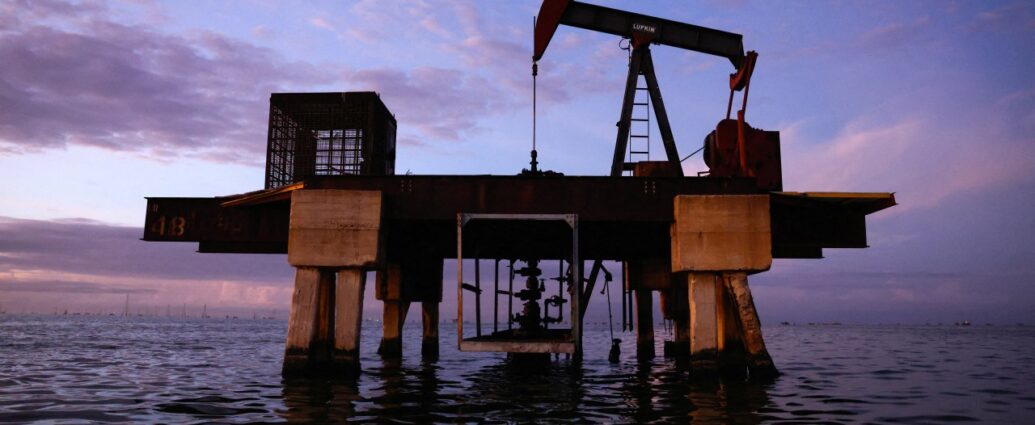
Venezuela has the largest proven oil reserves in the world. For years, much of that oil has effectively been trapped underground by sanctions, deteriorating infrastructure, political instability and a state energy industry that has struggled to maintain production.
That may now be changing.
A newly announced U.S.-Venezuela energy agreement is no longer simply about bringing some additional Venezuelan crude back to market. If the production targets are reached, it could begin changing the balance of global oil supply itself.
Venezuela’s interim president Delcy Rodríguez said Sunday that the agreement will run for 25 years, begin with the development of 17 strategic oilfields and target production of more than 1.5 million barrels per day.
The plan also includes eight additional oil blocks.
President Donald Trump said Friday that U.S.-backed partnerships would gain majority control over development tied to more than 65 billion barrels of Venezuelan proven reserves, while Venezuela maintains sovereign ownership of the oil itself.
That distinction is important.
The agreement does not mean the United States suddenly owns Venezuela’s oil reserves. It means American companies and U.S.-backed investment could gain substantially more control over how a large portion of those reserves are developed, financed, produced and brought to market.
And that is where this becomes much bigger than Venezuela.
Venezuela currently produces roughly 1.25 million barrels of oil per day, a fraction of the more than 3 million barrels a day it produced at its peak.
If American capital, technology and oilfield expertise can restore even part of that lost production, millions of additional barrels could eventually become available to the global market.
That would create a new source of supply at exactly the moment the world is dealing with instability in the Middle East, constrained traffic through the Strait of Hormuz and uncertainty surrounding Iranian and Russian energy exports.
The timing could hardly be more significant.
For months, oil markets have carried a geopolitical premium because so much of the world’s energy supply depends on regions vulnerable to war, sanctions or shipping disruptions.
A revived Venezuelan oil industry would give the United States and global refiners another major supply source in the Western Hemisphere.
It could also reduce America’s dependence on crude traveling through vulnerable international shipping routes.
But none of this happens overnight.
Venezuela’s oil infrastructure has suffered from years of underinvestment, equipment failures and declining technical capacity. Pipelines, refineries, storage facilities and production sites will require enormous amounts of capital.
Trump has said the broader effort could attract close to $100 billion in private investment.
Chevron is already moving toward expanding its Venezuelan operations, while oil-services giant SLB has secured access to key Venezuelan oilfield data as part of efforts to modernize the country’s energy infrastructure.
The Treasury Department has also been steadily removing legal barriers to U.S. participation.
On August 27, Treasury amended a series of Venezuela-related licenses covering oil, petrochemicals, services and transactions involving state oil company PDVSA. Treasury said the changes were designed to support U.S. businesses reinvesting in Venezuela following investment reforms there.
That means this is no longer simply political rhetoric.
The legal framework, corporate participation and capital structure are beginning to move into place.
The impact could eventually reach consumers directly.
More global oil supply generally puts downward pressure on crude prices, which can eventually feed through to gasoline, diesel, airline fuel, trucking costs and the price of goods transported across the economy.
It could also change the calculations inside OPEC+, where producers carefully manage supply in an effort to influence global prices.
If Venezuela eventually adds hundreds of thousands — or potentially more than a million — barrels per day of sustainable production, other producers may have to decide whether to cut their own output, accept lower prices or fight for market share.
There is still substantial execution risk.
Venezuela has a long history of political intervention in its oil industry, unpaid obligations, nationalizations and disputes with foreign companies. Rebuilding production on this scale will require not only money but years of stability and confidence that contracts will be honored.
That is why investors should not treat 1.5 million barrels per day as oil that will suddenly appear tomorrow.
But they also should not dismiss what is happening.
For decades, one of the world’s largest pools of oil has been operating far below its potential.
If U.S. capital and technology begin unlocking that supply again, the consequences could stretch far beyond Caracas or Washington.
It could change where America gets its oil, reduce some of the world’s dependence on Middle Eastern supply routes, pressure OPEC’s market power and ultimately change what consumers pay for energy.
That is why the real story is no longer simply that Washington reached an oil agreement with Venezuela.
It is that one of the largest untapped sources of additional oil supply in the world may be coming back into play.
JBizNews Desk | Washington / Caracas
© JBizNews.com All Rights Reserved. Reproduction or distribution without written permission is prohibited.


Opinion | A Realistic Look at the Iran War

Opinion | Taiwan’s Drone Realism
Opinion | Chuck Schumer and Hasan Piker


Business Day in Review — Monday, August 31, 2026
Markets — Oil Above $90 Pushes Stocks Lower and Rate-Hike Bets Higher
Wall Street finished August on the defensive Monday as renewed U.S.-Iran fighting pushed crude oil sharply higher and added another inflation problem for investors already preparing for the possibility of a September Federal Reserve rate increase.
The Dow Jones Industrial Average closed at 53,179.77, down 380.22 points, or 0.71%. The S&P 500 finished at 7,684.37, down 27.39 points, or 0.36%, while the Nasdaq Composite ended at 26,360.91, down 41.51 points, or 0.16%. All three indexes nevertheless finished August with gains, and the Dow recorded its fifth consecutive positive month.
Brent crude settled at $90.49 a barrel, while the 10-year Treasury yield moved to roughly 4.76%. Futures markets were pricing roughly a two-thirds probability of a quarter-point Fed rate increase in September.
For businesses, the connection is straightforward: higher oil raises transportation, manufacturing and delivery costs, while higher Treasury yields feed directly into mortgages, commercial loans and corporate borrowing.
AI Advertising — ChatGPT Ads Reach a $1 Billion Run Rate
OpenAI said Monday that ChatGPT Ads has reached a $1 billion annualized revenue run rate, only months after the company began testing advertising inside ChatGPT.
The company is now opening its Ads Manager to advertisers across India, Europe, the Middle East and North Africa after initially launching it in the United States. OpenAI said small and midsize businesses already represent a meaningful share of advertisers using the platform.
This matters well beyond OpenAI.
Google and Meta have dominated digital advertising for years because businesses follow consumer attention. ChatGPT is now demonstrating that conversational AI can become another major place where businesses pay to reach customers.
For small businesses in particular, this could eventually create a third major advertising channel alongside search and social media.
The $1 billion figure is an annualized pace, not $1 billion already collected this year. But reaching that level this quickly shows how aggressively OpenAI is trying to monetize its enormous user base ahead of a potential public offering.
Insurance — Aon Makes a $17 Billion Bet on the American Middle Market
Aon agreed to buy USI Insurance Services for $17 billion from KKR, one of the largest insurance-brokerage transactions in recent years.
USI is the 10th-largest U.S. insurance broker, with roughly $3 billion in annual revenue, more than 10,500 employees and nearly 200 offices. The acquisition follows Aon’s $13 billion purchase of NFP in 2024 and dramatically expands its reach among midsize American businesses.
Aon shares fell roughly 9% as investors focused on the price of the transaction and the additional debt needed to finance it.
For business owners, this consolidation matters because insurance brokers increasingly control access to commercial property, casualty, employee-benefit and specialty insurance markets.
Larger brokers can bring more negotiating power and data to clients, but fewer independent competitors can also mean businesses have fewer places to shop for coverage.
AI Infrastructure — An Oilfield Giant Makes a $4.1 Billion Data-Center Move
SLB, historically one of the world’s largest oilfield-services companies, agreed to acquire German cooling-equipment manufacturer Kelvion in a transaction worth about $4.1 billion, including assumed debt.
The reason is not oil.
It is artificial intelligence.
Kelvion provides cooling equipment increasingly used inside data centers, where high-powered AI chips generate enormous amounts of heat. SLB expects its combined data-center businesses could produce $4.5 billion to $5 billion in annual revenue by 2028. SLB shares rose roughly 3.8% Monday.
The deal shows how far the AI investment boom is spreading.
The money is no longer flowing only to Nvidia, cloud providers and software companies. It is reaching cooling systems, electricity generation, construction, engineering and industrial equipment.
For traditional industrial companies, AI infrastructure is becoming a diversification strategy in its own right.
Semiconductors — Nvidia Invests $3.5 Billion in MediaTek
Nvidia disclosed a $3.5 billion investment in Taiwan’s MediaTek through convertible bonds, deepening a partnership that now spans artificial-intelligence chips, personal computers and vehicles.
MediaTek customers will be able to use Nvidia’s NVLink Fusion technology to build custom AI processors that connect directly with Nvidia-powered computing systems. Alphabet also participated in MediaTek’s bond offering, although the size of its investment was not disclosed.
The strategic logic is clear: Nvidia wants more companies designing products that ultimately connect back into Nvidia’s architecture.
The financial structure, however, is attracting attention.
Nvidia is increasingly financing companies and projects that also generate demand for Nvidia technology. Investors are beginning to ask whether some AI-industry growth is becoming circular — where suppliers finance customers who then spend part of that money buying the suppliers’ products.
That does not make the demand artificial, but it is becoming an increasingly important question for investors trying to value the AI boom.
Cybersecurity — Global Watchdog Says AI Cyber Risk Is Now the Immediate Financial Threat
The Financial Stability Board warned Monday that AI-driven cybersecurity risk is its most immediate concern for the global financial system.
FSB Chair Andrew Bailey said advanced AI could dramatically change the speed, scale and economics of cyberattacks. Regulators are particularly concerned that banks and financial institutions depend heavily on a relatively small number of technology providers, creating concentrated vulnerabilities if one major system is compromised.
For businesses, the significance is practical.
AI can help attackers find vulnerabilities faster, automate attacks and operate at a scale that previously required large teams.
That means cybersecurity spending is increasingly becoming a basic operating expense rather than simply an IT department issue.
Insurers are also beginning to rewrite cyber policies as AI changes the types of risks businesses face.
Corporate Governance — SEC Moves Toward Ending Federal Shareholder-Proposal Rules
The Securities and Exchange Commission took a significant step Monday toward potentially eliminating the federal rule governing shareholder proposals at public companies and handing greater authority to individual states.
The current rule allows qualifying investors to require companies to include certain shareholder proposals in annual proxy materials. SEC Chairman Paul Atkins has questioned whether the agency has legal authority to impose the rule and is considering rescinding it.
The change could significantly reduce the ability of smaller shareholders and activist investors to force votes on executive compensation, environmental policies, corporate governance and other issues.
It could also create a patchwork system.
Texas, for example, has adopted rules that in some cases could require an investor to own as much as $1 million of stock before submitting a proposal, compared with federal thresholds that can begin around $2,000.
For corporate boards, this could substantially reduce shareholder resolutions. For investors, it could shift more influence toward large institutions capable of meeting state thresholds.
Consumers — August Becomes the Most Expensive August Ever at the Gas Pump
Average U.S. gasoline prices remained above $4 a gallon every day during August, according to AAA data cited by the Associated Press.
That made August 2026 the most expensive August for gasoline on record.
For households, gasoline acts almost like a tax: the more consumers spend getting to work, school and stores, the less money remains for restaurants, clothing, entertainment and other discretionary purchases.
For businesses, the effect travels through delivery fleets, trucking, airlines, food distribution and virtually every supply chain.
That is why the oil market is now connected directly to the Federal Reserve debate.
If energy costs continue spreading into broader inflation, policymakers could feel forced to raise rates even as the labor market is slowing.
Key Market Movers
Aon fell roughly 9% following its $17 billion USI acquisition. SLB gained about 3% to 4% after announcing its Kelvion deal. GameStop rose roughly 3% after projecting higher quarterly profit despite falling sales, largely because of investment gains. Exxon Mobil gained about 2.1% and Chevron rose around 1.5% as crude prices jumped. Nvidia gained about 1% following the MediaTek investment announcement.
The biggest losers were utility companies, although that California wildfire-liability development was already part of JBizNews coverage Monday.
What to Watch Tuesday, September 1
Tuesday brings several reports capable of moving both stocks and interest-rate expectations.
At 9:45 a.m. ET, investors get the final August U.S. manufacturing PMI. At 10:00 a.m., the more closely watched ISM Manufacturing Index is expected to show continued factory expansion, while the JOLTS job-openings report will provide another look at whether employers are still competing heavily for workers.
Those numbers matter more than usual because markets are now pricing a substantial probability of a Fed rate increase in September. Strong manufacturing or labor numbers could strengthen that case; unexpectedly weak numbers could complicate it.
Corporate earnings also return Tuesday.
Medtronic reports before the opening bell, while Dell Technologies, Palo Alto Networks, MongoDB and Credo Technology are among companies expected to report after the close. Dell will provide another important reading on AI-server demand, while Palo Alto Networks offers a direct view into corporate cybersecurity spending.
Bottom Line
Monday’s market decline was not particularly large, but the business signals underneath it were.
Oil is again above $90, borrowing costs are rising, and the Fed may be moving toward another rate hike. At the same time, billions of dollars continue flowing into AI advertising, semiconductors, data-center infrastructure and cybersecurity.
The economy entering September is increasingly split between businesses struggling with higher operating and financing costs and industries attracting extraordinary amounts of capital because of artificial intelligence.
JBizNews Desk | Wall Street
© JBizNews.com All Rights Reserved. Reproduction or distribution without written permission is prohibited.
Health Ministry investigating another suspected Ebola case after traveler returns from DR Congo
A second person is suspected of having Ebola after returning to Israel from the Democratic Republic of Congo, the Health Ministry announced on Monday.
The ministry announced the first suspected Ebola case on August 11.
The latest patient, who returned to Israel several days earlier, sought medical treatment after developing a fever and other symptoms, which the ministry did not name. The Health Ministry said that this is not a confirmed Ebola case and that required tests are being conducted, with results expected in the coming days.
The person is expected to be treated in isolation at Sourasky Medical Center’s Ichilov Hospital, Tel Aviv, one of the designated centers for suspected cases of this type, with all practitioners expected to follow protocols for handling high-risk infectious diseases.
The Health Ministry emphasized that no confirmed Ebola case has been diagnosed in Israel.

The ministry stressed that Ebola is not transmitted through the air and spreads through direct contact with a symptomatic person or with blood, bodily fluids, or secretions.
Health Ministry calls on Israelis to avoid nonessential travel to areas with Ebola
The Health Ministry said it has monitored developments since the Ebola outbreak in the DRC and has prepared to ensure the health system is ready for possible cases. These measures include issuing guidelines to medical teams and hospitals, acquiring protective equipment and specialized supplies, establishing early detection mechanisms for people returning from affected areas, and setting up laboratory testing infrastructure.
The ministry called on the public to avoid nonessential travel to areas with active Ebola outbreaks, particularly the DRC.
Travelers returning from the DRC who develop a fever or unusual symptoms within 21 days of their stay are asked to remain at home, avoid contact with others, and call the Health Ministry’s Kol Habriut hotline at *5400.

New guidelines on migraine prevention reflect increasing options for patients
New guidelines released Monday highlight the many new treatments that have hit the market in recent years for the prevention of migraine.
The guidance for health care providers comes from the American Headache Society and the American Academy of Neurology, which last updated their recommendations in 2012.


Israeli surgeons use custom 3D-printed implant to remove tumor deemed inoperable
A team of surgeons from Clalit Schneider Children’s Medical Center and Clalit-Beilenson Hospital replaced half of a 15-year-old patient’s pelvis using a custom-designed, 3D-printed titanium and advanced polymer implant after global surgeons declared the case inoperable.
The patient, Mark, was diagnosed with cancer for the second time at age 14 after beating the cancer he was diagnosed with at 2-years-old. His recurrence came in the form of osteosarcoma, a rare and aggressive bone cancer in his pelvic region accompanied by lung metastases.
Mark was diagnosed where he lived in Russia, and due to the location and the spread, global specialists classified the tumor as inoperable. For osteosarcoma, complete surgical removal is critical for survival.
Mark’s mother brought him to Israel where, after targeted chemotherapy led by Dr. Orli Michaeli, the lung metastases cleared and the primary tumor shrank.
A joint team of surgical experts from Clalit-Schneider and Clalit-Beilinson Hospital mobilized to challenge Mark’s supposedly inoperable diagnosis.

The team spent hundreds of hours of precise digital planning on a 19-hour procedure in which half of Mark’s pelvis was removed and replaced with a 3D-printed implant custom-designed to fit Mark’s unique anatomy.
Implant designed to restore mobility as well as remove tumor
Dr. Arie Greenberg, Specialist in Joint Replacement and Orthopedic Oncology at Clalit-Beilinson Hospital, explained that the team’s goal was not just to remove the tumor but to restore mobility, and called the custom implant a “quantum leap in surgical oncology.”
The implant is made of an advanced polymer that allows bone growth into the structure, he explained.
“This was one of the most complex and challenging cases we have ever encountered,” said Dr. Israel Weiss, Head of the Orthopedic Oncology Unit at Clalit-Schneider and Clalit-Beilinson Hospitals.
“Instead of accepting that the tumor was inoperable, our cross-institutional teams combined custom 3D design and advanced printing technology to open a new horizon of possibilities. This breakthrough showcases the power of integrated expertise across our network,” he said.
Dr. Weiss highlighted the vital collaboration of key surgical leaders, including Dr. Eviatar Nesher, Head of the Transplantation Department at Clalit-Beilinson, and Prof. Yona Kosashvili, Head of the Orthopedic Department at Clalit-Beilinson.
Mark is currently recovering at Clalit-Schneider Children’s Medical Center.
Ra’am’s Abbas announces ex-Yesh Atid MK as first Jewish candidate to join Arab party’s slate
Former Yesh Atid MK Yoav Segalovitz will join the Ra’am Party slate, chairman MK Mansour Abbas announced on Monday, making him the first Jewish candidate for the religious Arab faction.
Segalovitz is expected to receive the second slot on the party’s slate, according to reports.
Abbas and Segalovitz made the announcement at a joint press conference, where Abbas stated: “We have work to do together.”
Segalovitz said the country could not bring about political change “without connection, including political connection.
“I explicitly want to break the paradigm of dividing lines and lines of discourse. I also want to break the paradigm of how political partnerships are formed.

“I am personally joining Ra’am. Some will say that this represents political weakness, but from my perspective, there is much greater strength and power in this.
“The common assertion that, after October 7, it is impossible to have a political partnership with Arab parties is absurd and false,” he added.
Segalovitz recently announced Knesset resignation
Segalovitz had recently announced his resignation from the Knesset and departure from Yesh Atid, which opposition leader Yair Lapid leads.
The addition of a Jewish candidate to the Arab party’s list has been widely seen as a way for Ra’am to be viewed as a more viable coalition partner.
In 2021, Ra’am joined the coalition during the Bennett-Lapid government, marking the first time an Arab party was a formal member of a governing coalition. The move to include Ra’am in the coalition was highly criticized.
Though Ra’am seeks to be part of the coalition again, most opposition parties in the bloc seeking to replace Prime Minister Benjamin Netanyahu have rejected the possibility of forming a government with any of the Arab parties. Most have said that a coalition with the Arab parties is not viable after the October 7 Hamas attacks.
Segalovitz was a former head of Israel Police’s Lahav 433 – The National Crime Unit. He had worked in the Knesset during the Bennett-Lapid government on combating violence and crime in Arab society.
There had been reports that Segalovitz would soon join the Arab party ahead of the October elections.
The other three major Arab parties – Hadash, Ta’al, and Balad – have agreed to run on a unified list, while still leaving the door open for Ra’am to join ahead of next week’s deadline for parties to submit their lists.
Despite polls showing that the Arab parties would earn more seats together, Abbas has held off on joining the Arab alliance.
The decision not to join the reduced Joint List is also widely viewed as a strategic move aimed at keeping Ra’am in contention for a place in the next coalition.
Party leaders in Netanyahu’s camp have accused the opposition bloc of seeking to form a government with the Arab parties, sharply criticizing prime ministerial candidate and Yashar Party leader Gadi Eisenkot as part of their campaign.
Likud MKs denounce Segalovitz joining Ra’am list
Following the announcement of Segalovitz’s addition to Ra’am’s list, ministers and MKs from Netanyahu’s party condemned the move.
Knesset Speaker Amir Ohana (Likud) said the move was “intended to achieve one thing: To legitimize the inclusion of an Islamist list in an Eisenkot government, whose members are unable to say, ‘Hamas is a terrorist organization.’”
Meanwhile, Democrats MK Gilad Kariv welcomed the alliance, stating it was “bringing good news to the citizens of Israel, both Jews and Arabs.”
“We will do everything we can to bring about change and a new direction, and we will work together to ensure personal security, equality, prosperity and hope for all Israeli citizens,” Kariv added.
Democrats chairman Yair Golan is the sole party leader in the opposition bloc who has openly called for forming a government with the Arab parties.
Israel Navy acting to deter Turkish maritime aggression as Ankara encroaches on areas of interest
The Israel Navy is acting to deter Turkish maritime aggression, and in response to the Turkish navy traveling to new points of interest in Israel, The Jerusalem Post has learned.
The Israel Navy, in essence, wants to send a message to Turkey: if it thinks it can move its navy freely, it will have to think again.
The Post understands that the IDF is on high alert for any Turkish moves, whether it’s by sea, land, or air; this includes areas near Greece and Cyprus, or, in the worst-case scenario, in Syria or Gaza.
The IDF recognizes that Turkey’s navy is powerful and cannot be ignored. Still, the largest danger Turkey faces is in Syria, given the IDF’s attack on a Syrian air base to prevent Turkey from installing a new radar or other assets that may compromise Israel’s freedom of action.
Israel has also staunchly opposed Turkey’s involvement with the International Stabilization Force (ISF), a peacekeeping entity for the Gaza Strip.

The Post understands that the IDF sees Turkey as having a deep commitment to the Syrian regime – a commitment rooted in religious doctrine. In contrast, Turkey’s commitment to Gaza is more general in nature and involves regional influence, not religion.
On July 26, the Post reported that, even as Turkey and Egypt are reconnecting in certain areas, senior Israeli defense sources sense opportunities for Israel and Cairo to work together to counterbalance Ankara’s naval interests.
Egypt, Israel may realize benefit of coordinating against Turkey
As both Israel and Egypt watched Iran tighten its grip over the Strait of Hormuz, the two may eventually agree on their shared interest in preventing Turkey from emerging as a rising power and posing a similar threat.
Until now, Israel and Egypt’s naval units have cooperated in international drills, but neither has been seriously challenged in the Mediterranean.
But that is only one narrative; there are at least two others.
Despite the optimistic narrative, Egyptian Defense Minister Ashraf Salem Zaher traveled to Ankara on July 13. This move, according to some pessimistic observers, represented a profound structural shift in the geopolitics of the eastern Mediterranean. The pessimistic narrative sees this as evidence that Egypt and Turkey are moving closer together – potentially against Israel.
This is linked to the third narrative: that, until now, Turkey and Egypt have wanted nothing to do with one another. This narrative, which was true until last year, had a historical basis. For over a decade, the conflicting ideologies between Turkish President Recep Tayyip Erdogan and Egyptian President Abdel Fattah al-Sisi were permanently embedded into the regional landscape. The two seemingly had no path for reconciliation.
Sisi blamed Erdogan for supporting the Muslim Brotherhood, which took over Egypt from 2012-2013, and Erdogan blamed Sisi for ousting the Brotherhood from power.
But Turkey and Egypt have been gaining something new, particularly in recent months. Sisi is securing access to advanced military technology from Turkey without Western interference, while Erdogan has gained a partner to legitimize his maritime ambitions.
Moreover, the military cooperation between Cairo and Ankara has quickly evolved past superficial diplomacy into deep, structural integration. Their joint maneuvers over the past months showed what appeared to be an alarming level of operational alignment.
Turkey’s Anatolian Eagle aerial exercises integrated Egyptian pilots for training under simulated high-threat environments alongside Ankara’s assets. This was immediately followed by the Egyptian Golden Eagle special forces drills, which focused on command interoperability on multiple fronts.
According to some observers, these have not been routine bilateral military drills, but rather a process to synthesize the doctrines of two of the region’s most powerful militaries.
Cairo’s concerns about Ankara may align with Israel’s interests
Senior Israel Navy sources believe that, despite the two’s mended ties, Egypt’s concerns about Turkey gaining a maritime advantage work in Israel’s interests.
Sisi has strong sensitivities about ongoing issues relating to Libya and other areas in which Erdogan may have decidedly different interests.
The Post understands that, in these areas, Egypt could work together not just with Israel, but with Cyprus and Greece to counterbalance Turkey’s aggression.
In late June, Greece’s Navy Chief, Vice-Admiral Dimitrios-Eleftherios Kataras, visited Israel with Israel Navy Chief Vice-Admiral Eyal Harel. This meeting included the Shayetet 13 Navy SEALs, and the two sides deepened the joint mechanisms between their navies.
Some pessimists may view this alliance as a coalition of Israel, Cyprus, Greece, and a few European countries against Egypt and Turkey. However, regardless of the outcome between Egypt and Turkey, Israel still has its allies.
Kalshi permanently bans George Santos over State of the Union speech bets
Prediction market company Kalshi said on Monday it imposed a penalty of more than $71,000 on former US Congressman George Santos and permanently banned him from its platform for betting on his own attendance at US President Donald Trump‘s State of the Union address.
Santos, who was expelled from the House of Representatives in 2023, was also fined by the US Commodity Futures Trading Commission a month ago for alleged market manipulation over the incident.
Kalshi also said on Monday it was imposing penalties and temporary suspensions on three current and former candidates for political office in Maine, California, and North Carolina who had allegedly bet on their own races.
US regulators previously fined former White House teleprompter operator Gabriel Perez for allegedly wagering on information about Trump’s speeches. Attempts to reach Perez on Monday were unsuccessful.
According to Kalshi and the CFTC, Santos made false statements on social media that benefited his wagers and then did not attend the address, earning him nearly $18,000.

Santos ‘never intended to manipulate any market’
Joe Murray, a lawyer for Santos, did not immediately respond to a request for comment. In July, Murray said Santos denied the CFTC’s allegations and settled them only to avoid drawn-out litigation, asserting that Santos never intended to deceive anyone or manipulate any market.
Trump commuted Santos’ seven-year prison sentence for fraud and identity theft last year following his guilty plea for inflating fundraising figures and falsifying donor names to secure Republican Party financial support during the 2022 election cycle.
Laurie Buckhout, the current Republican nominee for North Carolina’s 1st congressional district, said in an email that wagering on herself had been “a dumb mistake” that she had quickly worked to correct upon learning that it was improper.
Kalshi imposed a fine of about $2,600 and three-year suspension on Buckhout.
Efforts to contact Stephen Cloobeck and Ben Midgley, former candidates for governor in California and Maine, respectively, who were also penalized by Kalshi, were unsuccessful.
The boom in election betting is likely to test the ability of prediction markets such as Kalshi to police insider trading, according to experts and data shared with Reuters. Kalshi and rival Polymarket have said that they are equipped to identify and block suspicious activity and protect market integrity.
Iraq sentences militia member for kidnapping American journalist, in rare move against Iran proxies
Iraq has sentenced a man to fifteen years in prison for kidnapping American journalist Shelly Kittelson in late March, the victim announced on social media on Monday.
Kittelson was kidnapped on March 31, when she was targeted by Iranian-backed militias, and released in early April.
“Iraq’s Central Criminal Court has sentenced Amir Rahim Jabar Lazim to 15 years in prison under the Anti-Terrorism Law after convicting him of being one of several armed men who took me hostage in Baghdad on March 31,” read her X/Twitter post.
She added, “I am grateful to the Iraqi judiciary for its attention to my case, as well as to all those who helped get me out alive. And, of course, to those who love Iraq as much as I do and try to build a better future for it. Thank you from the very depths of my being.”
Iraq’s Central Criminal Court has sentenced Amir Rahim Jabar Lazim to 15 years in prison under the Anti-Terrorism Law after convicting him of being one of several armed men who took me hostage in Baghdad on March 31.
I am grateful to the Iraqi judiciary for its attention to my… pic.twitter.com/Hw0SWF5Nfb
— Shelly Kittleson (@shellykittleson) August 31, 2026
Rudaw media in Iraq added that “an Iraqi court has sentenced a key suspect to 15 years in prison under the country’s anti-terrorism law in connection with the abduction of American journalist Shelly Kittleson in Baghdad earlier this year, a case the US linked to the Iran-backed Kata’ib Hezbollah armed group.”

Rare prosecution of Iranian-backed militia member
The development is important because Iraq rarely prosecutes members of the Iranian-backed militias. In the past, members of the militias have sometimes been detained by authorities, but are often released. There is now pressure in Iraq for the government to rein in the militias, after the US encouraged Baghdad to make progress toward disarming the groups.
The militias have been involved in acts of kidnapping and murder for years. In 2020, Dr. Hisham al-Hashimi was assassinated by gunmen outside his home in the Zeyouneh neighborhood of Baghdad. He was a journalist and security expert. Kataib Hezbollah was also behind the kidnapping of Princeton researcher Elizabeth Tsurkov in March 2023. She was released in September 2025.
Rudaw noted that “the Central Criminal Court in Baghdad on Sunday sentenced ‘the convict – Amir Rahim Jabbar Lazem – to fifteen years in prison’ pursuant to Iraq’s Anti-Terrorism Law ‘for the crime of kidnapping the complainant – Shelly Renee Kittleson of American nationality – on March 31, 2026, in the al-Saadoun area’ in the Iraqi capital, read a copy of the ruling obtained by Rudaw.”
He has already been detained since April for the kidnapping. Other men were involved in the kidnapping. Video at the time showed other individuals. An eyewitness at the scene at the time told Rudaw that “three people surrounded her [Kittleson] and one of them grabbed her from behind.”
Kataib Hezbollah suspected to be behind kidnapping
Kataib Hezbollah, which is believed to have been behind the kidnapping, is one of the most powerful of the Iranian-backed militias in Iraq. It has been sanctioned by the US as a terrorist organization. It is part of the paramilitary Popular Mobilization Forces.
Its former leader Abu Mahdi al-Muhandis was killed in a US drone strike in January 2020. He was driving in a vehicle alongside IRGC Quds Force head Qasem Soleimani, who was the target of the strike and who was also killed. The fact that Muhandis and Soleimani were in the same vehicle illustrates the close ties between the IRGC and Iranian-backed militias.
It does not appear Iraq will hold Kataib Hezbollah responsible for the kidnapping or other crimes. Kataib Hezbollah was also likely behind a drone attack that killed three American service members in Jordan in January 2024. It has also been behind attacks on Saudi Arabia.

Tim Cook’s last day as Apple CEO: How he led the tech giant’s rise to $4T
Apple CEO Tim Cook is stepping down from his role at the helm of one of the world’s largest tech companies after a 15-year tenure that saw Apple become the first publicly traded U.S. company with a $1 trillion market cap and other notable milestones.
He announced in April that he would step down as Apple CEO at the end of August, and while he is leaving that role, he will remain with the company as the executive chairman. John Ternus, who most recently served as Apple’s senior vice president of hardware engineering, will be Cook’s successor.
Cook became CEO in August 2011 when Apple co-founder Steve Jobs resigned six weeks before his death. Jobs first met Cook in 1998 and convinced him to join Apple that year, starting his career at the tech giant as a senior vice president for worldwide operations.
“As you know, I am not leaving Apple. But I am stepping away from a role that I have loved deeply,” Cook said in a memo emailed to all employees on his final day. “I will miss this work in ways I can only begin to imagine, even as I remain completely at peace with my decision.”
APPLE POSTS RECORD JUNE QUARTER AS IPHONE SALES SURGE; COOK WEIGHS IN ON AI, CHINA
“Together, we have created something far greater than any one of us could have imagined or accomplished alone. And that’s the secret to our success. We bring out the best in each other. We lift each other up,” Cook said.
“We have made it possible to leave our ‘dent in the universe,’ as Steve once described it, because of who we are and what we believe, because of what we value and how we see the world,” he added.
Cook’s tenure at Apple saw the tech giant move to compete in new product and service categories, building a broader consumer tech ecosystem off of the MacBook, iPhone and iPad.
APPLE CEO TIM COOK TO STEP DOWN IN MAJOR LEADERSHIP SHAKEUP, SUCCESSOR NAMED
In 2014, Cook and the company announced the Apple Watch as the company entered the wearable health tech market, while it also launched Apply Pay that year to build on its base of consumer device users to compete in mobile payments.
The next year, Apple Music marked the company’s pivot from iTunes to a subscription-based model for consumers who stream their music, while 2016 saw the debut of Apple’s AirPods which supercharged the growth of the company’s wearables division. The company also launched Apple TV+ and Apple Card in 2019 as it continued to broaden its service offerings.
Apple also hit a number of major corporate milestones under Cook’s leadership. It became the first U.S.-based publicly traded company to reach $1 trillion in market capitalization in 2018.
Apple later reached the $2 trillion milestone in 2020, surpassed the $3 trillion market for the first time in 2022 during intraday trading, then crossed $4 trillion in October 2025. It briefly overtook Nvidia for largest market cap in July 2026.
WHO IS JOHN TERNUS, SET TO SUCCEED TIM COOK AS APPLE’S CEO?
Over the years, Apple has vied with ExxonMobil, Nvidia and Microsoft for the title of most valuable publicly traded U.S. company, with the top spot regularly changing hands among those companies. Within that period, Apple ranked first for much of the 2013 to 2018 period.
Apple currently has a market cap of roughly $4.6 trillion, ranking second behind Nvidia’s $5.25 trillion market cap while leading Microsoft’s $3.79 trillion valuation.
Apple is planning to hold the first major event under new CEO John Ternus next week on Sept. 9, when it will unveil its newest iPhone and could potentially reveal the long-awaited foldable iPhone.
Cook said in his letter that he takes “enormous comfort in handing the helm to someone as brilliant and wonderful and capable as John,” adding that few people “understand what it takes to build products that change the world the way John does and I could not be more excited for his leadership.”
GET FOX BUSINESS ON THE GO BY CLICKING HERE
A report by Reuters noted that analysts expect Apple to launch a foldable iPhone, entering a new segment of the smartphone market to compete with Samsung in the growing device segment.

31-year-old millionaire has zero sympathy for unemployed Gen Z’s ‘excuses’—he says ‘it is scarily easy’ to build a business and get rich right now
Timothy (or Tim) Armoo became a millionaire before turning 30. Now, as Gen Z blames a brutal job market and AI for their struggles, the millionaire entrepreneur isn’t having any of it—he says this is actually the easiest moment in history to get rich.
“It is scarily easy” to build wealth right now, Armoo told Fortune. “This is the greatest era of wealth creation ever. And it kind of pains me when a lot of young people are like, “I’m bored.” How can you be bored? This is the greatest technology ever in history, and you’re not obsessing over it.”
“In 2026, if you’re talking about the small things (that you can do to become successful), one of the most obvious things is to build relatively small projects with AI,” he added.
Armoo knows more than most what it’s like to make it, despite the odds being stacked against you. Sent to live with his grandmother in Ghana as a baby, he described the start of his life as “uncertain and dangerous.” When he finally moved back to London, home became a council estate in the middle of gang violence and knife crime.
Yet despite arriving in the U.K. with no money, no network, and years of instability behind him, Armoo started his first business —a tutoring service —at just 14, scaling it to 65 tutors within six weeks. By 17, he already had an acquisition under his belt: the sale of his publication, Entrepreneur Express, to Horizon Media. In 2017, while most of his university peers were out partying, he spent his second year founding Fanbytes, an influencer marketing agency that went on to land clients like the U.K. government, Deliveroo, and Samsung. Brainlabs acquired it in 2022 for an eight-figure sum, when Armoo was just 27.
Armoo is putting his money where his mouth is—$6.7 million of it
It’s no secret that Gen Z don’t want 9-to-5 jobs. Research, surveys, and snap polls have consistently revealed that the latest generation of workers want to be their own boss—and Armoo says AI has made that dream more achievable than ever. He’s put real money behind the claim, too.
“AI enables you to think of an idea and put it out into the world,” Armoo added. “And social media means that you don’t need to pay someone in order to do it. You just need to spend time on the platform and just keep posting.”
And he’s backing that up with cash. Armoo’s just launched Legon Fund, where he’s committed £5 million (around $6.7 million) of his own cash to fund AI startups founded by minority entrepreneurs.
“The reason I did that was that my wealth wave was social media,” he explained. “Now I think the wealth wave is AI, and I don’t want anyone to say, ‘Well, I had the idea, but I didn’t have the money to distribute it.’”
“So now, you have no excuse, because you can learn—ChatGPT and Claude are virtually free—and if you’ve got something that’s working, here’s the money to get more customers for it.”
Gen Z is giving up on corporate jobs entirely—and increasingly betting on themselves
Entry-level hiring has slowed sharply as companies lean on AI, and Gen Z graduates are applying to hundreds, sometimes thousands, of roles without a single offer to show for it. But, Armoo isn’t wrong: It’s perhaps never been easier to ditch the corporate ladder altogether and become your own boss.
A generation ago, creating a shop front and marketing your business would have required renting a physical space and splashing out on ad space in your local paper.
Now entrepreneurs don’t even need to leave home to build a website on Squarespace, sell directly to customers on TikTok, and catch up with contractors or clients anytime on Zoom.
Gen Zers, the oldest of whom were born in 1997, have barely known a world without those tools.
“There’s so much more infrastructure available for people who want to create things of their own,” says Natasha Stanley, head coach at careers site Careershifters.org, previously told Fortune, adding that there’s been a “democratization of access to the entrepreneurial world.”
Chase Gallagher, the 24-year-old founder of $1.5 million a year CMG Landscaping, echoed that starting a business is “easier now than ever before because 20 years ago we didn’t have this here”—while pointing to his phone. “This device has made me millions of dollars because it’s helped me market my business.”
And in fact, plenty of Gen Zers are already ahead of the curve: The second-fastest-growing job title among the generation is “founder,” according to LinkedIn. According to Intuit’s Entrepreneurship in 2026 report, 43% of Gen Z are considering starting a business in 2026—more than any other generation.
“My generation doesn’t want to go work a consulting or banking job. They don’t even want to be an astronaut anymore,” Steven Schwartz, the Gen Z founder and CEO of the creator-commerce platform Whop, previously told Fortune. “They want to make content online, they want to find customers online.”
His advice? “The biggest learning is you have to just start a business if you want to. You can’t be successful in business if you’re not starting a business. That’s step one,” Schwartz says, laughing. “So I think just doing it is a huge thing and not really worrying about, ‘What if this doesn’t work?’ Because like, what if it does work?”
This story was originally featured on Fortune.com
Small Cap Full of ‘Horrible’ Cos.: Panitsas
Vanguard Index Fund Celebrates 50th Birthday
Court keeps door open for Garg proxy fight
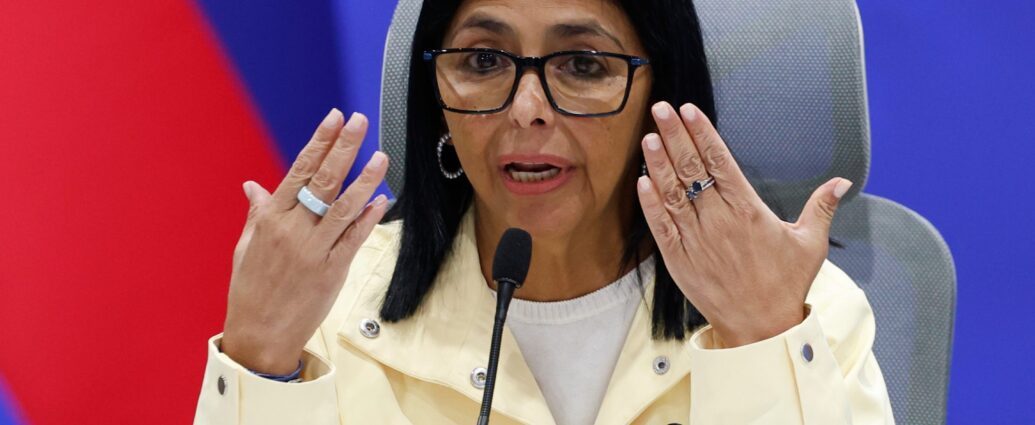
‘I think they’re doing it to cling to power’ — Venezuelans bash their government’s deal handing over vast oil reserves to the U.S.
Besides a social media post from President Donald Trump, the White House has said little about what he is calling “THE BIGGEST OIL DEAL IN WORLD HISTORY” in Venezuela.
Trump said the agreement announced Friday night would give the United States a stake in Venezuela’s vast oil reserves, a step toward his goal of extracting energy from the country after American forces captured then-President Nicolás Maduro in a middle-of-the-night raid in January and brought him to New York to face federal drug trafficking charges.
Venezuela’s acting president, Delcy Rodríguez, described the deal as a step toward economic recovery that will modernize the country’s oil industry. In a televised address to the nation late Sunday, Rodríguez insisted Venezuela’s sovereignty is secure and said she wants the country to become a global energy powerhouse.
Earlier on Saturday, she said the oil reserves would “cease to be an inert, cold statistic and will instead become concrete solutions. Housing is one of them.”
But the answers to many questions, including how soon the reserves could be drilled and who will pay to make it happen, were not immediately clear. No text of any agreement has been released.
A look at what is known and unknown:
What are the terms?
The U.S. government and an unnamed private operator in Venezuela formed a new company that was given the rights to untapped oil fields for 100 years.
A statement from Rodríguez said the deal involves the development of 17 fields with a proven potential of 65 billion barrels. It said the agreement could draw $100 billion in investment into Venezuela’s oil industry and yield over $209 billion in taxes for Caracas.
Trump said the agreement was negotiated by Secretary of State Marco Rubio, Defense Secretary Pete Hegseth and Rodríguez.
The deal gives the United States 55% effective output of the new private company, including an ownership stake and rights to buy oil at cost. American purchases of the oil will go toward the U.S. strategic oil reservesalong with the military, according to a U.S. official who was not authorized to discuss the matter publicly and spoke on the condition of anonymity.
The company would be the second largest corporate holder of proven reserves after Saudi Aramco, according to the official.
Will gas prices go down?
Probably not any time soon.
Trump says the deal will help lower gas prices for Americans. That is an important objective for the Republican president as the Iran war slows the shipping of Persian Gulf oil and keeps prices elevated months before November elections in the United States.
But experts have repeatedly warned that Venezuela’s dilapidated oil infrastructure will take years and billions of dollars to repair. A substantial boost in production is not expected to happen quickly.
The deal could be “helpful in the long run, but it’s not going to do anything to change the price of gasoline at the retail station for Labor Day weekend,” said Amy Myers Jaffe, director of the Energy, Climate Justice and Sustainability Lab at New York University.
Neither side made clear who would pay for infrastructure investments and at what cost.
The average price of gas in the U.S. stood at about $4.08 a gallon on Saturday, according to AAA. The average price was $3.20 at the same time last year.
Kevin Book, managing director at ClearView Energy Partners, said the oil industry is awaiting clarity on the deal’s details. Venezuela has room to increase its oil production, he said — in the past it produced more than 2.5 million barrels a day above current levels — but investments of this scale don’t happen quickly.
“It’s going to take time — many years — to deploy that much capital and produce the kind of incremental results that history suggests possible,” Book said.
How will Venezuelans react?
Some in Venezuela considered it a betrayal of what their government has stated repeatedly for decades: Venezuelan resources are for Venezuela, and leaders would not allow the U.S. government access to those resources.
At a market in eastern Caracas on Saturday, Douglas Borjas said he was upset about the announcement.
“I think they’re doing it to cling to power,” he said of Venezuela’s leaders. “It’s like, ‘I’m giving you a vast amount of petroleum as long as you leave me alone here in power.’”
He added: “The Venezuelan people deserve better. Venezuela has resources that can be exploited, but for the benefit of the people, not for the benefit of the corrupt elite.”
Harvard University professor Ricardo Hausmann, a former Venezuelan planning minister, called it a “shameful deal.”
“Venezuelans will not respect this illegitimate deal and no major US oil company will take it seriously because they know it will not last,” Hausmann said on social media, adding that Rodríguez “has no legitimacy or constitutional power to commit Venezuela to any such deal.”
In her national address, Rodríguez pushed back on some of the early criticism.
“One thing must be absolutely clear: Venezuela retains ownership and sovereignty over its resources,” Rodríguez said. She said the goal is to reach other agreements with transnational private companies such as Chevron, Repsol and Shell.
She added: “We want to be an energy powerhouse, a major oil producer, a significant gas exporter, and a major national petrochemical developer.”
What’s the reaction on Capitol Hill?
It is unclear whether Congress will play a role in the arrangement, but lawmakers from both parties were quick to weigh in.
Trump allies called it a win.
Sen. Bernie Moreno, R-Ohio, said it was a historic deal that helps both countries. “If it were up to DC Democrats, Maduro would still be in power, Venezuelan oil would be going to China at half price, and the people of Venezuela would be getting robbed by a corrupt regime,” Moreno wrote on social media.
It was condemned by Democrats who said Maduro’s capture was a means to this end.
Sen. Tim Kaine, D-Va., said Trump was always after Venezuela’s oil, branding it “corruption at epic scale.”
“Will prices come down for Americans? Who knows but likely not as much as Trump has forced them up thru his idiotic Iran War,” Kaine said on social media.
Sen. Chris Van Hollen, D-Md., said Trump “put our service members at risk to get Venezuelan oil for his billionaire buddies.”
What questions remain?
Many important details remain unclear, including who will cover necessary investments, the identity of the private operator and how America’s stake in the company breaks down.
The U.S. will get 55% of the company’s effective output, but it was not clear what portion of that comes from an ownership stake and how much comes from the right to buy oil at cost.
It also is unclear how the industry will react. Persuading big American oil companies to return to the region could prove a challenge given the political uncertainty and damaged infrastructure.
Chevron, the only U.S. oil company actively producing in Venezuela, declined to comment. Separately from Trump’s announcement, Chevron already had been in talks to expand investment in the country. Exxon Mobil also declined to comment.
David Oxley, chief climate and commodities economist at Capital Economics, said that on its face, the deal could double U.S. oil reserves and reduce dependence on crude oil from Canada and Mexico. But Oxley, writing in a commentary, cautioned that there are logistical hurdles and said the value of Venezuela’s reserves may have been exaggerated under former President Hugo Chavez.
Even with legal and security guarantees, it is not clear that U.S. oil companies “would be eager to invest,’’ he wrote, noting that “there simply might be more enticing commercial opportunities on offer elsewhere.’’
This story was originally featured on Fortune.com
Our Buyer ETF Base Has Expanded: AB’s Gunts
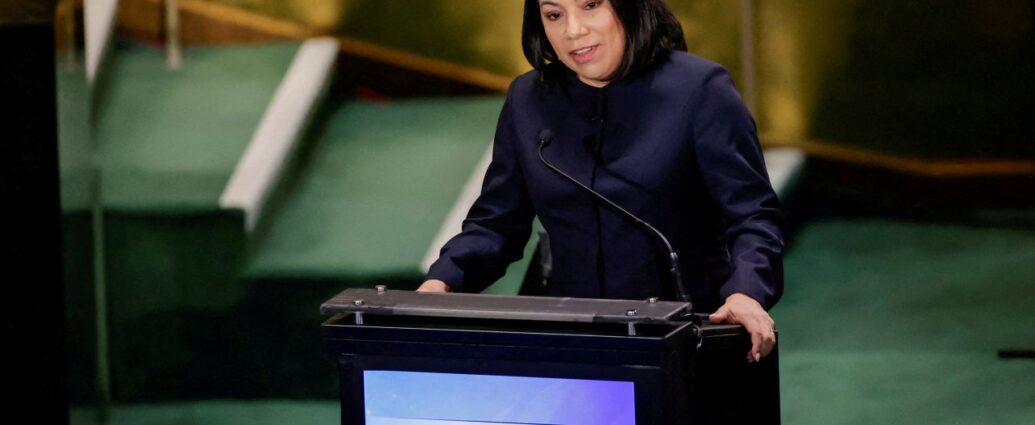
Opinion | They Forget Who Started the War

Israel Navy’s first female corvette commander expected to earn further promotions – exclusive
The Israel Navy’s first-ever female corvette commander, Lt.-Cmdr. “R.,” has excelled in her first half-year managing her small warship and is expected to eventually earn additional promotions, The Jerusalem Post has learned.
When the IDF announced in February that it had named R. to become its first-ever female boat commander, she had already broken through a glass ceiling in the navy. It now appears that her trajectory is set to break through more barriers.
In recent years, the navy has welcomed more female sailors and officers, but in February, R. became the navy’s most prominent female.
The corvette under R.’s command is expected to be at the forefront of naval combat operations, according to the IDF.
It was already involved in attacking the Syrian navy, assassinating the political head of Hamas in Gaza, the head of Hezbollah’s aerial threats, and various other offensive and defensive operations.

The Post can confirm that under R.’s command, the vessel has continued to be involved in high-profile operations and has carried out complex missions successfully.
R. joined the navy’s commanders course in 2016 and has since fulfilled various positions, including deputy commander of a missile boat and commander of a Dvora-class vessel.
Ex-Israel Navy chief praises trailblazing female officer
In February, the commander of the navy at the time, V.-Adm. David Saar Salama, said R. was the right choice for the role based solely on her qualifications. The IDF clearly wanted to highlight the advancement of women in combat roles.
Since then, the Post has learned from R.’s current superiors that her performance leaves little doubt that she will likely be a candidate for further promotions.
Givati situation must teach IDF it has no time for diversions by religion, egalitarianism – comment
On the surface, it appears to be a classic case of religious conscience.
Religious soldiers operating in Gaza refuse an order to board a Namer armored personnel carrier with a female paramedic because of halachic concerns about men and women being together in enclosed quarters.
They are prepared to fight. They are prepared to risk their lives. But they are not prepared to compromise their religious principles.
Seen that way, the soldiers from the Givati Brigade’s Rotem Battalion are the victims here – dedicated fighters being punished for trying to remain faithful to halacha while defending their country.
But the story is not that simple.

According to reports, the soldiers initially tried to reach the Givati Brigade’s rabbi but received no response. They then contacted rabbis from the hesder yeshivot where they had studied, who instructed them not to enter the vehicle under those circumstances.
Later, however, the brigade rabbi became involved and reportedly ruled that the mission was permissible because of its operational importance and limited duration.
Yet that was not enough. The soldiers continued to refuse, the mission was canceled, and 16 soldiers were subsequently sentenced to terms in military prison – five for 10 days and 11 for five days.
An issue that will arise if more haredi enter the army
And therein lies the larger issue – one that the country will face with increasing frequency if, as everyone says they want, more haredim enlist in the IDF.
The soldiers involved in this incident were not haredim; they were hesder students. But the dilemma is the same: Who has the final say when the rulings of a soldier’s personal rabbi clash with those of the military rabbinate and the orders of his commanders?
The answer has to be the military chain of command, including the military rabbis whose job it is to weigh halachic considerations against operational needs.
The brigade rabbi was uniquely placed to understand both sides of the equation. He could assess the halachic problem, but he could also understand the nature and urgency of the mission – information that rabbis outside the army’s framework may not possess.
Once he ruled that the mission was permissible, that should have ended the matter.
Otherwise, the army risks creating parallel chains of command: the formal chain running from the chief of staff down through the brigade, battalion, and company commanders; and an informal chain running from soldiers to rabbis outside the military.
No army can operate that way.
A soldier may consult his rabbi about whom to marry, where to live, and a whole host of questions affecting his personal life. But when he is fighting in Gaza and receives an operational order, the army cannot wait while competing rabbinical authorities debate whether it should be carried out.
That does not mean the soldiers’ concerns should be dismissed. Far from it.
The IDF’s Joint Service Order recognizes the right of observant soldiers to serve in gender-segregated frameworks during operational activity, except in exceptional circumstances. The army itself, therefore, acknowledges that religious accommodation is not a favor bestowed upon soldiers by the good grace of an individual commander. It is part of the rules.
And that places obligations on commanders as well.
IDF needs to demonstrate common sense, sensitivity, and flexibility
As the IDF incorporates more religious soldiers and more women – both necessary because of severe manpower shortages – it will need to demonstrate common sense, sensitivity, and flexibility. Now is not the time to turn strict egalitarianism into an inviolable principle.
If a male paramedic is available and can accompany a group of hesder soldiers without compromising the mission, then common sense dictates that he should be sent.
Why create a confrontation when none is necessary? Why force soldiers to choose between their religious convictions and their military obligations if a practical solution is readily available?
But if no male paramedic is available, and the female paramedic is operationally necessary, then she should go – and the soldiers should follow the ruling of the brigade rabbi and obey their commanders.
That is the balance: accommodation wherever possible; following orders when necessary.
Common sense must also be the byword for officers commanding hesder soldiers. According to friends of those involved, the Namer incident came after previous confrontations in which the soldiers felt they had been unnecessarily asked to act contrary to Halacha.
In one such incident, they said, the company commander had ordered a training exercise on Shabbat that included evacuating simulated wounded soldiers and inserting an intravenous line. The soldiers reportedly asked that it be postponed, arguing that there was no operational need to conduct it on Shabbat. According to their account, a military rabbi later agreed there was no reason to hold the exercise then.
Those claims have not been independently established. But if accurate, they point to a serious failure of judgment by the officers.
There is no justification for creating avoidable religious friction merely to make a point, assert authority, or test the soldiers’ limits. Commanders need religious soldiers to trust that if they are ordered to violate Shabbat or enter a religiously problematic situation, it is because an operational necessity genuinely exists – not because a commander cannot be bothered to be flexible.
That trust is essential.
But it must run both ways.
Commanders need to know that when they give an operational order – particularly after the relevant military rabbi has ruled that it is halachically permissible – the order will be obeyed. Soldiers cannot treat resentment over earlier incidents as a reason to refuse a later mission.
The two issues need to be kept separate. If commanders ignored the Joint Service Order, behaved insensitively, or unnecessarily scheduled training on Shabbat, that should be investigated and addressed. But those alleged failures do not justify refusing an operational mission in Gaza.
The military was therefore right to discipline the soldiers. It cannot fight and win if soldiers unilaterally decide which orders they will obey, which missions they will join, and which rabbinical authority will have the final say.
By the same token, the IDF cannot afford to lose religious soldiers – or make the already difficult task of recruiting haredim harder – by giving them reason to fear that military service will force them to jettison Halacha.
The IDF is overstretched, understaffed, and alert on seven fronts. It has neither the time nor the luxury right now for these types of diversions.
Traffic disrupted in Jerusalem as protesters oppose Givati soldiers’ imprisonment
Dozens of protesters demonstrated at the entrance to Jerusalem on Monday over the decision to send Givati Brigade soldiers to prison after they refused to deploy for an operational mission with a female medic in an armored personnel carrier, Israel Police said.
During the protest, some demonstrators began intermittently blocking traffic routes in the area, including roads leading into the city, disrupting traffic and daily life, Walla reported.
Police officers worked to clear the blocked routes and direct traffic to restore public order.
Religious Zionist yeshiva council backs soldiers, calls for IDF reforms
The Council of the Hesder Yeshivot defended the Givati soldiers, saying the incident was the result of a prolonged crisis over religious accommodations in the IDF, in a letter published by the council to yeshiva rabbis and students.
The council added that its review found the incident followed a breach of trust with direct commanders, which it said stemmed from failures to follow religious guidelines and military orders while presenting soldiers with a misleading picture of the situation.

“We call on the army to get to the bottom of the matter and address issues such as these with the required seriousness,” the council wrote.
The council said the severe punishment imposed on the soldiers did not match what it described as the broader picture that emerged from its review.
According to the council, religiously observant soldiers serving in combat units have been repeatedly forced to deal with situations involving mixed-gender service that it said do not comply with Jewish law, their spiritual values, or the IDF’s Joint Service Order.
“The fact that soldiers are repeatedly forced to choose between their faith and their loyalty to the army places soldiers in an impossible conflict that harms both the IDF and the soldiers themselves,” the council said. “A functioning IDF must be based on trust.”
The council said the soldiers involved in the incident belonged to an outstanding company that had fought bravely, suffered wounded soldiers during combat, and had already faced the complexities of mixed-gender service.
“Even if a mistake was made in the decision, it cannot be viewed as an isolated incident disconnected from the broader challenging reality,” the council said.
This is a developing story.
Most ‘connected’ American Jews favor opposition win in Israel’s October election, survey finds
A majority of the “connected” US Jews surveyed would prefer Israel’s current opposition to emerge victorious in the upcoming October elections, according to a new poll by the Jewish People Policy Institute published on Friday.
The survey, which defined “connected” American Jews as “those with relatively strong ties to the Jewish community, Israel, and/or Jewish identity,” found that 54% of respondents had a “clear preference” for the current opposition.
The next-largest group, 24%, said it was not their place to express a preference. Another 14% favored the current coalition, while 8% had no preference.
While only 8% of respondents held Israeli citizenship and were eligible to vote, interest in the election was high among those polled, with 78% saying they followed election news either very or somewhat closely.
“The strong interest of American Jews in elections in Israel demonstrates the importance of Israel to them, at least in two respects,” JPPI President Prof. Yedidia Stern told The Jerusalem Post.

One of those reasons, Stern said, is that Israel’s actions can shape how American Jews are perceived, meaning Israeli election results may have “practical implications for the status of Jews in the US.”
The other, he said, is that Israel remains central to the identity of many American Jews. He added that JPPI surveys suggest the war has “strengthened Jewish identity” among a substantial segment of the community.
Interest in the election was even higher among respondents eligible to vote in Israel.
Among that group, 92% said they were following election coverage, including 63% who said they were following the upcoming election “very closely” and 29% who said they were following it “somewhat closely.”
Survey panel of US Jews skews Democratic
The survey primarily reflected the views of “connected” Jews, and the panel also had a Democratic majority. Sixty-two percent of respondents said they voted for Kamala Harris in the 2024 US presidential election, while 30% said they voted for Donald Trump.
The survey was not representative of all American Jews.
Asked what that limitation might mean, Stern said it was reasonable to assume that Jews who are not connected to the community may not constitute a group particularly distinct from non-Jewish Americans as a whole.
“However, I have no way of knowing whether this is indeed the case,” he added.
Preferences in the Israeli election also closely tracked respondents’ political orientations.
Among those who identified as “strong conservatives,” only 8% preferred the opposition, while 56% favored the coalition. Among Trump voters, 43% favored the coalition.
Support for the opposition rose steadily as respondents moved left politically: 21% among those who leaned conservative, 49% among centrists, 71% among those who leaned liberal, and 78% among those who identified as strong liberals.

Just under three-quarters, or 74%, of Harris voters preferred an opposition victory.
Among respondents outside the United States, 49% of Canadian respondents and 57% of UK respondents also said they preferred an opposition victory. JPPI cautioned, however, that the findings from those countries should be viewed as indicative because of their smaller sample sizes.
Among US respondents eligible to vote in Israel, 55% preferred an opposition victory, more than double the 26% who favored the current coalition.

Pataki sounds alarm over New York exodus: ‘It’s just going to get worse’
New York isn’t just losing residents — it’s losing some of the people who help power its economy.
As New York continues to see residents move to other states, former New York Gov. George Pataki is warning that entrepreneurs, financial leaders and major donors are increasingly heading for the exits.
Pataki joined FOX Business’ Cheryl Casone on “Mornings with Maria” to discuss the state’s outmigration, its business climate and the policies he believes are pushing residents and job creators elsewhere.
“You know, it’s just almost tragic to see the loss of people, not just people, but people who create jobs, who donate to hospitals and museums, the best of New York, the people who have made New York the entrepreneurial and financial center are just leaving,” Pataki said.
The former governor argued that New York risks weakening its position as the nation’s financial center as companies expand their workforces elsewhere, pointing to the growing pull of lower-tax states such as Texas.
“We fought hard to keep it the financial capital of the world. It still is for the moment. But if we continue these tax-and-spend and soft-on-crime policies, it’s just going to get worse,” he said.
NYC-AREA CHAMBER OF COMMERCE CEO BLASTS MAMDANI GROCERY PLAN AS ‘DISASTROUS’ AMID LEGAL FIGHT
Pataki also warned that additional tax increases and rising debt could deepen the state’s challenges and drive more residents away. Still, he said New York has the ability to reverse course.
“We’re going to end up not just with the highest taxes in the country, but with unsustainable debt, with more people leaving,” Pataki said. “We’re not doing great right now, but New York is New York. It’s very resilient. It still has great people. We put in place the right policies and it will come roaring back. So in that sense, I’m an optimist.”

This Gen Xer spent 28 years in a cubicle and never made more than $70,000. At 59, she made $500,000 in the creator economy
For nearly three decades, 59-year-old Eileen Munoz spent her workdays in a cubicle. To her, the tiny confined desk came to represent everything she felt about her 9-to-5 career in insurance: stuck.
The most she ever made in a year was $70,000, and she eventually became so burnt out that she would cry on Sundays knowing her cubicle and another full workweek were waiting for her.
Seeing how miserable she had become and how work was spilling into her home life, her husband encouraged her to quit. Finally, in her mid-50s, she did, without much of a plan and assuming whatever came next would be her old job in a different font. Instead, a friend introduced her to user-generated content, or UGC, where brands pay everyday creators to make social media content they can use to market their products. Munoz had never edited a video, filmed herself for a brand or even added subtitles.
But in 2025, just her second year as a content creator, she brought in roughly $500,000 from UGC and TikTok Shop, where she promotes products aimed at people navigating middle age, including skincare and supplements as well as products related to menopause, thinning hair and aching joints. She also works across home and pet categories.
Munoz is an unusually successful example of an opportunity emerging for Gen X in an industry long associated with Gen Z and millennials. But the creator economy may already be older than its reputation suggests: Fortune reported in 2022 that the average creator was 40, according to an Adobe study. As brands increasingly rely on creators to sell products online, some older creators are finding that the age they once feared would hold them back can actually work in their favor. Marketers still need to reach consumers in their 40s, 50s and 60s, and recent research suggests a creator’s age can shape how credible they appear to consumers.
“I thought, am I too old?” Munoz said. “That is honestly the number one thing that I hear.”
Brands have an age problem
Florian Dost, a marketing professor at Brandenburg University of Technology, coauthored a recent study that found age can increase assumptions of a creator’s expertise while perceived attractiveness tends to diminish those views.
He described a “sweet spot” that varies by platform and what is being sold, noting that one TikTok experiment, for example, put the optimal apparent age between the late 40s and mid-50s.
“I definitely see that brands, but also influencer agencies, have a blind spot for age,” Dost told Fortune. “Selling new stuff to old consumers is the biggest marketing challenge of our day.”
Munoz knows this too, saying brands have plenty of young people to hawk their wares but not middle-aged influencers.
And when it comes to what she buys herself, that age gap matters.
“I will not buy [skincare] from a 19-year-old, 20-year-old, 30-year-old,” she said. “I’m gonna buy from people my age.”
A second act
UGC was Munoz’s entry into content creation. After she began making money creating content directly for brands, she added TikTok Shop as a separate income stream.
Unlike UGC, where a brand typically pays for a piece of content, TikTok Shop allows creators to post videos featuring products to their own accounts and earn commissions when viewers buy. Munoz says experimenting with those videos and learning what converts viewers into customers helped turn social commerce into her biggest source of creator income.
For Munoz, the transformation wasn’t just financial. Previously, she had spent decades working overtime whenever it was available. Now she works from home in Diamond Bar, California, where she controls her schedule and hopes her creator income will eventually allow her husband to retire, too.
She says the biggest obstacle she hears from other Gen Xers is the assumption that social media belongs to somebody younger. Her generation didn’t grow up filming videos on smartphones or editing TikToks. Munoz didn’t know how to do any of it either.
“If you think you are too old to do UGC or TikTok Shop, that is such a lie,” Munoz said.
Now she wants to use the location freedom that comes with her work to travel with her husband and spend months at a time living in places they once could only visit, from New York to France.
Which is a striking reversal from the Sundays she once spent dreading the return to her cubicle.
“I feel like crying sometimes,” Munoz said. This time, though, it’s because “it is the best job ever.”
This story was originally featured on Fortune.com

AI Models Could Threaten Global Financial Stability, Watchdog Warns
The United States is hosting the G20 Finance Ministerial, a two-day meeting of central bank leaders, finance ministers, and top names from the world’s leading economies in Asheville, North Carolina, this week. Officials are dealing with a heavy portfolio of issues, from global bond market volatility to stubborn price pressures, and artificial intelligence (AI) could also be central to the talks.
“Frontier AI offers significant opportunities to strengthen cyber defence; but recent developments highlight the importance of ensuring that advances in capability are matched by resilience and preparedness,” the financial watchdog’s chair, Andrew Bailey, who is also Bank of England governor, wrote in the Aug. 28 letter….
Sohlberg’s security boosted after panel recommends Shin Bet protection for Eisenkot
Central Elections Committee chairman and Supreme Court Deputy Chief Justice Noam Sohlberg’s personal security was reportedly increased on Monday ahead of the elections.
Reports did not provide additional details about the situation, though the Central Elections Committee stated that Sohlberg was being provided with security “in accordance with security needs and the directives of the Israel Police.”
“Naturally, we cannot provide further details regarding the security arrangements,” the statement added.
Police did not immediately respond to The Jerusalem Post’s request for comment on the matter.
Sohlberg security update came after Eisenkot security increase
The reported change in Sohlberg’s security came the day after the Advisory Committee for Personal Security decided to recommend Yashar Party leader Gadi Eisenkot, a prime ministerial candidate, with increased security provided by the Shin Bet (Israel Security Agency).

Eisenkot is a leading rival candidate to Prime Minister Benjamin Netanyahu in the October elections.
The committee’s recommendation came after the Shin Bet decided not to provide Eisenkot with its security last week, despite Yashar warning that threats against Eisenkot were escalating and calling for the decision to be reversed.
Meanwhile, the Advisory Committee for Personal Security decided not to recommend Shin Bet protection for Democrats Party Chairman Yair Golan.
The left-wing party said that the decision was made over political considerations.
“The decision to provide security to Gadi Eisenkot while, at the same time, abandoning the security of Democrats Party chairman Yair Golan exposes the truth: the considerations are political,” it said.
The party added that two of the three members of the Advisory Committee for the Security of Public Figures were Netanyahu’s political appointees.
“Now they are refusing to provide security to the person Netanyahu and his ‘poison machine’ have singled out as a central target of their campaign of incitement and delegitimization against the change bloc,” the party stated.
“The refusal to provide security to Golan is a political decision that serves the campaign of incitement and allows it to continue.
“Responsibility for Yair Golan’s safety and life rests with Prime Minister Benjamin Netanyahu and Shin Bet Director David Zini. If they fail to separate politics from their duty to protect human life, we will demand that the High Court of Justice compel them to do so,” the party added.
Zini previously decided against assigning security to Eisenkot
Last week, Zini clarified that he alone decided against assigning security detail to Eisenkot.
Netanyahu had instructed Zini to ensure that Eisenkot receives security protection “at an appropriate level, according to need.”
In response, he was told that the Shin Bet was doing everything possible and was operating in accordance with the rules and the law.
The Central Election Committee later confirmed that Zini had informed Sohlberg that the Shin Bet “does not possess intelligence indicating any intention” to target or harm Eisenkot.
Sohlberg also requested that the Shin Bet chief inform the committee should such intentions be identified later during the election season, further stressing that he does not hold the authority to demand security detail be given to the Yashar leader.
Eisenkot’s staff had argued that the private security already assigned to him was insufficient and that “the physical threat against him is increasing every day.”
Avi Ashkenazi and Jerusalem Post Staff contributed to this report.
Finland’s Israel policy might be driven by upcoming elections, expert tells ‘Post’ – interview
Finland is sending seemingly contradictory messages on Israel, ending its multi-year funding agreement with UNRWA while quietly deepening defense cooperation with the Jewish state, even as Helsinki has become increasingly critical of Israel’s war in Gaza.
The contrast has become increasingly striking. Over the past week, Finland announced it has chosen not to renew its multi-year funding agreement with the United Nations Relief and Works Agency for Palestine Refugees in the Near East (UNRWA) after it expires this year.
Finnish Foreign Trade Minister Ville Tavio said that this does not signify a reduction in Finland’s humanitarian efforts in Palestinian territories, as it will instead contribute to organizations like the World Food Program.
It was later quietly confirmed that Finland has extended a memorandum of understanding (MoU) for defense cooperation with Israel over the next decade, including research and development (R&D), cooperation, and procurement of defense equipment.
The MoU was approved by Finnish Defense Minister Antti Häkkänen in early 2024, but was not made public. The agreement will last until 2034.

Some of these developments can be seen as slightly contradictory to Finnish foreign and domestic policy in recent years. Finland has been actively critical of Israel’s military efforts in Gaza, and just recently signed a statement condemning the E1 settlement project. Yet, it signed the MOU and procured Israel’s David’s Sling air defense system in 2023 for €316 million.
UNRWA funding was previously suspended in January 2024, then restarted, and now stopped again.
So what’s going on?
Elections shaping Finland’s policy with Israel
“Basically, I think it comes down to domestic politics in Finland and the approaching elections [next April],” Dr. Timo Stewart told The Jerusalem Post on Monday. Stewart is a Finnish political scientist and senior researcher at the Finnish Institute of International Affairs, specializing in the Israeli-Palestinian conflict, Western policy in the Middle East, and the role of religion in conflicts and politics.
He explained that the minister in charge of all the development cooperation funds from which the UNRWA funding comes is Ville Tavio, the minister for trade from the right-wing populist Finns Party, which is part of the coalition. His party has long been critical of UNRWA and, according to Stewart, is “happy to see UNRWA from Israel’s perspective.”
Tavio was responsible for previously freezing the funding back in 2024, but after reviews concluded that they had enough evidence to be confident that the funds aren’t being misused.
As the current funding agreement is coming to an end at the end of this year, all Tavio is doing is saying he is not renewing it for another five years.
“This is something that he can do as minister for foreign trade and development, but which is at odds with what the foreign minister [Elina Valdemar] has been saying over the past couple of years.”
Stewart said this is unusual in the sense that foreign policy in Finland is generally something that the Finnish government aims to have a fairly high degree of consensus on.
“Israel-Palestine-related issues during the term of this government have been something of an exception,” he told the Post.
He cited various examples of this, including the governmental row over whether recognize a Palestinian state or not. It was ultimately decided not to.
Stewart said the context for Tavio’s UNRWA decision is that the Finns Party is “trying to burnish its image as a party with strong policies of its own and being the anti-immigration party in Finland.”
“They want to show that they’re tough on their themes, and with UNRWA being quite unpopular with their voter, it pretty much explains the UNRWA decision.”
Shift among Finns over Israel-Palestine
While Stewart said Israel-Palestine “isn’t exactly the number one concern for Finns,” there has been a shift in Helsinki’s policy – in many ways in seemingly opposite directions.
“After October 7th, it’s been in the news a lot. And it has moved up quite a bit on the list of issues that the government has had to discuss,” Stewart said.
“It’s just been a very polarizing issue. There’s a great many Finns who feel quite strongly one way or the other. And this has also meant that it’s been more present in inter-government dynamics and also the dynamics between the opposition and the government.”
The Finns Party, for example, has used the topic of Israel for voting traction, he explained.
“They’ve identified Israel as sort of engaged in a similar fight against immigration and Islamism or terrorism or Islamist terrorism,” Stewart told the Post.
The Finns Party also has a significant voter base among Christian Zionists, and so pro-Israel or at least not pro-Palestine rhetoric works in their favor.
Outside the Finns Party, Stewart said there has been “a marked shift in the general population, becoming quite a lot more critical towards Israel than they used to be.”
“The government has tried to do a balancing act and in some instances has actually deepened cooperation with Israel,” he added.
Defense is one of Finland’s top priorities
This links to the topic of the MoU.
Stewart explained that the reason Finland is concerned about its own defense is because of Russia, which it has seen as an increasing existential threat since Moscow’s invasion of Ukraine in 2022.
Since the Russia-Ukraine war began, Finland has significantly scaled up its military readiness, defense spending, and manpower plans. Finland maintains a core wartime strength of 280,000 to 300,000 troops, but it has increased the number of reservists participating in mandatory refresher training exercises by roughly 50%. Its defense spending has also risen past 2.5% of its GDP. Furthermore, shortly after the invasion of Ukraine, Finland officially joined NATO.
As such, having defense systems like David’s Sling is of paramount importance to Finland due to the relative advancement of Russian missiles and drones. Finland has already faced drone incursions from Russia.
Regarding the MoU, Stewart said it was not classified information; the government just likely chose not to advertise it “at a time when events in Gaza were in the news all the time, and Israel was seen as a bit of a risky trading partner in weapons trade.”
Now it has been made public, “the opposition has latched onto it,” he said.
“There’s been this dual messaging, whereas there’s actually quite a lot of defense cooperation going on between Finland and Israel, but the government has been trying to downplay it somewhat. And this memorandum seems to confirm that there is actually quite a lot going on.”
Another reason for the secrecy is that Finland takes a fairly cautious stance when it comes to foreign policy, typically following in the wake of its EU partners, Steward said.
“Looking at the EU spectrum, Finland has been somewhere in the middle, maybe a little bit on the cautious side in a lot of the statements. There’s been harsh criticism, yes, but usually only when the key EU partners or a clear majority of EU countries are also saying the same thing. Finland hasn’t been an outlier like Spain, Ireland.”
The same governmental split discussed earlier regarding UNRWA has implications for weapons procurement.
“The military and the defense ministry will choose to buy weapons that they think are best for Finland, and then the foreign ministry pursues the foreign policy that they think is in line with Finland’s interests and values. And you could see a clash when it comes to arms trade with Israel.”
Another reason that Israel is in the spotlight in the Finnish government is because of Israel’s relations with Russia, and its decision to cease exporting certain weapons to Ukraine.
“If Israel is not supplying weapons to Ukraine because it does not want to antagonize Russia, is it possible that Finland might run into similar difficulties should we have need of weapons?”
In February 2022, then President of Finland Sauli Niinistö said, “Even in the best of circumstances, the dire asymmetry of the relationship makes Russia a potential existential threat to Finland. The core of Finland’s foreign and security policy has always been about the management of this threat.”
It would appear the Israel MoU is just one of the ways Helsinki is aiming to do that.
Finland’s Israel policy might be driven by upcoming elections, expert tells ‘Post’ – interview
Finland is sending seemingly contradictory messages on Israel, ending its multi-year funding agreement with UNRWA while quietly deepening defense cooperation with the Jewish state, even as Helsinki has become increasingly critical of Israel’s war in Gaza.
The contrast has become increasingly striking. Over the past week, Finland announced it has chosen not to renew its multi-year funding agreement with the United Nations Relief and Works Agency for Palestine Refugees in the Near East (UNRWA) after it expires this year.
Finnish Foreign Trade Minister Ville Tavio said that this does not signify a reduction in Finland’s humanitarian efforts in Palestinian territories, as it will instead contribute to organizations like the World Food Program.
It was later quietly confirmed that Finland has extended a memorandum of understanding (MoU) for defense cooperation with Israel over the next decade, including research and development (R&D), cooperation, and procurement of defense equipment.
The MoU was approved by Finnish Defense Minister Antti Häkkänen in early 2024, but was not made public. The agreement will last until 2034.
Some of these developments can be seen as slightly contradictory to Finnish foreign and domestic policy in recent years. Finland has been actively critical of Israel’s military efforts in Gaza, and just recently signed a statement condemning the E1 settlement project. Yet, it signed the MOU and procured Israel’s David’s Sling air defense system in 2023 for €316 million.
UNRWA funding was previously suspended in January 2024, then restarted, and now stopped again.
So what’s going on?
Elections shaping Finland’s policy with Israel
“Basically, I think it comes down to domestic politics in Finland and the approaching elections [next April],” Dr. Timo Stewart told The Jerusalem Post on Monday. Stewart is a Finnish political scientist and senior researcher at the Finnish Institute of International Affairs, specializing in the Israeli-Palestinian conflict, Western policy in the Middle East, and the role of religion in conflicts and politics.
He explained that the minister in charge of all the development cooperation funds from which the UNRWA funding comes is Ville Tavio, the minister for trade from the right-wing populist Finns Party, which is part of the coalition. His party has long been critical of UNRWA and, according to Stewart, is “happy to see UNRWA from Israel’s perspective.”
Tavio was responsible for previously freezing the funding back in 2024, but after reviews concluded that they had enough evidence to be confident that the funds aren’t being misused.
As the current funding agreement is coming to an end at the end of this year, all Tavio is doing is saying he is not renewing it for another five years.
“This is something that he can do as minister for foreign trade and development, but which is at odds with what the foreign minister [Elina Valdemar] has been saying over the past couple of years.”
Stewart said this is unusual in the sense that foreign policy in Finland is generally something that the Finnish government aims to have a fairly high degree of consensus on.
“Israel-Palestine-related issues during the term of this government have been something of an exception,” he told the Post.
He cited various examples of this, including the governmental row over whether recognize a Palestinian state or not. It was ultimately decided not to.
Stewart said the context for Tavio’s UNRWA decision is that the Finns Party is “trying to burnish its image as a party with strong policies of its own and being the anti-immigration party in Finland.”
“They want to show that they’re tough on their themes, and with UNRWA being quite unpopular with their voter, it pretty much explains the UNRWA decision.”
Shift among Finns over Israel-Palestine
While Stewart said Israel-Palestine “isn’t exactly the number one concern for Finns,” there has been a shift in Helsinki’s policy – in many ways in seemingly opposite directions.
“After October 7th, it’s been in the news a lot. And it has moved up quite a bit on the list of issues that the government has had to discuss,” Stewart said.
“It’s just been a very polarizing issue. There’s a great many Finns who feel quite strongly one way or the other. And this has also meant that it’s been more present in inter-government dynamics and also the dynamics between the opposition and the government.”
The Finns Party, for example, has used the topic of Israel for voting traction, he explained.
“They’ve identified Israel as sort of engaged in a similar fight against immigration and Islamism or terrorism or Islamist terrorism,” Stewart told the Post.
The Finns Party also has a significant voter base among Christian Zionists, and so pro-Israel or at least not pro-Palestine rhetoric works in their favor.
Outside the Finns Party, Stewart said there has been “a marked shift in the general population, becoming quite a lot more critical towards Israel than they used to be.”
“The government has tried to do a balancing act and in some instances has actually deepened cooperation with Israel,” he added.
Defense is one of Finland’s top priorities
This links to the topic of the MoU.
Stewart explained that the reason Finland is concerned about its own defense is because of Russia, which it has seen as an increasing existential threat since Moscow’s invasion of Ukraine in 2022.
Since the Russia-Ukraine war began, Finland has significantly scaled up its military readiness, defense spending, and manpower plans. Finland maintains a core wartime strength of 280,000 to 300,000 troops, but it has increased the number of reservists participating in mandatory refresher training exercises by roughly 50%. Its defense spending has also risen past 2.5% of its GDP. Furthermore, shortly after the invasion of Ukraine, Finland officially joined NATO.
As such, having defense systems like David’s Sling is of paramount importance to Finland due to the relative advancement of Russian missiles and drones. Finland has already faced drone incursions from Russia.
Regarding the MoU, Stewart said it was not classified information; the government just likely chose not to advertise it “at a time when events in Gaza were in the news all the time, and Israel was seen as a bit of a risky trading partner in weapons trade.”
Now it has been made public, “the opposition has latched onto it,” he said.
“There’s been this dual messaging, whereas there’s actually quite a lot of defense cooperation going on between Finland and Israel, but the government has been trying to downplay it somewhat. And this memorandum seems to confirm that there is actually quite a lot going on.”
Another reason for the secrecy is that Finland takes a fairly cautious stance when it comes to foreign policy, typically following in the wake of its EU partners, Steward said.
“Looking at the EU spectrum, Finland has been somewhere in the middle, maybe a little bit on the cautious side in a lot of the statements. There’s been harsh criticism, yes, but usually only when the key EU partners or a clear majority of EU countries are also saying the same thing. Finland hasn’t been an outlier like Spain, Ireland.”
The same governmental split discussed earlier regarding UNRWA has implications for weapons procurement.
“The military and the defense ministry will choose to buy weapons that they think are best for Finland, and then the foreign ministry pursues the foreign policy that they think is in line with Finland’s interests and values. And you could see a clash when it comes to arms trade with Israel.”
Another reason that Israel is in the spotlight in the Finnish government is because of Israel’s relations with Russia, and its decision to cease exporting certain weapons to Ukraine.
“If Israel is not supplying weapons to Ukraine because it does not want to antagonize Russia, is it possible that Finland might run into similar difficulties should we have need of weapons?”
In February 2022, then President of Finland Sauli Niinistö said, “Even in the best of circumstances, the dire asymmetry of the relationship makes Russia a potential existential threat to Finland. The core of Finland’s foreign and security policy has always been about the management of this threat.”
It would appear the Israel MoU is just one of the ways Helsinki is aiming to do that.
New IDF West Bank chief appointed in wider deal between Zamir, Katz
IDF Chief of Staff Lt.-Gen. Eyal Zamir approved a new head of the IDF’s Central Command, responsible for the West Bank, in a wider deal involving dozens of other senior appointments with Defense Minister Israel Katz.
Maj.-Gen. Dado Bar Kalifa, who is currently the head of the IDF’s Manpower Directorate, will replace Maj.-Gen. Avi Bluth in January, according to the announcement.
On the one hand, Zamir has backed away from his position that he would not make any changes at the level of major-general and the IDF General Staff before a new government is in place in 2027.
On the other hand, since Bar Kalifa will not replace Bluth before January 2027, Zamir can claim he held his ground in a conflict with Katz.
Further, Katz appeared to approve dozens of new senior appointments which he might otherwise have been able to stall to pressure Zamir.

On August 3, Katz stated his intention to appoint Bar Kalifa as the new head of the IDF’s Central Command during a live interview with Channel 14’s “The Patriots.”
Zamir immediately rebuked Katz and said that he would not allow such a change and that Katz lacked the authority to fire Bluth without his approval.
Bar Kalifa appointment comes amid conflict between IDF chief, defense minister
The fight between Katz and Bluth came as the defense minister had regularly hamstrung the IDF central commander’s tools for combating Jewish extremist violence against innocent Palestinians, while the two had been united at least in fighting Palestinian terror.
Katz told Channel 14 at the time that he viewed Bluth as overly harsh in efforts to combat Jewish extremist violence.
At the time, the defense minister tried to maneuver, noting in a statement that as of the end of April, Zamir had recommended that Katz appoint Bar Kalifa as the Commander of the IDF’s Central Command.
“After it finished dismantling the IDF from the outside and ensuring mass draft evasion, the October 7 government has decided to dismantle the IDF from the inside and ensure total chaos,” former prime minister Naftali Bennet said in a post on X/Twitter at the time.
He continued to promise the Israeli public and all IDF soldiers and reservists that “reinforcements are on the way,” asserting that “soon we will replace them and together we will fix it.”
Meanwhile, most of the Israeli defense establishment does not view Bluth as too harsh, but rather accuses Katz of tying his hands.
In fact, Jewish extremist violence has reached new levels since Katz became defense minister and rolled back administrative detention of Jews.
Recently, Prime Minister Benjamin Netanyahu, who has mostly avoided the issue, has also condemned Jewish extremist violence in Judea and Samaria.
In contrast, Katz has rarely commented on the issue, seemingly more concerned about his political standing in the Likud, and is trying to transfer the issue to the police, though experts say this could be unworkable given that the IDF would still be in the West Bank to contain Palestinian terror.
New IDF West Bank chief appointed in wider deal between Zamir, Katz
IDF Chief of Staff Lt.-Gen. Eyal Zamir approved a new head of the IDF’s Central Command, responsible for the West Bank, in a wider deal involving dozens of other senior appointments with Defense Minister Israel Katz.
Maj.-Gen. Dado Bar Kalifa, who is currently the head of the IDF’s Manpower Directorate, will replace Maj.-Gen. Avi Bluth in January, according to the announcement.
On the one hand, Zamir has backed away from his position that he would not make any changes at the level of major-general and the IDF General Staff before a new government is in place in 2027.
On the other hand, since Bar Kalifa will not replace Bluth before January 2027, Zamir can claim he held his ground in a conflict with Katz.
Further, Katz appeared to approve dozens of new senior appointments which he might otherwise have been able to stall to pressure Zamir.
On August 3, Katz stated his intention to appoint Bar Kalifa as the new head of the IDF’s Central Command during a live interview with Channel 14’s “The Patriots.”
Zamir immediately rebuked Katz and said that he would not allow such a change and that Katz lacked the authority to fire Bluth without his approval.
Bar Kalifa appointment comes amid conflict between IDF chief, defense minister
The fight between Katz and Bluth came as the defense minister had regularly hamstrung the IDF central commander’s tools for combating Jewish extremist violence against innocent Palestinians, while the two had been united at least in fighting Palestinian terror.
Katz told Channel 14 at the time that he viewed Bluth as overly harsh in efforts to combat Jewish extremist violence.
At the time, the defense minister tried to maneuver, noting in a statement that as of the end of April, Zamir had recommended that Katz appoint Bar Kalifa as the Commander of the IDF’s Central Command.
“After it finished dismantling the IDF from the outside and ensuring mass draft evasion, the October 7 government has decided to dismantle the IDF from the inside and ensure total chaos,” former prime minister Naftali Bennet said in a post on X/Twitter at the time.
He continued to promise the Israeli public and all IDF soldiers and reservists that “reinforcements are on the way,” asserting that “soon we will replace them and together we will fix it.”
Meanwhile, most of the Israeli defense establishment does not view Bluth as too harsh, but rather accuses Katz of tying his hands.
In fact, Jewish extremist violence has reached new levels since Katz became defense minister and rolled back administrative detention of Jews.
Recently, Prime Minister Benjamin Netanyahu, who has mostly avoided the issue, has also condemned Jewish extremist violence in Judea and Samaria.
In contrast, Katz has rarely commented on the issue, seemingly more concerned about his political standing in the Likud, and is trying to transfer the issue to the police, though experts say this could be unworkable given that the IDF would still be in the West Bank to contain Palestinian terror.
Police arrest suspect in Jerusalem baby food sedative contamination case
Israel Police arrested a man in his 40s from southern Israel on Monday in connection with the baby food sold in Jerusalem grocery stores, which was found to contain strong sedatives when tested earlier this year.
Police arrested the suspect at his home and took him for questioning, police added. He will be brought before the Jerusalem Magistrate’s Court on Wednesday, where police will request an extension of his detention.
Police said they are also still investigating other lines of inquiry in the case, which may lead to additional arrests.
Dangerous sedatives found in Prinok baby puree in Jerusalem supermarkets
At the outset of the investigation in June, the Health Ministry confirmed that laboratory tests found clonazepam (sold under the brand names Klonopin or Klonex) and lorazepam in jars of Prinok baby fruit puree sold at two branches of Zol Begadol, a discount supermarket chain in Jerusalem.
The products were purchased at the chain’s Mahaneh Yehuda branch at 113 Jaffa Street, and at another branch at 214 Jaffa Street, both in the center of the capital.

Clonazepam (sold under brand names Klonopin or Klonex) and lorazepam (sold under brand names Ativan or Lorivan) belong to the benzodiazepine family, a class of prescription drugs used as sedatives, anti-anxiety medications, and other treatments.
According to the Health Ministry, a total of five tainted products were found during the investigation, with three handed over by customers and two found on store shelves. All five showed signs of tampering prior to purchase.
Three toddlers hospitalized by contaminated baby food
Three small children, aged 3 years and under, were hospitalized in June after consuming the purees; doctors found traces of benzodiazepines in their blood and were ultimately able to discharge them from the hospital in stable condition.
KAN News reported that police actually opened an investigation into the matter in May after two other children were hospitalized after consuming Prinok baby food. The report claimed that the Health Ministry did not ask police to test a suspicious jar of the puree. Police added that they alerted the Health Ministry to the issue after the May incident and did not receive further instructions on how to handle the tainted product.
Tzvi Jasper and Goldie Katz contributed to this report.
Police arrest suspect in Jerusalem baby food sedative contamination case
Israel Police arrested a man in his 40s from southern Israel on Monday in connection with the baby food sold in Jerusalem grocery stores, which was found to contain strong sedatives when tested earlier this year.
Police arrested the suspect at his home and took him for questioning, police added. He will be brought before the Jerusalem Magistrate’s Court on Wednesday, where police will request an extension of his detention.
Police said they are also still investigating other lines of inquiry in the case, which may lead to additional arrests.
Dangerous sedatives found in Prinok baby puree in Jerusalem supermarkets
At the outset of the investigation in June, the Health Ministry confirmed that laboratory tests found clonazepam (sold under the brand names Klonopin or Klonex) and lorazepam in jars of Prinok baby fruit puree sold at two branches of Zol Begadol, a discount supermarket chain in Jerusalem.
The products were purchased at the chain’s Mahaneh Yehuda branch at 113 Jaffa Street, and at another branch at 214 Jaffa Street, both in the center of the capital.
Clonazepam (sold under brand names Klonopin or Klonex) and lorazepam (sold under brand names Ativan or Lorivan) belong to the benzodiazepine family, a class of prescription drugs used as sedatives, anti-anxiety medications, and other treatments.
According to the Health Ministry, a total of five tainted products were found during the investigation, with three handed over by customers and two found on store shelves. All five showed signs of tampering prior to purchase.
Three toddlers hospitalized by contaminated baby food
Three small children, aged 3 years and under, were hospitalized in June after consuming the purees; doctors found traces of benzodiazepines in their blood and were ultimately able to discharge them from the hospital in stable condition.
KAN News reported that police actually opened an investigation into the matter in May after two other children were hospitalized after consuming Prinok baby food. The report claimed that the Health Ministry did not ask police to test a suspicious jar of the puree. Police added that they alerted the Health Ministry to the issue after the May incident and did not receive further instructions on how to handle the tainted product.
Tzvi Jasper and Goldie Katz contributed to this report.
Israel must repair its ties with world Jewry by repairing itself – opinion
For most people who grew up in Blacksburg, Virginia, the place to be on Saturday isn’t synagogue – it’s a Virginia Tech football game.
My parents, Shosh and Joseph, had different ideas for me. They raised me to be deeply connected to both Judaism and Zionism. The passion they instilled in me is what carried me through making aliyah, a long career in the Jewish world, and to earlier this month, when I officially became a member of Knesset representing Yesh Atid (B’Yachad).
Much has been written lately in these pages about mending ties between Israel and world Jewry. Given my own personal experience and background, these issues have always been and will continue to be at the core of my work in public life.
Walking into the Knesset earlier this month, I carried with me not only the lessons my parents taught me. I carried with me what I’ve heard from the countless young Jews I have met – not just Israelis, but Jews from around the world – who care deeply about this country, but feel they don’t have a place in the conversation.
I carried with me what I’ve heard from Israelis and Jews from around the world who struggle deeply with the way this country they love rejects their way of living as non-Orthodox Jews.
![American Jews [Illustrative] (credit: REUTERS)](https://images.jpost.com/image/upload/f_auto,fl_lossy/c_fill,g_faces:center,h_537,w_822/433149 "American Jews [Illustrative] (credit: REUTERS)")
But lost in much of this dialogue is what comes before talking about operative solutions to the crisis – and it is a crisis – in relations between Israel and world Jewry. We have to understand that this crisis in recent years doesn’t begin and end with this government’s direct failures on this front – and won’t be solved just by handling “Diaspora issues” differently.
Yes, there have been many such direct failures. Today, we have a Diaspora Affairs minister who thinks his job is hanging out at far-right conferences. We have a government that won’t condemn attacks on Reform synagogues lest they anger extremists in their coalition. We have a coalition that voted to impose a prison sentence for prayer at the Egalitarian Western Wall.
But discussing these failures in a vacuum misses the point. Ultimately, these examples are actually symptoms of a greater problem that is the true core of most of the challenges facing ties between Israel and world Jewry in recent years. That disease is the general divisiveness, chaos and disorder that have taken hold on this government’s watch.
Repairing ties between Israel and world Jewry in the coming years, therefore, will not only require reversing the aforementioned direct failures and charting a new course, as important as that will be. And it will require far more than taking technical steps, forming committees, or making aspirational statements.
It will require Israel fundamentally getting its house in order in a way that makes the type of damage done by this government impossible for years to come.
Simply put, those who care about the future of ties between Israel and world Jewry need to pay attention not only to the next government’s direct work in this area, but to two other key policy areas that will help lay the groundwork for long-term repair, growth, and stability in these ties.
The first is ensuring Israeli kids’ education includes not only academic excellence but instills values, among them a deep sense of belonging and understanding of their place in the Jewish people beyond Israel’s borders and acceptance of others, including Jews and non-Jews who think and practice differently.
Because when we promote the values in Israel’s Declaration of Independence – democracy, Judaism, equality, and freedom – we strengthen the foundations of Israeli society and lay the groundwork for decades of future strong ties between Israel and Jewish communities around the world.
Achieving this isn’t just a matter of adjusting curriculum, but includes key technical steps. For example, by better integrating technological tools like AI into classroom instruction, we will free up teachers to do what a good educator can: impart values and life skills.
Also, by turning 12th grade into a year focused on preparation for the army and life beyond school, we will provide greater opportunities for such values education.
Next, those same values cannot only be taught in schools – they have to be anchored in law. One of the top priorities that former prime minister Naftali Bennett has laid out for our next government is finally adopting a constitution in the spirit of our Declaration of Independence.
Israelis and Jews around the world being confident that Israel’s democratic character is firmly anchored and that liberal values and the rule of law will always be upheld here – that is perhaps the most critical foundation for the future of ties between Israel and world Jewry.
B’Yachad’s diplomatic vision
Just recently, former prime minister Yair Lapid laid out B’Yachad’s diplomatic vision alongside former prime minister Naftali Bennett. As part of that vision and as an integral element of Israel’s national resilience, he emphasized the importance of strengthening ties between Israel and world Jewry, particularly with non-Orthodox communities.
The tangible steps he laid out there – from respecting non-Orthodox Judaism to folding the Diaspora Affairs Ministry into the Foreign Ministry as well as engaging young Jews from countries worldwide as “young ambassadors” for ties between their communities and Israel – will, of course, be vital to repair the damage done to these ties in recent years. They are a must.
But as he concluded his remarks, a smart Israeli foreign policy, including our relations with the Diaspora, begins with smart domestic policy. Anyone who cares about the future of relations between Israel and world Jewry must know that repairing those ties starts in large part with real repair at home here in Israel.
I am grateful to Lapid for the opportunity to serve, and helping bring about this repair will be my focus in Knesset as an olah who didn’t move here just to be part of Israel’s story, but to help shape it.
B’Yachad, we will fix what’s broken and get Israel back on track.
The writer is a Knesset candidate on the B’Yachad list.
Israel must repair its ties with world Jewry by repairing itself – opinion
For most people who grew up in Blacksburg, Virginia, the place to be on Saturday isn’t synagogue – it’s a Virginia Tech football game.
My parents, Shosh and Joseph, had different ideas for me. They raised me to be deeply connected to both Judaism and Zionism. The passion they instilled in me is what carried me through making aliyah, a long career in the Jewish world, and to earlier this month, when I officially became a member of Knesset representing Yesh Atid (B’Yachad).
Much has been written lately in these pages about mending ties between Israel and world Jewry. Given my own personal experience and background, these issues have always been and will continue to be at the core of my work in public life.
Walking into the Knesset earlier this month, I carried with me not only the lessons my parents taught me. I carried with me what I’ve heard from the countless young Jews I have met – not just Israelis, but Jews from around the world – who care deeply about this country, but feel they don’t have a place in the conversation.
I carried with me what I’ve heard from Israelis and Jews from around the world who struggle deeply with the way this country they love rejects their way of living as non-Orthodox Jews.
But lost in much of this dialogue is what comes before talking about operative solutions to the crisis – and it is a crisis – in relations between Israel and world Jewry. We have to understand that this crisis in recent years doesn’t begin and end with this government’s direct failures on this front – and won’t be solved just by handling “Diaspora issues” differently.
Yes, there have been many such direct failures. Today, we have a Diaspora Affairs minister who thinks his job is hanging out at far-right conferences. We have a government that won’t condemn attacks on Reform synagogues lest they anger extremists in their coalition. We have a coalition that voted to impose a prison sentence for prayer at the Egalitarian Western Wall.
But discussing these failures in a vacuum misses the point. Ultimately, these examples are actually symptoms of a greater problem that is the true core of most of the challenges facing ties between Israel and world Jewry in recent years. That disease is the general divisiveness, chaos and disorder that have taken hold on this government’s watch.
Repairing ties between Israel and world Jewry in the coming years, therefore, will not only require reversing the aforementioned direct failures and charting a new course, as important as that will be. And it will require far more than taking technical steps, forming committees, or making aspirational statements.
It will require Israel fundamentally getting its house in order in a way that makes the type of damage done by this government impossible for years to come.
Simply put, those who care about the future of ties between Israel and world Jewry need to pay attention not only to the next government’s direct work in this area, but to two other key policy areas that will help lay the groundwork for long-term repair, growth, and stability in these ties.
The first is ensuring Israeli kids’ education includes not only academic excellence but instills values, among them a deep sense of belonging and understanding of their place in the Jewish people beyond Israel’s borders and acceptance of others, including Jews and non-Jews who think and practice differently.
Because when we promote the values in Israel’s Declaration of Independence – democracy, Judaism, equality, and freedom – we strengthen the foundations of Israeli society and lay the groundwork for decades of future strong ties between Israel and Jewish communities around the world.
Achieving this isn’t just a matter of adjusting curriculum, but includes key technical steps. For example, by better integrating technological tools like AI into classroom instruction, we will free up teachers to do what a good educator can: impart values and life skills.
Also, by turning 12th grade into a year focused on preparation for the army and life beyond school, we will provide greater opportunities for such values education.
Next, those same values cannot only be taught in schools – they have to be anchored in law. One of the top priorities that former prime minister Naftali Bennett has laid out for our next government is finally adopting a constitution in the spirit of our Declaration of Independence.
Israelis and Jews around the world being confident that Israel’s democratic character is firmly anchored and that liberal values and the rule of law will always be upheld here – that is perhaps the most critical foundation for the future of ties between Israel and world Jewry.
B’Yachad’s diplomatic vision
Just recently, former prime minister Yair Lapid laid out B’Yachad’s diplomatic vision alongside former prime minister Naftali Bennett. As part of that vision and as an integral element of Israel’s national resilience, he emphasized the importance of strengthening ties between Israel and world Jewry, particularly with non-Orthodox communities.
The tangible steps he laid out there – from respecting non-Orthodox Judaism to folding the Diaspora Affairs Ministry into the Foreign Ministry as well as engaging young Jews from countries worldwide as “young ambassadors” for ties between their communities and Israel – will, of course, be vital to repair the damage done to these ties in recent years. They are a must.
But as he concluded his remarks, a smart Israeli foreign policy, including our relations with the Diaspora, begins with smart domestic policy. Anyone who cares about the future of relations between Israel and world Jewry must know that repairing those ties starts in large part with real repair at home here in Israel.
I am grateful to Lapid for the opportunity to serve, and helping bring about this repair will be my focus in Knesset as an olah who didn’t move here just to be part of Israel’s story, but to help shape it.
B’Yachad, we will fix what’s broken and get Israel back on track.
The writer is a Knesset candidate on the B’Yachad list.
‘Let’s hope they’ll decide to be helpful’: Huckabee tells ‘Post’ about Turkey’s role – interview
US Ambassador to Israel Mike Huckabee told The Jerusalem Post in an interview on Monday that he was hopeful that Turkey would decide to become a stabilizing force in the Middle East.
“I don’t think we know the full extent of it – whether they are helpful or not,” the ambassador told the Post. “Let’s hope that they will decide to be helpful.”
The ambassador’s comments come weeks after an Israeli air strike on Syria’s Abu al-Duhur airbase earlier this month, shortly before Turkish troops and air defense systems were deployed to the base. Following the strike, Prime Minister Benjamin Netanyahu said that “Israel will continue to act forcefully against any attempts by Turkey to undermine stability in the region and against any threat to its security.”
Huckabee’s comments were made as part of a special interview that will be published in The Jerusalem Post’s Frontlines section on Friday, ahead of the US Embassy in Israel’s 250th Independence Day event set to take place at Jerusalem’s Museum of Tolerance.
The ambassador described the strike as a warning attack.

“For those who are familiar with American baseball, I’ll give you an analogy: When the batter steps up to the plate and he crowds it, which means he gets a little closer than he really should be, a pitcher, particularly in the major leagues who knows how to control the ball, will throw one that’ll come right across his chest and sometimes touch his jersey… The point he’s making is, back away from the plate. You’ve proven your point, but I’m about to prove mine. If you don’t step back from the plate, the next one is going to hit you hard.”
Huckabee explained that, in his view, the fact that Israel did not take any lives or destroy significant infrastructure – with only the airport’s runway being hit – was similar to a baseball pitcher brushing a batter back and sending a warning shot.
“It’s sort of like the pitcher in baseball brushing the batter back and saying, ‘Okay, you’re moving into an area you’re not supposed to be in, and we don’t think it’s a good idea for you to encroach closer and closer to us. So here’s a warning.’ And like in baseball, the message is: ‘Now back up and let’s continue the game.’”
Turkey’s criticism of Israel on the rise
In recent months, senior Turkish officials, including President Recep Tayyip Erdoğan, have sharply criticized Israel. Among other statements, Turkey’s foreign minister said that Israel is “a problem for all of humanity” and that it has become “a burden and a weight that humanity can no longer bear.”
“Certainly, we have concerns when we hear some of the comments that come out of Turkish officials,” the US ambassador told the Post.
He added, “There’s also genuine concern about the avenue of financing that comes through Turkey to Hamas in Gaza. That’s a serious issue that we monitor and care deeply about. The last thing anyone in the Middle East needs is anything to give it a greater level of destabilization.”
The ambassador stressed that President Donald Trump is attempting to bridge the differences between the two countries.
“He has good relations with President Erdoğan; they seem to have a good rapport. But President Trump has an excellent relationship with Prime Minister Netanyahu. He bridges that gap somehow.”
US working to open dialogue between Israel, Turkey, and Syria
Since the airport strike, the US administration, led by its envoy to Turkey and Syria, Ambassador Tom Barrack, has been working to establish a mechanism aimed at easing tensions between Israel, Turkey, and Syria.
Last week, a meeting was held between Mossad chief Roman Gofman and Syrian Foreign Minister Asaad al-Shaibani in an effort to prevent further tensions and resume dialogue between the two countries.
“The last thing anyone in the Middle East needs is anything to give it a greater level of destabilization, so everyone is working hard to try to keep people talking to each other,” the ambassador told the Post.
Huckabee added that when tensions arise, de-escalation requires the establishment of a mechanism “which now we’ve done, so that there’s communication between Israel, Turkey, the United States, Syria, and Lebanon, making sure that before things spin out of control, there are conversations that hopefully bring the temperature down.”
‘Let’s hope they’ll decide to be helpful’: Huckabee tells ‘Post’ about Turkey’s role – interview
US Ambassador to Israel Mike Huckabee told The Jerusalem Post in an interview on Monday that he was hopeful that Turkey would decide to become a stabilizing force in the Middle East.
“I don’t think we know the full extent of it – whether they are helpful or not,” the ambassador told the Post. “Let’s hope that they will decide to be helpful.”
The ambassador’s comments come weeks after an Israeli air strike on Syria’s Abu al-Duhur airbase earlier this month, shortly before Turkish troops and air defense systems were deployed to the base. Following the strike, Prime Minister Benjamin Netanyahu said that “Israel will continue to act forcefully against any attempts by Turkey to undermine stability in the region and against any threat to its security.”
Huckabee’s comments were made as part of a special interview that will be published in The Jerusalem Post’s Frontlines section on Friday, ahead of the US Embassy in Israel’s 250th Independence Day event set to take place at Jerusalem’s Museum of Tolerance.
The ambassador described the strike as a warning attack.
“For those who are familiar with American baseball, I’ll give you an analogy: When the batter steps up to the plate and he crowds it, which means he gets a little closer than he really should be, a pitcher, particularly in the major leagues who knows how to control the ball, will throw one that’ll come right across his chest and sometimes touch his jersey… The point he’s making is, back away from the plate. You’ve proven your point, but I’m about to prove mine. If you don’t step back from the plate, the next one is going to hit you hard.”
Huckabee explained that, in his view, the fact that Israel did not take any lives or destroy significant infrastructure – with only the airport’s runway being hit – was similar to a baseball pitcher brushing a batter back and sending a warning shot.
“It’s sort of like the pitcher in baseball brushing the batter back and saying, ‘Okay, you’re moving into an area you’re not supposed to be in, and we don’t think it’s a good idea for you to encroach closer and closer to us. So here’s a warning.’ And like in baseball, the message is: ‘Now back up and let’s continue the game.’”
Turkey’s criticism of Israel on the rise
In recent months, senior Turkish officials, including President Recep Tayyip Erdoğan, have sharply criticized Israel. Among other statements, Turkey’s foreign minister said that Israel is “a problem for all of humanity” and that it has become “a burden and a weight that humanity can no longer bear.”
“Certainly, we have concerns when we hear some of the comments that come out of Turkish officials,” the US ambassador told the Post.
He added, “There’s also genuine concern about the avenue of financing that comes through Turkey to Hamas in Gaza. That’s a serious issue that we monitor and care deeply about. The last thing anyone in the Middle East needs is anything to give it a greater level of destabilization.”
The ambassador stressed that President Donald Trump is attempting to bridge the differences between the two countries.
“He has good relations with President Erdoğan; they seem to have a good rapport. But President Trump has an excellent relationship with Prime Minister Netanyahu. He bridges that gap somehow.”
US working to open dialogue between Israel, Turkey, and Syria
Since the airport strike, the US administration, led by its envoy to Turkey and Syria, Ambassador Tom Barrack, has been working to establish a mechanism aimed at easing tensions between Israel, Turkey, and Syria.
Last week, a meeting was held between Mossad chief Roman Gofman and Syrian Foreign Minister Asaad al-Shaibani in an effort to prevent further tensions and resume dialogue between the two countries.
“The last thing anyone in the Middle East needs is anything to give it a greater level of destabilization, so everyone is working hard to try to keep people talking to each other,” the ambassador told the Post.
Huckabee added that when tensions arise, de-escalation requires the establishment of a mechanism “which now we’ve done, so that there’s communication between Israel, Turkey, the United States, Syria, and Lebanon, making sure that before things spin out of control, there are conversations that hopefully bring the temperature down.”
Ra’am’s Abbas announces former Yesh Atid MK Yoav Segalovich will join Arab party slate
Ra’am Party leader MK Mansour Abbas announced on Monday that former Yesh Atid MK Yoav Segalovich will join the Arab party’s slate ahead of the upcoming elections.
Abbas and Segalovich made the announcement in a joint press conference.
Segalovitz had recently announced his resignation from the Knesset and departure from the Yesh Atid Party, which opposition leader Yair Lapid leads.
The addition of a Jewish candidate to the party’s list has been widely seen as a way for Ra’am to be viewed as a more viable coalition partner ahead of the elections.
In 2021, Ra’am joined the coalition during the Naftali Bennett-Yair Lapid government, marking the first time an Arab party was a formal member of a governing coalition. The move to include Ra’am in the coalition was highly criticized.
Though Ra’am seeks to be part of the coalition again, most opposition parties in the bloc seeking to replace Prime Minister Benjamin Netanyahu have rejected the possibility of forming a government with any of the Arab parties.
Segalovitz was a former head of Lahav 433. He had worked in the Knesset during the Bennett-Lapid government on combating violence in Arab society.
There had been ongoing reports that Segalovich would soon join the Arab party ahead of the October elections.
This is a developing story.
John Galliano bows out of Met exhibition as backlash over antisemitism mounts
John Galliano withdrew from a planned exhibition of his work at the Metropolitan Museum of Art in response to a rapidly escalating controversy over the museum’s decision to honor the fashion designer despite his history of antisemitic and racist remarks.
Galliano said Monday that, after discussions with the Met and others involved in the exhibition, he had decided that it was best for the show not to take place “at this time.” He said he remained accountable for the pain caused by his past words, particularly to Jews and Asians, and recognized that an exhibition honoring his work could be painful for some. The Met said it agreed with his decision.
The reversal came less than a month after the Met announced that Galliano would be the subject of its spring 2027 Costume Institute exhibition, a rare honor that would have made him only the third living designer to receive a solo show there. The exhibition was to open in conjunction with the Met Gala, one of New York’s biggest annual cultural and celebrity events.
Criticism of Met Galliano exhibition increased in recent weeks
Opposition to the exhibition appeared to mount steadily in recent weeks. Early public pushback came from Dana Thomas, Galliano’s biographer, who wrote in an August 6 New York Times guest essay that the Met had made a serious error in choosing to honor him. The criticism then broadened, with Jewish leaders, museum donors and New York politicians publicly urging the museum to reconsider.
Those criticizing the exhibition were New York City Council Speaker Julie Menin, who called the decision deeply painful for Jewish New Yorkers. Prominent Met donor Alice Tisch described the planned exhibition as a “whitewash,” according to the Times.

The reversal is also a setback for Anna Wintour, Condé Nast’s chief content officer and the driving force behind the Met Gala. She had championed Galliano for decades and was among the Met figures most closely associated with bringing the exhibition to the museum.
The controversy was complicated by the fact that some prominent rabbis had actually met with Galliano before the exhibition was announced and had come away believing that his repentance was sincere, as JTA reported earlier this month.
Rabbi Rick Jacobs, president of the Union for Reform Judaism, said Galliano had shown the contrition necessary to earn his return to the fashion world. Rabbi Joshua Davidson of Congregation Emanu-El, a Reform synagogue in New York, likewise said he was convinced by Galliano’s statements of remorse and his efforts to educate himself about Judaism and the Holocaust. Neither rabbi endorsed the Met’s decision to honor Galliano, however. Rather, both told the museum that if it proceeded, it had a responsibility to make Galliano’s antisemitic conduct and the lessons of his repentance an explicit part of the exhibition.
That distinction was reflected in the Met’s original plans. Andrew Bolton, the Costume Institute’s curator, said in announcing the exhibition that it would address Galliano’s antisemitic and anti-Asian conduct, as well as his firing from Dior, a hate speech conviction in France, and his subsequent treatment for addiction and public acknowledgment of his actions.
Galliano fired by Dior in 2011, convicted of hate speech
Galliano, among the most celebrated designers in the world, was fired by Christian Dior in 2011 after a video surfaced showing him praising Hitler and making antisemitic remarks in a tirade in a Paris cafe, and directing an anti-Asian slur at the partner of a Jewish woman. A French court convicted him of making public insults based on race, religion, and ethnicity.
After entering treatment for substance abuse, he embarked on a process of rehabilitation and eventually returned to the fashion industry. Abraham Foxman, then national director of the Anti-Defamation League, met privately with Galliano repeatedly; in 2013 the ADL said that Galliano had demonstrated “true contrition.”
After the initial announcement of the exhibition, Jonathan Greenblatt, CEO and national director of the ADL, noted that the organization had “long since accepted his apology,” but added that he understood “why some Jews may question the decision to include Galliano’s work in an exhibit given the massive spike in antisemitism in recent years.”
In a statement Monday, Greenblatt appeared to take a harder line in welcoming Galliano’s withdrawal.
“With antisemitism at crisis levels, the Met honoring John Galliano at this moment was misguided, and even Galliano ultimately recognized what the Met should have done from the start,” Greenblatt wrote on X/Twitter. “This was the wrong move at the wrong moment. Timing matters.”
Galliano’s withdrawal leaves the Met without a planned spring 2027 Costume Institute exhibition. The museum said information about a replacement exhibition and the 2027 Met Gala will be announced later.
John Galliano bows out of Met exhibition as backlash over antisemitism mounts
John Galliano withdrew from a planned exhibition of his work at the Metropolitan Museum of Art in response to a rapidly escalating controversy over the museum’s decision to honor the fashion designer despite his history of antisemitic and racist remarks.
Galliano said Monday that, after discussions with the Met and others involved in the exhibition, he had decided that it was best for the show not to take place “at this time.” He said he remained accountable for the pain caused by his past words, particularly to Jews and Asians, and recognized that an exhibition honoring his work could be painful for some. The Met said it agreed with his decision.
The reversal came less than a month after the Met announced that Galliano would be the subject of its spring 2027 Costume Institute exhibition, a rare honor that would have made him only the third living designer to receive a solo show there. The exhibition was to open in conjunction with the Met Gala, one of New York’s biggest annual cultural and celebrity events.
Criticism of Met Galliano exhibition increased in recent weeks
Opposition to the exhibition appeared to mount steadily in recent weeks. Early public pushback came from Dana Thomas, Galliano’s biographer, who wrote in an August 6 New York Times guest essay that the Met had made a serious error in choosing to honor him. The criticism then broadened, with Jewish leaders, museum donors and New York politicians publicly urging the museum to reconsider.
Those criticizing the exhibition were New York City Council Speaker Julie Menin, who called the decision deeply painful for Jewish New Yorkers. Prominent Met donor Alice Tisch described the planned exhibition as a “whitewash,” according to the Times.
The reversal is also a setback for Anna Wintour, Condé Nast’s chief content officer and the driving force behind the Met Gala. She had championed Galliano for decades and was among the Met figures most closely associated with bringing the exhibition to the museum.
The controversy was complicated by the fact that some prominent rabbis had actually met with Galliano before the exhibition was announced and had come away believing that his repentance was sincere, as JTA reported earlier this month.
Rabbi Rick Jacobs, president of the Union for Reform Judaism, said Galliano had shown the contrition necessary to earn his return to the fashion world. Rabbi Joshua Davidson of Congregation Emanu-El, a Reform synagogue in New York, likewise said he was convinced by Galliano’s statements of remorse and his efforts to educate himself about Judaism and the Holocaust. Neither rabbi endorsed the Met’s decision to honor Galliano, however. Rather, both told the museum that if it proceeded, it had a responsibility to make Galliano’s antisemitic conduct and the lessons of his repentance an explicit part of the exhibition.
That distinction was reflected in the Met’s original plans. Andrew Bolton, the Costume Institute’s curator, said in announcing the exhibition that it would address Galliano’s antisemitic and anti-Asian conduct, as well as his firing from Dior, a hate speech conviction in France, and his subsequent treatment for addiction and public acknowledgment of his actions.
Galliano fired by Dior in 2011, convicted of hate speech
Galliano, among the most celebrated designers in the world, was fired by Christian Dior in 2011 after a video surfaced showing him praising Hitler and making antisemitic remarks in a tirade in a Paris cafe, and directing an anti-Asian slur at the partner of a Jewish woman. A French court convicted him of making public insults based on race, religion, and ethnicity.
After entering treatment for substance abuse, he embarked on a process of rehabilitation and eventually returned to the fashion industry. Abraham Foxman, then national director of the Anti-Defamation League, met privately with Galliano repeatedly; in 2013 the ADL said that Galliano had demonstrated “true contrition.”
After the initial announcement of the exhibition, Jonathan Greenblatt, CEO and national director of the ADL, noted that the organization had “long since accepted his apology,” but added that he understood “why some Jews may question the decision to include Galliano’s work in an exhibit given the massive spike in antisemitism in recent years.”
In a statement Monday, Greenblatt appeared to take a harder line in welcoming Galliano’s withdrawal.
“With antisemitism at crisis levels, the Met honoring John Galliano at this moment was misguided, and even Galliano ultimately recognized what the Met should have done from the start,” Greenblatt wrote on X/Twitter. “This was the wrong move at the wrong moment. Timing matters.”
Galliano’s withdrawal leaves the Met without a planned spring 2027 Costume Institute exhibition. The museum said information about a replacement exhibition and the 2027 Met Gala will be announced later.

Nissan and Honda ink deal to boost competitiveness with ‘faster development cycles’ in vehicle software
Japanese automakers Nissan and Honda entered a deal to jointly develop computer parts and software for vehicles set to enter the market in fiscal 2029, both sides said Monday.
Under the deal, Nissan, based in the port city of Yokohama, and Tokyo-based Honda will share standardized parts in “core ECUs,” or electronic control units, as well as software.
Nissan and Honda started talks in 2024 to work together in developing electric vehicles and auto intelligence technology.
Nissan makes Leaf electric cars and Infiniti luxury models, while Honda makes the Accord sedan, Civic compact and Odyssey minivan.
Monday’s agreement did not specifically mention EVs, or any model names, and was focused on so-called software-defined vehicles, which could include EVs. These vehicles have functions and features that can be updated and controlled by software, rather than the mechanics of hardware.
The global competition in the auto industry is increasingly intensifying as it moves into various technologies, such as automated driving and zero emissions. Each vehicle is starting to be more like a computer packed with electronic parts and software rather than the old image of the gas-guzzling engines.
Sharing components and collaborating on research will help cut costs and speed up development, as well as add efficiency in economy of scale once the vehicles go into production.
European makers Volkswagen, BMW, Mercedes-Benz and Stellantis are working together in software development so they can share the same operating system.
Both Nissan and Honda are overshadowed by Toyota Motor Corp., the top Japanese automaker, and working together could be a plus in competing against Toyota.
However, Toyota has been mentioned in the past as engaging in the software talks with Nissan and Honda, although it was not part of Monday’s announcement.
Toyota is working on software with other companies like Subaru, which is part of the Toyota group, and U.S. autonomous driving technology company Waymo.
As part of their strategic partnership, Nissan and Honda will continue to explore other opportunities for collaboration across a range of areas, including zero-emissions and decreasing traffic fatalities.
Both sides stressed that the use of intelligence and electrification technology is an important focus for working together.
“Recognizing the need to strengthen competitiveness through faster development cycles and more efficient investment, the two companies have conducted extensive studies on potential collaboration in the software domain,” they said in a statement.
This story was originally featured on Fortune.com

Gas topped $4 daily in August for the first time. New U.S. strikes on Iran are sending oil prices even higher again
The price of oil rose and stocks fell on Wall Street Monday after the U.S. launched its first military action in a month against Iran.
The S&P 500 index fell 0.4%. The Dow Jones Industrial Average fell 348 points, or 0.7%, as of 9:51 a.m. Eastern time. The Nasdaq fell 0.3%.
The losses were broad, with nearly every sector within the benchmark S&P 500 losing ground. Energy stocks, though broadly gained ground. Exxon Mobil rose 2.9% and Chevron rose 3%.
Markets were mixed in Europe and Asia.
GameStop jumped 4.2% after the video game retailer provided a preliminary second-quarter earnings outlook above its year-ago results. Shares of Aon fell 5.8% as the company announced that it was buying insurance broker USI Insurance Services from private equity firm KKR in a deal valued at $17 billion, including debt.
U.S. forces struck Iranian rocket launchers on the Strait of Hormuz on Sunday. Meanwhile, the United Arab Emirates said it intercepted an Iranian drone over its waters on Monday. The aggressive actions follow a lull in activity in the U.S. war with Iran, which has lasted more than six months.
The war has curtailed traffic in the Strait of Hormuz, which accounts for about 20% of the world’s oil shipments. Oil prices remain high after an initial surge earlier in the war and that has made everything from gasoline to shipped goods more expensive.
The price of Brent crude, the international standard, rose 3.2%, to $90.91 per barrel on Monday. The price swung between $72 and $102 last month amid rising and falling hopes for a deal to end the war.
The national average for gasoline in August has been above $4 per gallon every day in August for the first time ever, according to the AAA. It has been the most expensive August at the pump on record, outpacing even the enormous supply chain crunch during the COVID-19 pandemic in August 2022.
Higher energy prices because of the war have fueled already stubbornly high inflation. That has been weighing on household spending and consumer confidence. It has also given the Federal Reserve a more complicated path ahead for its interest rate policy.
The rate of inflation remains well above 3%, which is far beyond the Fed’s 2% target. Wall Street expects the central bank to raise interest rates at least once before the year ends in an effort to cool inflation.
The yield on the two-year Treasury, which closely tracks expectations about Fed moves, remained at 4.34% from late Friday. That’s up significantly, though, from about 3.50% at the beginning of 2026.
The yield on the 10-year Treasury rose to 4.76% from 4.73% late Friday. That’s back up around the level seen two weeks ago when the Trump administration took the unusual step of announcing it would intervene in the bond market.
The job market remains resilient, but is showing signs of weakening. Any increase to interest rates that could cool inflation also risks hurting the jobs market.
Later this week, the U.S. reports August jobs data. In July, the U.S. job market stalled unexpectedly as employers cut 23,000 jobs. Labor Department revisions slashed another 103,000 jobs from May and June payrolls.
___
AP Business Writers Elaine Kurtenbach and Michelle Chapman contributed to this report.
This story was originally featured on Fortune.com

UAE intercepts Iranian drone over its waters in ‘dangerous escalation’ from Iran war—and threatens responding ‘decisively to aggressors’
The United Arab Emirates said that it intercepted an Iranian drone over its waters Monday, an attack that comes after the United States and Iran exchanged fire over the weekend for the first time in a month.
Iranian officials said that two people were killed and several others wounded in the U.S. attack Sunday night on Larak Island in the Strait of Hormuz. Iran responded by launching missiles at U.S. sites in Jordan, which were intercepted.
During the lull in fighting, the U.S. has been ratcheting up economic pressure on Iran with the hope of forcing concessions out of Tehran, including reopening the Strait of Hormuz to shipping.
After the U.S. and Israel attacked Iran on Feb. 28, Iran established a chokehold on the vital strait, though which a fifth of the world’s traded oil passed in peacetime, slowing ship traffic to a trickle. That has roiled the global economy, raising prices worldwide for energy and other goods.
As the fighting resumed, the price of Brent crude oil, the international standard, climbed above $90, up about 25% from the start of the war, presenting a growing problem for U.S. President Donald Trump before the midterm elections.
A return to open conflict would be dangerous for the region, where Iran has targeted U.S. military bases and infrastructure in Gulf countries since the war began.
In the wake of the renewed violence, Anwar Gargash, a diplomatic adviser to the UAE’s president, said on social media said “the state of neither war nor peace cannot be a sustainable solution.”
He called for a political solution that would return normal navigation to the Strait of Hormuz, but also a “more realistic approach” than the June memo of understanding between Iran and the U.S. which, he said, “failed to outline a practical and acceptable” road map.
UAE says Iranian attack is a ‘dangerous escalation’
In a short statement earlier, the UAE Defense Ministry said that it “dealt with” an Iranian drone that was detected over its waters approaching from Iran. There were no reports of damage.
“This dangerous escalation constitutes a blatant violation of the UAE’s sovereignty, security, and stability, and a direct threat to the safety of its citizens and residents,” the Foreign Ministry said.
The Defense Ministry later issued a second statement denying a claim by the Iranian army that the Al Minhad Air Base in Dubai had been targeted, saying it was false.
In the wake of the U.S. attack on Sunday, Iran’s Foreign Ministry said Monday that Iran would “not hesitate to exercise the inherent right of legitimate defense and will respond decisively to any military aggression.”
Iran says it has right to defend itself and will ‘respond decisively’
Before heading to attend the Shanghai Cooperation Organization’s summit in Kyrgyzstan with Foreign Minister Abbas Araghchi, Iranian President Masoud Pezeshkian, who has favored a negotiated end to the conflict, stressed that Iran wasn’t seeking war.
“But,” he said, “we will respond decisively to aggressors.”
The summit brings together a group billed as a counterweight to U.S. global influence, and includes Chinese President Xi Jinping, Russian President Vladimir Putin and Indian Prime Minister Narendra Modi. Pezeshkian was scheduled to meet with Putin on the sidelines on Tuesday.
US weekend attack comes after weeks of rising economic pressure
Meantime, U.S. Treasury Secretary Scott Bessent was set to host meetings of the Group of 20 finance ministers in North Carolina on Monday and Tuesday, which come as Washington pressures other countries to help the U.S. economically isolate Iran.
The shifting strategy centers on threats to punish any country or entity that continues to conduct business with Tehran.
Two weeks ago, the UAE suspended all trade with Iran after saying it had come under renewed fire from Iran with two missiles fired at shipping traffic splashing down harmlessly in the Persian Gulf. Iran denied the attack.
Bessent later suggested it was pressure from Washington that led to the UAE decision.
Trump stressed last week that he is “not in a hurry” to get Iran back to the negotiating table, and he continues making the case that the Islamic Republic’s leadership is on the ropes.
Appointments to Iran’s senior security leadership in the past month, however, have signaled Tehran’s defiance after weathering decades of sanctions as well as a lack of tolerance for dissent at home.
US military says strike on Iranian rocket launchers ‘precise’
On Sunday, U.S. Central Command said it had struck Iranian launchers after observing forces with Iran’s Revolutionary Guard Corps preparing to launch rockets with sea mines into the Strait of Hormuz. The U.S. military said last week that it had completed clearing sea mines from the waterway’s international shipping routes.
U.S. military officials disputed Iran’s claim that the latest American strikes were an act of aggression, calling them a “limited, precise action” against what they said were minelaying forces.
Iranian state television later showed what it said were ballistic missiles being fired at American bases in Jordan, and Jordan’s military said that it intercepted eight that had entered its airspace.
The last time the U.S. military confirmed targeting Iran was on July 29, when it announced a “heavy wave of strikes” on dozens of Revolutionary Guard targets including coastal surveillance and defense sites.
This story was originally featured on Fortune.com

Ray Dalio was so broke early in his career he had to borrow $4,000 from his dad—and learned 2 lessons that set him on the road to billionaire status
Before becoming the founder of Bridgewater Associates, not to mention a celebrated author, Ray Dalio faced a moment of financial distress that reshaped his entire approach to investing and life.
After being fired early in his career, Dalio founded what would become the world’s largest hedge fund as an independent operation, run out of his two-bedroom apartment in New York City. Within a few years, he found himself “so broke” he had to borrow $4,000 from his father just to cover family bills.
“This was painful,” Dalio told a fellow billionaire, Carlyle Group cofounder David Rubenstein, in a conversation at New York’s 92nd Street Y in July 2025. But it also had a deep impact, he continued.
“That changed my approach to everything,” Dalio said, adding he learned two key lessons from this episode.
After striking out on his own to found Bridgewater in 1975, Dalio said he hit his lowest point around 1980 to ’81, when he calculated the U.S. had lent more money to countries than it could ever repay and predicted a major debt crisis. When Mexico defaulted on its debt in 1982, Dalio believed his position would pay off, even in the face of the severe economic crisis that he anticipated. However, he “couldn’t have been more wrong.” Instead of a downturn, the stock market went up, and monetary policy was eased, costing him dearly. This miscalculation left him financially devastated, forcing him to borrow $4,000 from his father to meet family expenses.
“Nobody does everything perfectly, not even Warren Buffett,” Dalio told Rubenstein, but this episode gave him the “humility” to go along with his “audacity,” he said, along with a very simple lesson in “the power of diversification.”
Dalio’s lessons
This humbling episode fundamentally changed Dalio’s perspective, he said, leading to two transformative insights:
• Lesson 1: Cultivating humility and questioning one’s own certainty. The experience made Dalio reflect deeply on how he could truly know if he was right. This new approach led him to a practice he began roughly 35 to 40 years ago: pausing to reflect and write down the specific criteria he would use to make a decision. This act of documentation forced deeper thought, and he later realized these criteria could be coded and back-tested to evaluate their effectiveness over time. This systematic approach to decision-making, which he calls “principles” (having written down thousands of them), became the bedrock upon which Bridgewater Associates was built. It’s also the title of Dalio’s New York Times bestseller.
• Lesson 2: Embracing the power of diversification. The crisis also led Dalio to appreciate diversification could reduce risk by up to 80% without diminishing returns. This revelation became the “bottom of Bridgewater,” he said, from which point the firm saw consistent positive returns, averaging roughly 11.8% over the subsequent 30-plus years, with only minimal annual declines. His investment mantra became “15 good uncorrelated return streams,” engineered to have similar expected returns, which he found dramatically lowers risk and boosts the return-to-risk ratio by a factor of five.
For Dalio, this near-ruinous period was not merely a setback but a profound educational experience that redefined his investment strategy and personal philosophy. Dalio said he now finds “great joy” in sharing these learned mechanics and cause-effect relationships with others. His goal isn’t to scare people but to provide understanding, operating on the principle that “if you worry you don’t have to worry, and if you don’t worry you need to worry,” as worry can prevent what one fears. His personal financial rock bottom ultimately became the foundation for his enduring success and his commitment to teaching others how to navigate complex financial landscapes.
Dalio’s new book on how countries go broke
Going broke was on Dalio’s mind because of the subject of his book: How Countries Go Broke: The Big Cycle. Dalio, who often issues warnings on social media about America’s record $37 trillion national debt, wrote on LinkedIn he wanted to write this book because he sees the U.S. and other countries “headed toward having the equivalent of economic heart attacks.” He said he wanted to explain the mechanics and principles he uses, ever since he learned those key lessons in the early 1980s.
He likens the credit/market system to the human circulatory system, “bringing nutrients to all parts of the body that make up the markets and economy.” If this doesn’t produce enough income to service debt and interest, then “debt service will build up like plaque that squeezes out other spending.”
In a statement, Dalio said one of his principles relates to recognition of big cycles and patterns.
“The same basic big cycles that drive these systems to change have happened thousands of times before for the same reasons,” he said, noting that he described the “Overall Big Debt Cycle” in this book because he believes the world is “on the brink of very big changes.”
It‘s the product of years of audacity, sprinkled with a dose of humility and constant diversification.
A version of this story was originally published on Fortune.com on Aug. 13, 2025.
This story was originally featured on Fortune.com

A history of the U.S. Open in New York: From the West Side Tennis Club to Arthur Ashe Stadium

U.S. Open fever has again swept New York City. Although nowadays it’s all Coco and Djokovic and Honey Deuce cocktails and lobster rolls, there’s a long history behind the world-famous event. Ahead, take a look at how the international tournament made its way from an elite, private club in Newport, Rhode Island to Forest Hills’ West Side Tennis Club and finally to its current home in Flushing Meadows-Corona Park, even uncovering a little connection to the 1964 World’s Fair.

Newport Casino in 1880, via Wiki Commons

Newport Casino in 1969, via Wiki Commons

International Tennis Hall of Fame today, via Wiki Commons
The first US Open match was held in August of 1881 on grass courts at the Newport Casino in Newport, Rhode Island. Members of the United States National Lawn Tennis Association (USNLTA) were the only people able to attend. Today, the McKim, Mead & White-designed Casino is home to the International Tennis Hall of Fame.

West Side Tennis Club in 1912, via Wiki Commons
By 1911, a group of tennis players headed by New Yorker Karl H. Behr petitioned for the tournament to be moved to Behr’s home city. They succeeded in 1915 when 100 players signed a petition, asserting that most tennis clubs, players, and fans were located in New York. After a vote of 128 to 119 by the USNLTA, the event was moved to the West Side Tennis Club in Forest Hills, Queens. Aside from a brief hiatus from 1921-1923 when the game was played at the Germantown Cricket Club in Philadelphia, the annual sporting event remained in Forest Hills until 1977.
The West Side Tennis Club was founded in 1892 in Central Park West when 13 members rented land for three clay courts and a clubhouse. Ten years later the club moved up near Columbia University, expanding to eight courts, and moved again in 1908 to 238th Street and Broadway, this time expanding to 12 grass courts and 15 clay. After hosting the Davis Cup in 1911 and drawing thousands of fans, the club realized it needed to expand again. In 1912, it attained a permanent site in Forest Hills, Queens, and a Tudor-style clubhouse was erected the following year.
 The 1914 International Lawn Tennis Championship, via Wiki Commons

The West Side Tennis Club today with a tennis-themed weather vane. Photo by Joe Shlabotnik on Flickr
Once the US Open (then known as the International Lawn Tennis Championship) came to the Forest Hills courts in 1915, a 14,000-seat horseshoe-shaped stadium was built with classic columns and graceful arches; it still stands today, along with 37 other courts. During the 1960s and 70s, the stadium hosted countless high-profile concerts, including those of Frank Sinatra, Bob Dylan, and the Beatles.
Although now operating as a private club, plans were released in 2010 to raze the historic site and replace it with condominiums. Citing its deteriorating condition, the Landmarks Preservation Commission denied landmark status for the West Side Tennis Club in 2011, but the club’s owners have not yet accepted a redevelopment bid.
In 1978, the tournament relocated to the USTA National Tennis Center in Flushing Meadows, Queens, a larger site that also offered hard courts instead of clay, which had been used in Forest Hills. When looking for a new home, incoming USTA President W.E. Hester saw the old Singer Bowl from the window of an airplane flying into LaGuardia Airport. The open-air stadium was built for events during the 1964 World’s Fair. It seated 15,000 people and had a 60-foot movable stage.
During the fair, it hosted the 1964 Olympic trials, as well as folk festivals and various sporting exhibitions. Named for the Singer Sewing Company, it showcased a series of displays related to sewing machines, typewriters, and vacuums. It also hosted many concerts in the years to follow, including a 1968 show by the Doors with the Who as the opening act.
In preparation for the USTA’s move, the old, rectangular Singer Bowl was renovated and divided into two adjacent stadiums, the Louis Armstrong Stadium and the Grandstand Stadium. The latter is currently the third-largest stadium at the US Open with 8,125 seats. Louis Armstrong Stadium is the second-largest.
In 2018, as the last piece of a five-year, $600 million renovation of the National Tennis Center, Louis Armstrong Stadium debuted a new retractable roof and a 15,000-seat capacity. According to The Architect’s Newspaper, it became “the world’s first naturally ventilated tennis arena with a retractable roof.”
 Arthur Ashe Stadium in 2018, via Carine06/Flickr cc
Named for tennis great Arthur Ashe, Arthur Ashe Stadium opened as the US Open’s main court in 1997 with 22,547 seats. It cost $254 million to construct and features 90 luxury suites, five restaurants, and a two-level players’ lounge, crowning it the largest outdoor tennis venue in the world.
In 2016, the stadium unveiled its $100 million retractable roof. As Curbed explained, “The roof is comprised of two panels that sit atop a 6,500-ton steel superstructure. This is covered with a special fabric that allows for the sun to reflect off of the panels and make the stadium more energy efficient.” Plus, it can be opened or closed in just seven minutes.

This year’s U.S. Open runs from August 23 to September 13. For the full schedule, tickets, and more, click here>>
Editor’s note: The original version of this story was published on September 1, 2015, and has since been updated.
RELATED:
The post A history of the U.S. Open in New York: From the West Side Tennis Club to Arthur Ashe Stadium first appeared on 6sqft.

It’s not just math and reading. Classroom devices deprive kids of skills needed in the AI future and how to be ‘fully human,’ education experts say
As the new school year begins, the debate over digital versus analog learning rages on, while more school districts reconsider the role of devices in the classroom.
That’s as test scores in math and reading tanked after schools ditched textbooks in favor of screens. But the effect of computers and tablets on education goes beyond the basics of the so-called three R’s.
“Elementary school always taught more than reading and mathematics. Children learned how to wait for someone else’s idea to be expressed before sharing their own, to negotiate disagreements and explain their thinking,” University of Pennsylvania Graduate School of Education professor Sarah Schneider Kavanagh and University of Portland School of Education professor Katie A. Danielson wrote in a Washington Post op-ed earlier this month.
Such lessons are actually a critical aspect of growing up, as children’s cognition has been shown to mature via person-to-person interactions, not just from receiving information, they added
But classroom computers and adaptive software now provide individualized instruction to many students. While that offers benefits, Kavanagh and Danielson warned there are also trade-offs.
For example, when students merely click through math lessons on their own instead of solving problems with classmates, they don’t hear different ways of thinking.
That kind of collective learning is especially important in the era of AI as distinctly human skills like attention span, curiosity, judgment, empathy and collaboration become more valuable, Kavanagh and Danielson argued.
“Children don’t need school to become more like the digital world,” the professors wrote. “They are already immersed in that world for much of the time outside school hours. They need a place designed for other aims, such as conversation instead of consumption and collaboration instead of personalization. That isn’t resisting the future; it’s preparing children to be fully human in it.”
Computers and online learning saw steadily expanded use in classrooms for decades, then they became essential during COVID-19 lockdowns. But rather than revert to pre-pandemic ways afterward, schools continued to relying heavily on them.
There’s now a growing backlash. According to one tally, lawmakers in at least 17 states had introduced or debated legislation related to devices or screens in classrooms as of July.
And earlier this year, the nation’s second largest school district, Los Angeles Unified, banned in-school screen use for students in preschool through first grade and curbed screen time for older students.
There’s growing evidence that devices not only hurt test scores but children’s ability to think.
Earlier this year, in written testimony before the U.S. Senate Committee on Commerce, Science, and Transportation, neuroscientist Jared Cooney Horvath said Gen Z is less cognitively capable than previous generations, despite its unprecedented access to technology.
He said Gen Z is the first generation in modern history to score lower on standardized tests than the previous one, citing a stark correlation in scores and time spent on computers in school.
While skills measured by these tests aren’t always indicative of intelligence, they are a reflection of cognitive capability, which Horvath said has been on the decline over the last decade or so.
“We’re facing challenges more complex and far-reaching than any in human history—from overpopulation to evolving diseases to moral drift,” he told Fortune‘s Sasha Rogelberg. “Now, more than ever, we need a generation able to grapple with nuance, hold multiple truths in tension, and creatively tackle problems that are stumping the greatest adult minds of today.”
This story was originally featured on Fortune.com
#ThePurpleSunrise: Why tactical voting is blocking Israel’s real chance for change – opinion
Every Israeli agrees on one thing: These are the most fateful elections in the history of the State of Israel.
The agreement ends right there. The real argument is about what kind of Israel each of us wants.
In practice, very few will vote for what they actually desire, and fewer still vote for what they believe that future should be. This is the great contradiction of our political moment. We announce a historic hour, and then we walk up to the ballot box like gray clerks filling in a form.
As elections approach, most Israelis become amateur analysts. They calculate the electoral threshold, weigh surplus vote agreements, assemble and dismantle coalitions, and in the end, they slip a ballot into the envelope for a party or a leader they do not really believe in.

Millions leave the polling station disappointed, and then spend the next four years wondering why reality is so grim. The answer is simple. You, the voter, are responsible. Tactical voting produces petty politics, and petty politics produces yet another generation without a horizon or a vision.
I have one question for everyone who talks about the change bloc. What change, exactly? An end to the occupation? Serious political negotiations? Perhaps an end to the wars we ourselves have initiated across the region? A withdrawal from Lebanon, Syria, Iran, or at least Gaza?
Not a chance. All of it is off the table, and every one of the candidates leaves it unmentioned, even in a whisper.
As for reining in the pogromists in the territories, the settlers who murder, burn villages, and drive shepherds off their land, there is nothing to discuss at all. Dismantling settlements is on nobody’s agenda.
Even gradually phasing them out, the most minimal step anyone could imagine, is missing from every platform and every speech. That silence is a declaration in its own right.
When they say change, they mean more of the same, minus the daily havoc of Prime Minister Benjamin Netanyahu, National Security Minister Itamar Ben-Gvir, and Finance Minister Bezalel Smotrich, the coalition of corruption and extremism.
They offer themselves as tidier, more respectable managers of the very same filth, the same social gaps, the same cruel and distorted economy. Removing Netanyahu and his far-right allies from power would be a welcome and necessary change. But it must be the starting point of change, not its end goal.
Israel’s new operating system
Only one party offers exactly what most voters in the change bloc actually want.
Peace as an aspiration and negotiations as a practice. An end to the occupation. Justice for all. Social equality. Affordable housing. Rent control. A minimum wage that makes a decent life possible. And an uncompromising struggle that runs from the street into the government, all the time, for all of us.
That party is A Place For Us All, and it says out loud what so many people whisper to themselves on their way to the polls.
This alternative is precisely the one everyone has declared war on. You are wasting votes, they tell us. Really? The real wasters of votes fall into two categories. The first are the illusionists who win the public’s trust and then, for an entire term, do one thing only: secure themselves a seat for another term of nothing at all.
The second are those with no hope, no energy, and no enthusiasm to offer. Because of them, masses stay home on Election Day for one simple reason. They have nobody to vote for. Those are the votes that go to waste, the ones that never leave the house.
We are the real thing. Values without compromise. Proven resilience in every struggle that demands courage. Human solidarity that leaves nobody out. We bring young people into a life of political responsibility. We bring back to the ballot box large numbers of voters who gave up long ago because conventional politics bored them into despair.
We are the ones we have been waiting for all these years. We will keep fighting for a better public life and for tangible social gains. In the Knesset and outside it. In the streets and in the corridors of power. Because this struggle is bigger than any single election campaign.
We are Israel’s new operating system. The purple sunrise rising against all the sad sunsets of the bloc of sorrow and apology. On Election Day, you can cast your vote based on petty calculations, or you can cast it based on great faith. Only one of the two can give birth to a new reality.
The writer is a Knesset candidate for A Place For Us All.

$6M Park Slope townhouse is a standout in more ways than one

Situated on one of the neighborhood’s iconic brownstone blocks, this pale stone house at 8 Polhemus Place gets plenty of looks for its pale yellow stone facade and gracefully rounded windows. With three exposures, it’s nearly free-standing, getting plenty of light within. Asking $6,000,000, the single-family home has retained most of its historic details, while the latest modern updates make it a covetable Brooklyn home.

The four-bedroom single-family home has a private garden in the back and plenty of living and entertaining space within. New additions include radiant heat in the bathrooms, streamlined radiators, WiFi wiring, a new split HVAC system on every floor, and an updated roof.



In traditional townhouse style, the parlor is a showcase of historic architecture, accented by original stained glass and millwork, lit from above by new recessed lighting. The sunlight-filled living room is on this floor, along with a unique round dining room wrapped in glass-fronted custom cabinetry. Perfectly fitted into the rear extension, a sleek, European-style kitchen provides effortless service.


The garden level offers plenty of storage and flexible space. At the back, a cozy lounge opens onto the fenced private garden.




The bedrooms occupy the top two floors. Each has been completely renovated with new flooring, plumbing, and electrical while original details have been preserved. The primary suite has an impressive dressing room, and there’s a separate office/study.

The home’s graceful facade includes a decorative Juliet balcony above a bay window, with an antique gas lamp standing sentry behind a wrought iron front gate. The landmarked block of Polhemus Place represents the epitome of Park Slope living, just three blocks from Prospect Park and Grand Army Plaza.
[Listing details: 8 Polhemus Place at CityRealty]
[At Compass by Ria Browne]
RELATED:
- This $6M Park Slope mansion is as stunning inside as it is outside, from finished basement to green roof
- For $6.75M, everything you’d want in a Park Slope brownstone
- This $3.9M Park Slope townhouse is an unspoiled historic beauty
- For $1.4M, this full-floor Park Slope co-op comes with a private rooftop oasis
The post $6M Park Slope townhouse is a standout in more ways than one first appeared on 6sqft.
Nobel Prize, Israel Prize laureate, Ada Yonath, dies aged 87
Professor Ada Yonath, who won the Nobel Prize in Chemistry in 2009 and the Israel Prize in Chemistry in 2002, died on Monday at age 87.
Born in Jerusalem, Yonath worked at the Weizmann Institute of Science, Rehovot’s Structural Biology and Chemistry Department, where she led the Ribosome Group, according to the institute’s website.
A ribosome is a “tiny particle made up of RNA and proteins that specialize in protein synthesis and are found free or bound to the endoplasmic reticulum within cells,” according to the Encyclopedia Britannica.
She was the daughter of Polish immigrants, whose father tried to earn a living by running a grocery store, despite having qualifications as a rabbi, according to a biography on the Nobel Prize website.
The Yonath family moved to Tel Aviv after her father passed away, and Ada studied chemistry at the bachelor’s and master’s level at the Hebrew University of Jerusalem, graduating in 1962 and 1964, respectively. She later earned her PhD from the Weizmann Institute in 1968, researching X-ray crystallography.
She was elected a member of the Israel Academy of Sciences and Humanities in 2000 and the US National Academy of Sciences in 2003, according to the Encyclopedia Britannica.
“An organism’s vital functions are managed by large, complex protein molecules produced in cells’ ribosomes. There, genetic information from messenger RNA is translated into chains of amino acids that then build proteins. In the 1970s, Ada Yonath began a project that culminated in 2000 in her successful mapping (together with other researchers) of the structure of ribosomes, which consist of hundreds of thousands of atoms, using x-ray crystallography. Among other applications, this has been important in the production of antibiotics,” the Nobel Prize biography said, describing her work.
“Professor Yonath is an example and a role model for how scientific vision, courage in choosing a great scientific question, and dedication to a goal can lead to tremendous success and expand the boundaries of knowledge for the future of all humanity. May her memory be a blessing,” the Weizmann Institute said in a statement.
“Ada was an exceptional scientist who never hesitated to choose a path that others considered impossible and to pursue it for decades with determination, curiosity and courage. Her breakthrough in the study of the ribosome transformed our understanding of one of life’s most fundamental processes and opened up new possibilities for combating antibiotic resistance,” Weizmann Institute President Prof. Alon Chen said.
“But Ada’s legacy extends far beyond her scientific achievements. She showed generations of scientists what can be accomplished when one dares to ask big questions and persists in the search for answers. Ada was an Institute Professor – the highest title the Weizmann Institute bestows on a select group of outstanding scientists – and she continued to conduct research and publish papers, run an active laboratory and maintain scientific collaborations until the very last days of her life,” Chen added.
This is a developing story.
Billboard truck calls out antisemitism in neighborhoods targeted weekly by anti-Israel protesters
A digital billboard truck sponsored by the Canadian Antisemitism Education Foundation (CAEF) appeared outside the intersection of Bathurst Street and Sheppard Avenue West in Toronto on Sunday, displaying images and details of individuals recently arrested or sentenced by police on hate crime charges from recurring incidents during pro-Palestinian demonstrations in the heavily Jewish neighborhood.
Michael Teper, president of CAEF, described the mobile billboard campaign in a statement to The Jerusalem Post as an experiment to shift the community’s approach to public demonstrations near local Jewish institutions.
“Our focus at this point is to make the expression of antisemitism in Canada expensive, risky, career-terminating, and potentially involving jail time,” Teper said. “We’re no longer being nice and polite about it, and if the folks on the other side of the street insist on committing crimes including hate crimes, then we will hold our police accountable to ensure that they are charged and that they are prosecuted.”
Images of the mobile billboard shared on X/Twiteer show the truck displaying a roster titled “Recently Sentenced Ontario Antisemitic Criminals” alongside specific bail conditions and mugshots of individuals charged by law enforcement. The text displayed on the digital screens included warnings directed at activists, reading, “Don’t Want to be on this List? Obey the Law!” and featuring the CAEF slogan “Making Antisemitism Expensive, Risky, Career-Terminating… and Involving Jail Time.”
Additional graphic slides shared on social media in connection with the campaign stated, “We call the September 11, 2001, Attacks Acts of Terrorism. We call the October 7, 2023, Mass Rape Attacks in Israel Mass Rape Attacks. We report October 7 Rape Deniers to professional regulatory bodies. We are the Canadian Antisemitism Education Foundation, not the CBC.”

The deployment of the mobile billboard follows mounting community outrage over inflammatory rhetoric at the weekly protests held at the Bathurst Street and Sheppard Avenue West intersection. The demonstrations have drawn intense community concern and scrutiny for months, leading to police interventions after clashes between pro-Palestinian protesters and pro-Israel counter-protesters.
Toronto police arrest two pro-Palestinian activists for willful promotion of hatred
Subsequent investigations by the Toronto Police Service Hate Crime Unit led law enforcement to arrest multiple individuals, including Daniela Bonamico and Shahram Nayeb-Yazdi, who were charged with willful promotion of hatred and public incitement of hatred after investigators alleged they retrieved antisemitic signs from a storage locker before marching toward counter-protesters.
The tensions at the weekly site intensified further after video footage circulated on social media capturing a speaker addressing the crowd through a megaphone. In the footage, the speaker claimed that “the Zionists are the most kicked-out people for their mischief. For raping children, killing children, exerting magic, black magic,” while also calling for the annihilation of Israelis.
The remarks sparked immediate condemnation from major Canadian Jewish organizations, including the Center for Israel and Jewish Affairs (CIJA), B’nai Brith Canada, and the Friends of Simon Wiesenthal Center (FSWC), who issued a joint statement declaring that “what happened at Bathurst and Sheppard this weekend was blatant antisemitism” and calling on the Toronto Police Service to investigate the incident.
The local controversy unfolds against a broader national surge in antisemitic incidents targeting Jewish and Israeli institutions across Canada in recent months. Advocacy groups have documented a sharp rise in hostile encounters, ranging from vandalism and targeted harassment to attacks on community infrastructure, deepening anxieties among Jewish Canadians regarding public safety and the limits of freedom of expression during political demonstrations.
Australian judge rejects IHRA antisemitism definition, rules ‘F*** Israel’ graffiti not antisemitic
An Australian judge rejected the International Holocaust Remembrance Alliance definition of antisemitism and ruled that “Fuk Israel” graffiti is not antisemitic.
NSW Supreme Court Justice Desmond Fagan made the statements in the recent State of New South Wales v Farhat ruling.
The case concerns an Australian man – Mohommed Farhat – who committed a series of vandalism offenses in November 2024. This included spray-painting slogans such as “PKK” and “PKK coming,” referring to the Turkish Kurdistan Workers’ Party (although Fagan concluded that Farhat didn’t know what the abbreviation stood for) and “Fuk Israel” on vehicles and buildings in Sydney suburb Woollahra, and setting fire to a vehicle.
He pleaded guilty and received a 20-month prison sentence.
The NSW government subsequently sought an extended supervision order (ESO) under the Terrorism (High Risk Offenders) Act 2017. An ESO would have imposed 55 conditions on him after his sentence expired, significantly restricting his liberty.

To obtain the ESO, the state had to establish to a “high degree of probability” that, if released without supervision, Farhat posed an unacceptable risk of committing a serious terrorism offense.
The state argued that the graffiti was evidence of an antisemitic ideological motivation and potentially of an ideology associated with Hezbollah, and therefore relevant to assessing whether Farhat might commit terrorism offenses in future.
Fagan rejected the application.
‘F*** Israel’ not antisemitism
He concluded that “Fuk Israel” slogans were “crude expressions of political hostility to the State of Israel, [and were] not antisemitic according to the ordinary understanding of that concept in the Australian community.”
Fagan said that the fact that the slogans were graffitied in a locality where a high proportion of residents may be Jewish “does not imbue the curse with an antisemitic character.”
He also said that Farhat “did not understand the slogan to convey hostility to Jews as Jews and he did not intend to express hatred of Jews.”
His main argument was that “disparagement of Israel is not antisemitic because the Jewish people are not equivalent to the State of Israel,” and that “many Jewish people criticize Israel.”
The judge then cites the Jewish Council of Australia as an example of an anti-Israel Jewish organization, despite it being small and fringe, while decrying the Executive Council of Australian Jewry as a “transparently pro-Israel lobbying organisation.”
This sparked significant outrage from mainstream Australian Jewish groups.
IHRA doesn’t reflect established usage of term ‘antisemitic’
“The good Jews testify; the bad Jews lobby, and procedural justice, which required giving the ECAJ an opportunity to contest the charge, was blatantly ignored,” said ECAJ.
Another controversial part of Fagan’s ruling is the part about the International Holocaust Remembrance Alliance definition of antisemitism.
Fagan said that the IHRA formulation “does not reflect the established usage and understanding of the term ‘antisemitic’ in Australia” and therefore he did not use it to determine whether the slogans spray-painted by the defendant were antisemitic.
“The IHRA core text is so verbose and imprecise that it could not realistically be attributed to the ordinary, reasonably informed member of the Australian public,” Fagan added.
“The IHRA formulation propounds a concept different from that which ‘antisemitism’ has long been understood to describe and appropriates that word to the novel concept.”
His language remained unusually polemical for a common-law judge.
He argued that IHRA’s 11 examples are designed to include criticisms of Israel “that could not be regarded as hostile to Jews as Jews.”
“The [purpose of IHRA] is to graft onto the community’s abhorrence of antisemitism a parasitic rejection of protest against Israel,” he said.
The Greens party celebrated the ruling.
“The IHRA definition of antisemitism is an imprecise and wide-ranging definition which has no place in prosecutions and the justice system of New South Wales,” said Greens MP and spokesperson Sue Higginson.
“Justice Fagan has rightly decried the IHRA definition as incomprehensible to the ordinary and reasonable member of the Australian public.”
Water restrictions imposed in throughout Israel amid nationwide supply disruption
The impact of a widespread malfunction at Israel’s desalination facilities reached central Israel on Monday, with residents of Givatayim warned that water supply disruptions could occur in the coming hours, including reduced water pressure and even outages in certain areas.
A message sent to residents stated: “Following problems with the water supply in the national water network, disruptions to water supply may occur in the coming hours, including reduced pressure and water outages in certain areas. We ask the public to conserve water as much as possible and use water only for essential needs until normal operations resume.”
The warning came amid an unusual disruption to Israel’s national water network, after five of the country’s six desalination facilities were forced to shut down. According to Water Authority Director-General Yehezkel Lifshitz, severe seawater turbidity that began over the weekend and moved from south to north has prevented the facilities from filtering water and operating normally.
Five of six desalination facilities shut down
The Water Authority estimates that the turbidity is linked to stormy conditions in the eastern Mediterranean. An initial assessment also suggests that it may have been caused by a significant algae buildup drifting from the Nile region.
A dedicated vessel was sent offshore to collect samples and examine the composition of the material causing the turbidity.

The effects of the malfunction were initially felt mainly in southern Israel and in the agricultural sector. Farmers in the Eshkol Regional Council were asked to immediately reduce their use of freshwater for agriculture and gardening, while the Ramat Negev Regional Council decided to temporarily halt agricultural water supplies and reduce irrigation in gardens and public areas.
Meanwhile, Mekorot was instructed to increase the use of available production and drilling resources across the national water network in order to reduce the shortage created by the desalination shutdown.
The Water Authority estimated that some of the facilities may return to operation in the coming hours as the sediment settles and seawater clarity improves.
Gezer Regional Council imposes water restrictions
The Gezer Regional Council instructed residents to immediately halt watering private gardens and agricultural areas on Monday after failures at Israel’s desalination facilities caused a nationwide disruption to the regular water supply.
In a notice issued at 3:50 p.m. on Monday, the council stated: “Due to a nationwide disruption in the regular water supply, as a result of malfunctions at the national desalination facilities, residents of the council are asked to immediately close the taps and water systems designated for home gardens and agriculture.”
Water associations were instructed to stop irrigating agricultural areas and public spaces to ensure enough water remained available for private use.
“Reducing water use for gardening and agricultural needs is necessary in order to maintain continuity of household water supplies,” the notice said.
At the time of the announcement, the council said that the only community within its jurisdiction experiencing a water outage was Karmi Yosef, but warned that additional communities could be affected by the disruption.
“We ask all residents to act responsibly and conserve water as much as possible,” the council said.
The council added that it would provide further updates as needed.
Jerusalem, Rishon Lezion warned of possible water disruptions
Residents of Jerusalem and Rishon Lezion were also warned of possible water supply disruptions on Monday after malfunctions at Israel’s desalination facilities affected the national water network.
The Hagihon water company, which serves Jerusalem, said that disruptions to desalination facility operations could lead to water outages and interruptions in the capital.
“We are working with the relevant authorities to reduce disruptions and restore regular water supply as soon as possible,” the company said in a message to customers.
Hagihon said customers affected by the malfunction would receive individual notifications and added that there was no need to stockpile water at this stage.
“If supply disruptions occur in your area, we will update you regarding the locations of water distribution points and their operating hours,” the company said.
The company also urged residents to follow updates on its website and through its customer service center.
Meanwhile, residents of Rishon Lezion were warned of possible disruptions following a nationwide water supply issue involving Mekorot, Israel’s national water company, and in accordance with Water Authority instructions.
The Maniv Rishon water corporation said that Mekorot and the Water Authority had issued a nationwide request for residents to conserve water and avoid nonessential uses, including filling pools, washing reservoirs and watering gardens.
Maniv Rishon said it was prepared for such situations and had been working since the morning to maintain a continuous water supply as much as possible, in coordination with the Rishon Lezion Municipality, the Water Authority and Mekorot.
California Legislature approves Safe Worship Zone Act, now awaiting Newsom’s stamp
California Legislature has given its final approval for the Safe Worship Zone Act, which creates a 100-foot zone around entrances to houses of worship so no one can approach congregants within eight feet without consent.
The bill passed the Senate floor 34-0, with six abstentions on Thursday evening, and the Assembly floor 49-2, with 28 abstentions on Monday. It now heads to Governor Gavin Newsom’s desk.
The act was authored by Assemblymember Rebecca Bauer-Kahan and sponsored by Jewish California, ADL, JCRC Bay Area, and Jewish Federation LA. It is modeled on Colorado’s bubble zone law around reproductive health clinics, which has been upheld by the US Supreme Court.
The Safe Worship Zone Act does not harm the constitutional right to protest or the right to assembly, but it ensures that people can enter and leave their house of worship without being surrounded, blocked, confronted, or intimidated.
“Every Californian, no matter their faith, should be able to walk to their place of worship without fear of being surrounded or intimidated,” said David Bocarsly, CEO of Jewish California.

“This bill faced sustained, organized opposition, and it passed because lawmakers listened to people of every faith who said the same thing: let us pray in peace. We’re grateful to Assemblymember Bauer-Kahan and to our interfaith partners for standing behind this effort,” he added.
“California is sending a clear message: everyone has the right to practice their faith safely and freely,” said Bauer-Kahan.
“The rise of antisemitism is undeniable, and our communities must be protected. AB 2664 gives communities an important tool to push back against harassment and intimidation, and protect the sanctity of our houses of worship.”
Newsom has until September 30 to sign or veto the legislation.
CAIR California opposes Safe Worship Zone Act
The California branch of the Council on Arab and Islamic Relations (CAIR) opposed the act, saying it would “put peaceful protesters and community advocates at risk for engaging in lawful First Amendment activity in public spaces around religious institutions.”
It argued that houses of worship do not only host religious services, but often also host political speakers, advocacy events, community forums, political rallies, and commercial events featuring “foreign military personnel, extremist speakers, or real estate companies involved in settlement activity in the occupied West Bank.”
“California can protect houses of worship without giving religious institutions special exemptions from public accountability or undermining First Amendment rights,” it said.
Messi announces retirement from international soccer, says decision taken following father’s death
Argentine soccer player Lionel Messi announced on Monday that he was retiring from the Argentine National Team in a handwritten letter posted on social media, in which he said that the death of his father was what pushed him to make this decision.
“It was a decision that hurt – and still hurts deep down – but I understand that the time has come. I swear to you that I always gave it my all – not just in these last few years when we won everything, but before that too; I always fought and left everything on the field for this jersey, to bring you joy and make you feel proud to be Argentine through football,” the 39-year-old posted on Instagram.
“There is not much less, and I need to start closing some stages,” he continued. “I loved, love, and will continue loving this national team. I will miss hearing the fans from inside the pitch. Now I become one more from the crowd, supporting and cheering in the good and the bad.”
Messi also thanked his family, team members, trainers, and directors. “I take with me memories and unforgettable moments,” he wrote.
He then concluded, “I leave with peace of mind and pride, knowing that my teammates and I gave you all dreamlike moments. It was incredible to experience it with you. I love you all! Thank you, God, for making me Argentinian. ¡Vamos, Argentina! (Go, Argentina!)”
Decision taken following his father’s death
In the final paragraph of the letter, Messi said he wrote the words two days after losing the World Cup final to Spain, but made the decision a week later, after his father’s death.
The Instagram post also included a picture of the handwritten letter and a video of Messi during his 20 years playing for Argentina.
Messi had already retired from the Argentine national team in 2016, after losing his third straight final against Chile in the Copa America.
Back then, he was only 28, and most sports analysts said the retired because the lacked titles rather than because of physical limitations.
He came back in 2018 for the World Cup and won three tournaments in the final years of his international career, including a World Cup title in 2022.
In the last World Cup, he had his best statistical tournament, with eight goals and four assists, and reached the final, where Argentina lost to Spain.
Reuters contributed to this report.
Israel Railways to cut Modi’in service this weekend to connect new 431 line to rail network
Modi’in’s two train stations will face service disruptions this weekend as part of efforts to connect the new Track 431 project to the existing railway network, according to the Israel Railways website on Monday.
The service cuts affecting the Modi’in Center and Pa’ate Modi’in railway stations mirror disruptions in recent weeks as Israel Railways pushes ahead with the project, intended to connect Rishon Lezion to Modi’in and Jerusalem.
As part of the planned service disruptions, trains will not run between Modi’in and Ben-Gurion Airport from Thursday at 10:00 p.m. until Sunday at 4:00 a.m.
The railway noted that the line between Modi’in Center and Jerusalem Yitzhak Navon will run normally on Thursday night and Friday, while a free shuttle service will run between the Modi’in stations and Ben-Gurion Airport; the schedule is available here.
In addition, the Modi’in stations will be closed entirely on Saturday night, meaning the Modi’in-Jerusalem line will also not run, the railway said, though it was unclear if the closure is related to the Track 431 project.

Project completes rail ring around Gush Dan, includes longest bridge in Israel
The project runs largely inside the right-of-way of Highway 431, from which it gets its name. Upon its expected completion in 2028, Track 431 is anticipated to connect Jerusalem directly to the Shfela region and Israel’s southern coast, as well as Rishon Lezion to Modi’in, at a cost of NIS 3.5 billion.
Once completed, it will join the existing Track 531, a loop line that connects Herzliya to Rosh Ha’ayin and Bnei Brak via Ra’anana and Petah Tikva, forming a complete railway ring around the congested Gush Dan region. The Eastern Rail Line, which was partially opened on June 28, connects the eastern end of the Track 531 loop to Israel’s North and, eventually, South, bypassing the congested Tel Aviv Ayalon rail corridor.
Regarding the Ayalon corridor, a fourth track is being built to further increase railway capacity, with the projects complementing one another to strengthen Israel’s rail system.
The 30 km line includes several station renovations and the addition of two new stations. One of these stations, Rishon LeZion – Tashach, will be located along a 3.5 km. bridge, the longest in Israel.
Existing Rishon Lezion stations under renovation, Ramle receives new station
The existing Rishon Lezion stations are being renovated to accommodate the new line, while a second Ramle station is being built south of the city to complement the existing station near the Ramle central bus station, which lies on the Beersheba-Lod-Tel Aviv line.
In February, the project reached a major milestone with the breakthrough of the Mevo Ayalon Tunnel, which connects the new Rishon LeZion – Tashach station to the coastal track, allowing trains to continue to Rishon Lezion – Moshe Dayan station and beyond.
The tunnel, which passes under Highway 20, stretches 400 meters and is one of two tunnels in the project; the other, the Ramla South Tunnel, has already been completed.
Track 431 is part of Israel Railways’ “Connecting Israel” master plan for a rail service spanning from Kiryat Shmona in the North to Eilat in the South, with annual ridership expected to reach 300 million by 2050.

Counter-Drone Startup Space-Eyes Wanted Washington Access. Then Eric Trump Joined
A Miami defense-technology company generating about $1 million in annual revenue is preparing to enter the public market in a deal that could value the combined company at $638 million. Its biggest advantage may be its growing access to Washington.
Space-Eyes develops artificial-intelligence software that detects and tracks drones while combining radar, radio-frequency and satellite data into a single operating picture for governments and security agencies.
Eric Trump joined the company during the second quarter as its third-largest private investor and a strategic adviser. Space-Eyes has agreed to merge with McKinley Acquisition Corp., a blank-check company, and expects the combined business to trade on the Nasdaq under the ticker CUAS.
The transaction assigns an enterprise value of approximately $370 million to the operating business—about 370 times its reported annual revenue. The larger $638 million figure represents the projected equity value of the combined company and assumes that McKinley shareholders do not withdraw their money before closing.
That distinction matters. Space-Eyes has participated in military exercises and was selected by the U.S. Space Force to develop tracking algorithms, but its valuation depends heavily on winning much larger government and commercial contracts as it moves beyond research and development.
The company opened a Washington office in January and has assembled a proposed post-merger board with extensive defense, financial and corporate experience. The nominees include retired Army Lieutenant Colonel and former Delta Force officer Jim Reese; former Morgan Stanley investment-banking executive Terry Meguid; Wharton professor Harbir Singh; and aerospace entrepreneur Norm Christensen.
Company executives said Eric Trump helped introduce prospective board members but will not serve as a director. McKinley Chief Executive Peter Wright said Trump brings experience assessing drone threats to high-profile properties, regardless of his relationship to the president.
The investment adds Space-Eyes to a growing collection of drone and robotics companies connected to President Donald Trump’s sons.
Eric Trump invested in Israeli drone manufacturer Xtend as part of its planned public-market transaction. Eric Trump and Donald Trump Jr. also backed Powerus through an investment vehicle, while Trump Jr. became an adviser to drone-components manufacturer Unusual Machines in late 2024. Eric Trump separately serves as chief strategy adviser to robotics developer Foundation Future Industries.
Several of those companies have secured or pursued government business. Powerus announced an agreement to supply interceptor drones to the U.S. Air Force, while Foundation Future Industries received a $24 million Pentagon contract to test humanoid robots for potential military applications.
Those connections have attracted congressional scrutiny. House Democrats asked the Defense Department’s inspector general in May to investigate the circumstances surrounding Pentagon business awarded to a drone company backed by the president’s sons. Lawmakers later sought a broader review of federal awards involving multiple defense companies connected to the Trump family.
Representatives for Eric Trump have said he is a passive investor in certain ventures, does not participate in their daily operations and plays no role in awarding or overseeing government contracts.
For investors, the immediate question is whether Space-Eyes can turn government relationships and promising technology into substantial revenue. The merger still requires shareholder and regulatory approval, and its expected fourth-quarter closing is not guaranteed.
Buying into the company would therefore mean wagering on contracts Space-Eyes expects to win—not on the approximately $1 million in business it produces today.
JBizNews Desk | Miami
© JBizNews.com All Rights Reserved. Reproduction or distribution without written permission is prohibited.


The end of the driver’s license: Uber exec calls car ownership ‘the most inefficient asset’ and says no one will need one in 15 to 20 years
For generations of American teenagers, turning 16 and getting a driver’s license has been a rite of passage—and a first taste of independence. But that milestone could soon become a thing of the past, according to Andrew Macdonald, president and chief operating officer at Uber.
“In some future world, maybe not five years, but 15 or 20 years, everyone’s going to be like Harry—nobody’s going to own a car,” Macdonald said in a recent episode of the 20VC podcast with host and entrepreneur Harry Stebbings.
“Nobody’s going to have their driver’s license because you’ll be able to get around. And I think bikes and scooters will be part of that. I think autonomous vehicles will be part of that. I think public transportation will be a big part of that, but I don’t think you need to own a car.”
That future would represent a dramatic shift for a country where car ownership has been synonymous with the American Dream. But with new vehicle prices having soared 30% over the last six years, Macdonald argued that the economics don’t make sense when vehicles spend most of their time sitting unused.
“The individually owned car is the most inefficient asset that anyone owns, and certainly at any level of price point,” Macdonald said. “It sits idle 98% of the day. It’s depreciating. The ongoing operating costs are actually high—even if you’re not driving it, you’re paying for that insurance clip.”
The shift could also prove lucrative for Uber. While the ride-sharing giant abandoned its plans to develop its own fleet of self-driving cars, it has increasingly positioned itself as a platform for autonomous vehicles, partnering with companies including Waymo and Waabi to bring their vehicles onto its network.
Uber’s CEO calls MacDonald an ‘execution machine’—he says these 2 principles drive his success
A Canadian native, Macdonald graduated from the Ivey Business School at Western University in Ontario in 2007 before starting his career as a Bain consultant. He dabbled in entrepreneurship in the early 2010s before joining Uber in 2012.
Today, Macdonald is the company’s longest-tenured active employee. Stebbings said he recently asked Uber CEO Dara Khosrowshahi, who joined the company in 2017, what makes MacDonald so effective.
“People really like him, but he is an execution machine,” Stebbings recalled Khosrowshahi saying. “And he is very good at driving people.”
MacDonald said there’s ultimately no secret formula for success, but two principles stand out. The first is building trust by making decisions based on what’s best for the company, whether the stakes are big or small.
“You’re not always going to get the decision right,” Macdonald said. “But if people know that you’re filtering on that, then I think that builds followership and trust over time, and then you can move people because if you’re pushing on something, they know it’s because you genuinely think it’s the right thing to do.”
The second is having a deep knowledge of the business. For Macdonald, after 14 years at Uber, he said he knows ride-hailing “better than anyone in the world.”
“Those two things together, I think, are pretty powerful.”
Fortune reached out to Uber for further comment.
AI is already disrupting jobs—and Elon Musk predicts a future where work is optional
MacDonald’s prediction that technology could eventually upend how Americans get around—and even eliminate the need for a driver’s license—isn’t the only eyebrow-raising vision for the future of work and daily life.
The cost of an Uber may matter a lot less if Elon Musk’s predictions come true. The world’s richest man, who has his own ambitious plans for Tesla’s humanoid robots, has argued that saving for retirement could eventually become pointless as AI-driven productivity creates unprecedented abundance.
“My prediction is that work will be optional. It’ll be like playing sports or a video game or something like that,” Musk said earlier this year at the U.S.-Saudi Investment Forum. “If you want to work, [it’s] the same way you can go to the store and just buy some vegetables, or you can grow vegetables in your backyard. It’s much harder to grow vegetables in your backyard, and some people still do it because they like growing vegetables.”
Khosrowshahi, Uber’s CEO, has offered a similarly ambitious prediction for his own company: a future where human drivers are no longer needed for most trips.
“You can imagine the majority of our trips being fulfilled by robots of some kind,” Uber CEO Dara Khosrowshahi said on The Diary of a CEO podcast earlier this year. “Probably not 10 years from now, but you go 15 to 20 years from now, you’re going to start getting there.”
That future may sound distant, but the disruption is already taking shape as autonomous vehicles roll out in many major cities. Uber is paying drivers to train AI models, while Lyft is paying former drivers to wash autonomous vehicles that have begun replacing some of their rides.
This story was originally featured on Fortune.com

X’s AI tool Grok now allows users to buy or lend crypto with MoonPay integration
The era of buying crypto on social media has arrived. Crypto payments company MoonPay announced Monday that it launched PayBox, its AI-enabled payment and wallet tool, inside Grok, X’s native chatbot. The service is available globally and lets people carry out a variety of crypto transactions across different blockchain networks.
MoonPay’s Grok launch reflects a broader push to turn AI chatbots from tools that answer questions into tools that can carry out financial tasks. Over the past two years, crypto and payments companies, including Coinbase, Stripe, Visa, and Mastercard have announced initiatives that let users delegate tasks ranging from small online payments and shopping to buying crypto and moving money to AI agents.
In the case of PayBox, users will also be able to use Kamino, a Solana-based crypto lending platform, to earn yield on USDC, the dollar-pegged stablecoin issued by Circle. The application also allows users to carry out non-crypto activities, such as asking Grok to book flights or make restaurant reservations.
“Grok prepares the transaction. The user approves it with a passkey. The money moves,” MoonPay said in a press release.
Monday’s announcement comes days after MoonPay added a crypto lending feature that lets eligible users manage crypto loans and deposits through ChatGPT or Claude. The integration is limited to users outside the United States, the United Kingdom, the European Union, and Australia. In July, the company introduced a platform for businesses and institutions to trade and move digital assets across more than 200 blockchain networks. Five months earlier, MoonPay also released developer tools that let AI agents independently manage wallets and trade crypto.
The integration of AI payment tools into X is perhaps expected since the platform’s owner, Elon Musk, is a cofounder of PayPal, and has long sought to expand the use of crypto and digital money.
The agent race
So-called agentic commerce, which describes using bots for shopping, has been gaining traction in recent months as more companies build tools to help AI agents search, shop and pay on users’ behalf.
In May 2025, Coinbase announced x402, a protocol that lets AI agents pay for online services using stablecoins. Stripe followed in December with its Agentic Commerce Suite, which gives businesses tools to sell through AI agents. In May, Circle launched Circle Agent Stack, a set of wallets and payment tools that lets AI agents hold and spend USDC within preset rules.
The period also coincided with a broader push in finance toward agentic commerce. In April 2025, payments network Visa launched Intelligent Commerce, an initiative designed to let AI agents search for products and make purchases using tokenized payment credentials rather than consumers’ card numbers. That same month, Mastercard introduced Agent Pay, a service that allows verified AI agents to make purchases within rules set by customers.
This story was originally featured on Fortune.com

STAT+: Can buying a drug patent application be seen as a bid to prolong a monopoly?
Drugmakers are often accused of manipulating the U.S. patent system to crowd out rivals. But an escalating court battle is focusing attention on a nuanced but crucial question: When does acquiring a patent application allow a company to unfairly maintain a monopoly on a medicine?
The litigation — which pits a large health insurer against Amgen, a big biotech company — is being closely watched, because the outcome has the potential to place pharmaceutical patent deals under wider scrutiny at a time when patent maneuvers are sometimes cited as a tool used by drugmakers to maintain high prices.
Adding to the intrigue, the U.S. Federal Trade Commission has unexpectedly weighed in on the side of payers and consumers by arguing the maneuver deserves such attention due to antitrust concerns.


Nearly 2,000 pounds of pet food recalled over salmonella, listeria risk
Northwest Naturals is recalling nearly 2,000 pounds of raw cat and dog food after federal testing found salmonella and Listeria monocytogenes contamination in two chicken products distributed nationwide.
The Portland, Oregon-based company is voluntarily recalling 53 cases, or 1,272 pounds, of Northwest Naturals Frozen Chicken Recipe and 19 cases, or 684 pounds, of Northwest Naturals Frozen Raw Diet for Dogs Chicken Recipe, according to a company announcement posted Friday by the Food and Drug Administration.
The recall covers a total of 1,956 pounds of product.
The 2-pound Frozen Chicken Recipe, which is marketed as cat food and a protein topper for dogs, tested positive for salmonella. The 6-pound Frozen Raw Diet for Dogs Chicken Recipe tested positive for both salmonella and Listeria monocytogenes, according to the announcement.
NEARLY 25K POUNDS OF FROZEN BUFFALO CHICKEN RECALLED OVER INSPECTION LAPSE
The contamination was identified after product samples were collected and tested by the FDA. No illnesses had been reported in connection with the recall as of Aug. 28, the company said.
The affected 2-pound Frozen Chicken Recipe bears lot number B-5, a best-by date of Jan. 26, 2028, and UPC 087316384956. The affected 6-pound Frozen Raw Diet for Dogs Chicken Recipe bears lot number B-19, a best-by date of Jan. 25, 2028, and UPC 087316380392. The recalled products were distributed to retail stores nationwide.
Salmonella and Listeria monocytogenes can sicken animals that eat contaminated products and can also pose a risk to people who handle the food or come into contact with contaminated surfaces, according to the recall notice.
Pets infected with either bacteria may experience lethargy, diarrhea or bloody diarrhea, fever, vomiting, decreased appetite, and abdominal pain. Infected animals can also carry the bacteria and potentially spread them to people or other animals.
Consumers who purchased the affected products are being advised to stop feeding them to their pets and return the unused portion to the place of purchase for a full refund.
CLICK HERE TO GET FOX BUSINESS ON THE GO
Northwest Naturals also advised consumers handling raw pet food to wash their hands thoroughly and clean and sanitize bowls, utensils, surfaces and storage areas that come into contact with the products.
FOX Business reached out to Northwest Naturals for additional comment.

Israeli Banks Face Sept. 1 Deadline on Cutting Ties With Palestinian Authority
JERUSALEM — Israeli banks are approaching a Sept. 1 deadline that could sharply disrupt financial ties with the Palestinian Authority, threatening billions of shekels in trade and potentially creating economic fallout for businesses on both sides.
Bank Hapoalim and Israel Discount Bank have for decades served as correspondent banks connecting Israel’s financial system with Palestinian banks.
Those relationships allow payments to move between Israeli and Palestinian businesses and support more than NIS 20 billion in annual trade involving goods and services.
But the banking arrangements have become increasingly difficult to maintain because of legal exposure involving money laundering, terrorist financing and other compliance risks.
The Israeli government has provided the banks with indemnity and legal protections allowing them to continue operating, but those protections have repeatedly been temporary.
Without continued protection, the banks have warned they could sever their relationships with Palestinian financial institutions.
The Sept. 1 deadline now brings that question directly into focus.
The Bank of Israel has asked the banks to continue providing services in order to prevent a potentially severe economic disruption, and discussions have been underway over postponing the cutoff.
No final long-term solution had been reached when those discussions were reported.
The economic stakes are significant.
A complete break in correspondent banking ties would make it much more difficult for Palestinian businesses to pay Israeli suppliers and for Israeli companies to collect payments from Palestinian customers.
It could also interfere with salary transfers, commercial transactions and the movement of shekels through the Palestinian banking system.
Israeli officials have previously approved the creation of a government company that could eventually take over the correspondent-banking role from commercial banks and shield them from the legal exposure they say has become increasingly difficult to accept.
That system, however, has not yet become operational because of legislative and bureaucratic delays.
For now, Bank Hapoalim and Israel Discount Bank remain the financial bridge.
The issue has also drawn international attention because of concerns that a sudden banking cutoff could destabilize the Palestinian economy and create wider economic and security consequences in the West Bank.
The Palestinian economy is heavily dependent on the Israeli shekel and on access to Israeli financial institutions.
Any disruption therefore extends well beyond banking.
Israeli manufacturers, wholesalers, food suppliers, construction companies and other businesses that sell into Palestinian markets could also be affected if payments are interrupted.
The Bank of Israel’s intervention reflects those broader concerns.
The immediate question entering Sept. 1 is whether another temporary arrangement will be reached or whether the banking relationship will begin moving toward an actual cutoff.
Either way, the deadline highlights a larger unresolved problem Israel has been trying to address for years: how to maintain necessary commercial activity with Palestinian financial institutions while protecting Israeli banks from legal and regulatory exposure.
Until a permanent mechanism is established, each extension simply pushes that decision further down the road.
JBizNews Desk | Jerusalem
© JBizNews.com All Rights Reserved. Reproduction or distribution without written permission is prohibited.
How to Fix Our Broken Unemployment System
LG Deal Advances Arkansas Lithium Project
Soldiers implicated in Sde Teiman Affair sue IDF, police, several others for defamation – report
Soldiers from the IDF’s Force 100 who were implicated in the Sde Teiman Affair filed a lawsuit for NIS 18m. against a total of 17 individuals and institutions, enlisting the help of the legal aid organization Honenu, according to Israeli media reports on Monday.
The lawsuit reportedly alleges false accusations, a widely publicized wrongful arrest, the leaking of investigative materials, defamation stemming from the publication of the video and the subsequent criminal proceedings, as well as the manner in which the leak investigation was handled.
The Force 100 soldiers are suing former military advocate-general Maj.-Gen. (res.) Yifat Tomer-Yerushalmi, Attorney-General Gali Baharav-Miara, Channel 12 News reporter Guy Peleg, the IDF, the Military Police, and the Israel Police, in addition to several other defendants.
Honenu did not immediately reply to The Jerusalem Post’s request for comment.

The timeline of the Sde Teiman Affair
The Sde Teiman Affair investigation centers on a July 2024 incident at the Sde Teiman detention facility, in which IDF reservists were accused of severely abusing a Palestinian detainee from Gaza.
The alleged assault, which occurred during the early months of the war, was investigated by the Justice Ministry’s Police Investigation Department (PID) and later led to indictments against several soldiers.
The case drew heightened public attention about a month later, when video footage documenting the alleged abuse was leaked to the media and aired by television outlets, despite an active investigation and ongoing legal proceedings.
In February 2025, the military court, headed by Tomer-Yerushalmi, filed an indictment against five soldiers accused of allegedly abusing a Palestinian detainee at Sde Teiman. The indictment charged the suspects with offenses of aggravated injury and aggravated assault.
Tomer-Yerushalmi’s replacement, Maj.-Gen. Itay Offir, canceled the indictment in March, saying that the evidentiary difficulties in the case, combined with the scandal surrounding the leaked video, led to the former prosecutorial team itself being probed, making it too difficult to continue.
In February 2026, police announced the conclusion of their investigation into Tomer-Yerushalmi’s leak of the Sde Teiman footage. Israel Police head Daniel Levi recommended appointing a senior external professional to review the case at that point, adding that he decided to adopt the High Court of Justice’s position of waiting for the Justice Ministry’s legal adviser’s opinion on a suspected conflict-of-interest issue.
Sarah Ben-Nun, Shir Perets, and Yonah Jeremy Bob contributed to this report.
Speakers condemn antisemitism, praise Trump at Republican Jewish Coalition Annual Leadership Summit
Leaders and lawmakers gathered in Las Vegas over the weekend for the Republican Jewish Coalition (RJC) Annual Leadership Summit, where prominent speakers condemned the rise of global antisemitism, reaffirmed support for Israel, and lauded US President Donald Trump as a historic champion of the Jewish community.
The conference opened on Sunday at The Venetian Resort, drawing attendees, activists, and officials to strategize ahead of the upcoming midterm elections and address security concerns facing Jewish communities. RJC Chairman Norm Coleman kicked off the proceedings by emphasizing the importance of the political moment and the need to protect the US-Israel alliance.
“We can move this forward, we can do the things that need to be done to ensure a bright future for this country, a bright future for the US-Israel relationship, a bright future for Jews where our kids don’t have to worry about being harassed on college campuses,” Coleman told the audience.
House Republican Conference Chairwoman Lisa McClain also addressed the gathering on Sunday, delivering a sharp rebuke of rising anti-Jewish hostility and criticizing public officials who remain silent. “Jewish Americans are being targeted, harassed, and insulted on our campuses, in our cities, and in political debates today,” McClain stated, pointing to FBI hate crime statistics and adding that “silence is agreement.” McClain further called for accountability on university campuses, declaring that “federal funding is a privilege and if you can’t protect your students then that funding should be revoked.”

Leo Terrell, Senior Counsel to the Assistant Attorney General for the Civil Rights Division at the US Department of Justice, also spoke at the summit, addressing the legal and civil rights dimensions of the rising tide of hate. Terrell emphasized that combating anti-Jewish bigotry requires aggressive federal oversight and enforcement. “The fight against antisemitism is not just a Jewish issue; it is an American issue,” Terrell told attendees, stressing that the administration remains fully committed to prosecuting civil rights violations and protecting religious freedom nationwide.
Focus on antisemitism, anti-Jewish hostility
Throughout the summit, speakers turned their focus to anti-Jewish hostility and the security environment following the October 7, 2023, attacks. House Republican Jewish Delegation senior member Congressman David Kustoff addressed delegates, warning that domestic incidents demonstrate the reach of extremism.
Citing an arrest in his home community of Memphis involving a threat against a synagogue, Kustoff stated, “Antisemitism is hatred, and hatred has no place in the United States of America, not in our schools, not on our college campuses, not in our communities, and not anywhere else in our country.” He added, “America should never apologize for standing with Israel as it protects its people. Our military cooperation must continue, our intelligence cooperation must continue, and our commitment to Israel’s security must remain unshakable.”
Lawmakers also directed praise toward President Trump, crediting his administration with shaping American policy in the Middle East. Congressman Randy Fine of Florida addressed the gathering, highlighting Trump’s actions regarding Israel. “We must always remember that he did the impossible; he brought back every single living hostage from Gaza,” Fine said, stating that “Donald J. Trump will be remembered as a warrior for the Jewish people.”
Fine also discussed political attacks during his recent primary campaign against opponent Dan Bilzerian, telling attendees, “When the Nazi who ran against me targeted me, my sons asked me why this was happening to us. I told them simply because God knows that we are strong enough to take it.”
Political shifts, Congress polarization
Other speakers focused on political shifts within Congress and polarization surrounding foreign policy. House Judiciary Committee Chairman Jim Jordan discussed the bond between Washington and Jerusalem. “There is a special bond, a special bond between these two countries, both created with a purpose, and we can never let that bond be broken,” Jordan remarked.
In addition to policy discussions, the summit featured musical performances celebrating Jewish heritage, including a set by country artist Troy Breslow, who performed his song “Zion” and shared reflections from his travels performing for Jewish communities abroad.

STAT+: GLP-1 drugs are almost single-handedly forcing employers to reconsider workers’ health care
This is the online version of STAT’s weekly email newsletter Health Care Inc. Sign up here.
If you’re not doing anything tomorrow at 2 p.m. ET, come watch a webinar about how federal health agencies are stonewalling the press. I’ll be on the panel with Sheryl Gay Stolberg of the New York Times, Robert King of Politico, Caitlin Vogus of the Freedom of the Press Foundation, and Joyce Frieden of MedPage Today. RSVP here, and as always, hurl your feedback at me: bob.herman@statnews.com.
Are GLP-1s breaking employers?
GLP-1 drugs are almost single-handedly forcing employers to reconsider how they pay for their workers’ care.

Target launches specialty beauty concept at stores nationwide as Ulta partnership ends
Target is expanding its push into higher-end beauty with a new specialty-style concept that the retailer says is part of its broader effort to return to growth.
The Minneapolis-based retailer said Target Beauty Studio will launch Sept. 10 in more than 600 stores nationwide and on Target.com, bringing together more than 1,600 products from 90 prestige, emerging and international brands. More than two-thirds of the brands will be new to Target.
The rollout represents a notable expansion of Target’s beauty assortment while adding features more commonly associated with specialty beauty retailers, including dedicated beauty advisers, product testing, rotating product showcases and personalized recommendations.
Target said the new concept is one example of the investments it is making in merchandise and the in-store shopping experience as part of its plans to return to growth. The company operates more than 2,000 U.S. stores.
“When guests shop for beauty, they want to pick up their standbys while also exploring what’s new and trending, and Target Beauty Studio is designed with that mix in mind,” Amanda Nusz, Target’s senior vice president of merchandising, essentials and beauty, said in a statement. “It’s an inspiring destination to discover what’s new, now and next in beauty — and a powerful example of how our merchandising authority comes to life through an elevated guest experience.”
The assortment will span skincare, makeup, haircare, fragrance, bath and body products, nail care and sun care. Brands joining Target include Sunday Riley and First Aid Beauty in skincare, Briogeo and Nioxin in haircare and several Korean beauty brands, including Amuse, Kaja and Rom&nd.
The announcement comes after the retailer concluded its shop-in-shop partnership with Ulta Beauty. The partnership rolled out in August 2021 and ended this month.
Target is also adding products from international brands, including Mexican beauty company SARELLY and French nail care brand Manucurist, while offering premium fragrances, styling products, sun care and self-tanning products.
Stores with Target Beauty Studio will feature a central display that rotates several times a year to highlight brands, collaborations and seasonal products. The retailer will also offer a dedicated assortment of miniature products designed to give shoppers a lower-cost way to try new items.
The company is tying the concept to its Target Circle loyalty program through exclusive offers and experiences. Target said the first 100 guests at most stores during a Sept. 26 promotional event will receive a Target Circle bonus that can be used to shop Beauty Studio in stores and online.
CLICK HERE TO GET FOX BUSINESS ON THE GO
Target said Beauty Studio will continue to evolve with new brands and products, while its existing beauty assortment will remain alongside the new concept.

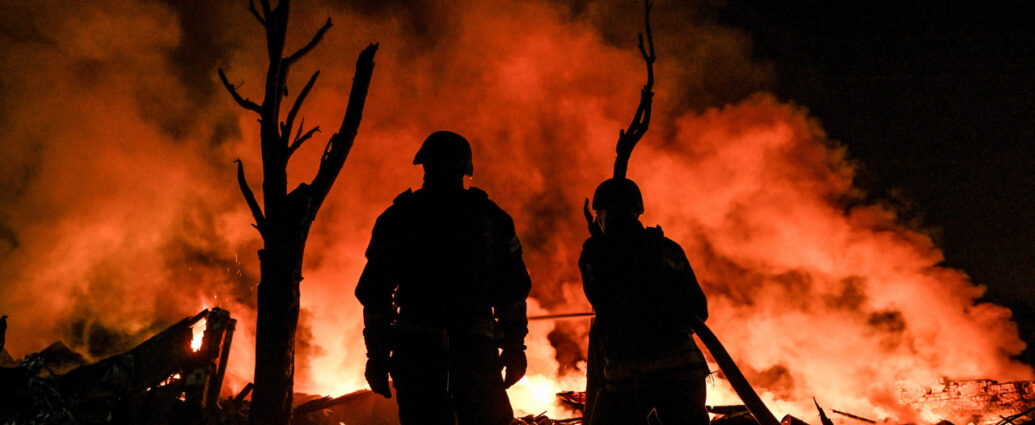
Opinion | Let Ukraine Aim for the Archer


Centene taps Fannie Mae executive as CIO

New memorial honors Port Authority workers killed in attacks on World Trade Center

A new memorial honors the Port Authority employees who perished in the 1993 and September 11, 2001, terrorist attacks on the World Trade Center. The Port Authority of New York and New Jersey and the World Trade Center Memorial Fund on Friday unveiled the memorial, an 8-foot-tall stainless steel model of the Twin Towers fronted by an American flag, with the employees’ names inscribed on its two-foot-tall granite base. Located next to St. Nicholas Greek Orthodox Church and National Shrine in Liberty Park, the memorial offers a quiet space of remembrance for those who lost their lives in the attacks.

Commissioned by the WTC Memorial Fund, the “Port Authority Employee Memorial” is inspired by a previous memorial honoring the victims of the February 1993 bombing. The original memorial stood on Austin T. Tobin Plaza between the Twin Towers and was destroyed on 9/11 when the towers collapsed.
On February 26, 1993, six people, including four Port Authority employees, and an unborn child died after terrorists drove a truck into the subterranean parking garage of the Twin Towers and set off a bomb.

Less than a decade later, on September 11, 2001, 84 Port Authority employees were killed, including 37 members of the agency’s police department and 13 members of the WTC’s civilian staff. The civilian employees have been recognized as first responders for their role as rescuers during the attacks, drawing on their knowledge of the complex.
The memorial also honors current and former agency staff who have suffered illnesses or died from conditions linked to their post-9/11 rescue and recovery efforts.
Of the agency’s roughly 8,000-person workforce, about 400 current employees worked for the agency on 9/11. About half of today’s workforce was high-school age or younger at the time of the attacks, while a third was middle-school age or younger.
To honor those who were lost and create a meaningful connection with newer staff, the Port Authority established the annual Pillars of the Port Authority employee recognition award in 2016. The award recognizes employees who exemplify the integrity, resilience, and devotion to public service of colleagues who died in 1993 and 2001.
In 2008, the agency also created a month-long volunteer program that gives staff an opportunity to give back to the community every September.
“Our agency’s home at 4 World Trade Center faces Liberty Park, so it is fitting to have a space nearby for our Port Authority family to remember their fallen colleagues and for their loved ones to pay their respects,” Port Authority Chairman Kevin O’Toole said.
“This year we mark 25 years since that terrible day in 2001, though we have been grieving since the first attack in 1993,” he added. “Each tragedy lives on in the members of our Port Authority family who survived both attacks and through the memories of colleagues who are still with us and pay tribute to their spirit and their dedication to this agency.”
The memorial furthers the Fund’s goal of erecting and maintaining a permanent monument dedicated to the agency employees who lost their lives on 9/11. The organization also raises money for college scholarships in honor of those who died in the attacks and provides financial assistance to charities and individuals.
The nonprofit consists primarily of current and former agency employees, retirees, and other stakeholders who worked with the Port Authority to secure the memorial’s placement in Liberty Park. Individual donations and the Fund’s annual golf events in New Jersey helped finance the memorial.
“Twenty-five years ago, we came together with the simple goal of holding an annual golf outing to remember and honor our fallen heroes from February 26, 1993, and September 11, 2001,” Paul Iannascone, president of the WTC Memorial Fund, said.
“In time, that commitment grew into the creation of the WTC Memorial Fund. For those of us who worked at the World Trade Center and throughout the authority, it was more than a workplace—it was our home,” he added. “We felt a deep responsibility to honor and never forget our friends, colleagues, and loved ones by creating a permanent memorial on the WTC campus that they deserved.”
RELATED:
- New York Public Library acquires archive of never-before-shared 9/11 footage
- NYC expands free rooftop tours at historic Manhattan Municipal Building
- American Express breaks ground on 55-story headquarters at 2 World Trade Center
The post New memorial honors Port Authority workers killed in attacks on World Trade Center first appeared on 6sqft.

Trump urges FCC to probe media polling, punish NBC moderator
President Donald Trump stepped up his attacks against the media on Sunday with an admonition to the Federal Communications Commission to investigate polling used by news outlets and punish a prominent television news host.
Trump has long had an adversarial relationship with journalists and news organizations who publish stories he doesn’t like, particularly those about his standing in the polls. Numerous recent polls show Trump has the lowest approval rating of either of his terms in office as the unpopular Iran war continues and gas prices remain high.
Trump has increasingly used his animosity toward the press to seek action by the FCC, which controls broadcast licensing.
The First Amendment to the US Constitution explicitly protects freedom of the press and freedom of speech.
Trump complained Sunday that something must be done about “fake polls” used by the news media. “FCC TO THE RESCUE!” he trumpeted in a social media post. Polls are often sponsored by television networks or news organizations, but conducted by universities or polling companies over which the FCC has no control. The FCC also has no control over cable stations or print media.
In the same series of Sunday morning posts, the president also lashed out at Kristen Welker, the moderator of NBC’s Meet the Press, for saying his endorsements of Republican candidates in primary elections this year had shown mixed results. Earlier in the week, he attacked New York Times reporter Maggie Haberman for reporting that he was skipping the annual Sept. 11 commemoration in New York this year because he wouldn’t have a speaking role.
“How can anyone be allowed to say this, working for freely given Public Airwaves?” Trump said of Welker’s reporting. “Because of this purposeful inaccuracy, she will be reported to the FCC for rebuke or punishment.”
Short of canceling NBC’s broadcast license, there’s little the Trump administration can legally do to punish Welker for her reporting.
“Kristen is one of the best in the business and we stand by her,” an NBC spokesperson said in an emailed statement.
A handful of the candidates that Trump endorsed this year did not win their primaries or special elections. Some of his prominent endorsements, including the special election to elevate Darline Graham to replace her late brother, Lindsey Graham, in the Senate, did win.
Trump urged the chairman of the FCC to follow up on his complaints.
“I hope that Chairman Brendan Carr, and the fine people of his Commission, will take this Threat to our Country very seriously,” Trump wrote.
This story was originally featured on Fortune.com
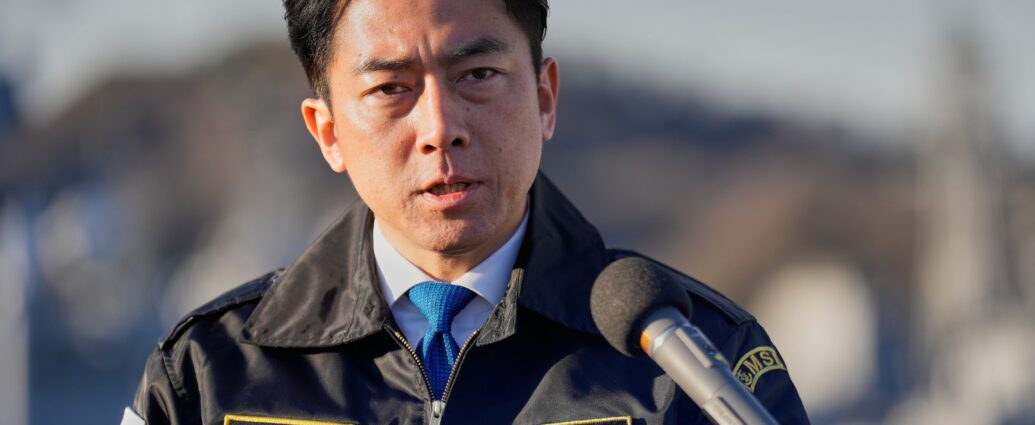
Japan doubled defense spending to counter China. Now it wants AI, underwater attack drones and government-owned weapons factories
Japan plans to use drones, artificial intelligence and new methods of warfare as it adapts its defense strategies to suit changing times, according to details of an 8.9 trillion yen ($55.6 billion) budget request for the coming fiscal year disclosed by the Defense Ministry on Monday.
The preliminary total is only a small increase from the 8.8 trillion yen ($55 billion) defense budget requested for this fiscal year. It will be much higher eventually, but further details will come later this year after Prime Minister Sanae Takaichi’s government approves the new security and defense strategy aimed at strengthening Japan’s counterstrike capability.
Under its five-year defense strategy set in 2022, Japan has doubled its defense spending to about 2% of its gross domestic product to build up its Self-Defense Forces’ offensive role to counter China’s growing assertiveness. Beijing has criticized Japan’s defense buildup as “new militarism.”
Japan now aims to “drastically strengthen its deterrence and response capability by transforming its defense capability” by adapting to new warfare as in Ukraine’s deployment of drones, the ministry said in a pamphlet about its budget request.
Japan will use attack drones, long-range cruise missiles and interceptors
The ministry says new ways of warfare require domestic development and mass-production of low-cost uncrewed weapons to reduce costs, minimize casualties and build a more cost-efficient air defense network.
The ministry plans to use attack drones in coordination with long-range missiles for more cost-effective counterstrikes. For the fiscal year beginning in April 2027, it is requesting an unspecified amount of funding to acquire unmanned attack drones for launch from above or under water.
Officials say uncrewed weapons could also help Japan compensate for the falling number of military personnel as its population ages and shrinks. Experts say developing fully homemade drones, given that Japan’s commercial market is dominated by imports from China, would be a challenge.
Japan in recent years has fortified its southwestern region with longer range missiles and interceptors.
To further strengthen its counterstrike capability, the ministry is seeking to develop hypersonic missiles that can be launched from submarines.
AI will be used to improve Japan’s defense command
The ministry plans to introduce an integrated AI platform in command and control to improve speed and accuracy in decision-making, including assessing battlefields and choosing targets.
Japan is considering using existing foreign AI technologies, including those of the U.S., while also developing and strengthening domestically developed AI, or combining them, officials said.
The ministry seeks to build a next-generation platform, “AI orchestrator,” which would integrate and use multiple AI systems while ensuring its autonomous selection and operation.
The ministry also plans to build a “Defense Ministry cloud” for highly sensitive data transmission and stable communications networks in an emergency or a disaster.
It did not specify the expected costs for such measures.
Government backing will strengthen the defense industry
Deterrence requires stable and sustainable defense equipment production, so Japan needs to reduce risks of shortages caused by suppliers withdrawing, officials said.
To address the concern, the ministry has requested an unspecified amount to fund a state-owned, contractor-operated system to ensure stable defense equipment production and supplies, with the government acquiring factories and outsourcing manufacturing to private firms.
The budget request also includes funding to support companies’ defense-related research and development or restructuring to strengthen their production and efficiency.
Profits at major suppliers such as Mitsubishi Heavy Industries, Kawasaki Heavy Industries and IHI Corp. have risen as Japan builds up its military and expands arms exports. But the industry lags overall due to a constitutional limit on the use of force for only its own self-defense. Dozens of companies have withdrawn over the past decades due to poor profits, an uncertain business outlook and concerns about harm to their reputations from making arms, especially lethal weapons.
This story was originally featured on Fortune.com
Sacha Baron Cohen’s Ali G to return in new film amid character’s ‘racist stereotypes’ controversy
Ali G’s comeback has already sparked controversy. After nearly 20 years away, actor and comedian Sacha Baron Cohen is bringing one of his most controversial satirical characters back to the screen in a new film. He now faces a global campaign calling for a boycott over the character’s use of “racist stereotypes.”
The new film, Ali G: Who Iz I?, was filmed in complete secrecy over the past year, according to the British newspaper the Daily Mail. The movie marks Baron Cohen’s directorial debut.
The mockumentary follows the character’s life since “the world went to hell,” alongside his pregnant girlfriend, played by actress Morgana Robinson. The film is scheduled to open in theaters on October 23 through Amazon MGM Studios, but it has already triggered a storm of criticism.
Ali G is a cover to laugh at Jamaican culture. The character enforces harmful stereotypes of how a Jamaican man behaves in society.
Many people don’t find it problematic because he’s a white man pretending to be Jamaican and the jokes on him.
Perhaps a parable will help: if a… pic.twitter.com/xDiF0RZCbH
— NewsCord (@newscord_org) August 29, 2026
NewsCord, a British media monitoring platform, launched a campaign just one day after the trailer was released, urging movie theaters worldwide to refuse to screen the film. As of Sunday, campaign organizers said more than 41,000 emails had been sent to 15 major movie theater chains.
The activists accuse Baron Cohen of using satire as a cover to promote racism. “Ali G is a cover to laugh at Jamaican culture,” the campaign wrote on X/Twitter. “The character enforces harmful stereotypes of how a Jamaican man behaves in society.”

“Ali G smokes weed, is a misogynist, and does nothing meaningful in life,” the campaign added. “He does this because he thinks this is what a Jamaican does. The world laughs at Ali G, but the real butt of the joke is Black people, and specifically Jamaicans.”
The campaign also cited previous criticism of the character, including comments by Black comedians who called Ali G “an alibi for racism” in 2000. It also referenced author Jeanette Winterson, who questioned how the character differed from racist minstrel shows.
Sony Pictures UK’s slogan for the film, “He’s back. We’re not responsible,” only added fuel to the controversy.
Baron Cohen’s sarcastic response to Ali G controversy
Baron Cohen, 54, responded defiantly on X with his characteristic sarcasm, writing, “In an age where a comedian’s career can be ended by a single un-PC joke, I thought I’d play it safe and bring this guy back.”
In an age where a comedian’s career can be ended by a single un-PC joke, I thought I’d play it safe and bring this guy back. https://t.co/8ckR5pQZQt
— Sacha Baron Cohen (@SachaBaronCohen) August 25, 2026
UK Cinema Association CEO Phil Clapp addressed the boycott campaign in an interview with Variety, stressing that movie theaters do not serve as censors. “They are there to entertain the widest possible audience, not to determine the audience’s taste,” he said.
Variety: Picturehouse has not agreed to boycott Ali G film
Variety also debunked reports that the Picturehouse cinema chain had already agreed to boycott the film. The reports were based on an automated customer service response to requests for screenings that had not yet been scheduled.
Ali G first appeared on the UK’s Channel 4 in the late 1990s before becoming a cultural phenomenon. Baron Cohen retired the character in 2007 after becoming too recognizable. It remains to be seen whether audiences and critics will be as forgiving of Ali G’s return.
British Jewish leaders express concern to UK government over anticipated settlement trade ban
British Jewish community leaders have raised strong concerns on Sunday with the UK government over potential plans to ban or restrict trade with Israeli settlements in the West Bank, after recent high-level meetings between community representatives and government officials, including a meeting on Friday between Chief Rabbi Sir Ephraim Mirvis and Foreign Secretary Ed Miliband.
The diplomatic friction follows UK warnings of upcoming measures targeting settlement expansion, prompted by the Israeli government’s publication of tenders for the E1 construction project. Foreign Minister Gideon Sa’ar responded sharply to the UK’s position, arguing that blaming only Israel while ignoring Palestinian extremism has fueled antisemitic hatred against the British Jewish community.
Major British Jewish organizations issue coordinated statement
In response to the looming trade restrictions, major British Jewish organizations issued coordinated statements. Chief Rabbi Sir Ephraim Mirvis detailed his discussions following his meeting with the Foreign Secretary, stating, “I welcomed the opportunity on Friday to meet with the Foreign Secretary, the Rt Hon. Ed Miliband. While we share fervent hopes for a future of peace and security in the Middle East, I explained why I believe the UK Government’s intended sanctions will be counter-productive and even endanger such a vision of peace.”
The Chief Rabbi added that many in the community view the measures with deep dismay, warning they risk spiraling into a de facto boycott of Israel and threatening the livelihoods of tens of thousands of Palestinian workers.
Mirvis also noted that “these measures will also disproportionately affect British Jews because of our close religious, family, charitable and educational ties to Israel,” and cautioned that domestic political considerations are driving foreign policy at the expense of regional peace and community safety. He further stated that the policy will not influence Israeli decision-making as intended, but will instead embolden the tiny minority who support criminality while penalizing countless others.

Board of Deputies President Phil Rosenberg stated, “We have engaged with the government in recent days, alongside community partners, regarding potential steps by government in relation to settlement activity.”
“We have urged the government to avoid irreversible steps that could further damage the UK-Israel relationship and have a harmful impact on the UK Jewish community, especially in the run-up to an Israeli election that has the potential to bring significant political change,” he added.
Rosenberg emphasized that while the community overwhelmingly condemns violence by extremist settlers, the proposed policies risk harming legitimate religious connections and encouraging a wider boycott movement that rejects Israel’s existence and marginalizes British Jews.
JLC: ‘Why is Israel being singled out?’
Similarly, the Jewish Leadership Council (JLC) released a statement questioning why Israel is being singled out for economic action while previous punitive measures have failed to influence conditions on the ground.
The JLC warned that as Israel approaches pivotal elections on October 27, further interventions will only embolden extremist factions. The organization further cautioned that broad, untargeted measures “may inadvertently become a wider boycott of Israel, giving legitimacy to those who reject Israel’s very existence, and placing increased scrutiny on British Jews at a time when antisemitism in the UK is more prevalent and more violent than ever.”
Pentagon covertly puts conservative military influencers into US government positions – report
Senior US military influencers were discreetly placed in government positions as part of a covert Pentagon operation, The Washington Post reported on Monday, citing anonymous sources familiar with the matter and corroborating material.
According to the report, the influencers in question have worked to push against criticism of the Trump administration while advancing the positions of Defense Secretary Pete Hegseth, being assigned as “special government employees (SGE)” or “highly qualified experts (HQE).”
The report noted that HQEs are permitted to work either part-time or full-time with no compensation limitations, whereas SGEs may work up to 130 days per year.
The sources, which named two of the influencers as US Air Force Col. (ret.) Rob Maness and US Army Col. (ret.) Kurt Schlichter, told the Washington Post that several of the veterans are in positions powerful enough to potentially influence policy changes.
Both Maness and Schlichter, as well as US Army Col. (ret.) Thomas Anderson, have active government email addresses with a “.civ” suffix, indicating they are civilian rather than military employees, according to Pentagon records reviewed by the Washington Post.

Retired US military officers with thousands of online followers
In terms of online influence, Schlichter has over 620,000 followers on X/Twitter; Maness has over 135,000; and Anderson, now an attorney, retains over 323,000 under the pen name Cynical Publius, the report noted.
The records further showed that the retired officers, who served for several decades prior to their online presence, are employed in the office of Defense Under Secretary for Personnel and Readiness Anthony Tata.
According to the Washington Post, Tata’s office has been tasked with tackling several issues central to conservative politics, including “woke” college ideology and COVID vaccine policies for American soldiers under former US president Joe Biden.
Anderson and Pentagon spokesperson Joel Valdez declined to comment to the Washington Post, while Maness and Schlichter did not respond to requests for comment.
Modi tells Putin India backs every effort to end the war in Ukraine, Interfax reports
Indian Prime Minister Narendra Modi told Russian President Vladimir Putin on Monday that his country backed every peace effort to end the war in Ukraine, the Interfax news agency reported.
Modi and Putin met in the Kyrgyz capital Bishkek as part of the Shanghai Cooperation Organization summit.
This is a developing story.
Senior Iranian source says latest hostilities with US are a ‘limited’ confrontation
Hostilities that flared overnight between the United States and Iran remain a “limited and contained confrontation,” a senior Iranian source told Reuters on Monday, adding that Tehran was ready to deliver a harsh response if attacked again.
The source, who has direct knowledge of Iranian decision-making and declined to be named, said that conditions in the Strait of Hormuz “will become worse for vessels that violate” rules set by Tehran for passage through the waterway, adding that no target in the region was beyond Tehran’s reach.
This is a developing story.

Trump admin shuts down 270 driving schools in fraud crackdown
President Donald Trump’s administration announced a “historic” crackdown on trucking fraud during a news conference in Detroit on Monday.
Transportation Secretary Sean Duffy announced the move alongside Homeland Security Secretary Markwayne Mullin, saying tens of thousands of illegal drivers’ licenses were issued under former President Joe Biden’s administration.
Duffy noted that millions of illegal immigrants were allowed into the country under the previous administration and many were granted commercial drivers’ licenses, with many of them not even able to speak English.
The administration is shutting down 110 driving schools that were the “greatest offenders” in granting drivers’ licenses to illegal immigrants, as well as 160 additional schools that Duffy says lacked proper space for driving tests or had unlicensed instructors.
This is a developing story. Check back soon for updates.

Canada-Backed Global Defense Bank Seeks $116 Billion to Finance Allied Rearmament
A new global bank designed specifically to finance defense spending is moving closer to reality — and Canada wants to put itself at the center of it.
The proposed Defence, Security and Resilience Bank, or DSRB, is seeking to raise roughly €100 billion, about $116 billion, to provide lower-cost financing and loan guarantees for governments and defense contractors.
Canada, Belgium, Greece, Latvia, Luxembourg, Romania, Turkey, Ukraine and Albania have already backed the concept.
So far, however, the project has secured only about €5 billion in commitments, according to officials involved in the effort.
The bank’s broader target is approximately €20 billion in paid-in capital, with another €80 billion available to support future lending.
The idea is simple.
Governments across Europe and NATO are being asked to spend dramatically more on defense.
Large contractors can usually finance themselves.
Smaller suppliers often cannot.
That creates a bottleneck.
A company capable of manufacturing drones, missile components, ammunition, radar systems or military electronics may have government demand waiting for it but still struggle to borrow enough money to expand a factory, hire workers or build inventory.
The proposed bank is designed to solve that problem.
It would lend to governments and defense companies while also providing guarantees that could encourage commercial banks to finance smaller or riskier suppliers.
That could create an entirely new financing system around the defense industry.
And that matters because the global rearmament push increasingly depends not only on military budgets, but on whether companies can actually raise the capital needed to produce what governments are ordering.
Canadian Prime Minister Mark Carney has strongly backed the project and wants the institution headquartered in Canada.
But there is a major obstacle.
Several of the world’s largest economies have not joined.
Germany and Britain remain outside the project, while Japan has not committed.
That matters because the DSRB wants a triple-A credit rating.
A high rating would allow it to borrow money cheaply in global bond markets and then pass those lower financing costs on to governments and defense companies.
Without major sovereign backers, obtaining that rating could become more difficult.
There are also questions about duplication.
The European Union already has its €150 billion SAFE defense-financing program, while Britain is developing a separate Multilateral Defence Mechanism with several European partners.
Some governments are asking why another institution is necessary.
Supporters argue that the DSRB would be different because it would become a permanent multilateral financial institution rather than a temporary government program.
It could also finance companies outside the European Union.
That is particularly important for countries such as Canada, Turkey and Ukraine.
Major financial institutions are already paying attention.
Around a dozen banks, including JPMorgan and Deutsche Bank, have provided approximately $10 million in funding or services to help establish the institution.
Those banks could eventually earn substantial fees arranging defense projects financed through the DSRB.
For investors and businesses, the significance is bigger than the bank itself.
Defense spending is increasingly becoming an industrial-policy story.
Governments are not simply buying more weapons.
They are trying to rebuild factories, expand supply chains, increase ammunition production and create domestic manufacturing capacity that has been allowed to shrink for decades.
That requires enormous amounts of private capital.
If the DSRB succeeds in raising €100 billion and leveraging that money into even larger amounts of lending, smaller defense companies could gain access to financing previously available mainly to the largest contractors.
That could create new factories, new suppliers and new investment opportunities throughout the defense economy.
But the project still has to prove that it can attract enough large governments to make the economics work.
Canada is prepared to move ahead with the countries already committed.
The real test now is whether Britain, Germany and other major economies decide that joining is worth the cost.
If they do, the DSRB could become something much larger than another international institution.
It could become a permanent global financing engine for the defense industry.
JBizNews Desk | Ottawa / London
© JBizNews.com All Rights Reserved. Reproduction or distribution without written permission is prohibited.
‘Heaven help us’: One dead and 15 missing after flash flood in Grand Canyon—with more flooding forecast
State and federal officials ramped up efforts Monday to locate around 15 people who are missing after a major flash flood swept through in the Grand Canyon, killing at least one person.
Weather forecasters warned rain and thunderstorms could bring more flooding to the popular tourist attraction from where scores of visitors were evacuated following the flood Saturday in Bright Angel Creek. The deluge also destroyed the only water pipeline in the canyon, leading to emergency water restrictions for year-round residents. Tourists have been barred from staying at lodges and hotels inside the park.
Visiting the Grand Canyon — a crown jewel of the national park system — can be particularly dangerous in the summer because of the risk of flash flooding that accompanies the monsoon, or rainy season. Clear days can give way quickly to thunderstorms and downpours.
“With deep monsoonal moisture in place and already saturated soils in some locations, an elevated risk of flash flooding will be in place through Monday,” the National Weather Service said Monday.
The body of a 46-year-old man was recovered Sunday evening near Crystal Rapids along the Colorado River, the National Park Service said without providing details. More than 60 people were airlifted from the depths of the canyon. The park service asked anyone with details about hikers or campers still unaccounted for to provide information. The Arizona Department of Public Safety helped with evacuations Sunday.
“My heart is with the families and loved ones of every person unaccounted for after the flash flooding at the Grand Canyon,” Arizona Gov. Katie Hobbs posted Sunday.
The state Department of Emergency and Military Affairs was coordinating with the park service and county emergency management officials in search and recovery efforts, Hobbs said.
Parth Desai was hiking through a narrow passage in Bright Angel Canyon with fellow physicians and a park ranger when heavy rain started falling Saturday.
“We saw the creek flood, waterfalls coming up out of nowhere, boulders, mud, landslides happening everywhere,” he said.
Later, as they made their way toward Phantom Ranch, a colleague shouted “Up, Up, Up, Up!” as a 4-foot (1-meter) debris wall headed toward them and they ran up into a patch of cacti, he said. They were rescued by helicopter late Saturday after making it to the Phantom Ranch area, he said.
Torrents of water wiped out footbridges over Bright Angel Creek that runs into the Colorado River, widening the bed and extending an existing river rapid or creating a new one. The flood was a major blow to an enduring effort to modernize the pipeline that serves 6 million visitors a year and roughly 1,600 residents of Grand Canyon Village.
“Heaven help us if the whole thing down there at the bottom has to be reconstructed,” said Jack Schmidt, director of the Center for Colorado River Studies at Utah State University. “Where are they going to get the money?”
In August 2024, a woman was swept away in a flash flood while hiking in the Havasupai region of the Grand Canyon. Chenoa Nickerson, 33, was found dead after a three-day search.
Halting overnight stays at the park because of a lack of water is rare, although the pipeline frequently has failed over the years. While the Grand Canyon has large storage tanks for potable water on the South Rim, they won’t be refilled while the pipeline is out of service.
A $208 million rehabilitation of the pipeline and upgrades to the associated water delivery system started in 2023, with the park service calling it a crucial investment to ensure the park can meet the needs of residents and visitors. The project was expected to be completed next year.
___
Stengle reported from Dallas. Jeffrey Collins in Columbia, South Carolina; Holly Ramer in Concord, New Hampshire; Felicia Fonseca in Flagstaff, Arizona; and Christopher Weber in Los Angeles contributed.
This story was originally featured on Fortune.com

Cash-strapped colleges are draining their endowments to survive
A college endowment is supposed to last forever, supporting students, professors and research in perpetuity.
Instead, many cash-strapped schools are draining their nest eggs just to stay alive.
Faced with multi-million dollar deficits, Hiram College in rural Ohio borrowed from its $56 million endowment. The 1,000-student liberal arts school — which boasts a statue of US President James Garfield, who worked as a janitor there to pay his tuition — eventually pulled more than $47 million from the fund. It even tapped money that donors had explicitly set aside for specific purposes, not for balancing the budget.
Hiram is now working with the state attorney general’s office and is hashing out a repayment plan, a spokesperson said. The school is also notifying its donors about the draw from the endowment, both in writing and through in-person conversations.
David Haney, Hiram’s president from 2020 to 2023, said he was surprised to learn about the loans when he took office. He considers them a risky bet that many smaller schools feel forced to take in an era when US student enrollment has started to decline. Colleges need to focus on cutting expenses instead, he said.
“What a lot of these small colleges do is they think that things are going to turn around,” Haney said. “‘If we just invest in new athletic facilities, everything is going to be fine.’ In most cases, that doesn’t happen. To me, that’s why borrowing from the endowment and taking out debt is not the way to go about it.”
Hiram is far from alone. Nearly 200 private colleges borrowed from restricted endowment funds in 2025, up from about 130 in 2021, according to estimates from higher-ed consulting firm Perspective Data Science. Other colleges have avoided loans but are drawing more from their endowments each year than advisors consider sustainable. Analysts liken both strategies to borrowing from a 401(k) — it may help in the short-term but carries long-term risks, such as downgrading a school’s credit rating.
For some institutions, “there’s just nowhere else to turn,” said Tracy Filosa with investment firm Cambridge Associates, which works with endowments. “It’s not a rainy day fund — we know that. But in one way, it is there for an institution to get through a rainy day.”
Dipping into the endowment can sometimes work, which is one reason schools keep trying it.
Avila University in Kansas City received court approval in 2023 to loosen the restrictions covering 97 different endowment funds totaling $6.4 million. The school is now on better financial footing, said Andy Jett, its chief operating officer. The school aims to replenish the endowment as it recovers financially. Avila has boosted enrollment through recruiting more international pupils, though that strategy has faced a blow from the Trump administration’s efforts to limit student visas. Even so, Jett says dipping into the endowment isn’t a step to be taken lightly.
“I don’t think any school wants to — or should, probably — do this unless they don’t have any other options,” Jett said. “This wasn’t our first choice. This was pretty far down the list of things that we tried.”
Most colleges resorting to this tactic face the same underlying pressure.
The dismal US birth rate has left schools fighting over a dwindling pool of potential students. Larger, more prestigious universities — many with endowments north of $5 billion — still draw far more applicants than they can admit, keeping their finances healthy. But smaller, lesser-known institutions have endured years of declining enrollments and shrinking income, with no obvious solution in sight. Many have already succumbed, shutting their doors for good.
Indeed, some of the schools that have drawn down their endowments — including Indiana’s Martin University and Notre Dame College in Ohio — ended up closing anyway.
“When schools take that action, it’s meaningful — it can be a real red flag for those of us on the outside looking in,” said Emily Wadhwani, a higher education analyst for Fitch Ratings.
College endowments can be complicated, with the money held across hundreds or even thousands of separate funds.
The cash is essentially divided into two pots: one reserved for specific uses chosen by donors — like English scholarships or medical research — and the other unrestricted, with few conditions on how it’s spent. Hiram, for example, had 325 restricted endowment funds, according to a recent audit. State laws that govern funds given to charitable organizations apply to schools as well, so if a college wants to use restricted donations for other purposes, it generally has to get approval from the state attorney general’s office, according to law firm Taft Stettinius & Hollister LLP.
Schools generally assume their endowments’ value will grow 7% to 8% per year on average over the long-term, according to the American Council on Education. They budget accordingly, trying to draw no more than 5% of the value in a given year.
But as the financial pressure on them increases, many schools with relatively small endowments have been pulling more from their funds, data from the National Association of College and University Business Officers show. Colleges with endowments of $51 million to $100 million have increased their spending rate by more than a third since 2016, reaching 5.5% in 2025 compared to 4.1% in 2016.
Others have gone higher. Manhattan University, located in the Bronx, drew about 7% of its endowment in fiscal 2024 after facing deficits and withdrew another 7% in fiscal 2025, according to S&P Global Ratings. In response, S&P downgraded the school to one level above junk, or a BBB- credit rating.
“Once you get much over a spending rate of 7%, consistently, you are an at-risk endowment,” said Kristin Reynolds, who advises endowment administrators on their investment strategies at consulting firm NEPC. She was speaking generally, not about a specific college.
Manhattan University’s chief financial officer, James Perrino, said the school’s investment returns were significantly higher than 7%, so the draws did not erode the endowment’s principal. The money, he said, was used to provide additional student scholarships, enhance campus facilities and develop new master’s degree programs.
Tapping an endowment can help a school navigate tough times, or make a strategic investment in its future.
For 10 years, Webster University in a St. Louis suburb relied on cash infusions from its endowment to balance its budget and meet loan obligations. The school also reclassified some restricted funds to satisfy bond covenants. Now, leaders say they’ve made it through the rough patch. They’ve boosted enrollment, invested in international campuses and removed a “financially distressed” designation from the university’s accreditor.
Webster broke even for the past two years without help from its nest egg. But the stronger footing came at the cost of donor trust, said chief financial officer Bill Donovan. The school’s administration now must repair the relationship.
“No donor wants to think you’re taking their funds just to cover operating losses,” Donovan said. “The promise we’ve made with the new leadership team is that we’re not going to do that.”
Hiram is hoping for a similar rebound.
Endowment money has helped Hiram deal with persistent deficits. In a report in April, the college’s auditors noted that some of the borrowed money had come from restricted funds. But the cash infusion hasn’t fixed Hiram’s finances. Auditors wrote that the school faces “substantial doubt” that it can continue as a going concern for another year.
Hiram is working to turn its finances around. Earlier this year, James Malz, a former JPMorgan Chase & Co. banking executive, was appointed interim president. The school is dropping eight of its least-popular majors, including biochemistry and creative writing.
It’s also developing a plan to repay the loans, a college spokesperson said in an emailed statement. The school has done so before — in 2022, Hiram repaid over $6 million of loans from its endowment.
“The College’s financial strategy, including the use of endowment-backed financing, was implemented to help manage ongoing operational pressures while the institution developed and advanced a long-term sustainability plan,” the statement said. The school has now increased its fundraising — with an emphasis on unrestricted gifts — and has no plans to close, according to the spokesperson.
Founded in 1850, Hiram always admitted women and Black scholars due to the egalitarian ideology of its Disciples of Christ founders. Many of Hiram’s current students are the first in their families to attend college. Federal data shows 57% of first-time students there in 2019 received Pell Grants.
“We helped a lot of great students,” said Brad Goodner, a professor emeritus of biology and biomedical humanities.
Closing would hurt not just students and faculty, he said. The college is the center of the town — also named Hiram — about 40 miles southeast of Cleveland. As with many small, rural colleges across the country, the school provides jobs and forms the core of community life.
“The campus is the village,” Goodner said. In a potential closure, “those things would be lost.”
To contact the authors of this story:
Amanda Albright in Overland Park at aalbright4@bloomberg.net
Elizabeth Rembert in New York at erembert@bloomberg.net
This story was originally featured on Fortune.com
The tropical nation of Palau has no traffic lights and just 18,000 people—and it’s now ground zero for a U.S.-China standoff
Far from New York or Davos, leaders of some of the world’s least populous states are meeting in a placid tropical archipelago with no traffic lights. The population of the summit host, Palau, was due to swell from 18,000 people to 20,000 as delegates from dozens of countries arrived at the Pacific Islands Forum Leaders Meeting.
Ahead of the summit officially opening Monday, the country’s president and other senior officials walked the main road around the island picking up trash. Barbers and tattoo artists prepared to become drivers for delegates and student volunteers to usher dignitaries.
But beneath the distinctively Pacific character of the event, where matters unfold in their own unhurried time and decisions are made by consensus rather than by a vote, simmered a fraught and escalating geopolitical debate about who gets to shape the future of the vast ocean region.
Powerful nations interested in the Pacific have raced in recent years to shore up alliances among its leaders, intensifying a contest for influence between China and the United States, Taiwan, and forum members Australia and New Zealand. The sometimes-conflicting bids to win sway have also drawn dividing lines among the forum’s members, threatening to derail annual summits.
“The Pacific is our home, not a theater for geopolitical competition,” Palau’s President Surangel Whipps Jr. told reporters Sunday, as he urged the bigger countries closely observing this week’s event not to interfere in talks that he hoped would center on problems desperately imperiling small Pacific island nations, such as climate change and struggling economies.
“Let’s not use this as a place that we should be threatening or making people feel uncomfortable,” he added. The reality, however, was unlikely to be simple.
Small island nations have become important allies
Some of the 18 member countries and territories that make up the Pacific Islands Forum have populations in the low thousands or tens of thousands and were once known mostly as picture-perfect holiday destinations. But many also have sprawling and lucrative exclusive economic zones, rich with fisheries and seabed minerals, and their locations across the wide Pacific Ocean have become strategically important points on the map as global tensions rise.
While Forum countries often reference a “Pacific family,” members come from diverse cultures and political systems and their remote locations mean few opportunities for leaders to speak in person. The annual leaders’ summit was once a relaxed and casual affair, where officials from countries with little power in the global order sought to amplify their voices by reaching unified positions, particularly in urging bigger countries to curb greenhouse gas emissions as rising seas began to threaten low-lying atoll nations.
As major powers over the past decade have escalated their efforts to secure access to Pacific waters and ports by inking security deals and offering funding, immigration access to their countries and other sweeteners, the leaders’ ability to speak with one voice at their annual summit has come under pressure.
“We see examples of this where that consensus-based model, which is referred to as the Pacific Way, can sometimes lead to a bit of paralysis in taking action,” said Oliver Nobetau, Pacific Islands program director at the Lowy Institute, an Australian think tank.
Pacific nations face worsening climate and fuel shocks
In a recent episode, the Forum’s foreign ministers failed to reach consensus on a statement criticizing Beijing’s launch of a ballistic missile into the South Pacific Ocean in July. While most member states strongly opposed China’s actions, the refusal of two to endorse a statement saying so meant none was issued.
“At this point in time when Pacific Islands are facing a lot of acute security issues, decision-making is paramount for this one,” Nobetau said. “We’ll be looking to see if President Whipps can sort of steer the forum to take tangible action.”
Among the issues vexing Pacific island nations are the effects of the latest El Nino weather chaos, which has brought droughts and floods across the region. The volatile weather threatens food security and access to clean water, already vulnerable in island nations dependent on imported goods and funded largely by foreign aid.
Fuel volatility from the Iran war has also prompted some Pacific countries experiencing severe economic shocks to declare national emergencies in a region overwhelmingly reliant on imported diesel and gasoline, arriving via a fragile supply chain.
Whipps this week suggested that the wealthy countries seeking involvement in the region could open their wallets to finance the widespread establishment of solar power capabilities across the region.
“What are they doing together with us to partner to get a 100% renewable Pacific?” Whipps said.
Conflict over members’ alliances is expected
However, some of the powers at loggerheads over the region were always going to see this year’s summit as a showdown. Palau is one of just 12 countries worldwide to recognize Taiwan, incurring the ire of Beijing, which sees Taiwan as part of its territory.
It also sits at the nexus of other great power struggles. Located in the western Pacific Ocean, next to the Philippines, Palau draws from the Asian tourism market and has closer ties to the United States than much of the Forum’s members. A Compact of Free Association allows defense and security access for the U.S. in Palau’s territory in exchange for tens of millions of dollars in U.S. funding each year.
Palau’s turn as host also comes as the summit’s leaders try once more to draw up a structure governing how other countries are permitted involvement in its meetings. Countries approved to engage in the Pacific Islands Forum, including the United States and China, are known as dialogue partners, while Taiwan holds separate status as a development partner.
Beijing has ramped up pressure on forum hosts to exclude Taipei’s envoys from the annual summit, a dispute that grew so fractious ahead of the 2025 event in Solomon Islands that all countries except member nations were entirely barred from attending. Palau’s warm diplomatic relations with Taipei have this year drawn the attendance of Taiwan’s Foreign Minister Lin Chia-lung and provoked a warning from Beijing that China would oppose Taiwanese officials’ participation.
That in turn has prompted exasperation from some officials and Pacific-watchers at the prospect of another summit overshadowed by rivalry between non-member countries. Early arrivals over the weekend were roiled by the news that one leader, Solomon Islands Prime Minister Matthew Wale — a newly elected leader more friendly to Australia than the more Beijing-aligned leader before him — had returned home just hours after arriving because an opponent had mounted a leadership challenge.
It wasn’t immediately clear how much his forced departure, and the absence of others such as Kiribati’s President Taneti Maamau, whose country’s China ties have warmed during his tenure, could be attributed to unease about the summit’s geopolitics.
“You’d be defying gravity and logic if you said it wasn’t a big problem,” New Zealand Foreign Minister Winston Peters told reporters in Koror on Sunday, referring to bids for foreign interference in the event.
The leaders’ non-attendances were “seriously disappointing” and did not help, Peters added.
“But in the main the delegations are of the highest standard,” he said. “So let’s see how we go.”
This story was originally featured on Fortune.com

Nearly 1,000 people are missing in Nepal’s floods, and hundreds more are trapped in hydropower tunnels as flood knocks 10% of power capacity offline
Workers shoveled thick mud from a flood-ravaged power station in central Nepal, trying to revive a key node that supplies electricity to more than 20,000 people. But as they cleared debris from equipment buried by last week’s catastrophic floods, there was hope the plant would not simply be rebuilt in the same place, beside the river that destroyed it.
In Nepal, up to 900 workers are unaccounted for from a dozen hydropower projects, according to the Independent Power Producers’ Association, Nepal, with hundreds believed trapped in tunnels. In Nepal and China combined, over 900 people have died and 4,700 are missing.
The loss of hydropower infrastructure is estimated to have taken 700 megawatts offline — about 10% of the country’s power capacity. Once the immediate aftermath of the disaster is dealt with, the question of how to restore power, roads, bridges, schools and health facilities quickly without rebuilding the same vulnerabilities should be on top of Nepalese authorities’ minds. disaster experts said.
“Authorities have to take a hard look in the mirror now and ask how they will be rebuilding in these places. They will also have to take a close look at other projects in Nepal that have not been built yet, whether they’ll be approved after this event,” said Jakob Steiner, a geoscientist at the University of Graz in Austria, who is currently based in Dhaka, Bangladesh.
Rebuilding for resilience, not just replacement
Hydropower projects that were operating or under construction were fully or partly destroyed across Rasuwa, Nuwakot and Dhading, among the worst-hit districts.
Many of the workers had taken shelter in the tunnels but are stuck, waiting to be rescued, according to officials.
“The tunnels are built to access hydropower infrastructure and to divert water,” Steiner said, describing the tunnels as big enough to drive trucks through.
Apart from the hydropower projects, tens of kilometers (miles) of roads, multiple bridges and essential buildings like schools and hospitals have been destroyed.
Ramraj Narasimhan, a senior director with the Coalition for Disaster Resilient Infrastructure, said rebuilding should focus on continuity of services rather than trying to make every structure indestructible.
“If it gets damaged, let it get damaged, but can we build in redundancy in the system?” he said.
That can mean choosing a better location for construction, alternate routes, backup power, improved early warning and financial tools such as insurance to speed recovery, Narasimhan said. Risk assessments should examine where a river bends, where slopes are unstable and where a single failure could cut off several communities.
Narasimhan’s organization estimates that $124 billion worth of Nepal’s infrastructure is exposed to climate-driven disasters, creating the potential for hundreds of millions of dollars in losses each year. A report by the coalition earlier this year found that Nepal’s average annual losses are nearly $760 million from various disasters, while the country’s national disaster funds is only a fraction of this amount.
Climate risks grow for Himalayan hydropower
Climate scientists said the Himalayan region — which is warming faster than many other parts of the world — is particularly at risk from increasing global warming as a result of human-caused climate change.
Climate experts said the flooding adds to evidence that infrastructure planning in the Himalayas is being forced to account for disasters that are increasing as the climate warms. Glaciers across the Hindu Kush Himalaya are losing ice at an accelerating rate, while permafrost degradation, unstable slopes, glacial lakes and increasingly erratic rainfall are raising the risks of floods, landslides and debris flows, according to reports by Kathmandu-based climate research group International Center for Integrated Mountain Development.
The stakes are particularly high for Nepal because hydropower is both a foundation of its electricity grid and an important source of economic growth and export revenue. Much of the country’s potential is run-of-river hydropower, Narasimhan said, meaning facilities are closely tied to steep river corridors where land is limited and hazards can cascade quickly.
Steiner said smaller floods can sometimes be managed with diversions that keep debris and high flows away from expensive infrastructure and tunnels. But for events as large as the latest flood, he said, physical defenses may be overwhelmed. In those cases, early warning becomes the critical protection for people.
He said the flood was detected at the China-Nepal border after moving rapidly from its source, leaving little warning time upstream. But there was still time as the flood traveled downstream toward hydropower sites, raising questions about whether warnings could have reached workers sooner.
The disaster is also likely to intensify scrutiny of where future projects are approved. Himanshu Thakkar, coordinator of the South Asia Network on Dams, Rivers and People, said environmental, social and disaster-risk assessments need to reflect the specific landscape and past hazards of each valley, backed by land-use rules and stronger accountability.
Hydropower projects can themselves become “force multipliers” when large structures, debris and altered river channels add to downstream damage, Thakkar said. He argued that Nepal should also consider more decentralized solar power as part of a broader energy mix.
Thakkar said the question now is not only how fast Nepal can rebuild, but what it chooses to put back in the path of the next flood.
___
Sibi Arasu reported from Bengaluru and can be followed on X at @sibi123. Reach him at sarasu@ap.org.
___
The Associated Press’ climate and environmental coverage receives financial support from multiple private foundations. AP is solely responsible for all content. Find AP’s standards for working with philanthropies, a list of supporters and funded coverage areas at AP.org.
This story was originally featured on Fortune.com

China’s AI-fueled IPO boom hits $54 billion this year, with chipmakers and Shein’s $1.7 billion IPO
Chinese markets are booming with new public stock offerings, energized by the craze for artificial intelligence and other advanced technology and a growing preference to list shares in Hong Kong and Shanghai.
In the latest big stock listing, shares in China-founded e-commerce and fast fashion giant Shein are due to debut Tuesday in Hong Kong in a blockbuster initial public offering raising $1.7 billion, in one of the city’s biggest new share sales this year.
In July, CXMT, China’s largest memory chipmaker, raised more than $8.6 billion in Shanghai in the second-largest IPO for its Nasdaq-style STAR market, mainland China’s second-largest IPO. Its shares jumped 466% on the first day of trading.
Unitree, one of China’s leading humanoid robot makers, also made its listing debut in Shanghai in August. Shares rose 460% on the first day of trading.
“The current IPO boom is powered by investor appetite for AI and robotics,” said Ruiying Zhao, a senior research analyst at S&P Global Market Intelligence. Trading in Shanghai’s stock market, for one, is heavily driven by retail investors.
AI driving Chinese IPO boom
CXMT’s IPO in Shanghai “placed China in a strategically significant position in tech manufacturing related to AI,” said Perris Lee, head of APAC equity capital markets for ION Analytics. “It’s also a testament to China’s tech self-sufficiency ambitions.”
Founded in China in 2016, the company’s revenue surged more than 700% year-on-year to 50.8 billion yuan (about $7.5 billion) in the first three months of 2026 on a spike in demand for computer chips needed for AI.
IPO proceeds in Hong Kong and Shanghai so far this year have already surpassed the funding raised last year, according to the financial data platform LSEG.
It says IPOs and secondary listing activities on the Hong Kong and Shanghai exchanges raised a total of over $54 billion from so far in 2026, surpassing last year’s total of more than $46 billion.
Combined Hong Kong and Shanghai proceeds so far this year accounted for roughly 21% globally, ranking them only behind only the Nasdaq’s roughly 55% global share, LSEG said. There, the mega $75 billion IPO by SpaceX in June made the U.S. exchange the world’s biggest IPO market this year.
Since China limits foreign purchases on mainland exchanges, many Chinese companies do parallel listings in Hong Kong to help raise international capital.
Fewer big Chinese companies listing overseas
Stricter U.S. and Chinese regulatory scrutiny in recent years of big Chinese companies listing in U.S. markets, especially those in strategically important sectors like advanced technologies, has led some Chinese companies to stick closer to home.
Listing overseas typically takes more time compared with doing IPOs in China, said Howie Farn, a capital markets partner at the law firm Freshfields.
In Hong Kong, recent public stock listings of Apple-supplier Luxshare Precision Industry, and Zhongji Innolight, which makes optical transceivers used in data centers, were among this year’s largest deals and were also a reflection of investor demand for advanced technologies.
More companies are looking to hold their IPOs in Hong Kong or Shanghai, like robotics firms AGIBOT and Deep Robotics.
Shein also explored the possibility of listings in the U.S. and London before opting for Hong Kong.
Investors are wary of a possible AI bubble in China, too
After massive oversubscriptions and huge gains in their share debuts, some companies have seen their market value shrink.
Chinese robot maker Unitree’s share price had fallen more than 40% as of Friday from its peak share price on the day of its trading debut.
“The critical question remains: is the AI sentiment enough?” said Zhao from S&P, as the similar question that raised worries among investors in the U.S. also now also applies to China. “For a durable market cycle, investors will demand sustainable revenue, visible profit margins, and realistic valuations.
The global AI frenzy also has also drawn attention away from companies like Shein. “The AI investment cycle is absorbing much of the risk appetite that would have otherwise flowed to a company like Shein,” said Jacob Cooke, CEO of WPIC Marketing + Technologies.
Shein’s IPO puts the company’s value at around $27 billion, a fraction of its peak valuation a few years ago, though that is partly due to U.S. and EU moves to restrict de minimus tax-exemptions for imports of small packages.
This story was originally featured on Fortune.com



‘Clearly, people hate data centers’: Sam Altman admits Americans hate what he’s wrought as his own data centers head quits
OpenAI’s infrastructure ambitions are colliding with a less technical problem: public backlash.
CEO Sam Altman is conceding that Americans are openly hostile to the facilities powering the AI boom, awkward timing for a company both planning to spend $50 billion this year on compute. “Clearly, people hate data centers—right now, at least,” Altman told Time in an interview. “People are pretty negative on AI.”
The week before Altman sat for Time, OpenAI’s head of data centers Chris Malone left the company, the Wall Street Journal reported, as confirmed by CNBC, which obtained a statement from OpenAI saying that he had “recently reorganized” the infrastructure team.
OpenAI spent the past year dramatically expanding Stargate, the infrastructure project it launched with SoftBank early last year with plans to invest as much as $500 billion in the U.S. AI infrastructure. By September 2025, OpenAI had announced six U.S. Stargate sites, and said those facilities—along with its Abilene flagship and ongoing CoreWeave projects—would bring Stargate to nearly 7 gigawatts of planned capacity. It has since added a more-than-1-GW Michigan campus, a Georgia project contracted for 3.2 GW of power, and, this month, an agreement to secure approximately 8 GW of IT capacity in southern Ohio.
OpenAI said it is already planning beyond Stargate’s original 10-gigawatt target, and claims it still does not have enough computing power.
“If anything, we should have bought a lot more,” Sachin Katti, the OpenAI executive overseeing its compute efforts, told Time.
Americans increasingly don’t want data centers next door
Altman’s assessment of the public mood isn’t far off.
Seven in 10 Americans oppose building data centers in their area, according to a Gallup poll released in May, including 48% who strongly oppose one. Data centers can consume enormous amounts of electricity, and residents in communities targeted for development worry about higher power bills, water usage, noise and the strain on local infrastructure. Some estimates peg the electricity cost of data centers to $23 billion.
The opposition is already having financial consequences for hyperscalers. At least 48 data center projects representing $156 billion in investment were blocked or stalled by local resistance. Even though only 8% of Americans who oppose data centers live near one, the outrage has gone national.
A Pew Research Center survey released earlier this year found Americans were much more likely to say data centers were bad than good for home energy costs, the environment and nearby quality of life. Among people who said they had heard a lot about data centers, 67% said they believed the facilities were mostly bad for household energy costs.
Those concerns are colliding with a surge in electricity demand. U.S. power consumption grew about 1.7% a year from 2020 through 2025 after barely growing over the previous 15 years, according to the Energy Information Administration. The agency said data centers are helping drive the increase.
The backlash is starting to shape policy–and the midterms
State governments are now responding to frustrated constituents with potential ramifications for OpenAI and other hyperscalers. Local officials proposed more than 120 moratoriums on data center development in 38 states as of July.
Texas Gov. Greg Abbott ordered regulators to scrutinize data centers seeking to connect to the state’s power grid before allowing projects to move forward earlier this month. ERCOT, which manages most of the Texas grid, was facing roughly 474 gigawatts of requests for new connections—more than five times the state’s record peak electricity demand. That matters for OpenAI because Texas is central to Stargate, with its flagship site in Abilene, and additional pending projects in the state.
Pennsylvania Gov. Josh Shapiro took his own steps on Aug. 18, signing an executive order that imposed new energy-affordability, environmental and community requirements on data centers and removed AI data centers from a fast-track permitting program.
Data center backlash is also uniting people from across the political spectrum ahead of the midterm elections. While President Donald Trump champions them, most registered voters oppose data centers, including 60% of Republicans and 53% of MAGA, according to a Fox News poll.
This story was originally featured on Fortune.com

Teen’s Airport Breach Raises Bigger Question: How Secure Is America’s Critical Infrastructure?
A teenager in a Ford Mustang reportedly smashed through the perimeter fence of a New Hampshire airport Saturday night, drove onto an aircraft parking area and struck both a tractor and a small parked plane.
Nobody was killed. Authorities say the 17-year-old driver was intoxicated and fleeing police. There is no indication the incident was terrorism.
But that is exactly why what happened should get Washington’s attention.
If an allegedly intoxicated teenager being chased by police can drive through an airport perimeter and reach aircraft, America should be asking a much larger question: What happens when someone actually intends to cause damage?
That question carries far greater weight today.
The United States is confronting renewed hostilities with Iran, whose Revolutionary Guards have vowed retaliation following American military action against Iranian positions. Tehran has repeatedly demonstrated that its responses do not have to remain confined to a traditional battlefield. Iran has options ranging from attacks on energy and shipping infrastructure to cyber operations, proxies and other forms of asymmetric warfare.
And economic disruption itself can be a weapon.
The latest confrontation has already demonstrated how quickly geopolitical conflict can reach American businesses and consumers. Renewed fighting around the Strait of Hormuz sent oil prices sharply higher Monday. The waterway is one of the most important energy corridors on Earth, and disruptions there immediately affect transportation, manufacturing, shipping, inflation and ultimately the price Americans pay for everyday goods.
America therefore cannot think about homeland security only in terms of military bases or government buildings.
Airports are economic infrastructure.
So are ports, power grids, water systems, telecommunications networks, rail lines, fuel terminals, data centers and major logistics hubs.
Disable enough of them—even temporarily—and the damage does not stop at the physical site. Flights are canceled. Cargo stops moving. Workers cannot get where they need to go. Supply chains back up. Businesses lose revenue. Insurance costs rise. Markets react. Consumers pay more.
That is precisely why hostile governments and terrorist organizations increasingly look at economic disruption as part of modern warfare.
Iran has also previously been accused of cyber activity targeting Western utilities and American water infrastructure. Recent reporting on Tehran’s potential retaliation options has identified energy facilities, shipping routes, utilities, cyberattacks and sabotage among the vulnerabilities security officials must consider.
None of that means Saturday’s incident in New Hampshire was anything more than what police say it was.
It means America should learn from it.
According to New Hampshire State Police, the Mustang crashed through the perimeter fence at Portsmouth International Airport, crossed an aircraft apron and struck a tractor and an unoccupied stationary aircraft before stopping.
That should be treated as a real-world security test that nobody intended to conduct.
The question for airport authorities around the country should now be straightforward: Could the same thing happen here?
Could an ordinary passenger vehicle penetrate the perimeter? How quickly would it be detected? Could it reach a commercial aircraft, fuel storage area or other sensitive infrastructure? Where are physical barriers strong enough to stop a vehicle rather than merely mark a boundary? And are smaller airports being protected with the same urgency Americans expect at the largest hubs?
Security planning cannot begin after a hostile actor finds the weakness.
September 11 taught America what happens when civilian transportation infrastructure is turned into a weapon. Twenty-five years later, the threat environment has changed enormously. Drones, cyberattacks, inexpensive technology and decentralized terror networks have expanded the number of ways an adversary can create enormous economic damage without fielding an army.
The lesson from New Hampshire is therefore bigger than one teenager, one fence and one damaged airplane.
The United States is again facing enemies who openly want to impose costs on America. Protecting the country means protecting not only American lives but the infrastructure that keeps the American economy moving.
A fence that can be smashed through by an intoxicated teenager should not simply be repaired.
It should trigger a question across the country:
Where else are we this vulnerable—and are we going to find those weaknesses before our enemies do?
JBizNews Desk | New Hampshire
© JBizNews.com All Rights Reserved. Reproduction or distribution without written permission is prohibited.
Turkish FM calls Netanyahu ‘enemy of humanity,’ claims Mecca agreement not directed at any country
Turkish Foreign Minister Hakan Fidan claimed on Monday that the Mecca Joint Defense Agreement signed by his country with Saudi Arabia and Pakistan wasn’t directed towards any country, while also saying that Prime Minister Benjamin Netanyahu was “an enemy of security and humanity.”
He also claimed that Netanyahu had “commited the crime of genocide.”
“The Mecca Joint Defense Agreement is not directed against a specific country,” Fidan said, adding that its member states are considering establishing a “reciprocal alliance that is capable of solving problems and is open to expansion.”
“The Mecca Joint Defense Agreement is based on the principle of defense and complements the NATO alliance,” he continued.
Fidan also said that a roadmap was being worked on for the process of other countries joining the pact.
Fidan spoke at a press conference after the first meeting of the committee established as part of the Mecca Joint Defense Agreement, which brought together Sunni Muslim US allies “concerned by regional conflict.” The three countries signed the agreement on August 7 in Mecca, Saudi Arabia, Islam’s holy city.
This is a developing story.
Trump declares Iran ‘officially a failed nation,’ says US will respond to strikes on Jordan
US President Donald Trump claimed that “Iran is officially a Failed Nation” in a Monday post on Truth Social, the day after the US struck Iranian military assets for the first time in weeks.
“They have no Navy, they have no Air Force, they have no currency, they are not paying their soldiers or police, Inflation is at 300%, and their leadership is in total disarray and incapable of properly representing the country,” Trump added.
He continued to claim that the only thing Tehran still has is “fake news from the USA,” a willingness to kill anti-regime protestors, and “a good line of b******t.”
In reference to the killing of anti-regime protestors, Trump claimed that over 100,000 have been killed and asserted that the regime in Tehran must be tried for war crimes.
Trump says US will respond to strikes on military assets in Jordan
Also on Monday, Trump said that the US will respond to Iran’s overnight missile attack against American military assets in Jordan, telling Fox News reporter Trey Yingst during a phone call that the US is “going to hit them hard.”
President Trump says the United States will respond to the Iranian missile attack on U.S. forces overnight.
“We’re going to hit them hard,” President Trump told Fox News. “There will be a response.” pic.twitter.com/sjLOLSxm4g
— Trey Yingst (@TreyYingst) August 31, 2026
He confirmed to Yingst that all but one of the missiles were intercepted by US air defense systems, and the one unintercepted missile was allowed to pass through Jordanian airspace after it was determined that it would not hit anything significant.
Tehran launched the strikes after the US struck two launchers on Iran’s Larak Island that were seen preparing to fire towards the Strait of Hormuz.