

US bans new foreign-made consumer internet routers over security concerns
The Federal Communications Commission (FCC) said on Monday it was banning the import of all new foreign-made consumer routers, a move that comes as the latest crackdown on Chinese-made electronic gear over security concerns.
China is estimated to control at least 60% of the U.S. market for home routers – which are the boxes that connect computers, phones and smart devices to the internet.
The FCC order does not impact the import or use of existing models, but will ban new ones.
The agency said a White House-convened review deemed imported routers pose “a severe cybersecurity risk that could be leveraged to immediately and severely disrupt U.S. critical infrastructure.”
The FCC said that malicious actors had exploited security gaps in foreign-made routers “to attack households, disrupt networks, enable espionage, and facilitate intellectual property theft,” citing their role in major hacks like Volt and Salt Typhoon.
The determination includes an exemption for routers the Pentagon deems do not pose unacceptable risks.
Lawmakers have previously raised security concerns about Chinese-made routers and Michigan Rep. John Moolenaar, the Republican chair of the House select committee on China, praised the FCC order.
“Today’s tremendous decision by the FCC and the Trump administration protects our country against China’s relentless cyberattacks and makes it clear that these devices should be excluded from our critical infrastructure,” Moolenaar said. “Routers are key to keeping us all connected, and we cannot allow Chinese technology to be at the center of that.”
The Chinese Embassy in Washington did not immediately comment.
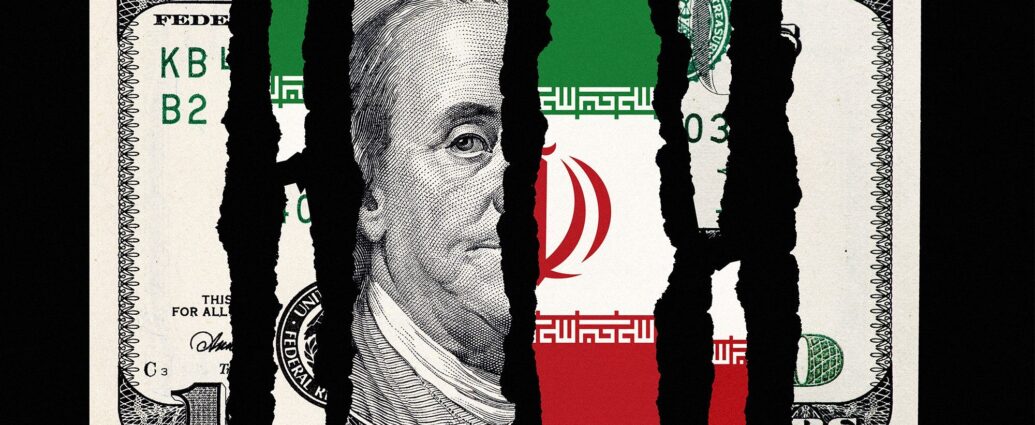
SILICON VALLEY ENGINEERS CHARGED WITH STEALING GOOGLE TRADE SECRETS AND TRANSFERRING THEM TO IRAN
Last month, Texas Attorney General Ken Paxton sued TP-Link Systems, a California-based router manufacturer spun off from a Chinese firm, for allegedly marketing its networking devices deceptively and allowing Beijing to access American consumers’ devices.
TP-Link Systems said it would “vigorously defend” its reputation, adding that the Chinese government had no form of ownership or control over the company, its products or user data.
Reuters reported last month the Trump administration had put on hold a proposed ban on domestic sales of routers made by TP-Link.
CLICK HERE TO GET FOX BUSINESS ON THE GO
The FCC issued similar rules in December that ban the import of all new models of Chinese drones.
Reuters contributed to this report.

Philadelphia responds to unpaid TSA worker plight with ‘world record for the longest cheesesteak in history’
Travelers passing through Philadelphia International Airport on Monday may have expected long security lines. But the longest line was made of cheesesteaks.
Organizers say they achieved a new Guinness World Record for the longest line of cheesesteak sandwiches, with 1,291 lined up inside a departure hall to mark National Cheesesteak Day. The display far surpassed the previous benchmark of 500 sandwiches.
“We went for the world record for the longest cheesesteak in history,” said Clarence LeJeune of MarketPlace PHL, a company that operates airport concessions. “Today we accomplished that goal here in Philadelphia.”
The cheesesteak, which originated in Philadelphia in the early 1900s, is widely considered the city’s signature food. LeJeune called it “synonymous” with Philadelphia, alongside its sports culture.
People in black aprons assembled cheesesteaks along tables set up in the walkway between Terminals B and C, filling rolls from silver buckets as they moved past storefronts.
After the record was certified, volunteers handed out the sandwiches to travelers, airport workers and Transportation Security Administration staff, who have been working without pay during the government shutdown.
LeJeune joked there are few hard rules for cheesesteaks, which is part of the “beauty of the experience” — except, he said, “You don’t ask for Swiss cheese,” referencing a 2003 moment when then-presidential candidate John Kerry drew criticism in Philadelphia for ordering one with Swiss.
Michael Empric, a Guinness World Records adjudicator, said rules require all food used in record attempts to be eaten or donated.
“In this case, they are going to TSA agents who definitely could use some lunch,” Empric said.
This story was originally featured on Fortune.com

Teenager in Wales handed life sentence after killing his mother with a hammer
Tristan Roberts, who expressed misogynistic views and had fascination with American Psycho, carefully planned attack
An 18-year-old man who expressed misogynistic views and had a fascination with the horror film American Psycho has been jailed for life with a minimum term of 22 years and six months for killing his mother with a hammer.
Tristan Roberts carefully planned the crime, researching methods of killing and how to avoid being caught before purchasing potential weapons such as knives, hammers and an axe.
This post was originally published here









America claims it sent a cease-fire plan to Iran, which doesn’t confirm receipt
Iran has received an American plan to pause the war in the Middle East, officials said Wednesday — a proposal sent even as Washington deploys paratroopers and more Marines to the region.
Tehran did not confirm receiving the plan and publicly dismissed the diplomatic effort while launching more attacks on Israel and Gulf Arab countries, including an assault that sparked a huge fire at Kuwait International Airport. Iran also continued to come under attack.
Two officials from Pakistan, which delivered the plan to Iran, described the 15-point proposal broadly, saying it addressed sanctions relief, a rollback of Iran’s nuclear program, limits on missiles and reopening the Strait of Hormuz, a crucial waterway through which a fifth of the world’s oil is shipped. An Egyptian official involved in the mediation efforts added that the proposal includes restrictions on Iran’s support for armed groups. The officials spoke on condition of anonymity to discuss details not yet released.
Some of those points were nonstarters in negotiations before the war: Iran has insisted it won’t discuss its ballistic missile program or its support of regional militias, which it views as key to its security. And its ability to control passage through the Strait of Hormuz represents one of its biggest strategic advantages.
Iran’s attacks on regional energy infrastructure along with its restrictions on the strait have sent oil prices skyrocketing and rocked world markets over fears of a global energy crisis, in turn putting pressure on the U.S. to find a way to end the chokehold and calm markets.
More US troops are on the way to the region
At least 1,000 troops from the 82nd Airborne Division will be sent to the Mideast in the coming days, three people with knowledge of the plans told The Associated Press. They spoke on condition of anonymity to discuss sensitive military plans.
The paratroopers are trained to jump into hostile or contested areas to secure key territory and airfields.
The Pentagon is also in the process of sending about 5,000 more Marines, trained in amphibious assaults, and thousands of sailors to the region.
Diplomatic efforts face major challenges
The 15-point plan now in Iranian hands is “a comprehensive deal” to reach a ceasefire, according to the Egyptian official.
Mediators are pushing for possible in-person talks between the Iranians and the Americans, perhaps as soon as Friday in Pakistan, the Egyptian and Pakistani officials said.
Speaking Tuesday at the White House, Trump said the U.S. is “in negotiations right now” and that the participants included special envoy Steve Witkoff, his son-in-law Jared Kushner, Secretary of State Marco Rubio and Vice President JD Vance. He has not said who from Iran they are in contact with.
“We have a number of people doing it,” Trump said. “And the other side, I can tell you, they’d like to make a deal.”
Iran’s Khatam Al-Anbiya Central Headquarters, which commands both the regular military and the paramilitary Revolutionary Guard, dismissed the idea of talks. Iranian leaders have repeatedly denied they are happening, while acknowledging that the foreign minister is in contact with various countries but not the U.S. or Israel.
“Our first and last word has been the same from day one, and it will stay that way: Someone like us will never come to terms with someone like you,” Lt. Col. Ebrahim Zolfaghari, a spokesman for the headquarters, said in the video statement aired on state television. “Not now, not ever.”
Israeli officials, who have been advocating for Trump to continue the war against Iran, were surprised by the submission of a ceasefire plan, according to a person who was briefed on the contours of the proposal and also confirmed it had been submitted. They spoke on condition of anonymity because they were not authorized to speak publicly.
Any talks between the U.S. and Iran would face monumental challenges. It’s not clear who in Iran’s government has the authority to negotiate — or would be willing to, as Israel has vowed to continue killing the country’s leaders.
Iran remains highly suspicious of the United States, which twice under the Trump administration has attacked during high-level diplomatic talks, including with the Feb. 28 strikes that started the current war.
“We have a very catastrophic experience with U.S. diplomacy,” Iranian Foreign Ministry spokesperson Esmail Baghaei told India Today on Tuesday.
Israel launches new strikes on Iran
The Israeli military announced new wide-scale attacks on Iran early Wednesday targeting government infrastructure, and witnesses reported airstrikes in the northwestern city of Qazvin.
Missile alert sirens sounded multiple times in Israel as Iran launched its own attacks.
Iran also kept up the pressure on its Gulf Arab neighbors, with Saudi Arabia’s Defense Ministry saying it had destroyed at least eight drones in the kingdom’s oil-rich Eastern Province, and missile alert sirens sounding in Bahrain.
Kuwait said it shot down multiple drones but one hit a fuel tank at Kuwait International Airport, sparking a fire, the General Civil Aviation Authority said. Firefighters were working to contain the blaze.
Iran’s death toll has passed 1,500, its Health Ministry has said. In Israel, 16 people have died. At least 13 U.S. military members have been killed, along with more than a dozen civilians in the occupied West Bank and Gulf Arab states.
Meanwhile, authorities say more than 1,000 people have died in Lebanon, where Israel has targeted the Iran-linked Hezbollah militant group, which has also fired on Israel.
Energy prices fall back but remain high
The news of potential negotiations drove down the price of oil — after it skyrocketed in recent weeks.
Brent crude oil, the international standard, has neared $120 a barrel during the conflict but was trading below $100 Wednesday. It is still up around 35% from the start of the war.
Economists and leaders have warned of far-reaching effects if energy prices remain high — from rising prices on food and other basics to higher rates for mortgages and auto loans.
A big driver of the spike in the oil price has been Iran’s stranglehold on the Strait of Hormuz, which leads from the Persian Gulf to the open ocean. Iran has allowed a small number of ships through the strait, but has said no ships from the U.S., Israel or countries seen as linked to them can pass.
Asked in the interview with India Today whether Iran was charging ships for passage, Baghaei, the Iranian Foreign Ministry spokesperson, said “absolutely.” He did not elaborate.
___
Madhani reported from Washington, Rising from Bangkok and Ahmed from Islamabad. Associated Press writers Samy Magdy in Cairo, Natalie Melzer in Tel Aviv, Israel and E. Eduardo Castillo in Beijing contributed to this report.
This story was originally featured on Fortune.com




Current price of oil as of March 25, 2026
At 8:30 a.m. Eastern Time today, the price of oil sits at $99.75 per barrel, using Brent as the benchmark (we’ll explain what that means shortly). That’s a decrease of $2.72 since yesterday morning—but $26.64 more than at this time last year.
| oil price per barrel | % Change | |
| Price of oil yesterday | $102.47 | -2.65% |
| Price of oil 1 month ago | $71.49 | +39.53% |
| Price of oil 1 year ago | $73.11 | +36.43% |
Will oil prices go up?
Nobody can predict the future path of oil prices with certainty. A range of factors influence how oil trades, yet supply and demand remain the main drivers. When fears of economic slowdown, conflict, or similar shocks rise, oil prices can move sharply.
How oil prices translate to gas pump prices
The price you see at the gas pump reflects more than just crude oil. Also built in are the costs of refining, distribution through wholesalers, various taxes, and the margin your neighborhood station charges.
Crude oil is still the largest single driver of the final pump price, typically representing over half of each gallon’s cost. Spikes in oil prices tend to push gas prices higher in short order. But when oil prices decline, gas prices often ease down gradually, a behavior known as “rockets and feathers.”
The role of the U.S. Strategic Petroleum Reserve
In the event of an emergency, the U.S. maintains a stockpile of crude oil known as the Strategic Petroleum Reserve. Its main goal is to safeguard energy security when disasters strike—think sanctions, severe storm damage, or war. It can also do a lot to ease the pain of sudden price jumps when supply gets disrupted.
It’s not a permanent fix, as it’s more meant to provide immediate support for consumers and ensure critical parts of the economy like key industries, emergency services, public transportation, and so on can keep operating.
How oil and natural gas prices are linked
Both oil and natural gas play key roles as major sources of energy. A big change in oil prices can affect natural gas by proxy. If oil prices increase, some industries may swap natural gas for some segments of their operations where possible, increasing the demand for natural gas.
Historical performance of oil
Oil prices are often measured by two key benchmarks:
- Brent crude oil is the main global oil benchmark.
- West Texas Intermediate (WTI) is the main benchmark of North America.
Between the two, Brent is a better representation of global oil performance because it prices much of the world’s traded crude. It’s also often the best way to review historical oil trends. In fact, the U.S. Energy Information Administration now leans on Brent as its primary reference in its Annual Energy Outlook.
When you look at the Brent benchmark across multiple decades, you’ll see that oil has been anything but consistent. It has experienced spikes driven by wars and supply cuts, as well as crashes linked to global recessions and an oversupply (called a “glut”). For example:
- The early 1970s brought the first big oil shock when the Middle East cut exports and imposed an embargo on the U.S. and others during the Yom Kippur War.
- Prices dropped in the mid-1980s for reasons such as weaker demand and more non-OPEC oil producers entering the industry.
- Prices spiked again in 2008 with rising global demand, but soon crashed alongside the global financial crisis.
- During the 2020 COVID lockdown, oil demand collapsed like never before, bringing prices to under $20 per barrel.
In short, oil’s historical performance has been far from steady. It’s massively affected by wars, recessions, OPEC whims, evolving energy initiatives and policies, and much more.
Energy coverage from Fortune
Looking to stay up-to-date regarding the latest energy developments? Check out our recent coverage:
- Iran war ends in abundance, growth, and oil at $40 a barrel—or global recession and years of oil at $150
- Europe has survived 3 energy shocks in 4 years
- $580 million in suspicious oil futures traded minutes before Trump’s Iran reversal
Frequently asked questions
How is the current price of oil per barrel actually determined?
The current price of oil per barrel depends largely on supply and demand, including news about potential future supply and demand (geopolitics, decisions made by OPEC+, etc.). In the U.S., prices also move based on how friendly an administration is to drilling, as it can affect future supply. For example, 2025 saw the Trump administration move to reopen more than 1.5 million acres in the Coastal Plain of the Arctic National Wildlife Refuge for oil and gas leasing, reversing the Biden administration’s policy of limiting oil drilling in the Arctic.
How often does the price of oil change during the day?
The price of oil updates constantly when the “futures” markets are open. A futures market is effectively an auction where people agree to buy or sell oil in the future. As long as people and companies are trading contracts, the oil price is changing.
How does U.S. shale oil production affect the current price of oil?
In short, shale is rock that contains oil and natural gas. Think of shale as energy yet to be tapped. The more shale the U.S. accesses, the more energy we’ll have—and the more easily oil prices can keep from spiking as much thanks to a greater supply.
How does the current price of oil impact inflation and the broader economy?
When oil is expensive, it tends to make everyday items cost more. This can be related to energy (your heating, gas utilities, etc.), but it’s also due to the logistics involved with making those items accessible to you. Shipping, for example, can affect the price of things at the grocery store, as it’s more expensive to get those products from warehouses and farms onto the shelf.
This story was originally featured on Fortune.com
















Europe could face fuel shortage by April as Iran throttles supplies, says Shell boss
Wael Sawan warns of pressure on diesel and petrol if strait of Hormuz does not reopen to oil and gas shipping
Europe could face a shortage of energy and fuel as soon as next month without a reopening of the strait of Hormuz, Shell’s chief executive has said.
The boss of Europe’s biggest oil company said it was working with governments to help them address the oil and gas supply crisis, which has already led to energy rationing in Asian countries.
This post was originally published here
Buy General Motors stock as tailwinds line up for automaker, says Wolfe Research
The firm upgraded the automaker to outperform from peer perform.
This post was originally published here

Jamie Dimon ‘Deeply Frustrated’ By US Defense Rigidities; ‘Little Optimistic’ On Middle East Peace
JPMorgan Chase & Co. (NYSE:JPM) CEO Jamie Dimon harshly criticized U.S. military bureaucracy at the 2026 Hill and Valley Forum in Washington, highlighting systemic bottlenecks for defense contractors while expressing surprising hope for long-term Middle East stability.
‘Deeply Frustrated’ By Defense Bureaucracy
Following a visit to the Pentagon, Dimon warned that the United States currently lacks the wartime industrial capacity necessary to rapidly scale up arms production.
For investors watching defense equities, his comments underscored the friction currently holding back major contractors like Lockheed Martin Corp. (NYSE:LMT), RTX Corp. (NYSE:RTX), and General Dynamics Corp. (NYSE:GD).
Dimon targeted the government’s procurement rules, multi-year budget rigidities, and heavy compliance burdens as massive hurdles. “I am deeply frustrated… about our own policies in America, …
This post was originally published here
Getting Ready for Agentic AI
An HBR Executive Live conversation with Pinterest CEO Bill Ready.
This post was originally published here
Here are Wednesday’s biggest analyst calls: Tesla, Amazon, General Motors, Netflix, Microsoft, Arm & more
Here are the biggest calls on Wall Street on Wednesday.
This post was originally published here




Swiss sneaker maker On Holding shakes up leadership amid slowing growth
Co-founders to become co-CEOs as On prepares to enter its “next growth phase,” the company said in a statement Wednesday.
This post was originally published here

Outperform Wall Street with Low-Cost S&P 500 ETFs
This post was originally published here
Iran war may further ‘chill’ an already frozen job market, economist says
The war injects additional uncertainty for businesses, leading them to hit pause on hiring.
This post was originally published here


Workers around the world are scared. A massive new survey shows just how much
Even as global unemployment hits historic lows, a sweeping new study of the global workforce by one of the definitive workforce data sources finds that “anxiety”—not confidence—defines how most workers feel about their job, their future, and AI transforming both.
The numbers don’t lie, and they don’t comfort. Only 22% of workers worldwide strongly agreed that their job was safe from elimination, according to a new report from ADP Research released Wednesday. The finding comes from one of the largest workforce sentiment surveys ever conducted—more than 39,000 workers across 36 countries—and lands with the force of a gut punch: The world’s workers are consumed by fear.
“Despite three years of historically low global unemployment and steady economic growth, our data reveals widespread job insecurity expressed by workers worldwide,” said Nela Richardson, chief economist at ADP.
The culprit is hiding in plain sight: artificial intelligence. As generative AI tools race into the workplace at breakneck speed, workers from Tokyo to Topeka are struggling to process what it means for their livelihoods—and they’re not reassured by what they see. “AI is not like the weather. It is not just going to descend upon us,” Richardson told reporters in a briefing on the survey results in New York City. “It really is hitting us at the task level—by augmenting and making certain tasks more high value.”
A world of anxious workers
The ADP Research Today at Work 2026 report, based on survey responses collected in late summer 2025, paints a portrait of a global workforce caught in the crosscurrents of technological disruption, demographic upheaval, and deep uncertainty. The anxiety cuts across borders and industries, but ADP found that it hits hardest at the bottom of the organizational ladder.
Among individual contributors—the frontline workers who make up the bulk of most companies’ headcount—only 18% felt their job was safe. Frontline managers fared only slightly better at 21%. Confidence rose predictably with seniority: Middle managers came in at 23%, upper managers at 31%, and C-suite executives at 35%. In other words, the higher your perch in the org chart, the less afraid you are of falling. But even then, only barely more than a third of top executives feel like they have job security, according to the results.
The geographic divides are equally stark. In Japan—a country long defined by lifetime employment culture—only 5% of workers felt their jobs were secure, the lowest reading of any market in the survey. Nigeria, by contrast, registered the most confident workforce, with 38% of workers expressing job security, driven largely by a young, tech-savvy population and booming AI adoption. In the United States, the figure was 28%.
AI is making it worse—and better, sort of
The paradox at the heart of the report is this: AI use is correlated with higher engagement and less stress, yet it’s also making workers feel dramatically less productive. Daily AI users were four times as likely as nonusers to say they weren’t as productive as they could be.
The explanation, researchers suggest, is psychological. AI has taken over the small, checklist-style tasks that gave workers a sense of daily accomplishment—answering emails, summarizing documents, generating first drafts. Without those quick wins, people feel as if they’ve done less, even when they’ve arguably done more. “AI does the things that we used to say make us feel productive,” Richardson explained to reporters. “It writes our emails for us. It responds. It summarizes documents for us. And so we have to kind of remeasure productivity in a different way; it’s shifting from productivity based on volume of work to value [of work].”
The flip side: 30% of daily AI users were fully engaged at work, versus just 14% of those who never use AI. Heavy AI users were also significantly less likely to experience negative stress: 11% reported feeling overloaded, compared with 23% of nonusers. The data suggests AI may be a powerful tool for worker well-being, if companies can figure out how to deploy it without triggering dread.
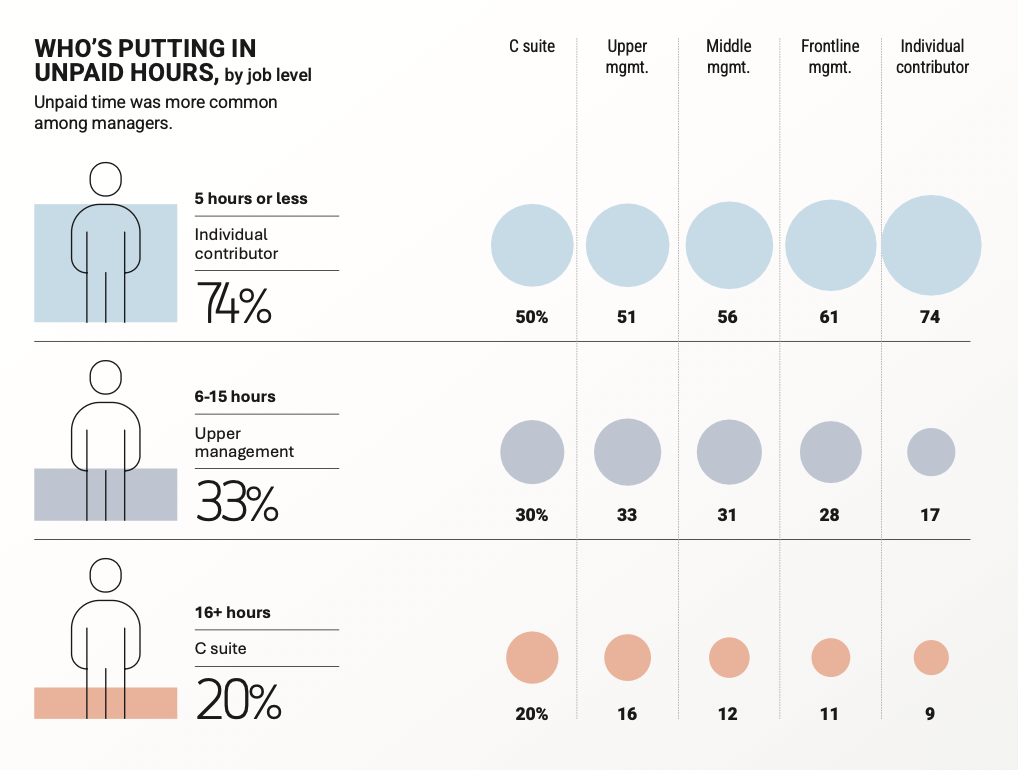
The creeping, unpaid extension of the workday isn’t helping with this angst over productivity: 62% of global workers said they put in up to five hours of unpaid work per week, while 38% reported working off the clock for six hours or more; 12%—disproportionately executives and upper managers—said they work without pay for 16 hours or more weekly.
The data reveals a troubling paradox: Workers logging the most unpaid hours are simultaneously the most engaged and the most likely to be looking for another job. They’re dedicated enough to give their time for free, yet burned out enough to be quietly interviewing elsewhere. “Free work comes at a cost,” the report concludes. “People who put in unpaid hours are more likely to feel unproductive and stressed. They’re also more likely to quit.”
“AI is entering a workforce that is anxious,” said Jay Caldwell, ADP’s chief talent officer. “And to me, that’s very, very risky. And the importance for HR professionals right now is not as much about the technology. It’s more around, ‘How do we lead through the technology? And how do we bring our workforce along?’ And the transformation that comes with that.”
Five generations, one nervous breakdown
Compounding the AI anxiety is a demographic collision unlike anything the modern workplace has ever seen. For the first time in history, five generations are working side by side—from teenagers to great-grandparents. And they are not on the same page.
Young workers ages 18 to 26 were the most optimistic, with 29% saying they had the skills needed to advance. But older workers ages 55 to 64 told a bleaker story: Only 18% felt similarly equipped, and just 12% believed their employer was investing in their development. Meanwhile, 20% of young workers strongly agreed AI would positively impact their jobs in the next year—a figure that dropped to just 10% among workers ages 55 to 64.
“Younger workers are definitely more optimistic about their skill set,” Richardson told reporters. “Older workers are also, you know, more likely to say that they’re financially unprepared. Which is interesting. They make more money, but they feel more stretched financially. They’re more likely to say that they’re less productive and less engaged than younger workers. Youth and optimism go hand in hand.” She connected these findings back to Japan, which has a culture famously respectful towards elders. Fortune has previously covered the madogiwazoku, or “window workers,” who are so named because they sometimes just stare out the window. The upshot is that jobs for younger workers are harder to come by.
The data also exposes a troubling engagement crisis hiding beneath the surface calm of low unemployment. Only 19% of workers globally were fully engaged on the job in 2025—unchanged from the year before—meaning more than 80% of the world’s workforce is, by some measure, just going through the motions. Workers who find meaning in their jobs are 12.5 times as likely to be fully engaged as those who don’t.
What employers must do
ADP researchers are emphatic that the anxiety gripping workers is not inevitable; it is, in large part, a leadership failure. Workers who feel their employers are investing in their skills were 5.3 times as likely to feel their jobs were secure. Among those who strongly agreed their employer was investing in them, 53% were fully engaged. Among those who didn’t feel that investment, only 12% were.
The prescription is clear: Communicate, upskill, and stop treating workers as passive recipients of technological change. “Upskilling isn’t just a strategy,” Richardson said at the briefing. “It’s a reassurance. It’s a trust pact between the employer and the worker.”
Caldwell urged HR professionals to help workers reframe what productivity even means in an AI-driven world—away from task volume and toward judgment, creativity, and long-term impact. “Workers who clearly see the role their existing skill sets will play in an organization’s future,” Caldwell said, “will be more engaged, productive, and have the confidence to thrive in this next era of work.”
For now, though, the world’s workers are mostly not thriving. They’re waiting, watching, and wondering whether their jobs will survive the machines. The survey suggests that the answer—for most—remains maddeningly unclear.
This story was originally featured on Fortune.com


Yep, a mom’s COVID shot during pregnancy protects her baby, a large study finds
A 3-year study published in Pediatrics examined newborns in Norway. It found a clear benefit for the baby when mom gets a COVID vaccination during pregnancy.
(Image credit: Didier Pallages)

This post was originally published here

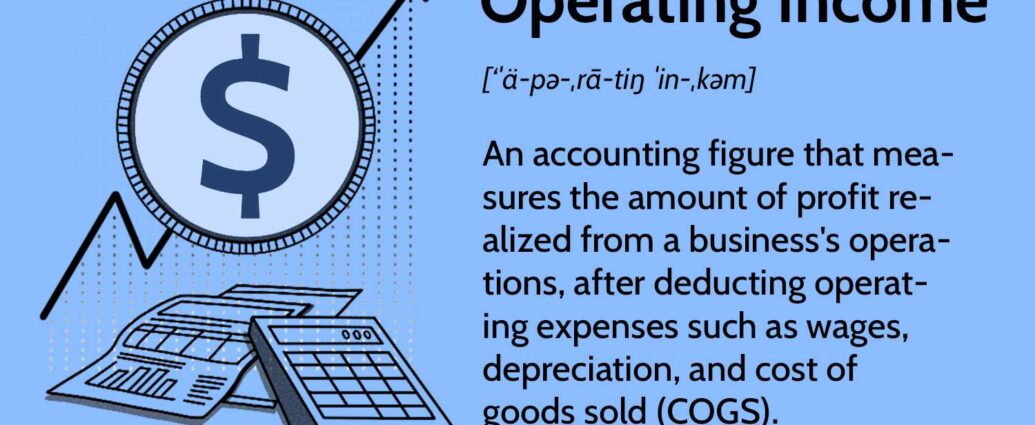
Operating Income: Definition, Formulas, and Example
This post was originally published here

Beijing And Washington Squeeze Fading Market For Chinese IPOs In US
Key Takeaways:
- China is aggressively pressing companies to unwind opaque offshore variable interest entity structures to stem capital flight and enforce domestic taxation
- U.S. lawmakers are targeting boutique investment banks over their underwriting practices in a bid to rein in pump-and-dump schemes by Chinese firms
image credit: Bamboo Works
A pair of separate regulatory moves from opposite sides of the Pacific — one driven by Beijing’s financial watchdog and the other by U.S. lawmakers — are converging to further pressure the already fading market for U.S. IPOs by Chinese companies.
We believe these coordinated pressures are effectively hammering the latest nail into the coffin for a once-lucrative pipeline, fundamentally reshaping how these enterprises access foreign capital.
We’ll start with the view from China, where the China Securities Regulatory Commission is increasingly pressuring Chinese companies listed in the U.S. and Hong Kong to unwind their offshore corporate registrations. For decades, founders circumvented Chinese government prohibitions on foreign ownership in the telecom and internet sectors by using the variable interest entity (VIE) structure, routinely registering their businesses in offshore havens like the Cayman Islands or the British Virgin Islands (BVI).
This offshore setup functioned as an elegant workaround that allowed foreign investors to buy stock without ever holding a direct interest in the underlying Chinese operations. However, these structures offered a suite of other benefits that founders eagerly embraced. They provided significant tax advantages, created a veneer …
This post was originally published here

Legal AI startup Harvey valued at $11 billion in funding round, as VCs spread bets beyond model companies
Harvey will use its fresh capital to expand its AI agents and grow its embedded legal engineering teams.
This post was originally published here

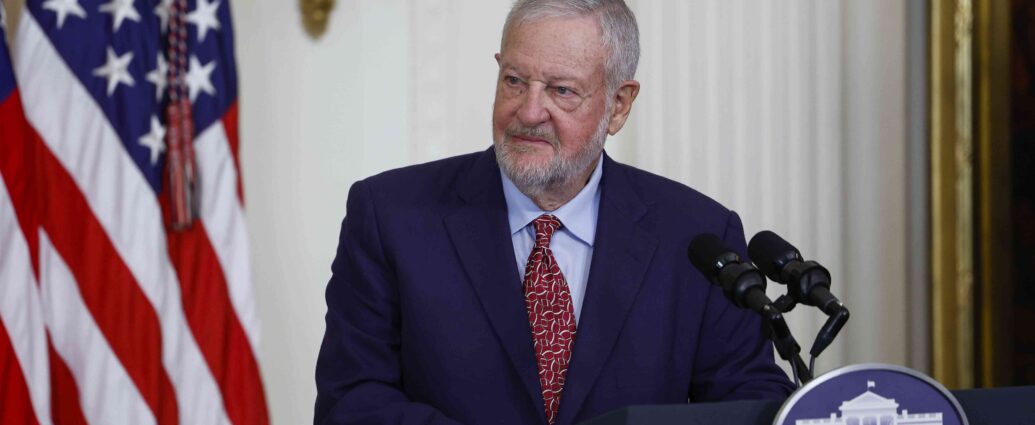
The Rockefeller Fortune: Tracing $900 Million to $10.3 Billion
This post was originally published here
How Leaders Can Build a High-Agency Culture
The psychology of rewiring your company’s invisible belief systems.
This post was originally published here

Absci, DigitalOcean And Other Big Stocks Moving Lower In Wednesday’s Pre-Market Session
U.S. stock futures were higher this morning, with the Dow futures gaining around 1% on Wednesday.
Shares of Absci Corp (NASDAQ:ABSI) fell sharply in pre-market trading after the company reported worse-than-expected quarterly sales results.
Absci reported quarterly losses of 20 cents per share which met the analyst consensus estimate. The company reported quarterly sales of $650.000 thousand which missed the analyst consensus estimate of $1.100 million.
Absci shares dipped 11% to $2.68 in pre-market trading.
Here are …
This post was originally published here

Earn Monthly Income With ETFs—No Options Knowledge Needed
This post was originally published here
What Sora’s End Says About OpenAI’s Strategy

EXCLUSIVE: Petrochemical Crunch From Iran War Isn’t Hitting Hospitals Yet—But Analysts Say Costs For Critical Medical Supplies Could Rise Within Weeks
The Strait of Hormuz disruption is adding cost pressure to medical supply chains through an indirect but significant channel: the petrochemical derivatives used to make pharmaceutical packaging and drug ingredients, according to analysts tracking the disruption.
The United States and Israel launched coordinated strikes across Iran on Feb. 28, triggering a war that has now stretched into its 25th day with no clear path to de-escalation. Iran has signaled it is prepared to shut down the Strait of Hormuz indefinitely, while the UK Maritime Trade Operations agency has raised the threat level in the Gulf to critical. Oil markets are already reacting: Brent crude has surged past $100 a barrel and Goldman Sachs warns elevated prices could persist through 2027.
The Petrochemical Link
Strikes on Gulf refineries have set off a chain reaction in pharmaceutical supply chains, according to David Weeks, supply chain lead at Moody’s.
“These facilities produce key derivatives such as naphtha and methanol, which are important inputs for industries including pharmaceuticals,” Weeks told Benzinga.
Naphtha is commonly used in pharmaceutical packaging, while methanol is used in solvents for active pharmaceutical ingredient synthesis.
An estimated 18% of global methanol capacity has been affected by the Hormuz disruption, with US prices up 18% since the conflict began on Feb. 28, according to S&P Global Energy CERA data. The profit made from turning naphtha into industrial raw materials is at its highest point since early 2023, according to commodity trading house Alkagesta.
What Is …
This post was originally published here

Costco, NextEra, Valero Energy And More On CNBC’s ‘Final Trades’
On CNBC’s “Halftime Report Final Trades,” Brian Belski, founder, CEO & chief investment officer at Humilis Investment Strategies, named Costco Wholesale Corporation (NASDAQ:COST) as his final trade.
Supporting his view, Costco, on March 5, reported second-quarter revenue of $69.60 billion, beating analyst estimates of $69.29 billion, according to Benzinga Pro. The membership-based retailer reported earnings of $4.58 per share, beating estimates of $4.57 per share.
Shannon Saccocia, chief investment officer of NB Private Wealth, picked iShares US Consumer Discretionary ETF (NYSE:IYC).
On the earnings front, Oracle, on March 10, reported better-than-expected third-quarter financial results and issued FY2027 sales guidance above estimates. Oracle posted third-quarter revenue …
This post was originally published here
Hugo Barra’s return to Meta 5 years after exit underscores Zuckerberg’s AI urgency
During Hugo Barra’s first stint at Meta, the company was pushing heavily into VR. Now, he’s back and the focus is AI agents.
This post was originally published here



Circle Stock Crashes 20% On Clarity Act Ban, But Bernstein Says Market Got It Wrong
Circle Internet Group (NYSE:CRCL) plummeted 22% Tuesday after draft language from the Clarity Act reportedly bans exchanges from offering stablecoin yield, but Bernstein analysts say the market is conflating who earns yield with who distributes it.
The Bernstein Counter-Thesis
Analyst Gautam Chhugani and his Bernstein colleagues argue the market misread the risk. “Circle earns. Coinbase distributes. The Clarity Act targets distribution,” they wrote in an investor note.
The proposal would ban companies from paying users simply for holding stablecoins in a way that resembles interest on bank deposits.
However, carve-outs for activity-based rewards could still allow platforms to offer incentives linked to payments, trading, or loyalty programs.
Bernstein said the selloff “may not be calibrated enough” because rewards tied to bona fide activity may still be permitted under the draft language.
The Clarity Act Stablecoin Battle
Patrick Witt, executive director of the President’s Council of Advisors for Digital Assets, confirmed the move Friday, crediting Senators Thom Tillis …
First Thing: US reportedly poised to send airborne troops to Middle East
Iran has targeted Israel and Gulf states while denying Trump’s claims that any negotiations are taking place. Plus, Democrats flip seat in district that includes Mar-a-Lago
Good morning.
The US appeared poised to deploy airborne troops to the Middle East, according to reports, as strikes intensified across the region.
What is the 15-point framework? Diplomats with knowledge of the talks believe it is likely to be a rehashed version of a proposal put forward by Trump’s negotiating team during nuclear talks in May 2025.
What is happening with the strait of Hormuz? Iran has announced it is permitting “non-hostile” ships to pass safely through the strait.
This is a developing story. Follow our liveblog for the latest updates.
This post was originally published here

AI robots could cost $13,000 by 2035: Here’s what that means for CFOs
Good morning. AI is escaping the screen and that should be setting off both alarms and opportunities in the finance function.
Deloitte’s new CFO Guide to Tech Trends 2026 explores how finance leaders can think strategically about emerging technologies and embrace what’s possible, which in turn elevates their function’s value and helps shape what’s next for their entire organization.
One tech trend on the rise is AI-enabled robotics. AI is no longer confined to dashboards and copilots. “Physical AI,” which is the convergence of AI with robotics, sensors, and real-world systems, marks a turning point. As Deloitte notes, intelligence is becoming “embodied” in factories, warehouses, and supply chains, where autonomous systems can optimize operations in real time. For example, BMW is testing humanoid robots to handle tasks that traditional industrial robots cannot perform, according to Deloitte. Meanwhile, the Bank of America Institute projects that the material costs of a humanoid robot could fall from $35,000 in 2025 to between $13,000 and $17,000 by 2035.
Why should CFOs care about AI-driven robots? According to the report, they directly affect both costs and ROI. Adopting physical AI can reshape products, operations, and supply chains, influencing everything from manufacturing to quality control. Finance leaders must ensure these changes are accurately reflected in KPIs and financial reporting to drive competitive advantage. At the same time, CFOs need to strengthen how they measure ROI in a hybrid human–AI workforce and invest in upskilling finance teams to understand and manage the financial implications of this technology.
But physical AI is just one piece of a broader transformation. Deloitte highlights a surge in agentic AI, systems that don’t just analyze but act, alongside a resurgence in hardware investment, as AI workloads demand specialized infrastructure. These shifts introduce new cost structures, including rising energy consumption and capital intensity, placing CFOs at the center of critical trade-off decisions.
The finance function’s role is expanding from measuring performance to shaping the technological bets that will determine it.
Sheryl Estrada
sheryl.estrada@fortune.com
This story was originally featured on Fortune.com

How To Earn $500 A Month From Commercial Metals Stock Ahead Of Q2 Earnings
Analysts expect the company to report quarterly earnings of $1.32 per share. That’s up from 26 cents per share in the year-ago period. The consensus estimate for Commercial Metals’ quarterly revenue is $2.09 billion (it reported $1.75 billion last year), according to Benzinga Pro.
On Jan. 8, Commercial Metals delivered a sharp first-quarter earnings beat on stronger steel margins and construction demand.
Some Commercial Metals investors are eyeing potential gains from the company’s dividends. As of now, Commercial Metals has an annual dividend yield of 1.13%, with a quarterly dividend of 18 cents per share (72 cents per year).
So, how can investors exploit its dividend yield to pocket a regular $500 monthly?
To …
This post was originally published here



Stocks making the biggest moves premarket: Chewy, EchoStar, Arm, KB Home & more
These are the stocks posting the largest moves premarket.
This post was originally published here

Temu Owner PDD Posts Surprise Profit Drop




Honda and Sony scrap luxury EVs in latest electric rollback
This post was originally published here


Larry Fink says the Iran war ends in one of two extremes: Abundance, growth, and oil at $40 a barrel—or global recession and years of oil at $150
The question on Wall Street’s lips this week has been about Iran: When and how will the war end? President Trump issued some positive updates over the past 48 hours, though some analysts have pointed out there’s little verifiable action at present to support those claims.
BlackRock CEO and founder Larry Fink sees the conflict ending in one of two extremes: Global powers accept Iran, and its goods and services (most importantly, its oil) is released onto the world market, pushing prices down. Or, the Iranian regime continues to stand at odds with global adversaries, and oil prices stay significantly elevated not for mere months, but for years.
Wall Street has been determinedly upbeat about the war in Iran resolving in a relatively short window—even the ever-skeptical Jamie Dimon, CEO of JPMorgan Chase, said he is a “little optimistic” about the long-term outcome of the current chaos in the Middle East.
Fink also wants to be hopeful, and outlined there is a best-case scenario: “I could paint a scenario where I could see, a year from now, oil at $40 a barrel, I could see it above $150—we have two very extreme outcomes,” Fink told the BBC this morning.
“Everybody has to recognise that there’s not going to come somewhere in the middle. It’s going to be [one] of two extremes: Is Iran a country that can be accepted by the international community, can it be a country that participates in the world again?” Fink mused. Such an outcome could slash oil prices, flooding the market with supply currently choked by military threats in the Strait of Hormuz.
Iran borders the Strait of Hormuz, a narrow waterway in the Persian Gulf through which exports from the UAE, Qatar, Kuwait, and Iraq all flow. Some 20 million barrels of oil typically flow through the strait every day, about 20% of the global oil supply. Iran has said it controls the strait, littering it with mines, meaning shipmasters are too nervous to enter the waterway—only certain ships, paying a hefty price tag, have been allowed to pass by the Iranian authorities.
The worst-case scenario
Oil prices have already spiked in response to the chokehold, with analysts questioning how quickly normal trade may resume once the conflict draws to a close. If the conflict does rumble on for longer than the roughly month-long window President Trump had indicated, this will have longer-lasting impacts on gas and energy prices—a particular concern for consumers already sensitive to affordability shocks.
“Iran remains a threat,” Fink continued. “A threat to trade, a threat to the Strait of Hormuz, a threat to the peaceful coexistence of the GCC (Gulf Cooperation Council) region—I would argue that we could have years of above-$100, closer to $150 oil, which has profound implications in the economy. The $40 oil implication is one of abundance and growth; the other is an outcome of probably stark and steep recession. I don’t think anybody knows what the outcome will be.”
The U.S. and Israel, to some extent, have already achieved their aim in Iran: The country’s former supreme leader Ayatollah Ali Khamenei, was killed earlier this month. His son, Mojtaba Khamenei, now leads the country. Indeed, if the younger Khamenei is more open to working alongside the West, then Trump could easily wind down the conflict and maintain the rhetoric that he achieved his aim of eliminating a threat.
If Iran’s leadership wants to continue to be an “exporter of fear” and chooses to work against international trade, Fink added: “We’ll have global recession. Think about what it means for agricultural prices, fertilisers is a by-product from gas … it really disrupts a lot of supply chains.”
This story was originally featured on Fortune.com








ARM Stock’s Momentum Score Leaps Fueled By In-House AGI Chip Ambitions
Arm Holdings Plc (NASDAQ:ARM), a crucial chip architecture partner for tech giants Nvidia Corp. (NASDAQ:NVDA) and Apple Inc. (NASDAQ:AAPL), is experiencing a sharp acceleration in market enthusiasm following its strategic pivot toward manufacturing its own artificial intelligence (AI) chips.
Massive Surge In Technical Strength
The semiconductor designer recently saw its Benzinga Edge’s Stock Rankings momentum score more than double week-over-week, leaping from 19.64 to 52.09.
This score evaluates a company’s relative strength based on its price movement patterns and volatility over multiple timeframes, ranking it as a percentile against other stocks.
The aggressive expansion has successfully flipped Arm’s near-term technicals. According to the Benzinga Edge price trend metrics, the stock is now in an upward trend in the short term, which covers the last couple of months. It is also showing an upward …
This post was originally published here

Bitcoin Holds $71,000 As Ethereum, XRP, Dogecoin Test Breakout Levels
Bitcoin is holding near $71,000 as improving sentiment lifted crypto markets. Bitcoin ETFs saw $66.7 million in net outflows on Tuesday, while Ethereum ETFs reported $40.8 million in net outflows.
Cryptocurrency |
Ticker | Price |
| Bitcoin | (CRYPTO: BTC) | $71,846 |
| Ethereum | (CRYPTO: ETH) | $2,195.01 |
| Solana | (CRYPTO: SOL) | $92.56 |
| XRP | (CRYPTO: XRP) | $1.42 |
| Dogecoin | (CRYPTO: DOGE) | $0.09687 |
| Shiba Inu | (CRYPTO: SHIB) | $0.056186 |
Meme coin market capitalization rose 1.3% over the past 24 hours …

Russia reaps fertiliser windfall from Iran war
This post was originally published here

Iran has received Trump’s 15-point plan to end war, report says; President says ‘in negotiations right now’
It comes amid a messaging clash between the U.S. and Iran on peace negotiations.
This post was originally published here


Why Velo3D Shares Are Sliding Wednesday?
Velo3D Inc (NASDAQ:VELO) shares are retreating Wednesday morning. This move follows the company’s fourth-quarter and full-year 2025 financial results released Tuesday.
Velo3D reported fourth-quarter revenue of $9.44 million. This surpassed estimates of $8.68 million. The company posted an adjusted loss of 54 cents per share. This was slightly better than the 56-cent loss analysts expected.
3D printer and parts revenue decreased 5% year-over-year. Management cited product mix and system sales volume for the dip. System sales remain the primary 2026 revenue driver.
Growth Plans
The company’s backlog reached $31 million by year-end. CEO Arun Jeldi noted a “record for bookings” in the quarter.
Jeldi …
This post was originally published here
Arm just unveiled its first in-house chip. Raymond James says buy the stock
Arm shares rose 13% in premarket trading following the company’s announcement that it would jump into the CPU fray.
This post was originally published here

US set to deploy airborne troops amid Trump claims of ‘very good’ Iran talks
Israel and Gulf states targeted by Iran in latest strikes while Tehran denies any negotiations with US to end war
The US is poised to deploy airborne troops to the Middle East as strikes intensify, signalling it may consider boots on the ground despite Donald Trump’s claims of “very good” talks with Iran, as it was reported that the US president had delivered a 15-point negotiation plan to Tehran via Pakistan.
Early on Wednesday, Iran’s Revolutionary Guards said they had launched a new wave of attacks against locations in Israel including Tel Aviv and Kiryat Shmona, as well as US bases in Kuwait, Jordan and Bahrain. Drones hit a fuel tank and sparked a fire at Kuwait international airport, the Gulf state’s civil aviation authority said.
This post was originally published here
Thousands of U.S. troops deploy to Middle East. And, the latest on DHS funding talks
The U.S. is sending thousands of paratroopers from the 82nd Airborne to the Middle East. And, congressional Republicans present Democrats with a new deal to fund the Department of Homeland Security.
(Image credit: Alex Wong)

This post was originally published here

Personal Loans: Banks or Credit Unions—Which Offers Better Rates?
This post was originally published here

On Iran, Trump is open to a deal but he also has ‘a fist, waiting to punch you in the [expletive] face,’ White House insider says
Good morning. On Fortune‘s radar today:
- The U.S. and Iran appear to be exchanging messages about a proposed peace deal, and the markets are loving it. Oil is down, stocks are up. Iran said “non-hostile vessels” could pass through the Strait of Hormuz, with its permission. But President Trump is still sending thousands of ground troops to the region.
- Exclusive: Alphabet is No. 1 on Fortune’s America’s Most Innovative Companies list.
- Anthropic may be target of “attempted corporate murder,” a judge says.
- Yikes: Growth in corporate investment is now reliant solely on AI.
- Polymarket thinks the war will last until May.
This story was originally featured on Fortune.com

Merck to buy Terns Pharmaceuticals for $6.7 billion to boost cancer pipeline
Merck is trying to bulk up its portfolio ahead of its best-selling cancer drug Keytruda losing patent protection in 2028.
This post was originally published here


Hedge fund Caxton extends losses to $1.3bn as Iran war rocks markets
This post was originally published here
Estate of Mike Lynch ordered to pay £920m to Hewlett Packard Enterprise
Ruling linked to takeover of Autonomy in 2011 comes two years after tech tycoon died in superyacht disaster
The estate of the late British tech tycoon Mike Lynch has been ordered to pay £920m to the technology company Hewlett Packard Enterprise (HPE) two years after he died in a superyacht disaster.
The ruling by London’s high court said the estate was liable to pay the sum as compensation, costs and interest for the acquisition of Lynch’s firm Autonomy by Hewlett-Packard (HP), after a UK legal ruling in 2022 that he duped the US company into paying £8.2bn for the software firm.
This post was originally published here












The growing problem of ‘tech addiction’ spawns a new detox economy
As I’ve been rewatching HBO’s Silicon Valley, my favorite roast of the first season is the incessant refrain that tech is “making the world a better place.”
But that isn’t always true, by any stretch of the imagination. I’ve been thinking that I’ve spent a lot of time covering the capital and companies, but not nearly enough time writing about the world this technology creates. I was especially thinking that as I read my colleague Kristin Stoller’s new feature about tech addiction, published this week. It’s a story that spans years and companies. Case in point:
At age six, Sarah Hill was handed her first iPad by her parents, which she used to play games like Angry Birds and Minecraft whenever she was bored. By age 21, the Alabama native had fallen so deep into virtual reality experiences and playing video games that she’d stopped seeing friends, showering, and brushing her teeth. “If you compare video game and tech addiction to drugs,” she says, “VR is the meth of drugs.”
At college, she spent so much time holed up in her room compulsively accessing a chatbot site, Character AI, on her phone that she failed classes. “I remember the night I told my parents I’d lied about everything and I flunked,” she recalls. “My parents didn’t have any words. They were like, ‘Just go.’ I went to my room, but the last thing I saw was my mom resting her elbows on the counter and just crying. That was the worst thing I ever saw.”
Hill’s parents flew with her from Alabama to a town just outside of Seattle and enrolled her at reSTART, one of the nation’s few residential treatment programs for digital overuse that treats tech addiction as a danger on the scale of alcohol or drug addiction.
Though some say tech addiction doesn’t exist, evidence is mounting that the growing string of legal cases against startups like Character and giants like Meta, Alphabet-owned YouTube, and TikTok could create an unambiguous inflection point.
Read more about who gets addicted—and whether tech is approaching a “Big Tobacco” moment here.
See you tomorrow,
Allie Garfinkle
X: @agarfinks
Email: alexandra.garfinkle@fortune.com
Submit a deal for the Term Sheet newsletter here.
Joey Abrams curated the deals section of today’s newsletter. Subscribe here.
This story was originally featured on Fortune.com
Oil prices fall as Iran signals safe passage for ‘non-hostile’ ships through Strait of Hormuz
Oil prices fell after Donald Trump that Washington and Tehran are “in negotiations right now” and indicated Iran is keen to reach a peace agreement.
This post was originally published here

Earn Passive Income With REITs That Beat the S&P 500
This post was originally published here
Trump’s war in Iran exposes US’s shift from a global guardian to an arbiter of chaos
The US is recklessly spreading economic havoc among global friends and foes while suffering little harm itself
To shield ordinary Indians from the war in Iran, the government in Delhi redirected supplies of liquefied gas to Indian families, for which it is the main cooking fuel, limiting supplies to the plastics industry. The Nepalese government rationed gas and the Philippines trimmed the government workweek to four days. Bangladesh closed universities and rationed fuel.
They have been hardest hit by Iran’s closure of the strait of Hormuz. Economies in Asia import over a third of the energy they consume, on average. Korea imports four-fifths; Japan nine-tenths; Thailand 55%. Most of this comes from the Gulf. About 80% of oil and oil products transiting through the strait in 2025 was destined for Asia, according to the International Energy Agency. But traffic through its waters has collapsed by 90%.
This post was originally published here
Bernie Sanders and AOC introduce bill to pause building of new datacenters
Lawmakers say moratorium on construction would buy time to create strong, federal guardrails for AI
Amid an unprecedented energy crisis and the rapid buildout of artificial intelligence infrastructure, progressive lawmakers have unveiled a new policy to place a moratorium on the construction of AI datacenters.
The policy, announced by Bernie Sanders, an independent senator from Vermont, and Alexandria Ocasio-Cortez, a New York Democratic representative, on Wednesday morning, aims to ensure the AI boom protects the environment and communities, and benefits workers instead of harming them. A temporary ban, the lawmakers say, would give the US government time to create strong federal safeguards for AI, which is “affecting everything from our economy and wellbeing to our democracy, warfare and our kids’ education”.
This post was originally published here
Professor sues Texas university that terminated contract after Palestine talk
Idris Robinson says Texas State violated his constitutional rights over off-campus talk seized on by pro-Israel activists
Philosophy professor Idris Robinson has sued Texas State University officials, asserting that the school violated his constitutional rights by ending his contract after he gave a talk on the Israeli-Palestinian conflict off-campus in another state where a fight broke out, the Guardian has learned.
Perhaps in part because Robinson did not introduce himself as connected to Texas State at the event, it took several pro-Israel social media accounts a year to identify him and launch a campaign to get Robinson fired, targeting the school’s leadership and accusing him of being a terrorist and inciting violence.
This post was originally published here

Mortgage demand drops more than 10% as rates hit the highest level since October
Mortgage demand continued to tumble last week, as mortgage rates surged higher and affordability weakened further.
This post was originally published here







Understanding ACH Transfers: How They Work
This post was originally published here

Stock Market Today: Futures Surge, Oil Sinks on Report US Sends Iran Plan to End War
This post was originally published here





Essential Investing Tips for Teens: Start Building Wealth Early
This post was originally published here

Trump Administration Should ‘Stop Spending’ Amid An ‘Insolvent’ Treasury, Says Rand Paul, Pushes ‘Six Penny’ Plan To Rescue Economy
Senator Rand Paul (R-KY.) is sounding the alarm on America’s looming fiscal catastrophe, declaring the federal government “insolvent” and urging the Donald Trump administration to “stop spending” as he pushes a new “Six Penny” plan to balance the budget in five years.
Treasury Liabilities Surpass Assets
Pointing to the Treasury Department‘s fiscal year 2025 financial statements, Paul highlighted a staggering disparity: $6.06 trillion in assets stacked against $47.78 trillion in liabilities.
To combat this runaway borrowing, the Kentucky Republican introduced a federal budget resolution to balance on-budget outlays and revenues by cutting six cents off every projected dollar spent over the next five fiscal years.
‘Quietly Admitted’ Insolvency
In a recent social media post, Paul stated, “The Treasury just quietly admitted the U.S. government is insolvent.” He stressed that rescuing the nation’s finances “would require the government to actually stop spending money it doesn’t have.”
This grim financial picture is echoed by the fact that the Treasury’s reported liabilities do not include the unfunded obligations of social insurance programs.
When accounting for projected Medicare and Social Security shortfalls, total federal obligations …
This post was originally published here


The youngest-ever female Fortune 500 CEO is reinventing the largest Medicaid insurer amid funding cuts and rising costs
- In today’s CEO Daily: Diane Brady profiles Centene CEO Sarah London.
- The big leadership story: CFOs plan AI-related layoffs—but not as many as you might think.
- The markets: Up globally on reports of an Iran breakthrough
- Plus: All the news and watercooler chat from Fortune.
Good morning. Sarah London, the youngest-ever female CEO to run a Fortune 500 company, isn’t leading from a place of comfort. As federal cuts and new regulations reshape U.S. health care, the chief executive of Centene, the country’s biggest Medicaid insurer, is reimagining what it means to innovate in a constrained environment. Her playbook is less about bold spending and more about disciplined reinvention; she’s streamlining operations, shedding noncore businesses, and using predictive algorithms to help manage care for vulnerable populations. At a moment when “the country is getting poorer and sicker,” as she puts it, London’s version of innovation isn’t just about efficiency—it’s about using technology to keep the social safety net intact.
Centene grew revenue almost 20% last year amid drastic cuts to federal Medicaid spending that have inflicted pain on the bottom line and customers. That hasn’t stopped London from focusing on programs that tie affordable housing to health care or leveraging AI to identify and deliver a suite of services to members with high-risk pregnancies.
“There is an opportunity in this moment to innovate and deliver within the construct of these programs,” she told me. “We’re harnessing this moment to transform and simplify the organization, to lean into our mission and the levers that are going to fundamentally change how we power that mission.”
Companies that stand the test of time tend to draw on their strong foundation to lean into the future. They’re focused on what’s ahead without ignoring the value that comes with expertise, relationships and brand. Case in point: the pioneering giants on Fortune’s 2026 Most Innovative Companies list, out this morning. As many of you know, we’re holding a Fortune 500 Innovation Forum in Detroit on Nov. 17 and 18 to look at the next 250 years of American innovation. It’s part of a broader push to dig into the issues and opportunities around innovation, and to highlight the companies that are shaping what’s next. Get in touch with me or find out more here if you’re interested in joining us.
Contact CEO Daily via Diane Brady at diane.brady@fortune.com
This story was originally featured on Fortune.com

How Much Did People in Their 60s Actually Spend Living in Retirement Last Year?
This post was originally published here
Meta Tells Some Employees To Work Remotely Ahead Of Potential Layoffs: Report
Some Meta Platforms Inc. (NASDAQ:META) employees were directed to work remotely on Wednesday as the company prepares for layoffs.
Employees in the wearables and ads divisions received a short HR email on Tuesday night saying leadership would provide more details, according to a Business Insider report.
The news comes after it was reported that a fifth or more of Meta’s nearly 79,000 employees could be let go, which would amount to roughly 16,000 job cuts. If implemented, it would be the company’s largest workforce reduction since its 2022–2023 restructuring, when Meta eliminated more than 21,000 positions.
Executives Receive Stock Options
The remote work announcement comes as Meta granted equity to seven senior executives on March 20, according to Securities and Exchange Commission filings submitted on Tuesday.
Six executives — …
This post was originally published here




4 African Countries Where You Can Retire Comfortably and Affordably
This post was originally published here




Sony-Honda joint venture scraps EV plans after Honda strategy overhaul
This post was originally published here




Hundreds of UK teenagers to trial six-week social media curbs for major study
Government’s pilot ban for under-16s accompanies consultation as peers vote on Australian-style restrictions
Hundreds of UK teenagers will trial social media bans, digital curfews and time limits on apps under a government pilot, alongside a consultation to decide whether the UK should ban access to social media for the under-16s.
During the test, led by the UK government, a proportion of 300 teens across all four nations of the UK will have their social apps disabled, “mimicking the enforcement of a social media ban at home”.
This post was originally published here
Recession odds climb on Wall Street as economy shows cracks beneath the surface
Economists have pulled up their risk assessments of a contraction amid heightened uncertainty over geopolitical risk and a labor market slump.
This post was originally published here

How the Federal Reserve Reduces Its Balance Sheet
This post was originally published here

Faster-than-sound passenger flights could soon return to US skies after key House vote
U.S. air travelers could soon embark on journeys faster than the speed of sound if a bill in the House of Representatives is taken up in the Senate.
The House voted to legalize supersonic flight in a decisive bipartisan vote on Tuesday, with the bill passing unanimously by voice vote in the early evening.
Supersonic passenger flights over land were banned by the Federal Aviation Administration (FAA) in 1973 over noise concerns, and no such planes were ever manufactured in the U.S. by American-owned airlines.
HUNDREDS OF FLIGHTS CANCELED, DELAYED AT LAGUARDIA AIRPORT AFTER AIR CANADA RUNWAY COLLISION
The bill, led by Rep. Troy Nehls, R-Texas, would give the FAA a year to update its rules to allow for passenger flights over land that are faster than Mach 1.
But the caveat for those flights is that they must not be heard or felt by people on the ground, thereby eliminating noise pollution concerns.
AMERICAN AIRLINES JET CANCELS TAKEOFF AFTER LAX RUNWAY INCURSION
Nehls, who chairs the House Transportation Committee’s subcommittee on aviation, told Fox News Digital that his bill would “ensure that the United States doesn’t fall behind our foreign adversaries in aviation innovation.”
“For decades, agency regulations have held back American innovation and supersonic flight. My bill puts a stop to that and safely unleashes the next era of aerospace innovation. The Senate must act swiftly to pass this legislation to codify President Trump’s executive order and ensure the U.S. is the world’s leader in supersonic aviation,” Nehls said.
Boom Supersonic, a company backing the bill, told Fox News Digital, “We have demonstrated that civil supersonic flight can be safe, efficient, and quiet. Today’s bipartisan vote is an important step toward codifying the executive order signed by the President last year that overturns a 50 year old outdated regulation, clearing the runway for all of us to enjoy faster flights.”
Nehls’ bill follows an executive order unveiled in June of last year by President Donald Trump, which the White House said would reverse five decades of “outdated and overly restrictive regulations.”
GET FOX BUSINESS ON THE GO BY CLICKING HERE
The now-retired Concorde airliner, a British and French company, famously operated trans-Atlantic supersonic flights for 27 years through the late 20th century.
But Concorde flew its last commercial flight in 2003 after high cost overruns, maintenance costs, and a significant decrease in passenger flights following a fatal Air France flight involving a Concorde jet in July 2000, the airliner’s only deadly accident in its operating history.





Comparative Study: Microsoft And Industry Competitors In Software Industry
Amidst today’s fast-paced and highly competitive business environment, it is crucial for investors and industry enthusiasts to conduct comprehensive company evaluations. In this article, we will delve into an extensive industry comparison, evaluating Microsoft (NASDAQ:MSFT) in comparison to its major competitors within the Software industry. By analyzing critical financial metrics, market position, and growth potential, our objective is to provide valuable insights for investors and offer a deeper understanding of company’s performance in the industry.
Microsoft Background
Microsoft develops and licenses consumer and enterprise software. It is known for its Windows operating systems and Office productivity suite. The company is organized into three equally sized broad segments: productivity and business processes (legacy Microsoft Office, cloud-based Office 365, Exchange, SharePoint, Skype, LinkedIn, Dynamics), intelligence cloud (infrastructure- and platform-as-a-service offerings Azure, Windows Server OS, SQL Server), and more personal computing (Windows Client, Xbox, Bing search, display advertising, and Surface laptops, tablets, and desktops).
| Company | P/E | P/B | P/S | ROE | EBITDA (in billions) | Gross Profit (in billions) | Revenue Growth |
|---|---|---|---|---|---|---|---|
| Microsoft Corp | 23.33 | 7.08 | 9.11 | 10.2% | $58.18 | $55.3 | 16.72% |
| Oracle Corp | 26.41 | 12.61 | 6.66 | 11.65% | $8.16 | $11.1 | 21.66% |
| Palo Alto Networks Inc | 87.34 | 13.57 | 11.30 | 4.78% | $0.64 | $1.91 | 14.93% |
| ServiceNow Inc | 62.66 | 8.44 | 8.25 | 3.31% | $0.76 | $2.73 | 20.66% |
| Fortinet Inc | 32.79 | 47.44 | 8.92 | 51.3% | $0.69 | $1.52 | 14.75% |
| Nebius Group NV | 1002.56 | 6.30 | 54.88 | -5.3% | $0.01 | $0.1 | 55.85% |
| Check Point Software Technologies Ltd | 15.02 | 5.38 | 5.83 | 10.21% | $0.22 | $0.59 | 9.95% |
| Gen Digital Inc | 20.39 | 5.14 | 2.60 | 8.02% | $0.57 | $0.97 | 25.76% |
| UiPath Inc | 21.29 | 2.84 | 3.75 | 5.21% | $0.02 | $0.34 | 17.03% |
| Dolby Laboratories Inc | 23.83 | 2.17 | 4.28 | 2.04% | $0.1 | $0.3 | -2.88% |
| Monday.Com Ltd | 32.31 | 2.97 | 3.12 | 6.1% | $0.01 | $0.3 | 24.59% |
| CommVault Systems Inc | 40.80 | 15.90 | 3.08 | 8.33% | $0.03 | $0.25 | 19.5% |
| Qualys Inc | 16.97 | 5.87 | 5.03 | 9.75% | $0.06 | $0.15 | 10.11% |
| Teradata Corp | 19.34 | 10.47 | 1.52 | 16.48% | $0.08 | $0.26 | 2.93% |
| BlackBerry Ltd | 80.75 | 2.57 | 3.61 | 1.87% | $0.02 | $0.11 | -1.25% |
| Average | 105.89 | 10.12 | 8.77 | 9.55% | $0.81 | $1.47 | 16.68% |
This post was originally published here


Exploring The Competitive Space: Tesla Versus Industry Peers In Automobiles
In today’s rapidly changing and fiercely competitive business landscape, it is vital for investors and industry enthusiasts to carefully evaluate companies. In this article, we will perform a comprehensive industry comparison, evaluating Tesla (NASDAQ:TSLA) against its key competitors in the Automobiles industry. By analyzing important financial metrics, market position, and growth prospects, we aim to provide valuable insights for investors and shed light on company’s performance within the industry.
Tesla Background
Tesla is a vertically integrated battery electric vehicle automaker and developer of real world artificial intelligence software, which includes autonomous driving and humanoid robots. The company has multiple vehicles in its fleet, which include luxury and midsize sedans, crossover SUVs, a light truck, and a semi truck. Tesla also plans to begin selling a sports car and offer a robotaxi service. Global deliveries in 2025 were nearly 1.64 million vehicles. The company sells batteries for stationary storage for residential and commercial properties including utilities and solar panels and solar roofs for energy generation. Tesla also owns a fast-charging network and an auto insurance business.
| Company | P/E | P/B | P/S | ROE | EBITDA (in billions) | Gross Profit (in billions) | Revenue Growth |
|---|---|---|---|---|---|---|---|
| Tesla Inc | 354.66 | 17.50 | 14.25 | 1.04% | $2.91 | $5.01 | -3.14% |
| General Motors Co | 23.42 | 1.13 | 0.40 | -5.22% | $0.42 | $-1.12 | -5.06% |
| Ferrari NV | 31.09 | 12.60 | 6.95 | 9.89% | $0.69 | $0.93 | 3.79% |
| Thor Industries Inc | 14.75 | 1.01 | 0.45 | 0.41% | $0.1 | $0.25 | 5.34% |
| Winnebago Industries Inc | 27.41 | 0.80 | 0.34 | 0.45% | $0.03 | $0.09 | 12.32% |
| Workhorse Group Inc | 0.04 | 0.86 | 0.20 | -28.77% | $-0.01 | $-0.01 | -4.97% |
| Average | 19.34 | 3.28 | 1.67 | -4.65% | $0.25 | $0.03 | 2.28% |
This post was originally published here

Analyzing NVIDIA In Comparison To Competitors In Semiconductors & Semiconductor Equipment Industry
In the ever-changing and fiercely competitive business landscape, conducting thorough company analysis is crucial for investors and industry experts. In this article, we will undertake a comprehensive industry comparison, evaluating NVIDIA (NASDAQ:NVDA) and its primary competitors in the Semiconductors & Semiconductor Equipment industry. By closely examining key financial metrics, market position, and growth prospects, our aim is to provide valuable insights for investors and shed light on company’s performance within the industry.
NVIDIA Background
Nvidia is a leading developer of graphics processing units. Traditionally, GPUs were used to enhance the experience on computing platforms, most notably in gaming applications on PCs. GPU use cases have since emerged as important semiconductors used in artificial intelligence to run large language models. Nvidia not only offers AI GPUs, but also a software platform, Cuda, used for AI model development and training. Nvidia is also expanding its data center networking solutions, helping to tie GPUs together to handle complex workloads.
| Company | P/E | P/B | P/S | ROE | EBITDA (in billions) | Gross Profit (in billions) | Revenue Growth |
|---|---|---|---|---|---|---|---|
| NVIDIA Corp | 35.76 | 27.07 | 19.89 | 31.11% | $51.28 | $51.09 | 73.21% |
| Broadcom Inc | 62.04 | 18.87 | 22.68 | 9.12% | $11.15 | $13.16 | 29.47% |
| Micron Technology Inc | 18.67 | 6.16 | 7.71 | 21.0% | $18.48 | $17.75 | 196.29% |
| Advanced Micro Devices Inc | 78.69 | 5.31 | 9.70 | 2.44% | $2.86 | $5.58 | 34.11% |
| Texas Instruments Inc | 35.71 | 10.89 | 10.05 | 7.03% | $2.07 | $2.47 | 10.38% |
| Analog Devices Inc | 58.84 | 4.65 | 13.55 | 2.46% | $1.52 | $2.04 | 30.42% |
| Qualcomm Inc | 25.94 | 5.95 | 3.14 | 13.57% | $4.11 | $6.68 | 5.0% |
| Marvell Technology Inc | 30.08 | 5.64 | 9.80 | 2.79% | $0.75 | $1.15 | 22.08% |
| Monolithic Power Systems Inc | 85.66 | 15.32 | 19.07 | 4.95% | $0.21 | $0.41 | 20.83% |
| NXP Semiconductors NV | 24.70 | 4.94 | 4.07 | 4.53% | $0.98 | $1.81 | 7.2% |
| GLOBALFOUNDRIES Inc | 28.98 | 2.12 | 3.79 | 1.68% | $0.73 | $0.51 | 0.0% |
| ON Semiconductor Corp | 214.97 | 3.20 | 4.28 | 2.33% | $0.45 | $0.55 | -11.17% |
| Astera Labs Inc | 99.80 | 15.20 | 25.64 | 3.41% | $0.07 | $0.2 | 91.77% |
| First Solar Inc | 13.57 | 2.17 | 3.97 | 5.62% | $0.7 | $0.67 | 11.15% |
| Tower Semiconductor Ltd | 93.24 | 6.97 | 13.12 | 2.78% | $0.13 | $0.09 | 11.26% |
| MACOM Technology Solutions Holdings Inc | 107.34 | 13.15 | 17.42 | 3.64% | $0.07 | $0.15 | 24.52% |
| Credo Technology Group Holding Ltd | 55.11 | 10.01 | 17.44 | 10.03% | $0.16 | $0.28 | 201.49% |
| Lattice Semiconductor Corp | 4924 | 18.88 | 26.02 | -1.08% | $0.01 | $0.1 | 24.16% |
| Rambus Inc | 43.93 | 7.35 | 14.31 | 4.81% | $0.09 | $0.15 | 18.09% |
| Average | 333.4 | 8.71 | 12.54 | 5.62% | $2.47 | $2.99 | 40.39% |
This post was originally published here