



Key Debt Yields for Optimizing Investment Returns
This post was originally published here

Understand Where Your Net Worth Falls Compared to Those Earning the Same Income
This post was originally published here



Gold Prices Surge As Oil Prices Tumble On Easing War Fears
(RTTNews) – Gold prices climbed on Wednesday, driven by a softer dollar and easing bond yields on expectations of a de-escalation in the U.S.-Iran conflict.
This post was originally published here


Who Killed Sears? A Look at Its Decline and Bankruptcy
This post was originally published here

Oil Prices Plunge On Hopes For US-Iran War De-escalation
(RTTNews) – Oil prices tumbled on Wednesday as hopes grew for a de-escalation in the Iran conflict.
This post was originally published here
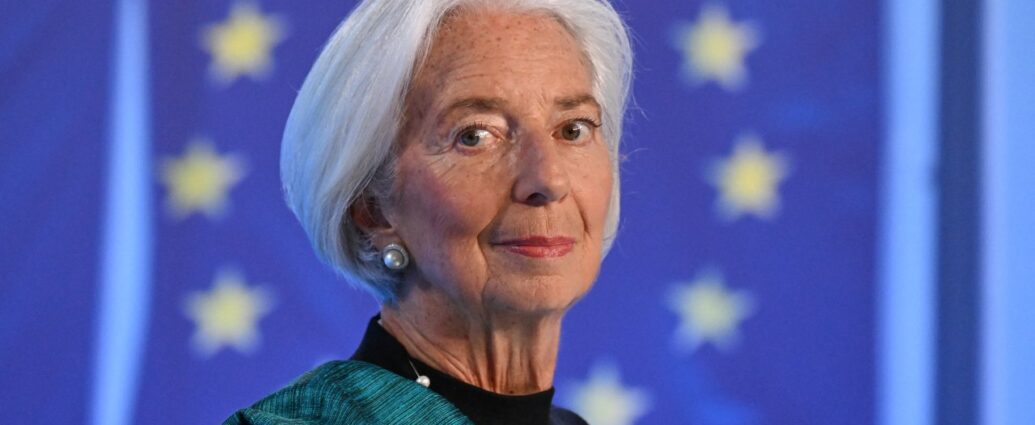
Stocks rise and oil dips on hopes of 15-point Iran peace plan
Markets in Asia and Europe move higher, while crude hovers at about $100 a barrel amid cautious optimism
The price of oil has dipped and Asian stock markets moved higher after reports that Donald Trump has sent a 15-point framework for peace to Iran, amid hopes of a ceasefire in the Middle East.
Oil prices had fallen by 4% in the early hours of Wednesday, with brent crude futures sinking below $100 a barrel and even moving as low as $97.57 as trading was influenced by the prospect of an end to the conflict easing the squeeze on oil supply.
This post was originally published here





They gave her business a lifeline, then froze all her money
A murky corner of the financial world is now the fastest-growing source of funding for small businesses. One state, Connecticut, had given these lenders unusual power. That may be about to change.

This post was originally published here

Cheap Drones Remain Wild Card in Iran war
Prosecutors examined whether Trump disclosed classified map on plane after leaving office
Susie Wiles was on plane and witnessed event, according to files shown to House judiciary committee
Federal prosecutors examined whether Donald Trump showed a classified map to people on his plane after his first term, including to his now White House chief of staff, Susie Wiles, according to justice department materials produced to the House judiciary committee.
The incident was described in a 13 January 2023 briefing memo prepared for the then attorney general, Merrick Garland – roughly six months before special counsel Jack Smith charged Trump with retaining classified documents at his Mar-a-Lago club.
This post was originally published here
‘Doge of the left’ could save UK taxpayers up to £30bn, says new green thinktank
Report by Verdant says rooting out waste, fraud and tax avoidance would save money that could help improve public services
A “Doge of the left,” could save up to £30bn a year for taxpayers by rooting out waste, fraud and tax avoidance, according to the first report from a new green thinktank.
Launched amid growing interest in the future manifesto of Zack Polanksi’s Green party, the Verdant thinktank will be co-chaired by James Meadway, a former adviser to Labour shadow chancellor John McDonnell, and civil society campaigner Deborah Doane.
This post was originally published here
Ex-teammate of quadruple amputee US cornhole pro accused of murder says case shocks him
Dayton Webber’s former playing partner says: ‘Dayton has a great family, and I care about that family. Yet obviously, there is somebody [who] died’
The former doubles partner of a professional, championship-winning cornhole player who had his four limbs amputated in his infancy and is now accused of a deadly shooting says he was shocked to learn about the case, calling it an instance of at least two families being torn apart in one fell swoop.
“I’ve been mad, sad – it sucks,” Mike Hoffman said of his past cornhole teammate Dayton Webber during a telephone interview on Tuesday.
This post was originally published here



AI Is Coming for the U.S. Labor Market



Extra Money in Retirement Is a Good Problem. Learn How to Make It Happen Today
This post was originally published here

Our retirement system gets a C-plus; policymakers have an opportunity to make it A grade
Millions of Americans don’t have enough saved for retirement — and millions more don’t know where to start. With President Trump recently pointing to Australia’s retirement system as a potential U.S. blueprint, this is a rare moment when reform momentum is actually building. Policymakers should seize it.
Consider a young worker starting their first job today. Recent legislation means they’re likely automatically enrolled in a 401(k) from day one — real progress. But fast-forward a few decades: that same worker may have cycled through six employers, accumulated a tangle of small accounts, and still face the question that haunts millions of Americans: Will this be enough?
That story is increasingly the norm. Longer lifespans, less linear careers, a rising cost of living, and tighter government budgets are redefining what retirement security even means. The 2019 SECURE Act and its 2022 successor made meaningful progress — but gaps in longevity protection, savings adequacy, and coverage persist. With 401(k) and 403(b) plans now the backbone of retirement for most Americans, the case for deeper reform is urgent.
The Mercer CFA Institute Global Pension Index — which benchmarks retirement systems across 50+ markets on adequacy, sustainability, and integrity — makes the problem concrete. The U.S. scores well on integrity but consistently lags on adequacy and sustainability, exactly where reform could have the most immediate impact.
The result: the U.S. sits in the middle of the global rankings while countries like Australia lead the pack. Without reform, more Americans risk reaching retirement without enough income — or the tools to access what they’ve saved.
Where reform is needed most
1. Turn savings into income that lasts
Saving is only half the challenge. The harder problem is converting a 401(k) balance into reliable income that doesn’t run out. Too often, workers change jobs and cash out small accounts rather than rolling them over — permanently shrinking their retirement nest egg.
With the U.S. population over 60 projected to double by 2050, longevity risk isn’t abstract. Simpler rollover processes and clearer disclosures would go a long way toward helping workers preserve their savings — and plan for a retirement that could last 30 years.
2. Close the coverage gaps
Retirement savings in the U.S. remain deeply uneven. Younger workers, part-timers, and caregivers are the most underserved — and many have little visibility into whether they’re on track.
Three targeted fixes could close much of that gap: automatic reenrollment for workers who previously opted out; extending coverage to workers under 21, building on the SECURE Act’s expansion for part-timers; and special catch-up contributions for caregivers who temporarily leave the workforce. Together, these changes would broaden access and reward the workers most likely to fall behind.
3. Modernize investments — and reduce legal risk
In 2025, the President signed an executive order directing regulators to ease restrictions on private market investments in 401(k) plans — following Australia’s long-standing approach. Giving savers access to private equity, venture capital, and digital assets could improve diversification and returns. But many employers are still waiting on clear guidance around fiduciary safe harbors, liquidity, and fees before they act.
Allowing 403(b) plans — which cover millions of government and nonprofit workers — to invest in collective investment trusts, as 401(k) plans already can, would lower costs and broaden access for an underserved segment of the workforce.
Legal risk is also a growing deterrent. Employer-sponsored plans have faced a surge of litigation in recent years, and policymakers should explore targeted ways to deter frivolous lawsuits while keeping legitimate claims viable.
Pensions still matter
Most new retirement savings now flow into 401(k)s and 403(b)s, but a significant share of existing retirement wealth still sits in traditional defined benefit pensions. Modernizing the system can’t mean abandoning what still works.
Lowering Pension Benefit Guaranty Corporation (PBGC) premiums would encourage employers to keep sponsoring DB plans. Greater flexibility in deploying surplus DB assets could also benefit both workers and plan sponsors.
Policymakers should also support DB designs that reduce financial volatility for sponsors — such as pooled employer plans, which would make it easier for smaller organizations to offer a pension at all.
The bottom line
Better retirement policy isn’t about winning a global ranking. It’s about ensuring future generations can retire with dignity — even as careers grow less linear and lifespans grow longer.
The reforms outlined here — expanding lifetime income options, closing coverage gaps, modernizing investment rules, reducing legal risk, and strengthening pension protections — would make the U.S. system more resilient and more fair. The window for action is open. Policymakers shouldn’t let it close.
The opinions expressed in Fortune.com commentary pieces are solely the views of their authors and do not necessarily reflect the opinions and beliefs of Fortune.
This story was originally featured on Fortune.com

Your data is everywhere. The government is buying it without a warrant
Data brokers buy up huge amounts of information from cell phones and browsers to sell for targeted advertising. But the government, including ICE, also buys the data.
(Image credit: Mandel Ngan)

This post was originally published here

A shelter village provides a bridge to permanent housing
Shelter villages offer temporary and private places for the unhoused to sleep and store belongings. One of the newest, The Bridge, opened recently in central Illinois.
(Image credit: Emily Bollinger)

This post was originally published here

How Trump’s Iran war objectives have shifted over time
Here is a reminder of some of what he has said – and where the US is now.
(Image credit: JIM WATSON)

This post was originally published here

Are you sure you know what ‘gaslighting’ is?
Therapists say we’re overusing the word. Here’s what it actually means — and what the Ingrid Bergman film that helped birth the word can teach us about it.
(Image credit: Herbert Dorfman)

This post was originally published here
Pop Mart shares plunge over 22% as concerns over sustainability of Labubu sales dwarf stellar results
the Beijing-based toy maker posted annual revenue of 37.1 billion yuan ($5.4 billion) for 2025, up 185% from a year earlier, just shy of LSEG estimates of 38 billion yuan.
This post was originally published here

It’s not just oil and gas. The Strait of Hormuz blockage is rattling another vital commodity
“I’m a lot more concerned about the current crisis than I was when Russia-Ukraine happened four years ago,” one fund manager told CNBC.
This post was originally published here


Braze Stock Jumps Over 23% In Pre-Market Session—Here’s Why
Braze Inc. (NASDAQ:BRZE) climbed 23.36% to $22.23 in pre-market trading on Wednesday after the company released its fiscal fourth-quarter 2026 results.
The stock of the cloud-based customer engagement platform closed the regular session 4.76% lower at $18.02, according to Benzinga Pro data.
What Do The Q4 Results Say?
Braze reported the following results compared with the same quarter a year earlier:
| Metric | Q4 FY2026 | Q4 FY2025 |
|---|---|---|
| Revenue | $205.2M | $160.4M |
| Non-GAAP Operating Income | $14.5M | $7.9M |
| Total Customers | 2,609 | 2,296 |
| Free Cash Flow | $13.9M | $15.2M |
Braze’s fourth-quarter revenue rose 27.9% year over year.
Customers with annual recurring revenue of $500,000 or more increased to 333 from 247 and quarterly bookings grew more than 50% from the same period a year earlier.
“The world’s largest and most sophisticated brands are choosing Braze as a foundational partner,” said CEO Bill Magnuson.
Full-Year FY2026 Results
Full-year revenue for …
This post was originally published here

Private credit’s ‘zero-loss fantasy’ is coming to an end as defaults and fund exits rise
Private credit is expected to see a surge in defaults as investors continue to pull money from the sector.
This post was originally published here

Two men arrested in connection with arson attack on Jewish community ambulances
Pair aged 45 and 47 arrested on suspicion of arson with intent to endanger life, say Metropolitan police
Two men aged 45 and 47 have been arrested in connection with an arson attack on four ambulances belonging to a Jewish community service in London , the Metropolitan police have said.
The force said they were arrested on suspicion of arson with intent to endanger life and both men had been taken to a London police station for questioning.
Police were searching two addresses.
This post was originally published here


Almost Half of IRA Savers Miss This Benchmark—Do You?
This post was originally published here

Goldman raises recession odds to 30% on higher inflation, lower GDP outlook as oil prices surge
Goldman Sachs is sounding a cautious note on the U.S. economy, raising its inflation forecast and trimming its growth outlook in response to surging oil prices caused by disruptions to the Strait of Hormuz. But even as recession risks climb, most of Wall Street’s base case remains slower growth — not an outright downturn.
In its weekly U.S. economics update published on Tuesday, Goldman said it now expects Brent crude to average $105 per barrel in March and $115 in April before retreating to $80 by year-end, assuming roughly six weeks of Hormuz supply disruptions. On the back of that revised oil outlook, the bank raised its headline PCE inflation forecast by 0.2 percentage points to 3.1% by December 2026 and nudged its full-year GDP growth estimate down to 2.1%. Goldman also raised its recession probability by 5 percentage points — to 30% — while stressing that a recession is still not its base case.
One relative reassurance: Goldman does not expect the oil shock to durably unhinge inflation expectations. Even major energy shocks in recent history did not produce lasting shifts in where consumers and businesses expect prices to settle, the bank noted, though it flagged post-pandemic inflation psychology as a risk worth watching.
Some analysts see even higher recession odds
Opinions across Wall Street diverge meaningfully, with some offering more dramatic warnings than Goldman about a potential recession. JPMorgan’s Bob Michele has warned the Iran war is not merely an inflation “speed bump,” pushing back on the Fed’s own projections and arguing that price pressures could stay sticky well into the second half of the year. EY-Parthenon puts recession odds at 40%, citing cascading effects on LNG infrastructure and refining systems beyond the oil market itself. Moody’s Analytics Chief Economist Mark Zandi has argued that recession odds were near even—before war broke out.
But others see the economy’s glass as considerably more than half full. BNP Paribas argues the U.S. is “well-positioned to absorb the shock,” pointing to America’s status as the world’s largest crude producer and net energy exporter — a structural advantage that simply didn’t exist during the oil shocks of the 1970s and 1980s. Higher oil prices redistribute income within the U.S. economy rather than draining it abroad, limiting the macro damage. The U.S. also uses significantly less energy per unit of GDP than in prior decades, blunting the inflationary punch that past supply shocks delivered.
The Fed Walks a fine line
The Federal Reserve held its policy rate steady at 3.5%–3.75% at last week’s Federal Open Market Committee (FOMC) meeting — a decision Goldman characterized as “a bit more hawkish than expected”. Chair Jerome Powell acknowledged the inflation risk from oil while placing employment and price concerns on equal footing, signaling that rate cuts remain possible but are not imminent. Goldman still expects two 25-basis-point cuts in September and December, bringing rates to 3–3.25% by year-end, and pushed back on market pricing that has begun to bake in rate hikes.
The outcome hinges heavily on one variable: how long the Hormuz disruptions last. A swift de-escalation would allow oil risk premiums to fade and limit economic damage to a few tenths of a percentage point of growth. A prolonged conflict, by contrast, would entrench energy costs, crimp consumer spending, and force the Fed into an increasingly uncomfortable corner. Goldman currently puts that worst-case scenario—severe and sustained—as just that: a tail risk, not a forecast.
For now, the base case across most of Wall Street is an economy that slows but holds — with inflation running hotter than the Fed would like, growth below its long-run potential, and the next few months of geopolitical news determining which scenario ultimately wins out.
For this story, Fortune journalists used generative AI as a research tool. An editor verified the accuracy of the information before publishing.
This story was originally featured on Fortune.com

Why Blaize Holdings Shares Are Trading Higher By Around 41%; Here Are 20 Stocks Moving Premarket
Shares of Blaize Holdings Inc (NASDAQ:BZAI) rose sharply in pre-market trading after the company reported better-than-expected quarterly financial results.
In the fourth quarter, Blaize Holdings posted a net loss of $3.2 million, down from a loss of $26.3 million in the preceding quarter. The company said its revenue for the quarter rose to more than twice the level reported in the third quarter. Fourth-quarter revenue also exceeded the upper end of company guidance.
Blaize Holdings shares jumped 41.3% to $1.57 in pre-market trading.
Here are some other stocks moving in pre-market trading.
Gainers
- JFB Construction Holdings (NASDAQ:JFB) gained 92.8% to $18.93 in pre-market trading after dipping 47% on Tuesday. JFB Construction recently announced that its XTEND unit has successfully demonstrated its proprietary systems’ performance in combat-relevant testing environments and confirmed they meet U.S. government operational requirements.
- iTonic Holdings Ltd (NASDAQ:ITOC) gained 69.4% to $0.48 in pre-market trading after the Beijing-based company announced a $20 million private placement offering.
- Nft Ltd (NYSE:MI) gained 41.6% to $0.40 in pre-market trading after dipping 16% on Tuesday.
- UTime Ltd (NASDAQ:WTO) rose 28.2% to $3.49 in pre-market trading after gaining 10% on Tuesday.
- Next Technology Holding Inc (NASDAQ:
This post was originally published here
What comes after Labubu? Inside Pop Mart’s next grow play
Pop Mart is betting on films, theme parks and global expansion to turn Labubu into a lasting franchise, even as the initial craze fades.
This post was originally published here

Gold jumps 2% as oil slump eases inflation fears amid Trump Iran talks
Gold climbed as declining oil prices helped temper worries over persistent inflation following reports that Washington is working on a proposal to bring an end to the Middle East conflict.
This post was originally published here

Elon Musk Says Something ‘Way Cooler’ Than Minivan Is Coming Amid Leaked New Model Frame
Tesla Inc. (NASDAQ:TSLA) CEO Elon Musk has sparked speculation that a new model could be on the horizon for the EV giant following a cryptic social media post on Tuesday.
Way Cooler Than A Minivan
User Leah Libresco Sargeant took to the social media platform X, asking Musk to make a Tesla minivan after the billionaire said that the Cybertruck’s rear seat has three ISOFIX mounts, which would help it fit three child seats and enhance child occupant safety.
Musk, in response to the user, shared that something “way cooler than a minivan” was on its way for Tesla, possibly hinting at a new Tesla Model in the works.
Tesla’s New Model Leaked?
Interestingly, leaked images of a frame purportedly belonging to the new Tesla model have surfaced on social media, adding fuel to Musk’s claims. User Joe Tegtmeyer on Monday shared a new video of drone footage he took at Tesla’s Gigafactory in Texas. In the video, we can see what appears …
This post was originally published here
NHS trust took two days to raise alarm about Kent meningitis outbreak, says report
East Kent hospitals NHS trust says officials could have acted sooner to notify UKHSA after first reported case
East Kent hospitals NHS trust missed an earlier opportunity to alert the UK Health Security Agency (UKHSA) over the meningitis outbreak in Kent, it has been reported.
According to the BBC, the Queen Elizabeth the Queen Mother hospital in Margate first reported a case to the UKHSA on the afternoon of Friday 13 March.
This post was originally published here

Europe has survived 3 energy shocks in 4 years. The only way out is to stop buying power from its enemies
Europe is living through its third energy price shock in four years. In 2022, Russia weaponized its gas pipelines. In 2023–24, conflict in the Red Sea disrupted shipping lanes. Now, war in the Middle East has effectively closed the Strait of Hormuz.
Oil has breached $100 a barrel for the first time since Russia’s invasion of Ukraine. Stock markets are in freefall. European gas prices have surged roughly 70%. Each time the trigger is different. The vulnerability is always the same: Europe runs on fuel it does not own, shipped through waters it does not control.
Wind and solar cannot be embargoed, blockaded, or shut off by a foreign power. Every terawatt-hour of domestic renewable generation is a terawatt-hour that no adversary can weaponize. Unlike the U.S., Europe has no shale gas. Unlike China, it cannot fall back on cheap domestic coal. The only energy Europe can produce at scale, on its own soil, is renewable electricity. Europe must now become the world’s first Electro-Continent.
This is not only about shielding against the next geopolitical shock. It is about building the foundation for the next industrial era.
The AI Race Is an Energy Race
The IEA projects that global data-center electricity consumption will more than double by 2030, reaching roughly 945 terawatt-hours — more than Japan consumes today. The winner of the next industrial revolution will not be the region with the best engineers. It will be the region that can deliver the cheapest, most abundant, fastest-to-deploy power.
Europe is being squeezed from both sides. Industrial electricity prices in the EU are roughly twice those in the U.S. and about 50% higher than in China — a gap that is widening. European founders are already world-class at innovation. But no amount of innovation can overcome a 100% overhead on your primary industrial input.
Both superpowers have understood that energy abundance is a strategic necessity. China invested over $1 trillion in clean energy in 2025. The U.S. enjoys the double advantage of cheap domestic shale gas and the massive capital commitments of Big Tech. As former ECB President Mario Draghi’s landmark competitiveness report made clear, Europe’s industrial base is bleeding out because of energy costs. If Europe wants to host the next generation of €100 billion companies, it must fix the foundation.
Renewables Won the Market. Now Let Them Build.
The good news: renewable energy prices have dropped more than 90% over the past decade. In 2025, over 90% of new renewable capacity was cheaper than the fossil fuel alternative. Clean energy is the cheapest and fastest form of new generation available.
Wind and solar generated more EU electricity than fossil fuels for the first time in 2025. Yet the gas tail still wags the dog. A single dip in wind and hydro output last year forced higher gas burn, pushing the EU’s fossil gas import bill up 16%. Every remaining molecule of gas dependency is a transmission mechanism for the next foreign crisis.
China is becoming the world’s first electro-state — making cheap, domestically produced electricity its primary competitive advantage. But Europe has something China does not: the density, grid interconnection, and integrated single market to do this at continental scale. The EU’s Clean Industrial Deal, launched in February 2025, places renewables at the heart of industrial strategy. The vision is correct. The execution is failing.
The Permits Problem Is a Security Problem
While Brussels sets the right direction, member states are undermining it. Last November, Sweden rejected 13 offshore wind projects in the Baltic Sea — projects with a combined capacity of nearly 32 gigawatts. That single decision wiped out €47 billion of private investment.
Across Europe, legislators are still listening to incumbent energy companies that need policy life-support to survive, rather than backing technologies that already stand on their own in open markets. Renewables may have needed an early push. They do not need one now.
Energy permits must be treated as national security priorities — with the same urgency as defense procurement. If a wind farm permit takes eight years, but a war can close a strait in eight hours, the permitting system is a strategic liability.
You cannot fight a trade war with China by starving your own industries of power. You cannot win the AI race with the world’s most expensive electricity. You cannot build €100 billion companies on a foundation that cracks every time a foreign government closes a shipping lane.
Europe does not need more government handouts to win this race. It needs government permissions. The capital is there. Corporate giants are desperate for green electrons. Pension funds and infrastructure investors are ready to deploy. What is missing is not money or technology. It is the political willingness to let them build.
The opinions expressed in Fortune.com commentary pieces are solely the views of their authors and do not necessarily reflect the opinions and beliefs of Fortune.
This story was originally featured on Fortune.com
Australia prepares for oil prices above US$120 a barrel as diesel passes $3 a litre nationwide
Fuel stocks at same level as when US and Israel launched their war on Iran a month ago, energy minister says
-
Get our breaking news email, free app or daily news podcast
The federal government is preparing for scenarios where global oil prices spike above US$120 a barrel, as diesel prices nationwide go past $3 a litre and the prime minister, Anthony Albanese, plans another national cabinet meeting to plan petrol supply.
The treasurer, Jim Chalmers, said one option under consideration was expanding ethanol mandates across the country, after Guardian Australia revealed the government was analysing increasing the biofuel’s supply.
This post was originally published here
‘Asia’s Ukraine moment’: How the Iran war could accelerate a shift into renewables
The fallout from the sprawling Middle East conflict is expected to represent a watershed moment for the energy transition.
This post was originally published here
‘Massive betrayal’: Iranian nationals with valid tourist visas blocked from entering Australia for six months
Tony Burke says decisions about permanent stays should be ‘deliberate decisions of the government, not a random consequence of who booked a holiday’
Iranian tourists will be banned from entering Australia for the next six months after the home affairs minister, Tony Burke, triggered tough new immigration laws over concerns visitors may not be able to return to Iran.
The ban could apply to more than 7,000 Iranians with valid tourist visas – though some may still be given the chance to enter the country under special consideration.
This post was originally published here


Queensland government scraps emissions target for Brisbane Olympics – as it happened
This blog is now closed
-
Australia prepares for oil prices above US$120 a barrel as diesel passes $3 a litre nationwide
-
Get our breaking news email, free app or daily news podcast
The government has announced the federal and Queensland governments will each chip in $1bn to Rio Tinto’s Boyne aluminium smelter in central Queensland, to keep it viable into the future.
The government says the move, which will include Rio “underwriting significant investment in energy and transmission”, will unlock almost $7.5bn in investment in Queensland.
With a considerable public investment, we are catalysing a fourfold private investment that will build out the renewable energy grid and keep thousands of good regional jobs in central Queensland.
This post was originally published here

‘We’ve become like Europe’: Jamie Dimon warns China is beating the U.S. as he says Iran war means a ‘better chance’ of permanent Middle East peace
JPMorgan CEO Jamie Dimon is warning the U.S. is moving more like Europe when it comes to defense.
Speaking Tuesday at the Hill and Valley Forum, which aims to bring together leaders from Washington and Silicon Valley, the longtime JPMorgan leader who led his bank through the 2008 housing crisis, said he was “deeply frustrated” with certain policies in the U.S. that he said set the country back.
One example is the web of rules, compliance procedures, and the involvement of Congress that he said slows the procurement process for the Department of War (DoW) and prevents it from being adaptable in times of conflict that require quick pivots.
“We’ve become like Europe, we’re unable to move and change—change budgeting, change procurement. You know, let people do what they need to do.”
One suggestion Dimon thinks would help improve the country’s red tape? Bringing on more private companies to get involved with making military equipment. To be sure, private companies are already participating actively in the U.S. defense industrial base. Although companies such as Northrop Grumman, Lockheed Martin, and RTX (previously Raytheon) have dominated military contracts for years, the U.S. government is increasingly looking to newcomers such as SpaceX, Palantir, and Anduril for their tech capabilities. Earlier this month, the DoW awarded Anduril a five-to-ten year enterprise contract worth up to $20 billion, which is similar to one it would sign with a major defense contractor.
Dimon added that building up the nation’s military is especially important as it faces geopolitical issues including the threat of a conflict with China.
Relations between the U.S. and China have been icy in recent years, as the two countries seek to dominate AI. The world’s second largest economy has in some years grown its GDP at nearly double the rate of the U.S. At the same time, a trade war between the two economies has seen Washington impose sweeping export controls on advanced chips in an effort to limit China’s technological advancement, while China weaponizes its rare Earth resources with its own export controls on the materials that are essential to building semiconductors, but also advanced weapons systems and electric vehicles.
Dimon noted that U.S. companies made a mistake over the past decades in moving their supply chain to China just to produce a good for “$10 less.” This poses a major threat as China’s economy continues growing at a faster rate than that of the U.S. and threatens to overtake the country. Dimon also noted the risk that China may invade Taiwan is likely—something that is particularly concerning as Taiwan supplies 90% of the world’s most advanced microchips.
Still, the U.S. should also emulate China to an extent in the sectors where it has made significant progress, including shipbuilding, car manufacturing, and battery production.
“We should look at our own shortcomings then and then be prepared if they ever become an adversary to, you know, to face off against them,” he said.
Dimon’s comments come as the price tag of the Iran war has skyrocketed with the Pentagon last week reportedly requesting $200 billion from Congress on top of its existing budget, which exceeds $800 billion. Secretary of War Pete Hegseth has said “that number could move” as the Department of War seeks to replenish munition stockpiles and prepare “for what we may have to do in the future.”
Later in the interview Tuesday, Dimon painted a picture of “permanent peace” in the Middle East partly thanks to the threat of capital flight. In the process he became one of the first CEOs of a major company to foresee a potential positive impact stemming from the Iran war.
“There’s a lot of foreign direct investment going there, but it won’t go there if things like this are taking place,” Dimon said of the Gulf countries who are particularly affected by the conflict. “They’ve realized no, they need permanent peace. They can’t have neighbors like lob ballistic missiles into their data centers.”
The JPMorgan CEO said he was optimistic about the war, saying it may lead to a lasting peace in the region in the long term because of the change in “attitude” among Gulf countries including Saudi Arabia, the United Arab Emirates, and Qatar. The Iran conflict, now in its fourth week, has made these countries realize they need peace to protect the influx of capital that has helped their economies grow and diversify over the past decade.
The Gulf states have tried for years to diversify their economies to prevent them from being entirely oil dependent, and have brought in billions in foreign investment in the process. Still, the Iran war has once again highlighted the instability of their region. Strikes by Iran on military targets as well as Amazon data centers in the UAE and Bahrain have spooked investors who have over years flooded the region with investment, especially in low-tax emirates in the UAE like Dubai and Abu Dhabi that have marketed themselves as safe, globally connected business hubs.
While some skeptics of the Iran war have said the country didn’t pose any imminent threat to the U.S., Dimon disagreed, labeling the country “a terrorist threat.” Iran-backed militias and the proxy conflicts Iran has waged in the region have been responsible for the death of hundreds of Americans, according to the Pentagon. During the Iraq war, the White House says Iran-backed militants killed 603 American troops, along with dozens of others in the years since the 1979 Iran hostage crisis and into the present day.
“They’ve been murderers of Americans and other people for 40 or 50 years. That’s not a threat. That’s actual killing,” Dimon said.
Dimon’s comments come as President Donald Trump on Sunday said the U.S. would not strike Iranian energy infrastructure and power plants for five days as U.S. envoys negotiate with their counterparts in Iran.
While it’s unclear whether these talks, which Iran has denied, will yield any peace accord, Dimon said he is hopeful the conflict will bring about better prospects for the whole of the Middle East.
“I think the Iran war makes it a better chance in the long run,” Dimon said. “It’s probably riskier in the short run, because we don’t know the outcome of it, but Saudi Arabia, the UAE, Qatar, America, Israel, all want permanent peace in the Middle East.”
This story was originally featured on Fortune.com

BBC and NWA: the day ABC staff went on strike – and left Aunty looking ‘a bit different’
Triple J signed off with the hip-hop anthem Express Yourself while other radio and TV networks filled the air with BBC broadcasts, re-runs and soothing music
Broadcasters had warned their audiences that the ABC would look “a bit different” on Wednesday – and as the clock struck 11am, they weren’t wrong.
As more than 2,000 ABC staff walked off the job for the first time in two decades in protest of their working conditions, the public broadcaster’s news channel switched over to the BBC.
Sign up to get Guardian Australia’s weekly media diary as a free newsletter
This post was originally published here
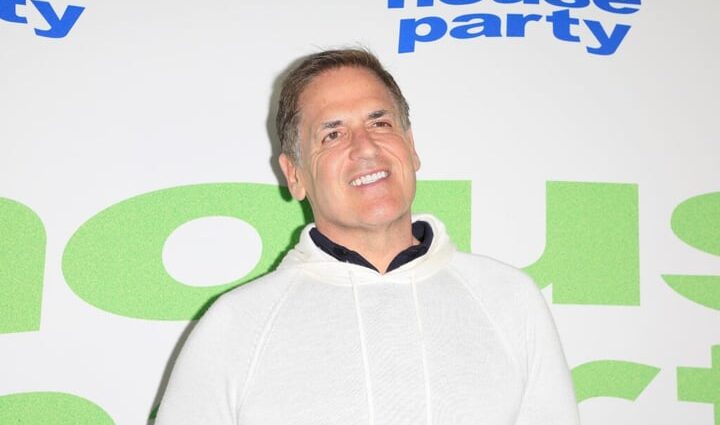
Mark Cuban Calls $30,000 Corporate Healthcare Burden ‘Insane,’ Backs Bill To Break Up Big Medicine Giants UNH, CVS, CI
Billionaire entrepreneur Mark Cuban is sounding the alarm on skyrocketing corporate healthcare costs, declaring them a primary driver of layoffs and throwing his full weight behind bipartisan legislation to dismantle healthcare conglomerates like UnitedHealth Group Inc. (NYSE:UNH), CVS Health Corp. (NYSE:CVS), and Cigna Group (NYSE:CI).
The ‘Insane’ Cost Of Care
In a recent social media post, the founder of Cost Plus Drugs, Cuban, argued that out-of-control medical expenses—not artificial intelligence (AI)—are forcing companies to slash jobs.
Cuban noted that employers are burdened with “$30k per family, per year for premiums and care,” calling the financial strain “insane.”
“Most of that goes to the massive, vertically integrated insurance companies that send weekly bills that no one reviews in details,” Cuban wrote.
He emphasized that healthcare is typically a company’s second-largest expense behind payroll, making it …
This post was originally published here


The job market is so bad that ‘reverse recruiters’ are charging $1,500 a month just to help people look for jobs
Today, job seekers often send hundreds of applications into the void of applicant tracking systems, where their materials may never be seen by human eyes. For many, the job search has become a full-time job in itself. Some, though, are outsourcing it. That’s where the reverse recruiter comes in.
Reverse Recruiting Agency helps find, apply to, and secure jobs on behalf of the worker, not the company. It charges $1,500 a month for their services (though clients get their first-month fee refunded), plus 10% of the job seeker’s first-year salary upon job acceptance. That $1,500 gets you personalized résumé editing services, 50 to 100 applications per week, career coaching, interview prep, and several other job readiness services, according to the company’s website.
Today, more than half of U.S. job seekers are spending six months or more shooting out résumés before landing a job, according to LinkedIn’s 2025 Workplace Confidence survey. Some people have even reported applying to hundreds of jobs before landing a single interview. Long-term unemployment rate, or those lacking work for 27 weeks or longer, is also on the rise, at about 25.6% as of last month, according to Bureau of Labor Statistics data. That’s putting pressure on folks to get a job.
Alex Shinkarovsky, founder of Reverse Recruiting Agency, said in an interview with Fortune that this company has helped 45 clients so far, with 25 more active clients. Most clients, he describes, are high-performers coming from a range of backgrounds, from data science, program management, and engineering. Even a top exec from Apple has consulted for his help, he said.
“Most of the people who are hiring us now are awesome candidates, as in, they’re not struggling now,” Shinkarovsky told Fortune.
Although the company helps to submit 50 to 100 applications per week, Shinkarovsky said still may not be enough to beat the odds. On average, he said his company submits 863 applications per client before they land a job offer. For difficult career searches—those facing visa complications, ageism, or location constraints—it takes up to 924 applications.
Still, Shinkarovsky said his company is slashing the time it takes to find a role in half. The average time it takes to score a job offer is about 12.7 weeks for the standard role switch with the company’s help, compared to 24.3 weeks across the market, according to a Reverse Recruiting Agency analysis.
The perils of a job market rife with AI
The rules of the game are changing, shifting the knowledge required to score an interview. The logical conclusion of a job market that prizes volume over quality is a flood of AI-generated résumés and cover letters. And recruiting experts say that’s become the norm. In fact, the whole job search ecosystem is rife with AI, as applicants submit AI-generated materials and recruiters use AI to sort through applications, many of whom are ghosting applicants because of the technology.
“It’s fundamentally broken,” Shinkarovsky said. The founder clarified the company’s workers don’t use AI to submit applications on behalf of their clients, save for some résumé optimization functions as well as outreach on LinkedIn.
He suggests that Congress could address the issue by implementing a verification system for job seekers, similar to a voter ID, to add friction to the application funnel. “That would cut out almost all the slop right away,” he said.
This story was originally featured on Fortune.com



Gary Black Cites Netflix-Warner Bros Deal To Caution Against SpaceX-Tesla Merger: ‘Who Will Purchase The $50B…’
Investor Gary Black of The Future Fund LLC has warned against a possible SpaceX–Tesla Inc. (NASDAQ:TSLA) merger, citing the failed Netflix Inc. (NASDAQ:NFLX) acquisition of Warner Bros. Discovery Inc. (NASDAQ:WBD).
Shareholders Hate Firms Issuing Equity For Acquisitions
On Tuesday, the investor took to the social media platform X to reiterate his stance against a Tesla-SpaceX merger. Even if SpaceX were to go public and leverage that equity to explore a merger with/acquisition of Tesla, it would be detrimental to the investors of the commercial space flight company.
The investor said that buyers of SpaceX stock wouldn’t “willingly invest capital in a firm” that would issue equity to buy another company, sharing that believers of the merger were “fooling themselves.” He then said that investors weren’t keen on equity-backed mergers.
“Shareholders HATE when companies use equity to buy other companies,” he said, citing the example of the failed Netflix-WB Discovery deal. “The latest example is $NFLX which tried to buy $WBD and NFLX stock dropped -30%,” he said, adding that the stock only recovered when Netflix management backed away from the deal.
It’s worth noting that Paramount Skydance (NASDAQ:PSKY) is currently in pole position to complete an acquisition of Warner Bros., but lawmakers are demanding a probe into the alleged foreign funding involved in the proposed takeover.
Dilution Concerns
“I know …
This post was originally published here
Denmark’s PM Frederiksen suffers election setback after standing up to Trump over Greenland
Frederiksen had sought to capitalize on popular support after standing up to Trump’s push to annex Greenland, a self-governing Danish territory.
This post was originally published here

S&P 500 Falls As Trump’s Ceasefire Hopes Dim: Fear & Greed Index Remains In ‘Extreme Fear’ Zone
The CNN Money Fear and Greed index showed some easing in the overall fear level, while the index remained in the “Extreme Fear” zone on Tuesday.
U.S. stocks settled lower on Tuesday, with the S&P 500 moving lower after recording sharp gains in the previous session.
Iran and Israel continued to trade strikes through Tuesday morning, and the Wall Street Journal reported that Saudi Arabia and the UAE were edging closer to joining the conflict against Tehran, adding yet another geopolitical dimension to an already fraught situation.
In earnings, Core & Main Inc. (NYSE:CNM) posted mixed results for the fourth quarter on Tuesday.
On the economic data front, the flash S&P Global composite PMI declined to 51.4 in March from 51.9 in February, recording its lowest reading since April 2025. Unit labor costs in the nonfarm …
This post was originally published here


South Korea braces for ‘worst-case scenarios’ as Iran oil shock deepens
South Korean Prime Minister Kim Min-seok warned the government must prepare for “worst-case scenarios” stemming from the Middle East conflict.
This post was originally published here
Asia-Pacific stocks rise as Trump comments signal de-escalation in Iran conflict
Trump said he decided to back off from his recent threat to order strikes on Iranian energy infrastructure “based on the fact we’re negotiating.”
This post was originally published here


UK inflation held at 3% before global energy price hit from Iran war
February annual rate in line with analysts’ expectations but outlook has shifted because of effects of conflict
The UK inflation rate was unchanged at 3% in February, before Donald Trump’s Iran war drove up global energy costs, threatening a renewed price jump.
Official figures showed the consumer prices index (CPI) remained at 3%, in line with economists’ expectations but still well above the government’s 2% target.
This post was originally published here
‘Seriously wrong’: flood-hit Lincolnshire residents at odds with Reform MP over climate
Constituents’ frustration with Richard Tice reflects growing problem for party and its leaders’ climate-sceptic stance
“The worst part of it was the smell,” says Audrey Crook, 58. A full-time carer who lives with her 20-year-old son, Crook woke up at 11pm one night to find a foot of flood water on the ground floor of her home. “It was like black water. It had sewage and everything in it, it was absolutely disgusting.”
Crook’s home – along with more than 30 others on Wyberton West Road and Park Road in Boston, Lincolnshire – was flooded in January last year when heavy rain swept across the region, raising river levels and exceeding flood defences.
This post was originally published here

Exclusive: AI-powered benefits platform Origin raises $30 million in fresh funding to bring CHROs visibility into benefits usage and spend
Origin, a London-based startup building an AI-powered platform to help multinational companies manage their employee benefits, has raised $30 million in new venture capital funding.
The funding, which the company is calling an extended Series A+ round, brings the total amount of money Origin has raised in the past 12 months to more than $50 million.
The latest investment is being led by Notion Capital, which also participated in Origin’s initial Series A. Felix Capital, which led the earlier round, Acadian Ventures, and all other existing investors are also participating, the company said. It also said that it had secured “additional growth funding” from HSBC Innovation Banking U.K. alongside the new venture round.
Origin’s angel investors include Paul Daugherty, the former chief technology and innovation officer of Accenture; Jacqui Canney, the chief people and AI enablement officer at ServiceNow; and Tudor Havriliuc, the former vice president of human resources at Meta, who held the role from 2010 to 2022.
The company declined to provide its valuation following the latest funding, but said it was higher valuation than its valuation following the initial Series A.
Origin was founded by Chris Bruce and Pete Craghill, the leadership team behind Darwin, a benefits technology software company, originally called Thomsons Online Benefits, that was acquired by Mercer in 2016. At the time of its acquisition, Darwin held an 80% market share of the non-U.S. global benefits administration market, according to Bruce.
Bruce told Fortune that the idea for Origin came out of a discussion he had with Craghill in the summer of 2023 in which they both observed how advances in AI and large language models could now address a problem they had tried and failed to fully solve 15 years earlier: giving big companies a clear picture of what they spend on employee benefits globally.
“It simply was not possible without AI,” Bruce said.
For most organizations, benefits are their second-largest cost, but they lack visibility into what they are spending. Bruce said one client’s chief financial officer told him the company believed it was spending roughly $750 million on benefits but had no way to verify that figure. “I’ve got visibility on every budget line in the organization, with the exception of benefits,” Bruce recalled the CFO saying.
The root of the problem, Craghill said, is that benefits data in multinational organizations is scattered across PDFs, insurance policies, vendor platforms, and local documents in dozens of languages. “You had all this unstructured data around the world, and there was no solution to it,” Craghill said. “It was always a human problem.” He said Origin spent its first 18 months focused on cracking the data ingestion challenge, learning how to assess the quality and completeness of wildly inconsistent source materials.
Origin’s platform, powered by an AI engine the company calls Cuido, ingests and structures that fragmented data—from policies, contracts, renewals, broker reports, and vendor platforms—into a single, queryable system of record. Using the platform, HR executives can track benefit spending and usage, as well as handling renewals, policy reviews, and governance workflows.
Employees can also query Origin’s platform to ask questions about what benefits they have available to them. In multinational companies with complex benefits offerings in different geographies, getting an answer to this seemingly simple question can often take days. Now, it takes just minutes.
While that is good for employees, the real payoff for using Origin’s platform is that it helps companies rationalize their benefits spending, reducing duplication, or helping them consolidate providers, according to Bruce. The company whose CFO estimated he was spending $750 million annually on benefits, now expects to save around $75 million by using Origin’s platform, Bruce said. Another of Origin’s clients consolidated 13 local insurance policies into a single regional plan, achieving a 20% cost saving, according to the company.
Origin’s Cuido platform was co-created in partnership with several large multinational employers who serve as Origin’s anchor customers, including Pfizer, Comcast, and BP. Bruce said the company went out to 11 major multinationals two years ago, shared its vision, and asked them to sign on as paying co-creators. Seven of those 11 agreed. A large technology company that initially declined in order to build a similar system internally ended up joining Origin 10 months later after abandoning its own effort, Bruce said.
Origin currently has about 75 employees and go-to-market teams in both the United States and the United Kingdom and Europe. The company uses what Bruce calls “a value-based pricing model” that is tied to the complexity of a client’s organization, including the number of countries in which it operates.
Origin’s new funding will be used to deepen integrations into existing human capital management platforms, such as those from Workday and Oracle’s Peoplesoft, so benefits information is accessible where employees already work, and to expand Origin’s partner capabilities for brokers, consultants, and insurers.
Andy Leaver, operating partner at Notion Capital, said in a statement that his firm was doubling down on Origin because of the team’s speed and execution. “Benefits are one of the last major enterprise functions still left behind by the digitisation wave of the last 25 years,” Leaver said. “AI now makes it possible to build a true system of record and intelligence for benefits.”
This story was originally featured on Fortune.com

Why QVC is making such a big bet on TikTok
Almost a year ago, when QVC Group partnered with TikTok to launch the first-ever nonstop live shopping streams in the U.S., the company’s CEO called the move “our bet.” The subtext was clear: It was a bid to revive the shopping TV channel’s languishing business and rejuvenate its audience.
The rationale for QVC, best known for its namesake channel QVC and HSN (once known as the Home Shopping Network), was simple: to adapt its multi-billion dollar business to shoppers’ new habits. That has become urgent as TV generally has lost its hold on viewers, particularly in cable and broadcast television. Between 2018 and 2024, QVC’s and HSN’s main channels each lost almost half (44% and 47%, respectively) of the U.S. homes they reached. The company is heavily indebted and several media outlets reported last month that it was looking into ways to restructure its debt. Its CEO, David Rawlinson said in November that “returning our company to growth continues to be difficult.”
“What we realized is that our form of getting close to the customer was going to have to shift because where the consumer was spending their time was shifting pretty dramatically,” QVC Group chief business development officer Brian Beitler told Fortune at a panel at the eTail conference last month in Palm Springs, Calif.
Social commerce is behind about $150 billion in U.S. consumer spending right now and QVC wants in. Beitler sees scrolling on TikTok as analogous to surfing TV channels. When QVC started in the 1980’s, it succeeded by grabbing people’s attention as they channel-surfed past QVC or HSN and then clicked right back when they saw a product or moment that grabbed them.
“We could interrupt you with really entertaining and interesting live content about products with really unique and interesting personalities,” Beitler said. It’s a proposition that sounds strikingly similar to that of social media today—and to his mind, TikTok, with its 170 million U.S. users, allows for that in an up-to-date, tantalizing way. It was a more interesting partner than YouTube and Instagram, which are largely advertising-driven and don’t offer the direct “shoppability” consumers find on TikTok.
Last year, a few months after launching the TikTok partnership, QVC, a publicly traded company controlled by longtime media mogul John Malone, said some 74,000 TikTok creators had featured QVC products on their shoppable videos and livestreams, but Beitler declined to provide an updated number, saying it was better to focus on partners looking to build a sustainable sales channel.
QVC has clear parameters for the ideal partners to showcase its products on TikTok. “They should come across as having a level of expertise and a level of knowledge,” Beitler said, adding that authenticity in the storytelling is key.
But to be successful, he said, brands might need an attitude shift on how they work with collaborators. “The most difficult thing for brands and retailers, for those of us in this room, is you have to relinquish a bit of control,” said Beitler. “You’ll give them information on the product and trust them then to use that in an authentic and high-trust way with their audiences.”
This story was originally featured on Fortune.com

China could be the ‘big winner’ in the AI race, thanks to abundant power, cheap manufacturing, and an open-source craze
When Jensen Huang praised OpenClaw last week, the ripples reached Hong Kong within hours. Shares in MiniMax and Zhipu AI jumped more than 20% after the Nvidia CEO declared in a CNBC interview that the rapidly spreading open‑source agent framework was “definitely the next ChatGPT.”
Foreign investors once dismissed China’s AI push as a constrained, second-tier effort. Yet now, strategists argue that the country may be better positioned for AI, thanks to cheaper power, growing capital spending, and a swarm of open-source developers. Those same analysts are also wondering whether the U.S. AI boom, after years of sky-high valuations and data center spending, is running out of steam.
“We’ve actually reduced our exposure to U.S. tech,” Mohit Kumar, Jefferies’ global macro strategist, told Fortune at the investment bank’s Asia Forum in Hong Kong last week. “We believe that China is the big winner in this tech war for a number of reasons: valuation, wider adoption of AI, an advantage in power generation.”
“China basically has unlimited access to cheap energy, whereas the U.S. has this massive energy bottleneck,” Jefferies’s global head of equity research Chris Wood said to Fortune.
The country will have roughly 400 gigawatts of spare power capacity by 2030, equal to three times what the world will need to meet data center demands, according to Goldman Sachs. In contrast, the U.S. is struggling with aging infrastructure and a lack of generating capacity, leading to spiking power prices in data center states like Virginia.
In China’s western provinces like Ningxia and Gansu, electricity can cost as little as five cents per kilowatt-hour, versus 25 cents in Beijing or Shanghai, or 40 cents in some parts of the U.S, according to Baidu’s chief finance officer Henry He, who noted for attendees that power can make up about 35% of inference costs.
China’s manufacturing sector also helps its AI sector, particularly in applications that interact with the physical world. For example, He noted that Baidu’s Apollo robotaxis can charge one yuan ($0.15) per mile and still be operating at break-even in the city of Wuhan.
In the U.S., robotaxis manufacturers have had to choose between LiDAR sensors or visual cameras due to cost. But He argued that, in China, “we don’t need to make that difficult choice,” as both are affordable thanks to Chinese manufacturing.
The same logic extends to autonomous aviation. EHang, for example, relies on a domestic supply chain that can provide affordable batteries and electronic components to build its aerial vehicles. “We have an extremely competitive component cost, and we can turn it into a very competitive selling price,” CFO Conor Yang explained to Fortune.
A peaking U.S. AI cycle?
Wood’s optimism in China is contrasted by his questions about the U.S. The Jefferies strategist thinks that investors are starting to ask questions about the amount of money being spent in the U.S. on AI infrastructure, and expects U.S. capital spending to peak this year.
In an interview with Fortune, Wood described the U.S. private equity market as suffering from “a giant case of financial constipation,” with tens of thousands of portfolio companies waiting to IPO. In addition, private equity has recently poured money into the software sector, right as AI now threatens to erode their business models.
Private credit has been tested since the bankruptcy of auto parts supplier First Brands Group last year, which spooked retail investors and pushed some asset managers, like Blue Owl, to restrict withdrawals. This year’s “AI scare trade” has only made matters worse as retail investors try to pull their capital from fund managers, leading other fund managers, like BlackRock and Morgan Stanley, to also cap withdrawals.
Monetization is still difficult
Still, China’s AI companies may struggle to charge much for their products in the country’s hyper-competitive environment, where labs compete on both price and performance.
“It is very difficult for a single company to always [have] a top model globally,” He, from Baidu, said. (Baidu, an early mover in the space with its ERNIE model, has since lost ground to Chinese rivals like Alibaba and DeepSeek)
Startup MiniMax, for example, generated $79 million in revenue last year, yet reported a $1.8 billion net loss. (Investors don’t seem to care, driving shares up by over six times since the startup’s IPO in early January.)
The problem for AI labs, whether in the U.S. or in China, is that any lead in performance could disappear in a matter of months, as other labs catch up by offering models with near-frontier-level performance, often on an open-source basis.
Wood, from Jefferies, thinks that large language model providers will end up like utilities: capital-intensive, commoditized, and unlikely to earn sustainable returns. Instead, he argued that China’s AI boom “is going to be in applications—cheap applications—made possible by open‑source models and very cheap power.”
Agentic AI could be the next battleground. Chinese companies large and small are quickly rolling out their own OpenClaw frameworks, and local governments are offering subsidies to “one-person companies” building their own AI agent startups.
Chinese tech companies already have strong consumer platforms to put AI agents in front of users. Tencent’s WeChat, for example, has over 1.3 billion monthly active users and hosts millions of mini programs spanning commerce, transport, lifestyle, and finance.
“We’re going to see some interesting innovations in China. This is the only area where the U.S. and the West are going to be behind,” Michael Bruck, founding partner at 71 Capital, told Fortune.
“Is it a huge stretch of imagination to think the next version of a mini program is going to be an agent built into WeChat?”
This story was originally featured on Fortune.com
Tropical Cyclone Narelle intensifies off WA as it continues rare path across Australia
Storm is not likely to make a direct hit on Perth, though the city may experience heavy rainfall on Friday and Saturday
-
Get our breaking news email, free app or daily news podcast
Tropical Cyclone Narelle was again intensifying into a severe storm off Western Australia’s Kimberley coast on Wednesday with communities in the state’s world heritage-listed Shark Bay preparing for a potential direct hit on Friday night.
Narelle had made a rare trip for a cyclone system by forming in the Coral Sea off Queensland and maintaining structure all the way west to the Indian Ocean, where it was expected to build into a major category four system.
This post was originally published here

Fractyl Health (GUTS) Stock Jumps 21% After Hours: Here’s What You Should Know
Fractyl Health Inc. (NASDAQ:GUTS) rose 20.89% in after-hours trading to $0.52 on Tuesday after reporting fourth-quarter 2025 results and new data from its REMAIN-1 Midpoint Cohort, a pilot study of its investigational outpatient, non-drug procedure to maintain weight loss after GLP-1 therapy.
What Do The Q4 Results Say?
Fractyl reported the following metrics, compared to the prior year’s quarter:
| Metric | Q4 2025 | Q4 2024 |
|---|---|---|
| Research and Development Expenses | $16.5M | $20.3M |
| Selling, General and Administrative Expenses | $6.8M | $4.9M |
| Net Loss | $43.7M | $25.0M |
| Adj. EBITDA | -$21.2M | -$22.1M |
The company said research and development spending fell after priorities shifted in the first quarter of 2025, while selling, general and administrative costs increased due to financing commissions in August 2025. The net loss grew primarily because of a $20.2 million non-cash adjustment for warrant liabilities.
Full Year Results
For the full year 2025, Fractyl reported cash and equivalents of $81.5 million as of December 31, 2025, plus $4.1 million in subsequent warrant exercise proceeds received in January 2026.
The …
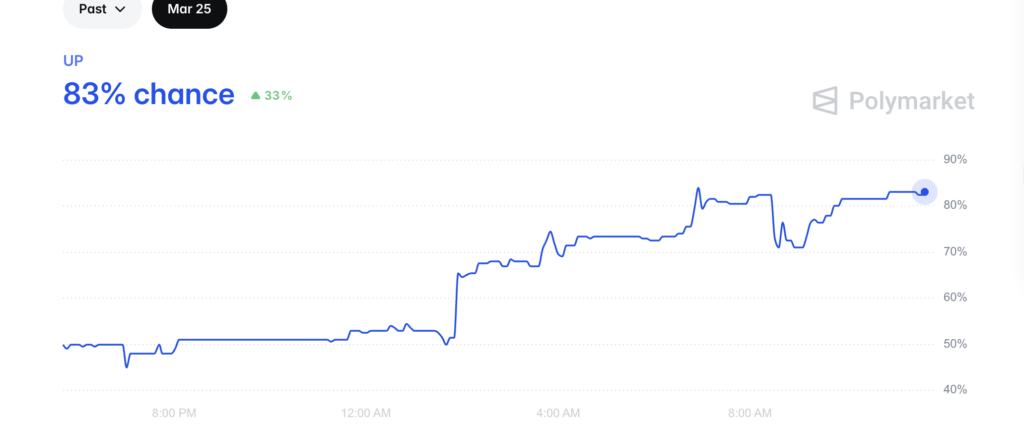
Will S&P 500 Open Up Or Down On March 25? Here’s How Polymarket Traders Lean As Trump Talks Up Iran Negotiations
The benchmark S&P 500 index pulled back on Tuesday, falling 0.37% to close at 6,556.37, as oil prices resumed their climb and uncertainty around the Iran conflict continued to weigh on sentiment.
The Polygon-based (CRYPTO: POL) Polymarket crowd is leaning bullish heading into Wednesday. The March 25 market shows a 83% traders betting “Up,” with early trading volume crossing $14,000 placed on whether the S&P 500 will open higher or lower.
Why That Number Matters
Markets remain heavily driven by developments in the Middle East and oil price swings. Crude prices climbed again on Tuesday, with Brent settling above $104 per barrel and WTI above $92, as the …
This post was originally published here



Trump Insiders ‘Getting Richer’ Off S&P 500 Spike: Adam Schiff Demands White House ‘Transaction Reports’ Ahead Of Iran Pivot Post
A massive, perfectly timed surge in futures trading just minutes before President Donald Trump announced a halt to planned strikes on Iran has sparked immense outrage, with lawmakers and veteran traders alleging blatant market manipulation.
Unexplained Pre-Market Surge
According to a CNBC report, trading volumes for S&P 500 e-Mini futures and West Texas Intermediate (WTI) oil futures spiked anomalously at 6:50 a.m. in New York. In the typically thin liquidity of early trading hours, this sudden burst stood out as one of the largest volume moments of the session.
Exactly 15 minutes later, at 7:05 a.m., Trump posted on Truth Social that the U.S. and Iran had held talks and that he was canceling planned strikes on Iranian energy infrastructure. Immediately following the announcement, S&P 500 futures soared over 2.5%, while WTI crude dropped nearly 6%.
Market analyst Adam Cochran noted that $1.5 billion in S&P 500 futures were bought and $192 million in oil futures were sold in a single clip right before the news broke—a trade size four to six times larger than normal.
This post was originally published here

Pudgy Penguins Launches Visa-Backed Crypto Debit Card Worldwide — PENGU Spikes Nearly 5.6%
Popular NFT brand Pudgy Penguins announced the global launch of its cryptocurrency debit card on Tuesday, powered by payments giant Visa Inc. (NYSE:V).
New Virtual Card For Everyday Spending
Pudgy Penguins said the Pengu card will let users spend stablecoins, such as USDC (CRYPTO: USDC) and Tether (CRYPTO: USDT), or cryptocurrencies, including PENGU, directly at over 150 million merchants, with up to 12% rewards and 7% yield on balances.
The card works with Apple Wallet or Google Wallet, allowing online payments and global ATM withdrawals.
The Pengu Card have three tiers: Standard, Black, and Gold, with Gold delivering the maximum reward at …

Wednesday briefing: Can Sarah Mullally steer the Church of England back into safer waters?
In today’s newsletter: The first woman to hold the position of archbishop of Canterbury arrives at a time of transition with hopes that she can restore the church’s reputation
Good morning. At a ceremony later today, Sarah Mullally will be installed as the 106th archbishop of Canterbury. The first woman to take on the role in its near 1,500-year history, she becomes de facto head of the Anglican communion at a difficult and painful moment for the Church of England.
Mullally takes over an institution grappling with safeguarding failures, internal division and questions about its place in modern British public life. So what exactly is the job she is stepping into – and how much power does it still carry?
Middle East | The US is poised to deploy airborne troops to the Middle East as strikes intensified across the region on Tuesday and Donald Trump claimed the US was in “very good” talks with Iran to end the war.
UK politics | Rachel Reeves has ruled out universal support to deal with any future rise in energy bills, saying any government help would be targeted, and criticised the support offered by Liz Truss’s government as unaffordable and irresponsible.
Health | The meningitis B vaccination programme will be expanded to include year 11 pupils at schools affected by the outbreak in Kent, health officials have said.
Meta | A New Mexico jury has ordered Meta to pay $375m in civil penalties after it found the company misled consumers about the safety of its platforms and enabled harm, including child sexual exploitation, against its users.
Environment | Ofcom to investigate climate change denial complaints for the first time since 2017.
This post was originally published here


Chewy, AAR And 3 Stocks To Watch Heading Into Wednesday
With U.S. stock futures trading higher this morning on Wednesday, some of the stocks that may grab investor focus today are as follows:
- Wall Street expects Chewy Inc. (NYSE:CHWY) to report quarterly earnings at 9 cents per share on revenue of $3.29 billion, before the opening bell, according to data from Benzinga Pro. Chewy shares rose 1.9% to $23.89 in after-hours trading.
- Arm Holdings Plc (NASDAQ:ARM) shares surged in Tuesday’s after-hours session following reports that the company is targeting $15 billion in annual sales from its new in-house chip. Arm shares …
This post was originally published here

U Power (UCAR) Stock Declines Nearly 20% After Hours — Here’s Why
U Power Ltd (NASDAQ:UCAR) saw activity in after-hours trading on Tuesday, falling by 19.72% to $0.092 following the company’s announcement of a share consolidation. UCAR closed the regular session at $0.11, down 11.98%, according to market data.
Overview
U Power, a Cayman Islands company based in Wuhu City, China, provides electric vehicle (EV) battery-swapping solutions. Its UOTTA™ platform allows the company to manufacture and operate battery-swapping stations, sell or rent battery cabinets to vehicle drivers, and upgrade station control systems. The company is also investing in next-generation technology to build intelligent energy ecosystems and turn EVs into dynamic energy assets.
Share Consolidation Set to Reshape UCAR Stock
U Power is combining every …

Gary Black Says United Is ‘Out-Innovating’ Rest Of US Aviation Industry As Airline Unveils ‘Relax Row’ Complete With Mattress And Two Pillows
Investor Gary Black said United Airlines Holdings Inc (NASDAQ:UAL) may be “out-innovating” the rest of the U.S. airline industry after the carrier unveiled a new long-haul economy product that can turn three adjacent seats into a couch-like space, part of a broader push by airlines to sell more comfort below business class.
Gary Black Praises United’s New Push
In a post on X, the Future Fund managing partner wrote that United “seems to be out-innovating the rest of the U.S. airline industry” with the new “Relax Row,” which he described as a block of three seats paired with added bedding.
This post was originally published here
Salesforce Top Brass Reveal Equity Transactions: CRM Stock Is Trending Overnight
Salesforce Inc. (NYSE:CRM) shares are trending on Wednesday night.
Shares of the leading American cloud-based software company rose 0.53% to $183.99 in after-hours trading on Tuesday, as six senior insiders disclosed equity transactions in Securities and Exchange Commission filings dated the same day.
Executives Vest RSUs
SEC filings show Salesforce executives Parker Harris, co-founder and chief technology officer of Slack, Miguel Milano, president and chief revenue officer, Sabastian Niles, president and chief legal officer, Srinivas Tallapragada, chief engineering and customer success officer and Robin Washington, president and chief operating and financial officer, each converted restricted stock units into common shares on Monday.
RSUs converted to common stock on a one-for-one basis upon vesting for Salesforce insiders.
| Insider | Shares Vested |
|---|---|
| Parker Harris | 7,359 |
| Miguel Milano | 7,118 |
| Sabastian Niles | 5,083 |
| Srinivas Tallapragada | 9,849 |
| Robin Washington | 7,323 |
| Total | 36,732 |
A combined 15,057 shares were withheld across the five insiders at $195.38 per share to settle tax obligations, totaling approximately $2.94 million.
In a …

Fitness Champs (FCHL) Stock Declines 33% After Hours — Here’s Why
Fitness Champs Hldgs (NASDAQ:FCHL, NASDAQ:FCHL) plunged 33.67% in after-hours trading on Tuesday, falling to $1.95, after the Singapore-based company disclosed plans for a large securities offering through a Form F-1 filing with the Securities and Exchange Commission.
FCHL closed the regular session up 19.05% at $2.94.
Overview
Fitness Champs stock has declined more than 95% over the past year, with the stock trading near its 52-week low of $2.05 compared to a high of $114.60. The latest after-hours decline comes as investors react to the company’s plans to raise capital.
Dilution Concerns
The company’s filing shows it intends to offer up to 6 million units, each including a share or pre-funded warrant along with a warrant to purchase additional shares. Beyond the initial issuance, the structure …
‘Political Band-aid’: cutting Australia’s fuel excise could make petrol shortages worse, economists say
Fuel tax cuts also risk adding to inflation by enabling some households with enough income to spend more
-
Get our breaking news email, free app or daily news podcast
Fuel excise cuts would be a “political Band-aid” that could worsen petrol shortages and add to inflation, economists have warned.
The mining billionaire Gina Rinehart, Tasmania’s state premier and Liberal opposition leaders in New South Wales and Victoria have called for the Albanese government to cut the excise on petrol and diesel.
This post was originally published here
Pauline Hanson wants to work with Liberals and Nationals to defeat Labor – but rules out official coalition
One Nation leader says voters ‘want to get rid of the Labor party, by all means’ but rejects possibility of formal power-sharing partnership
-
Get our breaking news email, free app or daily news podcast
Pauline Hanson says One Nation wants to work with the Liberals and Nationals – including on preferences deals – to defeat Labor and has offered to prop-up a future minority Coalition government.
But Hanson ruled out forming an official coalition with the two conservative parties, declaring she will never agree to an arrangement “where I will be told what I can say, what I can do”.
This post was originally published here

Budgeting vs. Forecasting: Key Differences Explained
This post was originally published here

Bitcoin Doesn’t Face ‘Existential’ Risk From Quantum Computers, Says Brian Armstrong: ‘With Good Work, We Can Make Sure That Lands In A Good Place’
Brian Armstrong, the CEO of Coinbase Global Inc. (NASDAQ:COIN), brushed off quantum computing threats to Bitcoin (CRYPTO: BTC) and cryptocurrencies at large.
Armstrong Says Quantum Risks Needs ‘Diligent Effort’
Armstrong posted on X, sharing a clip from his March 18 interview with Norges Bank Investment Management CEO Nicolai Tangen, where he stated quantum computing demands “diligent effort” but isn’t an “existential” risk to Bitcoin.
“I think that with good work, we can make sure that lands in a good place, ” the cryptocurrency billionaire added.
Armstrong Says BTC Fundamentals Intact
Addressing bear market concerns, Armstrong said he was “surprised” at how much Bitcoin had fallen.
“I think the fundamentals underneath have not changed very much in my point …
Europe and India are too sensitive to oil prices, says UBS — buy these defensive markets instead
Monday’s relief rally in equities offers an opportunity for investors to rotate into defensive assets, according to researchers at UBS.
This post was originally published here


LUNR Slides Nearly 12% As NASA Unveils Roadmap To Establish Moon Base, Scraps Orbital Space Station Plans
NASA has unveiled a revised roadmap for its lunar ambitions, with NASA administrator Jared Isaacman aiming to return to the lunar surface before the end of President Donald Trump‘s second term at the White House.
Lunar Base Plans
In a statement released on Tuesday, the agency revealed its plans to establish a permanent presence on the lunar surface. Isaacman, in the statement, shared that NASA was “committed” to return to the Moon “before the end of President Trump’s term,” as well as establishing “an enduring presence” by building a moon base.
The agency also announced a “phased” approach to the lunar base, aiming to concentrate on “infrastructure that enables sustained surface operations,” by delivering payloads and rovers to the surface of the moon before moving towards “semi‑habitable infrastructure and regular logistics.”
NASA had earlier delayed the Artemis II mission launch due to a helium system issue, as the agency shared that it emerged during a routine operation to repressurize the system. The agency is also targeting a crewed flyby mission to the moon before it …
This post was originally published here
What We Know About Trump’s 15-Point Plan
Ukraine war briefing: Moldova declares emergency after Russian attack cuts key power line
President urges people to reduce consumption after power line passing through Ukraine damaged by drones; Moscow spring offensive steps up. What we know on day 1,491
Moldova declared a state of emergency in the energy sector after a key power line with Europe was disconnected following Russian strikes in Ukraine. The declaration comes into effect on Wednesday and lasts for 60 days. The prime minister, Alexandru Munteanu, appealed to people to “avoid unnecessary consumption, especially during peak hours” and “stay united”, according to a statement from parliament. The former Soviet republic imports electricity from neighbouring EU member Romania, mostly via a power cable that passes through southern Ukraine. Moldovan authorities said crashed drones had been identified in Ukraine near the line and that “demining operations” were needed before repairs could be done. Restoring the power line itself was expected to take up to seven days, the energy minister, Dorin Junghietu was quoted by the Moldovan media outlet Ziarul de Gardă as saying. “Russia alone bears responsibility,” the Moldovan president, Maia Sandu, wrote on X, while the foreign ministry also condemned the Russian attacks. Russia has frequently targeted Ukraine’s energy infrastructure since it invaded its neighbour in 2022.
The Ukrainian president, Volodymyr Zelenskyy, has accused Russia of “absolute depravity” after Moscow fired an unprecedented daytime barrage across Ukraine, including on the historical centre of the western city of Lviv. “Iranian ‘shaheds’ [attack drones], modernised by Russia, are striking a church in Lviv – this is absolute depravity, and only someone like [Vladimir] Putin could find this appealing,” Zelenskyy said in his daily address. “The scale of this attack makes it abundantly clear that Russia has no intention of actually ending this war,” Zelenskyy added, vowing that Ukraine “will certainly respond to any attacks”.
Russia’s military said on Wednesday it had shot down 389 Ukrainian drones overnight in one of the largest attacks to date. Russian regions bordering Ukraine, as well as Moscow and northwestern Leningrad were the main areas targeted, according to the military.
Moscow appears to be stepping up a spring offensive intended to break Ukrainian resistance, writes Pjotr Sauer. Ukrainian officials said Moscow fired nearly 400 long-range drones and 23 cruise missiles overnight, followed by another 556 drones in an unusual daytime assault on Tuesday, hitting cities across the west of the country and killing at least seven people. Taken together, the barrage marks one of the largest aerial bombardments of Ukraine since the start of the full-scale invasion more than four years ago. One Russian drone struck the Bernardine monastery, a 16th-century church in Lviv’s Unesco-listed medieval centre, causing damage, local authorities said.
North Korea’s leader, Kim Jong-un, said his country would always support Russia in a thank-you letter to his Russian counterpart, Vladimir Putin. Ties between the two have grown closer since Putin began the full-scale invasion of Ukraine, with Pyongyang sending ground troops and weapons systems to aid Russia’s war effort. “I express my sincere thanks to you for sending warm and sincere congratulations first on my reassumption of the heavy duty as president of the state affairs,” Kim said in the message on Tuesday, the official Korean central news agency said. “Today the DPRK and Russia are closely cooperating to defend the sovereignty of the two countries,” Kim said, using the initials of the North’s official name. “Pyongyang will always be with Moscow. This is our choice and unshakable will,” he added. South Korean and western intelligence agencies have estimated that the North has sent thousands of soldiers to Russia, primarily to the Kursk region, along with artillery shells, missiles and long-range rocket systems. Analysts say the assistance has been provided in exchange for Russia’s provision of food and weapons technologies.
This post was originally published here
Third man charged with murder over alleged kidnapping and killing of Sydney man Chris Baghsarian
Man arrested in Seven Hills on Wednesday ‘one of the principal offenders’, NSW police allege
-
Get our breaking news email, free app or daily news podcast
A third man has been charged with the murder of Sydney grandfather Chris Baghsarian after allegedly kidnapping the 85-year-old last month in a case of mistaken identity.
On Wednesday morning police announced they had arrested a further two people – a man and and a woman both aged 23 – after detectives and tactical operations officers executed a search warrant in the Sydney suburb of Seven Hills at about 6.30am.
This post was originally published here

OpenAI pulls the plug on Sora, the viral AI video app that sparked deepfake concerns
OpenAI said Tuesday that it was “saying goodbye to the Sora app” and that it would share more soon about how to preserve what users already created on the app.
(Image credit: Michael Dwyer)

This post was originally published here


JetBlue flight turns back after striking a coyote on the runway: ‘We thought it was a joke’
A JetBlue flight was forced to turn back shortly after takeoff Tuesday after reportedly striking a coyote on the runway at a Rhode Island airport.
JetBlue Flight 1129, bound for New York’s JFK Airport, struck the animal while taking off from T.F. Green Airport Tuesday morning, according to WPRI-TV. Although the aircraft initially continued its climb, it returned to Rhode Island about 15 minutes later.
Erin Drozda, a passenger on the flight, said she heard “a thud” during takeoff.
“We were up in the air for 10 to 15 minutes, and then all of a sudden the captain came on and said, ‘This is the flight crew. If anyone heard that thud, we hit a coyote, and we are now on our way back to Providence,'” she told the station.
FATAL LAGUARDIA COLLISION RENEWS FOCUS ON RUNWAY INCURSION RISKS ACROSS US
“We thought it was a joke at first,” she added. “You don’t ever hear that.”
Drozda said emergency crews were waiting on the runway when the plane returned.
She said crews inspected the nose of the aircraft for damage before asking passengers to deplane so a full inspection could be completed.
UNITED AIRLINES SLASHES FLIGHTS AS IRAN WAR SENDS FUEL PRICES SOARING
“We got off the plane and stayed inside for about another half hour or so, and then they told us that everything was OK, and we were able to get back on the plane,” she told the station.
According to FlightAware data, the plane departed Rhode Island around 6:16 a.m. and returned to T.F. Green at 6:40 a.m. It took off again just after 8:30 a.m. and landed at JFK at 9:06 a.m.
Drozda said the delay caused her and her wife to miss a connecting flight to Costa Rica, though they were able to rebook for Wednesday.
A spokesperson for T.F. Green Airport told CBS News the incident did not impact other flights.
GET FOX BUSINESS ON THE GO BY CLICKING HERE
JetBlue said the aircraft returned “out of an abundance of caution” after a report that the landing gear made contact with wildlife during takeoff. The airline added the flight landed safely and no issues or injuries were reported.
FOX Business has reached out to JetBlue and T.F. Green Airport for additional information.
Rubio plans travel to France to sell Iran war to skeptical G7 allies
Secretary of State Marco Rubio will travel to France this week to try to sell America’s skeptical Group of Seven allies on the Iran war that has sent global fuel prices soaring.
(Image credit: Julia Demaree Nikhinson)

This post was originally published here
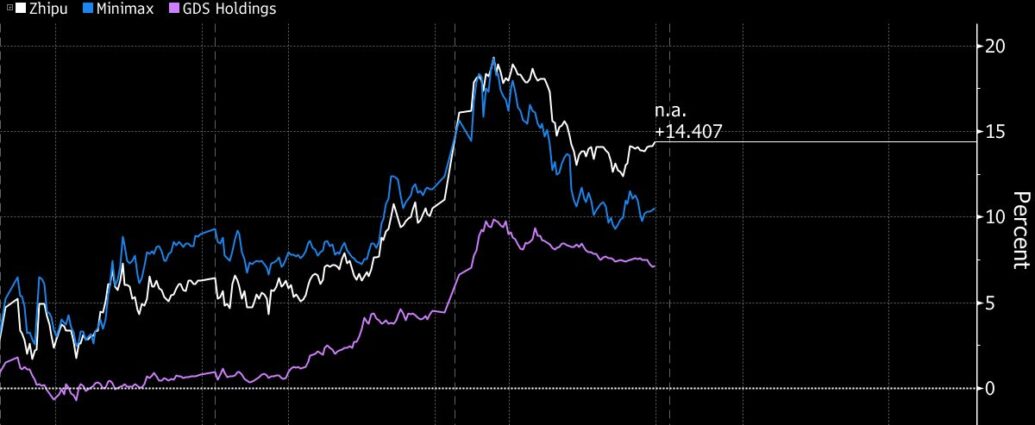

Oil volatile as Iran lays out own terms to end conflict
This post was originally published here
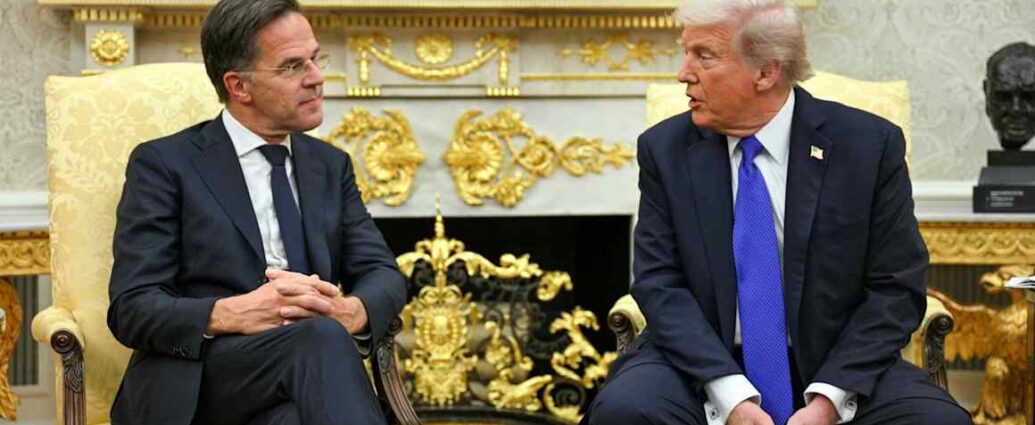
Nato chief riles Europe by backing Trump’s war in Iran
This post was originally published here

European airlines hold off jet fuel hedging in Iran war gamble
This post was originally published here

We must not underestimate the peril for democracy
This post was originally published here

Companies speed up debt raising plans amid market volatility
This post was originally published here
No Israel prosecutions for killing Palestinian civilians in occupied West Bank since start of decade
Dozens of former Israeli military, police and spy chiefs describe situation as ‘organised Jewish terrorism’
Israel has not prosecuted its citizens for killing Palestinian civilians in the occupied West Bank since the start of this decade, , a Guardian analysis of legal data and public records show, creating impunity for a campaign of violence.
Attacks have spurred former prime minister Ehud Olmert to call for an intervention by the international criminal court (ICC), to “save the Palestinians and us [Israelis]” from state-backed settler violence, carried out with the complicity and sometimes participation of the police and military.
This post was originally published here

The ships capitalising on the chaos of war
This post was originally published here

Tumbling gold price puts ‘haven’ status in doubt
This post was originally published here




China reviews $2bn Manus sale to Meta as founders barred from leaving country
This post was originally published here
Wednesday, March 25, 2026: Jim Cramer discusses his next moves for the Investing Club
This post was originally published here
ABC strike: national broadcaster switches to BBC programming as staff walk off the job for 24 hours
Managing director Hugh Marks says broadcaster will not back down on workers’ demands despite severe disruption to television, radio and digital
-
Get our breaking news email, free app or daily news podcast
More than 2,000 ABC staff around Australia have walked off the job for a 24-hour strike, forcing ABC services across TV, radio and digital to use BBC World Service and repeat programming.
The ABC managing director, Hugh Marks, was defiant and said the ABC would not back down on staff demands, despite the severe disruption.
This post was originally published here
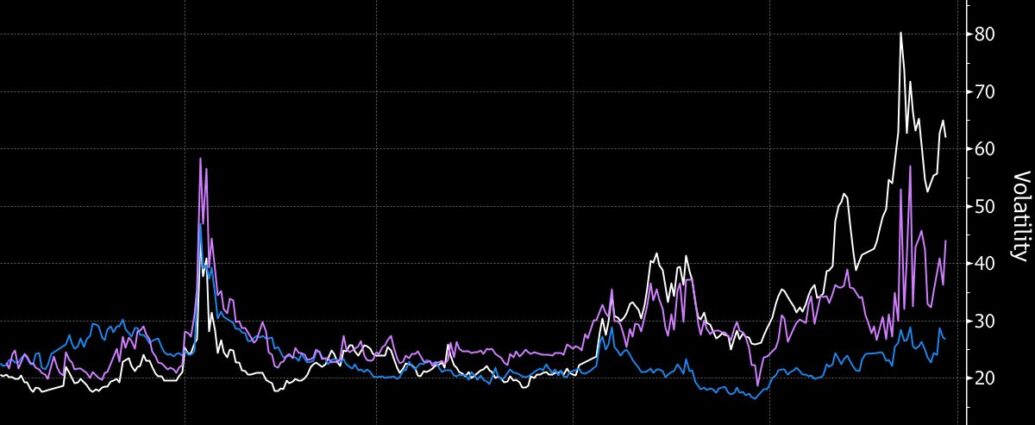

Elon Musk’s SpaceX Could File For Its IPO As Soon As This Week, Aiming To Raise $75 Billion: Report
Elon Musk-led commercial spaceflight company SpaceX is reportedly planning to file for its proposed IPO as early as this week, aiming to raise up to $75 billion.
20% Shares For Retail Investors
Citing an anonymous source familiar with the matter, The Information reported on Tuesday that the company could file for its IPO this week or next.
SpaceX’s confidential filing would show that the company is still targeting a June listing. The space flight giant was earlier mulling a listing on NASDAQ.
The report also mentioned that SpaceX could allocate more than 20% of shares to retail investors during the IPO, which could turn out to be the biggest IPO in history, considering the $75 billion being raised.
SpaceX didn’t immediately …
This post was originally published here

Dogecoin, Ethereum, Gold Trades On Your Mind? Here’s What This Top Analyst Has Projected For The Coming Few Days
A leading cryptocurrency analyst on Tuesday projected significant volatility for Dogecoin (CRYPTO: DOGE) in the days ahead, while outlining a rosy outlook for gold.
Which Way Is DOGE Headed?
Ali Martinez took to X, highlighting a descending triangle formation on Dogecoin’s 4-hour chart that could trigger a 29% price move for the memecoin.
Note that Martinez didn’t explicitly state the direction of the swing, whether upward or downward.
Typically, the pattern indicates a continuation of a downtrend, where sellers are gaining control.
The Moving Average Convergence Divergence indicator, which compares two exponential moving averages of an asset’s price, typically the 12-period and the 26-period, flashed a “Buy” signal for DOGE, according to TradingView.
Conversely, the Bull Bear Power indicator, …
Fire at Kuwait airport after drone attack – as it happened
This blog is closed. Follow our new liveblog here
In Australia, the number of petrol stations running out of fuel continues to climb as the Middle East war drags on, with at least 184 dry across the country’s three most populous states.
On Tuesday, 51 service stations in the state of New South Wales were out of fuel and 164 out of diesel, compared with 38 and 131 respectively the previous day, premier Chris Minns said.
This post was originally published here
Sydney teenager charged with terror offences allegedly accessed ‘guides’ to mass casualty attacks, court hears
Police allege the boy ‘held a mixed ideology and outlined plans for acts of violence’
-
Get our breaking news email, free app or daily news podcast
A 16-year-old boy has been charged with multiple terrorism offences after allegedly accessing “guides” on how to commit a “mass casualty event”, a court has heard.
The boy appeared before a children’s court in Sydney on Wednesday, where a commonwealth prosecutor said the teenager had accessed the materials “for the purpose of a contemplated mass casualty attack”.
This post was originally published here

Australia backs Lebanon’s sovereignty and opposes occupation, Penny Wong tells Israel
Foreign minister reiterates condemnation of Iran over the strait of Hormuz and says Australia does not want to see occupation of southern Lebanon by Israel
-
Get our breaking news email, free app or daily news podcast
Penny Wong has told her Israeli counterpart that Australia supports Lebanon’s sovereignty and does not want to see the southern part of the country occupied by Israel, after the Netanyahu government revealed plans to pursue a “defensive buffer” against Iran-backed armed group Hezbollah.
It comes as Israel vowed to continue striking Iran, dimming hopes of de-escalation even as the US president, Donald Trump, talked up the prospects of a deal to end the conflict.
This post was originally published here




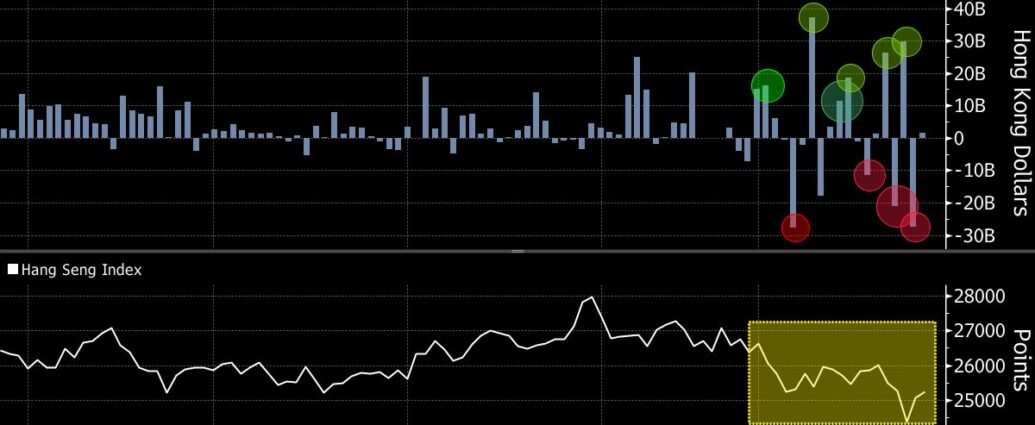

SK Hynix files confidentially for U.S. listing as it rides ‘unprecedented growth’ in memory market
SK Hynix has made a confidential filing for a potential listing in the U.S. this year, as the company looks to expand production.
This post was originally published here
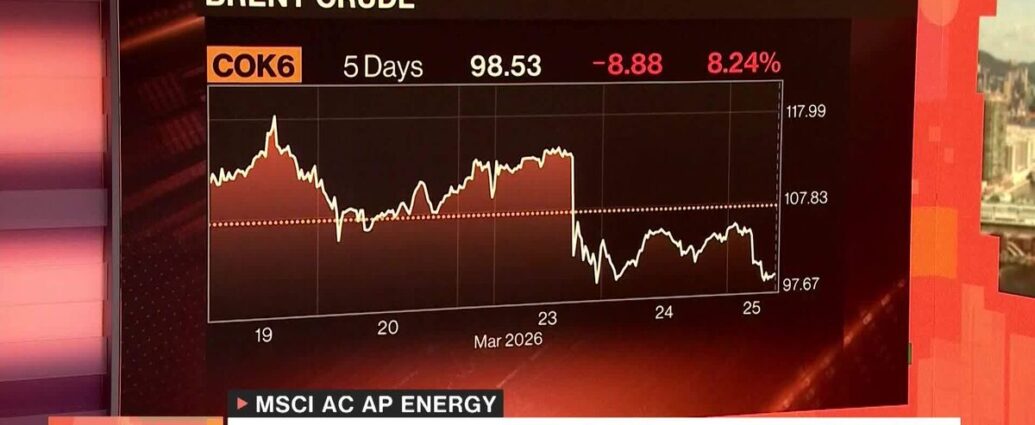

iTonic Holdings (ITOC) Surges Over 84% After Hours— Here’s Why It’s Trending
iTonic Holdings Ltd (NASDAQ:ITOC) soared 84.18% in after-hours trading on Tuesday, reaching $0.52, after the Beijing-based company announced a $20 million private placement offering.
ITOC closed the regular session down 2.86% at $0.28, according to Benzinga Pro.
The Capital Raise Driving the Rally
In a Securities and Exchange Commission filing on Tuesday, iTonic announced it entered a private placement subscription agreement on Monday, to issue 100 million Class A ordinary shares at $0.20 per share.
The offering is expected …
This post was originally published here

Debt Restructuring vs. Refinancing: What You Should Know
This post was originally published here

Musk lawyers try to bar judge over LinkedIn ‘like’ cheering legal defeat
This post was originally published here












Blaize Holdings Is Trending As Stock Shoots Up 49% Overnight: Here’s Why
Blaize Holdings Inc. (NASDAQ:BZAI) shares are trending on Tuesday night.
Shares of the California-based AI platform company rose 48.65% after hours to $1.65 on Tuesday after reporting fourth-quarter and full-year 2025 financial results, alongside fiscal 2026 guidance of $130 million.
What Do The Q4 Results Say?
In the fourth quarter, Blaize Holdings posted a net loss of $3.2 million, down from a loss of $26.3 million in the preceding quarter.
The company said its revenue for the quarter rose to more than twice the level reported in the third quarter. Fourth-quarter revenue also exceeded the upper end of company guidance.
Adjusted earnings before interest, taxes, depreciation and amortisation showed a loss of $11.1 million, unchanged from the previous quarter.
Blaize Holdings stated that research and development, as well as sales, general and administrative expenses, remained flat quarter over quarter.
Full Year Result
The …

Lebo M sues comedian Learnmore Jonasi claiming Circle of Life misrepresentation
Grammy winner seeks more than $20m in damages over mistranslation of The Lion King chant
A Grammy-winning South African composer who wrote and performed the opening chant in Circle of Life for Disney’s The Lion King is suing a comedian for allegedly damaging his reputation by intentionally misrepresenting the song’s meaning on a podcast and in his standup routine.
Lebohang Morake’s lawsuit accuses the Zimbabwean comedian Learnmore Mwanyenyeka, known as Learnmore Jonasi, of intentionally mistranslating the chant, which launches the 1994 movie and is central to staged versions as well as Disney’s 2019 remake.
This post was originally published here


US-Iran Peace Talks To Be Held In This Country? Crypto Prediction Market Sets Over 50% Probability After Trump’s Truth Social Post
Cryptocurrency punters are growing increasingly confident that Islamabad could host U.S.-Iran negotiations after President Donald Trump shared the Pakistan prime minister’s mediation offer on social media.
Pakistan Becomes Favorite On Polymarket
Polygon (CRYPTO: POL)-based Polymarket shows a 56% probability that the next diplomatic meeting between the U.S. and Iran will take place in Pakistan, up 33 percentage points over the last 24 hours.
The meeting must take place in person, including any indirect in-person interactions, and must be publicly acknowledged by the government or confirmed by credible media sources. Meetings carried out through appointed mediators, …
The Maga divide over Iran – podcast
Andrew Roth on why the war on Iran is unpopular with the US public and what it means for Maga insiders
Andrew Roth, the Guardian’s global affairs correspondent based in Washington DC, says reporting on the US and Israeli war on Iran gives you “whiplash”.
“We’re so used to going into these kinds of wars and conflicts where there’s a massive plan for what’s going to happen six weeks from now, six months from now,” he tells Michael Safi.
This post was originally published here




Meta makes ‘big bet’ on top leaders with stock options as pressure builds to catch up in AI
Meta is granting stock options to top executives as pressure on the company intensifies in the AI battle.
This post was originally published here

Democrat wins election in Trump’s Mar-a-Lago district
This post was originally published here
David Blitzer and Blackstone-backed group snaps up Indian cricket franchise for $1.8 billion
Indian cricket franchise Royal Challengers Bengaluru has been acquired for $1.78 billion by a consortium of global and Indian investors.
This post was originally published here










Bitcoin, Ethereum, XRP Steady, While Dogecoin Spikes Amid Trump’s Iran Negotiation Buzz: Analyst Outlines BTC’s Path To $80,000
Leading cryptocurrencies traded sideways on Tuesday, while stocks declined as the war in Iran dragged on despite President Donald Trump signaling a potential ceasefire.
| Cryptocurrency | 24-Hour Gains +/- | Price (Recorded at 9:30 p.m. ET) |
|---|---|---|
| Bitcoin (CRYPTO: BTC) | -0.10% | $70,658.19 |
| Ethereum (CRYPTO: ETH) |
+0.75% | $2,158.95 |
| XRP (CRYPTO: XRP) | -0.21% | $1.41 |
| Solana (CRYPTO: SOL) | +0.27% | $91.16 |
| Dogecoin (CRYPTO: DOGE) | +1.56% | $0.09487 |
Cryptos Take A Breather
Bitcoin’s trading activity slowed as the price fluctuated between $69,000 and the low $71,000 range. Ethereum faced rejection at $2,200 and pulled back toward the $2,100 level, while Dogecoin saw gains of nearly 1.6%.
Shares of Strategy Inc. (NASDAQ:MSTR) and Bitmine Immersion Technologies Inc. (NYSE:BMNR) closed down 1.41% and 2.21%, respectively.
Over $234 million in crypto positions were liquidated in the past 24 hours, with losses almost evenly divided between long and short traders, according to Coinglass data.
Open interest in Bitcoin futures increased 2.91% in the last 24 hours. Meanwhile, “Extreme Fear” sentiment continued to dominate the market, according to the Crypto Fear & Greed Index.
Top Gainers (24 Hours)
| Cryptocurrency (Market Cap>$100 M) | Gains +/- | Price (Recorded at 9:30 p.m. ET) |
| Templar (SN3) | +21.35% | $32.26 |
| Undeads Games (UDS) | +18.36% | $6.65 |
| Bittensor (TAO) | +12.75% | $337.83 |
The global cryptocurrency market capitalization stood at $2.43 …
Markwayne Mullin sworn in as homeland security secretary; Trump suggests he won’t be happy with any DHS funding deal – as it happened
This live blog is now closed.
Gregory Bovino, the customs and border protection (CBP) commander who led the agency’s aggressive anti-immigration push in Minneapolis before being sidelined by the White House, has decided to go out with a bang it would seem.
Having announced his forthcoming retirement from the CBP, the publicity-hungry Bovino – known for his florid statements – has given an interview to the New York Times that stresses defiance over contrition.
This post was originally published here