


British-Iranians in UK report safety concerns to authorities amid Iran war
Accusations of intimidation and harassment within UK diaspora including ‘aggressive’ and ‘coersing’ videos online
Iranians living in the UK have expressed safety concerns to authorities amid heightened tensions within the community linked to the conflict with the US and Israel.
Videos online of individuals allegedly being “aggressive” and “coercing” in London, which is home to one of the UK’s largest Iranian communities, have led to some feeling unsafe, they claim.
This post was originally published here



Gen Z 401(k) Balances Compared to Older Generations Reveal Surprising Trends in Retirement Savings
This post was originally published here
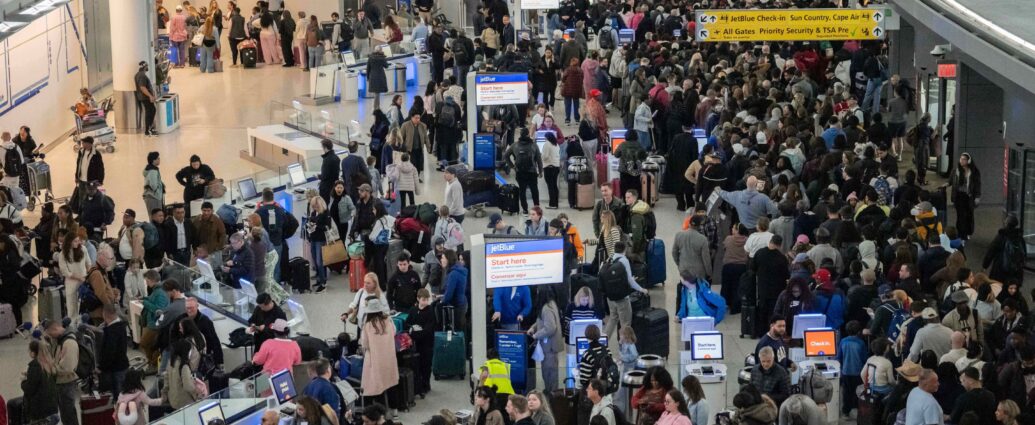
Trump’s border czar says ICE agents could guard exits and check IDs at airport screening areas as long lines plague travelers
Federal immigration agents newly ordered to U.S. airports by President Donald Trump to help relieve security line congestion may guard exit lanes or check passenger IDs as a budget impasse has air travelers frustrated over hourslong waits and screeners angry about missed paychecks.
Trump made clear on Sunday, a day after saying he would use immigration officers for airport security starting Monday unless Democrats agreed on a bill to fund the Department of Homeland Security, that he was going ahead with the plan to assist the Transportation Security Administration.
Hundreds of thousands of homeland security workers, including from the TSA, U.S. Secret Service and Coast Guard, have worked without pay since Congress failed to renew DHS funding last month. Democrats are demanding major changes in the conduct of federal immigration agents and showing no sign of backing down.
White House border czar Tom Homan, named by Trump to lead this effort, has also been meeting with a bipartisan group of senators in recent days over the partial shutdown and while he characterized those sessions as “good conversations,” he said they were “not at a point yet where we’re in total agreement.”
The Senate, convening in a rare weekend session, was expected to advance the nomination of Sen. Markwayne Mullin, R-Okla., to be Trump’s next homeland security secretary. A vote on the confirmation could come as early as late Monday as Mullin has tried to make the casethat he would be a steady hand after the tumultuous tenure of Kristi Noem, Trump’s first DHS secretary.
Meantime, Homan said in Sunday news show interviews that the increased role of U.S. Customs and Immigrations Enforcement at airports — specific duties and numbers — was subject to discussions with the leadership of TSA and ICE “to find out where we can fit in.”
He pledged to have “a plan by the end of today, where we’re sending — what airports we’re starting with and where we’re sending them. … So it’s a work in progress.” The priority, Homan said, was “the large airports where there’s a long wait, like three hours.”
Immigration officers, as an example, could cover exits currently monitored by TSA agents, freeing them to work screening lines.
“ICE agents are assigned at many airports across the country already. They do a lot of investigation, criminal investigation on smuggling at airports,” Homan said, adding that “certainly, a highly trained ICE law enforcement officer can cover an exit and makes sure people don’t go through those exits, entering the airport through the exits. And stuff like that relieves that TSA officer to go to screening and to reduce those lines.”
Another option, he said, was having ICE agents check identification before people enter screenings areas.
“We’re going to be a force multiplier,” Homan said.
While saying to help “wherever we can provide extra security,” Homan said there were limits. “I don’t see an ICE agent looking at an X-ray machine, because we’re not trained in that,” he said.
Trump said in a social media post that on Monday, “ICE will be going to airports to help our wonderful TSA Agents who have stayed on the job” despite the partial government shutdown. He further criticized Democrats.
Travelers at some airports worried about reaching their gates Sunday.
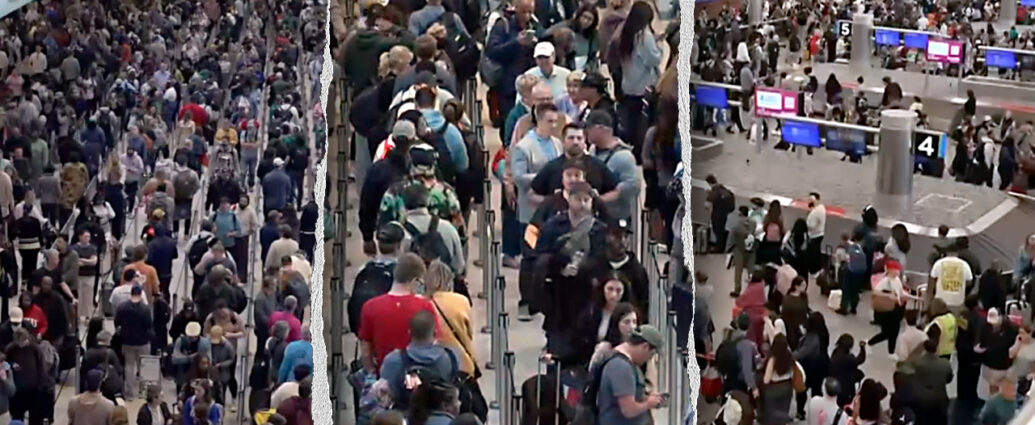
At Atlanta’s Hartsfield-Jackson International Airport, lines wrapped from one end of the airport to the other.
“Everyone just seems to be accepting it for what it is, said 43-year-old Blake Wilbanks, who showed up 2 1/2 hours early for his morning flight to Salt Lake City after reading about the shutdown.
“Hopeful I’m gonna make it,” he said as he waited in a winding security line.
The scene appeared more chaotic at John F. Kennedy International Airport in New York. Large big crowds of anxious travelers piled toward security checkpoints, and TSA staff shouted through megaphones to tell people not to push one another.
For Transportation Secretary Sean Duffy, one concern is the uncertainty that passengers are facing over possible wait times at any airport on any given day.
“Do I have to come an hour and a half early? Do I have to come four hours early? They don’t know until the day of or the afternoon of their flight,” he said. “So if we can alleviate that, again, the president wants to take away that leverage point for Democrats and make travel easier for the American people.”
House Democratic leader Hakeem Jeffries of New York said “the last thing that the American people need are for untrained ICE agents to be deployed at airports all across the country” after criticism about their conduct as part of Trump’s immigration enforcement operations in Minnesota and elsewhere.
Homan appeared on CNN’s “State of the Union” and “Fox News Sunday,” while Duffy was interviewed on ABC’s “This Week” and Jeffries spoke on CNN.
This story was originally featured on Fortune.com

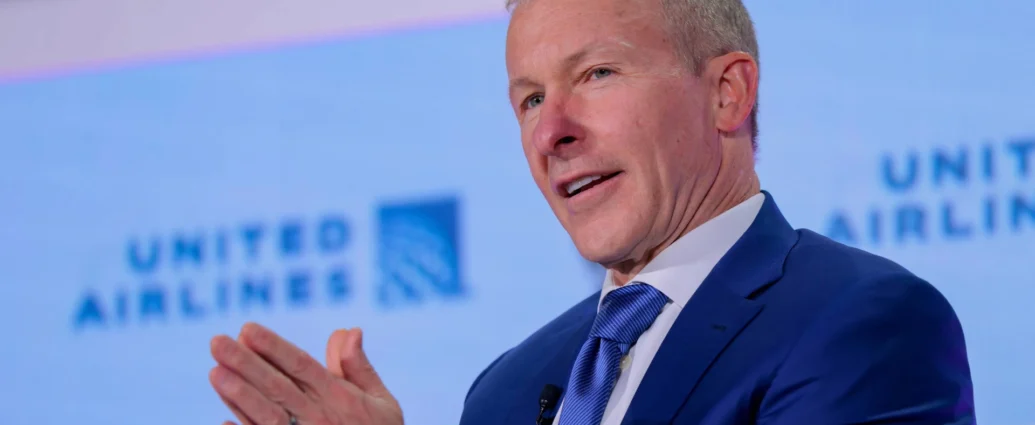



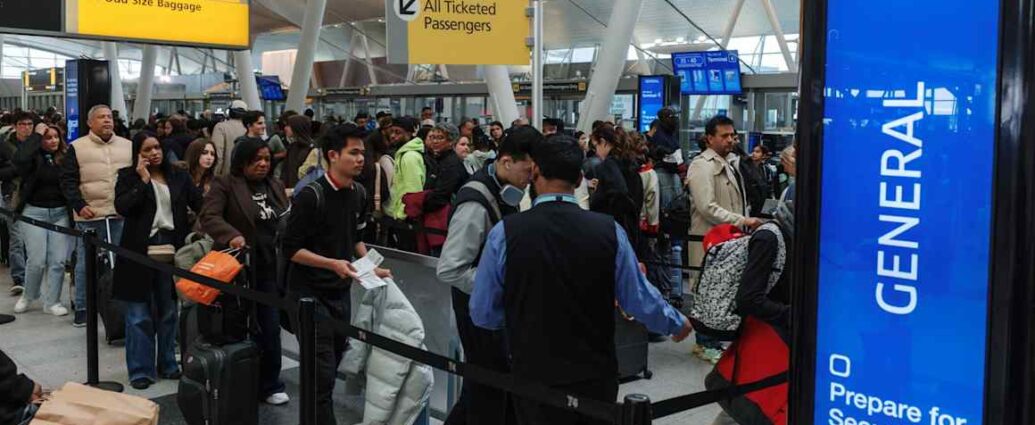
Trump to send immigration enforcement officers to US airports
This post was originally published here
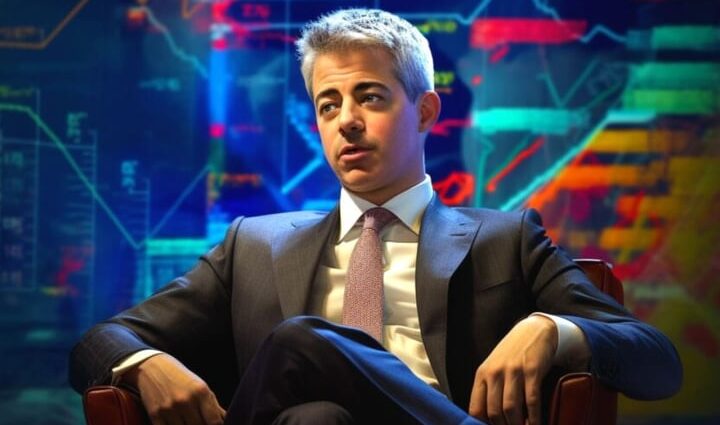
Bill Ackman on Treasury’s Fannie/Freddie Deal: ‘Now That You Have Time, Mr. President, Let’s Stop the Steal!’
Bill Ackman blasted the U.S. Treasury’s handling of Fannie Mae and Freddie Mac on Sunday, arguing the government rewrote the rescue terms through the Net Worth Sweep and diverted all quarterly profits to itself even after the companies had already repaid the bailout. Earlier, in separate remarks calling the trade his top idea for 2026, Ackman outlined a step-by-step path to exit conservatorship that he said could stabilize housing finance and deliver substantial returns for taxpayers.
In a lengthy post on X, Ackman outlined his central argument, saying shareholders are not seeking a “gift” from Washington but are instead asking the government to honor the original senior preferred stock agreement and properly account for the payments.
He contrasted the 2008-era bank rescues, citing a 5% coupon plus warrants equal to 15% of face value, including a $10 billion Treasury investment in Goldman Sachs with warrants on $1.5 billion of common stock, with what he described as harsher terms imposed on the two mortgage firms.
Ackman said Treasury’s support for the pair totaled $193 billion in senior preferred stock, plus $2 billion of commitment fees, carrying a 10% coupon and accompanied by warrants for 79.9% of each company. He added that the companies have paid Treasury $301 billion, which he said includes a blended 11.6% interest rate and full return of the $193 billion principal, plus $25 billion more than the contract required.
Why Ackman’s Push For Fannie Freedom Matters
Ackman argued the accounting outcome is upside down: despite the $301 billion he says has been sent back, …
This post was originally published here
ICE officers set to deploy to airports as delays mount, border czar Homan confirms
Border czar Tom Homan says ICE agents will help the Transportation Security Administration ‘move those lines’ while also enforcing immigration law.
(Image credit: Yuki Iwamura/AP)

This post was originally published here

‘Someone knows something’: Guthrie family pleads for new information
Today show host Savannah Guthrie’s family released new statement asking for help in locating missing mother, 84
Savannah Guthrie and her family have released a new statement about their missing mother, urging Tucson, Arizona, residents to come forward with potential clues about 84-year old’s Nancy Guthrie’s whereabouts.
In their statement on Sunday, the NBC Today show host and her siblings said: “We continue to believe it is Tucsonans, and the greater southern Arizona community, that hold the key to finding resolution in this case. Someone knows something. It’s possible a member of this community has information that they do not even realize is significant.”
This post was originally published here


Natural gas prices in Texas plunge deep into negative territory and producers are burning it off, while the rest of the world braces for shortages
A quirk in global energy markets has created a stark geographic divide between the haves and the have nots, as a glut of natural gas in West Texas has produced negative prices while shortages loom over Europe and Asia amid the U.S. war on Iran.
Over the past week, spot prices at the Waha gas trading hub in the Permian Basin fell as low as -$9.75 per million British thermal units, with expectations that it could hit -$10 when pipeline capacity tightens as operators perform seasonal maintenance later this year, traders told Bloomberg.
That’s because drilling in the prolific Permian Basin yields both oil and natural gas. But while an extensive network of pipelines exists to bring crude to market, there’s less infrastructure to transport natural gas, creating bottlenecks and localized surpluses.
As a result, negative gas prices aren’t that unusual in West Texas, and have been that way more often than not so far this year. But last week saw the lowest weekly average Waha spot price on record.
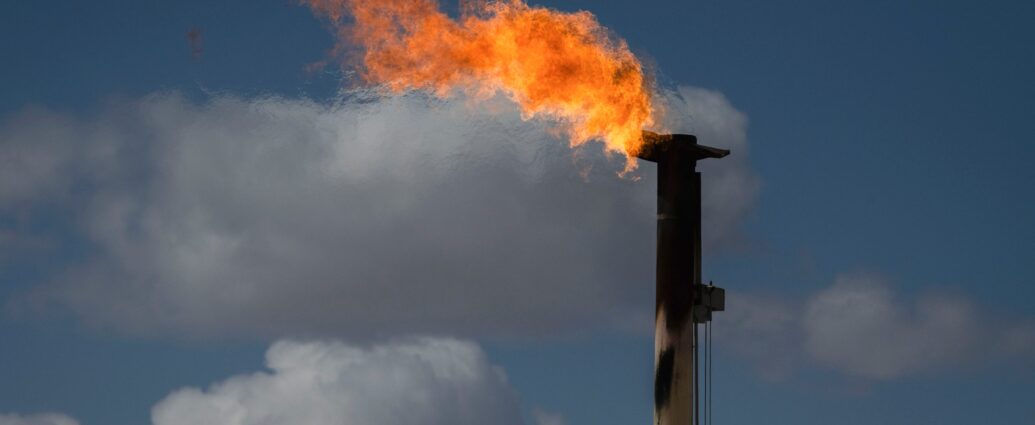
Since negative prices mean producers have to pay to someone to take the supply off their hands, excess natural gas is often burned off, and so-called flaring events this season are at five-year highs.
Despite the upside-down price environment for West Texas drillers, they aren’t expected to pull back production because oil is lucrative enough to offset losses from gas.
And the recent spike in crude since the U.S.-Israel war on Iran started makes oil even more profitable. West Texas Intermediate has shot up 47% to nearly $100 a barrel in the last three weeks.
By contrast, other parts of the world have seen natural gas prices surge due to disruptions from the Iran war. Tehran has retaliated by largely closing off the Strait of Hormuz, through which 20% of the world’s oil and liquified natural gas flow.
Iran also attacked Qatar’s Ras Laffan Industrial City, damaging two LNG production trains that will impact about 17% of the country’s LNG exports—and repairs may take up to five years.
While most LNG from the Middle East goes to Asia, the supply shock will ripple through global markets as Asia and Europe compete for the remaining gas.
European benchmark gas futures jumped as much as 35% on Thursday to about 70 euros per megawatt hour, or more than $20 per million BTUs, double their prewar levels.
While that’s far short of the record 345 euros per megawatt hour seen in 2022 after Russia invaded Ukraine, the latest price spike comes at a sensitive time for Europe. After heating demand drew down gas inventories during winter, countries must now restock supplies this summer.
In Asia, the situation is so dire that countries have already started looking ways to ration energy, such as implementing four-day workweeks and working from home.
A prolonged closure of the Strait of Hormuz could send LNG spot prices in Asia above $30 per million BTUs in the summer from $26 this spring, analysts told Bloomberg. And if it remains shut in six months, the price could even top $40.
This story was originally featured on Fortune.com




Understanding Micro vs. Macro Economics: Key Differences Explained
This post was originally published here
Frustrated passengers lash out at long TSA lines; GOP messages to ‘thank a Democrat’
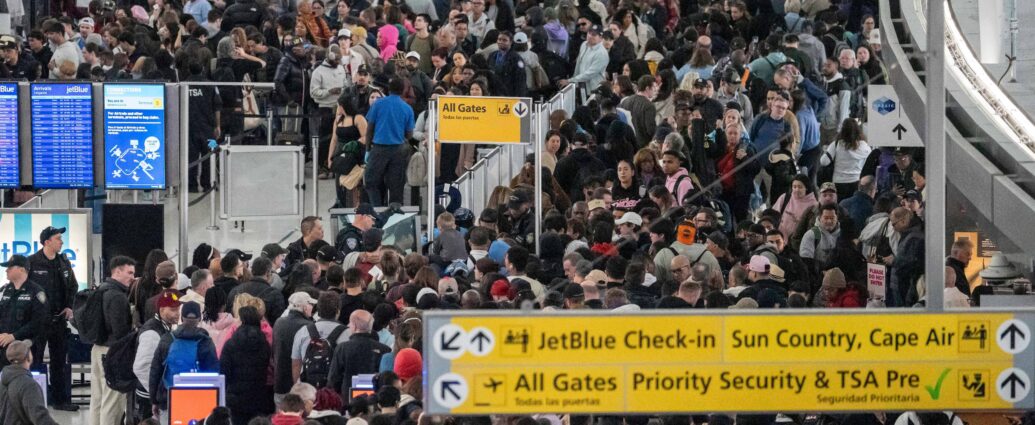
Airport security delays amid the partial government shutdown have created weekend travel nightmares, with massive TSA lines choking terminals across the country, unpaid officers calling out in growing numbers, and President Donald Trump vowing to send U.S. Immigration and Customs Enforcement (ICE) agents to airports to try to stem the tide of American angst.
“This is insane,” a frustrated passenger told CNN at Atlanta’s Hartsfield-Jackson International, regarded as the busiest airport in the world. “We didn’t think it was going to be this bad.”
“It’s pandemonium out there,” another added in videos posted to social media this weekend.
“We shouldn’t have to deal with this just to get on an airplane,” an X poster raged — a complaint that now captures the mood at airports nationwide as travelers absorb the fallout from Washington’s funding fight.
TSA OFFICIAL WARNS SMALLER AIRPORTS COULD SHUT DOWN AMID DHS FUNDING CRISIS
The chaos is being fueled by deepening TSA staffing shortages during one of the busiest travel stretches of the season due to spring breaks for schools and colleges. Officers are working without pay under the shutdown, and the Department of Homeland Security (DHS) has warned absenteeism, resignations and delays are likely to worsen if the stalemate drags on.
More than 400 TSA workers have already quit since the shutdown began Feb. 14, according to DHS.
The immediate concern for travelers, though, is far more fundamental: getting through the checkpoint before their flight leaves.
DHS SHUTDOWN FORCES AIRPORTS TO TELL TRAVELERS TO ARRIVE 4 HOURS EARLY AMID MASSIVE DELAYS
Among the most eye-popping wait times and airport line scenes reported this weekend:
Atlanta (ATL): Reported wait of 153 minutes early Sunday, with lines described as wrapping around baggage claim.
New Orleans (MSY): Security line reportedly stretched into the parking garage.
Houston (IAH/HOU): Some passengers reportedly faced waits of up to two to three hours, with Hobby Airport hit especially hard by staffing shortages.
JFK (New York): Waits climbed to 75 minutes Sunday morning after being much lower a day earlier.
Newark (EWR): Delays reached 44 minutes at points.
LaGuardia (LGA): Waits rose to around 20 minutes, lower than other major hubs but still up from minimal waits the previous day.
Cincinnati (CVG): Third-party tracker estimates showed waits approaching nearly an hour.
San Juan (SJU): Third-party tracker estimates also showed waits approaching nearly an hour.
AIRPORT CHECKPOINT CLOSURES SPREAD AS TSA WARNS OF SECURITY ‘THREAT,’ MORE TRAVEL DELAYS
The full national picture remains murky because official TSA tools are no longer reliably current.
“Due to the lapse in federal funding, this website will not be actively managed,” a red alert atop the My TSA app reads Sunday. “Click here for more information.”
That link reveals the data has not been updated for more than a month:
AIRLINE CEOS TORCH LAWMAKERS FOR TURNING AIR TRAVEL INTO A ‘POLITICAL FOOTBALL’
“This website was last updated on February 17, 2026 and will not be updated until after funding is enacted. As such, information on this website may not be up to date. Transactions submitted via this website might not be processed and we will not be able to respond to inquiries until after appropriations are enacted.”
DHS has said more than 10% of TSA officers called out on more than half of the past seven days, with some airports averaging absence rates near 20%. At Houston’s William P. Hobby Airport, the rate reportedly climbed above 40% on certain days. Those no-shows have forced lane closures, longer backups and wild swings in wait times from one hour to the next.
For weeks, Republicans in Congress have been sharing the narrative – with photos and videos of TSA security delays – “thank a Democrat.“
Trump even went so far as to call Democrats the “greatest enemy” Americans face, as he continues to declare victory over Iran.
SHUTDOWN SPARKS FLIGHT CHAOS AS TSA LINES SPILL INTO PARKING LOTS WITH 3-HOUR WAITS OR LONGER
“Now with the death of Iran, the greatest enemy America has is the Radical Left, Highly Incompetent, Democrat Party!” Trump wrote Sunday morning on Truth Social.
Trump’s post came after his vow to send ICE agents to overwhelmed TSA security checkpoints at American airports. Coincidentally, Democrats have forced the Senate’s government shutdown for DHS funding over alleged abuse of power by ICE agents in Democrat-run sanctuary cities and states.
But, as Trump and Republicans frequently remind their counterparts, ICE is already fully funded since last summer’s passage of the One Big Beautiful Bill Act, so shutting down DHS appropriations is not accomplishing its stated goals.
HOMELAND SECURITY REACTIVATES MAJOR GLOBAL ENTRY PROGRAM FOR TRAVELERS AMID SHUTDOWN
“On Monday, ICE will be going to airports to help our wonderful TSA Agents who have stayed on the job despite the fact that the Radical Left Democrats, who are only focused on protecting hard line criminals who have entered our Country illegally, are endangering the USA by holding back the money that was long ago agreed to with signed and sealed contracts, and all,” Trump wrote on Truth Social, hailing border czar Tom Homan as the fixer the TSA chaos needs urgently.
“But watch, no matter how great a job ICE does, the Lunatics leading the incompetent Dems will be highly critical of their work. THEY WILL DO A FANTASTIC JOB. The great Tom Homan is in charge!!!”
Democrats blasted the idea, with Sen. Richard Blumenthal, D-Conn., calling it “another reckless, lawless threat to misuse ICE agents,” and Rep. Bennie Thompson, D-Miss., accusing Trump of “manufacturing chaos at airports for political leverage.”
TRUMP SAYS ICE WILL DEPLOY TO AIRPORTS MONDAY TO ASSIST TSA AMID FUNDING STANDOFF
Transportation Secretary Sean Duffy has warned the mess could get much worse, saying current delays may look like “child’s play” if TSA personnel miss another paycheck. Officials have even suggested some airports could face deeper disruptions — or possible closures — if the staffing crisis keeps intensifying.
For now, airports are urging travelers to arrive at least three hours early, even for domestic departures. But for passengers staring down marathon lines, the advice is landing more like a warning than reassurance: the shutdown is no longer just a fight in Washington — it is now a checkpoint crisis playing out in real time at airports across America.
“The current unpredictability is being driven by unpredictable staffing levels, basically, how many TSA officers are showing up for work on any given day,” Sheldon H. Jacobson, , the founder professor of engineering at the University of Illinois Urbana-Champaign and an expert on aviation security and airport security screening, told Business Insider.
THUNE REVEALS REASON DEMOCRATS ARE ‘SCARED’ TO REOPEN DHS
“TSA officers have historically been cross-trained to do many different tasks, so the number that show up is the key factor,” Jacobson said.
ICE agents are not specifically trained for airport security, the domain of TSA, which has 65,000 employees, including 50,000 airport security officers. ICE has played a central role in the Trump administration’s illegal immigration crackdown.
“He seems to have no concept of what the limits are on ICE, and I think America would be absolutely appalled to see ICE agents roaming through airports, just as they’ve been breaking down doors at homes,” Blumenthal told reporters in Washington.
SCHUMER GAMBIT FAILS AS DHS SHUTDOWN HITS 36 DAYS AND AIRPORT LINES GROW
Elon Musk, the world’s richest person, on Saturday offered to cover TSA paychecks “during this funding impasse that is negatively affecting the lives of so many Americans at airports throughout the country.”
Homeland Security historically has shifted resources across agencies during emergency staffing shortages, said Stewart Baker, who was a DHS policy official in President George W. Bush’s administration. Keeping TSA going without paying staff creates “serious trouble” for the agency, Baker said.
Using ICE agents for airport security “may be slower than using trained people, but it would be better than having nobody,” he added.
Reuters contributed to this report.


I ‘raided’ my 401(k) to save my house—and I don’t regret it
This 57-year-old dad touched the untouchable after getting laid off. Turns out he’s a trendsetter.
This post was originally published here












Are SLABS Safe Investments? Analyzing Student Loan Securities
This post was originally published here
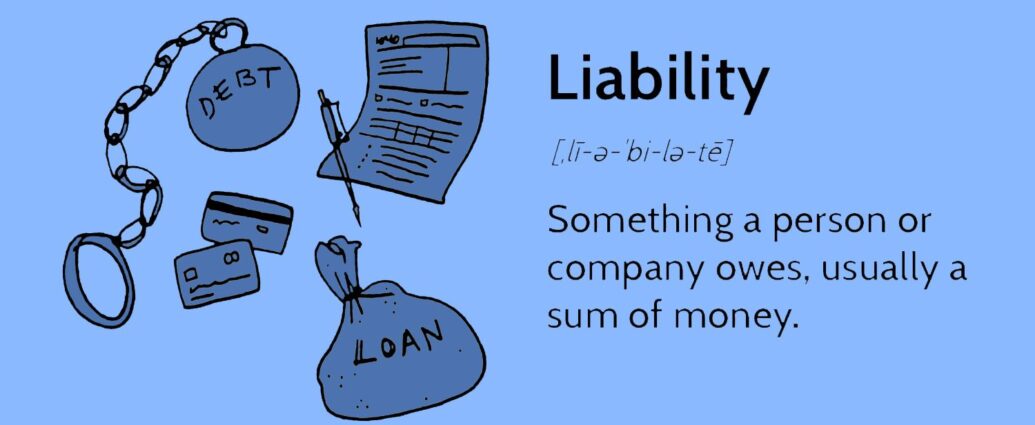
Understanding Liabilities: Definitions, Types, and Key Differences From Assets
This post was originally published here

The economy has a Strait of Hormuz deadline for Trump: Two weeks
Corporate executives are not panicking over a short-term increase in oil prices and Strait of Hormuz closure, but patience may wear thin in a matter of weeks.
This post was originally published here


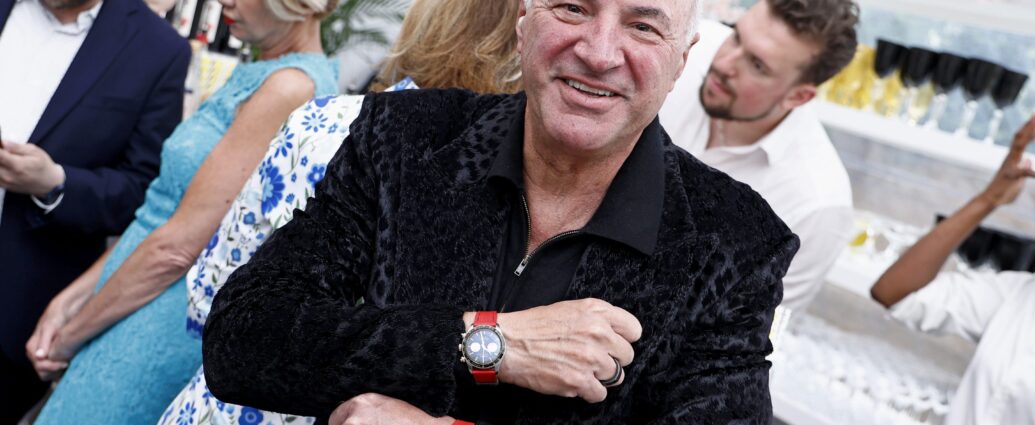
Kevin O’Leary became a millionaire from a $4.2 billion deal—but said it was ‘very anticlimactic’
Although Kevin O’Leary became a millionaire more than 25 years ago after selling his software company Softkey Products to Mattel for $4.2 billion in 1999, he said he still remembers the exact moment he made it big.
“I get asked all the time, do you remember the moment that you became a millionaire? I do,” the Shark Tank star known as Mr. Wonderful said in a video posted to his LinkedIn in July. “But have to admit, it was very anticlimatic.”
How Kevin O’Leary built his fortune
O’Leary founded Softkey in 1986, and throughout the 1990s his company acquired its biggest competitors like Compton’s New Media, the Learning Co., and Minnesota Educational Computer Co. as well as Creative Wonders, Mindscape, and Broderbund.
This helped Softkey to become the world’s leader in educational, reference, and home productivity software and the second-largest consumer software company in the world at the time with more than $800 million in annual sales, 2,000 employees, and subsidiaries in 15 countries.
While O’Leary’s accomplishment in selling Softkey to Mattel and becoming a millionaire may seem like a major deal, he said it didn’t feel that way.
“Boom, you wake up one day and you say, ‘Wow, this is interesting, but it doesn’t change anything,’” O’Leary said in the LinkedIn video. “That’s the crazy thing. And every millionaire [or] billionaire I talk to says, ‘Yeah, it’s not that big a deal.’”
But that may be O’Leary reflecting on the entirety of his career. In 2003, he became co-investor and director in Storage Now and a founding SPAC investor and director of Stream Global Services in 2007.
He now holds investments in more than 30 private-venture companies, and is the chairman of O’Shares ETF Investments and automated internet-based investment advisory service company Beanstox. And, most famously, he’s been an investor on Shark Tank since the show’s premiere in 2009. O’Leary also owns several companies he founded, including O’Leary Fine Wines and O’Leary Ventures, his private venture-capital investment company.
Why the first million is the hardest
While becoming a millionaire feels like a blip on O’Leary’s radar at this point, he also said in a 2023 video on his YouTube channel that it can feel impossible to make your first million—but meeting a $5 million milestone feels much easier.
“You work your ass off. It’s so hard. What it really takes to do is have the discipline of not buying s*** you don’t need,” O’Leary said in the YouTube video. “To make that first mil is you’ve got to invest it. Market’s going to make you 8%. And then I thought, well my sights are on five [million]. It’s going to be impossible. It wasn’t as hard to get to five [million] as it was to one [million].”
And even though O’Leary has an estimated net worth of about $400 million and pushes pitchers on Shark Tank to really know their numbers and prove their valuation, he insists it’s not about the money to him.
“If you’re very passionate about what you’re doing [you’ll] wake up one morning successful,” O’Leary said in the LinkedIn video. “[The] key is the passion. It’s not the pursuit of greed or money. That doesn’t work. You’re so in love with what you’re doing in business, and you get rewarded for it, particularly if you’re solving a big problem.”
More on Kevin O’Leary:
- Shark Tank’s Kevin O’Leary says if he were 25 today, he’d chase these two booming opportunities in the world of AI
- Shark Tank’s Kevin O’Leary doesn’t care if you work from your basement. He just wants to know if you can ‘execute’
- ‘What a waste of money’: Shark Tank star Kevin O’Leary urges couples to ditch the extravagant wedding and do this instead
This story was originally featured on Fortune.com
Interest Rate Risk: Impact on Long- and Short-Term Bonds
This post was originally published here



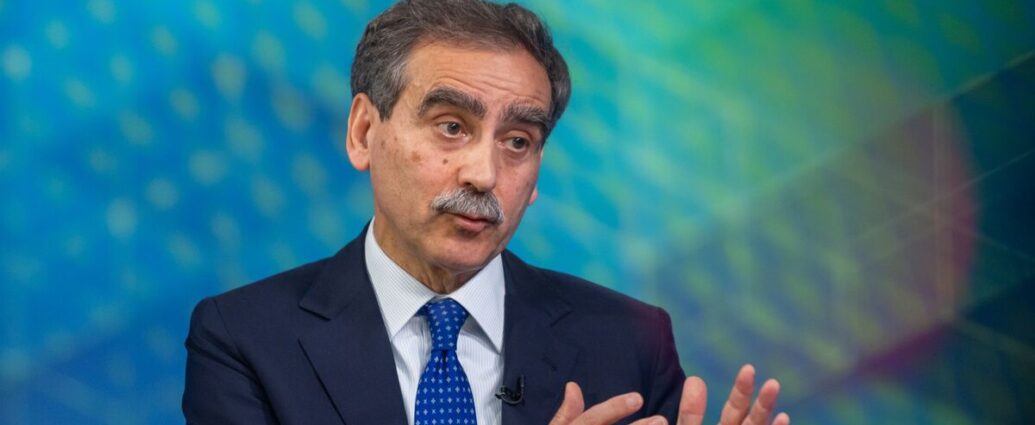
Trump lauds Viktor Orbán as Europe’s far-right leaders gather in Budapest
US president’s backing comes as Hungary’s PM faces toughest election campaign of 16 years in office
Donald Trump has endorsed Hungary’s prime minister, Viktor Orbán, who faces his toughest electoral challenge next month since taking power 16 years ago, as Europe’s far-right leaders gather for a “grand assembly” in Budapest.
In a video message, the US president told the national-conservative Cpac Hungary conference in the capital on Saturday that Orbàn, who has been trailing in the polls behind a centre-right rival for more than a year, was a “fantastic guy”.
This post was originally published here




Gross Margin vs. Contribution Margin: Key Profitability Metrics
This post was originally published here


Palantir extends reach into British state as it gets access to sensitive FCA data
Exclusive: Allowing US tech firm to analyse intelligence in name of tackling fraud raises fresh concerns over privacy
Palantir is to be granted access to a trove of highly sensitive UK financial regulation data, in a deal that has prompted fresh concerns about the US AI company’s deepening reach into the British state, the Guardian can reveal.
The Financial Conduct Authority (FCA) has awarded Palantir a contract to investigate the watchdog’s internal intelligence data in an effort to help it tackle financial crime, which includes investigating fraud, money laundering and insider trading.
This post was originally published here
Campaign groups rail against Palantir, but the UK contracts keep coming
AI analytics firm has become influential in Whitehall, and FCA deal gives it yet more access to data
Palantir’s latest UK contract takes the AI and data analytics company into the heart of one of Britain’s biggest industries: financial services, which accounts for 9% of the economy.
The Miami-based company embedded its technology in the NHS in 2023, the police in 2024 and the military in 2025. Land and expand, they say in the tech industry. Palantir has followed the script, building contracts worth more than £500m.
This post was originally published here




Economics Defined With Types, Indicators, and Systems
This post was originally published here





Israeli settlers carry out series of West Bank attacks as security forces stand by
Witnesses describe coordinated raids in which homes and vehicles were set on fire and several Palestinians injured
Israeli settlers have carried out a series of attacks across the occupied West Bank, setting homes and vehicles on fire and wounding several Palestinians in what witnesses described as coordinated raids on communities.
The violence, reported across at least half a dozen locations overnight from Saturday into Sunday, comes amid a wider surge in tensions in the territory. The official Palestinian news agency, Wafa, cited local sources as saying settlers had entered al-Fandaqumiya and the nearby town of Seilat al-Dahr, south of Jenin, late on Saturday.
This post was originally published here
Companies are doing more with less in AI era. Workers can take advantage
As companies boost productivity and lower headcount with AI technology, it will be crucial for remaining workers to retrain and upskill.
This post was originally published here
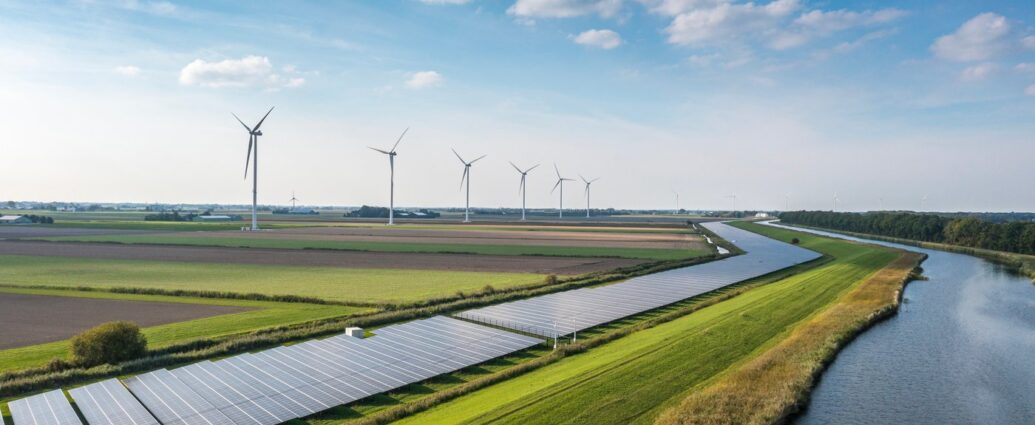
Suspected meteorite crashes into Houston home, officials say
Nasa confirms meteor after residents reported hearing thunder-like noises about the time the fireball was visible
A suspected meteorite crashed into a home in suburban Houston on Saturday night, according to local residents and officials.
Speaking to the local news outlet KHOU11 over the weekend, Spring area resident Sherrie James recalled the incident, saying: “My grandson went to check and said there was a hole in the ceiling … then I saw the rock, and I thought, ‘That looks like a meteor.’”
This post was originally published here
James Cleverly says he disagrees with Nick Timothy about Islamic public prayer
Shadow justice secretary had called Trafalgar Square event an ‘act of domination’
James Cleverly has said he disagrees with his Conservative frontbench colleague Nick Timothy that public Muslim prayers are an act of domination, as another senior Tory called for the party to respect the right to worship.
Kemi Badenoch has defended Timothy, the shadow justice secretary, after he posted images of mass prayer at a Ramadan event on Monday evening in Trafalgar Square, calling it “an act of domination” and “straight from the Islamist playbook”.
This post was originally published here

Cuba begins to restore power after third nationwide collapse of the entire energy grid this month alone
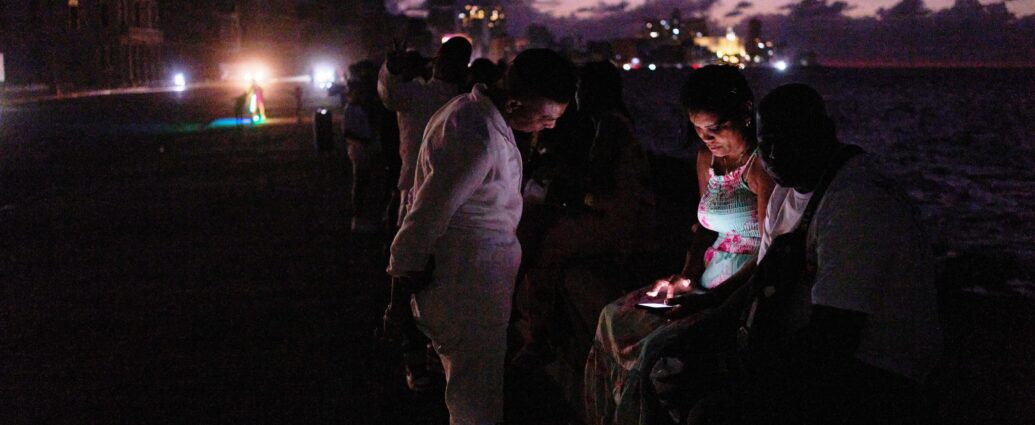
Cuba began restoring its energy system on Sunday, a day after a nationwide collapse of the entire grid left millions of people in the dark for the third time this month.
Some 72,000 customers in the capital, among them five hospitals, had electricity again early Sunday, according to a report from the state-run Electric Union and the Ministry of Energy and Mines, but it’s only a fraction of Havana’s total population of approximately 2 million.
In Havana and provinces such as western Matanzas and eastern Holguin, local power microsystems were set up to supply the most vital centers. Residents in some areas of the capital told The Associated Press that power returned during the early morning hours.
Cuba is currently facing an unprecedented energy crisis. Its aging grid has drastically eroded in recent years, but the government has also blamed the outages on a U.S. energy blockade, after President Donald Trump in January warned of tariffs on any country that sells or provides oil to Cuba. His administration is demanding that Cuba release political prisoners and move toward political and economic liberalization in return for a lifting of sanctions. Trump also has raised the possibility of a “friendly takeover of Cuba.”
Another reason Cuba has been struggling with dwindling oil is the removal by the U.S. of Venezuela’s former President Nicolás Maduro, which halted critical petroleum shipments from the nation that had been a steadfast ally to Havana.
President Miguel Díaz-Canel has said the island has not received oil from foreign suppliers for three months. Cuba produces barely 40% of the fuel it needs to power its economy.
Daily blackouts have a significant impact on the population, whose lives are disrupted by reduced work hours, lack of electricity for cooking and damage to household appliances, among many other consequences.
“With the blackout and low voltage, my refrigerator broke — that was today. The day before yesterday, the voltage also dropped around 10 at night,” Suleydi Crespo, a 33-year-old woman with two small children, told AP on Saturday. “If there’s no electricity tomorrow, we won’t be able to get water.”
Residents also expressed exhaustion from the constant outages, whether nationwide or partial.
The Cuban Electric Union, which reports to the Ministry of Energy and Mines, reported that the total disconnection of the national energy system was caused by an unexpected shutdown of a generation unit at the Nuevitas thermoelectric plant in Camaguey province, without providing details on the specific cause of the failure.
The last nationwide blackout occurred on Monday. It took several days to restore power.
Saturday’s outage was the second in the past week and the third in March.
“We have to get used to continuing our usual routine. What else can we do? We have to try to survive. Get used to events, with or without electricity,” said Dagnay Alarcón, a 35-year-old vendor.
Authorities and Díaz-Canel himself have acknowledged the seriousness of the current energy situation. The Vice Minister of Energy and Mines Argelio Abad Vigo explained this week that the country has gone three months without receiving supplies of diesel, fuel oil, gasoline, aviation fuel or liquefied petroleum gas — all vital for the economy and power generation.
Fuel sales for vehicles are rationed, airlines have suspended flights or reduced frequencies many workplaces have reduced hours.
Trump has for months suggested Cuba’s government is on the verge of collapse. After a previous time Cuba’s electric grid collapsed, Trump told reporters he believed he’d soon have “the honor of taking Cuba.”
This story was originally featured on Fortune.com
ICE agents will be deployed to US airports on Monday to ease long lines
Trump and border czar Tom Homan confirm plan to assist TSA agents amid partial government shutdown standoff
Donald Trump and his border czar, Tom Homan, have confirmed that the president’s administration is sending Immigration and Customs Enforcement (ICE) agents to US airports beginning Monday to assist with security amid extremely long lines – and to help airport security agents who have been working without pay since 14 February because of a partial government shutdown.
Homan will lead the effort, Trump said on Sunday.
This post was originally published here

Naval Ravikant Once Revealed What Advice He Would Give His 20-Year Old Self: Here’s What The Veteran Twitter And Uber Investor Had To Say
Naval Ravikant, a well-known venture capitalist and influencer, once stated that when he looks back on his life, he has only one piece of advice for his younger self — relax and don’t stress.
No Point Living Up To People’s Expectations
Appearing on the Tim Ferriss show on Oct. 29, 2015. Ravikant, then 40 years old, revealed he actually spent some time thinking about what he would tell his 30-year-old self.
“The advice was along the lines of chill out, don’t stress so much, not so much anxiety and everything will be fine,” he said. “Don’t try and live up to other people’s expectations.”
Ravikant stressed the importance of saying “no” to things, protecting time …
This post was originally published here
Firefighting departments close in some US states amid lack of volunteers
About 65% of US firefighters are volunteers, as New York state says number has fallen to lowest level in 40 years
Officials have warned of serious consequences after the number of volunteer firefighters, the bedrock of firefighting in the US, plunged, leading to entire departments to close in some states.
About 65% of American firefighters are volunteers, serving in their free-time alongside regular jobs. In 2008 there were 827,000 volunteers nationwide, but that figure dropped to 635,000 in 2023, the last year data is available.
This post was originally published here



After Trump threatens to destroy Iranian power plants, Tehran warns the region’s vital infrastructure, like desalination facilities, will be targeted
Iran and its ally, the Lebanese militant group Hezbollah, stepped up their attacks on Israel on Sunday, launching strikes across the country after the United States and Iran threatened to widen their targets in the war in the Middle East, now in its fourth week.
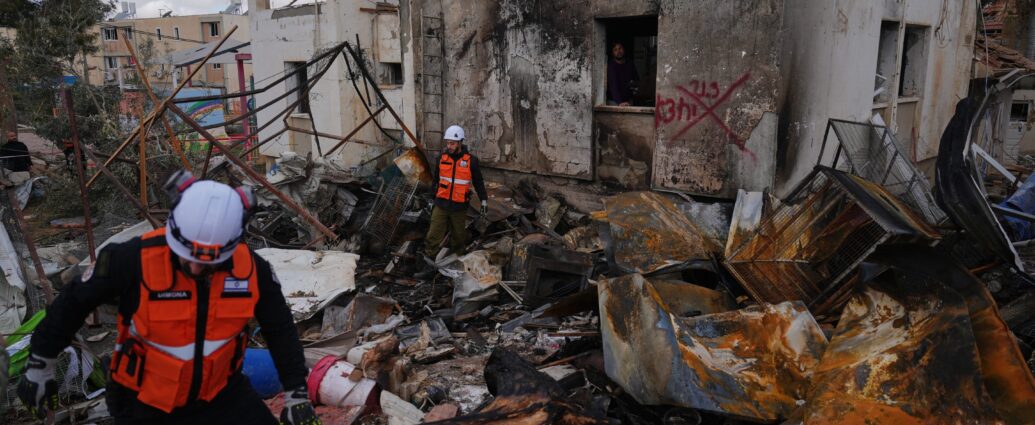
As Israel came under renewed fire, top Israeli leaders traveled to the southern town of Arad, one of two communities near a secretive nuclear research site struck by Iranian missiles late Saturday, wounding scores of people.
Prime Minister Benjamin Netanyahu toured the destruction in Arad and said it was a “miracle” no one was killed there. He claimed Israel and the U.S. were well on their way to achieving the war’s goals and implored the international community for more support.
Earlier, President Donald Trump warned the United States will destroy Iran’s power plants if Tehran fails to fully open the Strait of Hormuz, setting a 48-hour deadline on Saturday. Iran’s parliament speaker said if the U.S. follows through on its threat, Tehran will retaliate against American and Israeli energy and wider infrastructure in the region.
The developments signaled the Iran war, which the U.S. and Israel launched Feb. 28, was moving in a dangerous new direction, despite Trump’s mention last week he was considering “winding down” operations. It has killed hundreds of people, rattled the global economy and sent oil prices surging.
Hezbollah claimed responsibility for an airstrike Sunday that killed a man in northern Israel while Gulf Arab states — including Saudi Arabia and the United Arab Emirates — said they were intercepting fresh barrages of new Iranian strikes.
Iran responds to Trump threat on its Strait of Hormuz closure
Iran has practically closed the Strait of Hormuz, a chokepoint connecting the Persian Gulf to the rest of the world through which roughly one-fifth of global supply passes. Attacks on ships and threats of further strikes have stopped nearly all tankers from navigating the strait, compelling some of the largest oil producers to make cuts because their crude has nowhere to go.
The blockade is a liability for both the U.S. and its allies in Europe and Asia, who rely heavily on the Persian Gulf supply to meet energy demand and power factories, vehicles and homes. The U.S. lifted some sanctions on Iranian oil at sea to relieve pressure on energy prices.
Trump said if Iran didn’t open the strait, the U.S. would destroy its “various POWER PLANTS, STARTING WITH THE BIGGEST ONE FIRST!”
Iranian parliament speaker Mohammad Bagher Qalibaf responded Sunday on X that if Iran’s power plants and infrastructure are targeted, then vital infrastructure across the region — including energy and desalination facilities — would be considered legitimate targets and “irreversibly destroyed.”
Separately, Iranian officials said they would keep providing safe passage through the strait to vessels from countries other than its enemies.
Nuclear concerns as the war rages
Iran said its strikes in the Negev Desert were in retaliation to an earlier attack on Iran’s main nuclear enrichment site in Natanz, according to state-run media.
Tehran praised the attack as show of strength, even as Israel’s military asserts that Iranian missile launches have gradually decreased in frequency since the war began.
“If the Israeli regime is unable to intercept missiles in the heavily protected Dimona area, it is, operationally, a sign of entering a new phase of the battle,” said Qalibaf, the Iranian parliament speaker.
Dimona is about 20 kilometers (12 miles) west of the nuclear research center, and Arad about 35 kilometers (22 miles) to the north.
Soroka Medical Center, southern Israel’s main hospital, received at least 175 wounded from Arad and Dimona, the hospital’s deputy director Roy Kessous told The Associated Press.
Israel is widely believed to possess nuclear weapons, though it doesn’t confirm or deny their existence. The U.N. nuclear watchdog said on X it had not received reports of damage to the Israeli center or abnormal radiation levels.
Israel denied responsibility for hitting Natanz on Saturday while the Iranian judiciary’s official news agency, Mizan, said there was no leakage. The Pentagon declined to comment on the strike at Natanz, which was also hit in the first week of the ongoing war and in the 12-day war last June.
The U.N. watchdog — the International Atomic Energy Agency — has said the bulk of Iran’s estimated 972 pounds (441 kilograms) of enriched uranium is elsewhere, beneath the rubble at its Isfahan facility.
Iran says strikes also hit hospital
Iran said that, in addition to Natanz, strikes also hit a hospital in Andimeshk. The Health Ministry reported patients and doctors were evacuated to another city.
Iran’s death toll in the war surpassed 1,500 on Saturday, state media reported, citing the ministry. In Israel, 15 people have been killed by Iranian strikes. More than a dozen civilians in the occupied West Bank and Gulf Arab states have been killed in strikes.
The war has also seen noncombat-related accidents, including a U.S. refueling plane crash in Iraq that killed six U.S. service members and a Qatari military helicopter crash on Saturday blamed on a technical malfunction. All seven aboard were killed, Qatari authorities said Sunday.
Hezbollah strike on northern Israel claims first fatality there
The Israeli civilian was killed in the northern town of Misgav Am in what Israel’s military said “seemed to be” a rocket attack. Israeli medics said they found the man in his car and released a video showing two vehicles ablaze.
Hezbollah, an ally of Iran, launched strikes on Israel soon after the war began, saying it was in retaliation for the killing of Iran’s Supreme Leader Ayatollah Ali Khamenei. Israel struck back, bombarding Lebanon and targeting Hezbollah in deadly airstrikes, expanding its presence in southern Lebanon and amassing more troops near the border.
Fighting in southern Lebanese towns have intensified recently as Israel continues its ground operations. Israel on Sunday expanded its list of targets to include all bridges over the Litani River, which Defense Minister Israel Katz said Hezbollah is using to move fighters and weapons into southern Lebanon. It later struck the Qasmiyeh bridge near Tyre.
Katz also ordered the military to accelerate its destruction of Lebanese homes near Israel’s northern border as part of a strategy he described as aligned with Israel’s campaign against Hamas in Gaza.
After Hezbollah fired rockets into Israel on March 2, the Israeli military launched an offensive that Lebanese authorities say killed over 1,000 people and displaced over 1 million. Hezbollah has fired hundreds of rockets into Israel.
Israeli military spokesperson Avichay Adraee issued a warning an hour before the Qasmiyeh bridge near the coastal city of Tyre was struck.
Lebanese authorities say Israel’s strikes have killed more than 1,000 people and displaced more than 1 million.
This story was originally featured on Fortune.com
Cuba begins to restore power after third nationwide collapse in a month
The last nationwide blackout in Cuba occurred on Monday. Saturday’s outage was the second in the past week and the third in March.
This post was originally published here



Shin nominated governor of Bank of Korea
This post was originally published here
Banksy may have been identified, but his mystery has long been part of his art’s value, and a fan says it’s like finding out Santa Claus isn’t real
Years before the rise of Instagram, Banksy figured out that the key to real influence lay in not in being famous, exactly, but in being anonymous.
The mystery of his identity has long been part of the value of his art, which for decades and across continents defied authority from public walls and self-shredded on the auction block. Now, Banksy’s apparent unmasking by the Reuters news agency has generated talk about whether the works themselves retain their cultural and financial value.
It also raises the question: Why pop the red balloon of his mystique in the first place? Many Banksy fans mourned the loss of the mystery and lashed out at the news outlet. One said it was like being told without warning that Santa Claus doesn’t exist.
“I feel like they are telling me how a magic trick is done,” said Thomas Evans, a Denver-based artist on Instagram. “Sometimes I just want to enjoy the magic trick.”
But some art experts say the murals and the message will survive Banksy’s naming because his appeal wasn’t driven solely by his anonymity. He and his works — mischievous and also dark — stand as witnesses to injustice, oppression and inequality around the world, from the artist’s native England to walled-off Bethlehem and war-ravaged Ukraine. Subtract his anonymity, they say, and the work still inspires reflection and discussion.
“People buy his works because they absolutely love it,” said Acoris Andipa, director of the Andipa gallery in London. “The main feedback that I get is that they really, frankly, don’t care if they know who he is.”
Naming the ghost — and the backlash — is engagement, too
Banksy, long thought to have been born Robin Gunningham around 1972, grew out of a tradition of street artists who viewed the undercover act of posting their art in public as a subversive form of expression. The postindustrial landscape of his native Bristol was his canvas and gallery. The walls of London, New York and elsewhere gave him a global stage just before the rise of social media.
Banksy’s apparent identity has been an open secret among protective fellow artists, and long been easy to find online for those who wanted to know. The Daily Mail reported in 2008 “compelling evidence suggesting” that was the artist’s birth name. It has been published by other news outlets, including by The Associated Press in 2016, as part of their coverage of the detective work.
Reuters reported last week that after The Daily Mail’s story, Banksy changed his legal name to David Jones — the second most-popular name in Britain. It’s also the given name of another rock star, the late David Bowie, whose Ziggy Stardust avatar inspired a 2012 Banksy painting of Queen Elizabeth II.
Bansky’s lawyer didn’t respond to a request for comment, and the artist’s spokeswoman declined to participate in this story.
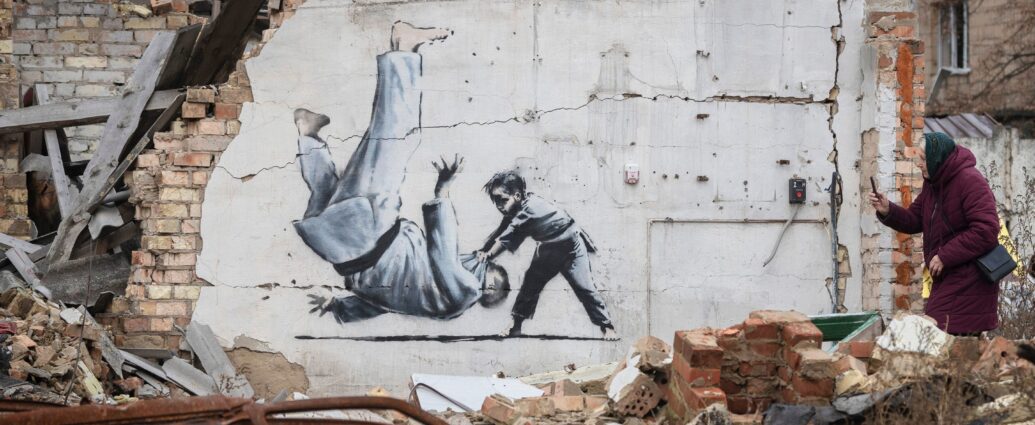
Reuters pieced together that a David Jones traveled to Ukraine with a well-known associate of Banksy’s in late 2022 — just before the artist’s work began appearing on buildings that had been bombed by Russia. Banksy later confirmed that he’d created seven murals in the war zone, including one of a child flipping over a grown man who is wearing a black belt. Russian President Vladimir Putin practices judo.
There’s evidence that even some in the establishment he was protesting have accepted Banksy. They didn’t arrest him, for example, after the Royal Courts of Justice removed a Banksy stencil depicting a judge in a traditional wig and gown beating an unarmed protester with a gavel. Some street artists groused that they might be arrested for creating such graffiti — but when it’s a Banksy, it’s art.
Robin Gunningham wasn’t always so elusive
On Sept. 17, 2000, a Robin Gunningham was arrested for defacing a Marc Jacobs billboard atop a building on Hudson Street in New York.
In a handwritten signed confession, he described the work on the night in question: “I had been out drinking at a nightclub with friends when I decided to make a humorous adjustment to a billboard on top of the property,” he wrote in court records unearthed by Reuters and confirmed by the AP. “I painted eyeshadow a new mouth and a speach(sic) bubble” on the photo of a male model. He was charged with a misdemeanor.
The artist doesn’t need an alleged naming to make news. He created multiple works just in London in 2025, and grabbed headlines elsewherefor having his art sold or auctioned for millions. But Banksy has courted a public image centered around morality, justice and guerrilla tactics — he’s often likened to Robin Hood or Batman.
“Banksy woz ere,” he wrote with his animal murals at the London Zoo, which were removed in 2024.
Still, along with the sadness, there’s ample speculation in the art world and on social media that the artist himself orchestrated this round of naming. He didn’t deny the Reuters story.
That “would be very much in line with his practice of stunts and satire,” observed Madeleine White, the senior sales and acquisitions consultant at London’s Hang-Up Gallery, “As they say, ‘all publicity is good publicity.’”
She noted, however, that the backlash is directed at the media — not the artist, or the potency of his work. Reuters says it opted to publish some, but not all, of the information its reporters uncovered about Banksy’s identity, because he is a public figure, whatever his name — and he’s had an outsized influence on public events and discourse. What’s more, much of his work has been done on other people’s property.
Banksy’s star power is about far more than anonymity
Named or not, Banksy’s stardom lives, art experts say.
It endures in the wonder of his ability to erect new art under the noses of authorities well into the age of closed-circuit television and social media. It appeals because his spectacle and wit draw people in and the settings — the hulk of bombed buildings, for example, or Israel’s towering wall at the border of the West Bank — invite them to reflect. Now, fans are on the lookout for how and whether he’ll respond to the news of Robin Gunningham and David Jones.
Joe Syer, a Banksy expert and founder of MyArtBroker, said that the artist has always responded to world events. “And that’s where the real relevance, and value, sits.”
“If anything, Banksy’s anonymity has functioned less as a celebrity device and more as a way to keep the work universally accessible, detached from personality, ego, or biography,” he said in an email. “It allows the work to sit in public space, politically and culturally, without being anchored to an individual in the way the mainstream press often frames it.”
Christopher Banks, founder of the New York-based Objects of Affection Collection, reads Banksy’s naming “not as a biographical event, but as a structural stress test” of the artist’s system of managing his absence.
“Banksy’s best works carry their meaning without the author. He was there,” Banks wrote, citing the artist’s murals in Ukraine and his solidarity with the war’s victims.
“The name matters less than the presence. The presence was always what the work was about.”
Years before the rise of Instagram, Banksy figured out that the key to real influence lay in not in being famous, exactly, but in being anonymous.
The mystery of his identity has long been part of the value of his art, which for decades and across continents defied authority from public walls and self-shredded on the auction block. Now, Banksy’s apparent unmasking by the Reuters news agency has generated talk about whether the works themselves retain their cultural and financial value.
It also raises the question: Why pop the red balloon of his mystique in the first place? Many Banksy fans mourned the loss of the mystery and lashed out at the news outlet. One said it was like being told without warning that Santa Claus doesn’t exist.
“I feel like they are telling me how a magic trick is done,” said Thomas Evans, a Denver-based artist on Instagram. “Sometimes I just want to enjoy the magic trick.”
But some art experts say the murals and the message will survive Banksy’s naming because his appeal wasn’t driven solely by his anonymity. He and his works — mischievous and also dark — stand as witnesses to injustice, oppression and inequality around the world, from the artist’s native England to walled-off Bethlehem and war-ravaged Ukraine. Subtract his anonymity, they say, and the work still inspires reflection and discussion.
“People buy his works because they absolutely love it,” said Acoris Andipa, director of the Andipa gallery in London. “The main feedback that I get is that they really, frankly, don’t care if they know who he is.”
Naming the ghost — and the backlash — is engagement, too
Banksy, long thought to have been born Robin Gunningham around 1972, grew out of a tradition of street artists who viewed the undercover act of posting their art in public as a subversive form of expression. The postindustrial landscape of his native Bristol was his canvas and gallery. The walls of London, New York and elsewhere gave him a global stage just before the rise of social media.
Banksy’s apparent identity has been an open secret among protective fellow artists, and long been easy to find online for those who wanted to know. The Daily Mail reported in 2008 “compelling evidence suggesting” that was the artist’s birth name. It has been published by other news outlets, including by The Associated Press in 2016, as part of their coverage of the detective work.
Reuters reported last week that after The Daily Mail’s story, Banksy changed his legal name to David Jones — the second most-popular name in Britain. It’s also the given name of another rock star, the late David Bowie, whose Ziggy Stardust avatar inspired a 2012 Banksy painting of Queen Elizabeth II.
Bansky’s lawyer didn’t respond to a request for comment, and the artist’s spokeswoman declined to participate in this story.
Reuters pieced together that a David Jones traveled to Ukraine with a well-known associate of Banksy’s in late 2022 — just before the artist’s work began appearing on buildings that had been bombed by Russia. Banksy later confirmed that he’d created seven murals in the war zone, including one of a child flipping over a grown man who is wearing a black belt. Russian President Vladimir Putin practices judo.
There’s evidence that even some in the establishment he was protesting have accepted Banksy. They didn’t arrest him, for example, after the Royal Courts of Justice removed a Banksy stencil depicting a judge in a traditional wig and gown beating an unarmed protester with a gavel. Some street artists groused that they might be arrested for creating such graffiti — but when it’s a Banksy, it’s art.
Robin Gunningham wasn’t always so elusive
On Sept. 17, 2000, a Robin Gunningham was arrested for defacing a Marc Jacobs billboard atop a building on Hudson Street in New York.
In a handwritten signed confession, he described the work on the night in question: “I had been out drinking at a nightclub with friends when I decided to make a humorous adjustment to a billboard on top of the property,” he wrote in court records unearthed by Reuters and confirmed by the AP. “I painted eyeshadow a new mouth and a speach(sic) bubble” on the photo of a male model. He was charged with a misdemeanor.
The artist doesn’t need an alleged naming to make news. He created multiple works just in London in 2025, and grabbed headlines elsewherefor having his art sold or auctioned for millions. But Banksy has courted a public image centered around morality, justice and guerrilla tactics — he’s often likened to Robin Hood or Batman.
“Banksy woz ere,” he wrote with his animal murals at the London Zoo, which were removed in 2024.
Still, along with the sadness, there’s ample speculation in the art world and on social media that the artist himself orchestrated this round of naming. He didn’t deny the Reuters story.
That “would be very much in line with his practice of stunts and satire,” observed Madeleine White, the senior sales and acquisitions consultant at London’s Hang-Up Gallery, “As they say, ‘all publicity is good publicity.’”
She noted, however, that the backlash is directed at the media — not the artist, or the potency of his work. Reuters says it opted to publish some, but not all, of the information its reporters uncovered about Banksy’s identity, because he is a public figure, whatever his name — and he’s had an outsized influence on public events and discourse. What’s more, much of his work has been done on other people’s property.
Banksy’s star power is about far more than anonymity
Named or not, Banksy’s stardom lives, art experts say.
It endures in the wonder of his ability to erect new art under the noses of authorities well into the age of closed-circuit television and social media. It appeals because his spectacle and wit draw people in and the settings — the hulk of bombed buildings, for example, or Israel’s towering wall at the border of the West Bank — invite them to reflect. Now, fans are on the lookout for how and whether he’ll respond to the news of Robin Gunningham and David Jones.
Joe Syer, a Banksy expert and founder of MyArtBroker, said that the artist has always responded to world events. “And that’s where the real relevance, and value, sits.”
“If anything, Banksy’s anonymity has functioned less as a celebrity device and more as a way to keep the work universally accessible, detached from personality, ego, or biography,” he said in an email. “It allows the work to sit in public space, politically and culturally, without being anchored to an individual in the way the mainstream press often frames it.”
Christopher Banks, founder of the New York-based Objects of Affection Collection, reads Banksy’s naming “not as a biographical event, but as a structural stress test” of the artist’s system of managing his absence.
“Banksy’s best works carry their meaning without the author. He was there,” Banks wrote, citing the artist’s murals in Ukraine and his solidarity with the war’s victims.
“The name matters less than the presence. The presence was always what the work was about.”
This story was originally featured on Fortune.com
Oil prices are set to rise further as war in the Middle East escalates
Oil prices look set to rise on Monday after U.S. and Iranian trade threats to target energy facilities, analysts said.
This post was originally published here

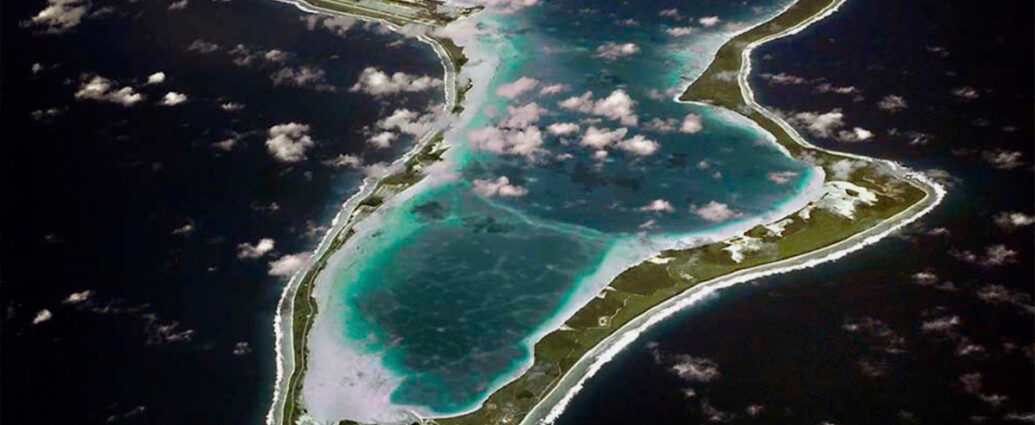
The Indian Ocean base targeted by Iran is ‘an all but indispensable platform’ for U.S. security operations in the Mideast, South Asia and East Africa
Iran has launched missiles at Diego Garcia, an Indian Ocean island that is home to a strategic U.K.-U.S. military base.
Britain condemned “Iran’s reckless attacks” after the unsuccessful attempt to hit the base. It’s unclear how close the missiles came to the island, which is about 2,500 miles (4,000 kilometers) from Iran.
Here is what to know about the remote but strategic base.
Hub for US operations
The United States has described the Diego Garcia base as “an all but indispensable platform” for security operations in the Middle East, South Asia and East Africa.
Home to about 2,500 mostly American personnel, it has supported U.S. military operations from Vietnam to Iraq and Afghanistan. In 2008, the U.S. acknowledged that it also had been used for clandestine rendition flights of terror suspects.
The U.S. deployed several nuclear-capable B-2 Spirit bombers to Diego Garcia last year amid an intense airstrike campaign targeting Yemen’s Houthi rebels.
Britain initially refused to let the base be used for U.S-Israeli attacks on Iran, but after Iran lashed out at its neighbors, the United Kingdom said American bombers could use Diego Garcia and another British base to attack Iran’s missile sites. On Friday, the U.K. government said that includes sites being used to attack ships in the Strait of Hormuz.
The U.K. says that the British bases can only be used for “specific and limited defensive operations.”
But Iranian Foreign Minister Abbas Araghchi said on X that U.K. Prime Minister Keir Starmer “is putting British lives in danger by allowing UK bases to be used for aggression against Iran.”
Iran previously has put a self-imposed limit on its ballistic missile program, limiting their range to 1,240 miles (2,000 kilometers). Diego Garcia is well outside that range. However, U.S. officials long have alleged Iran’s space program could allow it to build intercontinental ballistic missiles.
Justin Bronk, a senior research fellow at defense think tank the Royal United Services Institute, said that the attempt to hit Diego Garcia may have involved improvised use of Iran’s Simorgh space launch rocket, “which could offer greater range as a ballistic missile,” though at the cost of reduced accuracy.
A contested island chain
Diego Garcia is part of the Chagos Archipelago, a chain of more than 60 islands in the middle of the Indian Ocean off the tip of India. The islands have been under British control since 1814, when they were ceded by France.
In the 1960s and 1970s, Britain evicted as many as 2,000 people from Diego Garcia, so the U.S. military could build the base there.
In recent years, criticism has mounted over Britain’s control of the archipelago and the way it forcibly displaced the local population. The United Nations and the International Court of Justice have urged the U.K. to end its “colonial administration” of the islands and transfer sovereignty to Mauritius.
Trump criticism
After long negotiations, the U.K. government struck a deal last year with Mauritius to hand over sovereignty of the islands. Britain would then lease back the Diego Garcia base for at least 99 years.
The U.K. government says that will safeguard the future of the base, which is vulnerable to legal challenges. But the agreement has been criticized by many British opposition politicians, who say giving up the islands puts them at risk of interference by China and Russia.
Some of the displaced Chagos islanders and their descendants also have challenged the deal, saying they weren’t consulted and it leaves them unclear on whether they will ever be allowed to return to their homeland.
The U.S. administration initially welcomed the deal, but U.S. President Donald Trump changed his mind in January, calling it “an act of GREAT STUPIDITY” on his social media platform Truth Social.
Starmer’s initial refusal to let the U.S. attack Iran from Diego Garcia further angered Trump, who said earlier this month that “the U.K. has been very, very uncooperative with that stupid island that they have.”
Passage of the U.K.-Mauritius deal through Parliament has been put on hold until U.S. support can be regained.
This story was originally featured on Fortune.com

Trump pushes Iran war to new phase of escalation
This post was originally published here
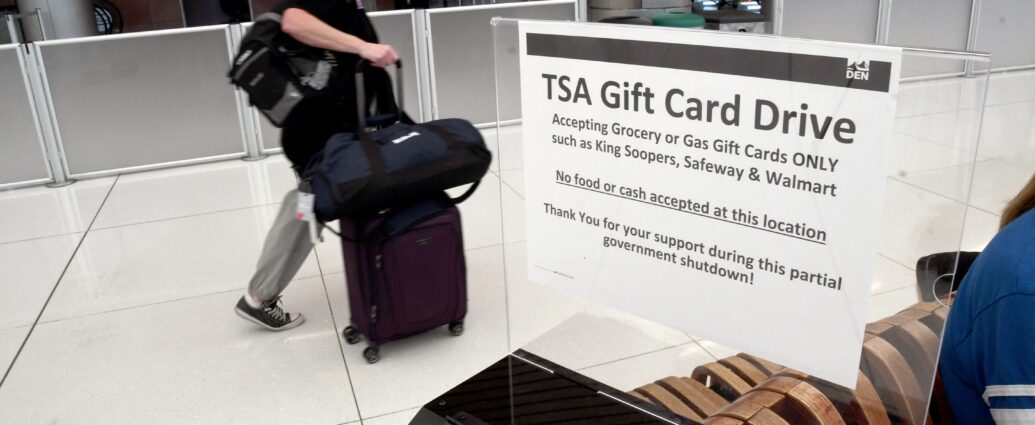
A charity that usually feeds people in war zones and disaster areas is providing meals to TSA officers who aren’t getting paid
Across the country, collections are popping up to help Transportation Security Administration officers who have been without full pay for more than a month due to the partial government shutdown affecting the Department of Homeland Security.
The charity World Central Kitchen, more accustomed to feeding those in war zones and disaster areas, started providing meals to Washington, D.C.-area airports after many TSA officers missed their first full paycheck. On Thursday, Feeding San Diego began distributing 400 boxes with pasta, beans and peanut butter as well as fresh produce like strawberries and potatoes to affected agents near the airport after a request from TSA and the San Diego County Regional Airport Authority.
Nonprofits are stepping in to help and coordinating closely with airports and local TSA offices because ethics rules around giving gifts to federal employees make it difficult for those affected by the shutdown to receive help directly.
Carissa Casares from Feeding San Diego said communicating with the airport means they can better tailor their resources and response to TSA workers’ needs.
“We need to work directly with the people who have direct access to these employees and get this food to them at a time and location that is most convenient to them,” Casares said.
Saturday marks the 36th day that the Department of Homeland Security has been shut down after Democrats refused to fund Immigration and Customs Enforcement and Customs and Border Protection without changes to their operations after the killings of Alex Pretti and Renee Good in Minneapolis.
More than 120,000 DHS employees are working without pay, including roughly 50,000 Transportation Security Administration officers as negotiations between lawmakers and the White House on limits to immigration enforcement drag on.
The funding lapse comes just months after a 43-day government shutdown, the longest in the nation’s history, which drove long lines at food banks across the U.S. as over 700,000 federal workers worked without pay.
Rules limit what help TSA officers can accept
For those wanting to help, it’s not as simple as going to the airport and giving cash or gift cards directly to TSA officers, who are prohibited from accepting gifts at screening locations, according to a DHS spokesperson.
But Aaron Barker, president of the AFGE Local 554 in Georgia, said TSA officer unions don’t have the same restrictions and can accept donations to distribute to their members. Barker recommends those who want to donate look up their local union district on the AFGE website, or give through their local labor council.
“For some people it can be life or death,” said Barker. “It’s just sad and terrible that this is happening.”
Union members have told Barker they’re unable to cover utility bills or pay for their children’s medical procedures. They’ve received eviction notices or had cars repossessed. They’re having trouble affording routine items, too.
“People don’t think about the things they just naturally have in their home, like toothpaste, bathroom tissue, milk, detergent, dish liquid,” he said. “I’m sure those things are a necessity for every TSA officer.”
Nonetheless, no donation can be as effective as an end to the shutdown. “The first thing they want is their paycheck,” said Barker. “The money is the most immediate need.”
Coordination between nonprofits and TSA
Operation Food Search is working closely with TSA to safely deliver food and set up a temporary pantry at St. Louis Lambert International Airport.
The Missouri hunger relief nonprofit’s CEO said it is the first time they’ve distributed directly to TSA employees where they work.
“It removes their need to make an extra trip and drive here,” Kristen Wild said. “So we’re really excited that the airport allowed us to directly serve right there.”
They gave away just over half their 400 prepared food bags during a 2-hour period earlier this week, according to Wild. Each bag contained just under $20 worth of nonperishables such as apple sauce, pasta, rice and beans. Rules prohibit federal employees from soliciting or accepting gifts or items of monetary value greater than $20 if the gift is related to their government position.
Wild said she thought the $20 limit might be waived since they were distributing food through airport-approved channels.
“We didn’t know for sure,” Wild said. “But to play it safe we just kept it right under the $20 per bag amount so there would be no challenge to it.”
Airport communities band together
Seattle-Tacoma International Airport officials were fielding PETA donations and local food banks’ pallets on Friday afternoon as they stocked their private pantry for off-shift TSA staff.
But they’ve also seen dining vendors, usually tasked with feeding hungry travelers, step up. Airport tenants have offered discounts and donated through TSA to cover entire shifts’ meals, according to airport spokesperson Perry Cooper.
“You know a lot of these people,” Cooper said. “You see faces and that throughout the day as you’re wandering through. And then to realize that some of these folks are here and they’re not getting paid, you know, really tugs at your heart to think what’s a way that we can help.”
The airport community’s support adds to the roughly $6,000 they’ve received in cash and gift cards plus another $10,000 worth of food and household products, Cooper said. That includes donations from the labor union for air traffic controllers, whose jobs are unimpacted by this partial shutdown but who understand the strain of working without pay from full government closures.
More than 460 people picked up fresh produce when local nonprofit Food Lifeline brought a truckload last Friday, according to Cooper. Most of the attendees were TSA staff, Cooper said, though some people might have been homeless. Boxes including pineapples and broccoli lined folding tables along the airport’s main drive.
Regular travelers like Musie Hidad said he thinks about the TSA agents working unpaid every time he enters through security.
“The work they are doing is serious and they aren’t getting paid for it,” said Hidad, an Amarillo, Texas, resident, who was traveling to Columbus, Ohio, for work. “My heart goes out to them.”
This story was originally featured on Fortune.com
Why Spotify AI more than music will be the secret to keeping subscribers
A recent Spotify-ChatGPT deal is one more sign of how AI may be the best defense for a streaming music service in a me-too market for subscribers.
This post was originally published here




Weekend Round-Up: Bitcoin Holds $70,000, Ethereum’s ‘Buy Zone’, Nasdaq’s Blockchain Stocks, SEC’s Crypto Framework And More
This week in the crypto world was a rollercoaster ride, with Bitcoin defending the $70,000 mark amidst market jitters. Ethereum, XRP, and Dogecoin tested their support levels, while Ethereum also entered what analysts are calling a ‘generational buy zone’.
In regulatory news, Nasdaq secured SEC approval to list blockchain versions of stocks and SEC Chair Paul Atkins announced a new crypto framework. Lastly, Morgan Stanley’s Bitcoin ETF set its ticker as BTC tests $70,000 support.
Bitcoin Defends $70,000 As Ethereum, XRP, Dogecoin Test Support
Bitcoin traded around $70,000 as Bitcoin ETFs saw $90.2 million in net outflows on Thursday. Ethereum ETFs reported $136.4 million in net outflows. The meme coin market capitalization dropped around 3% over the past 24 hours to $33.4 billion. Crypto trader Jelle noted that Bitcoin is retesting the $70,000 level from below, making it a key decision point.
Queensland government ‘opens old wounds’ as police officer criticised after Palm Island riots appointed to Legal Aid board
Exclusive: Townsville lawyer and former detective Darren Robinson’s appointment by attorney general Deb Frecklington has ‘brought back a lot of trauma’ for Indigenous community
-
Get our breaking news email, free app or daily news podcast
The Queensland government has “opened old wounds” by appointing a former police detective who was heavily criticised for his role in events surrounding the 2004 riots on Palm Island to the state’s Legal Aid board, say First Nations community leaders and members of the legal fraternity.
The Liberal National party government sacked and replaced all Labor-appointed members of the Legal Aid Queensland board last month.
This post was originally published here
Social cohesion has lost its feelgood vibe. What will it take to offer a fair go for all?
The phrase should evoke optimism, positive expectations about the future, trust and belonging. That seems almost out of reach in a chaotic world
One term has already become the well-intentioned weasel word of 2026: “social cohesion”. A phrase that can be dropped into speeches, inquiries and legislation, its meaning shape-shifts depending on the audience. Is it about “glue” or the rule of law? About community resilience or countering fear? Does it mean finding places of real exchange, or shutting up and getting on?
Although it has been in the political lexicon for years, the terror attack that targeted Jewish people celebrating Hanukah in Bondi last December brought social cohesion to the fore as an urgent problem to solve.
This post was originally published here
Almost half of Australians think foreign military will attack within five years, ANU study suggests
University polling and focus groups found sharpest increase in those worried about national security was cohort aged 18 to 24
Nearly half of Australians believe a foreign military will attack the country within five years, as anxiety over national security issues rises sharply, a new study suggests.
The Australian National University’s National Security College report found that two-thirds of those polled in 2026, including an increasing number of teenagers and young adults, were worried about national security issues.
This post was originally published here
As Labor faces pressure to respond boldly to oil shock, it needs to find more unconventional levers to pull
Leveraging Australian gas exports to ensure we get oil in return is among the offbeat ideas we could be hearing more about
-
Get our breaking news email, free app or daily news podcast
The International Energy Agency suggested Australia reduce road speed limits, restrict car use in big cities and encourage more working from home in a bid to nullify what it called the “greatest threat to global energy supply in the history of the world”.
They won’t be the only interesting or offbeat ideas raised in federal parliament this week, as the Albanese government comes under pressure to find fixes – short-term and long-term – to the oil shocks seeing more bowsers run dry across the nation.
This post was originally published here



Charges dropped against woman in anti-ICE church protest over mistaken identity
Heather Danae Lewis who was one of 30 people charged in Minnesota church protest showed she did not attend event
Federal prosecutors have dropped criminal charges against a woman accused of participating in a controversial January protest at a Minnesota church after the woman apparently did not attend the event at all.
Prosecutors notified a federal judge they intended to drop charges against Heather Danae Lewis, who was one of 30 people charged in connection with an anti-Immigration and Customs Enforcement (ICE) protest that disrupted a service at Cities church in St Paul. Officials have charged the protesters with civil rights crimes, saying they interfered with the right of the congregants at the church to exercise their religious beliefs. The media professional Don Lemon, who was at the event reporting on the protest, was among those charged.
This post was originally published here
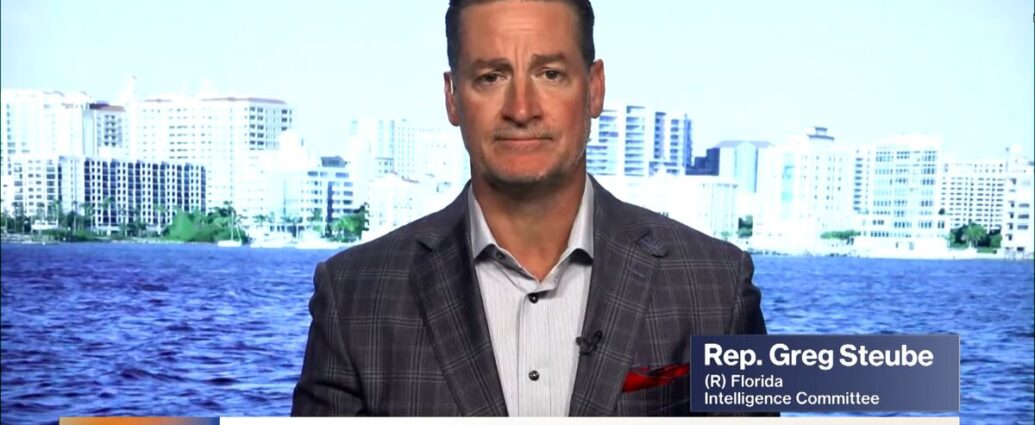

ICE agents will be deployed to U.S. airports on Monday: Homan
The shutdown at the Department of Homeland Security has caused massive pileups at airport security lines.
This post was originally published here

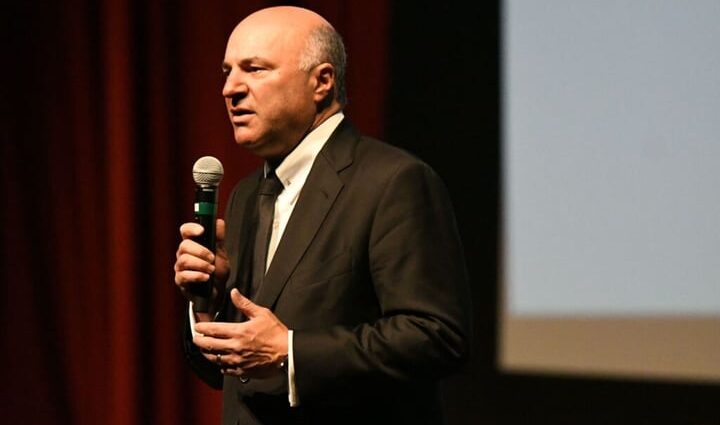
Kevin O’Leary: Hormuz Crisis Will Get ‘Cleaned Up In The Next 30 Days’
Kevin O’Leary on Saturday said that investors are pricing in a quick resolution to tensions tied to the Strait of Hormuz, arguing the next month is the key window the market is watching. He warned that a longer disruption could hit global growth hard, with oil prices acting as the main transmission channel.
In the post on X, O’Leary said he believes the available data points toward the issue being addressed within about 30 days. In the same post, he framed the strait as a narrow chokepoint and said a prolonged blockage would be far more damaging.
Why Hormuz Disruptions Could Spark Global Chaos
O’Leary described a scenario …
This post was originally published here
When it comes to private credit, ‘some caution is reasonable,’ advisor says. What to know
While there are pockets of weakness in private credit, concern about a broad-based meltdown among these funds may be misplaced, some experts say.
This post was originally published here
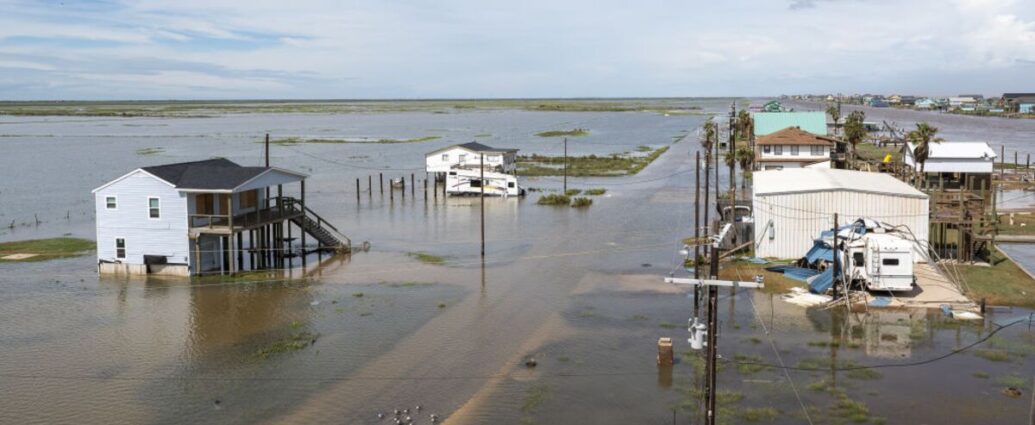
Starmer adviser urges ministers to look at profits cap for energy and petrol firms
PM’s ‘cost of living champion’ calls for consideration of temporary measure to prevent profiteering from Iran war
The government’s top cost of living adviser has called on ministers to explore a temporary cap on the profits of energy and petrol companies to prevent them from cashing in excessively on the war in the Middle East.
Richard Walker – a Labour peer, the chair of Iceland supermarkets and the prime minister’s “cost of living champion” – said he had asked the government to examine limiting how much businesses were able to benefit from higher energy prices after Iran’s blockade of the strait of Hormuz, a crucial shipping route for Europe’s oil and gas, and the wider conflict in the region.
This post was originally published here

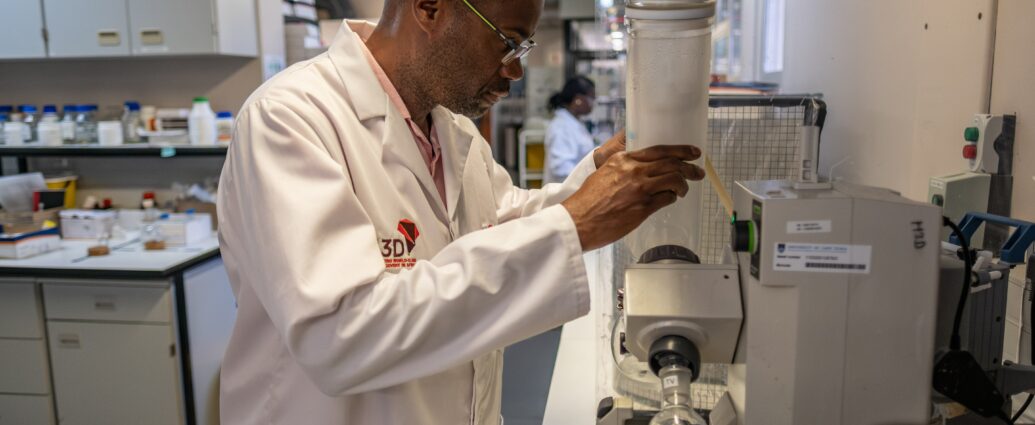
Inside a rare lab that’s blazing a bold trail as it hunts for new drugs
A scientist from Zambia who loves — LOVES! — chemistry runs a lab in South Africa that is being hailed for “extraordinary” work.
(Image credit: Tommy Trenchard for NPR)

This post was originally published here


Electric bills are becoming a midterm problem neither party can ignore
For millions of Americans, higher electricity bills are becoming a monthly frustration and a growing force in the midterm elections.
Unlike more volatile costs such as gasoline, electricity is a steady, unavoidable expense tied directly to basic needs — keeping the lights on, heating and cooling homes and powering everyday life. That makes it especially politically sensitive at a time when many households are still feeling squeezed by broader inflation and high housing costs.
AMERICANS HIT WITH SOARING ELECTRICITY BILLS AS PRICE HIKES OUTPACE INFLATION NATIONWIDE
The issue is giving both parties fresh campaign ammunition, with Republicans casting higher bills as evidence of failed energy policies, regulatory overreach and a shift away from fossil fuels, while Democrats point to bill assistance programs, grid investments and clean energy incentives aimed at easing pressure on household budgets over time.
The fight is unfolding amid sharp regional divides in electricity prices. Federal energy data shows residential power costs vary widely across the country, illustrating how affordability pressures differ not just by income, but by geography, infrastructure and energy mix.
The latest figures from the U.S. Energy Information Administration put the national average at 17.24 cents per kilowatt-hour, up 6% from a year earlier — a jump that outpaces wage growth for many households and adds to cumulative cost pressures from rent, insurance and groceries.
North Dakota has the lowest average residential electricity rate in the country at 11.02 cents per kilowatt-hour, while Hawaii — an outlier shaped in part by geographic isolation and reliance on imported fuel — has the highest, at 41.62 cents per kWh.
Nebraska, Idaho, Oklahoma and Arkansas also rank among the cheapest states, while California, Rhode Island, Massachusetts and New York join Hawaii among the most expensive. Many of the higher-cost states are also pursuing aggressive clean energy transitions or maintaining older, more complex grid systems — factors that can raise near-term costs even as they aim to stabilize prices in the long run.
Several of the cheapest states are deep-red, a pattern Republicans are likely to seize on to reinforce broader arguments about energy policy and cost of living — even though power prices are shaped as much by geography, fuel availability, regulatory structures and long-term infrastructure investments as by partisan control.
THE STATES WHERE AMERICANS PAY THE MOST — AND LEAST — FOR ELECTRICITY
Cheap electricity, however, does not always mean affordable energy. Weather extremes, household consumption patterns, housing efficiency, aging infrastructure and state-level utility decisions all affect what families ultimately pay. In hotter or colder regions, for instance, even low rates can translate into high monthly bills due to heavy air conditioning or heating use.
Utilities are also seeking rate increases in many states to cover grid modernization, wildfire mitigation, storm hardening and the expansion of renewable energy — costs that are often passed on to consumers gradually but steadily.
GET FOX BUSINESS ON THE GO BY CLICKING HERE
Even so, the partisan pattern may prove politically useful in a campaign season shaped by anxiety over household expenses and economic uncertainty.
Gas prices may grab more headlines, but electricity bills can be more politically durable: they arrive every month, are harder to cut quickly and are often tied to local utilities and regulators. That gives candidates a direct way to connect national energy debates to a tangible, recurring household cost and to voter frustration that is felt not at the pump, but at the kitchen table.


Undercover police officer exposed by his own blunder, spycops inquiry hears
Officer said he held himself responsible for accidentally phoning activist while in secret special branch meeting
An undercover police officer has admitted he was exposed as an infiltrator by his own blunder, which has been described by activists as worthy of Inspector Clouseau, the spycops public inquiry has heard.
The officer, who used the fake name Simon Wellings, jeopardised his own covert deployment by mistakenly recording himself discussing individual campaigners with other special branch officers.
This post was originally published here
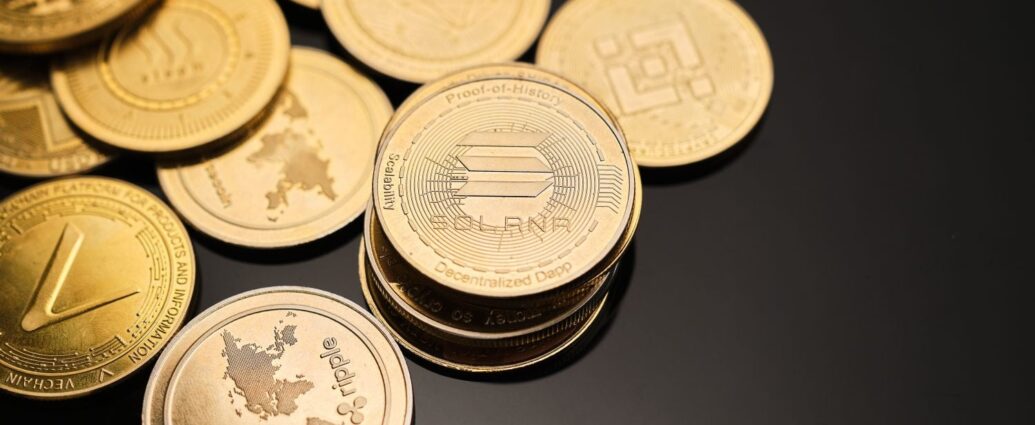
‘The new ketchup’? How hummus spread beyond a niche into a British staple
News that chickpea dip is to join list of products used for UK inflation basket confirms its move into the mainstream
It is a sign of the times. This week it was revealed that hummus is joining the list of foods used to measure the cost of living in Britain as the ubiquity of the dip at mealtimes sees it billed as the “new ketchup”.
The decision to drop a pot of hummus in the inflation basket is a moment for the all-conquering chickpea dip, which arrived on supermarket shelves on the late 1980s. Since then Britons have gone from spending virtually nothing to £170m a year on the versatile stuff.
This post was originally published here
New crypto regulations likely to be big favor to the Trump family, industry insiders say
Regulators narrow securities definitions – a shift that could benefit Trump family’s crypto projects
On Tuesday, major US financial regulators published rules for the cryptocurrency industry that may reduce regulatory requirements and that insiders believe will benefit the Trump family’s ventures.
The Securities and Exchange Commission (SEC) issued new guidelines for the cryptocurrency industry to answer the longstanding question of what does or does not qualify as a security, a classification that entails strict oversight. SEC chair, Paul Atkins, has dubbed the framework a “token taxonomy” for the sector. Published jointly with the Commodity Futures Trading Commission (CFTC), the guidelines classify most of crypto-based assets as commodities, collectibles, payment tokens or “digital tools”, exempting them from the SEC’s more stringent oversight and disclosure requirements. Only blockchain-based representations of existing securities, such as stocks and bonds, remain classified as securities under this new framework.
This post was originally published here
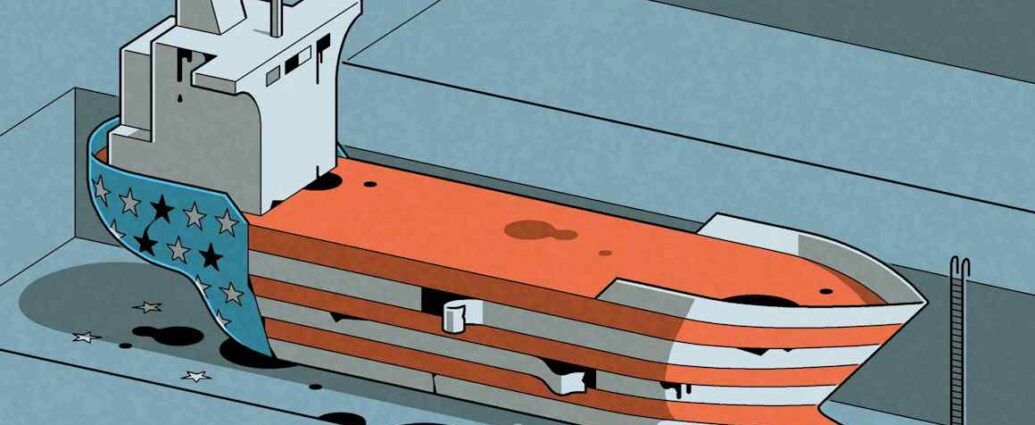
War with Iran has exposed American fragility at sea
This post was originally published here







China vows to continue opening its economy amid trade tensions with U.S.
China has reached a temporary truce with the U.S. on trade. The world’s second-biggest economy reported a record $1.2 trillion trade surplus for 2025.
This post was originally published here
I’m a psychologist who studies couples: People in emotionally secure relationships do 5 things every day—that most neglect
Emotional security comes down to how a couple handles conflict, independence, boredom and doubt over time. Mark Travers, a psychologist who studies couples, shares the habits of people in emotionally secure relationships.
This post was originally published here
Number of confirmed meningitis cases linked to fatal Kent outbreak drops to 20
Three cases previously confirmed reclassified by UK Health Security Agency after further testing
The number of confirmed meningitis cases linked to the Kent outbreak has fallen from 23 to 20.
The UK Health Security Agency (UKHSA) said on Sunday that three cases previously thought confirmed had been downgraded after further testing.
This post was originally published here

More Americans Faced Rising Debt Challenges Last Year And Larger Tax Refunds Could Be Key
This post was originally published here


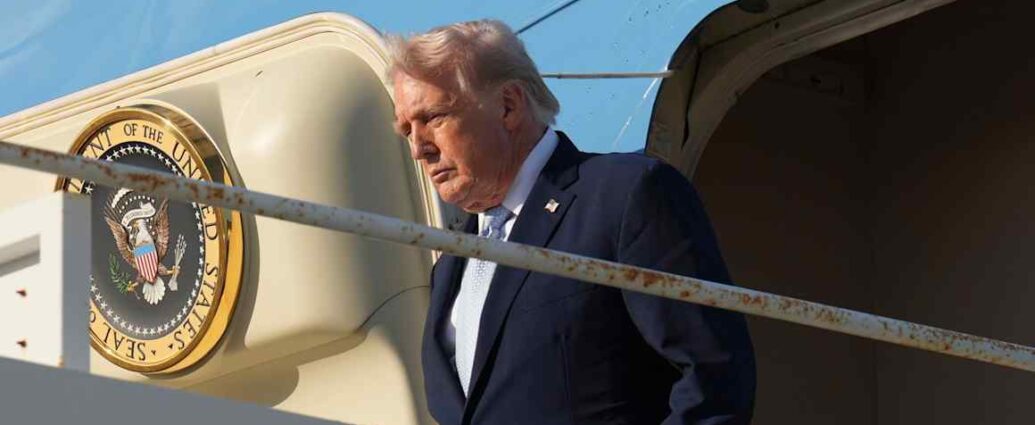
Iran threatens ‘vital’ infrastructure and Hormuz Strait closure in response to Trump ultimatum
This post was originally published here

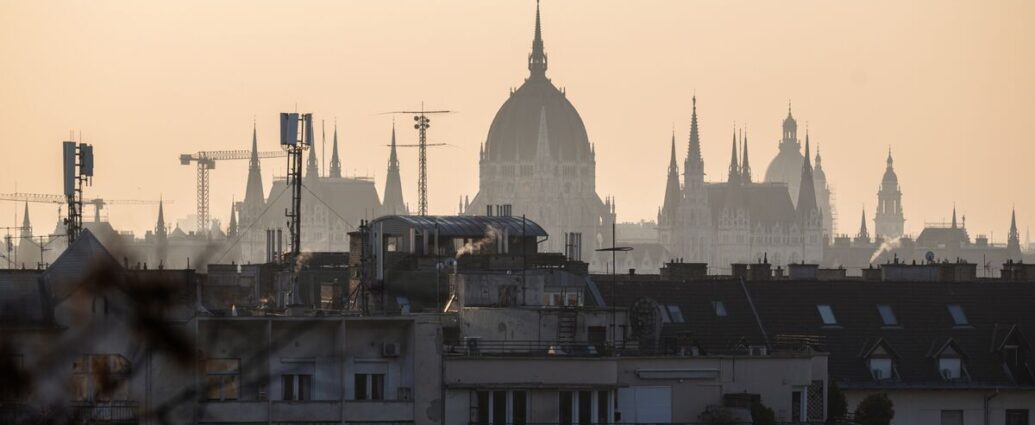


An orthopedic surgeon explains the hand injury that has many MLB players on the bench
Baseball hitters are on a quest for power. But that quest comes at a cost. NPR’s Ayesha Rascoe speaks to orthopedic surgeon Dr. Thomas DiLiberti about baseball players suffering hamate injuries.

This post was originally published here
She cared for her mother for 14 years. She says she’d do it all over again
Kathy Barnes-Lou cared for her mother for 14 years before her death. She learned that caregiving can bring life’s purpose into focus, even as it grinds you down.

This post was originally published here





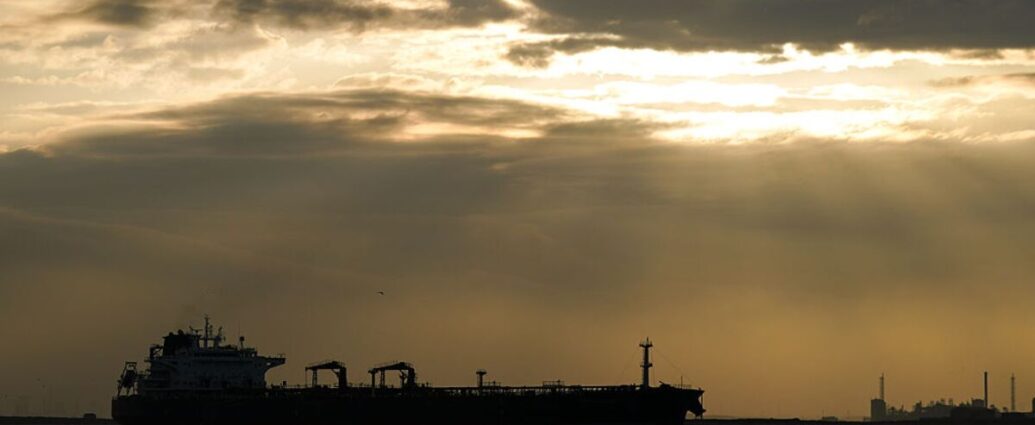
Democrats who won big in last November’s general election are grappling with reality
Some Democrats who were swept into office last November are grappling with the reality of governing. The new leader of Pennsylvania’s Lehigh County says urgency is needed.

This post was originally published here

The Iran war is impacting the global economy, and Asia is particularly vulnerable
NPR’s Ayesha Rascoe talks with Martin Wolf, chief economics commentator for the Financial Times, about how the war on Iran is effecting the global economy.

This post was originally published here