There are flooding rains in Hawaii, rare snow in Alabama and a severe heatwave in the west coast

The US is experiencing a striking mix of weather extremes this March. Flooding rains in Hawaii, rare snow in Alabama, flip-flopping temperatures in the north-east and, perhaps most concerning, a severe heatwave affecting the west coast are raising questions about how strange these patterns really are, and what role the climate crisis is playing.

Experts suggested that people around the US need to pay closer attention to the climatecrisis and do what they can to “minimize the impacts”.

Continue reading…

This post was originally published here

Tech defense startups doing business with the U.S. military could someday look back at March 2026 as the month their relationships moved into the serious phase. Instead of dabbling in limited pilot projects with the startups, the Pentagon is starting to place big bets on a select few of these companies, writing them into core missions with the kind of fixed-priced deals that have long been standard among established defense contractors.

Last week, the U.S. Army announced an enormous deal with Anduril—a five‑ to ten‑year enterprise contract with a ceiling of up to $20 billion—that consolidates roughly 120 to 130 existing orders they already have under one umbrella and creates a one‑stop vehicle to cut future deals much faster. The Army already inked a brand-new $87 million contract with Anduril earlier this week, as the first task order under that agreement. 

For venture-funded defense tech startups, which make everything from AI-powered drones to advanced threat detection systems, Anduril’s long-term contract sets a new bar that reflects how the young industry has evolved in the past few years—and opens the door to new opportunities and risks. The Pentagon’s embrace of a select few companies also comes at a time when the military has clashed with Anthropic, which develops general-purpose AI models and has sought to set limits on how the military can use its technology. 

The contract is a “meaningful signal,” says Steven Simoni, cofounder of the autonomous precision weapons startup Allen Control Systems, which also has a contract with the U.S. Army.
“For a long time, the defense acquisition system rewarded presentations, prototypes, and promises. What we’re seeing now is an institutional desire to back companies that can actually build, deploy, and sustain real systems in the field,” he said in an email.

Anduril, which was founded in 2017 by virtual reality technology pioneer Palmer Luckey, has focused squarely on security applications like anti-drone defense and border protection from the start. While the company is reportedly eyeing a $60 billion valuation in its latest funding round, it is still a young company that pales in size next to incumbents like Lockheed Martin or Boeing when you look at revenue and order backlogs.

The enterprise contract “suggests the government increasingly sees Anduril’s stack as repeatable and scalable, rather than bespoke R&D,” says Ali Javaheri, a senior analyst at PitchBook.

This isn’t the first time the Army has done a deal like this with a tech company. Last year, it signed a 10‑year, enterprise service agreement with the data analytics and AI company Palantir, with a ceiling of up to $10 billion, consolidating about 75 of its existing software and data contracts into a single channel. Anduril’s contract both copies and extends that model: this time wrapping hardware and services around the software. It also doubles the ceiling, and ties the whole thing to a live mission—countering drones across the military. Massive enterprise agreements with tech providers are no longer one‑off flukes; there is now a pattern of VC‑backed platforms winning prime‑like enterprise deals that let them compete directly with the old guard.

“Autonomy, counter-UAS, and software-defined C2 are moving from experimental budgets into more durable procurement pathways, which is exactly the kind of shift investors have been waiting to see from defense tech,” Javaheri says, referring to counter-drone systems and the ways that system commanders are directing their forces.

Playing with the primes

Playing in the big leagues comes with some risks. All of the individual task orders that happen under the Anduril deal will be firm-fixed price contracts, or FFPs, which tend to only be used when both the requirements and costs are well understood. The advantage for the Army is price certainty: It locks in what it will pay, and the company has to eat any unexpected or surging costs over the life of the deal. The upside for the contractor is that if it can deliver more cheaply than expected, it keeps the extra margin.

All this is fine and dandy unless something goes wrong. For defense contractors, there’s a long list of examples—now cautionary tales—in which fixed-price structures ultimately proved to be a bad fit for complex or immature designs. There was Boeing’s KC‑46 tanker, which started as a fixed‑price incentive contract of around $4.4 billion to $4.9 billion. Technical problems piled up with its remote vision capabilities and fuel system issues, which led Boeing to ultimately absorb more than $7 billion in losses. 

The Navy’s experience with Lockheed Martin’s Freedom‑class Littoral Combat Ships tells a similar story. Design flaws in the combining gear forced the service and the company to spend roughly $8 million–$10 million per ship on fixes.

Simoni says large contracts like what Anduril has notched set a “much higher bar,” as it requires “dedicated manufacturing capacity, consistent supply chain discipline, and the proven ability to deliver on timelines that matter operationally, not just technically.”

Matthew Steckman, president and chief business officer at Anduril, says taking on these kinds of risk is part of Anduril’s stated objective.

“That’s the goal, to take the risk out of the government’s hands and into industry, incentivizing defense companies to deliver capabilities on time for that price and holding them accountable if that outcome isn’t achieved,” he said in a statement to Fortune.

By signing on to write fixed-priced contracts with such an enormous ceiling—which, to be clear, the Army is under no obligation to fully spend—the government is signaling confidence that Anduril’s software and hardware are mature enough to warrant that kind of cost assurance. If they’re wrong, big bills could shake the startup’s financial position, and the Army formations that now depend on the company.

This story was originally featured on Fortune.com

Israeli air defence systems fail to intercept projectiles during attacks on southern cities of Arad and Dimona

Iranian missile strikes have wounded about 200 people in southern Israel, after air defence systems failed to intercept projectiles that hit two cities close to a nuclear facility.

Among the injured in the attacks on Arad and Dimona were a 12-year-old boy and a five-year-old girl, both reported to be in serious condition. The Israeli broadcaster Channel 13 reported early indications of possible deaths, though there was no official confirmation.

Continue reading…

This post was originally published here

For Scott DeRue, the climb to the C-suite has mirrored the literal peaks he’s summited along the way.

As CEO of The Ironman Group, he oversees nearly 250 endurance events worldwide. But his career path has been anything but linear—spanning roles as a professor, dean of the University of Michigan’s Ross School of Business, and president of Equinox. He’s also climbed the Seven Summits, including Mount Everest and Kilimanjaro. The thread connecting it all hasn’t been a single industry or a straight-line path; it’s been intention.

“I have my family, The Ironman Group, and my passions of endurance sports and mountaineering,” DeRue told Fortune. “Every hour of every day is spent with one of those three things—and nothing else.”

That level of focus has shaped both his professional trajectory and personal ambitions. It dates back to when he was 13, unloading semi-trucks filled with upholstery fabric—an experience that taught him about hard work, paying taxes, and a lesson that would stick: no role has to be permanent.

But as he worked his way up, DeRue said success didn’t hinge on traditional networking—in fact, he believes the concept is often misunderstood.

“One of the terms that I think is most dangerous is the idea of ‘networking,’” the 48-year-old said. “Because it’s about relationships, not networking. You want to develop relationships built on mutual value and before you need them, and I think that’s an art that is lost on many.”

DeRue’s advice is simple: ditch the transactional mindset. 

Rather than treating connections as one-off exchanges—swapping business cards or adding someone on LinkedIn—he emphasizes consistent, genuine engagement. That may mean checking in regularly, sharing updates, and offering help without expecting anything in return.

It’s a philosophy rooted in advice he received early in his career: think of relationships like a bank account: “There are debits and credits,” he said. “You always want to have a positive balance.”

That message likely resonates with Gen Z, many of whom struggle with how to approach professional connections. About 38% of young workers say networking makes them anxious, according to a survey conducted by Strand Partners for LinkedIn, with many avoiding it altogether because they don’t know where to start. 

Today, DeRue oversees a workforce that swells to about 1,000 employees around the world during peak race season. Ironman—best known for its grueling triathlons—was purchased by Advance, the parent company of Condé Nast, in 2020 for an undisclosed amount. Prior to that, the company was sold in 2015 for $650 million.

Gen Z wants purpose in their careers. DeRue once took a whole month off work to try to find his

For Gen Z, a paycheck is increasingly not enough to feel satisfied in careers—purpose is a priority. More than half of Gen Zers and millennials say meaningful work is a key factor when evaluating employers, and 89% of Gen Z say purpose is critical to their job satisfaction and well-being, according to Deloitte’s 2025 Gen Z and Millennial Survey.

As entry-level roles grow more competitive, finding that balance can be challenging. And it’s a tension DeRue knows well.

After graduating from the University of North Carolina in 1999, he began his career at consulting firm Monitor Group (later acquired by Deloitte). While the role offered a strong start, it lacked the sense of direction he was searching for.

So, he took a month off to reflect and interview people in his life about their careers—until he identified what he calls his “North Star.”

“Since the age of 25, I’ve had one single through-line, North Star purpose: to create experiences for people that help them unlock their potential,” he said.

That clarity, he added, is what allows people to navigate uncertainty and build careers that feel meaningful over time. And looking back, even with his expansive resume, the biggest advice he would give himself is to “be bolder.”

And just as important is adopting what he calls a “no regrets” mindset.

“Even when things don’t work out, did you make a principled decision? Were you thoughtful about it?” DeRue said. “You can’t always control the outcome—but you can control how you approach it.”

This story was originally featured on Fortune.com

As the weekend wraps up, let’s take a look at the top stories that made headlines in the tech and finance world. Here’s a quick roundup of the most significant events that occurred over the past few days.

Apple’s New Mac Sees Record Launch Week

Apple Inc. (NASDAQ:AAPL) had a stellar launch week for its new MacBook Neo, with a significant number of first-time users. The new budget-friendly laptop is priced at $599, or $499 for students, and has garnered substantial interest from both new and existing customers. This could potentially boost Apple’s presence in the education market and contribute an additional 0.5% to its overall revenue, according to industry feedback.

Read the full article here.

Google Tests Gemini AI App For Mac

Alphabet.Inc.‘s (NASDAQ:GOOG) (NASDAQ:GOOGL) Google is working on a dedicated Gemini AI …

Full story available on Benzinga.com

This post was originally published here

Leon Panetta calls president ‘naive’ over strait of Hormuz closure and says ‘the chickens are coming home to roost’

Donald Trump is stuck between “a rock and a hard place” after three weeks of war in Iran and “sending a message of weakness” to the world, Leon Panetta, a former US defence secretary and Central Intelligence Agency director, has told the Guardian.

Panetta, who served in the Bill Clinton and Barack Obama administrations, recalled that national security officials were always keenly aware of Iran’s ability to create an energy crisis by blocking the strait of Hormuz. That very scenario is now unfolding, leaving Trump with no exit strategy beyond wishful thinking.

Continue reading…

This post was originally published here

Young professionals are using ChatGPT to rehearse salary negotiations, deliver tough feedback, and navigate workplace conflict — before the conversations ever happen. From entry-level employees to mid-career managers, workers are turning to AI tools to prepare before stepping into their manager’s office.

Why This Generation Needs a Practice Gym

For a generation that came of age amid remote work, economic uncertainty, and rapid technological change, preparation feels less optional and more essential. Deloitte’s global survey of more than 23,000 workers found that Gen Z and millennials are intensely focused on growth and skill development as workplace expectations evolve, and another study showed that 56% of Gen Z workers use AI to help figure out how to communicate with a boss or colleague.

For many early-career professionals, the toughest part isn’t the content of the conversation—it’s the experience of having it. That’s not a character flaw; it’s the product of a world where fewer interactions require real-time conflict resolution, emotional regulation, or face-to-face persuasion. If you’ve spent years communicating through screens and asynchronous channels, the first time you have to deliver tough feedback or negotiate on the spot can feel like showing up to a championship match without a single practice rep.

How to Try It Right Now

For the first time, that kind of practice gym is within reach. Advances in large language models have dramatically lowered the cost of creating personalized, high-quality dialogue that lets employees rehearse difficult conversations on demand.

Here’s how to start: open ChatGPT and switch to voice mode. Give it context on an upcoming situation you’re anxious about, then ask it to simulate the conversation. Tell it to challenge your assumptions, interrupt you the way a stressed manager might, or push back hard on your reasoning.

It will feel awkward at first — like your first day back in the gym after a long layoff. That’s fine. Fluency comes from repetition.

  • Listen first, then reflect.Prompt ChatGPT to listen without interrupting, then summarize what you said in three key points. This exercise alone often brings unexpected clarity.
  • Roleplay the other person.Prompt: “Pretend you are [coworker X] and help me rehearse the conversation I need to have with them.”
  • Repeat until it feels natural. The first session will feel strange. By the third, it won’t. Consistency is the only requirement.

The Next Frontier: Team-Level Training

But individual practice is only the beginning. A new generation of AI-enabled corporate trainers can now bring this kind of preparation to entire teams.

These trainers will develop adaptable lessons geared to what an employee needs to know — not what they already know. They’ll surface the conversations employees didn’t know they needed to have, tailoring training for distinct roles and seniority levels.

This isn’t theoretical. Organizations like Skillwell — which I lead — are already demonstrating that EQ leadership skills are not innate traits Over the next decade, I expect the number of people practicing professional skills via AI-enabled simulation to expand by several orders of magnitude. The tools exist. The adoption curve is just beginning.

The Gym Is Open

Real-world experience remains the best teacher. But organizations no longer have to wait for high-stakes moments to arrive — and hope their people are ready. AI-powered simulation gives every worker a place to train, build fluency, and show up prepared when it matters most.

The practice gym is open. The only question is whether your organization will walk in.

The opinions expressed in Fortune.com commentary pieces are solely the views of their authors and do not necessarily reflect the opinions and beliefs of Fortune.

This story was originally featured on Fortune.com

Steve Reed says ‘UK is not going to be dragged into this war’ after Israeli warnings that Iranian missiles could hit Europe

Iran is not believed to have the capability or intent to hit the UK with its missiles, a cabinet minister has said, after Tehran aimed two at the UK-US airbase on Diego Garcia in the Indian Ocean.

One missile failed to reach the island, while another was shot down by a US warship, according to reports. It was the longest-range attack yet by Iran since the country was attacked by the US and Israel.

Continue reading…

This post was originally published here
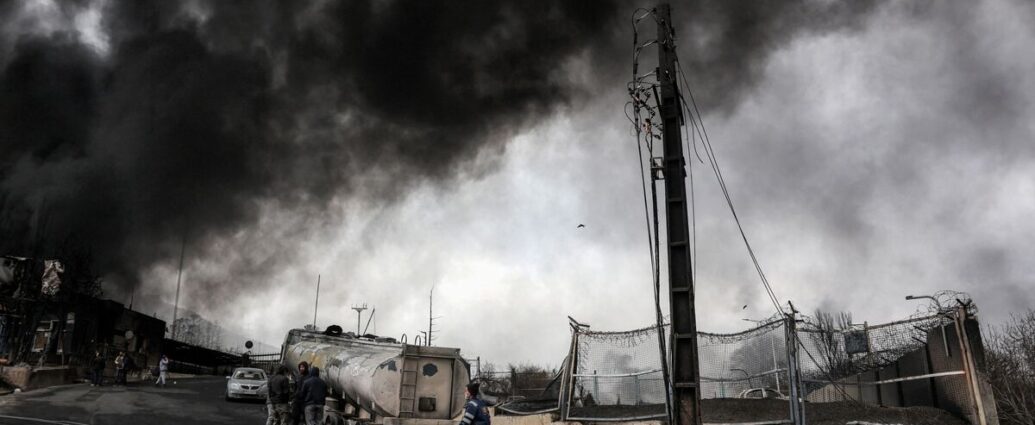
This year marks the 250th anniversary of the publication of The Wealth of Nations—the book that built the intellectual foundation of free-market capitalism. Smith’s argument was elegant: when individuals pursue their own interests within competitive markets—governed by rules and institutions—it leads to economic prosperity for the entire society, guided by what he called the “invisible hand” that steers resources toward broad prosperity. 

What Smith did not anticipate was that if leaders in government and owners of capital form a stealthy alliance to help one another, the invisible hand vanishes  and competition is replaced by the kind of massive monopolies or oligopolies that strangle  societal prosperity.

The Invisible Hand Has Left the Building

Over time, the belief that markets would self-correct and growth would eventually “lift all boats,” has lost credibility. We have more knowledge, wealth, and technological competence than any generation in history, yet the world faces multiple existential crises: widening inequality, erosion of democracy, ecological collapse, and a pervasive breakdown of trust in institutions. These are not isolated failures but the inevitable outcomes of a governance model that has prioritized profit above people and the planet, for too long. Capitalism, in its current form, has surrendered its moral authority. Barring a few exceptions, democracy has been  downgraded to function as government of the few, by the few, and for the few.

Yet this moment should not be seen only as a crisis. It may also mark the early stage of an epochal transition to a better state.

A Quiet Revolt Is Already Underway

Across the world, millions of progressive people—employees, consumers, youth and women—are increasingly unwilling to accept exclusion as destiny. Their impact is already visible. Consumers punish irresponsibility. Employees reject exploitation. Citizens demand transparency. Markets do not operate in a vacuum; they are embedded in societies. The era of unaccountable leadership may now be short-lived—not through revolution, but through obsolescence.

Enter Peopleism

What comes next will not be another ideology in the traditional sense, but a structural reordering of priorities—one that redefines the purpose of economic systems and institutions. This is where a new idea begins to take shape: Peopleism.

The premise is straightforward: systems exist to serve people—not the other way around. Economic and political institutions derive legitimacy only when they visibly advance human dignity, social inclusion, and planetary well-being. Capital remains indispensable, but it functions as a means rather than a master. Wisdom—not power or scale—becomes the defining leadership capability of the twenty-first century.

Every human enterprise—corporate or government—rests on three indispensable pillars: capital, people, and nature. To privilege one while degrading the others is a formula for systemic instability and long-term fragility.

Evolution, Not Revolution

Peopleism is not an outright rejection of capitalism. It is capitalism’s evolution—a leadership and governance upgrade, aligned with economic reality. It integrates ethics, ecology, and governance into a new operating model  that aims to deliver  “an economics that works for all.” It demands a leap from piecemeal fixes to structural transformation.

Peopleism accepts that owners of capital play an important entrepreneurial role. Many are worthy capitalists; who abide by the system—legally and ethically. They are a nation’s asset, key employment-generators, and the lifeline of the economy. But some big capitalists, in every nation, use the power of money to influence governments for their own benefit, and tacitly control media, regulators, and even the judiciary. It is these capitalists that most urgently need the leadership leap to Peopleism.

What It Looks Like in Practice

Think of Peopleism less as a moral doctrine and more as a survival strategy —one that empowers every entrepreneur and leader to scale new heights through wisdom, compassion, and accountability. It is about enabling every business leader to be a “peopleist”—to do well and do good while building an honorable legacy.

The Tata Group’s founder, Jamsetji Tata, put it plainly: “The community is not just another stakeholder in business, but, in fact, is the very purpose of its existence.”
Patagonia’s Yvon Chouinard went further: “We’re in business to save our home planet”, — and transferred 100% of the company’s voting stock to the Patagonia Purpose Trust, with planet Earth as its sole shareholder.

Such practices are not yet the norm, but they serve as precedents and ignite hope. History suggests that radical shifts are resisted by incumbents but accelerated by necessity. We now find ourselves at a collective watershed moment—a moment when history ceases to determine our future.

The Choice Ahead

The transition to a better world is not guaranteed. It has to be chosen. Peopleism is that choice—a leadership ethos for a world that no longer accepts irresponsible power. If the twentieth century belonged to capitalism, the twenty-first may well belong to an idea whose time has come: Peopleism.

What would it take for your industry to make that leap?

The opinions expressed in Fortune.com commentary pieces are solely the views of their authors and do not necessarily reflect the opinions and beliefs of Fortune.

This story was originally featured on Fortune.com

Every other month, one U.S. doctor trades rugged Appalachia for Venetian waterways to recharge from his hectic work life. And he’s part of a growing trend of American professionals looking for a change of pace in breezy European countries. 

Since December 2023, Dr. Alexander Gabrovsky has been splitting his time between his physician job in the U.S. and water-front villa in Italy. And it all started after stumbling across a listing for a porto d’acqua “water door” apartment in Venice; the one-bedroom, two-bath home accessible by boat overlooks a medieval church and local town square. Longing for a slice of tranquil Italian life, he put down an offer €60,000 ($69,000) below the asking price, and within a matter of months, the deal was closed at $438,000.

“It was definitely a spontaneous decision. It was an emotional decision,” Gabrovsky tells Fortune. The Italian city had been a fascination throughout most of his life, and thanks to his flexible job schedule, he finally decided to follow through. “Venice captured my imagination: the history, the art, the lifestyle.”

Alexander Gabrovsky's Venice apartment.

Alessandro Pietrosanti / www.alessandropietrosanti.co.uk

Living the dream for six months of the year also comes with some sacrifices. To make his cross-country living work while juggling an in-person job, the 42-year-old condenses his work schedule into intense multi-week clusters.

Gabrovsky says he’ll work 12-hour shifts for three weeks straight at his gig in Kentucky, then spend a month relaxing in Venice, then repeat the cycle. Normally, full-time hospitalists work seven days on, seven days off—but he says his plan is economical with travel costs, circumvents the 90-day tourist cap, and carves out enough meaningful time to unwind in Italy. 

“I can work in a way that allows me to travel right to Europe for an extended amount of time,” Gabrovsky explains. “While I’m [in Kentucky], it’s 12-hour shifts. There’s a little bit of social life, but you’re really just working and sleeping.”

Alexander Gabrovsky's Venice apartment.

Alessandro Pietrosanti / www.alessandropietrosanti.co.uk

Buying the Venetian ‘water door’ apartment for $438,500 with all his savings—and making it work

When Gabrovsky was trawling the internet for a waterfront getaway, he found the perfect pad in Castello: representing the tail of the fish of Venice drawn out on a map. 

It was nestled at the crux of three canals, with two water door entrances that allow him to ride a boat right up into his living room. Luckily, buying the house was pretty straightforward: he leaned on some internet sleuthing, but help from the firm Italian Real Estate Lawyers sealed the deal.

The city also came with unique paperwork, like getting permission to moor his boat outside his apartment, but getting set up was a fairly painless process. 

Alexander Gabrovsky's Venice apartment.

Alessandro Pietrosanti / www.alessandropietrosanti.co.uk

“It was definitely daunting at first,” Gabrovsky recalls. “The lawyers that I used were very helpful—I obviously watched a lot of YouTube videos and educated myself as much as I could about it…The process was fairly smooth.”

Inside, the historic apartment was a fixer-upper, but the American was well prepared to bring the late medieval-era flat back to its former glory. In addition to having one bedroom and two bathrooms, the apartment features a kitchen, living room, loft, and two balconies. The building’s foundation is extremely old: its wooden beams and brickwork originated in the 14th century, with additional expansions made throughout the 18th and 19th centuries. 

Living in a piece of history also came with a price; Gabrovsky bought the property for €380,000 ($438,500), which he says exhausted nearly all his savings at the time. However, the physician reasoned that it was still cheaper than buying a comparable property in the U.S., renovations included. He spent $16,000 installing a brand new kitchen, and another few grand restoring the water doors, but the revamp was relatively inexpensive. 

Alexander Gabrovsky's Venice apartment.

Alessandro Pietrosanti / www.alessandropietrosanti.co.uk

Gabrovsky deploys other financial hacks to ensure he can afford his transnational lifestyle. While he’s in rural Kentucky for his job assignments, he typically stays in hospital-provided accommodations, which greatly reduces his housing expenses.

Flying between the U.S. and Italy every month can also run up a big bill, but Gabrovsky keeps travel costs down. He only flies with carry-on luggage, avoids checked bag fees, and always looks to buy the best-priced plane tickets in advance.

The doctor leads a ‘rich’ life between the U.S. and Italy: lower costs, less stress, and slower living

By splitting his time between Kentucky and Venice, Gabrovsky says he isn’t just saving on living costs. The setup also lets the physician enjoy a culture-rich European city aligned with his academic background, having received a PhD in medical literature from the University of Cambridge in 2015. 

“Venice is a breathing, living museum,” Gabrovsky explains. “I like the contrast of the energy of the rugged mountains of Appalachia, to all of a sudden being in Italy and having a spritz and watching boats go by. Having that variety of experiences is very refreshing, and also helps me put different things in perspective, seeing how different people live. It makes life very rich.”

Alexander Gabrovsky inside his Venice apartment

Alessandro Pietrosanti / www.alessandropietrosanti.co.uk

Plus, Italy’s leisurely living is a good break from his intense work grind. Gabrovsky says it’s “therapeutic” to be in town; Venice’s beauty, calming waters, and car-free environment are natural destressors from the hustle and bustle of America. Touching down in the city, he’s immediately surrounded by beautiful buildings and the warmth of friendly Venetians, who invite him over for long dinners that go into the evening.

He gets the best of both worlds in Italy: being a part of an active and vibrant community, while living a slower pace of life. It helps reset his nervous system before delving back into weeks of 12-hour shifts. 

“Italy certainly helps me relax, because the pace in Venice and Italy in general is a lot slower, especially in a historic city like Venice,” the physician says. “Learning to slow down and appreciate, having to walk everywhere and not get in your car, but instead take my boat out into the lagoon and go rowing…It does help de-stress.”

Living between two countries is a dream for many Americans, but taking the leap can be very daunting. There are many things to consider, from country caps on tourists staying without a visa, to the different real estate laws in purchasing property as a foreigner. But Gabrovsky says it’s well worth it for disillusioned Americans to try and bring their dual-living fantasies to life. 

“Americans who are thinking about either moving abroad and doing a digital nomad visa, or splitting their life between the U.S. and somewhere else abroad, if you feel a strong passion for it, then go for it,” he advises.

This story was originally featured on Fortune.com

The week brought a series of significant developments, including a potential shift in the Fed’s interest rate policy, a controversial statement from a top White House advisor, and a historic slump in the gold market. Here’s a quick overview of the stories that made headlines.

Trump’s Iran War Is Bringing Rate Hikes Back On The Table

President Donald Trump‘s aggressive push for interest rate cuts has been met with an unexpected response from the bond market. The ongoing war in Iran has led to a surprising prediction – a potential rate hike by the end of the year. This comes as a stark contrast to the 60 basis points of cuts that were anticipated less than three weeks ago.

Read the full article here.

Trump Advisor Sparks Outrage

Kevin Hassett, the top economic adviser at the White House, made a …

Full story available on Benzinga.com

This post was originally published here

Cortina d’Ampezzo, the “Pearl of the Dolomites,” is a blend of Olympic heritage with celebrity chic, fine dining and Alpine tradition, even as climate change and new tourism reshape the area.

(Image credit: Valerio Muscella for NPR)

This post was originally published here

Figures seen by the Guardian show the two peers each attended just 1.12% of sessions in past four years

Evgeny Lebedev’s longstanding commitment to being the most relaxed member of the House of Lords has come under threat from another peer, Ian Botham, with both recording identical attendance rates of 1.12% over the past four years.

According to Lords records seen by the Guardian, Lebedev and Botham – who were both appointed by Boris Johnson – each managed to make it to seven of the 625 sessions of the upper house that took place from the start of 2022 to the end of 2025.

Continue reading…

This post was originally published here

The week was filled with explosive news stories. From a bold move by Malaysia to a surprising hint from President Donald Trump, here are the top political stories from the weekend.

Malaysia Declares US Trade Deal ‘Null And Void’

Malaysia has made a bold move by declaring its trade deal with the U.S. invalid. This decision follows the Supreme Court’s ruling that Trump’s tariffs, imposed under the International Emergency Economic Powers Act (IEEPA), were illegal in February.

Malaysian Trade Minister Johari has emphasized the need for Malaysian exporters to comply with labor and environmental standards to avoid potential disruptions. 

Read the full article here.

Trump Hints At Former President’s Regret Over Iran Strategy

Trump has hinted that one of his predecessors expressed regret over their Iran strategy. Trump shared this during a meeting of the board of trustees of the Kennedy Center, which he chairs.

Trump stated, “I’ve spoken to a …

Full story available on Benzinga.com

This post was originally published here

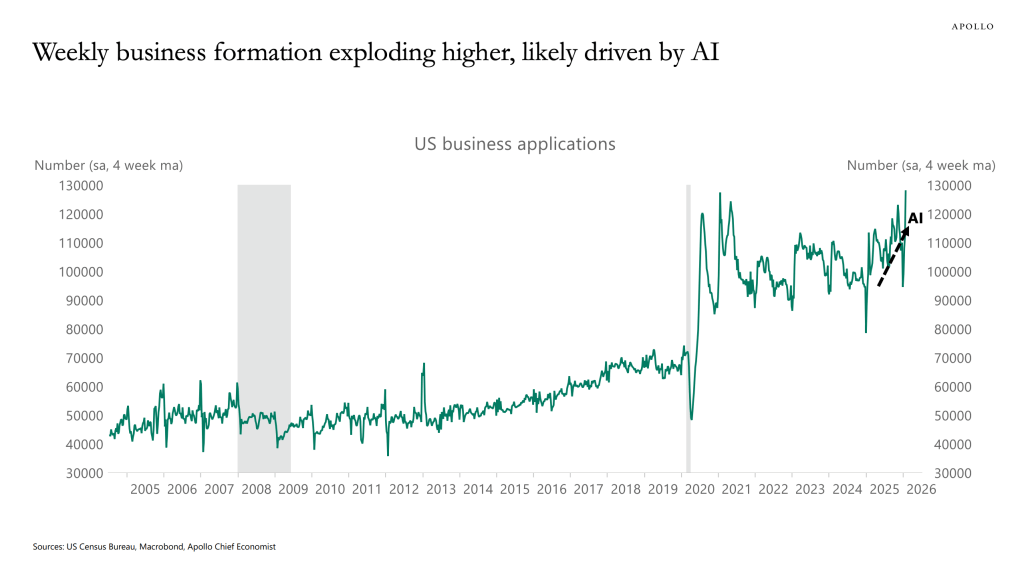
The startup era is back, but this time founders are using AI to avoid one of their biggest early costs—hiring employees. 

A report this week by the Bank of America Institute found the number of “high propensity businesses,” or businesses the Census Bureau identifies as likely to hire employees, jumped by 15.1% year over year in January. Meanwhile, the number of business applications with explicit plans to hire employees fell by 4.4%.

The trend comes amid the record-high investment small companies are making on tech services, which includes AI, according to the Bank of America analysts, who said spending jumped 14% year over year last month. 

“This might be linked to a productivity push,” the report said.

Among small businesses, retail led the charge in tech spending last month with a gain of more than 25% followed closely by manufacturers, BofA added.

Small businesses, usually defined as a company with fewer than 500 workers, employ about 45% of Americans, and a major drop in hiring among this group of companies could hit the labor market hard.

Following the Federal Reserve’s decision to keep rates unchanged this week, Chairman Jerome Powell said private sector hiring had stalled. In February, employers cut 92,000 positions and the unemployment rate stood at 4.4%. 

“Effectively, there’s zero net job creation in the private sector,” Powell added in a press conference this week.

Larger companies are also increasingly leveraging AI to try to do more with less. The latest evidence: fintech firm Block’s decision last month to lay off around half of its workforce, with CEO Jack Dorsey citing intelligence tools that are “enabling a new way of working which fundamentally changes what it means to build and run a company.”

Some have said Block’s move constituted “AI washing” and that the layoffs last month were actually meant to correct over-hiring during the pandemic. Block’s chief financial officer and chief operations officer, Amrita Ahuja, told Fortune earlier this month this was not the case.

Meanwhile, AI has been cited in around 8% of all job cut announcements in 2026, or about 12,304 announcements, according to a study by executive outplacement firm Challenger, Gray & Christmas. 

To be sure, Apollo Chief Economist Torsten Slok predicted the skyrocketing number of companies being created will be a boon for the labor market overall. 

“As these firms scale, they will create jobs, underscoring that AI is likely to strengthen, not disrupt, the US labor market,” he wrote in a note earlier this month. 

Replacing engineers

Others, such as Andy Tang, a partner at Silicon Valley venture capital firm Draper Associates, aren’t so sure. On average, the startups he talked to last month are reducing their engineering teams by a third, he told Fortune, revealing just how beneficial AI tools are to early-stage founders.

Often, these startups are finding that putting money into AI tokens is a better investment than increasing headcount by producing three to five times the code for a nominal cost.

“If you do the math, you don’t need nearly as many engineers” he said, adding that most knowledge work is easy to replace. 

In the future, AI tools may even enable solo entrepreneurs to cut their staff entirely, and instead create an army of agents who then go on to create their own “founderless unicorn companies,” according to Tang. 

The new playbook

The idea of using AI tools to scale rapidly has quickly caught on with a new generation of young, tech-savvy entrepreneurs.

Two years ago, Rudy Arora and Sarthak Dhawan started TurboAI, an AI-powered tool that converts lecture notes into flashcards and quizzes, with an initial investment of less than $300 while still college students at Northwestern University and Duke University, respectively. 

In the past two years, the now 21-year-old childhood friends have been able to grow their company to 8.5 million users and are generating about $1 million per month with only 13 employees, partly because of AI, the pair told Fortune. And despite raising $750,000 in a funding round two years ago, Arora said they have preferred not to spend it because they are profitable.

“If we were a company two-and-a-half years ago, it would take over 100 employees,” Arora said. “The only reason we’re able to do it with 13 employees right now is because of AI.”

What used to require a product manager and five engineers can now be handled by a single technical employee armed with AI agents, he added. 

Arora’s cofounder Dhawan added that he believes startups are only just discovering how AI can supercharge their businesses. Still, technology is already changing how entrepreneurs function. During the post-2008 startup boom more than a decade ago, creating a company often required experienced programmers and venture capital money, said Dhawan. Yet, the cofounders’ experience building TurboAI proves this isn’t necessarily the case anymore. 

“We’re going to see people even younger than ourselves, building companies with even less resources,” Dhawan said.

This story was originally featured on Fortune.com

Mark Cuban is notoriously bold in his deal-making. But even by his standards, dropping millions of dollars on a mansion he’s never set foot in is a move that could raise eyebrows.

The billionaire entrepreneur and former Shark Tank star revealed he snagged a $25 million estate at a jaw-dropping 50% discount, a deal he says exemplifies one of his core investing principles.

Cuban reflected on the purchase in a 2022 interview with GQ. During his days at MicroSolutions (the company he ultimately sold for $6 million in 1990), his partner, Martin Woodall, told him about an “amazing house” going into foreclosure. It was a home the owner had spent three years building and a “dream home” to the original owner’s wife and whole family, Cuban said. 

But unfortunately, the owner was forced to sell the home when the stock market crashed, and he lost everything. So, Cuban, who’s currently worth about $9 billion, bought the 24,000-square-foot mansion in Dallas sight unseen, calling it his one “why the f–k not purchase.” He still resides there, and Zillow estimates show it’s currently worth $22 million.

“I’d never seen the house. I saw some pictures. I’d never been there. I was like, F–k yeah. I’m a billionaire,” Cuban said. Essentially, the idea is that buying a home at a discount doesn’t inherently change its value. So when Cuban eventually goes to sell the home someday, he’ll make a pretty penny—at least about $10 million based on the current estimated value of the home (although it could be closer to $28 million, according to the Zillow estimate range).

Buying at a steep discount is “the best guaranteed return on investment” you can make, Cuban said, a methodology he uses for most of his purchases. 

“Saving 30% to 50% buying in bulk—replenishable items from toothpaste to soup, or whatever I use a lot of—is the best guaranteed return on investment you can get anywhere,” Cuban said in a 2010 Forbes interview. The mansion was the same principle, just on a much larger scale.

The former Dallas Mavericks owner also used the home purchase example as a cautionary tale about never taking wealth for granted. He also outlined his four-rule framework for becoming a millionaire, which includes mastering a skill, learning to sell, staying curious, and keeping learning—then start a company once you have those foundations.

“You have to know how to sell,” Cuban said. “You don’t want to be in a position where you’re dependent on other people.”

Billionaires approach finances differently

Cuban’s purchase is a window into how the ultra-wealthy think about real estate differently from average Americans, who would likely think it’s insane to purchase a home they’ve never actually seen in person.

Where most buyers shop for a home, Cuban shopped for a better financial position. The mansion is less a lifestyle acquisition (that was just a bonus for him) than an asset with favorable entry terms. Some billionaires, who would presumably be able to purchase a home outright, will also take out mortgages as a more savvy financial decision. It’s because most of the wealth held by ultra-high-net-worth people is tied up in investments, stocks, and bonds, and they don’t keep as much cash on hand.

“Ultra-high net worth individuals think differently about liquidity and leverage,” Miltiadis Kastanis, executive director of sales at Compass, previously told Fortune. “They’d rather keep their money working for them in investments, businesses—or even art—rather than tying it all up in one property.”

For Cuban, the purchase also signals continued confidence in hard assets at a moment when even some of the world’s most sophisticated investors are questioning where to park capital. Real estate offers something that stocks and crypto don’t always promise: a floor built into the purchase price itself.

Still, it’s important for the average American to make financial decisions that work for them, too.

“The takeaway for the average buyer isn’t to mimic [billionaires’] precise approach, but to understand the principle,” Evan Harlow, real estate agent at Maui Elite Property, previously told Fortune. “Sometimes the smartest financial move isn’t paying everything off, but keeping your money flexible and working for you.”

This story was originally featured on Fortune.com

In a K-shaped economy defined by a stark divide in household income and spending, there are sure to be winners and losers—but even those considered “rich” are feeling the clinch. Some six-figure earners are “on thin ice” thanks to potential headwinds and a shakier financial footing, according to a recent analysis from consulting firm Kearney.

The wealthy who are at financial risk are “high earners whose lack of budgeting and profligate spending has them overleveraged and exposed,” the report explained. “While they appear to be doing well from the outside, they are only a step away from real financial trouble.”

The top arm of the “K” in the economic model represents the top 20% of high-income households—but nearly half of them could be walking on eggshells, according to the report. Those making $160,000 to $700,000 are divided into two financial groups, with the lower end of the proportion deemed to be “on thin ice” due to their debt and exposure to financial swings.

But there is no defined ceiling as to where the six-figure “on thin ice” crowd enter the “stable/responsible” group, as their financial standing depends on several variables, including where they live in the country.

“There is not a specific number where those two groups split because it actually depends on other factors we cover (such as cost of living area),” Katie Thomas, the report’s author and leader of the the Kearney Consumer Institute (KCI), explains to Fortune. “For instance, making $250,000 is different in San Francisco vs. Pittsburgh, which is why we decided not to make a hard cutoff between the two groups.” 

These wealthy consumers are vulnerable to housing costs, debt and interest rates, and the job market. Six-figure earners “on thin ice” are also highly exposed to stock market swings and lifestyle creep, as keeping up appearances has become more costly.

Meanwhile the 1% of households who are “secure elites,” earning more than $700,000 a year, are sitting “comfortable” in the K-shaped economy. Potential risks like the stock market, AI bubble exposure, and interest rates have little impact on their solid financial standing.

Macroeconomic risks put some six-figure elite more at risk than lower earners

CEOs and Wall Street analysts alike are all talking about the “K shaped economy”: a buzzword describing the growing disparity between the haves and have-nots. The upper part of the K represents higher-income Americans—who see their salaries and wealth rise—while the bottom part refers to lower-income households battling against weaker income gains and steep prices.

However, depending on their susceptibility to financial threats, some six-figure breadwinners are actually more at risk than lower-income earners, according to the Kearney report. 

The 20% of consumers making between $95,000 and $160,000 actually rest in the “comfortable” group at the bottom leg of the K-shaped economy. Similarly to the wealthy “on thin ice,” their biggest risks are job market, lifestyle creep, and interest rates, but the exposure is less severe. 

The report explains that technically these “comfortable” earners are in the bottom of the “K”—which looks to be a worse spot to be in—but their overall financial position is “more secure on a day-to-day, year-to-year basis thanks to a variety of factors.” They’re only mildly exposed to many of the current macroeconomic factors troubling higher-income earners like housing costs, debt, and labor market whims. They may bring home a lower income, but they have more buffers and financial assets to weather the storm. 

“Consumers in the arm of the K ‘on thin ice’ group may be highly exposed to housing and interest costs or stock market dips,” the report noted. Meanwhile, “Those in the leg of the K ‘comfortable’ group are less at risk, despite being on the seemingly unfavorable side.”

Six-figure earners are struggling to keep up with costs—and appearances 

Six-figure salaries may conjure fantasies of a high-flying lifestyle, but in actuality, many Americans find their high incomes aren’t cutting it. 

Instead of balling out on luxuries, around 64% of Americans earning $200,000 or more said they’ve used rewards points to pay for essentials, 50% used “buy now, pay later” for purchases under $100, and 46% relied on credit cards to scrape by, according to a 2025 survey from the Harris Poll. It’s become costly to live a luxe lifestyle.

“Our data shows that even high earners are financially anxious—they’re living the illusion of affluence while privately juggling credit cards, debt, and survival strategies,” Libby Rodney, chief strategy officer and futurist for the Harris Poll, said in a statement last year.

Even the 1% is feeling financial strain. About 41% of American workers earning between $300,001 and $500,000—and 40% of those making over $500,000—say they’re living paycheck to paycheck, according to a 2025 report from Goldman Sachs. And ironically, the financial outlook gets better going down the income spectrum; 16% of workers bringing home $200,001 and $300,000, 25% making $100,001 to $200,000 annually, and 36% earning $50,001 to $100,000 were struggling to make ends meet.

The paradox highlights the “impact of lifestyle creep, the phenomenon of luxuries becoming necessities to certain income cohorts,” according to the Goldman report. Six-figure workers reeling in half a million-dollar salaries are struggling to keep up with the joneses.

“Financial strain is not confined to low-income workers,” the 2025 study revealed. “A meaningful share of higher earners also report living paycheck to paycheck or making only limited progress toward long-term financial goals, underscoring that elevated expenses, debt burdens, and lifestyle inflation can erode savings capacity across the income spectrum.”

This story was originally featured on Fortune.com

Japan is contemplating the possibility of deploying its military for minesweeping operations in the Strait of Hormuz, a crucial route for global oil supplies, if a ceasefire is achieved in the ongoing U.S.-Iran war.

Japan Weighs Minesweeping Role

Japanese Foreign Minister Toshimitsu Motegi stated that the country might consider using its military for minesweeping in the waterway if a ceasefire is reached in the U.S.-Iran war, Reuters reported, citing his remarks during a Fuji TV programme.

Japan’s military operations are limited by its postwar pacifist constitution. However, laws enacted in 2015 permit the deployment of its Self-Defense Forces abroad if an attack—including one on a close ally—poses a …

Full story available on Benzinga.com

This post was originally published here

In January, the White House celebrated what they claimed to be the “largest tax refund season in U.S. history,” promising hundreds of dollars more in refunds this tax year as a result of changes to the tax code, thanks to the One Big Beautiful Bill Act (OBBBA).

But economists warn those savings could go up in smoke—or rather exhaust, cancelled out completely by elevated gas prices as a result of the ongoing war in Iran. 

An analysis led by economists at the Stanford Institute for Economic Policy Research found that should the Strait of Hormuz remain closed for another three weeks and oil top out at $110 per barrel in March, gas would peak at $4.36 per gallon in May. As a result, the report found Americans would be paying on average $740 more for gas this year. The economists noted that extra spend would cancel out the $748 more in tax refunds projected for a typical household, according to the Tax Foundation. 

Gas prices have surged more than 90 cents since Feb. 28, to $3.91 per gallon, when President Donald Trump initiated a major military operation against Iran, in a joint effort with Israeli forces. The ongoing strikes and counterattacks have resulted in the effective closure of the Strait of Hormuz, the chokepoint through which more than 20% of the world’s oil supply is exported. 

With oil prices hovering near $100 per barrel—and spiking above $115 this week—gas prices have subsequently reached their highest levels since 2023.  But even if the conflict ends in a matter of weeks, Americans are still likely to feel pain at the pump.

In a note to clients, Oxford Economics analysts similarly calculated that consumers would spend $60 billion more on gas in 2026, should gas prices average out to $3.60 per gallon, “almost exactly offsetting the boost from refunds.”

These elevated gas prices are likely to impact lower- and middle-income consumers the most, exacerbating a K-shaped economy of wealthier Americans increasing consumer spend and lower-income households struggling to make ends meet. The bottom 80% of earners spend close to 4% of their budget on gas—nearly twice as much as their higher-income counterparts, Oxford analysts wrote. 

Moreover, the tax cuts outlined in OBBBA, such as for overtime and state and local taxes, will likely benefit middle- and upper-class Americans more, “deepening the bifurcation of the consumer that we’ve seen over the past several years,” the note said. As the Act stands now, the IRS estimates refunds on average $360 greater than last year.

Why gas prices are likely to remain stubbornly high

Oil and gas prices are poised to remain elevated until at least the end of the year. The Energy Information Administration (EIA), a semi-independent agency under the purview of the Department of Energy, projected that as things stand now, gas prices will average out at $3.34 this year and $3.18 in 2027. Goldman Sachs analysts likewise suggested oil prices could remain above $100 per barrel through 2027 if supply chain disruptions continue.

Even if the Strait of Hormuz were to reopen, it would take time for global oil supply to rebalance. The closure of the trade passage has resulted in a backlog of oil tankers, and directing the vessels through the waterway could take weeks to resolve. Oil production in the Gulf may also be hampered by infrastructure damage as a result of strikes.

The Trump Administration has made efforts to bring down soaring gas prices, like on Wednesday, when the White House temporarily suspending the Jones Act: a federal law created in 1920 aimed to regulate domestic maritime shipping and trade. It prohibits foreign-flagged ships from transporting goods between U.S. ports. By suspending the law, the Trump Administration aims to ease supply disruptions driving up the price of oil, hoping that by opening up domestic routes to those foreign vessels, it will reduce shipping costs and speed up deliveries.

Policy experts aren’t sure the decision will make much of a difference in gas prices. The Center for American Progress estimated suspending the Jones Act would lower gas prices by three cents per gallon.

Bloomberg reported Vice President JD Vance will meet with oil executives to address soaring oil prices.

“We know they’re up, and we know that people are hurting because of it,” Vance said at an event in Michigan this week. “And we’re doing everything that we can to ensure that they stay lower.”

This story was originally featured on Fortune.com

Exclusive: Rebecca Harris promotes latest Crewkerne Gazette skit, created by Joshua Bonehill-Paine who says he is Tory member

The Conservative party’s chief whip has been condemned for promoting AI-generated footage created by a notorious far-right figure who was jailed for hate crimes against Jewish people.

Rebecca Harris reposted the latest skit by the Crewkerne Gazette, which depicts Kemi Badenoch and her shadow justice secretary, Nick Timothy, as characters in the gangster film Scarface.

Continue reading…

This post was originally published here

Centre-left Robert Golob and rightwing populist Janez Janša are frontrunners in contest after polarised campaign

Campaigners in Slovenia have warned of a surge in anti-Romany rhetoric as the country heads to the polls on Sunday, leaving many bracing for the outcome of a vote that has become, in part, a referendum on how the country treats its most marginalised.

In Sunday’s vote, the prime minister, Robert Golob, of the centre-left Freedom Movement party, faces off against the rightwing populist and Donald Trump ally Janez Janša.

Continue reading…

This post was originally published here

Finance chief Dan Durn is turning Adobe’s finance organization into an early proving ground for agentic AI—using autonomous software agents to forecast results, scan contracts, and even answer hundreds of thousands of emails.

The push mirrors Adobe’s broader strategy around agentic AI. For customers, the company lets them choose models, combine them with their own data and Adobe’s, and point agents at specific business outcomes.

Internally, Durn, who is also in charge of technology, security and operations, has taken a similar approach to finance: pairing a rules-based, data-heavy function with AI, within a structure where finance, IT, and security report to one leader so pilots can move to production quickly. “Accuracy is non-negotiable,” he adds; that’s why Adobe is investing in structured data and governance so it can move fast without sacrificing precision, he says. 

The rise of AI is rapidly reshaping corporate leadership, accelerating turnover and elevating executives who can deliver fast, tangible results. Even long-tenured leaders face increasing pressure from investors to move aggressively on AI. Recent leadership changes, including the announced retirement of Adobe CEO Shantanu Narayen, highlight how little patience markets now have for perceived hesitation. At the same time, Adobe reported that annualized revenue from its AI-first products more than tripled year over year in its first quarter of fiscal 2026, which ended Feb. 27. Across Fortune 500 companies, this dynamic is creating a new internal proving ground where executives are judged by how effectively, and how quickly, they deploy AI to drive growth, efficiency, and innovation.

Using AI in finance

Inside finance, Durn groups AI use into three buckets: forecasting, anomaly detection, and general productivity.

For forecasting, AI uncovers patterns and signals in data that would be difficult for humans to detect quickly, he explains. Anomaly-detection agents flag performance that’s unexpectedly strong or weak—“things that can get lost in the sea of data”—so finance can intervene faster, he says.

However, Durn says the best examples now sit in productivity, citing three use cases:

1. Extracting information from PDFs

One of the most developed use cases involves “containers” of information—collections of PDFs such as investor transcripts, quarterly reports, and analyst research. Finance teams use Adobe’s PDF Spaces to load documents into a shared digital workspace and use an agentic AI assistant to surface themes, insights, and messaging cues in minutes rather than hours.

A recent Forrester TEI study found Acrobat’s agentic AI Assistant increases efficiencies in document summarization and analysis by 45%. Durn says that matters because “the world’s information lives in PDF,” and AI that turns static content into insights that can be used.

2. Cutting contract review time in half

Adobe is also using agentic AI to overhaul contract reviews across finance and procurement functions including revenue assurance, contract operations, product fulfillment, and vendor management. Instead of finance professionals combing through every clause, an AI assistant scans thousands of contracts, highlights provisions relevant to each function, and flags non-standard terms.

The system has cut review time roughly in half, speeding individual reviews and allowing teams to query the entire contract repository—for example, identifying which contracts include auto-cancellation features or foreign-exchange adjustment windows, Durn says. Adobe built its first prototype by April 2024 and began onboarding teams in January 2025.

3. Automating “common” inboxes

A third area is the “common inboxes” that handle high-volume internal and external email—shared addresses for sales, treasury, finance, and supplier questions. Adobe deployed an agentic AI assistant that auto-tags, prioritizes, routes, and, when criteria are met, auto-responds to emails. Typical queries include supplier billing issues or standard credit-quality questions coming into the treasury from Salesforce.

“In 2025 alone, the system auto-responded to about 300,000 emails across 19 inboxes, saving more than 5,000 hours of manual work and freeing teams to focus on more complex issues,” he says. The tool took about six months to build; beta teams began using it around August 2024, with full rollout in January 2025.

The payoff, he stresses, isn’t headcount cuts but the ability to scale more efficiently as Adobe grows.

Grassroots ideas, decade-long build

Durn traces these finance use cases to Adobe’s long AI journey and a bottom-up idea pipeline. The company has invested in machine learning and AI for more than a decade, initially to understand customer usage patterns and embed intelligence into products—work that laid the groundwork for generative and agentic AI.

Many of the best applications come from “reaching down into the organization” and asking employees where AI could remove friction or make their jobs easier, he says. There are more ideas than capacity, so the team prioritizes those with the greatest impact.

When deciding whether to green-light AI investments, Durn focuses on organizational velocity—the ability of back-office functions to keep pace with faster product innovation. If finance doesn’t adopt AI, he argues, it risks becoming a “rate limiter of growth.”

The actual spend is modest, he adds; much of the work involves change management and process redesign layered onto Adobe’s technology.

Durn’s perspective on change management coincides with new research from McKinsey. To capture the full value of AI, organizations need to go beyond “a piecemeal approach and push for a double transformation—both technical and organizational—that includes reimagining how work gets done across functions and workflows,” according to the report. While 88% of organizations surveyed are now experimenting with AI, fewer than 20% report tangible bottom-line results,, the research finds.

How AI is changing his own job

For his own workflow, Durn relies on AI primarily for insight generation. Ahead of earnings, his team loads pre-earnings research reports, Adobe filings, and peer transcripts into an AI-powered workspace to surface themes and likely investor questions.

Scripts and Q&A preparation are then run through models with guardrails to test whether messaging addresses those themes and to ask, “If I were an investor, what are my key takeaways?”

He sees it as a useful check on clarity and consistency—using AI to validate instincts and sharpen how Adobe communicates with the market.

This story was originally featured on Fortune.com

Electoral alliances expected to play vital role in number of contests including Paris and Marseille

Voting is under way in France in the second round of local elections – seenas a bellwether for next year’s presidential race – with cities including Paris and Marseille in the balance and both the radical left and far right hoping for gains.

Most of France’s 35,000-odd communes elected their councils in the first round last Sunday, but in municipalities where the contest is tighter, including most large urban areas, the second round will be decisive, with electoral alliances playing a key role.

Continue reading…

This post was originally published here

Unpaid carers say they remain ‘in limbo’ as DWP continues to pursue discredited repayment bills

MPs have threatened to launch a fresh inquiry into the handling of the carers allowance scandal after unpaid carers spoke of being “stuck in limbo” by the government’s response.

The warning came amid concerns over delays in Department for Work and Pensions (DWP) plans to offer redress to tens of thousands of carers who were unfairly issued with overpayment bills based on discredited official guidance.

Continue reading…

This post was originally published here

Labor’s Peter Malinauskas secures at least 32 seats while Pauline Hanson’s party outpolls Liberals and could become de facto opposition

One Nation will win at least one South Australian lower house seat, and is leading in a handful of others, as the Liberals consider “sobering lessons” from Saturday’s thumping election loss to Labor.

One Nation’s electoral success came as federal MP Barnaby Joyce downplayed racism and bigotry accusations against the party before likening a ban on migration from Muslim countries to buying cattle “that just don’t work”.

Continue reading…

This post was originally published here

Donald Trump’s ‘little excursion’ is likely to have long-term effects, from oil prices to inflation to growth, say experts

In the days after the US and Israel first bombed Iran, financial markets bet the economic fallout from Donald Trump’s “little excursion” in the Middle East would be short-lived.

“There are risks from higher oil prices longer term. But this is a tail risk,” one US-based fund manger said after the airstrike killing Iran’s supreme leader, Ayatollah Ali Khamenei. “History has shown time and time again that geopolitical flare-ups like this tend to be short-lived. This one should prove to be no exception.’’

Continue reading…

This post was originally published here

Cyber experts say influence operations in ‘asymmetric’ campaign to intensify moral pressure on US and Israel

Iran has radically overhauled its social media strategy in an all-out information war launched by the country’s Islamic rulers in response to US and Israeli military attacks.

Cyber experts say Iranian foreign influence operations have gone into overdrive as part of an “asymmetric” campaign designed to complement its military retaliation and intensify moral pressure on the US and Israel into curtailing their war efforts.

Continue reading…

This post was originally published here

‘Problem-solving’, child-focused courts to replace adversarial hearings, with earlier intervention to cut delays

Family courts are “not good enough” and have treated women and children unfairly for decades, a government minister has said.

Announcing a major overhaul of the family justice system in England and Wales that will play a central role in “rebalancing” the family courts, Alison Levitt said often brutal legal showdowns will be replaced with a “problem-solving”, child-focused model.

Continue reading…

This post was originally published here

This blog is now closed

Australia not ‘contemplating’ fuel rationing but state and federal governments have powers, Bowen says

State governments also had fuel rationing powers, Chris Bowen said.

When I was a kid … in the 80s in Sydney, I remember petrol rationing was done by state governments – the state governments do have powers there.

Yes, the Commonwealth government, under the fuel emergency act, has powers.

It’s not designed to be invoked lightly. It really has powers primarily around defence and health, in the first instance, to ensure that those key areas are getting diesel that they need, but also other forms of fuel.

I would need to be satisfied that there’s a real shortage and that the powers under that act are useful.

Continue reading…

This post was originally published here

Billionaire entrepreneur Mark Cuban on Saturday shared his thoughts on the future of business and the growing role of AI agents in a series of X posts.

Cuban Warns AI Could Shake Up US Market

Cuban suggested that AI could dramatically reshape the marketplace, proposing a “trust system” in which vendors would need to post a bond before selling products in the U.S.

He also warned that AI agents might identify top-selling products on platforms like Amazon (NASDAQ:AMZN) and influence market trends.

Cuban predicted that the next wave …

Full story available on Benzinga.com

This post was originally published here

Self-proclaimed stoics who denounce self-examination only prove the bankruptcy of the tech bro worldview

This post was originally published here

National referendum is being seen as a de facto confidence vote on the government – and the polls are neck and neck

In the run-up to a referendum in Italy on a government quest to overhaul the judiciary, a campaign flyer circulated online quoting Giorgia Meloni, the prime minister, taking aim at judges and feminists. “Judges block the deportations of rapists. Where are the feminists? Vote yes – there will not be another opportunity,” it read.

The flyer, posted on the Facebook page of Meloni’s Brothers of Italy, a party with neofascist roots, was subsequently removed. But its tone has defined a campaign dominated by inflammatory rhetoric rather than meaningful debate.

Continue reading…

This post was originally published here

Billionaire entrepreneur Mark Cuban took to X to weigh in on the ongoing AI revolution and its potential effects on the workforce.

AI Mirrors PC Revolution

In his post, Cuban drew comparisons between the challenges white-collar workers faced during the rise of personal computers in the 1980s and the hurdles employees encounter today with AI.

He stated that personal computers were expensive and not easily accessible, making it difficult for many workers to adapt.

By contrast, he said, today’s workers can access AI learning tools online, giving them a much better chance to acquire new skills and remain competitive.

Full story available on Benzinga.com

This post was originally published here
This blog is now closed

Circling back now to Diego Garcia, Iran fired two intermediate-range ballistic missiles at the joint US-UK military base in the Indian Ocean – but neither of them hit, according to news reports citing US officials.

The Wall Street Journal said one of the missiles failed in flight, and that a US warship fired an SM-3 interceptor at the other, citing two US officials. It could not be determined if an interception was made, one said.

Continue reading…

This post was originally published here

Energy minister says war on Iran creating ‘uncertain environment’ but insists government doing ‘all the preparatory work’

Six oil ships bound for Australia have been cancelled in recent days but the federal government is not yet considering any drastic measures, the energy minister, Chris Bowen, says.

Bowen said on Sunday that six ships from Malaysia, Singapore and South Korea, that had been expected to arrive next month, were cancelled or deferred. The federal government was working to replace the ships, with some already substituted, the minister told ABC TV.

Continue reading…

This post was originally published here

People in hard-hit areas of Oahu and Maui told to evacuate with still more rain expected over the weekend

As Hawaii endures its worst flooding in more than 20 years, officials urged people in hard-hit areas to “LEAVE NOW”. That warning early on Saturday came after heavy rains fell on soil already saturated by downpours from a winter storm a week ago, and still more was expected over the weekend.

Muddy floodwaters smothered vast stretches of Oahu’s North Shore, a community renowned for its big-wave surfing. Raging waters lifted homes and cars and prompted evacuation orders for 5,500 people north of Honolulu. Authorities cautioned that a 120-year-old dam could fail.

Continue reading…

This post was originally published here

Iran struck two communities near Israel’s main nuclear research center late Saturday, leaving buildings shattered and at least seven people seriously injured, hours after Tehran’s main nuclear enrichment site was hit as the war spun into a dangerous new direction at the start of its fourth week.

It was the first time Israel’s nuclear research center has been targeted in the fighting. Israel’s military said it was not able to intercept missiles that hit the southern cities of Dimona and Arad, the largest near the center in Israel’s sparsely populated Negev desert.

“This is a very difficult evening,” Prime Minister Benjamin Netanyahu said, adding that more emergency resources were being sent to the scene.

“The war is not close to ending,” Israel’s army chief, Gen. Eyal Zamir, said earlier in the day.

Iran also targeted the joint U.K.-U.S. Diego Garcia military base in the Indian Ocean about 2,500 miles (4,000 kilometers) away, suggesting that Tehran has missiles that can go farther than previously acknowledged — or that it had used its space program for an improvised launch.

The U.S. and Israel have offered shifting rationales for the war, from hoping to foment an uprising that topples Iran’s leadership to eliminating its nuclear and missile programs and its support for armed proxies. There have been no signs of an uprising, while internet restrictions limit information from Iran.

The war’s effects are felt far beyond the Middle East, raising food and fuel prices.

It is not clear how much damage Iran has sustained in the U.S. and Israeli strikes that began Feb. 28 — or even who is truly in charge. Supreme Leader Ayatollah Mojtaba Khamenei has not been seen in public since being named to the role.

Israel had denied responsibility for attack on Natanz

Footage from Israel’s emergency service showed a large crater next to what appeared to be apartment buildings with outer walls sheared away. The missile appeared to have struck an open area.

Rescue workers said the direct hit in Arad caused widespread damage across at least 10 apartment buildings, three of them badly damaged and in danger of collapsing. At least 64 people were taken to hospitals.

Dimona is about 20 kilometers (12 miles) west of the nuclear research center and Arad around 35 kilometers (21 miles) north.

Israel is believed to be the only Middle East nation with nuclear weapons, though its leaders refuse to confirm or deny their existence. The U.N. nuclear watchdog said on X it had not received reports of damage to the Israeli center or abnormal radiation levels.

“If the Israeli regime is unable to intercept missiles in the heavily protected Dimona area, it is, operationally, a sign of entering a new phase of the battle,” Iran’s Parliament Speaker Mohammad Bagher Ghalibaf said on X before word of the Arad strike spread.

Israel earlier Saturday denied responsibility for the strike on the Natanz nuclear facility, nearly 220 kilometers (135 miles) southeast of Tehran. The Iranian judiciary’s official news agency, Mizan, said there was no leakage.

The International Atomic Energy Agency has said the bulk of Iran’s estimated 970 pounds (440 kilograms) of enriched uranium is elsewhere, beneath the rubble at its Isfahan facility. It said on X it was looking into the strike.

The Pentagon declined to comment on the strike on Natanz, which was also hit in the first week of the war and in the 12-day war last June. Russian Foreign Ministry spokesperson Maria Zakharova said such strikes posed a “real risk of catastrophic disaster throughout the Middle East.”

Iran retaliated hours later.

US can use Diego Garcia base to protect Strait of Hormuz

U.K. officials did not give details of the strike that targeted the Diego Garcia base Friday, which was unsuccessful. Britain’s Ministry of Defense described Iran as “lashing out across the region.”

It’s unclear how close the missiles came to the island. Iran previously asserted that it has limited its missile range to below 2,000 kilometers (over 1,200 miles).

But military experts said Iran may have used its space launch vehicle for an improvised firing. “If you’ve got a space program, you’ve got a ballistic missile program,” said Steve Prest, a retired Royal Navy commodore.

Israel’s army chief, however, said Iran had fired “a two-stage intercontinental ballistic missile.” There was no statement from Iran.

Britain has not participated in U.S.-Israeli attacks but has allowed U.S. bombers to use its bases to attack Iran’s missile sites. On Friday, the U.K. government said bombers could use Diego Garcia to attack sites used to target ships in the Strait of Hormuz.

Global pressure increases to get shipping back on track

As Iran threatens shipping on the Strait of Hormuz, the United Arab Emirates joined 21 other countries including the U.K., Germany, France and Japan in expressing “readiness to contribute to appropriate efforts to ensure safe passage.”

The Trump administration announced it was temporarily lifting sanctions on Iranian oil that was already loaded on ships as of Friday, but that does not increase oil production, a central factor in surging prices. The oil ministry of Iran, which has evaded sanctions for years, replied that it “essentially has no crude oil left in floating storage.”

The head of U.S. Central Command, Adm. Brad Cooper, asserted that Iran’s ability to attack vessels on the strait had been “degraded.” He said 5,000-pound (2,270-kilogram) bombs were dropped earlier in the week on an underground facility along Iran’s coast used to store anti-ship cruise missiles and mobile missile launchers.

The U.S. is deploying three more amphibious assault ships and roughly 2,500 additional Marines to the Middle East, an official told The Associated Press. Two other U.S. officials confirmed that ships were deploying, without saying where they were headed. All three spoke on condition of anonymity to discuss the operations.

Gulf countries reported more attacks. A missile alert sounded Saturday night in Dubai. Saudi Arabia said it downed 20 drones in its east, home to major oil installations.

Iran’s death toll in the war has surpassed 1,500, the state broadcaster reported, citing the health ministry. In Israel, 15 people have been killed by Iranian missiles and four others have died in the occupied West Bank. At least 13 U.S. military members have been killed, along with well over a dozen civilians in Gulf nations.

Israeli troops and Hezbollah militants clash in Lebanon

Israel’s military said it was conducting a “targeted ground operation” in southern Lebanon and at least four militants were killed. Hezbollah said its fighters clashed with troops in the southern village of Khiam.

Israeli strikes targeting Hezbollah have killed more than 1,000 people and displaced more than 1 million, according to the Lebanese government. Hezbollah’s civilian assets also have been targeted.

This story was originally featured on Fortune.com

OpenAI plans to almost double its headcount by the end of 2026 as it seeks to fend off competition from companies such as Anthropic PBC and Alphabet Inc.’s Google, according to the Financial Times. 

The maker of AI assistant ChatGPT will look to increase headcount to about 8,000 from about 4,500, the FT said, citing two people with direct knowledge of the matter whom it didn’t identify. The new hires will largely work across product development, engineering, research and sales, according to the report. 

OpenAI has taken new office space in San Francisco to accommodate its growing staff count, taking its footprint in the city to more than 1 million square feet, the newspaper added. 

 OpenAI didn’t immediately respond to a request for comment.

The hiring plans come amid a race with competitors including Anthropic and Microsoft Corp. to woo corporate customers using AI as coding assistants. 

Firms like OpenAI have unveiled a number of AI models that can take on increasingly complicated tasks — from analyzing company earnings reports to writing code and generating startlingly realistic-looking images and videos.

Last week, OpenAI revealed plans to acquire Astral, a startup that makes Python tools for developers. Earlier in March, it agreed to buy AI security startup Promptfoo, adding tools to test and secure AI agents before deployment, Last year, it bought startups including Software Applications Inc. and Neptune. 

The firm is also in advanced discussions to form a joint venture with private equity firms, including TPG Inc., Brookfield Asset Management and Bain Capital, that would focus on bolstering adoption of its AI software, Bloomberg reported.

This story was originally featured on Fortune.com

Victims of army drone attack on East Darfur health facility included children and medical personnel

A strike on a healthcare facility in Sudan has killed 64 people and wounded 89 more, the World Health Organization reported on Saturday.

The UN’s humanitarian office in Sudan had earlier said it was “appalled by the attack on a hospital in East Darfur yesterday, reportedly killing dozens, including children, and injuring more”.

Continue reading…

This post was originally published here

After a four-year break, K-pop supergroup BTS returned Saturday with a massive, free comeback concert in Seoul, where thousands of police locked down a central boulevard for the Netflix-exclusive spectacle that drew tens of thousands of fans.

“Annyeonghaseyo! We’re back,” RM, the band’s leader, told the crowd, using the Korean word for “hello,” as they opened with “Body to Body,” setting off delirious screams from fans waving purple-and-red light sticks and thrusting smartphones into the air.

All seven members of the band — RM, Jin, Suga, J-Hope, Jimin, V and Jung Kook — recently completed South Korea’s mandatory military service, and hope to reclaim their status as one of the world’s biggest pop acts.

The performance at Gwanghwamun Square launches a global tour spanning dozens of shows across the United States, Europe and Asia, which analysts say could generate hundreds of millions of dollars in revenue per quarter.

The hourlong concert came after the group on Friday released its fifth album, “ARIRANG,” which sold nearly 4 million copies in its first day, said the band’s management company, HYBE. The company also said RM had injured his ankle during a rehearsal, but he still performed with modified choreography.

The BTS concert, which began at 8 p.m., drew several tens of thousands to the Gwanghwamun area, including 22,000 fans who secured free seats in the designated viewing zone and others who watched on screens nearby. The show was streamed live on Netflix.

“It will be amazing because it’s been so long that BTS (was) not with us,” Dallila Di Tullio, a 32-year-old fan from Italy, said before the concert, calling it a once-in-a-century event.

BTS debuted in 2013 and has a legion of global supporters who call themselves the “Army.” It became the first K-pop act to top Billboard’s Hot 100 chart in 2020 with their first all-English song “Dynamite.”

Jung Dukhyun, a pop culture commentator, said that the impact of BTS’ return as a full-group would be tremendous at a time when global fandom for K-pop has grown much stronger, as shown by the success of Netflix’s animated sensation “KPop Demon Hunters.”

Stringent crowd controls

The dark streets blazed with light as waves of fans sang and cheered from cordoned sections, a jubilant scene that unfolded under an unusually heavy police presence managing the crowds.

“I still vividly remember how, at our last Busan concert a few years ago, we asked you to wait for us. Thank you so much for coming here like this,” Jin said.

The group performed songs from their new album, including “SWIM,” alongside hits like “Dynamite” and “Butter.” Some members appeared to tear up while thanking fans who braved the chilly night, before holding hands and bowing to the crowd to close the show.

Police and city officials closed nearby streets and roads, halted the area’s subway and bus services, and sealed off dozens of surrounding buildings, in what amounted to a full-day shutdown of the district.

Thousands of police officers maintained a tight perimeter around the performance venue, channeling the crowds with a maze of fences and buses. Concertgoers began queuing by midday to secure spots along nearby roads, passing through security checks and metal detectors at designated entry points. The restrictions forced nearby shops to close and police to use their buses to shuttle wedding guests to a nearby venue.

“I was hoping to (see) if we can go through some holes or be around. Apparently we cannot because they will be asking people to move,” said Bernice Sanchez, a 52-year-old fan from Switzerland, as she looked for a place to wait.

While South Korean officials have taken crowd safety more seriously since a 2022 Halloween surge that killed nearly 160 people, critics say the controls went too far and undermined the symbolism of performing in Gwanghwamun, seen as Seoul’s spiritual heart and most prominent gathering space.

Hundreds of thousands have gathered in Gwanghwamun in recent years to mourn, protest and celebrate as the country weathered tragedy and political upheaval. The BTS concert came about a year after waves of demonstrators filled the area, calling for the ouster of then-President Yoon Suk Yeol over his brief imposition of martial law in December 2024. Those monthslong rallies were marked by a festive atmosphere and a striking blend of politics and pop culture, with protesters singing and waving colorful K-pop light sticks, and ended without major safety accidents.

Drawing on culture and heritage

The new BTS album, “ARIRANG,” takes its name from a centuries-old folk song, regarded as an unofficial anthem in both Koreas, whose themes of separation, longing and quiet resilience have echoed across generations.

Gwanghwamun and nearby Gyeongbok Palace provided a sweeping historic backdrop to Saturday’s show, which was highlighted by lighting effects that bathed the palace gate and walls in purple, red and blue.

Suga told the crowd that the album’s title and the decision to perform in Gwanghwamun reflected the group’s focus on identity. RM said the band focused on making music that felt true to themselves as they reconvened to work on the new album.

“We wanted to show who we are and how we can come together,” he told the crowd.

South Korean officials, including current President Lee Jae Myung, expressed hope that the event would promote the country’s culture and soft power.

Group’s comeback coincides with K-pop’s global rise

The group’s comeback follows a nearly four-year hiatus driven by South Korea’s mandatory military service, which requires most able-bodied men to serve 18 to 21 months under a conscription system aimed at deterring aggression from North Korea. BTS members began serving in 2022, with Suga the last to complete his service in June 2025.

Some analysts say the group’s “ARIRANG” world tour could become the biggest K-pop tour ever by scale and revenue, with 82 shows planned globally in stadiums of around 50,000 seats. Ha Jae-keun, a cultural critic, said BTS was likely to have a “second heyday,” as they maintained a highly powerful fandom and would benefit from the broader international ascent of K-pop.

“We will do our best to give everything we got,” J-Hope said

This story was originally featured on Fortune.com

The US has allowed the sale of Iranian oil and petrochemical products that have been loaded onto tankers, its latest effort to counter rising oil prices due to the Middle East war.

The Department of Treasury issued a general license for energy that’s already on vessels as of Friday, with such purchases authorized through April 19. The measure follows similar moves for Russian oil on the water in a bid to ease an unprecedented fuel supply crunch caused by the war.

For now, the vast majority of Iran’s oil is bought by Chinese customers — mainly independent refiners known as teapots. While the US waiver would widen the pool of potential buyers, any new customers would still face the challenge of structuring deals while other restrictions on Iran, including its access to international financial markets, remain in place.

The US and Israeli war on Iran has led to a virtual halt in shipments through the Strait of Hormuz, where 20% of global oil typically transits, with only a trickle of Iranian and Chinese tankers getting through. Brent crude prices have surged more than 50% this month, while Middle Eastern oil like Abu Dhabi’s flagship Murban grade has doubled in value.



The resulting spike in fuel prices for American consumers is heaping immense pressure on the US president and the Republican Party leading up to the November midterm elections. Prolonged inflationary pressures would undercut the GOP’s ability to retain control of the Senate and the House, and the loss of either chamber threatens to derail Trump’s ability to carry out his agenda.

Read More: US Treasury Allows More Russian Oil Sales to Help Tame Prices

US Treasury Secretary Scott Bessent called the Iranian oil waiver a “narrowly tailored, short-term authorization permitting the sale of Iranian oil currently stranded at sea,” in a post on X, adding that the measure will release about 140 million barrels. He also said that Iran “will have difficulty accessing any revenue generated.”

That 140-million-barrel number likely refers to oil on water. That figure probably includes cargoes in transit which may already be booked, and may not reflect actual availability. Goldman Sachs Group Inc. estimates there are 105 million barrels of Iranian oil on water.

Iran disputed the figure, with oil ministry spokesman Saman Ghodousi saying on X that the nation has no floating crude, nor a surplus that’s available for international markets. Ghodousi said the US was simply trying to provide psychological support to the oil market.

In the US, Congressional Democrats slammed the measure, arguing Trump’s move is an economic gift to Iran in the middle of a war that the president started.

“Clown show doesn’t begin to describe it,” Virginia Democrat Don Beyer said in a post on X.

In addition to sanctions waivers, the Trump administration released more than 45 million barrels of oil from its strategic reserves and temporarily waived a century-old shipping mandate in order to lower transport costs.

The global oil benchmark settled Friday above $112 a barrel — the highest level since mid-2022 — before easing in post-settlement trading after Trump said he was considering “winding down” US military efforts against Iran.

This story was originally featured on Fortune.com

The U.S. war on Iran has laid bare a dichotomy in the world’s most advanced military: high-tech weapons and AI have delivered stunning blows at unprecedented speed, while defending against the swarm of missiles and drones launched in retaliation have come at unsustainably lopsided costs.

Led by a massive air campaign, the U.S. has claimed more than 7,000 strikes on key sites, with Israel conducting a comparable number of sorties, as AI tools like Anthropic’s Claude recommend targets “much quicker in some ways than the speed of thought.” The relentless bombardment has decimated Iran’s military and leadership.

But helped by the mass production of cheap drones, the forces that are left still retain enough combat power to attack Gulf neighbors and scare away commercial tankers from the Strait of Hormuz, keeping 20% of the world’s oil bottled up.

Iran’s retaliatory barrage has also forced the U.S. and its allies to draw down expensive stockpiles of interceptors. The tactic highlights the brutal economics of the current war: missiles that cost millions of dollars each are shooting down drones that cost tens of thousands of dollars. In other words, it’s like the U.S. is using a Formula 1 racer to fight off a used car.

U.S.-style warfare doesn’t come cheap. The first six days of the Iran conflict have cost the U.S. more than $11 billion, though a switch to less expensive bombs has since slowed the daily bill.

Pentagon leaders insist the U.S. has enough munitions, though the exact size of the inventory is classified. Still, the heavy usage has raised concerns about the remaining supply, especially as allies consider what’s needed in the event of war with Russia or China.

But lawmakers got sticker shock on reports the Defense Department was seeking an additional $200 billion for the Iran war. Part of the Pentagon’s calculus, however, was to address the shortage of precision munitions and spur the defense industry to quickly restock supplies, sources told the Washington Post.

President Donald Trump summoned top contractors to the White House earlier this month to push them along. But ramping up to high levels of output could take years. For example, Lockheed Martin made 620 PAC-3 interceptors for the Patriot air-defense system last year and plans to make 650 this year. But its goal of producing over 2,000 annually won’t be reached until 2030, according to Bloomberg.

The current dilemma brings to mind a quote attributed to Joseph Stalin during World War II as he weighed the Red Army’s numerical advantage against Nazi Germany’s superior weapons: “quantity has a quality all its own.”

Ukraine tranforms warfare

The U.S. has long prioritized cutting-edge equipment to maintain superiority against any military rivals. But as the pace of technological improvements accelerated in recent decades, costs ballooned and the Pentagon struggled to keep up. During the Iraq war, acquisition officials looked to “off the shelf” commercial options that could be integrated into the military quickly.

The advent of cheap commercial drone technology changed equation dramatically, as demonstrated by the Ukrainian military’s adoption of new tactics to fight off the Russian invasion.

The four-year-old conflict has transformed warfare. Unmanned weapons are now responsible for most battlefield casualties as small first-person view drones hunt down individual troops or vehicles. Ukraine’s defense industry has also evolved to mass produce inexpensive drones that can take down Russia-launched Shaheds from Iran.

Once such drone, the P1-Sun, costs a little more than $1,000 and can fly above 30,000 feet as 3-D printers crank them out in Ukrainian factories.

“The future of warfare is Ukraine producing 7 million drones per year right now,” former CIA director and retired Gen. David Patraeus said earlier this month. “This past year, they produced 3.5 million. That enabled them basically to use 9 to 10,000 drones per day.”

And when combined with AI that makes drones more autonomous, the result will be swarms that are “really, really hard” to counter, he added.

Defending against an onslaught like that may require energy weapons, like high-powered microwaves, that can take down large swathes of drones at once.

“We are not actually where we should be relative to that, based on what we should have been learning from Ukraine for a very long time,” Patraeus warned. “And they’re learning back and forth. They make software changes every week or two, hardware changes every two to three weeks.”



Gulf countries facing Iranian attacks have sought Ukraine’s help in combating the Shahed drone. Ukrainian President Volodymyr Zelenskyy has said his country can produce at least 2,000 “effective and combat-proven” interceptors a day.

The Pentagon also understands the new economics of warfare and has even incorporated a copycat version of the Shahed in the U.S. military, using the American version against Iran during the war.

Emil Michael, the undersecretary of defense for research and engineering, said at an industry conference on Tuesday that the Pentagon plans to go big with the new LUCAS drone.

“After only a few years, we continue to refine that and make that something that we can mass produce at scale,” he said. “They’ve worked very well so far and it’s proven out to be a useful tool in the arsenal.” 

This story was originally featured on Fortune.com