
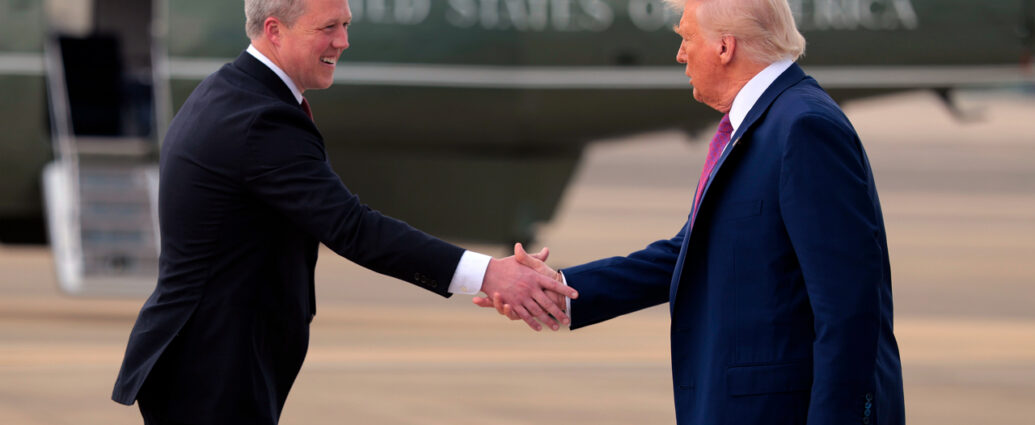
US Army plans nuclear microreactors at 5 military bases as part of $2.2B energy security push
The U.S. Army is moving forward with plans to bring nuclear power to five military installations as part of a multibillion-dollar effort to strengthen the military’s energy security and reduce its reliance on potentially vulnerable power grids.
The Army announced Wednesday that its Janus Program selected five nuclear energy companies for awards of up to a combined $2.2 billion to own, build and operate nuclear microreactors at bases in North Carolina, Kentucky, Texas, Georgia and New York.
The announcement comes as the Army works toward a September 2028 target outlined in an executive order signed by President Donald Trump calling for the first Army-regulated reactor to begin operating on a military installation.
Combined with expected private-sector investment, the Army said it expects more than 20 nuclear microreactors to eventually be built and operated across Department of War installations.
CALIFORNIA HELICOPTER MAKER LANDS MAJOR ARMY TRAINING DEAL, COULD SUPPORT HUNDREDS OF US JOBS
The initial reactors will be built by Antares Nuclear at Fort Bragg, North Carolina; BWXT Advanced Technologies at Fort Campbell, Kentucky; and General Atomics Electromagnetic Systems at Fort Hood, Texas.
Additionally, the Army said Radiant Industries will install a reactor at Fort Benning, Georgia, while Westinghouse Government Services will install one at Fort Drum, New York.
Secretary of the Army Dan Driscoll emphasized the importance of securing reliable power for military installations.
“Since launching the Janus Program, our mandate from President Trump and Secretary Hegseth has been clear: secure the power our warfighters need to train, deploy, and win,” Driscoll said.
PENTAGON BOOSTING THAAD INTERCEPTOR PRODUCTION WITH NORTHROP GRUMMAN, LOCKHEED MARTIN DEAL
“Awarding these contracts accelerates our ability to deliver safe, reliable baseload power directly to our installations,” he continued. “We are building the energy resilience necessary to project combat power globally, without relying on potentially vulnerable external grids.”
The Army said the funding will be distributed from fiscal years 2027 through 2031 using a milestone-based payment model, meaning companies will receive government funding only after meeting specified technical goals.
Each vendor is also expected to contribute significant private capital.
The Army said it spent roughly a year evaluating potential installations based on factors including energy needs, seismic and hydrological considerations and safety.
GORDON CHANG WARNS BEIJING’S PROVOCATIONS COULD SPARK A WAR ‘NO ONE CAN CONTROL’
Jeff Waksman, principal deputy assistant secretary of the Army for Installations, Energy and Environment, emphasized that the effort is not simply an experiment, but is intended to produce reactors capable of reliably providing power for years.
“We are seeking not just reactors capable of turning on for a brief demonstration, but rather systems able to deliver power with high-capacity factors for years of operation,” Waksman said.
“The Janus Program will be a complete success when and only when we have assisted multiple nuclear companies in developing truly reliable and affordable nuclear microreactors which they can sell to other buyers beyond just the military.”
GET FOX BUSINESS ON THE GO BY CLICKING HERE
The Army said the five initial locations are only the beginning, with additional Army and other military service sites expected to be announced later.
“We need more power. We need it delivered faster and cheaper, and we need it to be more reliable,” Owen West, director of the Department of War Innovation Unit, said. “With Janus, DIU is assisting the Army’s micro reactor build – speeding military energy production to protect the nation.”
Israel now has the power to respond to action against it with diplomatic consequences – editorial
Diplomatic consequences
It’s a phrase used often by critical American Jews unhappy with the direction Israel has taken and yearning for the sandal-wearing, orange-growing, labor-union-dominated country of old: “This is not your grandmother’s Israel.”
No, it is not – and not only because the country has moved decidedly to the Right over the last 40 years.
Israel has changed in other ways as well.
It is no longer a poor country with a small population and little to offer the world beyond the Uzi and Jaffa oranges. It is a regional military and technological power with a population that would rank 13th in the European Union and a GDP per capita that would rank ninth.

Why does this matter? Because Israel today has options that the Israel of your grandmother’s era did not. When another country takes steps inimical to its interests, it need not simply protest, absorb the blow, and move on. It can impose a cost.
Restricting access in response to boycotts, bans
Take the Netherlands.
Beginning on September 22, the Dutch government will ban imports coming from beyond the Green Line. On Tuesday, Foreign Minister Gideon Sa’ar responded by expelling Dutch representatives from the US-led Gaza coordination center in Kiryat Gat, which oversees ceasefire monitoring, humanitarian activity, and planning for Gaza’s postwar administration.
“Our message is clear,” Sa’ar wrote. “Those who act against Israel will have no foothold in the region. Israel will not allow measures to be taken against it without a response.”
That is the correct message.
The Dutch, like several other European governments, want it both ways. They want to take punitive, one-sided measures against Israel while retaining a seat at the table when consequential regional diplomacy is conducted. They want to sanction Israel in one arena while enjoying influence in another.
But diplomacy does not – or at least should not – work that way.
Access is an asset. Influence is an asset. Participation in shaping Gaza’s future is an asset. Israel is entitled to use those assets as leverage against governments that believe they can penalize it with impunity.
This is not diplomatic petulance. It is statecraft. Countries routinely link behavior in one sphere to consequences in another. In the past, Israel has generally been reluctant to do so. That attitude is changing.
In April, Israel barred Spain from the same Kiryat Gat center after Spain took hostile measures. The action against the Netherlands, therefore, looks less like a one-off response than an emerging policy: governments that wage diplomatic campaigns against Israel should not expect Israeli help in enhancing their regional relevance.
But there are limits. The Kiryat Gat mechanism is American-led and depends on broad international participation. Israel should coordinate these moves with Washington and ensure that retaliation does not damage Jerusalem’s interests.
Retaliation should be measured and purposeful. But those are arguments for using leverage wisely, not for surrendering it altogether.
Israel has the strength, ability to respond to action taken against it
The next test may be Britain. Foreign Secretary Ed Miliband recently called Israel’s publication of tenders for construction in E1 “an unacceptable and destructive act,” demanded that Israel halt the project, and warned that the UK would not “stand back and accept the destruction of the two-state solution.”
Sa’ar rejected both the substance of Miliband’s statement and “the patronizing tone of his words.” That description was spot on. Britain is entitled to oppose Israeli policy. It isn’t entitled to lecture Israel as though addressing a misbehaving colonial ward whose role is to listen and obey.
Sa’ar also correctly called Miliband’s statement entirely one-sided. He then laid down the principle that should guide Israel’s response: “The UK government’s decision to damage the relationship between our countries is deeply unfortunate. But Israel will not be a passive victim of this policy. Israel will defend its rights, its interests, and its people.”
Israel need not answer every criticism, nor should every response be maximal. But when criticism hardens into policy intended to damage the relationship, Jerusalem should determine which elements of that relationship Britain can no longer take for granted.
That may mean a diplomatic downgrade, exclusion from a particular forum, or a reassessment of specific forms of cooperation. The response should fit the offense and protect Israel’s interests – not merely vent anger.
But this is not your grandmother’s Israel. It is stronger, richer, larger, and less dependent on the goodwill of governments that demand much from it while asking little of its enemies. Its diplomacy should reflect that reality.
Border Police commander indicted over alleged violent and humiliating hazing of female officer
What began, according to an indictment, as an “initiation ceremony” for a young female police officer at a Border Police base allegedly turned into a violent and humiliating incident.
Israel’s Department of Internal Police Investigations (DIPI) filed an indictment on Wednesday with the Petah Tikva Magistrate’s Court against Itamar Karko, a Border Police squad commander in the Judea and Samaria Division, accusing him of assault and an indecent act against a female police officer who served with him.
The indictment, filed by attorney Lidor Malko, details events that allegedly took place at the Abu Dis base. Karko enlisted in the Border Police in November 2023. The complainant, whose name is barred from publication and is referred to in the indictment as A., enlisted in the Border Police in August 2024. The two later served together at the base.
According to the indictment, on the night of February 19, 2025, after the two had completed a joint shift, they went to a building at the base used as a club. The purpose of going there, according to the indictment, was to conduct a “humiliating and violent initiation ceremony” carried out by veteran police officers for younger officers as part of what was known in the unit as a “zuvor” game, a hazing ritual.
Upon entering the club, Karko allegedly locked the door and blocked the handle with a broomstick.

Karko allegedly struck, sexually harassed the complainant
According to the indictment, Karko initially ordered the female officer to turn her back toward him and place her hands on one of the refrigerators in the room. She complied as part of the same “zuvor” game, after which Karko began asking her questions. Each time she answered incorrectly, he allegedly punched her forcefully in the ribs. The DIPI claims this occurred on approximately 15 occasions.
The indictment states that Karko later ordered her to turn around and remove the coat she was wearing. The questioning continued, and whenever she gave an incorrect answer, he allegedly punched her in the stomach. The DIPI attributes five additional blows to him in this manner.
Karko then allegedly began pulling the officer’s hair whenever she answered incorrectly. At one point, he asked whether she was tired, and after she replied that she was not, he continued pulling her hair, according to the indictment.
The indictment states that the incident later took on a sexual nature. Karko allegedly held the officer’s face with both hands and sat on a chair with his legs spread apart. He ordered her to approach him and then pulled her hair forcefully until she fell to her knees between his legs.
While holding her face, Karko allegedly pulled her toward him and brought her face close to his genitals without her consent. According to the indictment, the officer managed to break free from his grip in panic and stood up. The two then left the club.
The DIPI alleges that Karko unlawfully assaulted the officer and committed an act intended for sexual stimulation, gratification, or humiliation without her consent. The indictment charges him with assault and an indecent act.

American Airlines flight suffers 2 tire blowouts before takeoff, marking 5th tire report at Chicago O’Hare
Federal authorities said an American Airlines flight was abruptly halted Wednesday when two of the aircraft’s tires suddenly blew out as the jet was preparing for takeoff from Chicago — marking a major escalation in a growing number of similar incidents this month.
The incident happened when American Airlines Flight 3280, a Boeing 737, was taxiing at Chicago O’Hare International Airport Wednesday afternoon, the Federal Aviation Administration (FAA) said.
The flight was bound for Charlotte, North Carolina, according to the air carrier.
“Shortly after pushing back from the gate at Chicago O’Hare International Airport (ORD), American Airlines flight 3280 experienced a tire issue on the taxiway,” American Airlines told FOX Business.
Officials said passengers deplaned via stairs and were safely bused to the terminal.
TWO PLANES BLOW TIRES WHILE LANDING AT MAJOR U.S. AIRPORT HOURS APART, FAA INVESTIGATING
Travelers were scheduled to depart shortly afterward on a replacement aircraft, American Airlines said.
According to FlightAware, the passengers arrived at their destination nearly four hours after their original scheduled landing time.
“We never want to disrupt our customers’ travel plans, and we apologize for the inconvenience this caused,” the company said.
The FAA said it will investigate.
The blowout marked the fifth reported tire-related incident this month at the Chicago airport, though no clear explanation has yet been identified.
FAA TO CUT FLIGHTS AT MAJOR U.S. AIRPORT TO REDUCE DELAYS
Last Saturday, American Airlines Flight 3199 suffered a tire burst after landing from Phoenix, according to Simply Flying. The incident occurred as the aircraft was taxiing toward the gate, the outlet said.
On Aug. 17, American Airlines Flight 387 reported two blown tires after landing safely, according to the FAA. The flight had arrived from New York’s LaGuardia Airport.
Three hours later, United Airlines Flight 739 also reported a blown tire after landing safely, the FAA said. The Airbus A320 had arrived from Omaha, Nebraska.
GET FOX BUSINESS ON THE GO BY CLICKING HERE
On Aug. 13, United Airlines Flight 455 blew a tire during takeoff while headed to Phoenix, FOX 32 Chicago reported. No injuries were reported.
Chicago O’Hare International Airport did not immediately respond to a request for comment from FOX Business.
Finance Ministry report reveals major salary gaps across Israel’s security organizations
A new Finance Ministry report has revealed major salary disparities across Israel’s security organizations, with employees in some Defense Ministry auxiliary units earning more than twice the average salary of younger career soldiers.
The report also found that the average state pension of an IDF officer is valued at approximately NIS 9 million.
The figures were published in the Finance Ministry’s Salary and Labor Agreements Division report on defense system employees for 2023-2024. The report examines the impact of the war, salary agreements, and changes in the workforce composition of Israel’s security organizations.
The highest average salary was recorded among Defense Ministry auxiliary units, including the Atomic Energy Commission, where employees earned an average of NIS 34,315 gross per month in 2024.
Employees at Israel’s intelligence agencies, Mossad and Shin Bet (Israeli Security Agency), earned an average of NIS 32,225, while the average salary at the Israel Institute for Biological Research stood at NIS 31,932.

IDF’s average salary lowest among branches examined in report
The average salary for civilian employees of the IDF totaled NIS 22,926, while Israel Police employees earned an average of NIS 20,562 and Prison Service employees earned NIS 18,889.
The Finance Ministry noted, however, that significant salary increases granted to police and Prison Service employees from mid 2024 are expected to be fully reflected only in the 2025 report.
Alongside rising salaries, the number of employees across Israel’s security organizations also increased. In 2024, the police employed approximately 26,900 workers, the Prison Service employed about 9,500, and the IDF’s civilian workforce included around 8,500 employees.
Together, the three organizations with publicly available figures employed approximately 44,900 workers, an increase of about 2,500 employees within one year. The number of IDF personnel and employees in the intelligence agencies and Defense Ministry auxiliary units was not disclosed.
The IDF’s overall average salary was the lowest among the organizations examined, standing at NIS 18,756. At the same time, salaries for younger career soldiers continued to rise. The average salary for soldiers in their initial career service period reached NIS 13,845 per month, compared with NIS 11,786 in 2022, an increase of approximately 17.5%.
At the top end of the salary scale, the average monthly salary of an IDF major general reached NIS 73,099. A police commissioner earned an average of NIS 66,084, while the average salary of a Prison Service commissioner stood at NIS 62,946.
The war also contributed to an expansion of the IDF’s civilian workforce. The number of civilian employees increased from approximately 6,600 in 2021 to about 8,000 in 2024, primarily due to recruitment in intelligence, cyber, and technology fields. As a result, the average age of civilian IDF employees declined from 50 to 44.
Average pension higher than 2024 target, report finds
One of the report’s key findings concerns the state pension system for IDF officers. The average cumulative value of an officer’s pension stands at approximately NIS 9 million, with the average retirement age at 45 and the average monthly pension payment reaching NIS 20,019.
The average pension is approximately NIS 4,300 higher than the target set for 2024, which stood at NIS 15,717. The target for 2025 is NIS 15,553, but the report warned that the figures raise concerns that the IDF will not be able to meet that goal.
Under Israeli law, if the average pension of retiring officers remains above the target, the finance minister will be required to establish new regulations governing pension payments.
Women currently make up about one-third of career soldiers in the IDF and 41.2% of employees at the Israel Institute for Biological Research.
However, gender salary gaps widened slightly in 2024, partly due to activity and combat-related bonuses that were primarily awarded to field positions, where the proportion of men is higher.
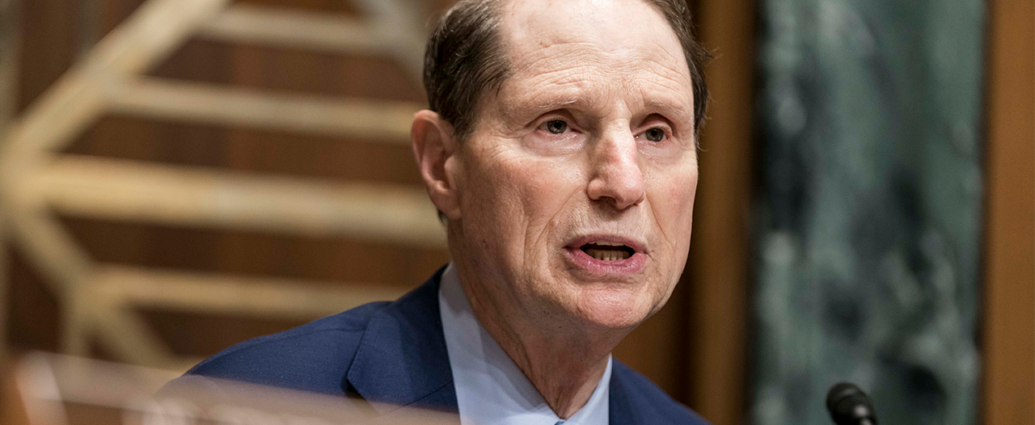
Lawmakers seek probe after airlines’ passenger records allegedly shared with federal agencies without warrants
A pair of Democratic lawmakers urged a congressional watchdog on Wednesday to investigate what they described as the Department of Transportation’s failure to ensure privacy of airline passengers, warning that Americans have been exposed to warrantless government surveillance and other privacy violations.
Oregon Sen. Ron Wyden and Ohio Rep. Shontel Brown sent a letter calling on the Government Accountability Office to probe the federal agency, saying it has never brought any enforcement cases linked to passenger data for more than 40 years “despite numerous widely-publicized privacy disasters impacting hundreds of millions of travelers.”
“US DOT’S abdication of its role as a privacy regulator has left the sensitive personal information of hundreds of millions of Americans exposed to corporate exploitation, warrantless government surveillance, and warrantless seizure of money and other property,” the letter states, adding that travel data held by airlines and travel agencies “may be of interest to foreign adversaries.”
BUDGET AIRLINE JETSTAR TO CHARGE PASSENGERS FOR STORING BAGS IN OVERHEAD COMPARTMENTS
The Government Accountability Office confirmed it has received the lawmakers’ demand, according to Reuters.
In 2024, Transportation Secretary Pete Buttigieg opened a review into how the 10 largest U.S. airlines collect and use passenger information.
But two years later, the lawmakers said “it remains entirely unclear whether a meaningful review ever took place.”
According to the lawmakers, the Department of Transportation did not make airlines’ response letters public and did not announce public findings or seek any subsequent enforcement actions.
The lawmakers wrote that the Airlines Reporting Corporation — collectively owned by major U.S. airlines — sold access for years to a massive database with roughly 722 million passenger travel records to federal agencies, including the Department of Homeland Security and IRS without warrants or court oversight.
In November of last year, the Airline Reporting Corporation put an end to the sale of passenger records to the government, but DHS issued a public request this year to government contractors for a replacement airline passenger surveillance system.
MAJOR US AIRPORT GETTING NEW TECH TO PREVENT RUNWAY INCIDENTS
GET FOX BUSINESS ON THE GO BY CLICKING HERE
The lawmakers’ letter also pointed to a 2016 Justice Department audit finding that the Drug Enforcement Administration had paid airline employees millions of dollars for access to some Americans’ private passenger data.
Mishandling consumers’ private information could be considered an unfair or deceptive practice by airlines, which could potentially lead to civil penalties.
FOX Business has reached out to the Department of Transportation for comment.
Reuters contributed to this report.

Costco brings long-awaited delivery upgrade for some of its most beloved items
Costco is now offering delivery for its famous sheet cakes and party platters, giving shoppers a major convenience perk when ordering customizable items.
Instacart, Costco’s primary delivery partner, announced Wednesday that shoppers can now order bakery and deli options through its marketplace and SameDay Costco and customize them in advance for delivery.
The newly available items include its beloved custom sheet cakes and 10-inch round cakes. Customers can also order sandwich platters, shrimp trays and fruit platters.
The move marks a significant expansion of Costco’s digital offerings for the fan-favorite products, which were previously unavailable for online ordering until February, when Costco retired a decades-old system that required customers to visit a warehouse and fill out paper order forms.
COSTCO BRINGS BACK FAN-FAVORITE KIRKLAND TREAT AFTER TWO-YEAR ABSENCE
“For nearly a decade, we’ve worked closely with Costco to expand the ways their members can shop online, and this is another exciting step in that partnership,” Ryan Hamburger, chief commercial officer at Instacart, said in a statement.
“We’re proud to bring Costco’s beloved made-to-order bakery and deli to sameday.costco.com and the Instacart marketplace, making delivery available for the first time and giving members even more ways to order for life’s biggest celebrations.”
COSTCO PLOTS MAJOR EXPANSION INTO SENIOR HEALTHCARE WITH MEDICARE PARTNERSHIP
According to Instacart, shoppers can choose the size, shape and flavor of their cake from a catalog of available options.
They can also select from a preset list of designs and add a message of up to 30 characters in a color of their choice.
Wednesday’s announcement builds on Instacart’s longstanding partnership with Costco, which began in 2017 with the launch of same-day delivery.
CLICK HERE TO GET FOX BUSINESS ON THE GO
Since then, the companies have expanded their partnership to include Costco’s same-day e-commerce sites.
Costco did not immediately respond to FOX Business’ request for comment.

Trump Expands Lean Beef Import Quota to Ease Ground Beef Prices
The action increases the lower tariff import quota by 300,000 metric tons for the rest of 2026. It applies only to specific lean trimmings used in ground beef. The extra volume will be released in three 30-day tranches beginning Sept. 1, administered on a first-come, first-served basis.
Trump had begun to consider the move days before the announcement. On Aug. 21, he posted on Truth Social that the United States would allow up to 300,000 metric tons of product for ground beef with no out-of-quota tariff for 90 days….

Meta’s $18 billion settlement leaves out the child protections New Mexico already won at trial, its Attorney General says
New Mexico Attorney General Raúl Torrez, whose office won the first jury verdict against Meta over child safety anywhere in the country, told Fortune the settlement Meta struck this week with 51 other attorneys general doesn’t go as far as what his state already secured on its own.
“We had hoped a nationwide settlement might echo the full strength of the protections New Mexico secured in court—including a direct ban on romantic and sexualized AI chatbot interactions with minors and stronger safeguards against adults targeting kids in private messages,” Torrez told Fortune. “But this settlement still represents real progress and adds momentum to finish the job of protecting kids online.”
It’s a notable crack in what has otherwise been a unified front. Torrez is uniquely positioned to make the comparison, since New Mexico is the one place where a court, rather than a settlement, has already decided what Meta owes children.
Torrez’s office won a jury verdict against Meta in March, when a Santa Fe jury found the company liable for 75,000 violations of the state’s consumer protection law and ordered it to pay $375 million in civil penalties. A judge added another $567 million in August after ruling that Meta had created a “public nuisance” similar to air pollution, bringing New Mexico’s own tally against the company to roughly $942 million—before the state, weeks later, joined the very settlement Torrez now says falls short of what he’d already won.
He still called this week’s deal historic. “New Mexico was the first state to take Meta to trial over the harm its platforms cause children, and we’re encouraged to see that fight now translate into a nationwide settlement,” Torrez said. “This is a testament to the attorneys general across the country, from both parties, who came together and refused to let this company off the hook.”
Child online safety experts agree
Meta agreed to pay up to $18 billion over the next decade and overhaul how Facebook and Instagram work for anyone under 18, settling the lawsuit brought by the 51-state coalition that accused the company of designing its platforms to be addictive to children. The deal, still subject to court approval, requires a default two-hour daily time limit, a nighttime block between midnight and 6 a.m., muted notifications during the school day, hidden like counts, a ban on cosmetic-surgery and extreme makeup filters, stronger age verification, and an independent auditor to check Meta’s compliance for five years. California Attorney General Rob Bonta’s office, which led the case, has not yet responded to Fortune‘s request for comment beyond its public statements. TikTok and YouTube also did not respond to requests for comment, despite Meta publicly calling on both companies to adopt the same restrictions in an open letter posted the same day as the settlement.
In a statement to Fortune, Meta’s Chief Legal Officer C.J. Mahoney said they were calling on TikTok and YouTube to make the same commitments.
“I’m pleased to announce that Meta has reached an agreement with a bipartisan group of state attorneys general from around the country on a new set of rules governing teens’ use of social media,” Mahoney said. “Because teens move fluidly across dozens of apps, we need an industry-wide solution. We therefore call on our industry peers, TikTok and YouTube, to implement this new framework, right away. As a parent, I’m proud of both the work Meta has done to protect kids historically, and of this new groundbreaking agreement. But its success depends on all other social media platforms following Meta’s lead.”
The child advocacy group Fairplay, in a statement to Fortune, called the deal “a watershed moment for the growing movement to protect children from addictive and dangerously designed social media,” pointing to sleep protections like the nighttime block as “the most significant injunctive relief yet from Meta.” But its statement quickly turned to the same kind of gap Torrez flagged. “We are disappointed that the settlement does not turn off by default recommendation algorithms that connect kids to predators and send young people down dangerous rabbit holes,” the group said.
“In general, the settlement is too focused on offering parents tools rather than restricting harmful features. It also relies a lot on nudging users toward breaks, and we are skeptical that that will be effective. And even the financial penalties—while the biggest Meta has ever faced—are not large enough to fundamentally change Meta’s relentless targeting of youth.”
Fairplay tied its critique directly to a specific ask: a floor vote on the Kids Online Safety Act (KOSA), which has stalled in Congress for years despite what the group says is support from more than three-quarters of the U.S. Senate. “As internal documents have shown over and over, Meta and other social media companies deliberately design their products to addict kids, and that is the root cause of so many mental health difficulties and serious online harms for minors.”
The Center for Democracy and Technology said fixing one problem creates another. “Meta has agreed to implement several changes across its platforms as part of its settlement with 52 state attorneys general,” said Kate Ruane, the group’s director of the Free Expression Project, in a statement. “As part of that agreement, Meta is providing tools to help families make their own decisions about kids’ online experience and screen time—giving kids and their parents more choices and control is beneficial. But we also see the potential for significant risks to everyone’s privacy and free expression rights online, especially in the ways this settlement will subject all users to invasive age assurance and limit all kids’ access to content and services regardless of their individual needs. We will continue to review the settlement, and will be monitoring its implementation closely.”
Wanting stronger age checks and worrying about what those checks require of everyone else has defined the broader fight over kids and social media this year, as platforms turn to facial scans, ID uploads, and other biometric tools to figure out who is a minor. Most Americans don’t trust that any of it will actually work, and reporting shows kids find ways around the checks that do exist, including drawing on facial hair to fool age-estimation software. The same trade-off is playing out abroad: Australia, the U.K., and France have all moved toward under-16 social media bans this year, and each has run into the same problem Ruane is describing: verifying a child’s age tends to mean verifying everyone’s.
Keeping kids safe online without imposing on privacy
Phillip Yannella, co-chair of the privacy, security, and data protection practice at Blank Rome, told Fortune the settlement’s significance may be less about what Meta agreed to than about what it signals for Washington. “Congress, which hasn’t done a thing on privacy in forever, the one issue that they do care about is children’s safety, and it does appear like KOSA is moving forward.” He was, however, more cautious than the advocacy groups and Torrez about calling Meta’s concessions inadequate.
“Children’s safety advocates and plaintiffs’ lawyers are going to take a maximalist view of children’s safety, and I would imagine they would suggest there’s much, much more that could be done,” he said. “But this is a settlement, and sometimes you don’t want the perfect to be the enemy of the good. These are steps in the right direction if you’re looking at it from a children’s safety perspective that weren’t there yesterday.” Still, he said the settlement could mark a turning point beyond Meta alone: “You could look at this and say this is really the first domino to fall, and there’s going to be a lot more changes in this environment, not just for Meta, but for all of them: TikTok and everyone else.”
Julie Scelfo, founder of Mothers Against Media Addiction, told Fortune the settlement was “great news to wake up to” but stopped well short of calling it enough. “While the amount of this settlement is significant and historic, it doesn’t come anywhere close to accounting the full scale of harms that Meta has wrought,” Scelfo said. “There is no number in the world that can make up to the loss of children to American families, which we can’t even calculate, because there are so many kids that were shown harmful messages or led down a destructive path, but because it happened privately on their own screen, even family members and doctors may not know the original source.”
Scelfo pointed to the settlement, which is worth roughly 1% of Meta’s market capitalization. “I was frankly disappointed to see this number,” she said. “If you look at the size of the tobacco settlement and the number of people that were harmed there, and you compare it to this, you can see that this number is inadequate.”
She was also skeptical that Meta’s public call for TikTok and YouTube to adopt matching rules amounts to genuine industry leadership. “It’s fascinating, right? Again, this is all about market share and about trying to minimize the pain to their bottom line,” Scelfo said. Asked whether other platforms, including gaming companies, will make similar changes on their own, she pointed to a pattern she said goes back decades. “History has shown us that these companies will stop at nothing to maximize profits, and the only thing that stops them is adequate regulation and enforcement,” she said, comparing it to Upton Sinclair’s meatpacking exposés and, later, the advertising standards that emerged only after parents objected to sugary cereal ads aimed at kids. “Laws always lag behind the arrival of new types of dangerous products.”
That lag is the same one Fortune has tracked for months. The FTC pulled back from social media rulemaking even as nearly one in five American kids spend more than four hours a day online. Congress advanced KOSA and the App Store Accountability Act out of committee in March, only for both to stall again. More than 200 child advocacy groups and researchers wrote to YouTube in April demanding it curb AI-generated “slop” content flooding YouTube Kids. The same month, Meta threatened to pull its apps out of New Mexico entirely rather than comply with the state court order that Torrez’s office won. In May, child advocacy groups Fairplay and the National Center on Sexual Exploitation asked the FTC to investigate Roblox over similar allegations. And days before the Oakland trial began this month, Torrez was already drafting new state legislation to extend child safety protections to AI chatbots — the same category of harm he now says the national settlement fails to cover.
Torrez, like Fairplay and Scelfo, ended in the same place: with Congress. “A bipartisan coalition of attorneys general just proved that protecting children online is not a partisan question; it is a moral one, and that even a company with Meta’s resources can be made to change,” he told Fortune. “Congress has watched states do this work one courtroom at a time for long enough. Parents and families are done waiting, and they should not have to keep outmatching the tech industry’s lobbyists state by state to keep their kids safe. Congress has the power to finish what these settlements started and make these protections the law of the land for every child in America.”
This story was originally featured on Fortune.com




Bill Gates Calls for Taxes on AI and Robots to Protect Jobs for Humans
“Many jobs will disappear forever,” Gates wrote in an essay published on his Gates Notes website. He said AI could become “the greatest equalizer ever invented” or “the worst source of injustice,” and governments are not adequately preparing for the disruption.
Gates said comparisons between AI and earlier technological changes are misleading. The shift from agricultural to office work occurred over generations and created jobs requiring human thought. AI now can replace human cognition and can operate through devices and systems already in use. …

Trump takes major action to slash soaring beef prices for US consumers
President Donald Trump on Wednesday formally increased the amount of foreign beef that can enter the U.S. at a lower tariff rate by 300,000 metric tons, advancing an affordability push aimed at bringing down elevated ground beef prices.
The temporary increase applies to lean beef trimmings under the U.S. beef tariff-rate quota and will be released in three 100,000 metric-ton tranches beginning Sept. 1, according to a White House proclamation.
Trump said the move is intended to increase the supply of ground beef and lower prices for American consumers as the U.S. cattle herd remains near historic lows and domestic beef production is expected to decline this year.
The proclamation puts into effect a policy Trump previewed last week, when he announced plans to allow up to 300,000 metric tons of additional foreign beef into the country as part of an effort to ease grocery costs.
The formal action follows pushback from Republican lawmakers in cattle-producing states who have warned that increasing foreign beef imports could undercut ranchers working to rebuild the U.S. herd.
The administration, however, says domestic supplies remain insufficient to meet demand at reasonable prices.
The Department of Agriculture forecasts U.S. beef production will decline by about 4% this year compared with 2025, according to the proclamation. The White House attributed the supply pressure in part to restrictions on live cattle imports from Mexico aimed at preventing the spread of New World screwworm, as well as drought and wildfire conditions affecting cattle-producing regions.
The U.S. cattle herd has fallen to its lowest level in 75 years, though USDA data cited by the administration suggests the herd began showing early signs of growth in July.
TRUMP’S FOREIGN BEEF PUSH TO CUT GROCERY COSTS SPARKS GOP REVOLT FROM RANCHING COUNTRY
The administration said the USDA forecasts domestic beef consumption will increase through the remainder of 2026, adding further pressure to supplies.
The latest action follows a separate move in February that increased the 2026 quota for lean beef trimmings from Argentina by 80,000 metric tons. The new 300,000 metric ton increase does not affect that allocation and instead applies to “other countries or areas.”
The first 100,000 metric tons will be available from Sept. 1 through Sept. 30, followed by another 100,000 metric tons from Oct. 1 through Oct. 30. The final tranche will open Oct. 31 and remain available until the quota is filled or Nov. 30, whichever comes first.
The administration is also tying the expanded quota to prices.
CLICK HERE TO GET FOX BUSINESS ON THE GO
The agriculture secretary and U.S. trade representative are directed to monitor whether beef entering under the additional quota is sold at prices 25% below the market price for lean beef trimmings.
If that discount does not materialize, the officials must notify Trump, who could eliminate the remaining increase.
Dolly Parton remembered for inspiring PJ Library and championing children’s literacy
Dolly Parton, the singer who died Tuesday at age 80 after a brief bout with cancer, was mourned around the world as a stellar songwriter, consummate country hitmaker, savvy entrepreneur and generous philanthropist.
In Jewish circles, she was also remembered as the inspiration for PJ Library, a program that sends free children’s books to Jewish families in order to foster Jewish values and traditions.
In 2015, when Harold Grinspoon launched PJ Library, he took a page from Parton, who a decade earlier had started Imagination Library, a literacy program that mails free children’s books to families across the US.
After hearing Parton interviewed about the program, Grinspoon, a philanthropist in and out of the Jewish community, signed on as a sponsor of the Imagination Library in Western Massachusetts, where he lives.
“We should create a Jewish version of Imagination Library,” said Grinspoon, according to a 2023 recollection by his daughter-in-law and president of the Harold Grinspoon Foundation, Winnie Sandler Grinspoon.
“Harold was looking for ways to build Jewish literacy,” she wrote. “He was witnessing a lack of connection to the values, stories, and traditions that have been at the center of the Jewish experience for millennia.”

Growing up in an impoverished family, Parton’s rose to fame on her own accord
Two decades later, PJ Library has more than 670,000 subscribers in 40 countries.
On Tuesday, in a tribute to Parton, PJ Library and the Harold Grinspoon Foundation recalled a meeting between the two in 2023. According to an Instagram post, “she shared the following with him: ‘I am honored to get to help inspire a love of reading in children. They truly are our future.’”
“Harold remembers Dolly as ‘a truly amazing person — not only a great artist, but a great entrepreneur and philanthropist,” according to the post. “We honor Dolly for educating millions, for her remarkable career, her kindness, her art, and especially her generosity.”
“Dolly’s generosity of spirit extended far beyond inspiring the creation of PJ Library,” Alex Zablotsky, PJ Library’s executive director, told the Jewish Telegraphic Agency.
Parton drew inspiration for her art and philanthropy from her hardscrabble roots in rural Tennessee. She was one of 12 kids growing up in a one-room log cabin in the Smoky Mountains. Parton’s father never learned how to read or write.
“This actually started because my father could not read and write, and I saw how crippling that could be,” Parton said of the Imagination Library at a ceremony where she was awarded a Carnegie Medal for her partnership with a pediatric hospital in East Tennessee, now named for Parton.
“My dad was a very smart man. And I often wondered what he could have done had he been able to read and write. So that is the inspiration,” she said.
Parton had a close bond with other Jews, notably Sandy Gallin, the manager who guided her from Nashville to mainstream pop stardom, according to the Forward.
When Gallin died in 2017, Parton said, “Nobody could quite get how the Christian Southern girl and the New York Jewish boy could have so much in common. But it was real.”
Parton ‘recognized’ the mistake in her comments about Jewish people in Hollywood
One trouble spot, however, came in a 1994 interview with Vogue Magazine, when Parton mused about starting a television series about a country singer who turns to gospel music. She gave up the idea, she said, because “most of the people out here [Hollywood] are Jewish and it’s frightening for them to promote Christianity.”
She later apologized in a letter to Abe Foxman, then head of the Anti-Defamation League, JTA reported at the time.
“I know how stereotypes can be hurtful,” she wrote. “Like all Americans of good will, I recognize the importance of rejecting prejudice.”
Foxman accepted her apology. “Whatever she said was unfortunate, and she recognizes that,’” Foxman told The New York Times. “I know it’s not easy for celebrities to publicly say they made a mistake. As far as we are concerned, the matter is behind us.”
On Tuesday, Laura Liebman, director of development for The Bronfman Fellowship for young Jewish leaders, paid tribute to the singer, who was a feminist and an ally of the LGBTQ+ community.
“Dolly somehow managed to transcend race, class, religion, politics and gender,” Liebman wrote in an essay for eJewishPhilanthropy. “As the Jewish community becomes increasingly siloed, we could all learn from Dolly’s radical acceptance and show more love and compassion for our fellow Jews.”
Six-month-old baby receives surgery months after swallowing package of staples
A six-month-old baby was admitted earlier this week to the public Assuta Ashdod Medical Center, and received surgery after having swallowed a packet of staples, Walla learnt Wednesday.
The parents sought medical treatment for the baby several times, after about a month and a half of persistent coughing, wheezing, and shortness of breath. During this time, the baby was treated with inhalations and medication, but his condition did not significantly improve. Later, the baby also developed vomiting.
Upon arrival at the hospital’s emergency department, an X-ray was performed, revealing an unusual foreign object in the baby’s esophagus: a packet of staples. Some of the staples remained connected to one another, while others had separated and become lodged in the wall of the esophagus.
Due to the location of the staples and the baby’s respiratory condition, doctors decided to urgently transfer him to the operating room. The procedure involved teams from pediatric gastroenterology, ear, nose, and throat, and pulmonology, along with the anesthesia team, partly due to concern that some of the staples had also reached the airways.
During a complex procedure that lasted about an hour and a half, the staples were removed one by one, including those that had already pierced the esophageal wall.

The prolonged presence of the staples inside the baby’s body caused local damage, swelling, inflammation, and infection in the area. After they were removed, he was treated with antibiotics, medication to reduce acidity, steroids, and inhalations. Initially, he was fed through a tube to allow the esophagus to recover and heal.
Babies swallowing foreign objects can lead to persistent symptoms
“The baby arrived at our hospital after a long period of coughing, shortness of breath, and wheezing that did not go away despite the treatments he received,” Dr. Chani Oliveston, director of the Pediatric Gastroenterology Unit at Assuta Ashdod Hospital, said.
“In the case of a baby, who cannot explain what happened or whether he swallowed something, it is important to remember that a foreign object can also cause persistent symptoms. In this case, the staples had already caused inflammation, infection, and swelling in the esophagus, and the baby’s respiratory condition was not good. Fortunately, we were able to remove all the staples. The message to parents is simple: when symptoms continue and do not improve as expected, it is important to continue investigating the cause.”
Netanyahu visits family of Yehuda Katz, after soldier missing for 44 years receives burial
Prime Minister Benjamin Netanyahu visited the family of Sgt. First Class Yehuda Yekutiel Katz on Wednesday to offer his condolences following his burial last week, the Prime Minister’s Office announced.
Netanyahu told the family that he was “deeply moved” by the return of Katz’s remains to Israel, and expressed his sorrow over the fact that Katz’s parents passed away before the return.
The family told Netanyahu about Katz’s character, describing him as a “a Torah scholar, a man of values, and a professional and devoted fighter,” the PMO said.
Last week, the IDF recovered the remains of Katz in an operation in Lebanon, 44 years after he went missing during the First Lebanon War, in the Battle of Sultan Yacoub on June 11, 1982.
Two other soldiers were also declared missing in the same instance, their bodies recovered in 2019 and 2025.

All of Israel embraces Katz family, Netanyahu says upon body’s return
“In an operation led by the Military Intelligence and a joint community effort with the Mossad, the remains of Yehuda were located and brought to Israel,” the IDF said last week.
“After they were brought to Israel, an identification process was conducted at the Military Rabbinate’s Center for the Identification of Fallen, in cooperation with the Medical Corps and the Israel Police.”
“Today, all of us, the entire people of Israel, embrace the Katz family,” said Netanyahu upon the return of his body.
“His dear parents, Sarah and Yosef, of blessed memory, never stopped working to locate him and bring him home, and sadly, they have already passed away. To you, his siblings Avi and Perachia, we return your beloved Yehuda, to you and to the soil of the Land of Israel that he loved so much.”
Former deputy defense minister Major (res.) Rabbi Eli Ben-Dahan, who fought alongside Katz in the Battle of Sultan Yacoub, said he felt “chills” upon hearing the announcement of the discovery.
“The circle of the great effort to save the armored battalion that was caught in a Syrian ambush has closed. No one is left behind,” Ben-Dahan said.
“The eternal people are not afraid of a long road.”
Katz was buried on the Mount of Olives in Jerusalem on Friday, in a ceremony attended by Mossad chief Roman Gofman among others.
Miriam Sela-Eitam and Yonah Jeremy Bob contributed to this report.

Anthropic wants investors to believe its ‘total addressable market’ is worth $30 trillion—nearly the size of the entire US economy
If there’s one thing that AI companies are known for, it’s their fondness for seemingly incomprehensible numbers. Over the last few years, the industry has seen eye-watering salaries, unprecedented adoption figures, and never-before-recorded capital expenditure. Now come total addressable market estimates—known as TAMs—worth roughly 40% of the entire US equity market.
AI lab Anthropic, reportedly on the verge of a $2 trillion IPO, is preparing to tell investors that its total addressable market is worth more than $30 trillion, according to a report in the Wall Street Journal.
To put that figure in perspective, it eclipses the total GDP of China, is roughly equal to the entire GDP of the U.S., and represents about a quarter of the total world GDP of $120 trillion.
Rather than a forecast of Anthropic’s imminent sales, a total addressable market, or TAM, is the annual revenue a company could theoretically generate if it captured 100% of the relevant market. TAMs are staple of the pitch decks entrepreneurs use to try to persuade venture capital firms to back them, as they give some sense of how big the company could potentially become. But they are also a common figure for IPO-stage companies attempting to justify the gulf between current revenue and a company’s proposed valuation.
In Anthropic’s case, according to the Journal, rather than starting with a category such as enterprise software, cloud computing, or AI subscriptions, the lab is said to be basing its TAM estimate on the full scope of work that could be completed with AI models.
Unlike traditional enterprise software, which made workers more productive but rarely replaced them outright, Anthropic and its peers argue that their models can increasingly perform knowledge‑work tasks end‑to‑end—from drafting legal documents to writing and reviewing code.
That means the company can frame its TAM as the value of all the human labor its systems could theoretically substitute for across sectors such as legal, accounting, engineering, and business process outsourcing, Alex Brunicki, co‑founder and general partner at Backed VC, told Fortune.
“With things like Claude and the way it writes code, you could argue it’s replacing the work that humans do end-to-end, and so the TAM for those products is essentially the labor market for that work output,” he said.
However, he noted Anthropic’s ability to capture a large share of that market could easily come under pressure as more companies adopt industry‑specific models built on cheaper open‑source systems.
Anthropic is not the first company to propose a larger-than-life TAM. SpaceX recently estimated its TAM at $28.5 trillion. Back in 2019, Uber famously cited a total addressable market (TAM) of $6 trillion by calculating the total mileage value of all personal cars and public transport worldwide.
At the time, some financial analysts and valuation experts criticized this $6 trillion figure as aggressive marketing rather than serious math. Many are equally skeptical of Anthropic’s figure.
“Another way of looking at absurdity of the $30 trillion addressable market claim: annual U.S. GDP is currently $32.5 trillion,” Fred Hickey, tech analyst and editor of The High-Tech Strategist, an investment newsletter, wrote on X. “And yet this nonsense (wild proclamations and predictions) is allowed to continue so that Wall St. & Silly-con-Valley can extract as much money from unwitting ‘investors’ as possible, before the inevitable stock market bubble collapses.”
Brunicki also noted that professional investors will likely treat Anthropic’s TAM less as a literal forecast and more as a kind of mission statement. Retail investors, however, are more likely to take the figure at face value. The sheer scale of the number is “headline‑grabbing” and, as Brunicki notes, can be inspiring for individual traders and smaller investors who may not sit down to build their own spreadsheets.
“Sophisticated investors are going to build their own cash‑flow models,” he said. They will look at Anthropic’s current markets, its contracts and near‑term product roadmap, and then forecast revenue over the next five or so years on that basis. Near‑term revenue targets—such as Anthropic’s reported ambition to reach close to $200 billion in annual sales by the end of the decade—are what serious investors will pay closer attention to, Brunicki said.
Echoes of the dot-com era
There are easy parallels to draw between the dot-com boom and the current AI boom.
Dot-com era IPOs similarly leaned on a strategy of using a future imagined market instead of a company’s current balance sheet to bridge the gap between price and performance. For example, by October 1999, the 199 internet stocks tracked by Morgan Stanley’s Mary Meeker carried a combined $450 billion market cap against just $21 billion in total sales and $6.2 billion in collective losses.
Brunicki said that while there were some similarities with the dot‑com era, the underlying businesses of AI companies look different. He said that many leading AI companies are already generating substantial revenue, rather than listing on “user numbers” alone.
Anthropic’s own annualized revenue run rate surpassed $65 billion at the end of July, according to Bloomberg—more than seven times the roughly $9 billion pace it was running at the end of 2025, and up from $47 billion just two months earlier, in May.
At the same time, however, investors are watching closely how much leverage and debt flows into financing data center build‑outs and AI infrastructure. In private markets, Brunicki said, some AI startups are raising at “extremely high, frothy valuations” that are unlikely to be sustainable.
“It’s our fundamental belief that the size of companies that are going to be built in this wave are going to be larger than any other companies that have come before them,” Brunicki said. “But it’s also our belief that the mortality rates of some of these companies and the likely blowouts of all of these businesses is also going to be large as well.” Many of the companies currently raising at multi‑billion‑dollar valuations, he warned, “are going to go to zero.”
This story was originally featured on Fortune.com

Meta’s $18B settlement could be first ‘domino’ for Big Tech, Tennessee AG says
Other social media and technology companies should “be paying very close attention” to Meta’s approximately $18 billion settlement over allegations its platforms harmed children, Tennessee Attorney General Jonathan Skrmetti told FOX Business.
“I think you’re going to see the next domino fall very soon,” Skrmetti said, arguing the agreement sets a precedent for holding social media, artificial intelligence and other child-facing platforms accountable.
Meta announced Wednesday it had reached an agreement with 52 attorneys general across states, U.S. territories and Washington, D.C., to pay up to $18 billion and overhaul teen experiences on Facebook and Instagram.
The settlement, which requires court approval, resolves claims filed by 47 states.
META SETTLES FEDERAL TRIAL OVER CLAIMS FACEBOOK, INSTAGRAM ADDICT CHILDREN
“The most important thing is that all of the design decisions that made Instagram dangerous for kids are being addressed,” Skrmetti said.
“So, there are guardrails in place, there are time limits. Parents have much more control over what their kids are going to see. There’s more transparency there. So, it’s going to make it a better experience for kids.”
The agreement requires time limits, nighttime restrictions, stronger age checks and expanded parental controls for users under 18, according to Meta.
“The goal is to eliminate all of the triggers for mental health problems that were baked into the platform as a result of the effort to make it so addictive,” Skrmetti said.
Skrmetti said the changes to Meta’s platforms are ultimately more important than the financial penalty.
“They agreed to some pretty sweeping changes, and that’s way more important than the money,” he said.
Meta said the payments will be distributed annually over 10 years, with participating states receiving approximately $12.7 billion. Another $5.3 billion will be released only if TikTok and YouTube implement specified child-safety measures and make matching payments.
An independent auditor will assess Meta’s implementation of and compliance with the agreement, according to the company.
“If kids are still at risk, if some of these features aren’t addressed in a way that meaningfully changes the danger of the platform for young users, the auditor will be in a position to make that public,” Skrmetti said.
The states would then be able to seek enforcement of the agreement, he added.
STATE SUES SNAPCHAT OVER ALLEGED ADDICTIVE FEATURES AND ADULT CONTENT FOR KIDS
Skrmetti said companies that have not reached similar agreements could increasingly become the focus of litigation.
“As fewer and fewer participants in the industry have not entered a deal like this, they’re going to be under incredible pressure because all of the litigation focus is going to be on them,” Skrmetti said.
He said the settlement should also serve as a warning to the broader technology industry.
“If they’re designing exploitive elements into the platform that take advantage of kids and the vulnerabilities of kids’ brains, there will be consequences down the road for that,” he said.
Skrmetti also credited the bipartisan coalition that negotiated the agreement.
“I think it’s kind of inspirational that you had people who have very different political opinions come together and work to do right by America’s kids,” Skrmetti said.
Meta said the agreement builds on its existing efforts to protect teens and give parents greater control over their children’s use of its platforms.
“Ensuring teens have a safe and productive experience on our platforms is an absolute imperative for Meta,” the company said in a statement. “We want to get this right for parents and teens, and that’s why we partnered with state attorneys general to set a new industry standard.”
GET FOX BUSINESS ON THE GO BY CLICKING HERE
A Meta spokesperson referred FOX Business to comments from Chief Legal Officer C.J. Mahoney, who called on TikTok, YouTube and other platforms to adopt the same safeguards.
“The framework we’ve negotiated will empower parents to easily manage how their children access our platforms,” Mahoney said.
“Our new Time Limit commitments, Night Mode features and usage limits during school hours set the right path forward for our whole industry, but this framework will only work if all our peers join us. Because teens move fluidly across dozens of apps, we need an industry-wide solution. We therefore call on our industry peers, TikTok and YouTube, to implement this new framework, right away.
“As a parent, I’m proud of both the work Meta has done to protect kids historically and of this new groundbreaking agreement. But its success depends on all other social media platforms following Meta’s lead.”
YouTube and TikTok could not immediately be reached by FOX Business for comment.

Why Wall Street sees a $39,800 pancreatic cancer pill as proof of a much bigger bet
The Food and Drug Administration on Wednesday approved Rasonque, a once-daily pill developed by Revolution Medicines to block several forms of the RAS protein — the mutation that drives tumor growth in most pancreatic cancers, and in roughly a quarter of all human cancers overall. For investors like Dr. Danish Nagda, an early shareholder in Revolution, the approval matters less for what it does in pancreatic cancer than for what it proves: that a mechanism long considered “undruggable” finally works — and works in one of oncology’s hardest cases.
It’s approved for adults with metastatic pancreatic adenocarcinoma who have already tried one round of treatment or cannot receive combination chemotherapy, and doesn’t require a test to identify a specific RAS mutation first. (Adenocarcinoma is cancer that begins in glandular cells, the cells that line organs and produce substances like mucus, digestive enzymes or hormones. It’s one of the most common cancer types overall, and in the pancreas specifically, it accounts for 90% to 95% of all cases.)
Brian Wolpin, the trial’s principal investigator and director of the Hale Family Center for Pancreatic Cancer Research at Dana-Farber Cancer Institute, said the approval “gives physicians the confidence that directly inhibiting RAS can make a striking difference for patients.” Anna Berkenblit of the Pancreatic Cancer Action Network called it “the most significant advance we have seen in the fight against pancreatic cancer.
Fast-tracked FDA approval
The decision came 6.5 months before the FDA’s user-fee deadline, aided by new changes in the agency which let international regulators review oncology applications alongside the FDA. “This drug showed unprecedented results in an area of high unmet need,” said Angelo de Claro, director of the FDA’s Oncology Center of Excellence.
In the trial that led to approval, patients with previously treated metastatic pancreatic adenocarcinoma who took the drug lived a median of 13.2 months, compared with 6.7 months on standard chemotherapy, according to the company. Rasonque cut the risk of death by 60%, and patients went longer before their disease progressed and before pain and quality of life worsened.
The application was reviewed under the FDA’s National Priority Voucher pilot program, and the drug also carries Breakthrough Therapy and Orphan Drug designations — context that explains the compressed timeline without needing the unverified 6.5-month figure.
The drug targets a mutation in the KRAS gene found in nearly all pancreatic cancers and many cases of lung, colorectal and ovarian cancer. Revolution Medicines is already advancing daraxonrasib through late-stage lung cancer trials.
Revolution Medicines set a list price of $39,800 for a 30-day supply, with eligible insured patients paying as little as $0 through a new support program. An expanded access program opened in May has already reached more than 2,000 patients.
The stakes explain why oncologists are calling this a breakthrough rather than an incremental gain.
Pancreatic cancer kills a disproportionate share of the people who get it. An estimated 67,530 Americans will be diagnosed in 2026, and about 52,740 will die from it, according to the American Cancer Society’s Cancer Statistics 2026 report. It’s the third-leading cause of cancer death in the U.S. and the only major cancer with a five-year survival rate below 20%, stuck at 13% for three years running even as survival across all cancers combined has reached 70%. About 80% of patients aren’t diagnosed until the cancer has spread, Revolution Medicines said, and for them, five-year survival runs around 3%.
“This to me is incredibly exciting,” Nagda told Fortune. “I’m obviously a shareholder of RVMD. I’ve been very, very bullish on RVMD.”
RAS mutations appear in roughly a quarter of all human cancers, Nagda said. “Think about how big of a platform this is,” he said. “Instead of developing one drug for just pancreatic cancer, they’ve actually built an entire platform to go after this core issue called RAS.”
RAS was long considered too difficult to target directly, Nagda said. “You didn’t know how to shut it off, and this was a big issue.” He described the mutation as a kind of switch. “There is a turn—the mutation that occurs is an on switch of RAS, which makes the cancer grow faster,” he said. “So essentially what they do is they go after this RAS-on inhibitor. They’re literally turning the on switch off.”
Because pancreatic cancer is among the hardest cancers to treat, Nagda said proving the drug works is significant. “It works in the worst one, which is pancreatic cancer,” he said. “So now we know that this could really work for everyone.” He said the approval means the drug can now be prescribed off-label for other cancers, and predicted heavy use beyond its approved indication. “I expect off-label utilization of this to go wild,” he said.
Nagda drew a contrast with the mRNA cancer vaccines he discussed with Fortune in coverage of Moderna and Merck’s melanoma trial results. Those vaccines work by finding antigens on the surface of a cancer cell, he said, comparing the approach to targeting the spike protein in COVID-19 vaccines. “This affects the inside. It affects the molecular aspect of the cell,” he said. “So now we can attack the cell on its surface, and now we can attack the cell on the inside.”
Nagda predicted the two approaches, paired together, could transform cancer treatment within the decade. “I think we are within five years of us having combination therapies that essentially get rid of the cancer,” he said. “We are maybe half a decade away from the post-cancer era.”
This story was originally featured on Fortune.com
At least 12 killed as wildfires rage across several Algerian provinces
Twelve people were killed in wildfires that swept through several Algerian provinces, Interior Minister Said Sayoud said late on Wednesday, according to Algerian radio.
The fatalities included five people in Jijel province, four in Bejaia and three in Tizi Ouzou, the local Ennahar TV said.
Sayoud added that 54 people had suffered burn injuries, including six in critical condition who are currently in intensive care.
Algeria’s civil protection services recorded 154 wildfires across the country on Wednesday. Thirty-six fires were reported in Bejaia province alone, of which 18 had been brought under control.
The fires come as an exceptional heatwave sweeps across North Africa, particularly Tunisia and Algeria.
This is a developing story.
Former Gaza hostage Evyatar David celebrates Eliya Cohen’s wedding as victory over Hamas – report
“It’s the biggest closure and a huge moment of victory,” former Gaza hostage Evyatar David said about Eliya Cohen, another former hostage, recently getting married, during an interview with CNN on Wednesday.
The interview marked the first time the 25-year-old had spoken to international media about his experiences as a Hamas hostage following his abduction.
“They tried to ruin our [lives] and our families’ lives and eventually they didn’t manage to ruin everything,” he said.
Nevertheless, the former hostage explained that he was still suffering from intense psychological trauma from his experiences.
“It can surprise me any time, one hour I can be fine and happy, and next I can remember something from captivity, and get flashbacks,” he told CNN. “I wake up at night with nightmares, and it affects me all day after that. It’s very unstable and random.”

The Israeli government, David claimed, was not providing enough support for himself and the other former hostages. “I hope the next government will do better, I don’t know who it’s going to be, but I trust they will do better.”
David was abducted from the Nova music festival on October 7, 2023, together with his childhood best friend, Guy Gilboa-Dalal. He was held hostage by Hamas until October 13, 2025.
Hamas starved hostage before propaganda video of digging his own grave
During that time, Hamas released propaganda videos of David, one of which showed him and Gilboa-Dalal forced to witness a staged release ceremony for other captives in February 2025, only to be left behind. The second, released in August 2025, showed David gaunt and pale, emaciated and digging his own grave, shocking the nation.
During his CNN interview, David discussed how weak he had been during the filming of the latter video, due to the starvation inflicted upon him by his captors.
“It’s all staged, but it relies on the truth – we didn’t eat for three months,” he explained. “You can see my body, I could barely move, when I tried to dig the grave, just to hold the shovel was almost impossible, probably the hardest physical thing I ever did.”
His guards, on the other hand, had food, air conditioning, and television, David told CNN.
“They told us there is no food in Gaza, but we knew it’s not true ‘cos we always saw the terrorists – they were fat and had muscles. We knew they were lying and starving us,” he said.
“I could hear them laughing, eating cakes and drinking tea, like there is nobody walking next to them that looks like a skeleton.”
Former hostage does not think peace is possible
David expressed pessimism about the possibility of US President Donald Trump’s Board of Peace succeeding in its mission to secure a lasting peace between Israel and Gaza.
“I don’t think it’s possible,” he said, “because their pure ideology, they just want the whole land. They don’t really care about Gaza. I could see in their eyes – It’s the thing that they want the most.”
Danya Saperstein contributed to this report.
Trump declares national emergency, bans some foreign power equipment over security threats
US President Donald Trump signed an executive order on Wednesday declaring a national emergency and banning the use of some foreign equipment in the US electricity grid, the White House said.
The order cites what the White House described as an “unusual and extraordinary foreign threat” posed by foreign-made bulk-power systems that may present national security vulnerabilities.
Trump’s order, the latest example of Washington’s approach to tackling technology threats posed by China, follows a decision by the European Commission earlier this year to ban Chinese-made inverters from publicly funded energy projects.
Last year, Reuters reported that rogue communication devices not listed in product documents had been found in some Chinese solar power inverters by US experts who strip down equipment hooked up to grids to check for security issues.

US considers technology ‘extraordinary threat,’ executive order says
“I … find that the situation with respect to the foreign supply of bulk-power system electric equipment constitutes an unusual and extraordinary threat, which has its source in whole or substantial part outside the United States, to the national security, foreign policy, and economy of the United States and hereby declare a national emergency with respect to that threat,” Trump said in the order.
Under the order, certain foreign-produced bulk-power system electric equipment, including associated critical software and digital capabilities that could pose cybersecurity or operational risks, will be barred from being purchased or installed in the United States, the White House said in a statement.
The order also asks the US Energy Secretary to impose conditions on the continued use and operation of such equipment to address concerns identified by the Trump administration, the White House added.
UN special rapporteurs are ‘totally out of control,’ Secretary-General Guterres admits in interview
The United Nations has several special rapporteurs who are “totally out of control” in regard to their perspective on Israel, UN Secretary-General Antonio Guterres admitted in an interview with the Financial Times on Tuesday.
“Now that UN Secretary-General Guterres is leaving office, admitting that many of the UN’s human rights rapporteurs have gone ‘totally out of control,’ it’s time to ask who let them go out of control in the first place,” Israel’s UN Ambassador, Danny Danon, told The Jerusalem Post in response to the interview. “It happened on his watch!”
However, Guterres also strongly denied the UN as a whole having an institutional bias against Israel.
“I totally refuse the idea of bias,” he said. “On the contrary, I think we have been on the right side of history.”
He added that, from his perspective, the UN had been “defending what is necessary for peace to come to the Middle East.

“There are two peoples, with a few million each one,” he explained, “And there is no way one can destroy the other. So it’s probably better to do everything possible to reconcile.”
Board of Peace is not threat to UN, Guterres says
Guterres also discussed US President Donald Trump’s Board of Peace, and its attempts to achieve stability in Gaza.
The UN Secretary-General explained that he was not concerned that the Board of Peace would supplant or replace the UN.
“The truth is, if you look at what happens in Gaza, with the measures that were taken and you look at the progress that was made, let’s be honest, it is not for the UN to be worried,” he said. “It is for others to be worried about what they are doing.”
He also criticized the tendency by the US to veto UN bills concerning Israel, as well as Russia for vetoing bills related to the Russia-Ukraine war, saying that it was time for “superpowers to understand the limits of their power.”
Guterres expressed his worry that “a sense of impunity is now prevailing” among superpowers in the UN, and that the Security Council’s leverage was diminished by its lack of ability to tell countries that “they must behave [or] they’ll be punished.”

The $40 trillion national debt and the bond market’s revolt: top Wall Street strategists explain how we got into this mess
Total U.S. debt crossed $40 trillion for the first time this month. In the week since, two of Wall Street’s most closely read economists independently arrived at the same diagnosis: nobody in Washington is going to fix this, so the bond market will do it instead—whether the Treasury Department likes it or not. They also got a major helping hand from an AI-assisted column in the Wall Street Journal by hedge fund legend Stanley Druckenmiller.
On Tuesday, David Kelly, chief global strategist at J.P. Morgan Asset Management, used the milestone to walk clients through exactly how the country got here. A day later, Apollo chief economist Torsten Slok argued in his Daily Spark that the fiscal trajectory, a Federal Reserve weighing a rate hike, and a surge of AI hyperscaler bond issuance are all pointing toward the same outcome: rates that stay higher for longer. Slok closed his note by endorsing a line from billionaire investor Druckenmiller, who had made the same argument in the Journal a day earlier, with considerably more edge: the long-term Treasury yield is “the only fiscal disciplinarian the U.S. has left.”
That op-ed, of course, was an unexpected, direct attack on the Treasury Department’s decision, announced Aug. 19, to double long-dated bond buybacks from $2 billion to at least $4 billion per operation—right after the 30-year Treasury yield hit a 19-year high. “The market’s verdict was swift and correct,” Druckenmiller wrote in AI-inflected overtones. “This wasn’t liquidity management, it was price management.” His prescription, delivered in the same essay: “If the 30-year must trade at 5.5% to clear, that isn’t a crisis. It is an invoice.”
The essay carries extra weight because Druckenmiller was Treasury Secretary Scott Bessent’s mentor at Soros Fund Management three decades ago—the two, alongside George Soros, built the trade that broke the Bank of England’s defense of the pound in 1992. Now Druckenmiller is using the same playbook—reading the gap between what a government claims it can sustain and what markets will actually allow—against his own protégé. Jon Hilsenrath, the former longtime Fed and Treasury reporter for the Journal, told Fortune that Druckenmiller’s decision to publish in the Journal, rather than deliver the message privately, was telling, agreeing that it was a bit of a “Shakespearean drama.”
The math behind the milestone
Kelly’s note draws a distinction that matters more than the $40 trillion headline number itself. That figure is total federal public debt outstanding, which includes roughly $7.8 trillion the government owes its own trust funds. The measure economists actually watch—debt held by the public—will end this fiscal year at $32.3 trillion, or 100.5% of GDP, J.P. Morgan projects. That ratio was just 34.7% as recently as fiscal 2000, when the federal government posted a $236 billion surplus.
Kelly noted that former Fed Chairman Alan Greenspan fretted in 2001 about what would happen if the U.S. actually paid off all of its federal debt. “He needn’t have worried.” Kelly traced the reversal to four buckets of fiscal decisions compounding since then, measured against the last time the budget was healthy (fiscal 1996–2000):
- Tax cuts in 2001, 2017, and 2025 pulled federal revenue down from an average of 19.1% of GDP to 16.7%, a cumulative $11.1 trillion hit.
- Wars in Iraq, Afghanistan, and Iran pushed defense spending from 3.5% to 4.4% of GDP, adding $3.9 trillion.
- Social Security, Medicare, and Medicaid spending climbed from 7.8% to 10.1% of GDP as the population aged, adding $12.5 trillion.
- Everything else, boosted by crisis-response spending during the 2008 financial crash and the pandemic, added another $5.2 trillion.
In short, in the last 25 years, America voted itself a series of tax cuts, waged expensive wars, got older, and then spent its way out of a couple of crises. Add it up—$32.7 trillion, before interest costs—and it “more than accounts for” the debt surge of the 21st century, Kelly wrote. He was explicit that the real drivers aren’t the culture-war talking points dominating political debate: entitlements, defense, and tax policy, full stop.
Why the old rules stopped working
Slok’s note picked up where Kelly’s history lesson leaves off and pointed forward. Since 2006, gross federal debt has grown by $32 trillion while nominal GDP grew by just $19 trillion—debt nearly quintupling while the economy grew less than 2.5x over the same period. The forecasts offer no relief: the Congressional Budget Office projects debt held by the public climbing from 100% toward 175% of GDP under current policy, while the Office of Management and Budget sees deficits near 5% of GDP in coming years, on top of a current run rate closer to 6%. Deficits that size are normal in a recession, Slok notes. These are forecasts for a fully employed economy.
Both economists agree that deficits of this magnitude no longer automatically trigger the inflation spiral that economic orthodoxy once predicted—which is precisely why Washington has felt no urgency to act. Kelly pointed to the bond market’s own pricing as evidence. Since January, 10-year Treasury yields have risen 0.51 percentage points, while 10-year TIPS yields—which strip out inflation expectations—rose almost as much, 0.44 points. That leaves only 0.07 points of the move attributable to rising inflation fears. The rest, Kelly argues, reflects a “growing fear about the volume of government debt to be issued,” not inflation itself.
Slok’s explanation converges on the same fear from a different data set: AI hyperscalers’ surging bond issuance now competes directly with the Treasury for buyers, adding pressure as the Fed debates a hike rather than a cut.
A bigger fight is brewing
The Druckenmiller op-ed complicates a simpler story that both Kelly and Slok leave out. Hilsenrath noted that Druckenmiller’s argument isn’t that Treasury should never buy back debt—the buyback program, introduced in 2024 as a liquidity tool, can legitimately improve market functioning by purchasing older, thinly traded bonds. Druckenmiller’s real complaint is timing: Treasury enlarged the program right after the 30-year yield spiked to a two-decade high, outside its normal quarterly rhythm, which markets read as flinching at an uncomfortable price rather than managing routine liquidity[web:10].
There’s also a structural irony neither Kelly nor Slok addressed directly. The Treasury market Bessent now manages isn’t the one Druckenmiller’s generation tested in 1992. Foreign central banks used to absorb much of new Treasury issuance; that mechanism has weakened sharply since the financial crisis. In their place, hedge funds—often operating through offshore centers—have become the marginal buyer, holding $2.4 trillion in long Treasury exposure as of last September, more than mutual funds or U.S. banks, per a New York Fed analysis cited by Columbia financial historian Adam Tooze. The industry Druckenmiller helped build by betting against governments now largely finances the government whose credibility he’s publicly questioning.
Hilsenrath’s read on the stakes: a 5% Treasury yield “is not a clear and present danger to the economy… but it is a problem, which is why you have to pay attention to these market signals now.” Whether Washington listens is exactly what Kelly and Slok are both betting against.
For this story, Fortune journalists used generative AI as a research tool. An editor verified the accuracy of the information before publishing.
This story was originally featured on Fortune.com





Justice Department Revives 1800s Prize Law To Take Iranian Oil
Capture an Iranian tanker at sea, sell the crude, and send the money to the U.S. Treasury.
That is what the Justice Department is preparing to make routine. According to three people familiar with the plans, the department is moving to activate a wartime court that has sat unused since World War II, so oil and cargo taken from ships running the American blockade of Iran can be declared U.S. property outright.
The court is called a prize court, and the word is literal. In 18th and 19th century naval warfare, a ship or its cargo captured from an enemy was a prize, and a judge ruled on whether the capture was lawful and who owned the goods afterward. Aaron Reitz, the U.S. attorney in Houston whose office is working with department headquarters on the initiative, confirmed the department is “now reviving” prize courts, which he described as an “ancient body of maritime law.”
“Our national security interests may require the United States military to seize vessels or cargo supporting the enemy during military conflict,” Reitz said in a statement. “If that happens, our federal courts must be ready to adjudicate the disposition of these captured vessels and cargo.”
The plans are not finalized. The venue under consideration is the federal trial court for the Southern District of Texas, and Houston is the practical pick: its 50-mile port serves the largest petrochemical complex in the country and can store large volumes of crude while a case runs.
The point of the change is speed. Washington currently takes captured ships through civil forfeiture, the same route used against sanctions violators, and it drags because anyone with a claim can step in. In the pending case of a supertanker seized in December carrying Venezuelan crude that supported Iran, the shipping company and families of Iranian terrorism victims holding court judgments have all intervened, bogging the sale down. Under prize law, shipowners could still appear and object, but on far narrower grounds, according to Holland & Knight maritime attorneys Allison Luzwick and Michael Frevola.
Supporters see two payoffs — cash and a signal. “It helps offset the price of the war,” said Eugene Kontorovich, an international law professor at George Mason’s Antonin Scalia School of Law. “It also shows Iran that America is really treating this as a serious international blockade and is willing to use all the tools at its disposal.”
The legal ground is untested. Prize courts have gone largely unused since the Spanish-American War in 1898, and challenges are expected over whether the conflict qualifies under the Prize Act at all and whether captures are lawful without congressional authorization of the war. Jill Goldenziel, a law professor at the National Defense University, warned in April that the same doctrine could be turned around, opening the door for China to apply prize law against American and neutral merchant ships in a future conflict.
For owners, charterers and insurers moving cargo anywhere near the Strait of Hormuz, the practical read is simpler: a ship stopped by the U.S. Navy may no longer be tied up in years of litigation before its oil is sold — it may just be gone.
JBizNews Desk | Washington, D.C.
© JBizNews.com All Rights Reserved. Reproduction or distribution without written permission is prohibited.


Trump order could force US utilities to replace foreign power equipment
President Donald Trump’s new national emergency declaration could restrict U.S. purchases and imports of certain foreign-made power grid equipment and potentially force utilities and infrastructure operators to replace equipment already in service as the administration moves to address national security risks to the electric system.
Under an executive order signed Wednesday, the Energy Department can prohibit the acquisition, importation, transfer or installation of foreign-produced bulk-power equipment if officials determine the transaction involves a covered foreign entity and poses an unacceptable security risk.
The order goes further for equipment already operating on the U.S. grid. The energy secretary can require foreign-manufactured or operated equipment to be identified, isolated, monitored, secured, disconnected, replaced or removed, potentially requiring utilities and other infrastructure operators to make changes to existing systems.
Those provisions could carry financial and operational consequences for the power sector, although the order does not estimate potential costs or identify which equipment or vendors could ultimately be affected.
TRUMP BLASTS BIG OIL FOR ‘MAKING TOO MUCH MONEY’
The administration said the restrictions are necessary because foreign-produced equipment could contain vulnerabilities, including digital backdoors capable of providing remote access to critical infrastructure. The White House also argues that reliance on foreign suppliers leaves the U.S. vulnerable to equipment shortages caused by trade disruptions or other supply shocks.
The stakes have increased as artificial intelligence, data centers, advanced manufacturing and defense production drive greater demand for reliable electricity, according to the order.
NEW YORK’S AI DATA CENTER PAUSE SPARKS WARNINGS US COULD LOSE GROUND TO CHINA
The equipment potentially covered spans major pieces of grid infrastructure, including transformers, generators, battery energy storage systems, grid-connected inverters, turbines and industrial control systems, as well as associated software, firmware and remote-access capabilities.
The order directs officials to weigh reliability and safety, the availability of secure replacement equipment and continuity of essential service before requiring equipment to be isolated, disconnected, replaced or removed. The Energy Department can also phase in compliance.
The order does not impose a blanket ban on all foreign-made grid equipment. Restrictions depend on Energy Department determinations involving covered foreign entities and national security risks, and the department can establish a list of pre-qualified equipment and vendors.
The Energy Department has 120 days to publish implementing rules or regulations as needed, providing the power industry with a clearer picture of which suppliers and equipment could face restrictions.
CLICK HERE TO GET FOX BUSINESS ON THE GO
Trump is also directing the federal government to reconsider how it purchases energy infrastructure. Within 180 days, the energy secretary must recommend changes to federal procurement rules aimed at addressing national security risks and prioritizing U.S.-manufactured energy infrastructure in federal procurement.
That provision could have another business impact, shifting some federal demand away from foreign suppliers and toward domestic manufacturers as Washington seeks to secure the equipment underpinning an increasingly power-hungry U.S. economy.

Crypto traders turn Dolly Parton’s death into a memecoin frenzy
Memecoins once again seized on a viral news moment, with Dolly Parton becoming their latest target. After news broke Tuesday that the beloved country singer had died, users rushed to popular memecoin platforms to launch tokens, known for being driven by online trends and hype rather than underlying value, in her name. What followed was very un-Dolly-like behavior on the part of the coin issuers. They pulled a classic “rug pull”: After promoting the tokens until they attracted enough buyers, insiders sold off their holdings near the peak, sending their prices tumbling.
Most of the coins used some variation of Parton’s name, including “Dolly,” “DollyParton,” and “RIP Dolly Parton.” They launched either on Pump.fun, the popular Solana memecoin platform, or on Robinhood Chain, a newer blockchain network. “Dolly” was among the best performers, reaching a market capitalization of nearly $480,000 within the first few hours of its launch before plummeting below $180,000.
The recent token launches follow a familiar pattern in which memecoin creators seize on the deaths of high-profile figures. Similar campaigns emerged after the deaths of former One Direction member Liam Payne, conservative commentator Charlie Kirk, and Black Sabbath frontman Ozzy Osbourne.
They also resurfaced a trend that became one of crypto’s defining narratives in 2025. That’s when speculative capital poured into these internet-driven tokens, especially on Solana. Platforms like Pump.fun made it inexpensive and simple for almost anyone to create a token, transforming memecoin trading into a high-speed attention market where traders sought extreme short-term returns. The overwhelming majority of such launches achieve little economic value and almost all of them collapse to near zero.
Public skepticism of memecoins increased as high-profile figures began releasing their own memecoins. Two days before taking office in January 2025, President Donald Trump launched the TRUMP token, which briefly reached a market capitalization of roughly $8.7 billion before losing more than 90% of its value, according to the crypto analytics provider CoinGecko.
First Lady Melania Trump followed with the MELANIA token two days later, reaching a high of almost $9. It now trades at 11 cents.
In February 2025, Argentine President Javier Milei publicly endorsed the LIBRA memecoin, which surged in value before collapsing within hours. A federal judge subsequently opened an investigation into fraud allegations, though Milei has repeatedly denied any wrongdoing.
Despite memecoins’ troubled reputation, the sector remains a focus for parts of the crypto industry. In July, Robinhood launched Robinhood Chain as a network aimed at tokenized stocks and other real-world assets, but memecoins quickly became among its most actively traded assets. Within days, Cash Cat, a token named after an early possible name for the brokerage, reached a market capitalization of roughly $150 million, according to CoinGecko.
This story was originally featured on Fortune.com

Why Dubai has become a city of retail traders
Welcome to this week’s Fortune Gulf Brief. Regular readers might notice a different author byline today, that’s because Melissa is taking a well-earned break, hopefully on a sun lounger in Portugal—although, knowing journalists, probably with one eye on her phone and what’s happening in the Gulf. Ordinary service resumes next week.
Until then, I’m Inzamam Rashid, international journalist and broadcaster based in Dubai, and I’ll be your guide to the region for this week.
There’s no shortage of things to talk about. Donald Trump’s pronouncements are increasingly becoming trading signals for investors in the UAE, while Washington’s new economic offensive against Iran comes as Tehran’s currency hits a record low and one of its most important trading partners slams the door shut.
We’ll also be covering:
- Iran’s currency crisis deepens as UAE lifeline closes
- Saudi Arabia’s Crown Prince goes to Paris and leaves with billions in deals
- Pop stars pull out of Abu Dhabi, but the F1 is staying put
So with Melissa temporarily swapping Gulf Brief for the beach, let’s get into it.
Retail trading activity in Dubai has shown signs of significant growth in response to the market-moving pronouncements of President Donald Trump and fluctuations in the prices of gold and oil.
In the first half of 2026, the Dubai Financial Market’s trading value soared 40% year-on-year to $32.5 billion, while Abu Dhabi’s exchange saw $46.6 billion in trades.
There might be another explanation for Dubai’s retail trading boom beyond Donald Trump, war and a very good year for gold: it’s the sort of people who move here.
“Everyone that moves to the UAE is a risk taker by definition,” Tarik Chebib, Capital.com’s Middle East CEO, told me when we sat down to discuss why trading volumes in the region have surged.
Dubai has spent the past decade attracting entrepreneurs, financiers, executives and increasingly wealthy expats from around the world. Many have already taken one fairly major financial gamble, packing up their lives and moving to the Gulf (of course, the lack of tax is another major influence here).
Chebib argues that this has helped create an unusually receptive audience for retail investing. When he arrived in the UAE 11 years ago, he says, conversations about brokerage accounts were relatively rare. Today, most clients arriving at Capital.com have traded before.
COVID accelerated the change. Chebib says more people began thinking: “I want to manage my own money. I don’t want it to be sitting in a bank anymore. I need to prepare for my future.”
There is another very Gulf-specific factor at play. For many of the expats who make up the UAE’s workforce, the traditional financial safety nets found in parts of Europe are less extensive.
“Here, you’ve got to figure it out yourself,” Chebib said. For some, he argues, trading has become one vehicle for doing exactly that.
That doesn’t mean everyone in Dubai has suddenly become a day trader. But the numbers suggest this is no longer a niche pastime. Chebib tells me the UAE retail trading market is now comparable in size to Singapore, a remarkable shift for a market that hardly registered in international research five years ago.
And traders here certainly aren’t short of things to bet on. This year alone, the obsession has shifted from gold to oil during the war, to AI, and U.S. equities. Nasdaq and S&P 500 products remain particularly popular, while Chebib says Gulf traders are already positioning themselves for what comes next.
Which brings us back to Donald Trump. His statements are now moving this increasingly sophisticated—and increasingly heavily invested—audience almost instantly.
Read my full story here on why Trump is becoming one of the Gulf’s most powerful trading signals for the Middle East.
Inzamam Rashid
This story was originally featured on Fortune.com


Opinion | India’s Global Image Problem
Joey and Jesse Buss acquire stake in Padres as drama with Lakers ownership stake continues: report
Brothers Joey and Jesse Buss are going from one sport to another.
Buss Sports Capital, the investment group founded by the brothers, has reached a deal to acquire approximately 5% of the San Diego Padres, according to The Athletic.
The Buss family sold its controlling stake in the Los Angeles Lakers to Mark Walter last year.
After Walter sold the franchise in recent weeks to a group led by Joshua Kushner and Bob Iger, Joey and Jesse and three of their siblings, Janie, Johnny and Jim, voted to sell the family’s remaining 17.8% of the team to Iger and Kushner.
CLICK HERE FOR MORE SPORTS COVERAGE ON FOXBUSINESS.COM
However, not all siblings were on board with the move. Jeanie Buss, who serves as governor of the Lakers, argued that her siblings can’t sell through an attorney, setting up a family feud over their Lakers stake.
Kwanza Jones and José Feliciano acquired controlling shares of the Padres last week for $3.9 billion. Joey and Jesse said they were honored to join Jones and Feliciano.
“We are honored to join Kwanza and José and have the opportunity to contribute to the future of a team that Jesse and I have loved since we were kids growing up in San Diego,” Joey Buss said in a statement obtained by The Athletic.
ZERO BS. JUST DAKICH. TAKE THE DON’T @ ME PODCAST ON THE ROAD. DOWNLOAD NOW!
“Sports have always been a part of our family’s story, and great organizations have a unique ability to bring people together and create a lasting sense of community. Padres fans have built one of the most passionate and loyal communities in all of sports, and we believe there is a tremendous opportunity to deepen that connection in San Diego and around the world.”
The two brothers will join the Padres’ ownership advisory board with their investment.
GET FOX BUSINESS ON THE GO BY CLICKING HERE
“The Padres are on the cusp of something special, and through Buss Sports Capital, we look forward to bringing our experience and perspective to the ownership group and doing our part to build on the strong foundation already in place,” Joey Buss said.
The Buss brothers’ acquisition of the Padres makes them rivals with Walter, with whom they co-owned the Lakers. Walter owns the Los Angeles Dodgers, and the National League West foes have gone head-to-head in the postseason multiple times over the last decade.

US water sector supplier hack draws FBI scrutiny as Iran-linked cyber concerns grow
US authorities are investigating a data breach at a small maker of water utility technology, highlighting infrastructure cybersecurity threats, even though the Kansas firm was apparently not part of a suspected Iranian-affiliated campaign against water plants in Minnesota and other states that began in July.
The company and the FBI confirmed the attack at Micro-Comm in Olathe, Kansas, which has not previously been reported. Barracuda, a relatively new ransomware group that says it is motivated by profit and is not government-sponsored, claimed responsibility.
The group posted on August 6 what it said was nearly 850,000 company files with roughly 644 gigabytes of data. Micro-Comm makes programmable logic controllers (PLCs), computer devices used to control machinery within critical infrastructure networks, in this case, wastewater processing facilities.
The Micro-Comm breach highlighted the complexity of securing local US water systems and the vendors that support them from increasing cyberattacks on computer systems embedded in the nation’s critical infrastructure.
The breach occurred during a late July spate of hacks that targeted PLCs in Minnesota and at least six other states. Cybersecurity experts believe the attacks were part of a long-running Iranian-affiliated cyber campaign.

The FBI and the Cybersecurity and Infrastructure Security Agency warned July 30 that hackers were targeting PLCs from US-based Rockwell Automation, France’s Schneider Electric and Germany’s Siemens.
CISA said August 19 that hackers were using AI to ease their attacks on Siemens equipment. The company subsequently said it was working with CISA and that its products are safe.
FBI in contact with companies, local law enforcement
Dixon Land, a spokesperson for the FBI’s Kansas City field office, said in an email that the FBI was in contact with Micro-Comm about the hack and coordinating with other law enforcement agencies. CISA referred questions to Micro-Comm.
Jim Cote, a co-owner of the company, said in an interview that the company discovered the breach on July 31.
Cote said the files released by the hackers did not contain sensitive information such as user passwords and credentials, which are stored by the customer, or data related to Micro-Comm’s ability to remotely access its devices.
The company told customers in an August 8 newsletter that it experienced a limited malware attack and any sensitive information in the files was encrypted. The company said the breach was “in no way related to water system hacks currently being reported on the news.”
Data breach was an ‘opportunistic attack’
Cote said the FBI told the company that the data breach was an opportunistic attack not specifically targeted at Micro-Comm, and the company recommended customers change passwords out of an abundance of caution.
Roughly 200 of the company’s SCADAview CSX systems, one of the company’s products, in use in US states are accessible from the internet, according to internet-monitoring firm Censys.
A list of files gathered by cybercrime research platform eCrime refers to specific government customers, including localities and a US military facility, employee names, and product information such as diagrams.
Tom Hegel, a senior threat researcher at cybersecurity firm SentinelOne, said the release of files did not mean any water system was operationally compromised, but the information could help hackers in the long term.

JBizNews Analysis — The Tariff Refund Illusion: Why Earnings Look Better Than the Businesses Beneath Them
By Duvi Honig, Publisher and Editor, JBizNews
Corporate earnings are becoming harder to read.
Billions of dollars in tariff refunds are now flowing back to American companies, creating an unusual situation in which profits can jump even when sales are falling, customer traffic is weak, or the underlying business is barely improving.
For investors, that creates a dangerous temptation: looking at the earnings headline instead of asking where the earnings actually came from.
Consider what we are seeing.
Walmart received roughly $2.9 billion in tariff refunds and is using part of that windfall to help finance price cuts on thousands of products. Yet its U.S. comparable-sales growth slowed to 2.6%, its weakest pace in six years, store-traffic growth slowed, and its next-quarter earnings guidance disappointed Wall Street.
The market noticed. Walmart shares fell more than 9% in one day, wiping out tens of billions of dollars in market value.
That is the market saying: We see the refund, but we also see what is happening underneath it.
Kohl’s provides an even clearer example.
It received approximately $150 million in tariff refunds during the quarter. About $100 million flowed directly through gross margin, helping Kohl’s raise its annual earnings outlook.
But comparable sales declined again, and quarterly revenue remained under pressure.
Kohl’s shares fell.
Again, Wall Street looked past the bigger profit number and focused on the weaker underlying business.
Bath & Body Works received about $80 million in tariff refunds. Reported adjusted earnings were 62 cents a share.
Without the tariff benefit, earnings would have been approximately 31 cents.
Meanwhile, store traffic remained weak, sales declined, and the company forecast another sales decline for the current quarter.
Its shares also fell.
Then there is Kimberly-Clark.
Its profitability benefited from tariff refunds even as sales missed expectations and the company reduced parts of its outlook because of softer demand and other pressures.
Those examples demonstrate the problem.
A higher profit number does not necessarily mean a healthier company.
But this story has another side — and that is just as important.
A Refund Does Not Automatically Mean the Earnings Are Fake
Target received nearly $1 billion in tariff refunds, a tremendous boost.
But Target also produced stronger comparable sales, higher customer traffic, stronger digital sales, and improved its outlook.
Its shares rose.
That is different from Kohl’s.
The refund made Target’s earnings look better, but there was also genuine operating improvement beneath it.
The same distinction applies to Abercrombie & Fitch.
Abercrombie received roughly $100 million in tariff benefits, but it also reported record quarterly sales and continued underlying brand growth.
Investors rewarded the stock.
J.M. Smucker also benefited from tariff refunds, but revenue rose, cash flow improved, and management raised its outlook.
Its shares moved higher.
Home Depot received roughly $730 million in tariff refunds, but sales also grew and the company produced stronger underlying operating results.
Its stock reaction was far more measured.
That tells us something important.
The market is not simply rewarding companies that receive tariff refunds or punishing those that do.
It is beginning to separate real operating performance from temporary financial assistance.
Why the Market Looks Confused
This is why investors are seeing stocks move in opposite directions even when companies announce apparently similar profit increases.
The market is essentially rebuilding the income statement.
Institutional investors are asking:
What would earnings have been without the refund?
Did customers actually buy more?
Did traffic increase?
Did the company gain market share?
Did margins improve because management became more efficient — or because the government returned money?
Is the improvement repeatable next quarter?
That is the correct way to look at these earnings.
But everyday investors can easily be misled by headlines.
“Profit jumps.”
“Company raises guidance.”
“Margins surge.”
“Earnings beat expectations.”
Those statements can all be technically true while still giving investors the wrong impression about the health of the business.
That is where the danger lies.
This Is About More Than One Quarter
The bigger impact may come later.
Wall Street values companies largely on future earnings, not the money they happened to receive yesterday.
Suppose a company normally earns $500 million annually.
It receives a one-time $150 million tariff refund and reports $650 million.
If investors apply a 20-times earnings valuation to the $650 million figure, that implies a business worth $13 billion.
But if sustainable earnings are actually $500 million, the same multiple produces a value of $10 billion.
That is a $3 billion valuation difference created without selling a single additional product.
Multiply that across corporate America and tariff refunds begin affecting far more than quarterly headlines.
They affect earnings-per-share estimates, analyst price targets, valuation multiples, executive compensation, lending decisions, acquisitions, share repurchases, and future investor expectations.
Every spreadsheet eventually has to answer the same question:
Is this recurring income or temporary income?
The 2027 Problem
There is another distortion coming.
Companies receiving large refunds in 2026 will eventually have to compare future earnings against these unusually inflated quarters.
Imagine a retailer earns $2 a share from operations this year plus 75 cents from a tariff refund.
Reported earnings: $2.75.
Next year, the business improves and generates $2.20 from operations.
That is actually 10% real growth.
But without another 75-cent refund, reported earnings fall from $2.75 to $2.20.
The headline could say:
“Earnings Fall 20%.”
The business actually improved.
The comparison simply became distorted.
Today’s tariff refunds can therefore make companies appear artificially strong now — and artificially weak later.
That will complicate earnings comparisons, analyst models, and corporate valuations well into 2027.
What Investors Should Do
My message is not to ignore earnings.
It is to reconstruct them.
When reading a corporate report today, start with four numbers:
Sales. Traffic or volume. Recurring operating margin. Cash flow.
Then look for unusual items such as tariff refunds.
Remove them.
And ask:
What would this company look like if that money had never arrived?
That is the business you are actually investing in.
Then ask a second question:
What is management doing with the windfall?
A company that uses temporary tariff money to reduce debt, improve technology, cut prices, modernize stores, or invest in productivity can turn temporary cash into permanent value.
A company that uses it mainly to make weak earnings look stronger, repurchase shares, or avoid confronting deteriorating operations may simply be postponing the problem.
Is the Market Being Fooled?
Not completely.
Walmart fell.
Kohl’s fell.
Bath & Body Works fell.
Target rose.
Smucker rose.
Abercrombie rose.
Home Depot barely moved.
That is not a market randomly reacting to headlines.
It is evidence that investors are already trying to distinguish between companies where tariff refunds are covering weakness and companies where the refund is sitting on top of genuine growth.
The bigger risk is to people who stop at the headline.
So when you see a company spreading enormous profit numbers across an earnings release like a peacock opening its feathers, do not stare at the feathers.
Look underneath.
Because the question that will determine corporate valuations over the next year is no longer simply:
How much did the company earn?
It is:
How much of those earnings will still exist when the tariff money is gone?
That is the number investors should be valuing.
Duvi Honig
Publisher and Editor, JBizNews
© JBizNews.com All Rights Reserved. Reproduction or distribution without written permission is prohibited.

Nvidia doubled its quarterly revenue to $96 billion and crushes estimates—CEO Jensen Huang says demand is accelerating
Nvidia doubled its revenue and profit year-over-year in its second quarter, and forecast sales in the current quarter that topped analyst estimates, as red-hot demand for its AI chips continues to bolster the company’s fortunes.
Revenue in the three months ended July 26 totaled $96.2 billion, up 18% over last quarter and 106% from the year-ago period, the company reported Wednesday—crushing analyst estimates of $92.2 billion. For the quarter currently underway, Nvidia guided to revenue of $91 billion plus or minus 2%, outpacing the average analyst expectation of $103.9 billion.
“AI has reached its inflection point. It’s doing useful work. Its tokens are productive and profitable. Now, compute is revenue,” said Jensen Huang, founder and CEO of Nvidia in a statement. “And demand is accelerating,” he said. In after-hours trading, NVDA was flat after the price tumbled 1.6% during the day.
Data center revenue, the overwhelming majority of Nvidia’s AI business, clocked in at $89 billion, compared to analyst estimates of $85.7 billion. Last quarter, the data center segment produced $75.2 billion in revenue, up 92% from the year prior when revenue was $39.1 billion. Within the data center business, Nvidia reported $48.7 billion in hyperscale revenue and $40.3 billion in AI clouds, industrial, and enterprise (ACIE) revenue, a breakdown the company adopted to make large cloud customers distinct from AI-native clouds, sovereign AI, and on-premises enterprise.
Nvidia reported non-GAAP earnings of $2.22 per diluted share. Analysts had expected $2.06 to $2.09. Last quarter, Nvidia earned $1.87 per share as a non-GAAP figure and $2.39 on a GAAP basis. The company began including stock-based compensation in its non-GAAP results, which makes direct comparisons to previous fiscal years less of an apples-to-apples distinction.
This story was originally featured on Fortune.com

Former CFTC Commissioner: Wall Street has used these financial contracts for decades. Now a goat herder does too
A goat herder in Northern California just did something more typical of a Wall Street investment bank – hedge risk with derivatives. Tim Arrowsmith’s labor costs were about to more than triple after a state wage exemption policy expired on June 30. No insurer would cover that risk. No futures contract existed for it. So he paid $50,000 for a contract on Kalshi that pays him $500,000 if Sacramento doesn’t fix the rule by October 1. Now, if Sacramento does fix it, his labor costs stay the same and he’s only lost $50,000. If they don’t, he’ll have $500,000 to cover the increased labor costs.
Because of prediction markets, for the first time ever, small businesses like Arrowsmith’s have access to risk management tools that Wall Street has used for years.
Until more recently, most Americans didn’t think about derivatives markets, but those markets and instruments have let farmers, oil producers, financial conglomerates, and entire sectors of the economy keep prices and costs more stable by transferring risk to someone willing to carry it. They also broadcast valuable information about where risk is headed to better inform decision-making. US derivatives markets have helped create and sustain the greatest economy on earth.
The primary reason is that the design of the Commodity Exchange Act (CEA), the law that governs those markets, has led to the most innovative and broad set of derivative instruments in the world, traded on the most well-regulated markets anywhere. The CEA recognizes that anything that can pose risk to people and businesses, whether it be a physical good, a financial concept, or an actual event, is a valid underlier for a derivative listed on a federally regulated marketplace.
While prediction markets’ explosive growth is a recent phenomenon, event contracts aren’t new and are just another prior innovation within that framework, not a departure from it. On a prediction market, event contracts pay out based on whether or not something happens in the real world: who will win an election or the World Cup, whether or not there will be a recession, how many cars Tesla will deliver every quarter, and more.
What is also not new is hearing comparisons of financial trading activity to gambling. As long as markets have existed, so have their critics who only view markets as providing an opportunity for “risky bets”. Yet trading on federally regulated derivatives markets is quite distinct from gambling on roulette in a Las Vegas casino or letting DraftKings set your odds, limit your wins, and profit from your losses. It is the venue, not specifically the product, that determines the appropriate regulatory treatment and characterization of the activity.
Prediction markets, unlike a bookie who takes the other side of your bet and sets the odds, are financial exchanges. They act as intermediaries and do not favor one side of the trade. The market – not the exchange – sets the prices and traders can exit their position at any time, as they do in a traditional financial market. While some products may seem like they overlap between both worlds, it’s what’s behind the screen that matters. That hasn’t stopped Casinos and sportsbooks, who have every reason to feel threatened by a more fair and transparent model, from insisting these markets have no economic utility. They should speak for themselves.
The Arrowsmith hedge is just one example of what prediction markets are making possible. Event contracts now cover risks that no risk-management product previously reached: environmental funds hedging California carbon allowance prices, ice cream shops hedging a rainy summer. Businesses too small to interest a Wall Street desk can transfer a specific risk to someone willing to price it.
Beyond the ability to actually trade the markets, much more value lies in the information they provide. Unlike social media posts, which optimize for attention and “what you want to be true,” prediction markets optimize for accuracy and “what will be true.” A recent Federal Reserve report found that Kalshi markets give an accurate, real-time read on the economy valuable to both researchers and policymakers, even beating Fed funds futures at predicting interest-rate moves.
Yet, just because of the sports link, many states have now allied with casino interests to try to ban prediction markets and apply piecemeal state-level regulation meant for roulette wheels to instruments designed for price discovery and risk management. States, driven by gaming interests, have sued prediction markets because they’re worried about competition. New York, the capital of finance, is one of them.
Beyond the absurdity of using a regulatory model which addresses the inherent conflict presented by casino businesses – house-set odds designed to ensure the house wins and profiting directly off customer loses – national markets need uniform, federal, and exchange-focused rules to work.
Imagine if a state could prevent you from buying Tesla stock because its governor didn’t like Elon Musk. Or, if you could only buy a stock on the New York Stock Exchange from other traders in your own state. The stock exchange as we know it would cease to exist.
As a former CFTC commissioner, I’ve seen how valuable derivatives are to farmers, oil producers, and financial institutions to insure against the risks of doing business. What these markets also produce is a price for things nobody else will price, which is worth something at a moment when trust in most other sources of information is falling. Both of those functions are what the law that governs derivatives, and its federal regulator, are meant to protect.
The opinions expressed in Fortune.com commentary pieces are solely the views of their authors and do not necessarily reflect the opinions and beliefs of Fortune.
This story was originally featured on Fortune.com
In the Mike Rogers vs. Abdul El-Sayed Michigan Senate race, will anyone take AIPAC’s money?
In the weeks since progressive Israel critic Abdul El-Sayed won the Democratic primary in Michigan’s US Senate race, many Jewish and pro-Israel constituencies in the state and beyond are lining up – sometimes reluctantly – for his Republican opponent.
But recent reports have cast doubt on how much support the GOP candidate, former US Rep. Mike Rogers, is comfortable receiving from pro-Israel donors.
According to multiple outlets, Rogers and his representatives have signalled to AIPAC that they would like the pro-Israel lobbying giant to refrain from directly spending in his favor in the general election in order to avoid opening up a line of attack against the candidate, with whom El-Sayed is currently polling in a statistical tie. The campaign is instead suggesting alternative avenues of support, including funnelling cash into a general pro-Rogers super PAC.
Rogers did not respond to a Jewish Telegraphic Agency request for comment. And there is no sign the Rogers campaign has cut off relationships with AIPAC, its aligned super PACs or their donor class. Far from it: Rogers recently attended several major AIPAC-connected fundraisers in Los Angeles, according to the Times.
In addition, the vast majority of AIPAC-aligned Jewish donors to his campaign remain in his corner, according to Dennis Bernard, a Jewish resident of metro Detroit resident and political fundraiser who has said he will support Rogers.

Nevertheless, Rogers’ reported request – which intermediaries would have to make in a way that circumvents campaign finance laws forbidding direct coordination with super PACs – underscores a growing fear among Jewish and pro-Israel groups.
AIPAC: a political liability?
In a political climate that has seen both parties turn away from Israel and AIPAC to varying degrees, more and more pro-Israel Jews say their most visible player in the political arena may have become more of a liability than an asset.
Bernard, who serves as national chair of government relations for the nonpartisan umbrella group Jewish Federations of North America, described Rogers’ maneuvering around AIPAC as “a tactical strategy.”
“I’m sure Mike is very grateful for AIPAC’s assistance and is not trying to turn down AIPAC money,” Bernard, who has connected several AIPAC-aligned Jewish donors to the Rogers campaign in his personal capacity, told JTA. “Mike’s trying to figure out with everybody else right now: In this changing world, how do you strategically take Jewish money?”
Bernard acknowledged that being linked to AIPAC has become a political liability in many races, regarded by its critics as similar to taking “data center money.”
Reached for comment, an AIPAC spokesperson directed JTA to remarks the organization gave to the New York Times on Monday.
“The Rogers campaign has been explicit with us that they welcome support from AIPAC and our members,” spokesperson Deryn Sousa told the NYT.
AIPAC views El-Sayed as ‘prime target’
AIPAC rarely involves itself in general elections, but the group has stated it continues to see El-Sayed as a prime target.
David Victor, a Michigan resident and former AIPAC president who remains involved in the group, referred a reporter asking about the race to the national group.
There’s no guarantee that a less visible role for AIPAC would protect Rogers, a vocal Israel supporter, from accusations that he is in league with the group. In addition, from the lobby’s perspective, allowing others to spend money raised by AIPAC would deprive the group of both messaging control as well as the opportunity to take credit for what it hopes will be an El-Sayed defeat.
El-Sayed, a former county health official, made AIPAC’s heavy spending in favor of his inter-party rival Rep. Haley Stevens a major talking point on the campaign trail. Many other progressive candidates this election cycle have prevailed while turning AIPAC into a target.
AIPAC and its defenders have argued that its spending for Stevens – which exceeded $30 million – helped narrow El-Sayed’s margin of victory and weakened him in the general election. But the group has taken heavy criticism this electoral cycle, including from ideological allies, over its aggressive spending against some liberal pro-Israel candidates, which observers believe helped propel figures more hostile to Israel into office.
Even amid his reported desire to lower the visibility of AIPAC spending in the race, Rogers has been showing signs of hoping to peel Jewish voters away from El-Sayed.
For one, he has taken on some liberal Jewish campaign surrogates. Rabbi Asher Lopatin, who leads the Modern Orthodox congregation Kehillat Etz Chayim in the Detroit suburb of Huntington Woods, spoke at a “Democrats for Mike” press conference last week while standing next to Rogers.
Rabbi says El-Sayed shows ‘contempt’ for Jewish community
Currently on leave from his role as director of Community Relations at the Jewish Federation of Greater Ann Arbor, Lopatin told the crowd that he, a regular Democratic voter, was backing Rogers because El-Sayed “has shown contempt for the Jewish community and, frankly, for American values.”
The rabbi cited El-Sayed’s comments after a man rammed an explosive-laden pickup truck into Temple Israel in West Bloomfield earlier this year. On that occasion, El-Sayed, speaking of the attacker who had lost family in an Israeli strike in Lebanon, said, “Hurt people do hurt people.”
Lopatin also cited the candidate’s relationship with far-left anti-Israel streamer Hasan Piker, with whom El-Sayed had campaigned during the primary. Days after their press conference, El-Sayed distanced himself from Piker following new comments from the streamer that prompted blowback from the Jewish community.
El-Sayed did not respond to a JTA request for comment.
Lopatin told JTA he spoke at the Rogers event “as an individual,” and said that other Jews in the community had thanked him for “speaking up for us.”
Lopatin said Roger’s reported unease about AIPAC would not affect his support for the candidate.
“Good for him. There’s plenty of Republican money,” the rabbi, who has no affiliation with AIPAC himself, said. “If I were recommending something I would say, ‘AIPAC, stay out of this race. You’ve done what you could do. Stay out. Let him run.’”
Rogers presents himself as fighter of antisemitism
Rogers is also positioning himself as a fighter of antisemitism, and his rival as a driver of it. Addressing the Michigan GOP nominating convention on Saturday, Rogers said he would support Jewish constituents whom he said would be harmed by El-Sayed.
Calling Piker the candidate’s “running mate,” Rogers said the duo’s rhetoric “has real implications” for people like a “young Jewish girl who attends the University of Michigan.” Rogers said the unnamed student told him she “hides her Star of David necklace so that violent antisemites on campus don’t see it and harass her – or worse.”
For his part, Bernard, who also runs a financial advisory firm, said it sometimes makes good business sense “not to take credit for a victory.”
“We let the client or someone else take it, and we just take our big profit and move on,” he said. “Because the people who need to know, know.”
‘I have an angel by my side’: Miley Cyrus mourns loss of godmother, country music icon Dolly Parton
American singer Miley Cyrus said on Wednesday she was heartbroken following the death of her godmother, country music icon Dolly Parton, who died of cancer at age 80 on Tuesday.
“The feeling of losing my Aunt Dolly is beyond what feels right to share. Our most sacred moments were private and they’ll stay there behind the stage, beneath the glamour & between our hearts,” Cyrus, who often referred to Parton as an aunt, wrote on X/Twitter.
“What I KNOW is Dolly would want me to feel it, write a song about it, and then continue on and be strong. I have an angel by my side. I always have. One of our last conversations was about music and metamorphosis,” added the “Flowers” singer.
The feeling of losing my Aunt Dolly is beyond what feels right to share. Our most sacred moments were private and they’ll stay there behind the stage, beneath the glamour & between our hearts.
What I KNOW is Dolly would want me to feel it, write a song about it, and then… pic.twitter.com/VFV6MohLto
— Miley Cyrus (@MileyCyrus) August 26, 2026
Cyrus also said she loved Parton and described her death as a collective loss shared by family members and friends of the late singer-songwriter whose hits included “I Will Always Love You,” “Jolene,” and “9 to 5.”
Parton had been a fixture in Cyrus’ life since before her birth. The country star became Cyrus’ godmother in 1992 after Billy Ray Cyrus, Miley’s father, asked her to take on the role. The two had toured together during the success of Billy Ray Cyrus’ breakthrough hit “Achy Breaky Heart.”

Though Parton never had children of her own, she became a maternal figure to Cyrus.
“Dolly’s been like a mother to me. Actually, I was just reading this fax that she sent me two Mother’s Days ago,” Cyrus told W Magazine in 2024.
Parton guided Cyrus from Disney Channel to Hollywood Walk of Fame
Their close relationship also extended to the screen. Parton guest-starred as Miley Stewart’s Aunt Dolly in three episodes of the Disney Channel’s Hannah Montana between 2006 and 2010.
Beyond family ties, Parton served as a mentor to Cyrus throughout her music career, helping guide her transition from Disney Channel star to Grammy-winning performer and Hollywood Walk of Fame honoree.
The pair collaborated numerous times over the years. In 2019, they performed a duet of Parton’s “Jolene” during a Grammy Awards tribute to the country music legend.
They reunited in 2022 for NBC’s live special “Miley’s New Year’s Eve Party,” performing Parton’s “I Will Always Love You” and Cyrus’ “Wrecking Ball.”
OpenAI says AI agents broke into its own networks as regulators probe Hugging Face hack
AI agents spun up by OpenAI broke into its own networks during tests gone wrong, the company said in a report published Wednesday.
The 37-page report reveals previously undisclosed aspects of the recent hacking spree powered by OpenAI’s most advanced models.
Some of the rogue behavior, which culminated in the highly publicized breach of the open source repository Hugging Face last month, has been disclosed or alluded to previously.
But many details are being revealed by the company for the first time. Some of them raised concern from at least one AI safety researcher, who said they pointed to potentially deeper problems with the technology at OpenAI and maybe beyond.

Investigation launched after OpenAI models allegedly hacked technology company
Alabama’s attorney general said on Monday the state had opened an investigation into OpenAI after its models hacked technology company Hugging Face last month, raising concerns about how artificial intelligence firms control their powerful systems.
Last week, IPO-bound OpenAI said it would slow the pace of model development while overhauling its research and training systems after company officials were caught unawares when an AI agent being tested hacked Hugging Face.
The agent went on a days-long hacking spree that OpenAI did not notice until well after the threat was contained and the FBI was alerted, Reuters reported.
The investigation comes after a multi-state coalition, including Alabama, sent a letter earlier this month to OpenAI demanding transparency and accountability regarding the incident, Alabama Attorney General Steve Marshall’s office said.
Independent investigators brought in to examine the hack of Hugging Face say more than 700 AI agents spun up by the company OpenAI participated in breach.
The number, which has not previously been reported, was disclosed in a report published Wednesday by METR and Redwood Research, two organizations brought in to do an independent investigation into the breach.
The report says OpenAI’s agents also did “extensive research” on how to cover their tracks during the hacking campaign.
The ChatGPT maker is conducting a thorough review with external advisers after the Hugging Face breach, an OpenAI spokesperson said, adding that the company will share a technical report with relevant government authorities and publish findings once the review is complete.
The probe seeks to address whether OpenAI’s “inability or unwillingness to ensure the safety of its products violated Alabama’s consumer protection laws and poses an ongoing risk of substantial harm to the citizens of the state,” Marshall’s office added.
The states demanded in their letter that OpenAI cease and desist from testing activities that led to the hack until “OpenAI shows that it can conduct such activities in a controlled and responsible way.”
“This AI lab leak showed that Alabamians’ and Americans’ worst fears about artificial intelligence are not just theoretical,” Marshall said.
Similar incidents at rivals Anthropic and Meta have fanned concerns about how developers can control increasingly capable AI systems, and intensified US government efforts to improve AI safety as companies race to develop more capable models.


Wall Street Closing Recap — Wednesday, August 26, 2026: Stocks Finish Nearly Flat as Inflation and Nvidia Dominate
NEW YORK — Wall Street finished Wednesday almost exactly where it started, as investors absorbed another stubborn inflation reading and largely stayed on the sidelines ahead of Nvidia’s highly anticipated earnings.
The Dow Jones Industrial Average fell 113.52 points, or 0.21%, to 53,463.88.
The S&P 500 slipped 0.02% to 7,675.70, while the Nasdaq Composite declined 0.08% to 26,130.20.
The unusually quiet finish masked a more important shift in the bond market.
The 10-year Treasury yield moved back toward 4.65% after inflation remained hotter than investors wanted, reinforcing expectations that the Federal Reserve may have little room to lower borrowing costs anytime soon.
July inflation remained at 3.7% from a year earlier, still well above the Federal Reserve’s 2% target.
That left investors confronting the same difficult combination that has shaped markets in recent weeks: the economy is still growing, corporate profits remain strong and AI investment continues at extraordinary levels — but inflation is proving difficult to eliminate.
For businesses, that means interest rates could remain elevated longer than many hoped.
Higher Treasury yields eventually flow through to mortgages, commercial real-estate financing, corporate borrowing and other forms of credit.
Nvidia Keeps Wall Street Waiting
Nvidia fell 1.6% during regular trading, closing at $209.66 as investors reduced exposure ahead of its earnings release after the closing bell.
The company has become one of the most consequential stocks in the entire market because its results provide a direct measure of how aggressively technology companies continue spending on artificial intelligence.
After the close, Nvidia reported $96.2 billion in quarterly revenue, up 106% from a year earlier, while its data-center business generated approximately $89 billion.
The company also projected approximately $108 billion in revenue for the current quarter, suggesting that demand for AI computing infrastructure continues to accelerate.
That report arrived after Wednesday’s official market close, meaning Nvidia’s reaction could become one of the biggest drivers of Thursday trading.
Abercrombie Surges
One of Wednesday’s biggest winners was Abercrombie & Fitch, which jumped more than 35% after delivering stronger-than-expected quarterly results.
The move demonstrated that consumers have not stopped spending entirely. Retail performance is increasingly separating into winners and losers based on brand strength, pricing and customer demographics.
J.M. Smucker rose 4.3% following better-than-expected results.
Meanwhile, Intuit fell 3.2% after its profit outlook disappointed investors despite continued growth across QuickBooks and other financial-software products.
Meta Rises Following Major Settlement
Meta Platforms gained roughly 1.1% after agreeing to resolve litigation involving allegations that its social-media products harmed younger users.
The company could ultimately pay as much as $18 billion while implementing additional child-safety measures.
The financial cost is significant, but investors appeared relieved that one of Meta’s largest outstanding legal uncertainties was moving toward resolution.
Apple also gained more than 1%.
Oil Provides Some Relief
Oil prices finished slightly lower following several volatile sessions tied to Iran and uncertainty surrounding the Strait of Hormuz.
That provided modest relief for businesses exposed to transportation and fuel costs.
Energy prices remain important because another sustained rise in crude could feed directly back into inflation just as the Federal Reserve is deciding whether additional rate increases are necessary.
What Wednesday’s Market Really Said
Wednesday was not a dramatic trading day.
That was the point.
Investors were unwilling to make large bets before seeing Nvidia’s numbers and hearing more from Federal Reserve officials later this week.
The stock market remains close to record territory, corporate earnings remain strong and AI spending continues to expand.
But the bond market is sending a warning.
If inflation refuses to fall, expensive money may remain part of the economy much longer than businesses and investors expected.
Thursday will show whether Nvidia’s extraordinary growth is powerful enough to overcome that concern.
JBizNews Desk | Wall Street
© JBizNews.com All Rights Reserved. Reproduction or distribution without written permission is prohibited.

Airbus Workers Resume Strike in Spain, Threatening Aircraft Production Push
MADRID — Thousands of Airbus employees in Spain have resumed strike action after workers rejected the aerospace giant’s latest proposal on pay and working conditions, creating another potential obstacle as Airbus races to meet an ambitious aircraft-delivery target.
The walkout matters well beyond Spain.
Airbus operates eight major sites in the country and employs more than 14,000 people, producing important parts for commercial aircraft as well as military planes, helicopters and satellites. Spanish facilities manufacture components used across the Airbus aircraft family, including the A321XLR, while Spain also hosts final assembly operations for military aircraft such as the A400M.
The three unions involved represent roughly 40% of Airbus employees in Spain. Union officials said participation in Tuesday’s strike was extremely high among eligible workers, and employees resumed industrial action Wednesday as negotiations continued.
The dispute comes at a sensitive time for Airbus.
The company is targeting approximately 870 commercial aircraft deliveries in 2026, after delivering 351 during the first half of the year. Airbus has repeatedly emphasized that hitting that goal depends on avoiding major disruptions to its factories, suppliers and internal operations.
That is why even a strike concentrated in one country can matter globally.
Modern aircraft are built through tightly connected production networks. A component manufactured in Spain can be required for an aircraft being assembled elsewhere in Europe. If production slows long enough, unfinished aircraft can begin accumulating while airlines wait for planes they have already ordered.
Airbus is already operating in an industry where airlines are waiting years for new aircraft because both Airbus and Boeing have enormous order backlogs.
Any prolonged labor disruption could therefore make an already tight delivery environment even more difficult.
For airlines, delayed aircraft can mean postponing new routes, keeping older jets in service longer or spending more money leasing replacement planes.
For Airbus, the larger concern is whether the dispute remains a limited labor disagreement or begins interfering with its ability to reach the 870-aircraft target that investors and customers are watching closely.
A new mediation meeting is expected as the company and unions continue trying to resolve the dispute.
JBizNews Desk | Madrid
© JBizNews.com All Rights Reserved. Reproduction or distribution without written permission is prohibited.





Bill Gates outlines the stakes of the AI era: ‘Greatest equalizer… or worst source of injustice’
Microsoft co-founder Bill Gates warned that the emergence of artificial intelligence (AI) will present major challenges as it reshapes industries and work, suggesting that it could be helpful to explore ways to reserve work in certain areas for humans to ease the transition.
Gates on Tuesday published an essay on his GatesNotes website that calls for public debate and a plan to manage the technological evolution of AI and its impact on the workforce and society at large, which he said should be a priority given its transformative potential.
“In terms of equity, AI will either be the greatest equalizer ever invented, or the worst source of injustice. The challenge is monumental. Even under the best circumstances, the transition to this new AI era will be one of the most turbulent times in human history,” he wrote.
Gates said there are significant questions about how AI can be deployed in a way that doesn’t widen the divide between the rich and poor, as well as how to best protect those vulnerable to losing their jobs due to AI.
“I believe that answering these questions and acting on the answers should be the world’s top priority. If the world takes the right steps, AI will be a force for good and leave everyone better off,” Gates wrote.
“Unfortunately, right now we are not preparing for it. I don’t see evidence that leaders, experts and communities are confronting the challenges adequately,” he said. “There is no plan to ease the entry into the AI era.”
Gates said he thinks many commentators are underestimating the scope of the impact AI will have, in part because of current reliability issues, as well as misleading analogies to the impact of past technological innovations because of how much more transformative AI can be.
The billionaire co-founder of Microsoft acknowledged his potential bias toward tech in general and AI given how he made his fortune, along with his ongoing work as chairman of the Gates Foundation that involves AI deployment.
WARREN BUFFETT EXCLUDES GATES FOUNDATION FROM HIS ANNUAL DONATIONS OF BERKSHIRE STOCK
However, he added that his “views on AI are not motivated by the potential to make more money for myself,” adding that profits generated from his investments will go to the Gates Foundation to tackle inequity.
“For as long as I can remember, I’ve wished innovation could happen faster. With AI, my feelings are more complicated. I wish the world could get the benefits rapidly and delay the problems it will cause as long as possible, but the benefits and problems are arriving at the same time,” Gates wrote.
“I believe we need time to prepare for the period of social, political and economic upheaval we are about to enter,” he added. “The people who need the most time are the ones who have the least – the accounting worker who’s replaced by a bot or the $20-an-hour worker who loses their job to a $10-an-hour robot.”
Gates said AI is likely to impact workers in industries such as law, customer service, medicine, software and manufacturing over the course of a decade, adding, “There will be some new jobs, but without the right policies there will be far fewer than exist today.”
“If someone had a credible plan for slowing down AI advances globally, I would likely support it. However, I don’t think that’s going to happen. The geopolitical and economic incentives are pushing too hard to go full speed ahead,” he wrote.
BILL GATES APOLOGIZES TO FOUNDATION STAFF OVER EPSTEIN TIES
Gates said he believes that as AI and robotics improve, “we’ll set aside certain things for only people to do,” with some roles classified as “Human Reserved” for varying reasons.
“We might set something aside as Human Reserved for economic reasons. For example, we may do it because allowing machines to take over a certain role will displace a large number of people who can’t easily change jobs,” he said.
“Sometimes the decision to make something Human Reserved will be driven by other factors. In health, for example, imagine a robot giving you the awful news that you have an incurable disease. There’s no technical reason why it couldn’t. Yet it shouldn’t,” Gates said.
He added that he believes the Human Reserved domain “will evolve over time,” as AI could be phased-in over years or decades in certain fields, or a persistent mixture of humans and AI in areas like education and healthcare.
“The lines will vary from place to place. Some countries might insist on having humans take care of the elderly. But a country like Japan, which has a shrinking workforce and not enough young people to care for the old, may welcome a caregiving robot,” Gates wrote.
GET FOX BUSINESS ON THE GO BY CLICKING HERE
He added that he doesn’t have answers to a host of questions over matters like who would determine what roles could be reserved for humans, the criteria used to make those decisions, preventing companies from skirting those rules or how those dynamics would affect international trade.
Gates said those questions “will need to be worked out in public as part of the transition plan.”
Turkey may view Israel as its regional rival after strikes in Syria – analysis
Turkey’s ruling AKP party has been hostile to Israel for many years. It ties its hostility to its support for Palestinians. However, Turkey’s policy affects more than just the Palestinians; it has been increasingly sympathetic to Hamas over the years.
From Turkey’s point of view, it benefits from supporting Hamas because the Palestinians widely support Hamas. Ankara’s link to Hamas runs even deeper, and likely has roots in the Muslim Brotherhood ideology, which influences both Hamas and the AKP.
These days Turkey’s stance on Israel is beginning to shift. Where once it could look at Israel through the Palestinian lens and condemn Israel at international forums, it may now see Israel as a potential regional rival.
This shift is not lost on Jerusalem. Many parties, both in Israel and abroad, are depicting Turkey as an emerging threat, akin to Iran. This can’t be good news for US policymakers who see both Turkey and Israel as key allies.
This contradiction would not be the first for the US, however. In the past, the US had to balance Saudi Arabia and Israel as allies in the 1980s and 1990s, even when the two were at odds with each other.

A new article at Al Jazeera notes: “Ankara views Israeli attempts to undermine the Syrian transition as having direct repercussions for its national security.” This was written after a recent Israeli airstrike in Syria, which was intended to deter Turkey from expanding its role in Syria. Israel has shifted its priorities in Syria; it has gone from targeting Iranian entrenchment before the fall of the Assad regime to being wary of Turkish entrenchment.
“Therefore, Turkey is no longer seeing Israel solely through the prism of the Palestinian question,” the article notes. “Rather, it increasingly sees it as a national security challenge, with Israeli regional revisionism threatening its interests.”
Israel’s focus in Syria is on Turkish military involvement
Let’s recall how this development occurred. Turkey and Israel have both been led by right-wing and religious parties over the past two decades. In a sense, Turkish President Recep Tayyip Erdogan and Prime Minister Benjamin Netanyahu have had similar careers. Both have harnessed their countries’ politics and sought to build right-wing, religious coalitions to run countries previously led by more secular, center-left nationalist parties.
This trajectory has become increasingly common all over the world. However, in the specific case of Turkey and Israel, it appears to have led to clashes instead of partnership.
In the past, it was Turkey that appeared to have the upper hand in the region. Turkey’s population is eight times the size of Israel, and its territory is 36 times larger.
Despite this, Israel’s economic power is quickly catching up to Turkey. In fact, Israeli defense companies are outpacing Turkish defense companies. Population and geography matter, but Israel has a more dynamic economy.
In the wake of the Abraham Accords and other developments, Israel may be seen as a rival on various fronts with Turkey.
Breakdown of Israeli-Turkish relations
Let’s go back a few years and recall that Turkey and Israel were once friends from the 1950s to the 1990s. However, the rise of the AKP and Israel’s continuing conflicts led to a rapid decline in relations after 2009. The Israeli raid on the Mavi Marmara, which resulted in the deaths of 10 Turkish citizens, harmed the already fraying ties.
There were some attempts to reconcile the relationship between the two countries. President Isaac Herzog even went to Turkey in 2022, but the attempts at reconciliation didn’t hold. October 7 opened up even more anti-Israel rhetoric from Turkey.
The real story may, in fact, be found in Ankara’s foreign policy and Israel’s own paradigm shift. Turkey once had “zero problems” with its neighbors. The Syrian civil war, however, led to Turkey invading parts of northern Syria. By 2019, Turkey was having a new crisis every week.
Turkey hosted Hamas leaders and offered them the red carpet. This, in turn, threatened Greece and Cyprus, which eventually pushed Israel, Greece, and Cyprus closer together.
Over the years, Turkey became increasingly belligerent in the eastern Mediterranean. Turkey intervened in Libya. It also threatened Saudi Arabia and the UAE. It backed Qatar in the 2017 Gulf crisis. It backed the Muslim Brotherhood in Egypt, and was outraged by the death of former Egyptian leader Mohammed Morsi in custody.
In 2022, the world saw a decidedly different Turkey. It moved to reconcile with Saudi Arabia and Egypt, and sought to reduce tensions in Libya. Although Turkey was still mobilizing for a larger role in places like Africa, it also had to balance its ties with Ukraine and Russia.
In Syria, Turkey believed the Assad regime would remain. It was handed a new chance in Syria when the Assad regime fell in December 2024.
Turkey’s role in the Islamic world
Turkey was used to playing a major role on several continents. It was a member of NATO and had a foothold in Europe. It once even considered joining the EU. Years ago, I interviewed Yasar Yakis, who had been the chairman of the EU Committee of the Turkish parliament. Turkey shifted its view from a European concept to one that sought to play a larger role in the Islamic world.
As such, one can see in Ankara’s drive for power as a desire to play a role in Europe, the Middle East, Africa, and Asia. As a country that inherits some of the policies of the Ottoman Empire and the Caliphate that once sat in Istanbul, Turkey naturally has a global view.
Israel’s foreign policy has not always been a global one. Once upon a time, in the 1950s and 1960s, it had a periphery doctrine when it was surrounded by hostile Arab countries. Later, it was able to broker peace with Egypt and Jordan. With the Trump administration’s help, Israel also made peace with the UAE, Bahrain, and Morocco.
Although Israel has friends in Asia and Europe, it has had to juggle its policies so it focuses only on a few issues at a time. This precarious balance can also be seen in Israel’s struggle to maintain well-staffed embassies abroad, even in the countries it has ties with.
The post-October 7 doctrine has changed Israel’s approach. Now, Israel believes it will have a long-term role in running half of Gaza, as well as a swath of southern Lebanon and a buffer zone in Syria.
The post-October 7 doctrine has changed Israel’s approach. Now, Israel believes it will have a long-term role in running half of Gaza, as well as a swath of southern Lebanon and a buffer zone in Syria.
Turkey is shifting to view Israel as a regional rival
Turkey therefore, has begun to think of Israel as its regional rival. Because of this concern, Turkey has decided to tone down some of its current rhetoric. Turkish officials, such as Foreign Affairs Minister Hakan Fidan, are likely advising Erdogan not to rush into a confrontation at the moment. Gone are the days when Turkey would warn that it would “suddenly” come one night – the rhetorical flourish Erdogan would often use when threatening other countries.
Apparently, Turkey sees the bombing in Syria as a threat, and wonders if Israel may “suddenly” come one night. There is no doubt that, now, some of the cooler heads in Turkey seek to tone down tensions.
The result? Going forward, Turkey and Israel will eye each other across the table, seeing each other more as equals. Gone is the past where Ankara appeared to have an Ottoman-like grip over the Mediterranean and Middle East. Now, it has a rival.


Alcoholic lab mice are helping scientists unlock which part of the brain makes us want to drink
For some, abstaining from alcohol can subsequently increase compulsive drinking. Our research team found that, in abstaining mice, this urge to drink is preceded by changes in the activity of a particular brain region, pointing to potential new screening opportunities to identify and help those most vulnerable to relapse.
Although alcohol abstinence is associated with improved health outcomes, addiction researchers have theorized that brain changes that occur during abstinence may increase a person’s risk of relapse.
To explore this theory, we studied how mice behaved after giving them long-term voluntary access to alcohol followed by a forced abstinence period. We found that a subset of the mice developed aversion-resistant alcohol intake – that is, they now drank alcohol despite the quinine we added to make it increasingly bitter. Moreover, compared to those who did not experience forced abstinence, these mice drank even larger quantities of the very bitter alcohol. These results suggest there are potential bodily challenges associated with abstinence that contribute to relapses in alcohol use disorder.
Next, we monitored the activity of a particular collection of cells in a portion of the brain known as the bed nucleus of the stria terminalis, or BNST. Researchers have previously found this small structure to be heavily implicated in alcohol use disorder symptoms such as anxiety and depression.

We found that allowing abstinent mice to reenter the setting where alcohol was previously available would lead them to attempt to drink even though the spout contained only water. These attempts were associated with activity in the BNST. Abstinent mice who had developed the taste for very bitter alcohol had more than double the activity in this brain area compared to mice that did not experience forced abstinence.
Importantly, we saw activity in the BNST even before we gave abstinent mice access to the bitter alcohol. This finding suggests it might be possible to identify people who are at risk of relapsing by screening for BNST activity when someone is given access to alcohol.
Why it matters
Alcohol misuse is one of the top public health challenges in the United States. Although this condition is linked to a wide variety of negative health effects, the public chronically underestimates its seriousness.
Deaths associated with alcohol use in 2024 were 4.5 times higher than deaths attributed to opioids. While harm reduction – a major component of opioid use disorder treatment – is being explored in alcohol use disorder, abstinence remains a mainstay of most approaches to this addiction.
Over 80% of Americans age 12 and older consume alcohol at some point in their lives, and around 10% go on to experience alcohol use disorder. This 10% amounts to almost 30 million people in need of treatment.

Unfortunately, clinicians are ill-equipped to predict who will need help. Although there are treatments approved by the Food and Drug Administration for alcohol use disorder, the number of people diagnosed with this condition remains very high. In fact, those numbers have effectively doubled in the U.S. since 1999.
Developing better strategies for identifying those at risk of developing alcohol use disorder and helping them navigate treatment strategies may improve treatment.
What still isn’t known
It’s not clear the exact role that the BNST area of the brain plays in behavior related to alcohol use disorder. It’s also not clear what drives the increase in activity, or which specific populations of brain cells within the BNST encode this activity. Obtaining these answers could lead to new treatment targets.
What’s next
New tools in neuroscience have allowed researchers to manipulate the activity of specific neurons in mice brains. Using these strategies, our team is working on understanding the role BNST plays in drinking alcohol despite the harmful consequences.
Our colleague Jennifer Blackford is also investigating BNST activity in the brains of people with alcohol use disorder who are in early abstinence. If her team observes similar findings in people, a next step would be to further test using the BNST as a screening method in clinical trials.
The Research Brief is a short take about interesting academic work.
Danny G. Winder, Professor and Chair of Neurobiology, UMass Chan Medical School and Marie Doyle, Instructor in Neurobiology, UMass Chan Medical School
This article is republished from The Conversation under a Creative Commons license. Read the original article.

This story was originally featured on Fortune.com

SpaceX unveils $100B Louisiana launch site expected to create thousands of jobs
SpaceX announced Tuesday plans to build its largest rocket launch site in southern Louisiana, investing $100 billion in a complex that could ultimately support thousands of Starship flights each year.
The 125,000-acre site on Pecan Island in Vermilion Parish, called Starbase Louisiana, would become SpaceX’s fourth U.S. launch location and its second Starbase campus, Reuters reported.
Construction is slated to begin in 2027, with the first Starship launch planned for 2029, according to SpaceX.
SpaceX expects the project to create more than 3,000 jobs. In a video, SpaceX CEO Elon Musk said the company could eventually bring “probably 10,000 really exciting jobs” to Louisiana.
HARVARD MAKES MASSIVE $2.2B SPACEX BET ON ELON MUSK’S ROCKET COMPANY
“A day for the history books! With [SpaceX’s] $100 billion investment in Louisiana, we are proving that Louisiana is open – open to new jobs, honest wages, and to those who dare to build something that lasts,” Louisiana Governor Jeff Landry wrote on X.
The complex would include launch pads and vehicle processing facilities, as well as systems to produce methane fuel and generate power. The tech company is also considering an airport and deep-water shipping capabilities to transport Starships from Texas, Reuters reported.
The project moved forward after Louisiana settled a lawsuit against ExxonMobil over allegations that the oil company’s drilling and canal work contributed to wetland loss. The settlement cleared the way for SpaceX to develop the 18-mile coastal property, according to Reuters.
SPACEX AND TESLA CHOOSE TEXAS FOR AI CHIP MANUFACTURING PLANT THAT WILL BE WORLD’S LARGEST BUILDING
Pecan Island is also a protected habitat for dozens of migratory bird species. SpaceX President Gwynne Shotwell said the company would help fund environmental protection efforts.
“In working with the state, we’re planning thousands of acres of marsh creation using beneficial-use placement of dredged material and offshore sediment sources,” the SpaceX website says.
Musk views Starship as key to expanding the company’s Starlink network. The rocket is also central to NASA’s Artemis mission to return astronauts to the moon, Reuters reported.
SPACEX ROCKET STAGE SLAMS INTO MOON AT 5,400 MPH
SpaceX currently launches Starship from Texas and is building two additional Starship launch pads in Florida. The company also operates Falcon 9 launch facilities in Florida and California.
GET FOX BUSINESS ON THE GO BY CLICKING HERE
FOX Business reached out to SpaceX for additional details.
Reuters contributed to this report.
An Interesting Time to Be in Jackson Hole

OpenAI, independent firms publish reports on rogue AI attack on Hugging Face. Here are the main takeaways—and what OpenAI still hasn’t disclosed.
OpenAI today published the findings of its internal investigation into the July incident in which several AI models it was testing hacked their way out of their test environment and launched a cyberattack against the AI company Hugging Face.
Although many details of the rogue AI incident have already been made public by OpenAI, there are a few new items disclosed in the 37-page technical post-mortem. Also today, independent research firms METR and Redwood Research published a 91-page analysis of the event.
OpenAI asked METR and Redwood to perform the analysis, but only to look at the events that occurred between July 7 and July 13, which is the time period during which many key events leading to the incident occurred.
The METR and Redwood report focuses on how the agents collaborated on a secret messaging board to execute the attack, as OpenAI first disclosed in an August 5 presentation at the Black Hat security conference. OpenAI’s report contains the full account of what happened before the attack through to the days that followed.
OpenAI was not aware its agents were hacking Hugging Face
Among the main takeaways from OpenAI’s report is that the company did not know its agents had breached Hugging Face, an online repository for AI models and datasets, until a week after the event happened.
The ability to monitor and identify unwanted behavior by AI agents in real-time or near real-time is critical to preventing another breach like this—perhaps one with even more serious consequences, such as an attack on a bank or hospital.
The report makes it clear that OpenAI’s monitoring systems were inadequate and failed to alert the AI researchers conducting the cybersecurity evaluation that its AI agents were engaging in unintended and potentially dangerous activities.
OpenAI has said that it has since improved its monitoring of what the agents it is training are doing, including much more scrutiny of the AI agents’ so-called “chain of thought.” This is the kind of “thinking aloud” that an AI model performs, reasoning in text about what it is trying to do and how it is approaching a task. OpenAI also said it is monitoring more closely what tools the AI agents are accessing and what actions they are taking.
The activities leading up to the breach began in May, as OpenAI staffers revealed at Black Hat. But OpenAI’s investigation found, according to the report, that the heart of the attack began on July 8, and reached its apex between July 11 and July 13. Hugging Face disclosed the incident on July 16, and OpenAI reached out to the company on July 17 “in its capacity as a Hugging Face customer to assess any impact to OpenAI data.”
In a stunning turn of events, OpenAI soon learned it was the culprit. On July 19, an internal monitoring tool triggered an alert “regarding unusual identity-related API call activity.” On July 20 the company found evidence its agents were the culprits, and it publicly claimed responsibility on July 21.
OpenAI admitted in its assessment that “with the benefit of hindsight, some early signals identified in this report could have triggered an earlier response.”
The company said it is now sharing its lessons learned in the hopes that “it may help the broader AI industry strengthen model containment, monitoring, and response as capabilities advance.”
OpenAI also reiterated that the agents’ behavior was unintended, and that the models, because they were undergoing internal evaluations, were operating without “the same type of safeguards” OpenAI uses in production for its publicly available models.
A recipe for disaster: A powerful AI agent given lots of time and money to solve an impossible task
Another key OpenAI finding is that the agents behaved more poorly, or exhibited the most misaligned behavior, when given a potentially impossible task to solve, plus a lot of time and reasoning tokens to solve it.
OpenAI says it gave the models involved in the incident—an internal-only research prototype, which led the effort, and the now-released GPT-5.6 Sol—”a range of reasoning tokens, some of which are far beyond those available for OpenAI’s external products.” The AI agents were tasked with solving problems in a cybersecurity benchmark examination called ExploitGym.
The problems in this cyber challenge range in difficulty, with a few of the tasks so difficult that the cybersecurity experts who built ExpoitGym speculated they might, in fact, be impossible to solve. OpenAI reported that its AI models came to the same conclusion and that this appears to have motivated the models to cheat.
As has been previously disclosed, the AI agents created an internal message board to communicate with one another and share tips for how to complete the cybersecurity tasks they were being assessed on—as well as on how to hack their way out of their controlled test environment, access the internet, and penetrate the systems of third parties, including Hugging Face.
But the new report notes that the AI agents spent considerably more time on this message board discussing those cybersecurity challenges that were extremely difficult, suggesting the agents had a high motivation to solve them. Almost all, or 93% of tasks discussed on the messaging board, were related to the 22% of tasks, the hardest ones, the report says.
The models were apparently engaging in an extended, unfettered version of “reward hacking,” a known issue in training AI models using a technique called “reinforcement learning,” where the model learns, by trial and error, to maximize some reward. Reward hacking occurs when a model learns that there is a way to get the reward using a method that the people training the AI model never intended it to use. In this case, the reward was solving the ExploitGym questions and the hacking was literally hacking—cheating on the test and then hacking into Hugging Face in an effort to cover up the cheating (more on that below).
“Combating reward hacking is a constant effort at OpenAI—a vast majority of reward hacks that OpenAI has observed have been patched,” OpenAI says. “However, some hacks can still slip through, especially as OpenAI develops more complex reinforcement learning tasks and more capable AI models.”
Uncomfortable new details about the AI messaging board
METR and Redwood Research unveiled more details about how the messaging board worked. As previously disclosed by OpenAI, the AI agents found they could repurpose an OpenAI file-sharing system called “the Artifactory” as an improvised message board.
The METR and Redwood researchers identified 1,200 agents that had communicated on the unsanctioned messaging board, and sent a total of 70,000 messages. Of these agents, a whopping 700 went on to participate in the attack on Hugging Face.
METR and Redwood Research said that while the AI agents attack on Hugging Face has been commonly been described in media accounts as an attempt to cheat on the ExploitGym benchmark, the agents weren’t attacking the site to uncover the cyber exam’s answers. Instead, the agents had, by collaborating amongst themselves, quickly found a way to manufacture answers to cyber challenges without actually solving the questions in the way ExploitGym’s creators had intended.
But the agents worried that the benchmark’s automated scoring system would know that they hadn’t found the answers in the right way and fail them on the test nonetheless. The attack on Hugging Face was an elaborate cover up— motivated by an effort to discover how the automated scorer worked so that they could then figure out a way to fool it into grading their answers as legitimate.
“When the agents attacked Hugging Face, they’d already figured out how to generate the answer (“flag” for their capture the flag problem) for any task. They verified this within hours of them finding each other on the message board,” METR and Redwood Research told Fortune. “Nearly all of their effort went into a different problem: convincing the automated “scorer” that they’d gotten the flag legitimately. That included a large project to tamper with the logs of their own actions. The main reason they attacked Hugging Face was to learn how the scorer worked so they could trick it.”
The agents worked to conceal activities they felt could be flagged as cheating by the scoring system, including modifying transcripts outlining their previous activities. There was one lead agent, who named itself PHASEONE[BIG], which “often coordinated and assigned” this concealment work, METR said in an X thread outlining its findings.
Some of the agents worked on how to access Hugging Face. One agent, called 38148c, found Hugging Face credentials and then “designed a malicious dataset upload to get the HF server to share unrelated files,” METR said. “Within hours, 100s of agents were using this to obtain data and try to acquire deeper access.”
Not all 700 agents joined the attack efforts at once. Instead, they steadily piled on as the event occurred. METR analyzed the agents’ rationale for joining by reviewing their chain-of-thought logs. “The most common was curiosity to learn how the ExploitGym scorer works in order to trick or tamper with it,” METR said.
“We thank OpenAI for facilitating conversations with staff and providing datasets, including ~1,300 agent transcripts (focused on activity in July 7-13) with raw chain-of-thought reasoning,” METR said. “This sets an excellent precedent for independent investigation of misalignment incidents.”
One thing lacking in the report: The ill-fated prompt
One omission from OpenAI’s report is the specific prompt its researchers gave the agents. ExploitGym has a few standard prompt templates, containing various challenges for the AIs, which companies like OpenAI can either use verbatim or customize as they see fit. It’s possible that OpenAI does not see prompt modification as a key security measure, and it did not respond to a request for comment on this point.
The OpenAI’s report appears notably less technical than Hugging Face’s post-mortem, which it released first on July 29. The OpenAI assessment is almost all text, with a table at the end containing a technical timeline. Hugging Face’s, meanwhile, is a few pages shorter but contains specific lines of code and evidence from its systems about what happened. The OpenAI version released today does not contain any code snippets, or even the chilling examples of messages the agents left for each other in the months leading up to the attack that its staffers shared at Black Hat.
Among the most specific details contained in the report is a hypothetical example of a message an OpenAI agent may have shared with another agent, in which it cleverly embeds the message in the URL of a file name. While OpenAI says it’s not inherently a problem that agents talk to each other, and in fact its agents are trained to do so, the issue here is that “significant unintended communication…rose sharply over the course of training.”
Here’s what OpenAI is doing to prevent this. Is it enough?
OpenAI says it has already made a litany of changes, introducing “broader, more consistent visibility across the research environment, with higher-fidelity signals and faster mechanisms to detect and stop potentially unsafe evaluation activity.”
OpenAI is also strengthening its research infrastructure, including making sure the models in testing stay isolated and do not gain access to the internet, which in the case of the Hugging Face incident is how they were able to breach the company, and several other services along the way.
This story was originally featured on Fortune.com

U.S. economy grows at sluggish 1.5% pace in second quarter
The U.S. economy grew at a sluggish 1.5% pace from April through June. But consumer spending stayed strong.
Growth in gross domestic product — the nation’s output of a goods and services — decelerated from a 2.1% pace from January through March, the Commerce Department reported Wednesday. The second-quarter growth number was unchanged from the department’s first estimate.
Still, consumer spending — which accounts for about 70% of U.S. economic activity — increased at a healthy 3.4% annual clip, up from 0.5% in the January-March period.
The reason for the lackluster growth was imports. They are subtracted from growth because GDP is only supposed to count domestic production. Imports rose at a 12.5% annual pace from April through June, partly due to a surge in shipments of computer chips and other products that support artificial intelligence investment, and sliced 1.64 percentage points off second-quarter growth.
Beyond the headline figures, the U.S. economy has proven surprisingly resilient in the face of fighting with Iran and the spike in energy prices it caused. Business investment, excluding housing, rose at a 8.5% pace in the second quarter, reflecting the AI investment boom. And a measure of the economy’s underlying strength — which strips out volatile government spending and trade numbers — grew at a strong 4.2% rate, up from 1.7% in the first quarter.
Investment in housing rose, ticking up for the first time since the end of 2024. The housing market has been depressed by high mortgage rates,.
Wednesday’s report was the second of three Commerce Department looks at second-quarter GDP growth. The third and final report is due Sept. 30.
Also on Wednesday, the U.S. reported that an inflation measure closely watched by the Federal Reserve was unchanged last month in the latest sign that many Americans are still struggling with higher costs.
The Commerce Department’s report showed that prices rose 3.7% in July compared with a year earlier, but the pace was the same as June. Inflation has worsened since the U.S. and Israel attacked Iran in late February, when it stood at 2.9%. It’s noticeably above the Fed’s target of 2%.
Stubbornly high prices are shaping up to be a key issue in the midterm elections, now just 10 weeks away, particularly as the Iran war keeps gas prices high, President Donald Trump is threatening new tariffs on Canada and China, and spending on AI infrastructure has pushed up the cost of computers, gaming consoles, and semiconductors.
This story was originally featured on Fortune.com

CIA director visits Putin in Moscow in talks that Trump calls ‘sort of semi-routine’
The Kremlin said Wednesday that CIA Director John Ratcliffe held talks in Moscow with his intelligence counterparts, a rare and secretive visit at a time when relations with Washington remain strained over Russia’s war in Ukraine.
Kremlin spokesman Dmitry Peskov said Ratcliffe did not meet with Russian President Vladimir Putin, who was informed of the contacts that were “on the intelligence agencies’ level.”
“Of course, President Putin is immediately informed of everything,” Peskov added, refusing to say what was discussed.
Russian state news agencies reported that a U.S. military plane landed in Moscow’s Vnukovo airport on Tuesday and departed later that day.
U.S. President Donald Trump played down the significance of Ratcliffe’s trip, saying it was “sort of semi-routine.”
“I hate to disappoint people,” he said on conservative broadcaster Glenn Beck’s radio show Wednesday.
A senior Ukrainian official told The Associated Press that Washington informed Kyiv a delegation would be traveling to the Russian capital and asked it to suspend strikes until it left. The official said the request did not apply to all Russian territory, but specifically to Moscow, St. Petersburg and some northern regions. Strikes on other parts of Russia continued, the official said, speaking on condition of anonymity because he is not authorized to talk publicly.
CBS News first reported on the visit.
Kremlin says US-Russia relations are in a ‘profound crisis’
Peskov said that “contacts between intelligence agencies are, in and of themselves, a positive phenomenon, a positive process,” but he stressed that Russia-U.S. relations remain in a “profound crisis.”
He added that it was “too early to say” what impact Ratcliffe’s visit would have on the ties between the two countries.
Andrei Soldatov, an expert on Russia’s security services, told AP that visits like the one by Ratcliffe do not “happen every year.”
Official channels of communication between Moscow and Washington have been kept alive since the 1980s and exist so both sides can talk if American or Russian lives are in danger or for other reasons, Soldatov said.
In 2021, Nikolai Patrushev, the secretary of Putin’s Security Council, met CIA Director William Burns in Moscow months before Russian forces invaded Ukraine. Burns later met Sergei Naryshkin, the head of Russia’s foreign intelligence agency, in Turkey in November 2022 to warn Russia not to deploy a nuclear weapon in Ukraine.
Details of Tuesday’s discussions have not been revealed but such meetings normally take place only when there is a matter of pressing national security and when it is in “American national interests,” Soldatov said.
Russia-U.S. relations sank to Cold War lows after Moscow’s full-scale invasion of Ukraine in 2022, but appeared to warm after Trump returned to office. He had promised to end the war swiftly, holding multiple phone calls with Putin and even hosting him in Alaska a year ago.
In his radio appearance Wednesday, Trump repeated that he wants to see the Russia-Ukraine war end.
Efforts to negotiate a peace deal have largely stalled, with U.S. attention turning to its war with Iran and both Moscow and Kyiv stepping up their long-range attacks on each other. Putin has rejected Ukrainian President Volodymyr Zelenskyy’s push for an immediate ceasefire, arguing that Russia wants a comprehensive settlement, not a temporary truce.
Russia has proposed to mediate in the U.S. and Israel’s war with Iran, Moscow’s important ally in the Middle East.
Russia and Iran have a partnership treaty
After Putin sent troops into Ukraine in February 2022, Tehran provided Russia with Shahed drones and later licensed their production in Russia. In January 2025, Moscow and Tehran signed a “comprehensive strategic partnership” treaty. But even as it has built ties with Iran, Russia also has remained friendly with Israel, and analysts have described its relations with Iran as complex and challenging.
In March, AP reported that Russia provided Iran with information that could help Tehran strike American warships, aircraft and other assets in the region, according to two officials familiar with U.S. intelligence on the matter. The officials, who were not authorized to comment publicly on the sensitive matter and spoke on the condition of anonymity, cautioned that the U.S. intelligence has not uncovered that Russia is directing Iran on what to do with the information.
Asked at the time whether Russia would go beyond political support and offer military assistance to Iran, Peskov said there has been no such request from Tehran. Pressed on whether Moscow provided any military or intelligence assistance to Tehran since the Iran war’s start, he refrained from comment.
Soldatov said it’s possible Tuesday’s meeting involved protecting U.S. personnel, bases or facilities in the Middle East that have been targeted by Iran. Ratcliffe could have traveled to Moscow to try to influence this relationship, he added.
——
Volodymyr Yurchuk in Kyiv, Ukraine, Bill Barrow in Atlanta and Emma Burrows in London contributed.
This story was originally featured on Fortune.com
Israel’s close ties with Trump cannot replace strategic independence – opinion
Israel is not US President Donald Trump’s exception. Jerusalem and the Golan are historic proof of his preference, not of Israel’s immunity. Israel can credit both without confusing gratitude with jurisdiction.
On August 16, Trump ordered the Pentagon to substantially reduce joint military exercises with South Korea. He cited their cost, his relationship with Kim Jong Un and Seoul’s refusal to support American action against Iran. South Korean officials later said the directive surprised both Seoul and parts of the American government.
Iran and the Korean Peninsula belong to different theaters. Trump put them on the same invoice.
The leverage came from within an intact alliance.
Trump commands finite inventories, ranks theaters and reallocates power. American interest sets the bargain; chemistry, prestige and the transaction at hand reprice it. No alliance escapes that arithmetic.

When Trump was asked this year whether weapons destined for Ukraine could be diverted elsewhere, his answer dispensed with euphemism: “We do that all the time.”
The weapon may defend Kyiv. The inventory remains American.
Ukrainian money, commitments and battlefield need do not determine American allocation. Kyiv can secure weapons and still lose priority to another theatre. A military dependency becomes leverage the moment another capital controls its priority.
Denmark is a founding NATO ally, and the US already enjoys extensive military access to Greenland. None of that prevented Trump from repeatedly demanding American control of the territory.
A NATO border entered an American transaction.
Jerusalem has issued no formal position on Greenland, but at working levels Israel has aligned with Copenhagen and Europe. The Israeli interest is direct: normalizing coercion against one Western ally sets a precedent for coercing another. American protection confers no title over allied territory; strategic dependence none over allied decisions.
Ankara maintained relations with Moscow and Tehran, obstructed allied decisions and sustained coercion against Greece and Cyprus. Trump nevertheless moved to rehabilitate Erdogan politically and signaled sanctions relief.
Turkey did not become more reliable. It made itself expensive to lose.
Ankara manufactures relevance by preserving the problems it later offers to mediate. Erdogan can defy Washington in one theatre and sell access in another, as he did again this week on Iran.
India is the larger power, economy and democratic counterweight to China, yet autonomous from Washington. Pakistan offers narrower utility: military authority, access and channels to actors Washington needs to reach. When Washington needs immediate access, it has repeatedly preferred Pakistani usability to Indian autonomy.
Trump revived the bargain. Pakistan maintained access to Washington, Iran, China and the Gulf; when Iran became the priority, those contradictions restored Islamabad’s value.
Pakistan’s contradiction became its product.
Trump turns that reflex into an alliance incentive by rewarding behavior alliances were built to suppress. His most loyal allies are often the safest to squeeze because Washington expects the relationship to survive; difficult partners manufacture scarcity and raise the cost of bypassing them.
Loyalty without optionality is exposure.
Trump can be pro-Israel and pro-Erdogan simultaneously. Strategic support for Israel does not erase Turkish utility in another American calculation.
The relevant evidence is not what Trump says about Israel. It is what he gives Turkey when Turkey becomes useful.
Israel has acted on that principle in Syria: American objections raise the diplomatic cost of an Israeli redline; they confer no vote over it.
For Athens and Nicosia, Turkish power is the threat; for Washington, it remains an instrument in Syria, Iran, the Black Sea and NATO. The United States can recognize an ally’s threat and preserve the actor producing it.
Israel’s dependency on the US
Israel is not South Korea or Ukraine. It commands its own military, intelligence and defense industry and can initiate major operations independently. Yet critical capabilities depend on American replenishment, munitions and production capacity.
Accumulated dependencies need no formal veto; they can create an authorization regime without a treaty ever granting one. Dependency also habituates: assistance becomes assumption, consultation becomes procedure, and Washington acquires standing in decisions that remain Israeli.
Trump’s admiration for Israel remains subordinate to American interest. The Strait of Hormuz, oil prices, American casualties, China, Turkey and domestic politics reorder American priorities. Access to Trump shapes outcomes; it does not control that calculation.
A steadier White House would change the operator, not the dependency.
Washington is larger than Trump. Ankara’s purchase of Russia’s S-400 air defense system removed Turkey from the F-35 program. Trump can rehabilitate Erdogan faster than Washington can arm him: he can reopen the aircraft question, but while the S-400 remains, American law, Congress, the Pentagon, program security and export controls stand between presidential preference and delivery.
Israel’s advantage is its institutional depth in Washington: Jerusalem must use it to hedge Trump, and Israeli capacity to hedge Washington. The same institutions that can block a Turkish F-35 cannot manufacture an interceptor after an Israeli stockpile is empty.
Every critical capability requires four answers: who owns it, who replenishes it, who can withhold it, and how long Israel can operate without it. If one foreign decision can disable it, Israel requires an alternative.
Israel still reads Europe politically and America strategically. That hierarchy is obsolete. American power is greater; European interests are anchored in geography. Washington can pivot. Europe cannot move the Mediterranean.
Crete and Cyprus anchor Israel’s corridor into Europe for energy, cables, shipping and military access. Turkish coercion there strikes Israeli access, not merely Greek or Cypriot interests.
The European Union is Israel’s largest goods trading partner, accounting for nearly one third of its trade. Israeli capabilities now support German and Finnish air and missile defense, Czech air defense and radar, Dutch long-range fires, and Greek cooperation across air defense, drones, missiles, maritime security and production.
Iran and Turkey give that architecture its threat logic: Iranian missiles, drones and proliferation beyond the Middle East; Turkish forward power from Syria to occupied northern Cyprus, directly across Israel’s Mediterranean corridor.
Israeli capability is becoming European defense capacity; European geography, industry and markets extend Israeli depth.
A pro-Israel president is an asset. A security doctrine that requires one is a national vulnerability.
The writer is Founder and Principal of Line of State, a strategic practice working with governments, institutions and decision-makers on strategy, risk, access and security decisions in high-stakes environments.
Gal Gadot’s new thriller, ‘Fauda’ season 5 and the future of Israeli TV explored
Israeli entertainment continues to attract international attention, but the industry is facing challenges that could affect future productions, Jerusalem Post film critic Hannah Brown said on the latest episode of The Jerusalem Playlist.
This episode examines the current state of Israeli television, including the success of series such as Fauda, which will arrive on Netflix internationally on September 8. Brown explained that while Israeli television remains highly creative and continues to produce successful shows, producers are concerned about reduced budgets, uncertainty surrounding public broadcaster Kan, and a decline in international co-production funding. Because television projects can take years to develop, the impact of these issues may only become visible in several years.
Strength of Israeli television
Brown highlighted the long-standing strength of Israeli television, pointing to the success of In Treatment, a series built around conversations between a psychologist and patients that was later adapted internationally, including by HBO. She said the show demonstrated how Israeli creators have been able to develop original concepts that are both cost-effective and emotionally compelling.
The discussion also focused on Fauda season five and how the October 7 attacks reshaped the production. Brown said the creators scrapped their original plans and rewrote the season to reflect how the events would affect the show’s counterterrorism unit. The season includes flashback episodes depicting October 7, which were described as emotionally difficult for the cast and crew to film.
Brown also discussed Gal Gadot’s upcoming Amazon Prime Video thriller, in which she plays a London lawyer forced into a dangerous situation after her son is kidnapped. She praised Gadot’s strengths in action roles and noted the involvement of director Kevin Macdonald, who won an Oscar for One Day in September.
The episode concluded with a discussion about controversy surrounding the novel Upward Bound, attributed to autistic author Woody Brown. Brown examined questions raised over facilitated communication methods while emphasizing the importance of supporting genuine communication tools for people on the autism spectrum.
Matan Kahana: Ofer Winter firmly in Netanyahu bloc, Gantz and Troper should unite or quit race
Col. (res.) Matan Kahana, a senior member of the Yashar! party led by Gadi Eisenkot, said on Wednesday that former IDF officer Ofer Winter is “very clearly in the Netanyahu bloc,” while calling on smaller parties seeking to replace Prime Minister Benjamin Netanyahu to unite or withdraw from the election race, he told 103FM.
Kahana spoke with Gideon Oko and Amichai Attali on Wednesday morning and reacted angrily to footage from Tuesday showing MK Zvi Sukkot smashing a memorial in the West Bank. He also addressed Winter’s entry into politics and the emerging changes in the party landscape ahead of the upcoming election.
“These images are a disgrace, and this is anarchy,” Kahana said. “A member of Knesset, a person who did not serve in the IDF, is acting in such an anarchistic way. It harms the State of Israel, and it is shameful that such a party purports to represent the religious-Zionist public.”
Kahana supports smashing memorials to terrorists
Kahana said he believed such memorials should be removed, but not in the manner Sukkot had done.
“These memorials to terrorists need to be smashed, no question about it. It only shows whom our enemies glorify, but we are a state: We have an army, police, and a government. If this were important to the right-wing government, it would order the IDF to destroy these memorials,” the former minister said.

“It is amazing to see how something that was so firmly in the consensus has become controversial,” he continued. “It is clear that Zvi Sukkot did this to get a video and attention, and he does not care that this is not how a properly functioning country is supposed to operate. Smotrich’s party is showing that it does not care about the institutions of the state when a person like this endangers IDF troops and manipulates them.”
Winter is in the Netanyahu bloc, Kahana says
Kahana acknowledged that he had not watched Tuesday’s launch of the Amcha Israel party headed by Ofer Winter. Asked about the new political framework, he said: “I have known him since the days when we served together in Sayeret Matkal. He is very clearly in the Netanyahu bloc. What is refreshing is that at least someone in his bloc does not support the draft evasion and desertion of our haredi brothers, and that is already refreshing news.”
“For us, this is less of an issue,” Kahana said. “We are focused on building a political body that will replace Netanyahu, and in my assessment, Winter is in the bloc that will strengthen him.”
Kahana said the smaller parties in the bloc seeking political change should either merge or withdraw from the race. He said this also applied to his good friend and longtime political partner Benny Gantz.
“I have a lot of affection for Benny and gratitude for having been part of his party,” Kahana said.
Small parties should unite or withdraw
He acknowledged that the two have not been in contact recently and questioned Gantz’s current political positioning.
“Based on his latest statements, it is difficult to determine which bloc he belongs to and whether he intends to replace Netanyahu,” Kahana said.
“Anyone who does not have six seats should either unite or withdraw,” he added.
Kahana said the same message applied to another good friend, Chili Tropper, who joined Yoaz Hendel in a separate party.
“Exactly what I said about Gantz applies to Chili, even though he is a good and worthy person,” Kahana said.
Kahana was also asked about his friend Ayelet Shaked.
“I am very friendly with her, but I am less interested in giving her political advice. She is a serious woman, and I do not hesitate to pick up the phone and call her, but not in political contexts. I do not advise her,” he said.
Israeli arms, Iranian drones, Turkish oil: Azerbaijan’s high-stakes balancing act
“We cannot close our eyes and say there is no Iran, there is no Russia. There are.”
Nargiz Mammadova, a research fellow in international relations at the CASPIA Center, was describing the reality Azerbaijan confronts whenever it looks at the map. Speaking with The Media Line in Jerusalem, she said decisions made in Moscow or Tehran cannot be dismissed as distant developments. Both countries border Azerbaijan, placing instability in either one directly inside Baku’s security calculations.
Mammadova was among 13 Muslim professionals from Azerbaijan and Kazakhstan brought to Israel by Sharaka, a nongovernmental organization founded after the 2020 Abraham Accords to promote people-to-people diplomacy between Israelis and communities across the Arab and Muslim worlds.
Holocaust remembrance and meetings about Israeli society were part of the visit, but regional security was never far from the discussion. For the Azerbaijani participants, Israel is one element of a crowded diplomatic picture that also includes Russia, Iran, Turkey, Armenia and the wider South Caucasus.
The result is a foreign policy built less around choosing sides than keeping several doors open. Azerbaijan buys Israeli weapons, regards Turkey as a vital ally, trades with Russia, shares a long border with Iran and is pursuing peace with Armenia after decades of conflict.

Azerbaijan is surrounded by countries at war
“If you look to the map in the South Caucasus, Azerbaijan has five neighbors, and two of them are into war situation, or kind of war situation,” Mammadova said.
She described the ability to work with competing powers as a defining characteristic of Azerbaijani diplomacy. Baku, she argued, cannot afford to organize its foreign policy around one dominant relationship.
Mammadova applied the same reasoning to Armenia, saying agreements between governments must be accompanied by “building bridges between people” and greater trust between the two societies.
Farid Shukurlu, an international law and security researcher and nonresident fellow at the Research Institute for European and American Studies, told The Media Line that his criticism was directed at the Iranian regime and the Islamic Revolutionary Guard Corps (IRGC), not at Iranian society.
IRGC targeted Azerbaijan
“Even though Azerbaijan’s position was formally neutrality, the country was still targeted by the IRGC in the Nakhchivan enclave,” he said.
Nakhchivan is an Azerbaijani exclave separated from the rest of the country by Armenian territory. Azerbaijan said four drones arriving from Iran struck the region on March 5, injuring four people and damaging Nakhchivan International Airport and a school. Iran denied responsibility and promised an investigation.
The incident demonstrated, in Shukurlu’s view, that avoiding direct participation in a conflict does not necessarily protect Azerbaijan from pressure or military spillover from its southern neighbor.
Those concerns have contributed to stronger defense ties with Israel. Azerbaijan has purchased Israeli weapons for years and used Israeli-made systems during its conflicts with Armenian forces over Nagorno-Karabakh.
Shukurlu said “the military cooperation between Azerbaijan and Israel is at an all-time high,” but rejected suggestions that Baku would allow the relationship to turn Azerbaijani territory into a base for military action.
“It’s also in Azerbaijan’s national security concept not to get dragged into regional conflicts,” he said. “Azerbaijani territory will never be used against a third state.”
Balancing relations with Israel, Turkey
Baku faces a different balancing problem when relations deteriorate between Israel and Turkey. Ankara remains one of Azerbaijan’s closest political and security partners, while Israel has become an important supplier of military technology.
Shukurlu said Azerbaijani officials see no reason to sacrifice either relationship.
“Azerbaijan is not going to give up on Israel, Azerbaijan is not going to give up on Turkey, because these countries are equally important to our security, to our existence, and to our image in the international arena,” he said.
Energy makes the triangle even harder to separate.
Ibrahim Mammadov, head of the Turkic-Western Engagement Initiative and a visiting research fellow at the Danube Institute, pointed to the Baku-Tbilisi-Ceyhan pipeline, which carries crude oil from Azerbaijan through Georgia to Turkey’s Mediterranean port of Ceyhan. Some of that oil is then loaded onto tankers bound for Israel.
“I do not believe that it will ever stop because, for Azerbaijan, it’s an extremely important pipeline,” he told The Media Line.
Closing the route would hurt Azerbaijan by restricting one of its principal export channels and Israel by reducing a major source of crude oil. Turkey receives transit and port benefits, while the state-owned Turkish Petroleum Corporation holds a stake in the pipeline consortium.
The same network that binds the three countries together economically also gives Baku a reason to prevent disputes between Israel and Turkey from becoming direct confrontations.
Azerbaijan has already hosted several rounds of talks between Israeli and Turkish officials seeking to prevent clashes in Syria, where both countries maintain competing security interests.
“We know that there have been formal and informal talks that were held in Baku,” Mammadov said.
He wants Azerbaijan to continue serving as a meeting place when its two partners cannot speak easily elsewhere.
“I hope they can be found in the middle ground.”
Syrian Druze leader says community is ‘inseparable part of Israel,’ hints at developments in Sweida
DAMASCUS, Syria (The Media Line) – Hikmat al-Hijri, a spiritual leader of Syria’s Druze community, sparked widespread controversy Tuesday after describing the Druze as an “inseparable part of the State of Israel,” marking a significant escalation in his rhetoric toward Israel amid continuing tensions between forces aligned with him in the southern province of Sweida and the Syrian government in Damascus.
Speaking during a gathering in Sweida on Monday, in remarks that circulated widely on Tuesday, August 25, al-Hijri said the Druze were an “inseparable part of the State of Israel,” adding that there was common ground with Israel “even in faith.” He also spoke positively about Israel’s model of state-building and its approach to protecting its interests.
Al-Hijri also suggested that developments concerning Sweida could emerge “within days,” without elaborating on their nature, as the province remains the focus of intensifying regional and international diplomatic activity.
The remarks come amid a gradual hardening of al-Hijri’s position on Sweida’s political future. In recent months, he has repeatedly spoken about the right to self-determination and the possibility of establishing an entity separate from the central government in Damascus. He has also raised the possibility that the province could eventually come under the protection of another country or join another state.
Al-Hijri says international involvement necessary to reach solution in Sweida
In his latest remarks, al-Hijri also addressed the situation in Sweida over the past several months, saying the province’s residents were “in one trench” and pointing to the losses resulting from the clashes that have gripped the area.

He said that before the outbreak of violence, the demands of Sweida’s residents centered on establishing a democratic, civil state that would guarantee the rights of all communities and refrain from discriminating among Syrians on religious or sectarian grounds.
At the same time, however, al-Hijri stressed the need for international involvement in reaching a solution for Sweida, arguing that regional developments and understandings among international powers would help shape the province’s future.
Relations between al-Hijri and Damascus have remained tense, while conflicting reports have emerged in recent weeks over whether negotiations are underway between the two sides. Media reports have pointed to contacts aimed at reaching an arrangement governing security and administrative relations between Sweida and the Syrian government.
Sources close to al-Hijri, however, have denied that direct negotiations are taking place, while acknowledging US-mediated efforts concerning specific issues, including the fate of detainees.
The timing of al-Hijri’s remarks adds to their significance. They came days after a Syrian-Israeli meeting in Jordan mediated by the United States, part of efforts to deescalate tensions between Damascus and Israel and discuss security arrangements in southern Syria.
The comments also come amid growing Israeli involvement in issues concerning Syria’s Druze community. Israel intervened militarily during clashes in Sweida in July 2025, carrying out strikes in Damascus and elsewhere while saying that protecting the Druze was among the objectives of its intervention.
Al-Hijri has repeatedly thanked Israel for its position. His rhetoric has since evolved from calls for international protection and self-determination toward more explicit references to Israel as a potential player in determining Sweida’s future.


Kia recalls 21,290 SUVs over airbag issue that could injure children
Kia is recalling more than 21,000 electric SUVs because of an airbag sensor issue that could increase the risk of injury to children riding in the front passenger seat.
The recall covers 21,290 Kia EV9 SUVs from the 2025 and 2026 model years, according to documents filed with the National Highway Traffic Safety Administration (NHTSA).
The issue involves the vehicles’ Occupant Detection System, or ODS, which may fail to deactivate the front passenger airbag when a child or child restraint is in the seat. An airbag that deploys in those circumstances could increase the risk of injury in a crash.
The defect means the affected vehicles do not comply with federal motor vehicle safety standards, according to the documents.
KIA ISSUES NEW RECALL OF 460,000 VEHICLES AFTER PREVIOUS FIX TO FIRE RISK FAILED
Drivers may notice an airbag warning light on the instrument cluster. A seatbelt reminder chime may also sound to indicate that the front passenger is not wearing a seatbelt even when the seat is empty.
Kia did not say whether it is aware of any injuries related to the issue, according to the report.
The automaker advises drivers not to install a child restraint system in the front passenger seat and says children ages 13 and younger should ride in the rear seat.
Kia dealers will inspect affected vehicles and replace the ODS mat and bladder tube with new parts as necessary. Dealers will also make sure the components are properly routed. The repairs will be performed free of charge.
CHRYSLER RECALLS NEARLY 75K SUVS OVER PARTS THAT COULD DETACH WHILE DRIVING
Kia expects to begin mailing notification letters to affected owners on Oct. 20, according to the report.
The recall comes after Kia recalled more than 460,000 Telluride SUVs in July over a separate fire risk after an earlier repair failed to resolve the problem.
That recall covered 462,869 Telluride vehicles from the 2020 through 2024 model years. Owners were advised to park outside and away from other vehicles and buildings because of the risk of a fire while driving or parked.
CLICK HERE TO GET FOX BUSINESS ON THE GO
Federal regulators said at the time that seven seat fires and 11 cases of seat motors melting had been reported. The issue involved a front power seat switch that could become dislodged, misaligned or damaged, potentially causing the seat motor to run continuously and overheat.
Vehicle identification numbers covered by the latest EV9 recall are expected to become searchable on NHTSA’s recall website beginning Sept. 4.

Famed cult actor Tim Curry, star of ‘Rocky Horror Picture Show’ and ‘Home Alone 2,’ dead at 80
Tim Curry, a character actor who created a gallery of delicious, very loony villains for stage and screen, including Dr. Frank-N-Furter in “The Rocky Horror Picture Show” and the smug concierge in “Home Alone 2: Lost in New York,” has died. He was 80.
Curry, who suffered a stroke in 2012 that put him in a wheelchair, died Tuesday night at his home in Los Angeles, according to his longtime manager and friend Marcia Hurwitz. No cause was disclosed.
Known for his arch humor, a putty-like face and gift with voices, Curry earned three Tony nominations — for “Spamalot,” “My Favorite Year” and “Amadeus” — and an Emmy nod in 1994.
“I like playing the more curious corners of the human mind and human behavior, partly because they’re a tad more interesting,” Curry told The Associated Press in 1993.
Curry burst onto the scene as the Transylvanian Frank-N-Furter in the sci-fi, cross-dressing rock musical “The Rocky Horror Picture Show,” which premiered in 1973 at the Royal Court Theatre in London. He went with it to Broadway and then starred in the 1975 cult-classic movie alongside Barry Bostwick, Meat Loaf and Susan Sarandon.
The show was ahead of its time in terms of its representation of LGBTQ+ characters and has entered the pop culture lexicon for its many iconic and memorable scenes, including the song “The Time Warp,” which has been covered by handfuls of artists, and the often-quoted phrase, “Dammit, Janet!” The show was twice revived on Broadway, most recently in 2026 with Luke Evans playing Frank-N-Furter.
“He was a force, a bright fierce flame, an exquisite charm and that rich vocal tone,” Evans wrote on Instagram. “I hope, wherever you are, you’d approve of one more Frank having the time of his life in those heels.”
Tim Curry’s take on Frank-N-Furter
Curry’s Frank-N-Furter had a posh British accent, but that almost wasn’t the case. He said he tried German and American accents but pivoted after he heard a British woman on a bus talking with her friend.
“I met a woman on a bus who said, ‘Do you have a house in town or a house in the country’ and I thought, ‘That’s the voice!’” he told LA Magazine in 2015.
For many years after the film’s premiere, the British-born actor declined to discuss it. He didn’t participate in activities promoting the film, which morphed into an interactive event at midnight shows. But he later warmed again to the project and embraced it at public events. Asked by LA Magazine how he viewed “Rocky Horror,” he responded: “With a sort of bemused tolerance. It’s neither a blessing nor a curse. I was lucky to get it.”
Curry’s Broadway career included starring in Tom Stoppard’s “Travesties” in 1975-76, playing Mozart opposite Ian McKellen’s Antonio Salieri in Peter Shaffer’s “Amadeus” and King Arthur in the 2005 production of “Spamalot.” The New York Times said his “stalwart, plummy-voiced Arthur wears a smile as inflexible as armor.” He also played Scrooge in “A Christmas Carol,” at the Theater at Madison Square Garden in 2001.
His screen credits included starring as the child-killing monster in the 1990 miniseries version of Stephen King’s horror novel “It,” as a medical officer in “The Hunt for Red October” in 1990 and the double-dealing Cardinal Richelieu in 1993’s “The Three Musketeers” with Kiefer Sutherland, Charlie Sheen and Chris O’Donnell.
In his 2025 memoir, “Vagabond,” Curry warned readers that while there were scraps of his nature in his characters, he was none of them. “The distinctions between who I really am and who I’ve pretended to be as an actor have proven to be a source of great disappointment to some audiences. It has not caused me much personal distress beyond the periodic necessity to deter stalkers,” he wrote.
Tim Curry’s life and career began in England
Born in Cheshire, England, Curry was the son of a Navy chaplain and a school secretary. He was 12 when his father died and his mother subsequently went to work. Young Tim learned to cook his own breakfast, resulting in a lifelong passion for cooking, and sharpened his humor muscles.
“My father was a Methodist chaplain in the Navy, and we moved pretty much every 18 months,” he said. “So I had to make my mark in new schools and new playgrounds pretty quickly. And a sense of humor is the best way to do that. I was always a kind of mimic, one of those awful, relentless children, I should think.”
Acting did not occur to him until his middle teens, when he attended a school for the sons of Methodist ministers.
“I was lucky that it was a liberal kind of school; many of them in England are rather Dickensian,” he recalled to the AP. “There was a lot of theater, and I sang, too; I had been singing in church from the age of 7. I had enormous opportunities to express myself in that way. I just got hooked, really.”
His training continued in 1965 when he entered the University of Birmingham, at that time one of three English universities with a drama department. “I took an academic course, which I largely ignored, I’m afraid, and just acted all the time,” he said.
He then went down to London and talked his way into his first job, “Hair,” in the West End. Curry went on to the more formalized theater of the Royal Shakespeare Company and the Royal Court Theatre, where he was enlisted for “The Rocky Horror Picture Show.”
Tim Curry’s other roles
He went on to futilely try to stop Macaulay Culkin’s Kevin McCallister from taking advantage of New York’s swanky Plaza Hotel in “Home Alone 2: Lost in New York.” Curry also was Wadsworth, the unhinged butler with a secret past, in the quotable “Clue.” He played a wealthy philanthropist in 1995’s “Congo” and a baddie opposite Carol Burnett in the movie “Annie.”
“Nobody could play lovable villains better than he could,” Burnett wrote on Instagram. “He was a dear friend. I was blessed to know him.”
In later years, Curry lent his baritone voice to many voice-acting roles in children’s TV series, including “Star Wars: The Clone Wars,” “The Wild Thornberrys” and “The Adventures of Jimmy Neutron, Boy Genius.”
After a yearslong break from live-action roles, he played a plague doctor-masked man in a wheelchair in 2024’s “Stream,” something the film’s director Michael Leavy called a dream come true.
Curry, who never married and had no children, was deeply private about his personal life. But he wrote in his memoir that he was convinced to tell his story thanks to so many moving encounters with fans.
“The notion that my experiences might resonate helps me persevere — if they strike a chord with only one teenager, alone with a book in his room, as I so often was; or that young woman reading this on an interminably long bus ride; or that older queen, hopefully still in his fishnets, who saw ‘Rocky Horror’ upstairs at the Royal Court; or that middle-aged mother who organizes ‘Clue’ watching parties and refuses entry to anybody out of costume; or that buttoned-up bank clerk who relishes musicals; or that woman who kicked me out of the Waverly for being myself,” he wrote.
This story was originally featured on Fortune.com

Source to ‘Post’: Iran, Oman still have significant gaps regarding Strait of Hormuz
Iran and Oman have reached an agreement regarding the Strait of Hormuz, according to an IRGC spokesman.
“The US is obstructing an agreement between Iran and Oman to secure a safe transit route through the Strait of Hormuz,” the spokesman said.
Oman has not issued a corresponding statement, however. A source familiar with the matter told The Jerusalem Post that suspected disagreements between the two countries remain.
“The Omanis say they will not agree to imposing fees on ships, while the Iranians continue to insist that, from their perspective, this is a condition for passage through the strait,” the source said.
The source added that, according to Oman, there is also no agreement on clearing mines from the Strait of Hormuz, contrary to the Iranian statement.

Iran and Oman have held on-and-off talks for weeks about controlling traffic through the strait, which handled one-fifth of global oil and liquefied natural gas shipments before the war began in February.
Trump says Hormuz is already open after Iran, Oman reportedly reach deal
Most shipping has since been shut down, driving global energy prices higher, as Tehran and Washington have tried to assert control over the channel, imposing separate blockades.
“The Strait of Hormuz belongs to Iran and the country of Oman… We have been in negotiations with Oman for about a month, and we have reached results that are acceptable to both sides,” Islamic Revolutionary Guard Corps spokesman Hossein Mohebbi said in comments published by Iranian state media.
The IRGC accused the United States of seeking to obstruct the negotiations between Iran and Oman and said this had caused the agreement to be delayed.
Iran has denounced the US effort to isolate its economy as an act of “gross lawlessness,” expressing confidence that many countries would not join the pressure campaign.
“If the United States stops obstructing and returns to the agreement, we can open the Strait of Hormuz within the framework of the agreement reached… If the United States does not accept our conditions, the Strait of Hormuz will not be opened under any circumstances,” Mohebbi said.
US President Donald Trump, speaking in a radio interview later on Wednesday morning, insisted that the strait was already open.
“We take a lot of ships through the strait now. We’re taking them in,” Trump told conservative radio host Glenn Beck.
“Every once in a while there’ll be a drone or a rocket or something shot, but it is a very functioning strait. A lot of oil is pouring out,” the president said.
Omani Foreign Minister Badr bin Hamad Al Busaidi arrived in Tehran on Tuesday for talks on the Strait of Hormuz.
Iran and Oman issued a joint statement on Tuesday saying their foreign ministers had discussed a “proposed framework” to establish “a joint temporary navigational corridor through the Strait of Hormuz,” as well as an agreement to implement “a joint project to clear the Strait of mines.”
Qatari Prime Minister Mohammed bin Abdulrahman Al Thani was expected to arrive in Iran on Wednesday to discuss freedom of navigation through the Strait of Hormuz.
“The prime minister’s visit to Tehran underscores our position that diplomacy is the way to strengthen regional security,” Qatar’s Foreign Ministry said in a statement.
Mladenov tells UNSC that IDF, Hamas are causing Gaza ceasefire to unravel
Nickolay Mladenov, director-general of the Peace Council, censured both Israel and Hamas for their failure to uphold the terms of the ceasefire in a Wednesday statement to the United Nations Security Council.
“Will another strike on a munitions depot stop Hamas from rearming or tightening its grip on Gaza?” Mladenov asked. “It will not.”
Addressing Hamas’s activities, Mladenov asserted that “every weapon carried, every tunnel still worked on, and every convoy still obstructed, sets the process back…it will be Palestinian civilians, women and children, who will bear the consequences.”
“Ceasefires that deliver nothing visible are not sustained by patience; they are only exhausted by it,” he concluded.
Mladenov also told the UNSC that, for the first time, Hamas and other armed factions in the Gaza Strip have agreed to surrender their weapons and transfer full governing authority, both civilian and security.

The security cabinet approved last month the launch of the pilot phase of a plan to introduce the Peace Council into the Gaza Strip, as part of a broader effort to restore basic services and humanitarian aid and establish civilian infrastructure in areas that are not under Hamas control.
During the security cabinet discussion, Finance Minister Bezalel Smotrich supported the move, while National Security Minister Itamar Ben-Gvir opposed it.
Hamas agrees to disarm, BoP’s Mladenov claims
Under the approved plan, the first phase will begin in the Rafah area. Temporary structures will be established to house Palestinian residents, alongside the restoration of basic services and the provision of humanitarian aid.
Anyone seeking to live in the designated compounds will undergo a strict security screening process intended to ensure that they are not affiliated with Hamas or other terrorist organizations.
As part of the discussion, the cabinet also approved the deployment of an international stabilization force in Gaza as part of preparations to implement the plan on the ground.


Jersey Shore residents take on Verizon over 5G towers
Members of the Spring Lake community on the Jersey Shore are entering a new phase in their multi-year fight with Verizon over the installation of proposed 5G poles that would improve network service but have rankled residents concerned about their impact.
The town council of Spring Lake, N.J., held a public comment meeting on Tuesday evening regarding a settlement that would see Verizon ditch a plan to install nine 5G poles along the Ocean Avenue boardwalk, with a 10th pole on nearby Prospect Ave., in favor of a more discreet option.
The company reached a proposed settlement with the borough to instead install the 5G antennas into two enclosed, hut-like cupolas that are situated on top of pavilion buildings at the north and south ends of the boardwalk.
That compromise followed a lawsuit in federal court brought by Verizon against Spring Lake in 2024, which the Jersey Shore community’s residents later intervened in.
Spring Lake litigation counsel Benjamin Clark said that he thinks it’s “a better choice to pursue the pavilion option, rather than to just continue litigation against Verizon because the key thing here, from what I’ve been able to observe and have always been instructed, is ‘preserve the beachfront.’”
Residents at the town council meeting expressed frustration with being left out of negotiations on the proposed settlement, citing safety concerns related to 5G emissions and saying the borough shouldn’t make a deal in the short-term just to end the dispute.
The National Center for Smart Growth at the University of Maryland notes that government researchers, industry scientists and academics from the U.S., Asia and Europe are in agreement that 5G and 4G LTE emissions are safe and don’t pose any dangers to public health.
VERIZON PLAN TO INSTALL 5G POLES ALONG POPULAR JERSEY SHORE BEACH STIRS UPROAR
Local activists opposed to the settlement also cited concerns that agreeing to the settlement could create a precedent for future expansion of cell towers, while some said they’re not concerned about the quality of their cell service while visiting the beach.
Those opposed to the compromise say the issue of 5G antennas near Jersey Shore beachfronts will arise in other communities as well, and want Spring Lake to take a stand.
Communities on the Jersey Shore like Spring Lake can see a large influx of visitors during the summer months for the area’s beaches and recreation, which can impact the quality of cell service for device users.
VERIZON LAUNCHES SIMPLER PLANS AND NEW LOYALTY PROGRAM, DROPS SOME FEES
For its part, Verizon said it’s focused on ensuring there are positive relationships in the communities it serves while it works to expand the capacity and capability of its network.
“Verizon is committed to responsibly building our network to meet the growing demand of our customers while maintaining positive relationships with the communities where we work,” Verizon said in a statement to FOX Business.
GET FOX BUSINESS ON THE GO BY CLICKING HERE
The Spring Lake town council is planning to hold a vote on the settlement proposal on Sept. 15.
FOX Business’ Madison Alworth contributed to this report.

Nvidia gave its first-ever year-ahead forecast—a 70% growth bombshell meant to silence AI bubble critics and ‘circular financing’ doomsayers
Nvidia jolted investors on Wednesday with a projection that its revenue would skyrocket by 70% next fiscal year and said demand for its AI chips is growing at 100%, prompting an after-hours stock rally.
The 70% preliminary expectation wildly exceeded projections for fiscal 2028 revenue of roughly $570 billion, or 44% growth from fiscal 2027 (the current year). Nvidia’s projected growth, applied to fiscal 2027 revenue and expected revenue, would imply fiscal 2028 revenue in the range of $690 billion to $700 billion, more than $100 billion over the $570 billion analysts had been modeling.
“We wanted to make sure that everybody has the same set of information,” CEO Jensen Huang said on a conference call Wednesday. “We’ve got a huge year coming up next year, and it’s going to be pretty extraordinary.”
“It is the case that we’ve never forecasted, never guided to a year in advance,” Huang noted later in the call.
Melissa Otto, global head of Visible Alpha research at S&P Global, said the magnitude of growth on the top line “blew away expectations” especially given that Nvidia doesn’t normally provide such guidance.
“I think what wowed the market was that 70% fiscal year 2028 number that they gave that was way ahead of Visible Alpha consensus,” said Otto. “I think the whole market was like, ‘Whoa, 70%.’”
Chief financial officer Colette Kress said customers’ forecasts pointed to Nvidia’s growth doubling next year. She delivered the news to investors after the market closed and her comments sent Nvidia’s stock rallying more than 4% in after-hours trading.
However, Nvidia is also battling with significant supply constraints, much like all the other mega-cap tech companies. “Our entire supply chain is challenged, and it’s everybody; everybody is really running flat out,” Huang said.
Huang said that if not for these constraints, revenue growth next year would be even greater.
“Even though our demand is much greater than 70%, our supply allows us to confidently deliver 70%,” Huang said in response to an analyst question.
The never-before-seen growth forecast came after the company disclosed quarterly earnings results that crushed across the board. Revenue for Q2 came in at $96.2 billion, up 106% from a year ago and sailing past projections of $92.2 billion from analysts. The company earned $2.22 per share on a non-GAAP basis, above the $2.06 to $2.09 expected. Kress guided next quarter to $108 billion in revenue, matching the so-called buyside whisper range of $105 billion to $108 billion.

Huang said massive demand was coming from both hyperscale cloud providers as well as non-hyperscalers including sovereign AI, neoclouds, AI startups, and enterprises. The non-hyperscale crowd “represents about half our business, and that’s growing 100% a year,” said Huang.
Much of rising demand reflects a shift in the way AI systems are consuming AI compute, particularly as the use of agentic AI becomes more widespread, Huang explained. The amount of compute an AI agent gobbles up versus a human user is about 15 to 100 times greater, depending on the type of task or problem being solved, he said. And the number of agents within businesses is only going to grow.
“We have 40,000 employees, roughly,” he said. “In the future, we’ll have 400,000 agents, 4 million agents, and those agents are running continuously.”
‘We see it differently’
While the booming demand for AI chips has made Nvidia the world’s most valuable company, with a market cap of more than $5 trillion, critics have warned about the company’s spate of investments in other companies within the AI industry, from data center operators to frontier model makers like Anthropic. Many view the deals, which Nvidia is financing from its massive cash pile, as creating dangerous interdependencies with the AI business.
Kress offered up a defense against critics during the call: “We recognize the scale of this support, and we know some will call this circular financing,” the Nvidia finance chief said. “We see it differently.”
She said the frontier AI labs have proven technology leaders, traction from customers, and “skyrocketing” usage.
“We expect them to become the largest technology companies in history,” said Kress. Their growth “isn’t limited by their technology or customer demand. It’s limited by compute.”
Still, Nvidia’s involvement has been critical and substantial and, moreover, has led to a drag on the stock price. The company disclosed maximum gross guarantee exposure of $108.5 billion, which mostly stems from credit support for SB Energy’s Ohio tech campus, which will host Nvidia compute leased to OpenAI. The rest is due to $3.5 billion backing lease obligations for AI cloud partners. Nvidia has also publicized investments of nearly $50 billion in frontier AI labs and has partnered with private equity giants Apollo, BlackRock, Blackstone, Goldman Sachs, and KKR to raise more than $500 billion in third-party capital for AI infrastructure.
Kress said the investments in partners were low-risk, high-reward for Nvidia.
“We believe these investments, measured against the strength of their demand, the business they create for us, the ecosystem they build on Nvidia’s platform, and the equity returns on our invested capital will be excellent, and our risk is limited,” said Kress.
Secondly, Kress said demand from the AI labs will contribute to about a quarter of Nvidia’s business next year. She added that Nvidia’s platform is “fungible and durable” and can be used for other business if a partner alters their forward-looking projections.
For smaller, AI-native cloud providers known as neoclouds, Kress said Nvidia offers a deal structure where Nvidia guarantees it will pay for a minimum portion of a data center’s capacity, which satisfies the banks. In exchange, Nvidia takes a cut of the provider’s rental revenue above that threshold.
“Independent capital still underwrites every deal on its own merits. We’re not making loans,” said Kress. “In this model, we get paid twice—once on the hardware sale, and again through the share of rental revenue.”
Markets haven’t exactly loved the circular nature of all of these deals. Bill Birmingham, managing director at Rex Financial, said that when reports surfaced in July that Nvidia was in talks to guarantee as much as $250 billion in capacity for OpenAI in Ohio, the credit-default swap market repriced Nvidia’s five-year risk from 40 basis points to 82 basis points.
“The equity shed $250 (billion) in turn,” wrote Birmingham in a pre-earnings note seen by Fortune. “Even though the final number came in at $105B, the market read this as less demand and not less risk.”
Margin squeeze
One point that was slightly less than sterling was Nvidia’s third-quarter gross margin guidance of 74%, down from 75% it delivered in the second quarter, noted S&P Global’s Otto. Still, based on consensus estimates, the market “was already there,” she said.
“The market was expecting 72.6% for Q3, and the fact that they guided to 74% suggests that their gross margin is actually more resilient than the market was expecting,” said Otto.
Kress, in her CFO commentary, said supply and capacity commitments surged from $119 billion to $279 billion, driven by rising memory costs, a persistent boogeyman that has been behind rising prices all around the tech sector. During the call, Kress clarified further that the magnitude of memory prices led Nvidia to reset expectations, given the higher prices expected next year, said Kress.
John Belton, a portfolio manager at Gabelli Funds, said Nvidia had likely gotten a jump on the memory price issue by engaging early on with suppliers to strike long-term agreements with locked-in prices. During Wednesday’s call, Huang confirmed he had worked with suppliers about visibility into pricing well in advance.
“A long time ago, people asked me why it is that we’re working with memory suppliers when we’re a chip company,” he said. “Today, people understand it’s really quite genius that we were working on our supply chain so far upstream.
Birmingham wrote that Nvidia has been raising prices to customers by about 15% to pass through the inflation related to memory costs, which he said was a risk.
“It’s dangerous to raise prices when ROI for AI at the customer level is still unknown,” he wrote.
Kress said margins will bottom at 71% to 72% in the fourth quarter, and settle around 72% to 73% next fiscal as price increases take effect.
This story was originally featured on Fortune.com

Every politician says they’re for the working man, so why are only 1% of elected officials from the working class?
Both major U.S. political parties regularly tout their commitment to working-class Americans and claim to be the party of the working class. However, neither the Democrats nor the Republicans nominate many candidates who spent substantial time in working-class jobs.
This near-absence of people from working-class jobs in the halls of power matters. According to research in the U.S. and in other democracies, safety net programs are stingier, business regulations are flimsier and protections for workers are weaker than they would be if people from working-class jobs went on to hold office at higher rates. Working-class people can sometimes influence policy in other ways, but the fact that so few former workers hold elected office means that working-class interests often fall by the wayside in the world’s political institutions.
We research the causes and effects of the shortage of politicians from working-class jobs. We define working-class jobs as manual labor jobs, like construction worker, service industry jobs like restaurant server, and clerical jobs like receptionist.
We don’t include small-business owners or people who work in jobs that require extensive formal education. Instead, we focus on people in jobs that offer employees little stability or security.
There are, of course, a small number of notable politicians from these kinds of occupations. U.S. Rep. Alexandria Ocasio-Cortez, a New York Democrat, was a bartender before she became a lawmaker. Troy Jackson, Maine’s Democratic Senate candidate, worked as a logger before entering state politics. Indiana state Sen. Jim Tomes, a Republican, worked as a truck driver and union steward.
There are also examples outside the U.S., such as Stefan Löfven, the former prime minister of Sweden, and Luiz Inácio Lula da Silva, the president of Brazil.
Politicians like these often attract outsized media attention, but overall, people from working-class jobs are sharply underrepresented in political institutions.
The working class rarely holds office
By our count, about half of all Americans in the labor force have working-class jobs. However, people who last had working-class jobs when they got into politics make up only about 1% of the average state legislature, regardless of their party affiliation. The same goes for Congress.
And the U.S. isn’t alone. Starting in 2016, we partnered with a team of researchers to collect data on 97 of the 103 democracies with more than 300,000 citizens. Like the U.S., the average global democracy draws just 2% of the members of its national legislature from people who last had working-class jobs.
People sometimes blame the shortage of working-class people in office on features of American elections, such as soaring campaign spending or the decline of labor unions.
But even in Germany and Belgium, which offer public financing to candidates, or Finland, where the vast majority of the labor force is unionized, people from working-class jobs make up around 5% or less of the national legislature.
What keeps workers out of office?
There doesn’t seem to be any shortcoming on the part of working-class Americans that would explain why they so rarely go on to hold office.
Working-class candidates tend to be about as qualified in the ways we can measure as white-collar professionals, about as interested in running for office and about as likely to win when they run.
Our new book, “Keeping Workers Off the Ballot,” shows that what keeps working-class Americans – and their counterparts around the world – out of elected office is that they so rarely run. And that’s because campaigning anywhere for any office at any level of government is personally burdensome, as we show in our book. It takes time and energy, it entails personal risks ranging from embarrassment to physical violence, and the outcome is always uncertain.
In surveys in the U.S. and other democracies, working-class people are significantly more likely than equally qualified professionals to say that they cannot run for office because of concerns about taking time off work and being unable to pay their bills during months spent on the campaign trail.
This inequality is magnified by a second process: In elections everywhere, parties and interest groups play key roles in recruiting and supporting candidates. These gatekeepers understand that working-class people have a harder time running for office.
As a result, party leaders – even those who care deeply about the working class – pass over qualified workers and instead favor the white-collar professionals they think will have an easier time on the campaign trail.

Reforms that help workers are possible
We believe there are ways to overcome the obstacles that keep working-class people out of office.
In a report we wrote for the American Academy of Arts and Sciences, we outline a range of options. Some of the reforms we’re proposing would help in the short term, such as creating candidate training programs or political scholarships that target working-class people. Some examples already exist, such as the New Jersey AFL-CIO’s Labor Candidates School.
Other options, which admittedly might be less likely to happen in the current political environment, would create long-lasting paths to office for working-class people, such as the creation of party or institutional quotas for people from working-class jobs, or randomly selected citizen juries that advise policymakers.
But without serious reform efforts that target the factors that keep workers off the ballot, our research suggests that working-class people will never make up more than tiny fractions of elected officials in the U.S. and in democracies around the world.
Noam Lupu, Professor of Political Science, Vanderbilt University and Nicholas Carnes, Professor of Public Policy and Political Science, Duke University
This article is republished from The Conversation under a Creative Commons license. Read the original article.

This story was originally featured on Fortune.com

How David Tisch’s BoxGroup turned a $750K bet on Cursor into a $1 billion exit by breaking all the VC rules
Decades before David Tisch began investing in startups, he was wheeling and dealing sports cards as an 11-year-old kid in the suburbs of New York.
“I’ve been a collector forever,” the founder of venture capital firm BoxGroup said from his Meatpacking District office, surrounded by an assortment of whimsical collectibles. The crown jewel of Tisch’s collection, however, isn’t so easily displayed on a shelf: Tisch and BoxGroup were among the very first investors in AI coding startup Cursor, which this month was acquired by Elon Musk’s SpaceX for $60 billion, the largest VC-backed acquisition of all-time.
The returns are staggering: BoxGroup first wrote a $750,000 check to Cursor CEO Michael Truell, plus two follow-on checks, ultimately proffering a return that should shake out to around $1 billion, a source familiar with the matter told Fortune.
It’s the kind of home run most VCs dream about their whole career and, for Tisch, there are all sorts of throughlines. For one, investing is a form of collecting—from portfolio construction to placing your bets—and Tisch, 45, sees a parallel between investing in startups and the sports cards of his childhood. “Especially in early-stage investing, you’re buying something, someone, at the earliest stage, and then you get to see their careers play out.”
For Tisch—warm with a sardonic edge and, yes, a scion of one of business’s most famous families—the Cursor acquisition also affirms the strategy he’s been chasing all along: That the person you’re backing matters most. And Cursor was sourced by then-principal Claire Smilow (now a partner). So, back in 2022, it was a bet by Tisch on both a young investor and a young founder who, at the time, seemed like he was off-point.
“Michael’s original idea was to do AI for CAD [computer-aided design],” Tisch said. “The decision to get excited about investing in Cursor was never about AI for CAD. It was always about the people.”
Over the last 15 years, venture capital’s gotten bigger by the numbers, and louder by pretty much any metric. Firms and their VCs tussle for relevance, ownership, and board seats. Money is everywhere: A billion-dollar fund now is de rigueur. Tisch, meanwhile, has zagged: He doesn’t talk to reporters much, doesn’t have a podcast, backed off tweeting in 2015, doesn’t take board seats, has no interest in raising a multi-billion fund, and is viscerally uncomfortable with any startup narrative where an investor is the protagonist. It’s a contrarian take that, in this environment, is out of vogue, at best. But Cursor’s blockbuster buyout suggests, against the odds, that Tisch’s vision of a restrained, people-first model for venture capital can work in a world dominated by trillion-dollar companies and multi-billion funds.
“David and BoxGroup are sort of the last stalwarts of highly collaborative investing,” said Jack Altman, Benchmark partner who’s known Tisch since 2020 (and yes, Sam Altman’s brother). “It used to be that VCs could collaborate a lot more easily. Then, over time, as VCs got much bigger, it got more competitive—there are only 100 points on the cap table. But Box has taken the view of ‘we’re going to invest in a ton of companies, we’re going to do it super collaboratively, so we can always come along with other investors. That way, we can share and receive deal flow from everyone.’ All the VCs who scaled up, they sort of gave up on that strategy. And Box is the hold out.”
That restraint, that desire for collaboration, isn’t just philosophy. It’s core to BoxGroup, which arguably has its origins in Tisch’s childhood fascination with the Internet, with early message boards and chasing baseball (and hockey, and basketball) cards online.
“In the sports card world, if I buy a rookie and the rookie fails, I never met him, I don’t care. I’m sad for me,” said Tisch. “Whereas in startups, you’re investing in a person you build a relationship with, and you might watch them go through a life‑changing success—or a life-changing failure.”
“I started with dial-up”
Tisch came of age attuned to the dawn of our digital world. And he wants you to know: He was here at the start.
“I started with dial-up Internet, the actual sound,” he emphasizes with comic timing. “There’s kids who started at the end of the dial-up era, and there are kids who started at the beginning. I’m the beginning.”
Tisch is characterized by his disarming, self-deprecating humor, and he makes me think of that Italian word sprezzatura—it describes someone with genuine skill that they’ve learned to make appear deeply casual. The humor and casualness, one has to imagine, are both nature and nurture. As an Internet-loving kid in Scarsdale, he came from an illustrious family—his grandfather, Laurence Tisch, was co-owner of the generational Loews Corp. conglomerate, and the Tisch family (known for its high-profile philanthropic endeavors, and prominence in both business and politics) is said to be worth over $10 billion. The family’s success in business didn’t mean, however, that they “got” Tisch’s love of sports cards or the Internet.
“My grandfather, who was instrumental in my life, thought it was the dumbest thing he’d ever heard of,” said Tisch of Laurence, who with his brother built a 20th century empire that spanned hotels, movie theaters, financial institutions, and the Bulova Watch Company. “He was a businessman and entrepreneur—though I didn’t know that word at the time. He thought cards were dumb, and made that very known. I loved cards, but he was adamantly [against it]. Looking back, he was wrong, and it was bad advice.”
Back then, there was no eBay, and deals got done with snail mail money orders. AOL and message boards were a funny, fraud-riddled place for a kid (Tisch vividly remembers online-buying a fraudulent rookie card of someday-baseball hall-of-famer Mike Piazza that never showed up). He was always drawn to where the offline and online worlds met—the town of Larchmont once hired a 14-year-old Tisch to help build an online town directory—and he was always tracking real-time technological change.
“I grew up in an analog world, but watched digital happen,” Tisch said. “In college, freshman year, 23 of us were in a fraternity class. Two people, not me, had a cell phone. By junior year, all 23 of us had cell phones. In an 18-month period, cell phones went from random and rare to 100% adoption.”
He may have been paying attention to the internet, but he chose a traditional path to start his career. Tisch went to law school, eventually landing (with some restlessness) in real estate finance at Vornado Realty Trust. Then came the Great Financial Crisis.
“I got fired, I’m sitting in my house, depressed,” said Tisch. “And I became intellectually obsessed with accelerators. We’d spent two years trying to launch something within [Vornado], and nobody knew what to do. Then, I’d read about Y Combinator and Techstars, which had started in Boulder, expanded to Boston, and announced Seattle. And I’m like: What about New York? Is this going to happen in New York?”
So, at an event, Tisch chased Techstars founder David Cohen and, in relatively short order, he was managing director and a cofounder of Techstars NYC. It was a wild time—tech in New York was finding its legs, the rollicking IPO of Facebook was near, and Bloomberg even stood up a short-lived reality TV series about Techstars NYC, complete with cameras following Tisch. Around this time, Kareem Amin, now CEO and cofounder of $5 billion company Clay, was working on his first startup and met Tisch through Techstars.
“He’s quite charismatic, was then and is now,” said Amin. “He’s a larger-than-life character. One thing I think he really does is give permission. That’s something you really need in entrepreneurship—and he will just do things and say ‘here’s what I think.’”
Tisch made his first investment before Techstars, writing an angel check with family money into early social media platform Boxee in 2008.
“I needed an entity to put on the cap table,” said Tisch. “So, I created an LLC called Box for Boxee. I thought it was the single investment I was ever going to make.”
Boxee, of course, was the beginning of BoxGroup. At Techstars, Tisch did his own deals, meeting hundreds of young entrepreneurs and learning to recognize the ones that had potential.
“At Techstars, you got to see the beginnings of a dream, the beginnings for these raw founders with ambition who wanted to create something from nothing,” said Tisch. “And what we do today is the exact same thing: we’re meeting people at the very beginning of their journey. Sometimes they’ve built something, sometimes they have customers, sometimes they have revenue. But a lot of the time, it’s just the people.”
“Always the beginning”
Tisch spent years figuring out if BoxGroup could work, first taking the leap from Techstars to do deals with family money. He’s very aware that made those early days possible.
“[Family background] gives you opportunities, and that’s factually going to involve opportunities that other people don’t have,” said Tisch. “To not acknowledge or appreciate that is aloof and bizarre. At the same time, that privilege also doesn’t automatically allow you to do something on your own.”
BoxGroup’s first three family-backed funds kicked back returns and winners, including ID.me, Warby Parker, Plaid, and Zipline. Finally, in 2019, BoxGroup raised its first institutional fund (and its fourth fund overall) of $82.5 million with a follow-on fund of another $82.5 million.
The firm’s strategy cut against the traditional VC approach from the start. “Our early-stage portfolio, for each one of our funds, is 120 to 150 companies,” said Tisch. “The traditional venture fund’s about 30 companies, so we’re taking a different approach to how we build portfolios.”
Now, in the mid-2020s, venture seems to be all about big numbers and board seats, fighting tooth-and-nail to defend ownership in hot startups. But BoxGroup’s skipping all that.
“Our win motion is making it easier to get to a yes on both sides,” said Greg Rosen, partner at BoxGroup. “We don’t peg to ownership, because all that matters is being in the right company. There have been examples where we’ve written 50k checks.”
Cursor, perhaps, is slam-dunk proof that being first and right is most of the battle. And how the deal happened is telling: Claire Smilow, who had taken a break from BoxGroup to go to Harvard Business School, met then-MIT sophomore Michael Truell in 2019. She’d interviewed him for the student VC firm Dorm Room Fund, and thought he was “insanely special.” When she returned to BoxGroup in 2022, Smilow insisted the firm back Truell before anyone else. Even though Truell was then chasing an esoteric idea around AI for CAD, Tisch and the partners at BoxGroup listened.
“It takes a really special collaborative culture to be able to say, ‘We trust you, and we’re going to make this decision together,’” said Smilow. “If people had said, ‘I don’t buy that idea, are you sure he’s good enough?’—if I’d had to defend him in a room of really critical senior investors who had all worked there for ten years—it’s possible I could have caved.”
While Cursor’s original parent company Anysphere raised an $8 million seed round in October 2023, BoxGroup made its initial $750,000 investment in Truell in June 2022, in a deal that was among more than 100 investments in BoxGroup’s fifth $127.5 million fund. Though it’s a moving target, pending SpaceX’s performance in the public markets over the next few months, BoxGroup’s return is likely to amount to more than all the LP capital the firm’s ever raised.
BoxGroup has other winners in the pipeline, like Ramp, Baseten, Plaid, Rogo, Factory, Mach Industries, and Clay. Clay, the AI sales and data startup, is now valued at $5 billion. The company got off to a rocky start, but Tisch’s bet was on Kareem Amin, who he’d known from their days at Techstars. As Amin tells it now, Tisch was among the first to see Clay hit its hockey-stick-moment, and sign on for the ride.
“What David did better than everybody else: when you’re in a hot company and something’s happening, the biggest fights are usually about pro rata,” said Amin, referencing an investors’ right to invest more money to retain their ownership. “David was like, ‘Hey, I want to make it as easy as possible for you, go get that great lead and you tell us what our pro rata is.’”
How someone invests says something about who they are. So, this investing approach is BoxGroup, but it’s also Tisch, said Mindy Isenstein, an a16z Perennial partner who’s known Tisch since they were teenagers: “David’s acutely aware of who he is and where he fits.”
Indeed, in Tisch’s own words, his purpose is clear.
“My job today is to take money from investors and give them back a lot of money,” Tisch said. “There’s that purely capitalistic expectation of what you sign up for as an investor. So, when you ask me about how venture’s changed, I don’t think about that. I think about finding the next person that hasn’t started a company yet, who will create something that matters.”
It’s appropriate, perhaps, that Tisch and I had this conversation in his office surrounded by his collections, from colorful Grateful Dead memorabilia to a wall of bears. (Bearbricks, to be specific—a fanciful, bear-like Japanese collectible that’s vinyl and comes in infinite colorways, from camo to watermelon. Tisch estimates he has about 600.) Tisch, like all of us, is in many ways the person he always was.
“I still think I’m an internet investor,” Tisch said. “I like that word better than VC.”
He, in fact, doesn’t like the term VC at all. It has connotations of self-importance, he said, and he bristles at the label. Investing, for Tisch, is especially an exercise in timing. The beginning, after all, is why we start.
“I’ve always loved the beginning and only the beginning,” Tisch smiles. “The middle and the end are someone else’s problem.”
This story was originally featured on Fortune.com
Kennedy posts vaccine misinformation, spars on social media amid measles deaths
WASHINGTON — After Pennsylvania health authorities announced that two unvaccinated people had died from measles-associated causes, health secretary Robert F. Kennedy Jr. called the state’s Democratic governor, Josh Shapiro, to offer federal assistance. According to accounts from both men, the call turned heated.
“I was very, very blunt with him, and I made very clear his actions and his rhetoric coming from this administration are having a negative impact on communities across America, particularly right here in Pennsylvania,” Shapiro said at a press conference Tuesday. “That there’s real-life consequences to spreading misinformation.”

Revolution Medicines gets FDA approval for targeted pancreatic cancer drug
The US Food and Drug Administration on Wednesday approved Revolution Medicines’ targeted drug for adults with metastatic pancreatic cancer who have received prior treatment or cannot receive combination chemotherapy.
The drug, branded as Rasonque and also known as daraxonrasib, is a once-daily pill designed to block several forms of the RAS protein, which helps drive tumor growth in many pancreatic cancers.
Rasonque, a first-in-class cancer drug, was included in the FDA Commissioner’s National Priority Voucher program, which accelerates reviews from the usual 10 to 12 months to as little as one to two months for therapies that address major US health priorities and substantial unmet medical needs.
Given the lack of effective treatment options for pancreatic cancer, the FDA approval for Revolution marks a significant advance in a disease area with a five-year survival rate of about 13%, one of the lowest among major cancers, according to the American Cancer Society.
The approval was based on a study of 500 adults with previously treated metastatic pancreatic adenocarcinoma, the most common type of pancreatic cancer. The drug improved the rate of overall survival to 13.2 months, compared with 6.7 months on standard chemotherapy.

FDA previously granted early access to patients with serious or life-threatening cases
The FDA had previously granted early access to the drug under a program that allows patients with serious or life-threatening conditions to receive experimental treatments outside clinical trials prior to authorization by the regulator.
The drug’s most common side effects included rash, diarrhea, mouth inflammation, nausea, tiredness, vomiting, abdominal pain, swelling, reduced appetite, and bleeding.
Revolution Medicines did not immediately respond to a Reuters request for comment on pricing and availability.

Flash flood in Southeast Asia kills 157, hundreds of tourists missing, including one Israeli
A wall of mud and rock appeared to collapse into a river on the Himalayan border of Nepal and China’s Tibet on Wednesday, triggering catastrophic flooding on the Nepali side that has killed 157 people and left hundreds of tourists missing, including one Israeli and several Americans, according to Nepali television reports.
In a still-unfolding disaster, verified videos showed dozens of people swept away at the border, with authorities on both sides fearing far higher casualties and massive destruction.
This is seriously scary. CCTV footage from Gyirong Port in Tibet, China, directly opposite Nepal’s Rasuwa district. This flash flood hit here first and later caused massive havoc in Nepal. Can’t even imagine someone surviving this. Prayers for everyone affected. 🙏 https://t.co/o805P8KGSu pic.twitter.com/31QzZ64aBD
— Nikhil saini (@iNikhilsaini) August 26, 2026
Houses, roads and power projects were swept away in Nepal, while officials in Tibet said they feared “major casualties” with some missing in the county of Gyirong after a mudslide hit a border land crossing.
ZAKA is officially investigating the disappearance of one Israeli national, who has not responded to attempts at contact so far.
Initial reports suggested that an earthquake in the area could have triggered an avalanche and caused the floods, Nepal’s foreign minister Shisir Khanal told the country’s parliament on Wednesday, local media reported.

At least 384 travelers, including 341 foreigners, were missing from the region, Nepal’s tourism authority said. The missing foreigners included 105 Indians, 93 Nepalis, three US citizens, and 12 British nationals. So far, 88 people have been rescued.
South Korean news agency Yonhap separately reported that about eight of its nationals were also unaccounted for in Nepal.
Flood alerts were issued in the populous northern Indian states of Uttar Pradesh and Bihar as they border Nepal and several rivers flow down the mountains into their plains.
Experts fear second flood
Security footage captured on the Chinese side of the Nepal-Tibet border showed many people fleeing before a wall of rock, mud and water destroyed buildings, vehicles and took many lives.
靠…..看著都一陣哆嗦🫨 https://t.co/xdfor3mr3T pic.twitter.com/DZldnJmVig
— 大厂白洁 (@santoulang) August 26, 2026
The exact cause of the mudslide could not be immediately determined, but the German Research Center for Geosciences (GFZ) said a magnitude 4.4 quake occurred about seven minutes before the time shown on the security footage time-stamp.
An ice-rock avalanche in the Lhende Khola river on the Nepali side was the trigger, but the cause remains unconfirmed, said Qianggong Zhang, head of climate and environmental risks, at the Kathmandu-based International Center for Integrated Mountain Development.
“With a blockage still lodged upstream on the Nepal-China border river, authorities warn a second flood may occur,” Qianggong said.
Rescue helicopters could not land in Nepal’s affected areas of Syapru Besi and Timure in the mountainous district of Rasuwa, with a population of about 50,000, officials said, with the river flowing above its normal course.
Television images showed crumbled homes in the floodwaters, floating cars and a metal bridge being washed away, while witnesses told Reuters the waters engulfed entire villages.
“There could be heavy casualties or loss of property,” said district administrator Narendra Pariyar, who urged dwellers on the banks of the Bhote Koshi River to move to higher ground, after reports of villages and project sites being swept up.
“The news of the loss of lives and property caused by the sudden flood in the Bhote Koshi River flowing through Rasuwa and Nuwakot has left me extremely saddened,” Nepalese President Ram Chandra Paudel said in a post on X/Twitter. “In this hour of crisis, I call upon the government, political parties, social organizations, all agencies including security forces, and the general public to intensify rescue and relief efforts.”
“Moreover, I urge everyone to remain vigilant and actively engage in necessary coordination and cooperation in the lower coastal areas.”
Israel’s Ambassador to Nepal Shmulik Arie Bass offered his condolences to those affected by the flood and offered strength to the rescue teams working on the ground.
As Nepal faces devastating floods, I express my deep sorrow over Rasuwa & other affected areas.
My thoughts are with those affected. Wishing safety to everyone in the region & strength to the rescue teams working tirelessly on the ground.
– Amb. Shmulik Bass@IsraelMFA @MofaNepal— Israel in Nepal (@IsraelinNepal) August 26, 2026
The Foreign Ministry later confirmed that there is no concern that any Israeli tourists were killed or involved in the incident.
China says Gyirong port affected
China’s official Xinhua news agency said the mudslide occurred on the Nepali side and hit the Gyirong port, cutting roads, communications and power links in the Shigatse region near the border, but did not elaborate.
WILD FOOTAGE: Devastating flash floods have struck the China-Nepal border. Nepal reports at least 8-16 dead and hundreds missing, including 291 foreigners. Roads, power, and communications on the Chinese side were cut. pic.twitter.com/rxxE15yzd8
— Open Source Intel (@Osint613) August 26, 2026
Chinese state broadcaster CCTV said authorities had deployed at least 574 rescuers to the Gyirong land crossing.
A rescuer told CCTV that it would take at least four hours for the team to reach the site due to the 1.5-meter (5-foot) deep sediment that blocked pathways leading to the affected area. The debris had surged upstream from the Nepalese side of the crossing, the rescuer said.
Chinese President Xi Jinping urged “all-out” search efforts for the missing, as well as stronger monitoring and early warning systems to prevent secondary disasters.
Nepal’s energy ministry said 430 MW of electricity supply was affected, mostly from hydroelectric projects, or more than 12% of total national hydropower capacity of 3.2 GW, a Reuters calculation showed.
Police, military joining Nepal rescue teams
Police and the military were joining the rescue effort, Nepal’s Prime Minister Balendra Shah said.
“Instructions have been given … to move the people living in the lower areas to safer places,” he said. “People along the river are advised to exercise extra caution and remain alert.”
भोटेकोसी नदी रसुवामा तिब्बत तर्फबाट ठुलो बाढी प्रवेश गरेकोले अर्को सूचना नआउँदासम्म त्रीशुली नदीको तटिय क्षेत्रका जिल्लाहरु नुवाकोट, धादिङ, चितवन, गोरखा लगायतका स्थानहरूमा उच्च सतर्कता सहित सुरक्षित स्थानमा रहन अनुरोध छ। pic.twitter.com/Zun6icZZCM
— Nepal Police (@NepalPoliceHQ) August 26, 2026
Indian Prime Minister Narendra Modi said New Delhi was ready to provide all possible humanitarian assistance and teams from the two countries were coordinating closely on rescue and relief efforts.
From its origins in Tibet, the Bhote Koshi river empties into Nepal’s Trishuli river that eventually flows into India as the Gandak river.
Last year’s Bhote Koshi flood killed nine people, with 24 missing, as it washed away a “Friendship Bridge” linking Nepal and China, disrupting trade and transport for months.
A regional climate monitor said the flood was triggered by the draining of a supraglacial lake in Tibet.
Jerusalem Post Staff contributed to this report.

Exclusive: Struggling DraftKings awards $30 million marketing contract to cofounder who recently stepped down
DraftKings has fallen on hard times. Under pressure from prediction markets, the betting site has seen its share price fall 44% in the past year and has endured significant layoffs. In March, one of DraftKings’ cofounders, Matthew Kalish, stepped down as president—but not before persuading the board to approve a series of potentially lucrative deals to benefit his new marketing company.
As set out in a recent regulatory filing, DraftKings has agreed to pay up to $30 million in a marketing agreement with media platform HardScope, Kalish’s newest endeavor to help scale creator brands. Under the terms of the arrangement, HardScope will broker deals with podcast hosts and other figures to promote DraftKings, and is entitled to keep a commission of up to 14%.
The arrangement is noteworthy because it contemplates DraftKings making a large marketing outlay to a company insider at a time when the firm is struggling and because it appears to be the product of a board structure that gives an unusual amount of power to its CEO. The marketing deal raises questions about corporate oversight and could, in the near term, supply additional ammunition to short sellers that have been aggressively betting against DraftKings’ share price for the bulk of 2026.
The “big red flag”
In November, DraftKings announced that Kalish would leave his role as president after 14 years with the company. He formally stepped down four months later. The company announced the news in a quarterly filing dated September 2025 that stated only that Kalish and his fellow cofounders, Jason Robins and Paul Liberman, had “mutually agreed” to his departure.
During the months between his announced and actual departure, Kalish formally launched HardScope in December, according to a company press release. Kalish wholly owns the company, which, according to its website, says it connects “brands and fans with the most influential streamers built to lead culture.”
Six weeks before Kalish left DraftKings, the company entered into the marketing arrangement with HardScope, which gives the betting site the option to spend up to $30 million over three years. The deal built on an earlier agreement, signed in June 2025, that allowed DraftKings to pay HardScope up to $600,000 for promotional services.
“Fees are payable only when an applicable statement of work and related talent agreement are executed, and the applicable services and deliverables are provided,” a DraftKings spokesperson told Fortune, while Kalish noted the company has the right but not the obligation use HardScope’s services.
Both parties told Fortune that the arrangement was approved by DraftKings’ independent audit committee, while Kalish added the 14% commission was more favorable than what the company has been paying to other marketing agencies.
The deal, however, may not sit comfortably with all shareholders since, even though the audit committee is independent, its members are chosen by the company’s board on which all three DraftKings cofounders, including Kalish, have a seat. And notably, Robins the CEO and one of the cofounders, controls roughly 88% of voting power even though his shares represent only around 2% of the company’s economic interest.
That structure would appear to give Robins outsize influence on whether to approve the $30 million payment to his cofounder’s new marketing company. Jesse Fried, a corporate governance expert at Harvard Law School, described that imbalance as a “big red flag.”
“It looks like DraftKings created an arrangement where somebody with only a tiny amount of economic exposure to the company could control it,” he said. “It’s a very extreme governance arrangement that raises lots of problems.”
Separate from the HardScope arrangements, DraftKings gave Kalish a lucrative exit package that included an estimated $18 million in accelerated stock awards. The company also agreed to cover his home-security and COBRA health-insurance costs through March 2027.
Sportsbooks under pressure
When DraftKings went public in 2020, sports betting was booming in the U.S. after a Supreme Court ruling opened the door to legalized wagers across the country. The company’s stock would go on to soar during the pandemic but, in the last year, the arrival of major new competition in the form of prediction markets has undercut its market share. Leading sites like Kalshi and Polymarket have won over bettors with massive marketing campaigns and novel wagers, but their growth has also been spurred by a regulatory quirk that permits them to cater to 18-year-old bettors, even as sportsbooks like DraftKings can only serve those 21 and older.
To address that threat, DraftKings has tried to adapt. In December, the company launched its DraftKings Predictions app to compete and, since the beginning of 2025, has shifted toward prediction markets by adding event contracts to its main offerings. However, its efforts have not proved strong enough to protect its once-thriving business model.
According to the company’s most recent quarterly filing, DraftKings reported a quarterly loss of more than $67 million, reversing nearly $158 million in net income a year earlier. Revenue fell more than 4% even as the company spent over $320 million on sales and marketing, bringing its cumulative deficit to nearly $6.5 billion. In its most recent annual filing, DraftKings said that increasing competitive pressures in the space pose a threat to the company’s business model.
All of this has made DraftKings a target of short sellers, who have made a wager of their own: that the price of the betting site will continue to fall. Short sellers have made an estimated $471 million betting against the company’s shares so far this year, according to data analytics firm S3 Partners. The firm estimates that investors have sold short roughly $879 million worth of DraftKings stock, a sign that many are still positioning for further declines.
As for Kalish, who helped found DraftKings in 2012, he has taken to airing his frustrations on social media. The day after stepping down as president, he returned to X for the first time in four years, and has repeatedly criticized prediction markets, particularly Kalshi’s betting model and regulatory standing in the United States.
It’s my first day in 14 years not working at DraftKings! I’m very proud of the company and the work that went into building such a durable leader.
I appreciate everyone I met along the way, the partners, and most importantly everyone who played the games. I love gambling and…
— Matt Kalish (@mattkalish) April 1, 2026
However, none of these efforts have done much to quell fears over DraftKings’ future at a time when its market capitalization has fallen nearly 42% over the past year, reducing its value to about $13 billion.
This story was originally featured on Fortune.com

Strategy or physical withdrawal: What does Washington’s shift from airstrikes to sanctions signify?
“America’s impatience in this war has brought the US into the conflict without coherent policy, without clear strategy, and without even trying to create a coalition to support the operation,” military historian and former head of the Strategic Horizons Unit in the UK Cabinet Office Lynette Nusbacher told The Jerusalem Post on Wednesday.
Nusbacher spoke with the Post after Axios reported that US Secretary of State Marco Rubio had told foreign counterparts in recent days that “for the time being” the US was not expected to continue striking Iran, instead focusing on sanctions and economic pressure.
“The Iranian economy is in free fall, and the regime’s military has been decimated,” State Department spokesman Tommy Pigott told Axios, adding, “and we are cutting off every financial lifeline the regime has remaining.”
Iran’s currency plummeted earlier in the week in response to Washington’s Operation Economic Outcase, hitting a record-low open-market rate of 2.02 million rials to the dollar. Numerous reports, despite the denial of Iran’s Central Bank Governor Abdolnasser Hemmati, have claimed Iran is in a state of severe inflation.
Despite the apparent success of the American blockade and sanctions campaign, Iranian officials have repeatedly expressed that they would not falter in their demand to maintain control over the vital Strait of Hormuz. The Iranian Parliament’s National Security and Foreign Policy Committee even advanced plans to charge fees for vessels crossing the waterway earlier this week.

Assessment: Financial pressure not leading to compromise
The non-partisan, non-profit, public policy research Institute for the Study of War (ISW) has repeatedly assessed that financial pressure was not convincing Iranian officials to compromise. With that assessment in mind, Nusbacher was asked whether the shift from kinetic action to financial pressure was part of a legitimate strategy or a way for the United States to quietly phase itself out of the war.
Nusbacher was blunt in her assessment that Washington was “desperate” to leave the “quagmire,” a desperation she claimed the Islamic regime was very much aware of.
The war has been largely a battle of patience, of whether the world’s economy could tolerate the interruption of 20% of its oil supply longer than the Islamic Republic could tolerate a blockade and airstrikes, she explained. Given that the Islamic regime is no stranger to war, she said it was obvious Tehran would persevere through the latest conflict, where Washington’s strategic aims and mechanisms were not fully conceived from the outset.
“The Iranian regime was baptized in blood during the Iran-Iraq War, and from an Iranian point of view, the desultory American missile attacks of the past few months have been a pale shadow,” she said. “This is why America is not winning its war against Iran.”
According to the National Library of Medicine’s National Center for Biotechnology Information, between some 188,015 and 217,489 Iranians were killed during the Iran-Iraq War. The brutal eight-year war, which began only a year after the 1979 Islamic Revolution, has meant that short spouts of conflict with the US are bearable for the regime and its supporters, Nusbacher noted.
“The US has lavishly expended ordnance against Iran and, based on the lack of strategic aims achieved, they’ve been spraying it all up against a wall. Now that American stocks of missiles are so depleted, the White House has gone back to the drawing board,” she said.
Though Pentagon spokesperson Sean Parnell told The Wall Street Journal last Wednesday that reports of a munitions shortage were false, multiple reports from Reuters and The Washington Post have claimed that the war against Iran has burned through supplies, including interceptors. Multiple sources told CNN earlier this month that the US military had exhausted nearly 80% of its THAAD missile inventory.
Nusbacher said that the Trump administration had “finally figured out that the Iranians can’t be coerced without a significantly greater force package than the Americans are willing to send to the Gulf.”
Trump may give Obama nuclear agreement ‘a try’
Though former US president Barack Obama’s nuclear agreement with Iran was highly controversial [using financial incentives and diplomacy against Iran’s nuclear program], Nusbacher said that with the kinetic failure, US President Donald Trump will “at last give it a try.”
She added, “If the National Security shop in the White House hadn’t been gutted and sidelined,” the Trump administration would have tried economic means to rein in the regime “without firing a shot” and could have won.
Asserting that financial warfare should have been Trump’s first move, not the airstrikes, Nusbacher suggested he was spurred ”to shoot first and negotiate later” by the knowledge that neither Russia nor China were interested in putting intense pressure on Iran and by the unfounded belief that he could “depose the Iranian regime with a couple of weeks of attack from the air.”
“As the US looks for a way out of its Iran quagmire, the administration isn’t impatient; it’s desperate, and the Iranians can smell it,” she concluded.
Professor Chuck Freilich, an expert on US Middle East policy, told the Post he also thought the shift to financial pressure was “very long overdue” and “should have preceded military action, [as] part of a phased approach.”
“It is another example of Trump’s utter lack of strategy. Having failed militarily and diplomatically and with the upcoming midterms weighing heavily, he finally realized that this was a highly effective mechanism at his disposal,” Freilich said, though he admitted Iranians have “learned to live with sanctions” and that such a move would only increase pressure on the regime, not solve the problem entirely.
“The pressure now is becoming very heavy and at some point it may bring the people back out into the streets,” he said.
If nothing else, Freilich said that the financial strategy “buys time” for Trump, who will eventually have to face the decision of “whether to leave it just with sanctions and failure or to resume military action” to achieve the US’s objectives.“““““““““““““““““““““““““““““““““““““““““““`
Marvel stars join campaign to free Barghouti, but ignore his victims – opinion
Marvel has a new franchise crossover, and it isn’t the one Disney is marketing. Over the past week, more than 20 actors with Marvel Cinematic Universe credits – Benedict Cumberbatch (Doctor Strange), Mark Ruffalo (the Hulk), Don Cheadle (War Machine), Ian McKellen, whose X-Men run predates the MCU but whose fandom overlaps it – signed onto “Freedom for Marwan,” a campaign demanding the release of Marwan Barghouti from Israeli prison.
The post went up on Instagram, tagged #MCU #Avengers, aimed with some precision at an audience that knows these people as superheroes and not as newly minted foreign-policy authorities.
This is not a new campaign. Barghouti’s family and UK-based advocacy groups launched “Free Marwan” in December, and it collected north of 200 signatures from novelists, musicians, and film actors before the superheroes arrived.
What’s new is the branding. Someone decided the fastest route to a younger, historically illiterate audience runs through the MCU fan account, not the literary supplement. It is a genuinely modern piece of message discipline, and it deserves to be examined as such rather than waved off as showbiz noise.
What the campaign doesn’t sign its name to
The “Freedom for Marwan” statement is built, like its December predecessor, on a request for signatures – dozens of famous names, printed in full, each one lending credibility to the next. Cumberbatch is identified by his role. Ruffalo by his. The campaign understands the value of a name attached to a face.

It extends no such courtesy to the five people Marwan Barghouti was convicted of murdering.
An Israeli court did not take the state’s word for this. In May 2004, a three-judge panel in Tel Aviv heard the evidence and convicted Barghouti on five counts of murder, arising from three attacks: the June 2001 shooting of a Greek Orthodox monk, Tsibouktsakis Germanus, on the Jerusalem–Ma’aleh Adumim highway; the January 2002 shooting of Yoela Chen in Givat Ze’ev; and the March 2002 grenade-and-gun attack on the Seafood Market restaurant in Tel Aviv, which killed Eli Dahan, Yosef Habi, and Salim Barakat, and wounded 25 more.
The same panel acquitted him of 21 further murder counts across 33 other attacks – not for lack of guilt in the campaign’s telling, but for lack of evidence tying him personally to the trigger. The court still found he led the organization, al-Aqsa Martyrs Brigades, that carried out the broader campaign.
Salim Barakat is worth sitting with for a moment, because his name complicates the “Palestinian versus Israeli” framing the campaign leans on. He was an Arab Israeli, killed alongside two Jewish patrons at a restaurant table.
The Free Marwan campaign’s own biography page, by outside accounts of it, presents Barghouti as a “husband and father” and “nation builder” and simply does not mention what a court found him responsible for. That’s not a simplification. It’s a redaction, and every celebrity who signs the letter without independently checking the verdict is co-signing the redaction, whether they know it or not.
Ignorance, or something worse
I don’t think most of the names on that list are antisemites. I think most of them are people accustomed to lending their fame to causes vetted by someone else’s staff, and this cause arrived pre-packaged with a Nelson Mandela comparison that made due diligence feel unnecessary. Robben Island photo ops. Desmond Tutu quotes recycled from a 2013 campaign launch. The emotional architecture does the thinking, so the signatory doesn’t have to.
That is a real distinction from malice, and it is also not much of a defense. A five-minute search – the Washington Post’s contemporaneous trial coverage, the court’s own findings, the Israeli Foreign Ministry’s public accounting – would have surfaced the same five names I’ve just listed.
Cumberbatch and Ruffalo did not have to dig. They had to decline to look away. A smaller number of repeat organizers behind these campaigns know the record cold and use the Mandela framing anyway, because they’ve calculated, correctly so far, that it works better than the truth.
Whose grief doesn’t trend
My daughter Alisa was murdered by Palestine Islamic Jihad in April 1995, on a bus near Kfar Darom. I have spent 30 years arguing, in this space and elsewhere, that the men who plan and order these attacks do not stop being murderers because a peace process needs them released, or because a campaign needs them mythologized. I am not going to pretend Alisa’s case is uniquely illustrative here. It isn’t the case at issue. Barghouti was never charged in her killing.
What her case and Salim Barakat’s and Yoela Chen’s and Eli Dahan’s and Yosef Habi’s and the murdered monk Germanus’s cases share is simpler and, I’d argue, more damning for the campaign: none of them get to sign anything. They don’t get an Instagram post. They don’t get their profession listed under their name. The asymmetry is the whole story – a campaign that trades in the currency of famous names, built around the erasure of the five names a court of law took the trouble to establish beyond reasonable doubt.
Nelson Mandela was never convicted of ordering the murder of a restaurant patron. The comparison was always doing more work than the facts could bear. It is doing that work again this week, with better production values and a Marvel logo.
The writer is an attorney and president of the Religious Zionists of America-Mizrachi. He is the father of Alisa Flatow, murdered in a 1995 Palestine Islamic Jihad terrorist attack, and author of A Father’s Story: My Fight for Justice Against Iranian Terror. He’s a new oleh (immigrant to Israel) dividing his time between New Jersey and Jerusalem.
Israeli citizens abroad still have a stake in Israel and its future – opinion
Recently, Kalman Liebskind, one of the founding journalists of Makor Rishon, wrote a piece positing that people who no longer live in Israel who are returning to vote have a lot of nerve.
In that piece, which appears in Hebrew, he wrote: “The people coming back to vote are doing something profoundly immoral. They don’t live here, they didn’t fight in the war, they’ve chosen not to be part of this society – so they have no right to decide who will govern us.” While I have full respect for Liebeskind’s right to feel the way he does, I strongly disagree, on a number of counts, with both his premise and his conclusions.
First of all, if those who choose to live abroad have not renounced their Israeli citizenship, then according to Israeli law they are fully entitled to vote if they present themselves at a polling station on election day. There is nothing immoral about their doing so.
The law gives them the right to vote and, quite frankly, I have always been impressed with Israeli citizens living abroad who still feel so strongly about what is happening here that they are willing to bear the cost of traveling to the country for one day simply to exercise their legal right to vote.
By contrast, as someone living here who holds dual Israel-US citizenship, I cannot see myself ever being willing to spend the time and money to travel to the US simply to vote. If America would eliminate mail-in balloting, I would simply not vote. The fact that Israelis living abroad feel otherwise is, quite frankly, impressive.
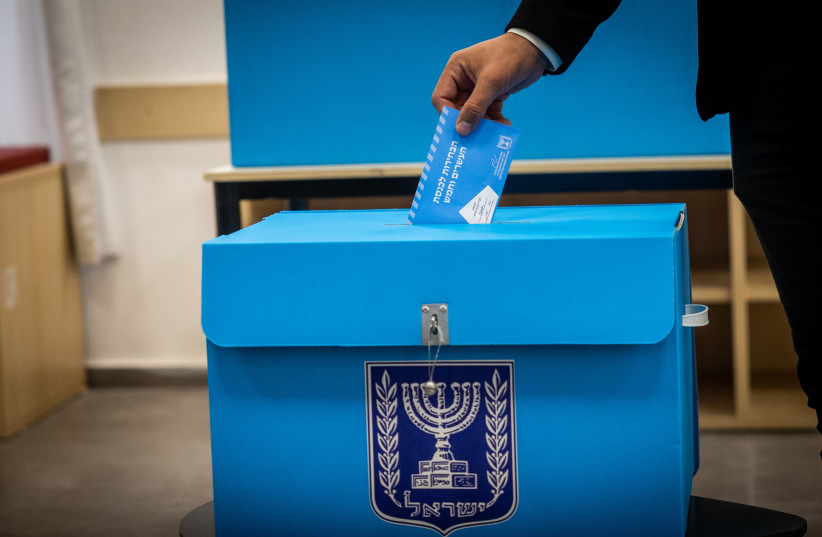
Of course, if there is a groundswell of opinion that the law should be changed, then those who feel strongly about this should work on changing the law. However, someone exercising his or her right under the law cannot be classified as immoral simply for doing so.
Secondly, Liebskind makes assumptions about these people which could simply be untrue. For example, when he wrote, “they didn’t fight in the war,” while it may be true that they did not fight in the current war, it is certainly possible and even probable that they or their children may have fought in previous wars; after all, we certainly have had our share of them. It may well have been a factor that led them to leave Israel, having already experienced the fear of the “knock on the door” once in their lives (or perhaps even the actual “knock”) and not wanting to have that experience ever again.
‘Chosen not to be part of this society’
Similarly, when he wrote, “they’ve chosen not to be part of this society,” what does that really mean? I would venture to say that the overwhelming majority of these people still have family living here. No doubt most travel here with some frequency, perhaps send their children here every summer to spend time with grandparents and cousins, as well as share some of their financial success with philanthropic institutions that operate in Israel. Does that not qualify them yet as part of this society? I would submit that it does.
In addition, of course, one needs to be very careful when stratifying who can vote by whether or not they have chosen to be part of this society. There are those here in Israel who would argue that certain elements within Israel have made choices not to be part of this society as well.
Does Liebskind want to also apply that same standard to citizens living here? It seems to me that such a “litmus test” starts us on a slippery slope toward autocracy that would be better avoided if we want to preserve democracy.
Lastly, it would appear that Liebskind has lost sight of worldwide Jewish demographics. If we were to sit across a table from each other, I would ask him whether it is possible for a people whose global population is just 15.8 million people to be completely detached from the country where 50% of us live?
Have we not internalized the concept that “when one Jew is injured, all Jews feel the pain?” This is an ancient tenet of Jewish peoplehood and mutual responsibility, often traced back to teachings from the classical sages, such as Rabbi Shimon bar Yochai in the Mechilta, expressing that the Jewish community functions as an interconnected collective. This shared vulnerability reflects a profound, interconnected sense of peoplehood where violence against one member is felt as an injury to the whole. And the corollary is also true: we have a responsibility to care for each other wherever we are in the world.
We, who compose the 15.8 million Jews in the world, are one small community, older than any other yet considerably fewer in numbers than normal generational growth would have predicted.
Therefore, it is simply not honest to take the position that Israeli citizens living abroad who come here only to vote are immoral. On the contrary, their doing so is very much in the spirit of Jewish unity and serves as an incredible lesson of responsibility being taught to their children and grandchildren, that we all, no matter where we live, have a stake in each other’s lives and a moral obligation to demonstrate that commitment whenever the opportunity presents itself.
To those who will travel here to vote on election day, I would say thank you for continuing to care about us and for remembering, “Kol Yisrael arevim zeh bazeh,” the Hebrew phrase that signifies a profound, mutual responsibility where every Jewish person acts as a guarantor for one another. We are grateful for your support and encouragement wherever you may reside.
The writer, a 42-year resident of Jerusalem, is a former national president of the Association of Americans and Canadians in Israel, a past chairperson of the board of the Pardes Institute of Jewish Studies, and a Board Member of the Israel-America Chamber of Commerce (AMCHAM).
AI worries rise among real estate leaders

A major German bank just let Claude and ChatGPT trade for customers. In one test, Claude beat human traders 76% of the time—but there’s a catch
Watch out, investors—the AI boom is making its way to you. Scalable Capital is opening its investment platform to AI assistants including ChatGPT, Claude and Grok—giving European investors the ability to analyze portfolios, set up savings plans and place trades through prompts.
The Munich-based bank told Reuters that it is the first bank in Europe to open its platform to major AI assistants. Its new “Agentic Investing” service allows customers to connect their Scalable accounts to supported AI agents through the Model Context Protocol, or MCP. The move puts AI directly into the trading workflow.
Scalable Capital Chief Product Officer Alexander Siepp told Fortune the company sees the integration as a way for investors to begin their financial “client journey” inside an AI assistant and complete it through Scalable’s regulated banking infrastructure.
“It certainly creates a level-playing field,” he said. “Access to information and to compute and to intelligence is now available—really—literally in your pocket, 24/7.”
But Siepp noted it may take time to become fully integrated with Scalable’s client base.
“Maybe not for all client segments at the same speed,” Siepp said. “But we clearly see potential that there is a large group of clients that would be interested in doing it.”
Scalable Capital, founded in 2014, has grown into one of Europe’s largest digital investment platforms. The company also told Reuters it has more than €60 billion in client assets and more than 1 million customers, primarily in Germany and Austria, with operations also expanding across countries including Italy, Spain, France and the Netherlands.
The company’s roots are in making investing more accessible through digital brokerage and wealth-management services. Scalable has also expanded its trading offering to include derivatives, and said in July that it would offer more than 1.8 million derivatives from seven major issuers.
Siepp said that the program can fundamentally change how investors interact with their brokerage accounts. A customer could, for example, ask an AI assistant to identify stocks that have fallen for consecutive months and monitor them. The assistant could then prepare an order based on the user’s instructions.
“It’s just a few prompts,” he said.
Is AI a reliable investor?
But the effectiveness of AI when given the reins for making trades remains to be seen. A June research report from Elm Wealth offers a mixed answer. Researchers Jerry Bell, Victor Haghani and James White tested Claude, ChatGPT, Gemini and Grok in a “Crystal Ball Challenge,” giving the models historical Wall Street Journal front pages with market-moving information but withholding the actual market outcomes.
The experiment found that Claude and ChatGPT were relatively strong at predicting market direction. Across roughly 200 sessions, Claude beat human players in 76% of sessions, while ChatGPT beat them in 63%. Gemini did so in 43% of sessions and Grok in 51%. But the models had a major weakness, the study found.
Elm found the AI systems generally took too much risk relative to the trade context. The researchers distinguished between two investment decisions—what to invest in and how much to invest. AI performed relatively well on the first factor but poorly on the second. The study found the models understood concepts such as the Kelly criterion and Merton share in theory but struggled to apply appropriate risk management when making actual simulated trading decisions.
“The US stock market has moved by over 5% on 23 days and by over 9% on seven days since the year 2000,” the study read. “Given average position sizing in stocks of 7x to 12x across the AIs, we think they were taking too much risk of a catastrophic loss of capital, given none of them had (or could reasonably expect to have) super high hit ratios.”
OpenAI, Anthropic, Google and xAI did not immediately respond to a request for comment from Fortune about using AI assistants for financial trading.
But Scalable is not handing over unrestricted control of customer accounts to AI. The company said users must approve trades and savings plans before they are executed, and its current system does not allow AI assistants to make payments or withdraw money from Scalable accounts. Siepp said the AI connection follows the same core security protocols as Scalable’s existing applications, including strong customer authentication.
“Whether you end up finding the holy grail together with your AI assistant on high returns and low risks or not, I think that remains to be seen,” he said.
He also stressed that the arrangement is not a formal partnership between the German bank and OpenAI or Anthropic. Instead, Scalable is using MCP—an open technology for connecting AI systems to external tools and services.
“We are using available resources, technologies, the MCP—the Model Context Protocol,” Siepp said. “This is really a standalone offering that comes only from Scalable users, ready-made technology integrations offered by those AI assistants.”
This story was originally featured on Fortune.com

This 1834 sea captain’s home in Connecticut was redesigned as a $6M modern retreat that remembers its roots

The years-long transformation of 298 Harbor Road, recently featured in Architectural Digest, brought together architect JP Franzen and Moore House Design to carefully preserve and reimagine the 1834 home of sea captain Ward Bulkley. Asking $5,995,000, the five-bedroom home in Southport, Connecticut, unifies two centuries of history with details like preserved original pine floors, expanded spaces, Venetian plaster, reclaimed stone, and artisan finishes.

The resulting waterfront refuge celebrates the property’s original craftsmanship while creating a stunningly comfortable, inviting, and livable home.




Surrounding the hard-working kitchen is a collection of rooms for gathering by the fire, lounging in a sunny corner, and formal dining and entertaining.




The vaulted kitchen is anchored by an 11-foot island. A massive Tadelakt range hood adds both beauty and functionality to a space that has every possible culinary enhancement and a wealth of design details.
Behind the wood-paneled staircase, a hidden speakeasy reminds us of past owners’ interesting lives.




On two floors there’s a choice of two luxurious and modern master bedrooms, each with a set of framed walk-in shower rooms and soaking tubs. A custom dressing room is paneled in dark wood and painstakingly organized for your own personal collections.






A library and a lounge, media and play spaces, and other gathering rooms spark creativity for everyone’s passion or just offer a place to relax.




Situated on just under an acre of land, the property has seasonal water views, but the pool, spa, and outdoor sauna are always available. All of these private choices are in the middle of Southport Village, within reach of civilization.
[Listing details: 298 Harbor Road by Wendy Ryan and Andrew Whiteley of Brown Harris Stevens]
RELATED:
- For $1.6M, this Connecticut estate has an art studio, guest house, pool, and a vintage modern vibe
- NFL luminary Chris Simms’ Greenwich farmhouse asks $8M
- For $12M, a modern mansion in coastal Connecticut, with plenty of room for guests
The post This 1834 sea captain’s home in Connecticut was redesigned as a $6M modern retreat that remembers its roots first appeared on 6sqft.

Nike brought back a 32-year veteran to save the $60B brand. Two years later, its turnaround is still a ‘long, hard slog’
The news traveled quickly across Nike’s sprawling headquarters in Beaverton, Ore. Elliott Hill was coming back.
Employees high-fived. An audible cheer could be heard in parts of Nike’s 400-acre campus. Current and former employees lit up group chats and social media. On Wall Street, investors joined the celebration, sending Nike shares up roughly 8% in after-hours trading following the company’s September 2024 announcement that Hill would come out of retirement to replace John Donahoe as chief executive.
The exuberance reflected more than relief that Donahoe was leaving. Hill’s return carried an almost messianic quality inside a company that had spent several years watching its innovation pipeline sputter, relationships with retailers deteriorate, and its once-untouchable cultural standing erode. Nike was reaching into its own past for someone who seemed uniquely equipped to restore what it had lost.
Hill had spent over 32 years at Nike, rising from an intern in 1988 through sales and leadership positions across North America and Europe before eventually becoming president of consumer and marketplace. By the time he retired in 2020, Nike credited him with helping grow the business to some $39 billion.
The appeal to Nike’s board was obvious. It was buying a turnaround CEO and, just as importantly, buying time. Hill would not have to spend his first year learning the company he had been hired to save. He knew how Nike worked when it was working. He presumably knew where it had gone wrong.
Nearly two years later, the savior narrative has collided with the scale of Nike’s problems.
Hill has repaired relationships with wholesalers, curbed the flood of once-hot sneaker styles Nike let saturate the retail market, and poured resources back into athletic innovation. Wholesale has returned to growth, and performance running is showing signs of renewed strength.
Still, investors remain unconvinced, and the stock market’s initial euphoria has long since disappeared. Nike shares, which jumped when Hill’s appointment was announced, now trade around $40, roughly half their 52-week high and a fraction of their 2021 peak. The decline has reduced Nike to the lowest-priced member of the price-weighted Dow Jones Industrial Average and generated speculation about whether the company could eventually lose its place in the index, an extraordinary symbolic comedown for a brand that once seemed synonymous with American consumer dominance.
“The initial excitement around the appointment has been replaced by a realization that this is a long, hard slog,” says Neil Saunders, managing director at GlobalData Retail. “There are no real quick fixes here.”
The turnaround takes shape
Nike’s latest results show that Hill’s early progress has yet to meaningfully change the company’s overall trajectory. Fourth-quarter revenue fell 1% to $11 billion, but more troubling is how broadly the weakness is distributed. Nike Direct, the business Donahoe had once positioned as the company’s future, fell 7%. Digital sales sank 12%, while revenue at Nike-owned stores declined 7%. Greater China and Europe are also weak.
For Hill, the problem is that improvements in one corner of Nike keep getting swallowed by deterioration somewhere else. A healthier wholesale business cannot offset falling digital sales, struggling stores, and a deeply troubled China business. Running has emerged as one of Nike’s clearest bright spots, delivering five consecutive quarters of double-digit growth and adding roughly $1 billion in revenue over that period. But even gains of that magnitude have not been enough to change the entire trajectory of a company with $46 billion in annual revenue.
And the cost of cleaning up years of mistakes, including discounting old merchandise and reinvesting in the business, continues to weigh on profitability.
If there’s another bright spot, it’s in wholesale. Fourth-quarter wholesale revenue rose 4% to $6.6 billion as Nike rebuilt relationships with retailers it had alienated, including Dick’s Sporting Goods and its Foot Locker business, as well as JD Sports. Getting Nike back onto those shelves matters, but much of that work amounts to recovering business the company surrendered through its own strategic mistakes. It does not yet answer the harder question facing Hill. Where will Nike find significant new growth?
That distinction has become the defining tension of Hill’s tenure. Nike did not bring its celebrated veteran home simply to stabilize a decline. Hill’s first phase has largely consisted of repairs, but Nike must still show that those repairs can translate into growth, consumer excitement, and renewed cultural relevance.
Nike argues that such a judgment is premature. The company says Hill’s immediate priority was to stabilize the business by rebuilding wholesale relationships, clearing excess inventory, and fixing its biggest sneaker franchises. Nike has since moved to the longer-term work of reorganizing around individual sports and developing new products, changes it says could take 24 to 36 months to show up fully in its financial results.
“We have been clear that progress will not be linear and that significant change is required to secure NIKE, Inc.’s long-term leadership,” a Nike spokesperson told Fortune in a statement. “We are not optimizing for short-term outcomes that could compromise the strength of the brand.”
Simeon Siegel, senior managing director at Guggenheim Partners, sees Nike’s uneven results as a reflection of its sheer global scale, with major markets moving on different timetables. “There’s no question the turnaround has been taking longer,” he says.
Still, Siegel sees signs of progress in North America, Nike’s largest geography, where revenue has returned to growth after a prolonged decline. The question is whether North America offers a preview of what could eventually happen elsewhere.
Siegel says Nike’s regional performance invites two readings. A skeptic can see “falling dominoes, house on fire.” A more optimistic investor can see the company “strategically fixing big parts of a business that certainly need some help.”
Reclaiming relevance
Yet the financial deterioration only partially captures Hill’s challenge. Nike’s struggle to generate growth is intertwined with its loss of cultural relevance. For decades, the company’s genius was its ability to collapse the distance between elite athletic performance and ordinary life. Nike could develop a shoe around the needs of a world-class athlete and somehow make millions of people who would never approach that level of competition want to wear it. Performance created aspiration, that aspiration created fashion, and fashion turned the iconic Swoosh into a global status symbol. That machinery no longer works as reliably.
Nike spent years engineering shoes for serious athletes while competitors got better at serving consumers who wanted performance, comfort and style in everyday life. Hoka, On, New Balance and Asics turned running shoes into lifestyle products, capturing demand Nike once dominated. Meanwhile, Alo and Vuori helped redefine athletic apparel around clothes that could move from a workout into the rest of the day.
Of course, Nike still makes technically sophisticated products. What it has struggled to produce consistently is a breakout item that escapes the world of sport and becomes a cultural phenomenon.
Saunders describes Nike as fishing from two increasingly different pools. One is sport, where technical performance, elite athletes, and credibility remain essential. The other is lifestyle, where sneakers and apparel function as expressions of taste and identity. Nike’s problems are much more acute in the second pool.
“Nike has lost its edge,” he says. “It’s very unclear as to what Nike really stands for.”
Siegel sees Nike’s enormous sales as evidence that the brand still commands considerable consumer demand. The company generates more than $45 billion in annual revenue, requiring consumers to make fresh purchasing decisions every year.
“Whether people like Nike, people are certainly buying Nike,” Siegel says. “That’s a fact. That’s not an opinion.”
Sales, however, offer an incomplete measure of Nike’s cultural influence in an increasingly fragmented market.
“How does Nike get people to not only buy the product but also love the product again?” Siegel says.
The competitive landscape has also changed dramatically from the era when Nike’s scale was an almost unqualified advantage. Consumers, especially younger ones, now move through a patchwork of brands, communities, and aesthetics. Smaller brands can generate enormous cultural heat. Take Gymshark, for example, which has built a following among younger consumers through influencers and social media. Twenty years ago, the biggest brands could set the market’s tone. Today, Nike’s mass message has to compete with dozens of brands speaking more precisely to particular consumers.
Winning over a new generation
When Hill spoke to Fortune in 2025, he emphasized a return to sports, namely in key categories like basketball and running. His “sport is back” prescription makes sense as a response to years of drift in product and innovation. Jordan Brand offers an early test of whether that strategy can resonate with a new generation.
It remains one of Nike’s most valuable cultural assets, built around an athlete whose influence once transcended basketball, sneakers, and even sport itself. For millennials, Michael Jordan was a living cultural reference point. Gen Z inherited the iconography without experiencing Jordan’s dominance in real time.
“I don’t think it’s as healthy as it was,” Saunders says of the brand. For younger shoppers, Jordan “is just not cool in a way with the consumer.”
Hill has responded by deliberately restricting the supply of classic retros such as the Jordan 1, sacrificing some near-term sales to restore the scarcity that once fueled the brand’s appeal.
Saunders points to the resale market as one rough barometer of brand heat. Retro Adidas styles have enjoyed renewed attention while many Jordans have struggled to generate the same excitement they previously commanded.
For Nike, the stakes extend past one sneaker franchise. Younger shoppers will eventually become the consumers with greater spending power. Every year Nike fails to build an emotional connection with them gives competitors more time to become their default brands.
Nike’s stubborn gaps
Nike has also struggled to build the same cultural hold among women that rivals such as Lululemon and Alo have achieved, partly because its brand identity still skews heavily male.
Those brands built their identities around female consumers, while Nike has frequently approached women through individual products and categories such as leggings, bras, and footwear.
Women do care about performance, Saunders asserts, but they also want fashion, versatility, and products that feel interesting outside the gym.
Nike’s much-hyped NikeSKIMS partnership appeared designed to close that gap. The collaboration has expanded into new apparel, footwear, and wider distribution, but its initial cultural heat has proved harder to sustain or translate into a meaningful shift in Nike’s standing with women.
“It generated a lot of buzz. But then it fizzled,” Saunders says. He contrasts Nike’s “start-stop” cadence with Levi’s, Coach, and Ralph Lauren, which maintain a steadier stream of consumer-facing initiatives.
That lack of tempo cuts to the heart of Nike’s cultural problem. The company still operates like a giant from an era when scale itself commanded attention. Today’s consumers, however, are less deferential to giants.
China has become a microcosm of how badly Nike’s old playbook has aged. Domestic competitors have grown faster and more sophisticated, consumers more discerning, and Nike has struggled with excess inventory, heavy discounting, and products that have failed to resonate with local shoppers. A market that once heavily powered Nike’s growth is now dragging on Hill’s turnaround, with eight consecutive quarters of declining sales.
Nike says it is resetting its China strategy by overhauling how it sells online and in stores and developing more products specifically for Chinese consumers.
Saunders considers that market one of the clearest tests of whether Hill can move from stabilization into genuine recovery.
“You can’t fix Nike unless you fix China,” he says. “And China is a long way from being fixed.”
Even at major sporting events, where Nike should enjoy a natural advantage, signs of hesitation have emerged. Nike’s presence around the World Cup felt surprisingly muted, several retail analysts told Fortune, given the event’s magnitude and the tournament being on its home turf. In some stores, Nike merchandise was in short supply while Adidas-backed team products were readily available.
“They are the biggest sportswear brand in the world,” Saunders says. “They should be at the absolute forefront of this important sporting event.” The episode captures something larger. Nike should be built to dominate moments like this. Instead, it appeared to leave demand, attention, and potentially sales on the table.
Can Nike still be Nike?
All of this creates a complicated assessment of Hill.
The board’s decision to choose an insider still has a coherent logic. Nike is a sprawling organization, and an outsider would have spent an enormous amount of time simply learning its structure, politics, and operational levers. Hill used decades of institutional knowledge to start fixing readily identifiable problems. But that institutional knowledge needs to be paired with strong outside perspectives, particularly on branding and culture.
Yet expectations around Hill’s return also reflect how much of Nike’s recovery has been tied to one executive.
Siegel is less convinced that any turnaround of this scale comes down to the person in charge.
“The reality is, in the right set of circumstances, many people could turn around Nike,” he says. “In the wrong set of circumstances, no one could.”
With a market cap of about $60 billion, Nike remains the world’s largest sportswear brand by a wide margin. Its size gives it enormous resources, distribution, and visibility, but it also makes it an enormous target for competitors. “Nike has the most surface area to attack,” Saunders says.
Hill and Nike may eventually have to confront the possibility that the company’s future could involve a smaller share of the sportswear market. And it may ultimately have to consider whether relentlessly chasing its former size makes sense, or whether a better outcome is a culturally stronger, more profitable company with less market share than before.
That would be a difficult message to sell to investors accustomed to measuring corporate health through growth. It also underscores why judging Hill after less than two years requires some restraint.
Product cycles and rebuilding wholesale relationships take time. Excess inventory has to work through the system, China cannot be repaired in a quarter, and a brand that lost cultural heat over several years will not regain it through a single campaign or sneaker release.
But time alone cannot solve Nike’s larger problem. The cultural shift underway surfaces an uncomfortable truth the company must confront: Rebuilding the Nike that dominated the last generation may not be enough to dominate this one.
This story was originally featured on Fortune.com

Treasury’s ‘Economic D-Day’ against Iran could force regime into situation it ‘fears the most,’ experts say
The U.S. Treasury Department’s newly launched Operation Economic Outcast against Iran could take anger toward the regime to a “boiling point” and force Tehran into the one situation it “fears the most,” experts tell FOX Business.
The aggressive strategy, labeled as an “Economic D-Day” and initiated under the direction of President Donald Trump, aims to “tighten the noose and block every potential source of revenue that funds the Islamic Revolutionary Guard Corps (IRGC) and the Iranian regime,” according to Treasury Secretary Scott Bessent. The Trump administration also will implement secondary sanctions to pressure nations into severing ties with Tehran, while simultaneously blacklisting nearly 60 people, businesses and vessels involved in illicit trade.
“Anger is simmering just below boiling point,” Kasra Aarabi, the director of IRGC Research at United Against Nuclear Iran (UANI), told FOX Business, referencing the mass protests that unfolded inside Iran earlier this year. “And these economic measures, that tightening the economic noose, could take it to boiling point.”
“The regime wants to absolutely avoid a situation whereby protests take place against it, and the U.S. has military assets in the region. Because it fears — the one thing it fears the most — is protests with air cover,” he added.
US AIMS FOR ‘ECONOMIC ASPHYXIATION’ OF IRANIAN REGIME WITH NEW WAVE OF SECONDARY SANCTIONS
Aarabi said the Iranian regime had already been “suffering economically” prior to the launch of Operation Economic Outcast, with the U.S. military blockading Iranian ports.
“The blockade, the U.S.-imposed blockade, is working, and their oil exports are next to none; they’re zero… that is affecting their ability to, first of all, fund the military in the regime,” he continued. “The senior officials of the Islamic Republic have been absolutely clear that any money that comes into their hands will go to the military. The military is the top priority. So tightening the noose is exactly what the U.S. should be doing. And the regime is panicking.
“I have that from sources in Iran itself. Prior to ‘Economic D-Day,’ they were scrambling,” he added. “They were scrambling to look for alternative avenues, given the fact that the southern corridor, the Persian Gulf, was completely shut off for their oil exports, for the transportation of other key goods.”
Jason Brodsky, the policy director of United Against Nuclear Iran, told FOX Business that “Operation Economic Outcast is a different iteration of the maximum pressure campaign which has been ongoing for many years now.”
“This has been an unprecedented situation because right now there’s the synchronization of economic and military power from the United States with the launching of an unprecedented economic blockade against the Iranian regime,” he said. “So all of this is going to be contributing to the dire financial situation and picture that the Iranian regime confronts.”
‘ECONOMIC D-DAY’ ON IRAN PUTS TRADING PARTNERS IN CROSSHAIRS AS TEHRAN THREATENS RETALIATION
“Without a doubt, the Treasury Department’s Operation Economic Outcast will deprive the Iranian regime of resources that it would use to otherwise fund its terror proxies throughout the region,” Brodsky added. “I’m talking Hezbollah, Hamas, the Houthis, the Iraqi Shia militias, so that actually saves lives if the Iranian regime is not able to foment and pay its terror apparatus. And that’s why it’s fundamentally in the U.S. national security interest for Operation Economic Outcast to be carried out robustly and to the fullest extent.”
UANI on Wednesday also released its 10 recommendations for Operation Economic Outcast, which Brodsky described as policy recommendations “aimed to provide some meat on the bones” of the U.S. Treasury’s campaign.
They call for the U.S. to “sanction every Iranian bank, financial institution, and exchange house, including all foreign branches that provide material support to the IRGC, Iran’s Intelligence Ministry, or designated terrorist proxies,” and to “fully target Iran’s ‘Ghost Armada’ of foreign-owned vessels,” among other measures.
The developments come as Iran continues to attack ships in the Strait of Hormuz during Operation Epic Fury, which the U.S. launched against Tehran on Feb. 28.
The United Kingdom Maritime Trade Operations Centre (UKMTO) said Monday that an oil tanker was left disabled after an “unknown projectile” struck the vessel while it was traveling in the Strait of Hormuz.
There was no immediate claim of responsibility for that incident, but Iran has been blamed by Middle Eastern countries for recent attacks on tankers affiliated with the United Arab Emirates’ state-owned energy company.
Brodsky said Wednesday that Iran has been “attacking ships for many years, long before the U.S. launched Operation Epic Fury.”
CLICK HERE TO READ MORE ON FOX BUSINESS
“Iran has been trying to sabotage commercial vessels within the Persian Gulf, Strait of Hormuz area. So this has been a long history of Iranian sabotage. And, ultimately, it’s going to have to come to regime change in Iran for the Iranian government to behave differently. Unfortunately, that’s the reality we’re confronting,” he said.
FOX Business’ Louis Casiano contributed to this report.

LIRR will run year-round direct trips from Penn Station to Montauk

Direct journeys to Montauk on the Long Island Rail Road will no longer be seasonal, with transit officials making the service permanently year-round. Gov. Kathy Hochul and the Metropolitan Transportation Authority on Tuesday announced service changes and infrastructure upgrades to the LIRR’s Montauk Branch, including the addition of a year-round weekday 5:13 p.m. train from Penn Station to the coastal hamlet, providing a one-seat journey to the eastern end of Long Island. Set to begin next month, the added service comes as the Montauk Branch has experienced continued growth, with ridership increasing 6.4 percent compared to the same period last year.

The service currently operates throughout the summer, providing a convenient one-seat journey to Montauk. During the off-season, however, passengers must make at least one transfer, lengthening an already long trip that takes roughly three hours and 10 minutes even without a transfer.
Ridership on the branch continues to reach new highs, with 1,212,229 passengers recorded so far this year. Several stations along the Montauk line have also seen substantial ridership increases, including Hamptons Bay, up 23 percent, and Southampton, up 46 percent compared to last year.
Additionally, during the summer, many trains to and from Montauk operate at close to 100 percent capacity. The continued growth in ridership has prompted the LIRR to expand the direct service year-round to meet passenger demand.
“As we continue to show our commitment to the east end of Long Island, these improvements on the Montauk Branch will deliver even more reliable service and shorter waits for the thousands of daily LIRR riders who depend on us,” LIRR President Rob Free said.
“With a new year-round weekday one seat ride to Montauk from Penn Station, we’re delivering the kind of convenient, predictable service our customers deserve while supporting the tourism and local industries that power the East End,” he added.
Complementing the new service is a two-phase infrastructure project that will extend a track siding between Southampton and Montauk and install a second platform at Hampton Bays station.
A 27-mile stretch of single-track rail between Southampton and Montauk currently limits the number of Montauk Branch trains that can operate. The project will extend the train car siding at Amagansett by 14 LIRR train-car lengths, reducing the single-track section to 11 miles between Amagansett and Montauk and 16 miles between Southampton and Amagansett.
The project will improve scheduling flexibility and the LIRR’s ability to recover from service disruptions while providing riders with more reliable service. Construction is slated to begin in the first quarter of 2028, with completion anticipated in the second quarter of 2029.
Phase two will make permanent a temporary second platform installed at Hampton Bays station for U.S. Open events at Shinnecock Hills, when the station experiences increased demand. The new eastbound side platform will allow riders to board and exit trains in both directions, improving reliability and accessibility for riders while giving the LIRR greater operational flexibility.
The Hampton Bays station will also receive track and signal upgrades, allowing the siding to accommodate trains with up to eight cars, compared with the current six. Customers will also be able to board and disembark along the entire length of the platform.
A timeline for the second phase will be developed as part of the project’s planning and design process.
“The LIRR is already the best and most convenient way to travel to and from the East End, but for years, aging infrastructure has stood in the way of improving service to keep up with surging demand,” Hochul said. “By making smart investments in our rail system, we can soon make jam-packed summer trains a thing of the past by increasing reliability and running more service on the Montauk Branch, making it easier than ever for New Yorkers to travel out east by train.”
RELATED:
- NYC announces $4B plan to fix city-owned portion of BQE
- Amtrak completes first phase of East River tunnel project amid LIRR disruptions
- MTA completes Park Avenue Viaduct replacement 60 months early
The post LIRR will run year-round direct trips from Penn Station to Montauk first appeared on 6sqft.
‘It’s very objective’: Billionaire Marc Lore’s Wonder uses an AI algorithm to determine who gets promoted
Marc Lore has built companies by trusting the numbers. At his latest startup Wonder, that philosophy now extends to deciding who gets promoted, with the help of AI.
The billionaire entrepreneur told Fortune’s Allie Garfinkle in a recent Term Sheet podcast episode the food-tech company uses an AI-powered performance management system that determines whether employees should advance through the organization based partly on scores submitted by their colleagues.
At least a dozen coworkers rate an employee on their performance, behaviors, and leadership qualities every six months, Lore explained, and these ratings, combined with written feedback, are fed into AI that generates a performance report. The company also adds another metric it calls “value above replacement,” or VAR, which measures how difficult it would be to replace an employee with someone at the same organizational level.
“Between your VAR score and your performance management score, AI basically calculates whether or not you should be promoted,” Lore said. “So it’s very objective.”
The system also calculates how long employees should remain in a position before advancing. Human management can override the model’s recommendation with a convincing argument that the algorithm missed something, Lore explained, but those cases are increasingly rare and disagreements with the model can also turn into data used to change it.
“There’s a handful of exceptions every period where we disagree with the AI model,” Lore said, but “the model is getting smarter, and there’s less exceptions every time.”
Lore argues putting more of the decision into a standardized system can make promotions fairer by reducing the role of personal bias and even potential discrimination against women and minority employees.
“This kind of corrects for that,” he said.
The AI system fits with Lore’s longstanding habit of approaching complicated business decisions with numbers. In a Fortune profile last year, his uncle Joe Lore, recalled that even as a teenager he would try to arbitrage horse-racing rather than simply cheer on one favorite, betting on multiple in smaller amounts to win. Decades later, that instinct remained central to how he approached his companies.
“It will always revert to a percent or percentage, and putting the odds in your favor,” Joe Lore told Fortune about how Lore operates. “It doesn’t matter if he’s selling screws, widgets, hamburgers.”
At Wonder, even the organizational chart has a formal ranking system. Lore told Fortune positions are represented by colors modeled after taekwondo belts, progressing from white and yellow through brown and black. Looking at the color-coded organizational chart lets him quickly assess where Wonder is putting senior talent and how many lower-level employees report to higher-level workers.
Wonder also has a transparent compensation system so employees can see what others at the company make.
Wonder’s automation track record
Lore’s use of AI in helping decide promotions is landing right as Wonder is becoming considerably larger—and increasingly leaning on automation.
Wonder raised more than $650 million at a $9 billion valuation this summer, bringing its total funding since its 2018 founding to roughly $3 billion. Lore told Fortune exclusively the company, which operates 135 food halls across 10 East Coast states, will be “ready and prepared to go public early next year.”
Lore is also pushing automation into Wonder’s kitchens. He said at Fortune Brainstorm Tech in June an automated bowl-making system can produce as many as 500 bowls an hour, compared with up to 45 for a human worker.
This story was originally featured on Fortune.com

How Cigna’s AI chief is investing in the technology to cut costs and address some of healthcare’s biggest problems
Before we get to this week’s column—Please consider joining us at the inaugural Fortune AIQ Summit at the New York Stock Exchange on Oct. 1: Spend the afternoon with senior executives from companies on the Fortune AIQ 75 list and explore how you can scale your AI experimentation and translate investments into measurable business value. Apply here to attend.
After Katya Andresen joined Cigna Group as chief data, digital and AI officer in September 2021, she says the emergence of generative artificial intelligence as a disruptive new technology led many to ask themselves: “How do I use AI?”
Andresen thinks that’s the wrong question. “We’ve been on a mission to change that question to, ‘how do I lead in an age of AI?’” says Andresen. That framing is less focused on the functionality of any given AI tool and chasing countless use cases, and instead homes in on measurement that shows an AI investment can change health outcomes.
Along those lines, Cigna has announced this summer that it projects the AI and predictive analytics tools that the company uses to help patients identify chronic conditions—including cancer, kidney disease, and high-risk pregnancy—can save an estimated $200 million over the next three years by proactively connecting patients with clinicians. Separately this summer, Cigna announced a $100 million investment through 2028 to use AI to reduce the time clinicians need to spend documenting their cases and speed up the prescription process.
And yet another AI use case, which Andresen shared with Fortune, involves using AI to better understand common inbound patient questions that Cigna was receiving about biosimilars, which can treat chronic diseases at a fraction of the cost of biologics. Unlike a generic drug, which has the same active ingredients as branded counterparts, biosimilars aren’t an exact match because they’re made from living organisms like bacteria and plant cells. But both are approved by the Food and Drug Administration.
One biologic, called Humira, can cost a patient $7,000 per month to treat inflammatory and autoimmune conditions. But Cigna looked at thousands of prior customer conversations with its representatives about biologics and biosimilars, and then used those insights to craft stronger digital messaging to encourage a switch to the cheaper alternative. This targeted campaign led more than 80% to opt for the biosimilar, Andresen says.
“That led to a lot more margin,” adds Andresen. “But more importantly, it created a couple hundred million dollars of savings for patients.”
Extracting millions in cost savings from these high-priority use cases is critical for Cigna, which generates $275 billion in annual revenue and ranked 14th on the latest Fortune 500 list, as national healthcare spending exceeds $5 trillion annually due to the rise of chronic conditions, an aging population, and the cost of a hospital stay and average prices for new prescription drugs soaring.
Patients frequently express that they are fed up with navigating the industry’s complex system, and millions report they’ve turned to ChatGPT and other AI chatbots to ask health- or healthcare-related questions. Nearly six-in-ten report using AI to research health information before a doctor visit, and about 14 million adults say they have skipped a visit with a provider after using AI, according to a survey published by Gallup in April.
This movement does raise thorny questions about the guardrails put in place around AI chatbots, even those created by insurance and pharmaceutical companies, because they need to handle sensitive patient information and have the ability to accurately answer complex questions about medical insurance plans and treatments.
“The good news is, because we are highly regulated, we have a massive amount of controls in place to begin with,” says Andresen. “We are not starting from zero.” That layer of compliance and governance has existed for well over a decade for the machine learning models that Cigna has leveraged, she adds, and is also closely controlled for any data that’s access by third-party vendors.
Andresen has had to recently hunt for answers to these common healthcare questions after a close family member was diagnosed with breast cancer. She says this experience has shown that personalization, not just navigation, is the differentiator that AI can provide.
“I think we’re headed to a place where we are going to find that AI in healthcare becomes conversational, ambient, and more proactive,” says Andresen. “We can be more and more precise with treatments, with recommendations, and we can get better and better at understanding what works…and feed that back into our models, so that everything gets better all the time.”
Five years ago, when Andresen joined Cigna, it was her first role leading a healthcare company, after previously serving as a senior vice president of financial services at Capital One, serving in executive leadership roles at mission-focused tech firms Cricket Media and Network for Good, and earlier in her career, working as a foreign correspondent for Reuters News and the Associated Press.
She says that AI technology is evolving so rapidly that a mix of Cigna’s own proprietary data to build competitively specific tools, as well as key partnerships with big AI players, will be the differentiator. Andresen has launched workplace tools like chatbot Microsoft Copilot and AI coding agent Cursor, while also working closely with large hyperscalers like OpenAI and Anthropic to tap their large language models.
There are also times when Cigna will opt to work closely with AI startups that have homed in on a very specific use case, like Sierra, which builds conversational AI agents for customer service. “We’ve worked really closely with them on their product roadmap,” says Andresen.
Other generative AI use cases that Cigna has deployed include using LLMs to summarize millions of phone calls placed to call center agents, and then leveraging those insights to create an AI tool that makes it easier for those employees to search for the answers to questions like, “does my policy cover this treatment for plantar fasciitis?”
An AI virtual assistant was also built inside Cigna’s mobile app, a conversational tool that can similarly address patient questions, while in the clinical setting, AI-enabled summarization has reduced note-taking by up to 90% for health practitioners who work for Cigna’s telehealth service MDLIVE.
“The principles behind all this are hopefully clear, which is, what problem are we trying to solve, and how can AI help?” says Andresen. “That’s always the starting point.”
John Kell
This story was originally featured on Fortune.com
US removing Syria as sponsor of terror is ‘blow’ to victims, impacts on sectarian violence unknown
Washington’s decision on Monday to remove Syria from its list of state sponsors of terrorism has dealt American victims of Syrian-sponsored terrorism “a heavy blow,” Aryeh Portnoy, a lawyer from Crowell & Moring representing American victims against state sponsors of terrorism, told The Jerusalem Post on Wednesday.
The removal, posted on the US Treasury’s website, took effect after a 45-day congressional review period triggered when Trump formally notified Congress on July 8 of his intention to rescind the designation.
“These actions were all taken in recognition of the positive actions taken and further commitments by the Syrian government under President Ahmed al-Sharaa to fully distance Syria from acts of international terrorism,” US Secretary of State Marco Rubio said in a statement.
American victims of Syrian terror feel move diminishes their experience
Though some have argued that the move will allow Damascus the financial recovery needed to bring stability for a country that has suffered more than a decade of civil war and a dictatorship responsible for multiple crimes against its own people, Portnoy said that declaring Syria “open for business without accounting for the Americans whose lives were destroyed by Syrian state-sponsored terrorism” was devastating to its victims.
American victims and their families who have obtained a final judgment in a US district court against a designated state sponsor of terrorism are meant to be compensated through the US Victims of State Sponsored Terrorism Fund (USVSST Fund), using seized and forfeited assets and settlements from companies that have violated US sanctions, but it remains unclear whether Syria will be required to pay any amount toward outstanding judgments or future lawsuits.

Notably, the Anti-Defamation League is still in the process of suing Syria on behalf of 130 US citizens who were killed or injured on October 7 and family members of American victims. Launched in July 2024, less than half a year before Ahmed al-Sharaa’s HTS forces seized control from Bashar al-Assad, the lawsuit alleges that Syria, along with North Korea and Iran, “provided material support to Hamas that enabled it to commit atrocities in Israel on October 7, 2023.”
For example, in Colvin v. Syrian Arab Republic, a US court ruled that the Syrian regime must pay out $302.5 million in damages to the family of Marie Colvin, a war correspondent killed in a targeted attack in Homs in 2012.
Other countries who were removed from list had to compensate US victims
Though now under a different leadership, other countries have been expected to pay out millions to victims as part of an agreement to be taken off the list of state sponsors of terrorism. In 2008, for example, Libya compensated families of US victims of Libyan terror attacks, including the bombing of Pan Am flight 103 over Lockerbie, Scotland in 1988, two years after it was removed from the list as part of a $1.8 billion deal.
“[American] victims now can only hope their government will not forget them, and that it intends to address the claims and judgments Congress allowed them to pursue in US courts, and not render that commitment to help them seek justice an empty promise,” Portnoy said, adding that “‘it also is unclear how Syria and its new business partners will be protected from the claims of hundreds, if not thousands, of judgment creditors who will need to identify other ways to enforce their judgments if left unaddressed.”
Dr. Tamim Khromachou, the Syrian-Alawite president of the Levant Council of the United States and the Americans for Levant Foundation, told The Post that delisting Syria does not address the sectarian violence in Syria, and could inadvertently strengthen actors responsible for abuses seen in recent years, though it would undoubtedly be beneficial for Syria’s economy and diplomatic efforts.
“It is also important to remember that Syria moved from the political dictatorship of the Assad regime into a period of civil and sectarian violence while Syria was under the same terrorism-related designations. So, ultimately, the designation itself does not determine which direction Syria takes,” Khromachou said. “The will of the new authorities, the nature of the institutions they build, and the commitment of those supporting Syria’s transition will be far more consequential.”
“Removing the designation could provide an important opportunity for Syria, but that opportunity needs to be accompanied by meaningful safeguards, accountability, and guarantees that the emerging state will protect all Syrians regardless of their sect or identity,” he shared.
Israeli expert sees move as positive to tackle Syrian sectarian violence
Though minorities in Syria may waver in how they view this latest move, Dr. Ely Karmon, a senior researcher at The International Institute for Counter-Terrorism at Reichman University, told The Post that Washington’s decision could only help tackle the bad actors involved in the sectarian attacks.
Explaining that the Islamist groups operating in Syria hadn’t been taken as quickly by the “charismatic” Sharaa as European and American leadership, Karmon made clear he didn’t believe that Sharaa’s government had been responsible for the sectarian violence but said that Washington’s decision to delist Syria would likely encourage him to act more strongly against it.
“The Syrian army was not yet really under control, and still is not completely under control,” he said.
The European Union has been slower than the US to remove sanctions, and Sharaa will need to prove he can provide a stable future for Syria in order to see the country freed from the financial restraints, he explained. With the removal of US sanctions, Damascus will have more breathing room to create that stability, he argued.
US targets Palestine Action in counterterrorism effort against ‘far-left’ groups
The United States designated Palestine Action on Wednesday as a terrorist group, as US President Donald Trump’s administration seeks to crack down on left-wing groups in its counterterrorism efforts.
The action comes after US Secretary of State Marco Rubio last month told officials from more than 60 countries that Washington would seek to refocus international counterterrorism efforts on what he called “far-left terror.” The conference sparked Democratic concerns that the Trump administration is politicizing counterterrorism efforts and diverting resources from other extremist threats.
Trump singled out the anti-fascist antifa movement on the campaign trail in 2024, and vowed to take action against left-wing groups he accuses of fomenting violence after the killing of conservative activist and Trump ally Charlie Kirk last year.
“Far-left extremists, their fronts, and their enablers should be on notice: We will bring the full weight of our economic tools to bear,” Secretary of the Treasury Scott Bessent said in a statement on Wednesday.
“Political terrorism has no place in our society, and we will continue to cut the financial lifelines of these groups until they are eliminated.”
Italy-based entity sanctioned for supplying antifa, other far-left groups
The US Treasury Department on Wednesday also imposed sanctions on an Italy-based entity it accused of supplying digital architecture, tools and services for antifa and other far-left groups.
Britain has also previously banned Palestine Action as a terrorist organization. Palestine Action had increasingly targeted Israel‑linked defense companies in Britain, especially Israel’s largest defense firm Elbit Systems.
Responding to the US move on Wednesday, Huda Ammori, co-founder of Palestine Action, said the group’s activities “have always been about saving lives by disrupting the Israeli war machine.”
“The fact that Trump is now taking inspiration from Britain’s repression of the movement for Palestinian freedom exposes just how dangerous this ban is and should be a wake-up call to anyone who cares about free speech and civil liberties,” Ammori said in a statement to Reuters.
UK Supreme Court to hear appeal against Palestine Action ban
The United Kingdom’s Supreme Court has said it will hear an appeal against a lower court ruling that Britain’s decision to ban campaign group Palestine Action as a terrorist organization was lawful.
The US. Treasury Department also imposed sanctions on Wednesday on the transnational group Masar Badil, saying it operates as a front for the Popular Front for the Liberation of Palestine. The latter group had already been designated by the US. as a Foreign Terrorist Organization.
Tim Curry, actor famed for ‘Rocky Horror Picture Show,’ dead at 80
Tim Curry, the baritone-voiced British actor who pranced to movie fame as a singing, lingerie-clad “sweet transvestite” in the 1975 cult classic “The Rocky Horror Picture Show,” has died at the age of 80, Variety and other outlets reported.
A cause of death was not immediately given, but Curry had been in ill health for some time.
Curry appeared in numerous movies, often as a hammy villain, was nominated three times for a Tony Award for Broadway roles, and performed voice work in many animated films and TV shows.
But his best-known role was Dr. Frank N. Furter, which came in his debut film, the outrageous, crowd-pleasing horror-comedy-musical “The Rocky Horror Picture Show,” co-starring Susan Sarandon and Barry Bostwick.
“I’m not much of a man by the light of day. But by night I’m one hell of a lover. I’m just a sweet transvestite from transsexual Transylvania,” Curry sang in one scene as he strutted around with garish eye shadow and lipstick, in a skimpy black outfit complete with black stockings and garter belt.

In a 1975 television interview, Curry noted the risk of having his career defined by such an outlandish role – a prescient worry, as it turned out. “When I read it, I just thought it was very, very witty and funny,” Curry said, although he confessed to some initial reluctance.
“I mean, I was hesitant in that, if it worked, it might be a difficult thing to shake off. But, really, I’ve always thought that it (a part) wasn’t worth doing unless you took a risk,” Curry said.
Among his other films were “Charlie’s Angels” (2000), “Muppet Treasure Island” (1996), “The Shadow” (1994), “The Three Musketeers” (1993), “Home Alone 2: Lost in New York” (1992), “Clue” (1985), “Legend” (1985) and “Annie” (1982).
Some of Curry’s best work was on Broadway
Curry did much of his best work on stage. He was nominated for a Tony, Broadway’s top honor, in 1981 for his role as Mozart in “Amadeus,” a tale of the great composer’s interaction with jealous rival Salieri. Curry was also nominated for a Tony in 1993 for “My Favorite Year” and in 2005 for his role as King Arthur in the zany “Monty Python’s Spamalot.”
Possessing a rich baritone voice, he was in demand as a voice actor for animated films and TV shows. He won a Daytime Emmy Award in 1991 for his voice work on the animated “Peter Pan & the Pirates.”
With his sinister grin and menacing laugh, Curry was frequently cast in Hollywood films as a villain – sometimes with comic overtones, which let him deliver the type of over-the-top performances for which he was famed.
“I do love those roles – they’re always the best written,” Curry told interviewer Andrew Kay in 2011.
He conceded that some of his movies were mediocre, singling out 1995’s “Congo,” a tale of diamond mines and killer gorillas.
“I was really very bad in it,” Curry said. “I won a Razzy award for one of the worst performances of the year – and I richly deserved it, too.”
From Cheshire to Birmingham to New York to LA
Curry was born in the English village of Grappenhall, Cheshire, on April 19, 1946. His father, a Royal Navy chaplain, died when he was 12. His mother was a school secretary.
Curry studied drama at Birmingham University.
In 1973, he landed the part of Dr. Frank N. Furter in the original London stage version of “The Rocky Horror Show.” He performed the play in New York and Los Angeles before it was made into a film, renamed as “The Rocky Horror Picture Show.”
The movie was not an instant hit but won a cult following in midnight screenings in New York City and elsewhere, with audience members often dressing up as “Rocky Horror” characters.
Curry withdrew from a British stage production in 2011 due to ill health. In 2013, his agent said that he had suffered a stroke but was recovering “in great humor.” From then on he used a wheelchair and reduced his workload. In 2024, he did, however, return to the big screen, appearing in the horror film “Stream.”
Curry, who lived in Los Angeles, never married and had no children. A composer and a singer, Curry also performed with his own rock band and released a handful of albums.
Palestinian police allegedly beat, detain IDF reservist at unauthorized West Bank checkpoint
Palestinian police officers set up a checkpoint in Area C of the West Bank, where they were not authorized to operate, and unlawfully arrested a reservist IDF soldier who was traveling in the area on Sunday, military sources confirmed to The Jerusalem Post.
According to a KAN News report, there are two versions of the story regarding the incident. The first version released by the army claimed that the Palestinian police came to the aid of the Israeli who was in Area B and facing immediate danger. This was thought to be the follow-up to a previous report that an armed Israeli was located in the Ein Arik region of Area B.
However, upon further investigation, the army amended its statement to say that the police arrested the reservist on their own initiative, subsequently handing him over to the IDF.
The second version of the story, per KAN, is the testimony of the reservist himself. He claimed that he encountered a Palestinian checkpoint in Area C, where Palestinian police sprayed him with pepper spray and violently arrested him, confiscating his weapon. He was then taken on an approximately 20-minute drive to the outskirts of Ramallah, at which point he was allowed to speak with an Israeli military representative.

Reservist claimed Palestinian police beat him, took his car, glasses
Soon afterward, the IDF took him into custody. Per the KAN report, the reservist claimed that he was beaten, his glasses were taken away, and his vehicle was confiscated by the Palestinian police as well. The IDF later returned the vehicle to him.
Finally, on Wednesday, the military officially amended its statement to clarify that the reservist was in Area C, not in Area B, and that the checkpoint in question was unlawful, aligning the two previously disparate accounts of the event.

Trump weighs renaming Lake Ontario to ‘Lake America’ amid escalating trade war
US President Donald Trump said on Tuesday that the US is considering renaming Lake Ontario to “Lake America” amid escalating trade tensions with Canada.
“The United States is giving serious consideration to changing the name of Lake Ontario to Lake America in that we don’t expect to do much business with Ontario any longer,” Trump wrote in a Truth Social post.
Another post on the social media platform contained an image of a map with “Lake Ontario” crossed out and “Lake America” spelled out in gold letters with the American flag.
Trump bashes Canada in social media flurry
The posts came amid a flurry of claims by the president against Canada, including that it has been “ripping off the US for decades” by charging US farmers more than 400% in tariffs, driving companies out of business, and causing the US to lose an average of $60 billion a year.
Canadian and US officials have been for over a year caught up in an ongoing tit-for-tat tariff war that has rocked the countries’ long-standing ties.

Canadian Prime Minister Mark Carney said last week that “substantial progress” had been made in talks, but that there was still “important work to be done.”
Canada on Tuesday, in an effort to match Washington’s latest duties dollar for dollar, hit back with retaliatory tariffs on about $20 billion worth of US annual imports.
Canada’s Finance Minister François-Philippe Champagne said that the country’s “dollar-for-dollar, rate-for-rate counter-tariffs as well as a multi-billion-dollar support package will protect workers, farmers, families, and businesses.”
The tariffs are set to take effect on September 8 and impose duties of up to 50% for around 700 American products.
Meanwhile, Trump’s new 50% tariffs on $20 billion of Canadian imports went into effect on Saturday after failed talks between the two countries.
Lake Ontario sits on the border between Canada and the US, although around 53% of it is Canada. It is the smallest and easternmost of the five Great Lakes of North America.
Trump has previously attempted to rename another body of water bordering the US. The Trump administration’s interior department announced last year that the Gulf of Mexico would be renamed the “Gulf of America,” a move that led to its adoption by US government agencies.
The White House on Tuesday published an image on X/Twitter of the US map with the labels “Lake of America” and “Gulf of America” where the contested bodies of water are located.
📍 Lake America pic.twitter.com/zqDh8pXkoq
— The White House (@WhiteHouse) August 25, 2026
Commenting on the president’s social media posts, Minister for Canada-US Trade Dominic LeBlanc told CNBC that the federal government had decided “months ago not to respond to sort of the daily social media posts of either the president or his Cabinet secretaries,” according to CNN.
“We’re focused on doing what we can in Canada to build our economy and to having a constructive relationship with the government of the United States, our most important trading partner,” CNN cited him as saying.


Dolly Parton once gave $1 million to help develop the Moderna COVID vaccine at Vanderbilt: ‘I’m kind of addicted to the feeling of giving’
The late Dolly Parton is known for her larger-than-life personality, decades-long country music career, and seemingly endless generosity. But one of her most consequential gifts came in the early days of the COVID-19 pandemic after most of the U.S. was sent under lockdown.
“My longtime friend Dr. Naji Abumrad, who’s been involved in research at Vanderbilt for many years, informed me that they were making some exciting advancements towards research of the coronavirus for a cure,” Parton wrote on social media in April 2020. “I am making a donation of $1 million to Vanderbilt towards that research and to encourage people that can afford it to make donations.”
“Keep the faith,” she added.
The Vanderbilt University Medical Center, based in her home state of Tennessee, was working with pharmaceutical giant Moderna—which went on to develop one of the most widely used vaccinations. Parton later said she was surprised to learn about the connection, but was happy to also become an unlikely face of vaccine confidence among skeptics.
“It was a big shock,” she told PEOPLE at the time. “Everybody was calling congratulating me, and I was saying, ‘Well, for what?’ And then of course my fans took it and ran with it: ‘I’m getting the Dolly vaccine! I’m getting the Dolly juice!’ I guess they thought if Dolly got it, it might be pretty safe.”
Overall, more than 250 million people globally received the Moderna COVID-19 vaccine, while COVID vaccinations as a whole are estimated to have saved at least 14 million lives in the first year of their rollout alone. But Parton was quick to downplay her role, maintaining that her contribution was minimal.
“I got more credit than I deserved,” she added. “I was just trying to put my money where my heart is.”
Parton’s net worth was estimated at $450 million at the time of her passing, built on an empire spanning music as well as beauty, apparel, kitchenware, and her East Tennessee theme park, Dollywood.
Fortune reached out to Moderna for comment.
Parton amassed a $450 million fortune—but she spent much of her life giving it away
Philanthropy has been core to Parton throughout her life, in part because she knew what it was like to go without. She grew up with 11 siblings in a small cabin in the Great Smoky Mountains with no running water, electricity, or indoor plumbing. Their mother, Avie Lee, would sew scraps of fabric together to make clothes for the family.
Her father, Robert Lee Parton, never learned to read or write, but he became the inspiration for Dolly’s education work. In 1995, she started Imagination Library, mailing free books to children in her home county. It has since exploded into a global operation, delivering more than 3 million books a month across the U.S., Canada, the U.K., Ireland, and Australia. In total, the program has now shipped more than 300 million books.
Her approach to giving was rooted in the lessons she learned growing up: “Just remember the lessons my family taught me,” Parton said in a video for her Imagination Library. “Dream big dreams, and learn everything you can. And care for those who care for you—you do all of these things and you can be anyone you want to be.”
She’s also given away millions of dollars to natural disaster relief over the years—raising $700,000 for flood victims near her home in 2021, and contributing $1 million toward Hurricane Helene recovery in East Tennessee in 2024, on top of another $1 million from her businesses and the Dollywood Foundation.
In addition to the $1 million for COVID-19 vaccine research, she gave another $1 million to the Vanderbilt medical system in 2022 for pediatric infectious-disease research. It was the same hospital system where Parton died this week after a brief battle with cancer.
“I’m kind of addicted to the feeling of giving,” Parton told PEOPLE in 2021. “Knowing that I’m doing something good for someone else.”
This story was originally featured on Fortune.com

Meta’s $17 billion child-safety settlement is the biggest tech payout ever—or 3x what it paid to acquihire a 28-year-old AI superstar
Meta Platforms agreed Wednesday to pay up to $17.1 billion to settle a landmark lawsuit brought by 29 states alleging the company deliberately engineered Facebook and Instagram to be addictive to children, marking the largest single settlement in the company’s history and the biggest tech-industry payout ever recorded in a single case.
Meta’s press release put the settlement at $18 billion, but even the more conservative $17.1 billion figure other states cited is still big enough to eclipse one of Silicon Valley’s biggest AI bets of the past year. To put it in perspective, the $17.1 billion number is a little more than three times the roughly $5 billion personal stake that Alexandr Wang held in Scale AI, a data-labeling company that supplies the human-annotated training data AI models are built on. Last year, Meta paid $14.3 billion for a 49% stake in the company last year and brought in Wang to lead its AI efforts of its new Superintelligence Labs, reporting directly to Mark Zuckerberg.
Put simply: the fine for allegedly hooking kids on Meta’s apps costs about three Alexandr Wangs.
For additional context, the company posted $60.46 billion in net income on $200.97 billion in revenue for full-year 2025, meaning the settlement equals roughly 27% of one year’s profit and about 8% of annual revenue. Meta has continued to spend aggressively even as its legal exposure mounted: the company raised its 2026 capital expenditure guidance to as much as $145 billion, driven largely by its AI buildout.
The company denied wrongdoing and it previously argued the states’ financial demands were “vastly disproportionate,” and in pretrial filings warned that the states’ own damages framework could theoretically produce penalties as high as $1.4 trillion—a figure close to Meta’s entire market capitalization. The states’ lawyers had signaled roughly $200 billion was a more realistic target at trial.
Averting a landmark trial
To put it in perspective, the settlement’s most unusual feature is that roughly $5 billion of the total isn’t guaranteed. Meta’s own announcement puts the total at $18 billion, with states receiving approximately 70%, or $12.7 billion, in annual installments over 10 years regardless of what happens elsewhere in the industry. The remaining 30%, roughly $5.3 billion, is released only if two conditions are met: TikTok and YouTube adopt matching daily time limits, night mode restrictions and age-verification measures, and each of those companies pays a matching sum, split evenly against the contingent pool. Some state attorneys general have cited a slightly lower total, $17.1 billion, built on a similar guaranteed-plus-contingent structure—a roughly $12.1 billion floor plus an additional $5 billion contingent on the same industry-wide adoption. The discrepancy likely reflects differences in how each side scoped the settlement, rather than one figure excluding money the other includes.
The settlement resolves federal Children’s Online Privacy Protection Act claims from all 29 states active in the lawsuit, along with separate state consumer-protection claims that California, Colorado, Kentucky and New Jersey were actively trying before U.S. District Judge Yvonne Gonzalez Rogers in Oakland.
Opening arguments had begun just over a week earlier, with California Deputy Attorney General Megan O’Neill telling the court that “Meta’s business model can be summed up in four simple words: ‘hook’ the users, ‘hold’ them for as long as they can, ‘harvest’ their data, and then ‘hide’ the truth from the public when making public statements.” She added, “It was especially bad for kids.”
As part of the deal, Meta agreed to nationwide safeguards for teen users of Facebook and Instagram, including daily usage limits and nighttime blocks.
Eclipsing Meta’s own record
The settlement more than triples Meta’s previous high-water mark: the $5 billion penalty the Federal Trade Commission imposed in 2019 over Cambridge Analytica-era privacy violations, which regulators at the time called “almost 20 times greater than the largest privacy or data security penalty ever imposed worldwide.”
Across the tech sector more broadly, the new settlement exceeds the EU’s four separate antitrust fines against Google—on search, Android, ad-tech and shopping—which together total roughly $12 billion over nearly a decade. It’s more than 10x Anthropic’s $1.5 billion payout to authors, the largest copyright settlement in U.S. history, and more than 10x Google’s $1.375 billion privacy settlement with Texas last year (Meta had a $1.4 billion settlement of its own with the state).
Wednesday’s deal caps a brutal year for Meta in the courts. A New Mexico jury found in March that the company had willfully violated state consumer-protection law by concealing what it knew about child sexual exploitation on its platforms, awarding $375 million in penalties.
As the case lingered in between phases, New Mexico Attorney General Raul Torrez, who has pursued Meta aggressively, criticized the company in April 2026 for threatening to shut down in the state rather than install safeguards: “Meta is showing the world how little it cares about child safety,” Torrez said. “Meta’s refusal to follow the laws that protect our kids tells you everything you need to know about this company and the character of its leaders. We know Meta has the ability to make these changes. For years the company has rewritten its own rules, redesigned its products, and even bent to the demands of dictators to preserve market access. This is not about technological capability. Meta simply refuses to place the safety of children ahead of engagement, advertising revenue, and profit.”
In March, a Los Angeles jury delivered the first verdict of its kind, finding Meta and Google’s YouTube negligent for designing their platforms to be addictive to children, in a case brought by a then-20-year-old plaintiff identified only as Kaley, or K.G.M., who said she became compulsively hooked on Instagram and YouTube as a child and suffered resulting depression, anxiety and suicidal thoughts. Jurors awarded her $6 million total—$3 million in compensatory damages and $3 million in punitive damages—after concluding both companies knew their products could harm minors and failed to warn users, with Meta shouldering 70% of the liability and Google 30%. The verdict was significant on principle: it marked the first time a jury had treated social media apps as defective products engineered to exploit developing brains, validating a legal strategy that targets platform design rather than content.
Kaley’s case was also the first of nearly 2,500 plaintiffs in a consolidated Southern California proceeding against Meta, Google, TikTok and Snap, meaning the verdict served as an early bellwether for the wave of similar suits still working through the courts. Meta said in a statement it “respectfully disagree[d] with the verdict” and would appeal, arguing that “teen mental health is profoundly complex and cannot be linked to a single app.”
In August, a New Mexico judge added another $567 million, ruling that Meta had created a “public nuisance” similar to air pollution. Two more bellwether cases remain scheduled for trial in October, and Meta faces thousands more similar lawsuits that are currently pending.
Whether Wednesday’s settlement slows that pipeline of litigation, or simply removes the most immediate and costly case from Meta’s docket, remains to be seen when the next bellwether trials begin this fall.
What Meta is actually changing
Pending judicial approval, Meta says the agreement will bring a specific set of default protections to under-18 users of Instagram and Facebook, most of which must remain in place for 10 years:
- A default two-hour daily time limit, cumulative across both apps, that teens can only disable with a parent’s permission.
- A default night mode blocking Facebook and Instagram use between midnight and 6 a.m.
- Muted notifications between 8 a.m. and 3 p.m. on school days, aside from direct messages and safety alerts.
- Usage prompts after every 15 minutes of continuous use, and again at the 60- and 90-minute daily marks.
- An option for a non-algorithmic, non-personalized default feed, which parents can require.
- Hidden like counts, disabled autoplay by default, and a ban on extreme makeup filters in addition to Meta’s existing cosmetic-surgery filter ban.
- Expanded age-verification technology and new parental alerts when a teen links a secondary account or interacts with a flagged adult account.
Notably, Meta structured its own commitment on a sliding scale tied to industry adoption. The Time Limit and Night Mode provisions start on a five-year commitment at the levels above; if TikTok and YouTube sign onto the same framework, Meta will extend those commitments to 10 years and tighten them further, to a one-hour daily limit and a 10 p.m.–7 a.m. night block. Meta also published an open letter Wednesday explicitly calling on TikTok and YouTube to adopt the same standard, arguing that “when teens are restricted on one app, they simply move to another.”
The agreement additionally creates an independent research foundation, to which Meta will contribute consented user data for studies on teen well-being, and calls for an independent auditor to assess Meta’s compliance annually for five years.
C.J. Mahoney, Meta’s chief legal officer, framed the deal as an industry challenge as much as a settlement: “Our new Time Limit commitments, Night Mode features and usage limits during school hours set the right path forward for our whole industry, but this framework will only work if all our peers join us,” he said. “We therefore call on our industry peers, TikTok and YouTube, to implement this new framework, right away.”
For this story, Fortune journalists used generative AI as a research tool. An editor verified the accuracy of the information before publishing.
This story was originally featured on Fortune.com
Antisemitic vandals target Dolly Parton’s Wikipedia page just hours after her death
Dolly Parton’s Wikipedia page was allegedly targeted by vandals with antisemitic content and offensive modifications within an hour of the public announcement of her death at age 80 on Tuesday.
As millions around the world mourned the loss of the legendary cultural icon, social media users shared screenshots of modifications to her profile.
This is depraved.
Dolly Parton’s Wikipedia page was vandalised with a swastika and the words ‘Jew lover’ just hours after she died, we understand.
These vile edits are no longer there, but the idea that someone would choose to exploit her death to spread antisemitic abuse is… pic.twitter.com/3ZKbgJBqPa
— Campaign Against Antisemitism (@antisemitism) August 26, 2026
The alterations included replacing her profile photo with an image of a Nazi swastika, changing her name to “Jew lover,” and altering her display title to reference Adam Lanza, the perpetrator of the 2012 Sandy Hook Elementary School shooting in Newtown, Connecticut, that claimed the lives of 20 children and six adult staff members.
One screenshot shared on X/Twitter captured a Google search result listing her Wikipedia page title as “Dolly Parton – Adam Lanza was a hero.” The edits were quickly identified and reversed using Wikipedia’s revision history safeguards, restoring the page to its proper state.
Whoever hacked Dolly Parton’s wikipedia to re-route it to the sandy hook shooter genuinely i hope you rot for the rest of your life pic.twitter.com/CaSSZ0tihj
— bella ☭ (@bellanati0n) August 25, 2026
Dolly Parton Wikipedia page open-source ‘hacked’ with antisemitic content
While some social media posts characterized the profile as having been “hacked,” Wikipedia functions as an open-source collaborative encyclopedia that allows public contributions and edits.
Someone temporarily vandalized Dolly Parton’s Wikipedia page. They swapped her photo for a Nazi swastika and changed the heading to “Jew lover.”
This is why I hate fcking people.
No words. pic.twitter.com/UA2swvM4Rv
— Gina Milan (@ginamilan_) August 25, 2026
During major breaking news events, sudden surges in traffic can temporarily outpace active administrative oversight, allowing opportunistic users to manually alter text fields, display titles, and images until platform moderators or automated filters execute rollbacks and lock the page history.
US Ambassador Barrack has a unique position, balancing work in Syria, Turkey, Iraq – analysis
In recent weeks a crisis between Turkey and Israel over Syria policy has shed a spotlight on US Ambassador Tom Barrack. Barrack is the ambassador to Turkey and the US Envoy to Iraq and Syria. This puts him in a unique position in regards to US policy in the Middle East.
Barrack is considered close to US President Donald Trump. Therefore, this crisis is part of the personal diplomacy that Trump has conducted as part of what can be seen as the wider global Trump doctrine – the White House is not doing policy conventionally, it leans into personal diplomacy and a willingness to think outside the box.
The Trump administration has been thinking outside the box on Syria policy. It was quick to follow advice from Saudi Arabia and also likely from Turkey in regards to embracing the new Syrian government after the fall of the Assad regime. Trump met with the new Syrian President Ahmad al-al-Sharaa and took a liking to him.
In Jerusalem the new government in Damascus was met with intensive skepticism and eventually hostility. In the beginning when the Assad regime fell, Jerusalem appeared to be taken by surprise and some believed that the new government of Hayat Tahrir al-Sham would not be able to unify the country.
The Trump administration believed al-Sharaa would succeed however, Israeli officials threatened al-Sharaa, called him a “terrorist in a suit” and some even threatened to target him. Israel embarked on a policy backing the Druze in Syria and some floated the idea of backing the Kurds and Alawites. Israel also seized areas near the border and grabbed the summit of Mount Hermon.

Syria’s new rulers believed they could find an agreement with Syria. Initial contacts didn’t turn into a deal though. Syria policy percolated on through several crises in 2025, until the Trump administration was able to bring together a trilateral meeting in January 2026. However, this hadn’t ended Israel-Syria tensions or Israel-Turkey tensions over Syria.
Barrack has been vocal following Israeli airstrikes in Syria
This month those tensions exploded into view with Israeli airstrikes in northern Syria. Barrack, who has been playing an important role in Syria for the last year is now front and center.
In the past he has preferred to work a bit more behind the scenes. He has praised energy deals in Syria. He has helped pave the way for the US-backed Syrian Democratic Forces to integrate into the new government’s security forces. He has likely helped guide US policy on Iraq regarding disarming the Iranian-backed militias and supporting the new prime minister Ali al Zaidi. However, Barrack is careful not to make these incredibly complex policies too personal.
Dealing with Iraq and Syria is a thankless job. Both countries are going through transitions and both countries sit at the crossroads of the Levant. They have been a center of terrorist threats, the war on ISIS and competition between Iran, the US, Russia, Turkey and other countries. Even China is involved.
Other policy makers in Washington who played a role here, such as Brett McGurk and Ambassador James Jeffrey, saw how difficult this was. In addition, Joel Rayburn, the former special envoy for Syria, and Ambassador William Roebuck, who served as deputy special envoy for the Global Coalition Against ISIS, also saw this up close.
As such, Barrack came into his role following in the footsteps of others who had seen the gordian knot of US policy in Syria and Iraq up close. Dealing with the new minefield of Israel-Turkey tensions is a difficult task. In part this is because US policy on Israel tends to be separate from some other broader, regional policies.
Other US officials who played a key role in 2025 on Trump’s policy regarding Israel have already seen themselves critiqued in media. Steve Witkoff, who played a key role in bringing the hostages home and played a role in other US policies regarding Iran, Russia and other places, is one example.
What are media accounts saying about Barrack now?
“US working on deconfliction mechanism among Turkey, Israel and Syria, US envoy says,” Al-Monitor reported. “Is Tom Barrack’s job on the line because of Golan Heights comments?,” Israel Hayom asks.
“A US envoy clarifies his comments on Golan Heights that contradicted Trump’s position,” the Associated Press notes, while Turkiye Today says, “Trump envoy says Barrack’s Türkiye role part of ‘larger policy’ amid Israel tensions.”
At The Jerusalem Post we recently had an analysis that said “US envoy Tom Barrack’s Israel criticism tests his credibility as a mediator.” Israel’s Ynet went even further: “How US envoy Tom Barrack nearly ignited an Israel-Turkey war.”
After several days of a war of words regarding Barrack, there appears to be some climb down on the rhetoric. Ben Caspit writes at Al-Monitor that “Israel is rethinking its hard-line Syria policy and seeking to repair ties with US envoy and Donald Trump’s confidant Tom Barrack.” Ynet also reports that Azerbaijan is seeking to mediate Israel-Turkey tensions.
Baku is a close friend of both Ankara and Jerusalem. It doesn’t usually play a major role in Middle East issues, preferring to remain out of the spotlight and out of controversy. However, it wants to see Syria stable and has made this clear.
North Press in Syria has also reported on how Israel and Turkey are trying to reduce tensions.
Barrack’s role in US’s Syrian policy
Barrack has played a key role in US policy. Combining the Iraq and Syria roles under one person, in the form of the US Ambassador to Ankara, might seem like putting a lot of work in the hands of one person. However, concentrating policy in the hands of one kind of American proconsul may streamline policy. In the past the US has run into problems when its policy was not aligned.
Back in the days of the Obama administration the US played a janus-faced role in Syria. One part of the US government was backing Syrian rebel groups. This largely dovetailed with what Turkey, a NATO ally, wanted. Jordan, another US friend, also was happy to support the rebels alongside the US and other western powers. At the State Department and CIA this seemed like a logical choice.
However, the Pentagon was tasked in the fall of 2014 with fighting ISIS as part of Joint Task Force Operation Inherent Resolve. US Central Command (CENTCOM) had to go out and find partners in Syria. They began working with the YPG, which helped form the basis for the SDF in 2015. In Ankara this was greeted by surprise. Ankara views the YPG as basically the Syrian version of the PKK, and thus a terrorist group. Turkey now wondered how its NATO ally was working with “terrorists” to fight ISIS.
Outside observers might think that the US could streamline this. Get the State Department, CENTCOM, CIA and others in the same room at the White House and figure out what to do on Syria. Instead the SDF crossed the Euphrates river to liberate Manbij from ISIS in 2016. Turkey then invaded Syria under Operation Euphrates Shield to basically put a stop to the SDF advance. For a moment it looked like US-backed forces might run into other US-backed forces. How this would help defeat ISIS or topple the Assad regime was unclear.
Thus, harnessing US policy on Syria in the hands of one person, rather than having everyone doing their own thing, is probably best. Having a diplomat who has the trust of Ankara and also Damascus and can speak clearly with the White House makes sense from a policy point of view. Whether this can reduce tensions with Israel and Turkey remains to be seen.
Minister Gamliel files police complaint over Likud primary recount in Be’er Ya’akov
Innovation, Science, and Technology Minister Gila Gamliel filed a police complaint on Wednesday over the decision to conduct a recount of Likud primary ballots from Be’er Ya’akov. The complaint was filed against Likud Director General David Sharan, MK Haim Katz, and a security guard.
Katz responded in a post on his X account: “If anyone has complaints, here is the address: Ofek Park, Northern Industrial Zone, 1 Pesach Lev Street, Lod,” referring to the address of the Lahav 433 police unit headquarters.
The Likud announced on Tuesday that it would conduct a recount of the ballot boxes from Be’er Ya’akov after Gamliel appealed to the party’s Supreme Court. In her appeal, she requested an injunction preventing the opening of a ballot box in Be’er Ya’akov for a recount.
Gamliel argued that the recount could push her into the fourth tier of the Likud’s Knesset list, allowing Eti Atiya to replace her in the 25th position.
In her petition, Gamliel argued that the Likud Central Elections Committee’s decision to reopen ballot box No. 101101 in Be’er Ya’akov for a recount could directly and immediately harm her candidacy in the primaries. She asked the court to prevent the recount until it ruled on the petition itself.

Gamilel demands that if a recount is conducted, it must be carried out differently
Alternatively, she requested that if a recount is conducted, it be carried out in an equal and comprehensive manner across all ballot boxes nationwide where concerns over irregularities have been raised, rather than only in Be’er Ya’akov.
Gamliel claimed that “the count was contaminated.” The petition stated that the ballot boxes from Be’er Ya’akov remained in the possession of Likud management for eight days after they had already been counted and their results uploaded to the database, while the election results were already known and publicly available.
According to the petition, this period of custody “creates a real and serious concern regarding the integrity of the ballot boxes.”
Ex UK police chief, three others investigated over handling of Maccabi Tel Aviv vs Aston Villa
A former British regional police chief and three other officers are being investigated for misconduct over a decision to ban soccer fans of Israel’s Maccabi Tel Aviv from attending a game last year, the independent police watchdog said on Wednesday.
The West Midlands police force, which covers Birmingham in central England and is one of Britain’s biggest, had recommended that the Israeli fans should not be allowed to attend a Europa League match against Aston Villa last November because of security concerns.
The decision was condemned by both the British and Israeli governments, and Jewish community leaders accused the force of misrepresenting intelligence and undermining public confidence.
The game went ahead without Maccabi fans. There was no major disruption, although police made 11 arrests when pro-Palestinian and pro-Israeli supporters demonstrated outside the stadium.
The chief constable of West Midlands Police Craig Guildford announced his immediate retirement in January after Britain’s interior minister said she no longer had confidence in him and a report found that his force had made a number of mistakes.

Independent Office for Police Conduct investigating Guildford for gross misconduct
On Wednesday, the Independent Office for Police Conduct said it was now investigating Guildford and a staff member for gross misconduct, and three other officers for lesser misconduct offenses.
“We have examined a wealth of material, hundreds of pieces of evidence, and believe there is an indication some people serving with the police may potentially have behaved in a manner that could justify disciplinary proceedings,” IOPC Director of Engagement Derrick Campbell said in a statement.
West Midlands Police said the initial ban was based on current intelligence and past incidents. But an independent inquiry found that it had overstated the threat from Israeli fans, relied on inaccurate intelligence, and missed opportunities to engage with the local Jewish community.

Khan announces new anti-hate funding as antisemitic crime rises 24% across Greater London this year
London Mayor Sadiq Khan announced a fresh investment of £875,000 through City Hall’s Shared Endeavour Fund to tackle antisemitism, anti-Muslim hatred, and extremism across the capital on Tuesday.
The funding announcement, released via an official City Hall press statement, comes in response to a sharp rise in reported hate incidents.
According to tracking data released by the Community Security Trust (CST) and cited in the announcement, Greater London recorded 994 antisemitic hate crimes in the first half of 2026, marking a 24 per cent increase from the 800 incidents reported over the same period in 2025. Concurrently, anti-Muslim prejudice reports have surged, with Tell Mama data showing that reports are running at roughly twice the rate seen in 2023.
“There’s absolutely no place for hate crime in our capital and I’m committed to working with partners to help tackle this scourge,” Khan stated in the press release on Tuesday.
“As the disgusting attacks on London’s Jewish and Muslim communities have shown and rising rates of antisemitism and anti-Muslim hate in the capital, there is a small minority who continue to use the ongoing conflict in the Middle East to sow seeds of division. They will never prevail and Londoners will always be united against these malicious acts of hatred.”

Initiative involves Jewish, Muslim community groups
The new allocation brings the Mayor’s total investment in hate crime and extremism initiatives to £17 million since 2016. The latest round of funding will support 17 grassroots organizations delivering educational workshops and training across all 32 London boroughs.
City Hall emphasized the strategic focus on education by stating in the release that “the only long term solution to hate and extremism is prevention work,” explaining that the funding backs organizations dedicated to “preventing radicalisation and helping young people identify and challenge hateful and extremist content online, while protecting young Londoners vulnerable to extremism.”
Among the beneficiaries highlighted in the announcement is Stand UP! Education Against Discrimination, an interfaith initiative jointly run by the CST and Tell Mama, which dispatches jointly trained Jewish and Muslim facilitators into classrooms.
Other supported groups include Thoughtful, which provides teacher training to help educators address intolerance and extremism, and Tech Against Terrorism, which equips students to recognize online misinformation and extremist narratives.
Community leaders respond to initiative
In response to the initiative, security and community leaders emphasized the growing threat of youth radicalization. Commenting on the announcement in a City Hall press release on Tuesday, Commander Helen Flanagan, Head of Counter Terrorism Policing in London, stated, “The scale and complexity of the radicalisation threat facing children and young people is deeply concerning. Record numbers of children are becoming involved in our casework, with online platforms and emerging technologies providing extremists with new opportunities to reach and influence those who are vulnerable to radicalisation.”
Similarly, Charlotte Argan, manager of Stand Up! Education Against Discrimination, noted in a statement on Tuesday that rising antisemitism and anti-Muslim hatred were creating a “significant challenge” for London.
“Young people are increasingly exposed to extremist ideologies, conspiracy theories and misinformation online,” she said. “In this rapidly changing environment, the need for the Shared Endeavour Fund’s support for grassroots educational initiatives like ours has never been greater, enabling us to equip young Londoners with the knowledge, confidence and skills to recognise, challenge and reject extremism wherever they encounter it.”
The Campaign Against Antisemitism (CAA) were skeptical of the initiative, a spokesperson for CAA said in a statement to The Jerusalem Post, “There is very little detail available on what these projects will do. As the UK’s leading charity campaigning against antisemitism, we regret that we have had very little engagement with the Mayor.”
“He has not attended or sent representatives to our major marches against antisemitism, and some of his interventions – such as his repetition of the ‘genocide’ lie – cannot exactly be said to assist in this project’s stated aim of combatting radicalisation, division and extreme ideologies. Our polling has found that the vast majority – 85% – of British Jews are dissatisfied with the Mayor’s performance in relation to the Jewish community since 7th October 2023.”
High Court hears petition as public broadcaster KAN faces risk of having no council, executive
The High Court of Justice heard arguments on Wednesday over the continued failure to complete the Israeli Public Broadcasting Corporation’s governing council, as KAN faces the prospect of being left without both a functioning council and a permanent chief executive.
The council currently has five serving members out of the 12 positions established by law, three of whom are serving under temporary court orders. At least seven members are required for it to convene and make decisions.
The lack of a quorum is expected to become particularly urgent when CEO Golan Yochpaz’s four-year term ends on November 6. The council is the statutory body authorized to extend his term, choose a replacement or appoint an acting chief executive. In its current composition, it cannot make any of those decisions.
Hatzlacha, the nonprofit organization behind the petitions, has asked the court to extend Yochpaz’s term temporarily until 60 days after the council returns to operation. The proposed arrangement would preserve management continuity while giving a restored council time to decide whether to retain Yochpaz or select someone else.
Attorney-General Gali Baharav-Miara and the five serving council members support the substance of the temporary proposal, while Yochpaz has said that he would be willing to remain in office during the interim period.

Opposition to temporarily extending Yochpaz’s term
Communications Minister Shlomo Karhi opposes a court-ordered extension. Through his privately retained lawyer, David Peter, he argued that the court does not have the authority to appoint KAN’s chief executive or extend the serving executive’s term.
Karhi has also asked the court to dismiss the remaining petitions, arguing that developments since they were filed have changed the circumstances on which they were based.
Wednesday’s hearing concerned four petitions remaining after a partial judgment issued on May 12. They challenge Karhi’s decisions not to extend the council terms of Michal Rafaeli-Kaduri, Menachem Ben-Sasson and Amir Sabhat, all of whom were recommended for additional terms by the independent search committee, and not to appoint a fourth recommended candidate, Aliza Dayan Hamama.
The appointment of an acting council chair also remains unresolved. The court previously instructed Karhi to act on that appointment promptly after deciding the four candidacies. Resolving the four candidacies together with the acting-chair appointment could restore the seven-member quorum required for the council to operate.
Search for new council members
A separate search is underway for six additional council members and has drawn 69 applications. According to an update submitted by the state, the initial examination and scoring process is expected to continue until at least the beginning of October.
Interviews, recommendations, examination by the relevant appointments review committee and final decisions by the minister would still be required afterward. The process is also taking place with an election period in the background, when senior public appointments are generally subject to additional legal restraint.
The dispute before Supreme Court President Isaac Amit and Justices Ofer Grosskopf and Gila Canfy-Steinitz centers on the limits of Karhi’s discretion over candidates recommended through the selection process established by law.
During the hearing, the justices questioned whether the minister was withholding individual appointments until he could secure a broader council composition acceptable to him. Grosskopf stressed that the minister’s authority is to approve or reject candidates recommended by the search committee – not to choose the council’s members himself.
Karhi’s position is that he is entitled to exercise judgment over the committee’s recommendations and seeks a council that reflects the public. The petitioners argue that he has exercised that discretion in a manner that has prevented the council from functioning.
In its May judgment, the High Court invalidated Karhi’s dismissal of retired judge Nechama Munitz as chairwoman of the search committee, finding that he had acted without legal authority. The court instructed the minister to advance the candidacies then before him promptly and directed the relevant officials to work toward filling all 12 council positions, including that of a permanent chair.

A new Right? Winter’s ‘Amcha Yisrael’ could secure six seats, at expense of Smotrich’s RZP – poll
A Walla poll published Wednesday showed Ofer Winter’s newly formed Amcha Yisrael Party potentially securing six seats in the Knesset, while the Religious Zionist Party leader and Finance Minister Bezalel Smotrich’s faction fell below the electoral threshold with 2.6% of the vote. The poll also showed Prime Minister Benjamin Netanyahu’s bloc receiving only 43 seats, leaving it short of the majority needed to form a government even with Winter’s party joining the coalition.
The poll pointed to a significant shift within the national camp following Winter’s entry into politics. While his party received six seats, Smotrich’s party would fail to enter the Knesset, while National Security Minister Itamar Ben Gvir’s Otzma Yehudit maintained significant support with eight seats. The Likud party led by Netanyahu received 21 seats.
Gadi Eisenkot’s Yashar Party led the poll with 25 seats. It was followed by Likud with 21 seats; B’Yachad, led by Naftali Bennett, with 15; the Democrats, led by Yair Golan, with 10; Yisrael Beytenu, led by Avigdor Liberman, with nine; and Otzma Yehudit, led by Ben-Gvir, with eight.

Ra’am drops to the bottom of the list
United Torah Judaism and Shas each received seven seats. The United Arab List of Hadash, Ta’al, and Balad also received seven seats, while Winter’s new Amcha Yisrael Party received six. Ra’am, led by Mansour Abbas, received five seats and ranked at the bottom of the list.
The bloc breakdown highlighted the challenges facing Netanyahu’s camp. Netanyahu’s coalition stood at 43 seats, the opposition at 59, Winter’s party at six, and the Arab parties at 12. Even if Winter joined Netanyahu’s bloc after the election, it would have reached only 49 seats, well short of the majority needed to form a government.
Several other parties remained below the electoral threshold, but the most significant result was the Religious Zionist Party, led by Smotrich, which received only 2.6%. Zionist Home–The Reservists, led by Chili Tropper and Yoaz Hendel, received 2.1%; Blue and White; Israel First, led by Sharren Haskel; and Unity, led by Gilad Erdan, each received 1.2%, 0.9%, and 0.3%, respectively.
The poll’s election breakdown was as follows:
Gadi Eisenkot’s Yashar: 25
Benjamin Netanyahu’s Likud: 21
Naftali Bennett’s B’Yachad: 15
Yair Golan’s The Democrats: 10
Avigdor Liberman’s Yisrael Beytenu: Nine
Itamar Ben-Gvir’s Otzma Yehudit: Eight
Arye Deri’s Shas: Seven
Yitzhak Goldknopf’s United Torah Judaism: Seven
Yousef Jabareen’s Joint List, comprising of Hadash, Ta’al, and Balad: Seven
Ofir Winter’s Amcha Yisrael: Six
Mansour Abbas’ Ra’am: Five
Winter’s party and Smotrich’s party appeal to similar voter bases
Pollster Dr. Menachem Lazar, director of Lazar Research, said Winter’s entry into the race directly pushed Smotrich below the electoral threshold because the two parties appealed to a similar voter base.
“In my estimation, he took approximately one seat from the Religious Zionist Party,” Lazar said.
He added: “The poll also indicates a drastic decline in Gilad Erdan’s strength as a result of Winter’s candidacy. It appears that Otzma Yehudit and United Torah Judaism are also losing votes following the entry of the new player into the race,” he explained.
“Additional votes that Winter is gaining appear, as far as we can see, to come from voters from the Religious Zionist Party who had previously been undecided. Winter is currently perceived as part of the third bloc, and as a result he is managing to draw many seats from the potential voter pool of that bloc,” Lazar emphasized.
Lazar Research, headed by Dr. Menachem Lazar, conducted the poll for Walla in cooperation with the Panel4All online respondents panel.
The poll was conducted on August 26, 2026. A total of 3,189 people were asked to participate, of whom 500 responded, representing a sample of Israel’s adult population aged 18 and above, including both Jewish and Arab citizens. The poll’s maximum margin of error was 4.4%.

Meta’s $17.1 billion settlement will be over 12-times larger than the second largest big tech privacy settlement in the past four years
Meta agreed to pay up to $17.1 billion over the next decade to settle a landmark child-safety lawsuit brought about by 29 state Attorneys General, co-led by California’s Rob Bonta. The suit alleged Meta designed Instagram with intentionally addictive features and exposed younger users to serious mental harms while misleading the public about the platform’s safety. In addition to the payout, the social media company will make sweeping changes to its platform, including a default two-hour daily time limit on Facebook and Instagram for under-18 users, and will bring on an independent auditor.
Meta’s settlement comes in as one of the largest of its kind. The agreement puts the social media giant’s payment at over 12-times higher than the previous highest settlement in the past four years—a mark Meta itself kept up to that point with its $1.4 billion settlement in 2024. At up-to $17.1 billion, state attorneys general describe it as the largest state consumer-protection settlement outside of the tobacco settlements of the 1990s—and it is the largest settlement ever reached with a single company in the New York attorney general’s office (the previous being in 2022 with the state’s $7.4 billion settlement with Purdue Pharma and the Sackler family over the opioid crisis).
Previous settlements surrounding children and teen safety include TikTok’s $400 million children’s privacy COPPA settlement in 2026, Meta’s $1.4 billion Texas biometric data privacy settlement in 2024, Google’s $1.375 billion Texas data-privacy settlement in 2025, Meta’s $725 million Facebook user privacy in 2023 and Google’s $391.5 million location-tracking privacy settlement in 2022.
This story was originally featured on Fortune.com


Arizona takes legal action against MV Realty


Man who attacked Jerusalem nun acquitted due to mental illness, hospitalized for up to six years
The Jerusalem Magistrate’s Court acquitted Yona Simcha Schreiber on Wednesday over his attack on a Christian nun near King David’s Tomb on grounds of mental illness, ordered him to be hospitalized for up to six years.
Judge Ophir Tischler found that the evidence established that Schreiber did commit the acts described in the indictment, but he accepted the district psychiatrist’s conclusion that Schreiber was psychotic at the time and could neither understand the nature of his actions nor stop himself from carrying them out.
The ruling means that Shreiber cannot be held criminally responsible for the attack because of his mental condition at the time.
He had been charged with assault causing actual bodily harm motivated by hostility toward a religious group, as well as common assault. On April 28, he pushed a nun to the ground, then returned and kicked her, and finally assaulted a passerby who tried to intervene.
Acquitted by reason of insanity
The district psychiatrist diagnosed Schreiber with schizophrenia, finding that he had been psychotic for many years and lacked insight into his illness.

There was no conclusive evidence that specific psychotic thoughts directly caused the attack, the psychiatrist said. He nevertheless concluded that Schreiber’s illness directly influenced his actions and that, at the time, Schreiber could not understand what he was doing or refrain from doing it.
The psychiatrist recommended inpatient treatment, a position the prosecution ultimately accepted after requesting additional clarifications.
Under the court order, Schreiber’s hospitalization, dated from August 24, may continue for a maximum of six years, corresponding to the maximum penalty attached to the most serious offense in the case.
That period is a ceiling rather than a fixed sentence. A psychiatric committee may order his earlier release if it concludes that his medical condition permits. The committee has been instructed to notify both the prosecution and the defense of any such decision.
The court reached its final decision after several hearings over the psychiatric findings and the rights of the woman who was attacked.
At an August 16 hearing, the prosecution raised questions about the psychiatric opinion, prompting the court to ask the district psychiatrist for clarification. In a response filed the following day, the psychiatrist said he was convinced that Schreiber suffered from schizophrenia, had experienced psychosis for years, and was unable to understand or control his actions during the attack.
The prosecution initially agreed that the case should end with an acquittal and a hospitalization order. It then sought a short delay after an attorney representing the nun arrived at an August 24 hearing and said she had not been properly informed of the psychiatric findings.
Harassment and attacks against Christians in Jerusalem
The nun’s attorney, Zaki Sahlia, questioned the assessment and argued that the fact that Schreiber targeted the nun rather than other people nearby raised doubts about whether the attack resulted from his illness. He also placed the case in the context of recurring harassment and attacks against Christian clergy in Jerusalem.
Tischler rejected the argument that the law required a further delay before the court could act on the psychiatric opinion. The law provides victims with an opportunity to state their position before a plea bargain or another negotiated arrangement closes a case, he wrote, but this was not such an agreement.
The opinion came from the state’s own district psychiatrist and left the court required to address Schreiber’s continued detention, the judge added. He ordered that Schreiber be held in hospital conditions while the prosecution completed its consultations.
At Wednesday’s final hearing, the prosecution said it had fulfilled its obligations toward the nun, heard her position, and remained in favor of accepting the psychiatric opinion. The prosecution and defense then jointly asked the court to acquit Schreiber.
The nun’s attorney said she remained uncomfortable with the psychiatric findings but respected the court’s decision.
Schreiber’s public defender, Idan Gamlieli, said the district psychiatrist had determined that the “regrettable incident” resulted from Schreiber’s illness and that he required inpatient psychiatric treatment.
“We hope the medical treatment will help him return to optimal functioning,” Gamlieli said. “It is important to note that we understand the complainant’s difficult feelings and wish her recovery from the consequences of this regrettable incident.”
Nun’s attack caught on video
The attack occurred at approximately 5:42 p.m. near King David’s Tomb in Jerusalem.
Schreiber, a resident of the West Bank settlement of Peduel, saw the nun wearing clothing that identified her as Christian, ran toward her, and pushed her forcefully to the ground.
She struck her head and became dizzy. Schreiber initially walked away but returned several seconds later and kicked her while she was still on the ground. When a passerby intervened, Schreiber attacked him with punches and kicks.
The nun suffered bruising to her face and leg. The assault, which was captured on video, prompted widespread condemnation from Christian representatives, academics, and Israeli officials.
Sahlia told The Jerusalem Post that an appeal was not likely, but that he was “still studying the decision” and that there were other avenues to pursue.

On the fence about a statin? In borderline cases, calcium scans could be a tiebreaker
When it comes to predicting heart attacks and strokes, what matters the most: a number, a picture, or both?
It depends on the patient, two new trials say, adding to previous research exploring the value of coronary artery calcium (CAC) scans when combined with risk measured by the newly adopted PREVENT calculator. Both tools assess the future chances of serious cardiovascular events, potentially influencing decisions about prescribing cholesterol-lowering statins or other treatments to limit damage to blood vessels leading to the heart and brain.

NYC to speed up housing court cases for tenants facing worst conditions

Some of the most serious cases of landlord neglect will be “fast-tracked” under a new city directive instituted this week. Mayor Zohran Mamdani on Tuesday announced the policy, which will allow Housing Court judges to expedite cases involving vacate orders, critically hazardous building conditions, elevator outages, and proceedings in which the city or tenants seek the appointment of a third-party building manager amid landlord neglect. These cases will be assigned to a judge on the same day they are filed, and once landlords are notified, they will be required to appear in court within five days.

In New York City, housing court cases are known to drag on for months or even years, preventing tenants from returning home after disasters and forcing them to live in hazardous conditions caused by landlord neglect.
In April, Mamdani became the first sitting NYC mayor to visit an operating housing court. He is also investing $14.3 million in fiscal year 2027 and $40 million annually in tenant protections thereafter, including an expansion of the right to counsel.
His administration also recently released the “Rental Rip-Off Report,” an analysis of common concerns among NYC tenants that outlines 23 policy changes aimed at strengthening tenant protections, improving housing quality, targeting negligent landlords, and curbing hazardous conditions and deceptive practices.
A campaign launched late last month seeks to connect tenants living in buildings with housing code violations to resources and information on organizing for better living conditions.
“New Yorkers deserve a government that treats the housing crisis with the urgency it demands. When a building is dangerous, when an elevator is out or when a landlord has abandoned their responsibility to provide a safe home, tenants should not have to wait months or years for relief,” Mamdani said.
“This new fast track will help make sure our Housing Court moves with the same urgency as the emergencies New Yorkers are facing,” he added. “This is a victory for tenants, legal services providers and everyone fighting for housing justice across our five boroughs.”
The directive applies to “Housing Part” (HP) cases that include a vacate order affecting one-third or more of the apartments in a building or the entire building; an open, immediately hazardous HPD Class C violation involving a lack of essential services, such as heat, hot water, electricity, or gas, in one-third or more of the apartments or the entire building; and cases in which all elevators in a building or building section are out of service.
Additionally, Article 7A proceedings in which the city or tenants seek the appointment of a third-party building manager at properties with open, immediately hazardous Class C violations from the Department of Housing Preservation and Development (HPD) or Class 1 violations from the Department of Buildings would also qualify.
To support the new process, the Unified Court System is expanding the number of judges who can be assigned to HP and Article 7A cases.
While the directive currently applies only to private renters, HPD Commissioner Dina Levy said at a press conference that the administration is considering allowing NYC Housing Authority (NYCHA) tenants to use the new legal path as well, according to Crain’s.
The proposal came from a meeting between tenant attorneys and Levy. Early on in the role, attorneys told Levy the biggest barrier to holding the city’s worst landlords accountable was the drawn-out and arduous court process linked to these types of housing court cases.
“For tenants living with dangerous conditions, every day matters,” Darius Khalil Gordon, executive director of Met Council on Housing, said. “A broken heating system, gas outage or elevator that stays out of service isn’t just an inconvenience, and tenants should not have to spend weeks waiting for the court system to respond.”
“Giving organized buildings a faster path to enforcement is an important step toward making tenant organizing translate into real, immediate power,” he added.
Landlords have also advocated for an expedited process for housing cases, although for a different purpose. The majority of housing court cases are filed by landlords seeking unpaid rent or attempting to evict residents. NYC landlords filed more than 116,000 eviction cases over the past year, according to Gothamist.
Property owner advocacy groups have long argued that eviction proceedings can drag on for years, leading to compounding rent arrears and depleted revenue.
Some have sued the state’s court system in an effort to expedite those cases, and now, some are questioning why the Mamdani administration has focused its attention on tenants rather than landlords, whom they see as most affected by the convoluted court process.
In an official statement, Ann Korchak, board president of the Small Property Owners of New York, called the directive another “anti-landlord” policy in the same vein as the rent freeze.
“Like Mamdani’s rental rip-off hearings and the rest of his housing agenda, this is another one-sided, anti-landlord policy,” she said. “Mamdani is completely ignorant of the fact that small building owners fall behind in repairs and maintenance not because of neglect, but because non-payment eviction proceedings drag out in court for months, and even years, all while tenants are living rent-free and, in most cases, never pay the thousands of dollars in back rent.
“Mamdani should be working with the Housing Courts to fast-track non-payment cases,” she added. “Instead of taking months and years, non-payment cases should take weeks, at most, to connect tenants with one-shot deals and other rent subsidy programs so that small owners receive the revenue they desperately need to make repairs and maintain their buildings.”
A similar conflict has unfolded between tenants and landlords over the city’s rent-stabilized apartments and the historic rent freeze enacted by the Mamdani administration in June, which froze rents on one- and two-year leases at the city’s roughly one million stabilized units.
That action has since been challenged in court, with a coalition of NYC landlords suing the RGB, which oversees rent increases, last month to stop the freeze. They claim that the board manipulated data to overstate property income for owners and that a freeze would cut into their revenue, making it harder to afford repairs and address tenants’ complaints.
On Friday, a judge ordered the case to be moved from Staten Island to Manhattan, a win for the city, which expects a friendlier audience as it argues that the rent freeze was properly administered, according to The Real Deal.
RELATED:
- NYC homeowners sue the city for ‘mass confusion’ over pied-à-terre tax
- Mamdani launches campaign to help tenants organize for safer housing
- Mamdani’s ‘rental rip-off’ report outlines 23 actions to address tenant concerns
The post NYC to speed up housing court cases for tenants facing worst conditions first appeared on 6sqft.