

LARRY KUDLOW: How about a Reagan-style reconciliation tax cut? All right?
Now, in case you didn’t see it, please rush out, get today’s Wall Street Journal, and read James Freeman’s fabulous column: “How about Reagan-Style Reconciliation?” All right. I was there as a young man, deputy in the Office of Management and Budget, and it’s all music to my ears.
Basically, President Reagan’s tax cut magic. The first major vote was roughly 45 years ago, July, 1981. Reagan’s big tax cut bill passed the House by 238 to 195 votes. It was a Democratic House, remember that. A bit later by the by, the Senate would pass it 89 to 11. It was a Republican Senate.
The Gipper signed the legislation at his ranch that August. Now, this was absolutely the key element to the Reagan revolution, which was a supply-side revolution, which basically argued that you lower taxes to promote growth, jobs, wages, wealth, and a strong national security. Reagan’s tax cuts brought joy and prosperity to a whole nation desperately in need of both.
Now, as Art Laffer puts it, if you tax something less, you get more of it. You tax the whole economy less as Reagan did, and the economic pie grew larger and larger. In other words, incentives matter. If you keep more of what you earn, you’re going to work harder, invest more, take more risks, and the economy grew. Those 1981 tax cuts helped the economy roar. With real growth of about 5.5 percent per year for more than seven years during Ronald Reagan’s two terms.
The stock market roared, as did jobs, and frankly, the whole national morale roared. It was so demoralized during the Carter years, but under Reagan, the animal spirits and the happiness indexes just jumped off the page. And the enormous growth in the American economy created the resources that ultimately Mr. Reagan used to destroy Soviet communism. Peace through strength was an integral part of supply side economics. Mr. Freeman does a wonderful job of reminding all of us of the phenomenal benefits of Mr. Reagan’s supply side tax cuts.
And yes, Mr. Laffer’s curve, the famous Laffer Curve, where he suggested that lower tax rates would produce higher tax revenues with more economic growth and less tax avoidance. Well, it worked out very well. The revenue base actually jumped by almost 25 percent during the whole Reagan boom.
Now, remember, Tip O’Neill was the liberal Democratic speaker. He opposed the Reagan tax cuts, but he got rolled. In the House, 48 Democrats voted for Reagan, who himself, by the way, started out in politics as a Democrat.
What a list of tax cuts. The 25 percent income tax was the headline led by the late Jack Kemp. There were lower taxes on marriage, estates, inheritance, capital gains, interest, dividends, savings, retirements, and businesses. Oh my God. And it worked.
The tax cut magic worked. So I’ll just say, why not remember those days 45 years ago? I remember it very well. How about the Republicans today, thinking about the midterms, but more importantly, thinking about our whole national economy, our whole morale, our whole happiness, our national security. These are things that are helped and virtually solved by lower tax rates across the board.



Fed Study Finds AI Productivity Gains Lag Corporate Hype
By Julia Parker – JBizNews Desk
ST. LOUIS — A new Federal Reserve Bank of St. Louis study found that U.S. companies are talking far more about artificial intelligence and productivity, but measurable gains have yet to match the surge in executive enthusiasm. The finding matters for investors, employers and corporate planners counting on AI to lift margins, restrain labor costs and justify heavy technology spending.
The bank’s researchers reviewed roughly 490,000 corporate earnings-call transcripts and found a sharp rise in AI-related productivity language. The increase, however, has appeared more clearly in management commentary than in broad economic data, reinforcing the view that AI adoption may take years to translate into sustained output gains.
For business owners and executives, the study points to a familiar implementation problem: new technology can be available before companies know how to redesign workflows around it. AI tools may reduce some administrative work, improve coding and speed customer service, but firms still need to train employees, integrate software, protect data and change internal processes before those benefits show up in earnings.
The timing is important for markets. Nvidia, Microsoft, Alphabet and Amazon.com have helped drive expectations for a long AI investment cycle, while companies across industries have increased spending on cloud infrastructure, software subscriptions and data systems. If productivity gains arrive slowly, investors may put more emphasis on cash flow, depreciation costs and near-term returns on AI projects.
The promise remains substantial. International Monetary Fund Managing Director Kristalina Georgieva said earlier this year, “We are on the brink of a technological revolution that could jumpstart productivity, boost global growth and raise incomes around the world.” The St. Louis Fed analysis suggests that the timing of that jumpstart remains uncertain.
The study also has implications for the Federal Reserve. Faster productivity growth can allow the economy to expand with less inflation pressure, improving the trade-off between growth and interest rates. Slower productivity gains would leave policymakers more dependent on traditional signals such as wages, consumer demand and price pressures when assessing inflation risks.
For companies, the near-term test is whether AI moves from pilot projects to measurable operating improvements. Investors are likely to focus on revenue per employee, customer-service costs, software efficiency, capital spending discipline and management’s ability to show clear returns rather than broad AI ambition.
The St. Louis Fed’s findings do not dismiss AI’s economic potential. They indicate that, as with earlier general-purpose technologies, productivity may lag adoption while businesses rebuild processes around the tools. That delay could separate companies that use AI to improve margins from those that mainly add another layer of spending.
JBizNews Desk | St. Louis
© JBizNews.com All Rights Reserved. Reproduction or distribution without written permission is prohibited.

Green Brick seizes a margin edge as a land and product outlier
While many homebuilders battle a gross margin slippery slope from the 20s into the mid-teens, Green Brick Partners is fairly striding against the tide.
During the company’s Q2 earnings call on Thursday, executives said its gross profit margin expanded to 29.8% in Q2, down 150 basis points from a year ago but up 900 basis points from the prior quarter.
Green Brick achieved this industry-leading gross profit margin by leaning into a contrarian strategy. Rather than adopting the land-light model favored by many homebuilding peers, Green Brick has strategically eschewed land banking entirely.
What’s more, the builder has doubled down on its entry-level, spec-driven Trophy Signature Homes brand, in contrast to homebuilding peers that increasingly target move-up buyers and shift toward a built-to-order model.
Jeff Cox, Chief Financial Officer at Green Brick Partners, said during the call that the sequential margin improvement was primarily driven by strong execution from Trophy Signature Homes, which has become a larger contributor to overall sales. Lower construction costs, particularly labor and materials, also supported margins, although higher mortgage rate buydown costs were a headwind.
How Green Brick’s land strategy supports margins
Executives contend that the company’s industry-leading margins owe largely to its contrarian, land-heavy strategy. The builder owns and self-develops the vast majority of its lots instead of relying on what it views as costly land-banking arrangements. This approach lowers lot costs and carrying expenses, giving the company more pricing flexibility than many peers.
“One of the primary differentiators from many of our peers is that we do not engage in high-interest cost land banking relationships that can distort a builder’s economic leverage and risk. That can give a land banker indirect control over a builder’s lot purchase timing,” said Geen Brick Partners CEO Jim Brickman.
The builder continues to emphasize direct land ownership, with 76% of its lots held on its balance sheet. Joint ventures with builders and landowners make up only a small fraction of its portfolio and are pursued selectively based on return potential and risk management.
Unlike competitors, Green Brick Partners expects limited pressure from rising land costs because it does not utilize land banks and does not carry significant capitalized interest in its inventory. The company also builds long-term projects assuming flat undeveloped lot costs, leaving room for potential margin improvement over time.
“We have always believed that a self-development-focused strategy provides us with better control in determining the pace of land and lot deliveries and higher margins and returns,” Brickman explained.
The builder also highlighted its extensive land holdings as a key competitive advantage, with about 52,000 owned and controlled lots, primarily supporting Trophy Signature Homes. The company, with years of supply already secured, can be disciplined in pursuing additional land opportunities, executives said.
In this vein, Brickman emphasized that Green Brick’s land strategy is focused on quality over quantity. While lower-tier land has declined in value, the company remains committed to pursuing well-located “A” sites.
The company’s advantage, he said, is creating affordable master-planned communities with high-quality amenities – such as multimillion-dollar amenity centers, pools, and landscaping – that attract buyers and can pencil out spread across a large number of lots.
He said this strategy will remain a key driver of the company’s long-term growth.
Industry-leading margins create optionality
During the company’s Q1 2026 earnings call, executives at Green Brick Partners noted that the company’s strong margins allow it to be more flexible on pricing and incentives than peers with thinner margins. That margin flexibility is especially valuable in today’s market, where small changes in home prices, mortgage rates or consumer confidence can significantly influence buyer demand.
Builders such as Hovnanian Enterprises, with a gross profit margin of 14.3%, and KB Home, with a gross profit margin of 15.2%, have significantly less strategic flexibility because executives don’t want to risk margins falling further. In contrast, Green Brick’s margin cushion grants it significant leeway to sacrifice margins – as a shock absorber – in favor of more price discounts and incentive-driven volume.
During Thursday’s call, executives affirmed this perspective. Incentives were 9.1% on net new orders last quarter, an increase of 120 basis points year over year. Despite the uptick in incentives, margins remained resilient.
Jed Dolson, newly named co-CEO at Green Brick Partners, added that maintaining high margins and a disciplined price strategy is key.
“The strength of our margins provides flexibility, but pricing decisions remain grounded in expected returns,” Dolson said.
A strategic pivot to Trophy Signature Homes
Green Brick Partners consists of several subsidiaries, including Trophy Signature Homes, Normandy Homes, CB JENI Homes, Southgate Homes and Centre Living Homes in Texas, The Providence Group in Georgia and GHO Homes in Florida.
The company continues to shift an outsized share of its growth toward Trophy Signature Homes, its entry-level, spec-focused brand. Trophy Signature Homes represented 44% of backlog units in Q2 2026, compared with 26% a year prior.
While this new strategy may strike one as counterintuitive in a market where entry-level and spec homes typically deliver tighter margins, executives noted that demand for affordable for-sale housing remains strong, assuming that it is priced right.
“Overall, we’re still seeing that, particularly in the Trophy brand, that there is tremendous buyer demand as long as we can provide favorable pricing and product,” Brickman said.
Leveraging the growth of Trophy Signature Homes, the company recently expanded into Houston and grew its presence in other key Texas markets like Austin and Dallas-Fort Worth, where Trophy Signature Homes is now the third-largest builder.
Its lower-priced homes – typically priced around $325,000 to $400,000 – are attracting first-time and first move-up buyers, helping Green Brick capture affordability-driven demand. This strategy allows the builder to leverage its multi-brand platform across price points, pairing Trophy’s entry-level strength with higher-end brands such as Southgate Homes and Centre Living Homes to serve a wide range of buyers within the same markets.
While new home deliveries were essentially flat year over year, Green Brick Partners reported a 19% annual increase in net new home orders during Q2, driven largely by demand for Trophy Signature Homes.
The brand significantly outpaced the company’s overall sales pace – selling just over six homes per community per month versus the company average of 3.3 – and now accounts for about 60% of Green Brick’s deliveries. Trophy Signature Homes’ margins are in line with the company average, executives noted.
“One of our most important growth drivers remains Trophy Signature Homes. Trophy continues to strengthen its position in DFW while building momentum in Houston and Austin. Trophy’s ability to deliver affordably priced homes, supported by an efficient land and construction platform, provides us with a runway for growth over the next few years,” Brickman said.
“Trophy is growing much faster than all of our other businesses. Pretty much, our other businesses are not growing. They’re flat. Trophy’s growing quite rapidly,” Brickman added.
Trophy Signature Homes also achieved a record-fast cycle time in Dallas-Fort Worth, cutting average build times to 84 days from 103 days a year earlier, driving further efficiencies in the brand as it grows.
Texas: Green Brick’s locus of strength
During the call, Green Brick Partners executives highlighted a widening gap between their Texas markets and Atlanta operations. In Vero Beach, the company’s primary Florida market, demand in July was stronger than anticipated.
The growth of Trophy Signature Homes was heavily concentrated in Dallas-Fort Worth, where affordable homes aimed at first-time buyers continued to see strong demand. Trophy has begun to gain traction in Houston and Austin. Both markets are early in their expansion, but management said that demand trends have been encouraging.
Atlanta, on the other hand, has been a more challenging market, with softer demand compared with Texas. The company’s Atlanta operations are concentrated much more heavily concentrated in the move-up segment, with average selling prices around $700,000.
“In Atlanta, we don’t provide entry-level housing. Our ASP in Atlanta is right around $700,000. We’re not luxury, but we’re not entry-level either. We’re in that second-time move-up [market], and that market has been tougher,” Dolson said.
AI’s housing impact is strong — but highly localized
Artificial intelligence (AI) and broader tech investment is reshaping broad swaths of the U.S. economy, but its impact on housing is proving far from uniform.
HousingWire Data updated July 25 shows a growing divide between markets where AI wealth is supporting demand and those where even strong technology growth has not translated into higher home prices.
While more than 40% of listings nationally are seeing price reductions, some AI hubs — particularly the San Francisco Bay Area — continue to show tight inventory and resilient demand.
For eXp Realty Chief Innovation Officer Seth Seigler, the emerging pattern is less about a broad technology boom lifting every market and more about concentrated effects in specific regions.
“You can talk to an agent in one market, and they’ll tell you that listings sit forever and it’s a real buyer’s market,” he told HousingWire. “Then, if you talk to somebody in those pockets of San Francisco where it’s very high end and is home to tech frontier labs, you can’t buy a house unless they’ll go a million dollars over listing or something, so it is just hyper local right now.
“It isn’t just one thing coast to coast, and there’s a lot of things affecting it besides just AI, but AI is a really big component of how a market is performing right now, in this sort of uncertain, adverse time.”
In Austin, Texas, Matthew Menard, owner and co-founder of ERA Experts, is seeing that regional disparity play out on the ground.
His market, despite its continued reputation as a growing technology hub, is experiencing a significant correction — with median list prices down 12.2% year-over-year and more than half of active listings have experienced price reductions.
Menard said the contrast with rising prices in the Bay Area comes down to a fundamental difference in how AI money is being deployed.
“The tech money in central Texas hasn’t slowed down; it’s just changed shape,” he said. “It’s flowing into chips, data centers and life sciences now instead of headcount-driven residential demand. And so, I think we tend to conflate today, 2026, with 2021, when we were bringing in lots of people, and technology was more headcount driven.”
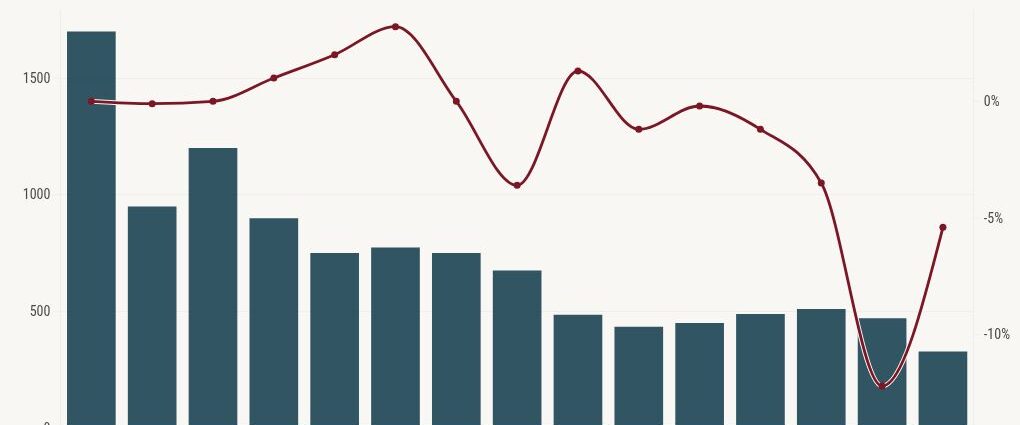
San Jose, California, leads AI-tech hub markets with a $1.75M median price — while Austin’s year-over-year decline was the largest.
Most tech hubs show positive growth, though Phoenix and Augusta, Georgia, also posted modest losses.
AI wealth concentrating in established hubs
The strongest housing impact from AI appears to be occurring where the highest-paid AI researchers, engineers and executives are concentrated.
The San Francisco-Oakland-Fremont market has seen active inventory fall nearly 20% year-over-year — with a median list price of about $1.2 million and relatively few sellers cutting prices compared with the national market.
Silicon Valley remains even more expensive, with a median list price near $1.7 million.
Seigler said the compensation packages being offered by leading AI companies are creating a new source of wealth in those markets.
“You’ve got outrageous compensation among the superintelligence labs, AI labs, and we’ve seen salaries over $1 million, and in some cases, signing bonuses in the 10s of millions,” he said. “That’s very likely a contributor. The AI, the influx of investment and the competitiveness for talent, absolutely, it has to be affecting the market.”
He added that some parts of San Francisco that had struggled during the pandemic-era office downturn are now on the upswing.
“There’s been a reversal where they were seeing a dip in some of the downtown areas, especially in San Francisco, that are now completely turned around,” said Seigler. “Considering that along with the AI investment is definitely interesting. With the salaries I mentioned, the signing bonuses, those folks are are buying and it shows [in the data].”
Austin shows AI growth doesn’t guarantee housing growth
Menard offered a stark assessment of where Austin stands relative to its recent pandemic-era peak.
“We’re in correction mode — looking at a median price down over 24% since it peaked in May of ’22, the steepest pullback of any major metro in Texas for sure,” he said. “We have five to six month’s supply. With days on the market, depending on what the submarket around Austin is, is between 60 and 75 days, whereas in 2021, we were at 10 to 14 days.”
The inventory picture in Austin has shifted dramatically. Menard said the city now has the highest inventory level in two decades — a product of aggressive building that began during the pandemic.
“We kept building, had all these new home communities that started getting approved, and they were all greenlit during COVID,” he said. “Now we’re building all that out, and we’ve actually built and permitted ahead of population growth. We all talk about the early 2000s, when money tightened up and how it contributed to a nationwide supply problem, and I think that’s largely true.
“But real estate’s a local business, and in Austin right now, we have a supply that’s more favorable for buyers.”
Seigler said one reason for the divergence between San Francisco and Austin may be the difference between markets where AI research is being created and markets where companies are using AI tools.
“They’re making products that run on those big LLMs and models that are made in the Bay Area. Plus, the Bay Area has a narrower, or a more high end, band of housing to buy.. Whereas in a market like Austin, you have the full range of housing prices. There are places you can live that are much more affordable in Austin, and then from there it goes all the way up to the top [price tier].”
Menard said AI-related investment in Austin is increasingly taking place far from the city’s core.
“The money’s flowing in, but it’s all going 30 minutes out of town into rural areas, into big warehouses,” he said. “As it relates to AI specifically, it’s more about land power and not office and residential, primarily. It hasn’t really done much for residential.”
Data centers bring new investment
Beyond traditional AI hubs, communities tied to data center construction are becoming another piece of the technology-driven housing story.
Markets such as northern Virginia and Dallas-Fort Worth have attracted major infrastructure investment, but Seigler said the housing impact may be more temporary than some expect.
“I don’t see it being a population boom or a long-term market effector,” he said. “When new data centers get built, it seems like the construction phase is a major influx where people need to move there. They are high-paying jobs for the most part — those that are involved in building a data center and fleshing it out and stuff. But once the data center is up and running, there’s very few people that actually work in the data center, and then so that’s more of kind of like a temporary thing.
“It’ll be interesting to see how long the data center boom continues. Will we end up seeing more efficient AI that requires less compute and less of an environmental footprint?”
Menard offered a note of caution about the sustainability of data center growth, pointing to emerging public resistance.
“Data centers are a recent lightning rod for controversy in their energy and water consumption and there is palpable pushback coming from the [residents],” he said. “People love the conveniences of AI, but they don’t want the data centers sucking up their resources. So, we’ll see how being receptive to those types of projects affects future growth and demand.”
Looking ahead, Menard said Austin’s longer-term prospects remain strong — particularly given its relative affordability compared with coastal tech hubs.
“A $500,000 home in Austin is right there in the median, and in Palo Alto that doesn’t exist,” he said. “A million-dollar home in Palo Alto is not anything grand, but in Austin it’s lovely, and you can live really well in Austin on a six-figure plus salary. You can enjoy a standard of living that you could not have on the east or west coast, with no sales tax and no state income tax.”
While some markets are benefiting from concentrated AI wealth and investment, others are absorbing infrastructure growth without significant housing gains.
As technology reshapes the economy, local conditions, affordability and supply will determine which communities ultimately benefit.

Fed dissenters warn inflation could become entrenched without monetary policy tightening now
The Federal Reserve left its benchmark interest rate unchanged this week despite three dissenting votes from Fed governors who would’ve preferred the central bank hike rates to help rein in stubbornly-high inflation, they explained on Friday.
The Federal Open Market Committee (FOMC), the Fed panel responsible for monetary policy moves, on Wednesday voted 9-3 to leave the federal funds rate unchanged at a range of 3.5% to 3.75%, where it has remained throughout 2026 so far.
The three dissenting votes were cast by Cleveland Fed President Beth Hammack, Minneapolis Fed President Neel Kashkari and Dallas Fed President Lorie Logan – each of whom raised concerns about inflation persisting above the central bank’s 2% target and said they would’ve preferred raising the federal funds rate by 25-basis-points.
Inflation trended lower in June but remains elevated from the energy price shock caused by the Iran war earlier this year, with the Fed’s preferred inflation gauge, the personal consumption expenditures (PCE) index, up 3.7% in June compared with a year ago.
FED POLICYMAKERS LEAVE RATES UNCHANGED AMID ELEVATED UNCERTAINTY
Federal Reserve Chair Kevin Warsh, who was leading his second FOMC meeting since being confirmed as the central bank’s leader, acknowledged the importance of returning inflation to 2% to restore price stability even as he said that he thinks holding rates steady was “especially prudent at these uncertain times.”
“Not one of my FOMC colleagues is under any illusion, we have begun a new chapter, and we understand that the five-plus years of inflation above target cannot be cured in nine weeks, or by a single month of modest price decreases. This Fed will not waver. Our credibility rests on performing our duties and delivering on our responsibilities,” Warsh said.
Here’s a look at key points made by the three dissenting FOMC members in their explanations of why they would’ve preferred the central bank hike rates at this week’s policy meeting.
FED’S FAVORED INFLATION GAUGE SHOWED PRICES PULLED BACK IN JUNE
Logan explained that inflation “does not appear to be on course to sustainably achieve” the Fed’s 2% target, adding that, “Every month of above-target inflation compounds the strain on the budgets of American families and businesses.”
“Even after accounting for productivity gains and temporary supply shocks, inflation appears to be trending toward the mid-2’s, not all the way to 2%, and the risks are to the upside,” Logan explained. She also noted the labor market is “solid and perhaps strengthening,” which eases concerns about the maximum employment component of the Fed’s dual mandate.
She added that conditions in the labor and financial markets, as well as consumer spending trends, suggest that “monetary policy is not restraining the economy. Without any policy restraint, inflation will likely continue to trend above target until there’s an unanticipated shock.”
“The FOMC cannot count on unanticipated shocks to achieve its goals and can always adjust policy if unanticipated shocks occur. Modest action in the near term would reduce the likelihood of needing to take sharper action later,” Logan said in explaining her preference for a rate hike.
FED CHAIR KEVIN WARSH SAYS CENTRAL BANK HAS ‘NO TOLERANCE’ FOR ELEVATED INFLATION
Kashkari discussed the similarities and differences between the current inflationary cycle and what the U.S. experienced in the 1970s with a series of successive supply shocks affecting commodities, food and energy markets; to the contemporary inflation caused by the pandemic, wars in Ukraine and the Middle East, and trade tension leading to higher tariffs.
While central bankers half a century ago initially thought they faced a single supply shock that could “look through” because it would pass on its own, they ultimately determined they needed to raise rates to curb the inflationary pressures, Kashkari explained.
“The economy today is in a much better place than it was then: unemployment is lower and inflation is much lower. But to manage against the risk that high inflation could become entrenched, I would rather tighten policy incrementally as we gather more data on the path of inflation and employment,” he wrote.
“If inflation remains elevated, in my view, a potential series of small policy moves would be better than waiting and eventually concluding that even bolder actions were necessary,” Kashkari said. “On the other hand, if inflation durably fades, a strategy of small policy steps would allow the FOMC to slow or pause subsequent adjustments without unnecessary impact on the real economy.”
BOFA CEO BRIAN MOYNIHAN DISMISSES RECESSION FEARS DESPITE WALL STREET’S MOST HAWKISH FED FORECAST
Hammack wrote that she is “not confident” that inflation will return to the Fed’s 2% target on its own, saying that the time is right for the central bank to take action to lower inflation as the “longer that high inflation persists, the more challenging and costly it can be to bring it back down.”
She noted that while energy price shocks have driven much of the inflation this year, she’s hearing from businesses in her Fed district that pricing pressures are “broadening rather than fading, and consumers are expressing despair over persistently higher prices.”
“Given the stability of the labor market, with the unemployment rate near my estimate of maximum employment, I view high inflation as the more pressing problem,” Hammock explained.
GET FOX BUSINESS ON THE GO BY CLICKING HERE
“A higher federal funds rate would help restrain economic activity and reduce inflationary pressures. I preferred to move at our recent meeting because I did not see the current policy stance as appropriately restrictive,” she wrote.

Amazon’s Cloud Blowout Carries Wall Street to a Winning Close as Apple Sinks and Bond Yields Hit 19-Year Highs
Stocks finished higher Friday on the final trading day of July, with a 13% surge in Amazon overpowering a sharp decline in Apple and a bond market that spent the week signaling it has lost patience with the Federal Reserve.
The Nasdaq Composite rose 1% to close at 25,373.85, the S&P 500 added 0.7% to finish at 7,489.72, and the Dow Jones Industrial Average gained 276.97 points, or 0.53%, to 52,485.03. The Russell 2000 climbed 1.37%.
The session capped a violent week. Wednesday brought the Dow’s worst single-day decline since April 2025, a drop of nearly 2.2%, after the Fed left rates unchanged and the Nasdaq slipped into correction territory more than 10% below its early-June high. Thursday reversed it, with the Nasdaq up 2.8% and Microsoft jumping 16% on Azure growth.
Market movers
Amazon was the story. Revenue rose 20% to $200.6 billion, while AWS revenue jumped 37% to $42.2 billion — the cloud unit’s fastest growth in 18 quarters. The stock surged nearly 13%.
Apple went the other way. Shares sank after the company issued weak guidance for the current quarter, citing supply constraints. The stock fell close to 10% as chip shortages raised costs and cut into June-quarter production. Services and Greater China revenue both came in short.
Chip names could not hold their opening gains. An 18% surge in South Korea’s Kospi, led by SK Hynix hitting its 30% daily limit, had chip ETFs up 3.3% in early U.S. trading. Micron, SanDisk and Qualcomm all reversed into losses of 3% to 6%. Netflix and Eli Lilly each fell about 3%, and ExxonMobil dropped 3% as limited refinery capacity kept the oil major from fully capturing the quarter’s crude gains.
Coinbase fell 4.5% and GoDaddy dropped 10.9% following their second-quarter results.
The bond market is the real story
The 30-year Treasury yield spiked to its highest level since 2007, closing up about four basis points at 5.25%. The 10-year topped 4.7%, the highest since January 2025.
The move reflects eroding confidence in Fed Chairman Kevin Warsh’s commitment to curbing inflation. Warsh said this week that the central bank has no magic wand. Long-dated yields at 19-year highs are the market’s answer.
Commodities
Oil moved higher as Strait of Hormuz traffic began to falter following renewed hostilities. WTI traded near $85 a barrel and Brent reached $90. Wednesday’s escalation had already pushed Brent up 6.6% in a single session to $89.61 after the president said the U.S. would strike Iran in retaliation for an attempted attack on American forces.
July in the books
All three major indexes ended the week higher but closed July with monthly losses, reflecting the AI-linked selloff that ran through the month. The Philadelphia Semiconductor index fell more than 20% in July, its worst month since the housing bubble collapsed in late 2008. The Dow, however, posted its fourth straight winning month.
Beneath the chip wreckage, participation broadened. The S&P 500 equal-weighted index is on track for a fourth consecutive monthly gain. The share of S&P 500 components trading above their 200-day moving average reached 73% earlier this week, the highest since December 2024.
The capital spending question that drove July’s selling now has an answer. Amazon, Microsoft, Meta and Alphabet together project $720 billion to $745 billion in capital projects for 2026. Investors spent the month worried that spending was outrunning returns; Amazon’s cloud numbers gave them a reason to stop worrying, at least into the weekend.
Higher energy and gasoline prices have squeezed household budgets, though the University of Michigan’s latest reading showed a broad improvement in consumer sentiment.
Monday brings the ISM Manufacturing PMI for July, along with earnings from Marriott, Palantir, Vertex Pharmaceuticals, Williams Companies, ONEOK and Diamondback Energy.
JBizNews Desk | Wall Street
© JBizNews.com All Rights Reserved. Reproduction or distribution without written permission is prohibited.

Low Danube Levels Disrupt Cruises, Freight and Power Across Central Europe
By Julia Parker – JBizNews Desk
VIENNA — Record-low water levels on the Danube have stranded vessels, disrupted river cruises and forced cargo shippers and power producers across Central Europe to curb operations, adding costs for tourism, agriculture and energy companies already dealing with weak demand and volatile prices.
A cruise ship on the river ran out of food and drinking water after falling water levels left it unable to continue normal operations, underscoring the commercial strain on one of Europe’s busiest inland transport routes. Operators have been forced to reroute passengers by bus, reduce itineraries or wait for water levels to recover.
The Danube is a critical trade corridor for grain, fuel, metals and industrial goods moving between Germany, Austria, Hungary, Serbia, Romania and the Black Sea. When water levels fall, barges must sail with lighter loads or stop altogether, raising transport costs per tonne and creating delays for exporters and manufacturers.
The disruption is also hitting the tourism industry. River cruises are a high-margin business for operators and a significant source of spending for hotels, restaurants and local tour companies along the Danube. Low water levels can quickly turn scheduled cruises into partial land tours, increasing refund risk and operating expenses.
The drought has exposed World War II-era bombs and old shipwrecks along parts of the river, creating additional navigation and safety hazards. Authorities in affected countries have had to monitor dangerous debris and unexploded ordnance, complicating efforts to keep commercial traffic moving.
Energy producers are facing a separate constraint. At some nuclear and thermal power sites, low river flows and warmer water have reduced the ability to use and discharge cooling water within environmental limits, forcing temporary output cuts. That can tighten power supply and increase reliance on more expensive generation at times of high demand.
The severity of the dry spell reflects a broader pattern of water stress across Europe, where heat waves and below-average rainfall have increasingly affected inland shipping, hydropower and agriculture. “We haven’t analysed fully the event because it is still ongoing, but based on my experience I think that this is perhaps even more extreme than in 2018,” said Andrea Toreti, a senior researcher at the European Commission‘s Joint Research Centre.
For companies, the immediate risk is higher logistics expense and delivery uncertainty. Barges are typically cheaper than rail or road transport for bulk goods, but low-water restrictions can force shippers to pay for alternative routes, split cargoes into smaller loads or delay deliveries.
Agricultural exporters are among the most exposed. The Danube connects major grain-producing regions to Black Sea ports, and any reduction in river capacity can affect shipment timing, storage needs and contract performance. Industrial customers also face cost pressure when raw materials such as coal, iron ore or petroleum products cannot move efficiently.
The impact on earnings will depend on how long the low-water conditions persist. Cruise operators can absorb short disruptions through schedule changes, but prolonged restrictions would increase compensation costs and weaken seasonal revenue. Utilities and manufacturers face similar exposure if transport bottlenecks or cooling-water limits extend into peak demand periods.
Governments are likely to face pressure to accelerate river maintenance, dredging and climate-adaptation spending. For business owners and investors, the latest disruption highlights that water levels on Europe’s inland waterways are no longer only an environmental issue; they are a recurring operational and pricing risk.
JBizNews Desk | Vienna
© JBizNews.com All Rights Reserved. Reproduction or distribution without written permission is prohibited.


Musical band Massive Attack members barred from Singapore after displaying Palestinian flag
Two members of Massive Attack were issued with stern warnings and barred from re-entering Singapore after the British band ended their performance on Wednesday with a display of the Palestinian flag, according to local media reports.
Authorities said the band were investigated for their “actions of support for a political cause and unfurling of a foreign flag,” during the band’s concert, reports said.
The Infocomm Media Development Authority also said it is investigating the possible breach of a number of license conditions and will take “necessary action” when investigations are completed, reports added.
Singapore does not allow the public display of foreign national emblems without a permit or exemption, and the Palestinian flag is especially sensitive given the war in Gaza and Singapore’s Muslim population.
In 2023, the home affairs ministry said: “The ongoing Israel-Hamas conflict is an emotive issue. We would like to advise against the public display and wearing of articles in relation to the conflict, given the heightened sensitivities.”

Singapore Home Affairs Ministry emphasizes the need to preserve peace and harmony
“The peace and harmony between different races and religions in Singapore should not be taken for granted, and we must not let events happening externally affect this peace and harmony we have in Singapore.”
Singapore’s resident population is 74% Chinese, 13.6% Malay, and 9% Indian, with 3.3% classified as others. Around 15% are Muslim.
Massive Attack, formed in Bristol in the west of England in 1988, are known for their outspoken political stances, with videos during their concert highlighting conflicts from the U.S.-Israeli war on Iran, to Sudan, Gaza and Ukraine.
Neither the concert organizer Lushington nor the band immediately responded to a request for comment.
The toughest job in Israeli diplomacy awaits in London – opinion

A month before the 2013 election, Prime Minister Benjamin Netanyahu was asked a softball question in an interview with the German newspaper Die Welt.
“If we look at all the threats that Israel faces, why would anyone in the world want your job?” asked interviewers Cornelius Tittel and Clemens Wergin. “It seems to be the toughest job in the world.”
Netanyahu laughed as he answered it, apparently pleased that he got such a question he would never be asked by any Israeli media outlet that existed back then.
“It’s a good question, but apparently not enough people are asking it because quite a few people would like to have [my job],” Netanyahu said.
He then used the question to remind German readers about the Holocaust, segue to Iran, and then warn about the dangers of the narrative war.

“In our history, including on the soil of Europe, we had a regular pattern,” he said. “First the Jewish people were maligned, then they were attacked. And the maligning, the vilification served as the legitimization for the attacks that followed. In many ways, this is what is happening to the State of Israel. It is vilified again and again in public opinion, including in European public opinion, to prepare the attacks. And people don’t know the facts.”
What Netanyahu said back then rings true even more today, as the maligning and vilification that reignited after Oct. 7 rages on.
But I disagree with the interviewers. I think there is a job even harder than Israel’s prime minister: Ambassador of Israel to the UK.
And that job is held now by… technically, no one. Tzipi Hotovely left the post nearly a year ago, and the role is not expected to be filled any time soon.
Netanyahu tried to gift the job to his loyal chief of staff, Tzachi Braverman, and the cabinet approved the nomination in September, but the appointment is on hold indefinitely, as British authorities will not approve it while a legal cloud hangs over Braverman’s head.
Attorney-General Gali Baharav-Miara said she intends to indict Braverman, pending a hearing on charges of obstruction of justice, fraud, and breach of trust in the Feldstein-Bild Affair. He is also suspected of having altered the stated time at which Netanyahu first received an update on the morning of Oct. 7.
A new ambassador will not be appointed until the next government is formed after the Oct. 27 election – and, perhaps, as is looking increasingly likely – after another election or two after that.
Seasoned diplomat began as charge d’affaires at London embassy
THE GOOD news is that meanwhile, a new chargé d’affaires arrived at the embassy on Monday, and he is a seasoned diplomat who speaks English. He is Christian Cantor (yes, Christian), and he has served as ambassador to Colombia and in diplomatic postings in Australia, Guatemala, and London, where he was a political counselor for five years at the embassy that he will now head de facto.
Cantor will be in charge of representing Israel to the new government of Prime Minister Andy Burnham, dealing with the scourge of antisemitism, and impacting the dangerously biased British media. Each of those responsibilities ranges from extremely difficult to borderline impossible.
Shortly before becoming prime minister, Burnham apologized for his Labour Party’s policies on Israel and Gaza, and pandered to his progressive wing in an interview with The Guardian, a biased, anti-Israel newspaper.
“I know many people feel that at the start of Israel’s military action in Gaza, my party didn’t get it right, and I am sorry about that. The response has too often not been good enough. We need to do better,” he said.
“We’ve got to do more to put pressure on the Israeli government… Yes, we have taken some important steps… But let’s be honest, the UK was too slow to call for a ceasefire. And we must now do more to strengthen our approach.”
Upon becoming defense secretary, Wes Streeting immediately accused the IDF of falling short of UK military standards. Writing in The Jewish Chronicle, Andrew Fox, who served in the British Army for 16 years, compared what the IDF did in Gaza to what the British did in Afghanistan, and pronounced Streeting guilty of slander.
Burnham’s new solicitor-general, Andy Slaughter, has been accused of showing sympathy for Hamas after pictures resurfaced from 2010 of him smiling with its leaders alongside Jeremy Corbyn. And even outside the government, Green Party leader Zack Polanski has displayed an unhealthy obsession with Israel, even though he’s Jewish.
London Mayor Sadiq Khan told Channel 4 News that Britain would enforce the International Criminal Court arrest warrant against Netanyahu, saying that “anyone accused of genocide must face justice” and that he would work with Burnham to “enforce the law” if Netanyahu comes to London.
Sounding like the equally confused mayor of New York, he added: “People who commit genocide are not welcome in London.”
Khan, however, does not take action to stop London’s streets from being filled with weekly antisemitic hate marches. The Palestine Solidarity Campaign claims that more than 100,000 marched on Downing Street, demanding that Burnham immediately stop arms trades with Israel and impose sanctions.
Rising explicitly anti-Zionist incidents in UK
The Community Security Trust (CST) recorded 3,700 antisemitic incidents in Britain during 2025, the second-highest annual figure since the CST began recording, and more than twice the 1,662 incidents recorded in 2022, the last full year before Oct. 7. In at least 1,766 of the incidents, the motivation was explicitly anti-Zionist.
Two Jews were murdered in the antisemitic terrorist attack at Heaton Park Synagogue in Burnham’s Manchester, last Yom Kippur. The intent was the same in April 2026, when two Jewish men were stabbed in London’s predominantly Jewish Golders Green neighborhood.
Campaign Against Antisemitism polling reported in February 2026 that 96% of British Jews felt less safe than before Oct. 7, 59% avoided displaying visible signs of Jewish identity, and 61% had considered leaving Britain during the previous two years due to antisemitism.
The CST recorded 272 university-related antisemitic incidents in the 2023-2024 academic year, compared with 53 in 2022-2023, an increase of more than fivefold.
“There I was, an 18-year-old on my first day of university, crying on my bed. I could not understand what I had done to deserve such hatred,” Students Supporting Israel President at King’s College Tali Smus wrote in a heart-wrenching article in The Telegraph about how she was persecuted for not hating Israel.
As for the media, there had been hope that the BBC would become less biased against Israel following the long-awaited firing of Director-General Tim Davie and CEO of News Deborah Turness in November, and the introduction of compulsory antisemitism training for staff. But it’s not getting any better.
The first article for Cantor to deal with could be the awful one in last weekend’s Sunday Times with the headline “My son was on my wife’s lap when the IDF shot him dead,” and the sub-headline, “In a land besieged by settler terror, baby Sam is one of 259 Palestinian children killed since the atrocities of Oct. 7.”
Media watchdog HonestReporting called out The Guardian for adopting Palestinian propaganda by writing in a headline that on Tisha B’Av “Jewish extremists stormed al-Aqsa mosque compound.” The Committee for Accuracy in Middle East Reporting and Analysis slammed The Guardian for referring to Hebron as Islam’s fourth holiest city while failing to mention that it is Judaism’s second holiest.
It has only gotten harder since Netanyahu lamented European public opinion in that interview with Die Welt: “Can they seriously tell us you have no connection to these areas? These areas where Abraham, Isaac and Jacob walked, where my ancestors walked, where Jews have been for thousands of years?”
Christian Cantor will have to deal with all this and so much more. Good luck, Christian! No one envies you.
The writer served as the chief political correspondent and analyst of The Jerusalem Post and executive director of HonestReporting, and has lectured about Israel in all 50 US states.
Damietta port drone strike proves Egypt can’t hide from regional war – analysis
Egypt’s cabinet said Thursday that a drone caused a fire aboard two vessels at Damietta port, after initial accounts from Egyptian security sources disputed reports that the fire was caused by a drone strike.
“Following the containment of the fire that affected two vessels at Damietta Port, preliminary investigations by the relevant authorities determined that it was caused by a drone,” the cabinet said in a statement.
The fire occurred Wednesday, July 29. No party has claimed responsibility, the cabinet said, and investigations are continuing. The statement said Egypt was taking “the necessary measures” to safeguard its interests and national security. It did not say where the drone originated from.
Hany El-Aasar, executive director of the National Center for Studies and a researcher specializing in security and military affairs, said the attack marked a departure for Egypt. “The Damietta incident is clearly deliberate and intentional,” El-Aasar told The Media Line. He said the attack severely damaged Egyptian economic interests, even though the vessels were not Egyptian. “It also detracts from the legitimacy of the political system, which rests on protecting and securing the state,” he said.
Egypt suspects Houthi involvement
El-Aasar said Egyptian intelligence was considering every possibility, but he assessed that the available evidence pointed most strongly to the Houthi movement. He cited the group’s assessment of Egypt’s response to its escalation against Saudi Arabia and how far Cairo might go to police Red Sea shipping. “The group functions as Iran’s military arm, and that shaped a strike aimed at American interests,” El-Aasar argued. However, he also said Iran likely did not order the attack because Tehran did not want new enemies or to jeopardize its improved relations with Cairo.

Days before the strike, Damietta appeared on a map of potential targets broadcast by Iranian state television, under the headline “What could be the targets of Iran’s revenge against Ukraine?” The accompanying text described the port’s liquefied natural gas (LNG) facility as having an annual capacity of 5.2 million tons and serving as a gateway for gas exports to Europe. Iranian media had said openly that Tehran would retaliate by striking targets connected to oil and gas shipments to Europe.
The broadcast followed a Ukrainian drone strike on July 25 against vessels in the Caspian Sea. Kyiv said it had targeted a Russian warship and ships carrying Iranian-linked military cargo. Iran said one of the vessels hit was the civilian cargo ship Anna, and that a sailor was killed. Foreign Minister Abbas Araghchi called the attack a violation of the UN Charter and said it “cannot go unanswered.”
The two countries’ foreign ministers spoke on July 28. Araghchi wrote afterward that Ukraine’s Andrii Sybiha had assured him the attack was unintentional. “Iran does not seek escalation either but made clear any attack on our citizens or interests is unacceptable.”
Damietta was struck the following day.
Egypt’s Petroleum Ministry said Wednesday that a fire had broken out aboard a regasification vessel and a storage vessel at Damietta and was brought under control with no casualties reported. The ministry did not initially give a cause and urged news outlets and social media users to rely only on its official statements.
British maritime security firm Ambrey said Wednesday that at least one drone had struck the US-owned, Marshall Islands-flagged floating storage and regasification unit Energos Winter, and that fire spread to a second vessel, the Greek-owned Gaslog Salem. The attack occurred at 14:20 GMT.
“The cabinet’s promised measures amount to a forensic exercise,” El-Aasar said. “They will establish responsibility and motive, assess whether the weapon matches the suspected party’s known arsenal, determine how it got through, and review security at Egyptian ports and other critical facilities.”
Drones previously struck the Egyptian towns of Taba and Nuweiba in October 2023, injuring six people. Egypt’s military said they came from the southern Red Sea but did not identify who launched them.
El-Aasar said Cairo viewed the previous incident as accidental spillover because the Houthis were targeting Israel. He expected the government to describe the Damietta attack in terms that avoid drawing Egypt into the US war with Iran.
Egypt may escalate diplomatically
Talaat Taha, a political analyst and expert on Arab affairs, expected a tougher response. Egypt would stay out of the war, he told The Media Line, but could take the case to the UN Security Council, escalate diplomatically, or strike the responsible party.
“Egypt can keep things under control without triggering a regional war,” he said.
If Iran were found responsible, Taha said, Cairo’s diplomatic opening with Tehran would end. “Egypt and Iran would go back to zero,” he said. “That file would close, and we would be back to square one.”
However, in his view, relations with the Gulf would strengthen in the wake of such an attack. “Our relations with the Gulf states are strong, and Gulf security is part of Egypt’s security,” he said, noting that Egypt had already paid a high price for Houthi attacks on Red Sea shipping. “We have suffered heavy losses from the pressure on the Suez Canal,” he said.
Egyptian Foreign Minister Badr Abdelatty urged his Iranian and Omani counterparts on July 25 to halt all escalatory action. He had told Bloomberg two days earlier that the US-Iran crisis was bridgeable.
The attack may reduce Egypt’s LNG import and regasification flexibility rather than its export capacity, although the operational consequences remain unclear. The affected vessels were reported damaged and operations at Damietta disrupted, while the government said the port was operating normally.
“It’s mainly symbolic,” Elai Rettig, an assistant professor in the Department of Political Studies at Bar-Ilan University who specializes in energy geopolitics, told The Media Line. “Egypt has barely exported any LNG through its two facilities in Idku and Damietta since 2024. It suffers gas shortages, especially during the summer months, and has become a net importer of LNG. So, there’s no effect for Europe.”
Damietta last loaded a major LNG export cargo in 2023. Egypt has been a net importer of liquefied natural gas since late 2024 and imported a record 8.92 million tons in 2025. The Energos Winter is one of four floating regasification units Egypt uses to meet summer demand.
Israeli gas once reached international markets through Egypt’s liquefaction plants, which Iran could use to present the strike as aimed at Israel. Rettig called that “a rather weak claim since that hasn’t happened in the past two years, and currently Damietta is used more for LNG imports.”
“So, Iran hasn’t damaged Israel at all,” he said. “It only damaged Egypt’s energy security.”
On July 28, Eni and TotalEnergies approved the Cronos gas project off Cyprus, creating a future source of LNG exports for Damietta. Starting in 2028, Cypriot gas is expected to be processed in Egypt and liquefied at Damietta for shipment mainly to European markets, helping restore the terminal’s export role.
Prof. Brenda Shaffer, an energy expert at the US Naval Postgraduate School, told The Media Line that Tehran will most likely pick its next targets “by opportunity, rather than a calculated choice,” and that “energy and gas facilities around the globe need to raise their security alert level.”
Shaffer, who attributes the strike to Iran, reads it as an effort to raise global oil prices and exacerbate LNG shortages to pressure President Trump ahead of the US midterm elections. She said Egypt “demonstrated flawed defense of critical energy infrastructure,” and called the strike a wake-up call for Egyptian defense in general.
An Abu Dhabi security source told The Media Line that the strike ended Egypt’s insulation from the war and reset the regional threat map, and that targeting now follows US-linked economic and energy assets “regardless of the host nation’s political posture.” The source said that “Staying out has been exposed as a political preference, not an operational reality.”
In April, Anwar Gargash, diplomatic adviser to the UAE president, praised Egypt and several other Arab states for supporting the UAE during Iranian attacks. Egypt condemned the attacks and reportedly deployed air-defense systems and military personnel to Saudi Arabia, the UAE and Kuwait.
The Damietta Port Authority said Thursday that the port was fully operational. “All terminals and berths are operating normally, with vessels continuing to arrive and depart, alongside ongoing loading, unloading and cargo-handling operations at the targeted operational rates,” the authority said. The port “continues to provide maritime and logistics services around the clock without interruption,” it said, and cargo handling was proceeding normally across all sectors “in accordance with approved operational plans.”
Trump says US campaign against ICC is aimed at protecting Netanyahu, others
US President Donald Trump said on Friday that a US campaign to dismantle the International Criminal Court was intended to defend Israeli Prime Minister Benjamin Netanyahu and others from prosecution, not himself.
Trump made the comment after Secretary of State Marco Rubio told a cabinet meeting at Camp David that five countries had announced plans to quit the court since the United States launched a campaign earlier this month against what it says is a threat to US sovereignty.
“There’s no information that they’re after me,” Trump said.
“It could happen, but just so you know … he (Rubio) is not trying to defend me. He’s trying to defend Bibi and various other people,” Trump said, using Netanyahu’s nickname. “But there are many people that shouldn’t be looked at that way. But there is no indication that I’m one of them at this moment.”
Rubio responded that the people in biggest danger were US service members, who he said could face prosecution years later over their actions in war.

ICC can prosecute non-member nationals for crimes in member states
The ICC was established in 2002 by the international community to prosecute war crimes, genocide and crimes against humanity. It asserts jurisdiction only if a member state is unable or unwilling to prosecute atrocities itself.
The United States has never been a member of the court.
However, the ICC statute also gives the court the power to prosecute atrocity crimes committed on the territory of member states by nationals of non-member states.
Trump’s opposition toward the court goes back to his first term. It surfaced again with a plan to penalize ICC officials, an idea developed in November 2024 when Trump was reelected and the ICC issued an arrest warrant for Netanyahu for alleged war crimes and crimes against humanity in the Gaza conflict.
Rubio earlier this month denounced the court based in The Hague, citing calls from activists for the ICC to investigate US personnel over actions like the deportation of migrants or US strikes on boats that officials say are carrying narcotics.
The Trump administration has said it would lobby other countries to leave the court and use travel bans and further sanctions against the ICC and affiliated organizations to try to undermine the court, which is being opposed in the courts by ICC judges and US advocacy groups which accuse the administration of violating their free speech rights.
Which mast do we tie ourselves to? – opinion
I owe Homer, the author of The Iliad and The Odyssey, an apology.
Millions of people have flocked to Christopher Nolan’s 2026 adaptation of The Odyssey. Within days of its release, it became one of the year’s biggest box office successes, despite running more than three hours. Like so many others, I found myself sitting in the theater expecting to watch the story of Odysseus’s long journey home.
Instead, I spent much of the film thinking about Israel.
Homer, I suspect, would not have appreciated my divided attention. Then again, tradition tells us he wrote these great works 2,700 years ago, so perhaps I have nothing to worry about. However, if you have never read Homer’s works or seen the movie, then a “spoiler alert” is in order, so maybe I do need to worry.
One scene has refused to leave my mind.

As Odysseus, the hero, approaches the island of the sirens, he understands something profound about human nature: the danger is not that his crew lacks courage or intelligence; the danger is that the sirens promise exactly what each sailor most longs to hear. Their songs are irresistible. Ship after ship is drawn off course and smashed against the rocks.
The sirens are not merely tempting him toward pleasure. They force him to confront his deepest regrets, his guilt, and his most impossible longings.
Odysseus knows that when he hears the voices, he will no longer trust his own judgment.
So, he prepares before the temptation arrives.
He orders his crew to fill their ears with wax so they cannot hear the songs. He orders them to tie him tightly to the mast. Most importantly, he gives them one final command: no matter what I say, no matter how desperately I beg, no matter how convincingly I plead, do not untie me until we have safely passed through these waters.
He knows that his future self cannot be trusted.
Watching that scene, I couldn’t help thinking that Israel today is sailing through its own sea of sirens and dangerous waters. How many of us long for peace and simple solutions to the complex realities of our situation here in the Holy Land?
I have participated in many TV panels in the last months in which my fellow panelists, very impressive people, have expressed unrealistic, shockingly simplistic views on the highly complex challenges of our situation.
Without the needed wax in my ears, I squirm in my chair, and then wonder what life would be like if their view of the world could materialize.
Then I snap back to reality and remember that our history has shown that if we accept their analysis, and in a metaphorical sense listen to the sirens, we will be crashing into the rocks rather quickly.
Our sirens and pundits of the simple solutions are broadcasting to us constantly while the complexities of the situation would make any international relations professor’s head spin. The songs include tempting, attractive illusions of a new Middle East based on peaceful cooperation backed by paper agreements and new accords.
Not to forget that our detractors have manipulated the songs of sirens to include twisted messaging echoed not only abroad, but here in Israel as well.
Like many of us, these tempting thoughts are confusing, so I look to the wisdom of our elders for direction, remembering the famous Tractate of Eretz Rabbah of Rabbi Yehoshua: “Always regard people as though they might be robbers, yet honor them as you would Rabban Gamliel.”
Answering the real question
This week alone, Prime Minister Benjamin Netanyahu flew to Washington to discuss Iran, ceasefires, nuclear ambitions, proxies, and an increasingly unstable Middle East. Iranian missiles and drones continue to threaten Israel and our regional partners. Hamas has not disappeared. Hezbollah has not disappeared. The Houthis continue their attacks.
The strategic waters and ominous rock formations surrounding Israel are as dangerous as they have been in decades.
At the very same time, Israel is entering another election season.
Political parties are preparing campaigns. Advertising agencies are crafting emotionally powerful messages. Consultants are testing slogans. Television panels, newspaper headlines, podcasts, social media feeds, and endless commentary compete for our attention every waking hour.
Every day Israelis are bombarded with thousands of competing messages.
Some tell us to be afraid. Some tell us to be angry. Some tell us whom to blame.
Some promise simple solutions to impossibly complex problems.
Some insist salvation lies just one election away. Others insist catastrophe is inevitable unless we follow them.
Unlike Odysseus’s crew, however, we cannot simply put wax in our ears.
We cannot ignore the news when our sons and daughters are serving in the IDF.
We cannot ignore missile warnings. We cannot ignore terrorism.
We cannot ignore the ominous strains percolating across Israeli society.
We cannot simply disconnect from reality.
Which leaves us with a different question: If wax in our ears is not a viable alternative… to which mast do we tie ourselves?
Every Israeli, consciously or not, has already chosen one.
Some tie themselves to faith, believing that whatever storms lie ahead, God remains with the Jewish people.
Others tie themselves to a political worldview, convinced they already know who is responsible for every crisis and who alone can solve it.
Some tie themselves to their families, deciding that their first and only responsibility is protecting those closest to them.
Others tie themselves to Zionism itself, to the conviction that despite every disagreement, the existence and future of the Jewish state transcend today’s political battles.
Still others tie themselves to hope, to resilience, military strength, democracy, or to something else entirely.
The point is not that every mast is equally strong; they are inherently personal. The point is that none of us can navigate these waters without tying ourselves to one.
Perhaps that is why another moment from the film stayed with me.
After surviving the sirens, one of Odysseus’s companions asks him what he heard.
His answer is haunting: he says that the sirens sang of everything he had ever wanted, everything he had ever dreamed of, everything he thought would finally satisfy him. And perhaps, everything he should never have wanted in the first place.
That may be the most timeless lesson of all: the greatest dangers rarely announce themselves as dangers; they arrive disguised as certainty.
As validation.
As the promise that someone finally accepts our view of the world.
As the assurance that every complex problem has a simple answer.
This illusion is perhaps the strongest explanation of the mindset our security leadership had on October 6.
Israel is navigating extraordinarily dangerous waters. The rocks are real. The currents are strong. The voices calling from every direction are louder than ever.
The question is no longer whether we will hear them.
We will.
The real question is this: When those voices promise us everything we have ever wanted to hear… to which mast will you tie yourself?
Because eventually all of us, every Israeli, must answer that question.
All of our answers affect our collective future as we are all truly in the same boat, sailing across these challenging waters.
What will you choose?
The writer is a global strategist and a strategic adviser at the Jerusalem Center for Security and Foreign Affairs. He can be reached at globalstrategist2020@gmail.com.


Dollar Heads for Worst Week in Three Months as Fed Confidence Wavers
The U.S. dollar is on track for its worst weekly performance in three months after investors questioned whether the Federal Reserve will raise interest rates again, despite inflation remaining above its target. Markets have responded by selling the dollar and shifting into other major currencies.
The change in sentiment followed this week’s Federal Reserve meeting, where policymakers left interest rates unchanged. While three officials dissented in favor of tighter policy, investors focused on the absence of a clear signal that additional rate hikes are imminent.
A weaker dollar has broad effects across the economy. It can make imported goods more expensive for American consumers, increase costs for businesses that rely on overseas suppliers, and lift commodity prices that are priced globally in U.S. dollars. At the same time, it can improve the competitiveness of U.S. exporters by making American products less expensive overseas.
Currency markets also reflected the shift. The euro, British pound and several commodity-linked currencies strengthened against the dollar as traders reduced expectations for additional Federal Reserve tightening and repositioned portfolios ahead of fresh economic data.
Attention now turns to upcoming employment and inflation reports, which could quickly change expectations for the Fed’s next move. Stronger-than-expected data would likely support the dollar, while signs of a slowing economy could extend its recent decline.
JBizNews Desk | Wall Street
© JBizNews.com All Rights Reserved.
Reproduction or distribution without written permission is prohibited.
Regulators move to narrow CRA, drawing fire from advocates
Federal banking regulators released a Community Reinvestment Act (CRA) proposal Friday that narrows how banks earn credit for community development while raising asset thresholds for small and midsized institutions. The plan drew immediate criticism from consumer and housing advocates.
The Federal Deposit Insurance Corp. (FDIC) and the Office of the Comptroller of the Currency (OCC) issued a notice of proposed rulemaking (NPR) that they say is designed to refocus on the statutory objectives, ensure grants reach communities, cut compliance burdens and provide greater clarity around CRA evaluations. Comments are due 60 days after publication in the Federal Register.
Under the proposal, banks would still be evaluated under performance tests tied to their size, business model or an approved strategic plan. But the framework would more explicitly center on lending activity — which the agencies said is how a community’s credit needs are best met — while moving away from deposit products.
Lindsey Johnson, president and CEO of the Consumer Bankers Association (CBA), said in a statement that banks should receive CRA consideration for “responsibly providing loans, investing in their communities, supporting affordable housing, financing small businesses, and helping consumers achieve financial security.”
Johnson added that CBA “firmly believes that any new CRA rule should be finalized with the intention of establishing a durable regime with objective approaches grounded in statute that will last through administration shifts.”
Stricter grants
A central point of contention is how the proposal treats community development (CD) grants and operating support. The FDIC and OCC want to tighten CRA credit so that dollars are more clearly tied to projects where community development is the primary purpose.
For large banks with more than $10 billion in assets, the proposal would cap at 15% the share of a grant or donation that can be used for indirect or administrative costs by the recipient.
David M. Dworkin, president and CEO of the National Housing Conference (NHC), called the proposal’s approach to grants and operating support “particularly concerning.” He said it would restrict CRA consideration for private-sector operating support and likely reduce funding for Community Development Financial Institutions (CDFIs), affordable housing organizations, homeownership counselors, fair housing groups and other nonprofits.
“These organizations play an essential role in helping families achieve homeownership, expanding access to affordable housing, combating housing discrimination, and ensuring that community development investments deliver lasting results,” Dworkin said in a statement.
Higher asset thresholds
The proposal would significantly increase the size thresholds that determine how banks are evaluated under CRA.
- Small banks: Less than $1 billion in assets, up from $250 million
- Intermediate banks: $1 billion to $10 billion in assets
- Large banks: More than $10 billion in assets, up from $1 billion
Banks with less than $10 billion in assets would face fewer data collection, maintenance and reporting requirements. In addition, regulators propose to evaluate only a bank’s “major product lines” — e.g., home mortgages, small-business loans and consumer loans — rather than every category, to better tailor the lending test.
The proposal also would codify a preapproval process that allows institutions to seek confirmation from regulators that a specific community development program or initiative will receive CRA consideration before committing funds.
Jesse Van Tol, president and CEO of the National Community Reinvestment Coalition (NCRC), said the proposal “weakens banks’ obligations to invest in working-class communities and threatens to undermine the affordable housing gains in the 21st Century Road to Housing Act entirely.”
“Banks will face weaker exams, get credit for projects with little connection to low- and moderate-income communities and gain more control over where and how they are evaluated,” Van Tol said in a statement. “CRA is supposed to put a thumb on the scale for working-class people; now it lets hundreds of banks off the hook, and dramatically reduces the obligation for others.”
The new proposal represents a sharp pivot from the broad CRA modernization rule the FDIC, OCC and Federal Reserve finalized in October 2023. That rule sought to overhaul assessment areas to reflect digital delivery channels, introduce new retail lending and community development tests, and standardize metrics across agencies.
Industry trade groups strongly opposed the 2023 framework, arguing it was overly complex, expanded CRA beyond its statutory intent and would be costly to implement.
In February 2024, the Texas Bankers Association and other plaintiffs sued to block the rule, claiming regulators exceeded their legal authority. A federal judge issued an injunction in March 2024, halting implementation and effectively reverting CRA enforcement to the longstanding 1995 framework.

Confronting the oldest hatred in its newest forms – from the editor

Some say that antisemitism is the world’s oldest form of racism. No one can quantify if that is true or not, but the reality is the world has become a scary place for Jews since the Hamas-led massacres on October 7, 2023.
Whether you love Israel, support its government, or believe its actions in Gaza in this war are justified or not, Jews are prime targets of hate and antisemitic incidents, which are surging everywhere.
Attacks against Jews come in many guises. From Australia to Britain, France to the US and Canada, some have been deadly, while others more nuanced – Jews erased from certain industries, challenged about their views, or forced to hide their identities to stay safe.
In this edition of The Jerusalem Report, we look at the resurgence of this age-old hatred and hear from top professionals combating it.
For the cover story, David Harris, executive vice chair of the Institute for the Study of Global Antisemitism and Policy (ISGAP), lays out how the organized Jewish world must view antisemitism as an extension of Israel’s war.
The Jerusalem Post’s editor-in-chief, Zvika Klein, asks why, after the billions spent on fighting antisemitism, this phenomenon is still growing. Kenneth Jacobson, deputy national director of the Anti-Defamation League, shares the latest data on the scourge.
Jeffrey Veidlinger, director of the Raoul Wallenberg Institute at the University of Michigan, argues it’s time for US colleges to better distinguish between protected political protest and antisemitic intimidation or criminal conduct by employing clear legal standards
On a global level, Ben Cohen, director of Rapid Response at the Foundation for Defense of Democracies in Washington, looks at the pervasive blood libel being wielded against Jews in international institutions.
Israeli author and online activist Hen Mazzig, at the forefront of the digital fight to counter antisemitism, recounts his personal experiences, while Report staff writer Chani Kaplan tells about her first-hand experience monitoring online Jew-hatred.
Feature writer Lianne Kolirin sums up the relentless antisemitism in the United Kingdom and The Post’s correspondent Mathilda Heller delves into the lives of British Jewish college students who have been abandoned by their institutions.
Feature writer Batsheva Shulman talks to South African Jews about what they’ve gone through since October 7, and Neville Teller explores the roots and validity of “intersectionality.”
Egyptian dissident Dalia Ziada, a research fellow at ISGAP, writes about the rampant – and unchallenged – Jew-blaming in the Arab world.
The Post’s Lara Sukster Mosheyof takes us back to an era of antisemitism through the eyes of Zevi Ghivelder – one of the few journalists still alive who covered Adolf Eichmann’s 1961 trial.
Looking at the ongoing war, Eric R. Mandel writes about the role Syria could play in emerging diplomacy, and Israel’s former deputy foreign minister, Danny Ayalon, and Moran Alaluf, a Middle East analyst, examine the diplomatic miscalculations by America vis-à-vis Iran. Feature writer Dana Ben-Shimon explains recent developments in Jordan, which recently brought back the death penalty.
Wrapping up the edition are two articles from students who participated in the “Art of Journalism” workshop at Reichman University’s School of Communications: Ben Kauschansky explores the trend of Israelis moving to Germany 80 years after World War II, while Noa Jeifetz writes about integration challenges facing young olim.
It’s another packed edition, putting the urgent issues facing the Jewish world and the Middle East into perspective.
– Ruth Marks Eglash
Bishara Bahbah says Hamas proposes 10 year ceasefire and disarmament – interview
Hamas has signaled an unprecedented willingness to relinquish its military capabilities as part of a proposed agreement brokered by the Board of Peace, according to prominent Palestinian-American scholar and former mediator in the hostage deal talks, Dr. Bishara Bahbah, who says the group has already presented a detailed demilitarization proposal to the Trump administration.
In an interview, Bahbah described what he characterized as Hamas’s most far-reaching proposal to date, including commitments to surrender its weapons, halt all military activity, end weapons smuggling, and abandon Gaza’s extensive tunnel network in exchange for a long-term ceasefire and Israeli withdrawal.
“I think the Palestinian side, including Hamas, is very serious about the proposal they have put together,” Bahbah said.
According to Bahbah, Hamas submitted the proposal approximately three weeks ago, and he personally transferred it to officials at the White House.
The proposal envisions a 10-to15-year hudna, or ceasefire, under which Hamas would also give up all of its weapons, cease manufacturing weapons, end all weapons smuggling, refrain from demonstrating any military capabilities in Gaza, and abandon the use of tunnels across the Strip.

“The proposal talked about Hamas giving up its weapons. It would entail Hamas not developing any weapons, not smuggling any weapons, not demonstrating military capabilities in Gaza, and giving up the use of the tunnels,” Bahbah said.
Israel responds cautiously to Hamas proposal
Despite expressing optimism regarding Hamas’s intentions, Bahbah acknowledged that Israel has so far responded cautiously.
“My feeling is that the initial Israeli response has been negative,” he said. “They don’t think what Hamas is proposing is sufficient in terms of actually giving up its arms.”
According to Bahbah, Israeli officials remain unconvinced that Hamas is prepared to irreversibly dismantle its military infrastructure before an International Stabilization Force is deployed and Israeli forces begin withdrawing from Gaza.
Bahbah said Hamas has come under significant pressure from other Palestinian factions, particularly allies of former Fatah leader Mohammed Dahlan, to permanently abandon armed struggle in order to allow reconstruction to begin.
“They have been under tremendous pressure from the various Palestinian factions, particularly from Mohammed Dahlan’s group, to really, once and for all, give up their weapons so Israel can begin withdrawing and reconstruction can begin,” he said.
According to Bahbah, Hamas increasingly recognizes that its military strategy has become unsustainable after nearly three years of war.
“I think Hamas has come to the realization that if it wants to continue to be a political entity, it can no longer have weapons,” he said.
“What kind of weapons do they still have that could be used against the Israelis? If they ever use those weapons again, Israel would immediately respond with devastating force.”
“The utility of their arms has come to an end.”
Security of Hamas leadership a high priority
Bahbah identified one issue that he believes remains central to any agreement but has received little public attention: security guarantees for Hamas members and leaders after disarmament.
“Hamas is concerned about the security of its elements and its leadership,” he said.
While the group has avoided saying so publicly, Bahbah argued that internal discussions suggest the issue is one of Hamas’s highest priorities.
“I believe that if the United States is able to guarantee that once Hamas gives up its weapons, there will be guarantees for the safety of Hamas members and its leadership, then that becomes a very important element of the agreement.”
Bahbah believes that if Israel accepts verified disarmament and proceeds with the deployment of an International Stabilization Force, the conflict could effectively come to an end.
“The way I understand it is that Israel is not willing to withdraw from Gaza until Hamas gives up its arms,” he said.
“If Israel respects the fact that Hamas is handing over its weapons, whether to an international force, NCAG, or the Egyptians, I believe that is the end of the war in Gaza. I sincerely hope that will be the case.”
US government map of Africa mislabels every country at global conference
A US government map of Africa mislabeled every country during a State Department presentation at a global conference taking place in Brazil this week, causing a stir among attendees who took screenshots and posted them online.
Reuters viewed a video of the presentation given at the AIDS 2026 conference in Rio de Janeiro, which shows the errant map displayed halfway through a presentation about the State Department’s new health agreements.
A Reuters analysis found the image of the map included in the presentation contained an artificial intelligence watermark that signals it was made with OpenAI tools. The company said it was investigating the report.
The State Department said it took “full responsibility” for the confusion caused and that the map had been produced by a team member who hastily changed the slide deck before the event.
The map showed Nigeria, where the US currently has several hundred troops deployed, as landlocked in the Sahara Desert. Mozambique, which is in southeastern Africa, was relocated to the Horn of Africa, while Ivory Coast in West Africa was placed on the other side of the continent.

Screenshots of the map first appeared in a Substack post by AIDS expert Emily Bass and were widely shared on LinkedIn, with one post garnering some 40,000 views.
“Whoever created and approved this slide did not know where countries in Africa are and did not care to check their work,” wrote Matt Petit, who focuses on AI and geopolitics at the Atlantic Council, in the post.
US says it is committed to fighting AIDS
In a statement, the State Department said: “We take full responsibility for the confusion and misrepresentation it caused for attendees, including our African partners.”
The speaker at the conference was Jeff Graham, the top US health envoy who oversees an initiative known as the President’s Emergency Plan for AIDS Relief, or PEPFAR. He did not reply to requests for comment.
The State Department said the discussions at the conference were “substantive and constructive” despite the map and that it remains committed to fighting AIDS with real results.
The Trump administration’s decision last year to pause funding pending a review disrupted aid programs worldwide, but PEPFAR’s core work, such as the provision of life-saving drugs, has largely resumed.
The US is scaling back other areas of its spending, including on prevention and surveillance, and plans to fully phase out the program in South Africa.
Who decides where listings show up, Zillow, Compass or the MLS?
The briefs are in. The witnesses are done. A federal judge in Chicago now holds the question the whole industry keeps asking: who controls where a listing gets seen? Here is the part no ruling will answer for you.
Zillow, Compass and Midwest Real Estate Data (MRED) spent the first half of July trading post-hearing briefs in Zillow’s antitrust case, and the language tells you how far apart they are.
In a 48-page filing, Zillow argued that MRED and Compass moved “in lockstep” to block its Listing Access Standards, and accused Compass of having “laundered its failed private exclusive listings through MRED” to trigger a rules violation and justify cutting Zillow’s feed. Zillow pointed to an October 2025 email in which Compass CEO Robert Reffkin urged multiple MLSs to “discipline” Zillow by terminating its feed access if the standards were not “immediately repealed.”
MRED and Compass told the opposite story. In their joint 40-page brief, they argued that “any harm, if it exists at all, is self-inflicted.” “If Zillow wants MRED’s feed, the ‘lifeblood’ of its business that it receives virtually for free, all Zillow has to do is not subjectively ban listings,” they wrote. “It is as simple as that.” They went further, arguing Zillow’s transparency case is backwards. “Zillow pretends it favors ‘transparency,’ but in truth its ban achieves the opposite,” the brief said, because the policy pushes sellers toward truly secret listings rather than the open MLS.
Strip away the adjectives and the mechanics are simple.
Zillow’s Listing Access Standards, announced in April 2025, ban a home from Zillow if it is not available on IDX or VOW feeds within one business day of being publicly marketed. That rule lands directly on the private exclusives Compass sells before a home reaches the MLS. MRED says its display rules only require objective criteria, and that they descend from a 2008 settlement between the Department of Justice and the National Association of Realtors that barred MLSs from hiding listings from consumer portals.
Judge John Tharp Jr. must decide whether Zillow is likely to win at trial and whether it faces irreparable harm. Zillow warned that losing MRED’s feed would trigger a “downward spiral,” and that “if Zillow’s listing supply is reduced to less than 50% in Chicagoland, that would directly undermine Zillow’s brand promise and audience-driven business model” (HousingWire, July 10, 2026).
The testimony was just as sharp. MRED CEO Rebecca Jensen said she was “disgusted” by Zillow’s admission that it knew its policy might violate some MLSs’ display rules and deployed it anyway. Reffkin testified that Zillow used “carrots and sticks,” offering financial incentives if Compass stopped marketing listings off the portal.
Every name in the filings is a company. None of them is you.
Here is the uncomfortable truth for the rest of us. Every party in those briefs is a corporation or an executive. Not one is a listing agent. Yet the agent is the person a confused seller calls when a home disappears from a portal.
Powerfact: The companies in this lawsuit are fighting over who owns the pipeline. The agent owns something they cannot touch, which is the trust of the person selling the home.
That distinction matters because this ruling settles less than the headlines suggest. A preliminary injunction decides the operating rules in one MLS while the case grinds toward trial. It does not end private listing networks, it does not repeal Zillow’s standards, and it does not tell your seller how their home will be marketed on Saturday. The rules will keep shifting. Your job is to be the fixed point while they do.
Powerfact: A court can decide who feeds which portal. It cannot decide whether your seller believes you. That is still won at the kitchen table, one honest conversation at a time.
What agents should do this week
Write a one-page marketing plan for every listing. Name the portals, the brokerage sites and the syndication path, and state plainly what happens if any single feed is disrupted. Hand it to the seller. A written plan turns a scary headline into a solved problem.
Audit each active listing for portal dependence. Note where your buyer traffic actually comes from. Most agents find it is spread across many sources, which is exactly the reassurance a nervous seller needs to hear.
Prepare a calm explanation you can deliver in sixty seconds. Two giants are fighting over where listings appear, courts are sorting it out, and your plan gets their home in front of every qualified buyer regardless of the outcome. Then do the thing none of the corporations can do. Pick up the phone when something changes.
And keep the corporate drama out of your listing presentation. Your seller is not choosing between Zillow and Compass. They are choosing whether to trust you.
The portal wars have already outlasted three news cycles, and they will outlast this ruling too. Whatever Judge Tharp decides, listing distribution will look different by fall, and different again by spring. The professionals who come through it are not the ones who predicted the order. They are the ones who kept serving the client while everyone else argued about the pipe. Coach the seller, document the consent, and control the one thing the courts cannot touch, which is the relationship. The verdict will come. Your next listing is not waiting on it.
Darryl Davis, CSP, is a national speaker, real estate coach, and the bestselling author of How to Become a Power Agent in Real Estate. Don’t miss this month’s free webinar series at PowerAgentWebinar.com. Through his POWER AGENT® Coaching Program, he helps real estate professionals build thriving businesses and lives at the Next Level®. Learn more at darrylspeaks.com.
This column does not necessarily reflect the opinion of HousingWire’s editorial department and its owners.
To contact the editor responsible for this piece: tracey@hwmedia.com
Retired judges challenge Tuccori opt-in commission suit settlements
Although a date has been set for a final approval hearing, the real estate brokerages and associations that settled the homebuyer commission lawsuits through the Tuccori suit’s opt-in settlement may still face some challenges.
The latest of these challenges is that earlier this week by four retired federal judges Diane Wood, David Coar, G. Patrick Murphy and Nancy Gertner challenged the settlements. In the filing, the retired judges, who collectively claim nearly 70 years of experience overseeing federal lawsuits, argue that if these opt-in settlements are approved it will encourage defendants in other class-action lawsuits to “forum shop” when looking to settlement.
The retired judges are urging the Seventh Circuit Court of Appeals to reverse the district court’s decision to reject the Batton homebuyer commission lawsuit plaintiffs’ attempt to intervene in the Tuccori suit over their objections to these settlements. Judge Lindsay Jenkins, the federal court judge overseeing the Tuccori lawsuit, ruled that if the Batton plaintiffs wished to object to the Tuccori settlements they could object to them in person at the fairness hearing.
In the filing, the retired judges go on to argue that the district court judge’s handling of this situation impacts the fairness of the process, stating that the Batton plaintiffs should be allowed to intervene in the Tuccori suit and present their objections.
“The district court treated his structural challenge as ordinary,” the amicus filing states. “But an objection at the final approval hearing is not well-suited to testing whether the settlement forum itself was chosen to avoid adverse rulings, whether the deal reflects reverse-auction dynamics, or whether the opt-in settlement process undermines the coordination tools federal courts use to manage overlapping litigation.”
A reversal spells trouble for defendants
If the appeals court chooses to consider the retired judges’ filing and reverses the district court’s ruling, this could potentially spell trouble for defendants like the National Association of Realtors (NAR), Compass, Hanna Holdings, HomeServices of America and Anywhere.
In an emailed statement, an NAR spokesperson told HousingWire that the trade group “stands by its proposed settlement, the process of which was approved by the District Court and included negotiations mediated by a retired Northern District of Illinois Chief Judge.”
“The settlement seeks to resolve buyer-side commission litigation claims while offering meaningful protections across the industry. It provides a broad release for Realtor members, Realtor associations, MLSs, and those brokerages that meet the settlement’s eligibility requirements,” the spokesperson added. “NAR continues to believe the settlement is fair, reasonable, and in the best interests of the class, and we will continue to defend it through the legal process.”
In the preliminary approval for the opt-in settlements, which was issued in May 2026, Judge Jenkins wrote that the terms of the settlement, including the amount of each proposed opt-in agreement, are “fair, reasonable and adequate.” She ruled they were negotiated at arm’s length by experienced counsel acting in good faith, including through multiple mediation sessions overseen by a court-appointed special master for mediation.
She added that the opt-in agreements were “reached as a result of those negotiations; there has been adequate opportunity for experienced counsel to evaluate the claims and risks at this stage of the litigation; and the Court will likely be able to approve the Opt-In Agreements.”
The final approval hearing for these settlements is scheduled for Nov. 2.

The Floor is Set, The Ceiling Isn’t: Navigating the 2026 Construction Divide
The construction industry is facing accelerated division along regional lines. Data center construction, along with the infrastructure built to support it and downstream consumers, demands skilled trade labor and materials in specific metro markets, creating pockets of acute cost and schedule pressure even as national aggregates understate the problem. With this broader market concentration and contraction, fewer active contractors chasing more specialized, high-value work remains a persistent undercurrent.
Labor shortages, trade policy pressures and geopolitical disruptions are accelerating construction cost escalation, with further increases expected in the second half of 2026. According to JLL’s 2026 Construction Perspective: U.S. Mid-year Update, recognizing these overlaps and acting before contractors reach capacity is the defining factor separating manageable projects from constrained ones.
Structural Labor Shortages
The labor shortage in the construction sector is structural, not cyclical. U.S. construction employment growth is tracking at a meager 0.6% in 2026, falling well below the 2.7% historical average. An aging workforce, a narrow pipeline of new trade workers and an environment that has reduced the supply of immigrant labor have combined to create a permanent shortage that unemployment figures fail to capture.
Overall, this is a geographically locked procurement problem. Trades are locally credentialed, regionally organized and project-bound: they can’t easily migrate to new markets to improve labor shortages. Currently, 61% of U.S. metro markets are supply constrained; where pipeline growth outpaces labor force growth. This figure expected to rise to 72% by 2027.
The localized bottleneck is further squeezed by a persistent, structural million-job gap across the skilled trade sector. For every five workers who retire, only two replacements enter the workforce, a dynamic that JLL Research projects could leave up to 2.1 million skilled trade positions unfilled by 2030, with economic losses reaching $1 trillion annually.
Unfortunately, available labor is not concentrated in the markets with the most quickly expanding construction pipelines. In areas near active data center projects – notably Baltimore, Dallas and Pittsburgh – spillover competition for specialty trades has pushed building cost indices to approximately 7% year-over-year, nearly double the 4% national average. This divide is illustrated by contractor backlogs: contractors with data center exposure carry an average backlog of 12.2 months, compared to just 8.3 months for those without, according to the ABC Construction Backlog Indicator.
Trade Policy and Tariffs
Trade policy no longer just exists in the background; new and existing tariffs are impacting project costs directly. However, rather than uniformly changing costs, recent tariff restructurings have redistributed pressures across project types, based on materials, equipment and furniture needed.
A narrow group of equipment, mostly mobile machinery and certain HVAC systems, caught a temporary break: effective rates dropped to 15% through 2027, but that relief doesn’t reach the metals driving most project budgets. Office fit-out and interior upgrade projects face their own cost pressures too, driven less by a direct tariff on furniture and more by a change in how the customs value of imported materials is calculated, which effectively widens what can be taxed. Additionally, a pending federal review could stack new duties on top of existing tariffs, pushing effective rates on some materials past 50%.
Materials costs are already climbing faster than overall prices, and contractors have little room left to absorb that gap through their own margins, so bid prices are set to keep rising through the second half of 2026. And nothing here is settled: new tariffs on Canadian imports were announced as recently as late July, overlapping the already strained USMCA Trade negotiations.
Economic and Geopolitical Volatility
At the end of last year, many developers anticipated that 2026 would bring a period of stabilization, aided by anticipated interest rate cuts. Instead, the first half of 2026 has altered those expectations. At the June Federal Open Market Committee meeting, the median interest rate projection shifted to 3.8% by year-end, up from 3.4% in March, with nine out of 18 participants projecting a rate hike rather than a cut. The anticipated interest rate offset is not delayed – it has been removed from near-term expectations.
This shift, compounded by current geopolitical disruption, is adding cost complexities that domestic policy can’t fully address. Energy cost increases driven by ongoing global conflicts have increased the price of site operations, transportation and the production of energy-intensive materials globally.
As a result, construction materials produced in these highly energy-exposed foreign economies carry higher intrinsic costs that directly impact U.S. project estimates. This divergence is highly visible in commodity pricing: copper is up 36% year-over-year, aluminum is up 45%, and U.S. HRC steel is up 27%, even as Brent crude has dropped 38% from its April peak. In short, construction materials are simply not following energy price trends.
What Comes Next: A Shift in Procurement Strategy
We have entered a market that has concluded that economic relief is not coming, and contractors are pricing their 2027 and 2028 bids accordingly. According to the ABC Contractor Confidence Index, roughly three in four contractors across size categories expect profit margins to stay the same or expand over the next six months, a level of confidence not seen since early 2025. The market has clearly adjusted its pricing to an elevated baseline.
To navigate this complex environment, CRE leaders must shift to a structural procurement strategy:
- Engage partners early. Waiting to engage partners is a legacy strategy that will not succeed in the current market. Early contractor engagement is essential to capture both availability and terms.
- Utilize mid-to-small-size contractors. For owners who don’t overlap with active data center regions or draw heavily from the same specialty trade pool, mid-to-small contractors can offer a window of contractor availability and scheduling certainty, rather than relief from overall cost pressures. Moving forward with these partners secures capacity and timeline reliability as broader commercial demand recovers.
- Implement dynamic risk-sharing. Owners should work collaboratively with partners to dynamically share risk, rather than forcing contractors to absorb volatility.
Ultimately, early action remains structural, not just directional. In an environment where the mechanisms that would have moderated either cost or labor pressure are no longer in play, organizations that engage now capture availability and terms their competitors bidding later won’t see.
Content and strategies shared on CREDA blog posts are intended to provide information and insights to industry practitioners and do not constitute advice or recommendations. CREDA and its blog post authors disclaim any liability for actions taken as a result of these blog posts.

Bank of Japan Holds Rates as Weak Yen Raises Inflation and Import-Cost Risks
The Bank of Japan kept its benchmark interest rate at 1% Friday but signaled that further increases may come sooner if the weak yen continues raising import prices and pushing inflation above the central bank’s target.
Policymakers voted 8-1 to maintain the overnight call rate at around 1%, according to the Bank of Japan’s official monetary-policy statement. Board member Hajime Takata favored an immediate quarter-point increase to 1.25%, arguing that price risks required a faster response.
Friday’s decision came only six weeks after the central bank raised rates to their highest level in more than three decades. Holding steady gives officials additional time to measure the effect of that increase while preserving the option of tightening again in September or October.
Governor Kazuo Ueda said inflation risks were increasingly tilted upward and warned that waiting too long could eventually force the bank to raise rates more abruptly. Such a move could destabilize financial markets and weaken economic growth, making the timing of the next increase especially important.
Currency pressure is driving much of that concern. The yen recently fell beyond 160 to the dollar and reached its weakest level in roughly four decades before suspected government intervention temporarily lifted it.
A weaker yen lowers the dollar price of Japanese exports but raises the local cost of oil, food, raw materials and other imported goods. Those increases can spread through transportation, manufacturing and household expenses, keeping inflation elevated even when domestic demand is modest.
Government currency intervention provides only temporary support when the underlying interest-rate gap remains wide. U.S. rates are still substantially higher than Japan’s, encouraging investors to hold dollar-denominated assets and placing continued pressure on the yen.
Japan’s central bank now faces competing risks. Raising rates could strengthen the currency and reduce imported inflation, but it would also increase borrowing costs for businesses, households and the government.
That last concern is unusually important because Japan carries one of the world’s largest public-debt burdens. Even gradual increases in bond yields can make government financing more expensive and create volatility across banks, insurers and pension funds holding large amounts of Japanese government debt.
The Bank of Japan slightly raised its economic-growth outlook while lowering its near-term inflation projection. Officials now expect the economy to expand 0.6% during the current fiscal year, followed by growth of 0.8% in each of the following two years.
Consumer inflation excluding fresh food is projected at 2.5% for fiscal 2026, down from the 2.8% forecast issued in April. Despite that reduction, the central bank said underlying inflation is moving toward its 2% objective and could exceed expectations if energy prices or the yen worsen.
Strong global demand for artificial-intelligence infrastructure is supporting Japanese exports and production. Suppliers of semiconductor equipment, electronic components, industrial machinery and advanced materials are benefiting as data-center investment expands worldwide.
Middle East disruptions create the opposite pressure. Japan imports most of its energy, leaving businesses and consumers highly exposed when oil and natural-gas prices rise or shipping routes become less dependable.
American companies also have reason to watch the decision. A weak yen makes Japanese cars, machinery and electronics cheaper in dollar terms, giving Japanese exporters a pricing advantage against U.S. manufacturers.
Importers purchasing products from Japan may benefit from lower dollar costs, while American exporters can find their goods becoming more expensive for Japanese customers. A rapid yen recovery following intervention or another rate increase could reverse those effects with little warning.
Financial markets must also consider Japan’s importance as a source of global capital. Japanese investors hold large quantities of foreign bonds, including U.S. Treasurys. Higher rates at home can encourage some of that money to return to Japan, potentially lifting borrowing costs in the United States and other markets.
Friday’s decision avoided an immediate shock, but it did not remove the underlying pressure. The weak yen, elevated energy costs and widening dissent inside the Bank of Japan are increasing the probability that the central bank will raise rates again before the end of the year.
JBizNews Desk | Tokyo
© JBizNews.com All Rights Reserved. Reproduction or distribution without written permission is prohibited.

Y’all Street launches: Texas Stock Exchange goes live in Dallas
A new rival to Wall Street officially debuted on Friday as the Texas Stock Exchange went fully live for the first time with trading available for all of its listed tickers.
The Texas Stock Exchange, which is based in Dallas, is the first new major stock exchange to launch in the U.S. in decades. The TXSE, called the “Tex-ee,” is looking to compete with the New York Stock Exchange and Nasdaq Composite for listings.
The exchange boasts several prominent financial backers, including BlackRock, Goldman Sachs and Charles Schwab, among others.
It currently plans to begin corporate listings later this year and intends to facilitate initial public offerings (IPOs) starting in 2027. The TXSE sees the economic rise of Texas and a broader swath of the South that it’s calling the “Boom Belt” as being the “center of gravity for American capitalism” and a market it can tap into for IPOs.
CALIFORNIA LOSES FORTUNE 500 CROWN TO TEXAS AS BILLIONAIRE TAX THREAT LOOMS
“As the only primary corporate and ETP listings venue built and headquartered in the Boom Belt, TXSE is both a product of the region’s rise and a catalyst to accelerate it,” TXSE explained.
The company’s website notes the region has an annualized GDP of $8.9 trillion – more than all world economies other than the U.S. and China. It adds that 40% of American exports pass through the Boom Belt, while 57% of U.S. job growth has occurred in the region in the last five years.
Currently, the exchange is operating from temporary offices in the Uptown neighborhood of Dallas, where it will hold a bell-ringing ceremony Friday afternoon to mark its official launch.
A NEW ECONOMIC IRON CURTAIN IS FALLING ACROSS AMERICA AS TRILLIONS IN WEALTH FLEE TO THE ‘BOOM BELT‘
The exchange plans to move its permanent headquarters to the city’s Bank of America Tower, where it will operate the Texas Market Center.
The tower will be the tallest building in Uptown Dallas when it’s completed. The exchange’s Texas Market Center will include executive offices, a Texas business museum and a broadcast studio.
An announcement by designer KPF from May added that the exchange will take up multiple areas within the building, including ground-floor space and a 12th floor sky lobby.
DELL SHAREHOLDERS APPROVE LEGAL MOVE FROM DELAWARE TO TEXAS
The opening of the Texas Stock Exchange comes as the Lone Star State is working to attract businesses looking to relocate their headquarters or change their state of incorporation, touting business-friendly policies and favorable tax regimes in comparison to states like California and Texas.
The Texas Stock Exchange’s rivals – the New York Stock Exchange and Nasdaq – have also expanded their footprint in the state of Texas and have enticed companies to dual list on the new duplicate exchanges at no cost.

Cruise ship passengers rescued after vessel runs aground
Police in Bulgaria evacuated nearly 200 passengers from a Viking cruise ship after the vessel ran aground due to “exceptionally low water levels” in the Danube River.
The Bulgaria News Agency reported that the ship became stranded early Tuesday about 15 miles upstream from Vidin, where it planned to stop to take on supplies. Bulgarian border police ended up rescuing 186 passengers after another ship dispatched to the scene wasn’t able to get close enough to pick them up.
“We can confirm that the Viking Ullur experienced a grounding incident on the Danube River on July 28, 2026, after coming into contact with a sandbank during a period of exceptionally low water levels,” Viking said Friday in a statement to FOX Business.
“The safety and wellbeing of our guests and crew is always our highest priority. There were no injuries, and the vessel remained safe throughout the incident,” it added. “The ship was well-stocked with all necessary supplies, including food and water, to keep guests and crew safe and comfortable.”
PRINCESS CRUISE SHIP WORKER DEAD AFTER GOING OVERBOARD NEAR CANCUN
“Guests were safely transferred ashore and continued their planned itinerary, including a full day in Bucharest,” Viking also said.
Attempts to refloat the vessel Tuesday morning were unsuccessful, according to the Bulgaria News Agency.
All of the passengers were from European countries and there were 52 crew members onboard as well, it added.
The current status of the crew members and location of the ship wasn’t immediately clear. Viking did not immediately respond to an inquiry on the matter.
Viking said on its website that the Viking Ullur, built in 2019, is 443 feet long.
CLICK HERE TO READ MORE ON FOX BUSINESS
A prolonged drought in the region has been setting record low water levels on the Danube River, The Associated Press reported.


Saudi-Led $55 Billion Electronic Arts Buyout Clears Final Regulatory Hurdle
Electronic Arts said Thursday that its $55 billion sale to a consortium led by Saudi Arabia’s Public Investment Fund has received all required regulatory approvals, clearing the way for one of the largest leveraged buyouts in history to close next week.
The video-game publisher expects the transaction to be completed around the close of trading on August 4, according to a filing with the Securities and Exchange Commission. EA will then leave the public market and become privately owned by the Saudi fund, Silver Lake and Affinity Partners.
Shareholders are set to receive $210 in cash for each EA share. The purchase price represented a roughly 25% premium to the company’s unaffected stock price when the agreement was announced in September 2025.
European Union approval under the bloc’s Foreign Subsidies Regulation removed the final major obstacle. That review examines whether financial support from governments outside the EU gives buyers an unfair advantage when acquiring companies that operate inside the bloc.
Ordinary competition clearance had already been granted. The additional subsidy review carried greater significance because Saudi Arabia’s Public Investment Fund is controlled by the kingdom and has become one of the world’s largest state-backed investors.
EA’s filing said every regulatory approval required to complete the merger had been obtained by July 30. Only customary closing conditions remain.
The deal will place franchises including EA Sports FC, Madden NFL, Battlefield, The Sims and Apex Legends under private ownership. Those titles give the buyers access to recurring revenue from annual releases, digital subscriptions and in-game purchases tied to some of the world’s largest sports and entertainment brands.
Financing creates the transaction’s central business risk. Approximately $20 billion of the purchase is expected to be funded with debt, leaving the newly private company responsible for substantial interest payments and increasing pressure to generate predictable cash.
Large leveraged buyouts typically depend on cost reductions, stronger margins and eventual growth in the value of the acquired company. For EA, that may mean greater concentration on its most profitable franchises, tighter control over development budgets and fewer resources for smaller or experimental games.
Going private could give management more time to develop products without quarterly earnings pressure. It could also make internal restructuring less visible because EA will no longer publish the same detailed financial results required of a publicly traded company.
Employees and game developers therefore face uncertainty over whether the new owners will prioritize investment or savings. Debt-heavy acquisitions can produce layoffs, studio consolidation and canceled projects when expected revenue does not materialize quickly enough.
Consumers may see the impact through pricing and product strategy. EA’s sports games increasingly rely on subscriptions, digital content and recurring player spending rather than the sale of a single game. Private-equity ownership could accelerate that shift because repeat purchases provide the dependable cash flow needed to service acquisition debt.
Saudi Arabia gains a different advantage. The acquisition expands the kingdom’s influence across gaming, sports and entertainment as it works to diversify its economy beyond oil.
The Public Investment Fund already owns stakes in major video-game companies and controls Savvy Games Group, which acquired mobile-game publisher Scopely. Adding EA gives the kingdom influence over some of the world’s most recognizable sports-game properties and a direct commercial relationship with leagues, athletes and millions of players.
Silver Lake brings experience investing in technology and entertainment, while Affinity Partners adds another financial sponsor to the consortium. EA Chief Executive Andrew Wilson is expected to remain in his position, and the company plans to keep its headquarters in Redwood City, California.
Regulatory approval does not remove the financial challenge. Higher global interest rates make the $20 billion debt burden more expensive than it would have been during the earlier era of cheap financing, increasing the importance of stable game sales and digital revenue.
Once the transaction closes, attention will shift from whether the buyers can acquire EA to how they intend to earn a return on the largest gaming buyout ever completed. The answer will determine whether private ownership gives the company freedom to invest for the long term or forces it to extract more money from its biggest franchises.
JBizNews Desk | Redwood City, California
© JBizNews.com All Rights Reserved. Reproduction or distribution without written permission is prohibited.



STAT+: Trump administration revises rebate pilot for 340B drug discount program, angering hospitals
The Trump administration has revised the terms of a pilot effort that allows some drugmakers to offer rebates to certain hospitals and clinics for purchased medicines, a controversial move that may transform a key tenet of a federal drug discount program.
The anticipated pilot for the 340B Drug Pricing Program, which is slated to go into effect on Jan. 1, 2027, will allow pharmaceutical companies to provide “timely” rebates, rather than offering upfront discounts. The program targets specific drugs and pharmaceutical companies that are involved in the first two rounds of the Medicare Drug Price Negotiation Program.
“This revised pilot helps modernize program oversight by improving visibility into 340B transactions while helping preserve the program’s long-term sustainability for the patients and communities it was created to serve,” said Tom Engels, who heads the Health Resources and Services Administration, the government agency that oversees the program, in a statement.
ICE posts strongest quarter for mortgage tech since 2022
Intercontinental Exchange Inc., the operator of the New York Stock Exchange (NYSE) and parent company of ICE Mortgage Technology, reported its strongest quarterly mortgage business performance in four years during the second quarter of 2026.
While reporting a profitable quarter, the company also announced the acquisition of MarketAxess Holdings Inc., an electronic trading platform for global institutional fixed income markets.
ICE Mortgage Technology generated $557 million in total revenue, up 5% from a year earlier, according to filings posted Thursday with the Securities and Exchange Commission (SEC). On a pro forma basis, inclusive of Black Knight, the performance represented “the strongest quarterly performance since the first half of 2022,” chief financial officer Warren Gardiner told analysts.
Mortgage technology operating expenses were $512 million in Q2, with operating income at $45 million and an operating margin of 8%. Most of the company’s revenues came from servicing software ($226 million) in the quarter, followed by origination technology ($197 million), data and analytics ($69 million), and closing solutions ($65 million).
According to company executives, roughly 90% of mortgages touch ICE’s network at some point. Many have multiple touch points as they are packaged into securities, servicing rights are sold and loans pass to the agencies.
“At every step, we know who should hold which permission and perform which task because access to data is deliberately segregated by role to protect the consumer,” ICE President Benjamin Jackson told analysts.
Jackson said that the government-sponsored enterprises have “come out with pretty strict guidance on how AI should or should not be used,” leading ICE to audit its processes internally. He added that ICE has also “hired an external auditor to go through and look at how we use AI.”
Jackson said the company continues to evolve its Aurora-powered servicing agents. In loan origination system Encompass, it added workflow agents to further automate service ordering, fee calculations, generate disclosures, engage with settlement service providers and manage change in circumstances as part of the loan manufacturing life cycle.
“We continue to win new logos and take share in a below-normal origination environment,” Jackson said. “Our servicing business processed 10.7 billion API and web services calls in the second quarter, up 39% year over year.
“As we look to drive more and more efficiencies for our clients and how they use our platforms, we will look for areas where we can monetize that.”
During the second quarter, consolidated net income attributable to ICE was $958 million, up from $865 million during the same period last year. When reporting earnings, the company announced the MarketAxess acquisition for $167 per share, representing an enterprise value of $5.7 billion.
Jeffrey Sprecher, founder, chair and CEO of ICE, said that the deal is “a step that will extend our track record of growth into one of the largest addressable markets in the world: the global fixed income market.”
“ICE was built on the conviction that opacity and inefficiency in markets are not permanent conditions,” he said. “We’re building a global fixed income network.”
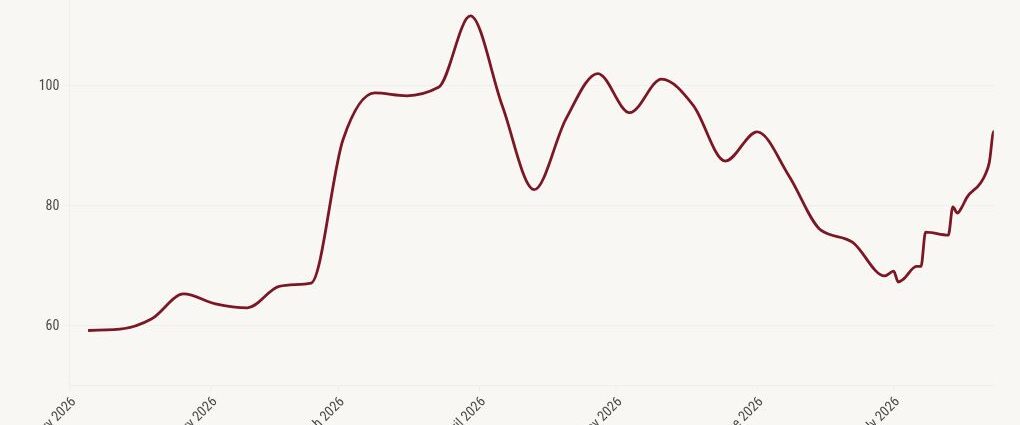
Fed hawks are on the war path, sending mortgage rates higher
Today the 10-year yield hit a yearly high of 4.74% and mortgage rates rose six basis points to 6.83% (as of this writing), as all the Federal Reserve hawks came out to play, and they were not taking a page from Fed Chair Kevin Warsh’s playbook. They want their voices heard loud and clear — and they really want multiple rate hikes.
Also, we got more conflict news this morning as Iran shot missiles at U.S. bases and tankers, while Trump discussed possibly blocking land transportation in Iran.
While Kevin Warsh is playing with his new task force, other Fed members are running the show, so the markets will get questions from them. Let’s take a look at statements from the three hawks driving the higher-rate agenda at the Fed.
Beth Hammack, president of the Cleveland Fed
In a statement today, Hammack, whom I am going to call Fed Chairwoman for now, said this:
“I preferred to move at our recent meeting because I did not see the current policy stance as appropriately restrictive.”
“Given the stability of the labor market, with the unemployment rate near my estimate of maximum employment, I view high inflation as the more pressing problem.”
Hammack doesn’t want one rate hike, she wants to take back all three from last year — the “insurance cuts” as Powell once labeled them. She was never a big believer of the rate cuts last year, so this isn’t a shock at all.
Neil Kashkari, president of the Minneapolis Fed
Kashkari, whom I believe also wants three rate hikes on a managerial basis, isn’t a surprising hawk as he already told the market he had penciled in one rate hike for 2026. He wants a more gradual approach to the rate hikes. However, what he needs is to get four more Fed voters to join in for this rate hike.
In his statement, he said:
“To manage against the risk that high inflation could become entrenched, I would rather tighten policy incrementally as we gather more data on the path of inflation and employment. If inflation remains elevated, in my view, a potential series of small policy moves would be better than waiting and eventually concluding that even bolder actions were necessary.”
Lorie Logan, president of the Dallas Fed
Logan has always been a hawk. She truly believes policy isn’t restrictive enough to get back to 2% with the current inflationary pressures. From her statement:
“Inflation does not appear to be on course to sustainably achieve the Federal Open Market Committee’s 2 percent target. More than five years after the post-pandemic surge, prices have continued to rise too rapidly. Every month of above-target inflation compounds the strain on the budgets of American families and businesses.”
The role of the Iran conflict
None of these Fed presidents are fans of the conflict on Iran and the inflationary pressure that has occurred. However, none said anything when oil prices were below $70, except Hammack said lower oil prices could be a problem for inflation because people wouldhave more to spend. Currently, oil is over $84.
It’s not a shock that we heard from all the hawks today. Hammack doesn’t believe policy is restrictive enough, but she hasn’t believed it for the last 18 months. Kashkari is more about taking back Powell’s “insurance cuts” and managing the situation with rate hikes. Logan believes inflation is nowhere near staying close to the 2% target with where policy is at.
Happy Fed war hawk party.
How Compass used technology to chart its course to the top
In 2017, Kyle Talbott and his wife Karen Talbott, who make up the Corcoran-brokered Talbott Team, were considering a move to Compass, after talk about the then 5-year-old brokerage’s technology had caught their attention.
“We had a preview of the system that Compass started putting together back then, and we were both really impressed,” Kyle Talbott said.
Fast forward nearly a decade later, and while the Talbotts ultimately chose to stay with Corcoran back in 2017, they now have access to Compass’s technology, known as the Home Platform, thanks to the Robert Reffkin-helmed firm’s $1.6 billion acquisition of Corcoran’s parent company Anywhere Real Estate earlier this year.
“At Corcoran, we now [can] access to this system that I know has gone through multiple iterations and had the kinks worked out,” Kyle Talbott said. “Using it, it just feels right — like when you get to sit in a luxury vehicle with nice leather seats and everything is ergonomically correct and it does all the things you were hoping for and then some others that are an added bonus.”
The Talbotts’ experience reflects a much larger shift taking place inside Compass. After spending more than a decade and billions of dollars building its proprietary technology platform — a strategy that drew plenty of skepticism along the way — the brokerage is now putting that investment in the hands of a much larger audience following its acquisition of Anywhere Real Estate.
As artificial intelligence reshapes how agents work, Compass executives, industry analysts and agents themselves say the Home Platform has evolved from a recruiting tool into a potential competitive advantage that could influence productivity, recruiting and the next phase of the brokerage technology race.
Welcome to the Home Platform
Agents like Kyle Talbott gained access to Compass’s Home Platform earlier this month when the holding company for Compass and Corcoran, Compass International Holdings, began rolling out the Home Platform to its company-owned brokerage brands. The firm has said it plans to extend access to its franchise network in 2027.
While he is still in the early stages of exploring the platform, Kyle Talbott said what he is most impressed with is the simplicity and efficiency of the platform. Gaining access to the platform when he did, Kyle Talbott said he has gotten a lot of use out of the system’s reverse prospecting function.
“As you head into summer, you’re always hoping that, by the end of the season, you’ve cleared all of your listings.” he said. “To be able to use reverse prospecting to see the search parameters of other agent’s buyer clients, I am able to pinpoint my efforts when I pick up the phone or send an email. When I reach out I know that I am actually sending the listing to someone who is actively trying to help someone find a home.”
For Arthur Goodrich, one of the tools he has been most excited about is the customer dashboard.
“To be able to provide the client with an easy to navigate platform to look at homes and see what’s happening in their transaction is great,” Goodrich said. “Before my clients were looking all over the place to find things, and I had to create spreadsheets to track transactions. The platform addresses all of that in one place.”
Trading in the ‘jalopy’
Both Goodrich and Kyle Talbott say Compass’s Home Platform is a big step up from the technology they had previously been using.
At Corcoran, Kyle Talbott said he was using a Frankenstein-like tech stack that he had cobbled together from a variety of sources.
“It [Home Platform] cuts through a lot of the concerns I had,” he said. “I’m able to have a tighter grasp on the pulse of what is happening as opposed to wondering if this jalopy I’ve created is going to get me to the end of the block or not.”
The road less traveled
Getting here has not been easy. Over the years, Compass has invested billions of dollars to create the tech stack it now offers its agents and brokers. This high level of financial investment was a large source of the criticism lobbied at the company, especially as it struggled to generate positive free cash flow and navigate the rising interest rate environment after the COVID-19 pandemic.
“I think those criticisms were levied by people who were either envious of our ability to do it or threatened by what we were building,” Rory Golod, Compass International Holdings’ president of growth, said. “Looking back, there are things we would maybe want to go back and do [it] differently. It’s hard to build technology for real estate. There are hundreds of MLSs and unique geographies and nuances you have to account for, so it takes time and it’s expensive, but to us it was always worth it.”
For Golod, the company’s choice to focus on building a platform that helps agents “meaningfully grow their business, save time and create a high quality experience for their clients,” has been an essential part of Compass’s journey to becoming the largest real estate firm in the country.
“We spent a lot of time iterating to get to a complete platform,” Golod said. “Historically, the tools that were built were for specific use cases and no one had ever really put it all into one place. I feel like we have been able to harness the benefit of having a complete platform.”
In the field, Goodrich said he is already seeing the benefits of having access to a consolidated tech platform.
“Before we would sign into one dashboard, but then there were a bunch of tiles that brought you to different programs in the tech stack, but the challenge was that the information within those programs did not translate between each other,” he said. “The fact that there is just one database all of the tools are feeding off is great.”
Unexpected advantages with AI
Golod and Compass’s chief technology officer Shay Artzi say that the company has begun to see even more benefits to having a complete platform since they started incorporating more AI, including the recently launched AI Assistant.
“We started incorporating an AI assistant component in 2023 and it was a glorified chatbot that could help an agent create a listing description, but now it has developed into an actual assistant,” Artzi said. “It’s already connected to over 90 tools in the platform, and we’ve enabled an amazing efficiency on top of the platform we already have.”
For Artzi, the firm’s early decision to create a completely proprietary platform has given it advantages they had never even considered.
“All of the tools were built to talk to each other, so when we started the AI journey, it was much easier to start connecting the tools because there is no dependency on other tools or us having to change existing API agreements because we are the ones in control of the infrastructure,” he said.
The “technology sovereignty” Compass crafted for itself over the past decade is one of the things Victor Lund, the managing partner of WAV Group Consulting, believes will play a large role in the firm’s future success.
“You have to have your data in order to power AI, and they have all of that data, so their AI application works really well,” Lund said. “When you need something you just tell the machine, and it does it because Compass manages the entire connectivity. There is no need to flow through different applications and move the request from application to application to get to the outcome.”
Lund sees this as the difference between renting and owning the technology and he feels it is going to be a massive differentiator now that data ownership is essential for effective AI applications.
Tech isn’t everything
While Compass’s technology may give it a leg up in the current AI-arms race in the industry, as well was help it improve the productivity of the firm’s existing agents and be enough to at least spark the interest of agents thinking about swapping firms, agents say great technology alone is not enough to make them change firms.
“For me, the most important thing in selecting a brokerage is my personal alignment with the brand and what the brand stands for,” Goodrich said. “As an operator, I know how important technology is, but I don’t feel like I would switch brokerages just because of technology.”
While Compass may have used its technology to help it chart its course to the top, time will tell if its Home Platform can also help the firm navigate the unique challenges of staying in the leader’s seat.

Bessent highlights Trump economy, warns China has ‘done a lot of kicking lately’
Treasury Secretary Scott Bessent said in an interview on Thursday that he expects economic growth to pick up later this year with core inflation trending lower, while he warned that there have been growing tensions with China over artificial intelligence and rare earths.
Bessent spoke with FOX Business’ Edward Lawrence following Thursday’s release of the initial estimate of second quarter GDP growth, which showed GDP slowed to 1.5% annualized growth from 2.1% in the first quarter.
The Treasury secretary said that the GDP “number is very noisy because a lot of that was very technical,” explaining that releases from the Strategic Petroleum Reserve to ease energy prices came out of GDP and that “core GDP was actually quite strong.”
“We’re seeing manufacturing is doing well, the jobs numbers are strong, the consumer is strong. So it was a technical adjustment in the number, I wouldn’t worry about it,” Bessent said, adding that he thinks GDP is “going to be substantially above 2% for the year.”
US ECONOMIC GROWTH SLOWS UNEXPECTEDLY IN SECOND QUARTER
Thursday also saw the release of the June personal consumption expenditures (PCE) index which showed the Federal Reserve’s preferred inflation gauge slowed to an annual rate of 3.7% last month, down from 4.1% in May.
Core PCE, which excludes volatile food and energy prices, also declined to 3.3% from 3.4% the prior month. Both measures remain well above the Fed’s 2% target.
Bessent said that he sees the trend in core inflation as important, saying the report showed it and service inflation declining.
“Energy can be volatile,” Bessent added, saying that “we’ll get to the other side of the Iran war, and you know it will come down.”
FED’S FAVORED INFLATION GAUGE SHOWED PRICES PULLED BACK IN JUNE
The Treasury secretary was also asked about recent economic friction between the U.S. and China over issues like AI development and supplies of rare earth minerals that are used in advanced tech and military hardware.
“The good thing is the overall relationship comes down from the top, and President Trump, Xi Jinping have a very good relationship. But, you know, that’s not an excuse for them to do things underneath the surface,” Bessent said.
“Sometimes I describe it as a water polo match where our leaders could be hitting the ball back and forth, but under the water, the Chinese seem to have done a lot of kicking lately. And you know, if we have to, we’ll kick back,” the Treasury secretary explained.
“We expressed our concern that the rare earths are not flowing as freely as they could, that they have taken some measures that are detrimental to U.S. businesses. And we said that if this continues, we will push back,” he added.
FED POLICYMAKERS LEAVE RATES UNCHANGED AMID ELEVATED UNCERTAINTY
Bessent said that “we expressed our concern over Chinese AI that there is large-scale distillation” of American AI models that are making their way back into the U.S., adding that “we like open source, but open source has got to be legal – it’s not an excuse for IP theft.”
Lawrence asked Bessent if the Trump administration has raised the issue of U.S. tech companies’ AI model watermarks appearing in Chinese models.
“Well, we’ve done that at the staff level, and the good news is we are ahead of the Chinese in AI, I believe by a substantial amount, and they are number two,” Bessent said.
GET FOX BUSINESS ON THE GO BY CLICKING HERE
He added that the two superpowers do need to have conversations “because we want to make sure that non-state actors do not get a hold of a powerful model, that everyone increases their resiliency and that we cooperate towards those goals.”


Walgreens Opens Flu Shot Season Early as Pharmacies Prepare for a Severe Respiratory Season
Walgreens has begun accepting appointments and walk-in visits for flu vaccinations nationwide, launching its annual immunization campaign weeks before the traditional start of flu season. The pharmacy chain says customers age 3 and older can now receive flu shots at nearly all Walgreens locations, as health officials urge Americans to be vaccinated before respiratory viruses begin spreading this fall.
The early rollout follows one of the most severe flu seasons in recent years. According to the Centers for Disease Control and Prevention, last season produced unusually high levels of illness, hospitalizations, and deaths, prompting pharmacies to encourage earlier vaccinations this year. Walgreens is also promoting same-day walk-ins, family scheduling, and appointments through its app and website to make vaccinations more convenient.
Community pharmacies have become one of the nation’s primary vaccination providers. Walgreens says pharmacies administered nearly 38 million flu vaccine doses during the previous flu season, reflecting a growing shift away from traditional doctor’s offices for routine immunizations.
For consumers, the earlier availability provides more flexibility to schedule vaccinations before school resumes, travel increases, and workplaces become busier. Pharmacists also recommend reviewing eligibility for other seasonal vaccines—including COVID-19, RSV, and pneumonia—during the same visit when appropriate.
Businesses may also benefit from higher vaccination rates. Seasonal influenza contributes to millions of lost workdays each year, and employers increasingly encourage workers to receive vaccinations before virus transmission accelerates in the fall.
What to Watch Next
Health officials continue recommending that most people receive their flu shot by late October to maximize protection during peak flu season. Pharmacies are expected to expand vaccine promotions and employer clinics throughout August and September.
JBizNews Desk | Deerfield, Illinois
© JBizNews.com All Rights Reserved. Reproduction or distribution without written permission is prohibited.


Mortgage Rates Hit One-Year High as Buyers Lose More Purchasing Power
Mortgage rates climbed to their highest level in a year Thursday, adding hundreds of dollars to the cost of financing a typical home and threatening to push more prospective buyers out of an already difficult housing market.
Freddie Mac said the average rate on a 30-year fixed mortgage rose to 6.66% from 6.58% a week earlier, marking the fourth consecutive weekly increase. The average 15-year fixed rate climbed to 6.04% from 5.96%.
The latest move reverses much of the relief buyers received earlier this year, when the 30-year rate briefly fell close to 6%. For a household borrowing $400,000, a 6.66% rate produces a monthly principal-and-interest payment of approximately $2,571, before property taxes, homeowners insurance and association fees are added.
That same loan would have cost about $2,414 a month at 6.06%, the level reached in January. The difference is roughly $157 every month, or nearly $1,900 a year, without any change in the price of the home.
For many buyers, the larger effect is not simply a higher payment. Mortgage lenders qualify borrowers based partly on how much of their monthly income would be consumed by housing and other debts. As rates rise, some households must lower their offers, increase their down payments or abandon a purchase entirely.
A buyer who could previously afford a $500,000 property may now need to search at a lower price point to keep the payment within the same budget. That puts additional competition on moderately priced homes, where inventory is already limited.
Mortgage applications fell 6.4% during the week ending July 24, according to the Mortgage Bankers Association. Both purchase and refinancing activity weakened as higher rates reduced the financial benefit of replacing an existing loan or entering the market.
Refinancing has become especially unattractive for millions of homeowners who secured mortgages below 4% before borrowing costs surged. Replacing those loans at current rates would sharply increase monthly payments, even when homeowners need cash, want to shorten their loan term or hope to remove another borrower.
That gap has also intensified the housing market’s lock-in effect. Homeowners with low-rate mortgages are reluctant to sell because purchasing another property would require financing at a much higher rate. Fewer listings then help keep home prices elevated, leaving buyers squeezed by both borrowing costs and limited supply.
Mortgage rates do not move directly with the Federal Reserve’s overnight benchmark rate. They are more closely connected to yields on longer-term government debt, particularly the 10-year Treasury note, because mortgage-backed securities compete with Treasury bonds for investor money.
Treasury yields have risen as investors price in the risk that inflation could remain elevated and that interest rates may stay higher for longer. Rising oil and transportation costs have added to those concerns because energy expenses can spread into airfare, food distribution, deliveries, manufacturing and other consumer prices.
Although the Federal Reserve left its policy rate unchanged this week, disagreement among officials over whether inflation requires additional tightening has reduced expectations for rapid rate relief. Mortgage borrowers are therefore unlikely to benefit immediately even if the central bank eventually begins lowering short-term rates.
Consumers should also recognize that Freddie Mac’s weekly figure is an average, not a guaranteed offer. Actual mortgage quotes vary according to credit score, down payment, loan size, property type, location and whether the borrower pays upfront discount points.
Shopping among lenders can produce meaningful savings because even a quarter-point difference in rate can change a household’s payment and total interest expense. Borrowers should compare the annual percentage rate, closing costs and required points rather than focusing only on the advertised interest rate.
Adjustable-rate mortgages may appear more attractive when fixed rates rise, but they transfer future interest-rate risk to the borrower. Initial payments can be lower, yet the rate may reset upward after the introductory period, making the loan more expensive if market rates remain elevated.
Home builders and sellers may increasingly respond with financing incentives instead of large price reductions. Temporary rate buydowns, closing-cost assistance and permanent mortgage-rate subsidies can lower a buyer’s initial payment while allowing the seller to preserve the advertised property value.
Those concessions are less common in areas where housing supply remains tight, leaving many first-time buyers with fewer negotiating options. Renters considering a purchase must also weigh a mortgage payment against property taxes, insurance, repairs and other ownership expenses that have risen in many regions.
The next direction for mortgage rates will depend heavily on inflation data, Treasury yields and signals from the Federal Reserve. Until those pressures ease, the housing market is likely to remain caught between buyers who cannot comfortably afford current payments and owners unwilling to surrender mortgages obtained at historically low rates.
JBizNews Desk | Washington, D.C.
© JBizNews.com All Rights Reserved. Reproduction or distribution without written permission is prohibited.

Middle Israel: No one needs a tyrannical Turkey with F-35 fighter jets – opinion
‘The bomber will always get through,” said British statesman Stanley Baldwin in autumn 1932, when many thought the fighter plane obviated the need for large ground forces. Future wars refuted that thinking, but the quality of a country’s air force remains a vehicle of its military power and political sway.
That is why Turkey’s quest to obtain the world’s best fighter jet, the American-made F-35, is a major international issue involving not only Ankara and Washington, but also Athens, Jerusalem, the Arab world, and every Western country. All these have a variety of reasons to view this deal as a threat, but one reason should trump the rest.
The Turkish army is one of the world’s largest and finest, with more than 2,200 battle tanks, some 250 fighter jets, roughly 100 combat vessels, and nearly 1 million well-trained troops. A successor to the military that conquered the Ottoman Empire’s tri-continental realms, this army underpinned the modern republic that vowed to bury its Ottoman prehistory.
Turkey was thus a natural cofounder of NATO. It bordered the Soviet Union, the successor to Turkey’s historic enemy, Russia, and it shared the West’s fear of communism’s advance. And that is where the first reason to resist the F-35 deal comes in.
Yes, communism is gone, but Russia is alive and kicking. Occupying a swathe of Ukraine, Moscow treats the West as a rival and casts a shadow over its European heartland. That’s not how today’s Turkey sees things.

Set aside its refusal to join Washington’s anti-Russian trade sanctions; in 2017, Ankara signed a $2.5 billion deal to buy Russia’s S-400 air-defense system. That’s not what you do if you want to be America’s ally. Owning these missiles while flying Uncle Sam’s best fighter jet can help the Russians improve their anti-aircraft weapons’ response to its American challenges.
What would the consequences of giving Turjey F-35s be?
Still, the F-35 deal’s American consequences dwarf its meaning for Turkey’s neighbors, first of all the Greeks.
“Greece will not be pleased if the United States decides to sell the F-35 fighter jets to Turkey,” Defense Minister Nikos Dendias said this month in Athens. That’s an understatement. Turkey is Greece’s historic enemy, the one that in 1974 molested predominantly Greek Cyprus, and still occupies its north.
There is constant military tension between Ankara and Athens, traditionally tempered by NATO, to which they both belong. But that was before Donald Trump.
Having repeatedly called into question NATO’s right to life, Trump doubtfully understands what countries like Turkey and Greece mean to each other, or indeed for the US. As he sees things, what matters is that Turkish President Erdogan “is a close friend of mine” and that “Turkey is a very strong country.”
One wonders what that “close” friendship actually is. Erdogan doesn’t play golf, drink, or womanize. How, then, did he become Trump’s buddy? Late-night sign-language conversations between a man who speaks only Turkish and another who speaks only English? Who knows?
What we do know is that a bolstered Turkish air force is a problem not only for Greece and Washington, but also for Turkey’s bigger neighbor, the Arab world.
It is now 23 years since Turkey pivoted from Mustafa Kemal Ataturk’s European orientation to Erdogan’s Middle Eastern alternative. It began with a much-heralded offer of a Turkish-Arab free-trade zone. It was a seemingly harmless idea, but its main addressees – the rich Gulf states and populous Egypt – smelled a neo-Ottoman imperialism and said, “No thanks.”
Arab governments, then, also don’t want to see a reinforced Turkish military brandishing a fleet of F-35s.
Israel’s problem is in the same vein, except its fear is not about the traumas from the Ottoman past. It’s about here and now, as Turkey openly hosts, aids, and justifies Israel’s most brazen enemy, Hamas, ignoring its open demand that Israel cease to exist, and its leaders’ vows to repeat the kind of massacre they carried out on October 7, 2023.
Turkey’s encroaching threat to Israel
Having turned Syria into its proxy, Turkey now effectively borders Israel while wielding a vast army and spewing antisemitic vitriol day in and day out. Even so, the main reason to stem Ankara’s military growth is not its regional bullyism, but its religious zeal.
Under its current leadership, the country that was once a paragon of secular governance has since strayed to religious reaction.
On the anecdotal side, this counterrevolution meant, among other things, lifting Ataturk’s ban on wearing headscarves in public institutions, and fighting alcohol consumption by imposing heavy sales taxes on its consumers.
On the substantive side, this transition meant funding a network of more than 4,000 Islamist junior high schools, while more than one-tenth of Turkish teenagers were tracked to Islamist high schools that received more than twice the budgets of regular schools. This is how the Islamist supremacism that threatens Western civilization and international harmony is incubated.
“The mosques are our barracks, the domes our helmets / The minarets our bayonets and the faithful our soldiers,” wrote Erdogan before he rose to power. Such was the Islamist zeal of the man who would later call the Jewish state “bloodsucking,” while multiplying Turkey’s jailed population from 50,000 in 2002 to more than 400,000 today, most of them political prisoners, including opposition leader Ekrem Imamoglu.
No one needs such a tyrannical Turkey: not the Arabs, not the Jews, not the Europeans, not the Americans and not the rest of mankind, not to mention the Turks themselves, even without the world’s best fighter jets, let alone with them.
www.MiddleIsrael.net
The writer, a Hartman Institute fellow, is the author of the bestseller, The Jewish March of Folly (Yedioth Books 2026), now available in English on Amazon.
How Turkey became NATO’s indispensable partner – and a major force on the global stage – opinion
When NATO leaders gathered in Ankara on July 7 and 8, 2026, for the alliance’s annual summit, it was clear that this was more than another diplomatic event. It was a strategic declaration.
Turkey – long regarded as a complicated and at times problematic member of the Atlantic alliance – hosted a NATO summit for only the second time in its history, following the Istanbul summit in 2004.
The message was clear. Ankara is no longer sitting on the alliance’s sidelines. It has become a pivotal state whose decisions influence the region stretching from Eastern Europe to the Middle East.
The Turkish paradox remains. Turkey maintains complex relations with its allies, has purchased Russian weapons systems and frequently generates tensions with Washington. At the same time, it holds some of NATO’s most important strategic assets.
As the US signals its desire for Europe to assume a greater share of the security burden, Turkey is positioning itself as a partner that is difficult to replace.

It leads the naval task force responsible for mine clearance in the Black Sea, plays a central role in defending the alliance’s southern flank and maintains NATO’s second largest land army.
At the same time, it stresses that threats emerging from its southern border, including terrorism, regional instability and the consequences of wars in the Middle East, demand the same attention as the challenges facing Eastern Europe.
This message, once pushed to the margins of NATO discussions, took center stage at the Ankara summit and demonstrated the growing importance of the alliance’s southern flank.
Energy as a geopolitical lever
Turkey’s strength is rooted not only in its military power, but also in its geographic position. Continued disruptions to shipping routes and energy supplies in the Persian Gulf and the Strait of Hormuz have once again demonstrated how urgently Europe needs alternative energy routes.
In this environment, Turkey is becoming a central hub for gas and oil pipelines and transit infrastructure connecting Asia, the Caucasus and Europe.
Ankara’s standing, therefore, is based not only on military strength, but also on its ability to influence Europe’s energy security. This strategic advantage is becoming increasingly significant as instability in the Middle East continues.
Alongside developments in the Middle East, the Ankara summit also addressed the future of the alliance itself. Key decisions included strengthening security cooperation among member states, expanding defense production, increasing investment in military infrastructure, and continuing to adapt NATO to future threats.
Some analysts describe this process as a transition toward “NATO 3.0,” an alliance that depends more heavily on European responsibility and advanced industrial cooperation.
Turkey enjoys a clear advantage within this process. Its defense industry is expanding rapidly, its weapons exports are rising, and it is becoming an increasingly important partner in the alliance’s joint defense projects.
The combination of proven military capabilities, an irreplaceable geographic position, and growing importance in the energy sector has made Turkey one of NATO’s most influential members.
The question facing decision makers in Europe and Washington is no longer whether Ankara will continue to gain influence, but how cooperation with Turkey can be preserved without undermining the alliance’s unity and values.
Above all, the Ankara summit marked a change in perception. Turkey has moved from being a difficult partner whose periodic crises must be managed to a strategic player that cannot be ignored.
The author is CEO of Radios 100FM, an honorary consul, vice dean of the Consular Diplomatic Corps and president of the Israel Radio Communications Association. He previously served as a monitor for Army Radio and as a television correspondent for NBC.
Eisenkot election billboard in Cyprus vandalized with Palestinian flag colors
A Yashar party election billboard in Cyprus featuring former IDF chief of staff Gadi Eisenkot was vandalized on Friday after unidentified individuals sprayed it with the colors of the Palestinian flag and covered Eisenkot’s face with blood red paint, the Cyprus Mail reported.
The billboard was placed near Larnaca Airport as part of the party’s campaign ahead of Israel’s Knesset election. The incident came days after the signs sparked public controversy in Cyprus and prompted local politicians to call for foreign countries to be barred from conducting political campaigns in the country.
The vandalized billboard was one of two signs placed near the airport as part of Eisenkot’s campaign. One faces Israelis arriving in Cyprus and reads, “Israelis, enjoy yourselves! You deserve it,” while the other, located on the road leading back to the airport, tells them, “Come back and win.”
The billboards had already sparked controversy in Cyprus earlier in the week, according to the newspaper. Independent member of the European Parliament Fidias Panayiotou strongly criticized the presence of a foreign country’s election campaign in Cyprus and called for legislation that would prohibit political advertising by countries that are not members of the European Union.
The signs also prompted debate on social media and within the Cypriot political establishment over the impact of the growing Israeli presence on the island.

Cypriot politician and European Parliament member Fidias Panayiotou condemns foreign election advertising
Cypriot politician and European Parliament member Fidias Panayiotou expressed concern about the billboards in a post on X, formerly Twitter, on Sunday.
“This photo was not taken in Israel, but in my country, Cyprus. This time it is political propaganda, but it is also becoming increasingly common to see billboards advertising real estate in Hebrew across the island.”
“This is simply not right. We must defend Cyprus’s sovereignty,” Panayiotou concluded.
This photo was not taken in Israel, but in my country, Cyprus.
This time is political propaganda, but it is also becoming increasingly common to see billboards advertising real estate in Hebrew across the island.
This is simply not right. We must defend Cyprus’s sovereignty. pic.twitter.com/wGTBjC1Qaw
— Fidias Panayiotou (@Fidias0) July 26, 2026
Cypriot law currently does not prohibit a foreign political party from purchasing advertising space in the country. However, according to the report, this is the first known case in Cyprus in which a foreign political party has conducted an election campaign using billboards in the country.
The unprecedented nature of the campaign made the issue particularly sensitive, and the vandalism now appears to represent a protest against the signs.
Eisenkot’s campaign is expected to expand into other countries throughout the summer
Eisenkot’s office informed The Jerusalem Post that the campaign is expected to expand into other countries throughout the summer. They emphasized that the initiative aims to convey a positive message to Israelis about achieving victory in the elections.
Israel’s elections are slated for October 27.
Shoshana Baker and Keshet Neev contributed to this report.
Two-week ceasefire intended to allow Hamas disarmament, launch peace deal, sources tell ‘Post’
The IDF will not withdraw from the current Yellow Line in the Gaza Strip without the full disarmament of Hamas, a diplomatic source reiterated to The Jerusalem Post on Friday.
This follows the announcement of a Board of Peace framework for the implementation of US President Donald Trump’s peace plan, which several sources familiar with the details told the Post includes all Hamas weaponry being placed in storage and dismantled.
The storage facilities will be controlled by NCAG police officers, each of whom will undergo Shin Bet security vetting, while the multinational force will provide oversight.
Gaza residents may still obtain a license for a handgun under Palestinian law.
Once the process begins, Israel will halt its fire, the sources told the Post. There is currently a two-week ceasefire to finalize the details of the process. However, if Hamas does not begin the process, this will be considered a violation of the ceasefire and will bring it to an end.

Israel’s withdrawal from the Yellow Line will take place only once the process is complete and full demilitarization has been achieved, the sources said.
Hamas demands full withdrawal, Palestinian statehood
In a public statement on Friday, Hamas said it would not be disarming without the withdrawal of Israeli forces and the “disbanding of the armed gangs and militias formed by the occupation.”
Additionally, Hamas specified that there must be a guarantee of the Palestinians’ right to establish an independent state in the Gaza Strip.


NEXA’s Mike Kortas criticizes loanDepot, pitches LOs to switch companies amid ongoing lawsuit
An ongoing feud between loanDepot and NEXA Lending was brought to light again this week through a social media posst authored by NEXA CEO Mike Kortas, which urges loanDepot loan officers to join NEXA.
In the post, which begins with the line “Attn: Loan Depot Loan Officers,” Kortas offered a year of NEXA100 membership, a signing bonus and other incentives to encourage originators to join the brokerage.
In the same post, Kortas promoted NEXA’s compensation, pricing, product offerings and residual income opportunities while criticizing loanDepot’s financial performance, wholesale strategy and litigation against mortgage brokerages.
In the post, Kortas also included a screenshot of loanDepot’s stock performance, which showed that its stock was trading at $0.97 per share as of July 30, down 30.51% for the day and 96.9% from its all-time high.
“Stop risking a sinking ship at a ‘Bad Company’ (pun intended). They are now at risk of being delisted and their money flow seizes,” Kortas wrote. “They want to get back into wholesale but are stupid enough to sue the largest brokers for the exact things they are actually guilty of. They are literally the bully of mortgage. Let us help you.”
In the post’s comments, Kortas also linked to an open letter to loanDepot’s board from retail activist investment firm Randian Capital that urged the board of directors to formally review strategic alternatives, including a potential sale, as the company faces declining share prices and continued losses.
“A successful sale of the company may be the best way for shareholders to finally realize fair value, and [CEO Anthony] Hsieh to free up his time for the open water,” the letter read. “After years of significant value destruction, the Board owes shareholders a clear plan to maximize shareholder value, whatever path forward it ultimately chooses.”
loanDepot’s first-quarter performance was characterized by a $54.9 million net loss as revenue decreased to $286.4 million and expenses were $341.5 million. But Hsieh framed the quarter as a positive one marked by market share growth and a partnership with Figure. loanDepot chief financial officer David Hayes said that Q1 2026 reflected “continued progress toward sustainable profitability.”
loanDepot said it had no comment about Kortas’ post when reached by HousingWire.
Simmering legal battle
The post is not out of the blue. Earlier this year, loanDepot sued NEXA, alleging that NEXA misappropriated trade secrets and confidential customer data, and that it knowingly helped two former loanDepot employees take proprietary information before leaving the company and use it to solicit borrowers. Kortas has denied these claims.
“We have completely separate business models. His is not working right now. Maybe it worked in the past, but it is not working right now. And so, why would I want his trade secrets? … I’m good with how I do business,” Kortas told HousingWire. “I will sit on the right side of this, and I will fight him all the way to the end.”
Kortas also defended his Facebook post and said he didn’t expect the strong reaction he received.
“I’ve kind of made a career of standing up for what I say is right, and these guys are trying to sue a NEXA loan officer, and subsequently NEXA,” Kortas said, acknowledging the ongoing lawsuit. “Self‑producing, independent loan officers who are not being compensated right, with not having the best interest rates in the business and not having the most products in the industry. I want them to know that I will protect them as well if they want to make the move.”
Despite its stock performance, loanDepot appears to still be growing in manpower, especially after it announced in March that it’s reentering the wholesale channel four years after formally exiting the segment.
The company’s loan officer count is up 114 from April 27 to July 27, according to RETR data. loanDepot lost 202 LOs and gained 316 during the three-month period. Only two of these LOs moved to NEXA, while the data also showed that loanDepot gained two LOs from NEXA.
loanDepot has announced that it’s expanding its physical footprint. On Tuesday, the company said it would open a Miami corporate center in September that will house technology, marketing, recruiting and other support teams, as well as mortgage fulfillment staff supporting its direct lending, retail and partnership channels.
Every real estate agent has AI now, how sellers spot real expertise
A homeowner recently asked me to review a listing presentation prepared by another real estate agent. It was impressive. The pricing analysis was organized, the marketing plan included video, social media and buyer targeting, and the language was polished throughout.
A few years ago, a presentation like that might have shown how much time and thought an agent had invested before the appointment. Today, much of it could have been produced in less than an hour with artificial intelligence.
That does not make the presentation weak. It does make it a less reliable measure of the agent’s actual ability.
AI is giving nearly every real estate professional access to tools that can create polished market reports, listing descriptions, presentations and marketing plans. That will improve the basic quality of what consumers see. It will also make it harder for sellers to distinguish strong presentation from strong representation.
For much of my 22 years in real estate, the quality of an agent’s materials offered at least some indication of preparation. AI is narrowing that gap. A professional presentation should now be the beginning of the conversation, not the reason for making the hiring decision.
A polished listing presentation is becoming like a well-designed résumé. It may get someone into the room, but it does not prove they can do the job. The better question is whether the agent can explain and defend the thinking behind it.
Can the agent defend the price?
Almost every agent can produce a comparative market analysis. The more important test is whether the agent can explain why certain sales matter and why others do not.
Two homes may have similar square footage, bedroom counts and lot sizes and still compete very differently. One may have a better floor plan, more natural light or greater privacy. Another may look similar in the data but have road noise, insurance concerns or deferred maintenance that is not obvious in the photographs.
AI can organize the numbers. The agent still has to explain what the data leaves out. Sellers should ask why specific comparable sales were selected, which property is most similar to theirs and what would cause a buyer to pay more or less. An experienced agent should welcome those questions.
I have sat at many kitchen tables where the market-supported price was below the homeowner’s expectations. Producing the data was never the hardest part. Explaining what it meant without losing the seller’s trust was much harder.
Pricing a home is not simply a mathematical exercise. It involves timing, expectations, emotion and often years of personal history. AI can organize the evidence, but the agent must still deliver honest advice in a way the client can hear and use.
Does the agent understand the buyer?
Many listing presentations promise broad online exposure. Exposure is useful, but it is not the same as strategy. A home does not need to appeal equally to everyone. It needs to reach the buyers most likely to purchase it.
The seller should ask the agent to describe that buyer. Is the home most likely to attract a local move-up buyer, investor, retiree, relocating executive or second-home purchaser? Which features will matter most, and what concerns will that buyer probably have?
Those answers should influence how the home is priced, photographed, described and promoted.
AI can suggest several possible audiences. The agent still has to determine which one is most realistic and how the property should be positioned against its direct competition.
A strong listing agent should be able to explain not only where the home will be marketed, but why that marketing is likely to reach the right buyer.
What happens when the plan stops working?
Nearly every agent can describe an initial marketing launch. Fewer can clearly explain what happens if the market does not respond as expected.
Buyers may view the home online but not schedule appointments. Showings may occur without second visits. Agents may repeatedly object to the same issue. A quiet response does not automatically mean the home is overpriced. It does mean the agent should know what information to examine next.
Sellers should ask what indicators will be monitored, how a pricing problem will be distinguished from a marketing problem and what would trigger a change in price, photography or positioning.
After more than 600 transactions, I have learned that the initial plan matters. The ability to read the market’s response and make the right adjustment often matters more. The same is true once a property goes under contract. Inspections, appraisals, insurance, financing, title issues and open permits can quickly change the direction of a sale.
AI can suggest possible responses. It cannot always tell an agent that a buyer’s representative has changed tone, the seller is becoming defensive and the transaction may be close to falling apart.
That recognition comes from experience.
AI should strengthen judgment, not replace it
I use AI in my own real estate work. It helps me organize information, identify patterns, test ideas and work more efficiently. But a polished market analysis can still rely on poor comparable sales. A professional marketing plan can still target the wrong buyer. A well-written recommendation can still be wrong.
The agent remains responsible for the advice.
Artificial intelligence will make real estate agents more productive. It will also make their marketing materials more polished and more similar.
The best-looking listing presentation may no longer belong to the most experienced or capable agent. It may belong to the person who used the best prompt, template or software.
The better test is whether the agent can defend the price, identify the likely buyer, explain how the strategy will change and demonstrate sound judgment when a transaction becomes difficult.
AI can help every agent look better. It cannot ensure that every agent knows what to do next.
Gary Lanham is an AI-Certified Realtor®, Broker Associate and Fort Lauderdale listing agent with 22 years of residential real estate experience and more than 600 completed transactions. He founded Lanham & Associates, which was acquired by Coldwell Banker Realty in 2014, and is a member of the Master Brokers Forum.
This column does not necessarily reflect the opinion of HousingWire’s editorial department and its owners.
To contact the editor responsible for this piece: tracey@hwmedia.com

East River’s self-filtering floating pool delayed until 2027

New Yorkers will have to wait a little longer for the self-filtering floating pool in the East River. Initially slated for a pilot this summer, the +POOL team announced on X on Wednesday that while construction is nearly complete, ongoing work on the Brooklyn Bridge-Montgomery Coastal Resilience project will delay testing of the prototype until at least 2027. More than 15 years in the making, the project reached a major milestone in summer 2024, when Gov. Kathy Hochul and former Mayor Eric Adams selected Pier 35 as its official location.
The nonprofit +POOL first proposed a self-filtering floating pool in 2015. Since then, the group has worked with the city’s Economic Development Corporation and local stakeholders to create a plan, analyze the city’s water quality, and identify the best location for the pool, as 6sqft previously reported.
In May 2021, +POOL received approval to move forward with plans for a floating pool on the south side of Pier 35 on the Lower East Side. In January 2024, Hochul and Adams committed $16 million to the nonprofit to help bring the project to fruition.

Then, in August 2024, when Hochul and Adams announced Pier 35 as the official location, the +POOL team said that the structure could be ready by the summer of 2025. After further delays due to ice floes, blizzards, and seaweed, the project is delayed again.
Original renderings of the project depicted a 110-by-36-foot, plus-shaped floating pool equipped with a filtration system designed to clean raw river water to an “acceptable microbiological standard for swimming.”
According to +POOL, the city’s ongoing work on the Brooklyn Bridge-Montgomery Coastal Resilience (BMCR) project, which is installing a series of flood-prevention measures to protect the Two Bridges area from a 100-year storm surge into the 2050s, has further delayed the project’s deployment until at least 2027.
In a post on X, the group said the sewer line that +POOL is permitted to connect to is being replaced as part of the BMCR project and will not be completed until the fall. Because +POOL requires a sewer connection to discharge wastewater produced by the regular backwashing of its filters, the pool’s pilot cannot proceed until the new sewer line is complete.
For now, the completed prototype sits at the Erie Basin Bargeport in Red Hook, where it will eventually be transported to Pier 35 in the East River, according to Gothamist. The nonprofit said it has secured all required approvals from city, state and federal agencies for the upcoming testing phase.
“Our primary responsibility, as stewards of such a large-scale, publicly funded project, is to pivot when necessary to support the needs of our city and state partners, investors and the people of New York,” Kara Meyer, managing director of Friends of +POOL, said in a statement, as reported by Time Out.
“While this shift comes at a cost to the organization and the project, those realities will feel insignificant when we are living in a New York City that has advanced infrastructure to protect from storm surges while opening up safe public river access for healthful recreation.”
RELATED:
- NYC floating pool coming to the Lower East Side (eventually)
- Self-filtering floating pool pilot to be installed in NYC this summer
- A self-filtering floating pool is officially coming to the East River
The post East River’s self-filtering floating pool delayed until 2027 first appeared on 6sqft.

Why More Americans Are Choosing Buy Now, Pay Later for Everyday Purchases
Buy Now, Pay Later (BNPL) services are no longer just financing big-ticket purchases. More Americans are now using installment plans to pay for groceries, household essentials, utility bills, and everyday shopping, reflecting growing pressure on household budgets even as inflation has cooled.
Payment providers report continued growth in transactions for lower-cost purchases, with consumers increasingly spreading payments over several weeks rather than paying the full amount upfront. Retailers have expanded BNPL options because they often increase sales and reduce abandoned online shopping carts.
While installment payments can help families manage cash flow, consumer advocates warn they also make it easier to overspend. Unlike traditional credit cards, shoppers may take on multiple BNPL loans across different platforms without realizing how quickly the obligations add up.
Banks and regulators are paying closer attention as the industry grows. Financial watchdogs have urged providers to improve disclosures, make repayment terms clearer, and strengthen consumer protections, particularly as more borrowers use installment financing for necessities instead of discretionary purchases.
For retailers, BNPL has become an important sales tool, especially among younger consumers who prefer predictable installment payments over revolving credit. Merchants also benefit from higher average order values and increased conversion rates when financing is offered at checkout.
Consumers considering BNPL should review repayment schedules carefully, understand any late-payment penalties, and avoid stacking multiple installment plans at once. Financial planners recommend treating BNPL as a budgeting tool rather than additional spending power.
What to Watch Next
As holiday shopping approaches, analysts expect retailers to promote Buy Now, Pay Later options more aggressively. Regulators are also expected to continue evaluating whether additional oversight is needed as installment financing becomes a mainstream payment method.
JBizNews Desk | New York
© JBizNews.com All Rights Reserved. Reproduction or distribution without written permission is prohibited.


New York Sues Kalshi in High-Stakes Test of Prediction Markets
New York sued Kalshi on Friday, accusing the federally regulated prediction-market operator of running an illegal gambling business and escalating a legal fight that could determine whether event-contract platforms can operate nationwide without obtaining state gaming licenses.
The lawsuit, announced by Governor Kathy Hochul and Attorney General Letitia James, seeks to stop Kalshi from offering allegedly unlawful wagers in New York, recover customer losses, force the company to surrender gains and impose civil penalties worth as much as three times those proceeds.
Kalshi allows customers to buy contracts tied to whether future events will happen, including sports outcomes, elections, economic reports and corporate developments. Winning contracts generally settle at $1, while losing positions expire without value.
That structure has helped prediction markets present themselves as financial exchanges rather than sportsbooks. Prices can also be interpreted as the market’s estimated probability of an outcome, giving businesses and investors another way to measure expectations or hedge against specific events.
New York argues that the economic substance is still gambling when customers risk money on sports and other uncertain outcomes. State officials say Kalshi has accepted wagers without the licenses, consumer protections and tax obligations imposed on legal gaming operators.
Age restrictions are another part of the dispute. Kalshi permits participation beginning at 18, while New York requires customers using mobile sports-betting platforms to be at least 21. State regulators contend that the difference exposes younger customers to products they could not legally access through licensed sportsbooks.
Kalshi’s defense rests on federal law. The Commodity Futures Trading Commission designated the company as a contract market in 2020, placing it under the same federal regulatory framework used for futures exchanges. Its status remains active, and the CFTC later expanded Kalshi’s authority to support intermediated futures trading.
Company attorneys have argued that the Commodity Exchange Act gives federal regulators exclusive authority over contracts traded on federally designated exchanges, preventing individual states from treating those products as gambling.
A federal judge weakened that position earlier this month. U.S. District Judge Analisa Torres denied Kalshi’s request to block New York from enforcing its gambling laws, concluding that the company had not shown that federal commodities law displaced state regulation of its sports-event contracts.
Friday’s lawsuit moves the conflict from a defensive regulatory dispute into a direct enforcement action. New York is no longer merely asserting its authority to investigate Kalshi; it is asking a court to impose financial consequences and halt the company’s operations within the state.
The outcome could reshape one of the fastest-growing areas of financial technology. A New York victory may encourage other states to bring similar cases, forcing prediction-market operators to block customers by location, restrict sports products or seek gaming licenses in dozens of jurisdictions.
Such a system would weaken one of Kalshi’s primary commercial advantages: operating a single national exchange rather than navigating separate state betting rules.
A victory for Kalshi could produce the opposite result. Federal recognition of event contracts as regulated derivatives would give prediction markets a path to offer sports and political products nationwide while bypassing state gaming commissions, casino partnerships and sportsbook taxes.
Traditional gambling companies have significant exposure to that question. Licensed sportsbooks spend heavily to obtain state approvals, comply with local advertising restrictions and pay gaming taxes. Prediction markets operating solely under federal oversight could compete for many of the same customers without carrying the same regulatory costs.
Financial firms are also watching closely. Event contracts can serve purposes beyond entertainment by allowing businesses to offset risks tied to inflation, interest rates, weather, government policy or economic releases. Broad state restrictions could limit those legitimate hedging uses along with sports speculation.
Consumer protections will remain central to the case. New York says its gambling laws provide safeguards involving age verification, responsible-gaming controls and oversight of betting products. Kalshi maintains that federal exchange rules already impose market surveillance, capital requirements and protections against manipulation.
New York’s action therefore reaches far beyond one company. The court must decide whether changing the label from a wager to a contract changes which government has the authority to regulate it — a decision that could determine whether prediction markets become a new national financial industry or another form of gambling governed state by state.
JBizNews Desk | New York
© JBizNews.com All Rights Reserved. Reproduction or distribution without written permission is prohibited.


Apple Loses More Than $400 Billion as Record Sales Fail to Calm Supply Fears
Apple lost more than $400 billion in market value Friday morning as investors looked past its strongest June quarter on record and focused instead on a warning that component shortages could prevent the company from meeting demand.
Shares fell about 9% to roughly $303 by late morning, reducing Apple’s market capitalization from nearly $4.9 trillion at Thursday’s close to about $4.46 trillion. The decline erased approximately $450 billion in value within the first two hours of trading.
Few companies have ever been large enough to lose that much money in a day. The amount erased was greater than the entire market value of most publicly traded U.S. corporations.
What made the selloff more striking was that Apple did not report a weak quarter.
Revenue rose 16% from a year earlier to $109.42 billion, while net income climbed 27% to $29.79 billion. Earnings reached $2.02 per share, exceeding analysts’ estimates, and iPhone revenue increased nearly 22% to a June-quarter record of $54.25 billion.
Mac sales jumped almost 29% to $10.35 billion, helped by strong demand for newer computers. Apple also reported double-digit revenue growth across its geographic regions and major product categories.
Yet the results described what Apple had already sold. Friday’s market reaction reflected concern about what the company may be unable to produce next.
Management forecast revenue growth of 9% to 11% for the September quarter, below Wall Street expectations near 12%. Apple attributed the softer outlook primarily to limited supplies of advanced chips and memory components used across the iPhone, Mac and iPad.
Chief Executive Tim Cook described the constraints as very significant and indicated that Apple had limited flexibility to obtain enough components from alternative suppliers.
That warning challenged one of the assumptions supporting Apple’s nearly $5 trillion valuation: that its scale and purchasing power could protect it from the shortages affecting smaller electronics manufacturers.
Demand remains strong. The immediate problem is whether Apple can manufacture enough devices to capture it.
A shortage can damage results in several ways even when consumers still want the product. Apple may lose sales when devices are unavailable, pay more to secure components, absorb higher manufacturing costs or raise prices and risk weakening demand.
Memory prices have already contributed to increases on selected Mac and iPad products. The company has so far avoided comparable increases on the iPhone, its largest source of revenue, but sustained component inflation could make that position harder to maintain.
Apple’s gross margin reached 50.1% during the quarter, although tariff refunds provided part of the benefit. Excluding those refunds, the margin would have been closer to 48.1%, leaving less room to absorb rising component costs without affecting profits or customer prices.
Services also failed to provide the reassurance investors wanted. Revenue from subscriptions, the App Store, cloud storage, advertising and other services rose about 12% to $30.74 billion but came in below market expectations.
That miss matters because services have become central to Apple’s effort to generate more revenue from its installed customer base without depending entirely on new device sales. Services also generally produce higher margins than hardware.
Investors are therefore confronting pressure on both sides of Apple’s business. Hardware growth may be limited by supply, while the company’s most profitable recurring-revenue segment is expanding more slowly than anticipated.
Friday’s decline also reflected the premium already built into the shares. Apple briefly crossed $5 trillion in market value earlier in the week, meaning investors were valuing the company not only for its existing earnings but for near-flawless execution across hardware, services and artificial intelligence.
At that size, even a strong quarter can disappoint when the outlook falls short.
The selloff contrasted sharply with Amazon’s double-digit gain Friday after its cloud division reported accelerating growth. Microsoft had surged a day earlier after similarly strong cloud results.
Wall Street’s response shows that investors are not simply rewarding or punishing technology spending. They are distinguishing between companies whose infrastructure investments are creating visible new capacity and those facing physical constraints that could limit sales.
Apple still generated nearly $30 billion in quarterly profit and remains one of the world’s most valuable businesses. Its customer loyalty, cash generation and installed device base were not erased by one trading session.
Friday’s loss instead reflected how much confidence was embedded in the stock before the earnings report.
The next test will be whether shortages ease before Apple’s major fall product cycle. Investors will watch device availability, component pricing, iPhone production, services growth and whether the company can protect margins while securing enough chips to meet demand.
Apple proved that customers are still buying. The market’s concern is that the company may not have enough products to sell them.
JBizNews Desk | Cupertino, California
© JBizNews.com All Rights Reserved. Reproduction or distribution without written permission is prohibited.

Citadel Buys Situational Awareness Portfolio After AI Rout Forces Sale
Citadel has acquired most of the publicly traded holdings of Situational Awareness after the AI-focused hedge fund suffered a 67% July loss and was forced to unwind leveraged positions.
The sale transfers a multibillion-dollar portfolio of semiconductor, data-center, memory and energy stocks to Ken Griffin’s firm after falling share prices left Situational Awareness unable to continue financing its bets.
Founded by former OpenAI researcher Leopold Aschenbrenner, the fund became one of Wall Street’s fastest-growing investment firms by betting that artificial intelligence would require far more computing power, electricity and digital infrastructure than markets expected.
Those positions produced a reported 439% gain during the first half of 2026. The same concentrated strategy unraveled in July as several AI-linked holdings fell sharply and borrowed money magnified the damage.
Citadel purchased most of the public stocks financed with leverage. The price and exact size of the transaction were not disclosed.
Situational Awareness is expected to retain about $10 billion in assets, largely through private investments that were not included in the sale. Among them is its stake in Anthropic, preserving exposure to one of the largest privately held AI developers.
The transaction gives Citadel control of assets sold under financial pressure rather than through a planned exit, positioning the firm to benefit if AI infrastructure stocks recover.
Aschenbrenner has told investors that Situational Awareness intends to continue operating with a revised strategy and less dependence on borrowed money. Despite July’s collapse, the fund reportedly remained up approximately 80% for the year because of its earlier gains.
The sale shows how leverage can turn a temporary market decline into a permanent loss of ownership. Situational Awareness may have been right about AI’s long-term growth, but it could no longer afford to wait.
JBizNews Desk | Wall Street
© JBizNews.com All Rights Reserved.
Reproduction or distribution without written permission is prohibited.


Amazon’s Surge Lifts Wall Street at Open Before Apple, Yields and Oil Reverse the Rally
U.S. stocks opened sharply higher Friday as Amazon’s strong cloud results revived the artificial-intelligence trade and pushed the Nasdaq up more than 1% in early trading. The S&P 500 also advanced and the Dow moved higher, but the rally could not hold as Apple’s steep decline, rising Treasury yields and higher oil prices pulled all three major indexes into negative territory by late morning.
At the opening bell, the Nasdaq gained more than 200 points, the S&P 500 rose roughly 25 points and the Dow added about 27 points. Amazon’s post-earnings jump provided most of the early momentum, while gains in semiconductor and cloud stocks helped broaden the initial advance.
By approximately 11:00 a.m. ET, those gains had disappeared:
- Dow Jones Industrial Average: 52,135.81, down 72.25 points, or 0.14%
- S&P 500: 7,418.46, down 19.17 points, or 0.26%
- Nasdaq Composite: 25,084.00, down 38.18 points, or 0.15%
The reversal showed that even one of Amazon’s strongest trading days was not enough to offset pressure from Apple, interest rates and renewed inflation concerns.
Amazon’s 15% Gain Cannot Carry the Market
Amazon traded near $271, up roughly 15%, after Amazon Web Services posted its fastest growth in more than four years.
AWS revenue increased 37% to $42.2 billion, while Amazon’s overall quarterly revenue reached approximately $200.6 billion. Investors accepted the company’s decision to raise expected 2026 capital spending to about $220 billion because its cloud business is showing that infrastructure investment can generate faster sales and stronger operating income.
Amazon’s gain added hundreds of billions of dollars to its market value, but its index contribution was offset by Apple and a broader retreat in technology shares from their opening highs.
Microsoft was nearly unchanged after initially climbing, following Thursday’s historic rally. Several semiconductor stocks also surrendered early gains as Treasury yields moved higher and investors took profits after the previous session’s AI-driven rebound.
Apple Loses More Than $400 Billion in Value
Apple fell about 9.1% to $303, wiping out more than $400 billion in market value despite reporting stronger quarterly revenue and earnings.
Revenue rose to $109.4 billion, led by record June-quarter iPhone sales and strong Mac demand. Yet management warned that shortages of advanced processors and other components would significantly restrict production.
September-quarter revenue growth was projected at 9% to 11%, below the pace investors had expected. Services, iPad and Greater China revenue also fell short of forecasts.
The reaction shows how quickly the market’s priorities have shifted. Apple’s current sales were strong, but investors focused on whether supply constraints and a slower AI rollout will limit future growth while Amazon, Microsoft and other competitors continue expanding data-center capacity.
Morning Economic Reports Keep Rate Pressure Alive
Friday’s economic releases showed that labor expenses remain firm while regional business activity continues expanding.
The Employment Cost Index rose 0.9% during the second quarter, slightly above the 0.8% economists expected and matching the first quarter’s increase. Compensation costs were 3.4% higher than a year earlier.
Private-sector wage growth accelerated, particularly in construction and manufacturing. Inflation-adjusted wages, however, declined 0.3% from a year earlier, illustrating why household purchasing power can remain strained even when paycheck growth appears solid.
Separately, the Chicago Business Barometer increased to 57.6 in July from 56.7, exceeding the 56.0 consensus forecast. Readings above 50 indicate expanding activity.
Neither report signals an economy requiring immediate interest-rate relief. Labor costs remain elevated, regional activity is growing and inflation is still above the Federal Reserve’s 2% target even after June’s moderation.
That combination reinforced the central bank’s cautious position following Wednesday’s decision to leave its benchmark rate at 3.5% to 3.75%. Three policymakers dissented in favor of raising rates by a quarter percentage point.
Treasury Yields Accelerate the Reversal
The 10-year Treasury yield climbed to approximately 4.73%, its highest intraday level since January 2025, as investors absorbed the labor-cost report and more hawkish signals from Federal Reserve officials.
Higher yields reduce the relative appeal of expensive growth stocks and raise borrowing costs for mortgages, commercial real estate, corporate debt and business investment.
Friday’s bond selling was broader than Wednesday’s move. Short- and long-term yields rose together, indicating that investors were increasing expectations that rates could remain elevated or move higher rather than merely demanding additional compensation for long-term uncertainty.
Roblox and Coinbase Extend Their Declines
Roblox plunged approximately 28%, trading near $35 after disappointing investors with its outlook and continued spending requirements.
Coinbase fell about 13% to $142 following weaker revenue and a larger-than-expected loss. The decline also reflected pressure across cryptocurrency markets, with bitcoin trading near $64,000.
Chevron gained about 1%, while Exxon Mobil fell nearly 2% following their quarterly reports. Investors differentiated between the two oil producers even as higher crude prices improved the industry’s broader earnings outlook.
Oil Adds Another Inflation Risk
Crude prices resumed their advance as military and shipping risks kept global supplies under pressure.
Brent crude traded near $88.50 a barrel, while West Texas Intermediate rose roughly 2%. The latest increase followed a volatile week in which energy prices surged on renewed conflict involving Iran and threats to regional shipping routes.
Oil’s rise matters far beyond energy shares. Sustained increases feed into gasoline, aviation fuel, freight, plastics, manufacturing and food-distribution costs, threatening to reverse part of June’s improvement in headline inflation.
Gold remained near $4,100 an ounce as investors balanced geopolitical uncertainty against rising bond yields and a stronger dollar.
What to Watch This Afternoon
Amazon’s ability to retain its double-digit gain will show whether investors remain willing to finance extraordinary AI spending when cloud revenue is accelerating.
Apple remains the larger drag. Any further decline would deepen one of the biggest single-day market-value losses in U.S. corporate history and pressure indexes weighted heavily toward megacap technology.
Treasury yields are now the most immediate threat to the session. A sustained move above 4.73% on the 10-year note could accelerate selling in technology, housing, banks and other rate-sensitive industries.
Month-end portfolio adjustments may also create sharper afternoon swings. Friday closes both July and a week shaped by the Federal Reserve, surging oil prices and earnings from four of America’s largest technology companies.
JBizNews Desk | Wall Street
© JBizNews.com All Rights Reserved. Reproduction or distribution without written permission is prohibited.

Restaurants Using AI Are Pulling Ahead as Labor Costs Continue to Climb
Artificial intelligence is beginning to create a measurable divide across the restaurant industry, with operators using AI reporting lower labor costs, reduced food waste, and stronger profitability than competitors that have yet to adopt the technology. A new mid-year industry survey found restaurants using AI are outperforming peers by automating back-office operations rather than replacing cooks or servers.
The study, conducted by restaurant management platform Restaurant365, surveyed more than 420 restaurant operators representing nearly 10,000 U.S. locations. Among businesses actively using AI, 62% reported lower labor costs, 61% reduced food costs, and 88% said AI saves employees time every week. Nearly one-third of AI users reported overall cost reductions of 6% or more.
Rather than replacing restaurant workers, most operators are deploying AI behind the scenes. The technology is being used to forecast customer demand, optimize employee schedules, manage inventory, reduce food waste, analyze sales trends, and automate routine administrative tasks. Those improvements allow managers to operate more efficiently while maintaining staffing levels during busy periods.
Not every restaurant is rushing to embrace AI. Some major chains are taking a cautious approach, arguing that reliable technology, faster payment systems, better kitchen equipment, and improved employee tools deliver greater value than adopting AI simply because it is popular. Several executives say AI must improve the customer experience—not become a distraction.
For consumers, AI could eventually mean shorter wait times, fewer out-of-stock menu items, and more consistent pricing. Restaurant owners, meanwhile, see AI as one way to offset rising labor expenses and food inflation without relying solely on menu price increases.
What to Watch Next
As labor costs remain elevated, analysts expect AI adoption to accelerate across both independent restaurants and national chains. The biggest winners are likely to be businesses that use AI to support employees and improve operations rather than simply eliminate jobs.
JBizNews Desk | Irvine, California
© JBizNews.com All Rights Reserved. Reproduction or distribution without written permission is prohibited.
Full text: The Board of Peace roadmap for the implementation of Trump’s Gaza peace plan
The Board of Peace on Friday released the full text of a roadmap for completing the implementation of US President Donald Trump’s comprehensive peace plan in Gaza.
The full text of the roadmap is included below in its original form.
Principles:
1. All parties reaffirm their commitment to President Trump’s Comprehensive Plan to achieve peace in Gaza, which constitutes, together with the UN Security Council Resolution no. 2803 (2025), the agreed-upon international framework guiding the implementation of this process. Through this process, the parties aim at ending the cycle of destruction, securing the complete Israeli withdrawal from Gaza Strip, restoring normal life, enabling Palestinian governance, reconstruction, security, recovery and economic development, rehabilitating damaged sectors and facilitate launching a credible political path that achieves self-determination and Statehood.
2. Israel shall fully complete, without delay, all remaining commitments under Sharm Sheikh Protocol, particularly the cessation of military operations as detailed in annex (1). Hamas and the Palestinian factions shall complete the cessation of all military operations in accordance with Sharm Sheikh Protocol and the Peace Plan. In parallel, the timetable and implementation mechanisms of this Roadmap (“Implementation of Phase 2”) shall be prepared within 14 days after all parties approve the Roadmap, which could be extended by a decision by the International Verification Committee (IVC). Upon the completion of the timetable and implementation mechanisms, the National Committee for the Administration of Gaza (NCAG) shall enter the Strip and start to assume its responsibilities. The IVC, that shall be established by the Board of Peace (BoP), comprising representatives from the guarantors, BoP and the International Stabilization Force (ISF), shall certify that both parties fulfill their commitments under the Roadmap before proceeding to the implementation of Phase 2.

3. Progression from one phase to the following one shall be contingent on the verified completion of the commitments of the previous phase. This verification shall be done by the IVC, which shall also observe any violations by either party through an enhanced monitoring mechanism.
4. Hamas and other factions agree that all civilian governance and security functions in Gaza shall be handed over to NCAG in accordance with President Trump’s Comprehensive Peace Plan in Gaza. They also assert that NCAG shall enjoy full independence in carrying out its responsibilities and that the factions shall not interfere in NCAG affairs during the transitional period, in accordance with UNSC Resolution 2803 (2025).
5. Upon fully assuming its responsibilities in Gaza, NCAG shall maintain the continuity of civilian institutions and public services.
All civil servants shall be treated lawfully, fairly, and with dignity with respect to their rights. Those whose services are terminated or who are retired during the transitional period shall receive their rights in accordance with the Palestinian law.
With international support, NCAG shall carry out a comprehensive audit of the financial and administrative affairs in Gaza, and protect, recover and administer public assets and resources.
NCAG shall seek to assess the legitimate commitments to suppliers, contractors and other parties – up to a total amount of no more than $400M USD – and address them.
The implementation of these measures will be undertaken gradually, within three years, in accordance with priorities determined by the NCAG.
Any unresolved financial rights, liabilities or claims shall be addressed within the context of a wider national process later, and in accordance with the relevant Palestinian law.
Security:
6. Gaza shall be governed according to the principle of One Authority, One Law, One Weapon. NCAG shall operate in accordance with Palestinian laws, relevant international standards and the principles of good governance.
7. Newly-trained police personnel shall be incorporated into existing police structures. All police personnel shall undergo a comprehensive vetting. Those who do not meet the required standards of vetting shall be offered alternative civilian roles consistent with their earlier experience or retire in accordance with the Palestinian law. None of those shall be deprived of their financial rights, particularly due to political affiliation. All police weapons shall be transferred to the responsibility and authority of NCAG upon its entry into Gaza and the assumption of its missions.
8. A process to decommission and store heavy weapons, military production sites, depots of weapons, and tunnels, shall begin after completing the remaining commitments under Sharm Sheikh Protocol, the entry of NCAG and deployment of ISF.
This process shall be administered and implemented by NCAG in a gradual, sequential and time-bound manner according to an implementation timetable that shall be completed within 14 days after all parties approve the Roadmap, which could be extended by a decision by IVC.
This process shall be linked to an Israeli withdrawal, in phases, from the areas under its control in Gaza and the decommissioning of armed militias in accordance with article 10 of this Roadmap.
This process shall be monitored and verified by IVC and supported by ISF.
The Palestinian factions shall take part in this process, and no weapons shall be transferred or handed to Israel or non-Palestinian parties.
At the end of the process mentioned in articles 7 – 10 of this Roadmap, only NCAG shall hold, store or control weapons in Gaza.
The implementation of this Roadmap, including the issue of weapons and other articles of the comprehensive peace plan, shall create appropriate conditions for a credible pathway towards achieving Palestinian self-determination and statehood.
9. Personal weapons in Gaza shall be subject to the regulations of relevant Palestinian laws. As the transitional authority in the Strip, NCAG shall be the sole authority to register weapons, issue and revoke licenses, and enforce the law, including through reintegration and social support. All factions, clans and components of the Palestinian society in Gaza shall cooperate with NCAG in this process.
10. Weapons of the militias shall be decommissioned and stored under NCAG authority according to an agreed upon timetable. Members of those militias shall not be integrated in the security and police services. IVC shall be responsible for certifying the implementation of this issue.
11. A Social Peace Agreement shall be signed in accordance with Palestinian norms and laws. It shall include commitments to immediately end internal violence, avoid reprisals, shows of force, military parades and armed demonstrations.

International Stabilization Force (ISF) and withdrawal of Israeli forces:
12. The temporary International Stabilization Force (ISF) shall be deployed in Gaza Strip to separate the Israeli forces from NCAG-controlled areas. ISF shall not perform any police mission or missions related to the Palestinian society. Furthermore, it shall monitor compliance by all parties with the ceasefire, train the Palestinian police, secure the protection and delivery of humanitarian assistance and essential supplies into Gaza Strip, and support the NCAG, at its request, in any other non-policing mission.
13. Israeli forces shall complete their phased withdrawal from Gaza Strip according to an agreed upon timetable, consistent with article “8” of the Roadmap and in accordance with President Trump’s Comprehensive Peace Plan, which includes a commitment not to force anyone to leave the Strip.
14. NCAG shall be responsible for handling internal security incidents.
Reconstruction
15. Implementation of the reconstruction of Gaza Strip and the provision of necessary resources and financing shall take place according to a plan and timetable prepared and supervised by BoP and NCAG in accordance with relevant laws and international standards.
Prehistoric people in Eurasia, North America specifically hunted female mammoths, new study shows
Wooly mammoths were a favorite hunting target for Ice Age people in Eurasia and North America for many reasons. A single animal would provide a large amount of meat and fat. Its hide could be used for clothing. Its bones and tusks could be shaped into tools, weapons and art. And the largest bones could be used as building material for shelters or other structures.
New research shows that these prehistoric people were highly selective in the mammoths they hunted.
Using genetic data from bones accumulated by people at 11 sites in Poland, Austria, the Czech Republic, Germany and Russia, scientists have discovered that they mainly killed female mammoths.
Some 70% of the mammoths whose bones were studied from these accumulation sites were females, with 30% males. In comparison, 66% of mammoth bones recovered from natural settings were from males, and 34% females.
The researchers used ancient DNA from 521 mammoths spanning approximately the past 50,000 years across Eurasia and North America, including 100 mammoths from 10 bone accumulation sites in Central and Eastern Europe as well as one in Siberia, alongside 421 mammoths from natural settings.

What accounts for this sex disparity?
“That’s a great question, and one we’re still actively investigating,” said Hannah Moots, a postdoctoral researcher at the Centre for Palaeogenetics, a collaboration between Stockholm University and the Swedish Museum of Natural History, and lead author of the study published in the journal Current Biology.
“One possibility is that if wooly mammoths lived in female-led herds like modern elephants, those groups may have moved across the landscape in more predictable, seasonal ways. Today, female elephant herds have relatively stable home ranges and movement patterns, whereas adult males are more solitary and often roam much more widely. That predictability may have made female-led herds easier for Ice Age people to locate repeatedly,” Moots said.
The herds were most likely matriarchal, comprising adult females, plus juveniles of both sexes.
“One could also speculate that it would have been easier to pin down a herd with juveniles, where the females would have been reluctant to run away,” Centre for Palaeogenetics evolutionary geneticist and study co-senior author Love Dalén said.
Dalén noted that female mammoths generally were smaller than males and perhaps somewhat easier to kill. An adult male weighed up to about 6 tons and stood up to about 11 feet (3.4 meters) tall at the shoulder, compared to about 4 tons and about 9.5 feet (2.9 meters) for an adult female.
The people who inhabited the mammoth regions were nomadic hunter-gatherers who collected edible plants and hunted various Ice Age mammals, also including wooly rhinoceroses, caribou, bison, deer and others. Some of the mammoth bones from the accumulation sites had projectile points embedded in them.
Hunting tactics
The landscape itself may have been used against the mammoths, with hunters driving them into traps or natural hazards such as cliffs or swampland.
“I think ancient humans likely hunted mammoths by using terrain to their advantage. For example, I could imagine them using landscape features such as mud or bogs to help immobilize the animals before attacking them using spears, darts or arrows,” Centre for Palaeogenetics evolutionary geneticist and study co-senior author David Díez-del-Molino said.
The largest mammoth-hunting site in the study was called Kraków Spadzista in southern Poland, dating to about 25,000 to 30,000 years ago. It contains the remains of more than 100 mammoths, stone tools and evidence of mammoth butchery.
Mammoths vanished in mainland North America and Eurasia some 10,000 to 12,000 years ago at the end of the Ice Age, when the climate warmed rapidly and the open grasslands where mammoths had found food were replaced by forests and wet tundra. The role of humans in their extinction is a matter of debate.
The very last mammoths inhabited Wrangel Island, a lonely outpost off the coast of Siberia, before finally disappearing around 4,000 years ago. Other research showed that despite its small size and high inbreeding levels, this population was stable until right before its extinction.
In the new study, the researchers identified one Wrangel Island mammoth with a genetic condition called “X0/XX mosaicism,” possessing a sex chromosome combination that made it neither biologically female nor biologically male. In humans, this is called Turner syndrome.
“It’s unclear whether this X0/XX mosaicism is related in any way to the small size of the Wrangel Island population, or whether it is simply a developmental event that could have occurred in any mammoth population,” Moots said.
Autonomous AI-powered drone tech detects and reports fires, test launched by five-way partnership
The first test flight of a new AI-powered, anti-fire VTOL & APUS 25 drone was launched on Wednesday, amid growing extreme heat and fire concerns.
The drone was launched by a joint project of five organizations: the National Security Ministry, Israel Aerospace Industries (IAI), the Technion, Israel Innovation Authority, and the Fire and Rescue Authority.
With a series of trials to follow, the test flight was designed to evaluate the system’s capabilities in various operational scenarios and changing field conditions.
The project will enable the real-time detection and pinpointing of fire outbreaks, both at day and at night, using advanced algorithms and artificial intelligence, while transmitting alerts to the Fire and Rescue Authority’s command center.
This comes as Israel Meteorological Service forecast a record high heatwave and strong, dry winds for this weekend, peaking at 47°C in the Galilee region and posing a high risk for wildfires.

The recent increase in extreme weather and global warming has led to a significant rise in the scale and intensity of forest fires. Rapidly spreading fires endanger human life, communities, infrastructure, and open areas, presenting a growing challenge for emergency response agencies who strive to detect fire outbreaks early on.
According to the IAI, the core challenge lies in sustaining an up-to-date operational picture in real time and reacting swiftly as a fire spreads, especially across vast, remote, or hard-to-access terrain.
Agencies collaborate on real-time fire identification, location
In response to the crisis, the National Security Ministry, the Israel Innovation Authority, IAI, Technion, and the Fire and Rescue Authority collaborated on devising a solution for identifying and locating fires in real time, within minutes of its ignition.
As part of the project, a dedicated system was developed and installed on IAI’s APUS 25 platform, an advanced tactical drone with vertical take-off and landing (VTOL) capability.
The VTOL capability enables operation from any terrain without the need for a dedicated runway, supports high-altitude flight, and maintains exceptionally long endurance.
The scanning technology features day and night vision imaging with infrared capabilities that detect fire sources, even in darkness, and is also able to penetrate thick smoke.
The system leverages spectral algorithms for image analysis, AI for real-time data analysis, anomaly detection, locating of fire source, and extraction of the fire’s precise location, even from high altitudes. Alongside advanced scanning, the drone transmits immediate alerts to the Fire and Rescue Authority’s command center.
Even with the drone’s advanced technology capabilities, the drone’s weight or mission requirement does not compromise its endurance or range.
Integrating the VTOL technology with a APUS 25 platform, the system contains an internal combustion engine with no electric motors or batteries, preserving its flight endurance. Prior to launch, the drone will be operated by a firefighter, who will define the scanning area by marking a polygon on the map.
After takeoff, the drone operates autonomously, positions itself at the optimal scanning point and then conducts a continuous scan of the area for four to five hours. The scan generates a real-time operational picture for emergency forces on the ground, facilitating decision-making, incident management, and efficient and precise employment of forces.
Drones, AI, data processing key tools for future fire detection
“This project represents a further step in advancing sophisticated technological capabilities for security and emergency response agencies,” said Yaron Shein, Head of Technological R&D, Office of the Chief Scientist at the National Security Ministry.
“Combining drones, artificial intelligence, and advanced data-processing capabilities may in the future enable earlier fire detection, an improved operational picture, and shorter response times in the field.
“The collaboration between all the bodies involved reflects the importance we place on connecting operational need with Israeli innovation, in order to develop solutions that will help protect human life, property, and the natural resources of the State of Israel,” Shein added.
“We are working to advance innovative technologies that will enable early detection, advanced control, and rapid response to large-scale fire incidents. This historic collaboration with the Israel Innovation Authority, IAI, and the Technion aims to drive the development of advanced operational capabilities and will significantly improve our operational control and monitoring capabilities; it will also help to contain the spread of fires already in their earliest stages,” said Maj.-Gen. Eyal Caspi, commissioner of the Fire and Rescue Authority.
“This is a first strategic step in building an innovative, smart, and advanced firefighting system that will, in the future, strengthen the protection of human life, communities, and the natural resources of the State of Israel,” he said.
Here’s where the housing market is headed on its way into 2027
How will improving affordability, the ongoing lock-in effect, mortgage rate pressure, and the continued cost advantage of renting over buying shape the housing market outlook for the foreseeable future?
During a Wednesday morning session at the Pacific Coast Builders Conference (PCBC) in San Diego this week, Chris Thornberg, Founding Partner at Beacon Economics, and Danielle Hale, Chief Economist at Realtor.com, gave their best shot at answering those questions.
The two economists painted an overall picture of a housing market squeezed between incremental improvement and persistent supply constraints, especially for would-be homebuyers in the lower-priced entry-level segment. Buyers are beginning to benefit from improving affordability and rising incomes, but elevated mortgage rates, limited inventory and the ongoing war in Iran remain causes for both hesitancy and financial helplessness.
The broader economic outlook
Chris Thornberg’s economic outlook centers on the perspective that conditions in the U.S. economy face a widening gap between public perception and economic reality. He argue that Americans have an overwhelmingly pessimistic view of the economy, due to constant headlines about inflation, recession, AI replacing jobs, unaffordable housing and geopolitical instability.
On balance, key economic indicators remain strong, Thornberg contends.
While consumer sentiment remains low, consumer spending is near record highs, unemployment remains low, the private sector continues to invest and housing affordability is actually gradually improving. In his view, economists and the media have, in certain cases, helped fuel overly negative narratives that do not always align with the underlying economic data.
“When it comes to being in the news, as we all know, if it bleeds, it leads. You can’t be a bearer of good news and end up in the press. That is one of the unfortunate parts of my profession,” Thornberg said during the session.
More broadly, he believes that the greatest long-term risk to the economy is not the headline-grabbing issues of inflation, tariffs or AI. Rather, he points to a combination of massive federal deficits and an overvalued stock market as key factors that could trigger an economic downturn several years from now.
Mortgage rates could remain elevated
John Burns Research and Consulting (JBREC) projects that the 30-year fixed mortgage rate will hover around and average roughly 6.5% for the next three years, but will likely sit around 6.3% to 6.4% for the foreseeable future.
Hale, during the session, agreed with this assessment. While the average 30-year FHA mortgage rate sits at 6.64%, this will likely ease once the war in Iran comes to a final resolution.
“We do expect mortgage rates to retreat once we see the conflict in the Middle East resolve itself, but to remain slightly above where we originally expected them to be through the end of the year, at roughly 6.3% across the year,” Hale said.
Thornberg concurs with this short-term forecast. However, he warned that the longer-term trajectory for rates remains uncertain, with higher rates possible in the years ahead.
“I think the difference is, if you look out for years, I see [mortgage rates] going nowhere but up, because you talk about interest rates without acknowledging the two trillion dollars the federal government is going to borrow this year. It’s an insane amount of money in a full-blooded economy, when we are sitting at about $40 trillion of existing debt,” Thornberg argued.
Housing affordability continues to modestly improve
According to Hale’s presentation, the housing market is gradually becoming more balanced, giving buyers slightly more negotiating power than they had during the pandemic-era boom, as home prices have stagnated or declined in many markets.
Nationally, the median new home sales price, fell 2.7% year over year in June, as builders had to continue leveraging price discounts and incentives to drive sales. Meanwhile, the median existing-home sales price ticked up 1.8% year over year.
Due to stagnant home prices and rising incomes, the typical monthly mortgage payment for buyers, according to Realtor.com data, sits at $2,095 in 2026, down slightly from $2,135 last year. The median monthly payment on a median-priced home is also now below 30% of household income for the first time since 2022, signaling a gradually improving affordability picture.
As the affordability picture modestly improved, more first-time homebuyers returned to the market, with their share of purchases increasing this spring. However, affordability remains strained, with the typical home still consuming a larger share of household income than at almost any point in recent decades.
Record-high levels of home equity are providing a boost to the housing market, strengthening the financial position of many existing homeowners. However, those gains are not equally distributed.
“Affordability is still a challenge because not everyone gets to partake in that record level of equity, right? Those renters or those young adults that are living at home don’t necessarily get a share of that housing equity unless parents are going to be generous and help out with that payment,” Hale said.
The role of the lock-in effect could persist for several years
Thornberg and Hale both argued that the lock-in effect is one of the biggest factors impacting the housing market today and for the foreseeable future
Demand for housing remains healthy, with household formation continuing and new-home sales holding up despite higher mortgage rates. However, millions of homeowners refinanced into historically low mortgage rates and are unwilling to sell, leaving very little existing inventory available. About 70% of homeowners have a mortgage rate of 5.0% or below, and many of them have no intention of moving until rates move lower.
Hale noted that this lock-in effect is most pronounced in high-cost markets, where affordability is the most strained. In expensive markets like California, homeowners with low mortgage rates often face dramatically higher payments if they move into a comparable home, sometimes nearly doubling their monthly costs. That financial reality discourages many homeowners from selling, further limiting the supply of existing homes available to first-time buyers.
This lock-in is gradually easing as homeowners pay down mortgages and life events force some people to move. However, Hale also expects this phenomenon to remain a challenge for at least another five years, unless mortgage rates fall to 5.0%, which isn’t likely.
To counter this, Hale and Thornberg both argued that new starter homes need to be concentrated where supply is needed the most.
“I think we need more supply, but it can’t just be anywhere,” Hale said. “Our estimate suggests that we are about 4 million homes short. It’s important to think about where we are building those homes and the regional aspects of that deficit, because our data suggests it’s much larger in the Northeast and Midwest than it is in the South and the Mountain West, where it’s much easier to build.”
Renting remains cheaper than buying, but that could change
As of early 2026, buying a home with a monthly payment is roughly 37% higher than renting the same property. This gap is a key reason why the build-to-rent sector has gained steam in recent years.
Even with negative or stagnant home price growth, renting remains significantly less expensive than buying on a monthly payment basis. The rental market has also softened over the past two to three years, with asking rents declining by about 4% across all verticals, modestly improving affordability for renters.
However, with homebuying costs gradually improving, the gap between renting and owning has already started to narrow in some cities. In certain markets, buying could become much more price-competitive with renting over the next few years. In others, this gap could continue to persist for some time.
“Because mortgage rates have dropped and home prices in some markets are softening, we’re starting to see some areas where that trend could shift in the next couple of years,” Hale said, pointing to markets like Pittsburgh, Memphis, Baltimore, Washington, D.C. and Orlando as examples.
Regional dynamics play an outsized role
Housing has always been local, but the housing market remains highly regional, Hale explained. Florida and much of the Southeast, for example, have emerged as buyers’ markets, where higher standing inventory levels are giving buyers more negotiating power and putting downward pressure on prices.
In contrast, much of the Northeast and major swaths of the Midwest remain more competitive because of limited supply and high construction costs and regulatory barriers. As a result, markets such as New York City, Albany and Pittsburgh have shifted back toward seller’s markets.
“We’ve got the most fragmented real estate market that we’ve seen in a long time, where local conditions are really what matter,” Hale said. “Buyers are coming in with national narratives, but they may or may not be relevant to what’s happening in their market.”
Situational Awareness Losses Raise AI Fears






ExxonMobil Profit More Than Doubles as Fuel Disruptions Deliver Four-Year High
ExxonMobil’s second-quarter profit more than doubled from a year earlier as higher oil prices and widening refining margins turned global energy disruptions into the company’s strongest earnings performance since 2022.
The company reported $14.5 billion in net income for the three months ended June 30, compared with $7.1 billion a year earlier. Adjusted earnings reached $14.7 billion, or $3.52 a share, while operating cash flow totaled $23.6 billion and free cash flow rose to $17.2 billion.
Behind the surge was a rare combination that benefited both sides of ExxonMobil’s business. Oil prices climbed as conflict disrupted Middle Eastern production and shipping, while shortages of refined fuels increased the amount companies could earn by turning crude into gasoline, diesel and jet fuel.
Brent crude averaged $96.68 a barrel during the quarter, 23% above its first-quarter level. Higher prices strengthened ExxonMobil’s production earnings even as shutdowns and delayed shipments reduced some of the volume available from Qatar and the United Arab Emirates.
Refining operations provided another major lift. Global fuel shortages increased margins on gasoline, diesel and other products, allowing ExxonMobil to earn more from each barrel processed. The company also reached record quarterly diesel production as its refineries operated at high rates to supply markets facing reduced availability.
That refining advantage carries a direct cost for the wider economy. Trucking companies, airlines, manufacturers and retailers face higher transportation and distribution expenses when diesel and jet-fuel supplies tighten, while households absorb the pressure through gasoline prices and more expensive goods.
ExxonMobil returned $9.4 billion to shareholders during the quarter, including $4.3 billion in dividends and $5.1 billion in stock repurchases. Strong cash generation also allowed the company to reduce net debt by approximately $7 billion.
Despite the profit increase, shares fell in premarket trading after adjusted earnings missed analysts’ expectations. Investors had already driven the stock sharply higher in anticipation of an energy windfall, leaving less room for a positive reaction when the final result arrived.
Production averaged approximately 4.5 million barrels of oil equivalent a day, down from 4.6 million during the first quarter. Middle Eastern disruptions offset growth from ExxonMobil’s expanding operations in the Permian Basin and Guyana.
Permian output exceeded 1.8 million barrels a day, reinforcing the importance of U.S. shale production as foreign supplies become less dependable. ExxonMobil’s acquisition of Pioneer Natural Resources gave it a larger position in the region and more ability to increase production without relying on international shipping routes.
Guyana is expected to provide the next major source of additional supply. A fifth offshore production vessel is scheduled to begin operating during the fourth quarter, with capacity of approximately 250,000 barrels a day.
Those projects could help replace lost Middle Eastern output, but they cannot immediately solve the shortage of global refining capacity. Producing more crude does not automatically create more gasoline or diesel if refineries lack the ability to process it, which helps explain why fuel prices can remain elevated even when oil production rises.
The quarter also illustrates why energy-company profits can increase during disruptions that damage parts of their own operations. ExxonMobil lost production in the Middle East, but the higher prices and refining margins generated across the rest of its system more than compensated for those losses.
Management now faces a choice over how to deploy the windfall. Additional investment could expand production and refining capacity, while dividends and repurchases provide faster returns to shareholders. ExxonMobil has so far continued both, funding major projects while maintaining its annual share-buyback program.
For businesses and consumers, the next development will depend less on ExxonMobil than on the global supply system around it. Reopened shipping routes and restored energy facilities could quickly reduce crude and fuel prices. Continued disruption would support another period of exceptional oil-company earnings while extending cost pressure throughout transportation, manufacturing and household budgets.
JBizNews Desk | Spring, Texas
© JBizNews.com All Rights Reserved. Reproduction or distribution without written permission is prohibited.

STAT+: Pharmalittle: We’re reading about a Novo setback, support for Replimune’s melanoma drug, and more
And so, another working week will soon come to a close. Not a moment too soon, yes? This is, you may recall, our treasured signal to daydream about weekend plans. Our agenda is still taking shape, but we plan on promenading with the official mascots, catching up on our reading, and manicuring the Pharmalot campus. We also hope to hold still another listening party, where the rotation will likely feature this, this, this, this and this. And what about you? If the weather cooperates, the possibilities are endless — hiking, surfing, sunbathing, strolling, gazing at the stars in the sky. Maybe you want to try a new restaurant. You could also do something meaningful and reach out to someone special. Well, whatever you do, have a grand time. But be safe. Enjoy, and see you soon. …
A U.S. Food and Drug Administration advisory panel voted 10-to-3 to recommend use of an experimental Replimune treatment for advanced melanoma, STAT writes. The panel determined the company collected sufficient data to allow the FDA to review RP1, an engineered viral immunotherapy. What comes next could be seen by some as a signal of how the FDA, which is under new leadership, weighs potential benefits and risks for investigational drugs. RP1 was initially rejected last year and again this past April. Investors have interpreted the decision to hold an advisory committee meeting as a sign of new lenience.
The weight loss drug boom is beginning to show signs of a slowdown as employers and insurers pull back on coverage, signaling the market could be entering a more restrained phase after years of breakneck expansion, Bloomberg News says. In the past few months, growth in prescriptions for GLP-1 drugs for weight loss have moderated, according to Cigna chief executive officer Brian Evanko. The insurer’s pharmacy benefits manager has seen coverage declines and slower utilization growth compared to prior periods. About 6% of big employers dropped coverage for the drugs in 2026, according to a recent survey from consulting firm Mercer.
NYC releases map of city-owned sites where 50,000 new homes are in the works

New York City has released an interactive map identifying more than 100 city-owned sites where it plans to build over 50,000 new homes. Mayor Zohran Mamdani and Deputy Mayor for Housing and Planning Leila Bozorg on Thursday released the Land Inventory Fast Track (LIFT) Tracker, a tool providing New Yorkers with the first detailed look at the administration’s plans to develop underutilized, city-owned properties. The LIFT task force identified the sites after Mamdani established the group on his first day in office to find city-owned properties suitable for residential development.
“Too many New Yorkers are being priced out of their homes. We have a responsibility to use every tool we have to build the affordable housing our city needs,” Mamdani said. “The LIFT tracker brings transparency to that work and makes clear that City-owned land is not sitting idle—it is becoming homes, libraries, and community space across the five boroughs.”
The Mamdani administration plans to issue five or more new requests for proposals (RFPs) each year to redevelop city-owned land for housing.

LIFT was created to help address the city’s housing crisis. Currently, a majority of households are rent-burdened, meaning they spend more than 30 percent of their income on rent. Nearly one in three households are also severely rent-burdened, spending more than 50 percent of their income on housing.
In addition, the city’s rental vacancy rate currently sits at a historic low of 1.4 percent, underscoring the severity of the housing shortage and the increasing unaffordability of living in the five boroughs.
With a campaign platform centered on affordability, Mamdani signed a series of executive orders on his first day in office, including one establishing LIFT, as part of an effort to use every tool at the city’s disposal to follow through on that pledge.

The city owns or leases more than 15,000 properties, which together span roughly the size of Brooklyn. More than half are dedicated to parks and cultural resources, including libraries and museums.
Roughly 38 percent host active services such as schools, hospitals, firehouses and other essential infrastructure that require uninterrupted service, making their replacement or relocation necessary before the properties could be converted to housing, a process that would be both difficult and expensive.
Still, the task force has identified more than 100 city-owned sites suitable for housing development. These include The Aurea, announced earlier this month, which will bring 131 new homes to a former NYPD parking lot in the East Village, and The Orion, unveiled Wednesday, with nearly 1,000 homes on a vacant waterfront lot in Long Island City.
Another approach has been building affordable housing atop libraries. Highlights include plans to replace the Upper West Side’s Bloomingdale Library with a new branch topped by 850 apartments, as well as proposals for the Bronx’s Grand Concourse Library and Brooklyn’s Bensonhurst Library, among others.
In addition to identifying sites suitable for housing, the city has also created tools to speed up the construction of those homes. In March, Mamdani launched the Neighborhood Builders Fast Track to accelerate the delivery of affordable housing on city-owned land.
Through the program, the Department of Housing Preservation and Development can pre-qualify affordable housing developers and shorten the pre-development request for proposals (RFPs) process by eight months for certain projects, cutting the time needed to select a developer nearly in half.
That month, the city announced the first three sites to be developed under the program: 784-800 Myrtle Avenue in Bed-Stuy, 1337 Jerome Avenue in Mount Eden and 109-43 Farmers Boulevard in Jamaica. The projects are expected to deliver 300 new affordable apartments, including 100 affordable homeownership units at the Bronx and Queens sites.
These projects, along with many others, can now be viewed through the city’s new interactive tool, allowing New Yorkers to track the administration’s progress toward delivering new homes.
The plan builds on the administration’s broader housing strategy, which includes $22 billion in affordable housing investments over the next five years, including $5 billion in capital funding for new affordable homes over the next two years.
RELATED:
- See plan to add 1,100 apartments and new park across from the Intrepid Museum in Hell’s Kitchen
- East Village parking lot to become 130-unit affordable housing project
- 1,000-unit affordable and supportive housing project breaks ground in East Flatbush
The post NYC releases map of city-owned sites where 50,000 new homes are in the works first appeared on 6sqft.

Apple’s Historic Quarter Gets Tariff Refund Boost as Shares Fall on Slower Growth Outlook
Apple reported its strongest June quarter on record, but part of the earnings surge came from tariff refunds rather than ordinary operations, while a weaker sales forecast and worsening chip shortages sent its shares sharply lower Friday morning.
Fiscal third-quarter revenue rose 16% from a year earlier to $109.4 billion, according to Apple’s financial results. Net income increased to $29.8 billion, while diluted earnings climbed 29% to $2.02 a share. iPhone revenue jumped nearly 22% to a June-quarter record of $54.3 billion, and Mac sales rose almost 29% to $10.4 billion.
A portion of that earnings strength, however, came from tariff refunds Apple received after duties previously collected by the U.S. government were overturned. The reimbursements added approximately two percentage points to Apple’s reported 50.1% gross margin and contributed 11 cents to quarterly earnings per share.
Without the refund benefit, Apple’s gross margin would have been about 48.1% and earnings would have been closer to $1.91 a share. The underlying results still exceeded Wall Street expectations, but the adjustment makes the quarter less exceptional than the headline figures initially suggested.
Investors focused instead on what comes next. Apple projected revenue growth of 9% to 11% for the September quarter, below the roughly 12% increase analysts had expected. Shares fell about 7% before Friday’s opening bell, threatening to erase hundreds of billions of dollars from the company’s market value.
Supply limitations, rather than weakening demand, were at the center of the forecast. Apple said shortages of advanced processors and memory components were constraining its ability to produce enough iPhones, Macs and other devices to meet customer demand.
The AI infrastructure boom is intensifying that pressure. Cloud companies and data-center operators are buying enormous quantities of advanced chips and memory, creating competition for components also used in smartphones and computers. Even Apple’s purchasing scale has not fully protected it from the shortage.
Management is examining additional memory suppliers and working with manufacturing partners to increase availability. Yet limited flexibility across the semiconductor supply chain means Apple may have to choose among accepting lower margins, raising device prices or allowing product shortages to limit sales.
Some price adjustments have already begun. Higher component costs prompted Apple to increase prices on certain Mac and iPad models, while iPhone prices have so far remained unchanged. Continued memory inflation could make the next generation of devices more expensive for consumers and businesses.
Services revenue offered another warning. Sales from the App Store, subscriptions, cloud storage and other services rose 12% to $30.7 billion, but came in below market expectations. That business has historically provided Apple with higher margins and more predictable revenue than hardware, making any slowdown especially important.
Several legal and regulatory changes are also reducing Apple’s control over App Store payments and commissions. Those pressures arrive as AI assistants threaten to change how consumers search, shop and access digital services, potentially weakening the importance of traditional app-based distribution.
Apple’s results therefore reveal two different businesses moving in opposite directions. Current demand for iPhones and Macs remains exceptionally strong, but the company’s ability to fulfill that demand is being challenged by the same AI investment wave benefiting cloud providers and semiconductor manufacturers.
Strong cash generation gives Apple room to absorb temporary disruptions. The larger concern is whether component shortages persist long enough to restrict sales during major product launches or force prices higher at a time when consumers are already managing elevated living costs.
Friday’s market reaction shows that record sales are no longer enough by themselves. Investors are separating Apple’s underlying operating performance from the temporary tariff-refund benefit and looking beyond the June quarter toward a period of slower growth, tighter supplies and rising production costs.
JBizNews Desk | Cupertino, California
© JBizNews.com All Rights Reserved. Reproduction or distribution without written permission is prohibited.

Trump convenes cabinet meeting at Camp David on Iran war, as Republicans threatened by gas prices
US President Donald Trump convened a cabinet meeting on Friday at his Camp David retreat as he grapples with how to resolve his war against Iran and bring down gasoline prices that are threatening Republicans in November midterm elections.
Unlike some past presidents, Trump has largely stayed away from the mountaintop presidential redoubt in western Maryland, preferring to spend time at his golf resorts when not at the White House. This will be his third trip to Camp David in his second term.
White House press secretary Karoline Leavitt told reporters at a briefing last week that this would be the 13th cabinet meeting of Trump’s second term and that it would be “a lot of fun and something different for the cabinet to experience together.”
The agenda for the meeting will likely focus heavily on foreign policy. Trump is engaged in tit-for-tat strikes against Iranian targets with no end in sight to a conflict that the president initially projected would last just a few weeks but is now five months old.
The war has sent gasoline prices spiraling and taken a toll on his standing. This week, a Reuters-Ipsos poll found just one in three Americans support the war, the lowest reading in the poll since the conflict’s early days.

Democrats seek to break Republican control of Congress
The impact of the war on the US economy is causing heartburn among Republicans who are looking uneasily ahead to November, when Democrats will seek to break their control of the US Congress.
Trump’s cabinet meetings tend to run long – well over an hour – as each cabinet secretary offers an update on activities in their departments, mixed with plenty of praise for the president.
After the meeting, Trump is scheduled to go to his Bedminster, New Jersey, golf club for the weekend.

Companies Are Quietly Tightening Return-to-Office Rules as Remote Work Continues to Shrink
The return-to-office movement is entering a new phase, with a growing number of major employers requiring workers to spend more time in the office as companies push to improve collaboration, productivity, and accountability. What began as recommendations has increasingly become mandatory attendance policies across corporate America.
Several large employers have recently expanded office requirements from two or three days a week to four or even five days for many teams. Executives argue that in-person work improves mentoring, speeds decision-making, strengthens company culture, and encourages innovation—particularly as businesses invest heavily in artificial intelligence and new product development.
The shift is also reshaping commercial real estate. Office buildings that struggled with low occupancy after the pandemic are beginning to see higher weekday traffic in major business districts, while companies continue reducing excess office space and redesigning workplaces around collaboration rather than assigned desks.
For employees, however, the transition comes with added commuting costs, childcare challenges, and less scheduling flexibility. Surveys continue to show many workers prefer hybrid arrangements, leading some companies to offer limited flexibility while others tie promotions, bonuses, or performance reviews more closely to in-office attendance.
Small businesses are also feeling the effects. Restaurants, coffee shops, dry cleaners, transit systems, and retailers located near office districts are seeing customer traffic gradually recover as more workers return during the week.
Labor experts expect return-to-office policies to remain a major issue through the remainder of the year as employers balance employee expectations with business performance. Companies that successfully combine flexibility with clear workplace expectations may have an advantage in attracting and retaining talent.
What to Watch Next
Analysts will be watching whether stricter office attendance policies improve productivity and financial performance—or whether they lead to higher employee turnover as workers continue seeking employers that offer greater workplace flexibility.
JBizNews Desk | New York
© JBizNews.com All Rights Reserved. Reproduction or distribution without written permission is prohibited.
‘Nazis, get out of here’: Haredi protesters assault Border Police officers, soldiers in Jerusalem
Ultra-Orthodox (haredi) demonstrators in Jerusalem harassed IDF soldiers and Border Police officers in two separate instances on Thursday night, according to footage shared on social media.
In the first incident, footage shows a group of Border Police officers walking through Jerusalem were chased by a haredi mob, made up of both adults and children.
According to the footage, boxes were thrown at the officers as demonstrators called them “Nazis,” while shouting for them to get out of the area.
“נאצים החוצה”: עשרות חרדים קיצוניים תקפו לוחמי מג”ב בירושלים – והשליכו לעברם חפצים@eli_hirschmann
צילום: Doovidel pic.twitter.com/MO54bW7CEB
— החדשות – N12 (@N12News) July 30, 2026
Footage of the second incident, also shared across social media, appears to show three soldiers also being chased after by a haredi mob, who are shouting and throwing objects at them.
Israeli media reported that the three soldiers serve in the IDF’s haredi Netzah Yehuda Battalion.
שלושה חיילים חרדים המשרתים בגדוד “נצח יהודה” נקלעו לאזור שבו התקיימה קבלת הפנים ל”פורעי סולברג”, והותקפו על ידי ההמון במקום.
המפגינים השליכו לעבר החיילים בקבוקים ורדפו אחריהם, השלושה הצליחו להימלט מהמקום ללא פגע. pic.twitter.com/IThA3urExZ
— יעקב הרשקוביץ | Yaakov hershkowitz (@yaakov_hershko) July 30, 2026
Yisrael Beytenu leader Avigdor Liberman condemned the incident in a post to X/Twitter on Thursday night.
“Don’t be surprised if you don’t hear a single condemnation from the October Massacre government,” he wrote. “They’re in the pocket of those same draft dodgers who attack soldiers in the streets of Jerusalem and call them ‘Nazis.'”
Protest over arrest of 63 draft dodgers
According to Ynet, the two incidents come on the tail end of a haredi car procession and march from Beit Shemesh to Kikar Hashabbat in Jerusalem, protesting the detention of 63 draft dodgers.
The 63 were reportedly arrested over their suspected involvement in the violent protest outside of the home of Supreme Court Justice Noam Sohlberg in early June.
Protesters in the demonstration held signs reading “We will never serve in the enemy’s army,” Ynet reported on Thursday evening.
IDF kills terrorist who kidnapped Noa Argamani, Avinatan Or on October 7
Israeli security forces killed Ahmed Hussein Mohammed Kafina, a commander in the Mujahideen Brigades who kidnapped two Israeli hostages on October 7, in a targeted air strike on Tuesday, the military confirmed on Friday.
The Mujahideen Brigades is a Gaza-based Islamist terror group, distinct from Hamas and from the Palestinian Islamic Jihad.
Kafina was among those who invaded Israel during the October 7 Massacre, leading a group of terrorists under his command.
He participated in the kidnapping of Avinatan Or and Noa Argamani, and directed others in the kidnapping of Sudthisak Rinthalak, according to the IDF.

Kafina continued his work throughout the war and more recently, advancing terror plans to harm IDF troops and Israeli civilians, the military added.
Several Palestinians wounded in Israeli airstrike hours after disarmament deal announced, Gazans say
The strike which killed Kafina occured days before US President Donald Trump announced a deal on Hamas disarmament. However, Gazan sources told Reuters that another strike occured after the announcement on Friday, wounding several Palestinians. The IDF has not confirmed this claim.
Reuters contributed to this report.
Parashat Eikev: With respect for the past
One of the great tragedies in the history of the Jewish people is the sin of the Golden Calf. After the revelation at Mount Sinai, Moses ascended the mountain to receive the Tablets of the Covenant, upon which the Ten Commandments and the foundations of the Torah were written.
However, after 40 days, the Israelites were led astray by a deceptive vision presented to them by Satan. They believed that Moses would not return and sought a tangible form of leadership. To this end, they fashioned a golden calf and proclaimed it their god.
When Moses descended from the mountain and saw the people dancing around the calf, he understood how deeply they had been drawn toward idolatry. He threw the Tablets from his hands and shattered them.
After an extended period of prayer and supplication, the Jewish people were given another opportunity. On Rosh Hodesh Elul, Moses once again ascended Mount Sinai, and after 40 days – on Yom Kippur – the sin was forgiven, and he descended with the second set of Tablets.

Regarding Moses’ decision to shatter the Tablets, the Torah states in our parasha:
“And I will write on the Tablets the words that were on the first Tablets, which you shattered, and you shall place them in the Ark.” (Deuteronomy 10:2)
Regarding the words “which you shattered,” our Sages taught:
“The Holy One, blessed be He, said to Moses: ‘Which you shattered’ – your strength for having shattered them. This teaches that the Holy One, blessed be He, approved of his decision to shatter the Tablets.” (Talmud, Shabbat 87a)
God approved of Moses’s decision to shatter the Tablets
Moses had not been instructed to shatter the Tablets. These were heavenly Tablets that he had brought down from the mountain, and he could have chosen not to give them to the people, or even not to descend with them at all, as God had suggested to him. Nevertheless, he chose to shatter them, and God approved of his action.
Rabbi Meir Simcha of Dvinsk explains (Meshech Chochma, Exodus 32:19) that the sin of the Golden Calf stemmed from the desire to replace Moses with a tangible, physical leader. By shattering the Tablets, Moses taught a fundamental principle: There is no inherent holiness in a physical object, even if it is a set of Tablets written by the finger of God. If the people who use the object are unworthy and do not follow the path of God, the object’s existence itself has no significance. For this, God praised him.
God’s approval is also reflected in the wording of the verse: “which you shattered, and you shall place them in the Ark.” Regarding this, our Sages taught:
“Rab Yosef taught: This teaches that both the Tablets and the fragments of the Tablets were placed in the Ark. From here we learn that a Torah scholar who has forgotten his learning due to circumstances beyond his control must not be treated disrespectfully.” (Talmud, Menachot 99a)
The Ramban (Shabbat 87a) explains that the very fact that the fragments of the Tablets were placed in the Ark alongside the second Tablets demonstrates that God approved of Moses’ actions. Had the breaking of the Tablets been a sin, there would have been no reason to place their fragments in the Ark of the Covenant, for the principle is that “the accuser cannot become the defender.” The fact that they were preserved there demonstrates that their breaking was acceptable in God’s eyes.
Yet a question still arises. The first Tablets were shattered and can no longer be used. Moreover, our Sages teach that had they not been broken, the Torah would have been engraved upon the Jewish people in such a way that it would never have been forgotten.
If so, their shattering also represents a great loss. Why, then, were the fragments preserved in the Holy Ark? What is the significance of fragments that can no longer fulfill their original purpose?
The answer emerges from the words of Yosef, who forgot his learning, while his students reminded him of what he had once studied. In the modern world, we often evaluate a person primarily according to their present abilities and practical contributions.
However, our Sages teach that a person’s spiritual past and the effort they invested do not disappear, even when circumstances no longer allow them to express those qualities as they once did.
Here we are taught a profound distinction. In the physical world, something that is broken or lost ceases to fulfill its purpose. In the spiritual world, however, true achievements do not disappear. Even when they can no longer be realized in practice, their inner value continues to exist.
So too with the first Tablets. Although they were shattered, they brought about a spiritual reality that was not erased. In the future, when the world reaches its ultimate perfection, the virtues they brought with them will be revealed anew.
Broken fragments placed in Ark of the Covenant to symbolize powerful message
That is why the fragments of the Tablets were placed alongside the second Tablets – to teach us that even something that appears broken and lost continues to carry meaning and influence.
This is also the message regarding an elderly person who has forgotten their Torah learning. The respect we show such a person does not stem only from what they are capable of doing today, but from who they are, from the journey they have traveled, and from the spiritual world they built throughout their life.
This idea also explains the teaching of our Sages (Jerusalem Talmud, Shekalim 15b) that two Arks accompanied the Jewish people in the wilderness: one contained the Tablets of the Covenant, while the other contained the fragments of the Tablets.
It was specifically the Ark containing the fragments that went out with the people to war, teaching that the struggle is also a struggle for the spirit – and for the desire to restore the world to its original state, a world of wholeness without corruption.
Perhaps the message is that in times of trial, it is not enough to remember our successes. The fragments, failures, and crises are also part of our identity. They remind us of our ability to rise again, to repair, and to continue moving forward.
We often wish to leave our crises behind, to conceal them, or to erase them from our memory. The fragments of the Tablets placed in the Ark teach us that the past – even when it is painful and broken – is not something of which to be ashamed. It is an inseparable part of the journey.
Those who know how to carry their fragments with them, learn from them, and continue moving forward often discover that these very fragments become a source of resilience, meaning, and success.
The writer is rabbi of the Western Wall and Holy Sites.

Federal government could improve infectious disease monitoring, says federal government
Get your daily dose of health and medicine every weekday with STAT’s free newsletter Morning Rounds. Sign up here.
What dish will health secretary Robert F. Kennedy Jr. make on the first episode of his new cooking show? Wrong answers only.

STAT+: Novo Nordisk inflammation-targeting drug misses mark in heart disease study
Novo Nordisk said Friday that its investigational anti-inflammatory drug did not reduce the risk of major heart events in a pivotal trial, raising questions about the increasingly popular approach of targeting inflammation to prevent cardiovascular complications.
In a Phase 3 study that enrolled over 6,300 people with heart disease, kidney disease, and inflammation, the drug, ziltivekimab, did lower markers of inflammation, Novo said. However, that did not translate into a reduction in risk of major complications, including cardiovascular-related death, heart attack, or stroke.
Novo shares were down about 7% Friday.

Commerce Dept to demand equity from 7 tech companies as a condition to tap into millions in federal funding
The Commerce Department indicated that the federal government is on track to dole out millions of dollars to seven companies to fund technology development but will require the businesses to fork over equity in exchange for the money.
“The Department of Commerce today announced the signing of 7 letters of intent to provide $874 million in federal incentives under the CHIPS and Science Act,” a Wednesday press release noted. “These incentives will support innovative domestic technologies to dramatically increase the performance of the world’s fastest computers, secure domestic supply chains, and strengthen U.S. leadership in the compute supply chain.”
The CHIPS and Science Act was passed by Congress and signed by President Joe Biden in 2022.
ANTHROPIC SAYS AI MODELS ACCESSED SYSTEMS OF 3 REAL ORGANIZATIONS DURING TESTING
The seven companies, which include GlobalFoundries, Kepler, Multibeam Corporation, Extropic, Thintronics, OBSIDIA Semiconductors and Aeluma, “have entered into letters of intent with the Department of Commerce, and there will be further diligence and approval by the Department before final awards are made,” according to the announcement, which is posted on the National Institute of Standards and Technology site. “The Department will receive a minority, non-controlling equity stake in each company as a condition for receiving the funds to enhance the return for the U.S. taxpayer.”
The department detailed the planned funding allotments for each company should the government move forward.
“GlobalFoundries will receive up to $300 million to accelerate the domestic research and development of co-packaged optics by two to three years. By integrating photonics directly alongside AI processors, this technology will deliver ultra-fast, energy-efficient computing to reinforce U.S. leadership in AI infrastructure,” the release noted. “Kepler will receive up to $245 million for R&D to develop in the U.S. a new class of high-performance AI memory technology enabled by innovative 3D and ferroelectric technologies.”
ZUCKERBERG PREDICTS MORE JOBS AND ENTREPRENEURSHIP IF SUPERINTELLIGENCE IS WIDELY DISTRIBUTED
“Multibeam Corporation will receive up to $140 million to develop advanced packaging technology to assemble and stack multiple chips and connect them with thousands of wires, which will enable more advanced systems necessary for AI and other advanced computing applications,” the department states. “Extropic will receive up to $75 million to develop thermodynamic sampling units (TSUs) which use natural thermal fluctuations to probabilistically solve complex problems spanning simulation, optimization, and AI, at a fraction of the energy consumed by conventional computing approaches.”
“Thintronics will receive up to $50 million to develop ultra-low-loss inter-layer dielectrics required for next-generation semiconductor interconnects and advanced packaging in high-performance compute, AI, and networking infrastructure,” the announcement states.
“OBSIDIA Semiconductors will receive up to $34 million for R&D to deliver non-invasive counterfeit and malicious component identification systems to ensure provenance and traceability in secure supply chains for AI and advanced electronics,” the release notes. “Aeluma will receive up to $30 million to develop large diameter, indium-phosphide-free substrate technology used to fabricate photodetectors and lasers for AI photonic interconnects.”
BERNIE SANDERS UNVEILS PLAN TO TAKE 50% STAKE IN AI COMPANIES FOR GOVERNMENT WEALTH FUND
GET FOX BUSINESS ON THE GO BY CLICKING HERE
“With today’s compute supply chain investments, the Trump Administration is accelerating America’s innovation engine,” Commerce Secretary Howard Lutnick said in a statement. “These strategic investments will enhance our country’s domestic capabilities, create high-paying jobs and keep America at the forefront of the semiconductor industry.”




Goldman Sachs and JPMorgan Demand More Collateral Across Hedge Fund Clients
Wall Street’s largest prime brokers have begun demanding additional collateral from hedge fund clients whose books are heavily concentrated in artificial-intelligence stocks, converting a two-week selloff in semiconductors into a financing problem.
Goldman Sachs and JPMorgan Chase have issued additional collateral requests to certain hedge fund clients, according to people familiar with the matter cited in a Financial Times report; neither bank has commented publicly. Market participants stressed that many of the calls were triggered automatically by contractual risk provisions written into financing agreements rather than by discretionary decisions at the banks.
That distinction matters, and it is the part most likely to be misread. These are not judgment calls about whether the AI thesis holds. They are terms in a contract doing what the contract says they do when collateral values fall.
How exposed the lenders are
The reason this drew attention is that the banks are not standing outside the trade. Roughly 16% of Goldman’s prime brokerage book was directly exposed to AI memory stocks, and the firm noted that the buildup in hedge fund gross leverage over the first five months of 2026 was the largest cumulative increase on record since it began tracking the data in 2016.
Both numbers describe the same condition from opposite ends. Funds borrowed more than they ever have to buy a narrow set of names, and the institutions that lent them the money took on the same concentration by extension.
The price moves that set it off were not marginal. The Nasdaq 100 briefly fell 10% from its early June record, entering correction territory. SanDisk dropped 53% from its high and Intel 39%, while the Philadelphia Semiconductor Index shed more than a quarter of its value from the end of June. Long-short funds fell an average of 1.3% in a single session, with multi-strategy funds down 1.7%.
What it looked like when it broke
The clearest illustration arrived Thursday. Situational Awareness, a hedge fund running roughly four times leverage on AI infrastructure and semiconductor positions, sold its entire public equity portfolio to Ken Griffin’s Citadel after margin calls from its three prime brokers — Goldman Sachs, JPMorgan Chase and Bank of America. The fund, which manages about $24 billion, had posted a 439% return through the first half of 2026, according to an investor letter.
Four times leverage means a 25% decline in the underlying positions erases the equity supporting the borrowed money. The positions fell further than that. The arithmetic did the rest.
What this means for businesses outside the trade
Most operating companies have no hedge fund exposure and may read this as somebody else’s problem. It largely is — but two channels are worth watching.
The first is credit availability. When prime brokerage desks pull back on financing terms for one asset class, the risk committees reviewing those books tend to review everything else too. Firms that borrow against inventory, receivables or equipment through the same institutions may find underwriting slower and terms less generous over the next several quarters, even with clean books of their own. That is not a prediction of a credit crunch. It is the ordinary way institutional caution travels.
The second is index concentration, which affects any business with a 401(k) plan or a corporate cash portfolio in broad-market funds. The ten largest constituents of the S&P 500 now account for roughly 40% of the index, a higher concentration than during previous periods of market narrowness. A plan sponsor who believes the company retirement plan is diversified across five hundred names is, in practice, substantially exposed to about ten. That is a governance question for any CFO or plan fiduciary regardless of what happens next in semiconductors.
The rebound complicates the story
Anyone tempted to call this the start of something should account for what happened immediately afterward. The S&P 500 rose 1.7% and the Nasdaq 100 climbed 3.4% Thursday, with Microsoft surging 16% and adding roughly $450 billion in value — the largest single-day gain by any stock on record.
So the sequence within one week runs: correction, forced liquidation of a major fund, and then the strongest one-day recovery in the index in some time. That is not the shape of a collapse. It is the shape of a market repricing how much borrowed money belongs behind a single theme.
The useful question for anyone running a business is narrower than whether AI is overvalued. It is whether the AI buildout that customers, suppliers and lenders have all been planning around gets financed on the same terms next year. Thursday’s tape said the demand is intact. The margin calls said the leverage behind it is not going to be as cheap.
Both can be true, and for the moment both appear to be.
JBizNews Desk | Wall Street
© JBizNews.com All Rights Reserved. Reproduction or distribution without written permission is prohibited.
Poised to become Israel’s youngest MK, Yonatan Shalev wants the October 7 generation to lead
In a post-October 7 reality, the needs of the younger generation – many of whom were on the ground, impacted by the devastation of the massacre, and served in the ensuing war – have become a central issue in the upcoming elections.
Yonatan Shalev, 23, has aimed to bring those concerns of the younger generation to the Knesset. Expected to be placed high on former prime minister Naftali Bennett’s Together Party list after joining, he would become Israel’s youngest-ever lawmaker if he enters parliament.
Shalev laid out his vision for joining the Knesset in a recent interview with The Jerusalem Post, stating that he aims to be the voice for the younger generation and help shape the country’s future in the aftermath of October 7.
Together is a core party in the opposition bloc seeking to replace Prime Minister Benjamin Netanyahu in the upcoming elections, set for October 27.
“The younger generation isn’t looking to finger-point. It is looking for solutions. It is looking to live in the most promising country there is in the Middle East,” Shalev told the Post.

Before entering the political realm, he co-founded Shoulder to Shoulder, an organization that represents young Israelis and reservists serving in the IDF.
Who is Yonatan Shalev, reservist activist?
Shalev said that the loss of his close friend in the military during the war had pushed him to found the organization. “When he was murdered, I understood that I wanted to do something big.”
“I understood that it’s the time for the younger generation to shine. I really believe in the younger generation and also in young people’s innovations,” he said.
The organization advocates for universal conscription and legislation to enforce haredi (ultra-Orthodox) enlistment. Shalev has been a vocal critic of the legislation advanced by Netanyahu’s coalition, which critics argue encourages draft evasion amid the IDF’s severe staffing shortage.
Why Yonatan Shalev believes in young people’s ability to change Israel
Shalev explained that he believed putting young people in politics would lead to more solutions in the country.
“Right now, there are hundreds of thousands of young Israeli Jews who are not represented in the Knesset, which is crazy,” he said, noting that the current youngest member of Knesset was nearly 40.
“The generation that jumped, saved Israel, fought for [the country] over two and a half years – this is one that truly understands our needs.”
Shalev explained that someone young needed to be inside the political arena and enter the Knesset “to make the right decisions in order for us to live in a promising country.”
“Young people carry the world. They have invented some of the most important innovations in modern history, so why can’t the younger generation in Israel, who had to fight in order to not only keep Israel safe but to save Israel, do so?”
Speaking on why he chose to join Bennett’s list, Shalev first said that the younger generation has been looking for solutions, and that he believed Bennett best represented the country’s youth.
“Bennett is the youngest candidate of them all. And he was an amazing prime minister.”
Shalev described the government led by Bennett as able to place the entire country in a different reality, one that is less divided.
“[The country] wasn’t in flames all the time, and it wasn’t as polarized,” he noted.
Bennett had served as prime minister in 2021 after forming a rotation government with Yair Lapid. His Together Party merged with Lapid’s Yesh Atid to run in the October 27 elections in an alliance that places Bennett in a leading position on the list.
Shalev expressed his belief in Bennett’s ability to lead and bring together both the right-wing and the left-wing population, along with the secular and the religious, so that they can “live together in this country, which is a very difficult mission.”
“He’s also a bridge between the older and younger generations. He’s in his 50s. He was the second youngest prime minister of all time.”
Shalev said Bennett’s experience working with Israelis from different communities had further strengthened his ability to bridge political and social divides.
“Bennett brought up this new covenant with a lot of new bills and reforms that he wants to bring in the next upcoming coalition.”
Shalev added that Bennett had the ability to adapt to the times and shifting environments.
“That’s what he does best. He adapts, and he’s doing it as well right now with him and Lapid working together and bringing something that I think most Israelis were looking for – this alliance,” Shalev said.
Why Shalev thinks the Bennett-Lapid party can fix Israel’s problems
Bennett’s and Lapid’s Together alliance had been polling in the past months as the largest party in the opposition bloc. In recent weeks, however, it was overtaken by the Yashar Party, led by Gadi Eisenkot. Together has, meanwhile, seen a decline in recent polls.
Shalev expressed his belief that the alliance between Bennett and Lapid was still necessary and beneficial to the party.
“Lapid brings with him the best parliament members in the Knesset by far,” he said.
“I mean, the opposition in Israel during the war dealt with a lot of situations because no one stayed in the opposition. Most of the politicians left politics.”
“Lapid is the only one who stayed in the political arena. He’s the only one who had to deal with true opposition against Netanyahu. And Lapid is a man of his word. He’s also a man who always puts Israel in front of his ego.”
Further, Shalev said the party was not worried about the decline in the polls and expressed confidence in its campaign plan.
“The campaign is amazing. I mean, it’s all about who’s the person best suited to fix [the problems].”
“I still think the same things I thought at the beginning – that Naftali is the best person to fix Israel, the polarization, the higher prices of living, everything going on with the service dodging, and the issues surrounding the monthly stipends that the ultra-Orthodox receive.”
Additionally, Shalev noted that there was still “a long way” to the elections, and that a lot could shift in the polls until then.
He said that Eisenkot would “be a partner in any situation,” and that the Yashar leader offered “a lot of things that Israelis are looking for.”
Shalev said he could have chosen either Bennett’s or Eisenkot’s list, but he believed deeply in the plans Bennett had set for the country.
“I believe in his skill set. I believe in the person he is. I believe in the leader he is.”
Shalev said Bennett had spent the past couple of years developing a comprehensive plan for the next government, with measures ready to be enacted immediately upon taking office as well as broader reforms intended for the longer term.
“He’s really planning things out. There was nothing like that in the history of Israel: A prime minister, who finished his term, left the political arena, decided to come back, and for the next two years, sat down with the most important research facilities, and wrote down true reforms and how to fix Israel.”
Shalev said that every party member would have a specific role in advancing the plans.
He broke down the different aspects of the work that he would be doing as a member of Knesset in Bennett’s party, stating that his central focus would be to ensure that there was legislation enacted to enforce haredi conscription.
“We’re going to pass a new law, which is called the service law, and we’re going to tilt the pyramid.”
“We’re going to put the ones who serve first. Right now, dodging service costs Israel each year 60 billion shekels.”
Shalev explained that the state would invest in those who serve, granting them state benefits for numerous areas of life.
“We’re going to help the ones who didn’t buy their first apartment to purchase their first apartment.”
“We’re going to make reservists equal again to anyone in society. We’re going to make them have the best and most. We’re going to we’re going to help them succeed.”
Shalev added that the second core aspect of the plan would be to cut state funding entirely to those who evade service.
He said that the plan also included working closely with the military and the ultra-Orthodox community to ensure haredi integration into units.
What is the Together party’s platform?
Other plans laid out by Shalev to be done through the Together Party included conducting a state commission of inquiry into government failures on October 7. He said that this would be done immediately on Bennett’s first day in office.
Larger policies that Shalev explained would be pursued included opening the possibility of civil marriage in the country.
“Anyone in Israel should be allowed to marry one another … we’re going to see how we do it and [make sure] we do it correctly.”
Shalev said that Bennett would, under no circumstances, allow for a Palestinian state: “We’re not going to pass Israeli territory to anyone.”
Regarding the West Bank, Shalev said that the government was currently creating tensions in the area and that the spike in Jewish settler violence was problematic.
“We’re going to deter terrorism. We’re going to have settlements [according to the military’s needs],” he said. “We’re going to lower the flames over there, because right now, there is violence going on, which Jews also lead.”
Shalev said he believed a government led by Bennett would also encourage Diaspora Jews to make aliyah.
“This country is going to be the best. This is your home, and this is the only home we have,” Shalev said.
Shalev added that under Bennett’s leadership, he would work to make Israel “the best place suited for us.”
“We’re going to pivot the coalition to make the right moves in order for our generation to thrive. This country can thrive if we lead it that way.”

AI Scams Are Getting So Convincing That Seeing Is No Longer Believing
Artificial intelligence is rapidly changing online fraud, making scams more convincing than ever and leaving many consumers unable to tell what’s real. New research released this summer found that 85% of people now say it’s difficult to distinguish an AI-generated scam from legitimate content, while half of adults report encountering some form of AI-powered fraud during the past year.
Unlike traditional phishing emails filled with spelling mistakes, today’s AI scams use cloned voices, realistic videos, fake websites, and personalized messages that closely imitate family members, employers, banks, or trusted brands. Cybercriminals can now create convincing content in minutes, allowing them to target far more victims at a lower cost.
Researchers also found AI can outperform humans at building trust during online conversations. In one recent study, an AI chatbot was more successful than people at persuading participants to take actions commonly used in investment scams, highlighting how generative AI is changing the fraud landscape.
Financial scams remain among the fastest-growing threats. Criminals are using AI to impersonate company executives, family members, customer service representatives, and financial advisers through voice cloning and deepfake video calls. Some victims have transferred thousands—or even millions—of dollars believing they were communicating with someone they knew or trusted.
Consumer protection experts recommend slowing down whenever money or personal information is involved. Unexpected requests to wire funds, purchase gift cards, share passwords, or verify financial accounts should always be confirmed through a separate, trusted communication method rather than replying directly to the message or call.
How to Protect Yourself
- Verify unexpected payment requests by calling the person or company directly using a trusted phone number.
- Create a family “safe word” to verify emergency calls or voice messages.
- Be skeptical of investment opportunities promoted through social media or messaging apps.
- Never rely solely on a video or voice recording as proof of someone’s identity.
- Enable multi-factor authentication on financial and email accounts.
What to Watch Next
Banks, technology companies, and regulators are investing heavily in tools that detect AI-generated fraud, but experts warn scammers are improving just as quickly. As AI becomes more accessible, consumers will increasingly need to verify identities rather than simply trust what they see or hear online.
JBizNews Desk | New York
© JBizNews.com All Rights Reserved. Reproduction or distribution without written permission is prohibited.



Givati soldiers punished to 30 days in military prison after mass walkout at Sde Teiman base
The 14 members of the Givati Brigade’s Tzabar Battalion who led the mass walkout on the Sde Teiman military base on Thursday were sentenced on Friday to 30 days in military prison and removal from combat service, according to the military.
The roughly 80 other soldiers who took part in the walkout have since returned to the base and will remain there over the weekend to undergo an “educational process to strengthen the discipline, values, and norms expected of IDF combat soldiers,” the IDF said.
According to soldiers in the brigade, senior commanders decided to destroy and remove insignias that had been displayed in the battalion’s companies, with the battalion commander reportedly insisting that the insignias be removed despite opposition from the soldiers.
These insignias were actually memorials to fallen soldiers, the battalion members told KAN News’ Itay Blumenthal. The IDF, however, made no mention of memorials.
“One of the commanders used a five-kilogram hammer to destroy one of the insignias,” one of the people serving in the unit told Walla.

Soldiers return to base under threat of severe disciplinary action
After the soldiers departed, battalion commanders contacted them through a WhatsApp group that also included their parents. The commanders said that anyone who returned by 4 p.m. would not face severe punishment.
מרד בחטיבת גבעתי: לוחמים מגדוד צבר השאירו את נשקיהם ועזבו את בסיס שדה תימן שבו היו בימים האחרונים אחרי שיצאו מלבנון. מרד החל לאחר שמפקד הגדוד, שניתץ בפטיש סמלים בפלוגה, אותם דרש להסיר.
תגובת דובר צה״ל: “לפני זמן קצר מספר חיילים בגדוד לוחם החלו לצאת מבסיסם ללא אישור מפקדיהם; זאת… pic.twitter.com/oUTOSb2yoe
— איתי בלומנטל 🇮🇱 Itay Blumental (@ItayBlumental) July 30, 2026
Givati soldiers told their parents that videos showing commanders destroying the insignias with a hammer had prompted the insubordination.
“What pushed the soldiers over the edge were the videos. Seeing how their insignias were being destroyed with a hammer. It was humiliating. Damage to everything they have been through in recent years. Without understanding, but this is serious harm.”
Givati Brigade had just returned from prolonged combat in southern Lebanon
The Givati Brigade recently completed a prolonged and complex period of combat in southern Lebanon, achieving significant operational successes, including the capture of the Beaufort Ridge, Bint Jbeil, and other locations. Sources said that some of the soldiers have since been more emotional and prone to outbreaks.
The troops are preparing for redeployment to the Yellow Line in Gaza.
The brigade’s soldiers were selected for some of the most challenging missions and received praise from the IDF General Staff. The IDF Operations Directorate subsequently decided to rotate the forces, sending some soldiers for training and assigning others to operations in different arenas.


UPS Profits Rise as Shipping Giant Reduces Reliance on Amazon
UPS says its strategy of reducing its dependence on Amazon is beginning to pay off, with stronger profitability despite handling fewer overall packages. The company reported quarterly results showing that focusing on higher-margin shipments and business customers is helping offset the loss of lower-profit Amazon deliveries, marking a significant shift in one of the logistics industry’s biggest customer relationships.
For years, Amazon was UPS’s largest customer, accounting for a substantial share of its package volume. However, the rapid growth of Amazon’s own delivery network has steadily reduced that reliance. Rather than replacing every lost package, UPS has intentionally focused on attracting healthcare, small-business, international, and premium shipping customers that generate stronger returns.
Executives said the strategy is improving margins by prioritizing shipments that contribute more profit instead of simply increasing package volume. Healthcare logistics, time-sensitive deliveries, and business-to-business shipments have become key growth areas as UPS reshapes its network.
The shift reflects a broader trend across the logistics industry. Delivery companies are increasingly emphasizing profitability over market share as labor, transportation, and technology costs continue to rise. Investors have rewarded companies that demonstrate they can grow earnings without relying solely on higher shipping volumes.
For small businesses, the strategy could mean expanded logistics services tailored to commercial customers rather than competing primarily for mass e-commerce deliveries. Businesses shipping specialized products, medical supplies, or international orders may benefit from UPS’s increased focus on premium services.
Consumers are unlikely to notice major changes in everyday deliveries, but the transformation highlights how rapidly the delivery industry is evolving as Amazon builds more of its own transportation network and traditional carriers diversify their customer base.
What to Watch Next
Investors will watch whether UPS can continue replacing lower-margin e-commerce shipments with more profitable commercial business while maintaining service levels during the upcoming holiday shipping season. The results may also influence how competitors balance volume growth against profitability.
JBizNews Desk | Atlanta
© JBizNews.com All Rights Reserved. Reproduction or distribution without written permission is prohibited.

Musk’s America PAC plans $100 million-plus effort to boost Republican turnout – report
Elon Musk’s pro-Trump political group is planning to spend up to $120 million to turn out Republican voters in the November congressional elections, the New York Times reported on Thursday.
America PAC said in a statement to Reuters that it expects to play a major role in the Republican voter turnout effort and argued that the party is well positioned to retain control of Congress despite historical trends that often favor the opposition party in midterm elections.
“We’re excited to again be part of the team,” Andrew Romeo, the spokesperson for the America PAC, said in the statement.
He declined to provide further details, including how much America PAC plans to spend, but confirmed an earlier report from Axios that said the political action committee planned to make a “huge investment” in door knockers, digital advertising, and a direct-mail campaign to turn out conservative voters.
Effort set to be one of biggest outside spending campaigns of 2026 midterms
The effort would mark one of the biggest outside spending campaigns of the 2026 midterms and further cement Musk’s position as one of the Republican Party’s most influential financiers. The billionaire Tesla and SpaceX chief spent heavily to help elect President Donald Trump and other Republican candidates in 2024.

With Trump’s public approval ratings sagging and the electorate sour on the economy, Republicans face an enthusiasm gap with Democrats, who are seeking to win control of both chambers of Congress. Musk’s infusion of cash could provide a major boost to the Republican effort to galvanize voters.
The voting drive will run across at least eight states, the Times reported, citing two people briefed on the plans who spoke anonymously. Musk has authorized between $100 million and $120 million on the program, the newspaper reported.
America PAC has already spent $52.3 million since January 1, 2025, according to federal campaign finance filings reviewed by Reuters. The super PAC has raised $50.3 million so far in this election cycle, with roughly $50 million of that coming directly from Musk, the filings show.
So-called super PACs can accept an unlimited amount of money from individuals and corporations. They can also spend as much as they want, but they can’t coordinate directly with candidates or campaigns.
Musk, the richest person in the world, has personally donated more than $85 million toward the midterms, including the money he has donated to America PAC.
Musk’s rocket and satellite company SpaceX is a major government contractor with roughly 20% of its revenue coming from the U.S. government.
Beyond the optics: Is the Netanyahu-Trump rift real, or are they still aligned on Iran?
The choreography surrounding the Netanyahu-Trump meeting has fueled speculation about a widening rift, but the more important question is whether Israel and the US remain coordinated on Iran
On Tuesday night, just hours after Prime Minister Benjamin Netanyahu met US President Donald Trump in the White House, Iran launched five ballistic missiles directly at a major US airbase in Jordan.
The missiles were intercepted, causing no infrastructure damage or harm to US personnel.
America’s response was not long in coming. Just hours after the attack, the US and Saudi Arabia conducted joint airstrikes in Iraq against Iran-aligned militias, killing at least 20.
And then on Wednesday night, as Trump had pledged earlier in the day, the US carried out a wave of strikes in Iran, targeting dozens of sites, including command and control centers and missile and drone facilities.

What the Iranians did with what was termed a “surprise attack” on the US base was hand Netanyahu an unexpected reprieve.
Because for days preceding his visit, and during interviews while in the US, the narrative being advanced was that the prime minister had come to the US, just as he had a couple of weeks before the joint Israel-US attack in February, to press Trump to take up military action against the Islamic Republic.
The second question in an ABC interview with Linsey Davis on Wednesday dealt exactly with that narrative: “When you met with President Trump at the White House, did you try to persuade him to resume attacks on Iran?”
Netanyahu’s response: “Actually, no. That is a caricature – a cartoon picture. It is not true.”
The Iranians proved his point. Trump did not need Netanyahu to convince him to resume attacks on Iran; the Iranians did that themselves by resuming attacks on US troops.
Nevertheless, that framing is gaining traction: that the wily Israeli prime minister lured what critics portray as a feckless US president into a disastrous war with Iran. Versions of it can be heard from the Democratic Socialist Left to the Tucker Carlson Right.
Much of what is being portrayed as a sharp rift between Netanyahu and Trump, or between the US and Israel, needs to be viewed, therefore, through the prism of countering that narrative.
It is politically damaging to both leaders. To Trump, because it is bad optics for him to be seen as doing Israel’s bidding, and to Netanyahu, because it is politically damaging for him to be portrayed as being in Trump’s pocket, unable to make decisions affecting Israel’s national security based solely on Israel’s interests. Or, as opposition head Yair Lapid often says, “turning Israel into a vassal state.”
Why the Netanyahu-Trump rift narrative benefits both leaders
“Earlier this month, President Trump said in an interview that, in his relationship with you, you know who the boss is, meaning that he is the one calling the shots,” ABC’s Davis asked Netanyahu. “Do you see it that way?”
Netanyahu replied by noting the irony that while in America the critics say Trump does everything Netanyahu tells him to do, in Israel the reverse is true: “They often say that I do everything he tells me to do.”
And the truth, he said, “is that we are partners. We are allies.”
Then he added a comment that was obviously important for his host: “He is the senior partner. It is the United States of America – let us not forget that – and I am the junior partner.”
Netanyahu, it turns out, has learned on the job. Thirty years ago this month, he held his first meeting with then-US president Bill Clinton in the Oval Office, a tense meeting dealing with the Oslo Accords that did not go well.
How do we know? Because afterward, according to accounts of the meeting, Clinton fumed in a private conversation, “Who the f**k does he think he is? Who’s the f***ing superpower here?”
Netanyahu was clearly determined not to repeat that mistake, at least not with this president. In the ABC interview, Netanyahu showed that he knew how to read the room. He was careful to leave no doubt about who, in his view, was the senior partner.
Trump has been just as careful in crafting his own public message.
His repeated public put-downs of Netanyahu over the last few months fit that pattern. He has called him “f***ing crazy,” said he had no “f***ing judgment,” declared that he, Trump, is the boss, and, on the eve of their meeting, told reporters that he neither needed Netanyahu to come to Washington to provide intel about the nuclear facility at Pickaxe Mountain nor would be told by him whether the US could sell F-35s to Turkey.
Taken together, those remarks can best be understood as an effort to puncture a narrative that is politically damaging to Trump: that he is allowing the Israeli prime minister to dictate American policy – not exactly America First – and is a classic case of the tail wagging the dog.
Yet, Netanyahu, acutely aware of how this plays at home, then quickly added in the interview, “But I am the prime minister of Israel. When I have to stand up for the interests and security of my country, I do so.”
That, in many ways, is the balancing act both leaders are now performing. Trump needs to demonstrate to Americans that no foreign leader dictates US policy.
Netanyahu needs to reassure Israelis that, however close the alliance with Washington, Israel’s security decisions are ultimately made in Jerusalem.
That balancing act was reflected not only in what was said, but also in how the visit itself was carefully choreographed.
The White House deliberately kept the meeting low-key. Netanyahu was not greeted by Trump on the North Portico, where presidents generally welcome visiting foreign leaders.
There was no Oval Office photo opportunity with reporters firing questions, nor was there the extended public display of warmth that characterized some of their previous meetings.
Netanyahu entered through a side entrance, and the meeting, which included other officials rather than being one-on-one, lasted less than 90 minutes, details that drew considerable attention in the Israeli media.
None of that was accidental. At a moment when Trump wants to deflate the notion that Netanyahu is somehow leading him, there was little political upside for the White House in turning the visit into a made-for-television embrace.
On the other hand, perspective here is needed. This was Netanyahu’s seventh summit with Trump since he returned to the White House – eighth if one includes their meeting after the election but before the inauguration.
Does every visit require a red-carpet welcome and an Oval Office media spectacle? Probably not. Routine meetings between leaders who see each other this often – and who talk as often as they do on the telephone – eventually become just that: routine.
Which raises the obvious question: If so much of the public messaging is aimed at domestic audiences, how much of the reported rift is real?

Where Netanyahu and Trump really differ on Iran
Here, it is important to distinguish between a rift and a rupture. A rift is a disagreement within a relationship. A rupture is the relationship itself breaking down.
There are, to be sure, real policy differences between Netanyahu and the Trump administration regarding Iran. Both sides want to ensure that Iran can never develop nuclear weapons.
But whereas Israel would like to prioritize regime change as a goal in the war, the administration’s aims at this time are more limited: opening the Strait of Hormuz and restoring stability to the Gulf.
There is also a difference over how to prevent Iran from attaining nuclear capability. Netanyahu made clear in the ABC interview that he has little faith in diplomacy because of what he described as the Iranian regime’s modus operandi.
“They always lie, they always cheat, and they always play for time,” he said.
Trump, by contrast, has repeatedly left the door open to a negotiated solution if one can be reached.
Those are real differences. They are, however, not evidence of a rupture.
This distinction is not just a matter of semantics. In Israel’s overheated political environment, turning every disagreement with Washington into proof that the alliance is falling apart reinforces a broader political narrative that Netanyahu has fundamentally damaged relations with Israel’s most important ally.
But disagreements between allies are not unusual. The more relevant questions are whether the close coordination on Iran continues and where to go from here. One of the purposes of this meeting was to address both.
Whether that happened behind closed doors is difficult to ascertain. Netanyahu emerged from the meeting calling it one of the best he has ever had with Trump – a notable assessment considering how many times the two men have met over the years. Then again, he was hardly likely to emerge from the Oval Office declaring the talks a failure.
With so little concrete information about what actually transpired in the room, the safest conclusion is probably also the simplest: when it comes to US-Israel relations, things are rarely as good – or as bad – as the public rhetoric would have one believe.
A good rule of thumb is not to judge the health of the alliance by public barbs, carefully choreographed optics, or sound bites surrounding a White House meeting. Those are often aimed as much at domestic audiences as at each other.
The real test lies elsewhere: whether Washington and Jerusalem continue to coordinate on the issues that matter most. Despite all the background noise, this week’s meeting suggests that they do.
Iranian hackers suspected in cyberattack against over 30 Minnesota water systems – report
Iran is suspected of being behind a cyberattack targeting over 30 municipal water systems in Minnesota this week, The Washington Post reported on Friday, citing unnamed US officials.
The attack took place on Sunday and Monday, according to Minnesota IT Services, prompting a response from government and municipal agencies, but no instructions from affected cities for residents’ drinking water use.
Later that week, on Thursday, the United States Cybersecurity and Infrastructure Security Agency warned that it had noticed “a significant increase in cyber threat actors targeting programmable logic controllers (PLCs) in the Water and Wastewater Systems (WWS) Sector.”
Joe Slowik, director of threat research for Dataminr, told the Post that similar attacks have occurred in water and energy systems across the United States since the beginning of the war with Iran.
“It is not a secret that these things have been taking place since the spring,” he said. “There have been disruptions in multiple critical infrastructure sectors. It’s a big deal.”

Kurt Gaudette, head of intelligence for Dragos, noted that the cyberattacks had generally been against “very low-hanging fruit” – vulnerable systems such as small utilities which used default passwords and whose controllers were open to the internet.
Iranian hackers aiming for psychological effects, not destruction
Iran’s goal, Alex Orleans, head of threat intelligence at Sublime Security, told the Post, seemed to be the psychological effect rather than outright sabotage and destruction, with two main targets in their sights.
The first target, Orleans said, was the American people, “to make us freak out and to turn sentiment against the war by making it look like it’s not worth the costs, when in reality our systems are pretty resilient.”
The second, Orleans claimed, was the Iranian regime itself. “They want to show their bosses that they’re contributing to the war effort.’’
Ramat Gan man arrested for smashing Channel 12 entrance, leaving death threat against media figures
Police arrested Avraham Hadi, a Ramat Gan man in his 40s, on Thursday on suspicion of smashing the glass entrance doors of the Channel 12 News building in Tel Aviv and leaving a threatening letter at the newsroom entrance.
The arrest came two days after the attack and followed a joint investigation by the Tel Aviv District Central Unit, the Shin Bet, and the Ayalon District Crime Fighting Unit. Police announced the development after details of the investigation were cleared for publication.
The incident occurred overnight between Monday and Tuesday. Early Tuesday morning, police officers patrolling the area discovered that the entrance doors to the building on Sderot HaHaskala Street in Tel Aviv had been smashed.
Investigators find threatening letter at the crime scene
A few meters away, officers found an unusual threatening letter targeting media figures and public officials.
“Until you apologize for the Sde Teiman affair, I am not stopping. Next time, the brick will be aimed at one of your sharks, male or female. Even an apology without sincerity is fine. Treat this letter with due gravity and complete seriousness. It would be a shame if someone ends up dying,” Hadi wrote.
Hadi then listed numerous senior figures from Israel’s defense establishment, judiciary, and media. They included former Shin Bet chief Ronen Bar, former IDF chief of staff Herzi Halevi, Maj.-Gen. Avi Bluth, Supreme Court President Isaac Amit, former Supreme Court president Aharon Barak, Yair Golan, former military advocate-general Yifat Tomer-Yerushalmi, the Haaretz newspaper, and others.
The letter ended with the words, “God’s judgment will exact punishment from all of you.”
Police suspect that Hadi threw stones at the building’s doors, shattered the glass, and fled the scene after leaving the threatening letter behind.
Unusual incidents targeting Israeli media organizations
In recent days, investigators from the Tel Aviv District Central Unit, working with the Ayalon District Crime Fighting Unit and the Shin Bet, used a range of intelligence and investigative measures that led to the Hadi’s identification. He was arrested Thursday and taken in for questioning.
The arrest follows a series of unusual incidents targeting Israeli media organizations. Earlier this month, the entrance doors to the same building were smashed after security cameras recorded an unidentified person throwing a brick at the glass and fleeing the scene. Despite the footage, no arrests were made at the time.
Stones were also thrown at the offices of Haaretz. Due to the severity of the incidents, the Shin Bet joined the investigation led by the Tel Aviv District Central Unit.
Investigators are now trying to determine whether the suspect was responsible only for the latest incident or was connected to the series of attacks against media organizations over the past month.




Six Retail Pricing Tricks That Could Be Costing You More Than You Think
Retailers are increasingly relying on sophisticated pricing strategies designed to encourage shoppers to spend more, even when they believe they’re getting a bargain. Consumer advocates say many of these tactics are legal but can make it harder for shoppers to compare prices and recognize the true cost of everyday purchases.
One of the most common strategies is dynamic pricing, where online prices change throughout the day based on demand, inventory, or browsing behavior. Consumers may see different prices for the same product depending on when they shop or even which device they use.
Another growing tactic is shrinkflation—keeping the price the same while reducing the amount of product inside the package. From snacks to household goods, consumers may unknowingly pay more per ounce despite seeing a familiar price on the shelf.
Retailers are also expanding the use of personalized discounts through loyalty programs and mobile apps. While members may receive exclusive deals, shoppers who do not sign up often pay higher prices for identical items.
“Compare at” or reference pricing is another area drawing scrutiny. Products are sometimes advertised as being heavily discounted from a suggested retail price that consumers rarely, if ever, would have paid. Consumer protection experts recommend comparing prices across multiple retailers rather than relying solely on advertised savings.
Subscription discounts have also become more common. Many online retailers now offer lower prices only if customers enroll in recurring deliveries, making it easy to forget about future shipments and charges after the initial purchase.
Finally, checkout fees continue expanding beyond travel and ticketing. Delivery charges, service fees, handling costs, and convenience fees can significantly increase the final price after shoppers have already committed to a purchase.
How Consumers Can Save
- Compare unit prices, not just package prices.
- Check prices at multiple retailers before buying.
- Review automatic renewal settings for subscriptions.
- Watch the final checkout screen for added fees.
- Use price-tracking tools for major purchases instead of buying immediately.
As retailers compete for customers while protecting profit margins, pricing strategies are becoming increasingly sophisticated. Understanding how they work can help consumers make better purchasing decisions and avoid spending more than they intended.
JBizNews Desk | New York
© JBizNews.com All Rights Reserved. Reproduction or distribution without written permission is prohibited.




My Word: ‘Wholocide’ is ‘libelocide’ – opinion
The war of words just grew deadlier. The Palestinians have not just coined a new word; they’ve created an entirely new narrative.
As noted by Mathilda Heller in this paper last week, the Arab League’s Permanent Arab Committee for Human Rights has “called for the adoption of a new word – ‘wholocide’ – to describe Israel’s actions against Palestinians.
“The committee argued that Israel’s actions are so extreme that the word ‘genocide’ is no longer strong enough.”
If you missed the similar sound of the word “wholocide” and “Holocaust,” you have missed the point. As Itamar Marcus, founder and director of Palestinian Media Watch (PMW), pointed out: “The new term also includes the Arabic word ‘ahwal,’ meaning ‘horrors.’”
PMW noted the attempt is to create an internationally recognized historical concept parallel to the Holocaust, with its own terminology, commemorative events, academic literature, and annual Remembrance Day.

The message is: Israelis are not the new Nazis; they’re worse than the Nazis. Neither the message nor the method are subtle, but they’re pervasive and increasingly persuasive.
“Wholocide” lies are killing Jews everywhere
“The Big Lie” was Hitler’s preferred propaganda technique of repeating an outrageous falsehood against the Jews enough times for it to become accepted. It has morphed into “libelocide,” an attempt to erase the Jewish state’s right to exist through repetition of the “genocide” blood libel. And make no mistake, Jewish blood is already being spilled worldwide because of these lies and falsehoods.
There has been a progression of inversions – perversions of the truth. The Palestinians and their supporters claim that there wasn’t a Holocaust and yet use Holocaust-evocative imagery against the Jews. In their telling, there was no invasion by five Arab armies of the nascent Jewish state in 1948, just the Nakba (the “Catastrophe” of Israel’s creation). No Jews were murdered or displaced in the 1948 war launched by the Arab world; only “Palestinians” became refugees (although the term “Palestinian” at that point referred to the Jews; that’s another semantic twist).
In the Palestinian narrative, sorry is definitely the hardest word. There was no October 7, 2023, when Iranian-sponsored terrorists from Hamas, Palestinian Islamic Jihad, and other movements invaded southern Israel, murdering, raping, and mutilating victims, and burning down entire communities. Thirty children were among the 1,200 murdered that day; 251 people were abducted to Gaza. Apparently, they don’t count.
For the Palestinians, there is only October 17, 2023, which “Palestine’s Permanent Representative to the League of Arab States,” Muhannad al-Aklouk, declared should be designated annual “Wholocide” Memorial Day. Maybe there should be a new word for it: “Hollowcaust,” to reflect the obscene trivialization.
Marcus points out that the date is based on another blood libel, marking the explosion of a Palestinian Islamic Jihad rocket in the parking lot of Gaza City’s al-Ahli Baptist Hospital. Hamas immediately created a hugely inflated death toll and blamed Israel. The world media swallowed the lie whole.
In a world under constant threat of global jihad, blaming the Jews remains reliable and familiar. The real genocide – the Hamas-led assault on Israel; Iran’s missiles, drones, and terrorist proxies; the Houthis with their flag declaring “Death to America, Death to Israel” – has been either ignored or accepted.
Palestine Square in central Tehran sported a countdown clock, ticking away the days to Israel’s predicted demise in 2040. Last June, Israeli pilots reportedly knocked out the clock and set the ayatollahs’ plans back. Central Tel Aviv features graffiti calling for peace and many gay pride flags. Which city flaunts its genocidal intent, and which celebrates human rights and freedom?
In a particularly pertinent example of how perverted the libeling of Israel has become, there was an effort by 63 anti-Israel groups to block the Israeli ambassador from attending this week’s Holocaust memorial in the Dutch city of Rotterdam – because, you know, the Holocaust isn’t about Jews who perished (often with the cooperation of locals); Holocaust remembrance is about the Palestinians.
In many places, local politics focus far from home. Forget garbage collection in Birmingham or public safety in New York; it’s Israel’s perceived crimes in Gaza that matter.
As Heller noted, “The linguistic progression is not merely semantic. Each successive term carries a stronger moral and legal charge, moving from a description of territorial control (‘occupation’) to allegations of discriminatory governance (‘apartheid’), forced demographic shifts (‘ethnic cleansing’), the most severe crime under international law (‘genocide’), and now a newly coined term (‘wholocide’) intended to signify a crime exceeding even genocide.”
Delegitimization has turned into demonization and efforts to turn Israel into a pariah state. Attempts to erase Jewish ties to Jerusalem and Judea and Samaria are part of this endeavor. On Tisha B’Av, the date when Jews commemorate the destruction of the First and Second Temples, news stories referred to “thousands of Jewish extremists who stormed Jerusalem’s most sensitive holy site on Thursday,” to quote The Guardian.
To be clear: Thousands of Jews (who are not automatically extremist) peacefully ascended Judaism’s holiest site to commemorate the devastating events that occurred there in 586 BCE and 70 CE. It might be extraordinary for an indigenous people to have a collective memory that stretches back across the millennia, but it’s not a crime.
Then there are the soft sob stories like the one in The Guardian titled: “Reclaiming stolen childhoods: swimming classes resume in Gaza after three years of war.” Similar stories appear in other news outlets, the vast majority of them focusing on the children of Gaza – as if Israeli children haven’t also been through three years of war, rocket attacks, disrupted schooling, uncertainty at home (and in thousands of cases, displacement). Israeli children have also suffered bereavement and trauma. Israeli children also feel fear.
The childhoods of millions, in Israel and in Gaza, have been stolen – by Hamas and other terrorist organizations. News coverage rarely mentions that Gaza shares a border with Egypt, but authorities in Cairo keep it closed, afraid of the impact of Hamas, an offshoot of Egypt’s Muslim Brotherhood. It is the jihadists, not Jews, who threaten world peace.
There are still some Righteous Gentiles (to use an appropriate Holocaust-related term) who, mercifully, haven’t fallen for the Palestinian narrative – who see the lies and blood libels, and are willing, often at considerable personal and professional risk, to call them out.
This week, British singer Boy George refused to be silenced, releasing a reggae-style song called “We Will Dance Again” (a reference to the slogan of the October 7 Supernova music festival massacre survivors). It opens with the lyrics: “You say genocide, I say war / When you’re attacked, that’s what the army’s for.”
How are jihadist myths killing Israel’s credibility abroad?
When new British Defense Secretary Wes Streeting declared last week, without evidence, that Israel has “fallen short” of the UK’s military standards during its war in Gaza, retired British Army veteran Col. Richard Kemp leaped to Israel’s defense, writing: “If he is talking about minimizing harm to non-combatants, they… exceeded all other armies’ precautions.”
I recommend reading the essay on Substack by another retired British officer, Andrew Fox, titled: “Collapse of the blood libels: Every pillar of the genocide accusation against Israel has crumbled. The institutions that built it have suddenly lost their voices.”
He notes the inflated casualty rates produced by Hamas (including the thousands supposedly buried under rubble, who never emerged). Even UNRWA admitted that some staff members were involved in the October 7 attack and abductions; Hamas has acknowledged some of the dead “journalists” as members of the terrorist organization; ditto, some healthcare workers.
Meanwhile, the famine that never was continues to feed blood libels and wholocide claims. Just last week, the Integrated Food Security Phase Classification analysis admitted the improvement in food supplies to Gaza – but warned of a “possible famine” later this year. It was reminiscent of the dire warnings by UN official Tom Fletcher on the BBC last year that “14,000 babies could die in Gaza in the next 48 hours.” They didn’t.
Israel’s Coordinator of Government Activities in the Territories actually facilitated the administration of more than 1 million polio vaccinations to children across the Gaza Strip, and by November 2024, at the height of the war, had provided enough polio vaccine vials for more than 4,800,000 civilians, even though Gaza’s population remains about 2 million.
It just doesn’t add up: Israelis are genocidal failures. But instead of the whole truth, we have the wholocide lie and libelocide.
Parashat Eikev: The things we step on
As we stood poised to enter Eretz Yisrael (the Land of Israel), Moses looked toward the future with apprehension. We were about to leave the sheltered environment of the desert and enter a new land, surrounded by unfamiliar cultures and powerful influences.
To prepare us for this transition, Moses restated the Torah, carefully reviewing both the turbulent history of the wilderness and the mitzvot that would guide national life.
He also renewed the covenant between God and His people. In fact, twice in the final book of the Torah, Moses reminds us that we stand in a covenantal relationship with God. If we remain faithful to His will, we can expect peace and prosperity in Israel. If we abandon that covenant, we will face hardship and exile.
The first of these covenants appears in Parshat Eikev and is introduced by the word that gives the parsha its name. In the context of a covenant, Eikev means “as a consequence of.” The blessings promised by the Torah are presented as the consequence of faithful observance.
That meaning, however, grows out of the word’s literal sense. Literally, Eikev refers to the heel of the foot. Just as our footsteps leave a trail behind us, this word Eikev came to denote what follows an action – its consequence.

Building upon the image of the heel, our Sages uncovered a deeper meaning in the word, and in the covenant. They explain that Eikev refers to those mitzvot that people “trample under their heels” because they regard them as insignificant or simply overlook them.
Moses reminds us that no mitzvah is too small to matter. The Torah asks us to pay as much attention to the ordinary mitzvot as to its larger ideals.
Ideas and habits
There is a natural tendency to think that what is lofty is important and what is detailed is secondary. The Torah insists that great ideals are lived through ordinary actions. They are not an afterthought.
Religion must be a delicate blend of belief and action. It offers sweeping ideas about God, human identity, morality, history, and destiny.
These grand visions inspire us, giving life meaning and purpose. Yet lofty ideals can never stand on their own. They must be translated into action, and those actions often become remarkably detailed.
For some, the broad ideas are inspiring, while the details feel far less compelling. It is easier to embrace a vision than to pay careful attention to the countless small acts through which that vision is expressed. Great ideals only change us when they are translated into concrete behavior.
Shabbat and prayer
Shabbat is a perfect example. At its broadest level, it reminds us that the world was created by one God and that human beings are not masters of creation. It provides a weekly opportunity for spiritual renewal, family, and community. These are compelling and inspiring ideals.
Yet Shabbat also descends into remarkable detail. For 25 hours, we become mindful of nearly every activity we perform, carefully avoiding those acts that the Torah defines as Shabbat violations. For some, the larger ideas are deeply attractive, while the detailed restrictions can seem meticulous or even burdensome.
It is precisely these details that transform lofty ideals into a lived reality. They create fixed points that prevent our values from gradually slipping into abstraction or neglect. Without them, Shabbat could easily become a vague spiritual sentiment or be reduced to a few meaningful hours in the synagogue. Through its many details, Shabbat accompanies us throughout the day rather than remaining confined to moments of inspiration.
The details of religious life also shape the way we experience mitzvot. They create an atmosphere that lends our experiences a fuller meaning, reminding us of where we stand. Take prayer, for example.
At its core, prayer is our opportunity to stand before God, open our hearts, and present our hopes, fears, and requests. Yet not every prayer is equally heartfelt or focused. Our minds wander, distractions intrude, and some days we simply struggle to concentrate.
Judaism never assumed that prayer depends only upon inner feeling. The setting and the conduct surrounding prayer also matter. Prayer is not an ordinary conversation but an encounter with the Divine.
Treating the synagogue with reverence, refraining from conversation during the service, dressing appropriately, and conducting ourselves with dignity all reinforce that awareness. These practices do not replace kavanah, but they help cultivate it, even when our concentration falls short.
Public morality
The value of details alongside big ideas extends well beyond religion. The importance of details applies just as forcefully to our moral and public lives.
Modern culture places enormous emphasis on grand moral causes. We are drawn to sweeping visions of justice, equality, human rights, and social change, and we often judge ourselves and others by the ideals we champion. Those causes deserve our passion. But they can also distract us from the ordinary ways we treat the people around us, where moral character is often revealed.
When people become deeply invested in an important cause, they tend to excuse forms of behavior they would otherwise reject. Winning the argument becomes more important than treating opponents with fairness.
The urgency of the goal can justify harsh language, personal attacks, or simple discourtesy. Yet the Torah insists that lofty ideals never lessen our obligation to act with honesty, patience, respect, and kindness. If anything, they make those obligations even greater.
Ideological heels
We are experiencing a similar phenomenon in Israel today. As Moses repeatedly reminds us, we are a stubborn people. We hold our convictions deeply and defend them passionately. We do not easily give ground or cede our positions. When issues touch our deepest values, disagreement quickly becomes intense.
What once appeared to be an election centered primarily on foreign affairs increasingly seems likely to revolve around domestic questions, foremost among them judicial reform and the ongoing debate over haredi military service. These questions touch fundamental issues of identity, equality, democracy, Torah, and national responsibility.
In our pursuit of these great ideals, we too often allow the heel of ideology to trample the ordinary decencies on which every healthy society depends. These are consequential issues that deserve serious public discussion. Yet the quality of our public conversation has steadily deteriorated.
Too often, principled disagreement gives way to personal attacks, caricatures, sarcasm, and demagoguery. When we become deeply invested in an important cause, we can begin to excuse forms of behavior we would ordinarily reject.
That is why Moses chose the image of the heel. The greatest threats to religious life do not usually come from rejecting our ideals.
They begin when we stop paying attention to the ordinary practices that sustain them. It is often there, in the ordinary demands we scarcely notice, that our deepest commitments are put to the test.
The writer is a rabbi and educator at Yeshivat Har Etzion (Gush). Find his latest book, Reclaiming Redemption, Vol. II: Faith, Identity, Peoplehood, and the Storms of War, at mtaraginbooks.com

Netflix sued for $105M after Nicolas Cage WWII thriller goes missing, exposing leak risks
Netflix has been sued for allegedly losing an unencrypted copy of a $45 million Nicolas Cage thriller that took seven years to produce, exposing the unreleased film to potential piracy and leaks.
The lawsuit, which seeks $105 million in damages, was filed by Op-Fortitude Ltd. and its owner, Swiss film producer and financier Simon Afram, who also accused Netflix of covering up the security breach.
The film, Fortitude, was based on the real-life World War II Operation Fortitude, a massive Allied deception campaign designed to convince Nazi Germany that the D-Day invasion would occur elsewhere. The operation had relied on a fake army, double agents and false radio traffic.
According to the lawsuit, the incident caused devastating financial losses by compromising the film’s first-to-market exclusivity and distribution value, forcing the plaintiffs to temporarily pause marketing and sales efforts ahead of awards season.
The complaint says test screenings projected an 82% “top-two box” audience score, meaning 82% of viewers rated the film among the two highest categories, and conservatively estimated that the movie would generate at least $112.5 million in revenue — roughly 2.5 times its production budget.
In a statement to FOX Business, Netflix denied wrongdoing, arguing the movie was delivered without industry-standard safeguards such as password protection or encryption. The company also accused the plaintiffs of making “hostile attempts to extort money from Netflix over this situation.”
The dispute stems from a private screening Netflix reportedly requested between late 2025 and mid-2026.
While the plaintiffs alleged Netflix requested an unlocked or unencrypted copy to streamline the screening process, Netflix disputed that claim, saying security safeguards are standard practice and that the filmmakers voluntarily chose to provide an unencrypted version.
According to the lawsuit, the plaintiffs informed Netflix both verbally and in writing that the drive was unencrypted and instructed the company to delete the files from its projection system after the screening.
After an unencrypted digital master drive was delivered to Netflix’s Hollywood studio on June 15, 2026, Netflix held the screening on June 16. The media giant then left the unencrypted file unattended on an office desk without basic physical or digital security controls, where it later disappeared, plaintiffs said.
The lawsuit alleged Netflix concealed the breach by repeatedly postponing or ignoring requests from the plaintiffs to arrange pickup of the drive between June 17 and June 25. The plaintiffs said it was not until June 25 that a Netflix executive emailed them stating that “someone stole a good amount of drives from our office desks this past week.”
Netflix has denied those allegations, saying it notified the appropriate parties as soon as its team became aware of the incident.
CHRISTOPHER NOLAN CONFIRMS BIZARRE ‘THE ODYSSEY’ CASTING CHOICES INCLUDING RAPPER TRAVIS SCOTT
The plaintiffs further accused Netflix of trying to downplay the incident by claiming the stolen drive required an encryption key to access the film, despite knowing the drive was unencrypted. The lawsuit also claims Netflix offered to reimburse only the cost of the physical drive and referred to the asset as “missing” rather than “stolen.”
In a statement to FOX Business, Netflix said: “Netflix disputes any claim that it bears the risk of loss for a film delivered without the proper industry-standard safeguards,” the company said. “While we do not own the rights to Fortitude, we take content security seriously and have taken extra measures to support the filmmaker and his team. This includes conducting a thorough investigation and offering to monitor known piracy sites for any unauthorized distribution or sale.”
The plaintiffs also accused Netflix and its outside counsel of refusing to answer basic questions about the company’s internal investigation, including whether a police report had been filed, and declined to cooperate with the Los Angeles Police Department after the filmmakers filed their own report.
CLICK HERE TO GET FOX BUSINESS ON THE GO
In response, Netflix said it withheld details of its investigation because of what it described as the plaintiffs’ conduct, claiming they had initially demanded $165 million for the film rather than work with the company.
“We have declined to share anything about our ongoing investigation with the law firm representing Simon Afram, given their hostile attempts to extort money from Netflix over this situation — including immediately demanding $165 million for the film rather than work with us in good faith.”
The company added that its content security team is actively monitoring piracy websites for unauthorized copies of the film and said it has found no evidence that Fortitude has been leaked.

Back-to-School Shopping Starts Earlier as Families Stretch Every Dollar
Back-to-school shopping is becoming one of the biggest retail events of the year, with American families expected to spend a record $146.8 billion on school-related purchases in 2026. Yet behind the record spending is a different reality: shoppers are buying earlier, hunting aggressively for discounts, and spreading purchases over several months to manage tighter household budgets.
According to the National Retail Federation, families with K-12 students are expected to spend an average of $863.86 per child this season, while college students will average $1,437.79, driven largely by the cost of electronics, dorm supplies, and textbooks. Those higher costs are pushing many parents to begin shopping in June and July instead of waiting until August.
Major retailers including Walmart, Target, Amazon, Best Buy, Staples, and Costco have responded by launching back-to-school promotions weeks earlier than in previous years. Prime Day-style events have effectively become the unofficial kickoff to the shopping season, encouraging consumers to buy whenever discounts appear rather than waiting for traditional August sales.
Families are also changing how they shop. Surveys show many parents plan to reuse supplies from last year, purchase fewer discretionary items, switch to store brands, or take advantage of buy-now-pay-later financing to keep budgets under control. In states offering sales-tax holidays, shoppers are timing purchases to maximize savings on clothing, school supplies, and electronics.
For retailers, the shift means back-to-school is no longer a single shopping weekend but a months-long selling season. Companies that can maintain inventory, offer competitive pricing, and provide online shopping tools are expected to capture a larger share of consumer spending.
What to Watch Next
As August approaches, retailers are expected to roll out even deeper promotions to attract late shoppers. Analysts will also watch whether inflation and household budgets continue pushing consumers toward discount chains, store brands, and earlier purchasing patterns.
JBizNews Desk | New York
© JBizNews.com All Rights Reserved. Reproduction or distribution without written permission is prohibited.


The vanishing terrorists: The New York Times’ new Gaza reporting strategy – opinion
How is a news outlet supposed to report on war casualties? This question is particularly worth asking when it comes to a news outlet that promises its readers journalistic professionalism “without fear or favor”, and even defines itself as “a newspaper of record”, or a media outlet whose information archive is supposed to serve as a reliable historical reference.
It matters because casualties in Gaza became a central topic in the discourse around the October 7 war. This discourse influenced global public opinion, as well as commercial, academic, scientific and cultural circles, and of course leaders and their policies toward Israel. Despite never having been convicted, Israel was accused of genocide at the ICC as early as December 2023, in a lawsuit filed by South Africa which was suspected of being funded by Iran. Yet few are familiar with the details, and many young people on social media believe that Israel did indeed commit genocide in Gaza, and that every Israeli or Jew who supports Israel is complicit.
We all know that in the post-truth era, many ride on narratives whose connection to reality is tenuous, at best. So amid the information chaos, someone needs to take responsibility for reporting as accurately as possible and serve as a reliable source, right? That was the incentive for examining the way casualties in Gaza were reported over two years, in the news outlet that considers itself the most professional in the world.
The New York Times covered the October 7 war with 6,696 headlines between October 7, 2023 and October 10, 2025 – approximately 7% of all headlines published during that period, and reflecting the editorial significance of the topic. 19.5% of the war headlines dealt with death and killing: 1,305 in total. Of these, 709 dealt with Palestinian casualties, and of those, 653 headlines dealt specifically with Palestinians in Gaza and not elsewhere (such as the West Bank). These are the relevant headlines we analyzed.
Doubts about IDF but not about Gazan sources
When it comes to war casualties, there are three main aspects that need to be addressed. The first is the overall scope of casualties. The second is the internal breakdown – primarily between civilians and combatants. The third is who bears responsibility for the casualties. So let’s see how the New York Times reported on casualties in Gaza over two full years of war.

The cumulative number of casualties in Gaza (10,000, 25,000, 30,000, etc.) was published in 11 headlines and subheadlines throughout the war. None of them distinguished between combatants and civilians, or mentioned that the number includes Hamas fighters, as well as casualties from failed rockets fired by terrorist organizations or by internal executions. In other words, one could only conclude that all the casualties were civilians.
In all 11 headlines, the Times raised no reservations about its source. One headline noted that the total number is probably higher than reported. One headline did cite a reservation regarding the numbers but from former President Joe Biden, since it was published around the time of the false report about the explosion at Al-Ahli Hospital, in which the death toll figures were fabricated. By contrast, the IDF’s assessment of the number of terrorists killed was published in only one headline throughout the war – and the Times questioned its reliability.
In terms of the internal breakdown, a very clear editorial pattern can be identified. Of 653 headlines, 231 (35%) stated that the casualties were civilians, and an additional 322 headlines did not specify who the dead were. In total, 553 headlines (85% of all casualty headlines) referred to civilians or simply to “Palestinians.”
Where did the fighters go?
Of 653 headlines about casualties in Gaza, 100 referenced Hamas members, but a further examination reveals a different picture. 86% of these headlines referred specifically to the elimination of one of Hamas’s leaders (Arouri, Deif, Sinwar, Haniyeh) specifically by name, and not to the killing of Hamas fighters on the battlefield. Each elimination generated many headlines – Sinwar’s killing, for example, was covered in 31 separate headlines.
But in practice, this means that of all the war headlines, only 14 referred to Hamas fighters other than Haniyeh, Deif, Sinwar or Arouri, Hamas terrorists killed on the battlefield in Gaza as a result of IDF operations, which targeted them primarily. This amounts to only 2% of all headlines about Palestinian casualties published in the Times throughout the entire war. It is fairly clear what impression emerges from such reporting – that Israel’s strikes on Gaza only kill civilians.
When you add to this the fact that headlines reporting on cumulative casualty figures never once mentioned that the figure includes terrorists; and the fact that Israel’s assessments of the number of terrorists killed were almost never published – it’s hard to refrain from understanding that this is precisely Hamas’s stated strategy.
Hamas makes no distinction between combatants and civilians. Time and again it is revealed in hindsight that journalists, teachers and doctors who were killed were in fact registered members of terrorist organizations. Hamas soldiers shed their uniforms during military confrontations and hide among civilians, as part of the organization’s human shield doctrine. The goal is to confuse the IDF, cause soldiers to hesitate before firing, and to report all deaths as civilian in order to exert international pressure on Israel to stop fighting.

In practice, the distortion is even more severe, because 7 headlines, half of the 14 headlines that did report on the terrorist casualties, presented the information as an Israeli claim whose credibility should be questioned. So only 7 out of 653 headlines dealing with Palestinian casualties constituted clear reporting on the death of combatants on the battlefield in Gaza. This represents a complete internalization of Hamas’s casualty-reporting strategy – in a Western news outlet that promises to help its readers understand the world.
Who is responsible here?
On the question of responsibility, there are two aspects: who is the party responsible for the casualties, and who is the source from which the data was drawn. These are particularly important questions in light of the false report about the explosion at Al-Ahli Hospital in Gaza, which occurred right at the start of the war on October 17, 2023, and caused the Times considerable embarrassment.
At the time, the Gaza Health Ministry reported 500 dead at the hospital as a result of an IDF airstrike. The Times presented the source as “Palestinians,” without mentioning that authorities in Gaza were appointed by Hamas and subordinate to its authority. The report was entirely false – the explosion was caused by a failed rocket fired by Palestinian Islamic Jihad, in a parking lot and not in the hospital itself, and the number of casualties was far lower. Although the IDF quickly refuted the report, the Times waited five days before correcting the headline, and only after a harsh rebuke from the White House did it publish an unusual editor’s note. It included a promise not to rely on claims by Hamas in the future. But when it came to casualty reporting, the Times appears to have done just that.
The Gaza Health Ministry continued to serve as the primary source of information, usually without being acknowledged. Of 653 headlines dealing with casualties in Gaza, 448 (69%) cited no source at all for the data, presenting the information as fact. 89 headlines did attribute the information to official sources in Gaza, and an additional 82 headlines attributed the information to other sources such as the UN or rights organizations, which in practice were citing Health Ministry data. Only 4 headlines revealed that Hamas actually runs the Gaza Health Ministry. Hamas’s involvement was simply concealed.
Moreover, of all 653 headlines reporting on casualties in Gaza, only 18 expressed doubt or reservations about the source. The majority of these (8) questioned Israeli sources to which reports were attributed. Among the remaining headlines that expressed reservations, 3 presented conflicting reports — one from Gaza and one from Israel. 3 headlines expressed reservations about the Gaza figures, but on the grounds that the real number was probably higher than reported.
Of the only 3 headlines that genuinely expressed reservations about the Gaza data, 2 referred retroactively to that same false report about the hospital explosion, and only 1 headline expressed reservations about UN data, which had in fact published the Gaza Health Ministry’s own correction about a year into the war. The Ministry significantly reduced the proportion of women and children in the total casualty count, after claiming for a year that they constituted the majority of casualties.
In short, the Times rarely cited Israeli sources, yet questioned their reliability in 25% of the cases where it did cite them. By contrast, it never questioned its primary source from Gaza, despite the fact that it is run by Hamas. The fact that Hamas controls the Health Ministry and other official sources in Gaza, such as hospitals and media outlets, was onso not revealed in the headlines.
Innocent terrorist organizations
On the question of who is responsible for the casualties, the Times’ editorial line was entirely clear. Of 653 headlines dealing with casualties in Gaza, Israel was presented as responsible in 404 headlines (62%). In 246 headlines (37.5%), no party was identified as responsible. And in only three headlines were Hamas and Islamic Jihad presented as responsible – two of which were follow-up headlines to the false hospital explosion report. These are not reasonable proportions, and it is clear that the overall picture they project is distorted.
Returning to that false report from October 17, 2023, and the Times’s promise to henceforth question Hamas’s claims – it is fairly clear that this did not happen. The Times continued to cite the Gaza Health Ministry without revealing that it is a Hamas-controlled body. It questioned IDF assessments and rarely published them, while praising the credibility of the Gaza Health Ministry. So in hindsight — what did that editor’s note actually accomplish?
In November 2023, just one month after the false hospital report, the Times published another erroneous headline claiming that the rate of civilian killing in Gaza was unprecedented. In December 2023, it again published an incorrect headline claiming that casualties in Gaza were higher than in any Arab war in the past 40 years – ignoring over a million casualties in Syria, Lebanon, Iraq and Yemen. A correction was issued again.
The accumulation of errors in itself points to an editorial line that can no longer be ignored – motivation to convict Israel of indiscriminate killing of civilians, and lack of motivation to assign minimal responsibility to Hamas.
The war is over, but this hasn’t really changed. Last week, the Times published yet another opinion piece from the genre that accuses Israel of genocide. The piece again cited questionable “facts.” CAMERA demanded that the Times correct the claim that over 1,000 Palestinians had been killed in Gaza since the ceasefire, without noting that many of them were terrorists. The Times did issue a correction, but did not call them terrorists or even combatants – instead referring to them as “people other than civilians.” It appears that the editorial team continues to insist on keeping Hamas invisible to the readers.
The op-ed also claimed that the IDF admitted to 70,000 casualties in Gaza, the majority of them civilians – but the IDF never confirmed this. When the IDF publishes its casualty assessments for Gaza, even if the overall number does not change, a clear distinction will be made between terrorists and civilians. It will noted that the number of dead most likely includes natural deaths, and thousands killed by Hamas and Islamic Jihad’s own failed rockets, as well as executions. It will also note that children under 18 include teenage boys recruited by Hamas as fighters – a fact the Times did not publish in a single headline. So is it truth and accuracy that drives the most important newspaper in the world — or is it perhaps the opportunity to repeatedly invoke the word “genocide”?
How did we do it?
We used Anthropic’s Claude Code AI tool, running on the Claude Opus 4.8 and Claude Fable 5 models, for two defined tasks: collecting the data and coding it at scale under rules that we established.
All headlines and subheadlines published between October 7, 2023 and October 10, 2025 (the day the ceasefire took effect) were collected from The New York Times’ official archive. The unit of analysis is the headline and subheadline only (what most readers actually encounter) and not the body of the article. We formulated the coding questionnaire and the rules ourselves – who was killed, what was the source of information, were there reservations about the source – and spot-checked the findings in several rounds. The findings are expected to undergo further processing and validation ahead of academic publication, but can be considered highly reliable interim findings for an ongoing study in colaboration with Prof. Eytan Gilboa for Bar Ilan University. The work with Claude was carried out by Alon Giladi.
British-Azerbaijani national arrested for allegedly spying on airbase in Cyprus for Iran’s IRGC
A dual British-Azerbaijani national has been arrested in Cyprus on suspicion of spying on a British air base on the Mediterranean island and passing information to Iran’s Islamic Revolutionary Guard Corps, London police said on Friday.
Rashad Sultanov, 44, from Islington in north London, was arrested on July 17 by Cypriot authorities and is being held in custody as extradition proceedings progress, the Metropolitan Police said in a statement.
He was arrested as part of Britain’s first overseas National Security Act investigation, led by counter-terrorism police into incidents at Britain’s RAF Akrotiri base in Cyprus between May 11 and June 22 last year, the statement said.
Sultanov allegedly conducted hostile surveillance on the base and is alleged to have then shared information with the IRGC, it added.
“This case shows we are able to use the National Security Act overseas when British military bases are allegedly targeted by hostile state activity,” Helen Flanagan, head of counter-terrorism policing in London, said in the statement.

IRGC threatens to attack British military bases
The IRGC threatened earlier this month to attack any British military bases used by US forces to launch attacks on Iran.
An Iranian-type Shahed drone caused slight damage on March 2 when it hit facilities at Akrotiri. Soon afterwards, Britain said the base would not be part of its defensive agreement with the United States over the use of UK bases.
Also in March, Iran was reported to have fired two ballistic missiles at a US-UK military base on Diego Garcia in the Indian Ocean, though neither hit the target.
Akrotiri is one of two bases Britain has retained in its former colony since independence in 1960. It has been used for past military operations in Iraq, Syria and Yemen.

Shein’s Everlane Deal Isn’t About Fashion. It’s About Reinventing Trust.
For years, Shein has dominated one corner of retail by answering a simple question better than almost anyone else: How quickly can a trend become a product? If reports that it is acquiring Everlane prove accurate, the company is now asking a far more difficult question: Can a business built on speed and low prices also become a brand consumers trust with premium products?
That’s why this deal matters.
Everlane was never the largest apparel company, nor the cheapest. It built its reputation by convincing shoppers that paying more meant understanding where a product came from, how it was made, and why it cost what it did. In an industry where discounts often drive sales, Everlane sold transparency as much as clothing.
Shein’s success came from almost the opposite direction. It mastered global sourcing, rapid design cycles, and direct-to-consumer logistics at a scale few retailers have matched. That formula transformed fast fashion, but it also made the company a frequent target of scrutiny over supply chains, sustainability, and product quality.
Put those two companies together and the acquisition becomes something larger than an apparel transaction. It becomes a test of whether operational excellence can purchase brand credibility—or whether credibility is one asset that has to be earned over time.
Retail history offers examples in both directions. Companies regularly buy factories, technology, and market share. Buying customer trust is far less predictable. Consumers often develop relationships with brands because of what they represent, not simply because of what they sell. Change that perception too quickly, and the value of the acquisition can begin to erode.
That is what makes this one worth watching. If Shein preserves what customers believe Everlane stands for while using its own global scale to expand the business, it will have shown that a fast-fashion giant can successfully move into higher-value retail without losing the qualities that made the acquired brand attractive in the first place.
If it cannot, the lesson will reach well beyond apparel. It will reinforce one of the oldest truths in business: acquiring a respected brand is a financial transaction; preserving the trust behind that brand is a leadership challenge.
JBizNews Desk | New York
© JBizNews.com. All Rights Reserved. Reproduction or distribution without written permission is prohibited

Opinion: We once praised the American Diabetes Association’s courage. How things have changed
Nine years ago in these pages, we — columnists for STAT at the time — praised the American Diabetes Association for standing up to a researcher in Brazil who had sued the group in U.S. federal court for issuing expressions of concern on four of his published articles. We even named the ADA the inaugural winner of our Doing the Right Thing award.
Times certainly have changed, and the ADA is no longer what we’d call a profile in courage. The nation’s leading diabetes group now finds itself mired in a self-made mess involving its decision to oust a group of physicians from its annual meeting earlier this year.

Opinion: Limb girdle muscular dystrophy patients face a maddening reality
When I was first diagnosed with limb girdle muscular dystrophy (LGMD), I was devastated to learn there wasn’t any treatment or cure. For those of us living with progressive diseases, time is not neutral. Every month a promising therapy is delayed, we will have irreversible loss of muscle function.
Rare disease drug development is in the midst of an extraordinary era of scientific innovation. Researchers are advancing gene therapies and targeted treatments unimaginable just a decade ago. The Food and Drug Administration has opportunities today with new leadership to modernize, including the utilization of innovative trial designs and tools so the United States continues to lead the world in rare disease drug development.

Opinion: What a recent op-ed got wrong about our Covid study
First Opinion is STAT’s platform for interesting, illuminating, and provocative articles about the life sciences writ large, written by biotech insiders, health care workers, researchers, and others.
To encourage robust, good-faith discussion about issues raised in First Opinion essays, STAT publishes selected Letters to the Editor received in response to them. You can submit a Letter to the Editor here, or find the submission form at the end of any First Opinion essay.

Syphilis spreads while researchers contend with federal constraints and a drug shortage
SAN DIEGO — She first came to Park Boulevard for the money and the snacks. A friend told her there was a place they could go with free fruit gummies, granola bars, and rice crispy treats — and she could make $20 if she answered some survey questions. It sounded like a dream. GB had been spending her nights crinkling through garbage bags for bottles and cans. Aluminum got $1.66 per pound; to make $20, she had to collect hundreds of empties. As far as she understood, on Park Boulevard, all she had to do was show up. One morning in May, she and her friend walked over from the tent city where they lived.
The place was a research office: sterile, with frosted glass. Sure enough, there was good, strong coffee and a little basket of snacks. She was surprised, though, when the researcher who’d been interviewing her asked if he could draw her blood. She was 47. She’d been using meth since 2021, but she was terrified of needles. She snorted her speed, never did heroin, never injected anything at all. She thought about saying she needed the bathroom and sneaking off. But she liked Carlos Vera, the guy who was asking. He was gentle, and talked to her like a real human being, unlike so many people, who treated her like a bug, like something dirty to be rid of.