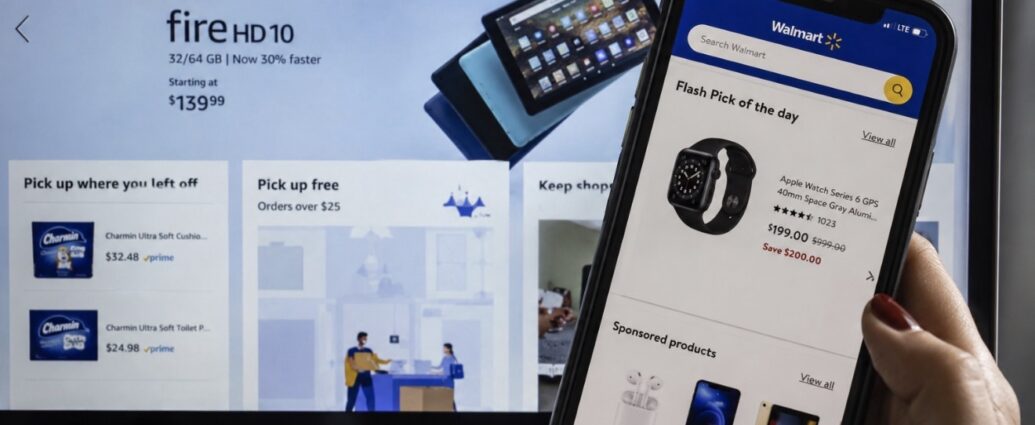
Amazon and Walmart have artificial-intelligence shopping assistants capable of detecting potentially false “Made in USA” claims, but the retailers are not consistently using that technology to flag suspicious listings for shoppers, according to research published Thursday by Columbia Law School’s Center for Law and the Economy.
Researchers Erie Meyer and Zachary Harris tested Amazon’s Alexa for Shopping and Walmart’s Sparky against listings that promoted products as American-made while presenting conflicting origin information elsewhere on the same product page.
Both systems were able to recognize mismatches between prominent “Made in USA” language and details showing that a product was imported or originated in another country.
Yet those warnings were not automatically displayed to shoppers.
That distinction matters because online retailers increasingly present AI assistants as tools that can compare products, answer questions and guide purchasing decisions. If the technology can identify a misleading claim but does not alert the customer, the problem may be less about technical ability than how the platform chooses to use it.
Columbia’s study concluded that questionable American-origin claims appear frequently on both marketplaces and that the retailers have the technical capacity to identify and flag them.
Researchers also found differences in how shoppers could question the systems. Amazon’s assistant sometimes blocked inquiries about American-made products while permitting similar questions about goods made in China, according to the report.
When asked why suspicious claims remained visible, the chatbots reportedly offered business-related explanations rather than pointing to a lack of technical capability.
Those AI-generated responses should not automatically be treated as official corporate policy. Still, the researchers argued that they reveal a broader conflict surrounding retail AI: systems designed to increase sales may not be encouraged to interrupt a purchase by questioning the seller’s advertising.
Federal Trade Commission rules generally require a product marketed without qualification as “Made in USA” to be “all or virtually all” manufactured domestically.
Businesses may use narrower descriptions, such as “assembled in the USA” or “made in the USA with imported components,” but those claims must accurately communicate how much of the product and its manufacturing process are American.
False claims can carry a direct economic cost.
Consumers may pay a premium for products they believe support U.S. workers, factories and supply chains. When imported merchandise is falsely promoted as American-made, legitimate domestic manufacturers can lose sales to competitors operating with lower labor and production costs.
That disadvantage is especially significant for smaller manufacturers. Many depend on domestic origin as a major selling point but lack the staff and resources needed to monitor thousands of competing marketplace listings.
Challenging a false claim may require researching a seller, documenting conflicting information, filing a marketplace complaint and waiting for the platform or a regulator to respond.
AI could substantially reduce that burden.
Marketplace systems already process product titles, specifications, seller identities, shipping information and country-of-origin details. A platform could automatically compare those fields, hold suspicious listings for review or require sellers to provide additional documentation before using an unqualified American-made label.
Neither Amazon nor Walmart consistently provides such automated warnings to customers, according to the study.
The FTC had already raised concerns about the issue before Thursday’s research was released. In July 2025, the agency sent letters to Amazon and Walmart identifying third-party sellers that appeared to be making deceptive U.S.-origin claims.
Regulators reminded both retailers that misleading listings could violate federal law as well as the platforms’ own seller policies.
Amazon said country-of-origin information is displayed on product pages when available and that it continues to improve Alexa for Shopping so the information is easier for customers to access.
The company also said it takes action when sellers violate marketplace policies.
Walmart did not immediately provide a response to the newly published study. The retailer said after last year’s FTC warning that it had zero tolerance for noncompliant third-party products and removed listings when violations were identified.
For consumers, the findings show the limits of relying entirely on a retail chatbot.
A shopper may need to review the complete listing, distinguish between the seller and the actual manufacturer and look for qualified language about where the product was assembled and where its components originated.
Platforms could make that process much easier by placing visible warnings beside contradictory claims.
Such a system would need safeguards. Sellers should be able to challenge incorrect flags, provide sourcing documents and distinguish lawful qualified claims from outright deception.
Even with those complications, the commercial stakes are growing as AI becomes a larger part of online shopping.
Retailers are using assistants to recommend products and encourage customers to complete purchases. The same systems could protect shoppers and domestic manufacturers, but only if identifying questionable claims becomes part of their assigned job.
JBizNews Desk | New York
© JBizNews.com All Rights Reserved. Reproduction or distribution without written permission is prohibited.