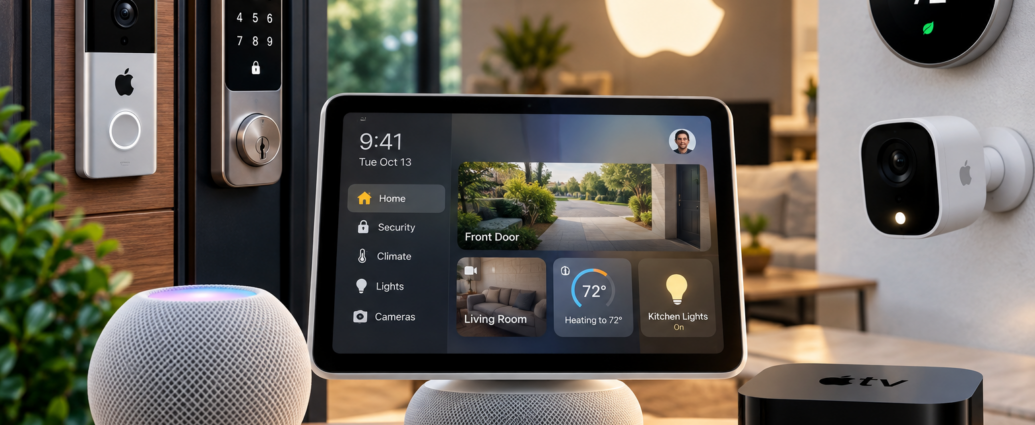
CUPERTINO, Calif. — Apple is preparing one of its biggest pushes yet into the connected home, with a new smart-home hub expected to debut Oct. 13 alongside an upgraded HomePod mini and Apple TV.
The centerpiece is a new device code-named J490, a roughly 6-inch square touchscreen designed to control lights, locks, cameras, thermostats and other connected equipment from one place. Bloomberg first reported the Oct. 13 plans, which were subsequently reported by Reuters.
The launch would move Apple deeper into a market where Amazon and Google have spent years building ecosystems around Alexa, Echo, Nest and other connected-home products.
For consumers, Apple’s bet is straightforward: make the smart home easier to use by tying it more closely to devices millions of people already carry.
Instead of reaching for separate applications to control a thermostat, check a camera or manage other connected equipment, Apple’s new hub is expected to serve as a central command center alongside the iPhone and the company’s Home app.
Apple already supports a wide range of third-party cameras, doorbells, locks, thermostats and other devices through Apple Home, including products built around the Matter smart-home standard.
A Screen Built for the Home
The J490 is expected to feature a square display that can either sit on a countertop with a speaker base or be mounted on a wall.
The device is also expected to use artificial intelligence to recognize different members of a household and personalize information displayed for them. FaceTime and smart-home controls are among the features reported for the device.
Apple is also expected to unveil refreshed versions of the HomePod mini and Apple TV. Both are expected to receive faster processors designed to support Apple’s newer Siri and artificial-intelligence capabilities.
The new products are particularly important because Apple has spent years trying to gain more ground in the home.
HomeKit, Apple’s original smart-home framework, debuted more than a decade ago. But unlike Amazon and Google, Apple largely relied on outside manufacturers to supply many of the cameras, doorbells, thermostats and other accessories consumers actually installed around their homes.
The new hub could give Apple a much more visible centerpiece for that ecosystem.
Privacy Could Be Apple’s Advantage
Privacy is likely to play a central role in Apple’s strategy.
Connected-home devices can collect some of the most sensitive information consumers generate — including video from inside homes, footage from front doors and information about when people are home.
Apple has spent years positioning privacy and security as major differences between its products and those of other technology companies.
That could become particularly important as artificial intelligence allows smart-home systems to understand more about who is inside a house and what they are doing.
First Big Category Test for Ternus
The launch will also be closely watched because it comes early in the tenure of Apple’s new chief executive, John Ternus.
Ternus officially succeeded Tim Cook as CEO on Sept. 1 after spending decades working on Apple’s hardware. Cook moved into the role of executive chairman.
A successful smart-home expansion would give Ternus an opportunity to establish a major new hardware category early in his leadership.
Apple reportedly has even more ambitious home products under development.
Those include a privacy-focused security sensor capable of detecting which room a person is in without recording video, as well as a more expensive version of the home hub with a roughly 9-inch display mounted on a robotic arm capable of moving around.
For now, the Oct. 13 launch is the one to watch.
Apple has not formally announced the J490 hub, and final pricing, availability and product names remain subject to change.
But if the reported launch goes ahead, Apple will be making its clearest attempt yet to turn the iPhone ecosystem into something larger: an operating system for the entire home.
JBizNews Desk | Silicon Valley
© JBizNews.com All Rights Reserved. Reproduction or distribution without written permission is prohibited.