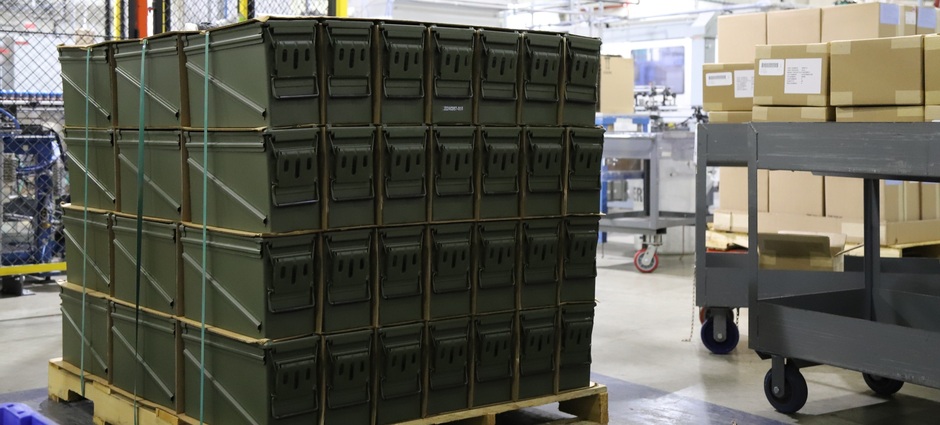
Routine munitions distribution, June 2024 archive, not disposal material. Dori Whipple / U.S. Army via DVIDS. Cropped.
Residents of an Iowa neighborhood are being asked to leave temporarily Friday while the U.S. Army conducts two controlled detonations to destroy unstable explosives, an operation expected to produce ground vibrations and a dust plume containing lead.
The Army recommends that people in the Middletown City Park neighborhood vacate the area from 8 a.m. to 2 p.m. Central time on Friday, Nov. 20. Its Nov. 15 public advisory schedules the two rapid detonations at the Iowa Army Ammunition Plant for approximately noon.
The recommendation is a precaution against potential localized window damage, not an announcement of an accidental explosion. The operation is planned to dispose of degraded lead azide that officials say cannot safely be moved.
Why the Army plans to destroy the material in place
The Environmental Protection Agency says recrystallization of the stored lead azide has made it more sensitive to friction and shock. Disturbing the containers could create an unacceptable risk of an unintended detonation.
After considering disposal alternatives, the Army selected controlled, in-place detonation. The EPA issued an emergency permit on Nov. 13 authorizing storage and treatment at a location not covered by the plant’s existing hazardous-waste permit, according to its Nov. 16 public notice.
The EPA’s response overview describes 68 drums of degraded lead azide. ABC News separately reported Wednesday, citing Army Sustainment Command spokesperson Justine Barati, that the material totals approximately 9,700 pounds.
Lead dust and weather remain part of the safety planning
The Army says residents should expect loud noise, vibrations and visible dust. Its advisory says the dust is expected to linger for no more than an hour, depending on wind speed. That estimate does not establish how much lead could settle on surfaces or whether cleanup will be needed in a particular location.
The permit requires public notification, sampling and monitoring before, during and after the detonations, cleanup and reporting. The Army says it is using earthworks and soil wetting to reduce the plume and has established perimeter air monitoring.
The EPA says destroying the material in place allows the Army to conduct the operation during favorable weather conditions and notify potentially affected communities beforehand. The schedule and any changing exposure guidance should be checked against current Army notices as Friday approaches.
The requested temporary departure applies to the identified neighborhood. It should not be confused with an order to evacuate all of Middletown or with the possible path of airborne dust.
The appearance of U.S. Department of War (DoW) visual information does not imply or constitute DoW endorsement.
JBizNews Desk | Middletown, Iowa
© JBizNews.com. All rights reserved. Unauthorized reproduction or redistribution is strictly prohibited.