A drone carrying an explosive payload does not need to be particularly sophisticated to pose a serious security threat. Commercially available technology is increasingly giving individuals, criminal organizations and hostile groups access to capabilities that once required significant resources.
While much of the public debate around aerial threats has focused on the drones themselves, security officials and technology providers are increasingly grappling with a broader question of how to manage a lower airspace environment that is simultaneously becoming more crowded, more complex and more accessible than ever before.
For Brig.-Gen. Yaron Rosen, executive chairman at Airwayz and who held senior leadership roles as an Israeli Air Force commander and the IDF’s Cyber Command, the current moment bears striking similarities to the emergence of cybersecurity challenges more than a decade ago.
“It’s the democratization and commoditization of airspace,” Rosen told Defense & Tech by The Jerusalem Post. “Anyone can fly an object, like drones, and that wasn’t possible 10 years ago.”

The widespread adoption of commercial drones, combined with advances in autonomous systems, robotics and edge computing, has dramatically lowered the barriers to operating airborne systems. Capabilities that were once limited to governments and militaries are increasingly available to commercial operators, public safety agencies, hobbyists and, in some cases, criminal organizations.
“We have been used to building aircraft that carry people and are relatively big,” he said. “If you look over the past five years, these flying objects are getting smaller. And meaner.”
Rosen compares the transformation to the emergence of cyber threats more than a decade ago, when increasingly accessible technology allowed smaller actors to challenge organizations and governments with far greater resources.
“Airspace and cyber have parallels,” he said. “In cyber, smaller, faster and more distributed capabilities changed the nature of both offense and defense. We’re beginning to see similar dynamics in airspace.”
The implications extend beyond the battlefield. Drones are increasingly being used by criminal organizations and cartels, while also posing potential threats to airports, ports, nuclear facilities and major international events.
“Suddenly security isn’t two-dimensional. It’s also in the air, and that changes the nature of how we secure our sovereignty,” Rosen said.
The challenge of coordinating defenses
The proliferation of drones is creating a growing demand for detection and interception capabilities. But according to Rosen, acquiring additional equipment is only part of the challenge. Security forces must also be able to coordinate the information and systems they already have.
“You can arm yourself with sensors and effectors, but you need to make sense of the information you get,” he said.
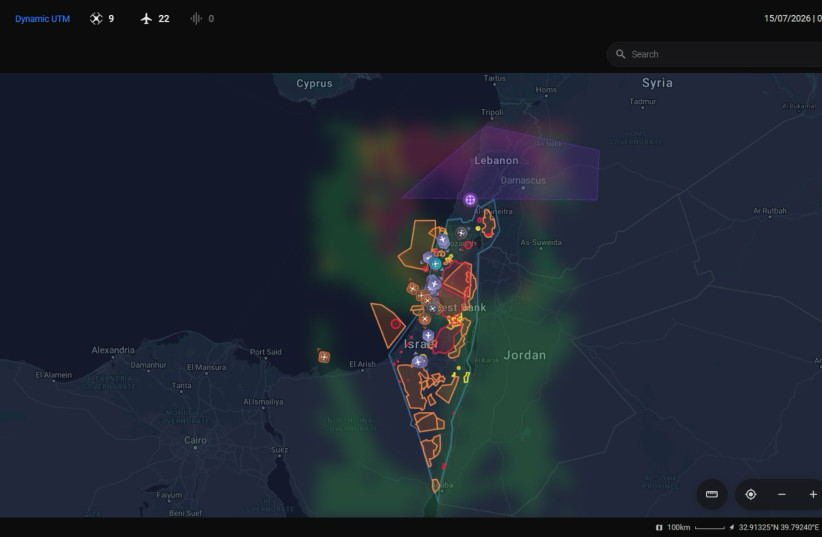
Airwayz’s platform OVERWATCH is a command-and-control platform that integrates information from different sensors and counter-drone systems. The software is designed to combine data from radars, cameras and radio-frequency sensors, among other technologies, and provide operators with a common operational picture.
The company is focusing on the coordination of existing systems rather than manufacturing its own detection or interception hardware. The platform is intended for military and civilian security organizations, including police forces and infrastructure operators that may not have specialist airspace personnel.
Rosen told D&T the system is also designed to learn the characteristics of the airspace it monitors. This includes recognizing normal activity, such as bird migration patterns and airport operations, and identifying deviations that could indicate a potential threat.
It also incorporates information about relevant authorities, legal frameworks and rules of engagement to support operators in deciding how to respond.
Major sporting events, transportation hubs, seaports, airports, energy infrastructure, government facilities and industrial sites are all confronting the reality of persistent aerial activity in their immediate vicinity. Airwayz has worked with the Port of Rotterdam, where its technology is used in managing drone operations around the port and it has also secured the skies over the recent FIFA games.
NATO and interoperability
The difficulty of integrating different technologies has also emerged as a challenge for NATO members seeking to strengthen their counter-drone capabilities.
During a recent NATO exercise, Airwayz’s OVERWATCH platform was integrated with more than 45 sensors, effectors and command-and-control systems, Rosen said.
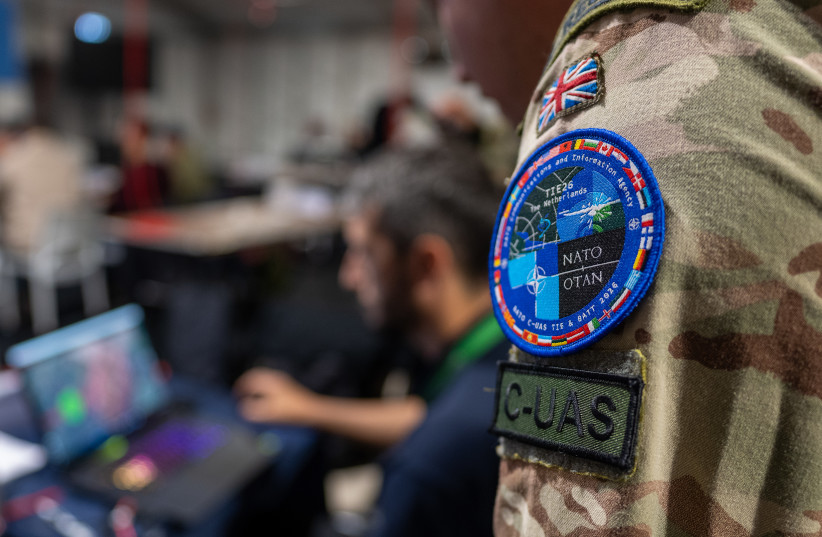
The exercise demonstrated the difficulties of coordinating equipment developed by different manufacturers and countries. Airwayz also achieved SAPIENT compliance, an interoperability standard designed to facilitate communication between different sensors and systems.
Rosen said the exercise provided an opportunity to receive feedback from military officials and make changes to the platform during the event.
“During the exercise, we got some feedback from generals who were there. They came back the next day and saw the issues they raised were fixed – something they never saw with other integrators,” he said.
For NATO, interoperability is an important consideration as member states acquire different counter-drone systems and seek ways to integrate them into broader defense networks.
Rosen said European governments were increasingly recognizing the threat posed by drones, although the level of urgency varies between countries.
“Israeli companies shine. Necessity is the mother of all inventions,” he said. “Europeans are starting to understand that, but the fires are not actually catching their coat yet. But they are feeling the heat, especially the countries on the eastern flank.”
As drones become smaller, cheaper and easier to operate, governments face the challenge of protecting not only their traditional airspace but also the low-altitude environment. For security forces, that means addressing not just how to detect an incoming drone, but how to coordinate an effective response.