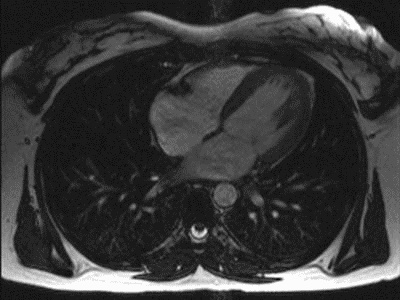
Archive MRI: Bionerd / CC BY 3.0 (still).
Atrium Therapeutics says the first patient has received its experimental RNA-based medicine ATR 1072 in Corventis, an early-stage trial for people with PRKAG2 syndrome, a rare inherited heart disorder.
The October 27 company announcement is a first-dose milestone, not evidence that the treatment works. Atrium expects initial proof-of-concept data in the second half of 2027. The Phase 1/2 study is designed primarily to assess safety, with additional measures of how the drug behaves in the body and affects the heart.
Atrium describes Corventis as the first interventional clinical trial for PRKAG2 syndrome. Its medicine is intended to address the disease’s genetic driver rather than only manage its consequences. That remains a goal under investigation, not an established clinical benefit.
Targeting a genetic cause of heart disease
PRKAG2 syndrome is caused by changes in the PRKAG2 gene. According to Atrium, those changes can make an enzyme called AMP-activated protein kinase, or AMPK, overactive, leading to abnormal glycogen buildup in heart muscle. The disorder can involve thickened heart muscle, electrical-conduction problems and abnormal heart rhythms.
The company says there are no approved therapies that address the underlying genetic driver. Current care manages the disorder’s consequences, which can include the need for pacemakers or defibrillators.
ATR 1072 is an antibody-oligonucleotide conjugate, combining a targeting antibody with a small interfering RNA payload. Atrium says it is designed to silence mutant PRKAG2 messenger RNA, normalize AMPK activity and reduce harmful glycogen accumulation. Whether that approach safely improves heart function in people is what the clinical program must test.
About 37 participants, with no placebo group
Corventis is an open-label, multicenter trial expected to enroll approximately 37 people. Its first part uses groups receiving progressively higher dose levels to characterize safety and help select a dose. A second, single-arm expansion group will further examine signs of an effect on heart structure and function at the recommended Phase 2 dose.
The primary endpoint is the incidence of treatment-emergent adverse events. Secondary and exploratory measures include reductions in PRKAG2 messenger RNA, tissue concentrations of the RNA medicine and drug levels in the blood.
The trial’s patient-information site explains that all participants receive ATR 1072 and there is no placebo group. Such a design can help researchers gather early safety and biological data, but it does not provide the same treatment comparison as a randomized placebo-controlled trial.
A long follow-up before answers
The trial site describes screening for adults ages 18 to 65 with a PRKAG2 variant and heart findings consistent with the syndrome. Full eligibility is determined by the study team. Participation runs approximately two years, with intravenous infusions about every six weeks during the treatment period and continued monitoring.
The site says Corventis is opening at locations in the United States and Canada. It also cautions that joining may or may not help an individual participant directly.
For clinicians and families following inherited cardiomyopathies, today’s development moves a proposed genetic treatment into human testing. Safety findings, enrollment progress and the planned 2027 data will determine what researchers can say next. First dosing alone does not establish that ATR 1072 is safe, effective or ready for routine care.
JBizNews Desk | New York
© JBizNews.com. All rights reserved. Unauthorized reproduction or redistribution is strictly prohibited.