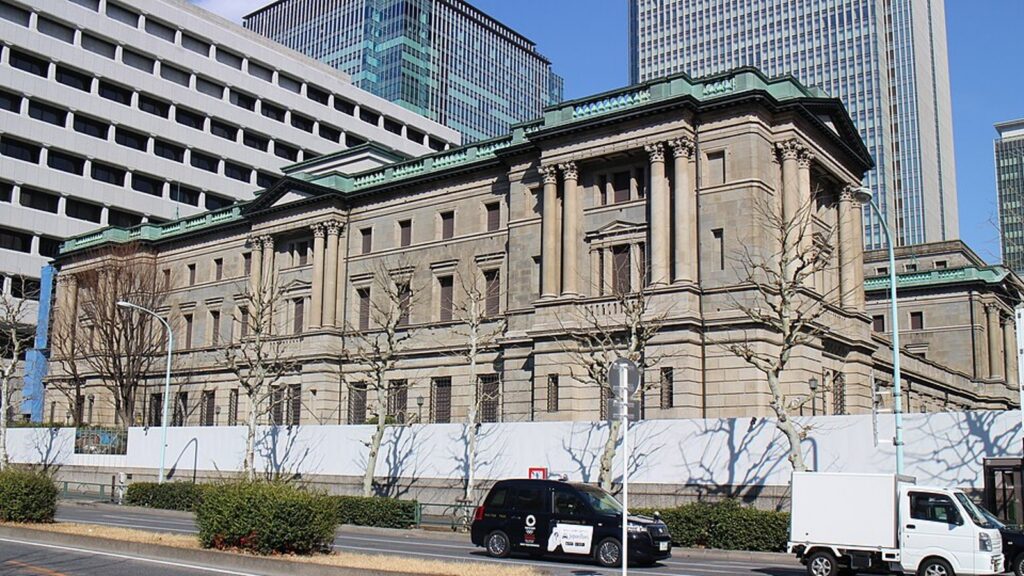
Suicasmo / Wikimedia Commons / CC BY-SA 4.0
TOKYO – The Bank of Japan’s newly released summary of opinions from its October 29-30 monetary policy meeting shows differing views on how quickly to raise interest rates, with calls for patience alongside arguments for reaching a neutral level sooner.
The six-page summary, dated November 10 and released at 8:50 a.m. Japan time, records opinions presented at the earlier meeting. It is not a new interest-rate decision, does not identify the speaker behind each opinion and does not provide a named voting record.
Some opinions favored maintaining the policy rate at that meeting to examine economic and price risks or assess the cumulative effects of past increases. One said parts of the economy remained weak even though activity had recovered moderately overall.
Other opinions supported further tightening. One called for stepping up the pace of bringing the policy rate to neutral, arguing that financial conditions remained accommodative and the effects of earlier hikes had yet to materialize. Another urged reaching neutral soon while monitoring conditions for several months after each increase and seeking to “make haste slowly.”
The document also records caution about how much room remains. One opinion said the policy rate had already entered the estimated neutral-rate range and warned that another increase could weigh on the economy and push down underlying inflation. A different opinion said the neutral interest rate was likely “considerably above 1 percent.” That figure is an opinion in the summary, not a new institutional estimate issued by the Bank of Japan.
Several opinions described underlying consumer-price inflation as broadly consistent with the 2% stability target, while stressing the need to keep it anchored there. The discussion pointed to next year’s spring wage negotiations, firms’ pricing decisions and inflation expectations as areas to watch.
One opinion projected that year-on-year CPI inflation excluding fresh food would exceed 3% toward the end of the fiscal year. The summary presents that as a projection, not a newly reported inflation reading. Other opinions noted both the risk of inflation exceeding target and the delayed downward effects of earlier rate increases.
On activity, the discussion described moderate growth with some weakness, including limited momentum in private consumption. Opinions highlighted support from global AI-related demand but questioned how durable its effects through semiconductor materials, production equipment and data centers would be. Higher energy and raw-material costs were seen as a drag.
The summary also records calls to reassess the pace of exchange-traded fund sales, which began in January 2026. One opinion cited smooth sales and rising stock-market turnover; another urged reviewing the volume that could be sold with minimal disruption and considering corporate-governance implications of central-bank ETF holdings. These were views expressed in the meeting, not a separately announced new sales schedule.
Government representatives said they expected appropriate policy aimed at sustainably achieving the 2% target, close cooperation with the government and effective communication with markets. The document’s footnote explains that members and government representatives submit summaries of their remarks, which the governor then edits under his responsibility.
JBizNews Desk | Tokyo
© JBizNews.com. All rights reserved. Unauthorized reproduction or redistribution is strictly prohibited.