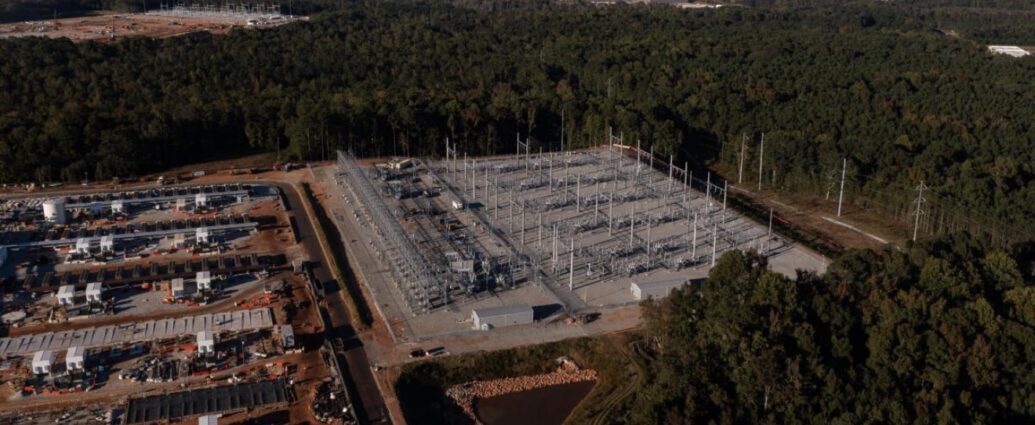
CleanSpark, Inc. announced Tuesday that it has signed a long-term lease expected to generate billions of dollars in contracted revenue, marking one of the clearest examples yet of a bitcoin miner transforming itself into an artificial intelligence infrastructure company.
According to a Form 8-K filed with the U.S. Securities and Exchange Commission and a company announcement dated Tuesday, July 14, the Las Vegas-based company entered into a 20-year triple-net lease with what it described as a high-investment-grade global technology company for a major computing campus in Sandersville, Georgia.
CleanSpark did not identify the tenant.
The agreement is expected to produce approximately $6.6 billion in contracted revenue during the initial 20-year lease term. If the tenant exercises both available five-year extension options, the total value of the agreement could reach approximately $11.6 billion.
The lease covers approximately 175 megawatts of critical computing capacity, with deliveries expected to begin during the fourth quarter of 2027.
Under a triple-net lease, the tenant generally pays property taxes, insurance and operating expenses, allowing the landlord to generate highly predictable cash flow while limiting ongoing operating costs.
CleanSpark estimates the project will generate roughly $330 million in average annual net operating income with contribution margins approaching 100% after the facilities become operational.
Company officials estimate development costs between $10 million and $12 million per megawatt, reflecting the enormous capital investment required to construct modern artificial-intelligence infrastructure.
The announcement represents a significant strategic shift for CleanSpark.
For years the company was known primarily as one of North America’s largest publicly traded bitcoin miners. Its business depended heavily on cryptocurrency prices and mining economics, both of which can fluctuate dramatically.
Now the company is leveraging another valuable asset accumulated during the cryptocurrency boom—large parcels of land with long-term access to electrical power.
That resource has become increasingly valuable as technology companies race to build artificial-intelligence data centers.
Unlike traditional office buildings or industrial facilities, AI data centers require enormous amounts of reliable electricity to power thousands of advanced processors operating around the clock.
Securing sufficient power has become one of the industry’s greatest challenges.
Rather than selling electricity into the wholesale market or using all of its capacity to mine bitcoin, CleanSpark plans to lease portions of its power infrastructure directly to technology companies requiring large-scale computing facilities.
Chief Executive Officer and Chairman Matt Schultz described the agreement as a transformational milestone that completes the company’s evolution into a diversified digital infrastructure platform.
He said the company deliberately pursued what he called a “land-and-power” strategy, assembling strategically located sites with secured electrical capacity before demand for artificial-intelligence infrastructure accelerated.
The Georgia project may represent only the beginning.
CleanSpark also disclosed that the same unnamed tenant signed a letter of intent and exclusivity agreement covering the company’s Texas development portfolio.
That portfolio includes approximately 718 acres with the potential to support as much as 885 megawatts of secured and planned electrical capacity.
If additional agreements are finalized, CleanSpark could become one of the largest providers of AI-ready power infrastructure among former cryptocurrency miners.
The transaction reflects a broader trend reshaping the digital economy.
As artificial-intelligence companies compete to build increasingly powerful computing systems, electricity has become as important as computer chips.
Data-center developers now compete aggressively for access to power grids capable of supporting hundreds of megawatts of continuous demand.
That has created new opportunities for companies that previously assembled energy-intensive infrastructure for cryptocurrency mining.
The timing is also significant.
CleanSpark recently reported weaker-than-expected quarterly financial results, including a loss of approximately $1.52 per share on revenue of about $136.4 million, missing Wall Street expectations.
The company mined 614 bitcoin during June and 3,724 bitcoin during the first half of the year.
Investors nevertheless welcomed Tuesday’s announcement.
Shares of CleanSpark rose roughly 10% after the lease was announced, reflecting optimism that long-term contracted rental income could provide greater stability than cryptocurrency mining alone.
The company said Morgan Stanley served as financial adviser on the transaction, while Davis Polk & Wardwell LLP acted as legal counsel.
For the broader business community, the lease demonstrates how the artificial-intelligence boom is creating winners well beyond traditional technology companies.
Electric utilities, landowners, engineering firms, construction companies, power developers and former cryptocurrency miners are all finding new opportunities as demand for high-performance computing infrastructure accelerates.
What was once a bitcoin mining campus in rural Georgia is now positioned to become part of the expanding backbone of the global artificial-intelligence economy.
Whether other cryptocurrency miners successfully replicate CleanSpark’s strategy may depend on one increasingly scarce resource:
Access to reliable electricity.
JBizNews Desk | Las Vegas
© JBizNews.com All Rights Reserved. Reproduction or distribution without written permission is prohibited.