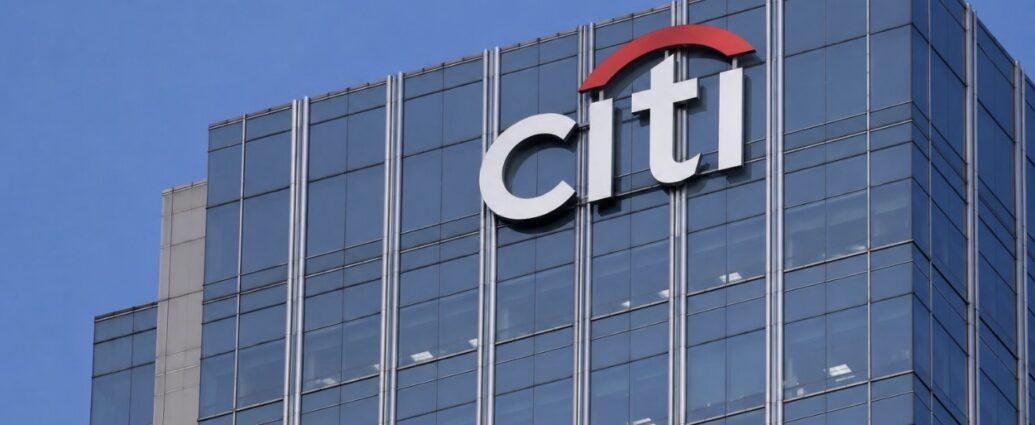
Citigroup reported its best quarterly revenue in a decade on Tuesday, July 14, but investors were unimpressed, sending the bank’s shares down more than 5%. The decline came after Chief Financial Officer Gonzalo Luchetti acknowledged during the company’s second-quarter earnings call that Citi remains behind its largest Wall Street rivals in equities trading and that closing the gap will take time.
Financially, the quarter was exceptionally strong.
Citigroup earned $5.8 billion, or $3.15 per diluted share, comfortably exceeding all 20 analyst estimates compiled by Bloomberg and topping the $2.74 consensus forecast tracked by Reuters. Revenue climbed to $24.8 billion, up 14% from a year earlier and the bank’s highest quarterly total in ten years. Net income increased 45% from $4.0 billion reported during the second quarter of 2025.
The Markets division delivered another standout performance. Equities trading revenue surged 45% to $2.3 billion, while prime brokerage balances jumped nearly 60%. Fixed-income trading revenue rose 7% to $4.7 billion, and investment banking posted its strongest quarter since 2021. Four of Citi’s five major operating divisions—Banking, Services, Markets and Wealth—exceeded Wall Street expectations. The only disappointment came from U.S. Personal Banking, where a 10% increase in expenses, driven partly by severance costs, weighed on results.
Where Citi Still Lags
Despite impressive growth, investors focused on one uncomfortable comparison.
While Citi’s equities trading revenue increased 45%, rivals produced even stronger gains.
Goldman Sachs reported equities trading revenue of $7.42 billion, up 72%, beating analysts’ expectations by roughly $2.3 billion. Bank of America generated $8.02 billion in Global Markets revenue, with equities sales and trading climbing 70%.
Against those results, Citi’s record quarter suddenly looked less impressive.
Luchetti openly acknowledged the issue, telling analysts that Citigroup invested later than competitors in building its equities franchise and still has significant work ahead. Rather than promising a quick turnaround, management stressed that expanding the business will be a multi-year effort.
The honesty was appreciated by analysts—but not by shareholders comparing earnings reports across Wall Street.
The Guidance That Raised Questions
Investors also focused on Citi’s profitability outlook.
The bank generated a 13% return on tangible common equity (ROTCE) during the second quarter and 13.1% for the first half of 2026. Yet management maintained its existing full-year target, implying materially lower profitability during the second half of the year.
Executives also indicated that stronger economic conditions would encourage additional investment spending over the coming months.
During the earnings call, Wells Fargo Securities analyst Mike Mayo challenged management directly, noting that a first-half return above 13% implied second-half returns closer to 9%, suggesting a meaningful slowdown.
Chief Executive Officer Jane Fraser responded that Citi remains focused on long-term value creation rather than quarter-to-quarter fluctuations. She said the bank would not sacrifice strategic investments simply to produce stronger short-term earnings.
Luchetti added that market revenues are typically seasonal and cautioned investors against reading too much into the implied second-half comparison.
The market remained unconvinced.
With Citi trading roughly 33% above its $100.89 tangible book value before earnings, expectations were already high. Shares declined 5.3%, closing near $134.
Restructuring Continues
Citigroup also continues reshaping its workforce.
Headcount declined by approximately 5,000 employees during the quarter, representing a 5% reduction from a year earlier. The bank has now recorded roughly $800 million in severance charges during the first half of 2026.
Luchetti indicated those restructuring costs are likely to exceed previous estimates as Citi accelerates its modernization program.
Management said lower regulatory remediation expenses have created room to fund the bank’s previously announced $5 billion investment plan unveiled in May.
Returning Cash to Shareholders
Despite the stock’s decline, shareholders received positive news.
Jane Fraser announced that stronger earnings support a 12% increase in Citigroup’s quarterly dividend while allowing the bank to launch a $30 billion share repurchase program.
During the quarter alone, Citi returned approximately $5 billion to common shareholders through dividends and buybacks.
AI and the Future of Banking
Fraser also offered insight into how the bank is evolving.
She said the U.S. economy remains on stable footing, with labor markets holding up well, although growth is increasingly concentrated in sectors such as artificial intelligence, semiconductors and data-center construction.
Inside Citigroup, nearly nine out of ten employees now use the bank’s internal AI tools, which management says are accelerating product development and improving efficiency.
Combined with a workforce reduction of 5,000 employees in just one quarter, the comments provided one of Wall Street’s clearest examples yet of how major banks expect artificial intelligence to reshape operations over the coming years.
Citigroup reaffirmed its 2026 outlook, projecting net interest income, excluding Markets, to grow 5% to 6%.
For now, however, investors remain focused on one challenge: Citi still has ground to make up in stock trading, and management says that process will require patience.
JBizNews Desk | New York
© JBizNews.com All Rights Reserved. Reproduction or distribution without written permission is prohibited.