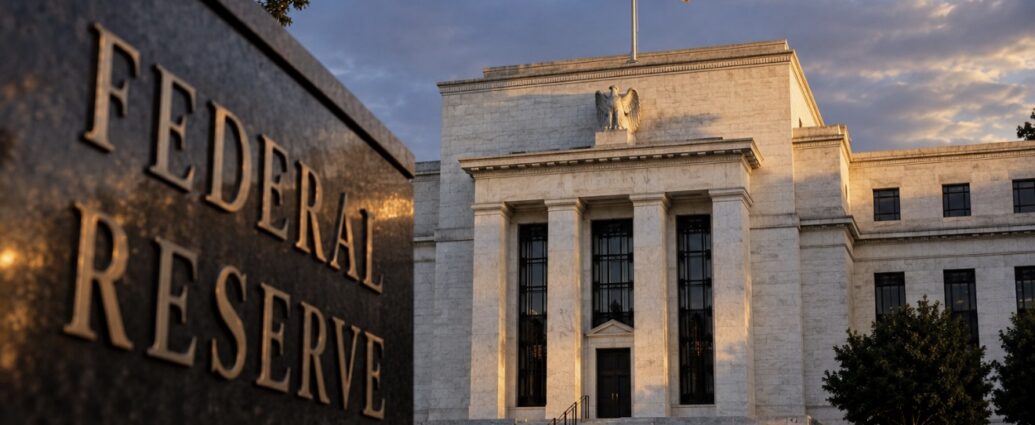
Bond traders are making one of their most aggressive bets in months that the Federal Reserve will raise interest rates Wednesday — and that Treasury prices could keep falling even after the decision.
The 10-year Treasury yield climbed Tuesday to its highest level since 2007, while the two-year yield reached its highest since 2024, as investors continued selling government bonds ahead of the Fed meeting.
That matters far beyond Wall Street.
Treasury yields help determine the cost of mortgages, business loans, auto financing, corporate borrowing and even how stocks are valued. When yields rise this sharply, money gets more expensive across the economy.
The market is now pricing in more than a 90% chance that the Fed raises rates by a quarter percentage point Wednesday, which would be the first increase since 2023.
But traders are not simply waiting for the Fed.
They are betting real money that rates and yields may stay higher.
JPMorgan’s latest Treasury client survey showed short positions — bets that bond prices will fall and yields will rise — jumping 10 percentage points in the week through Sept. 14. Most of that movement came from investors who had previously been neutral.
Citi strategist David Bieber described the positioning as “tactically extreme,” saying traders have rapidly built short positions as yields moved higher.
The message is simple: investors do not want to get caught holding long-term bonds if inflation keeps pushing the Fed toward tighter policy.
Oil is a major reason.
Higher energy prices have added fresh inflation pressure at a time when consumer prices were already running above the Fed’s target. Budget concerns and heavy government borrowing have also made investors more reluctant to lock money into long-term Treasuries unless they receive higher yields in return.
The 10-year Treasury yield briefly pushed above 5% Tuesday, a level that has become psychologically important for markets because it raises borrowing costs across much of the economy.
For a business owner, a move from 4% to 5% in benchmark yields does not sound dramatic. But once banks add their own spread on top, the difference can mean thousands or even hundreds of thousands of dollars more in annual interest expense on large loans.
Commercial real estate is especially sensitive because many properties must refinance debt every few years. A building financed when rates were much lower can suddenly face a dramatically higher payment when that loan rolls over.
Consumers feel it too.
Mortgage rates tend to track longer-term Treasury yields. Credit cards are more closely tied to short-term rates, while auto and small-business loans respond to both broader funding costs and Fed policy.
That is why Wednesday’s Fed decision has become much bigger than whether rates move by just one quarter-point.
The bigger question is what the Fed says comes next.
Markets are currently pricing about 50 basis points of additional tightening for the remainder of 2026, including Wednesday’s expected move. That means traders are already looking beyond this meeting and asking whether another increase could follow.
If the Fed raises rates but sounds cautious about doing more, bond yields could pull back.
If the Fed raises rates and signals additional tightening is likely, the current bond selloff could continue.
The more dangerous scenario for traders who have piled into short positions is the Fed refusing to raise rates at all.
That might sound positive for borrowers at first, but bond investors could interpret a surprise pause as the Fed being too relaxed about inflation. In that case, longer-term Treasury yields could actually rise further as investors demand more compensation for inflation risk.
At the same time, shorter-term yields could fall because they are more directly tied to the Fed’s policy rate.
That split is why Wednesday could produce unusually sharp market swings.
Bank of America strategists Meghan Swiber and Eleanor Xiao said positioning remains heavily bearish across the Treasury curve, with asset managers cutting long positions or adding shorts and showing little appetite to buy bonds simply because prices have fallen.
In plain English, investors are not yet treating this selloff as a bargain.
They are treating it as a warning.
The Fed announces its decision Wednesday, and the first market reaction will come within seconds.
For businesses and consumers, the number to watch afterward may not be the Fed rate itself.
It may be whether the 10-year Treasury yield stays around 5% — because that is the number already working its way into the cost of borrowing across America.
JBizNews Desk | Wall Street
© JBizNews.com. All rights reserved. This article is original reporting by JBizNews Desk. Unauthorized reproduction or redistribution is strictly prohibited.