On CNBC’s “Halftime Report Final Trades,” Stephen Weiss, chief investment officer and managing partner of Short Hills Capital Partners, named Vertiv Holdings Co (NYSE:VRT) as his final trade.

On the earnings front, Vertiv reported first-quarter results on Wednesday, with both earnings and revenue beating the consensus estimate.

Net sales rose 30% year-over-year (Y/Y) to $2.65 billion, exceeding the $2.627 billion Street consensus. Adjusted EPS stood at $1.17, beating the consensus of $1.01.

Anastasia Amoroso, managing director, chief investment strategist …

Full story available on Benzinga.com

This post was originally published here

On CNBC’s “Halftime Report Final Trades,” Stephen Weiss, chief investment officer and managing partner of Short Hills Capital Partners, named Vertiv Holdings Co (NYSE:VRT) as his final trade.

On the earnings front, Vertiv reported first-quarter results on Wednesday, with both earnings and revenue beating the consensus estimate.

Net sales rose 30% year-over-year (Y/Y) to $2.65 billion, exceeding the $2.627 billion Street consensus. Adjusted EPS stood at $1.17, beating the consensus of $1.01.

Anastasia Amoroso, managing director, chief investment strategist …

Full story available on Benzinga.com

This post was originally published here

During times of turbulence and uncertainty in the markets, many investors turn to dividend-yielding stocks. These are often companies that have high free cash flows and reward shareholders with a high dividend payout.

Benzinga readers can review the latest analyst takes on their favorite stocks by visiting Analyst Stock Ratings page. Traders can sort through Benzinga’s extensive database of analyst ratings, including by analyst accuracy.

Below are the ratings of the most accurate analysts for three high-yielding stocks in the communication services sector.

National CineMedia, Inc. (NASDAQ:NCMI)

  • Dividend Yield: 3.42%
  • Barrington Research analyst Patrick Sholl maintained an Outperform rating and cut the price target from $6.5 to $5.5 on Jan. 26, 2026. This analyst has an accuracy rate of 71%
  • B. Riley Securities analyst Drew Crum maintained a Neutral rating and slashed the price target from $5 to $4 on Jan. 22, 2026. This analyst has an accuracy rate of 69%.
  • Recent News: On Feb. 26, National CineMedia …

Full story available on Benzinga.com

This post was originally published here

During times of turbulence and uncertainty in the markets, many investors turn to dividend-yielding stocks. These are often companies that have high free cash flows and reward shareholders with a high dividend payout.

Benzinga readers can review the latest analyst takes on their favorite stocks by visiting Analyst Stock Ratings page. Traders can sort through Benzinga’s extensive database of analyst ratings, including by analyst accuracy.

Below are the ratings of the most accurate analysts for three high-yielding stocks in the communication services sector.

National CineMedia, Inc. (NASDAQ:NCMI)

  • Dividend Yield: 3.42%
  • Barrington Research analyst Patrick Sholl maintained an Outperform rating and cut the price target from $6.5 to $5.5 on Jan. 26, 2026. This analyst has an accuracy rate of 71%
  • B. Riley Securities analyst Drew Crum maintained a Neutral rating and slashed the price target from $5 to $4 on Jan. 22, 2026. This analyst has an accuracy rate of 69%.
  • Recent News: On Feb. 26, National CineMedia …

Full story available on Benzinga.com

This post was originally published here
On CNBC’s “Mad Money Lightning Round,” Jim Cramer said Alphabet Inc. (NASDAQ:GOOGL) (NASDAQ:GOOG) is going to $400.

Supporting his view, BMO Capital analyst Brian Pitz, on Wednesday, maintained Alphabet with an Outperform rating and raised the price target from $400 to $410.

JPMorgan analyst Doug Anmuth reiterated an Overweight rating on Monday with a $395 price forecast for Alphabet. The firm named the tech giant a “Top Pick” just as the Google Cloud Next event kicked off …

Full story available on Benzinga.com

This post was originally published here

On CNBC’s “Mad Money Lightning Round,” Jim Cramer said Alphabet Inc. (NASDAQ:GOOGL) (NASDAQ:GOOG) is going to $400.

Supporting his view, BMO Capital analyst Brian Pitz, on Wednesday, maintained Alphabet with an Outperform rating and raised the price target from $400 to $410.

JPMorgan analyst Doug Anmuth reiterated an Overweight rating on Monday with a $395 price forecast for Alphabet. The firm named the tech giant a “Top Pick” just as the Google Cloud Next event kicked off …

Full story available on Benzinga.com

This post was originally published here

Jim Cramer, host of CNBC’s Mad Money, on Wednesday, shared a practical strategy for navigating a hot market: be willing to pay a premium for high-quality stocks rather than risk missing out on strong upside potential.

Cramer emphasized the importance of discipline in a heated market. He recalled a lesson from his early career where a fellow trader would “divide stocks by 10” to make their prices seem more palatable. He used the example of Bloom Energy (NYSE:BE), explaining that a $230 stock could be perceived as a $23 stock, making it psychologically easier to invest in high-momentum stocks.

“Would it really kill you to pay $24 for a $23 stock?” Cramer said. “The answer is no.”

Despite being a “price-sensitive buyer”, the CNBC host suggested a flexible approach of applying this “must-own” mindset to a small number of high-conviction stocks, particularly in a stable interest rate environment supporting the bull market.

Cramer noted that stocks of chipmakers Micron Technology (NASDAQ:MU) …

Full story available on Benzinga.com

This post was originally published here

A WalletHub analysis released on Wednesday showed Hawaii has the highest housing cost burden in the U.S.

Hawaiian homeowners spend 50.02% of their median monthly household income on housing, including mortgage and energy costs. California ranks second at 43%, followed by Massachusetts at 33.67%, while Iowa sits lowest at 17.26%.

The ranking combines mortgage, rent and home energy costs and adjusts them against median income across all 50 states.

High Costs Despite High Incomes

Hawaii’s burden stands out even with relatively strong earnings. The state has the fourth-highest median household income at $100,389, yet housing costs still consume a disproportionate share. The report attributes this to consistently high expenses across categories, with Hawaii recording both the highest mortgage payments and the highest home energy costs in the country.

California shows a similar pattern. Despite a median income of $99,122, residents spend 43% of their income on housing, driven by the second-highest mortgage costs and elevated …

Full story available on Benzinga.com

This post was originally published here
Amidst today’s fast-paced and highly competitive business environment, it is crucial for investors and industry enthusiasts to conduct comprehensive company evaluations. In this article, we will delve into an extensive industry comparison, evaluating Netflix (NASDAQ:NFLX) in comparison to its major competitors within the Entertainment industry. By analyzing critical financial metrics, market position, and growth potential, our objective is to provide valuable insights for investors and offer a deeper understanding of company’s performance in the industry.

Netflix Background

Netflix’s relatively simple business model involves only one business, its streaming service. It has the biggest television entertainment subscriber base in both the United States and the collective international market, with more than 300 million subscribers globally. Netflix has exposure to nearly the entire global population outside of China. The firm has traditionally avoided a regular slate of live programming or sports content, instead focusing on on-demand access to episodic television, movies, and documentaries. The firm introduced ad-supported subscription plans in 2022, giving the firm exposure to the advertising market in addition to the subscription fees that have historically accounted for nearly all its revenue.

Company P/E P/B P/S ROE EBITDA (in billions) Gross Profit (in billions) Revenue Growth
Netflix Inc 30.08 12.61 8.60 18.3% $11.13 $6.36 16.19%
The Walt Disney Co 15.44 1.71 1.98 2.2% $5.45 $9.31 5.23%
Spotify Technology SA 42.22 10.97 5.44 14.58% $1.05 $1.5 6.81%
Warner Bros. Discovery Inc 94.19 1.91 1.85 -0.7% $4.25 $4.24 -5.65%
Liberty Media Corp 35.14 2.62 4.67 1.08% $0.38 $0.49 37.87%
Roku Inc 200.58 6.56 3.77 3.05% $0.19 $0.61 16.14%
Warner Music Group Corp 51.40 21.26 2.22 25.46% $0.39 $0.85 10.44%
TKO Group Holdings Inc 82.42 3.89 7.63 -0.06% $0.21 $0.62 11.86%
Cinemark Holdings Inc 27.43 8.22 1.23 7.03% $0.13 $0.5 -4.67%
Imax Corp 57.49 5.79 4.90 0.19% $0.02 $0.07 35.11%
Reservoir Media Inc 101.50 1.78 3.96 0.59% $0.02 $0.03 7.72%
Marcus Corp 45.46 1.25 0.77 1.31% $0.02 $0.07 2.75%
Average 68.48 6.0 3.49 4.98% $1.1 $1.66 11.24%

Full story available on Benzinga.com

This post was originally published here

Amidst the fast-paced and highly competitive business environment of today, conducting comprehensive company analysis is essential for investors and industry enthusiasts. In this article, we will delve into an extensive industry comparison, evaluating Micron Technology (NASDAQ:MU) in comparison to its major competitors within the Semiconductors & Semiconductor Equipment industry. By analyzing critical financial metrics, market position, and growth potential, our objective is to provide valuable insights for investors and offer a deeper understanding of company’s performance in the industry.

Micron Technology Background

Micron is one of the largest semiconductor companies in the world, specializing in memory and storage chips. Its primary revenue stream comes from dynamic random access memory, or DRAM, and it also has minority exposure to not-and or NAND, flash chips. Micron serves a global customer base, selling chips into data centers, mobile phones, consumer electronics, and industrial and automotive applications. The firm is vertically integrated.

Company P/E P/B P/S ROE EBITDA (in billions) Gross Profit (in billions) Revenue Growth
Micron Technology Inc 23.01 7.59 9.51 21.0% $18.48 $17.75 196.29%
NVIDIA Corp 41.33 31.28 22.99 31.11% $51.28 $51.09 73.21%
Broadcom Inc 82.39 25.05 30.12 9.12% $11.15 $13.16 29.47%
Advanced Micro Devices Inc 116.27 7.85 14.33 2.44% $2.86 $5.58 34.11%
Texas Instruments Inc 43.36 13.22 12.20 7.03% $2.07 $2.47 10.38%
Analog Devices Inc 69.73 5.51 16.06 2.46% $1.52 $2.04 30.42%
Qualcomm Inc 27.43 6.29 3.32 13.57% $4.11 $6.68 5.0%
Marvell Technology Inc 51.24 9.61 16.70 2.79% $0.75 $1.15 22.08%
Monolithic Power Systems Inc 118.35 21.17 26.35 4.95% $0.21 $0.41 20.83%
NXP Semiconductors NV 28.40 5.67 4.68 4.53% $0.98 $1.81 7.2%
ON Semiconductor Corp 306.86 4.56 6.11 2.33% $0.45 $0.55 -11.17%
GLOBALFOUNDRIES Inc 38.01 2.78 4.97 1.68% $0.73 $0.51 0.0%
Astera Labs Inc 159.07 24.22 40.87 3.41% $0.07 $0.2 91.77%
Credo Technology Group Holding Ltd 104.12 18.90 32.95 10.03% $0.16 $0.28 201.49%
Tower Semiconductor Ltd 106.24 7.97 14.95 2.78% $0.2 $0.12 13.69%
MACOM Technology Solutions Holdings Inc 125.34 15.36 20.34 3.64% $0.07 $0.15 24.52%
First Solar Inc 13.28 2.13 3.89 5.62% $0.7 $0.67 11.15%
Lattice Semiconductor Corp 5779.50 22.16 30.54 -1.08% $0.01 $0.1 24.16%
Rambus Inc 62.28 10.42 20.29 4.81% $0.09 $0.15 18.09%
Average 404.07 13.01 17.87 6.18% $4.3 $4.84 33.69%

Full story available on Benzinga.com

This post was originally published here

Traders reportedly placed bets worth $430 million on a decrease in crude oil prices, just 15 minutes before President Donald Trump announced an extension of the ceasefire with Iran on Tuesday.

This marks the fourth instance of large, well-timed directional oil bets placed just ahead of major Iran war developments, with April wagers totaling about $2.1 billion, Reuters reported on Wednesday. Previously, in March, traders placed bets amounting to more than $500 million in the oil market minutes before a significant Truth Social post by Trump concerning “productive” Iran talks. 

Between 19:54 and 19:56 GMT on Tuesday, traders sold 4,260 lots of oil, worth a total of $430 million, based on the prevailing Brent futures price, reported the publication, citing LSEG data. Trump announced the indefinite ceasefire extension at 20:10 GMT. These trades occurred during post-settlement hours, a period when trading volumes are typically very low.

At 5:16 am ET, Brent crude oil was trading 2.62% higher at $104.60 per barrel.

The U.S. Securities and Exchange Commission and CME Group did not immediately respond to Benzinga‘s request for comments.

data-variant=”card”
data-news-mode=”manual”

This post was originally published here
QatarEnergy and Exxon Mobil Corp. (NYSE:XOM) loaded the first liquefied natural gas (LNG) export cargo from the Golden Pass terminal in Sabine Pass, Texas, on Thursday, marking a key commissioning milestone for the $10 billion-plus joint venture amid escalating Middle East tensions.

QatarEnergy, Qatar’s state-owned national petroleum company, manages all oil and gas activities in the country — including exploration, production, refining, and marketing of crude oil, natural gas, LNG and petrochemicals.

Golden Pass Hits Key Milestone

According to QatarEnergy, the cargo was loaded onto its LNG carrier Al-Qaiyyah, a 174,000-cubic-meter vessel built in South Korea. The terminal achieved its first LNG production from Train 1 on Mar. 30, out of a planned three liquefaction trains.

QatarEnergy holds a 70% controlling stake in the venture, while ExxonMobil owns the remaining 30%. Together, the partners committed …

Full story available on Benzinga.com

This post was originally published here

Nokia Corp. (NYSE:NOK) on Thursday posted first-quarter results, highlighting strong momentum in optical networking and a sharp jump in sales tied to AI and cloud customers.

Nokia Q1 Results

The Finnish company reported net sales of $5.26 billion (EUR 4.5 billion), up 4% year over year, but missed Benzinga’s estimates of $5.40 billion. EPS came at $0.06, missing estimates by 3% but increasing 67% year-on-year.

The company’s Network Infrastructure segment grew 6% year over year, driven by a 20% increase in Optical Networks sales. Mobile Infrastructure sales grew 3% year over year with strength in Core Software (up 5%) and Technology Standards (up 10%). Sales growth at Radio Networks remained flat.

Justin Hotard, Nokia’s president and CEO, said, “We are increasing our growth assumption for Optical and IP Networks and we are investing to capture accelerating demand from AI & Cloud customers.”

Nokia’s AI Surge: A Game Changer?

Hotard tied the quarter’s performance to demand from AI and cloud buyers and said the company is leaning further into this market. AI & Cloud sales jumped 49% year over year in the quarter and now account for 8% of group sales. Nokia booked $1.17 billion (EUR 1 billion) in orders from those customers during the quarter.

Nokia raised its view for the AI and cloud …

Full story available on Benzinga.com

This post was originally published here

The most oversold stocks in the information technology sector presents an opportunity to buy into undervalued companies.

The RSI is a momentum indicator, which compares a stock’s strength on days when prices go up to its strength on days when prices go down. When compared to a stock’s price action, it can give traders a better sense of how a stock may perform in the short term. An asset is typically considered oversold when the RSI is below 30, according to Benzinga Pro.

Here’s the latest list of major oversold players in this sector, having an RSI near or below 30.

ASGN Inc (NYSE:ASGN)

  • On April 22, ASGN reported worse-than-expected first-quarter financial results and issued second-quarter guidance below estimates. “Revenues for the first quarter of 2026 were $968.3 million, in line with our guidance range. In the Commercial Segment, we achieved year-over-year growth in three out of five industries, including Healthcare, Consumer and Industrial, and TMT, while in the Federal Government Segment, we achieved year-over-year growth in National Security and Other clients. While Adjusted EBITDA margins were …

Full story available on Benzinga.com

This post was originally published here
Imprisoned cryptocurrency fraudster Sam Bankman-Fried on Wednesday touted his investments in some of the world’s most valuable companies, and what the total stake could have been if the fire-sale had not occurred.

‘Many Such Cases’

Bankman-Fried, popularly known as SBF, quoted a post highlighting the pre-seed investment of Alameda Research—the sister company of fallen cryptocurrency exchange FTX—in AI coding tool Cursor. The startup is reportedly close to securing at least $2 billion in fresh capital at a $50 billion pre-money valuation.

Under SBF, FTX and associated companies took stakes in several technology startups, including AI company Anthropic, Robinhood Markets (NASDAQ:HOOD), K5 Global, which had investments in SpaceX and cryptocurrency project Solana (CRYPTO: SOL).

The bankruptcy of FTX led to the company selling off most of these assets. SBF posted an image showing what FTX’s top holdings would be worth …

Full story available on Benzinga.com

This post was originally published here
Commercial space flight giant SpaceX has warned investors it could face supply chain risks as it moves to scale up its in-house AI compute efforts.

Supply Risks Plague SpaceX

According to S-1 filings accessed by Reuters on Wednesday, SpaceX had listed its in-house chip manufacturing as one of its “substantial capital expenditures.” SpaceX also outlined that it did not have long-term contracts in place with suppliers and that it will continue to source a “significant” portion of its compute from third-party suppliers.

“There can be no assurance that we will be able to achieve our objectives with respect to TERAFAB within ​the expected timeframes, or at all,” SpaceX said.

data-variant=”card”
data-news-mode=”manual”

>


Read Also:

Environmental Group To Protest At Starbase As Investors Visit SpaceX Ahead Of IPO

This post was originally published here

Baker Hughes Company (NASDAQ:BKR) will release earnings for its first quarter after the closing bell on Thursday, April 23.

Analysts expect the Houston, Texas-based company to report quarterly earnings of 49 cents per share, down from 51 cents per share in the year-ago period. The consensus estimate for Baker Hughes quarterly revenue is $6.33 billion (it reported $6.43 billion last year), according to Benzinga Pro.

On April 13, the company agreed to sell its Waygate Technologies business to Hexagon (OTC:HXGBY) in an all-cash transaction valued at approximately $1.45 billion.

Baker Hughes shares gained 3.8% to close at $62.54 on Wednesday.

Benzinga readers can access the latest analyst ratings on the Analyst Stock Ratings page. Readers can sort by stock ticker, company name, analyst firm, rating change or other …

Full story available on Benzinga.com

This post was originally published here

Weatherford International (NASDAQ:WFRD) reported first-quarter financial results on Wednesday. The transcript from the company’s first-quarter earnings call has been provided below.

This content is powered by Benzinga APIs. For comprehensive financial data and transcripts, visit https://www.benzinga.com/apis/.

Access the full call at https://edge.media-server.com/mmc/p/64roocdf/

Summary

Weatherford International PLC reported Q1 2026 revenue of $1.152 billion, adjusted EBITDA of $233 million, and adjusted free cash flow of $85 million.

The company plans to redomesticate from Ireland to Texas, aiming to simplify its corporate structure and enhance shareholder value.

Revenue declined 3% year-over-year due to the divestiture of the pressure pumping business in Argentina and was down 11% sequentially due to seasonality and the Iran conflict.

Strong cash flow and collection improvements were noted, particularly with their key customer in Mexico, contributing to a working capital efficiency improvement.

The company reported operational disruptions in the Middle East due to the Iran conflict, impacting revenue and costs, but expects a rebound in the second half of 2026.

Management is optimistic about the multi-year growth outlook, driven by increased energy security needs and offshore activity, especially in the Middle East and North America.

Weatherford International PLC continues to focus on strategic divestitures of non-core, lower-margin businesses to align with their strategic priorities.

The company anticipates a second-half ramp-up in activity and is optimistic about 2027 growth prospects, with several new contract wins and offshore opportunities.

Full Transcript

OPERATOR

Ladies and gentlemen, thank you for standing by. Welcome to the Weatherford first quarter 2026 results conference call. All participants will be in a listen only mode. Should you need assistance, please signal a conference specialist by pressing the star key followed by zero. After today’s presentation there will be an opportunity to ask questions. To ask a question you may press star and then one on your telephone keypads. To withdraw your questions you may press star and 2. As a reminder, today’s event is being recorded. At this time, I’d like to turn the conference call over to Luke Lemoine, Senior of Corporate Development. Sir, you may begin.

Luke Lemoine (Senior of Corporate Development)

Welcome everyone to the Weatherford International first quarter 2026 earnings conference call. I’m joined today by Grace Elligram, President and CEO and Anuj Executive Vice President, CFO. We’ll start today with our prepared remarks and then open it up for questions. You may download a copy of the presentation slides corresponding to today’s call from our website’s Investor Relations section. I want to remind everyone that some of today’s comments include forward looking statements. These statements are subject to many risks and uncertainties that could cause our actual results to differ materially from any expectation expressed herein. Please refer to our latest securities and Exchange Commission filings for risk factors and cautions regarding forward looking statements. Our comments today also include non GAAP financial measures. The underlying details and a reconciliation of GAAP to non GAAP financial measures are included in our earnings press release or accompanying slide deck which can be found on our website. As a reminder, today’s call is being webcast and a recorded version will be available on our website’s Investor Relations section following the conclusion of this call. With that, I’d like to turn the call over to Girish.

Girish

Thanks Luke and thank you all for joining our call. I’ll start with an overview of our financial and operational performance followed by a short term outlook on the markets. Anuj will then cover specifics on financial performance, balance sheet, detailed guidance and I will wrap up with some thoughts on the current operating environment and structural market dynamics before opening for QA. To summarize our Q1 2026 performance, we delivered revenue of $1.152 billion, adjusted EBITDA of $233 million at a 20.2% margin and adjusted free cash flow of $85 million. I would like to thank all of our one Weatherford team and especially our Middle east based employees for their focus on customers safety and operational discipline in a complex and challenging environment. I would also like to highlight Our announcement during the quarter of a proposal to redomesticate from Ireland to the United States, specifically Texas, which we believe will simplify our corporate structure, enhance capital management flexibility and support long term shareholder value creation. As illustrated on slide three, revenue declined 3% on a year on year basis, but it is important to note that it was predominantly driven by the divestiture of the pressure pumping business in Argentina. On a sequential basis, revenues were down 11% reflecting typical first quarter seasonality and the conflict in Iraq, partly offset by continued strength in parts of our international portfolio and some second quarter opportunities that materialized earlier. In the first North America was modestly softer as operators maintained tight budgets and U.S. land activity remained under pressure. Latin America declined sequentially as expected, but this was partly offset by higher artificial lift in Argentina. In Mexico, we continued to make meaningful progress in the first quarter. Collections remained strong and consistent, reinforcing our confidence in the new payment mechanisms we discussed on our last call. This not only supported our Q1 cash flow performance, but also contributed to a sequential improvement in working capital efficiency. The Middle East, North Africa and Asia region was impacted by the Iraq conflict in the Middle east, which drove delays, dropped drilling and workover activity and resulted in project suspensions in multiple countries. Since the start of the recent Iraq conflict and over the course of the past few weeks, our priority has been the safety and security of our employees and ensuring business continuity to the extent it was feasible. Each country in the Middle east has been impacted in different ways and we have taken actions in close coordination with customers and advice from local authorities. While the drop in revenue and resultant high decremental margins are the most obvious manifestation financially, we are also working through additional complexities. Freight costs have risen dramatically and with logistical disruptions, there are both delays and higher costs in moving materials and people to the appropriate locations. With a strong manufacturing supply chain base and local expertise in the region, we were able to navigate the first month of the conflict well. There was a financial impact, but that has been offset through contributions from the rest of the international regions and other items in the first quarter. However, with the prolonged nature of the conflict, the impact of lead times, inventory drawdowns, logistical bottlenecks, the impact is expected to show more clearly in the second quarter, both in the region and to shipments outside the region. With the assumption that the conflict is behind us and activity starts to normalize towards the latter part of the quarter, we believe the conflict would result in about $30 million to $50 million profit impact over the first half of the year. However, we are very encouraged about second half 2026 along with increasing confidence in activity levels in 2027 as the region rebounds in response to a growing need for energy security, we believe we will be well positioned to assist our customers in their efforts to normalize operations and provide that energy to the world. From a segment perspective, WCC revenue was largely flat year over year with higher liner hangar activity partly offsetting lower cement addition products and Tubular Running Services activity in MENA. DRE revenue declined 8% year over year, primarily from lower activity in Latin America, MENA and North America, partly offset by higher wireline and drilling services activity in Europe. Pri revenue declined 11% year over year, mostly driven by the sale of our pressure pumping business in Argentina, partly offset by higher subsea intervention activity across all three segments. Our product lines continue to benefit from differentiated technology, a strong installed base and the operational and manufacturing capability we have built over the past several years. Our first quarter adjusted EBITDA margin came in at 20.2%. Typical Q1 seasonality resulted in lower margins and that was further exacerbated starting in March by the Iraq conflict. We remain focused on productivity and cost actions to support margin performance and barring the Iraq conflict persisting, we believe they will result in margin expansion in the second half of 2023. We are also taking further actions to fine tune our portfolio through a series of small non core divestitures. These will each be smaller than our Argentina pressure pumping divestiture. By divesting these businesses should remove lower margin revenue from our portfolio base, reduce capital intensity and align with our strategic priorities. Our adjusted free cash flow for the first quarter was $85 million which was supported by very strong collections across most of our geographies including continued progress on payments from our largest customer in Mexico. Importantly, our Q1 working capital efficiency improved by approximately 100 basis points sequentially reflecting disciplined execution and the positive impact of continued strong collections. We believe free cash flow conversion will improve for the full year versus our prior expectations with continued progress towards our 50% through cycle target. Turning to our segments, slide 7 through 9 lay out key highlights during the quarter we continued to build momentum with new contract wins across our portfolio and key regions. These wins are a testament to our operational and technical capabilities to deliver a range of differentiated technology and cost effective solutions for our customers. I’m especially encouraged by key awards this quarter quarter including a multi year integrated completions contract with Total Energies in Denmark, a five year Tubular Running Services contract with Phu Quoc POC in Vietnam and a multi year contract with Shell to provide artificial lift in Argentina. On the operational side. In our PRI segment we completed the first half a week casing system deployment in the UK sector of Liverpool Bay. We also achieved important milestones in the Kingdom of Saudi Arabia where we set a new global record for extended reach y line work logging over 29,000ft measured depth with our compact well shuttle system successfully executed the first rigless through tubing sand control gravel pack there restoring a shut in gas well without a workover rig and we also successfully trialed our rod lift system at the Jafura gas field. Now turning to our outlook as we near the second half, we are encouraged by a number of contract awards and project startups that are that should lead to noticeable second half growth over the first half. However, it goes without saying that the conflict in the Middle east must conclude and operations must normalize to pre conflict levels. These startups in the second half include Argentina, UAE, Brazil, Australia, Indonesia and Egypt. We are encouraged that second half 2026 international revenues could possibly be up year on year and are constructive on 2027 being a year of growth. Furthermore, we are seeing early signs of improvement in offshore deepwater activity underpinned by rising service related demands in core basins such as Gulf of America, Brazil, the Caribbean and the Caspian Sea. With that, I’d like to turn the call over to Anuj.

Anuj

Thank you Girish Good morning and thank you everyone for joining us on the call. Girish has already shared an overview of our first quarter performance. For a more detailed breakdown of the results, please refer to our press release and accompanying slide deck presentation. My comments today will center around our cash flow working capital balance sheet, liquidity, capital allocation and guidance. Turning to Slide 21 for cash flows and liquidity in the first quarter we generated $85 million of adjusted free cash flow, representing a 36.5% adjusted free cash flow conversion. This compares favorably to the 26.1% conversion we delivered in the first quarter of 2025 and was supported by very strong collections across most of our geographies, including continued progress on collections from our key customer in Mexico. While sizable collections remain outstanding, recent payment trends have remained consistent, reinforcing our confidence in the full year free cash flow outlook. Our adjusted net working capital as a percentage of revenues was 27.9% in the first quarter, a sequential improvement of approximately 100 basis points driven largely by improved collections relative to the revenue base supported by continued collections from our key customer in Mexico. While the year over year comparison remains affected by the revenue base decline, we are encouraged by the direction of travel. All things considered, we remain fully committed to our internal initiatives aimed at achieving the goal of 25% or better. As we stay agile and adapt to evolving market conditions, we continue to execute on a series of cost improvement actions across the company during the first quarter. Our cost optimization efforts remain guided by two objectives. First, we are right sizing elements of our cost structure including headcount, real estate and supply chain footprint to better align with activity levels with a clear focus on ensuring each incremental dollar invested supports profitability. Second, we are maximizing the productivity of the current cost base by leveraging shared services, digital platforms and artificial intelligence to enhance efficiency and margin performance. We have seen the impact of these cost actions in the first quarter and they have helped partially offset the impact of revenue decrementals, pricing pressure, geopolitical conflict in the Middle east and the Argentina divestiture impact during the first quarter CapEx was $54 million or 4.7% of revenues, down approximately $23 million compared to the first quarter of 2025. As we align our budgets with the current market conditions, we continue to expect the midpoint of CAPEX for the full year 2026 to decline relative to 2025. Given our investment in our infrastructure programs, the mix of our capex spend in 2026 will be noticeably different. Our CAPEX on product and service line assets will decline commensurate with market activity and and the completion of build out on key projects, but we will see an increase in IT related spend on our ERP systems. We continue to remain in the 3 to 5% range that we have laid out and will make the appropriate and prudent trade offs through the cycle with cash returns guiding our decisions. In the first quarter of 2026, we returned $30 million to shareholders comprising $20 million in dividends and $10 million in share repurchases, reflecting the 10% increase in the quarterly dividend announced in January. Since the inception of the shareholder return program, we have now returned more than $330 million to shareholders via share repurchases and dividends. Our balance sheet remains very strong. At the end of the first quarter we had approximately $1.05 billion of cash and restricted cash and our net leverage ratio remained well below 0.5 times. This outcome reflects our focus on strengthening the capital structure over time. Our stronger than ever balance sheet provides a solid foundation to not just navigate business operations in a challenging environment, but also pursue strategic opportunities. Turning to second quarter 2026 guidance on slide 22, we expect revenues to be in the range of 1.017 billion to $1.110 billion and adjusted EBITDA to be between 195 million and 220 million. The sequential decline in the range is primarily a function of the Iran conflict and the operational disruptions in the Middle East. We expect adjusted free cash flow in the second quarter to be broadly in line with first quarter levels for the full year 2026. We have greater confidence in the second half ramp, but are refining our guidance ranges to reflect the impact of the Iran conflict. In the first half. Revenues are now expected to be in the range of 4.5 billion to 4.95 billion and adjusted EBITDA is expected to be in the range of 945 million to 1.075 billion. Adjusted free cash flow conversion is now expected to be in the mid 40% range, reflecting increased confidence on collections combined with their operational initiatives and their effective tax rate is expected. Expect it to be in the low to mid 20% range for 2026. Thank you for your time today. I will now pass the call back to Girish for his closing comments.

Girish

Thanks Anuj. Before we open it up to questions, I want to step back and address the macro backdrop as I know it’s the lens every one of you is applying to our results and to our guide. The first quarter unfolded against the most severe disruption to the physical oil market in the industry’s history. I want to acknowledge and recognize the leadership, efforts and resilience of our colleagues, customers and partners across the Middle east region. Our people performed extraordinarily through this period, operations continued in a lot of cases and the attitude and focus of our team was frankly one of the proof points I’m proudest of this quarter. The conflict in Iran, the closure of the Strait of Hormuz in early March and the subsequent damage to infrastructure across the Gulf pulled roughly 20% of seaborne crude and significant LNG volumes out of the market almost overnight. Several well respected sources have indicated this will take months to years to fully repair. The IEA has characterized this as the largest supply disruption in the history of the global oil market and I don’t think that framing is hyperbole. The April 8 ceasefire was a welcome development, but OPEC output supply fell by more than 9 million barrels a day, month on month and prompt physical cargoes are still trading at meaningful premiums to the Strip. Even right now. It is clear with the daily announcements and volatility that the notion of the Strait being completely open to passage …

Full story available on Benzinga.com

This post was originally published here

Boeing Co. (NYSE:BA) CEO Kelly Ortberg on Wednesday expressed optimism about the aircraft manufacturer’s orders from Chinese airlines ahead of President Donald Trump‘s meeting with Chinese President Xi Jinping.

Confident About China Deals

During Boeing’s earnings call with investors, Ortberg was asked about the developments of Boeing’s orders from Chinese airlines. “I think that’s dependent on the U.S.-China negotiations and relations,” Ortberg said, adding that he was “confident” the negotiations would result in agreements that would be at the country level. “I’m confident that that will include some aircraft orders,” Ortberg said in the conference.

data-variant=”card”
data-news-mode=”manual”

>


Read Also:

Trump Would ‘Love’ Someone To Buy Spirit Airlines, Floats Federal Aid, But DOT Secretary Sean Duffy Is Skeptical: ‘Why Would We…’

This post was originally published here
Neptune Insurance Hldgs (NYSE:NP) reported first-quarter financial results on Wednesday. The transcript from the company’s first-quarter earnings call has been provided below.

This content is powered by Benzinga APIs. For comprehensive financial data and transcripts, visit https://www.benzinga.com/apis/.

Access the full call at https://events.q4inc.com/attendee/239893151

Summary

Neptune Insurance Holdings Inc reported a record first quarter with revenue of $37.8 million, a 29% increase year over year, and net income of $7.3 million.

The company launched ATLAS Plus, an AI-driven agent assistant, and a beta version of Neptune’s application inside ChatGPT to improve agent engagement and customer interaction.

Neptune Insurance Holdings Inc announced a $100 million stock repurchase program funded through free cash flow over the next two years.

The company is focused on AI-driven growth with an emphasis on increasing efficiency and expanding its data-driven underwriting capabilities.

Full-year 2026 expectations have been raised to a revenue target of $195 million and adjusted EBITDA margins between 60% and 61%.

Full Transcript

OPERATOR

Thank you for standing by. My name is Angela and I will be your conference operator today. At this time I would like to welcome everyone to the Neptune Insurance holdings first quarter earnings call. All lines have been placed on mute to prevent any background noise. After the speaker’s remarks, there will be a question and answer session. If you would like to ask a question during this time, simply press star followed by the number one in your telephone keypad. If you would like to withdraw your question, press star one again. Thank you. I would now like to turn the call over to Mr. John Carlon, Director of Corporate Development. You may begin.

John Carlon (Director of Corporate Development)

Thank you and good afternoon. With me here today is Trevor Burgess, Chairman and CEO Matt Duffy, President and Chief Risk Officer and Jim Steiner, CFO and COO. Before we begin, I’d like to remind everyone that today’s discussion will include forward looking statements, including among others, statements about our expectations for our future financial performance, growth opportunities, business strategy, market trends and capital allocation plans. These statements are based on our current views and assumptions and are subject to risks and uncertainties that could cause actual results to differ materially. We direct you to our recent SEC filings for a full description of these risks. We undertake no obligation to update any forward looking statements, whether as a result of new information, future events or otherwise, except as required by law. We will also reference certain non GAAP financial measures. These measures should be considered only as supplements to their comparable GAAP measures. Additional information, including reconciliations of the non GAAP measures to their most comparable GAAP measures can be found in our earnings release@investors.neptuneinsurance.com and in our current report on Form 8K that was publicly filed with the SEC on April 22, 2026. And now I’d like to turn the call over to Trevor. Good evening and thank you for joining us for Neptune’s first quarter earnings call. Before we review the quarter, I wanted to talk about how excited I am by this moment in the history of technology. I was an investment banker during the first.com boom. I built one of the first technology first banks and now am leading one of the first AI native public companies. What AI has enabled in the last few months has far surpassed anything I’ve seen before. This is the power of the exponential. The Neptune team has the horse by the reins and is building something very special. People often ask how we think about AI at Neptune. The answer goes back to the very beginning in 2018 when we hired our first engineers. I put a sign on the wall that said no humans, not because we don’t value people. But because we wanted to build a system where technology could do what humans cannot, faster, more consistently and at scale. What is now being described as AI native we simply viewed as the right way to build from day one. That mindset continues to guide us today. We don’t start with today’s constraints and optimize around them. We start with where the world is going and build towards that future. And as the technology continues to evolve, the gap between NEPTUNE and traditional insurance platforms is not narrowing, it is widening. AI also creates a significant opportunity to expand the market. Tens of millions of properties in the United States remain uninsured for flood risk. By using AI to improve risk awareness, simplify the buying process and support agents with better tools, we believe we can meaningfully grow the insured base over time. That brings me to what we are seeing in the business today. Last quarter I spoke about turning agents into what we call super agents. We are now seeing that come to life. Following quarter end, we launched in a beta release ATLAS plus, our agentic assistant for insurance agents. ATLAS can answer questions, generate sales materials and interact directly with quotes in real time. Early feedback has been extremely strong, including examples of policies being sold directly. As a result of these interactions over time, we expect ATLAS to become a core part of the sales workflow. Importantly, these capabilities are built on top of what we believe is one of our most important advantages, our proprietary data. Our platform has processed tens of millions of quotes and over a million policies, generating real world underwriting, pricing and behavioral data that continuously improves our models. We believe that data advantage will continue to compound over time and create a structural barrier to entry in an AI driven market. From a financial perspective, the implications are equally important. In 2025 we operated at a 60% adjusted EBITDA margin. As AI continues to reduce friction in distribution and automate workflows, we believe our current level is a floor and not a ceiling. Turning to the quarter the first quarter of 2026 was a record first quarter for Neptune and reflected continued strength across the business. Highlights from Q1 include revenue of 37.8 million, a 29% increase year over year, net income of 7.3 million with adjusted net income of 13.4 million. Adjusted EBITDA was 21.6 million, that’s growth of 26%. Written premium was 86.7 million, driving 32% year over year. Premium enforced growth and we had record first quarter new business sales. As a reminder, the first quarter is typically our lowest margin quarter due to seasonality and this year that effect is more pronounced as public Company audit and compliance costs are front end loaded in Q1. As a result, adjusted EBITDA margin in the quarter was approximately 57.1%. Importantly, this is a timing dynamic, not a structural change in the business and we continue to expect full year margins in the 60 to 61% range. Premium in force reached approximately 389 million at quarter end and we look forward to celebrating our 400 million threshold shortly. As a reminder, NEPTUNE operates as an asset light MGA and takes no balance sheet risk. This allows us to scale efficiently while maintaining strong profitability. On a trailing twelve month basis, revenue per employee reached 2.8 million and adjusted EBITDA per employee reached 1.7 million, both record levels. To put our revenue per employee in context, do this calculation for other companies. This is how you can tell if a company is really AI native In addition to our earnings results, today we announced that our board has approved a $100 million stock repurchase program. We expect to fund this program through free cash flow over the next two years. This is incremental to our previously announced plan to retire shares associated with RSU tax settlements, review share repurchases as a high return use of capital. Given the strength of our cash generation and the scalability of our model, stepping back, we believe our competitive position is defined by three core proprietary data and AI driven underwriting, deep and expanding capacity relationships and flexible technology enabled distribution. Together these create a durable and widening moat. I’ll now turn things over to Matt to walk through the business in more detail.

Trevor Burgess (Chairman and CEO)

Thank you Trevor. Q1 was a very strong quarter for our system and our team of 62 exceptional employees across our three core pillars. We continued to adapt, innovate and perform with the results able to speak for themselves. Starting with technology, Trevor touched on the pace of change we’re seeing in technology inside neptune. That’s showing up in a very tangible way and I’ll be honest, it’s hard to capture in an earnings call just how fast things are moving. Internally, our team is building with tools that didn’t exist a matter of months ago, and they’re using them to rethink how we build, how we operate and how we serve our agents and customers. You can see that directly in the pace of product development coming out of the company. During and immediately following the first quarter, we rolled out three major technology advancements, all of which lay the groundwork for a continued redefinition of how our system is utilized, accessed and built. The first is Atlas, which is the AI layer we’re building across the NEPTUNE platform and which we introduced in April through an initial beta experience for a small group of agents. This beta is a conversotional interface embedded directly into the quoting workflow. Agents can ask questions, adjust coverage, and move through the quote to bind process using natural language. In the first couple of weeks, we’ve seen thousonds of agent interactions, which tells us this fits naturally into how agents already work. And this is just the starting point. Over the coming quarters, we expect ATLAS to expand beyond this initial interface and become a core part of how users interact with NEPTUNE across our platform. The second is our neptune application inside ChatGPT, which gives property owners a new way to interact with our platform. Instead of navigating a traditional quoting flow, users can ask questions about flood risk in plain language and receive a real time NEPTUNE quote directly within the interface. What’s important here is less the interface itself and more what it represents. As conversotional AI continues to evolve, we expect experiences like this to play an increasing role in how people access information and make decisions. And the third is Proteus, an internally developed AI software developer. The way we think about this is pretty simple. Our engineers are exceptionally talented and their highest value comes from problem solving, system design and building new capabilities, not from spending time on execution that can be automated. So we’ve built Proteus as a set of agent-like tools and skills that can take on that execution work. Proteus writes code, reviews, it completes development tasks and monitors the system in real time. It allows our engineers to stay focused on the critical thinking and design work that actually moves the platform forwards. In March alone, Proteus was responsible for over 30% of the engineering tickets completed. Put differently, that’s nearly a 50% increase in the amount of work the team is shipping. And you can feel that inside the company, things that used to take weeks are getting done in hours, and ideas we’ve had for years are now becoming feasible projects. Each of these changes I’ve discussed is powered by the data running through our system. Tens of millions of quotes, over a million bound policies, and constant interaction from tens of thousonds of agents. And as they evolve, these changes will continue to represent a fundamental shift in how neptune’s platform is accessed, how it’s used, and how it’s built. Turning to capacity, during the quarter, we renewed one of our eight programs, increasing the size of that program for the 2627 treaty period and adding two new reinsurers, bringing our total panel to 42 capacity providers. Program renewals are important milestones for the business. They reflect long term relationships and a track record of consistent underwriting performance. In this case, we sow the program grow and terms update in a way that reflect the results we’ve delivered. That’s been a consistent pattern for us. As the platform scales and the data continues to improve, our capacity partners are growing alongside us and finally, distribution. Our growth continues to be supported by the strength of our agent network, which remains an important part of how we reach and serve property owners across the country. During the first quarter we delivered record first quarter new business production driven by strong agent engagement and continued deepening of distribution relationships. One of the clearest indicators of that momentum is user based activity. Since launching our new user based login system in December, more than 45,000 individual agents have signed up for direct access to Neptune, and that number continues to grow daily. To be clear, this is not the total number of agents we work with, but rather the number of individual users who created direct accounts using their email and phone number and verified that access by a Multi Factor authentication on the platform between December and March, and nearly 11,000 of those users have already bound new business policies in that some timeframe. Those stats show the real scale of how the platform is being used and the associated data allows us to build better tools and experiences around how agents actually work. We continue to invest heavily in our agents through building tools and products that are driving adoption and helping us to help insurance agents become increasingly effective. I’ll summarize with this. What you’re seeing here is a system, an ecosystem that gets better in real time, faster to build, easier to use, and more valuable to the agents, customers and capacity providers that are a part of it. And that’s really how this business can continue to compound over time. As we head into hurricane season, which is typically our busiest period, that level of performance really matters. With that, I’ll turn it over to Jim.

Matt Duffy (President and Chief Risk Officer)

Thanks, Matt. The first quarter reflects another strong period of execution with continued growth in revenue, strong retention across the portfolio, and sustained profitability. Revenue for the quarter increased 28.8% year over year to 37.8 million, driven by record first quarter new business production and the continued expansion of our premium in force. Adjusted EBITDA increased 26% to 21.6 million, which demonstrates that revenue growth didn’t come at the expense of operating discipline. We continue to see strong performance on renewals. Premium retention remains high, reflecting both the value of our product and the consistency of our pricing approach. The Q1 adjusted EBITDA margin was 57.1%, even though substantially all of our public company accounting costs hit the P and L during the first quarter. Again, this is a timing dynamic, not a structural change in the business. And we continue to expect full year adjusted EBITDA margins in the 60 to 61% range. Stepping back, the underlying economics of the model remain very strong. A reminder on the model, we don’t carry any of the underwriting risk, the carriers do. What we carry is the technology that decides which risk to bind, who to bind them with and at what price. That means we grow by adding policies, not by adding capital. And we scale by writing more code, not by hiring underwriters. We track our employee metrics as key indicators of our performance. Revenue per employee was 2.8 million on a trailing twelve month basis. Adjusted EBITDA per employee was 1.7 million. Both metrics are up double digits year over year. These headcount ratios hold the roof up on the whole margin story. If we had to add one employee for every few …

Full story available on Benzinga.com

This post was originally published here

Microsoft Corp. (NASDAQ:MSFT) had been reportedly eyeing AI coding startup Cursor before SpaceX made headlines with its $60 billion acquisition option of the company.

The Satya Nadella-led company’s interest in Cursor was part of its strategy to expand its artificial intelligence tools in the rapidly growing AI market.

However, the tech giant ultimately chose not to move forward with a bid, CNBC reported on Wednesday.

Microsoft and Cursor did not immediately respond to Benzinga‘s request for comments.

data-variant=”card”
data-news-mode=”manual”

>


Read Also:

Xbox Price Cuts: Microsoft Slashes Game Pass Rates to Win Back Fans

This post was originally published here

STMicroelectronics (NYSE:STM) held its first-quarter earnings conference call on Thursday. Below is the complete transcript from the call.

Benzinga APIs provide real-time access to earnings call transcripts and financial data. Visit https://www.benzinga.com/apis/ to learn more.

Access the full call at https://event.choruscall.com/mediaframe/webcast.html?webcastid=fXICoiPS

Summary

STMicroelectronics reported first-quarter net revenues of $3.1 billion, with a contribution from the NXP MEMS sensor business acquisition.

The company experienced strong growth in segments like automotive and industrial, with significant design wins in electric vehicles and AI data centers.

Gross margin was 33.8%, negatively impacted by temporary suboptimal efficiencies due to manufacturing transitions.

Free cash flow was negative $720 million, primarily due to the $895 million cash out for the NXP MEMS acquisition.

Strategic initiatives include integrating ST products with Nvidia’s robotics ecosystem and expanding engagement with AWS for AI data centers.

Future outlook includes expected Q2 revenues of $3.45 billion and a gross margin of 34.8%, with plans to achieve double-digit growth in 2026.

Full Transcript

Moira (Operator)

Ladies and gentlemen, welcome to the STMicroelectronics First Quarter 2026 Earnings Release Conference Call and live webcast. I am Moira, the chorus call operator. I would like to remind you that all participants will be in listen only mode and the conference has been recorded. The presentation will be followed by a Q and A session. You can register for questions at any time by pressing 1 on your telephone. For operator assistance, please press and 0. The conference must not be recorded for publication or broadcast at this time. It is my pleasure to hand over to Jerome Bramel, EVP Corporate Development and Integrated External Communication. Please go ahead.

Jerome Bramel (EVP Corporate Development and Integrated External Communication)

Thank you Moira thank you everyone for joining our first quarter 2026 financial result call. Hosting the call today is Jean Marc Cheri, ST President and Chief Executive Officer. Joining Jean Marc on the call are Lorenzo Grandi, President and CFO and Marco Cassis, President Analog power and discrete MEMs and sensor groups and Head of ST Microelectronics Strategy System, Research and Application and Innovation Office. These live webcasts and presentation materials can be accessed on STMicroelectronics Investor Relations website. A replay will be available shortly after the conclusion of this call. This call will include forward looking statements that involve risk factors that could cause ST results to differ materially from management expectations and plans. We encourage you to review the Safe harbor statement contained in the press release that was issued with the result this morning and also in ST most recent regulatory findings for a full description of these risk factors. Also, to ensure all participants have an opportunity to ask questions during the Q and A session, please limit yourself to one question and a brief follow up. Now I’d like to turn the call over to Jean Marc Cheri, ST President and CEO.

Jean Marc Cheri (President and Chief Executive Officer)

Thank you Jerome. Good morning everyone and thank you for joining ST for Q1 2026 earnings conference call. I will start with an overview of the first quarter including Business Dynamics and I will hand over to Lorenzo for the detailed financial overview. I will then comment on the outlook and conclude before answering your questions. So starting with Q1, our first quarter net revenues were $3.1 billion including about $40 million revenues associated with NXP’s MEM sensor business which we acquired during the quarter. Excluding this contribution on a sequential basis, net revenues were above the midpoint of our business outlook range, driven mainly by higher revenues in our engaged customer programs in personal electronics and in communication equipment computer peripheral. Gross margin was 33.8% or 34.1% excluding the impact of the purchase price allocation so called ppa. Following our acquisition of NXP MEM Sensor business excluding impairment, restructuring charges and other related phase-out costs and purchase price allocation effects from our acquisition of NXP MEM Sensor business non US GAAP diluted earnings per share was $0.13 during the first quarter. Inventory in our balance sheet increased slightly and we continue to work down inventories and distributions. They are now normalized. We generated a negative $720 million free cash flow including $895 million cash out related to the payment of our acquisition of NXP MEM Sensor. Let’s now discuss our business dynamics during Q1. Well, first we had a strong booking momentum during Q1 with booked to be well above 1 across all end markets and regions in automotive during the quarter, revenue declined 10% sequentially year over year revenues increased 15%, marking the return to your overall growth. Automotive design momentum progressed with various OEM and Tier one ecosystems. We had design wins across electric, hybrid and traditional vehicles spanning onboard chargers, DC DC converters, powertrain, active suspension, vehicle control electronics. Key products include power semiconductors, smart power devices, automotive microcontrollers, analog devices and sensors. In February, we completed the acquisition of NXP’s MEMS sensor business. The acquired technology and product portfolio are highly complementary to eSteeze and strengthen our automotive sensor business. We are progressing as planned with the integration into our portfolio and operational flows. Industrial decreased by 1% sequentially and improved 26% year over year. Importantly, inventories in distribution further decreased and are now normalized in industrial Our broad portfolio of microcontrollers, sensing, analog and power devices is strongly aligned with industrial transformation trends and the evolving needs of physical AI. During the quarter we saw design wins across industrial automation and robotics, building automation, power systems, health care and home appliances. We announced our collaboration with Nvidia to integrate ST sensors, microcontrollers and motor control solutions with Nvidia robotics ecosystem. This aims to help developers design, train and deploy humanoid robots and other physical AI systems with higher efficiency, readability and scalability. We are also proud to have been ranked the number one vendor worldwide for general purpose microcontrollers for the fifth consecutive year based on research by UBDIA. During March, we announced that the first batch of STM32 wafers fully produced in China for ST by our partner Waiwan has been delivered to customers in China. This was a major step forward in St China 4 China supply chain strategy for personnel electronics first quarter revenues were down 14% sequentially reflecting the seasonality of our engaged customer programs and up 21% year over year reflecting increasing content. During the quarter we reinforced our position in mobile platforms and connected consumer devices supported by both engaged programs and a broad open market portfolio spanning sensors, secure solutions and power management. We announced Super Formation Sensing and secure wireless technology on Qualcomm Technologies newly launched personal AI platform based on ST smart sensor and secure NFC controllers for communications equipment and computer peripherals. First quarter revenues were above our expectations, up 3% sequentially and 41% year over year. We continue to reinforce our position as a supplier of critical semiconductors that power, cool and connect AI data centers from the grid to the core and from the core to the user. ST is now strategically positioned to capture upside from new AI driven program leveraging specialized technologies to enable the evolving AI infrastructure. We confirm our data centers revenue expectation to be nicely above 500 billion US

Lorenzo Grandi (President and Chief Financial Officer)

dollars for 2026 and well above $1 billion for 2027. In a major development, we expanded our strategic engagement with Amazon Web services through a multi year multibillion US dollar commercial engagement to enable new high performance compute infrastructure for cloud and AI data centers. This engagement covers a broad range of semiconductor solutions leveraging ST portfolio of proprietary technologies. During the quarter we secured multiple design wins for silicon and silicon carbide based power solutions. This supports the drive for higher power density and increased energy efficiency for next generation AI computer and data center architectures. We announced the expansion of our 800 volt DC AI data center power conversion portfolio with new 12 volt and 6 volt architectures in collaboration with Nvidia. With this, ST now provides a complete portfolio for the 800 VDC power distribution inside gigawatt scale compute infrastructure leveraging ST power, analog and mixed signal and microcontrollers products. We also announced the start of high volume production for our silicon Photonics based photonics IC100 PIC100 platform used by hyper scalers for optical interconnected for data centers and AI clusters. The technology enables higher boundaries, low latency and greater energy efficiency. As I mentioned last quarter, the momentum in optical interconnect technologies is also driving demand growth for our high performance microcontrollers in pluggable optics. We are also seeing initial demand for our secure element in data server power supply units to support authentication and detect data manipulation attacks. Our Low Earth orbital satellite business, based mainly on our bicymos and panel level packaging technologies strongly progressed during the quarter. We were selected to develop a power amplifier controller for direct to cell satellites based on our proprietary BCD technology by our main Low Earth Orbike customer and we continue to ramp shipments to our second largest customer. For sustainability, we issued our annual integrated report during the quarter. This report integrates our sustainability statement detailing our performance in 2025. We made further progress and remain on track for our commitment to becoming carbon neutral by 2017 on scopes one and two and on product, transportation, business travel and employee commuting. For scope three, we also target the sourcing of 100% renewable electricity by 2027 and achieve 86% in 2025. Now over to Lorenzo who will present our key financial figures. Thank you Jean Marc Good morning everyone. Let’s start with a detailed review of the first quarter. Starting with revenues on a year over year basis by reportable segment. Analog products, MEMS and sensor grew 23.2% mainly due to imaging and MEMS and to a lesser extent analog power and discrete product decreased 1.8%. Embedded processing revenues were up 31.3% due to general purpose MCU and to a lesser extent custom processing and RF and optical communication grew 33.9% by end market. Communication equipment and computer peripherals grew 41%, industrial 26%, personal electronic 21% and automotive 15% year over year. Sales to OEMs and distribution increase at 24.5% and 19.2% respectively. On a sequential basis, analog product, MEMS and sensor decreased by 9.1%, power and discrete by 5.4%, embedded processing by 4% and RF optical communication by 9%. By end market on a sequential basis, communication equipment and computer and peripheral was up 3% while the other end markets declined. Industrial was down 1%, automotive 10% and personal electronic 14%. Turning now to profitability, gross profit in the first quarter was $1.05 billion increasing 24.3% on a year over year basis. Gross margin was 33.8% increasing 40 basis points year over year mainly due to lower unused capacity charges and better product mix on a sequential basis. Gross margin decreased by 140 basis points. Gross profit included $11 million purchase price allocation effects from our acquisition of NXP’s MEMS sensor business. Non US GAAP gross margin excluding this item was 34.1%. Excluding the impact of NXP’s MEMS sensor business and related BPA effects, gross margin stood at 33.9 20 basis points better than the midpoint of ST guidance which did not include impact related to our acquisition of NXP’s MEMS sensor business. Q1 gross margin included about 50 basis points of negative impact resulting from a non recurring cost related to our manufacturing reshaping programs. The negative impact on gross margin from the just mentioned non-recurring cost is expected to remain at similar level over the rest of the year. Total net operating expenses excluding Restructuring amounted to $904 million in the first quarter. Excluding the purchase price allocation PPA effects from our acquisition of NXP’s MEM sensor business, non US GAAP opex stood at 885 million. Non US GAAP net opex included OPEX related to the acquired NXP MEMS sensor business and a one off impact related to a settlement with a supplier. Excluding these two items, non US GAAP net opex was broadly in line with the expectations given in January, which did not include any impact related to our acquisition. For the second quarter of 2026 we expect a non US GAAP net opex to stand between 950 and 960 million dollars. The sequential increase is mainly due to calendar days effect, startup costs and one incremental month of OPEX related to the acquired NXP MEMS sensor business. Excluding these items, Q2 26 and non US GAAP net opex would slightly decrease sequentially in light of Our acquisition of NXP’s MEM sensor business and the new AI revenues opportunity. Let me give you some more color on the 2026 OPEX for a full year 2026 we now expect like for like net OPEX to be up mid to high single digit year over year versus our previous expectation for a low single digit increase as we are accelerating our investment in new business opportunities including NXP’s MEM sensor business acquisition and the exchange rate impact net opex should be up low double digit year over year. In the first quarter we reported a $70 million of operating income which include $71 million for impairment, restructuring charges and other related phase out costs. These charges are related to the execution of the previously announced company wide program to reshape our manufacturing footprint and resize our global cost base. Q1 operating income also included $30 million purchase price allocation effects from our acquisition of NXP’s MEMS sensor business. Excluding these items, Q1 non US GAAP operating income stood at $171 million. A non US GAAP operating margin was 5.5% with analog product, MEMS and sensors at 12.2%, power and discrete at negative at 21.5%, embedded processing at 16.9% and RF optical communication at 14. First quarter 2026 net income was $37 million compared to a net income of $56 million in the year ago quarter. Diluted earnings per share were 0.$04 compared to $0.06 one year ago. Non US GAAP net income stood at $122 million and non US GAAP diluted earning …

Full story available on Benzinga.com

This post was originally published here
The S&P 500 surged on Wednesday, rising 1.05% to close at a record 7,137.90, as easing geopolitical fears and strong earnings lifted market sentiment.

However, the Polygon-based (CRYPTO: POL) Polymarket crowd is turning sharply bearish heading into Thursday. The April 23 market shows just about 13% of traders betting “Up,” with the majority expecting a lower open for the benchmark index.

Why That Number Matters

Wednesday’s rally pushed the S&P 500 to fresh all-time highs, extending a run driven by optimism around a ceasefire extension between the U.S. and Iran and a solid start to earnings season.

However, geopolitical tensions remain unresolved. Iran has signaled reluctance to engage in talks, while reports indicate seizures of container ships in the Strait of Hormuz, keeping concerns around global energy supply elevated.

At the same time, …

Full story available on Benzinga.com

This post was originally published here

Economist Justin Wolfers on Thursday weighed in on the evolving dynamics of the Iran war, arguing the strategic landscape has fundamentally shifted—not just because of what Iran can do, but because those capabilities are now widely understood.

Wolfers Highlights Impact of ‘Revealed Vulnerability’

Wolfers wrote on X, “Bottom line: the issue isn’t only what Iran can do. It’s that everyone now knows what Iran can do. Revealed vulnerability changes bargaining power,” underscoring how transparency in military or strategic capability can alter negotiations.

data-variant=”card”
data-news-mode=”manual”

>


Read Also:

Justin Wolfers Talks Gold And Oil, Says Only One Is An ‘Essential …

This post was originally published here

Shares of United Rentals Inc (NYSE:URI) rose sharply in pre-market trading after the company reported better-than-expected first-quarter financial results and raised its FY26 sales guidance.

United Rentals reported quarterly earnings of $9.71 per share which beat the analyst consensus estimate of $8.97 per share. The company reported quarterly sales of $3.985 billion which beat the analyst consensus estimate of $3.877 billion.

United Rentals shares jumped 14.6% to $920.05 in pre-market trading.

Here are some other stocks moving in pre-market trading.

Gainers

  • Pineapple Financial Inc (NYSE:PAPL) gained 55% to $0.93 in pre-market trading after the company announced it expanded its share buyback program to $15 million.
  • Akanda Corp (NASDAQ:AKAN) gained 44% to $14.70 in pre-market trading after jumping 214% on Wednesday.
  • cbdMD Inc (NYSE:YCBD) rose 30.1% to $1.21 in pre-market trading after gaining 10% on Wednesday.
  • System1 Inc (NYSE:SST) jumped 23.6% to $3.46 in pre-market trading after gaining 7% on Wednesday.
  • Functional Brands Inc (NASDAQ:MEHA) rose 21.2% to $0.16 in pre-market trading after the Oregon-based company announced a strategic partnership with artificial intelligence platform partnrup.ai for its digital health unit Tru2u.health.
  • Quantumscape Corp (NASDAQ:QS) …

Full story available on Benzinga.com

This post was originally published here

Tesla Inc.‘s (NASDAQ:TSLA) ties to Elon Musk-led SpaceX just got deeper with a new investment in the commercial space flight company amid Terafab collaboration.

$2 Billion Investment

In its quarterly earnings report released on Wednesday, the EV giant shared its investment in SpaceX. The EV giant’s report showed a $2 billion charge due to its “SpaceX equity investment.” The company also expanded on why its collaboration with the company mattered.

data-variant=”card”
data-news-mode=”manual”

>


Read Also:

Intel Needed A Lifeline. It Just Got One — And It’s Got Elon Musk’s Name On It

This post was originally published here

Former Canadian Prime Minister Justin Trudeau on Thursday revealed that economic pressure from Western allies had risked pushing Canada closer to China.

Speaking at the CNBC CONVERGE LIVE event in Singapore, Trudeau said the U.S. and Europe had “almost driven” Canada “into China’s arms” during a period of intense competition in the aerospace sector.

‘Dump Truck Full Of Money’ On The Table

He pointed to the struggles of Canadian aircraft maker Bombardier (OTC:BDRPF) and its C Series aircraft program, launched in 2008. According to Trudeau, pressure from rivals Airbus (OTC:EADSF) and Boeing (NYSE:BA) made it difficult for Bombardier to secure airline buyers, opening the door for Chinese investors to step in with what he described as a “dump truck full of money.”

Canada ultimately avoided a Chinese deal after Airbus took a majority stake in the program in 2018, later rebranded as the A220. But Trudeau framed the episode as a …

Full story available on Benzinga.com

This post was originally published here
In today’s rapidly changing and highly competitive business world, it is vital for investors and industry enthusiasts to carefully assess companies. In this article, we will perform a comprehensive industry comparison, evaluating Microsoft (NASDAQ:MSFT) against its key competitors in the Software industry. By analyzing important financial metrics, market position, and growth prospects, we aim to provide valuable insights for investors and shed light on company’s performance within the industry.

Microsoft Background

Microsoft develops and licenses consumer and enterprise software. It is known for its Windows operating systems and Office productivity suite. The company is organized into three equally sized broad segments: productivity and business processes (legacy Microsoft Office, cloud-based Office 365, Exchange, SharePoint, Skype, LinkedIn, Dynamics), intelligence cloud (infrastructure- and platform-as-a-service offerings Azure, Windows Server OS, SQL Server), and more personal computing (Windows Client, Xbox, Bing search, display advertising, and Surface laptops, tablets, and desktops).

Company P/E P/B P/S ROE EBITDA (in billions) Gross Profit (in billions) Revenue Growth
Microsoft Corp 27.09 8.22 10.58 10.2% $58.18 $55.3 16.72%
Oracle Corp 33.66 16.08 8.49 11.65% $8.16 $11.1 21.66%
Palo Alto Networks Inc 100.67 15.64 13.03 4.78% $0.64 $1.91 14.93%
ServiceNow Inc 61.72 8.24 8.12 3.31% $0.76 $2.73 20.66%
Fortinet Inc 35.99 52.07 9.79 51.3% $0.69 $1.52 14.75%
Nebius Group NV 1362.28 8.56 74.57 -5.3% $0.01 $0.1 55.85%
Check Point Software Technologies Ltd 14.73 5.12 5.71 10.21% $0.37 $0.65 5.85%
Gen Digital Inc 20.61 5.19 2.63 8.02% $0.57 $0.97 25.76%
Dolby Laboratories Inc 26.29 2.39 4.72 2.04% $0.1 $0.3 -2.88%
UiPath Inc 20.94 2.74 3.68 5.21% $0.09 $0.41 13.56%
CommVault Systems Inc 49.79 19.40 3.76 8.33% $0.03 $0.25 19.5%
Monday.Com Ltd 31.13 2.86 3.01 6.1% $0.01 $0.3 24.59%
BlackBerry Ltd 60.33 4.28 5.91 3.27% $0.04 $0.12 10.09%
Qualys Inc 16.31 5.64 4.83 9.75% $0.06 $0.15 10.11%
Teradata Corp 20.36 11.29 1.60 16.48% $0.08 $0.26 2.93%
A10 Networks Inc 48.51 9.37 7 4.72% $0.03 $0.06 8.29%
Average 126.89 11.26 10.46 9.32% $0.78 $1.39 16.38%

Full story available on Benzinga.com

This post was originally published here
The CNN Money Fear and Greed index showed an increase in the overall market sentiment, while the index remained in the “Greed” zone on Wednesday.

U.S. stocks settled higher on Wednesday, with the S&P 500 and Nasdaq Composite closing at record levels during the session after President Trump extended the ceasefire with Iran.

In earnings, AT&T Inc. (NYSE:T)announced upbeat financial results for its fiscal first quarter of 2026 on Wednesday. Boeing Co. (NYSE:BA) reported better-than-expected results for the first quarter on Wednesday. Calix Inc. (NYSE:CALX) shares dropped 14% on Wednesday following first-quarter results

On the economic data front, U.S. mortgage applications surged 7.8% from the …

Full story available on Benzinga.com

This post was originally published here

On Wednesday, Freddie Mac (OTC:FMCC) and Fannie Mae (OTC:FNMA) announced their acceptance of mortgages evaluated using VantageScore 4.0 to reduce costs for American homebuyers and stimulate competition in the mortgage credit-scoring market.

The mortgage housing behemoths will initiate a limited roll-out to approved lenders. VantageScore is a credit score modeling and analytics firm co-owned by Equifax (NYSE:EFX), Experian (OTC:EXPGF), and TransUnion (NYSE:TRU).

Scott Turner, Secretary of the Department of Housing and Urban Development (HUD), said that adopting new credit-scoring models will expand access to homeownership, especially for borrowers overlooked by older systems.

Bill Pulte, the Federal Housing Finance Agency’s (FHFA) director, proposed allowing Fannie Mae and Freddie Mac to use VantageScore 4.0 in July, marking the first major update to mortgage credit scoring …

Full story available on Benzinga.com

This post was originally published here

The Pentagon announced the departure of Navy Secretary John Phelan on Wednesday, after just over a year in the role.

Chief Pentagon spokesperson Sean Parnell stated on X that Phelan was “departing the administration, effective immediately.” The reason behind this sudden decision was not disclosed. 

Navy Undersecretary Hung Cao is set to take over the role in an interim capacity.

Full story available on Benzinga.com

This post was originally published here

Pegasystems (NASDAQ:PEGA) reported first-quarter financial results on Wednesday. The transcript from the company’s first-quarter earnings call has been provided below.

Benzinga APIs provide real-time access to earnings call transcripts and financial data. Visit https://www.benzinga.com/apis/ to learn more.

Access the full call at https://events.q4inc.com/attendee/156449953

Summary

Pegasystems Inc reported a 30% year-over-year increase in Pega Cloud revenue, with ACV nearing $1 billion, highlighting strong cloud adoption.

The company emphasized its strategic focus on AI, specifically through Pega Blueprint, which is driving pipeline growth and accelerating time to value for clients.

Management commented on geopolitical challenges impacting Q1 performance, but remained optimistic about demand durability and ACV growth acceleration in the second half of 2026 due to renewal cycles and AI-driven initiatives.

Pegasystems Inc’s free cash flow reached $207 million, with over 80% returned to shareholders through share buybacks and dividends.

The company plans to leverage AI strategically, focusing on its role as a harness for enterprise operations rather than relying on AI for all processes, which aligns with its outcome-based pricing model.

Full Transcript

OPERATOR

Thank you for holding. My name is Carli and I will be your conference operator today. At this time I would like to welcome everyone to Pegasystems Inc Q1 2026 earnings call and Webcast. All lines have been placed on mute to prevent any background noise. After the speaker’s remarks, there will be a question and answer session. If you would like to ask a question during this time, simply press STAR followed by the number one on your telephone keypad. If you would like to withdraw your question, press STAR one again. Thank you. I would now like to turn the call over to Peter Welburn, Vice President of Corporate Development and Investor Relations. Please go ahead. Thank you.

Peter Welburn (Vice President of Corporate Development and Investor Relations)

Good morning everyone and welcome to Pegasystems Q1 2026 earnings call. Before we begin, I’d like to read our Safe Harbor Statement. Certain statements contained in this presentation may be construed as forward looking statements as defined in the Private Securities Litigation Reform act of 1995. Words such as expects, anticipates, intends, plans, believes, will, could, should, estimates, may, forecast and similar expressions are intended to identify these forward looking statements. These statements speak only as of the date the statement was made and are based on current expectations and assumptions. Because these statements relate to future events, they’re subject to certain risks and uncertainties that could cause actual results to differ materially from our current expectations for fiscal year 2026 and beyond. Factors that could cause such differences are described in the Company’s press Release announcing our Q1 2026 results and our filings with the securities and Exchange Commission, including our annual report on Form 10K for the year ended December 31, 2025, as well as other recent SEC filings. Investors are cautioned not to place undue reliance on these forward looking statements as there can be no assurances that the results contemplated will be realized except as required by law. We undertake no obligation to update or revise any forward looking statements to reflect subsequent events or circumstances. In addition, non GAAP financial measures discussed on this call should be considered in conjunction with and not a substitute for our consolidated financial statements prepared in accordance with GAAP. Constant currency measures are calculated by applying the March 31, 2025 foreign exchange rates to all periods presented. Reconciliations of GAAP to non GAAP measures can be found in our earnings press release. And with that, I’ll turn the call over to Alan Treffler, Founder and CEO of Pegasystems.

Alan Treffler (Founder and CEO)

Thank you very much, Peter. I’ve just gotten back from a few weeks on the road across MEA and The US and including an AI conference last week. And it’s interesting because I think we’re pretty practiced at separating hype from what’s real. But there is a lot of confusion out there nonetheless. I’m hearing consistent themes from leaders and clients and prospects and partners. In a world of constant disruption, clients want and need innovation without sacrificing reliability. They want solutions to reimagine how their businesses work while still running them predictably and delivering measurable results. This means platforms architected for scale, interoperability and continuous change, where AI is governed, explainable and harnessed in workflows rather than bolted on. That’s what PEGA provides a harness for enterprise AI blueprint to help reimagine how work should run and have people rethink their businesses. And then the PEGA platform to operationalize it with confidence and evolve it as regulatory demand evolve. There’s a lot of noise about the future of the software industry itself and it’s creating some real confusion and some real moments of doubt and bias. Some investors I’ve met unsure what the future looks like and are even questioning the long term viability of enterprise software vendors. Well, we think AI will be good for some and bad for others. And for pega it will be good. The reality is that enterprises don’t succeed based on the alternative of coding past using AI. They succeed based on whether they can design the right outcomes, execute them predictably and evolve safely over time. The assumption that AI generated code can replace architecture is backwards. In mission critical enterprises, AI increases the value of platforms that are architected for predictability, governance, interoperability and continuous change. And that’s us. When outcomes matter with customers, regulators and systems that must evolve from decades, AI generated code still needs structure certainly for the types of things we do. Yeah, very small things, you can just five code them together. But AI doesn’t replace the need to have a business system. Alternatively, if people are using AI to just dynamically reason each process over and over, what we’re seeing, that’s now running of costs and giving non deterministic outcomes at the moment you weaken your enterprise platform, you make your whole business weak. Putting AI in the middle in an ungoverned way, well that’s I think just a recipe for disaster. So whether you use AI to generate code that you want to be able to orchestrate and pull together, whether you use AI to be able to run or handle certain parts of your business where you want the creativity of agent to agent interactions, or whether you want pega, whether you want to use AI to be able to pull together and orchestrate multiple business functions with a harness like PEGA driving that. In all of those cases, Pega adds tremendous value. So let’s talk about how mission critical enterprise software really gets built. Enterprise applications has always been around a continuous life cycle regardless of technology. There’s not a single build moment you need to design and rely on on what the software must do and how it must perform. And that design really can involve collaboration for many parties and having a collaborative environment like Blueprint that brings the power of the Internet, the power of AGA best practices and the power of a customer and or partner’s thinking all together in a way that they can understand, experience and improve is absolutely central. To get it to a great outcome, you got to build it. And there are lots of ways to build it. But the great news about something you’ve done in Blueprint is it’s basically built. You need to be able to execute or operate it, to run it at scale secure, make sure that it’s performant that’s being watched and managed and with tenacloud, which you’ll see is really, really continuing to grow beautifully. We give our customers a place to execute that is without parallel. And then you need to be able to evolve it and respond to change if the cycle starts again. And this cycle is high stakes. And it’s absolutely critical to get businesses not just what they want to get done in two weeks or four weeks or six weeks, but to get them to operate over the years of the business. The PEGA model, which is at the heart of a Pegasystems, is the key to most of these key factors. It’s the thing that lets you design, it lets you collaborate, it makes the build trivial, it actually executes it and orchestrates the AI. And best of all, it lets you go back to it and have a structure that you can look at, you can understand and you can direct change from. And that ultimately to us is how this life cycle operates in this new AI orchestration age. While LLMs dramatically accelerate the build, they replace these other key factors, nor are they going to be able to. That’s why clients need, you know, some people are going, well I only just it’s software and certainly AI can generate code quickly, but prompt to code alone falls short. It doesn’t tell the enterprise what should change. And you know, the gap we have isn’t coding speed, it’s understanding what’s there and making sure you don’t accidentally change something with unintended consequences when you’re operating at the speed of the prompt. It’s actually easier to do that, not harder, particularly if you haven’t put out a nice solid architecture that makes what’s going on visible. Now we do run into some people who say that they believe in AI only execution. Why do I need a workflow engine at all? Why do I need a harness at all? Why don’t you just simply turn everything over to general purpose AI agents and manage it and just have say, a control power that watches what’s going on and reports out and keeps things in line? But I’ll tell you, this creates systems that are difficult to test, expensive to run, and nearly impossible to evolve safely. LLMs are incredibly sensible, sensitive to even the tiniest bits of additional data and a new version of the LLM and let’s look at how quickly they’re coming out can often behave differently from the one you used just the day before. I think it’s safe to say that for many types of work, improvision improvisation is not a reasonable business strategy. People want predictability and reliability. But the other thing which really broke last week is that this approach to AI reasoning is becoming cost prohibitive. I hear growing discussion about the cost of gen AI and how teams are bouncing and between token matching in which they try to tell the team to use as many tokens as possible, to rationing tokens, to usage caps to supply the bills. The concerns are real, but they reflect a misapplication of AI using the wrong AI at the wrong time. When you ask Jedi to reason at runtime over and over again for processes you’ve already validated, every interaction becomes a new experiment and consumes tokens. You end up paying repeatedly for the same thinking, which is expensive, unpredictable and hard to scale. Instead, do what blueprint AI does. Do the super heavy reasoning at design time where gen AI can brilliantly explore options, map work for flows, let you collaborate and pressure test decisions, then use the right AI for the execution, focusing on consistency and speed. Costs become predictable and value scales with confidence. Gen AI is inexpensive, but misapplication is and the smart organizations will stop paying the LLM to relearn their business every five minutes. Success in the enterprise doesn’t come from AI reasoning everything on the fly. It comes from executing redesigned work, reimagined work within clear governed structures. Our architecture uniquely allows enterprises to design intelligence into how work gets done, not bolted on afterwards. Now since we last spoke, we introduced new fiber coding tooling into PEGA Blueprint and this combines the speed of AI, augmented design with security and predictability that blueprint gives. You can try it out on pega.com blueprint remember that blueprint facilitates the reimagination of critical work, not just the development of applications, and that imagination goes beyond process alone. It includes redefining roles, decision rights, skills and experiences. AI can be applied intentionally to these rather than accelerating what already exists. Users interact with blueprint designs in natural language now describing changes by typing or speaking, and the result are enterprise ready governed workflows. We receive continued validation of pega’s leadership across the industry from clients, partners and analysts who see and work with blueprint AI. Recently Forrester named PEGA as a leader in customer service solutions, recognizing PEGA Customer Service, PEGA Blueprint and PEGA Process Mining for automation and agenta capabilities. So we’re also winning awards for our software. We’ve already this year received four awards for innovation related to how we’re leveraging AI, including a Product of the Year award. Now we love receiving awards for our work, but personally it’s even better seeing our clients win awards for the work that they do with our software. Just last month the National Health Service, which provides 24 hour digital and telephone based health service to Scotland’s 5.5 million citizens received the Public Sector Award for work leveraging pegasoftware. These sorts of recognitions reinforce our strength and the need to be able to orchestrate complex service journeys and apply AI predictably. Now this is not theoretical at all. If you take a look at how this is playing out. We recently had one of our customers, Proximus, Belgium’s largest telecommunications operator, use PEGA to modernize a mission critical B2B installations application. Moving from a fragile legacy tool orchestrated cloud ready solution. They built their first prototype and blueprint in 15 minutes and went live in weeks and numerous other great names Ngen, Vodafone, National Australia bank have really been able to drive change, include a redesign and include extensive automation all AI powered. I I love the customers are excited about this and that they’re going to be coming to pegaworld in quantity to talk in detail about what they’re doing and these same stories that you just heard and others will be shared to Begaworld in June in Las Vegas because the the way that I think we all learn is by seeing what other clients are doing and it is such an honor and it’s wonderful that customers are willing to come and do that. It’s from June 7th to 9th and I would say it’s a must see event, a chance to interact with thousands of Transformation leaders from around the world and see incredible new developments at over 200 different AI powered demos. We have these exciting keynotes lined up with nearly 100 more customers from 60 organizations presenting detailed breakout sessions. MetLife will show how a highly regulated insurer moved from AI experimentation to AI at scale. Will discuss large scale legacy modernization leveraging Pega, Blueprint and AWS transform to re architect decades of legacy core system. And I would say that what is also exciting is the breadth of industries. Wells Fargo will talk about how they highlight AI driven decisioning across billions of customer interactions. So we’re going to have great customer stories, but I’m also going to tell you that this year we’re going to have a tremendous product agenda that we’re going to be releasing because this is going to be a very substantial year for the product. You’ve already seen what Blueprint has done and Blueprint AI has fundamentally changed the upfront design and the reimagining of how people should work with systems. What we’re doing this year and what you’ll see us be able to show at PEGA is how Blueprint AI is moving into the entire development and support suite so that that interface, that AI driven guidance and that power will operate from the moment of visualization and inception that you get from Blueprint all the way through to how you complete a system and how you support production system. I think this is the most consequential change to the underlying technology that I have seen and it’s there to support the agentic process fabric technology we have that then allows all of your Pegasystems and even non Pegasystems to be able to operate as a connected orchestrated network for the next generation of technology. I think only PEGA has the efficient runtime intelligence, the deep design time skills, the experience with these key workflow harnesses and is going to be able to put in your hands the way for you to make our harness your harness. We look forward to continuing the conversation and we can continue the investor conversation on Monday, June 8, when at noon in Las Vegas, we’re also hosting an investor session. So thank you all, we’re working hard and for the numbers. Let me turn it over to Ken.

Ken (Chief Financial Officer)

Thanks, Alan. As discussed last quarter, the rhythm of our business was expected to return to a more typical seasonal pattern in the …

Full story available on Benzinga.com

This post was originally published here
American Airlines Group Inc. (NASDAQ:AAL) will release earnings for its first quarter before the opening bell on Thursday, April 23.

Analysts expect the Fort Worth, Texas-based company to report a quarterly loss of 46 cents per share, versus a loss of 59 cents per share in the year-ago period. The consensus estimate for American Airlines’ quarterly revenue is $13.75 billion (it reported $12.55 billion last year), according to Benzinga Pro.

On April 20, American Airlines Group announced it rejected talks of a potential merger with United Airlines.

Shares of American Airlines fell 2.3% to close at $11.50 on Wednesday.

Benzinga readers can access the latest analyst ratings on the Analyst Stock Ratings page. Readers can sort by stock …

Full story available on Benzinga.com

This post was originally published here

Tesla Inc. (NASDAQ:TSLA) CEO Elon Musk on Wednesday accused rivals in the Humanoid Robot space of copying the EV giant’s robotics technology.

Frame-By-Frame Analysis

During the earnings call with investors, Musk was asked about the progress of the next generation of Optimus robots. “We’ve found out our competitors literally do a frame-by-frame analysis and copy everything we’re doing,” Musk said, while also outlining that Tesla wants to “push the Optimus 3 unveil maybe closer to production,” which would be around July-August this year.

data-variant=”card”
data-news-mode=”manual”

>


Read Also:

Intel Needed A Lifeline. It Just Got One — And It’s Got Elon Musk’s Name On It

This post was originally published here
Keurig Dr Pepper Inc. (NASDAQ:KDP) will release earnings for its first quarter before the opening bell on Thursday, April 23.

Analysts expect the Frisco, Texas-based company to report quarterly earnings of 37 cents per share. That’s down from 42 cents per share in the year-ago period. The consensus estimate for Keurig Dr Pepper’s quarterly revenue is $3.83 billion (it reported $3.63 billion last year), according to Benzinga Pro.

On April 21, Keurig Dr Pepper and Nestlé USA extended strategic partnership.

Shares of Keurig Dr Pepper rose 0.4% to close at $26.54 on Wednesday.

Benzinga readers can access the latest analyst ratings on the Analyst Stock Ratings page. Readers can sort by stock ticker, company name, analyst firm, rating change or other variables.

Let’s have a look at how Benzinga’s most-accurate analysts have rated the …

Full story available on Benzinga.com

This post was originally published here

Pineapple Financial Inc. (NYSE:PAPL) shares surged 57.40% to $0.94 in after-hours trading Wednesday after the company’s Board of Directors approved an expansion of its share repurchase program, raising the authorization from $3 million to up to $15 million.

Buyback Structure

The expanded program includes an initial $3 million tranche, which the Toronto-based fintech said it will begin executing immediately, along with an additional $12 million that remains subject to further board approval, solvency requirements and capital allocation priorities, Newsfile reported.

What It Means For Investors

Repurchase programs reduce the number of shares outstanding and can increase earnings per share, and they are generally seen as a positive signal by the market.

With short interest at just 1.44%, the after-hours surge appears fundamentals-driven rather than a short squeeze.

This post was originally published here

With U.S. stock futures trading lower this morning on Thursday, some of the stocks that may grab investor focus today are as follows:

  • Wall Street expects American Express Co. (NYSE:AXP) to report quarterly earnings at $4.02 per share on revenue of $18.62 billion before the opening bell, according to data from Benzinga Pro. American Express shares rose 0.9% to $336.00 in after-hours trading.
  • Tesla Inc. (NASDAQ:TSLA) reported better-than-expected first-quarter financial results on Wednesday after market close. Tesla reported first-quarter revenue of $22.71 billion, up 16% year-over-year. The revenue missed a Street consensus estimate of $22.39 billion, according to data from Benzinga …

Full story available on Benzinga.com

This post was originally published here
Nike Inc’s (NYSE:NKE) latest slide has reignited debate over whether the brand is setting up for a long-term “generational reset” after one of the deepest drawdowns in its trading history.

Nike’s Historic Decline Fuels Reset Narrative

In an April 20 post on X, popular analyst Ali Martinez highlighted the recent drawdown in perspective, writing that Nike “has historically weathered declines ranging from 24% to 73%.” Martinez added that “the current 72% retracement is one of the most pronounced in history,” arguing it has “naturally shifted the focus of long-term investors toward the potential for a generational reset.”

This post was originally published here

ASGN Inc. (NYSE:ASGN) shares fell sharply in after-hours trading on Wednesday, dropping over 23% overnight to around $31 after the company released its first-quarter results and outlook.
The stock had closed the regular session at about $40.43 before the decline.

Q1 Results Show Mixed Performance

ASGN provides digital transformation and technology services to commercial and government clients. For the quarter ended March 31, ASGN reported revenue of $968.3 million, with net income of $5.5 million and adjusted EBITDA of $83.6 million.

CEO Ted Hanson said the results were in line with the guidance range while noting weaker-than-expected adjusted EBITDA margins and ongoing cost control efforts.

ASGN’s Transformation: What To Expect Next

ASGN said it paid $290 million in cash for Quinnox in March and used its revolving credit facility to finance the deal. The company also bought back 0.8 million shares for $39 million, and said about $934 million remained under its repurchase authorization at quarter end.

The company said the Everforth name and …

Full story available on Benzinga.com

This post was originally published here

On Thursday, SK Hynix reported blowout first-quarter results, saying demand tied to artificial intelligence helped push quarterly revenue past KRW 50 trillion ($33.7 billion) for the first time. The memory maker also laid out plans for new DRAM and NAND products to dominate the memory market.

SK Hynix Q1 Results

Nvidia-supplier SK Hynix recorded KRW 52.58 trillion ($35.57 billion) in revenue, up 60% from the fourth quarter and 198% from the year-ago quarter. This is the first time the company has surpassed 50 trillion won in quarterly revenue.

Operating profit reached a record high of KRW 37.6 trillion ($25.4 billion) with an operating margin of 72%. Operating profit jumped fivefold from the year-ago quarter and has nearly doubled from the fourth quarter of 2025, clearly demonstrating improving profitability.

AI Demand Fuels Unprecedented Growth

Management attributed the surge to customers continuing to fund AI infrastructure even as the first quarter is typically slower for the industry. SK Hynix said it sold more high-end products, pointing to HBM, larger server DRAM modules, and enterprise SSDs.

data-variant=”card”
data-news-mode=”manual”

>


Read Also:

Anthony Scaramucci Says ‘Compounding’ Is …

This post was originally published here

Tesla Inc. (NASDAQ:TSLA) CEO Elon Musk, speaking at the company’s first-quarter 2026 earnings call on Sunday, said that the company plans to use Intel Corp’s (NASDAQ:INTC) next-generation 14A manufacturing process for chips at Terafab, the advanced AI chip complex he has envisioned in Austin.

Intel Gains A Crucial Outside Customer

Intel CEO Lip-Bu Tan warned last year that the company could exit chip manufacturing if it fails to secure an external customer, highlighting the stakes of any Tesla deal. Intel previously said it was in talks with large customers about 14A but had not identified a major external buyer. The move could hand Intel its first major outside customer for the technology and a badly needed win in its effort to build a contract-manufacturing business to rival Taiwan Semiconductor Manufacturing Co. (NYSE:TSM).

Intel’s role in Terafab first surfaced earlier this month, when Reuters reported that Tesla and Musk-controlled SpaceX planned two advanced chip factories in Austin to make processors for vehicles, humanoid robots and space-oriented data centers.

That dynamic was reflected in after-hours trading, where Intel shares climbed roughly 3.14% following Musk’s comments that Tesla plans to adopt Intel’s next-generation manufacturing process for its in-house AI chips.

Tesla Lifts Spending For Austin Ambitions

On Wednesday, Tesla also raised its 2026 capital-spending plan to more than $25 billion from …

Full story available on Benzinga.com

This post was originally published here

Tesla Inc. (NASDAQ:TSLA) CEO Elon Musk on Wednesday confirmed that vehicles equipped with Tesla’s Hardware 3 (HW3) chip would not achieve Unsupervised Full Self-Driving (FSD).

HW3 Won’t Achieve Unsupervised Autonomy

During the company’s first quarter 2026 earnings call, Musk confirmed the news, while sharing that Tesla would offer “discounted trade-in for cars that have AI4.”

He also shared that Tesla would offer customers the choice to upgrade the chip and cameras on HW3 vehicles. “We’re going to have to set up micro factories in major metro areas,” he said, adding that it would make sense to “convert all HW3 cars to HW4.” Tesla also confirmed during the earnings call that it will offer a “distilled” version of the FSD v14 to HW3 owners.

data-variant=”card”
data-news-mode=”manual”

>


Read Also:

Tesla California Sales Fall 24% In Q1 Despite Model Y Leading EV Sales

This post was originally published here

In a bizarre incident in Paris, a Polymarket bettor reportedly used a hair dryer to manipulate the temperature at a sensor at the Charles-de-Gaulle airport in order to win a contract, and was able to do it not once, but twice.

Rise In Temperature

According to a report by Le Monde, a probe placed at the Charles-de-Gaulle airport in Paris recorded an abnormal increase in temperatures on April 6 and 15, prompting questions from climate data enthusiasts.

Around 6:30 PM on April 6, the temperature recorded at the sensor rose by four degrees in a matter of 12 minutes and then dropped five minutes later, prompting questions. The same thing again on April 15.

data-variant=”card”

This post was originally published here

Investor Gary Black of The Future Fund LLC has said he expects Tesla Inc.‘s (NASDAQ:TSLA) value to decline in the coming days, following a slowdown in its self-driving progress.

Tesla To Decline In Value?

In a post on the social media platform X on Wednesday, the investor said he expects full-year 2026 earnings projections for Tesla to be raised to approximately $2.00 per share from earlier projections of $1.90 per share.

However, Black said that Tesla’s valuation could take a hit, sharing that the automaker’s “2026 P/E to come down from its current 204x,” as investors in the company “adapt to TSLA management backpedaling on timing of unsupervised FSD and Robotaxi,” which would not be rolled out until late 2026 or even next year, the investor said.

data-variant=”card”
data-news-mode=”manual”

>


Read Also:

Intel Needed A Lifeline. It Just Got One — And It’s Got Elon Musk’s Name On It

This post was originally published here

World Liberty Financial (WLFI) co-founder Eric Trump defended the company on Wednesday against the lawsuit filed by Tron (CRYPTO: TRX) founder Justin Sun.

Trump Trashes Sun’s Lawsuit

Trump said in an X post that the “only thing more ridiculous” than the lawsuit was spending $6 million on a duct-taped banana artwork, throwing a jibe at Sun’s attention-grabbing purchase in 2024.

“We are incredibly proud of the World Liberty Financial team,” Trump added.

Sun Was Once A Trump Adherent

Not long ago, Trump described himself as the “biggest fan” of the Tron ecosystem and praised Sun as a “great friend.”

Full story available on Benzinga.com

This post was originally published here

Major U.S. indices closed Wednesday higher, with the Dow Jones Industrial Average rising 0.69% to 49,490.03, the S&P 500 gaining 1.05% to 7,137.90, and the Nasdaq advancing 1.64% to 24,657.56.

These are the top stocks that gained the attention of retail traders and investors through the day.

Tesla Inc. (NASDAQ:TSLA)

Tesla’s stock saw a slight increase of 0.28%, closing at $387.51. The stock reached an intraday high of $393.01 and a low of $385.30. Over the past year, Tesla’s stock has ranged between $244.43 and $498.83.

Tesla reported first-quarter revenue of $22.71 billion, rising 16% year-over-year but missing estimates of $22.39 billion, while adjusted EPS of $0.41 beat expectations of $0.37. The company also reported 408,386 deliveries and 358,023 production units for the quarter.

The Elon Musk-led company highlighted growth in AI and autonomous initiatives, with FSD subscriptions reaching 1.28 million (+51% YoY) and robotaxi usage nearly doubling sequentially, while it expects production of Cybercab and Semi to begin this year and plans large-scale Optimus robot manufacturing.

data-variant=”card”
data-news-mode=”manual”

>


Read Also:

Coinbase Advisory Board Says Time To Start Preparing For Quantum Risks Is Now, ‘Not When It’s Urgent’

This post was originally published here

On Wednesday, Goosehead Insurance (NASDAQ:GSHD) discussed first-quarter financial results during its earnings call. The full transcript is provided below.

This content is powered by Benzinga APIs. For comprehensive financial data and transcripts, visit https://www.benzinga.com/apis/.

View the webcast at https://edge.media-server.com/mmc/p/e79yvriw/

Summary

Goosehead Insurance reported Q1 2026 revenue growth of 23% year-over-year to $93 million, with core revenue up 15% to $79 million and adjusted EBITDA at $24.4 million.

The company highlighted strategic investments in their digital agent platform and AI initiatives, leading to significant improvements, including a 19% resolution rate of inbound calls through their AI assistant, Lilly.

Goosehead Insurance is expanding its digital marketplace, allowing clients to shop, quote, and buy insurance digitally, and announced new partnerships with several carriers for this capability.

The company opened three new corporate offices in Seattle, D.C., and Minneapolis, and plans further geographic expansion to drive growth, with more than half of their corporate agents now outside Texas.

Management reiterated their guidance for 2026, expecting organic growth in total revenues between 10% and 19%, and total written premiums to grow between 12% and 20%.

Full Transcript

Operator

Good day and thank you for standing by. Welcome to The Goosehead Insurance first quarter 2026 earnings conference call. At this time all participants are in a listen only mode. Please be advised that today’s conference is being recorded. After the speaker’s presentation there will be a question and answer session. To ask a question, please press star 11 on your telephone and wait for your name to be announced. To withdraw your question, please press star 11 again. I would now like to hand the conference over to your speaker today, Maddie Middleton, Senior Director of Investor Relations.

Maddie Middleton (Senior Director of Investor Relations)

Thank you and good afternoon. Before we begin our formal remarks, I need to remind everyone that part of our discussion today may include forward looking statements which are based on expectations, estimates and projections of management. As of today, forward looking statements and our discussions are subject to various assumptions, risks and uncertainties that are difficult to predict and which could cause actual results to differ materially from those expressed or implied in the forward looking statements. These statements are not guarantees of future performance and therefore undue reliance should not be placed on them. We refer all of you to our recent SEC filings for a more detailed discussion of risks and uncertainties that could impact future operating results and financial condition of Goosehead. We disclaim any intention or obligation to update or revise any forward looking statements except to the extent required by applicable law. I would also like to point out that during this call we will discuss certain financial measures that are not prepared in accordance with GAAP. Management uses these non GAAP financial measures when planning, monitoring and evaluating our performance. We consider these non GAAP financial measures to be useful metrics for management and investors to facilitate operating performance comparisons period to period by including potential differences caused by variations in capital structure, tax position, depreciation, amortization and certain other items that we believe are not representative of our core business. For more information regarding the use of non GAAP financial measures, including reconciliations of these measures to the most recent comparable GAAP financial measures, we refer you to today’s earnings release. In addition, this call is being webcast and an archived version will be made available shortly after the call ends on the investor relations portion of the company’s website@goosehead.com now I’d like to turn the call over to our CEO, Mark Miller.

Mark Miller (Chief Executive Officer)

Thanks Mattie and good afternoon everyone. Thank you for joining us today for our first quarter 2026 earnings call. I’d like to begin by welcoming John Martin as our new Chief Financial Officer, succeeding Mark Jones Jr. Who has been promoted to President and COO. John brings a strong combination of financial expertise operational discipline and a background rooted in technology and E commerce, which aligns well with our focus on execution and our high performance culture. The team is excited to welcome John and I know he looks forward to engaging with our investors and analysts in the quarters ahead. We are equally thrilled to see Mark expand his leadership responsibilities. John will report to Mark and I will work closely with both of them, continuing my role as CEO. These leadership announcements are evidence of our commitment to a comprehensive succession plan and our focus on ensuring Goosehead has the right leaders for today and well into the future. Let me start by reinforcing something we’ve said consistently. Goosehead is a compounding business designed to drive long term growth and policies in force, revenue, earnings and ultimately cash flow. We achieved that by operating a highly scalable distribution platform supported by world class service. For the first quarter we delivered strong and consistent financial results with revenue growing 23% to $93 million, core revenue growing 15% to $79 million and delivering adjusted EBITDA of 24.4 million. Last quarter we spent a significant amount of time discussing investments we’re making in our digital agent platform and AI initiatives. We have been very intentional in prioritizing long term value creation while managing to strong and sustainable margins in order to maximize shareholder returns. Today I want to focus on the strong start to the year and how the investments we have been making are beginning to translate into tangible business results. Goosehead has always been a technology forward distribution platform, but over the past several years technology has become even more deeply embedded in every part of how we operate. What’s in front of us today is what I believe is the single largest opportunity our business and the broader personal lines industry has ever seen. In nearly every industry, customers have the ability to choose how they want to interact and transact. That has not existed in the independent personal lines insurance space. Until now. Choice has always been part of Goosehead’s DNA. Historically, that choice has been centered around access to a broad set of carrier partners. We’ve proven that we are a market leader in providing clients coast to coast with access to over 200 underwriting partners. But today we’re expanding that definition of choice. We’re now giving clients a choice in how they prefer to actually transact. For the first time in the United States, clients can shop, quote and buy into insurance through a true choice model, whether that is fully digital, partially digital or entirely human driven. During our last earnings call we announced we went live with this capability with multiple auto carriers in Texas, including partners like Progressive Liberty Mutual, Mercury and Root Today we’re excited to announce that clients can now digitally buy multiple homeowners products in Texas with carriers such as sagesure and Mercury. This is an important milestone in building a large scale digital marketplace which is now that much more achievable because of the real demand that now exists with our carrier partners. Carriers want this capability and they want it specifically with Goosehead because of the trusted relationships we built over decades for access to large amounts of integrated data that drive better underwriting outcomes and our differentiated go to market strategy executed through highly curated client acquisition channels. At the same time, the broader insurance shopping experience, particularly online, remains fragmented and often broken. You may see advertising across social media for AI insurance agencies that claim they can bind and service autonomously or headlines that declare instant best rates. Those false claims end up generating terrible experiences for the end user. Customers are frequently routed through lead aggregators and data resellers, creating the illusion of choice but ultimately leading to confusion, lack of transparency and in many cases poor coverage decisions. Goosehead’s digital agent platform is solving these pain points. We’re delivering real choice not just in product offering but now in purchasing experience and by implementing this platform with a targeted audience. Through our partnerships, we remain the trusted advisor our clients and carrier partners rely on. In the area of AI, we are now seeing tangible benefits as we roll out multiple use cases across our service organization. Lilly, our AI powered virtual phone assistant is now fully resolving approximately 19% of all inbound calls without requiring transfer to a live agent. This improves speed to resolution for our clients and allows our service teams to focus on more complex consultative interactions. In addition, we have deployed tools behind the scenes in areas such as intelligent case routing which has allowed us to reinvest roughly 40 full time service team members towards more complex and value added interactions. These tools are driving real time efficiency gains while also adding scalability to what has historically been the most complex and labor intensive part of our business. All of this progress is occurring alongside a rapidly improving product market. Our carrier partners are increasingly leaning into growth across both home and auto products nationwide. As pricing stabilizes and product availability expands, we are seeing consistent improvement in many of our key operating metrics. For example, our client retention continues to climb at a steady pace and we expect to achieve 86% client retention during the year. Buying rates and packet rates are increasing, supporting higher agent productivity. Given these strong market conditions, we believe the time is right to more aggressively expand our offensive capability with more agents and more geographies. When we spoke to you in February, I commented that we had fundamentally reset the Corporate agent footprint. At that time, we expanded to new geographies like Tempe, Arizona and Nashville, Tennessee. We’re continuing to make excellent progress on this initiative. During the quarter, we opened three additional corporate offices in Seattle, the Washington, D.C. area in Minneapolis, and we had the fourth opening in April in Indianapolis. As of the end of the first quarter, we now have more than half of our corporate agents outside of Texas. These three offices are outperforming our expectations. But even more importantly, these offices serve a strategic purpose that far exceeds the short term production they generate. They’re quickly diversifying our agent base, making Goosehead an even more attractive partner for our major national carriers. And these offices are talent incubators for future franchise ownership. Since the beginning of the year, we have launched 12 new franchises out of our corporate offices, all of which are outperforming the average franchises we have launched from outside of our ecosystem. In just their second month live, these 12 launches contributed new business production that were nearly 2.5 times the average franchise. Our existing franchise base also continues to lean into growth with 133 franchises hiring at least one producer during the quarter, generating nearly 50% increase in gross producer adds Year over year. As agencies continue to focus on hiring and driving productivity, they’re reaching new highs with 208 franchises hitting monthly production records during the quarter. On top of that momentum, our enterprise sales and partnership teams are rapidly gaining scale. What was a startup inside the organization just two years ago is now meaningfully contributing to total revenue. When we step back, we’re building more than an insurance agency. We’re building a technology enabled distribution platform that delivers real choice, a frictionless experience and better outcomes for clients and carrier partners. I want to thank and recognize our teammates. This quarter’s performance is a direct result of their discipline, execution and commitment to delivering a world class client experience. With that, I’ll turn it over to Mark Jones Jr. Our president and COO.

Mark Jones Jr. (President and Chief Operating Officer)

Thanks Mark and good afternoon to everyone joining us. I want to echo Mark’s sentiment in welcoming John as our new cfo. I look forward to working closely with him in the future. What an exciting time it is here at Goosehead. We’ve now built the country’s first choice online shopping platform in the history of the personal lines insurance with our Digital Agent 2.0. As we enter into a new world for insurance distribution, it’s important that we take a step back and fully understand what that means for clients, carrier partners, strategic partners and agents alike. As Mark Miller discussed, for clients you now have choice not only in what underwriter you have access to, but how you engage and transact why did this never exist before? Because there’s never been a personalized agency like Goosehead. Selling and servicing multiple product lines across 50 states with over 200 carriers is a challenge no other company has been bold enough to tackle. A frictionless choice shopping model has many hurdles in development that can’t easily be solved by throwing money at the problem. It takes deep domain expertise across regulators, product knowledge, client behavior, and the inner workings of fragmented technology solutions across the industry. Each regulator has different requirements, each carrier has bespoke underwriting criteria and a differing technology stack with degrees of sophistication, and each client segment has unique needs and preferences. How are we able to solve this? We’ve been very intentional about our location in the value chain and distribution. We built a strong and lasting relationships with our carrier partners to make sure our goals are aligned and we can deliver a differentiated experience to them. We’ve been thoughtful about geographic expansion so we understand the specific nuance of each critical state. We’ve spent 20 years and hundreds of millions of dollars in our company’s history investing in technology to drive the industry forward, and we have always placed the client at the center of our universe so we have a clear understanding of what matters not just at the initial sale, but that client’s entire life cycle. I’m incredibly proud of our team for what we have delivered so far, but we are just getting started in the coming quarters. We plan to continue to expand our offering with new carrier partners, roll out to additional states and add features and functionality that improve the client experience and conversion rates to maximize the economic returns. As exciting as the rollout of our digital agent 2.0 is, I’m equally excited about the direction of our corporate franchise and enterprise teams. As Mark Miller mentioned, we launched three new corporate offices in the quarter, including Seattle, the D.C. area, and Minneapolis, all of which are hitting the ground running. As we’ve discussed, we’re highly intentional with where we grow our presence for the benefit of our teammates, our clients and our carrier partners. Productivity in our corporate channel continues to improve, supported by increased lead flow and better conversion from a combination of the improving product market expansion into untapped geographies and investments in our management infrastructure. The enterprise sales team, which is fueled by our partnership efforts, continued its rapid growth in the first quarter, generating new business growth of over 70% and contributing approximately 20% of the production of new business commissions and agency fees. The partnerships that feed that team now include 2.3 million potential clients across mortgage origination and servicing, as well as 4 million potential clients from other home and financial services organizations. While there may be some overlap across our partner client base, that improves our likelihood of conversion as we increase the number of touch points we have with potential clients. The momentum we’re seeing across …

Full story available on Benzinga.com

This post was originally published here

Crown Castle (NYSE:CCI) released first-quarter financial results and hosted an earnings call on Wednesday. Read the complete transcript below.

This content is powered by Benzinga APIs. For comprehensive financial data and transcripts, visit https://www.benzinga.com/apis/.

View the webcast at https://edge.media-server.com/mmc/p/5hxcad8g/

Summary

Crown Castle reported solid first-quarter results and maintained its full-year 2026 guidance as it transitions to a standalone tower business.

The company is on track to conclude the sale of its small cell and fiber businesses by mid-2026, having received most necessary approvals.

Crown Castle is pursuing legal action against Dish Network for breach of contract, aiming to recover payments after Dish defaulted on payment obligations.

Operational efficiency improvements include a $65 million reduction in annualized run rate costs through restructuring.

The company anticipates increased capital expenditures to acquire more land under its towers and invest in systems to enhance operational efficiency.

Future growth opportunities include potential new tower builds, Edge computing partnerships, and focusing on organic growth driven by mobile data demand.

The dividend will remain unchanged, with a focus on maintaining an investment-grade rating and executing share repurchases and debt repayment post small cell and fiber business sale.

Full Transcript

OPERATOR

Good day and welcome to The Crown Castle first quarter 2026 earnings conference call. All participants will be in listen only mode. Should you need assistance, please signal a conference specialist by pressing the star key followed by zero. After today’s presentation, there will be an opportunity to ask questions. To ask a question, you may press star then one on a touch tone phone. To withdraw your question, please press Star then two. Please note this event is being recorded. I would now like to turn the conference over to Chris Hinson, Vice President of Corporate Finance and Treasurer. Please go ahead.

Chris Hinson (Vice President of Corporate Finance and Treasurer)

Thank you Chloe and good afternoon everyone. Thank you for joining us today as we discuss our first quarter 2026 results. With me on the call this afternoon are Chris Hillebrandt, Crown Castle’s President and Chief Executive Officer, and Sunit Patel, Crown Castle’s Chief Financial Officer. To aid the discussion, we have posted supplemental materials in the Investors section of our website@crowncastle.com that will be referenced throughout the call. This conference call will contain forward looking statements which are subject to certain risks, uncertainties and assumptions and actual results may vary materially from those expected. Information about potential factors which could affect our results is available in the press release and the risk factors sections of the company’s SEC filings. Our statements are made as of today, April 22, 2026 and we assume no obligation to update any forward looking statements. In addition, today’s call includes discussions of certain non GAAP financial measures. Tables reconciling these non GAAP financial measures are available in the Supplemental information package in the Investor section of the company’s website@crowncastle.com I would like to remind everyone that having an agreement to sell our fiber segment means that the fiber segment results are required to be reported within Crown Castle’s financial statements as discontinued operations consistent with last quarter. The Company’s full year 2026 outlook and first quarter results do not include contributions from what we previously reported under the fiber segment except as otherwise noted. With that, let me turn the call over to Chris.

Chris Hillebrandt (President and Chief Executive Officer)

Thank you Chris and good afternoon everyone. We delivered solid first quarter results and are reiterating our guidance for full year 2026. This is a transformative year for Crown Castle and we believe we have an opportunity to generate attractive shareholder returns as we transition to a standalone tower business and pursue our goal of becoming a best in class US Tower operator. To maximize shareholder value and to reach our goal of becoming best in class, we are focused on three business priorities. Our first priority is to conclude the sale of our small cell and fiber businesses which we believe remains on track to close in the first half of 2026. We have received almost all required approvals and have largely completed the separation of our small cell and fiber businesses. Second, we are working diligently to preserve the value captured in our original dish agreement from 2020. Along with the Wireless Industry association, we have taken an active role in engaging with the relevant government authorities to ensure that Dish honors its commitments. We have also taken appropriate legal action. After Dish defaulted on its payment obligations in January, we exercised our right to terminate the agreement and we are seeking to recover the remaining payments DISH showed per the terms of the contract. We believe we have a strong legal case against Dish and continue to vigorously pursue a legal remedy in the federal courts. During the first quarter, we amended our pending litigation against Dish to include a claim for breach of contract alongside our request for declaratory judgment. The amendment also asserts a claim against echostar for their role in helping Dish evade its contractual commitments and finally to become a Best in class US Tower Operator we are performing a thorough review of our business looking for ways to drive improvement in our operational efficiency and effectiveness. In the first quarter, we successfully executed a restructuring of our tower and corporate organizations resulting in an anticipated $65 million reduction to annualized run rate cost. We have benchmarked our performance against competitors to both drive efficiency and excellence in operations. I would like to thank our Crown Castle teammates for working hard to ensure that we continue delivering for our customers during this transition period. I remain impressed by the resilience and determination along this journey. Our 2026 guidance also includes a year over year increase in capital expenditures as we seek to acquire more land under our towers and invest in systems and processes which we believe will drive operational efficiency and effectiveness in the following ways. First, we believe that acquiring land under our towers improves our margin and increases operational control of our assets, allowing us to deliver more value to the customer by meeting their needs more rapidly. Second, we believe the investments we are making to enhance, streamline and automate our systems and processes will improve the quality and accessibility of our asset information and empower the Crown Castle team to make better business decisions in a more timely manner. As I look to the future, I am excited by the opportunities in our sector, including the persistent growth in mobile data demand, the upcoming spectrum deployments by Crown Castle’s customers, and over 800 MHz of new spectrum auctions beginning in 2027. I believe our focus on becoming a best in class US Tower operator will position us to capitalize on these trends and maximize cash flow by unlocking additional organic growth and improving profitability. In summary, we believe we will generate attractive shareholder returns by focusing on the following concluding the sale of the small cell and fiber businesses, preserving the value captured in our DISH agreement and improving our operational efficiency and effectiveness. We believe these priorities, combined with our disciplined capital allocation framework and investment grade balance sheet will maximize shareholder value. With that, I’ll turn it over to SUNIT to walk us through the details of the quarter.

Sunit Patel (Chief Financial Officer)

Thanks Chris and good afternoon everyone. We had a solid start to the year in the first quarter as we executed the previously announced restructuring. First quarter organic growth excluding the impact of Sprint cancellations and dish terminations was 3.1% or 30 million and included 0.3% or 3 million decrease in other billings. First quarter organic growth increases to 3.3% if DISH revenues are excluded from prior year site rental billings. Excluding the decrease in other billings, organic growth was 3.6%. This growth was more than offset at site rental revenues by 5 million of sprint cancellations, 49 million of disc terminations and a 26 million decrease in non cash straight line revenues and amortization of prepaid rent. Adjusted EBITDA and AFFO in the first quarter benefited from lower repair and maintenance costs, sustaining capital expenditures and other non labor costs. These lower costs were largely due to timing and seasonality, so so we expect them to occur later in the year. We also experienced a modest decrease in quarterly interest expense due to lower than anticipated short term borrowing rates. Turning to page four, our full year outlook remains unchanged when excluding DISH revenues from prior year site rental billings. Our full year outlook includes 3.5% organic growth excluding the impact of Sprint cancellations and DISH terminations, which we expect to mark the low point at the midpoint of the range. For full year 2026 we expect site rental revenues of approximately 3.9 billion, adjusted EBITDA of approximately 2.7 billion and AFFO of approximately 1.9 billion. As a reminder for the purposes of of building Our full year 2026 outlook will assume the sale of the small cell and fiber businesses closes on June 30 following the close of the transaction. We plan to allocate approximately $1 billion to share repurchases and approximately 7 billion to repay debt, allowing us to remain at our target leverage range between 6 and 6.5 times. Our full year 2026 outlook positions us well to meet our unchanged range for affo for the 12 months following the anticipated close of the transaction of 2.1 billion at the midpoint. Turning to the balance sheet, we ended the quarter with significant liquidity and flexibility positioning us to efficiently maintain our investment grade rating after the sale of the small cell and fiber businesses based on our previously announced target capital structure and capital allocation framework. Lastly, our outlook for discretionary capex remains unchanged at 200 million or 160 million net or 40 million of prepaid rent received to wrap up. We believe we have an opportunity to generate attractive shareholder returns as we transition to a standalone tire business and pursue our goal of becoming a best in class US Tower operator. With that operator, I’d like to open

OPERATOR

the line for questions. Thank you. We will now begin the question and answer session. To ask a question, you may press Star then one on your touchtone phone. If you’re using a speakerphone, please pick up your handset before pressing the keys. If at any time your question has been addressed and you would like to withdraw your question, please press Star then two. At this time we will pause momentarily to assemble our roster. The first question comes from Rick Prentice with Raymond James.

Rick Prentice (Equity Analyst at Raymond James)

Please go ahead. Thanks. Good afternoon everybody. Hey Rick. Hello. Hey, two questions for me. One, we had noticed at the FCC website that there’s an application maybe to split the fiber small cell transaction into domestic and international to maybe try and get a May 1st closing. Can you update us as far as is that hopeful? What would be the process and seems to make sense but if you could just comment on that FCC letter that saying maybe you could split it into and the vast majority of the value seems to be in domestic.

Chris Hillebrandt (President and Chief Executive Officer)

Yeah Rick, maybe I just start by saying, you know, we continue to work towards our stated goal of closing the transaction by the end of first half. We have received the vast majority of approvals as I mentioned in my statement, and continue to feel very positive about the direction that things are headed. While not getting into the specifics of some machinations that might be going on behind the scenes, we remain extremely confident that we will close by the end of first half or as soon as possible.

Rick Prentice (Equity Analyst at Raymond James)

Okay, makes sense. And so just trying to work the Washington levers given the government shutdown maybe had affected things. Okay. Second question that we get a lot is when you think about Crown’s portfolio of U.S. towers and the peer group, about public and private companies out there, is there any reason systemically or fundamentally on why over a medium or long term your growth rates should vary from the peer group? Maybe it’s something as simple as where we are in the 5G cycle and then heading into a 6G cycle. Is there anything systemically or fundamentally different in your towers that is leading to the kind of lower new lease activity where we’re seeing in this year’s guidance.

Chris Hillebrandt (President and Chief Executive Officer)

Rick, you almost answered the question for me, so thanks for the context there. Yeah, I think if you look at the full course of the 5G cycle to date, our organic growth has been roughly in line with at least one of the peers and slightly lagged the other. When you include dish, organic growth was in line with one peer and exceeded the other. So nothing systemically, more a cycle of what you have, if you go back in time to the beginning of the 5G cycle is the timing of when that growth occurred. Okay.

Rick Prentice (Equity Analyst at Raymond James)

And then so you think of the 6G you guys might exceed or be similar depending on those cycles too, as we look at 6G coming around someday. I mean, one of the benefits of having a portfolio that tends to skew towards urban and suburban where the pop coverage is, is it actually drives for us earlier in the cycle. So yes, I think we’re looking forward to the 800 MHz of spectrum being released starting in 2027 in the auctions and what it might be for both Crown and the industry as a whole. Makes sense. Thanks guys.

Chris Hillebrandt (President and Chief Executive Officer)

Appreciate it. Thank you, Rick.

OPERATOR

The next question comes from Matt Nicknaum with Truist.

Matt Nicknaum (Equity Analyst at Truist)

Hey guys, thanks so much for taking the questions. I will have two questions as well. Just first, on the 5G cycle, I’m just curious, are we at the point now where carriers are coming back to initial 5G coverage layers to add more densification and is this any different from prior 3G 4G cycles? And then secondly, maybe bigger picture question. Has the dynamic of your carrier customers partnering with satellite players for connectivity in remote areas affected at all how they were approaching network and site planning in conversations with yourself?

Chris Hillebrandt (President and Chief Executive Officer)

Let’s start off with the first question which is around what the carrier behavior has been in terms of densification. With 5G you get a combination of two things. You have both the additional capacity where spectrum is available to add additional radios and tower loading on individual towers in which they’re installed today. And then you have a continued densification where maybe they don’t have the amount of spectrum that they need and or they’re looking to drive better in building coverage in either residential or workplaces and therefore go on incremental towers in the form of co-locations and not really any change from past deployments and very specific to the individual customer and their spectrum portfolio. In terms of answering your second question on the satellites, again, this has been something that I think we’ve said repeatedly we see as something that is ultimately a plus up for operators to go into very, very rural locations where maybe coverage is a little more sparse. There’s a number of limitations around satellite in terms of in building coverage line of sight. That doesn’t make it a perfect surrogate for really rural sites, but rather something that is an additional plus up for the satellite companies and the operators to squeeze some incremental revenue opportunities in those very, very rural areas. And in terms of its impact on us as a business, it’s really de minimis or inconsequential at this point.

OPERATOR

Just if I can follow up quickly, Chris, does the mix of applications you’re seeing between amendments and new colos, …

Full story available on Benzinga.com

This post was originally published here

Pathward Financial (NASDAQ:CASH) released second-quarter financial results and hosted an earnings call on Wednesday. Read the complete transcript below.

This transcript is brought to you by Benzinga APIs. For real-time access to our entire catalog, please visit https://www.benzinga.com/apis/ for a consultation.

View the webcast at https://events.q4inc.com/attendee/222526753

Summary

Pathward Financial reported strong financial performance with net income of $72.9 million and EPS of $3.35 for Q2 FY2026. Non-interest income increased by 9%, driven by tax services and core card and deposit fees.

The company maintained its EPS guidance range of $8.55 to $9.05, highlighting continued success in tax services and a record number of independent tax offices.

Strategically, Pathward Financial focuses on asset rotation, investment in technology, and maintaining a strong risk and compliance framework. The company announced a three-year extension with Taba Pay post-quarter.

Operationally, the company saw a 13% increase in tax product revenue, with strong performance in refund transfer and refund advance products. They also reported favorable loss rates on refund advances.

The company prioritized share buybacks as the best use of capital, repurchasing approximately 855,000 shares in the quarter.

Despite a slight increase in non-performing loans, the company remains confident in a stable credit environment, with strong liquidity and a healthy loan pipeline.

Full Transcript

OPERATOR

Fiscal year 2026 Investor Conference Call during the presentation, all participants will be in a listen only mode. Following the prepared remarks, we will conduct a question and answer session. As a reminder, this conference call is being recorded. I would now like to turn the conference call over to Darby Schoenfeld, Senior Vice President, Chief of Staff and Investor Relations. Please go ahead.

Darby Schoenfeld (Senior Vice President, Chief of Staff and Investor Relations)

Thank you Operator and welcome. With me today are Pafford Financial CEO Brett Farr and CFO Greg Sigris who will discuss our operating and financial results for the second quarter of fiscal year 2026, after which we will take your questions. Additional information including the earnings release, the investor presentation that accompanies our prepared remarks and supplemental slides may be found on our website@pathwardfinancial.com As a reminder, our comments may include forward looking statements. Those statements are subject to risks and uncertainties that could cause actual and anticipated results to differ. The Company undertakes no obligation to update any forward looking statements. Please refer to the cautionary language in the Earnings Release investor Presentation and in the Company’s filings with the securities and Exchange Commission, including our most recent filings, for additional information covering factors that could cause actual and anticipated results to change differ materially from the forward looking statements. Additionally, today we will be discussing certain non GAAP financial measures on this conference call. References to non GAAP measures are only provided to assist you in understanding the Company’s results and performance trends, particularly in competitive analysis. In order to make our adjusted net interest margin as comparable as possible, we have excluded the impact of the gross accounting methodology on our consumer loans and included contractual rate related processing expenses associated with deposits on the Company’s balance sheet. The historical numbers in the earnings presentation has also been updated to reflect this reconciliation for such non GAAP measures are included in the earnings Release and the appendix of the Investor presentation. Finally, all time periods referenced are fiscal quarters and fiscal years and all comparisons are to the prior year period unless otherwise noted. Now let me turn the call over to Brett Farr, our CEO.

Brett Farr (Chief Executive Officer)

Thanks Darby and welcome everyone to our Earnings Conference call. At the midpoint of our fiscal year, we continue to make good progress on our goals and execute on our long term strategy being the trusted platform that enables our partners to thrive. Our tax season is going very well with tax related products leading the way in revenue growth for the quarter. Additionally, new and existing partnerships announced last year are developing nicely and the partner solutions pipeline remains robust. Net interest income from our commercial finance loans also increased significantly as well. All in all, our core businesses remain healthy and we are pleased with the results achieved in the quarter. Continuing with some highlights, we reported net income of $72.9 million and earnings per diluted share of $3.35. Non interest income in the quarter grew 9% and represented 55% of our total revenue. This was primarily accomplished through numerous successes within tax Services and further supported by growth in our core card and deposit fees. Return metrics were also strong for the first six months of the year with return on average assets of 2.75% and return on average tangible equity of 40.69%. Just a reminder that these metrics generally hit their high point during this quarter due to the seasonality of the tax business. Finally, we are maintaining our guidance range of $8.55 to $9.05 earnings per diluted share. Our investments within Tax Services are paying off and we are very proud of all that the team was able to accomplish not only this quarter, but also in the planning and preparation that was undertaken to achieve the results that you see today. This year we operated with over 48,000 independent tax offices, which is another record for us and nearly double the number of offices from just five years ago. We are thankful to have cultivated such strong relationships with our existing tax partners and independent tax offices as well as new ones that have come on board. It is incredibly important to us, especially given the competitive nature of the space that they trust our people and the level of service they receive. We hope to inspire financial confidence and empower more people to navigate the tax system with clarity. Tax season can be the most significant financial event of the year for many families and through our products we aim to help individuals make informed decisions about their finances. This focus on empowering taxpayers and delivering transparent solutions drove increased engagement and improved financial performance within tax services. For the six months ending March 31, 2026, we increased total tax product revenue by 13%, led by a 13% increase in non interest income related to refund transfer products and refund advanced products. Additionally, refund advance originations increased by over $200 million this year. This brought total tax services revenue to $96 million. Loss rates on refund advances were also favorable when compared to last year due to our continued work on our underwriting models and data analytics capabilities. This led us to pre tax income of $62 million for tax services, an increase of 30%. We believe these outcomes reflect our commitment to empowering people and partners through innovative solutions, unlocking potential and fueling success for those we serve. We remain diligently focused on delivering on our strategy of being the trusted platform that enables our partners to thrive. As a reminder, this consists of five key focus areas in our fiscal 2026 first, we continue to favor asset rotation in areas where we believe we have a competitive advantage to deliver higher return on assets with an asset limit of $10 billion to remain below the Durbin Amendment exemption, we remain focused on creating balance sheet optionality. This should deliver increasing net interest income without growing the overall asset size and generate sustainable fee income in the form of secondary market revenue. Second, we invest regularly in technology and our run rate to help ensure that our platform undergoes the evolution and scalability needed to support our partners growth as they expand their reach with new products and markets. Third, we believe that people and culture are Pathwards most important assets, which is why I’m very proud to share with you that we once again earned the Great Place to work certification in 2026 for the fourth year in a row. Our culture is just as important as the outcome of our efforts at Pathward. We are guided by our core values, lead by example, find a better way, help others succeed, and dare to be great. These core elements, along with our talent anywhere approach, is what we believe sets us apart. Fourth, the consultative governance approach we take when it comes to our risk and compliance framework helps our partners manage an area that is often complex and difficult to navigate. We also continue to invest in this area to not only evolve with the regulatory environment, but also allow for scalability with our partners. Finally, our focus on the client experience is about supporting our partners for greater successes and revenue enablement. Our pipeline remains full and we are diligently working to bring more partners into the Pafford family and help those that we are already working with to do more. We are also happy to announce that in April after the quarter close, Pathward executed a three year extension with Taba Pay, a leading money movement platform. Now I’d like to turn it over to Greg who will take you through the financials.

Greg Sigris (Chief Financial Officer)

Thank you Brett. Overall, we are pleased with the financial performance in the quarter. As Brett mentioned, our tax season is off to a great start. This is the product of thoughtful planning and teamwork. We and we’re proud of what the team is accomplishing again this year. We’re equally pleased to see growth in partner solutions, which I’ll dive into a little deeper in a moment. First, let me start with revenue. As expected, the sale of the consumer finance portfolio back in October did impact net interest income given the elimination of the gross step accounting for that portfolio. Having said that, our strategy of balance sheet optimization continues to deliver solid Results with growth in our core commercial finance business, other parts of our strategy have enabled us to report solid results in non interest income, particularly in our tax products, as well as in core card and deposit fees. In our consolidated tax services, which consists of both our independent tax offices and tax partnerships, we saw an 18% increase in non interest income from refund, advance and other tax FEES and a 7% growth in revenue from refund transfers during the quarter. This is the direct result of significant work to grow this business, increase market share and evolve the underwriting model. Core card and deposit fee income, which excludes the servicing fees we earn on custodial deposits, grew 22%. We’re seeing a lot of growth through existing partners as well as increasing contributions from new contracts signed last year. Due to the continued backlog from the first government shutdown, we fell short of our goal range for secondary market revenues, but we believe this is primarily a timing impact and we expect to make up the difference in subsequent quarters. Non interest expense Improved in the quarter Outside of the impact from the sale of the consumer portfolio, the primary driver was lower card and processing expense due to lower rates, partially offset by an increase in compensation and benefits. Given the value we place on our people, we remain committed to investing in them as well as processes and technology, and we were still able to manage expenses well when compared to the prior year quarter. This led to net income of $72.9 million and earnings per diluted share of $3.35. Deposits held on the company’s balance sheet at March 31st were relatively flat versus a year ago. This is consistent with our balance sheet optimization strategy. Lower yielding assets such as securities declined and partner deposits were strong in the quarter. This allowed us to have over $250 million more in average custodial deposits than in the prior year quarter and also generated higher servicing fee income in the quarter. Loans and leases at March 31 grew 9%. Our focus on ensuring we have the right loans on the balance sheet was the primary driver of the increase, with a $588 million increase in our core commercial finance business, particularly in renewable energy and structured finance. Additionally, origination volumes were strong during the quarter with $367 million in commercial finance at yields higher than the March 31st portfolio yield and $945 million in consumer finance. This represents significant growth versus the same quarter last year and we were pleased by the growth in consumer finance originations, which was driven by the new contract we announced last year and commercial finance. Our loan pipeline remains strong despite timing delays in certain cases Stemming from the October 2025 government shutdown, net interest margin was 6.63% in the quarter. Our adjusted net interest margin was 5.32%, a 23 basis point improvement over the same quarter last year. This was primarily driven by lower rate related card expenses. Our non performing loans saw a modest increase to 2.39% and our allowance for credit loss ratio on commercial finance increased versus last year. This was driven by a mix of specific reserves and our CECL model which takes into account a number of factors including the macroeconomic environment as well as portfolio history over time. Our commercial finance portfolio metrics are being driven by a relatively small number of loans in comparison to our portfolio size and in different verticals. As we’ve mentioned before, we look at our credit metrics to a full year, look back and at March 31st our trailing twelve month net charge off rate was at or below the same metric at the end of every quarter in fiscal 2025 and still remains at the low end of our historical range. Lastly, we continue to believe that we are still in a relatively stable credit environment consistent with the past few quarters. Our liquidity remains strong with $2.7 billion available and we are extremely pleased with our position at this point in the year. During the quarter we repurchased approximately 855,000 shares at an average price of $84.15. This leaves 3.4 million shares still available for repurchase under the current stock repurchase program. This concludes our prepared remarks. Operator Please open the line for questions.

OPERATOR

We will now begin the question and answer session. If you would like to ask a question, please press star one to raise your hand. To withdraw your question, press star one. Again, we ask that you pick up your handset when asking a question to allow for optimum sound quality if you are muted locally, please remember to unmute your device. Please stand by while we compile the Q&A roster. Your first question comes from the line of Tim Switzer with KBW.

Tim Switzer (Analyst)

Good afternoon. Thank you for taking question hey Tim. Hey Tim. So the first one I have, you guys just touched on it, but you up the buybacks quite a bit this quarter relative to what you’ve been doing recently. You still have a good …

Full story available on Benzinga.com

This post was originally published here

QuantumScape (NYSE:QS) reported first-quarter financial results on Wednesday. The transcript from the company’s first-quarter earnings call has been provided below.

Benzinga APIs provide real-time access to earnings call transcripts and financial data. Visit https://www.benzinga.com/apis/ to learn more.

Access the full call at https://edge.media-server.com/mmc/p/nwdmoi3b

Summary

QuantumScape completed the installation of its Eagle Line production facility, commencing operations to produce QSC5 cells and plans to ramp up production in Q2 to support customer programs.

The company is working closely with major automotive players like Volkswagen and other top global OEMs, progressing through joint development agreements and field testing.

QuantumScape recorded its first customer billings from ecosystem partners, reflecting the strength of its capital-light business model and a growing interest in its technology.

The company is exploring new markets including AI data centers and defense, leveraging its solid-state battery technology’s superior energy density and safety.

Financially, QuantumScape reported a GAAP net loss of $100.8 million and an adjusted EBITDA loss of $63.2 million for Q1 2026, with customer billings at $11 million, and maintains strong liquidity at $904.7 million.

Management reiterated full-year guidance for adjusted EBITDA loss between $250 million and $275 million and capital expenditures between $40 million and $60 million.

Full Transcript

OPERATOR

Good day and welcome to QuantumScape’s first quarter 2026 earnings conference call. At this time, all participants are in listen only mode. After the speaker’s presentation, there will be a question and answer session. To ask a question during this session, you’ll need to press Star one on your telephone. If your question has been answered and you’d like to remove yourself from the queue, simply press star 11 again. As a reminder, today’s program is being recorded. And now I’d like to introduce your host for today’s program, Sam Kamara, QuantumScape senior director Investor Relations. Please go ahead, sir.

Sam Kamara (Senior Director in Investor Relations)

Thank you operator. Good afternoon and thank you to everyone for joining QuantumScape’s first quarter 2026 earnings call. To supplement today’s discussion, please go to our Investor relations website at ir.quantumscape.com to view our shareholder letter. Before we begin, I want to call your attention to the safe harbor provision for Forward looking Statements that is posted on our website as part of our quarterly update. Forward looking statements generally relate to future events, future technology progress, or future financial or operating performance. Our expectations and beliefs regarding these matters may not materialize. Actual results and financial periods are subject to risks and uncertainties that could cause actual results to differ materially from those projected. There are risk factors that may cause actual results to differ materially from the content of our forward looking statements for the reasons that we cite in our share of the letter form 10K and other SEC filings, including uncertainties posed by the difficulty in predicting future outcomes. Joining us today will be QuantumScape CEO Dr. Seva Sivaram and our CFO Kevin Hetrick. With that, I’d like to turn the call over to Siva.

Siva Sivaram

Thank you, Sam. First, an update on our Eagle Line. This is our highly automated pilot production line to demonstrate scalable production of our solid state lithium metal battery technology. In Q1, we completed installation of the Eagle Line and commenced startup operations. We are producing initial volumes of QSC5 cells and we have been working to continuously improve all aspects of Eagle Line functionality such as equipment, uptime line, throughput control systems and process stability. We’ve been integrating advanced AI models into the Eagle Line and we have seen substantive progress on cell quality and reliability. We believe that the increased production capacity of the Eagle Line will help drive a virtuous cycle of higher data volume, more rapid learning cycles and enhanced quality. In Q2, we plan to ramp QSC5 cell production to support customer programs across automotive and other applications. Development work for EV applications remains our core focus and our largest source of customer billings. We continue to work closely with the Volkswagen Group’s PowerCo as we advance through the phases of our automotive commercialization roadmap. The next phase is field testing. Cells from the Eagle line will be put through a demanding set of real world test conditions and that customer feedback will be used to learn and iterate. Beyond our work With Volkswagen in Q1 we shipped cells to an automotive Joint Development Agreement (JDA) partner for testing. We continue to work through our two Joint Development Agreement (JDA)’s with top 10 global automotive OEMs to bring our solid state lithium metal technology into their vehicle programs. In addition, this quarter we successfully completed our technology evaluation with another top 10 global automotive OEM customer. Their engineers performed hands on testing of our technology and ran competitive benchmarks against other solid state technology approaches. With the success of this effort, we are moving into the next phase of this engagement joint development activities with the ultimate goal of deploying QS technology in their automotive and other applications. Next, an update on our QS ecosystem. This is the cornerstone of our capital light business model. By teaming up with world class companies across the value chain, we can bring our technology to global scale faster and more efficiently. These alliances are a force multiplier for our commercialization efforts as we distribute our technology know how to trusted partners. We continue to work closely with both Maratha Manufacturing and Corning on scaling up production of our solid ceramic separator using our groundbreaking COBRA process to build a new global value chain necessary for GWh scale production of QS technology. Our ecosystem partners are also investing in QS proprietary hardware and systems to produce our ceramic separator. We see this as a clear sign of their commitment to our ecosystem as well as a source of customer billings. In Q1 we recorded our first customer billings from our ecosystem. Next, a word on new markets. We believe our high performance solid state design has compelling attributes to address the evolving energy storage needs of AI data centers. Where conventional lithium ion technology faces safety and performance limitations driven by massive compute demand. Data centers are transitioning to 800 volt DC designs and adopting power systems architecture and technology from the electric vehicle industry. We see this as a natural fit for our no compromise solid state battery in rack. Energy storage and power delivery is a large and fast growing market and the higher energy density of our battery technology can enable increased compute density for AI factories. In addition, we have seen strong customer interest in our battery technology from global players in the military, aerospace and government sectors. Our battery technology unlocks step change improvements in both energy density and power simultaneously. Combined with the superior safety of our solid state design. This is a highly attractive combination for these advanced applications. Our anode free architecture also has supply chain benefits for these customers. Conventional lithium ion batteries require graphite that is almost exclusively sourced from China. In contrast, our battery design is graphite free, eliminating a major pain point for defense applications. To conclude, I want to take a moment to look at the big picture. The world’s energy system is experiencing rapid change. The way we produce, store and use energy is undergoing a once in a century transformation from electric vehicles and AI data centers to grid storage, drones and aerospace, the future of the world economy is being built on electrification. Electrotech. To give just one example, the speed of change and growth in the AI data center market is breathtaking. The technology of the past is struggling to keep up and innovations in energy storage are essential to this transformational change. Thanks to our years of careful planning, consistent execution and constancy of vision, QS is in the middle of this electrotech story. From geopolitical disruptions to the energy system and supply chain risks for critical materials to the explosive growth of electrification across the world economy, the tailwinds for our technology have never been stronger. We believe we have the differentiated technology, world class team, ecosystem partners and customer relationships to capitalize on this revolution even as we tackle the challenges still ahead. Our dedicated team is motivated by a market opportunity that is global in scale and growing every day. We look forward to updating you on our progress over the months to come. With that, I’ll turn things over to Kevin for a word on our financial outlook.

Kevin Hetrick (Chief Financial Officer)

Thank you. Siva GAAP operating expenses and GAAP net loss in Q1 were 109.2 million and 100.8 million respectively. Adjusted EBITDA loss was 63.2 million in Q1 in line with expectations for full year 2026. We reiterate our adjusted EBITDA loss guidance of between 250 million and 275 million. A table reconciling GAAP …

Full story available on Benzinga.com

This post was originally published here

Anduril Industries partnered with Kraken Technology Group to bring “small, high-performance, mass-producible” unmanned surface vessels (USVs) to the U.S. Navy.

The partnership is designed to pair Kraken’s autonomous boats with Anduril’s defense stack.

“This partnership reflects Kraken’s commitment to supporting global maritime challenges with hardened operational capabilities at a critical point in history. Under this agreement, Kraken will deliver low-cost, scalable and modular systems that are both reliable and effective,” said Mal Crease, founder and CEO of Kraken Technology Group.

“Recent conflicts have rewritten the rules of naval warfare. Affordable, scalable unmanned systems now decide outcomes — and the U.S. Navy needs small USVs that carry flexible payloads exceeding 1,000 lbs, sustain extended operations, and …

Full story available on Benzinga.com

This post was originally published here

On Wednesday, ASGN (NYSE:ASGN) discussed first-quarter financial results during its earnings call. The full transcript is provided below.

This content is powered by Benzinga APIs. For comprehensive financial data and transcripts, visit https://www.benzinga.com/apis/.

Access the full call at https://viavid.webcasts.com/starthere.jsp?ei=1752404&tp_key=9e787f2747

Summary

ASGN Inc reported Q1 2026 revenues of $968.3 million, consistent with the prior year and within guidance.

The company is transitioning to operate as Everforth, aligning with its integrated operating model and next wave growth strategy.

Commercial segment revenues grew slightly, driven by demand in AI, data, cloud, and infrastructure, though the adjusted EBITDA margin of 8.6% was below expectations.

New leadership appointments and the acquisition of Quinox are aimed at enhancing solution capabilities and supporting strategic priorities.

Guidance for Q2 2026 includes revenues of $970 million to $1 billion and an adjusted EBITDA margin of 8.8% to 9.5%.

Full Transcript

OPERATOR

Greetings and welcome to the ASGN Inc first quarter 2026 earnings call. At this time, all participants are in a listen only mode. A question and answer session will follow the formal presentation. If anyone should require operating assistance, please press 0 on your telephone keypad. It is now my pleasure to introduce your host, Kim Esterkin, Vice President of Investor Relations. Thank you.

Kim Esterkin (Vice President of Investor Relations)

Good afternoon. Thank you for joining us today for ASGN’s first quarter 2026 conference call. With me are Ted Hanson, Chief Executive Officer, Shiv Iyer, President and Marie Perry, Chief Financial Officer. Before we get started, I would like to remind everyone that our commentary contains forward looking statements. Although we believe these statements are reasonable, they are subject to risks and uncertainties and as such our actual results could differ materially from those statements. Certain of these risks and uncertainties are described in today’s press release and in our SEC filings. We do not assume any obligation to update statements made on this call. For your convenience, our prepared remarks and supplemental materials can be found in the Investor Relations section of our website@investors.asgn.com Please also note that on this call we will be referencing certain non GAAP measures such as adjusted EBITDA, Adjusted Net Income and free Cash Flow. These non GAAP measures are intended to supplement the comparable GAAP measures. Reconciliations between GAAP and non GAAP measures are included in today’s press release. I will now turn the call over to Ted Hanson, Chief Executive Officer.

Ted Hanson (Chief Executive Officer)

Thank you Kim and thank you for joining our first quarter 2026 earnings call. Today marks an important milestone for our company. This will be our final earnings call under the ASGN name and on Friday we will officially begin operating as Everforth and trading under our new stock ticker EFORE. This transition reflects the continued transformation of our business, bringing our capabilities together under the Everforth brand to support a more integrated operating model focused on higher value solutions and deeper client relationships. By pursuing this path we will unlock further scale and increase our cross selling opportunities. As part of this evolution, we are also updating our commercial segment reporting to more clearly reflect how we are evolving the business which is by industry rather than mode of delivery. This change is intentional and aligns with our next wave growth strategy and industry led approach which we previewed at our Investor Day this past November. Ultimately, the delivery structure of our engagements is much less meaningful than the outcomes we drive and the strong value we create for our clients. We will therefore provide color through the lenses that matter most to how we compete in the commercial space. Our five industries and our six solution capabilities. In addition to help track demand for our higher value work and our ability to win in the marketplace, we will disclose our commercial consulting book to Bill consistent with what we’ve shared in prior quarters. With that as background, let’s discuss our first quarter results. Revenues for the first quarter were $968.3 million in line with the prior year and our guidance, Commercial segment revenues were driven by demand in AI and data, cloud infrastructure and application engineering and modernization. Our AI and data and cloud and infrastructure pipelines continue to build reinforcing momentum in these areas of our business. Commercial consulting book to bill was 1.1 times on a trailing twelve month basis. Federal segment new contract awards totaled 151.3 million or a book to bill of 0.7 times on a trailing twelve month basis. Federal contract backlog was approximately 2.8 billion at quarter end or a coverage ratio of 2.4 times the segment’s trailing twelve month revenues. Similar to the commercial segment, AI and data work was a solid contributor to revenues, bookings and pipeline within our federal business. Cybersecurity contracts also nicely contributed to revenue and bookings in a quarter. We are beginning to see award activity at many government agencies pick up following the passage of the federal budget in early February. That said, we experienced some funding delays at the Department of Homeland Security which is navigating both a shutdown and a leadership transition. Importantly, we have not seen any disruption to award funding related to the conflict in Iran. Instead, we are seeing evolving requirements of partner collaboration particularly around cyber threat analysis and data management and analytics as agencies seek to strengthen decision making expertise. While our revenues were within guidance, adjusted EBITDA margin of 8.6% was below our expectations for the quarter. This miss was driven largely by business mix related to lower than expected contribution of some of our higher margin solutions within the commercial segment. Nevertheless, we continue to closely manage our expenses. As discussed during our investor day, we are making strategic pivots in our business that will position us well for the long term. Those changes are being shaped by how our clients themselves are evolving and and the expectations they have for partners that can support them through that change. Our clients are navigating a very volatile macro environment with continued uncertainty around how technologies such as AI and enterprise software will ultimately impact the technology landscape influence their IT spending. While this dynamic can create some near term variability, we are focused on strengthening our foundation by building a more unified brand, enhancing our go to market approach and maintaining disciplined expense management and capital allocation. These actions give us conviction that we are building a stronger, more resilient platform aligned with client demand and positioned to drive top line growth and margin expansion. Against this backdrop, I want to step back and revisit our next wave growth strategy. We continue to make progress executing our long term initiatives and during the first quarter we took several important actions that reinforced our strategic priorities. First, we announced key leadership appointments across both our commercial and federal government segments to support our next phase of growth. We welcome Ashish Jandial as President of Commercial North America, Sanjita Singh as President of Indian International and Donnie Scott as President of our Federal government segment. Each leader brings deep experience scaling global services organizations, driving AI enabled digital transformations and building delivery platforms designed for long term value creation. Collectively, this team enhances our ability to execute our strategy while building on the solid foundation already in place. We also successfully closed the acquisition of Quinox, marking another important milestone in advancing our strategy toward enhancing our solutions capabilities and margins. Quinox meaningfully expands our ability to deliver technical end to end application engineering and modernization solutions for our commercial clients while establishing a strong foundation for our offshore delivery platform in India. Although still early integration is progressing well and we are already co selling their services. Ultimately these actions enhance our ability to support growing client demand for AI led transformation, scalable delivery and outcomes based solutions across industries. We remain focused on executing with discipline and building a higher value more integrated everforth. With that, I’ll turn the call over to Shiv.

Shiv Iyer (President)

Thanks Ted and good afternoon everyone. As TED noted, we go to market through a combination of industry and solutions expertise. We believe industry is the most meaningful lens for understanding where client demand is emerging and how our customers are prioritizing their IT investments. With that in mind, I will begin with our industry performance for the first quarter within our commercial segment, we delivered year on year growth in the healthcare, consumer and industrial and TMT industry reflecting broad based demand for AI and data, cloud and infrastructure, application engineering and modernization and enterprise platforms. Healthcare grew at a high single digit rate driven by increased engagement from healthcare peers. While the consumer and industrial and TMT industry achieved mid single digit growth supported by software, utilities and industrial customers, leveraging our capabilities across AI and data cloud experience in cybersecurity. Though the financial services industry, one of the biggest spenders in it, declined mid single digits year over year, we saw high single digit growth amongst insurance customers where application, engineering and AI engagements continued to gain traction. Consistent with the typical first quarter seasonality in which certain projects conclude at year end, most industries softened sequentially with TMT relatively flat. That said, we saw pockets of strength within several industries in consumer and industrial. For example, utilities delivered low single digit growth supported by demand in application engineering, cloud and infrastructure, and AI and data. Turning to our federal segment, we track our federal revenues across four customer types including defense and Intelligence, national Security, civilian and other clients. Defense, intelligence and national security customers continue to comprise approximately 70% of our total federal revenues, the remaining balance coming from civilian agencies, government sponsored entities, state and local agencies and select commercial customers. National security customers delivered the strongest growth for the segment both year over year and sequentially. This was primarily driven by cybersecurity work supporting the Continuous Diagnostics and Mitigation or CDM Service program within dhs. We also saw mid single digit growth in our other clients year over year led by the USPS where we deployed a purpose built AI application designed to significantly reduce undeliverable mail and improve operational efficiency. Building on the industry discussion, I’d like to transition to our solutions performance which provides a clear view of where the client demand is strongest today and how it is evolving. AI and data remain a significant driver of demand across our portfolio. Our clients are increasingly focused on modernizing data foundations to support analytics, AI enabled decision making and operational agility. Let me provide a few examples. In the consumer industry, we partnered with a leading global athletic apparel and footwear company to design and deploy a unified analytics platform powered by Databricks genie, an agentic AI interface that enables secure access to governed data. By consolidating product assortment, planning, demand bookings and sales into a single governed experience, our client improved product creation, decisioning and speed to market while also establishing a reusable foundation to scale across broader demand planning and supply chain use cases. Databricks is one of our core strategic partners and during the quarter our commercial business was recognized as a Databricks Silver Tier partner. Leveraging that partnership, our industrial team supported a Fortune 100 energy and utilities company in migrating from legacy architectures to a databricks based integration. This effort aligned the client to its enterprise data strategy while also reducing long term risk and strengthening governance. Following the success of this project, our client is engaging our teams to support legacy migrations into databricks across other areas of the organization. We’re also helping customers unlock the full value of modern hyperscaler AI services in the cloud. In the TMT vertical. For example, our AI and cloud teams partnered with AWS to support a Fortune 50 media company in building a digital twin of its streaming platform. This solution combines advanced cloud engineering with AI powered simulations to help our client proactively identify performance risks ahead of some of the largest global streaming sporting events that commonly draw over 100 million viewers. A successful project, we now have a repeatable use case that can be extended across TNT clients with similar streaming and gaming environments. As AI adoption and data volumes accelerate, cybersecurity has become an increasingly integral component of nearly every client engagement in the healthcare industry. We secured an extension with a large national insurance pair to modernize their identity governance using SailPoint. This work established a central identity framework that supports regulatory compliance while safeguarding sensitive patient and member data. Alongside this modernization work, we continue to provide ongoing SailPoint platform support, reinforcing our long term client relationship in the federal market. We’re supporting the Cybersecurity and Infrastructure Security Agency, or CISA through the aforementioned CDM program by delivering security information and event management as a service. This capability standardizes security data collection across federal agencies and enables real time threat detection and rapid response. We also delivered a first of its kind ATO accredited development environment for the US Navy, a secure government approved workspace where teams can safely build, test and manage software and data. By combining our Dev Labs and software factory with Elastics cloud infrastructure and AI enabled automation, we created a development environment that aligns with the DoD’s zero …

Full story available on Benzinga.com

This post was originally published here

Huntington Ingalls Industries (NYSE:HII) has announced a collaboration with Applied Intuition to develop and integrate AI-driven capabilities for naval platforms.

• What should traders watch with HII?

The two companies recently signed a memorandum of understanding (MOU) to “collaborate on advancing Applied Intuition’s Warship OS, an AI-defined operating system that integrates data and AI,” according to a Huntington Ingalls press release.

This partnership aims to improve ship performance, accelerate the deployment of data and AI across all ship systems, and enable scalable autonomy for both unmanned and crewed vessels.

“By combining HII’s extensive shipbuilding and unmanned maritime expertise with Applied Intuition’s advanced AI capabilities, we are accelerating the development of AI-defined warships that can adapt to rapidly evolving mission needs,” said Eric Chewning, Huntington Ingalls executive vice president of Maritime Systems and Corporate Strategy.

Under the agreement, Huntington Ingalls and Applied Intuition plan …

Full story available on Benzinga.com

This post was originally published here

On Wednesday, Texas Instruments (NASDAQ:TXN) discussed first-quarter financial results during its earnings call. The full transcript is provided below.

This transcript is brought to you by Benzinga APIs. For real-time access to our entire catalog, please visit https://www.benzinga.com/apis/ for a consultation.

Access the full call at https://edge.media-server.com/mmc/p/d73txqnw/

Summary

Texas Instruments Inc reported first-quarter revenue of $4.8 billion, marking a 9% sequential increase and a 19% year-over-year increase, with significant growth in the industrial and data center markets.

The company announced an agreement to acquire Silicon Labs to enhance its portfolio and global leadership in embedded wireless connectivity, expecting the transaction to close in the first half of 2027.

Future guidance suggests second-quarter revenue in the range of $5 billion to $5.4 billion and earnings per share between $1.77 and $2.05, indicating a positive outlook despite macroeconomic uncertainties.

Full Transcript

Mike Beckman (Head of Investor Relations)

Welcome to the Texas Instruments First Quarter 2026 Earnings Conference Call. I’m Mike Beckman, Head of Investor Relations and I’m joined by our Chief Executive Officer Haviv Vilan and our Chief Financial Officer Rafael Lazardi. For any of you who missed the release, you can find it on our website ti.com/ir. This call is being broadcast live over the web and can be accessed through our website. In addition, today’s call is being recorded and will be available via replay on our website. This call will include forward looking statements that involve risks and uncertainties that could cause TI’s results to differ materially from management’s current expectations. We encourage you to review the notice regarding forward looking statements contained in the earnings release published today, as well as TI’s most recent SEC filings. For a more complete description today we’ll provide the following updates. First, Haviv will start with a quick overview of the quarter. Next, he will provide insight into first quarter revenue results with some details on what we’re seeing with respect to our end markets. Lastly, Rafael will cover the financial results, give an update on capital management as well as share the guidance for second quarter 2026. With that, let me turn it over to Haviv.

Haviv Vilan

Thanks Mike. Before I go into the results, I want to highlight that in the first quarter we announced an agreement for TI to acquire Silicon Labs. This transaction enhances our global leadership in embedded wireless connectivity, expands TI’s portfolio and leverages TI’s internally owned technology and manufacturing and reach of market channels. We expect the transaction to close in the first half of 2027, subject to necessary approvals. Now let me provide a quick overview of the first quarter. Revenue was $4.8 billion, an increase of 9% sequentially and an increase of 19% year over year. Analog and embedded both grew sequentially and year on year. Analog revenue grew 22% year on year and embedded processing grew 12%. Our other segment declined 16% from the year ago quarter. Let me provide a few comments about the current market environment. In the first quarter revenue came in above the top of the range as we saw continued acceleration in industrial and data center. The overall semiconductor market recovery is continuing and we remain well positioned with inventory and capacity that allows us to support our customers with competitive lead times through the cycle. Now I’ll share some additional insights into first quarter revenue by end market. First industrial increased more than 30% year on year and was up more than 20% sequentially, growing broadly across all sectors and regions. Automotive increased mid single digits year on year and was about flat sequentially. Data center grew about 90% year on year and grew more than 25% sequentially. Personal electronics was flat year on year and grew low single digits sequentially. And lastly, Communications equipment grew about 25% year on year and grew more than 30% sequentially. With that, let me turn it over to Rafael to review profitability and capital management.

Rafael Lazardi (Chief Financial Officer)

Thanks Haviv and good afternoon everyone. As Aviv mentioned, first quarter revenue was $4.8 billion. Gross profit in the quarter was $2.8 billion or 58% of revenue sequentially. Gross profit margin increased 210 basis points. Operating expenses in the quarter were $974 million, about as expected on a trailing 12-month basis. Operating expenses were $3.9 billion or 21% of revenue. Operating profit was $1.8 billion in the quarter or 37% of revenue and was up 37% from the year over quarter. Net income in the quarter was $1.5 billion or $1.68 per share. Earnings per share included a 5 cent benefit for items not in our original guidance, primarily due to discrete tax benefits. Let me now comment on our Capital Management results starting with our cash generation. Cash flow from operations was $1.5 billion in the quarter and $7.8 billion on a trailing twelve month basis. Capital expenditures were $676 million in the quarter and $4.1 billion over the last twelve months. Free cash flow on a trailing twelve month basis was $4.4 billion up from $1.7 billion in the first quarter of 2025, trending up as growth returns and CapEx begins to moderate. Free cash flow in the trailing twelve months includes $965 million of CHIPS act incentives. This includes a $555 million payment received in the first quarter as part of our direct funding agreement related to the start of production at our newest 300 millimeter wafer fab in Sherman, Texas. In the quarter we paid $1.3 billion in dividends and repurchased $158 million of our stock. In total, we returned $6 billion to our owners in the past 12 months. Our balance sheet remains strong with $5.1 billion of cash and short term investments at the end of the first quarter. Total debt outstanding is $14 billion with a weighted average coupon of 4%. Inventory at the end of the quarter was $4.7 billion, down $109 million from the prior quarter and days were 209, down 13 days sequentially. Turning to our outlook for the second quarter, we expect TI’s revenue in the range of $5 billion to $5.4 billion and earnings per share to be in the range of $1.77 to $2.05. We expect our effective tax rate to be about 13% in the second quarter. In closing, we will stay focused in the areas that add value. In the long term, we continue to invest in our competitive advantages which are manufacturing and technology, a broad product portfolio, reach of our channels, and diverse and long lived positions. We will continue to strengthen these advantages through disciplined capital allocation and by focusing on the best opportunities which we believe will enable us to continue to deliver free cash per share growth over the long term. With that, let me turn it back to Mike Operator.

Mike Beckman (Head of Investor Relations)

You can now open the line for questions. In order to provide as many of you as possible an opportunity to ask your questions, please limit yourself to a single question. After our response. We’ll provide you an opportunity for an additional follow up.

Operator

Operator. Thank you. We’ll now be conducting a question and answer session. If you would like to ask your question, please press Star one on your telephone keypad. A confirmation tone will indicate your line is in the question queue. You may press star2 to remove your question from the queue. For participants using speaker equipment, it may be necessary to pick up the handset before pressing the star keys. One moment please, while we poll for questions. Thank you. Our first question is from Tim Arkere with ubs.

Tim Arkere (Equity Analyst)

Thanks a lot, Haviv. I wonder if you can comment just on the behavior of customers. I know you’re guiding up a little better than seasonal off of a number in March that was very strong. So it sounds like it’s mostly industrial, but can you comment kind of on are there rush orders? I know we’re seeing signs of price increases and things like that, so is this impacting the customer’s behavior? Thanks.

Haviv Vilan

Yeah, thanks Tim. In General, I think Q1 was a continuation of what we saw in Q4. Very, very similar behavior, meaning growth coming from two main areas led by industrial, as you mentioned, and also supported by the data center market that, you know, we’ve seen the secular growth over there for the last couple of years. This was the eighth quarter of sequential growth just off of a higher number. So that also helps the overall growth of the company. I will say that the industrial signal was a little bit broader this time. So I would say all sectors, all geographies grew sequentially and it continued to accelerate through the quarter. So if you think about January, February, and then you always want to see how the exit from the lunar or the Chinese New Year break is going to look like, but it continued in March. So just a continuation. I would say it’s now five or six months of continued growth in industrial. We want to keep watching it. But I would say that what guides our forecast into the second quarter. Mike, anything to add on that?

Mike Beckman (Head of Investor Relations)

Yeah, I think just want to be mindful too, just the overall macro backdrop and want to see how sustainable the growth is and that was factored in the guide. Tim, do you have a follow up?

Tim Arkere (Equity Analyst)

I do, yeah. Mike, maybe you can comment on. You know, I know typically you don’t break the guidance down by segment, but just given how different it was in March and given that we’re hearing some choppiness in autos, particularly in China. I mean I would think that most of the sequential growth will be in industrial. But can you give any comments for what is being thought of in the June guidance for those two? Thanks.

Haviv Vilan

Let me take that, Tim. I think I can help you a little bit on the automotive side. But first I think as you said, we are not seeing a change from the previous quarter. So I expect growth to be led by industrial and data center. I won’t break it out between the two, but we see strength in both. Regarding automotive, you’re right that Q1 was, you know, it’s always the same in Q1 in China China was. The overall quarter was flat sequentially but China was down. The rest of the world was up. I want to see automotive and see how it develops in Q2. It’s too soon to call it. I will remind us though that during the COVID cycle even automotive was the last to join in. Also the last to pick. Right. So I’m not surprised by the behavior of this market. I will say that secular growth in automotive continues for the foreseeable future and that is my encouragement. We are seeing cars adding features. We are seeing more content added to vehicles across the power trains, whether it’s Bev or ICE or the hybrids. Anything to add on that, Mike, in terms of the guide?

Mike Beckman (Head of Investor Relations)

No. I think you characterize it well and as you know, auto has been steady at an elevated level for some time. It didn’t really have that steep correction that we saw on the other end market. So I think as Haviv called it out, these markets have been in the past have been transitioning out of phase. I don’t think it’s unrealistic to assume that could happen again. So we’ll have to see how it plays out.

Haviv Vilan

Yeah, I think it’s an important point that Mike said, Q1 was a quarter with flat growth, but very close to peak levels, maybe a point or two below its peak. So it’s holding very nicely at the high level.

Operator

All right, we’ll move on to our next caller. Thank you. Our next question is from Vivek Arya with Bank of America.

Vivek Arya (Equity Analyst)

Thanks for taking my question. Haviv, on this Industrial growth up 30%. I think you said year on year, this is obviously well above the long term trend line. Could you help us dissect which applications, which end markets are driving this? Is this still inventory replenishment? Is this pricing? Is it share gains? Just what kind of checks and balances do you have in place that this isn’t any kind of double ordering or hoarding of your product?

Haviv Vilan

No, I don’t see that way. At least I don’t have the evidence to show that, Vivek. But remember industrial you said, yeah, for one quarter that’s a lot of growth. But if you look at the long term trend line, we are still below the trend line. You know, if I, I just did the math in Q1, our industrial, we had a very good quarter in industrial growing at the rates that you’ve mentioned, but still 15% lower than the peak that was back in 2022. And as I say many times there is a secular growth continuing in industrials. So we deserve a higher peak. Right. Four years later. So I think there is a lot of room to grow. The encouragement I will have on industrial this time is that I see it at a broader application. So all of them, not only the data center related energy infrastructure or power delivery, not only aerospace and defense. And we know the geopolitical tensions in the market is establishing new peaks every quarter. I saw it across all sectors in industrial and also across all customers in terms of regions, but also the size of customers. It’s the first quarter where we saw the broad market, the tail starting to wake up again after a long hibernation period, I would call it. So I am encouraged about the fact that we are seeing growth over there, but I think there is, I mean I would like to see a secular growth in industrial continuing and then higher peaks establishing in 2026 or later versus the 2022 peak. So in that sense, trend line are

Vivek Arya (Equity Analyst)

suggesting we still have room to go. Hopefully that helps you have a follow up, Vivek. Yes, thank you, Mike. So last year we saw the overall analog industry do very well in the first half and then there were some level of deceleration in the second half. I realized every year is different. And I know you’re not …

Full story available on Benzinga.com

This post was originally published here

IBM (NYSE:IBM) held its first-quarter earnings conference call on Wednesday. Below is the complete transcript from the call.

This content is powered by Benzinga APIs. For comprehensive financial data and transcripts, visit https://www.benzinga.com/apis/.

View the webcast at https://event.choruscall.com/mediaframe/webcast.html?webcastid=wTrLssig

Summary

IBM reported a strong start to 2026 with a 6% revenue growth and a 13% increase in free cash flow for the first quarter, driven by strong performance across their software and infrastructure segments.

The company emphasized its strategic focus on being a software-led hybrid cloud and AI platform, with particular growth in software revenue (8%) and infrastructure (12%), highlighting the success of Red Hat and IBM Z platforms.

IBM provided a confident outlook, expecting over 5% revenue growth and a $1 billion increase in free cash flow for the year, despite acknowledging macroeconomic uncertainties in Europe and the Middle East.

The company’s AI initiatives are expanding, with a focus on integrating AI into existing infrastructure to enhance operational efficiency and security, particularly in mainframe environments.

IBM’s management highlighted the strategic importance of acquisitions, such as Confluent, to bolster the data segment, while also expressing potential interest in future acquisitions given current market valuations.

Full Transcript

Olympia McNerney (Global Head of Investor Relations)

Thank you. I’d like to welcome you to IBM’s first quarter 2026 earnings presentation. I’m Olympia McNerney and I’m here today with Arvind Krishna, IBM’s chairman, president and chief executive officer and Jim Cavanaugh, IBM’s senior vice president and Chief Financial Officer. We’ll post today’s prepared remarks and a replay of today’s webcast on the IBM investor website within a couple hours. The earnings presentation is already available to provide additional information to our investors. Our presentation includes certain non GAAP measures. For example, all of our references to revenue and signings growth are at constant currency. We provided reconciliation charts for these and other non GAAP financial measures at the end of the presentation which is posted to our investor website. Finally, some comments made in this presentation may be considered forward looking under the Private Securities Litigation Reform act of 1995. These statements involve factors that could cause our actual results to differ materially. Additional information about these factors is included in the company’s SEC filings. So with that I’ll turn the call over to Arvind.

Arvind Krishna (Chairman, President and Chief Executive Officer)

Thank you for joining us today. Let me start with our first quarter results and then provide context on what we are seeing across the business. IBM is off to a strong start to 2026. Revenue in the first quarter grew 6% and combined with strong margin expansion drove 13% growth in free cash flow. These results reflect the durability of our portfolio, the mission critical nature of the work we do for clients and the continued execution of our strategy. Let me first touch on the macro. While we are operating in a dynamic environment, we Middle east developments didn’t impact us in the first quarter. Uncertainties remain, but our diversity across businesses, geographies, industries and large enterprise clients position us well. Conversations we are having with clients remain consistent. Enterprises are investing in capabilities that increase resiliency, productivity and accelerate growth. They are modernizing core systems, they are scaling AI and they’re making deliberate choices about where workloads should run and who controls the infrastructure underneath them. These are structural priorities and they align directly with IBM’s strengths. This quarter’s performance reinforces the strategic choices we have made over the last several years to advance IBM as a software led hybrid cloud and AI platform. Company software revenue grew 8% with data and Red Hat growing double digits. Infrastructure grew 12% with another record Z quarter up 48%. We also had strong performance in distributed infrastructure as generative AI increases demand for our storage offerings. Consulting grew 1% with momentum in enterprise data and business application transformations as clients modernize to deploy AI securely and at scale. The durability of our portfolio is a defining feature of IBM today. Let me spend a few minutes on AI. Enterprises are still figuring out where to deploy this technology and where competitive advantage truly sits. Every major technology wave has followed a pattern. Value begins with infrastructure, moves to enabling platforms and ultimately concentrates in the workflows where businesses operate. Right now the spotlight is on foundation models. Enterprises are building portfolios, frontier models for some workloads, smaller models running on premise for others, and open source models where control and flexibility matter the most. Enterprises will want to retain control of their proprietary data. AI will run everywhere, across public, cloud, private and sovereign clouds and on premise. The core challenge is making all of this work together. This includes orchestrating across models, agents and workflows, governing enterprise data and securing these systems at scale. And that is exactly where IBM operates. We are building the platform that lets enterprises put AI to work on their terms wherever it runs, whichever models they choose and under governance they control. Our portfolio is built around world class security, support and integration for an enterprise environment. Red Hat provides a common open platform that lets enterprises run applications and AI consistently across any infrastructure. More AI adoption means more demand for open flexible infrastructure. In automation, the logic is similar. Agents multiply applications, integrations and execution paths. Managing that sprawl requires a control plane to provision infrastructure, integrate applications, secure environments and manage cost. This is what our end to end automation portfolio provides. In an AI driven world. Security risks are rising. IBM Concert identifies vulnerabilities proactively and automates remediation, helping enterprises maintain resilience at scale. Our data business is seeing similar AI tailwinds. AI is only as good as the data it can access. And increasingly that data is not static. It is generated continuously across transactions, applications and interactions. To deliver real time AI outcomes. Data must be available in motion, governed and delivered securely to models and agents wherever they are running. Confluent, which we closed this past quarter, solves that directly. It streams live governed data to models and agents across the hybrid environment and the orchestration layer ties it together in a multimodal world. Clients need to route between models, manage agent workflows and maintain governance. That is what WatsonX Orchestrate and our WatsonX platform deliver. We have also created AI editions of critical software products like DB2, Cognos and MQ. These embed agentic AI that can reason, act and automate at scale while preserving IBM grade security and trust. Infrastructure remains a critical differentiator as AI moves into the core of enterprise operations. IBM Z delivers the lowest unit cost architecture at scale for workloads that require end to end encryption, continuous availability and ultra high throughput. Clients rely on our Z platform to process billions of transactions reliably with six to eight nines of availability. They run AI inferencing directly in line with those transactions. Our Spire accelerator lets clients run AI on 100% of the transaction volume without moving data off platform, allowing them to embed AI directly into their transaction flows. Financial services clients are using this for real time fraud detection saving tens of millions of dollars at the same time. AI assisted modernization including code understanding, refactoring and API integration makes it easier to evolve applications without compromising the guarantees the platform provides. Our WatsonX assistance for Z were made available over two years ago. They help clients preserve the architectural strengths that deliver resilience, security and scalability while making the platform more productive. Clients who have deployed WatsonX code assistant for Z are growing MIPS capacity three times faster than those who have not. In consulting, AI is both a growth driver and a productivity engine. As agents take on more work, delivery becomes faster, more software driven and more scalable. IBM is leading into this shift through our Consulting Advantage platform and unique integrated value sitting side by side with software. This helps clients operationalize AI while improving our own efficiency. Demand continues to accelerate as clients move beyond experimentation and focus on transforming applications, data and workflows to embed AI into core operation. All of this allows us to drive value for clients. ServiceNow is leveraging WatsonX for automated data quality and observability to deliver AI ready data and co generation to refresh legacy applications to modern application runtimes including ServiceNow. Visa continues to work with IBM on ongoing software and data modernization efforts supporting the scale, resiliency and performance visa net with Nestle we are using Nvidia accelerated WatsonX data to embed AI directly into core order to cash operations enabling faster real time insights across Nestle’s global supply chain. This highlights how quickly we can bring research to bear for commercial value. Nestle was ideal for this proof of concept because of its strong digital backbone in infrastructure. Clients such as NatWest and RBC are modernizing their mainframe environments using AI and automation capabilities including WatsonX Assistant and WatsonX Code Assistant for Z To improve resiliency, security and developer productivity. We continue to accelerate organic innovation. IBM bob, our AI based software development system is now generally available. Our entire developer workforce is using Bob. With average productivity gains of 45%, Bob automates the full software life cycle from legacy modernization to security using specialized agents and multimodal optimization. It drives developer productivity and predictable costs. We also introduced sovereign core software that lets organizations run AI workloads under their own operational authority within a defined jurisdiction and auditable controls. We see sovereignty becoming a bigger factor in where and how workloads run. Every enterprise and every nation is waking up to the same reality. They need AI and cloud infrastructure. They control infrastructure no one can turn off or tamper with because of geopolitics. During the quarter we also announced strategic collaborations with Nvidia, expanding our work across GPU native analytics. In addition, we announced a strategic collaboration with ARM to expand how AI workloads run across IBM infrastructure by enabling the ARM software ecosystem within mission critical environments like IBM Zone, clients can scale AI closer to their data while preserving the security and resilience they require. These partnerships reflect our approach open, flexible and on the infrastructure clients choose. We continue to make progress in quantum and remain on track to deliver the first large scale fault tolerant Quantum computer by 2029. Here are some signposts of progress. In March, researchers used IBM quantum hardware to simulate a 300 Atom system with the Cleveland Clinic demonstrating that quantum computers can serve as reliable tools for pharmaceutical discovery. Another team accurately simulated real magnetic materials. Magnetism is central to new forms of energy and electrification. These are significant demonstrations to date that quantum computers can serve as reliable tools for scientific discovery. We also released a new blueprint for quantum centric supercomputing that outlines the architecture for integrating quantum and classical systems at scale. We strongly believe that our partners will achieve the first examples of quantum advantage this year leveraging IBM hardware. In closing, we are executing on our strategy of accelerating revenue growth and delivering higher profitability. Given our strong start to the year, we remain confident in our ability to sustain revenue growth of 5% plus and grow free cash flow by about 1 billion this year. With that, let me hand it over to Jim to go through the financials.

Jim Cavanaugh (Senior Vice President and Chief Financial Officer)

Thanks, Arvind. In the first quarter we delivered 6% revenue growth, 140 basis points of operating pre tax margin expansion, 17% adjusted EBITDA growth, 19% diluted operating earnings per share growth and $2.2 billion of free cash flow growing 13% year to year representing our highest first quarter free cash flow in a decade and free cash flow margin in reported history. This performance reflects the work we have done to strengthen our software led platforms, deliver innovation value to clients and the durability of our financial model. Now I’ll dive deeper into our segment performance. Software revenue grew 8% marking a strong start to the year. This reflects the diversity of our portfolio, ongoing Genai innovation, continued shift to higher growth, end markets and flexible consumption model. Our ARR was solid at $24.6 billion up 10% since last year. Data revenue grew 16% fueled by demand for our Genai products strengthen our strategic partnerships and inorganic contribution from Datastack and Confluent which closed in mid March. Red hat growth accelerated 2 points sequentially to 10% largely driven by the stabilization of consumption based services revenue growth that we expected. OpenShift is now $2 billion ARR business with strong growth and virtualization continues to gain traction with over $600 million of contracts signed since the beginning of 2024. Automation grew 7% with February marking the one year anniversary of the acquisition of Hashicorp. Over the last year we have seen record hashicorp bookings leveraging IBM’s go to market scale and achieved adjusted EBITDA accretion ahead of expectations. Transaction processing grew again up 2% as we monetize on the strong Z17 program. In infrastructure, our revenue grew 12% this quarter with hybrid infrastructure up 25% and infrastructure support down 6%. Within hybrid infrastructure growth was broad based with strong demand for our offerings across IBM Z power and storage. IBM Z continues to outperform prior programs growing 48% this quarter. Clients are investing in IBM Z as they modernize mission critical workloads driven by requirements for resiliency, security and compliance while enabling new AI capabilities on the platform. Distributed infrastructure grew double digits with strength in both power and storage. Power growth was driven by demand for power 11 with its resiliency and performance advantages supporting data intensive workloads in storage. Growth reflected strong adoption of our new Flash offerings introduced in the first quarter which incorporate industry leading agentic AI capabilities in consulting. Our revenue grew 1% this quarter reflecting momentum in the business as client demand continues to shift towards enterprise wide transformation. Signings returned to growth up 6% with strength across our application and data transformation offerings driven by clients modernizing their environments to support AI adoption and capture value. Revenue growth was balanced across the portfolio with both strategy and technology and intelligent operations up 1%. Generative AI is now firmly integrated across our consulting engagements representing about 30% of our backlog. This reflects how generative AI has become embedded in the work we do. Our differentiated asset LED delivery model continues to drive productivity and speed to value, combining deep domain expertise with software, automation and reusable assets to help clients deploy AI securely and at scale. Let me now discuss profitability. Several years ago we set an ambitious objective to reinvent our enterprise operations for greater speed, lower friction and structurally lower cost. Through disciplined execution, eliminating manual touch points, simplifying processes and applying data automation and AI at scale, we have built a proven repeatable AI enabled transformation engine that is accelerating. Since 2023 this has driven $4.5 billion of productivity savings with an additional $1 billion expected in 2026. Our success is enabling us to accelerate investments in innovation, strengthen our competitive advantage as client zero and fuel our growth flywheel while expanding our margins. You can see this in the results this quarter with productivity revenue scale and mix driving expansion of operating gross Profit margin by 110 basis points, Adjusted EBITDA margin by 170 basis points and Operating Pre Tax margin by 140 basis points, all ahead of expectations. Segment Profit margins expanded by 720 basis points in infrastructure and 60 basis points in software consulting. Segment profit margin declined modestly reflecting currency headwinds from geographic mix of the business and the reinvestment of productivity gains amid an improving demand environment. In the quarter we generated $2.2 billion of free cash flow up about $300 million year over year. The primary driver of this growth is adjusted ebitda up about $600 million year over year, partially offset by higher net interest expense and increased investments in CapEx. As we expected coming into 2026, we exited the first quarter with a strong liquidity position and a solid investment grade balance sheet with cash of $11.8 billion. We invested $10.5 billion in in acquisitions driven by the closing of confluent and returned $1.6 billion to shareholders in the form of dividends. Our debt balance ending the quarter was $66.4 billion including debt of $12.8 billion for our financing business with the receivables portfolio that is 80% investment grade. Let me now pivot to discuss our expectations going forward. The strong start to the year drives our confidence in delivering constant currency revenue growth of 5 plus percent in 2026 and free cash flow growth of about $1 billion year over year. Given where we are in the year, we believe it is prudent to maintain our guidance even as the underlying performance and execution are off to an encouraging start. The combination of our focused portfolio. Investment in innovation and our diversity across businesses drives the durability of our performance. Our revenue expectations are underpinned by our accelerating software business which we now expect to to grow 10 plus percent this year in consulting. The quality of our backlog and momentum in Genai with backlog penetration at about 30%, continue to support an acceleration in revenue growth to low to mid single digits for the year. We are off to a great start with Z17 and four quarters into Z17’s launch. We prudently continue to expect infrastructure revenue to be down low single digits for the year representing about a half a point impact to IBM. We remain confident this will be our strongest Z cycle given the AI innovation value …

Full story available on Benzinga.com

This post was originally published here

On Wednesday, Lam Research (NASDAQ:LRCX) discussed third-quarter financial results during its earnings call. The full transcript is provided below.

Benzinga APIs provide real-time access to earnings call transcripts and financial data. Visit https://www.benzinga.com/apis/ to learn more.

The full earnings call is available at https://edge.media-server.com/mmc/p/wrujpbdh/

Summary

Lam Research reported record revenues for the March 2026 quarter, driven by strong demand in the AI-driven semiconductor market and a $2 billion quarter from their Customer Support Business Group.

The company upgraded its 2026 WFE outlook to $140 billion, with potential upside, and anticipates continued growth into 2027, driven by AI and NAND technology advancements.

Lam Research’s gross margin reached 49.9% in the March quarter, and June quarter guidance suggests further improvement to 50.5%, attributed to operational efficiencies and tool performance.

The company is expanding its manufacturing capabilities, including a second facility in Malaysia, and continues to invest in R&D to maintain technology leadership.

Management highlighted strategic initiatives like advanced packaging and equipment intelligence services, and projected 2026 Customer Support Business Group revenue growth to exceed 50%.

Full Transcript

OPERATOR

Good day and welcome to the Lam Research Corporation’s March 2026 earnings conference call. All participants will be in listen only mode. Should you need assistance, please signal a conference specialist by pressing the star key followed by zero. After today’s presentation, there will be an opportunity to ask questions. To ask a question, you may press star then one on a touchtone phone. To withdraw your question, please press Star then two. Please note this event is being recorded. I would now like to turn the conference over to Ram Ganesh, Vice President of Investor Relations. Please go ahead.

Ram Ganesh (Vice President of Investor Relations)

Thank you and good afternoon everyone. Welcome to Lam Research Quarterly Earnings Conference call. With me today are Tim Archer, President and Chief Executive Officer, and Doug Bittinger, Executive Vice President and Chief Financial Officer. During today’s call, we will share our overview on the business environment and we’ll review our financial results for the March 2026 quarter and our outlook for the June 2026 quarter. The press release detailing our financial results was distributed a little after 1pm Pacific time. The release and the accompanying presentation slides for today’s call can also be found on the Investors section of the company’s website. Today’s presentation and Q and A include forward looking statements that are subject to risks and uncertainties reflected in the risk factors and disclosed in our SEC public filings. Actual results could differ materially from those expressed in such forward looking statements. Please see the accompanying presentation slides for additional information. Today’s discussion of our financial results will be presented on a non GAAP financial basis unless otherwise specified. A detailed reconciliation between GAAP and non GAAP results can be found in the accompanying presentation slides. This call is scheduled to last until 3pm Pacific time. A replay of this call will be made available later this afternoon on our website and with that, I’ll hand the call over to Tim. Thank you Ram and good afternoon everyone. LAM is off to a solid start in calendar year 2026 with revenues and profitability in the March quarter at the upper end of our guidance ranges and earnings per share exceeding the top end of our guided range. Revenues were at record levels highlighted by the first $2 billion quarter from our Customer support business group. Our guidance for the June quarter points to lam’s strong momentum in an accelerating AI driven semiconductor demand environment. In January, we shared our outlook for 2026 WFE in the $135 billion range. Since then, spending projections from customers have moved higher across all device segments. We now expect WFE of $140 billion with a bias to the upside as the industry continues to work through various constraints. We believe this sets the stage for another year of compelling WFE growth in 2027. For Lam, the AI driven demand environment is creating an ideal setup for continued outperformance. Semiconductor technology inflections required to meet escalating AI compute needs are driving higher deposition and etch intensity. In 2026 we see LAMs served available market or M percent of WFE expanding to slightly more than the mid 30s percent level, well on track toward our stated goal of high 30s percent over the next few years. Lam has prepared for this moment by transforming how we innovate, build and support the semiconductor manufacturing equipment needed to address the industry’s most critical challenges. Our commitment to R and D and the velocity with which we have scaled our development capabilities have enabled us to create the broadest, most competitive product and services portfolio in the company’s history. This is fueling our current outperformance and and puts us in an excellent position to deliver on our future growth ambitions. Across all device segments, we are seeing greater opportunity for LAM in nand. AI transformation is moving beyond COMPUTE and into the storage layer. Token economics are driving changes to the memory hierarchy used in AI data centers, including rising adoption of higher layer count QLC based NAND devices for SSDs. We expect total data center bits this year to be greater than both PC and mobile segments. Combined with growing continuing growth in data center mix into the future, the growing device performance requirements of AI data centers are driving an acceleration of NAND technology upgrades. As you may recall, we said in early 2025 that that roughly $40 billion in conversion spending would be required over several years to enable existing NAND installed wafer capacity to produce devices with more than 200 layers. We now anticipate that this conversion will be pulled forward with the majority of spending occurring before the end of calendar year 2027. In parallel, we expect growth in bit demand will drive greenfield capacity investment, especially considering that overall industry installed wafer capacity is expected to decline more than 20% from prior highs by the end of this year. Looking further ahead, we see continued adoption of NAND in the AI memory stack, driving even higher layer count NAND devices With the largest install base of tools for 3D NAND, Lam is uniquely positioned to benefit from this trend as manufacturing complexity scales. With layer count, we see an expanding set of deposition and etch opportunities all rooted in our established leadership in high aspect ratio, cryo etch, dielectric stack deposition, word line metallization, backside stress management and gap fill technologies in dielectric etch. Our vanpex and Flex toolsets deliver the industry’s highest power density and productivity for dielectric channel hole etch applications where we have a market leading position in conductor etch. We are also seeing momentum for our KEO systems as customers collaborate with us to maximize device yield in a constrained capacity environment. In a recent win, a customer switched to KEO in the middle of their production ramp due to superior defect performance and better yield in deposition. We are seeing the transition to higher layer count. NAND also drive greater demand for our strada, Altus, Halo ALD and Vector DT products. Altogether, we believe the production proven strength of our portfolio puts LAM in a great position to outperform overall NAND. WFE growth as AI demand accelerates over the next few years in DRAM, AI’s power and efficiency requirements are driving an industry transition to one C generation devices as feature dimensions shrink, the industry is shifting from traditional silicon nitride based dielectric films deposited using furnace to more advanced ALD silicon carbide low K layers to achieve bit line capacitance reduction. Studies have shown that re architected device structures combined with low K bit line spacers can reduce capacitance by over 60%. Lam’s Stryker carbide solution with its unique plasma source enables capacitance scaling by depositing dense conformal and tunable low K dielectric films with high productivity. As a result, our Stryker based solutions are the tools of record at all leading memory makers for bitline spacer applications. As the industry moves to 1C nodes, we see our total dielectric deposition, M and DRAM growing more than 20%. With innovations like Stryker ALD, we believe Lam is well positioned to gain share within this expanding opportunity in foundry logic. Calendar 2025 was a record year for Lam. We are carrying that momentum into 2026 as we capture more opportunities from inflections at the leading edge. Most notably this quarter we achieved multiple dielectric etch wins at a key founderlogic manufacturer. Our first dielectric etch wins at this customer and finally we see growing demand for our advanced packaging solutions where we bring unmatched experience in equipment design and process technology for copper plating and TSE edge. Lam’s advanced packaging revenue growth is expected to exceed 50% in calendar year 2026. Turning to our customer support business group, we delivered our first $2 billion plus revenue quarter. Demand was strong across spares, upgrades and services. As customers look to improve FAB output in a space constrained environment, more opportunities are being created for CSBG to deliver innovations that increase productivity and enhance yield for our customers. Our services business posted mid teens growth over the December quarter. Highlights included a new agreement with a leading foundrylogic customer to deploy our equipment intelligence services for critical deposition applications. A top memory customer is also set to utilize our equipment intelligence capabilities in R and D to enable faster ramps of new nodes for NAND and DRAM production. We are also gaining momentum with our dextro cobots which deliver an unprecedented level of automated tool maintenance, precision and repeatability. Customers using dextro in production are benefiting from higher output and in some cases improved yield from existing capacity. In the March quarter we expanded Dextro coverage to 8 Lam tool types, up from 6 last quarter. We also introduced the next generation of Dextro which packs 10 times more compute power than the first generation into a smaller footprint. This quarter we will ship our first dextro cobot for a deposition product, further increasing our ability to create value from our overall install base of more than 100,000 chambers. It’s an exciting time for the semiconductor industry and for lam. In an accelerating demand environment, we see rising deposition and etch intensity creating a multi year outperformance setup for lam. We have made strategic investments across the company to capitalize on this opportunity, increasing the velocity of both our technology development and our operational execution. Our progress can be seen in our strong March quarter results, our higher June quarter outlook and our expectation that second half calendar year revenues will exceed the first half. In short, we are delivering on the tremendous opportunity in front of us with more to come. Thank you and here’s Doug. Excellent.

Doug Bettinger

Thank you Tim Good afternoon everyone and thank you for joining our call today during what I know is a very busy earnings season. Lam’s off to a solid start in 2026. Building on the momentum we delivered across 2025 in the March quarter, revenue, gross margin and operating margin came in above the midpoint of our guidance ranges, while earnings per share actually exceeded the high end of the range. We also achieved our third consecutive record revenue quarter. March quarter revenue came in at $5.84 billion, which was up 9% sequentially and up 24% from the same period in 2025. The deferred revenue balance at quarter end came in at $2.22 billion, which was flat sequentially. Within this balance, however, customer down payments came down by roughly $300 million while the other line items increased with the growing business levels. I just mentioned that down payments are now at the lowest level we’ve seen in nearly four years. From a market segment perspective, foundry accounted for 54% of our systems revenue in the March quarter, which was down from 59% in the December quarter. Revenue in dollar terms was approximately flat sequentially and it was up 35% year over year. Foundry saw strength in investments at the leading edge as well as ongoing mature node spending. Advanced packaging within Foundry continues to be an area of solid growth for us. Memory was 39% of systems revenue, up from 34% in the December quarter. Within memory we delivered record DRAM revenue, accounting for 27% of systems revenue, which was up from 23% in the December quarter. High bandwidth memory investments remained strong. The profile of spending is also gravitating towards the 1C node and beyond, enabling the ramp of DDR5 and LPDDR5. Nonvolatile memory contributed 12% of our systems revenue, up slightly from 11% in the December quarter. As Tim outlined, AI workloads are accelerating demand for higher capacity. NAND and LAM continues to benefit from strong leadership within this segment. We expect to see growth in NAND investments throughout the remainder of the year as the industry converts to 256 layer and above class devices and finally, the Logic and Other segment came in at 7% of systems revenue in March quarter in line with prior quarter. Let’s turn to the regional breakdown of our total revenue. China came in at 34%, which was a slight decrease from the prior quarter level of 35%. We expect that China revenue in the June quarter will decline from these levels. Korea and Taiwan each came in at 23%, which was both up from 20% in the prior quarter. Both the Korea and Taiwan regions represent record revenue level in dollar terms in March. And I just mentioned that this regional mix was generally in line with our expectations from the beginning of the quarter. Customer Support Business Group generated a record $2.1 billion in revenue in the March quarter, which was up sequentially and up 25% from the same period in 2025. Sequential growth was driven by our large and expanding installed base and the continued expansion across our spares, upgrades and services business, partly offset by reliant growth in spares and service, is benefiting from strong factory utilization across the industry. Let’s take a look at profitability. Gross margin in the March quarter was 49.9%, which was at the high end of the guidance range driven by multiple factors including favorable customer product mix as well as improved factory efficiencies. Operating expenses in the March quarter came in at $866 million, up from the prior quarter’s level of $827 million. The increase was driven by seasonal employee related costs as well as higher headcount. To support our growth, R and D accounted for 68% of total operating expenses. We will be growing R and D investments throughout the remainder of the year. March quarter operating margin was 35% at the high end of our guidance range due to the higher revenue and the improved gross margin. The non GAAP tax rate for the quarter was 9.2% which came in lower due to benefits from higher equity compensation vesting which is deductible on the taxes during the quarter. We continue to see the tax rate in the low to mid teens for calendar year 2026. Other income expense in the March quarter was $8 million in expense compared with $10 million in income in the December quarter. The variance in OIE was primarily the result of small losses in our venture portfolio as well as lower interest income. Interest income decreased due to the lower cash balance in the quarter and as we’ve talked about in the past, you should expect to see variability in OIE quarter to quarter for capital return. In the March quarter we allocated approximately $800 million to share buybacks through a combination of open share repurchases and a $200 million accelerated share repurchase transaction. Our average buyback price was approximately $211 per share. We also retired $750 million of unsecured notes that reached maturity using cash from the balance sheet. Additionally, we paid $326 million in dividends in the March quarter. We returned 139% of our free cash flow. Our plans remain to return at least 85% of free cash flow to our shareholders over time. The March quarter diluted earnings per share came in at a record of $1.47, which was above the high end of our guidance range. The diluted share count was 1.26 billion shares, which is flattish with the December quarter and consistent with our guidance. And I just mentioned that we have $4.3 billion remaining on our board authorized share repurchase program. Let me pivot to the balance sheet. Cash and cash equivalents totaled approximately $4.8 billion at the end of the March quarter, which was a decrease from $6.2 billion at the end of the December quarter. The decrease was primarily driven by capital return activities that debt pay down as well as capital spending. Day sales outstanding was 64 days in the March quarter, an increase from 59 days in the December quarter. Inventory turns improved to 2.9 times from 2.7 times in the prior quarter. These were Our highest level of inventory turns in over four years. As a company, we remain focused on our strong asset utilization and return on invested capital. We’re pleased with the sustained performance we continue to deliver here. We will be managing our inventory and supply chain to align with the growing demand that we see in front of us. Noncash expenses in the March quarter included approximately $97 million in equity compensation, $103 million in depreciation and $13 million in …

Full story available on Benzinga.com

This post was originally published here

ServiceNow (NYSE:NOW) reported first-quarter financial results on Wednesday. The transcript from the company’s first-quarter earnings call has been provided below.

This content is powered by Benzinga APIs. For comprehensive financial data and transcripts, visit https://www.benzinga.com/apis/.

View the webcast at https://events.q4inc.com/attendee/481376230

Summary

ServiceNow reported strong Q1 2026 results with subscription revenue growth of 19% in constant currency, exceeding guidance.

The company highlighted a significant AI-driven expansion, with the AI control tower positioned at the center of a $600 billion total addressable market.

Recent acquisitions, including Armis, VESA, and Moveworks, are expected to enhance ServiceNow’s AI capabilities, particularly in AI security and employee experience.

ServiceNow raised its full-year 2026 subscription revenue guidance by $205 million, with a growth forecast of 20.5% to 21% year over year.

Management emphasized the company’s focus on accelerating revenue growth, margin expansion, and AI-driven innovation, with a bullish outlook on the impact of AI on its business model.

Full Transcript

Tiffany (Conference Operator)

Hello and thank you for standing by. My name is Tiffany and I will be your conference operator today. At this time I would like to welcome everyone to the first quarter 2026 ServiceNow earnings conference call. All lines have been placed on mute to prevent any background noise. After the speaker’s remarks, there will be a question and answer session. If you would like to ask a question during that time, simply press Star then be number one on your telephone keypad. I would now like to turn the call over to Darren Yip, Vice President of Investor Relations and Market Insights. Darren, please go ahead.

Darren Yip (Vice President of Investor Relations and Market Insights)

Good afternoon and thank you for joining ServiceNow’s first quarter 2026 earnings conference call. Joining me are Bill McDermott, our chairman and Chief Executive Officer, Gina Mastantuno, our President and Chief Financial Officer, and Amit Zaveri, President, Chief Product Officer and Chief Operating Officer. During today’s call, we will review our first quarter 2026 results and discuss our guidance for the second quarter and full year 2026. Before we get started, we want to emphasize that the information discussed on this call, including our guidance, is based on information as of today and contains forward-looking looking statements that involve risks, uncertainties and assumptions. We undertake no duty or obligation to update such statements as a result of any new information or future events. Please refer to today’s earnings press release and our SEC filings, including our most recent 10Q and 10K for factors that may cause actual results to differ materially from our forward looking statements. We’d also like to point out that we present non GAAP measures in addition to, and not as a substitute for financial measures calculated in accordance with GAAP. Unless otherwise noted, all financial measures and related growth rates we discuss today are non GAAP except for revenues, remaining performance obligations are RPO, current RPO and cash and investments. To see the reconciliation between these non GAAP and GAAP measures, please refer to our press release and investor presentation which are both posted on our website@investors.servicenow.com A replay of today’s call will also be posted on our website.

Bill McDermott (Chairman and Chief Executive Officer)

With that, I’ll turn the call over to Bill. Thank you very much Darren and welcome everybody to today’s call. There’s a lot of noise out there, so let’s get straight to the point. Here’s the ServiceNow update with the AI control tower for business reinvention in the center of a growing 600 billion plus total addressable market, we have a 28 billion RPO business that’s growing at 23.5% year over year, the most open enterprise platform that protects customer choice. With active users on our platform continuing to grow thousands of partnerships around the platform, expanding daily AI native packaging and pricing on our fully autonomous platform. A lot no sidecar AI at ServiceNow a world class team with a proven track record of building truly global businesses at scale. Our first quarter results are consistent with a company of this stature once again exceeding our guidance metrics across the board. Subscription revenue grew 19% in constant currency above the high end of our guidance CRPO. Constant currency was a robust 21% growth, one point above our guidance. Operating margin was 32%, a half a point above our guidance and free cash flow margin was 44%. We had 16 deals greater than 5 million in NNACV and 5 deals greater than 10 million in NNACV. Now Assist NNACV to date continues to outperform even our expectations. The number of customers spending a million plus grew over 130% year over year. Deals over a million grew more than 30% year on year. In Q1 Moveworks closed seven figure deals. In Q1 they closed more deals than they did the entire year. Last year now has merged with our Employee Experience business and rebranded as Employee Works. So Bhavan Shah, the former CEO of Move Works now runs the whole show there and that business grew 5x year over year. So we have a great story in Move Works coming into service now. Our sales CRM NNACV grew more than 5x year over year. That’s quintupled with deal count growing over 80% year over year. With a surface area so broad, our goals for ServiceNow are clear here. They are fast time to value for our customers. Revenue growth, acceleration, margin expansion, reduced stock based compensation and outperforming our own rule of 55 plus standard. To say we’re excited for Knowledge and Financial Analyst Day on May 4th in Las Vegas would be an understatement. We have a lot to share with you and the Board of Directors are very proud of ServiceNow and the way it’s performing. And the company is on track for our best year ever. Since our last print, speculation about enterprise AI has persisted. And that’s okay. That’s what earnings calls are for. To clear things up. My answer is always the same. There has never been a tailwind for ServiceNow like AI since Fred Luddy started the company. We’ve always focused our platform on the jobs our customers needed. Done. Let me bring this to life for you in five hyper growth areas. The first Our core IT business. There has never been a more compelling moment to be the CIO’s system of record. We’re often described as the ERP for IT. When an enterprise fully deploys ServiceNow, it’s not just software, it’s an end to end operating system. And today an average Fortune 500 company has 100 million lines of custom code to manage their business. And this excludes the code in other systems of record where there are billions and billions of lines of code. As code volume increases 20x by 2030, the complexity of managing this explosion of code will increase exponentially. The volume of tickets generated by this complexity will also explode. In this scenario, the number of tickets hitting an ITSM system will increase by 50x compared to today. The biggest IT buyer in the enterprise was, is and will continue to be the cio. This remit will substantially expand by the complexity of the agentic business. ServiceNow’s relevance grows in direct correlation with the expansion of innovation across the AI ecosystem. Think of us as the workhorse for workflow. The second is AI security. We’re thrilled that the ARMIS acquisition closed earlier than expected, which as you’ll hear from Gina, gives us some nice acceleration in full year subscription revenue growth. Yevgeny Divora, the excellent CEO of Armis, will run our security business building on ServiceNow’s outstanding foundation. And here’s the problem. Companies employing agents with zero visibility therefore they’re unable to see the unmanaged IoT OT and medical devices lacking unified access control with no coordinated way to remediate vulnerabilities before they become breaches. Today’s ServiceNow addresses this challenge holistically. As the asset intelligence foundation for the AI control tower, ARMIS solves visibility real time agentless discovery of every asset it ot IoT medical devices shadow it, a continuously updated map that traditional tools can never achieve. 9 out of 10 Fortune 10 companies already rely on Armis. We’re excited to deploy it throughout the top 2000 and beyond. Zeza solves the Identity Governance Patented access graph technology maps access across people, machines and AI agents in real time dynamic context Aware permissions that are governed continuously, not set once and forgotten. This is the active directory for AI agent identities. This business will continue to be run by the excellent CEO of Tarun Thakar. ServiceNow is the biggest piece of the puzzle. Our existing billion dollar plus security business ties everything together as the action layer for the CISO. Armis asset visibility plus VAESA’s identity governance plus ServiceNow’s business context CMDB equals a unified end to end security stack that could see, decide and act across the entire technology footprint. Nothing else in the market does this. Nothing With Mythos as one example, security activity is skyrocketing. The actions run through this platform alerts, tickets, actions, resolutions, they’re all revenue drivers for ServiceNow. Enterprises can’t afford experiments in today’s risk environment. They need ServiceNow as the strategic defense shield for the enterprise. The third is AI native CRM. We say AI control tower for business reinvention because there’s no more immediate need for reinvention than legacy CRM. You know it’s a little ironic that a category promising a 360 degree view of the customer has left most enterprises spinning around in circles. Best run businesses need a dramatically different and better way. Customers tell the story better than we can. A multi market European telco faced 85 plus fragmented applications, no standard quoting process and a CPQ setup where introducing a single new product took three months. ServiceNow sales CRM with CPQ collapsed this to one week. A global power technology leader across 190 countries has gone live with phase three of its ServiceNow deployment replacing legacy CPQ. Using AI driven blueprint automation, the company is reducing new product introduction time from six months to six weeks. A regional Latin American bank is live with ServiceNow building a full front office experience for relationship managers. Agenic AI is scanning portfolios and auto generating leads using Propensity Logic Tide to their data lake. Because legacy CRM represents such a significant expense line for enterprises, the demand for an AI alternative is immediate. ServiceNow is not only bringing a technology superior solution, we help customers swap out legacy SaaS, vendors and go live fast with AI. The fourth area is AI native front door and the employee experience. As people use more of their AI tools like ChatGPT, enterprise leaders urgently want their employees to enjoy a clean conversational experience. ServiceNow introduced employee works combining Moveworks, conversational AI and enterprise search with ServiceNow’s Unified Portal and and autonomous agentic AI workflows. This is available in teams, Slack or any browser to turn natural language requests into governed multi system execution for nearly 200 million employees so far. We launched midway through Q1 and it’s already closed many deals above a million. You’ll also see some exciting new experiences and and we will announce this in a big way at Financial Analyst Day in Vegas. As more employees converge on our conversational experience, ServiceNow will deliver intelligence from any source putting AI to work for people. The fifth area is Workflow Data fabric. We all know that AI is only as valuable as the data itself. Enterprises are frantically organizing and cleansing data from Countless disparate sources. Workflow data fabric connects data across systems. It adds business context via a unified data catalog and applies policy based governance controls. With ServiceNow, AI understands how an enterprise actually works so they can take trusted action. I explain the five areas for one good reason. All of them have the capacity to to eclipse the size and growth trajectory of ServiceNow as it stands today itself. And for years, we’ve strengthened a common platform architecture for these businesses and for others we’re incubating to harness enterprise AI. ServiceNow has thousands of system connections, a live knowledge graph and real enterprise context. We accommodate any model aligned to customers, policies, permissions and rules. And every decision. And ServiceNow is auditable, end to end. Our platform delivers workflow execution across it, hr, CRM and security. It’s not recommendations, it’s outcomes that matter. Our AI control tower provides real time visibility across every agent and every workflow. Because governance has to be foundational, not retrofitted. This architecture is a big reason why we recently announced the entire ServiceNow portfolio is AI. Native AI, data security and governance are now built into every product and package, not a separate purchase. This is a deliberate break from from sidecar AI. We’re not bolting intelligence onto disconnected systems. We’re combining context with execution on a single platform. ServiceNow’s context engine is the differentiated capability. Here it learns from every decision ever made in a company, grounding each AI agent action in live context, approval chains, asset dependencies, identity relationships and business rules. We’ve now trained over 95 billion annual workflows and more than 7 trillion transactions. And our 22 years at the center of the world’s most sophisticated enterprises is really showing up because it brings unmatched intelligence to every decision. And this compounds with every workflow we run, making the platform smarter over time. In fact, in every millisecond, for example, it knows which asset is tied to a compliance process, which approval chain applies to a given cost threshold, and which vendor’s history should inform how a request should be handled. So when people ask, what’s the difference between ServiceNow AI and the foundation models? And you can boil it down to one word, context. I read that one of our customers referred to ServiceNow this way. The control tower is the quarterback. It figures out which agent or LLM to use. Merge that with a quote from the hall of Fame coach Bill Walsh. Chaos is the quarterback’s natural environment, Ladies and gentlemen. There’s plenty of chaos in today’s enterprises. You have hyperscalers, systems of record, foundation models, data lakes, homegrown tools and agents coming at you from everywhere. That’s why our platform is totally open. We integrate with all of them. Because ServiceNow is the only enterprise AI platform that converts that chaos to control, we would not trade positions with anyone. Let me give you a quick overview of a couple of announcements we just recently rolled out. ServiceNow launched autonomous workforce teams of AI specialists with the defined roles that execute enterprise work end to end with built in governance, auditability and human escalation. Our own deployment in ServiceNow is resolving 90% of employee IT requests, with the specialist resolving assigned cases 99% faster than human agents. That’s an AI specialist. In the AI native platform announcement, you might have missed Build Agent which gives us developer openness, another meaningful unlock Developers can build from any integrated developer environment, Claude Code, Cursor, Codex, Windsurf and deploy them directly to ServiceNow. This expands the addressable builder community significantly. Build Agent Skills isn’t just a developer tool, it’s the on ramp to an ecosystem where every custom agent is automatically governed, data connected and workflow integrated from the moment it deploys. With Enterprise Service Management foundation we are expanding our opportunity in the mid market as well with deployment in weeks not months. This is the direct expansion of our addressable customer base. One early example is Robinhood. Robinhood is deflecting 70% of employee requests before human intervention. They’ve already eliminated 2200 hours of manual effort monthly and the success just continues. I know many are interested in the progress of our hybrid business model, especially with regard to consumption pricing. You’ll be happy to know that 50% of net new business now comes from a non seat based pricing model including tokens and other assets such as infrastructure, hardware and connectors. Our hybrid pricing model gives customers the best of both worlds, predictable foundational seat licenses combined with usage based scalability. It’s the freedom to scale AI adoption without a friction that the customers love. We continue to see the hockey stick taking shape. One example is British engineering and technology company. 45,000 employees, 50 countries. They’re using ServiceNow autonomous workflows, employee self service and it’s jumped the usability and the outcome by 3x. With 38,000 tickets now deflected, resolution time is down by two entire days. A leading online travel company is using ServiceNow Agentic AI to deliver 11 million autonomous AI resolutions annually. For HR and IT alone, they freed employees to focus on strategic work processes that once took days, now take minutes. The results are transformational. Over 230% ROI, 45,000 hours back to their people and millions saved annually. These and many stories like them validate our hybrid thesis. As the business value emerges, refresh upgrades follows. We’ll have more on this at fad. We really can’t wait. We’re seeing continued meaningful acceleration in the partner ecosystem. There is deep technical collaboration between ServiceNow engineers and OpenAI technical advisors. OpenAI native voice and text models are integrated directly into the ServiceNow AI platform and they’re using us as a gateway into the enterprise. If you think about it, ServiceNow AI specialists are working side by side with Google Gemini AI agents. They’re doing this across 5G networks, retail and IT operations with zero data movement and zero gaps in governance. Claude models are also deeply integrated into ServiceNow AI platform for developers and employees. ServiceNow, NTT, Docomo and StarHub are developing the industry’s first intercarrier autonomous roaming resolution model on the ServiceNow AI platform. ServiceNow and Cohesity announced a partnership to deliver agent resilience by combining ServiceNow’s AI agent control tower with Cohesity’s immutable point in time data recovery. ServiceNow and Carahsoft expanded our partnership to extend ServiceNow AI platform availability. This opens all Carahsoft’s commercial channels in addition to its established government network of 10,000 plus resellers. There’s so much to talk about. I want to leave some for Q and A, but a colleague today reminded me of something Warren Buffett often quotes from Benjamin Graham. In the short run, markets are voting machines and right now uncertainty is winning the vote. But don’t worry, in the long run they are weighing machines. And I’ll tell you, I’ll get on that scale with that ServiceNow brand on my chest. Any day we look at it, we studied it, we dare anyone to bring a better solution to the market than ServiceNow. We are the rules and the rails of business. When you’re faced with these results, trust what you see. You have every reason to believe your own eyes. Don’t fall for the parlor trick that one touch button can replace 22 years of excellence. This is not a company that shrinks from challenges. It rises to every opportunity. To all our shareholders, thank you for your continued belief in ServiceNow. We will never let you down. I’ll leave you with this. There’s a perfect correlation between Enterprise AI from any source and ServiceNow’s expansion. We’re letting it rip. Whether it’s built or bought, ServiceNow will unlock more value out of every dollar spent on AI in the enterprise. That’s a guarantee. There are a lot of things AI can do for your business and we love them all. There’s also a lot of things AI can do to your business and we want to protect you. We have comported this in how we’ve composed this company organically and with the integration of Moveworks, VESA and Armis. Our platform has gone from land and expand to control and compound AI that thinks workflows that act all production grade enterprise scaled ServiceNow is the AI defining enterprise software company of the 21st century. We’re just getting started. I’ll hand things over to our President, Chief Financial Officer Gina Mastantuno. Gina, over to you.

Gina Mastantuno (President and Chief Financial Officer)

Thank you Bill Q1 was another quarter of outstanding execution. The team delivered strong results beating the high end of our guidance across all top line and profitability metrics. Now ASSIST continues to see incredible demand which has had a nice pull effect and driven out performances across emerging products like AI Control Tower and Raptor DB Pro. Q1 subscription revenues are 3.671 billion, growing 19% year over year in constant currency and above the high end of our guidance. This includes about a 75 basis point headwind from delayed closings of several large on premise deals in the Middle east due to the ongoing conflict in the region. RPO ended the quarter at approximately 27.7 billion representing 23.5% year over year constant currency growth. Current RPO was 12.64 billion representing 21% year over year constant currency growth a 100 basis point beat versus our guidance. Across our workflows we saw broad based demand. Technology workflows had 33 deals over a million including 5 over 5 million. ServiceOps and ITAM were each in 17 of our top 20 deals and security and risk was in 15. CRM and industry workflows were in 16 of our top 20 deals with 16 over a million driven by strength in CPQ and Sales and Order management. Core business workflows had 13 deals in the top 20 with 12 over a million and creative workflows had 16 deals in the top 20 with 11 over a million dollars. From an industry perspective, Transportation and Logistics continued to lead the way with net new ACV growing over 280% year over year. Financial services posted impressive growth surpassing 65%, followed by energy and utilities growing at 45% year over year. Telecom and Media also delivered robust growth in the quarter and US public sector outperformed in Q1, closing 10 deals over a million dollars. Our renewal rate inclusive of Moveworks was a strong 97% in the quarter. We ended Q1 with 630 customers generating over 5 million in ACV. Furthermore, we had 5 more customers cross the 50 million threshold versus last year. We closed 16 deals greater than 5 million in net new ACV in the quarter, including 5 deals over 10 million. The power of our Better Together platform model was evident as 17 of our top 20 deals included seven or more products. Our strategic focus on landing the right new customers also continues to see success. New Logo ACV growth accelerated to over 50% year over year in Q1 which included our largest net New Logo deal ever at over 15 million. Now assist continues to outperform expectations, putting it on a trajectory to exceed our billion dollar target for 2026 in Q1 deals including three or more NowAssist products grew nearly 70% year over year including 36 deals with five or more products. The …

Full story available on Benzinga.com

This post was originally published here

On Wednesday, Knight-Swift (NYSE:KNX) discussed first-quarter financial results during its earnings call. The full transcript is provided below.

Benzinga APIs provide real-time access to earnings call transcripts and financial data. Visit https://www.benzinga.com/apis/ to learn more.

Access the full call at https://events.q4inc.com/attendee/587246800

Summary

Knight-Swift reported a challenging first quarter of 2026 with a notable 38 million year-over-year decline in operating income, largely due to unexpected expenses and weather impacts.

The company is optimistic about the market’s future due to regulatory efforts reducing non-compliant capacity, which has started to benefit their truckload market.

Knight-Swift is seeing early signs of improvement in truckload pricing, with expectations for high single to low double-digit rate increases as bid season progresses.

Operational efficiencies and cost management are highlighted as strengths, with ongoing improvements in network efficiency and driver recruitment.

Management is focused on leveraging technology and strategic investments to ensure capacity and quality service, aiming for significant margin improvements as the market recovers.

Full Transcript

OPERATOR

Good afternoon, My name is Sarah and I’ll be your conference operator today. At this time I would like to welcome everyone to the Knight-Swift Transportation first quarter 2026 earnings call. All lines have been placed on mute to prevent any background noise. If at any time during this call you require immediate assistance, please press star zero for the operator. Speakers from today’s call will be Adam Miller, Chief Executive Officer Andrew Hess, Chief Financial Officer Brad Stewart, treasurer and senior VP of investor relations. Mr. Stewart, the floor is now yours.

Brad Stewart (Treasurer and Senior VP of Investor Relations)

Thank you, Sarah. Good afternoon everyone and thank you for joining our first quarter 2026 earnings call. Today we plan to discuss topics related to the results of the quarter, current market conditions and our earnings guidance. We have slides to accompany this call which are posted on our investor website. Our call is scheduled to last one hour. Following our commentary, we will answer questions related to these topics. In order to get to as many participants as possible. We limit the questions to one per participant. If you have a second question, please feel free to get back in the queue. We will answer as many questions as time allows. If we are not able to get to your question due to time restrictions, you may call 602-606-6349 to begin. I will first refer you to the disclosures on slide 2 of the presentation and note the following. This conference call and presentation may contain forward looking statements made by the company that involve risks, assumptions and uncertainties that are difficult to predict. Investors are directed to the information contained in Item 1A, Risk Factors or Part 1 of the Company’s Annual Report on Form 10-K filed with the United States SEC for a discussion of the risks that may affect the Company’s future operating results. Actual results may differ. Now I will hand the call over to Adam for some opening remarks.

Adam Miller (Chief Executive Officer)

Thank you Brad and good afternoon everyone. These are certainly interesting times and there are now more reasons to be optimistic about our industry than we have seen in over four years. Now we operate one of the largest fleets in the truckload industry. Roughly 70% of our fleet is deployed in one way or over the road service. It is true the one way market has been the most difficult place to be over the past three years. Plus, as this market has felt the brunt of the influx of capacity over the last several years, much of that capacity may not have been claimed by the rules that we play by. And therefore operating with a different cost structure, with distorted pricing behaviors and cyclical patterns, the ongoing efforts of the FMCSA and the DoT to prevent and revoke invalidly issued CDLs shut down non compliant CDL schools and address hours of service abuses are in the early stages and are already having an impact on the market. This cleanup effort should, in our view, have an outsized impact on not just the one way truckload market, but on the lowest price capacity in this market. The market that was the hardest hit over the past few years is now benefiting the most from the removal of capacity, a dynamic which we expect will continue. As we mentioned last quarter, the market has progressed to a point where even small changes can cause disruption and we saw evidence of that during the first quarter as the severe weather in January led to acute tightness and an elevated spot market. Almost overnight we were able to leverage our one way over the road capacity at scale to provide solutions across multiple brands to help our customers recover from the storm when others in our space were not able following the recovery from the storm, the tightness in the truckload market has continued to build largely due to declining capacity, though some indications of improving demand are beginning to emerge. Broad truckload market indicators show improving trends for load tenders, tender rejections and spot pricing. Our business is experiencing even stronger levels on these metrics as our leading presence in the one way market grows increasingly valuable to shippers. Late in the first quarter we began to see the outcomes from early first quarter bids which showed our volumes generally holding steady or growing while achieving mid single digit percentage rate increases. For reference, that is better than last year at this time when targeting slightly lower price increases often led to lower volumes. Pricing activity is very busy now. In addition to bid season being in full swing, many bid activity has increased indicating incumbent carriers are unable to or perhaps unwilling to service rate at existing rates. In addition, turn back bids are happening more frequently as bid awards are being at least partially rejected by the awarded carriers as networks have shifted or or the market has moved well past rates that were proposed even one or two months ago. Unlike the past few years, shippers are generally not issuing off cycle bid opportunities. They’re not issuing off cycle bids opportunistically to improve service or drive prices lower. These actions are driven by a need to secure capacity. At the same time, previously deep deep discounts in the spot market have evaporated, further encouraging shippers to align with quality asset capacity. This is on top of a trend of shippers favoring asset based relationships that have formed late last year in response to the regulatory enforcement efforts. Whether for these reasons or because of expectations of improving demand, we have already had a number of shippers initiate discussions about peak season demand support which is not typical this early in the year. As we navigate a busy and rapidly evolving bid environment, we have shifted our bid targets to a range of high single to low double digit percentage increases on current pricing activity as compared to our low to mid single digit target one quarter ago. Across our truckload brands, we are reviewing business that is not subject to current or near term bids and and addressing rates that are below market. Aside from the market developments and our position in one way service, we believe our work over the past two years structurally cutting costs out of our business with ongoing opportunities for further progress sets us up for great incremental for greater incremental margin as business conditions improve. As the market improves recruiting and retaining quality drivers and will become more challenging, we believe we have an advantage with our terminal network and academies to source and develop drivers. However, we expect this to be a challenge for the industry in the back half of the year. While the LTL sector is not seeing the same sharp tightening as truckload, we are seeing our freight mix improve and rate renewals continue at a mid single digit pace. Shipment volume trends have been directionally in line with normal seasonal patterns, though somewhat understated until late in the first quarter. However, we saw a notable improvement in weight per shipment for the first time in years with this measure progressively growing throughout the quarter. This is a result of bringing on more industrial customers who can leverage our expanded network footprint to move heavier and longer length of haul shipments. We believe we are in the early stages of our network transition from regional to national. We expect that over time growing into our network investments, a maturing freight mix, improvement in network density and continuously refining our operational and cost execution will allow us to drive sustained methodical improvement in operating margin. We remain committed to thoughtfully deploying capital, intentionally leveraging our strengths and creatively unlocking synergy opportunities across our businesses. And with that I will turn the call over to Andrew and Brad to review the results and our guidance.

Andrew Hess (Chief Financial Officer)

Thanks Adam. The charts on Slide 3 compare our consolidated first quarter revenue and earning results on a year over year basis. Consolidated revenue excluding truckload and LTL fuel surcharge was essentially flat and operating income declined by 38 million year over year largely due to the $18 million of expense for claim development in our LTL segment, primarily related to an adverse arbitration ruling on a 2022 claim, $4 million of expense in our truckload segment for an adverse decision on VAT reimbursement in Mexico for prior tax years warehousing project business deferred to future quarters and an estimated 12 to 14 million dollars net negative impact for volume and cost headwinds from severe winter weather disruptions and sharply rising fuel prices. During the quarter, adjusted operating income declined $37 million year over year, primarily driven by the same items. GAAP earnings per diluted share for the first quarter of 2026 were a loss of $0.01 primarily due to the items noted above. GAAP earnings per diluted share in the prior year quarter were $0.19. Adjusted EPS was $0.09 for the first quarter of 2026 compared to $0.28 for the first quarter of 2025. Our consolidated adjusted operating ratio was 97% up 230 basis points year over year. The effective tax rate on our GAAP results was 7% and our non GAAP effective tax rate was 28%. Slide 4 illustrates the revenue and adjusted operating income for each of our segments for the quarter. Overall, the relative shares of our various services service offerings remains largely consistent quarter over quarter with LTL gains slightly over the fourth quarter as it exits its seasonally weakest period of the year. Now we will discuss each of our segments starting with our truckload segment on slide 5. Aside from the negative impacts to volume and costs from severe winter weather and fuel challenges in the quarter, most operational metrics were improving throughout the quarter. Revenue per loaded mile excluding fuel surcharge and intersegment transactions turned out stronger than we anticipated and even improved sequentially over our end of year peak season result, largely driven by spot opportunities that developed within the quarter. However, volumes and cost per mile for the quarter were both unfavorable as a result of the weather and fuel challenges. On the whole, our truckload adjusted operating ratio of 96.3% only degraded 70 basis points year over year as a reduction in empty miles and the strengthening rate environment largely offset the headwinds to volume and cost. Q1 marks the seventh consecutive quarter of year over year improvement in miles per tractor. Importantly, the strengthening rate backdrop and improving network efficiency have ongoing implications for our business. While the weather issues are not expected to reoccur on a year over year basis, revenue excluding fuel surcharge was essentially flat as a 1.4% improvement in revenue per loaded mile excluding fuel surcharge and inter segment transactions largely offset a 1.8% decrease in loaded miles. Adjusted operating income declined 7.6 million year over year largely as a result of the adverse decision in VAT reimbursement as noted earlier, as well as the cost headwinds from severe winter weather and fuel escalation in the quarter US Express made further progress on operating efficiency and trailed the legacy brands and adjusted operating ratio by approximately 300 basis points for the quarter. The ongoing progress at US Express is encouraging and we expect this business will continue closing the gap in margin performance with our legacy brands. As the market Moving on to Slide 6, our LTL business grew revenue excluding fuel surcharge 2.6% year over year driven by a 5.2% increase in weight per shipment with an 8.5% increase in length of tonnage. Trends showed momentum as the quarter progressed ending with March average daily tonnage up 7% year over year. Our expanded service coverage and presence in new markets is helping us win business with new customers, gradually increase our industrial exposure and transition our network and freight mix from regional to national. Shipments per day were down 1% year over year for the quarter, largely as a result of winter weather disruption in January and the shift in freight mix to a higher weight per shipment. Revenue per 100 weight excluding fuel surcharge fell slightly by 70 basis points year over year driven by the increase in weight per shipment while renewal rates continued their trend of mid single digit increases. We continue to make progress normalizing operational and cost fundamentals following a period of significant change to our network and freight purchased transportation as a percentage of revenue. Equipment rent and variable labor for shipment all showed improvement year over year in the first quarter and we anticipate further improvements in efficiency as we refine our network and freight flows. As mentioned earlier, adjusted operating income and adjusted operating ratio were negatively impacted year over year by the adverse claim development. We are encouraged by emerging seasonal freight patterns, steady progress on rate renewals, accelerating volume trends late in the quarter and an improvement in weight for shipment for the first time in years as freight mix continues to develop into our expanded terminal network. Now I’ll turn it over to Brad for a discussion of our logistics segment on slide 7.

Brad Stewart (Treasurer and Senior VP of Investor Relations)

Thanks Andrew. Logistics revenue for the first quarter declined 9.9% year over year as volumes were down 18.9% while revenue per load grew 10.4. Third party carrier capacity grew more difficult to source during the fourth quarter and this trend continued through the first quarter. Gross margin of 16.6% for the first quarter declined 150 basis points year over year but improved 110 basis points from fourth quarter levels as strengthening spot opportunities helped to offset pressure on contractually priced business. Despite the year over year decline in volumes and gross margin, our logistics segment produced an adjusted operating ratio of 96.2% only a 70 basis point degradation year over year in addition to the increase in third party carrier costs brought on by the regulatory pressures on capacity, our logistics business experienced increased pressure on gross margin as we further enhanced our already rigorous carrier qualification standards in response to a sharp increase in cargo thefts in the industry and the troubling carrier practices exposed by recent regulatory efforts. This affects not only new applicants seeking to join our carrier base, but also resulted in a reduction in the number of existing carriers we are tendering loads to. While such efforts were a headwind to capacity costs and caused us to reject more loads as unprofitable, as we reset contractual pricing through the bid season, we expect that Load count will improve and pressure on gross margin should lessen. Given the complementary relationship between our logistics and asset based truckload segments, we believe the improving market dynamics will ultimately benefit both our asset and logistics businesses over time. Our logistics business has demonstrated its agility in navigating a volatile market the past few years by maintaining its operating margin close to target levels through disciplined pricing and cost management. This team is now further leveraging technology cost efficiencies to a new level as well as to improve our responsiveness and our ability to capture opportunities in the marketplace which we expect will contribute to our earnings in 2026. Now on to slide 8 for discussion of our intermodal business. The intermodal segment grew revenue 2.7% and improved its operating ratio of 50 basis points year over year as a 1.6% increase in revenue per load and a 1.2% increase in Load count offset headwinds from winter weather in the quarter. Load count and revenue per load improved progressively throughout the quarter with March Load count up 8.4% year over year. March While the intermodal pricing environment is more competitive than truckload at this point, we are encouraged by ongoing opportunities to leverage our strong service performance and our truckload relationships to continue growing our volumes at improving rates. We remain focused on delivering excellent service and driving appropriate turns through growing our Load count with disciplined pricing, cost control, network balance and equipment utilization. Slide 9 illustrates our all other segments category. This category includes warehousing activities and support services provided to our customers, independent contractors and third party carriers such as equipment sales and rentals, equipment leasing, owner, operator, insurance and maintenance. Additionally, beginning January 1st of 2026, all other segments also includes the cost of our accounts receivable securitization program that was formerly reported below the line in interest expense in prior quarters. For the first quarter, revenue increased 13.5%. Operating results declined to an operating loss partially due to the inclusion of 5 million of costs for the accounts receivable securitization program as well as startup costs on new contract awards in our warehousing business, for which revenue is expected to ramp in the coming months. On slide 10, we have outlined our guidance and the key assumptions which are also stated in the earnings release. Actual results may differ from our expectations. Based on our assumptions, we project our adjusted eps for the second quarter of 2026 will be in the range of $0.45 to $0.49. This range represents a larger than normal sequential increase in quarterly results as the first quarter was negatively affected by events that we do not expect to recur and because freight market fundamentals are improving exiting the first quarter. Our projections reflect recent trends in volumes, spot rates and bid activity, as well as expectations for a continued seasonal build in freight demand for both truckload and LTL services. The key assumptions underpinning this guidance are listed on this slide. I won’t take time to read through all of our assumptions here, but but I do want to highlight the point that the recent strengthening of the truckload pricing environment will generally impact our contractual rates beginning late in the second quarter and into the this concludes our prepared remarks and before I turn it over for questions, everyone to keep it to one question per participant. Thank you Sarah. We will now open the line for questions.

OPERATOR

Thank …

Full story available on Benzinga.com

This post was originally published here

Transaction doubles Vinci Compass’ local Argentine asset management business, strengthens distribution through Banco Hipotecario and BACS, and positions the platform for accelerated growth in a rapidly consolidating local asset management market 

RIO DE JANEIRO, April 22, 2026 /PRNewswire/ — Vinci Compass Investments Ltd. (NASDAQ:VINP) (“Vinci Compass”, “the Company,” “we,” “us,” or “our”), the controlling company of a leading alternative investments and global solutions provider in Latin America, announced today the signing of an agreement  (the “Transaction”) to combine its Argentine asset management operations with BACS Administradora de Activos S.A.S.G.F.C.I. (“BACS Asset Management”), a leading local mutual fund manager and capital markets platform in Argentina. 

Established in 2012, BACS Asset Management is a leading Argentine manager with a strong focus on corporate and retail clients, managing a diversified product suite under the “Toronto Trust” brand name across money market and non-money market funds. BACS Asset Management benefits from close integration with BACS Banco de Crédito y Securitización S.A. (“BACS”) and Banco Hipotecario S.A. (“Banco Hipotecario”), one of Argentina’s best-capitalized banks. 

The transaction brings together Investis Asset Management S.A.S.G.F.C.I. (“Investis”), Vinci Compass’ Argentine asset management business, with BACS Asset Management, which at the end of March 2026 had approximately US$800 million in assets under management (“AuM”), creating a scaled platform with approximately US$1.6 billion in AuM, diversified across money market and non-money market strategies, and a strong presence across corporate, retail and institutional clients. 

Full story available on Benzinga.com

This post was originally published here

Las Vegas Sands (NYSE:LVS) reported first-quarter financial results on Wednesday. The transcript from the company’s first-quarter earnings call has been provided below.

Benzinga APIs provide real-time access to earnings call transcripts and financial data. Visit https://www.benzinga.com/apis/ to learn more.

The full earnings call is available at https://events.q4inc.com/attendee/941358049

Summary

Las Vegas Sands reported a strong financial performance with EBITDA at Marina Bay Sands increasing by over 30% to $788 million, and Macau’s EBITDA growing by 18% to $633 million.

The company emphasized its strategic focus on enhancing customer experiences through investments in service, product, and people, particularly in Singapore and Macau.

Las Vegas Sands aims to reach $700 million in quarterly EBITDA in Macau by investing in luxury suites, service improvements, and leveraging its scale advantages.

The company repurchased $740 million of its stock and paid a recurring dividend, with plans for continued share buybacks to enhance shareholder returns.

Management expressed optimism about growth opportunities, citing favorable market conditions in Singapore and Macau, and the upcoming introduction of IR2 in Singapore to cater to high-end tourists.

Full Transcript

OPERATOR

Good day ladies and gentlemen and welcome to the Sands’ first quarter 2026 earnings call. At this time, all participants have been placed on a listen-only mode. We will open the floor for your questions and comments following the presentation. It is now my pleasure to turn the floor over to Mr. Daniel Briggs, senior vice president of investor relations at SANS. Sir, the floor is yours.

Daniel Briggs (Senior Vice President of Investor Relations)

Thank you. Joining the call today are Patrick Dumont, our Chairman and Chief Executive Officer, Dr. Wilford Wong, Executive Vice Chairman of Sands China, and Grant Chung, CEO and President of Sands China and EVP of Asia Operations. Today’s conference call will contain forward looking statements. We will be making those statements under the safe harbor provision of Federal securities laws. The language on forward looking statements included in our press release also applies to our comments made on the call today. The company’s actual results may differ materially from the results reflected in those forward looking statements. In addition, we will discuss non-GAAP measures. Reconciliations to the most comparable GAAP financial measure are included in our press release. We have posted an earnings presentation on our website. We will refer to that presentation during the call. Finally, for the Q&A session, we ask those with interest to please post one question and one follow up so we might allow everyone with interest the opportunity to participate. This presentation is being recorded. I’ll now turn the call over to Patrick.

Patrick Dumont (Chairman and Chief Executive Officer)

Thanks Dan. Good afternoon. Thank you for joining the call. As we look to the future, we couldn’t be more enthusiastic about the opportunities for our company. Our strategic priorities remain clear and consistent with the goals of investing with discipline and creating meaningful shareholder returns. Turning to our current quarter results, we once again delivered outstanding financial results at Marina Bay Sands in Singapore. With EBITDA increasing over 30% to reach $788 million. Singapore is an ideal market for high value tourism spending and our focus on creating unique and memorable entertainment and hospitality experiences for our guests has been a tremendous success. The company’s fundamental operating strategy relies on three critical pillars, our people, our product and our service. When we get these three pillars optimized, we can create outstanding financial and operating performance. We are seeing that at Marina Bay Sands today and we couldn’t be more enthusiastic about our additional opportunities for growth in Singapore as we continue to enhance the customer experience for our guests in the years ahead. Turning to Macao, we delivered 633 million in EBITDA for the quarter, an increase of over 18%. Mass market revenue share reached 25.7% for this quarter, our strongest performance since the first quarter of 2024. As in Singapore, the operating pillars of people, product and service underpin our strategy to deliver growth in Macao. We believe we will deliver growth over time in Macao as we implement specific strategies to improve both our products and our service levels. We have a goal of reaching 700 million in quarterly EBITDA and beyond over time as we fully implement our investment and operating strategies and as the Macao market continues to grow. Today, the growth in the Macao market is primarily driven by the premium segment. The competition in that segment remains intense and luxurious suite product coupled with outstanding service levels are critical to success. We have the suite product to effectively compete in the premium segment at both Londoner and Grand Suites of the Four Seasons. We are singularly focused today on matching that suite and room product with the service levels at the most discerning and valuable customers and Macao increasingly demand we are making progress. We have meaningfully increased our gaming revenues, gaming volumes and premium customer patronage since implementing the recent changes to our reinvestment programs. Implementing meaningful improvements in the service pillar of our strategy in Macao will be critical to realizing additional growth and securing our long term success. We believe we have outstanding opportunities for growth in every segment as we implement our strategies. Accordingly, we will be making targeted investments and training and hiring of additional customer focused team members throughout the portfolio. Creating and delivering unique and memorable hospitality experiences is the centerpiece of our strategy and improving service levels in Macao is critical to the achievement of our long term financial and operating objectives. In addition, we plan to introduce refreshed and luxurious room and suite products throughout the portfolio as we further execute the pillar of our the product pillar of our strategy. We are focused on the highest return projects to increase cash flow over the next three years. We will begin with the Venetian or work is already in progress with refreshed room product beginning to come into service in the third quarter of 2026. Additional luxurious suite product and a total product refresh is targeted to be completed by the end of 2027. The meaningful patron growth we have seen in the Londoner and Grand Suites of the Four Seasons provides support for these investments. It’s important to note that the work we envision will not create significant disruption throughout the portfolio. The scale of our portfolio will allow us to serve customers in other properties and elsewhere in each resort while work is in progress. Nothing we are doing as we invest in the portfolio over the next several years will hinder our ability to use our scale advantages to outperform the non premium segment should spending in that segment accelerate in the future. We are confident in our strategy in Macao and we look forward to updating you on our progress as we execute our plans. Let’s move forward to provide some additional detail on our current quarter financial performance. Macao EBITDA was 633 million if we had held as expected in our rolling program, our EBITDA would have been lower by 15 million. When adjusted for higher than expected hold in the rolling segment, our EBITDA margin for the Macao portfolio of properties would have been 29.6% or down 200 basis points compared to the first quarter of 2025. Our principal focus in 2026 is to deliver revenue and cash flow growth across the portfolio. Our investments in improving service offerings will naturally increase expenses which will continue to negatively impact margins as we implement our strategy. We do expect margins to improve over time as we grow revenue in the lower end of the premium segment and and in the non premium segment where the scale of our hotel inventory gives us natural advantages as we improve our service levels and further refine our reinvestment strategies. Margin for the quarter at the Venetian was 33.5% while margin at the Londoner was 29.6%. We expect growth in EBITDA as revenues grow. We will use our scale and product advantages together with service level improvements and targeted incentives to effectively compete in every market segment in Singapore. Marina Bay Sands EBITDA for The quarter was 788 million at a margin of 53%. If we had held as expected in our rolling program, our EBITDA would have been higher by $6 million. The outstanding financial and operating results at MBS reflect the impact of high quality investment in market leading product, world class service and the growth in high value tourism. Turning to our program to return capital to shareholders, we repurchased 740 million of LVS stock during the quarter. We also paid our recurring quarterly dividend of $0.30 per share. We have now purchased 14.3% of the company’s outstanding shares over the last 10 quarters and we believe additional repurchases of LVS equity through our share repurchase program will be meaningfully accretive to the company and its shareholders over the long term. While we did not purchase any shares of SEL during the quarter, we do continue to see value in both the LVS and SEL names. The company’s ownership of sel remained at 74.8% as of March 31, 2026. Look forward to continuing to utilize the company’s share repurchase program to increase returns to shareholders. Thanks again for joining the call today and for your interest in the company. Now, let’s take some questions.

OPERATOR

Thank you. Ladies and gentlemen, the floor is now open for questions. If you would like to enter the queue. To ask a question, please press star-1 on your telephone keypad. Now, if listening on speaker phone today, please pick up your handset to provide optimum sound quality. Also, we ask that each participant limit themselves to one question and one follow up. Please hold a moment, please, while we poll for questions. And the first question today is coming from Dan Pulitzer from J.P. Dan, your line is live.

Dan Pulitzer (Equity Analyst at J.P. Morgan)

Hey, good afternoon everyone and thanks for taking my questions. Singapore, it’s gone from strength to strength to strength. I think you had $18 billion of rolling chips in the quarter. I guess how do you think about what’s driving this? I mean it’s just kind of the astronomical levels here. And to what extent are you seeing any benefit from some of the things kind of evolving the geopolitical landscape that may be hitting other regions and possibly benefiting Singapore.

Patrick Dumont (Chairman and Chief Executive Officer)

So there’s a couple things about the Marina Bay sand growth story, which is really a story about investment. The more we invest in high quality asset, the better service levels we have, the more we’re going to differentiate the product that we have and the more high value visitation we’re going to get. Look, I think the VIP segment is just a very competitive segment across Asia. The fact that we’re able to see success here with these very high value patrons is really just an example of the execution there at the property. I will tell you that our main driver profitability at Marina Bay Sands is mass winning slots. VIP is a very volatile segment and it can be concentrated at times it’s high value customers and they can vary from quarter to quarter. What I will tell you is that with the introduction of IR 2, we will have more product to address this market and scale with it. But the one thing to note is that we had an outstanding quarter team, did a phenomenal job. But these quarters can be highly concentrated and can vary.

Dan Pulitzer (Equity Analyst at J.P. Morgan)

Thanks. And then just turning to Macau, you mentioned the goal to get back to that $700 million quarterly EBITDA level. Obviously it’s going to require a little bit more investment. But in terms of the market growth that you have to get there, at what level do you have to see the overall market or mass grow? Or is that something you can get to or achieve independent of the market really accelerating here.

Patrick Dumont (Chairman and Chief Executive Officer)

Look, I think, I think we’re heading in the right direction in Macao. I think you see the growth this quarter and you see that our focus on service, improving our product, we have some work to do there. Across the portfolio, as we mentioned, is starting to show some progress. And so in our mind that’s a milestone that is achievable. Obviously it’s going to require some growth in the overall market, but more importantly, it’s going to require us to continue on the execution of hospitality and service that we’re showing. Greg, do you have anything else to add?

Greg

First of all, the market continues to grow. We had 14% growth year on year this quarter and it’s notable that we achieved significant revenue outperformance against each segment. So we gain share in every single segment both on a year, on year basis as well as sequentially. So we achieved the EBITDA growth as well as sequential margin improvement at the same time as we optimize our reinvestment levels.

Dan Pulitzer (Equity Analyst at J.P. Morgan)

Got it. Thanks so much.

OPERATOR

Thank you. The next question will be from Brandt Montour from Barclays. Brandt, your line is live.

Brandt Montour (Equity Analyst at Barclays)

Hi everybody. Thanks for taking my questions. So over in Singapore you have a slide that, you know, you show us the theoretical rolling hold and it, you know, I know that that’s just a, just sort of a pure statistical output from, from betting mix. But you know, you do, you kind of do show it kind of curling over and, and sort of reverting back lower. I just want to make sure like, do you, are you guys seeing a change in betting behavior or any type of reversion away from side bets or the, you know, sort of long odds bets that you’ve talked about?

Patrick Dumont (Chairman and Chief Executive Officer)

Yeah, I appreciate the question. You know, the VIP business is very volatile and there’s, there’s an interesting occurrence in the way patrons play now, which is some customers who are high end VIP customers on rolling programs play traditional bets and they bet in a much more traditional, conservative way. And then we have other patrons who really enjoy the volatility and the side bets that we present. And so when you have like on page 12, if you look at 3Q25 where we hit the peak of 4.2 with $9.1 billion in rolling volume, we had patrons in the building who really love those side bets. And so it drove the theoretical higher. In the case of this quarter with $18 billion of rolling volume, it was …

Full story available on Benzinga.com

This post was originally published here

Kinder Morgan (NYSE:KMI) released first-quarter financial results and hosted an earnings call on Wednesday. Read the complete transcript below.

Benzinga APIs provide real-time access to earnings call transcripts and financial data. Visit https://www.benzinga.com/apis/ to learn more.

Access the full call at https://events.q4inc.com/attendee/866091806

Summary

Kinder Morgan reported a strong first quarter with adjusted EPS up 41% and EBITDA growing by 18%, driven largely by increased natural gas demand.

The company is acquiring the Monument Pipeline System in Texas for $500 million, which fits well with its existing network and is expected to close soon.

Kinder Morgan anticipates exceeding its EBITDA budget by more than 3% for the year, excluding contributions from the Monument acquisition, with strong performance in the natural gas segment.

The expansion project backlog increased to $10.1 billion, with substantial growth opportunities in natural gas pipelines, driven by increasing power demand and LNG exports.

Management highlighted the strategic positioning of their assets and strong cash flow, enabling financing of growth projects primarily through internal cash flow while maintaining a strong balance sheet.

Full Transcript

OPERATOR

Good afternoon and thank you for standing by and welcome to the first quarter 2026 earnings results conference call. Your lines are in a listen only mode until the question and answer session of today’s conference. At that time you may press STAR followed by the number one to ask a question. Please unmute your phones and state your first and last name when prompted. Today’s conference is being recorded. If you have any objections, you may disconnect at this time. It is now my pleasure to turn the call over to Mr. Rich Kinder, executive Chairman of Kinder Morgan.

Rich Kinder (Executive Chairman)

Thank you Michelle, as usual. Before we begin, I’d like to remind you that KMI’s earnings release today and this call include forward looking statements within the meaning of the Private Securities Litigation Reform act of 1995 and the securities and Exchange act of 1934 as well as certain non GAAP financial measures. Before making any investment decisions, we strongly encourage you to read our full disclosures on forward looking statements and use of non GAAP financial measures set forth at the end of our earnings release, as well as review our latest filings with the SEC for important material assumptions, expectations and risk factors that may cause actual results to differ materially from those anticipated and described in such forward looking statements. Now, in preparing for this investor call, I look back at the text of the introductory remarks I’ve made over the past several years. Most of what I’ve said concerned the future of natural gas demand and the positive impact it has on midstream energy players like Kinder Morgan. In almost every case, the projections I made turn out to be understated. In other words, the demand for natural gas, driven primarily by growth in LNG feed gas demand and by increased utilization of natural gas for electric generation, has simply grown faster than we expected. Now I think events since the last call have made the outlook for growth even more positive. Regarding LNG demand, the recent events in the Middle east will clearly have substantial impact. While the ultimate outcome is certainly not clear at this point, the damage to Qatari liquefaction facilities and continued uncertainty regarding ship traffic through the Strait of Hormuz will lead to more preference for US Sourced lng. And the predictions for growth in gas powered electric generation have also increased. In a piece that surfaced just this week, S and P Global Market Intelligence reports that utilities plan to add a staggering number of 153 gigawatts of gas fired generation capacity in the next several years, primarily to serve data centers, with the bulk of this coming online by 2030. Now this is twice the estimate by the same group of one year ago and reflects plans to build about 210 additional natural gas fired facilities. Our Kinder Morgan forecast for overall US gas demand now extends through 2031 and estimates demand in that year of 150bcf a day, a growth of about 27% from this year. In short, the natural gas story has legs and Kinder Morgan’s strong start to 2026 that Kim and the team will explain supports that view. While the old saying that rising tide lifts all boats has some applicability to this situation, there will clearly be some players who will benefit more than others from this positive story. I believe that the midstream sector as a whole will be one beneficiary and it offers a low risk way to invest in the growth story of natural gas given the prevalence of long term throughput agreements with investment grade credits underpinning the bulk of midstream assets. The INGAA Foundation, in a study released in March, estimates that North America needs 70 bcf a day of new gas pipeline capacity by the 2050 time frame and I believe Kinder Morgan will fare very well in this environment. Let me tell you why we have a superb set of assets located in the areas where gas demand is growing dramatically. Our strategy is to concentrate on expanding and extending those assets in an aggressive but disciplined manner. This means we will continue to identify and pursue the myriad of growth opportunities we are currently seeing and once undertaken, to complete the resulting projects on time and on budget. Because our cash flow is very strong, we will be able to finance these projects primarily with internally generated cash flow and I can promise you an intense and unrelenting focus on these unparalleled opportunities. This strategy will enable us to grow our EBITDA and EPS substantially over the coming years as these projects come online while still maintaining a strong balance sheet and growing our dividend. To me, that’s a pretty good recipe for success, and with that I’ll turn it over to Kim.

Kim

Okay, thanks Rich. We had a remarkable first quarter. The best I can remember with adjusted EPS up 41% and EBITDA growing by 18%. Importantly, every segment delivered growth versus 1Q25 and every segment outperformed our budget. Natural gas drove the most significant share of the outperformance, benefiting from winter storm Uri and the extended cold in the Northeast. These results reflect the value of our critical infrastructure and the essential role it plays in serving our customers, especially in periods of high demand. During the quarter we entered into an agreement to acquire the Monument Pipeline System in Texas for approximately 500 million these assets are a natural fit with our existing network, supported by long term contracts and acquired at an attractive multiple. We received early termination of HSR yesterday and expect to close by the end of the month on full year guidance. We now expect to exceed our EBITDA budget by more than 3%, excluding any contributions from the Monument acquisition. Most, but not all of that outperformance is attributable to the first quarter. Given that we are still early in the year, we’ve taken a somewhat conservative approach to our expectations for the year. However, continued outperformance in our gas group and or higher oil prices, which benefit our 10% unhedged oil in the CO2 segment, could provide upsides for the balance of the year. The growth in the overall natural gas market of over 36 bcf since 2016 has driven utilization on our five largest gas pipelines to over 90%. That utilization, combined with the projected growth in the market to approximately 150bcf a day in 2031 highlight both the need and the opportunity for expansion. Our expansion project backlog increased to $10.1 billion this quarter, up 145 million from the last quarter. We put approximately 230 million of projects in service and added 375 million in new projects, including 3 data center deals. The backlog multiple remains below 6 times with an average in service date of Q1.20. With respect to our 3 largest projects, which make up over 50% of the project backlog, we continue to be on time and on budget. Beyond our reported backlog, we’re actively advancing a number of identified opportunities. Much of this activity is being driven by power growth and we expect a meaningful amount of these opportunities to convert into Approved projects during 2026. Our performance this quarter demonstrates the strategic positioning of our 78,000 miles of pipeline and 136 terminals and the tightness of energy infrastructure. As we look ahead, we’re confident in our ability to complete our $10.1 billion backlog of projects, add to that backlog and deliver tremendous value to our investors. With that, I’ll turn it over to dax.

Dax

Thanks Kim. Starting with the natural gas business unit, Transport volumes were up 8% in the quarter versus the first quarter of 2025, primarily due to increased LNG feed gas deliveries on the Tennessee Gas pipeline. Natural gas gathering volumes were up 15% in the quarter from the first quarter of 2025 and increased across most of our gathering and processing assets, with the largest impact coming from our Anne Hill system, Winter Storm Fern and the extended cold weather in The Northeast contributed to higher volumes as well. Looking forward, we continue to see incremental project opportunities across our natural gas pipeline network. For example, we’re in various stages of development on projects to serve more than 10bcf a day of natural gas demand in the power generation sector and over 3bcf a day in the LNG sector. In our products pipeline segment, refined Product volumes were down 2% in the quarter compared to the first quarter of 2025, and crude and condensate volumes were down 12% in the compared to the first quarter of 2025, with more than all the decline in crude volumes explained by the removal of the Double H pipeline from service for NGL conversion in the third quarter of 2025. Excluding double H volumes in both periods, crude condensate volumes were up 2% in the quarter compared to the first quarter of 2025. With respect to Western Gateway, as noted in the joint release earlier in the week, KMI and Phillips 66 recently concluded a successful open season on the proposed Western Gateway pipeline system. The next step is to finalize definitive transportation service agreements with the shippers and hopefully acceptable joint venture agreements between KMI and P66. Assuming we can reach resolution on the noted definitive agreements, we would expect to FID the project sometime in the next few months. In our terminals business segment, our liquids lease capacity remains high at almost 94%, market conditions continue to remain supportive of strong rates and the utilization of our tanks available for use is approximately 99%. In our key hubs on the Houston Ship Channel and at Carteret, our Jones act tanker fleet remains exceptionally well contracted. Assuming likely options are exercised, our fleet is 100% leased through 2026, 97% leased through 2027 and 80% leased through 2028. We have opportunistically chartered a significant percentage of the fleet at higher market rates and have an average length of firm contract commitments of three years and over three years. When considering options that are likely exercised, the CO2 segment experienced 2% higher oil net oil production volumes compared to Q1 2025, led by a 5% increase in production. At Sacroc, NGL volumes were 5% higher and CO2 volumes were 1% higher. Notably, RNG volumes increased 63% due to greater uptime at our facilities and greater hydrocarbon recovery as the team running that business has made great progress in improving the overall operations of those assets. With that, I’ll turn it over to David.

David

Thank you, Jax. So for the quarter we’re declaring a dividend of 29.75 cents per share, which is $1.19 annualized and an increase of 2% over 2025. As you’ve heard, we had an outstanding first quarter generating net income attributable to KMI of $976 million, an EPS of 44 cents. These are 36 and 38% above the first quarter of 2025 respectively. These very impressive results reflect strong demand fundamentals across the country combined with strategically positioned assets and skilled execution by our colleagues to capture the associated opportunities and we saw growth across the business segments. The natural gas segment grew the most with colder than normal weather driving additional demand across already highly utilized natural gas midstream systems. But the segment also grew from factors other than the cold weather with contributions from growth projects, greater capacity, sales gathering volumes and utilization across numerous assets in products. We benefited from improved commodity pricing as well as the recovery of retroactive rate increases we booked following a favorable court decision. And in the terminal segment we had increased volumes and rates in our liquids business as well as the benefit of storage contract buyouts and we also saw increased volumes in our bulk business for the full year 2026. While it’s still early in the year, we expect to be more than 3% favorable to our budgeted adjusted EBITDA. That’s over $250 million of additional EBITDA contribution. We clearly outperformed in the first quarter and we expect additional outperformance for the rest of the year driven by continued strong demand for our natural gas midstream services. And the contributions from our Monument acquisition will be additive as well. Moving on to the balance sheet as we continue to grow our cash flow and remain committed to a disciplined approach to capital allocation, our balance sheet continues to strengthen our net debt to adjusted EBITDA ratio ended the quarter rounding down to 3.6 times which is down from the 3 point down from 3.8 times from the beginning of the year. Leverage of 3.6 times is the lowest for a Kinder Morgan entity since well before our 2014 consolidation transaction. That being said, we expect leverage to increase slightly by year end 2026, we expect increased capital spend during the rest of the year and we will only get a partial year EBITDA contribution from the Monument acquisition. Our budget had us finishing 2026 at 3.8 times and now we expect to end the year 2026 at 3.7 times due to our expected EBITDA outperformance and that keeps us comfortably below our midpoint of our leverage target range. During the quarter, net debt increased $82 million. And here’s a high level walkthrough of that. We generated 1.49 billion of cash flow from operations. We spent 650 million on dividends, 800 million on total …

Full story available on Benzinga.com

This post was originally published here

Century Communities (NYSE:CCS) released first-quarter financial results and hosted an earnings call on Wednesday. Read the complete transcript below.

Benzinga APIs provide real-time access to earnings call transcripts and financial data. Visit https://www.benzinga.com/apis/ to learn more.

The full earnings call is available at https://events.q4inc.com/attendee/555908239

Summary

Century Communities reported a sequential increase in first quarter adjusted gross margin by 140 basis points and a 4% rise in community count despite macroeconomic challenges.

The company effectively managed inventory, with finished specs down 16% sequentially, and continued growth is anticipated when market conditions improve.

First quarter net new orders totaled 2,379 homes, with a cancellation rate of 12.2%, showing buyer commitment despite headwinds.

Century Communities repurchased 2% of shares at a 27% discount to book value and increased the quarterly dividend by 10%.

The company reduced its full year 2026 home delivery guidance by 5% due to geopolitical and economic uncertainties but remains focused on controlling costs and leveraging its land position.

Full Transcript

OPERATOR

Greetings. Welcome to Century Community’s first quarter 2026 earnings conference call. At this time, all lines are in listen only mode. Following the presentation, we will conduct a question and answer session. If any time during the call you require immediate assistance, please press Star zero for the operator. Please note this conference call is being recorded. I will now turn the conference over to Tyler Langton, Senior Vice President of Investor Relations for Century Communities. Thank you. You may begin.

Tyler Langton (Senior Vice President of Investor Relations)

Good afternoon. Thank you for joining us today for Century Communities’ earnings conference call for the first quarter 2026. Before the call begins, I would like to remind everyone that certain statements made during this call may constitute forward looking statements. These statements are based on management’s current expectations and are subject to a number of risks and uncertainties that could cause actual results to differ materially from those described or implied in the forward looking statements. Certain of these risks and uncertainties can be found under the heading Risk Factors in the company’s latest 10K as supplemented by our latest 10Q to be filed shortly and other SEC filings. We undertake no duty to update our forward looking statements. Additionally, certain non GAAP financial measures will be discussed on this conference call. The Company’s presentation of this information is not intended to be considered in isolation or as a substitute for the financial information presented in accordance with GAAP. Presenting on the call today are Dale Franceskin, Executive Chairman, Rob Franciscan, Chief Executive Officer and Scott Dixon, Chief Financial Officer. Following today’s prepared remarks, we will open up the line for questions. With that, I’ll turn the call over to Dale.

Dale Franceskin (Executive Chairman)

Thank you, Tyler and good afternoon everyone. We are pleased with our first quarter results given continued market pressures which intensified even further beginning in early March. While demand at the start of the quarter was roughly in line with year ago levels, geopolitical issues and increased economic uncertainties coupled with higher interest rates and gas prices further eroded consumer sentiment which weighed on our order activity most meaningfully in March, typically the highest sales month of the quarter. Despite these macro challenges, our operations continued to perform well. Our first quarter adjusted gross margin increased by 140 basis points sequentially and we grew our first quarter ending community count by 4% versus the prior quarter. We also continued to effectively manage our inventory levels with our finished specs at the end of the first quarter down 16% sequentially and 31% year over year. We also continue to be encouraged by bipartisan efforts to address the shortage of affordable housing and are still well positioned for growth when demand improves. Based on our current owned and controlled lot count, we have the ability to grow our deliveries by 10% or more annually once market conditions improve. So long as slower market conditions persist, we will continue to balance pace and price, control our costs and inventory levels, and return capital to our shareholders through dividends and opportunistically repurchasing shares at what we view as very attractive levels. In the first quarter, we repurchased approximately 2% of our shares outstanding at the beginning of the year at a 27% discount to our book value, and increased our quarterly cash dividend by 10% to 32 cents per share. I’ll now turn the call over to Rob to discuss our strategy, operations and land position in more detail.

Rob Franciscan (Chief Executive Officer)

Thank you, Dale and good afternoon everyone. Starting with Sales While in the fourth quarter of last year we focused more on pace versus price, we took the more balanced approach in the first quarter 2026 that we outlined on our conference call last quarter. The quarter started off on a relatively healthy basis, with our absorption rates in January roughly flat on a year over year basis in line with typical seasonality. We also saw sequential increases in absorption rates in both February and March. That said, our absorption rate in March declined on a year over year basis as the conflict in the Middle east as well as higher gas prices and interest rates weighed on home buyer sentiment and we ended the quarter with net new orders totaling 2,379 homes. We were pleased to see our traffic increase each month during the first quarter, with March levels up 13% over January, and we continue to believe that there is solid underlying demand for new homes. We are also optimistic that any interest rate relief and improvement in consumer confidence will unlock buyer demand and drive our conversion rates higher. Additionally, our cancellation rate of 12.2% in the first quarter was below the levels we experienced throughout most of 2025, demonstrating the commitment of buyers once they have made the decision to purchase a home. Our order activity so far in April has trended better than March, with orders also improving sequentially over the past several weeks. We delivered 2013 homes during the first quarter and our incentives on these homes averaged approximately 1250 basis points, down roughly 50 basis points from fourth quarter 2025 levels within the first quarter. Our incentives on closed homes were at the lowest level in January and increased as the quarter progressed as we look to maintain an appropriate pace as macro headwinds intensified. Assuming current market conditions, we expect incentives on closed homes in the second quarter of 2026 to be similar with first quarter levels. In the first quarter, adjustable rate mortgages accounted for roughly 30% of the mortgages that we originated by volume, in principle a Further increase from fourth quarter 2025 levels of approximately 25% and well above first quarter 2025 levels of less than 5%. Receptivity of our buyers to ARMS has been increasing and this increased adoption of ARMS could help partially address the market’s affordability challenges. While incentives are weighing on our margins, our operations continue to perform extremely well in the first quarter. Our direct construction costs on the homes we delivered declined by 2% on a sequential basis. Our cycle times averaged 114 calendar days, down 15% from 134 days in the year ago quarter. Our finished lot costs in the first quarter decreased by 1% on a sequential basis and we continue to expect our average finished lot costs for 2026 to be 2 to 3% higher than fourth quarter 2025 …

Full story available on Benzinga.com

This post was originally published here

CSX (NASDAQ:CSX) reported first-quarter financial results on Wednesday. The transcript from the company’s first-quarter earnings call has been provided below.

This transcript is brought to you by Benzinga APIs. For real-time access to our entire catalog, please visit https://www.benzinga.com/apis/ for a consultation.

View the webcast at https://events.q4inc.com/attendee/150238523

Summary

CSX reported strong financial performance with volume and revenue growth, and a significant reduction in operating expenses leading to margin expansion and EPS growth.

The company is focused on strategic initiatives including improving service offerings, reducing costs, and enhancing productivity, particularly through operational efficiencies and intermodal expansion.

Future guidance indicates mid-single-digit revenue growth driven by higher energy prices, with expectations for operating margin expansion and significant free cash flow growth.

Operational highlights include improved safety metrics, record fuel efficiency, and handling increased intermodal volume, particularly in the Southeast.

Management emphasized a focus on execution, cost discipline, and long-term productivity improvements, while acknowledging uncertain market conditions and inflationary pressures.

Full Transcript

OPERATOR

Ladies and gentlemen, thank you for standing by. My name is Abby and I will be your conference operator today. At this time I would like to welcome everyone to the CSX Corporation first quarter 2026 earnings conference call. All lines have been placed on mute to prevent any background noise. After the speaker’s remarks, there will be a question and answer session. If you would like to ask a question during that time, simply press STAR followed by the number one on your telephone keypad. If you would like to withdraw your question, press star one a second time. Thank you. Thank you. And I would now like to turn the conference over to Matthew Korn, Head of Investor Relations and Corporate Communications. You may begin.

Matthew Korn (Head of Investor Relations and Corporate Communications)

Thank you, Abby. Good afternoon everyone. We’re very pleased to have you join our first quarter 2026 earnings call. Joining me from the CSX leadership team are Steve Angel, President, Chief Executive Officer, Mike Corey, EVP and Chief Operating Officer, Kevin Boone, EVP and Chief Financial Officer and Mary Claire Kenney, Senior Vice President and Chief Commercial Officer. In a presentation that accompanies this call, which is available on our website, you will find slides with our forward looking and our non GAAP disclosures. We encourage you to review them. With that said, I’m very happy to turn the call over to Mr. Steve Angel. Good afternoon and thank you for joining our call. I’m pleased with the strong start to the year that our railroaders have delivered. We made great strides in safety and managed through weather challenges and we advanced our efforts to improve efficiency and streamline our cost structure. The progress we’ve made can be seen clearly in our quarterly results. Volume and revenue grew year over year while operating expense moved substantially lower which led to significant margin expansion and EPS growth. Solid earnings and continued capital discipline helped drive higher free cash flow. Altogether, this represents an encouraging first step toward our goal of best in class performance. At the same time, we recognize that we’re still early in this process and market conditions remain uncertain. As Mary Claire will discuss, Conflict in the Middle east and rising energy prices are creating opportunities for some of our customers. But this has also added to broader concerns about inflationary pressure and potential effects on consumer sentiment. What remains constant is our focus on execution. Our team is responding to customer needs by expanding our service offerings, improving transit times and converting freight from truck to rail. We’re also moving forward on a wide range of cost initiatives as we push to develop the productivity muscle required to sustain performance over the long term. I’ll now pass along to Mike Corey to cover our safety and operational highlights. Thank you Steve. Slide 5 shows highlights for our safety and operational performance Best in class performance starts with safety and we’ve made good progress in the first quarter. Our FRA injury rate improved by 13% compared to last year and that’s with a 9% reduction in people hours and our train accident rate improved by over 30%. Operating safely benefits our employees and our customers and it allows us to run a more fluid, efficient network. We remain committed to developing a culture at CSX where effective risk awareness and safe operating practices are consistent across our organization. Operationally, we successfully managed through the severe winter storms that covered most of the Midwestern and and Northeastern United States through the quarter. Our key metrics compare favorably to last year when closures due to that Blue Ridge reconstruction and the Howard Street Tunnel project impacted our resilience. Train speed, dwell cars online all improved on a year over year basis. We also delivered record first quarter fuel efficiency of 0.97 gallons per thousand gross ton miles and achieved a 0.93 gallons per thousand GTMs in March, our best performance since 2021. Performance at our intermodal terminals has been very good even as we’ve absorbed substantial new volume. For example, the team at Fairburn in Atlanta handled a 15% increase in intermodal lifts with our expanded domestic business in the Southeast. While maintaining service our customers can count on as well, the team has been very effective in finding and eliminating inefficiencies. Our engineering and network groups have been improving productivity substantially through more efficient use of work blocks and better overall coordination with our transportation groups. We’ve seen double digit efficiency improvement in rail and tie insulation to start the year through disciplined curfew execution. I’m extremely proud of this team and what we’ve accomplished and there’s so much more that we’re working toward. We’ve got great momentum and our goal is to build on these successes as we progress through the rest of the year. With that, I’ll return it over to Kevin for financial results for the quarter.

Kevin Boone (EVP and Chief Financial Officer)

Thank you Mike and good afternoon. As we as both Mike and Steve noted, 2026 is off to a strong start. Volume and revenue are up while costs are lower across the company. These results reflect significant work and partnership throughout CSX to drive efficiencies in nearly every part of the business while maintaining our commitments to safety and customer Service. Total revenue increased 2% on 3% volume growth as pricing gains and higher fuel efficiency, higher fuel recovery were offset by business mix impacts. Total expenses fell by 6% due to steps taken to improve our cost structure and improve network fluidity. As a result, operating income increased 20% with earnings per share up 26%. Turning to the next slide, total first quarter expense decreased by 153 million compared to the prior year. The variance includes over 100 million of year over year efficiency savings plus other benefits from real estate and the lapping of network disruption costs partly offset by inflation and higher fuel prices. Labor costs were 1% lower as a 5% reduction in headcount paired with a $10 million reduction in overtime expense offset inflation. PSO savings were broad based, benefiting from increased accountability for discretionary costs, eliminating wasteful spend and improved asset utilization. As an example, CSX’s vehicle fleet is 7% smaller relative to the end of 2024, including opportunities we found to turn in costly equipment rentals that will reduce both operating expense and capital spend. We will continue to press on these costs at the individual asset level and new tools will support accountability and address unsafe and inefficient driving practices. We are bringing cost control to the front lines of the organization and educating our leaders on costs beyond their own budget. As Mike mentioned, our engineering group has found ways to drive efficiency including less use of overtime labor which will reduce capital spend this year. Along the same lines, we are improving visibility of freight car hire expense so our field leaders can support the network center and managing the cost pool of over $1 million of spend per day. While fuel expense was a headwind in the quarter given higher diesel prices, we delivered a record first quarter fuel efficiency and remain focused on reducing both locomotive and non locomotive fuel spend. As we move into the second quarter. We do expect some non-seasonal expense from incentive compensation, timing of contractual locomotive costs including overhauls and advisory costs related to industry consolidation. As Steve noted, we are focused on creating a sustainable efficiency process that provides our leaders with tools and data visibility while empowering these same leaders to take action. We are not lacking opportunity to continue to improve as we look forward to the years ahead. With that, I’ll turn it over to Mary Claire to review revenue results.

Mary Claire Kenney (Senior Vice President and Chief Commercial Officer)

Thank you Kevin and good afternoon everyone. Our business performed well in the first quarter due to the great work of the commercial team and our strong partnership with the operations group. Early on, cold weather and storms weighed on shipments in certain markets, but our network was resilient. We stayed connected with our customers and finished March with momentum supported by new business, reliable service and favorable trends in select markets. We’ve had a good start to the year and we see several positive indicators entering spring. Looking forward, we remain nimble and customer focused while executing on initiatives to expand our network reach improve our customers experience and drive profitable growth. Slide 10 covers first quarter volume and revenue performance. Overall, total volume was up 3% in the quarter while revenue was up 2%. Business mix impacts led to a 1% decline in total revenue per unit in merchandise. Volume was flat year over year while revenue and RPU grew 2%. Same store pricing was in line with our expectations, though total merchandise revenue per unit was impacted by mix. Looking at some of the individual markets, minerals growth led merchandise up 4% in volume, supported by cement and salt shipments. Chemicals was supported by higher frac sand shipments as data center demand drives natural gas production and strength in plastics as domestic producers benefited from overseas supply chain disruptions. Fertilizers saw gains as phosphate exports out of the Bone Valley improved. On the other hand, forest products continued to drag with volume down 9%. We are facing difficult comps as we cycle closures that occurred in 2025 while demand remains impacted by weak housing. One emerging positive here is that shippers are looking more to rail conversion as they weigh the impacts of higher fuel and trucking costs. Intermodal was strong this quarter with revenue up 5% on a 6% increase in volume. New business with key customers benefited us in both international and domestic markets. Mix was also a factor with RPU down 1% as we saw substantial growth in our inland ports business, which tends to be shorter length of haul. Finally, revenue for our coal business declined 1% and 1% lower volume with domestic tonnage slightly up and exports slightly down. Utility coal demand remains high and strong. Operational performance in March supported customer restocking, but export shipments were impacted by cold weather that temporarily reduced loadings. Sequentially, global met coal benchmarks remained largely flat, but coal RPU benefited from a favorable mix of Southern utility deliveries. Slide 11 covers highlights of our market expectations for the rest of 2026. Starting with merchandise. We see near term opportunities in chemicals as domestic plastic producers have a stable supply of feedstocks and look to capitalize on global supply imbalances. Commodities like aggregates cement and construction steel remain in high demand for infrastructure projects. Our metals business should also benefit from the ramp up of new facilities we serve. Housing affordability remains a real headwind, particularly with our forest products business where we’ve seen additional closures year to date. Automotive continues to be pressured by lower production and the extended retooling of a major plant on our network. Our intermodal business has good momentum with tighter trucking supply and higher diesel prices creating tailwinds for freight conversions. Customers are also responding well to new, faster service options we continue to look for ways to enhance service on both traditional intermodal lanes and new offerings. We are completing the final infrastructure improvements on the former Meridian and Big B railroad and we will soon be launching improved service with CPKC on our SMX product. SMX provides truck-competitive transit between major markets in the Southeast with Dallas and Mexico and recent investments will enhance both speed and efficiency. Additionally, the final infrastructure improvements around the Howard street tunnel clearances are nearing completion. When complete, we will shave a day off our east west transit and will connect markets in the Southeast with markets in the Northeast more efficiently than ever before. Our international performance has been strong against challenging year ago comps. Though energy cost inflation poses risk to consumer demand and imports export coal should see the benefits of reopened mines. Power demand remains strong supporting domestic utility volumes. We do have two facilities on our network now scheduled to shut down in the second quarter, but plant life extensions present potential upside. Global Met prices remain relatively stable and we expect that to persist amid challenged global steel demand. On the next slide, I’ll provide an update on our industrial development program. Our team is positioning CSX Rail as a compelling solution for new and expanding manufacturing facilities. Our pipeline of approximately 600 active projects remains strong. 21 projects went into service over the first quarter alone, which should contribute an estimated 33,000 annual carloads at full ramp for the full year. We expect approximately 100 projects to enter service. This is a very strong year with multiple facilities coming online that were approved three to four years ago. For context, these 100 projects are expected to contribute roughly 50% more volume at full ramp than last year’s 85 projects combined. The map on this slide gives detail on our Q1 projects in service, including highlights for three key projects. We worked with Keystone Terminals, a bulk commodity terminal in Jacksonville, Florida to develop a new rail extension enabling synthetic gypsum shipments to move on our network. Martin Marietta expanded a rail served aggregate loading facility in Green Cove Springs, Florida with new rail infrastructure. With strong demand in this market, this facility is expected to reach full ramp by the end of 2Q. We also supported Diamond Pet Foods with a multi state site search that settled in Indiana. Our team worked with the company to develop a complete track design that was incorporated into their site plan. I’m proud of the depth of work across our sales, marketing and industrial development teams as they continue to build the strong customer and community relationships that underpin our growth efforts. With that, I’ll pass it back to Steve.

Steve Angel (President and Chief Executive Officer)

Thank you Mary Claire. Now we’ll review our updated guidance for 2026 on Slide 14, our revenue performance was in line with our expectations and showed favorable trends as the quarter progressed. We remain encouraged by the opportunities ahead for the balance of the year. The change to our top line outlook is largely driven by higher than expected energy prices, particularly diesel, which will begin to lift fuel related revenue starting in the second quarter. Including fuel and assuming diesel prices follow the forward curve as of this week, we now expect full year revenue growth in the mid single digits versus low single digits previously. As you know, higher fuel increases, higher fuel increases our revenue and our expand our expenses which can pressure reported margin. That said, we are pleased with our cost performance year to date and as Kevin described, we have a broad range of productivity efforts underway that position us well for next year and beyond. As a result, we will, we will anticipate year over year operating margin expansion of 200 to 300 basis points, but we now expect results to trend toward the high end of that range. We still expect total 2026 capital spending to be below 2.4 billion and we now anticipate, anticipate free cash flow to grow by more than 60% compared to 2025. In closing, I want to thank everyone at CSX for their contributions to a successful quarter. We remain focused on our goals and are confident in our ability to continue this momentum through 2026 and beyond. And with that, Matthew, we will open it up for questions. Thank you, Steve. We will now proceed with the question and answer session. In order to ensure that we maximize everyone’s opportunity to participate, we ask that you please limit yourselves to one and only one question. Abby. With that, we’re ready to begin.

OPERATOR

Thank you. And yes, if you have dialed in and would like to ask a question, please press Star one on your telephone keypad to raise your hand and join the queue. If you’d like to withdraw your question, press Star one again. If you’re called upon to ask your question and are listening via speakerphone on your device, please pick up your handset and ensure that your phone is not on mute when asking your question. Again, it’s Star One to join the queue. And our first question comes from the line of Chris Weatherby with Wells Fargo. Your line is open.

Kevin Boone (EVP and Chief Financial Officer)

Yeah, hey, thanks. Good afternoon, guys. You know, I guess just looking at the …

Full story available on Benzinga.com

This post was originally published here

Blackstone’s private credit fund, BCRED, is marketing an $850 million investment-grade bond deal, according to Bloomberg.

The move comes as business development companies (BDCs) step up borrowing following a stretch of limited issuance.

BCRED was looking to raise $500 million from the investment-grade note sale. The firm has hired Deutsche Bank, Morgan Stanley, Wells Fargo, Mitsubishi UFJ Financial Group, and Royal Bank of Canada to work on the deal. 

The five-year notes are expected to be priced at a yield of 2.3 percentage points over Treasuries, coming in roughly 25 basis points under earlier price guidance, and will be allocated to “general corporate purposes.”

In January, BCRED raised $700 million in aggregate principal for its private credit fund, a regulatory filing stated.

This deal comes amid a market downturn that has driven spreads on comparable fund debt to …

Full story available on Benzinga.com

This post was originally published here

OpenAI met with 50 cyber defense practitioners across various federal agencies, state governments, and Five Eyes allies to unveil its new GPT-5.4-Cyber model. 

The artificial intelligence company held an event in D.C. on Tuesday to demo the capabilities of this new cyber model, which debuted as a tiered access program last week, Axios reported.

The model will be deployed through a dual-track approach, with one version broadly accessible and equipped with strong safeguards, and a separate, more cyber-capable version reserved for defenders via the Trusted Access program.

The pilot program was announced in February in an effort to “enhance baseline safeguards for all users while piloting trusted access for defensive acceleration.” 

The model will also be available via an “intelligence-sharing partnership” that includes …

Full story available on Benzinga.com

This post was originally published here

Boeing (NYSE:BA) held its first-quarter earnings conference call on Wednesday. Below is the complete transcript from the call.

This content is powered by Benzinga APIs. For comprehensive financial data and transcripts, visit https://www.benzinga.com/apis/.

View the webcast at https://events.q4inc.com/attendee/564090331

Summary

Boeing Co reported a 14% increase in consolidated revenue to $22.2 billion for the first quarter of 2026, driven by growth in all segments.

The company is progressing with the certification work on the 737.7, 737.10, and 777X, with deliveries expected in 2027.

The commercial airplanes segment delivered 143 airplanes, stabilizing production at 42 per month for the 737 program, with plans to increase to 47 per month this summer.

Boeing Co’s defense and space segment has seen growth, with a record backlog of $86 billion, and is benefiting from increased defense budgets and operational tempo.

Management expressed confidence in achieving positive free cash flow for the year, driven by higher commercial deliveries and operational improvements.

The company is addressing supply chain challenges, particularly in the 787 program, but remains on track to meet full-year delivery targets.

Boeing Co is focused on safety, quality, and disciplined execution, with a strong emphasis on completing certification work for new aircraft models.

Full Transcript

OPERATOR

Thank you for standing by. Good day everyone and welcome to the Boeing Company’s first quarter 2026 earnings conference call. At this time, all participants are in a listen only mode. Please be advised that today’s call is being recorded. The management discussion and slide presentation, plus the analyst question and answer session are being broadcast live over the Internet. To ask a question on today’s call, please press star then one on your telephone. At this time, I am turning the call over to Mr. Eric Hill, Vice President of Investor Relations for opening remarks and introductions. Mr. Hill, please go ahead.

Eric Hill (Vice President of Investor Relations)

Thank you and good morning. Welcome to Boeing’s quarterly earnings call. With me today are Kelly Ortberg, Boeing’s President and Chief Executive Officer, and Jay Mulave, Boeing’s Executive Vice President and Chief Financial Officer. This quarter’s webcast earnings release and presentation, which include relevant disclosures and non GAAP reconciliations, are available on our website. Today’s discussion includes forward looking statements that are subject to risks and uncertainties, including the ones described in our SEC filings. As always, we will leave time at the end of the call for analyst questions. With that, I will turn the call over to Kelly Ortberg. Thank you Eric and good morning everyone. Thanks for joining in. Today’s Call as we reflect on our first quarter performance today, we’re off to a really good start and headed in the right direction. We remain on plan and are building momentum from solid performance across all three of our businesses. Our commercial airplanes team continues to integrate our safety and quality plan into its operations which has enabled us to increase production rates and deliver high quality airplanes to customers around the world. Our defense and space team continues to stabilize operations and after two years of hard work and development, we’re starting to achieve inspiring milestones like the recent Artemis 2 launch that carried NASA astronauts to space on the Boeing core stage rocket. The launch and landing were truly profound moments as humans reached farther into space than ever before. It serves as a great reminder of what Boeing, our industry partners and our country can do in Boeing Global Services. Our team is off to a strong start, adding further orders to its record backlog, meeting customer demand and continuing to deliver solid operating results. While we are seeing some regional instability as a function of the Iran war, we remain confident in the long term future of our industry. We have seen moments like this before. Whether it be recession, pandemic or conflict, the resilience of our industry has always led to a recovery and return to growth trends. Our market remains robust and the Boeing portfolio of versatile, fuel efficient airplanes, defense platforms and services is built for the dynamic environment of our time. So far we have not seen any impact on our airplane deliveries. As always, we stay close to our commercial customers if they make adjustments to their plans, in which case I think the strength and diversity of our backlog gives us a lot of flexibility. And I should note we’re already seeing higher demand in our defense business given the increased operational tempo, which over time will be a good offset to any potential commercial MRO weakness that results from these higher fuel prices. We are confident in our business, customers and markets and our team remains squarely focused on safety and quality, disciplined execution and elevating operational performance so we can profitably deliver on our record backlog of nearly $700 billion. As I mentioned last quarter, one of the biggest focus areas for Our team in 2026 is completing the certification work on our development programs. This is where I’ll spend a few moments before discussing our first quarter accomplishments in BCA. We continue to move forward on certification work for the 737.7 and the 737 10. In the quarter, we began the final phases of the certification and flight test for the 73710 which includes auto throttle, autopilot, enhanced angle of attack as well as engine anti ice solution. We’re pleased with the progress so far and remain on plan for the newest members of the 737 Max family to be certified later this year with deliveries expected to start in 2027. On the 777. 9, we continue to advance our certification testing. Last month we received approval from the FAA for the next phase of testing called TIA4A. While it’s a smaller package focused on natural ice testing, it’s an important step in moving this development program forward. You’ll recall last quarter we discussed a potential durability issue on the 777X engine that was discovered during an inspection. Since then we worked closely with our supplier. As they’ve said yesterday, they believe they have identified root cause and they’re working on finalizing their modification. We are working together with Aspire and the FAA to pull this into our certification plan and we remain on track for schedule of first delivery in 2027. In the quarter, we also achieved an important milestone on the 787 program. We oBCAined FAA certification for increased maximum takeoff weight for the 787. 9 and the 787 10, enabling those models to fly further or carry more cargo, creating additional value and revenue generating opportunities for our 787 operators in BDS work to reduce risk across our development programs using active management is leading to win win outcomes for our customers and Boeing. This means we’re proactively working challenging programs by looking more closely at risk requirements, schedules and customer needs combined with stronger focus on Program Management RICR, we’re seeing good progress here. For example, on KC46 tanker we recently approached our best ever factory performance going back to pre pandemic levels of productivity and we remain on track this year to deliver the most tanker aircraft since 2019. We also achieved an important milestone on MQ25 with completion of high speed taxi tests and the first flight is imminent. The Stingray is our first unmanned aerial refueler for the US Navy. We are now one step closer to providing this first of its kind capability to further enable the US to project power worldwide. Overall, I’m pleased with the progress our BDS development programs are making and there are no major EAC adjustments. Let’s turn now to the first quarter accomplishments as we start the year. We continue to drive stable operations across our factories enabled by a focus on safety, quality and performance. Our team is more engaged in embracing our values and behaviors which we first shared with our team around this time last year. That increased commitment is helping drive process improvement ideas. As an example, I just reviewed one from Renton where the team developed a new drill jig resulting in more than 30% reduction in defects per 737 wingtip. In BCA, Stephanie and her team are methodically increasing production rates across our key commercial programs. The 737 program has stabilized at a rate of 42 airplanes per month and in the quarter we also delivered the final 737 Max from storage. As previously discussed, some first quarter 737 deliveries slid into the second quarter due to a recent non conformance finding on aircraft wiring as part of our root cause corrective action process. We fully understand the issue and and we have reworked all of the 25 airplanes affected and most of these have already been delivered. Importantly, this is evidence of our safety management system working to identify issues early and drive continuous improvement and avoid these issues in the future. To be clear, the wiring issue will not affect our full year delivery goals or plans to increase production to 47 per month this summer. We believe our internal and external supply chains are well positioned for this next rate increase to support further planned rate ramps above 47 per month. We are readying the new Everett north line. I recently walked the factory where I saw construction complete and tooling in place. Our team setting up the line are eager to get started and we started hiring and training employees for the North Line will complete structured on the job training which will pair new mechanics with experienced teammates from our existing rent and line. On the 787 program, we did see some impacted deliveries in the quarter due to delays of premium seat certifications, but we still expect to meet our full year delivery range of 90 to 100 airplanes. We’re staying close to our customers, suppliers and regulators to work through these seating issues and Jay will talk a little bit more about actions we’re taking to better manage these impacts going forward. On production, the program continues to stabilize at 8 per month as we work through selected supply chain delays including interiors and engines. Overall, the factory is performing well and the program continues preparations to increase production to 10 airplanes per month later this year. Like the 737 program, the 787 team will use the same discipline process guided by our safety and quality plan with data from the six key performance indicators to assess readiness ahead of planned rate increases. Turning now to BDS where our defense platforms are providing unique value and capability to our customers, particularly in the current threat environment. Over the past two months we’ve seen much of our defense portfolio support key missions in theater. For example, the AH64 Apache has proven its potent anti drone capabilities and The Patriot advanced Capability 3 interceptor with its Boeing built Seeker has intercepted ballistic missiles and drones threatening civilians and military forces. Boeing systems remain central to air superiority, precision strikes and electronic warfare, while long range strike and airborne command and control extend reach and situational awareness. Our aerial refueling, reconnaissance and strategic airlift sustain high tempo operations and we’re proud that our Combat Survivor Evader Located system and the Little Bird helicopter played a key part in the heroic mission that safely returned downed pilots. We continue to make investments in our people and facilities to meet the evolving need of the United States and our allies. Those investments help secure wins like the recently announced agreement to expand PAC3 seeker production in our Huntsville factory. The framework agreement with the Department of War enables a massive increase in the supply of seekers needed to expand the protection provided by the world’s most advanced air defense system. The current demand environment for defense extends into services as well as and BGS has had several notable wins including Boeing Defense UK’s largest ever maintenance and support contract for the UK’s Rotary Wing enterprise, which was announced last week. Our Global Services team also signed the largest landing gear exchange contract in Boeing’s history with Singapore Airlines. That agreement will provide landing gear exchanges for more than 75 airplanes across Singapore, 737 Max and 787 fleets. With these recent program wins and operational improvements in all of our segments, we’re well on our way to fully putting the recovery behind us. So before I wrap up my prepared remarks, I want to thank all of our employees for delivering another quarter of improved performance as we continue to turn the corner. Their dedication to safety and quality, embracing our values and behaviors, and continuous improvement have enabled a solid start to the year. While there’s more to do in 2026, we’re making measurable progress. We’re restoring trust with our customers, we’re increasing production rates and we’re on track to generate full year of positive cash flow. And our commercial, defense and service portfolios are well positioned to meet the market demands and restore Boeing to the iconic company we all know. So now I’ll turn it over to Jay to discuss our operating results before we move on to questions.

Jay Mulave (Executive Vice President and Chief Financial Officer)

Thanks Kelly and good morning everyone. As Kelly mentioned, a good start to the year and a clean quarter. Consolidated revenue was up 14% to $22.2 billion, driven by solid growth across all three segments of note, The revenue impacts from last year’s Spirit acquisition and Digital Aviation Solutions divestiture largely offset each other in the quarter. Operating margin was 2%, down primarily from lower fast cash pension adjustment as compared to last year, partially offset by higher segment earnings. The core loss per share of $0.20 improved from last year on segment growth and other non operating earnings improvements. Free cash flow was a usage of $1.5 billion in the quarter, driven by seasonal corporate expenditures in addition to planned capex increases as we continue to make progress on our growth investments in St. Louis and Charleston. Free cash flow was notably better than expectations I shared last month, largely driven by the solid recovery from the 737 wiring issue and favorable collection timing late in the quarter. Turning to BCA on the next page, BCA delivered 143 airplanes in the quarter. Revenue of $9.2 billion was up 13% as Stephanie and her team continuously drive quality improvements while increasing delivery volume. Operating margin of negative 6.1% improved compared to last year, primarily driven by higher delivery volume and a favorable accounting adjustment, partially offset by dilutive impact of the Spirit Aerosystems acquisition that we highlighted last quarter regarding our customers in the Middle East. As Kelly noted, at this time we have not seen any requests for delivery deferrals, nor have we encountered material supply chain disruptions that would impact our delivery or production rate plans. In fact, we delivered four airplanes as planned to customers in that region since the conflict began. That said we will continue to monitor the situation. Importantly, backlog continued to grow and remains at an all time high of $576 billion including over 6,100 airplanes. Now clicking down to the commercial programs, starting with the 737 program where we delivered 114 airplanes in the quarter which included the final Shadow factory airplane built prior to 2023. As Kelly mentioned, we completed the rework on all 25 airplanes and impacted by the wiring noe and we remain on track to deliver 500 airplanes this year. In the quarter, production stabilized at a rate of 42 per month and a team drove a nearly 20% reduction in final assembly rework hours as compared to the first quarter of 2025. We continue to expect a production increase to 47 per month in rent this summer and will benefit from buffer inventory during the transition. As we discussed previously, Production rate increases above 47 per month will be enabled by activating the 737 North Line in Everett. The North Line is expected to begin operations later this year at a low rate …

Full story available on Benzinga.com

This post was originally published here

NEW YORK, April 22, 2026 /PRNewswire/ — Lazard Global Total Return and Income Fund, Inc. (the “Fund”) (NYSE:LGI) is confirming today, pursuant to its Managed Distribution Policy, as previously authorized by its Board of Directors, a monthly distribution of $0.15340 per share on the Fund’s outstanding common stock. The distribution is payable on May 22, 2026, to shareholders of record on May 11, 2026. The ex-dividend date is May 11, 2026.

The Fund will pay a previously declared distribution today, April 22, 2026. The following table sets forth the estimated amounts of the current distribution and the cumulative distributions paid, including today’s distribution, from the following sources: net investment income, net realized capital gains (short-term and long-term), and return of capital. All amounts are expressed per share of common stock and are based on accounting principles generally accepted in the US, which may differ from federal income tax regulations.

Current Distribution

% of the Current Distribution

Total Cumulative Distributions for the Fiscal Year to Date

% of the Total Cumulative Distributions for the Fiscal Year to Date

Net Income

$0.00462

3 %

$0.02779

5 %

Full story available on Benzinga.com

This post was originally published here

Vertiv Holdings (NYSE:VRT) held its first-quarter earnings conference call on Wednesday. Below is the complete transcript from the call.

This transcript is brought to you by Benzinga APIs. For real-time access to our entire catalog, please visit https://www.benzinga.com/apis/ for a consultation.

The full earnings call is available at https://events.q4inc.com/attendee/927172850

Summary

Vertiv Holdings Co reported a strong first quarter, with organic sales up 23% year-over-year and adjusted diluted EPS of $1.17, an 83% increase from the prior year.

The company raised its full-year guidance, now expecting adjusted diluted EPS of $6.35, supported by a projected 53% increase in adjusted operating profit.

Strategically, the company is focusing on capacity expansion and acquisitions to enhance its competitive position, including recent acquisitions of Thermokay and BMARCA structures.

Regionally, America showed significant strength with 44% organic growth, while EMEA is expected to return to sales growth in the second half of 2026.

Management expressed confidence in handling supply chain challenges and tariff impacts, emphasizing their strategic capacity investments and supply chain resilience.

Full Transcript

OPERATOR

Good morning, my name is Jeannie and I will be your conference operator today. At this time I would like to welcome everyone to Vertiv Holdings Co’s first quarter 2026 earnings conference call. All lines have been placed on mute to prevent any background noise. Please note that this call is being recorded. I would now like to turn the program over to your host for today’s conference call, Lynn Maxiner, Vice President of Investor Relations. Great. Thank you. Jeannie. Good morning and welcome to Vertiv Holdings Co’s first quarter 2026 earnings conference call. Joining me today are Vertiv Holdings Co’s Executive Chairman Dave Cody, Chief Executive Officer Gio Albertazzi and Chief Financial Officer Craig Chamberlain. We have one hour for the call today. During the Q and A portion of the call, please be mindful of others in the queue and limit yourself to one question and if you have a follow up question, please rejoin the queue. Before we begin, I would like to point out that during the course of this call we will make forward looking statements regarding future events, including the future financial and operating performance of Virta. These forward looking statements are subject to material risk and uncertainties that could cause actual results to differ materially from those in the forward looking statements. We refer you to the cautionary language included in today’s earnings release and you can learn more about these risks in our annual and quarterly reports and other filings made with the SEC. Any forward looking statements that we make today are based on assumptions that we believe to be reasonable. As of this date, we undertake no obligation to update these statements as a result of new information or future events. During this call we will also present both GAAP and non GAAP financial measures. Our GAAP results and GAAP to non GAAP reconciliations can be found in our earnings press release and in the investor slide deck found on our website@investors.vertivholdingsco.com with that, I’ll turn the call over to Executive Chairman Dave Cody.

Dave Cody (Executive Chairman)

I’m very pleased with how we started off the year. The momentum we’re seeing across the business is strong and it’s translating into the kind of performance that gives us confidence to raise our outlook for the full year. What we’re seeing in customer conversations is different than six months ago. The urgency has increased, the scale of deployments is larger and the technical complexity is creating opportunities for companies that can solve system level problems which is exactly where we excel. We’re seeing broad based strength and that tells you something about the depth of demand and our ability to capture it. I like what we’re seeing in the industry and the continued evolution of Vertiv Holdings Co we’re still in the early stages of the infrastructure build out for AI. Our competitive advantages are compounding. If you can deliver products, systems, integrated solutions and services that scale, you become even more important to your customers. Technology roadmaps we’re also managing the challenges well. Tariffs, supply chain complexity, labor constraints, these are real, but they’re manageable and additionally they raise the bar in ways that favor established players like us. Gio and the team are executing very well in this rapid growth environment, balancing aggressive growth and share gain with operational discipline. We’re expecting a strong year ahead and strong years in the future. So with that let me turn it over to Gio to discuss it further.

Gio Albertazzi (Chief Executive Officer)

Gio well thank you very much Dave. Let us go to slide 3. Well, I’m quite pleased with how we started 2026. Q1 was very strong with organic sales up 23% year on year with reported growth of 3. 30%. When we include MA and FX from a regional perspective, America was the primary engine with 44% organic growth. APEC was up 12% organically. LATAM was down 29% organically. In the few slides you will hear us elaborate on some of the encouraging dynamics we are seeing in EMEA (Europe, Middle East, and Africa). Adjusted operating margin came in at 20.8%, up 430 basis points year on year and 180 basis points above our guidance margin. Performance and strong top line growth drove adjusted operating profit of $551 million up 64% year on year. Adjusted diluted EPS of $1.17 were up 83% versus Q1.25 and EXC exceeded our guidance by $0.19. Adjusted free cash flow of $653 million was up 147 versus the prior year driven by higher operating profit and continued working capital improvement. We are raising our full year guidance and we now expect adjusted diluted EPS of $6.35 up 51% from 2025. This is supported by raising our adjusted operating profit guidance to $3.2 billion, up 53% from 2025. Adjusted operating margin is now expected to be 23.3%, 290 basis points higher than 2025. And let’s go to Slide 4. And let’s start with the market environment. Our pipeline momentum continues to be strong, our pipeline generation is robust and we’re still expecting another year of strong orders performance in 2026. We anticipate orders to be up year over year which reflects the sustained demand environment we are seeing across our markets. Americas continues to show remarkable strength the market momentum is broad based and robust. Our pipeline in the region continues to expand as we convert opportunities in emea. The spring continues to uncoil. We’re seeing improving market sentiment throughout the quarter with momentum building. I know we do not disclose orders, but we are very pleased with EMEA (Europe, Middle East, and Africa)’s Q1 bookings. We feel good about EMEA (Europe, Middle East, and Africa) returning to year over year sales growth in the second half which you see embedded in our guidance. When it comes to apac, we see positive market dynamics across the region. Rest of Asia and India are showing convincingly strong pipelines and dynamics with robust momentum building. China is also showing encouraging pipeline movement and this positions us well as we move through the year on pricing, we continue to see favorable dynamics. We expect positive price costs in 2016 including the impact of tariffs and tariffs countermeasures. From a manufacturing and supply chain perspective, we’re expanding while continuing to strengthen our resilience. Our regionalized footprint and multi sourcing strategies are maintaining stability despite evolving dynamic trade dynamics and tensions in the Middle East. We are accelerating our strategic capacity investments to meet the demand we’re seeing. We’re expanding our global manufacturing service footprint while unlocking latent capacity with VOS driven productivity gains. Our cost management remains disciplined. We expect these investments to position us very well for the current and future demand environment. We manage commodities and components proactively. This combined with our multi source model and supplier diversification provides a critical buffer in what remains in an inflationary environment. Through various countermeasures, we are actively working to mitigate tariff exposures including recent changes under Section 122 and 232. In this very dynamic environment, growth wise, geopolitically, etc. We stay focused on supply chain resilience growth, capacity expansion and navigating the tariff environment. A lot going on but we are focused on execution and let’s go now to Slide 5. We continue to see very robust growth in demand for data centers and as a result we are focusing investments on capacity expansion, supply chain and engineering capabilities. We are committed to continue to grow capacity supporting our customer demand and we continue to deliver above market growth. Our capex in Q1 sustainably higher than in the same quarter last year is testament to that commitment. We are making significant investments in capacity expansion across both manufacturing and services. On the manufacturing side, we’re expanding capacity organically across multiple sites globally and particularly across the Americas, of which you see some details here. These investments are strategic and positions us to meet the accelerating demand. We do this for growth but also to bolster our overall operational resiliency. This capacity expansion is broad based power management, thermal management infrastructure solutions and IT systems across all technologies. We’re doing the same with our services capability. Specifically, we’re scaling our people and service capacity vigorously and convincingly across all service technologies and regions. In particular, the acquisition of Purgerite significantly strengthens our fluid management and liquid cooling capabilities, enhancing our system level services offering. This is one of the most technically demanding and financially consequential aspects of modern data center operations. With respect to our supply chain, we have prioritized multi sourcing strategies to mitigate supplier risk. Strategic acquisitions are further strengthening our supply chain capabilities. And finally, we continue to prioritize investment in our engineering capabilities in multiple directions. Clearly one is engineering labs central to development of our technology portfolio. Customer witness test capabilities are another important area of investment. The complexity of data center technologies requires extensive test capacity at the beginning of a delivery. Growing customer test capacity with volume is a growth enabler. We will have an opportunity to continue to elaborate on what capacity expansion means during our upcoming investor day. And with that, it’s over to you, Craig.

Craig Chamberlain (Chief Financial Officer)

Thanks Gio. Let’s start with the first quarter results on slide 6. As you can see, we had an excellent start to the year. Adjusted diluted EPS was $1.17 up 83% year over year and 19 cents above our prior guidance. On the top line, net sales were 2.65 billion, up 30% versus prior year with organic net sales up 23% with acquisitions contributing 4% and favorable FX adding 3%. This organic growth was driven by Americas up 44% and APAC up 12%, partially offset by EMEA (Europe, Middle East, and Africa) down 29%. Organically adjusted operating profit of 551 million increased 64% versus the prior year and came in 56 million higher than our guidance. Our adjusted operating margin of 20.8% expanded by 430 basis points versus last year, showing a great operating performance from the team. The main drivers were strong operational leverage on higher volumes, productivity gains and favorable price cost execution, which was partially offset by ongoing tariff headwinds. On the cash side, we delivered $653 million of adjusted free cash flow. That’s up 147% from the prior year first quarter this was supported by higher operating profit and working capital efficiency, partially offset by higher cash tax and increased net CapEx. As we continue investing in capacity and R&D to support business growth, we exited the quarter with net leverage of 0.2x, providing us with significant strategic flexibility. Flipping to Slide 7, let’s look at segment performances by region, Americas delivered another outstanding quarter. Net sales were 1.81 billion, up 53% with 44% organic growth reflecting strong broad based momentum across nearly all product lines. Adjusted operating profit was 490 million with margins benefiting from operational leverage, disciplined execution and commercial intensity. Looking at APAC, net sales were 514 million, up 15% 12% organically. Organic growth came in below quarterly guidance primarily due to timing. Adjusted operating profit of 67 million was up approximately 48% year on year, mainly driven by volume, leverage and operating discipline. Turning to EMEA (Europe, Middle East, and Africa), net sales were 321 million, down 29% organically. We believe this is a temporary reflection of softer orders that we saw in Q2 and Q3 of 2025. However, we are seeing opportunity generation accelerating reflecting improved customer demand and supporting a return to sales growth in the back half of 2026. We saw a step down in margins here year over year due to operating deleverage. However, our conviction has gotten stronger for a second half recovery in EMEA (Europe, Middle East, and Africa) which you see embedded in our EMEA (Europe, Middle East, and Africa) full year guidance on Slide 8. Let’s discuss our second quarter guidance. We’re projecting adjusted diluted EPS at the midpoint of $1.4 which is 47% higher than our second quarter 2025. Net sales at the midpoint are 3.35 billion which reflects 27% net sales growth versus prior year. Adjusted operating profit at the midpoint of 710 million represents 45% growth versus the second quarter 2025. This strong profit growth is supported by robust organic sales growth and continued operating leverage. Adjusted operating margins at the midpoint of 21.2% is up 270 basis points supported by strong organic sales growth and fixed cost leverage. Additionally, we expect to materially offset unfavorable margin impact from tariffs. This guidance reflects our confidence in the strength of our market position and our ability to execute on the significant opportunities ahead of us. Now on to slide nine. Let’s talk about our full year 2026 guidance. We continue to expect another strong year of strong performance across all key metrics. We are raising adjusted diluted EPS guidance by $0.33 to a midpoint of $6.35 which represents 51% growth versus prior year for net sales. We’re updating Our guide to 13.75 billion at the midpoint reflecting 34% net sales growth versus prior year by region. We expect organic growth rates of high 30s in Americas, mid 20s in APAC and flat in EMEA (Europe, Middle East, and Africa). The updated adjusted operating profit is now at a midpoint of 3.2 billion, representing 53% growth versus prior year and 160 million higher than our prior guidance. This strong profit growth is driven by a combination of robust organic sales growth and continued operational leverage. Finally, on margins, we’re guiding to 23.3% adjusted operating margin at the midpoint an expansion of 290 basis points from 20, 25 and 80 basis points higher than our prior guidance. This expansion is supported by 30% organic sales growth and continued operational leverage. We expect to be price calls positive for the year, inclusive of tariffs impact and the countermeasures with fixed cost leverage. Still investing in growth ER&D and capacity for adjusted free cash flow, we’re maintaining our guidance of 2.2 billion at the midpoint, up 17% versus prior year primarily due to higher operating profit partially offset by higher cash tax and net capex investment. With that, I’ll hand it back to you Gio.

Gio Albertazzi (Chief Executive Officer)

Well, thank you Craig and let us go to slide 10. And before I wrap up, I once again want to invite all of you to tune in to our 2026 investor conference that will be held on the 19th and 20th of May in Greenville, South Carolina. This will be an excellent opportunity to gain firsthand insight into vertif’s visions and strategy from our leadership team. On the first day the agenda includes a comprehensive market update, a detailed financial overview and our updated multi year outlook and Q and A sessions of course with the leadership team. The following day we will have a technology session where you’ll hear about how we continue to innovate and drive the industry. This will be followed by a tour of our Peltar Infrastructure Solutions facility. For those who will be joining us in person, it’s going to be a great opportunity to see what we’re building and where we are headed. Now let’s go to slide 11. Our first quarter results were strong testaments to Vertiv’s execution capabilities and the momentum continuing to build in our markets. The demand environment is robust and we are very well positioned to carry that forward. We have recently announced two strategic acquisitions that are expected to strengthen our competitive …

Full story available on Benzinga.com

This post was originally published here

Western Alliance (NYSE:WAL) held its first-quarter earnings conference call on Wednesday. Below is the complete transcript from the call.

This content is powered by Benzinga APIs. For comprehensive financial data and transcripts, visit https://www.benzinga.com/apis/.

Access the full call at https://events.q4inc.com/attendee/403697580

Summary

Western Alliance Bancorp reported strong core business performance in Q1 2026 with earnings per share of $2.22, despite dealing with two previously disclosed fraud-related credits.

The company fully charged off a $126.4 million loan to Leucadia Asset Management and charged off $26 million related to the Cantor Group 5 loan, while taking actions to offset these impacts with $50.5 million in security sales gains.

Q1 deposit growth was exceptional at $5.6 billion, ahead of the pace for the $8 billion target for 2026, enabling the company to optimize deposit costs and support net interest margin, which increased to 3.54%.

Total loans grew by $903 million, with a focus on lower risk-adjusted weightings to maintain a CET1 ratio of 11%.

Management highlighted strong capital generation with a 13% year-over-year increase in tangible book value per share and an adjusted return on average tangible common equity of 14.2%.

The company’s future outlook includes maintaining a CET1 ratio of 11%, projecting net interest income growth towards the upper end of an 11-14% range, and continuing to optimize deposit costs.

Western Alliance Bancorp plans to host its inaugural Investor Day on May 12th to provide insights into its growth strategy and operational performance.

Full Transcript

OPERATOR

Good day everyone. Welcome to Western Alliance Bank Corporation’s first quarter 2026 earnings call. You may also view the presentation today via webcast through the company’s website at www.westernalliancebankcorporation.com. I would now like to turn the call over to Miles Pontlik, Director of Investor Relations and Corporate Development. Please go ahead.

Miles Pontlik (Director of Investor Relations and Corporate Development)

Thank you and welcome to Western Alliance Bank’s first quarter 2026 conference call. Our speakers today are Ken Vecchione, President and Chief Executive Officer, and Vishal Adnani, Chief Financial Officer. Before I hand the call over to Ken, please note that today’s presentation contains forward-looking statements which are subject to risks, uncertainties and assumptions. Except as required by law, the Company does not undertake any obligation to update any forward-looking statements. For a more complete discussion of the risks and uncertainties that could cause actual results to differ materially from any forward-looking statements, please refer to the company’s SEC filings, including the Form 8-K filed yesterday, which are available on the Company’s website. Now for opening remarks, I’d like to turn the call over to Ken Vecchione. Good afternoon everyone. I’ll make some brief comments about our first quarter 2026 performance before handing the call over to Vishal to discuss our financial results and drivers in more detail. After reviewing our revised 2026 outlook, Daryl and Tim will join us for Q and A. As usual, Western Alliance financial results in the first quarter reflect strong core business performance alongside decisive actions taken on two previously disclosed fraud related credits. Adjusting for these actions, we generated earnings per share of $2.22, which is consistent with where we are tracking on a reported basis prior to the charge off announced on March 6. Importantly, these matters are now largely behind us. By removing these lingering distractions, we can refocus attention on the trajectory of our underlying operating performance. I will briefly review these related charge offs and mitigating actions before discussing our core results. As previously announced, we fully charged off the remaining $126.4 million balance of the loan to a fund of Leucadia Asset Management (LAM). We initiated legal action at that time of the announcement and are actively pursuing recovery through those proceedings. Given the nature of this process, the outcome may take time to resolve and we will not provide further commentary while the matter is ongoing. As discussed, last month we executed security sales which generated $50.5 million of pre tax gains. These gains, together with identified expense savings and other revenue initiatives substantially offset the impact of this charge. We are also providing an update on the Cantor Group 5 loan. We believe the $29.6 million specific reserve established in Q3 has been validated by by current as is appraisal values across all the collateral properties as well as our updated lien positions. We believe recoveries on this loan will be realized in the future from multiple sources including springing guarantees from ultra high net worth guarantors and a mortgage fraud policy. Due to the complexity and potential duration of the resolution process, we charged off $26 million of this loan during the quarter quarter. Turning to Q1 results, deposit growth was exceptional at $5.6 billion on a quarterly basis, putting us ahead of pace to reaching our $8 billion deposit growth target for 2026. This outperformance positions us to accelerate deposit optimization programs which should further reduce funding costs and support net interest margin even absent interest rate cuts this year. In the first quarter, interest bearing deposit costs declined 21 basis points, contributing to a 3 basis point quarterly increase in net interest margin to 3.54%. Total loans grew $903 million this quarter split nearly evenly between the HFI and HFS portfolios. We grew HFI loans 3.2% on a linked quarter annualized basis and 8% compared to the prior year. We deliberately grew the HFS portfolio with lower risk adjusted weighting so we could repurchase shares and remain at our target CET1 ratio of 11%. This strategy afforded us the opportunity to delay loan growth into Q2 and reevaluate the credit macroeconomic and geopolitical environments. We have not backed away from our $6 billion target. Overall core asset quality remained steady as net charge offs for the quarter excluding fraud related credits were marginally higher than the upper end of guidance. We believe the portfolio is past peak stress, particularly within office CRE as we’ve seen classified loans increasingly migrate towards resolution instead of further deterioration. Classified assets to total assets declined 9 basis points from the prior quarter to 1.08%. We are positioning non performing loans to decline in the back half of the year with several credits to be resolved by Q3. We continue to manage our capital dynamically and in an evolving macro environment. During the quarter we repurchased 700,000 shares at a weighted average price in the low 70s, reflecting our conviction in the intrinsic value of the franchise. Strong capital generation drove an adjusted return on average assets and return on average tangible common equity of 1.07% and 14.2% respectively. This supported a stable CET1 ratio of 11% and ACL ratio of 87 basis points while compounding tangible book value per share. 13% year over year. Overall, we delivered strong balance sheet growth, net interest margin expansion and sustained core earnings momentum underpinned by healthy risk adjusted PP and R, while also opportunistically defending the stock through accelerated share repurchases. Western Alliance continues to benefit from a highly diversified franchise, differentiated marketing positioning and deep integrated relationships with our clients that enable us to perform across a wide range of economic scenarios at this time. Vishal will now walk you through our results in more detail.

Ken Vecchione

Thanks, Ken in the bottom right corner of slide 3 we highlight two earnings adjustments this quarter. The execution of a series of security sales generated aggregate pre tax gains of 50.5 million. These gains partially offset the impact of the LAM provision and together reduce net income by 62.1 million or $0.57 per share on a net basis. As a result, my comments on our adjusted performance exclude these items as we do not view them as reflective of the ongoing run rate outlook of the business. Turning to the income statement on slide four, net interest income of 766 million was in line with the fourth quarter and increased approximately 18% year over year. Lower funding costs driven by declines in interest bearing deposit costs helped offset pressure from lower loan yields while higher average earning assets also supported NII stability. Non interest income increased 18% quarter over quarter to approximately 253 million. Excluding securities gains realized in both Q1 and Q4, non interest income would have declined modestly by $5 million largely due to lower mortgage activity. Service charges and fees increased 15 million sequentially primarily reflecting strong performance in our juris banking business with the corresponding but smaller offset flowing through other non interest expense. Mortgage banking revenue was stable year over year but declined 18 million from the prior quarter. Importantly, fundamentals across the mortgage business continue to improve with gain on sale margin expanding 18 basis points year over year to 37 basis points and loan production volume increasing 18%. Q1 mortgage earnings were impacted by the sharp backup in interest rates highlighted by the 10 year treasury yield rising 33 basis points in March. Elevated rate volatility during the month also created modest headwinds for hedging performance and servicing income. Early April results indicate mortgage banking is reverting to levels seen in January and February before rates backed up. Non interest expense increased about 22 million from the prior quarter to 574 million. Excluding the FDIC special assessment rebate recognized last quarter, non interest expense only increased about 15 million. The increase reflects higher compensation expenses and related to annual merit increases and other typical Q1 costs. Deposit costs declined from a full quarter impact of two fed fund rate cuts in Q4. As mentioned earlier, the increase in other non interest expense was partly driven by higher jurisprus banking fee revenue and related expenses. Adjusted pre Provision net revenue was 394 million up 42% from the same quarter a year ago. Provision expense was 87 million excluding the Lam charge off cited earlier. Adjusted net income available to common stockholders was 241 million representing a meaningful increase from a year ago and generated adjusted EPS of $2.22 up 24% compared to reported EPS in the prior year period. Now turning to the balance sheet on Slide 5, cash and securities rose meaningfully toward quarter end driven by strong deposit growth. As we execute our deposit optimization strategy, we expect the relative size of cash and securities to total assets to return to more normalized levels seen in Q4. While our loan to deposit ratio returns to the mid-70s total loans increased 903 million from the prior quarter. Diversified and meaningful contributions from mortgage warehouse, Juris, HOA and regional banking drove 5.6 billion of quarterly deposit growth. We view this outsized growth as providing flexibility to further optimize deposit funding costs throughout the year. As deposit growth approaches our 2026 target of 8 billion, our balance sheet expanded in total by 6.1 billion from year end to just shy of 99 billion in assets. The slight decline in total equity resulted from more active share repurchases and and a rate driven change in our AOCI position. Mitigating the impact from continued organic earnings growth. We opportunistically repurchased 50 million in shares during the quarter bringing program to date repurchases to 1.6 million shares for 1:20.4 million at an average price of $76.55. Looking closer at loan growth trends on slide 6, Held for Investment (HFI) loan growth continues to be powered by CNI loan categories. Nearly 2/3 of quarterly Held for Investment (HFI) growth came from CNI with the remainder concentrated in residential loans. From a business line perspective, regional banking was the primary driver of quarterly growth led by Homebuilder Finance with solid contributions from innovation banking in market, commercial banking and hotel franchise finance. Now flipping to slide 7, robust deposit growth of 5.6 billion billion was the standout of our balance sheet. Growth in Q1. Strong growth in mortgage warehouse deposits and solid growth in specialty deposit channels like Jurist and HOA put us well ahead of plan for the year. Average deposits grew 1.8 billion or 3.8 billion less than period end deposit growth. Turning to our net interest drivers on Slide 8, interest bearing deposit costs declined 21 basis points from sustained cost reduction despite growth in average balances. Overall liability funding costs moved 12 basis points lower from Q4, mostly from lower deposit costs as well as reduced borrowing costs stemming from less reliance on short term FHLB borrowings. On the asset side, the securities yield rose 5 basis points from the prior quarter to 4 spot 59 due to a shorter day count. Despite the elevated level of security sales during the quarter, we were able to reinvest at slightly higher rates due to the recent backup in rates. The Held for Investment (HFI) loan yield compressed 16 basis points following a full quarter impact of rate cuts made in late October and December. Looking at slide 9, net interest income was stable versus Q4 at $766 million supported by $1.1 billion of average earning asset growth and lower funding costs. Earning asset growth was driven by CNI loan growth as well as higher held for sale balances. Net interest margin expanded three basis points sequentially to 354 reflecting meaningful reductions in funding costs. The interest cost of earning assets declined 12 basis points while the earning asset yield compressed only 8 basis points with rounding accounting for the net 3 basis point improvement in margin. Strong backloaded deposit momentum increased liquidity toward quarter end as evidenced by the significantly higher period and cash balance despite a slight decline in average balances during the quarter. Turning to Slide 10, the efficiency ratio of 56% and adjusted efficiency ratio of 48% both improved by approximately 8 percentage points year over year. We continue to realize strong operating leverage as year over year revenue growth outpaced non interest expense growth by approximately three times. As discussed earlier, non interest expense increased 22 million in Q1 or approximately 15 million when adjusting for the FDIC special assessment rebate recorded in Q4. The increase was primarily driven by seasonally elevated compensation costs as well as incremental expenses incurred to support higher JURIS banking fee revenue. Deposit costs declined 8 million due to lower rates, although higher balances driven by momentum in HOA and JURIS partially offset the benefit from the rate reductions on Slide 11, you will see we remain asset sensitive on a net interest income basis when factoring in the potential impact on earnings from mortgage banking revenue growth and also reduced deposit fees. Our modeling now indicates we are slightly liability sensitive on an earnings at risk base basis in a down 100 basis point ramp scenario. In this scenario, earnings are now expected to rise 1.7% mostly from improved forecasts in mortgage banking. On slide 12 we highlight several metrics demonstrating core asset quality remains stable excluding fraud related charge offs. Classified assets as a percentage of total assets continue to improve declining 36 basis points year over year and to 108. Criticized assets were largely stable sequentially increasing modestly by 60 million to approximately 1.47 billion, while special mentioned loans increased 78 million quarter over quarter. The change was not thematic and the balance remains $57 million below first quarter 2025 levels. Non performing loans in Oreo declined 7 basis points quarter over quarter as a percentage of total assets. Now let’s move to Slide 13 to review our allowance and coverage ratios. Provision expense was 87 million excluding the LAM charge off and replenished other net charge offs as well as supporting incremental loan growth primarily in CNI. Our allowance for loan losses remained constant at 461 million or 78 basis points of funded Held for Investment (HFI) loans. The total loan ACL to funded loans ratio also remained constant at 87 basis points. Over the medium term, we expect the allowance for loan losses to Trend into the low 80 basis point range, reflecting a higher proportion of CNI loan growth within the portfolio. Our total ACL still fully covers non performing loans, shifting higher to 105% coverage at the end of Q1 compared to 102% a quarter ago. Looking at capital on Slide 14, our tangible common equity to tangible assets ratio declined approximately 50 basis points from year end to 6.8% due to approximately 6 billion in asset growth, increased share repurchases of 50 million and a rate driven change in our AOCI position. We believe our active buybacks in Q1 were prudent uses of capital and given the modest difference between where our stock was trading in early March and our tangible book value per share. Nevertheless, our CET1 (Common Equity Tier 1) ratio remained at our targeted level of 11%. Turning to slide 15, tangible book value per share increased 13% year over year and has grown at an 18% CAGR since the end of 2015. The gap between historical tangible book value accumulation and peers stands at four times. Western alliance has been a consistent leader in creating shareholder value over the medium and long term. On slide 16 we …

Full story available on Benzinga.com

This post was originally published here

Civista Bancshares (NASDAQ:CIVB) released first-quarter financial results and hosted an earnings call on Wednesday. Read the complete transcript below.

This content is powered by Benzinga APIs. For comprehensive financial data and transcripts, visit https://www.benzinga.com/apis/.

View the webcast at https://app.webinar.net/QbAxlV6l5OB

Summary

Civista Bancshares Inc reported a net income of $15 million for Q1 2026, a 47% increase compared to Q1 2025.

The company successfully completed the core system conversion of Farmer’s Savings Bank, impacting net income by $400,000 in one-time expenses.

Net interest margin expanded to 3.85% with a strategic reduction in brokered deposits and an increase in core deposit funding.

Loan production was strong at $214 million despite significant payoffs, with a focus on maintaining a diversified loan portfolio.

The company announced a consistent quarterly dividend of $0.18 per share and renewed a $25 million stock repurchase program.

Non-interest income saw a decline from the linked quarter but increased compared to the prior year, driven by gains on loan sales and other income.

Operational highlights include a reduction in non-interest expense due to a commission accrual adjustment and an increase in compensation expenses.

Future outlook includes expectations of mid-single-digit loan and deposit growth for 2026, with a focus on maintaining a strong net interest margin.

Management is confident in their ability to manage costs and capitalize on market opportunities, particularly in Ohio and southeastern Indiana.

Full Transcript

OPERATOR

Before we begin, I would like to remind you that this conference call may contain forward looking statements with respect to the future performance and financial condition of Civista Bancshares Inc. That involve risks and uncertainties. Various factors could cause actual results to be materially different from any future results expressed or implied by such forward looking statements. These factors are discussed in the Company’s SEC filings which are available on the Company’s website. The Company disclaims any obligation to update any forward looking statements made during the call. Additionally, management may refer to non GAAP measures which are intended to supplement, but not substitute the most directly comparable GAAP measures. The press release, also available on the Company’s website, contains the financial and other quantitative information to be discussed today as well as the reconciliation of the GAAP to non GAAP measures. This call will be recorded and made available on Civista Bancshares’ website at www.civb.com. at the conclusion of Mr. Shaffer’s remarks, he and the Civista management team will take any questions you may have now. I will turn the call over to Mr. Shaffer. Please go ahead.

Dennis Schaefer (President and CEO)

Good afternoon, this is Dennis Schaefer, President and CEO of Civista Bancshares and I would like to thank you for joining us for our first quarter 2026 earnings call. I’m joined today by Chuck Parcher, EVP of the company and President of the Bank Rich Dutton, SVP of the Company and Chief Operating Officer Ian Whittom, SVP of the Company and Chief Financial Officer and other members of our executive team. This morning we reported net income for the first quarter of $15 million or $0.72 per diluted share, which represents a $4.8 million or 47% increase over our first quarter of 2025 and a $2.7 million or 22% increase over our linked quarter. This also represented an increase in pre provision net revenue of $3.8 million, or 29% over our first quarter in 2025 and a $3.2 million or 3.8% increase over our linked quarter. Our first quarter highlights include the successful completion of the core system conversion of the Farmer’s Savings bank that we acquired during the fourth quarter of 2025. As a result, our first quarter earnings include what should be the last expenses associated with the acquisition. These onetime expenses impacted our first quarter net income by approximately $400,000 or $0.02 for common share. For the quarter, core deposit funding increased organically by over $60 million. This allowed us to reduce brokered deposits by $25 million. This represents the sixth consecutive quarter in which we reduced brokered funding. Our net interest margin expanded by 16 basis points to 3.85% as we continued our disciplined approach to managing our asset pricing and funding costs. Our earning asset yield for the quarter increased by 5 basis points over our linked quarter to 5.66%. Our cost of funds was 1.96% for the quarter, down 35 basis points from the first quarter of 2025 and 12 basis points from the linked quarter, while our cost of deposits was 1.81%, down 19 basis points year over year and 11 basis points sequentially. Our decline in funding costs was largely attributable to $125 million in brokered CDs that matured in late December that carried a weighted average rate of 4.23%. We were able to replace and reduce These maturing brokerage CDs with $100 million in brokerage CDs with a weighted average rate of 3.87%, representing a savings of 36 basis points. In addition to reducing the amount of broker funding, net interest income for the quarter was $37.8 million, which represents an increase of $5.1 million, or 15%, compared to the first quarter of 2025 and an increase of $1.4 million, or 4% compared to our linked quarter. Despite loan balances being down, we had strong loan production across our footprint during the quarter that was offset by significant payoffs. Our lending teams generated $214 million of new loan production during the quarter that was offset by $83 million. In addition to normal principal pay down, our ROA for the quarter was 1.41%. Our ROE for the quarter improved to 10.97% and our tangible book value per share improved to $19.70. Our continued strong financial performance and ability to consistently create capital gives us options as we think about the best ways to to deploy our capital. Earlier this week we announced a quarterly dividend of $0.18 per share, which is consistent with our prior dividend and the renewal of our stock repurchase program authorizing management to repurchase up to $25 million in outstanding common shares during the quarter. Non interest income declined by $453,000, or 4.6%, from our linked quarter and increased $1.6 million, or 20% over the first quarter of 2025. The primary driver of the decline from our linked quarter was a $336,000 decline in card fees due to the typical elevated spending that comes during the holiday. The primary drivers of the increase in non interest income over the prior year for a $190,000 increase in service charges, a $1 million increase in net gains on loan and lease sales, and a $444,000 increase in other income related to reserves that have been established at our insurance subsidiary for claims that subsequently never materialize. Non interest expense declined by $1.1 million, or 3.6% from our linked quarter and decreased or increased $2.7 million, or 10% over the prior year. The decline from our linked quarter was the result of a commission accrual adjustment in the fourth quarter of 2025. Our actual commission expense was $1.4 million lower than what had been accrued and was adjusted in the fourth quarter. We are now adjusting all accruals at least quarterly. The primary driver of the increase in non interest expense over the prior year was a $2.2 million increase in compensation expense associated with increased salaries, commissions and medical expenses. In addition to annual increases, our average FTE employees increased from 520 in the first quarter of last year to 535 in the first quarter of 2026. Much of the increase in FTEs came from the employees that joined us through our recent farmers acquisition. We also had $400,000 in other expenses that we believe will be the last significant expenses related to the acquisition. Our efficiency ratio for the quarter improved to 60.1% compared to 64.9% for the prior year. First quarter our effective tax rate was 16.8% for the quarter. Turning our focus to the balance sheet. Strong loan production across our footprint was offset by significant payoffs during the quarter. Our lending teams generated $214 million of new loan production during the quarter. That was offset by $83 million in payoffs in addition to normal principal paydown. This compares to the prior year’s first quarter when we originated $181 million in new we experienced $21 million in loan payoffs. We consider these good payoffs as they were successful real estate projects that were sold or taken to the permanent market. We also had a few loans to operating companies that were sold during the quarter and paid off their loans. Loan production grew with each month’s production during the quarter from $49 million in January to $59 million in February to to $106 million in large during the quarter. New and renewed commercial loans were originated at an average rate of 6.52% and leases were originated at an average rate of 9.03%. Additionally, our undrawn construction lines were $175 million at quarter end compared to $161 million at year end. We ended the quarter with a loan to deposit ratio of 92%. Loans secured by office buildings make up only 4.7% of our total loan portfolio. As we have stated previously, these loans are not secured by high rise metro office buildings. Rather, they are predominantly secured by single or two story offices located outside of central business districts. We also have very little exposure to non deposit financial institutions. As a commercial real estate lending bank, we are mindful of our non owner occupied CRE concentration and continue to diversify our loan portfolio. At 3-31-2026, our CRE to risk based capital ratio was 261%. While we experienced a reduction in total loans during the quarter, loan demand remains solid in each of our markets and our pipelines continue to grow. At 3-31-2026, our residential mortgage loan pipeline was up 25% and our commercial loan pipeline was up 102% over the prior year. We anticipate growing the loan portfolio at a mid single digit rate over the balance of the year. On the funding side, total deposits increased $35.4 million or an annualized growth rate of 4%. However, if we back out the broker deposits, our core deposit balances grew by $60.4 million or 8% for the quarter. This represents six of the last seven quarters in which we have grown our core deposit balances while reducing our cost of funds. Much of this growth came in interest bearing demand accounts and in our savings and money market accounts. This increase in lower rate deposits combined with our continued shift from broker deposits to more deposit funding Contributed to an 11 basis point decline in our cost of deposits from the linked quarter. Our deposit base remains fairly granular with our average deposit account excluding CDs approximately $28,000. Other than the $523 million of public funds which are primarily operating accounts with various municipalities across our footprint, we had no deposit concentrations at quarter ed. Our commercial bankers, treasury management officers, private bankers and retail staff continue to have success gathering additional deposits from our commercial, small business and retail customers. As evidenced by our organic deposit growth. We believe our low cost deposit franchise continues to be one of civista’s most valuable characteristics contributing contributing significantly to our solid net interest margin and overall profitability. We view our securities portfolio as a significant source of liquidity. At quarter end our securities portfolio totaled $682 billion which represents 16% of our balance sheet and when combined with our cash balances represents 22% of our total deposit. Our securities are classified as available for sale and had $49 …

Full story available on Benzinga.com

This post was originally published here

China’s AI race is heating up again—and this time, Big Tech may be backing the next contender. Tencent Holding Ltd. (OTC:TCEHY) and Alibaba Group Holding Limited (NYSE:BABA) (NYSE:BABAF) are in talks to invest in DeepSeek, as the fast-rising company explores its first-ever external funding round at a valuation that could exceed $20 billion.

That’s a sharp jump from earlier discussions that pegged the raise at around $10 billion—suggesting investor demand is accelerating quickly, the Information reported.

A New AI Contender Emerges

DeepSeek isn’t a typical startup.

The company is backed by High-Flyer Capital Management, …

Full story available on Benzinga.com

This post was originally published here

Cannabis ETFs surged Wednesday after Axios reported that the Donald Trump administration is set to reclassify marijuana as a Schedule III drug as soon as today.

The rally was seen across the cannabis industry, with stocks of companies like Tilray Brands Inc (NASDAQ:TLRY) and Canopy Growth Corp (NASDAQ:CGC) surging more than 15% and 23%, respectively. ETFs tracking the industry also benefited significantly, with the AdvisorShares Pure US Cannabis ETF (NYSE:MSOS) jumping more than 25%, while AdvisorShares Pure Cannabis ETF (NYSE:YOLO) gained around 18% and Amplify Alternative Harvest ETF (NYSE:MJ) climbed over 22%. The Amplify Seymour Cannabis ETF (NYSE:CNBS) also posted strong gains of more than 24%, reflecting renewed investor appetite for the beaten-down space.

The proposed reclassification, …

Full story available on Benzinga.com

This post was originally published here

Super Micro Computer Inc (NASDAQ:SMCI) shares are trading higher on Wednesday. The move follows a broader market relief rally.

Tech Sector Rebounds

Wall Street indices are rebounding today. The Nasdaq gained 1.22% while the S&P 500 rose 0.68%. High-beta technology and AI infrastructure names are leading the charge.

This follows news that President Donald Trump extended the Iran ceasefire. Investors are rotating back into growth names as global worries taper off.

Short Interest Declines

Recent data shows a shift in bearish sentiment. Short interest in Super Micro Computer fell from 88.48 million to 83.19 million shares.

Short sellers now hold 18.31% of the company’s float. At current volumes, …

Full story available on Benzinga.com

This post was originally published here

Arm Holdings PLC – ADR (NASDAQ:ARM) shares reached a record $194.68 on Wednesday.

This rally follows a strategic leadership shift at its parent company, SoftBank Group Corp. (OTC:SFTBY).

The Nasdaq is up 1.33% while the S&P 500 has gained 0.80%.

• ARM Holdings stock is at critical resistance. Why did ARM hit a new high?

Leadership Expansion For Rene Haas

SoftBank announced on Tuesday, that Arm CEO Rene Haas will take a larger role. Haas is now the CEO of SoftBank Group International (SBGI). He will remain the top executive at Arm.

SBGI serves as an operating platform for SoftBank’s international subsidiaries. In this role, Haas will “support coordination across companies in the SBGI …

Full story available on Benzinga.com

This post was originally published here

Private markets investment firm Adams Street Partners has closed its sixth fund with $2.5 billion in committed capital. 

Co-Investment Fund VI attracted strong demand from a global investor base, underscoring continued interest in co-investment strategies, the firm announced. 

“We believe the strong demand is evidence of investors’ continued pursuit of enhanced selectivity, efficient access to private equity opportunities, and the ability to deploy capital alongside high-quality managers,” the announcement stated.

The program builds on Adams Street’s longstanding co-investment platform, which seeks to provide diversified exposure to investments alongside managers across sectors, geographies, and market cycles. Following the Fund VI close, Adams Street manages $7.2 billion in co-investment strategy assets.

“Investors are continuing to prioritize strategies that have the potential to offer greater visibility, alignment, and cost efficiency. Our global platform and long-standing GP relationships have historically enabled us to source and execute opportunities alongside many leading sponsors, while constructing diversified portfolios designed to perform across market environments,” said Dave Brett, Partner and Head of Co-Investments.

Adams Street’s Global Investor Survey highlights sustained demand …

Full story available on Benzinga.com

This post was originally published here

President Donald Trump said Wednesday that eight Iranian women protesters scheduled for execution “will no longer be killed,” claiming Tehran spared their lives at his request.

Hours later, Iran’s Revolutionary Guard seized two container ships in the Strait of Hormuz.

“Very good news!” Trump wrote on Truth Social. “I have just been informed that the eight women protestors who were going to be executed tonight in Iran will no longer be killed. Four will be released immediately, and four will be sentenced to one month in prison.”

Iran’s judiciary disputes the claim, telling state media the women were not at risk of execution.

Hormuz Seizures Tell A Different Story

The IRGC seized the MSC Francesca and Epaminondas and fired on a Greek-owned vessel now disabled off the Iranian coast.

“Disrupting order and safety in the Strait of Hormuz is our red line,” the IRGC Navy Command said. …

Full story available on Benzinga.com

This post was originally published here

According to CryptoQuant, exchange reserves, which are the total amount of Bitcoin held on centralized trading platforms, have been falling steadily. Touching some of their lowest levels on record. As of early 2026, roughly 2.67 million BTC remain on exchanges, down sharply from levels seen just a few years ago. The coins are leaving and the question worth asking is: where are they going? and what happens to price when the well runs dry?

The Data: A Market Thinning Its Own Supply

Exchange reserves represent Bitcoin’s tradable float. The portion of supply available for buying and selling on the open market. When that number falls, it doesn’t mean Bitcoin has disappeared. It means less of it is positioned to be sold.

According to a CryptoQuant report, Bitcoin’s exchange reserves have continued declining throughout the cycle, even as prices corrected. A pattern analysts describe as structurally unusual.  Historically, sharp price drops trigger exchange inflows as investors rush to sell. This cycle has been different. Even during steep sell-offs, exchange balances did not rise rather they fell faster.

Self-Custody: The Conviction Play

A significant portion of outflows is heading into cold storage. Hardware wallets and private addresses that have no connection to exchanges. The self-custody movement, permanently accelerated by the FTX collapse in 2022, has reshaped holder behavior, with hardware wallet adoption reaching record levels through early 2026. When investors move Bitcoin off exchanges and into personal wallets, they are making a deliberate choice and they are not planning to sell anytime soon.

Institutional Custody: The Strategic Play

Institutions are absorbing supply at a structural level. ETF custodians now hold approximately 1.3 million BTC, …

Full story available on Benzinga.com

This post was originally published here

Cannabis stocks ripped today on an Axios scoop that President Donald Trump will move to reclassify marijuana as soon as this week.

Tilray Brands (NASDAQ:TLRY), Canopy Growth (NASDAQ:CGC) and Cronos Group (NASDAQ:CRON) pushed higher on the report, alongside the AdvisorShares Pure US Cannabis ETF (NYSE:MSOS).

But a Polymarket contract on whether marijuana gets rescheduled by June 30 is still at 32%. The same market gives a 65% chance it happens by year-end.

Delays, Delays, Delays

Rescheduling a drug would normally require an HHS review, a proposed rule, a public comment period, a hearing on the record, and a final rule. That process has been underway since 2022 and stalled in May 2024.

Administrative law judge John Mulrooney …

Full story available on Benzinga.com

This post was originally published here

Crocs, Inc. (NASDAQ:CROX) shares edged lower despite optimism around margin strength, international growth and ongoing shareholder returns.

The outlook reflects near-term pressure in North America, with expectations of a stronger recovery later in the year.

Bank of America Securities analyst Kendall Toscano reiterated the Buy rating on the stock, with a price forecast of $120.

Analysts’ Take

Toscano said first-quarter results are expected to be roughly in line with estimates, with sales pressured by reduced discounting and wholesale changes.

She said earnings upside could come from strong gross margins, international momentum and ongoing share buybacks over time.

The analyst added that improving North America trends could drive multiple expansions as the company shows clearer signs …

Full story available on Benzinga.com

This post was originally published here

IonQ Inc (NYSE:IONQ) shares are trading up on Wednesday afternoon. The Nasdaq is up 1.22% while the S&P 500 has gained 0.68%.

Northland Capital Sets Bullish Target

Analyst Nehal Chokshi of Northland Capital Markets initiated coverage on IonQ this week.

Chokshi assigned an Outperform rating to the quantum firm. The analyst set a price forecast of $55.

Short Interest Fuels Squeeze Potential

Traders are eyeballing a potential short squeeze. Short interest recently rose to 80.93 million shares. This represents 22.78% of the company’s float. It would take 4.48 days for shorts to cover their …

Full story available on Benzinga.com

This post was originally published here

On Wednesday, CME Group (NASDAQ:CME) discussed first-quarter financial results during its earnings call. The full transcript is provided below.

Benzinga APIs provide real-time access to earnings call transcripts and financial data. Visit https://www.benzinga.com/apis/ to learn more.

Access the full call at https://edge.media-server.com/mmc/p/vmgs4xgq/

Summary

CME Group Inc reported a record-breaking first quarter in 2026 with the highest average daily volume of 36.2 million contracts, marking a 22% increase year-over-year.

The company achieved record volume across all six asset classes and significant growth in international markets, with a 30% increase in international average daily volume.

CME Group Inc announced several strategic initiatives, including the expansion of cross-margining agreements and the upcoming launch of 24/7 crypto trading.

The company returned $3.2 billion to shareholders, including $2.7 billion in dividends and $536 million in share repurchases.

Management highlighted ongoing investments in technology, including the migration of some operations to the cloud with Google and exploring tokenization of cash and the potential issuance of a stablecoin.

Full Transcript

OPERATOR

Welcome to the CME Group first quarter 2026 earnings call. At this time I would like to inform all participants that your lines have been placed on a listen only mode until the question answer session of today’s conference. I would now like to turn the call over to Adam Minick. Please go ahead.

Adam Minick

Good morning and I hope you’re all doing well today. Earlier this morning we released our earnings commentary which provides extensive details on the first quarter 2026 which we will be discussing on this call. I’ll start with the safe harbor language, then I’ll turn it over to Terry. Statements made on this call and in the other reference documents on our website that are not historical facts are forward looking statements. These statements are not guarantees of future performance. They involve risks, uncertainties and assumptions that are difficult to predict. Therefore, actual outcomes and results may differ materially from what is expressed or implied in any statement. Detailed information about factors that may affect our performance can be found in the filings with the SEC which are on our website. Lastly,, in the earnings release you will see a reconciliation between GAAP and non GAAP measures following the financial statements. With that, I’ll turn the call over to our Chairman and CEO Terry Duffy.

Terry Duffy (Chairman and CEO)

Thanks Adam and thank you all for joining us this morning. I’ll make a few brief comments about our record quarter before turning it over to Lynn to provide an overview of our financial results. In addition to Lynn, we have other members of our management team present to answer questions after our prepared remarks. I’m proud to announce that CME Group has achieved a record breaking start to 2026. Our outstanding performance in the first quarter reflects the essential role we play in the global economy and the trust our clients place in our markets to manage risk during periods of significant economic transition. The first quarter average daily volume of 36.2 million contracts was the highest quarterly average daily volume in CME Group’s history and represented an increase of 22% compared to the same period last year and 6 million contracts a day higher than any previous quarter. For the first time in our history, we achieved simultaneously record volume across every one of our six asset classes, rates, equities, energy, agricultural products, metals and foreign exchange. In aggregate, our commodity sector volume grew by 38% and our financial products volume grew by 18%. Building on the momentum of our record 2025, our global expansion continues to accelerate. International average daily volume reached a record 11.4 million contracts, a stunning 30% increase in 2025. The EMEA, APAC and Latin American regions all posted record highs. Remarkably, our international Business also saw record volume in all six asset classes simultaneously, proving that our value proposition is resonating globally. We aren’t just growing volume, we’re growing client value. We delivered record levels of capital efficiency, saving our customers an average of over $85 billion in margin per day. Additionally, open interest ended the quarter up 11% over the past year and up 19% since the beginning of 2026. During the quarter, U.S. treasury open interest reached an all time high of 36.3 million contracts driven by unprecedented demand for U.S. treasury futures and options. This growth reinforces CME Group’s role in as the deepest and most efficient liquidity pool in the world. We continue to innovate and provide the tools our clients need in an environment that is always risk on. These include last week’s CME FICC or Fixed Income Clearing Corporation Cross Margining Agreements received approval from both the SEC and CFTC to expand to our end user clients beginning with on 4-30-24, seven crypto trading scheduled to go live on May 29th. Also, we’re excited to announce that we will be filing to change our Micro Equity Index options to be financially settled to better serve the users of those products. Our new environment in Dallas is on track to open this summer and we will provide a critical testing ground for our clients in advance of two of our agricultural products migrating to the cloud by the end of the year. As we look to the rest of 2026, we are confident in our ability to continue to deliver value to our clients and shareholders. Our strong performance, coupled with our ongoing investments in technology and product innovation provides a solid foundation for future growth. With that, I’ll now turn the call over to Lynn to review our financial results in more detail.

Lynn

Thanks Terry and thank you all for joining us this morning. As Terry mentioned, the first quarter was record breaking across the board. This included growth in our clearing and transaction fee revenue of 15% year over year. The average rate per contract for the quarter was 65.2 cents. Our pricing strategy includes volume tiering which results in decreasing rate per contract at higher levels of volume. With volume records in every single asset class this quarter, this volume tiering encouraged incremental trading, providing risk management benefits to our customers and driving highly profitable incremental volume to the exchange. The combination of our volume growth and pricing structure resulted in an increase of 205 million in clearing and transaction fees for the quarter. Market data revenue also reached a record level, up 15% to $224 million, marking 32 consecutive quarters of year over year Market Data Revenue Growth in aggregate, CME Group generated record revenue of $1.9 billion, up $238 million, or 14%, from the first quarter of 2025. Adjusted expenses were $512 million for the quarter and $405 million excluding license fees. Our adjusted operating income was $1.4 billion, or a 72.8% adjusted operating margin, the highest in our history. Adjusted net income and adjusted diluted earnings per share came in at a record setting $1.2 billion and $3.36 per share, 20% higher than Q1 2025. This represents an adjusted net income margin for the quarter of 64.9%, with 200 million of the $238 million increase in revenue accruing to adjusted net income. We returned 3.2 billion to shareholders during the quarter, with $2.7 billion in variable and regular quarterly dividends and $536 million in shares repurchased this quarter delivered the highest volume revenue, operating income, adjusted net income and diluted earnings per share in the history of CME Group. These results are a reflection of our position as the world’s premier risk management destination. As our clients continue to navigate uncertain times, we remain fully committed to meeting their evolving needs through continued innovation and deep liquidity. We’d now like to open up the call for your questions.

OPERATOR

The phone lines are now open for questions. If you would like to ask a question over the phone, please press Star one and record your name. To withdraw your question and press Star two. The first question in the queue is from Patrick Moley with Piper Sandler. Your line is now open.

Patrick Moley (Equity Analyst)

Yes, good morning. Thanks for taking the question. Terry. You mentioned that you’ve received regulatory approval to expand the DTCC cross margining agreement to end user clients. At the same time, the DTCC has been running a pilot program to tokenize U.S. treasuries as collateral. So as you think about the intersection of these two initiatives, I’m curious how you see enhanced collateral mobility impacting CME’s clearing business and then more specifically with customers having the ability to move tokenized treasury collateral in real time. Just what that could mean for the industry writ large?.

Terry Duffy (Chairman and CEO)

Thanks, Patrick. Suzanne Sprague is here and she’s been working very closely with both FIC and all the folks at DTCC and the regulator. So I’m going to ask her to opine on that question to start and then I’ll go.

Suzanne Sprague

Yeah, thanks Patrick. We are continuing to work with FIC as well as internally on various tokenization efforts. So we think that there is a benefit for the industry to be able to reduce friction in moving collateral, especially for collateral that does not settle naturally same day. Treasury’s is a good example of that. So we will continue to explore what we could do together with FICC, as well as other initiatives that we’re pursuing at cme, including the tokenization of cash and our partnership with Google, as well as looking at other assets that might be of interest in the ecosystem today to be able to reduce some of those frictions and free up liquidity by moving those assets on digital technology.

Terry Duffy (Chairman and CEO)

You know, Patrick, just to add on to that, I have said, and the team has said, we’re looking at potentially our own stablecoincoin here. We’re looking at multiple different ways to make that $85 billion a day in margin efficiencies continue to grow. And not only just the margin efficiencies, but the capital efficiencies about how we move money back and forth each and every day and what’s the best interest of every single client. So whether it’s through tokenization, stablecoin, using cash and Treasuries, other forms of margin that they use with us today, we want to make it effectively for them and efficiently for them. So I think it’s an exciting time for us and we look forward to informing you more as we continue to roll out these proposals.

Patrick Moley (Equity Analyst)

Okay, that’s great color. And then as a quick follow up, we’ve seen some pretty interesting developments in the perpetual futures space this year. The S and p Dow Jones JV recently granted an exclusive license for the S&P 500 perpetual futures to a relatively lesser known company on the hyper liquid blockchain. And on that platform we’ve seen volumes explode and commodity perps. So just with your goal to try and attract more and more retail eyeballs to CME’s product suite, I’m curious how you’re thinking about perpetual futures as a product structure that could eventually become a more meaningful driver of retail engagement. And then just if you could maybe talk about some of the regulatory or market structure hurdles that I guess would need to be cleared before we get there.

Terry Duffy (Chairman and CEO)

Thanks. So thanks Patrick, and I’m glad you raised that. There’s a couple things I want to unpack there. First we’ll talk about the JV venture, then I want to talk about some of the commodities and Derek can address that and what the true volumes are associated with that. It looks very large in the way they’re trading it. But remember, those are in notional value, not in Contract terms, the way we calculate our business. So, and who’s on those platforms, how those platforms work, what’s the risk management associated with it, and why would that institution potentially want to participate in something of the way those are structured? First of all, perpetuals are against the law in the United States of America. That’s first and foremost. That is where it’s at today. They are not allowed under the Commodity Exchange act of 2000. The centerpiece of that act was how do you define what a futures contract is? It wasn’t a bunch of other things in the act. The centerpiece was what is a futures contract? And it was defined as a contract for future delivery. It was not designed as a contract that never ended. So I really believe that for perpetuals, I think convergence is massively important to the commercial producers and other participants that these contracts are designed for. Contracts are not designed not, I repeat, not designed for speculators or hedgers, are not designed for speculators or just a pure retail. They’re designed for hedgers, commercials and producers. That’s the way you have to have a natural buyer and natural seller. And they need to have convergence between cash and futures in order to run their business, which benefits the participants, not only United States, but globally. You need to have these markets. As a great Dr. Milton Friedman said to me in 2002, if we did not have futures contracts today, we would need to invent them in order to move forward with progress. But the way the market works between cash and futures is critically important. So the decisions that people want on perpetuals seem to me more of they’re trying to create a contract for the speculator. That’s not the mission of the Commodity Exchange Act. That’s not the definition of it. So that’s something that I’m very much involved with as it relates to perpetuals. Your other part about the volume going into some of these products, I assume you’re referring to some on silver, some on oil. And so let’s talk about that for a second. When they listed those on xyz, on HyperLiquid, as you know, the way that market works, if in fact they were to have a tip over in the auto liquidation, they’ve been very fortunate to have an orderly market for the most part. But if, in fact you had an auto liquidation, the money from the losers comes from the winners. It’s a very difficult proposal for any institutional hedger to use a product such as that where if they’re due a dollar and they get 45 cents back, because the other side of the trade just got beat up and so that’s where they got the money from. So I am concerned about some of those rules and those are done on perpetual basis. I think the agricultural communities, the energy communities and others are not completely pleased with some of the pricing of those products. But I’ll let Derek talk about that. But what’s important, before he mentions it, we have to think about the timing of when those products were listed. You got to remember silver went from $50 to 1 18, I believe. Derek, is that about right? To a high and then back to 86. Oil went from $50 a barrel for almost four years to north of 100 and then back down 86. So that was where that activity kind of caught. Now the question will be, is that sustainable? So I’ll let Derek comment on those.

Derek

Yeah, I appreciate it Terry. I think if you looked at the results of this last Q1 and even continuing into Q2 of this year, you’re seeing exactly what Terry talked about. The purpose of futures contracts or to enable hedgers to be able to know that they can identify a forward curve. These products then converge to physical delivery and physical markets, whether it’s corn, whether it’s livestock, whether it’s oil, whether it’s gold, all come to physical use. So we look at the end user commercial need of these customers. When you look at the growth and record activity in our commodities portfolio as a whole, you’ll see that every single portion of our client segments grew in double digit growth in every single group led by commercials, corporates, banks, buy side and prop firms. So retail is a part of that. But financial customers will follow where the end user manages and hedges their underlying risk. And that’s in our futures market.

Terry Duffy (Chairman and CEO)

And so on the first part of your question with the S and P listing on that, we were not made aware of that. Even though we own 27% of the index business, we were not made aware of that decision. We got made aware once they listed it, whether literally several hours before their press release went out, their press release went out and which coincided with the opening of that market. We’ve been engaged with conversations, as you can imagine, with our partners. We both have a deep respect for intellectual property. We’ve made our points very aggressively on that and I think they understand that now. And so we are continuing to work with our partners at S and P to make certain that as we go forward we’re all on the same page.

Patrick Moley (Equity Analyst)

Great. Very, very helpful. That’s it for me.

Terry Duffy (Chairman and CEO)

Thanks, Patrick.

OPERATOR

The next question in the queue is from Dan Fannin with Jefferies. Your line is now open.

Dan Fannin (Equity Analyst)

Thanks. Good morning. So Terry, wanted to follow up on your comments about the micro equity index option change. I think the filing that you’re making to be more financially settled. So just wanted to talk about why now and what you see as the opportunity going forward with that.

Terry Duffy (Chairman and CEO)

I’ll let Tim chime in, but I will tell you why now is, you know, maybe we should have done it a little bit sooner. But why now is because the client base continues to go across multiple different versions of the equity complex. Whether it’s the larger E Mini, whether it’s the micro or something smaller and how they participate. This client base in the micros seems to be more of a retail focus. They really don’t want to deliver their options into a future where the people that are trading the larger clients do want to to deliver their options into a future. So we felt very strongly that the micro contract would make more sense for that constituency. But at the same breath, we didn’t think it made sense to change all of our equity contracts to deliver into cash settled. Basically we’ll keep them as deliverable into a future. But Tim, you can add to that. Thanks Terry and thanks Dan.

Tim

And I think part of it is, as Terry said, CME Group is the comprehensive leader in risk transfer for the S&P 500 and the NASDAQ complexes. It’s important for us to continue to evolve our products to meet the risk management and market access needs of our customers. And that’s the feedback that we’re receiving when we look at the micro sized products and how those strategies are deployed to hedge other parts of their either stock portfolios or ETF portfolios or looking to access the market that they prefer the financially settled mechanisms where they could have the options expire against the futures daily settlement price and that is the change we’re looking to file. It will then as Terry said, be different than the institutional grade E Mini offerings and options on those products which serve a very specific and highly utilized function of the market of delivering the underlying futures which is a benefit to the institutional community and the hedges out there. Particularly when they’re looking to access the almost $40 billion per day of capital efficiencies in our equity complex. At CME Group we’ve actually seen continued adoption of our E Mini products by clients. We’ve where several large buy side clients are also switching some of their structured product strategies to utilize the efficiencies and the benefits of trading futures based options. At CME Group on the S&P 500. So we think this will further grow the complex as we remove some of the barriers to entry for clients and give them a better tool that serves the risk management needs of their portfolio.

Terry Duffy (Chairman and CEO)

And just so you’re not thinking I’m talking out of both sides of my mouth in this particular contract, we didn’t design it as a financially settled in the micro because it’s just for retail or speculation. It’s not. You have to look at the value of the S&P 500 and who uses that contract today for you historians that may or may not know this. We started with an S&P 500 and then we cut the multiplier to 250.. As the contract continues to go up in value, participants, even the large ones, need to trade a smaller contract or they need to trade a bigger country, depending on what their needs are. So we are trying to take these pools of liquidity for the constituents to go across the entire spectrum of CME’s equity products. And it’s basically the decisions are being made for the value …

Full story available on Benzinga.com

This post was originally published here

On Wednesday, Community Health Sys (NYSE:CYH) discussed first-quarter financial results during its earnings call. The full transcript is provided below.

This content is powered by Benzinga APIs. For comprehensive financial data and transcripts, visit https://www.benzinga.com/apis/.

View the webcast at https://edge.media-server.com/mmc/p/w68qp9gh/

Summary

Community Health Sys reported a 17.8% decline in adjusted EBITDA for Q1 2026 due to strategic divestitures and macroeconomic disruptions, alongside a 3.1% increase in same-store net revenue driven by a growth in net revenue per adjusted admission.

The company announced significant investments in ambulatory surgery centers, including a majority ownership in the Surgical Institute of Alabama, to enhance outpatient surgical care and drive future growth.

Community Health Sys maintained its 2026 financial guidance despite the challenges, expecting volume and payer mix to recover as economic and geopolitical conditions stabilize, with a focus on improving patient and physician experiences.

Operational highlights include improvements in quality metrics, with expectations of higher Leapfrog safety grades and CMS ratings for their hospitals, and continued efforts to reduce debt and leverage through strategic divestitures.

Management discussed macroeconomic pressures affecting patient volumes, particularly in commercial and health exchange coverage, and initiatives to address labor costs and improve cash flow impacted by timing issues and receivables backlog.

Full Transcript

OPERATOR

Good day and welcome to the Community Health System’s first quarter 2026 earnings conference call. All participants will be in a listen only mode. Should you need assistance, please signal a conference specialist by pressing the star key followed by zero. After today’s presentation, there will be an opportunity to ask questions. To ask a question, you may press star then one on a touchtone phone. To withdraw your question, please press Star then two. Please note this event is being recorded. I would now like to turn the conference over to Anton High,, Vice President of Investor Relations. Please go ahead.

Anton High (Vice President of Investor Relations)

Thank you Bailey. Good morning everyone and welcome to Community Health System’s first quarter 2026 earnings conference call. Joining me on today’s call are Kevin Hammons, Chief Executive Officer and Jason Johnson, Executive Vice President and Chief Financial Officer. Before we begin, I’ll remind everyone that this earnings conference call may contain certain forward looking statements, including all statements that do not relate solely to historical or current facts. These forward looking statements are subject to a number of known and unknown risks which are described in headings such as Risk factors in our Annual report on Form 10-K and other reports filed with or furnished to the SEC. Actual results may differ significantly from those expressed in any forward looking statements. In today’s discussion, we do not intend to update any of these forward looking statements. Yesterday afternoon we issued a press release with our financial statements and definitions and calculations of adjusted EBITDA and adjusted EPS. We’ve also posted a supplemental site with a slide presentation on our website. All calculations we discuss today will exclude gains or losses from early extinguishment of debt, impairment gains or losses on the sale of businesses and expense from business transformation costs. With that said, I will turn the call over to Kevin Hammons, Chief Executive Officer.

Kevin Hammons (Chief Executive Officer)

Thank you Anton Good morning, everyone and thank you for joining our first quarter twenty twenty-six conference call and for your continued interest in Community Health System’s. Before we begin, I want to acknowledge our employees, physicians and all of our teammates who have embraced our vision to make the healthcare experience exceptional for our patients, our communities and each other. As people across our organization share in this commitment, I am confident we will see the benefits of making that healthcare experience exceptional. And as we do, more patients will choose our health systems and we’ll create an even stronger company. Earlier this week, we announced some significant investments in ambulatory surgery centers in our core markets, including the pending acquisition of a majority ownership interest in the Surgical Institute of Alabama, our largest acquisition since 2016. The surgery center performs more than eight thousand cases annually and is the largest multi specialty surgery center in Alabama. We expect to close this transaction during the second quarter. During the first quarter, we also purchased a majority interest in South Anchorage Surgery center in Alaska and opened two de novo ambulatory surgery centers in Birmingham and Foley, Alabama. These targeted investments extend Community Health System’s’s ability to provide outpatient surgical care in the most advantageous way for our patients while delivering excellent outcomes, optimizing the surgical experience for our physician partners and driving future growth for our health systems. Turning to our operating performance, for the first quarter of twenty twenty-six, adjusted Earnings Before Interest, Taxes, Depreciation, and Amortization (EBITDA) was on the low end of our internal expectations, declining 17.8% from the prior year period, reflecting our strategic transactions to reduce our debt, macroeconomic disruptions across the country, as well as the investments Community Health System’s is making in our future. The quarter’s results include an approximate $50 million year over year Earnings Before Interest, Taxes, Depreciation, and Amortization (EBITDA) drag from recently completed divestitures that went from being positive contributors in the prior year period to negative in the first quarter of twenty twenty-six. Closing these divestitures will remove the negative Earnings Before Interest, Taxes, Depreciation, and Amortization (EBITDA) drag from future quarters. Additionally, while we benefited from some out of period revenue related to the Georgia State Directed Payment Program, this tailwind was partially offset by out of period provider tax increases related to the Indiana program. Same store net revenue increased three point one percent year over year, driven by three point seven percent growth in net revenue per adjusted admission, partly offset by a zero point five percent decline in same store adjusted admissions. We believe volume and payer mix challenges in the first quarter reflect a temporary disruption in demand for healthcare services in our markets, largely driven by consumer fears related to geopolitical instability and increased cost of living, as well as ongoing aggressive practices used by the managed care companies that drive inefficiency, unnecessarily delay payment and interfere with the delivery of medical care. I’d like to spend just a minute on our top priorities this year as we work to enhance quality, patient experience, physician experience and employee satisfaction. We are realizing operational improvements at an accelerating pace and our ability to advance in each of these areas will also ultimately drive enhanced financial performance and long term value creation for our organization and shareholders. For example, in the area of quality, when the spring twenty twenty-six Leapfrog safety grades are released next month, we expect as many as 80% of Community Health System’s hospitals to receive a leapfrog A or B grade, up significantly from just 48% this time a year ago. We also expect 56% of our hospitals to receive a Centers for Medicare & Medicaid Services (CMS) rating of three or more stars when those metrics are published next month, up from 45% in the 2025 ratings these achievements demonstrate our commitment to continuous improvement and our ability to drive stronger performance in this area. We are hyper focused on improving the experiences of the people working in our organization, especially our physicians and employees, and we have numerous initiatives underway to increase patient satisfaction as well. On the physician experience front, we are currently deploying an ambient listening technology in our clinics and hospitals which will help reduce administrative burdens and optimize the time physicians and other providers spend face to face with their patients. Investments Community Health System’s has made to expand service lines, add new access points, recruit physicians to our markets and improve our quality and experience have us better positioned and prepared to accommodate demand as soon as it returns to normal levels. Before I pass the call over to Jason, I’d also like to discuss the policy backdrop. Similar to our hospital peers and others in the healthcare industry, we continue to monitor developments related to Medicaid supplemental payment programs and the Rural Health Transformation Fund, as well as ACA enhanced premium tax credit expirations and Medicaid work requirements and redeterminations, among other changes. It is still very early to gauge the impact of these external factors. While there are a lot of moving pieces, unknown variables and potential consequences given Community Health System’s’s historical and current presence in many rural and underserved markets, we remain actively engaged with policymakers across each of our states to help ensure that programs under the Rural Health Fund are directed towards hospitals and other providers delivering care in these communities, which we believe was the original intent of the fund. We’ve set up a formal structure with dedicated internal and external resources working to evaluate each state’s various programs as …

Full story available on Benzinga.com

This post was originally published here

Ulta Beauty, Inc. (NASDAQ:ULTA) shares are trading lower during Wednesday’s session as the company unveils new AI-driven shopping experiences in partnership with Alphabet Inc. (NASDAQ:GOOG).

This initiative aims to enhance beauty discovery and streamline the shopping process, contributing to a positive market sentiment around the stock with a focus on AI-powered solutions.

Ulta Beauty has launched agentic commerce across Google surfaces and introduced Ulta AI, an AI shopping assistant built with Gemini Enterprise for Customer Experience. This move is expected to make beauty shopping more personalized and intuitive, leveraging insights from Ulta’s extensive customer base.

Technical Analysis

Ulta Beauty is currently trading within a strong range, positioned 6.2% above its 20-day simple moving average (SMA), which suggests a bullish short-term trend. However, it is trading 5% below its 50-day SMA and 7% below its 100-day SMA, indicating some intermediate-term weakness that traders should monitor.

The stock has demonstrated a solid 12-month performance, up 50.57%, reflecting strong overall momentum. Currently, it is situated near the middle of its 52-week range, which spans from a low of $350.10 to a high of $714.97, suggesting that while it has room to grow, it is not at an extreme position.

  • Key Resistance: $616.50 — This level may act as a barrier for upward movement.
  • Key Support: $513.00 — A …

Full story available on Benzinga.com

This post was originally published here

U.S. stocks traded higher midway through trading, with the Nasdaq Composite gaining more than 300 points on Wednesday.

The Dow traded up 0.68% to 49,482.63 while the NASDAQ rose 1.25% to 24,563.33. The S&P 500 also rose, gaining, 0.81% to 7,120.98.

Leading and Lagging Sectors

Energy shares jumped by 1.2% on Wednesday.

In trading on Wednesday, real estate stocks rose by just 0.4%.

Top Headline

AT&T Inc. (NYSE:T)announced upbeat financial results for its fiscal first quarter of 2026 on Wednesday.

The telecom giant reported operating revenues of $31.51 billion, a 2.9% increase from the same period last year, beating the analyst consensus estimate of $31.25 billion.

Adjusted earnings per share (EPS) stood at 57 cents, topping the analyst consensus estimate of 55 cents.

Equities Trading UP
           

  • Axe Compute Inc (NASDAQ:AGPU) shares shot up 89% to $9.21 after the company announced it signed a 36-month enterprise infrastructure contract to …

Full story available on Benzinga.com

This post was originally published here

D.R. Horton, Inc. (NYSE:DHI) reported mixed fiscal second-quarter 2026 results on Tuesday.

Net income attributable to the company was $647.9 million, or $2.24 per diluted share, down from $810.4 million, or $2.58 per share, a year earlier. Earnings per share exceeded the analyst estimate of $2.17.

Revenue declined to $7.558 billion from $7.734 billion in the prior-year quarter and missed the $7.601 billion consensus estimate.

The company reiterated fiscal 2026 revenue guidance of $33.5 billion to $35.0 billion, compared with a $33.86 billion consensus estimate, and now expects homebuilding closings of 86,000 to 87,500 homes, versus a prior range of 86,000 to 88,000. It also expects operating cash flow of at least $3.0 billion, share …

Full story available on Benzinga.com

This post was originally published here

Uber Technologies (NYSE:UBER) on Wednesday expanded its collaboration with Block, Inc. (NYSE:SQ) to enhance restaurant operations and payment flexibility, adding pressure as broader markets edged lower.

• Uber Technologies stock is trending lower. Why is UBER stock trading lower?

The partnership aims to integrate Square’s Uber Eats capabilities internationally and introduce Cash App Pay as a payment option in the U.S.

This collaboration is expected to streamline restaurant operations and enhance customer experiences, particularly among younger consumers.

Autonomous Delivery Expansion

Meanwhile, Coco Robotics launched autonomous delivery robots in San Jose via Uber Eats, expanding its U.S. footprint.

The rollout enables fast, zero-emission last-mile deliveries, helping restaurants improve efficiency and customer reach.

The move builds on Coco’s growing network, leveraging AI-driven robotics to scale urban logistics across major cities

The broader market saw gains, with the Technology sector up 1.54% today. Uber’s decline comes as the broader sector moved higher, indicating company-specific factors may be at play.

Technical Analysis

Uber is currently trading within its 52-week range, with a high of $101.99 and a low of $68.46. The stock is trading 3.7% above its 20-day simple moving average (SMA) and 3% above its 50-day SMA, suggesting short-term strength, while …

Full story available on Benzinga.com

This post was originally published here

On Wednesday, Equity Lifestyle Props (NYSE:ELS) discussed first-quarter financial results during its earnings call. The full transcript is provided below.

Benzinga APIs provide real-time access to earnings call transcripts and financial data. Visit https://www.benzinga.com/apis/ to learn more.

The full earnings call is available at https://edge.media-server.com/mmc/p/4945mt38

Summary

Equity Lifestyle Props reported strong first-quarter 2026 financial performance, maintaining full-year normalized FFO guidance of $3.17 per share, with a core portfolio NOI growth of 4.9%.

The company’s manufactured housing portfolio, which comprises 60% of total revenue, is 94% occupied, driven by a high rate of homeownership among residents.

Equity Lifestyle Props continues to expand in high-demand areas, adding over 1,100 MH sites in Florida since 2020, and pursuing technology investments to enhance customer experience.

The balance sheet is robust, with a long average debt maturity and limited refinancing risks, supporting a stable capital structure.

Guidance adjustments for 2026 include a slight reduction in RV and Marina rent growth due to delayed marina slip restoration but maintain overall positive expectations for core property income growth.

Full Transcript

OPERATOR

Good day everyone and thank you all for joining us to discuss Equity Lifestyle Properties first quarter 2026 results. Our featured speakers today are Marguerite Nader, our Vice Chairman and CEO Patrick Waite, our President and coo, and Paul Seavey, our Executive Vice President and cfo. In advance of today’s call, Management released earnings. Today’s call will consist of opening remarks and a question and answer session with management, relating to the Company’s earnings release. For those who would like to participate in the question and answer session, management asks that you limit yourself to one question so everyone who would like to participate has ample opportunity. As a reminder, this call is being recorded. Certain matters discussed during this conference call may contain forward looking statements in the meanings of the federal securities laws. Our forward looking statements are subject to certain economic risk and uncertainty. The Company assumes no obligation to update or supplement any statements that become untrue because of subsequent events. In addition, during today’s call we will discuss non GAAP financial measures, as defined by SEC Regulation G. Reconciliations of these non GAAP financial measures to the comparable GAAP financial measures are included in our earnings release, our supplemental information and our historical SEC filings. At this time I would like to turn the call over to Marguerite Nader, our Vice Chairman and CEO.

Marguerite Nader (Vice Chairman and CEO)

Good morning and thank you for joining us today. I am pleased to report the results for the first quarter of 2026. We continued our long term record of strong core operations and have maintained our full year normalized FFO guidance of $3.17 per share. Our manufactured housing portfolio represents approximately 60% of our total revenue and these properties are currently 94% occupied. Our communities distinguish themselves by their ability to sustain high occupancy levels over extended periods. This resilience is driven by the composition of our resident base as homeowners represent 97% of our manufactured housing (MH) portfolio. Homeownership promotes long term residency and supports our strong operating performance. The high concentration of homeowners is a key driver of our predictable recurring cash flow. Residents are invested in their communities which encourages stability, long tenure and strong neighborhood engagement. Within our RV portfolio, the increase in annual revenue reflects continued strength across our customer base. Our annual customers stay in park models, resort cottages and RVs with many families viewing our properties as an integral part of their traditions and family history. This loyalty supports sustained long term revenue. Turning to demand Our offerings across our portfolio are unique. We offer great long term experiences in sought after locations at a fraction of the cost of alternatives. We are engaging with our customers through traditional email campaigns, social media outreach and digital advertising. For the quarter, our websites attracted a combined 1.3 million unique visitors and generated 94,000 online leads, reflecting strong engagement. The drivers of the lead generation are from our rv, annual lease campaign and trip planning lead generation Our social media strategy seeks to engage both customers and prospects in a wide variety of platforms. We have over 2.4 million fans and followers across several social media networks. Over the past 10 years, we have grown our social media fans and followers by an average of 25% annually. During periods of uncertainty, it’s important to recognize the stability of our business and the fundamentals that support continued growth. I will highlight three of the key components of our success. First, our unique business model drives sustained long term outperformance. Over the past 25 years, ELS has outperformed the REIT industry NOI growth by 150 basis points. The stability through economic cycles is a hallmark of our success. Second, the demand drivers are the support for continued long term outperformance. Our core customers are baby boomers and 10,000 people per day turn 65 through 2030. Thereafter, the GenX generation maintains the demographic tailwind for the 15 year period following the Baby boomers. The Runway remains long supported by favorable migration patterns and finally, our capital structure is an advantage for us. Our balance sheet is in terrific shape with an average term to maturity of more than seven years. 17% of our debt is fully amortizing and not subject to refinance risk and our debt maturity schedule through 2028 shows only 14% of our debt coming due. Compared to the REIT average of 35%. We have delivered an 18% compounded annual dividend growth rate over a 20 year period. ELS offers a rare combination of strong income growth stability and demographic tailwinds backed by a well managed balance sheet. I want to thank our team for a great start at the year. They’ve done an excellent job supporting our Snowbird guests and will soon welcome our customers for the upcoming summer season. I will now turn it over to Patrick to provide more details about property operations.

Patrick Waite (President and COO)

Thanks Marguerite. We’re in the middle of our seasonal shift with our Snowbird customers heading back to northern climates and our northern properties gearing up for the summer season. As we wrap up the busy season in the Sun Belt, I’d like to provide an update on our key Sunbelt MH markets and the value found in our communities. Florida is our largest market accounting for about 50% of our core manufactured housing (MH) revenue in our top markets of Tampa, St. Pete and Fort Lauderdale. West Palm beach, the average single family home price ranges from 350,000 to over 500,000. Our communities in these markets offer a compelling value with average new home prices of $100,000 and resale home prices averaging about $50,000. We continue our strategy to expand existing communities in areas of high demand and have added more than 1,100 MH sites in Florida since 2020. In our core Arizona market of Phoenix Mesa, single family homes average more than $400,000 while new homes in our communities average $100,000 and resale homes average $70,000. We are actively selling homes in our expansion projects in Arizona where new inventory is selling at prices typically ranging from 110,000 to $180,000, and we have 500 completed expansion sites to support further occupancy growth. In our Northern California markets around San Francisco and San Jose, homes average over $1.3 million while the Southern California markets of Los Angeles and San Diego are about $900,000 to 1 million. Given high demand and the strong value proposition for our California properties, the portfolio is 99% occupied and home sales are typically resales of resident homes in the range of $100,000 and higher. In each of these markets, residents receive an exceptional housing value along with desirable amenities including swimming pools, clubhouses, pickleball courts and more. The active lifestyle and social engagement offered our communities is why homeowners stay with us for an average of 10 years. Leveraging feedback from our customers, our property operation team establishes comprehensive budget plans for each property. Our on site team members prioritize occupancy and revenue growth while thoughtfully managing expenses such as seasonal staffing, overtime and discretionary spending. We’re able to adjust to changes in the business to meet high customer expectations while managing expenses scaled to property operations. At the same time, we are investing in new technology across our business customer touch points like online payments, customer surveys and follow up and operational efficiencies like online check in, staffing plans and expense management. This continued innovation allows us to increase operational capacity while improving the customer experience. Importantly, these efficiencies give our on site team members more time to make connections with our customers and create memorable experiences in our RV business. The long term annual are the core stable occupancy core of our stable occupancy Through April we have seen improvement in attrition trends compared to last year and we are looking forward to the summer sales season. Annual sites account for 75% of our core RE revenue and most of our annual RV customers own a park model or RV with site improvements and sell their unit in place when they choose to leave the campground. Annual marina revenues experienced occupancy headwinds year over year from delays for permits and longer construction timelines for projects related to previous storms. We expect these construction projects to be completed late in 26 and into 27, which will then contribute to occupancy gains. As we build back that business, we’re looking forward to launching the 12th annual 100 Days of Camping social media campaign this summer, which runs from Memorial Day weekend through Labor Day weekend. We see strong engagement with this campaign year after year, earning over 45 million views across social media last summer. Our teams will be following along as customers post photos online, helping each guest make memories and reinforcing the legacy of our brand. Now I’ll turn it over to Paul

Paul Seavey (Executive Vice President and CFO)

Thanks Patrick and good morning everyone. I will review our first quarter 2026 results and provide an overview of our second quarter and full year 2026 guidance. First quarter normalized FFO was $0.84 per share in line with our guidance Core portfolio NOI growth of 4.9% compared to prior year was slightly ahead of our expectations for the quarter. Core community based rental income increased 5.7% for the quarter compared to the first quarter 2025. The increase in rental income is primarily the result of noticed increases to renewing residents and market rent paid by new residents. Occupied sites increased.54 during the first quarter resulting in occupancy of 93.9%. During the first quarter we sold 228 new and used homes. The occupancy comparison to first quarter 2025 is impacted by expansion sites added during the past 12 months. Adjusted for expansion sites, occupancy would be 94.4% in line with first quarter 2025. First quarter core resort and marina based rental income outperformed our budget by 10 basis points in the quarter. Rent growth from RV and Marina annuals increased 4.2% for the quarter compared to prior year, slightly below expectations for the quarter. Marina performance was impacted by delays in slip restoration efforts. Seasonal and transient ramp was 70 basis points higher than guidance as a result of higher than expected seasonal rent in the quarter. For the first quarter, the net contribution from our total membership business, which consists of annual subscription and upgrade revenues offset by sales and marketing expenses, was $17.6 million, an increase of 13.7% compared to the prior year membership dues revenue growth is primarily rate driven. Approximately 1200 upgrade subscriptions were originated in the quarter from new and existing members. Core utility and Other income increased 5.4% compared to first quarter 2025. Our utility income recovery percentage was 50.4%, about 280 basis points higher than first quarter 2025. First quarter core operating expenses increased 1.8% compared to the same period in 2025. We renewed our property and casualty insurance programs April 1st and the premium decrease year over year was approximately 18%. We’re pleased with the result, which reflects no change in our property insurance program coverage. Core property operating revenues increased 3.7% while core property operating expenses increased 1.8% resulting in growth in core NOI before property of 4.9%. Our non core properties contributed $3 million in the quarter slightly higher than our expectations. Property management and Corporate expenses were $28.6 million in the first quarter of 2026, 3.4% lower than 2025. The press release and supplemental package provide an overview of 2026 second quarter and full year earnings guidance. The following remarks are intended to provide context for our current estimate of future results. All growth rate ranges and revenue and expense projections are qualified by the risk factors included in our press release and supplemental package. Our guidance for 2026 full year normalized FFO is $3.17 per share at the midpoint of our guidance range of $3.12 to $3.22. We project core property operating income growth of 5.7% at the midpoint of our range of 5.2% to 6.2%. We project the non core properties will generate between $5.7 million and $9.7 million of NOI during 2026.. Our property management and G and A expense guidance range is $119 million to $125 million in the core portfolio. We project the following full year growth rate ranges 4% to 5% for core revenues, 2.2% to 3.2% for core expenses, and 5.2% to 6.2% for core NOI. Full year guidance assumes core MH rent growth in the range of 5.1% to 6.1%. Full year guidance for combined RV and Marina rent growth is 2% to 3%. Annual RV and Marina rent represents approximately 75% of the full year RV and Marina rent, and we expect 4.8% growth in rental income from annuals at the midpoint of our guidance range. As I mentioned, the change in expectations for full year growth in annuals compared to our prior guidance is attributed to our Marina portfolio which is experiencing longer than anticipated delays in restoration of slips. Our full year expense growth assumption includes the impact of our April 1st insurance renewal for the rest of 2026. Our second quarter guidance assumes normalized FFO per share in the range of $0.69 to $0.75. Core property operating income growth is projected to be in the range of 4.8% to 5.4% for the second quarter. Second quarter growth in MH rent is 5.6% at the midpoint of our guidance range. We project second quarter annual RV and marina rent growth to be approximately 5.1% at the midpoint of our guidance range. Our guidance assumes second quarter seasonal and transient RV revenues performed in line with our current reservation pacing. We’ve made no changes to prior guidance for seasonal and transient rent in the third and fourth quarters. Second quarter growth in core property operating expenses is projected to be in the range of 3.9% to 4.5% and includes the impact of our April 1st insurance renewal. I’ll now provide some comments on our balance sheet and the financing market. Our balance sheet is insulated from refinance and rate risk and is well positioned to execute on capital allocation opportunities. Our floating rate exposure is limited to balances on our line of credit. Our debt to EBITDARE is 4.5 times and interest coverage is 5.6 times. We have access to approximately $1.2 billion of capital from our combined line of credit and ATM programs. We continue to place high importance on balance sheet flexibility and we believe we have multiple sources of capital available to us. Current secured debt terms vary depending on many factors including lender, borrower, sponsor and asset type and quality. Current 10 year loans are quoted between 5.25% and 6.25%, 60 to 75% loan to value and 1.4 to 1.6 times debt service coverage. We continue to see solid interest from life companies and GSEs to lend for 10 year terms. High quality age qualified MH assets continue to command best financing terms. Now we would like to open it up for questions.

OPERATOR

Thank you. To ask a question please press star 11 on your telephone and wait for your name to be announced. To withdraw your question please press star 11 again. Please stand by while we compile the Q and A roster. And our first question comes from Jamie Feldman of Wells Fargo. Your line is open.

Jamie Feldman (Equity Analyst)

Great. Thanks for taking my question. I wanted to dig a little deeper into the insurance renewal and then just the impact on the expense savings and the new guidance. Can you talk about what you had in the original guidance for the insurance renewal, how that compares to the down 18% and then just maybe some of the moving pieces around the expense savings in the guidance going forward.

Paul Seavey (Executive Vice President and CFO)

Sure, Jamie. I think that we’ve guided to full year core expense growth. I think I mentioned this in the January call. It includes a premium to cpi. …

Full story available on Benzinga.com

This post was originally published here

Alaska Air Group (NYSE:ALK) reported worse-than-expected first-quarter fiscal year 2026 results and suspended guidance, after the closing bell on Monday.

Alaska Air reported quarterly losses of $(1.68) per share, which missed the analyst consensus estimate of $(1.34). Also, the company reported sales of $3.30 billion, which marginally missed the analyst consensus estimate of $3.31 billion.

For the full-year 2026, the company said earnings visibility remains constrained mainly due to continued volatility in fuel prices. Given the uncertain outlook beyond the current quarter, it has suspended full-year guidance until conditions become more stable.

For the second quarter, the company expects capacity to …

Full story available on Benzinga.com

This post was originally published here

BofA Securities analyst David Plaus initiated coverage on The New York Times Company (NYSE:NYT) Wednesday. The firm issued a Neutral rating and an $84 price forecast.

Plaus highlighted the company’s successful shift to a digital-first, multi-product platform. However, the analyst warned that recent stock outperformance might cap future gains.

A Decade of Digital Transformation

The analyst credited the company for its decade-long pivot to a subscription-driven model. This evolution centered on the All-Access bundle, which includes news, games, cooking and sports.

“We see NYT as well positioned in the digital ecosystem driven by the power of its diversified, bundled subscription model,” Plaus wrote. This strategy has created predictable, recurring cash flow. Subscriptions now represent nearly 70% of total revenue.

Valuation Constrains Further Growth

Despite a solid long-term trajectory, the stock has surged over 65% in the past year. BofA noted that the two-year forward earnings before …

Full story available on Benzinga.com

This post was originally published here

Tesla Inc. (NASDAQ:TSLA) reports first quarter earnings after the bell today, with a Q&A call scheduled for 5:30 p.m. ET.

The stock has rallied recently on Elon Musk’s AI5 chip reveal and a wider Robotaxi rollout into Dallas and Houston.

But Polymarket only gives the company an 18% chance of beating earnings.

Words On The Board

The real action is on a Kalshi market where traders are pricing the specific words Musk and his team will say on the call.

“Terafab” is at 89%. Tesla’s proposed one-terawatt AI chip facility was explicitly excluded from the $20 billion 2026 capex figure, likely because the project’s estimated cost runs into the trillions.

Short-seller Jim Chanos has mocked the project on X: “Who needs FSD and Robotaxis when you can spend $5-13T on AI chip fabs?! That’s only 16-40% of US GDP.”

Reuters has reported Musk’s team is already contacting suppliers, meaning any guidance tonight becomes …

Full story available on Benzinga.com

This post was originally published here

Philip Morris International Inc (NYSE:PM) shares rose after the company reported stronger-than-expected quarterly results, driven by growth in its smoke-free business and improved margins.

The firm flagged limited disruption from Middle East tensions and trimmed its full-year outlook, citing higher input and transport costs.

Quarterly Details

  • First-quarter adjusted earnings per share of $1.96, beating the analyst consensus estimate of $1.83.
  • Quarterly sales of $10.146 billion (+9.1% year over year) outpaced the Street view of $9.907 billion.
  • The smoke-free business accounted for 43% of total net revenues (up by 1.3pp); …

Full story available on Benzinga.com

This post was originally published here

Bitcoin (CRYPTO: BTC) has pulled back about 12% over the past three months, a move one industry commentator describes not as weakness, but as a necessary reset ahead of a broader uptrend.

“Bull Market Is Already Underway”

In an Apr. 22 episode of The Pomp Podcast, entrepreneur and investor Anthony Pompliano argued that Bitcoin is already in a bull market phase.

He said the recent correction, from earlier highs near $126,000 down toward $60,000, helped “reset” market conditions before a renewed move higher.

Pompliano also emphasized that Bitcoin’s path toward becoming …

Full story available on Benzinga.com

This post was originally published here

Stifel Financial (NYSE:SF) held its first-quarter earnings conference call on Wednesday. Below is the complete transcript from the call.

Benzinga APIs provide real-time access to earnings call transcripts and financial data. Visit https://www.benzinga.com/apis/ to learn more.

View the webcast at https://event.webcasts.com/starthere.jsp?ei=1760250&tp_key=27e378da59

Summary

Stifel Financial Corp reported strong financial performance for Q1 2026, with net revenues of $1.48 billion, up 18% from the previous year, aided by a non-recurring gain from the sale of Stifel and Independent Advisors.

Earnings per share increased to $1.48 on a GAAP basis, significantly improving from last year’s results impacted by a $180 million legal accrual.

The company emphasized its strategic focus on AI investments to enhance client relationships and productivity, while maintaining a cautious outlook on potential risks from geopolitical tensions and interest rate uncertainties.

Global Wealth Management and Investment Banking saw record first quarter revenues, with strong advisor productivity and advisory revenue growth being key contributors.

Stifel Financial Corp highlighted a conservative lending philosophy, avoiding aggressive structures and maintaining minimal exposure to problematic credit situations, while expressing confidence in its 2026 outlook given current risk assessments.

The company addressed technological advancements like AI and their implications on business models, emphasizing the importance of human judgment in advisory roles despite automation trends.

Stifel Financial Corp’s restructuring in Europe contributed to improved margins, with further cost reductions anticipated, while maintaining a global advisory focus and leveraging U.S. capital market capabilities.

Full Transcript

Joel Jeffrey (Head of Investor Relations)

Good morning and welcome to Stifel’s first quarter 2026 earnings call on behalf of Stifel Financial Corp. I will begin the call with the following information and disclaimers. This call is being recorded. During today’s presentation we will refer to our earnings release and financial supplement, copies of which are available at stifel.com Today’s presentation may include forward looking statements that are subject to risks and uncertainties that may cause actual results to differ materially. Stifel Financial Corp. does not undertake to update the forward looking statements in this discussion. Please refer to our notices regarding forward looking statements and non-GAAP measures that appear in the earnings release. I will now turn the call over to our Chairman and Chief Executive Officer Ron Kruszewski.

Ron Kruszewski

Thanks Joel. Good morning and thanks to everyone for joining us. In the first quarter we delivered very strong performance. Net revenues of 1.48 billion were up 18% from a year ago. That includes a non recurring gain from the sale of Stifel Independent Advisors which closed in February, which was partially offset by interest on a legal judgment. We’ve excluded both from our core results. Excluding the SIA gain, revenue grew 15%. Either way, it was a record first quarter and regardless, it’s a growth rate comparable to the best firms on the Street. Earnings per share were $1.48 on a GAAP basis and $1.45 on a non GAAP basis compared to 33 cents last year. That’s a significant improvement. So I want to be transparent. Last year’s results were impacted by 180 million legal accrual, which was unusual to say the least. Adjusting for that, eps was up 32%. On a comparable basis, our annualized return on tangible equity was nearly 25%. We expect 2026 to be a good year and the first quarter reflects that. Yet the environment has become more uncertain against a backdrop of escalating geopolitical risk. Energy prices have risen, credit spreads have widened and interest rate uncertainty has increased. The wildcard remains a conflict in Iran and its potential impact on energy prices, inflation and ultimately growth. But I’d like to note that unlike some of our larger peers, Stifel’s business model isn’t built around trading volatility. We have a trading business, but it’s client driven and relationship oriented, not structured to capitalize on market dislocations. Delivering these results in a volatile quarter tells you something important about the durability and diversification of what we’ve built. Our growth was broad based global wealth management delivered record first quarter net revenue driven by record asset management revenues and growing advisor productivity. We also generated record first quarter investment banking revenue, producing a record first quarter for our institutional business. Our firm wide pretax margin was more than 22% reflecting continued robust wealth management margins coupled with an institutional pre tax margin of nearly 20%. It is noteworthy that this metric improved nearly 1300 basis points from last year, benefiting from both revenue growth and our international equities restructuring. Jim will provide more detail on that. Look, if the risk I cite remain within a range of market expectations, we are confident in a strong 2026. That confidence is grounded in something more than one quarter. Let me put these results in the longer context. Stifel is a company that both grows and understands the concept of return on invested capital. We’ve scaled revenue from about 100 million in 1996 to roughly 6 billion today and we’re targeting $10 billion in revenue and 1 trillion in client assets. We grow and we grow the right way. That long term philosophy also informs how I think about some of the questions dominating every earnings call so far this season. For each one, I want to tell you what Stifel is doing and share my observations about what I’m seeing in the market around us. The first is AI. Across Deepa, we’re seeing real benefit from our AI investments. The technology enables our advisors, our investment bankers, our commercial lenders and support teams to work faster and smarter. In every case, we’re working to enhance client relationships with AI, keeping our professionals at the center of the value proposition. The opportunity here is significant. We are in the early process of linking our data to these new tools and there is a lot of work ahead. But the early results give me confidence that we’re on the right path. But I’d be less than candid if I didn’t raise a concern about frontier models like Mythos that are becoming an entirely new category of technology. As recently as a few weeks ago, I’m not sure any of us really fully understood what Mythos was, possibly even those that created it. And the next version, as I understand it, is already in development. Models this powerful increase capability on both sides of the table for those defending and for those who would do harm. And if you ask me what our industry needs to get right before anything else, the answer is Cyber, not just for Wall Street. This requires a national response. I have consistently said that this is an issue of national security. The second is credit. At Stiepel, our lending philosophy has never been built around chasing yield. We treat lending as a relationship oriented business, not a volume driven growth engine. The headlines this season involved specific credit situations. First Brands, Tricolor, Medallia, where aggressive structures, weak collateral monitoring and and in some cases fraud drove the losses. Depot had essentially zero exposure to any of them. As an aside, the more recent concern has been about liquidity in private credit vehicles. Some funds are limiting withdrawals and we’re seeing secondary market participants offering liquidity at significant discounts to nav. It reminds me of the scene in It’s a Wonderful Life where Potter is trying to buy Bailey Billingham loan shares at $0.50 on the dollar during a run on the bank. The underlying assets haven’t changed, but when everyone rushes for the exit at once, the gates come down. That’s a structural issue. The third consistent question surrounds software loans. I read the predictions that every software loan is essentially worthless given AI disruption. To put some numbers to Stifel, our software loan exposure is approximately 500 million on a $43 billion balance sheet. Not a material number. But the more important point is that we have reviewed our software exposure carefully. And while there are always normal pockets of stress, we don’t see the broad credit issues that the headlines suggest. The fourth is legislation and market structure. Two questions are dominating this debate, right? Stablecoin yield and tokenized equities. Let me tell you where Stiepel stands on both. On stablecoins, we will offer them. But in my opinion, if a stablecoin pays yield, that’s a deposit subject to capital requirements, aml, BSA and the full framework of bank regulation. Or if the yield comes from investing the underlying funds, then it’s a money market fund. Follow those rules. Legislation should not create a third option that avoids both. On tokenized equities, we will build the capability to offer, settle and trade them. But in my opinion, the regulatory framework should follow the underlying asset. A tokenized Apple share is still Apple stock. Every rule that applies to that stock, disclosure, best execution, settlement, finality, investor recourse applies to the token. The technology changes the delivery, it doesn’t change the obligation. And for those who say this is about protecting the incumbents, if that was true, we wouldn’t be building the capability at all. But we are building this capability. The principle is simple. A deposit is a deposit, a security is a security. Custody is custody. Nearly a century of Investor protection wasn’t built to apply only to some participants. The technology doesn’t change that. I’ve discussed AI and software disruption, credit markets and legislation and market structure. In each case. I wanted you to understand both where Stifel stands and my observation about what’s happening around us. Over the last 30 years we have shown a consistent ability to adjust to economic and technology change. Global Wealth Management is growing, our institutional pipelines are strong and our investments in the innovation economy through venture lending and deposit generation are paying dividends. Bottom line. What I see is a firm that is very well positioned. So Jim, please take us through the numbers.

Jim

Thanks Ron and good morning everyone. Before I jump into the financial results, I’d remind everyone that the EPS numbers are reported on a split adjusted basis following our 2-for-1 stock split that was effective in late February of this year. Turning to the results, total non GAAP revenues of 1.44 billion was right in line with consensus estimates. Investment banking was the primary upside driver, exceeding expectations by $8 million or 2% as a number of transactions closed late in the quarter. Advisory revenue was the primary driver of the beat. Transactional revenue came in 1% below expectations but increased 7% from the prior year. I’ll cover the components in more detail when we get to the institutional segment. Asset management revenue was modestly above consensus and increased 12% from the prior year and was driven by market appreciation and net new asset growth. Net interest income came in at the lower end of our guidance and $3 million below consensus. I’ll cover the details and the second quarter guidance when we get to the global wealth management section, but to highlight the miss to consensus expectations was driven by lower corporate or non bank net interest income expenses were well controlled and benefited from the strategic actions Ron referenced earlier. Both our comp ratio and non comp expenses came in below consensus. The effective tax rate was roughly 23%, slightly below both guidance and consensus due to improved profitability from our non US operations. Turning to Slide 4 Global Wealth Management generated $932 million in net revenue, the strongest first quarter in our history and essentially in line with last quarter’s record. Results were driven by record asset management revenue and growth in net interest income. These results are particularly strong given the sale of SAA reduced our transactional and asset management run rate for two months during the quarter. We ended the quarter with total client assets of $539 billion and fee based assets of $220 billion. Excluding the SIA impact, total client assets and fee based assets were essentially flat sequentially. Despite the equity market decline as net new asset growth was in the low single digits and was offset by market depreciation, our recruiting pipeline remains robust though activity is episodic and dependent on changing compet market dynamics. Over the last 12 months we’ve recruited trailing 12 month production totaling approximately $80 million, which does not include the impact that recruiting has on net interest income. Our client driven balance sheet continues to enhance both earnings consistency and client engagement. As I mentioned, net interest income came into the lower end of our guidance due to slower loan growth as market volatility impacted fund banking late in the quarter more than offsetting growth in residential mortgages, securities based lending and C and I loans. Non bank interest income, particularly within corporate interest and securities lending was approximately $3 million lower than originally forecast. For the second quarter we expect net interest income in the range of 280 to 290 million dollars. Client cash balances increased meaningfully during the quarter. Suite balances increased by more than $670 million while non wealth client funding increased by nearly $1.2 billion, reflecting strong momentum from our Venture Group third party money fund balances increased by nearly $200 million. We have significant funding to grow our loan book. While loan growth in the first quarter was slower than originally forecast, we’ve already seen fund banking activity pick up in April and we are maintaining our full year guide of up to $4 billion in asset growth. Turning slide 5 our institutional group posted its strongest first quarter in our history. Revenue was $495 million up 29% year over year driven by record first quarter investment banking. Investment banking revenue totaled $341 million up 44% year over year, coming in slightly above our recent guidance due to a number of transactions closing late in the quarter with a particularly meaningful contribution from our new partners at Bryant Garnier. Advisory revenues increased 59% to $218 million with continued strength in financials, industrials, consumers and healthcare. Equity capital raising was 67 million, our second strongest first quarter result with increased issuer engagement led by health care industrials and energy Fixed income underwriting of 50 million was up 9% year over year driven by increased public finance activity and higher corporate issuance. We remain the number one negotiated issue manager in public finance by deal count with nearly 15% market share and are also seeing increased success in larger par value transactions. Investment banking and advisory pipelines remain very strong. That said, the pace of realization will depend on the geopolitical and economic factors that Ron mentioned earlier including energy prices, credit spreads and interest rate uncertainty. We continue to anticipate a strong 2026 transactional revenue increased 4% year over year, driven by a 12% increase in fixed income revenue reflecting increased client activity from market volatility. Equity Transactional revenue was down 7% entirely reflecting the European restructuring. Excluding that impact of a $9 million year over year decline due to those restructuring efforts, our core equity transactional business grew by 10%. This was also the primary driver of the nearly 1300 basis point improvement in our institutional pre tax margins year over year. While we’ve made significant progress in our non U.S. operations, the first quarter benefited from some larger advisory fees and results will not be linear over the remainder of the year. Moving on to expenses, our comp ratio of 57.5% was the high end of our full year guidance and down from 58% a year ago. We are certainly conservative in our comp accruals early in the year and will continue to look for leverage as the year progresses. Non compensation expenses totaled 293 million, up 8% year over year. After excluding the illegal accrual from the first quarter of 2025, our operating non comp ratio was 19% and was at the midpoint of our full year guidance. The declines in our comp and non comp ratios benefited from the strategic actions referenced earlier and we remain confident in our full year guidance. Turning to Slide 7, our capital position remains strong and provides meaningful strategic flexibility. The Tier 1 leverage ratio increased to 11.4% and the Tier 1 risk based capital ratio rose to 18.7%. Based on a 10% Tier 1 leverage target, we ended the quarter with nearly $560 million of excess capital. I’d also highlight that we have thoroughly reviewed the new proposed capital rules. Based on our review, Stifel would obtain some relief across risk based capital requirements, but these rules would have no material impact on our Tier 1 leverage capital. Finally, we repurchased 2.8 million shares during the quarter and have 10.2 million shares remaining under the current authorization. Assuming no additional repurchases and a stable stock price, our fully diluted share count for the second quarter is expected to be approximately 163.1 million shares. And with that, Ron, back to you.

Ron Kruszewski

Thanks Jim. I want to close by saying that I’m generally excited about where Stifel is headed. We have a strong business, an experienced team and a model that has proven itself in good times and in challenging ones. The environment is uncertain. I said that at …

Full story available on Benzinga.com

This post was originally published here

Metro (TSX:MRU) released second-quarter financial results and hosted an earnings call on Wednesday. Read the complete transcript below.

Benzinga APIs provide real-time access to earnings call transcripts and financial data. Visit https://www.benzinga.com/apis/ to learn more.

Access the full call at https://app.webinar.net/lydgeWKezV2

Summary

MRU’s Q2 sales increased by 4.1% to $5.1 billion, driven by new store openings and same-store sales growth.

Food same-store sales grew by 1.8%, while pharmacy same-store sales increased by 5.1%, supported by prescription and front store sales growth.

Gross margin improved slightly to 20.1% of sales, aided by productivity gains and cost control initiatives.

The company’s adjusted EBITDA rose by 6% year over year, while adjusted net earnings increased by 4.4%.

Capital expenditures for Q2 were consistent with last year, totaling $85.3 million.

MRU is managing a strike in Quebec that has impacted sales, with a contingency plan in place to mitigate disruptions.

The company continues to expand its discount store format and sees strong momentum in its pharmacy business.

MRU’s online sales grew by 19.8%, driven by third-party marketplaces and click-and-collect services.

Management remains focused on cost mitigation and offering competitive pricing amidst inflationary pressures.

Future outlook includes continued store expansions, especially in discount formats, and further leveraging of the MOI loyalty program for personalized promotions.

Full Transcript

OPERATOR

Good morning ladies and gentlemen and welcome to The Metro Inc. 2026 Second Quarter Results Conference call. At this time, all lines are in the listen only mode. Following the presentation, we will conduct a question and answer session. And if at any time during this call you require immediate assistance, please press star zero for the operator. Also note that this call is being recorded on April 22, 2026 and I would like to turn the conference over to Sharon Kadosh, Director, Investor Relations and Corporate Finance. Please go ahead.

Sharon Kadosh (Director, Investor Relations and Corporate Finance)

Good morning everyone and thank you for joining us today. Our comments will focus on the financial results of our second quarter which ended on March 14th. With me today is Mr. Eric Laplesse, President and CEO Nicolas Amiot, Executive VP and CFO Marc Giroud, Chief Operating Officer and Jean Michel Couture, President of the Pharmacy Division. During the call we will present our second quarter results and comment on its highlights. We will then be happy to take your questions. Before we begin, I would like to remind you that we will use in today’s discussion different statements that could be construed as forward looking information. In general, any statement which does not constitute a historical fact may be deemed a forward looking statement. Words or expressions such as expect, intend, are confident that will and other similar words or expressions are generally indicative of forward looking statements. The forward looking statements are based upon certain assumptions regarding the Canadian food and pharmaceutical industries, the general economy, our annual budget and our 2026 action plan. These forward looking statements do not provide any guarantees as to the future performance of the company and are subject to potential risks known and unknown as well as uncertainties that could cause the outcome to differ materially. Risk factors that could cause actual results or events to differ materially from our expectations as expressed in or implied by our forward looking statements are described under the Risk Management section in our 2025 annual report. We believe these forward looking statements to be reasonable and pertinent at this time and represent our expectations. The company does not intend to update any forward looking statements except as required by applicable law. I will now turn the call over to Nicolas.

Nicolas Amiot (Executive VP and CFO)

All right, thank you Sharon and good morning everyone. I will go directly to our Q2 results as Eric will later comment on the status of the current strike in our Quebec operations. Q2 sales reached $5.1 billion, an increase of 4.1% versus the second quarter last year. Sales were positively impacted by new store openings, same store sales growth as well as the transfer of one significant pre Christmas shopping day to the second quarter this year. Food same store sales grew by 1.8% in the quarter up 1.5% when adjusting for the Christmas shift. On the pharmacy side, same store sales grew by 5.1%, supported by a 6.1% growth in prescription sales and a 2.8% growth in front store sales. Similar to food. When adjusting for the Christmas shift, front store sales were up 2.3%. Our gross margin reached 1.03 billion, or 20.1% of sales in the quarter. This compares to 20% in Q2 last year. Part of the increase is attributable to productivity gains recorded in our distribution centers. As mentioned on the last call, our operations are back to normal in our Toronto distribution center. Operating expenses were 538.9 million in the quarter, up 3.4% year over year. As a percentage of sales, operating expenses were 10.5% versus 10.6% in the second quarter. Last year reflected continued cost discipline the asset disposals recognized in the second quarter of 2026 generated net gains of 20.4 million, of which 20.1 million was attributable to the disposal of out-of-service warehouses. EBITDA for the quarter amounted to 508.6 million. That’s up 10.3% year over year and represented 9.9% of sales. Excluding the gain on sale from the disposal of out of service warehouses of 20.1 million, adjusted EBITDA stood at 488.5 million, up 6% year over year, reaching 9.6% of sales, an increase of 16 basis points over the second quarter of 2025. Depreciation and amortization expense for the quarter was 144.3 million, up 8.2 million. The increase in depreciation and amortization is mainly due to the increase in retail network investments, including right of use assets as well as ongoing investment in technology. Net financial costs for the quarter were 37.3 million compared to $33.4 million last year. The increase is mainly due to higher interest expense on net debt. On February 25 this quarter, the company tapped the bond market and issued a five year $350 million note bearing interest at a rate of 3.469%. We use the proceeds of the offering to repay debt under our revolving credit facility and for general corporate purposes, including this financing. Our debt to EBITDA ratio stands at about 2.2x. Our effective tax rate of 24.6% which continues to benefit from the Terrebon DC tax holiday, is similar to the effective tax rate of 24.5% in the second quarter last year, adjusted net earnings were 236.5 million in the quarter compared to 226.6 million last year, an increase of 4.4%. While adjusted fully diluted net earnings per share amounted to $1.11 versus $1.02 last year, up 8.8% year over year, our capital expenditures in Q2 totaled 85.3 million, consistent with last year. After 24 weeks on the food retail side, we opened or converted six stores and carried out four major renovation projects for a net increase of 141,000 square feet, or 0.6% of our food retail network square footage. Under our normal course issuer bid program, as of April 2nd, we have repurchased 2.9 million shares for a total consideration of 279.8 million at an average share price of $96.47. In closing, we delivered solid Q2 results supported by strong sales growth and good expense control. On this, I will now turn it over to Eric for additional color on our Q2 results.

Eric Laplesse (President and CEO)

Thank you. Thank you, Nicola and good morning everyone. Before turning to the results, I will now provide an update on the strike that started on March 30th in our Quebec operations and which is impacting produce distribution to our stores in Quebec. We are obviously disappointed by this strike now in its fourth week. We have been back at the bargaining table since April 8 and remain determined to reach an agreement that takes into account the needs of our employees and those of our customers while ensuring the long term competitiveness of our company. As in any situation of this kind, the first days of the labor dispute required adjustments while our contingency plan was being fully implemented. Our contingency plan is now in place and our stores, although not in perfect condition, are …

Full story available on Benzinga.com

This post was originally published here

Robinhood Markets, Inc. (NASDAQ:HOOD) shares jumped on Wednesday as investors reacted to the company’s push to widen retail access to private-market exposure through its venture fund.

Robinhood Ventures Fund I Invests $75M in OpenAI

Robinhood Ventures Fund I (NYSE:RVI) announced a $75 million investment in OpenAI, calling it one of the “frontier” AI companies and framing the deal as one of RVI’s largest investments to date.

The investment was made through the purchase of approximately $75 million in OpenAI common stock.

The fund’s portfolio includes Airwallex, Boom, Databricks, ElevenLabs, Mercor, OpenAI, Oura, Ramp, Revolut, and Stripe, with more names expected over time.

The company statement said the number of U.S. public companies has dropped sharply since 2000, while private companies have surged in both number and value.

Firms are staying private longer, and by 2025, private companies outnumber public ones by more than 6.5 times, with total valuations exceeding $10 trillion, the statement added.

Technical Analysis

Robinhood is currently trading within a strong upward trend, having gained 105.35% over the past …

Full story available on Benzinga.com

This post was originally published here

POET Technologies Inc (NASDAQ:POET) shares climbed on Wednesday. The move extends a recovery following a recent short-seller report from Wolfpack Research.

The Nasdaq is up 0.83% while the S&P 500 has gained 0.74%.

CFO Calls Claims A ‘Nothing Burger’

Executive leadership is fighting back against bearish allegations. POET CFO Thomas Mika addressed claims regarding the company’s Passive Foreign Investment Company status.

Mika told Stocktwits the warning was a “big nothing burger.” He noted the company is in a net loss position, meaning U.S. shareholders have nothing to declare.

Mika called short sellers “maggots” during his discussion. He accused the firm of timing the report to create anxiety before Tax Day.

POET also, for …

Full story available on Benzinga.com

This post was originally published here

TORONTO, April 22, 2026 /CNW/ – On March 26, 2026, a hearing panel of the Canadian Investment Regulatory Organization (CIRO) held a hearing pursuant to the Mutual Fund Dealer Rules and accepted a settlement agreement, with sanctions, between Enforcement Staff and PFSL Investments Canada Ltd. (PFSL).

PFSL Investments Canada Ltd. admitted that:

(a)  In relation to redemptions processed in the accounts of a client, PFSL’s internal supervisory controls did not detect that the …

Full story available on Benzinga.com

This post was originally published here

BankUnited (NYSE:BKU) reported first-quarter financial results on Wednesday. The transcript from the company’s first-quarter earnings call has been provided below.

Benzinga APIs provide real-time access to earnings call transcripts and financial data. Visit https://www.benzinga.com/apis/ to learn more.

The full earnings call is available at https://edge.media-server.com/mmc/p/mmozynmf/

Summary

BankUnited reported first-quarter earnings of $62 million with an EPS of $0.83, an improvement from last year’s $58 million and $0.78 EPS.

The company highlighted the seasonality of its business, noting that deposits and loan production typically decrease in the first quarter but rebound in the second.

Non-broker deposits grew by $277 million this quarter, and over the last 12 months, non-broker deposits increased by $1.4 billion.

The company made significant progress in credit, with non-performing loans down by 26% and criticized and classified loans down by 12%.

Despite geopolitical uncertainties, BankUnited maintained its full-year guidance and is optimistic about achieving its goals, emphasizing strong NIDDA growth as a key driver.

The company’s strategic focus includes being a top-tier performer in NIDDA growth, enhancing payment processing capabilities, and managing deposit costs effectively.

Operational highlights include a share buyback of 1.3 million shares, with $200 million still available for future buybacks.

Management expressed confidence in continuing to reduce NPAs and emphasized the importance of new client acquisitions for future growth.

Full Transcript

OPERATOR

We know for next time. Good day and welcome to the Bank United Inc. S First Quarter 2026 Results Conference Call. All participants will be in listen-only mode. Should you need assistance, please signal a conference specialist by pressing the star key followed by zero. After today’s presentation, there will be an opportunity to ask questions. To ask a question, you may press star then one on a touchtone phone. To ajar your question, please press star then two. Please note this event is being recorded. I would now like to turn the conference over to Jackie Bravo, Corporate Secretary. Please go ahead. Thank you, Chloe. Good morning and thank you everyone for joining us today for BankUnited Inc. S first quarter 2026 results conference call. On the call this morning are Raj Singh, Chairman, President and CEO; Jim Mackey, Chief Financial Officer; and Tom Cornish, Chief Operating Officer. Before we begin, please note that our remarks today may include forward-looking statements within the meaning of the Private Securities Litigation Reform Act of 1995. These statements reflect current expectations and are subject to various risks and uncertainties that could cause actual results to differ materially. The Company does not undertake any obligation to publicly update or review any forward-looking statement, whether as a result of new information, future developments or otherwise. Additional information regarding these risks can be found in the Company’s annual report on Form 10-K for the year ended December 31, 2025 and any subsequent quarterly report on Form 10-Q or current report on Form 8-K which are available at the SEC’s website. With that, I’d like to turn the call over to Mr. Raj Singh.

Raj Singh (Chairman, President and CEO)

Thank you Jackie. Thanks everyone for joining us. I know this is a very busy morning. A lot of banks have these calls going on. So if you joined our call, we appreciate it very much. I know it’s not an easy choice, but before we get into the numbers, I want to take a minute of your time and do my public service announcement which I usually do towards the end of the call, but I’m going to start this time with that. And you heard this announcement from me before at previous earnings releases, at meetings I’ve had with investors, in conferences we’ve done. We’ve been talking about this for some time, but I think it bears repeating. So our business is a fairly seasonal business and that seasonality is well understood by us and has been demonstrated now over several cycles, several year cycles and I’ll talk about that in a little bit. You know, just as a refresher of what that seasonality is. Deposits and loans, I’ll talk about them separately because they behave separately. Our deposit balances, especially NIDDA, they start declining sometime in mid to late December and they bottom out deep in the first quarter. They start to rebound back late in first quarter, towards the end of the first quarter and then they go straight up in second quarter. Usually second quarter is our strongest growth NIDDA growth quarter. They stabilize in third quarter and then in fourth quarter, the cycle again begins with declines in December. Now, we’ve observed this for many, many years. Loan production and again production, not balances Loan production, especially CNI Loan production starts slow in the first quarter. That’s our slowest quarter. It picks up steam in Q2 and Q3 and Q4 tends to be our biggest production quarter. We saw that last year, the year before and we expect to have the same happen this year. There is some seasonality in expenses, but I think that’s not just to us, that’s. Everyone has that with FICA and stuff that happens in the first quarter. So I won’t get into those details. Now. When this happens, especially this big swings in NIDDA, it impacts our margin, it impacts our margin, margin impacts our revenue, that impacts our bottom line. EPS and ROA. So what happens when you look from Q4 to Q1, you see pretty meaningful drop in earnings in ROA and EPS and so on. But then if you look to Q2, it kind of rebounds all the way back, if not generally more than all the way back. So in fact, yesterday as I was writing down my notes on what I’m going to say on this call, I do this the day before. I sit down with a yellow pad and I hand write what I’m going to say. I had this deja vu moment. I think I’ve done this before. I went back and I looked at my notes. Surprisingly, I actually still held onto my notes from my call a year ago. And it wasn’t a deja vu moment, it was that I’ve been there before. This is exactly what happened a year ago. So I just quickly jotted down what happened Q4 last year to first quarter of last year, Q4, 24 going into 25. What happened to earnings, EPS, ROA and all that stuff. And I compared it to what happened this year. Our earnings quarter over quarter declined by 11 million this time last year. This year they’ve declined 10. EPS declined 13 basis points, this year it was 11. ROA declined 10 basis points last year, this year it was 9. Slightly better, but kind of in the same ballpark. That’s just the seasonality of the business. So the moral of the story is don’t look at quarter over quarter, look at year over year or trailing 12 months. I know it’s a fast changing world and we all believe in the here and now. But if you just look at the very short term it will throw you off both in quarters in which seasonality works against us and in quarters in which seasonality works for us which will be the next quarter. So with that PSA out of the way, let me get into the numbers. So earnings for the first quarter came in at $62 million. EPS was $0.83. And I’ll compare this to first quarter of last year. Like I just said, last year earnings were 58 million and EPS was 78 cents. Excuse me, NIM was at 299 last year this time NIM was 281. Pre-Provision Net Revenue (PPNR) was 106 million. Last year Pre-Provision Net Revenue (PPNR) at this time was 95.2 million about 11.5% growth despite seasonal pressure on NIDDA. Like I just mentioned in the quarter deposits did grow. Non broker deposits grew 277 million. We used most of them to pay down brokered so net growth was about 7 million. But again like I mentioned should be looking at annual numbers or trading 12 months numbers. So over the last 12 months non broker deposits grew by $1.4 billion. NIDDA grew by $875 million. I would actually even go further and say period end balances don’t mean as much as average balances do. And average NIDDA grew by more than a billion. I think it was 1:50. I’m looking at Jim to confirm but I think it was a billion 50. Talking of loans, loans over the last year grew by 906 million. This quarter grew only 9 million. Non core loans continue to shrink pretty consistently. That’s been now going on for several quarters. So nothing new over there. Let’s switch to credit. So we made a lot of progress on credit this quarter. NPLs were down 98 million. That’s 26% and criticized and classifieds were down 146 million or 12%. Now that 26 and 12% is just the progress we made in the last three months. That’s not an annualized number. Our coverage ratio of ACL to NPLs improved from 59 to 76%. Switching to provision. With respect to provision we continue to be cautious. The geopolitical landscape has changed in the three months since we last spoke to you and and we did use $8 million in qualitative factors in our provisioning to kind of account for that uncertainty. Tom can talk more about this, but I don’t think we’ve seen any meaningful change from what our customers are telling us in terms of their plans and their capital investments and so on. But I will also say that they are very keenly aware of the situation in the Middle east and are watching it like, you know, as they should. Smart money seems to be betting that, you know, the conflict in the Middle east will wrap up in a matter of days or weeks and not months. But only time will tell how that will play out. So like I said, I’ll go back and say we did use some qualitative factors to the tune of $8 million for that uncertainty. Switching to other aspects of the P and L Nim, like I said, came down to 2.99%. And that number was within sort of the ranges of outcomes that we were expecting when we modeled this and our numbers back in December. All the other numbers are not that notable for me to get into. I’ll leave some of the stuff for Tom and Jim to talk about. Oh, yeah, we did buy back a million three shares as we had promised. So we’re off to a good start on the buyback and we still have just here, under 200 million in dry powder left. And we’ll continue to use that. Lastly, guidance. No change to guidance. So what we gave you stays. That’s a full year guidance that we gave you. And we’re still feeling pretty good about those numbers. I think. Not much has changed actually, since we gave you guidance in our business or in the economy, I guess. In the economy, you could say the conflict in the Middle east is sort of the only new factor. But it looks like it’s moving towards some kind of resolution in the short term. So with that, I will turn it over to Tom.

Tom Cornish (Chief Operating Officer)

Great. Thanks, Raj. Yep. So I have a little bit of my own public service announcement today as well. It’s a day of PSA to follow with Raj. I want to talk about deposits first and sort of deposit strategy before I dig into some of the numbers, some of which Roger’s already covered. I wanted to back up a little bit and just talk about sort of what are we trying to do with the overall deposit and client book and, you know, over a longer period of time and how has that performed. So when I look at it, I would say we have three major goals. One is to be a top tier performer in Nidda growth. And our Nidda, as you know, is largely commercial Nidda. So when I look at that number as Raj said we’re up period to period from first quarter last year, 875 million or 11%, which is a pretty impressive number. On an average basis, we’re up the billion 50 million that Raj mentioned. So, you know, strategy kind of number one of being a high level NIDDA growth organization and that being a central part of our business focus, I think has been well accomplished. The second major emphasis is being a payment processor and transactional bank for our clients and making sure that we maintain good pricing discipline around all the products and services that we sell that flow through commercial NIDDA and making sure that we are effectively cross selling as many products as we can into the client base. So I kind of measure that by, you know, is our service charges on deposit growth greater than our NIDDA growth? And when it is, to me that seems to be a multiplier effect on that. So if we look at service charges on deposits year over year, first quarter to first quarter, we’re up 18.8% versus an 11% deposit growth. So to me, that means we’re executing on the strategy of ensuring that that book is well sold, well priced, and, you know, client relationships are becoming very sticky. The last part, which is really the hardest work, is managing deposit cost. And you’ll see we had a decline in average deposit cost for the quarter. And I’ll go through those numbers. But, you know, the process of managing deposit cost, especially in a period of time where we’re not forecasting a fed funds rate decrease that we can lean into is hard work. And you know, and we are consistently doing that. We just. Roger and I were talking now we have a series of rate cuts that are going in this week on the deposit book. So we are consistently analyzing the deposit book and looking to make it more cost effective. So when I think kind of about those are the big three strategies that we try to execute around when we think about the client book and the deposit book as a whole. So with that a little bit more detail, as Raj mentioned, non broker deposits were up by 277 million from the previous quarter than 1.4 billion from a year ago. NIDDA represents 30% of total deposits. Our average cost of Deposits declined by 6 basis points from the previous quarter from 218 to 212. Wholesale funding declined by 70 million from the previous quarter and 749 million from the previous year. And as I said, service charge revenue is up 18.8% for the quarter. As we look into the second quarter, which is on the deposit side, traditionally our best quarter, you know, we have a high level of conviction around very strong deposit growth and NIDDA growth in the quarter. It’s our best quarter typically and you know, all indications from pipeline and activity and business that’s in closing documentation is that it will be a very strong quarter on the loan side. As Raj noted, it was fairly typical first quarter for us. Cree and mortgage warehouse lending were up 76 million and 77 million respectively. CNI declined by 144 million from the previous quarter. Part of that is declining off of higher utilization rates that we tend to see at the end of the quarter. First quarter, particularly in our larger corporate business tends to always be a bit softer because of the financial statements timing for new business that comes through. RESI continued to decline as part of our emphasis to focus on the commercial lending business. And so I think it was about what we expected to see for the quarter. Few comments on CREE that I typically make. The CREE portfolio is now just under 30% of the overall book. And within the CREE book, if you look at page nine in the detailed analysis, you’ll continue to see that it’s a well balanced portfolio across all asset classes. Virtually all asset classes are somewhere between 20 and 25%. And so maintaining a good quality balance in the CREE book is important. You’ll note that the total weighted average debt service coverage for all property types is 1.84 and the average loan to value is 55.4%. So portfolio continues to perform well. This is probably the last quarter. I’ll actually point this out, but you know, we continue to see improvements in the office book. You’ll note the office book on page nine. The weighted average debt service coverage ratio is now up to 1.78. It’s typically been running in the 1.54, 1.55 range. And you know, what we’re seeing is continued improvements in leasing. We’ve seen a reduction in the office book, which the traditional office book is now only about 16% of the book and about 4% is medical office building. And we’re also each quarter starting to see this narrowing that we’ve talked about in the past, which is the gap between physical occupancy and economic occupancy. As lease rate abatements start to run off, we see a closing of that. So we saw a pretty significant increase in the weighted average debt service coverage over the last few quarters. And you know, 1.78, it’s a pretty strong performing portfolio right now. So that’s my coverage on cre and I think with that I’ll turn it over to Jim.

Jim Mackey (Chief Financial Officer)

Great. Thanks Tom. You know, as Raj walked through, you know, it’s worth mentioning again, our first quarter is our seasonally light quarter for most of our businesses. So therefore comparisons to the fourth quarter are always difficult to make. And I don’t want to repeat a bunch of the numbers that Raj took you through, but I do want to hit just a couple other highlights. So if I just focus on the full year trends, you definitely see steady improvement in most of our key performance indicators that we look at. Net income was up 5%, PPNR was up 10%, ROA was up 6%, EPS was up 6% and NIM was up at 18 basis points. So the trends year over year are really good and definitely in line with the guidance that we gave you at last quarter. So we put in the press release. Just for full transparency, we do want to call out a couple …

Full story available on Benzinga.com

This post was originally published here

Quest Diagnostics Incorporated (NYSE:DGX) on Tuesday reported upbeat earnings for the first quarter on Tuesday.

The company posted first-quarter adjusted earnings of $2.50 per share, beating the consensus of $2.35. The provider of diagnostic information services reported sales of $2.895 billion, up 9.2% year over year, beating the consensus of $2.827 billion. Consolidated organic revenues grew by 9%.

“During the first quarter, we grew revenues over 9%, almost entirely from organic revenue growth, on broad-based demand for our clinical innovations, expansion into new clinical areas, and collaborations with elite healthcare and consumer health organizations,” said Jim Davis, Chairman, CEO, and President.

Quest Diagnostics raised fiscal 2026 adjusted earnings per share guidance from $10.50-$10.70 to …

Full story available on Benzinga.com

This post was originally published here

UnitedHealth Group (NYSE:UNH) posted upbeat first-quarter earnings beat and raised its full-year profit outlook on Tuesday.

UnitedHealth reported adjusted earnings per share of $7.23 for Q1, handily topping the Wall Street consensus of $6.58. Revenue came in at $111.7 billion, up 2% year over year and ahead of the $109.58 billion expected, according to estimates from Benzinga Pro.

UnitedHealthcare President Tim Noel noted that care utilization trends are running “consistent with expectations,” with “modest favorability” in government programs including Medicare Advantage.

UNH raised its full-year 2026 adjusted EPS outlook from greater than $17.75 to greater than $18.25, above the consensus of $17.86.

UnitedHealth shares rose 2.8% to trade …

Full story available on Benzinga.com

This post was originally published here

Northpointe Bancshares (NYSE:NPB) released first-quarter financial results and hosted an earnings call on Wednesday. Read the complete transcript below.

This content is powered by Benzinga APIs. For comprehensive financial data and transcripts, visit https://www.benzinga.com/apis/.

Access the full call at https://event.choruscall.com/mediaframe/webcast.html?webcastid=PRc9lWLG

Summary

Northpointe Bancshares reported earnings of $0.62 per diluted share, with a return on average assets of 1.28% and a return on average tangible common equity of 15.71%.

The company achieved robust growth in its Mortgage Purchase Program (MPP), with balances ending the quarter at $3.9 billion, a 51% annualized growth over the prior period.

The company reaffirmed its guidance for 2026, expecting MPP balances to increase to between $4.1 and $4.3 billion by year-end.

Asset quality improved, with net charge-offs declining significantly and non-performing assets decreasing by $2.0 million from the prior quarter.

The company’s strategic focus remains on expanding its MPP business, optimizing capital ratios, and leveraging digital banking channels to drive deposit growth.

Full Transcript

OPERATOR

Greetings. Welcome to NorthPoint Bank Shares Incorporated First Quarter 2026 Earnings Call. All participants are in a listen-only mode. A question and answer session will follow the formal presentation. If anyone should require operator assistance during the conference, please press Star 0 on your telephone keypad. Please note this conference is being recorded. I will now turn the conference over to Brad Howes, Executive Vice President and Chief Financial Officer. Thank you. You may begin.

Brad Howes (Executive Vice President and Chief Financial Officer)

Good morning and welcome to Northpointe Bancshares’ first quarter 2026 earnings call. My name is Brad Howes and I am the Chief Financial Officer. With me today are Chuck Williams, our Chairman and CEO, and Kevin Comps, our President. Additional earnings materials, including the presentation slides that we will refer to on today’s call are available on Northpointe Bancshares’ investor relations website, ir.northpointe.com As a reminder, during today’s call we may make forward looking statements which are subject to risks and uncertainties and are intended to be covered by the safe harbor provisions of federal securities law. For a list of factors that may cause actual results to differ materially from expectations, please refer to the disclosures contained within our SEC filings. We will also reference non-GAAP financial measures and encourage you to review the non-GAAP reconciliations provided in both our earnings release and presentation slides. The agenda for today’s call will include prepared remarks followed by a question and answer session. With that, I’ll turn the call over to Chuck.

Chuck Williams (Chairman and CEO)

Thank you, Brad. Good morning everyone and thank you for joining. With the first quarter completed, we’re off to a very good start in 2026. Despite the macroeconomic uncertainty, our business model remains resilient and our exceptional team members continue to perform well. For the quarter, we earned $0.62 per diluted share on and with a return on average assets of 1.28% and a return on average tangible common equity of 15.71%. Factoring in the impact of dividends paid, our tangible book value per share increased by over 16% annualized over the prior period. Our first quarter results were anchored by robust growth and continued market share gains in our mortgage purchase program or mortgage purchase program (MPP) business, strong performance in our residential lending channel, a modest reduction in our wholesale funding ratio and an improvement in overall asset quality. We’ve added a new slide which is on page four of our earnings call presentation which I think really tells the story well. We’re proud to be one of the only entirely mortgage focused banks in the country. While certain aspects of our financial performance are naturally sensitive to mortgage rates, our diversification across the mortgage Space has historically insulated us from dramatic income statement volatility typically associated with the mortgage industry. As outlined in the charts, we’ve continued to deliver consistent financial performance and grow tangible book value despite a challenging and volatile interest rate environment. One of the biggest drivers of our performance is the success we’ve achieved in our mortgage purchase program (MPP) business. Let me walk through a few highlights. mortgage purchase program (MPP) balances ended the quarter at 3.9 billion, an impressive growth rate of 51% annualized over the prior period. Total loans funded through the channel was 11.2 billion for the quarter, which is very strong considering the first quarter is typically slower due to normal seasonality in the mortgage business. By comparison, total loans funded was 6.7 billion for the first quarter of 2025. We have funded 4.6 billion in total loans during March, which is our highest volume month on record. I believe our first quarter results combined with the momentum we have gained set us up nicely to meet or exceed our 2026 growth plan. I’d like to now turn the call over to Kevin to provide more details on our business lines.

Kevin Comps (President)

Thanks Chuck Good morning everyone. Let’s start with our MPP business on slide 6. Compared to the prior quarter period, ending MPP balances increased by 435.7 million and average balances increased by 59.3 million, with most of the balance growth occurring towards the end of the quarter. As I’ve discussed on prior calls, these are net of any MPP balances participated up at March 31, 2026. We had participated $412.7 million to our partner banks, down slightly from the level at December 31, 2025. Let me break down our first quarter 2026 growth a bit further. First, we brought in 8 new clients which totaled 205 million in additional capacity. Second, we increased facility size for 11 existing clients which totaled 465 million in additional capacity. And third, the overall utilization of our existing clients remained strong during the quarter averaging 57%. Average MPP yields were 6.59% and fee adjusted yields were 6.82%. During the first quarter of 2026. Our average yield was down 39 basis points from the prior quarter, which is consistent with the decrease in Secured Overnight Financing Rate (SOFR) over that same time period. Turning now to retail banking on Slide 7, I’d like to highlight the results of the 3 main businesses within that segment. Starting with residential lending, which includes both our traditional retail and our consumer direct channels. We closed 693.7 million in mortgages during the first quarter, which is down from 762.0 million in the prior quarter. During the first quarter of 2026, saleable volume was 626.6 million. Of that, 39% was in the consumer direct channel and 61% was in the traditional retail channel. This compares to 671.3 million in saleable volume during the fourth quarter of 2025, with 35% of the volume in the consumer direct channel and 65% in the traditional retail channel. Refinance activity made up 59% of the total salable volume in the first quarter of 2026, up from 51% in the fourth quarter of 2025. In both periods we saw a drop in mortgage rates which spurred additional refinance activity. As we discussed previously, it only takes a 25 to 50 basis point decline in mortgage rates to drive additional refinance activity and we were able to take advantage of that temporary drop in both of the last two quarters. The additional refinance activity helped maintain strong volumes and revenues in what is typically a slower buying season. Mortgage rate lock Commitments increased by 12% over the prior quarter driven by an increase in refinance activity, with purchase activity down modestly from the prior quarter. We sold approximately 68% of the saleable mortgages service released in the first quarter of 2026, which is down from 79% in the prior quarter. We continue to look for opportunities to create additional efficiencies using technology and hire new talented lenders within the channel. During the first quarter we hired seven new mortgage professionals in two new markets to help us continue to grow the channel. In the middle of slide 7 we highlight our digital deposit banking channel where we feature our direct customer platform and competitive product suite. We ended the fourth quarter with 5.0 billion in total deposits, an increase from the prior quarter. The breakout of these deposits is detailed in the Appendix on slide 13. The majority of our deposit growth when compared to the prior quarter was driven by normal seasonality in our custodial deposit balances as well as higher levels of brokered network deposits which had more attractive rates than brokered CDs. On the right side of slide 7, we highlight our specialty mortgage servicing channel where we focus on servicing first lien home equity lines tied seamlessly to demand deposit sweep accounts, including what we commonly refer to as All-in-One (AIO) loans. Excluding the adjustment for the change in fair value of MSRs. We earned 2.2 million in loan servicing fees for Q1, which is flat from the prior quarter, including loans we outsourced to a subservicer we serviced 15,900 loans for others with a total UPB of 5.2 billion as of the first quarter of 2026. Turning lastly to slide 8, we saw a nice improvement in our overall asset quality metrics during the quarter. Consistent with prior quarters, we are not seeing any systemic credit quality or borrower issues in any of our portfolios. We had net charge offs …

Full story available on Benzinga.com

This post was originally published here

Old National (NASDAQ:ONB) held its first-quarter earnings conference call on Wednesday. Below is the complete transcript from the call.

This transcript is brought to you by Benzinga APIs. For real-time access to our entire catalog, please visit https://www.benzinga.com/apis/ for a consultation.

Access the full call at https://events.q4inc.com/attendee/600426932

Summary

Old National reported first quarter 2026 earnings that exceeded both internal expectations and analyst estimates, showing strong loan growth and controlled expenses.

The company focused on organic growth and capital returns, repurchasing shares and investing in talent, with record commercial pipelines and a strong talent pipeline.

Financial highlights include a GAAP EPS of $0.59 and adjusted EPS of $0.61, with an 8% annualized loan growth and a CET1 ratio over 11%.

The company maintained a peer-leading adjusted efficiency ratio of 46% and sees the potential for stable to improving net interest income and margin over 2026.

Old National remains confident in its full-year guidance, expecting high-end loan growth, fee income performance, and continued operating leverage with focused investments in AI for efficiency.

Full Transcript

OPERATOR

Ladies and Gentlemen, welcome to the Old National Bancorp First Quarter Earnings Conference Call. This call is being recorded and has been made accessible to the public in accordance with the SEC’s Regulation FD corresponding presentation slides can be found on the Investor relations page at oldnational.com and will be archived there for 12 months. Management would like to remind everyone that certain statements on today’s call may be forward looking in nature and are subject to certain risks or uncertainties and other factors that could cause actual results or outcomes to differ from those discussed. The Company refers you to its forward looking statement legend in the earnings release and presentation slides. The Company’s risk factors are fully disclosed and discussed within its SEC filings. In addition, certain slides containing non-GAAP measures which management believes provide more appropriate comparisons. These non-GAAP measures are intended to assist investors understanding of performance trends. Reconciliations for these numbers are contained within the appendix of the presentation. I’d now like to turn the call over to Old National’s chairman and CEO Jim Ryan for opening remarks.

Jim Ryan (Chairman and CEO)

Mr. Ryan, good morning. Earlier today Old National reported first quarter 2026 earnings that exceeded our internal expectations and analyst estimates. We carried strong momentum into the year and our performance in the first quarter reinforces our confidence in the full year plan. This quarter demonstrates disciplined execution as we have reliably delivered quarter after quarter. We delivered robust loan growth powered by continued strength in our core deposit franchise and disciplined funding management in a highly competitive market. We controlled expenses and generated strong fee income which helped offset net interest income pressure from typical seasonality and the recent sub debt issuance. Credit performance remains solid supported by healthy liquidity and capital levels. We also acted decisively on capital returns, repurchasing shares during the quarter, including reducing Otto Bremer’s trust position in Old National and we intend to deploy the remaining authorization over the course of the program. Bottom line, we are executing and we expect to keep building from here. Our priorities remain clear, Drive organic growth and return capital shareholders. Organic growth starts with talent and we are investing accordingly. We recently announced a strengthened commercial leadership team, promoting proven internal leaders and adding experienced bankers from several super regional institutions. Our team is focused every day on winning new clients and deepening existing relationships and building the next generation of bankers. Our commercial pipelines are at record levels and our talent pipeline is as strong as it has ever been. We are also accelerating efficiency and scalability through technology and AI investments, supporting positive operating leverage. As a result, we delivered a record adjusted efficiency ratio that remains in the top decile of our industry on the operating environment. The quarter brought higher for longer rate outlook and continued industry uncertainty. Old National is built for this backdrop. Our balance sheet remains neutral to the short end of the curve. Our granular low cost deposit base helps contain funding costs and our strong underwriting and straightforward community banking model positions us to perform through volatility. Importantly, nothing we are seeing changes. Our outlook loan pipelines are at record levels, momentum is building and we remain confident in our full year expectations to close. We’re off to a great start in 2026 and we’re executing against our commitments. Our focus remains on organic growth and disciplined capital return. This is not a time where we need acquisitions to achieve our objectives. I want to thank our team for delivering a strong quarter and for staying relentlessly focused on our clients. With that, I’ll turn the call over to John to walk through the quarter’s financial results in more detail.

John

Thanks. As Jim mentioned and as summarized on slide 4, we delivered another strong quarter and a solid start to the year reflecting continued momentum in organic growth, disciplined expense management, stable credit performance and increased capital return with robust capital levels. Beginning on slide 5, we reported GAAPfirst quarter earnings per share of $0.59 excluding $0.02 of merger related expenses and a non cash expense associated with the final distribution of a legacy First Midwest pension plan. Adjusted earnings per share were $0.61. Results were driven by better than expected loan growth and fee income along with well controlled expenses. Credit remained stable with less than 20 basis points of non pcd charge offs. Our profitability profile as measured by return on assets and on tangible common equity remained top decile versus our peers. Capital finished the quarter with CET1 over 11% and we grew tangible book value per share, 6% annualized and 11% year over year despite absorbing the majority of Bremer one time charges better than expected balance sheet growth and returning capital to shareholders in dividends and share repurchases. Specifically, during the first quarter we returned $151 million to shareholders. On slide 6 you can see our quarterly balance sheet trends underscoring strength in our liquidity and capital positions. Our loan to deposit ratio remained 89% and the CET1 ratio is comfortably north of 11%. Again, we compounded tangible book value per share year over year. Despite the impact of the Bremer close merger charges over the past year and the increased pace of capital return. We repurchased 3.9 million shares during the current quarter and 6.1 million shares over the last year with dividends and repurchases. Our combined Payout ratio was 64% of first quarter adjusted net income to Common as we’ve stated in the last several quarters, the best investment we can make today is ourselves. On slide 7 we show trends in earning assets. Total loans grew 8% annualized from the last quarter, led by 16.9%. Annualized growth in C&I production was diversified across our commercial book and the next few quarters should be supported by record high pipelines of five and a half billion dollars, up nearly 14% from year end levels. The investment portfolio was essentially unchanged from the prior quarter, with portfolio purchases offset by changes in fair values. We expect approximately $2.4 billion in cash flow over the next 12 months. Today, new money yields are running about 83 basis points above back book yields on securities. Strong loan growth, ongoing repricing across both loans and securities, and continued deposit pricing discipline support stable to improving net interest income and net interest margin over the course of 2026. I would point out that the first quarter was impacted by two fewer days, our sub debt issuance in late January and the spread dynamics inherent in this quarter’s loan production, which was skewed decidedly toward near investment grade floating rate C and I Moving to Slide 8 we show trends in deposits. Total deposits increased 4.2% annualized, primarily driven by commercial and retail growth and partially offset by seasonally lower public funds balances. As a reminder, first quarter is the low point for our public funds deposits, with those balances typically rebuilding over the second and third quarters. Non interest bearing deposits declined slightly to 23% of total deposits from 24% in the prior quarter, partly reflecting the seasonal factors I just mentioned. Despite remaining on offense with respect to client acquisition in a competitive deposit environment, we were able to decrease total deposit costs by 8 basis points and lowered interest bearing deposits and even better, 14 basis points. Linked Quarter we achieved an approximate 93% beta in our exception price book in conjunction with the Fed cuts in the fourth quarter. These actions resulted in a spot rate of 170 basis points on total deposits at March 31. Overall, our deposit strategy performed as we expected and we successfully achieved the down rate beta that we had targeted for this rate cycle. Slide 9 shows our quarterly income statement trends. As I mentioned earlier, adjusted earnings per share were $0.61 for the quarter and our profitability remains peer leading. Moving to slide 10, we present details of our net interest income and margin, both of which reflect my prior comments around day count, the nature of this quarter’s loan production and the impact of our sub debt issuance. You’ll note that we remain neutral to short term interest rates and we have a total of nearly $8 billion in fixed rate loans and securities expected to reprice over the next 12 months. Slide 11 shows trends in adjusted non interest income which was $122 million for the quarter exceeding our guidance. While most of our fee businesses performed in line with our expectations, we again saw better than expected performance within mortgage despite typical seasonal patterns in that business and within capital markets. In both cases this was driven by the mid quarter dip in rates continuing to slide. 12. Adjusted non interest expense was $354 million for the quarter. Run rate expenses remain well controlled and we generated positive operating leverage both quarter over quarter and year. Over year we reported a record low 46% adjusted efficiency ratio and we have now realized 100% of the $111 million of annual run rate cost saves that were anticipated with Bremer. On slide 13 we present our credit trends. Total net charge offs were 26 basis points or 19 basis points excluding charge offs on PCD loans. Criticized and classified loans increased $113 million this quarter as Bremer loans transitioned to Old National’s asset quality framework. Consistent with our due diligence expectations. Legacy Old national upgrades partly offset this increase. Non accrual loans to total loans decreased modestly the fourth consecutive quarter of improving performance trends due to active portfolio management. The first quarter allowance for credit losses to total loans including the reserve for unfunded commitments was 122 basis points, down 2 basis points from the prior quarter, primarily driven by charge offs on PCD loans and loan growth in lower risk portfolios. Consistent with the fourth quarter. Our qualitative reserves incorporate a 100% weighting on the Moody’s S2 scenario with additional qualitative factors to capture global economic uncertainty. Lastly, given the continued focus on loans to non depository financial institutions, we’d again like to emphasize that our exposure is de minimis. All said NDFIs are approximately 1% of total loans. All are performing and like other businesses that we bank, most are long standing client relationships. Slide 14 presents key credit metrics relative to peers. As discussed in past calls, we’ve historically experienced a lower conversion rate of non-performing loans to net charge-offs as compared to our peers driven by our approach to credit and client collection. That continues to be the case and we remain comfortable around the credit outlook. On slide 15 you can see our capital position at the end of the quarter. Regulatory ratios in tangible common equity were stable linked quarter as strong retained earnings were offset by the robust quarterly loan growth Share repurchases and merger related charges. Still, tangible book value per share was up 6% linked quarter annualized and 11% year over year. Our peer leading profitability profile continues to generate significant capital which opened the door for capital return late last year. As previously mentioned, we repurchased 3.9 million shares of common stock during the first quarter and have $383 million remaining under our program. Lastly, of note, while not yet finalized, we would clearly expect a capital benefit under the proposed capital rule changes. This would mainly come from reductions in RWA treatment within our mortgage book and changes to the treatment of unfunded commitments over one year. Obviously, these changes, if finalized, could present meaningful capital optionality. In any case, we feel confident in our plans to continue to execute on our buyback plan which runs through the end of February. Slide 16 includes our outlook for the full year 2026 which is unchanged from our prior guidance. We believe our current pipeline supports full year loan growth of 4 to 6% and based on the results of the first quarter we suspect we may trend to the higher end of this range. We anticipate continued success in the execution of our deposit strategy and expect to meet or exceed industry growth in 2026 generally in line with our asset growth. Our NII guidance remains unchanged and our balance sheet remains neutrally positioned to short term interest rates. Obviously, the exact path of NIM and NII in 2026 will depend on growth dynamics, the shape of the yield curve, the absolute level …

Full story available on Benzinga.com

This post was originally published here

Ethereum (CRYPTO: ETH) could hit $250,000 per token if it captures the $31 trillion monetary premium currently held by gold and Bitcoin (CRYPTO: BTC), according to a new report from Etherealize.

The $31 Trillion Math

Gold’s monetary premium sits at approximately $29.7 trillion. Bitcoin’s monetary premium is around $1.5 trillion. Together, they represent roughly $31.1 trillion held by people who want money outside government control.

ETH’s current market cap is approximately $280 billion—less than 1% of that combined premium. 

If Ethereum captured that premium distributed across roughly 121 million ETH in circulation, the implied price would be north of $250,000 per ETH. Today it trades around $2,300.

The Warren Buffett Problem

Warren Buffett identified gold’s fundamental limitation in his 2011 letter to Berkshire Hathaway shareholders: “If you own …

Full story available on Benzinga.com

This post was originally published here

On Wednesday, First BanCorp (NYSE:FBP) discussed first-quarter financial results during its earnings call. The full transcript is provided below.

This transcript is brought to you by Benzinga APIs. For real-time access to our entire catalog, please visit https://www.benzinga.com/apis/ for a consultation.

View the webcast at https://events.q4inc.com/attendee/331310542

Summary

First BanCorp reported net income of $89 million for Q1 2026, an increase of 21% year-over-year, with a return on average assets of 1.9%.

Total loans declined slightly to $13.1 billion due to seasonal factors and a decrease in consumer credit demand, while core deposits grew by 4.9% on a linked quarter basis.

Credit performance remained strong with low levels of non-performing assets and a 24% decline in early stage delinquencies from the prior quarter.

The company maintained a 16.9% CET1 ratio despite a 92% net payout through buybacks and dividends.

First BanCorp sustained its loan growth guidance of 3-5% and reported a 6% increase in total loan originations year-over-year.

The company is focusing on technology investments, including AI, to enhance service delivery and operational efficiency.

Net interest margin expanded by 7 basis points to 4.75%, exceeding original guidance, and non-interest income increased due to seasonal contingent commissions.

Operating expenses remained stable, with projected quarterly expenses for 2026 expected to be in the range of $128 to $130 million.

Management discussed ongoing economic stability in Puerto Rico, with continued commercial activity and a resilient labor market.

First BanCorp plans to focus on capital allocation to support organic growth, competitive dividends, and share repurchases.

Full Transcript

OPERATOR

Good morning and welcome to the first First BanCorp Q1 2026 financial results conference call. All participants are in a listen only mode. After the speaker’s remarks, we will conduct a question and answer session. To ask a question at this time, you will need to press STAR followed by the number one on your telephone keypad. As a reminder, this conference call is being recorded. I would now like to turn the call over to Hermon Rodriguez, corporate strategy and Investor Relations. Thank you. Please go ahead. Thank you.

Julianne

Julianne Good morning, everyone. Thank you for joining First BanCorp’s conference call and webcast to discuss the Company’s financial results for the first quarter of 2026. I’m here with Aurelio Leman, President and chief executive officer and Orlando Verges, chief financial officer. Before we begin today’s call, it is my responsibility to inform you that this call may involve certain forward looking statements such as projections of revenue, earnings and capital structure, as well as statements on the plans and objectives of the Company’s business. The Company’s actual results could differ materially from the forward looking statements made due to the important factors described in the Company’s latest SEC filings. The Company assumes no obligation to update any forward looking statements made during the call. If anyone does not already have a copy of the webcast presentation or press release, you can access them at our website at fbp investor.com at this time I’d like to turn the call over to our CEO Aurelio Aurelio Aleman.

Aurelio Aleman (President and Chief Executive Officer)

Thank you Hermon Good morning. Good morning everyone and thanks for joining our call today. We started 2026 with very strong momentum generating 89 million in net income or 57 cents per share. That is actually up 21% when compared to same quarter last year. Core operating trends remain also very strong during the quarter with pre-tax pre-provision income reaching all time high of 131 million, that is of 5% from a year ago. This performance resulted in a 1.9% return on average assets. This marks our 17th consecutive ROA above 1.5%, definitely demonstrating our commitment to sustain profitability. Moving to the balance sheet, total loans declined slightly to 13.1 billion. That is actually consistent to prior year seasonality and accounts for the expected softening in credit demand within the consumer lending segment that we mentioned before. That said still better than pre pandemic levels when we look at consumer demand. On the other hand, core deposit for the quarter were strong other than broker and public funds which we don’t call core were up by 4,9% 4.9% on a linked Quarter annual basis, reinforcing the strength of the relationship during franchise while allowing us to actively manage funding costs. Driving core client deposit growth is a key priority for us and we’re very encouraged by the execution of during the quarter in terms of new clients and accounts. Credit performance remained a key strength for the franchise during the quarter with charge off very stable, record low levels of non performing assets and very encouraging early stage delinquency trends which actually declined 24% from the prior quarter. And finally, our consistent approach to capital deployment resulted in a net payout of 92% during the quarter achieved through buybacks and dividends. Even after this action, we ended the quarter with a 16.9 CET1 ratio. Let’s turn to slide 5 to talk about the environment and highlights of the franchise. You know, we’re pleased to say that business activity and economic conditions across the market continue stable and progressing in line with our expectation. The labor market continues to show resilience, other economic indicators in the main market such as economic activity index continue to be stabilized and recent great delinquency indicates consumer stability. We are encouraged by what we see around in addition to the restructuring, sorry reconstruction activities, reshoring activity and expanded US military presence in the island. While there is a recovery efforts remain in place expanding on a consumer first quarter industry. Auto sales declined 19% when compared to the first quarter last year. Definitely evidence in the expected reduction in consumer credit demand for auto. That said, it is important to note that retail auto sales continue to be 6.5% above the pre pandemic 10 year average. So still better than the prior cycle. We’re definitely prepared to serve our customers in this environment. Very, very, you know many, many, many parts moving regarding you know, potential impact of oil cost which you are monitoring which could be, you know, rising energy costs and other potential impact on inflation which could impact consumer activity and commercial activity more broadly in the future. Hopefully that ends soon. And while the macroeconomic environment continues to be dynamic, we remain focused on managing what we can control in housing, the service delivery platform, technology investment to be more agile and efficient and focusing on providing the best quality of service that we could. When we look at business highlights, total loan originations were up by 6% when compared to prior year. Seasonally adjusted commercial loan pilots actually remain healthy. Actually if I compare pipeline today with same time prior year, we are actually in a better position. So we sustain our loan growth guidance of 3 to 5% that we initiated that we mentioned in the last call in terms of Omni channel strategy, active data users continue to grow year over year, data transaction volumes continue to grow, self service payment continue to increase, sustaining demonstrating sustained engagement of clients in the platforms. We are even spending time and effort on AI understanding what we can do to improve internal processes and also improve the way we service our clients. We continue to also do franchise investment in our brand channels to continue to optimize how we service our client. We believe that AI will definitely play a key role in the execution of this strategy, providing clients with faster, more personalized service offerings and enabling our colleagues to to spend more time in value added customer interaction rather than dealing with routine transactions and processes. We’re working very close to our key vendors to ensure that we adopt what’s coming in all this new venture overall capital allocation priority remain unchanged. Also. This includes supporting organic growth which is a priority in and paying a competitive common stock dividend and returning excess capital through share repurchase. As always, we thank you for your interest in first bank and your support and with that I’ll turn the call to Orlando and we’ll come back for questions later. Thank you.

Orlando Verges (Chief Financial Officer)

Good morning everyone. This quarter we earned 88.8 million 57 cents per share which compares to 87.1 million or 55 cents a share. Last quarter. Adjusted pre tax pre provision income reached an all time high of 131 million, which is almost 2% higher than last quarter and 5% higher than the first quarter of last year. The return on average assets for the quarter was 1.89%. That compares to 1.81% last quarter. So we had an improvement there. The provision for the quarter was lower. We had some macroeconomic indicators such as the unemployment rate and the commercial real estate (CRE) price index continue to show better trends and that leads to some of the reduction. Also we had reductions in delinquency as Aurelio mentioned, and some of the consumer portfolios. The size of some of the consumer portfolios was down. On the other hand, we had an increase in qualitative reserves to account for the current geopolitical uncertainty in the Middle East. Income tax expense for the quarter was 25 million, which is 5 million higher than prior quarter, mostly related to the higher pre tax income. But also at the end of last year in the fourth quarter we booked an adjustment to the effective tax rate for the final results for 2025. The estimated effective tax rate as of now it’s just slightly higher. It’s 21.9% compared to 21.6% we had in 2025. In terms of net interest income we had a reduction of 1.8 million in the quarter, the net interest income amounted to 221 million. That’s 2.7 million related to two less days in the quarter. But net interest income compared to same quarter last year is 4% higher. Interest income on loans is 6.5 million lower than last quarter which 3.8 million it’s due to the two less days in the quarter and 2.8 million relates to the market interest rate reductions that affected the the commercial portfolio pricing, specifically the floating rate components. Yields on the commercial portfolio decline 18 basis points. On the other hand, interesting common Investment securities increased 2.8 million mostly due to a 22 basis points improvement in yields as we have continued to reinvest cash flows from maturing securities into higher yielding instruments. On the expense side, overall funding cost was 3.5 million which is 1.3 million related. 1.3 million of that reduction relates to the two less days in the quarter and 1.2 million relate to rate reductions. The cost of interest rate checking and savings accounts came down 4 basis points for the quarter to 1.21% which is mostly driven by government deposit cost reductions. But also the cost of time deposits came down 5 basis points and the cost of broker deposits came down 7 basis points. The size of the broker deposit portfolio was also down in the quarter. Net interest margin expanded 7 basis points for the quarter to 475, which is slightly higher than our original guidance of 2 to 3 basis points per quarter. Even though the interest rate environment remains uncertain, particularly in terms of the timing and magnitude of future rate adjustments, our balance sheet continues to be well positioned for additional NIM expansion. In line with our original guidance. In terms of non interest income we reached 37.7 million which is 3.3 million higher than last quarter. Most of the change was related to a 3.6 million collected on seasonal contingent commissions that we usually get in the first quarter of each year. Operating expenses for the quarter were 1:27.1 million, very much in line only an increase of 200,000 from last quarter if we exclude the gains from OREO operation, expenses for the quarter were 128 million, which it’s about the same kind of adjustment of increase of 300,000 which compared to the 127.7 we had last quarter. Expenses were on the lower end of our guidance. Payroll expenses for this quarter were 2.1 million higher. That relates to a seasonal increase in payroll taxes and also we had an increase in share based compensation expense for stock grants that were issued during the quarter the portion of these grants that are attributable to retirement eligible employees is charged to Expense in the quarter. This increase in payroll expense was offset by a decrease in business promotion. Typically, business promotion efforts are lower during the first quarter and pick up on the second and fourth quarter of the year. The efficiency ratio for the quarter was 49.1%, which is slightly below the 49.3 we had in the fourth quarter. As we have mentioned before, based on our projected expense trends for ongoing technology projects and the pickup on business promotion efforts that happen later in the year, we rate the rate. Our quarterly expense base for 26 will be in that range of 128 to 130 million. As we had previously mentioned, this …

Full story available on Benzinga.com

This post was originally published here

EQT (NYSE:EQT) reported first-quarter financial results on Wednesday. The transcript from the company’s first-quarter earnings call has been provided below.

This content is powered by Benzinga APIs. For comprehensive financial data and transcripts, visit https://www.benzinga.com/apis/.

Access the full call at https://events.q4inc.com/attendee/694204138

Summary

EQT reported a record $1.8 billion in free cash flow for Q1 2026, matching the total free cash flow of 2022, despite lower gas prices.

The company’s strategic initiatives, including vertical integration and a low-cost operating model, have significantly enhanced earnings and allowed EQT to capture market volatility benefits.

EQT’s leverage is now below 1x net debt to EBITDA, and the company is on track to meet its long-term $5 billion net debt target by year-end.

Operationally, EQT outperformed peers during Winter Storm Fern, achieving production uptime two times higher than competitors, with Q1 production exceeding guidance.

EQT’s LNG contracts position the company for international growth, projecting a potential $6 billion free cash flow if the LNG portfolio was fully online today.

Management highlighted the strategic importance of U.S. natural gas amid global geopolitical tensions, positioning EQT as a reliable supplier.

The company plans to continue investing in high-return projects, grow its base dividend, and repurchase shares during market weaknesses.

EQT sees strong demand growth potential, particularly from data centers and power projects in Appalachia, which could lead to 8-10 BCF/day of additional demand.

EQT is strategically curtailing production to optimize pricing during low demand seasons, leveraging its integrated asset base.

Management remains optimistic about permitting reform to support necessary infrastructure development despite current regulatory challenges.

Full Transcript

Bella (Operator)

Hello and thank you for standing by. My name is Bella and I will be your conference operator today. At this time I would like to welcome everyone to EQT Q1 2026 Quarterly Results Conference call. All lines have been placed on mute to prevent any background noise. After the speaker’s remarks, there will be a question and answer session we request for today’s session that you please limit to one question only and one follow-up. If you would like to ask a question during this time, simply press star and the number one on your telephone keypad. To withdraw your question, press Star one again. I would now like to turn the conference over to Cameron Horowitz, Managing Director, Investor Relations and Strategy. You may begin.

Cameron Horowitz (Managing Director, Investor Relations and Strategy)

Good morning and thank you for joining our first quarter 2026 earnings results conference call. With me today are Toby Rice, President and Chief Executive Officer, and Jeremie Knopes, Chief Financial Officer. In a moment, Toby and Jeremy will present their prepared remarks with a question and answer session to follow. An updated investor presentation has been posted to the investor relations portion of our website and we will reference certain slides during today’s discussion. A replay of today’s call will be available on our website beginning this evening. I’d like to remind you that today’s call may contain forward looking statements. Actual results and future events could materially differ from these forward looking statements. Because of factors described in yesterday’s earnings release. In our investor presentation, the risk factors section of our most recent Form 10K and in subsequent filings we make with the SEC, we do not undertake any duty to update any forward looking statements. Today’s call also contains certain non GAAP financial measures. Please refer to our most recent earnings release and investor presentation for important disclosures regarding such measures, including reconciliations to the most comparable GAAP financial measures. With that, I’ll turn the call over to Toby. Thanks Cam and good morning everyone. Our historic first quarter results are tangible proof of the differentiated value of EQT’s platform. We generated more than $1.8 billion of free cash flow in the first quarter, another record high for EQT. To put this into perspective, in just 90 days we generated roughly as much free cash flow as we did during the entirety of 2022, a year when gas prices were over $6. This is a powerful illustration of how we’ve strategically transformed EQT over the past several years. Our vertical integration through the Equitrans acquisition and our low cost operating model have fundamentally enhanced the earnings power of this company. That transformation has enabled us to enter this high price environment largely unhedged capturing the full upside of market volatility and accelerating our deleveraging plans. With leverage now below 1 times net debt to EBITDA and our long term $5 billion net debt target within reach by year end, EQT has entered a new chapter one defined by financial strength, durable free cash flow generation and sustainable growth. Our operational performance remains the bedrock of our financial results. Despite the challenging weather conditions presented by Winter Storm Fern, our teams coordinated seamlessly to achieve production uptime that outperformed our peers by a factor of more than two times. Even with some minor volume impacts from the storm, production for the quarter came in above the high end of our guidance range. This is a testament to the strong underlying productivity of our asset base, the durability of our infrastructure, and the outstanding coordination across our upstream midstream and marketing teams to ensure our customers had access to reliable energy when they needed it most. Shifting to the macro environment, Recent geopolitical developments once again highlight the strategic importance of US Natural gas and energy independence. Recent events in the Middle east have triggered the second global energy shock of this decade. Supply disruptions across the region have pushed global natural gas prices sharply higher. In fact, European natural gas prices nearly doubled following the disruption of Qatari LNG supply and in the closure of the Strait of Hormuz. These developments underscore a clear reality Global energy markets remain highly vulnerable to geopolitical risk. While these challenges are significant, they also reinforce the critical role of American energy and position producers like equity to help meet the world’s growing need for reliable supply. And yet, despite this global volatility, US Natural gas prices have remained stable, continuing to provide affordable energy for American consumers. This divergence highlights one of the most important advantages of U.S. natural gas energy security and affordability. While global markets are experiencing sharp price increases, American citizens and businesses continue to benefit from low cost domestic supply thanks to the shale revolution. In fact, in energy equivalent terms, the price of US natural gas today is equal to $16 per barrel of oil. Even with record US LNG exports and data center driven domestic power demand growth, recent events also reinforce another key takeaway, energy reliability matters. Global buyers are increasingly prioritizing secure and dependable sources of supply, and the United States has emerged as the most reliable LNG supplier in the world. This reliability is becoming increasingly valuable to global customers and EQT is positioned to benefit from this dynamic. Our LNG contracts position us to be a supplier of choice internationally, providing secure supply to global buyers who increasingly value reliability and energy security while at the same time providing attractive international market exposure for our investors. In fact, if our LNG portfolio was fully online today with current PTF and JKM spreads to Henry Hub, our projected 2026 free cash flow would be approximately $6 billion. Positioning the company to materially enhance our free cash flow generation with only 15% of our volumes and is a powerful illustration of the value our LNG portfolio could unlock. As global markets continue to prioritize dependable supply, we believe EQT is well positioned to capture demand growth, improve our price realizations and further enhance the durability of our free cash flow generation.

Toby Rice (President and Chief Executive Officer)

This geopolitical landscape reinforces what we believe for a long time low cost, reliable US Natural gas is essential for both American consumers and global energy security and EQT is uniquely positioned at the center of that opportunity. I’ll now turn the call over to Jeremy.

Jeremy Knope (Chief Financial Officer)

Thanks Toby. As Toby mentioned, the company delivered a record first quarter without performance across the board. We delivered sales volumes above the high end of guidance into peak winter pricing while our cash operating expenses and capital costs came in below the low end of guidance due to improved efficiencies. All told, we generated more than $1.8 billion of free cash flow before the effects of $475 million of working capital inflows. As promised, we allocated post dividend free cash flow to strengthening our balance sheet and retired more than $1.7 billion of senior notes during the quarter. We exited the quarter with net debt of just under $5.7 billion. This accelerated deleveraging has already been recognized by the credit rating agencies with Fitch upgrading EQT to BBB during the quarter. This milestone further strengthens our brand while mitigating financial risk as we expand our gas sales portfolio. This rapid deleveraging also enhances our capital allocation flexibility. We are well positioned to continue investing in high return growth projects, build on our track record of base dividend growth and accumulate cash to aggressively repurchase our shares during times of market weakness. Turning to Hedging the benefits of our opportunistic strategy were on display as we captured nearly 100% of the surge in natural gas prices in the first quarter due to the attractive ceilings on the collars we put in place during periods of price strength. In December, as prices have moderated into the spring, we are realizing the benefits with our balance of your hedge book in the money by $180 million. Turning to fundamentals, the global market has tightened meaningfully due to the conflict in the Middle east blasting damage to key LNG infrastructure has reduced near term supply and delayed the timing of Qatar’s large scale expansions. At the same time, Europe is exiting winter with natural gas storage levels at the lowest level since 2022. US LNG exports should be a primary beneficiary in this environment. In the near term, we expect LNG operators will defer maintenance to capture favorable margins, boosting export demand. In the medium term, the risk of an LNG glut in volumes backing up into the US market is effectively gone. This environment also serves as a good case study for our thesis of the asymmetric upside exposure to global natural gas prices that EQT will have through our LNG portfolio. While our LNG contracts are forecasted to generate $500 million in annual free cash flow uplift when they begin in 2030 at the current strip, a repeat of the 2026 level volatility could drive that figure to $2.5 billion. This underscores the significant upside optionality for producers that can access the global markets. Shifting to the US Momentum in natural gas fired power growth is accelerating beyond prior expectations. Recent announcements in our own discussions suggest upside to our base case power demand growth forecast of 6bcf per day with our initial bull case of 10bcf per day looking more like the new base case. This view is informed by the swelling opportunity set in Appalachia with a notable pickup in large scale power midstream and data center projects where EQT is positioned as the preferred partner. This backdrop is increasing our confidence in the view that demand pull projects will further improve Appalachian fundamentals through the end of the decade and create substantial high return upstream and midstream growth optionality for eqt. Turning to the second quarter guidance after surging production volumes into peak order pricing in Q1, we began tactically curtailing volumes this month to optimize price realizations during shoulder season and have embedded 10 to 15 bcf of curtailments into our second quarter production guidance. Our strategic curtailments act as a form of storage keeping gas in the ground during seasonally low periods of demand and surging volumes above baseline when demand rebounds. This approach allows us to leverage the flexibility of our integrated asset base to maximize value in both peak and trough demand seasons. From a CapEx standpoint, the second quarter represents our peak capital investment period of the year. Driven by the timing of growth investments, we expect to see meaningful declines in capital spending into the third and fourth quarters which should further support free cash flow generation in the back half of the year. In closing, this quarter is a tangible demonstration of the value creation possible through EQT’s platform. With an integrated operating model, a peer leading cost structure and a fortress balance sheet, the transformation of EQT is now complete. Our teams are now busy positioning the business to capture robust and sustainable growth opportunities which should lock in the next leg of differentiated value creation for shareholders. And with that, we will now open the line for questions.

Operator

At this time I would like to remind everyone, in order to ask a question, press star, then the number one on your telephone keypad. We do request for today’s session that you please limit to one question only and one follow up. We will pause for just a moment to compile the Q and A roster. Your first question comes from the line of Doug Leggate with Wolf Research. Please go ahead.

Doug Leggate

Good morning guys. Thanks for having me on. I got one macro and one EQT transformation, question just to pick up on Jeremy’s comments there. Toby, I’m always interested in your macro view. Sadly, it seems that with LNG full, the US is back to an incremental cost of supply market, also known as the Permian. The punchline is it seems that gas really hasn’t benefited from all the resets that we’ve seen in terms of domestic demand. So my question is what can you do to improve your realizations and more specifically, can you accelerate your access to LNG on international markets, given your current plan is post 2030? That’s my first one. My second one is specifically for Jeremy. The balance sheet we’ve talked about often, Jeremy, you’ve talked about. The transformation is complete. So when given your inventory depth, why are buybacks the right answer for opportunistic cash flow versus offering equity as a competitive dividend stock? Yeah, Doug, appreciate the questions.

Toby Rice (President and Chief Executive Officer)

I’ll tackle the first set. So when it comes to getting better realized pricing, I think there’s a couple of things we think about, you know,, one, you know,, attracting demand to our backyard I think is going to be really important. That will have the impact of strengthening basis which will benefit our business. We’re really excited about the progress that we’re seeing. You know, I think you look at the slide we put out on data center demand, there’s a lot of activity happening in our backyard as it relates to lng. You know, I think this quarter and what’s happening right now around the world just really shows why the strategy that we took to position the company to get exposure to lng, why it matters because we see the same dynamic that you’re seeing. We see prices around the world rising and we’re not seeing that benefit in The US the only way to solve that is to get exposure to international pricing. So you know,, for us we’re, we’re proud of the decisions we’ve made. We’re excited to start trading with LNG in the 2030 timeframe. You know, as far as accelerating that today we were actually talking about this, that this morning, but I think getting more exposure to that sooner, you’re already taking into account the spreads and you’re paying for that. So it’s not much of an opportunity in the short term. But we’re excited about how we position the company in the long term.

Jeremy Knope (Chief Financial Officer)

Doug, on the second part of your question, look, our base dividend has been and will continue to be a key part of our capital allocation strategy. That is something we intend to grow annually for the foreseeable future. But you know, when we step back and think about what creates the most value in the long term for shareholders and what compounds capital, it’s not necessarily the dividend. You know, we see the most value upside certainly on an after tax basis for shareholders being more so in buybacks, but also bringing back top line growth to the business. And in a capital intensive business we need capital to be able to invest and do that. And so what you’re seeing us do this …

Full story available on Benzinga.com

This post was originally published here

Polymarket CEO Shayne Coplan is regularly late to private meetings, attended at least one of them barefoot and is “easily distracted,” texting and taking phone calls mid-conversation, according to a Bloomberg report.

The quirks would read as startup color if the company weren’t bleeding its lead to rival Kalshi eight days before its biggest backer reports earnings.

Intercontinental Exchange (NYSE:ICE), the parent of the NYSE, has committed up to $2 billion to Polymarket at escalating valuations.

It reports Q1 earnings on April 30, with the consensus analyst target at roughly $194 on a Strong Buy rating. Raymond James raised its target to $222 earlier this month.

Kalshi Pulls Ahead

The two companies’ valuations moved in lockstep for most of the past year. That changed last month, when Kalshi raised $1 billion at a $22 billion valuation …

Full story available on Benzinga.com

This post was originally published here

On Wednesday, AT&T (NYSE:T) discussed first-quarter financial results during its earnings call. The full transcript is provided below.

This content is powered by Benzinga APIs. For comprehensive financial data and transcripts, visit https://www.benzinga.com/apis/.

The full earnings call is available at https://event.choruscall.com/mediaframe/webcast.html?webcastid=IWYJstMn

Summary

AT&T reported strong financial performance in Q1 2026, with revenues up 2.9% year-over-year, driven by gains in fiber and fixed wireless Internet customers.

The company added 584,000 total fiber and fixed wireless advanced Internet customer net additions, marking the sixth consecutive quarter with over half a million net adds.

AT&T aims to grow its fiber reach to over 60 million locations by the end of the decade and is focusing on investment-led strategies in fiber and 5G.

The acquisition of Lumen assets added 1.1 million fiber customers and over 4 million fiber locations, with positive early integration indicators.

The company’s new OneConnect plan is part of a strategic shift to focus more on service rather than device subsidies, aiming to enhance customer loyalty.

AT&T continues to work on copper network retirement, with 30% of its wire centers on a shutdown schedule, aiming for significant cost savings and improved infrastructure.

The company maintains its full-year guidance for consolidated service revenue growth in the low single-digit range and adjusted EBITDA growth of 3-4%.

AT&T expects free cash flow of $18 billion plus for the full year and plans to return $45 billion plus to shareholders through 2028.

Full Transcript

OPERATOR

Good morning and welcome to AT&T’s first quarter 2026 earnings call. At this time all participants are in a listen only mode. Should you need assistance during the call, please press Star then zero and an operator will assist you offline. Following the presentation, the call will be open for questions. If you would like to ask a question, please press Star then one and you will be placed in the question queue. If you are in the question queue and would like to withdraw your question, you can do so by pressing Star then two. As a reminder, this conference is being recorded. I would now like to turn the conference call over to our host, Brett Feldman, Treasurer and Head of Investor Relations. Please go ahead.

Brett Feldman (Treasurer and Head of Investor Relations)

Thank you and good morning. Welcome to our first quarter call. I’m Brett Feldman, Treasurer and Head of Investor Relations for AT&T. Joining me on the call today are John Stanke, our Chairman and CEO, and Pascal Desroche, our CFO. Before we begin, I need to call your attention to our Safe harbor statement. It says that some of our comments today may be forward looking. As such, they are subject to risks and uncertainties described in AT&T’s SEC filings. Results may differ materially. Additional information as well as our earnings materials are available on the Investor Relations website. I also want to note that the quiet period for FCC Spectrum Auction 113 is in effect. During this period. Applicants are required to avoid discussions of bids, bidding strategy and post auction market structure with other auction applicants. And finally, I want to note that the discussion of our operating results and outlook during this call will be on a continuing operations basis. With that, I’ll turn things over to John Stanke.

John Stanke (Chairman and CEO)

Thanks Brett and good morning everyone. I appreciate you joining us today. We executed well in the first quarter, delivering results that were consistent with the outlook we provided while implementing several key strategic initiatives. Last quarter we told you that we had positioned AT&T for improved growth with our investment led strategy in fiber and 5G and there’s clear evidence of this in our first quarter results. We reported 584,000 total fiber and fixed wireless advanced Internet customer Net additions. This is our best ever first quarter result in the sixth consecutive quarter with over half a million consumer and business net adds. We also continue to see accelerated pace of our customers purchasing their wireless and Internet connectivity. Together, 42% of our advanced home Internet customers also choose AT&T wireless. But when excluding the transaction with Lumen, this convergence rate approached 45% on an organic basis during the first quarter. This is more than a 3 percentage point increase compared to last year which is our fastest ever year over year Convergence Growth Rate these results are encouraging but not surprising. It is exactly what customers have told us they want. They’re increasingly choosing what we believe to be the best combined fixed and mobile Internet service in the market. When our customers choose AT&T for their wireless and Internet connectivity, they consistently express stronger brand love, higher Net promoter scores and ultimately stay with us longer. During our analyst and Investor Day in 2024, we shared a few data points highlighting the relative improvements that we see among our converged customers in key operating metrics such as customer lifetime values and churn. These benefits remain robust and we expect that as a greater portion of our customers purchase their wireless and Internet connectivity from AT&T, we’ll demonstrate improved trends in CHURN and additional improvement in account growth. During the first quarter we made further progress AT positioning AT&T as the preferred provider for connecting consumers and businesses to the Internet. We closed our transaction with Lumen ahead of schedule, adding 1.1 million fiber customers and over 4 million fiber locations. We’re pleased with the progress we’re making as we integrate these assets in several major metro areas and position the business for faster growth. Early indicators are positive. We now offer fiber services throughout our distribution channels in these areas, which has driven sales activity well above pre transaction trends. We’re executing the steps to scale, engineering, construction and service delivery in the acquired geographies and expect that as we move into the back half of the year we’ll achieve steady improvement in fiber and wireless customer growth in these areas. When we focus on customers needs and invest in the experience and products they want, we find success and in the first quarter we gave customers more reasons to choose AT&T. We expanded the AT&T guarantee to cover Internet error and launched a new flagship app to deliver a simple digital first experience to customers. We also launched AT&T1 Connect, which enables customers to easily connect all their eligible devices at home and on the go and eliminates the need to buy Internet access twice. We refreshed our unlimited you’d way plans to deliver more value. All these moves are based on a consistent set of principles that drive our approach to serving customers the way they want to be served with offers that deliver on simplicity, value and choice and converged connectivity. After years of industry leading investments in our fiber and wireless network, we believe that we have now established a structural advantage that others will not catch. We reach more than 90 million customer locations across the country with our advanced Internet services over either fiber or 5G. We believe this provides us with more scalable reach and converged connectivity than any of our peers, including a meaningful scale and performance advantage in fiber. This is an advantage we’re growing as we ramp our deployment at a faster pace than anyone else. Today we reach over 37 million customer locations with fiber and we’re on Track to reach 60 million plus locations by the end of the decade. As I discussed last quarter, when we complete our work at a fiber location, we believe we’re able to offer that customer access to the Internet on a lower marginal cost structure than any competitor with superior performance and an industry leading experience on America’s best and fastest home internet. This positions AT&T to compete on performance and value by putting our service at the center of our converged offers and shifting the focus away from expensive device subsidies. You saw us lean into this advantage with the launch of AT&T1 Connect, the industry’s first ever single subscription service for fiber and wireless with a flat, flat monthly price. This is how you should expect us to go to market as we accelerate the expansion of our fiber availability with offers and marketing strategies that yield attractive returns by driving deeper fiber penetration and growth in converged customer relationships. Running these plays has not only strengthened our performance in the consumer market, but they’ve begun to demonstrate that the same strategy can strengthen our business enterprise operations. During the first quarter, Advanced connectivity business service revenues stabilized on a year over year basis for the first time ever. This reflects improved growth in fiber and 5G that is now offsetting declines in transitional services such as vpn. As we drive better sales execution across an expanding footprint of business locations that we can reach with fiber and fix wireless, we’re operating from a position of strength as we lean into the strategic foundation we’ve built. Our investments have positioned us to accelerate and scale the execution of our strategy in 2026 and through the course of the year. You can expect to see the momentum in our operating trends build as we continue our journey forward. Our strategies and capital allocation will remain focused on meeting the advanced connectivity needs of consum, consumers, businesses, the public sector and first responders as they adopt and rely on AI enabled tools and applications. We expect AI to fundamentally transform network requirements beyond download speeds to the ability to support symmetrical capacity, ultra low latency and session control across multiple access technologies under sustained load. And that’s how we’re architecting our converged network. We’ve committed to greater investment than any of our peers in the US connectivity infrastructure and by the end of this decade we expect to operate the most advanced and open communications network in the US built on a foundation of dense Metro fiber and deep nationwide spectrum. With the opportunity to reach more end users in our competition, coupled with our historically scaled Metro and long haul core, AT&T is well positioned to lead our industry in AI ready connectivity. Investment in high performing networking is a critical component of a competitive American AI ecosystem. We continue to appreciate the leadership of FCC Chairman Carr and the Commission’s continued efforts to modernize America’s networks. What we see transpiring on the federal policy front are the absolute right moves for the US to sustain leadership in communications infrastructure at this seminal moment in the birth of the AI economy. I reflect on this moment within the context of @&t’s milestone celebration of the 150th anniversary of the first phone call. For a century and a half we’ve adjusted to shifts in markets, technology and the evolution of public policy. It’s a story of many chapters over 150 years shared by proud and dedicated AT&T employees and retirees consistently rising to our long standing call of the spirit of service. While all the chapters are important, some turn out to be more consequential than others and I believe we’re entering one of those chapters that will be exactly that. I couldn’t be more optimistic given how this company has positioned itself as we enter this defining moment that our best days are ahead of us. With that, I’ll turn it over to Pascal.

Pascal Desroche (Chief Financial Officer)

Thank you John and good morning everyone. At a consolidated level, total revenues were up 2.9% year over year in the first quarter and service revenues were up 1.4%. Our growth is increasingly driven by gains in fiber and fixed wireless Internet customers as well as our success at growing customer accounts that choose AT&T for both Internet and wireless connectivity. We continue to expect we will grow consolidated service revenues and in the low single digit range for the full year, driven by growth in wireless service, fiber and fixed wireless revenues, partially offset by declines in transitional and legacy revenues. Adjusted EBITDA was up 2.3% year over year in the first quarter and adjusted EBITDA margin decreased 30 basis points to 37.4%. As a reminder, our first quarter 2025 results included a benefit to adjust EBITDA of approximately 100 million related to the resolution of vendor settlements. During the first quarter, we made good progress executing against our ongoing transformation initiatives as we work towards achieving our target of 4 billion in annual cost savings by the end of 2028. These include force optimization and vendor rationalization, efficiency gains from further AI enablement, accelerated digitalization efforts, and reductions to our legacy operations and support costs. We expect improved growth in adjusted EBITDA in the second quarter as comparisons normalize, service revenue growth improves and as we implement further cost actions and we continue to expect consolidated adjusted EBITDA growth in the 3 to 4% range for the full year. Free cash flow was $2.5 billion, which is at the high end of the 2 to $2.5 billion outlook we provided in January. Free cash flow declined by roughly $600 million compared to last year, which was driven primarily by higher capital investment of 5.1 billion. As we accelerate the pace of our fiber deployment for the second quarter, we expect free cash flow in the range of4.4 billion to 4.5 billion and we continue to expect $18 billion plus of free cash flows for the full year. Adjusted EPS of $0.57 in the first quarter was up nearly 12% and we continue to expect full year adjusted EPS to be in the $2.25 to $2.35 range. Under our new segment reporting, over 90% of our consolidated revenue and nearly all of our adjusted EBITDA is generated by our advanced connectiv. We believe this new reporting format improves transparency into the growth we are achieving from our investments in fiber and 5G as well as our progress at powering down our legacy copper network. Focusing first on advanced connectivity Service revenues were up 3.6% compared to a year ago. Wireless service revenues grew 1.7% year over year, which is consistent with our guidance that growth in the first quarter would be below the run rate we expect for the full year. Our wireless service revenue growth was primarily driven by growth in our customer base, including 294,000 postpaid phone net adds in the first quarter. Postpaid phone ARPU was flat versus a year ago. This is consistent with the outlook we provided for relatively stable ARPU as we gained customers in underpenetrated categories such as the value segment and grow our base of converged accounts that receive discounts but typically stay with us longer. We expect second quarter year over year wireless service revenue growth to improve from growth reported in the first quarter and maintain our full year outlook for growth in the 2% to 3% range. This is driven by our outlook for customer gains from our new unlimited and converged subscription plans and our expanding opportunity to sell wireless and home Internet services together. It also reflects our recent pricing actions that take effect during the second quarter. Advanced home Internet service revenues grew 27.3% year over year. This includes two months of revenues from fiber customers in geographies we acquired from lumen, which added about 650 basis points to our reported growth rate in the quarter. Similar to wireless, our organic growth in advanced home Internet service revenue was primarily driven by growth in our customer base. Advanced Home Internet Net adds were 512,000, which does not include the 1.1 million customers we acquired from Blumen in early February. This was our best ever first quarter and included 273,000 Fibernet ads and 239,000 Internet Air Net ads. We continue to expect that our fiber reach will grow by about8.8 million locations in 2026, including over 4 million locations we acquired from Lumen. As we ramp our fiber reach, we expect to see improved trends in our fibernet ads over the course of the year while still considering typical seasonality. We are also seeing strong growth in our business fiber and Advanced connectivity service revenues which include business fixed, wireless and value added services. In the quarter These revenues grew 7.2% year over year, which is consistent with the trend last quarter and improved from mid single digit growth a year ago. As John noted, total Advanced connectivity business service revenues were essentially flat year over year for the first time ever. Based on our improved sales, execution and expanding fiber reach, we expect total business service revenues within advanced connectivity segment to remain stable in the near term and continue to grow at a low single digit CAGR. Through 2028, advanced connectivity EBITDA grew 5.6% year over year and we improved EBITDA margin by 30 basis points despite a few notable headwinds. These include high single digit growth in low margin equipment revenues as well as the inclusion of revenues in geographies acquired from Lumen which which did not make a material contribution to EBITDA in the quarter. In addition, about 40% of the adjusted EBITDA benefit from the vendor settlements we called out in the first quarter of 2025 was incurred in the Advanced connectivity segment, so the improvement in Advanced connectivity EBITDA margin was driven by service revenue growth as well as the durable benefit of cost actions that I discussed earlier. Our outlook continues to anticipate an immaterial EBITDA contribution this year from the operating regions acquired from Lumen. This reflects increased spending within these geographies to stand up a business that is positioned for faster growth in fiber and wireless customers as fiber deployment accelerates and as we leverage our existing distribution in these regions. We’re really pleased with how the business is positioned coming out of the first quarter and continue to expect advanced connectivity service revenues to grow 5% plus this year with EBITDA growth of 6% plus. Legacy service revenues declined about 25% year over year, which is consistent with our outlook for 20% plus decline in 2026. We stopped taking new orders for legacy services last year in most of our wireline footprint, and we now have approval to discontinue legacy services in more than 30% of our wire centers. We’re actively working with customers in these areas and helping them upgrade to more advanced services like Internet, air and phone advanced. There is a lag between when customers migrate to more advanced services and when we are able …

Full story available on Benzinga.com

This post was originally published here

Key Takeaways:

  • The recent contraction in China’s overheated new energy vehicle market points to an unavoidable wave of industry consolidation and brand alliances
  • A fast-growing online dating company’s upcoming Hong Kong IPO relies on thousands of human facilitators, bucking the global trend of AI-driven matchmaking

image credit: Bamboo Works

We’re currently witnessing two fascinating shifts in China’s corporate landscape — one involving an overdue pause in a booming tech-driven sector, and the other a surprising rejection of modern technology in favor of traditional methods. On one hand, the country’s skyrocketing new energy vehicle (NEV) market has suddenly tapped the brakes, forcing a hard look at a needed industry consolidation. On the other hand, a rising star in the online dating world is actively bucking the global AI trend, opting instead for real-life human matchmakers.

We’ll start with the NEV sector, which has been all the rage among Chinese consumers but has hit a sudden speed bump this year. According to the China Passenger Car Association, NEV sales plunged 21% in March. That followed an even weaker start to the year, resulting in a 24% drop in the first quarter. While NEVs still accounted for nearly half of all vehicle sales during the quarter — as traditional internal combustion engine cars also fell sharply — the sudden spin into reverse is impossible to ignore.

We believe this pullback isn’t a massive shock. By the end of 2025, at least 50% of all new sales were NEVs. Overall adoption and sales growth have been extraordinary, and it shouldn’t be surprising that the …

Full story available on Benzinga.com

This post was originally published here

U.S. stocks traded higher this morning, with the Dow Jones index gaining more than 400 points on Wednesday.

Following the market opening Wednesday, the Dow traded up 0.87% to 49,575.38 while the NASDAQ rose 0.70% to 24,430.83. The S&P 500 also rose, gaining, 0.69% to 7,112.74.

Leading and Lagging Sectors

Utilities shares jumped by 1.4% on Wednesday.

In trading on Wednesday, financial stocks rose by just 0.1%.

Top Headline

Boeing Co (NYSE:BA) reported better-than-expected results for the first quarter on Wednesday.

The company posted quarterly losses of 20 cents per share which beat the analyst consensus estimate of losses of 84 cents per share. The company reported quarterly sales of $22.217 billion which beat the analyst consensus estimate of $21.779 billion.

Equities Trading UP
           

  • Axe Compute Inc (NASDAQ:AGPU) shares shot up 103% to $9.93 …

Full story available on Benzinga.com

This post was originally published here

On Wednesday, Taylor Morrison Home (NYSE:TMHC) discussed first-quarter financial results during its earnings call. The full transcript is provided below.

Benzinga APIs provide real-time access to earnings call transcripts and financial data. Visit https://www.benzinga.com/apis/ to learn more.

Access the full call at https://events.q4inc.com/attendee/328504597

Summary

Taylor Morrison Home reported strong first quarter results with home closings revenue of $1.3 billion, driven by 2,268 homes delivered at an average price of $578,000 and an adjusted gross margin of 20.6%.

The company invested $503 million in land and development and $150 million in share repurchases, ending the quarter with $1.6 billion in liquidity.

Strategic initiatives included increasing the share of to-be-built orders to 38%, opening 125 new communities in 2026, and enhancing technology and AI applications to improve efficiency and customer satisfaction.

Taylor Morrison Home plans to focus on core, well-located communities, with an emphasis on the Esplanade resort lifestyle brand, expecting it to be a key growth driver.

Management reaffirmed the full-year 2026 guidance, expecting approximately 11,000 home closings, and highlighted a gradual margin improvement in the second half of the year, contingent on market conditions.

Full Transcript

OPERATOR

We will conduct a question and answer session and instructions will be given at that time. As a reminder, this conference call is being recorded. I would now like to introduce Mackenzie Aron, Vice President of Investor Relations. Thank you and good morning everyone.

Mackenzie Aron (Vice President of Investor Relations)

Before we begin, let me remind you that this call, including the question and answer session, will include forward-looking statements. These statements are subject to the Safe Harbor Statement for forward-looking information that you can review in our earnings release on the Investor Relations portion of our website at taylormorrison.com these statements are subject to risks and uncertainties that could cause actual results to differ materially from our expectations and projections. These risks and uncertainties include, but are not limited to, those factors identified in the release and in our filings with the SEC and we do not undertake any obligations to update our forward-looking statements. In addition, we will refer to certain non-GAAP financial measures on the call which are reconciled to GAAP figures in the release where applicable. Now I will turn the call over to our Chairman and Chief Executive Officer, Cheryl Palmer.

Cheryl Palmer (Chairman and Chief Executive Officer)

Thank you Mackenzie and good morning everyone. Joining me is Kurt Van Hechte, our Chief Financial Officer, and Eric Huser, our Chief Corporate Operations Officer. I am pleased to share the results of our first quarter performance and look forward to providing an update on the progress we are making towards our strategic priorities for the remainder of the year. Our first quarter results reflected the effectiveness of our diversified strategy, the quality of our core locations and the disciplined execution of our teams. We delivered 2,268 homes at an average price of $578,000, generating home closings revenue of approximately 1.3 billion at an adjusted home closings gross margin of 20.6%. This drove adjusted earnings per diluted share of $1.12 and 11% year over year growth in our book per share to $64. On the capital front, we invested $503 million in land and development and 150 million in share repurchases and ended the quarter with $1.6 billion in liquidity. As I shared on our last earnings call in February, early signs heading into the spring selling season were positive and the quarter played out largely as we expected, with sales activity building through the quarter and March representing our strongest month. That momentum is consistent with normal seasonal patterns, albeit with slightly less acceleration than we have seen historically, reflecting continued consumer cautiousness. April started off somewhat slower as typical, coinciding with the holiday weekend, but momentum then picked back up and we’re looking forward to a strong end to the month and even with all the headline noise. Most importantly, as we prioritize the balance between price and pace, we achieved our first quarter sales with a significant increase in the share of to be built orders to 38% from 28% in the fourth quarter. As a result, we began to rebuild our backlog which increased 23% from year end to 3465 homes. As we anticipated. This reacceleration in demand for to be built homes suggests that historic buyer preferences are reemerging as excess spec inventory is cleared across the industry and our new community openings support compelling value propositions for our shoppers to personalize their new home. One way in which we are helping drive this shift is through Design Center Open Houses which enjoyed record attendance in the first quarter at over 140 events across the country and drove to be build sales activity with a strong average conversion rate of 23%. We are further supporting this shift with mortgage incentive programs that provide confidence to our build to order customers and enhance their buying power, generally at less cost than incentives required for spec sales. In addition to this favorable mix shift, we also realized more than 100 basis point sequential reduction in incentives on new orders. And lastly, we made significant progress in selling through our finished inventory which declined 30% from year end to 863 homes as we reached targeted spec levels in most of our communities. We have positioned 2026 to be a year focused on setting the stage for re acceleration of growth in 2027 and beyond. This includes a plan to open more than 125 new communities this year, roughly 30% more than we opened in 2025, including about 40 that already opened in the first quarter. Supported by an enhanced community opening framework that is helping our teams execute these openings successfully. Another 40 so communities are scheduled to open this quarter during the remainder of the selling season. These openings support our expectation that we will end the year with between 365 to 370 communities, which would be at 8% at the midpoint compared to 341 communities at the end of 2025. These communities will generally begin contributing closings later in the second half and into 2027. I’m particularly excited that over 20 of these new openings are in Esplanade communities communities. This includes the anticipated grand opening of our first Esplanade communities in Nevada, providing unmatched views of the Las Vegas skyline. This community is already enjoying significant interest with a 1400 plus lead list and is expected to command record lot and option premiums with Esplanade communities consistently generating superior home prices mid to high 20% gross margins and strong demand resiliency. The growth in this unique segment of our portfolio is expected to be an important driver of our future performance. Since we last spoke, the market has been faced with another round of geopolitical turmoil, intensified macro uncertainty and a shift higher in mortgage rates. As we would expect, consumer confidence has been impacted by these developments, exasperating affordability constraints and AI related employment concerns. However, we believe the underlying desire for the homes and communities we build remains strong even as the broader macro environment has given consumers reason to be more deliberate and in their decision making. On the policy front, we continue to have positive dialogue with the administration regarding how we and the industry can contribute to enhanced affordability and housing accessibility. While any solutions are likely to be incremental, we are encouraged by the ongoing focus on this issue and are pleased with the progress we are making in advancing constructive proposals. Eric will touch on read throughs to our Yardley business in just a moment. Before I turn the call over to him, I want to touch on the progress we are making in technology Our online reservation system continues to be a standout example. In the first quarter we recorded over 1000 reservations with a 58% conversion rate. Reservation buyers continue to transact at a higher average selling price with stronger option attachment than our non reservation sales. Encouragingly, we achieved the lowest co broke rate we have seen in years reflecting the power of our reservation platform. On the AI front, we now have more than a dozen AI powered applications in production across finance, sales, purchasing and customer experience and adoption has more than doubled year over year with over 2.4 million internal AI interactions recorded in the first quarter alone compared to approximately 3 million for all of last year. On the customer facing side, our AI powered contact center is delivering real time agent coaching and dynamic scripting on every customer call with automated quality management applied consistently across all interactions, driving improved customer satisfaction and sales outcomes. These investments are translating directly into results with an increase to more than 11,000 online sales appointments generated in the first quarter. We are achieving all of this through technology and automation, not incremental spend, with more than half of these capabilities built in house by our own teams. As a result, our overall technology costs are declining even as these capabilities continue to scale. There are many more initiatives advancing through our Project Management office that I look forward to sharing as they go live in the months ahead. In closing, our ability to reaffirm Our full year 2026 guidance in the face of a more challenging macro environment speaks to the underlying strength of our business and the effectiveness of our diversified strategy. We are concentrating our resources where we have the greatest competitive advantage, managing costs and capital with discipline and positioning Taylor Morrison to establish an even stronger and more differentiated portfolio. I believe the actions we are taking today will separate us in the years ahead as we look to continue creating value for our customers, our communities and our shareholders. With that, let me turn the call to Eric.

Eric Huser (Chief Corporate Operations Officer)

Thanks Cheryl and good morning everyone. At quarter end we owned or controlled 75,626 home building lots of which 51% were controlled off balance sheet. While our controlled ratio has recently declined due to normal course take-downs and our active reevaluation of our deal pipeline against current market conditions, we still intend to manage toward our long term target of at least 65% control based on trailing 12 month home closings. We owned three years of lots out of a total of 6.2 years of a controlled supply which we believe is the right balance in today’s environment. As Cheryl laid out, our land investment strategy is focused on core, well located communities that serve our discerning customer base with approximately $2 billion of planned home building acquisition and development spend in 2026. In the first quarter we invested $503 million comprised of $279 million for lot acquisitions and $224 million for development. As we deploy this capital, we will remain prudent and balanced in our use of land financing tools. These include seller financing, joint ventures, traditional option agreements and land banking and we selectively deploy each as we seek to optimize cost, risk and return at the individual asset level. Our preference is seller financing when available as it tends to be the lowest cost. When it is not. We evaluate JV structures, traditional options or land banking. The result is a diversified and flexible pool of structures that allow us to cost effectively control lots off balance sheet or defer cash outflows to improve our returns and manage our portfolio risk. Given the increased investor focus on land banking, I wanted to share some perspective on this topic. As of quarter end, approximately 10,000 of our control lots were in a land bank, representing approximately 13% of our total lot supply and about 25% of our controlled lots. Our remaining control lots were spread between 33% in JVs, 26% in single take-downs and 16% in traditional lot options. To further put our selective use of land banking in Context, in the first quarter, only 6% of our lots approved by our investment committee were tagged to be financed via a land bank. We believe this balanced approach is a source of competitive advantage and one that is reflected in our relative gross margin performance with only about 25 to 30 basis points of capitalized interest in the first quarter attributable to land banking and seller financing related project financing Turning to another area of focus, our build to rent platform, Yardley develops purpose built single parcel horizontal apartment communities. We have been encouraged by our engagement with policymakers and their general recognition that Yardley’s model is fundamentally distinct from the scattered single family rental activity targeted by our recent legislative discussions and we continue to believe that we are well positioned as that policy dialogue evolves with flexibility around product and execution optionality Operationally, we closed on the sale of one JV-owned Yardley community for approximately $41 million during the quarter. We now have 16 projects actively leasing and an additional 13 projects currently under development supported by our land Bank. Roughly 90% of Yardley’s total units are controlled off balance sheet with a total investment of approximately $320 million at quarter end. While we await greater clarity on the regulatory front, we remain confident in the long term demand dynamics for this unique rental offering that provides affordable housing solutions for those seeking an alternative to traditional multifamily apartments, often before being ready to commit to homeownership. Now I will turn the call to Curtis.

Curtis

Thanks Eric and good morning everyone. I will begin with the details of our first quarter financial performance and then review our guidance Metrics for the first quarter. Reported net income was $99 million or $1.01 per diluted share. Adjusted net income was $109 million or $1.12 per diluted share after excluding inventory impairment charges of $8.2 million and pre acquisition abandonment charges of $5.6 million. This compares to reported net income of $213 million or $2.07 per diluted share and adjusted net income of $226 million or $2.19 per diluted share in the first quarter of 2025. Both closings volume and average selling price came in roughly in line with our guidance with 2,268 homes delivered at an average price of $578,000, generating home closings revenue of approximately $1.3 billion. This was down from $1.8 billion in the first quarter of 2025, driven primarily by lower closings volume. Our adjusted home closings gross margin of 20.6% came in stronger than our guidance of approximately 20%, driven by several factors including favorable costs as well as product and geographic mix during the quarter. On a reported basis, home closings gross margin was 20% inclusive of $8.2 million of inventory impairment charges. This compares to an adjusted gross margin of 24.8% and reported gross margin of 24% in the first quarter of 2025. As anticipated, the decline reflects a higher mix of spec home closings and elevated incentive levels. Looking ahead, we expect that our margin trajectory will be shaped by two offsetting dynamics. On one hand, the recent rise in mortgage rates and a more cautious demand environment are likely to sustain incentive pressure. On the other hand, the progress we are making in rebuilding our to be built sales mix is a tailwind. To be built homes carry higher gross margins than spec closings and as those sales convert to closings, we expect this mix improvement to be the primary driver of margin recovery. On balance, we continue to expect gradual margin improvement beginning in the second half of the year, with the pace and magnitude dependent on how the sales and interest rate backdrop evolve through the remainder of the selling season. This also assumes relatively stable construction costs and mid single digit lot cost inflation. SGA expense was $149 million in the first quarter, or 11.4% of home closings revenue compared to 9.7% in the first quarter of 2025. Due to the deleveraging impact of lower revenue. However, in dollar terms SGA expense was down $28 million or 16% year over year, driven primarily by lower commission expense and payroll costs. As we have effectively managed our overhead structure as closings ramp through the year, we expect the SGA ratio to improve toward our full year target in the mid-10% range now to sales. net orders in the first quarter totaled 2,914 homes, down 14% year over year at an average selling price of $603,000, up 2% versus the prior year. Our monthly absorption pace was 2.7 net orders per community, up from 2.4 in the fourth quarter of 2025 but below 3.3 in the first quarter of 2025. We ended the quarter with 356 active selling communities, up 4% both sequentially and year over year. Cancellation trends remained manageable with our cancellation rate at 10% of gross orders in the quarter, down from 12.5% in the prior quarter and from 11% a year ago. This was the lowest cancellation rate since the third quarter of 2024. Turning to starts, we started 2,371 homes in the first quarter, or approximately 2.2 homes per community per month. This compares to a monthly start space of 2.1 in the prior quarter and 3.3 a year ago, reflecting our management of spec production as we work through existing inventory going forward, we will continue to roughly align our start space with community level sales activity. With cycle times down more than one month year over year, we have greater flexibility to start and close homes including to be built orders within the year. We also made progress in working through our finished spec inventory during the quarter. Finished specs declined 30% sequentially to 863 homes while total specs declined 9% to 2,692 which is roughly in line with …

Full story available on Benzinga.com

This post was originally published here

On Wednesday, Bridgewater Bancshares (NASDAQ:BWB) discussed first-quarter financial results during its earnings call. The full transcript is provided below.

This transcript is brought to you by Benzinga APIs. For real-time access to our entire catalog, please visit https://www.benzinga.com/apis/ for a consultation.

The full earnings call is available at https://event.choruscall.com/mediaframe/webcast.html?webcastid=DP9KwhU9

Summary

Bridgewater Bancshares reported a strong start to 2026, with a net interest margin expansion to 2.99%, nearly reaching their year-end target of 3%.

The company executed strategic sales of securities, resulting in a net gain and improved balance sheet efficiency, contributing to a $7.3 million increase in pre-tax net income for the quarter.

Loan portfolio grew by 5.5% annualized, with a focus on affordable housing, while core deposits increased by 3.2% annualized, demonstrating continued market share gains.

Asset quality remained strong with declines in net charge-offs and non-performing assets, and capital ratios improved, with CET1 increasing by 36 basis points to 9.53%.

The company opened a new branch in Lake Elmo, expanding their footprint in the Twin Cities, and announced an at-the-market offering for up to $50 million of common stock to enhance capital flexibility.

Management expressed confidence in continued net interest margin expansion and loan growth, despite competitive pressures, and emphasized ongoing strategic priorities, including leveraging AI and focusing on affordable housing.

Full Transcript

OPERATOR

Good morning and welcome to the Bridgewater Bancshares 2026 first quarter earnings call. My name is Danielle and I will be your conference operator today. All participants have been placed in listen only mode. After Bridgewater’s opening remarks, there will be a question and answer session. To ask a question, please press Star then one on your touchtone phone. If you are using a speakerphone, please pick up your handset before pressing the keys. To withdraw your question, please press Star then two. Please note that today’s call is being recorded at this time. I would like to introduce Justin Horstman, Vice President of Investor Relations, to begin the conference call. Please go ahead.

Justin Horstman (Vice President of Investor Relations)

Thank you Danielle and good morning everyone. Joining me on today’s call are Jerry Bock, Chairman and Chief Executive Officer Joe Chabowski, President and Chief Financial Officer Nick Place, Chief Banking Officer and Katie Morrell, Chief Credit Officer. In just a few moments we will provide an overview of our 2026 first quarter financial results. We will be referencing a slide presentation that is available on the Investor Relations section of Bridgewater’s website, investors.bridgewaterbankmn.com following our opening remarks, we will open the call for questions. During today’s presentation we may make projections or other forward looking statements regarding future events or the future financial performance of the company. We caution that such statements are predictions and that actual results may differ materially. Please see the forward looking statement, statement disclosure in the slide presentation and our 2026 first quarter earnings release for more information about risks and uncertainties which may affect us. The information we will provide today is as of and for the quarter ended March 31, 2026 and we undertake no duty to update the information. We may also disclose non GAAP financial measures during this call. We believe certain non GAAP financial measures, in addition to the related GAAP measures, provide meaningful information to investors to help them understand the Company’s operating performance and trends and to facilitate comparisons with the performance of our peers. We caution that these disclosures should not be viewed as a substitute for operating results determined in accordance with GAAP. Please see our slide presentation and 2026 first quarter earnings release for reconciliations of non GAAP disclosures to the comparable GAAP measures. I would now like to turn the call over to Bridgewater’s Chairman and CEO Jerry Bock. Thank you Justin and thank you for joining us this morning. Bridgewater is off to a strong start in 2026 with several positive developments during the quarter positioning us well for the rest of the year. First and foremost, I would like to point out Our Net Interest Margin Expansion While we mentioned last quarter that we expected to reach a 3% margin by the end of 2026, we nearly got there in the first quarter as margin expanded to 2.99%, deposit costs declined and loans repriced higher than helping us get there quicker than anticipated. We expect to see slow additional margin expansion over the coming quarters. Because of the net strong net interest margin, we were able to continue growing net interest income. This happened even while our balance sheet shrunk during the quarter due to some strategic sales of securities. These security sales were part of several opportunistic actions taken in the first quarter to enhance our balance sheet efficiency, resulting in both a substantial gain and positioning us for improved profitability moving forward. I want to be clear that this was not the standard balance sheet repositioning many other banks have done recently that involved selling securities at a large loss to increase future margin, but rather a calculated tactic Joe and our treasury team recognized. As interest rates moved in our favor in response to this shift, they executed on an opportunity to improve forward profitability while taking an immediate gain. Joe will provide more details on this in a minute. I’m pleased to report we continued to take market share in the first quarter as the loan portfolio grew 5.5% annualized with much of the growth continuing to come from our commitment to our affordable housing vertical. Core deposit momentum also continued as balances increased 3.2% annualized while the overall deposit mix continued to improve. Asset quality remained positive in the first quarter as net charge offs and nonperforming assets both declined nicely. We continue to feel good about the overall asset quality of our loan portfolio resulting from the strong credit culture we pride ourselves on. In addition, we saw a nice uptick in our capital ratios as CET1 increased 36 basis points to 9.53%. Turning to slide 4 tangible book value growth continues to be a staple of the Bridgewater story and that was no different in the first quarter as tangible book value increased 9.9% annualized to $15.93 per share. This is an important differentiator for Bridgewater. We are proud of our ability to create and sustain shareholder value through tangible book value growth and how consistent this trajectory has been over the past decade. Before I pass it over to Joe, I also wanted to share that we successfully expanded our footprint to the east. In February we opened our De Novo branch in Lake Elmo. This is a growing area in the Twin Cities and we are thrilled with the opportunities it presents to Bridgewater Bank. With that, I’ll turn it over to Joe.

Joe Chabowski (President and Chief Financial Officer)

Thanks Jerry. Before we take a deeper dive into the first quarter results, I wanted to walk through the balance sheet efficiency actions we took in late January and early February which are laid out on slide 5. As Jerry mentioned, this was really a win win for us as our treasury team recognized how we could take advantage of of the volatility in interest rates to not only improve future profitability but also generate substantial near term revenue. As part of the strategy, we sold a portion of our high quality securities portfolio which included the sale of 147 million of treasuries for a net gain of 1.2 million and the sale of 62 million of municipal bonds for a net gain of 6.1 million. By selling these securities that were yielding in the 4 and 5% ranges, we were able to redeploy these dollars into higher yielding loans going forward. In addition to these security Sales, we also prepaid 97.5 million of higher cost FHLB advances that were being used to fund the securities. While this resulted in a prepayment expense of 982,000, it helped to improve our funding mix and reduce our overall cost of funds at the end of the day. We generated an additional 7.3 million of pre tax net income in the first quarter, increased our permanent capital levels and supported future net interest margin expansion by reducing our cost of funds and creating an opportunity to redeploy capital into higher yielding loans. This is another example of how we are actively and thoughtfully managing our balance sheet to drive shareholder value. Turning to Slide 6, we were able to grow net interest income by 3% quarter over quarter despite the average interest earning assets declining 185 million as a result of the balance sheet actions I just mentioned. This is pretty impressive and was driven by 24 basis points of net interest margin expansion in the first quarter to 299. Our expectation had been to get to a 3% net interest margin by the end of 26, but we were very pleased that several factors allowed us to nearly get there in the first quarter. First, we saw the full quarter impact of the fourth quarter rate cuts on both sides of the balance sheet as total deposit costs declined 18 basis points and loan yields were still able to reprice higher by 3 basis points given the fixed rate nature of the portfolio. Notably, deposit betas during this most recent rate cut cycle have outperformed the betas we saw during the prior cycle, primarily due to a larger portion of our deposit base being directly tied to short term rates. Second, loan fees continued to increase as payoffs remained elevated. And third, there was a modest margin impact within the quarter from the balance sheet efficiency actions we took which resulted in a decrease in higher cost borrowings and a smaller balance sheet. Given that we were able to pull forward much of our expected net interest margin expansion for the year into the first quarter, we expect the pace of margin expansion to slow meaningfully going forward. However, we still expect to see some mild margin expansion over the coming quarters even with no additional rate cuts. With net interest margin resetting higher, some margin expansion expected to continue, and earning asset growth set to return, we are well positioned to continue driving net interest income Moving forward. Slide 7 highlights some of the net interest margin drivers the cost of total deposits declined by 18 basis points in the first quarter and is now down 40 basis points over the past two quarters. The decline in the first quarter reflects the full quarter impact of the rate cuts from the fourth quarter of 2025. Absent any additional rate cuts, we would expect to see deposit costs stabilize going forward, although we will continue to look for additional opportunities to lower the rates of deposit accounts where it makes sense. Our Portfolio loan yield increased 3 basis points during the quarter to 5.81. As we have said in the past, we expect our loan portfolio to continue to reprice higher in the current environment. Given the larger fixed rate component which makes up 65% of the portfolio, we have been actively originating more variable rate loans to make the portfolio more rate neutral going forward. Variable rate loans now make up 23% of the loan portfolio, up from 17% a year ago. We would expect this loan repricing to continue to support future margin expansion as our loan portfolio includes 644 million of fixed rate loans scheduled to mature over the next 12 months at a weighted average yield of 573 and another 106 million of adjustable rate loans repricing or maturing at 386. With these lower yields running off the books and new originations in the first quarter going on the books around 6%, we have further repricing upside ahead of us. Turning to Slide 8, we continue to see strong profitability and revenue growth trends as our adjusted return on average assets was just under 1% for the second consecutive quarter. We have also continued to consistently grow total revenue driven by steady net interest income growth. In addition, non interest income has topped $2 million every quarter since the fourth quarter of 2024, even excluding securities gains. This is a result of new fee income sources we have added recently, including swap fees and investment advisory fees, both of which we expect to continue to see throughout 2026. Turning to slide nine we have a strong track record of well managed expense growth as evidenced by our consistently better than peer efficiency ratio excluding the 982,000 of FHLB prepayment expense expenses still a bit elevated in the first quarter which is typically the case due to some seasonality first quarter expenses included, our annual merit increases going into effect across the organization early in the quarter, several key strategic hires related to the …

Full story available on Benzinga.com

This post was originally published here

Wesbanco (NASDAQ:WSBC) released first-quarter financial results and hosted an earnings call on Wednesday. Read the complete transcript below.

This content is powered by Benzinga APIs. For comprehensive financial data and transcripts, visit https://www.benzinga.com/apis/.

The full earnings call is available at https://event.choruscall.com/mediaframe/webcast.html?webcastid=2tR3k5XV

Summary

Wesbanco reported a 38% increase in diluted earnings per share to $0.91 and a 44% increase in pre-tax pre-provision earnings to $114 billion compared to the previous year.

The company achieved a net income of $87 million for common shareholders, excluding merger and restructuring charges, and maintained a solid capital position with a CET1 ratio of 10.7%.

Strategically, Wesbanco exceeded its financial targets for the Premier acquisition, continued its Southeastern expansion with a new team in South Florida, and opened new financial centers in high-growth markets.

Loan growth was recorded at 3.6% year over year, supported by a strong commercial pipeline, despite a $1 billion headwind from commercial real estate project payoffs over the past nine months.

The company anticipates mid-single-digit loan growth for 2026, supported by its expansion in South Florida and the increased commercial pipeline.

Management highlighted successful cost management with a slightly reduced operating expense from the previous quarter and strategic investments in digital capabilities and branch optimization.

Wesbanco plans to further expand its presence in Florida and other markets, with an emphasis on relationship-driven growth and adding local product capabilities.

Full Transcript

OPERATOR

Good day and welcome to the Wesbanco first quarter 2026 earnings conference call. All participants will be in listen only mode. Should you need assistance, please signal a conference specialist by pressing the star key followed by zero. After today’s presentation there will be an opportunity to ask questions. To ask a question, you may press star then one on your telephone keypad. To withdraw your question, please press star then two. Please note this event is being recorded. I would now like to turn the conference over to John Ioannone, Senior Vice President of Investor Relations. Please go ahead.

John Ioannone (Senior Vice President of Investor Relations)

Thank you. Good morning and welcome to Wesbanco Inc.’s first quarter 2026 earnings conference call. Leading the call today are Jeff Jackson, President and Chief Executive Officer and Dan Weiss, Senior Executive Vice President and Chief Financial Officer. Today’s Call, an archive of which will be available on our website for one year, contains forward looking information. Cautionary statements statements about this information and reconciliations of non-GAAP measures are included in our earnings related materials issued yesterday afternoon as well as our other SEC filings and investor materials. These materials are available on the Investor Relations Relations section of our website wesbanco.com all statements speak only as of April 22, 2026 and Wesbanco undertakes no obligation to update them. I would now turn the call over to Jeff.

Jeff Jackson (President and Chief Executive Officer)

Jeff Thanks John and good morning everyone. Today we’ll walk you through our first quarter performance and share our current outlook for the rest of 2026. There are three key takeaways from the quarter. We delivered solid year over year financial results. We exceeded our year one financial targets for the Premier acquisition and we stayed disciplined in executing our strategy to position Wesbanco for long term success. Overall, it was a solid start to the year. Turning to our financials for the quarter ended March 31, 2026, we reported net income available to common shareholders of 87 million excluding merger and restructuring charges. That translated to diluted earnings per share of $0.91, up 38% from a year ago. On a similar basis, we reported pre tax pre provision earnings of $114 billion, an increase of 44% year over year. The strength of our first quarter financial performance was reflected in our returns on average assets and tangible common equity of 1.3% and 17.4% respectively. Our capital position also remains solid with a CET1 ratio of 10.7%. That gives us flexibility to support growth and and navigate the operating environment ahead. As we mentioned last quarter, developers continue to seek permanent financing or the sale of properties during the first quarter. That drove elevated commercial real estate project payoffs which totaled 340 million during the first quarter and created a 1.4% headwind to our year over year loan growth. In fact, we have incurred a significant CRE payoff headwind of of a billion dollars during the last nine months. Despite that headwind, our teams continue to execute at a high level. Loan growth was largely funded by deposit growth and our commercial pipeline has reached all time record levels. Adjusting for the payoff activity, total loans grew 3.6% year over year. The commercial pipeline has increased 35% since year end to a record 1.6 billion and in the few weeks since quarter end the pipeline has grown another 200 million to 1.8 billion. About 45% of that pipeline is coming from existing loan production offices and the former Premier footprint. Impressively, this pipeline does not yet reflect the benefit of our recently announced South Florida expansion. That team has hit the ground running and built an initial $400 million pipeline just in a few weeks. They are on pace to grow that pipeline by a significant amount as the year progresses. Even with elevated CRE payoffs during the first half of the year and the potential of influence of geopolitical events, we continue to expect mid single digit year over year loan growth for 2026, supported by our record pipeline and early momentum from our South Florida markets. A little over a year ago we completed our transformative acquisition of Premier Financial, an acquisition that placed WestBanco among the 50 largest publicly traded banks in the U.S. when we announced the Premier acquisition in July 2024, we laid out clear financial targets for the first year including 40% earnings per share growth, a 1.3 return on average assets and a CET1 ratio of 9.6% along with a tangible book value earned back in under three years. I’m pleased to say we delivered and in many cases exceeded our targets. Over the last 12 months, core EPS growth reached 49% and ROAA was 1.3%. We also exceeded the pro forma CET1 ratio by more than a percentage point and shaved more than a year off the dilution earn back as our first quarter tangible book value per share of $22.45 is well above the June 2024 figure and nearly at the year end 2024 level. In addition, we have been making other strategic investments that demonstrate our commitment to long term sustainable growth. We continuously invest in digital capabilities and products like WestBanco One Account and Treasury Management Services to ensure we serve our customers how, when and where they want. At the same time, we continue to optimize our physical branch network. Over the past four years we’ve closed 64 locations with limited customer traffic, including 10 of them in Northern Ohio that will close next month. We’re selectively opening new financial centers in key markets and consolidating others into more central and higher demand locations. Our loan production office strategy continues to perform well. We’ve opened LPOs in high growth markets including Chattanooga, Indianapolis, Knoxville, Nashville and Northern Virginia. We’re seeing strong results as these teams deepen relationships and bring on new commercial clients. As these offices achieve scale, we add product capabilities locally as well as financial centers to better serve our growing client base. Chattanooga is a great example. We opened that LPO less than three years ago and it has generated strong relationship driven growth. That momentum supports the opening of our first Tennessee Financial center this week. We anticipate that several other of our LPOs will follow this pattern within the next couple of years. I’m very excited about our recent expansion into Florida which is a thoughtful extension of our long stated southeastern expansion strategy. Last month we announced the launch of our commercial banking business across key high growth South Florida markets starting with Palm beach and Broward Counties. We brought on a seasoned team of nearly 20 professionals including market leaders, commercial bankers, credit underwriting and a client relationship support as well as a Treasury management leader. These are attractive high growth markets and ones I’ve come to know well during my banking career. I’ve worked with many of these bankers before and they consistently delivered top performance while maintaining strong credit discipline. Just as importantly, their client focus aligns well with our relationship led approach. Our Florida expansion also provides meaningful organic growth opportunities for our strong healthcare banking vertical. As the regional business which is primarily focused on C and I lending develops, we will evaluate additional services and solutions including retail financial centers, treasury wealth management and mortgage offerings to deliver even a greater value to our clients. I would now like to turn the call over to Dan to walk through the financials and outlook in more detail. Dan thanks Jeff and good morning.

Dan Weiss (Senior Executive Vice President and Chief Financial Officer)

For the first quarter we reported GAAP net income available by common shareholders of $84 million or $0.88 per share and when excluding restructuring and merger related expenses, first quarter net income was $87 million or $0.91 per share. To highlight a few of the first quarter’s year over year accomplishments, we generated strong pre tax pre provisioned core earnings growth of 44%, grew core earnings per share by 38%, improved the net interest margin by 22 basis points and reduced the efficiency ratio by nearly 4 percentage points to 52.5%. Total assets of $27.5 billion include total portfolio loans of 19.1 billion and securities of 4.4 billion. Total portfolio loans increased 2.2% year over year driven by commercial real estate and home equity lending and declined slightly on a sequential quarter basis due to elevated payoffs. We expect commercial real estate payoffs to remain slightly elevated during the second quarter but at a lower level than the first quarter before returning to a more normal historical levels level during the back half of the year totaling 700 to 900 million dollars for the year. While very small, we ended our indirect auto program as it’s not core to our organic growth strategy and at quarter end it represented about half of the $325 million of consumer loan portfolio and anticipate that that portfolio will run off over the next three to five years. Deposits increased 2% year over year to $21.7 billion due to organic growth. We continue to be successful in remixing higher cost certificates deposit into interest bearing demand and of our remaining $2.7 billion certificate of deposit portfolio approximately 1 billion matures in each of the next two quarters with an average rate of 3.48% and 3.2% respectively. Our current seven month certificate of deposit rollover rate is 3.25%. Further, we started the year with $100 million in broker deposits, $50 million paid off early in the quarter while the last of our broker deposits paid off on April 1st. Credit quality continues to remain stable as key metrics have remained low from a historical perspective and favorable to all banks with assets between 20 and 50 billion over the last five quarters. Criticized and classified loans as a percentage of total portfolio loans decreased $49 million or 24 basis points from the sequential quarter to 2.9% while non performing loans increased 53 million sequentially primarily due to three CRE loans across different markets and property types, none of which were office the allowance for credit losses. The total portfolio loans at the end of the first quarter was 1.1% of total loans or $210 million. The decrease from the fourth quarter was primarily due to lower loan balances, faster prepayment speeds and macroeconomic factors. The first quarter margin of 3.57% improved 22 basis points year over year …

Full story available on Benzinga.com

This post was originally published here

Agree Realty (NYSE:ADC) reported first-quarter financial results on Wednesday. The transcript from the company’s first-quarter earnings call has been provided below.

Benzinga APIs provide real-time access to earnings call transcripts and financial data. Visit https://www.benzinga.com/apis/ to learn more.

Access the full call at https://events.q4inc.com/attendee/935659141

Summary

Agree Realty reported its largest quarterly acquisition volume since 2022, investing $403 million in acquisitions and $425 million across three external growth platforms.

The company raised approximately $660 million through forward equity and holds $2.3 billion in total liquidity, with a pro forma net debt to recurring EBITDA of 3.2 times.

The company reiterated its full-year 2026 AFFO per share guidance of $4.54 to $4.58, implying a 5.4% year-over-year growth.

Operational highlights include a sale-leaseback with Hobby Lobby and acquisitions including Home Depot, Wawa, Sherwin Williams, Aldi, and Walmart properties.

Management emphasized the robustness of its external growth pipeline and the strategic focus on high-quality retail portfolio improvements.

Full Transcript

OPERATOR

Good morning and welcome to the Agree Realty first quarter 2026 conference call. All participants will be in listen only mode. Should you need assistance, please signal a conference specialist by pressing the Star key followed by zero. After today’s presentation there will be an opportunity to ask questions. To ask a question, you may press Star then one on your touchtone phone. To withdraw your question, please press Star one again. Please limit yourself to two questions during this call. Note this event is being recorded and at this time I would like to turn the conference over to Reuben Treitman, Senior Director of Corporate Finance. Please go ahead.

Reuben Treitman (Senior Director of Corporate Finance)

Thank you. Good morning everyone and thank you for joining US for Agree Realty’s first quarter 2026 earnings call. Before turning the call over to Joey and Peter to discuss our results for the quarter, let me first run through the cautionary language. Please note that during this call we will make certain statements that may be considered forward looking under Federal securities law, including statements related to our updated 2026 guidance. Our actual results may differ significantly from the matters discussed in any forward looking statements for a number of reasons. Please see yesterday’s earnings release and our SEC filings including our latest annual report on Form 10K for a discussion of various risks and uncertainties underlying our forward looking statements. In addition, we discuss non GAAP financial measures including core funds from operations or core FFO adjusted funds from operations or AFFO and pro forma net debt to recurring EBITDA Reconciliations of our historical non GAAP financial measures to the most directly comparable GAAP measures can be found in our earnings release website and SEC filings. I’ll now turn the call over to Joey.

Joey

Thank you Ruben and thank you all for joining us this morning. I’m extremely pleased with our performance to start the year as we have continued to execute on all fronts. During the quarter we invested nearly 425 million across our three external growth platforms while further strengthening our market leading portfolio. The 403 million of acquisitions completed during the period represents our largest quarterly acquisition volume since 2022 as we continue to source superior risk adjusted opportunities. While the macro backdrop remained highly unpredictable, we have never been better positioned. During the quarter we raised approximately 660 million of forward equity through our ATM. We now enjoy 2.3 billion of total liquidity and more than 1.6 billion of hedge capital including a company record 1.4 billion of outstanding forward equity at quarter end. Pro forma net debt to recurring EBITDA was just 3.2 times giving us meaningful flexibility to execute regardless of customers, capital markets volatility. As a reminder, we have no material debt maturities until 2028. We have married this fortress balance sheet with the highest quality retail portfolio in the country that only continues to improve in a K shaped economy. Our industry leading tenants stand poised to leverage their scale and value propositions to drive further share gains. We are consistently seeing leading retailers with the balance sheets and operating discipline when winning across cycles and expanding their brick and mortar footprints. Our pipeline across all three external growth platforms is robust, yet our approach remains unchanged. We will stay consistent within our established investment parameters without compromising our underwriting standards while our investment and earning guidance remain unchanged. I would note that we have increased our treasury stock method dilution in anticipation of an elevated stock price and as well as the additional forward equity raise during the quarter. We’ll continue to provide updates as the year progresses and Peter will provide additional details on our guidance and input shortly. Turning to our external growth activity, we had an active start to the year leveraging our unique market positioning and deep relationships with retail partners to uncover opportunities across all 3 platforms. During the first quarter, we invested nearly 425 million in 100 properties across these 3 platforms. Of note, during the quarter, we executed a sale leaseback with Hobby Lobby on their corporately owned stores. As we’ve discussed on prior earnings calls, Hobby Lobby is privately owned, has a pristine balance sheet and stands as a clear market leader in the craft and hobby space. They are a terrific operator and partner. As a reminder, we do not impute investment grade or shadow investment grade ratings in our IG percentage. Additional acquisitions during the quarter included a Home Depot, five WAWA ground leases in Pennsylvania and Maryland, a portfolio of 11 Sherwin Williams stores, several Aldi’s, and three Walmarts located in Georgia and South Carolina. The acquired properties had a weighted average cap rate of 7.1% and a weighted average lease term of 11.3 years. Nearly 60% of base rent acquired was derived from investment grade retailers and we continued to add to our ground lease portfolio during the quarter. As previously discussed, we continue to see increased activity across our development and developer funding platforms. During the first quarter, we commenced 2 new development or DSP projects with total anticipated costs of approximately $18 million. Construction continued on nine projects during the quarter with aggregate and anticipated costs of approximately $71 million. We completed four projects during the quarter representing a total investment of approximately 23 million. Our development and DFP pipelines continue to grow significantly and we expect development and DFP activity to meaningfully ramp in the second and third quarters, including several additional Projects that have commenced subsequent to quarter end. Moving on to dispositions, we sold seven properties during the quarter for total gross proceeds of approximately $11 million at a weighted average cap rate of 6.8%. This activity included both the Jiffy Lube and Dutch Brothers that were included in the grocery portfolio acquisition last year. We sold These assets approximately 300 basis points inside of where we acquired them less than one year ago, highlighting our ability to opportunistically recycle capital and harvest value across our portfolio. Our asset management team continues to do an excellent job proactively addressing upcoming lease maturities. We executed new leases, extensions or options on over 876,000 square feet of gross leasable area during the first quarter with a recapture rate of over 104%. This included a Walmart Super center in Whitewater, Wisconsin and a Home Depot in Orange, Connecticut. We remain well positioned for the remainder of the year with just 29 leases or 90 basis points of annualized base rent maturing, which is down 60 basis points quarter over quarter and 260 basis points year over year. We ended the quarter with pharmacy exposure at 3.5% of annualized base rent and it now falls outside of our top 10 sectors, a meaningful milestone given that pharmacy once exceeded 40% of our portfolio. Anchored by assets such as our Walgreens on the corner of the Diag on the University of Michigan’s campus, our CVS on Greenwich Avenue, we are confident in the real estate and performance of our remaining pharmacy assets as of quarter end. Our Best in class portfolio comprised 2,756 properties spanning all 50 states. The portfolio included 261 ground leases comprising over 10% of annualized base rent. Our investment grade exposure stood at over 65% and occupancy is strong at 99.7%, up 50 basis points year over year. Before I hand the call over to Peter, I’d like to thank and compliment the tremendous work he and his team did on the creation of our inaugural supplement. We have taken feedback from a number of constituents and created a first class document that provides investors and analysts with a thorough picture of our portfolio and financials. Peter, thank you and take it away.

Peter

Thank you, Joey. Starting with the balance sheet, we were very active in the capital markets during the first quarter, selling 8.7 million shares of forward equity via our ATM program for anticipated net proceeds of approximately $658 million. This represents yet another company record for equity raised in the quarter and underscores our ability to raise equity at scale via our ATM and in a cost efficient manner. At quarter end we had approximately 18.4 million shares of outstanding forward equity which are anticipated to raise net proceeds of approximately $1.4 billion upon settlement. Additionally, during the period we drew $250 million on our previously announced $350 million delayed draw term loan. As a reminder, we entered into forward starting swaps to fix SOFR through maturity in 2031 and inclusive of those swaps, the term loan bears interest at a fixed rate of 4.02%. We also took further steps to hedge against interest rate volatility, entering into $50 million of forward starting swaps during the quarter. In total, we now have $250 million of forward starting swaps, effectively fixing the base rate for a contemplated 10 year unsecured debt issuance at roughly 4.1%. Combined with the approximately $1.4 billion of outstanding forward equity, we have over $1.6 billion of hedge capital which provides critical visibility into our intermediate cost of capital, particularly amidst recent geopolitical and macro uncertainty. At quarter end we had liquidity of approximately $2.3 billion including the aforementioned forward equity, availability on a revolving credit facility, term loan and cash on hand pro forma for the settlement of all outstanding forward equity. Our net debt to recurring EBITDA was approximately 3.2 times, our total debt to enterprise value is under 29% and our fixed charge coverage ratio which includes the preferred dividend remains very healthy at 4.2 times. Our sole short term or floating rate exposure was comprised of outstanding commercial paper borrowings at quarter end and as Joey mentioned, we continue to have no material debt maturities until 2028. Our balance sheet is extremely well positioned to execute on our robust investment activity across all three external growth platforms. Moving to Earnings Core FFO per share was $1.13 for the first quarter, which represents an 8.1% increase compared to the first quarter of last year. AFFO per share was $1.14 for the quarter, representing a 7.9% year over year increase, which is the highest quarterly AFFO per share growth achieved since the second quarter of 2022. As Joey noted, we are reiterating our full year 2026 AFFO per share guidance of $4.54 to $4.58, which implies approximately 5.4% year over year growth. At the midpoint. We provide parameters on several other inputs in our earnings release including investment and disposition volume, general and administrative expenses, non reimbursable real estate expenses, as well as income tax and other tax expenses. Our current guidance also includes anticipated treasury stock method dilution related to our outstanding forward equity provided that our stock continues to trade around current levels. We anticipate that treasury stock method dilution will have an impact of $0.02 to $0.04 on full year 2026 AFFO per share. This is up from approximately 1 penny in our prior guidance due to both a higher share price and more forward equity outstanding. As always, the impact could be higher or lower if our stock price moves significantly above or below current levels. During the quarter we recorded approximately $2.4 million of percentage rent, up from $1.6 million in the first quarter of last year. Roughly a third of the increase was driven by strong same store sales performance across this group of leases as we have actively targeted leases with potential percentage rent upside. The remainder reflects a timing shift as certain tenants that have historically paid Percentage rent in Q2 contributed in Q1 of this year Our growing and well covered dividend continues to be supported by our consistent and durable earnings growth. During the first quarter we declared monthly cash dividends of 26.2 cents per common share for January, February and March. The monthly dividend equates to an annualized dividend of over $3.14 per share and represents a 3.6% year over year increase. Our dividend is very well covered with a payout ratio of 69% of AFFO per share. For the first quarter, we anticipate having over $140 million in free cash flow after the dividend this year, an …

Full story available on Benzinga.com

This post was originally published here

Annaly Capital Management (NYSE:NLY) released first-quarter financial results and hosted an earnings call on Wednesday. Read the complete transcript below.

Benzinga APIs provide real-time access to earnings call transcripts and financial data. Visit https://www.benzinga.com/apis/ to learn more.

The full earnings call is available at https://event.choruscall.com/mediaframe/webcast.html?webcastid=LgH6ZSW8

Summary

Annaly Capital Management reported a 1.5% economic return for Q1 2026, with earnings available for distribution per share increasing to $0.76.

The company raised $510 million in common equity, deploying most of it into residential credit and mortgage servicing rights (MSR) due to market conditions.

Annaly’s portfolio saw strong performance despite volatility, with a conservative leverage of 5.7 times and maintained a diversified housing finance platform.

The company anticipates continued strong risk-adjusted returns from its investment strategies, driven by favorable market conditions and technicals.

Management highlighted the flexibility to dynamically allocate capital and the resilience of its housing finance platform amid geopolitical and market volatility.

Full Transcript

OPERATOR

Good day and welcome to the first quarter 2026 Annaly Capital Management Earnings Conference Call. All participants will be in listen only mode. Should you need assistance, please signal a conference specialist by pressing the STAR key followed by zero. After today’s presentation, there will be an opportunity to ask questions. To ask a question, you may press Star then one on your telephone keypad. To withdraw your question, please press Star then two. Please note this event is being recorded. I would now like to turn the conference over to Shawn Kensel, Director Investor Relations. Please go ahead

Shawn Kensel (Director Investor Relations)

Good morning and welcome to the first quarter 2026 earnings call for Annaly Capital Management. Any forward looking statements made during today’s call are subject to certain risks and uncertainties which are outlined in the Risk Factors section in our most recent annual and quarterly SEC filings. Actual events and results may differ materially from these forward looking statements. We encourage you to read the disclaimer in our earnings release in addition to our quarterly and annual filings. Additionally, the content of this conference call may contain time sensitive information that is accurate only as of the date hereof. We do not undertake and specifically disclaim any obligation to update or revise this information. During this call we may present both GAAP and non GAAP financial measures. A reconciliation of GAAP to non GAAP measures is included in our earnings release. Content referenced in today’s call can be found in our first quarter 2026 investor presentation and first quarter 2026 financial supplement, both found under the Presentation section of our website. Please also note this event is being recorded. Participants on this morning’s call include David Finkelstein, Chief Executive Officer and Co Chief Investment Officer Serena Wolf, Chief Financial Officer Mike Fannia, Co Chief Investment Officer and Head of Residential Credit VS Srinivasan, Head of Agency and Ken Adler, Head of Mortgage Servicing Rights. And with that, I’ll turn the call over to David. Thank you, Sean Good morning everyone and thank you for joining us on our first quarter earnings call. I’ll open with a brief review of the macro landscape before discussing our performance. Then I’ll provide further detail on each of our three investment strategies and conclude with our outlook. Serena will then discuss our financials before opening up the call to Q and A. Now, starting with the macro backdrop: January and February saw a continuation of many of the trends seen in the second half of 2025, highlighted by a resilient economy as well as modest stabilization in the labor market. Consequently, fixed income markets initially experienced continued strong investor demand and generally muted volatility. Ultimately, however, the war in the Middle East ruptured the calm as it introduced an energy price shock that may challenge the performance of the US Economy as the rest of the year unfolds. Although the US Is better insulated from higher commodity prices than most of Europe and Asia, rising oil and food prices risk further squeezing a consumer that is already facing slowing income growth and persistent affordability constraints. The bond market reacted sharply to the Middle East conflict and higher commodity prices as treasury yields sold off meaningfully in March. Short term rates led the sell off as investors priced higher near term inflation while long term yields rose on increased term premium. Expectations for monetary policy shifted significantly with markets pricing limited probability of any rate cuts this year compared to roughly two and a half cuts priced in at the end of February. For the time being, it appears Fed officials will be best served by waiting to evaluate incoming data for clear signs that inflation pressures are receding or the labor market is more markedly weakening before further lowering rates. This past quarter also saw the release of the Federal Reserve’s reproposed bank capital requirements, which were generally in line with market expectations. The newly proposed capital standards are more market friendly than Both the original 2023 Basel Endgame proposal and current standards, providing the potential for deployment of excess capital from banks into fixed income and housing finance. The reproposal also specifically targets the mortgage market as residential mortgage loan RWAs are estimated to decline by 30%. This could accelerate prime bank loan growth and lower agency MBS securitization rates, a positive technical for prime loans and agency mbs. Also, the elimination of a provision that deducted mortgage servicing rights above a specific threshold from regulatory capital may at the margin lead to slightly higher demand to hold MSRs on the part of banks. Now, with respect to our portfolio performance in the first quarter we delivered an economic return of 1.5% reflecting the strength of our diversified housing finance platform across a volatile market backdrop. Leverage remained conservative at 5.7 turns and we generated 76 cents of earnings available for distribution per share. Capital markets remained supportive in the first quarter and we were able to raise approximately $510 million of common equity through our ATM in Q1. The majority of capital raised was deployed in our residential credit and MSR strategies given the tightening experienced in agency in January and as such, our aggregate capital allocation to RESI and MSR increased from 38% to to 44% at the end of the quarter. Now, turning to our investment strategies and beginning with agency spreads tightened sharply in early January following the GSE purchase announcement before ultimately drifting wider initially simply on tight valuations and later on increased rate volatility following the outbreak of the Iran war. Now, despite the wide intra quarter range, MBS widened only modestly quarter over quarter, with lower coupons outperforming for our agency strategy. The story for the first quarter was about our ability to allocate capital dynamically as relative value shifts. Following the January tightening, we redeployed capital away from agency and into our credit businesses, which exhibited a more attractive return profile. However, the ultimate retracement of MBS spreads back to more reasonable levels later in the quarter left us entering Q2 with a more balanced view of the relative value landscape across our three businesses. The further support for agency currently is the strong technical backdrop the sector is exhibiting as aside from GSE purchase mandate, weekly flows into fixed income funds are strong and CMO issuance continues to absorb over 30% of gross supply as banks have ramped up buying CMO floaters. Moreover, recent changes to bank capital rules encourage banks to retain more loans, which could lower securitization rates and decrease organic growth in agency MBS. In our agency portfolio specifically, we ended the quarter at 92 billion in market value, a marginal decrease from year end. With agency representing 56% of the firm’s capital. We opportunistically repositioned the portfolio during the late quarter, sell off in rates, rotating down in coupon from sixes into 4.5 TBAs, and notably four and a half, provide more durable cash flows and improve the portfolio convexity should rates retest recent lows Also to note, we added modestly to our agency CMBS portfolio in the quarter. We maintained conservative interest rate exposure throughout Q1, with continued focus on protecting book value and managing risk through disciplined measured hedging. Heightened rate macro volatility led to more active tactical hedge adjustments in the quarter as markets moved quickly in response to geopolitical developments. Despite this activity, the net impact by quarter end was modest, with overall hedge levels changing only slightly. We remain comfortable maintaining exposure in swap spreads given the increased clarity around bank capital regulation and the growing presence of mortgage investors who actively hedge using swaps. That said, Treasuries have proven to be a more effective hedge in sharp volatility episodes such as March, which is why they continue to be an important part of our overall hedge composition. Now moving to residential credit, our portfolio ended the first quarter at $10.3 billion in market value, increasing to 23% of the firm’s capital. Driven largely by continued growth in our whole loan correspondent channel. Residential credit spreads tightened at the outset of the year as the strong move in the agency basis drove a rally across securitized products. However, similar to agency, credit spreads gave back their tightening in late February and March with AAA non QM spreads ending the quarter 10 to 15 basis points wider. We acquired 6.7 billion in whole loans on the quarter, approximately 80% sourced via our correspondent channel. Our lock volume was very strong at 7.4 billion, a 16% increase quarter over quarter and 41% increase year over year. Securitization markets remained healthy with Q1 residential credit gross issuance of 79 billion, a 63% increase year over year. Our OBX platform settled eight securitizations for 4.7 billion on the quarter generating 570 million of high quality proprietary assets for Annaly’s balance sheet and our joint venture and subsequent to quarter end we priced an additional four securitizations and now brought 12 transactions to market totaling 6.6 billion. Year to date, Onslow Bay remains the largest non bank securitizer of residential credit and is well positioned to continue to benefit from the growth of the private label market and we maintained our tight credit standards as our quarter end locked pipeline is represented by a764 weighted average FICO a 67% combined LTV with less than 2% of the portfolio greater than 80 LTV now shifting to MSR. Our portfolio ended the first quarter at $4.2 billion in market value and our capital allocation MSR increased 21% of the firm’s capital during the quarter. We committed to purchase $24 billion in principal balance or roughly $388 million in market value of MSR with a weighted average Note rate of 3.4% and these purchases came across four bulk packages as well as our flow channels. We were the second largest buyer of conventional MSR in the first quarter as measured by transfers and we are now ranked as the fifth largest non bank conventional servicer bulk supply in the first quarter roughly 80 billion UPB was above Q1.25 and we expect supply levels to remain ample throughout the balance of the year and we continue to scale our flow MSR capabilities in order to acquire current coupon MSR when attractive and our active flow partners more than tripled quarter over quarter as we purchased 1.9 billion UPB via Flow. Though still a small share of our overall purchases, underlying fundamentals within our MSR portfolio remain strong with prepay speeds muted at 4.2 CPR in Q1. While our credit profile continues to be high quality with serious Delinquencies just under 50 basis points the portfolio’s weighted average note rate of 3.3% continues to provide significant prepayment protection and is the lowest note rate among the top 20 largest agency MSR holders and our MSR valuation multiple increased modestly to a 5.94 multiple, primarily driven by the increase in interest rates. And lastly, to touch on our outlook, we believe each of our investment strategies is well positioned to deliver attractive risk adjusted returns through the remainder of the year, supported by a constructive market and housing finance backdrop. Again, agency spreads are at a more reasonable level today than earlier in the year, offering prospective new money returns in the mid teens. And as I noted earlier, market technicals are …

Full story available on Benzinga.com

This post was originally published here

Bank OZK (NASDAQ:OZK) released first-quarter financial results and hosted an earnings call on Wednesday. Read the complete transcript below.

This content is powered by Benzinga APIs. For comprehensive financial data and transcripts, visit https://www.benzinga.com/apis/.

The full earnings call is available at https://edge.media-server.com/mmc/p/bnjh9nks/

Summary

Bank OZK reported strong growth in its Corporate and Institutional Banking (CIB) division, with nearly two dozen new relationships and upsizing of legacy relationships, despite competitive pressures.

The company maintained a robust net interest margin of 4.20%, focusing on maximizing yield and minimizing costs across its balance sheet.

Bank OZK highlighted its diversified and scalable CIB model, which includes 42 industry niches and is expected to continue expanding its portfolio and fee income capabilities.

The management expressed optimism about 2027, expecting easing of headwinds from Real Estate Specialties Group (RESG) repayments and further growth acceleration in other business lines.

The company maintained a cautious but positive outlook on credit quality, citing a resilient economy and stable performance in consumer and commercial lending portfolios.

Full Transcript

OPERATOR

Good day and thank you for standing by. Welcome to the Bank OZK first quarter 2026 earnings conference call. At this time, all participants are in a listen only mode. After the speaker’s presentation, there will be a question and answer session. To ask a question during the session, you will need to press star 11 on your telephone. You will then hear an automated message advising that your hand is raised to withdraw your question, please press star 11 again. Please be advised that today’s conference is being recorded. I would now like to hand the conference over to your first speaker today, Jay Staley, Managing Director of Investor Relations and Corporate Development. Please go ahead.

Jay Staley (Managing Director of Investor Relations and Corporate Development)

Good morning. I’m Jay Staley, Managing Director of Investor Relations and Corporate development for Bank OZK. Thank you for joining our call this morning and participating in our question and answer session. In today’s QA session, we may make forward looking statements about our expectations, estimates and outlook for the future. Please refer to our earnings release, management comments, financial supplement and other public filings for more information on the various factors and risks that may cause actual results or outcomes to vary from those projected in or implied by such forward looking statements. Joining me on the call to take your questions are George Gleason, Chairman and CEO Brandon Hamblin, President, Cindy Wolf, Chief Operating Officer Tim Hicks, Chief Financial Officer, and Jake Munn, President, Corporate and Institutional Banking. We will now open up the lines for your questions. Let me now ask our operator Tanya to remind our listeners how to queue in for questions.

Tanya (Operator)

Certainly, as a reminder to ask a question, you will need to press Star 11 on your telephone and wait for your name to be announced. To withdraw your question, please press star 11 again. Please stand by while we compile our Q and A roster. And one moment for our first question, which will come from Manon Gosalia of Morgan Stanley. Your line is open.

Manon Gosalia (Equity Analyst)

Hi, good morning. Thanks for taking my question. The first one is just around the cib. Strong growth again this quarter, I guess. Appreciate that you guys are growing in attractive markets, you’re building teams. But at the same time, we continue to hear across the board that competition is growing. I guess the question is how do you assess risk in that business? And I guess what, if anything, would cause you to pull back there?

Jake Munn (President, Corporate and Institutional Banking)

All right, Jake, you want to take that? Thank you for the question. Manon. Yeah, good morning, Manon. Great to catch up with you and hear you. Good question. We continue to grow at a steady clip, as you mentioned, within CIB across all of our major business lines. This quarter we had really some nice success in generating over nearly Two dozen new relationships, upsizing nearly a dozen legacy relationships. And so we continue to see some nice growth across all of those. You know, you have a good point there. What we’re really building here, and you need to remember is it’s a diversified CIB, so it is not a CIB business that’s focused in one niche. These verticals encompass over 42 different industry niches in particular. And so it’s allowing us whether that’s through ablg, cbsf, efg, Fund Finance, lfg, nrg, our franchise capital solutions that we mentioned we launched this last quarter, we’re creating a really diversified book within CIB that allows us to take advantage of opportunities within those specific industries and push into them. So if we see a slowdown or an increased competition or increase or decrease pricing, let’s say in ablg, it affords us the opportunity to push more into our CBSF or NRG business lines. And so that diversification that we’re building with CIB is allowing us to continue to grow at a nice clip in a way where we’re not taking on any undue credit risk.

Manon Gosalia (Equity Analyst)

And are you seeing any spread compression in certain businesses that is causing a pivot into others?

Jake Munn (President, Corporate and Institutional Banking)

We are, exactly, yeah. So in our ABLG are some of our large corporate opportunities there. We have seen some pricing compression and so we’ve switched that and moved downstream a little bit more towards the middle markets and the lender opportunities in particular. If we look at our fund finance business line, we’ve had a pullback a little bit in our capital call subscription facilities just due to increased pressure there, specifically from non bank lenders and then insurance companies who have really entered that market and pushed down a little bit pricing. And then if we’re looking at our lender finance group too, in our lender finance group, we’ve seen some pricing and structure compression there too. So again, there’s been some competition in those business lines, but as a result, it’s allowed us to push in a little bit more within our cbsf, our EFG and our NRG business lines. And so again, the diversification and the nature of which we’re building CIB is affording us the opportunity to continue to grow without giving up yield and without sacrificing credit quality.

Manon Gosalia (Equity Analyst)

Got it. And then just in terms of helping us model out nim, we saw some material securities growth, Q on Q, any color you can provide there on what you’re putting on. And I guess how should we be modeling yields in that portfolio beyond the 460 to 470 that you’ve guided to for next quarter.

Tim Hicks (Chief Financial Officer)

Tim, do you want to jump in there? Tim, go ahead. Yeah, sure will. Thanks Manon. Yeah. We early in the quarter took the opportunity to use some of our excess liquidity and buy a decent amount of investments during the quarter and enhance our yield. About 40% of those are in muni housing bonds and 60% are in mortgage backed securities. Those both have favorable yields. The muni housing bonds are a tax equivalent yield of around 6% and the mortgage backed securities are somewhere around the 4.60% range or better. These are agency mortgage backed, agency mortgage backed. So we saw good growth there. We saw. We gave you some guidance on where we thought the range would be for yields for that portfolio. We had a nice pickup in Q1 and we’ll see another nice pickup in Q2 and then from there we’ll see what the market brings to us on opportunities. But team did a great job of finding good yielding, attractive, high quality investments and. And that’s going to certainly help us on NII during the quarter and will continue to help us throughout the year.

Manon Gosalia (Equity Analyst)

Great. Thank you.

OPERATOR

And our next question will be coming from the line of Stephen Skelton of Piper Sandler. Your line is open.

Stephen Skelton (Equity Analyst)

Yeah, thanks everyone. Good morning. I guess first question would be around commentary within the management comments document around 2027. You guys seem pretty upbeat about the potential for the bank in 2017 both in terms of growth and maybe even resolution progress with RESG and the resumption of growth within that book. So I’m wondering if you could give any additional color as to what kind of driving that confidence, whether anecdotal or more concrete, that would kind of give us a view into that progression.

George Gleason (Chairman and CEO)

Yeah, Stephen, happy to address that. Obviously Jake’s already spoken about CIB and the diversification, the new areas we’re pushing into there. CIB will be the predominant growth engine we would expect in 2027 as it has been last year and will be this year. So we expect that leadership to continue from the CIB group. We’re continuing to add people, we’re continuing to push into other verticals there. RESG may not be a great source of growth in 2027, but we’re looking for a slowing of the headwinds from resg repayments in 2027. It may be 2028 before we actually see significant growth there. We would expect our indirect lending group to continue to grow nicely. It stayed steady at 12 and sort of pushed up to about 13% of our portfolio. That portfolio is a very high end prime, high prime, super prime consumer portfolio and it has continued to just perform very well and very consistently. And we expect to get some more growth out of our commercial banking community banking group next year. So we think, you know, the headwinds from RESG repayments ease quite a bit in 27. We expect these other business lines to actually accelerate a touch more in 27 contributing to that better incremental growth we’re seeing that year. The other thing that I think is important is we’re building a number of other and investing to build a number of other fee generating businesses. We’re putting increased emphasis on trust and wealth. We’ve got a mortgage group that we’ve been building for a couple of years now that continues to gain scale. Although the mortgage business is not hot business right now. We think it will improve and that unit will gain more scale. We’re continuing to grow our fee income through treasury management and improving what we’re doing there a lot. And probably the biggest source of fee income opportunity just as far as growth is in our CIB group where there are a number of fee based businesses and opportunities we’re tapping into. And I think you’ll begin to see that incrementally add some non interest income in subsequent quarters this year and really hit a good pace in 2027. So we’re fairly optimistic about 2027.

Stephen Skelton (Equity Analyst)

Got it. Really helpful color George. And I guess my other question would be maybe similar to Manon’s question in a way but thinking about cib, I mean with resg we’ve all known you guys to have a best in class platform for the last 20 years or so that you’ve shown a differentiated model. How do you give investors confidence around the pace of growth within CIB and that there is a more differentiated model there as well, that we should have the same level of confidence as you grow that this rapidly similar to the results you’ve delivered in RESG over the life of that business.

George Gleason (Chairman and CEO)

Great question. Thank you for that. I’m going to let Jake answer part of that question, but before he does, I’m going to tell you a couple of things. Number one is talent and leadership are critically important in our company and Jake will talk a little bit about talent and as he answers your question. And the other thing is we’ve really built CIB aligned with the way we have built and approached resg and that is you’re going to look at a whole universe of opportunities all over the country. You’re going to focus on a very narrow subset of that universe that meet your criteria for quality of credit, profitability and relationship building. And then you’re going to close those transactions with very intentional bank protective documentation. You’re going to service and manage those assets in a very engaged way so that you see early warning signs, you’re able to influence behaviors and move those transactions in a way that is conducive with bank standards and objectives. So Jake, I’m going to let you talk about your team and why, given the growth you’re experiencing and projecting to experience, you’re comfortable with what we’re doing.

Jake Munn (President, Corporate and Institutional Banking)

Yeah, George, I appreciate that. And Steven, good morning. A good question as usual. You know, it’s really about building an infrastructure that’s scalable to George’s point. So when we got over here and we started to develop CIB in a very similar form and fashion resg it started with building out a really strong portfolio management and operations team. And so our portfolio management, our underwriting, our quarterly status reporting on every single credit we do within this book of business, our four operations teams that sit within PMO that ensure from beginning to end, it’s a clean and crisp process for our clients as they’re onboarded and serviced through the life of their relationship with us. And then it’s also building out something that’s scalable from a cross sell and a products and capabilities standpoint. George mentioned that answering your last question about fee income. But if you go back a couple years ago to where we are now, we’ve really developed some nice additional business lines that support the needs of our clients and our communities but also will assist in generating some really nice non interest income. So whether that’s our syndications desk that’s afforded us and blessed us with the opportunity to now lead more deals as admin agent. Whether that’s our interest rate hedging capabilities, our foreign exchange capabilities, whether that’s our capital markets program that we have that allows companies to access the capital markets with our partnership that we have there, or whether that’s our great treasury management platform that Cindy and Chad continue to develop and build out. We really have the products and the capabilities now to grow with a company and scale with the company over the long term horizon within the CNI space. Then to top it all off and really the most important part that that George hit on it’s all about talent. At the end of the day we’re in the business of people. We’re banking people, we’re banking communities, we’re banking businesses. And so attracting the Right. Talent who has a like mind for credit, who has the fire in their bellies to say to get in here and roll up their sleeves and make a difference. That talent is really what’s been differentiating us. And so put it all together. We’ve developed all the products and capabilities that are needed to scale this business. We have a great foundation with our portfolio management operations team and then you know, we’ve sat here and developed and bolted on complementary business lines. So whether it’s our asset based lending or corporate banking and sponsor finance, our equipment finance, our lender finance, our fund finance, our natural resources group and now our franchise capital solutions, you know we’re just getting started. There’s a great market out there. We’re being highly selective in what we’re doing. To George’s point, our pull through rate on our more mature businesses is still around 14, 15%. And so we are passing on 80, 85% of the deals we see in the market whether it’s a credit or pricing driven pass. But being highly selective in who we bring on, being highly selective in the products and services that we’re launching into the market to ensure that they’re best in class. It’s all really working out well for us and we’re seeing nice continued growth and true franchise growth. Really built one relationship at a time. Got it.

OPERATOR

That’s extremely helpful. Color and positioning it like Resg was built is something I wasn’t fully aware of. So thank you for going into that detail. I appreciate you. Thank you. And our next question will be coming from the line of Brian Martin of Marine Capital. Your line is open. Brian.

Cindy Wolf (Chief Operating Officer)

Hi. Good morning guys. Good morning Brian. Say maybe just one on the margin. I know you gave a little commentary in the management comments but just thinking about if we don’t see a change, …

Full story available on Benzinga.com

This post was originally published here

U.S. stocks were higher, with the Dow Jones gaining over 350 points on Wednesday.

Shares of GE Vernova Inc (NYSE:GEV) rose sharply after the company reported better-than-expected first-quarter financial results and raised its FY26 sales guidance above estimates.

Adjusted EPS was $2.06, topping the $1.88 estimate, while revenue of $9.339 billion exceeded the $9.173 billion consensus. GAAP diluted EPS was $17.44.

Revenue rose 16% year over year, with organic growth of 7%, while net income reached $4.7 billion, including $4.5 billion in pre-tax M&A gains primarily from Prolec GE.

GE Vernova shares jumped 14.1% to $1,131.00 on Wednesday.

Here are some other big stocks recording gains in today’s session.

  • Inhibrx Biosciences Inc (NASDAQ:INBX) shares jumped 32.8% to $111.71 after announcing updated interim data from Phase1/2 ozekibart combination with folfiri evaluation.
  • POET Technologies Inc (NASDAQ:POET) gained 22.3% to $12.53.
  • Voyager Acquisition Corp (NASDAQ:VACH) gained 20.5% to …

Full story available on Benzinga.com

This post was originally published here

Kalshi has selected Pyth Network (CRYPTO: PYTH) as the resolution source for its Commodities Hub, a dedicated section for event contracts tied to gold, silver, Brent crude, natural gas, copper, corn, soybeans and wheat.

Pyth price data will power contract resolutions, and Pyth Pro, the network’s institutional data tier, will provide direct feeds to Kalshi’s market makers, according to a press release.

The Commodities Hub on Kalshi covers event contracts across physical markets.

Second Major Prediction Market To Pick Pyth In Three Weeks

The Kalshi deal follows Polymarket’s April 2 integration with Pyth to resolve new daily up-or-down and closing-price contracts on major equity indices, commodities, and more than a dozen U.S. stocks. That list includes Tesla Inc (NASDAQ:TSLA), Coinbase Global (NASDAQ:COIN), Palantir Technologies

Full story available on Benzinga.com

This post was originally published here

Intuitive Surgical Inc (NASDAQ:ISRG) reported upbeat financial results for the first quarter of 2026 after the market close on Tuesday.

Intuitive Surgical reported revenue of $2.77 billion for the first quarter, beating analyst estimates of $2.62 billion, according to Benzinga Pro. The robotic-assisted surgery company reported first-quarter adjusted earnings of $2.50 per share, beating analyst estimates of $2.10 per share.

“We are pleased with company performance this quarter, which was marked by expanded adoption of our da Vinci, Ion, and digital platforms,” said Dave Rosa, CEO of Intuitive Surgical.

Intuitive Surgical expects full-year 2026 worldwide da Vinci procedures to increase approximately 13.5% to 15.5%, up …

Full story available on Benzinga.com

This post was originally published here

ASM International (OTC:ASMIY) held its first-quarter earnings conference call on Wednesday. Below is the complete transcript from the call.

Benzinga APIs provide real-time access to earnings call transcripts and financial data. Visit https://www.benzinga.com/apis/ to learn more.

The full earnings call is available at https://event.choruscall.com/mediaframe/webcast.html?webcastid=NaDtdlpN

Summary

ASM International reported Q1 2026 revenue of 863 million euros, a 16% increase year-on-year and 26% quarter-on-quarter growth, driven by strong performance in logic foundry and memory segments.

The company’s gross margin remained robust at 53.3%, supported by a favorable product mix and cost reduction initiatives, with expectations for margins to remain at the higher end of the 47-51% target range for the year.

Strategically, ASM International is focusing on AI-driven semiconductor demand, with plans to expand in advanced packaging and maintain strong momentum in advanced logic foundry and memory sales.

The company anticipates revenue growth in Q2 2026 to approximately 980 million euros, with the second half of the year expected to be stronger than the first.

Management highlighted ongoing supply chain challenges but expressed confidence in managing these issues while also benefiting from increased demand, particularly in China and the advanced logic foundry sector.

Full Transcript

Victor Barinho (Head of Investor Relations)

Thank you, operator. Good afternoon and thank you for joining our Q1 earnings call. With me today are our CEO Misha Massad and our CFO Paul Hagen. ASM issued its first quarter 2026 results yesterday at 6:00pm Central European Time. For those of you who have not yet seen the press release, it is available on our website together with our latest investor presentation. As always, we remind you that today’s conference call may contain forward looking statements in addition to historical information. For more details on risk factors relating to such forward looking statements, please refer to our press releases and financial reports, all of which are available on our website. Please also note that during this call we will refer to profitability metrics, primarily on an adjusted basis. Reconciliations to reported numbers can be found in the press release and in the investor presentation. And with that, I’ll now turn the call over to our CEO, Hisham.

Hisham

Thank you Victor and thanks to everyone for attending our first quarter 2026 results conference call. We’ll follow the usual agenda for today’s call. Paul will begin with a review of our first quarter financial results. I will then discuss market trends and our outlook, followed by the Q and A session. I will now turn it over to you, Paul.

Paul Hagen (Chief Financial Officer)

Thank you Sam and thanks everyone for joining our call today. Let me first walk you through the Q1 financial results. Our revenue in the first quarter of 2026 amounted to 863 million euro, which was at the high end of our guided range of 830 million plus or minus 4% on a constant currency basis. Revenue increased by 16% year on year and by 26% compared to Q4 2025. Equipment sales increased by 14% at constant currency and were left by ALD, Spares and Services continued to deliver very strong performance with a 23% year on year growth at constant currency. This was the result of continued expansion of our outcome based services and stronger spares demand in an environment of elevated FAB utilization rates. In terms of customer segments, revenue is led by Logic Foundry which accounted for the clear majority for the full year. Advanced Logic Foundry sales are expected to show significant growth this year, however due to quarterly phasing they were down from the very strong first quarter last year. Mature Logic Foundry for the largest part from customers in China increased compared to Q1 last year and rebounded strongly compared to the relatively low level in Q4. Memory sales showed sequential growth compared to Q4 last year and are also expected to grow significantly for the full year, mainly in dram. Sales in the memory segment were predominantly driven by applications for high performance DRAM in HBM related applications. Sales in the power analog wafer segment increased compared to the first quarter of last year, mostly in silicon based solutions, but from a low base. Gross margin in the first quarter amounted to a strong 53.3%. This was virtually unchanged compared to 53.4% in Q1 of last year up from 49.8 in Q4. Gross margin was supported by a favorable product and customer mixed including an increased sales contribution from China which rebounded strongly compared to the lower level in Q4. The gross margin also benefited from a gradual impact from cost reduction programs that we have been implementing over the past few years. We expect the gross margin to be at the higher end of the target range of 47 to 51% for the full year as GA expenses increased by 8% year on year at constant currency, mostly due to higher variable expenses, but dropped slightly as a percentage of sales, demonstrating our own growing focus on cost control. For the full year, we continue to expect as a generated percentage of sales to drop below 9%. Net RMB increased 11% year on year at constant currency. In Q1, We we continue to step up R&D investments to support customer transitions to next generation nodes and to advance our expanding pipeline of opportunities. For the full year, we intend to keep the net R&D within our target range of a low double digit percentage of revenue. Operating profit increased by a solid 21% year on year at constant currency and the operating margin reached a new record of 33.1%. If you look at the main movements below the operating line, financial results included the currency translation gain of 10 million euro in Q1.26 compared to a translation loss of 14 million in the first quarter of last year As a reminder, we hold a large part of our cash in US dollars and the related translation differences are included in our financial results. Our share of income from investments, reflecting our stake of approximately 25% in ASMPT, amounted to 7 million euros in the first quarter, up 2 million euro in the year ago period. Next the balance sheet and cash flow. ASM’s financial position remains solid and we ended the quarter with a cash position of close to a billion. Free cash flow was 48 million euros, negative, mainly reflecting a working capital outflow and a quarter marked by a sharp ramp in activity levels. Days of working Capital increased to 69 at the end of March, up from 45 at the end of December. The main driver for the increase was higher accounts receivable due to strong sales increase compared to the relatively low level in Q4 as well as back end loaded distribution of sales during the quarter. Capex amounts to 38 million Euro in the first quarter, up from 13 million in the same quarter of last year. And for the full year we expect CAPEX to be around or to be somewhat above the higher end of the guided range of 150 to 250 million Euro, with the largest part related to the construction of a new site in Scottsdale which remains on track for completion in Q1 2027. And with that I’ll turn the call back over to hichemen.

Hisham

Thank you Paul let’s now continue with the review of the market trends. The first quarter again confirmed that AI is the main driver of semiconductor demand. Customers continue to add capacity to support the ongoing expansion of AI data centers and the broader infrastructure buildout. This is keeping demand strong in the areas where we are most exposed, especially logic foundry, and we saw this demand strengthening further during the quarter. We have also noted a continuing proliferation and diversification of the AI workloads into the CPU and the power markets. For this reason we see AI driving strength in all segments of our business advanced larger quantity, mature logic foundry, memory and especially DRAM and to a lesser extent power wafer analog market. Looking ahead, our strategic view remains unchanged. As AI adoption broadens and demand continues to scale, compute capacity is increasingly the limiting factor in semiconductors. This is translating into tighter capacity needs for advanced logic foundry and memory devices, driving higher investment intensity and increasing the urgency of tool deliveries. Against this backdrop, our focus is on execution as we continue to support our customers expansion plans. The pace of demand is putting additional pressure on the supply chain, but so far we have been able to manage these rising challenges in close cooperation with both suppliers and customers reflected in the sharp step up in our quarterly sales from 700 million euro in Q4 of last year to a level approaching 1 billion euros projected for Q2. Turning now to customer segments, Logic Foundry again led our performance in Q1, supported by continued strength at the advanced nodes and a sequential rebound in mature logic foundry demand. Our view is unchanged that Logic Foundry will be a strong driver of our sales in 2026 and also going into 2027. The structural outlook for this segment remains strong AI driven compute requirement and the ongoing shift to more complex 3D device architecture and new materials continue to increase ALD and epitaxy intensity. As we progress through the year, we expect momentum to build further with ongoing capacity addition at the 2 nanometer technology node. Accounting for the largest part of advanced logic foundry sales in 2026, this first generation of GATE all around device technology is shaping up to be a large node enabling new applications in high performance computer including AI as well as advanced mobile and other leading applications. We continue to benefit from the step up in our served available market at 2 nanometer supported by a broadened position in epitaxy and sustained strong market share in ALD. In addition, we have seen a healthy uptick in demand related to the nodes from 3 nanometer to 7 nanometer driven by agentic AI. The demand is outstripping supply which has led to renewed capacity investment. Looking ahead to the industry’s next node transition to 1.4 nanometer, we expect pilot line investment to begin later this year. We are deeply engaged with key customers as they prepare for that transition and we expect the first meaningful contribution to our sales in the second half of 2026. As we have highlighted before, we expect the SAM uplift of the 1.4 nanometer to be even larger than what we saw at 2 nanometer node. At 2 nanometer the industry’s main priority was to get the first generation GATE all around architecture into high volume manufacturing. With GATE all around now in production and ramping, customers have more room to include additional performance boosters and for asm that translates into more functional layer in the transition stack to further optimize power and performance, including additional dipole layers to enable multi VT options alongside the higher SAM opportunity. We have already secured several key product penetration which supports our expectation for a higher ALD market share in the 1.4 nanometer node. Public disclosure from some leading customers suggests that the 1.4 nanometer node is designed to deliver clear improvement in performance, power efficiency and density versus today’s 2 nanometer node. This is well aligned with ever increasing AI token demand and the associated compute and power constraints in data centers. As our customers move toward high volume manufacturing in 2027 and 2028, we expect 1.4 nanometer become a meaningful driver for ASM. Next looking at memory demand in Q1 was solid with robust momentum in the most advanced DRAM technologies used in HBM related applications. Continued investment in AI infrastructure is keeping demand for high performance memory strong and supporting ongoing expansion of advanced DRAM capacity for the full year. We continue to expect healthy growth in our memory business. Looking further out, DRAM remains a meaningful and strategic opportunity for ASM from a technology perspective, our customer R and D engagement in memory continue to expand, including development work around new ALDI and epitaxy applications that support the transition to 4F Squared and PERI FinFET DRAM. As we highlighted at investor day, the transition to 4X Squared is expected to drive a step up in ALD and epitaxy intensity and expand our served available market by approximately 400 to 450 million USD based on 100k wafer start per month capacity. Turning over to power analog wafer market segment, the contribution in Q1 remained relatively low reflecting the soft market condition in broader parts of automotive and industrials. That said, we have seen some pockets of strength in selected area, particularly in power application for AI data centers. For 2026, our view is unchanged that this segment should recover gradually from a low base. We remain well positioned to benefit once demand conditions improve more broadly. Moving on to China, the increase in Q1 was largely driven by the mature logic foundry segment where we saw higher activity across a broader set of customers, reflecting improving market conditions and to a lesser extent the power analog segment. In addition, I’d like to highlight ASM’s ongoing success in winning new positions which also contributed to our strong performance in China. This demonstrated the continued competitiveness of our solution and the strength of our local team. Based on current visibility, we expect sales in China to increase for the full year with a stronger contribution in the first half. Now let’s talk about advanced packaging. As we have discussed during the investor day, we are looking into advanced packaging as another midterm growth area for asm. We believe that this market is ripe for disruptive solution in new materials and interface engineering playing into ASM strengths. We are engaged with multiple customers on advanced packaging and we are seeing some encouraging traction for our innovative solutions. That brings me to the outlook. At current currency, we project revenue to increase in Q2 2026 to 980 million Euro plus or minus 5% and we continue to expect revenue in the second half of 2026 to be higher than in the first half. As mentioned, China sales are expected to be first half weighted. This means that our other business segments are expected to strengthen from the first to the second half, including continued solid momentum in Advanced Logic Foundry, higher sales in memory, and a gradual recovery in Power analog. While it’s too early to provide specific guidance for the full year, based on our guidance in Q2 and a further increase in the second half, it should be clear that 2026 is going to be a strong year for ASM. And with that, we have finished our introduction.

Paul Hagen (Chief Financial Officer)

Thank you, Hisham. Let’s now move on to the Q&A and A session to ensure that everyone has an opportunity to participate. Please limit your questions to no more than two at a time. Operator, we are ready for the first question please.

Operator

Thank you. This is the Chorus Call conference operator we will now begin the question and answer session. Anyone who wishes to ask a question may press N1 on their touchtone telephone. To remove yourself from the question queue, please press N2. Please pick up the receiver when asking questions. Anyone who has a question may press N1 at this time. We will pause for a moment as participants are joining the queue. First question is from Andrew Gardiner, City

Andrew Gardiner (Equity Analyst)

Good afternoon, Hisham Good afternoon Paul. Thanks for taking the question. Hisham, if I could just sort of pick up on the point you were making at the end of your prepared comments there. You’re saying you will have growth in the second half of the year versus the first half, but obviously the visibility isn’t perfect to quantify it for us yet. Previously you’d been willing to talk about your performance relative to the wafers have equipment market broadly and that ASM would outperform that. Clearly WFE expectations are moving quite rapidly as well at the moment. Could you give us an update on how you see the broader market in terms of wfe and can you confirm that you will still outgrow that in 2026? Thank you.

Hisham

Thank you very much for the question. Yes, we talked about that in our previous conference call that we were going to at least perform as good as the Wafer Fab Equipment (Wafer Fab Equipment (WFE)) market or better. Yes, we have seen improvement in the WFE market. I mean we follow very closely what Gartner and VLSI talking about and we can reconfirm again that our growth in our market, in our revenue in 2026 will at least outgrow the WFE market …

Full story available on Benzinga.com

This post was originally published here

WR Berkley (NYSE:WRB) reported mixed results for the first quarter after the closing bell on Tuesday.

The company posted quarterly earnings of $1.30 per share which beat the analyst consensus estimate of $1.15 per share. The company reported quarterly sales of $3.690 billion which missed the analyst consensus estimate of $3.759 billion.

WR Berkley shares gained 2.4% to trade at $66.94 on Wednesday.

These analysts made changes to their price targets on WR Berkley following earnings announcement.

  • Truist Securities analyst Mark Hughes maintained …

Full story available on Benzinga.com

This post was originally published here

Palantir Technologies Inc. (NASDAQ:PLTR) shares are up during Wednesday’s premarket session as the company has announced a significant partnership with the U.S. Department of Agriculture (USDA) to enhance support for farmers.

Palantir said this collaboration aims to modernize USDA services and improve agricultural security.

What Happened

Palantir has signed a $300 million Blanket Purchase Agreement with the USDA to support the National Farm Security Action Plan. This initiative focuses on modernizing service delivery for farmers and enhancing food supply security, reflecting the company’s commitment to leveraging technology for national agricultural resilience.

“America depends on its farmers, and USDA is moving fast to give them the technology they need,” said Ali Monfre, Federal Engineering Lead at Palantir. “They are raising the bar for what government can deliver for farmers, and we are honored to partner in that work.”

Technical Analysis

Palantir is currently trading within its 52-week range, with a high of $207.52 and a low of $89.31, suggesting it is positioned …

Full story available on Benzinga.com

This post was originally published here

On CNBC’s “Halftime Report Final Trades,” Joshua Brown, co-founder and CEO of Ritholtz Wealth Management, named eBay Inc. (NASDAQ:EBAY) as his final trade.

Supporting his view, BofA Securities analyst Justin Post, on Tuesday, raised the price target on the stock from $102 to $110, while Cantor Fitzgerald analyst Deepak Mathivanan increased the price target from $90 to $100.

Rob Sechan, CEO of NewEdge Wealth, picked ServiceNow, Inc. (NYSE:NOW) ahead of quarterly earnings.

ServiceNow is expected to release earnings results for the first quarter, after the closing bell on Wednesday. Analysts expect the company to report quarterly earnings at 97 cents …

Full story available on Benzinga.com

This post was originally published here

Feeling safe is more than a state of mind; it is the foundation of freedom for countless women around the country. Without the confidence to move freely, women tend to limit their activities, change when and where they travel and curtail their social interactions. For some women, a lack of personal safety can be paralyzing, preventing them from living a full and independent life.

That is particularly true among women between the ages of 18 and 25. A recent survey by LogicMark, Inc. (OTC:LGMK), a leading provider of personal emergency response systems and developer of the Aster safety app, found that 44% of women between the ages of 18 and 25 reported moderate to significant limitations to their lives due to safety concerns. That includes avoiding routes, activities, travel and social events. Overall, 38% of women surveyed said safety concerns limit their daily activities. These concerns can quietly shape careers, fitness and social choices. After all, women may forgo pursuing a specific field because of late-night shifts or travel requirements, opt not to jog out of safety concerns and skip evening social events if it means traveling home alone.

Over time, everyday decisions compound into something much larger: a gradual erosion of mobility, independence and overall quality of life. When safety anxiety consistently dictates where someone can go, when they can leave or how they get home, it limits not just …

This post was originally published here

Best Buy (NYSE:BBY) shares are up during Wednesday’s premarket session as the company announced a leadership transition plan.

Jason Bonfig will succeed Corie Barry as CEO, following her planned departure at the end of the third quarter.

The leadership change comes as Barry, the “second-longest tenured” CEO in Best Buy’s history, prepares to step down on October 31.

Bonfig has been with the company since 1999. He currently oversees key areas such as merchandising and e-commerce, is expected to drive growth and innovation moving forward.

“I’ve worked closely with Jason for many years and can confidently say he’s the right person, with the right vision, to accelerate the company’s strategy and take Best Buy into the future,” Barry said.

Technical Analysis

Best Buy is currently trading near the upper end of its 52-week range, suggesting a strong position in the market. The stock is trading 6.7% above its 20-day simple moving average (SMA) and 1% above its 100-day SMA, indicating short-term strength while still facing resistance at higher levels.

The 50-day SMA is below the 20-day …

Full story available on Benzinga.com

This post was originally published here

Job satisfaction has fallen to a record low in the United States, according to the New York Federal Reserve’s SCE Labor Market Survey released on Tuesday, with workers reporting the weakest appetite for switching employers since 2021.

The share of workers expecting to move to a new employer fell to 9.7%, the lowest in five years. Satisfaction with wage compensation and promotion opportunities both hit their lowest levels since the survey began in 2014.

The number actively searching for a job also slipped, declining to 22.5% from 23.8% in November 2025, with the steepest pullback among workers under 45 and women.

Nowhere To Go

Workers without a college degree drove the pullback in job mobility. Yet workers are not willing to move cheaply. The average reservation wage rose to a series high of $84,762 in March, the largest increases coming …

Full story available on Benzinga.com

This post was originally published here

Top Wall Street analysts changed their outlook on these top names. For a complete view of all analyst rating changes, including upgrades, downgrades and initiations, please see our analyst ratings page.

  • BMO Capital analyst Andrew Bauch initiated coverage on Chime Financial Inc (NASDAQ:CHYM) with an Outperform rating and announced a price target of $30. Chime Financial shares closed at $23.43 on Tuesday. See how other analysts view this stock.
  • Compass Point analyst Michael Donovan initiated coverage on SharonAI Holdings Inc (NASDAQ:SHAZ) with a Buy rating and announced a price target of $50. SharonAI shares …

Full story available on Benzinga.com

This post was originally published here

U.S. trade representative Jamieson Greer has proposed that allies pay a premium on minerals sourced from a proposed group of reliable trading partners, including Europe, to break China’s dominance.

Greer, in an interview with the Financial Times on Wednesday, attributed the Western reliance on China for key minerals to countries’ fixation on business costs.

In February, the U.S. proposed a bloc of countries that would trade critical minerals among themselves at agreed floor prices, ensuring mining and processing projects remain profitable and attractive for investment while reducing reliance on China-dominated supply chains.

To enforce this framework, the plan could involve imposing tariffs or other trade barriers on minerals from outside the group, particularly from China, to prevent low-cost producers from undercutting prices and discouraging Western investment

“There is a premium we pay, and I call it the national security premium, and we will all pay a national security premium to have a secure supply chain,” Greer, who is involved in drafting details of the plan, told the FT.

The proposal, however, has raised concerns among allies about higher costs and potential retaliation from China, underscoring the difficulty of countering …

Full story available on Benzinga.com

This post was originally published here

Tesla, Inc. (NASDAQ:TSLA) will release earnings for its first quarter after the closing bell on Wednesday, April 22.

Analysts expect the Austin, Texas-based company to report quarterly earnings of 30 cents per share, up from 27 cents per share in the year-ago period. The consensus estimate for Tesla’s quarterly revenue is $22.17 billion (it reported $19.34 billion last year), according to Benzinga Pro.

The company has beaten analyst estimates for revenue in three straight quarters and in four of the last 10 quarters overall.

Tesla shares fell 1.6% to close at $386.42 on Tuesday.

Benzinga readers can access the latest analyst ratings on the Analyst Stock Ratings page. Readers can sort by stock ticker, company name, analyst firm, rating change or other variables.

Let’s have a look at how Benzinga’s most-accurate …

Full story available on Benzinga.com

This post was originally published here
Top Wall Street analysts changed their outlook on these top names. For a complete view of all analyst rating changes, including upgrades, downgrades and initiations, please see our analyst ratings page.

  • BTIG analyst Vincent Caintic downgraded Synchrony Financial (NYSE:SYF) from Buy to Neutral. Synchrony Financial shares closed at $77.63 on Tuesday. See how other analysts view this stock.
  • B of A Securities analyst Koji Ikeda downgraded Gitlab Inc (NASDAQ:GTLB) from Buy to Neutral and slashed the price target from $58 to $27. GitLab …

Full story available on Benzinga.com

This post was originally published here
On Wednesday, Rogers Communications (TSX:RCI) discussed first-quarter financial results during its earnings call. The full transcript is provided below.

This content is powered by Benzinga APIs. For comprehensive financial data and transcripts, visit https://www.benzinga.com/apis/.

View the webcast at https://event.choruscall.com/mediaframe/webcast.html?webcastid=WsTsunZb

Summary

Rogers Communications reported strong Q1 2026 results with increased service revenue and adjusted EBITDA, reduced capex, improved free cash flow, and decreased debt leverage.

The company maintained industry-leading margins in wireless and cable, with positive net additions in wireless and retail Internet services.

Strategic initiatives included introducing new 5G plans, planning to complete the purchase of the remaining 25% minority interest in MLSE, and reducing capital spending by 30% to focus on debt reduction.

Rogers Communications expects free cash flow growth of $4.1 to $4.3 billion in 2026 and aims to maintain a lower capex run rate beyond 2026.

Management emphasized the importance of prudent capital management in a low-growth environment and criticized government policies that disincentivize investment.

Full Transcript

Paul Carpino (Vice President of Investor Relations)

Thank you Gaylene and good morning everyone and thank you for joining us today. I’m here with our President and Chief Executive Officer Tony Staffieri and our Chief Financial Officer Glenn Brandt. As a reminder, we will be holding our Annual General Meeting (AGM) this morning at 11:00am and you can pick up that webcast through the Investor Relations website. To accommodate the Annual General Meeting (AGM), this call will last approximately until 8:45, so we ask that you limit yourself to one question and a quick follow up so we can accommodate as many questions as possible. We will follow up with you on any other questions later today. Today’s discussion will include estimates and other forward looking information from which our actual results could differ. Please review the cautionary language in today’s earnings report and in our 2025 annual report regarding the various factors, assumptions and risks that could cause actual results to differ. With that, let me turn it over to Tony.

Tony Staffieri

Thank you Paul and good morning everyone. I’m pleased to report that Rogers delivered solid results in a very active first quarter. Service revenue and adjusted EBITDA were up, CapEx and CapEx intensity were notably down, free cash flow accelerated and debt leverage was further reduced. Wireless and retail Internet net adds were positive. We continued to deliver. Industry leading margins in both wireless and cable and media delivered strong top line growth and a significant improvement in EBITDA overall. This was another quarter of solid execution based on our clear disciplined Strategy. In wireless, Q1 is typically a quiet quarter. This year we saw aggressive wireless promotional activity from competitors driven by supply rather than demand. Heading into the quarter we expected the market would be flat year over year with no population growth and potentially no new net adds. We did not lead on pricing aggression. As we’ve stated before, our priority is and remains on financials. This is even more important in a low growth environment. We were intentional and decided to lead with our value propositions, notably the best 5G network, terrific multi line value, the most coverage with Rogers Satellite accelerated rewards with a Rogers Red Credit Card, exclusive access to the best sports and entertainment experiences with Rogers beyond the Seat along with competitive pricing as the quarter carried on, we saw increasing aggressive wireless promotional activity. In the second half of the quarter we decided to participate selectively and when we decided to match the competition on price, we saw that our brand and value proposition resonated strongly. We finished the quarter with 33,000 net adds and from a financials perspective we improved Q1 wireless margins by 40 basis points to 65% and maintained stable service revenue. Yesterday we introduced new 5G plans with new features to further strengthen our network differentiation and increased value. In cable, we applied the same disciplined approach. We delivered positive Internet loading with 7,000 retail net additions. Service revenue and adjusted EBITDA were both up 1%, but after adjusting for the sale of our data centers last year, both service revenue and EBITDA were up organically a solid 2%. We improved Q1 cable margins by 30 basis points to deliver industry leading margins of 58%. In media, we delivered strong results in what has historically been a seasonally soft quarter reflecting the benefit of our MLSE investment. The scale and profitability of our sports and media operations is impressive. Revenue in Q1 was up 82% to just under $1 billion. Adjusted EBITDA was at break even largely as a result of the timing of rights fees, but nonetheless a $60 million year over year improvement. 2026 will be a transformative year for sports and media. We expect to complete the purchase of the remaining 25% minority interest in MLSE in the second half of this year. Following the close, we plan to combine our assets into one of the most significant sports ownership, media and entertainment entities globally. We are committed to unlocking the significant and unrecognized value with these premier sports assets and we will look to create additional revenue and EBITDA synergies. We plan to bring in external investors for a minority interesting in an entity we estimate will have a value in excess of $25 billion. We plan to use the proceeds from the sale of this minority interest to pay down debt. We believe these assets will provide long term growth opportunities and significant value even as we operate in the current low growth telecom business. Importantly, our sports assets operate with significantly lower CapEx commitment and we have a proven 25 year track record as strong operators of sports and media assets. Before turning the call over to Glenn, I want to touch on our capital reprioritization and increased free cash flow for 2026. In the current low growth environment, it is critical to prudently manage leverage and maintain our investment Grade balance sheet as we complete our major multi year investment cycle, we operate in a very capital intensive sector. Returns on investments can take years and sometimes even decades. This means we need government policies that reward investment and maintain certainty, especially in a slow growth environment. The government has introduced policies that do the opposite and this means we need to adjust our spending and be highly disciplined and deliberate stewards of of our capital. Today we announced a reduction in our capital spending by 30% versus last year. Our updated guidance range for CapEx is now 2.5 to $2.7 billion in 2026, translating to a capital intensity ratio of approximately 12%. Correspondingly, we expect free cash flow growth of 4.1 to $4.3 billion in 2026, an increase of approximately $800 million from last year. Given the macro environment, we are focusing on deleveraging our balance sheet. In Q1 we reduced our debt leverage ratio to 3.8 times, down another 10 basis points from 3.9 times at year end. With the additional free cash flow, we plan to accelerate debt reduction in 2026 and beyond. Overall, we are executing our plan with discipline in the current low growth telecom market and we are managing capital prudently. In this punitive regulatory environment, we are showing strong execution on capital efficiency and debt deleveraging as we move towards surfacing value by monetizing our sports and media asset portfolio. I want to thank our team for their terrific execution in the competitive environment and their ongoing focus on our key long term priorities. I’ll now turn the call over to Glenn.

Glenn Brandt (Chief Financial Officer)

Thank you Tony and good morning everyone. Thank you for joining us. As you’ve just heard from Tony, we have delivered strong results for the first quarter and with this morning’s report we are very substantially upgrading our 2026 full year guidance on capital expenditures and free cash flow. More on this momentarily. Let me first turn to the quarter. Against the backdrop of continued low growth and heightened competition for the sector, Rogers first quarter results are strong. Once again we delivered service revenue and EBITDA growth, margin expansion, capital expenditure reduction, free cash flow growth, positive wireless and Internet loading and additional delevering. And what’s more, each of our three businesses contributed positively to our results for the quarter. In wireless, service revenue was stable year over year and adjusted. EBITDA was up 1% driven by our continued focus on cost efficiencies, moving margin up by 40 basis points year over year to 65% for the quarter. In a highly competitive market with zero to low wireless revenue growth, our long standing track record for driving industry leading cost efficiencies and margins is even more critical and standout. We added 33,000 total mobile phone net additions in what is usually a seasonally quiet first quarter, including 28,000 net new postpaid subscribers, up 17,000 year over year and above our initial expectations. This past quarter was anything but seasonally quiet with our peers having continued their holiday level of discounting into 2026. Throughout the first quarter, throughout January and into February, we very deliberately opted not to discount our prices, seeking to restore sector pricing away from holiday level discounts. However, our competitors stayed with their aggressive discounting throughout the quarter and so we moved to selectively match their discounts with short time limited offers targeted to insulate our customer base from all of this. Our mobile phone Average Revenue Per User (ARPU) was 5560 for the quarter, down from last year by roughly $1.3 or 2.4%, and postpaid mobile phone churn of 1.22% was up by 21 basis points. Not surprisingly, in a seasonally quiet quarter, the discounts have only served to weaken performance metrics across the sector and are reflected in sector share price performance. With three quarters still to go in 2026, we are hopeful market competition will resettle around value for premium services rather than undisciplined discounting. Moving to cable, we once again delivered positive Internet subscriber net additions, grew service revenue and EBITDA and delivered industry leading margins. Cable service revenue and adjusted EBITDA were each up by 1% year over year, continuing the positive trend our team has delivered for several quarters now. Moreover, adjusting to exclude the impact of the December 2025 sale of our data center business, the organic growth for cable service revenue and adjusted EBITDA would have been plus 2% year over year. Our cable adjusted EBITDA margin in the first quarter increased to 58%, up 30 basis points year over year, consistently among the very best cable margins globally. And finally, retail Internet net additions of 7,000 reflected positive loading in a seasonally quiet but highly competitive quarter. Turning …

Full story available on Benzinga.com

This post was originally published here

(Editor’s note: The futures, ETFs data, earnings and headline were updated.)

U.S. stock futures rose on Wednesday following Tuesday’s decline. Futures of major benchmark indices were higher after President Donald Trump extended the Iran ceasefire.

On Tuesday, the Dow Jones index closed about 293 points lower after President Trump initially said that there would not be an extension to the Iran ceasefire and that Iranian negotiators have no choice but to come to an agreement.

Meanwhile, the 10-year Treasury bond yields stood at 4.286%, and the two-year bond was at 3.766% at the time of writing. The CME Group’s FedWatch tool‘s projections show markets pricing a 99.5% likelihood of the Federal Reserve leaving the current interest rates unchanged in April.

Index Performance (+/-)
Dow Jones 0.63%
S&P 500 0.62%
Nasdaq 100 0.79%
Russell 2000 0.88%

The SPDR S&P 500 ETF Trust (NYSE:SPY) and Invesco QQQ Trust ETF (NASDAQ:QQQ), which track the S&P 500 index and Nasdaq 100 index, respectively, were higher in premarket on Tuesday. The SPY was up 0.58% at $708.19, while the QQQ surged 0.69% to $648.79.

data-variant=”list”
data-news-mode=”manual”

>


Read Also:

Singapore’s Top Diplomat Warns Hormuz Is ‘Dry Run’ For Possible US-China Clash

This post was originally published here
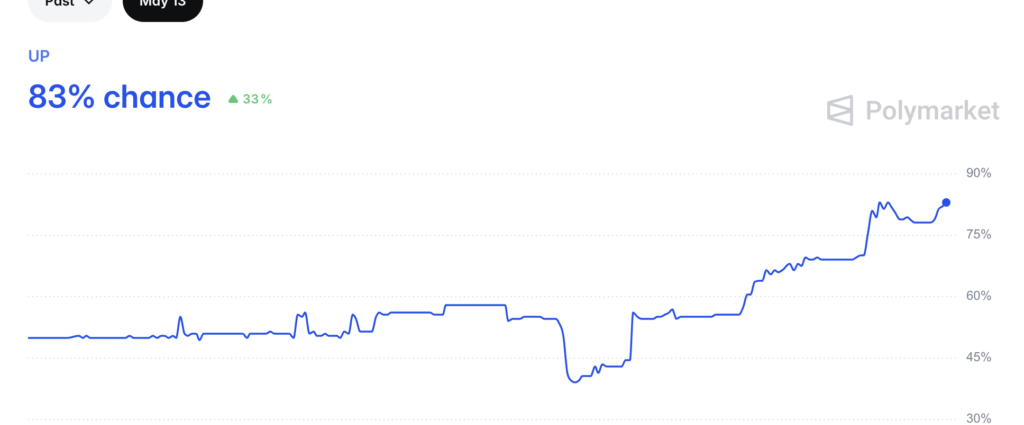
OFG Bancorp (NYSE:OFG) reported upbeat earnings for the first quarter on Tuesday.

The company posted quarterly earnings of $1.26 per share which beat the analyst consensus estimate of $1.02 per share. The company reported quarterly sales of $185.800 million which beat the analyst consensus estimate of $166.544 million.

José Rafael Fernández, Chief Executive Officer, said, “Business momentum and disciplined strategy execution drove strong first quarter results, supported by proactive balance sheet management and core deposit strength. Our operating model continues to deliver, with ongoing loan growth, high quality credit performance, and consistent execution across the franchise. During the quarter, we repurchased $44.5 …

Full story available on Benzinga.com

This post was originally published here

The global aluminum market is currently experiencing a significant “black swan” event due to disruptions caused by the ongoing conflict in the Middle East, said a top metal analyst.

“The scale of the supply shock we’re seeing in the aluminum market is probably the largest single supply shock a base metals market has suffered in the post-2000 era,” Nick Snowdon, Mercuria’s head of metals and mining research, told Reuters at the sidelines of the FT Commodities Global Summit in Lausanne on Tuesday.

The Middle East region contributes around 7 million metric tons of annual aluminum smelting capacity, which is nearly 9% of the estimated global supply for this year, according to Mercuria.

Mercuria told the publication that Middle East aluminum is hard to replace, with China capped on output and limited spare capacity in the U.S. and Europe, leaving them vulnerable to supply shocks.

data-variant=”banner”
data-news-mode=”manual”

This post was originally published here

International Business Machines Corporation (NYSE:IBM) will release earnings for its first quarter after the closing bell on Wednesday, April 22.

Analysts expect the Armonk, New York-based company to report quarterly earnings of $1.81 per share, up from $1.60 per share in the year-ago period. The consensus estimate for IBM’s quarterly revenue is $15.64 billion (it reported $14.54 billion last year), according to Benzinga Pro.

The company beat analyst estimates for revenue in five straight quarters and in eight of the last 10 quarters overall.

IBM shares gained 0.8% to close at $255.68 on Tuesday.

Benzinga readers can access the latest analyst ratings on the Analyst Stock Ratings page. Readers can sort by stock ticker, company name, analyst firm, rating change or other variables.

Let’s have a look at how Benzinga’s most-accurate

Full story available on Benzinga.com

This post was originally published here

American Express Company (NYSE:AXP) will release earnings for its first quarter before the opening bell on Thursday, April 23.

Analysts expect the company to report quarterly earnings of $3.99 per share. That’s up from $3.64 per share in the year-ago period. The consensus estimate for American Express quarterly revenue is $18.61 billion (it reported $16.97 billion last year), according to Benzinga Pro.

Ahead of quarterly earnings, a Morgan Stanley analyst on April 16 maintained American Express at an Equal-Weight rating and cut the price target from $395 to $385.

With the recent buzz around American Express, some investors may be eyeing potential gains from the company’s dividends too. As of now, American Express has an annual dividend yield of 1.15%, which is a quarterly dividend amount of 95 cents per share ($3.80 a year).

To figure out how to earn $500 monthly from American Express, we …

Full story available on Benzinga.com

This post was originally published here

Beyond Meat Inc. (NASDAQ:BYND) shares surged Wednesday morning. The move follows a volatile Tuesday session. Retail traders are again targeting heavily shorted equities.

Short Squeeze Dynamics In Play

Short interest in the plant-based protein company climbed. Data shows a rise from 133.53 million to 141.73 million shares. This represents 30.82% of the company’s publicly available float.

Current trading volume averages 26.97 million shares per day. At this pace, short sellers need 5.25 days to cover positions.

Meme-Stock Momentum Returns

The stock is joining a broader meme basket narrative. Traders are focusing on names with structural …

Full story available on Benzinga.com

This post was originally published here

U.S. stock futures were higher this morning, with the Dow futures gaining around 250 points on Wednesday.

Shares of Sonoco Products Co (NYSE:SON) fell sharply in pre-market trading after the company reported worse-than-expected first-quarter financial results.

Sonoco reported quarterly earnings of $1.20 per share which missed the analyst consensus estimate of $1.21 per share. The company reported quarterly sales of $1.676 billion which missed the analyst consensus estimate of $1.713 billion.

Sonoco Products shares dipped 5.7% to $53.55 in pre-market trading.

Here …

Full story available on Benzinga.com

This post was originally published here

In today’s rapidly evolving and fiercely competitive business landscape, it is crucial for investors and industry analysts to conduct comprehensive company evaluations. In this article, we will undertake an in-depth industry comparison, assessing Apple (NASDAQ:AAPL) alongside its primary competitors in the Technology Hardware, Storage & Peripherals industry. By meticulously examining crucial financial indicators, market positioning, and growth potential, we aim to provide valuable insights to investors and shed light on company’s performance within the industry.

Apple Background

Apple is among the largest companies in the world, with a broad portfolio of hardware and software products targeted at consumers and businesses. Apple’s iPhone makes up a majority of the firm sales, and Apple’s other products like Mac, iPad, and Watch are designed around the iPhone as the focal point of an expansive software ecosystem. Apple has progressively worked to add new applications, like streaming video, subscription bundles, and augmented reality. The firm designs its own software and semiconductors while working with subcontractors like Foxconn and TSMC to build its products and chips. Slightly less than half of Apple’s sales come directly through its flagship stores, with a majority of sales coming indirectly through partnerships and distribution.

Company P/E P/B P/S ROE EBITDA (in billions) Gross Profit (in billions) Revenue Growth
Apple Inc 33.69 44.31 9.12 52.0% $54.07 $69.23 15.65%
Western Digital Corp 36.28 18.30 13.21 27.66% $2.11 $1.38 25.24%
Seagate Technology Holdings PLC 63.27 273.27 12.36 299.49% $0.85 $1.18 21.51%
Everpure Inc 125.76 15.81 6.48 7.04% $0.15 $0.74 20.35%
NetApp Inc 18.76 19.05 3.38 31.16% $0.51 $1.21 4.39%
Super Micro Computer Inc 20.75 2.44 0.66 5.93% $0.55 $0.8 123.36%
Logitech International SA 20.58 6.16 3.07 11.36% $0.31 $0.61 6.06%
Diebold Nixdorf Inc 33.27 2.67 0.83 4.49% $0.11 $0.28 11.66%
Turtle Beach Corp 15.05 1.77 0.74 14.73% $0.02 $0.05 -18.69%
Immersion Corp 11.12 0.70 0.13 3.98% $0.06 $0.14 5.51%
Average 38.32 37.8 4.54 45.09% $0.52 $0.71 22.15%

Full story available on Benzinga.com

This post was originally published here
Amidst the fast-paced and highly competitive business environment of today, conducting comprehensive company analysis is essential for investors and industry enthusiasts. In this article, we will delve into an extensive industry comparison, evaluating Airbnb (NASDAQ:ABNB) in comparison to its major competitors within the Hotels, Restaurants & Leisure industry. By analyzing critical financial metrics, market position, and growth potential, our objective is to provide valuable insights for investors and offer a deeper understanding of company’s performance in the industry.

Airbnb Background

Airbnb is the world’s largest online alternative accommodation travel agency; it also offers booking services for boutique hotels, experiences, and hotel-like services. Airbnb’s platform offers over 9 million active accommodation listings. Listings from the company’s 5 million-plus hosts are spread over almost every country in the world. In 2025, 42% of revenue was from North America, 39% from Europe, the Middle East, and Africa, 10% from Latin America, and 9% from Asia-Pacific. Transaction fees for online bookings account for all its revenue.

Company P/E P/B P/S ROE EBITDA (in billions) Gross Profit (in billions) Revenue Growth
Airbnb Inc 35.40 10.43 7.26 4.06% $0.27 $2.29 12.02%
Royal Caribbean Group 17.39 7.25 4.15 7.49% $1.57 $2.02 13.21%
Carnival Corp 12.05 2.91 1.44 2.04% $1.27 $2.23 6.11%
Viking Holdings Ltd 31.64 33.16 5.58 31.67% $0.45 $0.71 27.76%
Expedia Group Inc 27.91 26.13 2.45 15.64% $0.59 $3.2 11.4%
Norwegian Cruise Line Holdings Ltd 21.01 3.98 0.94 0.65% $0.55 $0.92 6.4%
Choice Hotels International Inc 15.22 30.50 3.51 38.3% $0.12 $0.21 0.1%
Hilton Grand Vacations Inc 54.38 3.05 0.88 3.59% $0.25 $2.34 3.82%
Global Business Travel Group Inc 28.18 2.02 1.12 5.29% $0.14 $0.45 34.01%
Average 25.97 13.62 2.51 13.08% $0.62 $1.51 12.85%

Full story available on Benzinga.com

This post was originally published here
In the fast-paced and cutthroat world of business, conducting thorough company analysis is essential for investors and industry experts. In this article, we will undertake a comprehensive industry comparison, evaluating Adobe (NASDAQ:ADBE) in comparison to its major competitors within the Software industry. By analyzing crucial financial metrics, market position, and growth potential, our objective is to provide valuable insights for investors and offer a deeper understanding of company’s performance in the industry.

Adobe Background

Adobe provides content creation, document management, and digital marketing and advertising software and services to creative professionals and marketers for creating, managing, delivering, measuring, optimizing, and engaging with compelling content multiple operating systems, devices, and media. The company operates with three segments: digital media content creation, digital experience for marketing solutions, and publishing for legacy products (less than 5% of revenue).

Company P/E P/B P/S ROE EBITDA (in billions) Gross Profit (in billions) Revenue Growth
Adobe Inc 14.40 8.74 4.25 16.39% $2.66 $5.73 11.97%
Palantir Technologies Inc 231.70 47.26 83.67 8.71% $0.58 $1.19 70.0%
AppLovin Corp 47.13 74.54 29.52 61.09% $1.34 $1.47 65.88%
Salesforce Inc 23.99 2.59 4.31 3.26% $3.27 $8.69 12.09%
Intuit Inc 26.34 5.88 5.67 3.61% $1.14 $3.61 17.36%
Cadence Design Systems Inc 80.26 16.43 16.81 7.27% $0.59 $1.25 6.2%
Synopsys Inc 71.77 2.93 10.18 0.22% $0.69 $1.77 65.52%
Autodesk Inc 46.94 17.01 7.32 10.64% $0.58 $1.79 19.4%
Datadog Inc 417.06 12.26 13.71 1.3% $0.08 $0.77 29.21%
Roper Technologies Inc 25.56 1.87 4.97 2.15% $0.86 $1.43 9.67%
Workday Inc 49.87 4.25 3.63 1.74% $0.39 $1.92 14.52%
Zoom Communications Inc 14.72 2.73 5.74 7.06% $0.28 $0.95 5.31%
PTC Inc 20.76 4.36 5.94 4.34% $0.25 $0.57 21.36%
Trimble Inc 39.19 2.74 4.64 2.69% $0.25 $0.7 -1.38%
IREN Ltd 31.36 5.97 17.79 -5.77% $-0.23 $0.11 59.02%
Tyler Technologies Inc 47.42 3.91 6.41 1.79% $0.12 $0.26 6.29%
HubSpot Inc 267.98 5.88 3.92 2.78% $0.1 $0.71 20.42%
Guidewire Software Inc 63.82 7.90 9.18 3.95% $0.08 $0.23 24.05%
Average 88.58 12.85 13.73 6.87% $0.61 $1.61 26.17%

Full story available on Benzinga.com

This post was originally published here

In the fast-paced and cutthroat world of business, conducting thorough company analysis is essential for investors and industry experts. In this article, we will undertake a comprehensive industry comparison, evaluating Analog Devices (NASDAQ:ADI) in comparison to its major competitors within the Semiconductors & Semiconductor Equipment industry. By analyzing crucial financial metrics, market position, and growth potential, our objective is to provide valuable insights for investors and offer a deeper understanding of company’s performance in the industry.

Analog Devices Background

Analog Devices is a leading analog, mixed-signal, and digital-signal processing chipmaker. The firm has a significant market share lead in converter chips, which are used to translate analog signals to digital and vice versa. The company serves tens of thousands of customers; more than half of its chip sales are to industrial and automotive end markets. ADI’s chips are also incorporated into wireless infrastructure equipment.

Company P/E P/B P/S ROE EBITDA (in billions) Gross Profit (in billions) Revenue Growth
Analog Devices Inc 68.61 5.42 15.80 2.46% $1.52 $2.04 30.42%
NVIDIA Corp 40.79 30.88 22.69 31.11% $51.28 $51.09 73.21%
Broadcom Inc 78.40 23.84 28.66 9.12% $11.15 $13.16 29.47%
Micron Technology Inc 21.21 6.99 8.76 21.0% $18.48 $17.75 196.29%
Advanced Micro Devices Inc 109 7.36 13.44 2.44% $2.86 $5.58 34.11%
Texas Instruments Inc 42.78 13.04 12.04 7.03% $2.07 $2.47 10.38%
Qualcomm Inc 27.33 6.27 3.31 13.57% $4.11 $6.68 5.0%
Marvell Technology Inc 49.29 9.25 16.06 2.79% $0.75 $1.15 22.08%
Monolithic Power Systems Inc 118.81 21.25 26.45 4.95% $0.21 $0.41 20.83%
NXP Semiconductors NV 28.24 5.64 4.65 4.53% $0.98 $1.81 7.2%
ON Semiconductor Corp 299.69 4.45 5.97 2.33% $0.45 $0.55 -11.17%
Astera Labs Inc 157.35 23.96 40.43 3.41% $0.07 $0.2 91.77%
GLOBALFOUNDRIES Inc 37.26 2.73 4.87 1.68% $0.73 $0.51 0.0%
Credo Technology Group Holding Ltd 100.73 18.29 31.88 10.03% $0.16 $0.28 201.49%
Tower Semiconductor Ltd 111.48 8.36 15.69 2.78% $0.2 $0.12 13.69%
MACOM Technology Solutions Holdings Inc 129.28 15.84 20.98 3.64% $0.07 $0.15 24.52%
First Solar Inc 13.13 2.10 3.84 5.62% $0.7 $0.67 11.15%
Lattice Semiconductor Corp 5849 22.42 30.90 -1.08% $0.01 $0.1 24.16%
Rambus Inc 61.86 10.35 20.15 4.81% $0.09 $0.15 18.09%
Average 404.2 12.95 17.26 7.21% $5.24 $5.71 42.9%

Full story available on Benzinga.com

This post was originally published here
In today’s rapidly changing and highly competitive business world, it is vital for investors and industry enthusiasts to carefully assess companies. In this article, we will perform a comprehensive industry comparison, evaluating Automatic Data Processing (NASDAQ:ADP) against its key competitors in the Professional Services industry. By analyzing important financial metrics, market position, and growth prospects, we aim to provide valuable insights for investors and shed light on company’s performance within the industry.

Automatic Data Processing Background

ADP is a global technology company providing cloud-based human capital management solutions, enabling clients to better implement payroll, talent, time, tax, and benefits administration. Additionally, ADP provides human resources outsourcing solutions that permit customers to offload some of their traditional HR tasks. The company operates through two segments: employer services and professional employer organization services. Employer services consist of the company’s HCM products as well as a la carte HRO solutions. PEO services contain ADP’s comprehensive HRO solution, where it acts as a co-employer with its customer. As of fiscal 2025, ADP serves over 1.1 million clients and pays over 42 million workers across 140 countries.

Company P/E P/B P/S ROE EBITDA (in billions) Gross Profit (in billions) Revenue Growth
Automatic Data Processing Inc 19.49 12.78 3.89 16.64% $1.65 $2.47 6.16%
Paychex Inc 20.68 8.36 5.34 14.2% $0.92 $1.38 19.87%
Paycom Software Inc 16.14 3.59 3.57 6.61% $0.21 $0.46 10.2%
Paylocity Holding Corp 24.38 5.08 3.45 4.56% $0.1 $0.28 10.39%
Korn Ferry 13.28 1.73 1.22 3.27% $0.12 $0.64 7.17%
Robert Half Inc 21.74 2.32 0.54 2.48% $0.04 $0.49 -5.79%
Trinet Group Inc 12.68 34.65 0.40 -1.22% $0.03 $0.17 -2.27%
Upwork Inc 13.18 2.29 1.98 2.48% $0.04 $0.15 3.62%
Barrett Business Services Inc 14.53 3.08 0.64 6.82% $0.02 $0.07 5.35%
Kforce Inc 16.93 4.86 0.44 4.02% $0.01 $0.09 -3.42%
Fiverr International Ltd 18.79 0.92 0.91 2.83% $0.04 $0.09 3.38%
Mastech Digital Inc 129.10 0.86 0.40 1.1% $0.0 $0.01 -10.42%
Average 27.4 6.16 1.72 4.29% $0.14 $0.35 3.46%

Full story available on Benzinga.com

This post was originally published here

Transportation Secretary Sean Duffy has touted the revamped Air Traffic Control system in the U.S. aviation sector, sharing that the Donald Trump administration was retiring dated technology amid its modernization program.

Leaps And Bounds Of Progress

In a post on the social media platform X on Tuesday, the White House’s Rapid Response handle posted a video of Duffy’s interview with Fox News, where the Transportation Secretary showcased how the revamp had made paper flight strips, which contain information like flight name, destination, assigned altitude and more, obsolete.

He showcased how the revamp efforts had made floppy disks redundant. He also slammed previous administrations for failing to build out new systems despite promising to do so. “In six-and-a-half months, we have made leaps and bounds of progress in building out this new [air traffic control] system,” Duffy said, outlining the original date when he’d appealed for funds to modernize the air traffic control system.

Duffy also outlined needing additional …

Full story available on Benzinga.com

This post was originally published here

Robinhood Markets Inc. (NASDAQ:HOOD) stock saw a sharp surge in its momentum score, jumping from 15.45 to 77.07 on a week-over-week basis.

A momentum score is a metric used to gauge how strongly a stock’s price is trending over time by analyzing recent price movements and trading volume, reflecting the strength of its current market trend.

SEC Ends $25,000 Day-Trading Limit

The U.S. Securities and Exchange Commission approved FINRA-proposed changes that removed the Pattern Day Trader rule, including the $25,000 minimum equity requirement and related trading classification.

Previously, accounts under $25,000 were limited to four day trades within five business days, but that restriction had been eliminated under the new framework.

The updated system shifted to real-time, risk-based margin requirements that applied to all investors.

Regulators also said public feedback strongly supported the overhaul.

Robinhood’s Chief Brokerage Officer Steve Quirk called the update a major step forward for retail investors, while Webull’s group president Anthony Denier had described the reforms as long overdue.

The change was expected to boost trading activity and engagement across retail platforms, supporting revenue tied to trading volume.

Benzinga’s Edge Stock Rankings

Full story available on Benzinga.com

This post was originally published here

The most oversold stocks in the industrials sector presents an opportunity to buy into undervalued companies.

The RSI is a momentum indicator, which compares a stock’s strength on days when prices go up to its strength on days when prices go down. When compared to a stock’s price action, it can give traders a better sense of how a stock may perform in the short term. An asset is typically considered oversold when the RSI is below 30, according to Benzinga Pro.

Here’s the latest list of major oversold players in this sector, having an RSI near or below 30.

Northrop Grumman Corp (NYSE:NOC)

  • On April 21, Northrup Grumman reaffirmed its FY26 adjusted EPS guidance below estimates and its FY26 sales guidance with its midpoint below estimates. The company’s stock fell around 10% over the past five days and has a 52-week low of $450.13.
  • RSI Value: 25.9
  • NOC Price Action: Shares of Northrop Grumman fell 7% to close …

Full story available on Benzinga.com

This post was originally published here

Wastewater discharge from Elon Musk-led Tesla Inc.‘s (NASDAQ:TSLA) Texas Lithium refinery reportedly contains toxic metals despite securing a discharge approval and compliance from the Texas Commission on Environmental Quality (TCEQ).

Arsenic, Carcinogens In Wastewater

On Tuesday, Electrek reported that the Nueces County Drainage District No. 2, which is responsible for managing the wastewater released by the refinery, released a cease-and-desist letter after independent lab testing conducted by Eurofins Environment Testing found traces of hexavalent chromium, which is a known carcinogen, alongside traces of arsenic and elevated levels of lithium. The ditch receives over 23,1000 gallons of water daily.

Tesla, Nueces County and Eurofins didn’t immediately respond to Benzinga‘s request for comment.

Lab testing found 0.0104 mg/L of Hexavalent Chromium, which is the same substance from the famed Erin Brokovich case, the report said, while over 0.0025 mg/L of Arsenic was also detected. Notably, the report says that the …

Full story available on Benzinga.com

This post was originally published here

As of April 22, 2026, two stocks in the materials sector could be flashing a real warning to investors who value momentum as a key criteria in their trading decisions.

The RSI is a momentum indicator, which compares a stock’s strength on days when prices go up to its strength on days when prices go down. When compared to a stock’s price action, it can give traders a better sense of how a stock may perform in the short term. An asset is typically considered overbought when the RSI is above 70, according to Benzinga Pro.

Here’s the latest list of major overbought players in this sector.

Steel Dynamics Inc (NASDAQ:STLD)

  • On April 20, Steel Dynamics reported better-than-expected first-quarter sales results. “The teams executed well, delivering a strong first …

Full story available on Benzinga.com

This post was originally published here

Psyence Biomedical Ltd (NASDAQ:PBM) shares are trading lower in Wednesday’s premarket session. Nasdaq futures are up 0.71% while S&P 500 futures have gained 0.56%.

Investors Pivot to Profit-Taking

The stock is currently experiencing a sharp reversal after soaring over 250% on Thursday. This massive rally was triggered by news that the White House is preparing an executive order to promote research into ibogaine. Investors appear to be engaging in profit-taking after the stock’s recent vertical climb.

Trump Executive Order Boosts Sector

The rally was sparked by President Donald Trump signing an executive order to accelerate mental illness treatments. The order specifically targets faster reviews for psychedelic drugs and includes a reported $50 million commitment for ibogaine research.

Full story available on Benzinga.com

This post was originally published here

During times of turbulence and uncertainty in the markets, many investors turn to dividend-yielding stocks. These are often companies that have high free cash flows and reward shareholders with a high dividend payout.

Benzinga readers can review the latest analyst takes on their favorite stocks by visiting Analyst Stock Ratings page. Traders can sort through Benzinga’s extensive database of analyst ratings, including by analyst accuracy.

Below are the ratings of the most accurate analysts for three high-yielding stocks in the utilities sector.

Alliant Energy Corp (NASDAQ:LNT)

  • Dividend Yield: 3.01%
  • BMO Capital analyst James Thalacker maintained an Outperform rating and raised the price target from $78 to $79 on April 17, 2026. This analyst has an accuracy rate of 79%
  • Barclays analyst Nicholas Campanella maintained an Equal-Weight rating and increased the price target from $67 to $74 on April 15, 2026. This analyst has an accuracy rate of 70%.
  • Recent News: Alliant Energy said it will release its first quarter earnings on Thursday, …

Full story available on Benzinga.com

This post was originally published here

With U.S. stock futures trading higher this morning on Wednesday, some of the stocks that may grab investor focus today are as follows:

  • Wall Street expects Tesla Inc (NASDAQ:TSLA) to report quarterly earnings at 37 cents per share on revenue of $22.71 billion after the closing bell, according to data from Benzinga Pro. Tesla shares rose 0.7% to $388.99 in after-hours trading.
  • Capital One Financial Corp. (NYSE:COF) reported downbeat first-quarter results after Tuesday’s closing bell. Capital One reported quarterly earnings of $4.42 per share, which missed the Street estimate of $4.55, according to Benzinga Pro data. Quarterly revenue of $15.23 billion missed the consensus …

Full story available on Benzinga.com

This post was originally published here

Anthony Scaramucci, founder of global investment firm SkyBridge Capital, explained how the “power of compounding” is key to building wealth.

Scaramucci’s $10K Versus Penny 30-Day Face-Off

In a post on X on Tuesday, Scaramucci presented the showdown between “$10,000 per day or a magic penny that doubles every day” for 30 days.

While the fixed cash amount ($300,000) looks attractive, the penny has exploded to be worth $5.4 million over the past 30 days. “That’s compounding,” Scaramucci wrote, “and that’s why I teach this to every young person I meet.”

Full story available on Benzinga.com

This post was originally published here

Shares of Kyverna Therapeutics Inc (NASDAQ:KYTX) rose sharply in pre-market trading after releasing positive registrational trial results for miv-cel in stiff person syndrome at the American Academy of Neurology Annual Meeting in Chicago.

Miv-cel, the single-dose CAR T-cell therapy met its primary endpoint, delivering a statistically significant 46% median improvement in the Timed 25-Foot Walk at 16 weeks.

Kyverna Therapeutics shares jumped 25.8% to $12.21 in pre-market trading.

Here are some other stocks moving in pre-market trading.

Gainers

  • Huachen AI Parking Mgmt Tech Hldg Co Ltd (NASDAQ:HCAI) gained 97% to $13.37 in pre-market trading after gaining more than 23% on Tuesday.
  • eLong Power Holding Ltd (NASDAQ:ELPW) gained 42.1% to $2.23 in pre-market trading after falling 9% on Tuesday.
  • AlphaTON Capital Corp (NASDAQ:ALP) rose 35.4% to $0.38 in pre-market trading.
  • FST Ltd (NASDAQ:KBSX) jumped 30.4% to $0.37 in pre-market trading. FST announced preliminary 31% FY 2025 revenue increase from $36.5 million to $47.97 million.
  • Aspire Biopharma Holdings Inc (NASDAQ:ASBP) rose 19.2% to $0.23 in pre-market trading …

Full story available on Benzinga.com

This post was originally published here

Teleflex Inc. (NYSE:TFX) shares jumped 8.22% to $135.00 in pre-market session on Wednesday, after private equity firms CVC Capital Partners and GTCR submitted a joint bid to take the medical device maker private.

The offer is currently under evaluation, and there is no certainty that a deal will be finalized, Reuters reported, citing a source.

TFX closed the regular session down 5.46% at $124.75, according to Benzinga Pro data.

CVC Capital Partners and GTCR did not immediately respond to Benzinga’s request for comment.

Activist Pressure Preceded The Approach

The bid follows criticism from activist investor Irenic Capital Management, which in March pressured Teleflex’s board for resisting engagement with potential acquirers.

CVC On An Acquisition Spree In 2026

Amsterdam-listed CVC has been highly active in early …

Full story available on Benzinga.com

This post was originally published here

Coinbase Global Inc.‘s (NASDAQ:COIN) advisory board on quantum computing released its first paper on Tuesday, detailing which parts of cryptocurrency security a future quantum machine could threaten and why the industry should begin upgrades now.

Coinbase Advocates Early Quantum Preparedness

The board, consisting of leading researchers from Stanford, UT Austin and the Ethereum (CRYPTO: ETH) Foundation, expressed “high confidence” that a quantum computer capable of breaking cryptography that secures digital assets will be built eventually, even if that capability doesn’t exist yet.

“The board’s view is straightforward: the time to start preparing is now, not when it’s urgent,” the Coinbase blog read.

Vulnerable Spots

The paper draws a line between network-level components and user-level key exposure, saying the biggest weak spot is the digital signatures used to prove ownership.

It added that Bitcoin’s mining process, hashing, and the immutability of prior blocks are not “meaningfully threatened” by quantum attacks.

For Bitcoin, the board estimated about 6.9 million BTC …

Full story available on Benzinga.com

This post was originally published here

Singapore’s Foreign Minister Vivian Balakrishnan said Wednesday that rising tensions in the Strait of Hormuz could serve as a “dry run” for a potential conflict between the United States and China in the Pacific, highlighting the growing strategic importance of global maritime chokepoints.

“What you’re witnessing now in the Strait of Hormuz is just a dry run … The biggest variable is not just what happens in the Middle East, but what happens in the Pacific,” Balakrishnan said at CNBC’s CONVERGE LIVE event in Singapore.

Singapore To ‘Refuse To Choose

When asked if the city-state was under pressure from the U.S. and China to choose between them, Balakrishnan reiterated that Singapore will not align exclusively with either Washington or Beijing despite deep …

Full story available on Benzinga.com

This post was originally published here
OpenAI CEO Sam Altman criticized the cybersecurity marketing strategy of rival company, Anthropic for its newly launched cybersecurity product, Claude Mythos.

During a Core Memory podcast interview where he appeared alongside OpenAI President Greg Brockman on Tuesday, Altman called the tactic “fear-based marketing” aimed at restricting the dissemination of artificial intelligence (AI) technology to a select few, reported Tech Crunch.

“You can justify that in a lot of different ways,” said Altman.

Altman further used a metaphor to illustrate his point, likening Anthropic’s strategy to selling a bomb shelter while threatening to drop a bomb.

‘We have built a bomb, we are about to drop it on your head. We will sell you a bomb shelter for $100 million,” he added.

data-variant=”banner”
data-news-mode=”manual”

>


Read Also:

Trump …

This post was originally published here

Trump Media & Technology Group (NASDAQ:DJT) appointed Kevin McGurn as its interim Chief Executive Officer on Tuesday, succeeding former congressman Devin Nunes, who has led the Truth Social parent since 2022.

McGurn, a seasoned executive with past roles at Hulu, Vevo, and T-Mobile US Inc. (NASDAQ:TMUS), has been advising Trump Media since December 2024. 

In a statement, McGurn said the company is “poised to take off.” He added that Truth Social embodies President Donald Trump‘s distinctive vision and represents an exceptionally powerful and influential brand and voice.

Meanwhile, Nunes, in a statement on Truth Social, expressed his faith in McGurn’s leadership, highlighting his extensive experience in media, mergers, and acquisitions.

Nunes also noted that his exit from the CEO role at TMTG will enable him to concentrate on his position as Chairman of the President’s Intelligence Advisory Board and other ventures.

Trump Media & Technology did not explain the …

Full story available on Benzinga.com

This post was originally published here

AGNC Investment (NASDAQ:AGNC) released first-quarter financial results and hosted an earnings call on Tuesday. Read the complete transcript below.

This transcript is brought to you by Benzinga APIs. For real-time access to our entire catalog, please visit https://www.benzinga.com/apis/ for a consultation.

View the webcast at https://edge.media-server.com/mmc/p/nsj4s5pg/

Summary

AGNC Investment Corp reported a comprehensive loss of $0.18 per common share in Q1 2026, with an economic return on tangible common equity of negative 1.6%.

The company highlighted increased geopolitical and macroeconomic risks, leading to widened mortgage-backed securities (MBS) spreads, but noted that agency MBS outperformed US Treasuries and investment-grade corporate bonds.

AGNC Investment Corp maintained a leverage of 7.4 times tangible equity, with liquidity of $7 billion in unencumbered cash and agency MBS.

The management expressed optimism about the attractive return profile of agency MBS at current spread levels and highlighted improved demand and supply outlooks.

The company executed $401 million in common equity issuance through an at-the-market offering program, emphasizing its strategy to manage capital actively and generate accretion for stockholders.

AGNC Investment Corp remains cautiously optimistic about the future outlook, with expectations of favorable conditions for agency MBS and potential actions by the administration to improve housing affordability.

Full Transcript

OPERATOR

Good morning and welcome to the AGNC Investment Corp. First quarter 2026 shareholder call. All participants will be in listen only mode. Should you need assistance, please signal a conference specialist by pressing the star key followed by zero. After today’s presentation there will be an opportunity to ask questions. To ask a question, you may press Star then one on your touchtone phone. To withdraw your question, please press Star then two. Please note this event is being recorded. I would now like to turn the conference over to Katie Turlington in Investor Relations. Please go ahead.

Katie Turlington (Investor Relations)

Thank you all for joining AGNC Investment Corp’s first quarter 2026 earnings call. Before we begin, I’d like to review the safe Harbor Statement. This conference call and corresponding slide presentation contain statements that, to the extent they are not recitations of historical fact, constitute forward looking statements within the meaning of the Private Securities Litigation Reform act of 1995. All such forward looking statements are intended to be subject to the safe harbor protection provided by the Reform Act. Actual outcomes and results could differ materially from those forecasts due to the impact of many factors beyond the control of AGNC. All forward looking statements included in this presentation are made only as of the date of this presentation and are subject to change without notice. Certain factors that could cause actual results to differ materially from those contained in the forward looking statements are included in AGNC’s periodic reports filed with the Securities and Exchange Commission. Copies are available on the SEC’s website at SEC.gov. We disclaim any obligation to update our forward looking statements unless required by law. Participants on the call include Peter Federico, President, Chief Executive Officer and Chief Investment Officer Bernie Bell, Executive Vice President and Chief Financial Officer and Sean Reed, Executive Vice President, Strategy and Corporate Development. With that, I’ll turn the call over to Peter Federico.

Peter Federico (President, Chief Executive Officer, and Chief Investment Officer)

Good morning and thank you all for joining our first quarter earnings conference call. Agency MBS performance in the first quarter was driven by two very divergent investment themes. In January and February, the Administration’s focus on reducing interest rate volatility, maintaining mortgage spread stability and improving housing affordability drove strong performance across the fixed income markets. Agency MBS performance was particularly strong during this period as The Administration’s January 8th directive instructing the GSEs to purchase $200 billion of agency mortgage backed securities pushed spreads through the lower end of the recent three year trading range. In March, however, uncertainty associated with the war in Iran and the potential for a more widespread conflict in the Middle East caused interest rate volatility to increase, investor sentiment to turn negative and Agency MBS spreads to widen significantly. As a result, AGNC’s economic return in the first quarter was negative 1.6%. Despite the spread widening to swaps quarter over quarter, agency MBS outperformed US Treasuries and investment grade corporate bonds in the first quarter, again demonstrating the diversification benefits of this unique high credit quality fixed income asset class. At the beginning of the year, I discussed a number of factors that we believe would benefit agency MBS performance in 2026. Among these were low interest rate volatility and an accommodative monetary policy stance. In the first quarter. However, the Middle east conflict caused interest rate volatility to increase and Fed rate cuts to become more uncertain. While the duration and economic implications of the conflict are still unknown, recent developments are encouraging and these factors could once again be positive catalysts for agency MBS performance. More importantly, many of the other factors that I discussed actually improved in the first quarter and now further strengthened the outlook for agency mbs. Most notably, at current spread levels, the return profile on agency MBS is more attractive. At the time of our fourth quarter earnings conference call, the spread differential between current coupon MBS and a blend of swaps was 135 basis points. Over the last two months, that spread has ranged between 150 and 175 basis points. As a result of heightened geopolitical and macroeconomic risks, we believe agency MBS in this spread range represent compelling value on both an absolute and relative basis. The supply outlook for agency MBS also improved in the first quarter. At the start of the year, the net new supply of agency MBS was expected to be approximately $250 billion. Assuming a mortgage rate of just below 6%. With mortgage rates now about 50 basis points higher, MBS supply could be 50 to $70 billion lower this year. The demand outlook for agency MBS improved in the first quarter as well. Money manager demand for MBS increased materially in the first quarter as bond fund inflows came in about double the pace of the previous two years. US bank regulators also released their proposed bank regulatory capital framework for comment. As expected, the proposal includes lower capital requirements for high quality mortgage credit. These favorable capital requirements could lead banks to retain a greater share of mortgage credit in whole loan form or to utilize the private label securitization path to a greater extent, thereby reducing the GSE footprint over time. Finally, with mortgage spreads wider and the mortgage rate now in the low to mid 6% range, the administration may take further actions to improve housing affordability. Such actions could include more aggressive GSE purchases or increases in GSE portfolio size limits. Either or both of these actions would benefit mortgage performance. In addition, while the funding markets for agency MBS are deep and liquid, further actions by the Fed to improve the functionality and accessibility of the standing repo program could also be catalysts for tighter mortgage spreads and lower mortgage rates. In summary, although the sharp increase in geopolitical and macroeconomic risk creates a more challenging investment environment over the near term, the return profile and technical backdrop for agency mortgage backed securities and improved in the first quarter. In addition, actions by the administration to improve housing affordability are more likely. As we are continually reminded, market conditions change quickly. A prompt resolution to the Middle east conflict, while at times difficult to predict, could lead to a substantial reduction in volatility and inflationary pressures. Collectively, these conditions support our favorable outlook for agency mortgage backed securities. Moreover, AGNC remains well positioned to capitalize on these favorable conditions and build upon our lengthy track record of generating strong risk adjusted returns for our stockholders over a wide range of market cycles. With that, I’ll now turn the call over to Bernie Bell to discuss our financial results in greater detail.

Bernie Bell (Executive Vice President and Chief Financial Officer)

Thank you, Peter for the first quarter, AGNC reported a comprehensive loss of $0.18 per common share. Our economic return on tangible common Equity was negative 1.6% for the quarter, consisting of 36 cents of dividends declared per common share and a 50 cent decrease in tangible net book value per share driven by wider mortgage spreads to benchmark rates. As of late last week, our tangible net book value per common share was up approximately 6% for April or 5% net of our monthly dividend accrual. With the recovery in April through the end of last week, our tangible net book value has now largely reversed the first quarter decline we ended the first quarter with leverage of 7.4 times tangible equity, up slightly from 7.2 times as of Q4, while average leverage for the quarter was unchanged at 7.4 times. We also ended the quarter with a significant liquidity position of 7 billion of unencumbered cash and agency MBS representing 60% of tangible equity. Net spread and dollar roll income was $0.42 per common share for the quarter, up $0.07 from the fourth quarter. The increase was largely due to a 25 basis point increase in our net interest spread, which was driven by a combination of a greater allocation of interest rate swaps in our hedge portfolio, lower repo funding cost, more favorable TBA implied financing levels and a modest increase in the yield on our asset portfolio. Our quarter over quarter results also benefited from reduced compensation expense as Our fourth quarter results included year end incentive compensation accrual adjustments. The average projected life CPR of Our portfolio increased 70 basis points to 10.3% at quarter end from 9.6% as of Q4. The increase was largely due to prepayment model updates implemented in the first quarter and portfolio composition changes partly offset by higher mortgage rates. Actual CPRs averaged 13.2% for the quarter compared to 9.7% in the prior quarter. Lastly, during the first quarter we issued $401 million of common equity through our at the Market Offering program at a significant premium to tangible net book value per share, continuing our active capital management strategy and generating meaningful accretion for our common stockholders. And with that I will now turn the call back over to Peter to discuss our portfolio.

Peter Federico (President, Chief Executive Officer, and Chief Investment Officer)

Thank you Bernie Agency MBS performance varied. meaningfully by coupon and hedge type in the first quarter. Low coupon MBS meaningfully outperformed high coupon MBS due to heavy index buying from money managers in response to outsized bond fund inflows. This variation in performance by coupon was significant with lower coupon MBS tightening about 10 basis points to Treasuries during the quarter while higher Coupon MBS widened about 5 basis points on average. MBS performance also varied materially by hedge type as swap spreads tightened during the quarter. 10 year swap spreads, for example tightened by almost 10 basis points. As a result, an MBS position hedged with a 10 year pay fixed swap versus …

Full story available on Benzinga.com

This post was originally published here

General Motors Co. (NYSE:GM) will reportedly suspend development efforts of its next-generation EV pickup truck as the U.S. auto sector scales back on all-electric mobility.

GM To Suspend EV Pickup Development

The Detroit-based automaker will be delaying the development of the EV pickup at its Factory Zero plant in Michigan indefinitely, according to a report by Crain’s Detroit Business on Tuesday, which cited anonymous sources familiar with the matter.

GM did not immediately respond to Benzinga‘s request for comment.

The report also said that the company was planning an update to its full-size pickup truck line by 2028, with plans to introduce lower-cost variants. GM had earlier ended the production of its most affordable EV, the Chevrolet Bolt EV, which retailed for $29,990.

The company had last year recorded …

Full story available on Benzinga.com

This post was originally published here
President Donald Trump, on Tuesday, floated the idea of federal aid for the struggling carrier Spirit Aviation Holdings Inc(OTC:FLYYQ).

“I’d love somebody to buy Spirit, it’s 14,000 jobs, and maybe the federal government should help that one out,” the president said in a CNBC interview.

Trump, however, voiced his disapproval of a potential merger between United Airlines Holdings (NASDAQ:UAL) and American Airlines Group (NASDAQ:AAL).

“I don’t like having them merge,” Trump said on Tuesday. His comments were in response to a question about the proposed deal, which has been criticized by Senators from both parties. Trump revealed that he had only recently learned about the merger proposal, but was already against it.

While Trump doesn’t oppose mergers in general, he expressed concern about the consolidation of the aerospace industry, suggesting it leads to less competition and can cause companies to become “lazy.” He also added that both United Airlines and American Airlines are “doing very well.”

Notably, American Airlines dismissed merger …

Full story available on Benzinga.com

This post was originally published here
GE Vernova Inc. (NYSE:GEV) will release earnings for its first quarter before the opening bell on Wednesday, April 22.

Analysts expect the Cambridge, Massachusetts-based company to report quarterly earnings of $2.02 per share. That’s up from 91 cents per share in the year-ago period. The consensus estimate for GE Vernova’s quarterly revenue is $9.26 billion (it reported $8.03 billion last year), according to Benzinga Pro.

On March 16, GE Vernova announced a new agreement with Hitachi to explore deploying a BWRX‑300 small modular reactor in Southeast Asia.

Shares of GE Vernova rose 0.1% to close at $991.30 on Tuesday.

Benzinga readers can access the latest analyst ratings on the Analyst Stock Ratings page. Readers can sort by …

Full story available on Benzinga.com

This post was originally published here
Silver is back in the spotlight with the metal witnessing a surge in demand, especially in China, per the report. This could provide a boost to silver prices and its ETFs – iShares Silver Trust (NYSE:SLV) and abrdn Physical Silver Shares ETF (NYSE:SIVR) tracking the bullion.

China Silver Demand Hits Record High

According to a Wednesday post on X by The Kobeissi Letter, China silver imports reached a record high of approximately 836 tonnes in March, up 78% from February and 173% above the 10-year seasonal average for March. Year-to-date, silver imports are up to approximately 1,626 tonnes, the highest on record.


The surge was driven by strong retail and solar demand. Investments in small silver bars climbed as substitutes for high-priced gold, according to the market commentator’s post. The solar …

Full story available on Benzinga.com

This post was originally published here

Boston Scientific Corporation (NYSE:BSX) will release earnings for its first quarter before the opening bell on Wednesday, April 22.

Analysts expect the Marlborough, Massachusetts-based company to report quarterly earnings of 79 cents per share. That’s up from 75 cents per share in the year-ago period. The consensus estimate for Boston Scientific’s quarterly revenue is $5.17 billion (it reported $4.66 billion last year), according to Benzinga Pro.

On March 28, Boston Scientific announced data from its HI-PEITHO clinical trial evaluating the EKOS Endovascular System in patients with pulmonary embolism.

Shares of Boston Scientific fell 2.4% to close at $59.52 on Tuesday.

Benzinga readers can access the latest analyst ratings on the Analyst Stock Ratings page. Readers can sort by stock ticker, company name, analyst firm, rating change or other variables.

Let’s have a look at how Benzinga’s most-accurate

Full story available on Benzinga.com

This post was originally published here

The CNN Money Fear and Greed index showed a decline in the overall market sentiment, while the index remained in the “Greed” zone on Tuesday.

U.S. stocks settled lower on Tuesday, with the Nasdaq Composite falling more than 100 points during the session amid a fresh surge in crude oil prices.

Pakistan’s information minister said a formal response from Iran confirming whether it will send a delegation to the Islamabad peace talks was still awaited as of midday, leaving traders pricing an uneasy middle ground between a potential diplomatic breakthrough and a re-escalation in the Strait of Hormuz.

In earnings, GE Aerospace (NYSE:GE) posted better-than-expected earnings for the first quarter on Tuesday. UnitedHealth Group Inc. (NYSE:UNH) shares gained 7% on Tuesday …

Full story available on Benzinga.com

This post was originally published here

Beyond Meat, Inc. (NASDAQ:BYND) shares were under pressure in after-hours trading following Tuesday’s session, extending losses after closing the regular trading day at $1.04, down nearly 10%.

The stock slipped further to around $1.00 in after-hours trading, a drop of about 4%, continuing a volatile stretch for the plant-based food company.

Why It’s Trending

The move comes as Beyond Meat was trending in broader market commentary, highlighting a renewed meme-stock and short-squeeze theme across heavily shorted equities.

The stock was cited alongside names such as Avis Budget Group (NASDAQ:CAR) and Navitas Semiconductor …

Full story available on Benzinga.com

This post was originally published here

Automotive analyst Lei Xing said the international expansion of Chinese automakers is a “natural evolution” for companies facing mounting pressure at home, as fresh industry data showed a sharp rise in vehicle exports and a widening push into overseas markets.

Domestic Pressure Pushes Carmakers Beyond China

Xing, an independent consultant and co-host of the China EVs & More podcast, told The Wire China that the current globalization drive is the logical next step after many companies reached operational maturity in China. “The domestic market has been feeling the pressure,” Xing said. “It’s just a natural evolution now that a lot of these companies are becoming global.”

Reiterating that view in an X post on Tuesday, he added, “I think we …

Full story available on Benzinga.com

This post was originally published here

Kyverna Therapeutics Inc. (NASDAQ:KYTX) shares jumped 24% after hours to $12.04 Tuesday after releasing positive registrational trial results for miv-cel in stiff person syndrome at the American Academy of Neurology Annual Meeting in Chicago.

Miv-cel, the single-dose CAR T-cell therapy met its primary endpoint, delivering a statistically significant 46% median improvement in the Timed 25-Foot Walk at 16 weeks.

All 26 patients discontinued chronic immunotherapies and 81% achieved a clinically meaningful improvement, with at least a 20% improvement from baseline in walking speed.

No Approved Therapies

Kyverna Therapeutics stated SPS affects roughly 6,000 U.S. patients with no Food and Drug Administration-approved treatments currently available.

CEO Warner Biddle said, “We see compelling evidence that a one-time therapy can reset the immune system, …

Full story available on Benzinga.com

This post was originally published here

AIOS Tech (NASDAQ:AIOS) shares declined sharply in after-hours trading on Tuesday following the company’s announcement of a major 20-for-1 share consolidation and related capital restructuring plan aimed at maintaining its Nasdaq listing.

Share Consolidation Plan

The company disclosed that its board approved a 20-for-1 reverse stock split, effective April 27, 2026, as part of efforts to regain compliance with Nasdaq’s minimum bid price requirement under Marketplace Rule 5550(a)(2).

Under the consolidation, every 20 existing shares will be combined into 1 share, with proportional adjustments made to authorized and issued share capital. The company stated no fractional shares will be issued, with shareholders receiving adjusted holdings in place of any fractions.

Simultaneously, AIOS will significantly …

Full story available on Benzinga.com

This post was originally published here

An ex-diplomat from Canada, who China detained earlier, expressed concerns about the influx of Chinese-made EVs in the Canadian market on Tuesday, outlining that Ottawa’s deal could put Canada on the back foot.

Drive Out Local Competition

Michael Korvig, who was imprisoned by Beijing for three years following his 2018 arrest, said the deal could see Chinese companies “drive out local competition and make Canada dependent on importing Chinese EVs,” according to a Bloomberg report quoting Korvig at a summit in Ottawa.

He also shared that Chinese companies could bring in knockdown kits in Canada to assemble, which would not result in any development of Canada’s technology or supply chains. “They want to control the tech stack and then use control of that tech for geopolitical dominance and leverage,” he said.

Opposition To Stellantis’ Plans

Korvig isn’t the only one who has expressed opposition to Chinese EVs in …

Full story available on Benzinga.com

This post was originally published here

Tron (CRYPTO: TRX) founder Justin Sun said on Tuesday he has sued the Trump family-backed World Liberty Financial cryptocurrency platform to defend his “legal rights” as a WLFI token holder.

Crypto Billionaire Sues

Sun filed a lawsuit in a California federal court, claiming he was left with “no choice.”

“I have tried in good faith to resolve this situation with the World Liberty project team without resorting to litigation.  But the project team has refused my requests to unfreeze my tokens and restore my rights as a token holder,” the cryptocurrency billionaire said.

Sun alleged that the team even “threatened” to destroy his tokens by burning them.

Full story available on Benzinga.com

This post was originally published here

Tesla Inc. (NASDAQ:TSLA) sales fell by 24.3% in the first quarter of 2026 in California, illustrating a wider pullback in EV demand in the state.

EV Market Share Crashes In California

On Tuesday, the California New Car Dealers Association (CNCDA) released its outlook for the state’s auto sector during the first quarter of 2026, where electric vehicles’ market share declined to 13.7% in the quarter, its lowest since 2021. For context, the market share for EVs during the same period last year was 20.9%.

Tesla Sales Fall

The data also showed Tesla sales falling considerably in the state as the EV maker reported 31,958 units sold, representing a sales deficit of more than 10,000 units from last year’s 42,211 units it sold during the same period. However, Tesla’s Model Y SUV continued to be the best-selling EV in the state at 22,907 units.

Tesla’s market …

Full story available on Benzinga.com

This post was originally published here

Elon Musk-led SpaceX is reportedly cautioning investors looking to participate in the upcoming IPO that the company’s orbital datacenter goals, as well as plans to colonize Mars, rely on technology not yet proven, casting doubt over the projects’ commercial benefits.

Filing Shows SpaceX Taking Cautious Approach

The company laid out a far more cautious approach in filings with the SEC, saying that the “initiatives” for datacenters in orbit and “interplanetary industrialization” were in preliminary stages, Reuters reported on Tuesday.

SpaceX also said that the goals involved “significant technical complexity and unproven technologies,” while also acknowledging that the projects “may not achieve commercial viability.”

Companies are required by law to share risk factors associated with their businesses, alongside finances, via S-1 filings. The cautious approach is in contrast with Musk’s public comments on space-based AI compute and plans to colonize Mars.

SpaceX also said that orbital datacenters were going to operate in the “harsh environment of space,” which would …

Full story available on Benzinga.com

This post was originally published here

CBL International Limited (NASDAQ:BANL) shares surged 24.98% in after-hours trading to $0.64 on Tuesday after the marine fuel logistics provider reported 8% sales volume growth and a 22.8% narrowing of net loss for the fiscal year 2025.

On Apr. 17, for the year ended Dec. 31, 2025, the company posted consolidated revenue of $538.49 million, down 9.1% from $592.52 million in 2024, largely reflecting lower global bunker fuel prices following a year-on-year drop in Brent crude prices.

Sales volume rose 8.0%, driven by new customer acquisition, deeper penetration with existing clients, and diversification into bulk carriers and oil and gas tankers, according to CBL .

What Investors Need To Know?

Key liquidity inflection point for investors:

Metric 2025 (Current Year) 2024 (Prior Year)
Net Loss $2.99 million $3.90 million
Operating Expenses $6.91 …

Full story available on Benzinga.com

This post was originally published here

U.S. stocks closed lower on Tuesday, with the Dow Jones Industrial Average falling 0.59% to 49,149.38, while the S&P 500 and Nasdaq each dropped 0.63% and 0.59% to 7,064.01 and 24,259.96, respectively.

These are the top stocks that gained the attention of retail traders and investors through the day:

Intuitive Surgical, Inc. (NASDAQ:ISRG)

Intuitive Surgical’s stock fell 3.07% to close at $451.29, reaching an intraday high of $471.08 and a low of $451.29. The stock’s 52-week range is $603.88 to $427.84.

Intuitive Surgical reported first-quarter 2026 revenue of $2.77 billion and adjusted EPS of $2.50, both beating estimates, with revenue rising 23% year-over-year, driven by higher procedure volumes and increased placements of da Vinci systems. Worldwide procedures grew about 17%, with 431 systems placed and the installed base reaching 11,395.

The company raised its full-year outlook, expecting procedure growth of 13.5%–15.5% and projecting gross margins of 67.5%–68.5%, reflecting continued adoption of its robotic surgery platforms.

Faraday Future Intelligent Electric Inc. (NASDAQ:FFAI)

Faraday Future saw a significant rise of 85.52%, closing at $0.53, with an intraday high of $0.59 and a low of $0.29. The stock’s 52-week range is $3.61 to $0.21. In the after-hours trading, the stock slipped 9.01% to $0.48.

Faraday Future shares surged after the company announced a partnership with U.S.-based Triple I to …

Full story available on Benzinga.com

This post was originally published here

On Tuesday, WR Berkley (NYSE:WRB) discussed first-quarter financial results during its earnings call. The full transcript is provided below.

This content is powered by Benzinga APIs. For comprehensive financial data and transcripts, visit https://www.benzinga.com/apis/.

View the webcast at https://events.q4inc.com/attendee/647597137

Summary

WR Berkley reported record net investment income and strong underwriting profits, contributing to a return on beginning equity of 21.2% for Q1 2026.

Net income was $515 million, or $1.31 per share, with a calendar year combined ratio of 90.7%.

The company is seeing increasing competition, particularly in the reinsurance and property markets, but remains focused on cycle management to navigate these challenges.

Growth in gross premiums written was 4.5% in the insurance segment, while net investment income increased by 12.2% to a record $404 million.

Management expressed a cautious yet optimistic outlook, indicating potential for growth in certain niche areas while maintaining disciplined underwriting practices.

The company repurchased 4.5 million shares for $302 million and paid $34 million in dividends, highlighting strong capital management.

WR Berkley is managing its investment portfolio with a focus on high credit quality and a potential for improved yields, given current market conditions.

The company is selectively expanding in areas with attractive margins, particularly in certain casualty lines, while being cautious in more competitive markets.

Full Transcript

OPERATOR

Star one to raise your hand to withdraw your question, please press Star one again. The Speaker’s remarks may contain forward looking statements. Some of the forward looking statements can be identified by the use of forward looking words including without limitation, believes, expects or estimates. We caution you that such forward looking statements should not be regarded as a representation by us and that the future plans, estimates or expectations contemplated by us will in fact be achieved. Please refer to our annual report on Form 10-K for the year ended December 31, 2025 and our other filings made with the SEC for a description of the business environment in which we operate and the important factors that may materially affect our results. WR Berkley Corporation is not under any obligation and expressly disclaims any such obligation to update or alter its forward looking statements, whether as a result of new information, future events or otherwise. I would now like to turn the call over to Mr. Rob Berkeley. Please go ahead sir.

Rob Berkeley

Alexandra thank you very much and good afternoon to all. Thank you for finding time in your calendars to join us. My colleagues and I, we appreciate your interest in the company. So speaking of colleagues joining me on this end of the phone, we also have Executive Chairman Bill Berkley as well as Group Chief Financial Officer Rich Baio. We’re going to follow a similar path to what we have used in the past, where I’m going to offer a few more quick comments. Then Rich is going to provide us a summary on the quarter. I will follow behind with a few additional thoughts and then we will be very pleased to take your questions and the conversation in any direction you wish to take it. Before I do hand it over to Rich, just a couple of observations from me, perhaps a bit stating the obvious one is, let there be no confusion, this continues to be very much a cyclical industry. As we’ve discussed in the past, the cycle is driven by two human emotions, greed and fear. And without a doubt these days it would seem as though the fear is fading and the greed is fully percolating in many of the corners of the marketplace today. One of the things that we’ve talked about in the past couple of quarters is where is some of this competition coming from or much of this competition coming from? We’ve talked about MGAs and MGUs delegated authority, a lot of that capacity coming from a variety of different sources, in particular the reinsurance market as well as we talked about Lloyd’s as a marketplace providing a lot of capacity to delegated authority. One of the things that we’ve taken note of over the past 90 days or so is a notable shift in the appetite of the standard market. In particular national carriers who seem to be broadening their appetite and having reached a new level of, I would suggest, competitive nature that we haven’t seen in some number of years, though it tends to be focused in certain pockets A couple other comments on the marketplace couple other comments on the marketplace Focusing on the reinsurance market for a moment, I think no surprise property and property CAT within the reinsurance space it has been more and more competitive. We’re not surprised with it directionally, but we have been taken aback a bit by the pace of change and how that level of competition has really taken hold at an accelerating pace. In addition to that, the casualty market or the liability market within the reinsurance space never seemed to have gotten much of the bounce that we saw in the property market. Nevertheless, it remains very competitive and we remain concerned for the health and well being of that marketplace over time as there is more competition in the property market that will undoubtedly, at least history would suggest, create more irrational behavior that will be plentiful in both the property cap market as well as the liability market. Couple of thoughts on the insurance marketplace Speaking of property and how it can turn into a marketplace that quickly erodes, we are definitely seeing that particularly with CAT exposed property. On the insurance side, General Liability and Umbrella I would suggest are areas where rate is still available with good reason. Professional, as we’ve talked about in the past, continues to be a mixed bag. Directors and Officers (D&O) remains one that we are very focused on and seems to be continuing to flirt with the bottom. On the other hand, Employment Practices Liability Insurance (EPLI) in certain jurisdictions is an area from our perspective to be very cautious. I would call out California, particularly Southern California, as one that we are paying close attention to. Speaking of California as it relates to workers compensation we’ve talked about in the past and we remain convinced that California this time around is out in front of much of the broader workers comp market and without a doubt all eyes remain on the Workers’ Compensation Insurance Rating Bureau (WCIRB) and what is to come in the not too distant future and at the possibility of I guess finishing on a bit of a low note. I guess automobile would continue to be an area of great concern from our perspective. It’s unclear to us that the marketplace has really wrapped their head around loss cost trend and what action needs to be taken. The punchline before I hand it over to Rich is that at the intersection of a cyclical industry and a focus on risk adjusted return undoubtedly is a concept that we subscribe to and hopefully others do, known as cycle management. The good news for us as we exercise cycle management. The decoupling of product lines as to where they are in the cycle combined with the breadth of our offering allows us to be more resilient than many of our peers that have a narrow offering. So why don’t I pause there? And speaking of resilience, rich, over to you please.

Rich Baio (Group Chief Financial Officer)

Great. Thanks, Rob Good afternoon everyone. First quarter marked an Excellent start to 2026 with record net investment income and strong underwriting profits contributing to a return on beginning of year stockholders equity of 21.2%. Net income for the quarter was $515 million or $1.31 per share, while record operating income was $514 million or $1.30 per share. Other drivers benefiting the quarter compared to the prior year included lower catastrophe losses and an improved effective tax rate, starting with underwriting performance. Current accident year combined ratio excluding cat losses was 88.3% and the calendar year combined ratio was 90.7%. The difference was current accident year cat losses of 2.4 loss ratio points or $76 million, compared with the prior year of $111 million or 3.7 loss ratio points. Unlike last year, which was heavily influenced by California wildfires, in the first quarter this year the industry experienced significant winter storm activity occurring in January and February. The current accident year loss ratio excluding catastrophe losses for 2026 is 59.7% compared with 59.4% for the prior year, which reflects a shift in business mix as we look to maximize profitability. The insurance segment’s current accident year loss ratio excluding catastrophe losses increased 10 basis points to 60.9%, while the reinsurance and monoline excess segment increased to 51.1%. The expense ratio of 28.6% is comparable to the recent sequential quarters and reflects a small impact from the decline in net premiums earned from the reinsurance and monoline excess segment. We continue to believe that the 2026 expense ratio will be comfortably below 30%, barring any material changes in the marketplace on top line production. Despite heightened competition in certain pockets of the market, the insurance segment grew gross premiums written by 4.5% to $3.4 billion and net premiums written by 3.2% to $2.8 billion. As you can see from the supplemental information on page 7 of the earnings Release, net premiums written grew in all lines of business apart from workers compensation. The reinsurance and monoline excess segment reported net premiums written of $395 million, reflecting decreases in property and casualty lines of business Net Investment income increased 12.2% to a record $404 million, driven by growth in the core portfolio of 11.8% to $354 million and an increase in investment fund income of 46.3% to $40 million. As a reminder, we report the investment funds under 1/4 lag and an average quarterly range for investment fund income is 10 to 20 million dollars. We expect that strong operating cash flow of 668 million in the current quarter should continue to contribute to the growth in that investment income. The duration of our fixed maturity portfolio, including cash and cash equivalents, increased during the quarter to 3.1 years, which remains below the average life of our insurance reserves. The credit quality of the investment portfolio continues to improve to a very strong AA-. The effective tax rate in the first quarter was lower than our normalized run rate of 23% plus or minus, which is usually attributable to higher taxes on foreign earnings and the ability to utilize such foreign tax credits. In the current quarter we reflected a net non recurring tax benefit, reducing our effective tax rate from 22.8% to 16.3% as reported. We expect the remainder of 2026 will return to our normalized run rate. During the quarter we repurchased approximately 4.5 million shares common shares amounting to $302 million and paid regular dividends of $34 million. Stockholders equity increased to approximately 9¼ billion dollars despite the significant capital management. In summary, another positive quarter with meaningful growth in earnings and 21% plus return on beginning equity. Rob, I’ll turn it back to you.

Rob Berkeley

Thank you Rich, A little disappointed that this isn’t our new run rate on the tax front. You got a whole quarter to figure that out, so let me just offer a couple of more quick sound bites and then we’ll move on to Q and A. First off, you would have taken note on the rate came in reasonably healthy at the 7.2 times compared. Just as another perhaps relevant data point, the renewal retention ratio continues to sit at around 80%. Now that thing fluctuates between 78 and a half and 81 and a half. It doesn’t move very much and I look at it as one barometer to really understand whether we are turning the book or not in our efforts to get rates. So that’s an encouraging sign from my perspective. The Just another quick sound bite on the topic of rate and we touched on this briefly when we had our fourth quarter call and I think you’re going to see it come into more and more focus. We’ve taken a tremendous amount of rate over not just the past couple of quarters, the past few years. I think there are many pockets of the organization where we’re feeling very good with what the margin is and the I suppose the need for rate is perhaps not going to be as strong going forward. So what’s the punchline? We are actively rethinking what the balance is between rate versus growth and over the coming quarters you may see us take our foot slightly off the rate pedal and look to push harder on the growth in particular lines where we see the margin is particularly attractive and exposure growth is of more interest to us than rate. Rich talked about the top line overall growth. It was obviously some pretty separate and distinct pieces and it does map back, at least in my mind, to the topic of cycle management. You would have seen we took a pretty firm position which quite frankly given our comments in the Q4 call and earlier last year shouldn’t have surprised anyone. We all know what’s been going on with the rate. We’ve been very transparent about our view on the casualty or liability lines and the discipline that we’ll be exercising there. And kudos to our colleagues that are actually putting that discipline into practice. The other side of the coin, as Rich pointed out, we are still finding opportunities to grow within the insurance space. Clearly a bit of a mixed bag. I think the note between the gross versus net again highlights hopefully in the eyes of those that are observing that this is probably a moment, generally speaking where it’s better to be a buyer of reinsurance than a seller of reinsurance. Hence the delta between the gross and the net. I do think Just a final quick comment on the top line in the insurance space, there is a reasonable chance that we will see a bit more growth as the year unfolds and we are revisiting this notion or balance between growth and rate pivoting over quickly to the loss ratio. I think in a nutshell it’s winter storms. We had more exposure to that than some. That having been said, we think it is still a good trade. The comments on the expense ratio. I share very much Richard’s view that we’ll be keeping it below 30. The movement that you would have seen in the reinsurance and excess segment was primarily a result of a reduction in premium on the reinsurance front. Switching over to the investment portfolio for a moment and you know, Rich flagged for you all the strength of the quality with a very strong double A minus almost Flirting with a double A. But a couple other points that I would flag is that the book yield on the portfolio is about 4.7 percent, new money rate is 5 percent plus. So we still got some room there for improvement. In addition to that, the duration as Rich pointed out is sitting at 3.1 years. As a friendly reminder, the average life of our loss reserves, which is a big part of what we’re investing, is a hair inside of four years. So what’s the punchline? The punchline is a couple of things. One, the quality is high, there’s opportunity with the book yield moving up and we have flexibility around pushing that duration out, which is A plus as well. So even if you discount the growth in the portfolio due to the strength of the cash flow that Rich was referencing, which is there is real and you see it quarter after quarter. But even if you put that aside, there is meaningful upside on the depending on whether you look at the overall including cash 28 billion or if you want to back out the cash 25 and a half billion, there’s meaningful upside from there, both because of growth of investable assets as well as the new money rate which again with the duration we have flexibility. On the topic of flexibility and I promise last topic for me at least for the moment is capital. And I know it’s not something that we spend a lot of time talking about on these calls, but I did want to draw folks attention to it and that is our financial leverage which is sitting at about 22.6% these days, which is a. I don’t know if it’s an all time low, but it’s an all time low in my some number of decades at the organization. I think it’s important to take note of that for a couple of reasons. Number one, when you look at the returns that we’re generating, we’re generating it with a much higher level of capital or equity for that matter. More specifically in the business. Number two, I would draw your attention to the fact that we as an organization do not have an expectation for 22.6 to keep going down from here. This is a very comfortable place. We think we got lots of room if an opportunity presented itself. So what does that mean? That means if you look at this business that’s earning, I don’t know, between a billion, 7, 50 and 2 billion and something a year, give or take. And you think about where our leverage ratios are, what that means is we are generating capital significantly more quickly than we can consume it and that we will have significant amounts of capital to return to shareholders for the foreseeable. And to that end, even with us doing that, we still have a tremendous amount of flexibility to take advantage of whatever unforeseen opportunities may be coming our way. So I flag that because what you saw in the quarter with the repurchase, what you’ve seen us do with special dividends and recognizing the earnings …

Full story available on Benzinga.com

This post was originally published here

On Tuesday, Capital One Finl (NYSE:COF) discussed first-quarter financial results during its earnings call. The full transcript is provided below.

Benzinga APIs provide real-time access to earnings call transcripts and financial data. Visit https://www.benzinga.com/apis/ to learn more.

View the webcast at https://edge.media-server.com/mmc/p/co5dphz7/

Summary

Capital One Finl reported Q1 2026 earnings of $2.2 billion or $3.34 per share, with adjusted EPS at $4.42 after accounting for Discover integration and other items.

Revenue declined 2% sequentially, while non-interest expenses decreased by 9%, and pre-provision earnings increased by 6% on an adjusted basis.

The provision for credit losses was stable at $4.1 billion, with net charge-offs at $3.8 billion and an allowance build of $230 million.

The company completed its acquisition of BREX for $4.5 billion, which will impact the CET1 ratio by over 40 basis points in Q2.

Capital One Finl’s net interest margin declined to 7.87% due to seasonal effects and elevated cash levels.

The Discover integration continues with the successful conversion of debit customers, and the company expects to see growth opportunities post-integration.

Management reiterated their investment focus on AI, technology, and expanding the Discover and Brex franchises, with a long-term view on revenue synergies.

Future guidance maintains a focus on strong earnings power and strategic investments, with a CET1 capital level assumption of 12.5%.

Full Transcript

OPERATOR

Good day and thank you for standing by. Welcome to the Capital One Q1 2026 earnings call. Please be advised that today’s conference is being recorded. After the speaker’s presentation, there will be a question and answer session. To ask a question, please press star 11 on your telephone and wait for your name to be announced. To withdraw your question, please press star 11 again. I would now like to hand the conference over to your speaker today, Jeff Norris, Senior Vice President of Finance. Please go ahead.

Jeff Norris (Senior Vice President of Finance)

Thanks very much, Josh and welcome everyone. To access the webcast of this call, please go to the Investors section of Capital One’s website at CapitalOne.com. A copy of the earnings presentation, press release and financial supplement can also be found in the Investors section of Capital One’s website at CapitalOne.com by selecting Financials and then quarterly earnings release. With me this evening are Mr. Richard Fairbank, Capital One’s Chairman and Chief Executive Officer, and Mr. Andrew Young, Capital One’s Chief Financial Officer. Rich and Andrew will walk you through the presentation summarizing our first quarter results for 2026. Please note that this presentation may contain forward-looking statements, information regarding Capital One’s financial performance and any forward-looking statements contained in today’s discussion and the materials speak only as of the particular date or dates indicated in the materials. Capital One does not undertake any obligation to update or revise any of this information, whether as a result of new information, future events or otherwise. Numerous factors could cause our actual results to differ materially from those described in forward-looking statements and for more information on those factors, please see the section titled Forward Looking Statements in the earnings release presentation and the Risk Factors section of our annual and quarterly reports which are accessible at Capital One’s website and filed with the SEC. With that, I’ll turn the call over to Andrew.

Andrew Young (Chief Financial Officer)

Thanks Jeff and good afternoon everyone. I will start on Slide 3 of tonight’s presentation. In the first quarter, Capital One earned $2.2 billion or $3.34 per diluted common share. Included in the results for the quarter were adjusting items related to the ongoing Discover integration and purchase accounting impacts which are outlined on the slide.. Of these adjusting items, first quarter earnings per share or $4.42 relative to the fourth quarter revenue declined 2% while non interest expense declined 9%. Pre provision earnings in the quarter decline increased sequentially by about $530 million or 8% on an adjusted basis. Pre provision earnings increased about $430 million or 6%. Our provision for credit losses was roughly flat at $4.1 billion in the quarter. Included in the provision costs is about $3.8 billion of net charge offs and an allowance build of 230 million. Turning to Slide 4, I’ll cover the allowance in greater detail. The $230 million allowance build in the quarter brought the allowance balance to $23.6 billion. Our total portfolio coverage ratio increased 12 basis points and now stands at 5.28%. I’ll cover the drivers of the changes in allowance and coverage ratio by segment on Slide 5. In our domestic card segment, the allowance balance was flat at $18.8 billion. Favorable observed credit in the quarter was offset by greater consideration to downside economic scenarios related to heightened geopolitical uncertainty. The coverage ratio increased 23 basis points to 7.4%, largely driven by the paydown of fourth quarter seasonal balances. In our consumer banking segment, we built $155 million of allowance. The allowance build was primarily driven by strong growth in the auto business, a slightly higher subprime mix in that growth, and a modestly lower outlook for vehicle values. The coverage ratio ended the quarter at 2.36%, 13 basis points higher than the fourth quarter. And finally, in our commercial banking segment, we built $83 million of allowance. The allowance build was primarily driven by a very small number of specific reserves in our real estate portfolio as well as a modest increase in our criticized rate. The commercial banking coverage ratio increased 7 basis points quarter over quarter to 1.7%. Turning to Page 6, I’ll now discuss liquidity. Total liquidity reserves ended the first quarter at about $165 billion, up about 21 billion from the prior quarter. Our cash position increased by $19 billion and ended the quarter at approximately 76 billion. The increase was driven by continued strong deposit growth in our retail banking business and the paydown of seasonal card balances. Our preliminary average liquidity coverage ratio was 166%. Turning to page seven, I’ll cover our net interest margin. Our first quarter net interest margin was 7.87%, 39 basis points lower than the prior quarter. The decline was driven by several factors. First, two fewer days in the quarter drove 18 basis points of the decline. Second, we had the normal seasonal effect of lower average card balances. And third, average cash levels were elevated due to a combination of the typical seasonal increase, strong deposit growth in the quarter and the full quarter impact of last quarter sale of the Discover Home Loans portfolio. Turning to Slide 8, I will end by discussing our capital position. Our common equity tier 1 capital ratio ended the quarter at 14.4% 10 basis points higher than the fourth quarter income in the quarter and the seasonal decline in risk weighted assets were partially offset by $2.5 billion in share repurchases. Before I pass the call over to Rich, I also want to highlight that we closed our acquisition of BREX shortly after the quarter closed. The consideration paid to shareholders was approximately $4.5 billion. As a reminder, the BREX transaction is expected to decrease the CET1 ratio by a little over 40 basis points in the second quarter. Given the recency of the close, we are still working through the purchase accounting marks and will provide a breakout of those impacts in the second quarter earnings call. With that, I will turn the call over to Rich. Rich

Richard Fairbank (Chairman and Chief Executive Officer)

Thanks Andrew and good evening everyone. Slide 10 shows first quarter results in our Credit Card business Credit card segment results are largely a function of our domestic card results and trends which are shown on Slide 11. In the first quarter, the domestic card business posted another quarter of top line growth and strong credit results year over year. Purchase volume growth for the quarter was 40%, driven primarily by the addition of Discover purchase volume as well as continued strong growth in our heavy spender franchise. Excluding Discover, year over year, purchase volume growth was about 8%. Ending loan balances increased 69% year over year, also largely as a result of adding Discover card loans. Excluding Discover ending loans grew about 3.9% year over year. The legacy Discover card loans continued to contract slightly and will likely continue to face a temporary growth headwind in the near term due to Discover’s prior credit policy cutbacks and some additional credit policy changes we’ve made since closing the acquisition. We continue to see good opportunities to grow the Discover card business on the other side of our tech integration where we can implement growth expansions powered by our unique technology and underwriting. Revenue was up about 58% from the first quarter of 2025, largely driven by the addition of Discover revenue. Excluding Discover, year over year, revenue growth was about 6.8% driven by underlying growth in purchase volume and loans. Revenue margin for the quarter was 16.9%. The domestic card charge off rate for the first quarter was 5.1%, up 17 basis points from the prior quarter. In line with normal seasonality, the charge off rate improved by 109 basis points year over year, about half. This improvement is the result of incorporating Discover’s card portfolio into our domestic card business. The rest is driven by the steady improvement of charge offs we’ve seen over the past year for both the Legacy Capital One and Legacy Discover portfolios. Our domestic card delinquency rate was 3.7%, down 29 basis points from the prior quarter and down 55 basis points from a year ago. On a sequential quarter basis, the delinquency rate trend was a bit better than normal seasonality Domestic card non interest expense was up 51% compared to the first quarter of 2025, driven by the addition of Discover. Operating expense and marketing both increased year over year. Our choices in domestic card are the biggest driver of total company marketing, but choices in our consumer banking business have an increasing impact as well. Total company marketing expense in the quarter was about $1.5 billion, up 25% year over year, driven by the addition of Discover as well as higher legacy Capital One. Direct marketing in our domestic card and consumer banking businesses increased media spend and continuing investments in premium benefits. As is usually the case, first quarter marketing was seasonally low and that seasonal trend was amplified this year as the timing of some of our planned marketing investments for the year shifted out of the first quarter into the second quarter and subsequent quarters. This year. Pulling up our marketing continues to deliver strong new account originations to build an enduring franchise with heavy spenders at the top of the domestic credit card market and to grow checking accounts on a national scale. In our consumer banking business, we expect to increasingly lean into marketing to take advantage of these compelling market opportunities. Slide 12 shows first quarter results in our consumer banking business. Global payment network transaction volume for the quarter was steady at about $174 billion as the typical seasonal decline was mostly offset by transaction volume growth related to the completion of our conversion of Capital One debit customers to the Discover network. Auto originations were up 21% from the prior year quarter. Competitor activity in the quarter remained high, but we continue to be in a strong position to pursue resilient growth in the current marketplace. Consumer banking ending loan balances increased $8 billion, or about 10% year over year. Average loans were up 9% compared to the year ago. Quarter ending consumer deposits grew about 35%, driven largely by the addition of Discover deposits. Average deposits were up 34%. Looking through the Discover impact, our digital first national consumer banking business continues to grow and gain traction. Consumer banking revenue for the quarter was up about 37% year over year, driven predominantly by the addition of Discover operations as well as Discover revenue synergies and growth in auto loans. Non interest expense was up about 26% compared to the first quarter of 2025, driven largely by the addition of Discover as well as by higher marketing to drive Growth in our national consumer banking business increased auto originations and continued technology investments. The auto charge off rate for the quarter was 1.64%, up 9 basis points year over year and down 18 basis points from the sequential quarter. In line with expected seasonality, auto charge offs have been stable at near pre pandemic levels for the past year. The auto delinquency rate decreased seasonally from the linked quarter down 102 basis points to 4.21%. On a year over year basis, our auto delinquencies improved by 72 basis points. Slide 13 shows first quarter results for our commercial banking business. Compared to the linked quarter, both ending and average loan balances were up about 1%. Ending and average deposits were both down about 1% from the linked quarter. The commercial banking annualized net charge off rate for the first quarter decreased 14 basis points from the sequential quarter to 0.29%. The commercial criticized performing loan rate was 4.99% up 31 basis points. Compared to the linked quarter. The criticized non performing loan rate was up 4 basis points to 1.4%. In closing first quarter results continued to reflect solid top line growth and strong credit performance. We made expected progress on the Discover integration and synergies in the quarter including the successful conversion of Capital One’s debit customers to the DSCover network. We remain on track to deliver the expected synergies following the quarter. We achieved two important strategic milestones in April. We closed the Brex acquisition on April 7. Acquiring Brex accelerates our quest to build a banking and payments company that’s positioned to win where the world of business payments is going. As we mentioned at the announcement, we will be leveraging Capital One assets and increasing investment levels to drive enhanced growth at Brex. And also in April we brought the technology and capabilities that power Capital One Travel in house. We now fully own the technology that we have built in partnership with Hopper and the Hopper talent we’ve worked with will join Capital One. We also launched the new Capital One Travel app and we’re excited to bring our award winning travel experience to more consumers and businesses as we continue to grow our travel business. Brex and Capital One Travel are just two of the opportunities we are investing in. For years we’ve been working backwards from the coming dramatic transformation of the business marketplace with modern technology, data and AI. We are in the 14th year of our technology transformation from the bottom of the tech stack up. This has involved going 100% into the cloud, building a modern data ecosystem and rebuilding the company in modern technology platforms that can handle big data and AI in real time. We are way down that path, but we are still investing in some very powerful capabilities. All companies will be able to take advantage of AI, but the leverage is vastly greater when AI is embedded in the company’s ecosystem. Our entire technology is architected to enable these capabilities at scale embedded in our modern ecosystem. We continue to invest in building AI infrastructure and specific AI experiences. We also continue to invest in growing our heavy spender franchise at the top of the market, including rewards, lounges, unique access to experiences and breakthrough digital capabilities. And we also continue to lean in to our unique quest to organically build a digital first full service national bank. Many of our opportunities are enhanced by the Discover acquisition, which of course also brings the new opportunity to grow and scale our own global payments network. We continue to invest in network acceptance, we brand and technology. As we’ve discussed, these investments will continue to be reflected in the efficiency ratio, but they are also the engine that powers long term growth and returns. And of course our numbers starting in the second quarter will include Brex and the insourcing of our travel business as well. Pulling way up we continue to build momentum from the game changing acquisition of Discover. Even though some individual variables in our deal model have moved since the announcement and we have acquired Brex and the Hopper travel infrastructure, we still expect our earnings power on the other side of the DSCover integration to be consistent with what we expected at the time we announced the deal. And now we will be happy to answer your questions.

Jeff Norris (Senior Vice President of Finance)

Jeff thank you Rich. We will now start the Q and A session. As a courtesy to other investors and analysts who may wish to ask a question, please limit yourself to one question plus a single follow-up. And if you have any follow up questions, after the Q and A session, the investor relations team will be available. Josh, please start the Q and A.

OPERATOR

Thank you. As a reminder to ask a question, please press star 11 on your telephone and wait for your name to be announced. To withdraw your question, please press Star one one Again, one moment for questions. Our first question comes from Terry Mull at Barclays. You may proceed. Hi.

Terry Mull (Equity Analyst at Barclays)

Thank you. Good evening, Rich. I’m just curious to get your thoughts on the state of the consumer. There’s obviously concern around the impact of higher energy prices on the health of the consumer, but your credit results are still very good across both card and auto. So maybe just talk about what you’re seeing across your businesses.

Richard Fairbank (Chairman and Chief Executive Officer)

Thank you, Terry. So the US Consumer remained healthy and the overall economy remained resilient through the first quarter. The unemployment rate improved slightly in the quarter. Despite some high profile headlines about layoffs. The total volume of job losses and new jobless claims remains low and stable income growth continued to run ahead of inflation. Consumer spending remained robust because of last year’s budget bill. Tax withholdings are lower than a year ago and tax refunds are higher in our domestic card business. Our credit metrics continue to improve on a year over year basis in the quarter. You know, on a sequential quarter basis, our charge off rate moved in line with seasonality. While our delinquencies improved relative to what we would expect from normal seasonality. Our auto credit metrics remained strong as well. Auto losses were slightly higher on a year over year basis in Q1, but this was consistent with a modest increase in the subprime mix of that portfolio over the past year. Our auto losses have been back near pre pandemic levels for over a year and our auto credit is supported by strong performance of recent originations and generally stable vehicle prices. Of course, the new conflict in the Persian Gulf represents a significant cloud on the horizon. We’ve already seen energy prices spike sharply over the past six weeks. Inflation moved higher in March largely because of the higher gas prices. So if energy prices remain elevated for an extended period of time, that would be a real headwind for consumers and probably a drag on the overall macroeconomy. But so far we’ve not seen any adverse effects on our portfolio even in our, you know, either in our credit or in our spend metrics. You know, we’ve judgmentally incorporated elevated macroeconomic risk into our allowance through qualitative factors. But you know, we continue to, you know, really feel very good about not only our portfolio performance, but good for the credit outlook of consumers and good for the opportunity to continue to lean in to origination and credit line growth in our business. So, you know, once again, it seems like every quarter we’re having a conversation just like this. There’s a lot of noise in the external environment, but the consumer is showing quite a bit of resilience. And I want to comment for just one second back to the credit card delinquencies moving just a little bit better than seasonality. I don’t think we’re ready to declare that it’s diverging from, you know, where it is, but it’s certainly good to see that. Of course, you know, there’s little, you know, a little uncertainty in reading things in a world of tax refunds and other things, but certainly we think our recent credit number is just another indication of the strength of the consumer and particularly the strength of our portfolio and some of the choices that we’ve made in credit. Next question please.

OPERATOR

Thank you. Our next question comes from Sanjay Sikrani with kbw. You may proceed.

Andrew Young (Chief Financial Officer)

Thank you. I wanted to start with a question on expenses. The adjusted efficiency ratio came in a little under 50%. Understanding that marketing was a little bit lighter than it typically would be, I guess as we look ahead. I know Rich, you mentioned Brex and Hopper will come into the expense run rate. How should we think about that expense ratio or the efficiency ratio sort of migrating over the course of the year. So thank you, Sanjay. So as you mentioned Brex and Hopper, those are two investments that are not in the current efficiency ratio and not all of our investments are in the first quarter. Certainly those being the biggest highlights of those that are not in there. But we …

Full story available on Benzinga.com

This post was originally published here

On Tuesday, Peoples Bancorp (NASDAQ:PEBO) discussed first-quarter financial results during its earnings call. The full transcript is provided below.

This content is powered by Benzinga APIs. For comprehensive financial data and transcripts, visit https://www.benzinga.com/apis/.

View the webcast at https://app.webinar.net/9w1XG6qR0aN

Summary

Peoples Bancorp Inc announced a merger agreement with Citizens National Corporation, which will expand their presence in Kentucky and is expected to close in the second half of 2026.

The company reported first-quarter diluted earnings per share of $0.81, surpassing analyst estimates of $0.80, with a net interest margin expansion of 4 basis points.

Loan growth was $13 million, with significant commercial and industrial loan growth offsetting reductions in other loan categories.

Peoples Bancorp Inc’s non-performing loans and delinquency levels improved, while non-interest-bearing deposits grew by over $41 million.

The company’s tangible equity to tangible assets ratio increased to 8.91%, and all regulatory capital ratios improved.

Guidance for 2026 includes a net interest margin of 4-4.2%, quarterly fee-based income of $28-30 million, and quarterly total non-interest expenses between $73 million and $75 million.

The merger with Citizens is expected to result in $0.20 EPS accretion in 2027, with 40% cost savings anticipated from the transaction.

Management highlighted strategic flexibility for further mergers and acquisitions, with a focus on both large and smaller deals.

Full Transcript

OPERATOR

Good morning and welcome to Peoples Bancorp Inc’s conference call. My name is Chuck and I’ll be your conference facilitator. Today’s call will cover a discussion of the results operations for the quarter ended March 31, 2026. Please be advised that all lines have been placed on mute to prevent any background noise. After the speaker’s remarks, there will be a question and answer period. If you would like to ask a question during this time, simply press Star then one on your telephone keypad and questions will be taken in the order they are received. If you would like to withdraw your question, please press Star then two. This call is also being recorded. If you object to the recording, please disconnect at this time. Please be advised that the commentary in this call will contain projections and other forward looking statements regarding people’s future financial performance and future events. These statements are based on management’s current expectations. The statements in this call, which are not historical fact, are forward looking statements and involve a number of risks and uncertainties detailed in the People’s securities and Exchange Commission filings. Management believes that the forward looking statements made during this call are based on reasonable assumptions within the bounds of their knowledge of people’s business and operations. However, it is possible actual results may differ materially from these forward looking statements. Peoples disclaims any responsibility to update these forward looking statements after this call, except as may be required by applicable legal requirements. Peoples First Quarter 2026 Earnings Release and Earnings conference call presentation were issued this morning and or available@peoplesbanccorp.com under Investor Relations. A reconciliation of the Non Generally Accepted Accounting Principles or GAAP financial measures discussed during this call to the most directly comparable GAAP financial measures is included at the end of the earnings release. This call will include about 15 to 20 minutes of prepared commentary followed by a question and answer period which I will facilitate. An archived webcast of this call will be available@peoplesbancorp.com in the Investor Relations section for one year. Participants in this call today are Mr. Tyler Wilcox, President and Chief Executive Officer, along with Ms. Katie Bailey, Chief Financial Officer and Treasurer and each will be available for questions following opening statements. Mr. Wilcox, you may begin the conference.

Tyler Wilcox (President and Chief Executive Officer)

Thank you, Chuck Good morning everyone and thank you for joining our call today. Earlier this morning we announced that we entered into an agreement to merge with Citizens National Corporation Citizens have approximately $700 million in assets and operates 12 branches in eight counties in Kentucky. We expect to close the merger in the second half of 2026. We are excited about this partnership which expands our presence in Kentucky markets that both overlap and complement our existing footprint. Citizens’ is a deposit rich franchise that shares a similar philosophy in serving the needs of clients and communities. We look forward to welcoming their shareholders’, employees and clients to become part of the Peoples team. We believe this merger will improve shareholder value and benefit associates of both Citizens’ and Peoples while offering clients of Citizens more diversified products. I will go into more details on the planned merger later in the call and you can refer to our accompanying slides for additional details. Now I would like to highlight our results issued this morning. We reported diluted earnings per share of $0.81 for the first quarter. Our results included several improvements compared to the linked quarter. For the first quarter, our net interest margin expanded 4 basis points driven by lower deposit costs. We had a $400,000 increase in fee based income. We had loan growth of $13 million when we had originally anticipated loan growth to be flat due to expected paydowns. During the first quarter, our non performing loans and delinquency levels improved while we also experienced reductions in our criticized and classified loan balances. Our non interest bearing deposits grew over $41 million or 3%. Our loan to deposit ratio improved to 88.5%. Our tangible equity to tangible assets ratio increased 12 basis points to 8.91%. Our book value per share grew 1% on an annualized basis compared to year end, while our tangible book value per share improved 3% on an annualized basis. All of our regulatory capital ratios improved and our diluted EPS of $0.81 exceeded consensus analyst estimates of $0.80. As we’ve noted previously, we typically have annual first quarter one time expenses that occur which include stock based compensation expense related to the annual forfeiture rate, true up on stock vested during the first quarter along with upfront expense on stock grants to retirement eligible employees which combined for a total of $764,000 and negatively impacted diluted EPS by $0.02 per share and Employer Health Savings Account contributions of $689,000 which reduced diluted EPS by $0.02per share. For the first quarter, our provision for credit losses totaled $9.7 million, increasing our allowance for credit losses as a percent of total loans to 1.16% from 1.12% at year end. Our provision for credit losses for the quarter was driven by a deterioration in macroeconomic conditions used within our models and is not indicative of issues we are seeing within our portfolio. However, we are cautious and disciplined within our underwriting and portfolio management as we assess the impact of the Iran conflict on oil prices and inflationary pressure on prospects and existing clients. Our annualized quarterly net charge off rate improved to 40 basis points compared to 44 basis points for the linked quarter. Our small ticket lease charge offs totaled $3.8 million for the first quarter and contributed 23 basis points of our annualized quarterly net charge off rate. While we experienced a reduction in our net charge offs for the first quarter, from a dollar perspective, we do anticipate our second quarter net charge offs to be consistent with recent quarters. We continue to project that the net charge offs will come down in the second half of 2026 compared to recent quarterly levels. We continue to reduce the size of our high balance accounts in our small ticket leasing business, which totaled around $9 million at March 31, down from nearly $13 million at year end. For more information on our small ticket leasing business and related net charge offs, please refer to our accompanying slides. Our non performing loans declined over $3 million compared to the linked quarter, mostly due to reductions in several categories of loans 90 plus days past due and accruing. We also had improvements in our criticized loans which were down $12 million compared to the linked quarter end and our classified loans were down $5 million. On March 31, our criticized loan balances as a percent of total loans improved to 3.31%, while our classified loans as a percent of total loans declined to 2.1%. Our delinquency levels improved and at March 31, 98.9% of our loan portfolio was considered current compared to 98.6% at year end. Moving on to loan balances, we generated loan growth of $13 million. We had significant commercial and industrial loan growth of over $111 million, which was partially offset by reductions in construction and commercial real estate loans of about $55 million combined. We also had declines in premium finance and leases of $24 million and $15 million respectively. We experienced some of the payoffs we had anticipated for the first quarter, however, some of those migrated to the second quarter. I will now turn the call over to Katie for a discussion of our financial performance.

Katie Bailey (Chief Financial Officer and Treasurer)

Thanks, Tyler. Our net interest income declined $629,000 compared to the linked quarter, while our net interest margin expanded 4 basis points. Most of the reduction in net interest income was driven by declines in accretion income, which totaled $1.3 million compared to $1.8 million for the fourth quarter, contributing 6 basis points and 8 basis points respectively. We had 2 fewer days in the first quarter than in the fourth quarter, which also contributed to the decline in net interest income. The improvement in our net interest margin was partially driven by a 12 basis point reduction in our core deposit costs which exclude brokered CDs. We also had a decrease in our brokered CD position which helped to increase our net interest margin. From a total balance sheet perspective, we have worked to minimize our interest rate risk exposure and are in a relatively neutral interest rate risk position. As it relates to our fee based income. We had growth of $400,000 compared to the linked quarter. We recognized $1.2 million related to our annual performance based insurance commission which we typically receive in the first quarter of each year. This income was partially offset by lower electronic banking income and deposit account service charges which are seasonally higher in the fourth quarter of each year. Our non interest expenses were up $341,000 compared to the linked quarter. As Tyler mentioned, we typically recognize additional employee related expense during the first quarter of each year which drove the increase compared to the fourth quarter. If you exclude our additional one time expenses from the first quarter, our non interest expense is actually down compared to the fourth quarter. Our reported efficiency ratio was 58.6% for the first quarter and 57.8% for the linked quarter. Increase in our ratio was driven by the one time expenses from the first quarter coupled with lower accretion income. Looking at our balance sheet at quarter end, our loan to deposit ratio improved to 88.5% compared to 88.8% at year end. As our influx of deposits outpaced our loan growth for the first quarter. Our investment portfolio as a percent of total assets declined slightly to 20.3% at March 31 compared to 20.5% at year end. Our core deposit balances which exclude brokered CDs increased $192 million compared to the linked quarter end. This improvement was due to $102 million of governmental deposit deposit growth coupled with an increase of $41 million in non interest bearing deposits. This growth was partially offset by $154 million of declines in our brokered CDs as we reduced our position opting for lower short term borrowing rates as a funding source. As a note, our governmental deposits are seasonally higher in the first quarter of each year so we anticipate seeing some of that money flow out in the second quarter. Our demand deposits as a percent of total deposits were flat at 35% for both quarter end and year end. Our non interest bearing deposits to total deposits grew to 21% at March 31 compared to 20% at year end. Moving on to our capital position, all of our regulatory capital ratios improved compared to the linked quarter end. Our tangible equity to tangible assets ratio improved 12 basis points to 8.9% at quarter end compared to 8.8% at year end. Our book value per share grew to $33.85 while our tangible book value per share improved to $22.95 or 3%. Annualized we increased our quarterly dividend rate for the 11th consecutive year to 42 cents per share. This results in an annualized dividend yield of 4.84%. Finally, I will turn the call over to Tyler for his closing comments.

Tyler Wilcox (President and Chief Executive Officer)

Thank you Katie Looking to our results for the full year of 2026 we expect the following which excludes the impact of non core expenses and the proposed merger. We expect to achieve positive operating leverage for 2026 compared to 2025. We anticipate our net interest margin will be between 4 and 4.2% for the full year of 2026 which includes one 25 basis point rate cut. Each incremental 25 basis point reduction in rates from the Federal Reserve is …

Full story available on Benzinga.com

This post was originally published here

OpenAI is one of the most valuable private companies in the world, and retail investors keep running into the same wall when they try to own a piece of it. The maker of ChatGPT closed the largest private funding round in history on March 31, 2026, lifting its post-money valuation to $852 billion and leapfrogging SpaceX for the top spot in private markets. There is no OpenAI ticker, no prospectus, and no way to place a standard buy order at your brokerage.

That has not stopped individual investors from finding creative paths to exposure, and a handful of those paths have genuinely opened up over the last six months. Here is what actually works, what only partially works, and where the risks hide.

Why OpenAI Shares Don’t Trade On The Nasdaq

OpenAI’s corporate structure is deliberately unusual, and that is the root of the access problem. The OpenAI Foundation, a nonprofit, holds a controlling equity stake in OpenAI Group PBC, the for-profit public benefit corporation that runs ChatGPT and the enterprise business. Any transfer of shares in the PBC requires board approval, and direct investment in OpenAI or the venture funds backing it is legally restricted to accredited investors, who must meet income or net-worth thresholds set by the Securities and Exchange Commission.

OpenAI is also in no rush to list. CEO Sam Altman has said he is “zero percent excited” about running a public company, and while he has reportedly pushed internally for a Q4 2026 IPO, CFO Sarah Friar believes a 2027 listing is more realistic given the organizational work required. Until then, retail investors have to go sideways.

The Microsoft Workaround

The cleanest indirect route runs through Microsoft (NASDAQ:MSFT). Microsoft holds roughly 27% of OpenAI Group PBC on an as-converted diluted basis, an investment valued at approximately $135 billion as of the late-2025 recapitalization. Microsoft also receives 20% of OpenAI’s revenue under an agreement that runs through 2032.

The appeal is obvious. You buy Microsoft on any brokerage, pay no special fees, and get proportional upside if OpenAI grows. The limitation is just as obvious. At Microsoft’s market capitalization, the OpenAI stake represents roughly 8% of the total, which means OpenAI performance gets diluted against Azure, Office, LinkedIn, gaming, and everything else Satya Nadella runs. If your thesis is “OpenAI specifically,” Microsoft …

Full story available on Benzinga.com

This post was originally published here

Private equity firm EQT has raised $15.6 billion for its private equity Asia Fund, as investors seek diversification across both asset classes and regions. 

The fund, which received capital from 75 new investors, had originally sought to raise $12.5 billion when it was launched in 2024, Bloomberg reported. 

Roughly three-quarters of the fund’s capital originated from investors outside Asia, as many global backers increasingly look to the region amid growing geopolitical uncertainty and instability in other markets, Asia Chairman Jean Salata told Bloomberg.

He added that investors are “very interested in the Asia region as a place to invest.”

Private Equity Firms Circle APAC Region

In April 2021, KKR & Co. closed its fourth Asia-Pacific focused fund, the …

Full story available on Benzinga.com

This post was originally published here

A 9% dividend yield looks like a gift until the quarterly declaration notice lands and the check is half the size it used to be. Dow Inc. (NYSE:DOW) investors lived that exact moment in July 2025, when the chemical giant slashed its quarterly dividend by 50% and watched the stock drop another 11.5% in a single session. Walgreens Boots Alliance did it first in January 2024, ending a 47-year streak of dividend hikes by cutting the payout 48%. Intel (NASDAQ:INTC) went further and suspended its dividend outright after a 30-year track record of payments.

None of those cuts were shock events for anyone running the numbers. The warning signs were sitting in public filings months ahead of each announcement. What follows is a 5-point framework any retail investor can apply in under 15 minutes to a dividend stock’s financials, using the same signals that Morningstar analysts, dividend-focused research desks, and institutional credit teams watch.

1. The Payout Ratio Reality Check

Start with the ratio of dividends paid to earnings. A payout ratio under 60% generally leaves room for reinvestment, down cycles, and future increases. Once a company crosses 100%, it is paying shareholders more than it earns, and the dividend is being funded by the balance sheet, new debt, or asset sales instead of operating profits.

Dow is the textbook case. Morningstar noted after the cut that the company had paid out more than three times its 2023 EPS and roughly 180% of its 2024 EPS as dividends, and that even the most optimistic 2025 estimates would have produced a payout ratio above 100% at the old rate. That kind of math does not survive a prolonged downturn, and it did not.

For retail screening, pull the trailing twelve-month payout ratio from any free data source like Finviz, Stock Analysis, or the Yahoo Finance key statistics tab. Anything above 80% for a non-REIT, non-MLP name deserves a second look. Anything above 100% is a red flag …

Full story available on Benzinga.com

This post was originally published here

Hancock Whitney (NASDAQ:HWC) reported first-quarter financial results on Tuesday. The transcript from the company’s first-quarter earnings call has been provided below.

This content is powered by Benzinga APIs. For comprehensive financial data and transcripts, visit https://www.benzinga.com/apis/.

The full earnings call is available at https://events.q4inc.com/attendee/231849470

Summary

Hancock Whitney reported a solid start to 2026 with improved key metrics: Adjusted ROA at 1.43%, ROTCE at 14.64%, and EPS at $1.52, showing over a 10% increase in adjusted EPS from the same quarter last year.

The company welcomed 27 net new revenue producers, anticipated to drive balance sheet growth and profitability, maintaining a mid-single-digit loan growth guidance for the year.

Net interest margin expanded by 7 basis points due to higher securities yields from bond portfolio restructuring, with expenses well-managed despite a 1% rise.

Deposits declined by $198 million due to seasonal public fund outflows, but the company maintains a positive outlook with expectations for low single-digit deposit growth from 2025 levels.

Capital returns to shareholders were highlighted by the repurchase of 1.4 million shares and an 11% increase in the quarterly cash dividend to $0.50 per share.

The company completed a bond restructuring in January, which is expected to contribute positively to NIM throughout the year.

Management remains optimistic despite market volatility, emphasizing strong capital positions and liquidity to support growth in 2026.

Full Transcript

OPERATOR

Good day ladies and gentlemen and welcome to Hancock Whitney Corporation’s first quarter 2026 earnings conference call. At this time all participants are in a listen only mode. Later we will conduct a question and answer session and instructions will follow at that time. As a reminder, this call may be recorded and I would now like to introduce your host for today’s conference, Catherine Mistich,, Investor Relations Manager. You may begin..

Catherine Mistich (Investor Relations Manager)

Thank you and good afternoon. During today’s call we may make forward looking statements. We would like to remind everyone to carefully review the safe harbor language that was published with the earnings release and presentation and in the Company’s most recent 10K and 10Q, including the risks and uncertainties identified therein. You should keep in mind that any forward looking statements made by Hancock Whitney speak only as of the date on which they were made. As everyone understands, the current economic environment is rapidly evolving and changing. Hancock Whitney’s ability to accurately project results or predict the effects of future plans or strategies, or predict market or economic developments is inherently limited. We believe that the expectations reflected or implied by any forward looking statements are based on reasonable assumptions but are not guarantees of performance or results and our actual results and performance could differ materially from those set forth in our forward looking statements. Hancock Whitney undertakes no obligation to update or revise any forward looking statements and you are cautioned not to place undue reliance on such forward looking statements. Some of the remarks contain non GAAP financial measures. You can find reconciliations to the most comparable GAAP measures in our earnings release and financial tables. The presentation slides included in our 8k are also posted with the Conference Call webcast link on the Investor Relations website. We will reference some of these slides in Today’s Call. Participating in Today’s Call are John Harrison, President and CEO Mike Ackery, CFO Chris Saluka, Chief Credit Officer and Shane Loper, Chief Operating Officer. I will now turn the call over to John Hairston.

John Hairston

Thank you Catherine and thanks to everyone for joining us this afternoon. We are pleased to report a solid start to 2026. Our adjusted ROA was 1.43%, ROTCE was 14.64% and EPS was $1.52, all improved from prior quarter. Adjusted EPS compared to the same quarter last year increased over 10%. We are very excited to welcome 27 net new revenue producers to our strong banking team and we expect to build on the momentum we have to generate meaningful balance sheet growth and profitability improvement. Over the rest of 2026 we achieved another quarter of solid earnings with NIM expansion. An efficiency ratio of about 55%, consistent strong fee income and well managed expenses. Net interest margin expanded 7 basis points this quarter due to higher securities yields following our bond portfolio restructuring and lower cost of funds that outpaced the impacts of lower loan yields and in this rate environment loans grew 33 million or 1%. Annualized loan production totaled 1.2 billion, down from last quarter but up 365 million compared to the same quarter last year. Historically, first quarter loan growth is seasonally softer, but average balances were up 250 million over fourth quarter. We anticipate average growth to improve as the year progresses. With a strong pipeline and continued success in adding bankers, our guidance of mid single digits for the year for loan growth is unchanged. Deposits were down 198 million or 3% annualized due to seasonal public funds outflows. Interest bearing public funds decreased 280 million and public fund DDAs decreased 75 million. Excluding the impact of public fund DDA outflows, DDAs would actually have been up 45 million. DDA mix ended the quarter at a very strong 36%. Interest bearing transaction and savings accounts were up 261 million with higher balances driven by competitive products and pricing. Retail time deposits were down 149 million due to maturities during the quarter. We continue to enjoy a healthy CD renewal rate of about 85%. We have not changed our guidance on deposits as we still expect balances to be up low single digits from 2025 levels this quarter. We continue to proactively return capital to shareholders through repurchasing 1.4 million shares of our common stock and increasing our quarterly cash dividend 11%, now standing at $0.50 per share. Additionally, we deployed capital through the previously announced bond restructuring effort which was completed in January. We ended the quarter with a solid TCE of 9.93% and a common equity tier 1 ratio of 13.3%. Despite market volatility and an emerging scenario of flat rates, we remain optimistic and confident for our growth prospects for the rest of 2026. We’re closely monitoring macroeconomic trends and indicators, including both nationally and within our footprint. While the environment remains dynamic, our ample liquidity, solid allowance for credit losses of 1.43% and very strong capital keep us well positioned to navigate challenges and support our clients in really any economic scenario. With that, I’ll invite Mike to add additional comments.

Mike Ackery (Chief Financial Officer)

Thanks, John. Good afternoon everyone. As John said at the onset, the company’s performance in the first quarter was exceptional, adjusted for the net loss in the bond portfolio Restructuring net income for the first quarter was 125 million or $1.52 per share, compared to 126 million or $1.49 per share in the fourth quarter. As shown on slide 20 of the Investor Deck, we remain confident in the guidance provided at the beginning of the year and have not made any changes this quarter. We are however now assuming no rate cuts throughout 2026 with no significant impact to NII or our NIM. PPNR for the company was down slightly from the prior quarter or about 1% to 173 million, expressed as a return on average assets that continues to be a solid 1.98%. Net interest income increased 1% this quarter. Our fee income business continues to perform exceptionally and expenses were up but remained well controlled. Fee income, adjusted for the net loss on the bond portfolio restructuring was essentially flat with Last quarter down only 1 million. The slight decrease was driven by lower specialty income which tends to be somewhat unpredictable. Quarter to quarter expenses remained well controlled, only up 1% from last quarter. Much of this increase was from seasonal increases in payroll taxes and related benefits. We remain focused on making thoughtful investments in revenue generating activities while balancing expense growth with top line revenue creation. As expected, Our NIM was up 7 basis points this quarter to 3.55% driven by a reduction in our cost of deposits and a higher yield on our bond portfolio partly offset by lower loan yields. Following two rate cuts in the fourth quarter of last year, our overall cost of funds was down 8 basis points to 1.44% due to a lower cost of deposits and a better funding mix. Our cost of deposits was down 10 basis points to 1.47% for the quarter with the cost of deposits down to 1.46% in the month of March. During the quarter we reduced promotional rate pricing on our interest bearing transaction accounts and retail CDs. In 2026, we expect CDs will continue to mature and renew at lower rates, although the rate advantage will diminish over the year in a flat rate environment. Our earning Asset yield was down 1 basis point with loan yields down 13 basis points following the rate cuts in the fourth quarter quarter, our bond yields were up 25 basis points Related to the quarter’s restructuring transaction. Average earning assets were up 100 million driven by higher average loans partly offset by a lower level of adrift bonds. The yield on the bond portfolio as mentioned was up 25 basis points to 3.23 related to the quarter’s restructuring transaction. The transaction contributed 4 basis points to our NIM expansion this quarter. As a reminder, the first quarter did not include a full quarter’s impact from the transaction. We expect the full quarterly increase in bond Yields will approach 32 basis points and the annual contribution to NIM will be about 7 basis points. Aside from the restructuring transaction, we reinvested 181 million back into the bond portfolio at higher yields. Loan yields, as mentioned, were down 13 basis points following the rate cuts in the fourth quarter of 2025. The total fixed rate was unchanged from last quarter at 5.28% and the total variable rate was down about 14 basis points. Total new loan rates were down 10 basis points quarter over quarter, but that was partly offset by an increase in average loans of about 250 million linked quarter for the fifth consecutive quarter, our criticized commercial loans improved, decreasing 13 million to 522 million. Non accrual loans increased 6 million to 113 million. Net charge offs came in at 19 basis points, so down from the prior quarter’s 22 basis points. Our loan loss reserves are solid and unchanged at 1.43% of loans. We expect net charge offs to average loans will come in at about 15 to 25 basis points for the full year. Lastly, a comment on capital Our capital ratios remained remarkably strong even with the proactive capital deployment we completed during the quarter through the bond restructuring transaction, share repurchases and an increase in our common cash dividend. We expect that share repurchases will continue at similar levels throughout the year. Changes in the growth dynamics of our balance sheet, economic conditions and share valuation could impact that view. I will now turn the call back to John.

John Hairston

Thanks Mike. Let’s open the call for questions

OPERATOR

and thank you. We’ll now begin the question and answer session. If you have dialed in and would like to ask a question, please press Star one on your telephone keypad to raise your hand and join the queue. If you would like to withdraw your question, simply press Star one again. If you’re called upon to ask your question and are listening via speakerphone on your device, please pick up your handset and ensure that your phone is not on mute when asking your questions. Again, it is Star one if you would like to join the queue and our first question comes from the line of Michael Rose with Raymond James. Your line is open.

Michael Rose (Equity Analyst)

Hey, good afternoon everyone. Thanks for taking my questions. Maybe we can just start on loan growth. I think that’s the one piece of the story that investors are really looking forward to seeing pick up here as we move through the year. Certainly understand the Elevated pay downs. Looks like originations were still pretty good in what is typically a seasonally weaker quarter. But it does look like a lot of the growth was maybe driven this quarter by higher SNC balances. So maybe. John, is there a way to kind of map out what we should expect for loan growth in the back half of the year? I know you have the guidance, but more specifically, what gives you confidence that you can actually begin to see some real net growth and for it to pick up here? Because I think that’s a big linchpin for investors. Thanks.

John Hairston

Sure Michael, thanks for the question. I’m going to let Shane tackle that question.

Shane Loper (Chief Operating Officer)

Thanks Michael. Our first quarter loan growth was 33 million and that I believe reflects solid underlying momentum. You know, we produced about a billion two in loans and that’s up from 850 from a year ago and really saw strength across business, banking, commercial, middle market, healthcare, commercial finance and cre. That net growth as you articulated was moderated though by some normal portfolio dynamics. So we had mortgage and consumer amortization and some planned paydowns in some of our larger credits across cre, health care and our specialty lines. That all was anticipated. And from the outset we’ve talked about indicating growth would be more weighted towards the mid and back half of the year. So if you look forward, I think we’re positioned to deliver the mid single digit full year growth. Geographic markets are continuing …

Full story available on Benzinga.com

This post was originally published here

Blackstone’s (NYSE:BX) private credit fund experienced increased pressure on its portfolio due to markdowns of dental-implant company Affordable Care (ACI Group Holdings) and software company Medallia.

The latest regulatory filing noted that these two holdings were marked down to 60.3 and 69.8, respectively. As a result, the fund saw a spike in non-accrual loans in April.

ACI, headquartered in North Carolina and founded in 1975, operates as a dental support organization specializing in tooth replacement solutions. Medallia provides a software platform that leverages artificial intelligence to …

Full story available on Benzinga.com

This post was originally published here

Interactive Brokers Group (NASDAQ:IBKR) released first-quarter financial results and hosted an earnings call on Tuesday. Read the complete transcript below.

This transcript is brought to you by Benzinga APIs. For real-time access to our entire catalog, please visit https://www.benzinga.com/apis/ for a consultation.

Access the full call at https://edge.media-server.com/mmc/p/sqxktfic/

Summary

Interactive Brokers Group reported record net revenues and strong financial metrics, including a pre-tax profit margin of 77% and a 19% increase in commission revenues.

The company has been incorporating AI tools to enhance client experiences and operational efficiencies, with initiatives like Investment Themes and Connections tools, Ask IBKR tool improvements, and AI-powered client service chatbots.

The future outlook remains positive with continued growth in new accounts, particularly internationally, and strategic investments in marketing and AI integration, despite geopolitical and market volatility.

Operational highlights include a record $169 billion in client uninvested cash balances, a 38% increase in client equity to $789 billion, and a 20% rise in futures contract volumes.

Management expressed confidence in the business model and growth potential, raising the dividend by 35 cents annually, and highlighted the elimination of the SEC’s pattern day trader rule as a potential growth opportunity.

Full Transcript

OPERATOR

Thank you for standing by. Welcome to the Interactive Brokers Group first quarter 2026 earnings call. At this time, all participants are in a listen only mode. After the presentation there will be a question and answer session. To ask a question during the session you will need to press star 11 on your telephone. You will then hear a message advising. Your hand is raised to withdraw your questions. Please press star 11 again. Please be advised that today’s conference is being recorded Now. It is my pleasure to hand the conference over to the Director of Investor Relations, Nancy Stubby. Please proceed, Nancy.

Nancy Stubby (Director of Investor Relations)

Thank you. Good afternoon and thank you for joining us for our first quarter 2026 earnings call. Joining us today are Thomas Petterfy, our Founder and Chairman, Milan Gallick, our President and CEO and Paul Brody, our CFO. I will be presenting Milan’s comments on the business and all three will be available at our Q&A. As a reminder, today’s call may include forward looking statements which represent the company’s belief regarding future events which by their nature are not certain and are outside of the Company’s control. Our actual results and financial condition may differ possibly materially from what is indicated in these forward looking statements. We ask that you refer to the disclaimers in our press release. You should also review a description of risk factors contained in our financial reports filed with the SEC. In the first quarter, markets began with a strong January supported by solid equity performance, optimism around corporate earnings, expanding market breadth and resilience. Despite geopolitical risks, however, that momentum did not persist. Most global market indices declined in February and fell further in March, broadly mirroring the kind of price movement we saw in the first quarter of 2025. The S&P 500 ended the quarter down 5%. Notably, each of the Magnificent Seven technology stocks declined by more than the broader market, resulting in relative outperformance by the rest of the index. Despite this backdrop, we continue to see strong interest from both institutional and individual investors globally in opening and funding accounts. Client engagement remained healthy, trading activity increased and clients gradually took on more risk since last year’s tariff driven market decline as reflected in higher darts and increased risk exposure fees over the past several quarters. We continue to set records across key metrics including net revenue, total accounts and account adds. Growth in new accounts has driven higher clients uninvested cash balances which increased 35% year over year to a record $169 billion. Client equity rose 38% to $789 billion and was up 1% sequentially despite the 5% decline in the market. As continued account funding offset market performance across products, stocks, options and futures all deliver double digit year over year growth. Of note, futures contract volumes increased 20% to a quarterly record, driven by higher volatility and increased demand for hedging. Turning to our strategic initiatives, we have been incorporating AI across the organization. We had introduced Investment Themes and Connections tools, which use AI to streamline research and visualize relationships among trends, companies and securities to give our clients actionable investment ideas. This quarter, we expanded international company coverage and integrated themes into market screeners, watch lists and news summaries. We continued enhancing our Ask IBKR tool, which enables clients to query their portfolios for insights such as sector exposure, performance, tax lots, corporate actions and fundamentals. It now provides more direct and relevant responses. We also expanded the number of news sources we are authorized to summarize using AI within client service. Our AI powered chatbot continues to improve, successfully addressing a growing share of client inquiries in multiple languages. We continue to increase its accuracy and coverage while enabling our reps to focus on more complex issues. We are also applying AI to further automate processes across areas like onboarding, compliance and other operational areas. Expanding the use of AI remains a priority across the firm, both to enhance the client experience and to improve internal efficiency. While we have made meaningful progress, we see significant opportunities to extend it further. Our efforts translated into strong financial performance. Quarterly commission revenue and total net revenues both reached record levels at the same time. We remained disciplined on expenses. Our pre tax profit margin was 77%, maintaining our position as an industry leader and marking the sixth consecutive quarter with margins above 70%. In recognition of this, and as a sign of confidence in the strength of our business model, its growth potential and of our capital base, we revisited our allocation of capital and decided to increase the amount of dividend we paid 35 cents a year. Turning to our customer segments, our introducing broker pipeline remains exceptionally strong. We continue to maintain a robust pool of prospects while onboarding a substantial number of new introducing brokers and supporting the growth of existing ones. For larger introducing brokers, we offer customized solutions and have made it easier for them to launch with a wide range of configurable features. Many international brokers require specialized functionality to address their local investment, tax and regulatory requirements. We have user interface enhancements in development that we look forward to discussing in future quarters. Within our hedge fund segment, our hitouch prime brokerage offering continues to gain traction and we are particularly encouraged by referrals to new clients from existing clients. We’ve also received positive feedback on our ability to handle complex requirements and several clients have launched additional strategies on our platform. We had a productive quarter for new product introductions in cryptocurrency. We expanded our offering to clients in the EEA, significantly broadening our footprint. We also introduced crypto transfer capabilities, allowing clients to consolidate external holdings into their IBKR linked accounts. In addition, we launched access to the Coinbase Derivatives Exchange, providing trading in nano sized crypto contracts and perpetual style futures. Our prediction markets have been live and trading 24/7 in anticipation of increased interest ahead of the 2026 US midterm elections, we introduced Election Board, a discovery and trading tool that helps clients browse and trade political event contracts. You may also seen our client outperformance advertising campaign. As we shared previously, in 2025, the average account across each of our client segments outperformed the S&P on a net basis after fees and commissions. Our average individual account returned 19.2% versus 17.9% for the S&P, while our average hedge fund account returned 28.9%. The campaign began with digital channels and has since expanded into print and television globally. These outperformance results reflect our low cost offering and high interest paid on client cash, the strength of our platform and our focus on best execution. This focus means that we seek to maximize client outcomes by routing orders directly to the venues offering the best price rather than selling order flow to third parties. We continue to see growth in overnight trading, which is increasingly important for our global customer base. Overnight trading volumes nearly tripled year over year in the first quarter, increasing to 8.1 million trades from 2.8 million and up from 6.2 million in the fourth quarter. We remained highly active across all areas of the business with multiple initiatives underway across platforms and client segments. We look forward to sharing further updates in the coming quarters. With that, I will turn the call over to Paul Brody.

Paul Brody (Chief Financial Officer)

thank you Nancy and good afternoon. Thanks everyone for joining the call. We will start with our revenue items on page three of the release. We are pleased with our financial results this quarter as we again produced record net revenues and strong results in our key operating Metrics. Commissions rose 19% versus last year’s first quarter, reaching over $600 million. For the first time, we w robust trading volumes from our growing base of active customers across stocks, options and futures. Net interest income rose 17% year on year to 904 million, driven by higher balances and partially offset by lower benchmark interest rates. We w strength from margin borrowing and from our segregated cash portfolio, partially offset by interest we paid …

Full story available on Benzinga.com

This post was originally published here

Manhattan Associates (NASDAQ:MANH) reported first-quarter financial results on Tuesday. The transcript from the company’s first-quarter earnings call has been provided below.

Benzinga APIs provide real-time access to earnings call transcripts and financial data. Visit https://www.benzinga.com/apis/ to learn more.

View the webcast at https://event.choruscall.com/mediaframe/webcast.html?webcastid=azbi09OU

Summary

Manhattan Associates reported a strong start to 2026 with 24% growth in cloud revenue and a notable increase in services revenue.

Strategic initiatives focusing on go-to-market effectiveness have started to pay off, contributing to a 24% increase in RPO to $2.35 billion.

The company experienced a strong performance in new customer bookings, with over 55% generated from net new logos, and significant contributions from products beyond Active Warehouse.

The Active Agent pilot program is off to a promising start, with customers reporting improved operational efficiencies and ROI.

Financial performance exceeded expectations with total revenue of $282 million and an adjusted operating margin of 32.4%.

The company raised its full-year 2026 guidance, expecting total revenue growth of 11% excluding license and maintenance attrition.

Manhattan Associates continues to see opportunities for growth across its diverse product suite and industries, supported by strong pipeline and customer interest in AI capabilities.

Full Transcript

OPERATOR

Good afternoon, My name is Joe and I will be your conference facilitator today. At this time I would like to welcome everyone to The Manhattan Associates first quarter 2026 earnings conference call. All lines have been placed on mute to prevent any background noise. After the speaker’s remarks, there will be a question and answer period. If you would like to ask a question during this time, simply press Star and then the number one on your telephone keypad. If you would like to withdraw your question, press Star and then the number two. And as a reminder, ladies and gentlemen, this call is being recorded today, April 21, 2026. I would now like to introduce you to our host, Mr. Michael Bauer, head of investor relations of Manhattan Associates. Mr. Bauer, please go ahead.

Michael Bauer (Head of Investor Relations)

Great. Thanks Joe. And good afternoon everyone. Welcome to Manhattan Associates 2026 first quarter earnings call. I’ll I will review our cautionary language and then turn the call over to our President and Chief Executive Officer Eric Clark. During this call, including the Q and A session, we may make forward looking statements regarding future events or Manhattan Associates future financial performance. We caution you that these forward looking statements involve risks and uncertainties are not guarantees of future performance and actual results may differ materially from the projections contained in our forward looking statements. I refer you to Manhattan Associates SEC reports for important factors that could cause actual results to differ materially from those in our projections, particularly our annual report on Form 10K for fiscal year 2025 and the risk factor discussion in that report and any risk factor updates we provide in our subsequent Form 10Qs. Please note that the turbulent global macro environment could impact our performance and cause actual results to differ materially from our projections. We are under no obligation to update these statements. In addition, our comments include certain non GAAP financial measures to provide additional information to investors. We have reconciled all non GAAP measures to the related GAAP measures in accordance with SEC rules. You’ll find reconciliation schedules in the Form 8K we filed with the SEC earlier today and on our website@manh.com now. I’ll turn the call over to Eric.

Eric Clark (President and Chief Executive Officer)

Great. Great. Thank you, Mike. Good afternoon everyone and thank you for joining us as we review our first quarter results and discuss our increased full year 2026 outlook. Manhattan is off to a strong start to 2026, navigating a volatile global macro reporting record better than expected results on solid demand. Our Q1 revenue growth accelerated highlighted by 24% growth in cloud revenue and our services Revenue growth also continues to steadily improve throughout 2025. We spoke about the strategic investments that we’re making to improve our go to market effectiveness and accelerate our selling velocity. And while results from these initiatives will certainly not be linear, these investments have started to pay off in the first quarter and contributed to RPO increasing 24% to 2.35 billion. New customer bookings remain strong as over 55% of new cloud bookings were generated from net new logos, with the largest Q1 deal influenced Google Cloud Marketplace. We also experienced notable deal volume improvements across all deal types as well as a larger contribution from products beyond Active Warehouse, including Active Omni, Active Transportation and Active Planning, and we had strong bookings from all regions. Our win rate metric continues to be consistently above 70% and our renewal performance was solid and supportive of the plan that we highlighted last quarter. All of this provides a glimpse into the large opportunity that we have across all of our industry leading solutions. In summary, bookings Momentum continued in Q1, aligning with our goal of accelerating both ramped ARR and cloud revenue growth. From a vertical sales perspective, our end markets are diverse and we have healthy established footprints across numerous subsectors which include retail, grocery, food distribution, life sciences, industrial technology, airlines, third party logistics and more. For example, Q1 deals included a global retailer that became a new logo, Active Warehouse and Active Transportation Customer. One of the world’s largest retailers became a new logo. Active Omni Customer, a large auto parts distributor, became a new logo, Active Warehouse and Active Omni Customer, an H Vac focused distributor, became a new logo, Active Warehouse and Active Transportation Customer. A global wellness retailer converted from On Prem to Active Warehouse and a multinational food distributor that was an existing Active Transportation customer expanded to become an Active Warehouse customer. In addition to Several other impressive Q1 deals, our active Agent pilot program is off to a better than expected start. As I mentioned last quarter, our Active Agent offering consists of two primary elements, a set of base agents ready to be activated immediately and our Agent Foundry offering, which enables our customers to quickly build and deploy their own agents within the Active platform. And because we build all these agents directly into the Active platform, our customers don’t need to implement costly and complex external data lakes to make them work. Our Unified Cloud Native API first architecture enables us to deploy agents with almost no configuration or additional upfront effort, embedding AI agents directly into the workflow. No data lakes, no latency, deployed in minutes, not months, creating value for our customers in real time. And although our AI product set has only been in the market for one full quarter, we have an impressive list of pilot and paying customers that stretches across our diverse end markets and include some of the world’s most distinguished and identifiable organizations. For perspective, these customers include a global manufacturer and distributor of engineered components, a global 3 PL, a global energy management and industrial automation company, a global manufacturer and distributor of beauty products, a global healthcare services company, as well as several more tier 1 retail brands, grocery chains and others. We’re very excited that these existing active customers are interested in beginning their agentic journey with Manhattan, and we’re focused on helping them drive higher productivity, ROI and improve levels of customer satisfaction as we expand active agents across our customer basis. For this quarter’s product update, I’d like to go a bit deeper on our active agent Foundry and some of the strong deployment results which provide a bit more insight into why we believe AI is a significant opportunity for Manhattan and and why we are uniquely positioned to win. Core to our agentic AI philosophy is the concept of embedding both interactive and autonomous agents directly within the workflows of our key users. Rather than wave planners and shipping supervisors trying to incorporate standalone disconnected AI platforms, our active agents meet them where they live all day within our waving screens, within fulfillment progress monitors, and within Labor Planning UIs. By making AI ever present and highly available, our AI capabilities feel natural. They’re steeped in both domain expertise and real time operational data, always making suggestions and ready to take action autonomously. Our teams of forward deployed engineers assist our customers to activate our base agents and to build their own agents using our agent Foundry. As we look across the early success stories, we see an even balance in the value created by base and custom agents and we believe believe that trend will persist. One of the real advantages of building with Foundry is the ability to quickly target specific pockets of opportunity within a particular customer operation. For example, one of our retail customers here in the US saw a 5% improvement in order cycle times and reduced labor requirements in their largest distribution center via the use of a foundry developed custom agent. In this case, the agent dynamically reallocates resources to ensure replenishments are completed in time for orders to be fully picked and shipped. The continual matching of work to be completed within the requisite resources available is one of the most challenging issues a DC operator deals with nonstop each day. Unlike a manufacturing facility with a steady and predictable flow of work, DCs experience continuous peaks and valleys of different types of activity. This variability is driven by the inherent unpredictability of customer ordering and the high variability of what actually makes up those orders. In this case, the active agent looks both upstream and downstream, dynamically determining the work that needs to be done in each zone and continuously optimizes the assignments to ensure orders are complete and to maximize order shipment volume. The next example of a foundry created agent comes from one of our healthcare customers. From an operational standpoint, it’s often just a few unfilled units which stand in the way of large orders being ready to ship. This customer worked with our forward deployed engineers to create an agent which actively seeks out these aging units, ensuring that tasks are created and prioritized to get shipments completed faster. The use of this agent resulted in a double digit percentage reduction in loading times and improvement in on time shipment departures. On the base agent front, a number of our customers are using our wave coordinator agent to make sure orders are effectively turning into executable tasks. This agent finds and repairs any data conditions within items, orders, tasks or users which prevent the optimal flow of work to the floor, ensuring every unit on every line on every order has a path to clean execution. Specifically, this agent resulted in improved on time shipments for one of our food distribution customers as exceptions requiring triage were reduced by up to 75%. And for one of our industrial distribution customers, this very same agent increased line shipped by over 30% and improved order cycle times by over 25%. Now these are meaningful improvements that drive revenue and ROI for our customers. By leveraging case studies like this in Q1, we saw strong demand for active agents. We now have dozens of customers in various stages of AI maturity, exploring and realizing benefits as we leverage our FDE teams to continue to build additional agents for these customers and introduce the Active Agent Foundry to more of our active customers. As you’d imagine, Active agents will feature prominently at our Momentum User conference next month. Each of our product tracks will feature the latest in our agentic AI capabilities and we’ll have a number of customers giving testimonials to the power of our embedded Active agents. One of the important additions to this year’s conference will be an Active Agent boot camp. The day before the conference begins, we’ll host an interactive session where customers can get hands on experience with Foundry. They’ll choose a relevant issue from their own operations and work in a live sandbox guided by our FDE team to build and test their agents. This hands on experience is key to moving quickly from interest to production use cases. We’re happy to give as many customers as we can an opportunity to experience the ease and power of our Active Agent foundry and we can’t wait to see what they come up with in Las Vegas next month. I’ll close out my product updates by providing a bit more detail on two important wins that I highlighted earlier. First, we closed a substantial new logo order management deal with one of the world’s largest retailers. This deal represents our largest ever OMS bookings deal and speaks to the ongoing power of having the most capable and scalable OMS product in the industry. While historically this customer chose to build their E commerce tech stack in house, their E commerce business grew in scale and complexity to the point where they no longer believed it made sense to build the back end intelligence layer on their own. So we’re proud to welcome them into the Manhattan family. And finally, the power of solution unification continues to deliver for us both during the sales process and in our implementation results. We’re bringing solutions to life only possible when Warehouse and Transportation are truly unified we closed a large unified warehouse and transportation deal at a major retailer in Q1 in large part due to the power and simplicity of running a single application that for distribution and logistics. That unified approach lowers integration complexity and accelerates time to value. This win adds to the growing list of customers recognizing the value of the unified Active platform. Next month at Momentum, our customers and prospects will hear directly from one of our large retail customers as they share the valuable benefits they’re already achieving from having warehouse and transportation live together on the active platform. So with a strong pipeline across our product suite, numerous opportunities to drive growth, and our unique ability to consistently deliver leading innovation to the supply chain commerce universe, we’re very optimistic about our long term growth opportunity. So that concludes my business update and as you all know, we have a new cfo. So before I introduce Linda, I’d like to thank Dennis Storey for all of his contributions over the past 20 years. And now I’d like to introduce you to our new cfo, Linda Penny. As many of you know, Linda previously served as our Global Corporate Controller and Chief Accounting Officer and with her 20 plus years of experience right here at Manhattan, she brings a wealth of company specific industry and financial expertise that I’m sure all of you will appreciate. So with that, I’ll hand it over to Linda to report on her financial performance and outlook and then I will close out our prepared remarks before we open it up to Q and A. So Linda, over to you.

Linda Penny (Chief Financial Officer)

All right, great. Thanks Eric. Before I jump into the numbers, I’d like to thank Eric and the board for the opportunity to lead our talented finance team. I look forward to helping Eric and the rest of the team execute on the enormous …

Full story available on Benzinga.com

This post was originally published here

TORONTO, April 21, 2026 /CNW/ – Fidelity Investments Canada ULC today announced the April 2026 cash distributions for the Fidelity ETFs (“Fidelity ETFs“) and ETF Series of Fidelity mutual funds (“Fidelity Funds”) listed below.

For Fidelity ETFs, unitholders of record as of April 28, 2026, will receive a per-unit cash distribution payable on April 30, 2026, as detailed in the table below:

Fidelity ETF Name

Ticker

Symbol

Cash

Distribution

Per Unit (C$)

CUSIP

ISIN

Payment

Frequency

Exchange

Fidelity Canadian High Dividend ETF

FCCD

0.27558

31608M102

CA31608M1023

Monthly

Toronto Stock Exchange

Fidelity U.S. High Dividend ETF

FCUD/

FCUD.U

0.13494

31645M107

CA31645M1077

Monthly

Toronto Stock Exchange

Fidelity U.S. High Dividend Currency Neutral ETF

FCUH

0.11376

315740100

CA3157401009

Monthly

Toronto Stock Exchange

Fidelity U.S. Dividend for Rising Rates ETF

FCRR/ FCRR.U

0.11775

31644M108

CA31644M1086

Full story available on Benzinga.com

This post was originally published here

Beta Bionics (NASDAQ:BBNX) reported first-quarter financial results on Tuesday. The transcript from the company’s first-quarter earnings call has been provided below.

This content is powered by Benzinga APIs. For comprehensive financial data and transcripts, visit https://www.benzinga.com/apis/.

View the webcast at https://edge.media-server.com/mmc/p/23g86ces/

Summary

Beta Bionics reported Q1 2026 net sales of $27.6 million, a 57% year-over-year increase, driven by new patient starts and a growing installed base accessing the pharmacy channel.

The company’s gross margin improved to 59.5%, attributed to the efficiency of the pharmacy business model and lower manufacturing costs.

Full-year 2026 revenue guidance was raised to $131-$136 million, with expectations of 37-39% new patient starts reimbursed through the pharmacy channel.

Operating expenses increased by 47% year-over-year to $40.7 million, driven by sales force expansion and R&D investment in the Mint and Bihormonal programs.

Beta Bionics is addressing an FDA warning letter with corrective actions and continues to advance its Mint Patch Pump and bihormonal system development, aiming for a full commercial launch of Mint by 2027.

Full Transcript

OPERATOR

Good afternoon and welcome to the Beta Bionics first quarter 2026 earnings conference call. At this time, all participants are on the listen-only mode. After the speakers’ presentations, there will be a question and answer session and instructions will follow at that time. As a reminder, please be advised that today’s conference is being recorded. I would now like to hand the conference over to Blake Bieber, Head of Investor Relations. You may begin, sir.

Blake Bieber (Head of Investor Relations)

Good afternoon and thank you for tuning in to Beta Bionics first quarter 2026 earnings call. Joining me on today’s call are Chief Executive Officer Sean Saint and Chief Financial Officer Steven Fidder. Both the replay of this call and the press release discussing our first quarter 2026 results will be available on the Investor Relations section of our website. Information recorded on this call speaks only as of today, April 21, 2026. Therefore, if you are listening to the replay, any time sensitive information may no longer be accurate. Also on our website is our supplemental first quarter 2026 earnings presentation and updated corporate presentation. We encourage you to refer to those documents for a summary of key metrics and business updates. Before we begin, we would like to remind you that today’s discussion will include forward looking statements within the meaning of the Private Securities Litigation Reform Act of 1995. These statements reflect management’s expectations about future events, our product pipeline development timelines, financial performance and operating plans. Please refer to the cautionary statements in the press release we issued earlier today for a detailed explanation of the inherent limitations of such forward looking statements. These documents contain and identify important factors that may cause actual results to differ materially from current expectations expressed or implied by our forward looking statements. Please note that the forward looking statements made during this call speak only as of today’s date and we undertake no obligation to update them to reflect subsequent events or circumstances except to the extent required by law. With that, I’d now like to turn the call over to Sean.

Sean Saint

Thanks Blake. Good afternoon everyone and thank you for joining. We’re pleased to share with you all today our financial results for the first quarter as well as positive updates to our full year guidance for 2026. In Q1, the company continued to progress rapidly across our key initiatives both commercially in terms of driving adoption of the islet and expanding pharmacy channel access and developmentally in terms of advancing our Mint Patch Pump program and our bihormonal program. Our teams continue to execute relentlessly to deliver life changing solutions to the diabetes community today and over the long term. Diving into a brief overview of our Q1 performance, we delivered $27.6 million in net sales, which grew 57% year over year. Q1 revenue growth was driven predominantly by growth in new patient starts as well as our growing installed base of users who continued to access their monthly supplies for the islet through the pharmacy channel and who we continue to retain at a high level. The percentage of new patient starts that were reimbursed through the pharmacy channel grew to a high 30% compared to a low 30% in Q4 and a low 20% in Q1 2025. Our gross margin was 59.5%, expanding over 860 basis points year over year. Stephen will discuss our gross margin dynamics shortly in more detail, but I wanted to highlight this exceptional performance as evidence that the pharmacy business model is working, as is our ability to drive leverage and manufacturing costs as we scale. I’m proud of these results and eager to build on them as we progress throughout the year. With that, I’ll hand the call over to Steven to provide some additional color on our first quarter performance and our full year 2026 guidance.

Steven Fidder (Chief Financial Officer)

Stephen thanks Sean. Our Q1 performance exceeded our expectations across the board. Revenue performance was mainly driven by new patient starts and the recurring revenue generated from our growing pharmacy installed base. Q1 revenue saw modest contribution from pharmacy and DME stocking, but the stocking benefit in Q1 declined relative to Q4 in both channels. I’d now like to highlight some of our Q1 commercial metrics. New patient starts declined more than 10% but less than 20% compared to Q4 2025 consistent with our expectations. Given typical seasonal Demand patterns from Q4 to Q1, a high 30s percentage of our new patient starts in Q1 accessed islet through the pharmacy channel. The increase compared to the prior quarter exceeded our expectations. It is important to note that most pharmacy plan changes occur at the beginning and midpoint of the calendar year. Thus we do not expect an uptick from Q1 to Q2. Our pharmacy strategy continues to deliver strong financial results for the business driven by the advantaged recurring revenue model, low out of pocket costs for patients, a streamlined process for healthcare providers, and our ability to retain patients utilizing the product. Lastly, we continue to expand the insulin pump market as approximately 70% of our new patient starts came from people with diabetes using multiple daily injections prior to starting the islet. Moving on to gross margin, Q1 gross margin was 59.5% representing an increase of 52 basis points relative to the prior quarter and an increase of 864 basis points relative to the prior year the primary driver here is our pharmacy installed base which generates high margin recurring revenue and where we continue to see strong user retention. Previously, I’ve shared a simple way to think about how the pharmacy channel impacts our overall gross margin. The framework I introduced was that when our pharmacy installed base in a given quarter exceeds three times the the number of new patient starts through pharmacy in that same quarter, the pharmacy channel generates higher gross margin than the DME channel and becomes accretive to our overall gross margin. We crossed that threshold in Q1 and we expect further gross margin expansion as our pharmacy installed base continues to grow. The other key driver of strong margin performance this quarter was lower cost of materials for the islet relative to the prior quarter and year. We also benefited from a couple of one time gross margin tailwinds in the quarter, including higher than planned islet production and modest contribution from pharmacy islet revenue. While we don’t expect those one time tailwinds to repeat, I expect our core gross margin to remain a key area of strength going forward and an important driver of our ability to generate free cash flow at an earlier stage as compared to our diabetes peers. Total operating expenses in the first quarter were $40.7 million, an increase of 47% compared to $27.6 million in the first quarter of 2025. The increase in sales and marketing expenses relative to the prior year was driven by expansion of our field sales team, which we made excellent progress on in Q1 towards our previously stated goal of expanding by at least 20 sales territories in 2026. Newly onboarded territories generally take at least a quarter of to begin contributing meaningfully to sales, so we’re excited for those additions to take shape throughout the year. On R and D expenses, the increase relative to the prior year is driven by the Mint and Bihormonal projects. The increase in G and A expenses relative to the prior year is driven by continued efforts to scale the company in support of commercial growth and pipeline initiatives. As of March 31, 2026, we we have approximately $240 million in cash, cash equivalents and short and long term investments. We believe we are sufficiently capitalized to fund all of our key initiatives and remain well positioned to generate free cash flow well ahead of historical diabetes peers. We feel that all of the key indicators that we monitor suggest we are building a sustainably successful and profitable business, including strong product market fit, solid sales force productivity, growing pharmacy traction, healthy gross margins and continued operational discipline. I’d now like to discuss our Revised full year 2026 guidance which we’re raising across the board, we now project total revenue for the year to be 131 to $136 million, up from our prior guidance of 130 to $135 million. On pharmacy mix, we now expect 37 to 39% of our new patient starts to be reimbursed through the pharmacy channel versus our prior guidance of 36 to 38%. Our increased revenue and pharmacy mix guidance reflects our higher expectations for new patient starts driven by strong Q1 performance and the success we’ve had in onboarding new sales territories where we’re on track toward our goal of adding at least 20 territories in 2026. On gross margin, we are raising our outlook to 57.5 to 59.5% for the full year versus our prior guidance of 55.5 to 57.5%. Our gross margin outlook reflects the strong performance in Q1 normalized for one time tailwinds and our expectation of continued contribution from our pharmacy installed base along with increasing leverage from manufacturing scale over over the course of the year. To briefly comment on operating expenses, we expect year over year growth to accelerate for the remainder of the year compared to Q1 driven by continued expansion of the sales force, increased investment in brand and direct to consumer marketing, and spending related to Mint and our bihormonal programs. With that, I’ll hand the call back over to Sean.

Sean Saint

Thanks Steven. To wrap up the call, I’ll briefly touch on our remediation efforts regarding the FDA warning letter we received in late January and then highlight the progress we’re making in our innovation pipeline. Regarding the warning letter, the Company is continuing to take this matter very seriously. Our teams and leadership are conducting thorough systemic reviews of our quality management system and instituting corrective actions that we believe address the agency’s observations. The Company is responding quickly to the Agency’s concerns and we’ve been providing periodic updates to the FDA regarding changes to our processes and documentation that we believe address many of the FDA’s concerns. As stated in the warning letter. One example of our progress thus far is our efforts to remediate old complaints under our new complaint handling system and definitions for reportable complaints. We recently completed that work well ahead of schedule, which we believe is a good representation of our organization’s commitment to resolving the warning letter in an effective and timely manner. We still have work to do in other areas to fully address the agency’s concerns and we look forward to continuing to work together with the FDA to resolve this. Now for the pipeline, let’s Start with a quick update on Mint, our patch pump and development in Q1 we continued to advance Mint toward our goal of an unconstrained commercial launch by the end of 2027. We remain confident in our ability to gain FDA clearance for Mint, manufacture the product at scale and ultimately realize the opportunity to make Mint the market leading product in automated insulin delivery that we believe it has the potential potential to be for our bihormonal system development. In Q1 we initiated a Phase 2 a feasibility trial to stress test and iterate the system. Our phase 2A trials have helped us to identify further areas for system optimization and preparation for the more advanced stages of development inclusive of a phase 2B feasibility trial and phase 3 pivotal trials. I’m excited by our continued progress with the bihormonal system as it represents what we believe has the potential to be a transformative innovation for people with diabetes. Our industry talks a lot about moving towards fully closed loop algorithms which the industry generally defines as algorithms that don’t require any engagement from the user. Another topic that’s always top of mind for the industry is health outcomes. The ADA’s Glycemic Goals for most non pregnant adults with diabetes is less than 7% A1C and greater than 70% time and range which the vast majority of people with diabetes aren’t achieving today. When we look at the body of evidence of insulin only fully closed loop algorithms, we believe that they will not enable the majority of people with diabetes to achieve the ADA’s glycemic goals, but bihormonal may be different. We believe that the existing body of evidence of bihormonal fully closed loop algorithms shows the potential for the majority of people with diabetes to achieve the ADA’s glycemic goals. That is such a big reason why bihormonal has game changing potential for the industry at large and why our commitment to the program has never been stronger. At the end of Q1 we also launched a key new feature called Bionic Insights within our healthcare provider portal. This is a one of its kind intelligent data analytics and reporting feature within the industry. Bionic Insights surfaces clinically relevant indicators, user activities and system events and packages them into actionable insights that that help healthcare providers make more informed and personalized treatment recommendations for their patients. Early feedback on the feature has been overwhelmingly positive and we’re extremely excited by its potential to further improve experiences and outcomes with Islet. Lastly on our innovation pipeline I want to cover type 2 diabetes. In Q1 we continued to see some healthcare providers prescribe Islet to their type 2 patients off label. We estimate that 25 to 30% of our new patient starts in Q1 for from type 2. While we’re not committing to a specific timeline, we remain eager to pursue the type 2 diabetes indication through the FDA. I want to leave you all with one key message from today’s call. We are building a business that we believe is uniquely positioned to succeed over the short, medium and long term. Fueled by our exceptional commercial product, pharmacy channel strategy, operational efficiency, and what we believe to be the most innovative pipeline in the diabetes industry. We’re excited and motivated to deliver. Thank you all for joining today’s Call. We’ll now open up the call for Q and A.

OPERATOR

Thank you, ladies and gentlemen. As a reminder to ask a question, please press star one one on your telephone, then wait for your name to be announced. To withdraw your question, please press start 11 again. Please stand by while we compile the Q and A roster. Our first question comes from the line of of Mike Kratke with Lee Rink Partners. Your line is open.

Mike Kratke (Equity Analyst)

Hi, everyone. Thanks for taking my questions and congrats on the strong quarter, I guess, To start, it was really encouraging to see the high 30s percent of new starts through the pharmacy channel, but your updated guidance of 37 to 39% seems to suggest it could hang out there over the next few quarters. So is there any fundamental reason driving that assumption or, Or anything you’re seeing from a competitive standpoint that may be tempering expectations there?

Sean Saint

Hey, Mike, appreciate the question, and happy belated birthday, by the way. Forgot that I missed that. So, nothing notable about the calendar year other than the biggest step ups in pharmacy coverage happen at the start of the year …

Full story available on Benzinga.com

This post was originally published here

East West Bancorp (NASDAQ:EWBC) reported first-quarter financial results on Tuesday. The transcript from the company’s first-quarter earnings call has been provided below.

This content is powered by Benzinga APIs. For comprehensive financial data and transcripts, visit https://www.benzinga.com/apis/.

View the webcast at https://event.choruscall.com/mediaframe/webcast.html?webcastid=v1covp8b

Summary

East West Bancorp reported a record quarter for loans, deposits, and fee income, with total deposits growing 9% year over year and non-interest-bearing deposits increasing by $800 million.

The company experienced 7% year-over-year loan growth, driven primarily by an increase in commercial and industrial (C&I) loans and higher line utilization.

East West Bancorp’s net interest income increased to $671 million, with a focus on reducing deposit costs and maintaining a strong capital position with a tangible capital ratio of 10.3%.

Management highlighted a strong performance in wealth management, contributing to a 12% year-over-year increase in fee income.

Future guidance includes a revised net interest income growth of 6-8% for 2026 and maintaining a loan growth guidance of 5-7%, with an expectation of continued pressure on deposit pricing.

Full Transcript

OPERATOR

Good day and welcome to the East West Bancorp’s first quarter 2026 earnings call. All participants will be in a listen only mode.. Should you need assistance, please signal a conference specialist by pressing the star key followed by zero. After today’s presentation there will be an opportunity to ask questions. To ask a question you may press star, then one on a touchtone phone. To withdraw your question please press Star and then two. Please note this event is being recorded. I would now like to turn the conference over to Adrian Atkinson, Director of Investor Relations. Please go ahead.

Adrian Atkinson (Director of Investor Relations)

Thank you operator. Good afternoon and thank you everyone for joining us to review East West Bancorp’s first quarter 2026 financial results. With me are Dominic Ng, Chairman and Chief Executive Officer Chris Del Moral-Niles, Chief Financial Officer and Irene Oh, our Chief Risk Officer. This call is being recorded and will be available for replay on our investor relations website. The slide deck referenced during this call is available on our investor relations site. Management may make projections or other forward looking statements which may differ materially from the actual results due to a number of risks and uncertainties. Management may discuss non GAAP financial measures. For a more detailed description of the risk factors and a reconciliation of GAAP to non GAAP financial measures, please refer to our filings with the securities and Exchange Commission including the Form 8-K filed today. I will now turn the call over to Dominic.

Dominic Ng (Chairman and Chief Executive Officer)

Thank you Adrian Good afternoon and thank you for joining us for our first quarter earnings call. I’m pleased to report that East West had another record quarter for loans, deposits and fee income. Our consumer and commercial depositors continue to place their trust in us, helping grow total deposits by 9% year over year. Growth in non interest bearing deposits was particularly strong this quarter up nearly 800 million driven by our continued focus on providing solutions to retail and small business customers. We also delivered 7% year over year loan growth. C&I loans increased by more than 900 million quarter over quarter driven by a higher line utilization particularly among capital call borrowers. We also achieved a record quarter of fee income growing 12% year over year. We saw strong momentum in wealth management this quarter as we stayed closely engaged with clients. We continue to see opportunity to grow and diversify our fee revenues over time. Credit performance remains stable. Net charge offs and nonperforming assets were low in absolute terms consistent with our expectations and reflecting our disciplined approach to risk management. Our capital position remains a key advantage for East West. With a tangible capital ratio of 10.3%. We maintained this capital level while growing our balance sheet, increasing our dividend and opportunistically repurchasing shares. We continue to be focused on being disciplined stewards of our customers trust and our shareholders capital. I will now turn the call over to Chris to provide more details on our first quarter financial performance.

Chris Del Moral-Niles

Chris thanks Dominic. Let’s start with deposit growth on slide 4. Our end of period deposits grew by 1.8 billion quarter over quarter average DDA growth was up 12% year over year and nearly half a billion on an average basis. This checking account growth led us to price our Lunar New Year CD campaign more conservatively this year, allowing us to focus on CD balance retention and drive a better mix of deposit costs for the quarter and going into the rest of 2026. Money market deposits were also up 9% year over year as we continue to further diversify away from CDs and other higher cost deposits turning to loans on slide 5 as we have emphasized before, our focus has been and continues to be on growing Our C&I portfolio and CNI was the primary driver of growth in Q1. Most of the increase was driven by net line draws from existing customers while utilization ticked up across a range of industries. As Dominic mentioned, capital call related borrowing made up the lion’s share of the first quarter’s net growth. The quarter’s net draws on capital call lines reflected broad based increases in M and M&A and real estate property acquisitions across the quarter. While some of these lines have already been paid down here in the second quarter, private equity markets and real estate markets remain active and we expect to continue to participate in this activity during the remainder of the year. Residential Mortgage experienced a seasonally slower Q1 than we expected, but our pipelines have grown and continue to grow into Q2 and and we expect residential mortgage to be a consistent contributor to our overall loan growth during the year. We also grew commercial real estate balances this quarter. Our priority continues to be on supporting our long standing real estate relationship clients. Given the level of net growth we saw in the first quarter and the pipelines we see going into Q2, we are comfortable reiterating our guidance for the full year loan growth to be in the range of 5 to 7%. Now turning to 6, our loan portfolio remains well diversified with over 70% of our loans to commercial customers across a broad range of industries and commercial real estate asset types. CNI now represents 34% of our total loans reflecting the results of our focus and emphasis on balanced growth across our balance sheet. Our CRE portfolio remains diversified by a number of product types with an emphasis on multifamily retail and industrial projects. As we look ahead, we remain focused on growing the portfolio in a disciplined way that enhances diversification and remains aligned with our overall risk Appetite. Turning to Slide 7, we provided incremental disclosure on our Non-Deposit Financial Institution (NDFI) portfolio. Growth in this portfolio this quarter has been driven primarily by capital call lines. Our Non-Deposit Financial Institution (NDFI) portfolio is granular with diversification across industry and category types. 99.99% of our Non-Deposit Financial Institution (NDFI) loans are current and in the past decade there have been virtually no net charge offs in this portfolio. Approximately 30% of this portfolio is made up of capital call lines. Capital call is not a regulatory classification and our capital call loans are spread across a range of private equity, mortgage credit and business credit borrowers. I’ll now turn to net interest income and margin discussion on Slide 8 Quarterly dollar net interest income increased to 671 million reflecting our ability to grow our balance sheet while overcoming the headwinds of rate cuts in Q4 and two fewer days in Q1. Our short term liability sensitivity on deposit pricing dynamics and our positive deposit remixing during the quarter allowed us to continue to reduce our deposit costs driving period end costs down a further 6 basis points quarter over quarter. Looking back to the start of the cutting cycle, we have decreased interest bearing deposit costs by 111 basis points points comfortably exceeding our 50% beta guidance shared in prior periods. Moving on to fees on Slide 9, fee income grew 12% year over year to a new record $99 million for the quarter with significant growth in wealth management fees driven by structured note and annuity sales and deposit related fees driven by higher customer activity. We will remain focused on driving this growth and further diversifying our revenue overall and are quite encouraged by the pace of growth in fee revenues so far this year. We continue to aspire to deliver double digit year over year growth in fee income in 2026. Now turning to expenses on slide 10, East west continues to deliver industry leading efficiency or while investing for future growth. The Q1 efficiency ratio was 36.2%. Total operating non interest expense was 258 million for the first quarter and included seasonally higher payroll related costs, some increased stock based compensation costs and higher incentive comps reflecting increased commissions for our wealth management activity. Nonetheless, overall we continue to expect expenses will come in line with our guidance for the year. Now let me hand the call over to Irene for comments on credit and capital.

Irene Oh (Chief Risk Officer)

Thank you Chris Good afternoon to all on the call. As you can see on Slide 11, our asset quality metrics held stable and continue to broadly outperform the industry quarter over quarter. Non performing assets remained stable at 26 basis points as of March 31, 2026. We recorded net charge offs of just 9 basis points in the first quarter of 2026 or 12 million compared to 8 basis points in the fourth quarter. We recorded a higher provision for credit losses of 36 million in the first quarter compared with 30 million for the fourth quarter. We remain vigilant and proactive in managing our credit risk. Turning to Slide 12, the allowance for credit losses increased 26 million to 836 million or 1.44% of total loans as of March 31, reflecting quarter over quarter loan growth and the portfolio mix shift. We believe we are adequately reserved for the content of our loan portfolio given the current economic outlook. Turning to slide 13, all of east west regulatory capital ratios remain well in excess of regulatory requirements, requirements for well capitalized institutions and well above regional and national bank averages. East west common equity tier 1 capital ratio stands at a robust 15.1% while the tangible common equity ratio now sits at 10.3%. These capital levels continue to place us amongst the best capitalized banks in the industry in the first quarter. East west repurchased approximately 938,000 shares of common stock during the first quarter for 98 million. We currently have 117 million of repurchase authorization that remains available for future buybacks. East west also distributed approximately 111 million to shareholders via quarterly dividends. East West’s second quarter 2026 dividend will be payable on May 18, 2026 to stockholders of record on May 4, 2026. I will now turn it back to Chris to share our outlook.

Chris Del Moral-Niles

Thank you, Irene. We’ve assumed the forward curve as of March 31, which models no rate cuts and therefore we’re updating our full year 2026 net interest income guidance to grow between 6 to 8% up from our prior expectations of growth between 5 and 7%. We’re also updating our net charge offs and now projected to fall between 15 and 25 basis points for the full year. With that, we’ll be happy to open the call for questions. Operator thank you.

OPERATOR

We will now begin the question and answer session. To ask a question, you may press Star …

Full story available on Benzinga.com

This post was originally published here

Calix (NYSE:CALX) released first-quarter financial results and hosted an earnings call on Tuesday. Read the complete transcript below.

Benzinga APIs provide real-time access to earnings call transcripts and financial data. Visit https://www.benzinga.com/apis/ to learn more.

View the webcast at https://event.choruscall.com/mediaframe/webcast.html?webcastid=ZhIixHxK

Summary

Calix reported record revenue of $280 million in Q1 2026, with strong demand and a 3% sequential increase.

The company completed migrating all customers to its third-generation platform on Google Cloud, enhancing capabilities and market reach.

Future revenue guidance for Q2 2026 is set between $287 million and $293 million, with an annual growth expectation of 15% to 20%.

Non-GAAP gross margin was 57.2%, with a slight sequential decline due to dual cloud costs, but a year-over-year increase of 100 basis points.

Calix repurchased 3.3 million shares for $171 million and announced an additional $100 million for share buybacks.

The company anticipates reaccelerating RPOs in the second half of 2026 due to the Calixone platform’s momentum.

Calix is hosting its first Investor Day in four years to outline strategy, innovation, and long-term growth prospects.

Management expressed confidence in handling memory component cost challenges through surcharges and strategic purchasing.

Full Transcript

OPERATOR

Oh my God. Greetings everyone and welcome to the Calix First Quarter 2026 Earnings Conference Call. At this time, all participants are in a listen only mode. A Q&A session will follow the brief prepared remarks. If anyone should require operator assistance during the conference, please press Star-0 on your telephone keypad. As a reminder, this conference is being recorded. It is now my pleasure to introduce your host, Nancy Fazioli, Vice President of Investor Relations. Nancy, please go ahead.

Nancy Fazioli (Vice President of Investor Relations)

Thank you Alicia and good afternoon everyone. Thank you for joining our first quarter 2026 earnings call today. On the call we have President and CEO Michael Weaning and Chief Financial Officer Corey Sindelar. As a reminder, today after the market closed, Calix issued news releases which were furnished on a Form 8K along with our stockholder letter and were also posted on the Investor Relations SECtion of the Calix website. Today’s conference call will be available for webcast replay in the Investor Relations SECtion of our website. Before I turn the call over to Michael for his opening remarks, I want to remind everyone that on this call we will refer to forward-looking statements including all statements the company will make about its future financial and operating performance, growth strategy and market outlook and that actual results may differ materially from those contemplated by these forward looking statements. Factors that could cause actual results and trends to differ materially are set forth in the first quarter 2026 letter to stockholders and in the annual and quarterly reports filed with the SEC. Calix assumes no obligation to update any forward looking statements which speak only as of their respective dates. Also in this conference call we will discuss both GAAP and non GAAP financial measures. A reconciliation of GAAP to non GAAP measures is included in the first quarter 2026 letter to stockholders. Unless otherwise stated, all financial information referenced in this call will be non-GAAP. With that Michael, please go ahead.

Michael Weaning (President and CEO)

Thank you Nancy. It was another incredible execution quarter for the Calix team. Record revenue with strong demand continuing into 2026 with customers. At the end of March we completed the migration of all existing customers to the third generation of the Calix platform, launching on Google Cloud, thereby enabling the expansion of our capabilities and the markets that we target. As important, those customers who expand their partnerships with Calix on CalixOne begin to see the benefits rapidly as agent workforce and our AI native platform comes to life. The impact of AI will now start contributing to our customers success by helping them transform their operations, allowing their teams to add capacity and capability with AI and accelerate experiences that they need to differentiate in the markets. They serve, thereby enabling their teams to compete and win. Today’s call is focused on the quarter and our 2026 outlook. Tomorrow at Investor Day, we’ll go deeper on how Calixone expands the opportunity of our model with proof directly from customers who will attend the event and are ready to share. With that, I’ll turn it over to Corey to walk through the results and guidance and then we’ll take your questions.

Corey Sindelar (Chief Financial Officer)

Corey, over to you. Thank you, Michael in the first quarter of 2026, Calix delivered yet another quarter of record revenue of $280 million, marking a sequential increase of 3% driven by continued strong demand for our platform. This quarter we welcomed 14 new customers, reinforcing our ongoing efforts to grow our customer base while supporting their expansion within the local communities they serve. Remaining performance obligations were $376 million, down 2% sequentially and up 11% year over year. The sequential decline related to a robust fourth quarter comparison and our focus on completing the migration of customers to the new third generation platform. Current RPOs in the first quarter were a record $157 million, representing a 3% sequential increase and a 22% rise from the same period last year. We anticipate that RPOs will reaccelerate in the second half of 2026 as we gain momentum with CalixOne, underscoring the strength of our business model as customers focused on delivering exceptional experiences, adopt our platform, add incremental offerings and win new subscribers. Non GAAP gross margin was 57.2%, down 80 basis points sequentially due to investment in our dual cloud environments as we migrated customers to our third generation platform. Compared to last year, non GAAP gross margin increased 100 basis points. Our balance sheet remains strong. DSO at the end of the first quarter was 36 days. Inventory turns remain steady at 3, reflecting continued inventory investments to address robust demand and building supply continuity and we generated free cash flow in the quarter of $7 million. We also invested $171 million to buy back 3.3 million shares of our common stock at an average price of $51.34. Furthermore, the board today authorized another $100 million to be added to this program. This investment speaks to our belief in the tremendous opportunity ahead and our commitment to creating lasting value for our stockholders. We finished the quarter with a strong cash and investment balance of $243 million. Turning to guidance, our revenue guidance for the second quarter of 2026 is between 287 and $293 million, representing a 4% increase at the midpoint over the prior quarter. This reflects continued robust demand trends and a modest benefit from recapturing a portion of the higher memory cost via a memory surcharge. For the year, we expect revenue to grow between 15 and 20%. With demand supply disconnect so large related to memory components, there will inevitably be some companies that will come up short. Our first priority is to ensure that we have adequate supply such that our customers can continue to add subscribers and and take market share. Our advanced purchasing had allowed us to avoid higher memory component costs during the first quarter. However, that advanced supply has run its course and we now face market prices. We are partnering with our customers to share in the higher memory costs by initiating a surcharge, albeit it is a partial cost recovery and without adding gross profit is one way we can help our customers in this unfortunate memory supply environment. Our gross margin guidance for the second quarter of 2026 is between 24 and a quarter and 20 sorry, 54 and a quarter and 57 and a quarter percent reflecting the effects of higher memory component costs, the impact from surcharges and the customer and product mix. The decline in appliance gross margin is expected to be offset by improvement in software …

Full story available on Benzinga.com

This post was originally published here

Intuitive Surgical (NASDAQ:ISRG) released first-quarter financial results and hosted an earnings call on Tuesday. Read the complete transcript below.

This transcript is brought to you by Benzinga APIs. For real-time access to our entire catalog, please visit https://www.benzinga.com/apis/ for a consultation.

Access the full call at https://edge.media-server.com/mmc/p/rwnbqatp/

Summary

Intuitive Surgical reported a 23% increase in Q1 2026 revenue to $2.77 billion with a significant rise in procedure volume, driven by 17% total procedure growth.

The company saw strong adoption of Da Vinci 5, SP, and Ion platforms, with notable growth in Da Vinci procedures in the U.S. and Europe, despite challenges in Asia.

The company updated its 2026 full-year guidance, expecting Da Vinci procedure growth of 13.5% to 15.5%, and improved non-GAAP gross profit margin guidance to 67.5% to 68.5%.

Intuitive Surgical highlighted strategic investments in digital infrastructure and AI capabilities to enhance surgical outcomes and operational efficiency.

Management emphasized continued international expansion, including acquisitions of distributors in Europe, and addressed competitive pressures and regulatory challenges in different regions.

Full Transcript

OPERATOR

Good day and thank you for standing by. Welcome to the intuitive first quarter 2026 earnings conference call. At this time, all participants are in a listen only mode. After the speaker’s presentation, there will be a question and answer session. To ask a question during this session, you will need to press star 11 on your telephone. You will then hear an automated message advising your hand is raised to withdraw your question. Please press star 11 again. Please be advised that today’s conference is being recorded. I would now like to hand the conference over to your speaker today, Dan Conley, Vice President, Investor Relations. Sir, please go ahead.

Dan Conley (Vice President, Investor Relations)

Good afternoon and welcome to Intuitive’s first Quarter Earnings Conference Call. Joining me today are Dave Rosa, our CEO, and Jamie Samath, our CFO. Before we begin, I would like to remind you that comments made on today’s call may contain forward looking statements. Actual results may differ materially from those expressed or implied as a result of certain risks and uncertainties. These risks and uncertainties are described in our Securities and Exchange Commission filings, including our most recent Form 10K filed on February 3, 2026. Our SEC filings can be found through our website intuitive.com or at the SEC’s website. Investors are cautioned not to place undue reliance on such forward looking statements. Please note that this conference call will be available for audio replay on our website in the Events section under our Investor Relations page. We are experiencing technical difficulties with distribution of today’s press release. You can find today’s 8K, including our press release on our website or at the SEC’s website. The Q1 2026 financial data tables have been posted to our website as well. Our format for this afternoon’s earnings conference call is as follows. Dave will review business and operational highlights. Jamie will provide a review of our financial results and procedure highlights. I will review clinical highlights and discuss our updated financial outlook for 2026. And finally, we will host a question and answer session. With that I will turn it over to Dave.

Dave Rosa (Chief Executive Officer)

Good afternoon and thank you for joining us. Q1 was a solid start to the year for intuitive, driven by 17% total procedure growth and broad based adoption across DaXiinci and Ion platforms as customers continue to advance minimally invasive care. In Q1, Da Xiinci procedures grew 16% to 847,000 and ion procedures increased 39% to 43,000. Performance was strong in the US and Europe with mixed results in Asia. In the United States, Da Xiinci procedures grew 14% year over year, led by strength. In general surgery growth was supported by a 31% increase in after hours procedures and higher overall utilization. DaXiinci Xi utilization continues to exceed that of Da Xiinci Xi, driving U.S. utilization growth to 4%. Outside the U.S. Da Xiinci procedures grew 19%, led by continued strength in general surgery and gynecology as adoption expands beyond urology. The lower growth rate relative to prior quarters reflects ongoing challenges in China and Japan. In China, the environment remains largely consistent with recent quarters, reflecting relatively low tender activity across the category, domestic competition and policy driven pricing pressure. Given our belief in the long term opportunity, we continue to make investments to improve procedure growth, establish favorable patient charge codes and support other market access activities. In Japan, procedure growth improved sequentially but remained below historical levels following fewer system placements in 2025. We are encouraged by recent policy developments including incremental financial support for higher volume robotic programs and new reimbursement for seven additional procedures, both policies to be effective starting in June 2026. Jamie will describe these changes in more detail shortly. I have confidence in our ability to execute our international strategy. Investments in our organizational capabilities, clinical trials and research and market access efforts are yielding supportive robotic surgery policies and reimbursements in many of the countries we serve. The arc of progress is evident with with OUS procedures now representing 38% of total Da Xiinci volume, up from 25% a decade ago, we are well positioned to expand access and drive deeper adoption in these countries with the addition of Xi to our system portfolio and our overall ecosystem of technologies, training and services. Turning to Capital, we placed 431 DaXiinci Systems in Q1, including 232 DaXiinci 5 Systems, 34 Single Port (SP) Systems and 34 Xi Systems. We also placed 52 Ion Systems in the quarter. As DaXiinci Xi moves into broader clinical use globally, customer adoption and feedback remain very encouraging. Customers are building experience with the DaXiinci Xi ecosystem, resulting in increased clinical throughput and expanded access to DaXiinci surgery. At the recent annual SAGES conference, several clinical abstracts demonstrated objectively lower tissue forces using Da Xiinci Force Feedback instrumentation across multiple procedure types. We continue to believe that objective knowledge of applied forces in surgery will lead to improved surgical outcomes and are investing to demonstrate this at scale. In March, we received FDA 510(k) clearance for additional uses of our force feedback instruments. Five of six instruments are now cleared for 15 uses, while our Mega SutureCut Needle driver is cleared for 10 uses. Combined with multi year investments in supply chain and manufacturing, this clearance supports broader availability in Q2 that will increase over the rest of the year. We expect adoption of force feedback instrumentation to progress steadily through 2026 and beyond. Turning to our digital ecosystem, we continue to invest in the data and digital infrastructure that underpins our longer term innovation. Roadmap. DaXiinci5 captures real world surgical data at greater scale and fidelity, enabling deeper insight into how procedures are performed in practice. That insight, paired with clinical context from connected electronic medical records, provides better understanding of variation, workflow and outcomes and informs current and planned digital and AI enabled capabilities. My Intuitive plus continues to play an expanding role in training and program support with growing adoption of intuitive telepresence capabilities that enable proctoring, mentoring and collaboration across surgeons and sites. Collectively, these efforts are foundational to to our long term digital and AI roadmap where we expect to add telesurgery, deeper decision support and augmented dexterity, including aspects of future automation, all in pursuit of Advancing the quintuple aim I’m excited by the progress our development teams are making turning to our single port platform. Single Port (SP) momentum continued in the quarter with procedures growing 68% year over year. Growth was driven by expansion in Korea and the US and ongoing early adoption across select international markets. Recently, US surgeons performed the first non ide nipple sparing mastectomy cases as we advance our measured rollout focused on training and support of our customers. We also moved our single port stapler into broad launch which will support deeper penetration in thoracic and colorectal procedures as customers expand their programs. Our teams are focused on new product and procedure launches, expanding our customer base and securing new geographic clearances over the midterm. Single Port (SP) will incorporate much of the DaXiinci 5 ecosystem, including current and future digital and AI capabilities. We’re excited about the potential of Single Port (SP) to drive meaningful improvement in the quintuple aim. Moving to Ion we’re pleased with the results and progress this quarter. Ion’s North Star is to help physicians improve lung cancer patient survival. Clinical publications continue to reinforce progress here, including a recent Mayo Clinic publication of approximately 2000 patients which demonstrated that use of ION supports earlier identification of malignancy with the potential to improve patient survival. Dan will walk through the study in more detail later in the call. Our teams are making progress on our rapid on site tissue evaluation technology or Rapid On-Site Evaluation (ROSE) and endobronchial ultrasound integration as we look to further streamline the time from detection to diagnosis. Looking ahead, our company priorities for 2026 are unchanged. First, the global expansion of our platforms, digital feature releases and ecosystem enhancements. Second, increased adoption for focused procedures by country through training, commercial activities and market access efforts. Third, building industrial scale, enhancing product quality and achieving manufacturing optimization and finally advancing innovation to reach more patients in current and new disease states. Before I turn the call over to Jamie, I want to recognize an important leadership transition at Intuitive. Dr. Miriam Curette is retiring this quarter after more than 20 years as Intuitive’s Chief Medical Officer. I’d like to thank Miriam for all her efforts in advancing our mission as a physician, a patient advocate and a business leader. I’m also pleased to announce Dr. Jamie Wong’s promotion to Chief Medical Officer and member of our executive leadership team. Jamie provides combines a deep clinical background as a practicing Da Xiinci urologist with his experience of more than a decade at Intuitive leading a variety of functions. As cmo, he will lead our global medical office overseeing customer training, clinical evidence generation and research and reimbursement and market access efforts. And with that, I’ll turn the time over to Jamie to take you through our finances in greater detail.

Jamie Samath (Chief Financial Officer)

Good afternoon. I’ll describe our performance on a non-GAAP basis and I will summarize our GAAP results later in my remarks. A reconciliatIon between our non-GAAP and GAAP results is available on our website. All references to Total procedures and their related growth rates include both Da Vinci and Ion procedures. Before detailing our quarterly results, I would like to briefly address the cyber incident that occurred during the first quarter which resulted in unauthorized access to some customer business and contact informatIon as well as certain Intuitive employee and corporate data contained in certain of our it business applicatIons. The incident did not disrupt our business or manufacturing operatIons and did not affect our products. it also did not have a significant impact on our first quarter financial results. We have contained the incident, notified customers, and informed appropriate data privacy regulators. We are also taking additIonal steps to further strengthen our CyberSecurity protocols. In Q1, total procedures grew 17%, reflecting 16% growth in Da Vinci procedures and 39% growth in Ion procedures. Quarter one revenue increased 23% to $2.77 billIon, with recurring revenue also higher by 23% to $2.4 billIon, accounting for 86% of total revenue on a constant currency basis, revenue growth was 22%. Non GAAP operating margin was strong at 39%, primarily reflecting leverage of fixed costs. The strength of our financial results reflected continuing global expansIon and procedure adoptIon of our Da Vinci XiiON and Single Port platforms. Turning to the clinical side of our business in the US, total procedures increased 15%, reflecting 14% growth in Da Vinci procedures and 37% growth in Ion procedures. For our Da Vinci platforms, we continue to see strong growth in cholecystectomy and appendectomy procedures which combined grew by 31%, driven in part by by continued expansIon of use of Da Vinci during after hours and on weekends. We are starting to see emerging evidence that a broad set of clinical outcomes for appendectomy are improved with Da Vinci surgery as compared to laparoscopy. Over the last year in the US We’ve invested in incremental clinical support for surgeons performing benign gynecology procedures given the opportunity to improve patient outcomes. While total US gynecology procedures grew 10% in Q1, investments in this area drove a 19% increase in non hysterectomy benign procedures including sacrocopopexy endometriosis, oophorectomy and myomectomy during the quarter. Da Vinci bariatrics procedures in the US Continue to be impacted by the growth in use of GLP1s declined approximately 10%. Da Vinci utilizatIon in the US increased 4% in Q1 higher than recent quarters, driven by a growing in store base of Da Vinci 5 systems where utilizatIon is approximately 11% higher than Xi with respect to the expiratIon of subsidies for enhanced premiums under aca. While we did not see any significant impact on procedure volumes in Q1 at this time, we remain cautious as to what the potential impact, if any, might be outside the US total procedures grew 20% with Da Vinci procedure growth of 19%, reflecting strong results in India, Canada, the UK, Korea and Taiwan and solid growth in distributor markets Italy and Germany. The market in China continues to be challenging. In Q1, procedure growth was below the corporate average, reflecting lower tenders and competitive and pricing pressures. There are ongoing discussIons with provinces regarding potential new charge code and reimbursement policies in China for robotic procedures. We are actively engaged with policymakers but do not expect clarity on the outcome of these matters until 2027. Procedure Growth in Japan was also below the corporate average, reflecting lower capital placements over the last several quarters in Q1. The Japanese Ministry of Health, labor and Welfare or MHLW recently introduced incremental reimbursement for hospitals that exceed robotic procedure volumes of 200 qualifying cases per year. In additIon, seven new procedures have been granted robotic reimbursement starting in June of 2026. Furthermore, rectal resectIon has been granted premium reimbursement when performed robotically. While we are encouraged by these steps, we remain cautious in our outlook for the Japanese market in the short term, given the financial positIon of public hospitals in recent periods. Globally, we continue to see healthy procedure growth for our Single Port platform at 68% for Q1 with strength in Korea and continuing robust early stage growth in Europe, Japan and Taiwan. In the US Single Port average system utilizatIon continued to accelerate following recent additIonal clearances, growing 22% as compared to quarter one of last year. During the quarter we moved our new Single Port Stapler into broad launch in the US where it was used in almost 40% of cases where we would expect a stapler to be used. We are planning to move the Single Port Stapler into measured launch in Korea and Europe in Q2 as we expand manufacturing capacity as a result of our clinical performance. Total INA revenue in quarter one grew 23% to $1.7 billIon. Da Vinci INA revenue per procedure was approximately $1,880 compared to $1,780 last year, driven by customer ordering patterns, a higher mix of Single Port and Da Vinci 5 procedures and FX, partially offset by lower bariatric and hilarcholecystectomy procedures. Turning to capital performance and starting with our Da Vinci business, we placed 431 Da Vinci Systems in quarter one, a 17% increase from the 367 systems placed in the same quarter last year. 232 of the 431 placements were Da Vinci 5, including 40 in OUS markets. The install base of Da Vinci 5 is now almost 1500 systems used by almost 13,000 surgeons since launch. Customers acquired 34 refurbished Xi systems in Q1 compared to 2 in the year ago period. 26 of the 34 placements were in OUS markets in segments where we see greater cost sensitivity. There were 119 trading transactIons in quarter one, up from 67 a year ago, primarily driven by US customers upgrading to Da Vinci 5. In the US we placed 226 systems, up from 204 last year to driven by adoptIon of Da Vinci 5. Outside the US we placed 205 systems, an increase of 26% compared to the 100 and 63 systems placed last year. OUS placements included 117 systems in Europe, 62 in Asia and 26 in the rest of the world compared to 88, 52 and 23 respectively last year. Relative strength in Europe was driven primarily by the UK where we placed 34 systems. As the NHS closed out its budgetary year, we placed 13 systems in Japan and …

Full story available on Benzinga.com

This post was originally published here

This S-1 filing isn’t just a roadmap for an IPO; it’s a peek into the high-stakes ‘Game of Thrones’ currently being played by Big Tech over the future of the power grid. While the headline of Fervo Energy Company‘s filing is the 3-gigawatt target, the fine print tells a story of strategic dominance. Alphabet Inc‘s (NASDAQ:GOOGL) (NASDAQ:GOOG) Google isn’t just acting as a customer—it has effectively built a legal fence around Fervo to ensure its rivals stay on the outside looking in.

Here is the breakdown of the ‘Golden Handcuffs’ deal.

1. The Competitor Blockade

The most striking revelation in the S-1 filing on page 47 is the GFA (Geothermal Framework Agreement) clause that essentially gives Google veto power over who Fervo hangs out with. The agreement restricts Fervo from accepting investment or financing from a “broad category of entities defined as competitors” of Google’s.

This is a strategic masterstroke. By locking Fervo out of rival capital, Google ensures that Microsoft Corp (NASDAQ:MSFT), Amazon.com, Inc.

Full story available on Benzinga.com

This post was originally published here

Tractor Supply (NASDAQ:TSCO) shares are tumbling on Tuesday, down 8.85% at last check, as first-quarter financial results reveal a decrease in net income and diluted earnings per share.

The stock’s decline comes as the broader market is experiencing a slight downturn, with the S&P 500 down 0.31% and the Consumer Discretionary sector down 0.06%, adding pressure to shares as markets edged lower.

  • The company reported:
  • First-quarter earnings per share of 31 cents, missing the analyst consensus estimate of 35 cents.
  • Quarterly sales of $3.592 billion (+3.6% year over year) missed the Street view of $3.639 billion.
  • A comparable store sales increase of 0.5% year over year.
  • Gross profit rose 3.6% to $1.30 billion from $1.26 billion a year earlier.
  • Gross margin remained flat at 36.2% compared to the prior-year quarter.
  • Margin gained from cost control, while pricing strategy was a little offset by higher tariffs and delivery costs.
  • Operating income decreased 6.3% to $233.4 million from $249.1 million in the first quarter of 2025.

New store openings and, to a lesser extent, comparable-store sales drove growth. The company opened 40 new Tractor Supply stores and closed one Petsense by Tractor Supply store in Q1.

Outlook

The firm reaffirmed 2026 GAAP EPS guidance of $2.13 to $2.23, compared with the $2.21 analyst estimate.

Tractor Supply also maintained its 2026 sales outlook of $16.145 billion to $16.455 billion, versus the $16.330 billion estimate.

The broader market is experiencing mixed performance, with major indices like the Nasdaq and Dow Jones also showing losses. This context suggests that while Tractor Supply’s results …

Full story available on Benzinga.com

This post was originally published here

President Donald Trump told CNBC Tuesday he doesn’t want United Airlines Holdings Inc. (NASDAQ:UAL) and American Airlines Group Inc. (NASDAQ:AAL) to merge. “American is doing fine, and United is doing very well. I don’t like having them merge,” Trump said.

CEO Scott Kirby had pitched the combination to the Trump administration in February. American called itself “not interested” some days later.

UAL reports Q1 earnings after today’s close with a call tomorrow morning.

The Kalshi contract pricing Kirby’s word choices reads defensively.

Six of the top nine priced outcomes are problems: Newark, Middle East, Weather, Oil, ATC and Union. Starlink at 87% is the only growth word traders treat as near-certain.

What The Top Of The Board Says

“Newark” is at 89%. The airport has operated under a FAA-imposed 72-operations-per-hour cap through October …

Full story available on Benzinga.com

This post was originally published here

On Tuesday, Wintrust Financial (NASDAQ:WTFC) discussed first-quarter financial results during its earnings call. The full transcript is provided below.

This transcript is brought to you by Benzinga APIs. For real-time access to our entire catalog, please visit https://www.benzinga.com/apis/ for a consultation.

View the webcast at https://edge.media-server.com/mmc/p/dcrfskey/

Summary

Wintrust Financial reported a fifth consecutive quarter of record net income, achieving $227 million, up from $223 million last quarter.

The company saw an 8% annualized increase in deposits and a 7% rise in loan growth, with net interest margin holding at 3.56%.

Non-interest income grew, led by wealth management, while expenses were well-managed and credit quality remained stable.

Strategic priorities include exceptional customer service, disciplined growth, and prudent risk management, with plans to open several new branches and invest in digital capabilities.

Future outlook anticipates strong loan growth in Q2, particularly in the property and casualty premium finance business, with an expectation of mid to high single-digit loan growth for the year.

Full Transcript

OPERATOR

Welcome to Wintrust Financial Corporation’s first quarter 2026 earnings conference call. A review of the results will be made by Tim Crain, President and Chief Executive Officer David Dykstra, Vice Chairman and Chief Operating Officer and Richard Murphy, Vice Chairman and Chief Lending Officer. As part of their reviews, the presenters may make reference to both earnings press release and the earnings release presentation. Following their presentations, there will be a formal question and answer session. During the course of today’s call, Wintrust Management may make statements that constitute projections, expectations, beliefs or similar forward looking statements. Actual results could differ materially from the results anticipated or projected in any such forward looking statements. The company’s forward looking assumptions that could cause the actual results to differ materially from the information discussed during this call are detailed in our earnings Press release and in the Company’s Most recent form, 10-K. Also, our remarks may reference certain non-GAAP financial measures. Our earnings press release and earnings release presentation include a reconciliation of each non-GAAP financial measure to the nearest comparable GAAP financial measure. As a reminder, this conference call is being recorded. I will now turn the conference call over to Mr. Tim Crane.

Tim Crane

Good morning and thank you for joining us for Wintrust first quarter 2026 earnings call. In addition to the introductions that Latif made, I’m joined by our Chief Financial Officer Dave Starr, our Chief Legal Officer Kate Boge. We’ll follow our usual format this morning. I’ll begin with a few highlights, Dave Dykstra will review the financial results, Rich will share some thoughts on loan activity and credit quality, and I’ll be back with some closing thoughts, including a look at expectations for the second quarter and generally for the remainder of the year. As always, we’ll be happy to take your questions. Before we begin, I would like to bring your attention to some changes to the presentation document that accompanies the release of our result. We’ve modified the design, making some updates to how we present the data based on valuable feedback we’ve received from many of you. We hope you find the format helpful and informative as we continue to try and provide clear information that highlights our strong market position and our disciplined operating approach. Looking at the first quarter 2026 results, I’m very pleased that we delivered a fifth consecutive quarter of record net income. Overall, it was a very solid and straightforward quarter. We continue to focus on our strategic priorities of providing an exceptional customer experience, delivering disciplined and strategic growth across our businesses with a focus on prudent risk management and investing to build upon our foundation to drive a successful future that said. Despite two fewer days in the quarter, we achieved net income of $227 million, up from $223 million last quarter and $189 million in the first quarter of 2025. While Dave and Rich will provide more detail. In summary, net interest income, net interest margin and both loan and deposit growth were in line with our expectations. We delivered solid growth in non interest income led by our wealth management business expenses were well managed and credit quality remained stable. I would highlight that all of our growth is organic. We continue to see good new customer acquisition and market momentum and as our clients appreciate our differentiated approach and relentless focus on customer service. In fact, during the quarter we were recognized Once Again by J.D. power for Illinois Banking Services and by Coalition Greenwich with multiple awards for our commercial middle market banking services. These awards are evidence of our continued success in delivering for our clients in ways that many of our competitors cannot Overall, a Solid quarter. Let me turn it over to Dave. Great.

Dave Dykstra

Thanks Tim. Let me start with the balance sheet. Specifically, deposit growth was right at $1.2 billion during the quarter, representing an 8% increase over the prior quarter on an annualized basis. This deposit growth helped to Fund continued solid first quarter loan growth of approximately $1 billion, representing a 7% growth rate on an annualized basis. Yields and rates on the major balance sheet categories were slightly lower because of the recent market declines in short term interest rates, with loan yields moving down 13 basis points in the first quarter from the prior quarter, while interest bearing deposit costs declined 16 basis points from the prior quarter, thus resulting in a slightly improved gross spread. I’d like to note that loan growth during the quarter was heavily back end loaded and accordingly, period end loans are approximately $1.2 billion higher than average loans for the first quarter. That’s giving us a great start on achieving higher average earning assets in the second quarter of 2026. Turning to the income statement, this was a very solid operating quarter producing record levels of quarterly net income. Net interest income declined slightly compared to the fourth quarter of 2025. The benefit to net interest income from an increase of $555 million in average earning asset growth and and a 2 basis point increase in the net interest margin was almost enough to offset having two fewer days in the quarter. The net interest margin was 3.56% for the first quarter and the two fewer days in the quarter positively impacted net interest margin by 2 basis points. The net interest margin has ranged from 3.50 to 3.59% during the last nine quarters, exhibiting sustainability over at an interest margin. The provision for credit losses was relatively consistent with prior quarters remaining in the 20 to 30 million dollars range experienced in all the quarterly periods of 2025. As the overall credit environment our asset quality has remained stable as we enter 2026. Regarding other non interest income and non interest expense sections, total non interest income amounted to $134.1 million in the first quarter, which was an increase from the $130.4 million recorded in the prior quarter. The increase was primarily a result of strong wealth management and operating lease revenues. Mortgage banking activity continued to be subdued and production related volumes and revenue were essentially unchanged from the prior quarter as the non interest expense categories. Total non interest expenses for $382.6 million in the first quarter, which was slightly lower than the $384.5 million recorded in the prior quarter. Increases in salaries and employee benefits were primarily due to annual merit increases that were offset by lower OREO expenses, travel and entertainment and various other small expense decreases. Overall expenses were very well controlled. Additionally, both the quarterly net overhead ratio and efficiency ratio improved slightly relative to the priority prior quarter. In summary, I’ll reiterate this was a very solid quarter. The company accomplished good loan and deposit growth, a stable net interest margin, a record level of net income, sustained growth and tangible book value per share and a continued low level of non performing assets. So with that I’ll conclude my comments and turn it over to Rich Murphy to discuss credit.

Rich Murphy (Vice Chairman and Chief Lending Officer)

Thanks Dave. As detailed on Slide 6 of the Investor presentation, the solid loan growth of approximately $966 million or 7% on an annualized basis was broad based. Commercial loans grew by 719 million, including growth in mortgage warehouse of approximately 286 million. Commercial real estate loans grew by 222 million. The Wintrust Life Finance team continued to build their portfolio by 173 million and our residential mortgage group also had a very solid quarter. From a credit quality perspective as detailed on Slide 14, we continue to see strong credit performance across the portfolio. This can be seen in a number of metrics. Non performing loans decreased slightly from 1.85.8 million or 0.35% of total loans to 182.8% or 182.8 or 34% of total loans and remain at very manageable levels. Charge offs for the quarter were 14 basis points down from 17 basis points in the prior quarter. We believe that the level of non-performing loans (NPLs) and charge offs in the first quarter reflect a stable credit environment as evidenced by the chart of historical non performing asset levels on slide 15 and the consistent level of our special mention and substandard loans on slide 14. This quarter is another example of our commitment to identify problems early and charging them down where appropriate. Our goal, as always, is to stay ahead of any credit challenges. Turning to Slide 21, I want to briefly highlight our exposure to non depository financial institutions which totals approximately $3.2 billion or about 6% of our overall loan portfolio. Importantly, the majority of this exposure is in areas where we have long standing experience and strong performance. Of our 3.2 billion exposure, approximately 1.8 billion is tied to our mortgage warehouse business, a line of business we’ve been into for over 30 years with deep client relationships, robust operating systems and well established risk management practices. In addition, about $341 million consists of capital call facilities which are structured with strong underlying investor support and have historically demonstrated very favorable credit characteristics. The balance of the portfolio is broadly diversified across a granular group of relationships with leasing companies, Canadian captive finance companies, associated with commercial borrowers, insurance carriers and broker dealers. Overall, we view this portfolio as well diversified and aligned with our disciplined approach to specialty finance focused on areas where we have expertise, strong structures and a track record of consistent performance. Also, as noted in the last few earnings calls, we continue to be highly focused on our exposure to commercial real estate loans which comprise roughly one quarter of our total loan portfolio. As detailed on Slide 18, we continue to see signs of stabilization during the first quarter as commercial real estate (CRE) non-performing loans (NPLs) remained at very low levels, decreasing from 0.18% to 0.12% and commercial real estate (CRE) charge offs continue to remain at historically low levels. On slide 24, we continue to provide enhanced detail on our commercial real estate (CRE) office exposure. Currently, this portfolio remains steady at 1.7 billion or 11.7% of our total commercial real estate (CRE) portfolio and only 3.1% of our total loan portfolio. We monitor this portfolio very closely and we will continue to perform deep dive analysis on a quarterly basis. The most recent deep dive analysis showed very consistent results when compared to prior quarters. Finally, as we have discussed on previous calls, our team stayed very close contact with our customers and those conversations continue to reflect measured optimism around the business climate. That concludes my comments on credit and I’ll turn it back to Tim.

Tim Crane

Great, thank you Rich. At the beginning of the call I briefly mentioned our three strategic priorities delivering exceptional customer service, generating disciplined and strategic growth across our businesses with prudent risk management, and I would add through all market cycles and investing in our foundation and the future of our bank. I want to spend just one minute on the first one. Whether high tech or high touch, we offer a more personalized level of service than our larger bank or money center bank competitors, and relative to our smaller competitors, we offer more tools and sophistication to meet their needs. As a result, we occupy a unique and advantaged position in what we believe to be attractive markets and in attractive businesses. In the second half of the year, we will open several branches to continue to expand market share and to build franchise value in key communities. We will also supplement that with combined continued investment in the digital capabilities that provide flexibility and convenience for our customers. For us, it’s all about the customer and this unwavering focus is largely what has led to the consistent results we have delivered. So what does this mean for the second quarter and to a degree for the remainder of the year? We expect outsized loan growth in the second quarter largely from our property and casualty premium finance business which is seasonally very strong in Q2. Longer term, our pipelines are solid and we expect to deliver mid to high single digit loan growth for the remainder of the year. Combined with the stable margin Dave mentioned earlier at around 3.5%, we expect solid net interest income growth in the coming quarters. As always, we will work hard to fund our loan growth with a similar level of deposit growth, expanding our base of deposit clients and building franchise value expenses will be seasonally higher in Q2 as a result …

Full story available on Benzinga.com

This post was originally published here

Companies are rushing to price initial public offerings before Elon Musk’s SpaceX lands a potentially $2 trillion deal on Wall Street and sucks up the oxygen.

As much as $17.3 billion in US listings could hit the tape this month alone, the busiest stretch since December.

“If I’m any company and I want to have a chance of attracting investors that invest in IPOs, I’d probably rather do it before that deal comes,” Bob Doll, chief executive of Crossmark Global Investments, told Bloomberg.

Bankers think they have until June. Polymarket traders agree.

Polymarket Traders Are Pricing June

Polymarket’s main contract on SpaceX’s IPO month gives June a 65% probability, with July at 12% and a “no IPO before 2027” tail at 6%.

SpaceX reportedly filed confidentially with the SEC on April 1, targeting a $1.75 trillion valuation and a $75 billion raise. That would be the largest IPO in history, bigger than Saudi Aramco.

Polymarket traders think there is a 91% chance …

Full story available on Benzinga.com

This post was originally published here

U.S. stocks traded lower midway through trading, with the S&P 500 falling around 0.2% on Tuesday.

The Dow traded down 0.04% to 49,420.86 while the NASDAQ fell 0.08% to 24,383.88. The S&P 500 also fell, dropping, 0.20% to 7,095.18.

Leading and Lagging Sectors

Energy shares climbed by 0.7% on Tuesday.

In trading on Tuesday, real estate stocks fell by 1.5%.

Top Headline

GE Aerospace (NYSE:GE) posted better-than-expected earnings for the first quarter on Tuesday.

The company posted adjusted EPS of $1.86, beating market estimates of $1.60. The company’s sales came in at $12.392 billion versus estimates of $10.718 billion.

Equities Trading UP
           

  • UnitedHealth Group Inc (NYSE:UNH) shares shot up 9% to $353.83 after the company reported better-than-expected first-quarter financial results and issued FY26 EPS guidance above estimates.
  • Shares of Valmont Industries Inc (NYSE:VMI) got a boost, surging 14% to $467.00 as the company upbeat first-quarter …

Full story available on Benzinga.com

This post was originally published here

POET Technologies Inc (NASDAQ:POET) shares jumped over 21% on Tuesday, reaching a new 52-week high of $11.09. This rally follows a recovery from a recent short-seller report by Wolfpack Research.

CFO Slams Short Sellers, Addresses ‘Tax Nightmare’ Claims

POET CFO Thomas Mika called short sellers “maggots” during a discussion with Stocktwits. He accused the firm of timing its report to create anxiety before Tax Day.

Wolfpack alleged POET’s status as a Passive Foreign Investment Company would create a “tax nightmare.” Mika told Stocktwits

Full story available on Benzinga.com

This post was originally published here

International Business Machines Corporation (NYSE:IBM) shares are slightly higher during Tuesday’s session as the company said it is introducing industry solutions for AI-powered experience orchestration in collaboration with Adobe Inc. (NASDAQ:ADBE).

This move comes as IBM aims to enhance customer engagement by addressing the growing expectation for brands to anticipate customer needs.

IBM’s new consulting strategies, powered by AI-driven experience orchestration, are designed to help organizations unify data and streamline workflows, particularly in sectors like healthcare and airlines. The company’s research indicates that businesses lose an average of $29 million annually due to slow responses to customer demands.

“Together, we’re pairing Adobe’s Customer Experience Orchestration capabilities, like Adobe Real-Time CDP, with IBM’s agentic AI expertise, orchestration tools like Adobe Experience Platform Agent Orchestrator and IBM watsonx Orchestrate, and responsible governance to help companies identify customer intent quickly and act before the moment passes,” IBM said.

Technical Analysis

IBM is currently trading within its 52-week range, positioned at 255.50, which is approximately 21% below its 52-week high of $324.90. The stock is trading 5.3% above its 20-day …

Full story available on Benzinga.com

This post was originally published here

Fraudsters impersonating Iranian officials are demanding Bitcoin (CRYPTO: BTC) and Tether (CRYPTO: USDT) from shipping companies whose vessels are stranded in the Strait of Hormuz, Greek maritime risk management firm MARISKS warned Monday.

The Scam Messages

The fraudsters ask for vessel ownership documents, cargo manifests, and crew lists. After reviewing the paperwork, they send a payment demand—often hundreds of thousands to millions of dollars in Bitcoin or USDT, Reuters reported.

“After providing the documents and assessing your eligibility by the Iranian Security Services, we will be able to determine the fee to be paid in cryptocurrency,” the fraudulent message reads. “Only then will your vessel be able to transit the strait unimpeded.”

MARISKS said these messages are scams and were not sent by Iranian authorities.

One Ship Paid And Got Shot At

At …

Full story available on Benzinga.com

This post was originally published here

Micron Technology Inc. (NASDAQ:MU) shares are trading lower on Tuesday. The semiconductor giant faces pressure as broader market sentiment shifts.

While the Nasdaq remains slightly positive, the S&P 500 has retreated into the red as geopolitical risks remain persistent, with negotiating teams from the U.S. and Iran meeting in Islamabad.

Analysts Flag Memory “Softness”

Recent commentary from Taiwan Semiconductor Manufacturing Co. Ltd. (NYSE:TSM) is also weighing on the sector. Jim Cramer noted on CNBC’s Mad Dash that TSM executives acknowledged a “little softer market” for memory.

Cramer …

Full story available on Benzinga.com

This post was originally published here

Brookfield Corporation (NYSE:BN) shares edged higher Tuesday after European regulators cleared a renewable energy joint venture involving major global investors.

The approval marks another step in Brookfield’s strategy to expand its footprint in clean energy infrastructure.

The European Commission approved the creation of a jointly controlled entity, Mustang AIV LP, alongside British Columbia Investment Management Corporation and Norges Bank Investment Management, stating the deal poses no competition risks.

As of Dec. 31, 2025, Brookfield Corporation had cash and equivalents worth $30.033 billion.

Following the development, Morgan Stanley analyst Michael Cyprys maintained an Overweight rating, raising the …

Full story available on Benzinga.com

This post was originally published here