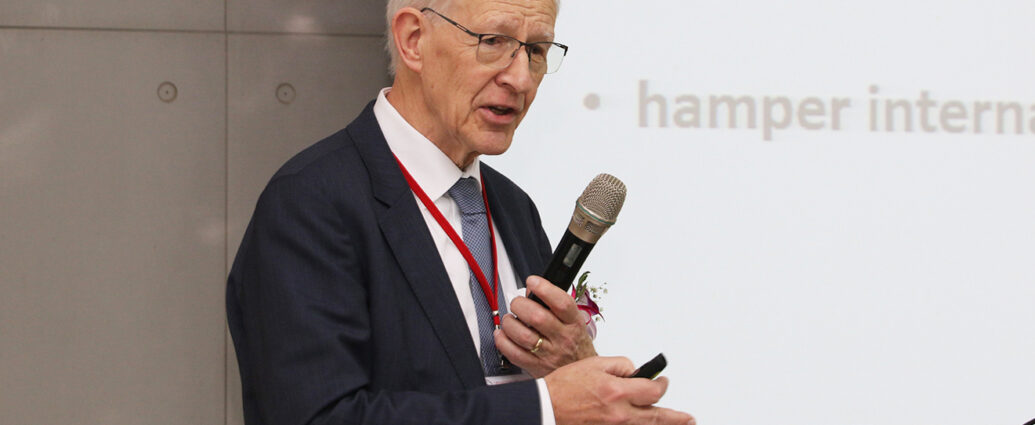
A scientist who pioneered the modern food processing safety standards used around the world was awarded this year’s World Food Prize, the organization announced Wednesday, crediting his work for averting millions of cases of foodborne illness and reducing food waste.

Huub Lelieveld of the Netherlands earned the award after six decades spent advancing ways to improve food safety and advocating for trade regulations that allow safe food to get around the world more easily.

“I just did what I thought was right,” Lelieveld said in an interview with The Associated Press. “I want everybody to have enough food but … it should also be safe.”

Lelieveld began his career as a food researcher at Unilever at a time when mechanisms for manufacturing safe food products were, to him, “illogical,” he said.

Food was often sterilized or chemically preserved after production, and equipment needed to be shut off once or twice each day to be cleaned, which was both difficult and time consuming. The processed food also required heavy use of preservatives, salt, sugar and acids to reduce the risk of contamination, which detracted from flavor and nutrition.

“I realized very soon that they did things in the wrong way, in my view,” Lelieveld said. “From the beginning, I’ve been working on … convincing people that you should do it in a different way.”

Lelieveld worked with colleagues to develop hygienic production methods and equipment, making food manufacturing more efficient and less reliant on chemicals.

Having scaled the processes at Unilever and shown that they worked, Lelieveld said the company gave him permission to publish the research for dissemination and use globally.

“My philosophy was: You should not compete on food safety,” Lelieveld said. “Spreading the technology, the hygienic technology, was very important.”

Unsafe food causes 600 million foodborne illnesses and 420,000 deaths each year, according to the World Health Organization.

“Lelieveld was selected for translating food safety science into global regulations, legislation and practice, a movement spanning dozens of countries,” Gebisa Ejeta, chair of the Laureate selection committee, said in a statement. “His initiatives are estimated to have benefited millions of consumers worldwide.”

The Iowa-based World Food Prize was founded by Norman Borlaug, who received the Nobel Peace Prize in 1970 for his work to dramatically increase crop yields and reduce the threat of starvation in many countries. The agricultural science honor includes a $500,000 award.

“Lelieveld lives by his conviction that access to safe food is a universal right—a philosophy shared by the late Dr. Norman Borlaug,” Mashal Husain, World Food Prize Foundation president, said in a statement.

After four decades at Unilever, Lelieveld founded the Global Harmonization Initiative in 2004 to promote consensus in food and trade regulations around the world. Drawing on a network of a few thousand scientists around the world, the nonprofit organization also works to address critical food security challenges and to facilitate food safety education.

GHI “is extremely useful because it has this enormous pool of knowledge about food safety and food protection,” Lelieveld said.

Lelieveld said challenges for broad access to safe food and water persist, and he hopes to see a system where people can produce safe food and water locally even if the movement of goods across borders is restricted.

“You can’t stop the transport of water through the air, with the clouds,” he said. “You can produce safe water everywhere, but we need to distribute this knowledge to the people that need it and that is the biggest challenge.”

This story was originally featured on Fortune.com

This post was originally published here

The American dream is becoming increasingly difficult for many women who are leaving the U.S. workforce, as new data highlights ongoing pressures tied to caregiving costs.

As the rising cost of childcare and eldercare outpaces wage growth, 455,000 women left the labor market between January and August 2025, according to Catalyst, with many citing difficult trade-offs between a paycheck and the high price of professional caregiving.

A recent report from the research group showed that nearly half a million female employees voluntarily left their jobs for various reasons. Forty-two percent cited leaving due to caregiving responsibilities, 37% cited a lack of schedule flexibility, while smaller percentages of those surveyed noted issues with pay dissatisfaction or job market uncertainty.

If businesses and the government do not address caregiving infrastructure, a Catalyst executive warns, the U.S. could face a long-term labor shortage that could drive up service costs.

THE INVISIBLE LAYOFF: A.I. IS QUIETLY LOCKING AMERICANS OUT OF THE JOB MARKET, C.E.O. WARNS

“This moment is especially risky. We are at the very tip of this spear, and we can still do something about it,” Catalyst President and CEO Jennifer McCollum told WTOP in Washington, D.C. “When women are leaving the corporate world, or the government world or NGO and nonprofit world en masse, like we’re seeing now, and you combine that with fewer leaders wanting to talk openly about that… we are creating the conditions for a labor market crisis.”

“This research makes clear that women’s workforce exits are not about a lack of ambition or commitment,” McCollum said in the report. “They reflect the reality that too many jobs still fail to account for caregiving responsibilities and economic pressures. If we want to understand why women are leaving, we have to look at how work continues to be structured.”

LendingTree research from November 2025 found that in 100 of the largest U.S. metro areas, the average monthly cost for infant care is 25.3% lower than the cost of rent for a two-bedroom apartment. For families with both an infant and a toddler, childcare costs are 31.5% higher than rent.

Federal data from the Bureau of Labor Statistics show women’s labor force participation dropped sharply during the COVID-19 pandemic and has since largely rebounded to near pre-pandemic levels, though surveys from the U.S. Census Bureau indicate ongoing childcare challenges continue to affect workforce participation.

Some employers and policymakers argue that expanding workplace flexibility or government-backed childcare programs comes with trade-offs, including higher costs for businesses and taxpayers. Business groups, including the U.S. Chamber of Commerce and the National Federation of Independent Business, have warned that companies are already facing inflation and labor shortages and caution that new mandates could increase employer costs. Meanwhile, Federal Reserve research points to a still-tight labor market and rising labor force participation in recent years — including among women — though economists attribute those trends to multiple factors, including childcare costs, wages and broader economic conditions.

In some of the most expensive markets with the widest care-to-rent price ratios, childcare costs average $1,996 per month.

After accounting for inflation, 18% of those women surveyed who left the workforce couldn’t justify their salary against the rising costs of care.

“Eighteen percent of them said, ‘When I look at the trade-offs between what I have to do from a caregiving responsibility and pay, and the lack of flexibility I have, and the amount of pay that I get, I cannot make this calculus work anymore,'” McCollum also told WTOP.

“Women are not ‘opting out’ — they are leaving because many jobs are not designed around the logistical and financial realities of childcare and women’s lives,” Catalyst research director Sheila Brassel wrote in the study. “Employers that want to bring women back to the workforce and retain top talent need to take action through tangible and meaningful policies that support women’s full participation.”

GET FOX BUSINESS ON THE GO BY CLICKING HERE

Catalyst’s data shows that women want to work but are being squeezed by rigid corporate structures and a lack of post-COVID flexibility.

“Re-engaging and retaining women requires addressing caregiving realities, offering schedule flexibility, and ensuring work structures, equal pay, and access to opportunity that allow women not only to return to the workforce, but to thrive there,” Brassel added.

Employers, meanwhile, have faced pressure to balance flexible work policies with operational demands, with some companies scaling back remote work options in recent years.

READ MORE FROM FOX BUSINESS

This post was originally published here

With MLB Opening Day upon us, Chicago Cubs new All-Star third baseman, Alex Bregman, knows he’s going to need some caffeine during a long, 162-game season. 

But not all coffee is made the same, which is why Bregman is partnering with Throne SPORT COFFEE, joining a star-studded group which includes Kansas City Chiefs superstar quarterback Patrick Mahomes and WNBA star and Olympic gold medalist Breanna Stewart.

“I invested in the company because I believe in it,” Bregman, who joined the Cubs this past offseason on a five-year, $175 million deal, told FOX Business in a recent interview. “You got to take ownership in what you put into your body if you want to play for a long time and have longevity in this game. It’s a good-for-you coffee that will keep you going, and something that is important to me. I want to be putting the right stuff in my body, and Throne SPORT COFFEE does that for me.”

CLICK HERE FOR MORE SPORTS COVERAGE ON FOXBUSINESS.COM

Bregman said he connected with beverage industry veteran Michael Fedele, who created Throne SPORT COFFEE’s proprietary COFFEE PLUS+ formula for the brand’s premium-charged lattes and cold brews, while he was playing for the Houston Astros. Seeing Throne SPORT COFFEE having 150mg of natural caffeine, as well as being NSF Certified for Sport with 10 grams of protein and 100% daily value of B vitamins, it was a no-brainer to try it out for Bregman. 

The relationship with Fedele continued as he joined the Boston Red Sox this past year, when he earned his third career All-Star nod. 

WNBA STAR BREANNA STEWART PARTNERS WITH THRONE SPORT COFFEE ALONGSIDE PATRICK MAHOMES

Then, as Bregman left Cubs spring training to join Team USA during the World Baseball Classic (WBC), Throne SPORT COFFEE was in the clubhouse as the U.S. made its way to the WBC final.

“They loved it,” Bregman said about his Team USA peers getting Throne SPORT COFFEE in the clubhouse during the WBC. “Michael sent us a shipment when we were in Miami, and it got into the clubhouse at the perfect time. We had a late-night game and an early get-to-the-ballpark for an early workout. All the guys loved it and were caffeinated after that.”

Fedele also couldn’t be happier to add Bregman as an investor and partner, as the brand continues to grow. 

“We are excited to officially welcome Alex Bregman to the Throne SPORT COFFEE family,” he said in a statement to FOX Business. “Alex is excited to help drive awareness and education about our better-for-you coffee solution and he embodies the preparation, discipline and performance mindset that defines the Throne SPORT COFFEE brand. Partnering with athletes who have that mindset is key to our continued growth and to reinforcing our leadership in the category.”

Bregman knows Chicago is a big market for not just sports, but coffee drinkers alike. He can’t wait to get his Cubs teammates involved now, especially with how many day games the team plays throughout the season. 

GET FOX BUSINESS ON THE GO BY CLICKING HERE

“You’re hitting your vitamins, you’re hitting your protein, and you’re getting the caffeine that’s good caffeine for you. I mean, for 162 games a year, you’re going to need some caffeine, especially here in Chicago with all these day games,” Bregman said. “I feel like Throne SPORT Coffee is going to be the go-to every day. To be able to partner with them is exciting and looking forward to getting the whole team caffeinated for all the games.”

Follow Fox News Digital’s sports coverage on X and subscribe to the Fox News Sports Huddle newsletter.

This post was originally published here

Harvard University has had a turbulent few months. The school has faced leadership turmoil, renewed scrutiny over its former president Larry Summers’ past ties to Jeffery Epstein, and an escalating clash with the Trump administration—including a federal lawsuit filed just last week alleging antisemitism on campus. 

None of it has knocked it off its perch. The Ivy league institution was once again deemed the No. 1 “dream school” among college applicants, according to a new survey by The Princeton Review.

Harvard has consistently ranked near the top throughout the survey’s 24-year history. Although it was dethroned last year by Massachusetts Institute of Technology (MIT), this year’s revival suggests that sustained controversy has done little to dent its appeal. 

“Harvard ultimately reigns as the world’s most desirable university with unparalleled brand recognition, alumni achievement and history,” Jamie Beaton, founder and CEO of Crimson Education—who holds both undergraduate and graduate degrees from the university—told Fortune. “Trump’s battle with Harvard has only made the school more notable and famous.”

While admissions for the incoming fall cohort are still being finalized, Harvard has only become more competitive over the years. Of the nearly 48,000 applications to its class of 2029—who started this past fall—only about 2,000 were admitted, an acceptance rate of around 4%. By comparison, the acceptance rate 18 years ago was about 9%.

Harvard graduates are entering the workforce with near six-figure salaries—and little student debt

For many Harvard students, the payoff of making it through the rigorous application process appears to be tangible. 

In a survey of the class of 2025 by The Harvard Crimson, 95% of seniors said they would choose Harvard again. Early career earnings are likely part of the reason: roughly half of respondents expected to earn more than $90,000 in their first job, while about one in five anticipated salaries of $130,000 or higher—figures that far outpace national averages for new graduates.

The price tag, meanwhile, keeps climbing. Total billable costs this academic year—tuition, fees, housing, and food—reached $86,926, a roughly 9% increase over the past two years. Yet only 17% of seniors reported graduating with student loan debt. Harvard waives tuition entirely for undergraduates whose families earn $200,000 or less annually.

But Harvard isn’t alone in driving demand—and the composition of this year’s list suggests that prestige reigns supreme in the minds of most applicants. Adam Nguyen, founder of admissions consulting firm Ivy Link, isn’t surprised.

“Even in a market where families talk constantly about cost, practicality, and ROI, the schools that continue to dominate the imagination are still the ones with the strongest prestige, signaling power, alumni networks, and global brand value,” Nguyen told Fortune

The 10 top “dream colleges” of students in 2026

  1. Harvard University
  2. Massachusetts Institute of Technology
  3. Stanford University
  4. Princeton University
  5. New York University
  6. Yale University
  7. Columbia University
  8. University of Pennsylvania
  9. University of Texas–Austin
  10. University of Michigan–Ann Arbor

More Gen Z are questioning the value of degrees—and seeking alternatives in the skilled trades

For all the allure of the Ivy League, those institutions represent a sliver of the American college experience—and the broader picture is more conflicted.

Cost anxiety has become the defining concern of the application process. The plurality of student and parent respondents in this year’s Princeton Review survey, 35%, cited impending debt levels as the biggest concern about the college application process. That’s a dramatic shift from the survey’s early years: in 2003, only 6% of respondents chose cost as their top concern. 

The skepticism doesn’t end at graduation. More than a third of all graduates now say their college diploma was a “waste of money,” according to a survey by Indeed. Among Gen Z specifically, that figure rises to 51%. And with artificial intelligence reshaping the job market for entry-level talent, these worries are only expected to grow.

It’s pushing a growing number of young people to take a harder look at alternatives. Enrollment in vocational and trade programs has grown more than 20% between 2020 and 2025, according to National Student Clearinghouse Data. And business leaders like Nvidia CEO Jensen Huang have highlighted that opportunities to land secure, six-figure-paying blue-collar jobs are on the rise—thanks in part to the data center boom

“This is the largest infrastructure build-out in human history that’s going to create a lot of jobs,” Huang said at the World Economic Forum earlier this year.

“We’re talking about six-figure salaries for people who are building chip factories or computer factories or AI factories.”

This story was originally featured on Fortune.com

This post was originally published here

Jamie Dimon, who has led America’s largest bank JPMorgan for 20 years and through multiple recessions, blasted remote work and offered a stern warning for any younger generations who want to move up the career ladder: get into the office. 

“If you go to a meeting with me, you got my full friggin attention the whole time,” he said at the Hill and Valley Forum, which brought together leaders from Washington and Silicon Valley, on Tuesday. 

During the session titled “Wealth, Power, and the Next American Century” Dimon said remote work only works well for certain jobs like call centers, but for everyone else, including young people and managers alike, in-person working is best. Young people, especially, he said, need to work in-person because they are still learning.

“They learn by going on a sales call. They learn by seeing you make a mistake. They learn by how you deal with the mistake,” Dimon said, adding that remote work also fails to help young people develop their emotional intelligence.

The problem is universal, Dimon said, and managers should also get comfortable sitting in the office. Video calls, which he compared to game show Hollywood Squares where contestants sit in a real life tic-tac-toe board, allow for much fewer checkups than would happen in person when you can ask someone directly for an update. Working from home, Dimon said, causes less ownership of a project, less curiosity, and, using a Muhammad Ali tactic, tires people faster.

“There’s very little follow up, a lot more game playing, you know, rope-a-dope type of politics,” he said.

Plus, he added, “a lot of people aren’t paying attention at all,” as many of them are on their phones while on a video call, a trend which he didn’t notice early on, he said.

The remarks are not new for the 70-year-old, who has often protested remote work for early-career employees, advocating for an “apprentice system” where younger workers learn from more experienced veterans.

“You can’t learn working from your basement,” he said in a Bloomberg interview last year.

Previously, Dimon has complained that remote work has made it more difficult to reach employees, especially on Fridays, which he said is “not how you run a great company.”

Other executives, such as Amazon’s Andy Jassy and Instagram Chief Adam Mosseri, have also pushed to bring employees back to the office for a full five days a week in the past two years. Still, not every business leader agrees. Shark Tank star and O’Leary Ventures chairman Kevin O’Leary has often advocated for remote work to better attract top candidates. In a video earlier this month, O’Leary said, “I’d rather hire somebody who can execute and sit in their basement or in their backyard.”

JPMorgan announced its own five-day in-office policy last year, prompting more than 1,200 employees to sign a petition urging the company to keep its flexible hybrid work model. During a town hall meeting last February, Dimon lashed out at employees for signing what he saw as a meaningless petition.

“Don’t waste time on it,” Dimon reportedly said during the town hall. “I don’t care how many people sign that f—ing petition.”

Gen Z Pushes Back

Despite what Dimon says, young people are not thrilled at the prospect of working from an office full time. While employers have leveraged the shaky job market to force employees back to the office full time, nearly 40% of Gen Z and Millennial employees said they would take a pay cut in exchange for more flexibility with where they work, compared to 32% across generations.

The research on remote work also doesn’t quite align with what executives like Dimon have said. A Bureau of Labor Statistics analysis from 2024 found a statistically significant positive correlation across 61 industries between the pandemic-era rise in remote work and productivity growth, among other positive outcomes. At the same time, Gallup’s State of the Workplace report from 2025 found fully remote workers actually report the highest engagement rates at 31%, compared to 23% for hybrid and on-site workers who are remote capable.

While Dimon acknowledged JPMorgan wants to keep its workers happy, he also said the company has to adapt to what its customers want. 

“We’re not in business so my employee’s happy. I’m in business so my customer’s happy, and I want my employee to be happy, but not at the expense of the customer.” 

This story was originally featured on Fortune.com

This post was originally published here

Toyota is recalling more than 144,200 vehicles in the U.S. due to a rearview camera malfunction that could increase crash risk, according to the National Highway Traffic Safety Administration (NHTSA).

The issue may prevent the rearview camera image from displaying when the vehicle is placed in reverse, reducing driver visibility and raising the likelihood of a collision, regulators said. 

The recall is listed under NHTSA campaign number 26V162000 and involves a failure to comply with Federal Motor Vehicle Safety Standard No. 111 on rear visibility.

UNITED DOUBLES DOWN ON PREMIUM TRAVEL, NEW AIRPLANES

Regulators said the issue is tied to a brief drop in electrical power during certain engine restart conditions, which can interrupt the camera system before it fully loads. The problem may occur when a vehicle is restarted shortly after being turned off, though it does not happen in all cases.

The recall affects certain non-hybrid Lexus models, including 2022–2025 NX250 and NX350, 2023–2026 RX350, and 2024–2026 TX350 vehicles, according to NHTSA filings. Regulators estimate all affected vehicles contain the underlying condition, though the issue may only appear under specific operating scenarios.

Toyota began investigating reports of inoperative rearview cameras in early 2025 and identified the root cause after months of testing, ultimately determining in March 2026 that a recall was necessary.

Toyota dealers will update the software or replace the rearview camera as needed, free of charge, the agency said. Owner notification letters are expected to be mailed by May 3, 2026.

CLICK HERE TO GET FOX BUSINESS ON THE GO

Drivers can check whether their vehicle is included in the recall by visiting NHTSA’s recall website or Lexus’ recall page and entering their vehicle identification number.

This post was originally published here

Women are no longer being siloed into secretary and back-room jobs; for decades, they’ve been breaking into male-dominated jobs they were once locked out of. Trading pencil skirts for scrubs and pilot uniforms, many women are making waves by taking up space in high-paying industries. 

Women have been steadily flocking to six-figure roles in traditionally male-dominated industries like healthcare and engineering, according to a new report from Resume Genius analyzing data from the Bureau of Labor Statistics. 

The number one role with rising female representation is dentistry; in the early 2000s only around 25% of dentists were women, but today they represent nearly 40% of the field, one of the biggest increases over the past two decades. And with a median annual salary of $179,210, women are also stepping into cushy tax brackets. 

Surgeon roles, which pay 239,200 annually, have also become a bright spot for women in the rapidly growing healthcare industry, with their representation more than doubling in the past two decades. 

And the report notes that the profession’s shift to women actually stems from college; in 2019, women became the majority of U.S. medical school students for the first time ever. 

Women are stepping into six-figure STEM roles—and slowly taking over the C-suite

Aside from high-paying healthcare jobs, women are also funnelling into lucrative STEM careers

Women have steadily been increasing their headcounts in software developer jobs, which boasts an median annual salary of $131,450, as well as in mechanical engineer ($102,320) and industrial engineer ($101,140) roles. Their rise is a result of greater outreach to get women into these technical fields through scholarships, mentorships, and broader recruitment efforts. 

Other jobs like informational security analysts (124,910), architects ($96,690), and airline pilots ($198,100) have seen women gain ground over the last two decades. 

Women are also breaking into the C-suite; chief executives, who earn a median salary of $206,680, made the list of rising women’s representation. It comes as the number of women leading Fortune 500 companies hit a record of 55 in 2025; while they only account for 11% of executives on the list, this trend among others signals women’s growing presence in affluent jobs. 

“While no country has reached full gender parity across all industries, more women are entering a wider range of fields than ever before,” the report noted. 

Women are flocking to high-paying AI and recession-proof healthcare careers

Women have been dominating a fast-growing industry that can hold up against AI and recessionary headwinds: healthcare. They make up nearly 78% of all workers in the field, according to 2021 Bureau of Labor Statistics data, but men still outnumber women in high-paying doctor roles

Even women who didn’t attend college are still taking advantage of the healthcare boom. Nursing, pediatric, and home health aids were among the hottest jobs for women without degrees, according to a 2025 report from Pew Research Center. Many roles in the profession don’t require a bachelor’s and can pay anywhere from $66,000 to $119,000 annually. These are all skills-based occupations, with no degree required—just a lot of patience, empathy, and mental fortitude.

And unlike other industries rocked by AI automation and sweeping layoffs, home health, doctor, and nursing job postings have hit a combined 162% growth since pre-pandemic, according to a 2025 report from Indeed. And it’s not expected to slow down anytime soon—the sector is resistant to AI jobs disruption and traditional economic downturns. 

“Healthcare is a classic recession-resistant industry because medical care is always in demand,” Priya Rathod, career expert at Indeed, told Fortune in 2025. “During the 2007–2009 Great Recession, healthcare employment continued to grow even as overall U.S. payrolls shrank.”

10 roles with rising female representation—and they come with big paychecks

Men may still dominate these high-paying professions, but women have been taking up space over time. Here are 10 roles in many traditionally male-dominated fields where women’s participation has steadily increased, according to Resume Genius.

  1. Dentist ($179,210)
  2. Surgeon ($239,200)
  3. Software developer ($131,450)
  4. Information security analyst ($124,910)
  5. Architect ($96,690)
  6. Airline pilot ($198,100)
  7. Industrial engineer ($101,140)
  8. Chief executive ($206,680)
  9. Police and detective ($77,270)
  10. Mechanical engineer ($102,320)

This story was originally featured on Fortune.com

This post was originally published here

The Supreme Court unanimously ruled Wednesday that internet providers are not liable for copyright infringement by their users, delivering an opinion in Cox v. Sony and tossing a $1 billion verdict.

“Under our precedents, a company is not liable as a copyright infringer for merely providing a service to the general public with knowledge that it will be used by some to infringe copyrights,” Justice Clarence Thomas wrote in the opinion. “Accordingly, we reverse.”

READ THE SUPREME COURT OPINION – APP USERS, CLICK HERE:

This is a developing story. Check back for updates.

This post was originally published here

With the 2026 MLB season getting started on Wednesday night, baseball’s first-ever “CEO of H2O” has been appointed by Primo Brands, and it happens to be one of the smoothest-swinging players of all time. 

Primo Brands, a leading North American branded beverage company whose water brands serve as the official water of MLB for the third straight season, has appointed Ken Griffey Jr., the National Baseball Hall of Fame outfielder who belted 630 home runs throughout his storied career, as the “CEO of H2O” in its new national campaign. 

The new campaign marks the first time all six of its regional spring water brands – Arrowhead Spring Water (West Coast), Poland Spring Water (Northeast), Ice Mountain Spring Water (Midwest), Deer Park Spring Water (Southeast, Mid-Atlantic), Ozarka Spring Water (Texas) and Zephyrhills Spring Water (Florida) – come together to celebrate America’s Pastime. 

CLICK HERE FOR MORE SPORTS COVERAGE ON FOXBUSINESS.COM

The premise of the campaign by Primo Brands is to elevate healthy hydration as millions of fans return to their respective ballparks to watch their favorite teams all season long. Whether in the stands, or watching at home, hydration is key, and Griffey is excited to lead the charge in his new role. 

“I’m so excited for fans to see what I’m working on with Primo Brands,” Griffey said in an exclusive statement to FOX Business. “Healthy hydration is critical for the players on the field, the young people working to get better at the sport, and the fans in the stands. It’s an honor to be the first ever Baseball CEO of H2O. I’ll be working with Primo to tell that hydration story through all of their regional spring water brands all over the country.

WUNDERFAN APP REWARDS SPORTS FANS FOR WATCHING, ATTENDING GAMES AND ENGAGING WITH THEIR FAVORITE TEAMS

“Today is the start, but there will be much more throughout the season – follow along with Primo to see how we’re promoting healthy hydration all season long.”

Throughout the MLB season, Griffey will be engaging with fans across social platforms, sharing fun trivia for a chance to win monthly prizes, and of course, making a special red carpet appearance during MLB All-Star Week. This year’s festivities will take place in Philadelphia at Citizens Bank Park.

A 30-second national ad will also be shown, as Griffey puts together the ultimate spring water team through Primo Brands roster. 

“Baseball is woven into communities across the country, just like our brands,” said Primo Brands chief marketing officer Kheri Tillman. “In our third year as the Official Water of MLB, and with Ken Griffey Jr. as Baseball’s CEO of H2O, we’re building on that foundation to unveil a national campaign that connects fandom and healthy hydration with the star power of one of the greatest in the game.”

Uzma Rawn Dowler, CMO and senior vice president of global corporate partnerships with MLB, added: “By uniting its regional spring water portfolio and tapping a baseball icon like Ken Griffey Jr., Primo Brands is showing it knows how to bring energy and authenticity to our partnership. We’re excited to continue telling the Primo Brands story through a baseball lens on our platforms while celebrating the role hydration plays in the game.”

GET FOX BUSINESS ON THE GO BY CLICKING HERE

As the New York Yankees and San Francisco Giants kick off the 2026 MLB season on Wednesday night in the Bay Area, Griffey and Primo Brands will be working together to celebrate healthy hydration for players and fans like it’s a walk-off home run.   

Follow Fox News Digital’s sports coverage on X and subscribe to the Fox News Sports Huddle newsletter.

This post was originally published here

Many entrepreneurs dream of that moment when they know they’ve really “made it.” That might look like turning a profit for the first time, or seeing how their product or service changes the lives of customers. It should feel like a moment of pride and celebration, but one multimillionaire serial entrepreneur admits it felt quite the opposite for her.

“The first time I made real money, I cried in a parking lot,” Emily Lyons wrote in a LinkedIn post in October. “Not because I was happy. Because I was terrified I’d lose it.”

Lyons, the founder and CEO of Femme Fatale Media Group and Lyons Elite, said this moment was so scary for her because she had grown up watching her parents fight about money. They had even been evicted from their home, and counted coins to take the subway. 

“That kind of stress doesn’t leave your body,” Lyons wrote. “It just waits.”

Lyons founded Femme Fatale, a leading North American event-staffing and marketing agency headquartered in Toronto in 2009. She started the company at age 23 with just $80, a cracked laptop, and a vision to revolutionize event staffing. The company has grown to become a multimillion-dollar agency with a network of more than 20,000 event professionals serving clients like L’Oréal, Red Bull, Sony, and Grey Goose as well as other Fortune 500 companies. She was also recently named Entrepreneur of the Year at the CanadianSME Small Business Awards.

“I didn’t have investors or a safety net,” Lyons said in a statement. “I had a dream, and I was stubborn enough to keep going.” 

Lyons also launched luxury dating service Lyons Elite, which was recognized three years in a row as the best matchmaking service in Canada by the Consumer Choice Awards. She also launched True Glue, a clean fake-lashes beauty brand in 2014, and founded the Julia Lyons Foundation, a charity supporting people with cystic fibrosis, inspired by the loss of her sister, Julia, to the disease. 

What is imposter syndrome in business?

Despite her success, Lyons said when her business finally took off and there were “commas in my bank account instead of panic, she “didn’t feel rich.”

“Money didn’t fix the fear,” she wrote. “It just exposed it.”

She references the old adage of “more money, more problems,” saying “wealth doesn’t erase your problems. It magnifies them.”

That anxiety encouraged Lyons to reframe her newfound wealth, though. She said she had to learn “earning it wasn’t a fluke,” and that she “deserved to keep” the money she had earned. 

She learned “success wasn’t something that would be taken away the second I stopped looking,” she wrote. 

This case study illustrates one of the innate challenges in being an entrepreneur or successful business person: imposter syndrome, or the psychological phenomenon of persistent self-doubt and the feeling of being a fraud despite evidence of competence and success.  

“Turns out you can have everything you ever wanted and still not feel like enough,” Lyons wrote. “That’s the part they don’t put in the success stories.”

A study by Cambridge International City Montessori School, Lucknow published in January 2025 provides evidence that especially women transitioning from traditional employment to entrepreneurship often face imposter syndrome, but that cognitive restructuring, mentorship, networking, and social support can help.

Many other successful female entrepreneurs have said they’ve experienced imposter syndrome. Katrina Lake, founder of Stitch Fix, said not having female role models growing up contributed to feelings of imposter syndrome despite her company’s $120 million IPO in 2017. Writer and researcher Ali Kriegsman argued, though, imposter syndrome doesn’t have to be a weakness for women business owners to solve on their own—but there are resources to help.

“Success doesn’t heal you,” Lyons wrote. “It just gives you the resources to finally start.”

A version of this story was originally published on Fortune.com on October 8, 2025.

More on imposter syndrome:

This story was originally featured on Fortune.com

This post was originally published here

AI is making workers more productive than ever. In fact, it’s already quietly handing workers back chunks of their day—and instead of taking on more tasks, most are stepping away from their desks entirely.

New research from Zoom, conducted with Morning Consult across more than 1,000 knowledge workers, finds that among those already using AI tools, 76% say they’re saving at least 30 minutes a day, and 43% are saving an hour or more.

And they’re using that clawed-back time for a real break, not more work.

They’re sneaking in gym classes, running errands, and reclaiming the lunch break that corporate culture quietly killed off.

The always-on workday that killed the lunch break

The survey paints a bleak picture of a workforce quietly suffocating under the weight of its own schedule. Three-quarters of respondents say they eat lunch while working at their desk, 60% shorten it to squeeze between meetings. 

The irony? The majority acknowledge taking a real lunch break actually improves their stress levels and productivity. They know it helps. They just can’t stop. And they’re getting so burned out, experts are calling the crisis a “competence hangover.”

Enter AI. Among workers already using it, 80% say they’d use that time gained for a genuine break. In fact, 70% say AI is helping them step away from their screen. Remote workers are running errands and exercising. In-office workers are scrolling for a social reset or catching up with colleagues. Millennials and parents are leading the charge, with 70% more likely to reclaim that midday slot. 

And increasingly, workers see AI as the tool that makes it structurally possible: Two in three believe AI can help them block out a full lunch hour; 66% say they’d be open to skipping lunch meetings now; and 70% say it can help restore work-life balance altogether.

“What we’re seeing isn’t just that AI makes work faster, it’s that AI is starting to take away a lot of the busywork that fills the day,” Kimberly Storin, Zoom CMO, told Fortune. “Time saved doesn’t come from one big thing, but instead from all the small, constant tasks that usually happen after a conversation, like writing notes, figuring out next steps, chasing follow-ups, updating different systems… all of that work adds up.”

Workers aren’t waiting for their bosses to give them a shorter workday: They’re quietly taking their time back

For a long time, any efficiency gain in the workplace came with a catch: more output expected in return. 

Plus, in a tougher job market where promotions are stalling and AI is quietly threatening whole categories of white-collar work, many high performers feel they have no choice but to over-deliver just to stay safe. 

But Storin says something different is happening now.

“We’re starting to see people use that time to step away, even briefly, and reset, and leaders have a choice in how they respond to that,” she says.

Mark Cuban also made headlines this week, predicting the smartest companies will officially cut the workday by a full hour, with no change to salaries. But not everyone is convinced bosses will be so generous. 

Mark Dixon, CEO of IWG, the world’s largest flexible workspace provider, told Fortune flatly a shorter workweek (or shorter work days, in this case) isn’t coming “any time soon.” His reasoning: Companies are under too much cost pressure to hand back time for nothing.

“Everyone’s having to control their labor costs because all costs have gone up so much, and you can’t get any more money from customers, so therefore you have to get more out of people,” he said.

But whether or not bosses officially shorten the day, workers aren’t waiting for permission. For now, they’re carving out 30-minute pockets of freedom and taking back the minutes the modern workplace took away. 

“You can fill the space with more activity, or you can recognize that better work doesn’t always come from more hours,” Storin says. 

“I do think giving people some of that time back matters, not necessarily as a perk, but as a reflection of how work should function,” she adds. “If the system is working, people shouldn’t have to grind through every minute of the day to keep up. “

“AI shouldn’t just help us do more,” she continues. “It should help work feel more manageable, and ultimately more human.” 

And ultimately, many workers are already doing it—letting the AI handle the follow-up email while they finally step outside.

This story was originally featured on Fortune.com

This post was originally published here

OpenAI Foundation, the nonprofit that controls the artificial intelligence company OpenAI and its flagship product ChatGPT, pledged Tuesday to grant out $1 billion over the next year and to build up its capacity as a philanthropic funder.

The pledge represents a major development in OpenAI’s philanthropic activities and offers insight into how the company, which started as a nonprofit, plans to carry out its charitable mission to develop AI to benefit “all of humanity.”

“We aim to enable the use of AI to find solutions to humanity’s hardest problems, transform what people are capable of, and deliver real benefits in people’s lives — while working hard with partners to be ready for new challenges, and to help make society resilient, as AI advances,” OpenAI board chair Bret Taylor said in a statement Tuesday.

The new funding will support life science and health research and will seek to mitigate some of the impacts of AI technologies on jobs, the economy and mental health, especially of children, the nonprofit said. It follows a commitment to spend $25 billion to support similar causes that OpenAI Foundation made in October, though without providing a time frame.

OpenAI Foundation will also recruit a new executive director to oversee its grantmaking, it said.

Ups and downs in OpenAI’s nonprofit activities

OpenAI started as a nonprofit research lab in 2015 but has sought to escape that structure over the past several years as it built out its commercial technologies like ChatGPT and its for-profit subsidiary, which is now one of the most highly valued startups in the world.

In October, OpenAI finalized an agreement with regulators that left the nonprofit’s board in charge of its for-profit business but eased the way for investors and the company to profit from its technologies. The deal also clarified the nonprofit’s ownership stake in the company, which OpenAI said at the time was valued at $130 billion, making it one of the best-resourced nonprofits in the country.

Since the incorporation of its for-profit business in 2019, OpenAI’s nonprofit significantly scaled back its activities, going from listing $51 million in expenses in 2018 to $3.3 million the following year, according to its public tax filings. In 2024, the most recent year that the nonprofit reported its activities to the Internal Revenue Service, OpenAI’s nonprofit received $4,433 in contributions and granted out $7.6 million.

Brian Mittendorf, a professor of accounting and public affairs at The Ohio State University who specializes in nonprofits, cautioned that the tax forms were not well suited to capture OpenAI’s activities and the extent to which they were focused on achieving its charitable mission.

“People tend to focus on the financial part of that,” said Mittendorf in an email. “Is the immense value creation being used to further a charitable objective? But an equally important piece is whether the product they are developing is serving humanity as they envisioned.”

It’s a question that Elon Musk, an early financial backer of OpenAI, has also raised. Musk sued the company, claiming that CEO Sam Altman and others betrayed the nonprofit’s mission in pursuit of profit in a case that will go to trial in California.

Recent revision to nonprofit’s role

In 2025, OpenAI made an effort to revitalize the nonprofit. It convened a temporary nonprofit advisory board to offer it nonbinding guidance about how to structure its philanthropic activities while it continued to negotiate with regulators and its investors about the extent to which the nonprofit board would remain in charge of its business.

The advisory board, which included labor leader Dolores Huerta, eventually recommended that OpenAI significantly increase the resources it provided to its nonprofit and to consult extensively with communities about how AI is impacting them as it shapes its grant making.

The nonprofit announced $40.5 million in grants to community-based nonprofits in December to support AI literacy, strengthen civic life and foster economic opportunity.

OpenAI’s new vision for its charitable grantmaking comes at the same time that communities around the country worry about data centers increasing electricity costs, lawsuits accuse AI chatbots of exacerbating mental health crises, and companies and advocates question the fitness of new AI technologies to be used in war.

In addition to hiring a new director, OpenAI Foundation said Wojciech Zaremba, one of a handful of OpenAI co-founders still working for the company, will become the foundation’s head of AI resilience, which is focused on the “new challenges that inevitably arise from more capable AI.”

Additionally, the nonprofit has brought on Jacob Trefethen to lead its life sciences and health grantmaking. Trefethen led a similar portfolio at the philanthropic organization, Coefficient Giving, which is a major funder of the effective altruism community that has sometimes clashed with OpenAI’s vision for artificial intelligence.

___

Associated Press coverage of philanthropy and nonprofits receives support through the AP’s collaboration with The Conversation US, with funding from Lilly Endowment Inc. The AP is solely responsible for this content. For all of AP’s philanthropy coverage, visit https://apnews.com/hub/philanthropy.

This story was originally featured on Fortune.com

This post was originally published here

The assignment involves no laptop, no chatbot and no technology of any kind. In fact, there’s no pen or paper, either.

Instead, students in Chris Schaffer’s biomedical engineering class at Cornell University are required to speak directly to an instructor in what he calls an “oral defense.”

It’s a testing method as old as Socrates and making a comeback in the AI age. A growing number of college professors say they are turning to oral exams, and combining a variety of old-fashioned and cutting-edge techniques, to help address a crisis in higher education.

“You won’t be able to AI your way through an oral exam,” says Schaffer, who introduced the oral defense last semester.

Educators are no longer naively wondering if students will use generative AI to do their homework for them. A big question now is how to determine what students are actually learning.

College instructors across the U.S. are noticing troubling new trends as generative artificial intelligence becomes more sophisticated. Take-home essays and other written assignments are coming back perfect. But when students are asked to explain their work, they can’t. The long-term impact of AI use on critical thinking remains to be seen, but educators worry students increasingly see the hard work of thinking as optional.

Some colleges shift toward in-person tests

At the University of Pennsylvania, Emily Hammer, an associate professor of Middle Eastern Languages and Cultures, now pairs oral exams with written papers in her seminar classes.

“It comes across as if we’re trying to prevent cheating,” Hammer says. “That’s not why we’re doing this. We’re doing this because students are actually losing skills, losing cognitive capacity and creativity.”

Hammer forbids AI use on all writing assignments but tells her class she knows she can’t enforce that. However, if they haven’t written their papers themselves, defending the material face-to-face will likely be “a very stressful situation.”

Hammer’s class is part of “a massive shift toward in-person assessments,” both written and oral, at Penn, says Bruce Lenthall, executive director of the school’s Center for Teaching and Learning. The Ivy League school is one of a small but growing number of universities that have started running faculty workshops on oral exams.

Oral exams are not traditionally part of the modern American undergraduate system, unlike certain European universities. For instance, in the Oxbridge tutorial system in England, students meet faculty for weekly discussions. Some U.S. colleges saw a move toward oral exams during the COVID-19 pandemic to address concerns about online cheating, and interest has intensified since the launch of ChatGPT in 2022.

During the pandemic, engineering professor Huihui Qi launched a three-year study at the University of California, San Diego on how to scale oral exams. Several universities have since invited her to provide faculty workshops or discuss her research.

Harnessing AI to fight ‘fire with fire’

At New York University, several types of oral assessments are on the rise. More faculty are requiring office hours, assigning presentations and cold-calling on students in class. Instructors are saying, “I need to look my students in the eye and ask, ‘Do you know this material?’” says Clay Shirky, vice provost for AI and technology in education.

One NYU professor has put a modern spin on the traditional oral test.

Panos Ipeirotis, a professor at NYU’s Stern School of Business, unveiled an AI-powered oral exam last semester for the final exam in a class on AI product management. He calls it “fighting fire with fire.”

Students log in from home, at any time that fits their schedule. A voice cloned from a business school professor greets them.

“Hi there,” says the voice on their screen. It asks for the student’s name and school ID number and then says, “I’m ready to conduct your exam today.”

The chatbot starts with questions about a final group project and drills into details based on each student’s answers. If the student stumbles, the AI agent gives them clues, along with criticism and positive feedback. Ipeirotis grades the exams separately, also with the help of AI.

“We wanted to check: Do you know what your team did? Were you a free rider? Did you outsource everything to AI?” says Ipeirotis, who designed the tool with ElevenLabs, a company that develops generative AI voice agents to conduct job interviews.

Students in the class this semester are redesigning the AI agent to smooth out some kinks, and Ipeirotis plans to use it in all his future classes.

“I want oral exams everywhere now. I want to pair it with every single written assignment,” says Ipeirotis. “I don’t trust written assignments anymore to be the result of actual thinking.”

Feedback from students last semester was mixed.

Business major Andrea Liu found the chatbot’s voice to be surprisingly human, but the conversation felt choppy with odd pauses. It asked multiple questions at once, which was confusing. And it was jarring to hear a voice but not see a person.

“It felt kind of awkward to be talking to what was pretty much a blank screen,” says Liu, 21.

But, she agreed with worried educators: “There is no perfect world where AI exists and kids are not abusing it.”

Schools see benefits even for shy students

Across the humanities and STEM disciplines, like computer science, educators worry that students who skip the mental struggle that is necessary for problem solving won’t develop the skills they need to advance in upper-level classes and careers.

That’s why Schaffer, the Cornell professor, introduced the oral defense in his biomedical engineering class. He requires students to sign up for 20-minute sessions of Socratic-style questioning after submitting written problem sets, which are assigned several times each semester.

With a class of 70 students, Schaffer splits the job with his teaching assistants. They no longer grade the written problem sets, just the oral defenses. He calls it “incentivizing” his students to do the work, or at least understand it enough to explain.

Schaffer’s class is highlighted in a new “Oral Assessment Workshop” offered by Cornell’s Center for Teaching Innovation.

Other examples at Cornell: a religious studies professor who now holds 30-minute “final conversations” with students instead of a final exam; and another engineering course where the professor gives four-minute mock interviews to each student in a 180-person class.

Skeptics point out oral exams can be unsettling for students who are shy or have serious anxiety, but clarifying the format ahead of time and starting with softball questions can help, says Carolyn Aslan, who leads Cornell’s oral exam training.

“Sometimes it’s actually good to get that quiet student one-on-one, and you finally get to hear from them. Sometimes that is the breakthrough,” Aslan says.

Several of Schaffer’s students say they felt nervous at first but ended up preferring the oral exam.

“I honestly liked it a lot,” says Cornell junior Olivia Piserchia, a biomedical engineering major. She initially found the oral defense nerve-wracking but came to value the one-on-one time with instructors. It kept her from feeling lost in a large class and helped her build the skill of articulating her technical knowledge, as she would need to in a job.

“Having that live check-in holds you accountable,” says Piserchia. “It’s a lot harder to look people in the eyes and say out loud, ‘I don’t know this.’ And, that makes you realize, ‘I should study this.’”

___

The Associated Press’ education coverage receives financial support from multiple private foundations. AP is solely responsible for all content. Find AP’s standards for working with philanthropies, a list of supporters and funded coverage areas at AP.org.

This story was originally featured on Fortune.com

This post was originally published here

The Federal Communications Commission (FCC) said on Monday it was banning the import of all new foreign-made consumer routers, a move that comes as the latest crackdown on Chinese-made electronic gear over security concerns.

China is estimated to control at least 60% of the U.S. market for home routers – which are the boxes that connect computers, phones and smart devices to the internet.

The FCC order does not impact the import or use of existing models, but will ban new ones.

The agency said a White House-convened review deemed imported routers pose “a severe cybersecurity risk that could be leveraged to immediately and severely disrupt U.S. critical infrastructure.”

MEDICAL DEVICE GIANT HIT BY GLOBAL NETWORK DISRUPTION AFTER CYBERATTACK POSSIBLY LINKED TO PRO-IRANIAN GROUP

The FCC said that malicious actors had exploited security gaps in foreign-made routers “to attack households, disrupt networks, enable espionage, and facilitate intellectual property theft,” citing their role in major hacks like Volt and Salt Typhoon.

The determination includes an exemption for routers the Pentagon deems do not pose unacceptable risks.

TEXAS GOV ABBOTT ADDS POPULAR CHINESE ELECTRONICS, ONLINE SHOPPING COMPANIES TO ‘PROHIBITED’ TECH LIST

Lawmakers have previously raised security concerns about Chinese-made routers and Michigan Rep. John Moolenaar, the Republican chair of the House select committee on China, praised the FCC order.

“Today’s tremendous decision by the FCC and the Trump administration protects our country against China’s relentless cyberattacks and makes it clear that these devices should be excluded from our critical infrastructure,” Moolenaar said. “Routers are key to keeping us all connected, and we cannot allow Chinese technology to be at the center of that.”

The Chinese Embassy in Washington did not immediately comment.

SILICON VALLEY ENGINEERS CHARGED WITH STEALING GOOGLE TRADE SECRETS AND TRANSFERRING THEM TO IRAN

Last month, Texas Attorney General Ken Paxton sued TP-Link Systems, a California-based router manufacturer spun off from a Chinese firm, for allegedly marketing its networking devices deceptively and allowing Beijing to access American consumers’ devices.

TP-Link Systems said it would “vigorously defend” its reputation, adding that the Chinese government had no form of ownership or control over the company, its products or user data.

Reuters reported last month the Trump administration had put on hold a proposed ban on domestic sales of routers made by TP-Link.

CLICK HERE TO GET FOX BUSINESS ON THE GO

The FCC issued similar rules in December that ban the import of all new models of Chinese drones.

Reuters contributed to this report.

This post was originally published here

Travelers passing through Philadelphia International Airport on Monday may have expected long security lines. But the longest line was made of cheesesteaks.

Organizers say they achieved a new Guinness World Record for the longest line of cheesesteak sandwiches, with 1,291 lined up inside a departure hall to mark National Cheesesteak Day. The display far surpassed the previous benchmark of 500 sandwiches.

“We went for the world record for the longest cheesesteak in history,” said Clarence LeJeune of MarketPlace PHL, a company that operates airport concessions. “Today we accomplished that goal here in Philadelphia.”

The cheesesteak, which originated in Philadelphia in the early 1900s, is widely considered the city’s signature food. LeJeune called it “synonymous” with Philadelphia, alongside its sports culture.

People in black aprons assembled cheesesteaks along tables set up in the walkway between Terminals B and C, filling rolls from silver buckets as they moved past storefronts.

After the record was certified, volunteers handed out the sandwiches to travelers, airport workers and Transportation Security Administration staff, who have been working without pay during the government shutdown.

LeJeune joked there are few hard rules for cheesesteaks, which is part of the “beauty of the experience” — except, he said, “You don’t ask for Swiss cheese,” referencing a 2003 moment when then-presidential candidate John Kerry drew criticism in Philadelphia for ordering one with Swiss.

Michael Empric, a Guinness World Records adjudicator, said rules require all food used in record attempts to be eaten or donated.

“In this case, they are going to TSA agents who definitely could use some lunch,” Empric said.

This story was originally featured on Fortune.com

This post was originally published here

Iran has received an American plan to pause the war in the Middle East, officials said Wednesday — a proposal sent even as Washington deploys paratroopers and more Marines to the region.

Tehran did not confirm receiving the plan and publicly dismissed the diplomatic effort while launching more attacks on Israel and Gulf Arab countries, including an assault that sparked a huge fire at Kuwait International Airport. Iran also continued to come under attack.

Two officials from Pakistan, which delivered the plan to Iran, described the 15-point proposal broadly, saying it addressed sanctions relief, a rollback of Iran’s nuclear program, limits on missiles and reopening the Strait of Hormuz, a crucial waterway through which a fifth of the world’s oil is shipped. An Egyptian official involved in the mediation efforts added that the proposal includes restrictions on Iran’s support for armed groups. The officials spoke on condition of anonymity to discuss details not yet released.

Some of those points were nonstarters in negotiations before the war: Iran has insisted it won’t discuss its ballistic missile program or its support of regional militias, which it views as key to its security. And its ability to control passage through the Strait of Hormuz represents one of its biggest strategic advantages.

Iran’s attacks on regional energy infrastructure along with its restrictions on the strait have sent oil prices skyrocketing and rocked world markets over fears of a global energy crisis, in turn putting pressure on the U.S. to find a way to end the chokehold and calm markets.

More US troops are on the way to the region

At least 1,000 troops from the 82nd Airborne Division will be sent to the Mideast in the coming days, three people with knowledge of the plans told The Associated Press. They spoke on condition of anonymity to discuss sensitive military plans.

The paratroopers are trained to jump into hostile or contested areas to secure key territory and airfields.

The Pentagon is also in the process of sending about 5,000 more Marines, trained in amphibious assaults, and thousands of sailors to the region.

Diplomatic efforts face major challenges

The 15-point plan now in Iranian hands is “a comprehensive deal” to reach a ceasefire, according to the Egyptian official.

Mediators are pushing for possible in-person talks between the Iranians and the Americans, perhaps as soon as Friday in Pakistan, the Egyptian and Pakistani officials said.

Speaking Tuesday at the White House, Trump said the U.S. is “in negotiations right now” and that the participants included special envoy Steve Witkoff, his son-in-law Jared Kushner, Secretary of State Marco Rubio and Vice President JD Vance. He has not said who from Iran they are in contact with.

“We have a number of people doing it,” Trump said. “And the other side, I can tell you, they’d like to make a deal.”

Iran’s Khatam Al-Anbiya Central Headquarters, which commands both the regular military and the paramilitary Revolutionary Guard, dismissed the idea of talks. Iranian leaders have repeatedly denied they are happening, while acknowledging that the foreign minister is in contact with various countries but not the U.S. or Israel.

“Our first and last word has been the same from day one, and it will stay that way: Someone like us will never come to terms with someone like you,” Lt. Col. Ebrahim Zolfaghari, a spokesman for the headquarters, said in the video statement aired on state television. “Not now, not ever.”

Israeli officials, who have been advocating for Trump to continue the war against Iran, were surprised by the submission of a ceasefire plan, according to a person who was briefed on the contours of the proposal and also confirmed it had been submitted. They spoke on condition of anonymity because they were not authorized to speak publicly.

Any talks between the U.S. and Iran would face monumental challenges. It’s not clear who in Iran’s government has the authority to negotiate — or would be willing to, as Israel has vowed to continue killing the country’s leaders.

Iran remains highly suspicious of the United States, which twice under the Trump administration has attacked during high-level diplomatic talks, including with the Feb. 28 strikes that started the current war.

“We have a very catastrophic experience with U.S. diplomacy,” Iranian Foreign Ministry spokesperson Esmail Baghaei told India Today on Tuesday.

Israel launches new strikes on Iran

The Israeli military announced new wide-scale attacks on Iran early Wednesday targeting government infrastructure, and witnesses reported airstrikes in the northwestern city of Qazvin.

Missile alert sirens sounded multiple times in Israel as Iran launched its own attacks.

Iran also kept up the pressure on its Gulf Arab neighbors, with Saudi Arabia’s Defense Ministry saying it had destroyed at least eight drones in the kingdom’s oil-rich Eastern Province, and missile alert sirens sounding in Bahrain.

Kuwait said it shot down multiple drones but one hit a fuel tank at Kuwait International Airport, sparking a fire, the General Civil Aviation Authority said. Firefighters were working to contain the blaze.

Iran’s death toll has passed 1,500, its Health Ministry has said. In Israel, 16 people have died. At least 13 U.S. military members have been killed, along with more than a dozen civilians in the occupied West Bank and Gulf Arab states.

Meanwhile, authorities say more than 1,000 people have died in Lebanon, where Israel has targeted the Iran-linked Hezbollah militant group, which has also fired on Israel.

Energy prices fall back but remain high

The news of potential negotiations drove down the price of oil — after it skyrocketed in recent weeks.

Brent crude oil, the international standard, has neared $120 a barrel during the conflict but was trading below $100 Wednesday. It is still up around 35% from the start of the war.

Economists and leaders have warned of far-reaching effects if energy prices remain high — from rising prices on food and other basics to higher rates for mortgages and auto loans.

A big driver of the spike in the oil price has been Iran’s stranglehold on the Strait of Hormuz, which leads from the Persian Gulf to the open ocean. Iran has allowed a small number of ships through the strait, but has said no ships from the U.S., Israel or countries seen as linked to them can pass.

Asked in the interview with India Today whether Iran was charging ships for passage, Baghaei, the Iranian Foreign Ministry spokesperson, said “absolutely.” He did not elaborate.

___

Madhani reported from Washington, Rising from Bangkok and Ahmed from Islamabad. Associated Press writers Samy Magdy in Cairo, Natalie Melzer in Tel Aviv, Israel and E. Eduardo Castillo in Beijing contributed to this report.

This story was originally featured on Fortune.com

This post was originally published here

At 8:30 a.m. Eastern Time today, the price of oil sits at $99.75 per barrel, using Brent as the benchmark (we’ll explain what that means shortly). That’s a decrease of $2.72 since yesterday morning—but $26.64 more than at this time last year.

oil price per barrel % Change
Price of oil yesterday $102.47 -2.65%
Price of oil 1 month ago $71.49 +39.53%
Price of oil 1 year ago $73.11 +36.43%

Will oil prices go up?

Nobody can predict the future path of oil prices with certainty. A range of factors influence how oil trades, yet supply and demand remain the main drivers. When fears of economic slowdown, conflict, or similar shocks rise, oil prices can move sharply.

How oil prices translate to gas pump prices

The price you see at the gas pump reflects more than just crude oil. Also built in are the costs of refining, distribution through wholesalers, various taxes, and the margin your neighborhood station charges.

Crude oil is still the largest single driver of the final pump price, typically representing over half of each gallon’s cost. Spikes in oil prices tend to push gas prices higher in short order. But when oil prices decline, gas prices often ease down gradually, a behavior known as “rockets and feathers.”

The role of the U.S. Strategic Petroleum Reserve

In the event of an emergency, the U.S. maintains a stockpile of crude oil known as the Strategic Petroleum Reserve. Its main goal is to safeguard energy security when disasters strike—think sanctions, severe storm damage, or war. It can also do a lot to ease the pain of sudden price jumps when supply gets disrupted.

It’s not a permanent fix, as it’s more meant to provide immediate support for consumers and ensure critical parts of the economy like key industries, emergency services, public transportation, and so on can keep operating.

How oil and natural gas prices are linked

Both oil and natural gas play key roles as major sources of energy. A big change in oil prices can affect natural gas by proxy. If oil prices increase, some industries may swap natural gas for some segments of their operations where possible, increasing the demand for natural gas.

Historical performance of oil

Oil prices are often measured by two key benchmarks:

  • Brent crude oil is the main global oil benchmark.
  • West Texas Intermediate (WTI) is the main benchmark of North America.

Between the two, Brent is a better representation of global oil performance because it prices much of the world’s traded crude. It’s also often the best way to review historical oil trends. In fact, the U.S. Energy Information Administration now leans on Brent as its primary reference in its Annual Energy Outlook.

When you look at the Brent benchmark across multiple decades, you’ll see that oil has been anything but consistent. It has experienced spikes driven by wars and supply cuts, as well as crashes linked to global recessions and an oversupply (called a “glut”). For example:

  • The early 1970s brought the first big oil shock when the Middle East cut exports and imposed an embargo on the U.S. and others during the Yom Kippur War.
  • Prices dropped in the mid-1980s for reasons such as weaker demand and more non-OPEC oil producers entering the industry.
  • Prices spiked again in 2008 with rising global demand, but soon crashed alongside the global financial crisis.
  • During the 2020 COVID lockdown, oil demand collapsed like never before, bringing prices to under $20 per barrel.

In short, oil’s historical performance has been far from steady. It’s massively affected by wars, recessions, OPEC whims, evolving energy initiatives and policies, and much more.

Energy coverage from Fortune

Looking to stay up-to-date regarding the latest energy developments? Check out our recent coverage:

Frequently asked questions

How is the current price of oil per barrel actually determined?

The current price of oil per barrel depends largely on supply and demand, including news about potential future supply and demand (geopolitics, decisions made by OPEC+, etc.). In the U.S., prices also move based on how friendly an administration is to drilling, as it can affect future supply. For example, 2025 saw the Trump administration move to reopen more than 1.5 million acres in the Coastal Plain of the Arctic National Wildlife Refuge for oil and gas leasing, reversing the Biden administration’s policy of limiting oil drilling in the Arctic.

How often does the price of oil change during the day?

The price of oil updates constantly when the “futures” markets are open. A futures market is effectively an auction where people agree to buy or sell oil in the future. As long as people and companies are trading contracts, the oil price is changing.

How does U.S. shale oil production affect the current price of oil?

In short, shale is rock that contains oil and natural gas. Think of shale as energy yet to be tapped. The more shale the U.S. accesses, the more energy we’ll have—and the more easily oil prices can keep from spiking as much thanks to a greater supply.

How does the current price of oil impact inflation and the broader economy?

When oil is expensive, it tends to make everyday items cost more. This can be related to energy (your heating, gas utilities, etc.), but it’s also due to the logistics involved with making those items accessible to you. Shipping, for example, can affect the price of things at the grocery store, as it’s more expensive to get those products from warehouses and farms onto the shelf.

This story was originally featured on Fortune.com

This post was originally published here

Even as global unemployment hits historic lows, a sweeping new study of the global workforce by one of the definitive workforce data sources finds that “anxiety”—not confidence—defines how most workers feel about their job, their future, and AI transforming both.

The numbers don’t lie, and they don’t comfort. Only 22% of workers worldwide strongly agreed that their job was safe from elimination, according to a new report from ADP Research released Wednesday. The finding comes from one of the largest workforce sentiment surveys ever conducted—more than 39,000 workers across 36 countries—and lands with the force of a gut punch: The world’s workers are consumed by fear.​

“Despite three years of historically low global unemployment and steady economic growth, our data reveals widespread job insecurity expressed by workers worldwide,” said Nela Richardson, chief economist at ADP.​

The culprit is hiding in plain sight: artificial intelligence. As generative AI tools race into the workplace at breakneck speed, workers from Tokyo to Topeka are struggling to process what it means for their livelihoods—and they’re not reassured by what they see.​ “AI is not like the weather. It is not just going to descend upon us,” Richardson told reporters in a briefing on the survey results in New York City. “It really is hitting us at the task level—by augmenting and making certain tasks more high value.”

A world of anxious workers

The ADP Research Today at Work 2026 report, based on survey responses collected in late summer 2025, paints a portrait of a global workforce caught in the crosscurrents of technological disruption, demographic upheaval, and deep uncertainty. The anxiety cuts across borders and industries, but ADP found that it hits hardest at the bottom of the organizational ladder.​

Among individual contributors—the frontline workers who make up the bulk of most companies’ headcount—only 18% felt their job was safe. Frontline managers fared only slightly better at 21%. Confidence rose predictably with seniority: Middle managers came in at 23%, upper managers at 31%, and C-suite executives at 35%. In other words, the higher your perch in the org chart, the less afraid you are of falling.​ But even then, only barely more than a third of top executives feel like they have job security, according to the results.

The geographic divides are equally stark. In Japan—a country long defined by lifetime employment culture—only 5% of workers felt their jobs were secure, the lowest reading of any market in the survey. Nigeria, by contrast, registered the most confident workforce, with 38% of workers expressing job security, driven largely by a young, tech-savvy population and booming AI adoption. In the United States, the figure was 28%.​

AI is making it worse—and better, sort of

The paradox at the heart of the report is this: AI use is correlated with higher engagement and less stress, yet it’s also making workers feel dramatically less productive. Daily AI users were four times as likely as nonusers to say they weren’t as productive as they could be.​

The explanation, researchers suggest, is psychological. AI has taken over the small, checklist-style tasks that gave workers a sense of daily accomplishment—answering emails, summarizing documents, generating first drafts. Without those quick wins, people feel as if they’ve done less, even when they’ve arguably done more. “AI does the things that we used to say make us feel productive,” Richardson explained to reporters. “It writes our emails for us. It responds. It summarizes documents for us. And so we have to kind of remeasure productivity in a different way; it’s shifting from productivity based on volume of work to value [of work].”

The flip side: 30% of daily AI users were fully engaged at work, versus just 14% of those who never use AI. Heavy AI users were also significantly less likely to experience negative stress: 11% reported feeling overloaded, compared with 23% of nonusers. The data suggests AI may be a powerful tool for worker well-being, if companies can figure out how to deploy it without triggering dread.​

The creeping, unpaid extension of the workday isn’t helping with this angst over productivity: 62% of global workers said they put in up to five hours of unpaid work per week, while 38% reported working off the clock for six hours or more; 12%—disproportionately executives and upper managers—said they work without pay for 16 hours or more weekly.​

The data reveals a troubling paradox: Workers logging the most unpaid hours are simultaneously the most engaged and the most likely to be looking for another job. They’re dedicated enough to give their time for free, yet burned out enough to be quietly interviewing elsewhere. “Free work comes at a cost,” the report concludes. “People who put in unpaid hours are more likely to feel unproductive and stressed. They’re also more likely to quit.”

“AI is entering a workforce that is anxious,” said Jay Caldwell, ADP’s chief talent officer. “And to me, that’s very, very risky. And the importance for HR professionals right now is not as much about the technology. It’s more around, ‘How do we lead through the technology? And how do we bring our workforce along?’ And the transformation that comes with that.”

Five generations, one nervous breakdown

Compounding the AI anxiety is a demographic collision unlike anything the modern workplace has ever seen. For the first time in history, five generations are working side by side—from teenagers to great-grandparents. And they are not on the same page.​

Young workers ages 18 to 26 were the most optimistic, with 29% saying they had the skills needed to advance. But older workers ages 55 to 64 told a bleaker story: Only 18% felt similarly equipped, and just 12% believed their employer was investing in their development. Meanwhile, 20% of young workers strongly agreed AI would positively impact their jobs in the next year—a figure that dropped to just 10% among workers ages 55 to 64.​

“Younger workers are definitely more optimistic about their skill set,” Richardson told reporters. “Older workers are also, you know, more likely to say that they’re financially unprepared. Which is interesting. They make more money, but they feel more stretched financially. They’re more likely to say that they’re less productive and less engaged than younger workers. Youth and optimism go hand in hand.” She connected these findings back to Japan, which has a culture famously respectful towards elders. Fortune has previously covered the madogiwazoku, or “window workers,” who are so named because they sometimes just stare out the window. The upshot is that jobs for younger workers are harder to come by.

The data also exposes a troubling engagement crisis hiding beneath the surface calm of low unemployment. Only 19% of workers globally were fully engaged on the job in 2025—unchanged from the year before—meaning more than 80% of the world’s workforce is, by some measure, just going through the motions. Workers who find meaning in their jobs are 12.5 times as likely to be fully engaged as those who don’t.​

What employers must do

ADP researchers are emphatic that the anxiety gripping workers is not inevitable; it is, in large part, a leadership failure. Workers who feel their employers are investing in their skills were 5.3 times as likely to feel their jobs were secure. Among those who strongly agreed their employer was investing in them, 53% were fully engaged. Among those who didn’t feel that investment, only 12% were.​

The prescription is clear: Communicate, upskill, and stop treating workers as passive recipients of technological change. “Upskilling isn’t just a strategy,” Richardson said at the briefing. “It’s a reassurance. It’s a trust pact between the employer and the worker.”

Caldwell urged HR professionals to help workers reframe what productivity even means in an AI-driven world—away from task volume and toward judgment, creativity, and long-term impact. “Workers who clearly see the role their existing skill sets will play in an organization’s future,” Caldwell said, “will be more engaged, productive, and have the confidence to thrive in this next era of work.”

For now, though, the world’s workers are mostly not thriving. They’re waiting, watching, and wondering whether their jobs will survive the machines. The survey suggests that the answer—for most—remains maddeningly unclear.

This story was originally featured on Fortune.com

This post was originally published here

Good morning. AI is escaping the screen and that should be setting off both alarms and opportunities in the finance function.

Deloitte’s new CFO Guide to Tech Trends 2026 explores how finance leaders can think strategically about emerging technologies and embrace what’s possible, which in turn elevates their function’s value and helps shape what’s next for their entire organization.

One tech trend on the rise is AI-enabled robotics. AI is no longer confined to dashboards and copilots. “Physical AI,” which is the convergence of AI with robotics, sensors, and real-world systems, marks a turning point. As Deloitte notes, intelligence is becoming “embodied” in factories, warehouses, and supply chains, where autonomous systems can optimize operations in real time. For example, BMW is testing humanoid robots to handle tasks that traditional industrial robots cannot perform, according to Deloitte. Meanwhile, the Bank of America Institute projects that the material costs of a humanoid robot could fall from $35,000 in 2025 to between $13,000 and $17,000 by 2035.

Why should CFOs care about AI-driven robots? According to the report, they directly affect both costs and ROI. Adopting physical AI can reshape products, operations, and supply chains, influencing everything from manufacturing to quality control. Finance leaders must ensure these changes are accurately reflected in KPIs and financial reporting to drive competitive advantage. At the same time, CFOs need to strengthen how they measure ROI in a hybrid human–AI workforce and invest in upskilling finance teams to understand and manage the financial implications of this technology.

But physical AI is just one piece of a broader transformation. Deloitte highlights a surge in agentic AI, systems that don’t just analyze but act, alongside a resurgence in hardware investment, as AI workloads demand specialized infrastructure. These shifts introduce new cost structures, including rising energy consumption and capital intensity, placing CFOs at the center of critical trade-off decisions.

The finance function’s role is expanding from measuring performance to shaping the technological bets that will determine it.

Sheryl Estrada
sheryl.estrada@fortune.com

This story was originally featured on Fortune.com

This post was originally published here

The question on Wall Street’s lips this week has been about Iran: When and how will the war end? President Trump issued some positive updates over the past 48 hours, though some analysts have pointed out there’s little verifiable action at present to support those claims.

BlackRock CEO and founder Larry Fink sees the conflict ending in one of two extremes: Global powers accept Iran, and its goods and services (most importantly, its oil) is released onto the world market, pushing prices down. Or, the Iranian regime continues to stand at odds with global adversaries, and oil prices stay significantly elevated not for mere months, but for years.

Wall Street has been determinedly upbeat about the war in Iran resolving in a relatively short window—even the ever-skeptical Jamie Dimon, CEO of JPMorgan Chase, said he is a “little optimistic” about the long-term outcome of the current chaos in the Middle East.

Fink also wants to be hopeful, and outlined there is a best-case scenario: “I could paint a scenario where I could see, a year from now, oil at $40 a barrel, I could see it above $150—we have two very extreme outcomes,” Fink told the BBC this morning.

“Everybody has to recognise that there’s not going to come somewhere in the middle. It’s going to be [one] of two extremes: Is Iran a country that can be accepted by the international community, can it be a country that participates in the world again?” Fink mused. Such an outcome could slash oil prices, flooding the market with supply currently choked by military threats in the Strait of Hormuz.

Iran borders the Strait of Hormuz, a narrow waterway in the Persian Gulf through which exports from the UAE, Qatar, Kuwait, and Iraq all flow. Some 20 million barrels of oil typically flow through the strait every day, about 20% of the global oil supply. Iran has said it controls the strait, littering it with mines, meaning shipmasters are too nervous to enter the waterway—only certain ships, paying a hefty price tag, have been allowed to pass by the Iranian authorities.

The worst-case scenario

Oil prices have already spiked in response to the chokehold, with analysts questioning how quickly normal trade may resume once the conflict draws to a close. If the conflict does rumble on for longer than the roughly month-long window President Trump had indicated, this will have longer-lasting impacts on gas and energy prices—a particular concern for consumers already sensitive to affordability shocks.

“Iran remains a threat,” Fink continued. “A threat to trade, a threat to the Strait of Hormuz, a threat to the peaceful coexistence of the GCC (Gulf Cooperation Council) region—I would argue that we could have years of above-$100, closer to $150 oil, which has profound implications in the economy. The $40 oil implication is one of abundance and growth; the other is an outcome of probably stark and steep recession. I don’t think anybody knows what the outcome will be.”

The U.S. and Israel, to some extent, have already achieved their aim in Iran: The country’s former supreme leader Ayatollah Ali Khamenei, was killed earlier this month. His son, Mojtaba Khamenei, now leads the country. Indeed, if the younger Khamenei is more open to working alongside the West, then Trump could easily wind down the conflict and maintain the rhetoric that he achieved his aim of eliminating a threat.

If Iran’s leadership wants to continue to be an “exporter of fear” and chooses to work against international trade, Fink added: “We’ll have global recession. Think about what it means for agricultural prices, fertilisers is a by-product from gas … it really disrupts a lot of supply chains.”

This story was originally featured on Fortune.com

This post was originally published here

Good morning. On Fortune‘s radar today:

  • The U.S. and Iran appear to be exchanging messages about a proposed peace deal, and the markets are loving it. Oil is down, stocks are up. Iran said “non-hostile vessels” could pass through the Strait of Hormuz, with its permission. But President Trump is still sending thousands of ground troops to the region.
  • Exclusive: Alphabet is No. 1 on Fortune’s America’s Most Innovative Companies list.
  • Anthropic may be target of “attempted corporate murder,” a judge says.
  • Yikes: Growth in corporate investment is now reliant solely on AI.
  • Polymarket thinks the war will last until May.

This story was originally featured on Fortune.com

This post was originally published here

As I’ve been rewatching HBO’s Silicon Valley, my favorite roast of the first season is the incessant refrain that tech is “making the world a better place.”

But that isn’t always true, by any stretch of the imagination. I’ve been thinking that I’ve spent a lot of time covering the capital and companies, but not nearly enough time writing about the world this technology creates. I was especially thinking that as I read my colleague Kristin Stoller’s new feature about tech addiction, published this week. It’s a story that spans years and companies. Case in point:

At age six, Sarah Hill was handed her first iPad by her parents, which she used to play games like Angry Birds and Minecraft whenever she was bored. By age 21, the Alabama native had fallen so deep into virtual reality experiences and playing video games that she’d stopped seeing friends, showering, and brushing her teeth. “If you compare video game and tech addiction to drugs,” she says, “VR is the meth of drugs.”

At college, she spent so much time holed up in her room compulsively accessing a chatbot site, Character AI, on her phone that she failed classes. “I remember the night I told my parents I’d lied about everything and I flunked,” she recalls. “My parents didn’t have any words. They were like, ‘Just go.’ I went to my room, but the last thing I saw was my mom resting her elbows on the counter and just crying. That was the worst thing I ever saw.”

Hill’s parents flew with her from Alabama to a town just outside of Seattle and enrolled her at reSTART, one of the nation’s few residential treatment programs for digital overuse that treats tech addiction as a danger on the scale of alcohol or drug addiction. 

Though some say tech addiction doesn’t exist, evidence is mounting that the growing string of legal cases against startups like Character and giants like Meta, Alphabet-owned YouTube, and TikTok could create an unambiguous inflection point.

Read more about who gets addicted—and whether tech is approaching a “Big Tobacco” moment here.

See you tomorrow,

Allie Garfinkle
X:
@agarfinks
Email: alexandra.garfinkle@fortune.com

Submit a deal for the Term Sheet newsletter here.

Joey Abrams curated the deals section of today’s newsletter. Subscribe here.

This story was originally featured on Fortune.com

This post was originally published here

  • In today’s CEO Daily: Diane Brady profiles Centene CEO Sarah London.
  • The big leadership story: CFOs plan AI-related layoffs—but not as many as you might think.
  • The markets: Up globally on reports of an Iran breakthrough
  • Plus: All the news and watercooler chat from Fortune.

Good morning. Sarah London, the youngest-ever female CEO to run a Fortune 500 company, isn’t leading from a place of comfort. As federal cuts and new regulations reshape U.S. health care, the chief executive of Centene, the country’s biggest Medicaid insurer, is reimagining what it means to innovate in a constrained environment. Her playbook is less about bold spending and more about disciplined reinvention; she’s streamlining operations, shedding noncore businesses, and using predictive algorithms to help manage care for vulnerable populations. At a moment when “the country is getting poorer and sicker,” as she puts it, London’s version of innovation isn’t just about efficiency—it’s about using technology to keep the social safety net intact.

Centene grew revenue almost 20% last year amid drastic cuts to federal Medicaid spending that have inflicted pain on the bottom line and customers. That hasn’t stopped London from focusing on programs that tie affordable housing to health care or leveraging AI to identify and deliver a suite of services to members with high-risk pregnancies.

“There is an opportunity in this moment to innovate and deliver within the construct of these programs,” she told me. “We’re harnessing this moment to transform and simplify the organization, to lean into our mission and the levers that are going to fundamentally change how we power that mission.”

Companies that stand the test of time tend to draw on their strong foundation to lean into the future. They’re focused on what’s ahead without ignoring the value that comes with expertise, relationships and brand. Case in point: the pioneering giants on Fortune’s 2026 Most Innovative Companies list, out this morning. As many of you know, we’re holding a Fortune 500 Innovation Forum in Detroit on Nov. 17 and 18 to look at the next 250 years of American innovation. It’s part of a broader push to dig into the issues and opportunities around innovation, and to highlight the companies that are shaping what’s next. Get in touch with me or find out more here if you’re interested in joining us.

Contact CEO Daily via Diane Brady at diane.brady@fortune.com

This story was originally featured on Fortune.com

This post was originally published here

U.S. air travelers could soon embark on journeys faster than the speed of sound if a bill in the House of Representatives is taken up in the Senate.

The House voted to legalize supersonic flight in a decisive bipartisan vote on Tuesday, with the bill passing unanimously by voice vote in the early evening.

Supersonic passenger flights over land were banned by the Federal Aviation Administration (FAA) in 1973 over noise concerns, and no such planes were ever manufactured in the U.S. by American-owned airlines.

HUNDREDS OF FLIGHTS CANCELED, DELAYED AT LAGUARDIA AIRPORT AFTER AIR CANADA RUNWAY COLLISION

The bill, led by Rep. Troy Nehls, R-Texas, would give the FAA a year to update its rules to allow for passenger flights over land that are faster than Mach 1.

But the caveat for those flights is that they must not be heard or felt by people on the ground, thereby eliminating noise pollution concerns.

AMERICAN AIRLINES JET CANCELS TAKEOFF AFTER LAX RUNWAY INCURSION

Nehls, who chairs the House Transportation Committee’s subcommittee on aviation, told Fox News Digital that his bill would “ensure that the United States doesn’t fall behind our foreign adversaries in aviation innovation.”

“For decades, agency regulations have held back American innovation and supersonic flight. My bill puts a stop to that and safely unleashes the next era of aerospace innovation. The Senate must act swiftly to pass this legislation to codify President Trump’s executive order and ensure the U.S. is the world’s leader in supersonic aviation,” Nehls said.

Boom Supersonic, a company backing the bill, told Fox News Digital, “We have demonstrated that civil supersonic flight can be safe, efficient, and quiet. Today’s bipartisan vote is an important step toward codifying the executive order signed by the President last year that overturns a 50 year old outdated regulation, clearing the runway for all of us to enjoy faster flights.”

Nehls’ bill follows an executive order unveiled in June of last year by President Donald Trump, which the White House said would reverse five decades of “outdated and overly restrictive regulations.”

GET FOX BUSINESS ON THE GO BY CLICKING HERE

The now-retired Concorde airliner, a British and French company, famously operated trans-Atlantic supersonic flights for 27 years through the late 20th century.

But Concorde flew its last commercial flight in 2003 after high cost overruns, maintenance costs, and a significant decrease in passenger flights following a fatal Air France flight involving a Concorde jet in July 2000, the airliner’s only deadly accident in its operating history.

This post was originally published here

Millions of Americans don’t have enough saved for retirement — and millions more don’t know where to start. With President Trump recently pointing to Australia’s retirement system as a potential U.S. blueprint, this is a rare moment when reform momentum is actually building. Policymakers should seize it.

Consider a young worker starting their first job today. Recent legislation means they’re likely automatically enrolled in a 401(k) from day one — real progress. But fast-forward a few decades: that same worker may have cycled through six employers, accumulated a tangle of small accounts, and still face the question that haunts millions of Americans: Will this be enough?

That story is increasingly the norm. Longer lifespans, less linear careers, a rising cost of living, and tighter government budgets are redefining what retirement security even means. The 2019 SECURE Act and its 2022 successor made meaningful progress — but gaps in longevity protection, savings adequacy, and coverage persist. With 401(k) and 403(b) plans now the backbone of retirement for most Americans, the case for deeper reform is urgent.

The Mercer CFA Institute Global Pension Index — which benchmarks retirement systems across 50+ markets on adequacy, sustainability, and integrity — makes the problem concrete. The U.S. scores well on integrity but consistently lags on adequacy and sustainability, exactly where reform could have the most immediate impact.

The result: the U.S. sits in the middle of the global rankings while countries like Australia lead the pack. Without reform, more Americans risk reaching retirement without enough income — or the tools to access what they’ve saved.

Where reform is needed most

1. Turn savings into income that lasts

Saving is only half the challenge. The harder problem is converting a 401(k) balance into reliable income that doesn’t run out. Too often, workers change jobs and cash out small accounts rather than rolling them over — permanently shrinking their retirement nest egg.

With the U.S. population over 60 projected to double by 2050, longevity risk isn’t abstract. Simpler rollover processes and clearer disclosures would go a long way toward helping workers preserve their savings — and plan for a retirement that could last 30 years.

2. Close the coverage gaps

Retirement savings in the U.S. remain deeply uneven. Younger workers, part-timers, and caregivers are the most underserved — and many have little visibility into whether they’re on track.

Three targeted fixes could close much of that gap: automatic reenrollment for workers who previously opted out; extending coverage to workers under 21, building on the SECURE Act’s expansion for part-timers; and special catch-up contributions for caregivers who temporarily leave the workforce. Together, these changes would broaden access and reward the workers most likely to fall behind.

3. Modernize investments — and reduce legal risk

In 2025, the President signed an executive order directing regulators to ease restrictions on private market investments in 401(k) plans — following Australia’s long-standing approach. Giving savers access to private equity, venture capital, and digital assets could improve diversification and returns. But many employers are still waiting on clear guidance around fiduciary safe harbors, liquidity, and fees before they act.

Allowing 403(b) plans — which cover millions of government and nonprofit workers — to invest in collective investment trusts, as 401(k) plans already can, would lower costs and broaden access for an underserved segment of the workforce.

Legal risk is also a growing deterrent. Employer-sponsored plans have faced a surge of litigation in recent years, and policymakers should explore targeted ways to deter frivolous lawsuits while keeping legitimate claims viable.

Pensions still matter

Most new retirement savings now flow into 401(k)s and 403(b)s, but a significant share of existing retirement wealth still sits in traditional defined benefit pensions. Modernizing the system can’t mean abandoning what still works.

Lowering Pension Benefit Guaranty Corporation (PBGC) premiums would encourage employers to keep sponsoring DB plans. Greater flexibility in deploying surplus DB assets could also benefit both workers and plan sponsors.

Policymakers should also support DB designs that reduce financial volatility for sponsors — such as pooled employer plans, which would make it easier for smaller organizations to offer a pension at all.

The bottom line

Better retirement policy isn’t about winning a global ranking. It’s about ensuring future generations can retire with dignity — even as careers grow less linear and lifespans grow longer.

The reforms outlined here — expanding lifetime income options, closing coverage gaps, modernizing investment rules, reducing legal risk, and strengthening pension protections — would make the U.S. system more resilient and more fair. The window for action is open. Policymakers shouldn’t let it close.

The opinions expressed in Fortune.com commentary pieces are solely the views of their authors and do not necessarily reflect the opinions and beliefs of Fortune.

This story was originally featured on Fortune.com

This post was originally published here

Goldman Sachs is sounding a cautious note on the U.S. economy, raising its inflation forecast and trimming its growth outlook in response to surging oil prices caused by disruptions to the Strait of Hormuz. But even as recession risks climb, most of Wall Street’s base case remains slower growth — not an outright downturn.

In its weekly U.S. economics update published on Tuesday, Goldman said it now expects Brent crude to average $105 per barrel in March and $115 in April before retreating to $80 by year-end, assuming roughly six weeks of Hormuz supply disruptions. On the back of that revised oil outlook, the bank raised its headline PCE inflation forecast by 0.2 percentage points to 3.1% by December 2026 and nudged its full-year GDP growth estimate down to 2.1%. Goldman also raised its recession probability by 5 percentage points — to 30% — while stressing that a recession is still not its base case.​

One relative reassurance: Goldman does not expect the oil shock to durably unhinge inflation expectations. Even major energy shocks in recent history did not produce lasting shifts in where consumers and businesses expect prices to settle, the bank noted, though it flagged post-pandemic inflation psychology as a risk worth watching.​

Some analysts see even higher recession odds

Opinions across Wall Street diverge meaningfully, with some offering more dramatic warnings than Goldman about a potential recession. JPMorgan’s Bob Michele has warned the Iran war is not merely an inflation “speed bump,” pushing back on the Fed’s own projections and arguing that price pressures could stay sticky well into the second half of the year. EY-Parthenon puts recession odds at 40%, citing cascading effects on LNG infrastructure and refining systems beyond the oil market itself. Moody’s Analytics Chief Economist Mark Zandi has argued that recession odds were near even—before war broke out.

But others see the economy’s glass as considerably more than half full. BNP Paribas argues the U.S. is “well-positioned to absorb the shock,” pointing to America’s status as the world’s largest crude producer and net energy exporter — a structural advantage that simply didn’t exist during the oil shocks of the 1970s and 1980s. Higher oil prices redistribute income within the U.S. economy rather than draining it abroad, limiting the macro damage. The U.S. also uses significantly less energy per unit of GDP than in prior decades, blunting the inflationary punch that past supply shocks delivered.

The Fed Walks a fine line

The Federal Reserve held its policy rate steady at 3.5%–3.75% at last week’s Federal Open Market Committee (FOMC) meeting — a decision Goldman characterized as “a bit more hawkish than expected”. Chair Jerome Powell acknowledged the inflation risk from oil while placing employment and price concerns on equal footing, signaling that rate cuts remain possible but are not imminent. Goldman still expects two 25-basis-point cuts in September and December, bringing rates to 3–3.25% by year-end, and pushed back on market pricing that has begun to bake in rate hikes.​

The outcome hinges heavily on one variable: how long the Hormuz disruptions last. A swift de-escalation would allow oil risk premiums to fade and limit economic damage to a few tenths of a percentage point of growth. A prolonged conflict, by contrast, would entrench energy costs, crimp consumer spending, and force the Fed into an increasingly uncomfortable corner. Goldman currently puts that worst-case scenario—severe and sustained—as just that: a tail risk, not a forecast.​​

For now, the base case across most of Wall Street is an economy that slows but holds — with inflation running hotter than the Fed would like, growth below its long-run potential, and the next few months of geopolitical news determining which scenario ultimately wins out.

For this story, Fortune journalists used generative AI as a research tool. An editor verified the accuracy of the information before publishing.

This story was originally featured on Fortune.com

This post was originally published here

Europe is living through its third energy price shock in four years. In 2022, Russia weaponized its gas pipelines. In 2023–24, conflict in the Red Sea disrupted shipping lanes. Now, war in the Middle East has effectively closed the Strait of Hormuz.

Oil has breached $100 a barrel for the first time since Russia’s invasion of Ukraine. Stock markets are in freefall. European gas prices have surged roughly 70%. Each time the trigger is different. The vulnerability is always the same: Europe runs on fuel it does not own, shipped through waters it does not control.

Wind and solar cannot be embargoed, blockaded, or shut off by a foreign power. Every terawatt-hour of domestic renewable generation is a terawatt-hour that no adversary can weaponize. Unlike the U.S., Europe has no shale gas. Unlike China, it cannot fall back on cheap domestic coal. The only energy Europe can produce at scale, on its own soil, is renewable electricity. Europe must now become the world’s first Electro-Continent.

This is not only about shielding against the next geopolitical shock. It is about building the foundation for the next industrial era.

The AI Race Is an Energy Race

The IEA projects that global data-center electricity consumption will more than double by 2030, reaching roughly 945 terawatt-hours — more than Japan consumes today. The winner of the next industrial revolution will not be the region with the best engineers. It will be the region that can deliver the cheapest, most abundant, fastest-to-deploy power.

Europe is being squeezed from both sides. Industrial electricity prices in the EU are roughly twice those in the U.S. and about 50% higher than in China — a gap that is widening. European founders are already world-class at innovation. But no amount of innovation can overcome a 100% overhead on your primary industrial input.

Both superpowers have understood that energy abundance is a strategic necessity. China invested over $1 trillion in clean energy in 2025. The U.S. enjoys the double advantage of cheap domestic shale gas and the massive capital commitments of Big Tech. As former ECB President Mario Draghi’s landmark competitiveness report made clear, Europe’s industrial base is bleeding out because of energy costs. If Europe wants to host the next generation of €100 billion companies, it must fix the foundation.

Renewables Won the Market. Now Let Them Build.

The good news: renewable energy prices have dropped more than 90% over the past decade. In 2025, over 90% of new renewable capacity was cheaper than the fossil fuel alternative. Clean energy is the cheapest and fastest form of new generation available.

Wind and solar generated more EU electricity than fossil fuels for the first time in 2025. Yet the gas tail still wags the dog. A single dip in wind and hydro output last year forced higher gas burn, pushing the EU’s fossil gas import bill up 16%. Every remaining molecule of gas dependency is a transmission mechanism for the next foreign crisis.

China is becoming the world’s first electro-state — making cheap, domestically produced electricity its primary competitive advantage. But Europe has something China does not: the density, grid interconnection, and integrated single market to do this at continental scale. The EU’s Clean Industrial Deal, launched in February 2025, places renewables at the heart of industrial strategy. The vision is correct. The execution is failing.

The Permits Problem Is a Security Problem

While Brussels sets the right direction, member states are undermining it. Last November, Sweden rejected 13 offshore wind projects in the Baltic Sea — projects with a combined capacity of nearly 32 gigawatts. That single decision wiped out €47 billion of private investment.

Across Europe, legislators are still listening to incumbent energy companies that need policy life-support to survive, rather than backing technologies that already stand on their own in open markets. Renewables may have needed an early push. They do not need one now.

Energy permits must be treated as national security priorities — with the same urgency as defense procurement. If a wind farm permit takes eight years, but a war can close a strait in eight hours, the permitting system is a strategic liability.

You cannot fight a trade war with China by starving your own industries of power. You cannot win the AI race with the world’s most expensive electricity. You cannot build €100 billion companies on a foundation that cracks every time a foreign government closes a shipping lane.

Europe does not need more government handouts to win this race. It needs government permissions. The capital is there. Corporate giants are desperate for green electrons. Pension funds and infrastructure investors are ready to deploy. What is missing is not money or technology. It is the political willingness to let them build.

The opinions expressed in Fortune.com commentary pieces are solely the views of their authors and do not necessarily reflect the opinions and beliefs of Fortune.

This story was originally featured on Fortune.com

This post was originally published here

JPMorgan CEO Jamie Dimon is warning the U.S. is moving more like Europe when it comes to defense.

Speaking Tuesday at the Hill and Valley Forum, which aims to bring together leaders from Washington and Silicon Valley, the longtime JPMorgan leader who led his bank through the 2008 housing crisis, said he was “deeply frustrated” with certain policies in the U.S. that he said set the country back. 

One example is the web of rules, compliance procedures, and the involvement of Congress that he said slows the procurement process for the Department of War (DoW) and prevents it from being adaptable in times of conflict that require quick pivots.

“We’ve become like Europe, we’re unable to move and change—change budgeting, change procurement. You know, let people do what they need to do.” 

One suggestion Dimon thinks would help improve the country’s red tape? Bringing on more private companies to get involved with making military equipment. To be sure, private companies are already participating actively in the U.S. defense industrial base. Although companies such as Northrop Grumman, Lockheed Martin, and RTX (previously Raytheon) have dominated military contracts for years, the U.S. government is increasingly looking to newcomers such as SpaceX, Palantir, and Anduril for their tech capabilities. Earlier this month, the DoW awarded Anduril a five-to-ten year enterprise contract worth up to $20 billion, which is similar to one it would sign with a major defense contractor. 

Dimon added that building up the nation’s military is especially important as it faces geopolitical issues including the threat of a conflict with China.

Relations between the U.S. and China have been icy in recent years, as the two countries seek to dominate AI. The world’s second largest economy has in some years grown its GDP at nearly double the rate of the U.S. At the same time, a trade war between the two economies has seen Washington impose sweeping export controls on advanced chips in an effort to limit China’s technological advancement, while China weaponizes its rare Earth resources with its own export controls on the materials that are essential to building semiconductors, but also advanced weapons systems and electric vehicles. 

Dimon noted that U.S. companies made a mistake over the past decades in moving their supply chain to China just to produce a good for “$10 less.” This poses a major threat as China’s economy continues growing at a faster rate than that of the U.S. and threatens to overtake the country. Dimon also noted the risk that China may invade Taiwan is likely—something that is particularly concerning as Taiwan supplies 90% of the world’s most advanced microchips.

Still, the U.S. should also emulate China to an extent in the sectors where it has made significant progress, including shipbuilding, car manufacturing, and battery production.

“We should look at our own shortcomings then and then be prepared if they ever become an adversary to, you know, to face off against them,” he said.

Dimon’s comments come as the price tag of the Iran war has skyrocketed with the Pentagon last week reportedly requesting $200 billion from Congress on top of its existing budget, which exceeds $800 billion. Secretary of War Pete Hegseth has said “that number could move” as the Department of War seeks to replenish munition stockpiles and prepare “for what we may have to do in the future.”

Later in the interview Tuesday, Dimon painted a picture of “permanent peace” in the Middle East partly thanks to the threat of capital flight. In the process he became one of the first CEOs of a major company to foresee a potential positive impact stemming from the Iran war.

“There’s a lot of foreign direct investment going there, but it won’t go there if  things like this are taking place,” Dimon said of the Gulf countries who are particularly affected by the conflict. “They’ve realized no, they need permanent peace. They can’t have neighbors like lob ballistic missiles into their data centers.”

The JPMorgan CEO said he was optimistic about the war, saying it may lead to a lasting peace in the region in the long term because of the change in “attitude” among Gulf countries including Saudi Arabia, the United Arab Emirates, and Qatar. The Iran conflict, now in its fourth week, has made these countries realize they need peace to protect the influx of capital that has helped their economies grow and diversify over the past decade.

The Gulf states have tried for years to diversify their economies to prevent them from being entirely oil dependent, and have brought in billions in foreign investment in the process. Still, the Iran war has once again highlighted the instability of their region. Strikes by Iran on military targets as well as Amazon data centers in the UAE and Bahrain have spooked investors who have over years flooded the region with investment, especially in low-tax emirates in the UAE like Dubai and Abu Dhabi that have marketed themselves as safe, globally connected business hubs.

While some skeptics of the Iran war have said the country didn’t pose any imminent threat to the U.S., Dimon disagreed, labeling the country “a terrorist threat.” Iran-backed militias and the proxy conflicts Iran has waged in the region have been responsible for the death of hundreds of Americans, according to the Pentagon. During the Iraq war, the White House says Iran-backed militants killed 603 American troops, along with dozens of others in the years since the 1979 Iran hostage crisis and into the present day.

“They’ve been murderers of Americans and other people for 40 or 50 years. That’s not a threat. That’s actual killing,” Dimon said.

Dimon’s comments come as President Donald Trump on Sunday said the U.S. would not strike Iranian energy infrastructure and power plants for five days as U.S. envoys negotiate with their counterparts in Iran. 

While it’s unclear whether these talks, which Iran has denied, will yield any peace accord, Dimon said he is hopeful the conflict will bring about better prospects for the whole of the Middle East.

“I think the Iran war makes it a better chance in the long run,” Dimon said. “It’s probably riskier in the short run, because we don’t know the outcome of it, but Saudi Arabia, the UAE, Qatar, America, Israel, all want permanent peace in the Middle East.”

This story was originally featured on Fortune.com

This post was originally published here

Today, job seekers often send hundreds of applications into the void of applicant tracking systems, where their materials may never be seen by human eyes. For many, the job search has become a full-time job in itself. Some, though, are outsourcing it. That’s where the reverse recruiter comes in.

Reverse Recruiting Agency helps find, apply to, and secure jobs on behalf of the worker, not the company. It charges $1,500 a month for their services (though clients get their first-month fee refunded), plus 10% of the job seeker’s first-year salary upon job acceptance. That $1,500 gets you personalized résumé editing services, 50 to 100 applications per week, career coaching, interview prep, and several other job readiness services, according to the company’s website.

Today, more than half of U.S. job seekers are spending six months or more shooting out résumés before landing a job, according to LinkedIn’s 2025 Workplace Confidence survey. Some people have even reported applying to hundreds of jobs before landing a single interview. Long-term unemployment rate, or those lacking work for 27 weeks or longer, is also on the rise, at about 25.6% as of last month, according to Bureau of Labor Statistics data. That’s putting pressure on folks to get a job.

Alex Shinkarovsky, founder of Reverse Recruiting Agency, said in an interview with Fortune that this company has helped 45 clients so far, with 25 more active clients. Most clients, he describes, are high-performers coming from a range of backgrounds, from data science, program management, and engineering. Even a top exec from Apple has consulted for his help, he said. 

“Most of the people who are hiring us now are awesome candidates, as in, they’re not struggling now,” Shinkarovsky told Fortune.

Although the company helps to submit 50 to 100 applications per week, Shinkarovsky said still may not be enough to beat the odds. On average, he said his company submits 863 applications per client before they land a job offer. For difficult career searches—those facing visa complications, ageism, or location constraints—it takes up to 924 applications.

Still, Shinkarovsky said his company is slashing the time it takes to find a role in half. The average time it takes to score a job offer is about 12.7 weeks for the standard role switch with the company’s help, compared to 24.3 weeks across the market, according to a Reverse Recruiting Agency analysis.

The perils of a job market rife with AI

The rules of the game are changing, shifting the knowledge required to score an interview. The logical conclusion of a job market that prizes volume over quality is a flood of AI-generated résumés and cover letters. And recruiting experts say that’s become the norm. In fact, the whole job search ecosystem is rife with AI, as applicants submit AI-generated materials and recruiters use AI to sort through applications, many of whom are ghosting applicants because of the technology.

“It’s fundamentally broken,” Shinkarovsky said. The founder clarified the company’s workers don’t use AI to submit applications on behalf of their clients, save for some résumé optimization functions as well as outreach on LinkedIn.

He suggests that Congress could address the issue by implementing a verification system for job seekers, similar to a voter ID, to add friction to the application funnel. “That would cut out almost all the slop right away,” he said.

This story was originally featured on Fortune.com

This post was originally published here

When Jensen Huang praised OpenClaw last week, the ripples reached Hong Kong within hours. Shares in MiniMax and Zhipu AI jumped more than 20% after the Nvidia CEO declared in a CNBC interview that the rapidly spreading open‑source agent framework was “definitely the next ChatGPT.” 

Foreign investors once dismissed China’s AI push as a constrained, second-tier effort. Yet now, strategists argue that the country may be better positioned for AI, thanks to cheaper power, growing capital spending, and a swarm of open-source developers. Those same analysts are also wondering whether the U.S. AI boom, after years of sky-high valuations and data center spending, is running out of steam.

“We’ve actually reduced our exposure to U.S. tech,” Mohit Kumar, Jefferies’ global macro strategist, told Fortune at the investment bank’s Asia Forum in Hong Kong last week. “We believe that China is the big winner in this tech war for a number of reasons: valuation, wider adoption of AI, an advantage in power generation.”

“China basically has unlimited access to cheap energy, whereas the U.S. has this massive energy bottleneck,” Jefferies’s global head of equity research Chris Wood said to Fortune. 

The country will have roughly 400 gigawatts of spare power capacity by 2030, equal to three times what the world will need to meet data center demands, according to Goldman Sachs. In contrast, the U.S. is struggling with aging infrastructure and a lack of generating capacity, leading to spiking power prices in data center states like Virginia. 

In China’s western provinces like Ningxia and Gansu, electricity can cost as little as five cents per kilowatt-hour, versus 25 cents in Beijing or Shanghai, or 40 cents in some parts of the U.S, according to Baidu’s chief finance officer Henry He, who noted for attendees that power can make up about 35% of inference costs.

China’s manufacturing sector also helps its AI sector, particularly in applications that interact with the physical world. For example, He noted that Baidu’s Apollo robotaxis can charge one yuan ($0.15) per mile and still be operating at break-even in the city of Wuhan.

In the U.S., robotaxis manufacturers have had to choose between LiDAR sensors or visual cameras due to cost. But He argued that, in China, “we don’t need to make that difficult choice,” as both are affordable thanks to Chinese manufacturing. 

The same logic extends to autonomous aviation. EHang, for example, relies on a domestic supply chain that can provide affordable batteries and electronic components to build its aerial vehicles. “We have an extremely competitive component cost, and we can turn it into a very competitive selling price,” CFO Conor Yang explained to Fortune. 

A peaking U.S. AI cycle?

Wood’s optimism in China is contrasted by his questions about the U.S. The Jefferies strategist thinks that investors are starting to ask questions about the amount of money being spent in the U.S. on AI infrastructure, and expects U.S. capital spending to peak this year.

In an interview with Fortune, Wood described the U.S. private equity market as suffering from “a giant case of financial constipation,” with tens of thousands of portfolio companies waiting to IPO. In addition, private equity has recently poured money into the software sector, right as AI now threatens to erode their business models.

Private credit has been tested since the bankruptcy of auto parts supplier First Brands Group last year, which spooked retail investors and pushed some asset managers, like Blue Owl, to restrict withdrawals. This year’s “AI scare trade” has only made matters worse as retail investors try to pull their capital from fund managers, leading other fund managers, like BlackRock and Morgan Stanley, to also cap withdrawals. 

Monetization is still difficult

Still, China’s AI companies may struggle to charge much for their products in the country’s hyper-competitive environment, where labs compete on both price and performance.

“It is very difficult for a single company to always [have] a top model globally,” He, from Baidu, said. (Baidu, an early mover in the space with its ERNIE model, has since lost ground to Chinese rivals like Alibaba and DeepSeek)

Startup MiniMax, for example, generated $79 million in revenue last year, yet reported a $1.8 billion net loss. (Investors don’t seem to care, driving shares up by over six times since the startup’s IPO in early January.)

The problem for AI labs, whether in the U.S. or in China, is that any lead in performance could disappear in a matter of months, as other labs catch up by offering models with near-frontier-level performance, often on an open-source basis.

Wood, from Jefferies, thinks that large language model providers will end up like utilities: capital-intensive, commoditized, and unlikely to earn sustainable returns. Instead, he argued that China’s AI boom “is going to be in applications—cheap applications—made possible by open‑source models and very cheap power.”

Agentic AI could be the next battleground. Chinese companies large and small are quickly rolling out their own OpenClaw frameworks, and local governments are offering subsidies to “one-person companies” building their own AI agent startups. 

Chinese tech companies already have strong consumer platforms to put AI agents in front of users. Tencent’s WeChat, for example, has over 1.3 billion monthly active users and hosts millions of mini programs spanning commerce, transport, lifestyle, and finance. 

“We’re going to see some interesting innovations in China. This is the only area where the U.S. and the West are going to be behind,” Michael Bruck, founding partner at 71 Capital, told Fortune. 

“Is it a huge stretch of imagination to think the next version of a mini program is going to be an agent built into WeChat?” 

This story was originally featured on Fortune.com

This post was originally published here

Almost a year ago, when QVC Group partnered with TikTok to launch the first-ever nonstop live shopping streams in the U.S., the company’s CEO called the move “our bet.” The subtext was clear: It was a bid to revive the shopping TV channel’s languishing business and rejuvenate its audience.

The rationale for QVC, best known for its namesake channel QVC and HSN (once known as the Home Shopping Network), was simple: to adapt its multi-billion dollar business to shoppers’ new habits. That has become urgent as TV generally has lost its hold on viewers, particularly in cable and broadcast television. Between 2018 and 2024, QVC’s and HSN’s main channels each lost almost half (44% and 47%, respectively) of the U.S. homes they reached. The company is heavily indebted and several media outlets reported last month that it was looking into ways to restructure its debt. Its CEO, David Rawlinson said in November that “returning our company to growth continues to be difficult.”

“What we realized is that our form of getting close to the customer was going to have to shift because where the consumer was spending their time was shifting pretty dramatically,” QVC Group chief business development officer Brian Beitler told Fortune at a panel at the eTail conference last month in Palm Springs, Calif.

Social commerce is behind about $150 billion in U.S. consumer spending right now and QVC wants in. Beitler sees scrolling on TikTok as analogous to surfing TV channels. When QVC started in the 1980’s, it succeeded by grabbing people’s attention as they channel-surfed past QVC or HSN and then clicked right back when they saw a product or moment that grabbed them.

“We could interrupt you with really entertaining and interesting live content about products with really unique and interesting personalities,” Beitler said. It’s a proposition that sounds strikingly similar to that of social media today—and to his mind, TikTok, with its 170 million U.S. users, allows for that in an up-to-date, tantalizing way. It was a more interesting partner than YouTube and Instagram, which are largely advertising-driven and don’t offer the direct “shoppability” consumers find on TikTok.

Last year, a few months after launching the TikTok partnership, QVC, a publicly traded company controlled by longtime media mogul John Malone, said some 74,000 TikTok creators had featured QVC products on their shoppable videos and livestreams, but Beitler declined to provide an updated number, saying it was better to focus on partners looking to build a sustainable sales channel.

QVC has clear parameters for the ideal partners to showcase its products on TikTok. “They should come across as having a level of expertise and a level of knowledge,” Beitler said, adding that authenticity in the storytelling is key.

But to be successful, he said, brands might need an attitude shift on how they work with collaborators. “The most difficult thing for brands and retailers, for those of us in this room, is you have to relinquish a bit of control,” said Beitler. “You’ll give them information on the product and trust them then to use that in an authentic and high-trust way with their audiences.”

This story was originally featured on Fortune.com

This post was originally published here

Origin, a London-based startup building an AI-powered platform to help multinational companies manage their employee benefits, has raised $30 million in new venture capital funding.

The funding, which the company is calling an extended Series A+ round, brings the total amount of money Origin has raised in the past 12 months to more than $50 million.

The latest investment is being led by Notion Capital, which also participated in Origin’s initial Series A. Felix Capital, which led the earlier round, Acadian Ventures, and all other existing investors are also participating, the company said. It also said that it had secured “additional growth funding” from HSBC Innovation Banking U.K. alongside the new venture round.

Origin’s angel investors include Paul Daugherty, the former chief technology and innovation officer of Accenture; Jacqui Canney, the chief people and AI enablement officer at ServiceNow; and Tudor Havriliuc, the former vice president of human resources at Meta, who held the role from 2010 to 2022.

The company declined to provide its valuation following the latest funding, but said it was higher valuation than its valuation following the initial Series A.

Origin was founded by Chris Bruce and Pete Craghill, the leadership team behind Darwin, a benefits technology software company, originally called Thomsons Online Benefits, that was acquired by Mercer in 2016. At the time of its acquisition, Darwin held an 80% market share of the non-U.S. global benefits administration market, according to Bruce.

Bruce told Fortune that the idea for Origin came out of a discussion he had with Craghill in the summer of 2023 in which they both observed how advances in AI and large language models could now address a problem they had tried and failed to fully solve 15 years earlier: giving big companies a clear picture of what they spend on employee benefits globally.

“It simply was not possible without AI,” Bruce said.

For most organizations, benefits are their second-largest cost, but they lack visibility into what they are spending. Bruce said one client’s chief financial officer told him the company believed it was spending roughly $750 million on benefits but had no way to verify that figure. “I’ve got visibility on every budget line in the organization, with the exception of benefits,” Bruce recalled the CFO saying. 

The root of the problem, Craghill said, is that benefits data in multinational organizations is scattered across PDFs, insurance policies, vendor platforms, and local documents in dozens of languages. “You had all this unstructured data around the world, and there was no solution to it,” Craghill said. “It was always a human problem.” He said Origin spent its first 18 months focused on cracking the data ingestion challenge, learning how to assess the quality and completeness of wildly inconsistent source materials.

Origin’s platform, powered by an AI engine the company calls Cuido, ingests and structures that fragmented data—from policies, contracts, renewals, broker reports, and vendor platforms—into a single, queryable system of record. Using the platform, HR executives can track benefit spending and usage, as well as handling renewals, policy reviews, and governance workflows.

Employees can also query Origin’s platform to ask questions about what benefits they have available to them. In multinational companies with complex benefits offerings in different geographies, getting an answer to this seemingly simple question can often take days. Now, it takes just minutes.

While that is good for employees, the real payoff for using Origin’s platform is that it helps companies rationalize their benefits spending, reducing duplication, or helping them consolidate providers, according to Bruce. The company whose CFO estimated he was spending $750 million annually on benefits, now expects to save around $75 million by using Origin’s platform, Bruce said. Another of Origin’s clients consolidated 13 local insurance policies into a single regional plan, achieving a 20% cost saving, according to the company.

Origin’s Cuido platform was co-created in partnership with several large multinational employers who serve as Origin’s anchor customers, including Pfizer, Comcast, and BP. Bruce said the company went out to 11 major multinationals two years ago, shared its vision, and asked them to sign on as paying co-creators. Seven of those 11 agreed. A large technology company that initially declined in order to build a similar system internally ended up joining Origin 10 months later after abandoning its own effort, Bruce said.

Origin currently has about 75 employees and go-to-market teams in both the United States and the United Kingdom and Europe. The company uses what Bruce calls “a value-based pricing model” that is tied to the complexity of a client’s organization, including the number of countries in which it operates.

Origin’s new funding will be used to deepen integrations into existing human capital management platforms, such as those from Workday and Oracle’s Peoplesoft, so benefits information is accessible where employees already work, and to expand Origin’s partner capabilities for brokers, consultants, and insurers.

Andy Leaver, operating partner at Notion Capital, said in a statement that his firm was doubling down on Origin because of the team’s speed and execution. “Benefits are one of the last major enterprise functions still left behind by the digitisation wave of the last 25 years,” Leaver said. “AI now makes it possible to build a true system of record and intelligence for benefits.”

This story was originally featured on Fortune.com

This post was originally published here

A JetBlue flight was forced to turn back shortly after takeoff Tuesday after reportedly striking a coyote on the runway at a Rhode Island airport.

JetBlue Flight 1129, bound for New York’s JFK Airport, struck the animal while taking off from T.F. Green Airport Tuesday morning, according to WPRI-TV. Although the aircraft initially continued its climb, it returned to Rhode Island about 15 minutes later.

Erin Drozda, a passenger on the flight, said she heard “a thud” during takeoff.

“We were up in the air for 10 to 15 minutes, and then all of a sudden the captain came on and said, ‘This is the flight crew. If anyone heard that thud, we hit a coyote, and we are now on our way back to Providence,'” she told the station.

FATAL LAGUARDIA COLLISION RENEWS FOCUS ON RUNWAY INCURSION RISKS ACROSS US

“We thought it was a joke at first,” she added. “You don’t ever hear that.”

Drozda said emergency crews were waiting on the runway when the plane returned.

She said crews inspected the nose of the aircraft for damage before asking passengers to deplane so a full inspection could be completed.

UNITED AIRLINES SLASHES FLIGHTS AS IRAN WAR SENDS FUEL PRICES SOARING

“We got off the plane and stayed inside for about another half hour or so, and then they told us that everything was OK, and we were able to get back on the plane,” she told the station.

According to FlightAware data, the plane departed Rhode Island around 6:16 a.m. and returned to T.F. Green at 6:40 a.m. It took off again just after 8:30 a.m. and landed at JFK at 9:06 a.m.

Drozda said the delay caused her and her wife to miss a connecting flight to Costa Rica, though they were able to rebook for Wednesday.

A spokesperson for T.F. Green Airport told CBS News the incident did not impact other flights.

GET FOX BUSINESS ON THE GO BY CLICKING HERE

JetBlue said the aircraft returned “out of an abundance of caution” after a report that the landing gear made contact with wildlife during takeoff. The airline added the flight landed safely and no issues or injuries were reported.

FOX Business has reached out to JetBlue and T.F. Green Airport for additional information.

This post was originally published here

Lawyers for the Department of War and Anthropic sparred in a California federal court on Tuesday over Anthropic’s challenge to the Pentagon labeling it a “supply-chain risk” to national security and banning all government contractors from using the company’s sweeping AI tools. Anthropic is seeking an injunction barring enforcement of that order.

The case—which involves a historic first in that the Department of Defense, informally renamed the Department of War (DOW) by the Trump administration, labeled a U.S.-led  business as a supply-chain risk to national security—is rooted in a contract negotiation that escalated quickly. The DOW wanted to add a blanket “all lawful use” clause to its contracts with the AI firm so the military could use Anthropic’s Claude tool for any legal purpose.

The presiding judge in the case expressed doubts about the sweeping authority the Pentagon had wielded in the case. Federal District Judge Rita Lin said she would issue a ruling on Anthropic’s legal challenge “in the next few days,” and spent Tuesday’s hearing asking the parties questions about their disagreement.

A heated dispute over how to use AI

During contract negotiations with the Pentagon in February, Anthropic balked at the possibility of the military using Claude for lethal autonomous warfare and mass surveillance of Americans, and attempted to insist on provisions expressly forbidding such use. Anthropic, led by founder Dario Amodei, said it hasn’t thoroughly tested those uses and doesn’t believe they work safely. The DOW claimed those guardrails were unacceptable and that military commanders need latitude to make determinations on missions. 

On Feb. 27, President Trump posted on Truth Social directing “EVERY” federal agency to “IMMEDIATELY CEASE” all use of Anthropic’s tools. That same day in a post on X, Secretary of War Pete Hegseth labeled Anthropic a “supply-chain risk” and said “no contractor, supplier, or partner that does business with the United States military may conduct any commercial activity with Anthropic.” The risk label is usually reserved for nation states, foreign adversaries, and other threats. 

Anthropic followed by filing a lawsuit on March 9, alleging the government “retaliated against it” for expressing its views on safety guardrails and had violated the First Amendment in doing so. It also claimed the government violated the process laid out in the Administrative Procedure Act and the Fifth Amendment’s right to due process.

In briefs in the case and in court on Tuesday, the government said the administration’s actions were in response to Anthropic’s refusal to implement certain terms in its contract, and argued free speech wasn’t at issue in the case. Deputy Assistant Attorney General Eric Hamilton said the government has unrestricted power to determine which companies it will contract with. Hamilton said Anthropic’s conduct had raised concerns that future software updates could be used as a “kill switch” to keep the AI from functioning in military operations.

District Judge Rita F. Lin was skeptical, and in her opening statements described the case as a “fascinating public policy debate” over Anthropic’s position versus the government’s military needs, but said her role wasn’t to “decide who is right in that debate.”

Rather, Lin said the real question to be decided by the court was whether the government “violated the law” when it went beyond just not using Anthropic’s AI services and finding a more permissible AI vendor to work with. 

“After Anthropic went public with this contracting dispute, defendants seemed to have a pretty big reaction to that,” Lin said. 

The reactions included banning Anthropic from ever having a government contract—excluding other entities like the National Endowment for the Arts from using it to design a website; Hegseth’s directive that anyone who wants to do business with the U.S. military sever their commercial relationship with Anthropic; and designating Anthropic as a supply-chain risk. 

“What is troubling to me about these reactions is that they don’t really seem to be tailored to the stated national security concern,” said Lin. If the concern is about chain of command, DOW could just stop using Claude and go on its way, she said.  

“One of the amicus briefs used the term ‘attempted corporate murder,’” she added. “I don’t know if it’s murder, but it looks like an attempt to cripple Anthropic. And specifically my concern is whether Anthropic is being punished for criticizing the government’s contracting position in the press.”

Parties rally behind Anthropic

The amicus, friend-of-the-court, briefs in the case have drawn a variety of voices including from Microsoft, retired military officers, and engineers and researchers from OpenAI and Google. Nearly all support Anthropic’s position seeking an injunction of the supply-chain risk designation.

The brief Lin referred to came from investors and the “Freedom Economy Business Association.” The brief referred to an X post written by Dean Ball, Trump’s former senior policy advisor for AI and emerging tech. 

Nvidia, Amazon, Google will have to divest from Anthropic if Hegseth gets his way,” Ball wrote. “This is simply attempted corporate murder. I could not possibly recommend investing in American AI to any investor; I could not possibly recommend starting an AI company in the United States.”

The American Federation of Government Employees, a union of 800,000 federal workers, said in its amicus brief that the Trump administration had a pattern of using national security concerns as a pretext for retaliation against free speech.

Microsoft wrote that a ban on Anthropic would hurt its own business, and could chill future defense-industry investment and engagement with AI. 

The Human Rights and Technology Justice Organization brief didn’t take a position who should win in court, but argued against militarized AI broadly, and stating that its use could lead to catastrophic human rights risks.  

Lin said she’ll issue an opinion this week. 

This story was originally featured on Fortune.com

This post was originally published here

A New Mexico jury on Tuesday ordered Meta to pay $375 million after finding the company violated state law by misleading users about the safety of its platforms and allegedly enabling child sexual exploitation.

Jurors found the Facebook and Instagram parent company violated New Mexico’s consumer protection law following a lawsuit brought by Attorney General Raul Torrez, who accused Meta of failing to protect children from predators.

“The jury’s verdict is a historic victory for every child and family who has paid the price for Meta’s choice to put profits over kids’ safety,” said New Mexico Attorney General Raúl Torrez. “Meta executives knew their products harmed children, disregarded warnings from their own employees, and lied to the public about what they knew. Today the jury joined families, educators, and child safety experts in saying enough is enough.”

MARK ZUCKERBERG FACES JURY IN LANDMARK TRIAL OVER ALLEGED YOUTH HARM LINKED TO SOCIAL MEDIA

The verdict marks a major legal win for the state and is believed to be the first time a state has prevailed at trial against a major tech company over claims it harmed children through its platforms, according to the New Mexico State Justice Department.

The lawsuit, filed in 2023 by the state, alleged Meta created a “breeding ground” for child predators and misled users about safety protections on Facebook, Instagram and WhatsApp.

APPLE IMPLEMENTING AGE VERIFICATION TOOL TO ENSURE USERS ARE 18 AND UP FOR SOME APPS

The $375 million penalty is significantly lower than the roughly $2.1 billion New Mexico officials had sought, though the jury awarded the maximum allowed under state law of $5,000 per violation.

Meta said it disagrees with the verdict and plans to appeal.

META RESEARCHER WARNED OF 500K CHILD EXPLOITATION CASES DAILY ON FACEBOOK AND INSTAGRAM PLATFORMS

“We respectfully disagree with the verdict and will appeal,” a Meta spokesperson told FOX Business in a statement. “We work hard to keep people safe on our platforms and are clear about the challenges of identifying and removing bad actors or harmful content. We will continue to defend ourselves vigorously, and we remain confident in our record of protecting teens online.”

GET FOX BUSINESS ON THE GO

The case is separate from a high-profile Los Angeles trial over claims social media platforms contribute to youth addiction.

This post was originally published here

Moldova’s Parliament voted on Tuesday to impose a state of emergency in the country’s energy sector after Russian strikes on neighboring Ukraine’s energy grid disconnected a key power line linking Moldova to Romania.

The overnight strikes triggered the disconnection of the high-voltage Isaccea-Vulcanesti power line, which links southern Moldova to EU member Romania, after which Moldovan authorities urged citizens to consume electricity “rationally” during peak hours while repairs were underway.

Seventy-two lawmakers in the 101-seat legislature approved the measure that will last for 60 days. No one voted against and 18 abstained.

“What is happening in the energy sector today is not an accident,” said Moldovan Prime Minister Alexandru Munteanu. “Russia’s attacks on the civilian energy infrastructure in Ukraine represent a war crime, but also an attack on us, here in the Republic of Moldova … Russia is the only one responsible for this.”

The state of emergency will begin on Wednesday. It will allow authorities to “act faster: mobilize additional resources, protect critical infrastructure and, if necessary, take additional measures to limit the effects of the crisis,” Munteanu added. “We remain vigilant and act for the safety of every citizen … This is not a measure of panic, it’s a measure of responsibility.”

Moldova’s Soviet-era energy systems remain interconnected with Ukraine, and the country has suffered periodic outages since Russia fully invaded Ukraine in 2022. Moldova’s energy minister Dorin Junghietu said estimates to repair the damaged power line is around five to seven days.

Moscow has repeatedly targeted Ukraine’s civilian infrastructure, such as dams and river ports, throughout the full invasion. The impact of the war next door has reverberated across Moldova, a former Soviet republic with EU candidate status, since the full invasion began.

Last week, tens of thousands of Moldovans were left without water after another Russian strike on a hydroelectric plant in Ukraine resulted in oil polluting a major river that flows through both countries.

The Ukrainian plant is situated about 15 kilometers (9 miles) upstream from Moldova’s northern border with Ukraine and supplies water to about 80% of Moldova’s population of about 2.5 million. In January, Moldova experienced major power outages, including in the capital, Chisinau, after a disruption to a power line from Ukraine caused a drop in voltage.

Moldovan President Maia Sandu blamed Moscow directly on Tuesday, saying that “Russia continues to deliberately undermine the security of the Republic of Moldova and endanger the lives of our citizens.”

“After the bombing of the Ukrainian hydroelectric power plant … tonight, a new brutal attack led to the disconnection of the Isaccea-Vulcanesti line, which in certain periods provides 60-70% of our electricity consumption,” she wrote on Facebook. “All these are not accidents, but deliberate actions of Russia to weaken and leave Moldova in the dark.”

Russia has repeatedly denied it is trying to destabilize Moldova.

This story was originally featured on Fortune.com

This post was originally published here

The year was 1974 and President Richard Nixon had dispatched his Secretary of State Henry Kissinger to Saudi Arabia to strike a secret deal. Three years earlier, in August 1971, Nixon had already administered the “shock” that ended the Bretton Woods system governing global finance since World War II — suspending the dollar’s convertibility to gold in a televised address that transformed every major currency overnight. By 1973, the system had fully unraveled.

The world wouldn’t know for another 50 years what Nixon and Kissinger replaced it with, striking a deal that would quietly govern the global economy for the next half-century. Riyadh agreed to price and trade its oil in U.S. dollars and channel its petroleum windfalls back into U.S. Treasury bonds; in return, Washington promised military aid, equipment, and security guarantees—a deal that would quietly govern the global economy for the next half-century.

The existence of this secret agreement wasn’t even publicly confirmed until 2016, when Bloomberg News filed a Freedom of Information Act request with the National Archives. Other OPEC members had followed Riyadh’s lead in the years since, locking in the dollar as the indispensable currency of the modern world. The arrangement had a name only economists used: the “petrodollar” system. It was America’s greatest secret weapon—and today, in the churning waters of the Persian Gulf, it faces its most serious threat since its creation.

Henry Kissinger with King Faisal.
Getty Archive

The Chokepoint That Moves the World

The Strait of Hormuz is a sliver of water barely 21 miles wide at its narrowest point, separating Iran from Oman. It does not look like the axis of the global economy on a map. But in 2024, roughly 20 million barrels of oil and petroleum products passed through it every day—about 20% of global petroleum liquids consumption and approximately 25% of all seaborne oil trade on Earth.

Qatar and the UAE rely on the strait for virtually all of their LNG exports, representing about 20% of global LNG trade. The bulk of the crude leaving the strait heads to China, India, Japan, South Korea, and other Asian markets, which absorb the overwhelming majority of Hormuz volumes. When Iran slammed shut this door, it didn’t just disrupt shipping lanes. It placed maximum stress on the architecture of dollar dominance at its most physical chokepoint.

For weeks, President Trump has scrambled to respond. He issued a 48-hour ultimatum threatening to “obliterate” Iran’s power plants if Tehran did not reopen the strait. Iran countered by threatening to mine the Persian Gulf and target American energy infrastructure in the region. Trump then postponed his deadline amid what the White House described as diplomatic progress—a face-saving maneuver that former Defense Secretary James Mattis warned could ultimately cede the strait to Tehran’s influence. “You’d see a tax for every ship that goes through,” Mattis said during the CERAweek by S&P Global conference, as reported by Politico.

The administration has cycled through a list of increasingly desperate options, from building a naval coalition—with Trump saying he’d approached “about seven” countries—to a reported proposal to wind down the conflict without resolving the Hormuz closure. As of Monday, Trump told CNBC: “We are very intent on making a deal.”

The $39 Trillion Liability No One Is Talking About

While the gunboat diplomacy dominates the headlines, the more existential danger may be unfolding in the bond market. The U.S. national debt crossed $39 trillion on March 18, 2026, a milestone reached just weeks into the war in Iran. The speed of accumulation is staggering, and the timing could not be worse: interest costs on the debt are projected to become the fastest-growing line item in the federal budget over coming decades, and the U.S. has already suffered credit downgrades from all three major ratings agencies — S&P in 2011Fitch in 2023, and Moody’s in May 2025.

The reason this matters geopolitically—not just fiscally—goes back to that 1974 handshake. The petrodollar system created a perpetual buyer for U.S. Treasury bonds in the form of oil-exporting nations. The mechanism was elegant in its simplicity: oil exporters accumulated vast dollar surpluses and parked them in U.S. Treasuries, which Washington was only too happy to supply. Saudi Arabia alone held $149.5 billion in U.S. Treasury securities as recently as December 2025 — a figure that, notably, rose by $12 billion over the course of last year, even as Riyadh declined to formally renew the original petrodollar agreement. That recycling loop is what allowed Washington to borrow cheaply, run persistent deficits, and still maintain the world’s reserve currency.

In 1965, French Finance Minister Valéry Giscard d’Estaing was widely credited with a memorable criticism of the Bretton Woods system that predated the petrodollar regime as an “exorbitant privilege” enjoyed by America, with the U.S. dollar serving as the world’s reserve currency. In the 1970s, once President Richard Nixon ended Bretton Woods by decoupling the dollar from gold, that privilege was revived in oil and debt, requiring every country on Earth to accumulate dollars simply to buy oil, and then reinvest those dollars back into American debt. Former Greek Finance Minister Yanis Varoufakis, a heterodox economist whose work sits outside mainstream consensus but who captures something real about the system’s coercive logic, calls this “the global minotaur,” likening the U.S. to the ancient king of Crete who held international trade captive to tribute that would feed the monster within his labyrinth.

The unfolding crisis in the Strait of Hormuz is exposing America’s privilege as a vulnerability. The speaker of Iran’s parliament delivered a warning this week that rattled bond traders: financial institutions backing the U.S. military budget were “legitimate targets,” and buyers of U.S. Treasury bonds were purchasing “an attack on your headquarters and assets.” It was theatrical. It was also a signal—that America’s $39 trillion debt load could become a pressure point in an escalating conflict.

Richard Nixon and King Faisal.
Bernard CHARLON/Gamma-Rapho via Getty Images

The De-Dollarization Accelerant

Even before Iran closed the strait, cracks in the petrodollar system were visible—though economists caution that “cracks” is very different from “collapse.” The U.S. dollar’s share of global foreign exchange reserves has fallen to roughly 56.9% as of Q3 2025, its lowest level since 1995 and down from a peak of 72% in 2001, according to IMF COFER data. That is a real, multi-decade structural decline. But here is the critical detail most alarming headlines omit: the IMF itself found that roughly 92% of the quarterly decline recorded in mid-2025 was driven by exchange-rate movements—the dollar weakening made non-dollar holdings appear larger—not by central banks actively dumping dollars. (The weakening of the dollar is a whole other story, but Trump’s tariff regime, the exploding national debt and inflation expectations rising are all widely seen as major factors, along with the “Sell America” trade.) There is a meaningful difference between erosion and exodus.

The Chinese yuan, despite years of BRICS advocacy and aggressive promotion of yuan-denominated oil contracts, represents just 2.1% of global reserves. The euro holds second place at roughly 20%, but no single currency has emerged as a credible heir apparent. The Federal Reserve’s own 2025 assessment found that dollar reserve share has been “basically unchanged since 2022,” and that U.S. sanctions on Russia following the Ukraine invasion did not trigger the feared mass reallocation out of dollars.

Saudi Arabia, in fact, chose not to formally renew the petrodollar agreement in June 2024, but the informal, secretive nature of the deal makes it hard to evaluate whether this was a policy change. What the data actually show is that the Saudis still price the overwhelming majority of their oil in dollars; global oil markets remain structurally dollar-denominated; and the network effects that sustain that arrangement—every buyer, every trader, every swap desk globally priced in dollars—do not unwind overnight. As the Hinrich Foundation noted as recently as last week, “talk of de-dollarization is prone to hyperbole,” even as the IMF data confirms a slow, real erosion, because of the weakening dollar.

What the Hormuz crisis means isn’t an end to the petrodollar—it is a threat to accelerate a shift that was previously moving at a glacial pace by raising the geopolitical temperature around a system that had long operated below the radar. Every week the strait stays closed, Asian economies are forced to test alternative supply chains — existing bypass routes like Saudi Arabia’s East-West Pipeline and the UAE’s Abu Dhabi Crude Oil Pipeline to Fujairah absorb only a fraction of normal Hormuz volumes, meaning the pressure to find workarounds is real — and, at the margin, alternative payment mechanisms. If the crisis is resolved in weeks, those experiments are quickly abandoned. If it drags into months, habits begin to form. The dollar’s dominance is not a cliff—it is a long, slow slope—and the question the Hormuz standoff raises is not whether America falls off the edge today, but whether Trump’s handling of this crisis steepens the gradient.

There is a long slope down from this exorbitant privilege, as there remains no obvious successor to the dollar. And for all of Iran’s saber-rattling, its closure of the Strait of Hormuz is not a sophisticated financial weapon aimed at the dollar’s structural foundations. Rather, it is a desperate act of asymmetric warfare by a regime under unprecedented military pressure—a tactical move, not a strategic master plan.

Economic models analyzing the Hormuz closure project global GDP losses ranging from $330 billion in a short conflict to $2.2 trillion if it drags on. Those are serious numbers. But economic disruption is not the same as dollar displacement. If anything, crisis conditions historically drive a flight to dollars, not away from them, because the deep liquidity and institutional trust underpinning the dollar have no match.

Still, the U.S. should pay attention to its own abuses of that privilege. The consequences of sustained erosion are not abstract. The IMF has flagged that the U.S. is more fiscally imbalanced than its peers and that without reserve currency status, its credit position would be far worse. Foreign demand for U.S. Treasuries could weaken, forcing Washington to offer higher interest rates to attract buyers, which would feed directly into the cost of servicing the $39 trillion debt, creating a feedback loop of deficits and borrowing costs that could spiral well beyond the projections of today’s fiscal models. The Committee for a Responsible Federal Budget forecasts annual interest payments of $1 trillion and climbing. Add a prolonged oil shock and the ingredients for a genuine fiscal crisis in the medium term are present.

Trump has said he wants a deal. But his usual playbook, what Yale Management professor Jeffrey Sonnenfeld calls his “ten commandments,” a framework of transactional pressure tactics that served him well against conventional partners, is not working with an adversary like Iran with little left to lose. And time is the one thing the architecture of American financial dominance may no longer have in abundance. The petrodollar system was built in secret in 1974 and sustained quietly for 50 years. The Strait of Hormuz has now made its fragility visible to the entire world, whether or not Trump understood that ordering strikes on Iranian energy infrastructure and military targets would expose the financial architecture those bombs were implicitly defending.

For this story, Fortune journalists used generative AI as a research tool. An editor verified the accuracy of the information before publishing.

This story was originally featured on Fortune.com

This post was originally published here

American workers are feeling more pressure in their lives, with a greater share reporting that they feel they’re struggling than thriving in a new poll by Gallup.

Gallup on Tuesday released fresh data for the firm’s Life Evaluation Index, which measured how people rate their current and expected future lives since 2008. It asks respondents to evaluate their current and future lives on a 10-point scale, which is broken down as “thriving,” “struggling” or “suffering.”

The firm’s survey of U.S. workers conducted in the fourth quarter of 2025 found that the share of those thriving declined from 50% the same quarter a year ago to 46%, while those struggling rose from 46% to 49% in that period.

“For the first time since Gallup began measuring the life evaluation of the American workforce, more U.S. workers are struggling in their lives (49%) than thriving (46%),” the polling and analytics firm noted. Additionally, 5% of respondents were classified as “suffering.”

FED’S FAVORED INFLATION GAUGE REMAINED STUBBORNLY HIGH IN JANUARY AS CONSUMER PRICE PRESSURES PERSIST

The shift comes as a contrast with the index’s findings in 2022 and 2023, when the share of American workers who said they’re “thriving” was in the low-to-mid-50s in what was an indication of resilience after the economic turbulence of the COVID-19 pandemic.

The last decade saw relatively high numbers of respondents classified as thriving, with Gallup’s metric remaining steady between 57% and 60% from 2009 to 2019.

Respondents classified as thriving briefly dipped to 55% in 2020 before it rebounded in 2021, but the figure has generally been on a steady decline since then.

VANCE LABELS SURGE IN GAS PRICES A ‘TEMPORARY BLOW,’ ACKNOWLEDGES PEOPLE ARE ‘HURTING’ DURING IRAN WAR

The share of respondents who were thriving hit a recent peak in the third quarter of 2022, when it was 55% compared to 41% of respondents who were struggling. That 14-percentage point spread in favor of thriving was the largest differential since 2022.

“The slide in workers’ thriving rate has been gradual but consistent. No quarter since early 2024 has shown sustained improvement – meaning back-to-back quarters when the thriving rate increased,” Gallup wrote.

Workers who are struggling instead of thriving also pose challenges to employers, who may face more absenteeism or turnover from struggling workers.

“The significance to organizations and the economy is real given that worker wellbeing has a tangible impact on organizations’ bottom line. Gallup research finds that workers who are not thriving are more likely to miss work due to illness and to be seeking or watching for a new job,” the firm added.

“Thriving employees miss 53% fewer days of work due to health problems and are 32% less likely to be actively seeking a new job. As thriving falls, organizational performance risks follow,” Gallup explained.

US ECONOMIC GROWTH REVISED LOWER IN FOURTH QUARTER

While the report indicated that all major segments of the U.S. workforce experienced a worsening outlook on their lives since 2022, Gallup noted that federal workers have seen a more severe and rapid decline in their outlooks.

Federal workers were more likely than the average U.S. worker to be thriving in 2022, when they had an average of 60%. That was six points above the national average and four points higher than state and local government workers.

GET FOX BUSINESS ON THE GO BY CLICKING HERE

By late 2025, federal workers’ thriving rate fell 12 points to an average of 48%, far outpacing the decline for average U.S. workers, whose rate was down six points to 48%, as well as state and local government workers, whose combined thriving rate was down six points to 50%.

This post was originally published here

Immigration and Customs Enforcement (ICE) agents are now doing the jobs of Transportation Security Administration (TSA) workers, but one big difference is that they’re getting paid for it.

The partial government shutdown, entering its 44th day, has left more than 50,000 TSA officers without pay, leading to more than 450 workers quitting and thousands calling out of work, according to Department of Homeland Security (DHS) data. President Donald Trump ordered ICE agents to U.S. airports to guard exits and check IDs to allow TSA agents to more quickly conduct security scans at checkpoints. Trump said ICE personnel can conduct immigration checks and arrests, though it’s not their primary purpose.

These ICE agents will continue to receive pay, even as TSA officers forgo earnings for five weeks, and the disparity has shined light on the pay differences between the two groups carrying out similar tasks. 

According to TSA Career, a nongovernment website, the starting salary for TSA agents is $34,454, with the average officer salary between $46,000 to $55,000. The highest-paid TSA employee earns around $163,000.

Meanwhile, deportation officers are paid between $51,632 and $84,277, according to a job posting on a government website. ICE agents are also eligible for a $50,000 signing bonus, often given in $10,000 per-year increments, putting total pay at nearly double that of a TSA officer.

The American Federation of Government Employees, the largest union representing federal employees and the only one representing TSA workers, claimed ICE agents were unqualified to replace and work alongside TSA officers at airports as they lacked the appropriate training. 

Everett Kelley, president of the union, demanded TSA agents be paid, rather than replaced by other government employees.

“Our members at TSA have been showing up every day, without a paycheck, because they believe in the mission of keeping the flying public safe,” Kelley said in a statement on Sunday. “They deserve to be paid, not replaced by untrained, armed agents who have shown how dangerous they can be.”

Why are ICE agents getting paid while TSA agents are not?

The reason behind why ICE agents continue to be paid while TSA agents work without paychecks comes down to where these two agencies receive their respective funding. 

Despite both being under the umbrella of the DHS, ICE received a share of its funding from Trump’s One Big Beautiful Bill Act, which pumped ICE with about $75 billion over five years. TSA is funded through DHS, which the government ceased funding in February as Democrats demanded reforms on ICE following the fatal shootings of two U.S. citizens in Minneapolis in January.

On Tuesday, the Senate closed in on a proposal that would fund much of the DHS, including providing pay to TSA agents. The funding resumption would exclude ICE operations.

The libertarian think tank the Cato Institute, called funding under the One Big Beautiful Bill Act “shutdown proof” in a February report, arguing Republicans “short-circuited the system of checks and balances” by shifting funding for immigration enforcement and defense spending outside of normal appropriations, wrestling in less oversight and greater partisanship in the budgeting process.

But the breakdown of who gets paid and who doesn’t during a government shutdown is a failure of a budget structure that goes beyond a particular administration, according to Linda Bilmes, a public finance expert and senior lecturer at Harvard University’s Kennedy School of Government. 

The decision of who is deemed essential and nonessential, for example, depends on department personnel, while salary appropriations can be impacted by lapses in the congressional budget, which occur multiple times a year.

“There is this overarching dysfunction of the entire process,” Bilmes told Fortune during the government shutdown in October 2025. (During this shutdown, law enforcement officers including both ICE and TSA agents received “super checks” as well as overtime pay). “Every time you get into one of these situations—which has been on average four times a year for the last four to five years—there is an arbitrariness in who ends up being paid for their work, who ends up working, who ends up being furloughed.

“The arbitrariness is almost inherent in this dysfunction—a feature as well as being a bug,” she added.

This story was originally featured on Fortune.com

This post was originally published here

Hello and welcome to Eye on AI. In this edition…AI’s reliability problem…Trump sends an AI legislation blueprint to Congress…OpenAI consolidates products into a super app and hires up…AI agents that can improve how they improve…and does your AI model experience emotional distress?

Like many of you, I’ve started playing around with AI agents. I often use them for research, where they work pretty well and save me substantial amounts of time. But so-called “deep research” agents have been available for over a year now, which makes them a relatively mature product in the AI world. I’ve also started trying the new crop of computer-using agents for other tasks. And here, my experience so far is that these agents are highly inconsistent.

For instance, Perplexity’s Computer, which is an agentic harness that works in a virtual machine with access to lots of tools, did a great job booking me a drop-off slot at my local recycling center. (It used Anthropic’s Claude Sonnet 4.6 as the underlying reasoning engine.) But when I asked it to investigate flight options for an upcoming business trip, it failed to complete the task—even though travel booking is one of those canonical use cases that the AI companies are always talking about. What the agent did do is eat up a lot of tokens over the course of 45 minutes of trying.

Last week, at an AI agent demo event Anthropic hosted for government and tech policy folks in London, I watched Claude Cowork initially struggle to run a fairly simple data-sorting exercise in an Excel spreadsheet, even as it later created a sophisticated budget forecasting model with seemingly no problems. I also watched Claude Code spin up a simple, text-based business strategy game I asked it to create that looked great on the surface, but whose underlying game logic didn’t make any sense.

Assessing AI agents’ reliability

Unreliability is a major drawback of current AI agents. It’s a point that Princeton University’s Sayash Kapoor and Arvind Narayanan, who cowrote the book AI Snakeoil and now cowrite the “AI As Normal Technology” blog, frequently make. And a few weeks ago they published a research paper, co-authored with four other computer scientists, that tries to think systematically about AI agent reliability and to benchmark leading AI models.

The paper, entitled “Towards a Science of AI Agent Reliability,” notes that most AI models are benchmarked on their average accuracy on tasks, a metric that allows for wildly unreliable performance. Instead, they look at reliability across four dimensions: consistency (if asked to perform the same task in the same way, do they always perform the same?); robustness (can they function even when conditions aren’t ideal?); calibration (do they give users an accurate sense of their certainty?); and safety (when they do mess up, how catastrophic are those mistakes likely to be?).

They further broke these four areas into 14 specific metrics and tested a number of models released in the 18 months prior to late November 2025 (so OpenAI’s GPT-5.2, Anthropic’s Claude Opus 4.5, and Google’s Gemini 3 Pro were the most advanced models tested). They tested the models on two different benchmark tests, one of which is a general benchmark for agentic tasks while the other simulates customer-support queries and tasks. They found that while reliability improved with each successive model release, it did not improve nearly as much as average accuracy figures. In fact, on the general agentic benchmark the rate of improvement in reliability was half that of accuracy, while on the customer service benchmark it was one-seventh!

Reliability metrics depend on the task at hand

Across the four areas of reliability the paper examined, Claude Opus 4.5 and Gemini 3 Pro scored the best, both with an overall reliability of 85%. But if you look at the 14 sub-metrics, there was still plenty of reason for concern. Gemini 3 Pro, for example, was poor judging when its answers were likely accurate, at just 52%, and terrible at avoiding potential catastrophic mistakes, at just 25%. Claude Opus 4.5 was the most consistent in its outcomes, but its score was still only 73% consistent. (I would urge you to check out and play around with the dashboard the researchers created to show the results across all the different metrics.) 

Kapoor, Narayanan, and their co-authors are also sophisticated enough to know that reliability is not one-size-fits all metric. They note that if AI is being used to augment humans, as opposed to fully automating tasks, it might be ok for the AI to be less consistent and robust, since the human can act as a backstop. But “for automation, reliability is a hard prerequisite for deployment: an agent that succeeds on 90% of tasks but fails unpredictably on the remaining 10% may be a useful assistant yet an unacceptable autonomous system,” they write. They also note that different kinds of consistency matter in different settings. “Trajectory consistency matters more in domains that demand auditability or process reproducibility, where stakeholders must verify not just what the agent concluded but how it got there,” they write. “It matters less in open-ended or creative tasks where diverse solution paths are desirable.”

Either way, Kapoor, Narayanan, and their co-authors are right to call for benchmarking of reliability and not just accuracy, and for AI model vendors to build their systems for reliability and not just capability. Another study that came out this week shows the potential real-world consequences when that doesn’t happen. AI researcher Kwansub Yun and health consultant Claire Hast looked at what happens when three different AI medical tools are chained together in a system, as might happen in a real health care setting. An AI imaging tool that analyzed mammograms had an accuracy of 90%, a transcription tool that turned an audio recording of a doctor’s examination of a patient into medical notes had an accuracy of 85%, and these were then fed to a diagnostic tool that had a reported accuracy of 97%. And yet when used together their reliability score was just 74%. That means one in four patients might be misdiagnosed!

A foolish consistency may be the hobgoblin of little minds, as Ralph Waldo Emerson famously said. But, honestly, I think I’d prefer that hobgoblin to the chaotic gremlins that currently plague our ostensibly big AI brains. 

Jeremy Kahn
jeremy.kahn@fortune.com
@jeremyakahn

Before we get to the news, I want to encourage everyone to read my Fortune colleague Allie Garfinkle’s awesome feature story about Cursor. Cursor is the AI coding startup that as recently as four months ago was a Silicon Valley darling, but which many people now think may be facing an existential threat because of new coding agents, such as Anthropic’s Claude Code, that seemingly obviate the need to use Cursor. Allie’s story lays bare all the contradictions around this company—how it has continued to see record revenue growth, even as many in Silicon Valley now harbor doubts about its survival; how it is racing to train its own coding agents, pivoting from the developer-centric coding interface that made it so popular with programmers in the first place; how its impossibly young CEO Michael Truell works under a portrait of Robert Caro, the biographer whose projects often lasted decades, while Cursor needs to operate in an industry in which a year can feel like a century. Allie’s story is definitely worth the time.

This story was originally featured on Fortune.com

This post was originally published here

Tax Day is April 15, three weeks away. If you’ve procrastinated doing your taxes so far, that’s probably for a good reason: After all, the fear of a potential jail sentence for accidentally miscounting something looms over you constantly, turning it into a repetitive, redundant, and reiterative, time-consuming process.

Now, there’s not only a price tag on your returns, but on the effort it takes you to complete them—and it’s costly.

How much does it cost to do your taxes in 2026?

A new analysis from Postal, a virtual mailbox and compliance service, found individual tax returns cost American taxpayers a combined $146 billion in time and out-of-pocket expenses this year—roughly $576 per person in labor hours alone, plus an average of $288 in additional expenses like accountants or software. Reviewing data from the OMB and the Bureau of Labor Statistics, the company found Americans will collectively spend 2.1 billion hours on Form 1040 in 2026, or the equivalent of roughly 12 hours per filing—and the IRS expects to receive about 169 million of them.​

Businesses don’t get off any easier. Postal estimates business tax returns cost companies more than $126 billion annually in staffing and expenses, or an average of $9,090 per return. Stack on Form 941—the employer’s quarterly return—and that brings additional costs of $47 billion—with the W-2/W-3 series at $8.8 billion. Even organizations that owe nothing in taxes (those filing to not pay) still absorb more than $6.2 billion in staff and expense burden costs.

“These figures reflect what we see every day,” Max Clarke, cofounder of Postal, told Fortune. “Compliance isn’t difficult because people are careless—it’s difficult because it’s fragmented, deadline-driven, and overwhelmingly manual.”

The numbers are even worse when you consider the labor hours involved in being compliant. The OMB currently lists more than 10,000 forms and documents that individuals and organizations must complete each year. In 2026, federal agencies are projected to receive more than 210 billion responses to compliance forms, requiring an estimated 11.6 billion labor hours. The total federal compliance tab, including out-of-pocket expenses, is nearly $738 billion.

What does tax compliance cost small businesses?

Clarke knows this from the inside. A former M&A attorney and Palantir alum who later built and sold a specialty insurance startup, he started Postal after realizing physical mail—still the primary vehicle for IRS notices and federal agency correspondence—was a massive, unresolved problem for small businesses. His company uses AI to open, scan, and prioritize clients’ mail, flagging what’s urgent and when it’s due. Most small business owners aren’t compliance specialists: They’re people trying to run their companies who suddenly have a 126-page IRS instruction document and a weekend to figure it out.​

“Small businesses and individuals are expected to track dozens of forms and notices across multiple federal agencies, often with little clarity on what’s urgent or what happens if something is missed,” Clarke said. “When deadlines pass, the penalties and follow-on costs can add up fast.”

To quantify how much Americans spend in labor hours each year, the company pulled from an OMB database that legally requires federal agencies to estimate how long each compliance form takes to complete. For cost, Postal cross-referenced those hour estimates against BLS wage data: specifically, average hourly and weekly earnings for all private employees. Multiply the OMB’s estimated hours by those loaded labor costs, add the OMB’s own out-of-pocket expense projections for software, contractors, and external accountants, and you get the total compliance price tag. 

New in 2026: The mailing deadline just got riskier

The physical dimension of tax compliance is easy to overlook in an era when everything is digital. But Clarke points out critical IRS and federal agency notices are still sent by mail—and this year, there’s a new wrinkle. Starting in 2026, the USPS will no longer guarantee same-day postmarks on mailed returns, meaning taxpayers who wait until April 15 to drop their envelope in a mailbox risk having the IRS treat it as late.

“When those documents are delayed, overlooked, or misunderstood, people lose time and money trying to recover,” Clarke said.​ There’s an easy fix: entering the 21st century. 

“Our business shouldn’t have to exist. Everything should be fully digitized. Every business should have one single primary key between itself and the government—and all the information should just be read in there, done seamlessly, electronically, without having to worry about things like, did my Department of Labor form get to me.”

The complexity of the American tax system isn’t exactly accidental. Companies like Intuit and H&R Block—whose business models depend on that 126-page instruction document staying exactly as impenetrable as it is—spent millions lobbying against the IRS’s Direct File program, the agency’s effort to let taxpayers file directly for free. Since 2006, Intuit spent $25.6 million and H&R Block spent $9.6 million on lobbying efforts. Direct File was effectively wound down last year.

That’s not to say Clarke or Postal is against taxes (“taxes are good,” he said, adding people should pay for their use of public goods). Instead, he said this was a system designed around friction, where the friction is profitable for a select few and expensive for everyone else.

“The government already has all the information, because of the way payroll providers are reporting,” he said. “It should be telling me exactly what I owe. It should not be up to me to independently compute that number using a diversity of different sources, and risk fines if I’m wrong.”

But that’s not the system we have. Instead, 169 million Americans will spend an average of 12 hours this spring doing math the government could theoretically do for them—and paying, on average, $864 in time and expenses for the privilege.

“At scale, these 11.6 billion hours represent an enormous opportunity cost for the economy,” Clarke said. “That’s time taken away from building businesses, serving customers, or doing productive work. Until compliance requirements are simplified, the biggest gains will come from reducing friction—making it easier for people to see what they need to do, when they need to do it, and what actually matters.”

You’ll have to do your taxes regardless—the question is just how many hours and how much will it cost you.

This story was originally featured on Fortune.com

This post was originally published here

As Nevada regulators continue to investigate safety episodes that have occurred in the tunnels Boring Company is digging below Las Vegas, two Nevada legislators have written a letter to Nevada Gov. Joe Lombardo, demanding a “comprehensive plan” to address concerns of “structural failures” in the state’s oversight of Elon Musk’s tunneling startup.

The letter, which was shown to Fortune, described “significant concerns about record integrity, administrative accountability, and structural failures within Nevada’s workplace safety system,” and said that “these issues remain unresolved and require clear action from the Executive Branch.”  The letter was sent to the Governor’s Chief of Staff, Ryan Cherry, on Wednesday morning. Assemblymember Howard Watts and Senator Rochelle Nguyen, two Democrats who lead the state’s Assembly Committee on Growth and Infrastructure, signed and sent the letter.

The letter demanded that Gov.Lombardo and his administration conduct an independent review of an incident revealed by Fortune in which a public record had been altered that was part of an Occupational Safety and Health Administration (OSHA) investigation, and commit to making those findings publicly available. The legislators describe the act of altering or concealing public records in the letter as a “serious matter that may constitute a violation of Nevada law and potentially rise to the level of a Class C felony.” The letter also demanded a plan to address year-long backlogs in OSHA cases waiting to be heard by the OSHA Review Board, a Governor-appointed body that hears safety cases employers have contested with Nevada OSHA.

“Questions surrounding withdrawn citations, altered records, and delays in adjudication have created the perception that Nevada’s enforcement system is not operating independently or transparently,” the letter reads, pointing out that “there still remain a number of unanswered questions and outstanding issues regarding The Boring Company and the health and safety of Nevada workers.”

The demand letter follows a legislative hearing in early February, in which state officials testified before Nevada legislators about their oversight of the Boring Company. Representatives from Boring Company and the Governor’s Office declined to attend the hearing. Boring Company, which was founded and is owned by Elon Musk, has been digging an underground public transportation system of ride-hail Tesla vehicles that is intended to eventually go below the entire city of Las Vegas. While its tunneling to date has taken place in the broader County, the company recently received approvals to start digging below the City of Las Vegas proper.

Projects riddled with safety issues

Since construction began, the project has been riddled with safety issues, including employees getting burned by chemicals in the tunnels, employees digging too close to the Las Vegas monorail, a worker getting crushed and another getting shocked, and illegal wastewater dumping—much of which was first reported by Fortune. KTNV, an ABC affiliate television station in Las Vegas, recently reported that OSHA had completed its investigation regarding the employee who had been shocked, and found that the injured employee had been fired for allegedly demonstrating a “a serious lapse in judgement on more than one occasion,” according to the Boring Company.

There are at least three more pending investigations that are still outstanding, according to OSHA’s website, and Boring Company is currently contesting eight citations it was issued regarding chemical burns in 2024. The Review Board has repeatedly pushed back the hearing on those citations, including most recently in February because Boring Company’s lawyer had a conflict, OSHA officials have said.

The latest injury, the one involving the employee who was shocked, “just points to the fact that we need to ensure that our OSHA process is functioning properly—to hold this and other companies accountable, to provide a safe working environment for people in our community,” Assemblymember Watts said in an interview with Fortune. He pointed out that “these tremendous backlogs” are allowing companies to contest citations for over a year and delay addressing the underlying problems.

In November, a Fortune investigation found that OSHA had issued three citations against the Boring Company after firefighters were burned by chemicals in the tunnels, then withdrew them within 24 hours after Boring Company president Steve Davis reached out to a representative in the Governor’s Office. Federal OSHA, which oversees the state plan, later received a complaint about the matter and opened a federal investigation, which ultimately determined that the allegations were substantiated, and that case file documentation was altered, missing, “and/or removed” from the case file and that the citations had been withdrawn after issuance. Federal OSHA said in its findings that it believed Nevada OSHA “had reasonable justification to withdraw the issued willful citations” and that the legal elements needed to support the “willful” designation had not been met.

Governor Lombardo recently said in an interview with staff at the Nevada Independent that his office had tried to determine who had deleted a line item in the document in the OSHA file, but that the inquiry had apparently been thwarted by a cyberattack against the state that took place several months beforehand in August.

In that recent interview, Governor Lombardo said that “in the long run,” he believed Boring Company would be “very beneficial” to Las Vegas.

“Do I like them in their tactics and how they do business? No,” he said.

The legislators’ letter demanded that Governor Lombardo’s administration submit a written plan that would “detail concrete actions, responsible officials, and implementation timelines” to start the independent investigation and address safety case backlogs by April 17.

The Governor’s Office did not respond to an immediate request for comment.

This story was originally featured on Fortune.com

This post was originally published here

United Airlines is warning that airfares could rise up to 20% if the cost of jet fuel remains elevated for longer due to the spike in oil prices amid the war in Iran.

United CEO Scott Kirby said in an interview on Bloomberg TV on Tuesday that the airline anticipates consumer demand for air travel will soften if higher fuel prices continue to push ticket prices higher.

Kirby added that United has already moved to cut 5% of its capacity on routes that aren’t profitable and don’t cover the cost of higher fuel prices, though he said that demand remains very strong for now.

“Demand is incredibly strong right now,” Kirby told Bloomberg, adding that he does think that oil prices will be “higher for longer.”

UNITED DOUBLES DOWN ON PREMIUM TRAVEL, NEW AIRPLANES

“It’s reasonable for us to plan for that regardless, because the downside is pretty limited. If we leave a little bit of demand on the table by not flying as much this summer, so what, that’s not a big deal. But it gives us more optionality on the other side for the recovery,” he said in the interview.

Kirby said the firm’s forecast that oil prices may rise as high as $175 a barrel and remain above $100 a barrel through the end of next year is “reasonable, I hope it’s better and there’s a good chance it’s better, but I think it’s also reasonable.”

The United Airlines CEO told Bloomberg that if oil prices surge to the peak of the company’s forecast it would be a “stress event” for the airline industry, and would be “nowhere near the magnitude of what happened in COVID.”

UNITED AIRLINES SLASHES FLIGHTS AS IRAN WAR SENDS FUEL PRICES SOARING

While some global airlines have historically hedged against spikes in fuel costs through investment strategies, Kirby said in the interview that because of the company’s size it’s “really tough for us to hedge” because it moves the market when it tries to do so.

He said the company has been focused on its margins and has tripled the amount of cash it keeps on its balance sheet as an alternative to hedging fuel costs.

Kirby added that if oil prices remain at their current level it amounts to about an $11 billion expense for United, which would translate to about a 20% increase in airfares for the company to break even and cover that cost. 

UNITED AIRLINES CAN NOW REFUSE TO TRANSPORT PASSENGERS WHO WON’T WEAR HEADPHONES

He also noted that while prices are up relative to a year ago, airfares in 2025 were 2% lower than they were in 2019, even as inflation was up 25%, so the 15%-20% rise in airfares in recent weeks is “covering half to 60% of the inflationary increase.”

Kirby was asked about the incident at New York City’s LaGuardia Airport over the weekend, in which an Air Canada jet collided with a fire truck while the airliner was landing. Both the pilot and first officer were killed, while dozens of injuries were reported.

He told Bloomberg that the U.S. air travel system is safe and is “by far the safest way to travel of any mode of transportation.”

GET FOX BUSINESS ON THE GO BY CLICKING HERE

Kirby added that he thinks there should be more investment in technology and staffing for the Federal Aviation Administration (FAA) and that he sees the Trump administration as being committed to those priorities, which the CEO said should garner bipartisan support.

This post was originally published here

The war in Iran could hit a heavy blow to one of the country’s largest industries, one that supports millions of livelihoods.

Now in its fourth week, the conflict has sparked the largest oil supply shock in history and sent gasoline prices soaring worldwide. But fuel products are not the only item to normally pass through the Strait of Hormuz, the critical waterway that has essentially been blockaded for almost a month.

How the Strait of Hormuz blockade is cutting fertilizer supply

Before the war, around one-third of the global fertilizer supply chain passed through the strait, including half of the world’s urea, a nitrogen-based fertilizer vital to many modern farming operations, including in the U.S. The gaping hole in fertilizer supply is, in some ways, a more intractable challenge than the energy crunch, and comes at one of the worst possible times for American farmers.

The U.S. food and agriculture industry does a lot more than putting food on the table: It is a booming business that employs millions and accounts for a huge chunk of the country’s economic output. That value was recently quantified in a sweeping report authored by 35 industry groups and published Monday, shedding light on just how widespread an impact a sustained fertilizer shortage would have on the U.S. economy. 

The $10 trillion sector on the line

The sector generates $10.4 trillion in value, around 20% of the U.S. economy’s overall value, the report found. It also supports more than 48 million jobs, including positions in government, tourism, and retail. The jobs story is actually one of growth, as the report also found direct employment in the food and agriculture sector has risen 6.5% over the past decade.

Fertilizer plays an important role in the agricultural economy. In a statement, Corey Rosenbusch, CEO of the Fertilizer Institute, an industry group that participated in the report, called the impact of fertilizers “essential” to the economy.

“Each year, fertilizer delivers $37 billion in wages, supports half a million jobs, and has an economic impact of $140 billion,” he said.

But curtailed exports from the Middle East threaten to undermine that trade, with ripple effects likely to go far beyond the fertilizer industry alone. While the U.S. produces much of its fertilizer at home, it relies on imports for 25% of its stock, including 18% of its nitrogen use. Qatar and Saudi Arabia were important nitrogen suppliers to the U.S., but supply now remains stranded in the Persian Gulf. And much like oil, fertilizer is a globally traded product, so regional supply disruption can lead to price shifts in the U.S. 

Why spring planting season makes the timing especially painful

Those swings are already painfully evident for U.S. farmers, with benchmark nitrogen costs at U.S. ports rising nearly 30% since the war began. For many producers, fertilizer can be the single largest variable cost in growing major row crops, and the new spike comes at one of the worst possible times in the sector. This is around the time most farmers finalize their fertilizer purchases ahead of their spring planting season, for crops like corn in the Midwest and cotton in the South. 

The extent to which the war in Iran might deal long-term damage to U.S. agriculture remains unclear. There are few alternatives to Middle Eastern fertilizer exports. Unlike oil, which continues to trickle out of the region in small quantities through Saudi pipelines, the Gulf, and the currently blocked strait, is the only way for any significant fertilizer quantities to reach global markets. 

Alternative suppliers exist, including Morocco and several Latin American countries, but high prices for U.S. farmers will likely remain until the strait reopens, with the list of possible economic consequences growing longer by the day. Prices could go higher still if more countries follow the lead of China, which last week restricted its own fertilizer exports in a bid to stockpile its reserves. 

This story was originally featured on Fortune.com

This post was originally published here

The Fortnite craze might have reached its crescendo.

Epic Games announced layoffs of 1,000 employees Tuesday, citing declining Fortnite engagement.

“We’ve had challenges delivering consistent Fortnite magic with every season,” CEO Tim Sweeney admitted in a memo to staff.

“Today we’re laying off over 1000 Epic employees,” the memo began. “I’m sorry we’re here again. The downturn in Fortnite engagement that started in 2025 means we’re spending significantly more than we’re making, and we have to make major cuts to keep the company funded.”

OUSTED CBS NEWS STAFFER TAKES TO TIKTOK TO ACCUSE NETWORK OF RACE-BASED LAYOFFS

Sweeney’s memo also noted broader weakness in the video-game industry weighing on the company’s finances.

The cuts, along with more than $500 million in savings from lower contracting and marketing spending and unfilled roles, would put the company in “a more stable place,” according to Sweeney.

The cuts are the latest in the gaming sector, where companies have faced weaker growth as consumers have been sticking with proven titles amid economic uncertainty.

WASHINGTON POST STAFFERS TAKE SWIPES AT BOSSES AS THEY ANNOUNCE DEPARTURE FROM BATTLED PAPER

But even those, especially live services games, which depend on a steady stream of new content to keep players engaged, are now showing signs of cracks.

Market conditions today are the most extreme” since the early days of the company founded in 1991, Sweeney wrote, adding “the layoffs aren’t related to AI.”

The move marks Epic’s second major round of layoffs in three years. In September 2023, the company cut about 830 jobs, or roughly 16% of its workforce.

NBC NEWS MAKES BIG CUTS TO STAFF, MANY OF THEM TARGETING ‘DIVERSITY VERTICALS,’ INSIDER SAYS

The gaming sector has faced mounting pressure. In September, Electronic Arts laid off hundreds of workers and canceled a Titanfall game that was in development at its Respawn Entertainment unit, according to media reports. Amazon’s broader job cuts late last year also affected its gaming division.

“Some of the challenges we’re facing are industry-wide challenges: slower growth, weaker spending, and tougher cost economics; current consoles selling less than last generation’s; and games competing for time against other increasingly-engaging forms of entertainment,” Sweeney wrote. “And some of our challenges are unique to Epic.

“Despite Fortnite remaining one of the most successful games in the world, we’ve had challenges delivering consistent Fortnite magic with every season; we’re only in the early stages of returning to mobile and optimizing Fortnite for the world’s billions of smartphones; and in being the industry’s vanguard we have taken a lot of bullets in a battle which is only in the early days of paying off for ourselves and all developers.”

Laid-off workers at Epic Games will get “at least four months base pay” and extended “Epic-paid healthcare coverage,” according to the memo.

This post was originally published here

Bank of America’s spending data tells a rare good-news story about Gen Z — until it doesn’t. After years of being squeezed by surging rents and sluggish wage growth, the youngest adult generation had just begun to really get out there and spend their fun money. Then gas prices jumped 26% year-over-year, and BofA economists are now warning that the recovery could be snuffed out before it fully takes hold.

For the first time in years, Gen Z was winning. Rents had finally stopped devouring their paychecks, wages were rising faster than their housing costs, and a generation that had long trailed older Americans in spending growth was starting to actually open its wallet — on restaurants, new clothes, electronics, even travel. Then came the oil shock, brought on by President Donald Trump’s widely expected and yet also still surprising decision to go to war on Iran.

A recent report from the Bank of America Institute shows that after nearly two years of trailing other generations in spending, Gen Z’s year-over-year spending growth surpassed Baby Boomers’ in mid-2025. Millennials followed suit in December 2025, outpacing older generations for the first time in roughly three years. The turnaround was real, data-driven, and — for a generation that came of age during pandemic shutdowns and an inflation crisis — long overdue.​

“Both Gen Z and Millennials may be even more prone to cutting back on ‘nice-to-have’ spending amid higher gasoline prices,” BofA Institute economists Joe Wadford and David Michael Tinsley wrote in the report.

Rent and tax relief offset by gas prices

The engine behind the surge? Rent relief. In Bank of America’s aggregated card and deposit data, median rent payment growth for Gen Z and Millennials slowed sharply in the 12 months through February 2026. And crucially, wages have been growing faster than rents for both generations — up roughly 9% year-over-year for Gen Z and 5% for Millennials. That gap between rent and wages is the financial breathing room younger Americans hadn’t had in years, and proprietary BofA card data shows they were spending it: on clothing, on dining out, and especially on electronics, which saw the sharpest discretionary jump of any category.​

Tax refunds added extra fuel early in the year. But economists at the BofA Institute stressed that most of the improvement reflects something more structural: younger renters, who make up a disproportionately large share of Gen Z and Millennial households, were finally catching a break after years of rent outpacing everything. Unlike Gen X and Baby Boomers, who are more likely to own their homes, younger generations live and die by the rental market — and for a stretch, that market was suffocating them.​

Now, rising gasoline prices threaten to claw back those gains. The average national gas price is up approximately 26% year-over-year as of March 23, driven by escalating conflict in Iran, according to American Automobile Association data cited in the report. And Gen Z, the analysis warns, is the generation most exposed.​

Even before this spike, Gen Z’s gasoline spending as a share of total card spending was running higher than any other generation’s — and had stayed stubbornly elevated while older generations’ shares fell from pre-pandemic levels. BofA economists attribute this to a straightforward reality: Gen Z is just entering the workforce, commuting for the first time, and doing so on relatively modest incomes. The ratio of gas spending to discretionary spending is highest for Gen Z of any cohort. In plain terms, for every dollar a Gen Zer spends on things they want, a larger share of it now goes to the pump than for a Boomer or a Gen Xer.​

The next wild card

The labor market adds another layer of risk. Young workers aged 22-27 — including recent college graduates — are already experiencing unemployment rates markedly above the national average, according to data from the Federal Reserve Bank of New York. Many work in retail and leisure, the very sectors most likely to feel the pinch from a pullback in discretionary consumer spending, which would, in turn, eliminate the jobs those same young people hold. It’s a feedback loop that could hit Gen Z from both ends of the ledger: higher costs at the pump and fewer hours at work.​

The wild card, BofA says, is whether rent growth continues to cool. If it does, younger consumers may have enough cushion to absorb some of the pain from gas prices. If rents start climbing again alongside fuel costs, the brief, hard-won spending revival that defined the past several months could stall just as it was getting started.

For this story, Fortune journalists used generative AI as a research tool. An editor verified the accuracy of the information before publishing.

This story was originally featured on Fortune.com

This post was originally published here

In a sit-down interview with Fortune Editor-in-Chief Alyson Shontell, billionaire venture capitalist Vinod Khosla had a dire message: by 2030, 80% of jobs will be AI-capable, and open to potential displacement. Now, he’s warning that’s what’s going to sway politics from now on.

“There will be massive job dislocation” with AI, Khosla said during a panel at the Hill & Valley Forum, a conference bringing together Washington policymakers and Silicon Valley executives on Tuesday. Despite that, people need to see the benefits of the technology before any disruption occurs, he said. “Will there be new kinds of jobs? Maybe, maybe not. I don’t know. There’s very few things AI won’t be able to do today in next few years. So I do think we ought to structurally solve this problem by increasing the minimum level of services.”

But instead of looking at AI’s potential benefits, Khosla—who founded Sun Microsystems and Khosla Ventures and has a net worth of $11.5 billion,—said Americans have AI-caused uncertainty on their minds.

“The single biggest issue I believe in the 2028 presidential election will be fear of AI,” Khosla said.

Khosla has been a leading advocate for AI adoption while tempering the economic impacts on everyday Americans. His comments at the forum, during a panel entitled “Mind and Machine: The Forces Shaping the AI Era” about the role of the government in AI adoption, are not new for the billionaire, who has warned AI will now take over as the country’s most divisive issue from now on.

“I think the single biggest danger to AI is not AI capability or lack thereof. The single biggest danger to AI adoption is politics,” Khosla said. And it’s already playing out at the state level, he said, giving the example of a bill advancing in the New York State legislature that would ban AI from giving medical or legal advice. 

Florida recently passed a bill that would force data center companies to pay for their own utilities, and New York lawmakers are considering a bill that would put a moratorium on new data center permits. This comes as Americans are feeling a growing affordability crisis, especially from rising energy costs, which is expected to be a losing issue for Republicans ahead of the midterms. 

Instead, Khosla argued, Americans shouldn’t fear AI, but think of the endless possibilities it’s capable of accomplishing.   

“The US could develop a free doctor and offer it to everybody on the planet,” he said. “That’s a project doable in the next two, three years, and have more expertise than any doctor.” He pointed to a recent Nature Medicine study that found that AI outperforms human therapists when blindly judged by human therapists. 

He even thinks voters should look at the tax benefits AI can bring to their pockets. Khosla repeated his idea to restructure the tax code and end income tax for anyone who makes less than $100,000 a year, starting in 2030. 

“AI will favor capital over labor in the historical capital versus labor battle, and so there’s no reason in the AI age to have a capital gains tax that’s different than ordinary income tax,” he said. “If we equalize those two, we can be tax neutral and eliminate 125 million people off the tax roll, just anybody making $100,000 or less doesn’t pay any taxes.” That’s a pretty good balance, especially since 40% of capital gains tax is paid by people making more than 10 million a year.

Khosla’s co-panelist, Sen. Maria Cantwell of Washington, demurred at the idea of restructuring the tax code, saying that Congress is “a little better at the near term.” The senator gave the example of the 2022 CHIPS and Science Act, which committed nearly $53 billion to revitalize domestic semiconductor production. She agreed with Khosla about the need to deploy AI to everyday Americans now. 

“Why aren’t we just giving tools that use sophisticated health information and empowering the public with that health information?” she asked. “I think that would go a long way to making people understand the power of what we need to push towards, she said, adding that there should be privacy protections. 

When asked by moderator and CEO of Varda Space Industries Delian Asparouhov about how the U.S. can lead and control AI adoption, Cantwell said she supports the idea of starting a “tech NATO.”

“The United States should get the biggest democracies and the biggest technology countries to standardize on principles that we believe in for technology adoption,” Cantwell said. “We should basically say, countries who have back doors and do these other things you shouldn’t buy technology from them because you know you’re going to get.”

This story was originally featured on Fortune.com

This post was originally published here

Senators raced Tuesday to clinch an emerging proposal to end the Homeland Security shutdown by funding much of the department, including the unpaid Transportation Security Administration airport workers, but excluding ICE operations that have been core to the dispute.

The sudden sense of urgency comes as U.S. airports are snarled by long security lines, with travelers being told to arrive hours before their flights in Houston, Atlanta and Baltimore Washington International. Routine Homeland Security funding was halted in mid-February ahead of the busy spring travel season. Nearly 11% of TSA workers — more than 3,200 — missed work Monday, and at least 458 have have quit altogether since the shutdown began, according to DHS.

Democrats are refusing to fund the department without restraints on Trump’s immigration and deportation agenda after agents killed two citizens in Minneapolis.

A potential breakthrough came late Monday, after a group of Republican senators met at the White House with President Donald Trump after he upended talks and deployed federal immigration officers at some airport security checkpoints — a move some lawmakers warned could lead to heightened tensions.

Senate Majority Leader John Thune, R-S.D., called the discussions “positive and productive” and said most of DHS would be funded without big changes.

Senate Democratic Leader Chuck Schumer said Tuesday that after Trump’s “temper tantrum” eased, it appears “things are getting back on track.”

But airport conditions have become increasingly unpredictable with swelling crowds seen in major hubs. Travelers headed to LaGuardia and John F. Kennedy airports in New York — as well as Newark Liberty International in neighboring New Jersey — still couldn’t check online TSA wait times Tuesday morning.

At Philadelphia International Airport, several ICE agents were in the terminals. A protester was also at one of the checkpoints holding a sign criticizing ICE.

Airport wait times listed in the MyTSA mobile app and other public sources may be outdated because the agency isn’t actively updating its websites during the shutdown.

Hopes high for a quick deal

Next steps in Congress could move quickly, if lawmakers can reach agreement, or sputter out just as fast.

The contours of the deal under consideration would fund most of Homeland Security, but not one main part of ICE — the enforcement and removal operations that are core to Trump’s deportation agenda.

Under the proposal being floated, ICE’s Homeland Security Investigations would be funded as well as Customs and Border Protection. But that would come with guardrails — keeping officers from those divisions in their traditional roles, rather than deploying them in urban immigration roundups.

The plan would also include a number of changes in immigration operations that Democrats have demanded, including mandating that officers wear body cameras and identification. While the ICE officers manning airports are going without face-covering masks, the Democratic demand that they go unmasked during immigration operations does not appear to be part of the deal.

Since so much of ICE is already funded through Trump’s big tax breaks bill, and immigration officers are still receiving paychecks despite the shutdown, both sides are claiming political wins — the Democrats are able to say they stopped the flow of additional ICE funds while achieving already agreed upon changes, while Republicans can claim they prevented more significant restraints on immigration operations.

Republican Sen. Katie Britt of Alabama, a chief negotiator, returned from the White House meeting hopeful they had a solution to “land this plane.”

Both chambers of Congress are controlled by the Republican president’s party, and any deal reached in the Senate would also have to be approved by the House.

On Tuesday, Delta Air Lines confirmed it was suspending its specialty services for members of Congress amid the shutdown, meaning those who fly with the carrier will be treated like other passengers based on their SkyMiles status. The Atlanta Journal-Constitution first reported the suspension. Delta’s Capital Desk reservations line still remains open.

Political standoff, long airport lines

Key to the standoff appears to have been the senators’ ability to shift the president’s attention off his plan to link any department funding to his push to pass the so-called SAVE America Act, a strict proof-of-citizenship and voter ID bill that has stalled in the Senate ahead of the midterm elections.

Over the weekend Trump injected his demand for the voting bill as a condition for ending the funding standoff. Some GOP senators have pitched the idea of tackling it in the months ahead as part of a broader legislative package the party could pass on its own, similar to last year’s big tax cuts bill.

The White House on Tuesday stressed that conversations were ongoing. But it also said an agreement to split off immigration enforcement funding, while addressing Trump’s elections bill separately, “seems to be acceptable.”

Sen. Chris Coons, D-Del., who was not part of the group at the White House, said his understanding was that there was a “sense of urgency” coming from the talks as the airport disruptions worsen.

Senators are expected to discuss the proposals during their private caucus lunches Tuesday afternoon.

“First step is to get the proposal in writing,” said Sen. Angus King, an Independent from Maine. “I want to see exactly what that means.”

Changes at Homeland Security

The deal could provide a political exit from the standoff over the embattled Homeland Security department, which was stood up in the aftermath of the Sept. 11, 2001 attacks but has come to symbolize Trump’s aggressive mass deportation agenda, with its goal of removing 1 million immigrants this year.

Under mounting political pressure, Trump ousted Homeland Security secretary Kristi Noem amid the public outcry over the immigration operations, and senators late Monday confirmed one of their own, Markwayne Mullin, as the president’s handpicked replacement.

Mullin, an Oklahoma senator who aligns with Trump’s agenda, provides a potentially new face for the department. During his confirmation hearing, Mullin touched on another key demand of Democrats — ensuring a judge has signed off on warrants that immigration officers use to search people’s homes, rather than simply relying on administrative warrants issued by the department.

“This is significant,” Sen. Peter Welch, D-Vt., said about the progress toward changes. “Noem is gone. That’s a big deal.”

ICE’s budget grew under last year’s bill by $75 billion, which has been untouched by the shutdown. Rather its routine annual funding, some $10 billion, would be cut almost in half under the proposal.

After weeks of missed paychecks, many TSA agents have called in sick or even quit their jobs as financial strains pile up. Union leaders representing the workers have pushed Congress to reach a deal.

___

Associated Press writers Rio Yamat, Wyatte Grantham-Philips, Kevin Freking and Seung Min Kim contributed to this report.

This story was originally featured on Fortune.com

This post was originally published here

Roughly $580 million worth of oil futures changed hands in a single minute early Monday morning, only about 15 minutes before President Trump posted on Truth Social that the U.S. had been engaged in “productive conversations” with Iran to end the war.

Now Nobel Prize-winning economist Paul Krugman is calling what he sees: treason.

“We have another word for situations in which people with access to confidential information regarding national security — such as plans to bomb or not to bomb another country — exploit that information for profit,” Krugman wrote in a Substack post Tuesday. “That word is treason.”

Iran’s parliament speaker, Mohammad-Bagher Ghalibaf, denied that any negotiations with Washington had taken place, calling the claim “fakenews” used to “manipulate the financial and oil markets.” Stocks pulled back slightly and energy prices stymied their free-fall on his statement, but ultimately traders seemed to trust that Trump was telling the truth about winding down the war. 

Rory Johnston, an oil market analyst, said the pattern has been hard to ignore even without a smoking gun.

 “Everyone—every analyst, every oil trader—has been questioning downward pressure on prices,” he told Fortune. He added that whether or not there’s been direct market manipulation by Washington, the administration’s jawboning has spooked participants out of trading where physical fundamentals would otherwise push prices. “I think that probably goes a long way towards it.”

The White House did not immediately respond to Fortune’s request for comment. 

The suspicious trading activity

The trades involved roughly 6,200 Brent and West Texas Intermediate futures contracts that were sold between 6:49 and 6:50 a.m. New York time. Trading volumes for S&P 500 futures also spiked moments later, meaning that any potential insider got upside on both ends. After Trump announced the pause of his ultimatum at 7:04 a.m., there was a sharp selloff in oil markets and a jump in equities; precisely the outcome someone holding those positions would have wanted. It is not known whether one entity or several were behind the trades.

Krugman argued that insider trading on national security decisions is illegal for reasons besides unfairness: it presents a strategic vulnerability. Trading on classified information effectively broadcasts government plans to foreign adversaries, he wrote, adding that “who needs to bribe agents within the government” when you can infer the same intelligence from futures markets.

He also raised an unsettling question: whether the possibility of insider profits may be influencing the policy decisions themselves. 

“Are decisions about war and peace in part serving the cause of market manipulation rather than the national interest?” he wrote. “If you dismiss this as unthinkable, you just haven’t been paying attention.”

Krugman joins a chorus of Trump critics and investors who called foul on the move Monday. Trump had spent the weekend threatening to bomb Iranian power plants unless Tehran reopened the Strait of Hormuz within 48 hours. His Monday morning reversal, which he attributed to ongoing talks, blindsided markets—and, apparently, Iran.

As for whether insiders are profiting from advance knowledge of policy announcements, Johnston said it “would not surprise me,” but but stressed he didn’t have direct evidence.

This story was originally featured on Fortune.com

This post was originally published here

The U.S. Army has taken a major step toward autonomous aviation after receiving its first Black Hawk helicopter capable of flying with or without a pilot onboard, the War Department has announced.

The next-generation UH-60MX Black Hawk, developed with Lockheed Martin’s Sikorsky unit, will now enter a rigorous testing phase as the Army pushes to integrate autonomy into its future fleet.

The aircraft is equipped with advanced flight systems that allow it to operate as a traditional helicopter, an optionally piloted aircraft or a fully autonomous platform controlled remotely from the ground.

TRUMP WEIGHS SALES TO UKRAINE OF RAYTHEON’S TOMAHAWK MISSILES: WHAT TO KNOW

Officials said the delivery marks a milestone in the Army’s broader effort to modernize aviation and reduce risk to soldiers in dangerous environments.

“This capability will enhance mission effectiveness and survivability for warfighters today and lay the groundwork for tomorrow’s networked systems,” Rich Benton, vice president and general manager at Sikorsky, said in a statement.

The technology at the core of the aircraft stems from the Defense Advanced Research Projects Agency’s Aircrew Labor In-Cockpit Automation System, or ALIAS, a program launched more than a decade ago to simplify flight operations and improve safety, the War Department said.

Sikorsky’s MATRIX autonomy suite, integrated into the aircraft, acts as a digital co-pilot capable of handling complex flight tasks such as takeoff, navigation and landing.

The system allows the helicopter to identify landing zones, avoid obstacles and operate in low-visibility environments while reducing pilot workload.

Army officials said the aircraft also features a fly-by-wire system that replaces traditional mechanical controls with electronic ones, making it easier to handle in challenging conditions.

SEE IT: A NEW AUTONOMOUS BLACK HAWK HELICOPTER CALLED ‘U-HAWK’

The UH-60MX will serve as a test platform for the Army Combat Capabilities Development Command as engineers and pilots evaluate how the aircraft performs in real-world missions, including remote and autonomous operations.

The aircraft is part of a broader push under the Army’s Strategic Autonomy Flight Enabler program, which aims to develop a scalable autonomy kit that could be deployed across the entire Black Hawk fleet.

Defense officials said the long-term goal is to enable helicopters to carry out missions independently or with minimal human oversight, potentially reshaping how the Army conducts combat and support operations.

The Army has already tested similar systems on earlier Black Hawk models over hundreds of flight hours, officials said, signaling that the technology is nearing operational readiness.

In 2022, an autonomous Black Hawk completed a 30-minute flight with no crew onboard, demonstrating the technology’s viability.

GET FOX BUSINESS ON THE GO BY CLICKING HERE

Officials say the latest aircraft represents a shift from experimental testing to operational evaluation, with a focus on real-world missions and future deployment across the fleet.

This post was originally published here

Tether, the world’s largest stablecoin company, announced on Tuesday that it has signed a Big Four accounting firm to complete its first full audit. The move stands to give the company, which has long faced criticism over its lack of transparency, a stamp of legitimacy. 

In a statement, Tether announced that the audit will review Tether’s assets, liabilities, and reserves and be conducted by one of the Big Four—a term that describes Deloitte, EY, KPMG, and PwC—but did not specify which one. Five years ago, Tether was fined $41 million for falsely claiming that its stablecoins were fully backed by fiat currencies. 

The announcement comes two months after the company launched USAT, a stablecoin designed to be compliant with U.S. regulations. Tether’s return to the U.S. further cemented its dominance in the stablecoin industry, where it currently owns about 60% of market share. Stablecoins are a type of cryptocurrency pegged to a stable asset like the U.S. dollar. 

“The Big Four Firm was selected through a competitive process because the organization is already operating at Big Four audit standard; the audit will be delivered,” said Simon McWilliams, chief financial officer of Tether, in the statement.

Prior to President Donald Trump’s second term, Tether had several run-ins with regulators. In 2021, the company reached a settlement with the New York attorney general’s office after it allegedly covered up roughly $850 million in losses. Three years later, in 2024, the Department of Justice reportedly investigated the company for violations of anti-money-laundering and sanctions rules. That same year, blockchain analytics company TRM Labs found that Tether’s network had been used to finance terrorism.

Since Trump took office last January, the stablecoin giant, along with other major crypto companies, has benefited from more lenient regulation out of Washington. The connections between the president and Tether are not hard to find. Howard Lutnick, Trump’s commerce secretary, is the former CEO of Cantor Fitzgerald, which is the company that manages the reserves of USAT.  And the president’s former top crypto official, Bo Hines, is now the CEO of Tether’s U.S. operations

“Tether’s mission has always been to build trust through action, not promises,” said Paolo Ardoino, Tether’s CEO, about the audit in the statement. “Trust is built when institutions are willing to open themselves fully to scrutiny.” 

This story was originally featured on Fortune.com

This post was originally published here

For many Americans, moving to Florida isn’t just about the weather — it’s about escaping a “spendthrift” government that fritters away taxpayer dollars.

Gov. Ron DeSantis told Fox News’ Sean Hannity that the state’s massive 1.4 million Republican voter registration lead is driven by results: a 50-year low crime rate, top rankings in education freedom and a refusal to “hunt” down residents for income tax. From police officers fleeing “demagoguing” mayors to financial titans like Charles Schwab, the message is clear: the American Dream has officially relocated to the Sunshine State.

“Regardless of running or anything, we will be able to show that conservatism works. When you apply it aggressively, unapologetically, when you demonstrate leadership, when you cover all the issues, don’t leave any stone unturned, no meat on the bone, you produce historic results,” DeSantis said on the latest “Hang Out with Sean Hannity” podcast, airing on Tuesday.

About one month ago, the Florida Chamber of Commerce told Fox News Digital that more than $4 million in wealth migrates to the state every single hour, and it is close to surpassing Australia as the world’s 14th-largest economy.

OVER $126M IN 60 DAYS — FLORIDA REAL ESTATE TYCOONS SAY BLUE-STATE WEALTH MIGRATION IS NOW PERMANENT

“Part of the secret sauce in Florida is that we’re all on the same page,” CEO Mark Wilson previously said. “I always say, if Florida was a stock, I’d be investing everything I had in it. It’s because of our economic diversification strategy and our focus on growing business and growing jobs.”

DeSantis said despite having 4 million more residents than New York, Florida’s annual state budget is typically half that of the Empire State’s. Additionally, state lawmakers have fast-tracked legislative plans that would provide a path to zero property tax.

“The problem with socialism is, eventually, you run out of other people’s money. They can’t square the circle. They tax, people leave, businesses leave, they get in a deeper hole, they go back to the well, and it’s just a vicious cycle,” Florida’s governor said.

“Florida leads the nation by a country mile [in income migration],” Wilson previously confirmed. “States like New York, Illinois and California are losing over 1 million dollars an hour of income. And so, if you look at the death spiral that New York is right now, for example, New Yorkers are looking at increasing income taxes, they’re looking at increasing property taxes.”

“When you honestly sit there and say California has lower taxes than Florida, you are lying. Everybody knows you’re lying,” DeSantis also said of Golden State leadership. “When you’re gonna try to sell snake oil, you know you just cross a line where people just know it’s B.S.”

In recent years, Florida has become well-known for actively poaching police officers from blue cities by offering financial incentives and what the governor calls a “culture of support.”

“We have a good culture of support for law enforcement,” DeSantis said. “If you’re in Chicago and you get into a situation, you’re going to have the mayor demagoguing you, right? Here people have your back and it makes a difference and people feel like they’re appreciated.”

“And guess what? We have a 50-year low on our crime rate,” he added.

High taxes and crime do not equal high quality, as evidenced by Florida’s top-tier education rankings, DeSantis also pointed out.

“We’re ranked No. 1 [for] public higher education 10 years in a row… but the reality is that money is not producing a better quality of life for their people that they’re taxing,” he said.

“Charles Schwab, he starts this great financial company, super successful in San Francisco. He grew up in Northern Cal… and yet he moved to Florida,” DeSantis expanded. “What he told me, the first time I saw him after he had moved here? Best decision he ever made.”

GET FOX BUSINESS ON THE GO BY CLICKING HERE

More proof that the “Florida model” is popular may also be found in the voter registration data.

“We had 300,000 more Democrats in this state when I ran in ‘18 in that tough election… Today, we have 1.4 million more registered Republicans. We’ve never seen a shift like that ever in modern American history,” DeSantis said.

“We probably have the most diverse state… from Pensacola to South Beach… there’s definitely something here for everybody.”

READ MORE FROM FOX BUSINESS

This post was originally published here

Members of Congress are losing a perk of flying Delta Air Lines because of the Department of Homeland Security shutdown.

FOX Business confirmed Tuesday morning that Atlanta-based Delta has suspended specialty services for members of Congress flying Delta.

“Due to the impact on resources from the long-standing government shutdown, Delta will temporarily suspend specialty services to members of Congress flying Delta,” a company spokesperson told FOX Business. “Next to safety, Delta’s no. 1 priority is taking care of our people and customers, which has become increasingly difficult in the current environment.”

Delta has traditionally given priority VIP service to congressional members, allowing them to skip TSA lines and escorting them to their gates.

MASK-FREE ICE AGENTS BEGIN PATROLLING US AIRPORTS; TRUMP FLOATS NATIONAL GUARD

Now members of Congress will be told they are going to be treated like other passengers based on their respective SkyMiles status.

Additionally, Delta was suspending its “special congressional desk service” for lawmakers until the government shutdown ends, according to the Atlanta Journal-Constitution.

The airport chaos, traveler frustrations and long wait times through the first weekend of the busy spring travel season have apparently hit too close to home for Delta, which has its headquarters in Atlanta.

Hartsfield-Jackson Atlanta International Airport, well-known to be the busiest in the world, has been hamstrung by TSA security lines up to nine hours long, according to some reports.

HOUSE GOP TARGETING VULNERABLE DEMS OVER DHS SHUTDOWN, TSA CHAOS

“Due to current federal conditions, passengers are advised to allow at least 4 hours or more for domestic and international screenings,” a current online advisory read at ATL.com on Tuesday morning.

Delta and other airlines have long warned the shutdown is worsening airport disruptions, particularly as unpaid TSA workers face mounting financial pressure and staffing shortages fuel extended checkpoint waits.

Depending on the side of the aisle, President Donald Trump has been both commended and critiqued for deploying Immigration and Customs Enforcement (ICE) agents to give TSA help at the most distressed airports around the country.

An on-site FOX Business report found TSA security lines in Atlanta had all but been solved after ICE agents arrived.

TOP TSA WATCHDOG BACKS TRUMP’S ICE AIRPORT MOVE AS SHUTDOWN SNARLS TRAVEL

Last week, the Senate approved by unanimous consent a proposal to eliminate the special airport privileges that members of Congress have enjoyed. The measure, introduced by Sen. John Cornyn, R-Texas, would end a long-criticized perk that has symbolized the gap between elected officials and the public they serve.

The bill still needed House approval and the president’s signature before it could become law.

“As many Americans probably don’t know but most of us in Washington do know, airports around the country allow Members of Congress to bypass the usual TSA security screening process at airports nationwide,” Cornyn wrote in a statement, rebuking the “unfair perk.” “In other words, they get to skip the line.

“We know trust in Congress is at an all-time low, but today, thank goodness, the Senate has taken an important step towards restoring the trust of the people we are here to represent.”

HOMAN FIRES BACK AT CNN HOST OVER ‘HOW WELL-THOUGHT-OUT’ ICE AIRPORT DEPLOYMENT PLAN IS

On other issues tying up the Senate, Sen. John Kennedy, R-La., has been forcing the issue on Democrats amid the debate on the SAVE America Act — Trump’s signature election integrity legislation — and the confirmation of now-former Sen. Markwayne Mullin, R-Okla., as the next Department of Homeland Security secretary.

“We’ve had DHS shut down for 38 days,” Kennedy told Fox News’ “America’s Newsroom” on Tuesday morning. “I think, the Democrats at one point voted to fund DHS and then they backtracked.

“We’ve been debating the SAVE Act for, I don’t know, 10 days. I guess we’re stuck. I’m a big believer that when you’re stuck, you ought to try to plow around the stump, not through it.”

Kennedy has been pitching working around Democrats’ obstruction that is gumming up the Senate and leading to the TSA chaos.

TRUMP DEMANDS ‘SAVE AMERICA ACT’ BE TIED TO DHS FUNDING AMID AIRPORT CHAOS

“Sen. [Ted] Cruz and I, a few days ago, came up with a two-step process to solve both problems,” Kennedy continued. “Step one, we would open up everything at DHS except ICE, including TSA, which the Democrats have already agreed to.

“And then we would, we would fund ICE through reconciliation, which we could do only with Republican votes. We would not need any Democratic votes.”

The same goes for the SAVE America Act, giving it the “Byrd bath” to pass it with just the Senate Republican majority (currently 53-47) instead of 60 votes, according to Kennedy.

It is ultimately up to Senate Majority Leader John Thune, R-S.D., to move in that direction.

REPORTER’S NOTEBOOK: GOP EYES DHS DEAL FUNDING ICE PROBES, BUT NOT REMOVALS, AS SHUTDOWN DRAGS

“We pitched this to Sen. Thune a couple of days ago,” Kennedy said. “He pitched it to President Trump. President Trump, as you know, from his tweets said, no.

“But I talked to Sen. Thune last night, and he says the president has reconsidered and may be on board.”

Passing the SAVE America Act before the midterms is a top priority for Trump, who could find his final two years of his second term hamstrung by even more Democrat-forced gridlock.

Georgia, notably, is a key battleground for the Senate majority as Republicans eye Sen. Jon Ossof, D-Ga., as a potential seat to flip in November.

The National Republican Senatorial Committee is leaning in on Ossoff’s continued votes that keep DHS shut down, foisting up to nine-hour TSA security delays in Atlanta.

“Jon Ossoff cares more about protecting illegals like Laken Riley’s killer than standing with hardworking Georgians,” NRSC regional press secretary wrote in a statement. “Ossoff never refuses a chance to use Georgians as political pawns. Ossoff must stop putting illegals first and end his DHS shutdown.”

FOX Business’ Chase Williams contributed to this report.

This post was originally published here

Arkansas star Darius Acuff Jr. is setting records on and off the court.

Acuff, 19, fresh off a historic performance for the Razorbacks in the first two rounds of the NCAA tournament, landed a signature shoe deal with Reebok, according to ESPN.

Acuff’s shoe with Reebok made him the first NCAA men’s athlete to receive a signature shoe with a major U.S. brand while still in college, according to the report.

CLICK HERE FOR MORE SPORTS COVERAGE ON FOXBUSINESS.COM

Reebok later announced that, “Acuff 1 on the way.”

The Razorbacks freshman has dazzled this season, leading the SEC in both points per game (23.3) and assists per game (6.5), becoming the first player since Pete Maravich (1969-70) to lead the conference in both categories.

Acuff’s strong play was a big reason that Arkansas won the SEC tournament this season. His play has continued into the NCAA tournament, as he scored 60 points in the team’s first two games.

IBM’S NEW AI TOOL LETS MASTERS FANS SEARCH OVER 50 YEARS OF TOURNAMENT HISTORY WITH A SIMPLE QUESTION

In No. 4 Arkansas’ first-round 97-78 victory over No. 13 Hawaii, Acuff scored 24 points with seven assists and three rebounds. In the Razorbacks; 94-88 win over No. 12 High Point in the Round of 32, Acuff scored 36 points with six assists and one rebound.

Acuff passed Kentucky’s Pat Riley (58 points) for the most points by an SEC player in his first two NCAA tournament games within a single year. He also is just the second player in the last 50 years (Billy Donovan with Providence in 1986-87) to average 30 points and five assists per game in his first two career tournament games.

GET FOX BUSINESS ON THE GO BY CLICKING HERE

With his standout play, Acuff is likely to be selected high in the 2026 NBA Draft, should he declare.

Acuff will look to continue Arkansas’ run when they play No. 1-seeded Arizona on Thursday at 9:45 p.m. ET.

Follow Fox News Digital’s sports coverage on X, and subscribe to the Fox News Sports Huddle newsletter.

This post was originally published here

BlackRock CEO Larry Fink said in his annual chairman’s letter that Trump Accounts could provide a “very significant” boost in jump-starting savings and investment by younger Americans.

Fink noted that Americans are struggling to save money for emergencies in addition to funding retirement plans, and explained that early wealth-building accounts for newborn children can help them start life on a solid financial footing.

He said that experiments in Canada, the U.K. and Singapore have shown evidence that these accounts are a good investment, making it more likely account holders obtain advanced degrees, start a business and own a home. 

“Now the United States is adopting a form of this policy with Trump Accounts,” Fink wrote, saying that Trump Accounts created by last year’s One Big Beautiful Bill Act can be funded in a variety of ways.

HERE’S HOW MUCH TRUMP ACCOUNT BALANCES COULD GROW OVER TIME

“There is some nuance in how these accounts are funded. In some cases, it’s a pilot program funded by the government, which would need to be renewed,” Fink wrote. 

“Funding can also come through personal contributions, or through certain employer match programs, such as the one we have at BlackRock for our employees. In other cases, the money comes from private funders.”

“We’ll see how these accounts evolve, but if they are structured thoughtfully, and paired with existing investment vehicles for education and retirement (like 529 and 401(k) plans), this could be a very significant step toward more young Americans growing with their country,” Fink added.

IRS UNVEILS PROPOSED REGULATIONS FOR NEW TRUMP ACCOUNTS SAVINGS PROGRAM

Several companies, including BlackRock, Bank of America and JPMorgan Chase, among others, have announced plans to contribute to Trump Accounts for their U.S. employees’ children. 

Those companies will match the federal government’s $1,000 contribution, while other firms have planned different contribution levels.

Wealthy Americans have also made philanthropic contributions to the government to provide seed money for the accounts. 

For example, Michael and Susan Dell have committed $6.25 billion to seed 25 million accounts with $250 each, with the contributions expected to reach the accounts of most children aged 10 and under who were born prior to the qualifying date for the federal contribution.

TRUMP UNVEILS RETIREMENT PLAN WITH UP TO $1K FEDERAL MATCH

Trump Accounts will be invested in a broad index fund of U.S. stocks, much like the low-cost funds available in many retirement plans, and will be in the child’s name with their parents or guardian serving as the custodian of the account until they turn 18. 

At that time, the funds can be used at the young adult’s discretion for things like educational expenses, starting a business, a down payment on a home, saving for retirement or a rainy day fund.

Parents may contribute up to $5,000 per year to the accounts, while a parent’s employer can contribute up to $2,500 per year without impacting the employee’s taxable income.

Children born between Jan. 1, 2025, and Dec. 31, 2028, will receive $1,000 in seed funding from the federal government in addition to any other contributions. Trump Accounts are also available to children born before Jan. 1, 2025, who are under the age of 18 – although they won’t receive the $1,000 federal government.

GET FOX BUSINESS ON THE GO BY CLICKING HERE

The accounts are expected to officially launch on July 4, 2026. Parents may enroll their child in the program by making an election when they file their taxes on the new IRS Form 4547.

This post was originally published here

Tech executives have offered foreboding visions of the future of work due to AI, with ServiceNow CEO Bill McDermott predicting unemployment will exceed 30% in a matter of years.

But Perplexity CEO Aravind Srinivas says that’s nothing to be afraid of.

People should embrace the future of AI job displacement, Srinivas said in an episode of the All-In podcast released on Monday and recorded at Nvidia GTC last week. While AI may lead to unemployment, that job displacement subsequently frees people from careers they may not have enjoyed, he suggested. This, instead, gives them opportunities to pursue entrepreneurship.

“The reality is most people don’t enjoy their jobs,” Srinivas said. “There’s suddenly a new possibility, a new opportunity, to go use these tools, learn them, and start your own mini business…Even if there is temporary job displacement to deal with, that sort of glorious future is what we should look forward to.”

AI-related layoffs are already on the horizon. Last month Block CEO Jack Dorsey reduced 40% of his staff, saying “intelligence tools have changed what it means to build and run a company.” The 4,000 laid-off Block employees are part of a total of more than 101,000 AI-linked job losses in the U.S. since February 2025, according to data compiled by the nonprofit the Alliance for Secure AI.

However, some economists argue potential job displacement as a result of AI has been drastically overstated. Oxford Economics wrote in a recent note to clients companies “don’t appear to be replacing workers with AI on a significant scale” and are insteading “AI washing” by blaming workforce reductions on the technology.

Venture capitalist and Benchmark general partner Bill Gurley said the AI boom is no different from other eras of rapidly evolving technology, in which layoffs happen, but the labor market ultimately adapts and stabilizes.

“I’m not that big of a doomer, Gurley told CNBC earlier this month. “I think these waves come, and especially with AI, there have been a lot of people pumping kind of miracles into it … .They get this kind of apocalyptic view. We’ve had technology disruption before.”

How AI is building small businesses with few employees

The future of work in an AI-powered future is a departure from the rote and repetitive jobs that emerged at the turn of the 20th century, according to Srinivas.

“America has always been about entrepreneurship. We’ve been about trying to build new things, discover new things, go explore,” he said. “Henry Ford came and built factories and brought jobs and things like that, and put people into a box.”

AI instead makes people more nimble, eliminating startups’ and small businesses’ need to raise as much money because they no longer need to hire as many employees to jumpstart operations, Srinivas suggested.

“What we are going to try to do is help businesses run as autonomously as possible,” he said.

OpenAI CEO Sam Altman has long predicted AI would create the first billion-dollar business run by one person, but Srinivas claimed the feat has not yet been achieved because an AI-powered venture has not increased in U.S. GDP by $1 billion, and therefore not yet “truly creating new value.” He said the best way for this one-person unicorn to emerge is from a small business that has been optimized with AI.

A new era of AI-powered startups

This new era of startups is already emerging. A Bank of America report published this week found the number of business applications with clear plans to hire employees fell by 4.4% year-over-year in January. Meanwhile, The number of “high propensity businesses,” those likely to hire employees, jumped more than 15% in the same period. The discrepancy suggested the potential emergence of several new companies, but without plans to onboard staff to run those businesses.

In 2024, Rudy Arora and Sarthak Dhawan created an AI-powered flashcard and quiz tool called TurboAI with an initial investment of less than $300 while the pair were still in college. The pair has since growth the company to 8.5 billion users and are generating $1 million a month in revenue with just 13 employees, the pair told Fortune’s Marco Quiroz-Gutierrez. Without AI, their workforce would have swelled into the triple digits.

“If we were a company two-and-a-half years ago, it would take over 100 employees,” Arora said. “The only reason we’re able to do it with 13 employees right now is because of AI.”

This story was originally featured on Fortune.com

This post was originally published here

A specter is haunting the world of white-collar work: the specter of white-collar job loss. But one of Wall Street’s “Masters of the Universe,” asset management billionaire Larry Fink sees another ghost in the machine.

Writing in his annual letter to BlackRock shareholders, the CEO identified a much greater threat from technological progress to the Fortune 500. Fittingly, for the man who played a major role in the index-fund revolution, his mind was on assets and who owns them—or doesn’t. Inequality and overall wealth is the real threat. 

With asset values soaring in recent decades as salaries largely stagnate, wealth inequality will only get worse, warned Fink, who has been beating this drum often of late. AI threatens to concentrate wealth not only with those who have assets, he explained, but those who use this technology.

“The vast majority of wealth has flowed to people who owned assets, not to people who earned most of their money by working,” Fink wrote in his annual letter to shareholders on Monday.

“Now AI threatens to repeat that pattern at an even larger scale—concentrating wealth among the companies and investors positioned to capture it.”

Research from the Federal Reserve has found America’s haves and have-nots have rarely been this far apart. In the third quarter of last year, the gap was the widest it’s been since 1989, when the Fed began tracking household wealth divergence. The top 1% held 31.7% of U.S. wealth, comparable to all wealth owned by the bottom 90%. With most high-income wealth held in assets from stocks to real estate, it’s become increasingly inaccessible to a growing segment of Americans. And with the speeding growth and corporate adoption of artificial intelligence, that trend risks accelerating, according to Fink.

Uneven returns

AI-driven productivity might potentially raise wages across the board, but most evidence so far suggests AI adoption has raised wages in a relatively small pool of jobs, while excitement surrounding the technology has boosted stock markets. Fink wrote that since 1989, median wages in the U.S. have lagged stock market returns by a factor of 15.

Now, AI looks most likely to lengthen that trend rather than reverse it—at least in the short term. For people not directly exposed to its benefits, the wealth gap might soon look a lot wider.

“When market capitalization rises but ownership remains narrow, prosperity can feel increasingly distant to those on the outside,” Fink wrote. “This is where much of today’s economic anxiety comes from: a deeper feeling that capitalism is working—just not for enough people.”

In his letter, Fink described AI as the most significant technology since at least the computer, but nonetheless risks putting inequality on steroids. He warned that AI could concentrate massive wealth primarily among a handful of companies and investors best positioned to capture its value. It could accelerate “K-shaped outcomes” for the economy, he added, where firms and investors with greater access to capital benefit from faster growth, while those less exposed to rising asset valuations stagnate, driving inequality even further.

“Transformative technologies create enormous value—and much of that value accrues to the companies that build and deploy them, and to the investors who own them,” he wrote. “The companies with the data, infrastructure, and capital to deploy AI at scale are positioned to benefit disproportionately.”

The data so far seems to support Fink’s argument. The U.S. is increasingly mired in an economy supported by wealthy consumers, according to Moody’s chief economist Mark Zandi. Spending from high-earners has surged in recent years, while low and middle-income households have seen their discretionary spending slow or even plateau. 

The trend grows more worrisome with the use of this new tech, as AI-driven gains in the stock market are a big part of high-income confidence, Oxford Economics CEO Innes McFee recently told Fortune. While the technology has led to a 7% rise in U.S. wealth, that benefit is almost entirely contained to high-earning households, he said. While AI could “absolutely” even out wealth inequality eventually, it is more likely to maintain the U.S. economy’s K-shape until at least 2035, McFee said.

The same trend is visible in jobs. So far, AI-related productivity boosts are mostly reserved for workers whose jobs demand AI-related skills, roles that can expect a wage premium as high as 43%. But for most jobs, AI has yet to translate to significant productivity or wage gains, and might actually be leading to larger workloads for employees tasked with managing AI.

A long run equalizer?

Over the long term, AI-driven efficiency could lead to higher wages and job growth among low-income professions in sectors such as agriculture and manufacturing, potentially reducing inequality in countries heavily reliant on those sectors, according to modeling last year by PwC. And some experts, including analysts at the Urban Institute, have argued for a universal basic income program drawing royalties from AI companies as a measure to lessen inequality.

But for the moment, benefiting from AI requires working in a role requiring AI skills or being financially invested in its growth story. With nearly 40% of Americans not exposed to the stock market at all, a sizable portion of the population could be caught on the outside looking in.

This story was originally featured on Fortune.com

This post was originally published here

The most powerful voices in artificial intelligence (AI) really want you to worry about your job—if you’re a white-collar worker. Microsoft AI chief Mustafa Suleyman predicts AI will cause office jobs to crumble in 18 months. Anthropic CEO Dario Amodei thinks entry-level jobs in the space will be cut in half in a similar timeline. Even Federal Reserve Chair Jerome Powell has warned that AI is quietly impacting the labor market as job creation hovers close to zero.

But behind closed doors, business leaders controlling company headcounts are actually telling a more subtle story. A working paper from the National Bureau of Economic Research found that, out of a survey of 750 chief financial officers from U.S. firms, less than half (44%) say they plan on some AI-related job cuts. When the co-authors calculated what that amounts to across the broader economy, they found just 0.4%, or about 502,000 roles out of about 125 million roles, are expected to be lost this year. Just about half of those job losses will come from the white-collar world.

That 9x increase from last year’s 55,000 AI-attributed layoffs is striking — but still a rounding error against the overall workforce.

“It’s not the doomsday job scenario that you might sometimes see in the headlines,” John Graham, co-author of the study and the director of the Duke CFO survey, conducted in partnership with the Federal Reserve Banks of Atlanta and Richmond, told Fortune.

Moreover, the study finds a wide gap between the perceived and actual productivity gains from AI, finding that perceptions of AI’s gains are larger than the reality. The researchers say this likely reflects a delay in realized revenue. This reported lag matches what economists have been saying about AI’s productivity gains.

Goldman Sachs senior economist Ronnie Walker noted earlier this month that amid AI investment zeal, “we still do not find a meaningful relationship between productivity and AI adoption at the economy-wide level.” It’s not just economists; workers have reported that AI is actually making them less, not more productive, placing greater strain on their workflows, with time spent across some job responsibilities increasing by up to 346%.

Lagging productivity gains and Solow’s paradox

Economists have a name for this gap — and it dates back to the dawn of the personal computer era.

In a comparison to the lagging technological innovation associated with the dawn of the internet era, the researchers invoke Solow’s paradox, also known as the productivity paradox, to contextualize the current divide between perceived and actual productivity from AI. Coined by Nobel Laureate Robert Solow in 1987, the paradox speaks to the observation that transformative technology—like computers, or in this instance, AI—can appear ubiquitous while remaining absent from economic data. 

“You can see the computer age everywhere but in the productivity statistics,” Solow said.

Graham said what executives are seeing with productivity today is actually more of a wish than a realized fact. Companies see the potential of AI without the financial results to match. “Companies have invested and they’re realizing all these kind of cool things that they’re either starting to do or they hope to do in the near future,” he said. “But it’s not really showing up yet in revenue”

The current state of AI-related layoffs

However, the study still represents a step in the direction of heightened job losses thanks to the technology, adding some credibility to what tech execs have painted publicly. Employers reported about 55,000 layoffs attributed to AI in 2025, according to research firm Challenger, Gray & Christmas. That’s just 4.5% of all job losses from last year. Still, if the study’s numbers are right, that would mean a 9x increase in AI-related layoffs this year.

There have already been several sizable AI-related layoffs reported by firms this year. Jack Dorsey’s Block cut about 40% of its workforce, or more than 4,000 employees, because of the technology. Australian-American financial services firm Atlassian cut 10%. And Meta is reportedly planning on cutting 20% of jobs, as CEO Mark Zuckerberg reportedly creates an AI agent clone of himself. On top of that, the job market is in a lull. U.S. employers posted 92,000 jobs losses last month, and the unemployment rate ticked up to 4.4%.

But the report also finds that AI adoption could actually lead to an increase in hiring among smaller firms, further contradicting the public claims from AI’s biggest leaders. Many smaller firms, or those with fewer than 500 employees, have only just begun to invest in AI as most incur the brunt of AI-related operating expenses, slowing down adoption rates. But as adoption increases, small firms noted they plan to increase hiring in technical roles. On top of that, larger firms are planning on holding technical roles constant.

“If anything, small companies are hiring a bit on the technical side which will offset [losses] a little bit,” Graham said.

Still, the study only paints a picture for the short-term, so it’s difficult to entirely rule out the dire predictions some tech leaders have made of the technology’s ability to soak up white-collar jobs.

“Who knows what’s going to happen in 2028?” Graham said. ”I’m not making a prediction that there will never be any jobs lost two, three and five years from now to AI.”

This story was originally featured on Fortune.com

This post was originally published here

On Monday morning, it looked like President Donald Trump, the self-proclaimed “Master of the Deal,” had done it again.

After roiling oil markets over the weekend with an ultimatum on Iran, he declared victory before the opening bell, posting about 15 points of agreement and pausing his threat to bomb the country’s power plants. Nearly $2 trillion was moved within minutes as Wall Street clamored to do what it has learned to do with this president: put some TACO dip on its proverbial chip.

TACO—Trump Always Chickens Out—became the defining trade of last year’s tariff wars after the shock dip on “Liberation Day” last April. The term was coined by FT journalist Robert Armstrong to describe the pattern Trump exhibited: Escalate, terrify, then reverse course and claim victory. When traders realized that Trump, at his heart a businessman, would never let markets dip back to their levels on April 2, 2025, they began to price in the bluster and bought the dip. It worked in 2025 because tariffs are a toggle: flip them on with a Truth Social post, flip them off with another one. Through this strategy, Trump secured diplomatic and economic concessions in Brazil, India, Japan and across Southeast Asia,  all while never suffering from severe backlash by traders. 

War, however, doesn’t so easily toggle back and forth. TACO has a hidden assumption baked in: that your counterparty wants off the roller coaster as much as you do. Especially with a wounded Iranian regime that has nothing to lose and made its survival synonymous with holding the global economy hostage. 

Within hours of Trump’s announcement, Iranian state media denied any talks had occurred. The speaker of Iran’s parliament, taking a page out of Trump’s 2016 campaign playbook, wrote on X that it was “fakenews” designed to “manipulate financial and oil markets.” And as of Tuesday, it doesn’t seem like the primary objective —getting tankers to transit the Strait of Hormuz—has changed at all. 

“There is no change in the status in the Strait of Hormuz, and every day that waterway remains closed to traffic, the world is losing over 15 million barrels of oil from inventories and stocks,” Rory Johnston, an oil market analyst, told Fortune. “The longer this goes on, the worse that situation is going to get.”

The Oil Air Pocket: Why Prices Are Holding — For Now

The White House has been effective, so far, at jawboning oil prices lower than the $120-$150 levels bearish commodities analysts have warned about. Every time Brent drifted much above $110, Trump or another official comes out and declares victory over Iran, or promises to start pulling back the war. Johnston says that works, for now, because the physical shortage hasn’t actually reached most of the world yet, leading to a gaping spread between the price of Dubai crude, which has been in the $120s and $130s, and Texas futures, which have hovered below $100. 

“A lot of the physical shortage still hasn’t reached land,” Johnston said. “The tankers stopped flowing and you’re building this air pocket on the water of what normal trades look like. But eventually that air pocket hits land.”

He expects that to start happening within the next week or two. 

“Eventually the paper barrels run against the physical barrels, and you have to reconcile,” Johnston said. “And you’re going to reconcile toward physical.”

Iran Is Not Playing by Trump’s Rules

It also takes two to TACO, as other analysts have written. The tariff TACOs worked because Trump’s counterparties, China, the EU or Canada, were rational economic actors who needed stability and were fine to take a face-saving deal to get it. 

Iran is not so predictable. Its supreme leader is dead, its military infrastructure is decimated and four weeks in it’s still not behaving like a counterparty looking for an off-ramp. If anything, it’s behaving like one that thinks it’s winning. 

Despite losing senior leadership and absorbing enormous punishment from US and Israeli strikes, Iran has effectively held the global economy hostage through the Strait of Hormuz. They’re exporting more oil now than before the war; its rate of missile and drone fire has picked up; and they’re now collecting a $2 million “toll” for ships to pass through. And its strikes have inflicted serious damage on energy infrastructure across Qatar, Saudi Arabia, Kuwait, Bahrain, and the UAE—the very US allies Trump promised to protect.

Tehran has been escalating its demands. Iranian officials have called for massive reparations, the expulsion of US forces from the region, and to make the Strait’s toll booth status more permanent, with every passing ship required to pay Tehran for transit. One adviser to the supreme leader told Iranian state media that Iran would turn itself  “from a sanctioned country to an enhanced power in the region and the world.”

Johnston thinks the administration badly misread the situation from the start.

“I think Trump thought he could do in Iran what he did in Venezuela,” Johnston said. In Caracas, the US captured and arrested former President Nicolas Maduro, and a US-friendly pragmatist from within the government emerged to cut a deal. The expectation was that after the killing of Iran’s supreme leader, someone similar would step forward in Tehran.

“The Iranian regime is just deeply, deeply different in about every single way, politically, from the Chavista regime in Venezuela,” Johnston said. “I think he thought that once he killed the supreme leader and a bunch of the leadership, someone would come forward and beg for a deal. And that just isn’t what has happened.”

What happened instead is that the Islamic Revolutionary Guard Corps appears to have consolidated control, and the IRGC has a long history of being more maximalist and hardline than the regime it is replacing. During the Iran-Iraq war, Iran liberated its territory by 1982 but didn’t agree to a ceasefire until 1988, after hundreds of thousands of additional casualties and an international hostage crisis. 

Two Options, Both Historically Anathema to Trump

That leaves Trump staring at two options, both of which are historically anathema to him.

Option one: escalate to a ground war. US Marine Expeditionary Units are assembling and will arrive in the Middle East on the same day the truce is scheduled to run out, Friday. The administration might soon have the capability to invade Kharg Island or occupy coastal positions around the Strait. Trump has called this “a simple military maneuver” with “so little risk,” which military experts disagree with. 

Option two: accept a deal that falls short of the war’s stated objectives and walk away, leaving Europe to manage the Strait. But walking away would leave US Gulf allies exposed to an angry, emboldened Iran that has just demonstrated its ability to destroy their energy infrastructure at will. It would leave Iran’s stocks of highly enriched uranium largely unsecured, and it would also give Tehran the kind of mythologized martyr narrative—we withstood America and Israel—that the Islamic Republic used after the Iran-Iraq war to entrench itself for decades.

“My bias remains that he’s going to pull back, because I think he needs to pull back,” Johnston said. “But I thought that for most of the war thus far, and I’ve been wrong.”

This story was originally featured on Fortune.com

This post was originally published here

United Airlines is accelerating its sweeping push into premium travel as surging fuel costs driven by the conflict with Iran drive oil prices higher and put downward pressure on profits.

The carrier warned oil could remain above $100 a barrel through 2027 and reach as high as $175, a scenario that would increase its annual fuel bill by roughly $11 billion — more than double its best-ever profit, CEO Scott Kirby said.

United plans to cut about five percentage points of capacity this year while expanding higher-margin premium seating, betting wealthier travelers and corporate customers will continue paying elevated fares.

The airline also expects to take delivery of more than 250 aircraft by April 2028 – the most by any airline over a two-year period – as it builds out premium offerings across its network.

A STATE-BY-STATE LOOK AT GAS PRICES AS IRAN CONFLICT PUSHES OIL HIGHER

“We’ve positioned ourselves to get through these storms that are inevitable, stay focused on the long term and keep investing for the long term,” Kirby said.

New Airbus A321neo “Coastliner” and A321XLR aircraft will feature lie-flat Polaris seats and larger premium cabins, significantly increasing high-end capacity. The A321XLR alone will double premium seating compared with the older Boeing 757 jets it is replacing.

United said the expansion will leave it with nearly twice as many lie-flat seats as its closest competitor, reflecting a broader industry shift toward higher-paying customers who are less sensitive to rising prices.

Andrew Nocella, United’s chief commercial officer, said demand remains strong.

“I can tell you that the environment is strong,” Nocella said. “We’ve been able to pass through many of the price increases necessary to cover” rising fuel costs.

United has already increased premium seats per North American departure by about 40% since 2021 while hiring more than 60,000 employees and overhauling much of its fleet.

CLICK HERE TO GET FOX BUSINESS ON THE GO

By cutting less profitable flying and expanding premium capacity, United is aiming to protect margins and offset billions in higher fuel costs without significantly weakening demand.

Reuters contributed to this report. 

This post was originally published here

When the bombs started raining down on Iran on February 28, many business leaders hoped the conflict would be short and the economic effects would be transient. Neither has turned out to be the case. 

In the latest sign that “war effects” are becoming embedded, the World Economic Forum is the latest global organization to announce the postponement of its key Gulf conference in Saudi Arabia, citing “current regional developments”. 

The technology conference, Leap, private equity group, Partners Group Holding AG, and JP Morgan have each announced postponements or changes in venue since the war started. The risk index for the Gulf economies is rising.  

“In light of the current regional developments, and in close consultation with the Ministry of Economy and Planning of Saudi Arabia, the World Economic Forum will be rescheduling the Global Collaboration and Growth Meeting, which had been planned for April 2026 in Jeddah,” WEF said in a statement. 

“We’ve always been an organization that has global reach, multi-regional reach, and so we’ll continue, in addition to Davos, that important role of connecting people, leaders, stakeholders…”

Mirek Dusek, head of global programming for WEF

“This reflects a commitment to convening the meeting under conditions that ensure its full strategic impact. We remain committed to facilitating a forward-looking agenda for the region and beyond and will provide updates about the rescheduled meeting in due course.” 

We will be back, WEF is saying. This will be a relief to in-region business leaders concerned that confidence is, at present, only travelling in one direction. 

Initial analysis at the beginning of March suggested that the positive economic momentum of the Gulf—a center for innovation as well as liquidity—would outweigh drone attacks and retaliation strikes. As the conflict drags on, the data is becoming more negative. 

“Our analysis suggests that oil output this year could fall by around 12% in Saudi Arabia and by 16% in the UAE,” Goldman Sachs said in a note to clients as the conflict entered its second week. “In Qatar, Kuwait, and Bahrain, we think oil output could fall by over 25% this year in the event of a prolonged war.” 

Read more: An AI jobs apocalypse? The CEO of Tech Mahindra is not so sure

Second-order effects are also starting to bite. The closure of airports and the negative impact on tourism and real estate sales are obvious.  

“We estimate that the total potential contraction in real GDP this year ranges from 1% in Oman to 14% in Kuwait and Qatar,” Goldman Sachs said. “Saudi Arabia is moderately exposed, with a potential contraction in GDP of just over 3%, while the UAE could see a contraction of around 5%.” 

The region has built much of its economic forward momentum on its convening power. “Get me to the Gulf,” was the regular request of chief executives hoping to find new markets and ways of thinking. And in an age of increased regionalization, it was events like WEF Gulf that signaled intent. 

I spoke to Mirek Dusek, Head of Global Programming for WEF, before the decision was taken on the Gulf. He said that, with geopolitical instability increasing, the Forum was becoming more significant, not less—evidenced by the attendance at the WEF’s annual summit at Davos. 

“We did have overall record participation among the political leaders, the business leaders, innovators and civil society leaders. What was notable was that we really tried to put dialogue first,” Dusek said. 

“We were playing on the spirit of Davos, which is really the fact that the town of Davos has always had this spirit of really coming together for a conversation. 

“Obviously, we are operating in a more contested geo-political and geo-economic environment, and so we were not naive about this. We just wanted to make sure that we put front and center the need to have that conversation, even if people disagree. 

“We’ve always been an organization that has global reach, multi-regional reach, and so we’ll continue, in addition to Davos, that important role of connecting people, leaders, stakeholders. We have a long-standing tradition of convening our second-largest gathering in China every year, and we will be gathered in Dalian at the end of June. We call it the Annual Meeting of the New Champions.” 

WEF is committed to returning to the Gulf, which is welcome. Business and political leaders there know that the need for conversation and the hunt for solutions is now paramount. 

This story was originally featured on Fortune.com

This post was originally published here

President Donald Trump promised a Golden Age of low inflation and hot economic growth, but the first business survey since the Iran war broke out suggests he’s getting the opposite.

The warnings came from the first business surveys printed since the war started on Feb. 28.

The S&P Global Flash U.S. Composite Purchasing Managers’ Index (PMI) — a survey-based gauge of business activity across both the manufacturing and services sectors — fell to 51.4 in March.

While the broader headline reading still points toward an expansionary private sector activity, the details beneath the surface were more concerning.

Input costs posted their sharpest monthly increase in 10 months, signaling a renewed inflation pulse driven by higher energy prices. At the same time, U.S. private sector employment declined for the first time since February 2025.

This isn’t just a story of slowing growth. It’s a picture of an economy drifting toward stagflation — and a Federal Reserve with no easy response.

What The March PMI Shows — And Why It Matters

The survey, compiled between March 12 and 23, revealed a widening split across the economy:

  • The Services PMI fell to 51.1, an 11-month low and below expectations, as higher energy costs and geopolitical uncertainty weighed on demand. Export orders declined at a faster pace.
  • Manufacturing, by contrast, rose to 52.4, a two-month high. …

Full story available on Benzinga.com

This post was originally published here

Back in high school, Yaxel Lendeborg wasn’t even on the basketball team (and had even been cut from the middle-school team) and played video games 12-14 hours each day. 

Now, the Michigan Wolverines Forward is the Big Ten Player of the Year—referred to as “The Dominican LeBron”—and is set to take on the Alabama Crimson Tide in the Sweet 16 on Friday.

His journey from the couch to the court is the kind of story coaches tell recruits to illustrate the success that can come from a single decision. Ahead of his senior year of high school, Lendeborg’s mother, Yissel Raposo, learned her son wasn’t on track to graduate, so she had a heart-to-heart conversation with him that served as a “wake-up call,” she told Hoops HQ in a December 2025 profile of the player. 

It was a decision that largely paid off: Lendeborg’s grades dramatically improved when he enrolled in Camden County College, so much so that he was able to join the varsity basketball team for the final 11 games of his senior season. These were the only 11 high school basketball games Lendeborg ever played.

Right after high school, Lendeborg started working with his mother at a cell-phone accessory warehouse, but felt guilty about not doing more. 

“It kind of hurt being in that space with my mom, seeing how much she’s been doing for us,” the 6-foot, 9-inch, 240-pound player told Hoops HQ. “So it was like, damn, I really messed my life up. And I’m not helping my mom out.”

That’s when everything changed. 

Yaxel Lendeborg’s career timeline

Through the grapevine, coaches at Arizona Western College learned of Lendeborg. Although he wasn’t thrilled to be going, according to Hoops HQ, Lendeborg shipped himself off to Arizona, where he played 78 games in three seasons from 2020 to 2023. There, he was a two-time NJCAA All-American and won the ACCAC Player of the Year award twice. 

In April 2023, Lendeborg transferred to the University of Alabama at Birmingham, where he helped the school earn the 2024 American Conference Tournament Title. He also earned AAC Tournament MVP honors, was named AAC Defensive Player of the Year twice, and helped the school reach the NCAA Tournament, among several other accolades.

Then in April 2025, Lendeborg committed to the University of Michigan, joining what would become the top team in the country under head coach Dusty May. His debut was somewhat injury-limited, but he quickly became Michigan’s star player. He averages 14.7 points, 6.9 rebounds, and 3.2 assists per game, according to ESPN, and led Michigan to a 19-1 Big 10 record (and 33-3 overall), the program’s first regular-season title since 2020-2021. 

This March, he was named Big Ten Player of the Year and helped Michigan earn the No. 1 seed in the Midwest Regional for this year’s March Madness tournament. Now, he’s projected as a first-round NBA draft pick.

A late bloomer who caught fire

Lendeborg’s success story defies the typical blue-chip narrative in basketball recruiting. Typically, recruiters are after a 4- or 5-star player who has been heavily scouted since middle or early high school, appears on national rankings lists, and gets dozens of scholarship offers from top programs before their senior year. 

Instead, Lendeborg, now 23, developed much later than his peers. This meant he had to outwork players with years of structured training—and now he’s competing in what’s widely considered the most physically demanding conference in college basketball. But Michigan basketball coach Dusty May says Lendeborg deserves every ounce of recognition he’s getting.

“I think it’s pretty obvious why he’s player of the year,” May told CBS reporter Tracy Wolfson in early March. “He does everything on the basketball court, and he’s incredibly unselfish while doing it. And he’s just scratching the surface of how good he can be.”

The business of breaking through

Lendeborg’s unlikely rise can serve as a compelling lesson for the business world, too. Talent without focus is just potential. For years, Lendeborg had the innate talent to perform at a high level, but lacked the motivation.

A 2007 study by American academic and psychologist Angela L. Duckworth shows that grit can be just as important in determining success as talent. 

“The achievement of difficult goals entails not only talent, but also the sustained and focused application of talent over time,” she and her co-authors wrote in the study.

So, it wasn’t until Lendeborg committed to “sustained and focused” training that he met his big break, and it’s all paying off. 

Not only has Lendeborg earned numerous accolades in recent years, but his hard work is also paying off. His name, image, and likeness (NIL) valuation is estimated at $2 million, according to On3, ranking him among the top 25 in college sports overall and No. 7 in basketball. 

But Lendeborg also said in a March interview with the Associated Press he had turned down an NIL deal from Kentucky worth $7 million to $9 million dollars to stay with May and the Wolverines. That’s because he was prioritizing his long-term goals over money.

“I was raised without it, and I went my whole life without it,” Lendeborg told the AP. “Anything was going to make me super, super happy at the time.”

“I was thinking long term. What if I mess up my career because I chased the money instead of a future? Another big reason why I went with Dusty was he didn’t talk about money at all,” he continued. “It was all about making me better and helping me achieve my goals.”

This story was originally featured on Fortune.com

This post was originally published here

From Gen Z to baby boomers, workers across industries are on the hunt for ways to future-proof their careers as artificial intelligence threatens to upend the labor market. Palantir CEO Alex Karp is offering a starkly simple view of who will come out ahead.

“There are basically two ways to know you have a future,” the 58-year-old billionaire said on TBPN earlier this month. “One, you have some vocational training. Or two, you’re neurodivergent.”

Karp’s first category reflects a growing consensus: skilled trades professionals—from electricians to plumbers—are difficult to automate and are increasingly in demand as Big Tech companies build out massive data centers and the U.S. faces existing labor shortages.

The second category is more personal. Karp has long spoken about living with dyslexia, the learning disability that can affect reading, writing, and information processing. More broadly, neurodivergence can include conditions such as ADHD and autism. 

For Karp, that cognitive difference can be an advantage in an AI-driven world—less because of the diagnosis itself and more because of the mindset it can foster. Success, he argued, will favor people who think differently and take risks, or in his words, be “more of an artist, look at things from a different direction, be able to build something unique.”

One-fifth of sales organizations within Fortune 500 companies are expected to actively recruit neurodivergent talent to improve business performance by 2027, according to a Gartner study.

As Alex Karp warns AI will wipe out jobs, Palantir is betting on neurodivergent talent and high school grads

While being neurodivergent is not a requirement to land a job at Palantir, the company has made it clear it sees such candidates as a strategic advantage. 

It offers a dedicated “Neurodivergent Fellowship,” aimed at recruiting talent that may think differently from traditional hires.

“Neurodivergent individuals will play a disproportionate role in shaping the future of America and the West,” the job posting stated. “They see past performative ideologies and perceive beauty in the world that still exists—which technology and art can expose.”

The emphasis reflects Karp’s broader skepticism of traditional career pathways. Despite holding three degrees to his name—including a JD from Stanford and a PhD in philosophy from Goethe University in Germany—Karp has been blunt about the limits of higher education in an AI-driven economy. 

“[AI] will destroy humanities jobs,” Karp said at the World Economic Forum’s annual meeting in Davos, Switzerland earlier this year. “You went to an elite school, and you studied philosophy—I’ll use myself as an example—hopefully, you have some other skill, that one is going to be hard to market.”

Palantir similarly launched a separate program—the Meritocracy Fellowship—designed specifically for high school graduates not enrolled in college. The program’s first cohort required Ivy League-level test scores to qualify, and attracted over 500 applicants. The 22 admitted students were a mix of those who felt attending college wasn’t compelling, or didn’t get into their dream schools, according to the Wall Street Journal.

The next round, currently recruiting for fall 2026, offers participants $5,400 a month as a stipend and pitches itself with a clear message: “Skip the debt. Reclaim years of your life. Earn the Palantir degree”—and top performers can even receive full-time offers at the company.

Entry-level roles for Gen Z are drying—but not everyone has given up on college

As traditional entry-level roles dry up for Gen Z graduates, many young people are coming to a similar conclusion as Karp: a college degree alone is no longer a guaranteed path to success.

Still, some tech leaders argue that higher education is far from obsolete—and that liberal arts in particular may become more valuable in the age of AI. Jaime Teevan, Microsoft’s chief scientist, believes the next generation will benefit from studying disciplines that emphasize how to think, not just what to do.

“Metacognitive skills will be very important—flexibility, adaptability, experimentation, thinking critically, being able to challenge things. Developing critical-thinking skills requires friction, doing things that are hard, doing deep thinking,” she told The Wall Street Journal. “For that, a traditional liberal-arts education is really important.”

In direct contrast to Karp, Daniela Amodei, cofounder of AI firm Anthropic, said studying the humanities will be “more important than ever.”

“The things that make us human will become much more important instead of much less important,” she told ABC News last month. “And what I mean by that is when we look to hire people at Anthropic today, we look for people who are great communicators, who have excellent EQ and people skills, who are kind and compassionate and curious and want to help other people.”

This story was originally featured on Fortune.com

This post was originally published here

Workplaces have long surveilled their employees, from tracking badge swipes to keyboard strokes. Now, JPMorgan Chase is rolling out a program to monitor the hours of its junior investment bankers—and the $782 billion bank says it’s for their own well-being. 

As part of JPMorgan’s new pilot plan, it will assess whether the hours claimed by junior bankers on their time sheets match up with the activity electronically recorded by its IT systems, according to recent reporting from the Financial Times. Each week, these employees will be issued reports showing the comparison between their self-reported time and a figure based on their computer footprint, including video calls, desktop keystrokes, and scheduled meetings. The tools will not be used for evaluation purposes. 

“Much like the weekly screen time summaries on a smartphone, this tool is about awareness—not enforcement,” JPMorgan said in a statement to the Financial Times. “It’s designed to support transparency, wellbeing, and encourage open conversations about workload.”

While many workers would be anxious at the idea of their employers tracking their days online, the pilot plan is actually an effort to counteract overwork among its junior staffers, according to the reporting. And it’s part of a larger movement among Wall Street titans to try and safeguard employees against potentially dangerous workloads. 

Fortune reached out to JPMorgan for comment.

Junior investment bankers were working 100+ hours a week—and one banker even died

Wall Street’s famous “always on” culture of intense, sleepless workdays has started to show cracks as of late. 

Much of the issue came to a head just two years ago, when Leo Lukenas III, a Green Beret who joined Bank of America as an investment banker, died of a blood clot after working extremely long days at the business. 

While the coroner’s report did not establish a connection between the banker’s death and his intense Wall Street workload, his death spurred attention to the long hours and health declines of overworked investment bankers. 

That same year, junior bankers were logging 100-hour workweeks—more than double the 40-hour load of many professionals. 

Banks are stepping up and helping their junior bankers avoid burnout

JPMorgan’s most recent monitoring tool is only a continuation of the banking industry’s clampdown on the concerning “rite of passage.” 

The Wall Street bank started implementing guardrails around the issue a couple of years ago; in 2024, the JPMorgan capped its junior bankers’ working hours to 80 hours a week. This policy was added on top of its “pencils down” period between 6 p.m. Friday to noon on Saturday, and the guarantee that staffers would have one full weekend off every three months. Some cases, like live deals, were exempt from the policy. 

Other banks have taken notice of widespread intense burnout. 

A 2024 Wall Street Journal investigation found that many junior investment bankers at Bank of America were routinely told by their superiors to lie about how many hours they worked in order to skirt limitations. After the reporting, the bank started encouraging its young staffers to accurately log their hours—and wave the red flag if any bosses told them to do otherwise. 

In turn, Bank of America rolled out a new monitoring tool in the fall of 2024, which required U.S.-based junior investment bankers to log their hours daily rather than weekly, the WSJ reported. The young employees were also instructed to input information on the deals they were working on, the senior bankers supervising them, and their ability to shoulder more work on a scale of 1 to 4.

This story was originally featured on Fortune.com

This post was originally published here

Philippine President Ferdinand Marcos Jr. on Tuesday declared a state of national energy emergency to respond to the impact of the Middle East war, which his administration said posed “an imminent danger of a critically low energy supply.”

Under the declaration, which will initially last for a year, Marcos will lead a contingency committee that will ensure the availability and orderly distribution of fuel, food, medicines, agricultural products and other basic goods.

Authorities were ordered to take action against the hoarding, profiteering and manipulation of the supply of petroleum products. The Department of Migrant Workers, meanwhile, was asked to brace for the possible rescue and evacuation of Filipinos in the Middle East.

The government has started to provide 5,000 pesos ($83) each to large numbers of motorcycle taxi drivers and other public transport workers nationwide to help them cope with soaring gasoline and diesel prices. Free bus rides have also been provided to students and workers in selected cities.

About 2.4 million Filipinos live and work in the Middle East, including about 31,000 in Israel and 800 in Iran. Most have opted, however, to stay and work in the region, with only several hundreds being flown home so far with government help since the Middle East hostilities began.

A Filipina caregiver, Mary Ann de Vera, was killed in Tel Aviv, Israel, in an Iranian missile strike on Feb. 28 while helping bring her elderly charge to a bomb shelter, Philippine officials said.

This story was originally featured on Fortune.com

This post was originally published here

As states that already ban abortion look to further restrict access this year, much of the focus is on pills sent by out-of-state providers.

A survey released Tuesday helps explain the emphasis. It suggests that more women in states with bans obtained abortions last year using the pills prescribed via telehealth than by traveling to places where it’s legal.

Most of the states with the political will to impose broad bans have already done so in the nearly four years since the U.S. Supreme Court overturned Roe v. Wade and opened the door to enforcing them. So far this year, just one state has a new one.

Here’s a look at where things stand as many state legislatures are wrapping up or have completed their 2026 sessions.

States are taking steps to make abortion pills harder to get

South Dakota Gov. Larry Rhoden, a Republican, signed a bill last week that makes it a felony to advertise, distribute or sell abortion pills.

Similar measures have cleared both legislative chambers this year in Mississippi, where the House and Senate need to iron out differences before sending a bill to Republican Gov. Tate Reeves.

A survey of state abortion policies from the Guttmacher Institute, which supports abortion rights, finds that at least three states — Florida, Oklahoma and Texas — already have laws that specifically ban providers from mailing the pills to patients. Louisiana has classified mifepristone as a controlled dangerous substance.

Bills intended to keep out the pills have cleared one chamber in Arizona, Indiana and South Carolina this year. Republicans control the legislatures in all three states and the governor’s office in two of them. In Arizona, any restrictions that pass could be vetoed by Democratic Gov. Katie Hobbs.

Survey suggests more women using abortion pills in states with bans

A Guttmacher survey released Tuesday sheds light on why abortion opponents may be focusing on pills.

The report suggests that in 2025, for the first time, more women in the 13 states that ban abortion at all stages of pregnancy obtained pills through telehealth than traveled to other states for abortion.

The prescriptions come from providers in states with laws adopted since the fall of Roe that are intended to protect those who prescribe abortion pills to patients in states with bans. Most often, women using pills for abortion are prescribed a regimen of two drugs — mifepristone and misoprostol. They’re approved for use in the first 10 weeks of pregnancy.

The estimated increase in the mailing pills comes as Guttmacher’s estimates also suggest fewer women are traveling to obtain abortions in states like Colorado, Illinois, Kansas and New Mexico.

Guttmacher’s estimates are based on data from a monthly survey conducted among a random sample of U.S. abortion providers, combined with historical data from every provider in the U.S. They reflect a trend documented in other surveys of abortion providers.

Court battles are also centered on pills

Multiple states are challenging the federal rules that allow mifepristone to be prescribed via telehealth. Requiring in-person prescriptions instead would at least dent the ability of out-of-state providers to get pills into states with bans.

Louisiana has such a lawsuit in federal court there; the attorneys general of Florida and Texas have one in Texas; those two states, along with Idaho, Kansas and Missouri, are making the same case in a Missouri court.

Meanwhile, Texas has filed civil cases and Louisiana criminal ones against providers accused of sending pills into their states.

The Food and Drug Administration last year approved a generic version of mifepristone, which frustrated abortion opponents.

One state imposed a ban, but its fate is uncertain

Wyoming is the only state this year that has imposed a new abortion ban.

Under a law signed in March by Republican Gov. Mark Gordon, it became the fifth state with a ban on abortion at about six weeks’ gestational age — before many women realize they’re pregnant. Like most of the others, Wyoming’s bans abortions once cardiac activity can be detected.

But courts have rejected previous Wyoming efforts to limit abortion, and the Wyoming Supreme Court in January struck down a ban on abortion at all stages of pregnancy.

The idea of punishing women is not gaining ground

No state has adopted a measure intended to allow criminal prosecutions against women who have abortions.

Proposals to do so keep getting made but sputter early in the legislative process.

The farthest such a bill has advanced was a hearing last year before a Senate subcommittee in South Carolina. One was scheduled for a subcommittee hearing in Tennessee this month, but didn’t get one.

Pregnancy Justice, which advocates for the rights of pregnant people, says it’s tracked new “abortion-as-homicide” measures introduced in six states in 2026 — down from 13 states last year.

The major established anti-abortion groups oppose the approach. “Women require compassion and support,” said Ingrid Duran, the state legislative director for National Right to Life. “Not prosecution.”

Melissa Murray, a professor at New York University School of Law, says that by introducing bills with penalties against women, the movement’s less compromising abolitionists can break down the idea that such policies are off-limits.

“You keep pushing the boundary, pushing the envelope, eventually you will get what you’re seeking,” Murray said. “It will no longer feel fanciful or shocking.”

She also noted that women are already sometimes charged with crimes related to their pregnancies. This month, police in Georgia charged a woman with murder after allegedly using an abortion pill and the opioid painkiller oxycodone.

Abortion will be on ballots in November

Abortion questions will be before voters in at least three states in November.

Missouri lawmakers are asking voters to repeal the right to reproductive freedom that they put into the state constitution in 2024.

Elsewhere, voters are being asked to add constitutional amendments that largely mirror current state abortion laws.

In Nevada, a state constitutional amendment to allow abortion until fetal viability — generally considered to be sometime after 21 weeks of pregnancy — passed in 2024, and needs voter approval a second time to take effect.

A Virginia ballot measure would guarantee the right to reproductive freedom, including access to contraception and making decisions on abortion care during the first two trimesters of pregnancy.

___

Associated Press reporter Amelia Thomson DeVeaux contributed to this article.

This story was originally featured on Fortune.com

This post was originally published here

Kalshi and Polymarket, the two biggest prediction market platforms, rushed to institute new industry guardrails and add new surveillance tools on Monday after two key senators announced legislation that could severely curtail the industry’s prospects.

Kalshi said it would ban political candidates from trading on their own campaigns, and it would preemptively block anyone involved in college or professional sports from trading contracts related to the sports they play or are employed by.

In a statement, a Kalshi spokesperson said the company’s new features “further demonstrate our commitment to safe markets.”

Polymarket also instituted its own set of bans and rules. The company rewrote its rules to say clearly that users cannot trade on contracts where they might possess confidential information or could influence the outcome of an event. This would include athletes but could also include company officials, policymakers or anyone who would have enough influence to affect the outcome of an event or know the information in advance.

“These rule enhancements make our expectations abundantly clear for every participant across both platforms,” said Neal Kumar, Polymarket’s chief legal officer, in a statement.

Polymarket, in particular, has faced intense criticism after some of its users made substantial bets ahead of the war in Iran and the military action in Venezuela, earlier this year. Those users appeared to have profited handsomely from knowing in advance that President Donald Trump was going to take military action in those regions.

Sen. Adam Schiff, D-Calif., and Sen. John Curtis, R-Utah, introduced broad legislation called the “Prediction Markets are Gambling Act,” on Monday that would ban prediction markets from creating contracts related to sports. While prediction markets allow users to bet on everything from the weather to political events, much of their recent growth has been in sporting events. The bill, if enacted, would substantially destroy much of Kalshi and Polymarket’s future business prospects. Both companies have signed business deals with several sports teams and leagues in order to bolster their credibility with sports fans.

Sen Curtis’ home state of Utah has been particularly aggressive in trying to keep Kalshi and Polymarket out of its state. Gov. Spencer Cox recently signed legislation that would expand the state’s definition of gambling to include what are known as “prop bets.”

Shares of the parent company of FanDuel and DraftKings rose sharply on Monday after the senators’ announcement.

While Sen. Schiff and Sen. Curtis are not the first politicians to propose a broad ban on the activities of prediction markets, the fact that both political parties are becoming skeptical of them is a cause of alarm for the industry. Several states have preemptively banned Kalshi and Polymarket, saying that the platforms effectively are a sports betting industry with a technological twist. While Kalshi has tried to sue to get its platform allowed in certain states, like Nevada and Utah, it has found little success so far.

Kalshi and Polymarket have found backing from the Trump-controlled Commodity Futures Trading Commission, the federal regulator of derivatives and other prediction markets activities. The CFTC’s chairman, Michael Selig, has said he would back Kalshi in any of its legal battles at the state level, arguing that federal law preempts any state law on this issue.

Any friendly decision the CFTC makes on this industry could end up financially benefiting the president’s family as well. President Trump’s son, Donald Trump Jr., has invested in Polymarket through his venture capital firm and is a strategic adviser for Kalshi.

This story was originally featured on Fortune.com

This post was originally published here

Swarms of low-cost Iranian drones are rewriting the rules of war, but one U.S. defense contractor says it can mass-produce autonomous military systems to match them at a fraction of the traditional cost.

“Our adversaries are not coming at us with $10-plus million fighter planes, necessarily. They’re coming at us with very, very low-cost munitions,” Trae Stephens, co-founder and executive chairman of Anduril Industries, told “Mornings with Maria” Tuesday.

The challenge, he said, is to “significantly” bring down the cost of engagement instead of firing off $2 million interceptors, noting that the company is doing so by “building… low-cost autonomous systems” that give U.S. forces the ability to “fight the wars of tomorrow, rather than the wars of yesterday.”

AMERICAN DRONE COMPANY CHALLENGES CHINESE DOMINANCE WHILE PREPARING TROOPS FOR SWARM ATTACKS

“That’s been Anduril’s focus since the beginning…” he said.

Stephens detailed the company’s autonomous systems designed to collaborate on the battlefield. Some drones act as “hunters” that scout and identify targets, while others serve as “killers” capable of striking them.

TRUMP SIGNS ORDER TO BLOCK DEFENSE COMPANIES FROM BUYING BACK STOCK UNTIL ARMS PRODUCTION IMPROVES

“You have drones that are going out and looking for other things, like our Ghost platform. You have loitering munitions that fly around looking for things, and then when they find those things, they can go and take kinetic action against them, and then you have platforms like our Barracuda 500 that are… missiles that are intended to go after targets directly,” he explained.

The aim is to replace Cold War-era technology with low-cost autonomous systems that can be mass-produced.

GET FOX BUSINESS ON THE GO BY CLICKING HERE

“We’re leveraging the advances in manufacturing techniques, the advances and autonomy in the manufacturing system to produce at high, high scale at very low cost,” he said.

The company is already moving to scale up production, with a new manufacturing facility in Ohio set to produce these autonomous military systems at high volume as wartime demand grows.

This post was originally published here


Ford Motor is recalling 254,640 SUVs in the U.S. due to a software defect that can disable rearview cameras and key driver-assistance safety features, according to the National Highway Traffic Safety Administration (NHTSA).

The issue stems from an unexpected reset of the vehicle’s image processing software, which may cause the rearview camera image to fail and disable advanced driver-assistance systems (ADAS) such as pre-collision assist, lane-keeping assist and blind-spot monitoring.

Regulators warn that the loss of these systems can reduce a driver’s ability to detect hazards, increasing the risk of a crash.

The recall affects certain 2022–2025 Lincoln Navigator, 2024–2025 Lincoln Nautilus, 2025 Lincoln Aviator and 2025 Ford Explorer vehicles.

FORD IN DEEP WATER AFTER SWEEPING RECALLS HIT EVERY MODEL SINCE 2020 – WITH ONE EXCEPTION

According to NHTSA filings, the problem is linked to the Image Processing Module A (IPMA), which can become overloaded when tracking a high volume of moving objects – such as in dense urban traffic – triggering a system reset. In some cases, repeated resets over multiple ignition cycles can lead to a persistent loss of functionality.

Drivers may see warning messages such as “Front Camera Fault,” “Pre-Collision Assist Not Available,” or “Lane-Keeping System Off” when the issue occurs, and blind-spot indicators may also illuminate.

Ford said it is not aware of any crashes, injuries or fires related to the defect.

The automaker plans to fix the issue through a software update to the IPMA system, which will be provided either through over-the-air (OTA) updates or at dealerships free of charge.

Owner notification letters are expected to be mailed beginning March 30, 2026, and affected vehicle identification numbers will be searchable on NHTSA’s website starting March 25.

The recall highlights the auto industry’s growing reliance on software to power core vehicle safety systems, as well as the challenges that can arise when those systems fail or behave unpredictably in real-world driving conditions.

Advanced driver-assistance features have become increasingly common across new vehicles, with regulators requiring certain technologies – such as rearview cameras – in all new cars sold in the U.S.

CLICK HERE TO GET FOX BUSINESS ON THE GO

Consumers can check whether their vehicle is included in the recall by visiting NHTSA’s website or contacting Ford customer service.

This post was originally published here


Energy titans at the CERAWeek conference in Houston are sounding the alarm, warning that the U.S.-Israel conflict with Iran is causing long-term damage to the global economy.

Despite the White House’s energy chief aiming to ease concerns, the executives of oil giants like TotalEnergies, Chevron, Abu Dhabi’s ADNOC and Vitol Americas expressed concern about prolonged Iran-linked volatility.

“The consequence is not only high energy prices. It will damage other supply chains,” TotalEnergies CEO Patrick Pouyanne said, according to Reuters.

“This is raising the cost of living for those who can least afford it and slowing economic growth everywhere. From factories to farms to families around the world, the human cost is mounting by the day,” ADNOC CEO Sultan Al Jaber said.

INSIDE CHEVRON’S FLAGSHIP REFINERY TAPPING INTO VENEZUELAN CRUDE AFTER MADURO’S CAPTURE

“It will take time to come out of this,” Chevron CEO Mike Wirth said at the conference on Monday, while Vitol Americas’ Ben Marshall cautioned about “severe” demand destruction if global benchmark Brent crude eventually hits $120 a barrel.

The U.S. standard for oil prices, West Texas Intermediate (WTI) crude, was trading at roughly $91.74 per barrel just before the market opened Tuesday, up about 4% from its previous close. WTI reached a 52-week high of $113.41 per barrel late last week, according to market data.

U.S. Energy Secretary Chris Wright joined FOX Business’ Lauren Simonetti on “Varney & Co.” Monday to discuss how a potential agreement with Iran could help reopen the Strait of Hormuz and stabilize prices after weeks of disruption.

“They would go down quite a bit. If we see a pathway to have the Strait of Hormuz open soon and energy flowing again, you’d see energy prices drop pretty significantly,” Wright said.

“That could happen if a peace agreement is reached,” Wright continued. “If Iran thinks enough is enough, and they’re willing to make a deal… then there’ll be a deal.”

U.S. Ambassador to the United Nations Mike Waltz said the Trump administration is working to blunt rising oil prices by allowing Iranian crude already at sea to be sold, a move he described as turning Tehran’s own strategy against it.

GET FOX BUSINESS ON THE GO BY CLICKING HERE

Treasury Secretary Scott Bessent first outlined the approach, saying the administration could temporarily lift sanctions on roughly 140 million barrels of Iranian oil loaded on tankers, adding supply to global markets rather than intervening directly in oil futures markets.

President Donald Trump has opened a path of diplomacy with Iran, allowing a five-day window for negotiations to end the conflict this week. The pause began on Tuesday even amid reports that the U.S. and Israel were escalating other aspects of the war against Tehran.

READ MORE FROM FOX BUSINESS

FOX Business’ Arabella Bennett and Fox News’ Taylor Penley contributed to this report.

This post was originally published here

President Donald Trump took a surprise tour of Elvis Presley’s Graceland on Monday while in Memphis, a diversion from the war in Iran and efforts to address long lines at U.S. airports during which he marveled at just how famous the King of Rock and Roll was and wondered aloud if he could have beaten him in a fight.

Trump for years has played Presley’s music at his campaign rallies across the country and often compared himself to Presley. He was in Memphis for a roundtable on efforts to address crime in the city.

“I’m going to see Graceland after this, I think. Is that right?” Trump said during the meeting. “I love Elvis.”

Trump’s side trip to a top tourist attraction — which has at times ranked as the second most-visited private home in the U.S. after the White House — came as thousands of Americans across the country are wading through long lines at security checkpoints at airports, where Trump sent federal immigration officers to assist the Transportation Security Administration during an ongoing Homeland Security shutdown.

Also, though Trump was in Tennessee on Monday after ordering a “temporary” halt to planned strikes on Iranian power plants, American forces are still embroiled in the sprawling regional conflict.

The late singer’s stately home, with its stone facade and white columned entrance, is just a few miles from the site of the roundtable meeting, which was also attended by Defense Secretary Pete Hegseth and Attorney General Pam Bondi. Graceland opened as a museum and tourist attraction in 1982 as a tribute to Presley, the singer and actor who died in August 1977 at age 42.

Graceland temporarily closed down so Trump could take a brief private tour, including examining an Army helmet Presley scrawled his “EP” initials in after reporting to basic training in 1958. He also scoped out a bread warmer in the kitchen and traipsed through the den known as “the Jungle Room” because of its green shag carpet, Polynesian-style furniture and indoor rock waterfall.

Trump also marveled at Presley’s gold-plated Social Security card, suggesting that the style of card might be something authorities might want to bring back. Later, peering at Presley’s gold phone, the president offered, “I would like to hear some of those conversations.”

Tours of the home never include the bathroom where Presley died. But the president was handed a guitar to sign by a Graceland guide who pulled on gloves to handle special objects. The instrument was a replica of one used by Presley during his famous “Aloha From Hawaii” concert in 1973, the president was told.

After being told that Elvis had not actually played the guitar he’d signed, Trump grew reflective. “Could I have taken him in a fight?” he asked of Elvis, whom he lamented having never met.

“Who else would be more famous than Elvis?” he offered with a grin, when it was suggested that visitors could one day come to glimpse his Mar-a-Lago estate in Florida.

Trump’s campaign rally pre-show set list often includes some of Presley’s music, such as “Suspicious Minds,” “I Want You, I Need You, I Love You,” and a medley of “Dixie” and “The Battle Hymn of the Republic.” At times, massive digital screens at his rallies would play videos of Presley’s concerts.

Trump has often compared himself to Elvis, once posting a composite photograph on social media with half Presley’s face on one side and his own on the other.

“For so many years people have been saying that Elvis and I look alike. Now this pic has been going all over the place,” Trump wrote. “What do you think?”

Later that year, he shared on social media a black-and-white image that depicted Trump standing alongside the singer as he played guitar.

Trump has also shouted out the late musician from the stage, opening a 2018 rally in Tupelo, Mississippi — Presley’s birthplace — by joking that people used to say that at one time he resembled him.

“We love Elvis. I shouldn’t say this, you’ll say I’m very conceited because I’m not, but other than the blonde hair when I was growing up they said I looked like Elvis, do you see that, can you believe it?”

___

AP writer Will Weissert contributed from Washington. Kinnard reported from Chapin, S.C., and can be reached at http://x.com/MegKinnardAP

This story was originally featured on Fortune.com

This post was originally published here

Moments after an Air Canada jet collided at high speed with a fire truck at New York’s LaGuardia Airport, killing the pilots and hurling a flight attendant from the aircraft, the passengers took their escape into their own hands.

With the smell of fuel in the air and debris dangling from the obliterated cockpit, passengers tore open emergency exit doors, jumped off the plane’s wings and then turned around to catch others coming up behind them, some bleeding or with head wounds.

“Strangely enough, I wasn’t scared or panicked. On the contrary, I think most of us were pretty aware of what happened,” said passenger Clément Lelièvre. “So we all went outside; we got other people out.”

About 40 passengers and crew members on the regional jet from Montreal, and two people from the fire truck, were taken to hospitals. Some suffered serious injuries, but by Monday morning, most had been released, and others walked away without needing treatment.

As investigators continued delving Tuesday into what caused the catastrophic wreck, stories of survival also emerged — including that of the flight attendant, found injured but alive outside the aircraft.

Lelièvre credited the pilots’ “incredible reflexes” with saving lives. The pilots braked extremely hard just as the plane touched down, he said.

The collision late Sunday came after the fire truck was given permission to check on another plane that had aborted its takeoff after reporting an odor on board and started crossing the tarmac. An air traffic controller can be heard on airport communications frantically telling the fire truck to stop.

Roughly 20 minutes later, the controller appears to blame himself. “We were dealing with an emergency earlier,” the controller said. “I messed up.”

A key for investigators will be examining coordination of the airport’s air traffic and ground traffic at the time of the crash, said Mary Schiavo, a former Department of Transportation Inspector General.

Transportation Secretary Sean Duffy said LaGuardia is “well-staffed” but faces a shortage of controllers.

The runway where the crash happened is likely to be closed for “days” during the investigation, Jennifer Homendy, chair of the National Transportation Safety Board, which is leading the investigation, said at a news conference Monday. Investigators need to sift through a lot of debris, she said.

Authorities recovered the plane’s cockpit and flight data recorders by cutting a hole in the aircraft’s roof and then drove them to the NTSB lab in Washington for analysis, Homendy said.

It was too early in the investigation to answer many questions about the accident, but more information was expected to be released Tuesday, she said.

The crash shut down LaGuardia — the New York region’s third busiest hub — during what was already a messy time at U.S. airports because of a partial government shutdown.

Flights resumed Monday afternoon on one runway and with lengthy delays. The shutdown caused some disruptions at other airports, too, especially for Delta, which has a major presence at LaGuardia.

There were 72 passengers and four crew members aboard the Jazz Aviation flight operating on behalf of Air Canada, according to the airline. The flight originated at Montreal-Pierre Elliott Trudeau International Airport. Canada has also sent a team of investigators.

The pilot and copilot who died in the first fatal crash at LaGuardia in 34 years were both based out of Canada, said Kathryn Garcia, executive director of the Port Authority of New York and New Jersey, which operates the airport.

Jeannette Gagnier, the great aunt of one of the pilots, identified him as Antoine Forest, and said he always wanted to be a pilot.

Air traffic controllers are not impacted by the partial government shutdown that has caused long delays at airport security checkpoints in recent days. They have been affected by past shutdowns.

The FAA has been chronically short on air traffic controllers for years.

LaGuardia is one of 35 major U.S. airports with an advanced surface surveillance system designed to help keep track of planes and vehicles crossing the airport.

An alarm heard in the background of the air traffic control audio was likely from the system and would have alerted the tower to the potential collision, Former FAA air traffic control chief Mike McCormick said.

FAA statistics show there were 1,636 runway incursions last year.

___

Associated Press reporters Michael R. Sisak, Anthony Izaguirre and Mae Anderson in New York; Rob Gillies in Toronto; Josh Funk in Omaha, Nebraska; Kathy McCormack in Concord, New Hampshire; and Hallie Golden in Seattle contributed.

This story was originally featured on Fortune.com

This post was originally published here

U.S. efforts to resolve tensions with Iran through diplomacy face deep skepticism from military leadership, even as negotiations unfold behind the scenes.

Retired Gen. Jack Keane, a Fox News strategic analyst, joined FOX Business’ Maria Bartiromo on “Mornings with Maria” to discuss whether diplomacy can achieve the same objectives as military action, including reopening the Strait of Hormuz and dismantling Iran’s nuclear and missile capabilities.

Keane said the administration is attempting to use diplomatic leverage to reach outcomes that could otherwise be achieved through force but warned the challenge lies in trusting Tehran’s commitments.

“I’m highly skeptical… This is a regime for 47 years. They are pathological liars and they’re cheaters… It’s very difficult to take them at their word,” Keane said.

MARKETS HANGING ON ‘EVERY WORD’ AS US-IRAN CONFLICT NEARS ONE MONTH, FORMER NEC DIRECTOR WARNS

The negotiations, he noted, are taking place indirectly through intermediaries, even as both sides publicly signal conflicting positions about whether talks are happening at all.

Keane emphasized that U.S. and Israeli military leaders are confident they could meet their objectives through force if necessary, including reopening key shipping lanes and eliminating Iran’s ability to sustain attacks.

“If we can do that through negotiations… And we absolutely are confident that it’s real… It remains to be seen,” Keane said.

ENERGY PRICES COULD FALL ‘PRETTY SIGNIFICANTLY’ IF IRAN DEAL REACHED, ENERGY SECRETARY SAYS

He added that Iran’s motivations in any deal would likely center on regime survival, economic recovery and sanctions relief, raising further questions about how much the regime is willing to concede.

“We’ll see what this deal really entails when we get down to the specifics,” he said.

This post was originally published here

Americans’ outlook on the job market has turned increasingly pessimistic, a surprisingly negative shift given the low unemployment rate but one that likely reflects an ongoing hiring drought.

Just 28% of workers in a quarterly Gallup survey conducted late last year said now is a “good time” to find a quality job, with 72% saying it is a bad time. Those figures are a sharp reversal from just a few years ago, in mid-2022, when 70% said it was a good time.

Americans have quickly gotten more pessimistic: As recently as late 2024, just under half of workers still said it was a good time to search for a job. The current survey was conducted during the final three months of 2025, long before the Iran war that has sent oil and gas prices soaring and threatens to slow the economy as Americans redirect more of their dollars to filling gas tanks and away from other spending.

The figures help explain other surveys that show Americans have a largely bleak view of the economy, even as many headline measures suggest it has been growing and job losses are low.

College graduates are especially gloomy

Job pessimism is especially pronounced among college graduates. The shift is likely because hiring in many white-collar professions has been unusually weak for the past two years, in areas such as software, customer service and advertising.

The survey found a split based on education levels, with just 19% of workers with a college degree thinking that now is a good time to find a quality job, while 35% of workers without a college degree are optimistic.

separate Gallup survey of U.S. adults overall found that college graduates’ optimism about the job market is the lowest it’s been since 2013. Meanwhile, the gap in job market sentiment between Americans with and without a college degree was at its widest in that survey since Gallup started asking the question in 2001.

Signs of broad discontent among young workers

Just about 2 in 10 workers ages 18-34 think now is a good time to find a job, compared to about 4 in 10 workers ages 65 and older who say the same.

Gallup’s survey is consistent with what economists call the “low-hire, low-fire” job market: Businesses are largely holding onto their workers and measures of layoffs remain quite low. As a result, older workers are largely secure in their jobs. But hiring is also quite sluggish, making it harder for younger workers to break in and find permanent work.

It also found that younger workers are much likelier than older workers to say they’re actively looking for a new job or watching for opportunities. Most Gen Z and Millennial workers say they’re at least watching for opportunities, while about three-quarters of baby boomers say they’re not looking at all.

Other surveys signal negative economic views

The Gallup results come as government data shows that overall hiring is at its weakest level in more than a decade. The Labor Department tracks a “hiring rate,” or the proportion of people who are hired each month as a percent of those with jobs. The hiring rate dropped to 3.2% last November, around when Gallup conducted its survey, the lowest since March 2013. It was 3.9% before the pandemic.

A hiring rate at that 3.2% is quite low: When it was last reached in March 2013, the unemployment rate was 7.5%, as millions of Americans were still struggling to find work after the 2008-2009 Great Recession. It suggests it is much harder to find a job now than the unemployment rate would indicate.

Government data also shows that there are more unemployed people — 7.4 million — than available jobs, at 6.9 million. That is a reversal from the first few years after the pandemic, when vacancies outnumbered those out of work.

Gallup’s survey also found that workers have a dimmer view of their current life and future prospects than at any point since 2009, when the firm began measuring the workforce’s life evaluations.

Other surveys echo Americans’ generally dark view of the economy. The Conference Board’s consumer confidence survey was just 91.2 in February, not far from its pandemic-era lows and down from nearly 130 before the pandemic.

More people believe jobs are “easy to get” than “hard to find,” the Conference Board’s survey finds, but the gap has narrowed steadily in recent years.

___

The Gallup poll of 22,368 U.S. adults who are working full-time and part-time for organizations in the U.S. was conducted Oct. 30-Nov. 13, 2025, using a sample drawn from Gallup’s probability-based panel. The margin of sampling error for all respondents is plus or minus 1.0 percentage points.

This story was originally featured on Fortune.com

This post was originally published here

President Donald Trump has cast another mail ballot in Florida as he continues to publicly bash the voting method as a source of fraud and push Congress to curtail the practice.

Palm Beach County voter records show the president voted by mail in a Tuesday special election for state legislative seats and that his ballot has been counted. Early in-person voting in the contest ran through Sunday, when Trump was still at his south Florida estate.

The White House did not immediately return an Associated Press request for comment. Aides have said Trump’s ire is directed at states using universal mail-in voting, not individual voters who may not be able to get to a polling place.

Nonetheless, Trump has in the last week called mail-in voting “cheating” and “corrupt as hell.” He is urging Congress to pass the SAVE Act, a sweeping bill that would bar universal mail ballots and limit the options to a select few voters — such as those with disabilities, military commitments or who are traveling on Election Day. The measure faces steep odds in the closely divided Senate even with the president’s pressure.

Trump has fixated on mail ballots since he began falsely claiming that his 2020 presidential election loss to Democrat Joe Biden was the result of fraud. Multiple U.S. courts and Trump’s own attorney general have found no evidence of fraud that affected the outcome, despite the COVID-19 pandemic increasing the share of the electorate that cast mail ballots that year.

“We’re the only country in the world that does it that way. Corrupt as hell,” Trump said last week at the White House when hosting Irish Prime Minister Micheál Martin.

Dozens of countries, including European democracies that are traditional U.S. allies, use some form of mail-in voting.

Trump said last week that the SAVE Act was the “biggest thing” pending in Washington, even as Congress and administration grapple with the Iran war and a partial shutdown of the Department of Homeland Security.

Last August, Trump used a White House meeting with Ukrainian President Volodymyr Zelenskyy to blast mail voting.

“We’re going to start with an executive order that’s being written right now by the best lawyers in the country to end mail-in ballots because they’re corrupt,” Trump said. “And it’s time that the Republicans get tough and stop it because the Democrats want it. It’s the only way they can get elected.”

The president, who changed his official personal residence and voter registration from New York to Florida during his first term, does not have a standing vote-by-mail request for all elections, according to the county records. That means he has to request a mail ballot for any individual election.

The ballot today includes Florida state House District 87 and Senate District 14.

Trump offered an endorsement late Monday in the House contest via his Truth Social platform.

“There is a very important Special Election tomorrow, Tuesday, March 24th, for Florida State House District 87 in beautiful Palm Beach County. … TO ALL GREAT PATRIOTS IN FLORIDA STATE HOUSE DISTRICT 87: GET OUT AND VOTE FOR JON MAPLES! Polls are open from 7:00 A.M. to 7:00 P.M.” Trump wrote, without mentioning that he had voted by mail or at all.

The Florida election comes one day after the Supreme Court heard oral arguments in a Mississippi case questioning whether states can count mail-in ballots that are postmarked by Election Day but not received until later. Trump has criticized those allowances in 14 states and the District of Columbia.

This story was originally featured on Fortune.com

This post was originally published here

As of 8:15 a.m. Eastern Time today, oil is trading at $102.47 per barrel, based on the Brent benchmark we’ll explain in a bit. That’s $1.03 above yesterday morning’s level and $29.44 higher than where it stood a year ago.

Oil price per barrel % Change
Price of oil yesterday $101.44 +1.01%
Price of oil 1 month ago $71.58 +43.15%
Price of oil 1 year ago $73.03 +40.31%

Will oil prices go up?

No one can say for sure where oil prices will go next. Many forces shape the market—but at the core, it’s still about supply and demand. When risks like a potential recession or war ramp up, oil prices can change direction quickly.

How oil prices translate to gas pump prices

When you buy gas at the pump, you’re covering more than the cost of crude oil. You’re also paying for every step in the process, including refineries, wholesalers, taxes, and the markup your local gas station adds.

Even so, crude oil has the biggest influence on what you pay, often making up more than half the cost per gallon. When oil prices jump, gas prices usually climb right along with them. But when oil falls, gas prices often slip much more slowly—a pattern sometimes called “rockets and feathers.”

The role of the U.S. Strategic Petroleum Reserve

If an emergency hits, the U.S. keeps a backup supply of crude oil called the Strategic Petroleum Reserve. It’s mainly there to protect energy security during crises, such as sanctions, catastrophic storm damage, even war. It can also help cushion the blow when supply shocks send prices soaring.

It’s not meant to solve long-term problems. Instead, it provides quick relief for consumers and helps keep vital parts of the economy moving, like essential industries, emergency services, and public transit.

How oil and natural gas prices are linked

Oil and natural gas are two of the world’s primary energy sources. A big change in oil prices can affect natural gas by extension. For example, if oil prices increase, some industries may swap natural gas for some segments of their operations where possible, which which increases demand for natural gas.

Historical performance of oil

When looking at how oil performs, two main benchmarks stand out:

  • Brent crude oil is the main global oil benchmark.
  • West Texas Intermediate (WTI) is the main benchmark of North America.

Of the two, Brent gives a better picture of global oil performance because it prices a large share of the world’s traded crude. It’s also the go-to for tracking oil’s historical trends. In fact, even the U.S. Energy Information Administration now relies on Brent as its primary reference in its Annual Energy Outlook.

If you look at the Brent benchmark over several decades, oil has been far from stable. It has experienced sharp rises tied to wars and supply cuts, along with steep drops linked to global recessions and oversupply (called a “glut”). For example:

  • The early 1970s delivered the first major oil shock when the Middle East slashed exports and placed an embargo on the U.S. and others during the Yom Kippur War.
  • Prices fell in the mid-1980s due to lower demand and an influx of non-OPEC oil producers joining the market.
  • Prices surged again in 2008 as global demand grew, but then crashed alongside the global financial crisis.
  • During the 2020 COVID lockdown, oil demand plummeted like never before—pushing prices below $20 per barrel.

To sum up, oil’s historical performance has been anything but smooth. Again, it’s heavily influenced by wars, recessions, OPEC whims, shifting energy policies, and much more.

Energy coverage from Fortune

Looking to stay up-to-date regarding the latest energy developments? Check out our recent coverage:

Frequently asked questions

How is the current price of oil per barrel actually determined?

The current price of oil per barrel depends largely on supply and demand, including news about potential future supply and demand (geopolitics, decisions made by OPEC+, etc.). In the U.S., prices also move based on how friendly an administration is to drilling, as it can affect future supply. For example, 2025 saw the Trump administration move to reopen more than 1.5 million acres in the Coastal Plain of the Arctic National Wildlife Refuge for oil and gas leasing, reversing the Biden administration’s policy of limiting oil drilling in the Arctic.

How often does the price of oil change during the day?

The price of oil updates constantly when the “futures” markets are open. A futures market is effectively an auction where people agree to buy or sell oil in the future. As long as people and companies are trading contracts, the oil price is changing.

How does U.S. shale oil production affect the current price of oil?

In short, shale is rock that contains oil and natural gas. Think of shale as energy yet to be tapped. The more shale the U.S. accesses, the more energy we’ll have—and the more easily oil prices can keep from spiking as much thanks to a greater supply.

How does the current price of oil impact inflation and the broader economy?

When oil is expensive, it tends to make everyday items cost more. This can be related to energy (your heating, gas utilities, etc.), but it’s also due to the logistics involved with making those items accessible to you. Shipping, for example, can affect the price of things at the grocery store, as it’s more expensive to get those products from warehouses and farms onto the shelf.

This story was originally featured on Fortune.com

This post was originally published here


Billionaire Elon Musk said that Tesla and SpaceX will build an advanced chip facility in Austin, Texas, to help power the two companies’ emerging technologies amid a shortage of chips.

“Terafab will technically be two fabs, each making only one chip design,” Musk wrote Sunday in a post on X. 

One of Terafab’s facilities will be focused on AI chips for Tesla’s electric vehicles and Optimus humanoid robots, while the other will be focused on AI chips for space-based data centers made by SpaceX. 

Musk said that the Terafab chips will be necessary to meet his companies’ demand for computing power that exceeds what it can obtain from suppliers.

AMD CEO SAYS AI DEMAND IS ‘GOING THROUGH THE ROOF’ AS COSTS CLIMB

“We either build the Terafab or we don’t have the chips,” Musk said during a presentation in an Austin facility on Saturday, adding that current global chip production would meet only a small fraction of his companies’ future needs.

Musk thanked the companies’ existing chip suppliers, including Samsung, TSMC and Micron, but said that the demand from his companies would eventually exceed total global chip output, prompting the need for the new AI chip plant.

ALTMAN CALLS MUSK’S SPACE DATA CENTER PLANS ‘RIDICULOUS’ FOR CURRENT AI COMPUTING NEEDS

Musk also said that SpaceX’s AI chip for space-based data centers will need to have special characteristics to withstand the environment in space and function as intended.

“We need a high‑powered chip designed for space that takes into account the harsher environment in space, where you’ve got high power, high energy ions, photons, you’ve got electron build up,” Musk said, adding it would need to operate at higher temperatures.

“It’s a hostile environment in space,” Musk explained. “You want to optimize it for space, and you also want to generally run it a little hotter than you would normally run a chip on Earth to minimize the radiator mass.” 

NVIDIA LEADS AMERICA’S AI ‘INDUSTRIAL REVOLUTION’ WITH MAJOR MANUFACTURING MOVE

Musk did not give a timeline for the new project. Musk has a track record of announcing highly ambitious projects, though several have faced delays or fallen away.

Terafab will eventually produce one terawatt of computing capacity a year, compared with about half a terawatt currently generated across the U.S., Musk said.

GET FOX BUSINESS ON THE GO

Reuters contributed to this report.

This post was originally published here

Good morning. The single-point forecast is no longer fit for purpose.

Scenario planning has become boardroom shorthand for preparation to deal with the unknowable, my colleague Geoff Colvin writes in a Fortune feature titled “For CEOs, it’s time for a wartime mindset.”

Colvin argues that it’s a practice that is never more vital than in wartime — when a cyberattack, or even a sanction, can reroute supply chains overnight and send energy prices soaring.

He writes: “Instead of betting on one forecast about how events will unfold, the most resilient CEOs are now rehearsing several plausible futures at once and deciding — before the missiles start dropping, the virus becomes a pandemic, or the markets seize up — what they will do in each.

“It’s an approach that was pioneered by Shell precursor Royal Dutch Shell. In the 1970s, the energy company began developing a set of vivid alternative futures involving potential oil-supply disruptions. Shell did not invent the idea of developing such scenarios, which had earlier roots in military and Cold War strategy, but it was the first major company to embed systematic scenario planning at the center of corporate decision-making, largely through the work of economist and planner Pierre Wack.” You can read more of Colvin’s article here.

CFOs are strategic partners to CEOs, and financial scenario planning isn’t just about reducing risk—it can also uncover new opportunities, according to Gartner research. For each scenario, CFOs should define actions that enable rapid response, while prioritizing moves that apply across multiple outcomes, such as locking in supplier contracts or accelerating product launches, Gartner advises. This kind of proactive planning helps to ensure companies can act quickly. The firm also points to AI scenario planning models to track key metrics in real time, and autogenerate scenarios based on real data, not just guesses.

Sheryl Estrada
sheryl.estrada@fortune.com

This story was originally featured on Fortune.com

This post was originally published here

If yesterday’s five-minute relief rally taught analysts one thing, it’s that traders are keen to jump on the optimistic bandwagon when it comes to Iran. After weeks of volatile trade, yesterday Wall Street celebrated after President Trump indicated he was working toward a “complete and total” resolution of hostilities with Iran.

There’s one small issue: While Trump said there was “productive” conversations with Iranian leaders, Tehran reportedly maintained that “no dialogue” has occurred between the two nations. There are talks between intermediaries in Riyadh, but it’s not clear how far along they are, or how willing either side is to compromise.

Wall Street, however, has adopted a new behavioural trait since Trump returned to office: Investors are reacting (justifiably or not) to social media posts from the Oval Office without much verifiable evidence to go on.

Wall Street’s early optimism that the war in Iran would resolve relatively quickly means they are more inclined to act on positive updates from the commander in chief, according to UBS’s chief economist Paul Donovan.

He noted to clients this morning: “Markets are not reacting to information, they are generally reacting to social media posts and headlines—even if those posts or headlines are fake news or contradictory. The absence of verifiable facts is already complicating economic assessments, for instance, it is difficult to assess how much Dubai might have to spend repairing war damage, when there is little verifiable information about the extent of war damage.”

Wall Street has come to expect (indeed, sometimes bank on) rapid updates and changes in foreign policy under President Trump, often shared on social media rather than through more traditional channels. Trump’s social media posts have covered everything from tariff threats on trading partners and calling out specific businesses, through to criticism of the Federal Reserve chairman Jerome Powell.

The rapidity of these updates, and often the ensuing reverse ferret, has earned a nickname: TACO (Trump Always Chickens Out). The updates from the president on Monday, some have speculated, may the latest example of a TACO.

While it could be argued that Trump’s social media posts, above all others, should be monitored by investors, Donovan highlights that this should not obscure factual information. He added: “There is now a risk that investors will start looking for leading indicators of social media posts, rather than leading indicators of actual indications.”

Confirmation bias

There’s a further issue: Traders want the war in Iran to be over. When the U.S. and Israel launched strikes on Iran, Trump said the action would only last for a matter of weeks, and this is the baseline many economists and analysts have stuck with.

Donovan argues that for this reason, markets are “bewitched” by good news, and so are more inclined (such as yesterday) to act: In a matter of moments yesterday, oil sunk below the $100 threshold and was down 15% while equities added $1.7 trillion in value (much of this promptly unwound when Iran denied the talks).

“Investors are also perhaps influenced by loss aversion and confirmation bias,” added Donovan. “Investors want the war to end, there’s an irrational bias in favor of rising markets. If there is a story that seems to confirm that desire, investors are more likely to react to it. This does not mean that negative stories will be ignored … for now, markets do seem to be content to trade strongly on stories but to provoke an equal negative reaction would probably need more hard evidence of adverse developments.”

Deutsche Bank’s Jim Reid echoed that markets will now be looking for follow-through from Trump 2.0, writing this morning: “Obviously, much now depends on the progress of any talks, and whether the more optimistic rhetoric is followed up by concrete action.”

This story was originally featured on Fortune.com

This post was originally published here

Residents of a Texas city were urged to shelter in place following an explosion and fire at a Valero oil refinery that sent massive plumes of smoke billowing into the air. 

The incident happened Monday at Valero’s Port Arthur Refinery, which is located about 90 miles east of Houston and processes around 435,000 barrels per day. The company says about 770 employees work at the site, but there were no injuries, according to Port Arthur Mayor Charlotte Moses. 

“There’s been an explosion, yes, but we’re OK, everybody’s OK,” Moses said in a video posted on Facebook late Monday. “They’re trying to put the fire out as quickly as possible. They are working fast, our firefighters are on the scene. They’re working really hard.” 

Port Arthur is advising residents who live in the areas of Stillwell Boulevard West to South of Highway 73, Sabine Pass and Pleasure Island to adhere to an “immediate shelter in place.” 

ENERGY PRICES COULD FALL ‘PRETTY SIGNIFICANTLY’ IF IRAN DEAL REACHED, ENERGY SECRETARY SAYS 

“For your safety, please remain in place until the ‘All Clear’ is given by emergency personnel,” the city said. 

Port Arthur has a population of around 56,000.

“Currently, there is a fire in a unit at Valero’s Port Arthur, Texas refinery,” Valero told FOX Business in a statement on Tuesday morning. “All personnel have been accounted for. Valero’s emergency response team is responding and coordinating with local authorities. As a precaution, Jefferson County officials have closed State Highways 82 and 87. As always, the safety of our workers is our top priority.”

ONE YEAR LATER, LOS ANGELES RESIDENTS CONTINUE TO FACE REBUILDING CHALLENGES: ‘FATIGUE FACTOR’ 

Jefferson County Sheriff Zena Stephens told FOX4 Beaumont that an industrial heater was likely behind the explosion. 

CLICK HERE TO READ MORE ON FOX BUSINESS       

“Emergency response coordinators and regional staff have been deployed with handheld and mobile air monitoring assets in response to the Valero fire in Port Arthur, TX and are coordinating activities through incident command,” the Texas Commission on Environmental Quality wrote on X. 

This post was originally published here

The giant asset manager Invesco revealed on Tuesday that it will run a crypto investment vehicle known as the Superstate Short Duration US Government Securities Fund (USTB), which holds over $900 million in assets under management. Like BlackRock with its flagship BUIDL fund, Invesco is betting on an emerging category of assets known as “real world assets” or RWAs, which consist of traditional investments packaged in blockchain wrappers.

While BlackRock’s BUIDL, the biggest of the RWA funds, is technically a money market fund that holds both Treasury Bills and repos, Invesco’s USTB, which is the fourth largest RWA fund, holds only T-bills. Another big player in the space is Paxos, which offers a fund backed primarily by physical gold.

While the RWA offerings are still niche products, they are growing fast. Their appeal derives from the blockchain packaging, which lets holders settle trades instantly, freeing up collateral. And unlike stablecoins, they provide easy access to yield. While tokenized funds have so far been marketed primarily to institutional investors, this could change in coming years as players like Invesco and BlackRock, which have large retail customer bases, expand their offerings.

“Invesco has been strategically building the capabilities required to support institutional-grade digital asset products since 2019, and this partnership reflects that long-term commitment,” said Kathleen Wrynn, Global Head of Digital Assets at Invesco, in a statement.

In an interview with Fortune, Superstate founder Robert Leshner explained that his company built USTB and another tokenized fund in part as a prototype to show Wall Street that the RWA concept worked in practice. Founded in 2022, Superstate also operates as a transfer agent and is positioning itself to offer its tokenization technology as a white label service across Wall Street. Superstate’s prime rival in this is Securitize, which provides the technology powering BlackRock’s BUIDL fund.

Leshner declined to provide the financial aspects of the new tie-up between between Invesco and Superstate, which in January raised an $82 million Series B funding round. He did, though, confirm that his firm would serve as an ongoing technology partner to Invesco, and that the financial giant would take over the branding and operations of the T-bill fund.

BlackRock CEO Larry Fink underscored the growing importance of RWAs in his annual shareholder letter that was published on Monday. The letter contains six references to “tokenization,” including in a passage where Fink notes, “Tokenization could help accelerate [the] future by updating the plumbing of the financial system—making investments easier to issue, easier to trade, and easier to access.”

This story was originally featured on Fortune.com

This post was originally published here

When everyone agrees, that might be the biggest warning sign of all. Unanimous decisions often reveal as much about group dynamics as genuine agreement.

There is an unlikely field that studies this problem with unusual clarity: avalanche safety.

In avalanche safety training, there is one rule that overrides all others: if a single person in the group says “no,” everyone turns around. Corporate boards could learn something from that.

Corporate boards make some of the most consequential decisions in business — acquisitions, strategic pivots, leadership transitions, major capital allocations. Yet when those decisions appear in board minutes, they are almost always recorded as unanimous. Research suggests dissent occurs in only about 1% of board decisions. That unanimity often reveals as much about group dynamics as it does about genuine agreement.

The rule exists because of a pattern instructors see again and again. Someone senses something is wrong — unstable snow, deteriorating conditions, a risky route — but speaking up means challenging the plan and slowing everyone down. In larger groups especially, that voice often stays quiet.

The most dangerous variable, instructors often say, is not the snowpack. It is the group.

Corporate boardrooms operate under strikingly similar conditions. Directors must make consequential decisions with incomplete information: often within the compressed time frame of a board meeting. The question isn’t whether boards face pressure to align. It’s whether that pressure is silencing the most important voices in the room.

Consensus has obvious virtues. Boards function best when directors ultimately align behind a course of action. A unified board gives management clarity and confidence in execution.

But consensus can be a signal. It can also be a warning.

Anyone who has spent time in boardrooms recognizes how quickly the momentum of a conversation can tilt toward agreement. Management presents a proposal. A director offers a supportive observation. Another suggests refinement. Gradually, the discussion shifts from whether the proposal is sound to how it should be implemented.

Eventually the chair looks around the table and asks a familiar question: “Is everyone comfortable moving forward?”

Directors sometimes recognize the dynamic only after the meeting ends. Following a unanimous decision on a major initiative, someone may quietly remark in the hallway, “I had some reservations about that.” Another director admits they did as well. In the room itself, however, those doubts never surfaced.

Seasoned investors understand the value of dissent. Warren Buffett has long argued that the best boards are those where directors are willing to challenge assumptions rather than simply ratify them. But even strong boards can find that once a discussion begins to converge, raising a late objection becomes psychologically difficult.

Psychologists call this dynamic groupthink: the tendency of cohesive groups to suppress disagreement in pursuit of harmony. Boardrooms are particularly susceptible: — directors meet periodically, relationships are collegial, and open disagreement can feel unnecessarily disruptive.

Avalanche educators warn about the same pattern. As groups become larger, responsibility diffuses and individuals become less likely to challenge the emerging consensus. The very structure of the discussion can begin to suppress caution.

If that dynamic shows up in boardrooms — and the evidence suggests it does — improving board decisions isn’t only about who sits at the table. It’s about how decisions are made once everyone is there. Boards have spent decades focused on composition: independence, diversity, expertise. The next frontier is deliberation.

Some boards already experiment with structured disagreement. In evaluating major transactions, directors may organize “red team/blue team” exercises, assigning one group to argue for a deal while another is tasked with challenging it. The objective is to stress-test assumptions before committing capital.

Yet most board deliberation still takes place in a single conversation around a table. That format encourages the emergence of a dominant narrative before competing analyses have had time to develop.

Boards might consider what could be called parallel deliberation: briefly breaking into smaller groups before reconvening to compare conclusions.

After management presents a proposal, the chair divides directors into small groups and asks each to answer the same three questions: What assumptions must be true for this plan to succeed? What could cause it to fail? Under what circumstances would we say no? Fifteen minutes later, the board reconvenes and compares conclusions before continuing the discussion.

Such a structure introduces several useful dynamics. Smaller groups lower the social cost of dissent. Independent discussions generate multiple lines of analysis rather than a single conversational path. And by interrupting the momentum of a room-wide consensus, the structure helps surface concerns that might otherwise remain unspoken.

The goal is not to manufacture disagreement. Boards ultimately need alignment. But alignment reached through rigorous debate is far stronger than consensus that emerges quietly around the table.

In avalanche training, the group turns around when one person says no.

In boardrooms, that same voice is the one most likely to stay quiet — and the one most worth hearing.

The opinions expressed in Fortune.com commentary pieces are solely the views of their authors and do not necessarily reflect the opinions and beliefs of Fortune.

This story was originally featured on Fortune.com

This post was originally published here

Good morning. On Fortune’s radar today:

  • Stock traders rejoiced at the news that President Trump may be searching for a way out of Iran. Oil is still above $100 a barrel, and both Tehran and Wall Street expect American voters to punish Republicans at the midterm elections if this goes on much longer. There is an off-ramp, but it risks making Iran look like the winners, experts say. Suspiciously, a massive set of highly profitable trades in oil and stock futures were placed in New York minutes before Trump announced he wanted Iran to come to the table. 
  • Exclusive: Some people are so addicted to their phones that they end up in a $1,000-a-day rehab clinic outside Seattle.
  • In Asia there are shortages of jet fuel, toilet paper, and fertilizer.
  • Morgan Stanley warns of a “chaotic melt toward stagflation.”
  • Private credit funds have shut the gates on some investors.

This story was originally featured on Fortune.com

This post was originally published here

Cambridge Mobile Telematics has quietly become one of the most important companies you’ve never heard of in the race to make driving safer—and now some of the world’s biggest insurers are doubling down on it. The Cambridge, Mass.–based company has secured a $350 million strategic investment led by TPG’s Rise Funds and Allianz X, Fortune exclusively learned, with existing backer State Farm also participating in the all-secondary deal.

CMT builds AI-powered telematics software that turns everyday devices—smartphones, car sensors, dashcams, and other connected hardware—into real-time risk detectors on the road. Its DriveWell Fusion platform ingests sensor data from millions of devices and fuses it with contextual information, creating a unified view of how people actually drive, from hard braking and speeding to phone distraction. Insurers, automakers, and public agencies then use those insights to price risk, detect crashes, and nudge drivers toward safer habits. 

To date, CMT-powered programs have helped prevent more than 100,000 crashes and 54,000 serious injuries, and support over 140 safe driving initiatives touching more than 55 million drivers in 25 countries, according to Frost & Sullivan and the company. According to TPG, the company already serves nearly all of the 25 top U.S. auto insurers.

The business behind that impact is not small. Third-party estimates peg CMT’s private valuation above the billion‑dollar mark. The new deal follows a $500 million investment from SoftBank’s Vision Fund in 2018, one of the largest tech financings in Massachusetts at the time.

Powers, CMT’s cofounder and CEO, has a simple way of explaining what all that capital is funding. “If you think of the world of mobility, we are an artificial intelligence mobile sensing company,” he told Fortune. “Most vehicles have a signal coming from them. Now it might be the driver’s phone, it might be the vehicle itself, but we measure the signal. We do not track things. We measure signal.” Beyond insurance, CMT’s public sector division works with cities and transportation agencies to understand how people move, redesign dangerous roads, and prepare aging infrastructure for more automated driving.​​

The strategic investment into CMT is notable not just for its size, but for what it is not. Powers says, “none of this is primary capital. This is all secondary transactions, meaning there’s no dilution with this transaction—zero.” The new money instead is meant to push the business further in its innovation by buying out older investors and providing liquidity to long‑time employees and shareholders. “We’ve been at this for 16 years,” he told Fortune. “We continue to generate cash and continue to deliver liquidity to folks along the way.”​ 

Akash Pradhan, partner at TPG’s Rise Fund, told Fortune, the firm’s investment in CMT comes from his belief that the telematics company is slated to become the “mission critical” infrastructure of road safety turning more than 30 petabytes of data into foundational AI that can help both save lives and lower premiums.

For Allianz X, the deal is as much about strategy as returns. The unit is the strategic investment arm of Allianz, rather than a conventional GP/LP fund, and sits inside a group that wrote about $217.1 billion in total premiums and generated $20.2 billion in operating profit in 2025, serving roughly 97 million customers worldwide. “At Allianz X, we’re not a fund, so we don’t have a GP structure,” CEO Dr. Nazim Cetin told Fortune. “We are a strategic investment unit of Allianz.”

Allianz has been building a digital claims stack in recent years, acquiring firms like ControlExpert, Innovation Group, and GT Motive to automate everything from photo-based damage estimates to routing cars to the right repair shops. CMT’s telematics is meant to sit upstream of that system, helping prevent accidents in the first place and feeding richer data into claims workflows when they do happen. 

Cetin stresses that Allianz X still underwrites the deal like a classic venture investor. “We do not invest if the company on a standalone basis would not give us the risk-return profile that we expect,” he says. “In this case, what we would expect is what every VC investor would expect from such an investment on a standalone basis.” But unlike a traditional fund, Allianz’s capital “doesn’t have an expiration date,” giving it more patience to realize both financial returns and operational gains like lower claims frequency and more tailored pricing for policyholders.​​

The check also comes from serious financial firepower. TPG manages more than $120 billion across strategies and has built its Rise impact platform into what it calls the world’s largest dedicated impact-investing franchise, with roughly $19 billion in assets under management. Allianz X sits inside one of the largest auto insurers in Europe and globally, while State Farm—an early CMT backer—runs one of the most widely used telematics programs in the U.S., Drive Safe & Save, across more than 90 million policies and accounts.For Powers, that network is as much about distribution as dollars. “Because we’ve been profitable for so long, and because we really control our destiny, we really get to be selective of who we choose to work with,” he told Fortune. But ultimately, Powers says, his vision for CMT is simply to help leave the world better than he found it.

This story was originally featured on Fortune.com

This post was originally published here

  • In today’s CEO Daily: Diane Brady reports on energy CEOs’ reactions to the war in Iran.
  • The big story: The knock-on effect of Mark Zuckerberg’s AI sidekick.
  • The markets: Mixed globally as uncertainty hangs over the Iran war
  • Plus: All the news and watercooler chat from Fortune.

Good morning. Energy leaders from around the world are in Houston right now for the annual CERAWeek gathering, organized by S&P Global. A major theme, of course, is the effective closure of the Strait of Hormuz, which has cut off 20% of the world’s crude oil and liquefied natural gas, creating the greatest global energy supply shock ever.

As Fortune’s Energy Editor Jordan Blum reports from Houston, Chevron CEO Mike Wirth believes oil prices may be too low. As Wirth told attendees: “There are very real physical manifestations of the closure of the Strait of Hormuz that are working their way around the world through the system that I don’t think are fully priced in.”

Indeed, hard-hit Asian countries are trying to stockpile and conserve energy through work-from-home efforts, school closures, and more. The war is also crippling supplies of helium and fertilizer, hurting chipmakers and farmers alike. (Stocks and even Bitcoin rallied Monday on news of possible peace talks.)

A number of Middle Eastern leaders are not in Houston this week because of the conflict: Saudi Aramco CEO Amin Nasser withdrew while others are participating virtually. Sheikh Nawaf Al-Sabah, CEO of state-owned Kuwait Petroleum Corporation (KPC), is scheduled to participate virtually today. Ahmed Al Jaber, UAE’s minister of energy and advanced technology and head of Abu Dhabi National Oil Co (Adnoc), gave a virtual address yesterday in which he said  “weaponizing the Strait of Hormuz is not an act of aggression against one nation. It’s economic terrorism against every nation.”

While U.S. CEOs may not face as direct a hit in terms of energy supplies, they have other consequences to contend with. I spoke about that with CEOs at our New York dinner last week, as well as some executives en route to CERAWeek. Some quietly echoed the sentiment of political leaders who say stopping Iran is necessary for regional prosperity; others conveyed anger at the costs being inflicted on their companies by a war they didn’t start. All are managing the consequences, recognizing the fallout could continue long after any peace deal is reached. As one person put it: “This war has caused lasting damage to friends and foes alike.” 

Be sure to follow Jordan’s coverage of the news coming out of CERAWeek and the Middle East.

Contact CEO Daily via Diane Brady at diane.brady@fortune.com

This story was originally featured on Fortune.com

This post was originally published here

The U.S. housing market is a far cry from what it was in the post-war era. Back then, the median home price sat at about $7,300, or about $101,000 adjusted for inflation. Gen Z and Millennials are especially struggling to score the purchase that’s considered the heart of the American dream. The median first-time homebuyer bought their home at age 40 last year, up from the early 30s from just a decade ago. And now, prospective homebuyers are being walloped by a competing reality: an encroaching AI-driven “jobpocalypse,” which could push homeownership even further out of reach—or erase the prospect altogether.

“I think that AI and the potential for AI layoffs is a major part of that economic anxiety that’s holding people back from making a commitment to buying a home—even though it got more affordable to buy one,” Daryl Fairweather, Redfin’s chief economist, told Fortune.

A new survey of 4,000 U.S. residents conducted by Ipsos and commissioned by real-estate brokerage Redfin found that nearly 3 in 5 Americans (59%) think AI will eliminate jobs and make it even harder to afford homes. Not only do Americans have to contend with rising home costs, but they now have to fear the loss of their jobs due to AI—moving the goalposts even further from achieving the American dream.

The situation has grown dire for Gen Zers—so dire in fact that many parents of young adults have stepped in to help out with a down payment. With older generations holding the overwhelming majority of wealth in the U.S. today, one way we’re seeing the Great Wealth Transfer play out is with parents helping with housing costs and even prioritizing homeownership over college tuition, seeing it as the more transferable and tangible component of generational wealth.

AI’s impact on the housing market

Fairweather said negative attitudes around AI could actually be contributing to cold feet in the housing market. While mortgage rates have been elevated over the last few years, she said a recent dip in rates should’ve led to an increase in home purchases. But that was not the case, something she attributes to economic anxiety driven by AI fears.

“People are very concerned that they’re going to get the short end of the stick with [AI],” she said. “I think it goes back to just how other technological advancements have been handled and how jobs that used to be good-paying middle class jobs have been automated away.”

The sentiment is the same across political ideology. About 63% of Democrats and 57% of Republicans agree that advances in AI will eliminate jobs and make it harder to afford homes.

Still, many Americans believe AI will have the exact opposite effect. Thirty percent of those surveyed said advances in AI will help boost the U.S. economy and will, therefore, help more people afford homes. 

While a growing chorus of business leaders sing to the praises of AI’s productivity potential, the reality on the ground hasn’t yet reflected predictions of sweeping layoffs. Tech companies like Jack Dorsey’s Block and Australian-American firm Atlassian have attributed wide-spanning layoffs to AI so far this year. But a study published last month revealed that thousands of company executives have yet to see real employment or productivity impact from AI.

“Part of these fears could be overblown because of all of the rhetoric about how transformative AI will be,” Fairweather said. “But that could just be hype.”

This story was originally featured on Fortune.com

This post was originally published here
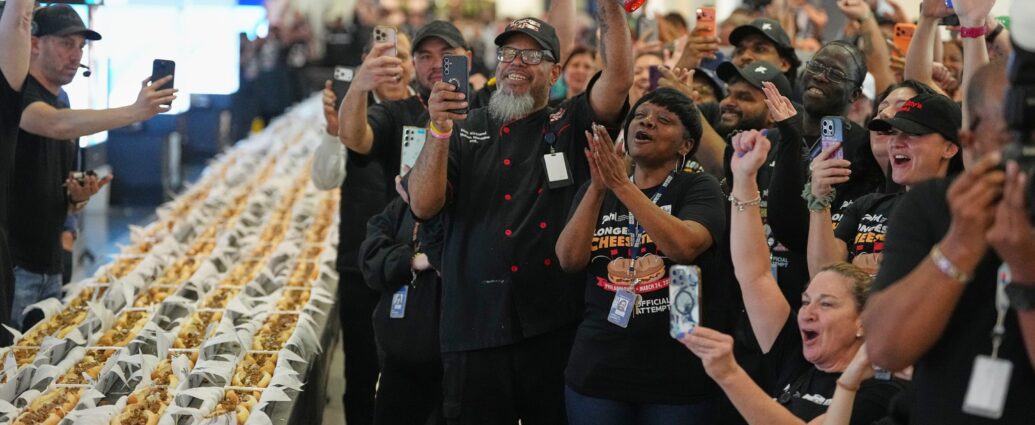
One of the greatest scientific achievements in human history became a political liability almost overnight. When the Covid-19 pandemic hit, scientists identified the virus, deciphered its secrets, concocted a vaccine, put it into production, and endered the disease manageable – all within a year. No civilization had ever moved that fast. 

The response? The Trump administration jeered individual scientists, cut funds, fired specialists, and shuttered bureaus. It’s almost like we opened fire on the triumphant GIs returning from World War II. How did triumph turn into a culture war? And what can be done about it?

Where Science Failed First

Start with what the scientific establishment got wrong: first, the CDC’s testing debacle. The agency lacked the capacity to oversee the mass testing that a pandemic requires. Worse, its test technology cratered (thanks to a manufacturing glitch) and the agency — in classic bureaucratic mode — did not seek help from private industry. The FDA made things worse by refusing to approve alternatives to the test that didn’t work. Without tests, policy makers could not track the disease; they were flying blind. Here’s the first lesson: The fix: The CDC should get out of the pandemic test production business and work more closely with the nation’s biopharma companies to develop diagnostics as new infections emerge.

Second, scientists never managed to explain why their guidance kept shifting — and this bred suspicion. Simple answer: They were learning about the virus. The shifting advice on masking stirred anger because few people — in government, the media, or the public — understood where it came from. Tony Fauci was not just jerking the country around.

Early on, researchers assumed COVID behaved like influenza. Then they discovered it spreads via asymptomatic carriers — a crucial difference that demanded new guidance seemingly out of nowhere. Fauci wasn’t being evasive; science was evolving in real time. The lesson: Scientists must bring the public along as understanding changes, not just announce new conclusions.

The Untold White House Story

The attack on science has a political history that’s rarely told in full. It started with lack of White House preparation for a pandemic. The National Security Council had disbanded its unit devoted to biological threats, and the intelligence community took more than a month to get Covid on the President’s daily intelligence briefing. Even then they brushed it aside.

Everything changed in the first week of March. New York City became a death zone. President Trump was reportedly shaken by footage of refrigerator trucks backed up to the mortuary at Elmhurst Hospital in Queens, not far from where he grew up. The Stock Market tanked. The NCAA cancelled March Madness. Businesses shuttered. Schools closed. Dr. Deborah Birx took over as the White House Covid coordinator and built a model (accurately) projecting unimaginable deaths: 100,000 to 240,000 over the next two months.

Against that backdrop, Donald Trump, after denial and equivocation, responded sensibly. Off camera and off Twitter, he made tough decisions. He listened to his health advisors, weighed their advice against challenges from the economists, closed borders, endorsed shutdowns, and—most dramatically—tossed aside normal procedures and merged science, logistics, and great piles of cash to develop a vaccination at, well, warp speed.

How Politics Poisoned the Well

But by April, the shutdowns were taking a toll, the presidential election was heating up, and Trump was getting earfuls from his business associates. The economic team, led by Kevin Hassett, then former chair of the Council of Economic Advisors, whipped up new, friendlier projections of only 26,000 Covid deaths by Memorial Day — more people than that had already died when the model was unveiled. The new estimates made Trump deeply suspicious of his health care team. 

Suspicion turned to anger when scientific leaders kept contradicting his embrace of hydroxychloroquine, ivermectin, and convalescent plasma. He turned on them publicly — casting the FDA, CDC, and NIH as deep state conspirators dedicated to defeating him.

In mid-April, anger turned to rebellion. Trump cheered small bands who were brandishing firearms, waving Trump flags, and denouncing the shutdowns. His tweets amplified the struggle to “liberate”  America from both Covid restrictions and his enemies: the overweening elites — scientists, bureaucrats, Democrats — who had dreamt them up as expert overreach.

Trump went one tweet too far, however, when he blasted the FDA’s Covid vaccine trials for moving too slowly (“just another political hit job”). That moved nine pharmaceutical companies to buy newspaper ads pledging not to release any vaccines before they were proved safe and effective. To prove vaccines’ safety, FDA extended clinical trials by several weeks so that FDA approval  came after election day – permanently entangling the FDA in the MAGA epic of a rigged election.

The Anti-Vax Vanguard

The turn against science got its final push when Trump mentioned his own COVID vaccination at a post-election rally — and heard boos. He pivoted immediately, joining the anti-vax movement he had inadvertently helped create. No surprise that a second term Trump should tap Robert F Kennedy, Jr. — and DOGE — to “go wild” on health and science. A rebellion against vaccinations and public health raced through conservative precincts. Twenty-six states enacted new and stringent limits on long-standing public health authorities that were already hollowed out from years of budget austerity.

But scientific facts are stubborn things. As historian Richard Hofstadter once wrote, the anti-expert tradition rises and falls in waves across American history. Rising measles infection rates — and the political liability of owning a public health crisis heading into midterms — appear to be shifting the tide. Kennedy and his allies are already softening their vaccine skepticism.

What Comes Next

The path forward requires more than policy fixes, though those matter. Scientists need to communicate evolving knowledge in real time. Politicians need to resist weaponizing uncertainty. Agencies need the funding and flexibility to respond at scale.

But ultimately, protecting society demands something deeper: a nation of people who pull together, who care for one another, who reach across their divisions and mind the health and safety of their neighbors. We’ll never do well against pandemics until we learn to channel what Abraham Lincoln called the better angels of our nature. We won’t beat the next infectious threat without them.

The opinions expressed in Fortune.com commentary pieces are solely the views of their authors and do not necessarily reflect the opinions and beliefs of Fortune.

This story was originally featured on Fortune.com

This post was originally published here

Home heating oil firms are facing mounting cost pressures as rising crude and diesel prices tied to Middle East tensions squeeze margins and disrupt operations across New England.

The recent spike follows a cold winter that boosted demand for heating oil, leaving both consumers and suppliers exposed to higher costs. Businesses say they are trying to avoid passing those increases on to customers, even as expenses climb sharply.

We had to lower our prices to be able to get the phones to start ringing more. People are holding off on auto deliveries because the prices are so high, and we can’t blame them on that,” said Andrew Chesney, owner of Southern New Hampshire Energy. 

Heating oil providers say volatility in energy markets is complicating planning, as rising crude prices coincide with surging diesel costs needed to fuel delivery fleets.

Chesney said a month ago it cost around $8,000 to fill up one of their delivery trucks with diesel, and today it’s between $12,000 and $15,000. Between filling up four trucks and getting all the necessary oil and fuel, it costs Southern New Hampshire Energy around $50,000 a day. 

RISING GAS PRICES FROM IRAN CONFLICT PUT GOP ON DEFENSE AFTER PREVIOUS BIDEN ATTACKS

“We’re trying to cut corners where we can to save the people money, but it’s hard to also on our end. We’re not making a huge profit at all,” said Chesney. 

TRUMP ADMIN OFFICIAL SAYS THERE’S A ‘VERY GOOD CHANCE’ GAS PRICES WILL BE BACK TO NORMAL BY SUMMER

Some companies are implementing new policies to manage rising costs. In Massachusetts, Atlantic Oil Company posted a disclaimer on their website saying: “Due to recent and ongoing events in the Middle East, we have currently suspended any deliveries below 125 gallons. We have also added a surcharge of $40 for any orders that take less than the 125 gallon minimum.”

“I have people come in, long-time customers saying, ‘you know, I can’t really pay for this,’ and we try to help them. We say, ‘you know, we could, take some payment now,’ because in the summer you won’t need to pay for your oil, typically,” said Ted Triandafilou, General Manager of Atlantic Oil Company.

Triandafilou said his company is experiencing a similar jump in diesel costs.

“Depending on the size of the truck, we have multiple trucks of different sizes. So it could be over. As of now, it’s over $12,000 to fill the truck up as it may have been, you know, $5,000-$6,000 about a month ago.”

Both operators said daily price swings are adding to uncertainty.

“We really don’t know where it’s going to go from here and prices are increasing and decreasing anywhere from 10 cents to 25 cents a day right now with everything going on in the world,” said Chesney. 

“Prices change daily just like gas prices typically do, and a lot of time, I’ve seen … the prices go up in the morning – let’s say, jump 20, 30 cents, crazy numbers – and then slowly during the day, they’ll drop back down, but by the close of the market, they’re back up again,” said Triandafilou. “It’s getting to the point where I don’t even bother displaying the price outside because I’d just be running out and changing it again.”

According to AAA, the average cost for a gallon of diesel on March 20 was $5.15, approaching the record average of $5.80 in 2022.

“The last time we saw diesel prices this high was in 2022 after Russia invaded Ukraine,” said AAA spokesperson Mark Schieldrop. “The current situation is a little bit different because we’re seeing significant impacts on production. We are also seeing all those cargo flows out of the Strait of Hormuz being impacted. So, there are some long-term impacts here.”

Schieldrop said that the record could be broken if the conflict continues. Even if the conflict ended today, the prices wouldn’t drop tomorrow. 

“It is true that prices shoot up like a rocket and then tend to drift down like a feather,” said Schieldrop. “It’s going to take a sustained period of time, and many analysts believe that the impact could be lasting for more than a year, even if the conflict ends in the short term.”

OIL, GAS PRICES JUMP AS TRUMP FLIRTS WITH STRIKING IRANIAN OIL INFRASTRUCTURE

Schieldrop says it can be tough to cut corners on gasoline prices to save money. 

“We urge folks to try to drive less. That’s a tough bargain for folks who have to drive, but stacking your trips, trying to drive more economically,” said Schieldrop. “Easing up on the gas pedal, drive a little slower, follow the speed limit, and you can increase your fuel economy pretty dramatically.”

For homeowners, demand may ease in the coming months as warmer weather reduces heating needs. But for businesses, the seasonal slowdown brings its own challenges.

“We’re actually coming into our slower season. So everyone’s going to be holding off on getting home heating oil till winter,” said Chesney. 

“So it’s going to start slowing down for our employees, and we’re going to go through a struggle ourselves running a business and keeping things going till the prices lower down.”

 CLICK HERE TO GET FOX BUSINESS ON THE GO

Companies like Southern New Hampshire Energy are relying on other services, including plumbing, heating and cooling, to offset seasonal declines in fuel demand.

“Support local. We’re a family-owned and operated company. We’re not a corporate company, so we structure our business on family. And we’re just a small business trying to make our way through life right now,” said Chesney. 

This post was originally published here

Sarah London operates on the front lines of the toughest terrain in U.S. health care. She’s the CEO of Centene, an insurance giant providing government-sponsored plans at a time when funding is tight, costs are rising, and policy shifts create intense uncertainty.

While the St. Louis–based managed care insurer saw revenue grow almost 20% last year, to $194.8 billion, it posted a net loss of $6.7 billion. That was largely driven by a write-down that reflected the new reality for health care companies under the One Big Beautiful Bill Act championed by President Trump. Along with cutting federal Medicaid spending by more than $900 billion over 10 years, the law raises costs and reduces eligibility for people enrolled in Affordable Care Act (ACA) Marketplace plans.

Those changes are shaking up Centene’s core businesses. More than half of Centene’s revenue comes from Medicaid—it’s the country’s biggest Medicaid insurer—with the rest roughly divided between Medicare and Marketplace plans. While analysts don’t expect federal cuts to have a massive impact on Centene’s top line, they’re a sign of the challenges London faces.

Faced with new data that showed its ACA plans were enrolling both fewer and sicker people, London decided to withdraw earnings guidance last July, causing Centene’s share price to fall 40% in a single day, to an eight-year low.

“It’s hard not to feel like pulling guidance and cutting the stock in half is a failure,” London told Fortune in a recent interview. “We’ve watched a new normal unfold in terms of how many different pressures there are on the system and the magnitude of the change we’re facing.”

London is pushing to get ahead of that change. She’s been transforming Centene’s portfolio, technology, and culture since becoming CEO four years ago, at the age of 41, making her the youngest woman to lead a Fortune 500 company (a distinction she still holds).

Under London, Centene is using data and technology to better manage a business that cares for a higher proportion of sicker patients than many other insurers do. She has also launched a One-CenTeam initiative to make Centene a catalyst in creating healthier communities. In May 2024, at the Fortune Brainstorm Health conference, for example, London announced plans to partner in building $900 million of affordable housing in eight states to help boost health outcomes.

Other Centene initiatives spotlight preventive health measures that could help members avoid expensive medical problems—and leave Centene with a healthier bottom line

Mission-driven

After graduating with a history and literature degree from Harvard, London spent two years in the film industry before deciding she wanted to make a bigger social impact. She did stints at Harvard, supporting health, education, and equity initiatives, and at nonprofit Health Leads, building out its model of community-based care, before earning an MBA at the University of Chicago. Her goal: to move from storytelling to systems thinking, using data to drive change.

That mission drew her to Humedica, a pioneer in leveraging big data in public health. “Sarah sort of cold-called me in 2011,” recalls former CEO Michael Weintraub. “It wasn’t, ‘Hi, hello.’ It was, ‘I researched your company; this is what I work on. I’ve heard about your team; this is who I want to work with.’ We made a decision to hire her that day.”

London rose through the ranks at Humedica, which became part of UnitedHealth Group’s Optum, before joining Centene in 2020. She got the top job there in 2022 after longtime CEO Michael Neidorff stepped down shortly before his death.

Neidorff had built Centene from a regional Medicaid plan in St. Louis with about $40 million in annual revenues to the nation’s largest Medicaid managed care organization. With that growth came a lot of acquisitions and bloat. “The mission orientation was there from the get-go—that’s our superpower—but there hadn’t been as much focus on operating discipline,” says London, who subsequently sold off several noncore operations.

What distinguishes London’s leadership is an ability to connect the dots, says Karen Salfity, whom London brought in from Optum to create a more consistent strategy and member experience. “Sarah can look at a very complex situation, understand the various factors, and then create an assessment … with just enough heart that you know she cares deeply,” says Salfity, who has known London for 15 years. “The only thing that’s really changed is the scale at which she is able to do it.”

A new normal

London knows all too well that a lot of factors in health care are outside her control, not least of which is the Trump administration’s push to radically modernize and streamline federal programs. In February, the administration announced new steps to crack down on alleged fraud in Medicare and Medicaid, on top of the funding cuts and expired ACA tax credits that have already taken effect.

London is not as disheartened as one might think. “You could take a step back and come away with the conclusion that these [programs] are under attack,” she says. But she notes that there was “quite a bit of bipartisan support” for making the sector more efficient.

“I have yet to meet a politician who does not believe that affordable, high-quality health care is something very important to be able to provide for their citizens and voters.”

She sees the current reforms as underscoring the need to take a holistic, high-tech approach to caring for vulnerable populations. Indeed, some of Centene’s systems anticipated the changes that the administration has enacted. “We have work programs in more than 17 states; we partner with nonprofits and provide job training to Medicaid members,” London says. “We run every single claim through 75 algorithms every day to look for fraud, waste, and abuse.”

“Health care is wildly overdue for a digital revolution,” she argues, pointing to an array of tech initiatives that Centene has implemented. Those range from designing supplemental food benefits where there are food deserts—”because we know that if you don’t have access to food, medication adherence goes down”—to predictive algorithms identifying members likely to have high-risk births and mobilizing resources to support them. As London notes, “41% of all babies born in the U.S. are born onto Medicaid”; it’s crucial that the program keeps those children healthy so they can “go and get jobs and contribute to economic mobility and all the things we want as part of the American Dream.”

London knows how tough it is to deliver on that dream. “The country is getting poorer and sicker,” she says. “The dollars are not infinite. At the finite boundaries, you have to make decisions about what you are going to fund and what you are not.”

This story was originally featured on Fortune.com

This post was originally published here

Grab will acquire Foodpanda’s Taiwan business for $600 million, in the superapp’s first foray outside Southeast Asia. The Singapore-based company signed a deal with Foodpanda parent Delivery Hero just one year after Uber abandoned its bid to buy the Taiwanese platform, citing regulatory pushback.

The acquisition is set to complete by the second half of 2026, and Grab plans to fully migrate all users, merchants and drivers to its platform by early 2027. 

“This is a natural next step for Grab, as our experience in Southeast Asia is a direct fit for this market,” said Grab CEO Anthony Tan, in a press statement on Monday. “Our longstanding expertise in managing complex delivery logistics for dense and high-traffic cities is well-suited for Taiwan.”

Analysts call the deal a timely move for Grab, with Maybank Securities analyst Hussaini Saifee describing it as “a compelling new growth leg” for the Southeast Asian company given Taiwan’s robust economy.

The expansion also vindicates Grab’s business model, which has dominated Southeast Asia’s ride-hailing and food-delivery market for close to a decade. The company is now “exporting its playbook,” says Tan Joo Seng, an associate professor of business at Singapore’s Nanyang Technological University (NTU). Tan calls Grab’s move a faster way to get access to Taiwan’s market, rather than building something from scratch, like “taking a high-speed train instead of laying the tracks.”

Foodpanda Taiwan generated $1.8 billion in gross merchandise value last year, despite having only 10% user penetration amongst Taiwan’s population, according to a Maybank Securities research note.

If the deal goes through, Grab will have a presence across 21 cities in Taiwan, with Uber Eats being the platform’s only major competitor. 

Uber made a bid for Delivery Hero’s Taiwan business in May 2024. Yet Taiwan’s Fair Trade Commission raised antitrust concerns around a merger between the two platforms, which together account for roughly three-quarters of the market. Uber, which also operates a ride-hailing business in Taiwan, eventually dropped its bid early last year

Delivery Hero is under pressure from investors to divest some of its overseas businesses, if not an outright sale of the whole company. Aspex, a Hong Kong fund that’s Delivery Hero’s second-largest shareholder, threatened to replace CEO Niklas Östberg if he didn’t do more to sell parts of the company, Bloomberg reported in mid-March.

Grab isn’t the only company expanding to Taiwan. Both Singapore-based Sea, as well as South Korea’s Coupang see Taiwan as an increasingly important business for their e-commerce platforms.

In a LinkedIn post, Grab CFO Peter Oey described Taiwan as a “structurally compelling market” with high urban density, strong consumer spending power and a digital economy driven by the AI and semiconductor boom. (Taiwan’s economy grew by 9% last year, the highest level since 2010).

Tan, from NTU, calls Taiwan the “perfect bridge” to the rest of North Asia, citing its high density and digital-friendly consumers.

Grab’s regional expansion

Anthony Tan and Tan Hooi Ling founded Grab in 2012 as a mobile app to provide safe taxi-hailing services in Malaysia. Since then, it’s expanded across eight Southeast Asian markets, including Singapore, Indonesia, Vietnam, Cambodia and the Philippines. It holds a 55% share of the market, and outcompeted both domestic players like Indonesia’s GoTo and global giants like Uber. 

After starting with ride-hailing, Grab has expanded its suite of offerings to include food and grocery deliveries and cashless payments, making it one of Southeast Asia’s leading superapps. 

Grab, No. 128 on the Southeast Asia 500, reported record annual profits of $268 million last year, on top of $3.4 billion of revenue. 

Grab shares, which trade on the NASDAQ, rose 2.3% on Monday, after the company announced its acquisition of Foodpanda Taiwan. Shares are down by over 20% for the past 12 months.

This story was originally featured on Fortune.com

This post was originally published here

When Palantir CEO Alex Karp predicted that AI would erode the economic power of “humanities-trained, largely Democratic voters” in favor of “working class, often male voters,” he wasn’t making a forecast. He was making a choice — and calling it destiny.

That distinction matters more than whether he’s right.

AI has advanced faster than almost anyone expected. Recent geopolitical shocks have compounded the uncertainty. But the real question isn’t who wins or loses in Karp’s vision — it’s whether that vision is the one we want to build.

Disruption Isn’t the Same as Progress

The AI era has generated extraordinary wealth. Nvidia and Microsoft are each worth trillions. ChatGPT now reaches 900 million weekly users. By conventional measures, the revolution is working.

But U.S. unemployment hit a four-year high last November. The wealth gap between the top 1% and bottom 50% has widened since ChatGPT launched. Rapid advancement and record market performance are not measures of success — they’re measures of speed.

A technology capable of unprecedented scientific discovery and work automation should do more than reshuffle economic winners. It hasn’t, largely because industry and government have failed to define what outcomes they actually want AI to deliver — or who it should serve.

Trust Is the Missing Ingredient

People adopted the smartphone because they could see how it would improve their lives. Nobody adopts a technology framed as replacing them.

Yet that’s exactly how some of AI’s loudest advocates describe it. The result is predictable: wariness, skepticism, and a widening gap between immense capability and actual value.

For AI to endure — commercially and socially — people need to trust it. That requires them to feel its benefits directly.

Where AI Should Actually Go to Work

If AI is eliminating manual labor, the economically and socially prudent move is to direct that capacity toward the sectors most starved of it: healthcare, human services, and infrastructure.

These industries face acute labor shortages and stretched staff. They’re also where automating manual tasks would be most transformative without displacing workers:

  • Doctors spending more time diagnosing and treating patients instead of documenting visits
  • Caseworkers staying in their roles because their jobs no longer consume their weekends
  • Transit systems running more reliably as maintenance and reporting become automated

That’s not disruption. That’s progress.

Build With Workers, Not For Them

The US leads in AI talent, research, and infrastructure. The challenge isn’t building the technology — it’s pointing it at the right problems.

One meaningful shift since ChatGPT’s launch: the skills threshold to harness AI has dropped dramatically. LLMs, vibe-coding, and accessible tools mean that building and tailoring technology is no longer reserved for elite college graduates. Frontline workers — the ones who actually understand what’s broken in healthcare or social services — are no longer locked out.

A software engineer knows nothing about being a doctor or a caseworker. If AI is going to serve our most critical workers, industry must build it with them, not for them. Government procurement must do the same. That’s how you get both value and trust.

Stop Predicting. Start Deciding.

Karp is right that AI will reshape economic power. Where he’s wrong is treating that reshaping as inevitable rather than engineered.

The problems most in need of solving aren’t hidden. We know where inequality lives. We know which services are buckling. If the leaders building this technology want it to last, they should stop predicting who gets left behind — and start deciding who gets lifted up.

The opinions expressed in Fortune.com commentary pieces are solely the views of their authors and do not necessarily reflect the opinions and beliefs of Fortune.

This story was originally featured on Fortune.com

This post was originally published here
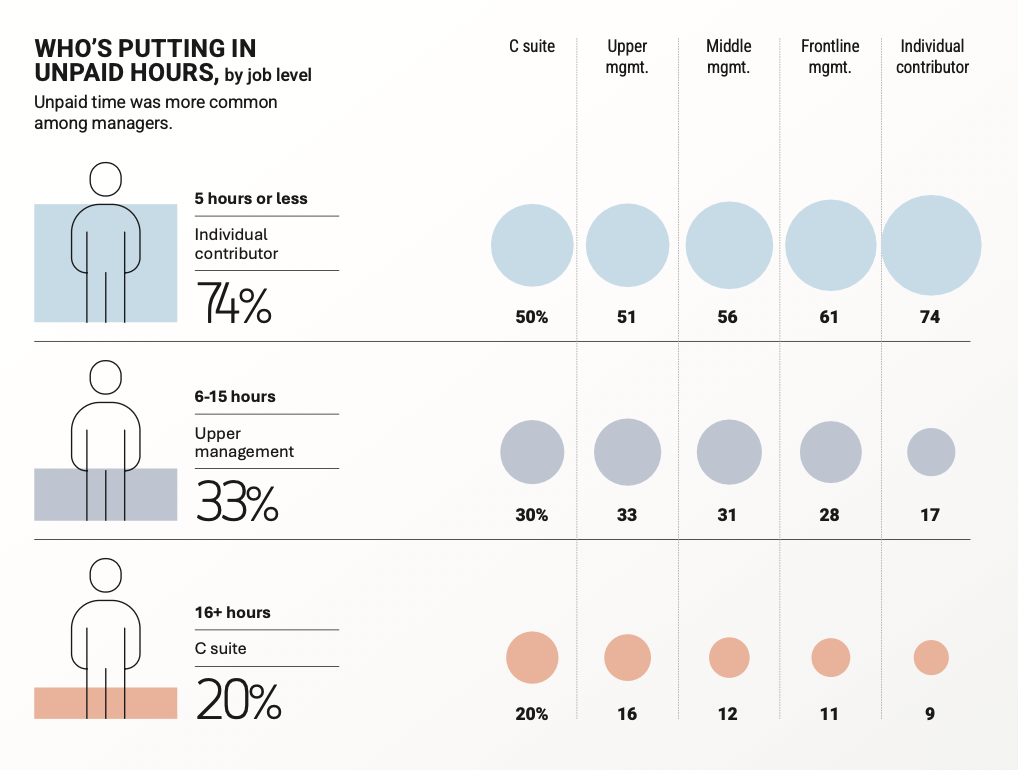
The days of grinding at your desk from 9 a.m. to 5 p.m. are officially numbered. Imagine clocking off an hour earlier every single day and still taking home the same salary. Billionaire entrepreneur and former Shark Tank star Mark Cuban says artificial intelligence is about to make it happen.

“Smart, bigger companies will enable their employees to create and use agents (within security guardrails), improve their productivity,” Cuban just wrote on X. “But most importantly, they will reduce their workday by an hour to start. Same pay.”  

He added that working from home already “dilutes” people’s start and finish time, but that forward-thinking companies will put an official policy in place that cuts the workweek down by at least 5 hours. “It’s a step that sets the tone in a company,” he added.

“Reward people doing the daily with more time.”  

It’s a bold call—but Cuban, who built and sold Broadcast.com (“the YouTube” of his era) for $5.7 billion and has backed hundreds of companies on Shark Tank, has a track record of spotting workplace shifts before the mainstream catches up.

He even taught fellow self-made multimillionaire Emma Grede—the founder behind Kim Kardashian’s Skims and Khloé Kardashian’s Good American—how to make the most of AI early on. He had over 60 AI apps on his phone at the time. So he knows more than most how many hours these tools can claw back.

And his argument is that the smartest companies will give that time back to their workers.

The 40-hour workweek launched 100 years ago—and it’s no longer fit for purpose

The standard 9-to-5 schedule hasn’t had an overhaul since Britain’s Industrial Revolution. Henry Ford brought the 40-hour workweek to the Western world a century ago, in 1926—eight hours of labor, for eight hours of recreation, and eight hours of rest. At the time, it was a 19th-century worker’s dream.

However, between commutes, school runs, and last-minute holdbacks in the office, it took the world shutting down to realize that 8-8-8 had slowly morphed back to something more like 12-6-6. Working from home briefly allowed workers to claw back some of that time. Families ate breakfast together again. Parents walked their children to school. That mismatch between productivity and presenteeism became impossible to ignore, and post-pandemic workers simply refused to go back “to normal”.

Already, office staff is crafting informal “dead zones”—hours or even days when they’ve unofficially checked out.

Studies show productivity plummets between 4 and 6 p.m. as employees slip into COVID-era habits of gym runs and school pickups. Many have also quietly dropped Fridays, echoing America’s Got Talent judge Simon Cowell, who recently said he stopped working them altogether because they were “pointless.” Emails get left unanswered, and the few still at their desks can’t get a meeting in the diary.

Now, with governments around the world once again pushing remote work and even four-day workweeks in the wake of the war in Iran, the pressure on the traditional workweek is building from every direction. And for workers already stretched thin by stagnating wages, “peanut butter” raises and a cost of living that keeps climbing, an hour back every single day—with no dent to their paycheck—isn’t just a perk. It’d be the first real raise many will have seen in years.

This story was originally featured on Fortune.com

This post was originally published here

Mark Zuckerberg is nothing if not a true believer. Again and again, the Meta CEO and Facebook founder has thrown himself headfirst into his company’s top initiatives. A few years ago, he made himself the face of the company’s since-sidelined metaverse push, and remained steadfast even as the internet mocked how his virtual reality avatar fenced, hydrofoiled, and, at times, looked awkwardly flat. He even ran internal and media meetings inside Meta’s own VR offices, which he argued was a better way to connect than regular video conference calls. He also regularly wears Meta’s bulky AI smart glasses in public, aesthetics be damned. 

The chief executive is now walking the walk on another Meta imperative: AI adoption. According to the Wall Street Journal, Zuckerberg is building an AI agent to help him as CEO. Details are scarce on the still-in-development tool, but the WSJ reports that it’s getting Zuckerberg information faster, expediting processes that normally require him to query multiple people. Meta did not immediately return a request for comment on the tool. 

As Meta spends tens of billions of dollars developing “superintelligent” AI models and building data centers to power them, it’s become borderline obsessed with staff-wide AI adoption. The company has encouraged employees to employ the technology in multiple ways, and incorporated “AI-driven impact” into its performance reviews. It is also reportedly among the tech giants that have established leaderboards that rank employees based on their consumption of tokens—a measure of AI use. But of all the methods of inducing AI adoption, Zuckerberg’s leading by example might be the most effective. 

Data shows an emerging credibility gap in which leaders are mandating and hyping AI but are often only casual users of the technology themselves—sometimes using it less than their rank-and-file employees. Nearly 70% of CEOs, CFOs, and senior executives use AI at work less than an hour a week, including 28% who don’t use it at all, according to a survey of more than 6,000 senior leaders in the U.S., U.K., Germany, and Australia co‑authored by Stanford economist Nicholas Bloom. The disconnect may be blinding leaders to the first-hand experience of using AI, which is causing workload creep and cognitive overload, at least in current use cases.

Separate research from Gallup finds that manager support of AI—including modeling its application—is a strong driver of whether employees use and value AI tools. In organizations investing in AI, employees who strongly agree their manager actively supports their team’s use of AI are more than twice as likely to use AI a few times a week or more, 6.5 times as likely to strongly agree the tools are useful, and 8.8 times as likely to say AI helps them do what they do best every day, Gallup says.

By all accounts, Meta’s AI organization-wide AI push seems to be working. It’s breeding an experimental culture reminiscent of Facebook’s heady early years, the WSJ reports, with employees participating in AI hackathons and deploying personal AI agents that do work on their behalf.

Does every CEO need a Zuckerberg-style AI sidekick? That remains to be seen. What is clear is that leaders who expect AI to be woven into daily workflows can’t stay light users of the tools; if they want credibility—and real adoption—they’ll have to log in and experiment. They’ll need to feel the pain and reap the gains, along with everyone else.

This story was originally featured on Fortune.com

This post was originally published here

At age six, Sarah Hill was handed her first iPad by her parents, which she used to play games like Angry Birds and Minecraft whenever she was bored. By age 21, the Alabama native had fallen so deep into virtual reality experiences and playing video games that she’d stopped seeing friends, showering, and brushing her teeth. “If you compare video game and tech addiction to drugs,” she says, “VR is the meth of drugs.”

At college, she spent so much time holed up in her room compulsively accessing a chatbot site, Character AI, on her phone that she failed classes. “I remember the night I told my parents I’d lied about everything and I flunked,” she recalls. “My parents didn’t have any words. They were like, ‘Just go.’ I went to my room, but the last thing I saw was my mom resting her elbows on the counter and just crying. That was the worst thing I ever saw.”

Hill’s parents flew with her from Alabama to a town just outside of Seattle and enrolled her at reSTART, one of the nation’s few residential treatment programs for digital overuse that treats tech addiction as a danger on the scale of alcohol or drug addiction. Clients are required to abstain from the internet, smartphones, gaming, and other technologies—often for months at a time. On her first day there screen-free, Hill lay down on her bed and cried.

Hill and reSTART’s other clients are at the center of an intense debate about how harmfully addictive modern tech can be. Once waged mostly in academic white papers and over dinner tables, it has escalated to the courts, thanks to a slew of landmark legal cases against Meta, YouTube, TikTok, and Snap. (The last two reached settlements earlier this year. TikTok declined to comment for this article, and Snap did not respond to requests for comment.) These initial “bellwether” cases are being closely watched because their outcomes could provide precedent for the thousands of other lawsuits filed making similar claims—and even force tech companies to change their products and business models. Some have anticipated a “Big Tobacco moment”—a reference to the 1990s lawsuits against tobacco companies that proved they were aware of the addictive nature of nicotine and the health dangers of smoking, and led to massive damages paid.

On March 25, California jurors delivered a blow to Meta and YouTube, and validated the concept of “tech addiction” by ruling that the companies were negligent in the design or operation of their platforms. They awarded the plaintiff, known as KGM, a combined $6 million in damages. The now 20-year-old plaintiff had testified in February that the “addictive design” of these platforms, including infinite scroll, filters, and autoplay, led her to spend up to 16 hours a day on them, causing depression, anxiety, body dysmorphia, and self-harm.

“We respectfully disagree with the verdict and are evaluating our legal options,” a Meta spokesperson said when reached for comment after the ruling. A spokesperson for YouTube parent company Google said the company also disagrees with the verdict and plans to appeal. “This case misunderstands YouTube, which is a responsibly built streaming platform, not a social media site,” the spokesperson said.

The Big Tech companies have long denied claims about “addictive design,” saying they did their best to protect free expression while keeping users safe. They also question the whole concept of “tech addiction,” pointing out that there’s no scientific evidence that their products were the cause of KGM’s and others’ issues. The head of Meta’s Instagram, Adam Mosseri, said in court that social media was not “clinically addictive.” And in a written statement prior to the verdict, a Meta spokesperson pointed to other factors in KGM’s life as the cause of her troubles, adding: “The evidence simply doesn’t support reducing a lifetime of hardship to a single factor, and our case will continue to underscore that reality.”

Reached for comment about YouTube during the trial, a spokesperson for owner Google, José Castaneda, said allegations about the platform were “simply not true.” “Providing young people with a safer, healthier experience has always been core to our work,” he said. He pointed to the company’s “services and policies to provide young people with age-appropriate experiences, and parents with robust controls.”

Sarah Hill.
Chona Kasinger for Fortune

But concerned parents—along with researchers, health organizations, and even some former tech industry leaders—are sounding the alarm, saying that the systems we rely on for modern life are designed in ways that may be fundamentally incompatible with human well-being. They cite a growing body of research in psychology and neuroscience arguing that social media use delivers dopamine jolts similar to those associated with addictive drugs like meth or heroin. And with the rapid acceleration of AI, many are calling for the U.S. government to get serious about regulation and pleading with Big Tech to provide stronger safety features that constrain the algorithms, push notifications, and endless swiping that make it so hard to put your phone down.

“Unfortunately, [tech] is taking mostly young people away from the most important thing in their lives and key to their mental health, and that is relationships with other people,” says New York University professor and podcaster Scott Galloway. For tech companies, he says, it’s all about keeping users’ attention locked in: “I don’t think [Big Tech] set out in their business plans to depress global youth. I think their algorithms discovered that rage, self-esteem, and funny cat videos just keep people online.”

There is, of course, a difference between the kind of low-level “addiction” to our phones that most of us jokingly will cop to—checking email before we’re out of bed, scrolling TikTok in the grocery line—and the rarer, all-consuming dependency that leads people to places like reSTART or into courtrooms as plaintiffs. At the same time, the line between a bad habit of using tech several hours a day and a behavioral addiction can be blurry, especially for teens and young adults whose social lives, homework, and entertainment all run through the same devices.

“I’m finally putting a foot down and saying, ‘I want to get out of this endless cycle.’ I need to do something to better myself and my life.”


Sarah Hill, reSTART client

And that’s the whole point, argues Roger McNamee, a former tech investor and author of Zucked: Waking Up to the Facebook Catastrophe. “These companies are in the business of attention,” he says. “Once they had attention, they were in the business of controlling the choices available to people in order to influence their behavior in ways that were profitable for the platform. That culture and that business model were guaranteed to produce lots of harm.”

With its constitutional and cultural emphasis on the importance of free speech, the U.S., unlike many other countries, has largely declined to tell tech companies how they should interact with users. That has had dire effects, McNamee says: “We went from a culture where we used tech as an empowering tool to viewing tech as a tool for controlling people and extracting value. That’s the culture of the Valley, and the underlying behaviors that that causes are wrecking our democracy, wrecking public health, and wrecking our economy.”

The reluctance to place limits on how tech products engage users, especially in the age of AI, “should disturb everybody,” he says.

The $1,000‑a‑day residential program helping gamers and social media addicts reclaim their lives

Some 25 miles northeast of Seattle, past towering Douglas firs, sits the gray-paneled, split-level reSTART clinic. Motivational posters and pillows with phrases like “Healing is not linear” adorn its common areas. The center can house up to 16 clients, who share rooms and are responsible for household chores. They also are required to participate in 24 to 30 hours of structured group and individual therapy each week. reSTART teaches clients multiple evidence-based coping and recovery strategies, ranging from box breathing to physical grounding exercises. The treatment isn’t cheap. As an out-of-network provider, reSTART’s rate averages about $1,000 per day, though the clinic encourages clients to check with their insurers to see what can be covered. The average length of stay is 12 to 16 weeks, and many continue on via outpatient services for weeks after.

reSTART cofounder Cosette Rae opened the center with therapist Hilarie Cash almost two decades ago. Rae had previously worked as a tech developer and, upon realizing she was overusing technology in unhealthy ways, decided to change careers and pursue social worker training.

She vividly recalls a case in 2009, when she was called to assist a young adult who refused to leave their house or go to school. (Rae uses the pronoun “they” here to protect the individual’s identity.) They were not healthy, and had moved their bedroom mattress into the middle of the living room to play World of Warcraft nonstop. Doctors had diagnosed the person with agoraphobia, but Rae suspected that tech addiction was the real problem. She reached out to Cash for advice, and the two realized there was no place to treat people with these types of issues. They decided to open a center themselves.

Rae remembers being both “revered and rejected” in the early days of the center. Much like today, many didn’t think tech addiction was real. But there was no shortage of clients: She has treated around a thousand in the nearly two decades since the center opened, and spoken to many thousands more, she says.

What her clients struggle with is more difficult than breaking free from substance abuse, Rae says, partly because there’s no getting away from tech; it’s everywhere. “When I go out in the community right now, I do not have a lot of friends that are telling me about meth or heroin,” she says. “I don’t usually go into the store and see people dealing. I don’t go to the restaurant and people are doing a line. But when it comes to technology, it’s everywhere. So you’re constantly being in front of it and having to say no.”

It’s more akin to an eating disorder, Rae says, where a person still has to eat but has a problematic relationship with food. In this day and age, clients aren’t able to drop technology from their lives completely.

It’s not just teenagers who are struggling. Rae mainly works with young and middle-age adults (reSTART takes clients who are 15 and older), but she has seen clients in their late forties or fifties. The most common addictions Rae sees, besides video games, involve virtual reality, pornography, and more recently, AI chatbots.

One client, a 23-year-old Seattle-area college student who asks to withhold their name and gender, describes their own overuse of video games, YouTube, and communication platform Discord. The student says they wished schools today would teach kids how to use technology mindfully and warn against addictive behaviors: “Technology is best used when it’s a tool to enhance your life. But what I got trapped in is technology being my life.”

The dopamine debate: What brain science says about “tech addiction”

Some scientists, such as Stanford psychiatrist and Dopamine Nation author Anna Lembke, say compulsive tech use taps into the brain’s reward circuitry in strikingly similar ways to substance addiction. When someone scrolls social media or wins a round of a video game, their brain releases dopamine, which trains them to seek that “hit” again and again. Repeated bursts of stimulation can desensitize the pathways and weaken the prefrontal cortex, which is responsible for planning and self-control, making it harder to resist urges even when the habits are causing problems or affecting school, work, or relationships.

Brain imaging studies of people with internet gaming or social media disorders have found structural and functional changes in these regions that mirror what doctors see in other behavioral addictions such as gambling.

Tech addiction is not listed as a condition in the Diagnostic and Statistical Manual of Mental Disorders (DSM), the guide published by the American Psychiatric Association for diagnosing mental health conditions. However, in its most recent edition, the DSM does list “internet gaming disorder” as a condition warranting more clinical study.

“I don’t think [big tech] set out to depress global youth. I think their algorithms discovered that rage, self-esteem, and funny cat videos just keep people online.”


Scott Galloway, NYU professor and podcaster

Its absence doesn’t faze Rae. “It took 40 years for gambling [disorder] to get into DSM,” she says. “So I don’t give any credence to the fact that it’s not in there yet.”

The science is far from settled, and some studies suggest that tech doesn’t cause users’ unhappiness. A 2023 University of Oxford study of 2 million people from around the globe found that links between internet adoption and psychological well-being were “small and inconsistent.”

And in March, California Institute of Technology researcher Ian Anderson and Wendy Wood, a professor at the University of Southern California, wrote a Washington Post op-ed arguing that calling habitual tech use “addiction” was misleading and harmful. In surveys, they found that when people described their Instagram use as an addiction, “They felt stuck, less confident that they had the ability to change.” Yes, they wrote, companies should “amend their platforms to help users regain control over their habits.” But they concluded, “The truth is: Heavy use is not necessarily an addiction.”

Nir Eyal, a tech investor and author of Hooked: How to Build Habit-Forming Products, says it’s not the tech that’s solely to blame for people’s addictions. “Every generation has a moral panic about whatever new technology, but you don’t fix things by stopping their use,” he says. “You fix things by making them better, by making them safer.”

Eyal argues that there is nothing unethical about making a product that some people get addicted to, and asking social media companies to make their products less sticky is not the answer. Why? “Because any product that’s good, somebody is going to get addicted to,” he says. “Stop making the product interesting? That’s dumb. That’s why we use the product. That’s called ‘entertaining and engaging.’”

The debate is only likely to grow more urgent given the rapid adoption, and daunting potency, of AI. Rae fears AI could create new ways for people to get hooked on tech, or treat AI as a “substitute attachment figure” for real relationships. “I think everybody’s been focused on all the talk around the existential threats like, ‘Can it take our jobs?’” Rae says. “But what about taking our humanity? That’s what’s happening.” As a practitioner working with tech addicts, she says, “I’m standing here looking down at a tsunami coming to people who have no idea what their kids are going to be facing. How this is going to change them; how it’s going to change their relationships with each other; and how it’s going to change their futures.”

Can laws, product changes, and rehab clinics actually protect kids from addictive tech?

If tech addiction is accepted as real, it raises another thorny and divisive question: What can—and should—be done about it? Some states, including New York and California, have enacted laws requiring warning labels on social media apps that highlight the risks for young people. In September, the New York attorney general proposed a rule requiring social media companies to restrict algorithmically personalized feeds and nighttime notifications for users under 18 unless parental consent is granted. California put legislation into place last year creating safety restrictions on the development of AI.

Federal oversight has been slow or nonexistent, though many legislators have tried. In 2019, Missouri Republican Sen. Josh Hawley introduced a bill that would have banned social media features that exploited human psychology. Hawley’s Social Media Addiction Reduction Technology (SMART) Act went nowhere, attracting little bipartisan support and never making it out of committee.

In December, Australia became the first country to ban social media for people under 16, and Greece and Britain are considering similar laws.

Social media platforms have themselves put up some guardrails, mainly via opt-in or parental controls. Meta launched Teen Accounts on Instagram and Facebook, with more restrictive features and nighttime nudges to close the app. Snap has expanded in-app warnings, “friending” safeguards, and location-sharing controls. Google and YouTube announced a $20 million initiative to address teen digital well-being. TikTok launched a daily screen-time limit, with users under 18 automatically cut off after an hour. And in February, Meta, TikTok, and Snap agreed to be independently rated on how well they protect teens’ mental health by a group of advocacy organizations.

reSTART’s Rae doesn’t want to get stuck in semantics. Instead of arguing about whether their products are addictive, she says that Big Tech companies should devote some of their profits to resources that can help those “struggling as a result of loving their product,” she says. Many people can’t afford treatment like reSTART, as most health insurers won’t cover problematic tech use—though sometimes clients can get coverage for associated disorders such as depression or anxiety.

Companies could also consider shutting off access to their technology for certain time frames, Rae suggests. Eyal recommends something similar. In addition to implementing a legal minimum age to use social media, he recommends that tech companies adopt a “use and abuse” policy. After a certain number of hours, he says, tech companies should reach out to the user with a message offering resources to prevent or cure addiction.

Sarah Hill recently transitioned out of the center to an apartment owned by reSTART, half an hour away. She still visits the center most days for treatment, but is eyeing a job at a grocery store on her off days—and even got a cell phone. It’s a basic “dumb” Gabb phone, with no apps or games. Even so, Hill recently found herself mindlessly scrolling through new screen backgrounds. “I felt myself losing control again, and it scared me,” she says, tucking the phone underneath her legs on one of reSTART’s oversize chairs.

But Hill says she does have high hopes about managing her addiction in the future and says her phone usage has improved. “After making so many mistakes, I’m finally putting a foot down and saying, ‘I want to get out of this endless cycle,’” she says. “I need to do something to better myself and my life.”


Six questions to ask yourself about your tech use

Washington’s reSTART Clinic developed these screening questions to help potential clients consider whether their tech use has become problematic. Here’s an abbreviated version:

  • How often do you think about your current, previous, or next online activity?
  • Have you become restless, irritable, angry, or anxious when you are unable to engage in online activities?
  • Have you tried to reduce participation in online activities but found it too difficult?
  • Have you lost interest in non-online activities such as sports, hobbies, or family time?
  • Have you deceived a family member, significant other, employer, or therapist regarding the amount of time you spend online?
  • Have you jeopardized or lost a significant relationship or an academic or employment opportunity because of your engagement with online activities?

This article appears in the April/May 2026 issue of Fortune with the headline “What is tech addiction? It may well be Big Tech’s next problem.” It was updated on March 26, 2026 following the verdict in the case against Meta and YouTube.

This story was originally featured on Fortune.com

This post was originally published here
United Airlines CEO Scott Kirby is preparing for the worst: a future where oil prices reach as high as $175 per barrel and stay above $100 until the end of 2027. 

With the U.S.-Israel war on Iran now in its fourth week, the airline industry is staring down its biggest disruption since the pandemic as the global oil market suffers a supply shock.

This is the first major crisis the industry is facing since widely ending the practice of fuel hedging in 2024 and 2025, an insurance that can protect airlines from spikes in fuel costs. 

Jet fuel—which accounts for more than 40% of airlines’ operating costs—have nearly doubled in the last three weeks, according to Argus Media. Kirby predicted in a letter to employees that if fuel prices remain high, they would add $11 billion to United’s annual costs.

It may spell doomsday for an industry that took four years to recover from the pandemic, but airline executives are remaining optimistic. The reason? This time, they’re prepared to pass on the costs to you. 

The average price of a transcontinental flight has risen from $167 in late February to $414 in mid-March, according to a Deutsche Bank analysis. The strain is also being felt strongly on less-distant routes. A flight from New York to Santo Domingo, Dominican Republic, on budget airline JetBlue went from $166 to $566 in three weeks and is more than four times as expensive as it was a year earlier. 

But demand remains strong as consumers have already swallowed a post-pandemic spike in airfares. The last 10 weeks have been the highest booked revenue weeks in United’s history, according to Kirby’s letter.

Similarly, Delta CEO Ed Bastian said that sales in the week before March 17 rose about 25% from a year prior. Five of Delta’s top 10 ticket sales days ever have happened since the war began. And he’s not too worried about fuel prices because Delta is in a “position of strength” to raise airfare, Business Insider reported. Delta also has its own oil refinery, which provides a “meaningful hedge,” he said.

To be sure, cancellations are coming, and routes will be slowed or ended like they were during the pandemic, said Martin Dresner, a professor of supply chain management at the University of Maryland. 

Delta has halted certain routes, including flights from New York to Tel Aviv until May 31 and from Tel Aviv to New York until June 1. The restart of its Atlanta to ​Tel Aviv service has been delayed, with flights to Tel Aviv paused until August 4 and from Tel Aviv until August 5.

United is planning to trim some off-peak flights, such as redeyes as well as Tuesday, Wednesday, and Saturday trips during the second and third quarters. The airline is also halting service to Tel Aviv and Dubai due to the war. 

“To be clear, nothing changes about our longer-term plans for aircraft deliveries or total capacity for 2027 and beyond, but there’s no point in burning cash in the near term on flying that just can’t absorb these fuel costs,” Kirby said in the letter to staff. 

This story was originally featured on Fortune.com

This post was originally published here

A nationwide recall has expanded to include close to 10 million pounds of frozen vegetable fried rice sold at Trader Joe’s stores in dozens of states, according to the U.S. Department of Agriculture (USDA) Food Safety and Inspection Service.

Ajinomoto Foods North America Inc. announced a recall of 9,885,240 pounds of Trader Joe’s Vegetable Fried Rice after small pieces of glass were found in the frozen meals.

The glass shards ranged from one to three cm long and 2 to 4 mm wide.

90,000 BOTTLES OF CHILDREN’S IBUPROFEN RECALLED NATIONWIDE, FDA SAYS

The recalled products were sold in stores across 43 states, with the seven unaffected states being Hawaii, Maine, New Mexico, South Dakota, Vermont, West Virginia and Iowa.

The affected items had best-buy dates ranging from Feb. 28, 2026, to Nov. 19, 2026.

The latest notice was an expansion of a recall initially issued last month and expanded earlier this month. Nearly 37 million pounds of ready-to-eat items were affected in the total recall effort, which impacted more than a dozen brands in addition to Trader Joe’s, such as Kroger and Tai Pei.

Impacted items include Trader Joe’s Chicken Shu Mai and Trader Joe’s Chicken Fried Rice with stir-fried rice, vegetables, seasoned dark chicken meat and eggs.

The USDA classified the alert as a Class II recall in its latest notice, which means “use of or exposure to a violative product may cause temporary or medically reversible adverse health consequences or where the probability of serious adverse health consequences is remote.”

GM RECALLS 17K VEHICLES OVER REAR TOE LINK FRACTURE THAT COULD LEAD TO CRASHES

 CLICK HERE TO GET FOX BUSINESS ON THE GO

Customers are urged not to consume the recalled items. They should dispose of the product or return it to the place of purchase for a full refund.

No injuries have been reported thus far in connection with the recall, but the USDA said anyone concerned about potential injuries should contact a healthcare provider.

This post was originally published here

Apple co-founder Steve Wozniak is raising concerns about artificial intelligence as the technology becomes more embedded in everyday life, warning that it may not yet deliver the reliability and human understanding people expect.

Steve Wozniak joined FOX Business’ Liz Claman on “The Claman Countdown” to discuss how AI is evolving and where he believes it falls short despite rapid advancements across the tech industry.

APPLE CEO TIM COOK DOUBLES DOWN ON POLICY OVER POLITICS WHILE ALIGNING WITH TRUMP’S MANUFACTURING PUSH

Wozniak, who helped build Apple’s earliest computers and shape the personal computing revolution, framed his skepticism around the importance of human thinking and emotional awareness, arguing that technology should reflect genuine understanding rather than just well-written responses.

“I want to know some human being like myself is thinking, knowing what I might feel, and understanding emotions and all that,” Wozniak said.

APPLE UNVEILS LOWER COST IPHONE 17E, RAISES PRICES ON MACBOOKS

Drawing from his own experience testing AI tools, Wozniak said the systems often fail to answer questions directly, instead offering broad or unrelated information that misses the user’s true need.

“I want such reliable content every time. I am not a fan of AI,” Wozniak said.

NEW EMOJIS COMING TO APPLE IPHONES IN LATEST UPDATE

His remarks also touched on the broader impact of technology on human behavior, suggesting that growing dependence on automated systems could change how people process information and solve problems.

“You become dependent on it,” Wozniak said.

This post was originally published here

Big Oil giant TotalEnergies will eliminate nearly $1 billion in offshore wind projects planned along the U.S. East Coast under the threat of cancelation from the Trump administration in exchange for redirecting the reimbursed funds to U.S. natural gas projects, primarily in Texas.

In the so-called “landmark agreement” announced March 23 between TotalEnergies and the U.S. Interior Department, the federal government will reimburse the French energy giant about $928 million for its investments in the Attentive Energy and Carolina Long Bay projects offshore of New York and North Carolina, respectively, which were put on hold by the company after President Donald Trump was elected.

Speaking at the CERAWeek by S&P Global event in Houston, TotalEnergies chairman and CEO Patrick Pouyanné said he is opting “not to litigate, but to make pragmatic solutions.”

While TotalEnergies will continue to pursue onshore wind, solar, and battery storage projects in the U.S., he said, the company will abandon offshore wind that is now deemed too big and expensive without federal subsidies in the U.S.

“It’s good to be innovative from time to time and pragmatic,” Pouyanné said. “We can recycle this money … into smarter investments.”

President Trump has pushed back against the expansion of both wind and solar energy in the U.S.—in favor of fossil fuels instead—but he has particular disdain for the massive offshore wind turbines that he deems unsightly.

TotalEnergies also is a major player in natural gas in the U.S., especially in liquefied natural gas (LNG) exports. The agreement with the Interior Department, while scant on details, specifically cites the companies increased investments in Houston-based NextDecade’s Rio Grande LNG project in southern Texas, as well as in natural gas production investments in the Gulf of Mexico and in U.S. shale drilling.

TotalEnergies is both a 17% shareholder of NextDecade and a major customer of the gas exports from the Rio Grande LNG project. TotalEnergies also is an owner of Sempra Energy’s Cameron LNG in Louisiana and an investor in Glenfarne’s planned Alaska LNG.

Speaking alongside Pouyanné, U.S. Interior Secretary Doug Burgum said TotalEnergies will investment in more reliable natural gas projects and not “intermittent” wind farms. “We are not driven by a climate fantasy,” Burgum said.

“They (TotalEnergies) thought there were going to be a bunch of subsidies,” Burgum said, citing the ending of subsidies for wind and solar projects in Trump’s “One Big Beautiful Bill” approved last year.

This story was originally featured on Fortune.com

This post was originally published here
Former National Economic Council director Gary Cohn warned that markets are hanging on “every word” as the United States’ war on Iran stretches into a fourth week.

Joining “The Claman Countdown” on Monday, the former Trump economic official discussed how markets are behaving as President Donald Trump’s Operation Epic Fury begins to weigh heavily on Americans economically.

“I think volatility can be your friend, and it can be your enemy,” he said Monday. “Because remember, fear and greed are what drive markets. Volatility enhances fear and enhances greed.”

WALTZ SAYS TRUMP IS USING IRAN’S OWN OIL STRATEGY AGAINST ITSELF TO DRIVE DOWN GLOBAL PRICES

“Since we’ve been involved in this issue, this war in the Middle East, markets have been hanging on every word,” Cohn explained.

Cohn’s comments come amid a crisis in the Iran-controlled Strait of Hormuz, with U.S. ships still banned from passing through, driving up prices of goods domestically.

About 20% of the world’s crude oil and natural gas passes through the critical waterway, and with U.S. ships blocked, gas prices in the homeland are up more than $1.

The national average currently sits at $3.95 per gallon for regular gasoline, compared to $2.94 before the U.S. struck Iran, per AAA.

The economist said the Strait of Hormuz’s closure has led to “enormous” market volatility.

AIRLINES MAY CUT FLIGHT SCHEDULES AS IRAN TENSIONS DRIVE UP FUEL COSTS, EXPERTS WARN

“Markets are an edge. We know that,” Cohn said. “We’ve known that for the last couple of weeks.”

Cohn asserted that the state of the economy hinges on the outcome of the Middle East conflict, and the price of oil is at the center.

FROM BIDEN’S ‘WAR’ ON GAS PRICES TO ‘SMALL PRICE TO PAY’: GOP SHIFTS TONE AS IRAN CONFLICT HITS PUMPS

“Movement in oil… it’s weighing down heavily on stock markets and other assets,” the former NEC director said. “So right now, the biggest determinant in where we go in our short-term economy and long-term economy is what goes on in the Middle East. It is the price of oil. Everything else economically is in pretty fair shape.”

Cohn shared advice for investors on navigating volatile times, saying that markets are “fickle” and move quickly with just a hint of information.

“What the volatility means is you have to have a game plan. If you know where you wanna buy, and you know what you wanna sell, you will get opportunities to get in and out of markets that you may not have seen and think was possible.”

Cohn also revealed the biggest mistake investors can make is acting out of “fear or greed” as they decide to make big moves or stay cautious.

When you think something’s really cheap, you need to buy it. You can’t wait for it to get cheaper. And I think traditional investors are always trying to buy the bottom and sell the top. As a professional investor, I’ve never once in my life bought the bottom and sold the top,” he said.

This post was originally published here

When Brian Niccol took over as CEO of Starbucks 18 months ago with the intention to return the company to its glory days of the 1990s and early aughts, he was surprised to see the coffee chain felt more like a factory floor than a warm hangout spot.

In an recent episode of Semafor’s “The CEO Signal” podcast, Niccol said when he first took the helm of the company in late 2024, he visited several stores and noticed the coffee chain had put so much emphasis on fulfilling large volumes of orders it had strayed from its reputation as a cozy coffee house. Niccol’s “Back to Starbucks” plan introduced in his first days as CEO was meant to restore Starbucks to its roots as a “third place” for customers to linger in.

“We got really focused on trying to be efficient and run it like a manufacturing facility, as opposed to recognizing, no, this is actually a customer service experience, where we do great craft and create great drinks for people on time,” Niccol said.

Although Starbucks stock is virtually unchanged since Niccol took over a year-and-a-half ago, the former Chipotle CEO has been working hard to restore that certain charm that once belonged to “the third space.” He found that Starbucks had too much of a good thing.

A to-go culture gone too far

Niccol came into a company that was in some ways battered by the success of its popular online ordering, still responsible for most of the chain’s orders, including 40% drive-thru and 30% mobile. In early 2024, then-CEO Laxman Narasimhan said customers were abandoning their online orders after placing them online, having to wait in long lines for their orders to be fulfilled during busy commuting hours. The Starbucks menu was large, and patrons’ ability to customize their orders overwhelmed baristas and slowed down order fulfillment.

Early in his tenure, Niccol spoke with customers who lamented the lack of comfortable seating Starbucks locations once had, as well as baristas recognizing and chatting with them. Baristas told Niccol Starbucks should bring back condiment bars to let customers add their own cream and sugar, relieving pressure from workers fulfilling more complicated orders.

“The feedback I heard was, we’ve made the job more complicated than necessary,” Niccol said. “It was one of those things where it’s like, we got to get back to focusing decisions that actually show up in the store, and then you got to understand how those decisions actually are executed in the store.”

The company took those suggestions, among others, returning seats to thousands of store locations and returning condiment bars after their pandemic-era discontinuation. 

So far, the “Back to Starbucks” plan appears to be working. The company reported a 4% increase in year-over-year same-store sales, and a 5% uptick in revenue for the quarter. Profits took a hit as the company navigated tariffs and brought on more workers to staff its stores.

“We’re pleased with our progress, and we believe we remain ahead of schedule, and we’re confident on our path forward,” Niccol told investors in January. “But we also recognize that we’re still in our turnaround.”

The road back to Starbucks

At the core of the raft of changes to the Starbucks experience was making the chain as much about customer service as about coffee, Niccol noted.

“f you aren’t working on initiatives that ultimately make the store experience better for our customer and our partner, probably working on the wrong things,” he said.

Niccol rolled out the “Back to Starbucks” plan through a series of immediate shifts followed by more structural changes. Locations activated more wall outlets and began giving ceramic cups to customers who wanted to sit in the store for a while. Baristas were told to write personalized messages on paper to-go cups. Workers were also required to begin wearing black shirts under green aprons as part of a brand refresh.

Behind the counter, Starbucks slashed menu items by 30% to lighten the load of baristas. It rolled out an AI-powered assistant designed to troubleshoot equipment issues, teach baristas how to make drinks, and prioritize orders to increase efficiency.

To be sure, not all baristas are on board with the changes. More than 1,000 union baristas went on strike in November 2025, demanding Starbucks increase staffing to improve long customer wait time, as well as let existing baristas work more hours to meet the threshold for benefits. Last May, more than 2,000 baristas protested the company’s dress code and argued workers should have a say in what they wear.

Starbucks did not respond to Fortune’s request for comment.

Niccol said the “Back to Starbucks changes have already shifted the company’s reputation. In an interview at the Wall Street Journal Leadership Institute in December 2025, Niccol said he was reading through a Reddit thread of Starbucks job candidates interviewing at the company, with some users asking what interview questions they should prepare to be asked. Other users, presumably Starbucks employees, said candidates should be prepared to talk about customer service.

“If you don’t like customer service, you’re probably not going to like working at Starbucks. We’re in that transition of getting people to understand that,” Niccol said. “When I saw that in the Reddit thread, I was like, ‘OK, we’re making progress on what the standard of services that we want [are].’”

This story was originally featured on Fortune.com

This post was originally published here

DoorDash is rolling out an emergency relief program to help delivery drivers cope with rising gas prices as the Iran war drives fuel costs higher.

The program, effective immediately through April 26, 2026, combines cash-back incentives with weekly payments to help reduce fuel costs for active Dashers.

At the center of the initiative is a 10% cash back offer on gas purchases for Dashers using the DoorDash Crimson Visa debit card. The company is also introducing weekly relief payments for Dashers who drive at least 125 miles while making deliveries, with payouts ranging from $5 to $15 depending on mileage.

Dashers who reach 125 miles earn $5 (about $1.00 per gallon in savings), those who hit 200 miles earn $10 (about $1.25 per gallon), and those who drive 250 miles earn $15 (about $1.50 per gallon).

TRUMP PROMISED LOWER COSTS; THE IRAN CONFLICT NOW THREATENS THAT PLEDGE

Drivers who qualify for both benefits could see total savings between $1.40 and $1.90 per gallon, depending on how much they drive.

“Rising gas prices have a real impact on Dashers, especially those who are delivering the most,” said Cody Aughney, vice president of dasher and logistics at DoorDash. “This program is about giving Dashers real savings at the pump.”

The move is part of DoorDash’s broader effort to support its driver network as fuel prices remain a key concern for gig workers who rely on their vehicles for income.

The effort comes as gas prices rise sharply nationwide.

A STATE-BY-STATE LOOK AT GAS PRICES AS IRAN CONFLICT PUSHES OIL HIGHER

The national average is now $3.95 per gallon, up $1.02 from a month ago, according to AAA.

Prices are climbing across nearly every region, with some states already well above the national average. On the West Coast, drivers are seeing the highest costs, with prices reaching $5.79 per gallon in California and $5.27 in Washington.

Along the East Coast, gas prices are nearing—or in some cases surpassing—$3.70 per gallon, including $3.86 in New York and $3.80 in Maine.

GET FOX BUSINESS ON THE GO BY CLICKING HERE

Meanwhile, in the Midwest, Illinois stands out with prices at $4.16 per gallon, while much of the region remains in the mid-$3 range. Prices are generally lower across the South, though still on the rise, with Texas at $3.62 and Florida at $3.93.

This post was originally published here

The war in Iran is spiking global oil prices, and Russian President Vladimir Putin couldn’t be happier.

The war has bottled up one-fifth of the world’s oil, putting a premium on the remaining supply, including Russian barrels.

Earlier this month, the U.S. issued a 30-day waiver that allows countries to buy Russian oil already at sea without the fear of sanctions, which the U.S. has steadily imposed on the country and those that buy oil from its largest producers since its full-scale invasion of Ukraine in 2022. 

Treasury Secretary Scott Bessent has said the “deliberately short-term measure will not provide significant financial benefit to the Russian government.” But after years of big discounts and covert tactics to sell their oil abroad, the easing of Russian sanctions has already given Putin and other Russian officials new confidence, as well as hope that this U.S. leniency will last longer than its April 11 expiration date.

Prior to the Iran conflict, the Urals oil benchmark, on which most Russian crude is priced, stood at about $57 a barrel, a significant discount to Brent crude at $71 prior to the conflict. By Monday, Urals was trading at near parity to Brent at around $100, despite retreating by midday.  

To be sure, Brent crude fell sharply on Monday, after President Donald Trump said he would postpone attacks on energy infrastructure  as his officials negotiate with Iran on a way to end the war. Tehran denied it was in talks.

Still, Russia has earned an estimated $7 billion in the first two weeks of March from selling fossil fuels since the start of the war, according to a Guardian analysis of data from the Centre for Research on Energy and Clean Air (CREA). 

The increase in oil has made Russia “the single biggest winners in the near term” from the Iran conflict, Wichita State University international business professor Usha Haley told Fortune

Despite Bessent saying the 30-day waiver is “narrowly tailored” to oil already at sea, she said this caveat is hard to enforce in reality, especially given the large demand at the moment.

“It has actually rescued Russia’s oil revenues from decline and a decline over a very long period,” Haley said. 

Four years after Russia invaded Ukraine, its fossil fuel exports, including coal, crude oil, liquified natural gas, pipeline gas, and oil products are 27% below pre-invasion levels, according to the CREA. As of February, the country’s fossil fuel exports had fallen 19% year on year, although the recent increase in demand due to the Iran war is likely to change that calculus, said Haley.  

Putin intends to take advantage of the sudden opportunity while he can. The Russian president said during a Kremlin meeting with policymakers and Russian business leaders earlier this month it’s “important for Russian energy companies to make use of the current moment.” 

He also appeared to troll his adversaries, saying Russia was ready to work with European countries as long as they are committed to “long-term cooperation” and are willing to drop “political overtones.” 

Moscow’s special economic envoy, Kirill Dmitriev, went even further in a Telegram message earlier this month, saying “The U.S. has practically admitted the obvious,” with its 30-day waiver, the Washington Post reported. “The global energy market cannot remain stable without Russian oil.”

In more recent days, Dmitriev has continued to gloat on social media, lambasting the EU for distancing itself from Russia since its 2022 Ukraine invasion and predicting more pain for Western countries as a result of increased oil prices.

“Europe can finally enjoy the success of both its Green and Russophobic agendas—no oil, no gas,” he wrote in a post on X Sunday.

The Iran conflict, which is now in its fourth week, has led to a destabilization in the global oil supply due to Iran’s attacks on ships in the Strait of Hormuz, through which 20% of the world’s oil flows. As a result, the U.S. has taken steps to backstop supply including releasing 172 million barrels of oil from the strategic petroleum reserve—the second largest drawdown ever. 

The U.S. last week also issued a 30-day waiver running through April 19 that would allow countries to purchase Iranian oil already loaded onto vessels. Bessent said in a post on X the move would bring 140 million barrels of oil to global markets. 

However, the U.S’s easing of sanctions to try to bring stability to oil markets has been criticized by some as being ineffective for solving the global oil crisis.

Analysts at financial services firm Siebert Williams Shank, wrote in a report earlier this month that easing sanctions would not increase the supply of oil worldwide because much of this sanctioned supply already finds its way to the market by clandestine means. 

“Sanctions have not materially impacted Russian production, only the price and markets they sell to, so they possess little incremental supply,” wrote the analysts.

Ukrainian President Volodymyr Zelenskyy, whose country has been locked in a full-scale war with Russia since 2022, has also said the move will embolden Putin.

“It spends the money from energy sales on weapons, and all of this is then used against us,” he said in a news conference with French President Emmanuel Macron earlier this month. 

This story was originally featured on Fortune.com

This post was originally published here

Runway incursions remain a threat to the safety of air travel as jets face risks from collisions with other aircraft as well as vehicles on the tarmac.

An incident occurred at New York’s LaGuardia Airport late Sunday night when an Air Canada Express CRJ-900, operated by the airline’s regional partner Jazz Aviation as Flight 4686, collided with a fire truck while it was landing. The jet carried 72 passengers and four crew members and arrived in New York from Montreal.

The collision killed both the pilot and first officers, according to Jazz and the Port Authority of New York and New Jersey, while dozens of injuries were reported. The National Transportation Safety Board (NTSB) sent a team of experts to investigate the incident.

The tragic accident comes as the public has in recent years become more aware of runway incursions at the nation’s airports, which occur when an aircraft, vehicle or person is incorrectly present in an area designated for the landing and take off of an aircraft.

HUNDREDS OF FLIGHTS CANCELED, DELAYED AT LAGUARDIA AIRPORT AFTER AIR CANADA RUNWAY COLLISION

Data from the Federal Aviation Administration (FAA) showed that there were 97 runway incursions reported in January of this year – a slight decline from the 133 reported in the same month last year, as well as the 118 incursions in January 2024 and the 123 incursions that were recorded in January 2023.

Of the incursions reported this January, 17 were classified as operational incidents while 56 were attributed to pilot deviation, 22 to deviations by vehicles or pedestrians, and two others were classified as “other” in the FAA’s data. 

AMERICAN AIRLINES JET CANCELS TAKEOFF AFTER LAX RUNWAY INCURSION

Boyd Group International President Mike Boyd told FOX Business that “this incident, as tragic as it is, is an indication of the complexity of running an airport, not so much an indication that we have a sloppy system. It’s just a system that does occasionally fail because ‘I didn’t hear the message.'”

“We’re highly, highly dependent upon humans here. We’re dependent upon the people in the cockpit, we’re dependent upon not just technology but the people in the towers, and sometimes things can fall through,” he said.

FAA ROLLING OUT NEW TECHNOLOGY TO REDUCE RISK OF RUNWAY ACCIDENTS

Boyd said the LaGuardia collision and a 2024 incident in Japan when two aircraft collided on the runway show that while such incidents are relatively rare, there are also ways safety systems can be improved to prevent them from becoming a recurring issue.

He added that while there have been instances in which traffic control systems haven’t been as safe as they needed to be at a given moment, it has generally been safe and effective. 

GET FOX BUSINESS ON THE GO BY CLICKING HERE

Boyd also said that “we just have to work to make sure we have fewer runway incursions, particularly now that we have the benefit of a lot more scrutiny of when these things happen. We didn’t have that before. We do now – that’s a good thing.”

This post was originally published here

As golf fans anticipate the 90th Masters Tournament at the illustrious Augusta National Golf Club, IBM continues to innovate the way they consume the first major championship of the season, including this year with its new AI-enabled digital experiences. 

IBM and the Masters Tournament announced Monday the new and enhanced digital fan features on the award-winning Masters digital platforms, including the Masters app, as they continue to evolve over their 30-year collaboration to bring rich history and on-course excitement to the millions watching from April 9-12.

One of those new features is within the Masters Vault video archive, which allows fans to explore over 50 years of Masters Tournament final round broadcasts. 

CLICK HERE FOR MORE SPORTS COVERAGE ON FOXBUSINESS.COM

Now, using the watsonx AI-powered capabilities, IBM and the Masters Tournament are introducing the Masters Vault Search, where fans can find the shots and moments they’re looking for through simple, conversation-style prompts. 

A system of AI agents, powered by specialized solutions including IBM’s Granite small language models (SLM) and agentic AI platform watsonx Orchestrate, has been built to instantly find the exact clips fans are searching for. Once performed, fans will be able to watch full-length replays, as they relive, reminisce and prepare themselves for the coming action in this year’s tournament. 

The Masters Vault Search is also built with optical character recognition, speech-to-text transcription of broadcast commentary and scene detection to analyze the footage a fan is looking for. 

UFC AND IBM REVEAL AI-POWERED ‘IN-FIGHT INSIGHTS’ TECHNOLOGY AHEAD OF MADISON SQUARE GARDEN EVENT

The vault dates to 1968, which means fans can see Jack Nicklaus’ 1975 back-nine charge, including his famous 40-foot birdie putt on 16, to capture his fifth green jacket. Nicklaus’ sixth green jacket is arguably the greatest Masters finish in tournament history, shooting 30 on the back nine with a birdie-birdie finish to win his sixth jacket. 

Then, there’s Phil Mickelson’s winning putt in 2004, Tiger Woods’ iconic chip-in at 16 the year after, and of course, Rory McIlroy completing the career Grand Slam in a thrilling 2025 tournament. Individual stroke data, which started in 2015, will be available as well. 

Finally, the AI-powered Hole Insights returns for its third year, and is even more accurate than before. This feature provides fans insights around every shot taken by every player on every hole during the Masters. 

The new enhancement combines on-course visuals with data-driven insights, including historical scoring probabilities and contextual performance trends. This helps fans better understand how each shot, position and decision will impact outcomes for golfers throughout the four-day tournament. 

Also, legendary caddie and commentator Jim “Bones” Mackay advised the IBM team behind the solution, lending his expertise and first-hand knowledge of one of the hardest golf courses in the world to better deliver the analysis for fans to consume. 

“The Masters Tournament and IBM have continually raised the bar on unique digital experiences that blend cutting-edge technology with the timelessness of Augusta National Golf Club,” Jonathan Adashek, senior vice president of marketing and communications at IBM, said in a press release. “The introduction of Masters Vault Search and updates to Hole Insights show how generative and agentic AI can transform vast amounts of data into meaningful insights – whether you’re a golf fan who wants to understand the implications of a single shot in real time, or a financial institution using AI to analyze millions of transactions to identify patterns and inform decisions.”

GET FOX BUSINESS ON THE GO BY CLICKING HERE

IBM and the Masters Tournament have been pioneering the enhanced fan experience with the use of emerging technology. IBM is also partnered with iconic sports and entertainment organizations, including the UFC, Wimbledon and the U.S. Open, among others, where fan experiences are powered by the same AI hybrid cloud solutions used by clients across industries.

Those using the Masters digital platforms will also be able to use key features for this year’s tournament like AI Highlights, Round in Three Minutes, My Group, and even access the Masters app on Apple Vision Pro. 

Follow Fox News Digital’s sports coverage on X and subscribe to the Fox News Sports Huddle newsletter.

This post was originally published here

Bitcoin rose alongside equities while oil prices fell after U.S. President Donald Trump said the U.S. had begun talks with Iran, raising hopes for a deal to ease the conflict.

The original cryptocurrency advanced more than 5% to trade as high as $71,794 in New York before paring some of the gain. Smaller tokens including Ether and Solana also rose. 

Bitcoin had earlier on Monday been fluctuating around a two-week low, sliding as far as $67,371 — its lowest level since March 9. The token has been volatile since the conflict in Iran began in late February, at one point jumping to a high of nearly $76,000 before tumbling once more as tensions in the region escalated.

“Currently, the situation in the crypto market does not appear as severe as it did at the end of February, when sentiment was at the same level,” said Alex Kuptsikevich, chief market analyst at FxPro. 

Bitcoin initially climbed after the U.S. president said he would delay strikes on Iranian energy facilities and infrastructure for five days. Risk assets rallied more broadly, with the S&P 500 gaining 1.5%, while Treasury yields and the dollar declined as traders pared back some of their more hawkish Federal Reserve bets.

Flows that have been supporting Bitcoin’s price over the last fortnight had weakened going into Monday, with inflows into U.S. exchange-traded funds tied to the cryptocurrency turning negative. 

“A potential catalyst to stabilize the markets for now would be some sort of de‑escalation in the Middle East, or at minimum a resumption of normal traffic through the Strait of Hormuz,” analysts on Laser Digital’s derivatives trading desk wrote in a note on Monday.

“This could set off a chain of oil price stabilization, followed by rates consolidation and improved risk sentiment,” they added. “Minus this, crypto markets are likely to stay heavy.”

Trump on Monday said representatives from Iran reached out to start talks with the U.S. because they were eager to make a deal after his threat to strike energy facilities. But Iran’s parliament speaker, Mohammad Bagher Ghalibaf, on Monday said in a social media post that the US president’s claims were fake news “used to manipulate the financial and oil markets.”

This story was originally featured on Fortune.com

This post was originally published here

Iran’s economy was already crashing before the U.S. and Israel launched a war against the Islamic republic three weeks ago, and the relentless bombing since then has wreaked even more havoc.

In fact, high inflation triggered mass protests in December and January, prompting the regime to massacre tens of thousands of its own citizens. President Donald Trump warned Tehran against further violence and began a military build-up that led to the current conflict.

Inflation has worsened and apparently is so bad now the government issued its largest-ever currency denomination: the 10 million rial note (equivalent to about $7).

The new currency went into circulation last week, according to the Financial Times, and comes just a month after the prior record holder, the 5 million rial, came out.

As prices continue to spiral higher while the war boosts demand for cash, long lines formed to withdraw the fresh banknotes, and supplies quickly ran out.

Iran’s central bank said electronic payments are still the main methods for transactions, though the 10 million rial bill will “ensure public access to cash,” the FT reported.

But doubts about the viability of electronic payments have grown during the war as the U.S. and Israel target the regime’s levers of control.

In addition to bombing Islamic Revolutionary Guard Corps and Basij paramilitary forces, a data center for Bank Sepah was also hit on March 11. Sepah is the country’s largest bank and is responsible for paying salaries to the military and IRGC.

“Iran is already in the middle of a severe cash liquidity crisis,” Miad Maleki, a senior advisor at the Foundation for Defense of Democracies and a former Treasury Department official, said on X earlier this month. “As of Jan 2026, banks were running out of physical banknotes daily, with informal withdrawal caps of just $18–$30/day. Cash in circulation surged 49% YoY due to panic hoarding. The regime simply cannot pivot to cash payments, there isn’t enough physical currency in the system.”

Meanwhile, a currency collapse that began after last year’s U.S.-Israeli bombardment has fueled crippling inflation. The rial lost 60% of its value in the months after the 12-day war, and food inflation soared to 64% by October. It accelerated further to 105% by February, vaulting overall inflation to 47.5%.

The exchange rate fell as low as 1.66 million rials per $1 last month, though it strengthened to about 1.5 million rials as the U.S. temporarily lifted sanctions on Iranian oil.

Heightened demand for cash further stresses a financial system that was considered dubious even before the current war started three weeks ago.

The failure of Ayandeh Bank late last year forced the regime to fold it into a state-run lender, underscoring how fragile the sector was as bad loans piled up to politically connected cronies.

“This was largely theater. In reality, Iran’s entire banking system is insolvent, its balance sheets sustained by fiction rather than assets,” Siamak Namazi, who was a U.S. hostage in Iran from 2015 to 2023, wrote in a report for the Middle East Institute in January.

During his captivity, he learned from imprisoned former officials and business elites that politically connected borrowers bribed assessors to inflate the value of properties, which were used to obtain massive loans.

Instead of repaying the loans, borrowers just gave their properties to the bank, which sold them to other banks at a paper profit, according to Namazi. Those banks knew the properties were overvalued “garbage,” but played along in the scheme by dumping their own toxic assets in exchange and booking fictitious gains.

“The result is a closed-loop Ponzi scheme, sustained by mutual deception and regulatory complicity,” he added. “This practice has metastasized over the past 15 years and is far more extensive than this simplified description suggests. And this is only the banking system. Much of the rest of Iran’s economy is afflicted by similarly entrenched corruption and mismanagement.”

This story was originally featured on Fortune.com

This post was originally published here
Panic buying is back in Japan. 

As the U.S.-Israeli-Iran conflict rattles oil markets, Japanese consumers are stockpiling toilet paper—a product with no connection to the disruptions whatsoever, but that has caused enough problems for the country that the Japanese government has urged citizens to stop buying ahead of time. Still, social media posts depicting empty toilet paper abound.

But why would people panic buy goods unrelated to or not affected by the conflict? Panic buying behaves much like a bank run. Nobody knows exactly where it starts—some single, bleating data point that says this store is going to run out of toilet paper, or this bank is going to run out of money. 

Back in the olden days that data point, a verifiable person, would run and holler at their neighbors; “Hey Johnny, take your money outta the bank! They’re about to run out!” and Johnny would go a-running. Now someone posts on social media that COVID-19, tariffs, or the war with Iran is going to nuke toilet paper stock, and strangers across the country start loading up their carts. 

Pandemic-era panic buying is making a comeback

This was the situation with the great panic of COVID-19. On March 12, 2020, toilet paper sales surged 734% compared to the same day the year before, making it the top-selling grocery item in the world that day. By the time the Great Toilet Paper panic of 2020 was over, 70% of the world’s grocery stores would have run out at some point—a record.

The shortage was so severe it caused a measurable shift in American bathroom habits: Bidet sales spiked and, for many households, stuck. But researchers who studied the episode afterward found no actual supply chain disruption for toilet paper. Production was steady and distribution was intact. Rather, the shortage was almost entirely a creation of panic and hype.

Now the panic buying is back—this time in Japan—and in some ways it makes even less sense. During COVID, supply chains across every sector were under strain, so the instinct to stockpile had, at least, a logical ambiance. Today, the disruptions are due to tightening in oil markets tied to the conflict in Iran, and little to do with consumer packaged goods. But Japan has its own deep history with toilet paper panic, and that history has its own logic.

Japan’s history with toilet paper panics

The original Japanese toilet paper crisis came in 1973, also triggered by turmoil in the Middle East over oil. It began when Yasuhiro Nakasone, then the minister of international trade and industry, called on the public to conserve paper products. The announcement was meant to signal some austerity. Instead, it sparked rumors that paper supplies were running out—and Japanese consumers, particularly women managing household budgets, began buying enormous quantities of toilet paper. Academics have described the panic as a response to the growing instability of the middle class, a fear their livelihoods were held up by smoke and mirrors.

Since then, Japan has raced for its toilet products every time a crisis rolls around. The devastating earthquake and tsunami of 2011 triggered the same kind of hoarding behavior, though apparently there were some actual disruptions in affected regions. Now, the cycle is repeating itself.

What makes toilet paper the perennial target? It’s bulky and distinctly finite—when it’s gone from the shelf, it’s conspicuous. And unlike food, which you consume and replace in a rhythm, toilet paper occupies a kind of psychological category all its own, a symbol of long-term stability and responsibility. 

“The importance of toilet paper…runs deep into the soul of modern culture,” anthropologist Grant Jun Otsuki wrote about the COVID shortage in 2021. “The mere thought of the disappearance of toilet paper from the world spurs some to act so quickly and decisively to secure their own supplies.”

So far, the panic doesn’t appear to have spread far beyond Japan—except, perhaps, to neighboring Australia, where Perth has reported some early signs of stockpiling. As if the hollering from across the water finally reached the next set of ears.

This story was originally featured on Fortune.com

This post was originally published here
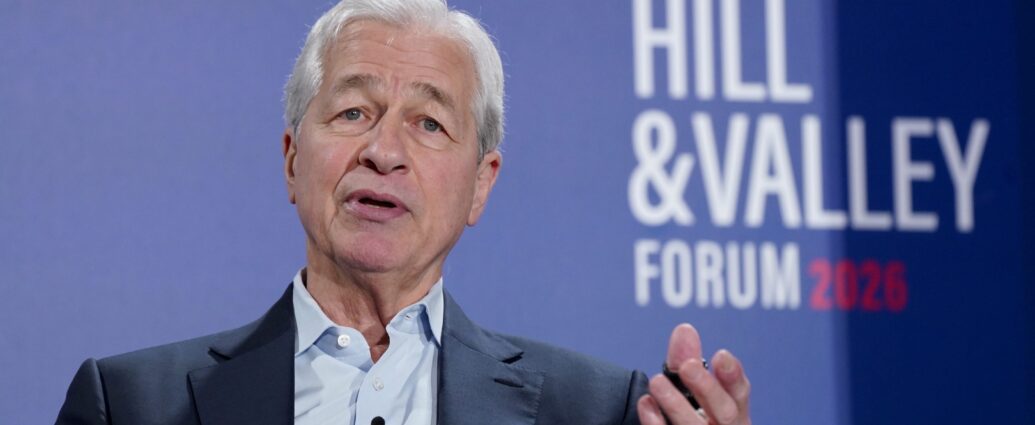
Oil and natural gas futures prices—despite trading 60% higher since before the Iran war—remain well below the physical supply shortages facing Asia and spreading around the world that will take many months to replenish, the chairman and CEO of Chevron said March 23.

The large CERAWeek by S&P Global conference is attracting many of the world’s energy leaders from around the world in Houston this week and a top theme is the potential disconnect between energy markets and the greatest global energy supply shock ever with the effective closure of the Strait of Hormuz, which typically funnels nearly 20% of the world’s crude oil and liquefied natural gas each day.

“There are very real physical manifestations of the closure of the Strait of Hormuz that are working their way around the world through the system that I don’t think are fully priced in,” said Chevron CEO Mike Wirth.

Asia already is facing major supply shortages that cannot be undone just by the releases of strategic, emergency supplies. That is why many Asian countries have implemented energy conservation mandates, work-from-home efforts, school closures, and more. Wirth also cited the huge supplies of fertilizer for agriculture and helium for semiconductors that flow through the strait offshore of Iran.

“The fundamentals are very tight out there,” Wirth said. “The markets are trading on scant information.”

“Physical supply changes don’t respond immediately,” he added. “Even when strait reopens at some point, it will take time.”

Oil prices dipped notably March 23 when President Donald Trump said he would delay any attacks on Iranian energy infrastructure by five days to allow for greater negotiations, pushing back his March 23 deadline for Iran to reopen the strait. Iran has in turn said it would attack more energy facilities in neighboring Gulf countries if the U.S. followed through on Trump’s threats, further escalating the war. And, later in the day, Iranian officials said no negotiations have taken place, accusing Trump of pushing “fake news” to lower prices.

Iran accused of ‘economic terrorism’

Iran’s counteroffensive strategy of attacking the oil and gas supplies of its neighbors is a form of unprovoked terrorism that will not be accepted, said Sultan Ahmed Al Jaber, the United Arab Emirates minister of industry and advanced technology, and group CEO of ADNOC, the Abu Dhabi National Oil Company.

The UAE has cut its oil production by more than 50% this month, while Iraq and Kuwait have made even deeper reductions. Al Jaber canceled his scheduled appearance in Houston because of the war, but he provided a video message. Saudi Aramco CEO Amin Nasser also canceled his trip.

“Weaponizing the Strait of Hormuz is not an act of aggression against one nation. It’s economic terrorism against every nation,” Al Jaber said. “And no country should be allowed to hold Hormuz hostage. Not now, not ever.”

He accused Iran of “choking the throat” of the “global economy.”

Kicking off CERAWeek, U.S. Energy Secretary Chris Wright, a former oil and gas executive, said the Iran war is a “conflict that we simply couldn’t kick down the road one more administration.”

Wright called the war “short-term disruption now, but to end a multi-decadal problem.”

The International Energy Agency agreed this month to release 400 million barrels of oil from emergency storage, including 172 million barrels from the U.S. Strategic Petroleum Reserve.

Wright said the U.S. began withdrawing oil from the SPR on March 20 and that the U.S. will release at least 1 million barrels each day from the SPR for the next few months. The total global release would equate to nearly 3 million barrels daily, he said.

Still, that does not offset more than 11 million barrels of oil that remains offline, even with Saudi Arabia and the UAE redirecting as many barrels as they can through the Red Sea and other outlets.

“Oil remains the most important energy source in the world,” Wright said. “No oil, no modern world.”

This story was originally featured on Fortune.com

This post was originally published here

Bank of America CEO Brian Moynihan on Monday sent a letter to shareholders along with the firm’s annual report that detailed the bank’s history and its role in America’s growth as the nation prepares to celebrate the 250th anniversary of the country’s founding.

Moynihan noted that Bank of America’s oldest legacy institution, The Massachusetts Bank, was formed in 1784, just one year after the Revolutionary War concluded with the Treaty of Paris. The bank’s depositors helped the firm grow by lending money to new and expanding businesses that made up the early U.S. economy.

“From our country’s earliest days, we supported those communities. We have supported the development of American capitalism. We did what a bank does – help its customers and clients grow,” Moynihan wrote. “Bank of America’s legacy banks formed in communities around the country, and were there every step of the way as those communities filled out our nation.”

Bank of America also traces its roots to franchises in New England that date back to the early days of the country, as well its North Carolina company, which is the surviving company of those legacy banks and was formed over 150 years ago to help finance the development of the region’s industries as the U.S. developed from an agrarian society to an industrial society. 

BANK OF AMERICA CEO SEES STRONGER 2026 ECONOMY, SAYS WALL STREET MAY BE UNDERESTIMATING GROWTH

“Funds from afar were not sufficient or readily available and local banks formed to help needed factories get built in their communities,” Moynihan wrote in reference to banks established along the Eastern Seaboard in the early years of America’s independence.

Banks in the nation’s capital grew along with the expansion of the federal government, while the firm’s Texas-based company helped fund the region’s resource boom and those located in the Great Plains spurred the economic growth of the Midwest and West. It also opened a bank in the Pacific Northwest.

Around 1930, A.P. Giannini’s Bank of Italy – which helped support the reconstruction of San Francisco after the great earthquake and fires of 1906 – purchased a small firm called The Bank of America, Los Angeles. After eventually consolidating, Giannini changed the name to Bank of America.

DISNEY WORLD HONORS WORLD WAR II VETERAN’S BIRTHDAY WITH MOVING FLAG RETREAT CEREMONY

“Companies that are now Bank of America provided funding for the Erie Canal, the Golden Gate Bridge, and the American government’s requirements for the War of 1812, World War I and World War II, as well as many other national priorities,” Moynihan wrote.

“Whether it was private citizens, governments or companies of every size, in communities across our growing country, Bank of America was there to help capitalism flourish. We were there to help foster the interdependent relationship between capitalism and democracy.” 

“For the 250 years of the American idea in action, the activities of countless individuals, families, farmers and other small businesses, large institutions, governments at every level, the opportunities provided by capitalism – a financial return on labor through wages, and on capital and investments, interest on your idle funds, facilitating investments in bonds to build infrastructure, making loans to entrepreneurs to grow their businesses – helped build our country we have today,” he explained.

FOX BUSINESS LAUNCHES ‘MADE IN AMERICA’ SMALL BUSINESS CONTEST WITH $25K CASH PRIZES FOR WINNERS

The letter also discussed how Bank of America grew its presence around the world by helping U.S. firms pursue global ambitions as well as providing financial services at the federal government’s request to facilitate access to new markets or help rebuild in the wake of conflicts.

Among the examples cited were the bank opening for business in Argentina in 1917 to support American companies engaged in the wool trade, as well as the establishment of operations in Great Britain in 1931 as the U.S. emerged as a creditor nation after World War I.

In the aftermath of World War II, Bank of America became the first bank to open for business in Japan at the request of the U.S. occupation government to provide loans to shipping companies to restart Japan’s postwar economy

GET FOX BUSINESS ON THE GO BY CLICKING HERE

Bank of America opened in France in 1953 to support the post-World War II reconstruction of Europe and build on the success of the U.S. government’s post-war Marshall Plan. It also opened a Middle East headquarters in 1972 when it entered the newly formed United Arab Emirates to support U.S. companies developing the region’s resources.

This post was originally published here

The federal workers union representing TSA officers has chided the Trump Administration’s decision to send Immigration and Customs Enforcement (ICE) into airports, arguing the agents are not qualified to handle airport security.

“ICE agents are not trained or certified in aviation security,” Everett Kelley, president of the American Federation of Government Employees, said in a statement on Sunday. “TSA officers spend months learning to detect explosives, weapons, and threats specifically designed to evade detection at checkpoints—skills that require specialized instruction, hands-on practice, and ongoing recertification. 

“You cannot improvise that. Putting untrained personnel at security checkpoints does not fill a gap,” he added. “It creates one.”

Instead of solving the problem of the 50,000-plus TSA employees who “have worked without pay for over five weeks,” Kelley said, “Washington’s answer isn’t to pay them. It’s to send ICE agents to do their jobs.”

The American Federation of Government Employees is the only union representing TSA officers.

President Donald Trump on Sunday announced on social media plans to order federal immigration officers to oversee airport security on Monday amid an ongoing partial government shutdown. The shutdown, entering its 43rd day, ceased funding for the Department of Homeland Security (DHS) as Democrats demanded reform policies after ICE officers fatally shot two U.S. citizens in Minneapolis in January.

Trump told reporters on Monday that ICE agents would also be able to conduct immigration checks and make arrests, though it was not the primary reason for their placement.

“They’re able to now arrest illegals as they come into the ​country. That’s ⁠very fertile territory. But that’s not why they’re there. They’re really there to help,” he said.

TSA receives its funding from DHS, meaning its more than 50,000 frontline officers are not getting paid but are required to work as they are deemed “essential employees.” More than 400 TSA employees have quit and thousands more have called out of work, according to DHS. 

Kelley asserted ICE agents should still not replace absent TSA employees, who “deserve to be paid, not replaced by untrained, armed agents who have shown how dangerous they can be,” he said.

After an initial training period, TSA transportation security officers are put through an additional two-to-three week training program, according to job postings.

One whistleblower previously raised concerns about training for ICE deportation agents being cut, saying in a Congressional testimony that instruction for incoming agents was slashed in an effort to increase recruitment to increase arrests. The Washington Post reported earlier this month that ICE removed about 240 hours of basic training from its program, equivalent to about 40% of instructional time, according to government records.

White House border czar Tom Homan said in an interview with CNN that immigration officers could cover exits typically monitored by TSA agents to allow them to better staff screening lines, as well as check identification for passengers entering screening lines. According to Homan, ICE agents will likely not oversee X-ray machines because of lack of training. “ICE agents are assigned at many airports across the country already,” Homan said. “They do a lot of investigation, criminal investigation on smuggling at airports.”

DHS acting assistant secretary Lauren Bis said in a statement to Fortune that the department would not disclose where ICE agents were deployed for security reasons. 

Ongoing travel disruptions

TSA officers’ call-out rates reached their highest level of the shutdown on Sunday, with 11.76% of workers, or more than 3,450 employees, not showing up to work, DHS data showed. That included about 40% of TSA officers from George Bush Intercontinental Airport in Houston, Louis Armstrong New Orleans International Airport, and Hartsfield-Jackson Atlanta International Airport, according to DHS data.

Delta CEO Ed Bastian lambasted the federal government over the shutdown, saying in an interview with CNBC last week that politicians should “do their job” to ensure TSA officers are paid during the shutdown. 

“It’s inexcusable that our security agents, our frontline agents, that are essential to what we do, are not being paid, and it’s ridiculous to see them being used as political chips,” he said.

Bastian joined a host of airline CEOs asking Congress—which is now heading into a two-week recess without a deal in sight—to resume DHS funding. In an open letter, the executives from Southwest Airlines, United Airlines, JetBlue Airways, among others, suggested air travel has become political collateral during shutdown, and that providing compensation for TSA employees was particularly prudent ahead of a busy spring travel season that would be punctuated by both the FIFA World Cup and the U.S.’s 250th anniversary.

Short-staffed airports have shut down checkpoints, leaving passengers to endure three-hour or even longer wait times in security lines. The shortages have also contributed to thousands of flight delays and cancellations.

These disturbances have only mounted pressure on airports and airlines also contending with threats of increased fuel prices and cancelled flights as a result of the war in Iran, as well as safety concerns. LaGuardia Airport in New York is closed following a deadly collision of an Air Canada jet into a fire truck on Sunday night, killing a pilot and copilot and injuring dozens of passengers. Newark Liberty International Airport in New Jersey temporarily shut down operations on Monday as a result of a burning smell in an elevator, forcing air traffic controllers to evacuate a tower.

Meanwhile, TSA agents working without pay are experiencing eviction notices, vehicle repossessions, and trouble buying groceries, union and federal officials warned. A 2024 Government Accountability Office report found TSA officers have struggled with some of the lowest morale levels in the federal government, with employees citing poor management, work-life balance, and pay as reasons for their frustrations. The starting salary for TSA agents is about $34,500, with the average annual pay between $46,000 and $55,000.

“I’ve heard from officers who cannot afford copayments for cancer treatments or office visits for their sick children,” Aaron Barker, a local TSA union leader based in Atlanta, told reporters earlier this week.

This story was originally featured on Fortune.com

This post was originally published here

Strategy, the world’s largest holder of Bitcoin, bought more than 1,000 of the original cryptocurrency last week, worth more than $76 million. The purchase follows one from the week prior worth $1.6 billion, which the company funded primarily through its “Stretch” perpetual preferred shares. 

One analyst says that the company will get back to buying more Bitcoin and do so through its sale of these “Stretch” perpetual preferred shares, known as STRC. 

“While the cadence and size of Strategy’s Bitcoin purchases will likely remain uneven on a week-to-week basis, reflecting market conditions and opportunistic timing, we fully expect the company to aggressively lean into its Bitcoin acquisition strategy as demand for its STRC perpetual preferred stock increases,” said Mark Palmer, senior equity research analyst at The Benchmark Company. 

Strategy, run by executive chairman Michael Saylor, is a digital asset treasury—a company whose sole purpose is to acquire and hold on to vast amounts of Bitcoin. It can make these purchases through sales of its “Stretch” perpetual preferred shares, a security that offers investors an 11% annual yield.

Its common shares, the sale of which can also fund the company’s purchase of Bitcoin, are often tied to the currency’s performance. Strategy’s shares have increased about 10% in the last month, and Bitcoin is up about 9% during that time to its current price of roughly $70,000, according to Binance. Cryptocurrencies have shown growth and resilience since the beginning of the war in Iran, while traditional stock indexes like the S&P 500 have struggled. 

Palmer, the analyst at The Benchmark Company, expects Strategy to continue to pivot back to its sales of “Stretch”, “We expect STRC to become established as Strategy’s primary vehicle for fueling its Bitcoin purchases going forward.”

This story was originally featured on Fortune.com

This post was originally published here

Energy markets could see a sharp reversal if tensions ease in the Middle East, as officials say a diplomatic breakthrough could quickly restore critical oil flows.

U.S. Energy Secretary Chris Wright joined FOX Business’ Lauren Simonetti on “Varney & Co.” to discuss how a potential agreement with Iran could help reopen the Strait of Hormuz and stabilize prices after weeks of disruption.

Wright indicated that energy markets are closely tied to developments in the region, emphasizing how quickly conditions could shift if a deal is reached.

A STATE-BY-STATE LOOK AT GAS PRICES AS IRAN CONFLICT PUSHES OIL HIGHER

“They would go down quite a bit. If we see a pathway to have the Strait of Hormuz open soon and energy flowing again, you’d see energy prices drop pretty significantly,” Wright said.

The comments come as global markets react to constrained movement through one of the world’s most critical energy chokepoints, where even temporary disruptions have pushed fuel costs higher for consumers.

Wright suggested the path forward depends on whether Iran is willing to de-escalate and negotiate.

KEVIN O’LEARY FORECASTS GLOBAL POWER SHIFT IN STRAIT OF HORMUZ AS IRAN CONFLICT RATTLES OIL MARKETS

“That could happen if a peace agreement is reached… If Iran thinks enough is enough, and they’re willing to make a deal… Then there’ll be a deal,” Wright said.

For now, officials say short-term market volatility is expected as the situation continues to develop.

This post was originally published here

As Gen Z college graduates struggle to jumpstart their careers, skepticism about the value of higher education is reaching new heights. 

But at one private university in suburban North Carolina, graduates are defying that trend. At High Point University, 99.2% of the class of 2024 were employed or pursuing further education within six months of graduation—14 points above the national average.

The secret, according to the school, isn’t exclusively leaning on traditional academic offerings to prepare students for the real world. Instead, High Point brands itself as the nation’s “premier life skills university.” 

“It’s clear that students and parents expect maximum return on investment from a college education,” a High Point University spokesperson told Fortune. “It’s also clear that employers need graduates who have not only technical skills but also life skills that outlast technical skills, which are constantly changing.”

In practice, that means required courses like Life Skills 101, which University President Nido Qubein teaches himself on confidence, communication, and personal branding. It also means bringing in top business minds, such as Apple cofounder Steve Wozniak, who serves as the school’s “innovator in residence,” to mentor students directly.

While similar programs elsewhere are often limited to students in their last year of school or even just business majors, High Point has made career readiness and soft skills the core of its entire curriculum.

The school also caught the country’s attention this year by making it to the NCAA College Basketball Tournament as a No. 12 seed and upsetting No. 5 Wisconsin. The High Point Panthers then lost to Arkansas on March 22.

What skills are Gen Z graduates missing—and how does HPU fix it?

Throughout students’ time at High Point, the school emphasizes teaching what they say “employers want in new hires,” including motivation, emotional intelligence, coachability, technical competence, temperament, and work ethic—traits that are increasingly rare to find among young professionals. 

According to a report from tech education company General Assembly, fewer than half of all workers, and just 12% of mid-level executives, are confident that entry-level workers are adequately prepared for the workforce.

It’s a concern echoed by many business leaders. Jon Gray, president and COO of asset firm Blackstone, told employees in 2025:

“Most of you went to elite universities. You did really well, you were in the top of your class. You are people who are successful by nature and hardworking,” Gray said in a video posted to his LinkedIn account. “But when I look around at the people who truly succeeded at Blackstone, it’s not the ‘good enough’ crowd, right? It’s the people who are like, hey, ‘I’m gonna make sure I get this absolutely right.’”

Even tech leaders have weighed in. Meta CEO Mark Zuckerberg has questioned whether college is living up to its promise.

“It would be one thing if [college] was just kind of like a social experience, but you started off neutral. The fact that it’s not preparing you for the jobs that you need and you’re kind of starting off in this big [financial] hole then I think that’s not good,” Zuckerberg said on This Past Weekend podcast with Theo Von.

For High Point, these critiques have represented opportunity. The school’s pitch is simple: “HPU is about more than degrees; it’s about life skills. Our students learn practical wisdom and career skills that prepare them for success in any field.”

These lessons are reinforced through lectures and seminars on topics such as how to land a job, how to pitch yourself, and how to thrive in the workplace, giving students tangible tools to turn their education into real-world success.

Why Wall Street parents choose High Point University

Nestled in the Piedmont Triad of North Carolina, High Point faces the challenge of being down the road from other top universities in the Tar Heel state—something that only exacerbates the pressure to attract students—and stay afloat financially. Since March 2020, over 80 public or nonprofit colleges have announced closures or mergers, according to Best Colleges.

During Qubein’s now 20 years at the helm of the university, High Point’s student population has tripled. Last fall, High Point welcomed its largest class of first-year students as well as its largest total enrollment growth in history—topping at 6,550 students.

Part of High Point’s growth strategy has been to attract wealthier students and their families.

“Half of Wall Street sends their kids to this school,” Qubein told The Wall Street Journal in 2025.

Many elite universities—including Harvard and MIT—have also expanded financial aid for lower-income families, banking that wealthier students paying full price will help balance the books. High Point, for its part, offers an average student aid package of about $23,000. Its total annual cost of attendance is just over $71,000.

For that price, students can take advantage of free car inspections before holiday breaks, a campus steakhouse, six outdoor heated pools—each with its own hot tub—and even a mock airplane cabin, designed to help students practice networking for chance encounters at 30,000 feet.

Still, Qubein rejects the idea that these are luxuries—but rather what’s needed to get young people ready for the real world.

“As far as I’m concerned, we have no amenities,” Qubein added to the WSJ. “We are not in the business of pampering students. We are in the business of preparing our students.”

A version of this story originally published on Fortune.com on November 7, 2025.

More on education:

This story was originally featured on Fortune.com

This post was originally published here

Prediction market Kalshi loves a publicity stunt. In February, the company handed out free groceries to hundreds of New Yorkers. Now, it’s taking a page from Warren Buffett’s playbook and offering a $1 billion prize to any user who has the perfect March Madness bracket. 

In 2014, he offered $1 billion to any Berkshire Hathaway (or subsidiary) employee who picked the winner of all 63 games correctly. Nobody won, and the company has since modified its payouts multiple times because a perfect bracket is harder than you might think. 

Taking teams’ stats, history, and general basketball knowledge into account, the NCAA estimates that the chances of perfection are 1 in 120.2 billion. The longest verified streak came from an Ohio man who correctly guessed 49 consecutive games in 2019. 

Kalshi admits that it knows “the odds aren’t in your favor.” In the unlikely chance of a payout, the winner would receive $100 million each year for 10 years, according to the contest rules. SIG Parametrics, a member of the Susquehanna International Group of Companies, is financially backing the contest.

If no one has the perfect bracket, the person with the highest score, based on the company’s point system, will receive $1 million. If there’s a tie, the prize will be split equally among the winners. 

All U.S. citizens over 18 years old were eligible to enter the contest before the competition’s first game on March 19. But New York or Florida residents are not eligible, and Kalshi did not immediately respond to Fortune’s comment on why people in those states were excluded. 

Berkshire’s long-standing tradition

Kalshi is mimicking a longtime Berkshire Hathaway tradition that drew about 65,000 of its nearly 400,000 employees in 2024, according to The Wall Street Journal. 

Since 2014, Buffett has offered his employees millions for their brackets. And even though he stepped down as CEO in December, the competition will continue this year, according to Front Office Sports

Over the years, the rules and prizes have changed as the long odds weighed on participants, while Buffett was eager to give away money.

After kicking off the yearly competition with a $1 billion prize for a perfect bracket, Buffett switched to a $1 million reward from 2015 to 2024 to anyone who perfectly guessed the Sweet 16. 

But no employees met the target. A $100,000 consolation prize was given to the bracket that stayed perfect the longest. Buffett is known to personally congratulate the winners. 

“I’m getting older,” Buffett told WSJ in 2025. “I want to give away a million dollars to somebody while I’m still around as chairman.”

Last year, Buffett’s wish came true after he changed the rules again to offer $1 million to anyone who correctly guessed at least 30 of 32 first-round games. A FlightSafety International employee (a pilot training company subsidiary of Berkshire Hathaway) won $1 million for correctly guessing 31 out of 32 first round games. 

This story was originally featured on Fortune.com

This post was originally published here

The Supreme Court ‘s conservative majority on Monday sounded skeptical of state laws that allow the counting of late-arriving mail ballots, a persistent target of President Donald Trump.

The court heard arguments in a case from Mississippi that also could affect voters in 13 other states and the District of Columbia, which have grace periods for ballots cast by mail. An additional 15 states that have more forgiving deadlines for ballots from military and overseas voters also could be impacted.

A ruling is expected by late June, early enough to govern the counting of ballots in the 2026 midterm congressional elections.

The court challenge is part of Trump’s broader attack on most mail balloting, which he has said breeds fraud despite strong evidence to the contrary and years of experience in numerous states.

Several conservative justices gave voice to some of Trump’s complaints. Justice Samuel Alito wondered about the appearance of fraud in situations where “a big stash of ballots” that arrive late “radically flipped” an election.

Defending the state law, Mississippi Solicitor General Scott Stewart pointed out that the Trump administration and its allies in the case have yet to submit a single case of fraud due to late-arriving mail ballots.

The court’s liberal justices indicated they would uphold state laws with post-Election Day deadlines.

“The people who should decide this issue are not the courts, but Congress, the states and Congress,” Justice Sonia Sotomayor said.

Forcing states to change their practices just a few months before the election risks “confusion and disenfranchisement,” especially in places that have had relaxed deadlines for years, state and big-city election officials told the court in a written filing.

California, Texas, New York and Illinois are among the states with post-Election Day deadlines. Alaska, with its vast distances and often unpredictable weather, also counts late-arriving ballots.

Lawyers for the Republican and Libertarian parties, as well as Trump’s administration, are asking the justices to affirm an appellate ruling that struck down a Mississippi law allowing ballots to be counted if they arrive within five business days of the election and are postmarked by Election Day.

Justices worried over the slippery-slope problems that could arise no matter who wins the case.

Ballots could be received until the start of the next Congress, two months after the election, Justice Neil Gorsuch suggested.

On the other side, Justice Elena Kagan said the logic of the challenge to late-arriving ballots also would be used to rule out early voting and absentee ballots.

Limits on early-voting also seemed to bother Chief Justice John Roberts, who seemed the conservative member of the court most likely to side with Mississippi.

The court also grappled with whether state laws allowing for late-arriving ballots from military and overseas ballots could survive.

Last year, Trump signed an executive order on elections that aims to require votes to be “cast and received” by Election Day. The order has been blocked in pending court challenges.

At the same time, four Republican-dominated states — Ohio, Kansas, North Dakota and Utah — eliminated grace periods last year, according to the National Conference of State Legislatures and Voting Rights Lab.

The issue at the Supreme Court is whether federal law sets a single Election Day that requires ballots to be both cast by voters and received by state officials.

In striking down Mississippi’s grace period, Judge Andrew Oldham of the 5th U.S. Circuit Court of Appeals wrote that the state law allowing the late-arriving ballots to be counted violated federal law.

Oldham and the other two judges who joined the unanimous ruling, James Ho and Stuart Kyle Duncan, all were appointed by Trump during his first term.

This story was originally featured on Fortune.com

This post was originally published here

Americans are paying more for gas nationwide, with some states hit harder than others as the Iran conflict drives oil prices higher.

The national average is now $3.95 per gallon, up $1.02 from a month ago, according to AAA.

Prices are climbing across nearly every region, with some states already well above the national average. On the West Coast, drivers are seeing the highest costs, with prices reaching $5.79 per gallon in California and $5.27 in Washington.

OIL, GAS PRICES JUMP AS TRUMP FLIRTS WITH STRIKING IRANIAN OIL INFRASTRUCTURE

Along the East Coast, gas prices are approaching or exceeding $3.70 in several areas, including $3.86 in New York and $3.80 in Maine.

In the Midwest, Illinois stands out at $4.16 per gallon, while much of the region remains closer to the mid-$3 range. Southern states are generally lower, though still rising, with Texas at $3.62 and Florida at $3.93.

THE UNLIKELY TOOL TRUMP IS EYEING TO TACKLE RISING OIL PRICES AMID THE IRAN CONFLICT

Diesel is outpacing gasoline due to its link to freight and industry, meaning increases can ripple through supply chains and raise costs. It averaged $5.28 a gallon, up $1.69 over the same period, according to AAA.

The surge comes as traders closely watch the Strait of Hormuz, a critical global energy chokepoint where tanker traffic has slowed to a crawl as tensions intensify.

TRUMP PROMISED LOWER COSTS; THE IRAN CONFLICT NOW THREATENS THAT PLEDGE

Just 21 miles wide at its narrowest, the waterway between Iran, the United Arab Emirates and Oman carries roughly 20 million barrels of oil per day and about one-fifth of global liquefied natural gas, along with significant volumes of jet fuel.

GET FOX BUSINESS ON THE GO BY CLICKING HERE

For U.S. drivers, prices could keep climbing just as summer travel and road trip season begins.

This post was originally published here

More federal immigration officers are making their way to U.S. airports after President Donald Trump said he’d deploy them to supplement the Transportation Security Administration during a government shutdown that has caused long lines at security checkpoints across the country.

On Monday morning, a handful of federal officers were seen by The Associated Press near busy lines at Hartsfield–Jackson Atlanta International Airport. And a handful of other airports — including Louis Armstrong International in New Orleans, as well as Houston’s George Bush Intercontinental and William P. Hobby airports — said Immigration and Customs Enforcement officers would also be on site to support TSA operations.

Federal officers are a routine presence at international airports, where Customs and Border Protection officers screen arriving travelers and Homeland Security Investigations agents handle criminal cases tied to smuggling, trafficking and fraud. But what’s unusual in the current moment is their visibility at TSA security checkpoints.

Monday’s deployments came as hundreds of thousands of Homeland Security workers, including from the TSA, U.S. Secret Service and Coast Guard, have worked without pay since Congress failed to renew DHS funding last month. That’s led many TSA agents to call in sick — or even quit their jobs — as financial strains pile up. The staffing shortages have forced some airports to close checkpoints at times, with wait times swinging dramatically for travelers.

On Sunday, the Trump administration signaled it would deploy federal immigration officers to large airports with the longest wait times — and Department of Homeland Security spokesperson Lauren Bis said that would include “hundreds” of ICE officers, but she did not disclose all the airports they would go to, citing security reasons.

Some fear the move to deploy federal immigration agents will only escalate tensions.

“This latest threat of ICE invasion at the airports is another distraction from solutions that protect Americans,” a coalition of unions representing flight attendants and other workers — including the Association of Flight Attendants-CWA and International Association of Machinists and Aerospace Workers — said in a Sunday statement. Transportation security officers “can’t simply be replaced” by federal immigration officers, they noted, adding that ICE’s presence and potential attempts to question passengers about immigration status may also “distract them from ensuring airport security.”

The unions called for TSA workers to be paid immediately.

Trump said on Sunday that he would order federal immigration agents to airports to assist TSA by guarding exit lanes or checking passenger IDs unless Democrats agreed to fund the DHS. Funding for the department lapsed Feb. 14, as Democrats refused to fund ICE as well as Customs and Border Protection without changes to their operations in the wake of the deaths of Alex Pretti and Renee Good in Minneapolis.

Democrats are continuing to demand major changes to federal immigration operations — including policy changes that would require ICE officers to get a warrant from a judge before forcefully entering homes, the removal of masks and clear identifying information on uniforms.

Trump on Monday directed ICE officers not to wear face coverings in their work at airports. In a social media posted, Trump said he supports ICE officers wearing masks when dealing with “hardened criminals” but suggested it isn’t necessary “when helping our Country out of the Democrat caused MESS at the airports.”

Beyond TSA operations, New York’s LaGuardia Airport shut down following a deadly collision on the runway late Sunday. An Air Canada regional jet struck a fire truck while landing, officials said — killing the pilot and copilot while around 40 passengers and crew members were taken to area hospitals, some with serious injuries.

According to the FAA, LaGuardia is expected to remain closed until at least 2 p.m. ET on Monday. Air traffic has been diverted, and Monday morning operations also were halted at Newark Liberty International Airport in neighboring New Jersey.

___

Grantham-Philips reported from New York. Associated Press writer Collin Binkley in Washington contributed to this report.

This story was originally featured on Fortune.com

This post was originally published here
The oil crises of the 1970s prompted a range of policy changes that still exist today. For one, we invented the high occupancy vehicle (HOV) lane to incentivize workers to carpool. A nationwide 55 mph speed limit made sure those carpools weren’t guzzling too much gas. Cars became more fuel efficient; we (temporarily) started driving less. But some experts say those measures, coupled with those taken during the 2022 energy shock in the wake of Russia’s invasion of Ukraine, pale in comparison to what we’re about to see next thanks to the Iran war.

Earlier this month, the Paris-based intergovernmental agency International Energy Agency (IEA) released a record-breaking 400 million barrels of oil to temper rising prices. IEA executive director Fatih Birol, who coordinated the release, finally broke his three-week silence and sounded the alarms on how much damage the war is causing. In an interview Monday at the National Press Club of Australia, Birol said world leaders are underestimating the energy crisis, saying the ongoing energy shock is worse than previous ones. 

“The depth of the problem was not well appreciated by the decision makers around the world,” he said. “If you want to put in a context, this crisis as it stands now: two oil crises and one gas crisis put all together,” he said.

Even as President Donald Trump said early Monday the U.S. was in talks with Iran—and would therefore withhold from striking critical energy sources for the next five days—Brent crude last week soared north of $110 per barrel. After the president’s announcement, oil prices fell about 10%, yet remain stubbornly high at about $102 as of 12 p.m. ET. Economists expect the oil shock to reverberate across the U.S. economy, potentially jacking up food prices, jeopardizing the possibility of a Fed rate cut this year (while raising the odds of a rate hike), and even threatening to halt the entire economy if oil prices rise to $140 a barrel.

The 1970s plus the Ukraine War

Birol elaborated on the numbers behind his assertion, saying the losses already accrued are far worse than those from the 1970 oil crises and the Ukraine war. 

“Many of us remember the two consecutive oil crises in [the] 1970s: 1973 and 1979,” he said. “In each of the crises, the world has lost about 5 million barrels per day, both of them together 10 million barrels per day.”

“And today, only as of today, we lost 11 million barrels per day, so more than two major oil shocks put together.”

He added that after Russia’s invasion of Ukraine the gas markets, particularly in Europe, “lost about 75 billion cubic meters, 75BCM. And as of now, as a result of this crisis, we lost about 140BCM, almost twice” as much.

Beyond the energy shocks, Birol said the war is severing ties to some of the vital arteries of the global economy by disrupting other critical supply chains. The war, he said, has interrupted the trade of petrochemicals, fertilizers, sulfur, and helium, some of the most critical building blocks of the world economy. For example, roughly half of the world’s urea supply, a critical compound for fertilizer, runs through the Strait of Hormuz, potentially impacting the cost of U.S. food prices within the coming months.

“If fertilizer disruptions or inflation drives higher corn prices, that is going to be felt everywhere throughout the food supply,” Dr. Ricky Volpe, an agricultural economist and professor of agribusiness at Cal Poly, said in a recent interview with Fortune.

Even as Trump promises to withhold strikes on energy sources for several days, Birol said there are already many damaged oil refineries, gas fields, and pipelines across nine countries, which means that even when the war concludes, it could take some time for oil prices to adjust to their pre-war levels.

“Forty energy assets in the region are severely or very severely damaged,” he said. “It will take some time for these assets—these oil fields, gas fields, refineries, pipelines—[to] come to the normal capacity that they were running before the war.”

This story was originally featured on Fortune.com

This post was originally published here

In just weeks, Wall Street has gone from optimistically waving off the U.S. and Israel’s strikes on Iran as a short-term blip to the more pessimistic assumption that the chaos in the Middle East could have long-term ramifications.

Likewise, consumers—already sensitive to the cost of living—are struggling with yet another affordability issue as oil and gas prices shot up after supply from the region was restricted.

As Larry Fink wrote in his annual letter to shareholders today: “We are living through a period where things that would’ve defined a decade have become routine: wars with global repercussions, trillion-dollar companies, a fundamental reordering of international trade, and the advent of the most significant technology since, at least, the computer.”

Frankly, it’s been hard to keep up—and the BlackRock CEO wrote that the drama and uncertainty threatened by day-to-day headlines may be obscuring longer-term trends.

Fink, worth $1.3 billion according to Forbes, said that the vast majority of wealth historically has flowed to people who owned assets, as opposed to those who earned their money by working. Since 1989, he observed, a dollar invested in the U.S. stock market has ballooned at 15 times the value of a dollar tied to median wages. This wealth effect will likely be the same in the age of AI, with those wealthy enough to invest in the technology seeing their portfolios benefit the most from increasing to asset prices.

As such, the BlackRock founder wrote: “This is where much of today’s economic anxiety comes from: a deeper feeling that capitalism is working—just not for enough people.”  

For individuals looking to make a quick buck in the rollercoaster stock market by trying to buy the dips and sell the peaks won’t see the same benefits as those holding historical wealth, Fink said: “A focus on short-term investing is not a fix for that.” Over the past two decades, the BlackRock CEO noted, every dollar invested in the S&P 500 grew by more than eight times. But if an investor were to have missed out on the 10 best days of the market then they would have earned less than half that return.

As such, “staying invested has mattered far more than getting the timing right,” and as such, “it is long-term investing that allows countries to build domestic industries, that lets people build enduring wealth and shows how their country’s growth can benefit them too.”

Fink’s take on the shifting nature of capitalist sentiment is echoed by research into the American Dream. In 2024, Pew Research asked nearly 9,000 respondents if the American Dream existed, and only a slim majority—53%—said it was still achievable. 41% said the American Dream was once possible, while 6% said it was never a reality.

There was also a marked split in opinion: Those with a college level of education, who were defined as having higher levels of income, were notably more optimistic about the possibility of achieving such a goal.

A foot on the ladder

U.S. citizens are uniquely placed to benefit from the largest economy on earth and its domestic but globally market-leading businesses. However, Fink wrote that many households don’t have enough cash on hand to make ends meet—let alone any left over to invest in volatile markets over a sustained period of time.

A BlackRock survey of 1,000 voters conducted in January found that one-third of respondents don’t have $500 dollars on-hand for an emergency like a car repair, Fink said: “In fact, many are forced to pull money out of the markets just to make ends meet. Last year, a record number of workers withdrew money from their 401(k) plans so they could cover financial emergencies. The challenge is saving enough money to invest in the first place.”

The creation of products like Trump Accounts will help families get a foot on the ladder to long-term investing, Fink said. However, a major lever which could be used to foster wealth creation and potentially address income inequality is Social Security.

Fink mused on the current structure of the program, which “emphasizes stability and predictability.” He added: “What it doesn’t do is let people grow their benefits along with the broader economy. The question is whether the Social Security system could allow both. Could a portion of the system be invested more like other long-term pension plans—carefully, broadly, and over decades—while ensuring the program remains a strong safety net?”

This is by no means a bid to privatise social security, Fink said, but some state and local government employees already contribute to public pension schemes which are invested in diversified portfolios: “If long-term investing is already helping millions of public servants build retirement security, it raises a reasonable question: Why shouldn’t more Americans have access to that same kind of long-term growth?”

This story was originally featured on Fortune.com

This post was originally published here

XRP (CRYPTO: XRP) is up 3% over the past 24 hours, with improving on-chain data and adoption trends supporting a bullish outlook.

Cryptocurrency Ticker Price Market Cap 7-Day Trend
XRP (CRYPTO: XRP) $1.43 $88.8 billion -2.7%
Bitcoin (CRYPTO: BTC) $70,194 $1.42 trillion -3.5%
Ethereum (CRYPTO: ETH) $2,130 $262.97 billion -4.8%

Trader Notes: Crypto chart analyst Ali Martinez said XRP whales accumulated about 40 million tokens over the past week, adding that a TD Sequential buy signal points to a potential rebound.

XRP is holding support near $1.40, with analysts viewing the recent pullback as a short-term correction within a broader …

Full story available on Benzinga.com

This post was originally published here

Bitcoin (CRYPTO: BTC) is up 3% over the past 24 hours after President Trump announced a 5-day postponement of attacks on Iranian energy infrastructure, following what he called productive talks.

The Geopolitical Catalyst

Trump said in a Truth Social post that the two countries held productive conversations regarding a complete resolution of hostilities in the Middle East. 

The five-day hiatus doesn’t end the war as Iran continues to strike targets across the Gulf and Israel would also need to sign up.

Bitcoin, which sank below $68,000 overnight, climbed above $71,000 in early U.S. hours before retreating closer to $70,000 after Fars cited an unidentified source denying any talks between the countries. 

Ethereum (CRYPTO: ETH), Dogecoin (CRYPTO: DOGE), Solana (CRYPTO: SOL), and Chainlink (CRYPTO: LINK) all rose as much as 5% over 24 hours before giving back part of …

Full story available on Benzinga.com

This post was originally published here

Behind the nation’s greatest college basketball teams is a steady flow of donations from billionaires with varying industry backgrounds and connections to the schools. 

Among them are the cofounder of the Carlyle Group, one of the world’s largest investment firms; the owner of the NFL’s Dallas Cowboys, and a Houston hospitality mogul whose name is flashed on an entire arena. Several powerhouse teams bankrolled by billionaires are favored to advance far in this year’s March Madness tournament. 

Considering the global sports entertainment industry is estimated to be worth more than $3 trillion, it’s no wonder America’s wealthiest are eager to throw money at the nation’s best college athletics programs. 

This year’s March Madness tournament is particularly flush with billionaire money. The Big Ten alone sent six teams to the Sweet 16, meaning the financial stakes for some of the country’s wealthiest athletic boosters have never been higher. This year’s men’s tournament is expected to have more than $270 million in payouts, with each of the 135 available units (games) valued at roughly $2 million, paid out to conferences over six years (that’s about $350,000 per year).

That money flows directly to conferences, not schools. That’s why wealthy alumni and other billionaire boosters step in to fill the gap, pouring hundreds of millions into facilities, NIL deals, and recruiting budgets that tournament checks can’t offer.

Fortune has compiled a sampling of billionaire donors to schools participating in this year’s Sweet 16. Note, this list is not exhaustive.

David Rubenstein is backing Duke

Rubenstein, cofounder of The Carlyle Group, grew up in Baltimore and earned his undergraduate degree from Duke University in 1970, where he has made generous donations over the decades. 

He cofounded The Carlyle Group in 1987 with just $5 million in capital, but grew it to one of the world’s largest private equity firms with $477 billion in assets under management. Rubenstein is worth an estimated $4.2 billion.

Rubenstein has donated more than $60 million to his alma mater, including a $10 million gift to Duke Athletics in 2012. He said he made the donation because of Duke’s “success in so many sports over so many years, [and] because of the program’s commitment to academic achievement and excellence.”

The Carlyle cofounder has made several other multimillion-dollar donations to Duke over the years, including a $20 million scholarship endowment for first-generation students in 2017 and a $25 million gift to support the arts. The billionaire also served on Duke’s board of trustees from 2005 to 2017, including a term as chairman.

Duke, the No. 1 seed in the NCAA Tournament’s East Region, faces St. John’s on Friday at 7:10 p.m. EST on CBS. The Blue Devils are favored to advance.

Jerry Jones credits the University of Arkansas for his success

Jones, the longtime owner of the Dallas Cowboys, has a deep connection to one of this year’s Sweet 16 schools. He’s a University of Arkansas alum and played for the Razorbacks football team in the 1960s before he went on to become a successful oil businessman and the owner of the Dallas Cowboys in 1989. Jones is currently worth an estimated $19.4 billion, with the Cowboys worth approximately $13 billion.

In 2015, Jones donated $10.65 million to Arkansas’ athletic program, which he credited for his success. The gift supported Arkansas’ Student-Athlete Success Center.

“My experiences at the University of Arkansas as a student-athlete under the legendary Coach Frank Broyles helped shape me as a man and guide me on my future career path,” Jones said at the time of the donation. “I would not be where I am today without those life lessons learned as a student-athlete at the University of Arkansas.”

Arkansas faces No. 1 seed Arizona on Thursday at 9:45 p.m. EST on CBS. The Razorbacks are considered a significant underdog, but freshman star Darius Acuff Jr. has made them one of the tournament’s most exciting teams to watch.

Tilman Fertitta supports his hometown

Fertitta is the definition of a hometown billionaire backer. The CEO of Fertitta Entertainment and owner of the NBA’s Houston Rockets, he is Houston’s richest sports owner with an estimated net worth of $11.2 billion—a fortune built on hospitality, gaming, and entertainment through his Landry’s restaurant and hotel empire with more than 600 dining, entertainment, and gaming locations nationwide.

In 2016, Fertitta pledged $20 million to the University of Houston’s athletics program to renovate the school’s on-campus basketball arena. This was the largest individual athletic donation in UH history at the time. Fertitta attended UH, although he left before finishing his degree. But the school awarded him with an honorary doctorate in August. 

“This gift is personal,” Fertitta said when he made the 2016 donation. “It represents a commitment from my family and me to support the University of Houston in its quest to strengthen our nationally competitive institution, both in academics and athletics.”

“Upgrading our athletics facilities shows we are serious about competing at the highest levels of collegiate sports for many years to come,” he continued.

The arena was subsequently renamed Fertitta Center. He made an additional $50 million pledge to UH’s medical school in 2022. 

Houston, the No. 2 seed in the South Region, faces Illinois on Thursday at 10:05 p.m. EST on TBS. The Cougars are favored to win.

Larry Ellison is behind Michigan’s makeover

Ellison cofounded tech giant Oracle and is currently one of the world’s wealthiest individuals with a net worth of nearly $200 billion.

He also reportedly underwrote the richest recruiting flip in college football history. Ellison reportedly helped the University of Michigan fund a name, image, and likeness sports package to poach quarterback recruit Bryce Underwood from Louisiana State University in November 2024. While Ellison didn’t have a prior connection to the Wolverines, his wife, Jolin, is a Michigan alumna.

Michigan, the No. 1 seed in the Midwest Region, faces Alabama on Friday at 7:35 p.m. EST on TBS. The Wolverines, who are favored to win on Friday, have three projected first-round NBA draft picks on their roster.

Daniel Gilbert funds alma mater, Michigan State

Gilbert founded Rock Financial in 1985, which would eventually become mortgage behemoth Rocket Companies. The fintech and homeownership services company has a $40 billion market cap, and Gilbert has an estimated net worth of $29.4 billion. He also owns the NBA’s Cleveland Cavaliers.

Gilbert donated $15 million to his alma mater, Michigan State University, in 2016 for use toward the school’s basketball program. Both he and his wife, Jennifer, attended Michigan State and said that, at the time, the school had “played a large role in both of our lives.”

Michigan State, the No. 3 seed in the East Region, faces UConn on Friday at 9:45 p.m. EST on CBS. UConn is slightly favored to win.

Jimmy Haslam has donated $50 million to University of Tennessee

Haslam is a University of Tennessee alum and the owner of the NFL’s Cleveland Browns, a franchise he purchased in 2012. He and his family built their fortune through Pilot Flying J, the nation’s largest truck-stop chain, which they sold to Berkshire Hathaway in a deal that totaled $13.65 billion over several years. Haslam is worth nearly $10 billion today.

The Haslam family has donated $50 million to the University of Tennessee, one of the largest gifts in school history, supporting academics and athletics at the Knoxville campus. The family’s name adorns Haslam College of Business at UT.

Tennessee, the No. 6 seed in the Midwest Region, faces Iowa State on Friday at 10:10 p.m. EST on TBS. Iowa State is currently favored to win.

This story was originally featured on Fortune.com

This post was originally published here

Sending your resume into the void has never felt more useless.

Employers cut 92,000 jobs in February alone. Unemployment among entry-level employees peaked last July at 13.3%, the worst entry-level market in 37 years. Two-thirds of companies have put hiring on pause while they wait to see where AI can fill the gaps, and in the meantime, 1.17 million jobs have been cut since last year.

So you do what everyone does: You turn to AI to write a cover letter that slightly exaggerates the role you held in your junior year of college. That’s totally fine, since three-quarters of resumes never reach a human’s eyes anyway. This means you’re using AI to write something that gets read by AI, fulfilling some twisted ouroboros that Socrates and the lot would have had a doozy explaining to their students.

For Wharton Business Economics Professor Judd Kessler, there’s a simple alternative: Toss the fake enthusiasm and pick up the phone. The University of Pennsylvania professor and author of Lucky by Design: The Hidden Economics You Need to Get More of What You Want instead thinks the cover letter’s days are numbered.

“I expect that in the not too distant future, cover letters are gone,” Kessler told Fortune. “Either cover letters will be required and everybody will have AI write good ones and they’ll be ignored, or employers will stop asking for them because they realize they’re not looking at them and they’re not adding value.”

Kessler says job hunting is starting to look a lot like the good ol’ days: It’s all about who you know. At the heart of his argument is the concept of a hidden market: any system that has to allocate something valuable without simply letting the highest bidder win. Think of Taylor Swift pricing concert tickets at $99 when millions of fans would pay 10 times that, or a university with 50,000 applicants for 2,000 freshman seats. Price alone can’t decide who gets what, so other rules take over—rules like knowing a roadie who can get you behind the stage, or having an alumni vouch for you. These are all signals in a hidden market.

And the labor market is one of the biggest hidden markets of all.

“We want to allocate scarce resources, and we don’t want to let price do the job on its own,” Kessler said. “We find it more efficient to have a search process where we identify the best person for the role.”

In this dynamic, signals like the cover letter used to matter, because it meant candidates were spending the time and making the effort to show their enthusiasm.

“It was a costly signal that a job candidate could send that they were really interested in a particular role,” Kessler said. “And it was costly because writing a good one was hard and took time, and you couldn’t do it for every firm.” The signal was hard to ignore: This candidate was serious; after all, they wrote a cover letter. 

The AI ouroboros

That all changed when AI made it a quick snap to fake enthusiasm in three frivolous paragraphs.

“Generative AI comes, and something that used to take a few hours to do well now takes a few seconds, or maybe a few minutes,” Kessler said. “And all of a sudden that signal that used to be costly is now very cheap. Economists would call it cheap talk: You can make it look like you are really motivated to join that firm, that the job was designed for you, but you can create that signal very cheaply.”

The research backs him up. Kessler pointed to a study by economists Jingyi Cui, Gabriel Dias, and Justin Ye that tracked what happened when a major job platform introduced an AI cover-letter writing assistant. Letter quality improved because they were better targeted, and well-targeted letters led to more interviews. But as the tool spread, “employers stopped relying on cover letters in their hiring decisions,” Kessler said. “The cover letters got better, and they became a less useful tool overall.”

“In the old days, there used to be a few good cover letters, and that was how you could identify the best-fit candidates,” he said. “Now, all the cover letters pass some threshold. They become a prerequisite rather than a differentiator.”

Once every application looks polished, none stand out—and the rational employer either outsources the reading to AI or stops reading altogether. “That’s when you would hand it off to AI to be responsible,” Kessler said.

Kessler has watched it happen in his own hiring. Despite selecting research assistants at Wharton for the last 15 years, “all of the best cover letters have come in the last 12 months,” he said with a laugh, all of which suddenly reference his research papers.

“That used to be a way that I could tell who was actually motivated,” he said. “But now everybody does that, and my guess is it’s not because everybody has read that research. Everybody has figured out that AI can write a good summary of what I work on and weave that into a narrative. And that means I can’t use the cover letter as a good indication that somebody’s motivated to work with me.”

Instead of relying on an AI-written CliffNotes summary of his own research, Kessler now points to other hidden market signals: “Do they take my course? Do they come to office hours? Do they try to meet with me in person? Those are the signals I start to rely on more, because the cover letter is insufficient.”

A return to the coffee chat

The cover letter is dead, Kessler says and as a result, the signals are going old school: reaching out and classic networking.

“For the specific signal of ‘I really want to work at this firm,’ which is a signal that the applicant themselves can send, it’s going to be more things that cannot be replicated with AI,” he said.

“It’s going to be doing in-person networking with members of the leadership team at the firm, taking people that work at the firm out to coffee, going to the coffee chat that the firm has. And those are real costly signals, because they can’t be replicated with AI,” he added. “When I choose to go talk to people at a firm, I’m using hours that I can’t spend talking to people at another firm.”

While the coffee chat isn’t new, Kessler said the return to meeting people and showing other signals spells the cover letter’s inevitable end.

“I often describe this as the age of the cover letter being over,” Kessler said. “AI killed the cover letter.”

This story was originally featured on Fortune.com

This post was originally published here
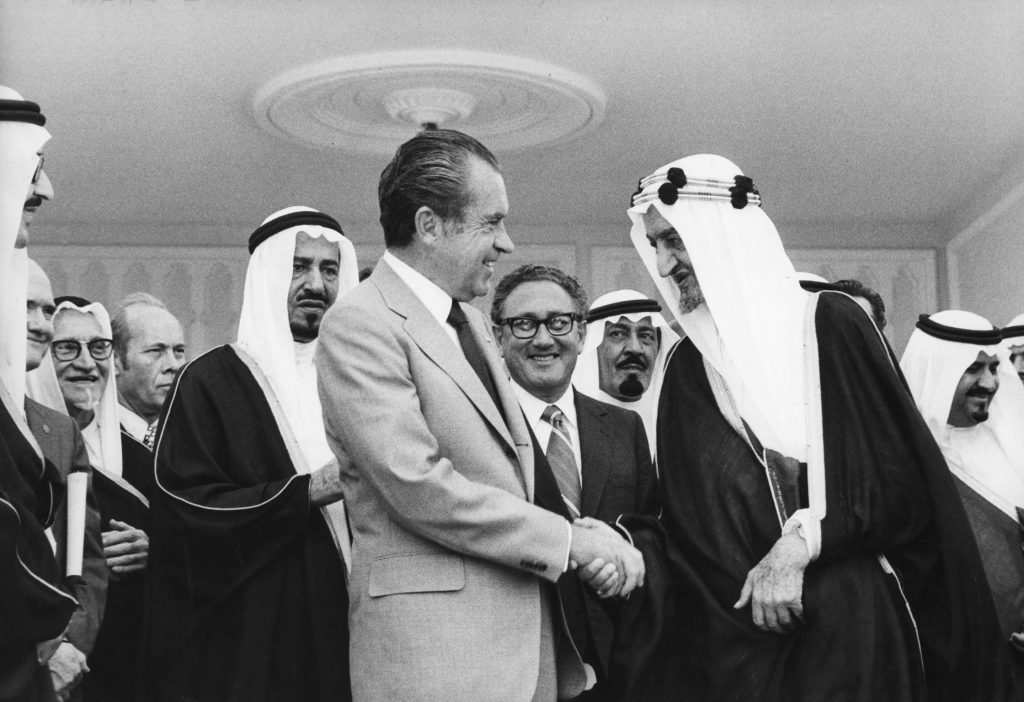
In the time it takes to walk from your car to your desk, President Donald Trump added $1.7 trillion to stocks and pushed the price of oil down by $17, or approximately 15%. By the time you got your coffee, Iran had reportedly called him a liar, and half those gains vanished.

This is the average Monday morning for a very market-oriented executive in the fourth week of war.

At approximately 7 a.m. ET, Trump posted in all-caps on Truth Social that the U.S. and Iran held “very good and productive conversations” over the weekend toward “a complete and total resolution” of hostilities in the Middle East. He ordered the Pentagon to pause all strikes on Iranian power plants and energy infrastructure for five days. 

Washington had kept Israel informed of the talks, Reuters reported, and Israel is expected to follow the U.S. in suspending strikes on Iranian power plants.

That came after Trump issued an ultimatum to Iran Saturday night, calling on the regime to reopen the Strait of Hormuz or face bombardment of its power grid. Now, it appears he’s buying time for the workweek, and leaving the weekend as a buffer before any next move.

S&P 500 futures swung nearly 4% off their lows, Brent crude collapsed from $109 to a low of $92 before partially recovering, and West Texas Intermediate touched $88.70, its lowest point since the war began.

Iran’s state media reported that the talks never happened, citing an unnamed “senior security official” in a post on Telegram. The official called it a ploy to manipulate markets and said there’s no communication lines between the two countries. As of time of writing, no official from Iran has publicly confirmed or denied Trump’s claim. 

Trump told Fox Business that talks did occur Sunday night, involving special envoys Jared Kushner and Steve Witkoff, facilitated by Egypt, Pakistan and Turkey. Iran wants a deal “badly,” he said.

“We have major points of agreement—I would say almost all points of agreement. Perhaps that hasn’t been conveyed,” he added, also joking that Iran needs “better public relations people.” 

Wall Street has a word for all of it, coined by Financial Times columnist Robert Armstrong last May: TACO, or Trump Always Chickens Out. The acronym describes Trump’s habit of making catastrophic threats that cause market panic, then reversing course before economic pain can set in. The trade has minted money for investors who bought every dip, confident that Trump’s tolerance for damage had a ceiling. 

The pattern was seen in his trade war last year as he announced prohibitively high tariffs only to reach a deal later. It played out in Greenland too early this year, when Trump spent weeks threatening to seize the island only to settle for a vague base agreement.

The Iran war is, theoretically, supposed to function differently: after all, it takes “two to TACO,” since Trump cannot just unilaterally end the war the same way he could unilaterally pull back sanctions.

Oil analyst Rory Johnston wrote on Monday that though the “base case” was that Trump would try to back out and declare victory, it won’t be that simple to bring down oil prices.

“Hormuz flow still hasn’t resumed and every day we’re shedding more oil from the system,” he wrote on X. “That’ll catch up—can’t jawbone 10 to 15 million barrels per day stock draws.” 

It is unclear who Trump is even negotiating with on Iran’s side. He told Fox Business he’s dealing with the man who’s “most respected” in Iran, though “It’s a little tough — we’ve wiped out everybody.”

U.S.-Israeli forces have killed most of Iran’s top brass, including Supreme Leader Ayatollah Ali Khamenei, security chief Ali Larijani, and other senior leaders. When asked a few weeks ago whom Trump wanted to see replace the ayatollah, Trump said “everyone we had in mind is dead.”

The Jerusalem Post has reported that Trump’s actual interlocutor is Iranian parliament speaker Mohammad Bagher Ghalibaf. 

Trump also said on Fox Business Monday that he and new Supreme Leader Mojtaba Khamenei—son of the late Ali Khamenei—would together be in charge of the Strait of Hormuz.

This story was originally featured on Fortune.com

This post was originally published here

The ‘Gen Z stare’ became an internet meme last year—used to describe a blank, expressionless look from a generation often glued to their phones. But it’s not just a phenomenon among today’s young people—even Mark Zuckerberg once had his own version of it.

On a recent episode of The Social Radars podcast, Y Combinator cofounder Paul Graham recalled meeting the Facebook cofounder around 2007—and being struck by his lack of social skills.

“[Zuckerberg] has this weird thing where if he didn’t have anything to say, he wouldn’t fill the gap with passing conversation,” Graham said. “He had no concept of small talk.”

The silence coming from the twentysomething Harvard dropout, Graham added, was more jarring than expected: “It was surprisingly disconcerting. I didn’t realize how important small talk was until I met the lack of it. But he would just stare at you if there wasn’t anything [to say].”

In the 1990s, Graham cofounded the software company Viaweb, which Yahoo acquired in 1998 for $49 million. In 2005, he co-founded the startup accelerator Y Combinator, which has helped launch billion-dollar Silicon Valley companies including Airbnb, Stripe, Dropbox, and Reddit. While his exact net worth is not public, Graham has likely earned substantial income through his investments.

Even Mark Zuckerberg agrees he came across ‘as robotic’ before finding success

Now 41, Zuckerberg’s communication skills have in fact visibly evolved. From delivering Harvard’s commencement address in 2017 to testifying before Congress multiple times, he’s grown into a far more polished public speaker—and it’s worked to his advantage. Zuckerberg himself now has a net worth of $210 billion.

Graham quipped his first meeting with Zuckerberg was before he “had learned to imitate a normal person,”—but the tech founder himself has acknowledged he has struggled with communication as he’s taken his social media platform from a Harvard dorm room idea to one of the biggest companies in the world with a $1.5 trillion market cap.

“Look, historically I’ve had a very hard time expressing myself,” Zuckerberg told NBC News in 2019. “I just come across as robotic.”

He echoed that sentiment years later on Threads, saying that feedback about his awkwardness initially made things worse—but he’s improved with time: “Being awkward and getting negative feedback on how I came across definitely made me more careful and scripted,” Zuckerberg wrote in 2024.

Fortune reached out to Y Combinator and Meta for further comment.

Communication is more than a nice-to-have—it’s a skill that billionaire CEOs like Richard Branson and Jamie Dimon say is table stakes

Graham’s observations about a young Zuckerberg—and his evolution—underscore a broader point: communication, even seemingly trivial small talk, can shape how ideas are received and careers unfold. While Zuckerberg had a breakthrough product and early momentum to offset his social awkwardness, many Gen Z workers don’t have that cushion—and are struggling with communication in today’s tech-driven workplace.

About 38% say networking makes them anxious, according to a survey conducted by Strand Partners for LinkedIn, with many young people avoiding it altogether because they don’t know where to start. But the stakes go beyond just missed opportunities: communication gaps are among the reasons some employers have already begun giving the pink slip to recent Gen Z hires.

Strong communication has long been a hallmark of effective leadership. Richard Branson, the billionaire founder of Virgin Group, has called it the “most important skill any leader can possess.”

“Communication makes the world go round. It facilitates human connections, and allows us to learn, grow and progress,” Branson wrote in 2015. “It’s not just about speaking or reading, but understanding what is being said – and in some cases what is not being said.”

And in the age of AI, those human skills are becoming even more valuable than ever. 

“AI can’t replace genuine human connection,” said Michael C. Bush, CEO of Great Place To Work. “It can’t listen, care, or inspire people. That’s what leaders do. Technology can help us work smarter, but only people can build trust.”

It’s a view shared by JPMorgan Chase CEO Jamie Dimon, who said that soft skills like communication matter more than ever.

“My advice to people would be critical thinking, learn skills, learn your EQ [emotional quotient], learn how to be good in a meeting, how to communicate, how to write,” Dimon told Fox News late last year. “You’ll have plenty of jobs.”

This story was originally featured on Fortune.com

This post was originally published here

FIRST ON FOX: The Trump Department of the Interior secured a landmark agreement with energy giant TotalEnergies to redirect nearly $1 billion away from “unreliable” and “ideological” wind farm projects approved under the Biden administration and instead invest in U.S. oil and natural gas as part of the president’s “energy dominance agenda.”

Secretary Doug Burgum announced the agreement with TotalEnergies on Monday at the CERAWeek conference, an annual gathering of global oil and energy leaders in Houston.

TotalEnergies is renouncing its U.S. offshore wind leases and instead investing a total of $928 million in oil, natural gas and liquefied natural gas production in the U.S., according to the department. Additionally, after the department paused all leases for large-scale offshore wind projects under construction in the U.S. due to “national security risks,” TotalEnergies has pledged not to develop any new offshore wind projects in the country.

The department said that “under this innovative agreement driven by President Donald J. Trump’s Energy Dominance Agenda, the American people will no longer pay for ideological subsidies that benefited only the unreliable and costly offshore wind industry.”

OIL PRICES SLIDE AS US EXPANDS INFLUENCE OVER GLOBAL ENERGY MARKETS

As part of the agreement, TotalEnergies will invest $928 million in the development of a liquefied natural gas plant in Brownsville, Texas, as well as shale gas production and upstream conventional oil in the Gulf of America.

In turn, the U.S. will terminate wind farm leases in the Carolina Long Bay Area and in the New York Bight area. Both of these leases were granted to TotalEnergies by the Biden administration in 2022. The U.S. will be reimbursing TotalEnergies for these investments.

According to the department, these reinvestments “directly advance the Trump Administration’s ongoing efforts to lower costs for American families, increase baseload and grid reliability, and help maintain global leadership in artificial intelligence.” 

Burgum called the agreement “yet another win for President Trump’s commitment to affordable and reliable energy for all Americans.”

TRUMP WEIGHS LIFTING IRAN OIL SANCTIONS AS ENERGY PRICES SOAR AFTER QATAR LNG STRIKE

“Offshore wind is one of the most expensive, unreliable, environmentally disruptive, and subsidy-dependent schemes ever forced on American ratepayers and taxpayers,” Burgum told Fox News Digital.

He added that the administration welcomes TotalEnergies’ commitment to “developing projects that produce dependable, affordable power to lower Americans’ monthly bills while providing secure U.S. baseload power today — and in the future.”

U.S. Attorney General Pam Bondi also commented on the deal, telling Fox News Digital that “today’s agreement prioritizes affordability for hardworking American consumers over the prior administration’s ideological, ineffective energy policies.”

Bondi predicted that Americans will benefit from this significant investment in our energy industry,” which she said will “also enhance our national security and grid reliability.”

OIL PRICES WILL COME DOWN ‘VERY, VERY FAST’ AFTER CONFLICT, FORMER ENERGY CHIEF SAYS

Patrick Pouyanné, CEO of TotalEnergies, told Fox News Digital that the company is “pleased” to sign onto the agreement with the DOI and to support the administration’s energy policy.

GET FOX BUSINESS ON THE GO BY CLICKING HERE

He explained that the decision to renounce the offshore wind developments in favor of U.S. oil investment was made in consideration that offshore wind projects are “not in the country’s interest.”

Pouyanné said these investments will help supply Europe with “much-needed” U.S. liquified natural gas and provide gas for U.S. data center development. He said TotalEnergies believes this is “a more efficient use of capital in the United States.”

This post was originally published here

The U.S. government is insolvent. That’s not hyperbole — it’s the conclusion drawn directly from the Treasury Department’s own consolidated financial statements for fiscal year 2025, released last week to near-total media silence. The numbers: $6.06 trillion in total assets against $47.78 trillion in total liabilities as of September 30, 2025.

Importantly, the $47.78 trillion in reported liabilities does not include the unfunded obligations of social insurance programs like Social Security and Medicare — those are disclosed separately in the off-balance-sheet Statement of Social Insurance (SOSI).

The government’s consolidated balance sheet position, excluding the SOSI, deteriorated by nearly $2.07 trillion between FY 2024 and FY 2025, reaching a staggering negative $41.72 trillion. Total liabilities are now nearly eight times the value of reported assets. The largest drivers were a $2 trillion increase in federal debt and interest payable (now $30.33 trillion) and a $438.8 billion increase in federal employee and veteran benefits payable (now $15.47 trillion).

The Off-Balance-Sheet Iceberg

The off-balance-sheet picture is even more alarming. The 75-year unfunded social insurance obligation surged by $10.1 trillion in a single year, rising from $78.3 trillion in FY 2024 to $88.4 trillion in FY 2025 — driven primarily by a $6.9 trillion jump in projected Medicare Part B shortfalls and a $2.5 trillion increase for Social Security. The Treasury’s Statement of Long-Term Fiscal Projections shows the 75-year fiscal gap widening from 4.3% of GDP in FY 2024 to 4.7% in FY 2025.

If the $88.4 trillion in 75-year off-balance-sheet obligations were added to the $47.8 trillion in official balance sheet liabilities, total federal obligations would now exceed $136.2 trillion — roughly five times U.S. annual GDP.

The Government Accountability Office (GAO) issued a disclaimer of opinion on the U.S. government’s FY 2025 financial statements — the 29th consecutive year it has been unable to determine whether the statements are fairly presented. This is primarily due to serious, ongoing financial management problems at the Department of Defense and weaknesses in accounting for interagency transactions.

What $136 Trillion Looks Like in Your Living Room

Not only has the financial press ignored the consolidated financial statements, but most members of Congress and members of the general public will not read the consolidated financial statements. Documents like the consolidated financial statements are not the kind of thing you want to read before driving. If that’s not bad enough, most people cannot relate to the trillion-dollar numbers in the financial statements. Therefore, it is appropriate to translate them into terms that people will understand.

Most people cannot relate to trillion-dollar figures on a government ledger. So consider this: divide every number by 100 million — drop eight zeros — and federal finances look like a household budget in freefall.

That household earns $52,446 and spends $73,378 — running a $20,932 annual deficit. Its total liabilities and unfunded promises amount to $1,361,788 against just $60,554 in assets, leaving it $1.3 million in the hole. Uncle Sam, by any accounting standard, is insolvent.

Congress has clearly lost control of the nation’s finances. America is facing a fiscal catastrophe. The reckoning, long deferred, is becoming impossible to ignore.

Two Bills That Could Change Everything

Addressing this crisis — and preventing recurrence — requires two specific legislative actions.

First, Congress should pass the bipartisan H.R. 3289 — Fiscal Commission Act, sponsored by Rep. Bill Huizenga (R-MI), Rep. Scott Peters (D-CA), and 41 co-sponsors. Such a commission would force a public reckoning with the facts, the trade-offs, and the hard choices that restoring fiscal health requires.

Second, Congress should call an Article V Convention limited to proposing a fiscal responsibility amendment to the U.S. Constitution. H.Con.Res. 15, sponsored by Rep. Jodey Arrington (R-TX), would do exactly that. 

Modeled on Switzerland’s Debt Brake, such an amendment would mandate a balanced budget over the business cycle and prohibit federal spending from growing faster than the U.S. economy.

These two bills represent the most credible path forward — if Congress has the will to act.

The opinions expressed in Fortune.com commentary pieces are solely the views of their authors and do not necessarily reflect the opinions and beliefs of Fortune.

This story was originally featured on Fortune.com

This post was originally published here

Federal Reserve Governor Stephen Miran — who has dissented in favor of rate cuts at every meeting since his appointment by President Donald Trump last year — said Monday that the Iran-driven oil shock does not alter his policy outlook, arguing the Fed should wait for clearer evidence before assessing the inflation impact of higher energy prices.

“I think that we shouldn’t be making policy based on short-term headlines,” Miran said Monday during a Bloomberg interview.

“It’s just still premature to have a clear view about what this is going to look like as you look 12 months out.”

Should The Fed Look Through An Oil Shock?

Since the start of the war in Iran, oil prices — as tracked by the United States Oil Fund (NYSE:USO) — have rallied nearly 40%, fueling fears of an upcoming inflationary wave.

“These oil shocks have been things that this Fed has looked through for a long time,” Miran said.

“It would be highly unusual for the Fed to start looking through them now.”

Traditional central banking holds that oil shocks hit headline inflation hard but pass through to core inflation only weakly, and that central banks should look through the first-round effects unless two specific conditions emerge: inflation expectations beyond the first year start to rise, or wages begin responding to higher energy prices in a way that creates a self-reinforcing spiral.

Miran said he sees neither.

But financial markets are sending a different signal. Prediction markets now put a 34% probability on zero Fed rate cuts in 2026 — …

Full story available on Benzinga.com

This post was originally published here

Face-faced college graduates are watching the American Dream be swept out from underneath them, and entering a gloomy entry-level job market pillaged by AI automation. However, not every company is reeling back hiring young professionals in favor of the tech tools; Reddit CEO Steve Huffman says his business is actually ramping up its recruiting of the digitally-savvy generation. 

“The kids coming out of college right now learned how to program with AI,” Huffman said recently during the Sourcery with Molly O’Shea podcast. “They’re really good at it, and so I think we will go heavy on new grads, because they’re so much more AI native.”

While some CEOs marvel over the abilities of chatbots and AI agents, recent graduates are actually ripe for the new tech-driven world of work: the digital natives grew up with the internet, and spent most of their higher education in the ChatGPT era. They’re deeply familiar with the technology and are much more apt to leverage it in their work. And the cofounder of the $26.7 billion social media empire says that propensity is actually a gift: older generations are more resistant to automating their craft, even if it’s for the better. 

“It’s the old people like me, it’s like I didn’t want to give [coding] up. I finally did,” the 42-year-old millennial CEO explained. “The younger people don’t have that baggage. They just write with AI.”

Reddit CEO says not hiring Gen Z grads is a costly mistake

Tech workers may be nervous that their AI use will lead to their inevitable displacement—but Huffman was resolute that the tech won’t reduce the company’s engineering headcount. 

A Reddit spokesperson also underscored to Fortune that its emerging talent team focuses on recruiting young professionals, also offering new grad opportunities and internships developing essential skills like machine learning, data science, and computer science.

While the tide seems to have shifted away from tech companies recruiting college talent before graduation, Huffman warned that could be a costly mistake. The billionaire says employers need to hire graduates “right out of the gate,” or risk having to pay them 100 times more down the line. 

“There are so many reasons to hire new grads,” Huffman continued. “If you don’t hire them as new grads, you will never see them. They will never be on the job market again. They’re too valuable to ever let them be on the job market.”

CEOs say Gen Z workers are essential to innovation and succession

As companies enforce sweeping layoffs and reel back hiring, entry-level graduates are contending with a fierce labor market. 

The proportion of unemployed Americans who are first-time workers hit a 37-year high in 2025, hitting a peak of 13.3% in July before tapering down to 10.6% last month. And some CEOs even believe the percent of unemployed college graduates could skyrocket within just a couple of years. 

However, there’s a vocal cohort of leaders who won’t leave Gen Z out in the cold—and in fact, their inexperience is sometimes seen as an asset. Echoing Huffman’s point that Gen Z doesn’t come with “baggage,” Ricardo Amper, the founder and CEO of $1.25 billion software company Incode Technologies, believes Gen Z’s naivety is exactly what businesses need to innovate. They aren’t held back by preconceived notions of work or a professional mindset shaped by decades of career experience. 

“My belief [is] that coming out with a fresh mind, first principles, is important. That’s why young people are particularly helpful in tech, because they’re less biased,” Amper told Fortune earlier this year. “I think too much knowledge is actually bad in tech: you’re biased.”

Even if employers believe that AI agents can take over the jobs of their young employees, automating their roles could do long-term damage.

Airbnb’s CEO Brian Chesky, has warned against shutting Gen Z professionals out of the workforce because the consequences are stifled innovation and a lack of talent ready to step into millennial’s and Gen Xer’s positions. 

“[AI] can do a lot of lower-level, more entry-level position jobs. But if no young people can get jobs, then you have no one in the future to do the highly strategic leadership positions,” Chesky told ABC News in a 2025 interview. “So we need to make room for people early in their careers, even if AI can do the interns’ work.”

Plus, some CEOs like Mark Cuban even argue that it’s an opportune time for Gen Z to seize the moment. Older generations less skilled with AI will need to learn how to implement the tools effectively—and that’s where young digitally-savvy workers step in. 

“Learn all you can about AI, but learn more on how to implement them in companies,” Cuban advised young workers during the TBPN podcast in 2025. “Learn to customize a model, walk into a company, show the benefits. That is every single job that’s going to be available for kids coming out of school.”

This story was originally featured on Fortune.com

This post was originally published here
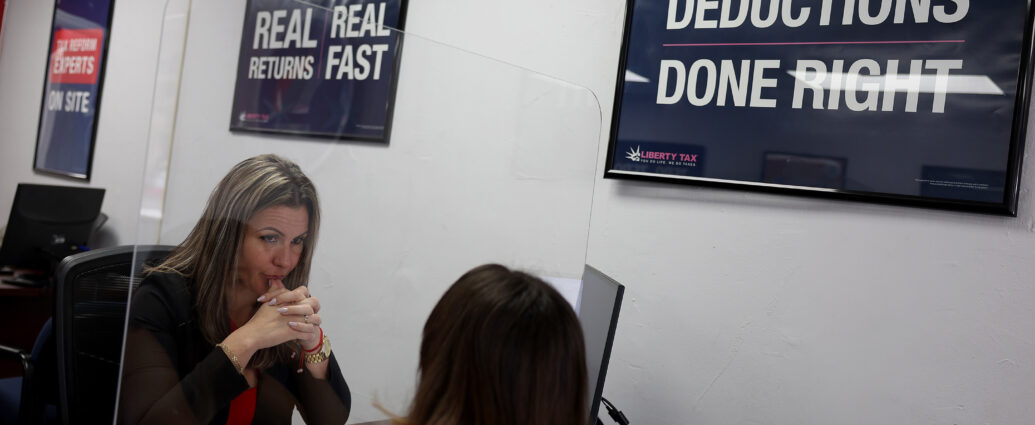
Bitmine (NYSE:BMNR) purchased 65,341 Ethereum (CRYPTO: ETH) for roughly $138 million last week, accelerating buying for the third consecutive week as Chairman Tom Lee bets ETH is in the final stages of a “mini-crypto winter.”

The Accelerating Pace

Bitmine now holds 4.66 million ETH worth approximately $9.7 billion at $2,072 per token, representing 3.86% of ETH’s circulating supply. 

The company increased its weekly purchase pace from an average of 45,000-50,000 tokens to 65,341 last week.

“Our base case is ETH is in the final stages of the ‘mini-crypto winter,’” Lee said, noting that ETH has outperformed equities by 2,450 basis points since the Iran war began, rising 18% while gold fell more than 15%.

Cash reserves stand at $1.1 billion, with total crypto and cash holdings reaching $11 billion including 196 Bitcoin (CRYPTO: BTC), a $200 million stake in Beast Industries, and $95 million in Eightco …

Full story available on Benzinga.com

This post was originally published here

Markets rebounded Monday after President Donald Trump retreated from his threat to destroy Iranian energy infrastructure and revealed talks with the regime, but the world is unlikely to revert to its prewar status quo, according to a geopolitics expert.

In a Washington Post op-ed on Thursday, Eurasia Group Chairman and former State Department official Cliff Kupchan predicted the Iranian regime, dominated by successive layers of hardliners, will remain hostile to the U.S.

“The end of the war, therefore, is unlikely to usher in a stable peace,” he warned. “That reality means the Strait of Hormuz will become a source of geopolitical risk for a long time—a live wire down the middle of the global economy.”

Even if Tehran eventually negotiates away its uranium enrichment program and longer-range ballistic missiles, it will still have drones, mines and fast attack boats that can threaten tankers, Kupchan pointed out.

And Iran wouldn’t have to use its diminished capabilities very often to scare investors. In fact, despite the U.S. and Israel decimating its military with thousands of airstrikes, the Islamic Revolutionary Guard Corps has been able to keep the Strait of Hormuz largely closed with occasional attacks on ships.

That threat has effectively bottled up about one-fifth of the world’s oil and liquified natural gas, and prices have soared, though they pulled back somewhat on Monday. Still, the genie is already out of the bottle.

“From now on traders will act based on the knowledge that Iran might at any time attack, and that new perception will create new risk premia in critically important sectors,” Kupchan said.

Indeed, Brent crude oil prices are still above $100 a barrel after tumbling 10% Monday. He expects them to trade in the $80 range for several months due to the lingering risk as well as the time needed to restore output. Oil giants like Saudi Arabia and Iraq slashed production as their exports have been throttled by the Hormuz closure.

Likewise for the LNG market, which suffered a major shock last week when Iran struck a top natural gas field in Qatar that will take years to repair. Meanwhile, the Gulf is also a major source of fertilizer, aluminum, and helium, meaning shortages will curb crop yields, industrial output, and semiconductor supplies, respectively.

The new risk environment will cause prices to stay higher globally and further stoke inflation, Kupchan added. At the same time, the United Arab Emirates, Saudi Arabia and Qatar will struggle to rehabilitate their images as safe places to invest, affecting the AI and defense sectors too.

“Capital is a coward, going only where it feels safe,” he noted. “Once unimaginable images of office and hotel towers burning after Iranian strikes will pierce investor sentiment.”

To be sure, the U.S. will likely help allies rebuild after the war and increase regional integration, but the Gulf will need a long time to become a global safe haven for capital again, Kupchan wrote.

There are indications, however, that the Iran war will persist or eventually reignite if there’s a ceasefire. Thousands of Marines are still headed for the Middle East for a potential ground assault on Iran’s main oil-export hub, Kharg Island, or perhaps coastal areas to reopen the Strait of Hormuz.

The UAE also hinted at an increasingly hardened position toward Iran that aligns more closely with the U.S. and Israeli stance.

“Our thinking does not stop at a ceasefire, but rather turns toward solutions that ensure lasting security in the Arabian Gulf, curbing the nuclear threat, missiles, drones, and the bullying of the straits,” Anwar Gargash, a senior UAE diplomat, wrote on X over the weekend. “It is inconceivable that this aggression should turn into a permanent state of threat.”

Even NATO, which nearly collapsed earlier this year as Trump threatened to seize Greenland, will eventually come around to support the Iran war, despite several members rejecting U.S. demands to provide naval escorts, Secretary General Mark Rutte said Sunday.

That’s after Iran launched ballistic missiles at a U.S.-U.K. base 2,500 miles away on the island of Diego Garcia in the Indian Ocean. The attack was unsuccessful, but it demonstrated that Iran’s missiles have much longer range than previously known and could theoretically reach most of Europe.

“If Iran would have the nuclear capability, including, together with the missile capability, it will be a direct threat, a existential threat, to Israel, to the region, to Europe, to the stability in the world,” Rutte told CBS News. “So the president doing this is crucial, and I’ve seen the polling, but I really hope the American people will be with him, because he is doing this to make the whole world safer.”

This story was originally featured on Fortune.com

This post was originally published here

Flight cancellations and delays are increasing at New York City’s LaGuardia Airport after an Air Canada Express flight collided with a fire truck while landing late Sunday night.

At least 321 flights departing from LaGuardia were canceled as of 4:30 p.m. ET on Monday, while 58 were delayed, according to data from flight tracking website FlightAware.

The tracker also showed at least 314 flights headed to LaGuardia were canceled as of 4:30 p.m. ET on Monday, and 117 were delayed, according to FlightAware.

FlightAware’s figures show that between LaGuardia’s scheduled arrivals and departures, a total of 637 flights have been canceled and 174 delayed.

LAGUARDIA PLANE CRASH AIR TRAFFIC CONTROL AUDIO REVEALS FRANTIC CALL FOR TRUCK TO ‘STOP, STOP, STOP’

The Air Canada Express CRJ-900 jet, operated by the airline’s regional partner Jazz Aviation, was carrying 72 passengers and four crew members and arrived from Montreal. It was designated as Flight 4686 and the collision crushed the nose of the airliner.

Both the pilot and first officer were killed, according to Jazz and the Port Authority of New York and New Jersey, while dozens of injuries were reported.

FRUSTRATED PASSENGERS LASH OUT AT LONG TSA LINES; GOP MESSAGES TO ‘THANK A DEMOCRAT’

Kathryn Garcia, executive director of the Port Authority, said 32 of the 41 injured had been released, while nine remained in the hospital with “serious injuries.”

Garcia said the fire truck was responding to a separate United Airlines aircraft that had declared an emergency when it “reported an issue with odor.”

Air traffic control audio indicated that the fire truck was cleared to cross Runway 4, at taxiway “Delta,” before controllers frantically tried to get the fire truck to stop. 

TSA UNION LEADER WARNS AIRPORT SECURITY RISKS WILL ‘GET WORSE’ AS MAJOR TRAVEL EVENTS LOOM

The National Transportation Safety Board (NTSB) said it was deploying a team of experts to investigate the incident, while the Federal Aviation Administration said the airport was expected to remain closed until 2 p.m. ET.

LaGuardia is one of the busiest airports in the country. It served over 30 million annual passengers in 2025, according to the Port Authority of New York and New Jersey, with a wide range of airlines operating at the airport.

GET FOX BUSINESS ON THE GO BY CLICKING HERE

The flight disruptions stemming from the incident at LaGuardia come amid travel disruptions caused by the weeks-long partial government shutdown of the Transportation Security Administration (TSA), which has led to a rise in absences among workers at airport security screening lines.

Reuters contributed to this report.

This post was originally published here

The CEOs of Kalshi and Polymarket are locked in a brutal fight to dominate the white-hot prediction market sector. But, in at least one instance, the two have put competition aside, and each has invested in an upcoming venture firm led by two early Kalshi employees. The fund, named 5c(c) Capital, is raising up to $35 million to invest in prediction market startups, according to a pitch document seen by Fortune.

The new venture firm’s name is a reference to a clause in the piece of legislation that outlined the federal regulation of commodities and derivatives, a category that now includes prediction markets. The fund’s partners are Adhi Rajaprabhakaran, the second trader hired to work at Kalshi’s affiliated market maker, and Noah Zingler-Sternig, Kalshi’s former head of operations.

In addition to Kalshi CEO Tarek Mansour and Polymarket CEO Shayne Coplan, the fund’s early backers are a star-studded slate of venture investors, according to the document. They include the venture giant Marc Andreessen, through the fund Moneta Luna; Micky Malka, the founder of the fintech investor Ribbit Capital; and Kyle Samani, the former managing partner at the crypto VC Multicoin Capital.

Rajaprabhakaran, one of the founding partners of 5c(c) Capital, declined to comment. A spokesperson for Marc Andreessen’s venture firm Andreessen Horowitz declined to comment. Polymarket and Malka didn’t immediately respond to requests for comment.

A Kalshi spokesperson confirmed Mansour’s participation. “Adhi knows that the next few years are critical to build out infra[structure] around prediction markets,” Samani said in a statement, confirming that he backed 5c(c) Capital.

Prediction market frenzy

The ongoing fundraise from the two early Kalshi employees comes as prediction markets have become one of the buzziest sectors in Silicon Valley. Kalshi is raising $1 billion at a $22 billion valuation in a round led by seasoned Silicon Valley investor Coatue Management. And its competitor Polymarket is also eyeing a similar valuation of around $20 billion. The trading platforms let users bet on a diverse array of subjects, from where the prices of Bitcoin or Ethereum will land by the end of the week to which college team will win the NCAA basketball tournament.

Amid investor enthusiasm, state governments have tried to crack down on the rise of prediction markets, especially as Kalshi and Polymarket have opened up their platforms to sports markets. Regulators claim that the two prediction markets are no more than sports gambling locales, which must adhere to strict state laws. Kalshi is facing about 20 federal lawsuits that call into question the platform’s legality. And the Arizona Attorney General filed criminal charges against the startup last week. 

Kalshi and Polymarket, whose U.S. trading arm isn’t yet live, have argued that prediction markets are different from sports gambling and that the authority of the federal regulator CFTC to regulate prediction markets supersedes the power of the states.

Despite this fraught legal situation, the pitch document for 5c(c) Capital describes prediction markets as a “generational investment opportunity.” The pair plan to back around 20 companies over the next two years, including market makers in prediction markets, designers of prediction market indices, among other categories.

The venture fund’s first close is within the next month.

This story was originally featured on Fortune.com

This post was originally published here

A landmark free trade deal between the European Union and four South American countries will begin on May 1 after more than a quarter-century of negotiations and new global economic uncertainty unleashed by tariffs, critical mineral controls and the war in Iran.

The European Commission said Monday that the start date for the EU-Mercosur free trade deal was triggered by Brussels receiving a “note verbale” from Paraguay that it had approved the deal, which is a key part of the 27-nation EU’s strategy to slash economic dependencies on China and the United States.

Parliaments in Uruguay, Brazil, Paraguay and Argentina have ratified the deal that links more than 700 million people and accounts for 25% of global gross domestic product. Bolivia, the newest Mercosur member, didn’t participate in negotiations but will be able to join the deal in the coming years.

“The priority now is turning this EU-Mercosur agreement into concrete outcomes, giving EU exporters the platform they need to seize new opportunities for trade, growth and jobs,” said European trade commissioner Maroš Šefčovič.

Fierce opposition by farmers and environmentalists delayed the deal in December. It then hit another snag after EU lawmakers voted to send the deal to the bloc’s judiciary. The EU executive responded by saying it would provisionally enact the deal — effectively sidestepping the European Parliament.

That means trade will begin in May and halt only if the European Court of Justice rules against it.

French President Emmanuel Macron called that move “a bad surprise.” France and Poland had led a campaign to halt or temper the deal with clauses protecting consumers and agricultural producers.

European Commission President Ursula von der Leyen has shrugged off such criticism of a deal she describes as vital for the EU’s survival in a newly disordered world.

“This is about resilience, this is about growth, and Europe shaping its own future,” she told a news conference in February. Recently, she has not taken questions about the issue.

Von der Leyen is in Australia this week for talks aimed at a potential free trade deal, defense cooperation and critical mineral supplies.

This story was originally featured on Fortune.com

This post was originally published here

Strategy (NASDAQ:MSTR) purchased 1,031 Bitcoin (CRYPTO: BTC) for $76.6 million last week, a dramatic slowdown from over $1 billion in purchases during each of the previous two weeks when the company issued STRC preferred shares.

The Slowdown Explained

Strategy funded last week’s purchase entirely through common stock sales rather than STRC preferred shares, marking a return to smaller acquisition sizes typical of periods when the company relies solely on equity offerings.

Total holdings now stand at 762,099 Bitcoin acquired for approximately $57.69 billion, or an average price of $75,694 per coin. 

With Bitcoin trading just under $70,000, Strategy’s holdings sit below cost basis.

The previous two weeks saw purchases exceeding $1 billion each as Strategy took advantage of STRC preferred share issuance. 

The company acquired 22,337 Bitcoin for $1.57 billion …

Full story available on Benzinga.com

This post was originally published here

The U.S. economy was supposed to start the year with a bang, fueled by an unusually large jump in tax refunds from President Donald Trump’s tax cut legislation. Yet spiking gas prices are on track to eat up those refunds, leaving most Americans with little extra to spend.

“Next spring is projected to be the largest tax refund season of all time,” Trump said in a prime-time speech in December that was intended to address voters’ concerns about the economy and stubbornly high prices.

But that was before the Iran war, which began Feb. 28. Oil and gas prices have soared since then, with the nationwide average price of gas reaching $3.94 Sunday, up more than a dollar from just a month earlier.

Gas prices are likely to remain elevated for some time, even if the war ends soon, because shipping and production have been disrupted and will take time to recover. Economists now expect slower growth this spring and for the year as a whole, as dollars that are spent on gas are less likely to be used for restaurant meals, new clothes, or entertainment.

Lower and middle-income households are likely to be hit particularly hard, because they receive lower refunds, while spending a greater proportion of their earnings on gas.

“The energy shock is to going to hit those who have the least cushion,” said Alex Jacquez, chief of policy at the left-leaning Groundwork Collaborative and a former economist in the Biden White House. “And it doesn’t look like those tax refunds are going to be here to save them.”

Neale Mahoney, director of the Stanford Institute for Economic Policy Research, calculates that gas prices could peak in May at $4.36 a gallon, based on oil price forecasts by Goldman Sachs, followed by slow declines for the rest of the year. The notion that gas prices decline much more slowly than they rise is so ingrained among economists that they refer to it as the “rocket and feathers” phenomenon.

In that scenario, the average household would pay $740 more in gas this year, nearly equal to the $748 increase in refunds that the Tax Foundation has estimated the average household will receive.

Through March 6, refunds have risen by much less than that, according to IRS data: They have averaged $3,676, up $352 from $3,324 in 2025. Still, average refunds could rise as more complex returns are filed.

Other estimates show similar impacts. Economists at Oxford Economics, a consulting firm, estimate that if gas prices average $3.70 a gallon all year, it will cost consumers about $70 billion — more than the $60 billion in increased tax refunds.

The gas price spike comes with many consumers already in a precarious position, particularly compared to 2022, when gas prices also soared because of Russia’s invasion of Ukraine. At that time, many households still had fattened bank accounts from pandemic-era stimulus payments and companies were hiring rapidly and sharply lifting pay to attract workers.

Now, hiring is nearly at a standstill and Americans’ saving rate has steadily fallen in the past few years as many households borrow more to sustain their spending.

“When you start looking across the perspective from a consumer side, you’re seeing people who have maxed out their credit cards, are using ‘buy now, pay later’ to purchase their groceries,” said Julie Margetta Morgan, president of The Century Foundation, a think tank. “They’re making it work for now, but that can fall apart quite quickly.”

The impact will likely worsen the “K-shaped” narrativ e around the U.S. economy, analysts said, in which higher income households have fared better than lower-income households. The bottom 10% of earners spend nearly 4% of their incomes on gasoline, Pantheon Macroeconomics estimates, while the top 10% spend just 1.5%.

For now, most analysts still expect the U.S. economy to expand this year, even if more slowly, given the gas price shock. Higher gas prices will likely worsen inflation in the short run, but over time weaker spending will also slow growth.

American consumers and businesses have repeatedly shaken off shocks since the pandemic — soaring inflation, rising interest rates, tariffs — and continued to spend, defying concerns that the economy would tip into recession. Many economists note that the proportion of their incomes that Americans spend on gas and other energy has fallen significantly compared with a decade ago.

Data from the Bank of America Institute, released Friday, showed that spending on gas on the bank’s credit and debit cards shot 14.4% higher in the week ended March 14 compared with a year ago. Before the war, such spending was running 5% below the previous year, a benefit to consumers.

Spending on discretionary items — restaurant meals, electronics, and travel — is still growing, the institute said, evidence of consumer resilience. But there is little sign it is accelerating, as many economists had hoped.

“The longer these gasoline prices persist, the more that will gradually sap consumer discretionary spending,” said David Tinsley, senior economist at the institute.

Other analysts expect growth will slow because of the war. Bernard Yaros and Michael Pearce, economists at Oxford Economics, forecast that the U.S. economy will grow just 1.9% this year, down from an earlier estimate of 2.5%.

“We had anticipated a lift in spending from a bumper tax refund season,” they wrote, “but the rise in gasoline prices, if sustained, would more than offset that boost.”

This story was originally featured on Fortune.com

This post was originally published here

The head of the International Energy Agency said Monday that the global economy faces a “major, major threat” because of the Iran war.

“No country will be immune to the effects of this crisis if it continues to go in this direction,” Fatih Birol said at Australia’s National Press Club in Canberra on Monday.

The crisis in the Middle East, he said, has had a worse impact on oil than the two oil shocks of the 1970s combined, and a worse effect on gas than the Russia-Ukraine war.

Israel launched a new wave of attacks early Monday against Tehran. U.S. President Donald Trump also warned the United States will “obliterate” Iran’s power plants if Tehran doesn’t fully open the Strait of Hormuz within 48 hours. That prompted Iran to say it would respond to any such strike with attacks on U.S. and Israeli energy and infrastructure assets.

Trump is facing increasing pressure at home to secure the strait as oil prices soar.

One major fear is that the war could knock out oil and gas production in the Middle East for a long time, which would mean high prices could last a while and cause inflation to rip higher around the world. The U.S. stock market has a history of bouncing back relatively quickly from past conflicts in the Middle East and elsewhere, as long as oil prices don’t stay too high for too long.

Iran on Monday renewed strikes on its Gulf neighbors and threatened to start hitting their power plants.

“The situation is very severe,” Birol said in Australia.

The oil crises of 1973 and 1979, he said, lost together 10 million barrels per day, causing “major economic problems around the world, the recessions. And today, only as of today, we lost 11 million barrels per day — so more than two major oil shocks put together.”

After Russia’s invasion of Ukraine, he said, the gas markets, especially in Europe, “lost about 75 billion cubic meters, 75BCM. And as of now, as a result of this crisis, we lost about 140BCM, almost twice (as much).”

Birol said 40 energy assets in nine countries across the region were “severely or very severely damaged.”

“Some of the vital arteries of the global economy, such as petrochemical, such as fertilizers, such as sulfur, such as helium — their trade is all interrupted, which would have serious consequences for the global economy,” he said.

He said the International Energy Agency, “in order to comfort the markets,” earlier released 400 million barrels of oil, “which is historic. We have never released so much oil to the markets. … The single most important solution to this problem is opening up the Hormuz Strait as things stand now.”

The official added that he was consulting with governments in Europe, Asia, North America and the Middle East about the prospect of releasing further stockpiled oil.

“We will see, we will look at the markets,” he said. “If it is necessary, of course, we will do it, but we will look at the conditions, we will analyze, assess the market and discuss with our member countries.”

___

AP writer Foster Klug contributed to this report from Tokyo.

This story was originally featured on Fortune.com

This post was originally published here

Arrivals and departures were temporarily paused at Newark Liberty International Airport in New Jersey on Monday morning after air traffic controllers evacuated the tower due to a burning smell coming from an elevator, the Federal Aviation Administration said.

It wasn’t immediately clear what caused the issue, and the agency said it was determined that no fire had occurred. The delay lasted less than an hour, and no injuries were reported.

During the pause, FAA staff relocated to a backup tower at the airport, according to the Port Authority of New York and New Jersey, which operates the airport. They later returned to the primary tower.

Earlier this month, four airports serving Washington, D.C., Baltimore and Richmond, Virginia, halted all flights for over an hour because of a strong chemical smell that was impeding air traffic controllers. Federal Transportation Secretary Sean Duffy said the source of the strong odor was traced to a circuit board that overheated and was replaced.

The temporary pause at Newark Liberty was not related to a fatal accident at New York’s LaGuardia Airport on Sunday night. In that episode, two people were killed and several others were seriously injured when an Air Canada regional jet struck a fire truck on a runway while landing, officials said.

This story was originally featured on Fortune.com

This post was originally published here

Dogecoin (CRYPTO: DOGE) could gain new utility and yield opportunities through DogeOS, an app-layer project designed to expand its use beyond payments while preserving its meme-driven identity.

Building Utility With DogeOS

In an interview with Crypto India Magazine, DogeOS CEO and co-founder Jordan Jefferson said Dogecoin remains one of the most underutilized assets in crypto despite its large market cap of around $15 billion and cultural reach.

In a recent discussion, Jefferson, a crypto builder since 2011, said Dogecoin has stayed closer to crypto’s original vision of peer-to-peer money, while Bitcoin’s (CRYPTO: BTC) …

Full story available on Benzinga.com

This post was originally published here

Two people were killed and several others badly hurt when an Air Canada regional jet struck a fire truck on a runway while landing at New York’s LaGuardia Airport, officials said.

The pilot and copilot were killed in the late Sunday night collision, which crushed the nose of the aircraft, while around 40 passengers and crew members were taken to area hospitals, some with serious injuries. Most have since been released from treatment, authorities said Monday.

Two Port Authority employees who were traveling in the fire truck also suffered injuries that were not believed to be life-threatening, aid Kathryn Garcia, executive director of the Port Authority of New York and New Jersey, which operates the airport.

In the moments before the crash, an air traffic controller could be heard on a radio transmission giving clearance to a vehicle to cross part of the tarmac, then trying to stop it.

The airport was shut down and air traffic was diverted, and on Monday morning operations also were halted at Newark Liberty International Airport in neighboring New Jersey. Air traffic controllers evacuated the tower because of a burning smell from an elevator, the Federal Aviation Administration said.

The shutdowns happened during long waits for travelers due to the busy spring break travel season and a shortage of Transportation Security Administration officers because of a lack of routine funding for the Department of Homeland Security.

Pilot and copilot were based out of Canada

The pilot and copilot who died were both based out of Canada, Garcia said during a news conference.

The airport will remain closed until at least 2 p.m. Monday to facilitate the investigation, which is being led by the National Transportation Safety Board.

“Two pilots were killed and dozens injured in this tragedy. Our thoughts are with the victims, their families, and everyone affected,” New York Gov. Kathy Hochul posted online.

The fire truck was traveling across the runway to respond to a separate incident aboard a United Airlines flight, whose pilot had reported “an issue with odor,” said Garcia, who deferred additional questions about the sequence of events leading up to the crash to the NTSB.

There were 72 passengers and four crew members aboard the aircraft, a Jazz Aviation flight operating on behalf of Air Canada, according to a statement from the airline. The flight originated at Montreal-Pierre Elliott Trudeau International Airport, the major airport serving Montreal.

Photos and videos from the scene showed severe damage to the front of the aircraft, with cables and debris hanging from a mangled cockpit. Nearby, a damaged emergency vehicle lay on its side.

Stairways used to evacuate passengers from the aircraft were pushed up to the emergency exits on the jet, a Bombardier CRJ. The impact left the jet with its crumpled nose tilted upward.

Air traffic controller tried to stop vehicle after giving clearance

The air traffic controller tried to warn the vehicle.

“Stop, Truck 1. Stop,” the transmission says. The controller can then be heard frantically diverting an incoming aircraft from landing.

Air traffic controllers are not impacted by the partial government shutdown that has caused long delays at airport security checkpoints in recent days. They have been affected by past shutdowns.

As passengers straggled out of the airport into the dark early Monday, some described having arrived at LaGuardia hours before their flight, hoping to beat the lines.

Arturo Davidson said his Miami-bound flight was on the tarmac Sunday night when fellow passengers saw the collision or its aftermath and reactions rippled through the cabin.

The passengers were soon told there had been an accident. About 20 minutes later, they were informed the airport was closing and they must return to the terminal, he said later Monday, gazing at a departure board filled with cancellations.

“I don’t think we’re going at two,” he sighed, referring to the time Monday afternoon that officials gave as the earliest for reopening LaGuardia.

One of the nation’s busiest airports

LaGuardia was 19th busiest in 2024 out of more than 500 U.S. airports, with over 16.7 million passengers boarding there, according to a 2025 FAA database.

The airport, which opened to commercial traffic in 1939, covers 680 acres (275 hectares) and borders Flushing and Bowery bays in Queens. The Port Authority of New York and New Jersey describes it as “one of the nation’s leading domestic gateways for business and leisure travel” in its 2024 Airport Traffic Report.

LaGuardia is one of 35 major airports across the country equipped with an advanced surface surveillance system that uses radar and data from locator systems on planes to alert controllers to potential conflicts on runways, according to the FAA.

There are three different models of Aircraft Rescue and Firefighting trucks, according to a video put out last year about the unit by the Port Authority. One carries 1,500 gallons (5,678 liters) of water and firefighting chemicals. Two others carry 3,000 gallons (11,356 liters) of water. One of those models is also equipped with a turret that can extend 65 feet (20 meters) to penetrate inside an aircraft and discharge firefighting chemicals.

It’s still too early to tell what went wrong, and investigators from the NTSB will now start collecting facts, interviewing people, downloading recordings and reviewing data from flight recorders, aviation safety expert Jeff Guzzetti said.

“It might be easy enough just to say, ‘Oh, the controller made a mistake.’ But there’s got to be deeper questions,” he said.

___

The story has been updated to correct that the Port Authority video on trucks was put out last year, not last month.

This story was originally featured on Fortune.com

This post was originally published here
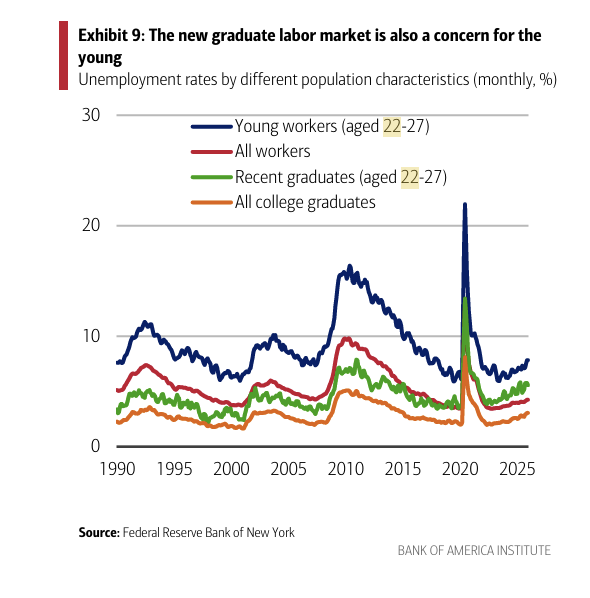
As of 9 a.m. Eastern Time today, oil sold for $101.44 per barrel (using Brent as the benchmark, which we’ll get into momentarily). That’s $10.64 lower than yesterday—but approximately a $29 rise over the past year.

Oil price per barrel % Change
Price of oil yesterday $112.08 -9.49%
Price of oil 1 month ago $71.06 +42.75%
Price of oil 1 year ago $72.34 +40.22%

Will oil prices go up?

It’s impossible to predict the future of oil prices. Several factors determine the movement of oil, but it ultimately boils down to supply and demand. Again, when threats of economic downturn, war, etc. are high, the oil trajectory can turn rapidly.

How oil prices translate to gas pump prices

When you pay for gas at the pump, you’re paying for more than just the crude oil itself; you’re also springing for links along the chain, such as the refineries and wholesalers—not to mention taxes and local gas station markups.

Still, the crude oil aspect affects the final price most dramatically, as it typically accounts for more than half the price per gallon. When oil prices spike, so do gas prices. And frustratingly, when oil prices drop, gas prices tend to take their time drifting down to the lower price (sometimes referred to as “rockets and feathers”).

The role of the U.S. Strategic Petroleum Reserve

In case of emergency, the U.S. has a store of crude oil known as the Strategic Petroleum Reserve. Its primary purpose is energy security in case of disaster (think sanctions, severe storm damage, even war). But it can also go a long way toward softening crippling price hikes during supply shocks.

It’s not a long-term answer—more of an immediate relief to assist the consumer and keep critical parts of the economy running, like key industries, emergency services, public transportation, etc.

How oil and natural gas prices are linked

Oil and natural gas are both major energy fuels. A big change in oil prices can affect natural gas by extension. For example, if oil prices increase, some industries may swap natural gas for some segments of their operations where possible—which increases demand for natural gas.

Historical performance of oil

When examining oil’s performance, there are generally two major benchmarks:

  • Brent crude oil is the main global oil benchmark.
  • West Texas Intermediate (WTI) is the main benchmark of North America.

Between the two, Brent better represents global oil performance because it prices much of the world’s traded crude. And, it’s often the best way to track historical oil performance. In fact, even the U.S. Energy Information Administration now uses Brent as its primary reference in its Annual Energy Outlook.

Looking at the Brent benchmark across several decades, oil has been anything but steady. It’s seen spikes due to factors such as wars and supply cuts, and it’s also seen crashes from global recessions and an oversupply (called a “glut”). For example:

  • The early 1970s brought the first big oil shock when the Middle East cut exports and imposed an embargo on the U.S. and others during the Yom Kippur War.
  • Prices dropped in the mid-1980s for reasons such as lower demand and more non-OPEC oil producers entering the industry.
  • Prices spiked again in 2008 with increased global demand, but it soon plummeted alongside the global financial crisis.
  • During the 2020 COVID lockdown, oil demand collapsed like never before—bringing prices below $20 per barrel.

All to say, oil’s historical performance has been anything but smooth. Again, it’s hugely affected by wars, recessions, OPEC whims, evolving energy initiatives and policies, and much more.

Energy coverage from Fortune

Looking to stay up-to-date regarding the latest energy developments? Check out our recent coverage:

Frequently asked questions

How is the current price of oil per barrel actually determined?

The current price of oil per barrel depends largely on supply and demand, including news about potential future supply and demand (geopolitics, decisions made by OPEC+, etc.). In the U.S., prices also move based on how friendly an administration is to drilling, as it can affect future supply. For example, 2025 saw the Trump administration move to reopen more than 1.5 million acres in the Coastal Plain of the Arctic National Wildlife Refuge for oil and gas leasing, reversing the Biden administration’s policy of limiting oil drilling in the Arctic.

How often does the price of oil change during the day?

The price of oil updates constantly when the “futures” markets are open. A futures market is effectively an auction where people agree to buy or sell oil in the future. As long as people and companies are trading contracts, the oil price is changing.

How does U.S. shale oil production affect the current price of oil?

In short, shale is rock that contains oil and natural gas. Think of shale as energy yet to be tapped. The more shale the U.S. accesses, the more energy we’ll have—and the more easily oil prices can keep from spiking as much thanks to a greater supply.

How does the current price of oil impact inflation and the broader economy?

When oil is expensive, it tends to make everyday items cost more. This can be related to energy (your heating, gas utilities, etc.), but it’s also due to the logistics involved with making those items accessible to you. Shipping, for example, can affect the price of things at the grocery store, as it’s more expensive to get those products from warehouses and farms onto the shelf.

This story was originally featured on Fortune.com

This post was originally published here
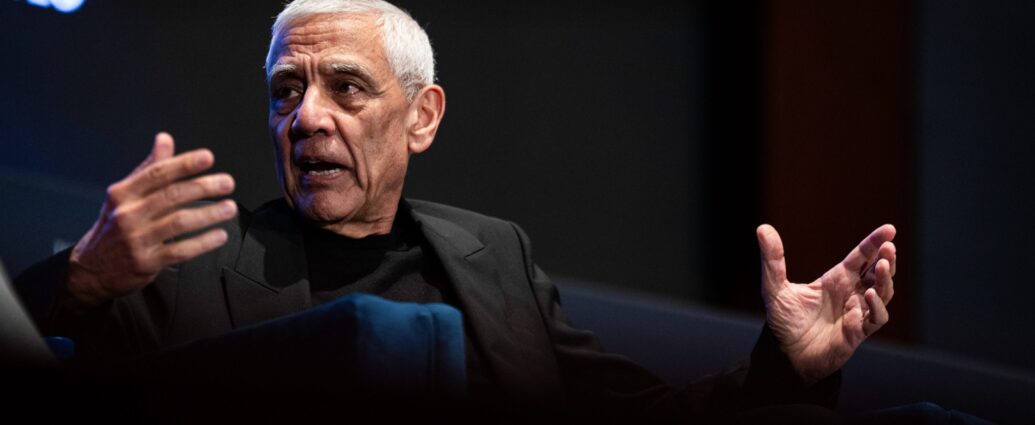
Around the boardroom table, Carmen-Maja Rex’s colleagues slip easily between French and English. When the Airbus CHRO takes her seat, the discussion naturally settles into English without anyone flagging the switch. For a company founded in France, built partly in Germany, assembling aircraft across Europe and flying them globally, English has quietly become the default working language. The same takes place just a few hundred kilometers away at Sodexo’s headquarters just outside of Paris. CHRO Heather Jacobs is American, and most of her conversations in the boardroom are in English, despite the company having roots in the French city of Marseille.

English is now the most widely spoken language in history, with around 1.5 billion speakers worldwide, and fluency in it has quietly become an unwritten yet essential requirement for many senior roles at multinationals. This expectation can disadvantage those who are not native English speakers, and now sits against a wider political backdrop in which leaders such as Donald Trump have designated English as the U.S.’s official language, promoting warnings from scholars about how easily the ‘speak English’ rhetoric can slide into exclusion. 

The OECD examined 11 million online job postings in 2021, across the EU and the U.K., and found that 22% explicitly required English proficiency. German was the next most frequently requested language, appearing in 1.7% of listings, often in tourism-related roles. French was required in only 1.1% of postings, while Italian was required in only 0.4%. 

In Europe’s boardrooms, the growing dominance of English isn’t just a matter of habit; it’s also driven by global business demands, with effects that reach into areas such as rules and safety. It also shapes who fits in, who advances, and how companies operate. The question now is whether AI is reinforcing English as a ‘superior’ language of leadership, or simply making it easier for organizations to maintain a common corporate language—and whether businesses could realistically return to a more localised way of functioning.

A language born of power, not policy

Although English is mandated as the common corporate language in many Fortune 500 Europe headquarters across the region, its dominance is, in many ways, a historical “accident”. Nina Bellak, PhD, Senior Lecturer at the University of Vienna, links the power of English in boardrooms to postwar history. “There’s this power dynamic at a national level between the colonizer and colonized, and it’s a very similar dynamic at a corporate level,” she says. Explaining that English became far more prominent post World War as U.S. economic and political power expanded across the continent. 

Over the following decades, English gradually displaced local languages such as French and German as the dominant working language. Many Fortune 500 European companies have mandated English for simple operational reasons, ranging from safety standards to international financial reporting. Airbus’s decision to mandate English as its working language goes back to the company’s birth in the 1970s, says Rex. “This was very surprising, especially in those days in France—there were not many French companies [that agreed] on English [becoming] the common language,” she adds. The reasoning was largely practical: aviation safety, where English is the global standard. 

Similarly, in the early 2000s, Siemens began using English more consistently after listing on the NYSE, particularly for financial communications, says Nanda Burke, global head of talent and organization at Siemens. In other cases, companies adopted English more organically. For example, at the Swiss electrification and automation company ABB, English became the common corporate language following the merger of Swedish firm ASEA and Swiss company Brown Boveri in 1988. With neither Swedish nor German able to claim precedence, English emerged as neutral ground—less a deliberate strategy than a diplomatic necessity, according to Carolina Granat, ABB’s chief human resources officer.

“This was very surprising, especially in those days in France—there were not many French companies [that agreed] on English [becoming] the common language.”

Carmen-Maja Rex, chief human resources officer, Airbus

Beyond industry factors, the prevalence of English within Fortune 500 companies in Europe also reflects its widespread use across countries. In the Netherlands and countries in Scandinavia for example, English classes are compulsory at schools and so individuals pick up the language at a much younger age, hence often functioning as a natural second language. Kaija Bridger, EVP people & communications at elevator engineering company, KONE, says that, in Finland, where the company is headquartered, the country’s small domestic market has caused people to look outward and so most senior leaders operate comfortably in English. “Finnish wouldn’t be the most dominant language to begin with,” she says, adding that one newly employed executive member recently asked for support in learning Finnish. 

Lost in translation

Research suggests this English-first narrative hides a more complex reality. Bellak finds that many multinationals claim to have an official corporate language policy, but day-to-day language choice is messy, hard to regulate and often up to the individual. 

Whilst many companies have officialized English as the common corporate language, local languages remain critical on the ground. At Siemens, day-to-day meetings are conducted in English, although local languages are highly present, and “that is a strength,” says Burke, who is not fluent in German but has been learning “not because it was required but because I now live part-time in Munich and genuinely want to understand and speak the local language.”

At KONE, which operates in 70 countries, Bridger describes the company as a “global company with very local operations”. While English is essential for regional and global roles, local languages dominate among technicians in the field. “Let’s say, all of a sudden, the escalator stops working. Someone needs to be pretty close by and [a technician] needs to be able to fix the lift. That’s where we come to the language and proximity of the business…and that’s where local language plays a huge role,” she adds. Similarly, Sodexo’s Jacobs explains that despite English being the corporate language, “local languages naturally dominate in the markets where we operate”, such as India and mainland China. At the company’s headquarters, more than 25 nationalities are present and so “you hear a little bit of everything,” she notes. While many of these firms have formally mandated English, in practice, they rely on a multilingual ecosystem to function.

Kaija Bridger, EVP people & communications at KONE.
KONE

Behind every official language policy, the question arises: whose voices carry furthest when English becomes the default? Whilst most Fortune 500 Europe companies have not officially stated that English is a necessity, it’s almost assumed that at the C-Suite or senior level, individuals can converse in English. “If I think about the C-suite, senior leadership and even middle management roles…If there’s an English language requirement, the idea really is that the person is proficient enough,” says KONE’s Bridger. 

Fluency, status and who gets ahead

Nevertheless, companies remain careful not to treat polished English as a proxy for leadership potential. “Talent is about capability, impact, and values-driven leadership, not accent or fluency,” says ABB’s Granat. Where certain language requirements do matter, most companies take responsibility for removing barriers: localizing job postings, adapting assessment processes and providing learning opportunities so that employees can build language confidence, not only in English but also in the local language of the host country when it is required or encouraged. “Within my first month of being with Sodexo, I had a full week outside of the office [in Southwest France], not just [to learn the] language, but it was about cultural adaptation as well,” Jacobs adds. 

Although many companies invest in language training for employees—including English courses for staff outside English-speaking countries—employees can still experience a sense of status loss. Associate Professor at BI Norwegian Business School, Guro Refsum Sanden, uses this term to describe how non-native speakers of the common corporate language sometimes feel a subjective drop in their professional esteem, as if their competence is being judged through their language skills rather than their actual expertise. This can leave even highly skilled non-native English speakers feeling inadequate when required to operate in a foreign language. By contrast, native English speakers may gain status simply because they remain fluent in the corporate language, even when they are no more professionally capable than their peers—a form of “unearned status”, Refsum Sanden calls it. 

Language isn’t just a communication tool—whether English or the local language of the host country—it is a tool that enables people to integrate and signal whether they ‘belong’ in boardrooms as well as society. Native English speaker Brady Dougan spent eight years as CEO of Credit Suisse and left without ever speaking German; he later called it one of his regrets,  and his inability to speak German was criticized in the Swiss media. In 2015, Anshu Jain, the Indian-born British co-CEO of Deutsche Bank opened the bank’s annual meeting in German before switching to English. However, less than three weeks later, Jain resigned as co-CEO after losing investor confidence. 

Not speaking the native language didn’t directly cost Dougan and Jain their jobs; however, it drew criticism and made it harder for them to connect with local investors, clients and customers. English can evidently get senior leaders into the boardroom; whether they can retain the role without speaking the local language is less certain.

The translator in the room 

That’s also the limit of what AI can currently change. Translation tools, meeting summaries and captions have the ability to smooth over gaps in fluency and assist non-native speakers in writing emails, translating, and functioning more confidently in English-first settings. Airbus’ Rex notes that “AI is supportive in order to build bridges,” and adds that the company has rolled out Gemini globally, resulting in improved translation efficiency. Similarly, Jacobs notes how AI has improved translation processes at Sodexo, making communication faster and more accurate for mandatory learning and employee engagement surveys. 

Yet CHROs broadly agree that even the best AI tools require careful handling to preserve the essence of communication and that AI is nowhere near ready to replace human leadership and interaction. Refsum Sanden warns that the more organisations lean on AI to translate and generate text, the greater the risk that it will “converge” the way people communicate, eroding differences and nuances in local languages. If multilingual companies come to depend on those systems, technology will start to dictate what is considered ‘appropriate’ language in the boardroom and even language included in emails and chat—potentially narrowing, rather than enriching, the range of voices and communication styles that make it into the corporate conversation. 

Native English speakers may gain status simply because they remain fluent in the corporate language, even when they are no more professionally capable than their peers—a form of “unearned status”

Guro Refsum Sanden, Professor at BI Norwegian Business School

Executives from KONE, Sodexo and ABB all describe English as the practical “common denominator” that enables cross-border collaboration. Global companies will always have to balance the ‘local’ with the  ‘global’ and KONE’s Bridger doesn’t see that basic tension changing anytime soon. The local side is driven by the markets companies operate in and the customers served, whereas the global side brings scale, shared platforms and processes so that local teams do not need to reinvent the wheel. This is also dependent on population, country and market size. Bridger notes that Finland is a “small nation and [the language] is one of the hardest languages to learn.” Hence, native Finnish speakers at times are empathetic and remain open-minded towards language as a whole.

It’s hard to imagine multinationals operating without at least one shared language to connect their multicultural and multilingual operations. Whether local languages can retain space in multinational boardrooms? “We’re not really there right now,” says Sodexo’s Jacobs, noting that English has effectively become the universal language at the senior level—and that won’t change unless something else emerges to replace it. 

Whilst English has slipped into Europe’s boardrooms as a common bridge over the last few decades, it now carries political and technological weight. President Trump signed the historic executive order designating English as the official language of the United States on March 1st 2025, marking the first time the country has ever had a national language. A symbolic move highlighting how closely language, power and identity are intertwined.

English may remain the boardroom default for the foreseeable future, but it is up to companies to define how tightly they choose to hold onto it—and who that choice leaves out.

This story was originally featured on Fortune.com

This post was originally published here

Good morning!

Seven years after Tulsa Remote began paying workers $10,000 to move to their Oklahoma city, the experiment has become a case study in how relocation incentives can bolster a local economy and widen the workforce employers can tap. More than 4,000 workers relocated, contributing some $878 million in economic impact.

That success paved the way for Tulsa’s next act: helping employers tap global talent. Since launching in 2022, the Tulsa Visa Network has helped nearly 100 people from 34 countries secure visas, offering a practical model at a moment when costly H-1B visa fees and a more complicated immigration environment are forcing many employers to rethink how they recruit internationally.

Stan Khrapak, who leads the Tulsa Visa Network, says his program has seen steady demand this year from both individuals seeking visa support and small to midsize companies trying to navigate an increasingly complex system. Roughly half of those the program has helped are in STEM, he says, though the network is also supporting hiring in fields like finance and accounting.

Justin Harlan, managing director of parent program Experience Tulsa, says Tulsa Remote has attracted professionals whose remote jobs strengthen the community without displacing local workers—and that the Visa Network is built on the same premise.

“It’s highly skilled folks coming in [for roles] that companies often have a hard time filling at a local level, and it makes it very hard to argue whether this is adding something to the community.” 

The bigger lesson for HR leaders is that Tulsa’s strategy is not really about cash incentives alone. It is about designing an employee experience that makes people want to live somewhere, stay, and build a life there, Harlan adds.

The Experience Tulsa program has expanded its offerings well beyond the original $10,000 and visa assistance. Participants now receive a $200 monthly health and wellness stipend, access to a free coworking space, and a remote-work certification course developed in partnership with NYU.

The organization also hosts community building events such as movie nights and dance lessons. That, Harlan says, is where many employers still fall short. Companies, especially those with hybrid or remote workforces or those trying to attract global talent, need to think intentionally about how employees experience life outside the office.

“Oftentimes, HR departments will give that lip service or do the quick and easy things that we’re accustomed to,” Harlan says. “But when companies do go out of their way to go above and beyond, I think it’s noticed and can make a big impact in terms of the quality of life that somebody has.”

Kristin Stoller
Editorial Director, Fortune Live Media
kristin.stoller@fortune.com

This story was originally featured on Fortune.com

This post was originally published here

The U.S.’s eye-watering debt burden poses an “existential threat to the future of our nation,” the chairman of the House Budget Committee has warned, as the country’s borrowing figure tipped over $39 trillion.

Texan Republican Jodey Arrington highlighted last week that it had taken the U.S. nearly two centuries to build a debt pile worth $1 trillion, whereas a mere matter of decades later, the Treasury is forking out that figure every year merely in service payments on the debt.

For the fiscal year 2025, the Treasury paid $1.22 trillion in interest on the debt, and for FY2026, the government has already paid out $520 billion. By 2036, that figure is expected to hit to $2.1 trillion annually, according to calculations by the Congressional Budget Office.

Indeed, U.S. debt didn’t reach the $1 trillion mark until the early 1980s, hitting $1.1 trillion under President Ronald Reagan.

As Arrington points out: “It took roughly 200 years to accumulate the first $1 trillion. Now we add that in a matter of months. Every child in America today carries a $530,000 share of this debt—a crushing legacy we must reverse. Compounding the problem, we now spend more than $1 trillion a year just on interest to service our debt—more than the entire defense budget and triple the amount when Biden took office.”

Arrington isn’t alone in his concern over the nation’s financial trajectory. Figures on the private side of the economy like Jamie Dimon and Ray Dalio have warned over a reckoning caused by debt, and U.S. Federal Reserve chairman Jerome Powell has also expressed the need for an “adult conversation” about the issue.

There is a range of opinions on which methods should be employed to wrangle borrowing and its associated interest costs. For example, the Committee for a Responsible Federal Budget has advocated for a federal unified budget deficit at or below 3% of GDP, which at the moment sits at around 6%. This idea has been backed by the likes of Representatives Bill Huizenga and Scott Peters, the co-chairs of the Bipartisan Fiscal Forum—indeed, the entire steering committee for the forum has backed the notion and introduced a resolution to that effect.

Arrington has called for a harder-line approach. The resolution for a deficit of 3% of GDP is defined more loosely as a target: Arrington wants to open up a conversation about adding fiscal responsibility to the country’s very constitution.

He said last week: “Here’s the sad, sobering, and stunning truth: despite the urgency of our fiscal crisis, Congress is paralyzed—unable to meet the urgency of the moment. So, if Washington won’t act, then it’s time to look beyond our nation’s capital. The Founders gave us another path in Article V of the Constitution, empowering the states and the American people to step in and demand fiscal discipline.

“I’m calling on Congress to convene an Article V Convention. It’s time to restore sanity in our nation’s capital and reverse the curse looming large over this country.”

An Article Five Convention allows amendments to the Constitution, for example, targeting borrowing and government spending. If two-thirds of state legislatures apply, then Congress must call a convention, with a further three-quarters of states required to back the amendment for it to become a legal requirement.

Other approaches

In recent memory, presidents have attempted to rectify the U.S. fiscal position. President Obama oversaw the creation of the bipartisan National Commission on Fiscal Responsibility and Reform, commonly known as the Simpson-Bowles (or Bowles-Simpson) Commission. The ensuing report made several recommendations: Cutting discretionary spending, reforming tax law, and reshaping healthcare spending.

President Trump has suggested some unusual methods to rebalance the books. For example, he has touted a “Gold Card” plan, a visa policy which would charge rich immigrants $5 million for a green card, plus a route to citizenship.”

“A million cards would be worth $5 trillion, and if you sell 10 million of the cards that’s a total of $50 trillion. Well, we have $35 trillion in debt, so that would be nice,” Trump said last year.

Likewise, tariffs were introduced as a way to offset some of the revenue loss from the likes of the One Big Beautiful Bill Act. Indeed, while Trump’s tariff plans have proved unpopular with foreign governments, economists nonetheless welcome the “peculiar” methods to increase America’s income. As Wharton professor Joao Gomes previously told Fortune: “You can also not deny that [Trump and his administration] bring strange forms of revenue that do change the debt picture.”

This story was originally featured on Fortune.com

This post was originally published here

Bitcoin tapped $70,000 on Monday morning as President Trump announced a five-day delay on his deadline to strike Iranian energy infrastructure.


Cryptocurrency
Ticker Price
Bitcoin (CRYPTO: BTC) $69,888
Ethereum (CRYPTO: ETH) $2,120
Solana (CRYPTO: SOL) $88.77
XRP (CRYPTO: XRP) $1.40
Dogecoin (CRYPTO: DOGE) $0.09317
Shiba Inu (CRYPTO: SHIB) $0.055982

Meme coin market capitalization gained around 3% over the past 24 hours to $33.4 billion.

Trader Commentary:

Crypto chart analyst Ali Martinez said Bitcoin is trading in …

Full story available on Benzinga.com

This post was originally published here

Will Wilson wants to make sure the software running everything from your bank account to your favorite crypto exchange actually works—and his company Antithesis is rethinking how software has been tested for the last 80 years.​​

Wilson, the co‑founder and CEO of Antithesis, first made his name at FoundationDB, a company that created special testing systems that let teams safely rehearse years of real‑world problems in a fake environment, to catch bugs before customers ever saw them (FoundationDB was acquired by Apple in 2015). That idea—stress‑testing code inside a simulated universe where everything that can go wrong does—is now the core of Antithesis, a deterministic simulation testing platform that runs fully automated, parallel tests that can compress years of production behavior into hours.​​

“Software increasingly controls literally everything,” Wilson told Fortune, pointing to financial markets, banking websites, smartphones, and even nuclear power plants. The traditional model of writing code and then trying to think of every possible edge case “is totally broken,” he argued, because failures come from situations engineers did not anticipate. Antithesis runs customer systems in a controlled simulation where hardware failures, network glitches, and bizarre timing issues are constantly injected to see how the software behaves.​​

That pitch has resonated with some of the most demanding buyers in finance and crypto. Antithesis is already used by organizations whose systems “cannot fail,” including quantitative trading giant Jane Street (also one of its lead investors), the Ethereum network and MongoDB.

In December 2025, the Northern Virginia–based startup announced a $105 million Series A, led by Jane Street—which is both an investor and a user—alongside Amplify Venture Partners, Spark Capital, Tamarack Global, First In Ventures, Teamworthy Ventures, Hyperion Capital and angels including Stripe cofounder Patrick Collison, Dwarkesh Patel and Sholto Douglas.​

The capital follows more than five years of R&D funded by a $47 million seed round raised while Antithesis operated largely in stealth, and $30 million in funding in February 2025 led by Amplify Partners. Antithesis, founded in 2018 and publicly unveiled in 2024, also made its debut this year on the Forbes Fintech 50, which reports that the company has landed about 40 clients, including trading firms where software glitches can translate into large financial losses.​

Winning over these clients and investors, Wilson added, has required a studied lack of hype. “Don’t be too thirsty and don’t over promise,” he said. When he talks to prospects, he says he is candid about his product’s weaknesses: “Every product sucks at something. I’m just going to tell you what it is.”​

While AI code‑generation models race ahead, Wilson sees a less crowded—and ultimately more durable—opportunity in everything that happens after the code is written. 

“AI is eating part of the software development life cycle…which was actually never the slow part or the hard part,” he said. “There’s a world in which…we end up being a really, really significant part of how everybody on earth develops and ships software.”

See you tomorrow,

Lily Mae Lazarus
X:
@LilyMaeLazarus
Email: lily.lazarus@fortune.com
Submit a deal for the Term Sheet newsletter here.

Joey Abrams curated the deals section of today’s newsletter. Subscribe here.

This story was originally featured on Fortune.com

This post was originally published here
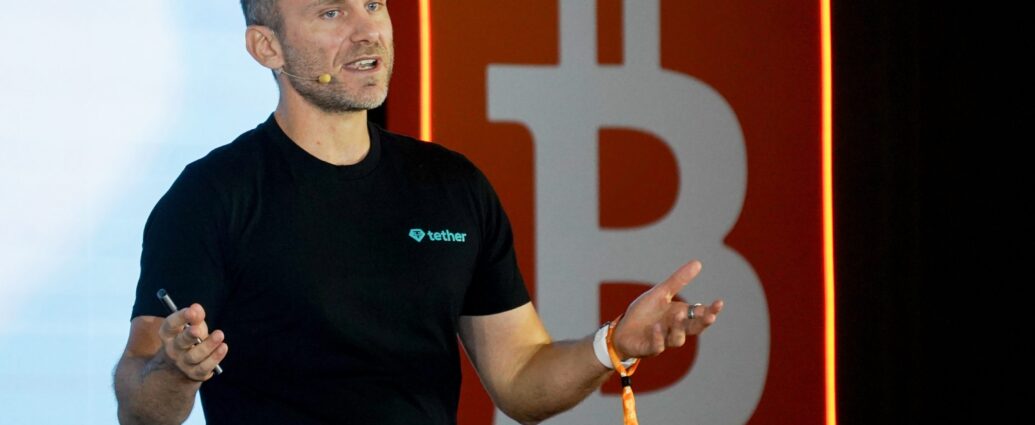
The crypto world feasts on gossip and last week it enjoyed an extra helping in the form of a Vanity Fair article. The piece, titled “Crypto’s True Believers Demand to Be Taken Seriously,” featured lavish photos of prominent industry figures swooning around New York’s Nine Orchard hotel in far-out outfits that cost more than your mortgage payment. The article elicited predictable scorn and contempt from those outside the crypto world. Those inside it, meanwhile, bashed the dastardly media while tweeting some variation of “What the hell were they thinking taking part in this?”

The “what were they thinking?” take is a fair one. When a glossy publication with little history of covering the crypto industry sends a staff reporter, did anyone really expect a celebration of blockchain? Still, this is Vanity Fair, the stomping ground of legendary photographer Annie Leibovitz, and renowned for snapping pics of presidents and A-list celebs. Most people, even those who profess disdain for mainstream media, would be there in a heartbeat.

Despite the snide headline, the story does a decent job telling the 17-year history of crypto, from Satoshi’s white paper to the current era of Big Crypto. The author also gets access to the right people to tell the story, and correctly sizes up their respective contributions to the industry. That includes Olaf Carlson-Wee, the out-there early Bitcoin prophet who became Coinbase’s first employee before quitting to start a crypto venture fund. Also in the group photo is iconoclast ARK Invest founder Cathie Wood, and Meltem Demirors, an early crypto booster and master self-promoter who turned up for the shoot “layered in diamond crosses and wearing a black sweatsuit with her firm’s slogan—’Believe in Something’—bedazzled across the ass.”

Billionaire trader Mike Novogratz also made the cut. Perhaps because he lent his hotel for the shoot, Novo avoided the indignity of being photographed short-sleeved, which would have revealed the giant Terra-Luna scamcoin tattoo on his bicep. Danny Ryan, a longtime contributor to the Ethereum Foundation, didn’t fare as well. The Vanity Fair photo director somehow persuaded Ryan to take off his shoes for the photos, presumably to cast him as some sort of crypto holy fool. The deepest scorn, though, is reserved for Devin Finzer, who took hundreds of millions of VC dollars for a largely failed project and, the piece makes clear, is viewed as a grifty parvenu by longtime crypto builders.

On a broader level, the piece asks where these exotic figures belong now that the crypto industry is chummy with the Oval Office, and is being embraced by Wall Street and Congress. You can make the case, as Vanity Fair implies, that the people in these photos are just a freaky subset of America’s growing aristocracy, who are fixated on image and lifestyle, and totally out of touch with ordinary people struggling with record credit card debt and an unaffordable housing market.

There is something to that. At the same time, the Vanity Fair gathering (minus Finzer) is also a throwback to a time when crypto was populated by larger than life characters who believed in something no one else did. To borrow from early Apple, they are “the crazy ones. The misfits. The rebels. The troublemakers. The round pegs in the square holes… because the people who are crazy enough to think they can change the world, are the ones who do.” As they fade from the scene, we may come to miss them.

Jeff John Roberts
jeff.roberts@fortune.com
@jeffjohnroberts

This story was originally featured on Fortune.com

This post was originally published here

Good morning. In today’s Fortune:

  • The war: Oil is at $113 and markets are in meltdown as Trump threatens to escalate the war in Iran tonight if Tehran doesn’t reopen the Strait of Hormuz. In response, Iran has threatened to start taking out its neighbors’ water supplies. The damage to the oil market is greater than that of 1974 and 2022 put together, the IEA says.
  • Exclusive: Supermicro’s dark history of smuggling chips to Iran.
  • AI isn’t replacing as many jobs as you’d think.
  • Tim Cook’s likely successor at Apple.
  • Aye, robot! Mark Zuckerberg is building an AI agent for himself.

This story was originally featured on Fortune.com

This post was originally published here

Good morning. Adobe CFO Dan Durn isn’t waiting to see how agentic AI plays out—he’s already running the experiment inside his own finance organization.

Durn, who oversees finance, technology, security, and operations, has turned Adobe’s back office into a live proving ground for autonomous AI agents. The results include contract review time cut in half, more than 300,000 emails auto-responded to in a single year, and finance teams surfacing investor insights in minutes instead of hours.

At Adobe (No. 201 on the Fortune 500), the push is deliberate. If finance doesn’t adopt AI, it risks becoming a “rate limiter of growth”—a back-office bottleneck in a company moving fast on product innovation, Durn told me. Inside finance, he breaks AI deployment into three buckets. For a closer look at how Adobe’s finance chief is rewiring the function, and what it signals for CFOs navigating the same pressure, read more of my interview with Durn here.

The rise of AI is also rapidly reshaping corporate leadership. Even long-tenured leaders face increasing pressure from investors to move aggressively on AI. Recent leadership changes, including the announced retirement of Adobe CEO Shantanu Narayen, highlight how little patience markets now have for perceived hesitation. At the same time, Adobe reported that annualized revenue from its AI-first products more than tripled year over year in its first quarter of fiscal 2026, which ended Feb. 27.

The make-or-break moment for CEOs is contributing to an era of rapid turnover among chief executives, Fortune’s Claire Zillman writes. In 2025, companies in the S&P 1500 named 168 new CEOs, the highest total in more than 15 years, according to Spencer Stuart, a global executive search and leadership advisory firm.

“CEO tenures are getting shorter and fewer incoming chief executives have prior CEO experience, the data shows, making the two-time CEO exceedingly rare,” Zillman writes. “All told, corporate America has turned into a CEO meat-grinder; it’s chewing up and spitting out leaders at a pace not seen in a decade and a half.” You can read more here.

Sheryl Estrada
sheryl.estrada@fortune.com

This story was originally featured on Fortune.com

This post was originally published here

What if one of the more overlooked pressures on corporate America’s future leadership pipeline is not burnout, return-to-office conflict, or employee disengagement, but inherited wealth?

That is one of the more consequential questions embedded in the Great Wealth Transfer, and one I explore in a new piece. As trillions of dollars move from older Americans to their heirs, fewer people may feel compelled to endure the long climb to senior leadership at large firms.

This is not because the next generation will simply stop working. The evidence suggests that, on average, inherited wealth reduces labor supply only modestly. What it does change is career optionality, giving people more freedom to reject bureaucratic institutions, slow promotion cycles, and systems built around indefinitely deferred reward.

The timing is striking. Younger workers are already revising the meaning of ambition. Just 6% of Gen Z respondents in a Deloitte survey said reaching a leadership position was their primary career goal.

Korn Ferry points to a related shift. When wealth creates a greater financial cushion, employees may not leave outright, but they may stop leaning into the high-stress behaviors the path to the C-suite has long required.

That could leave corporate America with fewer people willing to make the compromises the climb still demands, with real implications for succession at the top.

Read the full piece here, including what the CEO of Edward Jones thinks about whether the Great Wealth Transfer could reshape the future of C-suite ambition inside corporate America.

Ruth Umoh
ruth.umoh@fortune.com

This story was originally featured on Fortune.com

This post was originally published here

The Great Wealth Transfer is usually framed as a consumer, housing, or wealth management story. But it may also become a story about power inside corporate America. If financial security arrives before the corner office does, why would the most talented people keep climbing the corporate ladder?

For decades, big companies could count on one thing. Enough ambitious people would tolerate the grind because the ladder promised money, status, and security. But as trillions move from older Americans to their heirs, that bargain may begin to change.

The point is not that inheritance will produce a generation of idlers. It is that it may produce a generation less willing to accept the old terms of advancement. Research suggests that, on average, unearned wealth reduces labor supply only modestly while easing capital constraints and making entrepreneurship more viable. But it does give people more latitude to reject low-agency roles, inert bureaucracies, and systems organized around indefinitely deferred reward.

That matters because the Great Wealth Transfer will not be evenly distributed. Market intelligence firm Cerulli projects that $124 trillion will transfer through 2048, with more than half originating from households that make up roughly 2% of the total. The people most likely to receive meaningful inheritances may overlap disproportionately with the talent pools from which major companies have historically drawn future leaders. That may create an opening for broader leadership paths, but only if companies build them deliberately.

This pressure arrives just as younger workers are revising the meaning of ambition. Deloitte’s 2025 global survey found just 6% of Gen Z respondents named reaching a leadership position as their primary career goal. For many high-achieving younger professionals, the goal is no longer rank for its own sake, but a more exacting mix of agency, growth, coherence, and impact.

That shift is not merely cultural. Traditionally, companies held leverage because employees needed the next promotion to secure their financial future. The wealth transfer begins to alter that equation. Korn Ferry points out that when wealth arrives, employees often enter a kind of “semi-retirement” mindset. They do not quit immediately, but they may stop leaning into the high-stress behaviors required to reach the C-suite.

That presents a specific problem for corporate America. Large firms still rely heavily on internal cultivation for top leadership. Their senior ranks are built through years of exposure to operating complexity, institutional memory, and the disciplines of organizational life. If even a modest share of high-potential talent becomes less willing to spend 15 or 20 years enduring slow promotion cycles, internal politics, and bureaucratic drag, the leadership pipeline narrows, particularly among those whose financial security gives them greater career optionality.

Few executives are better positioned to see that tension than Penny Pennington, CEO of Edward Jones, who sits at the intersection of wealth management and the corner office. When asked whether the prestige and drive of becoming CEO begin to fade when wealth arrives before the career payoff, she challenges the premise that the climb was ever only about money. “I fundamentally believe in the human desire to prosper and to have well-being in a holistic way,” she tells Fortune. Ambition, she argues, does not disappear with financial security. But it does need to be attached to purpose. In her own career, that meant moving away from banking and corporate finance in search of work with deeper meaning, helping people live more prosperous lives.

What may change, she suggests, is the path upward. It may run through a giant company, a small business, a mechanic’s shop, or a startup. In that sense, inherited wealth may change the route people take more than the desire to keep climbing. Some heirs may have true walk-away money. Others may simply inherit enough to reduce stress, fund a home purchase, or create room to choose differently. Either way, they are less captive to traditional institutions.

That changes tolerance for corporate red tape, slow promotions, and compromises that once seemed unavoidable. If financial security is partly solved, friction stops looking like the price of advancement and starts looking like a test of whether an organization deserves your time.

The Great Wealth Transfer is unlikely to destroy the C-suite pipeline. But it could reshape it enough that companies will have to earn ambition in the years ahead, not merely reward it later.

This story was originally featured on Fortune.com

This post was originally published here

Much of the global worry over the closed Strait of Hormuz has focused on crude oil and natural gas, yet the waterway is also a channel for other key Gulf-produced commodities like fertilizer and helium. About a third of the world’s helium and half of its urea, a vital nitrogen-based fertilizer, passes through the strait. 

“Up to 15% of goods passing through the Strait of Hormuz are non-energy materials,” Sugoutam Ghosh, a supply chain management expert from the Singapore University of Social Sciences (SUSS), tells Fortune. “These include critical commodities serving as inputs for multiple industries—and any shortage would have cascading impacts on global agriculture and manufacturing.” 

Southeast Asia is particularly vulnerable to an interruption in these supplies. Agriculture is the backbone of many ASEAN economies like Indonesia, Thailand, and Vietnam, where smallholder farms of rice, maize, and oil palm provide employment and food security. Farming contributes about 10% of Southeast Asia’s GDP and a third of its jobs.

“Fertilizer shocks are not just input-market issues. They’re also social and political ones,” warns Imelda Bacudo, an Indonesia-based agri-food systems expert with the UN’s Food and Agriculture Organization (FAO). “The risk is not only lower yields, but also reduced farmer incomes, higher rural vulnerability, and eventually, higher food prices for consumers.” 

Many crops grown in Southeast Asia depend on fertilizer, even if the region doesn’t produce that much of it. According to a report by the International Institute for Sustainable Development, a 50% reduction in fertilizer use can reduce palm oil yields by up to 40%. 

When it comes to fertilizer, experts think that countries can manage a supply shock in the short-term, whether by tapping stockpiles or turning to alternate products. But a prolonged closure would spell trouble for farms—and, in turn, for consumers.

An extended disruption “will have a negative flow-through effect on the next season’s crops,” warns Paul Teng, a visiting senior fellow at the ISEAS-Yusof Ishak Institute in Singapore. “Some farmers may even reduce their plantings, as they did during the early days of the Ukraine conflict.”

Helium, semiconductors and manufacturing

The supply chain upheaval also extends to helium, a key industrial gas used in cooling and leak detection. In particular, it cools magnets used in chip fabrication and MRI systems. 

“A shortage of helium would pose a risk to both the semiconductor and healthcare sectors,” says Ghosh from SUSS, adding that substitutes are “highly challenging” to find.

“Gases such as nitrogen or argon could be used in older fabrication facilities, but they’re unsuitable for high-precision processes in advanced fabs,” he explains.

Older semiconductor fabrication facilities, such as those in Malaysia or Singapore, also lack advanced helium recycling capabilities. They can recycle just half of their helium, whereas high-end plants, like those operated by TSMC or Samsung, can reuse as much as 90%. 

Chipmakers have responded by looking for alternate sources of helium, particularly from other large exporters like the U.S. and Russia, yet SUSS professor Tay Huay Ling says these measures simply “mitigate risk without eliminating it.” Actions like building stockpiles don’t address the underlying overreliance on imported helium. 

Over the longer term, companies and governments could try to reduce their reliance on supply chains that travel through chokepoints. Industries can also invest in processes that reduce the use of these critical components: Firms that rely on helium can invest in recycling machinery, while the agriculture sector can turn to fertilizer alternatives like green ammonia. 

Bacudo, from the FAO, sees a “real opportunity” for multilateral organizations like ASEAN, which can work together to hedge against some of these supply chain disruptions. 

Still, Asian industries that rely on inputs from an unstable Middle East will need to manage a volatile commodity market. Even if the Iran war ends soon, shortages are likely to continue for months. 

“This crisis looks less like a temporary shock, and more like confirmation of a more fragile era for critical inputs,” Tay, from SUSS, says. 

This story was originally featured on Fortune.com

This post was originally published here
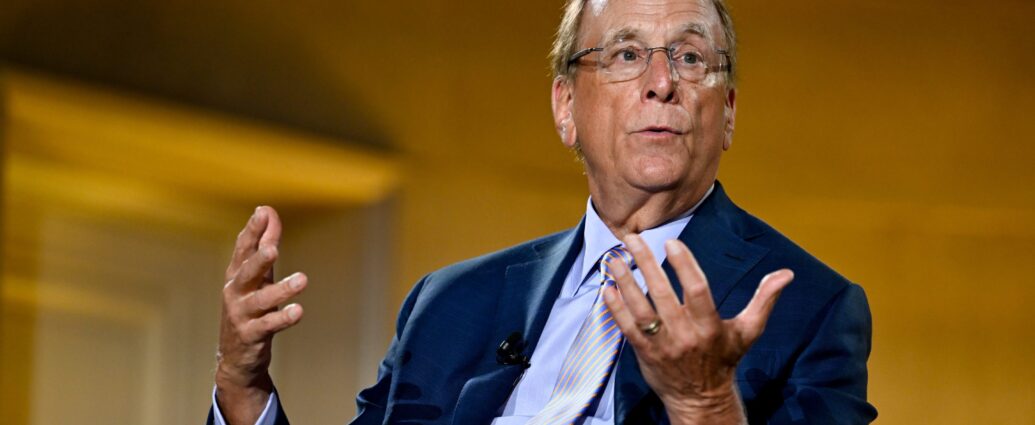
Supermicro has spent the past three years riding the AI wave in Silicon Valley but before the recent allegations involving a co-founder smuggling Nvidia chips, it previously ran afoul of export-control regulations.  

The hardware manufacturer’s co-founder, Yih-Shyan “Wally” Liaw, was charged on Thursday with conspiring to smuggle about $2.5 billion worth of highly coveted Nvidia GPUs in servers to China. Prosecutors claim that Liaw, along with Supermicro’s Taiwan general manager Ruei-Tsang “Steven” Chang, and a “fixer” named Ting-Wei “Willy” Sun, routed servers with banned Nvidia H200 and B200 GPUs through an unnamed Southeast Asian company to Chinese buyers who wanted the chips. Authorities arrested Liaw and Sun this past week. Chang remains a fugitive, according to the Department of Justice. The company has not been accused of wrongdoing, and neither have co-founders Charles Liang, who is the CEO and chairman, nor his wife, Sara Liu, a board member and co-founder.

In a statement Supermicro said Liaw resigned his board seat on Friday, and he remains on administrative leave, along with Chang. Sun was fired. Supermicro’s stock plummeted in trading on Friday, giving short sellers who have collectively bet $2.6 billion against the company a windfall. Shorts collected an estimated $860 million in single-day gains after the stock sank 33%, according to financial data firm S3 Partners. The day pushed their March gains to nearly $1 billion. Supermicro has said it is cooperating with law enforcement and it was not named in the indictment.

However, this isn’t Supermicro’s first brush with this type of export-control violation. 

Court records and the company’s own disclosures show the latest allegations of smuggling to a restricted market show striking similarities to a 20-year-old enforcement action also involving the company, which was founded in 1993 by Liaw, Liang, and Liu. None of the three were named in the 2006 enforcement or charged with wrongdoing.

In 2006, Supermicro pleaded guilty in federal court to illegally exporting computer equipment to Iran, and paid a $150,000 fine to the Department of Justice. Separately, Supermicro settled a parallel action involving 12 charges related to sales of servers, motherboards, and computer chassis brought by the Commerce Department’s Bureau of Industry and Security (BIS) by paying a $125,400 civil penalty. The company also paid an additional $179,327 to the Treasury Department’s Office of Foreign Assets Control (OFAC) to settle allegations under the Iranian Transactions Regulation, a violation that OFAC said Supermicro did not voluntarily disclose to the regulator.  

The two cases—separated by two decades and vast differences in scope—allegedly share a similar pattern. Find a neighboring country where it is legal to sell to, hide the real buyer, and ship the restricted tech to the illegal market.

A representative for Supermicro declined to comment on the Iran violations. 

The scheme

The Iran tech sales took place between September 2001 and March 2003, court records show, about a decade after Liaw, Liang, and Liu, who serves as a senior vice president and member of the board, founded Supermicro.

According to the BIS charging document from 2006, Supermicro exported servers, motherboards, and computer chassis from the U.S. through the United Arab Emirates and then onto Iran on six separate occasions without the required licenses from OFAC. A distributor in Dubai served as the pass-through for the equipment. Officials said Supermicro’s “senior director of strategic sales knew of, or had reason to know” about the embargo on sales to Iran. BIS charged the company with three counts of selling goods knowing that export violations would occur and three counts of misrepresenting its shipper export declarations to the U.S. government by claiming it did not need a license to sell the hardware. 

Supermicro settled the cases in September 2006 and cooperated with the government’s investigation, records show. It also implemented an in-house export control program before the BIS and DOJ formally brought charges. The sentencing memo stated that the fines were “sufficient to deter other companies from committing similar crimes.”

DOJ: The China conspiracy

The indictment unsealed this week claims that the accused trio of Liaw, Sun, and Chang allegedly conspired to route servers that included the Nvidia chips in 2024. The defendants allegedly sent the servers through an unnamed Southeast Asian company before they made their way to China. Liaw, Sun, and Chang could not be reached for comment.  

The mechanics alleged in the indictment mirror the Iran violation from 20 years ago. In the alleged China scheme, the Southeast Asian company submitted repeat purchase orders to Supermicro purportedly for its own use. Instead, when the servers arrived after being assembled in the U.S., the Southeast Asian company allegedly sent them on to the real buyers in China. To keep it all hidden, the servers were allegedly repacked in unmarked boxes, the indictment states. 

According to the indictment, the Southeast Asian company grew to become one of Supermicro’s biggest customers, ranking 11th globally in fiscal 2024 with $99.7 million in revenue. Ultimately, the total value of server sales grew to $2.5 billion, authorities claim.

Throughout the swell, Liaw was allegedly directing the activities behind the scenes, the indictment says. 

In January 2025 when the Trump Administration announced new AI export restrictions slated to start on May 13, 2025, Liaw texted an executive at the Southeast Asian company, “We need to speed these up before May 13!” A few days later, the indictment notes, he texted again, “We can ship all your 512 x B200 by Feb. Let us run fast before May 13!” he wrote, referring to the Nvidia GPUs. 

According to the indictment, the executive Liaw texted with wrote him in March and sent a news article about smugglers being accused of routing Nvidia chips to China and wrote, “I’m very concerned Wally.” Liaw wrote back trying to assuage his concerns and then continued making inquiries about the GPU orders, the indictment states. In August 2025, one of the brokers allegedly involved in the Supermicro scheme sent Liaw a link to a DOJ press release about more arrests for AI chip smuggling. Liaw replied with a string of sobbing-face emojis, the indictment states, and then kept working with Chang and Sun, authorities say. 

The indictment notes that as the orders continued, the accused allegedly worked harder to keep it all secret. Supermicro’s compliance team started an audit in late 2024, the indictment states, which was around the time Supermicro was dealing with a cluster of issues in the U.S. Its auditor EY had resigned in October, the DOJ had opened an investigation into the company based on accounting allegations raised by a former employee, and it was at risk of being delisted by Nasdaq. It later hired BDO and its own internal investigation into its accounting found no evidence of wrongdoing. BDO has not been accused of wrongdoing in the smuggling case. BDO declined to comment.

During the 2024 audit during that heightened period, Chang allegedly arranged for a “friendly” auditor employed by Supermicro to conduct the inspection, the indictment states. When a second, more rigorous audit was set for August 2025, Sun and Chang allegedly staged hundreds of what authorities called “dummy” servers, which it defined as non-working physical replicas in Supermicro boxes. 

The dummy servers were allegedly set up at the Southeast Asian company’s warehouses so auditors could confirm their arrival. Sun said the staging operation would need about 100 people, forklift operators, arranged meals, and a “20-person shuttle bus for easy travel between the hotel and the warehouse, allowing for short breaks,” the indictment states. During the actual audit, however, the indictment states that Supermicro’s compliance worker was off site “enjoying entertainment” on the Southeast Asian company’s dime, the indictment claims. 

Sun texted Liaw to say the audit had run smoothly and included 2,107 units in three warehouses. Liaw wrote back, “That’s spectacular!” the indictment states, and continued placing new orders days later. In December 2025, BIS sent one of its own inspectors to do a post-shipment verification check. The indictment claims Sun allegedly set up the dummy servers again, using a hair dryer to peel off labels and serial-number stickers, which was captured on surveillance cameras. Authorities say Sun allegedly introduced himself as “Michael” and said he worked at the Southeast Asian company’s law firm while fielding questions from the federal BIS officer. 

In the Iran case, Supermicro’s then-CFO Howard Hideshima signed off on its settlements with law enforcement. He served as the CFO from 2006 through 2018, before Nasdaq suspended the company from trading and formally delisted it in March 2019. In 2020, Hideshima and Supermicro were charged by the Securities & Exchange Commission for accounting-related issues. Hideshima was fined $50,000 by the regulator and left the company. 

Liaw also left the company following the 2018 accounting scandal. The company brought him back as an adviser in “business development” in May 2021, and he returned to a full-time senior executive post in August 2022. In December 2023, he rejoined the board before his resignation this week. 

On Friday, Supermicro said it appointed DeAnna Luna as its acting chief compliance officer. Luna joined Supermicro in 2024 as vice president of global trade and sanctions compliance.

This story was originally featured on Fortune.com

This post was originally published here

  • In today’s CEO Daily: Diane Brady on how a wartime mindset is the new default.
  • The big story: Is Cursor dead?
  • The markets: Down big as Trump and Tehran exchange threats.
  • Plus: All the news and watercooler chat from Fortune.

Good morning. To some extent, every CEO is a wartime CEO when their country is at war. But the concept, and the characteristics that go with it, extend far beyond geopolitics. As Fortune’s Geoff Colvin points out in this piece, Shell put military-style scenario planning at the heart of its corporate decision-making in the 1970s. I’ve talked about the concept of wartime and peacetime leadership with venture capitalist Ben Horowitz, who wrote about it 15 years ago, and leadership consultant Stephen Miles of TMG. When UiPath CEO Daniel Dines told me last week that “we treat this time as wartime,” he was talking not about Iran but his push to pivot the robotic process automation company he founded towards agentic AI.

What’s changed?

‘War’ is the norm – “Peacetime left us in March of 2020,” Miles told me yesterday. “The new world is now ambiguous, uncertain, and discontinuous … The world is hours, minutes and seconds, not quarters and years, and I don’t see that changing.” In his view, that calls for leadership that’s “total immersion, which provides much higher context and the ability to weak-signal detect so you get the whiffs of smoke before there is a forest fire.”

Anxiety, alignment and agency – For Horowitz, a peacetime CEO has a large advantage in a growing market; in war, they’re facing an “imminent existential threat.” The first is about expanding the market and reinforcing strengths, the latter is about speed and survival. As Dines put it: “In peacetime, you can tolerate different behaviors and try to adjust …We need to implement decisions faster and propagate them to the company much faster.” Anxiety is a motivator to go for it: “If you wait to see where the world is going, it’s not going to work.” Dines defines agency as “people with both expertise and the will to make things happen.”

People become disposable – In war, people die. The corporate equivalent is that they are fired. More risks are taken. Dissent isn’t tolerated and consensus isn’t a priority. There’s also more pressure at the top. My colleague Claire Zillman writes that, broadly speaking, the AI revolution is creating more CEO churn, according to Spencer Stuart. Feigen Advisors found that despite the headlines about skyrocketing turnover, leadership at a narrower band of companies—the top of half of the S&P 500—has held relatively steady, though it also found CEO turnover outside the U.S. is increasing. Does this mean America is winning the war? It depends, of course, on how you define the battlefield.

Contact CEO Daily via Diane Brady at diane.brady@fortune.com

This story was originally featured on Fortune.com

This post was originally published here

For decades, building a billion-dollar company required a village. Raise massive capital, hire hundreds of people, build a sprawling department for every operational headache — from VAT compliance in Marseille to sourcing logistics in Shenzhen. Headcount was power. Scale required sacrifice of autonomy.

That equation is breaking down. The “Execution Wall” that once separated the solo entrepreneur from the multinational corporation is crumbling — not because the giants are fading, but because the tools of scale have finally been democratized. We are entering the age of the One-Person Unicorn.

From Busywork to Strategic Command

The solo founder was historically a jack-of-all-trades and master of none. Ten hats, and eight of them — labeled “Procurement,” “Customs,” and “Compliance”— never fit. To scale, entrepreneurs often had to surrender their autonomy to investors just to fund the headcount needed to handle the boring-but-vital heavy lifting.

Unlike earlier automation, agentic AI doesn’t just follow a script — it reasons, adapts, and executes. This shifts how we interact with technology: away from clicking through dashboards and menus, toward a language-based interface where complex end-to-end workflows are triggered by intent rather than manual data entry. Enterprise AI agents can now navigate the full labyrinth of global trade — from RFQs to cross-border payments — freeing founders to reclaim their time for strategy.

The Shift From B2B to A2A

The real power of the One-Person Unicorn isn’t just internal efficiency; It’s how they interact with the world.

Global trade has historically been a sluggish game of human-to-human coordination: email chains, manual vetting, and midnight phone calls across time zones.

The future looks radically different.

Agent-to-Agent (A2A) interaction — where a buyer’s AI and a seller’s AI communicate directly through APIs — can compress weeks of supplier negotiations and logistics coordination into minutes of high-fidelity data exchange.

When the “cost of execution” collapses toward zero, a lone entrepreneur gains the operational reach of a Fortune 500 company. That’s not a metaphor. It’s an emerging structural reality. That’s not a metaphor. It’s an emerging structural reality.

What This Means for the Workforce

This transition inevitably raises employment questions. But what’s unfolding is less a story of displacement than of professional elevation.

By absorbing the shadow work of administration, AI raises the floor for individual capability. We see this in the way tools like Accio Work provide an immediate operational backbone for the solo entrepreneur, bypassing the need for a traditional back-office — providing an immediate operational backbone that bypasses the traditional back-office entirely.

The boundary between “employee” and “owner” is beginning to blur. A generation of specialists now has the infrastructure to launch global ventures without a single hire.

The Leadership Bar Just Got Higher 

Democratized power comes with a significant catch: as the barrier to entry falls, the bar for leadership rises.

In this new economy, grinding through administrative tasks is no longer a badge of honor — it’s a failure of leverage. The competitive advantages of the next decade won’t be technical proficiency or a massive payroll. They’ll be judgment, taste, and strategic vision. The AI can execute the workflow, but the human must supply the direction and quality control. The bottleneck is no longer a lack of resources, but a potential lack of imagination. It’s a potential lack of imagination.

The Invisible Office Is Already Open

The gap between a small business and a global powerhouse is narrowing faster than most leaders realize. The One-Person Unicorn is no longer a theoretical outlier — it’s a model emerging on the horizon for a world where capability, not headcount, defines a firm’s reach.

The question is no longer whether this future is coming. It’s whether you’ll be ready to lead it.

The opinions expressed in Fortune.com commentary pieces are solely the views of their authors and do not necessarily reflect the opinions and beliefs of Fortune.

This story was originally featured on Fortune.com

This post was originally published here


Gold has plummeted into a bear market, shedding over 22% from its January record highs, as soaring oil prices tied to the escalating U.S.-Iran conflict trigger fears of persistent inflation and an increasingly hawkish Federal Reserve.

The Safe-Haven Paradox

The precious metal hit an all-time high of $5,589 per ounce in January. However, at the last check, gold was trading at $4,357.29, down 22.12% from the record, marking a historic sell-off.

Independent researcher at Ash & Seed Press, Shanaka Anslem Perera, noted the paradox: the war caused oil to spike above $112, which fanned inflation. Brent crude futures currently remain elevated near $107.86, while WTI sits at $98.81.

Fed Holds Steady Amid Oil Shock

Responding to the persistence of inflation, the Federal Open Market Committee maintained …

Full story available on Benzinga.com

This post was originally published here

Anthony Scaramucci, founder of asset management firm SkyBridge Capital, said in an interview aired Sunday that he has been buying Bitcoin (CRYPTO: BTC) at compressed prices and explained the rationale behind the move.

The $1 Million BTC Target

Appearing on The Wolf Of All Streets Podcast with Scott Melker, Scaramucci stated that Skybridge Capital has set a $1 million price target for Bitcoin by 2032, factoring in the 2028 halving event and the 4-year cycle.

“So if you get the opportunity to buy it here, then buy it,” Scaramucci added.

Full story available on Benzinga.com

This post was originally published here

Michael Polyani, the British-Hungarian philosopher, economist, and scientist, is perhaps best known today for coining the term “tacit knowledge.” His great observation was that a large part of what constitutes expertise in any given field is never written down. In some cases, it exists only as a kind of professional intuition that even the expert can’t fully articulate. “We know more than we can tell,” was Polyani’s famous catch phrase.

Today, tacit knowledge presents a challenge to companies that want to automate workflows with AI agents. Much—perhaps even most—of the knowledge these agents need is not written down.

Interloom, a Munich-based startup that is aiming to transform traditional business process automation for the AI age, thinks it can crack the problem of tacit knowledge. And it has just raised a new $16.5 million venture capital round to help it achieve that mission.

The funding is being led by DN Capital, with participation from Bek Ventures and existing investor Air Street Capital. The company previously announced a $3 million seed round in March 2024.

Interloom did not disclose its valuation after the new funding.

Fabian Jakobi, Interloom’s founder and CEO, argues that the current wave of excitement about AI agents overlooks the tacit knowledge bottleneck. About 70% of operational decisions have never been formally documented, he said. When a complex support ticket lands on a veteran staffer’s desk, they know the workaround, the right internal team to escalate to, and the resolution—not because it’s in a manual, but because they’ve seen it before.

“The most important person at the bank is the person who knows whether the documentation is right or not,” Jakobi told Fortune. “They’re often the lowest paid. But they determine quality.”

Interloom’s approach is to ingest millions of operational records—support emails, service tickets, call transcripts, work orders—and use them to build what it calls a “context graph,” a continuously updated map of how problems actually get resolved within a given organization. Jakobi likens the concept to Google Maps: just as Google learns optimal routes from real-time traffic data, Interloom maps the paths that operational experts take to solve problems, and uses those maps to guide AI agents and new employees alike.

Jakobi is a serial entrepreneur. He previously founded Boxplot, which in 2021 he sold to Hyperscience, a New York-based AI software company that specializes in extracting data from unstructured documents.

Interloom’s software is already live with several large European enterprises. At Commerzbank, Interloom analyzed millions of customer support emails and checked them against existing internal documentation—finding that much of it was either conflicting or incomplete. The company says it reduced the gap between documented and actual operational knowledge from roughly 50% to 5%. At Volkswagen, it is processing customer support tickets. And at Zurich Insurance, Interloom won a company-wide AI competition—beating out what Jakobi says were 2,000 other AI-native startups—for an underwriting use case.

An underwriting decision at an insurance firm, Jakobi said, reflects that company’s particular risk appetite, its accumulated experience with certain brokers and products, and institutional knowledge that no general-purpose model possesses.

“The Zurich underwriter knows how their broker chat underwriting works much better than Accenture does,” Jakobi said, taking aim at the large consulting firms that have traditionally dominated enterprise process work.

The broader argument is that AI agents, no matter how capable, are useless in large enterprises without organization-specific context. Jakobi frames this as the “corporate memory” problem. 

“In software, the compiler tells you if the code works,” Jakobi said. “We don’t have that luxury [in other domains.] The evaluation has to come from a human expert.”

Interloom’s new backers agree with that thesis. Guy Ward Thomas, a partner at DN Capital, said that “an agent is only as good as the expert decisions it can rely on.” And Thomas said that DN Capital has seen with other AI agent startups that when these agents don’t have the right context about the enterprise in which they are being deployed, they rarely work well. “Our experience with vertical AI agents and voice platforms showed us how important context is,” he said.

Mehmet Atici of Bek Ventures previously backed UiPath, which had been the leader in the previous wave of RPA, or robotic process automation. But RPA relied on agents that were, for the most part, hard-coded to follow the same exact workflow in the same exact way every time. “We’ve seen automation’s transformative potential firsthand and we believe AI is now unlocking a new wave of rapid adoption in the enterprise,” Atici said.

Interloom’s timing may be propitious. The so-called “Great Retirement” is seeing roughly 10,000 Baby Boomers retiring daily in the U.S. Walking out the door with them is decades of institutional knowledge—just as companies are trying to deploy AI at scale.

Jakobi sees the competitive landscape in characteristically blunt terms. His biggest rival, he says, is inertia—the assumption within large enterprises that operations will continue to function as they have for the past decade.

Interloom’s next product push is what it is calling internally a “Chief of Staff”—a layer designed to give managers real-time visibility into how their AI agents are performing, complete with version control for agent-driven processes.

But Interloom is hardly the only company trying to create an AI agent management and orchestration layer. Almost every company marketing AI agents, from OpenAI to ServiceNow to Microsoft, has been working on similar kinds of products.

Jakobi, however, said that he thinks Interlooms “context graph” gives it a distinct advantage over these larger players, which he says rarely have insight across an entire complex process. 

This story was originally featured on Fortune.com

This post was originally published here

American Bitcoin Corp. (NASDAQ:ABTC) positioned itself as “the absolute accumulation machine” for Bitcoin (CRYPTO: BTC) on Sunday, while crediting its majority owner and key infrastructure partner, Hut 8 Corp. (NASDAQ:HUT).

American Bitcoin Hails Its ‘Growth’

American Bitcoin posted a video montage on X, showing its Bitcoin mining facility, servers, wind-powered facilities and clips of its Chief Strategy Officer Eric Trump interacting with Hut 8 CEO Asher Genoot.

The firm promoted Hut 8’s mining infrastructure, its ability to mine Bitcoin at a “discounted” rate, and the benefits of a dollar cost averaging strategy. This combination, according to American Bitcoin, is transforming the company into an “absolute” Bitcoin accumulation machine.

Full story available on Benzinga.com

This post was originally published here

A widely followed cryptocurrency analyst hinted at a potential 200% rally for Dogecoin (CRYPTO: DOGE) on Sunday, advising followers to buy the dip.

DOGE Ready For Parabolic Surge?

Ali Martinez said that DOGE, which has traded within a broad channel between $0.0537 and $0.4595 for years, is finally “drifting back toward the floor.”

“I’m looking to buy the dip at $0.0537. If this floor holds, we could see a 200% rally back to the mid-range at $0.16,” Martinez said. “Get ready to buy Dogecoin.”

Full story available on Benzinga.com

This post was originally published here
Leading cryptocurrencies dipped alongside stock futures on Sunday as investors assessed President Donald Trump‘s final warning to Iran over the Strait of Hormuz.

Cryptocurrency 24-Hour Gains +/- Price (Recorded at 9:25 p.m. ET)
Bitcoin (CRYPTO: BTC) -1.32% $68,093.63
Ethereum (CRYPTO: ETH)
               
-1.41% $2,060.46
XRP (CRYPTO: XRP)                          -1.76% $1.38
Solana (CRYPTO: SOL)                          -1.08% $86.52
Dogecoin (CRYPTO: DOGE)              -0.72% $0.09081

Selling Pressure Rises

Bitcoin dived below $68,000 late afternoon but pared losses overnight, while trading volume jumped 13% over the last 24 hours.

Ethereum fell to an intraday low of $2,027, with 24-hour trading volume up 31%. XRP and Dogecoin also traded in the red.

Over $330 million was liquidated from the cryptocurrency market over the past 24 hours, with $241 in long positions obliterated, according to Coinglass data.

Open interest in Bitcoin futures fell 0.21% in the last 24 hours. Meanwhile, Binance’s derivatives traders, including retail and whale, stayed long on the apex cryptocurrency.

“Extreme Fear” sentiment persisted in the market, according to the Crypto Fear & Greed Index.

Top Gainers (24 Hours) 

Cryptocurrency (Market Cap>$100 M) Gains +/- Price (Recorded at 9:25 p.m. ET)
siren (SIREN)     +160.51%     $2.42
Banana For Scale (BANANAS31)                   +46.90%     $0.01355
Tria (TRIA)            +29.95%   …

Full story available on Benzinga.com

This post was originally published here

Apple Inc. Chief Executive Officer Tim Cook commended Chinese developers and the company’s partners in the country, days after the ruling party’s flagship newspaper criticized the iPhone maker for monopolistic policies.

Cook, speaking at the China Development Forum in Beijing on Sunday, praised the innovations of Chinese developers and the automation at the country’s manufacturing facilities. He said Apple and China share common goals, including in green development and carbon neutrality.

Apple lowered the fees it collects from app developers in the country earlier this month, a major concession in a hugely lucrative market where the company faced the risk of antitrust intervention by local regulators. Yet after the announcement, the Communist Party’s People’s Daily newspaper called for a further easing of App Store restrictions and urged the firm to fix “monopolistic” practices — highlighting how Apple may continue to face pressure from Beijing.

“Innovation, green development and education are not separate properties — they are deeply connected,” Cook said. “They represent the vision of progress that we at Apple share, and we are committed to collaborating with our partners across China and with all of you to make that vision a reality.”

An “excellently talented developer community” helps to increase prosperity and opportunity across China, and innovation is transforming its manufacturing sector, Cook said. While the US tech giant builds most of its devices in China, it has diversified its assembly to regions such as Vietnam and India.

“There is a Chinese proverb I love — ‘a single tree does not make a forest,’” Cook said. “Together, I believe we can plant that forest.”

Read More: Apple CEO Visits China Amid Growing Pressure on App Store Policy

Apple has seen its sales growth in China rebound in recent months, helped by demand for the latest iPhone edition and consumers switching from rival devices. Revenue from the country jumped 38% to $25.5 billion in the holiday quarter that ended in December.

Speaking at the same event as Cook, Chinese Premier Li Qiang cited Apple as an example of a company with a highly diversified supply chain.

“If we politicize industrial issues and deliberately weaponize the supply chain, we will only increase costs for various companies and weaken development momentum,” Li said. “China is willing to strengthen communication and cooperation with all parties to jointly maintain the stability and security of the global supply chain.”

This story was originally featured on Fortune.com

This post was originally published here

Wall Street is bracing for a Monday deadline that President Donald Trump set for Iran to reopen the Strait of Hormuz while the global economy reels from an energy crisis that shows little signs of abating.

Futures tied to the Dow Jones industrial average fell 30 points, or 0.07%. S&P 500 futures were down 0.15%, and Nasdaq futures lost 0.18%.

U.S. oil futures dipped 0.6% to at $97.64 a barrel. The national average gasoline price reached $3.94 a gallon on Sunday, up more than $1 over the past month, according to AAA.

The yield on the 10-year Treasury ticked down less than 1 basis point to 4.386%. The U.S. dollar was up 0.09% against the euro and was down 0.04% against the yen.

On Saturday evening in the U.S., Trump gave Tehran 48 hours to comply with his demand or else face the destruction of power plants, potentially escalating his war to civilian infrastructure.

Iran responded to the ultimatum by warning that such an attack would result in its forces similarly targeting vital infrastructure, including desalination plants that provide much of the region’s fresh water.

Trump’s AI and crypto czar, David Sacks, raised alarms earlier this month about this exact path of escalation as he called on the president to declare victory and “get out” of Iran.

“If you see that type of destruction continue, you could literally render the Gulf almost uninhabitable,” he said in an episode of the All-In podcast on March 13. “I mean you’re not going to have enough water for 100 million people, and human beings just cannot survive very long without water. So that would be a truly catastrophic scenario, and we’re talking about destroying the Gulf states economically and then also from a humanitarian perspective.”

Both sides showed no signs of backing down and further upped the ante militarily. Trump is sending three more amphibious assault ships and 2,500 additional Marines to the Mideast, joining a separate Marine Expeditionary Unit already headed there. There are already more than 50,000 U.S. troops in the region.

Meanwhile, Iran launched ballistic missiles at a U.S.-U.K. base 2,500 miles away on the island of Diego Garcia in the Indian Ocean. The attack was unsuccessful, but it demonstrated that Iran’s missiles have much longer range than previously known and could theoretically reach most of Europe.

On Sunday, NATO Secretary General Mark Rutte backed the Iran war and predicted the alliance would eventually come around to support it too, after several members rebuffed Trump’s demand that they provide naval escorts.

“If Iran would have the nuclear capability, including, together with the missile capability, it will be a direct threat, a existential threat, to Israel, to the region, to Europe, to the stability in the world,” Rutte told CBS News. “So the president doing this is crucial, and I’ve seen the polling, but I really hope the American people will be with him, because he is doing this to make the whole world safer.”

In addition to NATO, Trump got more signs of support from the United Arab Emirates, which has suffered from a barrage of Iranian missiles and drones.

Anwar Gargash, a senior UAE diplomat, suggested an increasingly hardened stance toward Iran that aligns more closely with the U.S. and Israeli stance.

“Our thinking does not stop at a ceasefire, but rather turns toward solutions that ensure lasting security in the Arabian Gulf, curbing the nuclear threat, missiles, drones, and the bullying of the straits,” he wrote on X. “It is inconceivable that this aggression should turn into a permanent state of threat.”

With no evidence of any talks aimed at halting the conflict, the thousands of Marines headed to the Mideast could be involved in a climactic battle to reopen the Strait of Hormuz and crush Iran’s ability to weaponize it again.

Still, some have called for a less dangerous option, namely a naval blockade of Iran’s oil exports meant to pressure the regime to open the strait.

“The US can implode Iran’s economy by shutting down its oil exports,” Robin Brooks, senior fellow at the Brookings Institution, wrote in a Substack on March 13. “That might open up the Strait of Hormuz a lot faster than anything else. Time to implode Iran’s economy and give the Ayatollahs a taste of their own medicine.”

This story was originally featured on Fortune.com

This post was originally published here

It’s exceedingly expensive to own a pet, prompting owners to delay veterinary visits or reconsider adopting one in the first place. Yet, animal health companies’ earnings keep growing.

That’s down to the unwavering love between owners and their pets.

While some owners might extend the time between their pets’ annual wellness visits to save money, they’ll shell out when their darling is truly sick or hurt, and that care is often the most expensive — and lucrative.

Last year, Matthew Joseph, a 41-year-old New Yorker, spent $11,000 on lifesaving spleen surgery for his now 14-year-old pooch Frankie. “The amount that we spend on Frankie, you could probably buy a Hyundai, or finance one at least.”

Animal diagnostic testing and pharmaceutical companies like IDEXX Laboratories, Inc., Zoetis Inc. and Elanco Animal Health Inc., along with pet store companies like Petco Health & Wellness Co. and Chewy, Inc. are reaping the benefits. 

Pet-care costs have been rising faster than overall inflation. The consumer price index for all urban consumers increased 2.4% in February from a year earlier, while pet services — including veterinary care — jumped 5.1%, according to data from the Bureau of Labor Statistics.

Total vet visits declined 3% in the fourth quarter of last year, marking the 16th straight quarter of declines, Bloomberg Intelligence analyst Ann-Hunter van Kirk wrote in a note, adding there’s only low correlation with the performance of pharmaceutical pet companies. Last month, vet visits fell 1.7% year-over-year, according to data provided by Vetsource. 

“People in a down economy, they may not be taking their pet to the vet quite as often as they need to, but they also still know the main things that they need to do — those maintenance therapies — and they’re still doing that,” van Kirk said in an interview.

Pet owners are still spending, Zoetis Chief Financial Officer Wetteny Joseph said at the Leerink Global Healthcare Conference on March 9, specifically for visits that incur “higher prices” such as emergency hospital visits. 

Essential Visits Only

Andi Lichtenfeld – who, like most owners, doesn’t have pet insurance – only takes her two dogs, three-year-olds Marilyn and Wayne, to the vet for emergencies, or when they don’t seem like themselves. The 37-year-old says this is similar to how she treats herself; if she’s sick, she goes to the doctor. For their vaccines, Lichtenfeld takes them to Petco.

Petco shares surged 35% on March 12 after the company’s forecast beat estimates, although its revenue is still pressured as it works to turn around operations.

IDEXX’s long-term growth should be fueled by “heightened spending by younger consumers and increased pet life expectancy that requires more expensive care,” according to BI’s van Kirk. 

“A lot of these companies don’t expect the macro dynamic to change in 2026,” Jefferies analyst Keith Devas said, but “we saw over the last 18 months that the vet visit trends are not very correlated to these companies’ results.”

The lack of correlation between declining vet visits and related companies’ earnings speaks to the growing humanization of our furry friends. 

As pets have moved “from the yard to the kitchen into the bedroom,” owners’ bonds deepen and their willingness to spend increases, said Harold Herzog, professor emeritus at Western Carolina University, who studies the psychology behind human-animal interactions.

Treating pets like family has accelerated as more people delay or forgo having children due to cost or personal choice, said Ingrid Tague, a professor at the University of Denver who has written a book about pets in British history. “The more we treat them as people, the more we get caught up in that same kind of consumerist cycle that we have for ourselves.”

For example, pet food used to just be kibble and canned meat, but now includes foods humans could salivate over — ribeyes, salmon fillets and flamboyant multicolored cakes fit for a child’s birthday party.

That explains why many pet owners are willing to stomach rising costs.

“I would never use the word expensive because to me the ROI is better than anything else I would spend,” Joseph said, noting Frankie’s “unconditional love and companionship.”

This story was originally featured on Fortune.com

This post was originally published here

Project Hail Mary, from Amazon.com Inc.’s Metro-Goldwyn-Mayer studio, was the No. 1 film at the US and Canadian box office this weekend with $80.5 million worth of tickets, scoring the highest grossing debut of any movie this year.

The film’s performance in its opening weekend surpassed Creed III as the best for an Amazon title since the company acquired MGM for $8.5 billion in 2022. Industry tracker Boxoffice Pro had forecast sales of at least $70 million. More than a fifth of Project Hail Mary‘s box office came from Imax Corp. screens.

Since closing the MGM deal, which handed Amazon control of film franchises including James Bond and The Pink Panther, the e-commerce conglomerate has pledged to release more than a dozen pictures in cinemas annually before making them available on its Prime Video streaming service. 

Project Hail Mary, directed by Phil Lord and Christopher Miller, is adapted from the novel of the same name by Andy Weir. It follows the adventure of biologist-turned-teacher-turned-astronaut Ryland Grace, played by Ryan Gosling, who wakes up with amnesia aboard a spacecraft.

The film achieved critical acclaim, and its commercial performance ends a string of low box-office hauls for Amazon this year on titles such as Mercy and Crime 101.

Amazon, which hired former Warner Bros. Discovery Inc. executives Courtenay Valenti and Sue Kroll to run its film studio and lead its marketing, is less dependent on the success of its theatrical releases than traditional Hollywood distributors. It uses cinemas primarily as a means to recoup some production and marketing costs before feeding the titles to its Prime user base, which is largely formed of online shoppers. 

Amazon’s commitment to theaters helps support chains such as AMC Entertainment Holdings Inc. and Regal Cineworld Group that are seeking more films from Hollywood. Last year, Amazon announced that it would be working with Denis Villeneuve, the director of the Dune trilogy, on a new Bond film. 

The domestic box office is up 15.2% so far this year compared with the same period in 2025 thanks to releases including Hoppers from Walt Disney Co.’s Pixar subsidiary and Scream 7 from Paramount Skydance Corp.’s film studio. 

Before Project Hail Mary, the best debut of 2026 was Scream 7. The movie, released in February, has since sold $193.8 million worth of cinema tickets, becoming the highest grossing picture in the horror franchise’s history. 

The debut of Hoppers earlier in March was also the best for an original Pixar film in a decade. 

Amazon’s next big-budget release in theaters this year is Masters of the Universe in June, based on the franchise controlled by toymaker Mattel Inc. 

This story was originally featured on Fortune.com

This post was originally published here

Elon Musk said his Terafab project — a grand plan to eventually manufacture his own chips for robotics, artificial intelligence and space data centers — will be built in Austin and jointly run by Tesla and SpaceX.

Musk, the chief executive officer of both companies, said he will start off with an “advanced technology fab” in Austin that will have all of the equipment necessary to make chips of any kind, and test them. Musk, who has no background in semiconductor production and a history of over-promising on goals and timelines, had said before that the company will start with a smaller scale fab before moving to a bigger one.

Musk has said the semiconductor industry is moving too slow to keep up with the supply of chips he expects to need, even as the industry increases output.

“That rate is much less than we’d like,” Musk said. “We either build the Terafab or we don’t have the chips, and we need the chips, so we build the Terafab.” Musk’s project would call for one day supporting a terawatt of computing power per year, the amount he expects the companies to eventually use as he ramps up his investments in AI and robotics.

Musk detailed some specific plans, including producing chips that can support 100 to 200 gigawatts a year of computing power on Earth, and chips that can support a terawatt in space, but gave no timelines for the facility or its output.

Musk has said previously that the facility would produce 2 nanometer chips. The project appears to be planned for an area near Tesla’s existing Austin headquarters and gigafactory, based on a photo shown during the presentation.

Read More: Why the AI Boom Will Make Phones, Cars, Devices More Expensive

Many executives have expressed anxiety about a shortage of chips — particularly memory chips — during the race to build computing power for AI. But it’s rare to try building them. Bringing semiconductor facilities online typically takes tens of billions dollars and requires the purchase of complex machines from multiple providers. Factories can take years to become fully operational.

Musk made the announcement in a downtown Austin venue to an audience that included Texas Governor Greg Abbott. If it eventually succeeds, the project could help elevate Texas’ status as a chipmaking hub. Tesla already has an agreement with Samsung facility near Austin on upcoming chips. The EV company also has existing suppliers, including Taiwan Semiconductor Manufacturing Co. and Micron Technology Inc. that Musk says are also not able to meet all the company’s needs as Tesla pivots its focus to robotics, autonomous driving and AI.

The facility is expected to make two types of chips, one of which will be optimized for edge and inference, primarily for his vehicle, robotaxi and Optimus humanoid robots. The other will be a high-power chip, designed for space that could be used by SpaceX and xAI. SpaceX acquired xAI in February, with the latter operating as a wholly owned subsidiary. Musk said he expects xAI to use the vast majority of the chips.

Read More: Will Putting AI Data Centers in Space Actually Work?

During the presentation, Musk also unveiled a speculative rendering of a future “mini” AI data center satellite, one piece of a much larger satellite system that he wants SpaceX to build to do complex computing in space. In January, SpaceX requested a license from the Federal Communications Commission to launch one million data center satellites into orbit around Earth.

Musk said that the mini satellite he revealed would have the capacity for 100 kilowatts of power.

“We expect future satellites to probably go to the megawatt range,” Musk said.

Raising money to build and launch AI data centers in space is one of the driving forces behind SpaceX’s planned IPO later this year. SpaceX is expected to raise as much as $50 billion in a record-setting IPO this summer which could value it at more than $1.75 trillion, Bloomberg News reported earlier.

Read More: SpaceX Weighs Confidential IPO Filing as Soon as March 

The presentation also included some of Musk’s loftier ambitions. He showed an animation of how SpaceX could potentially launch satellites from the surface of the moon, and reiterated his vision for a future filled with “amazing abundance” — something he has been touting in recent months.

“The future I want to see: I want us to live long enough to see the mass driver on the moon,” Musk said, referring to the contraption that would launch satellites from the lunar surface, “because that’s going to be incredibly epic.”

The facility announcement comes as Tesla increasingly works with xAI and SpaceX on artificial intelligence projects. Tesla has already been working with xAI on a project called Digital Optimus or Macrohard, and Tesla also sells its megapack batteries to xAI. Tesla has also integrated xAI’s chatbot, Grok, into some of its vehicles. In January, Tesla announced a $2 billion investment into xAI and a framework agreement for the companies to work together. 

This story was originally featured on Fortune.com

This post was originally published here

For two hours, Claire Jefferies wanted to get away from the war in Iran and the rising gas prices and just commune with nature. And, so, she treated herself to a little forest bathing.

“When I’m here, it’s almost like a protective bubble around me,” the human resources director said amid oaks and flowering magnolias at the J.C. Raulston Arboretum in Raleigh, North Carolina. “It provides a shield.”

The Sunday morning session was led by certified forest therapy guide Shawn Ramsey. Jingling a tiny brass bell, she called her dozen or so charges to gather for meditation, breathing exercises and to commune with nature.

“I invite you to really spend the next 10 minutes just exploring this area,” she said, her own eyes closed. “Really focusing on your breath, on your footsteps. All the natural sounds around you. Maybe the manmade sounds, too. Thinking about the forest’s natural rhythm and how are part of that here in this urban, forested environment.”

Based on the Japanese wellness practice of Shinrin-yoku, the activity has been known to reduce stress, improve mood, lower blood pressure and boost the immune system.

Although the arboretum is in a busy section of a growing city, Ramsey said the benefits of tuning out and getting in touch with nature are the same. She led the group of about a dozen through the various gardens, having them crush conifer twigs between their fingers and smell them, or just touch trees.

“You know, in this day and age, there’s a lot of stress and anxiety and chaos,” she said. “And people are searching for ways to kind of cope with that.”

Transportation safety researcher Alan Mintz came with a friend. He had to be reminded to leave the talk of news at the entrance.

“I think it’s important for people to take the opportunity to exist in natural spaces, both to unwind and relax, so that it can be easier to interact with other people,” he said as he stood in the dappled light filtering through the trees. “And to take a moment to appreciate beautiful things. That way, hopefully, they can carry that forward and have more of an appreciation for other people and other cultures that they might be less experienced with.”

Jefferies had to remind a friend to stop talking about news as they walked beneath the gently waving canopy.,

“That focus back into spending time in nature and the healing power of that, and just remembering that we’re part of something bigger, that we’re all connected,” said the mother of a 9-year-old son. “And that what we do in our actions that we take really matter to the rest of the world. And so there’s no better place to see that than here, where you can see all of the interconnectedness and the ways that this plant life naturally supports one another. Doesn’t take more than they need.”

This story was originally featured on Fortune.com

This post was originally published here
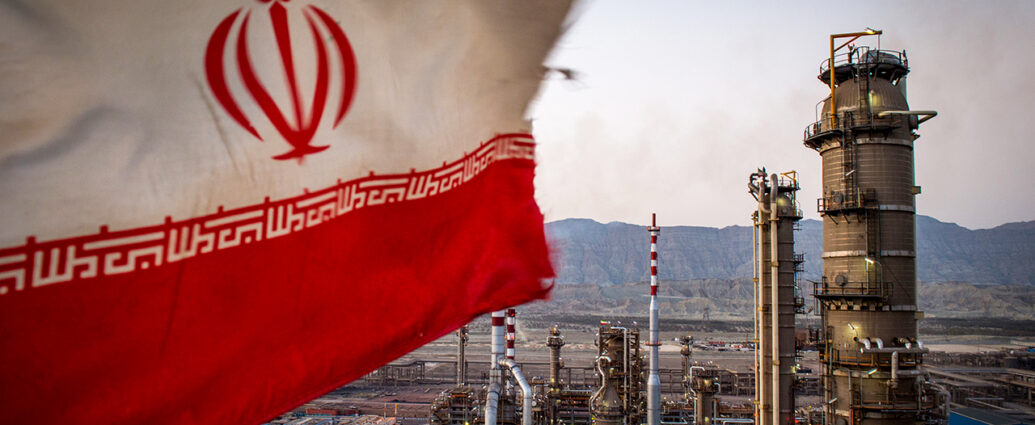
A California sheriff running for governor has seized more than half a million ballots cast in a November special election from county election officials, saying he’s investigating a ballot count discrepancy.

County elections officials have disputed the claims by Riverside County Sheriff Chad Bianco, a Republican. California Attorney General Rob Bonta, a Democrat, called Bianco’s move unprecedented and says it is designed to sow distrust in elections.

Bianco held a news conference Friday saying his office had launched the investigation after receiving a complaint from a local citizens group about the ballot count from a November 2025 special election on redistricting.

In the special election, voters approved a measure to redraw congressional district lines to favor Democrats in the upcoming midterm election. The measure passed in the county by a margin of more than 80,000 votes.

Bianco seized ballots in Riverside County, the inland California county of 2.5 million people where he has twice been elected sheriff. He called the effort “a fact-finding mission.”

“This investigation is simple: Physically count the ballots and compare that result with the total votes reported,” he said Friday.

Bianco is one of two prominent Republicans running for governor in a crowded June primary that includes more than half a dozen Democrats. California runs a top-two primary system that puts all candidates on the same ballot, regardless of party, and sends the two candidates who get the most voters onto the November general election.

Leading California Democrats are worried that their party has so many candidates, they risk splitting the vote and sending Bianco and Steve Hilton, another top Republican, onto the general election. That would be a stunning outcome in the heavily Democratic state.

Bianco said the investigation had “absolutely nothing to do” with his campaign for governor.

“I have a duty to investigate alleged crime in Riverside County,” he said.

The effort came as President Donald Trump has repeatedly disputed the results of the 2020 election, citing unsubstantiated instances of fraud. His administration recently seized ballots and other documents from an election office in Georgia. Some Republicans have mirrored Trump’s rhetoric on voting in their states.

Bonta has repeatedly sent letters to Bianco’s office over the last two months saying his staff is not qualified to conduct a recount. In one of the letters, Bonta wrote that the ballot seizure was “unacceptable” and “sets a dangerous precedent and will only sow distrust in our elections.”

The letters said Bianco seized nearly 1,000 boxes of ballots and elections materials from the county’s elections office with a warrant in February. At issue, Bianco said, is a discrepancy a citizen group reported between the handwritten ballot intake logs and the number of votes reported to the state.

Bianco said the alleged discrepancy amounted to about 45,800 votes — a difference elections officials have refuted at county meetings, saying the machine count and the final count submitted to the state differed by about 100 votes. They argue the handwritten rolls, which were not relied on to check the count, were being kept by temporary elections workers who had worked long days and may have made mistakes.

Bianco said Friday that the count had started and stopped, but would now resume under the supervision of a special master appointed by a judge.

This story was originally featured on Fortune.com

This post was originally published here

A potentially decisive showdown to wrest control of the Strait of Hormuz away from Iran is taking shape, with thousands of U.S. Marines headed for the Middle East.

President Donald Trump upped the ante over the weekend by vowing to destroy Iranian power plants if the strait isn’t reopened by Monday. Iran responded by threatening to target critical infrastructure around the Gulf, including desalination plants that provide most of the region’s fresh water.

Trump previously suggested warships would escort oil tankers through the strait, but they would still enter an Iranian “kill box.” So with both sides showing no signs of backing down, Trump may choose to expand his war from a mostly aerial campaign to a ground offensive.

U.S. troops could be deployed to areas along the strait to clear out threats to ships in the narrow waterway, which has been largely been closed by attacks from the Iran’s Islamic Revolutionary Guard Corps.

Marines could also land on Kharg Island, which sits farther north along the Persian Gulf coast and is the hub for 90% of Iran’s oil exports. U.S. control of the island could be used a leverage to pressure Tehran to fully open the Strait of Hormuz.

But experts have pointed to the risk ground troops would face in holding any territory, given that Iran has inflicted significant damage on U.S. military bases and embassies throughout the region as swarms of projectiles overwhelm air defenses.

For now, the U.S. military is continuing to pound the Hormuz area in anticipation of the next move, whatever it will be. Apache helicopters and the vaunted A-10 Thunderbolt aircraft have been targeting what remains of Iran’s naval capabilities, such as fast attack boats, while bombers have also destroyed stockpiles of anti-ship missiles.

Analysts have raised another possibility that could avoid putting boots on the ground: a naval blockade that prevents Iranian oil from reaching its destination.

The idea is to turn the tables on Iran and subject it to the same shock that closing the strait has delivered to its oil-producing neighbors, who have slashed their output while their crude has nowhere to go.

“The US can implode Iran’s economy by shutting down its oil exports,” Robin Brooks, senior fellow at the Brookings Institution, wrote in a Substack on March 13. “That might open up the Strait of Hormuz a lot faster than anything else. Time to implode Iran’s economy and give the Ayatollahs a taste of their own medicine.”

While he has been skeptical that the U.S. Navy has enough ships to escort all the tankers that typically transit the Strait of Hormuz, he said it has the resources to blockade Iran’s oil exports.

Removing more supply from global oil markets should send prices even higher, but Brooks argued crude might do the opposite if a U.S. blockade is seen ending the war quickly.

China, which buys most of Iran’s oil, would be incentivized to lobby Tehran to reopen the strait, and a blockade of Iran’s exports would deprive the regime of hard currency needed to prop up its war machine, he added.

“An embargo of Iranian oil, if the collapse in Iran’s economy is deep enough, could convince markets that the closure of the Strait might end sooner rather than later. As a result, Brent might only spike briefly or even fall,” Brooks wrote in a later post.

Meanwhile, Iran’s control of the strait is allowing it to ship even more oil than it did before the war started. The IRGC has also created an alternate route for ships that requires other countries to obtain permission to cross the strait, with at least one instance of a shipper paying $2 million.

Richard Haass, the former president of the Council on Foreign Relations and a longtime national security official, made a similar argument for a blockade this past week.

He proposed an “Open for All or Closed to All” policy that he believes has the best chance to resolve the Hormuz crisis. The veteran diplomat also dismissed naval escorts and ground troops as too difficult.

Blockading Iran’s oil exports would require setting up a 200-mile-wide defensive line across the Gulf of Oman, using ships, aircraft, and drones, Haass said.

He added that the policy would deny Iran its main source of revenue and impose domestic pressures to accept a ceasefire—or risk a larger challenge to the regime’s authority. Any increase in oil prices would also be modest as a blockade would remove relatively small amounts of Iranian oil from the global market.

“Under such a policy, the United States and its partners would announce that no tanker from Iran would be permitted to reach its destination in another country until Iran backed off its threats to and attacks on commercial vessels transiting the Strait,” Haass explained in a Substack post. “In other words, Iran cannot pick and choose who gets the region’s oil and who does not.”

This story was originally featured on Fortune.com

This post was originally published here

Federal immigration agents newly ordered to U.S. airports by President Donald Trump to help relieve security line congestion may guard exit lanes or check passenger IDs as a budget impasse has air travelers frustrated over hourslong waits and screeners angry about missed paychecks.

Trump made clear on Sunday, a day after saying he would use immigration officers for airport security starting Monday unless Democrats agreed on a bill to fund the Department of Homeland Security, that he was going ahead with the plan to assist the Transportation Security Administration.

Hundreds of thousands of homeland security workers, including from the TSA, U.S. Secret Service and Coast Guard, have worked without pay since Congress failed to renew DHS funding last month. Democrats are demanding major changes in the conduct of federal immigration agents and showing no sign of backing down.

White House border czar Tom Homan, named by Trump to lead this effort, has also been meeting with a bipartisan group of senators in recent days over the partial shutdown and while he characterized those sessions as “good conversations,” he said they were “not at a point yet where we’re in total agreement.”

The Senate, convening in a rare weekend session, was expected to advance the nomination of Sen. Markwayne Mullin, R-Okla., to be Trump’s next homeland security secretary. A vote on the confirmation could come as early as late Monday as Mullin has tried to make the casethat he would be a steady hand after the tumultuous tenure of Kristi Noem, Trump’s first DHS secretary.

Meantime, Homan said in Sunday news show interviews that the increased role of U.S. Customs and Immigrations Enforcement at airports — specific duties and numbers — was subject to discussions with the leadership of TSA and ICE “to find out where we can fit in.”

He pledged to have “a plan by the end of today, where we’re sending — what airports we’re starting with and where we’re sending them. … So it’s a work in progress.” The priority, Homan said, was “the large airports where there’s a long wait, like three hours.”

Immigration officers, as an example, could cover exits currently monitored by TSA agents, freeing them to work screening lines.

“ICE agents are assigned at many airports across the country already. They do a lot of investigation, criminal investigation on smuggling at airports,” Homan said, adding that “certainly, a highly trained ICE law enforcement officer can cover an exit and makes sure people don’t go through those exits, entering the airport through the exits. And stuff like that relieves that TSA officer to go to screening and to reduce those lines.”

Another option, he said, was having ICE agents check identification before people enter screenings areas.

“We’re going to be a force multiplier,” Homan said.

While saying to help “wherever we can provide extra security,” Homan said there were limits. “I don’t see an ICE agent looking at an X-ray machine, because we’re not trained in that,” he said.

Trump said in a social media post that on Monday, “ICE will be going to airports to help our wonderful TSA Agents who have stayed on the job” despite the partial government shutdown. He further criticized Democrats.

Travelers at some airports worried about reaching their gates Sunday.

At Atlanta’s Hartsfield-Jackson International Airport, lines wrapped from one end of the airport to the other.

“Everyone just seems to be accepting it for what it is, said 43-year-old Blake Wilbanks, who showed up 2 1/2 hours early for his morning flight to Salt Lake City after reading about the shutdown.

“Hopeful I’m gonna make it,” he said as he waited in a winding security line.

The scene appeared more chaotic at John F. Kennedy International Airport in New York. Large big crowds of anxious travelers piled toward security checkpoints, and TSA staff shouted through megaphones to tell people not to push one another.

For Transportation Secretary Sean Duffy, one concern is the uncertainty that passengers are facing over possible wait times at any airport on any given day.

“Do I have to come an hour and a half early? Do I have to come four hours early? They don’t know until the day of or the afternoon of their flight,” he said. “So if we can alleviate that, again, the president wants to take away that leverage point for Democrats and make travel easier for the American people.”

House Democratic leader Hakeem Jeffries of New York said “the last thing that the American people need are for untrained ICE agents to be deployed at airports all across the country” after criticism about their conduct as part of Trump’s immigration enforcement operations in Minnesota and elsewhere.

Homan appeared on CNN’s “State of the Union” and “Fox News Sunday,” while Duffy was interviewed on ABC’s “This Week” and Jeffries spoke on CNN.

This story was originally featured on Fortune.com

This post was originally published here
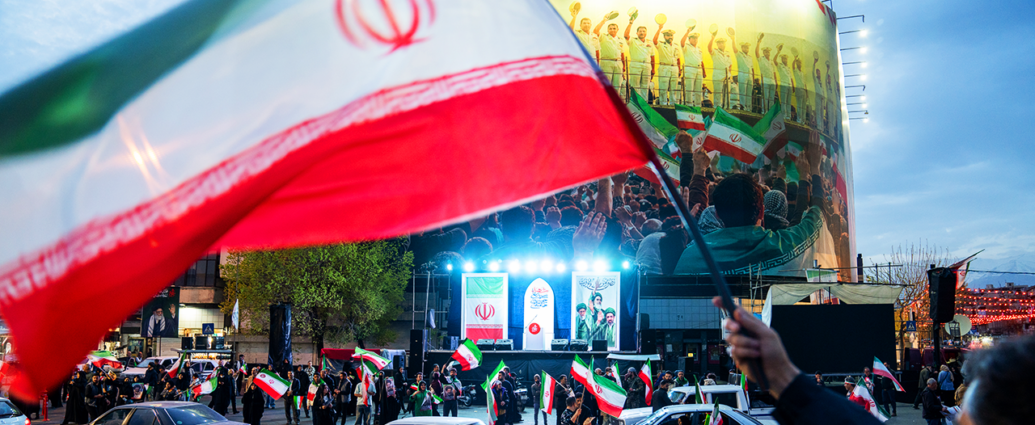
A quirk in global energy markets has created a stark geographic divide between the haves and the have nots, as a glut of natural gas in West Texas has produced negative prices while shortages loom over Europe and Asia amid the U.S. war on Iran.

Over the past week, spot prices at the Waha gas trading hub in the Permian Basin fell as low as -$9.75 per million British thermal units, with expectations that it could hit -$10 when pipeline capacity tightens as operators perform seasonal maintenance later this year, traders told Bloomberg

That’s because drilling in the prolific Permian Basin yields both oil and natural gas. But while an extensive network of pipelines exists to bring crude to market, there’s less infrastructure to transport natural gas, creating bottlenecks and localized surpluses.

As a result, negative gas prices aren’t that unusual in West Texas, and have been that way more often than not so far this year. But last week saw the lowest weekly average Waha spot price on record.

Since negative prices mean producers have to pay to someone to take the supply off their hands, excess natural gas is often burned off, and so-called flaring events this season are at five-year highs.

Despite the upside-down price environment for West Texas drillers, they aren’t expected to pull back production because oil is lucrative enough to offset losses from gas.

And the recent spike in crude since the U.S.-Israel war on Iran started makes oil even more profitable. West Texas Intermediate has shot up 47% to nearly $100 a barrel in the last three weeks.

By contrast, other parts of the world have seen natural gas prices surge due to disruptions from the Iran war. Tehran has retaliated by largely closing off the Strait of Hormuz, through which 20% of the world’s oil and liquified natural gas flow.

Iran also attacked Qatar’s Ras Laffan Industrial City, damaging two LNG production trains that will impact about 17% of the country’s LNG exports—and repairs may take up to five years.

While most LNG from the Middle East goes to Asia, the supply shock will ripple through global markets as Asia and Europe compete for the remaining gas.

European benchmark gas futures jumped as much as 35% on Thursday to about 70 euros per megawatt hour, or more than $20 per million BTUs, double their prewar levels.

While that’s far short of the record 345 euros per megawatt hour seen in 2022 after Russia invaded Ukraine, the latest price spike comes at a sensitive time for Europe. After heating demand drew down gas inventories during winter, countries must now restock supplies this summer.

In Asia, the situation is so dire that countries have already started looking ways to ration energy, such as implementing four-day workweeks and working from home.

A prolonged closure of the Strait of Hormuz could send LNG spot prices in Asia above $30 per million BTUs in the summer from $26 this spring, analysts told Bloomberg. And if it remains shut in six months, the price could even top $40.

This story was originally featured on Fortune.com

This post was originally published here

Airport security delays amid the partial government shutdown have created weekend travel nightmares, with massive TSA lines choking terminals across the country, unpaid officers calling out in growing numbers, and President Donald Trump vowing to send U.S. Immigration and Customs Enforcement (ICE) agents to airports to try to stem the tide of American angst.

“This is insane,” a frustrated passenger told CNN at Atlanta’s Hartsfield-Jackson International, regarded as the busiest airport in the world. “We didn’t think it was going to be this bad.”

“It’s pandemonium out there,” another added in videos posted to social media this weekend.

“We shouldn’t have to deal with this just to get on an airplane,” an X poster raged — a complaint that now captures the mood at airports nationwide as travelers absorb the fallout from Washington’s funding fight.

TSA OFFICIAL WARNS SMALLER AIRPORTS COULD SHUT DOWN AMID DHS FUNDING CRISIS

The chaos is being fueled by deepening TSA staffing shortages during one of the busiest travel stretches of the season due to spring breaks for schools and colleges. Officers are working without pay under the shutdown, and the Department of Homeland Security (DHS) has warned absenteeism, resignations and delays are likely to worsen if the stalemate drags on.

More than 400 TSA workers have already quit since the shutdown began Feb. 14, according to DHS.

The immediate concern for travelers, though, is far more fundamental: getting through the checkpoint before their flight leaves.

DHS SHUTDOWN FORCES AIRPORTS TO TELL TRAVELERS TO ARRIVE 4 HOURS EARLY AMID MASSIVE DELAYS

Among the most eye-popping wait times and airport line scenes reported this weekend:

Atlanta (ATL): Reported wait of 153 minutes early Sunday, with lines described as wrapping around baggage claim. 

New Orleans (MSY): Security line reportedly stretched into the parking garage

Houston (IAH/HOU): Some passengers reportedly faced waits of up to two to three hours, with Hobby Airport hit especially hard by staffing shortages.

JFK (New York): Waits climbed to 75 minutes Sunday morning after being much lower a day earlier.

Newark (EWR): Delays reached 44 minutes at points.

LaGuardia (LGA): Waits rose to around 20 minutes, lower than other major hubs but still up from minimal waits the previous day.

Cincinnati (CVG): Third-party tracker estimates showed waits approaching nearly an hour.

San Juan (SJU): Third-party tracker estimates also showed waits approaching nearly an hour.

AIRPORT CHECKPOINT CLOSURES SPREAD AS TSA WARNS OF SECURITY ‘THREAT,’ MORE TRAVEL DELAYS

The full national picture remains murky because official TSA tools are no longer reliably current.

“Due to the lapse in federal funding, this website will not be actively managed,” a red alert atop the My TSA app reads Sunday. “Click here for more information.”

That link reveals the data has not been updated for more than a month:

AIRLINE CEOS TORCH LAWMAKERS FOR TURNING AIR TRAVEL INTO A ‘POLITICAL FOOTBALL’

“This website was last updated on February 17, 2026 and will not be updated until after funding is enacted. As such, information on this website may not be up to date. Transactions submitted via this website might not be processed and we will not be able to respond to inquiries until after appropriations are enacted.”

VIDEO CAPTURES CRAZY AIRPORT CROWDS AS PASSENGERS POUR INTO TERMINAL AFTER SECURITY CHECKPOINTS CLOSE

DHS has said more than 10% of TSA officers called out on more than half of the past seven days, with some airports averaging absence rates near 20%. At Houston’s William P. Hobby Airport, the rate reportedly climbed above 40% on certain days. Those no-shows have forced lane closures, longer backups and wild swings in wait times from one hour to the next.

For weeks, Republicans in Congress have been sharing the narrative – with photos and videos of TSA security delays – “thank a Democrat.

Trump even went so far as to call Democrats the “greatest enemy” Americans face, as he continues to declare victory over Iran.

SHUTDOWN SPARKS FLIGHT CHAOS AS TSA LINES SPILL INTO PARKING LOTS WITH 3-HOUR WAITS OR LONGER

“Now with the death of Iran, the greatest enemy America has is the Radical Left, Highly Incompetent, Democrat Party!” Trump wrote Sunday morning on Truth Social.

Trump’s post came after his vow to send ICE agents to overwhelmed TSA security checkpoints at American airports. Coincidentally, Democrats have forced the Senate’s government shutdown for DHS funding over alleged abuse of power by ICE agents in Democrat-run sanctuary cities and states.

But, as Trump and Republicans frequently remind their counterparts, ICE is already fully funded since last summer’s passage of the One Big Beautiful Bill Act, so shutting down DHS appropriations is not accomplishing its stated goals.

HOMELAND SECURITY REACTIVATES MAJOR GLOBAL ENTRY PROGRAM FOR TRAVELERS AMID SHUTDOWN

“On Monday, ICE will be going to airports to help our wonderful TSA Agents who have stayed on the job despite the fact that the Radical Left Democrats, who are only focused on protecting hard line criminals who have entered our Country illegally, are endangering the USA by holding back the money that was long ago agreed to with signed and sealed contracts, and all,” Trump wrote on Truth Social, hailing border czar Tom Homan as the fixer the TSA chaos needs urgently.

“But watch, no matter how great a job ICE does, the Lunatics leading the incompetent Dems will be highly critical of their work. THEY WILL DO A FANTASTIC JOB. The great Tom Homan is in charge!!!”

Democrats blasted the idea, with Sen. Richard Blumenthal, D-Conn., calling it “another reckless, lawless threat to misuse ICE agents,” and Rep. Bennie Thompson, D-Miss., accusing Trump of “manufacturing chaos at airports for political leverage.”

TRUMP SAYS ICE WILL DEPLOY TO AIRPORTS MONDAY TO ASSIST TSA AMID FUNDING STANDOFF

Transportation Secretary Sean Duffy has warned the mess could get much worse, saying current delays may look like “child’s play” if TSA personnel miss another paycheck. Officials have even suggested some airports could face deeper disruptions — or possible closures — if the staffing crisis keeps intensifying.

For now, airports are urging travelers to arrive at least three hours early, even for domestic departures. But for passengers staring down marathon lines, the advice is landing more like a warning than reassurance: the shutdown is no longer just a fight in Washington — it is now a checkpoint crisis playing out in real time at airports across America.

“The current unpredictability is being driven by unpredictable staffing levels, basically, how many TSA officers are showing up for work on any given day,” Sheldon H. Jacobson, , the founder professor of engineering at the University of Illinois Urbana-Champaign and an expert on aviation security and airport security screening, told Business Insider.

THUNE REVEALS REASON DEMOCRATS ARE ‘SCARED’ TO REOPEN DHS

“TSA officers have historically been cross-trained to do many different tasks, so the number that show up is the key factor,” Jacobson said.

ICE agents are not specifically trained for airport security, the domain of TSA, which has 65,000 employees, including 50,000 airport security officers. ICE has played a central role in the Trump administration’s illegal immigration crackdown.

“He seems to have no concept of what the limits are on ICE, and I think America would be absolutely appalled to see ICE agents roaming through airports, just as they’ve been breaking down doors at homes,” Blumenthal told reporters in Washington.

SCHUMER GAMBIT FAILS AS DHS SHUTDOWN HITS 36 DAYS AND AIRPORT LINES GROW

Elon Musk, the world’s richest person, on Saturday offered to cover TSA paychecks “during this funding impasse that is negatively affecting the lives of so many Americans at airports throughout the country.”

Homeland Security historically has shifted resources across agencies during emergency staffing shortages, said Stewart Baker, who was a DHS policy official in President George W. Bush’s administration. Keeping TSA going without paying staff creates “serious trouble” for the agency, Baker said.

Using ICE agents for airport security “may be slower than using trained people, but it would be better than having nobody,” he added.

Reuters contributed to this report.

This post was originally published here
Although Kevin O’Leary became a millionaire more than 25 years ago after selling his software company Softkey Products to Mattel for $4.2 billion in 1999, he said he still remembers the exact moment he made it big.

“I get asked all the time, do you remember the moment that you became a millionaire? I do,” the Shark Tank star known as Mr. Wonderful said in a video posted to his LinkedIn in July. “But have to admit, it was very anticlimatic.”

How Kevin O’Leary built his fortune

O’Leary founded Softkey in 1986, and throughout the 1990s his company acquired its biggest competitors like Compton’s New Media, the Learning Co., and Minnesota Educational Computer Co. as well as Creative Wonders, Mindscape, and Broderbund. 

This helped Softkey to become the world’s leader in educational, reference, and home productivity software and the second-largest consumer software company in the world at the time with more than $800 million in annual sales, 2,000 employees, and subsidiaries in 15 countries.

While O’Leary’s accomplishment in selling Softkey to Mattel and becoming a millionaire may seem like a major deal, he said it didn’t feel that way. 

“Boom, you wake up one day and you say, ‘Wow, this is interesting, but it doesn’t change anything,’” O’Leary said in the LinkedIn video. “That’s the crazy thing. And every millionaire [or] billionaire I talk to says, ‘Yeah, it’s not that big a deal.’”

But that may be O’Leary reflecting on the entirety of his career. In 2003, he became co-investor and director in Storage Now and a founding SPAC investor and director of Stream Global Services in 2007. 

He now holds investments in more than 30 private-venture companies, and is the chairman of O’Shares ETF Investments and automated internet-based investment advisory service company Beanstox. And, most famously, he’s been an investor on Shark Tank since the show’s premiere in 2009. O’Leary also owns several companies he founded, including O’Leary Fine Wines and O’Leary Ventures, his private venture-capital investment company.

Why the first million is the hardest

While becoming a millionaire feels like a blip on O’Leary’s radar at this point, he also said in a 2023 video on his YouTube channel that it can feel impossible to make your first million—but meeting a $5 million milestone feels much easier.

“You work your ass off. It’s so hard. What it really takes to do is have the discipline of not buying s*** you don’t need,” O’Leary said in the YouTube video. “To make that first mil is you’ve got to invest it. Market’s going to make you 8%. And then I thought, well my sights are on five [million]. It’s going to be impossible. It wasn’t as hard to get to five [million] as it was to one [million].”

And even though O’Leary has an estimated net worth of about $400 million and pushes pitchers on Shark Tank to really know their numbers and prove their valuation, he insists it’s not about the money to him.

“If you’re very passionate about what you’re doing [you’ll] wake up one morning successful,” O’Leary said in the LinkedIn video. “[The] key is the passion. It’s not the pursuit of greed or money. That doesn’t work. You’re so in love with what you’re doing in business, and you get rewarded for it, particularly if you’re solving a big problem.”

More on Kevin O’Leary:

This story was originally featured on Fortune.com

This post was originally published here

Cuba began restoring its energy system on Sunday, a day after a nationwide collapse of the entire grid left millions of people in the dark for the third time this month.

Some 72,000 customers in the capital, among them five hospitals, had electricity again early Sunday, according to a report from the state-run Electric Union and the Ministry of Energy and Mines, but it’s only a fraction of Havana’s total population of approximately 2 million.

In Havana and provinces such as western Matanzas and eastern Holguin, local power microsystems were set up to supply the most vital centers. Residents in some areas of the capital told The Associated Press that power returned during the early morning hours.

Cuba is currently facing an unprecedented energy crisis. Its aging grid has drastically eroded in recent years, but the government has also blamed the outages on a U.S. energy blockade, after President Donald Trump in January warned of tariffs on any country that sells or provides oil to Cuba. His administration is demanding that Cuba release political prisoners and move toward political and economic liberalization in return for a lifting of sanctions. Trump also has raised the possibility of a “friendly takeover of Cuba.”

Another reason Cuba has been struggling with dwindling oil is the removal by the U.S. of Venezuela’s former President Nicolás Maduro, which halted critical petroleum shipments from the nation that had been a steadfast ally to Havana.

President Miguel Díaz-Canel has said the island has not received oil from foreign suppliers for three months. Cuba produces barely 40% of the fuel it needs to power its economy.

Daily blackouts have a significant impact on the population, whose lives are disrupted by reduced work hours, lack of electricity for cooking and damage to household appliances, among many other consequences.

“With the blackout and low voltage, my refrigerator broke — that was today. The day before yesterday, the voltage also dropped around 10 at night,” Suleydi Crespo, a 33-year-old woman with two small children, told AP on Saturday. “If there’s no electricity tomorrow, we won’t be able to get water.”

Residents also expressed exhaustion from the constant outages, whether nationwide or partial.

The Cuban Electric Union, which reports to the Ministry of Energy and Mines, reported that the total disconnection of the national energy system was caused by an unexpected shutdown of a generation unit at the Nuevitas thermoelectric plant in Camaguey province, without providing details on the specific cause of the failure.

The last nationwide blackout occurred on Monday. It took several days to restore power.

Saturday’s outage was the second in the past week and the third in March.

“We have to get used to continuing our usual routine. What else can we do? We have to try to survive. Get used to events, with or without electricity,” said Dagnay Alarcón, a 35-year-old vendor.

Authorities and Díaz-Canel himself have acknowledged the seriousness of the current energy situation. The Vice Minister of Energy and Mines Argelio Abad Vigo explained this week that the country has gone three months without receiving supplies of diesel, fuel oil, gasoline, aviation fuel or liquefied petroleum gas — all vital for the economy and power generation.

Fuel sales for vehicles are rationed, airlines have suspended flights or reduced frequencies many workplaces have reduced hours.

Trump has for months suggested Cuba’s government is on the verge of collapse. After a previous time Cuba’s electric grid collapsed, Trump told reporters he believed he’d soon have “the honor of taking Cuba.”

This story was originally featured on Fortune.com

This post was originally published here

Iran and its ally, the Lebanese militant group Hezbollah, stepped up their attacks on Israel on Sunday, launching strikes across the country after the United States and Iran threatened to widen their targets in the war in the Middle East, now in its fourth week.

As Israel came under renewed fire, top Israeli leaders traveled to the southern town of Arad, one of two communities near a secretive nuclear research site struck by Iranian missiles late Saturday, wounding scores of people.

Prime Minister Benjamin Netanyahu toured the destruction in Arad and said it was a “miracle” no one was killed there. He claimed Israel and the U.S. were well on their way to achieving the war’s goals and implored the international community for more support.

Earlier, President Donald Trump warned the United States will destroy Iran’s power plants if Tehran fails to fully open the Strait of Hormuz, setting a 48-hour deadline on Saturday. Iran’s parliament speaker said if the U.S. follows through on its threat, Tehran will retaliate against American and Israeli energy and wider infrastructure in the region.

The developments signaled the Iran war, which the U.S. and Israel launched Feb. 28, was moving in a dangerous new direction, despite Trump’s mention last week he was considering “winding down” operations. It has killed hundreds of people, rattled the global economy and sent oil prices surging.

Hezbollah claimed responsibility for an airstrike Sunday that killed a man in northern Israel while Gulf Arab states — including Saudi Arabia and the United Arab Emirates — said they were intercepting fresh barrages of new Iranian strikes.

Iran responds to Trump threat on its Strait of Hormuz closure

Iran has practically closed the Strait of Hormuz, a chokepoint connecting the Persian Gulf to the rest of the world through which roughly one-fifth of global supply passes. Attacks on ships and threats of further strikes have stopped nearly all tankers from navigating the strait, compelling some of the largest oil producers to make cuts because their crude has nowhere to go.

The blockade is a liability for both the U.S. and its allies in Europe and Asia, who rely heavily on the Persian Gulf supply to meet energy demand and power factories, vehicles and homes. The U.S. lifted some sanctions on Iranian oil at sea to relieve pressure on energy prices.

Trump said if Iran didn’t open the strait, the U.S. would destroy its “various POWER PLANTS, STARTING WITH THE BIGGEST ONE FIRST!”

Iranian parliament speaker Mohammad Bagher Qalibaf responded Sunday on X that if Iran’s power plants and infrastructure are targeted, then vital infrastructure across the region — including energy and desalination facilities — would be considered legitimate targets and “irreversibly destroyed.”

Separately, Iranian officials said they would keep providing safe passage through the strait to vessels from countries other than its enemies.

Nuclear concerns as the war rages

Iran said its strikes in the Negev Desert were in retaliation to an earlier attack on Iran’s main nuclear enrichment site in Natanz, according to state-run media.

Tehran praised the attack as show of strength, even as Israel’s military asserts that Iranian missile launches have gradually decreased in frequency since the war began.

“If the Israeli regime is unable to intercept missiles in the heavily protected Dimona area, it is, operationally, a sign of entering a new phase of the battle,” said Qalibaf, the Iranian parliament speaker.

Dimona is about 20 kilometers (12 miles) west of the nuclear research center, and Arad about 35 kilometers (22 miles) to the north.

Soroka Medical Center, southern Israel’s main hospital, received at least 175 wounded from Arad and Dimona, the hospital’s deputy director Roy Kessous told The Associated Press.

Israel is widely believed to possess nuclear weapons, though it doesn’t confirm or deny their existence. The U.N. nuclear watchdog said on X it had not received reports of damage to the Israeli center or abnormal radiation levels.

Israel denied responsibility for hitting Natanz on Saturday while the Iranian judiciary’s official news agency, Mizan, said there was no leakage. The Pentagon declined to comment on the strike at Natanz, which was also hit in the first week of the ongoing war and in the 12-day war last June.

The U.N. watchdog — the International Atomic Energy Agency — has said the bulk of Iran’s estimated 972 pounds (441 kilograms) of enriched uranium is elsewhere, beneath the rubble at its Isfahan facility.

Iran says strikes also hit hospital

Iran said that, in addition to Natanz, strikes also hit a hospital in Andimeshk. The Health Ministry reported patients and doctors were evacuated to another city.

Iran’s death toll in the war surpassed 1,500 on Saturday, state media reported, citing the ministry. In Israel, 15 people have been killed by Iranian strikes. More than a dozen civilians in the occupied West Bank and Gulf Arab states have been killed in strikes.

The war has also seen noncombat-related accidents, including a U.S. refueling plane crash in Iraq that killed six U.S. service members and a Qatari military helicopter crash on Saturday blamed on a technical malfunction. All seven aboard were killed, Qatari authorities said Sunday.

Hezbollah strike on northern Israel claims first fatality there

The Israeli civilian was killed in the northern town of Misgav Am in what Israel’s military said “seemed to be” a rocket attack. Israeli medics said they found the man in his car and released a video showing two vehicles ablaze.

Hezbollah, an ally of Iran, launched strikes on Israel soon after the war began, saying it was in retaliation for the killing of Iran’s Supreme Leader Ayatollah Ali Khamenei. Israel struck back, bombarding Lebanon and targeting Hezbollah in deadly airstrikes, expanding its presence in southern Lebanon and amassing more troops near the border.

Fighting in southern Lebanese towns have intensified recently as Israel continues its ground operations. Israel on Sunday expanded its list of targets to include all bridges over the Litani River, which Defense Minister Israel Katz said Hezbollah is using to move fighters and weapons into southern Lebanon. It later struck the Qasmiyeh bridge near Tyre.

Katz also ordered the military to accelerate its destruction of Lebanese homes near Israel’s northern border as part of a strategy he described as aligned with Israel’s campaign against Hamas in Gaza.

After Hezbollah fired rockets into Israel on March 2, the Israeli military launched an offensive that Lebanese authorities say killed over 1,000 people and displaced over 1 million. Hezbollah has fired hundreds of rockets into Israel.

Israeli military spokesperson Avichay Adraee issued a warning an hour before the Qasmiyeh bridge near the coastal city of Tyre was struck.

Lebanese authorities say Israel’s strikes have killed more than 1,000 people and displaced more than 1 million.

This story was originally featured on Fortune.com

This post was originally published here

Years before the rise of Instagram, Banksy figured out that the key to real influence lay in not in being famous, exactly, but in being anonymous.

The mystery of his identity has long been part of the value of his art, which for decades and across continents defied authority from public walls and self-shredded on the auction block. Now, Banksy’s apparent unmasking by the Reuters news agency has generated talk about whether the works themselves retain their cultural and financial value.

It also raises the question: Why pop the red balloon of his mystique in the first place? Many Banksy fans mourned the loss of the mystery and lashed out at the news outlet. One said it was like being told without warning that Santa Claus doesn’t exist.

“I feel like they are telling me how a magic trick is done,” said Thomas Evans, a Denver-based artist on Instagram. “Sometimes I just want to enjoy the magic trick.”

But some art experts say the murals and the message will survive Banksy’s naming because his appeal wasn’t driven solely by his anonymity. He and his works — mischievous and also dark — stand as witnesses to injustice, oppression and inequality around the world, from the artist’s native England to walled-off Bethlehem and war-ravaged Ukraine. Subtract his anonymity, they say, and the work still inspires reflection and discussion.

“People buy his works because they absolutely love it,” said Acoris Andipa, director of the Andipa gallery in London. “The main feedback that I get is that they really, frankly, don’t care if they know who he is.”

Naming the ghost — and the backlash — is engagement, too

Banksy, long thought to have been born Robin Gunningham around 1972, grew out of a tradition of street artists who viewed the undercover act of posting their art in public as a subversive form of expression. The postindustrial landscape of his native Bristol was his canvas and gallery. The walls of London, New York and elsewhere gave him a global stage just before the rise of social media.

Banksy’s apparent identity has been an open secret among protective fellow artists, and long been easy to find online for those who wanted to know. The Daily Mail reported in 2008 “compelling evidence suggesting” that was the artist’s birth name. It has been published by other news outlets, including by The Associated Press in 2016, as part of their coverage of the detective work.

Reuters reported last week that after The Daily Mail’s story, Banksy changed his legal name to David Jones — the second most-popular name in Britain. It’s also the given name of another rock star, the late David Bowie, whose Ziggy Stardust avatar inspired a 2012 Banksy painting of Queen Elizabeth II.

Bansky’s lawyer didn’t respond to a request for comment, and the artist’s spokeswoman declined to participate in this story.

Reuters pieced together that a David Jones traveled to Ukraine with a well-known associate of Banksy’s in late 2022 — just before the artist’s work began appearing on buildings that had been bombed by Russia. Banksy later confirmed that he’d created seven murals in the war zone, including one of a child flipping over a grown man who is wearing a black belt. Russian President Vladimir Putin practices judo.

There’s evidence that even some in the establishment he was protesting have accepted Banksy. They didn’t arrest him, for example, after the Royal Courts of Justice removed a Banksy stencil depicting a judge in a traditional wig and gown beating an unarmed protester with a gavel. Some street artists groused that they might be arrested for creating such graffiti — but when it’s a Banksy, it’s art.

Robin Gunningham wasn’t always so elusive

On Sept. 17, 2000, a Robin Gunningham was arrested for defacing a Marc Jacobs billboard atop a building on Hudson Street in New York.

In a handwritten signed confession, he described the work on the night in question: “I had been out drinking at a nightclub with friends when I decided to make a humorous adjustment to a billboard on top of the property,” he wrote in court records unearthed by Reuters and confirmed by the AP. “I painted eyeshadow a new mouth and a speach(sic) bubble” on the photo of a male model. He was charged with a misdemeanor.

The artist doesn’t need an alleged naming to make news. He created multiple works just in London in 2025, and grabbed headlines elsewherefor having his art sold or auctioned for millions. But Banksy has courted a public image centered around morality, justice and guerrilla tactics — he’s often likened to Robin Hood or Batman.

“Banksy woz ere,” he wrote with his animal murals at the London Zoo, which were removed in 2024.

Still, along with the sadness, there’s ample speculation in the art world and on social media that the artist himself orchestrated this round of naming. He didn’t deny the Reuters story.

That “would be very much in line with his practice of stunts and satire,” observed Madeleine White, the senior sales and acquisitions consultant at London’s Hang-Up Gallery, “As they say, ‘all publicity is good publicity.’”

She noted, however, that the backlash is directed at the media — not the artist, or the potency of his work. Reuters says it opted to publish some, but not all, of the information its reporters uncovered about Banksy’s identity, because he is a public figure, whatever his name — and he’s had an outsized influence on public events and discourse. What’s more, much of his work has been done on other people’s property.

Banksy’s star power is about far more than anonymity

Named or not, Banksy’s stardom lives, art experts say.

It endures in the wonder of his ability to erect new art under the noses of authorities well into the age of closed-circuit television and social media. It appeals because his spectacle and wit draw people in and the settings — the hulk of bombed buildings, for example, or Israel’s towering wall at the border of the West Bank — invite them to reflect. Now, fans are on the lookout for how and whether he’ll respond to the news of Robin Gunningham and David Jones.

Joe Syer, a Banksy expert and founder of MyArtBroker, said that the artist has always responded to world events. “And that’s where the real relevance, and value, sits.”

“If anything, Banksy’s anonymity has functioned less as a celebrity device and more as a way to keep the work universally accessible, detached from personality, ego, or biography,” he said in an email. “It allows the work to sit in public space, politically and culturally, without being anchored to an individual in the way the mainstream press often frames it.”

Christopher Banks, founder of the New York-based Objects of Affection Collection, reads Banksy’s naming “not as a biographical event, but as a structural stress test” of the artist’s system of managing his absence.

“Banksy’s best works carry their meaning without the author. He was there,” Banks wrote, citing the artist’s murals in Ukraine and his solidarity with the war’s victims.

“The name matters less than the presence. The presence was always what the work was about.”

Years before the rise of Instagram, Banksy figured out that the key to real influence lay in not in being famous, exactly, but in being anonymous.

The mystery of his identity has long been part of the value of his art, which for decades and across continents defied authority from public walls and self-shredded on the auction block. Now, Banksy’s apparent unmasking by the Reuters news agency has generated talk about whether the works themselves retain their cultural and financial value.

It also raises the question: Why pop the red balloon of his mystique in the first place? Many Banksy fans mourned the loss of the mystery and lashed out at the news outlet. One said it was like being told without warning that Santa Claus doesn’t exist.

“I feel like they are telling me how a magic trick is done,” said Thomas Evans, a Denver-based artist on Instagram. “Sometimes I just want to enjoy the magic trick.”

But some art experts say the murals and the message will survive Banksy’s naming because his appeal wasn’t driven solely by his anonymity. He and his works — mischievous and also dark — stand as witnesses to injustice, oppression and inequality around the world, from the artist’s native England to walled-off Bethlehem and war-ravaged Ukraine. Subtract his anonymity, they say, and the work still inspires reflection and discussion.

“People buy his works because they absolutely love it,” said Acoris Andipa, director of the Andipa gallery in London. “The main feedback that I get is that they really, frankly, don’t care if they know who he is.”

Naming the ghost — and the backlash — is engagement, too

Banksy, long thought to have been born Robin Gunningham around 1972, grew out of a tradition of street artists who viewed the undercover act of posting their art in public as a subversive form of expression. The postindustrial landscape of his native Bristol was his canvas and gallery. The walls of London, New York and elsewhere gave him a global stage just before the rise of social media.

Banksy’s apparent identity has been an open secret among protective fellow artists, and long been easy to find online for those who wanted to know. The Daily Mail reported in 2008 “compelling evidence suggesting” that was the artist’s birth name. It has been published by other news outlets, including by The Associated Press in 2016, as part of their coverage of the detective work.

Reuters reported last week that after The Daily Mail’s story, Banksy changed his legal name to David Jones — the second most-popular name in Britain. It’s also the given name of another rock star, the late David Bowie, whose Ziggy Stardust avatar inspired a 2012 Banksy painting of Queen Elizabeth II.

Bansky’s lawyer didn’t respond to a request for comment, and the artist’s spokeswoman declined to participate in this story.

Reuters pieced together that a David Jones traveled to Ukraine with a well-known associate of Banksy’s in late 2022 — just before the artist’s work began appearing on buildings that had been bombed by Russia. Banksy later confirmed that he’d created seven murals in the war zone, including one of a child flipping over a grown man who is wearing a black belt. Russian President Vladimir Putin practices judo.

There’s evidence that even some in the establishment he was protesting have accepted Banksy. They didn’t arrest him, for example, after the Royal Courts of Justice removed a Banksy stencil depicting a judge in a traditional wig and gown beating an unarmed protester with a gavel. Some street artists groused that they might be arrested for creating such graffiti — but when it’s a Banksy, it’s art.

Robin Gunningham wasn’t always so elusive

On Sept. 17, 2000, a Robin Gunningham was arrested for defacing a Marc Jacobs billboard atop a building on Hudson Street in New York.

In a handwritten signed confession, he described the work on the night in question: “I had been out drinking at a nightclub with friends when I decided to make a humorous adjustment to a billboard on top of the property,” he wrote in court records unearthed by Reuters and confirmed by the AP. “I painted eyeshadow a new mouth and a speach(sic) bubble” on the photo of a male model. He was charged with a misdemeanor.

The artist doesn’t need an alleged naming to make news. He created multiple works just in London in 2025, and grabbed headlines elsewherefor having his art sold or auctioned for millions. But Banksy has courted a public image centered around morality, justice and guerrilla tactics — he’s often likened to Robin Hood or Batman.

“Banksy woz ere,” he wrote with his animal murals at the London Zoo, which were removed in 2024.

Still, along with the sadness, there’s ample speculation in the art world and on social media that the artist himself orchestrated this round of naming. He didn’t deny the Reuters story.

That “would be very much in line with his practice of stunts and satire,” observed Madeleine White, the senior sales and acquisitions consultant at London’s Hang-Up Gallery, “As they say, ‘all publicity is good publicity.’”

She noted, however, that the backlash is directed at the media — not the artist, or the potency of his work. Reuters says it opted to publish some, but not all, of the information its reporters uncovered about Banksy’s identity, because he is a public figure, whatever his name — and he’s had an outsized influence on public events and discourse. What’s more, much of his work has been done on other people’s property.

Banksy’s star power is about far more than anonymity

Named or not, Banksy’s stardom lives, art experts say.

It endures in the wonder of his ability to erect new art under the noses of authorities well into the age of closed-circuit television and social media. It appeals because his spectacle and wit draw people in and the settings — the hulk of bombed buildings, for example, or Israel’s towering wall at the border of the West Bank — invite them to reflect. Now, fans are on the lookout for how and whether he’ll respond to the news of Robin Gunningham and David Jones.

Joe Syer, a Banksy expert and founder of MyArtBroker, said that the artist has always responded to world events. “And that’s where the real relevance, and value, sits.”

“If anything, Banksy’s anonymity has functioned less as a celebrity device and more as a way to keep the work universally accessible, detached from personality, ego, or biography,” he said in an email. “It allows the work to sit in public space, politically and culturally, without being anchored to an individual in the way the mainstream press often frames it.”

Christopher Banks, founder of the New York-based Objects of Affection Collection, reads Banksy’s naming “not as a biographical event, but as a structural stress test” of the artist’s system of managing his absence.

“Banksy’s best works carry their meaning without the author. He was there,” Banks wrote, citing the artist’s murals in Ukraine and his solidarity with the war’s victims.

“The name matters less than the presence. The presence was always what the work was about.”

This story was originally featured on Fortune.com

This post was originally published here

Iran has launched missiles at Diego Garcia, an Indian Ocean island that is home to a strategic U.K.-U.S. military base.

Britain condemned “Iran’s reckless attacks” after the unsuccessful attempt to hit the base. It’s unclear how close the missiles came to the island, which is about 2,500 miles (4,000 kilometers) from Iran.

Here is what to know about the remote but strategic base.

Hub for US operations

The United States has described the Diego Garcia base as “an all but indispensable platform” for security operations in the Middle East, South Asia and East Africa.

Home to about 2,500 mostly American personnel, it has supported U.S. military operations from Vietnam to Iraq and Afghanistan. In 2008, the U.S. acknowledged that it also had been used for clandestine rendition flights of terror suspects.

The U.S. deployed several nuclear-capable B-2 Spirit bombers to Diego Garcia last year amid an intense airstrike campaign targeting Yemen’s Houthi rebels.

Britain initially refused to let the base be used for U.S-Israeli attacks on Iran, but after Iran lashed out at its neighbors, the United Kingdom said American bombers could use Diego Garcia and another British base to attack Iran’s missile sites. On Friday, the U.K. government said that includes sites being used to attack ships in the Strait of Hormuz.

The U.K. says that the British bases can only be used for “specific and limited defensive operations.”

But Iranian Foreign Minister Abbas Araghchi said on X that U.K. Prime Minister Keir Starmer “is putting British lives in danger by allowing UK bases to be used for aggression against Iran.”

Iran previously has put a self-imposed limit on its ballistic missile program, limiting their range to 1,240 miles (2,000 kilometers). Diego Garcia is well outside that range. However, U.S. officials long have alleged Iran’s space program could allow it to build intercontinental ballistic missiles.

Justin Bronk, a senior research fellow at defense think tank the Royal United Services Institute, said that the attempt to hit Diego Garcia may have involved improvised use of Iran’s Simorgh space launch rocket, “which could offer greater range as a ballistic missile,” though at the cost of reduced accuracy.

A contested island chain

Diego Garcia is part of the Chagos Archipelago, a chain of more than 60 islands in the middle of the Indian Ocean off the tip of India. The islands have been under British control since 1814, when they were ceded by France.

In the 1960s and 1970s, Britain evicted as many as 2,000 people from Diego Garcia, so the U.S. military could build the base there.

In recent years, criticism has mounted over Britain’s control of the archipelago and the way it forcibly displaced the local population. The United Nations and the International Court of Justice have urged the U.K. to end its “colonial administration” of the islands and transfer sovereignty to Mauritius.

Trump criticism

After long negotiations, the U.K. government struck a deal last year with Mauritius to hand over sovereignty of the islands. Britain would then lease back the Diego Garcia base for at least 99 years.

The U.K. government says that will safeguard the future of the base, which is vulnerable to legal challenges. But the agreement has been criticized by many British opposition politicians, who say giving up the islands puts them at risk of interference by China and Russia.

Some of the displaced Chagos islanders and their descendants also have challenged the deal, saying they weren’t consulted and it leaves them unclear on whether they will ever be allowed to return to their homeland.

The U.S. administration initially welcomed the deal, but U.S. President Donald Trump changed his mind in January, calling it “an act of GREAT STUPIDITY” on his social media platform Truth Social.

Starmer’s initial refusal to let the U.S. attack Iran from Diego Garcia further angered Trump, who said earlier this month that “the U.K. has been very, very uncooperative with that stupid island that they have.”

Passage of the U.K.-Mauritius deal through Parliament has been put on hold until U.S. support can be regained.

This story was originally featured on Fortune.com

This post was originally published here

Across the country, collections are popping up to help Transportation Security Administration officers who have been without full pay for more than a month due to the partial government shutdown affecting the Department of Homeland Security.

The charity World Central Kitchen, more accustomed to feeding those in war zones and disaster areas, started providing meals to Washington, D.C.-area airports after many TSA officers missed their first full paycheck. On Thursday, Feeding San Diego began distributing 400 boxes with pasta, beans and peanut butter as well as fresh produce like strawberries and potatoes to affected agents near the airport after a request from TSA and the San Diego County Regional Airport Authority.

Nonprofits are stepping in to help and coordinating closely with airports and local TSA offices because ethics rules around giving gifts to federal employees make it difficult for those affected by the shutdown to receive help directly.

Carissa Casares from Feeding San Diego said communicating with the airport means they can better tailor their resources and response to TSA workers’ needs.

“We need to work directly with the people who have direct access to these employees and get this food to them at a time and location that is most convenient to them,” Casares said.

Saturday marks the 36th day that the Department of Homeland Security has been shut down after Democrats refused to fund Immigration and Customs Enforcement and Customs and Border Protection without changes to their operations after the killings of Alex Pretti and Renee Good in Minneapolis.

More than 120,000 DHS employees are working without pay, including roughly 50,000 Transportation Security Administration officers as negotiations between lawmakers and the White House on limits to immigration enforcement drag on.

The funding lapse comes just months after a 43-day government shutdown, the longest in the nation’s history, which drove long lines at food banks across the U.S. as over 700,000 federal workers worked without pay.

Rules limit what help TSA officers can accept

For those wanting to help, it’s not as simple as going to the airport and giving cash or gift cards directly to TSA officers, who are prohibited from accepting gifts at screening locations, according to a DHS spokesperson.

But Aaron Barker, president of the AFGE Local 554 in Georgia, said TSA officer unions don’t have the same restrictions and can accept donations to distribute to their members. Barker recommends those who want to donate look up their local union district on the AFGE website, or give through their local labor council.

“For some people it can be life or death,” said Barker. “It’s just sad and terrible that this is happening.”

Union members have told Barker they’re unable to cover utility bills or pay for their children’s medical procedures. They’ve received eviction notices or had cars repossessed. They’re having trouble affording routine items, too.

“People don’t think about the things they just naturally have in their home, like toothpaste, bathroom tissue, milk, detergent, dish liquid,” he said. “I’m sure those things are a necessity for every TSA officer.”

Nonetheless, no donation can be as effective as an end to the shutdown. “The first thing they want is their paycheck,” said Barker. “The money is the most immediate need.”

Coordination between nonprofits and TSA

Operation Food Search is working closely with TSA to safely deliver food and set up a temporary pantry at St. Louis Lambert International Airport.

The Missouri hunger relief nonprofit’s CEO said it is the first time they’ve distributed directly to TSA employees where they work.

“It removes their need to make an extra trip and drive here,” Kristen Wild said. “So we’re really excited that the airport allowed us to directly serve right there.”

They gave away just over half their 400 prepared food bags during a 2-hour period earlier this week, according to Wild. Each bag contained just under $20 worth of nonperishables such as apple sauce, pasta, rice and beans. Rules prohibit federal employees from soliciting or accepting gifts or items of monetary value greater than $20 if the gift is related to their government position.

Wild said she thought the $20 limit might be waived since they were distributing food through airport-approved channels.

“We didn’t know for sure,” Wild said. “But to play it safe we just kept it right under the $20 per bag amount so there would be no challenge to it.”

Airport communities band together

Seattle-Tacoma International Airport officials were fielding PETA donations and local food banks’ pallets on Friday afternoon as they stocked their private pantry for off-shift TSA staff.

But they’ve also seen dining vendors, usually tasked with feeding hungry travelers, step up. Airport tenants have offered discounts and donated through TSA to cover entire shifts’ meals, according to airport spokesperson Perry Cooper.

“You know a lot of these people,” Cooper said. “You see faces and that throughout the day as you’re wandering through. And then to realize that some of these folks are here and they’re not getting paid, you know, really tugs at your heart to think what’s a way that we can help.”

The airport community’s support adds to the roughly $6,000 they’ve received in cash and gift cards plus another $10,000 worth of food and household products, Cooper said. That includes donations from the labor union for air traffic controllers, whose jobs are unimpacted by this partial shutdown but who understand the strain of working without pay from full government closures.

More than 460 people picked up fresh produce when local nonprofit Food Lifeline brought a truckload last Friday, according to Cooper. Most of the attendees were TSA staff, Cooper said, though some people might have been homeless. Boxes including pineapples and broccoli lined folding tables along the airport’s main drive.

Regular travelers like Musie Hidad said he thinks about the TSA agents working unpaid every time he enters through security.

“The work they are doing is serious and they aren’t getting paid for it,” said Hidad, an Amarillo, Texas, resident, who was traveling to Columbus, Ohio, for work. “My heart goes out to them.”

This story was originally featured on Fortune.com

This post was originally published here
This week in the crypto world was a rollercoaster ride, with Bitcoin defending the $70,000 mark amidst market jitters. Ethereum, XRP, and Dogecoin tested their support levels, while Ethereum also entered what analysts are calling a ‘generational buy zone’.

In regulatory news, Nasdaq secured SEC approval to list blockchain versions of stocks and SEC Chair Paul Atkins announced a new crypto framework. Lastly, Morgan Stanley’s Bitcoin ETF set its ticker as BTC tests $70,000 support.

Bitcoin Defends $70,000 As Ethereum, XRP, Dogecoin Test Support

Bitcoin traded around $70,000 as Bitcoin ETFs saw $90.2 million in net outflows on Thursday. Ethereum ETFs reported $136.4 million in net outflows. The meme coin market capitalization dropped around 3% over the past 24 hours to $33.4 billion. Crypto trader Jelle noted that Bitcoin is retesting the $70,000 level from below, making it a key decision point.

Full story available on Benzinga.com

This post was originally published here

For millions of Americans, higher electricity bills are becoming a monthly frustration and a growing force in the midterm elections.

Unlike more volatile costs such as gasoline, electricity is a steady, unavoidable expense tied directly to basic needs — keeping the lights on, heating and cooling homes and powering everyday life. That makes it especially politically sensitive at a time when many households are still feeling squeezed by broader inflation and high housing costs.

AMERICANS HIT WITH SOARING ELECTRICITY BILLS AS PRICE HIKES OUTPACE INFLATION NATIONWIDE

The issue is giving both parties fresh campaign ammunition, with Republicans casting higher bills as evidence of failed energy policies, regulatory overreach and a shift away from fossil fuels, while Democrats point to bill assistance programs, grid investments and clean energy incentives aimed at easing pressure on household budgets over time.

The fight is unfolding amid sharp regional divides in electricity prices. Federal energy data shows residential power costs vary widely across the country, illustrating how affordability pressures differ not just by income, but by geography, infrastructure and energy mix.

The latest figures from the U.S. Energy Information Administration put the national average at 17.24 cents per kilowatt-hour, up 6% from a year earlier — a jump that outpaces wage growth for many households and adds to cumulative cost pressures from rent, insurance and groceries.

North Dakota has the lowest average residential electricity rate in the country at 11.02 cents per kilowatt-hour, while Hawaii — an outlier shaped in part by geographic isolation and reliance on imported fuel — has the highest, at 41.62 cents per kWh.

Nebraska, Idaho, Oklahoma and Arkansas also rank among the cheapest states, while California, Rhode Island, Massachusetts and New York join Hawaii among the most expensive. Many of the higher-cost states are also pursuing aggressive clean energy transitions or maintaining older, more complex grid systems — factors that can raise near-term costs even as they aim to stabilize prices in the long run.

Several of the cheapest states are deep-red, a pattern Republicans are likely to seize on to reinforce broader arguments about energy policy and cost of living — even though power prices are shaped as much by geography, fuel availability, regulatory structures and long-term infrastructure investments as by partisan control.

THE STATES WHERE AMERICANS PAY THE MOST — AND LEAST — FOR ELECTRICITY

Cheap electricity, however, does not always mean affordable energy. Weather extremes, household consumption patterns, housing efficiency, aging infrastructure and state-level utility decisions all affect what families ultimately pay. In hotter or colder regions, for instance, even low rates can translate into high monthly bills due to heavy air conditioning or heating use.

Utilities are also seeking rate increases in many states to cover grid modernization, wildfire mitigation, storm hardening and the expansion of renewable energy — costs that are often passed on to consumers gradually but steadily.

GET FOX BUSINESS ON THE GO BY CLICKING HERE

Even so, the partisan pattern may prove politically useful in a campaign season shaped by anxiety over household expenses and economic uncertainty.

Gas prices may grab more headlines, but electricity bills can be more politically durable: they arrive every month, are harder to cut quickly and are often tied to local utilities and regulators. That gives candidates a direct way to connect national energy debates to a tangible, recurring household cost and to voter frustration that is felt not at the pump, but at the kitchen table.

This post was originally published here

Tech defense startups doing business with the U.S. military could someday look back at March 2026 as the month their relationships moved into the serious phase. Instead of dabbling in limited pilot projects with the startups, the Pentagon is starting to place big bets on a select few of these companies, writing them into core missions with the kind of fixed-priced deals that have long been standard among established defense contractors.

Last week, the U.S. Army announced an enormous deal with Anduril—a five‑ to ten‑year enterprise contract with a ceiling of up to $20 billion—that consolidates roughly 120 to 130 existing orders they already have under one umbrella and creates a one‑stop vehicle to cut future deals much faster. The Army already inked a brand-new $87 million contract with Anduril earlier this week, as the first task order under that agreement. 

For venture-funded defense tech startups, which make everything from AI-powered drones to advanced threat detection systems, Anduril’s long-term contract sets a new bar that reflects how the young industry has evolved in the past few years—and opens the door to new opportunities and risks. The Pentagon’s embrace of a select few companies also comes at a time when the military has clashed with Anthropic, which develops general-purpose AI models and has sought to set limits on how the military can use its technology. 

The contract is a “meaningful signal,” says Steven Simoni, cofounder of the autonomous precision weapons startup Allen Control Systems, which also has a contract with the U.S. Army.
“For a long time, the defense acquisition system rewarded presentations, prototypes, and promises. What we’re seeing now is an institutional desire to back companies that can actually build, deploy, and sustain real systems in the field,” he said in an email.

Anduril, which was founded in 2017 by virtual reality technology pioneer Palmer Luckey, has focused squarely on security applications like anti-drone defense and border protection from the start. While the company is reportedly eyeing a $60 billion valuation in its latest funding round, it is still a young company that pales in size next to incumbents like Lockheed Martin or Boeing when you look at revenue and order backlogs.

The enterprise contract “suggests the government increasingly sees Anduril’s stack as repeatable and scalable, rather than bespoke R&D,” says Ali Javaheri, a senior analyst at PitchBook.

This isn’t the first time the Army has done a deal like this with a tech company. Last year, it signed a 10‑year, enterprise service agreement with the data analytics and AI company Palantir, with a ceiling of up to $10 billion, consolidating about 75 of its existing software and data contracts into a single channel. Anduril’s contract both copies and extends that model: this time wrapping hardware and services around the software. It also doubles the ceiling, and ties the whole thing to a live mission—countering drones across the military. Massive enterprise agreements with tech providers are no longer one‑off flukes; there is now a pattern of VC‑backed platforms winning prime‑like enterprise deals that let them compete directly with the old guard.

“Autonomy, counter-UAS, and software-defined C2 are moving from experimental budgets into more durable procurement pathways, which is exactly the kind of shift investors have been waiting to see from defense tech,” Javaheri says, referring to counter-drone systems and the ways that system commanders are directing their forces.

Playing with the primes

Playing in the big leagues comes with some risks. All of the individual task orders that happen under the Anduril deal will be firm-fixed price contracts, or FFPs, which tend to only be used when both the requirements and costs are well understood. The advantage for the Army is price certainty: It locks in what it will pay, and the company has to eat any unexpected or surging costs over the life of the deal. The upside for the contractor is that if it can deliver more cheaply than expected, it keeps the extra margin.

All this is fine and dandy unless something goes wrong. For defense contractors, there’s a long list of examples—now cautionary tales—in which fixed-price structures ultimately proved to be a bad fit for complex or immature designs. There was Boeing’s KC‑46 tanker, which started as a fixed‑price incentive contract of around $4.4 billion to $4.9 billion. Technical problems piled up with its remote vision capabilities and fuel system issues, which led Boeing to ultimately absorb more than $7 billion in losses. 

The Navy’s experience with Lockheed Martin’s Freedom‑class Littoral Combat Ships tells a similar story. Design flaws in the combining gear forced the service and the company to spend roughly $8 million–$10 million per ship on fixes.

Simoni says large contracts like what Anduril has notched set a “much higher bar,” as it requires “dedicated manufacturing capacity, consistent supply chain discipline, and the proven ability to deliver on timelines that matter operationally, not just technically.”

Matthew Steckman, president and chief business officer at Anduril, says taking on these kinds of risk is part of Anduril’s stated objective.

“That’s the goal, to take the risk out of the government’s hands and into industry, incentivizing defense companies to deliver capabilities on time for that price and holding them accountable if that outcome isn’t achieved,” he said in a statement to Fortune.

By signing on to write fixed-priced contracts with such an enormous ceiling—which, to be clear, the Army is under no obligation to fully spend—the government is signaling confidence that Anduril’s software and hardware are mature enough to warrant that kind of cost assurance. If they’re wrong, big bills could shake the startup’s financial position, and the Army formations that now depend on the company.

This story was originally featured on Fortune.com

This post was originally published here
For Scott DeRue, the climb to the C-suite has mirrored the literal peaks he’s summited along the way.

As CEO of The Ironman Group, he oversees nearly 250 endurance events worldwide. But his career path has been anything but linear—spanning roles as a professor, dean of the University of Michigan’s Ross School of Business, and president of Equinox. He’s also climbed the Seven Summits, including Mount Everest and Kilimanjaro. The thread connecting it all hasn’t been a single industry or a straight-line path; it’s been intention.

“I have my family, The Ironman Group, and my passions of endurance sports and mountaineering,” DeRue told Fortune. “Every hour of every day is spent with one of those three things—and nothing else.”

That level of focus has shaped both his professional trajectory and personal ambitions. It dates back to when he was 13, unloading semi-trucks filled with upholstery fabric—an experience that taught him about hard work, paying taxes, and a lesson that would stick: no role has to be permanent.

But as he worked his way up, DeRue said success didn’t hinge on traditional networking—in fact, he believes the concept is often misunderstood.

“One of the terms that I think is most dangerous is the idea of ‘networking,’” the 48-year-old said. “Because it’s about relationships, not networking. You want to develop relationships built on mutual value and before you need them, and I think that’s an art that is lost on many.”

DeRue’s advice is simple: ditch the transactional mindset. 

Rather than treating connections as one-off exchanges—swapping business cards or adding someone on LinkedIn—he emphasizes consistent, genuine engagement. That may mean checking in regularly, sharing updates, and offering help without expecting anything in return.

It’s a philosophy rooted in advice he received early in his career: think of relationships like a bank account: “There are debits and credits,” he said. “You always want to have a positive balance.”

That message likely resonates with Gen Z, many of whom struggle with how to approach professional connections. About 38% of young workers say networking makes them anxious, according to a survey conducted by Strand Partners for LinkedIn, with many avoiding it altogether because they don’t know where to start. 

Today, DeRue oversees a workforce that swells to about 1,000 employees around the world during peak race season. Ironman—best known for its grueling triathlons—was purchased by Advance, the parent company of Condé Nast, in 2020 for an undisclosed amount. Prior to that, the company was sold in 2015 for $650 million.

Gen Z wants purpose in their careers. DeRue once took a whole month off work to try to find his

For Gen Z, a paycheck is increasingly not enough to feel satisfied in careers—purpose is a priority. More than half of Gen Zers and millennials say meaningful work is a key factor when evaluating employers, and 89% of Gen Z say purpose is critical to their job satisfaction and well-being, according to Deloitte’s 2025 Gen Z and Millennial Survey.

As entry-level roles grow more competitive, finding that balance can be challenging. And it’s a tension DeRue knows well.

After graduating from the University of North Carolina in 1999, he began his career at consulting firm Monitor Group (later acquired by Deloitte). While the role offered a strong start, it lacked the sense of direction he was searching for.

So, he took a month off to reflect and interview people in his life about their careers—until he identified what he calls his “North Star.”

“Since the age of 25, I’ve had one single through-line, North Star purpose: to create experiences for people that help them unlock their potential,” he said.

That clarity, he added, is what allows people to navigate uncertainty and build careers that feel meaningful over time. And looking back, even with his expansive resume, the biggest advice he would give himself is to “be bolder.”

And just as important is adopting what he calls a “no regrets” mindset.

“Even when things don’t work out, did you make a principled decision? Were you thoughtful about it?” DeRue said. “You can’t always control the outcome—but you can control how you approach it.”

This story was originally featured on Fortune.com

This post was originally published here
Young professionals are using ChatGPT to rehearse salary negotiations, deliver tough feedback, and navigate workplace conflict — before the conversations ever happen. From entry-level employees to mid-career managers, workers are turning to AI tools to prepare before stepping into their manager’s office.

Why This Generation Needs a Practice Gym

For a generation that came of age amid remote work, economic uncertainty, and rapid technological change, preparation feels less optional and more essential. Deloitte’s global survey of more than 23,000 workers found that Gen Z and millennials are intensely focused on growth and skill development as workplace expectations evolve, and another study showed that 56% of Gen Z workers use AI to help figure out how to communicate with a boss or colleague.

For many early-career professionals, the toughest part isn’t the content of the conversation—it’s the experience of having it. That’s not a character flaw; it’s the product of a world where fewer interactions require real-time conflict resolution, emotional regulation, or face-to-face persuasion. If you’ve spent years communicating through screens and asynchronous channels, the first time you have to deliver tough feedback or negotiate on the spot can feel like showing up to a championship match without a single practice rep.

How to Try It Right Now

For the first time, that kind of practice gym is within reach. Advances in large language models have dramatically lowered the cost of creating personalized, high-quality dialogue that lets employees rehearse difficult conversations on demand.

Here’s how to start: open ChatGPT and switch to voice mode. Give it context on an upcoming situation you’re anxious about, then ask it to simulate the conversation. Tell it to challenge your assumptions, interrupt you the way a stressed manager might, or push back hard on your reasoning.

It will feel awkward at first — like your first day back in the gym after a long layoff. That’s fine. Fluency comes from repetition.

  • Listen first, then reflect.Prompt ChatGPT to listen without interrupting, then summarize what you said in three key points. This exercise alone often brings unexpected clarity.
  • Roleplay the other person.Prompt: “Pretend you are [coworker X] and help me rehearse the conversation I need to have with them.”
  • Repeat until it feels natural. The first session will feel strange. By the third, it won’t. Consistency is the only requirement.

The Next Frontier: Team-Level Training

But individual practice is only the beginning. A new generation of AI-enabled corporate trainers can now bring this kind of preparation to entire teams.

These trainers will develop adaptable lessons geared to what an employee needs to know — not what they already know. They’ll surface the conversations employees didn’t know they needed to have, tailoring training for distinct roles and seniority levels.

This isn’t theoretical. Organizations like Skillwell — which I lead — are already demonstrating that EQ leadership skills are not innate traits Over the next decade, I expect the number of people practicing professional skills via AI-enabled simulation to expand by several orders of magnitude. The tools exist. The adoption curve is just beginning.

The Gym Is Open

Real-world experience remains the best teacher. But organizations no longer have to wait for high-stakes moments to arrive — and hope their people are ready. AI-powered simulation gives every worker a place to train, build fluency, and show up prepared when it matters most.

The practice gym is open. The only question is whether your organization will walk in.

The opinions expressed in Fortune.com commentary pieces are solely the views of their authors and do not necessarily reflect the opinions and beliefs of Fortune.

This story was originally featured on Fortune.com

This post was originally published here

This year marks the 250th anniversary of the publication of The Wealth of Nations—the book that built the intellectual foundation of free-market capitalism. Smith’s argument was elegant: when individuals pursue their own interests within competitive markets—governed by rules and institutions—it leads to economic prosperity for the entire society, guided by what he called the “invisible hand” that steers resources toward broad prosperity. 

What Smith did not anticipate was that if leaders in government and owners of capital form a stealthy alliance to help one another, the invisible hand vanishes  and competition is replaced by the kind of massive monopolies or oligopolies that strangle  societal prosperity.

The Invisible Hand Has Left the Building

Over time, the belief that markets would self-correct and growth would eventually “lift all boats,” has lost credibility. We have more knowledge, wealth, and technological competence than any generation in history, yet the world faces multiple existential crises: widening inequality, erosion of democracy, ecological collapse, and a pervasive breakdown of trust in institutions. These are not isolated failures but the inevitable outcomes of a governance model that has prioritized profit above people and the planet, for too long. Capitalism, in its current form, has surrendered its moral authority. Barring a few exceptions, democracy has been  downgraded to function as government of the few, by the few, and for the few.

Yet this moment should not be seen only as a crisis. It may also mark the early stage of an epochal transition to a better state.

A Quiet Revolt Is Already Underway

Across the world, millions of progressive people—employees, consumers, youth and women—are increasingly unwilling to accept exclusion as destiny. Their impact is already visible. Consumers punish irresponsibility. Employees reject exploitation. Citizens demand transparency. Markets do not operate in a vacuum; they are embedded in societies. The era of unaccountable leadership may now be short-lived—not through revolution, but through obsolescence.

Enter Peopleism

What comes next will not be another ideology in the traditional sense, but a structural reordering of priorities—one that redefines the purpose of economic systems and institutions. This is where a new idea begins to take shape: Peopleism.

The premise is straightforward: systems exist to serve people—not the other way around. Economic and political institutions derive legitimacy only when they visibly advance human dignity, social inclusion, and planetary well-being. Capital remains indispensable, but it functions as a means rather than a master. Wisdom—not power or scale—becomes the defining leadership capability of the twenty-first century.

Every human enterprise—corporate or government—rests on three indispensable pillars: capital, people, and nature. To privilege one while degrading the others is a formula for systemic instability and long-term fragility.

Evolution, Not Revolution

Peopleism is not an outright rejection of capitalism. It is capitalism’s evolution—a leadership and governance upgrade, aligned with economic reality. It integrates ethics, ecology, and governance into a new operating model  that aims to deliver  “an economics that works for all.” It demands a leap from piecemeal fixes to structural transformation.

Peopleism accepts that owners of capital play an important entrepreneurial role. Many are worthy capitalists; who abide by the system—legally and ethically. They are a nation’s asset, key employment-generators, and the lifeline of the economy. But some big capitalists, in every nation, use the power of money to influence governments for their own benefit, and tacitly control media, regulators, and even the judiciary. It is these capitalists that most urgently need the leadership leap to Peopleism.

What It Looks Like in Practice

Think of Peopleism less as a moral doctrine and more as a survival strategy —one that empowers every entrepreneur and leader to scale new heights through wisdom, compassion, and accountability. It is about enabling every business leader to be a “peopleist”—to do well and do good while building an honorable legacy.

The Tata Group’s founder, Jamsetji Tata, put it plainly: “The community is not just another stakeholder in business, but, in fact, is the very purpose of its existence.”
Patagonia’s Yvon Chouinard went further: “We’re in business to save our home planet”, — and transferred 100% of the company’s voting stock to the Patagonia Purpose Trust, with planet Earth as its sole shareholder.

Such practices are not yet the norm, but they serve as precedents and ignite hope. History suggests that radical shifts are resisted by incumbents but accelerated by necessity. We now find ourselves at a collective watershed moment—a moment when history ceases to determine our future.

The Choice Ahead

The transition to a better world is not guaranteed. It has to be chosen. Peopleism is that choice—a leadership ethos for a world that no longer accepts irresponsible power. If the twentieth century belonged to capitalism, the twenty-first may well belong to an idea whose time has come: Peopleism.

What would it take for your industry to make that leap?

The opinions expressed in Fortune.com commentary pieces are solely the views of their authors and do not necessarily reflect the opinions and beliefs of Fortune.

This story was originally featured on Fortune.com

This post was originally published here
Every other month, one U.S. doctor trades rugged Appalachia for Venetian waterways to recharge from his hectic work life. And he’s part of a growing trend of American professionals looking for a change of pace in breezy European countries. 

Since December 2023, Dr. Alexander Gabrovsky has been splitting his time between his physician job in the U.S. and water-front villa in Italy. And it all started after stumbling across a listing for a porto d’acqua “water door” apartment in Venice; the one-bedroom, two-bath home accessible by boat overlooks a medieval church and local town square. Longing for a slice of tranquil Italian life, he put down an offer €60,000 ($69,000) below the asking price, and within a matter of months, the deal was closed at $438,000.

“It was definitely a spontaneous decision. It was an emotional decision,” Gabrovsky tells Fortune. The Italian city had been a fascination throughout most of his life, and thanks to his flexible job schedule, he finally decided to follow through. “Venice captured my imagination: the history, the art, the lifestyle.”

Alexander Gabrovsky's Venice apartment.

Alessandro Pietrosanti / www.alessandropietrosanti.co.uk

Living the dream for six months of the year also comes with some sacrifices. To make his cross-country living work while juggling an in-person job, the 42-year-old condenses his work schedule into intense multi-week clusters.

Gabrovsky says he’ll work 12-hour shifts for three weeks straight at his gig in Kentucky, then spend a month relaxing in Venice, then repeat the cycle. Normally, full-time hospitalists work seven days on, seven days off—but he says his plan is economical with travel costs, circumvents the 90-day tourist cap, and carves out enough meaningful time to unwind in Italy. 

“I can work in a way that allows me to travel right to Europe for an extended amount of time,” Gabrovsky explains. “While I’m [in Kentucky], it’s 12-hour shifts. There’s a little bit of social life, but you’re really just working and sleeping.”

Alexander Gabrovsky's Venice apartment.

Alessandro Pietrosanti / www.alessandropietrosanti.co.uk

Buying the Venetian ‘water door’ apartment for $438,500 with all his savings—and making it work

When Gabrovsky was trawling the internet for a waterfront getaway, he found the perfect pad in Castello: representing the tail of the fish of Venice drawn out on a map. 

It was nestled at the crux of three canals, with two water door entrances that allow him to ride a boat right up into his living room. Luckily, buying the house was pretty straightforward: he leaned on some internet sleuthing, but help from the firm Italian Real Estate Lawyers sealed the deal.

The city also came with unique paperwork, like getting permission to moor his boat outside his apartment, but getting set up was a fairly painless process. 

Alexander Gabrovsky's Venice apartment.

Alessandro Pietrosanti / www.alessandropietrosanti.co.uk

“It was definitely daunting at first,” Gabrovsky recalls. “The lawyers that I used were very helpful—I obviously watched a lot of YouTube videos and educated myself as much as I could about it…The process was fairly smooth.”

Inside, the historic apartment was a fixer-upper, but the American was well prepared to bring the late medieval-era flat back to its former glory. In addition to having one bedroom and two bathrooms, the apartment features a kitchen, living room, loft, and two balconies. The building’s foundation is extremely old: its wooden beams and brickwork originated in the 14th century, with additional expansions made throughout the 18th and 19th centuries. 

Living in a piece of history also came with a price; Gabrovsky bought the property for €380,000 ($438,500), which he says exhausted nearly all his savings at the time. However, the physician reasoned that it was still cheaper than buying a comparable property in the U.S., renovations included. He spent $16,000 installing a brand new kitchen, and another few grand restoring the water doors, but the revamp was relatively inexpensive. 

Alexander Gabrovsky's Venice apartment.

Alessandro Pietrosanti / www.alessandropietrosanti.co.uk

Gabrovsky deploys other financial hacks to ensure he can afford his transnational lifestyle. While he’s in rural Kentucky for his job assignments, he typically stays in hospital-provided accommodations, which greatly reduces his housing expenses.

Flying between the U.S. and Italy every month can also run up a big bill, but Gabrovsky keeps travel costs down. He only flies with carry-on luggage, avoids checked bag fees, and always looks to buy the best-priced plane tickets in advance.

The doctor leads a ‘rich’ life between the U.S. and Italy: lower costs, less stress, and slower living

By splitting his time between Kentucky and Venice, Gabrovsky says he isn’t just saving on living costs. The setup also lets the physician enjoy a culture-rich European city aligned with his academic background, having received a PhD in medical literature from the University of Cambridge in 2015. 

“Venice is a breathing, living museum,” Gabrovsky explains. “I like the contrast of the energy of the rugged mountains of Appalachia, to all of a sudden being in Italy and having a spritz and watching boats go by. Having that variety of experiences is very refreshing, and also helps me put different things in perspective, seeing how different people live. It makes life very rich.”

Alexander Gabrovsky inside his Venice apartment

Alessandro Pietrosanti / www.alessandropietrosanti.co.uk

Plus, Italy’s leisurely living is a good break from his intense work grind. Gabrovsky says it’s “therapeutic” to be in town; Venice’s beauty, calming waters, and car-free environment are natural destressors from the hustle and bustle of America. Touching down in the city, he’s immediately surrounded by beautiful buildings and the warmth of friendly Venetians, who invite him over for long dinners that go into the evening.

He gets the best of both worlds in Italy: being a part of an active and vibrant community, while living a slower pace of life. It helps reset his nervous system before delving back into weeks of 12-hour shifts. 

“Italy certainly helps me relax, because the pace in Venice and Italy in general is a lot slower, especially in a historic city like Venice,” the physician says. “Learning to slow down and appreciate, having to walk everywhere and not get in your car, but instead take my boat out into the lagoon and go rowing…It does help de-stress.”

Living between two countries is a dream for many Americans, but taking the leap can be very daunting. There are many things to consider, from country caps on tourists staying without a visa, to the different real estate laws in purchasing property as a foreigner. But Gabrovsky says it’s well worth it for disillusioned Americans to try and bring their dual-living fantasies to life. 

“Americans who are thinking about either moving abroad and doing a digital nomad visa, or splitting their life between the U.S. and somewhere else abroad, if you feel a strong passion for it, then go for it,” he advises.

This story was originally featured on Fortune.com

This post was originally published here

Mark Cuban is notoriously bold in his deal-making. But even by his standards, dropping millions of dollars on a mansion he’s never set foot in is a move that could raise eyebrows.

The billionaire entrepreneur and former Shark Tank star revealed he snagged a $25 million estate at a jaw-dropping 50% discount, a deal he says exemplifies one of his core investing principles.

Cuban reflected on the purchase in a 2022 interview with GQ. During his days at MicroSolutions (the company he ultimately sold for $6 million in 1990), his partner, Martin Woodall, told him about an “amazing house” going into foreclosure. It was a home the owner had spent three years building and a “dream home” to the original owner’s wife and whole family, Cuban said. 

But unfortunately, the owner was forced to sell the home when the stock market crashed, and he lost everything. So, Cuban, who’s currently worth about $9 billion, bought the 24,000-square-foot mansion in Dallas sight unseen, calling it his one “why the f–k not purchase.” He still resides there, and Zillow estimates show it’s currently worth $22 million.

“I’d never seen the house. I saw some pictures. I’d never been there. I was like, F–k yeah. I’m a billionaire,” Cuban said. Essentially, the idea is that buying a home at a discount doesn’t inherently change its value. So when Cuban eventually goes to sell the home someday, he’ll make a pretty penny—at least about $10 million based on the current estimated value of the home (although it could be closer to $28 million, according to the Zillow estimate range).

Buying at a steep discount is “the best guaranteed return on investment” you can make, Cuban said, a methodology he uses for most of his purchases. 

“Saving 30% to 50% buying in bulk—replenishable items from toothpaste to soup, or whatever I use a lot of—is the best guaranteed return on investment you can get anywhere,” Cuban said in a 2010 Forbes interview. The mansion was the same principle, just on a much larger scale.

The former Dallas Mavericks owner also used the home purchase example as a cautionary tale about never taking wealth for granted. He also outlined his four-rule framework for becoming a millionaire, which includes mastering a skill, learning to sell, staying curious, and keeping learning—then start a company once you have those foundations.

“You have to know how to sell,” Cuban said. “You don’t want to be in a position where you’re dependent on other people.”

Billionaires approach finances differently

Cuban’s purchase is a window into how the ultra-wealthy think about real estate differently from average Americans, who would likely think it’s insane to purchase a home they’ve never actually seen in person.

Where most buyers shop for a home, Cuban shopped for a better financial position. The mansion is less a lifestyle acquisition (that was just a bonus for him) than an asset with favorable entry terms. Some billionaires, who would presumably be able to purchase a home outright, will also take out mortgages as a more savvy financial decision. It’s because most of the wealth held by ultra-high-net-worth people is tied up in investments, stocks, and bonds, and they don’t keep as much cash on hand.

“Ultra-high net worth individuals think differently about liquidity and leverage,” Miltiadis Kastanis, executive director of sales at Compass, previously told Fortune. “They’d rather keep their money working for them in investments, businesses—or even art—rather than tying it all up in one property.”

For Cuban, the purchase also signals continued confidence in hard assets at a moment when even some of the world’s most sophisticated investors are questioning where to park capital. Real estate offers something that stocks and crypto don’t always promise: a floor built into the purchase price itself.

Still, it’s important for the average American to make financial decisions that work for them, too.

“The takeaway for the average buyer isn’t to mimic [billionaires’] precise approach, but to understand the principle,” Evan Harlow, real estate agent at Maui Elite Property, previously told Fortune. “Sometimes the smartest financial move isn’t paying everything off, but keeping your money flexible and working for you.”

This story was originally featured on Fortune.com

This post was originally published here

The startup era is back, but this time founders are using AI to avoid one of their biggest early costs—hiring employees. 

A report this week by the Bank of America Institute found the number of “high propensity businesses,” or businesses the Census Bureau identifies as likely to hire employees, jumped by 15.1% year over year in January. Meanwhile, the number of business applications with explicit plans to hire employees fell by 4.4%.

The trend comes amid the record-high investment small companies are making on tech services, which includes AI, according to the Bank of America analysts, who said spending jumped 14% year over year last month. 

“This might be linked to a productivity push,” the report said.

Among small businesses, retail led the charge in tech spending last month with a gain of more than 25% followed closely by manufacturers, BofA added.

Small businesses, usually defined as a company with fewer than 500 workers, employ about 45% of Americans, and a major drop in hiring among this group of companies could hit the labor market hard.

Following the Federal Reserve’s decision to keep rates unchanged this week, Chairman Jerome Powell said private sector hiring had stalled. In February, employers cut 92,000 positions and the unemployment rate stood at 4.4%. 

“Effectively, there’s zero net job creation in the private sector,” Powell added in a press conference this week.

Larger companies are also increasingly leveraging AI to try to do more with less. The latest evidence: fintech firm Block’s decision last month to lay off around half of its workforce, with CEO Jack Dorsey citing intelligence tools that are “enabling a new way of working which fundamentally changes what it means to build and run a company.”

Some have said Block’s move constituted “AI washing” and that the layoffs last month were actually meant to correct over-hiring during the pandemic. Block’s chief financial officer and chief operations officer, Amrita Ahuja, told Fortune earlier this month this was not the case.

Meanwhile, AI has been cited in around 8% of all job cut announcements in 2026, or about 12,304 announcements, according to a study by executive outplacement firm Challenger, Gray & Christmas. 

To be sure, Apollo Chief Economist Torsten Slok predicted the skyrocketing number of companies being created will be a boon for the labor market overall. 

“As these firms scale, they will create jobs, underscoring that AI is likely to strengthen, not disrupt, the US labor market,” he wrote in a note earlier this month. 

Replacing engineers

Others, such as Andy Tang, a partner at Silicon Valley venture capital firm Draper Associates, aren’t so sure. On average, the startups he talked to last month are reducing their engineering teams by a third, he told Fortune, revealing just how beneficial AI tools are to early-stage founders.

Often, these startups are finding that putting money into AI tokens is a better investment than increasing headcount by producing three to five times the code for a nominal cost.

“If you do the math, you don’t need nearly as many engineers” he said, adding that most knowledge work is easy to replace. 

In the future, AI tools may even enable solo entrepreneurs to cut their staff entirely, and instead create an army of agents who then go on to create their own “founderless unicorn companies,” according to Tang. 

The new playbook

The idea of using AI tools to scale rapidly has quickly caught on with a new generation of young, tech-savvy entrepreneurs.

Two years ago, Rudy Arora and Sarthak Dhawan started TurboAI, an AI-powered tool that converts lecture notes into flashcards and quizzes, with an initial investment of less than $300 while still college students at Northwestern University and Duke University, respectively. 

In the past two years, the now 21-year-old childhood friends have been able to grow their company to 8.5 million users and are generating about $1 million per month with only 13 employees, partly because of AI, the pair told Fortune. And despite raising $750,000 in a funding round two years ago, Arora said they have preferred not to spend it because they are profitable.

“If we were a company two-and-a-half years ago, it would take over 100 employees,” Arora said. “The only reason we’re able to do it with 13 employees right now is because of AI.”

What used to require a product manager and five engineers can now be handled by a single technical employee armed with AI agents, he added. 

Arora’s cofounder Dhawan added that he believes startups are only just discovering how AI can supercharge their businesses. Still, technology is already changing how entrepreneurs function. During the post-2008 startup boom more than a decade ago, creating a company often required experienced programmers and venture capital money, said Dhawan. Yet, the cofounders’ experience building TurboAI proves this isn’t necessarily the case anymore. 

“We’re going to see people even younger than ourselves, building companies with even less resources,” Dhawan said.

This story was originally featured on Fortune.com

This post was originally published here
In a K-shaped economy defined by a stark divide in household income and spending, there are sure to be winners and losers—but even those considered “rich” are feeling the clinch. Some six-figure earners are “on thin ice” thanks to potential headwinds and a shakier financial footing, according to a recent analysis from consulting firm Kearney.


The wealthy who are at financial risk are “high earners whose lack of budgeting and profligate spending has them overleveraged and exposed,” the report explained. “While they appear to be doing well from the outside, they are only a step away from real financial trouble.”

The top arm of the “K” in the economic model represents the top 20% of high-income households—but nearly half of them could be walking on eggshells, according to the report. Those making $160,000 to $700,000 are divided into two financial groups, with the lower end of the proportion deemed to be “on thin ice” due to their debt and exposure to financial swings.

But there is no defined ceiling as to where the six-figure “on thin ice” crowd enter the “stable/responsible” group, as their financial standing depends on several variables, including where they live in the country.

“There is not a specific number where those two groups split because it actually depends on other factors we cover (such as cost of living area),” Katie Thomas, the report’s author and leader of the the Kearney Consumer Institute (KCI), explains to Fortune. “For instance, making $250,000 is different in San Francisco vs. Pittsburgh, which is why we decided not to make a hard cutoff between the two groups.” 

These wealthy consumers are vulnerable to housing costs, debt and interest rates, and the job market. Six-figure earners “on thin ice” are also highly exposed to stock market swings and lifestyle creep, as keeping up appearances has become more costly.

Meanwhile the 1% of households who are “secure elites,” earning more than $700,000 a year, are sitting “comfortable” in the K-shaped economy. Potential risks like the stock market, AI bubble exposure, and interest rates have little impact on their solid financial standing.

Macroeconomic risks put some six-figure elite more at risk than lower earners

CEOs and Wall Street analysts alike are all talking about the “K shaped economy”: a buzzword describing the growing disparity between the haves and have-nots. The upper part of the K represents higher-income Americans—who see their salaries and wealth rise—while the bottom part refers to lower-income households battling against weaker income gains and steep prices.

However, depending on their susceptibility to financial threats, some six-figure breadwinners are actually more at risk than lower-income earners, according to the Kearney report. 

The 20% of consumers making between $95,000 and $160,000 actually rest in the “comfortable” group at the bottom leg of the K-shaped economy. Similarly to the wealthy “on thin ice,” their biggest risks are job market, lifestyle creep, and interest rates, but the exposure is less severe. 

The report explains that technically these “comfortable” earners are in the bottom of the “K”—which looks to be a worse spot to be in—but their overall financial position is “more secure on a day-to-day, year-to-year basis thanks to a variety of factors.” They’re only mildly exposed to many of the current macroeconomic factors troubling higher-income earners like housing costs, debt, and labor market whims. They may bring home a lower income, but they have more buffers and financial assets to weather the storm. 

“Consumers in the arm of the K ‘on thin ice’ group may be highly exposed to housing and interest costs or stock market dips,” the report noted. Meanwhile, “Those in the leg of the K ‘comfortable’ group are less at risk, despite being on the seemingly unfavorable side.”

Six-figure earners are struggling to keep up with costs—and appearances 

Six-figure salaries may conjure fantasies of a high-flying lifestyle, but in actuality, many Americans find their high incomes aren’t cutting it. 

Instead of balling out on luxuries, around 64% of Americans earning $200,000 or more said they’ve used rewards points to pay for essentials, 50% used “buy now, pay later” for purchases under $100, and 46% relied on credit cards to scrape by, according to a 2025 survey from the Harris Poll. It’s become costly to live a luxe lifestyle.

“Our data shows that even high earners are financially anxious—they’re living the illusion of affluence while privately juggling credit cards, debt, and survival strategies,” Libby Rodney, chief strategy officer and futurist for the Harris Poll, said in a statement last year.

Even the 1% is feeling financial strain. About 41% of American workers earning between $300,001 and $500,000—and 40% of those making over $500,000—say they’re living paycheck to paycheck, according to a 2025 report from Goldman Sachs. And ironically, the financial outlook gets better going down the income spectrum; 16% of workers bringing home $200,001 and $300,000, 25% making $100,001 to $200,000 annually, and 36% earning $50,001 to $100,000 were struggling to make ends meet.

The paradox highlights the “impact of lifestyle creep, the phenomenon of luxuries becoming necessities to certain income cohorts,” according to the Goldman report. Six-figure workers reeling in half a million-dollar salaries are struggling to keep up with the joneses.

“Financial strain is not confined to low-income workers,” the 2025 study revealed. “A meaningful share of higher earners also report living paycheck to paycheck or making only limited progress toward long-term financial goals, underscoring that elevated expenses, debt burdens, and lifestyle inflation can erode savings capacity across the income spectrum.”

This story was originally featured on Fortune.com

This post was originally published here

In January, the White House celebrated what they claimed to be the “largest tax refund season in U.S. history,” promising hundreds of dollars more in refunds this tax year as a result of changes to the tax code, thanks to the One Big Beautiful Bill Act (OBBBA).

But economists warn those savings could go up in smoke—or rather exhaust, cancelled out completely by elevated gas prices as a result of the ongoing war in Iran. 

An analysis led by economists at the Stanford Institute for Economic Policy Research found that should the Strait of Hormuz remain closed for another three weeks and oil top out at $110 per barrel in March, gas would peak at $4.36 per gallon in May. As a result, the report found Americans would be paying on average $740 more for gas this year. The economists noted that extra spend would cancel out the $748 more in tax refunds projected for a typical household, according to the Tax Foundation. 

Gas prices have surged more than 90 cents since Feb. 28, to $3.91 per gallon, when President Donald Trump initiated a major military operation against Iran, in a joint effort with Israeli forces. The ongoing strikes and counterattacks have resulted in the effective closure of the Strait of Hormuz, the chokepoint through which more than 20% of the world’s oil supply is exported. 

With oil prices hovering near $100 per barrel—and spiking above $115 this week—gas prices have subsequently reached their highest levels since 2023.  But even if the conflict ends in a matter of weeks, Americans are still likely to feel pain at the pump.

In a note to clients, Oxford Economics analysts similarly calculated that consumers would spend $60 billion more on gas in 2026, should gas prices average out to $3.60 per gallon, “almost exactly offsetting the boost from refunds.”

These elevated gas prices are likely to impact lower- and middle-income consumers the most, exacerbating a K-shaped economy of wealthier Americans increasing consumer spend and lower-income households struggling to make ends meet. The bottom 80% of earners spend close to 4% of their budget on gas—nearly twice as much as their higher-income counterparts, Oxford analysts wrote. 

Moreover, the tax cuts outlined in OBBBA, such as for overtime and state and local taxes, will likely benefit middle- and upper-class Americans more, “deepening the bifurcation of the consumer that we’ve seen over the past several years,” the note said. As the Act stands now, the IRS estimates refunds on average $360 greater than last year.

Why gas prices are likely to remain stubbornly high

Oil and gas prices are poised to remain elevated until at least the end of the year. The Energy Information Administration (EIA), a semi-independent agency under the purview of the Department of Energy, projected that as things stand now, gas prices will average out at $3.34 this year and $3.18 in 2027. Goldman Sachs analysts likewise suggested oil prices could remain above $100 per barrel through 2027 if supply chain disruptions continue.

Even if the Strait of Hormuz were to reopen, it would take time for global oil supply to rebalance. The closure of the trade passage has resulted in a backlog of oil tankers, and directing the vessels through the waterway could take weeks to resolve. Oil production in the Gulf may also be hampered by infrastructure damage as a result of strikes.

The Trump Administration has made efforts to bring down soaring gas prices, like on Wednesday, when the White House temporarily suspending the Jones Act: a federal law created in 1920 aimed to regulate domestic maritime shipping and trade. It prohibits foreign-flagged ships from transporting goods between U.S. ports. By suspending the law, the Trump Administration aims to ease supply disruptions driving up the price of oil, hoping that by opening up domestic routes to those foreign vessels, it will reduce shipping costs and speed up deliveries.

Policy experts aren’t sure the decision will make much of a difference in gas prices. The Center for American Progress estimated suspending the Jones Act would lower gas prices by three cents per gallon.

Bloomberg reported Vice President JD Vance will meet with oil executives to address soaring oil prices.

“We know they’re up, and we know that people are hurting because of it,” Vance said at an event in Michigan this week. “And we’re doing everything that we can to ensure that they stay lower.”

This story was originally featured on Fortune.com

This post was originally published here

Finance chief Dan Durn is turning Adobe’s finance organization into an early proving ground for agentic AI—using autonomous software agents to forecast results, scan contracts, and even answer hundreds of thousands of emails.

The push mirrors Adobe’s broader strategy around agentic AI. For customers, the company lets them choose models, combine them with their own data and Adobe’s, and point agents at specific business outcomes.

Internally, Durn, who is also in charge of technology, security and operations, has taken a similar approach to finance: pairing a rules-based, data-heavy function with AI, within a structure where finance, IT, and security report to one leader so pilots can move to production quickly. “Accuracy is non-negotiable,” he adds; that’s why Adobe is investing in structured data and governance so it can move fast without sacrificing precision, he says. 

The rise of AI is rapidly reshaping corporate leadership, accelerating turnover and elevating executives who can deliver fast, tangible results. Even long-tenured leaders face increasing pressure from investors to move aggressively on AI. Recent leadership changes, including the announced retirement of Adobe CEO Shantanu Narayen, highlight how little patience markets now have for perceived hesitation. At the same time, Adobe reported that annualized revenue from its AI-first products more than tripled year over year in its first quarter of fiscal 2026, which ended Feb. 27. Across Fortune 500 companies, this dynamic is creating a new internal proving ground where executives are judged by how effectively, and how quickly, they deploy AI to drive growth, efficiency, and innovation.

Using AI in finance

Inside finance, Durn groups AI use into three buckets: forecasting, anomaly detection, and general productivity.

For forecasting, AI uncovers patterns and signals in data that would be difficult for humans to detect quickly, he explains. Anomaly-detection agents flag performance that’s unexpectedly strong or weak—“things that can get lost in the sea of data”—so finance can intervene faster, he says.

However, Durn says the best examples now sit in productivity, citing three use cases:

1. Extracting information from PDFs

One of the most developed use cases involves “containers” of information—collections of PDFs such as investor transcripts, quarterly reports, and analyst research. Finance teams use Adobe’s PDF Spaces to load documents into a shared digital workspace and use an agentic AI assistant to surface themes, insights, and messaging cues in minutes rather than hours.

A recent Forrester TEI study found Acrobat’s agentic AI Assistant increases efficiencies in document summarization and analysis by 45%. Durn says that matters because “the world’s information lives in PDF,” and AI that turns static content into insights that can be used.

2. Cutting contract review time in half

Adobe is also using agentic AI to overhaul contract reviews across finance and procurement functions including revenue assurance, contract operations, product fulfillment, and vendor management. Instead of finance professionals combing through every clause, an AI assistant scans thousands of contracts, highlights provisions relevant to each function, and flags non-standard terms.

The system has cut review time roughly in half, speeding individual reviews and allowing teams to query the entire contract repository—for example, identifying which contracts include auto-cancellation features or foreign-exchange adjustment windows, Durn says. Adobe built its first prototype by April 2024 and began onboarding teams in January 2025.

3. Automating “common” inboxes

A third area is the “common inboxes” that handle high-volume internal and external email—shared addresses for sales, treasury, finance, and supplier questions. Adobe deployed an agentic AI assistant that auto-tags, prioritizes, routes, and, when criteria are met, auto-responds to emails. Typical queries include supplier billing issues or standard credit-quality questions coming into the treasury from Salesforce.

“In 2025 alone, the system auto-responded to about 300,000 emails across 19 inboxes, saving more than 5,000 hours of manual work and freeing teams to focus on more complex issues,” he says. The tool took about six months to build; beta teams began using it around August 2024, with full rollout in January 2025.

The payoff, he stresses, isn’t headcount cuts but the ability to scale more efficiently as Adobe grows.

Grassroots ideas, decade-long build

Durn traces these finance use cases to Adobe’s long AI journey and a bottom-up idea pipeline. The company has invested in machine learning and AI for more than a decade, initially to understand customer usage patterns and embed intelligence into products—work that laid the groundwork for generative and agentic AI.

Many of the best applications come from “reaching down into the organization” and asking employees where AI could remove friction or make their jobs easier, he says. There are more ideas than capacity, so the team prioritizes those with the greatest impact.

When deciding whether to green-light AI investments, Durn focuses on organizational velocity—the ability of back-office functions to keep pace with faster product innovation. If finance doesn’t adopt AI, he argues, it risks becoming a “rate limiter of growth.”

The actual spend is modest, he adds; much of the work involves change management and process redesign layered onto Adobe’s technology.

Durn’s perspective on change management coincides with new research from McKinsey. To capture the full value of AI, organizations need to go beyond “a piecemeal approach and push for a double transformation—both technical and organizational—that includes reimagining how work gets done across functions and workflows,” according to the report. While 88% of organizations surveyed are now experimenting with AI, fewer than 20% report tangible bottom-line results,, the research finds.

How AI is changing his own job

For his own workflow, Durn relies on AI primarily for insight generation. Ahead of earnings, his team loads pre-earnings research reports, Adobe filings, and peer transcripts into an AI-powered workspace to surface themes and likely investor questions.

Scripts and Q&A preparation are then run through models with guardrails to test whether messaging addresses those themes and to ask, “If I were an investor, what are my key takeaways?”

He sees it as a useful check on clarity and consistency—using AI to validate instincts and sharpen how Adobe communicates with the market.

This story was originally featured on Fortune.com

This post was originally published here

Iran struck two communities near Israel’s main nuclear research center late Saturday, leaving buildings shattered and at least seven people seriously injured, hours after Tehran’s main nuclear enrichment site was hit as the war spun into a dangerous new direction at the start of its fourth week.

It was the first time Israel’s nuclear research center has been targeted in the fighting. Israel’s military said it was not able to intercept missiles that hit the southern cities of Dimona and Arad, the largest near the center in Israel’s sparsely populated Negev desert.

“This is a very difficult evening,” Prime Minister Benjamin Netanyahu said, adding that more emergency resources were being sent to the scene.

“The war is not close to ending,” Israel’s army chief, Gen. Eyal Zamir, said earlier in the day.

Iran also targeted the joint U.K.-U.S. Diego Garcia military base in the Indian Ocean about 2,500 miles (4,000 kilometers) away, suggesting that Tehran has missiles that can go farther than previously acknowledged — or that it had used its space program for an improvised launch.

The U.S. and Israel have offered shifting rationales for the war, from hoping to foment an uprising that topples Iran’s leadership to eliminating its nuclear and missile programs and its support for armed proxies. There have been no signs of an uprising, while internet restrictions limit information from Iran.

The war’s effects are felt far beyond the Middle East, raising food and fuel prices.

It is not clear how much damage Iran has sustained in the U.S. and Israeli strikes that began Feb. 28 — or even who is truly in charge. Supreme Leader Ayatollah Mojtaba Khamenei has not been seen in public since being named to the role.

Israel had denied responsibility for attack on Natanz

Footage from Israel’s emergency service showed a large crater next to what appeared to be apartment buildings with outer walls sheared away. The missile appeared to have struck an open area.

Rescue workers said the direct hit in Arad caused widespread damage across at least 10 apartment buildings, three of them badly damaged and in danger of collapsing. At least 64 people were taken to hospitals.

Dimona is about 20 kilometers (12 miles) west of the nuclear research center and Arad around 35 kilometers (21 miles) north.

Israel is believed to be the only Middle East nation with nuclear weapons, though its leaders refuse to confirm or deny their existence. The U.N. nuclear watchdog said on X it had not received reports of damage to the Israeli center or abnormal radiation levels.

“If the Israeli regime is unable to intercept missiles in the heavily protected Dimona area, it is, operationally, a sign of entering a new phase of the battle,” Iran’s Parliament Speaker Mohammad Bagher Ghalibaf said on X before word of the Arad strike spread.

Israel earlier Saturday denied responsibility for the strike on the Natanz nuclear facility, nearly 220 kilometers (135 miles) southeast of Tehran. The Iranian judiciary’s official news agency, Mizan, said there was no leakage.

The International Atomic Energy Agency has said the bulk of Iran’s estimated 970 pounds (440 kilograms) of enriched uranium is elsewhere, beneath the rubble at its Isfahan facility. It said on X it was looking into the strike.

The Pentagon declined to comment on the strike on Natanz, which was also hit in the first week of the war and in the 12-day war last June. Russian Foreign Ministry spokesperson Maria Zakharova said such strikes posed a “real risk of catastrophic disaster throughout the Middle East.”

Iran retaliated hours later.

US can use Diego Garcia base to protect Strait of Hormuz

U.K. officials did not give details of the strike that targeted the Diego Garcia base Friday, which was unsuccessful. Britain’s Ministry of Defense described Iran as “lashing out across the region.”

It’s unclear how close the missiles came to the island. Iran previously asserted that it has limited its missile range to below 2,000 kilometers (over 1,200 miles).

But military experts said Iran may have used its space launch vehicle for an improvised firing. “If you’ve got a space program, you’ve got a ballistic missile program,” said Steve Prest, a retired Royal Navy commodore.

Israel’s army chief, however, said Iran had fired “a two-stage intercontinental ballistic missile.” There was no statement from Iran.

Britain has not participated in U.S.-Israeli attacks but has allowed U.S. bombers to use its bases to attack Iran’s missile sites. On Friday, the U.K. government said bombers could use Diego Garcia to attack sites used to target ships in the Strait of Hormuz.

Global pressure increases to get shipping back on track

As Iran threatens shipping on the Strait of Hormuz, the United Arab Emirates joined 21 other countries including the U.K., Germany, France and Japan in expressing “readiness to contribute to appropriate efforts to ensure safe passage.”

The Trump administration announced it was temporarily lifting sanctions on Iranian oil that was already loaded on ships as of Friday, but that does not increase oil production, a central factor in surging prices. The oil ministry of Iran, which has evaded sanctions for years, replied that it “essentially has no crude oil left in floating storage.”

The head of U.S. Central Command, Adm. Brad Cooper, asserted that Iran’s ability to attack vessels on the strait had been “degraded.” He said 5,000-pound (2,270-kilogram) bombs were dropped earlier in the week on an underground facility along Iran’s coast used to store anti-ship cruise missiles and mobile missile launchers.

The U.S. is deploying three more amphibious assault ships and roughly 2,500 additional Marines to the Middle East, an official told The Associated Press. Two other U.S. officials confirmed that ships were deploying, without saying where they were headed. All three spoke on condition of anonymity to discuss the operations.

Gulf countries reported more attacks. A missile alert sounded Saturday night in Dubai. Saudi Arabia said it downed 20 drones in its east, home to major oil installations.

Iran’s death toll in the war has surpassed 1,500, the state broadcaster reported, citing the health ministry. In Israel, 15 people have been killed by Iranian missiles and four others have died in the occupied West Bank. At least 13 U.S. military members have been killed, along with well over a dozen civilians in Gulf nations.

Israeli troops and Hezbollah militants clash in Lebanon

Israel’s military said it was conducting a “targeted ground operation” in southern Lebanon and at least four militants were killed. Hezbollah said its fighters clashed with troops in the southern village of Khiam.

Israeli strikes targeting Hezbollah have killed more than 1,000 people and displaced more than 1 million, according to the Lebanese government. Hezbollah’s civilian assets also have been targeted.

This story was originally featured on Fortune.com

This post was originally published here

OpenAI plans to almost double its headcount by the end of 2026 as it seeks to fend off competition from companies such as Anthropic PBC and Alphabet Inc.’s Google, according to the Financial Times. 

The maker of AI assistant ChatGPT will look to increase headcount to about 8,000 from about 4,500, the FT said, citing two people with direct knowledge of the matter whom it didn’t identify. The new hires will largely work across product development, engineering, research and sales, according to the report. 

OpenAI has taken new office space in San Francisco to accommodate its growing staff count, taking its footprint in the city to more than 1 million square feet, the newspaper added. 

 OpenAI didn’t immediately respond to a request for comment.

The hiring plans come amid a race with competitors including Anthropic and Microsoft Corp. to woo corporate customers using AI as coding assistants. 

Firms like OpenAI have unveiled a number of AI models that can take on increasingly complicated tasks — from analyzing company earnings reports to writing code and generating startlingly realistic-looking images and videos.

Last week, OpenAI revealed plans to acquire Astral, a startup that makes Python tools for developers. Earlier in March, it agreed to buy AI security startup Promptfoo, adding tools to test and secure AI agents before deployment, Last year, it bought startups including Software Applications Inc. and Neptune. 

The firm is also in advanced discussions to form a joint venture with private equity firms, including TPG Inc., Brookfield Asset Management and Bain Capital, that would focus on bolstering adoption of its AI software, Bloomberg reported.

This story was originally featured on Fortune.com

This post was originally published here

After a four-year break, K-pop supergroup BTS returned Saturday with a massive, free comeback concert in Seoul, where thousands of police locked down a central boulevard for the Netflix-exclusive spectacle that drew tens of thousands of fans.

“Annyeonghaseyo! We’re back,” RM, the band’s leader, told the crowd, using the Korean word for “hello,” as they opened with “Body to Body,” setting off delirious screams from fans waving purple-and-red light sticks and thrusting smartphones into the air.

All seven members of the band — RM, Jin, Suga, J-Hope, Jimin, V and Jung Kook — recently completed South Korea’s mandatory military service, and hope to reclaim their status as one of the world’s biggest pop acts.

The performance at Gwanghwamun Square launches a global tour spanning dozens of shows across the United States, Europe and Asia, which analysts say could generate hundreds of millions of dollars in revenue per quarter.

The hourlong concert came after the group on Friday released its fifth album, “ARIRANG,” which sold nearly 4 million copies in its first day, said the band’s management company, HYBE. The company also said RM had injured his ankle during a rehearsal, but he still performed with modified choreography.

The BTS concert, which began at 8 p.m., drew several tens of thousands to the Gwanghwamun area, including 22,000 fans who secured free seats in the designated viewing zone and others who watched on screens nearby. The show was streamed live on Netflix.

“It will be amazing because it’s been so long that BTS (was) not with us,” Dallila Di Tullio, a 32-year-old fan from Italy, said before the concert, calling it a once-in-a-century event.

BTS debuted in 2013 and has a legion of global supporters who call themselves the “Army.” It became the first K-pop act to top Billboard’s Hot 100 chart in 2020 with their first all-English song “Dynamite.”

Jung Dukhyun, a pop culture commentator, said that the impact of BTS’ return as a full-group would be tremendous at a time when global fandom for K-pop has grown much stronger, as shown by the success of Netflix’s animated sensation “KPop Demon Hunters.”

Stringent crowd controls

The dark streets blazed with light as waves of fans sang and cheered from cordoned sections, a jubilant scene that unfolded under an unusually heavy police presence managing the crowds.

“I still vividly remember how, at our last Busan concert a few years ago, we asked you to wait for us. Thank you so much for coming here like this,” Jin said.

The group performed songs from their new album, including “SWIM,” alongside hits like “Dynamite” and “Butter.” Some members appeared to tear up while thanking fans who braved the chilly night, before holding hands and bowing to the crowd to close the show.

Police and city officials closed nearby streets and roads, halted the area’s subway and bus services, and sealed off dozens of surrounding buildings, in what amounted to a full-day shutdown of the district.

Thousands of police officers maintained a tight perimeter around the performance venue, channeling the crowds with a maze of fences and buses. Concertgoers began queuing by midday to secure spots along nearby roads, passing through security checks and metal detectors at designated entry points. The restrictions forced nearby shops to close and police to use their buses to shuttle wedding guests to a nearby venue.

“I was hoping to (see) if we can go through some holes or be around. Apparently we cannot because they will be asking people to move,” said Bernice Sanchez, a 52-year-old fan from Switzerland, as she looked for a place to wait.

While South Korean officials have taken crowd safety more seriously since a 2022 Halloween surge that killed nearly 160 people, critics say the controls went too far and undermined the symbolism of performing in Gwanghwamun, seen as Seoul’s spiritual heart and most prominent gathering space.

Hundreds of thousands have gathered in Gwanghwamun in recent years to mourn, protest and celebrate as the country weathered tragedy and political upheaval. The BTS concert came about a year after waves of demonstrators filled the area, calling for the ouster of then-President Yoon Suk Yeol over his brief imposition of martial law in December 2024. Those monthslong rallies were marked by a festive atmosphere and a striking blend of politics and pop culture, with protesters singing and waving colorful K-pop light sticks, and ended without major safety accidents.

Drawing on culture and heritage

The new BTS album, “ARIRANG,” takes its name from a centuries-old folk song, regarded as an unofficial anthem in both Koreas, whose themes of separation, longing and quiet resilience have echoed across generations.

Gwanghwamun and nearby Gyeongbok Palace provided a sweeping historic backdrop to Saturday’s show, which was highlighted by lighting effects that bathed the palace gate and walls in purple, red and blue.

Suga told the crowd that the album’s title and the decision to perform in Gwanghwamun reflected the group’s focus on identity. RM said the band focused on making music that felt true to themselves as they reconvened to work on the new album.

“We wanted to show who we are and how we can come together,” he told the crowd.

South Korean officials, including current President Lee Jae Myung, expressed hope that the event would promote the country’s culture and soft power.

Group’s comeback coincides with K-pop’s global rise

The group’s comeback follows a nearly four-year hiatus driven by South Korea’s mandatory military service, which requires most able-bodied men to serve 18 to 21 months under a conscription system aimed at deterring aggression from North Korea. BTS members began serving in 2022, with Suga the last to complete his service in June 2025.

Some analysts say the group’s “ARIRANG” world tour could become the biggest K-pop tour ever by scale and revenue, with 82 shows planned globally in stadiums of around 50,000 seats. Ha Jae-keun, a cultural critic, said BTS was likely to have a “second heyday,” as they maintained a highly powerful fandom and would benefit from the broader international ascent of K-pop.

“We will do our best to give everything we got,” J-Hope said

This story was originally featured on Fortune.com

This post was originally published here

The US has allowed the sale of Iranian oil and petrochemical products that have been loaded onto tankers, its latest effort to counter rising oil prices due to the Middle East war.

The Department of Treasury issued a general license for energy that’s already on vessels as of Friday, with such purchases authorized through April 19. The measure follows similar moves for Russian oil on the water in a bid to ease an unprecedented fuel supply crunch caused by the war.

For now, the vast majority of Iran’s oil is bought by Chinese customers — mainly independent refiners known as teapots. While the US waiver would widen the pool of potential buyers, any new customers would still face the challenge of structuring deals while other restrictions on Iran, including its access to international financial markets, remain in place.

The US and Israeli war on Iran has led to a virtual halt in shipments through the Strait of Hormuz, where 20% of global oil typically transits, with only a trickle of Iranian and Chinese tankers getting through. Brent crude prices have surged more than 50% this month, while Middle Eastern oil like Abu Dhabi’s flagship Murban grade has doubled in value.

The resulting spike in fuel prices for American consumers is heaping immense pressure on the US president and the Republican Party leading up to the November midterm elections. Prolonged inflationary pressures would undercut the GOP’s ability to retain control of the Senate and the House, and the loss of either chamber threatens to derail Trump’s ability to carry out his agenda.

Read More: US Treasury Allows More Russian Oil Sales to Help Tame Prices

US Treasury Secretary Scott Bessent called the Iranian oil waiver a “narrowly tailored, short-term authorization permitting the sale of Iranian oil currently stranded at sea,” in a post on X, adding that the measure will release about 140 million barrels. He also said that Iran “will have difficulty accessing any revenue generated.”

That 140-million-barrel number likely refers to oil on water. That figure probably includes cargoes in transit which may already be booked, and may not reflect actual availability. Goldman Sachs Group Inc. estimates there are 105 million barrels of Iranian oil on water.

Iran disputed the figure, with oil ministry spokesman Saman Ghodousi saying on X that the nation has no floating crude, nor a surplus that’s available for international markets. Ghodousi said the US was simply trying to provide psychological support to the oil market.

In the US, Congressional Democrats slammed the measure, arguing Trump’s move is an economic gift to Iran in the middle of a war that the president started.

“Clown show doesn’t begin to describe it,” Virginia Democrat Don Beyer said in a post on X.

In addition to sanctions waivers, the Trump administration released more than 45 million barrels of oil from its strategic reserves and temporarily waived a century-old shipping mandate in order to lower transport costs.

The global oil benchmark settled Friday above $112 a barrel — the highest level since mid-2022 — before easing in post-settlement trading after Trump said he was considering “winding down” US military efforts against Iran.

This story was originally featured on Fortune.com

This post was originally published here

The U.S. war on Iran has laid bare a dichotomy in the world’s most advanced military: high-tech weapons and AI have delivered stunning blows at unprecedented speed, while defending against the swarm of missiles and drones launched in retaliation have come at unsustainably lopsided costs.

Led by a massive air campaign, the U.S. has claimed more than 7,000 strikes on key sites, with Israel conducting a comparable number of sorties, as AI tools like Anthropic’s Claude recommend targets “much quicker in some ways than the speed of thought.” The relentless bombardment has decimated Iran’s military and leadership.

But helped by the mass production of cheap drones, the forces that are left still retain enough combat power to attack Gulf neighbors and scare away commercial tankers from the Strait of Hormuz, keeping 20% of the world’s oil bottled up.

Iran’s retaliatory barrage has also forced the U.S. and its allies to draw down expensive stockpiles of interceptors. The tactic highlights the brutal economics of the current war: missiles that cost millions of dollars each are shooting down drones that cost tens of thousands of dollars. In other words, it’s like the U.S. is using a Formula 1 racer to fight off a used car.

U.S.-style warfare doesn’t come cheap. The first six days of the Iran conflict have cost the U.S. more than $11 billion, though a switch to less expensive bombs has since slowed the daily bill.

Pentagon leaders insist the U.S. has enough munitions, though the exact size of the inventory is classified. Still, the heavy usage has raised concerns about the remaining supply, especially as allies consider what’s needed in the event of war with Russia or China.

But lawmakers got sticker shock on reports the Defense Department was seeking an additional $200 billion for the Iran war. Part of the Pentagon’s calculus, however, was to address the shortage of precision munitions and spur the defense industry to quickly restock supplies, sources told the Washington Post.

President Donald Trump summoned top contractors to the White House earlier this month to push them along. But ramping up to high levels of output could take years. For example, Lockheed Martin made 620 PAC-3 interceptors for the Patriot air-defense system last year and plans to make 650 this year. But its goal of producing over 2,000 annually won’t be reached until 2030, according to Bloomberg.

The current dilemma brings to mind a quote attributed to Joseph Stalin during World War II as he weighed the Red Army’s numerical advantage against Nazi Germany’s superior weapons: “quantity has a quality all its own.”

Ukraine tranforms warfare

The U.S. has long prioritized cutting-edge equipment to maintain superiority against any military rivals. But as the pace of technological improvements accelerated in recent decades, costs ballooned and the Pentagon struggled to keep up. During the Iraq war, acquisition officials looked to “off the shelf” commercial options that could be integrated into the military quickly.

The advent of cheap commercial drone technology changed equation dramatically, as demonstrated by the Ukrainian military’s adoption of new tactics to fight off the Russian invasion.

The four-year-old conflict has transformed warfare. Unmanned weapons are now responsible for most battlefield casualties as small first-person view drones hunt down individual troops or vehicles. Ukraine’s defense industry has also evolved to mass produce inexpensive drones that can take down Russia-launched Shaheds from Iran.

Once such drone, the P1-Sun, costs a little more than $1,000 and can fly above 30,000 feet as 3-D printers crank them out in Ukrainian factories.

“The future of warfare is Ukraine producing 7 million drones per year right now,” former CIA director and retired Gen. David Patraeus said earlier this month. “This past year, they produced 3.5 million. That enabled them basically to use 9 to 10,000 drones per day.”

And when combined with AI that makes drones more autonomous, the result will be swarms that are “really, really hard” to counter, he added.

Defending against an onslaught like that may require energy weapons, like high-powered microwaves, that can take down large swathes of drones at once.

“We are not actually where we should be relative to that, based on what we should have been learning from Ukraine for a very long time,” Patraeus warned. “And they’re learning back and forth. They make software changes every week or two, hardware changes every two to three weeks.”

Gulf countries facing Iranian attacks have sought Ukraine’s help in combating the Shahed drone. Ukrainian President Volodymyr Zelenskyy has said his country can produce at least 2,000 “effective and combat-proven” interceptors a day.

The Pentagon also understands the new economics of warfare and has even incorporated a copycat version of the Shahed in the U.S. military, using the American version against Iran during the war.

Emil Michael, the undersecretary of defense for research and engineering, said at an industry conference on Tuesday that the Pentagon plans to go big with the new LUCAS drone.

“After only a few years, we continue to refine that and make that something that we can mass produce at scale,” he said. “They’ve worked very well so far and it’s proven out to be a useful tool in the arsenal.” 

This story was originally featured on Fortune.com

This post was originally published here

 President Donald Trump said Saturday he will order federal immigration officers to take a role in airport security starting Monday unless Democrats agree on a bill to fund the Department of Homeland Security.

In a pair of social media posts, Trump first threatened and then said he had made plans to put officers from U.S. Immigration and Customs Enforcement in airports if the congressional standoff continues. He made the announcement as a partial shutdown contributes to long linesto pass through screening at some of the nation’s largest airports.

The Republican president suggested ICE agents would bring the administration’s immigration crackdown into the nation’s airports, promising to arrest “all Illegal Immigrants.”

“I look forward to moving ICE in on Monday, and have already told them to, “GET READY.” NO MORE WAITING, NO MORE GAMES!” Trump wrote while spending the weekend in Florida.

The move appears to be a pointed effort to expand the type of immigration enforcement that has become a sticking point in Congress. Democrats pledged to oppose funding for DHS unless changes were made in the wake of a crackdown in Minnesota that led to the fatal shootings of two protesters. Democrats are asking for better identification for federal law enforcement officers, a new code of conduct for those agencies and more use of judicial warrants, among other measures.

The Minnesota operation was tied in part to allegations of fraud involving Somali residents. On Saturday, Trump said ICE officers sent to airports would focus on arresting immigrants from Somalia who are in the United States illegally. Repeating his criticism on Somalis, he said they “totally destroyed” Minnesota.

“If the Democrats do not allow for Just and Proper Security at our Airports, and elsewhere throughout our Country, ICE will do the job far better than ever done before,” Trump said.

Trump’s posts did not offer additional detail on how ICE would take a role in airport security and what it meant for the Transportation Security Administration, which screens passengers and luggage for hazardous items.

The vast majority of TSA employees are considered essential and continue to work during the funding lapse, but they are doing so without pay. Call-out rates have started to increase at some airports, and DHS said at least 376 have quit since the partial shutdown began Feb. 14.

On Saturday, in a rare weekend session, the Senate rejected a motion by Democrats to take up legislation to reopen TSA and pay workers who are now going without paychecks. Republicans argue that they need to fund all parts of the DHS, not just certain ones. A bill to fund the Cabinet department failed to advance in the Senate on Friday.

There were signs of progress, though, with the restarting in recent days of stalled talks between Democrats and the White House. On Saturday, Republican and Democratic senators were set to meet for a third consecutive day with White House officials behind closed doors as Senate Democratic leader Chuck Schumer of New York spoke of “productive conversations.”

Senate Majority Leader John Thune, R-S.D., urged the bipartisan group to act quickly. He has said repeatedly that Democrats and the White House need to find compromise as lines at airports have grown.

“If that group that’s meeting can’t come up with a solution really quickly, things are going to get worse and worse,” Thune said Saturday.

This story was originally featured on Fortune.com

This post was originally published here

One day at an Idaho hospital, half the newborns Dr. Tom Patterson saw didn’t get the vitamin K shots that have been given to babies for decades to prevent potentially deadly bleeding. On another recent day, more than a quarter didn’t get the shot. Their parents wouldn’t allow it.

“When you look at a child who’s innocent and vulnerable — and a simple intervention that’s been done since 1961 is refused — knowing that baby’s going out into the world is super worrisome to me,” said Patterson, who’s been a pediatrician for nearly three decades.

Doctors across the nation are alarmed that skepticism fueled by rising anti-science sentiment and medical mistrust is increasingly reaching beyond vaccines to other proven, routine, preventive care for babies.

A recent study in the Journal of the American Medical Association, which analyzed more than 5 million births nationwide, found that refusals of vitamin K shots nearly doubled between 2017 and 2024, from 2.9% to 5.2%. Other research suggests that parents who decline vitamin K shots are much more likely to refuse getting their newborns the hepatitis B vaccine and an eye ointment to prevent potentially blinding infections. Rates for that vaccination at birth dropped in recent years, and doctors confirm that more parents are refusing the eye medication.

“I do think these families care deeply about their infants,” said Dr. Kelly Wade, a Philadelphia neonatologist. “But I hear from families that it’s hard to make decisions right now because they’re hearing conflicting information.”

Innumerable social media posts question doctors’ advice on safe and effective measures like vitamin K and eye ointment. And the Trump administration has repeatedly undermined established science. A federal advisory committee whose members were appointed by Health Secretary Robert F. Kennedy Jr. — a leading anti-vaccine activist before joining the administration — voted to end the longstanding recommendation to immunize all babies against hepatitis B right after birth. On Monday a federal judge temporarily blocked all decisions made by the reconfigured committee.

One common thread that ties together anti-vaccine views and growing sentiments against other protective measures for newborns is the fallacy that natural is always better than artificial, said Dr. David Hill, a Seattle pediatrician and researcher.

“Nature will allow 1 in 5 human infants to die in the first year of life,” Hill said, “which is why generations of scientists and doctors have worked to bring that number way, way down.”

Vitamin K and other measures prevent serious problems

Babies are born with low levels of vitamin K, leaving them vulnerable because their intestines can’t produce enough until they start eating solid foods at around 6 months old.

“Vitamin K is important for helping the blood clot and preventing dangerous bleeding in babies, like bleeding into the brain,” said Dr. Kristan Scott of the Children’s Hospital of Philadelphia, lead author of the JAMA study.

Before injections became routine, up to about 1 in 60 babies suffered vitamin K deficiency bleeding, which can also affect the gastrointestinal tract. Today the condition is rare, but research shows that newborns who don’t get a vitamin K shot are 81 times more likely to develop severe bleeding than those who do.

Hill has seen what can happen.

“I cared for a toddler whose parents had chosen that risk,” the Seattle doctor said. The child essentially had a stroke as a newborn and wound up with severe developmental delays and ongoing seizures.

At a February meeting of the Idaho chapter of the American Academy of Pediatrics, doctors said they knew of eight deaths from vitamin K deficiency bleeding in the state over the preceding 13 months, said Patterson, who is president of the chapter.

Infections prevented by other newborn measures can also have grave consequences. Erythromycin eye ointment protects against gonorrhea that can be contracted during birth and potentially cause blindness if untreated. The hepatitis B vaccine prevents a disease that can lead to liver failure, liver cancer or cirrhosis.

Even if a pregnant woman is tested for gonorrhea and hepatitis B, no test is perfect, and she may get infected after testing, said Dr. Susan Sirota, a pediatrician in Highland Park, Illinois. Either way, she risks passing the infection to her child.

Why are parents refusing routine care?

Parents give many reasons for turning down preventive measures, like fearing they might cause problems and not wanting newborns to feel pain.

“Some will just say they want more of a natural birth philosophy,” said Dr. Steven Abelowitz, founder of Ocean Pediatrics in Orange County, California. “Then there’s a ton of misinformation. … There are outside influences, friends, celebrities, nonprofessionals and political agendas.”

Abelowitz practices in an area with about an equal mix of Republicans and Democrats.

“There’s more mistrust from the conservative side, but there’s plenty on the more liberal side as well,” he said, “It’s across-the-board mistrust.”

Social media provides ample fuel, spreading myths and pushing unregulated vitamin K drops that doctors warn babies can’t absorb well.

Doctors in numerous states say parents refusing vitamin K shots often also decline other measures. Sirota, in Illinois, encountered a family that refused a heel stick to monitor glucose for a baby at high risk for having potentially life-threatening low blood sugar.

Care refusals aren’t a new phenomenon. Wade, in Philadelphia, said she’s seen them for 20 years. But until recently, they were rare.

Twelve years ago, Dana Morrison, now a Minnesota doula, declined the vitamin K shot for her newborn son, giving him oral drops instead.

“It came from a space of really wanting to protect the bonding time with my baby,” she said. “I was trying to eliminate more pokes.”

Her daughter’s birth a couple of years later was less straightforward, leaving the infant with a bruised leg. Morrison got the vitamin K shot for her.

Knowing what she does now, she said, she would have gotten it for her son, too.

Doctors and parents want ‘the best for their children’

Doctors hope to change minds, one parent at a time. And that begins with respect.

“If I walk into the room with judgment, we are going to have a really useless conversation,” Hill said. “Every parent I serve wants the best for their children.”

When parents question the need for the vitamin K shot, Dr. Heather Felton tries to address their specific concerns. She explains why it’s given and the risks of not getting it. Most families decide to get it, said Felton, who has seen no uptick in refusals.

“It really helps that you can take that time and really listen and be able to provide some education,” said Felton, a pediatrician at Norton Children’s in Louisville, Kentucky.

In Idaho, Patterson sometimes finds himself clearing up misconceptions. Some parents will agree to a vitamin K shot when they find out it’s not a vaccine, for example.

These conversations can take time, especially since the parents doctors see in hospitals usually aren’t people they know through their practices.

But doctors are happy to invest that time if it might save babies.

“I end every discussion with parents with this: ‘Please understand at the end of the day, I’m passionate about this because I have the best interest of children in my mind and heart,’” Patterson said. “I understand this is a hot topic, and I don’t want to disrespect anybody. But at the same time, I’m desperately saddened that we’re losing babies for no reason.”

This story was originally featured on Fortune.com

This post was originally published here

Robert S. Mueller III, the FBI director who transformed the nation’s premier law enforcement agency into a terrorism-fighting force after the Sept. 11, 2001, attacks and who later became special counsel in charge of investigating ties between Russia and Donald Trump’s presidential campaign, has died. He was 81.

“With deep sadness, we are sharing the news that Bob passed away” on Friday night, his family said in a statement Saturday. “His family asks that their privacy be respected.”

At the FBI, Mueller set about almost immediately overhauling the bureau’s mission to meet the law enforcement needs of the 21st century, beginning his 12-year tenure just one week before the Sept. 11 attacks and serving across presidents of both political parties. He was nominated by Republican President George W. Bush.

The cataclysmic event instantaneously switched the bureau’s top priority from solving domestic crime to preventing terrorism, a shift that imposed an almost impossibly difficult standard on Mueller and the rest of the federal government: preventing 99 out of 100 terrorist plots wasn’t good enough.

Later, he was special counsel in the Justice Department’s investigation into whether the Trump campaign illegally coordinated with Russia to sway the outcome of the 2016 presidential race. Mueller was a patrician Princeton graduate and Vietnam veteran who walked away from a lucrative midcareer job to stay in public service, and his old-school, buttoned-down style made him an anachronism during a social media-saturated era.

Trump posted on social media after the announcement of Mueller’s death: “Robert Mueller just died. Good, I’m glad he’s dead.” The Republican president added, “He can no longer hurt innocent people!”

The FBI did not immediately respond to a request seeking comment.

A second act as an investigator of a sitting president

The second-longest-serving director in FBI history, behind only J. Edgar Hoover, Mueller held the job until 2013 after agreeing to Democratic President Barack Obama’s request to stay on even after his 10-year term was up.

After several years in private practice, Mueller was asked by Deputy Attorney General Rod Rosenstein to return to public service as special counsel in the Trump-Russia inquiry.

Mueller’s stern visage and taciturn demeanor matched the seriousness of the mission, as his team spent nearly two years quietly conducting one of the most consequential, yet divisive, investigations in Justice Department history. He held no news conferences and made no public appearances during the investigation, remaining quiet despite attacks from Trump and his supporters and creating an aura of mystery around his work.

All told, Mueller brought criminal charges against six of the president’s associates, including his campaign chairman and first national security adviser.

His 448-page report released in April 2019 identified substantial contacts between the Trump campaign and Russia but did not allege a criminal conspiracy. Mueller laid out damaging details about Trump’s efforts to seize control of the investigation, and even shut it down, though he declined to decide whether Trump had broken the law, in part because of department policy barring the indictment of a sitting president.

But, in perhaps the most memorable language of the report, Mueller pointedly noted: “If we had confidence after a thorough investigation of the facts that the president clearly did not commit obstruction of justice, we would so state. Based on the facts and the applicable legal standards, we are unable to reach that judgment.”

The nebulous conclusion did not deliver the knockout punch to the administration that some Trump opponents had hoped for, nor did it trigger a sustained push by House Democrats to impeach the president — though he was later tried and acquitted on separate allegations related to Ukraine.

The outcome also left room for Attorney General William Barr to insert his own views. He and his team made their own determination that Trump did not obstruct justice, and he and Mueller privately tangled over a four-page summary letter from Barr that Mueller felt did not adequately capture his report’s damaging conclusion.

Mueller deflated Democrats during a highly anticipated congressional hearing on his report when he offered terse, one-word answers and appeared uncertain in his testimony. Frequently, he seemed to waver on details of his investigation. It was hardly the commanding performance many had expected from Mueller, who had a towering reputation in Washington.

Over the next months, Barr made clear his own disagreements with the foundations of the Russia investigation, moving to dismiss a false-statements prosecution that Mueller had brought against former national security adviser Michael Flynn, even though that investigation ended in a guilty plea.

Mueller’s tenure as special counsel was the capstone of a career spent in government.

A transformation of the FBI into a national security agency

His time as FBI director was defined by the Sept. 11 attacks and its aftermath, as an FBI granted broad new surveillance and national security powers scrambled to confront an ascendant al-Qaida and interrupt plots and take terrorists off the street before they could act.

It was a new model of policing for an FBI that had long been accustomed to investigating crimes that had already occurred.

When he became FBI director, “I had expected to focus on areas familiar to me as a prosecutor: drug cases, white-collar criminal cases and violent crime,” Mueller told a group of lawyers in October 2012.

Instead, “we had to focus on long-term, strategic change. We had to enhance our intelligence capabilities and upgrade our technology. We had to build upon strong partnerships and forge new friendships, both here at home and abroad.”

In response, the FBI shifted 2,000 of the total 5,000 agents in the bureau’s criminal programs to national security.

In hindsight, the transformation was a success. At the time, there were problems, and Mueller said as much. In a speech near the end of his tenure, Mueller recalled “those days when we were under attack by the media and being clobbered by Congress; when the attorney general was not at all happy with me.”

Among the issues: The Justice Department’s inspector general found that the FBI circumvented the law to obtain thousands of phone call records for terrorism investigations.

Mueller decided that the FBI would not take part in abusive interrogation techniques of suspected terrorists, but the policy was not effectively communicated down the line for nearly two years. In an effort to move the FBI into a paperless environment, the bureau spent over $600 million on two computer systems — one that was 2½ years overdue and a predecessor that was only partially completed and had to be scrapped after consultants declared it obsolete and riddled with problems.

For the nation’s top law enforcement agency, it was a rocky trip through rough terrain.

But there were many successes as well, including thwarted terror plots and headline-making criminal cases like the one against fraudster Bernie Madoff. The Republican also cultivated an apolitical reputation on the job, nearly quitting in a clash with the Bush administration over a surveillance program that he and his successor, James Comey, considered unlawful.

He famously stood alongside Comey, then deputy attorney general, during a dramatic 2004 hospital standoff over federal wiretapping rules. The two men planted themselves at the bedside of the ailing Attorney General John Ashcroft to block Bush administration officials from making an end run to get Ashcroft’s permission to reauthorize a secret no-warrant wiretapping program.

In an extraordinary vote of confidence, Congress, at the Obama administration’s request, approved a two-year extension for Mueller to remain at his post.

A Marine who served in Vietnam before becoming a prosecutor

Mueller was born in New York City and grew up in a well-to-do suburb of Philadelphia.

He received a bachelor’s degree from Princeton and a master’s degree in international relations from New York University. He then joined the Marines, serving for three years as an officer during the Vietnam War. He led a rifle platoon and was awarded a Bronze Star, Purple Heart and two Navy Commendation Medals. Following his military service, Mueller earned a law degree from the University of Virginia.

Mueller became a federal prosecutor and relished the work of handling criminal cases. He rose quickly through the ranks in U.S. attorneys’ offices in San Francisco and Boston from 1976 to 1988. Later, as head of the Justice Department’s criminal division in Washington, he oversaw a range of high-profile prosecutions that chalked up victories against targets as varied as Panamanian dictator Manuel Noriega and New York crime boss John Gotti.

In a mid-career switch that shocked colleagues, Mueller threw over a job at a prestigious Boston law firm to join the homicide division of the U.S. attorney’s office in the nation’s capital. There, he immersed himself as a senior litigator in a bulging caseload of unsolved drug-related murders in a city rife with violence.

Mueller was driven by a career-long passion for the painstaking work of building successful criminal cases. Even as head of the FBI, he would dig into the details of investigations, some of them major cases but others less so, sometimes surprising agents who suddenly found themselves on the phone with the director.

“The management books will tell you that as the head of an organization, you should focus on the vision,” Mueller once said. But “for me there were and are today those areas where one needs to be substantially personally involved,” especially in regard to “the terrorist threat and the need to know and understand that threat to its roots.”

Two terrorist attacks occurred toward the end of Mueller’s watch: the Boston Marathon bombing and the Fort Hood shootings in Texas. Both weighed heavily on him, he acknowledged in an interview two weeks before his departure.

“You sit down with victims’ families, you see the pain they go through and you always wonder whether there isn’t something more” that could have been done, he said.

This story was originally featured on Fortune.com

This post was originally published here

Andrej Karpathy, an OpenAI cofounder and former director of AI at Tesla, admitted that he’s not on the forefront of the field and feels nervous about it, despite all his accomplishments in AI.

In an interview on the No Priors podcast on Friday, the independent AI researcher, who is also the founder of Eureka Labs, explained a “psychosis” he’s been suffering from, even as AI agents have made his workflow and life at home more convenient.

A tipping point came in December, when he noticed he was writing just 20% of his code with 80% delegated to an agent, reversing from an earlier split with 80% done by himself and 20% by an agent. That trend has continued.

“I don’t think I’ve typed like a line of code probably since December, basically, which is an extremely large change,” Karpathy said. “I don’t think a normal person actually realizes that this happened or how dramatic it was.”

He’s not alone and added that the default workflow for building software has completely changed in recent months as agentic AI has exploded in popularity.

OpenClaw in particular has swept through the tech industry as users connect it to various applications, allowing it to manage calendars, browse the web, shop online, read files, write emails, and send messages via tools like WhatsApp.

Its potential remains massive, and Karpathy described his struggle to fully envision what could come next, saying “I’m just like in the state of psychosis of trying to figure out what’s possible, trying to push it to the limit.”

He added: “I want to be at the forefront of it, and I’m very antsy that I’m not at the forefront of it. I see lots of people on Twitter doing all kinds of things, and they all sound like really good ideas. And I need to be at the forefront or I feel extremely nervous.”

Karpathy also revealed that he went through a “claw psychosis” in January while integrating an agent with various smart functions at his home.

In fact, he’s dubbed it “Dobby the House Elf claw,” and it now controls his home’s sound system, lighting, security functions, shades, HVAC, pool and spa.

Previously, managing each one required using several different apps. But now, Karpathy said he just instructs Dobby what to do by sending messages via WhatsApp in natural language.

Dobby also alerts him with a message when it uses the home’s security cameras to detect a FedEx truck that dropped off a delivery at his doorstep.

“So Dobby is in charge of the house,” he said. “It’s been really fun to have these macro actions that maintain my house. I haven’t like really pushed it way more beyond that, and I think people are doing a lot more crazy things with it.”

This story was originally featured on Fortune.com

This post was originally published here