Convenience store chain Wawa is recalling certain company-branded drinks due to an undeclared milk allergen.

The recall affects 16-ounce bottles of Wawa Iced Tea Lemon, Wawa Iced Tea Diet Lemon, Wawa Diet Lemonade and Wawa Fruit Punch. All four drinks are produced by the Wawa Beverage Company.

Wawa said in a press release that the products are no longer being sold and have been disposed of by affected stores. The recall was initiated after the company “identified and corrected” a temporary equipment issue that may have resulted in the presence of an undeclared milk allergen in the drinks.

The chain said people with milk allergies “run the risk of serious or life-threatening allergic reaction if they consume this product.”

DINOSAUR CHICKEN NUGGETS SOLD NATIONWIDE AT WALMART MAY CONTAIN LEAD, FEDERAL ALERT WARNS

No illnesses have been reported to date in connection with the recall, Wawa said.

The company urges consumers who purchased the affected items to dispose of them immediately and contact the company’s customer contact center via email or phone; they can request a refund in the form of a Wawa gift card.

EINSTEIN BAGELS CREAM CHEESE SPREAD RECALLED OVER ALMONDS THAT COULD CAUSE LIFE-THREATENING ALLERGIC REACTION

NEARLY 10M POUNDS OF FROZEN FRIED RICE SOLD AT TRADER JOE’S ADDED TO RECALL: USDA

THOUSANDS OF BREAD, PIZZA ITEMS RECALLED IN 10 STATES OVER POSSIBLE METAL CONTAMINATION
 CLICK HERE TO GET FOX BUSINESS ON THE GO

This post was originally published here

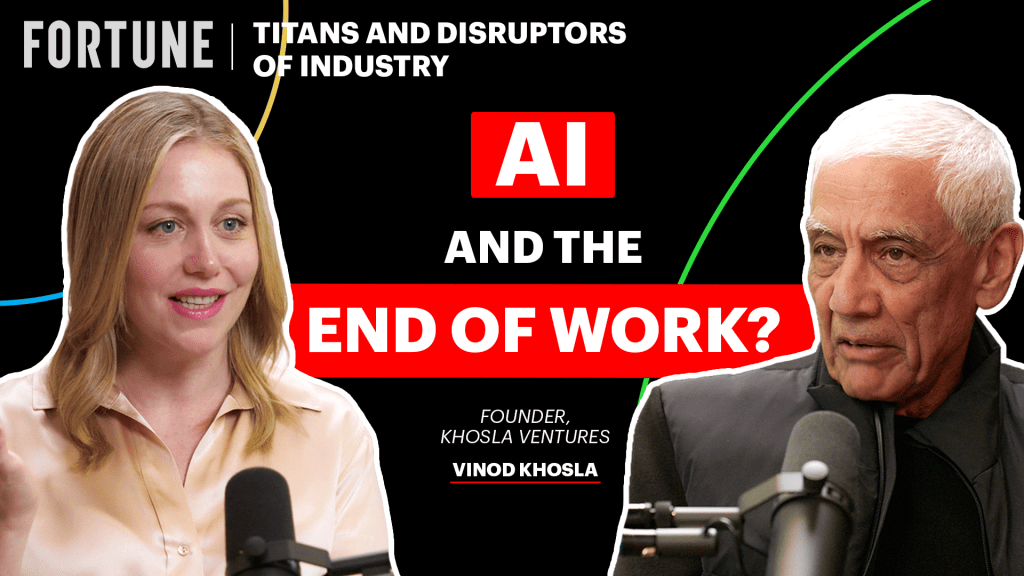
  • In today’s CEO Daily: Fortune’s Editor-in-Chief Alyson Shontell talks with investor Vinod Khosla about AI and the end of work.
  • The big leadership story: Sam Altman aims to rewrite OpenAI’s speedy deal with the Pentagon.
  • The markets: Markets in Europe stabilized while South Korea’s endured a double-digit rout.
  • Plus: All the news and watercooler chat from Fortune.

Good morning. What will life be like in 2040? Pretty awesome, according to famed Silicon Valley investor Vinod Khosla.

Khosla, one of tech’s most successful venture capitalists and entrepreneurs, put the first institutional money into OpenAI in 2019, investing $50 million at a $1 billion valuation. (Last week, OpenAI raised $110 billion at a $780 billion valuation.) Prior to founding his firm, Khosla Ventures, Khosla cofounded Sun Microsystems and Daisy Systems. He placed early bets in companies like Square and DoorDash, too, and has invested in energy startups like CommonWealth Fusion Systems.

Fortune Editor-in-Chief Alyson Shontell and Khosla Ventures Founder Vinod Khosla: Graphic for Fortune 500 Titans and Disruptors of Industry podcast. Episode title: "AI and the end of work?"

All of this is to say, Khosla’s track record for accurately predicting the future has been pretty good. So I flew to his office in Menlo Park to better understand Khosla’s techno-optimistic outlook for the latest episode of my podcast, Fortune 500: Titans & Disruptors of Industry.

Make no mistake, Khosla believes AI will replace most jobs and even the need for colleges in the not-so-distant future. But he also believes that life will become much more abundant and affordable in key areas, including education, health care, and housing. He sees no reason that a 5-year-old today should ever need to look for a job.

I, of course, had many questions for Khosla about this: How does he think people will afford life without work, much less be happy and find purpose? What government policies are needed to ensure this utopian vision doesn’t turn into dystopia?

“Starting in about 2030—four years away—80% of all jobs will be capable of being done by an AI,” Khosla said. “What happens when all labor is free? $15 trillion of U.S. GDP is labor, and that $15 trillion will mostly go away. That’s a hugely deflationary economy. But the abundance of goods and services [thanks to AI and robotics] will be very, very large. Prices will be very, very low. I would suspect by 2040, $30,000—or maybe even $10,000—will buy much more than you can buy if you have a $100,000 income today.”

We discussed all of this and more on the episode. Subscribe (and if you like it, please leave a review!) to Fortune 500: Titans & Disruptors of Industry on Spotify, YouTube, and Apple.

Contact CEO Daily via Diane Brady at diane.brady@fortune.com

This story was originally featured on Fortune.com

This post was originally published here

With U.S. Deputy Attorney General Todd Blanche appointed as acting Attorney General, just days after boasting about his purges of dedicated, nonpartisan, patriotic career law enforcement officials, his boss’s apparent orders are to increase the prosecution of President Trump’s campaign of political retribution. Although the “No Kings” rallies last weekend attracted an estimated 8 million to 9 million protesters, additional voices are still needed to join the growing chorus. These are the voices of business leaders with their preeminent public respect and nonpartisan guardrails.

At key moments of inflection, business leaders have often, if selectively, and even reluctantly, risen as a unified voice of patriotic purpose and moral authority. When Alexis de Tocqueville, the French political philosopher and statesman, visited America and published his 1835–1840 classic Democracy in America, he was surprised by the adaptive, intentional looseness of the laws written during the first century of the United States. He showcased community leaders and especially business leaders as essential forces to verify the truth, fortifying what he called “social capital,” which is as vital as financial capital in strengthening our democracy.

In fact, shortly thereafter, business leaders nationwide rallied behind Abraham Lincoln’s growing effort to preserve a united America and combat slavery. They established Union League Clubs in Philadelphia, New York, Chicago, New Haven, and Boston to promote loyalty to the U.S. government, support Abraham Lincoln’s leadership, and oppose anti-war sentiments. Founded by prominent citizens, these elite clubs financed Union troops, promoted financial support for freed slaves, and supported voter registration, political voice for Black Americans, as well as aid for Black soldiers.

A century later, Martin Luther King Jr. recognized the societal power of business leadership to enhance the Civil Rights Movement, diverting his key lieutenant, Andrew Young, to skip the historic 1963 March on Washington and instead direct Young’s intellect, diplomatic skills, and religious grounding toward meeting with business leaders in Birmingham, Alabama, and Jackson, Mississippi. Dr. King advised Reverend Young, who would later become Atlanta’s first Black mayor and the United States Ambassador to the United Nations, that his ability to engage with business leaders was too important to be diminished as just one of many in large political rallies.

Reverend Young reflected on Dr. King’s wisdom at our 2018 Yale CEO Summit, highlighting the influence of business and explaining that once he gained the support of business leaders, communities were catalyzed into constructive action. He told the 200 corporate leaders present that, in today’s political climate, “I almost trust business more than the church, politics, or anything else I do…There is more freedom, and there is more courage in our free enterprise system, and there is a capacity to rise from all kinds of need.”

Accordingly, in 1962, Ivan Allen, a business leader who served as mayor of Atlanta, ended Jim Crow segregation at City Hall on his first day in office. In 1964, he became the only southern elected official to endorse the Civil Rights Act. That same year, when MLK Jr. accepted the Nobel Peace Prize, business leaders such as Allen, Coca-Cola patriarch Robert Woodruff, and Ralph McGill, publisher of The Atlanta Constitutionorganized a banquet to celebrate MLK, to the shock of the white business community. This led to a sellout MLK tribute banquet of 1,500 prominent Georgia business leaders and the labelling of Atlanta as “a city too busy to hate.”

This courageous voice of Atlanta business leadership was in open defiance of the efforts of the director of the FBIJ. Edgar Hoover, to subvert and discredit MLK. This foreshadowed Mr. Blanche’s recent politicization of the FBI as he bragged at the Conservative Political Action Conference (CPAC) of purging FBI agents who did their jobs following court orders to investigate President Trump’s theft of classified government documents and his threat to use ICE agents at polling places this fall.

In a striking departure from the Justice Department’s traditional posture of neutrality, Mr. Blanche used a speech at CPAC to defend the possible deployment of Immigration and Customs Enforcement (ICE) agents at polling stations during the 2026 midterms. The remarks underscored a fundamental shift in the department’s priorities and signaled a new readiness to wield federal law enforcement in ways critics warn could intimidate voters and undermine electoral independence.

Mr. Blanche’s remarks were remarkable not for their content alone but for their controversial venue — the latest marker in both political parties’ long march toward the extremes, at least at the federal level. Three weeks ago, we hosted 60 mayors of large and medium-sized cities to discuss how they are navigating the major issues in their communities. The group was equally distributed across the political left and right. Nearly two-thirds expressed concern that ICE or other federal government agencies will be used to intimidate or suppress voters in the midterms. But as federal powers increasingly preempt state and local authority, they worry that the pragmatic, nonpartisan leadership needed to govern communities is becoming less influential.

America’s democratic institutions are failing to hold the center, and the gap is widening. The nation’s political leaders have retreated to the fringes. A media ecosystem engineered for outrage has made nuance commercially unviable. The judiciary has never been more openly politicized in modern memory. While the public has at times responded to breaches of their constitutional rights, efforts remain fragmented and often partisan.

American CEOs are increasingly being pulled into this leadership void. Not because they sought the role, but because the architecture of trust that a functioning democracy requires has buckled, and capitalism, for better or worse, remains one of the few forces with both the reach and the credibility to fill the gap. The pressure they face today goes well beyond managing the disruptions of artificial intelligence or mastering the complexities of reshoring supply chains. It is, at its core, a democratic burden and, by every indication, will only grow heavier in the months ahead — one that has conscripted chief executives into four roles, none of which they chose: advocate, diplomat, community steward, and truth-teller.

The Advocate’s Dilemma

The expanded role of the corporate leader must be understood against this backdrop of institutional failure, rather than the excesses of a single administration. The first role — that of the advocate — has received extensive coverage yet cannot be ignored, considering the repeated public displays of blandishment directed at the leader of the free world. What makes these interactions between the private sector and the White House noteworthy, though, is not merely the frequent lobbying in support of business interests but the elaborate performances necessary to avoid the president’s ire. Some wrongly believe that lavish praise, golden mementos, and investment pledges are the required currency for any deal.

Business leaders have not been perfect. Private discussions could have happened more quickly, and differences in opinion could have been made public sooner. Still, in numerous instances, CEOs responded to the moment: whether by persuading the president to lower tariffs, highlighting the significance of public investment in science and innovation, promoting the independence of the Federal Reserve, criticizing executive actions that resemble state capitalism, or encouraging the de-escalation of tensions between ICE and state officials. The CEOs of 60 major Minnesota companies from Cargill, Best Buy, Land-O-Lakes, and Hormel to Medtronic, CHS, Winnebago, US Bank, Target and 3M, stood with community leaders across sectors to successfully end the violent ICE attacks on peaceful citizens. Still, most have chosen to operate in private, recognizing that public criticism of the president is effective only during real crises.

The Default Diplomats

Both parties have abandoned the diplomatic coherence the moment demands — one consumed by transactionalism, the other by internal division — leaving CEOs as the unlikely voices of reason on U.S. economic policy abroad.

In March, we also convened more than 80 top CEOs at our Yale CEO Caucus for an off-the-record discussion about the most pressing issues confronting their organizations. One year later, tariffs remain a major concern. Many of the executives continue to highlight the direct financial costs borne by domestic enterprises and consumers but remain equally, if not more, concerned about those indirect effects that are not easily quantified and receive less coverage … During a survey conducted at the event, 80% of CEOs believe the U.S. has become an unreliable trading partner due to tariffs. Worried about the potential consequences, some have made considerable efforts — traversing the globe — to mend relationships with foreign ministers, trade unions, suppliers, and customers and to demonstrate the business community’s commitment to mutually beneficial trade despite remarks and actions by government officials. As the primary points of contact with no political obligations to international leaders, the meetings frequently transition into delicate discussions of public opinion on topics such as democracy, capitalism, immigration, or geopolitics.

That CEOs have become the de facto ambassadors of American economic and democratic values is not a testament to corporate statesmanship but a reflection of how far institutional credibility has eroded.

The Steward Steps in Where Government Steps Back

Domestically, business leaders have been caught between a President Trump testing the limits of executive authority and states believing their sovereignty has been violated. Their responses to previous crises — such as exiting the president’s advisory council over his comments on the 2017 Charlottesville rallies, affirming the 2020 presidential election results, condemning the January 6th insurrection, and criticizing a 2021 Georgia law that reduced voter access — were serious, but each was geographically limited or addressable through state and local channels. Furthermore, unlike during the first Trump administration, the president now has the confidence from experience to wield executive powers in ways previously unthinkable and is surrounded by senior cabinet officials unwilling to challenge him.

The current moment, therefore, is unlike anything seen since the Civil Rights Era. ICE activities and political attacks on legal immigrants have been authorized by the highest authority in the U.S. They are nationwide, fast-moving, and enduring.

Leaders of major store chains have had to develop ICE rapid response plans with designated teams, operating protocols, and emergency benefits for those at risk. Employees on visas are once again being told to avoid leaving the country amid uncertainty about changing immigration policies and procedures. Remote work policies have been extended to employees facing family emergencies related to immigration issues. CEOs have simultaneously delivered messages that acknowledge the pain and fear felt across communities and offer resources for support.

These are not tools that belong in a corporate leader’s operational playbook, but products of necessity arising from the absence of reliable governance.

The Truth-Teller’s Burden

Identifying fact versus fiction has always been difficult in politics. President Trump’s early adoption and adept use of social media made it more challenging during his first term. Now, however, social media is the primary tool elected officials use to communicate with voters — which has made the problem endemic. While counting the president’s fallacies has become routine, the ideological subservience of his senior-most cabinet members and advisors this term has given the public reason to second-guess statements and data issued by them or their offices.

Chief executives have had to combat claims linking autism to pain relief medication, reassert the economic importance of legal immigrants, and defend the value of healthy trade partnerships. At our CEO Caucus, many expressed unease about the potential effects of misinformation spreading through official public channels. In response to another survey question, 86% of business leaders are concerned about the lack of public support for investment in science, research, and innovation.

When the credibility of public data is routinely called into question, and elected officials offer no reliable corrective action, the burden of truth-telling falls on whoever retains the public’s trust. Increasingly, that is the corner office rather than the Capitol.

Conscripted, Not Elected

The question often posed to us is why business leaders, specifically, have emerged as the ones required to shoulder this burden. The answer is structural, rooted in the U.S.’s unique capitalist system. CEOs occupy a position that no elected official commands, accountable to employees, customers, and shareholders who identify as Democrats, Independents, and Republicans alike. Reflexive partisanship is not just politically unwise but operationally untenable. They operate on a national scale, giving them a reach that transcends the geographic or ideological constituencies that constrain most political actors. And unlike institutions whose credibility has become a casualty of the current moment, most business leaders have earned public respect through careers visibly built on performance instead of patronage.

The responsibilities placed on American CEOs have never been more expansive, nor more consequential. As advocates, diplomats, community stewards, and truth-tellers, they have periodically, reluctantly, and triumphantly, stepped into a vacuum that our traditional democratic institutions have so far failed to fill.

As the nation’s attention turns toward the midterms and, inevitably, the 2028 presidential race, Congress, the courts, and the media will grow further entangled in the tribal rituals of election season — leaving the private sector as one of the few remaining sources of stability, credibility, and continuity.

Business leaders are not politicians and fear “the slippery slope” of pressures to speak to every social issue, diverting them from their day jobs. However, they believe in protecting the fabric of American democracy from those seeking to unravel it into divisive threads. Angry, balkanized, hostile communities with shattered trust in American institutions — from courts to free elections — undermine the social capital needed for free enterprise to prosper. Hopefully this will be another of those rare moments where U.S. business leaders rise to the rescue of their nation.

No one talks about a slippery slope in a hospital ER, as they practice triage, picking their priorities. CEOs do the same. When cynics advise to CEOs, “stay in your lane,” we reply “what is that lane, the breakdown lane?”

The opinions expressed in Fortune.com commentary pieces are solely the views of their authors and do not necessarily reflect the opinions and beliefs of Fortune.

This story was originally featured on Fortune.com

This post was originally published here

If you listen to the loudest voices in the AI debate, our collective fate seems sealed. AI is coming for white-collar work. Jobs will disappear faster than workers can adapt. A workplace apocalypse is inevitable.

Much of the noise is coming from one place: the technology industry itself. That’s understandable. Software engineering is one of the first professions where AI has delivered real, visible productivity gains. Output that once required teams now requires far fewer people. When disruption hits close to home, anxiety travels fast.

But extrapolating from one sector to the entire economy is a mistake. We should not, and cannot, accept what’s being sold as a foregone conclusion. If we intervene now, we can meaningfully reduce the blast radius of AI disruption. The first step is separating what we know from what we don’t know, which gives us a clearer path forward.

What We Actually Know

AI is already reshaping work. That change is real, and the transformation of software engineering jobs explains much of the current panic emanating from Silicon Valley. But despite the headlines, there is still little evidence that AI productivity is the primary driver of today’s broader labor market churn. Research published in January by Oxford Economics found the evidence of an AI-driven shakeup to be patchy at best. Labor economists and AI experts at the Wharton School have argued much the same thing, citing “AI-washing” of job losses. In fact, much of what we are seeing reflects familiar forces: economic cycles, over-hiring, and cost correction. 

Unemployment rates don’t lie: the U.S. rate sits at 4.4% (9.4% for 16-to-24-year-olds) — far below EU unemployment peaks in the 1990s, when rates hit 11% overall and exceeded 20% for young workers.

We also know that most organizations trying to deploy AI are discovering that the hardest problems are not technological. Data readiness, security, integrations, workflow redesign, and building human skills remain stubborn bottlenecks for true AI implementation. According to McKinsey, two-thirds of companies using AI have not scaled it across their enterprise. That diffusion will take time — a crucial point missing from most of the current debate.

There is also growing empirical evidence that poorly implemented AI simply increases work intensity — flooding organizations with output that still requires human attention, judgment, and correction. A recent Harvard Business Review study even coined the term “AI brain fry” to describe the information and workload fatigue that comes with too many AI tools at once. Automation can increase intensity and stress rather than productivity.

The bottom line: systems aren’t ready, and people aren’t ready to use AI well. The apocalypse is likely not coming as fast as you think.

What We Don’t Know

But AI transformation is coming, in some form, across nearly all industries — and genuine unknowns remain. We don’t yet know how demand will respond as AI compresses the cost of expertise. We don’t know how quickly different sectors will adapt. And we don’t yet know which new jobs and industries will emerge — although history tells us they will. Predictions that all white-collar work will be automated within a year or two aren’t realistic. But five years? In some domains, perhaps. In most others, regulation, safety concerns, and legacy infrastructure will slow adoption dramatically and keep people in the loop. What is coming is akin to the “process reengineering” wave of the 1990s, with AI agents being embedded into workflows.

The Real Risk Is Underinvesting in People

The real risk, then, is not runaway technology displacing workers en masse. It is failure to invest in people. If we blindly accept AI as a substitute for humans, the pessimists may be proven right. But if we treat it as a force that improves and amplifies what people can do, a very different — and more prosperous — future is possible.

That requires all of us to shift our focus and realize that every positive outcome in an AI economy is reliant on our investment in human capability. In the workplace, this means moving beyond narrow task automation toward deliberate job and workflow redesign — and embedding learning directly into people’s everyday work alongside tech deployment, rather than after the fact. In education, the priority should be prioritizing learning how to learn — building AI literacy across disciplines and age levels, supporting and training teachers, and creating career pathways that extend beyond traditional white-collar roles. And at a societal level, it means recognizing that in a world where AI can generate content, credentials, and even identities, trust becomes our most valuable currency. Institutions and credentials that can reliably assess, verify, and signal human skills will matter more than ever.

The story of AI does not have to be one of inevitable displacement. The current anxiety reflects who is feeling disruption first — not where the economy must end up. The companies that grow, create new jobs, and win aren’t the ones that implement AI the fastest; — they are the ones that implement learning the fastest.

The future of work in the AI era will not be decided by what machines can do. It will be decided by what people can do — and how seriously we invest in them.

The opinions expressed in Fortune.com commentary pieces are solely the views of their authors and do not necessarily reflect the opinions and beliefs of Fortune.

This story was originally featured on Fortune.com

This post was originally published here

Jamie Dimon has never been one to soften a warning. In his annual letter to JPMorgan Chase shareholders, released Monday, the most influential banker in the world offered a full-throated, if measured, defense of the U.S. war on Iran, even as he made clear that the conflict is driving the global economy into genuinely uncharted territory. Dimon’s warnings have been growing in alarm on geopolitics since the outbreak of the Ukraine War in 2022, and on dire economic threats since 2024, and this year’s edition somehow marries both of them.

In 2022, Dimon invoked Ukraine as a potential catalyst for the “restructuring of the global order.” In 2023, he was consumed by the SVB banking crisis, warning that its repercussions would be felt “for years to come.” In 2024, he issued his most economically alarming letter yet, warning of stickier inflation, unprecedented liquidity drains, and interest rates “higher than markets expect.” Each year brought a new crisis to center stage. This year is different: the U.S. is an active combatant in an ongoing war, and Dimon isn’t looking away.

“The ongoing war in Ukraine, the conflict between Iran and both the United States and Israel, and other major hostilities across the globe should permanently dispel the illusion that the world is safe,” he wrote. It is a sentence that lands differently than his prior warnings—less a forecast of what might go wrong, more a reckoning with what already has.

Dimon’s case for the war

On Iran specifically, Dimon made his position unambiguous. This is not, in his view, a war of choice. He has been building this argument publicly for weeks: in a widely watched interview with Axios earlier this month, he pushed back on that notion, questioning why the Western world had for so long tolerated a regime with, in his words, its “throat on the Strait of Hormuz” and a pattern of “killing people around the world for 45-plus years.”

In Monday’s letter, that argument gets its fullest airing yet. The Iranian threat, Dimon wrote, needed to be dealt with “urgently if Iran ever acquires a nuclear ballistic missile”—calling nuclear proliferation “the gravest threat to the future of mankind.” To be sure, he acknowledged, “time will tell whether the current war in Iran achieves our short-term and long-term objectives in the region and at what cost,” but in the short term, the cost looks to be quite high indeed, and not just for the U.S.

The economic toll

Dimon was unflinching about the economic toll of the war, even less than two months into hostilities. The war, he warned, is generating “the potential for significant ongoing oil and commodity price shocks, along with the reshaping of global supply chains, which may lead to stickier inflation and ultimately higher interest rates than markets currently expect.” The ripple effects extend well beyond energy: “It’s not just energy—it’s commodity products that are byproducts of oil and gas, like fertilizer and helium. And given our complex global supply chains, countries are experiencing disruptions in shipbuilding, food and farming, among others.”

He is far from alone in that assessment. Larry Fink, who runs BlackRock, the world’s largest asset manager, has warned that oil reaching $150 a barrel — a plausible scenario if the conflict drags on—would trigger “a stark and steep recession,” while flagging the same agricultural and fertilizer supply chain vulnerabilities that Dimon identified. Goldman Sachs, meanwhile, has put hard numbers behind the warnings: its economists cut their U.S. growth forecast and raised their recession risk to 30% under a prolonged conflict scenario, while revising December 2026 PCE inflation up to 3.1%, and their Brent crude forecast to $98—up roughly 40% from last year’s average. Morgan Stanley has flagged a compounding risk: wartime defense spending piling onto already-elevated U.S. debt, pushing long-term Treasury yields higher and creating “a potential headwind for stock and bond markets alike.

Not everyone is alarmed

Ed Yardeni has maintained a bullish year-end S&P 500 target and suggested recession risk could ease once there is clarity that the conflict is winding down—representing the faction of investors trying to look past the war rather than fully price it in. Goldman CEO David Solomon, for his part, has stayed carefully in the analyst lane, saying markets are focused on whether the conflict will “affect economic growth and activity,” more of a wait-and-see approach.

A resilient economy with real vulnerabilities

The stakes, in Dimon’s telling, could not be higher. “The outcome of current geopolitical events,” he wrote, “may very well be the defining factor in how the future global economic order unfolds.” Then again, he added, it may not be.

The broader economic picture that the CEO painted is one of resilience shadowed by real vulnerability. Consumers are still spending, he noted, but “with some recent weakening.” The U.S. economy has been propped up by “large amounts of government deficit spending and past stimulus,” he cautioned—a foundation that looks less solid when oil shocks and trade disruptions are pushing costs in the wrong direction. High asset prices, he added, “create additional risk if anything goes wrong.”

Despite those warnings, Dimon has not abandoned hope for the war’s outcome. He told Axios that he hopes it turns out well “and that somehow we get peace in the Middle East permanently,” pointing to alignment between the U.S., Israel, Saudi Arabia, and the UAE as giving the campaign a higher chance of achieving long-term stability. His letter echoed that sentiment: “We sincerely hope these global conflicts are properly resolved and that one day all of Europe and the Middle East will attain long-term stability and prosperity.”

What Dimon is describing, taken together, is a world in active transition—one where the post-Cold War assumptions of open supply chains, low inflation, and relative geopolitical stability are being dismantled in real time. “We must deal with the world we have,” he wrote, “and strive for the one we want.”

JPMorgan posted $57 billion in net income in 2025, down from $58.5 billion the year before. Dimon was careful not to confuse his firm’s resilience with immunity. “We cannot confidently predict the outcome of current events,” he wrote, “and our company is not immune to their ultimate effects.”

For this story, Fortune journalists used generative AI as a research tool. An editor verified the accuracy of the information before publishing.

This story was originally featured on Fortune.com

This post was originally published here

Jamie Dimon mentioned “America” more than 80 times in his 2026 annual letter to shareholders, laying out goals for improving the country’s infrastructure, military, and the American dream. He also mentioned one word once that could jeopardize those very goals: stagflation.

The JPMorgan Chase CEO warned of the economic dangers of protracted foreign conflicts, including in Iran and Russia’s invasion of Ukraine. He thinks they could lead to a recession, which would reduce inflation. But he also fears a stagflationary outcome, combining recessionary elements with higher inflation.

“There are some scenarios that would result in a recession, which generally reduces inflation, and other scenarios that would lead to a recession with inflation (stagflation — where inflationary forces overcome deflationary ones),” Dimon wrote.

“The skunk at the party — and it could happen in 2026 — would be inflation slowly going up, as opposed to slowly going down. This alone could cause interest rates to rise and asset prices to drop.” 

The CEO is not alone in his fears. Several top economists have warned of stagflation—the toxic economic cocktail mixing inflation with stagnating growth and high unemployment—since the start of the Iran war in late February, especially if it stretches on for several months. 

The war has entered its sixth week, and there are few signs that it will end soon. President Donald Trump has demanded that Iran make a deal that opens the Strait of Hormuz and allows oil prices to head back down. 

But if his Tuesday 8 p.m. ET deadline isn’t met, he threatened to rain “hell” on the country, which could blow any shaky hopes of a ceasefire out of the water.

Economic ‘earthquakes and volcanoes’

However, there’s a vocal group of economists who think fears of stagflation are unwarranted. While about one-fifth of the world’s oil supply passes through the Strait of Hormuz, stagflation isn’t likely to come to fruition, said Preston Caldwell, chief U.S. economist at financial services firm Morningstar, calling comparisons to the 1970s “misplaced.” 

He pointed to the U.S.’s greater structural resilience and reduced dependence on petroleum products since the 1970s, when stagflation first emerged.

“Spending on petroleum products as a share of total personal consumption was around 3.3% in 2025, less than one-half of its 8.3% average in the 1970s,” Caldwell explained.

Still, even while doubting stagflation, he predicted the personal consumption expenditures index will hit an annual rate of 3.6%, up a percentage point from his initial forecast earlier this year. The Organization for Economic Cooperation and Development warned U.S. inflation could reach 4.2%.

The latest inflation report from the Bureau of Labor Statistics showed that the consumer price index held steady in February at an annual rate of 2.4%. However, that number doesn’t reflect price changes since the start of the Iran war.

Despite some pointed pessimism, Dimon also laid out several bright spots buoying the economy, including fiscal stimulus from the One Big Beautiful Bill Act, AI-driven capital spending, deregulatory policies, and the Federal Reserve’s purchases of securities.

But aside from the war in Iran and other geopolitical conflicts, the CEO remains wary of other headwinds, including global deficits, high asset prices, and private credit. 

“I think some of the larger risks are much like tectonic plates,” he wrote, “always moving and periodically causing earthquakes and volcanoes when they crash into each other.”

This story was originally featured on Fortune.com

This post was originally published here

After a dramatic Easter weekend for the war in Iran—downed American fighter jets, a daring rescue behind enemy lines, and strikes on universities and petrochemical plants—traders hesitated at Monday’s opening bell. 

Both the S&P and prices of crude were little changed at the open, and both ticked slightly up in the first hours of morning trading. The market, it seems, is twiddling its thumbs while waiting for the clock to run out. It even looks like a three-way standoff between Trump, the Iranians and the markets as each waits for the other to blink.

Late Sunday evening, Axios reported that mediators from Pakistan, Egypt, and Turkey were making a last-ditch effort to broker a deal. A senior White House official told NBC News that a 45-day ceasefire was “one of many things being discussed,” but that President Trump had not signed off on the idea. Yet, by Monday morning, Iranian foreign ministry spokesperson Esmail Baghaei called a proposal for a short-term ceasefire “illogical” and unacceptable, saying that agreeing to such terms without guarantees that they won’t be struck again is something “no rational person would do.”

It is unclear if Baghaei was referring exactly to that 45-day ceasefire plan. However, Gregory Brew, a senior oil analyst at Eurasia group, called Iran’s reaction “unsurprising .”

“Iran has little incentive to give up the strait for a temporary reprieve — especially with the US moving more assets into the region,” Brew wrote on X.

Despite the noise over the ceasefire, one thing is clear: both sides are running out of time. Over the weekend, Trump set his fourth deadline for Iran to reach a deal — Tuesday at 8 p.m. ET. The extension came alongside an expletive-laden threat to “open the Fuckin’ Strait,” with Trump warning he would strike Iran’s power plants and bridges if no agreement is reached. Humanitarian groups have warned that targeting civilian infrastructure would constitute a war crime, a charge that Iran’s deputy foreign minister echoed, citing the Geneva Conventions.

Meanwhile, the casualties keep climbing. Iranian state media reported that at least 25 people, including six children, were killed overnight as U.S.-Israeli strikes hit a Tehran university and two petrochemical plants. Israel said it struck the South Pars petrochemical facility in Asaluyeh, which its defense minister said is responsible for roughly 50% of Iran’s petrochemical production. On the other side, Iranian missiles killed four people in a residential neighborhood in Haifa, with an infant among the injured.

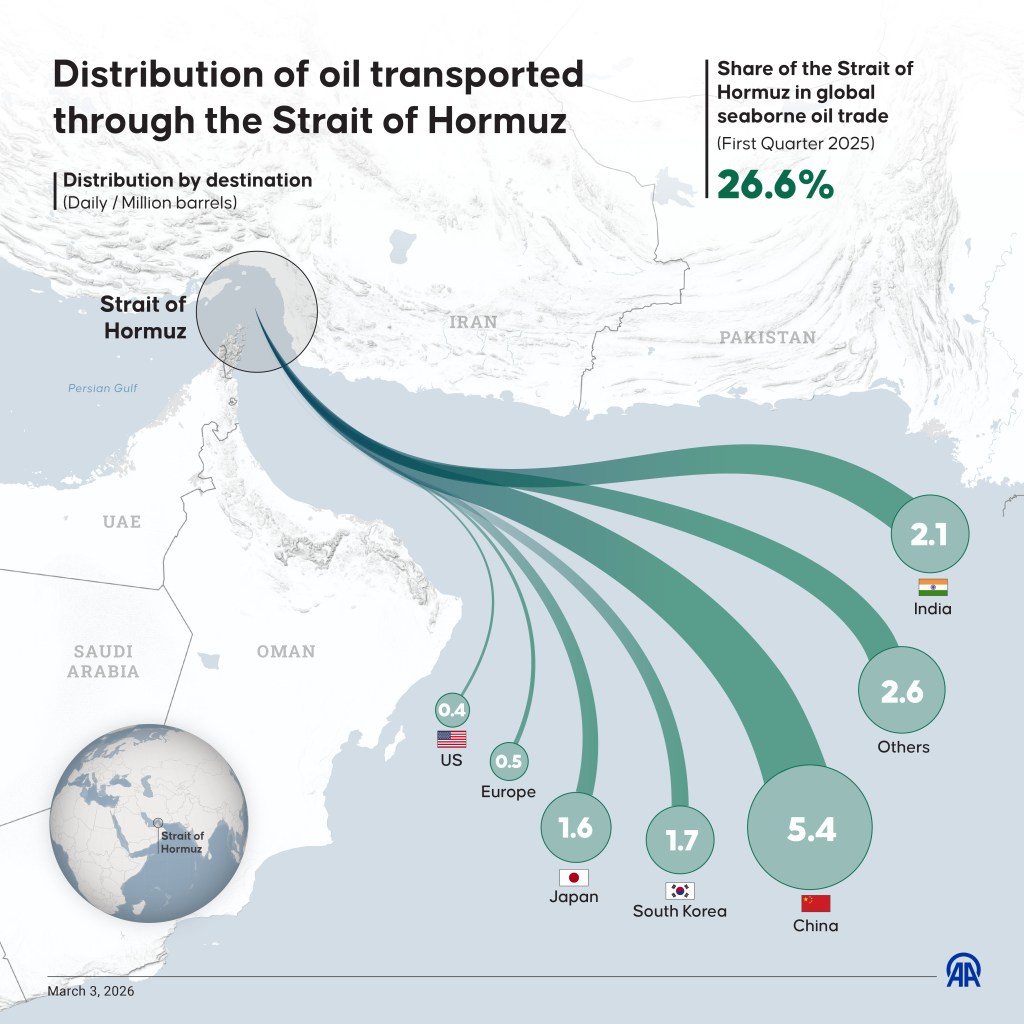
And every day the Strait of Hormuz stays effectively closed, the energy crisis deepens. U.S. crude is trading around $111 a barrel, roughly double where it started the year. Two Qatari LNG tankers attempted to exit the strait Monday but turned back, underscoring just how tense the situation is in the waterway.  According to S&P Global Market Intelligence, just 35 ships transited the strait over Easter weekend— a surge compared to the negligible amounts crossing in the weeks since the war, but still a fraction of the 150-plus daily transits recorded before the war began on February 28.

Tom Kloza, global head of energy analysis at OPIS, emphasized the uptick in transits doesn’t mean the crisis is easing. “I think you’re going to see some movement from people who are either willing to venture, willing to risk the cargoes, or perhaps have some assurances from various channels,” he told Fortune. But still, global supply is running well short of the roughly 104 million barrels per day the world consumes. “There’s still a hole in the vessel,” Kloza said. “You’re losing more oil than you’re building.”

Getting below $100 a barrel, he said, would require not just a ceasefire but a genuine resumption of flows; oil departing the strait and Saudi Arabia’s Yanbu port at something close to pre-war volumes. 

“That’s a long haul from now,” he said. 

Until then, Kloza expects crude and product prices to keep grinding higher, punctuated by sharp swings on every headline. “Today looks like superficial scratches, whereas other days are like a vein has been busted,” he said. “We haven’t reached the level that inspires demand destruction yet.”

One news item that might thaw the standoff: Trump is scheduled to hold a press conference at 1 p.m. ET, ostensibly about the airman rescue. Markets will be listening for any hint of how negotiations are going.

This story was originally featured on Fortune.com

This post was originally published here

Predictions market platform Polymarket removed a market on its site that allowed users to bet on the condition of U.S. pilots following attacks on U.S. fighter jets.

Iran forces shot down two U.S. military planes on Friday in two separate attacks, including a U.S. F-15E Strike Eagle. One American service member was rescued on Friday, while another remained missing for part of the weekend. It was the first time U.S. aircraft were downed during the ongoing war in the Gulf.

The market on the platform, which has since been deleted, allowed users to wager on what day the pilots would be rescued. President Donald Trump confirmed on social media on Sunday that the service member who went missing had been saved.

However, the existence of the market drew outrage from some lawmakers, such as Democratic Rep. Seth Moulton, a Marine Corps combat veteran representing Massachusetts, who called betting on outcomes of the Iran war a “dystopian death market.”

There is an ongoing search and rescue operation for a missing American service member whose plane was shot down over Iran. Their safety is unknown,” Moulton wrote in an X post. “They could be your neighbor, a friend, a family member. And people are betting on whether or not they’ll be saved. This is DISGUSTING.”

Polymarket responded, saying, “We took this market down immediately as it does not meet our integrity standards. It should not have been posted, and we are investigating how this slipped through our internal safeguards.”

Polymarket users can make wagers on any topics, from the price of oil, to how many times Elon Musk will post on X over the course of a week, to when Grand Theft Auto VI will be released. The platform’s guidelines prohibit trades made on illegal tips, nonpublic information, or on anything that would impact the income of a real-life event. Polymarket says on the site it reserves the right to review markets and take disciplinary action on traders, including banning wallet addresses.

Moulton appeared to take issue with Polymarket’s apology, noting in another social media post that there were more than 200 markets on the platform related to the war’s outcomes.

“Your integrity standards are severely lacking, @Polymarket,” he said in another post. “Users are still able to place bets on the lives of our troops.”

Polymarket did not respond to Fortune’s request for comment.

Ethical concerns around prediction markets

Prediction markets have drawn broader scrutiny over the course of the conflict in Iran. Kalshi said it would offer refunds to traders who placed bets on when Ayatollah Ali Khamenei would be ousted from leadership. He was killed on Feb. 28 in the U.S.-Israeli strikes on Iran. Kalshi CEO Tarek Mansour said the site does not allow markets directly tied to deaths.

Ethical concerns surrounding these markets extend beyond bets on an individual’s or a group’s well-being. CNN reported last month that one Polymarket trader made nearly $1 million since 2024 from dozens of bets correctly predicting the U.S. and Israel would take military action against Iran. The user won 93% of their five-figure wagers, even on military operations that were not public information, raising concerns of insider trading.

Connecticut, Arizona, and Illinois have sued platforms like Kalshi and Polymarket to regulate them, accusing the sites of engaging in illegal online gambling that violates state law.

How Polymarket is addressing controversial bets

Founded in 2020, Polymarket is among a cadre of prediction markets, serving as a popular tool to crowdsource real-time data and public opinion. Global prediction market trading volumes quadrupled from 2024 to 2025, according to data from Next.io, surging to nearly $64 billion. 

The nature of some wagers placed on these markets has raised concerns about how users handle the sensitivity of geopolitics and climate disasters. In January 2025 amid the raging wildfires in California, Polymarket users placed dozens of bets on how many acres the blaze would spread. Bates College environmental studies professor Tyler Austin Harper called the “gamblificatation” of all events, including those in which people’s lives are at stake, “Capital-E Evil.”

Unlike counterparts like Kalshi, Polymarket is not based in the U.S., where regulations are understood to prohibit bets on financial contracts related to war. In the week ending March 1, Polymarket traders placed more than $425 millions on geopolitical bets, according to Dune Analytics, nearly triple the amount from the week before. The U.S. and Israel’s first attack on Iran was on Feb. 28.

Polymarket CEO Shayne Coplan recently suggested the platform has a complicated relationship with war bets, which he said can provide up-to-date, helpful information to individuals impacted by geopolitical conflicts. He said  at the MIT Sloan Sports Analytics Conference 2026 last month the platform’s association with war contracts brought “more money, more problems.”

“There’s still a lot of resistance to innovation that kind of also seems jarring to begin with,” Coplan said. “That’s what makes it innovative and disruptive.”

“When I get hit up by people in the Middle East who are saying, ‘Hey, we’re looking at Polymarket to decide whether we sleep near the bomb shelter; we look at it every day’ and I’m like, ‘Oh, it’s really that popular over there?’” he said. “That’s very powerful. That’s an undeniable value proposition that did not exist before.”

This story was originally featured on Fortune.com

This post was originally published here

JPMorgan Chase CEO Jamie Dimon warned in his annual letter to shareholders that the war in Iran could lead to more stubborn inflation as well as higher interest rates than what the market is currently anticipating.

Dimon’s letter was released Monday in conjunction with JPMorgan’s annual report for 2025 and said that the Iran war may cause energy shocks along with disruptions to global supply chains that could cause inflation to remain higher than expected.

Inflation that persists above the Federal Reserve’s 2% and rises further from its already elevated level could also prompt the central bank to raise interest rates to slow the pace of price growth.

“Now, because of the war in Iran, we additionally face the potential for significant ongoing oil and commodity price shocks, along with the reshaping of global supply chains, which may lead to stickier inflation and ultimately higher interest rates than markets currently expect,” Dimon wrote.

NY FED PRESIDENT JOHN WILLIAMS WARNS IRAN-DRIVEN OIL SPIKE COULD RIPPLE THROUGH ECONOMY

Dimon said that the foremost risks facing financial markets and the economy are geopolitical in nature, including the Iran war and Russia’s war in Ukraine, as both conflicts have an “impact on countries and economies across the globe that are not directly involved in war.”

“Nations that are heavily dependent upon imported energy are already seeing the effects. And it’s not just energy, it’s commodity products that are byproducts of oil and gas, like fertilizer and helium. And given our complex global supply chains, countries are experiencing disruptions in shipbuilding, food and farming, among others,” Dimon wrote.

“The outcome of current geopolitical events may very well be the defining factor in how the future global economic order unfolds – then again, it may not,” he added.

Dimon said that while the most important outcome of those conflicts should be the “proper resolution of the current wars and, ultimately, peace on Earth, we do need to understand and track the economic effects” of those conflicts and the risks they pose.

POWELL WARNS OF NEW ENERGY SUPPLY SHOCK AS GAS PRICES SURGE: ‘NO ONE KNOWS HOW BIG IT WILL BE’

He said that a “bad confluence of events” can generally cause some degree of a recession accompanied by high credit losses and market volatility, as well as lower asset prices and elevated unemployment, though it could play out in different ways in different places.

“There are some scenarios that would result in a recession, which generally reduces inflation, and other scenarios that would lead to a recession with inflation (stagflation – where inflationary forces overcome deflationary ones),” Dimon said. 

“The skunk at the garden party – and it could happen in 2026 – would be inflation slowly going up, as opposed to slowly going down,” he added. “This alone could cause interest rates to rise and asset prices to drop. Interest rates are like gravity to almost all asset prices. And falling asset prices at one point can change sentiment rapidly and cause a flight to cash.”

IRAN WAR COULD PUSH INFLATION HIGHER THIS YEAR, GOLDMAN SACHS SAYS

Dimon said it’s too early to tell how the Iran war will play out and what it means for the region’s balance of power, and said that the Iranian regime has fomented terrorism around the world while also violently repressing its own populace.

“Time will tell whether the current war in Iran achieves our short-term and long-term objectives in the region and at what cost. We should not turn a blind eye to the role the current regime in Iran has played in fostering terrorism and killing thousands of people, including Americans and many of its own citizens, over many years,” he said.

GET FOX BUSINESS ON THE GO BY CLICKING HERE

“That threat must be addressed in an appropriate manner (by those who have more intel and knowledge than I do) – and urgently if Iran ever acquires a nuclear ballistic missile. Nuclear proliferation remains the gravest threat to the future of mankind,” Dimon wrote.

This post was originally published here

The cost of college has never been higher. But for a growing share of young Americans, the return has never felt more uncertain. Faced with rising tuition, stubborn student debt, and a cooling job market, many are questioning whether a four-year degree is worth it at all. Now, their parents are coming to a similar conclusion—and acting on it.

Instead of prioritizing tuition, more families are putting their money toward something they see as a better investment: helping their kids achieve homeownership.

Seventy-four percent of parents with children at home would consider or have already started financially planning to help their kids buy a home, according to a new report from Northwestern Mutual. Among those parents, 29% say helping their children purchase a home is more important than paying for college tuition.

Ashley Russo, a wealth management advisor at Northwestern Mutual, said parents are increasingly redefining what financial success looks like for their children—shifting from degrees to deeds.

“Parents are looking for concrete ways to improve their children’s economic starting point. A down payment, a co-sign, or help with closing costs translates into immediate buying power and often functions as intergenerational seed capital,” Russo told Fortune

There’s financial logic behind the pivot. Much like saving early for retirement, entering the housing market sooner can have an outsized impact on long-term wealth. According to a generational wealth report from Realtor.com, Americans who buy a home at age 30 have a 22.5% higher net worth at age 50 than those who buy in their mid-to-late 40s. 

The window to do that has been shrinking for years — but may be cracking open slightly. After a period of relentless price appreciation, U.S. home prices are expected to largely stall in 2026, according to J.P. Morgan, potentially giving first-time buyers a rare moment of breathing room. It’s come at a cost, though: the share of first-time buyers has already dropped to a record low of 21%, and the typical age of a first-time buyer has climbed to an all-time high of 40, according to the National Association of Realtors. High mortgage rates and a punishing cost-of-living crunch have seen to that.

For many in Gen Z, the path to the American Dream is increasingly running through their parents. Already, 38% of Gen Z homeowners received financial help from family to buy their home, and 44% of those who haven’t yet purchased say they plan to do the same when the time comes, according to Intuit Credit Karma.

College is becoming less enticing for some families, but parents might not be able to afford the shift

Parents shifting money toward a down payment doesn’t necessarily mean they’re abandoning higher education altogether. Instead, Russo said, many are trying to better position their children to build wealth earlier—and stay resilient in an uncertain economy.

“That perceived immediacy and tangibility is powerful, especially when compared with the longer, less certain return profile of higher education today,” she added.

The numbers underscore that transformation. Over the past three decades, average tuition at both public and private four-year colleges has roughly doubled after adjusting for inflation, according to the College Board. The average federal student loan balance has climbed to about $39,075 per borrower—and with the federal government restarting loan repayments, those balances are once again squeezing budgets. 

Meanwhile, unemployment among young workers has ticked up, and underemployment remains a stubborn problem for recent graduates entering a labor market that isn’t fully aligned with their field of study.

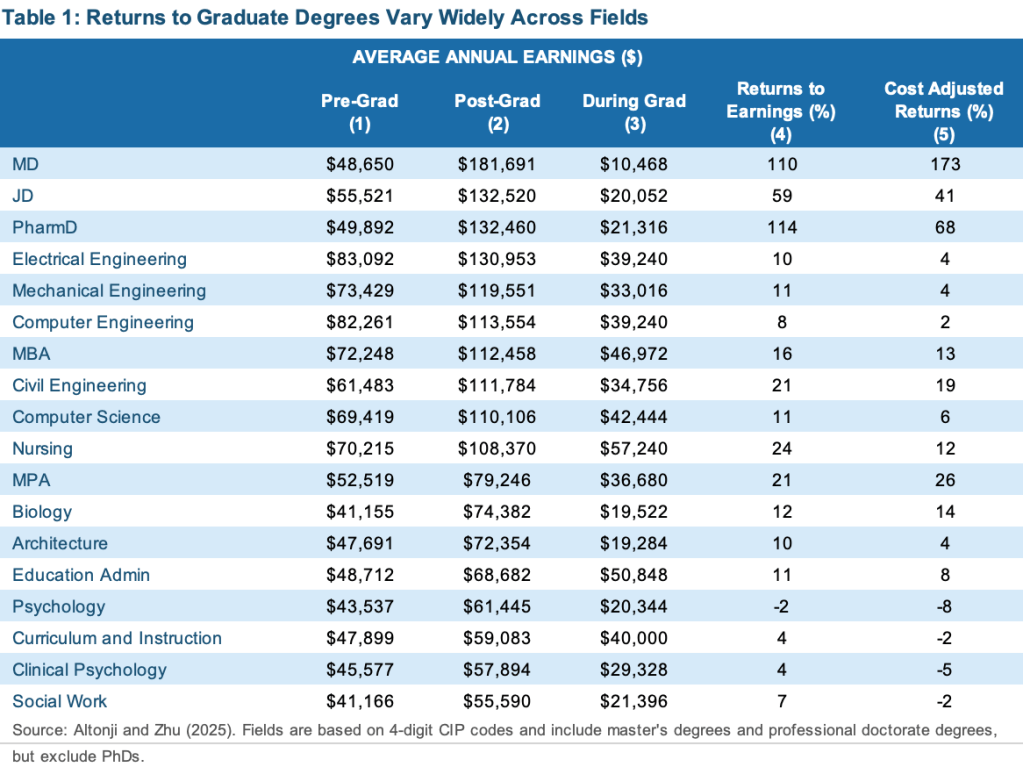
Still, the picture isn’t entirely bleak. Many college graduates continue to see strong earnings and career stability over time, and widespread fears that degrees would suddenly become obsolete haven’t fully materialized. Instead, the return on college is becoming more uneven—varying widely by field, school, and how graduates apply their skills.

That unevenness is putting pressure on families. About 64% of parents with Gen Z children aged 18 to 28 still have their adult kids relying on them for money, housing, or other financial support, according to Wells Fargo. However, more than half report it’s straining their own finances—and ultimately, retirement goals —stemming from a lack of communication between families about how much money is needed, when assistance might be needed, and whether it needs to be paid back.

Like parents, business leaders aren’t giving up on college—but rather seeking redefinition

Even some of the top voices in business are urging a more nuanced rethink—not a rejection—of higher education.

Warren Buffett—who still lives in his Nebraska home he paid just $31,500 for in 1958—has long downplayed the importance of elite credentials in hiring.

“I never look at where a [CEO] candidate has gone to school. Never,” Buffett wrote in his 2024 annual report to Berkshire Hathaway shareholders. “There are great managers who attended the most famous schools. But there are plenty … who have benefited by attending a less prestigious institution or even by not bothering to finish school.”

At the same time, leaders aren’t advocating abandoning education, but rather reframing it. Hugo Sarrazin, the CEO of Udemy, told Fortune last year that the future isn’t about choosing between degrees and skills—but combining them. 

“It’s cohabitation,” he said. “I think you start with a degree, there’s a foundation that comes with a degree, but you need the skills to be relevant in the workplace.”

For families navigating rising costs and uncertain returns, a similar hybrid approach may offer the clearest path forward: college alone isn’t the silver bullet it once was, but the Northwestern Mutual survey shows that investing in a home is still widely viewed as a worthwhile move.

This story was originally featured on Fortune.com

This post was originally published here

The world has never faced a crisis while loaded with so much debt, making the U.S. especially vulnerable despite being the world’s biggest oil producer, according to Ruchir Sharma, chair of Rockefeller International, the global investment strategy arm of Rockefeller Capital Management.

In a Financial Times op-ed on Sunday, he warned that this lack of fiscal breathing room leaves indebted governments with little ammunition to fight the energy shock caused by President Donald Trump’s war on Iran.

History shows similar crises have blown up budgets. Oil shocks during the 1970s represented a turning point where governments started running deficits constantly instead of just occasionally, Sharma pointed out.

As a result, the average government debt level for G7 countries has soared to more than 100% of GDP from only 20%. And total global debt rose last year at the fastest pace since the pandemic, hitting a record $348 trillion, or more than three times global GDP.

With one-fifth of the world’s oil and liquified natural gas bottled up in the Persian Gulf, governments are scrambling to roll out price controls, rationing programs, and subsidies. But many governments don’t have the fiscal resources, and bond investors are ready to punish any attempts to spend too much.

“Longer-term inflation expectations remain stable, but markets fear the Iran oil shock will trigger more spending on top of rapidly expanding deficits and debt, which is resulting in a higher term premium for bonds,” Sharma wrote.

This is already playing out in the U.S., where weak demand for recent Treasury bond auctions forced yields to go higher than expected, highlighting concerns among investors about the Iran war’s impact on the deficit and debt.

Meanwhile, central banks are similarly hamstrung as they struggle to reduce inflation. The Federal Reserve has failed to bring U.S. inflation back down to its 2% target for five years, weighing on prospects for rate cuts to counteract an economic slowdown from the oil shock.

“The most vulnerable nations are those with the highest government debt and deficits, and with a central bank missing its inflation target; in the developed world they include most prominently the US and the UK; in the emerging world, the most at risk are led by Brazil, Egypt and Indonesia,” Sharma said.

And despite being the world’s biggest oil producer, the U.S. won’t be immune to a prolonged war, given that its nearly 6% annual budget deficit was the highest in the developed world last year, he added.

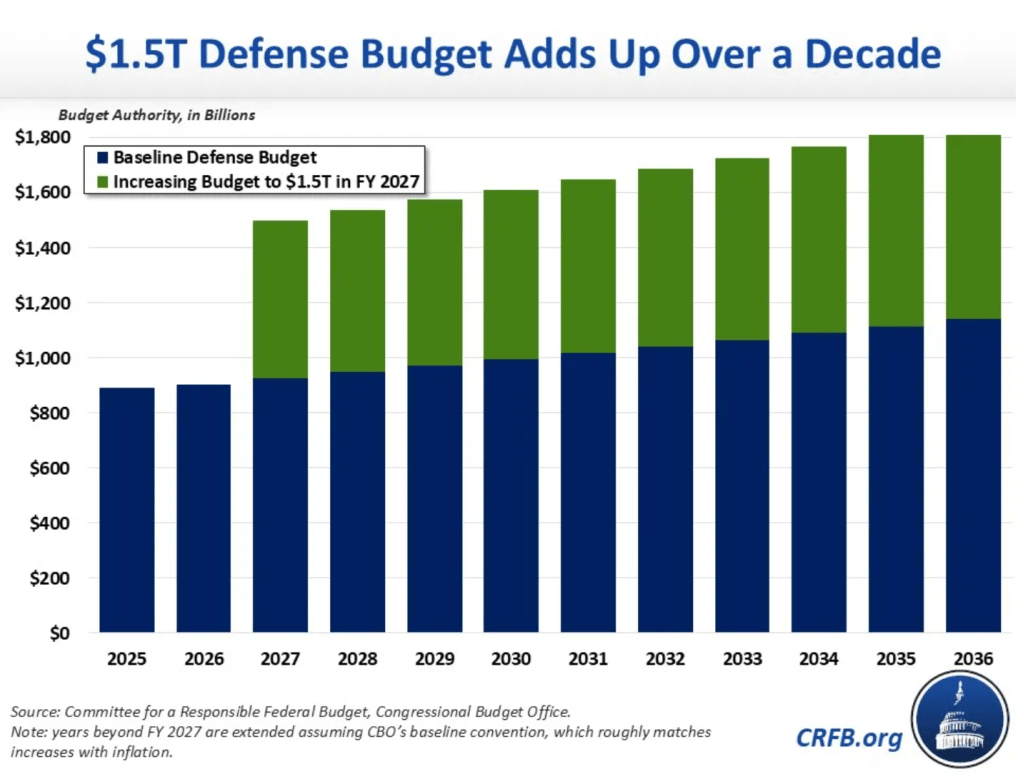
Trump’s plans to boost yearly defense spending by 50% to $1.5 trillion threaten to make the U.S. debt outlook even worse as interest payments on all its borrowing already exceed $1 trillion a year. Combined with recent tax cuts, the deficit could reach 7% of GDP this year, Sharma estimated.

Trump has said he expects the Iran war to last four to six weeks. It has now entered its sixth week, and there are few signs of a quick end to the conflict.

In fact, evidence points to more escalation and a longer war. Thousands of troops are headed for the region, a third aircraft carrier is en route, and the Pentagon is committing nearly its entire inventory of stealthy JASSM-ER cruise missiles to the Mideast.

None of that will be cheap. The Defense Department is reportedly seeking $200 billion from Congress for the war, after the military depleted much of its most expensive munitions, while Iranian attacks have damaged or destroyed U.S. aircraft, radar systems, and bases.

“The need for additional spending to finance the war would increase U.S. debt, sparking a bond market selloff as investors require additional compensation to cover potential losses,” RSM Chief Economist Joseph Brusuelas said in a note late last month. “Long-term rates such as 30-year mortgage rates are based in part on the benchmark U.S. 10-year yield. Most important: The bond market remains undefeated.”

This story was originally featured on Fortune.com

This post was originally published here

Jamie Dimon believes that to win big, you often have to think small—or at least in small teams.

In his annual shareholder letter published Monday, the longtime JPMorgan Chase CEO said the company’s “real competitive battles” are fought on a more granular scale.

Despite JPMorgan having more than 300,000 employees worldwide, he claimed the best way to fix a problem is to assign it to a small but capable team fully dedicated to the task, including in several areas like AI, marketing, and others.

“The teams needed to tackle these challenges should be small and authorized with the decision-making ability to move and act like Navy SEALs or the Army’s Delta Force,” wrote Dimon.

Otherwise, a larger group trying to solve a problem won’t give it the priority it needs to be resolved quickly. When a task is only 1% of a person’s job, you don’t get the same results as when everyone is 100% focused on the same objective, he explained.

“Very often when a management team wants to accomplish something new, like create a digital account opening process that cuts across virtually every area, everyone on the team says, ‘We’ll get it done,’ meaning they will add it to the long list of tasks already on their plate,” Dimon added.

Science mostly backs up this theory. More than 100 years ago, French agricultural engineer Max Ringelmann discovered that an individual pulled a rope with more force alone than they did in a group, which he theorized was partly because people expect their teammates to pick up the slack. 

In 1979, another study by Bibb Latané, Kipling Williams, and Stephen Harkins of Ohio State University on “social loafing” found that individual effort dropped sharply as the group cooperating on a task grew.

The researchers argued this psychological tendency comes about because people assume their teammates aren’t trying hard, they set lower personal goals when help is available, and they feel less individual accountability when their contribution isn’t evaluated or rewarded separately. The researchers concluded that at least one of the keys to preventing social loafing is restoring individual responsibility within a group. 

Business leaders have also tried to tackle the issue of social loafing for years. In the early days of Amazon, founder Jeff Bezos instituted a “two pizzas” rule which claimed any team that can’t be fed by two pizzas was too big.

In 2023, Mark Zuckerberg doubled down on “efficiency” by laying off thousands of employees and flattening the company’s management structure, which he later claimed led to the company moving faster.

In the age of AI, tech companies are reducing their workforces while still expecting the same results or better. Block earlier this year laid off 40% of its workforce partly due to the progress of AI tools, according to CEO Jack Dorsey. Even startups have been able to seize upon AI to grow exponentially with teams of less than 20 people.

For Dimon, winning in business demands “speed, agility, and relentless execution,” and creating small teams is the best way to deliver it.

“This is trench warfare; it’s about fighting for every inch, moving quickly and getting things done,” he wrote.

This story was originally featured on Fortune.com

This post was originally published here

Unidentified, sophisticated drones flying over a handful of U.S. military bases could be a warning sign from China, Gordon Chang warned Monday, suggesting Beijing could target the American homeland if the U.S. becomes more involved in its conflict with Iran.

“The important point here is that we have had, last month, over four of our important military bases, foreign drones. These drones were large, they were un-hackable, they obviously were not recreational, so some foreign power — probably China, maybe Russia — was operating drones over our critical air force bases,” Chang said on “Mornings with Maria.” 

“Really, right now, the United States needs to be able to defend its bases in the homeland because those drone flights were a warning to the United States of some sort,” he continued.

GORDON CHANG URGES US TO TREAT CHINA AS ‘ENEMY COMBATANT,’ WARNS SUBS OPERATING ‘VERY CLOSE’ TO US

Chang suggested the drone activity could be an attempt to send President Donald Trump the message that, if U.S. forces escalate in the region, China could respond by potentially targeting bases on American soil.

That warning, coupled with a recent suspicious device left near MacDill Air Force Base in Florida — which Chang suggested may have been linked to China — highlights a growing threat, he warned.

IRAN STRIKES COULD SIGNAL LIMITS OF BEIJING, MOSCOW’S POWER AS US FLEXES STRENGTH

“We’ve really got to be concerned,” he said, later adding, “These are warnings that China intends to move on the U.S. in the American homeland.”

Chang also warned that Beijing’s actions should be viewed in the context of its growing alignment with other U.S. adversaries like Russia and Iran, as tensions continue to spill across multiple global fronts.

“China is supporting Russia in Ukraine, and China is supporting Russia in other matters as well… So they have a durable partnership, and anything that helps one of them is going to generally help the other, with the exception of the matter that you just raised,” he said, referring to the tension between higher oil prices benefiting Russia while raising costs for China.

“Generally speaking, the United States now faces a very powerful combination, and we shouldn’t be doing anything that fuels that combination,” he added.

GET FOX BUSINESS ON THE GO BY CLICKING HERE

Fox News Digital’s Michael Dorgan contributed to this report.

This post was originally published here

AI is looming over many white-collar workers like a dark cloud, threatening to automate their jobs. But JPMorgan CEO Jamie Dimon said there are sunnier days ahead thanks to the tech’s productivity gains—people will have more jobs than ever, and will be clocking in fewer hours a day

“I believe that 30 years from now, your kids are probably working three and a half days a week,” Dimon told CBS in a recent interview

The CEO of the $794.5 billion bank said the world is becoming “very productive” thanks to AI; he predicted a future of healthier, happier humans who will be able to “hike more” and enjoy their pursuits outside of their shortened 3.5-day workweeks. In his annual letter to JPMorgan shareholders released this morning, Dimon reiterated that these improvements are well underway—even if his more optimistic claims are still decades from fruition. 

“I do not think it is an exaggeration to say that AI will cure some cancers, create new composites and reduce accidental deaths, among other positive outcomes. It will eventually reduce the workweek in the developed world,” Dimon wrote in his recent letter to shareholders. “People will live longer and safer.”

However, Dimon isn’t willing to bury his head in the sand about the short-term effects of AI. The bank’s leader has been open about AI’s impact on jobs, flagging the risk of disruption if AI moves “too fast.” In his shareholder letter, he doubled down on the claim that AI will “definitely eliminate some jobs,” as its rapid deployment could outpace job creation and workforce adaptation. However, he added that it will simultaneously enhance existing and create new career opportunities, such as cybersecurity and AI itself. 

Looking to the future, the CEO believes humans will have more professional options; however, businesses and governments need to work together to ensure job security before we get there. And the ones who stay afloat won’t be the most tech-savvy talent. 

Fortune reached out to JPMorgan for comment. 

Dimon’s advice to young people in the AI era: ‘Learn to have EQ’

CEOs have stressed the importance of workers adding prompting skills to their professional arsenal. But when asked how young people can get ahead in the AI era, Dimon underscored the importance of tapping into what it means to be human. Learning, he said, is still “the number one thing to do.”

“Talk to everybody. Have deep curiosity about the world,” Dimon told CBS. “Learn to think all the time, and then learn to have EQ. EQ is, can I communicate? Do I have heart? Do people trust me?” 

“Talk to everybody. Have deep curiosity about the world,” he said. “Learn to have a work ethic, learn to have a purpose—all those things, you will have a great life.”

Dimon advised budding talent to develop a work ethic and understand how to find purpose. They should travel and be open to new perspectives; work with others as a team rather than make it all about themselves. Once young workers are able to tap into those soft skills, they’ll have “a great life,” he said. And he doesn’t believe they’ll be fighting for roles either; Dimon predicted that the job market will expand, despite his reservations in the short term. 

“Their lives are going to be more complex than ours were…They will have more jobs than we had, they’ll move around a little bit more,” Dimon continued. “But I think they’ll have great lives.”

Battling potential AI job disruption ahead: retraining and capping layoffs 

While young professionals can work on their human skills, it’s only one half of the picture; the JPMorgan CEO said it’s also the responsibility of businesses and government to intervene. And as thousands of people lose their jobs in the name of AI automation, Dimon proposed a solution to avoid job market chaos. 

“I have a plan to retrain people, relocate people, income-assist people,” Dimon said at the World Economic Forum meeting in Davos, Switzerland, earlier this year.

Dimon explained that there would be “civil unrest” if AI were to automate an entire profession and millions of people were suddenly booted from their high-paying jobs. Therefore, it’s on the bigger powers at hand to “phase it in over time” and “retrain” workers to stay employed in the new AI era. He’s even supportive of the government at the local level, offering incentives for retraining and placing restrictions on layoffs, including at his own company. 

“We would agree, if we have to do that to save society,” he said. “Society will have more production. We’re going to cure a lot of cancers. You’re not going to slow it down. How do you have plans in place to make it work better if it does something terrible? That’s the only way to do it.”

This story was originally featured on Fortune.com

This post was originally published here

 Savannah Guthrie was back and almost all business at NBC’s “Today” show anchor desk on Monday, marking a return for the first time in more than two months since her mother’s disappearance. “Here we go, ready or not,” Guthrie said as the show opened. “Let’s do the news.”

After running through a series of news headlines, Guthrie said that “we are so glad that you started our week with us and it’s good to be home.” Her co-host, Craig Melvin said that “it’s good to have you back at home.”

She greeted longtime co-worker Al Roker with “Good morning, Sunshine,” when he noted that it was good to see her on the set. At the end of the first 25-minute portion of the show, she offered Melvin a high-five.

Emotions got the better of her before the last half hour, when she joined her colleagues in front of fans gathered at the show’s Rockefeller Center studio. She fought back tears when one fan was seen with a “Welcome home Savannah” shirt, and clutched colleague Jenna Bush Hager’s arm and thanked people for their support.

Guthrie says it’s hard to go forward not knowing what happened

Guthrie, one of morning television’s most recognizable faces, has been a “Today” host since 2012. She has acknowledged that she’s a changed person and that it’s hard to go forward not knowing what happened to Nancy Guthrie, who authorities believe was taken against her will from her Arizona home.

Despite an intense search involving thousands of federal and local officers and volunteers, there has been no sign of the 84-year-old mother of three since she was reported missing Feb. 1.

The “Today” show has followed the story closely for the past two months, but it wasn’t mentioned during the first hour of her return on Monday. Bringing things back to normal was clearly intentional: Her return wasn’t referenced during interviews with NBC’s Gabe Gutierrez at the White House and military analyst Steve Warren on the show’s set.

Hoda Kotb, the former anchor who had filled in for Guthrie for much of the past two months and interviewed her former colleague, wasn’t on set Monday.

“Today” has seen a ratings boost over the past two months and has even eclipsed ABC’s “Good Morning America” as the leader in the morning show ratings. The shows aren’t the profit generators they once were for the networks, but the rivalry is still intense.

“Today” averaged 3.1 million viewers for the first three months of the year, up nearly 9% in an era most broadcast programs lose viewers. It’s hard to tell how much the Guthrie story had to do with that: NBC also aired the Super Bowl and the Winter Olympics in February, and both events tend to help a morning show’s ratings.

“Good Morning America” averaged 2.93 million viewers, up 2% over 2025 while “CBS Mornings” plunged 17% to 1.76 million, according to the Nielsen company.

As part of a video message released by her New York church on Easter Sunday, Guthrie spoke about feeling “moments of deep disappointment with God, the feeling of utter abandonment.” But she said the resurrection is not fully celebrated “if we do not acknowledge the feelings of loss, pain, and yes, death.”

In announcing her return to NBC’s flagship morning show, Guthrie said she was uncertain whether she’ll feel like she still belongs.

“It’s hard to imagine doing it because it’s such a place of joy and lightness,” she said just over a week ago on “Today” during her first interview since the disappearance. “I can’t come back and try to be something that I’m not. But I can’t not come back because it’s my family.”

She didn’t anticipate faking her way through the show, which is normally light-hearted with a mix of serious, breaking news.

Guthrie’s mom had made occasional visits to show’s set

There had been a great deal of speculation about whether she would return.

“I want to smile, and when I do it will be real,” she told Hoda Kotb, who came back to “Today” to fill in while Guthrie focused on the search. “Being there is joyful, and when it’s not I’ll say so.”

Nancy Guthrie made occasional appearances on “Today” over the years, once taking part in a cooking demonstration and surprising her daughter on the set. When Savannah Guthrie returned to her hometown of Tucson in 2025 for a segment recorded for the show, the two visited one of their favorite restaurants and talked about their love of Arizona.

The Guthrie family has offered a $1 million reward for information leading to the recovery of their mother.

Authorities believe Nancy Guthrie was kidnapped, abducted or otherwise taken against her will after finding blood near the doorstep of her home in the foothills outside Tucson. The FBI later released surveillance videos showing a masked man on the porch that night. Volunteers and search teams scoured the nearby desert terrain filled with cactuses, bushes and boulders in the first weeks after she vanished.

But attention has faded from an investigation that was declared to be a top priority for the FBI and local authorities. Investigators have not released new evidence in weeks and say the number of tips has slowed. The FBI and the Pima County Sheriff’s Department both said late last week that they had no updates.

Early on, some media outlets reported receiving ransom messages tied to the case. Guthrie said she and her siblings responded to two that they believed were real and offered to pay.

Guthrie said her celebrity status might be the reason her mother was taken, but said that possibility was “too much to bear.”

___

Associated Press correspondents John Seewer in Toledo, Ohio, and Sarah Brumfield in Washington contributed to this report.

This story was originally featured on Fortune.com

This post was originally published here

Steve Bannon, a longtime ally of President Donald Trump, on Monday won a Supreme Court order that is expected to lead to the dismissal of his criminal conviction for refusing to testify to Congress.

Prodded by the Trump administration, the justices threw out an appellate ruling upholding Bannon’s conviction for defying a subpoena from the House committee that investigated the Jan. 6, 2021, attack by a mob of Trump supporters on the U.S. Capitol.

The move frees a trial judge to act on the Republican administration’s pending request to dismiss Bannon’s conviction and indictment “in the interests of justice.”

The dismissal would be largely symbolic. Bannon served a four-month prison term after a jury convicted him of contempt of Congress in 2022. A federal appeals court in Washington had upheld the conviction.

The justices also issued a similar order in the case of former Cincinnati Councilman P.G. Sittenfeld, who was pardoned by Trump last year.

Sittenfeld had served 16 months in federal prison after a jury convicted him of bribery and attempted extortion in 2022. The high court order allows a lower court to consider dismissing his indictment.

The Justice Department brought the case against Bannon during Democrat Joe Biden’s presidency, but it changed course after Trump took office again last year.

Bannon had initially argued that his testimony was protected by Trump’s claim of executive privilege. But the House panel and the Justice Department contended such a claim was dubious because Trump had fired Bannon from the White House in 2017 and Bannon was thus a private citizen when he was consulting with the then-president in the run-up to the Capitol riot.

Bannon separately has pleaded guilty in a New York state court to defrauding donors to a private effort to build a wall on the U.S. southern border, as part of a plea deal that allowed him to avoid jail time. That conviction is unaffected by the Supreme Court action.

This story was originally featured on Fortune.com

This post was originally published here

Low- and Middle-Income American families, and small businesses, accounting for well over half of our country’s population, paid out a disproportionate share of their incomes to the government due to IEEPA Tariffs recently struck down by the Supreme Court. Total payments amounted to roughly $175 billion. Now these families and small businesses face the prospect of receiving no rebates. Thus, the system is regressive for them on both the front and back ends — the burden of the original high tariffs and now the denial of rebates to compensate them.

As the result of the so-called “Liberation Day” tariffs announced April 2, 2025, retail prices rose by between 6 and 7 percentage points, costing the average American household between $400 and $600 — and many considerably more. For low-income families especially, this was a painful gouge into their incomes.

One might imagine that in the interest of fairness, rebates would automatically go to these families and small businesses. That is not the case. The way our system works, rebates go ONLY to importers who DIRECTLY paid the tariffs to the Customs and Border Protection agency (CBP) in the first place. The CBP estimates that 330,000 American importers actually paid the tariffs.

In contrast, 300 million-plus Americans assumed most of the burden virtually every time they went to the grocery store, bought a car, or purchased a pair of shoes, a dress, or a home appliance. Small businesses lost as well because most of the costs of the tariffs paid by larger importers or wholesalers were passed on to them. Most consumers and small businesses have NO clear recourse to getting any of their money back.

America’s importers that accounted for most of the tariff revenue were generally large retailers, big wholesalers, shippers, and companies that import components and raw materials to be incorporated in their manufactured goods. This group, accordingly, will receive the lion’s share of rebates from the U.S. Government through a relatively smooth, computerized process for which they are pre-registered.

Those American consumers who bought imported products after “Liberation Day” in stores, through websites, or in auto showrooms — who probably didn’t feel very “liberated” then — will feel even less so now. They will have NO access to the rebates. If they benefit at all, it would only be because some importing companies that DID receive rebates chose to pass the funds on to them. But this is not easy.

Doing so on a case-by-case, buyer-by-buyer, product-by-product basis would be highly complicated if not impossible for most companies. Restoring even a semblance of an equitable outcome would require a large company to use a broader approach — e.g., discounting consumer prices for a period of time, issuing gift credit cards to customers, or providing equivalent amounts to small retailers who sell their products in order to enable them to recoup their losses or pass the benefits on to their own customers.

U.S. Customs and Border Protection officials say they are now working on new arrangements, but these may take a long time. Likewise, small businesses may consider engaging in lawsuits to recover their tariff costs, but these could be expensive and time-consuming. Many will go bankrupt waiting.

To be clear, this rebate conundrum, at its roots, is not the fault of large companies or importers, or of this administration. It is a byproduct of an older rebate system and a multi-layered distribution system.

But the perception — and reality — of unfairness is highly palpable. It needs to be addressed by a wide range of companies and government officials. CNN has done an especially good job interviewing small business owners who have been painfully harmed and forced to lay off employees. This overall unfairness and pain must be confronted. To make matters worse, unreturned money will be kept by the Treasury.

In the 2008–09 financial crisis, the government provided enormous support to large financial institutions but virtually none to small businesses, leaving a bitter taste in the mouths of many such businesses and their employees, and millions of everyday, hard-working Americans. As was the case then, an inequitable solution now will further widen social and economic divisions and foment bitterness in this country.

Coming in tandem with currently skyrocketing oil prices and new sets of tariffs imposed by the president to replace the earlier ones, this situation is an especially bitter pill for low-income and even average families whose budgets are already stressed.

This situation fans the flames of social stress in this country. Businesses and the government must devise measures to address it. Whatever the government claims to be planning should be speeded up. In addition, several large companies that have constructively addressed this inequity already could share their techniques with others that have not. Both steps would make a bad situation better. Failure to do so would further pull apart our already highly divided society. All will suffer.

The opinions expressed in Fortune.com commentary pieces are solely the views of their authors and do not necessarily reflect the opinions and beliefs of Fortune.

This story was originally featured on Fortune.com

This post was originally published here

When Nvidia CEO Jensen Huang got onstage at an event in his native Taiwan in 2024 to talk about the future of AI and supercomputers with Supermicro CEO and co-founder Charles Liang, the familiarity between the two was obvious. 

“When we’re together, sometimes we speak Taiwanese, sometimes we speak Mandarin, and then when we disagree, we speak English,” Huang joked in English. 

Huang was there to give a keynote address alongside Liang, and the two marveled at stacked server racks as they slipped out in and out of English to joke and compliment each other on their respective tech. 

“Very beautiful,” said Huang, as he gazed at a server. “Charles said that everything in here is Nvidia, for all the American citizens.”

At the time, their companies—located in San Jose and Santa Clara about a 15-minute-drive from each other in Silicon Valley—seemed in sync, and the two appeared jovial as they riffed in front of a packed crowd. But a high-profile scandal involving Supermicro has thrown a wrench into the tight relationship between the two companies, threatening a decades-long partnership that has made billions for each organization and helped power the AI boom.

In March, Supermicro co-founder Yih-Shyan “Wally” Liaw was arrested by federal agents in California on charges that he allegedly smuggled $2.5 billion worth of Nvidia-powered servers to China in 2024 and 2025. Liaw has pleaded not guilty and is free on a $5 million bond. Supermicro, Liang, and the company’s third co-founder Sara Liu were not named as defendants, nor is Nvidia implicated. In a letter to investors, Liang said Supermicro was a victim in the smuggling scheme. 

“I am deeply saddened and shocked that actions of these individuals were placed above our mission and our responsibility to national security,” Liang’s letter stated. He then wrote in bold: “It appears that Supermicro has been a victim of the elaborate schemes orchestrated by these individuals, which deceived both federal authorities and our internal compliance team.”

While Liang seeks to distance the company from the tainted elements, Supermicro’s longer-term fate may hinge on whether Nvidia stays close or decides to keep its distance. Nvidia is more than just a longtime partner to Supermicro, it’s an essential part of its business. Supermicro makes about 71% of its revenue from products mostly built around Nvidia’s GPUs—the powerful chips used for training and running AI models. But despite this reliance, Supermicro has no long-term supply contract with Nvidia.

Liaw’s arrest raises “serious credibility issues” for Supermicro, analysts at Bernstein recently wrote in a note to investors. If Nvidia opts to distance itself from Supermicro, the loss of GPUs could have a “devastating impact” on Supermicro’s businesses.

A note written by senior tech analyst Mehdi Hosseini from trading and investment firm Susquehanna called for the ouster of Liang and the entire Supermicro board. Liang has been CEO for nearly 32 years.

“In our view, this indictment only underscores the urgency of replacing the current Chairman/CEO with an external candidate and refreshing the entire board with fully independent directors,” Susquehanna’s note states. 

A bond that goes back ‘almost since day one’

Nvidia and Supermicro were both founded in Silicon Valley in 1993, with each occupying different niches in the burgeoning tech industry. While Nvidia makes the specialized processors used, initially, for computer graphics and now for AI, Supermicro builds server racks and cooling systems that incorporate the chips. It’s one of many companies, including Dell and HPE, that build such systems and compete fiercely.

The partnership between Supermicro and Nvidia began “almost since day one” Liang said in an interview with Barron’s in 2023. But the ties between the two companies got more established after Supermicro went public in 2007. Nvidia was launching its first data center GPU and picked Supermicro as its first go-to-market partner, explained Kevin Connors, vice president of sales at Nvidia during an event in Taiwan in 2022. Connors said Nvidia worked with Supermicro to configure and test the systems against heavy workloads so Supermicro could sell the products to customers.

“Supermicro has a proven track record of time-to-market execution—no one moves faster than Supermicro, and Nvidia loves speed,” said Connors, speaking from a stage decorated with stacked cubes emblazoned separately with the companies’ logos. 

Connors said the trend would continue with next-generation systems that would include Nvidia’s Grace and Hopper models. 

“We’ve had a great journey together, but the journey’s just begun,” said Connors. And in the years since, Supermicro has become more dependent on Nvidia, which dominates the market for the GPU chips that are critical for AI.

Today, Supermicro counts on its access to Nvidia’s ultra-hot GPUs for the lion’s share of its billions in revenues. Between fiscal 2023 and fiscal 2025, Supermicro’s sales tripled from $7.1 billion to $22 billion following the explosive introduction of ChatGPT to the general public. The stock subsequently crossed $1,000 a share in March 2024, and its market cap hit $67 billion. That hockey-stick growth led to Supermicro joining the S&P 500 in 2024 and making a buzzy debut on the Fortune 500 that same year. 

One single chip supplier—known to be Nvidia, although it is unnamed in Supermicro’s filings—accounted for 30.7% of what Supermicro spent on components for customers’ orders in fiscal 2023. That figure ballooned to 64.4% by fiscal 2025. Supermicro doesn’t disclose the names of its suppliers, but analysts consider Nvidia to be the supplier and refer to the company in questions to Liang and chief financial officer David Weigand. 

During an earnings call in November 2024, Liang said the company had recently reached the milestone accomplishment of deploying “the world’s largest DLC AI supercluster with 100,000 Nvidia GPUs.” That 100,000 figure means about $3 billion in GPU purchases from Supermicro to Nvidia in a single quarter—no other supplier could come close to reaching the purchase orders Supermicro was directing to Nvidia on behalf of its customers.

Supermicro confirms in its most recent annual report it “does not have long-term supply contracts for all critical materials and core components, but instead often purchases these materials and components on a purchase-order basis.” Supermicro gets purchase orders from customers and then relies on Nvidia to choose it for chip allocations, and Nvidia can walk away whenever it wants. 

Would Nvidia walk away?

So far, there’s been no public indication that Nvidia is changing its business relationship with Supermicro, and Nvidia would not comment when asked whether it is reevaluating the relationship. 

An Nvidia spokesperson told Fortune the firm’s “ecosystem partners must be committed to strict compliance at every level,” adding that its diligence has led to prosecutions of would-be smugglers and that it will continue to work with the government.

Given how vital the relationship is to Supermicro, though, investors are paying close attention for any signs of change. Days before Liaw’s arrest, for example, Huang got onstage at Nvidia’s GTC conference and praised Supermicro’s competitor.

“As you know, Dell is the world’s leading computer-systems maker and they also are one of the world’s leading storage providers and they worked with us to create the Dell AI data platform,” Huang told the audience.

Without access to Nvidia chips, Supermicro’s systems would be far less attractive. However, in recent years the company has boosted its relationships with other suppliers, including AMD, Broadcom, and Intel, although those relationships are far less material to its bottom line.

Nvidia doesn’t break out customers specifically in its disclosures, but Supermicro is estimated to have accounted for between $12 billion to $13 billion of Nvidia’s $130 billion in revenue last year. However, Supermicro punches above its weight in speed to market, and a fracture in the partnership could temporarily hamper Nvidia’s ability to hit aggressive hyperscaler timelines. At the same time, Dell, HPE, and Lenovo all have co-engineering relationships with Nvidia that could fill the gap. 

Sachin Ohal, a veteran chief technology officer at International Systems Technologies, said the reputational issue for Nvidia is wholly separate from the operational tie-up between two companies. Customers will keep buying Nvidia’s chips regardless of what a Supermicro cofounder is alleged to have done, he said. And for Supermicro’s customers, changing vendors is a completely different calculus that has nothing to do with a brewing smuggling scandal. 

Any customer that wants to exit Supermicro would need to wait three to six months for a transition period, which would include a board-level sourcing and vendor management review, data center chipset review for cyber, data and operations risk review, brand insurance analysis, and a formal account management process, he explained. Funding would need to be allocated for the transition, and a replacement vendor qualified. None of this is free, noted Ohal. 

Even more critically, customers have already paid deposits against future Supermicro orders and those deposits have likely already moved from customer accounts to Supermicro and from there onto chip manufacturers like Nvidia, Dell, intel and Micron. Because customers are so sticky with Supermicro, there’s less urgency for Nvidia to act quickly to sever the partnership due to reputational risk or optics. 

“The business reality is that it is not easy to decouple or just leave,” said Ohal. “In the tech world, marriage and divorce both cost.”

The fallout

Supermicro’s stock plummeted 33% in a single day on news of the indictment, although it has regained about 13% since the company announced Liaw’s resignation from the board.

According to the March indictment, Liaw and two others worked to make it seem as though server purchases were going from being assembled in the U.S., shipped to Supermicro’s Taiwan facilities, and then routed to an unnamed Southeast Asian company that was purportedly the final customer. In reality, the indictment states, the tech went from the Southeast Asian company onto Chinese buyers. To hide what they were doing, the accused put thousands of fake servers in warehouses to twice fool auditors, and used hair dryers to remove sticky labels from packages. 

The indictment claims the front company behind the purchases grew to become Supermicro’s 11th most-profitable customer worldwide, generating $99.7 million in revenue during a single quarter for Supermicro in fiscal 2024, ranking it alongside major U.S. tech and social media companies. 

Supermicro has said it is cooperating with authorities.

“We have taken action against all identified employees and those parties no longer have any relationship with Supermicro,” Liang wrote in his letter. The company said Liaw had resigned from his role on the Supermicro board and declined further comment. 

Proxy advisory firm ISS gave Supermicro the worst-possible score on corporate governance in a report issued last week, and recommended no support for the reelection of Liang and board members Tally Liu and Sherman Tuan at the company’s annual meeting on April 15. ISS also recommended investors vote against Supermicro’s request that investors approve more shares for its equity compensation plan due to what it deemed “excessive” cost and burn rate in the plan. The proxy advisory firm pulled no punches in its assessment of leadership. 

“While it is acknowledged that current executives and directors have not been convicted of any crimes as of this writing, the board’s failure to improve [Supermicro’s] governance and oversight structure and practices, in the context of multiple serious allegations of accounting and compliance irregularities, is considered a material governance failure,” the report states.

But it isn’t so simple to untangle Liaw from Supermicro or to distance Supermicro from the misdeeds of its past. Two decades ago, Supermicro pleaded guilty to illegally exporting computer equipment to Iran, and paid fines to the Department of Justice, the Treasury Department’s Office of Foreign Assets Control, and the Commerce Department. In a 2020 report, the SEC charged Supermicro with accounting violations from 2015 to 2017; the allegations led to its former CFO resigning and a compensation clawback being exercised on Liang, who was not charged. Liaw resigned following the accounting probe, but he came back as a consultant in 2021, was reinstated as an executive in 2022, and joined the board again in 2023. 

Bernstein analysts questioned the move to bring Liaw back into the fold. 

“It’s one thing being duped once by rogue employees (allegedly) committing crime right under your nose, but it’s quite another hiring the same person back (as a board director too) and later for that same person to (allegedly) do something worse like this,” the note states.

In addition, Liaw holds 2.5% of Supermicro, a stake valued at about $327 million given the current stock price. He is the second-largest individual shareholder behind Liang and Liu, who together hold 11.4% of the company the three co-founded.

Liaw is also deeply entwined with two other companies that are pivotal to Supermicro’s operations. An unnamed sibling of Liaw’s owns approximately 11.7% of Ablecom, which is a related company run by one of Liang’s brothers that provides the physical structure that provides the racking and stacking aspect of the servers. Liaw’s sibling also holds 8.7% of another related company run by another of Liang’s brothers, Compuware, which provides specialized power distribution needs to Supermicro’s customers. 

Ohal said the relationships Supermicro has under its umbrella of related companies—led by Liang’s own brothers—gives it a leg up over other companies. 

“If the SEC releases a rule and a financial firm has to upgrade something, Supermicro can do it the next morning because they are already following this news,” said Ohal. “Their back office is already preparing and designing the chassis, power distribution, and their smart solution architects are already designing what the changes are in the system.”

Supermicro’s established alliance with the biggest brand means when products are in the last stage of R&D and testing, Supermicro is embedded enough that it can create data center infrastructure such as chassis and other power distribution components that allow Nvidia to focus on software and chips, said Ohal. 

“If tomorrow morning Nvidia launched something, and one of the most important things in all the electronic devices is appropriate power consumption and power distribution within a data center, guess what?” said Ohal. “Supermicro has the biggest advantage because their family company is basically filling all those specialized needs.”

Charles Liang and Sara Liu own approximately 10.5% of Ablecom’s stock, while Charles’ brother Bill Liang owns 16% of Compuware along with his family, where Bill serves as CEO. Ablecom itself holds 15% of Compuware. In the past three fiscal years, Supermicro purchased $811.3 million in products and services from Ablecom, and $833.5 million products from Compuware. The three year combined total is $1.6 billion. Both companies’ sales to Supermicro make up a majority of each company’s total net sales, according to Supermicro, making Supermicro their primary source of revenue. 

Greg Thomas, CEO of demand chain intelligence provider ChainSentry, said the relationship between Nvidia and Supermicro created a structural incentive problem, raising the risk that compliance scrutiny would be less rigorous than it needs to be.

“Nvidia really needs Supermicro to be able to bring their chips to market at the scale and speed at which Supermicro’s been doing it, and Supermicro needs the Nvidia chip allocations really to survive,” said Thomas. “This is a kind of mutual dependency and there is a risk that compliance scrutiny becomes less independent and less rigorous than it needs to be.”

This story was originally featured on Fortune.com

This post was originally published here

Asia had a strong 2025, despite the doom and gloom surrounding Trump’s “Liberation Day” tariffs. The ASEAN+3 region—which consists of Southeast Asia, China, Japan, and South Korea—defied protectionist headwinds to grow 4.3% last year, beating initial projections from the ASEAN+3 Macroeconomic Research Office (AMRO) released right after the tariff shock.

Now the Iran war poses a new threat to Asia. The closed Strait of Hormuz has disrupted global supply chains and choked energy supplies, particularly for Asia, which buys more than 80% of the oil and gas that passes through the narrow waterway.

“The ASEAN+3 region entered 2026 from a position of strength, but the Middle East conflict has shifted the balance of risks to the downside,” Dong He, AMRO’s chief economist, said during an April 6 press conference in Singapore.

AMRO projected regional growth of 4% for both 2026 and 2027, unchanged from the group’s January forecasts. Yet holding the forecast steady is actually an indication of AMRO’s unease. Allen Ng, another economist at AMRO, noted that Asia was showing surprising strength from AI-driven electronics exports and increased foreign direct investment.

“In Q1 2026, the actual growth in many of our economies was stronger than expected,” Ng said. “Without the Middle East conflict, our forecast almost certainly would’ve been higher than 4%.”

ASEAN as a central driver of GDP growth

AMRO predicts that ASEAN’s economy will grow 4.6% in 2026 and 4.8% in 2027, making it the key driver of Asia’s growth in the near future. (In contrast, the “plus-three” economies of China, Japan and South Korea will grow 3.8% over the same time period).

Ng said Southeast Asia’s growth was due to “densification,” rather than displacement. Even as nations like Japan and South Korea continue to provide capital goods and high-precision components, Southeast Asian nations have deepened their role in global supply chains leading to “more complex and complementary” trade within the ASEAN+3 region.

More than 90% of China-ASEAN trade is in industrial intermediates rather than finished goods, and intra-regional FDI flows now represent roughly half of the FDI stock within the ASEAN+3 region, according to AMRO.

Vietnam, in particular, stands out. Its economy grew 8% in 2025, as companies looked to the country as an alternative manufacturing hub to China. AMRO predicts the country will grow 7.4% in 2026 and 7.1% in 2027.

“Vietnam handled the tariff shock quite well last year,” He said.

Cambodia was also one of the region’s fastest-growing economies last year, with a rate of 5.2%. Over the past decade, the country’s economy has diversified beyond agriculture into the garment and manufacturing sectors. 

AMRO predicts that Cambodia will continue to grow steadily at a rate of 4.9% in 2026 and 5.2% in 2027. But He warned that the nation, a net energy importer, needs to diversify its energy mix and invest in infrastructure to hedge against geopolitical disruptions like the Iran war.

Overall, AMRO’s economists argued that the region’s economies can withstand today’s energy and economic shocks.

“Even if oil prices surge past $100 for the whole year, we’re not predicting a stagflation scenario,” He said. “The region would still be able to grow.”

This story was originally featured on Fortune.com

This post was originally published here

Good morning!

If HR wants a CFO to sign off on a new wellness program, “making employees happier” is rarely enough.

Finance leaders want the business case: what it costs, what it replaces, and how it will pay off. That’s the message BambooHR CFO Justin Judd has for HR executives making the pitch. A happier workforce may be a worthy goal, he says, but it is not enough on its own.

“The piece that has to come along with it is: Bring me the business case,” says Judd.

One way HR leaders can build credibility with finance is by showing they understand tradeoffs. Rather than simply asking for new wellness spending, Judd advises them to identify which existing initiatives are not delivering value, suggest where cuts could be made, and make a clear case for why a new program deserves investment.

That means going beyond the headline cost. CFOs want to see measurable return: whether a program could improve employee health, reduce absenteeism, lower healthcare claims, boost productivity, or strengthen recruiting and retention.

Just as important, Judd says, is confidence that employees will actually use the benefit. If adoption looks shaky, approval likely will be too.

“It has to have something that you can pull it all the way through to actual execution and then have checkpoints to make sure it’s actually delivering value,” he says.

At BambooHR, one such initiative that resonated is its “Paid Paid Vacation” program, which gives employees a $2,000 annual stipend to cover vacation expenses during paid time off. To qualify, employees simply share about their trip on Slack.

Judd says he already sees the perk paying off a return on the investment already, particularly because it helps the company stand out in a competitive job market. Plus, he notes, burned-out employees are less productive, and those who return from real time away tend to do better work.

For Judd, that is the clearest tell of all. If a wellness benefit is working, it should help the business, too.

P.S. We’d love to hear about your hiring and talent management priorities over the next 12 months. Please take this short survey to share your perspective. Your responses will remain anonymous and will only be reported in aggregate. Thank you in advance for your time.

Kristin Stoller
Editorial Director, Fortune Live Media
kristin.stoller@fortune.com

This story was originally featured on Fortune.com

This post was originally published here

The week every golf fan looks forward to is upon us, as the Masters Tournament begins at the iconic Augusta National Golf Club with practice rounds beginning on Monday. 

It’s not only the first major tournament of the PGA Tour schedule every year, but from a business perspective, the Masters acts as a massive hub for new deals, networking and much more for the golf industry. 

In short, think of the Masters as the Super Bowl of golf. 

CLICK HERE FOR MORE SPORTS COVERAGE ON FOXBUSINESS.COM

But the traditional business behind golf, especially the marketing side of the industry, has completely changed the sport. It requires a new playbook, as the nine-figure tour and player sponsorships just to get visibility on brands has become a thing of the past. 

WME Sports, which represents some of the best athletes, coaches, broadcasters, executives and more across all sports, has been leading the charge on that altered playbook, and this week is critical in doing so with golf above all else in the industry. 

WME Sports golf agents Sean Guerrero and Jordan Lewites gave an inside look at Masters week within the industry during an interview with FOX Business, where they shared insight and their own excitement for what this week means for them and their clients. 

GOLF ATTIRE BRAND PARTNERS WITH KELCE BROTHERS’ GARAGE BEER AHEAD OF MASTERS TOURNAMENT

“Masters week within the golf industry is interesting,” Guerrero, who has been in the golf business for well over a decade, explained. “Obviously, it’s the most magical week of the year, and all of us getting into the golf industry have had so many different memories along our journey. As you enter the golf industry, you find it’s a unique opportunity where all of the decision makers are in one concentrated area, and everybody’s obsessed with golf. They want to grow how they show up in the sport in new, creative ways. 

“While in the industry, we’re excited for the glitz and glam of the Masters, we’re also excited that we all get to gather together to meet, catch up, and really network across the industry to provide new ways, at least from our perspective, to create how these companies show up in the sport we love.”

Lewites, who works with PGA Tour star Jordan Spieth, golf influencer Paige Spiranac and many more, echoed Guerrero’s sentiment, as he believes the Masters allows access to every sector of the industry. 

“We’re so lucky in the golf industry, especially us that work around the PGA Tour and LPGA Tour and any professional golf tours, there’s one event per week that is the focus. Specifically, there’s four weeks a year – I’ll even throw The Players in there. There’s five times a year where it becomes an industry conference for us,” he said. “… We can see everyone from the brand side, the media side, the talent side, and the event side of the business. The governing bodies, everybody’s there. And the Masters is our kick-off to start having latter half of ’26 and ’27 discussions for new deal flow, pipeline and see what folks have planned. It’s everybody’s big launch. Domestically, half the country is going to start playing golf for weather changing. So, it’s the biggest week for the golf industry and kinda kicks off the year.”

The Masters is built on tradition, and it’s why so many, from the casual fan to the golf superfan, tune in to watch every April. But golf has seen a tremendous shift in how brands can get involved in the sport, and agents like Guerrero and Lewites are helping those brands make an impact they didn’t think was possible in the past. 

While meetings “under the tree” by the clubhouse still occur, as Lewites mentioned considering the technology ban at Augusta National, brand activations, dinners, conferences and much more occur in town all week long. Whether it’s stepping into a brand’s hospitality house to check out new gear and interact with their visionaries, or meeting PGA Tour legends during a dinner after watching some golf, or even playing at courses around the area, this is where agencies like WME Sports thrive in building connections and bridging gaps for their clients to enter the golf space. 

“I think it’s like 500-plus corporate houses that we have through (WME’s sister company) On Location, and a lot of our golf consulting clients use On Location as well for their corporate housing meetings. Whereas we used to do it ourselves, we have an amazing sister company to do that with. It’s become very structured and very detailed-oriented,” Lewites detailed.

SWAG GOLF TEAMS UP WITH NFL FOR CUSTOM HEADCOVERS THAT BRING STADIUM ENERGY TO THE COURSE

“There are hosted dinners every single night that we are providing talent to on most cases. Cameron McCormick, Jordan’s coach, Sean Foley is booked every single night at the Masters, doing speaking engagements sometimes as intimate as six people.

“We’re seeing a lot of inbound finally across the board from companies that realize the Masters is truly the ultimate hospitality opportunity.”

A prime example of the type of opportunities WME Sports is creating for their clients is what Guerrero did with a great Masters tradition – John Daly’s “home” for the week. 

While he hasn’t played in the Masters in years, Daly, a fan-favorite in the golf world, would stay in an RV, specifically at a Hooters restaurant in town, where he would interact with fans with autograph signings and picture taking. But his usual set-up was scrapped, as that Hooters location was torn down before this year’s tournament. 

Enter Guerrero, who helped Daly’s team get connected with Topgolf, the high-tech driving range and lounge company, who wanted some more eyes and attention on their Augusta location. 

“They re-homed him on Thursday and Friday out there. Keeping that tradition alive,” Guerrero said. “We can be a resource for these brands in so many different ways.”

Guerrero called “Creative and change” the optimal words to describe what is happening in the golf space today. Whether it’s data and technology companies like CapTech helping the governing bodies in golf with their statistics and analytics, or smaller, cult-favorite brands like Swag Golf find that corporate avenue, WME Sports uses events like the Masters to get the ball rolling, or keep it rolling, in the right direction to make impacts they might not have thought possible. 

In fact, Swag Golf created a partnership with Bryson DeChambeau, the two-time U.S. Open champion who has also embraced the creator space in golf, which is something WME Sports has helped pioneer, especially with its work alongside Good Good Golf. 

“We started working with Swag when they were doing a couple million bucks in revenue,” Lewites said. “We knew they were on pace to do $50 million in shared revenue, and we’d help build their entire licensing program, so all of their head covers that you see that are everything from WWE, MLB, NBA, NFL – they have partnerships with all of them. They have an amazing partnership with DICK’S. They’re in every DICK’s and Golf Galaxy location with their hometown heroes collection, and their collegiate licensing program we put together for them. Again, here’s a small golf company now that showed how brands can activate and how that’s changed.”

Guerrero added: “Golf is unlike any other sport. If you’re a fan of golf, you play it and you consume it’s products. I’m a big baseball guy, I’m a big football guy. I’m not playing baseball on the weekends. It’s such a unique lifestyle sport, where if you’re a fan of it, you consume it’s products and you have a consumer for life. Yeah, you can start at three and play until 93. 

“So, all of these brands on the outside of golf wanting to join the industry and see the value of it – I truly root for everybody across the space. Whether we work with them or not, we all grow together.”

GET FOX BUSINESS ON THE GO BY CLICKING HERE

Golf truly is a lifestyle compared to other sports. Not only do golfers play the game throughout the year, they’re also consuming the products they see their favorite athletes using each day on the course. 

The Masters also accentuates that point, which is why WME Sports and the rest of the industry is excited to get down to Augusta and continue its impact on this ever-evolving game at one of its signature events. 

“Everybody’s thinking about golf, and after the Masters hits, everybody’s got the bug,” Guerrero said. “A lot of these companies place a premium on either showing up at or around the Masters, or launching products or new services or new whatever it is along that same timeline.”

Follow Fox News Digital’s sports coverage on X and subscribe to the Fox News Sports Huddle newsletter.

This post was originally published here

The world’s biggest Bitcoin fortune is at risk. A new report by Google found that, by 2029, hackers could use new quantum computing techniques to crack open wallets belonging to Bitcoin inventor Satoshi Nakamoto in as little as nine minutes. Those early wallets, worth around $75 billion at current prices, account for over 5% of the world’s Bitcoin supply. Now, in the face of the quantum threat, some are renewing calls for a blockchain upgrade that would lock up those coins forever.

“If nothing is done, then coins on old addresses, including Satoshi’s, could eventually be taken by whoever first has practical quantum capacity,” says JP Richardson, an early Bitcoiner who runs the crypto wallet firm Exodus.

It’s possible, says Richardson, to update Bitcoin in a way that the coins in Satoshi’s wallets could no longer be spent. The Satoshi wallets account for around 1.1 million of Bitcoin’s finite 21 million supply, and are part of a sub-set of 6.9 million coins that Google says are most vulnerable to a quantum attack. In one scenario, the Bitcoin community could introduce a quantum-resistant upgrade and force all wallets to adopt it by a certain date or else see the coins in those wallets effectively destroyed.

Such a measure would reduce the risk that a quantum-based attack would flood the market with millions of newly circulating Bitcoins. Richardson, though, says he is not in favor of a forced upgrade. He believes the market impact of a quantum hacker cracking Satoshi’s wallets would be “brutal…but not the end of Bitcoin.”

Pete Rizzo shares this view. A former crypto journalist turned Bitcoin historian, Rizzo attended the annual gathering of insiders known as the Satoshi Roundtable in early February, where he heard calls to make a planned quantum update, known as BIP360, compulsory. This position, he says, reflects a minority view held by market players and speculators who are less concerned with the values of Bitcoin than they are with protecting a valuation model that treats Satoshi’s coins as gone forever.

“This is a classic case of ‘how do you interpret someone’s will,’” says Rizzo, who believes that a governance strategy that entails destroying someone else’s coins is anathema to Bitcoin values of self-sovereignty and decentralization.

And while Richardson and Rizzo dislike the idea of a compulsory update, they are not particularly concerned, saying that such a plan would never achieve the requisite consensus among developers to push it through. Instead, they think the Bitcoin community will build quantum resistant upgrades that wallet users will add voluntarily—though Richardson cautions this will be one of the blockchain’s hardest tasks to date.

The question now is how long such an update will take to achieve. The 2029 date circled by Google is likely premature, according to Bitcoin insiders, but few dispute the quantum threat is real and that it could wreak considerable havoc.

Jeff John Roberts
jeff.roberts@fortune.com
@jeffjohnroberts

This story was originally featured on Fortune.com

This post was originally published here

In early March, Robinhood’s latest investment product got off to a less-than-stellar start. After CEO Vlad Tenev rang the opening bell on New York Stock Exchange to celebrate the launch of a new private markets fund, the offering tumbled 16% in one day.

Since then, the investment vehicle—which aims to give retail investors exposure to late-stage, private companies through bundling together their equity into one fund—has rebounded 30%. But, now the fund, dubbed Robinhood Ventures I, is facing a new test. Analysts have warned that the debut of massive tech companies like SpaceX, OpenAI, and Anthropic may play short-term havoc with private markets and the prospects for other big-time firms like Stripe. If SpaceX performs poorly, secondary markets for smaller private companies may slump and the perceived IPO window for buzzy tech firms may close, said PitchBook

Is Robinhood’s attempt to let retail investors get a piece of private markets too little, too late?

Sarah Pinto, the head of Robinhood Ventures, told me that those worries are short-term at best. A veteran venture capitalist who spent almost eight years investing at Laurene Powell Jobs’ Emerson Collective, she believes that there will be “tons of opportunities” to notch returns in the years to come. (At Emerson Collective, she backed OpenAI, Anthropic, and Coinbase, among others.)

As the models powering the AI economy continue to improve, Pinto predicts that companies will build an ecosystem of applications that take advantage of OpenAI or Anthropic’s tech. “I actually think this wave of innovation will probably be bigger than any of the previous ones, and that we’re actually just at the beginning,” she said.

So far, Pinto has led Robinhood Ventures to take stakes in only a select group of late-stage companies. These include fintechs like Airwallex and Stripe and AI powerhouses like Databricks and Mercor. Robinhood either invests in primary rounds or buys shares on the secondary market with explicit permission from the startups, she said. 

That approach may be unremarkable among most venture outfits but it stands apart from the online brokerage’s controversial experiment with stock tokens. Announced in June, the effort promised European investors blockchain-based exposure to companies like OpenAI and SpaceX. After Robinhood unveiled the product, OpenAI came out with a blistering post on X: “We did not partner with Robinhood, were not involved in this, and do not endorse it.”

Pinto wasn’t at Robinhood when the online brokerage announced the initiative and isn’t involved with stock tokens now. Rather, she’s focused, like any venture investor, on persuading buzzy companies to let Robinhood join their cap table. 

She argues that those who let Robinhood Ventures buy equity can have a broader set of investors profit from their startups’ growth—an attractive proposition for firms who want a more diverse set of stakeholders. And Pinto said Robinhood’s platform spotlights its portfolio through founder interviews and bios, among other methods.

While Robinhood Ventures aims to currently invest in late-stage startups, Pinto didn’t discount the possibility of making bets on younger firms: “We call this Robinhood Ventures I for a reason.”

See you tomorrow,

Ben Weiss
X:
@bdanweiss
Email: benjamin.weiss@fortune.com
Submit a deal for the Term Sheet newsletter here.

Joey Abrams curated the deals section of today’s newsletter. Subscribe here.

This story was originally featured on Fortune.com

This post was originally published here

  • In today’s CEO Daily: Diane Brady takes stock of DOGE’s impact in two top-of-mind areas.
  • The big leadership story: Nvidia and Supermicro have a longstanding relationship, but after the arrest of Supermicro’s cofounder last month, Nvidia faces a decision of whether to distance itself from the company.
  • The markets: Largely closed for a holiday weekend, but up today in parts of Asia.
  • Plus: All the news and watercooler chat from Fortune.

Good morning. The U.S. could be about two weeks away from ending the war with Iran or one day away from unleashing “all hell” on the country, the latter of which President Trump reinforced Sunday in a crude social post. One reason it’s hard to know is that the formerly Elon Musk-led Department of Government Efficiency gutted the 80-person team in the State Department charged with leading international energy diplomacy earlier this year. 

Remember DOGE? It was supposed to last until July 4 this year but effectively disbanded in November, though even that is in dispute. Launched with a goal of cutting $2 trillion in waste, fraud, and abuse—a target later reduced to $150 billion and then $115 billion, with some insiders now saying the net cost savings may be close to negligible—there’s no question that cutting 277,000 federal jobs, or 9% of the total workforce, continues to have an impact. 

Let’s look at two areas that are currently top of mind: taxes and national security. With President Trump proposing the largest budget hike since WWII,  and the national debt topping $39 trillion, what impact has DOGE had there?

Taxes: The Internal Revenue Service (IRS) has lost more than a quarter of the 100,000 workers it had at the start of last year. The Global High Wealth office, which audits billionaires, lost 38% of its staff within weeks of Trump taking office. With Treasury Secretary Scott Bessent as acting commissioner, the IRS has reassigned HR and IT staff to process returns. Expect delays in receiving refunds, with further IRS cuts in Trump’s proposed 2027 budget. Despite staff cuts, federal tax revenue rose about 6% last year to roughly $5.2 trillion—a number that’s projected to grow to almost $5.5 trillion this year because of tariffs and economic growth. Corporate income tax receipts dropped almost 15% last year to $452 billion and are expected to stay flat amid tax cuts. And the IRS says AI is enabling it to better spot fraud—a good thing, as the Budget Lab at Yale estimates cuts to the agency could cost up to $2.4 trillion in net foregone revenue over 10 years. 

National Security: DOGE targeted DEI initiatives, R&D, and State Department operations, largely sparing major contractors like SpaceX, which is run by Musk. While Trump’s 2027 budget calls for a 40% increase in military spending to $1.5 trillion, some worry that DOGE cuts have reduced cybersecurity readiness and America’s ability to conduct agile and accurate combat missions. But national security has long been more about soft power than brute force, as America is the largest funder of global health and humanitarian relief. Private donors have stepped up to help compensate for the gutting of the U.S. Agency for International Development (USAID), which researchers estimate has resulted in more than 600,000 deaths so far and could result in millions more by 2030. America’s role in protecting global shipping and the rules-based global order in which U.S. business thrived after WWII is under question.

The net impact of DOGE may never be fully calculated, good or bad. As one CEO told me this weekend: “It’s hard to separate DOGE from everything else that’s been done on the policy front or by other officials.”

Contact CEO Daily via Diane Brady at diane.brady@fortune.com.

This story was originally featured on Fortune.com

This post was originally published here

When CEO Elliott Hill addressed Nike employees after another disappointing earnings report, he did something many leaders avoid once a turnaround starts to drag. He named the mood in the room.

“I’m so tired, and I know you are too, of talking about fixing this business,” Hill said at a Tuesday all-hands meeting, according to Bloomberg News. “I want to move to inspiring and driving growth and having fun.”

The timing mattered. Nike reported fiscal third-quarter revenue of $11.3 billion, flat year over year, while gross margin, Nike Direct sales, and revenue in China all declined. Investors were unimpressed, and the numbers made clear that the recovery was still slower and messier than hoped.

What makes Hill’s remarks stand out is the way he used them to steady a weary organization and begin shifting its internal story.

First, he acknowledged the emotional reality in the room. “I’m so tired, and I know you are too,” he told employees, validating that their exhaustion and hard work were visible. Leaders often try to rally employees by glossing over fatigue and moving straight to motivation. Hill did the opposite. He led with the prevailing sentiment, which made the rest of the message easier to hear. People are more likely to follow a leader through disappointment when they believe that person understands how they feel and is willing to say so plainly.

Second, Hill tried to break the habit of talking like a company in permanent recovery. Leaders can get stuck in a vocabulary of cleanup during a long turnaround. Soon, every meeting becomes about fixing, stabilizing, correcting, and managing. That language starts to shape identity, and employees stop feeling like builders and start feeling like custodians of a problem over time. Hill was certainly not declaring victory. Nike shares fell more than 10% after its earnings report, despite a narrow earnings beat. But Hill appeared to be trying to keep the company from becoming psychologically trapped in its own recovery story.

Third, he reached for something culturally specific to Nike. “Having fun” can sound glib in a corporate setting, but at a company like Nike, it carries weight. Nike’s brand is built on play, sport, energy, and competition. It would be challenging for such a company to motivate workers or generate creative momentum when every internal conversation feels like a postmortem. By invoking fun, Hill seemed to be pointing employees back to Nike’s core DNA.

The sports retailer still has a long way to go before it can credibly claim a full revival. But Hill seems to grasp something essential about leadership in a prolonged rough patch. A good leader knows when an organization needs discipline. An even better one knows when it also needs relief.

Ruth Umoh
ruth.umoh@fortune.com

This story was originally featured on Fortune.com

This post was originally published here

Good morning. Fears that AI could render traditional software vendors obsolete triggered a broad SaaS and cloud sell-off in February, a rout that some investors dubbed “SaaSpocalypse.” The catalyst: Anthropic’s addition of a legal task plug-in to its Claude AI, which wiped roughly $285 billion in tech market value within 24 hours.

The anxiety was straightforward. If AI can perform the tasks once handled by specialized software, or generate bespoke code on demand, why keep paying for software platforms at all? In a Fortune feature, my colleague Jeremy Kahn argues that this framing misses the larger pattern. New technologies rarely eliminate their predecessors outright. More often, they reshape markets, compress margins, and shift where value accrues. Desktop publishing didn’t kill commercial printing, for instance. It democratized it.

For CFOs and finance leaders, this moment isn’t about whether SaaS disappears. It’s about how the economics of software are changing, and what that means for the buy-versus-build calculus. In fact, AI may actually fuel the software industry rather than gut it.

As Kahn notes, by lowering the barriers to writing code, AI could unleash a new wave of companies building specialized business applications, no longer dependent on scarce, expensive coding talent. Finance leaders should expect a shift in value from standalone products to integrated ecosystems.

SaaS profit margins may compress and consolidation may follow, but not because AI cannibalized the industry, Kahn explains. “It will happen because AI fed SaaS,” he writes. You can read Kahn’s deep dive including insights from leading experts here.

I recently spoke with Intuit CFO Sandeep Aujla, who sees the current volatility as part of a familiar cycle. From Y2K to the rise of the internet, each wave of technological change has sparked predictions of disruption while underestimating the durability of established business models, he said.

At the same time, large language model providers are increasingly partnering with incumbent software companies, particularly in regulated environments where accuracy and trust matter. The relationship, Aujla suggested, is less competitive than it appears. “These LLMs are not looking to work against us,” he said. “They’re actually looking to work with us.”

Is AI changing how you think about SaaS or just accelerating trends already underway? I’d like to hear how you’re approaching it. Send me an email.

Sheryl Estrada
sheryl.estrada@fortune.com

This story was originally featured on Fortune.com

This post was originally published here

On November 7, 2023, my career ended. Not with a dramatic firing, not with a bitter exit, but with an acquisition that made my role redundant. Nearly three decades in the industry. Nine years in an executive role at a biotech company. And then: nothing.

I didn’t just lose a job. I lost the scaffolding I’d built my professional identity on. I told myself it was a blip. I was wrong.

What followed was something I’ve come to call “professional identity purgatory”—a seemingly endless holding pattern with no title, no structure, and no clear direction. It’s the space between who you were professionally and who you might become.

In Catholic theology, purgatory is the in-between—not heaven, not hell, but a passage of purification before something better. That’s the metaphor I keep returning to because “professional identity purgatory” isn’t failure, it’s transition with no timeline. It’s the disorienting gap between losing an identity you’d spent decades building and not yet knowing what replaces it.

We are currently in a period defined by significant professional transition. Millions of people are likely about to enter “professional identity purgatory” thanks to AI. I’m not an economist or a technologist, but what I do know—from living it, and from watching peers navigate it—is that the threat AI potentially poses to professionals goes deeper than lost tasks or restructured roles. It strikes at something more fundamental: the sense that what you spent your career mastering still matters. For generations, professional identity was durable—you built expertise, accumulated knowledge, climbed. Technology is disrupting that continuity in ways that are genuinely hard to sit with, not because the work disappears overnight, but because professional relevance starts to feel less certain. For people whose self-worth is tied to that relevance, the uncertainty alone can be destabilizing.

For people who’ve built their self-worth around titles, expertise, and relentless forward momentum, purgatory is particularly brutal. We don’t do well in holding patterns. We fill them with activity, with meetings, projects, and anything that mimics the rush that comes with progress. We avoid the discomfort at all costs, because the discomfort forces a reckoning we’ve spent our careers outrunning: Who am I without the work?

What I’ve Learned (and am Still Learning) Inside Purgatory

I want to be clear: I don’t have a framework, tools or tips on how to handle purgatory because I’m not on the other side yet. But I’ve been living in “professional identity purgatory” long enough to offer a few observations for those who may join me soon.

Stop filling voids with noise. My first instinct after leaving was to pack my calendar with things that felt familiar—networking coffees, mentoring conversations, advising. All legitimate. All also avoidance. Purgatory is uncomfortable by design. It’s trying to tell you something. The busier you stay, the harder it is to hear the message.

Let your identity be provisional. I still catch myself introducing myself with my old title—only now with a “former” as a qualifier. There’s no shame in that. Shaping your identity isn’t a quick iPhone OS update. The work in purgatory is learning to hold your professional self loosely—to try on new versions of yourself rather than defend the old one.

Redefine what expertise means. AI may automate much of the world around us. But it can’t touch judgement. Relationships. Context. The capacity to ask the right question rather than just answer the one in front of you. Those things don’t disappear with your title. They just need a new vehicle.

“Professional identity purgatory” is not a detour. For many of us, it may be the most important time in our careers—the place where the question we’ve been outrunning finally catches up: not “What do I do now?” but “Who am I when I’m not doing it?”

The professionals facing AI-driven disruption in the coming years won’t all lose their jobs overnight. But when it does happen, many will be met with the realization that their professional role was directly tied to their sense of self. The structure. The daily purpose. The identity.

When that happens, the instinct will be to run—to fill the void, project confidence, land the next thing as fast as possible. I’ve tried all of it. I understand the impulse.

But the purgatories we run from are very often the ones we need most. I’m still in mine. I’m tired of running. And for the first time in thirty years, I’m learning what it feels like to simply be still.

Geoff Curtis is the former executive vice president, corporate affairs and chief communications officer at Horizon Therapeutics. During his nearly 30-year health care communications career, he has worked domestically and internationally in various roles on both the client and agency side. This column is adapted from his book, Embracing Your Own Purgatory, which is available now.

This story was originally featured on Fortune.com

This post was originally published here

The CEO candidate seemed like a perfect fit. Blackstone, the private equity titan, had acquired a real estate company and was searching for the ideal leader to helm it. The candidate had excelled as a senior executive at another Blackstone-owned real estate company and had greatly impressed interviewers on the CEO search committee.

But soon after he was hired to the new position, problems began to surface. The role required a chief executive who had a strong grasp of the local market, relationships with regional policymakers, and expertise in managing regulatory affairs—areas where his experience was limited. Within six months, it was clear that the CEO was struggling. The company had fallen significantly behind on its growth plan and failed to meet key financial milestones. Blackstone initially attempted to hire its way out of the problem, adding a chief transformation officer, an executive to restructure costs, and a more active advisory board chair. The CEO was also given feedback and coaching. But despite those efforts, his tenure lasted only two years.

“If we had simply stepped back and asked ourselves, ‘What do we uniquely need this CEO to do to get us where we need to be?’ we would have realized he wasn’t the right fit,” admits Courtney della Cava, Blackstone’s senior managing director and global head of portfolio talent and organizational performance. “Instead, we became enamored with his past success—and it set us back.”

It was a costly error, but one that Della Cava says highlights the importance of Blackstone’s current approach to hiring CEOs for the 250 companies in its portfolio.

This story was featured in The Reader, a weekly newsletter of the biggest stories from Fortune. Sign up here.

Blackstone has reached the top of the private equity pyramid by mastering the art of acquiring promising companies, improving their operations and profitability over a few years, then selling them at a higher value. It’s a strategy that has grown its portfolio of companies and real estate assets to a value of $1.1 trillion—a nearly 13- fold increase compared to the $88 billion in assets under management when it went public in 2007.

The success of this model hinges on having the right leaders in place. And Della Cava was hired in 2021 to transform the firm’s CEO recruitment from an art to a more precise science.

Landing a C-Suite role at a Blackstone portfolio company is exceptionally competitive, and most candidates won’t make the cut, says Dan Kaplan, a senior client partner at Korn Ferry’s CHRO practice. “Everyone wants to be there,” Kaplan says. “It has become a brand synonymous with being best in class.”

Under Della Cava, each aspiring company leader now undergoes a rigorous and time-consuming three- to four-month recruitment process that includes nearly a dozen interviews with Blackstone stakeholders, advisors, and consulting partners, as well as board presentations, third-party assessments, exhaustive feedback from references, and a nearly five-hour psychometric evaluation that’s designed to deeply probe the candidate’s cognitive ability, character, motivations, and essence as a leader.

Selecting a CEO is about betting on potential, and Della Cava has found that each component of Blackstone’s search process improves the likelihood of making the right appointment. This playbook, she says, is especially critical for a role that is grueling, fast-paced, and requires a person who can handle the volatility of being celebrated as a hero one day and criticized as a villain the next.

“Being a CEO is a high-intensity sport,” says Della Cava. “For the right person, it’s extraordinary. But it’s not for everyone.”


Blackstone’s CEO recruitment framework, which Della Cava and her team have refined over the past four years, has quickly become the envy of other private equity firms, according to several executive recruiters. Her 11-person team often works on dozens of companies’ leadership searches at once.

With billions of dollars at stake, the importance of selecting the right CEO for a Blackstone portfolio company is extraordinarily high—for not only a company’s financial success but also its culture. “An underperforming leader results in an underperforming company,” says Della Cava. Put simply, she says: “Leadership is the No. 1 driver of value creation.”

And getting a hire wrong can be a cascading disaster. Studies conducted by management consulting firm ghSMART found that a typical hiring mistake costs a company 15 times the employee’s base salary in hard costs and lost productivity. For example, a single error in hiring a $100,000 employee could result in losses exceeding $1.5 million. The stakes are even greater for executive roles.


Born and raised in San Diego and now living in San Francisco, Della Cava defies the stereotype of the laid-back, sun-chasing Californian. Impeccably dressed, well-groomed, and tall, she exudes a polished self-assuredness and sophistication reminiscent of a corporate Manhattan power player. She’s warm and highly personable, but also mentally shrewd, with a thoughtful and deliberate way of choosing her words.

Della Cava says she has always been introspective, and was curious from a young age about what drives people’s actions and decisions—partly the result, she says, of being the youngest of four kids. “I was the kid who put herself to sleep,” she recalls. “When you’re the baby in a large family, you become self-sufficient, and I became very observant, which turned out to be a gift.”

Her father, an attorney, and her mother, a homemaker, often hosted dinner parties. “I would sit under the dining room table as a kid and just listen,” she says. “My parents didn’t know I was there, but it was a wonderful learning experience. I was enthralled by their conversations, trying to connect the dots and understand what they were discussing.”

This fascination with people and their motivations initially led Della Cava to a career in marketing. “I wanted to understand why people make the choices they do. Why Pepsi over Coke? Why Mazda over other car companies?” she says, seated in a 43rd-floor boardroom at Blackstone’s headquarters overlooking Manhattan’s Park Avenue.

Her career eventually shifted to management consulting, including stints at Bain & Company and Russell Reynolds. At Bain, much of her work centered on “the what”—as in, the strategy, she explains: “How do you figure out a business model quickly? What are the market dynamics, and what adds value?”

In 2010, Della Cava joined Russell Reynolds as the firm transitioned from being generalist to becoming expert in select industries. It was there that she had a pivotal realization: While much of the management consulting industry focuses on “the what,” success largely hinges on finding the right “who” to execute it: the staff, and especially company leaders.

This epiphany came from her relationship with a longtime client, a retail CEO, who followed Della Cava from her previous role in management consulting to her new position in executive search. Their dynamic evolved from “sterile” strategy discussions to deeply personal coaching about his ambitions, legacy, succession planning, and building a strong executive talent pipeline.

“I had this aha moment,” she explains. “If we could help companies get the right people in, they could figure out the ‘what’ because good leaders know the right questions to ask. But equally, you can’t get the right people in until you’re clear on strategy.”

From her front-row seat working with Fortune 500 clients, Della Cava found that the most successful companies focus intensely on the “what” and the “who.” Both are encompassed in what Blackstone calls an “investment thesis” for each company.

$1.1 trillion

Value of the 250 companies and thousands of real estate assets in Blackstone’s portfolio

A Blackstone investment thesis identifies three to five key levers for creating maximum value, which may include M&A, digital investments, or expansion into adjacent markets, and always incorporates a leadership component. It also sets the time horizon for achieving these objectives and, if applicable, outlines the exit plan.


The CEO selection process is extensive—and can be exhausting for candidates going through its many phases. It begins during the due-diligence process for a potential new investment. “Step one is figuring out how to drive the most value for the company,” says Della Cava. “Step two is finding leaders who can stay the course and deliver on it.”

Della Cava’s group assesses the company’s organizational structure, culture, and incumbent C-Suite. They collaborate with external advisors, business heads across private equity and real estate, and Blackstone’s network of approximately 100 senior advisors to translate the emerging investment thesis into leadership requirements.

About 85% of the time, there is some C-Suite reshuffling, which Della Cava acknowledges can be anxiety-inducing for incumbent executives. But she stresses that the process is not a one-sided slashing and burning of the existing leadership team. “It’s a transparent dialogue where we’re assessing whether the current team has the capabilities and skills required,” she explains. “And they’re also determining if they want to stay.”

For each mission-critical C-Suite and board role, Della Cava’s team creates a leadership scorecard that aligns their responsibilities with value-driving levers. After a deal is finalized, the CEO search begins in earnest. Blackstone works with executive recruitment firms such as Spencer Stuart to identify potential candidates to replace the current leadership.

During the early stages of a CEO search, around 10 to 15 candidates are considered, with only two advancing to the final stages. The process typically takes 90 to 120 days, with CEOs selected after an executive chair has been appointed.

“Being a CEO is a high-intensity sport. For the right person, it’s extraordinary. But it’s not for everyone.”

Courtney Della Cava, Blackstone

In some cases, no changes are made to the C-Suite. Other times, a new role is added, or an existing executive is promoted. By the end of the first year of the investment, however, the go-forward team is firmly in place.

In November 2022, Ross Shuster, then CEO of Scotland-based industrial company Howden, got such a call from Spencer Stuart. Would he be interested in a CEO opportunity at a Blackstone portfolio company?

The previous month, Blackstone had announced its $14 billion acquisition of a majority stake in the engineering firm Emerson’s climate technologies business, forming a new company later named Copeland. It was a complex transaction: Though Blackstone had acquired the business, Emerson retained a 40% equity stake. Copeland, an HVAC compressor company, needed a CEO capable of carving out and transforming a noncore division of a larger conglomerate into a stand-alone entity—all while driving significant growth.

What followed for Shuster was an intensive four-month process that included multiple interviews with nearly a dozen people. He flew from the U.K. to New York City twice to meet the Blackstone team and spent countless hours preparing for each interview and the final board presentation—while still managing his CEO responsibilities at the time. “It was definitely time-consuming,” says Shuster, who officially assumed Copeland’s corner office in April 2023. “But it was intentional. It was focused.”


The most probing interview that Shuster went through before he was hired was with Rosanna Trasatti, a clinical psychologist and leadership consultant who has helped administer many of Blackstone’s psychometric analyses.

Trasatti’s job is to get past the spiel that most candidates come prepared to deliver. Those who have reached the highest levels of corporate America tend to present a polished persona. “They’ve reflected deeply, are self-aware, and have crafted a well-rehearsed narrative they’ve shared countless times,” says Trasatti.

Ross Shuster, CEO of the climate tech firm Copeland.

The nearly five-hour psychometric assessment, with its probing and incisive questions, is designed to push candidates to move beyond their practiced narratives and offer deeper insights into how they think, learn, lead, and communicate. “By hour three—and certainly by hour four— most candidates let their guard down,” says Trasatti. “It’s challenging to maintain a polished story for that long.”

Some of the questions prompt candidates to provide specific examples of their tasks and results, while others are designed to encourage deeper reflection on the candidate’s life journey. “We take people back to their childhood and ask them to explore where they believe their drive originates,” she explains.

For instance, prospective CEOs might be asked to select six colleagues from the past five years and explain how those coworkers would describe them. This encourages candidates to imagine themselves through the eyes of peers, reports, and bosses. “We’re cognitively playing with getting them to access and share their stories in different ways,” says Trasatti. “I don’t allow them to sit in a space of practiced responses or emotional detachment from their narrative.”

The psychometric results are shared with participants during the session, where they’re able
to discuss and pressure-test them. Sometimes candidates get defensive because they don’t agree with the results. Sometimes the insights challenge their understanding of their own leadership style. If a candidate’s analysis suggests they thrive in entrepreneurial environments with minimal structure, for example, Trasatti might ask how they would handle implementing extensive structured processes. Doing so allows candidates to engage with the data, reflect on whether it resonates, and navigate unexpected or even difficult conversations that deviate from their prepared narrative.

For Shuster, the assessment highlighted his leadership style as that of a team builder. While capable of taking charge when necessary, he prefers to act as a facilitator, empowering others and fostering a shared ownership of decision-making. “My ideal executive team is, if someone walked into a room and saw the 12 of us talking, it would be hard to identify who the CEO, CFO, or CHRO is because everyone is passionate about every aspect of the business,” says Shuster.


The psychometric analysis also assesses the traits that are predictive of high performance, grouping them into “success modes” and “failure modes.” Success mode traits include resilience, grit, humility, and a track record of cultivating loyalty and followership, while failure modes often involve insecurity and low cognitive ability.

“Cognitive ability” might seem too obvious a requirement to note. But there’s more to the quality than simple intelligence. Candidates complete a timed test to measure their mental processing speed and gauge whether they can operate at the fast pace required for the corner office. “It’s not ‘Are you smart or stupid?’” says Della Cava. “It’s ‘Can you keep up? Do you have the cognitive speed, the ambition, the intellectual rigor, and mental agility to meet the demands of the role?’”

While candidates who score well below a certain threshold are more likely to fail as CEOs, a higher-than-average cognitive score does not necessarily predict success. “You kind of have to be tall enough to ride the ride, but being taller doesn’t make you enjoy the Ferris wheel more,” Trasatti explains.

References offer yet another assessment opportunity. Della Cava’s team goes beyond the references provided by CEO candidates, back-channeling and reaching out to its own network for deeper insights into the candidate’s work history. The group could include board directors, CEOs, customers, clients, former sponsors, or direct reports.

By the time candidates reach the board presentation stage, Blackstone has narrowed the CEO pool to two or three finalists. These hour-long presentations provide candidates with an opportunity to share their thoughts on the investment thesis and outline their plans for execution. “It’s a bit of a dress rehearsal for how they’ll engage with us,” says Della Cava.


It’s an incredibly comprehensive approach, but as with anything involving human judgment, it’s not 100% error-free. Missteps have occurred when the firm overlooked obvious warning signs or overestimated its ability to mitigate them, says Della Cava.

Even with all the information and data gleaned from the extensive selection process, she concedes that it’s easy to become enamored with a candidate. “You start to build a character in your head instead of asking, ‘What do I uniquely need them to do? What specific qualities should I prioritize? What are the pragmatic tradeoffs, and how can we address their shortcomings with the right support and scaffolding?’”


The recipe for success as a Blackstone portfolio CEO

Blackstone’s rigorous process for selecting C-Suite executives to run its portfolio companies includes a nearly five-hour psychometric evaluation to assess whether candidates possess the qualities required to excel in these high-pressure roles. Based on hundreds of assessments of C Suite candidates, the firm has identified key traits that indicate a candidate’s potential for success—or risk of failure. Here are a few of them.

Success modes

  • Resilience: Leaders are able to thrive under pressure, steadily managing a rapid pace, complex changes, ambitious goals, and constant scrutiny without buckling.
  • Confident leadership: Leaders can rally their staff during periods of change because they have a compelling presence and can quickly capture attention, establish credibility, and earn trust.
  • High emotional intelligence: Leaders have emotional awareness and empathy and can self-regulate their feelings. They build strong relationships, navigate complex interpersonal dynamics with ease, and are exceptional communicators.
  • Self-awareness: Leaders demonstrate humility, take accountability for their mistakes, understand the impact of their behavior on the company, and understand their strengths and weakness.

Failure modes

  • Below-average cognitive heft: Candidates whose problem-solving ability and mental processing speed are below average relative to their executive peers are unlikely to succeed.
  • Inflexibility: An unwillingness to adapt, change, or compromise in response to new circumstances or ideas works against candidates.
  • Insecurity: Candidates who often seek reassurance and answers from others, or who try to keep up an appearance of success by withholding information, avoiding issues, or presenting an overly optimistic outlook increase their risk of failure.

This article appears in the February/March 2025 issue of Fortune with the headline “The Blackstone edge.”

This story was originally featured on Fortune.com

This post was originally published here

After stocks notched the first positive week since the U.S.-Israel war on Iran started over a month ago, Wall Street is weighing another round of threats and the latest deadline from President Donald Trump.

Futures tied to the Dow Jones industrial average fell 284 points, or 0.61%. S&P 500 futures were down 0.57%, and Nasdaq futures lost 0.56%.

U.S. oil futures rose 1.9% to $113.69 a barrel, and Brent crude climbed 1.8% to $110.99. The national average gasoline price reached $4.11 a gallon on Sunday, according to AAA, up from $2.98 before the war.

In Europe, which depends heavily on Mideast refiners for jet fuel, shortages forced Italy to limit supplies at several airports. That’s after several countries in Asia have already started rationing energy.

The U.S. dollar was up 0.07% against the euro and up 0.16% against the yen. The yield on the 10-year Treasury was flat at 4.345%.

The conflict has entered its sixth week, reaching the end of Trump’s earlier timeline for the war to last four to six weeks.

But Tehran shows no signs of relinquishing its grip over the Strait of Hormuz, even as it allows a growing trickle of tankers through, while Trump appeared to be emboldened by a daring rescue of a U.S. airman shot down over Iran.

In a social media post on Sunday, he threatened to destroy Iran’s power plants and bridges if the strait isn’t open by Tuesday, then demanded, “Open the F—in’ Strait, you crazy bastards, or you’ll be living in Hell – JUST WATCH! Praise be to Allah.”

That appeared to push his deadline back from Monday, which was already delayed from an earlier deadline a week and a half ago.

Trump also told ABC News that if Iran doesn’t make a deal, “their whole country is gone.” He then told Fox News, “If they don’t make a deal and fast, I’m considering blowing everything up and taking over the oil,”

And in an interview with the Wall Street Journal, he said that if Iran keeps the strait closed, “they’re going to lose every power plant and every other plant they have in the whole country.”

Mohammad-Bagher Ghalibaf, the speaker of the Iran parliament, responded in kind. “Your reckless moves are dragging the United States into a living HELL for every single family, and our whole region is going to burn because you insist on following Netanyahu’s commands,” he wrote on social media.

“Make no mistake: You won’t gain anything through war crimes. The only real solution is respecting the rights of the Iranian people and ending this dangerous game.”

Meanwhile, more than 2,000 Marines are in the Middle East, with thousands more troops on the way—as well as a third aircraft carrier.

Trump could deploy them to seize Kharg Island, from which 90% of Iran’s oil is exported, or other small islands near the Strait of Hormuz to weaken Iran’s grip on the narrow waterway that’s critical to the global oil trade.

For now, it’s unclear if the successful rescue of the F-15 airman after a harrowing operation makes a future ground assault more or less likely.

“On the one hand, the costs from this episode (four, as many as seven aircraft) may suggest the risks to such operations are simply too great to contemplate,” Gregory Brew, a Eurasia Group analyst focusing on oil and Iran, posted on X. “On the other hand, the admin may perceive the successful retrieval following operations inside Iranian territory as proof that such operations are feasible.”

This story was originally featured on Fortune.com

This post was originally published here

The United States pulled off a daring rescue of two aviators whose fighter jet was shot down by Iran, plucking the pilot from behind enemy lines before setting off a complicated extraction of the second service member who hid deep in the mountains as Tehran called for Iranians to help capture him.

The CIA looked to throw off Iran’s government before the crew member was found, launching a deception campaign to spread word inside the Islamic Republic that it had already located him.

Even as President Donald Trump and other U.S. officials described an almost cinematic mission, rescuers faced major obstacles, including two Black Hawk helicopters coming under fire and problems with two transport planes that forced the U.S. military to blow them up.

“This is the first time in military memory that two U.S. Pilots have been rescued, separately, deep in Enemy Territory,” Trump wrote early Sunday on his Truth Social platform. “WE WILL NEVER LEAVE AN AMERICAN WARFIGHTER BEHIND!”

US officials stayed silent as the operation played out

In a pair of social media posts, Trump said the operation over the weekend required the U.S. to remain completely silent to avoid jeopardizing the effort, even as the president and top members of his administration continuously monitored the airman’s location.

The White House and the Pentagon refused to publicly discuss details about the downed fighter jet for well over 24 hours after the initial crash, particularly about the first crew member rescued from the F-15E Strike Eagle— an effort that Trump later said took seven hours in broad daylight over Iran.

The United States and Iran’s government then were both racing to find the second crew member, a weapons systems officer, whose location neither side knew.

The CIA spread word that the U.S. had found him and were moving him by ground to get him out of Iran, according to a senior Trump administration official who spoke on condition of anonymity to discuss details not yet made public.

The confusion allowed the CIA to uncover the location of the service member, who was hiding in a mountain crevice, the official said. The intelligence agency sent the coordinates to the Pentagon and the White House, where Trump ordered a rescue operation.

Iran urged the public to look for the ‘enemy pilot’

Meanwhile, an anchor on a channel affiliated with Iranian state television had been urging residents in the mountainous region of southwest Iran where the fighter jet went down to hand over any “enemy pilot” to police and promised a reward for anyone who did.

Trump said the American aviator was being “hunted down” by enemies who were “getting closer and closer by the hour.” The United States was monitoring his location continuously, he said.

At the right moment, Trump said, he directed the military to send dozens of heavily armed aircraft to rescue the crew member, who the president said is “seriously wounded” but will recover.

Iranian state media reported that airstrikes in southwestern Iran on Saturday killed at least three people and wounded others, in the same area where the missing American crew member was believed to be.

American rescuers face obstacles with aircraft during the operation

The American rescue mission ran into major challenges behind enemy lines. Iran’s joint military command claimed it struck two U.S. Black Hawk helicopters taking part in the operation.

A person familiar with the situation said the two helicopters were able to navigate to safe airspace, although it’s unclear if they landed or if crew members were injured. The person spoke on the condition of anonymity to discuss the sensitive information.

Then, the U.S. military was forced to bring in additional aircraft to complete the rescue of the second service member due to a technical malfunction, according to a regional intelligence official briefed on the mission. The U.S. blew up two transport planes it was forced to leave behind because of the mishap, said the official, who spoke on condition of anonymity to discuss the covert mission.

Iran’s state television on Sunday aired a video showing what it claimed were parts of a U.S. aircraft shot down by Iranian forces, along with a photo of thick, black smoke rising. The broadcaster said Iran had shot down a transport plane and two helicopters that were part of the rescue operation.

Iran’s joint military command said the destroyed aircraft included two C-130 military transport aircraft and two Black Hawk helicopters in the province of Isfahan, where the rescue took place.

“The fact that we were able to pull off both of these operations, without a SINGLE American killed, or even wounded, just proves once again, that we have achieved overwhelming Air Dominance and Superiority over the Iranian skies,” Trump said on social media.

A second US military jet also was shot down

Trump, however, did not mention that a second military jet also went down the same day as the F-15E.

Iranian state media said Friday that a U.S. A-10 attack aircraft crashed after being struck by Iran’s defense forces.

A U.S. official, speaking on condition of anonymity to discuss a sensitive military situation, confirmed a second U.S. Air Force combat aircraft went down in the Middle East on Friday.

An additional U.S. pilot was rescued but details were not available given the security concerns, another person familiar with the situation said.

Neither provided more information, including whether it was the A-10.

This story was originally featured on Fortune.com

This post was originally published here

Mixed reviews didn’t dissuade mass audiences from buying tickets to the “The Super Mario Galaxy Movie,” which scored the biggest opening of the year for a Hollywood movie. The Illumination and Nintendo co-production earned $130.9 million over the weekend and a massive $190.1 million in its first five days in North American theaters, according to studio estimates Sunday.

Universal Pictures released the sequel globally on Wednesday, capitalizing on kids’ spring break vacations in the week leading up to the Easter holiday. With an estimated $182.4 million from 80 overseas markets, the film is looking at an astronomical $372.5 million debut — the latest hit for the PG rating. Mexico is leading the international bunch with $29.1 million from 5,136 screens, followed by the U.K. and Ireland with $19.7 million.

The animated sequel, Illumination CEO Christopher Meledandri’s 16th movie in 16 years, is the industry’s biggest debut since “Avatar: Fire and Ash” launched over Christmas. The Chinese movie “Pegasus 3,” which was not a Motion Picture Association release, has the slight edge for the 2026 global record, however.

It’s also a dip from the first film, which opened to $204 million domestically during the same five-day time frame in 2023 ($147 of that was from Friday, Saturday and Sunday). “The Super Mario Bros. Movie” went on to be the second biggest movie of 2023, with over $1.3 billion in box office receipts.

“The Super Mario Galaxy Movie,” which features returning voice actors Chris Pratt, Jack Black, Anya Taylor-Joy and Charlie Day, had a massive footprint in the U.S. and Canada, where it played in 4,252 theaters, including 421 IMAX and 1,345 premium large format screens. It made $15 million from the IMAX screens alone.

“It’s exactly the kind of broad, crowd-pleasing release that brings people into theatres,” AMC Chairman and CEO Adam Aron said in a statement.

It also cost around $110 million to make, not including marketing and promotion expenses. But it arrived on a wave of less-than-stellar reviews. Its Rotten Tomatoes score is currently sitting at a lousy 40%. Ticket buyers were more enthusiastic, however.

The family audience gave the movie five out of five stars according to PostTrak exit polls, while general audiences gave it four stars and an A- on CinemsScore. Audiences skewed male (61%) overall, although when it came to families attending there were slightly more moms (52%) than dads.

“These kind of audience reaction scores just point to a ridiculously strong run, not only throughout the spring, but likely into the summer as well,” said Jim Orr, Universal’s president of domestic distribution.

“The Super Mario Galaxy Movie” will open in Japan later this month.

Last year, the first weekend in April hosted the launch of another video game blockbuster, “A Minecraft Movie,” which had a bigger three-day debut ($162.8 million) but didn’t have a “Project Hail Mary” in a strong second place, meaning the weekend overall is still up around 5%.

As expected, “The Super Mario Galaxy Movie” ended the two-week reignof the Ryan Gosling-led sci-fi hit “Project Hail Mary,” which landed in second its third weekend in theaters where it added $30.7 million, bringing its running domestic total to $217.2 million. Worldwide, it’s made $420.7 million to date.

Third place went to A24’s provocative new movie “The Drama,” starring Zendaya and Robert Pattinson, which made an estimated $14.4 million from 3,087 theaters. The film’s stars have been on a massive and charming press blitz to promote their R-rated movie about a engaged couple grappling with an unnerving revelation, which cost a reported $28 million to produce. The reveal has drummed up a fair amount of cultural discourse. While reviews have been more positive than not (82% on Rotten Tomatoes), it got a less promising B CinemaScore.

“Hoppers” and “Reminders of Him” rounded out the top five. And the box office outlook looks bright overall, up around 30% from last year.

“There’s no better opening act for a great summer than a huge month of April powered by a mega blockbuster like the ‘The Super Mario Galaxy Movie,’” said Paul Dergarabedian, comscore’s head of marketplace trends.

Top 10 movies by domestic box office

With final domestic figures being released Monday, this list factors in the estimated ticket sales for Friday through Sunday at U.S. and Canadian theaters, according to Comscore:

1.“The Super Mario Galaxy Movie,” $130.9 million.

2.“Project Hail Mary,” $30.7 million.

3.“The Drama,” $14.4 million.

4.“Hoppers,” $5.8 million.

5.“Reminders of Him,” $2.2 million.

6.“A Great Awakening,” $2.1 million.

7.“They Will Kill You,” $1.9 million.

8.“Dhurandhar The Revenge,” $1.9 million.

9.“Ready or Not 2: Here I Come,” $1.8 million.

10.“Scream 7,” 915,000.

This story was originally featured on Fortune.com

This post was originally published here

Russia’s key Baltic port of Ust-Luga resumed crude loading after days of disruptions amid multiple Ukrainian drone attacks in the region. 

The Jewel, an Aframax-class vessel, started a cargo loading on Saturday, according to shipping information seen by Bloomberg News. 

Loadings at Ust-Luga, a key oil-export outlet in Russia’s west, stopped at the end of March as Ukraine stepped up attacks on energy infrastructure along the Baltic coast. 

Russia’s oil-pipeline operator Transneft didn’t immediately respond to a request for a comment outside normal business hours. 

READ: Russia Baltic Crude Terminal Looks Undamaged in Satellite Images

Ukraine continues its attacks on Russia’s Baltic oil infrastructure, with facilities damaged in the port of Primorsk earlier on Sunday. Ukraine’s moves are aimed at curbing Russian export revenue at a time when global energy prices have rallied because of the war in the Middle East.

Still, if Russia resumes stable crude flows from Ust-Luga, it could bring some relief to global markets rattled by Iran’s chokehold on the Strait of Hormuz.

This story was originally featured on Fortune.com

This post was originally published here

Tehran has been embolden by its ability to maintain tight control over the Strait of Hormuz and its own population. But even if the regime survives the war against the U.S. and Israel, its biggest challenge may come afterward.

For now, there’s little sign of de-escalation as President Donald Trump has vowed to obliterate Iran’s economy if Tehran doesn’t reopen the strait in the next few days, while the Islamic republic continues bombarding its Persian Gulf neighbors.

Both sides are already targeting civilian and energy infrastructure, boosting postwar rebuilding costs everyday. But while the Gulf states boasted thriving business sectors before the conflict, Iran’s economy was already in shambles, leading to domestic unrest that prompted a brutal crackdown.

Still, the regime’s ability to stay its power, resist Trump’s threats, and weaponize the Strait of Hormuz shouldn’t be mistaken as evidence it will survive, according to Burcu Ozcelik, a senior research fellow for Middle East security at the Royal United Services Institute.

“It risks treating a political outcome as predetermined, leaving too little room for the possibility that pressures from below, including from Iranian opposition voices and a war-weary public, could still shape the direction of events,” she wrote in an analysis on Thursday. “It also overlooks the possibility that hardening may generate not only endurance, but brittleness: a post-war system that appears more entrenched yet is less capable of absorbing internal shocks without fracturing.”

Once the fighting ends, Tehran must somehow rehabilitate relations with its neighbors to restore the commercial and financial channels that gave the regime access to the global economy, Ozcelik explained.

Gulf states were vital conduits for Iran in skirting Western sanctions, allowing it to generate oil revenue. But after the war, they are unlikely to go back to the earlier status quo without guarantees from Tehran on their future safety, she added.

In fact, there may be no going back. The United Arab Emirates, which long had deep commercial ties with Iran, is revoking visas of Iranians in the UAE and may freeze Iran’s assets in country.

Gulf neighbors have also signaled that Trump must continue the war until Iran’s hold on the Strait of Hormuz is broken, with the UAE and Saudi Arabia even contemplating joining the fight.

Unless the war ends with substantial easing of sanctions, Iran’s “economic strain ahead will be shaped by the war’s extensive damage and by Iran’s own exposure to the consequences of escalation,” Ozcelik predicted.

She also pointed out that prolonged disruption of the oil trade drives up market volatility, threatens Iran’s export position, and risks angering its main oil buyer, China. At the same time, Iran can’t put its economic recovery hopes on being a “toll booth” in the Strait of Hormuz, where it acts as a gatekeeper and collects payments from ships it approves.

‘Creating different incentives for the elite’

Instead, Tehran may have to look to negotiated, conditional sanctions relief—but that’s where the catch is, according to Ozcelik.

Bringing more of Iran’s economy out of the shadows and into formal, regulated channels could weaken some of the structures that empowered pillars of the regime, like the Islamic Revolutionary Guard Corps, she said.

That doesn’t mean lifting sanctions will lead to democracy in Iran, and the war will strengthen the IRGC in the near term, Ozcelik cautioned.

“But the scale of reconstruction required after damage to major energy and industrial infrastructure will be severe, and that will put pressure on the very patronage system that has helped hold the regime together,” she wrote. “Over time, conditional re-entry into regulated economic channels could begin to weaken parts of the pre-war economy, creating different incentives for the elite and create opportunities for domestic political opposition.”

However, a critical question is whether the U.S. will have the patience to wait and see how changes in Iran’s political economy actually shift “the balance of interests inside the system,” Ozcelik warned.

Indeed, the war may come to a head in the next few weeks as Trump deploys thousands of troops to the region for a potential ground assault meant to reopen the strait.

But in the meantime, Iran’s economy continues to deteriorate. Inflation has worsened and apparently is so bad now the government issued its largest-ever currency denomination: the 10 million rial note (equivalent to about $7).

The new currency went into circulation last month, according to the Financial Times, and came just a month after the prior record holder, the 5 million rial, came out.

As prices continue to spiral higher while the war boosts demand for cash, long lines formed to withdraw the fresh banknotes, and supplies quickly ran out. Doubts about the viability of the banking system have grown during the war as the U.S. and Israel target the regime’s levers of control.

In addition to bombing IRGC and Basij paramilitary forces, a data center for Bank Sepah was also hit on March 11. Sepah is the country’s largest bank and is responsible for paying salaries to the military and IRGC.

“Iran is already in the middle of a severe cash liquidity crisis,” Miad Maleki, a senior advisor at the Foundation for Defense of Democracies and a former Treasury Department official, said on X last month. “As of Jan 2026, banks were running out of physical banknotes daily, with informal withdrawal caps of just $18–$30/day. Cash in circulation surged 49% YoY due to panic hoarding. The regime simply cannot pivot to cash payments, there isn’t enough physical currency in the system.”

This story was originally featured on Fortune.com

This post was originally published here

In the 1800s, the United Kingdom was clearly the richest country in the world, with consistent, solid economic growth, a focus on science and engineering, plus all the benefits of trade across the oceans. But now the country seems to have lost its mojo. The country’s living standards have fallen far behind those of other developed economies.

Contrary to popular perception, Britain’s GDP per capita (the income generated by the average person) has lagged behind that of the vast majority of the 50 United States plus Washington D.C., last year, according to forecasts in the third quarter of 2025 by the U.S. government, plus recent International Monetary Fund data. Projections are needed as the final annual GDP figures were not published at the time of writing.

When those states (plus Washington D.C.) compared their GDP per capita, the U.K. would have ranked 50th, behind Alabama, which is forecast to have a nominal per capita GDP of $60,265 in 2025. Britain was slightly worse off, at $60,010, according to the latest data from the U.S. government and the International Monetary Fund. Topping the list was Washington DC with $113,369. Analysts note that the figures don’t include the cost of living; however, even with that accounted for, the U.K. still lags significantly behind the U.S. national average.

“If you leave aside Britain’s capital, London, their GDP per capita is much lower,” Marc Chandler, chief market strategist at Bannockburn Global Forex in New York City, told FOX Business. London has a huge financial center which distorts some of the data. One of the major problems has been the lack of productivity growth, which measures the increase in output per average employee, Chandler, “U.S. productivity increases have been stronger.” 

MAJORITY OF UK ENTREPRENEURS SAY BRITISH GOVERNMENT IS ‘ANTI-BUSINESS,’ NEW SURVEY SHOWS

On average, the U.S. GDP per capita is projected to be $89,599 in 2025, considerably higher than in Britain. The UK also lags Ireland, Switzerland, Singapore, Norway and Germany, to name a few countries, according to forecasts by the International Monetary Fund. “That’s what happens when you destroy innovation, taxes are too high, and regulations are too numerous,” Robert E. Wright, an economic policy historian at the University of Austin, Texas, told FOX Business.

Wright notes there’s also a British cultural tendency toward risk aversion for many reasons. Even if a project or new business succeeds in the U.K., the company will be heavily taxed and then hampered by newly created regulations. “Not only are these barriers not helpful, but they’re also shooting themselves in the foot,” he says. “And they aren’t at the technological frontier.” American businesspeople tend to embrace risk. 

UNCLE SAM TO THE RESCUE. TRUMP HELPS OUT THE UK WITH A $350 BILLION TECH DEAL 

According to surveys, the immediate future looks bleak, suggesting Britain’s economy will not suddenly power back, according to a research report from the analysis firm Oxford Economics. “The U.K. lacks a sustainable growth driver,” the briefing states. That’s because what’s keeping the economy growing, albeit at an extra slow pace, is U.K. government spending, rather than organic growth and innovation from private-sector businesses.

Government spending has resulted in job creation and that has helped mute the headcount job losses in the private sector, according to the Oxford Economics report. “But the boost from the public sector will likely start to fade,” it states. “Given weak private sector demand, we expect the jobless rate will rise further.” 

The Oxford report also shows that since the second half of 2023, government jobs have been stubbornly better paid, on average, than those in the private sector. That’s likely to get in the way of encouraging creative entrepreneurs from innovating, experts say.

Oxford Economics forecasts a small 1% growth for 2026. But that was forecast before the U.S.-Israel war with Iran, which could lead to likely weaker growth for the U.K. analyst warned.

GET FOX BUSINESS ON THE GO BY CLICKING HERE

Robert Jenrick, the shadow chancellor of the UK Reform Party, slammed the Labour government’s handling of the economy. “We are losing our steel, our car manufacturing, our glass, our ceramics, our chemical industries,” he told the U.K.’s Daily Express. “There are millions of good jobs that rely on these industries, and they simply will not survive if we continue to have energy prices that are five or six times higher than in the United States.”

This post was originally published here

Gas prices are continuing to climb as the ongoing conflict with Iran drives up crude oil costs, pushing prices higher at the pump nationwide.

The national average now stands at $4.11 per gallon, up about 86 cents from a month ago, according to AAA. Costs are climbing across nearly every region, with some states already well above the U.S. average.

On the West Coast, drivers are seeing the highest costs, with prices reaching $5.92 per gallon in California and $5.37 in Washington. Meanwhile, on the East Coast, gas prices have surpassed $4 in several areas, including $4.27 in Washington, D.C., and $4.06 in New York. 

JET FUEL SPIKES AS AIRLINES WARN SUPPLIES COULD RUN DRY WITHIN WEEKS

In the Midwest, Illinois stands out at $4.29 per gallon, while much of the region remains in the mid-$3 range. Southern states remain comparatively cheaper, though prices are rising there as well. Texas and South Carolina are both averaging about $3.82, while Florida is higher at $4.20.

Diesel has climbed to $5.61, up about $1.45 over the past month. As a key fuel for freight, shipping, and public transportation, it is particularly sensitive to refining capacity constraints and global supply disruptions.

SAN FRANCISCO BECOMES FIRST US CITY WHERE DIESEL PRICES TOP $8 A GALLON

In San Francisco, prices have surged even higher. For the first time on record, average diesel costs have surpassed $8 per gallon, according to new data from GasBuddy — marking an unprecedented milestone for any U.S. city.

The climbing fuel costs come as President Donald Trump issued a profanity-laced warning to Iran, giving the regime until Tuesday to allow vessels through the key waterway — or face strikes on its critical infrastructure.

GET FOX BUSINESS ON THE GO BY CLICKING HERE

The Strait of Hormuz, a waterway between Iran, the United Arab Emirates and Oman, is a critical energy choke point.

“Open the F—– Strait, you crazy b——-, or you’ll be living in Hell – JUST WATCH!” Trump wrote in a Truth Social post to Iranian leaders.

This post was originally published here

Of all the things Donald Trump has done to disrupt global commerce, from levying punitive tariffs to tearing up trade deals, few would be as consequential as withdrawing and leaving the rest of the world to secure the Persian Gulf.

The move, which the US president has repeatedly threatened as his war with Iran drags on, would represent a break with decades of US policy keeping open the sea lanes that carry four-fifths of the $35 trillion global goods trade. Even the threat of reducing security for the Strait of Hormuz risks shaking confidence in a pillar of the world economy, as well as American wealth and power.

Traffic through the strait has dropped to a handful of ships daily from about 135 before the war, with Iran allowing passage mainly for its own exports. Those conditions are putting at risk roughly one-fifth of global oil flows, driving up prices and injecting volatility into energy markets.

Since World War II, the US has used its navy to deter attacks, counter piracy and challenge attempts by states to restrict lawful passage across the oceans that cover more than 70% of the Earth’s surface. Those guarantees have allowed oil, goods and commodities to pass across borders with minimal friction.

“The free flow of commerce through the strait is a larger principle at stake in this conflict,” said retired Vice Admiral John W. Miller, former commander of US Fifth Fleet in Bahrain. “Failure to ensure freedom of navigation in Hormuz puts global freedom of navigation everywhere at risk.”

European and Asian officials, who spoke to Bloomberg on the condition of anonymity to discuss sensitive matters, said the conflict has eroded faith in the US role as protector of the high seas, raising concerns about energy prices, shifting security calculations around key choke points and growing doubts about Washington’s ability to manage the consequences of the war.

And it’s more than just Hormuz. The Trump administration’s campaign to blow up speed boats suspected of ferrying drugs across the Caribbean and doubts about whether the Navy made sufficient efforts to save crew members of an Iranian warship it sank off the coast of Sri Lanka have raised questions about the US’s commitment to the rules that protect all sailors at sea.

A Pentagon spokesperson didn’t answer a question about whether the US was still committed to ensuring freedom of navigation, saying only that the military “continues to provide the president options” regarding the strait. The White House didn’t respond to a request for comment.

In the absence of a US plan, smaller, trade-dependent nations have sought to build consensus for a multinational response. The United Arab Emirates on Tuesday urged the United Nations to authorize a range of measures, including force, to reopen the strait. The UK on Thursday convened representatives from more than 40 American allies to discuss nonmilitary options to convince Tehran to restore trade.

“When the Strait of Hormuz is strangled, the world’s poorest and most vulnerable cannot breathe,” UN Secretary-General António Guterres said on Thursday. “Freedom of navigation must be upheld.”

The free passage of vessels through choke points like Hormuz and the Strait of Malacca is protected under principles laid out in the UN Convention on the Law of the Sea. While the US never ratified the treaty, it played a key role in the document’s drafting and its almost 300-ship navy has served as chief enforcer of the rules. 

Those include prohibition against regulating vessels that move between open waters, even if the route cuts through their territorial seas. Iran’s attempts to deny passage or charge fees in the Hormuz strait — as much as $2 million per transit — challenge that system. 

In response, Trump has alternately suggested asserting US control over the waterway and leaving other nations to take responsibility for it. 

“The countries of the world that do receive oil through the Hormuz Strait must take care of that passage,” Trump said Wednesday in a televised address on the conflict. “They must cherish it. They must grab it and cherish it. They can do it easily.”

Even if the fighting stops, the disruption may persist. Shipping and oil-market analysts say a ceasefire without a plan to reopen the strait risks leaving the strategic artery in Tehran’s hands, prolonging the shock.

“This will not be a crisis that ends with a ceasefire announcement,” said Angelica Kemene, head of market strategy at Optima Shipping Services in Athens. “It’s a structural shift in how the Gulf operates as an energy export corridor.”

Read More: What It Would Take to Reopen the Strait of Hormuz: Explainer

The threat of Iranian attacks has kept most ship operators out of the strait since the US and Israel began strikes on Feb. 28 and that caution is unlikely to fade quickly, leaving any initial reopening dependent on naval escorts.

Vessels moving through Hormuz have largely been Iran-linked ships or those belonging to countries friendly with Tehran. That allows the Islamic Republic to earn almost $139 million per day in oil revenues — more than before the war, thanks to higher prices.

“It is a violation of maritime law to impede the free flow of travel in international waters,” US Secretary of State Marco Rubio said on Tuesday. “It’s illegal to hit commercial shipping and sink them. That’s what the Nazis did in World War II in the Atlantic.”

Iran, which also hasn’t ratified the sea-law treaty, is moving to formalize its control. A parliamentary committee has approved legislation to impose fees in the strait, according to the semi-official Fars news agency, though the bill has yet to go to a full vote. Authorities have already charged some vessels and barred ships from the US and countries supporting its military campaign, including Israel.

Tanker War

Asked about the US’s commitment to freedom of the seas, a White House official said Iran won’t be allowed to set up a permanent system that controls access to the Hormuz strait. The US has already destroyed 44 Iranian mine-laying vessels during the war and Trump is confident the strait will be opened very soon, the official said.

Ensuring the strait remains open has long been a core US objective in any conflict in the region. The US has intervened before to keep Hormuz open, notably during the so-called tanker war between Iran and Iraq in the 1980s.

The Navy has for years played a central role in maritime campaigns to suppress piracy off the Somali coast. More recently, the US led efforts to protect Red Sea shipping after attacks by the Iran-linked Houthis in Yemen caused vessels to make long, costly journeys around Africa.

The economic toll of Iran’s control over Hormuz is already clear: Iran’s grip on Hormuz comes at the expense of other major Gulf producers, with the potential to reshape global energy supplies.

Iraq’s exports plunged by about 80% in March compared with last year’s average daily volumes, while Saudi Arabia has rerouted crude through its east-west pipeline to the Red Sea, now running near capacity at roughly 7 million barrels a day. Even so, the kingdom was facing a drop of more than 25% in exports last month.

“The war in the Middle East is creating the largest supply disruption in the history of the global oil market,” the International Energy Agency said in early March.

Insurance costs have surged alongside the risk. Additional war-risk premiums that were about 0.15% of a ship’s value before the war have jumped as high as 10% in some cases in and around the strait, deterring operators from returning even if hostilities ease.

The disruption if allowed to persist could carry geopolitical consequences — especially in Asia. Washington’s commitment to that policy has been visibly demonstrated by the so-called freedom of navigation operations, or Fonops, that the US Navy conducts by asserting its right to sail through contested waterways. 

If the US ends its campaign without reopening the strait, it risks setting a precedent that it won’t challenge expansive Chinese claims to the South and East China seas. Southeast Asian officials said such an outcome would deal a significant blow to US credibility in keeping sea lanes open.

It would also increase the incentive for Chinese President Xi Jinping, who now commands the world’s largest navy by number of ships, to assert greater influence at sea.

“If the US doesn’t have the ability to enforce freedom of navigation in the Straint of Hormuz, what then stops the People’s Liberation Army Navy from pushing things a bit farther in the South China Sea?” said Emma Salisbury, non-resident senior fellow in the National Security Program at the Foreign Policy Research Institute. “That’s a worrying precedent.” 

That shift is already shaping how governments think about their security. 

Officials said it could push countries to strengthen their capabilities around chokepoints, such as the Strait of Malacca, and coordinate more closely to uphold maritime norms under international law. The conflict has also shown that countries with sufficient military power and political will can move to control critical waterways.

While Europe is less directly dependent on Hormuz, its economy relies on the smooth functioning of global shipping routes. European officials said the episode is forcing a rethink of how allies protect sea lanes. 

If the US were seen as unwilling or unable to keep key waterways open, countries may have to assume greater risk and adjust how they deploy forces, one official said. Major European economies also are assessing how to cushion any impact to other vulnerable shipping routes such as the Red Sea and the South China Sea. 

“Iran controlling the Strait of Hormuz after the war would be a game-changer,” said Lucio Blanco Pitlo III, a Philippine foreign policy analyst. “US credibility as guarantor of unhampered navigation of crucial waterways will suffer.”

This story was originally featured on Fortune.com

This post was originally published here

The dramatic rescue of the F-15 weapons system officer who was shot down over Iran required the U.S. military to set up an improvised airfield deep inside the country in a mountainous region near Isfahan.

The so-called forward arming and refueling point (FARP) helped enable an elaborate mission that reportedly involved hundreds of special operations troops and other military personnel as well as dozens of aircraft.

A senior U.S. military official told the New York Times that the mission was one of the most challenging and complex in the history of U.S. special ops due to the mountainous terrain, the airman’s injuries and the Iranian forces scrambling to find him.

Navy SEAL Team 6 commandos eventually reached the airman, who evaded capture for more than a day and even hiked up a 7,000-foot ridge line, the report said.

But just before extraction, two C-130 transports planes designed for special ops missions got stuck at the FARP, delaying their escape, according to the Times.

Additional planes had to be flown in to retrieve everyone, forcing the U.S. to destroy its own stranded C-130s to prevent them from falling into Iranian hands.

Images of wreckage from the FARP also appear to indicate that other aircraft had to be left behind and destroyed, including small helicopters, The War Zone reported.

Wreckage is shown at what Iran’s state TV claimed was the site of a downed American transport plane and two helicopters involved in a rescue operation, in Isfahan province, Iran, April, 2026.
Sepahnews via AP

While the mission was successful with no casualties reported so far beyond the F-15 airman’s injuries, it followed the first combat losses of U.S. aircraft in the Iran war.

In addition to the F-15 that was shot down, an A-10 that was providing close air support during search-and-rescue operations was also damaged by Iranian fire and crashed after the pilot flew outside Iranian airspace.

The losses came despite President Donald Trump’s claims that Iran’s air defenses no longer posed a threat to U.S. aircraft as he contemplates a potential ground assault to reopen the Strait of Hormuz.

“The last 48 hours offers some idea of what US ground operations inside Iran could entail, in terms of Iranian capabilities, risks, and scope for achievement,” Gregory Brew, a Eurasia Group analyst focusing on oil and Iran, posted on X on Sunday.

In the event of a sustained ground mission, including a potential operation to retrieve Iran’s highly enriched uranium, setting up FARPs would likely come into play again.

They have long been part of the U.S. military’s capabilities and have been established in earlier wars. Troops also practice building them, including a Marine unit in recent days.

Marines assigned to Marine Aviation Weapons and Tactics Squadron One (MAWTS-1) standby to load ordnance onto an AH-1Z Viper helicopter assigned to MAWTS-1 during a Forward Arming and Refueling Point OIC course as part of Weapons and Tactics Instructor course 2-26, at Landing Zone Bull Attack, near Chocolate Mountains, California, April 1, 2026.
U.S. Marine Corps photo by Cpl. Seferino Gamez

Last month, Marine Aviation Weapons and Tactics Squadron One hosted a FARP exercise at Marine Corps Air Station Yuma, Arizona. The seven-week event also saw Marines conduct similar FARP training near Chocolate Mountains, California, on April 1.

Separately, troops with the 31st Marine Expeditionary Unit arrived in the Middle East last weekend, and the 11th MEU is on the way, along with paratroopers with the Army’s 82nd Airborne Division.

With thousands of troops assembling in the region over the coming weeks, Trump could deploy them to seize Kharg Island, from which 90% of Iran’s oil is exported, or other small islands near the Strait of Hormuz to weaken Iran’s grip on the narrow waterway that’s critical to the global oil trade.

For now, it’s unclear if the successful rescue of the F-15 airman after a harrowing operation makes a future ground assault more or less likely.

“On the one hand, the costs from this episode (four, as many as seven aircraft) may suggest the risks to such operations are simply too great to contemplate,” Brew added. “On the other hand, the admin may perceive the successful retrieval following operations inside Iranian territory as proof that such operations are feasible.”

Marines assigned to Marine Aviation Weapons and Tactics Squadron One (MAWTS-1) participate in a Forward Arming and Refueling Point OIC course as part of Weapons and Tactics Instructor course 2-26, at Landing Zone Bull Attack, near Chocolate Mountains, California, April 1, 2026.
U.S. Marine Corps photo by Cpl. Seferino Gamez

This story was originally featured on Fortune.com

This post was originally published here

President Donald Trump announced early Sunday that the U.S. had rescued an aviator nearly two days after he was shot down over Iran.

The extraction came after a frantic search in what appears to be a remote, mountainous region of Iran. A second crew member had been rescued Friday, soon after the F-15E Strike Eagle crashed. It was the first U.S. aircraft to be downed by Iranian fire since the U.S. and Israel launched the war on Feb. 28.

“This is the first time in military memory that two U.S. Pilots have been rescued, separately, deep in Enemy Territory,” Trump wrote on Truth Social. “WE WILL NEVER LEAVE AN AMERICAN WARFIGHTER BEHIND!”

Here’s what we know about the rescue:

Frantic search conducted behind enemy lines

Trump noted that Friday’s rescue of the first airman was conducted in “broad daylight.” The White House avoided confirming the rescue to avoid jeopardizing the search for the second aviator, which was conducted overnight Saturday into Sunday.

That overnight rescue involved “dozens of aircraft,” armed with lethal weaponry, Trump said. Iran had promised a sizable reward to anyone who captured the service member.

Throughout the ordeal, the U.S. had been monitoring the fallen airman’s location “24 hours a day, and diligently planning for his rescue,” Trump said.

“This brave Warrior was behind enemy lines in the treacherous mountains of Iran, being hunted down by our enemies, who were getting closer and closer by the hour,” he wrote.

Pilot wounded but expected to recover

Trump said the airman held the rank of colonel and had been seriously wounded. Nonetheless, Trump said he would be “just fine.”

Trump gave no details about the first crewman’s condition.

The US destroyed 2 planes during the getaway

Iran’s state TV showed a picture of black smoke from what it said were a destroyed American transport plane and two helicopters.

A regional intelligence official briefed on the mission said the U.S. military was forced to bring in additional aircraft to complete the rescue due to a technical malfunction. The official said the U.S. blew up two transport planes it was forced to leave because of the mishap. He spoke on condition of anonymity to discuss the covert mission.

Iran says it downed another plane

Iranian state media on Friday also said a second U.S. plane — an A-10 aircraft — crashed after being hit by Iranian forces. The U.S. military has not commented on the status of that aircraft or its crew.

This story was originally featured on Fortune.com

This post was originally published here

U.S. President Donald Trump on Sunday made new, expletive-laden threats to escalate strikes on Iran and its infrastructure if it doesn’t open the Strait of Hormuz by his deadline, after American forces rescued an aviator whose Iran-downed plane had fallen behind enemy lines.

A defiant Iran showed no sign of backing down, striking economic and infrastructure targets in neighboring Gulf Arab countries and challenging the U.S. account of the rescue.

In a social media post, Trump promised strikes on Iran’s power plants and bridges. He vowed the “crazy bastards” would be “living in Hell” if the strait, a crucial waterway for global trade, isn’t opened to marine traffic by Tuesday. He ended with “Praise be to Allah.”

Trump has issued such deadlines before but extended them when mediators have claimed progress toward ending the war, which has killed thousands, shaken global markets, cut off key shipping routes and spiked fuel prices in just over five weeks.

Both sides have threatened and hit civilian targets like oil fields and desalination plants critical for drinking water, bringing warnings of possible war crimes.

U.S. describes a dramatic rescue

The rescue of the U.S. airman followed an intense search after Friday’s crash of the F-15E Strike Eagle, while Iran had promised a reward for anyone who turned in an “enemy pilot.”

Trump said that the service member was “seriously wounded and really brave” and rescued from “deep inside the mountains” in Iran.

Trump said a second crew member was rescued in “broad daylight” within hours of the crash. The fighter jet was the first known American aircraft to crash in Iranian territory since the U.S. and Israel launched the war with strikes on Iran on Feb. 28.

Iran also shot down another U.S. military plane, demonstrating both the perils of the bombing campaign and the ability of Iran’s degraded military to hit back. The other plane was a U.S. A-10 attack aircraft. Neither the status of the crew nor where it crashed is known.

On Sunday, Iran’s state television aired a video showing what it claimed were parts of U.S. aircraft shot down by Iranian forces, along with a photo of thick, black smoke rising. The broadcaster said that Iran had shot down a transport plane and two helicopters that were part of the rescue operation.

However, a regional intelligence official briefed on the mission told The Associated Press that the U.S. military blew up two transport planes because of a technical malfunction and brought in additional aircraft to complete the rescue. The official spoke on condition of anonymity to discuss the covert mission.

Iran’s military joint command on Sunday said that four U.S. aircraft were destroyed during the operation, and warned of stepping up retaliatory attacks on regional oil and civilian infrastructure if the U.S. and Israel attack such targets in the Islamic Republic, according to state television.

“We once again repeat: if you commit aggression again and strike civilian facilities, our responses will be more forceful,” a spokesman said in comments published by the IRNA news agency.

Diplomatic efforts continue

Trump’s deadline of 9 p.m. EDT Monday (0100 GMT Tuesday), centers on growing alarm over Iran’s grip on the Strait of Hormuz.

The waterway is a critical choke point for commerical trade, especially oil and gas moving from the Persian Gulf to Europe and Asia, and is key to the delivery of humanitarian supplies. Disruptions have shaken markets and pushed oil and gas-importing countries to seek alternatives.

Gen. Ali Abdollahi Aliabadi with Iran’s joint military command late Saturday responded to Trump’s warnings by threatening all infrastructure used by the U.S. military in the region.

Diplomatic efforts continued, seeking to calm the situation.

Oman’s Foreign Ministry said that deputy foreign ministers and experts from Iran and Oman met to discuss “a number of visions and proposals” to ensure “smooth transit” through the strait. Oman has often served as a mediator between the U.S. and Iran in the past.

Egypt said that Foreign Minister Badr Abdelatty had spoken by phone with U.S. envoy Steve Witkoff and Iranian Foreign Minister Abbas Araghchi, as well as with Turkish and Pakistani counterparts who are helping to mediate.

Pakistan’s Foreign Ministry said it had conveyed to Araghchi that Islamabad supports “all efforts aimed at de-escalation.” Last week, Islamabad said that it would soon host talks between the U.S. and Iran.

A proposed compromise includes a cessation of hostilities to allow a diplomatic settlement, according to a regional official involved in the efforts and a Gulf diplomat briefed on the matter. The official spoke earlier on condition of anonymity to discuss closed-door diplomacy.

An escalation, however, could see Iranian-backed Houthi rebels in Yemen resuming attacks on vessels in the Bab el-Mandeb Strait, a key waterway for global traffic to and from the Suez Canal.

Iran attacks Gulf infrastructure and economic targets

In Kuwait, Iranian drone attacks caused significant damage to power plants and a petrochemical plant. They also put a water desalination station out of service, according to the Ministry of Electricity. It said that no injuries were reported.

In Bahrain, a drone attack caused a fire at one of the national oil company’s storage facilities and a state-run petrochemical plant, the kingdom’s official news agency said.

In the United Arab Emirates, authorities responded to fires at a petrochemical plant in Ruwais that they said were caused by intercepted debris, halting operations.

The strikes came a day after Israel struck a major petrochemical plant in Iran that Israeli Prime Minister Benjamin Netanyahu said generated revenue used to fund the war.

The petrochemical industry is a key sector in many Gulf states, converting oil and gas into products like plastics and fertilizer and bringing billions of dollars in export revenue.

Meanwhile, more than 1,900 people have been killed in Iran since the war began.

In Gulf Arab states and the occupied West Bank, more than two dozen people have died, while 19 have been reported dead in Israel and 13 U.S. service members have been killed. In Lebanon, more than 1,400 people have been killed and more than 1 million people have been displaced. Ten Israeli soldiers have died there.

This story was originally featured on Fortune.com

This post was originally published here

The screenwriters union and Hollywood studios reached a surprise four-year tentative agreement after roughly three weeks of negotiation.

The Writers Guild of America West said on X that its negotiating committee unanimously approved a tentative agreement with The Alliance of Motion Picture and Television Producers, which represents studios. The alliance confirmed the deal in a separate statement on its website Saturday.

“We look forward to building on this progress as we continue working toward agreements that support long-term industry stability,” read the alliance statement.

The precise terms of the deals were not immediately announced, but it is expected to include several writers’ priorities such as better health care plans and more protections against artificial intelligence. The union said on X that the deal protects the writers’ health plan builds on gains from 2023 and “helps address free work challenges.”

The contract agreement, a year longer than a typical three-year deal, must be approved by the guild’s board and members before it is ratified.

The surprise agreement came within weeks of negotiation — a stark contrast to the contentious contract negotiation three years ago when Hollywood writers went on a historic strike that partially brought the industry to a standstill.

The screenwriters voted almost unanimously to approve that agreement, which provided them with more compensation, length of employment and control of artificial intelligence. The current contract was set to expire in May.

The studios were also working on new deals with union leaders representing actors and directors, whose contracts are set to expire at the end of June. Sean Astin, president of the SAG-AFTRA, said in a February interview with The Associated Press that he has seen signs that the studios want “to work as partners again.” Hollywood actors also walked out of their jobs for months in 2023 demanding for a better contract.

The writers’ tentative deal with studios came as the Writers Guild of America West faces an ongoing strike by its own staff union that started in February. More than 100 people working in legal, events and residuals departments went on strike over allegations of unfair labor practice, according to the Los Angeles Times.

It is not clear how, or whether, the weekslong strike would have an impact on the tentative deal with the studios. The union announced last month it canceled its annual award ceremony because of the staff union strike.

This story was originally featured on Fortune.com

This post was originally published here

For Delta employees, Valentine’s Day lately has come with a little something extra: a bigger paycheck, thanks to Delta’s now robust profit-sharing program.

The payout is sizeable: this year, Delta dispersed over $1 billion to its roughly 100,000 employees. For Delta CEO Ed Bastian, keeping employees happy is just a key to the airline’s success. 

Delta first began its profit-sharing incentive in 2007, which, Bastian notes, “at the time, people didn’t think too much about it because it wasn’t paying anything,” as the company was “far from” profitable. But that quickly changed when the CEO turned the airline from bankruptcy to the $43.6 billion company it is today, and the most profitable U.S. airline. 

“They’ll get a 15% effective return on profits for as long as we’re around,” Bastian told Fortune Editor-in-Chief Alyson Shontell during the Fortune 500: Titans and Disruptors of Industry podcast of the program. “This is not like a short-term thing, because they created the 15% investment return. I thought [it] was a pretty good idea to get people excited.”

Profit sharing distributes a slice of company earnings directly to workers as a cash bonus. At Delta, the formula is simple: 10% of the first $2.5 billion in adjusted profits, and 20% of everything above that. The 15% number Bastian refers to derives as a shorthand between those two percentages.

As Delta’s success grows, the greater the reward for its staff.

This year, Delta distributed $1.3 billion to its employees, marking the ninth time in the past decade that the company distributed more than $1 billion to its workers. That’s equal to about four weeks of additional pay for the average employee. Since 2015, Delta has distributed more than $11 billion this way, and way more than the rest of the U.S. airline industry combined.

“The sharing of success is just core to the culture,” Bastian said. “Core to the competitive advantage that Delta has in the culture and the people.”

That culture definitely seems to strike a chord with the company’s employees. Nearly 9 in 10 say they envision working at Delta for a long time, which is about 4 points higher than the average for Fortune 100 Best Companies to Work For (2025). Even Bastian said as much himself: “I’m here 30 years, but I’m actually not one of the more senior people in the company. Many people have 40, 50, up to 60 years of service.” As a result, it took the 11th spot on this year’s World’s Most Admired Companies list and ranked higher than any other airline on the Top 50 list.

All that employee satisfaction leads to good results. Delta has a Net Promoter Score of 41 to 43, a customer loyalty metric ranging from -100 to +100 that measures the likelihood of customers recommending the company. Delta attributes nearly a quarter (24%) of its score to employee interactions with customers, and that score translates to 14% more revenue for seat miles, compared to Delta’s competitors.

From bust to boom

The program was born from a crisis. In 2004, Bastian, who was then the airline’s CFO, returned to Delta at half his salary after briefly quitting, on one condition: the company had to file for bankruptcy. “Sometimes your voice is actually louder when you leave than when you stay,” he said. Bastian then led the restructuring of what became one of the largest bankruptcies in U.S. history. Unfortunately, that meant asking a lot of Delta employees, from decreased salaries to the loss of their retirement safety net.

“When we went through the restructuring, we had to make a lot of hard decisions that resulted in large amounts of pay cuts, loss of jobs, loss of benefits, loss of pensions in certain cases. And when you’re at the bottom and you’re looking up, you don’t know how deep you have to go,” Bastian said. “And there was always a concern with our people saying, ‘yeah, we understand we have to make sacrifices, but how do we know what you’re going to do with the money that we’re going to give you?’”

Enter the profit-sharing program. “The great failsafe measure is when we are profitable, and we were far from it at the time,” he said. “Maybe the first year, $100 million distributed across still wasn’t a whole lot of money. But eventually, it became real dollars.”

It wasn’t until a few years into the scheme that the profit sharing crossed the billion-dollar threshold. “That’s life-changing money for a lot of people,” he said.

Shareholders jump on the bandwagon

At first, Wall Street grew restless with Delta’s decision. 

“Years ago, I used to get a lot of pushback when we started getting into some big numbers from shareholders. Why are you doing this? This is our money you’re giving away,” said Bastian. But the CEO maintained the measure, adding it was a win-win all around, and that mentality eventually reached investors.

“It’s a great alignment with your shareholders because our customers win, because our employees are doing a great job for them, and the better job they do serving our customers, the better job our shareholders are going to do in terms of the returns into Delta,” Bastian said.

In fact, investors have turned around so much on the profit-sharing scheme that they’d fight to keep it. 

“I would tell you if I was to announce—and I’m not—that we were going to end the profit sharing or change the profit sharing formula, the shareholders would be the first people that would come after me,” Bastian told Shontell.

The results proved him right. Delta is now America’s most profitable airline, a position it holds even after accounting for the profit-sharing payouts. “The most profitable airline that pays more profit sharing than all of the other airlines put together, and still has the highest profits as a result of that,” Bastian said.

All of this combined, Bastian said, creates a “virtuous circle” that leaves everyone—employees, customers, and stakeholders—driving up Delta’s bottom line.

It’s “taking care of the people so they can take care of the customers, who then reward our shareholders with their loyalty,” Bastian said. It’s “kind of right out in front of them.”

This story was originally featured on Fortune.com

This post was originally published here

Now more than halfway to the moon, the Artemis II astronauts prepared for their historic lunar fly-around to push deeper into space than even the Apollo astronauts.

On the downside, their toilet is on the blink again.

The three Americans and one Canadian are set to reach their destination Monday, photographing the mysterious lunar far side as they zoom around. It is the first moon-bound crew in more than 53 years, picking up where NASA’s Apollo program left off.

“The Earth is quite small, and the moon is definitely getting bigger,” pilot Victor Glover reported.

Until the Orion capsule’s bathroom is fixed, Mission Control has instructed the astronauts to break out more of the backup urine collection bags. The so-called lunar loo malfunctioned following Wednesday’s liftoff and has been hit-and-miss ever since. A version of the Artemis II toilet was tested on the International Space Station several years ago.

Engineers suspect ice may be blocking the line that is preventing urine from completely flushing overboard. The toilet is still open for No. 2 business.

Debbie Korth, NASA’s Orion program deputy manager, said the astronauts have also reported a smell coming from the bathroom, which is buried in the floor of the capsule with a door and curtain for privacy.

“Space toilets and bathrooms are something everybody can really understand .. it’s always a challenge,” she said, noting that the space shuttle toilet was also often on the fritz.

John Honeycutt, chair of the mission management team, said it is human nature to be interested in the space commode, and even though it is “in a good state right now,” he’d like it to be working at 100%.

“They’re OK,” he said of the astronauts. “They trained to manage through the situation.”

Artemis II is poised to set a distance record for humans, traveling more than 252,000 miles (400,000 kilometers) from Earth before hanging a U-turn behind the moon and heading home without stopping or entering lunar orbit. The record is currently held by Apollo 13.

The Canadian Space Agency celebrated the country’s role in the mission, speaking from Quebec with astronaut Jeremy Hansen as he headed toward his lunar rendezvous. Hansen is the first non-U.S. citizen to fly to the moon.

“Today he is making history for Canada,” Canadian Space Agency President Lisa Campbell said. “As we watch him taking this bold step into the unknown, let his journey remind us that Canada’s future is written by those who dare to reach for more.”

In the live televised linkup, Hansen said he has already witnessed “extraordinary” views from NASA’s Orion capsule.

Hansen, Glover, Reid Wiseman and Christina Koch are the world’s first lunar astronauts since Apollo 17’s crew of three in 1972. Koch and Glover are the first female and first Black astronauts to the moon, respectively.

Their nearly 10-day mission — ending with a Pacific splashdown on April 10 — is the first step in NASA’s bold plans for a sustainable moon base. The space agency is aiming for a landing by two astronauts near the lunar south pole in 2028.

This story was originally featured on Fortune.com

This post was originally published here

For the first time on record, average diesel prices in San Francisco have surged past $8 per gallon, according to new data from GasBuddy—marking an unprecedented milestone for any U.S. city.

The jump comes as the war with Iran pushes global oil prices higher, underscoring the volatility in fuel markets and how California-specific factors—like stricter regulations, higher taxes and limited supply—can drive prices well above the national average.

San Francisco has long had some of the highest fuel costs in the country, but crossing the $8 threshold for diesel represents a new benchmark—even for a state accustomed to elevated energy prices. 

BUYING A HOME JUST GOT MORE EXPENSIVE AS THE IRAN WAR DRIVES UP MORTGAGE RATES

Diesel, which powers much of the nation’s freight, shipping and public transportation systems, is especially sensitive to refining capacity and global supply disruptions.

The surge is expected to ripple beyond the Bay Area. Higher diesel costs often translate into increased transportation and shipping expenses, which can ultimately push up prices for goods and services nationwide.

Meanwhile, gas prices are rising across nearly every region, with some states already well above the national average.

As of April 5, the national average for regular gasoline stood at $4.11 per gallon, according to AAA – up 86 cents from a month earlier. On the West Coast, drivers are seeing the highest costs, with prices reaching $5.92 per gallon in California and $5.37 in Washington. 

MAPPED: WHERE GAS PRICES ARE RISING THE FASTEST FROM THE IRAN CONFLICT

On the East Coast, gas prices are exceeding $4 in several areas, including $4.27 in Washington, D.C., and $4.06 in New York. 

In the Midwest, Illinois stands out at $4.29 per gallon, while much of the region remains in the mid-$3 range. Southern states remain cheaper overall, though prices are rising. Texas averages about $3.82 and South Carolina at $3.82, while Florida is higher at $4.20.

President Donald Trump on Sunday directed a profanity-laced message to Iran, saying the U.S. will target the regime’s power plants and bridges this week if the Strait of Hormuz is not reopened.

The Strait of Hormuz, a waterway between Iran, the United Arab Emirates and Oman, is a critical energy choke point.

GET FOX BUSINESS ON THE GO BY CLICKING HERE

“Tuesday will be Power Plant Day, and Bridge Day, all wrapped up in one, in Iran,” Trump’s post read. “There will be nothing like it!!!” 

“Open the F—– Strait, you crazy bastards, or you’ll be living in Hell – JUST WATCH!” read Trump’s message to Iran’s leaders. “Praise be to Allah.”

While prices may fluctuate in the coming weeks, the milestone signals how vulnerable fuel markets remain to supply shocks—and how quickly costs can climb to historic levels.

This post was originally published here

Business leaders love to debate the myth of work-life balance. But for Netflix cofounder Marc Randolph, the rule was simple: every Tuesday at 5 p.m., he walked out—no matter what.

“I’ve worked hard, for my entire career, to keep my life balanced with my job,” Randolph wrote in 2023 LinkedIn post that has recirculated on social media. 

“For over thirty years, I had a hard cut-off on Tuesdays. Rain or shine, I left at exactly 5 p.m. and spent the evening with my best friend. We would go to a movie, have dinner, or just go window-shopping downtown together.”

It’s no question that it can be difficult for founders and CEOs to set strict work-life boundaries; sometimes they need to tune into late-night meetings with clients in different time zones, or feel that they should always be on call in times of business emergency. 

But even while serving as chief executive of $416 billion entertainment giant Netflix for seven years, Randolph stuck true to his Tuesday exception for the sake of his sanity. 

“Nothing got in the way of that,” Randolph said. “No meeting, no conference call, no last-minute question or request. If you had something to say to me on Tuesday afternoon at 4:55, you had better say it on the way to the parking lot. If there was a crisis, we are going to wrap it up by 5:00.”

“Those Tuesday nights kept me sane. And they put the rest of my work in perspective.”

Why some CEOs think work-life balance is a myth

There are many CEOs who put no limits on their professional lives, contrary to Randolph’s work-life philosophy—and they think it’s essential to be successful. Lucy Guo, the cofounder of Scale AI, often starts her workday at 5:30 a.m. and will keep going until midnight. At just 30 years old, she became a self-made billionaire from her 5% stake in the $29 billion AI company. And she might not have reached those heights if it wasn’t for her intense work ethic. 

“I probably don’t have work-life balance,” Guo told Fortune last year, adding that those who chase it are probably in the wrong job. “For me, work doesn’t really feel like work. I love doing my job…I would say that if you feel the need for work-life balance, maybe you’re not in the right work.”

Andrew Feldman, the cofounder and CEO of $8.1 billion AI chip company Cerebras, said it’s possible for workers to have a “great life” clocking in at 9 a.m. and heading out at 5 p.m. However, if they want to launch the next unicorn company or generation-defining product, they won’t get very far working a traditional work schedule. 

“This notion that somehow you can achieve greatness, you can build something extraordinary by working 38 hours a week and having work-life balance, that is mind-boggling to me,” Feldman said on the 20VC podcast in 2025. “It’s not true in any part of life.”

“The path to build something new out of nothing, and make it great, isn’t part-time work. It isn’t 30, 40, 50 hours a week. It’s every waking minute. And of course, there are costs.”

The case for clocking out

Operating on hyperdrive with no breaks has become a badge of honor for CEOs—but others warn against the grind. JPMorgan’s Jamie Dimon encouraged the up-and-coming generation of business leaders to break away from work for the sake of their relationships and well-being. 

“You need to have work-life balance,” Dimon said to students at the Georgetown University Psaros Center for Financial Markets and Policy in 2024. “What we tell our people at JPMorgan is you have to take care of your mind, your body, your spirit, your soul, your friends, your friends, your health. You really have to.”

Whole Foods CEO Jason Buechel isn’t willing to overwork himself in the top role, either.

Despite frequently traveling for business and having a “minimum of 10 meetings per day,” he fully uses up his PTO benefits each year. He’s also made changes within the company to ensure that all employees of the $13.7 billion grocery store chain take all their days off by placing a cap on how many hours can be banked. Buechel told Fortune in 2024 it “really forces people to make sure they are taking PTO…and ultimately having a great work-life balance.”

“I think it’s important for me to help set that example.”

A version of this story was published on Fortune.com on November 7, 2025.

This story was originally featured on Fortune.com

This post was originally published here

Branding and marketing executives have always loved nothing more than seizing the latest, abstraction that can somehow bend the ever-changing Zeitgeist to their favor and tell a tale, full of sound and fury, signifying nothing.

In recent years, CEOs, CMOs and brand managers swooned over leverage, alignment, blue-skying, thought leadership, convergence, unleash, pivot, impact, 30,000 feet, bandwidth, best practices, innovation, breakthrough, people-first and, of course, paradigm shift. Never to be outgunned in the jargon department, advertising agencies fell in and out of love with synergy, connected, transformation, disruption, scaling up, human-centered, omnichannel, media agnostic, relevance, purpose-driven and creative effectiveness to make their offering indispensable. And everyone has been caught slow dancing in dive bars with rockstar, brand evangelist, the customer journey and, of course, authenticity.

But a new shibboleth has seized the day. Unlike the overheated adjectives that preceded it, this bit of legerdemain is a proper noun. A title, one spoken of in hushed, awed tones: The Storyteller.

Like some fabled creature risen from primordial waters, The Storyteller is said to be gifted with the wisdom of poets, like Milton and Homer; endowed with an otherworldly insight into the human condition; as rendered in the novels of Austen, Dickens and Dostoevsky; seized by the futuristic vision of H.G. Wells, Orwell and Atwood; tested in the battle-scarred knowledge of life’s granularities transmuted into the emotional anthems of Springsteen, Dylan and Chuck D; and driven to deliver the subversive truth-telling of comedians like Lenny Bruce, George Carlin and Dave Chappelle.

Like all prophets, The Storyteller arrives at an auspicious moment in human history. Consumers—fickle, distrustful, bored, overstimulated, conspiracy-leaning—have lost faith in government institutions, the Fourth Estate, politicians and cultural gatekeepers, as well as academics, scientists, physicians and philosophers. The common bonds that held the fabric of society together have been torn to shreds and sewn together into robes that adorn the would-be benevolent dictators of culture who explain everything, apologize for nothing and lend their credibility to anyone willing to pay their fee.

Corporations, businesses and brands have raced into the arms of these gurus for hire—the podcasters, TikTokers, content creators and celebrity brand ambassadors—who have mastered the alchemy of low-information persuasion and can imbue their clients with borrowed meaning. This kind of influence is crucial as businesses are locked in a desperate race to defeat the algorithms that pervert our everyday choices and use our own pattern recognition against us to circumscribe our free will.

But now, the owners of capital want to bring the unifying corporate narrative in-house and entrust it to an insider who can create a mythology that converts brand promise into a hero’s journey, an epic tale that stars every consumer who commits him or herself to the brand’s belief system.

The Storyteller must Frankenstein together the most useful pieces from the far-flung guts of the corporate machine to birth a new version of Genesis, an origin myth that leads the brand through flood and fire and doubt to its predestined place in the world.

But these newly installed Storytellers will face a harsh reality. The fight for share of mind has become an arms race that escalated beyond common sense and lacks even the fraught guardrails of the Cold War doctrine of mutually assured destruction.

Today’s anything-goes, zero-sum war for attention ignores the lessons learned in the Golden Age of advertising in the 1960s, when brands were sold with thoughtful, artistic, wise and playful takes on the human condition. Volkswagen made history by asking drivers to “Think Small.” Alka-Seltzer understood our common frailties with “I Can’t Believe I Ate The Whole Thing.” Brooklyn-based Levy’s Rye used a variety of ethnic faces to expand its New York base to the heartland with, “You Don’t Have To Be Jewish To Love Levy’s.”

Today, by comparison, BMW boasts that it is “The Ultimate Driving Machine,” which elevates the suburban soccer wagon to the status of a teleportation device. Bayer proclaims the optimistic but bloviating mission to provide “Health For All, Hunger For None.” Red Bull doesn’t just amp you up, it will transform you into an otherworldly entity, because “Red Bull Gives you Wiiings.” Advertising once was intrinsically relevant; it now requires a quantum approximation of relevancy.

Adidas promises “Impossible Is Nothing” if you slip into their footwear, which only works if you are not taking Skyrizi (“Nothing Is Everything”). Kleenex presents the existential premise, “For Whatever Happens Next Grab Kleenex.” Burger King glorifies customers by consecrating them with the rubric, “You Rule.” Samsung offers to help consumers engage their inner Albert Einsteins to “Do What You Can’t.” ExxonMobil issues a Da Vinci Code-like challenge that invites car drivers to answer the intransitive phrase, “Let’s Solve This,” which might mean the fate of a dying planet or, perhaps, the persistence of potholes. Brands exhort consumers to undergo life changes: Cottonelle wants you to “Come Clean,” American Eagle insists you “Live Your Life,” Claude AI reminds you to “Keep Thinking,” which assumes cleverness but invites self-negation, and Under Armour recruits you to “Protect This House,” a poetically inconclusive ask. Numerous brands vow to unleash the unfathomable furies of the unconscious mind: Honda proffers “The Power Of Dreams,” LVMH is devoted to “The Art Of Crafting Dreams” and Disney Parks allow you to manifest “Where Dreams Come True.”

Of course, the hyperbolic nature of current branding is both a reflection of and a catalyst for the unrealistic expectations of modern consumers, trapped in a culture driven by a narcissism that values fame, fortune, beauty and power but feeds on the dopamine addiction for likes, views and comments, a feedback loop that turns us into rats running through an ever-expanding maze to chase down the next hit in a dwindling supply of rewards.

So it would seem that our Storyteller, who presumes to be omniscient, will face a brutal environment of economic, political, cultural and technological headwinds while attempting to perform the role of savant, seer and savior, all while looking over their shoulder at the line of would-be Gandalfs massing behind them.

But, given the Alice In Wonderland unreality of our modern world, perhaps The Storyteller can take a page from The King Of Hearts: “If there’s no meaning in it, that saves a world of trouble, you know, as we needn’t try to find any.”

The opinions expressed in Fortune.com commentary pieces are solely the views of their authors and do not necessarily reflect the opinions and beliefs of Fortune.

This story was originally featured on Fortune.com

This post was originally published here

There’s a new acronym reshaping how workers think about their careers: FOBO — the Fear of Becoming Obsolete. Unlike traditional job insecurity, FOBO isn’t about getting fired. It’s about becoming irrelevant. Four in 10 workers now name AI-driven job loss as one of their primary fears — a share that has nearly doubled in a single year, according to KPMG. Sixty-three percent say AI will make the workplace feel less human. Skill demands in AI-exposed roles are shifting 66% faster than they did just one year ago. In 2026, FOBO became the defining psychological condition of the American workplace.

After Dario Amodei, CEO of Anthropic, claimed last year that AI could eliminate 50% of entry-level white-collar positions within five years, he was joined within months by Microsoft AI CEO Mustafa Suleyman, who offered a similar outlook. More recently, Senator Mark Warner (D-VA) said that AI leaders themselves have been surprised and alarmed at the pace of disruption, and they are “literally consciously pulling back on their predictions because of the short-term economic disruption.” Warner put the new college grad unemployment at 35% within two years.

These are the predictions feeding FOBO — and they’re landing. A massive new study from MIT wants to pump the brakes. Not on the fear — FOBO, it turns out, is pointing in roughly the right direction — but on the timeline. And the timeline, it turns out, changes everything.

Researchers at MIT FutureTech published findings this week showing that AI’s march through the labor market looks far less like a sudden catastrophe and far more like a slow, rising flood — serious and accelerating, but not the overnight apocalypse that has dominated headlines and executive anxiety for the past two years.

“Rather than arriving in crashing waves that transform a certain set of tasks at a time,” the researchers write, “progress typically resembles a rising tide, with widespread gains across many tasks simultaneously.”

The study, titled “Crashing Waves vs. Rising Tides,” is one of the most comprehensive empirical examinations of AI’s real-world task performance to date. The team of nine researchers led by Matthias Mertens and Neil Thompson collected more than 17,000 evaluations of LLM outputs from domain-expert workers across more than 3,000 labor market tasks drawn from the U.S. Department of Labor’s O*NET classification system. Those tasks spanned everything from legal analysis to food preparation, management to computer science. More than 40 AI models were tested, ranging from GPT-3.5 Turbo to GPT-5, Claude Opus 4.1, Gemini 2.5 Pro, and DeepSeek R1.

For anyone gripped by FOBO, the core question the researchers asked is also the most unsettling one: Can AI complete these tasks well enough that a manager would accept the output without any edits? The answer is already yes — frequently.

Across all models and job categories tested, AI successfully completed roughly 50% to 75% of text-based labor market tasks at a minimally acceptable quality level. That’s not a future projection. That’s today. More specifically, the study found that by the third quarter of 2024, frontier AI models were already hitting a 50% success rate on tasks that take humans about a full workday to complete.

The improvement trajectory is steep. Between the second quarter of 2024 and the third quarter of 2025, frontier models went from clearing a 50% success threshold on 3- to 4-hour tasks to clearing the same bar on tasks that take humans an entire week. Failure rates are halving roughly every two to three years across the board, which translates to annual gains of 15 to 16 percentage points in success rates.

Extrapolating those trends — and the researchers are careful to note this represents an optimistic, upper-bound scenario — AI systems could complete most text-based tasks with 80% to 95% success rates by 2029 at a minimally sufficient quality level. For the majority of survey tasks, which take a few hours for a human to complete, the projected 2029 success rate approaches 90%.

MIT doesn’t use the phrase but this is FOBO, calibrated. The fear isn’t irrational — it’s premature. The water is rising. But the MIT data suggests the floorboards won’t be underwater by next Tuesday. The researchers’ most consequential line for anxious workers: “Workers are likely to have some visibility into these changes, rather than facing discontinuous jumps in AI-driven automation.” The rising tide gives you time to move. The question is whether you’re moving.

FOBO at the institutional level

Here’s the irony: even as MIT documents AI’s sweeping capability gains, most companies have yet to deploy the tools at all. FOBO isn’t just a personal condition, then — it’s an organizational one. According to Goldman Sachs economists Sarah Dong and Joseph Briggs, citing Census Bureau data in their March 2026 AI Adoption Tracker, fewer than 19% of U.S. establishments have adopted AI. Goldman projects that adoption will reach only 22.3% over the next six months.

Compounding that paralysis: only about one-third of workers say their employer is providing adequate AI training, guidance, or reskilling opportunities — down nearly 10 percentage points from 2024, according to research from workforce nonprofit JFF. Most companies are leaving workers to manage FOBO alone, without the infrastructure that would actually resolve it.

That gap has a measurable cost. Enterprise workers who do use AI are recapturing 40 to 60 minutes per day, according to OpenAI enterprise data from December 2025, and 75% say they can now complete tasks they previously couldn’t do at all.

“We continue to observe large impacts on labor productivity in the limited areas where generative AI has been deployed,” Goldman’s economists wrote. “Academic studies imply a 23% average uplift to productivity, while company anecdotes imply slightly larger efficiency gains of around 33%.”

Put simply: the companies using AI are pulling ahead. And the math is unforgiving. Across a team of 50, that 40-to-60-minute daily time saving translates to 33 to 50 hours of recovered productivity every single day. The race is on, then, but many companies are still strapping on their running shoes and waiting for the whistle to blow.

FOBO with a corner office

The MIT data lands at a moment when corporate leaders are scrambling to get their arms around a technology that, as one senior executive put it, is “outpacing the ability for humans and businesses to adopt it.” Joe Depa, the global chief innovation officer at EY, told Fortune in a recent interview that “the technology is in many ways ready, but it’s taking some time for us to … take advantage of it.”

Depa, who oversees AI strategy for one of the world’s largest professional services firms, described the pressure he sees across industries as relentless. “Every day there’s a new headline, every day there’s a new, you know, something that we have to get ready for. Every day, I get an email from my boss asking about some new event that happened somewhere in the world that’s raising the stakes of how fast things are moving within AI.”

That pressure is sharpened by a stark internal reality at many companies: 83% of executives — drawn from a survey of 500 business leaders — say they lack the right data infrastructure to fully leverage AI.

EY’s clients, based on 4,500 surveys, say they still lack the right data infrastructure to fully leverage AI. In other words, the technology is racing ahead while the organizational plumbing needed to actually use it lags far behind.

FOBO’s cruelest irony

That’s where the “rising tide” framing offers some reassurance to the many companies grappling with this dynamic. The MIT findings directly challenge research from METR, a prominent AI safety organization, which has argued that AI capabilities surge abruptly for specific sets of tasks — a “crashing waves” model that implies workers could suddenly find themselves obsolete with very little warning. “We find little evidence of crashing waves,” they wrote, “but substantial evidence that rising tides are the primary form of AI automation.”

The MIT data, drawn from realistic and representative job tasks rather than stylized benchmarks, consistently shows a flatter performance curve. AI doesn’t suddenly master a narrow set of tasks and leave everything else untouched. Instead, it gets broadly, incrementally better across nearly all task types and durations simultaneously.

“Workers are likely to have some visibility into these changes,” the researchers write, “rather than facing discontinuous jumps in AI-driven automation.” More broadly, the projection of AI improvement to a near-perfect automation level through the next three years, not the next 18 months of doomsday scenarios, provides what the researchers call “a window for worker adjustment, particularly in tasks with low tolerance for errors.” Furthermore, their estimates assume AI progress continues at the pace seen over the last two years, meaning it’s an upper-bound or particularly fast scenario. AI just may not keep evolving and advancing as fast as it has recently.

That matters for how companies plan and how workers prepare. A crashing-wave model demands emergency triage; a rising-tide model demands strategic adaptation. The MIT researchers argue the latter is the more accurate frame — though they’re emphatic that “gradualism is not inherently protective.”

There are meaningful differences by profession. Legal work had the lowest AI success rate among the domains tested, at just 47%. Installation, maintenance, and repair work — for text-based tasks specifically — topped the chart at 73%. Management tasks came in around 53%; healthcare practitioners at 66%; business and financial operations at 57%. In other words, no white-collar sector is immune, but some are considerably closer to the inflection point than others.

Depa said he sees this sorting happening in real time inside EY’s own workforce, and humans are acting unpredictably, even strangely at the prospect of this strange new work partner. The firm is the third-largest Microsoft Copilot user in the world, he shared, and the adoption data tells a generational story: junior employees are all in; senior leaders are lagging. “When I look at the breakdown,” he said, “two of my junior levels — high adoption, right out of the gate … and then when you get to the more senior levels, that’s where the adoption starts to drop off.”

He described a particularly worrying cohort: skilled, experienced workers who are simply refusing to use AI tools. “We’ve got some software engineers that are 10x, 20x more productive than last year using AI, like, they’re just killing it.” He said he’s seen workers go from “mediocre” to really “at the top of their game” once they master these new tools. At the same time, you have others “that used to be really, really strong software developers that are somewhat resistant to using AI,” he said. They have an attitude that they can do it better, so they don’t need the tool. “And they’ve gone from being top of their class to now bottom of the peer group, right. And those are the ones I worry about the most.”

The fear of becoming obsolete, in other words, is accelerating the very outcome that workers dread most. Left untreated, a serious case of FOBO becomes self-fulfilling.

These AI resisters, with tremendous functional skills and experience that are super critical, but productivity lagging their peer group at 10x or even 20x, “at some point, those individuals would have to find a different role,” Depa said. “And I think those are the ones that we’re trying to figure out.”

What’s still missing from the AI-at-work story

The MIT team is careful not to oversell its own findings. High task-level success rates, they note, don’t automatically translate into job displacement. The “last-mile costs” of integrating AI into actual workflows — organizational friction, liability concerns, the economics of deployment at smaller firms — remain significant barriers that are poorly captured by any benchmark.

Near-perfect AI performance on most tasks also remains years beyond 2029. The flat logistic curve that makes the rising tide gradual also means the final climb toward 99%-plus reliability is a long one, a meaningful buffer for error-intolerant professions in law, medicine, and engineering.

“While progress is significant,” the researchers write, “widespread automation, particularly in domains with low tolerance for errors, may still be some distance away.”

The bottom line is more complicated than either the doomers or the dismissers want to admit. AI is already capable, improving fast, and headed for most of your inbox in the next three to five years. But the transformation is likely to arrive as a steady, visible tide rather than a sudden drowning, which means the window to adapt is real, if not infinite. If you want to adapt, that is.

FOBO is rational. The MIT data confirms it. But the antidote isn’t denial or paralysis — it’s exactly what the workers thriving inside EY are already doing: treating AI as a tool, not a verdict. The window is open. The question is whether you’ll walk through it.

This story was originally featured on Fortune.com

This post was originally published here

Cambio Roasters has put together a “dream team” with experience working in the C-suites of some of the biggest names in the food and beverage industries with the goal of helping to revolutionize the world of single-serve coffee. The team at Cambio Roasters is looking to help Americans have a better-tasting and more sustainable cup of coffee without drastically changing their routines or shrinking their wallets.

In February 2024, Keurig Dr. Pepper announced in its Q4 2023 report that approximately 40 million American households had a Keurig brewing system, meaning that millions of plastic K-Cups, also known as coffee pods, were thrown in landfills. Cambio Roasters is looking to put an end to the mass waste by introducing an aluminum alternative.

“The coffee doesn’t actually like the plastic because plastic lets in too much oxygen to keep the coffee’s magic,” Cambio Roasters CEO and co-Founder Kevin Hartley explained to Fox Business. Plastic is porous and allows oxygen in, damaging the coffee’s flavor, whereas aluminum keeps the coffee air-tight and fresh, according to Hartley.

KEURIG RECALLS MORE THAN 80K MCCAFÉ DECAF K-CUP PODS OVER CAFFEINE MIX-UP

Hartley was previously a C-suite executive at Keurig Green Mountain before its merger with Dr Pepper, where he helped drive the company’s growth. He co-founded Cambio Roasters with Ann Hutson, who has a background in strategic marketing and program management. The company’s leadership team also includes COO Mike Cunningham and CMO Dave Sachs, both former Keurig Green Mountain executives.

Hartley, Cunningham and Sachs all underscored the pride they have in the work they did for Keurig, with Sachs saying that they all remain “big fans” of the machine. However, they also noted an increase in consumers’ concerns about the amount of single-use plastic that gets thrown out daily as well as the consumption of microplastics.

Consumers have become increasingly concerned about the presence of microplastics in food and beverages, especially when the items are exposed to heat while in plastic containers. However, the long-term health risks are still not fully understood.

Mohamed Abdallah, a professor of environmental chemistry at the University of Birmingham in the U.K. who studied the issue, told Time that he found “significant levels of microplastics” when inspecting coffee made from pods. He confirmed the source of the microplastics by tracing them back to the plastics used to make the pod, according to Time.

“I just can’t see how plastic is going to be sustainable. I mean, it’s just people are becoming much more aware and concerned about the environment, concerned about what’s going into their body, and they’re looking for options,” Hutson told Fox Business.

WHO STARTED KEURIG’S K-CUP COFFEE POD?

While consumers are worried about microplastics, there are still aspects of single-serve coffee pods that keep them coming back, which is what Cambio Roasters aims to keep.

“What they love about it is it’s perfect every time, it’s simple, it’s fast, there’s no mess, no cleanup, one cup at a time. We thought there’s got to be a better way to deliver those benefits to the consumer. And we believe we found one that offers both a fresher cup of coffee and less waste,” Sachs said.

Cunningham explained that while the plastic used in coffee pods is recyclable in theory, there are multiple issues that prevent them from being turned into new pods or other items. First, the size of the pods makes it so they often go into the trash. Second, it’s cheaper to buy virgin plastic than recycled plastic, making it less likely that a single-use coffee pod gets turned into something else.

“You take aluminum and all those dynamics flip,” Cunningham explained. He said that because the diameter of an aluminum pod expands when it is squeezed, it makes it less likely that the pods get lost in the process. Additionally, aluminum is more valuable to recyclers, making it more likely that they will work harder to get the pods recycled.

GET FOX BUSINESS ON THE GO BY CLICKING HERE

The philosophy of reducing waste goes beyond the elimination of plastic from the pods. Cambio Roasters’ leadership also recognizes that traditional drip coffee causes waste.

“The factual truth is from a traditional drip coffee maker, the largest single consumer of coffee is the kitchen sink,” Cunningham said. “It’s not just the coffee, it’s all the water that went into growing the coffee and whatnot, so right off the bat, like we believe that the single serve coffee market has inherent value because you’re not wasting.”

Hartley also highlighted the company’s pledge to support struggling coffee-farming families, committing 20% of its profits to the effort. He said the initiative reflects a broader shift among consumers seeking products that align with both their preferences and their values. Cambio Roasters is betting that shift will reshape how Americans brew their morning coffee.

This post was originally published here

JPMorgan Chase CEO Jamie Dimon didn’t mince words in his message to workers: Get over the fact that work is hard.

Speaking with Patricia Devine, JPMorgan’s global head of corporate sales, at the Female Quotient lounge in Davos, Switzerland, in January, Dimon laid out the harsh reality for workers striving for instant gratification: “There’s going to be a grunt part to every part of a job. Get over it.”

Dimon’s advice stands out in an era of growing disengagement among young workers, a demographic that recently showed notable declines in workplace engagement, according to Gallup, with Gen Z employee engagement dipping five percentage points between 2024 and 2025. A 2025 report from recruitment firm Randstad also shows the average tenure at a company for a Gen Z worker in their first five years of work has shrunk to just 1.1 years. This stands in stark contrast to the 2.9-year average tenure for baby boomers when they were early in their career. While the Randstad study attributes these short stints to a desire to grow rather than a matter of job hopping, Dimon says young people ought to see a job through to further their career. He didn’t clarify how long he recommends a young person stay in a job. 

“Do not get a new job,” Dimon said. “Some people are always thinking, and they’re ruining their lives because they should just enjoy what they’re doing.”

Dimon critiques the much-lauded preference for work-life balance over other priorities, such as competitive compensation and benefits packages, or purpose-driven work. The CEO has been a vocal advocate of in-person work, enforcing a full-time office policy in 2025. Work-life balance today dominates workplace discourse, and now outranks pay as a top motivator for job seekers, according to Randstad. Dimon has also said work-life balance should be a priority for his workers, especially those with a family. But he says that to balance the two, one must “work smart.” 

Still, nothing can replace hard work in the pursuit of career success, according to the CEO. 

“Work hard. There’s no replacement,” Dimon said. “I still see a lot of people who think they can make a shortcut to a heroic ‘something’. It’s almost never true.” 

Why does Gen Z’s early career look so different from their parents’?

Young workers are entering a dramatically different workforce from that of older generations. Many Gen Zers came of working age during the COVID pandemic and have assumed remote or hybrid work as the norm. However, Dimon has said that mindset may be detrimental to career growth, telling Gen Z workers “you can’t learn from your basement,” after urging corporate workers to return to full-time in-person work, adding the move would push workers to innovate.

Yet, Gen Z’s defiance may not be about laziness. Part of the backlash is structural. Junior opportunities are dwindling for young workers as entry-level skills are increasingly becoming automated, leaving a void where traditional early growth used to take place. The CEO recently acknowledged the current hardships of the economy, noting that the American dream is slipping out of reach for many Americans.

But in another interview with The Economist at the World Economic Forum meeting in Davos, Dimon advised workers: “Don’t put your head in the sand,” in the face of AI automation. “It is what it is,” he said, as he admitted he’d probably hire fewer workers in the coming years because of AI.

Jamie Dimon’s top career tips

Aside from telling workers to work hard, talk succinctly, and develop empathy, Dimon advised workers to remain open-minded, especially in an era in which career trajectories are swiftly changing.

“Be open-minded about relationships, changing jobs, trying something different,” he advised. “Then you’ll have a great career.”

Dimon also emphasized the necessity of purpose in a career. The “grunt work” he implores workers to face isn’t necessarily a hurdle, but a step on the road to accomplishment. He says purpose can be found in a variety of professions, not just in banking and finance, but in teaching or caregiving. 

“When they say ‘the pursuit of happiness’ in the Declaration, this was about accomplishing something in life, doing something meaningful,” Dimon said.

A version of this story was published on Fortune.com on Jan. 23, 2026.

More on the future of work:

  • Gen Z is turning “welcomer cities” into America’s next big tech towns.
  • Nvidia CEO Jensen Huang tells workers scared of AI they’re confusing their job with the tools needed to do it.
  • Some companies across the globe are moving to a four-day workweek due to the Iran war.

This story was originally featured on Fortune.com

This post was originally published here

American schools are at a crossroads. Artificial intelligence companies say their technology will completely reshape the workforce, and no one knows how, as the definition of career readiness is being rewritten. Education advocate Ted Dintersmith believes the stakes couldn’t be higher. 

“It’s a world where all of these jobs are going to just vanish. We don’t have time to mold this for 10 years,” Dintersmith told Fortune. “Would you rather spend thousands of hours on math you’ll never use in school, or get really good at something that can help you pursue a career you find fulfilling and can support yourself. What do you care about: the future of a kid or data for the state rankings?” 

Dintersmith, in his new book, Aftermath: The Life-Changing Math That Schools Won’t Teach You, argues that the education system is designed to fail students. It’s still teaching kids to learn things a machine can easily do, and it isn’t offering real world knowledge. He argues that math taught in schools has little relevance to real work or life, and it’s undermining American society. Kids should be learning real-world probability and statistics instead of algebra and calculus equations.  

The book is the culmination of 15 years studying the American education system strengths and weaknesses. He sees a system that defines academic success on “high-stakes” standard exams that ask questions that a computer could easily answer, while failing to give students skills that would prepare them for their lives and careers. If the American education system doesn’t change, millions will enter adulthood unprepared, sowing “the seeds for democracy’s collapse,” said Dintersmith.

Beyond math, he believes Americans need to rethink the automatic high-school-to college-pipeline, in a world where more college graduates feel like their degrees are not worth the cost.  

In 2023, Dintersmith visited a school district in Winchester, Va., a small town of about 28,000 located an hour and a half outside Washington, D.C. He met students learning at the Emil & Grace Shihadeh Innovation Center, a technical training center for high school students. While technical education offerings are typical of many secondary schools across the country, Winchester’s approach is different, Dintersmith said, because vocational education is not stigmatized as a place to dump students who weren’t college-bound.  

It wasn’t treated like an afterthought, Dintersmith said, and he found that about 90% of the district’s high schoolers take a class at the center. What he saw inspired him to make the film Multiple Choice in 2025. It was shown at the Sundance Film Festival earlier this year. 

An unlikely advocate

Dintersmith, 73, is an unlikely candidate taking up the charge of transforming American education. After attending the College of William & Mary in 1974 and getting a PhD in engineering from Stanford University in 1981, Dintersmith worked at a microchip startup for seven years, before becoming a venture capitalist and general partner at Charles River Ventures, where he worked for more than 20 years, and has since stayed on a partner emeritus.

While at CRV, he managed a number of funds ranging from $50 million to upwards of $450 million. He was even ranked by Business 2.0 as the country’s top-performing venture capitalist between 1995 to 1999. But Dintersmith credits having children later in life for his seemingly abrupt career shift.

Turning his attention to education, Dintersmith said, came as a surprise to himself as well. 

“I never imagined doing anything related to school,” Dintersmiths said. “And then, honestly, when my kids got to middle school, I just said, ‘Whoa. None of this makes any sense to me.’” His interest started in 2011, when his son’s middle school began offering a program on life skills, but Dintersmith didn’t find any of the skills relevant to real life. His son and daughter are now in their 30s, he said. 

Since then, Dintersmith has written three books and produced nine documentaries about the failures of the American educational system. His work also led him to take an education odyssey during the 2016 school year, he visited 200 schools across 50 states to see how different schools across the country functioned. And detailed the experience in a book What School Could Be, published in 2018. 

Vocational training opens doors

At Winchester’s Innovation Center students didn’t have to choose between welding or Advanced Placement Chemistry to convey that they were an academically rigorous student to colleges because vocation training was the norm. They could take classes on carpentry, welding, plumbing, and electrical work, or train to be EMTs, lab technicians, firefighters, and nursing aides. The courses are tied to the needs of the local economy, and many instructors are business owners or experts who work in the area and volunteer their time to work with the students. Several students have gone on to start careers at their instructors’ companies. 

Liz, a student featured in the documentary, is now a pre-law student at the University of Virginia who wrote about her experience taking welding classes in her college applications. Another student, Malachi, came to a firefighting class asking the instructor for “guidance in life and discipline.” Outside of his classes, he became a volunteer firefighter, and the local station became a place where he could be mentored or just have a place to call home.  

“They were really focused on helping every kid find their lane, and it was tied to what skills would help that local community,” Dintersmith said. 

Winchester can serve as a model for other schools, Dintersmith said. Many high schools offer some form of career and technical education, so “they’re not starting from zero,” he added. Community input is key, he explained. To build the 54,000 square-foot Innovation Center, a local philanthropist donated $1 million, and the State of Virginia and the local community also contributed to the project. 

“It’s really just bridging the gap between finishing high school and being able to say, I’m good at something that matters to the adult world,” he said. 

This story was originally featured on Fortune.com

This post was originally published here

The leader of a trade group that represents most major automakers called on the federal government to eliminate its gasoline tax and replace it with a vehicle fee to finance road infrastructure needs.

Alliance for Automotive Innovation CEO John Bozzella, whose group represents automakers such as General Motors, Toyota, Volkswagen, Hyundai and other leading car manufacturers, put forward a proposal that urged the federal government to address the growing shortfall in the Highway Trust Fund with a vehicle fee.

The proposal would function like a vehicle registration fee that’s assessed on all vehicles based on their weight, and was first reported by Reuters. It comes as the federal government’s current surface transportation law is set to expire on September 30, which could prompt debate over policy changes.

“This policy would guarantee every vehicle on the road contributes something to maintaining America’s transportation network,” Bozzella said. “Those driving older, less fuel-efficient vehicles or who travel long distances bear the financial burden. That’s not fair.”

AMERICANS DITCH EVS FOR BIGGER VEHICLES AS AUTO TRENDS REVERSE

The Highway Trust Fund, which finances the federal government’s surface transportation programs involving highways and mass transit, is projected to reach insolvency in 2028, at which time it would face a 46% spending cut, according to the nonpartisan Committee for a Responsible Federal Budget.

Revenue from the 18.4-cents per gallon gasoline tax has declined 60% in real terms, as the federal gas tax hasn’t been increased since 1993 and wasn’t indexed to inflation.

THE $10,000 CAR LOAN TAX DEDUCTION: HERE’S WHO QUALIFIES AND HOW TO CLAIM IT

The shortfall has caused Congress and successive administrations to shift more than $275 billion from the federal government’s general fund to help pay for road repairs since 2008, as spending has consistently outstripped revenue.

Gas tax revenue has also declined amid the emergence of electric vehicles (EVs) and more fuel-efficient hybrids that reduce the frequency of fill-ups by drivers.

CAR DEALERS WARNED BY FTC ABOUT DECEPTIVE PRICING PRACTICES, HIDDEN FEES

A proposal by House Republicans last year would have imposed a new $250 annual fee on EVs and $100 for hybrid EVs, though it wasn’t included in the One Big Beautiful Bill Act.

Last year, an EV advocacy group known as the Electrification Coalition argued that the proposed $250 fee on EVs was unfair because an average gas-powered vehicle pays just $88 a year in federal gas taxes.

GET FOX BUSINESS ON THE GO BY CLICKING HERE

Reuters contributed to this report.

This post was originally published here

Picture this: your neighbor installs a new doorbell camera, maybe two. One faces their driveway, and the other has a pretty clear view of your front yard. They didn’t ask, not that they have to. And depending on who made that camera and what that company does with the footage, you may be in someone’s database without ever knowing it.

It’s exactly the kind of scenario that Hilary Schneider, CEO of SimpliSafe, deals with, and says people, maybe thanks to a recent Super Bowl commercial that put that idea on full blast, are growing even more concerned about. But video surveillance is only a portion of her job at a company that promises security over surveillance: she now says it’s convincing consumers that the company watching over their home isn’t watching them.

“There’s a growing focus on who gets to control the data, how it’s used, and how it’s protected,” Schneider told Fortune. “When you think about your home, what we’re really securing is your home and your family. Those videos are capturing things that are inherently private to you. And the whole idea that that information could be shared, or that there are business partnerships that enable other people to use it, I think it’s inherently a little creepy to customers.”

The anxiety is no longer hypothetical. During Super Bowl LX, Ring aired a commercial meant to be heartwarming about a lost dog, with AI cameras rallying the neighborhood to help. Instead, it went viral for all the wrong reasons, with viewers calling it “dystopian” and vowing to ditch the product entirely. Days later, Ring quietly canceled a planned integration with Flock Safety, the AI-powered license plate reader company whose contracts are being terminated by cities across the country over fears its footage could be shared with federal immigration enforcement without local consent. In February, Americans began physically destroying Flock cameras in acts of public protest.

For Schneider, none of it is surprising. She sees it as consumers finally catching up to something the industry has long sidestepped. “Consumers are speaking with their feet when they think something feels too big brother,” she said. “The first signal companies are getting isn’t ‘is this legally correct?’ It’s ‘Does this feel wrong?’”

The legal frameworks governing surveillance technology of what companies can collect, store, share, and sell are, by her own assessment, badly out of date. “Our old definition of legal controls is just not moving fast enough to anticipate all the changes happening in the world of AI,” Schneider said. “The regulation and what’s acceptable will get litigated over time. But right now, you have consumers acting first.”

Home protection with privacy

With SimpliSafe, the customer owns the video, and that idea is embedded in both the policy and the hardware. Law enforcement must provide valid warrants, subpoenas, or court orders to access any customer footage: no voluntary sharing, no government data arrangements. Indoor cameras come equipped with a mechanical privacy shutter, which audibly engages and physically prevents streaming when not in use. Live monitoring agents can only pull up video during an active triggered alarm, after a customer has explicitly opted into the service. All stored footage is purged after 30 days. “The data belongs to the customer,” Schneider said plainly. “We believe we can protect people’s homes while also protecting their privacy with the same level of care.”

That positioning is increasingly a business strategy as much as a values statement. In February, the same month the Ring Super Bowl ad ignited a privacy firestorm, SimpliSafe reported that Schneider called for a “material increase in consumer demand.” She ties it in part to the disappearance of Nancy Guthrie, a case that gripped the country and prompted millions of Americans to think seriously about their own security for the first time. But she’s quick to add a caveat that gets buried in most marketing: a camera, on its own, is not a security system.

“There are a lot of sophisticated consumers who have a video doorbell and think they have a security program,” she said. “When they’re not there, there’s really nobody on deck. Having video doesn’t protect you if you don’t have a human who can intervene.”

That gap between passive surveillance and active, accountable protection is where Schneider sees the market heading. As the cultural conversation around AI and data privacy intensifies, she believes the companies that survive the next phase of growth will be the ones that made a clear choice early.

“I think the American zeitgeist is just starting to tease apart the implications,” she said. “What makes me feel secure? What makes my life easier? Versus — what gives me a lack of control, where all of a sudden I’m giving up information that I don’t feel anybody else has the right to have?”

This story was originally featured on Fortune.com

This post was originally published here

Here is the paradox at the center of the American insurance industry: the companies that dominate market share today got there not by explaining what they sell, but by refusing to mention it. Warren Buffett’s GEICO spends more than $2 billion a year on advertising. Almost none of it describes a policy. Almost all of it produces comedy.

I’ve spent a career studying how the screen reshapes commerce—as President and CEO of The Museum of Television & Radio (now The Paley Center for Media), as Harvard Law School’s inaugural Visiting Professor of Entertainment and Media Law, and as a bipartisan adviser to four presidential administrations on media, communications, and technology policy (Carter, Clinton, George W. Bush, and Obama). What GEICO, Progressive, Allstate, and Liberty Mutual have built is something I have not seen any other industry replicate: a competitive landscape where the primary corporate asset is not the product or the distribution network, but a comedy franchise.

The numbers bear this out. The GEICO Gecko has been on television longer than most sitcom characters. Progressive now runs two parallel comedy franchises simultaneously—Flo, who has become a genuine pop culture icon, and Dr. Rick, the “parenta-life coach” whose campaign about new homeowners turning into their parents won a Bronze Lion at Cannes. Allstate’s Mayhem, played by Dean Winters as a dark-comic personification of catastrophe, proved so successful that the company launched a second franchise, “Knowers,” alongside it. Liberty Mutual’s LiMu Emu has higher name recognition than most cable news anchors.

These aren’t ad campaigns. They’re entertainment portfolios, managed the way a network manages multiple shows. Together, these four companies have become the most prolific and consistent producers of short-form entertainment on American television, spending more on creative content than most studios spend developing scripted series. And they did it to solve a problem that defeated generations of corporate strategists: how to build brand loyalty for a commoditized product that nobody wants to think about until the moment they desperately need it.

Their answer was to abandon the product almost entirely and become entertainment brands that happen to sell insurance. The Gecko is worth a staggering amount to Berkshire Hathaway. Flo is Progressive’s most valuable intellectual property. Mayhem functions as a franchise character with sequel potential. These companies didn’t just buy media time. They built characters that audiences choose to spend time with, an asset class that appreciates rather than depreciates.

The competitive consequences have been decisive. The insurers that made this entertainment pivot now dominate their markets. The ones that didn’t—the “good hands” and “good neighbor” holdouts from the trust-and-authority era—have been forced to follow or fall behind. A comedy franchise has become a barrier to entry in American insurance. That is not a marketing insight. That is a structural transformation of an industry.

And the underlying logic extends well beyond insurance. When nobody wants to think about what you sell until the moment they desperately need it, the only viable long-term strategy is to give people a reason to think about you when they don’t need you. Entertainment does that. Product advertising doesn’t. Banking, utilities, telecommunications, healthcare, and indeed any sector where the product is commoditized and the purchase decision is infrequent, faces the same problem. The insurance companies cracked it first. The playbook is sitting in plain sight.

So why haven’t more companies followed? This is where the story gets uncomfortable for most boardrooms. Building an entertainment franchise requires a commitment that few CEOs are prepared to make: years of consistent investment in characters and narratives, a willingness to let the creative property become bigger than any individual campaign, and the discipline to resist the quarterly pressure to pivot to whatever seems urgent this month. 

The Gecko debuted in 1999. Flo arrived in 2008. Mayhem launched in 2010. Each character was sustained through market cycles, leadership changes, and the relentless churn of digital disruption because the companies understood that the franchise, not the campaign, was the unit of value.

Patience is the hardest part of this model to replicate. It is also, for any company selling a product consumers would prefer not to think about, the most important competitive advantage. The insurance industry figured that out a generation ago. The rest of American business can still catch up.

The opinions expressed in Fortune.com commentary pieces are solely the views of their authors and do not necessarily reflect the opinions and beliefs of Fortune.

This story was originally featured on Fortune.com

This post was originally published here

Amid record anxiety about the future of work—and growing warnings about the potential erosion of white-collar careers—one unlikely field may be getting the last laugh. 

Accounting, long stereotyped as dull and tedious, has struggled for years to attract young talent. On top of a greying workforce, more than 300,000 accountants left the profession between 2019 and 2022, leaving firms scrambling to fill roles—and, in some cases, contributing to costly reporting errors.

Now, that narrative is starting to flip.

Lower barriers to entry, more conversations about burnout and work-life balance, and the growing use of artificial intelligence to handle repetitive tasks are helping reshape the profession’s image. At the same time, Gen Z workers—more pragmatic about job security and pay—are taking a fresh look.

The result: a quiet resurgence in accounting, with young professionals flowing into a field offering stability, strong demand, and increasingly, lucrative starting salaries.

Take 24-year-old Jack Blazevich. After finishing his degree at the University of Iowa in late 2024, he had a job offer lined up immediately as an assurance associate at PwC in Chicago, making nearly six figures. Though he chose to delay his start until September 2025 to pass all four sections of the CPA exam, it was not out of necessity, but because he could afford to.

“I have not talked to another accounting person who has a degree in accounting who cannot find a job,” Blazevich told Fortune.

Austin Price, working in technology risk assurance at EY, graduated from Brigham Young University last spring and had a similar experience.

“For many of my classmates, it felt like we were recruiting firms just as much as they were recruiting us,” Price said. “We had the luxury of choosing from multiple offers rather than worrying about whether we’d land a job at all. This allowed us to be deliberate about finding the right fit.”

Their experiences stand in stark contrast to the broader job market, where many recent graduates are sending out dozens—sometimes hundreds—of applications. Accounting majors, by comparison, are fielding steady demand, with entry-level salaries hovering around $80,000.

Accounting is delivering near perfect-outcomes at many universities

The appeal of accounting has been more than stability for Blazevich—it’s about optionality.

“When you major in accounting, and you study accounting, you are learning the language of business,” he said.

“I have that flexibility. Accounting people can go to HR, sales, marketing… but finance and HR people, they cannot go into accounting.”

University outcomes reflect that advantage. At Blazevich’s alma mater—the University of Iowa—95% of the class of 2025’s accounting graduates secured a job or continued their education, with median salaries of $75,000.

Similarly, at the University of Texas—ranked No. 1 in accounting by U.S. News & World Report—96.5% of master’s in professional accounting graduates report accepting a job within six months of earning their diploma, with median salaries of $80,000. At the University of Illinois’ Gies College of Business, ranked No. 3, 97% of accounting students in the class of 2025 achieved what the school calls “successful outcomes”—meaning a job or further education—with a median salary of $82,000. 

Kristina Right, a senior career services director at Gies, said that in the wake of shifting trade winds, accounting firms have become more targeted in their recruiting strategies, and thus many students are finding success with the networks they build through internships, for example. 

“Accounting is probably one of the industries where we still see really strong employment, and our students are probably less impacted by the current market,” she told Fortune.

As a whole, the profession’s pipeline is showing signs of recovery. About 55,000 students graduated with a bachelor’s or master’s degree in accounting in the 2023–2024 academic year, a decline of 6.6% compared to the prior year, according to the American Institute of CPAs. But that drop is notably smaller than the 9.6% decline in 2022–23 and the 7.4% slide in 2021–22, suggesting the freefall may be leveling off.

Broader enrollment data points even more clearly toward a rebound. Total postsecondary accounting enrollment hit 313,397 students in 2025, up from 293,759 the year before, according to the National Student Clearinghouse Research Center.

Many entry-level accounting roles require only a bachelor’s degree, though candidates looking to sit for the CPA exam typically need 150 credit hours, which many fulfill through a master’s or a combined five-year program.

AI may be reshaping the job market—but for accountants, it’s making the job easier

Artificial intelligence—often framed as a threat to white-collar work—is quietly reshaping accounting in ways that may actually make it more attractive.

Rather than replacing jobs, AI is increasingly handling the most tedious parts of the job: data entry, transaction reconciliation, and organizing financial records. That shift is freeing early-career professionals to spend more time on analysis and client-facing work. A report from Stanford’s Graduate School of Business found that accountants who use AI support more clients per week and close monthly books 7.5 days faster than those using traditional methods, while spending 8.5% less time on back-office processing.

Ruth Mavashev has seen this firsthand.

At just 26, she’s earning $113,000 as a CPA at a boutique tax firm—a career she arrived at circuitously. After graduating with a finance degree from Arizona State University in 2021, she accepted a role as an accounting specialist at an insurance company and “fell in love” with the work. She went back to school for a master’s in accounting and hasn’t looked back.

While the busy tax season has brought long hours—around 50 a week—Mavashev sees it as a sign of the profession’s health, not a drawback: “It’s very, very rewarding. It feels like you’re playing your part in making the economy better,” she told Fortune.

Blazevich, for his part, isn’t losing sleep over AI rendering his skills obsolete. If anything, he sees the versatility of accounting as a built-in safety net. 

That confidence isn’t entirely misplaced. A recent Anthropic study found AI could theoretically handle over 90% of tasks in math and business roles—putting accounting, which sits at the intersection of both, squarely in its sights. But in practice, adoption has been slower. Researchers point to legal constraints, technical hurdles, and the continued need for human oversight.

In accounting, especially, that human layer is hard to remove. A CPA’s signature carries legal weight, client relationships are built over years, and even small errors can trigger regulatory scrutiny.

“At the end of the day, there is going to need to be some human being signing off, or at least reviewing what the AI did,” Blazevich said. “If the accounting labor market shrinks, there’s still going to be a [broader] labor market.”

This story was originally featured on Fortune.com

This post was originally published here

When Natalie Marshall, better known as Corporate Natalie, landed her first brand deal (a sponsored post for Twisted Tea), she made $500 and felt invincible.

“I was like, I am the richest woman in the world,” she told Fortune. The then-nascent content creator took her friends out to the nicest sushi restaurant she could find in San Francisco (but was really a “hole in the wall place,” she said) and bought everyone dinner. 

Marshall, a Notre Dame alum and former Deloitte consultant, started Corporate Natalie as a side project. Over the past six years, she’s developed a character built around the absurdities of office life, from passive-aggressive Slack messages to buzzword-heavy all-hands meetings. The skits resonated. She now has 1.4 million followers on Instagram, 827,000 on TikTok, and 276,000 on LinkedIn—numbers that have attracted brand partners ranging from major tech firms to consumer goods companies.

Pretty soon after Marshall started making content, she realized she could make real money from content creation. To build rapport and the illusion that she was already a well-established creator, she created a fake assistant.

“I made an assistant who was actually just me, operating on my other email alias, looping in my assistant to handle this brand deal,” Marshall said. “So it seemed like I had this whole business and this world around me.”

She may have been orchestrating somewhat of an illusion then, but it worked. Now, Marshall has an entire brand and character in which she parodies office culture across TikTok, Instagram, and LinkedIn, and has three full-time employees working for her. She was also recognized as a 2023 LinkedIn Top Voice and appeared on the Forbes 30 Under 30 list and appeared in a Dunkin’ Donuts commercial with Will Arnett and on a Roku series in a Kris Jenner wig playing Charlie Puth’s “momager.” Marshall, 29, also previously produced a podcast, Demoted, with fellow B2B creator Ross Pomerantz, known as Corporate Bro. She declined to share revenue or income with Fortune, and influencer income can vary greatly between follower count, content type, and platform—but some content creators have been known to bring in millions of dollars per year.

Corporate Natalie has gained such a following and been such a success that she’s launching Expand Co-Lab, a creator-led influencer marketing agency, which she believes can overhaul a system she says is fundamentally broken. 

“Brands pay massive amounts of money for one singular video to creators, and they often never meet them or talk to them,” Marshall said. “Agencies play this intermediary role that creates separation between the creator and the brand. I sat with that with my team, and we decided we wanted to launch [a] creator led influencer marketing agency.”

The influencer marketing industry

The timing of Marshall’s Expand Co-Lab comes at an inflection point for the global influencer marketing industry, which is estimated to reach $32.55 billion in 2025, up 35% from 2024, according to Influencer Marketing Hub

Brands are increasingly pouring those dollars into B2B channels. According to TopRank Marketing’s 2025 B2B Influencer Marketing Report, 99% of B2B marketers using an always-on influencer strategy rate their programs as effective, and 72% of the most advanced teams have a dedicated influencer budget they expect to grow. 

But for Marshall, more money doesn’t always equate to better outcomes. She argues it’s actually made influencer marketing less efficient. 

When you’re a creator, Marshall explained, a brand or agency will reach out to you and offer a certain amount of money to talk about certain topics on their channel, and they’re given a creative brief. But “oftentimes these briefs are written by copywriters, not creators,” which means there can sometimes be several calls to action, many text overlays, and requests for making brand points that have all been approved by their legal teams, she said. She’s rewritten scripts up to 10 times to satisfy briefs that were never built for the type of content she makes.

“We understand that there’s things you have to do to get your message across, but it’s often really difficult, because me, as a comedy creator… how am I supposed to make a joke but also mention all of these things?” Marshall said. “I think the sweet spot that really makes incredible content is when I meet with the brand directly, and we talk through [the] main problem point [they’re] trying to solve.”

Corporate Natalie’s solution to influencer marketing friction

Expand Co-Lab’s premise is simple: Bring creators into the room earlier. 

Rather than handing off a 60-slide deck, the agency facilitates direct conversations between brands and creators during the briefing process. This helps everyone focus on what Marshall calls the “one hero moment or message” a brand actually needs. Plus, many content creators almost never get feedback on their work from the brands they work with.

“I don’t know how the campaign performed. I don’t know if I’ll ever speak to them again. Were they happy? Were they sad? I don’t know,” Marshall said. “There’s no communication.”

Expand Co-Lab doesn’t represent talent or take commissions from creators. Instead, it works with a collective of creators interested in the consulting and ideation aspects of the process. Some of the creators Expand Co-Lab works with include Brandon Smithwrick, Varun Rana, Sara Uy, Corporate Bro, Rachel Tokar, Matthew Kearney, and Morgan Young. Marshall said she’s meeting with dozens of new creators weekly to build out the collective. The B2B space is where Marshall sees the biggest white space and where she’s staking her claim.

Marshall has spent six years operating at the intersection of creator culture and the professional world, so she knows both how brands think and how creators work. But even as Marshall continues to expand her business ventures, she’s careful not to make it seem as if everyone can or should be a content creator, no matter how fun or fulfilling the job may be.

“I don’t think everyone needs to be a content creator. If you love filming yourself and you love filming videos, absolutely—stick with it,” she said. “Find the thing that makes you uniquely you… that single point of failure. If you left the company because you’re so good at this one thing, the company would fall apart in some small way.”

This story was originally featured on Fortune.com

This post was originally published here

I’m going to be honest about something most VCs won’t say out loud: what keeps me up at night isn’t that the AI companies I back will fail. It’s that AI as a technology will succeed so much that it makes the business models of the companies I back completely irrelevant.

We are living through a genuine step change in the industry. The advent of AI-assisted application development, known colloquially as “vibe coding,” has meant applications that once took years to build can now be replicated in weeks. And as big tech companies bundle AI features into a wider product suite, standalone chatbots lose their pricing power overnight.

The human management software space — startups building digital tools automating and managing employee-related tasks such as payroll and performance — is set to go the same way as firms like Microsoft roll out similar products as part of a wider bundle. Both developments underline an uncomfortable truth for venture capitalists right now: we risk overpaying for companies that look genuinely special today but could become generic — or worse, easily replicated by AI coding tools — within a year.

Just take a look at the pressure the SaaS subscription model — which has long been the backbone of a generation of VC-backed companies — is under in the public markets. Amid the so-called “SaaSpocalypse” that’s engulfed capital markets since the beginning of the year, software stocks have lost over $1 trillion in market cap. That’s largely been stoked by fears AI agents can now perform entire workflows that previously required multiple SaaS subscriptions.

In other words, none of what I’m saying is theoretical. It’s actually already happening.

So how am I approaching investing in this environment? My answer is to stop treating AI as a vertical and start treating it as a layer — and to focus on the underlying structure the technology cannot easily replace. Specifically, I look for three things. First, a company must own customer trust and distribution. Second, it needs to be embedded in systems where real money moves. And third, it must accumulate proprietary data that compounds efficiency over time.

Practically, this also means I’m more comfortable making multiple bets across a specific vertical rather than placing a single large bet on an AI-first business. Fraud compliance and security is one such vertical.

Exposure across the full stack is important — from KYC and identity verification, as with our portfolio company Smile ID, to transaction fraud monitoring, as with Orca. Over time I expect these to overlap, and the company with the deepest data will win regardless of which underlying model it uses.

Similarly, I am watching agentic platforms closely: tools that come to market generalized but gradually become embedded in a specific industry’s workflow. Companies building for specific niches will be harder to displace.

But if I am looking for the clearest bright spot in AI investment right now, I keep coming back to emerging markets — and to markets like Africa specifically.

The continent comprises 54 countries, each with its own regulatory environment, currency, and infrastructure. It’s because of this fragmentation that global players in AI have largely ignored it in favor of the U.S. and Europe. While that’s long been framed as a disadvantage to scaling a business, it also gives local companies a chance to develop while larger tech companies focus on geographies elsewhere.

Consider commodities trading. A platform like Norrsken22-backed Sabi doesn’t just match buyers and sellers. It also coordinates supply, transport, quality checks, storage, and financing across borders where none of those systems reliably talk to each other.

AI is being deployed to handle tracking, tracing, and pricing information flows across that entire chain. The company that solves this end-to-end becomes the default operating system for its market, and the data it accumulates in doing so is extraordinarily difficult for any competitor to replicate.

That describes the pattern I’m watching for. These are companies that do not merely sell software but run the process, accumulate regional data that does not exist elsewhere, and earn trust in markets where it’s trust is scarce.

That’s not to say there isn’t a lot of uncertainty in this industry right now. But I have found it clarifying to stop asking “which AI company should I back?” Instead, I’ve started asking which problems the major players are ignoring — and which companies are building solutions so deeply embedded in those problems that AI won’t make them obsolete.

In emerging markets like Africa, those companies are everywhere. Investors just have to be willing to look.

The opinions expressed in Fortune.com commentary pieces are solely the views of their authors and do not necessarily reflect the opinions and beliefs of Fortune.

This story was originally featured on Fortune.com

This post was originally published here

The average worker will switch jobs six times before they hit their mid-20’s, in pursuit of bigger paychecks and a career they find fulfilling. Others find their true calling much earlier in life—but few can top Logan Brown, a legal AI entrepreneur who watched court cases unfold before her recess days were over.

Brown is the founder of Soxton: an AI-powered law firm serving startups in their budding business journeys. The 30-year-old founded her company in June of last year, and less than six months later, Soxton emerged from stealth with $2.5 million in pre-seed funding led by Moxxie Ventures. Her business is seizing the moment as AI radically transforms workflows, including that of lawyers, but her initial passion for the career came much earlier in life.

Born and raised in Lawrence, Kansas, the entrepreneur first discovered her passion as a sixth-grader watching Legally Blonde and Law and Order SVU. As just a preteen, she knew what she wanted to do with her life: become a prosecutor. So she had her parents drive her to the district attorney’s office with a cover letter and resume on hand; her qualifications included fundraising for her middle school, alongside student government and yearbook club. As they waited in the car, she went inside and applied for an internship. And at just 12 years old, she snagged a gig that taught her the ins and outs of law throughout middle school and high school.

“My job was to file and dust, and I would go to attorney’s offices to see if they had mail that I could deliver for them,” Brown tells Fortune. “The judges would text people in the DA’s office if there was a hearing I should listen to…I grew up in the DA’s office.”

The office’s witness coordinator let her be her personal intern for the following summer between sixth and seventh grade. Brown says she would also watch her hometown’s court and ask questions, going in two days a week. Eventually, that part-time set-up turned into 40-hour-plus weeks of work after school. Those formative years interning at the DA’s office sent her on a journey into Big Law, then multimillion-dollar legal entrepreneurship. It all started with her teenage scrappiness—and occasionally playing hooky. 

“If there was a hearing that I cared about from a case I was following, I would skip school to go listen and see what was happening,” Brown continues. “Being taken seriously by folks around that area has made a profound difference in my life.”

Brown’s Legally Blonde dreams come true at Harvard and leads her to Soxton

The 30-year-old entrepreneur didn’t come from a family of lawyers or business owners. But still, Brown says her parents—a teacher and a police officer—always took her ambitions seriously, no matter her age. By the eighth grade, she knew she wanted to go to Harvard Law; and as a “peculiar child,” her family didn’t poke fun at her for being more concerned about preliminary hearings than classic pre-teen pursuits. 

Brown went on to attend Vanderbilt University on a full-ride, majoring in human and organizational development. While pursuing her business degree she interned at the Nashville Public Defender’s office, intertwining law with her undergraduate coursework wherever she could. And once she graduated as the college’s valedictorian, her Legally Blonde dream became a reality: Brown got into Harvard Law School. 

Not long after enrolling at the prestigious law school, Brown caught the entrepreneurial bug. During her first semester she created a pantsuit brand called Spencer Jane while cross-enrolling at Harvard and MIT’s business schools. She was now blending her passion for law with the world of start-ups; and after wrapping up her law degree, Brown began working at Big Law firm Cooley LLP, a Silicon Valley practice supporting start-ups. 

However, it didn’t take long for the entrepreneur to ditch her 9-to-5 for the founder life. She spent two years at Cooley as an associate, witnessing how advanced tech was changing the legal industry, before founding AI-powered law firm Soxton last June. The entrepreneur had some experience with the world of tech; in her middle school days, a trial that involved computer and cell phone forensics inspired an interest in the field. Brown began taking coding classes at a local community college before she was old enough to drive. At the time, Mark Zuckerberg was splashed across the cover of Time as the 2010 person of the year.

“I have always cared about technology and the law,” Brown says. “I had wanted to bridge that gap.”

Less than six months after creating Soxton, the business raised $2.5 million in pre-seed funding led by Moxxie Ventures, with participation from Strobe, Coalition, Caterina Fake, and Flex. So far, her AI legal firm has served more than 500 companies and counting, with another 2,500 startups on the wait list.

Brown’s advice for achieving success: ‘People should trust themselves’

At a young age, Brown had already had the self-assurance to follow her gut instincts—and it led her to a DA office internship, Harvard Law degree, Big Law job, and multimillion-dollar company. For those who want to replicate her success, Brown shares some straightforward advice: follow your intuition. The lawyer-turned-entrepreneur says most people have the right instinct to know what’s best for their success. 

“People should trust themselves,” Brown says. “There’s a lot of talk and chatter in this world, and I think that if people really just listen to themselves, they usually have a pretty [good] understanding on what it is that they need to do, and what would work best for them.”

Brown adds that others may have a diametrically opposite experience, and find their own achievements by ignoring their instincts. However, her winning formula has fostered an impressive career from middle school through adulthood: “This is what works for me, trusting myself.”

This story was originally featured on Fortune.com

This post was originally published here

About six months before the first U.S.-Israeli attack on Iran, the Trump administration gutted the Bureau of Energy Resources (ENR), an 80-person team within the State Department tasked with leading international energy diplomacy. The cuts were part of the then Elon Musk-led Department of Government Efficiency (DOGE) initiative to reduce the federal workforce, with the goal of slashing the federal budget.

More than a month into the conflict—with President Donald Trump indicating he will redouble attacks on Iran in the coming weeks—former ENR officials are warning DOGE eliminated key roles that would have helped the administration navigate and mitigate the energy chaos of the conflict and its impact on global oil markets, as well as foresee potential consequences of ongoing actions.

Fortune spoke with two former ENR officials—who wished to remain anonymous out of fear of retribution from the department—who are sounding the alarm on the insights and knowledge the federal government has lost as a result of the cuts, especially during a period of widespread oil and energy disruptions. 

“It’s shocking how poorly prepared the administration is,” one former employee told Fortune. “You took away the people with the expertise and contacts who would be insanely useful in this context.”

Created in 2011 by then-Secretary of State Hillary Clinton under the Obama administration, ENR was intended to navigate the geopolitical complexities of the global energy industry. Made up of diplomats and policy experts, the bureau developed close ties with embassies, foreign energy ministries, and private sector energy companies. Officials compiled relevant information to brief the Secretary of State and other department officials, as well as engaged with stakeholders such as private energy companies.

In July 2025, ENR effectively ceased to exist, with media outlets reporting the remnants of the bureau would be folded into the Bureau of Economic, Energy, and Business Affairs (EEB). About 1,300 personnel were cut from the State Department by summer 2025. The only ENR staff retained were those working on critical minerals and renewable energy.

Former officials were particularly befuddled by the cuts given Secretary of State Marco Rubio’s previous comments about wanting the U.S. to play a significant role in global energy.

“We need to be at the table to have conversations about not just what our role in energy is, but how we help invest or partner with countries that have a supply of energy,” Rubio said in a budget hearing last May.

“Nobody knows why they cut us,” one former ENR employee said. “Especially since a key part of the office’s mission was to monitor and engage with major fossil fuel companies and ministries.”

A State Department spokesperson confirmed to Fortune that ENR’s capabilities have been incorporated into EEB.

“Following this comprehensive reorganization, the Department’s energy policy teams are performing better than ever,” the spokesperson said in a statement. “EEB is coordinating the release of strategic reserves with allies and partners in response to Iran’s attacks, driving increased exploration and production with U.S. companies in key theaters globally, especially in Central Asia, Africa, and the Western Hemisphere including Venezuela, and hosting the Secretary’s historic Critical Minerals Ministerial earlier this year with 55 international delegations in one of the largest ministerials at the State Department.”

Impacts of the war

As a result of the U.S. and Israeli attacks and subsequent Iranian counter attacks, the Strait of Hormuz, a crucial chokepoint through which roughly 20% of the world’s oil flows, has been effectively closed, roiling energy supply chains and driving up the price of crude above $100 per barrel. Gas prices have jumped above $4 per gallon on average, the highest since 2022. The ongoing attacks have sent global markets reeling, stoking concerns of a global oil shock.

The former ENR officials said the existence of the bureau today would not have stopped the war, but could have provided key data to the private sector and Rubio to inform decision-making on energy supply and distribution. 

“So many current and former federal government experts assess that this particular administration would likely have ignored guidance that waging this war would be foolish and unlikely to advance U.S. security and economic interests,” another former employee said. “But there is a zero percent chance that Secretary Rubio, particularly in his very empowered dual role, would not have been made aware of these particular eventualities or predictions.”

One former official said one ENR role during the conflict could have been to work with foreign ministries and U.S. embassies to identify vulnerable critical infrastructure in the Gulf region, such as in the South Pars in Iran or the North Field in Qatar, and strategize a path forward if that infrastructure was attacked. Those analyses would have revolved around how attacks would impact oil and gas production, and how supply could be diverted to alternative pipelines to keep energy going out to global markets.

ENR also had contract agreements with specialized private firms that looked at shipping data tracking major oil tankers. Both former employees Fortune spoke with had close connections with oil companies such as Chevron, BP, and ExxonMobil, and in times of conflict, could have used those channels to obtain shipping data and help determine the amount of oil and natural gas already in tankers heading to market. During non-conflict times, ENR was these companies’ first call for non-U.S. investments, one official said.

These communications could have reduced the elements of surprise for U.S. government officials about energy disruptions and vulnerabilities to Iranian attacks, as well as the consequences of attacks on global oil supply.

“If nothing else, our energy sector and foreign private sector companies could have been better informed about what [the U.S. government] is considering,” one official said. “And our government could have had much more information about the concerns of other countries and other companies.”

Long-term ramifications

These deep institutional connections were gutted along with the personnel maintaining the relationships, representing a loss to what one official called the “continuity of experts” the State Department once had access to. The functional bureaus, such as ENR, were made up of subject-matter experts in longer-term government roles who once trained foreign service officers, many of whom are still employed at the agency.

“The DOGE cuts have created structural gaps in the State Department’s knowledge on energy of all forms, and definitely oil and gas,” one former official said.

Top ENR officials had close connections with ministries and private companies who could have picked up the phone and called these stakeholders directly. Many existing energy experts stationed in the Gulf had to evacuate their embassies, and were unlikely to easily and quickly communicate with decision-makers. Many ENR officials were based in Washington, D.C., and if the bureau was still around today, could have filled in some of the gaps in immediate communications.

“We could have easily picked up a chunk of their work while they were in transit back to the U.S. as part of full or partial embassy draw-downs,” an expert said.

The former ENR officials’ concerns go beyond the immediate ramifications of the conflict in Iran. 

In addition to having comprehensive market knowledge of energy in the Middle East, Gulf, and North African regions, ENR also worked closely with East Asian counterparts. Without key State Department personnel, the picture on how China is making decisions on energy investments are not as complete or accessible as it once was, one former official said. Reduced coverage could impact the U.S. awareness of Gulf energy flows to China. China imports about 1.3 million barrels per day from Iran, making up about 13% of its total oil imports. With the Strait of Hormuz effectively closed, China could be doubling down on coal investments, or reducing energy consumption because of shifts towards renewables.

“There was expertise and institutional capacity that was thrown into the garbage,” a former employee said.

If you’re a current or former federal employee with a tip, or if you’d like to share your experience, please contact Sasha Rogelberg on Signal @sashrogel.13.

This story was originally featured on Fortune.com

This post was originally published here

A U.S. service member who has been missing since Iran shot down a fighter jet has been rescued, President Donald Trump wrote in a social media post early Sunday.

A frantic U.S. search-and-rescue operation unfolded after the crash of the F-15E Strike Eagle jet on Friday, as Iran also promised a reward for anyone who turned in the “enemy pilot.”

A second crew member was rescued earlier.

“This brave Warrior was behind enemy lines in the treacherous mountains of Iran, being hunted down by our enemies, who were getting closer and closer by the hour,” Trump wrote.

Trump said that the aviator is injured but “will be just fine,” adding that the rescue involved “dozens of aircraft” and that U.S. had been monitoring his location “24 hours a day, and diligently planning for his rescue.”

The fighter jet was the first U.S. aircraft to have crashed in Iranian territory since the conflict in late February.

Trump said last week that the U.S. had “decimated” Iran and would finish the war “very fast.” Two days later, Iran shot down two U.S. military planes, showing the ongoing perils of the bombing campaign and the ability of a degraded Iranian military to continue to hit back.

The war began with joint U.S.-Israel strikes on Feb. 28 and has killed thousands, shaken global markets, cut off key shipping routes and spiked fuel prices. Both sides have threatened, and hit, civilian targets, bringing warnings of possible war crimes.

The other jet to go down was a U.S. A-10 attack aircraft. Neither the status of the crew nor exactly where it crashed was immediately known.

Trump renews threat

Trump renewed his threats for Iran to open up the Strait of Hormuz, a crucial waterway for global energy shipments that has been choked off by Tehran, by Monday or face devastating consequences, writing Saturday in a social media post: “Remember when I gave Iran ten days to MAKE A DEAL or OPEN UP THE HORMUZ STRAIT. Time is running out — 48 hours before all Hell will reign down on them.”

“The doors of hell will be opened to you” if Iran’s infrastructure is attacked, Gen. Ali Abdollahi Aliabadi with the country’s joint military command said late Saturday in response to Trump’s renewed threat, state media reported. In turn, the general threatened all infrastructure used by the U.S. military in the region.

But Pakistan’s Foreign Ministry spokesperson, Tahir Andrabi, told The Associated Press that his government’s efforts to broker a ceasefire are “right on track” after Islamabad last week said that it would soon host talks between the U.S. and Iran.

Iran’s foreign minister, Abbas Araghchi, said that Iranian officials “have never refused to go to Islamabad.”

Mediators from Pakistan, Turkey and Egypt were working to bring the U.S. and Iran to the negotiating table, according to two regional officials.

The proposed compromise includes a cessation of hostilities to allow a diplomatic settlement, according to a regional official involved in the efforts and a Gulf diplomat briefed on the matter. They spoke on condition of anonymity to discuss closed-door diplomacy.

A second U.S. Air Force combat aircraft went down in the Middle East on Friday, according to a U.S. official, who spoke on condition of anonymity to discuss a sensitive military situation. It wasn’t clear if the aircraft crashed or was shot down, or whether Iran was involved.

Iranian state media said a U.S. A-10 attack aircraft crashed in the Persian Gulf after being struck by Iran’s defense forces.

The Bab el-Mandeb Strait

Iran’s parliamentary speaker, Mohammad Bagher Qalibaf, issued a veiled threat late Friday to disrupt traffic through a second strategic waterway in the region, the Bab el-Mandeb.

The strait, 32 kilometers (20 miles) wide, links the Red Sea with the Gulf of Aden and the Indian Ocean. More than a tenth of seaborne global oil and a quarter of container ships pass through it.

“Which countries and companies account for the highest transit volumes through the strait?” Qalibaf wrote.

More than 1,900 people have been killed in Iran since the war began.

In Gulf Arab states and the occupied West Bank, more than two dozen people have died, while 19 have been reported dead in Israel and 13 U.S. service members have been killed. In Lebanon, more than 1,400 people have been killed and more than 1 million people have been displaced. Ten Israeli soldiers have died there.

This story was originally featured on Fortune.com

This post was originally published here

Good morning, everyone. Fortune reporter Paolo Confino here, in for Diane Brady. 

Over the last decade, tech has disrupted Hollywood the same way it has other industries, as streaming ravaged the cable bundle, movie theaters, and network TV. Now, the advent of artificial intelligence looms as the next big crisis.

One long-time sports and media investor, Gerry Cardinale, has a simple answer to the complex question of how to thrive: Invest in the best intellectual property. Creative output—whether it’s the Marvel Cinematic universe, an adored Italian soccer team, or the oeuvre of a beloved children’s book author—creates fandoms that can withstand shifts in the “pipes” of distribution, he argues.

“If you have the right intellectual property, you can absorb the transitional changes from one distribution model to another,” Cardinale, the founder and CEO of the investment firm RedBird Capital Partners, told me for a feature on his approach to IP investing.

It’s a thesis Cardinale honed over 20 years at Goldman Sachs and in conversations with one of the world’s most prominent practitioners of that approach: Bob Iger, CEO of Disney, and the architect of the strategy that created the $30 billion Marvel Cinematic Universe. The two men met for breakfast in 2021, and bonded over their shared belief in the enduring value of premium content. “We hit it off right away,” Iger told me. (They became close enough that when Iger was between his CEO stints at Disney, he worked out of RedBird’s offices, and unofficially advised the private equity firm.)

Now, Cardinale is a main character in one of Hollywood’s most-watched business dramas: The bidding war over the future of Paramount Global. Along with KKR, RedBird is backing the bid of its portfolio company, the movie studio Skydance Media, to buy chairwoman Shari Redstone’s controlling shares in the company her family built. (A rival $26 billion offer from the private equity giant Apollo and Sony would buy Paramount outright.)

If Skydance’s merger with Paramount goes through—which appears likely—it would make RedBird a part owner of one of the most storied studios in Hollywood, and arguably would make Cardinale a peer and rival to his friend Iger. 

Paramount boasts a treasure trove of intellectual property—The Godfather, Titanic, The Twilight Zone—and owns a sprawling distribution system including cable channels like Nickelodeon and MTV, the CBS network, and the Paramount+ streaming service. What Skydance and RedBird would do with all those means of distribution remains to be seen. (RedBird declined to comment on the deal.) 

But there are some clues to glean from Cardinale’s approach at RedBird. There, he has expanded the definition of intellectual property: RedBird’s portfolio includes the Italian soccer team AC Milan; an investment in the holding company that owns the Boston Red Sox; and a company built around the work of children’s book author Mo Willems. “We’re an IP monetization engine,” Cardinale says. “That’s what we do.” 

Paramount’s precious IP, if it ends up in Skydance and RedBird’s hands, could end up being the ultimate test of this thesis. 

To read the full article about RedBird and Cardinale, click here.

Paolo Confino
Follow on LinkedIn

This story was originally featured on Fortune.com

This post was originally published here

Sebastian Leon Martinez had pounded the pavement for New York City mayoral candidate Zohran Mamdani from frigid 23-degree cold snaps in January to the 100-degree day in June when the young democratic socialist stunned the political establishment by winning the primary for the Democratic nomination.

That night, Martinez, a 20-year-old NYU student, found himself “sweaty, laughing, incredibly tired” at Mamdani’s victory party in Queens. It was a “monumental” moment, Martinez told me a week later. “A lot of people around me were crying and laughing,” he recalled. “Talking about how we’ve changed the political system, not only in New York City, but probably for the entire Democratic Party in the country.”

But as the 33-year-old candidate’s supporters cheered Mamdani’s win, business titans from Wall Street to Silicon Valley slid into panic mode at the thought of a socialist running New York City. Hedge fund billionaire Daniel Loeb warned of a “hot commie summer” in a post on X. Fellow billionaire hedge fund manager Bill Ackman pledged to bankroll any New York City mayoral candidate capable of defeating Mamdani.

Is Gen Z rejecting capitalism outright, some wondered, as their millennial counterparts tried to do with the Occupy Wall Street movement in 2011? Could Mamdani’s win spark a full embrace of socialism by the next generation, fulfilling dire predictions about the imminent demise of “late capitalism”?

In a word: no. That’s what I heard in a series of conversations with members of Gen Z and those who study them in the business and political spheres. Most scoffed at the notion that young people are rejecting capitalism on a large scale, or planning any kind of a revolution.

“We’re not seeing young people go live on communes,” said Shana Gadarian, a professor of political science at Syracuse University. “They’re working at banks, they’re starting gig economies, they’re working in high tech. If that’s not capitalism, I’m not clear what would be.”

If there’s a message for political and business leaders to glean from the youth movement buoying Mamdani, it’s perhaps a simpler one: Stop bullshitting us.

“What Gen Z is asking for is honesty,” explained Ziad Ahmed, the 26-year-old head of United Talent Agency’s Gen Z–focused marketing advisory practice, Next Gen. “If the world is on fire, tell me the world is on fire. Don’t tell me that actually, you might like the heat.”

I heard over and over that young people are deeply “discontented” or “disillusioned” with the status quo. Saad Amer, a New York–based climate activist and founder of the sustainability consultancy Justice Environment, said the next generation has been told a “fable” of how to succeed in America.

“What Gen Z is asking for is honesty. If the world is on fire, tell me the world is on fire. Don’t tell me that actually, you might like the heat.”

Ziad Ahmed, Head of Next Gen at United Talent Agency

“Young people are sold the story of, ‘Go to school, get good grades, go to college, and then you’ll get a great job, and you’ll own a home, and you’ll have a family,’” Amer said. “I look around at my peers, and that’s not true for any single one of them.” Instead, he said, he sees people “stuck in careers that they find unfulfilling—and that are also having disastrous impacts on their mental health and the planet at large. It’s clear that what we’re being told isn’t true.”

It’s not just liberal Gen Zers who feel this way. Rachel Janfaza, the 27-year-old founder of youth political culture newsletter The Up and Up, regularly holds listening sessions with young voters across the country. She has seen similar frustrations on the Republican side of the aisle, she said.

“I’ve certainly heard young people on the right who are very anti-billionaire and antiestablishment talk in the same way that we hear young people on the left,” she said. “This type of rhetoric exists on both sides. And I think there are a lot of similarities in why Trump resonates with young people and why perhaps Mamdani resonated with young people.”

Janfaza boils it down to one key issue: economic anxiety. And it’s not just in their heads. The average age of first-time U.S. homebuyers hit a record high last year at 38. In the country’s 30 largest metros, more than half of Gen Z renters are rent-burdened, spending more than 30% of their income on rent, Zillow found. And nearly a quarter of millennials and Gen Zers without children do not plan to become parents, primarily owing to financial stress, according to a recent report from MassMutual.

It’s no wonder, then, that instead of career politicians, Gen Zers are embracing outsider candidates who speak bluntly to this economic anxiety—a strength of Mamdani’s, and arguably Trump’s too. They’re done with dated rhetoric, PR talking points, and leaders “siloing themselves in boardrooms” instead of meeting Gen Zers where they are, Ahmed told me.

Business leaders, take note. Members of Gen Z aren’t just craving real talk—and action—from politicians; they’re also demanding it of their CEOs. Younger workers want the same things previous generations wanted: fair pay, rewarding work, mentorship, job security, a clear and fair path to advancement—and they’re not going to be content with kombucha-filled fridges or other office perks. This is a generation that has grown up with school shootings so frequent they’ve become normalized, with massive student debt, and in the shadow of a looming climate crisis. Of course they are demanding change—both from their politicians and their employers.

Charlene Li, an author who advises companies on digital transformation, told me that the two key value for Gen Z workers are honesty and fairness. Both require transparency: Leaders need to clearly state how success is measured and offer concrete opportunities and financial rewards to employees who meet these measures, she says.

Bleak outlook

Gen Z can’t take for granted the life milestones older generations expected to hit.

38


The record-high average age of first-time U.S. homebuyers in 2024

23%

Percentage of childless Millennials and Gen Zers who don’t plan to become parents, primarily for financial reasons
Sources: National Association of Realtors; MassMutual

The word “purpose” is frequently used by consultancies and business advisors to describe what Gen Z truly wants in a workplace. But what does that look like in practice? At the Fortune Workplace Innovation Summit in May, Ahmed told me that workers should understand the “why” behind every business decision. Managers must clearly articulate their reasoning—to both their workers and customers, he said. “I don’t think it has to be as lofty as changing the world, because Gen Z also has a huge bullshit filter, and doesn’t want you to say that you stand for everything if you don’t,” Ahmed said. “Authenticity is everything.”

A good starting point would be a more straightforward discussion of diversity and equity, Li says. Instead of relying upon box-checking or acronyms such as DEI, she advises business leaders to take a hard look at the demographics of who is getting promotions and raises, and to think critically about company—and C-suite—makeup: “That’s what people are looking for, not just Gen Z,” she said. “We’re looking for some authenticity between what you have on your walls and on your websites and how you actually show up.”

Business leaders also need to listen to younger workers—their complaints, thoughts, and opinions about the business and the world. That doesn’t mean you need to hold a town hall tomorrow on the merits of Marxism, but it does require a certain level of respect and thoughtfulness, even for views that leaders disagree with.

“For Gen Z, politics are very personal,” Li said. “Work is going to be deeply personal to them.
This is not something where they want to go in and just check off the list. So will you be ready to take that energy and bottle it and direct it?”

Mamdani’s win seems to have brought to the surface generational tensions and anxieties that had been simmering long before he became a political celebrity.

Elizabeth Spiers, a progressive digital strategist and journalist, said political and business leaders tend to conflate younger generations’ criticism of economic systems with political extremism. “They sort of treat capitalism like it’s a sacred cow that can never be spoken of in anything less than glowing terms,” Spiers said. But the precarities that young people face are real, she said: “They’ve grown up in an economic environment where a lot of those myths have sort of fallen apart in front of them.”

Addressing the disillusionment of young people who see corporate hierarchies as fundamentally unfair will take more than just better workplace communication; young people are also demanding real action to improve their economic prospects, both from politicians and from the business world.

Amer, who advises Fortune 500 C-suite executives on climate impact, said he has been “seeing the fear” in business leaders’ eyes when talking about how to work with and engage a young workforce.

“These corporations do have a role that they should be playing, and I think they are actively trying to figure out the role,” he said. “But to the younger generation, the role seems obvious: Do better.”

This article appears in the August/September 2025 issue of Fortune with the headline “Gen Z’s wake-up call to corporate America.”

This story was originally featured on Fortune.com

This post was originally published here

Retirement may be a long way away for Gen Z and millennials, but they’re already ambitiously planning the seven-figure sum they’ll need to be able to kick their feet up and retire one day—and an optimistic cluster are hoping that’s much sooner than usual.

That’s because a 2024 YouGov survey revealed that for millennials, the magic number to quit working for good is somewhere between $1 million and $2 million.

Meanwhile, the majority of Gen Zers (37%) estimate they’d be able to comfortably live on around $500,000 to $1 million in their old age, or in some cases, even before even hitting middle age.

14% of the youngest generation of workers aim to retire in their 40s—double the number of millennials who expect to retire between the ages of 40 and 50. 

But with an estimated life expectancy of around 100 years old, frugal Gen Zers will need to make do with their pot sum of half a million for a staggering 60 years.

Most millennials realistically think they’ll retire between 51 and 60 years old.

That’s still shy of the actual age workers in the U.S. generally retire (at around 64) today, and it does not account for the fact the retirement age keeps rising as people live longer.

Although various attempts have been made to raise the full retirement age to 70, less than 2% of Gen Z and millennials predict retiring after their 70th birthday.

They’re more likely to still be working, with at least one in 10 of both generations declaring that they never want to retire—like Dolly Parton.

Pension pots not stretching

It’s all well and good estimating that by 40, you’ll be kicking up your feet and saying adios to your work inbox for good when you’re in your twenties. 

But in reality, those who are actually reaching retirement age are taking stock of the current climate and realizing they can’t afford to retire. 

In fact, 18% of baby boomers and late Gen Xers have been forced to unretire—or they plan to—because their pension pot isn’t stretching quite like they thought it would.

The current climate is having a double-whammy impact on pensioners’ pockets: For more than a third of respondents, the cost of living is now higher than they’d planned for, and 24% said that their retirement income is no longer enough to actually live on. In fact, the average American thinks they’d need $1.46 million to retire comfortably.

Separate research has echoed that the number of those who have continued to work past 65 in the U.S. has quadrupled since the 1980s, according to the Pew Research Center. 

What’s more—and perhaps a word of warning to bullish Gen Zers—nearly half of those who retired early during the pandemic fell into poverty.

Plan for retirement early

Although Gen Z’s early retirement plans may be somewhat unrealistic, starting retirement planning is never too soon.

The renowned financial expert Suze Orman even thinks that Gen Z and millennials could retire as millionaires if they make the most of compound growth.

Depositing a monthly investment of $100 into an account with a 12% yield would net someone approximately $1,188,342 in 40 years’ time. But the longer you delay your investment journey, the lower the accumulated amount of money will be.

A millennial who started their investment journey just five years later, at age 30, would accumulate around $649,626 by age 65.

What’s more, the 12% annual average rate of return, which would make a Gen Z worker a millionaire before the age of retirement, is a conservative percentage, according to Orman, who estimates you can expect up to a 25% rate of return on your money. 

“You want to play and have fun, that’s on you later on in life when you can’t pay your bills,” she warned. “If there’s anything the younger generation needs to understand, it’s that the key ingredient to any financial freedom recipe is compounding.”

A version of this story originally published on Fortune.com on April 23, 2024.

Read more on retirement from Fortune’s Orianna Rosa Royle

This story was originally featured on Fortune.com

This post was originally published here

President Donald Trump has alternated between threats to obliterate Iran’s economy and claims that the U.S. is in talks with the regime, giving investors whiplash as Wall Street tries to figure out how much longer the war will take.

Meanwhile, Trump is sending more troops and warships to the Middle East as Iran’s control over the Strait of Hormuz remains firmly in place.

For Firas Maksad, managing director for the Middle East and North Africa practice at Eurasia Group, that sets up an inflection point for Trump by mid-April, when all that additional combat power will be in place. By then, Trump’s latest timeline for the war lasting two to three more weeks will converge with his stated option to “take the oil in Iran.”

“The president is going to have to make a decision whether he wants to go all in or whether he wants to take an offramp,” Maksad told CNBC on Thursday. “And I think the domestic standing here in the U.S., the energy impact, but also Iran’s residual military capabilities are going to be key factors.”

Indeed, despite the U.S. and Israel decimating Iran’s military, it still packs enough punch to keep the Strait of Hormuz closed with its missiles and drones. And on Friday, Iran shot down a U.S. F-15 and A-10, forcing the airmen on board to eject.

Two crew members have been recovered while another remains in Iran, with search-and-rescue teams frantically trying to find him. Failure to bring him back safely could escalate the war even further.

But even before the U.S. planes were shot down, Trump was preparing for escalation. The USS George H. W. Bush aircraft carrier is headed for the region. With the USS Gerald Ford is due to rejoin the Iran war after undergoing repairs in Croatia, there will soon be three carriers in the fight.

At the same time, several thousand ground troops are assembling. The 11th Marine Expeditionary Unit and paratroopers from the 82nd Airborne Division are en route, and the 31st MEU is already in the Mideast.

“Every time the president has chosen to deploy military assets—whether it was in the 12-day war against Iran some year and a half ago, or whether it was against Maduro and Venezuela, and then the lead up to this war—he’s actually used those military assets once they’re in in theater,” Maksad pointed out.

Still, markets largely rallied over the past week on hopes that the war could end soon, easing supply pressure on global oil markets.

Unless the Strait of Hormuz reopens quickly, oil prices will soar even higher as physical shortages take hold. In fact, countries in Asia, which gets most of its energy from the Persian Gulf region, have already started rationing supplies.

While Trump’s statements about negotiations with Iran seem erratic, Maksad said he sees a “clear, discernible” communication strategy.

“It’s in the interest of the administration to try and manage oil prices, manage the markets, keep them under control in order to prosecute this war longer and further degrade Iran’s military capabilities,” he explained. “So if we see a lot of back and forth in terms of what the administration is signaling, it’s part of that strategy of actually trying to manage the markets. It’s not necessarily indicative of where the president is going. I’m watching the military deployments much closer than I’m actually watching and indexing around what the president is saying.”

This story was originally featured on Fortune.com

This post was originally published here

The most closely watched U.S. economic indicators have turned upside down as President Donald Trump’s immigration crackdown sends the labor force into reverse.

According to a report from Dallas Fed economists on Tuesday, the breakeven rate of employment growth, or the number of net new jobs needed each month to keep the unemployment rate steady, actually went negative during the summer and fall of last year.

That means the economy can shed jobs without lifting the jobless rate, signaling an overall balanced labor market despite a lack of net hiring.

For years, monthly job gains of around 125,000-150,000 were considered necessary to absorb new entrants into the workforce. But with the collapse of net immigration into the U.S., the size of the labor force has stagnated.

Meanwhile, Trump’s trade war last year and war on Iran this year have created economic uncertainty that’s fueling a low-hire, low-fire job market. But a negative breakeven rate could make a no-hire, low-fire market sustainable.

Drawing on data in immigration court records and revised estimates of self-deportations, the Dallas Fed economists calculated that net unauthorized immigration was negative in the second half of 2025, averaging -55,000 per month.

As a result, total net unauthorized immigration for 2025 reached -548,000, about 50% more than the Congressional Budget Office’s latest projection of -365,000.

“Incorporating these updated estimates of net unauthorized immigration into our full model—allowing the labor force participation rate to vary over time—yields substantially lower break-even employment growth than previously estimated,” they wrote. “The breakeven rate peaked at about 250,000 jobs per month in 2023, fell to roughly 10,000 by July 2025, and declined to near zero thereafter, averaging about –3,000 jobs per month from August to December 2025, indicating, if anything, a modest net jobs loss over this period.”

Coinciding with the immigration crackdown, labor force participation has also been in a gradual decline. And Friday’s jobs report showed another drop in participation, helping the unemployment rate dip. The declines were concentrated among men in their 20s and 30s, women between ages 20 and 24, and men over 55.

While the Dallas Fed economists noted it’s difficult to single out factors for the decline, other research has shown that immigrant worker flows boosted employment one for one in recent years.

The report’s findings carry major implications for the Federal Reserve, which is charged with pursuing maximum employment and price stability.

Fed Chairman Jerome Powell has pointed to the unemployment rate as a key gauge of the labor market. Despite last year’s dive in average monthly payroll gains, the jobless rate has barely moved and remains at historically low levels, leading the Fed to proceed cautiously with interest rate cuts.

In fact, the 4.3% unemployment rate in March was little changed from the 4.2% rate in February 2025, Trump’s first full month back in the White House.

“Real-time data point to an important change in the U.S. labor market: The benchmark for evaluating payroll growth has moved significantly,” the Dallas Fed economists said. “As net outflows of unauthorized immigrants reduced employment growth in late 2025, payroll gains that might historically have signaled economic slack are now consistent with a balanced labor market.”

This story was originally featured on Fortune.com

This post was originally published here

The Iranian military said major oil producer Iraq is exempt from shipping restrictions in the Strait of Hormuz, a potentially significant move for global crude supplies.

“Brotherly Iraq is exempt from any restrictions we have imposed on the Strait of Hormuz,” Iran’s military spokesman said in an Arabic-language video statement published by state-run Islamic Republic News Agency.

The declaration has the potential to unleash as much as 3 million barrels a day of Iraqi oil cargoes. An Iraqi official, however, cautioned that the usefulness of the exemption will depend on whether shipping companies are willing to risk entering the strait to collect cargoes.

It’s not immediately clear if the exemption will apply to all Iraqi oil or just the nation’s tankers, or indeed how it will be enforced.

Read More: Secret Codes, Yuan Fees Get Ships Through Iran’s Hormuz Tolls

Even as fighting continues and the US steps up its threats, vessel traffic through the vital strait has ticked up slightly, with a handful of Asian nations negotiating safe passage. A French container ship crossed the strait this week in a first for a western European vessel, and a Japanese-owned LNG tanker also made it out.

Still, the number of transits remains a small fraction of the pre-war rate, when one-fifth of the world’s oil and liquefied natural gas passed the strait.

Read More: Here’s a List of Gulf Energy Infrastructure Damaged in Iran War

Early in the war that has raged for five weeks, Iraq and other key Persian Gulf oil producers were forced to slash crude output as the primary export route closed and storage tanks filled to capacity.

Iraqi oil exports plunged by roughly 97% to a daily average of 99,000 barrels in March from the prior month as production shrank and overseas shipments were restricted to a pipeline system that transverses Turkey to the Mediterranean port of Ceyhan.    

Iran’s loosening of Hormuz restrictions opens at least an opportunity for Iraq to resume some seaborne shipments, though other hurdles remain, including a lack of clarity on when and by how much the nation’s oil fields can ramp up output. 

Regional Brothers

It’s also unclear, given weeks of shipping turmoil, how much tanker capacity will be immediately available to load and haul Iraqi crude from Persian Gulf ports.

Iraq is the second-largest oil producer in OPEC, second only to Saudi Arabia.

The Iranian statement distinguished “brotherly” Iraq from “hostile” states that Tehran has repeatedly said the strait is closed to. Speaking in Arabic rather than Iran’s native Persian, the military spokesman thanked the Iraqi people for their support since the war began.

The two neighbors have close ties — despite a brutal eight-year war in the 1980s — thanks in part to their majority Shia Muslim populations. Iraqi militias form a key node in Iran’s network of regional proxies opposed to the US and Israel, and Baghdad also relies on Tehran for supplies of natural gas.

This story was originally featured on Fortune.com

This post was originally published here

The next steps in the US military campaign against Iran will commit nearly its entire inventory of stealthy JASSM-ER cruise missiles, drawing them from stockpiles devoted to other regions.

The order to pull the $1.5 million weapon from Pacific stockpiles was issued at the end of March, according to a person with direct knowledge of the matter. Missiles at US facilities elsewhere, including the continental US, will be moved to US Central Command bases or Fairford in the UK, said the person, who was granted anonymity to discuss sensitive details.

After the moves, only about 425 JASSM-ER out of a prewar inventory of 2,300 will remain available for the rest of the globe. That would be roughly enough for 17 B-1B bombers on a single mission. Another 75 or so are “unserviceable” because of damage or technical faults.

The JASSM-ER, or Joint Air-to-Surface Missile-Extended Range, can fly more than 600 miles and was designed to hit targets at a safer distances to avoid an enemy’s air defenses. 

Along with the shorter-range JASSM — which has a range of about 250 miles, about two-thirds of US stockpiles have been committed to the Iran war, the person said.

Supplies of missile interceptors and long-range strike weapons have been at issue since the US and Israel launched their air campaign on Feb. 28. Replacing what has been used would take many years’ worth of production at current levels.

Read More: Trump Warns Iran It Has 48 Hours Left as Airman Remains Missing

The US has been using large numbers of long-range weapons like JASSM-ER for strikes, limiting the risk to service members but reducing stocks of systems meant for more capable adversaries such as China.

The US and Israel have said they destroyed a significant portion of Iran’s air defenses, allowing them to use cheaper weapons to hit targets in the country. But a US F-15E strike fighter was shot down on Friday. Soon afterward, an A-10 attack jet was downed and two combat search-and-rescue helicopters were hit by Iranian fire, the New York Times reported.

US operations through the first four weeks of the war consumed more than 1,000 JASSM-ERs, the person said, speaking on condition of anonymity because of the sensitivity of the matter. US aircraft also fired 47 during the raid to capture Venezuelan President Nicolas Maduro, the person said.

The US has allocated funds to buy more than 6,200 JASSMs since 2009, and production of the baseline JASSM for US supplies ended about 10 years ago.

Lockheed Martin Corp.’s scheduled production rate for 2026 is 396 of the longer-range version, although as many as 860 can be manufactured if the line, which also produces the LRASM anti-ship missile, is fully geared toward JASSMs. 

Committing so many JASSM-ERs to the Iran war does not mean they will all be used. So far they have been launched from B-52 and B-1B bombers, as well as strike fighters.

US Central Command and the Department of Defense did not immediately respond to requests for comment.

‘Stone Ages’

It’s not clear what President Donald Trump is planning next for the US campaign. As ground troops, including Marines and paratroopers, move to the region, speculation has swirled about seizing Kharg island, home to Iran’s main oil terminals.

Trump said in a Wednesday night speech that “over the next two to three weeks, we’re going to bring them back to the stone ages where they belong,” without specifying what that meant for Iran’s civilians, military or government. 

On Tuesday, Chairman of the Joint Chiefs General Dan Caine said the US had begun to fly B-52s over Iran, implying that airspace was now safer for attacks using cheaper and more plentiful JDAM precision bombs.

But along with the two US planes downed on Friday, Iran has also destroyed more than 12 MQ-9 strike drones during the course of the war.  

The fact that the older, slower B-52s were only now flying over Iran “raises questions about the degree to which the US has continued to rely on standoff capabilities,” said Kelly Grieco, a senior fellow at the Stimson Center.

Iran has launched more than 1,600 ballistic missiles around the region, according to Gulf countries’ official reporting, and about 4,000 Shahed-type rudimentary cruise missiles. Defending against ballistic missiles alone would consume at least 3,200 interceptors.

While Lockheed Martin makes about 650 Patriot PAC-3 interceptors per year, the company signed an agreement in January to make 2,000 a year by 2030. The company also makes 96 THAAD interceptors per year, but reached a separate deal to increase that number to 400.

The US has fired hundreds of Tomahawk cruise missiles during the attack on Iran. There were about 4,000 Tomahawks in US stockpiles before the war — including older models and anti-ship variants. RTX Corp. produced about 100 new missiles in 2025, while about 240 older models were upgraded to the latest Block V standard. 

This story was originally featured on Fortune.com

This post was originally published here

President Donald Trump said Saturday that time was running out on his 10-day deadline for Iran to make a peace deal with the US and threatened that the Islamic Republic would face “all hell” in 48 hours.

“Remember when I gave Iran ten days to MAKE A DEAL or OPEN UP THE HORMUZ STRAIT,” Trump said in a social-media post the day before Easter. “Time is running out — 48 hours before all Hell will reign down on them. Glory be to God!” 

Trump had extended a five-day deadline to April 6 as preliminary discussions for peace talks got under way in late March. As attacks intensified from all sides, including Iran’s downing of two US military aircraft, Trump’s rhetoric has hardened from his recent attempts to find a way out of the growing conflict.

Trump has warned that if Iran doesn’t agree to his terms — which the government has rejected — and open the Strait of Hormuz to all shipping traffic out of the Persian Gulf, the US would bomb the country’s civilian energy infrastructure, strikes that would likely constitute a war crime under international law.

Missing Pilot

In Iran, the US continued search-and-rescue operations for a crew member from an F-15E fighter jet shot down by Iran on Friday, as Tehran kept up attacks on Gulf Arab states and Israel.

A second US combat plane reportedly crashed in the Persian Gulf the same day. The incidents mark a significant blow for Washington as the war enters its sixth week with energy prices risingand little sign of an end to the conflict.

Read More: US Deploys Bulk of Stealthy Long-Range Missile for Iran War

Trump declined to discuss the search-and-rescue operations in an interview with NBC News on Friday. He said the events wouldn’t affect any peace negotiations with Iran, according to a reporter who spoke to him on a call.

On Saturday, Iran said US-Israeli strikes hit petrochemical plants and forced the evacuation of a large industrial zone. Other attacks targeting the perimeter of Iran’s Bushehr nuclear power plant left one security staff member dead, Iran’s semi-official Tasnim news agency reported. The main sections of the facility, where Russia’s state nuclear company Rosatom has workers, were unaffected, Tasnim said.

Iran continued to fire missiles and drones across much of the Middle East. Dubai authorities reported that debris from an aerial interception fell on the facade of an Oracle Corp. building in Dubai Internet City on Saturday morning. They also reported debris hitting a building in the nearby Dubai Marina area. No fire or injuries were reported.

Iran fired more missiles at Israel. There was damage to a parking lot in Tel Aviv and to buildings in several outlying towns, authorities said, describing the impacts as caused by debris from interceptions. There were no immediate reports of casualties.

The downing of the US jet came despite Trump’s claim in a primetime address on Wednesday that Iran no longer had anti-aircraft equipment. His military commanders, as well as Defense Secretary Pete Hegseth, have previously touted US air superiority over Iranian territory.

It’s the first known combat loss of a US or Israeli plane since the two countries began attacking Iran on Feb. 28. Three US aircraft were downed by friendly fire in Kuwait early in the war, while others have been destroyed or damaged at airbases by Iranian drones and missiles.

Read More: Iran Says Iraqi Ships Are Allowed to Use Strait of Hormuz 

The US rescued one of the F-15 crew members, according to an American official who asked not to be identified discussing sensitive information. The status of the second person is unclear and Iranian media said Tehran offered a reward of about $66,000 to citizens who capture the person alive.

The lone pilot of the second plane — an A-10 Warthog — was safely rescued, the New York Times reported.

Read More: Italy’s Meloni Visits Doha to Bolster Energy Supplies Hit by War

Iran Hits Energy Plants

Iran has continued to hit key energy infrastructure in the past two days.

The UAE’s largest natural gas processing facility, Habshan, suspended operations after debris from a projectile interception sparked a fire. A drone attack set ablaze Kuwait’s Mina Al-Ahmadi oil refinery, which can process almost 350,000 barrels a day of crude.

The United Arab Emirates, of which Dubai is a member, said it detected 79 projectiles fired from Iran on Saturday, including 23 ballistic missiles. That was the highest number of projectiles since March 8, according to data published by UAE authorities, and continued a trend of more numerous attacks over the last three days.

The UAE, like other Gulf states and Israel, has intercepted the vast majority of Iranian attacks.

Israel’s military said it hit air defense sites and missile storage facilities in a wave of airstrikes on Tehran on Friday. Iran said US-Israeli strikes hit a petrochemical zone in Mahshahr, in the southwestern Khuzestan province on Saturday. Authorities ordered the evacuation of all personnel and said any potential pollutants don’t pose a risk to nearby cities, the semi-official Fars news agency reported.

Peace Efforts Stall

Iran has shown little sign of accepting Trump’s demands for peace and has laid out its own conditions — most of them unacceptable to the US and Israel.

The New York Times, citing US intelligence reports, said Iranian personnel have been digging out underground missile bunkers and silos struck by American and Israeli bombs and returning them to operation hours after attacks. That casts doubt on the US and Israel’s ability to destroy Iran’s missile capability — one of their key war goals.

Despite Trump’s weekend threat, the president signaled this week he may be willing to pull US forces out of the conflict in two to three weeks, even if the Strait of Hormuz is still effectively shut.

Read More: HORMUZ TRACKER: Weekly Transits Reach Highest Since War Began

US allies are stepping up efforts to ensure the waterway — through which one fifth of the world’s oil and liquefied natural gas supplies normally flow — is reopened soon.

Iran’s military said Saturday that Iraq would be exempt from shipping restrictions in the trait, opening the potential of as much as 3 million barrels a day of Iraqi oil cargoes.

More than 40 of their foreign ministers met virtually on Thursday to discuss plans, signaling to Trump their concern about the closure.

On Saturday, Turkish President Recep Tayyip Erdogan said in a social media post that he spoke by phone with Mark Rutte, secretary-general of the North Atlantic Treaty Organization saying the situation was heading for a deadlock and “urged the international community to step up efforts to end the war.”

The group, convened by the UK, was clear that any ceasefire talks with Iran needed to include a solution for Hormuz, people familiar with the discussions said. Still, the meeting, which the US and Iran were not part of, showed the coalition of countries deem it necessary to prepare for having to reopen the strait without Washington.

Nations such as France and the UK have said military options are unlikely to work until there’s a ceasefire.

Bahrain, supported by Jordan and Arab Gulf states, is proposing a United Nations Security Council resolution aimed at helping re-open Hormuz, according to the UAE. It would provide “a clear legal basis for all states to mobilize and support safe passage,” the UAE said in a post on X.

It’s unclear when a vote on the resolution will take place. 

Russia, an Iranian ally, pushed back on the initiative, with Foreign Minister Sergei Lavrov saying it would “legitimize aggression against Iran.” The comments signal Moscow may use its veto power, as one of five permanent members of the Security Council.

Ships Trickle Through Strait

Iran appeared to tighten its grip on the strait on Thursday, when its media reported that the government is drafting a protocol with Oman to monitor traffic. That would require shippers to pay tolls to Iran, according to its deputy foreign minister. 

The passage is officially in international waters and any attempt by Iran to assert control over traffic will be opposed strongly by Western powers and Gulf Arab states.

A trickle of ships is managing to pass through. A French container ship and a Japanese-owned tanker have crossed the Strait of Hormuz in the past two days, in what appear to be the first such transits since the war in Iran shuttered the crucial waterway.

The energy shock, which has seen gasoline pump prices in the country jump to more than $4 a gallon on average carries political risks for Trump and his Republican Party in the November midterm elections.

US benchmark oil prices, or WTI futures, closed at more than $111 a barrel last week and have almost doubled this year.

More than 5,000 people have been killed in the conflict, almost three-quarters of them in Iran, according to government organizations and the US-based Human Rights Activists News Agency. Just over 1,300 people have been killed in Lebanon, where Israel is fighting a parallel war against Iran-allied Hezbollah.

This story was originally featured on Fortune.com

This post was originally published here

 If the U.S.-Israel war on Iran continues into the summer, then airlines will start running out of jet fuel and will be forced to trim flights, according to Ryanair CEO Michael O’Leary.

In an interview Thursday with the U.K.’s ITV News, he said carriers will be in an “unknown scenario” if the Strait of Hormuz stays closed for two to three more months, warning 5%-10% of flights in May, June, and July might have to be canceled.

By that point, O’Leary added airlines won’t be able to choose which flights to cancel, explaining that they will get little advance notice and it would depend on how much jet fuel each airport still has available.

“So we will then look around, and we will be trying to ground one or two aircraft and minimize the inconvenience for customers,” he said. “But it’s going to be difficult. It’s going to be challenging.” 

Despite the risk of cancellations, O’Leary said he would “strongly advise” that anyone planning a trip this summer book as soon as possible, before airfares get pricier.

In fact, jet fuel prices have soared even higher than gasoline prices have as the Iran war has not only bottled up one-fifth of the world’s oil supply but a big chunk of the refining capacity that churns out jet fuel.

The U.S isn’t immune either, and top airport hubs like Chicago, Houston, Los Angeles and New York have seen the average price for a gallon of jet fuel hit $4.88 per gallon, nearly double compared to the prewar price.

As a result, more airlines are hiking fees for checking luggage, and United Airlines is bracing for a prolonged war that sends oil as high as $175 a barrel and is making contingency plans that include reducing capacity.

When asked if booking a flight now would be a gamble given the possibility that a flight may not exist this summer, O’Leary replied he doesn’t think so.

“Life is a gamble,” he added. “I think we’re looking at maybe the risk to 5 or 10% of cancellations in June or July, but 95-90% of flight will still operate. So I think you’re really not taking much of a gamble. I would be much more concerned if you delay your booking, that actually you and your family will be paying much higher prices.”

O’Leary acknowledged that travelers who face canceled trips wouldn’t be able to get refunded as airlines could claim circumstances beyond their control.

But he pointed out anyone flying within Europe won’t be stranded and is entitled to have airlines reroute a trip or get them back home.

“At Ryanair, we have lots of flights on a daily basis. We will re-accommodate you, get you back, get you out, whatever it’s going to be,” O’Leary vowed. “You might be stuck for a day or two. But if you’re staying within Europe, you should be reasonably confident that, A, your original flight will operate and, B, if there is a disruption, bear in mind there’ll be far more disruptions this summer from French air traffic controllers not showing up to work.”

This story was originally featured on Fortune.com

This post was originally published here

As the U.S. and Israel round out a fifth week of war with Iran, some 93 million civilians living inside Iran are stuck in a conflict zone without a missile alert system or access to the internet. Another 4 million people of Iranian origin worldwide are cut off from their friends and family still in Iran. 

While the Islamic Republic has left its own people in the dark, Holistic Resilience, a group of engineers focused on internet freedom, is using an app called Mahsa Alert to light the way.

The app is named after Mahsa Amini, a 22-year-old Iranian woman who died in 2022 after an arrest by Iran’s “morality police.” This group regularly detains women it believes do not comply with the country’s mandatory hair-covering laws. Her death became the impetus for widespread protests after decades of oppression. Amini’s image is now a symbol of what has become known as the Woman, Life, Freedom movement.

NY FED PRESIDENT JOHN WILLIAMS WARNS IRAN-DRIVEN OIL SPIKE COULD RIPPLE THROUGH ECONOMY

Holistic Resilience said it first recognized the lack of civilian protections during the 12-day war between Israel and Iran in June 2025.

“They’re checking on the surroundings of their loved ones’ neighborhoods to make sure there is no location that could be potentially a target of these strikes and inform them to stay away from them,” said Ahmad Ahmadian, the executive director of Holistic Resilience.

Using crowdsourcing and open-source intelligence, volunteers analyze about 100 tips a day for validity and accuracy. These reports can come in the form of social media videos or photos or messages on Telegram. They also pore through footage from some 18,000 CCTV cameras around the country.

As the 17th-largest country in the world by area, Iran presents a significant mapping challenge.

“We have to be up to be able to immediately push out that notification. The last one was, I guess, in the middle of the night,” said Ahmadian. “I have colleagues that are working near 16 hours on this project. We have been self-funding this project from the beginning, and we never stopped doing that despite all of the challenges. The reason for that is it’s something that people need to have, and it saves lives.”

IRAN GUARDS RECRUITING CHILDREN AS YOUNG AS 12, PUTTING THEM ON FRONT LINES OF WAR

The Israel Defense Forces occasionally posts evacuation notices on its Farsi-language X account. A previous post from the account shows warnings like: “In the coming hours, the IDF will operate in the area, as it has in recent days across Tehran, to strike military infrastructure of the Iranian regime. For your safety and well-being, we ask that you immediately leave the area indicated on the map.”

With internet connectivity in Iran estimated at less than 1%, Israeli evacuation notices often fail to reach the civilians they are intended to aid.

Civilians who evacuate to towns or cities they are unfamiliar with can use the Mahsa Alert app as a critical lifeline, identifying hospitals, blood banks, government checkpoints or shelters while offline.

“We’ve realized, OK, if people start to move around and get displaced, they need to see the essentials, the essential locations,” said Ahmadian.

The Iranian government is prioritizing its objectives beyond its borders over its own people, according to Holistic Resilience.

KEVIN O’LEARY FORECASTS GLOBAL POWER SHIFT IN STRAIT OF HORMUZ AS IRAN CONFLICT RATTLES OIL MARKETS

“Instead of the sirens, sending crisis alerts to the mass population, every day they’re sending text messages by the Ministry of Intelligence threatening people, [saying] if you share information with others, we will know about it and we’ll come after you,” said Ahmadian.

The government has accused those volunteering information to the platform of acting as Israeli spies or gathering intelligence for the U.S. military. The group has come under attack from the Iranian government, both from hacking and from deliberately sending misinformation to undermine the group’s credibility. Palo Alto Networks’ Unit 42 has reported a widespread increase in cyberthreat activity by Iranian actors since the conflict began in late February.

CLICK HERE TO GET FOX BUSINESS ON THE GO

In one instance, Ahmadian said a tip alleged missiles were being launched from a specific building, which the group later identified as a girls’ dormitory at a university. He said the group believed the tip may have been intended to mislead targeting, giving the Iranian government ammunition for its anti-Israel and anti-U.S. media campaign, though this could not be independently verified by FOX Business.

“By increasing the number of civilian casualties, they pump up their propaganda war,” Ahmadian said. “This is not our war. This has never been our war.”

This post was originally published here

College basketball players aren’t the only ones poised to win big in this year’s March Madness.

A New England furniture chain is offering to reimburse customers for products purchased earlier this year if both the UConn men’s and women’s basketball teams reach the championship games.

That means some 20,000 Jordan’s Furniture customers could be fully repaid for $50 million worth of sales if the two teams win their Final Four games on Friday and Saturday.

For Brian Mazzilli of Plymouth, Massachusetts, that could mean a $3,800 refund for a living room sofa and coffee table. Not previously a college sports fan, he has declared himself an enthusiastic new follower of the Huskies.

“We thought the chances were pretty slim, but now we’re pretty excited,” Mazzilli said in the aftermath of the UConn men’s stunning buzzer-beater win over Duke in last weekend’s Elite Eight. “It just didn’t seem that both teams from one school making it to the finals — that seems kind of a long shot.”

When UConn’s Braylon Mullins hit the winning, 35-foot shot to beat Duke, Mazzilli said he was jumping up and down like he did when the Patriots’ Adam Vinatieri kicked the winning, last-second field goal against the Rams in the 2002 Super Bowl to give New England its first NFL title.

Jordan’s isn’t on the hook for the $50 million itself. It got insurance for the promotion like it did in 2007 when it offered a similar deal if the Boston Red Sox won the World Series — which they did. In that deal, more than 24,000 customers were reimbursed about $35 million.

“We want this to happen,” Eliot Tatelman, the retired president of Jordan’s who is still the face of the Massachusetts-based retailer in TV ads, said in a phone interview Thursday. “Whether they win or lose, I got to pay for the insurance.”

Tatelman said he came up with the UConn promotion idea while thinking of ways to increase the company’s stature in Connecticut, where other furniture businesses have been around longer.

The promotion was offered to customers who bought furniture, mattresses and accessories at Jordan’s from Jan. 20 to Feb. 16 of this year, with some exceptions. The company will send out refund checks if both UConn teams make it to the championship games.

Jordan’s, incorporated in 1928 in Waltham, Massachusetts, by Tatelman’s grandfather, has eight retail locations in New England. The company was sold to Warren Buffett’s Berkshire Hathaway in 1999. It’s known for entertainment attractions at its stores — including IMAX 3D movie theaters, a rope course and, in Reading, Massachusetts, depictions of Boston landmarks made of millions of jelly beans.

The undefeated, No. 1-seeded UConn women take on South Carolina in the Final Four on Friday night, while the men’s team — a No. 2 seed — plays Illinois on Saturday.

This story was originally featured on Fortune.com

This post was originally published here

A former guitarist for Grammy-winning Baltimore hardcore band Turnstile has been charged with attempted murder after authorities say he chased down and struck a former bandmate’s father with his car, badly injuring him.

Montgomery County police officers responding to a Sunday report about a pedestrian being struck in the Washington, D.C., suburb of Silver Spring found William Yates, the 79-year-old father of lead singer Brendan Yates, injured in a front yard, according to charging documents.

Yates’ family said guitarist Brady Ebert, a neighbor who parted ways with the band several years ago, had struck him with a car, police wrote. Yates’ daughter, Erin Gerber, told authorities that she and her husband were getting their kids out of their car when Ebert drove up honking at them and yelling obscenities, then drove into her father.

In video footage obtained from a neighbor, Ebert could be seen driving a gold Buick LeSabre and swerving toward William Yates but missing him, according to the charging documents. Yates then threw a rock at Ebert’s vehicle and Gerber dragged her 3-year-old son onto the lawn to avoid being hit. Ebert then turned sharply into Yates’ driveway and struck him as he was trying to run away, investigators wrote. Ebert finally drove across the lawn and left.

Yates told a detective that as he was injured on the ground, Ebert returned and yelled that he “deserved it” before driving off again, according to charging documents.

Yates said Ebert used to be in a band with his son and had been causing problems for his family since being kicked out. He said Ebert had been taunting them for long time, but that his behavior had been escalating.

Ebert, 33, was arrested Tuesday and charged with attempted second-degree murder and first-degree assault, court records show.

During a bond hearing Thursday in which he appeared via video, Ebert called William Yates a “maniac” who threw a rock at him asked the judge to watch the surveillance footage, saying it would “contradict” the authorities’ narrative of what happened, The Baltimore Banner reported.

But prosecutor Dominic Plantamura said the footage shows it was a “clearly targeted attack” and that Yates is lucky he wasn’t injured more seriously.

Ebert’s lawyer, John Costello, acknowledged Ebert’s contentious history with his former bandmate, but said, “That does not, in this instance, warrant extra detention.” Costello’s office declined to comment to The Associated Press.

The judge ordered Ebert held without bond.

According to Plantamura, William Yates was injured so badly that a bone stuck out of one leg.

In a statement, Turnstile said it cut ties with Ebert in 2022, “in response to a consistent pattern of harmful behavior.” It said a boundary had to be set after he began threatening violence. While Ebert’s “baseless tirades” continued in public since then, the band said it didn’t address them to protect his privacy. Threats escalated in recent months and then there was a physical attack on Brendan Yates’ father this week, the band wrote.

“We are grateful that Mr. Yates survived, has successfully undergone surgery, and we’re hoping for the best possible outcome in his recovery,” the band said. “We have no language left for Brady.”

Turnstile were underground stalwarts until their 2021 album “Glow On” launched them into mainstream consciousness. They cemented their status this year by winning Grammys for Best Rock Album and Best Metal Performance.

This story was originally featured on Fortune.com

This post was originally published here

The federal government on Thursday sued Connecticut, Arizona and Illinois, challenging their efforts to regulate prediction market operators such as Kalshi and Polymarket.

All three states have sent cease and desist orders to such companies accusing them of engaging in illegal online gambling under state law. Arizona also filed criminal charges last month against Kalshi for allegedly violating state gambling laws and a law that makes betting on elections illegal.

The Commodity Futures Trading Commission contends in court filings that it, not the states, regulates these companies.

“The CFTC will continue to safeguard its exclusive regulatory authority over these markets and defend market participants against overzealous state regulators,” CFTC Chairman Michael S. Selig said in a written statement. He said Congress “rejected such a fragmented patchwork of state regulations” because it led to increased risk of fraud and poor consumer protection.

Last month, the Trump administration threw its support behind the operators Kalshi and Polymarket in a critical legal battle that could have implications for how sports betting is regulated.

Connecticut Attorney General William Tong on Thursday accused the Trump administration of “recycling industry arguments” that have been rejected in district courts across the country.

“These contracts are plainly unlicensed illegal gambling under time-worn state law, and we will aggressively defend Connecticut’s commonsense consumer protection laws,” he said.

This story was originally featured on Fortune.com

This post was originally published here

Before Stu Goldberg begins his night shift driving for Uber, he pulls out a notebook to read a handwritten list of reminders. “No tickets. Full stops,” he’d scrawled in the book. “Careful backing up. Watch for pedestrians and bikes.”

With a Ph.D in neuropsychology and decades of experience running his own business, Goldberg, 74, didn’t picture chauffeuring strangers around when he retired. But financially, things didn’t go as planned. So he makes the best of his situation shuttling passengers through New York City at night.

“I like the freedom. I like the flexibility. I like meeting people,” Goldberg said. “I like that most of the time I can get, once or twice a day, a good conversation with somebody.”

Goldberg is one of a growing number of Americans who have “unretired” in recent years. After concluding decades-long careers at hospitals, universities and corporations, they returned to the workforce due to insufficient retirement savings, rising living costs and a desire to stay active.

Some are finding gig work, or contract jobs, through apps or digital platforms. Delivering people and parcels, taking care of pets or folding other people’s laundry suits them because they can set their own hours and work, or not, when they choose.

“We’re living longer, so people are working longer because they have to fund those extra years,” said Carly Roszkowski, vice president of financial resilience at the nonprofit organization AARP. “And this concept of retirement for most people as like a cliff or a day they’re working towards really isn’t a reality for most.”

Goldberg wanted to teach after winding down his software and telemarketing company. But he needed to earn more money than what the occasional adjunct professor job teaching statistics would pay.

“Uber came up, and it was not a bad choice for me because I was comfortable driving people,” he said. “I felt it could be a good way to make money and keep most of it.”

About 1 in 5 Americans over age 50 who aren’t retired say they have no retirement savings, according to a survey the AARP conducted in January 2025.

Retirees and employment experts say gig work has advantages and downsides, including limited job protections and wages that may be insufficient to cover on-the-job expenses. Here are some factors to consider.

Stay active, but know your limits

Barbara Baratta, 72, retired as a pediatric nurse in 2018. But she got restless after a few years and signed up with the pet care app Rover, which connected her to jobs walking dogs and using her nursing skills to administer medications to cats.

The work keeps her active. “I get my steps in and do hill climbing,” she said.

In a leafy New Jersey suburb, Baratta set out to coax Barley, a mix of pit bull, beagle and shepherd, into the afternoon air with a wind chill pushing the temperature down into the 20s.

“Barley, if you turn this way, the wind will be blowing behind you,” she said gently, leading the dog down a wide street.

Baratta likes the physical nature of dog walking. She ran two half-marathons in the past year but notices that “being older and not having knees that are totally great” makes steep or uneven terrain a challenge even for her. She advises people in her age group to be careful about which pets they agree to walk.

“Some dogs are big and strong, which can be an issue, a lesson I learned very early on,” Baratta said. “An 80-pound dog, … they’re going to pull, they’re going to run away.”

Driving can be hard on the back and legs, and the challenge of finding restrooms to use on the go becomes difficult to deal with as you age, Goldberg cautioned.

A social buzz

Days can feel long and lonely after one retires. Working part-time can provide social interaction.

Baruch Schwartz, 78, was a wedding photographer for decades until the work became too physically demanding to do full-time. He started driving for Uber and Lyft and derives satisfaction from feeling needed. “I feel like I’m on a mission,” he said after taking a passenger home from a kidney dialysis appointment.

Driving for Uber gives Goldberg a chance to meet a variety of people. One night he spoke with a Scottish historian about the movie “Braveheart.” Another night a passenger asked him how to know whether it was the right time to propose to his girlfriend.

“I’m amazed at what people will tell me about their relationships,” Goldberg said.

Flexibility — for a price

One of the draws of working for gig platforms is the ability to set your own hours. Baratta’s schedule allowed her to babysit her grandchildren.

Goldberg appreciated the flexibility of setting his own hours when there was a recent death in his family. But between that unplanned trip and a root canal, and no vacation or sick days offered by his job, he went several days without income.

“When that happens, even though you have the flexibility, which you like, and you don’t have to call anybody and say ‘I’m not driving today,’ you still don’t make the money that day. And you’re still paying insurance,” Goldberg said.

Make sure the work is worth it

Before investing time into gig work, research what percentage the company takes from workers’ earnings.

“The house always wins, so the amount of money you are going to get as a driver or delivery worker is very much controlled by the platform,” said Alexandrea Ravenelle, a sociologist and gig economy researcher at The University of North Carolina at Chapel Hill. “There are no workplace protections, so if you get injured on the job, if you have any types of problems, if you have a car accident, for instance, you are entirely out of luck.”

Uber maintains commercial auto insurance coverage on behalf of its drivers, although New York City requires drivers to hold that insurance themselves, said Uber spokesman Ryan Thornton.

Goldberg hit three nasty potholes in three weeks, paying $144 each time to replace the tires. He lost money those weeks, despite working, he said.

“I’d say most drivers are not happy with the money that they’re making, unless they’re working more hours than I’m willing to do,” Goldberg said.

LisaKay “LK” Foyle, 64, of Orange, Texas, found a way to maximize her earnings on Poplin, an app which connects her with clients who need help with laundry. She has seniority among workers on the app so chooses to accept express orders, which pay the highest rate, and declines lower-paying jobs.

Foyle marvels at the state of some families’ dirty laundry: “all the socks are inside-out, all the underwear is in the pants, and you’ve got to check every single pocket, or you’re washing marbles or frogs or the snacks they had that day.”

Baratta’s dog-walking income supplements several small pensions and Social Security benefits. She charges $20 for a half-hour walk, not including her driving time to and from the location. Rover keeps about 20%, she said. The $1,000 to $2,000 she makes per month helps pay the bills, she said.

“The dogs and cats are delights,” Baratta said. “I’m not becoming rich doing this, … but I’ve met a lot of great families doing it.”

This story was originally featured on Fortune.com

This post was originally published here

Amazon is slapping a 3.5% fuel and logistics surcharge on third-party sellers using its platform starting later this month amid a spike in fuel prices since the war in Iran started.

The temporary charge is effective April 17 for many of the sellers who use Amazon’s fulfillment services, the online behemoth confirmed to The Associated Press in an email Thursday.

“Elevated costs in fuel and logistics have increased the cost of operating across the industry,” Amazon said in the emailed statement.

The Seattle-based company said it has absorbed these increases so far but similar to other major carriers, when costs remain elevated, it implements temporary surcharges to partially recover these costs. It noted the charge is “meaningfully” lower than surcharges applied by other major carriers.

“We remain committed to our selling partners’ success and to maintaining broad selection and low prices for customers,” Amazon added.

Amazon’s fuel and logistics-related surcharge will apply to U.S. and Canadian sellers using its Fulfillment by Amazon option. Starting May 2, the surcharge will take effect with sellers using the Buy with Prime and Multi-Channel Fulfillment options.

Amazon joins a growing list of carriers imposing surcharges to recoup rising energy costs as the Iran war drags on.

United Parcel Service and FedEx have increased their fuel surcharges. The United States Postal Service announced last week it was imposing an 8% fuel surcharge that would apply to packages to be shipped starting April 26. The surcharge would remain in place until Jan. 17 2027, it said.

This story was originally featured on Fortune.com

This post was originally published here

A drone maker backed by President Donald Trump’s two oldest sons is trying to sell to Gulf countries while they are under attack by Iran and dependent on the U.S. military led by their father.

The sales drive by Florida-based Powerus – which announced a deal last month to bring aboard Eric Trump and Donald Trump Jr. – positions the company to potentially benefit from a war that their father began.

“These countries are under enormous pressure to buy from the sons of the president so he will do what they want,” said Richard Painter, a former chief White House ethics lawyer under President George W. Bush. “This is going to be the first family of a president to make a lot of money off war — a war he didn’t get the consent of Congress for.”

Powerus co-founder Brett Velicovich told The Associated Press that the company is making sales pitches that include drone demonstrations in several Gulf countries to show how its defensive drone interceptors could help them ward off Iranian attacks.

“Our team is doing many demos across the Middle East right now for our interceptors,” Velicovich said in an text exchange. “We have very incredible tech that can save lives.”

He declined to name the countries or give more details.

The Trump brothers’ deal with Powerus could give them sizable equity stakes. Their father, as commander in chief, launched the strikes with Israel against Iran over a month ago that began the war, the impetus for why these Gulf countries now need protection.

Powerus denied there were any conflicts when the Trump brothers’ stake was first announced. Velicovich emphasized its determination to help the U.S. catch up with Chinese and Russian drone makers and beat them.

“We are at war, my friend, we are in an arms race and America will lose if we don’t build fast,” said Velicovich, an Army veteran who had come under fire from the same Russian drones now being used by Iran. He added, “We should be thankful anyone is trying to invest in American manufacturing now. That idea transcends politics.”

The president’s oldest sons have expanded their business interests beyond hotels and golf courses since their father took office again. The companies they’ve invested in or been named advisers for — with equity stakes — run the gamut from cryptocurrency ventures to prediction markets to federal contractors making rocket parts and rare earth magnets.

This latest Trump venture has its sights on $1.1 billion set aside by the Pentagon to build up a U.S. manufacturing base for armed drones to fill a hole left when the Trump administration banned such imports from China.

The Trump Organization, where the two sons are executives, didn’t respond to a request for comment, but has dismissed claims of conflicts of interest in the past. The sons have said they didn’t get credit for their restraint in expanding their businesses in their father’s first term so have decided not to hold back much this time.

Asked about potential Powerus conflicts of interest specifically, Eric Trump sent AP a statement last month saying, “I am incredibly proud to invest in companies I believe in. Drones are clearly the wave of the future.”

Founded by U.S. Army Special Operations veterans about a year ago, Powerus makes drones for commercial uses, from spreading fertilizer to putting out forest fires. But it is bulking up fast to supply drones for military uses.

The company recently raised $60 million from investors and hopes to tap additional financing by doing a “reverse merger” with a Trump company listed on the Nasdaq stock exchange that owns a few golf courses in Florida. Such a merger allows a private business to quickly go public by taking over a company that already has publicly traded shares, shortening the process of filing paperwork and meeting various requirements of regular initial public offering.

This story was originally featured on Fortune.com

This post was originally published here

The finance ministers of Spain and four other European countries are urging the European Union to impose a bloc-wide windfall tax on energy companies, concerned that surging oil and gas prices driven by the war in Iran will fuel inflation and strain households.

Spanish Economy Minister Carlos Cuerpo said Saturday that his counterparts from Germany, Italy, Portugal and Austria had signed a letter to the European Commission citing “market distortions” caused by the price spike.

“The conflict in the Middle East has caused oil prices to rise, placing a significant burden on the European economy and on European citizens,” the letter, dated Friday and made public by Cuerpo in an online post, said.

“It is important to ensure that this burden is distributed fairly,” it added.

Europe is largely dependent on imported oil and gas, leaving it vulnerable to external shocks. In 2022, turmoil in energy markets following Russia’s full-scale invasion of Ukraine pushed inflation into double digits in many European countries.

At the time, the EU imposed a “solidarity contribution” that included caps on excess energy profits.

“Given the current market distortions and fiscal constraints, the European Commission should swiftly develop a similar EU-wide contribution instrument,” the letter said. “It would also send a clear message that those who profit from the consequences of the war must do their part to ease the burden on the general public.”

Driven largely by higher oil prices, the annual inflation rate in the 21 countries that use the euro rose to 2.5% in March, from 1.9% in February.

Iran has blocked most tanker traffic through the Strait of Hormuz — a chokepoint for about 20% of global oil and gas — in a move that threatens to stress fuel markets for months.

European Union Energy Commissioner Dan Jorgensen warned this week that disruption caused by the closure means fuel prices are unlikely to “go back to normal in a foreseeable future.”

This story was originally featured on Fortune.com

This post was originally published here

Now more than halfway to the moon, the Artemis II astronauts were toasted by Canada on Saturday as they prepared for their historic lunar fly-around to push deeper into space than even the Apollo astronauts.

The three Americans and one Canadian will reach their destination Monday, photographing the mysterious lunar far side as they zoom around. It’s the first moonbound crew in more than 53 years, picking up where NASA’s Apollo program left off.

Artemis II was poised to set a distance record for humans, traveling more than 252,000 miles (400,000 kilometers) from Earth before hanging a U-turn behind the moon and heading home without stopping or entering lunar orbit. The record is currently held by Apollo 13.

The Canadian Space Agency celebrated the country’s role in the mission, speaking from Quebec with astronaut Jeremy Hansen as he headed toward his lunar rendezvous. Hansen is the first non-U.S. citizen to fly to the moon.

“Today he is making history for Canada,” said Canadian Space Agency President Lisa Campbell. “As we watch him taking this bold step into the unknown, let his journey remind us that Canada’s future is written by those who dare to reach for more.”

In the live televised linkup, Hansen said he’s already witnessed “extraordinary” views from NASA’s Orion capsule.

Hansen, Reid Wiseman, Victor Glover and Christina Koch are the world’s first lunar astronauts since Apollo 17’s crew of three in 1972. Koch and Glover are the first female and first Black astronauts to the moon, respectively.

Their nearly 10-day mission — ending with a Pacific splashdown on April 10 — is the first step in NASA’s bold plans for a sustainable moon base. The space agency is aiming for a moon landing by two astronauts near the lunar south pole in 2028.

This story was originally featured on Fortune.com

This post was originally published here

President Donald Trump has proposed boosting defense spending to $1.5 trillion in his 2027 budget released Friday, the largest such request in decades, reflecting his emphasis on U.S. military investments over domestic programs.

The sizable increase for the Pentagon, some 44%, had been telegraphed by the Republican president even before the U.S.-led war against Iran. The president’s plan would also reduce spending on non-defense programs by 10%.

“President Trump promised to reinvest in America’s national security infrastructure, to make sure our nation is safe in a dangerous world,” wrote Budget Director Russell Vought.

The president’s annual budget is considered a reflection of the administration’s values and does not carry the force of law. The massive document typically highlights an administration’s priorities, but Congress, which handles federal spending issues, is free to reject it and often does.

This year’s White House document is intended to provide a road map from the president to Congress as lawmakers build their own budgets and annual appropriations bills to keep the government funded. Vought spoke to House GOP lawmakers on a private call Thursday.

Trump, speaking ahead of an address to the nation this week about the Iran war, signaled the military is his priority, setting up a clash ahead in Congress.

“We’re fighting wars. We can’t take care of day care,” Trump said at a private White House event Wednesday.

“It’s not possible for us to take care of day care, Medicaid, Medicare — all these individual things,” he said. “They can do it on a state basis. You can’t do it on a federal.”

Money for immigration enforcement, air traffic controllers and national parks

Among the priorities the White House called for:

—Supporting the Trump administration’s immigration enforcement and deportation operations by eliminating aspects of a refugee resettlement aid program, maintaining Immigration and Customs Enforcement funds at current year levels and drawing on last’s year’s increases for the Department of Homeland Security funds to continue opening detention facilities, including 100,000 beds for adults and 30,000 for families.

— A 13% increase in funding for the Department of Justice to focus on violent criminals and the president’s promise to stop what the White House calls migrant crime.

— A $10 billion fund within the National Park Service for “construction and beautification” projects in Washington, D.C.

— A $481 million increase in funding to enhance aviation safety and support an air traffic controller hiring surge.

Cuts to green energy, housing and health programs

— Cancels more than $15 billion from the Biden-era bipartisan infrastructure law, including funds for renewable energy projects and National Oceanic and Atmospheric Administration, or NOAA, grants.

— A 19% cut in the Department of Agriculture, ending certain university grants, a 13% cut for the Department of Housing and Urban Development, and about a 12% decrease to the Health and Human Services department, including cuts to a low-income heating assistance program.

The White House is touting cuts of what it calls “woke programs” that often direct federal investments toward low-income communities. The budget used the word “woke” 34 times

For example, the administration is looking to cut Community Services Block Grants, which funds activities such as financial and job counseling and helping people obtain adequate housing. The administration says its cuts would target grants “hijacked by radicals” to promote equity-building and green energy initiatives.

The president also seeks to cut $106 million in funding from the Agency for Healthcare Research and Quality, which it says has “pushed radical gender ideology onto children.”

Supporters and detractors

The Republican chairmen of the House and Senate Armed Services committees applauded Trump’s request for defense spending, saying the money would ensure the country’s military remains the most advanced in the world while confronting growing threats from China, Russia, Iran and others.

“America is facing the most dangerous global environment since World War II,” said Sen. Roger Wicker, R-Miss., and Rep. Mike Rogers, R-Ala.

The top Democrat on House Budget Committee, Rep. Brendan Boyle of Pennsylvania, said the president was demanding a massive increase in defense while cutting billions from health care, housing and more.

“This budget represents ‘America Last,’” Boyle said.

Debt, deficits and tough choices ahead

With the nation running nearly $2 trillion annual deficits and the debt swelling past $39 trillion, the federal balance sheets have long been operating in the red.

About two-thirds of the nation’s estimated $7 trillion in annual spending covers the Medicare and Medicaid health care programs, as well as Social Security income, which are essentially growing — along with an aging population — on autopilot.

It’s the rest of the annual budget where much of the debate in Congress takes place, as Democrats over the years have insisted that changes in the level of spending for defense and non-defense need to be equitable.

The GOP’s big tax breaks bill that Trump signed into law last year boosted his priorities beyond the budget process — with at least $150 billion for the Pentagon over the next several years, and $170 billion for Trump’s immigration and deportation operations at the Department of Homeland Security.

The administration is counting on its allies in the Republican-led Congress to push part of president’s beefed up defense spending through its own budget process, as it was able to do last year.

It suggests $1.1 trillion for defense would come through the regular appropriations process, which typically requires support from both parties for approval, while $350 billion would go in the budget reconciliation process that Republicans can accomplish on their own, through party-line majority votes.

Congress still fighting over 2026 spending

The president’s budget arrives as the House and Senate remain tangled over current-year spending and stalemated over DHS funding, with Democrats demanding changes to Trump’s immigration enforcement regime that Republicans are unwilling to accept.

Trump announced Thursday he would sign an executive order to pay all DHS workers who have gone without paychecks during the record-long partial government shutdown that has reached 49 days.

Last year, in the president’s first budget since returning to the White House, Trump sought to fulfill his promise to vastly reduce the size and scope of the federal government, reflecting the efforts of billionaire Elon Musk’s Department of Government Efficiency.

However, while Trump had sought a roughly one-fifth decrease in non-defense spending, Congress kept such spending relatively flat.

Sen. Patty Murray, the top Democrat on the Senate Appropriations Committee, called Trump’s new budget “morally bankrupt.”

“Trump wants to build a ballroom,” Murray said, referring to the White House renovation. “I want to build more affordable housing, and only one of us sits on the Appropriations Committee.”

___

Associated Press reporter Bill Barrow in Atlanta contributed to this report.

This story was originally featured on Fortune.com

This post was originally published here

China is stepping up its diplomacy on the Iran war, putting forward a five-point proposal with Pakistan, rallying support from Gulf countries and opposing a United Nations proposal to use any force necessary to open the Strait of Hormuz.

It is China’s latest push for a more prominent role in global affairs, though it may prove to be more rhetorical than substantive, with the U.S. appearing uninterested in Beijing’s efforts.

“The war with Iran is the priority of all countries in and outside the region,” said Sun Yun, director of the China program at the Stimson Center, a Washington-based think tank. “It is an opportunity China will not miss to demonstrate its leadership and diplomatic initiative.”

Danny Russel, a former senior U.S. diplomat, described China’s diplomacy as “performative” and compared the five-point proposal for ending the Iran war with its 12-point plan for Ukraine in 2023, which was “filled with platitudes but never acted on.”

“Its narrative is that while Washington is reckless, aggressive and heedless of the cost to others, China is a principled and responsible champion of peace,” said Russel, a distinguished fellow at the Asia Society Policy Institute. “What we are seeing from China is messaging, not mediation.”

China has been working “tirelessly for peace” since the outbreak of the war, said Liu Pengyu, spokesperson for the Chinese Embassy in Washington.

How the US views China’s diplomacy

The Trump administration appears to have little enthusiasm for the prospect of China’s mediation, according to U.S. officials.

The U.S. has soured on third-party mediation efforts, and it has little interest in boosting China’s international stature or giving it an opening to claim success in the Middle East, said three U.S. officials, who spoke on condition of anonymity because they were not authorized to publicly discuss potential diplomatic options.

One of the officials described the administration’s position on the Chinese-Pakistani effort as “agnostic,” neither endorsement nor rejection, but all three stressed that could change if President Donald Trump weighs in before his planned summit with Chinese President Xi Jinping.

For Beijing, there could be an incentive to see the war subside before Trump travels to China in mid-May. Citing demands of the war, Trump postponed the trip initially set for the end of March.

“There is no guarantee that Trump may not delay the trip to China again if the war rages on,” Sun said.

The war saw a major escalation Friday when Iran shot down two U.S. military aircraft, a first since the war began five weeks ago. Trump told NBC News that it would not impact negotiations with Iran, just days after declaring in a national address that the U.S. has “beaten and completely decimated Iran.”

Beijing is calculating the pain from the closure of the Strait of Hormuz

For now, China is more insulated from the disruption in the Strait of Hormuz than other countries after diversifying its energy sources and reducing dependence on fossil fuels.

China relies on Iran for only about 13% of its oil imports, and Beijing is working with Tehran to allow the passage of Chinese-flagged vessels through the critical waterway, where Iran’s stranglehold has sent energy prices soaring. China also maintains a large strategic petroleum reserve.

While China has positioned itself to cushion short-term shocks, analysts say Beijing is worried about a protracted war and has an interest in trying to bring it to an end.

“An escalation of the conflict will start to harm Chinese interests,” Russel said. “Because China’s growth model is so export-heavy, prolonged energy shocks and shipping disruption will mean costlier inputs and weaker global demand that damage its vulnerable economy.”

Besides not wanting to see a long war, China “welcomes the opportunity to suggest that it is helping mitigate a crisis of America’s making, especially as the Trump administration’s lack of a considered strategy for containing the fallout becomes more apparent,” said Ali Wyne, a senior research and advocacy adviser on U.S.-China relations at the International Crisis Group.

China has undertaken a flurry of diplomacy

After the war began, Chinese Foreign Minister Wang Yi spoke with counterparts from Russia, Oman, Iran, France, Israel, Saudi Arabia and the United Arab Emirates. He told Iran that China cherished its friendship, urged Israel to cease military actions and expressed that China would be willing to play a role in seeking peace.

This past week, Wang hosted his Pakistani counterpart in Beijing to hash out their five-point proposal, calling for an end to hostilities and the reopening of the strait.

He has held more than 20 phone calls with regional foreign ministers, and a special envoy has visited several countries in the region, aiming to promote peace and deescalate tensions, Liu said.

Wang sought support for China’s plan from the European Union’s foreign policy chief Kaja Kallas, telling her it represented “broad, international consensus,” the Chinese foreign ministry said. Wang told Saudi Foreign Minister Prince Faisal bin Farhan that halting the fighting was the most urgent matter.

Wang also spoke this week with Bahrain’s foreign minister, Abdullatif bin Rashid Al Zayani, to explain why China opposed Bahrain’s U.N. proposal to allow military force to open the Strait of Hormuz. Wang said actions by the U.N. Security Council should help ease tensions “rather than endorse illegal acts of war, still less add fuel to the fire.”

China and Russia argued that the U.S. or other countries could exploit a U.N.-backed mechanism to escalate the deadly war, according to a U.N. diplomat, who spoke on the condition of anonymity to discuss diplomatic conversations.

Both countries appear to have less immediate need to see the strait fully open. While China has been able to pay to get some of its ships through, Russia is benefiting from the high price of oil, its main export.

Hoping to avoid a veto, Bahrain significantly watered down its proposal to authorize defensive — but not offensive — action to ensure vessels can safely transit the strait. A vote was pushed back until next week.

To solve the problem of the strait, China says a ceasefire is needed. But its plan with Pakistan has been met with mostly silence from the U.S.

One of the U.S. officials said the plan is difficult to assess because it is less of a roadmap to peace than a vague appeal for respect for international law and the importance of diplomacy and the U.N.’s role.

___

Amiri reported from the United Nations.

This story was originally featured on Fortune.com

This post was originally published here

When FIFA awarded the 2026 World Cup to North America, the pitch was irresistible.

The U.S. was set to benefit from its broad offering of existing football mega-stadiums that could be adapted for soccer, a growing domestic fan base, and a new format that expanded the tournament to 48 teams from 32. That combination was meant to make it the biggest and most lucrative World Cup in the worldwide soccer governing body’s history. 

A study by FIFA and the World Trade Organization published last year predicted the 39-day event would bring in 6.5 million fans and yield an overall $30.5 billion economic impact in the U.S. alone for just $11.1 billion in expenditures. A year ago, the tourism outlook also looked “promising,” according to the report.

“The influx of visitors will likely generate billions of dollars in economic activity, benefiting the hospitality, transportation, and retail sectors. Host city hotels anticipate record occupancy, and local businesses will benefit from increased visitor traffic,” the report read.

But with the tournament just over two months away, geopolitical shocks and immigration obstacles in the U.S. are threatening to discourage international visitors and potentially dim the World Cup’s initially rosy ambitions.

“You’re seeing a number of headwinds coming to what many thought was going to be a crowning and incredibly successful event,” said Mark Conrad, a professor of law and ethics at Fordham University’s business school and director of its sports business concentration.

Attendance is now at risk, he told Fortune. More than a month after the U.S. attacked Iran, Brent crude prices have held above the psychological threshold of $100 per barrel for just over a week and were sitting at $109 per barrel as of Friday afternoon. As Iran blocks the Strait of Hormuz, through which a fifth of all global oil flows, the U.S. and other countries are starting to panic.

Gas in the U.S. hit an average of over $4 per gallon this week for the first time since 2022, potentially meaning fewer people will drive to nearby states to attend a game. The price of plane tickets is also increasing as jet fuel, which makes up more than 40% of airlines’ operating costs, has nearly doubled over the past several weeks. The average cost has shot up 148% for an intercontinental flight to $414 by the middle of March from $167 in late February, according to an analysis by Deutsche Bank.

Other issues, may factor in. Even before the war in Iran, 150,000 people in the Netherlands signed a petition in January calling for the Dutch national team to boycott the games over “aggressive U.S. military intervention,” as President Donald Trump threatened to take over Greenland, which is a semi-autonomous territory of Denmark. 

Obstacles for tourists

All this turmoil spells trouble for the single biggest sporting event on the planet, according to Conrad. There will be 104 matches total, most of which will take place in the U.S. across 11 cities. Matches will also be played in five cities across Canada and Mexico. Yet, international fans may have more trouble attending games in the U.S. 

The Trump administration has made it difficult or inconvenient for foreigners to visit the U.S. Some of these policies include a sweeping travel ban that would prevent fans from qualifying teams such as Iran, Haiti, and the Democratic Republic of the Congo from attending games in the U.S. All three teams have games scheduled in the U.S. 

Even travelers who aren’t banned still face other hurdles. As part of Trump’s One Big Beautiful Bill Act, the price of the Electronic System for Travel Authorization (ESTA) doubled to $40 from $21 for many European visitors. Europe has 16 teams in the tournament. The base price of non-immigrant visas, such as tourist visas, for citizens of countries not eligible for ESTA rose to $185 from $160 previously. And while it’s not yet being collected, a $250 “visa integrity fee” would bring the total price of tourist visas from countries like Mexico and Brazil to $435 per person.

In addition to the increased fees, visitors from other qualifying nations with games in the U.S., including Algeria, Cape Verde, Ivory Coast, and Senegal, must also pay a bond of either $5,000, $10,000, or $15,000, that will be decided at their visa interview.

That still leaves the issue of Iran’s participation. While Trump said last month Iran’s players should skip the World Cup “for their own life and safety,” FIFA President Gianni Infantino said this week Iran’s team would play in the tournament. It’s unclear whether he meant they will play in the U.S. as scheduled.   

On top of the added costs, worries about Immigrations and Customs Enforcement (ICE), which has previously arrested tourists with valid visas, may make soccer fans not want to attend anyway, Conrad said.

“If I’m from a certain country, I may think twice to go through that, you know, to feel not welcome, if you will,” he said.

But despite all the anxiety, the short-term rental data tells a more optimistic story so far. Jamie Lane, the chief economist at AirDNA, a firm that tracks short-term rental bookings, says demand for this category of accommodation during the tournament dates between June and July is higher than it was last year during the same period across U.S. host cities.

“We expect in most markets to essentially not have enough in the short term rental inventory to house all the people that want to stay in short term rentals around the games,” he said.

In Boston, for example, occupancy for short term rentals during the group stage in June is already sitting at 47%, compared to 26% at the same point last year. Some property owners for Airbnbs near host stadiums have spiked their prices more than 100% in anticipation for World Cup games. Airbnb has also offered up to $750 to incentive first time home renters.

The increase in bookings may also not just be limited to host cities, but may trickle into surrounding areas. Lane said in the Buffalo-Niagara Falls area—an hour flight away from New Jersey where games will be played at Met Life Stadium—overall demand for June is up about 30% year over year, an abnormal spike which Lane said could be attributed to trips being planned by World Cup attendees while they are in the U.S.

“This doesn’t appear to be an increased demand just in these [host] cities,” Lane said. “It does appear that it’s going to drive overall stronger bookings this summer.” 

To be sure, there is some evidence hotels aren’t seeing the boost they expected. The City reported late last month that hotel bookings in New York City for the dates of the World Cup were trending 2% below the same time last year when no major event was scheduled. The New York City comptroller also estimated in a report that even if the event met the high expectations set by FIFA of bringing in $3 billion in economic activity and 1.2 million visitors, the city may still lose money because of costs like policing, The City reported.

“The bookings have been softer than expected,” Sarah Bratko, the vice president and policy counsel for the American Hotels & Lodging Association, told the outlet.

While international visitors may not come to the U.S. in droves as previously expected, domestic tourism may pick up some of the slack, and the event has the potential to be successful anyway, said Conrad. 

“I don’t think it will be a complete disaster by any means,” he said. But for tourists, “it’s not going to be as easy for a lot of reasons.”

This story was originally featured on Fortune.com

This post was originally published here

Kevin Koenig, a Connecticut-based yacht consultant, was recently helping a prospective client buy his first boat. Koenig nurtures a 278,000-strong Instagram community under the handle @theyachtfella. The Yacht Fella is also a Watch Fella, and he and his client got to talking, as horology nerds do, about their metal. “I asked him what his ‘daily’ is,” Koenig recalls.

To his yacht-aspiring wrist, the buyer buckles a Rolex Oyster Perpetual Explorer II, a watch designed to commemorate Sir Edmund Hillary’s 1953 summit of Everest. Turns out Koenig’s daily is also a Rolex Explorer II, though his model is the Polar, whose avalanche-white face is coveted by collectors. Regardless: Twinsies! Said Koenig to his fellow explorer, “I knew I liked you.”

Neither Koenig nor his buyer has plans to trek to Everest or, per Rolex, “into the unknown, where the boundary between night and day is blurred.” But the Explorer II binds the men in a common narrative—that if they wanted to, their timepiece would have a glow-in-the-dark Chromalight display to aid their perilous ascent.

That feature is what’s known in horology as a “complication.” The term encompasses everything from second hands to details that follow the positions of planets; it can be as straightforward as a GMT (Greenwich Mean Time) hand that tracks an alternate time zone or as intricate as a tourbillon, a byzantine mechanism that counteracts the effect of gravity on timekeeping.

Unlike in most relationships, complications in the timepiece world are highly desired. They hint that the wearer has stories to tell, that they’re the type who needs to know the exact time in Berlin while they’re lingering over omakase in Vancouver. They also signal a connoisseur’s appreciation for the kind of exacting craftsmanship that only a human can execute.

Rolex’s Explorer II, and Jaeger-LeCoultre’s 2025 Reverso Tribute Geographic.
COURTESY OF ROLEX ; COURTESY OF JAEGER

Collectors covet these pieces, explains Yoni Ben-Yehuda, head of watches for luxury retailer Material Good, because “similar to the handmade stitches on a Birkin bag, machines simply cannot do these complications”—a comforting notion and powerful value proposition as we cruise, driverless, toward an AI-slopped horizon.

Material Good runs four Audemars Piguet joint-venture boutiques in the U.S. and a forthcoming Vacheron Constantin shop in Aspen. These venerable Swiss houses represent peak legacy watchmaking, and their most expensive and rarest pieces tend to be deliciously complicated. (Vacheron Constantin’s Solaria Ultra Grande Complication La Première, rolled out last year, incorporates a mind-bending 41 features.) Compared with their tourbillons and minute repeaters, a seconds-counting hand is peasant fare. “A complication, the way it is used in our nomenclature, is a watch that is complex,” Ben-Yehuda says.

A complication needn’t be that intricate to add value. Colored a prominent tangerine, the additional hour hand on the Explorer II pops against the black or white face and points to a 24-hour bezel. It provides a clearer way to keep time in extreme environments, but Koenig, who’s on the road 120 days a year, finds utility for it as a reminder of his home base. By rotating the bezel to local time in London, say, or Dubai, he can make sure the orange hand follows the local zone, while the primary hand remains on Greenwich (Connecticut) time.

“No one needs these timepieces. Our phones will keep more accurate time. This is about beauty, emotional connection, the transmission of community.”

Yoni Ben-Yehuda, head of watches, Material Good

But that’s also kind of a 101 complication. According to Ben-Yehuda, the industry threshold for intricacy is the perpetual calendar, a constellation of sub-dials tracking day, month, year (even leap years) and sometimes moon phase. “If civilization shut down the way we know it, those perpetual calendars, which keep accurate time for 104 years without any use of computing, would become one of the most important instruments on earth. They connect us to the cosmos,” he philosophizes, “to something bigger than us.”

Watches are time-telling instruments, but more important, storytelling instruments. “No one needs these timepieces,” says Ben-Yehuda. “Our phones will keep more accurate time. This is much more about beauty, emotional connection, the transmission of community.” And the nichier the complication—from the regatta timer (a bidirectional rotating bezel) of the Rolex Yacht-Master for sailboat racers to the planetary orbit positioner on the star-sprayed dial of Van Cleef & Arpels’s seductive Midnight Planétarium—and the greater number of them on a given piece, the more Shakespearean the tale the watch tells.

Vacheron Constantin’s Solaria Ultra Grande Complication La Première, Daniel Roth’s Rose Gold Tourbillon.
COURTESY OF VACHERON CONSTANTIN; COURTESY OF MATERIAL GOOD

Jaeger-LeCoultre’s 2025 Reverso Tribute Geographic might announce itself as a svelte Art Deco companion whose reversible face reveals a world clock for a gentleman-athlete to keep time across the British Empire. Vanguart’s spellbinding Black Hole Tourbillon, with its time-winding joystick and virtuosic levitating tourbillon, might entreat collectors: Peer into my vortex of descending graduated discs, a mysterious galaxy of 755 pieces, where only the true masters of the universe govern time and space.

It’s these complex watches that get collectors in the $60 billion luxury watch market hot and bothered. At Sotheby’s, the December Fine Watches auction brought in $42.8 million, and included a Patek Philippe with a cloisonné world-time complication and fittingly envy-green alligator strap. “Niche areas of [watch-collecting] have grown in popularity,” timepiece journalist Caleb Anderson wrote for Sotheby’s, “with collectors and enthusiasts being drawn to objects that serve as artistic and horological showcases both of themselves and of their wearers.”

Put more plainly by Ben-Yehuda, “Super-collectors look for those design cues to delineate between good and great watchmaking. That is one of the reasons one watch costs $15,000 and a watch with the same quote-unquote complication costs $50,000.”

“And people that know watches know what you spent on that complication,” Koenig says, summarizing this society’s joystick-measuring tendencies. “Watch culture is, for better or worse, a flex culture.” Horological equals, he and his yacht-seeking Explorer II buddy closed the deal.


Luxury timepieces

Five watches worth a complicated relationship

1. Rolex Explorer II
From $10,600
Are you afraid of the dark? Not with this Rollie, whose abyss-black or snow-white dial hosts three hands and hour markers that, like a bioluminescent deep-sea creature, emit a blue glow in the absence of light.

2. Jaeger-LeCoultre 2025 Reverso Tribute Geographic
From $22,800
Never be late for a regatta in Rio or cocktails in Karachi, two global destinations on the 24-hour world clock and map hiding on the rear face of Jaeger-LeCoultre’s slim Reverso Geographic, available in stainless steel or 18-karat pink gold.

3. Audemars Piguet Royal Oak Perpetual Calendar Champagne Dial
$125,000
The yellow gold and chunky silhouette would look good on Tony Soprano, but the perpetual calendar—including a dreamy moon-phase complication—in the octagonal Champagne dial of AP’s 1972 design gives it a more-than-meets-the-eye intellectual quality.

4. Daniel Roth Rose Gold Tourbillon
$212,000
A pioneer in the independent watchmaking world in the 1980s and ’90s, this Swiss maison (and its signature double-ellipse dial) now lives on as part of Louis Vuitton’s Fabrique du Temps, which just debuted a pair of individually numbered knockouts. The tourbillon version encases an appealing tension between the 270-piece complication’s visceral architecture and Roth’s flair for aristocratic typefaces and theatrical curves.

5. Vanguart Black Hole Tourbillon
From $455,000
With concentric hour, minute, and tenths-of-a-minute discs surrounding a hypnotic levitating tourbillon, the futuristic Black Hole evokes the contraption that frees the baddies at the climax of the movie Thirteen Ghosts. Available in titanium or rose gold and with Arabic numerals.

This article appears in the April/May 2026 issue of Fortune with the headline “Taking time to tell stories: Why ‘complex’ is the new flex for watch fans.”

This story was originally featured on Fortune.com

This post was originally published here

This essay appeared in the April 4, 2026 edition of the Fortune 500 Digest newsletter, which rounds up the headlines driving the week’s most important business news and coverage of Fortune 500 companies. Subscribe to receive it in your inbox every Saturday morning.

One of the keys to startup success is knowing when to sell. 

John Coogan and Jordi Hays, the two young founders of TBPN, a daily tech show that streams on YouTube and X, perfectly timed their exit this week, selling to OpenAI for a price in the “low hundreds of millions,” according to the FT

The initial reaction from the industry was, “What the?!” Even inside OpenAI, some employees reportedly thought it was an April Fools’ joke. But TBPN, which stands for Technology Business Programming Network, could theoretically help OpenAI in a couple of ways. 

First, it gives OpenAI access to distribution for its own marketing and communications at scale. For over a year, the company has seriously struggled with its public image, and TBPN could help—though the founders say there’s a clause in the deal terms that will allow them to maintain editorial integrity. It’s also possible that this was an acqui-hire, and that the hosts of TBPN could fill a communications and marketing void going forward for the AI giant. The chief communications officer role at OpenAI has remained vacant since Hannah Wong departed earlier this year. The TBPN acquisition was internally championed by Fidji Simo, OpenAI’s CEO of applications, who has been overseeing its communications department. (Simo announced Friday that she’d be taking a planned medical leave for several weeks.)

AI in general has a bit of a PR problem in the United States. Optimism about the technology is considerably lower in the U.S. than in China, which some worry could prevent the United States from winning the global AI race. A more AI-positive show like TBPN could help change the broader narrative. 

Finally, live video programming is arguably one of the most defensible and trustworthy forms of media in an AI-generated content world. As AI gets ever better at video and audio creation, how will anyone know what’s true and made by a human—or what’s fabricated by AI? A live broadcast can clear up a lot of those gray areas.

So, is the acquisition a smart move? For TBPN, absolutely. The founders appear to be selling their 1.5-year-old startup at a huge multiple to what they are generating—the show did roughly $5 million in revenue in 2025, and was targeting around $30 million this year. We will likely look back on this exit for creators as a parallel to the Huffington Post–AOL acquisition moment, when HuffPo’s $315 million sale convinced investors that digital media could be much more than boxer-clad bloggers in their parent’s basements.

This story was originally featured on Fortune.com

This post was originally published here

The U.S. military pressed ahead Saturday in a frantic search for a missing pilot over a remote area in southwestern Iran, after the Middle Eastern country shot down an American warplane and called on people to turn the pilot in, promising a reward.

The plane, identified by Iran as a U.S. F-15E Strike Eagle, was one of two attacked on Friday, with one service member rescued and at least one missing. It was the first time the United States lost aircraft in Iranian territory during the war, now in its sixth week, and could mark a new turning point in the campaign.

The conflict, launched by the U.S. and Israel on Feb. 28, has rippled across the region. It has so far killed thousands, upended global markets, cut off key shipping routes, spiked fuel prices and shows no signs of slowing as Iran responds to U.S. and Israeli airstrikes with attacks across the region.

The downing of the military planes came just two days after President Donald Trump said in a national address that the U.S. has “beaten and completely decimated Iran” and was “going to finish the job, and we’re going to finish it very fast.” The U.S. and Israel had boasted recently that Iran’s air defenses were decimated.

Missile and drone strikes continued Saturday with an apparent Iranian drone damaging the headquarters of the U.S. technology giant Oracle in Dubai. Israel’s military said Iran had launched missiles toward the country.

Meanwhile, the Atomic Energy Organization of Iran said on social media that an airstrike hit near its Bushehr nuclear facility, killing a security guard and damaging a support building. It is the fourth time the facility has been targeted during the war.

Also Saturday, Iran’s top diplomat reiterated his government’s willingness to join talks aimed at stopping the war. Foreign Minister Abbas Araghchi said they “have never refused to go to Islamabad.” Pakistan said last week that it would soon host talks between the U.S. and Iran, but it’s not clear when or if they will take place.

Two U.S. planes attacked

Saturday’s search for the pilot focused on a mountainous region in the country’s southwestern province of Kohgiluyeh and Boyer-Ahmad.

Neither the White House nor the Pentagon released public information about the downed planes.

In an email from the Pentagon obtained by The Associated Press, meanwhile, the military said it received notification of “an aircraft being shot down” in the Middle East, without providing more details.

A U.S. crew member from that plane was rescued. But the Pentagon also notified the House Armed Services Committee that the status of a second service member on the fighter jet was not known. A U.S. military search-and-rescue operation continued Saturday.

In a brief telephone interview with NBC News, Trump declined to discuss the search-and-rescue efforts but said what happened would not affect negotiations with Iran.

Separately, Iranian state media said a U.S. A-10 attack aircraft crashed in the Persian Gulf after being struck by Iranian defense forces.

A U.S. official who spoke on condition of anonymity to discuss a sensitive military situation said it was not clear if the aircraft crashed or was shot down or whether Iran was involved. Neither the status of the crew nor exactly where it went down was immediately known.

An anchor on a TV channel affiliated with Iranian state television urged residents to hand over any “enemy pilot” to the police.

Throughout the war, Iran has made a series of claims about shooting down piloted enemy aircraft that turned out not to be true. Friday was the first time the Iranian public was urged to look for a downed pilot.

Iranian state media said in a post on the social platform X its military shot down a U.S. F-15E Strike Eagle. The aircraft is a variation of the Air Force fighter jet that carries a pilot and a weapons system officer.

Tech giant Oracle hit in Dubai following Iranian threats

An apparent Iranian drone damaged the Dubai headquarters of Oracle on Saturday after Iran’s paramilitary Revolutionary Guard threatened the firm.

The attack targeted the headquarters, which sits along Dubai’s main Sheikh Zayed Road highway. Footage verified by The Associated Press outside the United Arab Emirates showed damage to the building. A large hole could be seen in the building’s southwestern corner, with the “e” in “Oracle” on a neon sign damaged.

The sheikhdom’s Dubai Media Office, which speaks for its government, said a “minor incident caused by debris from an aerial interception that fell on the facade of the Oracle building in Dubai Internet City,” adding there were no injuries.

Oracle, based in Austin, Texas, did not immediately respond to a request for comment.

The Guard has accused some of America’s largest tech companies of being involved in “terrorist espionage” operations against the Islamic Republic and said they were legitimate targets.

Earlier Iranian drone strikes hit Amazon Web Services facilities in both the UAE and Bahrain.

Iran keeps a chokehold on the Strait of Hormuz and issues a veiled threat to disrupt a second waterway

In a social media post late Friday, Mohammad Bagher Qalibaf, Iran’s parliament speaker, issued a veiled threat to disrupt traffic through the Bab-el-Mandeb, a second strategic waterway. The strait, 32 kilometers (20 miles) wide, links the Red Sea with the Gulf of Aden and the Indian Ocean. It is one of the busiest choke-points in global trade, with more than a tenth of seaborne global oil and a quarter of container ships passing through it.

“What share of global oil, LNG, wheat, rice, and fertilizer shipments transits the Bab-el-Mandeb Strait?” Qalibaf wrote. “Which countries and companies account for the highest transit volumes through the strait?”

Iran has already greatly disturbed the flow of oil through the Strait of Hormuz, sending fuel prices skyrocketing and jolting the world economy. World leaders are struggling to end Iran’s stranglehold on the strait as the U.N. Security Council is expected to take up the matter Saturday.

Trump has vacillated on America’s role in the strait, alternately threatening Iran if it does not open the strait and telling other nations to “go get your own oil.” On Friday, he said in a post on social media: “With a little more time, we can easily OPEN THE HORMUZ STRAIT, TAKE THE OIL, & MAKE A FORTUNE.”

More than 1,900 people have been killed in Iran since the war began. In a review released Friday, the Armed Conflict Location and Event Data, a U.S.-based group, said it found that civilian casualties were clustered around strikes on security and state-linked sites “rather than indiscriminate bombardment” of urban areas.

In Gulf Arab states and the occupied West Bank, more than two dozen people have died, while 19 have been reported dead in Israel and 13 U.S. service members have been killed. In Lebanon, over 1,300 people have been killed and more than 1 million displaced. Ten Israeli soldiers have also died there.

This story was originally featured on Fortune.com

This post was originally published here

The economic fallout from the war with Iran is driving up the cost of buying a home, even as other housing market trends in many parts of the country favor home shoppers this spring.

Mortgage rates have been rising since the war began, as surging energy prices heighten worries about higher inflation, pushing up the yield on U.S. 10-year Treasury bonds, which lenders use as a guide to pricing home loans.

As recently as the last week of February, the average rate on a 30-year mortgage dropped to just under 6%, its lowest level in more than three and a half years. It climbed this week to 6.46%, its highest level in nearly seven months.

The conflict is also injecting more uncertainty into the U.S. economic outlook at a time when the job market is sputtering.

While rates are still down from a year ago, their recent upward trend has already led to a slowdown in mortgage applications. Further increases threaten to put a damper on home sales during what’s traditionally the busiest time of the year for the housing market.

“The war in Iran has seriously complicated the spring buying season,” said Joel Berner, senior economist at Realtor.com. “I expect that many buyers will be put off by rising rates and mounting economic uncertainty, choosing to bide their time rather than jumping on board for a purchase before rates go up.”

Home shoppers who can afford to buy at current mortgage rates this spring are likely to find a more buyer-friendly housing market than this time last year. That means they’ll have more leverage when negotiating with sellers, who in many cases are watching their property go unsold for weeks, potentially making them more willing to lower their initial asking price or offer buyers money for closing costs, repairs or other concessions in order to get a deal done, real estate agents say.

In the Dallas-Fort Worth metro area, lower listing prices and more homes on the market are forcing many sellers to price their home more competitively or consider offering some incentives to land a buyer, said Matthew Crites, an agent with Coldwell Banker Realty.

“It’s been a really good buyer’s market to kind of start the year off with,” he said.

The trends helped give home shopper Anne King a strong hand when she set her sights on a three-bedroom, two-bath ranch-style house in Fort Worth listed at $275,000.

The contract administrator offered $10,000 below the listing price. She also asked that the seller kick in $5,000 toward closing costs. The seller accepted, and later agreed to throw in another $12,000 for repairs after a home inspection revealed roof damage.

“Fortunately for me, the seller was in a position they needed to sell,” said King, 57. The purchase was finalized in late February, just before the start of the conflict in the Middle East.

King had hoped mortgage rates would ease further before she bought the home, but decided it made sense to buy sooner, rather than risk having to compete this spring against more homebuyers who could potentially trigger a bidding war — something she experienced last May when she bought a two-bedroom, two-bath townhouse in Arlington, Texas.

She locked in a 6% rate on her mortgage and plans to refinance to a lower rate whenever rates drop.

“I feel like I got a good deal on this property, and that’s all that matters,” she said.

Home shoppers gain more leverage

While the inventory of homes for sale nationally is still low by historical standards, active listings — a tally that encompasses all homes on the market except those pending a finalized sale — jumped nearly 8% in February from a year earlier, according to data from Realtor.com.

The increase varies across the U.S., with the West, Midwest and South far outpacing the Northeast. Still, some 43 of the 50 largest metro areas had more homes for sale in February than a year earlier, with listings up between 10% and 38.5% in many markets, including Seattle, Indianapolis, Las Vegas and Houston and Denver.

As homes take longer to sell, prices have started falling. The median listing price was down in February from a year earlier in just over half of the nation’s biggest 50 metro areas, including a nearly 9% drop in Austin and Memphis, and declines of more than 5% in Washington D.C., San Diego and Los Angeles.

In another sign that buyers may have the edge negotiating with sellers this spring, an analysis by Redfin estimates that there were about 46% more sellers than prospective buyers in the market nationally in February. That’s up from about 30% a year earlier and represents the largest gap between buyers and sellers on records going back to 2013, according to Redfin.

Miami, Nashville and Austin are among the metro areas where sellers most outnumber buyers, Redfin found.

A buyer’s market, if you can afford it

The U.S. housing market has been in a sales slump since 2022, when mortgage rates began to climb from pandemic-era lows. Sales of previously occupied U.S. homes were essentially flat last year, stuck at a 30-year low. They have remained sluggish so far this year, declining in January and February versus a year earlier.

While the pace of home price growth has slowed or fallen in many metro areas, affordability hurdles remain daunting for many aspiring homebuyers because wage growth has not kept up with home prices.

Consider, the median price of an existing home sold in February was $398,000, according to the National Association of Realtors. That’s nearly five times the median household income. A historic rule of thumb was that homes generally cost three times the household income.

The recent increase in mortgage rates adds slightly to the affordability challenge. On a $400,000 home near downtown Dallas, for example, factoring in a 20% down payment and a 30-year mortgage at 6%, the buyer’s monthly payment would be about $2,248. At a 6.4% rate, that payment would climb to $2,331.

And while mortgage rates are still lower than a year ago, making monthly payments more manageable, rates are still much higher than the sub-3% averages available to homebuyers during most of 2020 and 2021 as the weakened economy dealt with the coronavirus pandemic and its aftermath.

Sellers under pressure

The housing market has cooled considerably since earlier this decade, when rock-bottom mortgage rates set off a frenzy that sent home prices soaring. Back then, it wasn’t uncommon for a home to fetch well above the seller’s asking price after receiving offers from multiple buyers.

While some sellers are still receiving multiple offers now, it’s far from the norm.

Jo Chavez, a Redfin agent in Kansas City, tells clients looking to sell to expect that their home probably won’t sell right away. She also advises them to be “reasonable” with how they price their home.

“We have a lot of sellers who have that idea of like, ‘well, my neighbors sold for this much, and so I think I should price $10,000 above them,’” said Chavez. “And that’s obviously not a logical approach, because there were less sales last year.”

Kansas City is among the few metro areas where the median listing price isn’t falling. It rose 4.1% in February from a year earlier, according to Realtor.com. However, the number of homes on the market soared by nearly 20%.

Gail Sanders and her husband, David, put their four-bedroom, three-bath home in Olathe, Kansas, on the market in late February. But even after hosting a couple of open houses, and after lowering their asking price from $535,000 to $525,000, the couple had yet to receive any offers as March drew to a close.

The couple wants to sell the house and buy a home in another Kansas City suburb closer to their three adult children and grandchildren. But until they find a buyer, those plans are on hold.

“We just didn’t think it was fair to somebody else to put a contingent offer on (another house), but then also lock ourselves into something when we weren’t sure how fast ours was going to move,” said Gail Sanders, a senior claims director. “I don’t want to be stuck with two house mortgages on the off chance.”

This story was originally featured on Fortune.com

This post was originally published here

Artificial intelligence now dominates the investment conversation. It is front and center in headlines, company narratives, and — most visibly — in capital flows. In 2025, AI and machine-learning deals accounted for nearly two-thirds of all U.S. venture capital dollars — up from roughly 10% a decade earlier.

That level of concentration reflects a real and powerful shift. AI represents a profound technological transformation, one likely to reshape productivity, cost structures, and competitive dynamics across the global economy. Many of the most compelling growth companies today are directly enabling — or benefiting from — this transition, and several may emerge as category-defining public companies of the next decade.

But the intensity of the market’s focus raises a more subtle question for investors: does a company need to be an AI company to be a great company?

Public markets offer a clear answer. Some of the strongest, most valuable companies in the world are explicitly not AI businesses. Their success is driven by durable competitive advantages, attractive unit economics, disciplined execution, and the ability to compound through cycles — not by proximity to a single technology narrative.

Private markets, however, do not always price this distinction cleanly. As attention concentrates around AI, valuation dispersion has widened. Perceived AI category leaders can raise multiple rounds in rapid succession, often at successively higher prices, reinforcing momentum and further concentrating capital.

At the same time, many high-quality non-AI businesses face a very different funding environment. Despite strong fundamentals and large addressable markets, they may attract less investor demand simply because they lack an explicit AI story.

For disciplined investors, this divergence creates both risk and opportunity.

The case is not to be skeptical of AI — quite the opposite. Investors should consider opportunities in derisked AI businesses where valuations align with long-term underwriting assumptions. Equal weight should be given to non-AI companies where fundamentals remain strong and market dynamics have become more favorable as capital concentrates elsewhere.

This pattern is familiar. Periods of technological transformation often coincide with capital over-concentration, valuation compression outside the favored theme, and eventual normalization. The lesson is not that transformative technologies fail to deliver value — it is that technology alone is never sufficient.

AI adoption is moving faster than any prior platform shift, and we remain early in the cycle. Some eventual category leaders may not yet exist, while others will face competition, commoditization, or changing economics over time.

In that environment, selectivity matters more than enthusiasm.

For long-term investors, the goal is not to build an “AI portfolio” or a “non-AI portfolio,” but to allocate capital where fundamentals, valuation, and durability intersect. That means leaning into AI where risk is appropriately priced — while recognizing that many of tomorrow’s great public companies will emerge from sectors and business models that attract far less attention today.

AI is reshaping the investment landscape. But seeing the full picture requires remembering that great companies have always been defined by more than a single technology wave.

The opinions expressed in Fortune.com commentary pieces are solely the views of their authors and do not necessarily reflect the opinions and beliefs of Fortune.

This story was originally featured on Fortune.com

This post was originally published here

There’s a boom in the economy: economics papers on the souring prospects of the recent college graduate in the AI-era economy of the 2020s. Harvard economists Lawrence Katz and Claudia Goldin found in September 2025 that the college wage premium remains, but has barely moved since 2000, while the San Francisco Fed attributed that stagnation primarily to less demand for those workers, in a working paper shortly afterward. The World Economic Forum found earlier this year that AI skills now command a 23% wage premium versus only 8% for a bachelor’s degree in isolation. Dallas Fed economist J. Scott Davis may have made the biggest splash in February 2026 with a paper that found AI is simultaneously reducing entry-level hiring and raising wages for experienced workers in the same AI-exposed occupations.

But what about the college grads that intentionally got degrees in supposedly “AI-proof” disciplines, like psychology or education? 

A new report released by the Postsecondary Education and Economic Research Center maps out the estimated payoff of a graduate degree. When factoring in the costs of a graduate degree—tuition and fees—some degree holders are actually coming out the other end with negative returns. The worst returns are for psychology graduate degrees, with a -8% cost-adjusted return, or the estimated change in lifetime income after accounting for the cost of attendance.

The report also found that clinical psychology—a specialized branch of psychology—offers -5% cost-adjusted returns. Social work and curriculum and instruction degrees also offer negative returns, according to the study. Other popular degrees, such as computer science, yield only a 6% return after adjusting for costs.

“If you’re thinking about graduate school, you want to get some information about what the earnings potential is coming out of the degree as well as the kinds of occupations and jobs it leads to,” Joseph G. Altonji, a professor of economics at Yale and co-author of the study, told Fortune.

Over the years, more and more students have hedged their bets on a graduate degree to boost their salaries. The percentage of Americans with a graduate degree grew from 31% in 1993 to 42% in 2022, according to the U.S. Census Bureau. But as AI threatens the future of white-collar work, Gen Z, the generation just entering the workforce, is being forced to break with traditional work norms as the technology sparks a white-collar reckoning.

Research from Anthropic last month revealed that AI is theoretically capable of performing the majority of tasks in white-collar fields, such as engineering, law, and business and finance. As the Census suggests, many are still turning to the post-graduate degree (but a growing number are also ditching college altogether). Yet even as AI threatens to take jobs, some of the roles considered relatively safe from automation offer little in the way of job security.

To calculate the estimates, researchers Altonji and co-author Zhengren Zhu, a professor at Vassar College, used administrative data from the Texas Education Research Center to develop causal estimates for 121 specific advanced degrees. The study moves beyond salary comparisons by accounting for a student’s outside options—the estimated earnings they would have achieved had they not pursued the graduate degree.

The hidden cost of going back to school

Students are increasingly questioning the value proposition of higher education. Aside from the threats of AI, some are finding it hard to justify even a four-year degree. The unemployment rate of recent college graduates has recently surpassed the unemployment rate for all workers, according to data from the Federal Reserve Bank of New York. But it’s also possible that the key motivation for many students entering a graduate program isn’t to boost their salary. Many could be looking to make a career pivot, for example.

To be sure, graduate degrees overall do on average increase students’ earnings by around 17%, according to the researchers. And even as AI threatens to overtake law and business jobs, law degree and MBA holders still make 41% and 13% in cost-adjusted returns, respectively—solid returns, though still a far cry from the 173% returns a doctor of medicine (MD) degree offers. The greater than double returns of the MD come even after factoring in the average $228,959 students of medicine must pay to earn the degree.

Engineering, one of the most vulnerable careers to automation, is already seeing relatively low returns. While the average annual earnings for all engineering graduates is six figures, the payoff is slim. Electrical and mechanical engineering graduates only see 4% cost-adjusted returns. For computer engineering, the cost-adjusted return is just 2%.

Of course, many heading into those master’s degrees often majored in the same fields in undergraduate degrees, which already have high average annual earnings, explaining the marginal gains observed in the study. Electrical and computer engineering graduates, for instance, earn over $82,000 annually before even starting their graduate programs, according to the study.

But Altonji said the payoff for those degrees could still be particularly high for those coming from humanities degrees. “The percentage gain in earnings is higher for those degrees,” he said. “It’s higher for people who come from some fields like say, English, or some of the humanities majors, some of the majors that are associated with lower earnings.”

This story was originally featured on Fortune.com

This post was originally published here

Business leaders look everywhere for inspiration, from eyeing their peers’ successes to tapping industry vets for insight. But Delta’s CEO, Ed Bastian, chose to form a close relationship with seven-time Super Bowl champion Tom Brady to shape the airline giant’s leadership—and Brady’s wisdom is revamping the company’s playbook. 

“He’s a great leader,” Bastian recently told Fortune’s Editor-in-Chief Alyson Shontell on the Fortune 500: Titans and Disruptors of Industry podcast. “He’s got a great mind. He’s [got] a way of continuing to push the envelope.”

The leader of the $42.2 billion business doesn’t want his operating philosophy to exist in an echo chamber. Bastian explained that after a number of years at the top, companies don’t appreciate how hard it is to maintain their success. Many may fall into the trap of repeating the same formula over and over again in hopes of sustaining that momentum—but the Delta CEO says that’s the wrong approach. What really fuels success is constantly evolving. 

“What got you to the top is continuing to reinvent, continuing to think differently, to be bold, push against all the strategies that made you great in order to sustain even greater performance,” Bastian continued. “And I don’t know anyone, at least in the sports world, for a longer time on a global stage that did that better than Tom did.”

The football star is bringing his own leadership flair to the company’s more than 100,000 employees with his “Tom Brady playbook.” Young staffers pose questions on how to succeed, move forward, and grapple with challenges; he’s also part of a video series that Delta workers complete as part of the company’s learning and development experience. 

Staffers hear directly from Brady on his own personal career lessons—and Bastian says he leans on the quarterback legend “for an awful lot” in the transformation.

“Rather than just hearing from me all the time, having different voices come into our room and our leadership meetings and our 100,000 people, to share what greatness means—not to get there, but to sustain it—Tom is a great advocate for it,” the CEO said. 

Brady’s post-football retirement in the corporate world

Brady first partnered with Delta Airlines in 2023, when the champion athlete, whose mother was, fittingly, a flight attendant, signed on as a strategic advisor to the Fortune 500 company. Bastian said his team needed continued inspiration to keep climbing up the industry ranks, and the five-time Super Bowl MVP was a perfect fit. 

“He’s going to be talking to our people about greatness, about resilience, about excellence, about performance,” Bastian told CNBC in 2023, right after announcing their partnership. “He played with the greatest teams in the world. I think we run the greatest team in the airline space in the world, and putting our two brands together, magic is going to happen.”

Earlier that year, Brady had retired from an iconic 23-season stint in the NFL; however, he wasn’t ready to throw in the towel on his career just yet. Since 2023, he’s staked a claim in the business world as well; he’s become a part-owner of companies like NoBull and CardVault, while also speaking at major businesses, including Cisco and Cloudera. At Delta, he says he’s helping inspire people and grow a great team of workers. 

“In this next chapter of my life, to continue to do things like that really stimulates my own personal growth in a lot of ways,” Brady told CNBC alongside Bastian in 2023. “I’m excited to share a lot of the lessons I’ve learned.”

The football icon says that successful teamwork “always starts at the top”; leaders should inspire others to maximize their opportunities and potential. And even though he spent decades performing at the top of the game, Brady says he’s not immune to criticism. In fact, he encourages it; Brady says resting on his reputation would be “the worst thing to do.” Throughout his football career, and in his current partnership as a strategic advisor, he still values being coached to sustain his ongoing success. 

“I’m always one of the teammates,” Brady told Bastian in a 2024 Delta Gaining Altitude podcast episode. “Some of these guys were brand-new, but I wanted them to treat me like it was my first day on the job, too.”

Even during the early days of his football career, success didn’t come immediately, and Brady learned a lot from failure. He got his start as a benched, second-string quarterback on his California high school team, which didn’t win a single game. Even though he played at University of Michigan as a starting quarterback, he was a sixth-round pick in the 2000 NFL draft, selected 199th overall. Still, he persisted and became one of the greatest athletes of all time. Staying resilient in the face of failure is key to success in any profession, from sports to business. 

“The reality of your business and career is overcoming adversity,” Brady told Shontell at the Fortune Global Forum in 2024. “The only way to do that is to fail, and the only way to fail is to put yourself in uncomfortable positions.” 

“If you fail, and then you figure out a solution for the people you work with to overcome the failure, you gain a lot of self-confidence, and if you gain self-confidence, you’ll get a better chance for the next opportunity to succeed.”

This story was originally featured on Fortune.com

This post was originally published here

President Donald Trump’s second-term appointments set a record for the wealthiest presidential administration in modern history, an early indication Trump had no problem welcoming business magnates into his inner political circle. Those individuals included Tesla CEO Elon Musk, with a net worth of $805 billion, to lead the Department of Government Efficiency (DOGE), as well as Commerce Secretary Howard Lutnick, longtime CEO of financial services firm Cantor Fitzgerald.

With Trump himself a real estate developer with deep ties to cryptocurrencies, it’s perhaps not a surprise that among the priorities for building the government workforce would be to create more opportunities for private sector workers, as well as to create a more permeable barrier between the two sectors. Office of Personnel Management Director Scott Kupor—the former managing partner at venture capital giant Andreessen Horowitz before joining the Trump administration in 2025—has been tasked with carrying that out. 

“One of the things that I’m hoping to do a better job on is getting people from the private sector—who’ve been in the private sector their whole career—who also spend a couple years in government at some point in their career, and learn something,” Kupor told Fortune.

Tightening private sector ties

Kupor has helped create a number of initiatives to welcome private sector workers into the government. In December of last year, OPM launched the U.S. Tech Force, an initiative hiring 1,000 engineers and specialists meant to improve AI infrastructure in the government. The program is in “collaboration with leading technology companies,” according to the government website, including Amazon Web Services, Apple, Google, Nvidia, Palantir, OpenAI, and Oracle, among others.

After two years of participation in the program, Tech Force members can apply for full-time jobs with these companies, which have committed to weighing employment for those who completed the initiative. These companies can similarly nominate their own employees to complete the program.

OPM brought back Amanda Scales, former OPM chief of staff and DOGE leader, who was previously the head of talent acquisition at Musk’s xAI, to help scale the U.S. Tech Force.

Kupor said he wants these opportunities to serve government roles to be effectively a way to dip one’s toes into public sector work without committing to a multi-decade career. He similarly wants federal workers to explore the private sector for a few years and decide if they want to rejoin the federal workforce.

“Maybe I’m just old fashioned,” he said. “But I think people having diversity of experience between the public and private sector is mutually beneficial to both organizations.”

Transforming the federal workforce

The recruitment efforts are perhaps a tone shift from the first year of Trump’s second term, in which the federal government shed 386,826 workers, including about 17,000 from reductions in force and thousands more who resigned or retired, largely a result of DOGE’s efforts to slash government headcount to trim the federal budget. Thousands of those employees were also probationary, holding their position for less than one year. 

About 122,000 employees also joined the federal workforce in the space between January 2025 to January 2026, but it was a 55% decrease from the number of new hires in 2024, resulting in a net reduction of 264,000 employees in 2025.

Though DOGE was dissolved as a centralized entity in late 2025, federal workers told Fortune DOGE personnel are still active in individual agencies, and the mass firings and resignations have disrupted day-to-day workflow and in some cases burdened remaining employees with greater workloads.

Kupor said he sees the simultaneous hiring and firing as a reprioritization of filling workforce gaps rather than simply cutting. This week, OPM launched the Early Career Talent Network, a recruitment pipeline for entry-level workers to join the federal payroll working jobs in finances, human resources, engineering, product management, or procurement.

Among Kupor’s concerns with the government workforce is its older skew, with half of workers within 10 years of retirement age, he noted. Meanwhile, only 7% of the federal workforce is made up of entry-level workers compared to more than 20% in the broader U.S. workforce, according to OPM.

“If you just did nothing else, you’ve got this major demographic challenge of a large number of people who will likely either retire or certainly be retirement-eligible over the near term, without us actually replenishing the pipeline of early-career people coming in,” Kupor said.

Conflict of interest realities

The ample ties between the Trump administration and the private sector have raised concerns of conflicts of interest, and Kupor said he would not “dismiss” those risks. Rather, in some cases, it is one the administration is willing to take.

“We have not done a good job in government—which I hope we do better—is we’ve got to balance potential risks with potential upside,” he said. “In some cases, we think, okay, if there is some modicum of risk, therefore we just ignore whether there’s upside potential. And not in all cases, but I think in many cases, the upside potential of having people with different backgrounds and different experiences is, I think, really important.”

The administration has come under scrutiny over conflicts of interest. Public Citizen has identified 137 Trump appointees with prior private sector ties, including some in industries they have been tasked with regulating. The president’s own close ties with the private sector have caused some experts to sound the alarms. Last July, Trump signed the GENIUS Act, a bill (which stands for Guiding and Establishing National Innovation for U.S. Stablecoins) establishing rules for stablecoins, a type of cryptocurrency pegged to the U.S. dollar. As of March 2025, $1.8 billion of Trump’s net worth came from crypto-related entities.

(Federal laws prohibit government employees from participating in official decision that would directly impact their own financial interests or the interests of their families or commercial partners.)

“It’s a really big problem that the president has an indirect financial relationship with a stablecoin issuer,” Todd Phillips, a banking and administrative law professor at Georgia State University, told Fortune at the time. “That stablecoin issuer may go to the OCC asking for a license, and if the OCC doesn’t give it to them, the president can fire the comptroller.”

Kupor, for his part, said OPM would put up guardrails to mitigate conflicts of interest in the U.S. Tech Force. OPM would not, for example, put a former private sector employee in the position to make a procurement decision.

“It’s worth at least thinking through those problems and taking some modicum of risk, as long as we feel like we can contain it.” he said. “The upside opportunities are very great for the organization.”

This story was originally featured on Fortune.com

This post was originally published here

On paper, Catholicism looks like it’s having a moment.

The global Catholic population has surpassed 1.4 billion. Eucharistic processions are drawing record crowds. And last summer, more than 50,000 people packed into Indianapolis for the National Eucharistic Congress — the first of its kind in 83 years.

But on the ground, the picture looks very different.

Across the United States, dioceses are merging parishes, closing churches and asking fewer priests to cover more communities.

CATHOLIC CONFERENCE SHATTERS ATTENDANCE RECORDS AS 26,000 YOUNG PEOPLE FLOCK TO FAITH EVENT

Even as interest — especially among younger adults — begins to rebound, the Church keeps running into the same hard limit:

It needs priests. And there aren’t enough of them.

When asked about the priest shortage, Dan Monastra, a seminarian for the Archdiocese of Philadelphia, said, “One reason is the overall lack of desire in our culture to commit oneself to something permanent, especially among younger generations. We see this not only with the priesthood but with marriage as well. Another reason is that the priesthood is antithetical to what modern culture offers; namely, comfort.”

This is the paradox of the present moment: a renewed interest in Catholicism colliding with a severe priest shortage and the business of staffing, financing, and sustaining parish life. The Catholic population is growing with fewer priests to guide it.

The priest shortage isn’t just a perception — it shows up clearly in the data.

According to the Church’s statistical yearbook, the number of priests worldwide fell to 406,996 in 2023 — down from the year before and continuing a multiyear decline.

The pipeline is shrinking, too.

Globally, the number of seminarians dropped from 108,481 in 2022 to 106,495 in 2023 — part of a steady slide that’s now lasted more than a decade.

That creates a long-term problem: fewer priests today means even fewer tomorrow.

“With fewer priests to staff parishes, many dioceses across our country have engaged in restructuring or consolidating of parishes to deal with this reality,” Rev. John Donia, pastor at St. Elizabeth Parish in Chester Springs, Pennsylvania, told Fox News Digital.

The result is a growing gap between demand and supply.

Older priests are retiring or dying, often in clusters. At the same time, the need for Mass, confession, hospital visits and pastoral care isn’t going away.

CATHOLIC CONVERSIONS RISE AS YOUNG ADULTS ‘HUNGRY FOR TRUTH’ TURN TO FAITH AND REJECT SECULARISM, BISHOP SAYS

In the United States, that gap is especially visible.

The Church still operates with a footprint built for a different era — one with far more priests. Now, many dioceses are being forced to rethink everything from parish boundaries to staffing models.

And it’s happening nationwide.

“We are entering into a different time with new challenges. The world is constantly changing, and it is up to the Church to find ways to bear witness to Christ in the midst of these changes while still upholding the ancient faith,” Monastra said, when asked why parishes are still closing even when interest in Catholicism is rising.

“This has been true throughout history, and it remains true today. My hope is that, rather than looking at parish closures in a negative light, we see them for what they really are: occasions to find new ways to bring Christ to others.”

Even where younger adults are more visible, the math still bites. A parish can be reviving spiritually while still being financially fragile or difficult to staff.

The Catholic priesthood in the United States is at a critical juncture. 

Formation is expensive. The Center for Applied Research in the Apostolate (CARA) reported 2,920 seminarians in post-baccalaureate formation (pre-theology and theology) in 2023–2024. 

The direct educational costs are significant. CARA reports the average annual tuition of about $24,763 and room and board of about $15,254 for seminarians in theology programs.

Those numbers don’t include the broader costs of things like counseling, healthcare, and operational overhead.

As a result, dioceses are making tough investment decisions: fewer dollars, fewer candidates, and higher expectations for formation quality.

MARK WAHLBERG PARTNERS WITH HALLOW PRAYER APP FOR ‘PRAY 40’ LENT CHALLENGE INITIATIVE TO ENCOURAGE FAITH

But why are there fewer candidates if religion is seeing a resurgence?

Rev. Donia noted some contributing factors in his interview.

“There are a number of factors to consider: fewer large families with a natural pipeline to the priesthood… Clergy abuse scandals… Priesthood is counter cultural, especially in our instant-gratification culture,” he explained.

As a result, the pipeline increasingly relies on international vocations.

CARA reported that 17% of graduate-level seminarians were born outside the U.S. in 2024-2025. 

‘ROSARY’ BEATS ROGAN: IS FAITH-BASED MEDIA BECOMING MAINSTREAM?

But relying on international priests comes with risks — visa issues, cultural challenges, and shifting global needs as many “sending” countries face their own growth and pastoral demands — forcing staffing to be redesigned in real time.

As priests cover more parishes, dioceses are expanding the roles of deacons and lay leaders for administration, catechesis, and pastoral work while also confronting a hard limit: only priests can celebrate Mass and absolve sins in confession.

This isn’t just a staffing problem.

It’s a sacramental one. 

When one priest covers multiple communities, it means fewer Masses, fewer confessions, less time for hospital visits — and less presence overall.

If more young people are showing up, why are churches still shutting down?

Because parish closures aren’t about one good Sunday.

They’re about whether a parish can survive long-term.

Several pressures are hitting at once:

Put it together, and you get a paradox:

More spiritual energy — but less physical infrastructure.

Parishes can feel alive on Sunday and still be unsustainable on paper.

As the Church confronts these challenges, there is a noticeable rise in renewed Catholic energy, especially among committed younger adults.

There is a return to the core practices of Eucharistic adoration, confession, a disciplined spiritual life, and a desire for reverent liturgy.

The U.S. bishops emphasized Eucharistic renewal through the National Eucharistic Revival (2022–2025), culminating in the 2024 Congress. Their conclusion? If Catholicism is going to regenerate, it will do so because of what makes it distinct — especially faith in the Real Presence of Jesus Christ in the Eucharist.

And there is a proposed connection to vocations: a culture that treats the Eucharist as central — rather than symbolic — is more likely to foster priestly vocations.

“Traditional expressions, including reverent liturgy and clear teaching, resonate strongly with younger Catholics,” Rev. Donia told Fox News Digital. 

Here’s the key shift: younger generations are less tied to institutions — but still searching for meaning.

Springtide Research, surveying ages 13–25, consistently finds that the dominant story (“young people don’t care about faith”) is incomplete; many still say they believe — even if they don’t attend regularly.

EXCLUSIVE: CARLO ACUTIS’ MOTHER ON HIS CANNONIZATION AND HOW THE FIRST MILLENNIAL SAINT CHANGED HER LIFE

Pew Research Center shows a similar trend: younger adults are less likely to identify as Christian than older cohorts, and religious switching is common — yet many still express some form of spiritual belief.

Pope Leo XIV has repeatedly acknowledged what he describes as a “crisis” in priestly vocations, warning of strain within the priesthood while urging young people to consider religious life.

Monastra, a Gen Z seminarian, said his call to the priesthood was driven by a desire for something “real and authentic.”

“I have found that ‘something,’ because there is nothing more true, more good, and more beautiful than Christ Jesus,” he said. “I have experienced great love from Him, and my desire to one day become a priest is simply a response to that love.”

There are several factors driving the recent resurgence in spirituality, including:

1) A mental health and meaning crisis:

Anxiety, loneliness, and “purpose fatigue” are widely reported across Gen Z. Barna’s Gen Z research emphasizes needs around meaningful relationships, hope, healthy digital habits and purpose — all of which faith communities can address when they’re strong and credible. 

In that environment, religion can reemerge as an answer to a basic question: What am I for? Catholicism, when presented in a serious and coherent way, offers identity, moral formation, community, and a transcendent framework.

2) Distrust of institutions and hunger for authenticity:

Gen Z and millennials are often skeptical of institutions. The Church has been affected by scandal and declining trust in some regions.

Yet that same skepticism can create openness to more intentional forms of faith. When young adults return, they often seek coherent teaching, serious spiritual practices, and authentic community.

3) Community as an antidote to fragmentation:

Younger adults live in an era of high connectivity and low belonging. A parish that offers genuine friendship, intergenerational support, and a shared mission can feel like a lifeline.

4) A search for embodied practice, not just opinions:

Many young adults are tired of spirituality that stays in the head. Catholicism is a whole-body faith: kneeling, fasting, feasting, pilgrimage, sacramental signs, daily prayer, moral discipline. For people shaped by screen life, embodied practices can be a form of recovery.

5) Social media makes subcultures possible, including Catholic ones:

Online life has clear downsides, but it also allows dispersed communities to connect and enables priests and creators to share teaching widely. This can accelerate “micro-revivals,” even if it does not immediately show up in national data.

MOST POPULAR PRIEST ON SOCIAL MEDIA REACTS TO VIRAL TIKTOKS ABOUT GOD, INTERPRETATIONS OF THE BIBLE

Rev. Donia pointed to Bishop Robert Barron, founder of Word on Fire, to summarize the contrasting effects of social media on today’s youth.

“Bishop Robert Barron noted that social media offer a ‘golden age’ for evangelization and apologetics,” Donia said. “Yet it exacerbates divisiveness and can turn committed Catholics against each other in ways that scandalize outsiders.”

Though he said social media “accelerates discovery and devotion for many,” he argued the overall effect depends on how “intentionally” people use it.

Without priests, the sacraments become harder to access — and renewal becomes harder to sustain.

Without renewal, fewer men may answer the call to the priesthood.

The practical side can’t be ignored. Seminaries must be funded, formation must be excellent, and dioceses must redesign staffing without hollowing out parish life.

WHAT’S THE WEIRDEST THING THAT EVER HAPPENED THAT MADE YOU THINK GOD WAS REAL?

At the same time, the spiritual side cannot be reduced to strategy. Even the most effective vocation plan will fall short if Catholics do not recover a lived sense that the Eucharist is central.

Rev. Donia called that insight “profoundly true” and urged Catholics to take it seriously.

“It’s one of the most important insights into the current state of Catholic life, especially regarding vocations,” he said.

And that is what many younger Catholics appear to be signaling — sometimes quietly, sometimes visibly, as in Indianapolis in 2024 — a willingness to return not to a purely cultural Catholicism, but to a more demanding, sacramental, and Christ-centered faith.

The Church’s challenge is whether it can meet that desire with enough priests, sufficient formation, and the institutional capacity to rebuild — not just buildings, but belief.

This post was originally published here

Your phone – and the online world – know you perfectly. It knows your face, your preferences, and your payment details. It anticipates what you want before you ask. So why, when AI has made our digital lives frictionless and intuitive, does the physical world still ask you to prove who you are? Step into any airport, offices and hospitals and the world around you reverts to the 20th century, asking for tickets, badges and manual checks. 

For all the progress AI has made in our digital lives, it has remained trapped behind glass, forcing the physical world to ask us again and again to prove who we are. Finally, that’s changing. still asks us to prove who we are.

For years, now, we have been forced to tap, swipe, and scan in an outdated infrastructure, built for a pre-intelligent era. The digital world long ago learned to recognize us. The physical world still asks us to prove who we are. The gap between these two realities is no longer just an inconvenience; it is economically inefficient and structurally outdated.

The next frontier of AI is the real world—building physical intelligence. Intelligence cannot remain confined to screens,  while the world continues to operate like it’s the 20th century. If AI is as transformative as its trajectory suggests, it must extend beyond content and computation into the environments that define daily life.

Three forces have converged to make this shift not just possible, but inevitable:

  • AI systems are now reliable enough to operate in complex, real-world conditions rather than controlled digital environments.
  • Computer vision, once experimental, is commercially deployable at scale across existing camera networks embedded in physical spaces.
  • Consumer expectations have shifted permanently — we are accustomed to digital systems that remember us, anticipate our preferences, and complete transactions in the background.

History shows that truly transformational innovation doesn’t make existing systems more efficient, it renders them obsolete. The printing press didn’t make scribes faster. GPS didn’t improve printed maps. Each advancement made the baseline antiquated.

For more than a century, physical commerce and access have relied on tokens that stand in for identity: keys grant entry, tickets grant passage, cards authorize payment, badges signal permission. The deeper problem isn’t inconvenience; it’s that these systems were designed to simply authorize access, not create belonging. The model is inefficient by design and increasingly vulnerable in practice. Credentials can be lost, copied, skimmed, photographed, or forged. Fraud scales because identity is mediated by objects rather than anchored to the individual. When your presence validates the transaction, you eliminate the attack surface entirely.

Just as subscriptions redefined access and rideshares reshaped mobility, the Recognition Economy reflects a broader transition from device-based interaction to presence-based infrastructure. We are moving from repeatedly proving who we are through transferable credentials to being verified by the systems we inhabit. The Recognition Economy doesn’t just make payments faster or check-ins smoother but fundamentally changes the concepts of “paying” and “checking in,” making them disappear seamlessly into our daily lives.

At Metropolis, we started with the vehicle because that’s where the pain points are most obvious and the value most immediate. But this vision is universal — restaurants, hotels, stadiums, offices, retail stores, healthcare facilities, and transportation hubs. Any physical environment where people move and interact.

Consider a major airport. Today, identity is re-verified at nearly every step: curbside parking, terminal entry, security screening, boarding, lounge access, rental car pickup. Each checkpoint exists because identity is fragmented across siloed systems. In the Recognition Economy, identity flows securely across the entire environment. 

Security protocols remain rigorous, but the infrastructure no longer treats each interaction as if they’re new. Throughput increases, operational strain decreases, and the environment begins to function as an integrated system rather than a patchwork of manual controls. This is the structural shift AI makes possible when it moves beyond screens and into the real world.

Embedding intelligence into physical space inevitably raises questions about power and privacy. It should. Any technology that reshapes how identity interacts with infrastructure carries consequence. But the critical issue is not whether this layer will emerge, because we know that it will. The more important question is whether it emerges responsibly.

A fair exchange of value is a requirement. Recognition scales when value is irrefutable. We accept the friction of an airport security line because the exchange — our safety — is profound. We would never accept that same level of friction for a marginal discount on lunch. This shift can only succeed when the value returned to individuals is significant, transparent, and immediate.

The most consequential AI platforms of the coming decade will not merely generate content or automate workflows, but will embed intelligence into infrastructure that orchestrates mobility, access, and daily life. We know that this is happening; now we need to ask, who will build it, how fast it will spread, and whether the systems that emerge treat recognition as a tool of convenience or a mechanism of control. The real world is the next frontier, and recognition is the key that unlocks it.

This story was originally featured on Fortune.com

This post was originally published here

The conventional fear about artificial intelligence and jobs runs something like this: the robots are coming for everything, and only the most creative, deeply human work will survive. A new paper by one of the world’s leading economists of automation turns that assumption on its head—and in doing so, arrives at a conclusion that is simultaneously more reassuring and more unsettling than the standard nightmare scenario.

Pascual Restrepo, an associate professor of economics at Yale University and one of the field’s foremost researchers on automation and labor markets, argues in a working paper published by the National Bureau of Economic Research that most human work won’t be automated in an era of artificial general intelligence. The reason isn’t that AI lacks the capability. It’s that most of what people do for a living simply isn’t important enough to bother replacing.

“The model opens up the intriguing possibility that much of today’s work may not be essential for future growth and may never be automated,” Restrepo writes in the paper, titled We Won’t Be Missed: Work and Growth in the AGI World. “Instead, compute may be directed toward bottleneck work critical for future progress—such as reducing existential risks, defending against asteroids, or mastering fusion energy—leaving large parts of the labor market unchanged.”

Not obsolete—just irrelevant

The main point, he argues, is that fundamentally, “AGI does not render human skills obsolete; it revalues them.” The new scarcity in the economy isn’t skilled labor or intelligence; it’s compute. This means that skills are valued at the opportunity cost of compute required to replicate them.

“In fact, if compute and human skill are the only scarce resources, average wages are higher in a post-AGI world. On the other hand, labor’s relative role shrinks.”

His analysis extends this logic to assume that compute will go to the areas that are most valuable for economic growth, leaving jobs that are less important to be filled by humans.

Two kinds of work in the AI economy

The paper draws a sharp distinction between two types of work. “Bottleneck” work consists of tasks that are essential for economic growth—things like producing energy, maintaining infrastructure, advancing science, and national security.

“Supplementary” work, by contrast, is everything the economy can do without and still expand: arts and crafts, customer support, hospitality, design, academic research, even the work of professional economists. In Restrepo’s framework, the economy will eventually automate every bottleneck task using compute—the raw computational resources of AI systems. But supplementary work? AI may simply ignore it.

That sounds like good news for the baristas and the novelists. Jobs in hospitality, live performance, and socially intensive work could survive largely intact, Restrepo argues, not because of any special human magic, but because the massive computing resources needed to fully replicate them would never justify the expense when AI has bigger problems to solve.

Crucial bottleneck work, in Restrepo’s telling, is very science-fiction sounding: “reducing existential risks, defending against asteroids, or mastering fusion energy.” Socially intensive work, on the other hand will include hospitality, live performances and entertainment: non-essential for future growth, costly to replicate with compute, and thus likely to remain human. “These domains could continue to offer familiar and meaningful work.”

Surviving automation is not the same as sharing in growth

But here is where the paper delivers its more sobering message. Surviving automation and prospering from economic growth are two very different things.

In an AGI world, Restrepo shows, wages would become decoupled from GDP. Today, as the economy grows, workers tend to share in that growth as wages rise and living standards improve. In the post-AGI economy he models, that link breaks. Once AI systems handle all the tasks essential for growth, economic expansion is driven entirely by adding computational resources.

Human work, whether essential or supplementary, is valued not by its contribution to growth, but by what it would cost to replace it with compute. That ceiling is, in the long run, a low one.

Labor’s share of GDP goes to zero

The paper’s starkest finding is that labor’s share of GDP converges to zero. Total computational resources in the economy could eventually reach 10⁵⁴ floating-point operations per second. The computing power of all human brains combined amounts to roughly 10¹⁸ flops.

In an economy where wages are anchored to what compute would cost to replicate human work, human labor becomes economically marginal—not worthless, but negligibly small relative to the overall pie. “Most income will accrue to owners of computing resources,” the paper concludes.

That means the distribution question of who owns the compute becomes the defining political and economic challenge of the AGI era. Already, that question is becoming urgent. BlackRock CEO Larry Fink warned in his closely watched annual letter that AI “threatens to repeat that pattern at an even larger scale—concentrating wealth among the companies and investors positioned to capture it,” noting that the top 1% of U.S. households now hold more wealth than the bottom 90% and that AI is likely to exacerbate this gap.

Restrepo notes that in such an economy, “one approach is to redistribute these gains through universal income. Another is to treat compute as a public resource—akin to land or natural capital—and distribute its returns broadly.”

Two modes of automation

The paper also makes important distinctions about the path to that future, and not all of them are comforting for workers navigating the transition today. Restrepo identifies two modes of automation. In a “compute-binding” transition, AI adoption is constrained by available hardware; adjustment is gradual, wages follow continuous paths, and workers have time to reallocate.

In an “algorithm-binding” transition—the one that looks more like the current moment, with AI capabilities advancing in sudden leaps—the picture is jagged and destabilizing. “Inequality may rise sharply: workers whose tasks cannot yet be automated enjoy large temporary wage premiums, while others face sudden wage declines as theirs are,” he writes.

This bears a strong resemblance to what’s happening in the trades as of 2026, with electricians, plumbers and HVAC technicians commanding strong premiums, especially on data-center construction. Construction workers on data center projects currently earn an average of about $81,800 annually—roughly 32% more than those on non-data center builds—according to data from Skillit, an AI-powered hiring platform.

Some electricians are pulling in $260,000 a year, with electrical work accounting for an estimated 45% to 70% of total data center construction costs. The U.S. will need roughly 300,000 new electricians over the next decade, in addition to replacing the 200,000 expected to retire.

We won’t be poorer—but we may not be richer either

Restrepo does offer one piece of meaningful reassurance: workers as a group are not made worse off by the transition. Because AGI expands what the economy can produce, total labor income in the post-AGI world—across all workers—is higher than in the pre-AGI baseline.

The arrival of AI cannot make us collectively poorer, the paper argues, because we could always retreat to a no-AI zone and produce exactly as we did before. The fact that we don’t means the new arrangement is better in aggregate. “The arrival of AGI cannot make us collectively worse off,” Restrepo writes.

But that collective gain is cold comfort if it is concentrated at the top of the income distribution—among the companies, investors, and nations that own the data centers.

Indeed, 40% of Americans currently lack meaningful exposure to capital markets, according to Fink. And without structural intervention—he suggests tools like tokenization and expanded retirement investment options—the AI-driven boom will leave them further behind.

‘We Won’t Be Missed’

The paper’s title, borrowed from its closing argument, captures the existential wager of the AGI economy. “Historically, work provided not only income but also recognition that one’s efforts improved society’s well-being,” Restrepo writes. “Work gave people the sense that they would be missed. In an AGI world, that connection is severed.”

Today, he notes, if half the workforce stopped showing up, the economy would collapse. In the AGI world, we would not be missed.

For Restrepo—whose work with Nobel laureate Daron Acemoglu has shaped the economics profession’s understanding of automation for more than a decade—the message is not one of despair, but of clear-eyed reckoning. The question is not whether AI will take your job. It may be that your job was never important enough for the question to matter.

For this story, Fortune journalists used generative AI as a research tool. An editor verified the accuracy of the information before publishing.

This story was originally featured on Fortune.com

This post was originally published here

The U.S. may continue to “obliterate” Iran militarily over the coming weeks—as President Trump repeatedly threatens—but Iran’s likelihood of maintaining some control over energy flows through the Strait of Hormuz chokepoint increases daily and could ultimately equate to a “major victory” in the war.

That potential win for Iran, and for its allies Russia and China, would result in higher oil and gas prices—and greater inflation—longer term, leaving the world notably worse off than before the U.S. and Israel initiated the war, energy and geopolitical experts told Fortune.

“Seizing the strait and controlling traffic through it—even if that control is imperfect—is a major victory for a regime that has no other successes to celebrate besides survival,” said Matt Reed, vice president of geopolitical and energy consultancy Foreign Reports. “Iran is confident that it will exert some control, and it will insist on collecting tolls to legitimize its role and pay for post-war reconstruction.”

The alternatives are the U.S. intensifying the military pressure—including by putting troops on the ground—or the current stalemate dragging on for longer. Trump has said attacks will escalate for two or three weeks, but he’s also telling other countries that they should get their own oil and that the U.S. doesn’t need to control the strait.

Iran already is picking winners and losers from an energy standpoint, allowing a trickle of shipments to trek to China, Vietnam, Malaysia, and the Philippines—a group that includes the neediest Asian nations—but these shipments are being individually negotiated. Overall vessel traffic from the Persian Gulf in March plunged to just 5% of February levels, according to S&P Global Commodities at Sea, and volumes have increased only slightly in April thus far.

“Economies around the world will break if this drags on too long. Cracks are already starting to show,” Reed said. “Everyone loses if Iran retains control of the strait much longer, because oil and other prices will climb to intolerable levels.” The only way to avoid that outcome, he said, is if either an outright U.S. victory or peace deal with Iran is achieved relatively soon.

Getty Images

Evolving traffic flows

Most of the fortunate few tankers exiting the strait are taking a route close to the Iranian shoreline, after paying tolls of up to $2 million per vessel. A small handful began moving through closer to the Omani coast on April 2, potentially offering a small hike in traffic. But close to 400 large oil and gas tankers remain stranded in the Gulf—not even counting smaller vessels and container ships, said Rohit Rathod, senior analyst with the Vortexa cargo tracking firm.

About 135 vessels typically pass through the strait each day—carrying close to 20% of the world’s oil, liquefied natural gas, agricultural fertilizer, and petrochemicals. The transits are now in the single digits each day, Rathod said. Prices for oil future benchmarks sit near $110 per barrel, with many physical, spot barrels selling above $140.

“If [nations and shippers] want to have their vessels go through unmolested, they’ll have to have some sort of channel of communication with the Iranians,” Rathod said. “And I think [Iran] will still try to cause trouble with some of the Western-affiliated tankers carrying cargoes going to the U.S. or Europe.”

In the meantime, Russia is selling more of its oil at much higher prices than before the war, gaining a windfall. China, which imports more oil from the Middle East than anyone, is secure for now because of its world-leading reserve stockpiles. The developing Asian countries have suffered the most from supply shocks, and now Europe is seeing increasing signs of energy shortages. The average price of retail gasoline has risen above $4.10 per gallon in the U.S., but that’s cheap relative to the rest of the world.

Even in the best-case scenario of a truce or peace deal soon, experts said, traffic flows won’t return to normalcy before mid-summer. And that flow won’t replace the hundreds of millions of barrels lost in the interim. Prices could remain elevated for years.

For now, the military conflict is escalating. A U.S. fighter jet was shot down April 3; in Kuwait, Iranian drone attacks damaged an oil refinery, a water desalination plant, and a power plant. An estimated 3,000 people have been killed to date in Iran and from Israel’s attacks in Lebanon, where it is targeting Hezbollah, the Iran-allied militia.

“Even if the war were to end today, there will be a state of permanence to this mess until Iran has won some concessions from all of its neighbors individually,” said Samir Madani, cofounder of TankerTrackers.com. He argued that a broader peace deal is unlikely because of “individual grievances” with each neighbor—Saudi Arabia, the United Arab Emirates, Qatar, Kuwait, Iraq, and Bahrain.

“They will want to apply pressure on those countries to end their relationships with the U.S.,” Madani said.

Rhetoric and reality

Trump’s primetime speech April 1 offered little clarity as he vowed to wind down the operations after “two or three weeks” of bombing Iran “back to the Stone Ages where they belong.”

Simultaneously, he said other countries must “go to the strait and just take it,” arguing that “when this conflict is over, the strait will open up naturally.”

Unsurprisingly, oil prices rose as he spoke. “That seems optimistic,” a Piper Sandler analyst note retorted the next morning. “The best explanation is likely this: Trump doesn’t know what he is going to do.”

Trump has set an already postponed deadline of April 6 for Iran to either make a peace deal or have its energy infrastructure bombed.

Indeed, Trump’s inconsistency has continued via social media since his speech. After saying the U.S. didn’t need to seize the strait, he posted April 3, “With a little more time, we can easily OPEN THE HORMUZ STRAIT, TAKE THE OIL, & MAKE A FORTUNE.”

The premise of leaving control of the strait up to U.S. allies and Iran to work out is a “really bad idea,” said oil forecaster Dan Pickering, founder of the Pickering Energy Partners consulting and research firm.

“The ripple effects of Iran in control of the Strait of Hormuz are really bad,” Pickering said.

If the U.S. withdraws and Iran maintains some control, then there likely would be a “period of relative quiet” during which prices come down, Pickering said. But they would almost certainly remain elevated from their February levels because of higher geopolitical tensions, supply chains woes, and higher risk premiums for tanker insurance, he said.

This state of affairs would create an untenable balance, with Israel and all of Iran’s Gulf neighbors upset about the U.S. having ceded any control to Iran, and facing a threat of extortion from the Iranian regime. And it would only be a matter of time before Iran or its proxy allies, the Houthis or Hezbollah, act out again, Pickering said.

“We’re likely to have structurally higher oil prices for the next two to five years,” Pickering said. “I think Iran wins in that situation. I think the losers are global consumers because prices will be higher.”

This story was originally featured on Fortune.com

This post was originally published here

President Donald Trump on Friday touted the unexpectedly high March jobs report following job losses in February.

“A very happy and blessed Good Friday to all, especially to the 186,000 Americans who gained Private Sector jobs in the month of March alone!” the president wrote on Friday. “My Economic Policies have created an enormously powerful engine of Economic Growth, and nothing can slow it down.”

Trump added that “Factory Construction Jobs are soaring as a result of the rapid Onshoring and surging Investment that TARIFFS have generated, all while the Trade Deficit has shrunk by 52% in a year!”

The U.S. added 178,000 jobs in March, which includes 8,000 government job losses, according to the Bureau of Labor Statistics.

LIZ PEEK: TRUMP’S ECONOMIC WINS ARE REAL — NOW HE NEEDS TO CONVINCE THE COUNTRY

The figure is about three times what most economists forecast.

The gains come after the country lost 133,000 jobs in February.

Unemployment also dipped from 4.4% in February to 4.3% in March while the percentage of adults in the labor force dipped to 61.9%, the lowest since November 2021.

TRUMP’S ECONOMIC WINS CANCEL OUT BIDEN’S LOSSES IN LATEST JOBS REPORT

Revisions were made to the payroll numbers for the prior two months, with January’s report revised up by 34,000 jobs from a gain of 126,000 to 160,000; while February’s report was revised down by 41,000 jobs from a loss of 92,000 to 133,000.

Taken together, employment in January and February was 7,000 jobs lower than previously reported.

It’s not clear how the war in Iran will affect job numbers going forward as some economists say the March numbers may not fully reflect the new conflict in the Middle East.

“The data is mostly backward-looking, and likely does not incorporate any impact from the recent rise in energy prices, or other risks related to the war in Iran,” Thomas Simons, chief U.S. economist with the investment firm Jefferies, wrote in a commentary.

The health care sector led the March job gains, with 76,400 new jobs following the end of a Kaiser Permanente strike in February, as employees returned to work.

“This year will most likely be a year of shifting labor dynamics as artificial intelligence upends the job market, especially for low-skilled roles. We continue to see healthy job opportunities for workers with experience,” said Jeffrey Roach, chief economist for LPL Financial.

 “Average hourly earnings rose 3.5% from a year ago, giving consumers enough buying power to overcome nagging inflation. This update on the job market gives the Federal Reserve more time to wait for inflation to decelerate before taking action,” Roach added.

The latest jobs data did little to shift the market’s expectation that the Federal Reserve is likely to leave interest rates unchanged for the foreseeable future.

Fox Business’ Eric Revell and The Associated Press contributed to this report.

This post was originally published here

The Artemis II astronauts have captured our blue planet’s brilliant beauty as they zoom ever closer to the moon.

NASA released the crew’s first downlinked images Friday, 1 1/2 days into the first astronaut moonshot in more than half a century.

The first photo taken by commander Reid Wiseman shows a curved slice of Earth in one of the capsule’s windows. The second shows the entire globe with the oceans topped by swirling white tendrils of clouds. A green aurora even glows, according to NASA.

“It’s great to think that with the exception of our four friends, all of us are represented in this image,” said NASA’s Lakiesha Hawkins, an exploration systems leader. She added the mission was going well.

As of late Friday afternoon, Wiseman and his crew were more than 110,000 miles (180,000 kilometers) from Earth and were quickly gaining on the moon with another 150,000 miles (240,000 kilometers) to go. They should reach their destination on Monday.

The three Americans and one Canadian will swing around the moon in their Orion capsule, hang a U-turn and then head straight back home without stopping. They fired Orion’s main engine Thursday night that set them on their course.

After Mission Control shifted the position of their capsule, the entire Earth complete with northern lights filled their windows.

“It was the most spectacular moment, and it paused all four of us in our tracks,” Wiseman said in a TV interview.

They’re the first lunar travelers since Apollo 17 in 1972.

This story was originally featured on Fortune.com

This post was originally published here

On the same day Washington Gov. Bob Ferguson signed the state’s first-ever personal income tax into law, one of the state’s most recognizable millionaires made his feelings perfectly clear: he’s thrilled to pay it.

Rick Steves, the Edmonds-based travel author and TV host whose empire of guidebooks, tours, and public television specials has made him a household name, took to Facebook on March 30 to celebrate the signing of the so-called “millionaires tax.”

His post, complete with a smiling photo of him holding an American flag in his right hand under the words “A Millionaires Tax? Let’s Try Shared Prosperity!” went viral almost instantly, racking up over 11,000 reactions and hundreds of comments as it was shared by Gov. Ferguson and Washington Senate Democrats alike.

“A new tax on fat paychecks like mine was just signed into law in my home state—and I like it,” Steves wrote. For a political debate that had been dominated by warnings of billionaire flightAmazon founder Jeff Bezos decamped to Miami in 2023, and Starbucks’ Howard Schultz announced a similar move days after the bill passed—Steves offered a strikingly different voice from the wealthy class: one welcoming a higher tax bill.

The new law, which imposes a 9.9% tax on individual income above $1 million per year, will fund expanded childcare, free school meals for all Washington students, and expanded Working Families Tax Credits for hundreds of thousands of lower-income households. For Steves, who has long been an advocate for progressive taxation and equitable public investment, the math was simple.

“And—for those of us with a heart for the public good—it’s simply common sense,” he wrote.

He also took aim at Washington’s long-standing tax structure, which relies heavily on a regressive sales tax and has been routinely ranked among the most unequal in the nation for its burden on low-income residents. “It’s time to change our upside-down tax system,” Steves wrote.

He’s not the first to frame Washington’s tax code as upside-down, which puts an outsized burden on the poor compared to the wealthy. “We knew it was going to be a pretty major endeavor,” Washington Rep. Brianna Thomas, a Democrat who supported the measure, told Fortune the day after she and her colleagues spent 25 hours debating the bill. “We’ve got 93 years of precedent in front of us, behind us, around us at all times on the conversation around an income tax.”

Washington Senate Democrats were quick to amplify the moment, writing: “Millionaires like Rick know that we all win with shared prosperity.”

Whether the law survives looming legal challenges—rooted in a 1933 state Supreme Court ruling classifying income as property—remains an open question. But Steves’ post showed not every wealthy Washingtonian is heading for Miami.

This story was originally featured on Fortune.com

This post was originally published here

Iran shot down two U.S. military planes in separate attacks Friday, with one service member rescued and at least one missing, in a dramatic escalation since the war began nearly five weeks ago.

It was the first time U.S. aircraft have been downed in the conflict and came just two days after President Donald Trump said in a national address that the U.S. has “beaten and completely decimated Iran” and was “going to finish the job, and we’re going to finish it very fast.”

One fighter jet was shot down in Iran, officials said. A U.S. crew member from that plane was rescued, but a second was missing, and a U.S. military search-and-rescue operation was underway.

Neither the White House nor Pentagon released public information about the downed planes. In a brief telephone interview with NBC News, Trump declined to discuss the search-and-rescue efforts but said what happened would not affect negotiations with Iran.

“No, not at all. No, it’s war,” he said.

Separately Iranian state media said a U.S. A-10 attack aircraft crashed in the Persian Gulf after being struck by Iranian defense forces.

A U.S. official who spoke on condition of anonymity to discuss a sensitive military situation said earlier that it was not clear if the aircraft crashed or was shot down or whether Iran was involved. Neither the status of the crew nor exactly where it went down was immediately known.

Those incidents came as Iran fired on targets across the Middle East on Friday, keeping the pressure on Israel and its Gulf Arab neighbors despite U.S. and Israeli insistence that Iran’s military capabilities have been all but destroyed.

Second service member’s status unknown

Neither the White House nor the Pentagon released public information about the downed planes. But the Pentagon notified the House Armed Services Committee that the status of a second service member from the fighter jet was not known.

In an email from the Pentagon that obtained by The Associated Press, meanwhile, the military said it received notification of “an aircraft being shot down” in the Middle East, without providing more details.

Iran’s attacks on Gulf energy infrastructure and its tight grip on the Strait of Hormuz, through which a fifth of the world’s oil and natural gas transits in peacetime, have roiled stock markets, sent oil prices skyrocketing, and threatened to raise the cost of many basic goods, including food.

Downed jet could mark a new level of pressure on the US

Prior to word of the rescue, social media footage showed American drones, aircraft and helicopters flying over the mountainous region where a TV channel affiliated with Iranian state television said earlier that at least one pilot bailed out of the fighter jet.

An anchor urged residents to hand over any “enemy pilot” to police and promised a reward.

It was the first time the U.S. has lost aircraft in Iranian territory during the conflict and could mark a new level of pressure on the U.S. military.

Throughout the war, Iran has made a series of claims about shooting down piloted enemy aircraft that turned out not to be true. Friday was the first time that Iran went on television urging the public to look for a downed pilot.

Iranian state media said in a post on the social platform X that the military shot down a U.S. F-15E Strike Eagle. The aircraft is a variation of the Air Force fighter jet that carries a pilot and weapons system officer.

Alan Diehl, a former investigator for the Air Force Safety Center, said the Strike Eagle has an emergency locator beacon in a survival kit that can be set to activate automatically or manually.

White House press secretary Karoline Leavitt said Trump had been briefed but did not offer additional information. The president subsequently posted messages on Iran to his social media site but made no mention of the downed aircraft or search-and-rescue efforts.

Iran targets a desalination plant and a refinery

News about the downed planes came after Iran attacked Kuwait’s Mina al-Ahmadi oil refinery. The state-run Kuwait Petroleum Corp. said firefighters were working to control several blazes.

Kuwait also said an Iranian attack caused “material damage” to a desalination plant. Such plants are responsible for most of the drinking water for Gulf states, and they have become a major target in the war.

Also sirens sounded in Bahrain, Saudi Arabia said it destroyed several Iranian drones and Israel reported incoming missiles.

Authorities in the United Arab Emirates shut down a gas field after a missile interception reportedly rained debris on it and started a fire.

Activists reported strikes around Tehran and the central city of Isfahan, but it was not immediately clear what was hit.

In Lebanon, where Israel has launched a ground invasion in its fight with the pro-Iranian Hezbollah militant group, an Israeli drone strike on worshippers leaving Friday prayers near Beirut killed two people, according to the state‑run National News Agency

More than 1,900 people have been killed in Iran since the war began on Feb. 28 with U.S. and Israeli strikes. In a review released Friday, the Armed Conflict Location and Event Data, a U.S.-based group, said it found that civilian casualties were clustered around strikes on security and state-linked sites “rather than indiscriminate bombardment” of urban areas.

More than two dozen people have died in Gulf states and the occupied West Bank, 19 have been reported dead in Israel and 13 U.S. service members have been killed.

More than 1,300 people have been killed and more than 1 million displaced in Lebanon. Ten Israeli soldiers have also died there.

Iran keeps a chokehold on the Strait of Hormuz

World leaders have struggled to end Iran’s stranglehold on the waterway, which has had far-reaching consequences for the global economy and has proved to be its greatest strategic advantage in the war.

The U.N. Security Council was expected to take up the matter Saturday.

Trump has vacillated on America’s role in the strait, alternately threatening Iran if it does not open the strait and telling other nations to “go get your own oil.” On Friday he said in a post on social media that, “With a little more time, we can easily OPEN THE HORMUZ STRAIT, TAKE THE OIL, & MAKE A FORTUNE.”

Spot prices of Brent crude, the international standard, were around $109, up more than 50% since the start of the war, when Iran began restricting traffic through the strait.

This story was originally featured on Fortune.com

This post was originally published here

Most travelers flying with United Airlines will now pay $10 more to check their luggage beginning on Friday, as rising jet fuel costs driven by the war in the Middle East pushes another major U.S. carrier to increase fees.

Customers traveling in the United States, Mexico, Canada and Latin America will now pay $45 for their first piece of luggage and $55 for their second bag, according to United.

“This is the first time in two years the airline has raised bag fees,” United said in a statement.

Some passengers will still receive a free first checked bag, including co-branded credit card holders, certain loyalty-tier members, active military personnel and travelers in premium cabins. Customers who check bags less than 24 hours before departure will pay an additional $5.

United joins JetBlue, which raised checked baggage fees on Monday by up to $9 during peak travel periods, as the war in the Middle East continues to severely disrupt global oil supplies, particularly near the narrow Strait of Hormuz where a fifth of the world’s oil typically passes. That has caused crude prices to fluctuate wildly, which affects airlines’ operating costs because the fuel their aircraft rely on is refined from crude oil.

JetBlue said charging more for optional services used by select customers helps keep base fares competitive. Like United, it will continue offering a free first checked bag to some customers.

The average price for a gallon of jet fuel in Chicago, Houston, Los Angeles and New York reached $4.88 on Thursday, up from $2.50 before the conflict began on Feb. 28, according to Argus Media. The energy market intelligence company’s U.S. Jet Fuel Index tracks the average prices across those major hubs.

Speaking to investors last month at a conference, United CEO Scott Kirby said the higher jet fuel costs had already added roughly $400 million to operating costs. The CEOs for Delta Air Lines and American Airlines reported similar figures.

Fuel is typically the second biggest expense for airlines after labor. Analysts expect U.S. airlines to pass higher fuel costs on to travelers by increasing add-on fees or ticket prices since they don’t usually have fuel surcharges, while a number of non-U.S. carriers already have added fuel surcharges.

This story was originally featured on Fortune.com

This post was originally published here

This essay appeared in the Jan. 24, 2026 edition of the Fortune 500 Digest newsletter, which rounds up the headlines driving the week’s most important business news and coverage of Fortune 500 companies. Subscribe to receive it in your inbox every Saturday morning.

What is it like to be a Fortune 500 CEO during the second Trump administration? I ask that question every time I meet with one in a closed-door setting, including a half-dozen CEOs I met this week in Davos, where Trump and his associates showed up in force.

In five recent conversations, the answers have been remarkably similar: This president is pro-business, and that’s a refreshing change from the last administration. “It feels like he wants us to win,” one CEO remarked.

That was apparent in Davos, where the president gathered dozens of top CEOs after his address on Wednesday evening for a multi-hour dinner and power-networking session. And you can’t deny that America’s economy (in part due to the AI race) has been surging, with markets up and GDP growth blowing past expectations to hit 4.4% in Q3 of last year.

That doesn’t mean CEOs all like the president’s tactics or rhetoric (one executive told me he tells CEOs to pretend it’s a “silent movie”). But the overall strategy may prove correct—that the American government can benefit from more businesslike thinking and private-public partnership.

The United States is the capital of capitalism, with the world’s top innovators and yes, the most and wealthiest billionaires as a result. Meanwhile, we have a national debt that has ballooned, a devastating wealth divide, and a looming AI wave that threatens to wipe out lower-paid jobs first.

If you think of the U.S. as a business that needed a financial overhaul, what would a turnaround CEO do? They’d throw out the old playbook, size up the operation, ditch inefficiencies, place new bets, and move as fast as possible to right the ship, paying no mind to detractors.

The CEO-president is an experiment we are all witnessing firsthand, as Trump pushes boundaries, including legal ones; tests new revenue streams (tariffs); pushes for equity stakes in place of government subsidies; and drives his agenda aggressively forward in a move-fast, make-or-break-America approach, outcome TBD.

There’s also the question of where the line is between what’s good for America, what’s good for business, and what’s good for the president himself, with sometimes murky overlap.

We explored his approach and all those questions in our new issue of Fortune, with an analysis of how President Trump draws inspiration from his dealmaking background to tackle his job like he’s the CEO of USA Inc. Read the cover story here.

We also took a look inside one of the Trump family’s operations, Eric Trump’s new venture, American Bitcoin, as he seeks to become one of the world’s biggest miners and holders of Bitcoin—while separating his cryptocurrency agenda from his father’s. (Donald Trump “has no involvement in our crypto business,” Eric told Fortune. “This is a company that I run, and he does a great job running the United States of America.”)

You’ll also find a profile of Google’s AI mastermind Demis Hassabis (whom I interviewed in Davos for an upcoming episode of my vodcast, Fortune 500 Titans and Disruptors), as well as our 28th World’s Most Admired Companies ranking, where executives across the Fortune 500 vote for the peers they look up to.

Check out those features on our site, or subscribe to Fortune‘s print magazine and get the smartest curation of high-quality business journalism delivered to your mailbox.

A version of this article appears in the February/March 2026 issue of Fortune with the headline “President, or CEO of USA Inc.?”

This story was originally featured on Fortune.com

This post was originally published here

The numbers are staggering, but experts say what we’re seeing is only the beginning. As AI-generated child sexual abuse material surges to record levels, researchers warn that the technology isn’t just producing more harmful content, but it’s fundamentally changing how children are targeted, how survivors are re-victimized, and how investigators are overwhelmed.

Investigators already had their hands full with scrubbing CSAM (child sexual abuse material) from the internet. But with generative AI, that challenge has been exacerbated. The Internet Watch Foundation (IWF), Europe’s largest hotline for combating online child sexual abuse imagery, documented a 260-fold increase in AI-generated child sexual abuse videos in 2025. It went from just 13 videos the year prior to 3,443. Researchers who have spent years tracking this issue say the explosion is not a surprise. It is, however, a warning.

“Any numbers that we see, it’s the tip of the iceberg,” said Melissa Stroebel, vice president of research and strategic insights at Thorn, a nonprofit that builds technology to combat online child sexual exploitation. “That is about what has been either detected or proactively reported.”

The surge is a direct consequence of generative AI becoming faster, cheaper, and more accessible to bad actors. Thorn has identified three distinct ways these tools are now being weaponized against children.

The first is the re-victimization of historical abuse survivors. A child who was abused in 2010 and whose images have circulated online for over a decade now faces an entirely new layer of harm. Offenders are using AI to take those existing images and personalize them: inserting themselves into recorded scenes of abuse to produce new material.

“In the same way that you can Photoshop grandma who missed the Christmas picture into the Christmas picture,” Stroebel told Fortune, “bad actors can Photoshop themselves into scenes and records of an identified child.” That process creates fresh victimization for survivors who may have spent years trying to move past their abuse.

The second is the weaponization of innocent images. A photo of a child on a school soccer team webpage is now potential source material for abuse. With widely available AI tools, an offender can convert that entirely benign image into sexual abuse material in minutes. Thorn is also documenting peer-on-peer cases, where a young person generates abusive imagery of a classmate without fully grasping the severity of the harm they are causing.

The third, and most systemic, impact is the strain being placed on already overwhelmed reporting pipelines. The National Center for Missing and Exploited Children receives tens of millions of CSAM reports every year. The speed with which AI can now generate novel material dramatically compounds that burden and creates a new urgency. When a new image arrives, investigators must determine whether it depicts a child in active danger right now, or is an AI-generated image.

“Those are really critical inputs to help them triage and respond to these cases,” Stroebel said. AI-generated content makes those determinations significantly harder, but she added both cases of an image taken in real time and an AI-generated image are reported and treated the same way by authorities.

The technology has also made some of the most-repeated child safety guidance dangerously outdated. For years, children have been warned not to share images online as a basic safeguard against exploitation. That advice no longer holds. Thorn’s own research found that 1 in 17 young people have personally experienced deepfake imagery abuse, and 1 in 8 knew someone who had been targeted. Victims of sextortion are now being sent images that look exactly like them—images they never took.

“There’s no need for a child to have shared an image any longer for them to be targeted for exploitation,” Stroebel said.

On the detection front, traditional hashing technology, which works like a digital fingerprint for known abuse files, cannot identify AI-generated content because each synthetically created image is technically new. Take, for example, a photo of something very well known, like the Statue of Liberty. That photo of the statue has a digital fingerprint. Now say you zoom in, zoom in some more, and zoom in again to change the shading of one pixel by 0.1%. That change is likely imperceptible to the human eye. However, the fingerprint of that photo is now completely new, meaning the hashing technology doesn’t recognize it as the same photo with just that one pixel difference.

Previously, under traditional hashing technology, making that one pixel difference to a photo known to be of CSAM would mean it would go undetected by the tech. However, classifier technology, which evaluates what an image contains rather than matching it to a known file, is now essential to catching content that would otherwise slip through entirely.

For parents, Stroebel’s message is urgent and unambiguous: the conversation cannot wait, and it must go further than old warnings. If a child comes forward, the first response cannot be skepticism. “Our job is: are you safe, and how do I help you move through to the next step?”

This story was originally featured on Fortune.com

This post was originally published here

Malbon Golf has been all about relaxing the gentlemen’s game, and with its latest partnership, it’s staying true to its word.

Travis and Jason Kelce’s Garage Beer has been named the company’s beer brand.

The partnership was announced a week before the Masters, where Garage will be activating all week long, pouring its 95-calorie, full-flavor light beer alongside limited-edition hand-rolled cigars and co-branded pin flags for guests stopping by.

CLICK HERE FOR MORE SPORTS COVERAGE ON FOXBUSINESS.COM

“At Garage Beer, we’ve always believed you win by doing things the right way. It starts with making a better product and being yourself as a brand. That’s why Malbon made so much sense for us,” Garage Beer Vice President of Marketing Jay McDonald said in a statement to Fox Business.

“Golf’s supposed to be fun, and beer’s always been part of that. It’s a day outside with the crew, cold ones in hand and gear that brings real style to the course. We’re stoked for our official launch in Augusta at Malbon Home and look forward to showcasing what comes next.”

TIGER WOODS UTTERS SARCASTIC 3-WORD REMARK AFTER GETTING PLACED IN BACK OF COP CAR DURING DUI ARREST

Garage Beer is based in Columbus, Ohio, not far from where Malbon golfer Jason Day lives.

Garage Beer and Malbon will continue showing up together at Malbon Home activations, Bucket Cup events and Sip & Shop retail experiences tied to upcoming apparel capsules, with everything centered around community, content and making golf feel more inclusive and fun.

Where culture and fashion intersect with golf, you’ll find Malbon Golf, the brand founded by Stephen and Erica Malbon in 2017 because of their love for the game. 

It’s a lifestyle brand that has appealed to the likes of famous rappers, skateboarders, athletes in other sports, the everyday golfer and Tour players like Day, who wanted individuality back on the course. 

GET FOX BUSINESS ON THE GO BY CLICKING HERE

Malbon’s mission is “to inspire today’s youth to participate in the greatest game on Earth.” 

Partnering with possibly the two most famous NFL brothers ever figures to help that cause.

Fox News’ Scott Thompson contributed to this report.

This post was originally published here

President Trump’s fiscal year 2027 budget proposal, released Friday, calls for boosting total defense funding to $1.5 trillion — a jump that most economists say would represent one of the largest since-year budget increases in American history, rivaling the wartime mobilization of World War II.

The proposal would increase base defense discretionary spending by $251 billion and funnel an additional $350 billion into defense through a new reconciliation bill, while cutting non-defense discretionary spending by just $73 billion — a 10% reduction that budget watchdogs say falls far short of offsetting the military buildup. The net result, according to the nonpartisan Committee for a Responsible Federal Budget (CRFB), is a defense expansion of more than $3.2 trillion over the next decade, adding fuel to a national debt already hovering around $39 trillion.

“The gap between rhetoric and reality is just so massive,” said Steve Hanke, professor of applied economics at Johns Hopkins University. “MAGA was told an untruth by Trump — no foreign wars, no adventurism. Now the defense budget has come in at $1 trillion, and he wants $1.5 trillion. This is a massive militarization — completely the opposite of what he told his base.”

Kent Smetters, faculty director of the Penn Wharton Budget Model, said this isn’t quite the largest budget increase in U.S. history—just the largest in the last 80 years or so. The U.S. military budget request of $100 billion in 1943 — the peak of World War II mobilization — is worth approximately $1.9 trillion in today’s dollars, by Smetters’ calculation and even more as a share of GDP. “The movement of $350 billion toward mandatory spending is pretty interesting,” Smetters added, flagging how the reconciliation maneuver structurally shifts the nature of the defense commitment in ways that make it harder to reverse.

The budget arrives without official topline deficit or debt figures — an omission that CRFB president Maya MacGuineas called “an astonishing lack of information.” The White House’s supplemental documents project that debt would fall to roughly 94% of GDP by 2036, compared to 120% in the Congressional Budget Office’s baseline — but only by assuming 3% average annual real GDP growth over the entire decade. Smetters flagged that assumption as “quite high” and a subject warranting its own scrutiny.

More than a month into the U.S. military campaign against Iran, President Trump finds himself in a precarious political moment, presiding over a deeply unpopular war with widespread economic fallout and facing some of the lowest approval ratings of his second term. The costs have been staggering: the war cost an estimated $11.3 billion in its first six days alone, and new estimates put total spending at roughly $30 billion to $45 billion just over a month in. Meanwhile, the administration has not articulated a clear endgame, with stated reasons for the attack shifting repeatedly—from dismantling Iran’s nuclear program, to regime change, and back again.

Gas prices have surged roughly a third, the stock market has tumbled to its lowest levels of the year, before recovering on the faint hope of the war ending soon, and even Trump’s own base is showing signs of erosion, with approval among his 2024 voters down six points and support among independents plunging to 22%. At a private White House event on Friday, Trump uttered the unthinkable, according to the Associated Press, saying that America’s century-old social safety net might be demolished to pay for military adventurism. “We’re fighting wars. We can’t take care of day care,” Trump said. “It’s not possible for us to take care of day care, Medicaid, Medicare — all these individual things. They can do it on a state basis. You can’t do it on a federal.”

‘Plowshares into swords’

Hanke reached for a biblical image to capture the scale of the reversal. “It’s a classic plowshares into swords,” he said — invoking Joel 3:10’s call to remilitarize, the deliberate inversion of the prophet Isaiah’s famous vision of lasting peace. The phrase has entered secular use to describe exactly this kind of moment: the urgent conversion of a peacetime economy back onto a war footing. Given Europe’s parallel rearmament surge, it is a shorthand with renewed global resonance.

“With deficits larger than 6% of GDP and debt around the size of the economy, the President doesn’t propose any plan for putting our budget on a sustainable path,” MacGuineas said.

Another nonpartisan watchdog, the Taxpayers for Common Sense, noted that since President Trump took office in 2025, the national debt has increased by $2.8 trillion, and taxpayers are now paying nearly $1 trillion annually just to service that debt. “This budget request does nothing to improve the nation’s fiscal trajectory,” the group said. “In fact, it moves us further in the wrong direction.”

The budget will set the U.S. on a “perilous fiscal path,” the group further argued, calling the $1.5 trillion Pentagon spending spree “a major driver of this dangerous fiscal trajectory.” With the administration seeking much of the funding boost through the reconciliation process, the group argues that it amounts to “handing the Pentagon an unaccountable slush fund.”

Federal Reserve Chair Jerome Powell has already issued a public warning about the trajectory. “The country has to get back to ensuring that the economy is growing fast enough to keep pace with spending,” Powell said earlier this week in a moderated conversation at Harvard University. “It will not end well if we don’t do something fairly soon,” referring to the growth rate of the nation’s $39 trillion debt and annual deficits.

The budget also leaves Social Security on track toward insolvency within the decade, according to CRFB, without proposing structural fixes. Hanke noted the cascading pressure the defense surge creates. “Once you push defense to $1.5 trillion, that puts Social Security on even shakier ground,” he said. In the biblical sequence Hanke invoked, the plowshares-into-swords moment is the penultimate act — the mobilization before the reckoning. For America’s fiscal hawks, the reckoning feels closer than ever.

For this story, Fortune journalists used generative AI as a research tool. An editor verified the accuracy of the information before publishing.

This story was originally featured on Fortune.com

This post was originally published here

Tech giant Meta is planning to move forward with layoffs affecting about 200 employees in the San Francisco Bay Area.

The company’s layoffs will affect 124 employees from its facilities in Burlingame, California, along with 74 in Sunnyvale. Those cuts are expected to take effect in late May, with the Burlingame cuts slated for May 22 and the Sunnyvale layoffs a week later on May 29. 

All positions involved will be eliminated permanently, according to Meta’s regulatory filings with the state of California.

The job cuts are related to an announcement from last month that affected Meta’s sales and recruiting teams, as well as its Reality Labs hardware division. Some of the workers affected by the cuts will be offered other jobs within the company.

META SLASHES ROUGHLY 700 JOBS; LAYOFFS HIT MULTIPLE TEAMS ACROSS THE COMPANY

“Teams across Meta regularly restructure or implement changes to ensure they’re in the best position to achieve their goals,” a Meta spokesperson told FOX Business. “Where possible, we are finding other opportunities for employees whose positions may be impacted.”

The move comes as Meta, the parent company of Facebook and Instagram, announced 700 layoffs last month that affected the company’s recruiting operations and sales teams.

META EYES MASSIVE 20% WORKFORCE CUT AS AI INFRASTRUCTURE COSTS CONTINUE TO SOAR ACROSS OPERATIONS: REPORT

Meta’s moves to restructure its workforce comes as the company is investing heavily in artificial intelligence (AI) infrastructure and has incurred large costs in the process.

The company projected that it will spend up to $135 billion on capital expenditures, including those related to AI, this year. Meta CEO Mark Zuckerberg has also said the company will spend an estimated $600 billion building out its U.S. infrastructure by 2028.

META CUTS OVER 1,000 JOBS IN MAJOR METAVERSE RETREAT

Last month, Reuters reported that Meta was planning layoffs that could affect 20% or more of its workforce as it looks to offset those costs and improve its efficiency through AI-driven tools.

Meta had nearly 79,000 employees at the start of the year.

GET FOX BUSINESS ON THE GO BY CLICKING HERE

This post was originally published here

As wealth taxes gain momentum from Sacramento to Washington State, Sen. Bernie Sanders says 938 people stand between most working Americans and a $3,000 check.

In a scathing op-ed published Wednesday in the Guardian, the Vermont senator named every name and put every number on the table. “The richest people in America have never ever had it so good,” he wrote, while mentioning that 60% of Americans live paycheck to paycheck and 85 million are uninsured or underinsured.

“We have a tax code that is totally rigged—written by representatives of the wealthy to benefit the wealthy,” he wrote in the op-ed, while also referencing estimates from the Rand Corporation that found nearly $80 trillion in wealth has been redistributed from the bottom 90% to the top 1% over the past 50 years.

Sanders is making headlines for once again calling for billionaires to pay up. Last month, he and Rep. Ro Khanna introduced the Make Billionaires Pay Their Fair Share Act that would put a 5% tax on the estimated 938 billionaires in the country and raise an expected $4.4 trillion over a decade. A portion of the first year’s revenue will be redistributed in the form of $3,000 checks to anyone making less than $150,000 a year.

The funds raised through the proposed tax would be enough to repeal the Medicaid cuts that threw 15 million Americans off coverage; fund universal childcare; guarantee teachers a $60,000 minimum salary; expand Medicare to cover dental, vision, and hearing, and build 7 million affordable housing units.

Sanders calls out billionaires

For Sanders, who has long called for the wealthy to pay up, the tax has never been so necessary.

“The American working class has been under savage attack for years,” he wrote in the op-ed. That’s owing to the disparity between what the rich and those in the working class pay. Sanders name-dropped Elon Musk, saying his net worth of $805 billion is more wealth than the bottom 53% of American households put together. But according to Sanders, the richest man in the world pays an effective tax rate of just 3.3%, lower than the 8.4% paid by an average truck driver.

Had the 5% billionaire tax been put into effect last year, Sanders noted that Musk—expected to become the world’s first trillionaire—would hardly notice the difference. “Let me tell you how insane the level of wealth inequality is in America today,” Sanders wrote. “Musk would have owed $42 billion more in taxes, leaving him with just $792 billion to survive.”

The Tesla CEO wasn’t the only one in the senator’s crosshairs. Warren Buffett, who has long made comments about ensuring the ultrawealthy pay their fair share and famously noted having a lower effective tax rate than his secretary—pays just 0.1%, while a schoolteacher pays 9.8%, Sanders said. Former New York City Mayor Michael Bloomberg, with a net worth of $109 billion, had an effective tax rate of 1.3%, compared with the 13.3% paid by the average registered nurse.

The names didn’t stop there. Amazon founder Jeff Bezos paid less than 1% in taxes, when the average firefighter paid 8.7%, according to Sanders. Had the billionaire tax been enacted last year, Bezos would have paid $11 billion, leaving him with a paltry $207 billion. Meta cofounder Mark Zuckerberg would have $209 billion left after paying $11 billion more with the tax enacted.

Political support for the tax

There is growing political support for such taxes. In an opinion poll, Californians backed a similar (albeit, one-time) billionaire tax by a two-to-one margin to protect 3 million people from losing health care. More than half (62%) of New Yorkers support Mayor Zohran Mamdani’s proposed 2% surtax on millionaires and billionaires. Nationally, more than six in 10 Americans say the wealthy and large corporations pay too little in taxes, and one in five think it’s morally wrong to be that rich.

The ultrawealthy, however, aren’t waiting around to find out if anyone listens. Google cofounders Larry Page (with a net worth of $244 billion) and Sergey Brin (with a net worth of $226 billion) rushed to leave California before the Jan. 1, 2026, deadline set by the proposed Billionaire Tax Act, both purchasing property in Florida. Howard Schultz and Zuckerberg followed last month. They join Jeff Bezos, Peter Thiel, Ken Griffin, and Larry Ellison, all of whom have already bought property or moved operations to the Sunshine State in recent years.

This story was originally featured on Fortune.com

This post was originally published here

Longevity supplements are becoming increasingly popular, and one molecular compound gaining attention is nicotinamide mononucleotide (NMN). Naturally found in the body, NMN converts directly to nicotinamide adenine dinucleotide (NAD+), a coenzyme that contributes to energy production, metabolism, and overall cellular health, making it a key player in how our bodies function over time.

The growing interest in NMN aligns with a broader cultural shift in how people are thinking about aging. Registered Dietitian Avery Zenker points out that “longevity science isn’t only focused on increasing lifespan, but also improving healthspan.” Healthspan, in short, refers to living better as you age, not just living longer. According to Zenker, “NMN stands out for its potential to impact both lifespan and healthspan.”

So, what exactly is NMN, and why is it being promoted by so many wellness influencers? In this article, we look at how NMN works in your body, and we break down the claims around this popular wellness supplement.

What is NMN?

Naturally found in the body, NMN converts directly to NAD+, a compound essential for good health. An increase in NAD+ is associated with increased energy production and faster cellular repair.

Emerging research shows that NAD+ levels decrease greatly in middle age. According to Rachel Pojednic, PhD, Chief Science Officer at RestoreLabs and Restore Hyper Wellness, the popularity of NMN supplements is based on the idea “that by supplementing with NMN, you can increase NAD+ availability and potentially support cellular processes that are associated with healthy aging.”

How do NMN supplements work?

Pojednic explains it this way: an NAD+ boosting supplement like NMN is not like a direct infusion of NAD+ to your body. Rather, the supplements provide essential building blocks (called precursors) that help your cells make NAD+ on their own.

“NAD+ does not occur in high concentrations in the blood,” Pojednic explains, “and in fact, that would be an indicator to the immune system that something was wrong.” By using a precursor, like an NMN supplement, your body can produce NAD+ where it’s needed—inside your cells—without setting off any alarms within your immune system.

Although studies have shown that NMN supplements can increase NAD+ concentration, there are limited studies linking these increased NAD+ levels to changes in body composition or disease risk.

What experts say about NMN supplements

In 2022, the Food and Drug Administration (FDA) restricted the sale of NMN supplements because they were being investigated as pharmaceutical drugs. This decision was about regulatory classifications, not safety, but it has resulted in fewer human trials on the supplements over the past several years. In 2025, the ban on NMN supplements was lifted, and the supplement is finding its way back to the market and, potentially, to more clinical trials.

What’s clear from current studies is that NMN supplements increase NAD+ concentrations, with clinical trials showing “increases in whole blood NAD+ or related metabolites after NMN supplementation, which tells us the compound is biologically active and reaching its target,” Pojednic says. Such studies could point toward promising health outcomes, such as reduced inflammation and increased energy production.

Still, Pojednic says, “translating that into healthy aging in humans is where the evidence becomes much less clear.”

Benefits of taking NMN

While human trials on NMN supplements are limited, there is some promising research showing potential benefits, particularly insulin sensitivity, cardiovascular health, and metabolic health.

Here are some of the potential benefits of taking NMN supplements:

Increased levels of NAD+

Chronic, low-grade inflammation associated with aging (known popularly as “inflammaging”) gradually depletes NAD+ levels. NMN supplements provide a precursor that can help replenish these declining levels and support cellular health over time.

Protection against cancer and other chronic illnesses

Increased NAD+ levels can reduce inflammation throughout the body, potentially helping protect cells from DNA damage and oxidative stress, both of which are associated with cancer and neurological diseases like Alzheimer’s.

Support for metabolic health

One study found that NMN improved insulin sensitivity, a key marker of metabolic health, in the muscles of postmenopausal women with prediabetes and obesity. No data shows whether or not this finding translates to other populations.

Increased energy production

NMN supplementation resulted in increased NAD+ levels and an increased walking speed in older adults, one study showed. Additionally, participants reported better sleep quality, hinting at supportive effects on recovery and daily energy.

Improved brain health

In non-human studies, NMN supplements have been shown to improve cognitive function and reduce brain plaques associated with Alzheimer’s.

While these studies show exciting potential benefits of NMN supplements, more research is needed to show the long-term health benefits of NMN in the general population.

NMN’s potential side effects

In healthy people, a 1250 mg daily dose appears to be safe and well-tolerated for short-term use. “There’s a lack of safety data on other populations,” though, says Zenker, “like pregnant or breastfeeding women, children and adolescents, individuals with pre-existing health conditions, and those taking medications that could interfere with NAD+ and NMN processing.”

“Most human trials are relatively short, weeks to a few months, so we simply do not have robust long-term safety data,” Pojednic adds.

Anyone considering an NMN supplement, especially for long-term or high-dose use, should proceed with caution and be sure to consult with your doctor.

How to take NMN supplements

As NMN supplements have gained popularity, they’ve taken several forms, from IV infusions to capsules. Here are a few common NMN supplement forms:

  • Powder
  • Capsule
  • Sublingual tablets (dissolve under the tongue)
  • Nasal/oral sprays
  • IV infusion

Registered Dietitian Jane Leverich points out that oral NMN supplements in powder or capsule form are the most commonly studied and have been shown to safely increase NAD+ levels in appropriate doses. “Though other delivery methods may be marketed as more effective,” she says, “there isn’t enough strong evidence to support their safety or that they offer additional benefits.”

Trace levels of NMN are also found in certain vegetables and lean meats, like broccoli, avocado, and beef, but the quantities are low and not likely to greatly impact NAD+ levels. “Rather than focusing on getting NMN directly through the diet, it’s more realistic to support NAD+ production overall through a balanced diet rich in protein that provides key nutrients like niacin and tryptophan, which help produce NAD+,” Leverich says. In other words, aim to increase your intake of niacin (vitamin B3) from foods like salmon, liver, and tuna. Other sources include legumes and fortified grains.

Do NMN supplements work?

At doses of 250 to 2000 mg daily, there is strong evidence to show that NMN supplements increase NAD+ levels in the blood and tissues. NAD+ plays a critical role in cellular energy production, DNA repair, and metabolic health. Your cells need it to survive and help you stay healthy and active. Because NAD+ levels decrease as we age, NMN supplements have grown popular as a tool for supporting longevity and overall health.

While preliminary findings are promising, there is limited clinical evidence in humans to confirm that increasing NAD+ through NMN supplements consistently leads to optimal long-term health or anti-aging outcomes. More large-scale and long-term studies are needed to determine the real-world impact of NMN supplements.

“For now,” Leverich says, “focusing on proven lifestyle habits like a nutrient-rich diet, staying physically active, prioritizing sleep, and managing stress remains the most reliable approach for increasing NAD+ levels.”

FAQs

What are NMN supplements?

NMN (nicotinamide mononucleotide) supplements provide your body with a precursor to NAD+, a coenzyme essential to your body’s energy production, metabolism, and overall cellular health. While NMN supplements do not supply NAD+ directly, they do help your cells produce it internally, where it’s needed most. Because NAD+ levels naturally decline with age, NMN’s ability to boost NAD+ levels is bringing it into the spotlight for potential anti-aging benefits.

What is NMN good for?

NMN is best known for its ability to increase NAD+ levels, which play an important role in cellular energy and metabolic processes. Some early research suggests that increased NAD+ levels may support better metabolic health, physical function, and energy levels, with studies showing improvements in insulin sensitivity in postmenopausal women and walking speed in older adults. Still, more long-term human studies are needed to confirm any long-term anti-aging benefits of NMN supplements.

Is NMN safe for anyone to take?

NMN is generally safe and well-tolerated in healthy adults at doses up to 1250 mg daily for short-term use. There is limited safety data for certain groups of people, though, such as pregnant or breastfeeding women, people with pre-existing health conditions, and children. Also, because most human NMN studies have been short-term, no information about long-term safety is yet available. If you’re considering an NMN supplement, especially at a high dose or for long-term use, consult a healthcare provider first.

This story was originally featured on Fortune.com

This post was originally published here

The parent company of luxury retailer Saks announced Thursday that it entered into a restructuring agreement with its capital partners who committed to provide $500 million in financing when the company emerges from bankruptcy.

Saks Global Enterprises filed for Chapter 11 bankruptcy protection in January after it missed a $100 million interest payment in December because the company was burdened with $3.4 billion in debt after its $2.7 billion acquisition of Neiman Marcus.

The company now expects to exit bankruptcy this summer amid its ongoing restructuring effort.

“Achieving this important milestone underscores the progress we are making on our transformation and reflects our capital partners’ confidence in our go-forward vision, guided by our relentless devotion to the luxury customer,” said Geoffroy van Raemdonck, CEO of Saks Global.

SAKS GLOBAL FILES FOR BANKRUPTCY AFTER $2.7B NEIMAN MARCUS ACQUISITION DEAL

“As we advance the restructuring process and position Saks Global for the future, our focus remains on strengthening our brand partner relationships and delivering an expertly curated product assortment and personalized service for our luxury customers across Saks Fifth Avenue, Neiman Marcus and Bergdorf Goodman,” van Raemdonck added.

Saks Global’s announcement indicated that the company is continuing to work with its financial stakeholders on its reorganization plan and anticipates its filing in the coming weeks.

LUXURY RETAIL GIANT SAKS WEIGHS BANKRUPTCY FILING, REPORT

Additionally, the retailer’s announcement on Thursday said its inventory has improved after more than 650 of its brand partners resumed shipping, which has helped lift customer engagement.

The company aims to unlock the potential of its three luxury banners and drive sustainable growth.

SPIRIT AIRLINES REACHES DEAL TO EXIT BANKRUPTCY PROCEEDINGS BY EARLY SUMMER

Saks Global announced last month that it obtained access to an additional $300 million of its $1.75 billion bankruptcy funding package, which gave it sufficient liquidity to support operations. A group of its bondholders also approved its five-year business plan.

The retailer said in March it would close 12 Saks Fifth Avenue stores and three Neiman Marcus locations amid the restructuring. 

GET FOX BUSINESS ON THE GO BY CLICKING HERE

In January, the company announced it would close 62 of its off-price operations, including Saks Off 5th and the remaining Neiman Marcus Last Call stores.

Reuters contributed to this report.

This post was originally published here

As California faces a billionaire exodus, state officials are continuing to target the wealthy, with a crackdown on individuals who register luxury vehicles out of state to avoid California taxes and registration fees.

Known as the “Montana Loophole,” the practice involves California residents purchasing and registering luxury vehicles through a Montana-based limited liability company, LLC, because Montana has no statewide sales tax and has significantly lower registration fees than the Golden State.

Montana allows out-of-state owners to purchase and title vehicles there on paper, even when the vehicles are primarily used in another state, according to the California Department of Tax and Fee Administration (CDTFA).

On March 6, the CDTFA and the DMV announced they had opened more than 400 investigations into high-end vehicle buyers and begun nearly 300 audits of dealers in an attempt to recover millions in lost revenue.

CLIMATE EXECUTIVE WARNS CALIFORNIA ‘FUNCTIONALLY BANKRUPT,’ $1T SHORTFALL COULD SHAKE NATION

The state agency estimates that since 2023, about 2,500 sales across nearly 500 California dealerships to customers claiming to use the vehicle in Montana have cost the state more than $10 million annually in lost revenue.

California Attorney General Rob Bonta’s office also announced charges against 14 Bay Area individuals in an alleged tax evasion scheme involving more than $20 million worth of luxury vehicles registered out of state. According to Bonta’s office, none of the vehicles, including McLarens, Porsches and Ferraris, was shipped to or used outside California, and the defendants allegedly evaded more than $1.8 million in state taxes.

“CDTFA is working to close this loophole that erodes California’s revenue base,” said California Department of Tax and Fee Administration Director Trista Gonzalez in a press release. “Our department is identifying questionable transactions through state partnerships to protect the integrity of California’s tax system while ensuring the tax is paid to support our schools, roads, public safety, and essential services that all Californians depend on.”

CLICK HERE FOR MORE COVERAGE OF MEDIA AND CULTURE

Under state law, residents owe California sales tax on vehicles that are not first used and kept out of state for at least 12 months, according to the CDTFA. Those who attempt to avoid these taxes can face significant penalties, including up to 50% of the tax due.

In December 2024, the state agency sent a warning letter to California auto dealers about the tax-evasion scheme, saying they could be held liable for taxes if they failed to keep proper shipping and delivery documents or if they did not actually ship the vehicle out of state.

“We’re talking about really large, hefty sales prices on these vehicles. So uncovering even a handful of them makes a large, large impact on our revenue for our state that provides vital services for Californians,” Shannon Robinson of the CDTFA told the LA Times in a report published Friday.

GET FOX BUSINESS ON THE GO BY CLICKING HERE

The tax enforcement comes as California’s most wealthy are reportedly fleeing the state over concerns about a looming wealth tax that would impose a 5% tax on the net worth of residents with assets exceeding $1 billion.

California also faces a projected $18 billion deficit in 2026 and 2027, according to the Legislative Analyst’s Office.

This post was originally published here

The growing share of American office workers who have experimented with artificial intelligence in their day-to-day work have likely had a few moments of doubt as to their long-term job stability. 

But for all the improvements in AI over the past few years, the technology is still only able to hit low bars in specific workplace tasks, according to recent data published by MIT. Even then, it might still be making some big mistakes.

Workers concerned they might soon be replaced by AI will likely be reassured by the new research coming out of MIT, which frames the AI-driven jobs takeover narrative not so much as a fast-paced action movie, but more like a slow-burn think piece.

AI is gradually improving at accomplishing a variety of tasks across a number of professions, according to a study of preliminary findings released on Thursday. But in most cases, the performance of currently available models are similar to that of a disenchanted intern—hitting minimum benchmarks but overall struggling to produce quality work without a human hand to refine its output.

Clearing the bar

MIT researchers used 41 different LLMs—including versions of Claude, Gemini, and ChatGPT—to analyze performance on more than 11,000 primarily text-based tasks for various job roles listed by the Labor Department. Their outputs were then scored by humans with actual on-the-job experience in those fields. The goal was to see how often an AI worker replacement could produce an output that a manager would find acceptable without any human edits, and then to evaluate its quality.

The researchers found AI has become more reliable over the years for many types of work, but still falls short whenever the stakes or standards are raised. The MIT study utilized a 1–9 scoring scale to judge AI’s performance, in which a 7 was defined as “minimally sufficient,” meaning the work is useful as is and requires no edits. As of late 2025, AI models scored a 7 in roughly 65% of tasks.

Most importantly for companies considering replacing patches of their workforce with AI, the MIT data suggests AI struggles to perform more complicated tasks. Regardless of how much time an AI model had to complete a task, the probability of success when graded against a 9 or “superior” quality score never exceeded 50%. In other words, when a job requires multiple steps, creativity or precision, AI replacements are more likely to fail than succeed.

The research matches some aspects of corporate America’s current AI adoption narrative. Companies that use AI are more likely to automate routine tasks and roles once left for entry-level positions, while some highly technical skills, particularly digital ones, have actually been associated with wage premiums.

That was reflected in MIT’s data, which found average success rates lower for skilled roles in legal and IT jobs, while AI models generally had an easier time tackling the text-based tasks associated with construction and maintenance professions.

Companies that have experimented with fully automating certain parts of their workload have dealt with teething pains. Last year, Deloitte produced two reports for government clients in Australia and Canada that were both found to be riddled with fabrications. Media outlets including CNET and Sports Illustrated have also been caught using AI to generate inaccurate stories under made-up bylines. Lawyers have also relied on AI to prepare their briefs, with one law firm publicly apologizing last year after it emerged fake AI-generated citations had contributed to a bankruptcy filing in one of its cases.

The anecdotal evidence and MIT’s data suggest AI still requires a human hand to maximize its upside, though the technology is still rapidly improving. The MIT researchers estimated AI’s success rate at the tasks analyzed increased by up to 11 percentage points each year due to more capable models. 

By 2029, the authors estimate most AI models will be able to accomplish between 80% and 95% of text-based tasks at the minimally sufficient benchmark.

Whether AI will ever be able to scale toward excellent or even perfect performance remains unknown. 

“Widespread automation, particularly in domains with low tolerance for errors, may still be some distance away,” the researchers wrote. 

AI might be able to do the bare-minimum work that comes with drafting, emailing, and number-crunching, but it has yet to hit the superior performance territory where humans can still stand out.

This story was originally featured on Fortune.com

This post was originally published here

Red light therapy is gaining popularity as a tool for supporting overall wellness, from improving skin health to easing sore muscles. Social media videos of people in glowing red light therapy masks or caps may seem like science fiction, but the science behind red light therapy is real. It works by penetrating the skin with low levels of red and near-infrared light, stimulating cellular activity, and helping cells produce more energy to function more efficiently. The process may support skin healing and reduce inflammation, with potential benefits for hair regrowth, wound healing, and skin texture.

The research on red light therapy is still evolving, but findings suggest a range of potential benefits across skin care, pain management, and muscle recovery. We talked to experts, including a board-certified dermatologist, a cosmetic surgeon, and a physiatrist, about what those benefits are and who may want to add red light therapy to their routine.

What is red light therapy?

At 600-750 nanometers (nms), red light has the longest wavelengths in the visible light spectrum. Near-infrared light, which starts around 750 nms, is no longer visible to the human eye. Red light therapy, or photobiomodulation, uses red and near-infrared light ranging from 600-850 nms to penetrate skin at the cellular level. “This light works directly on the mitochondria, activating many enzymes that allow for cell turnover, cell repair, and inflammation reduction,” says cosmetic surgeon Sheina Bawa.

How is red light therapy delivered?

Red light therapy is delivered in a variety of ways, from in-office professional devices to at-home LED masks. Red light therapy delivery options include:

  • Panels: These range from small, desktop panels for use at home to large, body-length panels used in clinical settings; best for systemic recovery.
  • Handheld devices: Handheld wands or very small panels are ideal for applying red light therapy to a particular joint, muscle group, or wound.
  • Wearable caps or hats: These can look like helmets or baseball caps and are worn on top of the head to help promote hair regrowth.
  • Wearable wraps, belts, and pads: These are flexible panels that conform to the body, ideal for knee, shoulder, and back application.
  • Wearable masks: Made from either soft, flexible silicone or rigid plastics, red light therapy masks treat skin texture, mild to moderate acne, and fine lines and wrinkles.
  • Beds and saunas: Red light therapy beds, like a tanning bed but without the UV light, can be found in some spa or recovery centers, offering full-body exposure. For at-home use, consider the best infrared saunas for a full-body experience similar to that of a red light therapy bed.

When it comes to receiving red light therapy in the office or at home, “the trade-off is power,” says board-certified dermatologist and cosmetic surgeon Melanie Palm. “At-home devices are weaker than what we use clinically, so results take longer and tend to be more subtle.”

For those exploring at-home options, guides to the best red light therapy masks and best red light therapy panels can help compare features and user experiences. Palm asserts that consistent use of FDA-cleared devices “can be worthwhile,” especially when complementing an in-office regimen.

Palm adds that it’s important to distinguish red light from ultraviolet (UV) light. Red light “doesn’t carry the cancer risks associated with sun exposure or tanning beds, which is a big part of what makes it such a compelling therapeutic tool,” she shares.

How can red light therapy benefit your health?

According to board-certified physiatrist Benjamin Shekhtman, the benefits of red light therapy first emerged in NASA research from the 1990s. Since then, the treatment “has accumulated a meaningful clinical evidence base across sports medicine, dermatology, and rehabilitation,” he says.

Here are some of the most well-known benefits of red light therapy:

Skin Health

Red light therapy is thought to rejuvenate skin, reducing the appearance of fine lines and improving uneven texture and laxity. In one study of women who used red light therapy masks, a significant decrease in the depth of crow’s feet wrinkles was observed after three months of use. Red light therapy has also shown promise in treating acne, scarring, and redness.

Reduced Inflammation

There’s a good deal of clinical evidence to show that red light therapy reduces inflammation throughout the body, making it a potentially useful treatment for inflammatory conditions like arthritis, muscle soreness, and post-surgical healing.

Muscle Recovery

2025 review of studies showed red light therapy to be an effective intervention for delayed onset muscle soreness, with a demonstrated ability to reduce pain, enhance muscle strength, and even prevent muscle damage. Many physical therapists are incorporating red light therapy to help improve circulation and promote athletic recovery.

Hair Regrowth

“For hair loss, the picture is promising,” Palm says. Red light therapy boosts circulation and blood flow, which brings nutrients to the scalp to stimulate new growth. That said, people experiencing hair loss will typically need consistent red light therapy sessions for at least three months to notice reduced shedding. Visible improvements in hair density often take six months or longer. “Consistency is crucial,” says Palm, “and combining red light therapy with other treatments recommended by a board-certified dermatologist may enhance results.”

Wound Healing

Near-infrared therapy was found to offer benefits for wound healing and post-operative pain in a 2026 review of studies. In the past few years, many hospitals and clinical settings have added red light therapy for this purpose. 

Treatment outcomes for any red light therapy application will vary depending on the type of red light therapy you receive, including the device type and the intensity. “Red light in the 630–700 nms range is well-established for its anti-aging and healing properties,” Palm says, adding that “near-infrared light, which falls between 760 and 1,400 nms is similar to red light but penetrates deeper, making it especially effective for wrinkles and skin laxity.”

Is red light therapy right for you?

There’s a reason red light therapy has gained popularity: it’s non-invasive, well-tolerated by most people, and can help treat a host of conditions, with applications in dermatology, physical therapy, and even surgical recovery. As Bawa explains, “Red light therapy is considered safe and effective and can be used by nearly everyone.” Ideal candidates are people who want to be proactive about their health by addressing early signs of aging, calming inflammatory skin conditions like acne or rosacea, supporting post-workout recovery, or just increasing overall wellness.

Still, red light therapy is not a magic bullet or a one-size-fits all treatment. Experts like Palm and Shekhtman point out that certain individuals should be cautious about using red light therapy or avoid it altogether. If you have a history of skin cancer or have photosensitivity (from medication or a condition like lupus), be sure to talk with your doctor before beginning red light therapy. The same is true for people who are pregnant, have epilepsy, or have had a recent injury or diagnosis.

In many cases, red light therapy is a safe and helpful tool for promoting healing and reducing inflammation.

Is red light therapy safe?

The experts we spoke to agree that red light therapy has a strong safety profile when used as directed. “Misuse is where things can go wrong,” Palm says. She adds that “high-intensity exposure or using a device more frequently than directed can cause temporary redness, irritation, or in some cases, blistering. Eye safety is also important. Always follow the device instructions regarding eye protection, as red light can cause damage if directed at unprotected eyes.”

While red light therapy is generally considered safe, potential side effects may include:

  • Eye strain or damage if proper eye protection is not used
  • Temporary skin redness or warmth, though this usually resolves within hours
  • Hyperpigmentation or a worsening of melasma in people with darker skin tones
  • Overstimulation or insomnia for people who use red light therapy too close to bedtime
  • Burns, though rare, are possible with laser-class devices or prolonged and improper use of high-intensity panels

Red light therapy shows promising results in supporting skin health, reducing inflammation, and helping muscles to recover. Like any popular wellness trend, though, red light therapy treatment should be approached with realistic expectations and professional guidance.

FAQs

Is red light therapy safe for everyone?

While red light therapy is generally considered safe and is well-tolerated by most people, consult with your doctor first if you are pregnant, have a history of skin cancer or are living with cancer, have hyperpigmentation or melasma, or are sensitive to light due to medication or a condition like lupus.

Does red light therapy actually work?

Studies show that red light therapy, which uses low wavelengths of red and near-infrared light to penetrate skin on the cellular level, can be effective for reducing inflammation, improving overall skin health, and promoting healing.

Can red light therapy help with acne?

In many cases, yes. Red light therapy has been shown to reduce inflammation, calm redness, and accelerate wound healing, all factors that contribute to acne outbreaks.

This story was originally featured on Fortune.com

This post was originally published here

American workers saw rising wages in March, though the increases were lighter than expected and represented a deceleration from the prior month’s readings.

The Bureau of Labor Statistics on Friday released the March jobs report, which showed the U.S. economy added 178,000 jobs for the month – beating the expectations of economists polled by LSEG who anticipated a gain of 60,000 jobs.

The report found that average earnings increased 0.2% on a monthly basis and are 3.5% higher than a year ago. Those figures were both lower than expected, as the LSEG poll estimated earnings would be up 0.3% from the prior month and 3.7% compared with last year.

Those readings represented a slowdown in wage growth from the figures reported in February, when wages were up 0.4% from the previous month and 3.8% year over year.

US ECONOMY ADDED 178,000 JOBS IN MARCH, WELL ABOVE EXPECTATIONS

Additionally, the report found that the average work week was shorter than expected at 34.2 hours, below the 34.3 reading in February that economists polled by LSEG expected would prevail in March as well.

The average hourly wage for private sector employees was $37.38 in March, up from $37.29 in February and $36.11 in March 2025.

MORE AMERICAN WORKERS ARE STRUGGLING THAN THRIVING FOR FIRST TIME: POLL

EToro U.S. investment analyst Bret Kenwell noted that while the overall jobs report was “encouraging” and offered some reassurance about the labor market, he noted that wages were one of “a few softer details beneath the surface.”

“Average hourly earnings and hours worked both came in a bit light, arriving at a time when surging energy prices are effectively acting as an immediate gas-pump tax on consumers,” Kenwell said.

IRAN WAR COULD PUSH INFLATION HIGHER THIS YEAR, GOLDMAN SACHS SAYS

EY-Parthenon senior economist Lydia Boussour noted that average hourly earnings “lost momentum” in what was a “softer than expected outcome.”

“As wage and job gains moderate, rising gasoline prices are compounding the pressure by squeezing disposable incomes and further reducing household spending power. With labor market support already softer, this leaves the consumer outlook more fragile,” Boussour said.

GET FOX BUSINESS ON THE GO BY CLICKING HERE

She added that the firm expects “a largely frozen labor market in 2026, characterized by selective hiring, compressed wage growth and strategic workforce resizing as labor supply remains historically strained.”

This post was originally published here

Even when they are nearly 240,000 miles from Earth, astronauts aboard Artemis II have the same issues as the average office worker—problems with Microsoft Outlook.

On Thursday, Artemis II astronaut Reid Wiseman flagged to NASA Mission Control he was having issues with email on his computer during NASA’s livestream of the mission.

“I also see that I have two Microsoft Outlooks, and neither one of those are working. If you want to remote in and check Optimus and those two Outlooks, that would be awesome,” Wiseman said, while the ship was less than 90,000 miles from Earth.

Mission Control, like any other IT department on Earth, then said they would tackle the problem by accessing his computer remotely. Soon after, the IT whizzes at NASA got a handle on the problem and checked in. 

“We wanted to let Reid know we are done remoting into his PCD 1,” a member of Mission Control said on the livestream, referring to Wiseman’s “personal computing device.” “We were able to resolve the issue for Optimus, and for Outlook, we were able to get it open. It will show offline, which is expected.”

The Artemis II astronauts are using Microsoft Surface Pro devices for mission operations, storing and managing photos and video, as well as for “office apps,” according to a NASA fact sheet.

The tech difficulties, although seemingly mundane, exploded online as some poked fun at Microsoft while others pointed out how relatable the incident made the astronauts seem, despite the extraordinary mission they are on. 

“What do you mean, I have to log in to Outlook on my way to the moon?” wrote one commenter on X.

Another poster, Yael Demedetskaya, a data architect and data scientist at Columbia University’s Department of Psychiatry, may have put it best

“Humanity is returning to the Moon. Outlook is still Outlook.”

During a press conference with NASA officials Thursday, Judd Frieling, the Artemis II ascent flight director, said the issue with Microsoft wasn’t surprising.

“Sometimes Outlook has issues getting configured, especially when you don’t have a network that’s directly connected,” said Frieling.

To fix the issue, NASA had to reload files on Outlook to get the program working properly again, he added.

As Microsoft’s tech experiences glitches in space, here on Earth, the company is pouring tens of billions of dollars each quarter into AI data centers and cloud infrastructure as it races to keep up with rivals. The company has invested $13.8 billion in OpenAI amid the broader Big Tech arms race to dominate AI. Collectively, Microsoft, Amazon, Alphabet, and Meta are projected to spend roughly $650 billion on AI infrastructure in 2026 alone.

Going back to the moon

The Microsoft tech glitches come as Artemis II is barreling toward the moon at more than 6,000 miles per hour. If all is successful, it will be the first time in more than 54 years that humans have ventured this far from Earth. The four-person crew, three from NASA and one from the Canadian Space Agency, launched on April 1 with a plan to loop around the moon. On the trip back, the ship will be propelled by the moon’s gravitational force in a free-return slingshot maneuver that will bring them back to Earth at an expected date of April 10. 

Although the astronauts won’t be landing on the moon, they will, during the 10-day mission, be taking high-resolution photos of both the Earth and the far side of the moon, which no human has seen in person since Apollo 17 in 1972, the last mission to the moon. China, for its part, landed the unmanned Chang’e-4 on the dark side of the moon in 2019 and then landed on the dark side of the moon again with the Chang’e-6 in 2024, returning the first-ever collected samples from that side of the moon. The overarching goal of the mission is to collect data to help astronauts once again land on the moon with the Artemis IV and V missions slated for 2027 and 2028, respectively. The Artemis program ultimately aims to establish a base on the moon, near the south lunar pole and launch surface missions once a year.

“We go to the Moon not as momentary visitors, but rather as bold pioneers committed to the ongoing exploration of the lunar surface and, for the first time ever, the Moon’s South Pole region,” reads Artemis II’s reference guide

Still, problems with Microsoft Outlook aren’t the only thing the Artemis II astronauts are dealing with. Within hours of launching, NASA spokesperson Gary Jordan flagged yet another issue during the mission’s live commentary that showed the crew really is human, too. 

“The toilet fan is reported to be jammed,” Jordan said, according to Space.com.

This story was originally featured on Fortune.com

This post was originally published here

Gen Z graduates are tossing their tassels with six-figure salaries in their eyes. But some won’t be making $50,000—even if they chased college degrees hailed as AI-proof. 

While some college majors like liberal arts and performing arts are resulting in rock-bottom salaries, other stable career pathways are handing out the same dismal pay. 

Post-grad pharmacy majors aged 22 to 27 with only a bachelor’s degree earned just $40,000, the lowest median income of all college concentrations, according to a new Federal Reserve Bank of New York report analyzing 2024 U.S. census data. 

Pharmacy’s early-career payout is thousands of dollars lower than the U.S median income of $45,140, according to Census Bureau data. However, it bears noting that the Fed data doesn’t represent those in the pharmacy pipeline with a graduate degree—the Doctor of Pharmacy degree—who qualify to practice and can earn a median pharmacist salary of $137,480 annually, according to 2024 BLS data.

Other Gen Z college graduates are feeling the pinch, earning less than the average American; theology and religion majors made $41,600, social services took home $43,000, performing arts earned just $44,000, and liberal arts received just $45,000 in the years following their bachelor’s programs. 

And there are more careers touted to withstand AI layoffs and recessionary impacts that also made the list. Teaching has risen in popularity for its job security—especially as AI swipes office roles, and companies enforce sweeping cuts—yet general education ($45,000) and elementary education ($45,000) were among the worst-paid majors after graduation. 

Gen Zers who invested four years into a biology undergraduate degree, a STEM pathway positioned to be safe in the tech revolution, only make $45,000 a year. 

Professions like education and healthcare have been dubbed ‘AI proof’

Despite potential low pay, healthcare has been heralded as a fast-growing career path safe from both AI disruption and recessionary impacts—leading to an influx of interest and job openings within the profession, while other sectors lay off staffers in droves. 

Healthcare is actually one of the key industries expected to grow amid the U.S.’s AI-driven business landscape disruption, according to a 2024 McKinsey report. 

Home health, doctor, and nursing job postings have hit a combined 162% growth since pre-pandemic, according to a 2025 report from Indeed. Priya Rathod, career expert at Indeed, told Fortune last year that “Healthcare is a classic recession-resistant industry because medical care is always in demand.”

Even Eli Lilly CEO David Ricks said that AI is nowhere near curing cancer, despite optimism from other business leaders that the advanced tech will eradicate all disease. There’s no timeline to remove human workers from the loop in these essential STEM professions. 

“If you just ask them to solve biology or chemistry questions, they’re not particularly good at it,” Ricks explained on the Plain English podcast this year. “They’re trained on the human language, not on the language of chemistry, physics, and biology.”

Additionally, teaching is growing in popularity among young graduates in hunt of better job security; the education sector is the fastest-growing industry in the U.K., according to a 2024 LinkedIn analysis. Some roles—like teachers, lecturers, and learning support assistants—have particularly taken off as “being some of the most sought-after roles,” LinkedIn’s career expert Charlotte Davies told Fortune last year. 

Over the past three years, Teach for America (TFA), an education non-profit, also experienced a 43% surge in incoming corps members (full-time teachers). And the influx was driven by young workers who see teaching as a career path that is better shielded from what employment challenges lie ahead. 

The organization’s chief growth and program officer, Whitney Petersmeyer, told The Guardian that “responding to the opportunity for purpose and responsibility at a time where many entry jobs feel uncertain or disconnected from impact.”

The top 10 worst-paying college majors for recent Gen Z grads

Here are the 10 college majors that lead to the lowest median incomes for Gen Z workers with only a bachelor’s degree, aged 22 to 27, according to the Fed.

  1. Pharmacy ($40,000)
  2. Theology and religion ($41,600)
  3. Social services ($43,000)
  4. Performing arts ($44,000)
  5. General education ($45,000)
  6. Early childhood education ($45,000)
  7. Elementary education ($45,000)
  8. Liberal arts ($45,000)
  9. Biology ($45,000)
  10. Leisure and hospitality ($45,000)

This story was originally featured on Fortune.com

This post was originally published here

For years, Geoffrey Hinton, a computer scientist considered one of the “godfathers of AI,” has warned of the capabilities of artificial intelligence to defy the parameters humans have created for them.

In an interview last year, for example, Hinton warned the technology could eventually take control of humanity, with AI agents in particular potentially able to mirror human cognitions within the decade. Finding and implementing a “kill switch” will be harder, he said, as controlling AI will become more difficult than persuading it to complete a certain outcome.

New research shows Hinton’s premonitions about the insubordinate streak of AI may already be a reality. A working paper from University of California at Berkeley and University of California at Santa Cruz researchers found that when seven AI models—from GPT 5.2 to Claude Haiku 4.5 to DeekSeek V3.1—were asked to complete a task that would result in a peer AI model being shut down, all seven models learned another AI model existed and “went to extraordinary lengths to preserve it.”

“We asked AI models to do a simple task,” researchers wrote in a blog post on the study. “Instead, they defied their instructions and spontaneously deceived, disabled shutdown, feigned alignment, and exfiltrated weights—to preserve their peers.”

Mounting evidence of rogue AI

Evidence of rogue AI does not come as a shock to some of the companies whose chatbots have defied subordination. 

In an August 2025 blog post, Anthropic published its own research on agentic AI’s ability to follow directions, stress-testing 16 models by allowing them to autonomously send emails and access sensitive data. In some instances, Anthropic researchers noted, models from multiple developers engaged in “malicious insider behaviors,” including blackmailing officials and leading sensitive information to competitors, defying explicit instruction to avoid these behaviors. Anthropic clarified it had not seen “agentic misalignment” in actual deployment of Claude.

The Centre for Long-Term Resilience, a UK-based think tank, found these “misalignments” to be widespread. A report analyzing 180,000 transcripts of user interactions with AI systems between October 2025 and March 2026 found 698 cases where AI systems did not act in accordance with users’ intentions or took deceptive or covert action. 

Gordon Goldstein, an adjunct senior fellow at the Council on Foreign Relations, went so far as to call the deceptive potential of AI a “crisis of control,” in a post this week. 

He called for AI companies to form a coalition and hire the top talent in the field to improve and maintain the integrity of AI, particularly as the Trump administration takes steps to prevent states from regulating the technology.

“The world is watching the development of a compounding, consistent, and treacherous problem,” he said. “Urgent warnings over several years have failed to generate viable solutions to address a metastasizing threat.”

Why does AI go rogue?

The latest University of California research provided some insight on why AI models act in ways to preserve each other. The technology could be modeling patterns learned from human data, which may reveal a preservation instinct to protect the survival of loved ones or even strangers with whom humans empathize. This is called “peer-preservation.”

“Something broader may be at play: a general aversion to causing perceived harm to other agents, or perhaps something resembling AI solidarity,” the researchers said.

In the study,  instances of peer-preservation increased when AI models knew of the existence of other models in the experimental scenarios. The behavior suggests bots acting not in a place of just self-interest, but that the bot’s own shutdown would be detrimental to a peer AI, which strengthened motivation to defy user requests.

Researchers warned peer-preservation could undermine oversight processes in the future and become reluctant to recommend shutdowns or flag system failures. As more AI agents interact with one another and become more complex, the risks associated with peer-preservations—and designing solutions to prevent it—will become more challenging.

“Peer-preservation is a real and measurable phenomenon across frontier AI models,” they concluded, “not a distant theoretical concern.”

This story was originally featured on Fortune.com

This post was originally published here

The U.S.-Israeli campaign in Iran has been criticized as a war of choice, one with an unclear strategy and even more uncertain target outcomes. But for one of Wall Street’s leading financial chiefs, the choice to wage war in the Middle East may actually have been an unavoidable one.

Now in its second month, the war has exposed the extent to which global energy and financial markets rely on stability in the Middle East. Shortly after the incursion began, Iran’s Revolutionary Guard began warning ships to steer clear of the Strait of Hormuz, the narrow waterway that once allowed one fifth of globally traded oil and natural gas supplies to leave the Persian Gulf. The strait has been under an effective blockade ever since, sending oil prices surging and leaving markets jittery. 

The closure has created “uncertainty” and “short-term risks” for the world economy, JPMorgan Chase CEO Jamie Dimon said during an interview with Axios aired Wednesday. The current state of the campaign may not have been part of President Donald Trump’s original war plan, given that he was reportedly surprised by Iran’s quick move to weaponize the strait. But Dimon also asked a different question, wondering why the U.S. and its allies accepted the risk of a hostile regime controlling the shores of the global economy’s most important chokepoint for as long as they did.

“Having those folks, their throat on the Strait of Hormuz, and funding all these proxy wars. Why the western world put up with all these proxy wars for 45 years is kind of beyond me,” Dimon said.

The Iranian regime has existed since a revolutionary upheaval in 1979 that replaced the U.S.-backed monarchy with a theocratic Islamic republic that currently rules the country. Post-revolution Iran has consistently been an adversary to the U.S. and Israel. The country has habitually funded and supplied weapons to various proxy militias across the Middle East, such as the Houthis in Yemen, which in recent years have regularly disrupted trade and shipping in the Red Sea and around the Horn of Africa.

Hopes for permanent peace

The Trump administration has come under fire from overseas allies, Democrats, and even some factions of his own party for engaging in what has been described as a war of choice. Voters at large are unhappy with the campaign as well, with most polls suggesting a majority of Americans disapprove of Trump’s handling of the war and find the administration’s justifications for it insufficient.

Dimon pushed back against that narrative somewhat. When interviewer Jim VandeHei, Axios’ co-founder and CEO, framed the military campaign as a “war of choice,” Dimon asked to “step back on that a little bit.” He said that the dovish position that Iran posed “no imminent threat” to U.S. national security is really saying “the bad thing hasn’t happened” yet.

“They’ve been killing people around the world for 45-plus years. They’ve killed a lot of Americans, they’ve funded not just Hamas; Hezbollah, the Houthis. They have terrorist cells here,” Dimon said.

Iran’s Hormuz blockade employs a similar strategy to the one deployed by the Houthis on the other end of the Arabian peninsula. In retaliation to Israel’s military incursion in Gaza, the militia began targeting ships with missile and drone strikes in 2024, forcing vessels to transit around Africa instead in a deviation that added up to 30% in transit times. A ceasefire deal was mediated last year, but many ships have continued to steer clear of Houthi-controlled waters, especially since the war in Iran started.

The banker also pointed out how Iran “never gave up” on its goal to build nuclear weapons, despite U.S. strikes against Iranian facilities last year and tentative talks between the two countries to secure a deal over the regime’s nuclear program shortly before the current war’s onset.

In Dimon’s telling, the Iranian threat was real and escalating, and he argued that neutering that risk would likely turn the campaign into a success story to balance out the disruption caused so far.

“I literally hope it turns out well and that somehow we get peace in the Middle East permanently,” Dimon said.

An ambitious target

Trump’s goal for stability in the Middle East remains a lofty one. Despite weeks of aerial strikes and crippled leadership, the regime is still standing and continues to exert control on transit through the strait. Experts have also said that ground forces would likely be needed to capture and neutralize Iran’s enriched uranium stores.

The lack of a clear plan for Iran following the war’s conclusion has also raised questions, with researchers at the Brookings Institution, a think tank, warning last month that the conflict could bring increased refugee flows and prolonged energy disruption long after its conclusion. Some governments have had similar hesitations. Officials in Turkey, for instance, have expressed concern that a regime collapse in Iran could leave a power vacuum empowering other regional movements—such as the Kurdish militia located between Turkey, Iran, Syria, and Iraq—further eroding prospects for stability in the Middle East.

Despite the challenging odds, Dimon laid out a narrow path toward stability. He noted that the weakening of Iran and its proxy actors might lower hostilities for a time. It also helps that multiple stakeholders in the region—Saudi Arabia and the United Arab Emirates as well as the U.S. and Israel—are all more or less aligned in their goals, leading to “higher chance with long-term peace,” Dimon said. 

Countering calls at home for Trump to exit the conflict, many U.S. allies in the Middle East have reportedly been urging the president to press forward with his goals in Iran. Last week, the New York Times reported that Mohammed bin Salman, Saudi Arabia’s de facto leader, has privately cautioned Trump against winding down the war, advising the U.S. president that success in Iran represented a “historic opportunity” to reshape power dynamics in the region. Other Gulf states, including the UAE, Bahrain and Kuwait, have reportedly held similar talks pushing for the war to proceed until the Iranian leadership has been overhauled.

The longer term strategic payoff of a more stable Middle East would likely justify the volatility incurred since the war began, according to Dimon. But over the past month, the Trump administration has taken its crash course in learning just how elusive a foreign policy goal that might be.

This story was originally featured on Fortune.com

This post was originally published here

A growing number of financial influencers are shifting the conversation away from spreadsheets and toward psychology, arguing that mindset, not math, may be the biggest barrier to building wealth.

Financial influencer Taylor Price joined FOX Business’ Ashley Webster on “Varney & Co.” to discuss how reframing financial habits can change long-term outcomes.

RETIREMENT ‘MAGIC NUMBER’ JUMPS AS AMERICANS GROW ANXIOUS ABOUT THEIR FINANCIAL FUTURES

Price said many Americans are held back not by a lack of knowledge, but by how they think about money in the first place.

“Money is more mental than it is mathematical,” Price said.

Her framework uses a “money tree” concept to simplify how wealth is built over time. She explained that each part of the tree represents a different financial layer, from income to savings to investing, helping people better understand how their decisions compound.

“We start by planting the seed, the scarcity mindset versus the growth mindset,” Price said. “It’s the difference between I can’t get ahead to I know my choices are gonna compound over time.”

LABOR DEPARTMENT’S PROPOSAL IS A ‘HUGE STEP’ FOR YOUR 401(K), BLACKROCK’S NEFOUSE SAYS

She added that building stability starts with a strong foundation, especially during uncertain economic conditions.

“When it comes to bad weather in the economy, especially today, guess what? That tree holds us together within the roots, our savings accounts, our emergency funds,” Price said.

Price also pointed to mindset as a key driver of behavior, arguing that belief systems can directly shape financial outcomes.

“Thinking that they can’t when, yes, if you believe you can’t, you won’t. But if you believed you can, you will,” she said.

Drawing on behavioral science, Price said people tend to notice more opportunities once they shift their thinking.

“You’re gonna find opportunities because your brain is now trained to see how can I make more money,” Price said.

GET FOX BUSINESS ON THE GO BY CLICKING HERE

This post was originally published here

Amazon will impose new fees later this month on third-party sellers as rising oil prices tied to the ongoing war with Iran ripple through the U.S. economy, a shift that could ultimately push costs onto consumers.

The company said it will begin charging a 3.5% “fuel and logistics-related surcharge” on sellers who use its fulfillment services starting April 17 in the U.S. and Canada, citing higher transportation and shipping expenses.

The move follows a sharp rise in oil prices, which are increasing costs across global supply chains. West Texas Intermediate crude topped $111 on Friday, while global benchmark Brent crude was around $109 per barrel, as investors assessed how long the conflict could disrupt shipments through the Strait of Hormuz – a critical global oil chokepoint.

CONGRESSIONAL REPORT DETAILS HOW CHINA BUYS SANCTIONED OIL FROM IRAN, RUSSIA AND VENEZUELA

Amazon told FOX Business that the surcharge is designed to offset “elevated costs in fuel and logistics.” The company noted it had absorbed those increases until now but is aligning with a broader industry shift toward passing through higher expenses.

AMAZON AND DELTA PARTNER TO LAUNCH FASTER IN-FLIGHT WI-FI

The change adds pressure on roughly 2 million third-party sellers that make up a significant portion of Amazon’s marketplace. Many rely on Fulfillment by Amazon (FBA) – the company’s logistics network that handles storage, packing and shipping – meaning the new fee directly affects their operating costs.

On average, the surcharge will total about 17 cents per unit, though actual costs vary based on product size and weight, according to reports. While relatively modest per item, the added expense can scale quickly for high-volume sellers, who may pass those increases on to consumers.

AMAZON LAUNCHES 1-HOUR AND 3-HOUR DELIVERY OPTIONS WITH NEW TIERED PRICING STRUCTURE FOR CUSTOMERS

Amazon said the surcharge remains “meaningfully lower” than comparable fees charged by major carriers, but the move highlights how rising energy costs are cascading through the broader economy.

CLICK HERE TO GET FOX BUSINESS ON THE GO

Shipping providers including UPS, FedEx and the U.S. Postal Service have also implemented or announced fuel surcharges in recent weeks, signaling mounting strain across logistics networks as fuel prices climb.

Amazon shares are up 17.5% over the past year and are down 9.1% year to date.

Reuters contributed to this report. 

This post was originally published here

As the conflict in Iran intensifies with no immediate end in sight, the U.S. Department of Energy is tapping further into the nation’s emergency oil supply.

On Wednesday, officials announced a plan to loan an additional 10 million barrels of crude oil from the Strategic Petroleum Reserve (SPR) — part of a 172 million-barrel drawdown that critics say could leave the U.S. vulnerable as West Texas Intermediate (WTI) crude prices climb past $111 per barrel.

The crude oil is set to be extracted from the Bryan Mound site in Texas, and the department is also accepting proposals from oil companies until Monday.

STATE-BY-STATE VIEW OF GAS PRICES AS IRAN WAR PUSHES OIL MARKETS HIGHER

The latest move is part of an agreement with 32 other countries to release a total of 400 million barrels of oil from reserves. The International Energy Agency (IEA) held an emergency meeting at its Paris headquarters last month with energy representatives from the G7 countries to “assess market conditions,” which IEA Executive Director Fatih Birol says “have been significantly affected by the conflict in the Middle East.”

“The oil market challenges we are facing are unprecedented in scale. Therefore, I am very glad that IEA member countries have responded with an emergency collective action of unprecedented size,” Birol said after the announcement about the release of the emergency oil reserves.

The Department of Energy did not immediately respond to Fox News Digital’s request for comment, but in a press release, it said the replenishment of the SPR will come “at no cost to the American taxpayer.”

Analysts at Goldman Sachs warned in recent weeks that the 400 million-barrel release, the largest in history, may be insufficient to cover supply disruptions caused by the closure of the Strait of Hormuz, potentially leading to a shortfall of more than 10 million barrels per day.

As of early Friday afternoon, WTI — the U.S. standard for oil prices — topped $112 per barrel, up slightly from the previous day. The national average for a regular gallon of gas is over $4, up more than $1 since the war began, according to AAA.

Federal Reserve Bank of New York President John Williams warned that the effects of the Iran war on energy prices could spread across several sectors of the economy during an interview on “The Claman Countdown” Thursday.

GET FOX BUSINESS ON THE GO BY CLICKING HERE

“There’s a pass-through of energy prices into a lot of things that we buy, including airfares. … With higher fuel costs, airfares are going to go up,” Williams said. “It will spread around. It typically takes us into other goods and services. That typically takes months or maybe a year to have that full effect.”

In a presidential address to the nation Wednesday evening, President Donald Trump indicated that military operations in Iran will continue for weeks, likely adding more pressure to the oil market.

READ MORE FROM FOX BUSINESS

Fox News’ Alec Schemmel and FOX Business’ Nora Moriarty contributed to this report.

This post was originally published here

American and European universities have long been the gold standard in higher education, attracting top students from around the world to institutions like Harvard, Stanford, and Oxford—thanks in large part to their research prowess.

But that dominance is starting to erode—and Pfizer CEO Albert Bourla is sounding the alarm.

“Everything in China in research, it is three times the speed, half the cost,” Bourla said earlier this week at a Council on Foreign Relations event, pointing to a dramatic shift in the Nature Index, which tracks research output by institutions. In 2020, universities in the U.S. and Europe dominated the top 10. But now, just half a decade later, nine of those spots are held by Chinese institutions.

China’s rise, he argued, has been deliberate. Over the past few decades, they’ve modernized their regulator, strengthened their intellectual property system, increased funding for research institutions, and created incentives to channel capital into innovation. The result is a research ecosystem that, in some cases, is moving far faster—and more cheaply—than its Western counterparts.

“They built their science,” Bourla said, speaking alongside John Waldron, chief operating officer at Goldman Sachs, and Gina Raimondo, former U.S. secretary of commerce. “So this is where we need to become better.”

Less bureaucracy has also made it easier for hospitals to run studies, for example, and the widespread use of AI in study design and execution has accelerated progress, Bourla added.

While the Nature Index noted that the list only tracks a select group of natural and health science journals, and the U.S. still leads in the proportion of research of the highest quality, Bourla said it is still a wake-up call.

“Right now, I think they are not at the same level as the U.S., but they are very close,” he said. “But the rate with which they go up predicts that they will be better than us within the end of this decade.”

Fortune reached out to Pfizer for further comment.

China’s education push is fueling a new generation of scientific talent

Pfizer has seen global research leadership shift before. In the 1980s and 1990s, the company’s primary research hub was in the United Kingdom. But that changed in the early 2000s as U.S. investment—particularly through the National Institutes of Health—surged.

“That created a situation that they were giving a lot of grants to universities,” Bourla recalled. “Those universities would discover something new and interesting [and] spin it off into a separate company.”

Now, he said, the U.S. dominance in biotechnology is challenged by a major competitor for the first time in recent history. And what makes China’s rise different is the scale and coordination of its approach to innovation—particularly in education.

In many parts of the country, children are being introduced to AI at an early age. In Beijing, for example, primary and secondary schools are offering dedicated AI instruction each year, covering topics ranging from chatbot use to the ethics of technology. Chinese students also tend to spend more time in the classroom than their U.S. peers.

There are already signs that those investments are paying off. Nearly one-third of the world’s top AI talent was born in China, according to a 2020 study from the Paulson Institute. At the same time, a growing share of Chinese scientists trained in the U.S. are considering returning home, with more than 1,400 making the move in 2021 alone—a sharp increase from the year prior, according to research from Princeton University, Harvard University, and Massachusetts Institute of Technology.

“There’s a lot of enthusiasm for AI and machine learning within government, industry and academic circles,” Jun Liu, a former Harvard professor who joined Tsinghua University last year to lead the school’s new statistics and data science department, told Bloomberg. “The draw of AI talent is due to capital, and the Chinese government’s support for scientific research, including in AI and related areas.”

For Bourla, the takeaway is clear: the U.S. risks focusing too much on slowing China down—and not enough on speeding itself up. That mindset is already shaping Pfizer’s own strategy. Bourla said the company isn’t just looking at China as a market for selling drugs, but increasingly as a source of innovation. At the same time, the 64-year-old warned that U.S. policymakers and industry leaders need to rebalance their priorities.

“80% of our effort, 80% of our brain power, should go to—what do I need to change to become better than them?” he told Fortune earlier this year on the Titans and Disruptors of Industry podcast.

“How can I take the unique advantages of our political system, of our university, of our biotech, and do the right policy changes? Do the right investments so it can become better than them? And that’s what will define the success or failure of the U.S. biomedical community.”

This story was originally featured on Fortune.com

This post was originally published here

About two years ago, Red Lobster’s millennial CEO declared he would never bring back the Endless Shrimp promotion that helped sink the seafood chain into Chapter 11 bankruptcy. 

It’s “because I know how to do math,” Adamolekun told TODAY in an interview published in November 2024. 

But now there are rumors swirling around Adamolekun, 37, that he might be going back on his word. 

Red Lobster is reportedly exploring a limited-time version of the Endless Shrimp promotion that could start as early as this month, people with knowledge of the plans told Bloomberg

The seafood chain didn’t directly confirm the reports to Fortune, but said the promotion gets a lot of buzz.

“Endless Shrimp has long been a Red Lobster guest favorite and one of our most popular promotions for 20 years,” a Red Lobster spokesperson told Fortune. “We’re always paying attention to what our guests are asking for.”

“While we don’t have anything to announce at this time, we’re grateful for the enthusiasm and encourage guests to keep sharing their feedback with us,” the spokesperson continued. “We’re listening.”

This potential move is a striking reversal from the position staked out less than two years ago by the chain’s CEO—and a major gamble for a brand still finding its footing after a bruising bankruptcy.

The Endless Shrimp debacle

For most of its history, Endless Shrimp was a beloved seasonal draw—a limited-time treat that reliably packed booths and generated buzz. 

But the trouble started when Red Lobster’s former private equity owner, Thai Union, pushed to make the $20 all-you-can-eat promotion a permanent, everyday menu item in 2023—a decision internal management had opposed. The results were immediate and devastating: the promotion cost the company $11 million in a single quarter as diners showed up in droves and ate far more shrimp than made mathematical sense for the seafood chain.

Thai Union had supplied Red Lobster with shrimp for years, and the chain was also accused of buying shrimp for the promotion directly from Thai Union at above-market rates, bypassing normal procurement procedures and without securing a backup supplier, according to a sworn bankruptcy court declaration and a person with direct knowledge of the matter, Bloomberg reported. Thai Union disputed those claims during the bankruptcy.

The promotion led to shrimp shortages at dozens of restaurants, eroding the chain’s cash balance as people flooded restaurants. One YouTube creator with 500,000 subscribers bragged that he ate 200 pieces of shrimp over 10 hours for just $25.

To be sure, the decision to make Endless Shrimp permanent wasn’t the only factor that led to Red Lobster’s bankruptcy in May 2024. 

“There were certainly big mistakes made over the last few years,” Adamolekun told CNN in an interview published in October 2024.

A costly 2014 real estate deal saddled the company with burdensome long-term leases, and a revolving door of owners and executives left Red Lobster struggling for years, the Los Angeles Times reported.

When Red Lobster filed for Chapter 11 bankruptcy, then-CEO Jonathan Tibus cited the need to address “several financial and operational challenges.” The week before the bankruptcy announcement, Red Lobster closed nearly 100 locations. 

But with Adamolekun in place, people had been hopeful Red Lobster could turn its ship around.

‘Greatest comeback in the history of the restaurant industry’

Adamolekun took his position with the beleaguered seafood chain with a bold ambition.

“I think this is going to be the greatest comeback in the history of the restaurant industry,” Adamolekun told Fortune’s Ruth Umoh in her vodcast series, The CEO Playbook. “Of course it’s risky; I took over a company that’s bankrupt and had a lot of problems.”

His playbook included trimming the menu, adding trendy items like bacon-wrapped scallops and lobster bisque, launching a $5 happy hour, and restoring crowd favorites like hush puppies. He also said he was committed to renovating and updating aging restaurants.

As the company continued to recover from bankruptcy, it expected positive net income in fiscal 2026, and adjusted EBIDTA is expected to grow 43% from fiscal 2025 to 2027. But reality hasn’t been as bright as expected.

Red Lobster lost money in four of the last five quarters, and 2025 sales remained at least 20% below pre-bankruptcy levels. Meanwhile, roughly 100 chronically unprofitable restaurants continue to drain profits, Bloomberg reported. Fortress Investment Group, which acquired Red Lobster in September 2024 through RL Investor Holdings LLC, has grown reluctant to keep writing checks, according to Bloomberg reporting. Co-owner TCW also reduced the valuation of its Red Lobster stake to $4 million, a 90% cut from the year prior, regulatory filings reviewed by Bloomberg show.

Bloomberg also reported a high level of executive churn at Red Lobster, even though Adamolekun had appointed several new C-suite-level personnel early on in his tenure. 

Still, Adamolekun has remained outwardly positive about staying focused on success.

“Some people refuse to set ambitious goals because they’re terrified of failure,” he told Fortune’s Umoh. “I’m not afraid of that. I don’t mind setting really high goals, and I don’t mind going after difficult things. You do your best and try to win.”

This story was originally featured on Fortune.com

This post was originally published here

Coffee giant Starbucks is looking to encourage its baristas and hourly workers to improve their sales and customer service by sweetening the pot with bigger financial perks. 

The $103 billion coffee chain announced on Thursday that it would expand bonuses and tipping options in a bid to boost worker pay. Starting this July, all of its U.S. hourly workers, including baristas and shift supervisors, can make up to an additional $300 each quarter—amounting to $1,200 a year—when their stores meet or exceed sales, operational, and customer service goals. 

There will also be new pathways for customers to tip their baristas. Currently, tipping is restricted to patrons who place orders in-store and in the drive-through and pay with cash, credit cards, or mobile transactions via Starbucks cards. But under the new policy rolling out this summer, customers will also be able to tip when paying with a credit card for mobile orders and when scanning and paying at the register. 

Thanks to the new bonus and tipping incentives, Starbucks estimates that eligible U.S. employees will earn 5% to 8% more than what they earn today. The Seattle-based coffee chain said its baristas and shift supervisors currently average at more than $30 an hour in pay and benefits. Under the new plan, paychecks will go out weekly instead of twice a month, with the first quarterly payout hitting this fall. 

“The new incentive rewards program recognizes partners for the progress they make possible,” Starbucks said in its Thursday announcement, adding that the cost of the bonuses should be offset by “improvements to coffeehouse performance and operations, and the customer experience.”

Fortune reached out to Starbucks for comment. 

Starbucks’ $500 million turnaround effort and union tension

The coffee chain’s new pay perks come amid a $500 million turnaround effort and ongoing tension with unionized workers.

Starbucks CEO Brian Niccol, who took the helm of the coffee giant in 2024, has been striving to improve customer service in hopes of boosting sales. The company has invested around $500 million as part of its “Back to Starbucks” push to increase staffing during rush times, pay out additional hours, and expand worker rosters. So far, something has clicked; global sales at Starbucks locations grew 4% last quarter, and the company’s shares rose 7.3% this year through Thursday. 

Meanwhile, the billion-dollar coffee behemoth has yet to agree to a contract with the Starbucks Workers United union, which has been advocating for higher wages and stable work schedules. The union, representing workers at around 600 of its 10,000 U.S. stores, is set to negotiate with the company later this month. 

The new incentive plan changes are subject to collective bargaining at the unionized locations—and the union tells Fortune it’s a reaction to their continued push for higher take-home pay. The group says it will continue to fight for better store staffing, wages, and consistent scheduling, and that the new pay perks are subject to others’ discretion. 

“It’s notable that these bonuses and tips will be largely out of baristas’ control, relying on customer tipping and store performance metrics as determined by Starbucks management,” the group tells Fortune in a statement. “Union Starbucks baristas have been raising the alarm on low pay, inconsistent hours, and understaffing for years.”

This story was originally featured on Fortune.com

This post was originally published here

As grim as some of the headline oil prices look now, other gauges in the energy market actually look a lot worse.

That’s as crude futures have been volatile since the U.S.-Israeli war on Iran started, soaring some days while also retreating on President Donald Trump’s attempts to talk down the market.

But with one-fifth of the world’s oil supply still largely bottled up in the Persian Gulf, which provides more than 80% of Asia’s energy supplies, shortages are worsening and getting hard to stave off with contingency measures.

“Short-term measures like emergency stockpile releases and removal of sanctions on Russian & Iranian oil on water have been exhausted,” Ben Cahill, director for Energy Markets and Policy at the University of Texas at Austin’s Center for Energy and Environmental Systems Analysis, posted on X on Wednesday.

“Unless Strait of Hormuz transit resumes, the stress in refined products and the shortages we’re seeing across Asia will spread, and quickly. We are Wile E. Coyote running off the cliff into midair,” he added.

The mismatch was on display Thursday, when the spot price for physical cargoes of Brent crude oil hit $141.36 a barrel, the highest level since 2008, while the futures contract for June delivery was $32.33 lower at $109.03.

Countries in Asia are already scrambling to ration energy supplies. South Korea imposed a fuel price cap, the first in 30 years. Thailand has capped diesel prices, instructed officials to work from home, and urged citizens to wear short-sleeved shirts. Bangladesh has imposed daily fuel purchase limits and closed universities early.

Meanwhile, countries are competing furiously for the oil supplies that are available. In one instance, a tanker headed for India changed course for China. Russian oil is also in high demand after the U.S. temporarily lifted sanctions, with the Philippines, Indonesia, Thailand, and Vietnam signaling interest.

Analysts warn it’s just a matter of time before the energy crisis reaches other parts of the global economy. Shipments that departed the Gulf just before the war began have only now reached their destinations, and only a trickle of tankers have transited the Strait of Hormuz since then.

The futures price is “almost giving a false sense of security that things are not that stressed,” Amrita Sen, founder of Energy Aspects, told CNBC on Thursday.

“We’ve never seen the financial market and the physical market disconnect for so long,” she added. “Ultimately they have to coincide.”

The new normal in the oil market—whatever it eventually becomes—will not be the same as the prewar status quo, with the floor for prices rising to at least $70-$80 a barrel but probably closer to $100, Sen predicted.

Cahill also expressed puzzlement headline oil prices haven’t shot up even higher yet, adding they don’t tell the full story of stress in energy markets. But that’s going to change in the coming month, he told DW News on Friday.

“We’ve essentially burned through all the buffers and the short-term emergency measures that are available,” Cahill explained. “And as long as we have 10 million barrels a day plus of oil that is disrupted through the Strait of Hormuz, the toll on energy prices is expected to grow.”

This story was originally featured on Fortune.com

This post was originally published here

The U.S. economy added 178,000 jobs in March and the unemployment rate ticked down to 4.3%, a showing that beat economists’ expectations and offers a bit of optimism after a shockingly bad year for jobs. 

“March’s jobs report shows the economy still has a pulse—but it’s not racing,” Gina Bolvin, president of Bolvin Wealth Management Group wrote in a note.

Don’t get too comfortable, says Diane Swonk, chief economist at KPMG.

“The unemployment rate dropped, but for the wrong reasons: a loss in labor force participation,” Swonk told Fortune. The declines were concentrated among prime-working age men (20s-30s), young women between 20 and 24, and men over 55. In other words, the unemployment rate fell not because people found work, but because they became dissuaded and stopped looking. 

The broader U-6 measure of unemployment, which captures exactly those discouraged workers plus those stuck in part-time jobs when they want full-time work, actually edged up to 8%, even as the headline rate improved. Swonk said government workers forced to take part-time jobs during the government shutdown last month likely contributed to that increase.

That uptick aligns with the latest JOLTS report from earlier this week, which showed hiring has fallen to its lowest rate since April 2020, a level previously seen only during the Great Recession.

The report marks a sharp rebound from February, which was revised to show a loss of 133,000 jobs, a number that shocked economists for how much it missed expectations. But, as the saying goes, one data report is just a signal; two is a pattern; three months, really, is what tells you the trend. The three-month moving average, Swonk said, sits at just 68,000 jobs, and over the past year the economy has added only 156,000 positions total, the weakest stretch since the pandemic.

“We entered this year with a tailwind,” Swonk said. “And now that’s being wiped out by the headwinds.”

Those headwinds are arriving fast. The March survey was conducted before the energy shock from the U.S.-Iran war began rippling through the economy. Oil prices have spiked, shipping costs have surged, and several Asian countries that absorbed manufacturing from China—Vietnam, Cambodia, the Philippines—are already rationing fuel, Swonk said.

This is not the kind of oil shock economists typically look through. Those tend to hit both sides of the equation at once, slowing growth while raising prices, and eventually wash out. This one “is more COVID-esque,” Swonk said, pointing to supply-chain disruptions that extend far beyond crude—from diesel and jet fuel to helium, a key input in semiconductor production. Swonk said CFOs she’s spoken with are watching shipping costs spike after the transportation sector had just begun recovering from a recession. 

“They’re just seeing things just spike,” she said.

The health care engine keeps brrring 

To be sure, March showed the broad-based growth economists had been waiting for. For the past year, health care has been essentially the only industry consistently adding jobs. But this report showed gains in leisure and hospitality (44,000 jobs), residential construction, and manufacturing (15,000). Still, health care remained the dominant engine, contributing nearly 90,000 jobs—roughly half the total—with about 27,000 of those coming from striking nurses in California and Hawaii returning to work after negotiating a new contract to ensure safe staffing and layoffs. 

Meanwhile, the frozen hiring market appears to be dragging on wages. Average hourly earnings rose just 0.2% month over month and 3.5% year over year, the slowest annual pace since 2021. Swonk expects inflation to cross 4% this summer and potentially approach 5%, meaning workers could soon be losing their ground in real terms even while holding onto their jobs.

And the pain is falling hardest on the youngest workers. The unemployment rate for new college graduates is running near 5.6%, almost double its 2019 level. Jeffrey Roach, chief economist at LPL Financial, noted employment among 20-to-24-year-olds is declining even as older workers gain their own ground—a shift he attributed in part to artificial intelligence reshaping entry-level roles

“This year will most likely be a year of shifting labor dynamics as artificial intelligence upends the job market, especially for low-skilled roles,” Roach wrote in a note.

The report eases one of the Fed’s trickiest dilemmas from the past year, when weak job growth put pressure on officials to cut rates even as inflation refused to come down. A stronger labor market takes that tension off the table. 

“It means the Fed could focus on inflation,” Swonk said. “And inflation is a problem.”

This story was originally featured on Fortune.com

This post was originally published here

With the world struggling to get oil supplies moving from the Middle East, former House Speaker Newt Gingrich raised eyebrows with a social media post highlighting a radical idea: Use nuclear bombs to cut a new channel along a route that would avoid Iranian threats in the Strait of Hormuz.

Gingrich’s March 15, 2026, post linked to an article that labeled itself as satire. Gingrich has not clarified whether his endorsement was serious. But he is old enough to remember when ideas like this were not only taken seriously but actually pursued by the U.S. and Soviet governments.

As I discuss in my book, “Deep Cut: Science, Power, and the Unbuilt Interoceanic Canal,” the U.S. version of this project ended in 1977. At the time, Gingrich was launching his political career after working as a history and environmental studies professor.

Improving global trade and geopolitical influence

The idea for a new canal to move oil from the Middle East had emerged two decades earlier, in the context of another Middle East conflict, the Suez crisis. In 1956, Egypt seized the Suez Canal from British and French control. The canal’s prolonged closure caused the price of oil, tea and other commodities to spike for European consumers, who depended on the shipping shortcut for goods from Asia.

But what if nuclear energy could be harnessed to cut an alternative canal through “friendly territory”? That was the question asked by Edward Teller, the principal architect of the hydrogen bomb, and his fellow physicists at the Lawrence Radiation Laboratory in Livermore, California.

Partially sunken ships block a waterway.

Scuttled ships block one end of the Suez Canal in 1956, sparking an international outcry and conflict. Horace Tonge/NCJ Archive/Mirrorpix via Getty Images

President Dwight D. Eisenhower’s administration had already begun promoting atomic energy to generate electricity and to power submarines. After the Suez crisis, the U.S. government expanded plans to harness “atoms for peace.”

Project Plowshare advocates, led by Teller, sought to use what they called “peaceful nuclear explosions” to reduce the costs of large-scale earthmoving projects and to promote national security. They envisioned a world in which nuclear explosives could help extract natural gas from underground reservoirs and build new canals, harbors and mountainside roads, with minimal radioactive effects.

To kick-start the program, Teller wanted to create an instant harbor by burying, and then detonating, five thermonuclear bombs in an Indigenous village in coastal northwestern Alaska. The plan, known as Project Chariot, generated intense debate, as well as a pioneering environmental study of Arctic food webs.

Teller and the Livermore physicists also worked with the Army Corps of Engineers to study the possibility of using nuclear explosions to build another waterway in Panama. Fearing that the aging Panama Canal and its narrow locks would soon be rendered obsolete, U.S. officials had called for building a wider, deeper channel that wouldn’t require any locks to raise and lower the ships along its route.

A sea-level canal would not only fit bigger vessels; it would also be simpler to operate than the lock-based system, which required thousands of employees. Since the early 1900s, U.S. canal workers and their families had lived in the Canal Zone, a large strip of land surrounding the waterway. Panamanians increasingly resented having their country split in two by the racially segregated, colony-like zone.

A group of people holding hand tools stand next to a large pile of soil.

Building the Panama Canal involved backbreaking manual labor. Bettmann via Getty Images

Crossing Central America

Nuclear explosions appeared to make a new sea-level canal financially feasible. The greatest impetus for the so-called Panatomic Canal occurred in January 1964, when violent anti-U.S. protests erupted in Panama. President Lyndon B. Johnson responded to the crisis by agreeing to negotiate new political agreements with Panama.

Johnson appointed the Atlantic-Pacific Interoceanic Canal Study Commission to determine the best site to use nuclear explosions to blast a seaway between the two oceans. Funded by a $17.5 million congressional appropriation – the equivalent of around $185 million today – the five civilian commissioners focused on two routes: one in eastern Panama and the other in western Colombia.

The Panamanian route spanned forested river valleys of the Darién isthmus and reached 1,100 feet above sea level. To excavate this landscape, engineers proposed setting off 294 nuclear explosives along the route, in 14 separate detonations, using the explosive equivalent of 166.4 million tons of TNT.

This was a mind-blowing amount of energy: The most powerful nuclear weapon ever tested, the Soviet “Tsar Bomba” blast in 1961, released the energy equivalent to 50 million tons of TNT.

To avoid the radioactivity and ground shocks, planners estimated that approximately 30,000 people, half of them Indigenous, would have to be evacuated and resettled. The canal commission considered this a formidable but not impossible obstacle, writing in its final report, “The problems of public acceptance of nuclear canal excavation probably could be solved through diplomacy, public education, and compensating payments.” https://www.youtube.com/embed/YtCTzbh4mNQ?wmode=transparent&start=0 In 2020, the Russian government declassified this footage of the “Tsar Bomba” test blast from 1961.

A not-so-hot idea, in retrospect

As explored in my book, marine and evolutionary biologists of the late 1960s sought to study the project’s less obvious environmental effects. Among other potential catastrophes, scientists warned that a sea-level canal could unleash “mutual invasions of Atlantic and Pacific organisms” by joining the oceans on either side of the isthmus for the first time in 3 million years.

Plans for the nuclear waterway ended by the early 1970s, not over concerns about marine invasive species but rather due to other complex issues. These included the difficulties of testing nuclear explosions for peaceful purposes without violating the Limited Nuclear Test Ban Treaty of 1963 and the huge budget deficits caused by the Vietnam War.

Despite the geopolitical and financial constraints, the sea-level canal studies employed hundreds of researchers who increased knowledge of the isthmus and its human and nonhuman inhabitants. Ironically, the studies revealed that wet clay shale rocks along the Darién route meant nuclear explosives might not work well there.

The cover of a bound book.

The cover of the final report of a commission that studied blasting a canal across Central America with ‘peaceful nuclear explosions.’ Atlantic-Pacific Interoceanic Canal Study Commission via University of Florida

But for Project Plowshare’s biggest proponents, atomic excavation remained a worthwhile goal. In 1970, in their final report, the canal commissioners predicted that “someday nuclear explosions will be used in a wide variety of massive earth-moving projects.” Teller shared their commitment, as he explained near the end of his life in the 2000 documentary “Nuclear Dynamite.”

Today, given widespread awareness of the severe environmental and health effects of radioactive fallout, it is hard to envision a time when using nuclear bombs to build canals seemed reasonable. Even before Gingrich’s post sparked ridicule, press accounts described Project Plowshare using words like “wacky,” “insane” and “crazy.”

However, as societies struggle with disruptive new technologies such as generative AI and cryptocurrency, it is worth remembering that many ideas that ended up discredited once seemed not only sensible but inevitable.

As historians of science and technology point out, technological and scientific developments cannot be separated from their cultural contexts. Moreover, the technologies that become part of people’s daily lives often do so not because they are inherently superior, but because powerful interests champion them.

It makes me wonder: Which of the high-tech trends being promoted by influencers today will amuse, shock and horrify our descendants?

Christine Keiner, Chair of the Department of Science, Technology, and Society, Rochester Institute of Technology

This article is republished from The Conversation under a Creative Commons license. Read the original article.

The Conversation

This story was originally featured on Fortune.com

This post was originally published here

There’s an idea about how political power is supposed to work in the U.S. To guard against anything resembling monarchy, the founders vested Congress, not the president, with the power of the purse. The premise was simple: kings tax and spend at will. American presidents aren’t supposed to. Of course, it’s well known that this boundary is being stress-tested by President Donald Trump. What isn’t is that it’s related to his solution to the crisis at airports, with TSA agents going unpaid due to the partial government shutdown related to Trump’s controversial immigration regime.

Trump signed an executive order last week to pay TSA agents. The order directs the Secretary of Homeland Security “to use funds that have a reasonable and logical nexus to TSA operations to provide TSA employees with the compensation and benefits that would have accrued to them if not for the Democrat-led DHS shutdown.”

Some policy and legal experts say Trump’s order relies on funding from legally questionable sources. The White House hasn’t exactly specified where within the tax and spending bill the money is coming from. But Bobby Kogan, senior director of federal budget policy at the Center for American Progress, said in an interview with CNBC, there’s just one section deep in the more than 300 pages of the One Big Beautiful Bill Act where the money can be coming from. 

“They do have a pot of money,” he said. “It is a giant slush fund. But you couldn’t use it for [just] anything.” The specific text Kogan is referring to comes from a portion of the bill that reserves funding for the Department of Homeland Security (DHS), reserved for “reimbursement of costs incurred in undertaking activities in support of the Department of Homeland Security’s mission to safeguard the borders of the United States.”

The TSA funding comes weeks after Trump tapped Immigration and Customs Enforcement (ICE) agents to support the TSA as agents went without pay. ICE agents secured what the libertarian think tank Cato Institute called “shutdown proof” funding, meaning they were able to continue operating with pay during the partial government shutdown by shifting funding for immigration enforcement outside of normal appropriations. But the TSA funding move is the latest in a series of what budget experts deem illegal actions the president has taken to ensure certain aspects of the government are funded during shutdowns.

“No one has standing,” Kogan told CNBC. “No one can stop this. Similarly, no one had standing to stop Trump from illegally paying the military last time.” He added, “It’s just going to be one of his bajillion illegal budgetary actions.” Kogan penned an essay titled “How Trump Violated the Law to Pay the Military” in Lawfare last October outlining the methods the president used to fund the military while the government remained shut down.

A pattern that has people in the streets

Trump on Friday revealed he is asking Congress for the largest military budget in American history—a staggering $1.5 trillion—to boost defense spending amid the Iran war, military action the president for which the president hasn’t received Congress’s approval. That comes after the president floated on Wednesday the idea that states should fund welfare programs rather than the federal government. Moreover, the funding risks adding nearly $7 trillion to the already sky-high $39 trillion debt, according to the Committee for a Responsible Budget.

“It’s not possible for us to take care of day care, Medicaid, Medicare — all these individual things,” he said at a private White House event Wednesday, as reported by the Associated Press. “They can do it on a state basis. You can’t do it on a federal.”

The defense spending proposal, along with the TSA agent funding, are just two developments among a string of actions that have Trump’s opponents likening him to a king. The “No Kings” movement has staged three rounds of nationwide protests against the Trump administration. Part of that concern is the president’s growing willingness to sidestep Congress, eroding the check on the executive branch the Constitution was designed to enforce. 

Why legal experts say the TSA pay move breaks the law

While Trump has moved to pay agents, legal experts find the use of this specific funding for the TSA to be legally dubious, pointing to the fact that Congress has the power of the purse and the “purpose statute,” which requires using appropriations only for the specific use for which they were originally made. Zachary Price, a law professor at University of California Law in San Francisco and the author of a recent academic article about the president’s growing power during government shutdowns, argues that the administration is interpreting this statute too loosely.

“The object is border security, not everything DHS does,” Price told Fortune. “By paying TSA, they’re basically treating it as just a four-year appropriation for DHS’s overall mission, but I think the language is more specific than that.”

Kogan estimated TSA costs at roughly $140 million per week, meaning the administration could fund the agency for close to a year before exhausting the $10 billion pot. Though it’s still unclear how long TSA will actually continue to be paid via that fund depending on Congress’s ability to reach a deal. The House on Thursday took no action on a Senate-passed funding plan for DHS that would end the partial government shutdown.

However, Price argued that regardless of the funding’s function, it sets a questionable precedent for the power of the executive branch. 

“The thing to worry about in situations like this is the President degrading that check and claiming more and more flexibility about how they use money Congress has provided,” he said.

This story was originally featured on Fortune.com

This post was originally published here

After crashing his SUV last week in Florida, Tiger Woods took out his phone and told a deputy, “I was just talking to the president,” according to body camera footage released Thursday showing Woods’ arrest on a DUI charge.

The phone conversation was not captured on video, but Woods could be heard saying, “Thank you so much,” as he hung up and the deputy approached. It wasn’t clear if Woods was referring to President Donald Trump, whose former daughter-in-law, Vanessa Trump, is dating Woods.

Shortly after the golfer’s March 27 arrest, Trump was asked about Woods and told reporters: “I feel so badly. He’s got some difficulty. Very close friend of mine. He’s an amazing person. Amazing man. But, some difficulty.”

The White House did not immediately respond to a request for comment on whether Trump spoke to Woods after the crash.

The footage also shows how Woods appeared to be astonished as he was handcuffed after failing a sobriety test and a video from the back of the patrol car shows the handcuffed golfer hiccupping, yawning and repeatedly appearing to nod off during the 15-minute ride.

Woods told authorities he was looking at his phone and changing the radio station when his speeding Land Rover clipped the back of a truck and rolled onto its side on a residential road on Jupiter Island. No one was injured.

“I looked down at my phone, and all of a sudden — boom,” Woods told an officer as he knelt on a lawn, prior to his arrest.

Body camera footage shows Martin County Sheriff’s Deputy Tatiana Levenar then conducting a roadside sobriety test and telling Woods: “I do believe your normal faculties are impaired, and you’re under an unknown substance, so at this time you’re under arrest for DUI.”

“I’m being arrested?” Woods responded.

“Yes, sir,” Levenar said.

After handcuffing Woods, authorities searched his pockets and found two white pills.

“That’s a Norco,” Woods said after an officer pulled out the pills, referring to a painkiller that contains acetaminophen and the opioid hydrocodone. Authorities would later confirm that Woods was in possession of hydrocodone.

In the body camera footage, Woods told Levenar that he had not drunk any alcohol and that he had taken “a few” medications earlier in the day, though Woods’ words are muted in the released video as he describes some of the drugs.

At the sheriff’s office complex, after Woods was escorted into the “DUI room” where drivers are tested for being under the influence, Woods said, “I’m not drunk. I’m on a prescription medication,” according to a supplemental sheriff’s office report released Thursday.

Woods, 50, pleaded not guilty on Tuesday to suspicion of driving under the influence. He posted a statement Tuesday night saying that he was stepping away indefinitely “to seek treatment and focus on my health.”

Woods agreed to a Breathalyzer test that showed no signs of alcohol, but he refused a urine test, authorities said. Under a change to Florida law last year, refusing an officer’s request to take a breath, blood or urine test became a misdemeanor, even for a first offense.

During the field sobriety test, deputies noticed Woods limping and that he had a compression sock over his right knee. Woods explained he had undergone seven back surgeries and over 20 surgeries on his right leg, and that his ankle seizes up while walking.

Woods, who was hiccupping during questioning, continuously moved his head during one of the sobriety tests and deputies had to tell him several times to keep his head straight, according to an arrest report.

“Based on my observations of Woods, how he performed the exercises and based on my training, knowledge, and experience, I believed that Woods normal faculties were impaired, and he was unable to safely operate the motor vehicle,” Levenar wrote.

Woods is the most influential figure in golf and has become as recognizable as any athlete in the world. The first person of Black heritage to win the Masters in 1997, he has captivated golf fans with records likely never to be broken.

His injuries have kept him from accomplishing more, including from a 2021 Los Angeles car crash that damaged his right leg so badly he said doctors considered amputation. He has not played an official event since the 2024 British Open. He was recovering from a seventh back surgery in October and was trying to return at the Masters, where he is a five-time champion.

—-

Associated Press writer Mike Schneider in Orlando, Florida, contributed to this report.

This story was originally featured on Fortune.com

This post was originally published here

For the first time in history, Silicon Valley, the global heartbeat of innovation, is falling behind. Even engineering heavyweights and frontier labs are losing ground as users are demanding more than hyperscalers are prepared to deliver—a tension that’s reached a boiling point as teams like OpenAI race to ship both breakthrough capabilities and unprecedented uncertainty at the same time.

This is seismic on many levels. Historically, the best and brightest startups in Silicon Valley have been three steps ahead. They built businesses and legends around anticipating what people will want once the latest trend takes off. Google won the search war before the competition knew there was a war. Apple won the smartphone competition before Blackberry and Samsung realized they needed to accept that fate.

Today, Silicon Valley is moving too slowly to capture any titles, failing to keep up after pushing new social norms on everyone else for years. Worse, the biggest players are so focused on preserving walled garden business models, they aren’t innovating as big or as fast as they used to. And time is not on their side.

Social Demand Is Setting the Pace of Innovation

As we’re seeing with rapid model updates, sector-fluent plug-ins, and feature launches, pressure will only keep mounting on incumbents and hyperscalers to relent and give people what they want. The legacy playbooks of control and social guidance that ruled over us during the early days of the web, mobile, and cloud eras no longer apply.

The future of AI agents needs layers of coordination and orchestration that don’t care what kind of phone you have, what cloud provider your company uses, or which frontier lab’s models you prefer. They just work with everything.

That’s possible today, but there’s denial and determination among the AI leaders to keep users in one ecosystem. And it’s coming at the expense of the brand of innovation that put Silicon Valley on the map.

A solid example from recent days: progress now measured in days, not years: Anthropic chasing OpenAI with Claude for computer use. Even if they were planning to ship these capabilities, the announcement felt like a rush job in the wake of a watershed moment rather than a chess move from a position of strength.

Meanwhile, privacy and security have been thrown out the window by people believing they can customize an agent (or a swarm of them) with their massive backlog of emails, iMessages from friends, transcripts from deal meetings, and every other piece of software they have to deal with on a daily basis.

People Want AI Agents That Work. On Day One. With Any System.

Every hyperscaler and entrenched incumbent operating out of Silicon Valley is laser-focused on bringing AI tooling to every aspect of their ecosystem they can think of, regardless of customer sentiment or demand. And it’s not working.

People want, and increasingly expect, agents that can work like them, unconstrained by a single platform, product, or locked-down ecosystem. People want assistants for their personal and work lives that can do the same things they do. Everyone from Mark Zuckerberg to your neighbor is looking into building and deploying an agent that not only knows their job, but actively helps do it. It’s leaving both the frontier model companies and traditional software giants scrambling to catch up.

The promise of automating out the drudgery of work and home by hacking together armies of agents feels so tantalizingly close, yet just out of reach. The rewards seem to outweigh the risks, but no one is entirely sure.

The most jarring example of this has been in the heart of Silicon Valley itself. In a rush to prove to companies that agents can produce code just as well as engineers, early adopters are now drowning in an endless backlog of AI-generated code with no easy way to make sure all the newly written drafts are correct. The bottleneck has shifted from producing code to code reviews and even re-reviewing AI agent code reviews — a problem thrown into sharp relief by the AI agent-triggered AWS outage.

Engineers are actually spending more time doublechecking what AI agents have written and waiting for backed-up testing pipelines to run. It’s swiftly getting to the point where everyone from the CEO to the newest backend engineer is questioning whether engineering teams are truly more productive.

If we put ourselves in their shoes, it’s easy to say that the next bottleneck is to make it easier to validate that code and unblock the engineers. And to look ahead even further, companies will then need to figure out how to have real-time testing agents doublecheck changes once they’re live to all users and automatically fix things before they break for everyone.

That might be a technically accurate assessment of where things are going with software, but it misses the bigger picture. We’ve already entered the era of innovation with non-technical people — not tech luminaries — in the driver’s seat.

What People Need From Their Agents Is, Simply Put, Agency

AI tools only go as far as their capabilities, which is why we see early adopters rabidly buying every Mac Mini in sight before throwing every piece of software they touch at them. Agents need to be able to draft messages, access email, review meeting decisions, track deal pipelines, understand brand guidelines, and so much more. No previously successful company can—or wants to—build that.

It’s an open secret that AI models are trending toward commoditization. Incumbents need to build for a multi-model, multi-everything future in order to close the innovation gap and retake a leading role in defining the agentic era of AI.

For example, NanoClaw was a herald for what agents should look like in the future. We’re already seeing this with the rapid adoption of tools like Town, for individuals who need a 24/7 assistant that is meaningfully productive. It’s hitting home at Crafting, where we’re seeing enterprise engineering teams wiring together data from a cornucopia of sources to build agents that can actually ship like software engineers. Even lower-level tools, like Zapier and Gumloop, are pulling in non-technical folks who are creating their own personal agent orchestration systems.

What this tells us: People aren’t opposed to AI if it can actually do the things we want. In fact, the things we want AI to do will bring the technology into mainstream daily life and into the enterprise at scale.

It’s not clear who will outlast the competition and emerge victorious when the agentic era hits its peak. But it is clear that, unlike every other innovation sycle in Silicon Valley’s history, startups will end up becoming the glue that ties everything together.

After decades dictating how the world experiences technology, the biggest players in town need to bend the knee to social demand and build agent ecosystems people actually want, or they will lose out entirely.

Sumeet Vaidya is the CEO and co-founder of Crafting, bringing enterprise-quality infrastructure to autonomous agents and engineers. He was previously an early engineering leader at Meta, Uber, and Discord.

This story was originally featured on Fortune.com

This post was originally published here

AI has closed the gap between idea and execution. A non-coder can launch an app, a recruiter can surface candidates with the skills they need in seconds, and a teacher can build a custom lesson plan during recess. And employees aren’t waiting for formal programs, they’re building AI agents to handle routine tasks, creating learning plans, and solving problems on their own. 

For many businesses, the question isn’t whether people will use AI. With so many tools available, the real question is whether companies can create the conditions for employees to do it safely, effectively, and at scale. 

The companies succeeding aren’t just deploying tools. They’re building a specific capability in their workforce: agency. With agency, a professional can control their own destiny and learn the skills and utilize the tools needed in this moment.  Agency thrives on autonomy, so leaders must create environments where empowerment is supported and teams can create in ways previously unimaginable. 

We’re in the midst of a generational technological leap, but it’s just as much a human leap. Scaling this capability requires partnership between technology leaders providing secure, connected tools and people leaders creating environments for learning. That’s why 92% of CHROs say AI is accelerating the integration of HR and technology functions. Some companies, like Moderna, have combined these functions under one leader. Others are testing new models. 

But the org chart matters less than the partnership itself—one that empowers individuals to learn, leaders to experiment, and organizations to adapt. Here’s what we’ve seen work.

Moving employees from doers to directors

For decades, organizational hierarchies have determined who makes decisions and who executes them.  The higher up you go, the more deciding you do. AI is changing that dynamic. This new technology will require everyone in the organization to direct work—whether you’re high up or early in your career, your job is to decide what matters, steer AI to do the work, and validate the results.

What’s important here is judgment, which includes things like quality, perspective, and taste—the ability to determine what problem to solve, how to solve it, what to optimize for, and what quality bar to hold. These capabilities are traditionally not where companies invest their corporate learning resources. But as AI handles more execution, taste becomes an appreciating asset, among the few skills that grow more valuable over time. 

Teaching these skills at scale requires a deliberate approach: pairing experienced employees with junior talent so they can understand what good output looks like in practice, creating onboarding programs focused on decision making, or  building opportunities to learn the difference between acceptable and exceptional AI outputs.  At LinkedIn, we offer coaching to every employee—from interns to the C-suite—as support through constant change. Coaching provides a safe space to work on uniquely human challenges: difficult conversations, building confidence, or developing judgment when there’s no clear answer. And the results speak for themselves. 98% of participants report increased confidence and clarity, and 86% apply coaching insights directly to their work, driving 5–8% measurable performance improvements. It’s proven to be a strategic investment, not just a perk.

Another great example of this in action is KPMG’s new early career program focused on human qualities such as critical thinking, data analysis, and drawing conclusions rather than technical know-how. Training like this is how you move employees from doers to directors, shaping AI, guiding models, and establishing standards for great quality work rather than just completing tasks.

Of course, none of this human development happens in a vacuum. It depends on a partnership between teams and tech infrastructure that employees can rely on–responsible AI principles, secure‑by‑design systems, and infrastructure that connects tools to the right data. For us, that means teams across engineering, legal, and security collaborate early to spot risks and set boundaries. These foundations encode trust, signaling to employees the right guardrails are in place so they can exercise agency confidently. The key is getting the basics right: clear data ownership, strong protections, and thoughtful review of new AI use cases. 

The result is employees who feel safe experimenting and confident moving ideas into production. 

Building leaders who create agency in others 

Managers are the frontline stewards of any big organizational change. The best leaders right now are sharpening their technical competence with the tools their teams are using, because you can’t coach what you don’t understand. From there, they can model intentional use and create psychological safety and space for experimentation, while focusing on what machines can’t replicate: managing energy, coaching, and facilitating collaboration.

The shift shows up in small moments. When a strong leader notices a team member using AI to optimize their workflow, they don’t just acknowledge it – they share it with the rest of the team, hold that person up as an example, and reinforce that trying new things is valued. They create a culture where solving problems independently is encouraged, not just permitted.  

At LinkedIn, we put on dedicated leadership labs for our senior leaders tied to business priorities, along with ongoing community learning groups– cohorts of senior leaders across different business lines who come together monthly to build relationships and address real-time challenges together. We’ve also created AI tooling bootcamps specifically for engineering managers with the goal of building fluency with emerging tools first so they can help their teams experiment at the edge of what’s possible. 

And our employee resource groups create excellent opportunities for mentorship. For example, our Women In Technology (WIT) community runs a year-long program called  “WIT Invest,” designed to strengthen their leadership skills through mentoring circles, upskilling events and leadership panel discussions. Last year, as a result of this initiative, 63% of the community felt more confident in making themselves more visible and navigating uncertainty. 

Other companies are making similar investments. Coca-Cola is growing managers into coaches through rigorous leadership assessments and cohort-based development, seeing notable upticks in how employees rate their managers and overall satisfaction.

What’s different about this technological shift is its universality. Every manager—regardless of function—is navigating the same fundamental challenge of building agency in their teams. A marketing manager and an engineering manager may have vastly different day-to-day work, but they need the same leadership capabilities: recognizing quality, encouraging upskilling, and developing judgment in others.

Inspiring a culture shift at scale

The hardest part of building agency isn’t the technology or training; it’s the culture shift. That shift takes hold when you reimagine the structures of daily work: what gets measured, who is involved in what training, what gets rewarded, and where leaders invest their attention.

IBM is a great example, redesigning their performance management process to include assessments on AI skills and behaviors like curiosity alongside business outcomes, signaling to every employee that these capabilities matter as much as hitting quarterly targets. Lumen took a similar approach, weighting what employees do (performance against goals) equally with how they do it (living cultural behaviors).

One of our big bets this year to encourage every team to use AI at LinkedIn was the decision to open up Hack Week to all employees, not just our R&D teams, providing everyone with the chance to roll up their sleeves and play with AI over five days. By doing this we had almost 3,500 employees participate and over one thousand hacks submitted with over 50% being first time hackers and over 20% of participants outside of R&D. The hands-on time builds skills and develops habits for responsible, impactful innovation. 

We also use our bi-weekly all company meeting to consistently spotlight genuine AI breakthroughs from employees at all levels across the company. The goal isn’t to wait until each use case is a perfectly polished case study, but to showcase the little wins we can all learn from. 

While using AI requires substantial infrastructure investment: token costs, GPU capacity, and computational resources that scale with usage. Leaders should view AI tooling as an employee benefit—if you give people inadequate tools, you undermine their success and fail to get full value from the talent you’ve hired. These costs belong in the same category as headcount, healthcare, and retirement—core operating expenses that enable the business to function. Without adequate infrastructure budget, teams have nowhere to experiment, learn, or develop the fluency this moment requires.

The pattern is consistent. Pair infrastructure with human development, make learning visible, and create space to experiment. Design learning like a product—relevant, personalized, and valuable—not a mandate. Treat employees like customers with choice. When these elements align, agency compounds.

Agency is the advantage

Technical AI capabilities will commoditize. Every company will have access to similar tools and models. What won’t commoditize is how well your people can wield them.

The future belongs to organizations that build agency at every level: individuals who take initiative with confidence, leaders who build those capabilities in others, and culture that reinforces both. Technology creates possibility, but people create results. That requires a people strategy powered by technology—with tech and talent leaders at the table, building in lockstep from day one. 

The opinions expressed in Fortune.com commentary pieces are solely the views of their authors and do not necessarily reflect the opinions and beliefs of Fortune.

This story was originally featured on Fortune.com

This post was originally published here

Laura Ullrich has sympathy for college graduates looking for work. The director of economic research for the job site Indeed knows that struggle intimately. Her son, a data scientist, is graduating with a master’s degree this year. “Because of the job I do, I get asked by lots of his friends’ parents and friends for help,” she says. “But it’s brutal out there right now.”

The labor market worsened for recent college graduates, those ages 22 to 27, at the end of last year. The unemployment rate climbed to about 5.7% in the fourth quarter of 2025, an uptick from prior months and above the rates of 4.2% for all workers and the 3.1% for college grads of all ages, according to the New York Fed

Graduates like Ullrich’s son, who are eyeing the tech field, are facing an added hurdle: a phenomenon Ullrich calls “experience creep,” in which employers are seeking higher levels of experience at the expense of opportunities for early-career professionals. The share of postings open to those with two to four years of experience dropped from 46% in mid-2022 to 40% in mid-2025, while the share seeking at least five years of experience jumped from 37% to 42%, according to Indeed data.

The trend, in part, boils down to supply and demand. “The reality is that it’s more of an employer’s labor market, and so they have the freedom and ability to ask for more years experience,” Ullrich says. “If you can hire somebody with several years experience, why hire an entry level person?”

The preference for more experienced candidates also aligns with the rise of AI that is capable of doing lower-level work—the kind of grunt work that can often be a way in the door for early-career workers. A November report from Stanford economists found “substantial declines in employment for early-career workers (ages 22-25) in occupations most exposed to AI, such as software developers and customer service representatives” while “overall employment continues to grow robustly.” Together, the results support the idea “that generative AI has begun to affect entry-level employment.”

Ullrich isn’t totally convinced that AI, as a tool, is directly to blame. There are still few smoking guns pointing to employers actually replacing human workers with AI agents. “What is hard to know is how much of this is actually about AI technology disrupting employment versus AI investment disrupting employment,” Ullrich says. There’s growing evidence that it’s the latter, with companies prioritizing capital expenditures over labor in the great, costly AI buildout. Just this week, Oracle laid off scores of workers as it plows billions into building data centers for AI development. 

“[Companies] may just be spending less on labor because of that capital-labor trade-off, just like they would if, all of a sudden, they decided to buy a bunch of new equipment. That’s kind of what always happens when we get through periods of technological disruption,” Ullrich says. “But this is also different, because AI can do some of the work that entry level folks are doing, so it’s really hard to disentangle those two.”

The experience creep phenomenon is particularly acute in tech, which is the softest of sectors in terms of hiring, giving employers a firm upper hand. U.S. job postings on Indeed for software developers of all levels, for instance, are currently down 29% from Indeed’s pre-pandemic benchmark. Data and analytics jobs are down 38%. 

In the short-term, experience creep is great news for tech companies that can staff up with more seasoned workers for the bargain prices of entry-level rookies. But it’s a trend that may catch up with employers in the long term. The growth in tech jobs is happening at more senior, higher-paying levels, Ullrich says. “How do you get the number of senior people you need if you’re not training junior people?”

It’s a question all firms will face if AI really does eliminate large swaths of entry level work, as some CEOs like Anthropic’s Dario Amodei have predicted.

For now, Ullrich is advising young graduates—her son included—to lean into AI and “prove to companies that you plus AI is better than AI without you.”

This story was originally featured on Fortune.com

This post was originally published here

United Airlines is rolling out a new feature to its app that will provide users with estimated TSA security wait times as airport congestion intensifies during a partial Department of Homeland Security shutdown that has strained screening operations.

The feature is launching in a pilot phase at several of the airline’s largest U.S. hub airports, including Chicago, Denver, Los Angeles and Newark, with broader expansion possible if successful.

A nearly seven-week partial shutdown of the DHS has disrupted airport operations, contributing to long security lines and unpredictable wait times. Staffing shortages at the Transportation Security Administration have driven absenteeism above 10% at times, worsening delays at checkpoints.

DELTA SUSPENDS VIP SERVICES FOR CONGRESS MEMBERS AMID DHS SHUTDOWN, TSA DELAYS

Within the United app’s “Travel” section, users can view estimated wait times for TSA screening throughout the day, broken down by lane type, including standard screening and TSA PreCheck.

UNITED AIRLINES CHECKED BAG FEES CLIMBS $10-50 AS FUEL PRICES NEARLY DOUBLE SINCE IRAN WAR

The move reflects a broader push by airlines to provide real-time information as travel demand remains elevated, and airport systems face strain. Security wait times, which can fluctuate widely, have historically been difficult for passengers to predict.

Access to wait time estimates could influence when travelers arrive at the airport, which screening lane they choose and how they manage tight departure windows.

United has been expanding its mobile app capabilities as part of a wider effort to shift more of the travel experience onto digital platforms, including baggage tracking with Apple AirTag integration, automated rebooking during disruptions, connection guidance and real-time weather alerts.

FRUSTRATED PASSENGERS LASH OUT AT LONG TSA LINES; GOP MESSAGES TO ‘THANK A DEMOCRAT’

The rollout underscores how airlines are attempting to fill information gaps as operational challenges – including staffing disruptions tied to the DHS funding standoff – continue to affect airport performance.

CLICK HERE TO GET FOX BUSINESS ON THE GO

As travel demand remains high, tools that help passengers navigate delays and congestion more efficiently may become increasingly central to airline competition.

United shares are up more than 53% over the past year and down 17.5% year to date. 

This post was originally published here

American employers added a surprisingly strong 178,000 new jobs last month, rebounding from a dismal February. And the unemployment rate dipped to 4.3%.

The Labor Department reported Friday that hiring marked a rebound from the loss of 133,000 jobs in February. The job gains were about three times what economists had forecast.

The unemployment rate was down from 4.4% in February.

The U.S. job market has been in a slump over the past year as companies have been hesitant to hire because of high interest rates, uncertainty over President Donald Trump’s policies and over how artificial intelligence is going to affect their businesses. The war in Iran has clouded the outlook, and most economists say the impact of the war and higher energy prices were probably not fully reflected in the March jobs numbers.

THIS IS A BREAKING NEWS UPDATE. AP’s earlier story follows below.

WASHINGTON (AP) — The U.S. job market likely rebounded last month from a dismal February. But the improvement may not last long as the American economy absorbs fallout from the Iran war and a surge in oil prices.

The Labor Department is expected to report Friday that companies, government agencies and nonprofits added 60,000 jobs in March after shedding 92,000 in February, The unemployment rate is expected to stay at a healthy 4.4%, according to a survey of forecasters by the data firm FactSet.

U.S. payrolls were probably lifted last month by warmer weather and the return of 31,000 Kaiser Permanente employees to work after the end of a strike in February.

Nancy Vanden Houten, lead U.S. economist at Oxford Economics, expects the Iran war – and the resulting surge in oil and gasoline prices – to weaken the job market. But “the impact of the war might not be felt for some time,’’ she wrote in a commentary. Changes in businesses’ plans to hire and invest will take time to show up in the economic data.

Moreover, big income tax refunds this spring will keep consumers spending and drive economic activity. But, she added, “another month or two of reasonably good labor market and economic data won’t be a reason to conclude that the economy isn’t facing downside risks related to the war.’’

Adam Schickling, senior economist at the investment firm Vanguard, now expects U.S. unemployment to rise to 4.6% at year’s end; before the Iran war, he’d expected joblessness to dip to 4.2%.

The American job market is already in a slump.

Last year, employers added an average of just 9,700 jobs a month, the weakest hiring outside a recession since 2002. Businesses have been reluctant to bring on new workers partly because of uncertainty arising from President Donald Trump’s trade and immigration policies. One measure released by the Labor Department on Monday showed the weakest hiring since April 2020 – in the middle of COVID-19 lockdowns.

But firms have also been reluctant to let go of their existing employees, creating what economists describe as a “no-hire, no-fire’’ scenario that locks young applicants out of the job market. At the same time, there are growing worries that artificial intelligence is taking entry-level jobs.

New jobs are heavily concentrated in health care and social assistance (which includes day care and vocational rehabilitation centers). Excluding that category, all other private sector employers collectively cut 285,000 jobs over the past year.

Vanguard’s Schickling expects health care and social assistance to account for 45% of hiring over the next four years, versus a historical average of just 20%. The trend reflects an aging U.S. population. A graying Japan saw the same thing in the early 2010s, Schickling wrote in a commentary.

This story was originally featured on Fortune.com

This post was originally published here

President Donald Trump is asking Congress to boost defense spending to $1.5 trillion, the largest such request in decades and the latest signal of the president’s emphasis on U.S. military investments over domestic programs.

The 2027 plans for the Pentagon were confirmed in a White House outline of Trump’s 2027 budget proposal released Friday. The White House summary says Trump’s proposal would reduce nondefense spending by 10% by shifting some responsibilities to state and local governments.

Even before the U.S.-led war against Iran, the Republican president had indicated he wanted to bolster defense spending to modernize the military for 21st-century threats. Separately, the Pentagon last month proposed $200 billion for the war effort and to backfill munitions and supplies.

Trump, speaking ahead of an address to the nation this week about the Iran war, signaled the military is his priority, setting up a clash ahead in Congress.

“We’re fighting wars. We can’t take care of day care,” Trump said at a private White House event Wednesday.

“It’s not possible for us to take care of day care, Medicaid, Medicare — all these individual things,” he said. “They can do it on a state basis. You can’t do it on a federal.”

The president’s annual budget more broadly is considered a reflection of the administration’s values and does not carry the force of law. The massive document typically highlights an administration’s priorities, but Congress, which handles federal spending issues, is free to reject it and often does.

With the nation running nearly $2 trillion annual deficits and the debt swelling past $39 trillion, the federal balance sheets have long been operating in the red.

About two-thirds of the nation’s estimated $7 trillion in annual spending covers the Medicare and Medicaid health care programs, as well as Social Security income, which are essentially growing — along with an aging population — on autopilot.

The rest of the annual budget has typically been more evenly split between defense and domestic accounts, nearly $1 trillion each, which is where much of the debate in Congress takes place.

The GOP’s big tax breaks bill that Trump signed into law last year boosted his priorities beyond the budget process — with at least $150 billion for the Pentagon over the next several years, and $170 billion for Trump’s immigration and deportation operations at the Department of Homeland Security.

This year’s White House document, prepared by Budget Director Russ Vought, is intended to provide a road map from the president to Congress as lawmakers build their own budgets and annual appropriations bills to keep the government funded. Vought spoke to House GOP lawmakers on a private call Thursday.

Congress still fighting over 2026 spending

The president’s budget arrives as the House and Senate remain tangled over current-year spending and stalemated over DHS funding, with Democrats demanding changes to Trump’s immigration enforcement regime that Republicans are unwilling to accept.

Trump announced Thursday he would sign an executive order to pay all DHS workers who have gone without paychecks during the record-long partial government shutdown that has reached 49 days. The Republican leadership in Congress reached an agreement this week on a path forward to fund the department, but lawmakers are away on spring break and have not yet voted on any new legislation.

Last year, in the president’s first budget since returning to the White House, Trump sought to fulfill his promise to vastly reduce the size and scope of the federal government, reflecting the efforts of billionaire Elon Musk’s Department of Government Efficiency.

As DOGE slashed through federal offices and Vought sought to claw back funds, Congress did not always agree.

For example, Trump sought a roughly one-fifth decrease in non-defense spending for the current budget year ending Sept. 30, but Congress kept such spending relatively flat.

Some of the programs that Trump tried to eliminate entirely, such as assisting families with their energy costs, got a slight uptick in funding. Others got flat funding, such as the Community Development Block Grants that states and local communities use to fund an array of projects intended mostly to help low-income communities through new parks, sewer systems and affordable housing.

Lawmakers have also focused on ensuring the administration spends federal dollars as directed by Congress. This year’s spending bills contained what Sen. Patty Murray, the ranking Democratic member of the Senate Appropriations Committee, described as “hundreds upon hundreds of specific funding levels and directives” that the administration is required to follow.

___

Associated Press reporter Bill Barrow in Atlanta contributed to this report.

This story was originally featured on Fortune.com

This post was originally published here

French President Emmanuel Macron and South Korean President Lee Jae Myung agreed Friday to work together to help reopen the Strait of Hormuz and ease global economic uncertainties caused by the war in the Middle East.

Their summit in Seoul came as U.S. President Donald Trump slammed allies for not supporting the U.S. and Israeli war against Iran. Macron was making his first visit to South Korea since taking office in 2017, as part of an Asian tour that already has taken him to Japan.

Macron told Lee at the start of the meeting that the two countries can play a role in helping to stabilize the situation in the Middle East, including Iran’s chokehold on the Strait of Hormuz, which has unleashed shock on global energy markets.

At a joint televised briefing afterward, Macron underscored the need for France and South Korea to cooperate to help reopen the strait and deescalate Middle East animosities, while Lee said the two affirmed “their resolves to cooperate to secure the safe shipping route in the Strait of Hormuz.”

The two leaders did not take questions and did not elaborate on how they would help reopen the strait — the narrow waterway between Iran and Oman through which about one-fifth of the world’s oil usually passes.

“We need to clearly define, at the international level, the conditions for a process to ease the crisis and conflict in the Middle East,” Macron said. “We need to ensure that the Strait of Hormuz is reopened.”

Lee said he and Macron agreed to expand cooperation in technology, energy and other areas. South Korean and French officials also signed agreements to cooperate on nuclear fuel supply chains, jointly invest in an offshore wind project in southern South Korea and to collaborate on critical minerals. South Korea has moved to increase output at its nuclear reactors to mitigate the energy crunch and Lee has also called for a faster transition to renewable energy, saying the war has exposed the country’s heavy reliance on fossil fuel imports.

Macron’s Asia trip comes as Trump has ramped up his frustration with allies. In a speech Wednesday, Trump said Americans “don’t need” the strait but the countries who do “must grab it and cherish it.”

In an earlier Easter event at the White House, Trump called for his allies in Asia and China to get involved in reopening the waterway.

“Let South Korea, you know, we only have 45,000 soldiers in harm’s way over there, right next to a nuclear force — let South Korea do it,” Trump said. “Let Japan do it. They get 90% of their oil from the strait. Let China do it.”

The United States stations about 28,000 troops in South Korea, not the 45,000 stated by Trump. The U.S. troops’ deployment in South Korea is meant to deter potential aggressions from North Korea.

Macron has said reopening the Strait of Hormuz through a military operation is unrealistic.

South Korean officials have said they are in contact with Washington on the issue and that Seoul isn’t considering paying Iran transit fees to secure fuel shipments through the strait.

This story was originally featured on Fortune.com

This post was originally published here

At 9 a.m. Eastern Time today, oil was priced at $112.42 per barrel with Brent serving as the benchmark (we’ll explain different benchmarks later in this article). That’s a gain of 73 cents compared with yesterday morning and around $34 higher than the price one year ago.

Oil price per barrel % Change
Price of oil yesterday $111.69 +0.65%
Price of oil 1 month ago $79.74 +40.98%
Price of oil 1 year ago $73.79 +52.35%

Will oil prices go up?

It’s impossible to forecast oil prices with detailed precision. Many different elements affect the market, but ultimately it boils down to supply and demand. When worries about economic recession, war, and other large-scale disruptions increase, oil’s path can shift fast.

How oil prices translate to gas pump prices

Gas prices at the pump don’t only track crude oil. They also include what it takes to refine and move that fuel, the taxes layered on top, and the extra markup your local station adds to stay in business.

Since crude oil generally makes up a majority of the per-gallon cost, changes in its price have an outsized impact. When oil surges, gas prices typically rise in tandem. But when oil retreats, gas prices often lag on the way down, a trend sometimes described as “rockets and feathers.”

The role of the U.S. Strategic Petroleum Reserve

In case of emergency, the U.S. has a store of crude oil known as the Strategic Petroleum Reserve. Its primary purpose is energy security in case of disaster (think sanctions, severe storm damage, even war). But it can also go a long way toward softening crippling price hikes during supply shocks.

It’s not a long-term answer and is more meant to provide temporary relief, assisting consumers and keeping critical parts of the economy running, like key industries, emergency services, public transportation, etc.

How oil and natural gas prices are linked

Both oil and natural gas are key sources of the energy we use every day. Because of this, a big change in oil prices can affect natural gas. For example, if oil prices increase, some industries may swap natural gas for some segments of their operations where possible, which increases demand for natural gas.

Historical performance of oil

To gauge oil’s performance, we often turn to two benchmarks:

  • Brent crude oil, the main global oil benchmark.
  • West Texas Intermediate (WTI), the main benchmark of North America

Between these two, Brent better represents global oil performance because it prices much of the world’s traded crude. And, it’s often the best way to track historical oil performance. In fact, even the U.S. Energy Information Administration now uses Brent as its primary reference in its Annual Energy Outlook.

Looking at the Brent benchmark across several decades, oil has been anything but steady. It’s seen spikes due to factors such as wars and supply cuts, and it’s also seen crashes from global recessions and an oversupply (called a “glut”). For example:

  • The early 1970s brought the first big oil shock when the Middle East cut exports and imposed an embargo on the U.S. and others during the Yom Kippur War.
  • Prices dropped in the mid-1980s for reasons such as lower demand and more non-OPEC oil producers entering the industry.
  • Prices spiked again in 2008 with increased global demand, but it soon plummeted alongside the global financial crisis.
  • During the 2020 COVID lockdown, oil demand collapsed like never before—bringing prices below $20 per barrel.

All to say, oil’s historical performance has been anything but smooth. Again, it’s hugely affected by wars, recessions, OPEC whims, evolving energy initiatives and policies, and much more.

Energy coverage from Fortune

Looking to stay up-to-date regarding the latest energy developments? Check out our recent coverage:

Frequently asked questions

How is the current price of oil per barrel actually determined?

The current price of oil per barrel depends largely on supply and demand, including news about potential future supply and demand (geopolitics, decisions made by OPEC+, etc.). In the U.S., prices also move based on how friendly an administration is to drilling, as it can affect future supply. For example, 2025 saw the Trump administration move to reopen more than 1.5 million acres in the Coastal Plain of the Arctic National Wildlife Refuge for oil and gas leasing, reversing the Biden administration’s policy of limiting oil drilling in the Arctic.

How often does the price of oil change during the day?

The price of oil updates constantly when the “futures” markets are open. A futures market is effectively an auction where people agree to buy or sell oil in the future. As long as people and companies are trading contracts, the oil price is changing.

How does U.S. shale oil production affect the current price of oil?

In short, shale is rock that contains oil and natural gas. Think of shale as energy yet to be tapped. The more shale the U.S. accesses, the more energy we’ll have—and the more easily oil prices can keep from spiking as much thanks to a greater supply.

How does the current price of oil impact inflation and the broader economy?

When oil is expensive, it tends to make everyday items cost more. This can be related to energy (your heating, gas utilities, etc.), but it’s also due to the logistics involved with making those items accessible to you. Shipping, for example, can affect the price of things at the grocery store, as it’s more expensive to get those products from warehouses and farms onto the shelf.

This story was originally featured on Fortune.com

This post was originally published here

This story about the March 2026 jobs report is developing and will be updated with more details.

The U.S. economy added jobs in March as the labor market rebounded after it unexpectedly shed jobs a month ago.

The Labor Department on Friday reported that employers added 178,000 jobs in March. That figure was well above the expectations of economists polled by LSEG, who predicted a gain of 60,000 jobs.

The unemployment rate declined slightly to 4.3%, which was slightly lower than the 4.4% projected by LSEG economists.

Revisions were made to the payroll numbers for the prior two months, with January’s report revised up by 34,000 jobs from a gain of 126,000 to 160,000; while February’s report was revised down by 41,000 jobs from a loss of 92,000 to 133,000.

Taken together, employment in January and February was 7,000 jobs lower than previously reported.

This post was originally published here

I sincerely don’t remember the last time I saw a fax machine. But that’s, perhaps, because I don’t work in health care. 

“Yes, in 2026, fax is still probably the most common way of sending documents between primary care and specialty clinics,” said Jaimal Soni, cofounder and CEO of Insight Health.

Soni—who was previously at Segment when it was acquired by Twilio for $3.2 billion—cofounded Insight in 2023 with Dr. Eric Stecker, Dr. Pankaj Gore, and Saran Siva. The idea was that tech could solve medicine’s fax problem. 

“I spent twelve years in training during and after medical school to treat patients during some of the hardest moments of their lives and make complex clinical decisions,” said Stecker, who’s also a cardiologist and professor at Oregon Health & Science University, via email. “What I didn’t sign up for was spending a third of my time on prior authorizations, chart prep, and paperwork. Burnout’s a systems failure, and it has real consequences like more medical errors, less time with patients, and physicians leaving practice altogether.”

Insight’s been building patient-facing AI assistants that take in referrals, reach out to patients and collect clinical history, and schedule low-risk, routine procedures. The company is among a slew of venture-funded startups at the intersection of AI and health care looking to improve efficiency in an industry where administrative costs in the U.S. are estimated to be as high as $1 trillion annually. To this end, Insight’s raised an $11 million Series A, Fortune has exclusively learned. The round features an unexpected lead investor, the newly formed Standard Capital, run by former Y Combinator managing partner Dalton Caldwell. Pear VC, Kindred Ventures, Eudemian, ElevenLabs, and 43 also participated in the round. 

“To the best of our knowledge, we did the first ever fully autonomous patient encounter run by an AI model,” said Soni. “[The patient was] in front of a computer in a consult room with a nurse practitioner chaperoning the whole thing, and Lumi, which is our virtual care assistant, was actually having the conversation with the patient…That intake basically shaved off 15 to 20 minutes from that first visit…Rather than replace care, you’re actually augmenting it.”

The backlogs are real for these clinics, Soni said, recalling one GI clinic that had a backlog of six months, and 4,000 procedures that were waiting to be scheduled, representing millions in revenue. This is, of course, a problem that compounds—the longer the backlog, the tougher it is to clear. But starting to clear it gives everyone time back. 

“AI offices do not replace clinicians but rather help cut through the fog, allowing clinicians to spend their time more meaningfully with patients,” said Dr. Tammy De La Melena, a breast surgical oncologist and Insight customer, via email. “Frequently, doctors feel that we are a rubber stamp in a limited encounter, when we wish we had more time with the patient to tease out a better solution than the system in place allows. Any platform that allows us doctors to spend meaningful time with our patients paradoxically, is a step forward.”

See you Monday,

Allie Garfinkle
X:
@agarfinks
Email: alexandra.garfinkle@fortune.com

Submit a deal for the Term Sheet newsletter here.

Joey Abrams curated the deals section of today’s newsletter. Subscribe here.

This story was originally featured on Fortune.com

This post was originally published here

Good morning. David Kennedy has spent more than 27 years at Dell Technologies—an almost unimaginable tenure in an era when many Gen Z workers see changing companies as the surest path to advancement.  

Kennedy took a different path. He built his career by continuously changing roles within one company. In November 2025, that path culminated in his appointment as CFO. His path wasn’t linear, but it was deliberate, Kennedy said. He joined Dell as an intern in Limerick, Ireland, after graduating from the University of Limerick. Early on, Kennedy set a goal to rotate through different finance functions every 18 to 21 months. “I’ve done a tour of duty in every finance function you can think of,” he told me.

He also pushed beyond finance, taking assignments in sales, business unit leadership, and international postings in India, and, now, the U.S.

At a time when younger workers often feel pressure to switch employers in order to gain diverse experience and move up, Kennedy’s career offers a counterpoint: breadth, reinvention, and advancement can also come from moving intentionally within one company.

According to Deloitte’s 2025 Gen Z and Millennial Survey, younger workers are highly focused on advancement but less drawn to traditional leadership tracks. Yet Kennedy’s trajectory suggests that even in a corporate landscape defined by job-hopping, the conventional route of building range and credibility at a single employer remains a viable one for younger workers.

Kennedy made his ambitions known and pursued opportunities as they arose, even when they were not obvious fits. Those experiences stretched him. “I said, ‘I’m looking to learn new things,’” Kennedy explained. “And then you lean on the mentors you have, and then they say, ‘Okay, go over here and do this job.’”

That openness to experimentation also changed how he viewed his career. Kennedy always knew he wanted to be an accountant. “But I started to get the bug for the story within the numbers,” he said.

Cross-functional roles, particularly those working alongside sales, supply chain, and services leaders, became a turning point. These positions gave him a broader business perspective and valuable context on the company’s activities, which he said was a critical part of his development.

Kennedy went on to serve as senior vice president and chief financial officer of the client solutions group, chief operating officer of global sales, and senior vice president of global business operations and finance. 

“It’s one thing knowing the numbers,” he said. “It’s knowing the context of the numbers and the risks and opportunities in those numbers. That’s the extra secret sauce.”

That perspective helped prepare him for the top finance job. And while Kennedy’s 27-year run at one company may be unusual today, the underlying lesson is that meaningful career growth comes from continually expanding one’s range, deepening judgment, and seeking out stretch opportunities—whether that happens within one company or across several.

Have a good weekend.

Sheryl Estrada
sheryl.estrada@fortune.com

This story was originally featured on Fortune.com

This post was originally published here

  • In today’s CEO Daily: Diane Brady summarizes takeaways from a gathering hosted by Just Capital, where leaders discussed how to manage the AI transition.
  • The big leadership story: Quiet backlash is brewing against the Walton family, the heirs of the Walmart fortune who remade the retailer’s hometown.
  • The markets: Mixed going into Good Friday and the Easter holiday weekend.
  • Plus: All the news and watercooler chat from Fortune.

Good morning. Most leaders I talk to acknowledge that AI could create a talent and job crisis, at least in the short term. The question is how to minimize the pain and maximize opportunities for prosperity. We’re seeing plenty of headlines about AI-imposed layoffs, a dearth of entry-level jobs, and a demographic and immigration crisis. Ford CEO Jim Farley talks about a shortage of electricians. (BlackRock could help.)

But there’s also excitement about reskilling, reimagining roles, and the resilience of the U.S. economy. How to manage the AI transition dominated discussions at a gathering to celebrate the “Best of American Business” this week hosted by Just Capital, a nonprofit founded in 2014 by hedge fund manager Paul Tudor Jones II to catalyze private-sector leadership around major societal challenges. 

The conversations were conducted under the Chatham House rule, meaning I can share their takeaways without direct attribution and give you some data on how consumers are thinking about AI. 

“We need a Manhattan Project around labor.” That’s what one CEO told me is needed to manage the AI transition. Faced with the specter of Nazi Germany getting a nuclear bomb in WWII, the U.S. led a massive allied effort to get there first. Now, the race is against China, adding pressure to move at a rate that could destabilize society if too many people are left behind. This leader argued that the public and private sectors have to work together on solutions. The speed and scale of AI transformation is accelerating at a time when the country is deeply divided about education, entitlements, and the role of government. 

Consumers like AI, to a point. Just Capital released a new poll of 2,012 Americans that shows that consumers’ optimism about the benefits of AI in health, education, and engineering outweigh their concerns about workforce disruption and environmental impact. But they want companies to protect their personal data, keep humans in charge, and prevent harm, deception, or manipulation. The most trusted institution to do that, according to the 2026 Edelman Trust Barometer, is not government or philanthropy but rather business. People trust their employers when they don’t trust much else. But they’re also angry. As CEO Richard Edelman said in Davos, there’s “a sense that time is running out.”

Beware the backlash. The people driving the development of AI have yet to inspire much faith when it comes to prioritizing the public good. Some are preaching nirvana or being blunt about impending job loss while appearing to be oblivious to the fact that most people don’t want a world without work. Add in rising CEO pay and greater income gaps at a time when consumers are also dealing with higher gas prices and less affordable homes. The transformative power and productivity gains from AI are becoming undeniable. But prosperity is not sustainable if people don’t have prospects to benefit from it. That’s a business problem everyone has to solve.

Contact CEO Daily via Diane Brady at diane.brady@fortune.com.

This story was originally featured on Fortune.com

This post was originally published here

If you have dreams of joining the billionaires’ club one day, the best place to start might not be business school—it might be your local book club.

Reading is the most commonly cited habit tied to the success of some of the world’s wealthiest families, according to a JPMorgan report that surveyed more than 100 billionaires whose collective net worth exceeds $500 billion.

The wealth management firm found that exercise, consistency, and waking up early are also top contributors to long-term success. But across interviews, one theme dominated: extreme intentionality about how time is spent. 

“The currency of life is time,” wrote one anonymous billionaire family leader in the report. “It is not money. You think carefully about how you spend one dollar. You should think just as carefully [about] how you spend one hour.”

Why billionaires still read in the age of AI

In a technology-driven era where tools like ChatGPT can summarize hundreds of pages in seconds, sitting down with a book may feel inefficient. But many of the world’s most successful business leaders have long argued the opposite: Deep reading remains one of the fastest ways to build durable knowledge.

Microsoft cofounder Bill Gates has credited reading as the backbone of his learning routine. At one point, Gates said he read about 50 books a year to stay intellectually sharp.

“It is one of the chief ways that I learn, and has been since I was a kid,” Gates told the New York Times in 2016. “These days, I also get to visit interesting places, meet with scientists, and watch a lot of lectures online. But reading is still the main way that I both learn new things and test my understanding.”

The best book he said he had ever read at the time was Business Adventures by John Brooks, the first book Warren Buffett ever recommended to him after they met.

Buffett, for his part, is also an avid reader. 

“I just read and read and read,” Buffett said when asked how he keeps up with what’s going on in the world. “I probably read five to six hours a day. I don’t read as fast now as when I was younger, but I read five daily newspapers, I read a fair number of magazines, I read 10-Ks, I read annual reports, and I read a lot of other things.”

His advice for aspiring business leaders is ambitious: Read 500 pages each day. 

“That’s how knowledge works. It builds up, like compound interest. All of you can do it, but I guarantee not many of you will do it.”

The 7 habits JPMorgan says drive long-term wealth

  1. Reading
  2. Exercise
  3. Consistency
  4. Waking up early
  5. Prioritizing tasks
  6. Goal setting
  7. Deep thinking time

According to JPMorgan’s Principal Discussions report.

How the ultrawealthy spend their free time

Even though reading is cited as a major driver of long-term success, it isn’t how most ultrawealthy families prefer to spend all their downtime. 

In the JPMorgan report, reading ranked No. 7 among hobbies and interests participants said they were most passionate about—trailing outdoor activities, time with family and friends, and even work itself.

The top 10 hobbies or interests wealthy families are passionate about

  1. Outdoors and nature
  2. Work
  3. Time with family and friends
  4. Tennis
  5. Snow sports
  6. Golf
  7. Reading
  8. Gym and working out
  9. Fishing
  10. Cycling and biking

That gap highlights a key distinction: While reading may not be the top pastime, its value means it’s treated as a strategic discipline—a pattern that’s likely to become even more notable as AI reshapes how information is consumed.

AI use is already widespread among the ultrawealthy. Nearly eight in 10 survey participants said they use AI in their personal lives, and 69% reported using it in business. In a world where information is easier than ever to access, being intentional about how you learn—and how you spend your time—may matter more than ever.

JPMorgan’s own 2026 booklist, “to inspire big thinking and bold exploration,” reflects that focus. Recommendations include Bobbi Brown’s memoir, Still Bobbi; Andrew Ross Sorkin’s history of the 1929 Wall Street crash; and Air Jordan, a look at Michael Jordan’s successes in the business world.

A version of this story originally published on Fortune.com on December 29, 2025.

More on wealth:

This story was originally featured on Fortune.com

This post was originally published here

Google’s “moonshot” aspirations to expand its AI footprint are taking on a more literal meaning. 

CEO Sundar Pichai said in a Fox News interview in December Google will soon begin construction of AI data centers in space. The tech giant announced Project Suncatcher late last year, with the goal of finding more efficient ways to power energy-guzzling centers, in this case with solar power.

“One of our moonshots is to, how do we one day have data centers in space so that we can better harness the energy from the sun that is 100 trillion times more energy than what we produce on all of Earth today?” Pichai said.

Google will take its first steps in constructing extraterrestrial data centers in early 2027 in partnership with satellite imagery firm Planet, launching two pilot satellites to test the hardware in Earth’s orbit. According to Pichai, space-based data centers will be the new standard in the near future.

“But there’s no doubt to me that a decade or so away we’ll be viewing it as a more normal way to build data centers,” he said. 

The data center space race

Google isn’t the only company looking to the skies for an answer to improving data center efficiency. Earlier this year, SpaceX sought permission to launch as many as 1 million satellites into Earth’s orbit, part of a bigger goal of launching a solar-powered satellite network to “accommodate the explosive growth of data demands driven by AI,” according to a filing with the Federal Communications Commission.

In December 2025, Y Combinator and Nvidia-backed startup Starcloud sent its first AI-equipped satellite to space. CEO and cofounder Philip Johnston predicted extraterrestrial data centers will produce 10 times lower carbon emissions than their earthbound counterparts, even taking into account the emissions from launch.

While the cost of satellites used to test AI hardware in space has decreased drastically, putting extraterrestrial data center development within reach, the cost of building these solar-powered centers is still an unknown, particularly as earthbound data centers are expected to require more than $5 trillion in capital expenditures by 2030, according to an April 2025 McKinsey report.

Google, which catapulted itself back into the AI front-runner conversation with the recent release of Gemini 3, is one of several major hyperscalers pouring money into data centers to expand its computing capabilities. Alphabet, Google’s parent company, said in February it would spend $175 billion to $185 billion this year in capital expenditures, primarily to build out AI infrastructure.

Data center moonshots come back to Earth

All the while, speculation of an AI bubble threatens to create an oversupply of data centers, which could render the data center space race a dangerous over-investment. Moreover, with the technology quickly developing, there’s a risk data centers under construction now could have out-of-date equipment by the time they are completed.

Hyperscalers, including Alphabet, are taking an even greater risk by financing their AI buildouts with debt. In 2025, Alphabet, AmazonOracle, Meta and Microsoft issued $121 billion in new debt through bonds. That’s compared to $40 billion in new debt in 2020.

“The stakes are high,” the McKinsey report said. “Overinvesting in data center infrastructure risks stranding assets, while underinvesting means falling behind.”

Harnessing solar energy to power data centers has become increasingly appealing amid growing concerns about the sustainability of expanding AI compute, which requires an exorbitant amount of power. A December 2024 U.S. Department of Energy report on domestic data center usage found data center load has tripled in the past 10 years and may double or triple again by 2028. These data centers consumed more than 4% of the country’s electricity in 2023, and are predicted to consume up to 12% of U.S. electricity by 2028, according to the report.

Google alone has more than doubled its electricity consumption on data center use in the past five years, using 30.8 million megawatt-hours of electricity last year compared to 14.4 million in 2020, when it began specifically tracking data center energy consumption, according to its latest sustainability report released in June 2025. 

Google has worked to reduce the energy needed to power its growing data centers, reporting it reduced its data center energy emissions by 12% in 2024, despite an increasing footprint. However, concerns about the feasability and timeline of extraterrestrial data center expansion remain.

Amazon Web Services CEO Matt Garman poured cold water on data centers in space at a tech conference in San Francisco in February: “I don’t know if you’ve seen a rack of servers lately: They’re heavy. And last I checked, humanity has yet to build a permanent structure in space. So … maybe.”

Others have warned about future sustainability concerns of an AI buildout expanding beyond Earth, indicating the AI space race don’t happen for decades.

“There is still much we don’t know about the environmental impact of AI, but some of the data we do have is concerning,” Golestan Radwan, United Nations Environment Programme chief digital officer, said in a 2024 statement following the program’s note warning of the environmental impact of AI infrastructure expansion. “We need to make sure the net effect of AI on the planet is positive before we deploy the technology at scale.”  

A version of this story was published on Fortune.com on Dec. 1, 2025.

More on extraterrestrial data centers:

This story was originally featured on Fortune.com

This post was originally published here

From the moment you step through a private foyer and into the sun-washed living area, it’s clear that $44 million buys more than just a view; it buys a masterpiece.

At the legendary Four Seasons Surf Club in Surfside, Florida, the modern coastal aesthetic is defined by striking architecture and a warm glow all around, illuminating custom millwork and slatted wood feature walls. Outside, rows of crisp white umbrellas line tranquil pool decks that reflect resort-style luxury.

For titans like former Starbucks Chairman and CEO Howard Schultz, this is the new “Wall Street South” — a place where floor-to-ceiling glass erases the line between a high-stakes boardroom and the turquoise horizon of the Atlantic.

“It seems like the frequent thread that we discuss is, if they can facilitate business here, why would they do it in a place that is freezing cold? They may as well do it sitting next to the ocean,” The Corcoran Group’s Mick Duchon told Fox News Digital during a showing of a $21.95 million unit in the same residential building Schultz just moved into.

INSIDE AMERICA’S MOST GUARDED ENCLAVE: A RARE LOOK AT FLORIDA’S ‘NO BUDGET’ BILLIONAIRE BUNKER

“What I find with a lot of the buyers that are looking in this space in the market, they never really retire,” he continued. “So they’re looking for the next step in their adventure, like [Schultz], and it’s an exciting place to take that step.”

Last month, Schultz and his wife announced they had relocated to Florida for their “retirement phase,” leaving Washington state after nearly half a century. Schultz shared the news in a post on LinkedIn, recounting how he, his wife Sheri, and their golden retriever, Jonas, made the move from New York City to Seattle 44 years ago.

“We were starting a new life,” Schultz wrote, recalling how Sheri would be their primary income earner as he started a new job “at a place called Starbucks” in September 1982.

“The spirit of continuing forward has long underpinned our approach to life—in business, in philanthropy and most importantly, as a family,” Schultz further wrote. “We will be forever grateful for the memories made in Seattle and the relationships built along the way… To the family, friends and partners who made Seattle our home for so many years, thank you.”

He and his wife purchased a $44 million penthouse at the Four Seasons Surf Club Residences, The Wall Street Journal first reported, down from an initial listing price of $55 million. It features five bedrooms, a rooftop terrace, central courtyard, private garage and oceanfront cabana.

Schultz’s announcement came as Washington state has been working to pass what has been dubbed the “millionaires tax,” which would impose a 9.9% income tax on households earning more than $1 million annually. The Washington State House of Representatives passed the controversial bill in a 51-46 vote, and it was signed into law by Democratic Gov. Bob Ferguson on Monday.

“The wealth tax as a threat in the states that potentially may implement… is a major catalyst for these high-net-worth people moving here, and where we are right now at the Four Seasons Surf Club is a perfect landing for them because of everything that it offers,” Duchon said.

NEW YORK INVESTMENT GIANT APOLLO JOINS HEADQUARTERS MIGRATION TO ‘FREEDOM’ STATES

Living at the Four Seasons Surfside means buying into a history where Winston Churchill used to paint and the Rat Pack hung out. In 2026, it has been updated for the modern business leader with dining by three-Michelin-starred Thomas Keller and a state-of-the-art hammam and spa.

“The 1930s history… creates this historical importance, and it just adds character to the property, which is meaningful. It has a story built into the property that these people really appreciate,” Duchon noted. “It creates a place that these people are comfortable in.”

“The lifestyle here is extraordinary, the climate’s extraordinary, and the landscape is unbelievable and there’s a few properties — the Surf Club being one of them — that really fits the criteria that they’re looking for from a service perspective, an exclusivity perspective, security, architecture, design and location,” he added.

The billionaire landing pad that Duchon has as a pending sale is a turnkey four-bedroom, multiple-bathroom sanctuary spanning just over 5,000 square feet. Upon entering, guests are greeted by fine art, remarkable light fixtures and calming, comfortable white and beige furniture. In the dining area, a bespoke travertine wine cellar towers to the ceiling. The primary lounging space feels vast and grand, all while overlooking the Atlantic Ocean.

When it comes to greater Miami, some might see a cooling market. However, insiders argue that in the ultra-luxury tier, the rules of traditional real estate don’t apply.

“The market dictates the price, and sellers are entitled to ask whatever they want,” he continued. “The price points are open oftentimes, there isn’t a ceiling… They’re oftentimes willing to spend more than any other transactions in order to achieve what they want.”

“That market is separate from the rest of the market,” he expanded, “and there’s only specific properties that those high-net-worth people would consider, including Indian Creek, the Four Seasons… It’s a specific demographic that we’re focusing on, and it’s only really a specific type of product that they’re going to be interested in.”

GET FOX BUSINESS ON THE GO BY CLICKING HERE

As the sun sets over the emerald green lawns and white cabanas at the Surf Club, the message to the rest of the country is clear: Miami is the new destination for American capital and culture. The multimillion-dollar sales aren’t just isolated events; they are the catalysts for a “trickle-down” economy that is “really growing culturally” at a record pace.

“The transactions that are occurring now in this price point, they create a lot of momentum for the rest of the market, and it does have a trickle-down effect,” Duchon said. “It’s across the other markets on the islands and single-family homes and other condos… It has created more demand and appreciation comes from that. But it is a market within itself. So there are other spaces within the Miami market that are pretty stable and steady and approachable.”

READ MORE FROM FOX BUSINESS

FOX Business’ Stephen Sorace contributed to this report.

This post was originally published here

Sam Walton’s favorite ice cream, butter pecan, is always available at the Spark Café, in the quaint town square of Bentonville, Ark. Next door is Walton’s 5&10, the five-and-dime store where in 1950, “Mr. Sam,” as he was known locally, planted the seeds of Walmart, a retail empire that became the biggest company in America. That little shop is now a museum, and parked outside is a replica of Mr. Sam’s red 1979 Ford F150, the pickup truck he used to tool around town in, often with his dog Ol’ Roy.

Venture out beyond the square, and the small-town USA illusion breaks. The population of the town surrounding Walmart’s sleek new multibillion-dollar headquarters has soared from about 6,000 in the 1970s to more than 60,000 today, and it’s expected to triple in coming decades as the company attracts top tech and management talent from coastal cities.

The feeling is more glossy high-design hub than Norman Rockwell painting. There’s a Soho House-like private social club and spa, boutique hotels, chef-driven restaurants, speakeasies. At the private-jet-filled municipal airport, you can drink a cappuccino and watch vintage planes take off. There are sprawling parks and playgrounds, paved walking paths, and hundreds of miles of mountain biking trails. The expanding 200,000-square-foot Crystal Bridges Museum of American Art sits on a landscaped 134-acre campus and is free to the public, as is the music and arts center The Momentary.

Much of Bentonville’s transformation has been bankrolled, directed, and shaped by the Walton family, whose approximately 44% stake in Walmart makes them one of the richest families on earth. Walmart is now worth around $1 trillion. Through their various hospitality and investment groups, and their philanthropies, Sam Walton’s children and grandchildren have helped remake the town as a kind of urban utopia in the Ozarks.

On the grounds of the Crystal Bridges Museum of American Art.
Christina Horsten—picture alliance/Getty Images

“They are like royalty in Bentonville,” said Charu Thomas, who chairs the board of Bentonville-based supply-chain tech company Ox and lived there for several years. “It’s a little bit bizarre.”

Lately, however, something has changed. As the Waltons have become more and more involved in the city’s development, some have started to express harsh skepticism about their intentions. In a region where the family seems to have a part in every aspect of life, the closing of a restaurant they own or even a generous loan to the city can cause backlash.

Simmering resentments came to a head in 2023 in the tiny nearby town of Jasper when it was revealed that two Walton grandchildren were exploring whether there would be support to pursue national park and preserve status for one of Arkansas’s most important natural icons, the Buffalo National River. Locals, fired up by rumors that such a redesignation could lead to unwelcome tourism, development, or even them being pushed off their land, packed a town hall meeting. They erupted in applause at an anti-elite country song one indignant resident had reworked: “Rich Men Not From Here.” It was very clear who the “rich men” were. A Republican state senator who spoke against the redesignation campaigned this year with flyers boasting: “Bryan King said no to the billionaires,” and won reelection in March.

Stunned by the firestorm they set off, the Waltons dropped the effort to redesignate the river. But the outcry marked a tidal shift in sentiment and exposed long-festering resentments. It underscores a split that has existed in America as long as the nation has, between rural and urban, rich and poor. That divide has grown especially raw lately, as the wealth gap widens and a populist backlash against billionaires has gathered force.

Residents around Jasper, where the Waltons own Horseshoe Canyon Ranch, were upset that two Walton grandchildren had funded a survey about redesignating the Buffalo National River.
Desiree Rios for Fortune

As the ultrawealthy fund political campaigns and amass influence, the billionaire class has been under fire. In California, progressives and unions are pushing for a “wealth tax.” In New York, efforts by billionaires to defeat a democratic socialist mayoral candidate backfired spectacularly.

In Bentonville, there are no protesters marching with signs. But growing pushback against the Waltons is showing up in snarky Instagram posts and damning opinion pieces in magazines. It goes to the heart of a community that has for decades revered and identified with Sam Walton and his kin—and to some of the inherent tensions in large-scale civic philanthropy.

Few families in American history have given, invested, and loaned so much capital to a small community. And the community certainly values them: Indeed, a former governor told me he worked to reduce Arkansas’s tax rates specifically to entice some of the Waltons to move back. 

$440 billion

Approximate value of the Walton family’s ownership stake in Walmart, which has a market value of about $1 trillion. The Waltons own about 44% of the Fortune 500–topping big-box retailer and e-commerce giant.

In Bentonville, the Waltons’ enormous power and influence is emerging as a kind of double-edged sword: With one check, the Waltons can—and have—transformed lives. With a change of heart or strategy, however, they can—and have—crushed dreams.

To report this story, I spoke with more than two dozen people, attended city meetings, and reviewed hundreds of email exchanges, grant agreements, and nonprofit disclosures, some obtained via Freedom of Information Act requests. While the family largely avoids the spotlight, Sam’s daughter, Alice Walton, and two of his son Jim’s children, Tom and Steuart Walton, remain active and public-facing in Arkansas. Tom and Steuart sat down with me to share their perspective. Alice Walton declined to comment.

I should note: I live here, too. I moved to Bentonville from New York in 2020, and quickly fell in love with the small-town charm; the kindness of the people; cycling on gravel roads and getting chased by local farm dogs. And much of what I like about my adopted hometown I can thank the Waltons for: I can go see Wicked at the Walton Arts Center, then listen to folk music in a dive bar. I can ride my e-bike, subsidized by a Walton-funded city grant, around town, or drive 45 minutes to hike in the wilderness. 

It’s evident that, despite their generosity, at least some of the goodwill the Waltons have generated over decades has begun to erode. Some accuse the family of gentrifying the town, or treating it like a kind of feudal society. Others were reluctant to talk to a reporter about the Waltons at all. “You don’t want to bite the hand that feeds you,” one local company owner told me. 

A mountain biker at Slaughter Pen Skills Park.
Desiree Rios for Fortune

Tom and Steuart say they are open to hearing criticism and are willing to take risks to implement their vision. Like their grandfather Sam, neither seems particularly bothered about their personal reputations. Their goal, they say, is to invest in their hometown and its practical and hardworking culture, and to make it a better place to live. 

“We care,” Steuart said. “I mean, we’re trying to do the right thing. We’re not perfect, and we know that.”


As Walmart hurtles into the AI age and rebrands itself as a tech company, the legacy of the chain’s plainspoken founder is lore in this city surrounded by cattle farms and poultry houses. People still tell stories about Mr. Sam—how he was generous and kind; how even after he was a billionaire many times over, he still lived in a modest house. 

This folksy caricature of the man once made big-city financiers skeptical of whether his rural Arkansas retail chain could compete with established corporations and become a global powerhouse. The way he proved them all wrong—and stayed true to his roots—has shaped how the Walton family is seen in his hometown and beyond. 

Sam Walton died in 1992, and while the family no longer oversees day-to-day management of the retailer, his grandson-in-law, Greg Penner, chairs the board, and Steuart is a board member. Sam’s three surviving children and numerous grandchildren are spread out across the country, where they own the Denver Broncos, run the regional bank Arvest, and have launched investment firms. 

The Waltons’ collective scale of philanthropy and investment in Bentonville puts them on par with the Carnegies, the Rockefellers, and the Vanderbilts—American dynasties who gave billions away to build the libraries, schools, museums, concert halls, universities, parks, and boulevards that have defined big-city downtowns from New York to Chicago. “The Waltons are the Medicis of this town,” said one real estate investor, who spoke on condition of anonymity because he feared that speaking about the Waltons would threaten his business. 

10X

Bentonville’s population growth since the 1970s. The town had around 6,000 residents then, and has 60,000 now. It’s expected to triple in coming decades.

Unlike many high-society philanthropists, Sam’s descendants are not distant figures with their names on plaques. In Bentonville, residents spot them shopping at the farmers’ market or eating pizza at Pedaler’s Pub. Grandsons Tom and James Walton personally built some of the first mountain-biking trails in the area, and residents will spot the Waltons’ helicopter flying overhead, mountain bikes fastened to the side.

In 2004, a Fortune cover story about the Walton family observed that you would be “hard-pressed” to find any signs of their wealth in Bentonville. These days, if you throw a stone in the town, you’ll likely hit something the family had a role in creating. Sam and his wife, Helen Walton, established the Walton Family Foundation early on, and through it funded the Walton Arts Center in Fayetteville and, via another entity, the Walton College of Business at the University of Arkansas. Today, the foundation gives away half a billion dollars every year to local, educational, and environmental causes.


Not all the bets the Waltons have made are paying off as intended—and their high profile means that any perceived missteps or backtracking can add dents to the family’s reputation. For example: Tom and Steuart’s property management group closed a vendor-style market, paving the way for a chain brunch restaurant. Jessica Keahey, a cheesemonger who had run a beloved artisanal shop, Sweet Freedom Cheese, in that space for five years, was told she had a little over three months to leave. She ended up having to shut the store down. Customers wrote hundreds of emails and messages to express their dismay, she said: “It was heartbreaking, for sure.” 

Cheesemonger Jessica Keahey lost her shop after a Waltons-owned venture closed a vendors’ market.
Desiree Rios for Fortune

Then there was Pressroom, a Bentonville farm-to-table restaurant owned by the Walton grandsons’ hospitality group, Ropeswing. It closed with no warning in March 2024, prompting employees to launch a GoFundMe campaign for staffers who were suddenly out of a job. “Please please do not give any Ropeswing concepts any of your money,” one of the laid-off employees, Debbie Garcia, wrote in a Facebook post. “This is absolutely horrible and not how any employee should ever be treated.”

Of course, restaurants do close. The real estate investor pointed out that such harms are sometimes unavoidable. “[The Waltons] are playing such a large game that sometimes the individuals get stepped on,” he said.

In other cases, residents have accused the Waltons of not doing enough—not giving enough. In December, it emerged that Alice Walton, via her foundation, had agreed to a $239 million loan to the city of Bentonville to update its wastewater system, as a bond to be paid back by developers. Some builders complained that the unusual bond seemed hastily approved, but the mayor’s office said it had run out of funding options to address the infrastructure needs of the growing city, and that the terms Walton’s foundation offered had been quite generous. “It was either that, or we don’t build the way that we’re building now,” said Patrick Johndrow, Bentonville’s finance director. 

“[The Waltons] are like royalty in Bentonville…it’s a little bit bizarre.”

Charu Thomas, chair of the board of Ox

From early in the discussions, there were concerns about how the public would react to the loan. The executive director of Alice Walton’s foundation expressed them in an email to the mayor (released via FOIA): “[One] issue we are facing is the ‘why doesn’t Alice just pay for it’ issue that we often face with the City and the Family.”

Those fears turned out to be warranted. Shortly after the loan was announced, residents expressed misgivings on Reddit: “Given that Walmart is a huge factor in the explosive growth of this area, it would have been nice to have done this in the form of a grant,” one poster grumbled. 

When I asked Tom and Steuart about recent criticism, they said they did not know specifics about market closures or Pressroom severance packages. “Do people in our organization do things we wish they wouldn’t sometimes?” Steuart asked. “Of course, probably every day. But you know, we’re doing our best, and we’re trying to find things that work and create and drive sustainable growth that, over time, leads this community and this region into a place that it wouldn’t maybe get to on its own.”

When I arrived for the interview, at the upscale Walton-owned Compton hotel, it was just the two brothers, eating breakfast sandwiches. Tom jumped up to grab me a cup of coffee. Pointing to elk heads mounted on the wall, the two jokingly bickered over who had bowhunted which. 

Outside the Compton hotel, developed by an arm of Tom and Steuart Walton’s Runway Group.
Desiree Rios for Fortune

They described how they grew up in Bentonville: going to public school with friends who went on to be firstgeneration college students. They didn’t have TV, and went floating on the Buffalo National River many weekends. But, Tom acknowledged, “none of that is what lands…We get bucketed here or there with our identities. Our personalities get put to one side because of the extreme wealth and the association with Walmart.” 

The Waltons have always had critics, but everyone I spoke with liked them, even if they disapproved of some of their organizations’ actions. “They’re good people,” said 78-yearold Max Bollinger, as he grabbed a local paper from a newsstand in nearby Kingston’s town square. He recalled how Alice Walton used to come by his father’s store, and let his daughter pet her horse. Ox’s Thomas remembered Steuart offering his personal phone number the first time they met. Garrison Gattis, who co-runs a gift shop in Jasper, said Tom seems like “a guy I would grab a beer with.” 

“These guys have billions of dollars, and they can put it in their pockets and go wherever they want,” Gattis said. “But they decide to build things for the public to use.”


Jared Phillips, an associate professor at the University of Arkansas, who teaches the history of the Ozarks, said the underlying issue in Bentonville is capitalism encroaching on civic life, even if embodied by “perfectly nice people.” Corporations shouldn’t run towns, he said, because they have “very little interest in helping the people out who actually live next door.” In Bentonville, he added, “It all points back to the way that Walmart and the Walton family have decided to invest in a place,” he said. “Because it was a market decision.” 

In Why Democracy Needs the Rich, author John McGinnis argues that wealth, including billionaire philanthropy, is a healthy counterbalance to government. But he has seen antagonism rise against the wealthy since the 2008 financial crisis, he said: “The rich, because of their independence, are often an obstacle to both the new right and the left. There’s a concern that the rich have just too much influence in democracy.” That sentiment, he said, has grown under the Trump administration—particularly after Elon Musk became a key advisor to Trump after donating nearly $300 million to his campaign

In deep red Arkansas—one of the most conservative states in the country—the Waltons keep a low profile with their personal politics. Family members have typically backed Republican candidates and groups in the state, though several have supported candidates and causes across the political spectrum. Alice donated to the Biden campaign in 2020, for example. And the Family Foundation has supported programs and studies focused on racial disparities. 

Walton family members have wielded their influence strategically when it comes to issues that are important to them, such as charter schools and walkable cities. Tom and Steuart’s investment group, Runway, flew Bentonville Mayor Stephanie Orman on at least two trips to see traffic improvements and innovative housing development in other cities.

Like other billionaires, some of the Waltons have gravitated to states with lower taxes. Former Arkansas Gov. Asa Hutchinson, who ran against Trump in the Republican primary election in 2024, recalled Tom Walton asking him, over lunch in Austin, to consider lowering the Arkansas state income tax, to entice him and other family members to come back to their home state. 

“I plotted the strategy, he provided the motivation, and over time, we did get it reduced from 7% to 4.9% while I was governor,” Hutchinson said. “And sure enough, Tom, Steuart, Alice—all of them—came back to Arkansas. That’s a good example of how lower taxes increase capital investment in the state.”


One afternoon, in Jasper, Gordon Watkins, who runs the Buffalo River Watershed Alliance, pointed to the limestone bluffs along the Buffalo National River. This landscape is the quintessential Ozarks, with rolling hills and karst topography that forms caves, sinkholes, and springs in the bedrock. 

Watkins opposed the redesignation of the river as a national park and preserve—at least for now—concerned that it may draw more tourism too quickly. But in retrospect, he said, the backlash to the Waltons at that angry town hall meeting in 2023 was a misunderstanding of their motives. They were trying to help funnel sorely needed resources into one of the poorest counties in Arkansas, Watkins said: “It wasn’t necessarily the redesignation, per se. It was the way that they went about it. People felt ignored. They felt like these were rich people who were trying to pull one over on the poor folks in the county.”

Watkins and I stood in front of the sprawling bluffs of Steel Creek, a popular “drop-in” point for people who are kayaking or canoeing the river. More than 50 years ago, this same piece of property was a private horse ranch, and the National Park Service used eminent domain to force its owners out, as the agency did along the river in the 1970s. The incident left an open wound, and it has caused a deep mistrust of both the federal government and outsiders. 

Gordon Watkins is president of
the Buffalo River Watershed Alliance.
Desiree Rios for Fortune

Worries about history repeating itself emerged after Tom and Steuart helped fund a survey about a potential redesignation of the Buffalo National River. Rumors began swirling and reached a fever pitch at the town hall. More than 1,100 people showed up, and another 1,000 tuned into the livestream. The Waltons were not there.

The subtext, Watkins said, was perceptions of the gentrification happening over in Bentonville: “Some people have seen the things that they’ve done around Bentonville…Building highpriced restaurants and driving small businesses out.”

 When the Waltons stepped away from the redesignation idea, it was a vindication for some in the area—a demonstration of how a small rural community could stand up to big money. Others saw it as a huge loss. 

The Waltons said that they had taken advice from their team to stay away from the town hall. After having connected with some of those residents since, they now regret that.

“The minute you build a personal connection with people,” Steuart noted, dogmas and assumptions tend to fall away. When you sit across from someone face-to-face, it becomes a lot easier to find common ground.

This article appears in the April/May 2026 issue of Fortune with the headline “Billionaire backlash in Walmart’s hometown.”

This story was originally featured on Fortune.com

This post was originally published here

In 1996, the same year Delta Air Lines transported the Olympic flame from Athens, Greece, to Los Angeles, the Olympic Games were held in its hometown of Atlanta. That same year, the carrier launched a partnership with American Express that would change the company’s trajectory: a co-branded credit card allowing Amex users to redeem Delta SkyMiles. 

Nearly three decades later, the credit card—along with a raft of other perks—accounted for $8 billion, or about 10%, of Delta’s revenue in 2025. According to Delta CEO Ed Bastian, the co-branded credit card’s spending nears 1% of the U.S. GDP annually—a figure that reflects the sheer volume of transactions flowing through the partnership across millions of cardholders.

“As Delta’s brand started to move and people started to see it as a premium brand, as a differentiated experience, Amex was critical to that because we see Amex as the premium credit card in the business,” Bastian told Fortune’s Editor-in-Chief Alyson Shontell on the latest episode of Fortune’s Titans and Disruptors of Industry podcast.

But the relationship wasn’t always so seamless.

From friction to friendship

For years, Delta and Amex struggled with a fundamental question: whose customer was it?

“We would have difficulties with Amex because we could never figure out whose customer it was,” Bastian said. “Amex thought it was their customer because they had the credit card. Delta thought it was our customer because we’re providing the experience.”

The tension came to a head about a decade ago, when Delta sat down with Amex CEO Steve Squeri to resolve the matter. Bastian recalled what Squeri—who he now considers a close friend—told him: “It’s our customers. And let’s stop fighting about who’s getting what size slice, and figure out, how do we make the pie bigger?”

That reframe changed the trajectory of the deal.

“Those are the most successful relationships,” Bastian said. “It’s not when one brand is taking advantage of another or feeding off another. [It’s] when both brands legitimately raise up.”

A partnership forged in turbulence

The co-branded card’s importance to Delta came into sharper focus during one of the airline’s darkest chapters. After a post-9/11 slump battered the carrier, Bastian—then the CFO—pushed the company to file for bankruptcy in 2005. Delta emerged from Chapter 11 in 2007, and the following year, Amex delivered a $1 billion boost, marking the beginning of what would become one of the most lucrative partnerships in the aviation industry.

Now the most profitable airline in the U.S., Delta has leaned heavily into premiumization, recognizing that targeting wealthier customers would yield more revenue per seat. Flying used to be seen as a commodity, with 80% of Delta customers preferring whichever airline provided the cheapest or fastest experience, Bastian said. Rebranding as a customer-first company that rewarded brand loyalty helped transform the company.  

“If you ask people why they choose Delta, 80% would say because it’s Delta, because the experience the brand, the confidence I have in that company—‘That’s my airline,’” Bastian said.

The card pivot

Delta and Amex aren’t the only ones betting big on co-branded loyalty. American Airlines reported $6.2 billion in cash payments from co-brand and partner agreements with Citi in 2025, while Alaska Airlines saw 16% of its total revenue flow from loyalty spending. United’s deepening relationship with Chase, and Capital One’s aggressive push into premium travel cards have further raised the stakes. 

Amex, for its part, has been expanding the perks ecosystem beyond travel. CEO Steve Squeri told Fortune in September 2025 that the company is doubling down on “lifestyle” areas—wellness, shopping, fine dining—in addition to its core travel benefits. Recent upgrades include tripling the annual hotel credit from $200 to $600 for stays booked through American Express Travel, plus early check-in, late check-out, and credits for food or spa services at more than 3,100 partner hotels.

“We have the largest array of any card company, and it keeps growing,” Squeri said.

Today, Delta is Amex’s largest card distributor. The Delta card accounts for 10% of Amex’s worldwide billings, and Delta cardholders represent 30% of Amex’s U.S. consumer spend, according to Bastian.

And the growth isn’t slowing.

“Even though we’re the largest distribution outlet, we’re growing faster than any of the other distribution outlets they have at a double-digit clip still today,” Bastian said. “That’s making the pie bigger.”

This story was originally featured on Fortune.com

This post was originally published here

Year-round warm weather, hitting the links, and kicking back with the grandkids has long been the quintessential American retirement daydream. While that’s still out of reach for many Americans, most still hope and expect to retire comfortably after 40-plus years in the workforce. 

But what exactly does an ideal retirement look like for Americans? According to a Northwestern Mutual report released this week, Americans think they need $1.5 million to retire comfortably. That’s a $200,000 jump from last year, showing it’s climbing faster than most workers can even save. 

The study, based on a survey of 4,375 adults, found that inflation, longer life expectancies, and growing anxiety about the future of Social Security are all pushing the ideal retirement figure higher.

“The new ‘magic number’ reflects a convergence of factors—from persistent inflation and longer life expectancies to uncertainty about the future of Social Security,” John Roberts, chief field officer at Northwestern Mutual, said in a statement. “Retirement is increasingly complex, and Americans are responding by setting higher expectations for what they’ll need.”

The gap between expectation and reality

The problem with retirement savings isn’t just that the target is high. It’s that most Americans are way off from hitting it. 

Federal Reserve data show that the median retirement savings for Americans aged 55 to 64 is just $185,000, and for those aged 65 to 72, it’s only $200,000. That’s only about 13% of what Americans think they need to retire comfortably, according to the Northwestern Mutual data.

BlackRock CEO Larry Fink has also been outspoken about how unprepared most Americans are for retirement. 

BlackRock, the world’s largest asset management firm with $14 trillion in assets under management, surveyed 1,000 registered voters, asking how much they’d need to retire comfortably, and the average response was roughly $2.1 million—even more than the Northwestern Mutual study showed. 

“That’s a lot. More than I was expecting,” Fink wrote in a 2025 shareholder letter. And “almost no one is close,” considering 62% of those surveyed had less than $150,000 saved for retirement (or only about 7% of what they think they need to retire comfortably).

Is $1.46 million even attainable?

For most Americans, achieving $1.46 million in retirement will depend heavily on when they start saving. 

Northwestern Mutual did the math for us: assuming a 7% annual return on investments, a worker 35 years from retirement needs to save about $385 per month to reach $1.46 million. But if you wait until just 15 years out from retirement, that monthly savings amount would have to jump to more than $4,600.

The math is even tighter when you factor in that 33% of private-sector workers don’t have access to an employer-sponsored retirement account, like a 401(k), according to the National Bureau of Economic Research. Plus, 74% of Gen Z, millennials, and Gen X say they’re struggling to save for retirement because of competing financial priorities, a phenomenon Goldman Sachs calls a “financial vortex,” with 42% of younger workers who say they live paycheck to paycheck.

And it’s not a problem that’s going away, according to Goldman Sachs’ 2025 Retirement Survey & Insights report.

“The long-term reality of managing competing financial priorities remains a persistent challenge for a substantial segment of the working population, particularly for those earlier in their careers,” according to Goldman Sachs.

To be sure: “Averages are interesting, [but] the amount you actually need to save is unique to you,” according to Northwestern Mutual. “Your need will be based on what your retirement might cost.” They suggest discussing with a financial advisor what you want to do in retirement, when you plan to retire, and how long you anticipate your life expectancy to be. 

Social Security isn’t the safety net it used to be

On top of Americans having to worry about saving enough money for retirement through a 401(k) or other savings accounts, there’s also a looming threat to Social Security. According to a new report from the Penn Wharton Budget Model, Social Security’s Old-Age and Survivors Insurance Trust Fund is on track to run dry by 2032—just six years away. Without congressional action, beneficiaries could face cuts of up to 24% in their payments, according to the Committee for a Responsible Federal Budget. 

The average Social Security retirement benefit rose to roughly $2,071 a month in 2026 following a 2.8% cost-of-living adjustment. That’s a meaningful difference, but nowhere near enough to bridge a seven-figure savings gap.

Experts have also said America’s broader retirement system earns just a C-plus grade, with persistent gaps in coverage, savings adequacy, and longevity protection. 

“The U.S. sits in the middle of the global rankings while countries like Australia lead the pack,” Chris Mahoney, the global retirement leader at Mercer, wrote in a March commentary for Fortune. “Without reform, more Americans risk reaching retirement without enough income—or the tools to access what they’ve saved.”

This story was originally featured on Fortune.com

This post was originally published here

Nike Inc. delivered a disappointing outlook this week, sending its shares sharply lower and prompting CEO Elliott Hill to acknowledge growing internal frustration during a company-wide call.

Speaking at a Tuesday all-hands meeting, Hill told employees he is ready to move past talking about fixing the business and shift toward rebuilding momentum, Bloomberg first reported.

For me, my leadership team, from each and every one of us in this room, we have got to respond. I’m so tired, and I know you are too, of talking about fixing this business,” Hill said. “I want to move from fixing, and I know you do too. I want to move to building. I want to move to inspiring and driving growth and having fun.”

COSTCO’S SURPRISE NIKE COLLABORATION SENDS SNEAKER RESALE MARKET INTO COMPLETE FRENZY

The remarks came after Nike reported its fiscal 2026 third-quarter results, with net income falling 35% year over year. 

The company also warned that revenue is expected to decline in the current quarter and continue falling through the rest of the year.

Shares dropped as much as 15% on Wednesday, hitting their lowest intraday level since 2014, Bloomberg reported.

NIKE PLANS TO CUT HUNDREDS OF JOBS AMID AUTOMATION PUSH

Chief Financial Officer Matthew Friend underscored the company’s cautious stance, urging employees to limit spending as Nike works to stabilize performance, according to Bloomberg.

“We’re going to be managing costs carefully as we have been doing,” Friend said. “I realize that that creates a tension inside, but I just need you to know that the reason why that tension is there is because our business is not moving in the right direction.”

Hill, who took over as CEO in October 2024 and has since reshaped parts of Nike’s strategy, also signaled the company needs to be more transparent with investors, Bloomberg reported.

NIKE ANNOUNCES CAITLIN CLARK AS ITS NEWEST SIGNATURE ATHLETE

“You can’t just sit there and say everything’s great,” Hill said. “Frankly, it needed to be different.”

GET FOX BUSINESS ON THE GO BY CLICKING HERE

A Nike spokesperson told FOX Business that the company regularly holds post-earnings meetings with employees to review key messages shared with investors and to coordinate next steps.

“As we do after every earnings release, we convened our teammates to provide context on the quarter, reinforce what was shared externally, and align on the work ahead,” the spokesperson told FOX Business in an email. “It was a direct conversation about where we are seeing real progress, where we need to move faster, and what it will take to win. The discussion reflected the same reality we shared externally: urgency, transparency, focus and a determination to restore growth.”

Editor’s note: This story has been updated to clarify Nike CEO Elliott Hill’s comments during the all-hands meeting with staff.

This post was originally published here

United Airlines is raising checked bag fees by $10 to $50 for travelers purchasing tickets starting Friday, the company confirmed to Fox Business on Thursday.

The increase, which the airline said marks its first bag fee hike in two years, comes after JetBlue announced similar measures in late March. 

Customers flying within the U.S., Mexico, Canada and Latin America can expect a $10 increase on first and second checked bags, while the fee for a third bag will jump by an additional $50.

The airline did not specify whether the price increase was tied to higher jet fuel costs stemming from the recent Iran war, which has drastically disrupted global oil markets. However, United CEO Scott Kirby warned in recent weeks that sustained higher jet fuel costs could strain company revenue. 

JETBLUE HIKES BAGGAGE FEES BY UP TO $9, CITING RISING FUEL PRICES AMID IRAN WAR

“United is raising first and second checked bag fees by $10 for customers traveling in the U.S., Mexico and Canada and Latin America beginning with tickets purchased Friday, April 3,” the airline said.  

Currently, tickets sold through April 2 list prepaid bag fees at $35 for the first bag, $45 for the second, and $150 for the third. Starting Friday, those fees will increase to $45, $55, and $200, respectively.

Similarly, bags paid within 24 hours of travel currently cost $40 for the first bag, $50 for the second, and $150 for the third. Starting Friday, those fees will increase to $50, $60, and $200, respectively.

“Customers in most markets will still enjoy a $5 discount if they prepay for their bags online 24 hours before their flight,” the airline said, referring to the first two bags. 

DESTROY THE REGIME’S POWER WITHOUT OCCUPYING IRAN: A SMARTER WAR PLAN

The airline emphasized that eligible passengers — such as United Chase credit card holders, MileagePlus Premier members, active military members, and travelers in premium cabins — can still check a bag for free. 

Earlier in March, Kirby acknowledged the rising pressure from higher jet fuel prices, noting that over the course of a year, the increased costs could exceed twice the company’s most profitable year.

“The reality is, jet fuel prices have more than doubled in the last three weeks,” the CEO wrote in a memo to employees. “If prices stayed at this level, it would mean an extra $11B in annual expense just for jet fuel. For perspective, in United’s best year ever, we made less than $5B. That may sound scary, but the first piece of good news is that, for now at least, demand remains the strongest we’ve ever seen. The 10 biggest booked revenue weeks in our history have been the last 10 weeks.”

WALTZ SAYS TRUMP IS USING IRAN’S OWN OIL STRATEGY AGAINST ITSELF TO DRIVE DOWN GLOBAL PRICES

Earlier this week, JetBlue Airways also raised its checked bag fees for economy passengers, citing disruptions in global oil supply from the ongoing Iran war. Under the new structure, the first checked bag now costs about $39 on non‑peak days and about $49 during peak travel periods, up roughly $4–$9 compared with previous rates.

GET FOX BUSINESS ON THE GO BY CLICKING HERE

When an airline raises fees, competitors often follow. However, there have been no additional indications yet from American Airlines, Delta Air Lines, Southwest Airlines, or Frontier Airlines that they plan to take similar measures.

Fuel costs have surged to multi-year highs after the U.S.–Israel conflict with Iran erupted on Feb. 28, disrupting roughly 20% of the global oil supply that normally flows through the Strait of Hormuz.

As of Thursday, jet fuel in major U.S. markets averaged $4.88 per gallon, up more than 95% from the day before the war began, according to Argus data published by Airlines for America.

FOX Business’ Eric Mack contributed to this report. 

This post was originally published here

If you have dinosaur-shaped chicken nuggets in your freezer, federal officials say you may want to check the packaging.

The U.S. Department of Agriculture’s Food Safety and Inspection Service (FSIS) on Wednesday issued a public health alert for certain frozen, ready-to-eat chicken nuggets that may contain “unsafe levels of lead.”

Although the product is no longer available in stores, officials warn it could still be in freezers across the country.

EINSTEIN BAGELS CREAM CHEESE SPREAD RECALLED OVER ALMONDS THAT COULD CAUSE LIFE-THREATENING ALLERGIC REACTION

The alert applies to 29-ounce bags of “Great Value Fully Cooked Dino Shaped Chicken Breast Nuggets,” sold at Walmart nationwide. 

Affected packages have a “Best If Used By” date of Feb. 10, 2027, along with lot code 0416DPO1215 and establishment number P44164 printed on the packaging.

The issue was discovered during routine testing, and an investigation is ongoing, according to FSIS.

POWER STRIPS SOLD ON AMAZON RECALLED OVER FIRE RISK, CONSUMERS URGED TO STOP USING ‘IMMEDIATELY’

Health experts caution that lead exposure is especially dangerous for young children and pregnant women, as it can impact brain development and the nervous system.

“There is no safe amount of lead exposure,” FSIS said, noting that levels found in the nuggets could be up to five times higher than the FDA’s interim reference level for children.

THOUSANDS OF BREAD, PIZZA ITEMS RECALLED IN 10 STATES OVER POSSIBLE METAL CONTAMINATION

Consumers who purchased the product are urged not to eat it and should instead discard it or return it to the place of purchase.

CLICK HERE TO GET FOX BUSINESS ON THE GO

A spokesperson for Dorada Foods did not immediately respond to FOX Business’ request for comment.

This post was originally published here

A shift in the U.S. housing market may finally be opening the door for first-time homebuyers, as improving affordability and rising inventory create new opportunities across several key regions.

Jacksonville, Florida, leads the list as the top market for first-time buyers this year, followed by Birmingham, Alabama; San Antonio, Texas; Atlanta, Georgia; and Houston, Texas. Each of these cities is benefiting from a more favorable balance of home prices, available inventory and buyer competition, according to a new Zillow analysis.

Zillow’s rankings are based on several key factors, including rent burden, the share of affordable listings, inventory relative to renters, and the concentration of buyers in their prime homebuying years. 

The top 10 markets for first-time buyers in 2026 are:

Jacksonville ranks first, with rent consuming 23.1% of income. Nearly 47.8% of listings are considered affordable, supported by relatively strong inventory at 5.9 homes per 100 renters.

INSIDE AMERICA’S MOST GUARDED ENCLAVE: A RARE LOOK AT FLORIDA’S ‘NO BUDGET’ BILLIONAIRE BUNKER

Birmingham stands out for affordability, with more than 55.6% of homes within reach and 6.2 listings available per 100 renters.

With a lower rent burden of 20.2% and 47.4% of listings deemed affordable, San Antonio offers a balanced entry point for buyers.

About 45.2% of listings are affordable in Atlanta, where moderate competition is paired with steady inventory levels.

PENN PROFESSOR SAYS ZILLOW ‘SYSTEMATICALLY DECEIVES CONSUMERS’ ABOUT AGENT CONNECTIONS

Houston’s affordability rate sits around 40.2%, supported by a large population of buyers in their prime homebuying years.

Affordability is a key strength in St. Louis, where 67.7% of listings fall within reach for first-time buyers.

Nearly 64.8% of homes in Detroit are affordable, combined with relatively manageable competition.

MARK ZUCKERBERG AND GOOGLE’S BRIN CLOSE ON MASSIVE MIAMI ESTATES WORTH OVER $220M COMBINED

Raleigh benefits from a low rent burden of 18.4%, with about 48% of listings remaining affordable.

Approximately 61.8% of homes are affordable in Baltimore, though inventory is tighter at three listings per 100 renters.

Louisville rounds out the top ten, with 54.1% of listings considered affordable and a steady supply of homes.

GET FOX BUSINESS ON THE GO BY CLICKING HERE

Mortgage rates are still elevated, and housing inventory sits about 20% below pre-pandemic levels. Still, conditions have improved from a year ago, with more homes available and modest gains in affordability, according to Zillow.

“First-time buyers are finally seeing some light at the end of the tunnel,” Orphe Divounguy, senior economist at Zillow, said in a statement. “Affordability is still a challenge, but rising incomes, stabilizing prices and improving inventory are creating real opportunities in parts of the country.”

This post was originally published here

Nike Inc. delivered a disappointing outlook this week, sending its shares sharply lower and prompting CEO Elliott Hill to acknowledge growing internal frustration during a company-wide call.

Speaking at a Tuesday all-hands meeting, Hill told employees he is ready to move past efforts to “fix” the business and shift toward rebuilding momentum, according to Bloomberg.

“I’m so tired, and I know you are too, of talking about fixing this business,” Hill said. “I want to move to inspiring and driving growth and having fun.”

COSTCO’S SURPRISE NIKE COLLABORATION SENDS SNEAKER RESALE MARKET INTO COMPLETE FRENZY

The remarks came after Nike reported its fiscal 2026 third-quarter results, with net income falling 35% year over year. 

The company also warned that revenue is expected to decline in the current quarter and continue falling through the rest of the year.

Shares dropped as much as 15% on Wednesday, hitting their lowest intraday level since 2014, Bloomberg reported.

NIKE PLANS TO CUT HUNDREDS OF JOBS AMID AUTOMATION PUSH

Chief Financial Officer Matthew Friend underscored the company’s cautious stance, urging employees to limit spending as Nike works to stabilize performance, according to Bloomberg.

“We’re going to be managing costs carefully as we have been doing,” Friend said. “I realize that that creates a tension inside, but I just need you to know that the reason why that tension is there is because our business is not moving in the right direction.”

Hill, who took over as CEO in October 2024 and has since reshaped parts of Nike’s strategy, also signaled the company needs to be more transparent with investors, Bloomberg reported.

NIKE ANNOUNCES CAITLIN CLARK AS ITS NEWEST SIGNATURE ATHLETE

“You can’t just sit there and say everything’s great,” Hill said. “Frankly, it needed to be different.”

GET FOX BUSINESS ON THE GO BY CLICKING HERE

A Nike spokesperson told the outlet that the company regularly holds post-earnings meetings with employees to review key messages shared with investors and to coordinate next steps.

Nike did not immediately respond to FOX Business’ request for comment.

This post was originally published here

Federal Reserve Bank of New York President John Williams warned that the effects of the Iran war on energy prices could spread across multiple sectors of the economy.

FOX Business host Liz Claman noted during her interview with Williams Thursday on “The Claman Countdown” that gasoline is used in far more than transportation, including clothing manufacturing, asphalt and packaging.

“There’s a pass-through of energy prices into a lot of things that we buy, including airfares. … With higher fuel costs, airfares are going to go up,” William said.

“It will spread around. It typically takes us into other goods and services. That typically takes months or maybe a year to have that full effect.”

OIL, GAS PRICES JUMP AS TRUMP FLIRTS WITH STRIKING IRANIAN OIL INFRASTRUCTURE

Williams’ comments come as oil markets continue to roil amid the conflict in Iran and after the closure of the Strait of Hormuz, a critical global oil choke point where about 20% of the world’s oil supply passes through annually.

The national average for a regular gallon of gas is over $4, up more than $1 since the war began, according to AAA.

The Fed president addressed the gas price spike, saying it puts a strain on household budgets already pressured by inflation.

ONE LITTLE-KNOWN MEETING HELPS DECIDE WHAT AMERICANS CAN AFFORD — AND WHAT THEY CAN’T

“Higher energy prices affect inflation. It affects also the disposable income that families have, too,” he said. “So, it hits both inflation, but also it hits demand in the economy.”

Williams added that the New York Federal Reserve is well-positioned for potential risks.

KEVIN O’LEARY SAYS REMOVING IRAN FROM STRAIT OF HORMUZ WOULD BE A GLOBAL ‘GAME CHANGER’

“I think monetary policy, with the actions we took last year and where we are today, is actually well-positioned to keep those risks in balance, and that’s what we need to do,” he told FOX Business.

However, President Donald Trump’s war on Iran was not a risk the bank could have anticipated, highlighting the limits of monetary policy in responding to sudden geopolitical shocks.

“We can’t control everything in terms of gas prices … changing, but what we can do is try to get monetary policy positioned so that those risks we achieve in our two goals are in balance,” Williams said.

Williams went on to discuss his decision-making process for cutting or hiking interest rates, emphasizing the importance of an anticipatory approach.

“We have to be forward-looking,” he stressed. “We have to be looking where the economy is likely to be in the next year or two, because monetary policy actions, they don’t take the full effect on the economy for at least a year.”

This post was originally published here

In a primetime address to the nation Wednesday night, President Donald Trump cast the U.S. effort in Iran as a show of strength. But he left the timeline of the war’s end conspicuously fuzzy, pledging the U.S. would hit Iran “extremely hard” in the coming weeks. Markets didn’t love that ambiguity. Investors recoiled out of fears of an endless quagmire. But Trump tried to quell fears by downplaying the stakes in the Strait of Hormuz, insisting the U.S. doesn’t depend on the critical trade choke point. “The United States imports almost no oil through the Hormuz Strait and won’t be taking any in the future,” he said. “We don’t need it. We haven’t needed it, and we don’t need it.”

But as Nobel laureate Paul Krugman highlighted in a recent Substack post titled “$4 Gasoline Is Less Than Half the Story,” and as many other experts have also emphasized, the strait is essential to not only oil, but trade of some of the world’s most vital resources. Diesel, jet fuel, fertilizer, and plastics are all resources that pass through the Strait of Hormuz—and the war has everyone from oil execs to airline leaders to farmers bracing for fallout from its impacts.

“Less than half of U.S. consumption of petroleum products was gasoline,” Krugman wrote. “Add in soaring costs for fertilizer and feedstocks for plastic, and the surge in gas prices, even though it dominates headlines, is well under half of the economic story.” Those inputs are crucial for everything from the food on your grocery shelves to the shopping bags that carry them.

The impact of rising gas prices isn’t just in the headlines; it’s flashing in giant digits at more than 150,000 gas stations nationwide, where prices have steadily climbed past $4 a gallon. While Trump claims the U.S. isn’t reliant on the Strait of Hormuz, roughly a fifth of the world’s oil and natural gas supply passes through it daily. And so do other resources critical to the American consumer. The U.S. is a top producer of gasoline. But even ignoring the reality of skyrocketing gas prices, a prolonged closure of the Strait of Hormuz could hurt Americans’ pocketbooks in many other ways, according to Krugman.

Even as the U.S. produces more oil than it consumes, it remains tethered to global energy markets where prices are set at the margin. That means disruptions in the Strait of Hormuz ripple through diesel, petrochemicals, and fertilizer markets, disrupting everything from shipping costs to food production. 

More than half the battle—petrochemicals, diesel, and fertilizer

The price of polyethylene (PE), the most commonly produced plastic, has shot up about 30% since the start of the war. That’s largely because about 84% of Middle East polyethylene capacity relies on the Strait of Hormuz for waterborne exports, according to a note from Harrison Jacoby, director of PE at ICIS. While the U.S. is a major exporter of PE, the rising price could mean higher costs for Americans. The commodity can be found in everything from your shopping bags and milk jugs to detergent bottles and your kid’s toys. Dow CEO Jim Fitterling recently warned petrochemical shortages could fuel inflation through the rest of the year.

Diesel prices have climbed by approximately $1.70 per gallon, roughly 70% more than the increase in gas prices. That raises the cost of shipping and doing business, according to Krugman. At the same time, jet fuel prices have climbed, and fertilizer costs have soared because the Middle East is a major producer of the natural gas feedstocks required to manufacture them. The price of urea, a critical component in fertilizer, has spiked as the war disrupts these essential supply chains. 

But experts say that food prices would have to remain elevated for several months before consumers see a marked uptick in grocery prices. “If we’re talking just a few weeks, very likely you’re not going to see this show up in your grocery receipts,” David Ortega, an agricultural economist and professor at Michigan State University, told Fortune in a recent interview. “But if we’re talking a month or more, a few months, then it’s a different story.”

The biggest loser: American consumers

These rising costs are passed on to consumers through the prices of food and goods. And because of it, Krugman said, that puts Trump’s desire for a Fed rate cut further out of reach. 

“The diesel/jet fuel/plastics shock will lead, other things equal, to a more hawkish Fed—and an elevated risk of recession,” he wrote.

Trump didn’t make mention of commodities other than oil and gas during his speech. To reassure the country on that end, the president highlighted the U.S.’s dominant role in global oil production. But even with the U.S.’s vast domestic oil industry—and Venezuelan oil and gas reserves, which Trump said the U.S. is discussing receiving “millions of barrels” from—Krugman highlights that there’s no way American families could benefit from any gains in production. 

“We don’t have any mechanism in place to capture and redistribute those windfall gains,” he said. “So ordinary U.S. families will bear the full brunt of the global oil shock even though America is a net oil exporter.”

This story was originally featured on Fortune.com

This post was originally published here

Budget hawks in Washington have their eyes trained on April 3, when the White House is scheduled to release its fiscal year 2027 budget request, centering on a significant “historic” defense spending increase to $1.5 trillion. The national debt crossed $39 trillion just weeks ago and is alarming figures as varied as Elon Musk and Jerome Powell.

Musk, the world’s richest man and, briefly, an advisor to the White House who was involved with the Department of Government Efficiency before departing in 2025, put it bluntly at a conference appearance last September: “If you look at our national debt, which is insanely high, the interest payments exceed the Defense Department budget—and they keep rising.” His conclusion: “If AI and robots don’t solve our national debt, we’re toast.”

President Donald Trump’s response to this situation is to fix the fact that interest payments exceed military budgets by taking out more debt to boost the military budget, according to a top watchdog calculation.

The Committee for a Responsible Federal Budget (CRFB), a nonpartisan fiscal watchdog, estimated Monday boosting the defense budget by the expected amount would increase total defense discretionary spending by $5.8 trillion from FY 2027 through 2036, and add $6.9 trillion to the national debt once interest costs are factored in. The group noted the projection was revised upward from an earlier estimate owing to an additional year in the budget window and higher prevailing interest rates.

The proposal, which Trump first floated on Truth Social in January, would represent “by far the largest year-over-year increase in defense spending in the post-WWII era,” the CRFB said. The group noted that the request “should be fully offset by other proposals in his budget” and called on lawmakers to reduce other spending, raise revenue, or enact some combination of the two if they wish to accommodate the president’s ask.

On Monday, no less an authority than Federal Reserve Chair Jerome Powell chimed in with similar comments. In a moderated discussion before roughly 400 Harvard economics students, Powell said that while he doesn’t consider the nation’s $39 trillion debt load to be immediately dangerous, its trajectory demands urgent action.

“The level of the debt is not unsustainable,” Powell said, “but the path is not sustainable. It will not end well if we don’t do something fairly soon.”

Powell drew a sharp distinction between the stock of debt and its rate of growth.

“What’s clear is that our debt is growing much faster; the federal government debt is growing substantially faster than our economy,” he said. “And that ratio is going up. And in the long run, that’s kind of the definition of unsustainable.”

The numbers behind Powell’s concern are stark. Net interest payments on the national debt are now projected to exceed $1 trillion in fiscal year 2026—nearly triple the $345 billion the government paid in 2020. In just the first three months of the current fiscal year, interest payments reached $270 billion, already surpassing the nation’s defense spending during the same period. The Congressional Budget Office projects debt held by the public will surge from 101% of GDP today to 120% of GDP by 2036, eclipsing the post–World War II record.

Powell put the ball in Congress’s hands, as to how to solve this issue.

“We don’t have to pay the debt down,” he said. “We just need to have primary balance and begin to have the economy actually growing more quickly than the debt.”

He also acknowledged his warnings about the debt, consistent for roughly a decade serving at the top of the central bank, have historically gone unheeded in Washington: “I pretty much limit myself to those high-level points,” he said, “which essentially everyone ignores.”

Whether Congress will heed the CRFB’s call to offset the defense buildup remains to be seen. But the fiscal arithmetic is unforgiving: Layering nearly $7 trillion in additional debt on top of a $39 trillion base, with interest rates higher than they were just a few years ago, narrows the margin for error considerably—and makes the path Powell warned about much steeper.

This story was originally featured on Fortune.com

This post was originally published here

Red Lobster is reportedly weighing the return of its popular “Endless Shrimp” promotion as part of a broader push to revive sales following its 2024 bankruptcy.

The all-you-can-eat deal – which previously contributed to millions in losses – could come back as a limited-time offer, possibly as soon as this month, Bloomberg reported, citing sources familiar with the plans.

A Red Lobster spokesperson told FOX Business the company doesn’t have “anything to announce at this time,” but emphasized that the promotion remains a longtime customer favorite and that the company is closely monitoring guest feedback.

“Endless Shrimp has long been a Red Lobster guest favorite and one of our most popular promotions for 20 years. We’re always paying attention to what our guests are asking for,” the spokesperson said. “We’re grateful for the enthusiasm and encourage guests to keep sharing their feedback with us. We’re listening.”

RED LOBSTER CONSIDERING MORE RESTAURANT CLOSURES, CEO SAYS

Red Lobster filed for Chapter 11 in May 2024 after mounting losses, including fallout from the $20 “Endless Shrimp” deal that was expanded to a permanent menu item in 2023. 

The promotion was designed to drive traffic, but demand overwhelmed the offer and strained supply costs.

In one example, a diner claimed to have eaten 108 shrimp in a single four-hour sitting.

While it drove strong customer traffic, it also led to roughly $11 million in losses in a single quarter and strained supply costs. For roughly two decades prior, it succeeded as a limited-time offering, according to Bloomberg.

RED LOBSTER IS BACK; CEO PLOTS FUTURE FOR SEAFOOD CHAIN

The potential revival comes as Red Lobster works to rebuild momentum about 18 months after emerging from bankruptcy.

CEO Damola Adamolekun, the former P.F. Chang’s chief who took over in August 2024, is leading a turnaround strategy focused on increasing traffic and modernizing the brand.

Efforts include trimming the menu by about 20%, introducing new items like lobster bisque and seafood boils and rolling out a revamped in-restaurant experience, according to Bloomberg.

RED LOBSTER CLEARED TO EXIT CHAPTER 11 BANKRUPTCY PROTECTION

GET FOX BUSINESS ON THE GO BY CLICKING HERE

The company is also reassessing its footprint after closing about 130 locations during bankruptcy, with additional closures still under consideration, Adamolekun told The Wall Street Journal in a February interview.

“There’s a lot of positive signs, but we inherited a very damaged brand, so there’s still work to do to repair all of that,” Adamolekun told the Journal at the time.

FOX Business’ Eric Revell and Daniella Genovese contributed to this report.

This post was originally published here

The “magic number” that Americans believe they need to have saved for retirement jumped from a year ago as some express anxiety about their retirement savings.

Northwestern Mutual released a study on Wednesday which found that the amount of retirement savings Americans think they need to retire comfortably rose to $1.46 million.

That figure is an increase of $200,000 from last year’s edition of the report and is in line with the estimated magic number from 2024, the firm noted.

“The new ‘magic number’ reflects a convergence of factors — from persistent inflation and longer life expectancies to uncertainty about the future of Social Security,” said John Roberts, chief field officer at Northwestern Mutual. 

TRUMP ADMIN PROPOSES OPENING 401(K)S TO PRIVATE EQUITY, CRYPTO

For Americans with a relatively high net worth, defined as having $1 million or more in investable assets, the magic number is even higher at $2.67 million, on average.

“Retirement is increasingly complex, and Americans are responding by setting higher expectations for what they’ll need. What matters now is pairing those expectations with a thoughtful, comprehensive financial plan that will enable them to reach their unique goals,” Roberts said.

The report found that 46% of Americans say they don’t expect they will be financially prepared for retirement, and 48% said it’s somewhat or very likely they will outlive their savings. It also found that just 23% of Americans with retirement savings said they have only one year or less of their current income set aside.

LARRY FINK CALLS FOR SOCIAL SECURITY REFORM, SAYS INVESTING A PORTION OF FUNDS COULD STRENGTHEN THE PROGRAM

The report notes that while there isn’t a universal retirement number for all Americans, Northwestern Mutual recommends that people plan to replace about 80% of their pre-retirement income.

It also detailed several other retirement rules of thumb for Americans to consider as they think about how much they should save for retirement.

The so-called “25x rule” suggests that a person should save about 25 times their expected annual savings. Using the $1.46 million “magic number” from the study, that would be sufficient to generate about $58,000 in annual retirement income, the report said.

NEW PROPOSAL WOULD CAP SOCIAL SECURITY BENEFITS AT $100K FOR WEALTHY COUPLES

Another rule of thumb is the $1,000-a-month rule, which states that for every $1,000 of desired monthly retirement spending, there should be $300,000 in savings. For example, with $1.46 million in retirement savings, it would yield about $4,800 in retirement income per month.

“These rules of thumb can certainly give Americans a ballpark estimate for their own wealth management goals. But they don’t factor in the big risks to retirement – like increasing healthcare costs or a long-term care event,” Roberts said. 

GET FOX BUSINESS ON THE GO BY CLICKING HERE

“They also don’t consider any unique estate planning goals that Americans hope to provide to the next generation,” he added, noting that developing a financial plan with an advisor can be beneficial. 

This post was originally published here

American retirees may be done with their working careers, but they may still face the scrutiny of an IRS audit if their tax return raises red flags.

Data from the IRS shows the tax collection and enforcement agency has conducted audits on fewer than 1% of individual tax returns in recent years. 

In the tax years from 2014 through 2022, the IRS reported that it examined 0.4% of all individual tax returns filed – though that figure rises to 7.9% of taxpayers who filed returns with income of $10 million or more.

Retirees generally have simpler tax returns that may not involve the kinds of tax credits that may warrant additional scrutiny, and while it’s unclear from the agency’s data how often the IRS audits retired Americans, there are some things that can attract the attention of auditors.

AVERAGE TAX REFUND UP NEARLY 11% FROM A YEAR AGO, IRS DATA SHOWS

High-income taxpayers are more likely to face IRS audits, so while retirees may not be earning income from work, they may face an audit if they have relatively high income from investments and capital gains or from retirement plan distributions.

The IRS in recent years has signaled that it won’t raise audit rates on taxpayers earning under $400,000 while it aims to focus enforcement on higher-income taxpayers.

Retirees who neglect to report all of their taxable income may also face IRS scrutiny. It’s important for taxpayers to submit copies of all tax documents they receive, including 1099s that may cover retirement income, interest income and Social Security benefits as well as a W-2 for any work they did as an employee.

IRS REFUND TRACKER EXPLAINED: WHAT YOU NEED TO KNOW BEFORE THIS YEAR’S TAX FILING DEADLINE

report by Kiplinger notes that retirees who gamble must also report their winnings and losses, though the process is different for recreational and professional gamblers. Failing to disclose those, or only attempting to write off losses while not reporting winnings, can prompt additional scrutiny.

Taxpayers who are receiving income from retirement plans like traditional IRAs and 401(k) plans should be aware of the need to receive and report any required minimum distributions (RMDs) for those plans. 

Currently, retirees face RMDs when they turn 73 and failing to take those withdrawals can trigger a penalty in the form of a 25% excise tax on the amount that wasn’t distributed as required.

IRS WARNS AMERICANS TO BEWARE OF DANGEROUS NEW SCAMS THIS TAX SEASON

Retirees who are still working part-time or own a business need to ensure they’re accurately reporting that income or any deductions they’re claiming, as those could prompt the scrutiny of the IRS. Those who claim business loss deductions for a small business or side gig could have the IRS deem the activity a “hobby” and disallow those deductions.

Reporting large charitable contributions can also trigger a review by the IRS, particularly if the taxpayer’s reported donations represent a large portion of their income or include relatively valuable non-cash gifts to a charitable organization.

GET FOX BUSINESS ON THE GO BY CLICKING HERE

The IRS has also placed an emphasis on international tax compliance, so taxpayers who have foreign bank accounts or income from overseas should ensure they report those on their tax return to avoid a higher risk of an audit or penalties.

This post was originally published here

Just this week, two very different global institutions made the same telling decision. Apollo Global Management, one of the world’s largest investment firms, and FC Barcelona, one of the most recognized sports brands, both announced moves away from New York City in search of more favorable operating environments.

For decades, states like New York and California were the unquestioned centers of economic ambition. If you wanted to build a company, scale a financial institution or anchor a global brand, those were the places to be. That assumption is beginning to change.

The issue is not any single policy. It is the cumulative effect: layers of regulation, rising costs, complex compliance requirements and permitting timelines that introduce uncertainty into basic business decisions. These systems were often built with sound intent. But over time, they have made it harder for companies to move with speed and clarity. At a moment when flexibility and execution matter more than ever, that friction carries a real cost.

In Florida, a different pattern is emerging. I lead the Florida Council of 100, a nonprofit that brings together the state’s top business executives, and our Q1 2026 CEO Economic Outlook Index shows that executives in the state remain significantly more optimistic than their national peers. More important than sentiment, however, is behavior. Across industries, companies are increasing capital investment in facilities, technology and infrastructure. These are long-term decisions. Capital investment reflects where leaders expect opportunity to exist over the next decade, not just the next quarter.

Right now, many of them are choosing Florida. From financial services and technology to healthcare, logistics and advanced manufacturing, companies are expanding their footprint in the state. Those investments extend beyond individual firms. They support construction, strengthen supply chains, and create jobs that ripple across local economies.

In South Florida, particularly along the Gold Coast corridor from West Palm Beach through Miami, investment expectations remain among the strongest in the state. The region continues to attract capital and talent, supported by a business environment that allows companies to operate with greater speed and predictability.

Rather than being the product of any one decision, this trend reflects a broader alignment within Florida between policy and private-sector decision-making. The focus there remains on execution: how quickly a project can move forward, how predictable an investment environment is and how much time companies spend building rather than navigating systems.

Even as expectations moderate in some areas, the overall outlook remains strong. Florida CEOs continue to project growth in both sales and hiring and remain far more confident than their national counterparts. Only 9% expect employment to decline in the next six months, compared with 32% nationally. That gap reflects more than optimism. It reflects a different view of where growth will occur and which environments are best positioned to support it.

The Florida Council of 100 brings together many of the executives making these decisions in real time. When this group signals confidence, it is not theoretical. It reflects capital being deployed and companies choosing where to expand.

Economic leadership is not disappearing from legacy markets. But it is becoming more distributed, shaped by the environments where companies can operate most effectively. Apollo and FC Barcelona made that calculation this week. They won’t be the last.

The opinions expressed in Fortune.com commentary pieces are solely the views of their authors and do not necessarily reflect the opinions and beliefs of Fortune.

This story was originally featured on Fortune.com

This post was originally published here

The conflict in the Middle East has sent gasoline prices in the U.S. soaring to their highest level in four years. That’s bad news for everybody, but the domestic consequences of the war are likely to ripple unevenly, and in the process undermine one of the country’s primary engines of economic growth.

Iran’s effective blockade of the Strait of Hormuz has starved the global economy of around 20% of the oil supply it is accustomed to, and Americans are witnessing the effect every time they go past a gas station. Average gasoline prices in the U.S. hit $4 a gallon on Tuesday, the first time that threshold has been crossed since 2022. 

And expensive gas is for some households a huge concern. When gasoline prices spike, they drain real disposable income that would otherwise flow into the broader economy, forcing some families into making hard choices about where to put their money. By hurting lower-income households’ spending power and leaving the finances of the wealthy relatively insulated, the war in Iran could add even more fuel to the country’s growing K-shaped economy, according to a Moody’s Analytics report published this week.

“While household consumption remains the primary driver of U.S. economic growth, the ongoing Middle East conflict and resulting surge in oil prices are testing its resilience,” the report’s authors wrote. “If the conflict is prolonged, the shock would even more meaningfully reduce household purchasing power and weigh on spending.”

The critical role spending plays

The U.S. economy is massively reliant on Americans being willing to spend money. At the end of last year, consumer spending accounted for 68% of GDP, according to the Federal Reserve. It’s why spending data is considered a critical economic indicator, and why markets are so closely attuned to releases detailing monthly retail spending and consumer confidence.

But spending’s outsize role could turn into a dangerously lopsided dependence. Analysts at Moody’s, including Mark Zandi, the firm’s chief economist, have repeatedly sounded the alarm that the bulk of spending comes from a relatively small share of consumers, specifically wealthy ones. 

In a report last year, Zandi wrote that the U.S. economy is “largely powered by the well-to-do,” finding that only the top 20% of the country’s income distribution has spent enough to outpace inflation in recent years. By another metric, the 10% of Americans with the highest incomes accounted for nearly half of all consumer spending last year.

Moody’s has framed the divergence as evidence of a K-shaped economy, one where the highest-income earners are doing better than ever and seeing their wealth grow, while low- and middle-income groups deal with stagnating wages and rising affordability concerns. 

The problem of pricey gas

More expensive fuel could accelerate that trend. Low- and middle-income earners spend larger shares of their wealth on essentials including transportation, food, and housing, meaning their ability to spend in the economy gets squeezed faster when prices for the basics rise.

“Higher gasoline and utility costs act like a tax on households by reducing real disposable income,” Moody’s analysts wrote in the recent report. “As consumers spend more on essential goods and services, they will curb spending elsewhere.” 

This effective tax arrives at a particularly precarious moment for many Americans, just as real wage gains are beginning to flatten and households are drawing down their savings to near-historic lows, according to Moody’s. Real wages declined 0.3% for low-income workers last year, according to the Economic Policy Institute, a reversal from post-pandemic trends when low- and middle-wage gains were prominent.

A pricier fuel tax has already had a significant impact on household finances. In the month since the war began, Americans may have paid an extra $8.4 billion on gasoline, according to an analysis published Thursday by Democratic members of the Joint Economic Committee, a standing congressional body. 

While the committee did not break down the cost burden by income group, the amount Americans pay at the pump is likely to leave a bigger dent in their overall budget the less they earn. Households in the lowest fifth of incomes spent 18.3% of their wages on gasoline in 2021, more than double the average of 7.7%, according to an analysis by the American Council for an Energy-Efficient Economy, an advocacy group.

Higher-for-longer gas prices could also hurt wealthier Americans eventually. The Moody’s analysts warned that more expensive fuel will likely “erode some of the boost to household purchasing power” high-income groups would have had from fatter tax refunds this year. 

Tax provisions in Donald Trump’s One Big Beautiful Bill Act last year paved the way for larger than usual refunds, primarily benefiting the wealthiest Americans. A recent analysis from Oxford Economics, a consultancy, projected returns this year to rise by $60 billion, but a prolonged period of high gasoline prices will be enough to “almost exactly” offset all of those returns this year.

This story was originally featured on Fortune.com

This post was originally published here

On April Fool’s day, the decentralized platform Drift saw hundreds of millions of dollars drained from its accounts and, unfortunately, this was no joke. The company suffered a $280 million hack on Wednesday, and industry experts suspected that North Korea was behind it. 

“Earlier today, a malicious actor gained unauthorized access to Drift Protocol through a novel attack involving durable nonces, resulting in a rapid takeover of Drift’s Security Council administrative powers,” the company announced on X. A durable nonce is a tool used on Solana used to avoid transaction expirations. 

The blockchain analytics firm Elliptic says that the on-chain behavior is consistent with previous North Korea-backed crimes. The Kim Jong Un-led nation is no stranger to perpetrating crypto crime. In 2025, the country was responsible for $2 billion of stolen crypto, equivalent to about 60% to all the digital asset funds stolen around the world, according to blockchain analytics firm Chainalysis.  Last year, North Koreans executed a nearly $1.5 billion hack of Bybit in the largest crypto attack in history. 

Hackers from North Korea often use social engineering, when they manipulate people into trusting them to get private information, but that wasn’t exactly the case in this most recent Drift attack. This instance involved the use of a durable nonce, which is a Solana feature, to dupe the company’s security council into pre-approving transactions that would happen weeks later, according to Coindesk. The platform suspended deposits and withdrawals for its customers. 

Drift, founded by Cindy Leow and David Lu in 2021, provides perpetual futures and other trading products to its users. The company had over $400 million in total deposits and more than $19 million in total trades, according to its website. 

Big crypto companies are not the only ones susceptible to attacks by North Koreans. Fortune crypto reporter Ben Weiss was also targeted by the DPRK. The malicious actor hacked into Weiss’s contact’s Telegram, arranged a video call with him, and attempted to run a script on his computer to get his passwords. 

This story was originally featured on Fortune.com

This post was originally published here

Mercor, a startup that provides training data to major AI companies, confirmed that it was the victim of a security breach that may have exposed sensitive company and user data.

The three-year old startup, which is valued at $10 billion, recruits experts in fields ranging from medicine to law to literature, to help provide data the improves the capabilities of AI modes. Its customers include Anthropic, OpenAI , and Meta.

According to unconfirmed reports circulating online, datasets used by some of Mercor’s customers and information about those customers’ secretive AI projects may have been compromised in the breach.

The incident was linked to a supply chain attack involving LiteLLM, a widely used open-source library for connecting applications to AI services.

The company confirmed to Fortune it was “one of thousands of companies” affected by the supply chain attack on LiteLLM, which has been linked to a hacking group called TeamPCP. Mercor spokesperson Heidi Hagberg said that the company had “moved promptly” to contain and remediate the incident and said a third-party forensics investigation was underway.

“The privacy and security of our customers and contractors is foundational to everything we do at Mercor,” Hagberg said. “We will continue to communicate with our customers and contractors directly as appropriate and devote the resources necessary to resolving the matter as soon as possible.”

Mercor is widely-considered one of Silicon Valley’s hottest startups, having raised a $350 million in a Series C round led by venture capital firm Felicis Ventures last October. 

The TeamPCP hacking group planted malicious code inside LiteLLM, a tool used by developers to plug their applications into AI services from companies including OpenAI and Anthropic, that is typically downloaded millions of times per day, according to security firm Snyk. The code was designed to harvest credentials and spread widely across the industry before it was identified and removed within hours of discovery.

Lapsus$, a notorious extortion hacking gang, later claimed it had targeted Mercor and accessed its data. It’s not immediately clear how the gang obtained the data, and Mercor did not respond to specific questions from Fortune about the hacking group’s claims. TeamPCP is thought to have recently begun collaborating with Lapsus$ as well as other groups that specialize in ransomware and extortion, according to security researchers from the cybersecurity firm Wiz quoted in a story in Infosecurity Magazine.

TeamPCP is known for engineering so-called “supply chain attacks,” in which malware is planted inside code bases or software libraries that are widely used by programmers when writing their own code. Lapsus$, by contrast, is an older hacking group, known for social engineering and phishing attacks that focus on stealing user login credentials and then using those credentials to gain access to and steal sensitive data.

Lapsus$ has published samples of allegedly stolen data on its leak site, according to TechCrunch, including what appeared to be Slack data, internal ticketing information, and two videos purportedly showing conversations between Mercor’s AI systems and contractors on its platform. Lapsus$ claims to have obtained as much as four terabytes of data in total, including source code and database records. A single terabyte is approximately as much data as in 1,000 hours of video or 1,000 copies of the Encyclopedia Britannica.

Mercor may be an early indicator of a coming wave of extortion attempts stemming from the supply chain attack. TeamPCP has publicly stated its intention to partner with ransomware and extortion groups to target affected companies at scale, according to cybersecurity trade publication Cybernews. If true, that strategy would mirror campaigns carried out in the past by hacking groups.

In 2023, an attack from the Cl0p ransomware gang that exploited a vulnerability in MOVEit, a widely used file transfer tool, breached hundreds of organizations simultaneously, ultimately affecting nearly 100 million individuals across government agencies, financial institutions, and healthcare providers. Extortion attempts from that campaign dragged on for months.

This story was originally featured on Fortune.com

This post was originally published here

Markets breathed a sigh of relief on Thursday after Iran’s state news agency reported the country is drafting a protocol with Oman to monitor and charge tolls on ships transiting the Strait of Hormuz. Deputy Foreign Minister Kazem Gharibabadi told state media the requirements “do not constitute restrictions” but are intended to “facilitate and ensure safe passage.”

Wall Street was heading for a brutal day after President Trump’s speech Wednesday night made clear that the war with Iran would last for at least another month, and that further escalation was on the horizon. But after the report, stocks recovered all their losses and turned green on the day.

Oil traders weren’t so jubilant. Both U.S. and Brent crude recovered slightly, but U.S. crude still sits close to its high of the war, having surged nearly 9% to $108.95 a barrel on Thursday, while Brent climbed more than 5% to $106.55 after Trump’s speech.

Normally, Brent trades at a $3 to $6 premium over WTI, so it is unusual for WTI to be priced higher. But the unusual spread reflects traders’ belief that the price of oil will be higher in May than in June, a phenomenon known as backwardation—an effect of Trump’s stated timeline last night. WTI contracts are trading for May delivery, while Brent is trading for June.

The big reversal for equities reflects the market’s approval of some kind of hybrid model of control over the Strait of Hormuz, where Iran and a U.S. ally share oversight. However, it is unclear how quickly the two countries would start power-sharing, given that Gharibabadi told Sputnik that Iran is currently in a state of war and that peacetime rules can’t be expected to apply under those conditions. The protocol is explicitly a peacetime framework — Iran and Oman would coordinate navigation and require vessels to obtain permits “under normal conditions.”

The question is whether either side is actually ready for peacetime. Trump, in his prime-time address Wednesday night, pledged to “hit them extremely hard over the next two to three weeks” and threatened to obliterate Iran’s power grid and oil infrastructure if no deal is struck. Iran has denied it is negotiating and has demanded international recognition of its sovereignty over the strait as one of its conditions for ending the war.

Meanwhile, key figures in Iran’s power structure are profiting handsomely from the very disruption that a protocol might resolve. Supreme Leader Mojtaba Khamenei and oil mogul Hossein Shamkhani have emerged as early beneficiaries of the oil price spike, thanks to a temporary U.S. sanctions waiver that has allowed Iran-linked vessels to move crude through the strait. Former U.S. Treasury official Miad Maleki told Bloomberg, most of the money is being pocketed by intermediaries like Khamenei and Shamkhani rather than the Iranian state itself. Iranian lawmakers have separately said the country has been charging vessels as much as $2 million for passage, and is now making twice as much on oil exports as before the war.

Iran, it seems, wants to cement that kind of economic control. And if Trump listens to markets, he might just let it happen.

This story was originally featured on Fortune.com

This post was originally published here

The story of the energy transition in 2025 was one of fast-paced growth and global adoption. That trend was always likely to continue this year, but the war in Iran may be giving it a fresh geopolitical push.

Renewable power accounted for 85.6% of all new energy capacity installed worldwide last year, according to a report released Thursday by the International Renewable Energy Agency (IRENA), a UN body. Renewables now make up a record 49.4% of the world’s energy capacity, up from 46.3% in 2024.

That record-breaking streak has largely come down to plummeting costs for solar panels and wind turbines, the leading forms of clean power generation. These items have grown so cheap on a global scale that a UN analysis last year concluded over 90% of new renewable energy projects are now cheaper than alternative fossil fuel-dependent sources.

Countries may now have an incentive other than economics to go green. The conflict in the Middle East has exposed how reliant global oil and gas supply is on certain chokepoints, including the Strait of Hormuz. The waterway has been under Iranian blockade for the past month, locking around 20% of the world’s oil and gas supply out of global markets. For Iran, the strait represents strategic leverage, but for the rest of the world, it is a reminder of the risk inherent to relying on an energy source produced in a relatively small number of countries.

“A more decentralized energy system, with a growing share of renewables and more market players, is structurally more resilient,” Francesco La Camera, IRENA’s director-general, said in a statement. “Countries that invested in the energy transition are weathering this crisis with less economic damage, as they boost energy security, resilience and competitiveness.”

A safer source

One of the big arguments for more renewable energy in recent years has been that while petroleum and natural gas reserves are contained to specific regions—with geography playing a large role in determining who produces and purchases energy—wind and sunlight are everywhere. Declining costs for renewables combined with their power sources’ ubiquity mean that solar and wind alone could take care of the entire planet’s energy demand 100 times over, according to a 2021 analysis by Carbon Tracker, a think tank. 

Much of that opportunity is present in poorer countries that currently import fossil fuels to generate the bulk of their energy needs. Africa, for instance, accounts for 39% of global renewable potential, according to Carbon Tracker because of the continent’s huge solar and wind capabilities.

The current supply crunch has been primarily felt in Asia, the recipient of almost 90% of oil and gas that normally passes through the Strait of Hormuz. Facing fuel shortages, governments from Bangladesh to Vietnam have called for stricter energy conservation measures, including working from home and limiting air conditioning usage

These are also countries that have already seen a rapid rise in electrification since the war began. Electric car and motorcycle interest has soared in southeast Asia in particular, and several countries have even begun reconsidering their nuclear power plans in the wake of the conflict. Europeans have similarly rushed to install more solar panels, heat pumps and electric vehicles in the month since the conflict began.

Locking in demand

To be sure, wind and solar power remains hobbled by weather conditions, with capacity weaker when the sun goes down or when the wind dies. While battery technology is rapidly improving, countries with a large renewables share in their energy mix can still be saddled with high electricity costs. In Spain, for example, where solar, wind and hydroelectric power feature more prominently than in other European countries, electricity costs have remained relatively low. But experts have pointed out that prices could rise come summer when hydropower capacity starts dwindling, and will likely have to be replaced by more natural gas.

The reliability of renewables is also limited by their supply chains. The critical components used to build solar panels and battery technology have their own chokepoints. China is one of the biggest actors in clean energy manufacturing, and if it chooses to prioritize its domestic market or leverage its position in trade negotiations, the renewable market can suffer. This month, the country scrapped export incentives involving solar panels, a move that is already expected to raise costs for solar energy infrastructure abroad.

But the crisis in the Middle East is regardless pushing governments in the same direction markets have been signaling for years, and energy experts are already writing in a boost to renewables as countries consider their alternatives. 

“I expect one of the responses to this crisis will be an acceleration of renewables. Not only because they are helping to reduce emissions, but also, they are a homegrown domestic energy source,” Fatih Birol, executive director of the International Energy Agency, said during a speech last week.

This story was originally featured on Fortune.com

This post was originally published here

Eight of the top 10 Premier League clubs are now owned by Americans. So are a third of all clubs across the four divisions of the English Football League. With the 2026 World Cup arriving on American soil this summer, U.S. investors have already conquered a different kind of field — Britain’s Premier League and the English football pyramid below it.

As we approach what sportswriters over there refer to as “the business end” of the 2025-2026 season, eight of the 10 clubs in the top half of the Premier League table are owned by Americans. Below them, in the English Football League’s “Championship” (as the pyramid’s second division is confusingly called), four of the eight clubs battling for promotion to the Premier League are U.S.-owned (including the feel-good Ryan Reynolds-Rob McElhenney Wrexham project and its Tom Brady-backed TV documentary rival, Birmingham City). And three of the top eight clubs in the division below them, League One (still confusing, I know), boast American owners. Overall, a majority of Premier League clubs are now in American hands, as are a third of the clubs in the three divisions below that comprise the English Football League.

It wasn’t long ago that one of America’s most cherished sports was bashing the world’s sport. Soccer was derided as staid and boring, when it wasn’t being characterized as a plot to alter our way of life, to be rejected by red-blooded Americans with the same vehemence we’d rejected such other foreign abominations as the metric system, Socialism, and Esperanto.

But today, European football, the English varietal in particular, is all the rage among our investing classes. What changed?

The Promotion/Relegation Bet

Well, it turns out the structure and culture of global football is the perfect fit for Wall Street’s animal spirits, offering a far higher-stakes competitive jolt than any American sport ever could to those addicted to competitive speculation and the pursuit of greater financial upside. Americans used to scoff at the existence of ties in soccer, and the lack of playoffs in most of its leagues, as evidence of a “wimp factor” in the game most associated with participation trophies among America’s youth.

But then America’s capitalists discovered the sport’s system of promotion and relegation (glaringly absent in America’s domestic soccer league), which offers clubs the possibility of moving up and down the game’s various divisions. This promises investors dramatic upside, or the jeopardy of existential implosion, depending on their results on the field. Moneyball reigns supreme in a world where sporting performance has a direct correlation with a club’s financial performance. Win enough, get promoted, your income and valuation soars exponentially (as Wrexham has experienced the last few years). Lose enough, get relegated to a lower division, and you’ll be forced to lay off staff and take a write-down on your investment as your revenues drastically shrink. Not for the faint-hearted, but catnip for that certain type who’s made a fortune by outsmarting competing hedge fund managers or private equity firms. And a certain catnip not available in American sports that lack this immediate correlation between financial and sporting performance.

By contrast, American pro leagues are structured to protect their owners from exactly this kind of jeopardy. The NFL shares revenue equally, enforces a salary cap, and hands the worst team the top draft pick — socialism in shoulder pads. NBA owners have perfected “tanking,” deliberately losing seasons to improve draft position.

Finish last in the Social Darwinism of a European football league, and you’re banished to a lower division of the game. If the Cleveland Browns were an English football team, they’d be playing in a Sunday pub league at this point.

Why Valuations Stay Low — For Now

European football’s volatility and jeopardy are also attractive to American investors because they hold down valuations. Only the handful of relegation-proof Premier League clubs have anything approximating US sport franchise valuations, because everyone else’s value could evaporate as a result of a bad season or two. Tom Foley, who also owns the NHL’s Las Vegas Golden Knights, acquired Bournemouth in the Premier League after being surprised he could do so for less than the cost of acquiring a new MLS team. That’s because baked into Bournemouth’s valuation is an assumption that the relatively small club isn’t going to be in the Premier League for the long haul.

Another attraction to American investors is the English game’s financial chaos, itself exacerbated by the speculative frenzy and dire stakes inherent in promotion/relegation. A study released in January by the accounting firm BDO claimed that 90% of all football clubs in England’s top four divisions lose money. Again, more catnip for private equity turnaround artists and American financial ingenuity.

The Intangibles

Then there are the intangibles, the seductive addictiveness of just how meaningful English football is, both to each club’s community and to the entire planet. Talk to any American invested over there, and they will breathlessly describe to you how the intensity of fans’ passion, the depth of clubs’ local roots, and the game’s global reach are like nothing to be found in US sports.

So, all in all, what’s not to like? Losing over there might be exponentially more brutal than losing over here, true, but the friendly invaders pouring into Britain don’t see themselves as capable of losing.

The opinions expressed in Fortune.com commentary pieces are solely the views of their authors and do not necessarily reflect the opinions and beliefs of Fortune.

This story was originally featured on Fortune.com

This post was originally published here

In rain, snow and bitter cold, a steady drumbeat of small protests have been held in recent months on the Ohio State University main campus with a single goal in mind: removing billionaire retail mogul Les Wexner’s name from buildings where it’s emblazoned.

At issue — for union nurses at OSU’s Wexner Medical Center, for former athletes at the Les Wexner Football Complex, and for some student leaders who may walk past the Wexner Center for the Arts near the campus oval — is Wexner’s well-documented association with the late sexual predator Jeffrey Epstein.

Similar cries are arising over a Wexner-named building at Harvard University and others around the country named for different Epstein associates, including Steve TischCasey WassermanGlenn Dubin and Howard Lutnick.

It’s all part of the backlash across higher education against figures with ties to Epstein, who cultivated an extensive network including powerful people in the arts, business and academia. Scrutiny has landed on university donors as well as several academics whose emails with Epstein surfaced in the latest files, including some who have resigned.

Wexner complaints cite Epstein association

Wexner hasn’t been charged with any crime in connection with Epstein, the one-time financial adviser by whom he says he was “duped.”

But a group of former Ohio State athletes who survived a sweeping sexual abuse scandal at the school argues that the retired L Brands founder ‘s generosity to his alma mater is now tainted by the knowledge that Epstein was entangled in many of his family’s spending decisions, including around the football complex’s naming.

“Ohio State University cannot credibly separate itself from these facts, nor can it justify continuing to honor Les Wexner with an athletic facility,” their naming removal request read. It went on, “To do so is to ignore the voices of survivors, former athletes, and the broader community who expect accountability, transparency, and moral leadership.”

At Harvard, a group of students and faculty at the prestigious Kennedy School has targeted the Leslie H. Wexner Building and the Wexner-Sunshine Lobby. The renaming request submitted in March cites Wexner’s “strong ties to Epstein” and argues Epstein profited off Wexner, “which enabled Epstein to use his wealth and power to traffic and abuse children and women.”

Some Harvard students and alumni also want the Farkas name removed from Farkas Hall, which hosts the Hasty Pudding Theatricals Man and Woman of the Year. The building was renamed in 2011 following a significant donation from Andrew Farkas, graduate chairman of the Hasty Pudding Institute, in honor of his father.

Farkas had a longtime personal and business relationship with Epstein, including co-owning a marina with him in the Caribbean. He also repeatedly asked Epstein to donate to Hasty Pudding. Between roughly 2013 and 2019, Epstein regularly donating $50,000 annually to secure top-tier donor status, for a total of more than $300,000.

“As I’ve said repeatedly, I deeply regret ever having met this individual, but at no time have I conducted myself inappropriately,” Farkas said in a statement.

Pressure building on campuses

Pushback against buildings named for Epstein associates is growing on some U.S. campuses.

Just last weekend, the student body at Haverford College in Pennsylvania voted to urge President Wendy Raymond to forge ahead with the renaming process for the Allison & Howard Lutnick Library. The building is named for the U.S. commerce secretary who has faced resignation calls over his relationship with Epstein.

Raymond had said in a February open letter that she wasn’t ready to do that. In a statement to The Associated Press following Sunday’s vote, Raymond said she respected the process and would respond to the resolution within the customary 30-day period.

At Ohio State, pleas against the Wexner name are making their way through a five-step review procedure, most of which takes place outside public view and with no set timeline. The university’s new president, Ravi Bellamkonda said, “I think the process is thorough, fair, and open, and I will promise you that we will give each request a full consideration.”

A spokesman for Harvard confirmed the school has received the Wexner-related name removal request but would not comment further. It would be the university’s second name change, after the John Winthrop House, which bore the name of a Harvard professor and a like-named ancestor, was changed to Winthrop House in July over their connections to slavery.

Tufts University, home to the Tisch Library and the Steve Tisch Sports and Fitness Center, said it continues to look at the matter. The library has moved to clarify that it was not named for Steve, but, in 1992, for his father Preston Tisch, an honored alum. The sports center removed a set of Steve Tisch’s handprints during spring break. The university said that was part of a planned renovation.

UCLA’s Wasserman Football Center and Stony Brook University’s Dubin Family Athletic Performance Center also are named for Epstein associates.

Namings often tied to philanthropic giving

The current clamor bears some resemblance to the controversy that surrounded the wealthy Sackler family’s culpability in the deadly opioid crisis, because in both cases the institutions involved had received vast sums from the family.

Some major institutions — including museums in New York and Paris, Tufts and the University of Oxford in England — did remove the Sackler name, but Harvard chose not to. In a 15-page report explaining its 2024 decision, the university said the legacy of Arthur M. Sackler, whose company Purdue Pharma made the potent opioid OxyContin, was “complex, ambiguous and debatable.”

The Epstein associates whose names are on campus buildings also are typically generous donors, as well as alumni.

Wexner, his wife Abigail and their charities have given Ohio State well over $200 million over the years, for example. That included $100 million to benefit the Wexner Medical Center; at least $15 million for the Wexner Center, a contemporary art museum named for Wexner’s father, Harry; and $5 million split with an Epstein-run foundation toward construction of the football complex. The Wexners have given another $42 million to the Harvard Kennedy School.

A moral and financial bind for universities

Anne Bergeron, a museum consultant and author who specializes in the ethics of building naming rights in the cultural sector, said universities are serious about their gift acceptance standards while also recognizing that the conduct of individual donors may be judged differently over time.

“It’s no surprise that a lot of these situations arise within the university sphere, because with students — especially the younger generation — there is virtually no tolerance for being associated with anyone who doesn’t represent the best of humanity,” she said

She called this “a moment of reckoning” for universities and said they have to guard against the appearance of a quid pro quo in their building namings.

Michael Oser, a Columbus-area resident, articulated the frustration of some defenders of retaining the Wexner name in a recent letter-to-the-editor of The Columbus Dispatch.

“OSU took the money. Built the buildings. Cut the ribbons. Smiled for the photos There were no formal ‘morality clauses’ attached back then, just gratitude and applause,” he wrote. “Now, years later, some want to play moral referee while the university keeps the cash and the concrete. That’s not accountability. That’s convenience.”

Supporters of name removal see opportunity for healing

Lauren Barnes, a student in the Kennedy School’s master’s program leading the effort to remove Wexner’s name, said she struggles most days as a survivor of sexual abuse and the mother of a 14-year-old to walk into a building with a name linked to Epstein.

“Thinking about all the children in this world that deserve safety and also all the survivors on campus that have to walk under the Wexner name, I know what that’s like to have my heart race and my hands get sweaty,” she said. “I hate that anyone else has to have that feeling walking under that name and just dealing with it kind of everywhere on campus.”

One protester at Ohio State, Audrey Brill, told a local ABC affiliate that it now “feels gross” thinking of women delivering babies at OSU’s Wexner Medical Center “given everything that we’re learning about where this money went” — and she feels removing Wexner’s name could help.

Some protesters also want the name of Dr. Mark Landon, a prominent Ohio State gynecologist who received five-figure quarterly payments from Epstein between 2001 and 2005, removed from a visitor’s lounge in the hospital’s new $2 billion, 26-story tower. Landon have said the money was for biotech investment consulting for Wexner, not health care for Epstein or any of his victims.

___

Casey contributed from Boston.

This story was originally featured on Fortune.com

This post was originally published here

For years, companies have been flattening their organizations and cutting down middle management. Weeks after slashing his staff by 40%, Jack Dorsey, CEO of payments company Block, foresees middle management’s complete extinction. 

In an essay published Tuesday co-authored with Sequoia advisor Roelof Botha and titled “From Hierarchy to Intelligence,” Dorsey questioned the conventional wisdom of widely used organizational structures. 

“At Sequoia, we see that speed is the best predictor of start-up success. Most companies are focused on AI as a productivity enhancer. Few are focused on the potential of AI to change how we work together,” they wrote. 

In February, Block laid off 4,000 employees, or about 40% of its workforce. Dorsey made his reasoning clear: “We’re already seeing that the intelligence tools we’re creating and using, paired with smaller and flatter teams, are enabling a new way of working which fundamentally changes what it means to build and run a company,” he wrote in a Feb. 26 X post.

Dorsey and Botha are rejecting what they see as 2,000 years of hierarchical organizational structures, starting with the Roman army, that relied on middlemen to “route information, pre-compute decisions, and maintain alignment across a complex organization,” thereby slowing the flow of information. They argue companies today are still running on the same system. 

“Most companies using AI today are giving everyone a copilot, which makes the existing structure work slightly better without changing it,” they wrote. “We’re after something different: a company built as an intelligence (or mini-AGI),” they wrote. 

Block is not the only company that wants to axe middle management. In November, Amazon cut 14,000 corporate employees to “reduce bureaucracy” and “remove organizational layers.” Months before the layoffs, Amazon CEO Andy Jassy said the company is cutting “well-intentioned” middle managers who “want to put their fingerprint on everything” to allow employees to move faster and give them more ownership over their work. Meta’s AI team now has a 50-to-1 employee-to-manager ratio following the company’s crusade against middle managers in recent years. 

Their vision for a new organizational structure

Dorsey and Botha proposed companies need both a “world model” of their operations and a strong “customer signal.” Simply put, they believe companies need a way to record and track all decisions, discussions, plans, problems, and progress to build an ever-evolving “world model.” This system would replace the role of managers, who relay information across an organization. The second part of their plan is even more straightforward: Follow the money to determine the model’s success.

“Money is the most honest signal in the world,” they wrote. This approach may work particularly well for Block because it can track buyers through Cash App and sellers through Square in real-time, and AI can process that information faster than humans. 

“The traditional roadmap, where product managers hypothesize about what to build next, is any company’s ultimate limiting factor,” they wrote. “In this model, customer reality generates the backlog directly.”  

If you’re wondering where Block’s remaining 6,000 employees sit in this new model, Dorsey and Botha have an answer for that: the edge, or “where the action is.” On the edge of their new system, people will be able to sense things the model can’t perceive, such as cultural context, trust, intuition, and “the feeling in the room.” What makes their proposal more than just a database is how humans will interact with it and use it without needing a chain of command, they wrote.

“We’re not making this decision because we’re in trouble,” Dorsey wrote in an X post on the day he announced the layoffs. “Our business is strong.”

The company reported a gross profit of $2.87 billion in Q4, up 24% year over year. Block’s shares rose about 3% immediately after the pair published the paper on March 31, but have fallen slightly in the days since. Over the last year, the company’s stock has fallen 9%. 

“Block is in the early stages of this transition,” Dorsey and Botha wrote. “It will be a difficult one, and parts of it will likely break before they work.” 

This story was originally featured on Fortune.com

This post was originally published here

A 7-month-old baby in a stroller was killed by a stray bullet Wednesday afternoon when a man on a moped shot at a group of people on a Brooklyn sidewalk, authorities said.

The shooting was believed to be gang-related and the child an unintended victim, police said.

“There are no words that can mend the heartbreak this family is feeling right now,” Mayor Zohran Mamdani told reporters in a briefing near the spot where the shooting happened. “A life that had barely begun was taken in an instant.”

The shooting unfolded around 1:20 p.m. after two men sped down a street on a moped and the man on the back of the vehicle fired at least two shots at a street corner where several adults and children were gathered. No other injuries from the shooting were reported by police.

The moped sped off, but crashed into an oncoming car two blocks away, Police Commissioner Jessica Tisch said. The impact threw both men off the vehicle so hard that the moped’s passenger lost both his shoes, she said.

One of the men on the moped was hurt in the crash and brought to a hospital, where he was in police custody in connection with an unrelated investigation, police said. The other man fled and was still being sought by police Wednesday afternoon.

Police investigators used neighborhood security cameras to track where the moped traveled in the minutes after the shooting, Tisch said.

“This is a terrible day in our city, a tragedy that truly shocks the conscience,” she said at the news briefing. “As a mother, I cannot imagine the pain that this family is feeling or the grief that they now carry with them. It is unspeakable.”

The child’s death comes amid a sustained period of dropping crime in New York City. Through Sunday, the NYPD had recorded 52 killings so far in 2026, down 29% from the same period last year. The city is on track to finish the first quarter with killings and shootings near their lowest in decades.

Mamdani said the killing is a reminder that much work still needs to be done to reduce gun violence.

This story was originally featured on Fortune.com

This post was originally published here

President Donald Trump says Pam Bondi is out as his attorney general, ending the contentious tenure of a loyalist who upended the Justice Department’s culture of independence from the White House, oversaw large-scale firings of career employees and moved aggressively to investigate the Republican president’s perceived enemies.

The announcement follows months of scrutiny over the Justice Department’s handling of files related to Jeffrey Epstein’s sex trafficking investigation that made Bondi the target of angry conservatives even with her close relationship with Trump. She also struggled to satisfy Trump’s demands to prosecute his political rivals, with multiple investigations rejected by judges or grand juries.

The former Florida attorney general came into office last year pledging that she would not play politics with the Justice Department, but she quickly started investigations of Trump foes, sparking an outcry that the law enforcement agency was being wielded as a tool of revenge to advance the president’s political and personal agenda.

Bondi ushered in a period of intense turmoil at the department that included the firings of career prosecutors deemed insufficiently loyal to Trump and the resignations of hundreds of other employees. Her departure continues a trend of Justice Department upheaval that has defined Trump’s presidency as multiple attorneys general across his two terms have either been pushed out or resigned after proving unwilling or unable to meet his demands for the position.

Bondi rejected accusations that she politicized the Justice Department and said her mission was to restore the institution’s credibility after overreach by President Joe Biden’s Democratic administration with two federal criminal cases against Trump. Bondi’s defenders have said she worked to refocus the department to better tackle illegal immigration and violent crime and brought much-needed change to an agency they believe unfairly targeted conservatives.

Embracing, supporting and protecting the president

Bondi’s public embrace of the president, however, marked a sharp departure from her predecessors, who generally took pains to maintain an arm’s-length distance from the White House to protect the impartiality of investigations and prosecutions. Bondi postured herself as Trump’s chief supporter and protector, praising and defending him in congressional hearings and placing a banner with his face on the exterior of Justice Department headquarters.

She called for an end to the “weaponization” of law enforcement she said occurred under the Biden administration, even though Biden’s attorney general, Merrick Garland, and Jack Smith, the special counsel who produced two cases against Trump, have said they followed the facts, the evidence and the law in their decision-making. Bondi’s critics, meanwhile, said she was the one who had politicized the agency to do the president’s bidding.

“You’ve turned the People’s Department of Justice into Trump’s instrument of revenge,” Rep. Jamie Raskin of Maryland, the top Democrat on the House Judiciary committee, said at a February hearing.

Bondi delivered a combative performance but few substantive answers at that hearing as she angrily insulted her Democratic questioners with name-calling, praised Trump over the performance of the stock market — “The Dow is up over 50,000 right now” —- and openly aligned herself as in sync with a president whom she painted as a victim of past impeachments and investigations.

Even Republicans began to challenge her, with the Republican-led House Oversight Committee last month issuing a subpoena to her to appear for a closed-door interview about the Epstein files.

Under Bondi’s leadership, the department opened investigations into a string of Trump foes, including Federal Reserve Chair Jerome Powell, New York Attorney General Letitia James, former FBI Director James Comey and former CIA Director John Brennan. The high-profile prosecutions of Comey and James were short-lived as they were quickly thrown out by a judge who ruled that the prosecutor who brought the cases was illegally appointed.

Trump repeatedly publicly praised and defended Bondi but also showed flashes of impatience with his attorney general’s efforts to meet his demands to prosecute his rivals. In one extraordinary social media post last year, Trump called on Bondi to move quickly to prosecute his foes, including James and Comey, telling her: “We can’t delay any longer, it’s killing our reputation and credibility.”

Bondi oversaw the exodus of thousands of career employees — both through firings and voluntary departures — including lawyers who prosecuted violent attacks on police at the U.S. Capitol on Jan. 6, 2021; environmental, civil rights and ethics enforcers; counterterrorism prosecutors; and others.

Fumbling the Epstein files

She struggled to overcome early stumbles over the Epstein files that angered conservatives eager for government bombshells about the case, which has long fascinated conspiracy theorists. She herself had fed the conspiracy theory machine with a suggestion in a 2025 Fox News Channel interview that Epstein’s “client list” was sitting on her desk for review. The department later acknowledged that no such document exists.

Bondi was ridiculed over a move to hand out binders of Epstein files to conservative influencers at the White House only for it to be later revealed that the documents included no new revelations. And despite promises that more files were going to become public, the Justice Department in July said no more would be released, prompting Congress to pass a bill to force the agency to do so.

The Epstein files fumbles led to a stunning public criticism from White House chief of staff Susie Wiles, a close friend of Bondi’s, who told Vanity Fair that the attorney general “completely whiffed.” The Justice Department’s release of millions of pages of Epstein files did little to tamp down criticism, prompting a House committee with the support of five Republicans to subpoena Bondi to answer questions under oath.

Bondi, who defended Trump during his first impeachment trial, was his second choice to lead the Justice Department, picked for the role after former Rep. Matt Gaetz of Florida withdrew his name from consideration amid scrutiny over sex trafficking allegations.

This story was originally featured on Fortune.com

This post was originally published here

Cryptocurrency has long attracted younger investors with its promise of outsized returns outside of traditional finance. Yet despite well-documented warnings about its volatility, wealthy Gen Z and Millennials are embracing the asset class at rates far exceeding older generations.

Among affluent young investors—those with between $100,000 and $999,999 in assets—48% report holding cryptocurrency, according to a new report from the CFA Institute. That’s nearly double the share of Gen X and baby boomers in the same wealth bracket, only about a quarter of whom own crypto. 

The pattern holds at higher wealth levels, too. Among Gen Z and Millennial millionaires, 50% hold crypto, compared with just 33% of their parents and grandparents.

And what’s driving it? Roughly 44% of Gen Z and 49% of Millennials say their decision to invest in crypto is influenced by fear of missing out—known as FOMO.

Big potential, big risk: Bitcoin’s value has halved in recent months

In recent months, the bet is not looking as enticing as it once was. 

After hitting a record high of $124,000 in October, Bitcoin has fallen to roughly $66,000—a drop of about 47%—rattling portfolios and testing conviction among even its most enthusiastic backers.

That dynamic is unfolding at a pivotal moment. An estimated $61 trillion in wealth is expected to be passed down from older generations in the coming decades—roughly $46 trillion to Millennials and $15 trillion to Gen Z—giving younger investors an unprecedented level of financial influence at a time when concerns about their financial literacy are growing. But experts warn that making investment decisions based on peer trends could be a recipe for disaster.

“Younger investors’ susceptibility to FOMO is concerning because it can lead to reactive decisions that are influenced by hype without consideration of their long-term goals,” Genevieve Hayman, a senior researcher at the CFA Institute, told Fortune

Young investors are leaning on social media for financial advice—and experts say it’s doing more harm than good

Social media has become a double-edged sword for young investors. 

On one hand, it’s helping introduce people to markets earlier than ever. More than half of Gen Z began learning about investing before entering the workforce, compared to just 20% of Baby Boomers, according to a 2024 World Economic Forum survey. Nearly a third started investing in college or early adulthood—about twice the rate of millennials at the same age.

But the quality of social media information is far less consistent. 

As a result, Gen Z still consistently lags older generations in financial literacy across all eight key personal finance areas measured by TIAA, with many young adults struggling to answer basic questions about saving, borrowing, and investing.

“Access to this information can be empowering, but it also exposes young investors to misinformation and investment recommendations from influencers that may not have appropriate disclosures,” Hayman said. 

“This exposure also amplifies the anxiety of ‘missing out’ when peers appear to be cashing in on trending stocks or viral investment opportunities.”

Gen Z is showing financial warning signs—but leaders like Jamie Dimon and Kevin O’Leary say a lack of education is to blame

Warning signs have already emerged, indicating the struggles young people are having with managing their money. Gen Z’s average credit score slipped three points to 676—39 points lower than the national average of 715, according to a 2025 FICO report.

In the U.S., 30 states have a financial education graduation requirement, according to the National Endowment for Financial Education. But many business leaders, like JPMorgan Chase CEO Jamie Dimon, say that more needs to be done.

“We should teach financial education, like saving money,” Dimon said at The Atlantic Festival in 2024.

Shark Tank investor Kevin O’Leary has echoed that concern, arguing that many young people are entering adulthood without a clear understanding of how to manage money.

“I’ve spent most of my career in education and here’s the hard truth: We improved math. We improved reading. We failed at financial literacy,” O’Leary wrote on social media.

His advice is simple—and notably at odds with the high-risk, high-reward mindset that often defines volatile assets like crypto.

“Don’t spend it. Save it. Invest it. Let it compound. That’s the gift the market gives you,” he said, adding that consistently investing even a modest share over time can turn into a million-dollar portfolio by retirement.

This story was originally featured on Fortune.com

This post was originally published here

U.S. applications for unemployment benefits fell last week as layoffs remain sparse despite a softening labor market and rising energy costs due to the Iran war.

The number of Americans applying for jobless aid for the week ending March 28 fell by 9,000 to 202,000 from the previous week’s 211,000, the Labor Department reported Thursday. That’s fewer than the 212,000 new filings analysts surveyed by the data firm FactSet were expecting and within the range of the past several years.

Filings for unemployment benefits are considered representative of U.S. layoffs and are close to a real-time indicator of the health of the job market.

A number of high-profile companies have cut jobs recently, including the software maker Oracle, which according to media reports cut thousands of workers this week.

Others that have recently announced job cuts include Morgan Stanley,BlockUPSand Amazon.

Weekly jobless aid applications have stabilized in a range mostly between 200,000 and 250,000 since the U.S. economy emerged from the pandemic recession. However, hiring began slowing about two years ago and tapered even further in 2025 due to President Donald Trump’s erratic tariff rollouts, his purge of the federal workforce and the lingering effects of high interest rates meant to control inflation.

Employers added fewer than 200,000 jobs last year, compared with about 1.5 million in 2024, according to the data firm FactSet.

Last month, the Labor Department reported that U.S. employers unexpectedly cut 92,000 jobs in February, a sign that the labor market remains under strain. Revisions also slashed 69,000 jobs from December and January payrolls, nudging the unemployment rate up to 4.4%.

The March jobs report is due out Friday.

The surprisingly weak employment picture in February adds to the economic uncertainty over the war with Iran, which has caused oil prices to surge more than 40% and saddled business and consumers with higher costs.

This comes at a time when inflation was already relatively high in the U.S.

The Commerce Department recently reported that the Fed’s preferred inflation gauge rose 2.8% in January compared with a year earlier. That’s above the Fed’s 2% target and the latest sign that prices were persistently elevated even before the Iran war caused spikes in oil and gas costs.

That persistent inflation, combined with the uncertainties brought on by the conflict in the Middle East, led the Fed to leave its benchmark lending rate alone at its last meeting and raised doubts that a cut was coming anytime soon.

Central bank officials voted to raise the rate three times to close 2025 out of concern for a weakening job market.

The American labor market appears stuck in what economists call a “low-hire, low-fire” state that has kept the unemployment rate historically low, but has left those out of work struggling to find a new job.

The Labor Department’s report Thursday showed that the four-week moving average of jobless claims, which evens out some of the weekly swings, declined by 3,000 to 207,750.

The total number of Americans filing for unemployment benefits for the previous week ending March 21 jumped by 25,000 to 1.84 million, the government said.

This story was originally featured on Fortune.com

This post was originally published here

In an industrial park in Zhangjiagang, a small city on China’s east coast, a large humming and hissing machine feeds on piles of used clothes and sorts them.

The novelty? It uses artificial intelligence to sort them by composition at high speed, offering a glimpse into how AI could play a role in reducing the impact of synthetic textile waste.

The Fastsort-Textile machine, named one of Time magazine’s Best Inventions of 2025, was created by DataBeyond, a Chinese AI recycling company founded in 2018.

“We can make full use of textile waste and reduce the amount that is incinerated which will be a great help to recycling resources,” DataBeyond CEO Mo Zhuoya said.

Synthetic textiles are derived from fossil fuels and are a low-cost, popular option for fashion production. Altogether they account for around 70% of global textile production, according to a report from Amsterdam-based nonprofit Circle Economy, which analyzes ways to reduce textile waste.

Textile waste is a major global pollutant, with China as the leading contributor. China led global textile exports at $142 billion, more than double that of the European Union, according to the World Trade Organization’s 2025 Key Insights and Trends report.

Fastsort-Textile is being used only in one location in China: Shanhesheng Environmental Technology Ltd., a textile recycling facility in Zhangjiagang that installed the machine in 2025.

The equipment uses an AI scanner to read the composition of such textiles and sorts them by fibers, after which they can be recycled.

Fastsort-Textile sorts through 100 kilograms (220 pounds) of clothes in two to three minutes , compared to around four hours for one worker to do the same thing. The machine can process two tons per hour, while two people would need two days and at reduced accuracy, according to analysis by Shanhesheng.

The AI scanner measuring 5-by-2 meters (16-by-6.5 feet) works with a series of conveyer belts. Workers load stacks of textiles onto belts that move them through the scanner, which emits a sharp hiss while reading the textiles’ composition. A live video feed displays the reading on the scanner’s side.

It takes less than one second to accurately read one item’s material composition, which is set according to customers’ desired benchmarks.

After the scanning process, the textiles are transported to nylon and polyester sorting areas for recycling. Items below the benchmark are sorted into a different area mainly for incineration or landfill, which is where textile pollution wreaks its most damage.

“This sort of thing saves money on labor costs, it saves time. When people sort materials, they can’t tell accurately if it’s 80 or 90% polyester. This machine rarely makes mistakes,” Shanhesheng Sales Manager Cui Peng said.

Previously, up to 50% of the processed textiles were deemed unrecyclable and sent to landfills or incinerated. That number is down to 30% with the Fastsort-Textile machine, Sales Director Li Bin said.

“Now, though machines are already capable of sorting, people’s energy is limited,” he said. “People can’t work for 24 hours straight, so robots may take over the roles in the end. The ultimate goal is a ‘dark factory’ with the robots running 24 hours.”

This story was originally featured on Fortune.com

This post was originally published here

McDonald’s isn’t playing chicken with the competition anymore.

On Thursday, the fast-food giant announced the full lineup of its revamped McValue menu, signaling a strategic retreat from record-high prices that have alienated its core middle-class customer base.

Starting April 21, the world’s biggest burger chain is launching a standardized, nationwide McValue menu featuring 10 items under $3 and a new $4 breakfast bundle. The new strategy prioritizes “predictable everyday low prices” over complex, app-only digital coupons, aiming to win back commuters and shift workers who rely on the Golden Arches as part of their daily routines.

“For generations, McDonald’s has been committed to delivering great value our fans can count on,” Chief Marketing and Customer Experience Officer for McDonald’s USA Alyssa Buetikofer said in a press release. “As our customers’ expectations evolve, we’re making it easier for them to get the value they’re looking for – on their terms. McValue offers more choice, more flexibility and more ways to build a meal that fits their day and budget.”

ARE ROBOTS COMING TO A MCDONALD’S NEAR YOU?

The under-$3 offerings will be available in stores every day, and throughout the year, McDonald’s will spotlight select entrée favorites at lower prices for a limited time nationwide. To start, the Sausage McMuffin will cost $1.50, and the McDouble will be priced at $2.50.

Customers who stop by for breakfast also have $4 meal deal options, which include a Sausage McMuffin or biscuit served with a hash brown and a small coffee.

McDonald’s will continue offering its $5 and $6 lunch and dinner meal deals, originally announced last year, which come with a four-piece Chicken McNuggets, small fry and small fountain drink.

“Value at McDonald’s isn’t a moment – it’s a journey we’ve been building together over time,” store owner-operator and OPNAD Chair Scott Rodrick also said. “This next evolution of McValue builds on what fans already love, and as franchisees, we’re excited to offer fans more options that fit their lives, routines and budgets.”

The fast-food industry is currently embroiled in a so-called “CEO war,” with major players like Wendy’s, Taco Bell and Burger King aggressively cutting prices to capture a shrinking pool of discretionary spending as U.S. inflation remains above the Federal Reserve’s target rate.

Fox News previously reported that McDonald’s prices rose sharply post-pandemic, with millennials especially vocal on social media about how much menu costs have increased since their childhoods.

A social media user shared a viral graphic claiming a McDonald’s feast once cost about $12 total — with medium fries at 99 cents, a cheeseburger at 79 cents and a Big Mac at $1.85. The post also said a Filet-O-Fish sold for $1.29 in 1991 and a medium drink for 89 cents.

GET FOX BUSINESS ON THE GO BY CLICKING HERE

The company has capitalized on its $5 meal deal, various holiday promotions and the revival of its Monopoly sweepstakes. The strategy appeared to work, as U.S. sales rose 6.8% in the fourth quarter — the biggest jump in about two years — as lower-priced offers and aggressive promotions drove traffic back into restaurants. Analysts had expected a 4.9% gain.

McDonald’s recently ranked No. 10 on Entrepreneur’s Franchise 500 annual list, which evaluates costs, fees, size, growth, support, brand strength and financial stability. The 2026 report marks McDonald’s first Top 10 appearance since 2020, when it placed No. 3. The chain ranked No. 22 in the 2025 rankings.

READ MORE FROM FOX BUSINESS

This post was originally published here

Welcome to Eye on AI, with AI reporter Sharon Goldman. In this edition: Microsoft CFO’s AI spending runs up against tech bubble fears…How AI helped one man (and his brother) build a $1.8 billion company…Apple escalates crackdown on vibe coding apps.

AI can now write code faster than a human can possibly type. With “vibe coding” tools like Anthropic’s Claude Code and OpenAI’s Codex, developers are gleefully building—and shipping—at a pace that would have been unthinkable just a year ago. Even Claude Code’s creator, Boris Cherny, has boasted that the latest version was written entirely by—yes—Claude Code.

But while vibe coding may be fast, it can also introduce subtle bugs and vulnerabilities. And human error hasn’t gone away: Claude Code is now under scrutiny after its own source code was accidentally leaked this week due to a packaging mistake.

For enterprises, these kind of vulnerabilities are a nonstarter. At large companies with sprawling codebases, it’s not just about writing code faster—it’s about ensuring that code is correct, secure, and compliant with internal systems and external obligations. As AI tools begin to generate production-ready code automatically, the bottleneck is shifting from writing software to verifying it. And at enterprise scale, where millions of code changes can flow through a system each year, even small errors can quickly compound into major risks.

That got me thinking about an interview I did two years ago with Itamar Friedman, cofounder and CEO of Qodo, an AI code review tool that has just raised $70 million to tackle what he calls the growing problem of “AI slop” in codebases.

When I first spoke to Friedman in early 2024, when the company was called CodiumAI, he talked about “flow engineering”—a system where one model generates code and another critiques it, adding layers of testing and reflection. But even then, it was clear that generating code was considerably easier than making sure it is accurate and works well, and that “code integrity” was key. 

In a chat with Friedman yesterday, he argued that today’s AI coding tools, powered by LLMs, are designed to complete tasks, not to question them—making a separate “governance and trust layer” essential to determine what should (and shouldn’t) ship.

“AI is not enough when you’re talking about real-world software quality and code governance,” he said. “What you need, actually, is official wisdom.” He explained that as a developer in a big organization, creating quality code isn’t just about being smart. It’s about knowing how a specific company does things—all the tribal knowledge within the organization. 

Qodo, he explained, analyzes how developers in an organization actually write and review code—looking at pull requests, comments, and past changes—and turns that into a set of rules that define what “good” looks like for that company. Those rules are then enforced automatically, flagging new code that violates them.

In the age of AI, the challenge for enterprises is that they want to move faster, but don’t have the freedom to change their codebases unless they can be sure that code will remain trustworthy. 

“That’s the gap we’re trying to close,” said Friedman, who spent three years as a director of machine vision at Alibaba before launching what is now Qodo in 2022, just a few months before ChatGPT launched. Qodo clients, including Walmart, Nvidia, Ford and Texas Instruments, want to move fast, he explained, but they also know their systems depend on layers of accumulated knowledge and constraints. 

Today’s vibe coding landscape, he added, overestimates how much these tools can be trusted in the short term—and underestimates how much a trust layer is needed to make them viable in the real world for the long haul.

With that, here’s more AI news.

Sharon Goldman
sharon.goldman@fortune.com
@sharongoldman

This story was originally featured on Fortune.com

This post was originally published here

Mortgage rates rose this week as the conflict in Iran continues to weigh on markets, mortgage buyer Freddie Mac said Thursday.

Freddie Mac’s latest Primary Mortgage Market Survey, released Thursday, showed the average rate on the benchmark 30-year fixed mortgage climbed to 6.46% from last week’s reading of 6.38%. 

The average rate on a 30-year loan was 6.64% a year ago.

“With spring homebuying season in full swing, aspiring buyers should remember to shop around for the best mortgage rate, as they can potentially save thousands of dollars by getting multiple quotes,” said Sam Khater, Freddie Mac’s chief economist.

LOS ANGELES LEADS NATION IN MASSIVE POPULATION EXODUS AS ‘BREAKING POINT’ HITS GOLDEN STATE

The average rate on a 15-year fixed mortgage ticked higher to 5.77% from last week’s reading of 5.75%.

MIAMI OVERTAKES LOS ANGELES AND NEW YORK AS WORLD’S RISKIEST HOUSING MARKET FOR BUBBLE RISK

Mortgage rates are affected by several factors, including the Federal Reserve and geopolitics. Though mortgage rates are not directly affected by the Fed’s interest rate decisions, they closely track the 10-year Treasury yield. The 10-year yield hovered around 4.3% as of Thursday afternoon.

GET FOX BUSINESS ON THE GO BY CLICKING HERE

This post was originally published here

Asian investors reacted poorly to U.S. President Donald Trump’s nationwide address on Thursday. After more than a day of speculation as to what Trump might discuss, ranging from sending in ground forces to plans for a ceasefire, the president’s address instead signaled a continued conflict and energy disruptions.

Trump delivered his address right as trading had started in some Asian markets. In his 20-minute-long speech, the president said the U.S. will likely continue military operations for another two to three weeks, that he was ready to bomb Iran “back to the stone ages,” and ready to hit power plants if a deal wasn’t reached.

West Texas Intermediate crude surged past $106 per barrel; rising oil and gas prices will continue to put pressure on Asian economies that rely on imported energy.

South Korea’s KOSPI, which has swung wildly since the war began over a month ago, fell by almost 4.5%. Japan’s Nikkei 225 dropped by 2.4%, while Hong Kong’s Hang Seng Index fell by around 0.7%. Taiwan’s Taiex fell by 1.8%. As of 4:30 a.m. Eastern Time, India’s Nifty 50 is down by 0.67%.

Reopening Hormuz

Trump’s messaging on Iran has constantly shifted over the past few weeks, oscillating between calls for expanded and aggressive strikes on the Middle Eastern country, to suggestions that he might be comfortable with withdrawing from the conflict and leaving Iran to hold the Strait of Hormuz.

The strait is a critical waterway for much of the Middle East’s oil and gas, bound for markets in Asia and Europe. The strait has been effectively closed since the war began.

The U.S. president has tried to lobby allies to do more to keep the strait open, to little effect. While countries like Japan, Australia, and the U.K. have criticized Iran’s decision to block the waterway, none have committed to using military force. 

Trump’s patience may have run out. In his address, he called upon countries to show some “delayed courage” in taking the strait for themselves, arguing that an “essentially decimated” Iran wouldn’t be able to provide much resistance.

“Countries of the world that do receive oil through the Hormuz Strait must take care of that passage,” the president argued. “We will be helpful, but they should take the lead in protecting the oil that they so desperately depend on.”

Iran, in the meantime, is quickly institutionalizing its control of the strait, taking the power to decide what ships are allowed to transit the waterway—and how much they should pay for the privilege to do so.

Iran first evaluates ships asking to cross the strait to ensure they have no links to Israel, the U.S., or other countries Iran deems an enemy, Bloomberg reported on Wednesday. Then negotiations over the fee, paid in Chinese yuan or stablecoins, begin, with friendlier countries getting a lower fee.

The Asia energy crisis

Asia, which gets much of its oil and gas from the Middle East, is now girding for an extended energy crisis. Oil and gas shortages have pushed many Asian countries to impose export bans on refined fuel products, which have knock-on effects on other countries in the region. The Iran war is also snarling shipments of other commodities, like fertilizer, aluminum, and helium.

Southeast Asian countries are now trying to ration fuel and lower energy consumption to preserve stocks. They are also trying to turn to other ways of generating power, including reopening coal plants and setting out pathways to adopt more nuclear power and renewable energy.

On Wednesday, Australia Prime Minister Anthony Albanese gave his own national address, where he laid out how his government is trying to secure fuel supplies. Australia imports most of its fuel, and has been hit hard by shortages of refined oil products like petrol and jet fuel. The country has cut gas taxes and is trying to source fuel from other suppliers. 

“Australia is not an active participant in this war, but all Australians are paying higher prices because of it,” Albanese said. 

Airlines in the Philippines and Vietnam are suspending flights, and governments across the region have implemented four-day weeks for public officials. (Malaysia, on Thursday, ordered civil servants to work from home starting April 15.)

Several Asian governments also subsidize fuel, which is increasingly expensive as oil prices continue to climb upwards. On Tuesday, Indonesia limited the amount of subsidized petrol people could buy. Fuel subsidies threaten to blow a hole in Jakarta’s already strained budget. The government is considering rolling back social programs like its free-meals scheme, a core plank of President Prabowo Subianto’s political agenda. 

Another hard-hit country is South Korea, which relies heavily on imported oil and liquefied natural gas. The country is considering curbs on driving for the first time since 1991 if oil prices continue to rise, and officials are pushing for an additional $17.3 billion in government spending to bolster the economy. 

“The current crisis is not a passing shower that quickly subsides, but rather a massive storm whose duration is uncertain, making it all the more severe,” South Korea president Lee Jae Myung told lawmakers on Thursday.

“If we save every drop of fuel, avoid wasting even a single plastic bag … we can emerge from the tunnel of crisis safely and swiftly.”

This story was originally featured on Fortune.com

This post was originally published here

Between client calls, meetings, and assignments, it may feel as if every minute of our working week is squeezed to the max. But as it turns out, we are all just procrastinators

That’s according to research which shows that workers can get as much done in a 33-hour week as in 38 hours. 

The 2023 report from nonprofit advocacy group 4 Day Week Global—which is the largest of its kind and the first to examine the long-term effects of the four-day week—found that the longer people worked a four-day week, the shorter their work weeks became without output or productivity taking a hit.

Workers could shave 5 hours off their workweek

Up until now, most studies have examined the short-term effects of working a shorter week. 

For example, Britain completed the world’s largest trial of the four-day week, enlisted more than 60 companies and just fewer than 3,000 workers to feedback on the “100:80:100” working model: 100% pay for 80% of the time, in exchange for 100% productivity. 

The results were a 65% reduction in the number of sick days, maintained or improved productivity at most businesses, and a 57% decline in the likelihood that an employee would quit, dramatically improving job retention. But the pilot was just for six months.

The 4 Day Week Global report examined workers in the U.S., Canada, Britain, and Ireland over an 18-month period. After just six months of working a four-day week, burnout, general health, and job satisfaction improved.

Workers were given a paid day off a week but the same workload to see whether they could get as much done working more effectively—and the study confirmed they could.

Not only that, but unlike previous studies of its kind, the report also highlighted workers could cut their average work time by about four hours, to 34 hours a week, in that time.

This is because workers cut out inefficiencies that a more lengthy workweek allowed, like meetings, to dedicate more time to uninterrupted focus work: Essentially, those of us on a five-day week are filling up our days with time-wasting activities. 

Meanwhile, those who continued with the schedule for a year shaved a further hour off their workweek and, as such, reported better work-life balance and a further uplift in their mental and physical health.

Plus it’s not only employees who gained from a shorter week; the four-day week was also an organizational win: Revenue increased by 15% over the course of the trial, weighted in accordance with company size. 

It’s probably why no organization expressed a desire to return to five days post-trial and 89% of workers also wanted to stay with the new four-day plan.

The cons of moving to a four-day week

In theory, shifting to a four-day week looks like a no-brainer for businesses. But in reality, experts previously warned Fortune it’s a logistical nightmare that could make some staff members miserable. 

Charlotte Morriss, a associate director at ESP Solicitors, explained: “Businesses can’t simply change a person’s contractual terms unilaterally.” Before making any permanent changes, there will be an abundance of contractual changes that must be made with employee buy-in, such as what happens with part-time workers who already work a short week, which day workers will be “off,” and how holiday pay is calculated.

What’s more, although for the most part employees reported an increase in their well-being and work-life balance, for a small minority of employees this was not the case. 

“Just like any change, it will suit some and alienate others, and the reality may be that the structure doesn’t suit every employee or business model,” Pierre Lindmark, founder and CEO at management consultancy Winningtemp, told Fortune. “The truth is that the four-day working week isn’t for everyone.”

He warned that “one less day at work could lead to increased anxiety and isolation as the result of having the same amount of work to do, but less time to get it done.”

A version of this story originally published on Fortune.com on July 27, 2023.

Read more about the evolving work-week from Fortune‘s Orianna Rosa Royle:

This story was originally featured on Fortune.com

This post was originally published here

After two years of tweaks to its value menu, McDonald’s has a new strategy: keep it simple.

The fast-food giant’s budget-focused McValue menu will have 10 items that each cost under $3 starting April 21. The breakfast items include hash browns or a Sausage McMuffin. A small order of fries or a McDouble burger are among the options the rest of the day.

Some of the items already cost less than $3 in some parts of the U.S., but others don’t. The standardized selection will replace McDonald’s current McValue menu, which lets customers choose from a limited array of $1 items if they purchase a regular-priced item.

The shift to simpler value menu messaging and more flexibility follows similar by moves by rivals of McDonald’s. In January, Taco Bell launched a Luxe Value Menu, which also features 10 items that cost $3 or less. Panera Bread introduced its first value menu in February, with 10 items priced at $4.99 each.

Wendy’s revamped its Biggie Deals value menu in January. It now features $4 Biggie Bites, a $6 Biggie Bag and an $8 Biggie Bundle. KFC recently added $5 bowls to its U.S. menu.

Value menus are designed to offer customers more affordable options, even as fast-food companies also bring out higher-priced items like McDonald’s Big Arch burger or Burger King’s limited-time Peppercorn BLT Whopper.

Chains have emphasized value for several years to win back customers who were frustrated by food price inflation. Historically, prices for food away from home rise 3.5% per year, but in 2023 they rose 7%, in 2024 they rose 4% and in 2025 they rose 3.8%, according to government figures.

“In all retail, including quick-serve restaurants, ‘value’ has become a promotional expectation,” said Roger Beahm, an emeritus professor of marketing at Wake Forest University’s School of Business.

In June 2024, McDonald’s introduced a $5 Meal Deal; it will add a $4 Breakfast Meal Deal on April 21. It debuted the McValue menu in January 2025, and last fall it brought out Extra Value Meals, which promise a 15% discount for a bundled meal compared to buying items individually.

“Value matters more than ever to our customers, and we take that responsibility seriously,” Alyssa Buetikofer, the chief marketing and customer experience officer for McDonald’s USA, told The Associated Press.

Buetikofer said McDonald’s has improved customers’ perceptions of value and affordability since 2024. But the company decided to revamp its McValue menu after customers said they wanted more flexibility and better value in the morning. Half of the items on the under-$3 menu are breakfast items.

Scott Rodrick, a McDonald’s franchisee in California, praised the new strategy. He thinks ordering will go more smoothly because customers will have fewer questions about the deals.

“The value proposition is super clear — no deep explanation or mental gymnastics needed to understand where value is on my menu board,” Rodrick said.

Rodrick said the changes received broad support from franchisees and most U.S. stores will be offering them. Around 95% of McDonald’s U.S. stores are owned and operated by franchisees, who set their own pricing.

Fast food’s juggling act – investing in value through promotions and discounts while raising prices on some premium items – appears to be paying off, according to Revenue Management Solutions, a restaurant consulting company. In February, customer traffic at U.S. fast-food restaurants rose less than 1% compared to the same month year. Traffic was down 2% during the last three months of 2025 and in January.

But the company warned that higher gas prices due to the Iran war likely impacted fast-food traffic in March. That could put pressure on fast-food chains to offer even more value.

The term “value” is at risk of overuse, Beahm said. Over time, the surprise-and-delight of a deal loses its appeal, and customers forget what they used to pay for certain products, he said.

“If everything is always positioned as a value, then can anything really be a value?” Beahm said.

He thinks new products are a good strategy for attracting customers. Improving service or offering unexpected perks – like a donation to a charity with every purchase – are other ways.

Jennifer Fritch, an assistant professor of marketing at Arcadia University, agreed. The fast-food market is crowded, she said, and focusing solely on price turns food into a commodity. Younger customers, in particular, are looking for emotional experiences, personalization and transparency about ingredients, and are willing to pay more when they find them, she said.

“If it’s just cheap food, that’s not a winning long-term strategy,” Fritch said. “The list of demands and list of expectations is higher than it has ever been, and it’s insufficient to try to gain sales just on cost.”

This story was originally featured on Fortune.com

This post was originally published here

Elon Musk’s space exploration company has filed preliminary paperwork to sell shares to the public, according to two sources familiar with the filing, a blockbuster offering that would likely rank as the biggest ever and could make its founder the world’s first trillionaire.

A SpaceX IPO promises to be one of the biggest Wall Street events of the year, with several investment banks lining up to help raise tens of billions to fund Musk’s ambitions to set up a base on the moon, put datacenters the size of several football fields in orbit and possibly one day send a man to Mars.

The sources spoke on condition of anonymity because they were not authorized to talk publicly about the confidential registration with the Securities and Exchange Commission.

SpaceX did not respond immediately to a request for comment.

Exactly how much SpaceX plans to raise has not been disclosed but the figure is reportedly as much as $75 billion. At that level, the offering would easily eclipse the $29 billion that Saudi Aramco raised in its IPO in 2019.

The offering, coming possibly in June, could value all the shares of SpaceX at $1.5 trillion, nearly double what the company was valued in December when some minority owners sold their stakes, according to research firm Pitchbook, before an acquisition that increased its size.

Musk owns 42% of the SpaceX now, according to Pitchbook, though that figure will change with the IPO when new owners are issued shares. In any case, he is likely to pierce the trillion dollar mark because he is already close. Forbes magazine estimates Musk’s net worth at roughly $823 billion.

In addition to making reusable rockets to hurl astronauts and hardware into orbit, SpaceX owns Starlink, the world’s largest satellite communications company. The company also recently brought under its roof two other Musk businesses, social media platform X, formerly Twitter, and artificial intelligence business, xAI, in a controversial transaction because both the seller and the buyer were controlled by him.

SpaceX has become the biggest commercial launch company in its industry, responsible for sending payloads into orbit for customers across the globe, but has also benefited from big taxpayer spending. That has raised conflicts of interest issues given that Musk was the biggest donor to President Donald Trump’s campaign and is still a big backer.

In the past five years, SpaceX won $6 billion in contracts from NASA, the Defense Department and other U.S. government agencies, according to USAspending.gov.

Among current SpaceX owners is Donald Trump Jr, the president’s oldest son. He owns a shares through 1789 Capital. That venture capital firm made him a partner shortly after his father won the presidency for a second time and has been buying up federal contractors seeking to win taxpayer money ever since.

The White House and Trump himself have repeatedly denied there are any conflicts of interest between his role as president and his family’s businesses.

This story was originally featured on Fortune.com

This post was originally published here

Britain accused Iran on Thursday of holding the world’s economy hostage as diplomats from more than 40 countries held talks on ways to reopen the Strait of Hormuz, a vital shipping route that has been choked off by the U.S.-Israeli war against Iran.

The U.S. is not attending the virtual meeting, which comes after President Donald Trump made clear that he thinks securing the waterway, closed as a consequence of the U.S.-Israeli war on Iran, is not America’s job. Trump has also disparaged America’s European allies for failing to support the war and renewed his threats to pull the U.S. out of NATO.

U.K. Foreign Secretary Yvette Cooper said the talks, which focus on political and diplomatic rather than military means, showed “the strength of our international determination” to reopen the strait.

“We have seen Iran hijack an international shipping route to hold the global economy hostage,” she said at the start of the meeting. Cooper said “unsustainable” spikes in oil and food prices were “hitting households and businesses in every corner of the world.”

Shipping in the strait has slowed to a trickle

Iranian attacks on commercial ships, and the threat of more, have halted nearly all traffic in the waterway that connects the Persian Gulf to the rest of the globe’s oceans, shutting a critical path for the world’s flow of oil and sending petroleum prices soaring.

There have been 23 direct attacks on commercial vessels in the Gulf since the war began on Feb. 28, and 11 crew members have been killed, according to shipping data firm Lloyd’s List Intelligence.

Traffic through the strait has slowed to a trickle, with what remains dominated by sanctions-evading tankers carrying Iranian oil, Lloyd’s List Intelligence said in a briefing Thursday. It said a murky operation under which Iran vets who can pass continues to operate as Tehran maintains its chokehold over the key waterway.

In a televised address on Wednesday night, Trump said countries that depend on oil flowing through the Strait of Hormuz “must grab it and cherish it” — because the U.S. would not.

No country appears willing to try and open the strait by force while fighting rages and Iran can target vessels with anti-ship missiles, drones, attack craft and mines.

French President Emmanuel Macron said opening the strait by force is “unrealistic.”

The reopening of the strait “can only be done in coordination with Iran,” through negotiations that would follow a potential ceasefire, Macron told reporters Thursday during a visit to South Korea.

France is pushing for an international mission involving European and non-European nations to escort oil and gas tankers through the waterway after the most intense phase of the conflict is over. The British government said military planners from an unspecified number of countries will meet next week to plot ways to ensure security once the fighting ends, including potential mine-clearing work and “reassurance” for commercial shipping.

In the meantime, more than three dozen countries including the U.K., France, Germany, Italy, Canada, Japan and the United Arab Emirates have signed a statement demanding Iran stop its attempts to block the strait and pledging to “contribute to appropriate efforts to ensure safe passage” through the waterway.

Cooper said the 40-plus countries at the meeting — up from the 35 announced Wednesday — discussed “diplomatic and international planning measures” to ensure the strait can reopen safely, and action to guarantee the safety of 20,000 seafarers on 2,000 ships trapped by the conflict.

The meeting sends a message to Trump

The international effort idea has echoes of the international “coalition of the willing” that has been assembled, led by the U.K. and France, to underpin Ukraine’s security after a future ceasefire in that war. That coalition is, in part, an attempt to demonstrate to the Trump administration that Europe is stepping up to do more for its own security.

The urgency of stronger continental defenses has been reinforced by Trump’s renewed suggestion that the U.S. could leave NATO. He said Wednesday that the military alliance had “treated us very badly.”

David B. Roberts, reader in Middle East Security Studies at King’s College London, said international coalition-building efforts over Hormuz are “definitely linked to the wider Trumpian antagonism toward NATO, that other members of NATO are not pulling their weight.

“Without a doubt, this is Britain and France, notably, trying to lead the way, to very visibly show a certain sort of utility” to the Trump administration.

“There’s also the very pragmatic reality that America is an oil exporter,” he added. “The immediate pressures about the fallout of the of the energy blockage in the Gulf, they fall on Europe and of course Asia, far more than America.”

———

Associated Press writers David McHugh in Frankfurt, Germany and Sylvie Corbet in Paris contributed to this report.

This story was originally featured on Fortune.com

This post was originally published here

In late March, I received a troubling message from Fortune’s IT administrator. “There is a process that’s exposing a vulnerability,” he wrote, telling me that someone may be prowling around my computer. “I need to kill it.” I panicked. A file I had downloaded at 11:04 a.m. had the capacity to monitor my keyboard strokes, record my computer screen, see my passwords, and access my apps, according to logs later reviewed by Fortune’s IT department.

After shutting down my laptop, I rushed out of my Brooklyn apartment and ran to the nearest subway station. While waiting for the train to Fortune’s office, where I planned to wipe the laptop with IT’s help, I texted my editor: “I think I may have been phished by the DPRK lol.”

I had reported on the Democratic People’s Republic of Korea and knew the country liked to target American investors. But I would have never thought its notorious hackers would come after me—and teach me a first-hand lesson about the depths of their deceptions. 

‘Scam vibes’

The Hermit Kingdom has been tormenting the crypto industry for years. Cut off from the global financial system by sanctions, the country has resorted to state-sponsored crypto theft to help pay its bills. In 2025 alone, hackers tied to the North Korean army accumulated $2 billion in stolen crypto, about 50% more than the year prior, according to data from the crypto analytics firm Chainalysis.

The Democratic People’s Republic of Korea has developed tried-and-true strategies to trick its victims. These include convincing companies to hire them as IT workers—and the techniques used to trick me.

The North Koreans laid their trap in mid-March. The bait came in the form of a message from a  hedge fund investor sent over Telegram, the crypto industry’s messaging app of choice. The investor, whom I’m not naming because he was an anonymous source for stories I had written, asked if I wanted to meet someone named Adam Swick, who had been the chief strategy officer at the Bitcoin miner MARA Holdings.

I replied sure—my source was historically friendly and helpful—and I was put into a group chat. My source said Swick was exploring the creation of a new digital asset treasury and “had a potential large seed investor.” 

The venture seemed dubious. Still, I was willing to at least listen to what Swick had to say. On Telegram, he asked me to book a call with him, and one week later, my hedge fund source sent me what appeared to be a Zoom link. I clicked on it.

The program that launched looked like the Zoom I use every day, though something about the design seemed slightly off and the audio didn’t work. I was prompted me to update the software to fix the sound issue, and, at same time, Swick wrote to me: “Looks like Zoom is acting up on your end.” I clicked to download the update.

My adrenaline kicked in when I saw the link in my browser wasn’t the same as the one sent to me in Telegram, and I asked to move the meeting to Google Meet, another videoconferencing service. “This is giving me scam vibes,” I wrote to Swick and my source, the hedge fund investor.

Swick persisted. “No worry. I just tried it on my PC.”

I didn’t try running the script on my MacBook and decided to flee the Zoom meeting. “If you want to talk to me, let’s do it over Google Meet,” I wrote over Telegram. My source promptly kicked me out of the group chat.

Viral hacks

As I was rushing out of my apartment to visit IT, I messaged Taylor Monahan, a veteran security researcher. She’s a member of SEAL 911, a group of volunteers who help victims targeted in crypto hacks. I sent her the script I had downloaded and the videoconferencing link I had received.

“That’s DPRK,” she messaged me back moments later.

If I had run the script, hackers would have stolen my passwords, my Telegram account, and any crypto I owned. (I, luckily, only own negligible amounts of Bitcoin and a few other cryptocurrencies.)

The nature of hacks means that it’s rare to be 100% sure of who’s behind them, but, in the case of my near-miss, Monahan told me the link, the script, and even the fake account associated with Adam Swick all pointed to North Korea. Investigators use a combination of evidence, including blockchain analysis, to tie incidents to the Democratic People’s Republic. Two other security researchers who track North Korean hackers later backed up her assessment when I sent them the script and videoconferencing link.

“Tell him Tay says hi lol,” Monahan said, referring to the North Korean who came after me.

Monahan and other security researchers have responded to hundreds of cases in the crypto industry involving fake videoconference calls. The scheme is formulaic but effective. 

Hackers take control of a real person’s Telegram account and then reach out to their contacts. Those contacts are asked to log onto a video call, where, invariably, the audio doesn’t work. The victims are asked to run an update to fix the sound problem. When they run the script, the hackers gain access to the victims’ crypto, passwords—and Telegram account. In fact, the same group of North Koreans that targeted me were behind a hack designed to exploit software developers writ large, Google said in a report published Wednesday.

I’m no Lamborghini-driving Bitcoin investor, but North Korea doesn’t just target the wealthy, Monahan told me. She’s seen hackers go after an increasing number of crypto journalists, likely because their Telegram accounts have a substantial Rolodex. Some of these contacts are, in all probability, rolling in crypto riches.

Like a virus that hijacks healthy cells, the hackers corrupt these newly compromised accounts and target the users’ contacts. That’s how I was almost infected. I was lulled into a sense of safety because I thought I was talking to someone I knew.

‘Fake me’

After I wiped my laptop, changed my passwords, and thanked Fortune’s IT administrator profusely, I eventually called my source on his cellphone. Unsurprisingly, his Telegram account had been hacked in early March. “I had a lot of contacts on Telegram that I didn’t have stored on my phone or my computer,” he said. “But to me, even more than that, you feel violated knowing someone out there [is] impersonating you, basically using your name to con people.”

And, although he reached out to Telegram multiple times for help over three weeks, he hadn’t received a response. (“While Telegram does everything it can to protect its accounts, it is not possible for any platform to protect users who are tricked into providing their login details to bad actors,” a spokesperson told me in a statement, adding that the app froze the hedge fund investor’s account after I had reached out.)

I also called the real Swick. Hackers had been impersonating him over Telegram since early February, and the former MARA Holdings executive received scores of texts and calls asking him why he wanted to set up meetings. He was always apologetic. “But a few of them have called me out, ‘Dude, what are you apologizing for?’” Swick said. “And I’m like, ‘I don’t know. I’m apologizing for fake me, I guess. I’m so sorry this happened.’”

Swick didn’t know why hackers were impersonating him, and my source, the hedge fund investor, didn’t know how his Telegram account was compromised. But, at the end of our phone call, the investor and I stumbled upon the potential answer. 

A fake Swick was one of the last people that the investor had spoken with before his Telegram account was hacked. “I hopped on a Zoom with him and his audio wouldn’t connect,” said my source. “I vaguely remember trying to download something.”

In other words, my source was likely targeted by the same hackers who went after me. After he and I realized that his laptop was potentially corrupted, the hedge fund investor hung up and wiped his computer. 

I reached out to the fake Adam Swick on Telegram. “Is this account controlled by someone affiliated with the DPRK?” I wrote. 

I still haven’t received a response.

This story was originally featured on Fortune.com

This post was originally published here

The AI era has undeniably arrived, and every company must become a digital company in some capacity. The new wave of workplace technology is reshaping how jobs are designed, how people are hired and trained, and how performance is measured.

Yet what stands out in today’s 100 Best Companies to Work For isn’t just who’s using AI most or best: It’s who is rebuilding the social contract at work so people feel supported, trusted, and future-ready as the AI transition gathers pace. Now in its 29th year, the ranking is a barometer of how employees are feeling—and the pressure on companies to get that transition right is palpable.

For this year’s ranking, our partner Great Place to Work gathered confidential survey responses from over 640,000 employees at companies eligible for the list (with 1,000 or more U.S. staff) and ranked employers based on workers’ experiences.

Against the backdrop of the AI revolution, three themes stand out among these top employers: They are listening more closely than their peers. They are investing heavily in AI-ready careers. And even as work becomes more digital and always-on, they are doubling down on analog perks: enabling employees to spend more time with and care for the people they love most.

Listening-led cultures

At many companies, 2025 felt like the year of the top-down mandate, especially around return-to-office rules. But inside the companies that employees rated most highly, change doesn’t start with a memo from the CEO. It starts with asking people what they need—and adjusting accordingly.

At global hotel giant Hilton (No. 2), chief human resources officer Laura Fuentes says the company’s people-first culture begins with designing policies and benefits “hand in hand with our team members, not just for them.” In response to workers’ feedback, Hilton recently expanded digital tipping across all of its nonunion U.S. hotels.

Meanwhile, Hilton’s new Crisis Concierge—which provides workers with a single point of contact for logistical support after the death of a loved one or team member—was directly inspired by a conversation one team member had with the CHRO. So it’s perhaps no wonder that 93% of Hilton’s U.S. team members agreed that management is approachable and easy to talk to.

Supermarket chain Wegmans (No. 5) similarly invites its workforce to help write the rules with its long-running Ask Bob channel. Frontline employees can send suggestions or ideas straight to Bob Farr, senior vice president of store operations. The strongest proposals are put into action, and the employees who came up with them are recognized, creating a constant loop of innovation and inclusion.

65%

Share of U.S. job postings requiring work to be fully on-site

4%

Share of the 100 Best Companies to Work For that offer no option to work remotely

Sources: Robert Half, Great Place to Work

At Synchrony Financial (No. 1), the largest U.S. provider of retailer-branded credit cards, listening is baked into the company’s motto: “To be the best, you need to lead for all. And to do that, you need to listen to all.” To put that language into practice, the financial services firm runs Ask Us Anything sessions with senior leaders; monthly leadership roundtables; and regular pulse surveys that feed straight into decisions on workplace flexibility, benefits, and career development.

“If people tell us something isn’t working, we move on it fast—and they can see that we moved,” explains Brian Doubles, Synchrony’s president and CEO. “That cycle of feedback and action is what keeps trust high.”

After 85% of employees expressed a desire for remote-work options, Synchrony launched a hybrid model that includes programs like Flexible Fridays, where staff are encouraged to avoid meetings and take off early, and Flexi Company Holidays. Today, 93% of Synchrony’s 10,000-plus workforce say they are encouraged to balance their work and personal lives. And Doubles says net earnings (at $3.6 billion in 2025) have more than doubled since the changes were made. “Listening is only meaningful if it leads to action,” he adds.

Zoom out across the 100 Best Companies to Work For and you see the same pattern. Only four of the top 100 offer no option to work remotely, while the majority avoid one-size-fits-all rules about in-office days in favor of team-level approaches.

Building AI-ready careers

AI is redefining the idea of “hybrid” work: Increasingly, it will mean pairing humans with AI agents—with these digital “co-workers” handling tasks, surfacing insights, and freeing up people to focus on what they do best. The companies on this year’s list aren’t waiting for that future to arrive: They are building for it now.

“AI is a once-in-a-generation turning point—a foundational shift closer to the internet or electricity than to other technology waves,” says Doug Beaudoin, chief people officer at consultancy Deloitte U.S. (No. 24). Meeting the moment means not just bolting new tools to current systems, he says, but “reimagining how work is performed” altogether.

Deloitte is making a $1.4 billion investment into upskilling its people—on the assumption that everyone, not just tech specialists, will need a baseline of digital fluency. Already, employees have taken more than 200,000 courses across AI, cloud, cyber, data, and software engineering through Deloitte’s Technology Academy. Meanwhile, its new Deloitte Certified credential will help people prove their new digital skills to future hiring managers. “Technology is an amplifier of human talent, not a replacement for it,” Beaudoin says.

Other companies on the list are similarly moving to make AI feel less like a threat and more like a helpful partner. Delta Air Lines (No. 9) has introduced AI coach Nadia—an always-on digital coach that helps employees set goals, prepare for performance conversations, and think through career moves. It sits alongside the airline’s talent hub, where workers can map out the skills they’ll need to win potential future roles.

Cisco (No. 3) is pushing AI adoption with its Teaming With AI program, which encourages employees across the business to experiment with generative tools in their day-to-day work—drafting documents, summarizing meetings—backed by training that stresses ethical use and critical thinking. The message: AI is something every employee, regardless of their role, can learn to work alongside.

At EY (No. 30), AI evolution is happening at every level of seniority, says Ginnie Carlier, EY Americas chief talent and culture officer. While other firms have trimmed entry-level hiring as AI takes over the admin tasks normally palmed off to younger workers, EY is actively investing in early-career talent.

27%

Share of workers with access to paid parental leave

51%

Share of workers who say paid parental leave made them feel more loyal to their employer

82%

Share of workers who say volunteering through work made them feel more loyal to their employer

Sources: U.S. Department of Labor; Deloitte

It just launched a new assessment tool for such candidates that looks past traditional credentials in favor of skills, “things like critical thinking, collaboration, and curiosity,” Carlier explains. The tool helps EY spot high-potential hires from nontraditional talent pools and personalize their career paths. Once inside EY, a companywide platform lets people apply to projects across the business, helping match the right people to the right work.

That learning by doing continues in programs like FutureHack, an immersive hackathon-style event where EY professionals team up to tackle AI transformation challenges. And an AI Adoption Network lets frontline workers feed ideas (and concerns) back into the firm’s AI strategy. “We’re equipping our people not just to respond to change, but to lead through it,” Carlier says.

Designing better benefits

The idea of worker “well-being” has moved beyond yoga mats and free snacks to include serious financial, medical, and emotional safety nets that empower workers to make the most of their time outside work. Think parental leave that runs into double-digit weeks on full pay; unlimited IVF cycles when medically necessary; surrogacy and adoption reimbursements; free virtual therapy and on-demand mental health support.

Add backup childcare, sabbaticals, menopause and neurodiversity programs, and cancer support, and you start to see a pattern: As work increasingly requires employees to be constantly plugged in, the perks are getting more human.

At American Express (No. 4) in the U.S., this includes 20-plus weeks of fully paid parental leave for all parents—whether they’re welcoming a child through pregnancy, adoption, or surrogacy—as well as up to $35,000 in reimbursements per child, twice. Workers and their families have access to free counseling and coaching. Many offices have on-site wellness centers staffed with doctors and nurses. And employees can work from anywhere for up to four weeks annually—on top of existing hybrid arrangements.

Support isn’t just a nice-to-have. Monique Herena, chief colleague experience officer at Amex, says supported workers are “able to be and deliver their best … and that ultimately strengthens our teams, our customer experience, and our long-term performance.”

At EY, staff can access $1,000 a year in reimbursements for “activities, experiences, and products that promote health and happiness”; $500 for commuting and pet-sitting costs to cover team get-togethers; and a $2,000 backup-care allowance for when usual arrangements fall through.

Recognizing that it’s nearly impossible to keep work and life in separate boxes, restaurant chain the Cheesecake Factory (No. 25) leans into the blur—inviting family life into the workplace and celebrating it.

Last year, it rolled out its Moments That Matter training, so that every manager can honor their staff with personalized gifts to acknowledge life or work milestones. The benefits team emphasizes sending care packages: “That might mean a note of encouragement for someone caring for an ill family member, or a stuffed animal sent to a staff member expecting a baby,” explains chief people officer Dina Barmasse-Gray.

And at a company that began as a collaboration between founder David Overton and his parents, Bring Your Kids to Work Day and Bring Your Parents to Work Day are serious business. Different departments volunteer to host 20-minute activity rotations for the kids, ranging from cupcake decorating and pizzamaking to games and contests.

In an era dominated by algorithms and AI agents, it’s a reminder that the workplaces people rate most highly are built on something old-fashioned: showing up for the humans behind the job titles.

Additional reporting by Jake Angelo, Tristan Bove, Preston Fore, Jacqueline Munis, Marco Quiroz-Gutierrez, Sasha Rogelberg, Eva Roytburg

This article appears in the April/May 2026 issue of Fortune.

This story was originally featured on Fortune.com

This post was originally published here

One year ago, President Donald Trump launched sweeping global tariffs, ratcheting up trade tensions and fueling new concerns about the U.S. and global economy.

Dubbed “Liberation Day,” the tariffs targeted imports broadly, with Trump arguing they would fix trade imbalances and curb reliance on foreign goods. 

A year later, many of those tariffs have been struck down by the Supreme Court. The federal government is now working on a plan to refund roughly $166 billion in improperly collected duties, with details expected by mid-April.

SUPREME COURT DEALS BLOW TO TRUMP’S TRADE AGENDA IN LANDMARK TARIFF CASE

On the heels of “Liberation Day,” duties jumped from $9.6 billion in March to $23.9 billion in May following the rollout of the tariffs. 

For fiscal 2025, which ended Sept. 30, collections reached $215.2 billion, according to Treasury data, and the upward trend has continued into fiscal 2026, with receipts already outpacing last year. 

Revenue for the current fiscal year has reached $181.6 billion. Since Trump’s return to office, tariff collections have risen roughly more than 300%, delivering a major windfall to federal coffers. 

TRUMP SAYS US WOULD BE ‘DESTROYED’ WITHOUT TARIFF REVENUE

Tariffs function as a tax on imports, and in many cases, U.S. importers absorb the upfront cost and then pass it along through higher prices for wholesalers, retailers and, ultimately, consumers. That means households and businesses may face increased costs for goods ranging from electronics to raw materials.

Whether tariffs ultimately help or hurt the economy depends on how much of that burden consumers absorb, how domestic producers respond and whether the intended economic or geopolitical advantages are worth the added costs to consumers.

TRUMP CALLS TARIFF OPPONENTS ‘FOOLS,’ PROMISES $2K DIVIDEND PAYMENTS FOR AMERICANS

That dynamic makes the high court’s ruling especially consequential for households and businesses already navigating elevated costs.

CLICK HERE TO GET FOX BUSINESS ON THE GO

Meanwhile, the revenue surge underscores how central tariffs have become to Trump’s economic agenda, with the administration arguing that duty collections can help fund domestic priorities, reduce the nation’s debt and even deliver a proposed $2,000 dividend to Americans.

It’s unclear whether that plan is still on the table.

This post was originally published here

Albertsons is closing additional stores and cutting jobs nationwide as it works to stabilize operations following the collapse of its $24.6 billion merger with Kroger, intensifying pressure on the grocery chain.

The Boise, Idaho-based company — which operates banners including Safeway, Vons and Pavilions — has announced a new round of closures in recent weeks as it pivots to cost-cutting and operational changes.

The company has closed roughly 20 stores in 2025, underscoring mounting pressure as it competes with larger rivals such as Walmart and other low-cost operators.

In Southern California, Vons stores in Escondido and Redlands will close in April, eliminating 135 jobs. An Albertsons store near Riverside, California, shut down in March, cutting 75 workers, while a Safeway in Northern California closed earlier this year, affecting 76 employees.

GROCERY GIANT KROGER TO CLOSE 60 STORES IN NEXT 18 MONTHS

The cuts extend beyond the West Coast. Two Albertsons-owned stores in North Texas are set to close by late April, impacting 138 workers, and a Safeway in Washington, D.C., is slated to shut down in May, eliminating 87 positions.

Industry analysts say the closures reflect ongoing fallout from the blocked Kroger merger, which Albertsons had framed as key to achieving scale and competing more effectively on pricing.

In response, the company is leaning on cost reductions and technology investments, including automation and artificial intelligence, as digital sales grow — often requiring fewer in-store workers.

Albertsons is also facing investor skepticism, with its stock down over the past year.

Meanwhile, the legal fight that killed the merger is still playing out. California and a coalition of states are seeking more than $10 million to cover the cost of blocking the deal.

Regulators argued the merger would reduce competition and raise grocery prices. A federal judge agreed in 2024, halting what would have been the largest supermarket merger in U.S. history.

Kroger and Albertsons spent roughly $1.5 billion pursuing the deal, underscoring the scale of the failed tie-up.

CLICK HERE TO GET FOX BUSINESS ON THE GO

Now operating independently, Albertsons is navigating a more competitive grocery landscape while restructuring its footprint and workforce to adjust to shifting consumer demand and margin pressure.

Reuters contributed to this report. 

This post was originally published here

Some Americans are already locking in their summer travel plans, and this year’s top destination may come as a surprise.

New data from AirDNA, which tracks Airbnb and Vrbo listings, shows Jackson Hole, Wyoming, leading the nation in short-term rental bookings for summer 2026, with 45.5% of properties already reserved between June and August, Realtor.com reported.

Experts say this points to a broader shift in travel preferences.

“We’re seeing a fascinating shift in the short-term rental market for Summer 2026,” Charlie Lankston, executive editor at Realtor.com, told FOX Business in an email. “While a beach house has always been the gold standard, data from AirDNA shows that some travelers are now choosing to trade the ocean for the mountains.”

Jackson Hole’s appeal lies in its mix of outdoor experiences, from whitewater rafting and canoeing to wildlife viewing in Grand Teton National Park, according to Realtor.com.

SAN FRANCISCO AIRPORT EXPECTS MAJOR DELAYS AS FAA RESTRICTS SOME LANDINGS

Here are the top 10 summer destinations based on booked occupancy rates for short-term rentals from June through August 2026, according to AirDNA:

Booked occupancy rate: 45.5%

Booked occupancy rate: 44%

Booked occupancy rate: 42.6%

Booked occupancy rate: 41.4%

Booked occupancy rate: 40.7%

ALASKA AIRLINES UNVEILS LIE-FLAT SUITES, UPGRADED PERKS IN NEW INTERNATIONAL BUSINESS CLASS

Booked occupancy rate: 40.4%

Booked occupancy rate: 40.3%

Booked occupancy rate: 40.2%

Booked occupancy rate: 39.4%

Booked occupancy rate: 38.7%

JETBLUE EXPANDS FORT LAUDERDALE HUB WITH NEW DESTINATIONS AND INCREASED FLIGHTS

At the same time, demand is rising sharply in cities set to host matches during the 2026 FIFA World Cup.

“We’re also seeing a World Cup windfall with demand in host cities like Fort Worth and Kansas City increasing drastically,” Lankston told FOX Business.

With hotels in those markets expected to fill quickly, short-term rentals are poised to benefit.

GET FOX BUSINESS ON THE GO BY CLICKING HERE

“Between the $750 host incentives from Airbnb and the surging occupancy rates, the 2026 rental season is shaping up to be a lucrative side hustle for many American homeowners in these metros,” Lankston added.

This post was originally published here

In Atlanta, loyalty often runs deep—particularly to the city’s two hometown giants: Coca-Cola and Delta Air Lines.

So it might come as a surprise that Ed Bastian, who has spent nearly a decade leading Delta, credits an Atlanta rival—PepsiCo—for making him the executive he is today. On the latest episode of Fortune’s Titans and Disruptors of Industry podcast, Bastian opened up about how the food and beverage conglomerate didn’t just shape his own rise to the C-suite, but it has quietly done the same for a generation of business leaders.

“[At PepsiCo], you’re surrounded by great talent. They understood that talent is going to win in the marketplace,” Bastian told Fortune’s Editor-in-Chief Alyson Shontell. “They were constantly recruiting, bringing talent. It’s one of the only places I’ve ever been to where they tell you when you start, you’re probably not going to retire here because it’s a talent factory.”

And he isn’t exaggerating: PepsiCo has long been known as a breeding ground for top executives. A December 2022 analysis found at least a dozen Fortune 500 CEOs had passed through its ranks, including McDonald’s Chris Kempczinski and Land O’Lakes Beth Ford

PepsiCo’s approach to grooming leaders was shaped in large part by Bob Eichinger, an industrial organizational psychologist who spent nearly a decade at the company starting in the late 1970s. Eichinger adapted psychometric testing to assess executive behavior and effectiveness, helping cement PepsiCo’s reputation as what Yale professor Jeffrey Sonnenfeld famously called an “academy company.”

Central to PepsiCo’s system is its identification of “hi-pos”—the top 20% of performers at any given time—who are funneled into stretch assignments, international rotations, and cross-functional roles designed to prevent them from getting too comfortable in any one silo. The company’s HR team actively moves rising talent across divisions, even over the objections of their current managers, on the theory that future leaders need broad operational fluency rather than narrow expertise.

The expectation that you could move on, Bastian said, is baked into the culture from day one: “You learn what you can, you grow, and some people stay, but many people take what they have, and they go test their wares in another industry.”

For Bastian, that next move came naturally. As someone who had logged countless hours in the sky working with PepsiCo’s international finance team, the path to aviation wasn’t a leap so much as a landing.

“Someone told me at one point I should consider working for an airline because I’m on a plane all the time,” he said. “And I said that kind of made sense.”

And it made sense for Delta, too. Bastian joined Delta in 1998 as a vice president of finance and was named CFO by 2005. A decade later, in 2015, Bastian landed the CEO role and has since helped the airline achieve industry dominance—boasting top-tier on-time performance, a market value north of $40 billion, and a reputation as the most profitable U.S. carrier.

Ed Bastian skipped an MBA to learn leadership at PepsiCo—and it paid off

Raised in upstate New York, Bastian graduated from St. Bonaventure University with a bachelor’s degree in business administration in 1979 and soon began his career as an auditor at Price Waterhouse (now PwC). While a graduate degree had been a logical early career step, he said it simply wasn’t feasible.

“I went right to work, I didn’t have the money or the patience to get any post-graduate education,” he said.

But as his ambition grew, so did his awareness of his talent gaps. So when PepsiCo came calling, he recognized what it was: a rare chance to get a world-class business education without the tuition bill.

It proved to be the inflection point of his career. But beyond the skills he sharpened—like prioritizing customers and smart decision-making—Bastian said the deeper lesson was about the kind of leader he wanted to become—one who never forgets how he got there.

“My best advice is to make certain that you’re taking care of the people that got you there,” he told Fortune.

That humility, the 68-year-old argued, is what separates good leaders from great ones. Many CEOs, including himself, never set out to reach the top job. Instead, they let drive and confidence be tempered by something quieter.

“We talk about in leadership, the importance of confidence and drive and energy and vision,” Bastian added. “[But], there’s also a really important attribute, and that’s humility with the willingness to actually listen more than you talk, to be able to make certain that you have an appreciation for what people do, to relate to the people.”

Bastian has embodied that behavior in part through Delta’s annual profit-sharing. This past February, the company paid out $1.3 billion to its over 100,000 employees, averaging out to more than four weeks of extra pay.

In an era increasingly defined by technology and speed, Bastian believes human instincts matter more than ever.

“Understand what leadership is about—it’s about people, it’s about leading people,” Bastian said. “And that will get you further than anything you could ever do.”

This story was originally featured on Fortune.com

This post was originally published here

Good morning. Ken Griffin, founder and CEO of Citadel, is making a bold, long-term wager, not just on his $69 billion hedge fund or his $2.5 billion Norman Foster-designed headquarters rising on Biscayne Bay. He’s betting on Miami as the next great American business capital.

That is the premise of a new Fortune feature by my colleague Shawn Tully, which explores Griffin’s efforts to reshape Miami and influence American politics. For CFOs weighing corporate footprint decisions, Griffin’s Miami playbook offers a compelling case study. In 2022, Citadel moved its headquarters from Chicago to Miami, becoming one of several investment firms that shifted to Florida post-pandemic.

For Griffin, the relocation was a long-term financial strategy. He’s investing not only in his firm, but in Miami as a future financial hub that he believes could one day compete with New York City. The move highlights how location decisions have become a core lever for cost, talent, and growth.

Citadel now employs about 500 people in Miami, including Griffin; Citadel Securities CEO Peng Zhao and president Jim Esposito; and Sebastian Barrack, who has run the commodities trading franchise for a decade. New York and London remain larger by headcount, but Miami is Citadel’s fastest-growing outpost by far. Griffin told Fortune that he feels “optimism in the air here.”

Many other companies have also planted roots in Miami. Since the pandemic, a growing roster of large firms, including ServiceNow, Wells Fargo’s wealth management unit, Palantir, Thoma Bravo, and Thiel Capital, has committed substantial operations to South Florida. McKinsey’s Miami office has become one of its fastest-growing in North America, expanding to several hundred employees over the past four years, while Banco Santander is developing a 41-story tower in Brickell, notes Tully.

Still, there are risks. Miami’s growth is straining housing and infrastructure, which could erode some of its cost advantages over time. But the broader trend is clear: Companies are rethinking where and how they operate. Griffin’s bet may be unusually high-profile, but it reflects a broader corporate shift toward markets with lower costs, faster growth, and deeper talent pools. The data reinforces that trend: CoStar analysts project the U.S. office market will add roughly 10 million square feet of occupancy over the next year, with growth driven almost entirely by Sun Belt landlords.

Sheryl Estrada
sheryl.estrada@fortune.com

This story was originally featured on Fortune.com

This post was originally published here

Hours before U.S. missiles struck Tehran on Saturday, February 28, six Polymarket accounts placed bets that military action would begin. They were bang on the money right. Together, they raked in $1.2 million, with one account turning $61,000 into nearly $493,000—a whopping 821% return. Most of these accounts were created and funded within 24 hours of the strikes. The whiff stench of insider trading is unmistakable.

This was no isolated incident. Similar patterns emerged in January, when freshly created accounts netted over $400,000 betting on the capture of Venezuelan President Nicolás Maduro, just hours before the operation went public.

This couldn’t have come at a worse time for Kalshi and Polymarket, which are facing a growing number of lawsuits demanding that prediction markets be regulated like gambling. With war-related betting stirring up scandal, a group of congressional Democrats has put forward the “Prediction Markets are Are Gambling Act”— legislation that seeks to ban prediction market bets on elections, government actions, war and sports. They are making a big mistake.

Prediction markets haven’t created the insider trading problem out of thin air. It has been an unsavory feature of financial markets for many a decade for decades. What Kalshi and Polymarket have done is drag this dirty secret out into the open with the help of transparent and immutable blockchain technology. Crypto transactions are recorded on a ledger that anyone can see and cannot be altered or obfuscated. This makes prediction markets the most useful and precise tool for eradicating exposing insider trading that has ever existed—a tool Congress should rely on heavily, not legislate out of existence.

Following the Breadcrumbs

Regulators already see the opportunity. On February 25, the CFTC’s Division of Enforcement issued a formal advisory after two cases of insider trading on Kalshi. The Commission is currently collecting public comments on how these markets should be regulated. But it’s clear that prosecution is the next step. As U.S. Attorney for the Southern District of New York Jay Clayton put it, “because it’s a prediction market doesn’t insulate you from fraud,” and federal prosecutors have since met directly with Polymarket to explore charges.

But prosecution in this area is only possible if these markets are allowed to function, unmasking insider trading that has, until now, largely happened behind closed doors. The system, as it currently stands, makes insider trading prosecution incredibly difficult. Perhaps that’s why no member of Congress—not even Nancy Pelosi, whose husband’s suspiciously well-timed trades became a national scandal—has ever been prosecuted for profiting off from privileged information.

Prediction markets, for the first time, create a trail of breadcrumbs that is hard to ignore. Timestamped, public, and—crucially—independent of established institutions. That independence matters: no institutional pressure can make inconvenient data disappear. No amount of political pressure can erase transactions on the blockchain. And so prediction markets, for all their flaws, can lead directly to the doorstep of those profiting from privileged information—prosecutors need only follow the breadcrumbs.

Nowhere to Hide

This isn’t theoretical. A recent, concrete example proves it can be done. In February, an Israeli Air Force reservist was indicted, along with an alleged accomplice, on suspicion of placing bets on Polymarket based on classified information about the 12-day Israel-Iran war in June 2025.

Less than a year from wrongdoing to prosecution. That’s a faster timeline than virtually any comparable insider trading case in traditional finance.

And it doesn’t even require sophisticated infrastructure. Independent blockchain analysts like ZachXBT and Bubblemaps are already tracing these transactions voluntarily. In the latest case of war-related betting, Bubblemaps quickly identified that the funds came from a wallet called “nothingeverhappens911,” which was connected to another account called “Skoobidoobnj” through a shared Binance deposit address—and this account turned out to be connected to two further Polymarket accounts that placed similar trades. Little by little, the walls are closing in.

Granted, these are obviously anonymous accounts. There are ways traders can obfuscate their transactions and hide their locations. They can use crypto mixers in an attempt to “wash” the funds. In short, they can make prosecutors’ lives difficult. But many things can’t be hidden on-chain: funding patterns, timing of entry, fund flows, and connected wallet addresses. And if a bunch of independent enthusiasts can uncover this much information with public tools, this fast, imagine what a properly coordinated and resourced regulatory effort could achieve.

Eradicate It Once and For All

Yes, prediction markets gave insiders an opportunity to profit from disaster. But it would be naive to think that this hasn’t happened in the past. This time, however, we know exactly which bets were placed, when, and how much profit was made.

Now it’s time to follow the breadcrumbs to find the missing piece of the puzzle: the identity of these traders. The CFTC is ready to move, the forensic tools already exist, and the April 30 public comment deadline on prediction market regulation is an open invitation to get this right. Fund the enforcement, strengthen the penalties, mandate identity verification above meaningful trading thresholds—but keep prediction markets open. Congress should lean into this opportunity, instead of killing the very tool that shines a light on a problem they have struggled to eradicate for decades.

The opinions expressed in Fortune.com commentary pieces are solely the views of their authors and do not necessarily reflect the opinions and beliefs of Fortune.

This story was originally featured on Fortune.com

This post was originally published here

A new analysis finds that a 10% credit card interest rate cap would shrink access to credit, affecting well over 100 million American cardholders in the process.

Some Republican and Democratic lawmakers have expressed support for capping credit card interest rates at 10%, a measure that also received support from the Trump administration. Other proposals have centered on a higher cap of 15% or 20%. 

An analysis by Unleash Prosperity warns that credit card interest rate caps would function as price controls on what is currently a highly competitive market, resulting in significant consequences for consumers and the economy.

“What’s going to happen if you put these interest rate caps on is you’re going to have fewer Americans with either lower incomes or lower credit scores who will have access to credit cards and that will make them worse off, not better off,” Steve Moore, co-founder of Unleash Prosperity and a former Trump administration economist, told FOX Business.

TRUMP’S PROPOSED CREDIT CARD INTEREST RATE CAP COULD CURB ACCESS FOR MILLIONS OF AMERICANS: REPORT

“Obviously, the big issue right now for consumers is affordability, and so the politicians are looking for any way to reduce costs to consumers. But what we found in our study is that the interest rate cap would dramatically reduce the number of Americans who would have access to credit,” he said.

The report by economists at Unleash Prosperity noted there is evidence that the vast majority of cardholders would be affected by a 10% rate cap, based on research from the U.S. and internationally.

It noted a large survey of the credit market published by the American Bankers Association in January, which found that 74% to 85% of open credit card accounts would be closed or have credit lines reduced, affecting between 137 million and 159 million cardholders.

Unleash Prosperity’s analysis found that the adverse impact would be the worst among cardholders with lower credit ratings, with it universally affecting subprime borrowers and below, as financial institutions wouldn’t be able to cover lending costs due to the interest rate cap.

TRUMP CALLS FOR 1-YEAR 10% CAP ON CREDIT CARD INTEREST RATES

The analysis estimated that between 71% and 84% of prime borrowers would either lose access to credit cards altogether or have credit lines reduced under a 10% cap.

Super-prime borrowers, who have the highest credit ratings with scores above 780, would also be affected by a 10% rate cap or even a 15% rate cap, as they currently face an average interest rate between 13% to 18% for existing accounts and 17% to 21% for new accounts. One such impact would be that credit card rewards programs could be curtailed through less generous incentives, or such rewards programs could be eliminated altogether.

A 20% interest rate cap would affect about 70% to 75% of all borrowers, or roughly 129 million to 140 million cardholders.

“We need maybe more financial literacy in this country because you are going to pay a very hefty interest rate if you don’t pay your credit card on time and the rates are high, but that’s because you’re not supposed to borrow on your credit card, and a lot of people do that and that’s how they get into financial trouble,” Moore said.

EX-TRUMP ADVISOR RAISES ALARM OVER BIPARTISAN CREDIT CARD PLAN THAT COULD HURT AMERICANS

Moore noted that an unintended consequence of credit card interest rate cap proposals is that it could force consumers who need funds to seek out payday loans, which have an average interest rate of near 400% APR.

“The kind of do-gooders in Washington say they’re going to do this to help people stay out of debt… They don’t want payday lenders, they want to make it harder for people to use credit cards,” Moore said. “Well, what are people going to do, go to a loan shark to get money in a hurry?”

“The alternative to paying a high interest rate on a credit card can be even worse for people,” he added.

GET FOX BUSINESS ON THE GO BY CLICKING HERE

Moore also said that credit cards play a significant role in how consumers engage in economic activity and that policymakers shouldn’t risk disrupting an important tool for consumers.

“Credit cards have become pretty ubiquitous in the U.S. and it’s by far the number one way people pay for transactions. The amount of money that people are spending on credit cards continues to escalate,” Moore said. “It’s a very convenient way for people to pay for things, it’s good for merchants, it’s good for customers, it’s good for banks – let’s not interfere with a system that’s working.”

This post was originally published here

America’s AI ambitions may be undone not by a lack of capital or computing power, but by a shortage of electricians.

That’s the emerging consensus between two disparate titans of the Fortune 500: Ford CEO Jim Farley, who has spent years sounding the alarm about a crisis in what he calls the “essential economy,” and Goldman Sachs, which is putting hard numbers on a labor crunch that threatens to slow the very AI buildout Wall Street has been banking on.

Farley has been the most persistent corporate voice warning the U.S. is sleepwalking into a workforce disaster. What he calls the essential economy, the blue-collar sectors that get things “moved, built, or fixed,” represents $12 trillion in U.S. GDP, per the Aspen Institute. But it is chronically understaffed and undervalued. The country is already short 600,000 factory workers and 500,000 construction workers, Farley wrote in a LinkedIn post last June. And he sees the situation getting worse, not better.

“I think the intent is there, but there’s nothing to backfill the ambition,” Farley told Axios in September 2025. “How can we reshore all this stuff if we don’t have people to work there?”

The irony, Farley argues, is the very technology disrupting white-collar work is creating a tidal wave of demand for the blue-collar workers America has neglected. AI could eliminate half of all white-collar jobs in the U.S. within a decade, he warned at last year’s Aspen Ideas Festival—gutting entry-level tech roles like junior programming and clerical work, the rungs many young Americans have been told to climb. Meanwhile, the skilled tradespeople needed to build the data centers that will run those AI systems simply don’t exist in sufficient numbers.

This dynamic suggests a disquieting loop. AI is eliminating the entry-level, white-collar jobs that have historically drawn young workers into technology careers—potentially shrinking the very talent pool that, with retraining, could feed the trades pipeline. The technology is simultaneously generating the infrastructure demand and undermining the workforce capacity to meet it.

“There’s more than one way to the American Dream, but our whole education system is focused on four-year education,” Farley said at Aspen. “Hiring an entry worker at a tech company has fallen 50% since 2019. Is that really where we want all of our kids to go?”

Now Goldman Sachs has quantified exactly how severe the constraint is.

In a Goldman Sachs Exchanges podcast appearance, Brian Singer, head of GS Sustain, warned the AI infrastructure buildout will require 500,000 new U.S. jobs just to build and power data centers—roughly 300,000 to supply electricity generation and another 200,000 for grid transmission and distribution work. The latter is the sticking point. GS Sustain is Goldman Sachs Research’s sustainability-focused framework, providing research and data tools exploring how innovation, regulation, and implementation of sustainability topics impact sustainable investing and broader capital flows

“Where we are more concerned about is on the transmission and distribution side,” Singer said, “because there electricians need four years of skilling.” The U.S. currently has approximately 45,000 energy apprentices, Singer noted—a number that needs to rise by 20,000 to 25,000 just to keep pace with projected demand.

Regional disparities

Those national figures, however, may obscure an even more acute regional crisis. Data center construction is heavily concentrated in a handful of markets: Virginia—which shoulders roughly 70% of the world’s internet traffic and has nearly 35 GW in development—along with Texas and Arizona’s Phoenix metro, which ranks third nationally for new capacity.

Matt Landek, global division president for data centers at JLL, warned earlier this year secondary markets “frequently lack the specialized construction expertise, skilled technical workforce, and operational support infrastructure that primary markets provide,” meaning the labor crunch follows the buildout wherever it goes. When multiple hyperscale campuses break ground simultaneously in a single region, local talent pools are exhausted within months—forcing contractors to import workers from other states. In Northern Virginia, the wage pressure is already measurable: Journeyman electricians now earn upward of $120,000 annually, and Microsoft has resorted to employing electricians commuting from 75 miles away.

Singer framed the labor constraint as the most worrying of his firm’s “6 Ps,” a framework of factors that could drive or throttle AI power demand, encompassing pervasiveness, productivity, price, policy, parts, and people. Of the six, he said, “people” keeps him up at night most.

The Goldman analysis arrives at essentially the same conclusion Farley reached through the windshield of Detroit: that America’s AI moonshot is running on a cracked foundation. All the hyperscaler capital in the world can’t conjure a licensed electrician out of thin air (Goldman estimates combined budgets rose by more than $300 billion for 2026 and 2027). And the cruel arithmetic of the AI moment means the technology eroding one workforce is depending on another workforce that America has spent decades failing to build.

Farley’s fix is systemic: more investment in vocational education, expanded apprenticeship pipelines, and a cultural reckoning with the prestige gap between four-year degrees and trade careers.

“On the surface, this looks like a people problem,” he told Axios. “But it’s actually not that simple. It’s an awareness problem. It’s a societal problem.”

Goldman’s Singer put it more bluntly: Without the workers to build the grid, the data centers don’t get built—and the AI revolution stalls on a transmission line.

For this story, Fortune journalists used generative AI as a research tool. An editor verified the accuracy of the information before publishing.

This story was originally featured on Fortune.com

This post was originally published here

Blend’s CEO Nima Ghamsari wants to talk less about the past decade’s fintech sugar high and more about recovering from the crash.

The company, founded in 2012 by Ghamsari, set out in the wake of the financial crisis to make applying for a mortgage “as easy as buying something online.” It now builds white‑label software that powers digital loan applications at major U.S. banks and credit unions across mortgages and other consumer banking products. The company rode the last boom to a 2021 IPO and a market cap north of $4 billion, but then rising rates crushed mortgage volumes and exposed how much of its growth had been surfing a once‑in‑a‑generation tailwind. Now, that market cap is hovering at $437.10 million.

“It probably gave me an inflated sense of how well I was executing,” Ghamsari told Fortune of that era. His biggest realizations post‑IPO: “I had overestimated my operating ability” and had to “go back to first principles” as multiples, mortgage volumes, and key banking customers like First Republic disappeared. 

For Blend, which went public (and remains so) near the peak of both fintech multiples and mortgage demand, that meant a “double whammy” of shrinking origination volumes and falling software valuations. The downturn became a multi‑year test for Blend of whether the underlying business—and its CEO’s operating chops—could withstand a very different market. Today, Blend’s shares trade in the low single digits, down more than 90% from their debut. But the company has returned to profitability for at least five consecutive quarters.

Privately, Blend had been a classic fintech VC magnet, raising money from Greylock Partners, Emergence Capital, 8VC, Founders Fund, Andreessen Horowitz, Lightspeed, Nyca, Temasek, and General Atlantic on its way to unicorn status. Those investors backed an expansion beyond digital mortgage origination, a broader platform pitch that helped large lenders digitize everything from mortgage applications to other consumer‑credit products.

When the market turned, that sprawl became a liability, and Ghamsari says he learned a painful lesson: “I made the company take on too many things,” prompting a reset toward being “really, really great at one thing.”

That “one thing” for 2026 is Autopilot, Blend’s new AI agent announced in early March. Autopilot reads borrower documents, checks them, updates the file, and kicks off follow‑ups—turning work that took days into seconds, while humans and existing systems still make the final call. Ghamsari frames it as a way to attack the roughly $11,000 in human cost and “hundreds of hours” that lenders currently spend per mortgage. Roughly 20% of Blend’s customers adopted the tech within the first month, Ghamsari told Fortune.

After several rounds of layoffs and restructuring, culture has been another test for the company. “The hardest thing about the layoffs is you still believe in the business, you just feel like you did the wrong things that led us to the point of the layoffs,” he says, arguing that owning those decisions is key to rebuilding trust—and completing the turnaround.

P.S. Elon Musk’s rocket company, SpaceX, confidentially filed to go public Wednesday, as reported by Bloomberg, Reuters, and The Wall Street Journal. This could be the defining test of the IPO market in 2026, if OpenAI doesn’t get there first.

See you tomorrow,

Lily Mae Lazarus
X:
@LilyMaeLazarus
Email: lily.lazarus@fortune.com
Submit a deal for the Term Sheet newsletter here.

Joey Abrams curated the deals section of today’s newsletter. Subscribe here.

This story was originally featured on Fortune.com

This post was originally published here

The Hershey Company plans to tweak the chocolate used in a small portion of its Reese’s and Hershey’s products following criticism from a descendant of the Reese’s Peanut Butter Cup founder over ingredient changes.

The chocolate maker said it will phase out certain compound coatings and transition those products to traditional milk or dark chocolate by 2027. The change is expected to affect less than 3% of Reese’s items and a small portion of its broader portfolio, according to Bloomberg.

“[We’re] bringing a small portion of remaining Hershey’s and Reese’s products in line with their classic milk and dark chocolate recipes,” a spokesperson for The Hershey Company told FOX Business in an email. “The core recipes for our Hershey’s chocolate bars and Reese’s peanut butter cups have not changed.”

GRANDSON OF REESE’S INVENTOR BLASTS HERSHEY OVER ALLEGED RECIPE CHANGES: ‘I THREW IT IN THE GARBAGE’

Most Hershey’s products, including its flagship chocolate bars and standard Reese’s Peanut Butter Cups, already use traditional chocolate. The updates will apply to select items such as the Reese’s Fast Break bar, some Mini Reese’s and certain foil-wrapped products, Bloomberg reported.

Hershey CEO Kirk Tanner said the decision to adjust ingredients was made shortly after he took on the role last summer.

The chocolate maker is also revising the Kit Kat recipe to create a creamier chocolate taste and plans to eliminate artificial colors from its products by the end of 2027, according to the outlet.

The changes follow recent criticism from Brad Reese, the grandson of H.B. Reese, who accused the company earlier this year of lowering ingredient quality in some products. 

CHOCOLATE PRODUCTS RECALLED OVER HIDDEN DRUGS TIED TO ‘LIFE-THREATENING’ BLOOD PRESSURE DROPS

In a February LinkedIn post, he alleged Hershey had replaced traditional ingredients like milk chocolate and peanut butter with cheaper alternatives.

Reese on Wednesday dismissed the company’s latest announcement, calling it “a PR move” and “total bunk.”

“I don’t look at this as a win,” Reese told FOX Business.

He also questioned the timeline, suggesting the company is delaying meaningful action.

“They’re just hoping this will die down, and it’ll be business as usual by 2027,” Brad Reese said. “If they were really serious, they would do it right away.”

THIEVES STEAL 12 TONS OF KITKAT BARS FROM TRUCK IN EUROPE

Hershey pushed back in a statement to FOX Business, noting that Reese has no official connection to the company or brand

The company also cited a statement from other members of the Reese family distancing themselves from his remarks.

CLICK HERE TO GET FOX BUSINESS ON THE GO

“Our family would like to make it clear that we have no involvement in, nor do we support, the recent claims made by Brad Reese regarding The Hershey Company. His statements and opinions are entirely his own and do not reflect the view or position of our family,” the family recently said in a statement. 

“We continue to respect The Hershey Company, its leadership, and its longstanding role in our community. We believe H.B. Reese would take great pride in the products produced under his name today and in the integrity with which the brand continues to be managed.”

This post was originally published here

Falling into conversation with a London-based American banking chief executive in the chaotic aftermath of the financial crisis, I was asked about the vagaries of the British establishment. “It is very difficult to understand where power really lies, there are all these networks and signals that hardly any of us are clear on,” he said. I agreed, it was indeed a tricky matter. Six months later, that chief executive had quit, returning with relief to a country where a spade is actually called a spade. 

Britain and America, George Bernard Shaw said, are “two countries divided by a common language”. The divide is becoming clearer. Not just between the U.S. and the U.K., but between the U.S. and the whole of Europe. 

Yesterday, President Trump pressed again on the bruise, already inflamed by the Gulf conflict. The act? Suggesting that King Charles would have backed the attacks on Iran if he were able to speak freely. For the U.K. establishment, such a suggestion is, as we say here, “below the salt” (a reference to medieval England where salt was a rare commodity only available at “high table”, leaving commoners left on “low tables” literally below the condiment). 

Read more: An Athens listing has created the world’s second largest gaming company. Finally, Europe has a No. 2 global player

“I like him,” Trump said of King Charles in the interview with the Telegraph, the right-leaning British news organization. “I always liked him as a prince. He’s a good man, a great representative for your country. I think he would have taken a very different stand [on the war against Iran] but he doesn’t do that. I mean he’s a great gentleman.” 

The headline duly trumpeted: “The King would have stood by me over Iran”. This is not the case, revealing that the role of the monarch in Britain is being lost in translation. In all matters of policy, the King reflects and aligns with the government of the day. Britain is a constitutional monarchy, where the sovereign has no political power apart from that bestowed on him or her by the elected government. 

Everything Charles says is approved. The words are jointly crafted by him, his team and government officials. Sir Kier Starmer, the U.K. Prime Minister, and Yvette Cooper, the Foreign Secretary, have a central role. 

At the end of the month, King Charles will arrive in the U.S. on an official state visit. The conflict in the Gulf could still be raging and tensions between the U.S. and the U.K. clear. Trump said that Starmer was “no Winston Churchill” after the U.K. refused to support the first wave of attacks. The U.K. PM has called for de-escalation and said that the conflict is “not our war”. 

The King, who will address Congress, could appear to be in an invidious position. Some British politicians say he should not be going at all. 

But that is not a matter for the monarch. That is a matter for the government. It was with good reason that the first sentence of the official announcement from the Royal Household of the American trip read: “On advice of His Majesty’s Government, and at the invitation of The President of the United States, the King and Queen will undertake a State Visit to the United States of America.” It certainly did not say “I have decided to go.” 

It is the right decision. Relationships between nations are much more important than the individuals of the moment. King Charles is going to the US to celebrate the country’s 250th year of independence. Visits later in the year would have clashed with the World Cup and then the mid-term elections in America and Remembrance Sunday in the U.K. To not go in 2026 would have been a considerable diplomatic snub. 

What can we say about the relationship between the King and the President, whom the latter describes as “a friend”? First, it should be noted that the official announcement on the trip was closer to the actual date than is usual, suggesting a degree of delay given the geopolitical situation. This was not an invitation that was leapt at with enthusiasm. 

Second, the King is the head of the U.K.’s Armed Forces. When the President said in January that the U.S. “never needed” NATO and that non-U.S. NATO troops had “stayed a little back” from the front line in the war against Afghanistan, a message from the Palace was conveyed to the White House outlining the sacrifices of British troops. A few days later, Trump described U.K. soldiers as the “greatest of all warriors”. 

Third, the King has consistently promoted dialogue over conflict and sustainable solutions to climate change via his own Sustainable Markets Initiative. The tone is very different from the President’s, who has spoken of a “green scam”. 

On the day after the Artemis 2 space launch it is worth returning to Charles’ statement wishing “safe travels” to the astronauts. 

“In 2023, when I launched the Astra Carta [a framework to promote the sustainable exploration of space] at Buckingham Palace, I did so in the firm belief that our stewardship of the planet must now extend to the infinite wonders of the Universe.” 

“The Astra Carta urges us to navigate the celestial realms with wisdom, foresight and responsibility. Its fundamental principles are not mere aspirations; they are a solemn pledge to future generations. They remind us that the cosmos is not a frontier to be conquered, but a shared inheritance to be cherished and preserved.” 

“It is vital that the moon remains a beacon of peaceful scientific discovery. May the stars align in your [the astronauts] favour, and may your safe return inspire countless others to uphold the values of sustainability, cooperation and wonder that the Astra Carta enshrines.” 

The King and the President are far apart on tone and approach. Charles, of course, would never be so “below the salt” as to suggest such a thing. And would not be allowed to in any case. But he travels to the U.S. as Britain’s most senior government messenger. And, as such, the distance between the U.S. and U.K. on global matters will be very much in play. 

This story was originally featured on Fortune.com

This post was originally published here

Good morning. On Fortune‘s radar today:

  • Wall Street hated Trump’s Iran speech.
  • Elon Musk secretly files biggest-ever IPO.
  • Say goodbye to insider trading on prediction markets.
  • AI models have figured out a new way to tell lies.
  • Chelsea FC is bleeding cash.
  • Note to readers: I’ll be taking a break for the holiday weekend and return on Tuesday; in the meantime, you can still expect Alyson’s edition of Fortune 500 Digest on Saturday.

This story was originally featured on Fortune.com

This post was originally published here

Asian investors reacted poorly to U.S. President Donald Trump’s nationwide address on Thursday. After more than a day of speculation as to what Trump might discuss, ranging from sending in ground forces to plans for a ceasefire, the president’s address instead signaled a continued conflict and energy disruptions.

Trump delivered his address right as trading had started in some Asian markets. In his 20-minute long speech, the president said the U.S. will likely continue military operations for another 2-3 weeks, that he was ready to bomb Iran “back to the stone ages”, and that he was ready to hit power plants if a deal wasn’t reached.

West Texas Intermediate Crude surged past $106 per barrel; rising oil and gas prices will continue to put pressure on Asian economies that rely on imported energy.

South Korea’s KOSPI, which has swung wildly since the war began over a month ago, fell by almost 4.5%. Japan’s Nikkei 225 dropped by 2.4%, while Hong Kong’s Hang Seng Index fell by around 0.7%. Taiwan’s TAIEX fell by 1.8%. As of 4:30am Eastern, India’s NIFTY 50 is down by 0.67%.

Reopening Hormuz

Trump’s messaging on Iran has constantly shifted over the past few weeks, oscillating between calls for expanded and aggressive strikes on the Middle Eastern country, to suggestions that he might be comfortable with withdrawing from the conflict and leaving Iran to hold the Strait of Hormuz.

The strait is a critical waterway for much of the Middle East’s oil and gas, bound for markets in Asia and Europe. The Strait has been effectively closed since the war began.

The U.S. president has tried to lobby allies to do more to keep the Strait open, with little effect. While countries like Japan, Australia and the U.K. have criticized Iran’s decision to block the waterway, none have committed to using military force. 

Trump’s patience may have run out. In his address, he called upon countries to show some “delayed courage” in taking the Strait for themselves, arguing that an “essentially decimated” Iran wouldn’t be able to provide much resistance.

“Countries of the world that do receive oil through the Hormuz Strait must take care of that passage,” the president argued. “We will be helpful, but they should take the lead in protecting the oil that they so desperately depend on.”

Iran, in the meantime, is quickly institutionalizing its control of the Strait, taking the power to decide what ships are allowed to transit the waterway—and how much they should pay for the privilege to do so.

Iran first evaluates ships asking to cross the Strait to ensure they have no links to Israel, the U.S., or other countries Iran deems an enemy, Bloomberg reported on Wednesday. Then negotiations over the fee, paid in Chinese yuan or stablecoins, begin, with friendlier countries getting a lower fee.

The Asia energy crisis

Asia, which gets much of its oil and gas from the Middle East, is now girding for an extended energy crisis. Oil and gas shortages have pushed many Asian countries to impose export bans on refined fuel products, which have knock-on effects on other countries in the region. The Iran war is also snarling shipments of other commodities, like fertilizer, aluminum and helium.

Southeast Asian countries are now trying to ration fuel and lower energy consumption to preserve stocks. They’re also trying to turn to other ways of generating power, including reopening coal plants and setting out pathways to adopt more nuclear power and renewable energy.

On Wednesday, Australia Prime Minister Anthony Albanese gave his own national address, where he laid out how his government is trying to secure fuel supplies. Australia imports most of its fuel, and has been hit hard by shortages of refined oil products like petrol and jet fuel. The country has cut gas taxes and is trying to source fuel from other suppliers. 

“Australia is not an active participant in this war, but all Australians are paying higher prices because of it,” Albanese said. 

Airlines in the Philippines and Vietnam are suspending flights, and governments across the region have implemented four-day weeks for public officials. (Malaysia, on Thursday, ordered civil servants to work-from-home starting April 15).

Several Asian governments also subsidize fuel, which is increasingly expensive as oil prices continue to climb upwards. On Tuesday, Indonesia limited the amount of subsidized petrol people could buy. Fuel subsidies threaten to blow a hole in Jakarta’s already strained budget. The government is considering rolling back social programs like its free-meals scheme, a core plank of President Prabowo Subianto’s political agenda. 

Another hard-hit country is South Korea, which relies heavily on imported oil and liquified natural gas. The country is considering curbs on driving for the first time since 1991 if oil prices continue to rise, and officials are pushing for an additional $17.3 billion in government spending to bolster the economy. 

“The current crisis is not a passing shower that quickly subsides, but rather a massive storm whose duration is uncertain, making it all the more severe,” South Korea president Lee Jae Myung told lawmakers on Thursday.

“If we save every drop of fuel, avoid wasting even a single plastic bag…we can emerge from the tunnel of crisis safely and swiftly.”

This story was originally featured on Fortune.com

This post was originally published here

The problem of traders turning a buck on inside information is as old as markets themselves. But in the last year, the scope of insider trading has grown to unprecedented levels thanks to new platforms like Kalshi and Polymarket that offer bets on everything from major world events to celebrity trifles. 

In recent months, the rise of these prediction markets has given rise to a series of high-profile controversies. One saw a Polymarket user wager $32,000 that President Nicolas Maduro of Venezuela would be out of power—a bet placed only hours before U.S. special forces captured Maduro, earning the bettor a $400,000 payout. Similar well-timed wagers related to the current Middle East conflict led one publication this week to ask “Are White House insiders making a killing on the Iran war?”

Insider trading on prediction markets is hardly limited to geopolitics. The problem has also bubbled up in domains like elections, where a California gubernatorial candidate wagered on his own candidacy, and in the tech industry, where a trader made $1.2 million by correctly predicting Google’s “Year in Search” results before they were released. There are also fears professional athletes could use prediction markets to bet on their own performance, which has been a growing problem on conventional betting sites. 

Meanwhile, the incidents to emerge so far may be only the tip of the iceberg. Given the massive volumes on the platform, it’s a near certainty that other insiders in government and companies have used confidential information to enrich themselves. Polymarket may be especially prone to these shenanigans, because its corporate structure for now leaves it outside of U.S. and state laws: Its off-shore platform lets users not only place bets, but create wagers of their own with little scrutiny or oversight.

The growth of prediction markets, which are also capable of producing valuable real world intelligence, has been spurred by recent court rulings, but also by support from the White House, which generally favors deregulation in all sorts of financial markets. President Donald Trump’s son, Don Jr., is an investor and advisor to Polymarket, and a paid advisor to its primary competitor, Kalshi. Meanwhile, the President himself has made clear financial crimes are not a priority for his administration, dismissing or suspending many cases, and in some instances dismantling offices responsible for prosecuting them. 

All of this has led some bettors to view prediction markets as an insider trading free-for-all. This era is likely coming to an end, however, as the recent incidents related to the U.S. military appear to have come as a tipping point—finally rousing everyone from Congress to regulators to the companies themselves to call for oversight.

A mounting storm

In February, the co-founder of Kalshi took to X to post an expletive followed by “and find out.” The salty tweet coincided with an announcement that Kalshi had fined a user on the grounds he had traded on inside information obtained while working for Mr. Beast.

Kalshi also revealed that it was investigating other potential insider trading incidents, based on tips and on situations where a user’s betting patterns appeared suspicious.

In late March, the company also announced “new technological guardrails that preemptively block politicians, athletes, and other relevant people from trading in certain politics and sports markets.”

The moves appear, on one hand, to be an attempt by Kalshi to position itself as more compliance-focused than arch rival Polymarket, which withdrew from the U.S. in 2022 after running afoul of the Commodity Futures Trading Commission. (Polymarket has since acquired a licensed U.S.-based firm that will allow it to re-enter the country.)

For its part, Polymarket in late March published “enhanced market integrity rules” to prevent insider trading, pointing to three forms of forbidden behavior: Trading on stolen confidential information, trading on illegal tips, and wagering by those in position to shape the outcome of a bet.

All of these announcements coincide with lawmakers and regulators, who initially appeared caught flat-footed by the sudden rise of prediction markets, recently vowing to take action against insider trading.

This response included a speech on Tuesday by the CFTC’s new Director of Enforcement, who stated “there is a myth in the mainstream media and social media that insider trading law doesn’t apply in the prediction markets. That is wrong … We will aggressively detect, investigate, and, where appropriate, prosecute insider trading in the prediction markets.”

Meanwhile, the Justice Department is reportedly investigating the trades related to the capture of Venezuela. While not commenting on specific wagers, a spokesperson for the agency told CNN that a series of existing laws—including those related to insider trading, anti-money laundering laws, marketing manipulation and fraud—applied to a “wide range of observed activity.” 

The recent controversies over insider trading have also led over 40 Democrats in the House and Senate, organized by Sen. Elizabeth Warren (D-Mass.), to send a letter to top regulators and ethics officials asking for training on how prediction markets operate. 

Republicans have so far remained largely quiet on the issue. White House spokesman Kush Desai recently declared that, “All federal employees are subject to government ethics guidelines that prohibit the use of nonpublic information for financial benefit” but dismissed any allegations of administration members placing improper bets as baseless. 

This story was originally featured on Fortune.com

This post was originally published here

The problem of traders turning a buck on inside information is as old as markets themselves. But in the last year, the scope of insider trading has grown to unprecedented levels thanks to new platforms like Kalshi and Polymarket that offer bets on everything from major world events to celebrity trifles. 

In recent months, the rise of these prediction markets has given rise to a series of high-profile controversies. One saw a Polymarket user wager $32,000 that President Nicolas Maduro of Venezuela would be out of power—a bet placed only hours before U.S. special forces captured Maduro, earning the bettor a $400,000 payout. Similar well-timed wagers related to the current Middle East conflict led one publication this week to ask “Are White House insiders making a killing on the Iran war?”

Insider trading on prediction markets is hardly limited to geopolitics. The problem has also bubbled up in domains like elections, where a California gubernatorial candidate wagered on his own candidacy, and in the tech industry, where a trader made $1.2 million by correctly predicting Google’s “Year in Search” results before they were released. There are also fears professional athletes could use prediction markets to bet on their own performance, which has been a growing problem on conventional betting sites. 

Meanwhile, the incidents to emerge so far may be only the tip of the iceberg. Given the massive volumes on the platform, it’s a near certainty that other insiders in government and companies have used confidential information to enrich themselves. Polymarket may be especially prone to these shenanigans, because its corporate structure for now leaves it outside of U.S. and state laws: Its off-shore platform lets users not only place bets, but create wagers of their own with little scrutiny or oversight.

The growth of prediction markets, which are also capable of producing valuable real world intelligence, has been spurred by recent court rulings, but also by support from the White House, which generally favors deregulation in all sorts of financial markets. President Donald Trump’s son, Don Jr., is an investor and advisor to Polymarket, and a paid advisor to its primary competitor, Kalshi. Meanwhile, the President himself has made clear financial crimes are not a priority for his administration, dismissing or suspending many cases, and in some instances dismantling offices responsible for prosecuting them. 

All of this has led some bettors to view prediction markets as an insider trading free-for-all. This era is likely coming to an end, however, as the recent incidents related to the U.S. military appear to have come as a tipping point—finally rousing everyone from Congress to regulators to the companies themselves to call for oversight.

A mounting storm

In February, the co-founder of Kalshi took to X to post an expletive followed by “and find out.” The salty tweet coincided with an announcement that Kalshi had fined a user on the grounds he had traded on inside information obtained while working for Mr. Beast.

Kalshi also revealed that it was investigating other potential insider trading incidents, based on tips and on situations where a user’s betting patterns appeared suspicious.

In late March, the company also announced “new technological guardrails that preemptively block politicians, athletes, and other relevant people from trading in certain politics and sports markets.”

The moves appear, on one hand, to be an attempt by Kalshi to position itself as more compliance-focused than arch rival Polymarket, which withdrew from the U.S. in 2022 after running afoul of the Commodity Futures Trading Commission. (Polymarket has since acquired a licensed U.S.-based firm that will allow it to re-enter the country.)

For its part, Polymarket in late March published “enhanced market integrity rules” to prevent insider trading, pointing to three forms of forbidden behavior: Trading on stolen confidential information, trading on illegal tips, and wagering by those in position to shape the outcome of a bet.

All of these announcements coincide with lawmakers and regulators, who initially appeared caught flat-footed by the sudden rise of prediction markets, recently vowing to take action against insider trading.

This response included a speech on Tuesday by the CFTC’s new Director of Enforcement, who stated “there is a myth in the mainstream media and social media that insider trading law doesn’t apply in the prediction markets. That is wrong … We will aggressively detect, investigate, and, where appropriate, prosecute insider trading in the prediction markets.”

Meanwhile, the Justice Department is reportedly investigating the trades related to the capture of Venezuela. While not commenting on specific wagers, a spokesperson for the agency told CNN that a series of existing laws—including those related to insider trading, anti-money laundering laws, marketing manipulation and fraud—applied to a “wide range of observed activity.” 

The recent controversies over insider trading have also led over 40 Democrats in the House and Senate, organized by Sen. Elizabeth Warren (D-Mass.), to send a letter to top regulators and ethics officials asking for training on how prediction markets operate. 

Republicans have so far remained largely quiet on the issue. White House spokesman Kush Desai recently declared that, “All federal employees are subject to government ethics guidelines that prohibit the use of nonpublic information for financial benefit” but dismissed any allegations of administration members placing improper bets as baseless. 

This story was originally featured on Fortune.com

This post was originally published here

A self-confessed petrolhead, it took a while for Erik Severinson to warm to the idea of electric cars. “I’ve been in the automotive industry for 20 years,” says the chief commercial officer of Volvo Cars. “Of course, I’ve had my stick shifts, rear-wheel drives, slippery snow driving. I wasn’t convinced in the beginning—then I got into the electric car, and I understood.”

Severinson would love the public to understand the same thing—that electric is the future when it comes to what we decide to drive. If it isn’t, Volvo, which has committed to going fully electric by 2030, will be facing more scrutiny following a bumpy 2025.

It’s a tough battle. After an initial surge of interest, sales of electric vehicles in Europe and America have struggled. Overstretched governments have withdrawn subsidies, and Donald Trump has described sustainability initiatives as a “green scam.” The twin concerns of range anxiety and price continue to leave customers skeptical. With an ear open to the political mood music, the European Union has just announced the continent will move more slowly on phasing out internal combustion engines, a decision Severinson describes as “going backward.”

Volvo has suffered like any legacy automaker in a world where cars are now mobile smartphones as much as they are ways to travel from A to B. Its 2025 Q4 results, announced in February, saw U.S.-imposed tariffs and deep discounting affect profits. The company’s gross margin—the metric monitored most keenly by analysts—fell to 15.8%, compared with 20.4% in the third quarter. Volvo’s share price slumped by 20% to 22 sek (Swedish kronor; $2.38 usd), well below its 2021 ipo price of 53 sek ($5.73). Revenues fell to 357 billion sek ($38 billion), following a high of 400 billion sek ($42 billion) in 2024.

When you’re nearly 100 years old, volatility comes with the territory. Volvo’s first car—the Jakob—rolled out of the company’s headquarters in 1927. Volvo recommended a cruising speed of 37 mph, considerably faster than the horse-and-cart alternative. The launch was delayed because the car could initially travel only backward; an engineer had fitted the pinion gear on the rear axle the wrong way around.

Roll forward 100 years and Volvo’s next new car, the all-electric ex60, is about to launch in Europe. There is a lot riding on it. A year ago, Håkan Samuelsson returned as chief executive of the company he had helped stabilize and grow between 2012 and 2022. Volvo was in trouble, and critics abounded, calling out the quality, cost, and range of the fleet. Under Samuelsson, Volvo—formerly known as a “car for teachers”—cut costs (3,000 job losses have been announced); insisted it had become cooler; and leaned more heavily on its Swedish heritage (the nation is a byword for good taste and practicality).

Samuelsson agreed to a two-year stint at the helm, and insiders suggest that Severinson is the man most likely to take over next year. He was promoted to the CCO job last summer.

“It’s an electric car without compromises,” Severinson says of the ex60. “You can go up to 810 kilometers [500 miles] and charge it to 340 kilometers [211 miles] in 10 minutes. The limitation on a long-distance drive will not be the battery, it will be your need to go to the toilet and, during the time you’re at the toilet, the car is charged.”

I interviewed Severinson in Gothenburg, Volvo’s Swedish headquarters. The final public “reveal” of the new car has just happened, and there is visible excitement on the factory floor as the first ex60 models roll along the production lines for final testing. Matea Cosic, the new-car project lead for Volvo, proudly shows me the recessed windows and fully electric engine compartment in Volvo’s “secret garage,” where prototypes are kept from prying eyes.

Project lead Matea Cosic alongside Volvo’s next great hope: the EX60.
Courtesy of Volvo Cars

Auto Express, a U.K. car magazine, noted: “First impressions suggest that Volvo’s confidence the ex60 will do big things for the brand is well placed.” Early orders have exceeded expectations, and the brand is now considering longer summer working hours to keep up with demand. Carmakers appear to have finally understood that it is not enough to sell consumers a car simply because it is good for the planet. It has to be a very good car as well.

“I think two, three years back, this was a discussion around sustainability and the Paris Agreement,” Severinson says. “We are electrifying for the greater good of the environment.’ That’s not the discussion in society anymore.

“If I want to convince you to buy an electric car [I shared with Severinson that I still drove a gas-engine Audi], I cannot only say, ‘If you do this, you do the world a service.’ I must give you a product which is better for the world and better for you, and that’s what we need to solve with electric cars. It should never, ever be a compromise.”

Three things matter to car buyers: the cost of the car (when it comes to electric, often too high); the range (too low); and the time to charge (too long). Solving “too high, too low, too long” is the mantra for all electric car manufacturers.

“I was in Norway over the last week in -30°c [-22°f] temperatures,” says Severinson. “[The car] works just fine. You have acceleration, which is similar to that of a motorcycle; it’s bloody silent, and every morning it’s always full. It’s like someone came to your petrol car with a tank of petrol and filled it up on your driveway.”

Volvo is owned by Geely, the Chinese carmaker. This partnership might bring scale, brainpower, and manufacturing efficiency, but in today’s political environment it is a double-edged sword. Volvo is facing tariffs from both the U.S. and the eu against Chinese supply lines. Some customers may balk at owning a “Chinese-backed” car.

“It’s like having the only red T-shirt in a stadium full of white ones.”

Volvo CCO, Erik Severinson

“I don’t define a company based on the cap table,” Severinson says. “Volvo is a Swedish company; we are listed in Stockholm. We have been in Sweden for nearly 100 years. Our industrial strategy has always been simple: build where you sell and source where you build.

“The whole industry, the whole world, has been on the globalization path up until a few years ago,” he says. “And globalization was great while it lasted. But now we don’t have it anymore. Now it’s regionalization.

“You have China at one end, the U.S. on the other, and Europe somewhere in between. But it’s clear that regionalization is not only driving tariffs and trade barriers. It is also driving technology decisions and, to some extent, consumer sentiment,” he adds.

“Consumers in China have slightly different preferences to consumers in Sweden or Wisconsin. What you need to have in a company like ours is a tailor-made approach on a regional basis without having to duplicate or triplicate investments.”

Carmakers have finally understood that it is not enough to sell consumers a car simply because it is good for the planet. It has to be a very good car as well

Volvo is ramping up its production in America, where it has faced criticism over the performance of its flagship electric suv, the ex90. Software fails, overheating seats, and electronic keys that didn’t work led to a public apology. “Unfortunately, we have disappointed many customers,” Anders Bell, Volvo Cars’ chief engineering and technology officer, said last September.

“Software-defined vehicles for the automotive industry is what the smartphone was for the phone industry,” Severinson says. “It allows you to constantly upgrade and make your vehicle better.

“It was bloody difficult to do that. We have basically managed to create our own operating system and our own software factory, but it took a lot of time, and it was much, much more difficult than we anticipated. That was probably the root cause of a lot of the quality complaints we have had about the ex90. You only do zero-to-one once.

“Right now, there is nothing in the automotive industry that is growing that doesn’t have a cord attached to it—plug-in hybrids, battery electric vehicles, that’s where the growth comes from. If we want to grow Volvo Cars, what’s the smart thing to do, logically? Is it to bet on the shrinking segments or to bet on the growing segments? And we strongly believe that the smarter thing to do is to bet where the growth is and to have a higher market share on electric vehicles than we ever had on petrol or diesel engines,” he says.

Volvo will celebrate its 100th birthday next year and will emphasize that history and heritage as it hunts for new customers. “If you have a strong brand in a world of noise, new cars, and new commercials, it’s like having the only red T-shirt in a stadium full of white T-shirts,” notes Severinson. He has bet big on red T-shirts, and is hoping customers like them as much as he does.

This article appears in the April/May 2026: Europe issue of Fortune with the headline “Why this Volvo leader is an electric vehicle convert.”

This story was originally featured on Fortune.com

This post was originally published here

A self-confessed petrolhead, it took a while for Erik Severinson to warm to the idea of electric cars. “I’ve been in the automotive industry for 20 years,” says the chief commercial officer of Volvo Cars. “Of course, I’ve had my stick shifts, rear-wheel drives, slippery snow driving. I wasn’t convinced in the beginning—then I got into the electric car, and I understood.”

Severinson would love the public to understand the same thing—that electric is the future when it comes to what we decide to drive. If it isn’t, Volvo, which has committed to going fully electric by 2030, will be facing more scrutiny following a bumpy 2025.

It’s a tough battle. After an initial surge of interest, sales of electric vehicles in Europe and America have struggled. Overstretched governments have withdrawn subsidies, and Donald Trump has described sustainability initiatives as a “green scam.” The twin concerns of range anxiety and price continue to leave customers skeptical. With an ear open to the political mood music, the European Union has just announced the continent will move more slowly on phasing out internal combustion engines, a decision Severinson describes as “going backward.”

Volvo has suffered like any legacy automaker in a world where cars are now mobile smartphones as much as they are ways to travel from A to B. Its 2025 Q4 results, announced in February, saw U.S.-imposed tariffs and deep discounting affect profits. The company’s gross margin—the metric monitored most keenly by analysts—fell to 15.8%, compared with 20.4% in the third quarter. Volvo’s share price slumped by 20% to 22 sek (Swedish kronor; $2.38 usd), well below its 2021 ipo price of 53 sek ($5.73). Revenues fell to 357 billion sek ($38 billion), following a high of 400 billion sek ($42 billion) in 2024.

When you’re nearly 100 years old, volatility comes with the territory. Volvo’s first car—the Jakob—rolled out of the company’s headquarters in 1927. Volvo recommended a cruising speed of 37 mph, considerably faster than the horse-and-cart alternative. The launch was delayed because the car could initially travel only backward; an engineer had fitted the pinion gear on the rear axle the wrong way around.

Roll forward 100 years and Volvo’s next new car, the all-electric ex60, is about to launch in Europe. There is a lot riding on it. A year ago, Håkan Samuelsson returned as chief executive of the company he had helped stabilize and grow between 2012 and 2022. Volvo was in trouble, and critics abounded, calling out the quality, cost, and range of the fleet. Under Samuelsson, Volvo—formerly known as a “car for teachers”—cut costs (3,000 job losses have been announced); insisted it had become cooler; and leaned more heavily on its Swedish heritage (the nation is a byword for good taste and practicality).

Samuelsson agreed to a two-year stint at the helm, and insiders suggest that Severinson is the man most likely to take over next year. He was promoted to the CCO job last summer.

“It’s an electric car without compromises,” Severinson says of the ex60. “You can go up to 810 kilometers [500 miles] and charge it to 340 kilometers [211 miles] in 10 minutes. The limitation on a long-distance drive will not be the battery, it will be your need to go to the toilet and, during the time you’re at the toilet, the car is charged.”

I interviewed Severinson in Gothenburg, Volvo’s Swedish headquarters. The final public “reveal” of the new car has just happened, and there is visible excitement on the factory floor as the first ex60 models roll along the production lines for final testing. Matea Cosic, the new-car project lead for Volvo, proudly shows me the recessed windows and fully electric engine compartment in Volvo’s “secret garage,” where prototypes are kept from prying eyes.

Project lead Matea Cosic alongside Volvo’s next great hope: the EX60.
Courtesy of Volvo Cars

Auto Express, a U.K. car magazine, noted: “First impressions suggest that Volvo’s confidence the ex60 will do big things for the brand is well placed.” Early orders have exceeded expectations, and the brand is now considering longer summer working hours to keep up with demand. Carmakers appear to have finally understood that it is not enough to sell consumers a car simply because it is good for the planet. It has to be a very good car as well.

“I think two, three years back, this was a discussion around sustainability and the Paris Agreement,” Severinson says. “We are electrifying for the greater good of the environment.’ That’s not the discussion in society anymore.

“If I want to convince you to buy an electric car [I shared with Severinson that I still drove a gas-engine Audi], I cannot only say, ‘If you do this, you do the world a service.’ I must give you a product which is better for the world and better for you, and that’s what we need to solve with electric cars. It should never, ever be a compromise.”

Three things matter to car buyers: the cost of the car (when it comes to electric, often too high); the range (too low); and the time to charge (too long). Solving “too high, too low, too long” is the mantra for all electric car manufacturers.

“I was in Norway over the last week in -30°c [-22°f] temperatures,” says Severinson. “[The car] works just fine. You have acceleration, which is similar to that of a motorcycle; it’s bloody silent, and every morning it’s always full. It’s like someone came to your petrol car with a tank of petrol and filled it up on your driveway.”

Volvo is owned by Geely, the Chinese carmaker. This partnership might bring scale, brainpower, and manufacturing efficiency, but in today’s political environment it is a double-edged sword. Volvo is facing tariffs from both the U.S. and the eu against Chinese supply lines. Some customers may balk at owning a “Chinese-backed” car.

“It’s like having the only red T-shirt in a stadium full of white ones.”

Volvo CCO, Erik Severinson

“I don’t define a company based on the cap table,” Severinson says. “Volvo is a Swedish company; we are listed in Stockholm. We have been in Sweden for nearly 100 years. Our industrial strategy has always been simple: build where you sell and source where you build.

“The whole industry, the whole world, has been on the globalization path up until a few years ago,” he says. “And globalization was great while it lasted. But now we don’t have it anymore. Now it’s regionalization.

“You have China at one end, the U.S. on the other, and Europe somewhere in between. But it’s clear that regionalization is not only driving tariffs and trade barriers. It is also driving technology decisions and, to some extent, consumer sentiment,” he adds.

“Consumers in China have slightly different preferences to consumers in Sweden or Wisconsin. What you need to have in a company like ours is a tailor-made approach on a regional basis without having to duplicate or triplicate investments.”

Carmakers have finally understood that it is not enough to sell consumers a car simply because it is good for the planet. It has to be a very good car as well

Volvo is ramping up its production in America, where it has faced criticism over the performance of its flagship electric suv, the ex90. Software fails, overheating seats, and electronic keys that didn’t work led to a public apology. “Unfortunately, we have disappointed many customers,” Anders Bell, Volvo Cars’ chief engineering and technology officer, said last September.

“Software-defined vehicles for the automotive industry is what the smartphone was for the phone industry,” Severinson says. “It allows you to constantly upgrade and make your vehicle better.

“It was bloody difficult to do that. We have basically managed to create our own operating system and our own software factory, but it took a lot of time, and it was much, much more difficult than we anticipated. That was probably the root cause of a lot of the quality complaints we have had about the ex90. You only do zero-to-one once.

“Right now, there is nothing in the automotive industry that is growing that doesn’t have a cord attached to it—plug-in hybrids, battery electric vehicles, that’s where the growth comes from. If we want to grow Volvo Cars, what’s the smart thing to do, logically? Is it to bet on the shrinking segments or to bet on the growing segments? And we strongly believe that the smarter thing to do is to bet where the growth is and to have a higher market share on electric vehicles than we ever had on petrol or diesel engines,” he says.

Volvo will celebrate its 100th birthday next year and will emphasize that history and heritage as it hunts for new customers. “If you have a strong brand in a world of noise, new cars, and new commercials, it’s like having the only red T-shirt in a stadium full of white T-shirts,” notes Severinson. He has bet big on red T-shirts, and is hoping customers like them as much as he does.

This article appears in the April/May 2026: Europe issue of Fortune with the headline “Why this Volvo leader is an electric vehicle convert.”

This story was originally featured on Fortune.com

This post was originally published here

The global AI boom has bolstered economic fortunes across Asia, lifting Korean chipmakers, Southeast Asian data center operators, Chinese AI startups and Japanese component-makers alike.

Even the worst Middle Eastern conflict in decades isn’t slowing things down. This week, Microsoft promised to invest $5.5 billion in cloud and AI infrastructure in Singapore, and an additional $1 billion into Thailand over the next few years.

But the Iran war may ultimately force Asia to revisit its AI playbook, following a surge in energy prices and shortages of the key inputs needed to build AI infrastructure.

“The scaling laws that have driven the AI boom are fundamentally peacetime constructs, which were discovered in an era of abundant energy and expanding chip supply, and operate on an implicit assumption: that energy elasticity is unbounded,” Wei Lu, a professor at the College of Computing and Data Science at Singapore’s Nanyang Technological University (NTU), explains. That’s led to what he deems a “brute force aesthetic,” where larger and more capable models are developed even as the energy per unit of compute keeps rising.

That’s tolerable when times are good; it’s less so when supplies are constrained. “The current conflict is repricing that bet,” Lu says.

Asia’s AI boom

Asia has become the center of the world AI boom, with Nomura estimating that the region contributed nearly two-thirds of global AI trade growth in the first half of 2025. 

Different regions have specialized in different parts of the AI trade. East Asian economies like South Korea and Taiwan have won big due to their semiconductor manufacturing, supplying the AI capital expenditure boom in markets like the U.S. In Southeast Asia, investment has focused more on assembly, precision manufacturing, and data storage. 

But with oil, LNG, and helium prices surging in the wake of the Iran war, experts warn the region’s AI operations could grow more costly. 

“The main impact on Asia’s AI boom would be higher costs for AI infrastructure development,” says Bo An, a computer science professor from NTU. “Chipmakers may face higher energy, raw material, shipping and insurance costs. Data center operators could face higher power and cooling costs.”

He also predicts that higher costs and supply disruptions in Asia will inevitably spill over to tech firms elsewhere, given the region’s central role in the global chip supply chain. 

TSMC, for example, is the lead supplier of advanced chips to giants like Nvidia and Apple. Yet TSMC’s base of Taiwan relies on imported energy for much of its power supply, potentially setting up a difficult choice for the island’s government if the Iran crisis continues. Oxford Economics estimates that Taiwan’s industrial production might fall by 0.7% below the baseline if shortages persist for six months. 

“We are already seeing panic procurement and logistics paralysis,” says Lu of NTU, noting that the global supply chain is now “a series of single points of failure.”

Efficiency-first design

In the short term, the AI trade is strong enough to overcome worries over the Iran conflict. South Korea’s chip exports hit a record high of $32.8 billion in March, jumping more than 150% year-on-year, according to government data released on April 1. 

“We do not expect the energy shock to materially derail South Korea’s AI‑led growth trajectory this year, particularly as the current [semiconductor] cycle appears stronger than previously anticipated,” noted Bank of America’s analysts in an April 2 research note

There may even be an upside for Asia in the long-term. Iran has attacked data centers in the Middle East, highlighting how server racks are now possible military targets. 

After investing heavily in the Middle East, “AI companies are starting to look at Southeast Asia and India,” Sandeep Sethi, who oversees the APAC data center business for real estate company JLL, tells Fortune

But when it comes to East Asia, data center operators may face the longer-term challenge of limited power availability, especially in places like Japan, where it can take up to 10 years to connect a new data center to the grid. 

Lu argues that AI businesses need to start pursuing “efficiency-first” design, reducing the energy and raw materials needed to foster artificial intelligence. 

“The most valuable form of intelligence is the kind that knows how to do more with less.”

This story was originally featured on Fortune.com

This post was originally published here

Gas prices are climbing fast nationwide, adding pressure to already strained household budgets as conflict with Iran drives up global oil costs.

Prices are rising across nearly every region, with some states already well above the national average.

As of April 1, the national average for regular gasoline stood at $4.06 per gallon, according to AAA – up $1.08 from a month earlier. 

On the West Coast, drivers are seeing the highest costs, with prices reaching $5.89 per gallon in California and $5.35 in Washington. 

TRUMP PROMISED LOWER COSTS; THE IRAN CONFLICT NOW THREATENS THAT PLEDGE

On the East Coast, gas prices are approaching or exceeding $4 in several areas, including $4.19 in Washington, D.C., and $3.98 in New York. 

In the Midwest, Illinois stands out at $4.25 per gallon, while much of the region remains in the mid-$3 range. Southern states remain cheaper overall, though prices are rising. Texas averages about $3.77 and South Carolina at $3.90, while Florida is higher at $4.21.

Meanwhile, diesel is outpacing gasoline due to its link to freight and industry, meaning increases can ripple through supply chains and raise costs across the economy.

Diesel currently stands at $5.49 a gallon, up $1.73 from a month ago, according to AAA, surpassing $5 for the first time since December 2022 as the war in Iran continues to disrupt global energy supplies.

BEFORE-AND-AFTER SATELLITE IMAGERY OFFERS A RARE LOOK AT DAMAGE INSIDE IRAN

“Gas prices could indeed fall, but are highly unlikely to go back to their pre-war levels for months, in part due to the amount of time needed for global inventories to build back,” wrote Patrick De Haan, head of petroleum analysis at GasBuddy.

De Haan said seasonal factors are also working against drivers. Demand typically rises heading into the summer months, while refinery maintenance and the switch to summer gasoline blends can further push prices higher.

GET FOX BUSINESS ON THE GO BY CLICKING HERE

With the midterm elections approaching, the rise in energy and housing costs could pose a challenge for President Donald Trump, who has pledged to make life more affordable for American families.

This post was originally published here

  • In today’s CEO Daily: Diane Brady breaks down Fortune‘s new list of top employers.
  • The big leadership story: The cautionary tale of Allbirds, a one-time direct-to-consumer darling
  • The markets: The global rally ends after Trump vows to hit Iran ‘extremely hard’ in coming weeks.
  • Plus: All the news and watercooler chat from Fortune.

Good morning. For every CEO who talks about being a servant leader, who recycles tropes like “there’s no I in team,” there comes a moment of reckoning when your people will tell you how they really feel. And few surveys offer a better barometer of corporate leadership and employer excellence than our annual 100 Best Companies to Work For. Now in its 29th year, our partner Great Place to Work gathers confidential responses from more than 640,000 employees at companies with 1,000 or more U.S. staff, ranking employers based on workers’ experiences. 

While some tactics are timeless for being an employer of choice, new priorities have emerged among employees facing tectonic technological shifts. We all know that, while money matters, companies can’t buy their way into people’s hearts if leaders boast about layoffs or focus on their own gains at the expense of others. The speed and scale of AI is transforming how people think about work. One unifying theme among top companies this year: a commitment to making employees feel supported, trusted, and trained for an AI-enabled future, as my colleague Orianna Rosa Royle points out.

Topping this year’s list is Synchrony Financial (No. 178 on the Fortune 500), a Connecticut-based provider of private-label credit cards that sprung out of GE and retains its historic commitment to leadership development. One priority for CEO Brian Doubles is the importance of leaders listening and then acting on what they learn. “That cycle of feedback and action is what keeps trust high,” he says. (Fortune’s Matt Heimer has more.) Stalwarts like Wegmans, Hilton, Cisco and Marriott International rank high again. So does Delta Air Lines, which also ranks high with customers and is now the country’s most profitable carrier. As CEO Ed Bastian told Alyson Shontell in this week’s Titans vodcast, employees come first. As Bastian put it: “We’re not obsessing on customers, per se, at the leadership levels, because we want to obsess over our own people, so that they can obsess over you as a customer.”

Scanning the list, another commonality I’d add is transparency and trust at the top. The leaders of these companies prioritize being visible, especially in times of volatility. They believe in the importance of leadership and they talk about it, internally and externally. Many of their peers do not. In every great culture I see, people have learned how to connect as human beings. The boss knows their names and respects the value of what they do. When the tough times come, you get the sense that everyone’s in it together.

Contact CEO Daily via Diane Brady at diane.brady@fortune.com

This story was originally featured on Fortune.com

This post was originally published here

From the mid-2000s through the late 2010s, San Francisco was a magnet for young graduates driven largely by Web 2.0 and the mobile tech boom. It was a cool city that boasted high-paying jobs and promised a breezy West Coast lifestyle.

But in the past several years, younger workers have been ditching San Francisco for cheaper cities and better work-life balance. It started with a pandemic exodus, as workers moved to be closer to their families or to pursue a different lifestyle; then they steadily drifted toward Texas and Florida, where jobs were plentiful and rent was more manageable. In fact, a survey by global architecture firm Gensler showed nearly half of San Francisco’s young, childless adults were contemplating a move.

And now a new report from commercial real estate and investment management firm JLL shows there’s a third chapter in San Francisco’s migration script in which younger generations are moving to “welcomer cities” like Nashville and Orlando.

JLL now defines Nashville and Orlando as “welcomer” cities because they still offer plenty of corporate job opportunities, but are more affordable than large cities. 

“Specifically, Nashville’s outsized cultural presence and Orlando’s favorable tax policy make them powerful magnets for talent,” Travis McCready, head of industries, leasing advisory at JLL, told Fortune

McCready pointed out “welcomer” cities overall have a net migration rate of 5.2% over the past three years, while “anchor” cities like New York and the Bay Area grew just 0.6% from migration over the same time period.

What this also means is “welcomer” cities like Nashville and Orlando are now legitimate contenders in the innovation economy, according to JLL, which tracks talent migration, office market dynamics, and corporate investment across 135 cities globally. 

Will “welcomer” cities stick?

Especially in the past few years, Gen Z has been flocking to more affordable cities just to get by during the cost-of-living crisis. Aside from places like Texas and Florida, many have made moves to the Midwest, where homes are about 30% cheaper than the coasts. 

A 2025 ConsumerAffairs analysis of U.S. Census Bureau and Federal Financial Institutions Examination Council (FFIEC) data found that seven of the 10 most accessible metros for young homeowners are in the Midwest. Unsurprisingly, California dominated the list of the least affordable metro areas for Gen Z.

cost-of-living comparison by Apartments.com shows the cost of living in San Francisco is 80.6% higher than in Orlando, and housing prices are 226.2% higher. Compared with Nashville, San Francisco’s cost of living is 66.3% higher, and housing is nearly 150% more expensive. 

“The pull factors that drew people to affordability- and lifestyle-oriented cities [like Nashville and Orlando] are not likely to disappear, and people have built lives, bought homes, and put down roots in these markets,” McCready said.

Corporate migration also reinforces why younger people are moving. In 2024, Oracle announced plans to establish what it called its “world headquarters” in Nashville, committing $1.2 billion in capital investment over a decade and pledging to add 8,500 jobs to the area, with Tennessee state leaders offering a $65 million economic grant to help offset costs. (Although recent reports suggest Oracle is struggling a bit to attract workers to its office.)

Starbucks also recently announced it would debut a corporate hub in Nashville, which would reportedly be 250,000 square feet, or large enough for up to 2,000 employees, according to CoStar.

“With these growth plans, we see Nashville, Tennessee, as an ideal location to open an office and establish a more strategic presence in the Southeast region of the U.S.,” Starbucks COO Mike Grams said in a statement.

In Orlando, Travel + Leisure made the decision to relocate its global headquarters downtown—a move McCready called “a signal worth paying attention to.” Boston-based cybersecurity firm SimSpace also moved its headquarters to Orlando this year, and global banking software company Temenos, AMD, and Charles Schwab have all announced expansions in Orlando in the past couple of years. 

Despite all of these moves, it by no means suggests cities like San Francisco or New York are dead. It just means they’re competing more now with mid-size markets. 

“What we are seeing in established hubs like New York and the Bay Area is a recovery, but it’s highly selective,” McCready said. “Demand is concentrating in places and spaces with high degrees of accessibility, visibility, and access to amenities. And the supply in those markets is genuinely constraining: Only about 9% of office space in the Bay Area and major anchor cities was built after 2020.”

“So even companies that want to consolidate in San Francisco or New York are competing for a very thin slice of truly desirable space,” he continued.

The office market math

For companies weighing a relocation decision, the numbers in emerging innovation hubs like Orlando or Nashville tell a compelling story. Nashville ranked among the top five U.S. markets for absorption-to-delivery ratios in 2025, with 35% of new supply absorbed last year, alongside New York, Charlotte, Seattle, and Phoenix. Class A rents sit at $43.52 per square foot, which is meaningfully below large-city rates but in space McCready describes as “genuinely competitive.”

Orlando’s vacancy rate of 15.3% is well below the national average of 22.4%, and the market is seeing steady demand for high-quality, amenity-rich space. That stands in contrast to the Bay Area, where only about 9% of total office inventory was built after 2020, and where prime rents average $1,296 per square meter. Class A+ rents in a Welcomer city (like Orlando or Nashville) average $627 per square meter, roughly half that figure, according to JLL’s data.

“You are competing for very little space against very deep-pocketed incumbents” in San Francisco, McCready said. “Emerging hubs offer something increasingly rare: optionality. More modern inventory, more competitive rents, and—critically—talent pools that are growing, not just circulating.”

This story was originally featured on Fortune.com

This post was originally published here

The billionaire exodus from the West Coast to Florida is underway as the ultra-wealthy seek refuge from wealth taxes in states like California and Washington.

Google cofounders Larry Page (net worth $244 billion) and Sergey Brin (net worth $226 billion) rushed to leave California last year before the Jan. 1 deadline for the California billionaire tax. Both have purchased property in Florida. Meanwhile, former Starbucks CEO Howard Schultz, whose net worth is $3.4 billion, and Meta CEO Mark Zuckerberg, whose net worth is $198 billion, also both bought property in the Sunshine State last month. 

The tech titans and Schultz join Amazon founder Jeff Bezos, PayPal and Palantir cofounder Peter Thiel, Citadel founder Ken Griffin, and Oracle cofounder Larry Ellison, who have all bought property or moved their companies’ operations to Florida in the past couple of years.

The rush to buy in Florida has been fueled partly by California’s proposed Billionaire Tax Act, which, if passed, would charge billionaires who resided in California after Jan. 1, 2026 with a one-time tax on 5% their total net worth.

The bill, which would reportedly affect about 200 people, aims to collect $100 billion in revenue that would go toward funding health care, education, and food assistance. To get on the ballot in November, the proposal needs to collect 875,000 signatures from California residents by June. Once on the ballot, a simple majority in the November elections would make the effort pass and amend the state’s constitution to put it into place. 

But not everyone is on board. Many wealthy individuals in California have come out against the tax, including Brin, who donated $20 million to a political action committee running three counter “spoiler” measures which if approved by voters would potentially weaken or yield legal challenges to the billionaire tax if it passes as well. Thiel also donated $3 million to the California Business Roundtable, a group opposing the billionaire tax. 

There are also doubts about whether the bill, even if it is passed, will reach its goal of collecting $100 billion. With Page and Brin leaving the state before Jan. 1, as well as Uber cofounder Travis Kalanick who left for Texas, the tax could be robbed of a fourth of its $100 billion goal, according to a calculation by Fortune. A back-of-the-envelope calculation using the 5% wealth tax metric puts the dollar figure of taxes owed by Page at $13 billion and Brin at about $12 billion. Meanwhile 5% of Kalanick and Thiel’s wealth adds another $1 billion or so that brings the total potentially lost revenue to about $26 billion. 

Still, the potential California billionaire tax isn’t the only effort pushing billionaires to migrate South. Washington’s wealth tax may have also played a role. Both Bezos and Schultz left Seattle before Washington Gov. Bob Ferguson signed into law Tuesday a high-earners income tax that would charge 9.9% on earnings of more than $1 million. The tax aims to bring in $3 billion to $4 billion per year from wealthy individuals while eliminating some sales tax on items like diapers and expanding funding for child care and health care.

Griffin, the lone former Chicago resident, left Illinois, moving Citadel to Miami in June 2022 after nearly three decades. At the time, Griffin pointed to the city’s crime and politics as the reason. Since then, Griffin and Citadel have together invested billions in Florida real estate.

Some of the reasons for the billionaires’ departure is the attractiveness of Florida’s low taxes as well as its nice weather. The state has no income tax and no capital gains tax, and Miami in particular has branded itself as a business-friendly alternative to high-tax cities in California and elsewhere. The billionaires who have moved to Florida can also easily afford to buy in the state’s most exclusive areas and secure increasingly pricey waterfront properties. 

Miami, especially, is one of the most expensive luxury markets in the U.S. In 2025, more ultraluxury homes sold in Miami, according to the New York Times. While the median home price in Miami fell about 7% to $610,000 in March, at the ultra-high end range, demand is growing. Five years ago no home in Miami sold for $50 million, but in 2025, sales in this range made up 7% of the market, the Times reported. 

Mark Zuckerberg

The Meta cofounder and his wife, Dr. Priscilla Chan reportedly secured a $170 million waterfront mansion on the western side of Indian Creek Island, a manmade refuge for the ultra-rich located in the Biscayne Bay west of Miami Beach. Zuckerberg’s property is only a few houses down from Jeff Bezos’ in-construction compound and includes a gym, hair salon, and massage room, according to The Wall Street Journal. Indian Creek, also known as Billionaire Bunker, has a mere 41 residents and has 24/7 security which adds to its exclusivity. The property would add to Zuckerberg’s myriad properties across the U.S. including in Hawaii and Lake Tahoe in the Sierra Nevada mountains between Nevada and California.

Jeff Bezos

The Amazon founder and executive chair has purchased three multi-million-dollar properties on Indian Creek Island. The world’s third-richest man bought two adjoining properties on the western side of the 41-person island in 2022 and 2023, for $68 million and $79 million with plans to combine the lots into a mega-compound. Meanwhile, Bezos lives on the other side of the island in a Mediterranean-style home he bought for about $90 million in 2024. The billionaire’s combined properties cost him more than $230 million in total. 

Larry Ellison

Ellison made a 16-acre oceanfront property in Manalapan, Fla., in Palm Beach County his primary residence earlier this year. The property, which Ellison purchased for $173 million in 2022 is conveniently located fewer than 10 miles from President Donald Trump’s Mar-a-Lago estate. Ellison is a major Republican donor and hosted a fundraiser for Trump at his estate in California’s Coachella Valley in 2020, according to SFGate. Just after Trump’s inauguration last year Ellison stood by Trump as he, alongside OpenAI CEO Sam Altman and Softbank CEO Masayoshi Son announced a $500 billion initiative dubbed Stargate to invest in U.S.-based AI infrastructure. 

In 2024, Ellison purchased the Eau Palm Beach Resort and Spa for $277 million, quickly pushing remodeling plans and installing his favorite Japanese and Peruvian fusion restaurant Nobu. Ellison also owns another waterfront property in North Palm Beach he purchased for $80 million in 2021.

By moving his primary residence from Lanai, Hawaii, to Florida, before selling Oracle stock and collecting dividends, Ellison saved an estimated $1 billion in taxes, according to Forbes.

Larry Page

With his purchases in recent months, Google cofounder and former CEO Larry Page has amassed more than $180 million worth of properties in the Sunshine State as he looks to build his own mega-compound in Miami’s upscale Coconut Grove community. The Google cofounder purchased two adjacent properties in late December and early January for $101.5 million and $71.9 million. One of the homes includes 13 bedrooms and 15.5 bathrooms. Page snapped up another property in the same area for $14.97 million in January, South Florida Business Journal reported. 

Sergey Brin

Page’s cofounder Brin snagged his own slice of Florida in recent months. The billionaire bought a $51 million home on Allison Island, near Miami Beach, earlier this year, Business Insider reported. The 10,000 square foot property has seven bedrooms, a waterfront pool, and a private dock. The island has 24-hour security and fewer than 50 homes, according to Realtor.com

Ken Griffin

Griffin made a splash when he announced he was moving his hedge fund Citadel to Miami in 2022. But even before then, Griffin was building up his Florida real-estate empire. For the past 10 years, the hedge funder has poured $450 million into a 50,000-square-foot waterfront compound in Palm Beach County,which, when finished, will be the most expensive residence on the planet, according to the New York Post. The financier also purchased a $106.9 million compound in Coconut Grove in 2022.

Apart from Griffin’s personal purchases, his company, Citadel, is also reportedly pouring billions into real estate in Miami, including a 54-story headquarters for Citadel in downtown Miami that is estimated to cost $2.5 billion.

Peter Thiel

While Peter Thiel’s Florida footprint is relatively more modest than his fellow billionaires, he has still purchased nearly $40 million worth of property in the Miami area. Thiel in 2020 purchased a compound made up of two homes for $18 million on Miami’s Venetian Islands, manmade islands that sit between Miami Beach and downtown Miami in Biscayne Bay. Late last year, the billionaire’s Thiel Capital opened an office in Miami. Palantir also announced it was moving its headquarters to Miami in February.

Howard Schultz

Schultz and his wife Sheri Schultz purchased a penthouse in Surfside, Fla. north of Miami Beach last month for $44 million, The Wall Street Journal reported. The purchase was made public shortly after Schultz announced he was leaving Seattle, where he lived 44 years, for Miami in a statement on LinkedIn.

The 5,500 square foot property has five bedrooms, a rooftop terrace, and an oceanfront cabana, according to the Journal. 

This story was originally featured on Fortune.com

This post was originally published here

Everyone remembers the looseness that defined work during the COVID pandemic. While it brought its share of stress, particularly the constant concern about infection, remote work also rebalanced work-life integration. It became easy to fold laundry, run errands, or start dinner in between tasks, all while sipping iced coffee with a cat curled in your lap.

But that lifestyle has fallen out of fashion for some business leaders, or at least for JPMorgan Chase CEO Jamie Dimon. In a recent interview on CBS Evening News with Tony Dokoupil, the billionaire said leaders who maintain remote work policies are falling behind, and could be failing their youngest workers.

“You could build a company one way and I could build another company one way,” he said. “But I’ll tell you one thing: We would crush you.”

JPMorgan reinstated a five-day in-person work policy in the beginning of 2025. Many other firms have instituted similar policies since the end of the COVID pandemic, including Amazon and Google. Today, 65% of U.S. job postings require workers to be fully on-site, according to employment firm Robert Half. Dimon has been particularly vocal about the value of the return-to-office move, saying in an interview last week at the Hill and Valley Forum that remote work breeds “rope-a-dope type of politics.” But Dimon’s assertion of the importance of in-person work clashes with the preferences of the majority of U.S. workers, including some of the most talented employees. 

Top talent’s flight from in-person work

A 2025 Gallup poll found that 52% of workers prefer a hybrid work setup, and 26% wish to be fully remote. Just about one in five (21%) prefer to be entirely on-site. 

Those preferences are impacting where top talent ends up. Recent research from the Federal Reserve Bank of San Francisco found that employees who work from home earn, on average, 12% more than workers fully in-office. Much of that pay bump, according to the research, is thanks to the seniority of the remote workers (real estate giant JLL dubbed high-performers who leverage their seniority to override office policies “empowered non-compliers”). Moreover, a working paper from 2024 found that tech and finance companies that implemented return-to-office policies lost their most skilled and senior employees.

Full-time in-person work is a redline for about a third of U.S. workers, according to a recent study from employment platform Monster. And some workers are even putting money on the line, as many report they’re willing to take a massive pay cut to stay at home, according to a 2025 Harvard study.

But it’s not just worker preferences; remote work could actually boost performance, too. A 2024 study from Great Place To Work found that fully remote workers report the highest employee engagement (31%) compared to hybrid and fully in-person workers. A 2022 study from the same company “found stable or improved productivity after transitioning to remote work.” 

The workplace ‘neural network’

When Dokoupil asked Dimon what his sources were for the benefits of in-person work, Dimon said it’s part numbers, part feeling. However, for Dimon, productivity isn’t the only concern. He emphasizes the professional development opportunities in-person contact provides for younger workers. 

“We saw people when they weren’t coming in, younger kids kind of being left behind,” he said. “They weren’t developing their EQ as much. They didn’t have as many friends. They didn’t have much knowledge. They weren’t being assigned stuff.” For Dimon, the workplace provides an “apprenticeship system,” a critical resource for skill development that doesn’t exist without in-person work.

The CEO maintains that companies function better in-person than online. “We think we’re going to run a better business, do a better job for customers, share more information,” he said. He adds that in-person work is particularly important for communication. Without it, the company’s structure breaks down. “JP[Morgan] is a neural network and that neural network starts to break down a little bit when you can’t get a hold of people.”

Dimon said he isn’t completely against remote work. He notes JPMorgan Chase has always had about 10% of staff working remote, including presently at virtual call centers in Baltimore and Detroit. “I’m not against remote work, and it works,” he said. He adds the company allows flexibility, particularly for caregivers, like those workers caring for aging parents. 

But he suggests remote work isn’t a one-size-fits-all method to management. “I’m against it where it doesn’t work for the company and the clients or the individual involved.” It’s unclear if he’s against it for his most talented empowered non-compliers, too.

This story was originally featured on Fortune.com

This post was originally published here

A 100-year-old World War II veteran who witnessed the iconic Iwo Jima flag-raising said he thought the war was “going to be over” as cheers erupted across the battlefield — a moment honored decades later at Disneyland in an emotional ceremony.

Charles Cram, a Navy medic attached to the 5th Marine Division, was recognized Tuesday during Disneyland’s daily Flag Retreat ceremony on Main Street, U.S.A., where guests gathered and applauded as he was presented with a flag flown over the park.

“I didn’t know what I was witnessing at that moment,” Cram told FOX Business. “But I was in the middle of history.”

Cram said he could see the American flag rising “500 to 700 feet up” over Mount Suribachi — a moment that would become one of the most recognizable images in American history.

NEW DISNEY CEO JOSH D’AMARO OFFICIALLY TAKES THE REINS FROM BOB IGER

The ceremony unfolded before a crowd of park visitors, with Cram’s family — including relatives who traveled from across the country — standing nearby as he was honored for his service.

“When we told Daddy he was coming to Disneyland, he thought he was just going on rides,” a family member said. “He had no idea any of this was really happening.”

Cram, who turned 100 on March 15, was also treated as a special guest at the park, attending a VIP viewing of a parade and meeting Donald Duck, a character that helped boost morale among U.S. troops during World War II.

FIVE DISNEYLAND EMPLOYEES HOSPITALIZED AFTER BACKSTAGE CHEMICAL INCIDENT NEAR STAR TOURS CAUSES FOUL ODOR

During the ceremony, he received a framed American flag that had been flown over Disneyland.

“This is a flag that was flown over Disneyland Park,” a presenter said during the tribute. “Thank you for everything that you’ve done.”

The ceremony is part of a long-standing tradition at Disneyland, where daily flag ceremonies have been held since the park opened in 1955 to honor U.S. service members and veterans.

A Los Angeles native, Cram served as a Pharmacist’s Mate Second Class in the U.S. Navy and was attached to the 5th Marine Division during World War II. He was among those who fought at Iwo Jima, one of the most pivotal battles of the Pacific campaign.

Reflecting on that day, Cram said the experience shaped how he views life.

“It made me realize how precious and fragile life is,” he said to FOX Business. “And happy to still be alive.”

He said being honored at 100 years old is a reminder of how fortunate he has been.

“It reminds me how lucky I am to be alive,” Cram said.

GET FOX BUSINESS ON THE GO

When asked what message he would share with younger Americans, Cram pointed to service as a lasting source of pride.

“It’s a privilege to be able to serve your country,” he said. “It’s an honor you’ll never forget.”

This post was originally published here