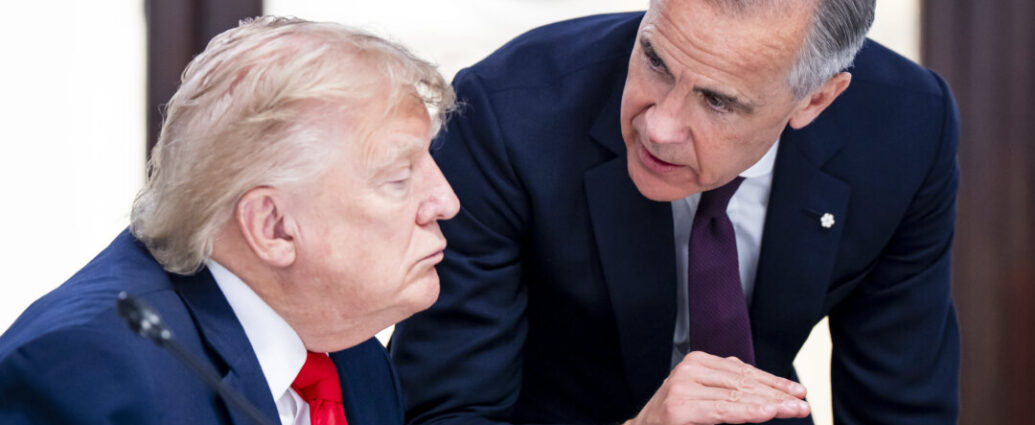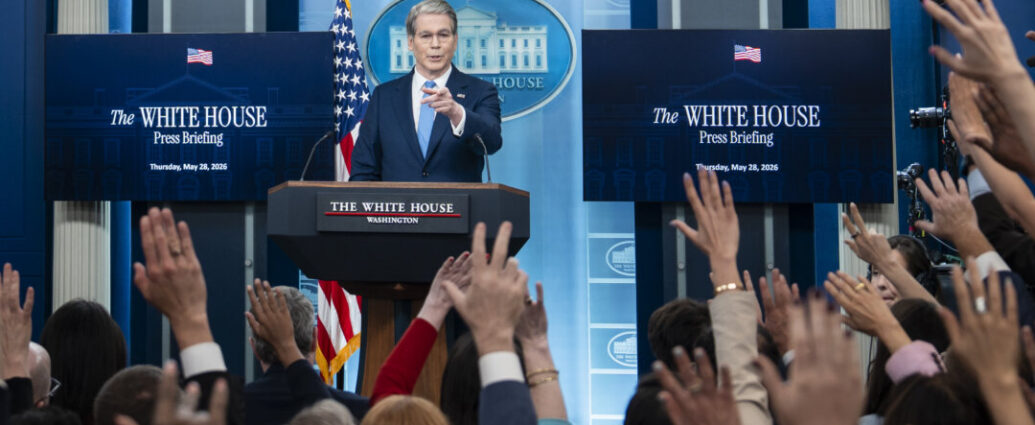
President Donald Trump said on July 20 that he will impose a 50 percent tariff on certain Canadian goods in retaliation for discrimination against U.S. alcohol, cars, and dairy.
It comes as the administration has been pushing for substantive reforms to the U.S.-Mexico-Canada Agreement, also known as the USMCA, and opted not to renew the deal beyond 2036 earlier this month.
Here is what to know about Trump’s 50 percent tariff on America’s neighbor to the north.
Inside the New Tariffs
The president signed three orders that will impose a 50 percent levy on almost $20 billion in Canadian goods, covering hundreds of products….

This post was originally published here

Commentary
Last Thursday, Taiwan Semiconductor Manufacturing (TSM) reported its June sales soaring 67.9% to a record $13.99 billion. TSM also said its second-quarter sales rose 36% and earnings surged 77.4%. Then they raised sales guidance above analyst estimates. That led to profit-taking and mean reversion algorithms causing a short sell on the news, but TSM’s results and guidance bode well for all AI stocks.
Underlining the strength of data center stocks, The Wall Street Journal published an article entitled: “AI Data-Center Construction Is Booming—but Not Much Else Is.” This indicates AI data center stocks will likely dominate second-quarter announcement season. Not only did TSM pre-announce record sales growth, but ASML also announced stronger-than-expected second-quarter results and raised its guidance….

This post was originally published here

President Donald Trump on Monday directed the Commerce Department to launch an incentive program designed to increase U.S. production of primary aluminum, a metal the administration considers to be in short supply despite national-security tariffs already in place. 
The action, under Section 232 of the Trade Expansion Act of 1962, means the secretary of commerce may solicit and approve “onshoring plans” from companies that pledge to build new primary aluminum facilities, expand existing ones, or refurbish outdated smelters in the United States, with construction under any approved plan having to start by Jan. 20, 2029.
Companies with approved plans may then import a quantity of primary aluminum equal to the reasonably anticipated annual output of the new or expanded U.S. facility at half the Section 232 duty rate that would otherwise be applicable. The reduced-rate import allowance is limited to the value of the company’s investment on refurbishment projects….

This post was originally published here

The nation’s supply of used automobiles increased slightly in June as retail sales slowed, helping ease month-over-month price growth to a modest 0.4 percent after large early-year gains, according to Cox Automotive’s monthly used-car market analysis released on July 17.
Automotive dealers held 2.14 million used vehicles in inventory in June, which equates to 47 days’ worth of supply, Cox Automotive’s analysis of vAuto Live Market View data showed. That’s a 0.2 percent year-over-year increase and a 1 percent uptick from May, when dealerships held 2.12 million used cars and trucks at 45 days’ supply.
Used vehicle inventory hit a yearly low of 1.95 million vehicles and a 37-day supply in March due in large part to a surge in sales to 1.64 million vehicles for the month. The modest increase in supply in June is a boon to consumers, with sharp average price hikes seen since the start of the year easing for the first month of summer. …

This post was originally published here

U.S. President Donald Trump imposed an additional 50 percent tariff on some Canadian goods July 20, saying the country has discriminated against American dairy, alcohol, and auto exports.
“President Trump is taking action to hold Canada accountable for its continued discrimination against and unreasonable and unequal treatment of U.S. commerce that has burdened and disadvantaged hardworking Americans,” the White House said in a statement.
The tariffs take effect in 30 days.
This is a developing story. Check back for updates.

This post was originally published here

The U.S. government has bought back almost $200 billion in debt this year, according to an Epoch Times review of Treasury Department data.
A Treasury debt buyback occurs when the federal government repurchases its outstanding bonds before maturity, removing older securities from circulation and issuing new debt in their place.
The approach may seem counterintuitive, since a sizable share of current debt was issued at historically low interest rates, and new debt is being issued at today’s higher rates.
But the Treasury’s strategy is twofold: to smooth maturity profiles to mitigate future refinancing spikes and to improve liquidity in the bond market….

This post was originally published here

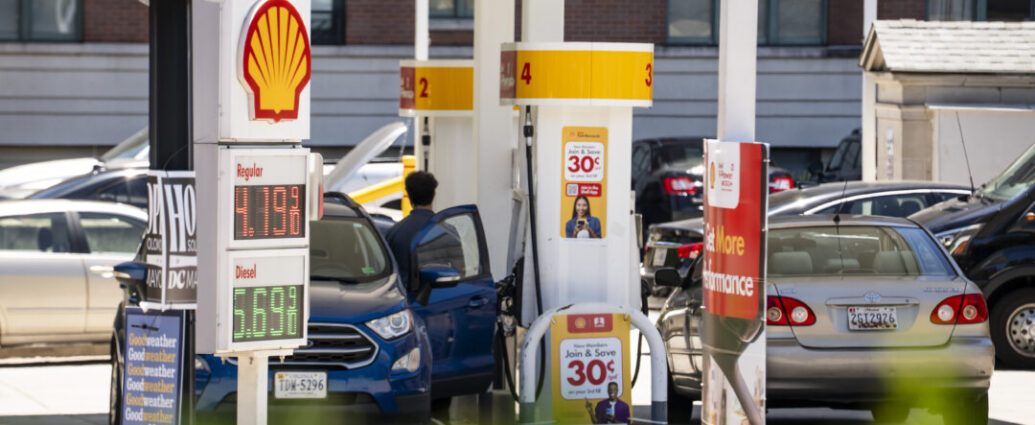
The average U.S. gasoline price rose above $4 per gallon on July 20 as fighting between the United States and Iran continued to restrict oil shipments through the Strait of Hormuz.
The nationwide average price of regular gasoline reached $4.003 per gallon, according to the American Automobile Association, after standing just below the politically sensitive threshold on July 19.
“Instability along the Strait of Hormuz is contributing to the increase at the pump,” the association said in a recent note.
The last time the national average stood at $4 or higher was June 17, when it was about $4.02 per gallon.
Brent crude futures were down by 16 cents, or 0.2 percent, at $87.94 per barrel by 5:22 a.m. ET after hitting $91.42, the highest level since June 11. …

This post was originally published here

The number of automobile owners trading in vehicles with negative equity continues to rise, with 29.6 percent of trade-ins in the second quarter showing more money owed on existing auto loans than the vehicles were worth, according to automotive insights platform Edmunds’s July 16 vehicle transaction report.
Negative equity also pushed average monthly payments on “underwater” trade-ins to $944 in the quarter, the highest figure on record, the report said.
That’s $167 more per month than trade-ins without negative equity considerations, and those higher loans are expected to account for an additional $16,270 in interest paid over the loan term—another record high that’s nearly $6,500 more than the average new-vehicle loan issued during the quarter. …

This post was originally published here

U.S. technology shares reversed course this week, giving up all the gains they made the previous week. Profit-taking and concerns about AI competition from China and whether AI investment returns will meet expectations hit the semiconductor sector, pushing it into bear territory.
The sell-off in tech stocks came despite cooling inflation at both the retail and wholesale levels, which eased fears of an interest rate hike by the nation’s central bank.
For the week, the Dow Jones Industrial Average edged 0.93 percent lower, closing at 52,146. The S&P 500 dropped 1.55 percent to 7,457, near its weekly low touched on July 17. The Nasdaq Composite fared far worse, down 2.90 percent. The Russell 2000 fell 0.52 percent. …

This post was originally published here

President Donald Trump said Friday that the United States would hold Canada responsible for the smoke from wildfires that drifted down from Ontario and impacted the air quality of multiple states this week.
“We are holding Canada responsible for the fact that they are not properly maintaining their Forests, and Brush therein, and the United States is being unnecessarily invaded by filthy, polluted, and unhealthy air, the quality of which is dangerous, and totally unacceptable!” Trump said in a Friday post on Truth Social.
Trump’s statement came after about a dozen states issued warnings and alerts on Thursday and Friday as smoke from the Canadian wildfires drifted across the Northeast and northern Midwest. The National Weather Service confirmed Friday that air quality alerts were in place due to the air quality in the Northeast and the Great Lakes region being considered “unhealthy” or “hazardous.” …

This post was originally published here

As high housing costs nationwide continue to reshape buyer decisions, many house hunters, including first-time buyers, are turning to relatively affordable inland college towns, pushing home prices in some of those markets up at double-digit rates, according to a July 15 Redfin report.
The national real estate brokerage defines a “college town” as one in which at least 10 percent of the population is made up of students at a four-year accredited college and is located at least 30 miles from a metro area that has a population of more than a million people.
Ranking the most and least expensive college towns, Redfin noted that many of the most affordable markets were in the Midwest and South, attributing their lower median home prices to more abundant land and lower homebuilding costs. …

This post was originally published here

Easing gasoline costs bolstered U.S. consumer sentiment in July, but improving confidence may not persist as pump prices target $4 again.
The University of Michigan’s widely watched Consumer Sentiment Index surged 10 percent this month to 54.4, from 49.5 in June.
July’s preliminary reading marked the second straight monthly boost and represented the highest level since February. This also came in above the market estimate of 51.
The indexes for current economic conditions and consumer expectations also climbed 15 percent and 6.5 percent, respectively.
But overall sentiment remains down by almost 12 percent from a year ago as renewed price pressures weigh on Americans’ wallets.
Since the Iranian conflict began in late February, gasoline prices have been highly volatile….

This post was originally published here

A low number of layoffs is keeping the U.S. labor market steady this summer, the government reported on July 16.
Initial jobless claims—the number of Americans filing applications for unemployment benefits—declined by 8,000 to 208,000 for the week ending July 11, according to new Department of Labor data.
This came in firmly below economists’ expectations of 217,000.
The reading was the lowest since the first week of May, when claims dropped to their lowest level since 1969.
Weekly unemployment claims were edging higher heading into the summer, reflecting an increase in the number of school staff applying for benefits during the break. But they peaked in early June and have been venturing lower….

This post was originally published here

U.S. consumers were more cautious opening their wallets last month as retail sales recorded their smallest increase since January, new government data show.
June retail sales rose by 0.2 percent, from an upwardly revised 1 percent gain in May, according to new data from the Census Bureau released on July 16.
This was in line with the consensus forecast.
Transactions were largely driven by motor vehicle and parts dealers and digital retailers, each of which climbed by 1.9 percent. Electronics and appliance stores also rose by almost 1 percent.
Amazon Prime Day contributed to the jump in digital sales, with industry experts estimating that the four-day event would top $26 billion….

This post was originally published here

The United States has imposed a ‌25 percent tariff on some Brazilian imports for its unfair trade practices and policies in bilateral trade, the Office of the U.S. Trade Representative said on the July 15 statutory deadline.
The deadline marks the end of negotiations following a year-long investigation that found certain Brazilian actions and trade policies regarding the United States to be “unreasonable and burden or restrict the commerce of American farmers, workers, innovators, and exporters.”
“Today’s action is necessary to address these unfair trade practices to ensure American workers and companies can compete on a level playing field,” U.S. Trade Representative Jamieson ⁠Greer said….

This post was originally published here

The average price paid for a new car rose marginally in June as buyers shifted to affordable vehicle options amid an economically uncertain environment, according to vehicle valuation company Kelley Blue Book (KBB).
In June, the average transaction price (ATP) of a new vehicle was $49,758, a 0.6 percent increase year-over-year, KBB said in a July 14 statement. Prices have remained steady, below the $50,000 level throughout this year. Buyers were found to have gravitated toward lower-priced offerings, with sales of subcompact SUVs, with an ATP of $31,113 in June, rising by over 23 percent on an annual basis.
The sales of small/medium pickup trucks rose by 12.3 percent year-over-year, while the sales of full-size pickups, which tend to be more expensive, grew by a smaller 2.5 percent….

This post was originally published here

Commentary
As we move into the start of the second quarter earnings announcement season later this week, we are locked and loaded for another great earnings announcement season. After all, the second quarter was the best-performing quarter for both the NASDAQ Composite and the S&P 500 in the past six years, so expectations remain high, since economic growth is clearly accelerating. My favorite economist, Ed Yardeni, pointed out we are in the midst of a FOMO (Fear of Missing Out) market, and industry analysts are estimating the S&P 500 will post 26.1% annual earnings growth for 2026 and then +17.8% for 2027.
Since fundamentally superior stocks in our portfolio are not appreciating as fast as their underlying earnings, their price/earnings (P/E) ratios are being compressed. The stock market should be strong this summer due to wave after wave of positive earnings announcements in upcoming weeks – and the rest of this year. Also, due to rising household wealth for the 50% of Americans in the stock market, some of this “wealth effect” is expected to filter down and help boost prosperity for all Americans, as the velocity of money increases….

This post was originally published here

LAS VEGAS—Steve Forbes, CEO of the Forbes magazine and publishing company, knows the American economy has problems.
The cost of living is rising, housing affordability is an issue, as is the national debt and inflation.
Forbes says he knows who is to blame and he knows who can remedy the issues. Forbes says the best thing the government can do is to stabilize the dollar and let the free market do its work.
Forbes spoke with The Epoch Times senior editor and “American Thought Leaders” host Jan Jakielek at FreedomFest 2026 in Las Vegas on July 11.
Forbes discussed current economic issues, the role of the Federal Reserve, and how the United States should deal with the potential complications in Taiwan and Iran….

This post was originally published here

The Trade Fraud Task Force, launched by the Justice Department and Department of Homeland Security in August 2025, has recovered or charged more than $1 billion in civil and criminal recoveries, penalties, forfeitures, and charged losses in less than a year, the DOJ said Tuesday.
The milestone reflects the federal government’s increased focus on using criminal prosecutions and civil enforcement under the False Claims Act to combat customs and trade fraud, the DOJ said in a statement.
“For too long, fraud actors have viewed customs violations as a mere surcharge or cost of doing business,” said Assistant Attorney General Colin McDonald of the Justice Department’s National Fraud Enforcement Division, in a press release. …

This post was originally published here

Homebuyers in 70 percent of America’s top housing markets could have the upper hand this summer, according to a July 14 report from Redfin.
The national real estate brokerage found that 33 out of the 47 metro regions it analyzed were buyer’s markets in June, with nearly half a million, or 48.5 percent, more home sellers than buyers. Sellers outnumbered buyers nearly two to one in places such as Miami, Nashville, and large portions of Texas.
“The biggest hurdle for Americans looking to buy a home is affordability, but those with the budget to move now—even in the face of record-high home prices and stubbornly high mortgage rates—have the power,” Redfin senior economist Asad Khan said in the report….

This post was originally published here

A shortage of memory chips for smartphones due to chip manufacturers shifting priorities to support the artificial intelligence (AI) boom led to the lowest level of global smartphone shipments in the past 13 years, a new report stated.
Shipments of smartphones in the second quarter fell 11 percent year over year, noted Counterpoint Research’s preliminary market monitor report released on July 13.
With prices for smartphone DRAM (working memory) and NAND (storage memory) continuing to rise as chipmakers prioritize AI data center customers over consumer electronics, smartphone manufacturers have been forced to pass on higher costs to customers, Counterpoint said.
Price hikes have been especially prominent in entry- and mid-tier devices, which account for the majority of smartphones sold worldwide, said Shilpi Jain, Counterpoint senior analyst….

This post was originally published here

Many American families are struggling to make ends meet on their incomes alone and have resorted to credit cards, payday loans, and Buy Now Pay Later (BNPL) options for groceries, according to nonprofit research center Urban Institute.
The findings are based on a survey of 18-to 64-year-old working-age adults conducted in December 2025. About 8.7 percent of adults said they used a credit card for groceries and were unable to make the minimum payment, up from 7.1 percent in 2023, the Urban Institute said in a July 13 report. This suggests “worsening financial distress” among families.
Almost one in 10 used BNPL to pay for groceries, out of which more than a third missed a timely repayment last year….

This post was originally published here

Federal regulators are warning the banking industry to carefully consider the risks of lending to individuals who lack authorization to work in the United States, including income uncertainty and the risk of deportation.
“When a borrower’s income is derived from employment that is not legally authorized, the source of repayment may be less reliable ​and may ​present increased credit risk,” the Office of the Comptroller of the Currency (OCC), the Federal Deposit Insurance Corporation (FDIC), and the National Credit Union Administration (NCUA) said in joint guidance released on Monday.
The guidance does not impose new requirements or outright prohibit banks and credit unions from lending to such borrowers. Instead, it reminds them of their existing obligations….

This post was originally published here

Credit availability for American car buyers improved last month, with loan approval rates climbing and more people taking longer-term loans, according to a July 10 analysis by industry expert Cox Automotive.

In June, the Dealertrack Credit Availability Index, which indicates whether access to credit is improving or declining, jumped to 104.6, the highest level in over a decade and the fifth straight monthly increase. Rising index values suggest it has become easier for consumers to secure auto loans. The index tracks various factors affecting auto credit access, including loan approval rates and the term periods.
The jump in index values was driven primarily by a “sharp recovery” in auto loan approval rates by lenders, together with the share of long-term loans among overall loans hitting an all-time high, the company said….

This post was originally published here

As America marks its 250th anniversary, it also celebrates the foundations of its prosperity: a tradition of innovation and entrepreneurship, free-market capitalism, and institutions that have helped transform it into a global superpower.
Over two-and-a-half centuries, the country has achieved remarkable economic growth, evolving from a largely agrarian society into the world’s leading economy.
Its path, however, has not been easy. America’s political and economic systems faced severe tests from the Civil War to the Great Depression. Yet time and again, the country has defied predictions of decline and recovered strongly from each crisis.
Arthur Herman, historian and author of “Founder’s Fire: From 1776 to the Age of Trump,” argues that the defining characteristic of the American economy has been a culture of risk-taking that stretches back to the nation’s earliest settlements….

This post was originally published here

Almost two-thirds of Americans said they prefer to live in homes in close proximity to parks, restaurants, and shopping, even if it means housing costs more, a new survey from the National Association of Realtors (NAR) found.
The NAR’s triennial Community and Transportation Preferences Survey, released on July 10, polled 2,000 Americans in 50 of the country’s largest metropolitan regions this past May. Walkability, living in mixed-use neighborhoods that blend public spaces with retail and commercial businesses, and having a variety of choices when it comes to housing were primary concerns when searching for housing, regardless of whether those amenities come with a cost premium….

This post was originally published here

Technology shares regained market leadership this week amid major deals among tech giants and the successful debut of SK Hynix shares on Wall Street. The tech rally came despite another spike in oil prices, which pressured the bond market—a headwind for the broader market.
For the week, the Dow Jones Industrial Average edged 0.50 percent lower, closing at 52,637. The S&P 500 rose 1.23 percent to 7,575, near its weekly high reached on July 10. The Nasdaq Composite fared far better, up 1.74 percent. The Russell 2000 fell 0.61 percent.
The Chicago Board Options Exchange Volatility Index closed the week at 15.03, down 3.47 percent.
Stocks opened the week sharply higher on July 6, led by the tech sector. The sector rebounded from a sell-off at the end of last week, as buy-the-dip investors returned to the market. The tech-heavy Nasdaq gained 1.12 percent for the day. The S&P 500 rose 0.72 percent. The Dow Jones and the Russell 2000 posted moderate gains of 0.30 percent and 0.61 percent….

This post was originally published here

Personal bankruptcy filings in the United States rose for the third straight year in 2025, climbing nearly 50 percent from their recent low in 2022, according to a new report.
There were 549,577 personal bankruptcy filings last year, loan marketplace LendingTree said in a study published July 6. That equals an average of 1,489 Americans filing for bankruptcy each day.
The total marked an 11 percent increase from 494,201 filings in 2024 and a 46.9 percent jump from 374,240 filings in 2022, when filings reached a recent low.
Chapter 7 bankruptcies accounted for the majority of personal filings in 2025, making up 62.3 percent of the total. Chapter 7, often referred to as the “clean slate” or liquidation bankruptcy, can involve the sale of nonexempt assets to repay creditors….

This post was originally published here

Artificial intelligence (AI) firms are absorbing office space in primary markets such as San Francisco and New York City at a record pace, and the sector’s voracious demand for office space to build out development teams and products has begun spilling into a select subset of submarkets as well.
National AI office demand was up 85 percent in the 12 months through May and spiked 179 percent in major AI hubs, a new AI report published on July 9 by AI-powered commercial real estate platform VTS states.
AI companies represented office demand of 16.8 million square feet across 17 markets during the period, VTS senior research manager Rene Moreira noted….

This post was originally published here

Federal Reserve Chairman Kevin Warsh released the names of the members who will be on the central bank’s task forces on July 9.
Warsh announced last month the creation of five task forces to review the Fed’s monetary policymaking framework, with officials examining everything from data utilization to the balance sheet.
Among the names are former Bank of England Gov. Mervyn King, who will be one of three individuals reviewing how the Fed communicates with the public during times of uncertainty.
As part of the new central bank leader’s reforms, communication has been a top priority, with Warsh abandoning forward guidance. Minutes from the June policy meeting suggest he has the backing of his colleagues….

This post was originally published here

Fewer Americans applied for unemployment benefits last week, as the labor market continues along at a brisk pace, new government data show.
Initial jobless claims declined by 2,000 to 215,000 for the week ending July 4, according to the Department of Labor. This is the lowest level since late May.
This came in below economists’ expectations of 218,000. The previous week’s reading was revised slightly up to 217,000.
Unemployment claims have been edging higher over the past two months, which economists attribute to non-teaching staff in various states applying for jobless benefits during the summer holiday.
The latest claims data, meanwhile, come one week after the Bureau of Labor Statistics reported that hiring momentum over the past few months had stalled….

This post was originally published here

The National Coffee Association (NCA) asked the Trump administration on July 8 to keep Brazilian green coffee exempt from tariffs during a session of public consultation that is reviewing ‌tariffs on Brazilian imports.
The federal government is holding consultations this week ​regarding the Section 301 investigation into Brazilian trade practices. Brazil is the world’s largest producer and exporter of coffee, and supplies a third of U.S. needs. The country was hit ​by a 50 percent ​tariff last year until Washington decided to include green coffee in ​a list of exemptions.
The NCA also asked the administration on Wednesday to include instant coffee on the list of tariff-free Brazilian products….

This post was originally published here

Almost all Federal Reserve officials agreed at the June policy meeting that some monetary policy tightening would be “warranted” to restore 2 percent inflation, according to minutes released on July 8.
The central bank voted unanimously to leave interest rates unchanged in the target range of 3.5 percent to 3.75 percent at last month’s Federal Open Market Committee meeting.
Participants discussed various economic scenarios amid an environment of stable employment conditions, elevated inflation, tariff effects, and the Middle East conflict.
“In such scenarios, almost all of these participants indicated that some policy firming would likely be warranted to return inflation to 2 percent,” the document stated….

This post was originally published here

The global economy will grow more slowly this year, the International Monetary Fund (IMF) said in a July update, with stronger technology investment providing some offset from the effects of the Middle East conflict.
Global growth is expected to reach 3 percent this year, the IMF said, down from 3.5 percent in both 2024 and 2025, before an expected rebound to 3.4 percent in 2027.
“The global outlook is being shaped by two powerful forces pulling in opposite directions: the lingering effects of the energy shock from the war in the Middle East, and a technology-driven investment boom,” Petya Koeva Brooks, deputy director of the IMF’s Research Department, said in a July 7 statement….

This post was originally published here

When it comes to finding the perfect location for a rental property, WalletHub’s July 7 report gives the thumbs-up to Arizona, whose cities of Scottsdale, Gilbert, and Chandler took the top three spots. In total, eight Arizona locations ranked among the top 25 cities as the country’s best bets for rentals.
Analyzing more than 180 top rental markets, WalletHub based its ranking on 21 key measures, including affordability, insurance, vacancy rates, square footage, cost of living, quality of life, job market, recreation, weather, and quality of schools.
“In the best cities for renters, rent can cost you as little as around 15% of your income. You’ll also have access to robust laws that protect renters, such as limiting deposits to only a month or two of rent,” WalletHub analyst Chip Lupo said in the report….

This post was originally published here

Commentary
The stock market is benefiting from the Russell index realignment, which created June buying pressure in small-to-mid capitalization stocks. For the month of June, the Russell 2000 gained 3.6% vs. losses in the S&P 500 and NASDAQ, but last quarter delivered 21% gains in both the Russell 2000 and NASDAQ:
Second Quarter Gains
NASDAQ +21.4%
Russell 2000 +21.2%
S&P 500 +14.9%
Dow Industrials +13.1%
(Data source: Yahoo Finance)
Both the NASDAQ Composite and S&P 500 posted their best quarter in the past six years. Although NASDAQ posted an impressive 21.4% gain for the second quarter, that is below the average annual earnings among NASDAQ stocks, according to FactSet, so price-to-earnings (P/E) ratios are being compressed. Furthermore, I expect third-quarter GDP growth to accelerate to a 5% to 6% annual pace, fueled by AI productivity gains, surging energy exports and robust consumer spending. Order backlogs for AI and data center-related companies reached a 3-year delay, so the data center boom should continue….

This post was originally published here

Growth in the U.S. services economy continued in June, according to two closely watched measures of business activity.
The Institute for Supply Management (ISM) and S&P Global released their June services data on Monday. The ISM index declined while the S&P Global index edged up, although both remained firmly above the 50-point threshold separating expansion from contraction.
Together, the readings suggest that the services sector, which accounts for more than two-thirds of U.S. economic output, remains resilient despite geopolitical uncertainty and persistent cost pressures.
S&P Global’s U.S. Services Purchasing Managers’ Index (PMI) rose a modest 0.5 points in June to 51.2, just below forecasts of 51.3. The reading marked the strongest expansion in four months, following the outbreak of the United States and Israel’s war with Iran….

This post was originally published here

U.S. consumers managed to push through a choppy first half of the year—from higher gasoline prices to uneven employment conditions—and still kept spending.
Fuel costs and the labor market remain households’ biggest worries, surveys show, yet shoppers continued to power the broader economy well beyond the gas station.
Now, with pain at the pump subsiding and unemployment still hovering near historic lows, the question is whether the second half will offer consumers a smoother ride.
Employment Ups and Downs
The United States kicked off 2026 on a high note by adding 160,000 new jobs in January. A month later, the labor market reversed virtually all of those employment gains. This resulted in almost no payroll growth in the first two months of the year….

This post was originally published here

U.S. automakers reported mixed June sales in an increasingly electrified market, with Ford, General Motors (GM), and Toyota rolling out dozens of new electric vehicle (EV) models and hybrids to give consumers more affordable options—and to close the gap with Tesla.
Ford posted a 14.2 percent jump in second-quarter sales to 612,095 vehicles, with market share climbing to an estimated 14.3 percent, up 1.8 percentage points from the first quarter, the company announced on July 1.
The legacy automaker has been investing heavily in what it calls “powertrain choices”—a lineup spanning gas, hybrid, electric, and diesel vehicles—aimed at making cars affordable to mass-market consumers, much as it did more than a decade ago. It is a direct challenge to both Tesla and Chinese EV makers….

This post was originally published here

The University of California (UC) released a new report on July 1 stating that 63 percent of undergraduate students in the class of 2024 graduated debt free, compared to just 43 percent in 2013.

The average debt of in-state students in 2024 was $17,300, compared to $28,700 in 2013.
“Most UC students graduate debt-free, and for those who borrow, the debt is generally manageable and declining over time,” the report states. “UC has … reduced [the] cost of obtaining a college degree.”
For the upcoming 2026–2027 school year, UC charges an estimated $15,588 in tuition for a year, up from the $12,570 it charged five years ago.
With other charges like housing, textbooks, and meals, it costs more than $47,000 annually for in-state students living on campus and over $46,000 for those living off campus, according to UC’s website….

This post was originally published here

The national median apartment rent saw an uptick of 0.4 percent in June to $1,385 per month, marking the fifth month in a row of price hikes, according to Apartment List’s July National Rent Report.
“We are now in the middle of the peak summer moving season, and as such, we’ll likely see prices continue to increase for another month or two, before the fall cooldown begins,” the report states.
Compared to the same month last year, the median rent dipped by 1.2 percent, or $17. Meanwhile, it has dropped by about 4 percent, or $57, from its 2022 peak.
Despite the price reductions, today’s rent levels are still 21 percent higher than they were at the beginning of 2021….

This post was originally published here

The Dow Jones Industrial Average hit a fresh record this week amid an ongoing market rotation out of the hot tech sector and into defensive sectors, such as consumer staples and pharmaceuticals, that have been lagging.
Steady bond prices, amid lower oil prices and a cooling labor market, have accommodated this bullish rotation, as money leaving the leading stock sectors flows into lagging sectors rather than into other asset classes. But some analysts are concerned that the heightened volatility seen in recent weeks is a warning sign of a significant correction ahead.
For the week, the Dow rose 1.89 percent to close at an all-time high of 52,900. The S&P 500 closed 1.71 percent higher at 7,483, near its high for the week. The Nasdaq Composite gained 1.87 percent, while the Russell 2000 lost 0.39 percent….

This post was originally published here

The European Union introduced new steel import limits and customs rules for low-value parcels on July 1 as trade talks with China continue over widening economic tensions.
The measures are part of the EU’s broader effort to protect domestic industries while addressing a record goods trade deficit with China, which reached about €360 billion ($410 billion) in 2025, according to Eurostat.
The European Commission replaced its previous steel safeguard system with a new regime allowing 18.3 million metric tonnes of steel imports annually without tariffs. Imports above those quotas will face a 50 percent duty across 26 steel product categories.
European Commission President Ursula von der Leyen said in a July 1 statement on X that the parcel changes are about “restoring fairness” for businesses and strengthening consumer protection, as the bloc seeks to curb a surge in low-value imports….

This post was originally published here

The U.S. Department of Agriculture (USDA) on July 29 announced it was launching a new $500 million program for agricultural producers with the goal of boosting domestic fertilizer production and strengthening the U.S. supply chain.
The Fertilizer Investment & Expansion for Long-Term Domestic Supply (FIELDS) program was heralded as a means to lower fertilizer costs for American farmers in a press conference by Secretary of Agriculture Brooke Rollins at the USDA’s headquarters in Arlington, Virginia.
The FIELDS initiative provides funding for companies that construct new fertilizer facilities, purchase existing plants or land to increase fertilizer output through expansion, or invest in fertilizer terminals and transportation infrastructure that improves the efficiency of the domestic supply chain….

This post was originally published here

Potential homebuyers on the sidelines may get a break this summer as list prices decreased by 2.5 percent year over year in June, the biggest decline since 2017, according to a July 1 report by Realtor.com.
Another sign that the market could be rebalancing is that, for the first time in 26 months, homes were on the market for no longer than a year earlier, and pending sales climbed by 3.7 percent year over year—increasing for the seventh month in a row—the housing listings and data platform indicated.
“Eight straight months of falling prices and seven straight months of rising pending sales are not a contradiction,” Realtor.com chief economist Danielle Hale said in the report. “Sellers are reading market conditions and are pricing accordingly from the start rather than listing high and cutting later, and buyers are taking note and making bids.”…

This post was originally published here

The U.S. economy added fewer jobs than expected in June, as hiring momentum slowed heading into the summer.
Payrolls grew by 57,000 last month, a sharp slowdown from May’s 129,000 gain, according to new Bureau of Labor Statistics data released on July 2.
Markets had forecast an increase of 110,000 jobs.
The unemployment rate eased to 4.2 percent, from 4.3 percent—also below economists’ estimates.
This is a developing story. Please check back for further updates.

This post was originally published here

U.S. factory activity eased from its four-year high in June as the manufacturing sector expanded at a slower pace, new industry data released on July 1 show.
The widely watched Manufacturing Purchasing Managers’ Index (PMI)—a monthly survey to determine the sector’s prevailing economic direction—dipped to 53.3, from 54 in May, according to the Institute for Supply Management. This represented the sixth consecutive month of growth—a PMI above 47.5 percent indicates an expanding economy.
Output and new orders continued to expand but slowed from the previous month, as frontrunning by U.S. firms may have run its course.
Thirty-four percent of the survey’s comments were positive, while 66 percent were negative. Price volatility, the war in Iran, and tariffs were the most mentioned developments….

This post was originally published here

Businesses added more employees and laid off fewer workers last month, supporting a strong U.S. labor market, according to new data.
Private employers added 98,000 new jobs in June, from 122,000 in the previous month, payroll processor ADP reported on July 1.
This came in slightly below the consensus forecast of 113,000.
Employment gains were broad-based, led by education and health services (48,000) and trade, transportation, and utilities (15,000). Jobs in financial services also jumped 14,000, while manufacturing picked up 5,000.
Companies of all sizes also bolstered headcount, with small businesses—companies with fewer than 49 employees—adding 53,000 positions.
“The pace of hiring is telling a story of both supply and demand. We know it’s taking people longer to find work, but there also are signs of labor supply constraints in certain industries,” Nela Richardson, chief economist at ADP, said in a statement….

This post was originally published here

Businesses added more employees and laid off fewer workers last month, supporting a strong U.S. labor market, according to new data.
Private employers added 98,000 new jobs in June, from 122,000 in the previous month, payroll processor ADP reported on July 1.
This came in slightly below the consensus forecast of 113,000.
Employment gains were broad-based, led by education and health services (48,000) and trade, transportation, and utilities (15,000). Jobs in financial services also jumped 14,000, while manufacturing picked up 5,000.
Companies of all sizes also bolstered headcount, with small businesses—companies with fewer than 49 employees—adding 53,000 positions.
“The pace of hiring is telling a story of both supply and demand. We know it’s taking people longer to find work, but there also are signs of labor supply constraints in certain industries,” Nela Richardson, chief economist at ADP, said in a statement….

This post was originally published here

Nothing could derail the U.S. stock market in the first half of 2026.
Wall Street has shrugged off various events since January: the war in Iran, concerns about an artificial intelligence (AI) bubble, private credit stress, and renewed inflation challenges.
This has led to U.S. stocks climbing or flirting with all-time highs.
The blue-chip Dow Jones Industrial Average put together its best first-half performance since 2021, registering a 9 percent gain. The yardstick of 30 leading U.S. companies is now trading in record territory, firmly above 52,000.
Change is also coming to the index, as the Dow Jones is replacing Verizon with Alphabet….

This post was originally published here

The ongoing artificial intelligence (AI) boom underscores a harder-to-resolve supply issue for copper, according to veteran natural resource investor Rick Rule.
Speaking recently with Siyamak Khorrami, host of EpochTV’s “Market Insider,” Rule said the increasingly energy-intensive lives people around the world are living have pushed up demand for copper. With companies and countries investing heavily in AI, future demand for the red metal will be “staggering,” he said.
At the same time, the world, especially the United States, doesn’t have enough copper development projects “in the pipeline,” Rule said, making a copper shortage and higher prices inevitable.
Growing Supply Deficit
According to the International Copper Study Group, global refined copper consumption rose to 28.2 million metric tons in 2025 from 25.8 million metric tons in 2022, while production increased to 28.6 million metric tons from 25.2 million metric tons over the same period. This represents a supply surplus of 400,000 metric tons….

This post was originally published here

Frustrated by rising home prices in the Northeast and coastal areas, 19.1 percent of home seekers across the nation considered relocation in the first quarter of 2026, according to a June 29 Redfin report. Florida, Las Vegas, and Phoenix ranked among the most popular destinations.
The share was slightly up from 18.9 percent in the same period in 2025, and marked the highest share on record since 2021. Analyzing more than 100 metro areas, Redfin identified those interested in relocating from home searches outside their current region. Users must have viewed at least 20 for-sale or for-rent homes in a destination during a one-month period to be considered as those seeking to relocate there….

This post was originally published here

Commentary
The big news last week was Micron Technology’s (MU) earnings announcement on Wednesday, marking the grand finale to a stunning earnings announcement season. According to Earnings Insight from FactSet, year-over-year earnings for the S&P grew by 23.1%, the second straight 20%+ quarterly earnings surge.
Micron’s revenues rose 345.8% to $41.46 billion (vs. $9.3 billion in the same quarter a year ago), and in the same period, earnings soared by an astronomical 1,368% to $28.24 billion or $24.67 per share (vs. 1.89 billion or $1.68 per share last year). Excluding extraordinary items, Micron’s operating earnings were $25.11 per share. The analyst community was expecting revenue of $35.25 billion and operating earnings of $20.28 per share, so Micron Technology posted a 17.6% revenue surprise and a 23.8% earnings surprise. The company also raised its quarterly guidance to between $49 billion and $51 billion in revenue, substantially higher than the analysts’ consensus estimate of $43.2 billion. The stock is up 300% so far this year, but last Friday’s Barron’s said Micron “Could Still Double from Here.”…

This post was originally published here

President Donald Trump has temporarily suspended certain duties on phosphate fertilizer imported from Morocco after declaring an emergency over fertilizer supplies.
Trump said the move will help ensure American farmers have enough fertilizer as global supply disruptions continue to pressure agricultural markets.
The White House issued a proclamation on June 29, authorizing duty-free imports of certain Moroccan phosphate fertilizers for up to eight months, or until the declared emergency ends.
The decision follows weeks of concern over fertilizer supplies after conflict in the Middle East disrupted trade and shipping routes, including around the Strait of Hormuz, a key corridor for global fertilizer and energy shipments….

This post was originally published here

Call it a “RAMpocalypse.”
The global artificial intelligence (AI) arms race has triggered a memory chip shortage.
Demand for memory chips is shifting from everyday consumer products to data centers.
“We are in the midst of a memory super cycle,” Di Zhou, portfolio manager at Thornburg Investment Management, told The Epoch Times in a note.
Since typical modern hyperscale data centers consume tens of millions of semiconductor chips—analog, foundational, logic, and memory—they will account for about 50 percent of all global chip sales. A single AI server rack contains more than 4,500 packaged chips.
By comparison, the average smartphone contains as many as 30 individual chips….

This post was originally published here

U.S. stocks saw heightened volatility this week amid investor concerns about financing massive artificial intelligence (AI) projects and shortages of critical components such as memory chips.
Lower oil prices and a solid gross domestic product (GDP) report helped contain the losses, mostly in the tech sector, as investors directed funds into other sectors rather than pulling them out of equities altogether.
For the week, the Dow Jones Industrial Average gained 0.60 percent to close at 51,876. The S&P 500 closed 1.95 percent lower to 7,354, near the low for the week. The Nasdaq Composite was down 4.60 percent, while the Russell 2000 gained 1.02 percent.
The Chicago Board Options Exchange Volatility Index closed the week at 18.41, up 6.54 percent….

This post was originally published here

Depending on where you choose to live, $1,500 a month can get you a 1,378-square-foot, three-bedroom apartment in McAllen, Texas, or 210 square feet in Manhattan—smaller than a typical studio.
A June report from RentCafe indicates that in 64.5 percent of 200 major U.S. cities, $1,500 a month covers an average of 703 square feet of space—enough for at least a one-bedroom rental.
With the national average apartment rental at $1,740 as of March, apartment seekers can expect about 835 square feet of living space.
According to the report, McAllen offers the nation’s largest living spaces available for $1,500 monthly rent.
Livability.com, an online national resource for those considering relocation, calls McAllen “the perfect South Texas community,” due to its low cost of living, vibrant arts and music scene, and strong local economy. The website notes that more than 100 Fortune 500 companies also have a presence in the city….

This post was originally published here

As an alternative to packing planes full of passengers paying lower prices, U.S. Airlines are taking a more disciplined approach to the peak July 4 travel weekend by offering less capacity, according to a June 26 report from IBA.
The global aviation intelligence and advisory firm headquartered in the United Kingdom reported that this year, capacity from June 27 to July 4 has declined slightly among U.S. airlines, despite a strong demand among holiday travelers.
“July 4th capacity tells a punchy story of fewer low-cost carrier seats, more full-service carrier capacity, and a market being managed for margin rather than volume,” Dan Taylor, IBA head of consulting, said in a news release emailed to The Epoch Times….

This post was originally published here

Micron Technology stock surged following the June 24 release of its third-quarter earnings and fourth-quarter outlook, which crushed expectations and showed demand for memory chips is still soaring.
Shares of the chipmaker jumped nearly 16 percent on Thursday, closing the session at $1,213, with a market cap of nearly $1.37 trillion. At its intra-day peak of $1,255, its market cap briefly passed Meta and Tesla, making Micron the 11th-largest company in the world before falling behind the two companies at the market close.
“Micron’s record fiscal Q3 financial results and even stronger outlook for Q4 reflect the strategic value of memory in the AI era,” Sanjay Mehrotra, president and CEO of Micron, said. “Micron is investing at record levels in technology, products and supply to address our customers’ rapidly growing demand. We believe our multi-year strategic customer agreements will significantly enhance the durability and predictability of Micron’s strong financial performance.”…

This post was originally published here

Electric-vehicle startup Slate Auto has officially opened public orders for what it says will be the least expensive new pickup truck available in the United States, launching a stripped-down electric vehicle priced at $24,950 and betting that affordability, not luxury, is the key to winning over American buyers.

The company began converting more than 180,000 existing reservations into paid $300 deposits, giving customers 30 days to confirm their orders. First deliveries are expected during the fourth quarter of 2026.

At a time when the average new vehicle in America costs nearly $50,000, Slate’s pricing immediately grabbed Wall Street’s attention. The truck undercuts the popular Ford Maverick by more than $2,000 and comes in at less than half the average cost of many electric vehicles currently on the market.

The launch arrives during one of the most challenging periods the EV industry has faced since electric vehicles entered the mainstream.

Demand has cooled significantly following the elimination of the federal $7,500 EV tax credit, while several high-profile electric vehicle manufacturers have struggled with profitability, production targets, and slowing sales growth.

Rather than competing with luxury EV makers, Slate is pursuing a different strategy entirely.

The company’s pickup is intentionally basic.

Buyers receive a two-seat truck with hand-crank windows, no built-in touchscreen, a single color body, rear-wheel drive, and a driving range of approximately 205 miles. Instead of offering expensive paint options, customers can personalize the vehicle using vinyl wraps, allowing the company to avoid one of the most costly parts of automobile manufacturing — a paint shop.

The truck produces approximately 181 horsepower and can tow up to 2,000 pounds.

Customers seeking additional space can convert the vehicle into a five-seat SUV configuration starting at approximately $29,950.

Chief Executive Peter Faricy, a former Amazon executive, believes simplicity is the company’s biggest advantage.

Faricy has publicly stated that every vehicle produced will generate a positive gross profit from day one, a claim few automotive startups have been able to make successfully.

The company projects positive free cash flow by 2027 and estimates it can reach breakeven production at approximately 80,000 vehicles annually, roughly half of planned manufacturing capacity.

The production facility itself represents a significant investment.

Slate is transforming a former printing facility in Warsaw, Indiana, into a manufacturing plant expected to create more than 2,000 jobs while attracting nearly $400 million in investment.

The startup enjoys backing from several high-profile investors, including Amazon founder Jeff Bezos and Los Angeles Dodgers owner Mark Walter. Earlier this year, Slate completed a $650 million funding round, providing capital to support manufacturing and vehicle development.

The broader market environment remains difficult.

According to Cox Automotive, new EV sales fell approximately 27% during the first quarter compared with the same period a year earlier. Several manufacturers have reduced production plans, delayed projects, or cut jobs as demand growth slowed.

Even established automakers have struggled.

Ford halted production of the electric version of its F-150, while companies such as Rivian and Lucid have continued searching for sustainable profitability.

That backdrop makes Slate’s approach particularly intriguing.

Instead of selling technology, luxury, or performance, the company is selling affordability.

The strategy addresses a growing frustration among American consumers who have watched vehicle prices rise steadily for years. Fewer than 5% of new vehicles sold in the United States last year carried price tags below $25,000, leaving many buyers priced out of the new-car market entirely.

Still, skepticism remains warranted.

Slate originally promoted a sub-$20,000 truck price before the elimination of federal incentives made that target unrealistic. The company must still complete regulatory certifications and demonstrate it can manufacture vehicles at scale — a challenge that has defeated numerous automotive startups.

The history of the EV sector is filled with companies that promised affordable vehicles but struggled to achieve production volume.

Yet if Slate succeeds, it could challenge one of the industry’s biggest assumptions: that electric vehicles must be expensive.

The next several weeks will provide the first meaningful test.

As reservation holders decide whether to place deposits and commit real money, investors and competitors alike will gain a clearer picture of whether America’s appetite for a truly affordable pickup truck is as strong as Slate believes.

JBizNews Desk | New York
© JBizNews.com All Rights Reserved. Reproduction or distribution without written permission is prohibited.

The number of Americans filing applications for unemployment benefits declined sharply to the lowest level in four weeks, new government data show.
Initial jobless claims declined by 12,000 to a one-month low of 215,000 for the week ending 20, according to the Department of Labor.
This came in below the economists’ forecast of 225,000.
The four-week average, which strips out week-to-week volatility, ticked up to 224,250.
Over the past five years, unemployment claims have hovered between 200,000 and 250,000. In April, claims fell to their lowest level since 1969, reaching 190,000.
Employment conditions have been improving over the last three months after a rocky start to 2026. Hiring momentum has picked up heading into the summer months, while layoffs have remained low….

This post was originally published here

Consumer spending and business investment powered the U.S. economy in the first quarter, according to the final estimate from the Bureau of Economic Analysis.
The January–March GDP growth rate came in at 2.1 percent.
The initial estimate was 2 percent, then revised downward to 1.6 percent in the second projection.
Data show that consumer spending and business investment contributed significantly to the last quarter’s expansion.
In the first three months of 2026, consumer spending rose 0.5 percent.
Despite war-driven inflationary pressures, shoppers are still opening their wallets, and this is not entirely due to higher gasoline prices.
Excluding gasoline and automotive dealers, retail sales have been resilient. Additionally, Bank of America debit and credit card spending has been robust throughout much of the Iranian conflict….

This post was originally published here

Oil prices fell to their lowest levels since before the outbreak of the Iran war on Thursday as tanker traffic through the Strait of Hormuz continued to recover, signaling that crude exports from the Gulf are steadily returning to normal and easing prolonged supply disruption fears.
Brent crude futures for August delivery fell about 1.4 percent to around $72.70 a barrel in early morning trading on June 25, while U.S. West Texas Intermediate (WTI) dropped about 1.1 percent to below $70. Prices have now fallen for four straight sessions, wiping out all of the gains recorded since the conflict began.
The decline comes as confidence grows that a preliminary U.S.–Iran peace agreement reached last week will hold, allowing oil shipments to resume through one of the world’s most important energy chokepoints….

This post was originally published here

The United States is currently short millions of homes, according to various estimates. At the same time, with housing starts falling to their lowest level in six years in May, Robert Dietz, chief economist at the National Association of Home Builders (NAHB), recently predicted that 2026 will be another “down year” for new home construction.
He said many factors are impeding the pace of new homebuilding, but local legal and regulatory burdens are “the really big one,” particularly in states such as California and New York.
Entry-Level Housing Shortage
Speaking with Siyamak Khorrami, host of EpochTV’s “Market Insider,” Dietz said potential homebuyers are facing short-term challenges from rising mortgage rates resulting from higher inflation and oil prices, and long-term challenges from housing shortages caused by a decade and a half of underbuilding, which have pushed home prices to present high levels. …

This post was originally published here

The S&P 500’s performance in the first half of 2026 tells two very different stories. On one hand, the benchmark index has surged to record highs. On the other, the rally has been unusually narrow, driven largely by artificial intelligence (AI) and energy stocks while much of the rest of the market has lagged.
“Strip out AI and energy, and the S&P 500 is down,” Torsten Slok, partner and chief economist at Apollo, wrote in a post on the firm’s website.
Data from Fidelity as of June 18 shows the index’s gains are led by the information technology sector—the sector at the core of the AI trend—up by 21.06 percent year to date, followed by energy, up by 18.61 percent, and materials, up by 12.70 percent….

This post was originally published here

America’s largest banks have passed the Federal Reserve’s annual stress test with flying colors.
Since the global financial crisis almost 20 years ago, the Fed has conducted annual stress tests to determine whether the largest banks could withstand an economic shock.
Major banks could endure a “severe recession” and keep lending to businesses and households, the Fed said in its latest stress test results released on June 24.
Under this year’s hypothetical scenario involving 32 banks—with $708 billion in total loan losses—capital positions declined by just 1.6 percentage points in aggregate, remaining firmly above the 4.5 percent minimum capital requirement.
“Today’s results underscore the strength of the banking system,” Michelle Bowman, the Fed vice chair for supervision, said in a statement….

This post was originally published here

Sales of newly built homes fell unexpectedly in May, marking the second consecutive month-over-month decline, according to a June 24 report from the Census Bureau.
New home sales fell 7.3 percent in May to a seasonally adjusted annual rate of 580,000, down from 626,000 in April, following a 5.7 percent drop the previous month. The sales level is far below market expectations of about 640,000 for May.
The May new home sales also declined by 6.8 percent from the May 2025 rate of 622,000.
Rising mortgage rates and inflation, along with economic uncertainty, may have kept many new home seekers out of the market in May, according to Bill Owens, chairman of the National Association of Home Builders (NAHB)….

This post was originally published here

Small investors accounted for nearly one-third of single-family home investor purchases in the United States in 2025, the highest share in 15 years, while large institutional investors continued to retreat, according to a June 23 Realtor.com Investor Report.
Meanwhile, investor purchases in the housing market remained steady.
“The investor market has found a new equilibrium,” Realtor.com senior economist Hannah Jones said in the report. “The dynamics shaping competition in entry-level housing are shifting—but that competition hasn’t gone away, particularly in affordable Midwest and Sun Belt markets.”
The data show that investors of all sizes scooped up 11.3 percent of all home purchases in 2025—an uptick from 11 percent in 2024. Nearly 534,000 homes were bought by investors last year, representing a 0.7 percent year-over-year increase. However, investors sold just 442,000 properties—a 1.5 percent decline from 2024….

This post was originally published here

Treasury Secretary Scott Bessent on Tuesday described a doctrine of “economic statecraft” that would link U.S. economic policy more closely to national sovereignty and security, contending that assumptions underpinning the postwar global order have created critical vulnerabilities that adversaries can exploit.
Speaking at The Economic Club of New York’s America 250 Gala Dinner on the eve of the nation’s 250th anniversary, Bessent argued that the United States helped build an open economic system that brought broad global benefits, but that system needs to be reconsidered.
“We came to believe that access to the American market could be extended without condition—and therefore without consequence,” Bessent said in prepared remarks. “We assumed that closer economic integration would result in a greater convergence of interests. That supply chains would function in every crisis. Low prices would compensate for lost capacity. And above all, that other countries would treat our firms as fairly as we had treated theirs.”…

This post was originally published here

Despite elevated mortgage rates and high home prices, the majority of Americans still favor buying a home rather than renting in the current housing environment, a new report from Bank of America said.
BofA’s Homebuyer Insights Report, released on June 23, shows that 53 percent of survey respondents said buying a home is the preferred option versus renting or living with family members, the first time in three years of positive homebuying sentiment.
“We are seeing meaningful changes in attitudes toward homeownership,” Matt Vernon, head of consumer lending at Bank of America, said.
“Despite real and persistent challenges in the market, buyers and owners are increasingly optimistic, and many are starting to move forward rather than waiting on the sidelines.”…

This post was originally published here

Commentary
Crude oil prices fell almost 30% in the last month, from levels above $109 per barrel on May 19 to just $76.50 on June 19, the lowest cost for a barrel of crude since March 4, in the first week of the war in Iran.
All this happened in the wake of President Trump signing a Memorandum of Understanding with Iran, effectively reopening the Strait of Hormuz. The Navy blockade on Iran’s ports was briefly lifted, but the sailing may not be smooth, since Iran announced over the weekend that the Strait of Hormuz is closed once again, due to Israel’s strikes in Lebanon, as Iran is trying to exert leverage to put pressure on Israel….

This post was originally published here

U.S. gasoline prices have fallen for a sixth consecutive week, slipping below $4 per gallon nationally, as easing concerns over global oil supplies and improving prospects for shipping through the Strait of Hormuz provided relief for motorists during the peak summer travel season.
The national average price for regular gasoline stood at $3.93 per gallon on June 23, according to the American Automobile Association, or AAA, down from $3.99 a week earlier and more than 58 cents below levels seen a month ago.
Separate data from fuel-tracking service GasBuddy showed prices fell 14.1 cents over the past week to an average of $3.85 per gallon on Monday, extending a decline that has erased roughly 15 percent from gasoline prices since their May peak….

This post was originally published here

California’s billionaire tax proposal has garnered enough signatures to become eligible for the general election ballot on Nov. 3, Secretary of State Shirley N. Weber announced June 17.
Weber said the initiative gained 962,000 required projected signatures, calculated through random sampling, 110 percent of the approximately 875,000 valid signatures needed by June 24. She said she will certify the initiative as qualified on June 25.
The measure is a proposed one-time tax of up to 5 percent on individuals with a net worth of more than $1 billion living in the state as of Jan. 1, 2026, with some exceptions that include certain pensions and retirement accounts.
The state, home to more billionaires than any other, already relies on its top 1 percent of earners for nearly half of its personal income tax revenue….

This post was originally published here

Stocks recorded strong gains this week, led by a rally in technology shares as the signing of a peace deal between the United States and Iran pushed oil prices lower and helped calm fears of interest rate hikes.
For the week, the Dow Jones Industrial Average gained 1.41 percent to close at 51,564. The S&P 500 closed 1.44 percent higher to 7,500, below the high reached earlier in the week. The Nasdaq Composite fared much better, up by 2.74 percent, while the Russell 2000 gained 2.01 percent.
The Chicago Board Options Exchange Volatility Index closed the week at 16.40, down by 15.64 percent.
Stocks opened the shortened week sharply higher on June 15 amid lower oil prices, after the United States and Iran reached an agreement on the previous day to end the conflict in the Middle East and reopen the Strait of Hormuz by the end of the week. West Texas Intermediate crude plunged more than 5 percent to around $80 per barrel, close to a two-month low, paving the way for the easing of inflationary pressures that cast a veil of uncertainty over the United States and the global economies. …

This post was originally published here

Rental affordability is on the rise, according to a June 18 Zillow report, which stated that 74 percent of America’s apartment rentals were affordable for a median-income household in May.
An analysis by the nation’s leading real estate and rental marketplace shows that last month had the highest share of affordable units ever recorded for May. To be considered affordable, a median-income household would spend no more than 30 percent of its income on rent.   
The national median monthly rent across all property types was $1,951 in May, according to the analysis. Using the 30 percent formula, a household would need to earn about $6,500 a month before taxes for that rent to be affordable. In San Jose, California, the median rent was $3,625—the highest in the country. A household there would need to earn just over $12,000 per month for that price to be considered affordable….

This post was originally published here

The number of Americans filing applications for unemployment benefits eased from last week’s four-month high as the job market continues to hold steady.
Initial jobless claims fell by 4,000 to 226,000 for the week ending June 13, according to new Department of Labor data released on June 18. The previous week’s reading was revised up to 230,000.
This came in slightly above the market forecast of 225,000.
The four-week average, which strips out week-to-week volatility, ticked up by 4,000 to 223,250.
Momentum in the U.S. labor market has seemingly stalled this month, maintaining the same low-fire, low-hire position of the past two years.
“Despite a strong payroll report in May, this is still a low-hire, low-fire market, and the labor data have yet to point to gathering momentum,” Indeed Hiring Lab economists said in a June 18 research note….

This post was originally published here

Federal Reserve Chairman Kevin Warsh hosted his first policy meeting as head of the U.S. central bank, leaving interest rates unchanged on June 17.
Warsh also held his first press conference, telling the media that a series of reforms to how the Fed communicates with the public are coming soon.
Financial markets panicked when Warsh concluded his remarks, while President Donald Trump says he is “guided” by what his replacement for Jerome Powell wants. Market watchers believe change is coming to the 113-year-old institution.
Here are the key takeaways from Warsh’s first Federal Open Market Committee meeting.
Shorter Statement
The committee publishes statements at the end of its two-day policy meeting. These feature a brief summary of economic conditions, the rate action, biased language (tightening or easing), the balance sheet, and voting members’ decisions. They are typically around 400 words….

This post was originally published here

The Federal Reserve held interest rates steady at Kevin Warsh’s first policy meeting as chairman of the U.S. central bank.
Officials voted 12–0 to keep the benchmark federal funds rate unchanged at a target range of 3.5 percent to 3.75 percent.
“Economic activity is expanding at a solid pace despite elevated uncertainty that owes, in part, to the conflict in the Middle East,” the post-meeting Federal Open Market Committee statement reads. “Productivity growth and capital investment are strong. Job gains have kept pace with the workforce, and the unemployment rate has changed little.”
Inflation is still running above the committee’s 2 percent target, partly because of supply‑side shocks that have pushed up prices in areas such as energy, the Fed said. …

This post was originally published here

Americans searching for affordable apartments may be in luck this summer, as the downward rental trend continues, according to Realtor.com’s May Rental Report.
Last month marked the 34th consecutive month of year-over-year declines for studio to two-bedroom rents across the country’s 50 largest metro areas. The national median asking rent declined by 1.5 percent, or $26, compared with a year ago, standing at $1,686 per month in May.
An analysis of each apartment category showed that median studio rents nationwide fell by 1.9 percent, or $27, year over year to $1,422. One-bedroom rents were down by 1.5 percent, or $24, to $1,573, and two-bedroom rents also dropped by 1.5 percent, or $28, to $1,885….

This post was originally published here

Housing starts in the United States fell to their lowest level since 2020 as builders grapple with high construction costs and weak demand, while consumers wrestle with elevated mortgage rates and affordability.
Total housing starts, which include single-family homes, apartments, and condominiums, declined by 15.4 percent from April to May to a seasonally adjusted annual rate of 1.18 million housing units, a Census Bureau and Department of Housing and Urban Development report stated on June 16. May’s overall housing starts were 8.7 percent lower than the same month in 2025, with single-family home starts decreasing 1.9 percent from April.
The decline in the total number of new starts was led by a steep dip in new multifamily construction, which tumbled 40.2 percent month over month to a seasonally adjusted pace of 295,000 units for buildings that have five or more apartments. Multifamily starts were down by 14.2 percent year over year….

This post was originally published here


States in the Midwest and South received all of the “A” and “B” grades for affordability and new homebuilding awarded in Realtor.com’s 2026 Affordability & Homebuilding Report Cards released on June 15. Indiana took the top spot with an “A,” moving up from fourth place last year, while New York ranked last with an “F.”
Indiana homebuyers can purchase a typical single-family home for a median price of  $295,810, spending about 28.3 percent of their average monthly income on mortgage payments—below the 30 percent threshold used to define affordability. In New York, potential buyers would need to spend 55.2 percent of their household income to cover the mortgage costs at a median listing of $668,173….

This post was originally published here


Japan’s central bank raised its benchmark interest rate to the highest level in more than three decades on June 16, citing broadening inflation pressures and rising energy costs.
The Bank of Japan (BOJ) voted 7–1 to raise its policy rate to around 1 percent from 0.75 percent, marking the highest benchmark interest rate since 1995. The new rate takes effect on June 17.
The decision comes as policymakers assess the economic fallout from months of conflict in the Middle East, which has disrupted energy supplies and pushed up oil prices worldwide.
“Japan’s economy has recovered moderately, although some weakness has been seen in part, partly due to the impact of the situation in the Middle East,” the central bank said in its June 16 policy statement….

This post was originally published here


The U.S. Supreme Court on June 15 declined to hear a legal challenge to tariffs imposed on Chinese imports by U.S. President Donald Trump during his first term in 2018.
The decision follows an appeal by HMTX Industries and other businesses after the U.S. Court of Appeals for the Federal Circuit last year upheld the tariffs, which Trump previously imposed on Chinese goods under Section 301 of the Trade Act of 1974 in response to China’s unfair trade practices related to technology transfer, intellectual property, and innovation.
The plaintiffs petitioned the Supreme Court to review the ruling, but the high court denied the request on June 15, keeping the tariffs in place. The justices did not provide any explanation for the decision….

This post was originally published here


The U.S. private credit default rate remained at a record high in May, according to the latest update from Fitch Ratings released on June 15.
Private credit woes this year have taken a backseat to various headwinds and tailwinds, whether the war in Iran or SpaceX’s blockbuster debut on Wall Street.
But data suggest that pressures are still mounting for the industry.
Fitch Ratings said its Private Credit Default Rate remained at a record 6 percent in May, unchanged from the previous month.
Monitoring approximately 1,500 private credit issuers, Fitch logged 14 default events last month. Healthcare providers, business services, and industrial manufacturing each registered three events….

This post was originally published here


Rising housing prices in the United States continue to pressure homeowner affordability, a trend most keenly felt in California, which has 105 cities listing starter homes costing more than $1 million.
Nationwide, a record 242 cities in 26 states now have starter homes listed at or above the $1 million threshold, Zillow researchers stated on June 15. Starter homes are typically smaller, lower-priced residences that meet the limited affordability requirements of first-time homebuyers. Starter home prices averaged $198,649 nationally in the first quarter, up by 1.7 percent from a year earlier, and are usually in the lower third of home values for any given region, Zillow noted.
However, the number of cities where starter homes have surged to the seven-figure mark increased by 7 percent year over year on the strength of an extended run-up in housing prices, the U.S. Federal Housing Finance Agency (FHFA) said. Home values have seen positive annual appreciation each year dating back to the start of 2012, FHFA stated, with year-over-year prices rising in 65 of the largest metropolitan regions in the first quarter of 2026….

This post was originally published here


Rising housing prices in the United States continue to pressure homeowner affordability, a trend most keenly felt in California, which has 105 cities listing starter homes costing more than $1 million.
Nationwide, a record 242 cities in 26 states now have starter homes listed at or above the $1 million threshold, Zillow researchers stated on June 15. Starter homes are typically smaller, lower-priced residences that meet the limited affordability requirements of first-time homebuyers. Starter home prices averaged $198,649 nationally in the first quarter, up by 1.7 percent from a year earlier, and are usually in the lower third of home values for any given region, Zillow noted.
However, the number of cities where starter homes have surged to the seven-figure mark increased by 7 percent year over year on the strength of an extended run-up in housing prices, the U.S. Federal Housing Finance Agency (FHFA) said. Home values have seen positive annual appreciation each year dating back to the start of 2012, FHFA stated, with year-over-year prices rising in 65 of the largest metropolitan regions in the first quarter of 2026….

This post was originally published here


U.S. President Donald Trump on June 15 threatened to impose a 100 percent tariff on French wines and champagne unless France eliminates its digital services tax on large American technology companies.
Trump said he delivered the warning directly to French President Emmanuel Macron, demanding that Paris scrap its 3 percent levy on major U.S. tech firms or face steep duties on some of France’s best-known exports.
“I asked him not to charge American companies, and if they do, I have no choice but to charge a 100% tariff on all champagnes and all wines coming out of France,” Trump told the New York Post in an interview. “All [Macron] has to do is get rid of the sales tax, and he wouldn’t have that kind of pressure.”…

This post was originally published here


U.S. President Donald Trump on June 15 threatened to impose a 100 percent tariff on French wines and champagne unless France eliminates its digital services tax on large American technology companies.
Trump said he delivered the warning directly to French President Emmanuel Macron, demanding that Paris scrap its 3 percent levy on major U.S. tech firms or face steep duties on some of France’s best-known exports.
“I asked him not to charge American companies, and if they do, I have no choice but to charge a 100% tariff on all champagnes and all wines coming out of France,” Trump told the New York Post in an interview. “All [Macron] has to do is get rid of the sales tax, and he wouldn’t have that kind of pressure.”…

This post was originally published here


UK retailers are urging the government to fast-track the removal of a low-value import duty exemption, saying that it gives Chinese online platforms an unfair edge over domestic businesses.
The government announced in its Autumn Budget in November 2025 that it would end the £135 ($180) de minimis customs duty relief by March 2029 at the latest.
A consultation on how the change should be implemented closed on March 6, and the Treasury has yet to publish its response.
The £135 threshold currently exempts qualifying low-value imports from customs duties, although VAT still applies.
Retailers say platforms such as Shein and Temu have benefited significantly from the arrangement by shipping parcels directly from factories in China to UK consumers….

This post was originally published here


UK retailers are urging the government to fast-track the removal of a low-value import duty exemption, saying that it gives Chinese online platforms an unfair edge over domestic businesses.
The government announced in its Autumn Budget in November 2025 that it would end the £135 ($180) de minimis customs duty relief by March 2029 at the latest.
A consultation on how the change should be implemented closed on March 6, and the Treasury has yet to publish its response.
The £135 threshold currently exempts qualifying low-value imports from customs duties, although VAT still applies.
Retailers say platforms such as Shein and Temu have benefited significantly from the arrangement by shipping parcels directly from factories in China to UK consumers….

This post was originally published here


Sport utility vehicles (SUVs) again proved to be America’s most popular vehicle type, accounting for 63.4 percent of new retail registrations for the rolling 12-month period ending March 31, a new report from credit-monitoring agency Experian stated.
The 0.64 percentage point increase year over year in SUV registrations to more than 7.8 million vehicles registered in the last year represents about 117 million sport utility vehicles in operation through the first quarter of the year, Experian said in its Automotive Consumer Trends & Analysis report. SUVs account for about 42 percent of the 298 million vehicles traveling U.S. roadways.
Globally, driver preference for SUVs, which combine increased passenger seating and cargo capacity with improved all-weather handling versus sedans, minivans, and pickup trucks, is expected to top $1.41 trillion in market size in 2026, Fortune Business Insights reported. By 2034, though, the SUV market is expected to more than double to $3.17 trillion in market size….

This post was originally published here


Sport utility vehicles (SUVs) again proved to be America’s most popular vehicle type, accounting for 63.4 percent of new retail registrations for the rolling 12-month period ending March 31, a new report from credit-monitoring agency Experian stated.
The 0.64 percentage point increase year over year in SUV registrations to more than 7.8 million vehicles registered in the last year represents about 117 million sport utility vehicles in operation through the first quarter of the year, Experian said in its Automotive Consumer Trends & Analysis report. SUVs account for about 42 percent of the 298 million vehicles traveling U.S. roadways.
Globally, driver preference for SUVs, which combine increased passenger seating and cargo capacity with improved all-weather handling versus sedans, minivans, and pickup trucks, is expected to top $1.41 trillion in market size in 2026, Fortune Business Insights reported. By 2034, though, the SUV market is expected to more than double to $3.17 trillion in market size….

This post was originally published here


JBS, the world’s largest meat-processing firm, announced on June 12 that it will close two of its plants in the United States—a beef production facility in Souderton, Pennsylvania, and a value-added facility in Memphis, Tennessee.
According to the Pennsylvania Department of Labor and Industry’s WARN Notices page, the Souderton plant will be officially closed on Aug. 14, affecting 1,485 workers.
The Memphis plant produces packaged and prepared meat products for consumers.
Headquartered in Greeley, Colorado, JBS USA said the planned closures are part of the firm’s strategy to focus on growth, modernization, and long-term competitiveness across America.
The company said that earlier this year, it combined its beef and case-ready businesses into a more integrated platform that it contends will improve efficiency and productivity, and expand value-added capabilities. …

This post was originally published here


JBS, the world’s largest meat-processing firm, announced on June 12 that it will close two of its plants in the United States—a beef production facility in Souderton, Pennsylvania, and a value-added facility in Memphis, Tennessee.
According to the Pennsylvania Department of Labor and Industry’s WARN Notices page, the Souderton plant will be officially closed on Aug. 14, affecting 1,485 workers.
The Memphis plant produces packaged and prepared meat products for consumers.
Headquartered in Greeley, Colorado, JBS USA said the planned closures are part of the firm’s strategy to focus on growth, modernization, and long-term competitiveness across America.
The company said that earlier this year, it combined its beef and case-ready businesses into a more integrated platform that it contends will improve efficiency and productivity, and expand value-added capabilities. …

This post was originally published here


U.S. stocks rebounded this week, led by a rally in small caps and the SpaceX initial public offering (IPO), which revived investor enthusiasm for equities. The rebound came despite a parade of hot inflation numbers that raised the prospect of the Federal Reserve hiking interest rates soon.
For the week, the Dow Jones Industrial Average edged 0.66 percent higher to close at 51,202, slightly below the June 12 high. The S&P 500 gained 0.65 percent to 7,431, close to the high reached earlier in the week. The Nasdaq Composite posted similar gains, while small-cap stocks were the standout for the week, with the Russell 2000 up by 3.90 percent. …

This post was originally published here


U.S. stocks rebounded this week, led by a rally in small caps and the SpaceX initial public offering (IPO), which revived investor enthusiasm for equities. The rebound came despite a parade of hot inflation numbers that raised the prospect of the Federal Reserve hiking interest rates soon.
For the week, the Dow Jones Industrial Average edged 0.66 percent higher to close at 51,202, slightly below the June 12 high. The S&P 500 gained 0.65 percent to 7,431, close to the high reached earlier in the week. The Nasdaq Composite posted similar gains, while small-cap stocks were the standout for the week, with the Russell 2000 up by 3.90 percent. …

This post was originally published here


The UK’s economy contracted slightly in April after months of growth, as activity in the services sector weakened, while businesses reported higher costs and disruptions linked to the conflict in the Middle East.
The Office for National Statistics (ONS) said on June 12 that gross domestic product (GDP) fell 0.1 percent in April, marking the first monthly fall since August 2025.
The decline followed growth of 0.3 percent in March and 0.4 percent in February.
Despite the monthly setback, the economy expanded 0.7 percent in the three months to April compared with the previous three-month period.
The slowdown comes as businesses across Europe grapple with higher energy costs and supply-chain disruptions linked to the conflict in the Middle East, while policymakers monitor the impact on inflation and economic growth….

This post was originally published here


The UK’s economy contracted slightly in April after months of growth, as activity in the services sector weakened, while businesses reported higher costs and disruptions linked to the conflict in the Middle East.
The Office for National Statistics (ONS) said on June 12 that gross domestic product (GDP) fell 0.1 percent in April, marking the first monthly fall since August 2025.
The decline followed growth of 0.3 percent in March and 0.4 percent in February.
Despite the monthly setback, the economy expanded 0.7 percent in the three months to April compared with the previous three-month period.
The slowdown comes as businesses across Europe grapple with higher energy costs and supply-chain disruptions linked to the conflict in the Middle East, while policymakers monitor the impact on inflation and economic growth….

This post was originally published here


The U.S. Court of Appeals for the Federal Circuit on June 11 temporarily extended a pause of a lower ruling that struck down President Donald Trump’s 10-percent global tariffs.
The appeals court granted the Trump administration’s motion to extend the stay of an injunction preventing collection of the tariffs in an unsigned order.
This means the federal government may continue collecting the tariffs under Section 122 of the Trade Act of 1974 for the time being as the current appeal plays out.
On May 7, the U.S. Court of International Trade struck down the global tariffs. The court ruled 2–1 in favor of small businesses and several states that contested the tariffs, which had taken effect on Feb. 24. The dissenting judge said it was premature to rule on the dispute….

This post was originally published here


The U.S. Court of Appeals for the Federal Circuit on June 11 temporarily extended a pause of a lower ruling that struck down President Donald Trump’s 10-percent global tariffs.
The appeals court granted the Trump administration’s motion to extend the stay of an injunction preventing collection of the tariffs in an unsigned order.
This means the federal government may continue collecting the tariffs under Section 122 of the Trade Act of 1974 for the time being as the current appeal plays out.
On May 7, the U.S. Court of International Trade struck down the global tariffs. The court ruled 2–1 in favor of small businesses and several states that contested the tariffs, which had taken effect on Feb. 24. The dissenting judge said it was premature to rule on the dispute….

This post was originally published here


The number of Americans filing for state unemployment benefits climbed above economists’ expectations, jumping last week to the highest level since February.
Initial jobless claims rose by 4,000 to 229,000 for the week ending on June 6, according to new Department of Labor figures released on June 11.
This was firmly above the consensus forecast of 219,000.
Weekly claims typically rise at this time of the year as various states permit non-teaching staff to file for unemployment benefits during the summer holiday.
The four-week average, which strips out week-to-week volatility, edged higher to 219,000. This is still hovering around historically low levels, marking the job market’s low-fire climate….

This post was originally published here


The number of Americans filing for state unemployment benefits climbed above economists’ expectations, jumping last week to the highest level since February.
Initial jobless claims rose by 4,000 to 229,000 for the week ending on June 6, according to new Department of Labor figures released on June 11.
This was firmly above the consensus forecast of 219,000.
Weekly claims typically rise at this time of the year as various states permit non-teaching staff to file for unemployment benefits during the summer holiday.
The four-week average, which strips out week-to-week volatility, edged higher to 219,000. This is still hovering around historically low levels, marking the job market’s low-fire climate….

This post was originally published here


The European Central Bank (ECB) raised interest rates on June 11 for the first time since September 2023, moving to contain an energy-driven inflation shock triggered by the war in the Middle East even as the eurozone economy shows signs of weakening.
The ECB lifted its three key rates by 25 basis points, taking the benchmark deposit rate to 2.25 percent from 2 percent, according to a June 11 policy statement citing inflation pressures driven by an energy price shock stemming from the Iran war.
“The decision to raise rates is robust across a range of scenarios mapping out how the shock might evolve and affect the medium-term outlook,” the ECB’s governing council said in the statement, which described the outlook as “uncertain, with upside risks for inflation and downside risks for economic growth.”…

This post was originally published here


The European Central Bank (ECB) raised interest rates on June 11 for the first time since September 2023, moving to contain an energy-driven inflation shock triggered by the war in the Middle East even as the eurozone economy shows signs of weakening.
The ECB lifted its three key rates by 25 basis points, taking the benchmark deposit rate to 2.25 percent from 2 percent, according to a June 11 policy statement citing inflation pressures driven by an energy price shock stemming from the Iran war.
“The decision to raise rates is robust across a range of scenarios mapping out how the shock might evolve and affect the medium-term outlook,” the ECB’s governing council said in the statement, which described the outlook as “uncertain, with upside risks for inflation and downside risks for economic growth.”…

This post was originally published here


Producer inflation rose again in May as goods prices accelerated amid rising energy costs.
The producer price index jumped by 1.1 percent last month, unchanged from April’s downwardly revised 1.1 percent increase, according to new Bureau of Labor Statistics data released on June 11.
The consensus estimate suggested a 0.7 percent gain.
Economists monitor this measure as a pipeline inflation indicator, since it reflects the prices businesses pay for goods and services and pass on to consumers.
On a 12-month basis, wholesale inflation climbed to a higher-than-expected 6.5 percent, from a downwardly adjusted 5.7 percent in the previous month. This marked the highest year-over-year level since the 7.4 percent reading in November 2022….

This post was originally published here


Producer inflation rose again in May as goods prices accelerated amid rising energy costs.
The producer price index jumped by 1.1 percent last month, unchanged from April’s downwardly revised 1.1 percent increase, according to new Bureau of Labor Statistics data released on June 11.
The consensus estimate suggested a 0.7 percent gain.
Economists monitor this measure as a pipeline inflation indicator, since it reflects the prices businesses pay for goods and services and pass on to consumers.
On a 12-month basis, wholesale inflation climbed to a higher-than-expected 6.5 percent, from a downwardly adjusted 5.7 percent in the previous month. This marked the highest year-over-year level since the 7.4 percent reading in November 2022….

This post was originally published here


The average transaction price (ATP) for new vehicles registered a 0.5 percent decline in May from the previous month, with incentive spending by sellers, for attracting buyers, rising during this period.
In May, the new vehicle ATP was $49,220, down from $49,456 in April, according to a June 10 statement from vehicle valuation company Kelley Blue Book (KBB). On a year-to-year basis, ATP prices were up by a modest 1.2 percent in May. Some of the affordable segments of the market posted sizable year-to-year gains, such as compact SUVs rising by 3.4 percent and subcompact SUVs by 4.2 percent, with the ATPs of both at “all-time highs.”
“Average transaction prices are rising 2-4 percent year over year across key vehicle segments, powered by a convergence of product cycles and supply dynamics,” said Erin Keating, executive analyst at Cox Automotive….

This post was originally published here


The average transaction price (ATP) for new vehicles registered a 0.5 percent decline in May from the previous month, with incentive spending by sellers, for attracting buyers, rising during this period.
In May, the new vehicle ATP was $49,220, down from $49,456 in April, according to a June 10 statement from vehicle valuation company Kelley Blue Book (KBB). On a year-to-year basis, ATP prices were up by a modest 1.2 percent in May. Some of the affordable segments of the market posted sizable year-to-year gains, such as compact SUVs rising by 3.4 percent and subcompact SUVs by 4.2 percent, with the ATPs of both at “all-time highs.”
“Average transaction prices are rising 2-4 percent year over year across key vehicle segments, powered by a convergence of product cycles and supply dynamics,” said Erin Keating, executive analyst at Cox Automotive….

This post was originally published here


Rising energy prices from the three-month-old war in Iran lifted inflation in May to its highest level in three years.
The U.S. annual inflation rate surged to 4.2 percent last month from 3.8 percent in April, according to new Bureau of Labor Statistics data released on June 10.
This is the highest 12-month inflation reading since April 2023.
Core inflation, which strips out the volatile energy and food categories, ticked up to 2.9 percent year over year from 2.8 percent in the previous month.
Both readings were in line with economists’ expectations.
On a month-over-month basis, May’s consumer price index (CPI) rose by 0.5 percent, while core edged up by a smaller-than-expected pace of 0.2 percent….

This post was originally published here


U.S. Steel, the U.S. subsidiary of Nippon Steel, has announced that its Japan-based parent company will double its investment in its Pennsylvania facilities over the next three years, which is expected to modernize the U.S. steel producer and revitalize the local economy.
According to an updated economic impact analysis released by U.S. Steel on June 8, the planned capital investment for its steelmaking facility in Mon Valley is now expected to cost up to $2.5 billion.
The investment is projected to generate $1.7 billion in economic impact for the Commonwealth through 2028, including up to 6,381 jobs. It will also generate an estimated $58 million in state and local taxes….

This post was originally published here


Decades of price gains have left tens of millions of U.S. homeowners in high-cost markets facing potential capital gains taxes reaching hundreds of thousands of dollars on the sale of their primary homes. And the risk is spreading to wider markets, especially fast-growing ones, a new report says.
Real estate professionals and analysts say this may be putting many homeowners on hold, adding to the nationwide housing shortage and worsening affordability pressures in recent years. They point to a nearly 30-year-old capital gains tax exemption law as one contributing factor.
Federal lawmakers are pushing a bipartisan bill to expand the tax exclusion and some are hopeful it will pass this year….

This post was originally published here


Homebuyers held more leverage over sellers in May, with sellers outpacing prospective buyers in 35 of the nation’s 50 most populous metropolitan markets, according to a June 9 report from real estate brokerage Redfin. The number of sellers reached its highest level since 2020.
Home sellers outnumbered buyers by nearly 47 percent for the month, up slightly from 46.4 percent in April, but retreating slightly from the peak of 49.5 percent in December 2025, Redfin researchers said. The numbers are in stark contrast to 2021, when there were 36.4 percent fewer sellers than buyers as mortgage rates under 3 percent sparked a buying frenzy.
A typical buyer’s market has 10 percent more sellers than buyers, which gives prospective buyers greater negotiating power since there are an abundance of homes from which to choose. …

This post was originally published here


Harley-Davidson is planning to move production of its Revolution Max engine back to the United States, years after shifting some of that work in Thailand.
The maker of the iconic American motorcycle said on Tuesday that its facilities in Pennsylvania and Wisconsin will handle the work. That will include machining, powertrain assembly, painting, and final vehicle assembly.
The transition is expected to be completed ahead of the start of production of the 2028 model in 2027, the company said. The goal is to have motorcycles powered by U.S.-made Revolution Max engines—namely the Pan America, Sportster S and Nightster—to arrive at dealerships in 2028….

This post was originally published here


The trust fund that Social Security uses to pay retirement benefits to tens of millions of Americans could run out by 2032 unless Congress acts, according to an annual trustees report released Tuesday.
The Old Age and Survivors Insurance (OASI) Trust Fund “reserves are projected to become depleted in the fourth quarter of 2032, with 78 percent of benefits payable at that time,” the Social Security Administration (SSA) said in a statement, while it added that disability insurance “reserves are projected to remain positive throughout the 75-year projection period.”
The projected date is one year earlier than what had been forecast by the OASI trust fund last year. In that report, the trustees projected that the OASI fund, which pays benefits to retirees and survivors of deceased workers, would run dry in 2033, saying at the time that only 77 percent of benefits would be payable should it go insolvent….

This post was originally published here


America’s red ink is back in the spotlight as the national debt is inching closer to overtaking the economy.
The U.S. government has regularly recorded grim fiscal milestones over the last 20 years.
A surging national debt, a bloated budget deficit, and interest payments are some of the financial challenges gripping Washington. Officials are at an impasse about what to do with the mounting IOUs.
Americans do not expect a solution anytime soon.
Fiscal confidence across party lines is at the lowest level in two years, according to new polling data from the Peter G. Peterson Foundation released last month….

This post was originally published here

Commentary
In the wake of strong payroll growth in the past three months, fears of “demand push” inflation are brewing, and we saw some evidence of that last week, when the Labor Department announced on Wednesday that the Consumer Price Index (CPI) rose 0.5% in May and 4.2% in the past 12 months. The core rate, excluding food and energy, rose 0.2% and 2.9% in the past 12 months. Energy prices rose 3.9% in May, causing most of the increase. Owners’ equivalent rent (shelter costs) rose 0.3% in May, which was a big retreat from 0.6% in April. Treasury yields declined after the CPI report, which is positive.
Then, on Thursday, the Labor Department announced the Producer Price Index (PPI) surged 1.1% in May and 6.5% in the past 12 months. The core PPI, excluding food, energy, and trade services, rose 0.8% in May and 5.1% in the past 12 months. Wholesale food prices rose 0.6%, while energy prices surged 10.7% and trade services declined 1.1%. Unfortunately, wholesale processed goods prices soared 3.5%, the largest monthly increase since March 2021. The good news is that much of this inflation is tied to energy prices, so this inflation surge may be transitory, especially if the new peace deal with Iran works out. …

This post was originally published here

Rising crude oil exports continued making a dent in the U.S. trade deficit, new government data released on June 9 show.
The international goods and services trade deficit narrowed 1.2 percent, or about $600 million, to $55.9 billion in April, according to the Bureau of Economic Analysis. This came in slightly below economists’ expectations of $56.1 billion.
Exports climbed almost 3 percent, or $8.3 billion, to a record $327.1 billion.
Energy shipments accounted for a large share of export growth. Crude oil rose by $6.4 billion, followed by fuel oil ($1.3 billion) and other petroleum products ($1 billion).
The United States has witnessed surging demand for American energy during the Iranian conflict—now in its 14th week—as the Strait of Hormuz has impacted global energy markets….

This post was originally published here

The global airline industry will see its profits halve this year amid rising jet fuel prices triggered by the U.S.–Iran conflict, the director general of an airline association said on June 7 in Brazil.
Willie Walsh, director general of the International Air Transport Association (IATA), recounted the industry’s challenges since the COVID-19 pandemic in his report at the group’s annual meeting in Rio de Janeiro.
“No sooner did we put COVID behind us than we faced aerospace supply chain failures, war in Ukraine, geopolitical tensions, and tectonic shifts in trade policies,” he said.
“And when war broke out in the Middle East in March, oil prices jumped, and jet fuel prices skyrocketed. As a result, we expect average jet fuel prices to be 70 percent higher year-on-year. That will add $100 billion to our collective fuel bill this year.”…

This post was originally published here

There has been a rise of both remote work and youth unemployment since the COVID-19 pandemic—and new research suggests that the two trends are connected, according to the Federal Reserve Bank of New York.
In an analysis published on June 1, New York Fed economists found that the unemployment rate for college graduates younger than 29 increased to 3.7 percent in 2022–2024 from 3.1 percent in 2017–2019. Over the same period, unemployment among more experienced college graduates aged 29 and older edged down to 1.8 percent from 1.9 percent.
At the center of this divergence is what researchers called “remotable” jobs, such as software engineering, financial analysis, and other desk-based work that can be performed off-site, versus “non-remotable” ones that demand physical presence, such as nursing, mechanical engineering, and many hands-on technical fields….

This post was originally published here

Total U.S. bankruptcy filings, which include filings made by both businesses and individuals, rose by 7 percent in May on a year-to-year basis.
Individual bankruptcy filings rose by 8 percent during the one-year period. Although overall commercial filings were down marginally by 0.1 percent, bankruptcy filings made by small businesses jumped by 36 percent, according to a June 5 statement from the American Bankruptcy Institute.
“The May data reflects a continued but measured uptick in bankruptcy activity, particularly among small businesses,” said Michael Hunter, vice president of Epiq AACER, the company that provided the bankruptcy data.
“The trend highlights the cumulative impact of elevated interest rates, persistent inflation, and higher operating costs. As access to affordable credit remains constrained, more businesses and consumers are turning to restructuring tools to stabilize and reset financially.”…

This post was originally published here

Wall Street’s weekslong stock rally came to an abrupt halt this week amid a tech sell-off driven by profit-taking and rising bond yields, following another robust jobs report.
For the week, the Dow Jones Industrial Average edged down by 0.32 percent to close at 50,866. The S&P 500 fell by 2.59 percent to 7,383. The Nasdaq Composite sank by 4.68 percent, while the Russell 2000 dropped by 2.94 percent.
The Chicago Board Options Exchange Volatility Index closed the week at 21.51, down by 40.4 percent.
Stocks opened lower on the first day of June amid a spike in oil prices and bond yields, as well as profit-taking.
West Texas Intermediate crude oil futures soared more than 5 percent to nearly $93 per barrel as Iran threatened that it would suspend talks with the United States in response to Israel’s continued military operations in Lebanon….

This post was originally published here

Hiring momentum continued in May as the economy added 172,000 new jobs—much more than expected—and some economists are optimistic about June’s employment data.
Indicators over the past few months suggest that the labor market is far stronger than it was last year, despite a three-month-old war in Iran and renewed inflation risks.
The jobless rate remains low, vacancies have accelerated, and payroll gains have broadened.
“If the economy can continue to create jobs and the unemployment rate can stay low … all while keeping inflation under control, we could be in the sweet spot,” Chris Zaccarelli, chief investment officer for Northlight Asset Management, said in a note emailed to The Epoch Times….

This post was originally published here

The U.S. labor market remained hot in May as the hiring momentum continued heading into the summer, new government data released on June 5 show.
The economy added 172,000 new jobs last month, from the upwardly revised 179,000 positions in April, according to the Bureau of Labor Statistics.
Economists had penciled in a reading of 85,000.
The unemployment rate held steady at 4.3 percent—in line with the consensus forecast.
May’s nonfarm payrolls report extends the string of solid indicators highlighting the labor market’s strength following the volatility that kicked off the year.
“AI may eventually kill off jobs, but that time is not now. It’s also very difficult to remain anchored to a stagflation narrative when growth and employment are rising,” Jamie Cox, managing partner for Harris Financial Group, said in a note emailed to The Epoch Times….

This post was originally published here

Enrollment at colleges and universities rose by a modest 1 percent this spring, but the number of students eschewing traditional four-year universities for technical certificate programs rose much more sharply, a June 4 report by the National Student Clearinghouse Research Center found.
More than 18.6 million students enrolled in postsecondary academic programs in Spring 2026, according to “Clearinghouse’s Enrollment Insights: Final Spring Enrollment Report.” Total undergraduate enrollment increased by 1.3 percent to 15.5 million students, but enrollment in undergraduate certificate programs at community colleges spiked by 12.1 percent, adding 82,873 students to reach a total of 767,662.
Community colleges also recorded the biggest enrollment gains of full- and part-time students among all postsecondary institutions. Full-time enrollment rose by 2.6 percent to 1,984,556 students, while part-time junior college enrollment climbed by 3.3 percent to 3,827,796 students. Community college students accounted for just under 32 percent of total postsecondary enrollment….

This post was originally published here

China could agree to purchase additional Boeing aircraft when Chinese leader Xi Jinping visits Washington in September, U.S. Treasury Secretary Scott Bessent said on Wednesday.
Speaking during a Senate Finance Committee hearing on the Treasury Department’s fiscal 2027 budget request, Bessent pointed to a previously announced commitment by China to acquire 200 Boeing aircraft following President Donald Trump’s visit to Beijing in May.
“They agreed to 200 airplanes during the visit. We will see if they commit to a larger number when Xi Jinping arrives in Washington,” Bessent told senators.
The 200-aircraft agreement was announced after the Trump–Xi summit in Beijing and was described by U.S. officials and Boeing as an initial package. China’s Commerce Ministry later acknowledged the agreement….

This post was originally published here

The U.S. Court of Appeals for the Federal Circuit granted a motion by the United States to stay an order requiring U.S. Customs and Border Protection Commissioner Rodney Scott to testify in a case before the U.S. Court of International Trade.
The dispute stems from litigation over refunds of tariffs imposed under the International Emergency Economic Powers Act (IEEPA). The U.S. Court of International Trade previously ruled that importers are entitled to refunds of certain tariffs after the U.S. Supreme Court determined that IEEPA did not authorize the duties.
The U.S. Court of International Trade has since overseen the government’s efforts to process and distribute refunds through U.S. Customs and Border Protection (CBP)….

This post was originally published here

U.S. Trade Representative Jamieson Greer said the United States can comply with its trade agreement with the European Union while pursuing proposed tariffs tied to forced-labor import enforcement.
In a June 3 France 24 interview, Greer was asked whether the proposed tariffs would imperil the U.S.–EU trade deal reached last year, because they would come on top of tariffs agreed under that deal.
“We see a lot of room for continued compliance with the trade agreement even with what we just proposed last night,” Greer said. He said he had spoken with European Trade Commissioner Maros Sefcovic before the tariff proposal was released, and “both sides are committed to compliance with the trade agreement.”…

This post was originally published here

Investors are taking a break from the artificial intelligence (AI) trade and rotating into more conventional bank and retail stocks.
The blue-chip Dow Jones Industrial Average rose by 874.86 points, or 1.73 percent, to close at a new record high of 51,561.
The popular index of 30 large-cap stocks has rebounded substantially since the March selloff and is up 7 percent this year.
Scores of non-tech names bolstered the Dow Jones during the June 4 trading session, including UnitedHealth, Costco, Eli Lilly, JPMorgan Chase, and Walmart.
“Each day and week, it’s interesting to watch the rotation,” Ken Mahoney, president and CEO of Mahoney Asset Management, said in a note emailed to The Epoch Times….

This post was originally published here

The number of Americans filing for unemployment benefits reached a four-month high, according to Department of Labor data released on June 4. 
Initial jobless claims increased by 13,000 to 225,000 for the week ending May 30. This was the highest level since the first week of February, when the U.S. economy was digging out from a severe winter storm.
Economists had forecast a reading of 212,000. 
Despite the sharp jump, unemployment claims continue to hover around historically low levels, furthering the low-fire trend of the past two years. 
The four-week average, which strips out week-to-week volatility, edged up to nearly 215,000, from the previous week’s downwardly revised 208,250. …

This post was originally published here

Planned layoffs by U.S. employers surged in May, driven by the ongoing artificial intelligence (AI) boom and mergers and acquisitions.
Companies announced 97,006 job cuts last month, representing a 16 percent increase from April’s 83,387 layoffs, according to new data from global outplacement firm Challenger, Gray and Christmas, released on June 4.
This is also up 3 percent from a year ago, when 93,816 planned job cuts were announced.
May’s tally marked the highest for the month since 2020 and the largest reading since January.
AI was the top factor for the job cuts, the firm noted, as the technology sector reported more than 38,000 job cuts—the highest monthly total since August 2024….

This post was originally published here

China has rejected U.S. accusations of forced labor and criticized a new U.S. tariff proposal targeting dozens of trading partners, including itself, as a political move.
The response came a day after the Office of the U.S. Trade Representative (USTR) released findings from investigations into 60 economies and proposed additional tariffs linked to their handling of imports made with forced labor.
Chinese Foreign Ministry spokesperson Mao Ning said on Wednesday that forced labor does not exist in China and accused Washington of using the issue as a “pretext for political manipulation.”
“Economic and trade issues should be worked out through dialogue and consultation on the basis of equality, respect, and mutual benefit,” Mao told reporters in Beijing, according to a Foreign Ministry briefing….

This post was originally published here

Businesses, especially small ones, are facing a growing number of lawsuits related to the Americans With Disabilities Act (ADA), costing them tens of thousands of dollars in settlements and fines and even forcing some to go out of business, according to business owners, advocates, and lawmakers. California leads the nation in the number of such lawsuits, they say.
The ADA, passed into law in 1990, is designed to protect people with disabilities from discrimination, as well as guarantee them the same opportunities as everyone else when it comes to employment, housing, purchasing goods and services, and other aspects of daily life.
The law also requires that businesses and workplaces be compliant with requirements for those with disabilities, such as providing accessible parking, wheelchair ramps, service counters with accessible sections, and restrooms with wider doors and grab bars….

This post was originally published here

French authorities have fined two companies linked to fast-fashion retailer Shein a combined 22.5 million euros ($26.1 million) for breaches of consumer protection rules, regulators said on June 3.
The Directorate General for Competition Policy, Consumer Affairs, and Fraud Control (DGCCRF) said the penalties followed investigations into the companies’ French operations in 2025.
Shein said it would challenge the fines, describing them as based on “technical issues” that had no effect on consumers and had already been addressed.
“We therefore intend to strongly contest both sanctions in their entirety,” the company stated.
According to the DGCCRF, Infinite Styles Ecommerce Co. Ltd. (ISEL), which sells Shein products through its French website, was fined 5.76 million euros ($6.7 million). The regulator said the company failed to fully comply with consumers’ legal 14-day withdrawal rights and did not provide certain environmental information required for textile products….

This post was originally published here

The June real estate market could signal more opportunities for potential homeowners throughout the country.
Realtor.com’s May 2026 Monthly Housing Trends Report, issued on June 3, shows that median listing prices nationwide dropped by 2.4 percent year-over-year—the biggest decline since 2017. The price per square foot, indicating the changing size mix of homes, fell by 2.5 percent year-over-year, representing a record annual decline.
Overall, the median listing price inched up by 1.1 percent from April, standing at $429,500, but the report indicates that sellers are now pricing to sell, rather than just to test the market.
Realtor.com Chief Economist Danielle Hale noted that rising mortgage rates, inflation, and economic uncertainty haven’t kept buyers away….

This post was originally published here

USA Rare Earth on June 3 announced it had entered into definitive agreements with the U.S. Department of Commerce to access up to $1.6 billion in funding under the department’s CHIPS and Science Act program.
The agreement includes $277 million in federal incentives and up to $1.3 billion in senior secured loan capacity. The funds will be dispersed in phases as USA Rare Earth hits key project milestones in the development of its Round Top mine in Texas and scales magnet manufacturing facilities in Stillwater, Oklahoma, and Blacksburg, South Carolina.
USA Rare Earth said it will issue the Commerce Department 16.1 million shares of its common stock, along with about 17.6 million warrants as part of the transaction. Combined with $1.5 billion in private investment and public equity funding USA Rare Earth raised in January, the company has roughly $3.5 billion in capital commitments to support its growth plans….

This post was originally published here

The Trump administration has proposed imposing tariffs of up to 12.5 percent on imports from dozens of trading partners over concerns that they failed to enforce import bans on goods made with forced labor.
The Office of the U.S. Trade Representative (USTR) stated on June 2 that it had finalized its months-long investigations into 60 trade partners to determine whether their trade practices allow products made with forced labor to enter U.S. markets.
On March 11, the USTR launched investigations under Section 301 of the Trade Act of 1974, which authorizes tariffs on U.S. trade partners overseeing unfair trade practices. Trade Representative Jamieson Greer said at the time that the probes would examine whether their practices discriminate against or burden U.S. commerce….

This post was originally published here

The private sector continues driving employment gains in the United States, posting the largest job growth in more than a year.
Private employers added 122,000 new jobs in May—the highest since January 2025—according to new data from payroll processor ADP released on June 3.
This is slightly down from the previous month’s revised 105,000.
Last month’s reading came in above the consensus estimate of 117,000.
“Hiring was more broad-based in May than we’ve seen in the last few years. The labor market continues to show sustained momentum going into the summer hiring season,” Nela Richardson, chief economist at ADP, said in a statement….

This post was originally published here

The Organisation for Economic Cooperation and Development (OECD) said the length of disruptions in the Middle East will determine whether the global economy faces a mild slowdown or a more serious downturn.
The Paris-based organization said on June 3 that the conflict has become the main factor shaping global economic prospects and triggering an energy shock.
“The global economy entered 2026 with robust momentum, but the outlook has weakened significantly since the start of the conflict in the Middle East, with effects likely to be felt for some time,” OECD Secretary-General Mathias Cormann said.
In its latest economic outlook, the OECD outlined two possible paths for the global economy depending on how long disruptions to Gulf energy production and exports persist….

This post was originally published here

The fact that America’s trust fund for paying Social Security is running out of money is commonly known, but a new analysis concludes that a decline in birth rates may deplete funds even more quickly than projected.
In her study of Social Security’s ability to pay its obligations to American seniors, Romina Boccia, an economist and budget expert at the Cato Institute, stated that the Social Security Administration (SSA) has been overly optimistic about the number of babies expected to be born in the United States.
“We noticed that the SSA’s total fertility projections diverged significantly from other forecasters,” Boccia told The Epoch Times. “The SSA’s predictions also diverged significantly from historical U.S. fertility rate trends.”…

This post was originally published here

Nearly a quarter of midcareer professionals have stalled out in terms of mobility and pay, and they lack a path forward to attaining both, a new study released on May 31 by The Burning Glass Institute shows.
The report, a collaborative effort with researchers from New York University School of Professional Studies, focuses on office-based roles across business and management, clerical and administrative services, IT and math, and sales and customer service.
The study examined the career arcs of more than 1.3 million employees and found that 24.2 percent of midcareer workers have not seen a meaningful promotion or raise in five or more years of employment….

This post was originally published here

Recent data show that U.S. factory activity expanded for the fifth consecutive month in May, as President Donald Trump has made revitalizing the manufacturing industry a priority since the start of his second term.
Trade policy adviser Alex Krutz recently said that “there is real investment coming here.”
The expansion has coincided with a marked shift in investment priorities under the Trump administration, various reports show.
Manufacturing Activity
A June 1 report from the Institute for Supply Management shows that the Manufacturing Purchasing Managers’ Index (PMI) rose to 54 in May from 52.7 in both April and March, exceeding forecasts of 53. The reading marked the strongest upswing in the manufacturing sector since May 2022 and the fifth consecutive month of expansion. …

This post was originally published here

Commentary
My favorite economist, Ed Yardeni, has reported that with 97% of the first quarter earnings now in, S&P 500 earnings are up a stunning 29.3% versus a year ago, with eight of 11 S&P sectors sporting double-digit earnings increases. Among the 3% of stocks left to report (about 15 names), Micron Technology (MU) has yet to announce its latest quarterly results, and the analyst community expects an astounding 910% surge in earnings, as well as 264% sales growth. If so, that will cap a stunning earnings announcement season.
Despite these strong earnings reports, we saw the inevitable correction from this overbought market last Friday. This may be the “June swoon” many feared, as the S&P 500 fell 2.6% and the NASDAQ was off 4.7%, even though the Dow only lost 0.3%. Most of the decline came on Friday. Even gold fell by $138 (down 3%) on Friday, as the whole world seemed to get out on the wrong side of the bed….

This post was originally published here