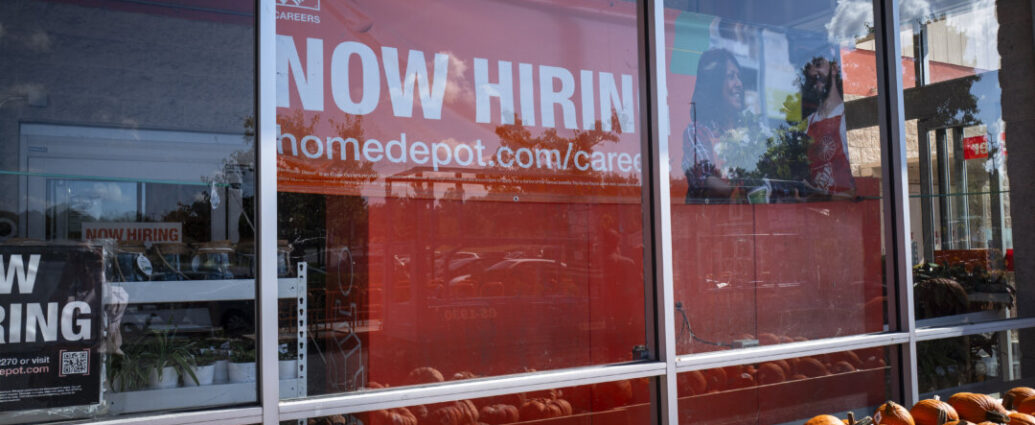
Shoppers opened their wallets again in February after consumers stayed home during January’s severe winter storm.
Retail sales rose by 0.6 percent, from an upwardly revised 0.1 percent decline in the previous month, according to new Census Bureau data released on April 1.
Market watchers had penciled in a 0.5 percent increase.
On a 12-month basis, retail sales jumped to 3.7 percent.
This represented the best monthly gain in seven months, fueled by transactions at department stores (3 percent), health and personal care stores (2.3 percent), and apparel (2 percent). Commerce was also strong for motor vehicle and parts dealers, gas stations, and digital retailers.
Despite concerns that consumers were pulling back, various indicators suggest that the public remains optimistic about current economic conditions, both before and during the Iranian conflict….


This post was originally published here


It may take up to 45 days to review and process tariff refund payments once a new claims portal system becomes operational, Customs and Border Protection (CBP) announced on March 31.
CBP stated in a court filing that it is developing a new claims portal within its existing Automated Commercial Environment (ACE) system so that it can provide importers with refunds of duties that President Donald Trump imposed last year under the International Emergency Economic Powers Act (IEEPA).
That new claims system will be called the Consolidated Administration and Processing of Entries (CAPE) and will allow importers to file claims so that CBP can process, review, and issue refunds….

This post was originally published here


The national median apartment rent shook off the seasonal winter chill and inched up by 0.4 percent in March from February to $1,363, Apartment List reported.
However, the median rent was down by 1.7 percent from March 2025, the largest annual decline since Apartment List began compiling records in 2017. By comparison, year-over-year growth peaked at 18 percent during the winter of 2021.
Rents are generally soft or stagnant during the late fall and winter months as renters tend to forgo moving plans when it’s cold outside, but rates trend upward with warmer springtime and summer weather. The slight gain in March was the second consecutive monthly increase following a six-month span of declining rents, the Apartment List report said….

This post was originally published here

The war in Iran could bring a “skunk” to America’s economic party this year, JPMorgan Chase CEO Jamie Dimon said in his annual letter to shareholders, released on April 6.
Dimon warned that the conflict could elicit several scenarios, ranging from higher inflation to rising recession risks.
“A bad confluence of events generally causes various degrees of a recession,” Dimon said, adding that this climate can lead to higher credit losses, rising unemployment, and volatile markets.
“While the economy may be less fragile than in the past, this alone does not mean there is no ‘tipping point’—it just may mean it could take more straws on the camel’s back to get there,” he wrote….

This post was originally published here

Commercial Chapter 11 bankruptcy filings jumped 37 percent in the first quarter of 2026 from the same period last year, the American Bankruptcy Institute (ABI) said in an April 3 statement.
A Chapter 11 bankruptcy seeks to reorganize a company’s debts and enable the entity to remain operational and become solvent. This is the most common bankruptcy filing made by businesses. According to the institute, there were 2,422 commercial Chapter 11 filings in the first quarter of 2026, up from 1,764 filings in the same quarter of 2025.
Among Chapter 11 filings, “subchapter V elections for small businesses increased 67 percent in the first quarter of 2026, as the 833 filings were up over the 499 registered during the first quarter of 2025,” ABI said….

This post was originally published here

In the 1962 cartoon “The Jetsons,” people of the future drove flying cars. In 1982, the NBC-TV show “Knight Rider” featured a talking car named KITT that could scan, self-drive, “turbo boost” through the air, and fire weapons.
Decades later, these science fiction scenes are becoming reality, with now highly complicated vehicles often called “computers on wheels.” But as that complexity grows, so do the trade-offs, as highlighted by frequent software-related recalls, rising vehicle prices and insurance costs, and higher maintenance fees, experts say.
Software-Defined Vehicles
Cars were much simpler during the eras of “The Jetsons” and “Knight Rider.” In his 2023 white paper on “Trends Towards Software-defined Vehicles,” Ismet Aktas noted most cars harbored a simple engine control unit (ECU), the “brain” of the engine that manages performance, ignition timing, fuel injection, and emissions….

This post was originally published here

U.S. President Donald Trump said on April 3 that the United States could “easily” reopen the Strait of Hormuz, seize oil supplies, and profit from distributing them globally, as disruptions in the critical shipping lane continue to rattle energy markets and strain international alliances.
“With a little more time, we can easily OPEN THE HORMUZ STRAIT, TAKE THE OIL, & MAKE A FORTUNE. IT WOULD BE A ‘GUSHER’ FOR THE WORLD???” Trump wrote in an April 3 post on Truth Social.
The remarks mark one of Trump’s most explicit suggestions yet that Washington could directly intervene to control energy flows through the narrow waterway, which connects the Persian Gulf to global markets and handles roughly a fifth of the world’s oil shipments….

This post was originally published here

Empty-nest baby boomers own more large homes than millennials with children in every major U.S. metropolitan area, creating a housing “mismatch,” according to an April 2 Redfin report.
Baby boomers (ages 62–80 years old) without kids living at home own more than one-quarter of the nation’s homes with three or more bedrooms, while millennials (ages 30–45) with kids still living at home own about 16 percent, the Seattle-based real estate brokerage said.
The much younger Generation Z (ages 13–28) owns less than 1 percent of the nation’s larger-sized homes, Redfin added.
Empty-nest baby boomers own 28 percent of large homes in the United States, with another 7 percent of boomers with at least three adults in the home also owning larger family-sized homes….

This post was originally published here

The U.S. economy closed out a quarter marked by whiplash in the labor market, as hiring surged one month and sagged the next.
Employers added 178,000 new jobs in March, according to new Bureau of Labor Statistics data released on April 3.
Prior to the nonfarm payrolls report, economists had forecast a more modest reading of 60,000.
The unemployment rate also dipped to 4.3 percent last month, from the 4.4 percent registered in February.
Markets had projected the jobless rate holding steady at 4.4 percent.
It was a turbulent first quarter as employment data whipsawed between strike-driven losses, persistent tariff concerns, and weather-related rebounds. These conditions have offered a distorted view of the U.S. labor market, further complicating the Federal Reserve’s policymaking efforts….

This post was originally published here

Equities staged a strong rebound this week, snapping a five-week losing streak as investors returned to the market amid more attractive valuations and easing concerns over the Middle East conflict.
The rally was supported by a solid retail sales report, which underscored the resilience of consumer spending and broader economic growth. At the same time, weaker labor market data renewed expectations that the Federal Reserve may cut interest rates.
For the week, the Dow Jones Industrial Average rose by 1.18 percent to 46,504, finishing near its weekly high. The S&P 500 gained by 1.63 percent to 6,582, also closing near its peak for the week. The Nasdaq Composite led gains, climbing by 2.20 percent, while the Russell 2000 advanced by 1.47 percent….

This post was originally published here

WASHINGTON—President Donald Trump signed an executive order on Thursday to simplify calculations for steel, aluminum, and copper tariffs and to mitigate efforts to avoid import taxes.
The new order defines how the value of metals is assessed, imposing 50 percent levies on the U.S. price of goods sold for raw material and 25 percent on products containing at least 15 percent of affected metals.
Stricter guidelines were needed because some wholesalers and exporters were artificially lowering the stated value of goods to reduce tariff liability, administration officials told reporters during a background call on April 2.
“So it’s now going to be proper and fair,” the official said….

This post was originally published here

WASHINGTON—President Donald Trump signed executive orders on Thursday raising levies on some medications and refining calculations on steel tariffs.
Pharmaceutical drugs produced outside the United States are subject to 100 percent tariffs, unless manufacturers agree to onshore production and offer most-favored-nation pricing.
The Commerce Department is authorized to reduce levies to 20 percent for companies that invest in American facilities and remove the tariffs entirely for those that agree to both conditions.
Generic medications are exempt from the tariffs for one year, with a reassessment scheduled for 2027.
Exceptions were granted, lowering tariffs to 15 percent for the European Union, Switzerland, Japan, and South Korea, and a 10 percent levy for the United Kingdom….

This post was originally published here

The U.S. trade deficit widened in February after imports rebounded, slightly offsetting continued export growth, according to new data from the Bureau of Economic Analysis released on April 2.
The international trade in goods and services deficit rose by nearly 5 percent, totaling $57.3 billion.
Economists had forecast a $59.2 billion shortfall.
In the first two months, the goods and services trade gap declined by nearly 55 percent, or $136.1 billion, from the same period a year ago.
Exports have increased by more than 11 percent, while imports have fallen by more than 9 percent.
The latest data were released exactly one year after President Donald Trump unveiled his sweeping global tariffs on foreign goods entering the United States. They were struck down by the Supreme Court in February, but the president introduced a universal 10 percent tariff shortly after for 150 days….

This post was originally published here

The March jobs report, scheduled for release on April 3, will mark the end of a quarter defined by wild swings in the U.S. labor market. Economists project that about 60,000 new jobs were added last month, with the unemployment rate holding steady at 4.4 percent.
If those estimates are accurate, payrolls grew by about 94,000 in the first quarter of 2026—an improvement over the 61,000 jobs added during the same period a year earlier.
Health care and private education will likely be the leading categories for job creation, says Joseph Brusuelas, chief economist at RSM.
“In March, we anticipate that the jobs rebound will be in the health care and private education categories with modest gains in construction and goods-producing sectors,” Brusuelas said in an April 1 note….

This post was originally published here

Oil prices jumped sharply on Thursday after U.S. President Donald Trump signaled an escalation of military action against Iran, dampening hopes for a near-term diplomatic resolution and raising concerns about prolonged disruptions to global energy supplies.
Benchmark Brent crude rose by $8.34, or 8.2 percent, to $109.50 per barrel by 7:39 a.m. ET, while U.S. West Texas Intermediate (WTI) gained $9.23, or 9.2 percent, to $109.35. Both contracts touched their highest levels since early March and were on track for their largest daily gains in three weeks, though still below peaks above $119 reached earlier in the conflict.
The rally followed Trump’s prime-time address late Wednesday, in which he vowed to intensify strikes against Iran over the coming weeks, while offering no clear timeline for reopening the Strait of Hormuz or ending the war….

This post was originally published here

Generation Z, including those aged 18 to 29, for the first time has become the most interstate mobile generation, according to a March 25 analysis from StorageCafe. More than 2.2 million of America’s youngest adults moved to a different state in 2024, surpassing millennials, who had dominated this category for years.
Just over 2 million of the 30-to-45-year-old group moved to a different state in 2024, while 870,00 of Generation X (ages 45 to 60) and more than 758,000 Baby Boomers (ages 61 to 80) made interstate moves.
The report attributes the “state hopping” to early career moves and lifestyle exploration.
“With fewer family obligations and lower homeownership rates, Gen Zers often have greater flexibility to relocate for job opportunities, more affordable cities or simply a change of scenery,” the report indicates….

This post was originally published here